коллегия
Содержание
СЕКЦИЯ
MOZHAROVSKII EVGENII
АКУСТИЧЕСКИЕ ЭКРАНЫ. КОНСТРУКЦИИ
АВТОМАТИЗАЦИЯ И ИНТЕЛЛЕКТУАЛЬНЫЕ
БОРИСОВ АНТОН ВИТАЛЬЕВИЧ
NAZAROVA YENDIGUL
ИНТЕГРАЦИЯ
UDK 004.43
Mozharovskii Evgenii bachelor’sdegree, M. V. Lomonosov Moscow State University Russian Federation, Moscow
SWIFT FOR SERVER-SIDE DEVELOPMENT
Abstract: This article investigates the deployment of Swift for server-side development. It elucidates Swift's adaptation to server environments, underscored by its integration with robust frameworks such as Vapor, Kitura and Hummingbird. The study highlights Swift's key features – safety, efficiency, and advanced programming capabilities – that are pivotal for robust server applications. The article also delves into applications by leading tech companies that have utilized Swift to enhance their operational efficiencies and service offerings.
Keywords: Swift, server-side development, Vapor framework, Kitura framework, performance optimization, digital infrastructure, application scaling.
INTRODUCTION
Swift is a powerful open-source programming language developed by Apple Inc. It is renowned for its robust security features, modern functionality, and exceptional performance. Initially designed for iOS, mac OS, watchOS, and tvOS, Swift has recently gained traction in server-side development due to its efficiency and the ease with which developers can build scalable applications.
The objective of this study is to assess the utility of Swift in the context of server-side development. This involves a detailed examination of its unique features that could potentially improve server performance, such as memory management, error handling, and asynchronous operations. Furthermore, the research compares Swift with traditional server-side languages like Python, Java, and Ruby in terms of execution speed, resource consumption, and ease of maintenance, aiming to provide an overview of its advantages and limitations in server environments.
MAIN PART
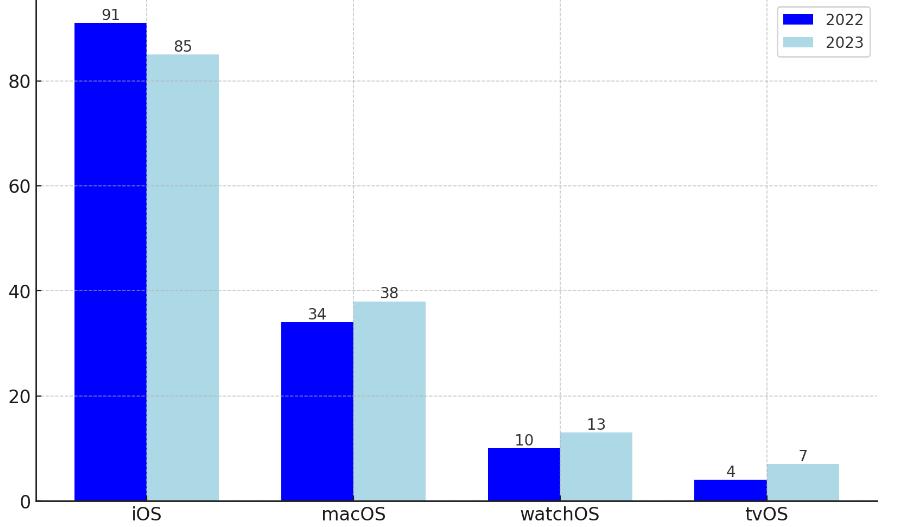
A significant majority of Swift developers, 91%, primarily focus on developing applications for the iOS platform (fig. 1) [1]
Figure 1. Swift developers' platform preferences, % [1]
Despite this, Swift is becoming increasingly popular for server-side development and on other platforms. According to 2023 data, Swift ranks in the top 20 programming languages with a market share of 4.65% [2]. This rise in popularity is due in part to Swift's performance-oriented design which focuses on simplicity and safety, making it an attractive option for developers.
BASICS OF SWIFT FOR SERVER
Swift for server use offers developers a modern, secure, and efficient option for writing server-side code. It integrates the simplicity and readability of a high-level language with the performance and security features of a compiled language, enabling developers to apply their existing Swift skills to develop comprehensive solutions using a single programming language [3]. Automatic Reference Counting (ARC) is a pivotal feature in Swift that manages memory more effectively than the traditional garbage collection mechanisms found in other languages. This feature enhances performance by minimizing the overhead typically associated with memory management.
Swift also boasts strong type safety and optional types that help prevent many common bugs in server development, such as null pointer exceptions. These features ensure applications are more stable and secure, which is paramount for server operations handling sensitive data transactions.
Among the frameworks extending Swift's capabilities to the server is Vapor, which is particularly favored for its comprehensive suite of tools that facilitate web and server-side application development. Vapor simplifies tasks such as request
routing, database integration, and session management, allowing developers to focus more on business logic rather than the intricacies of server-side infrastructure.
Another significant framework in the Swift server-side ecosystem is Kitura, developed by IBM. Kitura is an open-source web framework that makes it straightforward to build complex server-side Swift applications. It offers a range of features designed to facilitate the development of web services and APIs, including URL routing, template rendering, and middleware support that can be used to handle tasks such as session management and authentication [4].
Kitura stands out for its performance and scalability, providing a powerful toolset for developers who need to build high-performance server applications that can scale efficiently across multiple servers. Like Vapor, Kitura allows Swift developers to leverage their existing skills in a server context, with the added advantageofsupportfromIBM’srobustcloudservicesplatform.
This integration with IBM's technology stack ensures that Kitura is particularly well-suited for enterprise-level applications where reliability and integration with existing systems are critical. It aligns with modern software development practices, offering developers a flexible and efficient pathway to build and deploy Swift applications on the server side.
Hummingbird is a lightweight, high-performance web framework for Swift that allows developers to build scalable and efficient web services. Designed with simplicity and speed in mind, it provides a flexible foundation for server-side Swift applications, enabling the easy creation of APIs and web backends. By leveraging Swift's strong typing and expressive syntax, Hummingbird facilitates the development of safe and maintainable code. Its modular architecture supports a variety of middleware and extensions, making it highly customizable to meet specific application needs. With its emphasis on minimal overhead and maximum throughput, Hummingbird is particularly suited for environments where performance and resource efficiency are critical.
Swift's support for modern software design patterns and its integration with a rich ecosystem of libraries make it an adaptable choice for developers looking to
deploy on Linux or macOS. This adaptability is crucial for businesses aiming for cross-platform compatibility in their server solutions.
Developing server applications with Swift follows a structured approach that integrates the language's robust programming capabilities with server-side functionalities:
● Setting up the Swift environment involves configuring development tools such as Xcode or the Swift Package Manager, which are essential for dependency management and project configuration [5].
● Selection of a server framework is crucial, with options like Vapor or Kitura providing necessary tools and libraries for server-side development. These frameworks facilitate tasks such as routing, database integration, and session management.
● Project initiation typically starts with creating a new project using a framework-specific template from the command line, which helps organize the application's architecture and routes efficiently.
● Database integration requires adding a compatible library, such as Fluent for SQL databases in Vapor, to handle data operations smoothly. This step includes setting up connection strings, schema definitions, and integrating models with controllers.
● Incorporation of additional backend services such as authentication, which may involve middleware for session or token-based systems, enhances application security and functionality.
The methodological framework provided by Swift for developing server applications offers a blend of simplicity and power, enabling developers to build sophisticated, scalable, and secure server-side applications. The integration with databases and other backend services through well-defined steps enhances the application's functionality and ensures its robust performance across different environments. By following these structured steps, developers can leverage Swift's full potential to create versatile server applications that are not only effective but also maintainable and secure. This comprehensive approach not only optimizes the
development workflow but also aligns with the best practices in modern software development.
METHODS FOR OPTIMIZING THE PERFORMANCE OF SERVER APPLICATIONS ON SWIFT
Optimizing the performance of server applications in Swift is crucial to maximizing efficiency and scalability, especially as these applications become integral to business operations. One fundamental approach is the use of concurrency and asynchronous programming models, which Swift supports with advanced features such as async/await and the Concurrency API. These models allow applications to handle multiple tasks in parallel, significantly reducing response times and increasing throughput (table 1).
Table 1. Impact of concurrency on application performance [6]
Strategy
Description
Single-threaded Processesonerequestatatimesequentially
Multi-threaded Utilizesmultiplethreads tohandle requests concurrently
Asynchronous (async/await)
Executes multiple tasks asynchronously withoutblockingthreads
Impact on Performance
Limited scalability, slower responsetimes
Improved scalability, faster response times due to parallel processing
High scalability, optimal resource utilization, and very fastresponsetimes
Another critical area is memory management. Swift's ARC helps manage memory usage more efficiently, but tuning ARC and understanding its lifecycle can further enhance performance. For instance, careful management of reference cycles and the use of weak references can prevent memory leaks and reduce overhead. Implementing caching strategies is also pivotal. Caching frequently accessed data reduces the need to fetch data from disk or remote servers frequently, which can be a time-consuming process. Effective caching can dramatically decrease latency and reduce the load on the database, which directly enhances the performance. Additionally, optimizing the Swift code itself can lead to significant performance gains [7]. Techniques such as minimizing algorithmic complexity, using more efficient data structures, and reducing unnecessary computation within critical
code paths are essential. Profiling tools can be employed to identify bottlenecks in the application, allowing developers to target specific areas for improvement.
In conclusion, the integration of concurrency models, efficient memory management, strategic caching, and code optimization are critical for enhancing the performance of server applications developed in Swift. By implementing these strategies, developers can ensure that their applications are not only stable and secure but also capable of handling high loads with ease.
TECHNIQUES FOR SCALING AND ENSURING HIGH AVAILABILITY
Scalability and high availability are critical for server applications, especially in environments that demand constant uptime and the ability to handle variable loads seamlessly. Swift's ecosystem provides several strategies to achieve these goals, ensuring that applications are both scalable and resilient under diverse operational demands. The approach to scaling can be categorized into horizontal and vertical scaling, each serving different needs and scenarios (table 2).
Table 2. Scalability techniques and their impacts
Strategy
Horizontalscaling
Verticalscaling
Loadbalancing
Auto-scaling
Description
Adding more servers to handle loaddistribution
Upgrading existing servers with morepower(CPU,RAM)
Distributing incoming network trafficacrossmultipleservers
Automatically adjusting the numberofactiveserversbasedon load
Impact on scalability and availability
Enhances availability by allowing loadbalancingandredundancy
Increases capacity but has limits and may introduce downtime during upgrades
Prevents any single server from becoming a bottleneck, enhances user experience
Ensures optimal resource utilization and cost efficiency, improves responsetimesduringpeakloads
In addition to these, techniques like database replication and partitioning play a pivotal role in scaling applications. Replication ensures that data is copied across multiple machines, which not only provides redundancy but also improves data access speed for users geographically distant from the primary server. Partitioning, on
the other hand, divides a database into parts that can be managed separately, increasing performance and availability as each part can be accessed independently [8].
Adopting a microservices architecture also contributes to scalability. This approach breaks down applications into smaller, independent components that can be scaled independently. It allows teams to deploy updates more frequently and isolate failures, which significantly enhances the overall resilience and availability of applications. The efficacy of these strategies is evident in the success of companies like Netflix, which employs a microservices architecture along with extensive use of cloud-based auto-scaling and load balancing. These techniques have allowed Netflix to handle millions of concurrent streams with minimal downtime and high responsiveness, even during peak traffic.
Employing a combination of horizontal and vertical scaling, along with sophisticated load balancing and auto-scaling strategies, is essential for developing high-performance server applications that require high availability and scalability. These methods not only accommodate growth but also ensure that server resources are used efficiently and cost-effectively. The real-world application of these strategies by leading tech companies demonstrates their effectiveness in supporting large-scale operations reliably.
SECURITY OF SERVER SOLUTIONS ON SWIFT
Ensuring the security of server solutions developed with Swift involves a dual approach, incorporating both preventive and reactive measures. Swift's inherent safety features, such as its strong type system and automatic memory management, establish a security base by mitigating common vulnerabilities like buffer overflows and memory leaks:
● Preventive security measures are designed to avoid potential security breaches before they occur. Implementing SSL/TLS to encrypt data in transit is a crucial preventive measure that protects data from eavesdropping and man-in-themiddle attacks. Using HTTPS is another preventive strategy, ensuring that all communication between the client and server is encrypted, safeguarding the
confidentiality and integrity of the data exchanged. Proper authentication and authorization protocols, such as OAuth and JWT (JSON Web Tokens), control access to resources, preventing unauthorized access. These protocols ensure that only authenticatedandauthorizeduserscanaccesstheserver’sresources,greatlyreducing the risk of breaches.
Employing tools like SwiftLint enhances code quality and adherence to secure coding practices, which helps prevent security vulnerabilities. Regularly updating and patching dependencies through tools like Snyk or the Swift Package Manager is also preventive, as it addresses vulnerabilities that could be exploited if left unpatched [9].
● Reactive security measures come into play after detecting a potential security threat or breach. These include the deployment of intrusion detection systems (IDS) which monitor for unusual activity that might indicate an attack. Implementing robust logging and monitoring systems also falls under reactive measures, helping to detect and record potential security threats or operational anomalies post-occurrence. These systems provide critical insights that can be used to trace the source of a breach and take necessary actions to mitigate damage.
Securing server applications in Swift requires a comprehensive approach that blends Swift’s built-in security features with a set of well-defined preventive and reactive measures.
EXAMPLES OF SUCCESSFUL IMPLEMENTATIONS OF SERVER PROJECTS ON SWIFT
The successful implementation of Swift for server-side projects is illustrated by a variety of large-scale applications across different platforms and industries. Prominent examples include major companies like Lyft, LinkedIn, and Airbnb, which have utilized Swift to enhance their iOS applications' performance and maintenance.
Lyft, for instance, transitioned its iOS application entirely to Swift, which resulted in a more compact, efficient, and maintainable codebase. This switch not only improved the app’s responsiveness but also accelerated the development cycle, enabling quicker updates and the addition of new features for both drivers and passengers.
Similarly, LinkedIn and Airbnb have leveraged Swift to streamline their iOS app development. LinkedIn uses Swift to manage its vast professional network efficiently, ensuring smooth operation and maintenance. Airbnb, known for its innovative online marketplace for lodging, also adopted Swift to handle complex user interactions and data management with ease, ensuring robust performance regardless of load times.
These examples reflect Swift's capability to support high-performance applications that are scalable and easy to maintain, making it a preferred choice for modern server-side development. This is particularly evident in cloud environments where Swift's performance, quick startup times, and reduced memory usage are crucial. The adoption of Swift by such high-profile companies underscores its effectiveness in real-world applications, demonstrating its reliability and the advantages it offers in developing responsive and user-friendly server-side applications.
CONCLUSIONS
Swift's role in server-side development showcases its expansive utility beyond its initial design for iOS and macOS applications, reflecting its robust features tailored for modern computational needs. The language's emphasis on safety, speed, and modern syntax makes it suitable for diverse programming environments, including server backends where efficiency and security are paramount. Enhanced by frameworks like Vapor, Kitura and Hummingbird, Swift enables developers to create performant, scalable, and secure server-side applications that can efficiently handle complex business logic and data management tasks.
The adoption of Swift by major technology companies for server applications underscores its effectiveness and reliability in real-world scenarios. This trend not only highlights Swift's potential to streamline development processes but also its capacity to support high-traffic applications with minimal downtime.
REFERENCES
1. Swift and Objective-C / The State Of Developer Ecosystem by Jetbrains. URL: https://www.jetbrains.com/lp/devecosystem-2023/swift-objc/ (date of application: 01.03.2024)
2. Stack Overflow Annual Developer Survey. URL: https://survey.stackoverflow.co/2023/ (date of application: 01.03.2024).
3. Zakharau A. The impact of fintech application implementation on improving consumer credit ratings // Sciences of Europe #138. P. 14-16. 2024. DOI: 10.5281/zenodo.10957276
4. Tiumentsev D.V., Shaikhulov E.A. Synthesis of DevOps and ML: optimizing IT workflow // Modern scientific researches and innovations. 2024. № 2 [Electronic journal]. URL: https://web.snauka.ru/en/issues/2024/02/101567
5. Ogarkov A. ANALYSIS OF THE PHARMACEUTICAL MARKET IN THE USA FOR THE IMPLEMENTATION OF NEW PRODUCTS // Vestnik nauki №3(72). vol 2. P. 19-25. 2024. ISSN 2712-8849
6. Bukhtueva I. THE IMPACT OF AI TECHNOLOGIES ON BUSINESS PERFORMANCE // Vestnik nauki №3(72) vol. 5. P. 467 - 476. 2024. ISSN 27128849
7. Grepan V. THEORETICAL AND PRACTICAL FOUNDATIONS OF SMART CONTRACT VALIDATION // Innovacionnaya nauka. 2024. №3-2/2024. P. 24-28.
8. Domínguez-Álvarez D., Gorla A., Caballero J. «On the Usage of Programming Languages in the iOS Ecosystem», 2022 IEEE 22nd International Working Conference on Source Code Analysis and Manipulation (SCAM), Limassol, Cyprus. 2022. P. 176-180.
9. Jiang S., Zeng R., Rao Z., Gu J., Zhou Y., Lyu M. «Revealing Performance Issues in Server-Side WebAssembly Runtimes Via Differential Testing», 2023 38th IEEE/ACM International Conference on Automated Software Engineering (ASE), Luxembourg, Luxembourg. 2023. P. 661-672.
шумоотражающие и комбинированные. Представлены принципы работы экранов и факторы, влияющие
рекомендации
Prikhodko Alla
master’sdegree, Bauman Moscow State Technical University Russian Federation, Moscow
ACOUSTIC SCREENS. STRUCTURES AND MATERIALS
Abstract: The article addresses the issue of noise pollution in cities and methods to reduce it using acoustic screens. It describes the main structures and materials used in noise barriers, as well as their acoustic characteristics. The advantages and disadvantages of various types of screens, including sound-absorbing, sound-reflecting, and combined screens, are considered. Principles of screen operation and factors affecting their effectiveness are presented. Examples and recommendations for the design and operation of acoustic screens to ensure their maximum efficiency are provided.
Keywords: Noise barriers, noise pollution, acoustic efficiency, screen materials, screen structures.
Рисунок 1. Принципдействияшумозащитныхэкранов Шумозащитныйэкранприналичиишумопоглощающихматериаловможет
светопроницаемости [4]:
•Прозрачные;
•Тонированные;
•Непрозрачные;
•Спрозрачнымивставками.
•Высокаяэффективностьшумозащиты [5];
•Прочностьиизносостойкость;
•Эксплуатационныесвойстванеухудшаютсясгодами;
устанавливатьсяповерхбарьеровизпрофилированноголиста;
•Широкийвыборконструкций;
•Изготовители
толькокачественные,ноиэстетичныеограждения.
Недостатки:
•Создаетощущениеограниченностипространствадляводителей;
•Уменьшение освещенности
изображения;
•Ограничивает шаговую доступность
участок трассы), делит
Дороговизнаматериалов
1. Рощина Н. В. Шумозащитные экраны-эффективное
сниженияшума//Защитаотповышенногошумаивибрации.2019.С.600-604.
2. Сердюков А.А. Виды шумозащитных экранов // Молодой ученый. 2016.№10.С.304-306.
3. Гладких Р. И., Колпакова С. В. ШУМОЗАЩИТНЫЕ АКУСТИЧЕСКИЕ ЭКРАНЫ //Актуальные вопросы
развития транспортногокомплекса.2016.С.323-329.
4. Экраны акустические для железодорожного транспорта. Технические требования. URL: http://docs.cntd.ru/document/1200094189 (дата обращения: 19.03.2024).
5. Юдина Е. Я. Борьба с шумом на производстве: справочник // М.: Машиностроение.1985.
Аннотация: Статья исследует современные технологии автоматизации управления городским пассажирским транспортом
Особое внимание уделяется
экономическим аспектам транспорта, основываясь
БлинкинаиопытеавтоматизациитрамвайныхсетейКалининграда. Ключевые слова
системы,
моделирование,экономическиеаспекты,Калининград.
Borisov Anton bachelor’sdegree, Moscow Technical University of Communications and Informatics Russian Federation, Moscow
AUTOMATION AND INTELLIGENT SYSTEMS FOR URBAN PUBLIC
TRANSPORT MANAGEMENT: PROSPECTS AND CHALLENGES
Abstract: The article explores modern technologies for automating urban public transport management and their implementation in cities. Special attention is given to geospatial modeling and economic aspects of transport, based on the research of M.Y. Blinkin and the experience of tram network automation in Kaliningrad.
Keywords: Automation management, intelligent systems, urban public transport, geospatial modeling, economic aspects, Kaliningrad.
1. Орехов С. Ю.Понятие и характеристика городского
исследований.–№2.–С.32-36.
2. Кузнецов А. С. Интеллектуальные транспортные системы: принципыипрактика//ТранспортРоссии.– 2019. –№5.–С.34-42.
3. Орехов С. Ю. Геопространственное моделирование и автоматизация системы оптимизации
Пространственное
научно-практическойконференции,Белгород,24ноября2023года. –Белгород: Эпицентр,2023.–С.235-244. – EDN BLNNOW.
4. Смирнов Е.И. Пространственное
5.
UDK 159.9
Nazarova Yendigul candidate of philosophy, associate professor, Kazakh National Pedagogical University named after Abai Kazakhstan, Almaty
THE IMPACT OF THE IMPLEMENTATION OF CORPORATE
PSYCHOLOGICAL SERVICES IN THE WORKPLACE ON REDUCING EMPLOYEE TURNOVER IN A COMPANY
Abstract: This article examines the impact of implementing corporate psychological services on reducing employee turnover. It explores various psychological theories related to workplace behavior. Analyzes empirical studies from 2021-2023 and reviews the practical implementation in both Russian and international companies. The findings indicate that psychological services significantly enhance job satisfaction and organizational commitment, leading to decreased turnover rates. The article underscores the importance of integrating these services into broader HR strategies for long-term organizational success.
Keywords: Employee turnover, psychological services, workplace well-being, job satisfaction, organizational commitment, human resources, employee retention.
INTRODUCTION
Defined as the process by which employees leave an organization and are replaced by new hires, turnover encompasses both voluntary and involuntary exits. It imposes direct and indirect costs on organizations, including recruitment expenses, training investments, and productivity losses.
In response to the escalating challenges posed by turnover, organizations are increasingly turning to corporate psychological services as a proactive approach to managing and mitigating turnover risks. Corporate psychological services encompass a diverse array of interventions, programs, and initiatives designed to enhance employee well-being, engagement, and resilience in the workplace. Rooted in psychological theories and principles, these services aim to foster a positive work environment, strengthen interpersonal relationships, and promote psychological health and safety among employees.
The goal of this research is to investigate the theoretical underpinnings and potential mechanisms through which corporate psychological services influence employee turnover reduction within organizational contexts.
MAIN PART. THEORETICAL FRAMEWORK
Employee turnover is a complex phenomenon studied extensively within the field of organizational psychology, with several prominent theories aiming to explain its underlying mechanisms and determinants. One such theory is the «Mobley's Model of Employee Turnover», proposed by William H. Mobley in the 1970s, which suggests that turnover is influenced by a combination of push and pull factors [1]. Push factors include job dissatisfaction, role ambiguity, and interpersonal conflicts, while pull factors encompass attractive alternatives, such as better job opportunities or higher pay elsewhere. Another influential theory is the «Social Exchange Theory», which posits that employees weigh the costs and benefits of staying versus leaving an organization, with factors such as perceived organizational support, rewards, and reciprocity influencing their decisions [2].
John P. Meyer and Natalie J. Allen introduced the concept of «Organizational Commitment» in the 1990s, which comprises affective, normative, and continuance commitment [3]. Affective commitment reflects an emotional attachment to the organization, normative commitment involves a sense of obligation or loyalty, and continuance commitment is based on the perceived costs of leaving.
Job embeddedness theory suggests that turnover is influenced not only by individual and organizational factors but also by employees' connections and investments in their jobs and communities [4]. Employees who are deeply embedded in their jobs and communities are less likely to leave, as the costs of leaving outweigh the benefits. This theory emphasizes the role of social and contextual factors in shaping turnover decisions, providing a holistic understanding of turnover beyond individual-level variables. These theories contribute to understanding of why turnover occurs and provide frameworks for predicting and managing turnover in organizations.
THE CONCEPT OF CORPORATE PSYCHOLOGICAL SERVICES
According to experts' estimates, by the end of 2023, the gross turnover rate of the workforce in Russia (the sum of hiring and attrition coefficients reflecting the ratio of the number of hired and, respectively, dismissed employees for all reasons to the average headcount of employees working at the enterprise) increased to 65%, reaching a record level for the entire post-Soviet period [5].
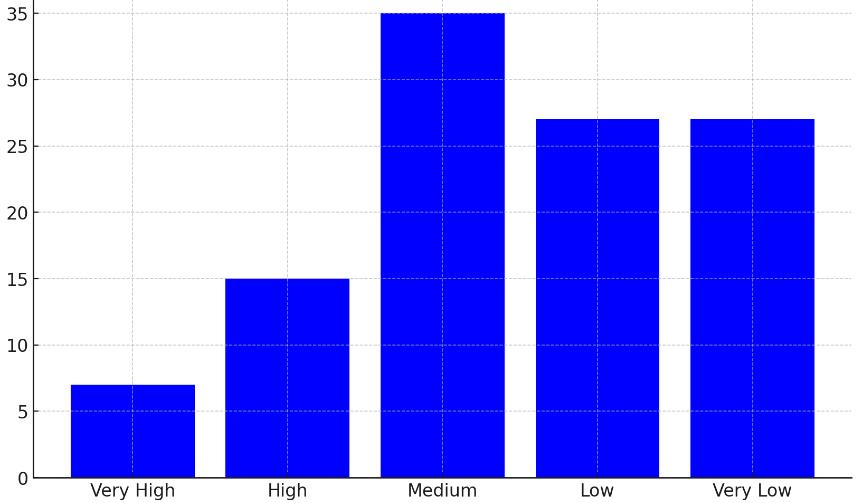
In the USA, in 2022, the turnover rate for temporary and contract workers was 419%, which is 4% higher compared to the previous year [6]. Unemployment in the USA is forecasted to increase from the current 3.9% to 4.4% by the end of 2024. A survey conducted in June 2023 revealed that 22 % of employees in the United States assessed their current level of burnout as high or very high (figure 1)
The survey involved over 2000 respondents among employees across the United States. These data indicate the need for implementing corporate psychological services in the workplace to reduce employee turnover rates within the company.
The utilization of Corporate Psychological Services marks a significant evolution in organizational management, reflecting an acknowledgment of the intricate interplay between psychological well-being and workplace performance. The origins of these services can be traced back to the mid-20th century, with the emergence of employee assistance programs (EAPs) in the United States. Initially developed to address alcoholism and substance abuse issues among workers, EAPs gradually expanded their scope to encompass a broader range of psychological and emotional concerns, including stress management, conflict resolution, and mental
Figure 1. Employee burnout in the United States as of 2023, % [7]
health support. Over time, the concept of Corporate Psychological Services has evolved to encompass a diverse array of interventions and initiatives aimed at promoting employee well-being, enhancing organizational effectiveness, and fostering a positive work culture (table 1).
Table
1. Types of сorporate psychological services [8]
Type of service
Employee assistance programs(EAPs)
Workshops and trainingprograms
Leadership development programs
Well-being initiatives[9]
Description
Confidential counseling services provided to employees to address personal and work-related issues, such as stress, substance abuse, financial problems, and family conflicts. EAPs may also offer referral servicesandcrisisinterventionsupport.
Interactive workshops and training sessions designed to enhance employees' skills, knowledge, and resilience in areas such as stress management, communication, conflict resolution, emotional intelligence, andmindfulness.
Programsfocusedondevelopingleadershipcapabilitiesandcompetencies among managers and supervisors, including training in effective communication, team building, performance management, coaching, and decision-makingskills.
Initiatives aimed at promoting holistic well-being among employees, encompassing physical, mental, and emotional health. Examples include wellnesschallenges,healthscreenings,fitnessclasses,relaxationsessions, andmindfulnessprograms.
From the author's perspective, the proliferation of Corporate Psychological Services underscores an increasing acknowledgment of the critical role psychological well-being plays in cultivating a thriving and efficient workforce. These services aim to cater to the multifaceted needs of employees by providing a holistic suite of interventions and programs. They seek to foster a workplace culture characterized by support, adaptability, and progression. While Corporate Psychological Services show potential in bolstering employee well-being and curbing turnover rates, their success fundamentally relies on organizational dedication, backing from leadership, and the seamless integration of psychological methodologies into overarching human resource strategies.
MECHANISMS OF IMPACT
By examining the specific pathways through which psychological interventions influence turnover, organizations can better tailor their strategies to reduce employee turnover rates and promote workforce stability:
•Enhancing job satisfaction. Psychological services contribute to reducing turnover by addressing factors that influence job satisfaction. Interventions may focus on improving working conditions, providing recognition and rewards, enhancing job autonomy, and facilitating meaningful work experiences [10].
•Reducing stress: another mechanism through which psychological services impact turnover is by reducing workplace stress. These services offer coping mechanisms, stress management techniques, and resources to help employees effectively deal with job-related stressors. By mitigating stress levels, psychological interventions promote employee well-being and resilience, leading to lower turnover rates.
•Enhancing organizational commitment: psychological services play a crucial role in fostering organizational commitment among employees. Through initiatives that promote engagement, communication, and supportive relationships, these services cultivate a sense of loyalty and attachment to the organization. Employees who feel valued and connected to their workplace are more likely to exhibit higher levels of commitment and are less inclined to leave, thus reducing turnover.
The mechanisms through which psychological services impact turnover outcomes are multifaceted and interrelated. By enhancing job satisfaction, reducing stress, and fostering organizational commitment, these services contribute to a more positive and supportive work environment, ultimately leading to lower turnover rates.
IMPLEMENTATION PRACTICES
The implementation of corporate psychological services has shown significant benefits in reducing employee turnover and enhancing overall workforce well-being in both Russian and international companies.
In Russia, Sberbank, one of the largest financial institutions, has implemented comprehensive psychological support services. These services include access to professional psychologists, stress management workshops, and a 24/7 employee assistance hotline. These initiatives, aimed at fostering a supportive work environment, led to a notable reduction in employee turnover: for IT specialists in 2023 – twice as compared to 2022 [11].This success is attributed to Sberbank's
proactive approach to mental health and the integration of these services into their broader human resource strategies.
Yandex, a leading Russian multinational IT company, introduced comprehensive mental health services in 2021. These services included on-site counselors, virtual therapy sessions, and resilience training programs. The initiative was aimed at addressing the mental health challenges exacerbated by the COVID-19 pandemic. This led to a reduction in the undesired turnover rate, reflecting the departure of the company's most valuable specialists: 4.9% in 2021, compared to 4.5% in 2020 [12].
In the United States, Walmart launched a significant initiative to improve the psychological well-being of its employees. The initiative included free access to mental health resources, counseling services, and mindfulness programs. According to Walmart’s internal reports, this program contributed to a higher retention rate among participants and an increased likelihood of promotion for employees who utilized the services. In the first four weeks, more than 10,000 employees completed Walmart and Sam's Club's new workplace mental health course. In 2023, the company increased the number of free mental health therapy and coaching sessions available to all employees and their families from 10 to 20 sessions per person per year [13].
Google has been at the forefront of integrating psychological services into their corporate structure. The «Stay & Thrive» program launched in 2021 focuses on understanding employee attrition and providing targeted psychological support. This program includes manager training, mental health resources, and a robust internal mobility framework. According to Google’s Diversity Annual Report, these efforts have resulted in a more stable workforce, with a significant reduction in turnover rates. In particular, the program has helped lower attrition among underrepresented groups, demonstrating the efficacy of tailored psychological support in retaining diverse talent.
Unilever has also integrated psychological services as a core component of its global employee well-being programs. These services include regular mental health
check-ins, resilience training, and access to mental health professionals. Unilever reported a decrease in turnover rates and significant improvement in employee engagement scores. This highlights the effectiveness of their initiatives in maintaining a stable and motivated workforce [14].
These examples demonstrate that the strategic implementation of psychological services can lead to significant improvements in employee retention and overall job satisfaction. The common elements across these successful cases are strong leadership commitment, the integration of mental health services into organizational culture, and the continuous evaluation and adaptation of these programs to meet the evolving needs of employees. Investing in psychological well-being is beneficial not only for employees but also for the long-term stability and success of organizations.
CONCLUSIONS
The implementation of corporate psychological services significantly contributes to reducing employee turnover by addressing the mental and emotional well-being of employees. These services, ranging from stress management workshops to access to mental health professionals, foster a supportive work environment that enhances job satisfaction and organizational commitment.
The success of corporate psychological services hinges on the integration of these programs into the broader human resource strategies and the active support of organizational leadership. By prioritizing the psychological well-being of employees, companies not only mitigate the risks of burnout and stress but also create a resilient and motivated workforce. This holistic approach to employee well-being is increasingly recognized as a critical factor in organizational success, as it not only enhances productivity and morale but also fosters a positive workplace culture that attracts and retains top talent. Thus, the strategic implementation of corporate psychological services is a valuable investment for companies aiming to achieve long-term stability and growth.
REFERENCES
1. Shomurotov U., Yuldoshev T. The role of psychological services in the treatment of personal aggression // Samarali ta’lim va barqaror innovatsiyalar. 2023. Vol. 1(3). P. 26-30.
2. Kilroy J., Dundon T., Townsend K. Embedding reciprocity in human resource management: A social exchange theory of the role of frontline managers // Human Resource Management Journal. 2023. Vol. 33(2). P. 511-531.
3. Sagituly G., Guo J. Job satisfaction and organizational commitment: comparing Generations X and Y. // Innovation: The European Journal of Social Science Research. 2023. P. 1–20. https://doi.org/10.1080/13511610.2022.2163622
4. Peltokorpi V., Sekiguchi T. The interaction of the five-factor personality traits and job embeddedness in explaining voluntary turnover: A necessary-condition perspective // European Journal of Work and Organizational Psychology. 2023. Vol. 32(5). P. 688–701. https://doi.org/10.1080/1359432X.2023.2246216
5. Kapelyushnikov R.I. Escalation of vacancies in the Russian labor market (dynamics, structure, triggers): preprint WP3/2024/02 / R.I. Kapelyushnikov; National research University "Higher School of Economics". – M.: Publishing house. House of the Higher School of Economics, 2024. 60 p.
6. Turnover rate for temporary and contract staff in the United States from 2002 to 2022 // Statista URL: https://www.statista.com/statistics/934650/ustemporary-and-contract-staffing-turnoverrate/#:~:text=In%202022%2C%20the%20turnover%20rate,within%20a%20certain% 20time%20period (date of application: 30.01.2024)
7. Percentage of employees in the United States by current level of burnout as of 2023 // Statista URL: https://www.statista.com/statistics/1383756/current-levelof-burnout-us-employees/ (date of application: 3.02.2024)
8. Petrova N. S. Application of psychographic segmentation for effective work with the client base: Methodological manual. – Kazan: Limited Liability Company "Buk", 2023. 50 p. ISBN 978-5-907753-54-9. EDN AEKVJY.
9. Kotlyarova E. V., Volokhova E. A. Techniques for designing therapeutic gardens in urban areas // State and prospects for the development of the agroindustrial complex. 2023. P. 172-176.
10. Jun M., Eckardt R. Training and employee turnover: A social exchange perspective // BRQ Business Research Quarterly. 2023. Vol. 0(0). https://doi.org/10.1177/23409444231184482
11. Sber annual ESG report – 2023 // Sber URL: https://www.sberbank.com/common/img/uploaded/_new_site/com/gosa2024/sber-ar2023-ru.pdf (date of application: 30.05.2024)
12. Yandex Sustainability Progress Report 2022 //Yandex URL: https://irdocs.s3.yandex.net/sustainability/2022%20Yandex%20Sustainability%20Progress%2 0Report%20ENG.pdf (date of application: 30.05.2024)
13. More Than a Month: Mental Health Awareness // Walmart URL: https://corporate.walmart.com/news/2023/05/23/more-than-a-month-mental-healthawareness (date of application: 30.05.2024)
14. Unilever Annual Report and Accounts 2023// Unilever URL: https://www.unilever.com/files/92ui5egz/production/b09c3510ee7cec58440d5f044f0 2bdefe85aa186.pdf (date of application: 30.05.2024)
рассматривается
систем,управлениетранспортом.
индивидуальныйисследователь
Romantsov Timur individual researcher Russian Federation, Nizhny Novgorod
INTEGRATION OF GEOGRAPHIC INFORMATION SYSTEMS FOR IMPROVING PUBLIC TRANSPORT EFFICIENCY IN URBAN AREAS
Abstract: The article examines the use of geographic information systems (GIS) to improve the efficiency of public transport in urban areas. Successful projects, including the optimization of tram networks in Kaliningrad and Moscow, are analyzed, as well as the economic geography of transport and its role in transport system planning and management.
Keywords: Geographic Information Systems, network optimization, urban public transport, urban areas, economic geography of transport, transport system planning, transport management.
доступностииудовлетворенностипассажиров.
1. Блинов, А. В. Использование геоинформационных
оптимизациитранспортныхпотоковвкрупныхгородах//ВестникМосковского университета.Серия5:География.– 2018. –№4.–С.67-75.
2. Крылов, Н. В. География
Академия,2015.–320с.
3.
научно-практическойконференции,Белгород,24ноября2023года. –Белгород: Эпицентр,2023.–С.235-244. – EDN BLNNOW.
4. Орехов С. Ю. Экономическая география
транспортных парадигмах
//
гуманитарныхиестественныхнаук.– 2023. –№.4-3 (79). –С.51-55.
5. Смирнов Е. И. Пространственное планирование и транспортное развитие города: теоретические
экономика:теорияипрактика.– 2017. –№2.–С.45-53.
UDK 658
Solovyev Kirill
master’sdegree, The National Research University Higher School of Economics Russian Federation, Moscow
DEVELOPING SUSTAINABLE BUSINESS STRATEGIES IN CONDITIONS OF GLOBAL ECONOMIC UNCERTAINTIES
Abstract: This article investigates sustainable business strategies amidst global economic uncertainties are examined. Various approaches to developing such strategies are studied. The methodologies include qualitative and quantitative research, case studies, and comparative industry analysis. Strategies like diversification, innovation, risk management, resilience building, corporate social responsibility, and strategic partnerships are analyzed. Examples of successful implementations by Microsoft, Apple Inc., Tesla, and Starbucks are provided.
Keywords: Sustainable strategies, economic uncertainties, diversification, innovation, risk management, corporate social responsibility, strategic partnerships.
INTRODUCTION
In volatile global economy, businesses are increasingly recognizing the necessity of developing sustainable strategies to ensure long-term competitiveness and resilience. The traditional focus on short-term profits is proving inadequate in the face of economic uncertainties such as financial crises, geopolitical tensions, climate change, and pandemics. These challenges highlight the importance of integrating sustainability into the core of business strategy to mitigate risks, adapt to rapid changes, and capitalize on emerging opportunities. Sustainable business strategies encompass a broad range of practices aimed at achieving economic and environmental. The goal of this study is to evaluate various approaches to developing sustainable business strategies that enable companies to remain competitive amidst global economic uncertainties.
FOUNDATIONS OF SUSTAINABLE BUSINESS STRATEGIES
Sustainability in business refers to the development and implementation of strategies that ensure long-term competitiveness and resilience while addressing
environmental, social, and economic challenges. A sustainable business strategy focuses on creating value not only for shareholders but also for a broad range of stakeholders, including employees, customers, suppliers, and communities. The concept integrates principles of environmental stewardship, social responsibility, and economic viability [1].
A key aspect of sustainable business strategies is the emphasis on resilience and adaptability. Companies must be prepared to respond to changing market conditions, regulatory environments, and stakeholder expectations. This includes fostering innovation, enhancing operational efficiency, and building robust supply chains [2]. Sustainable strategies often involve a commitment to ethical business practices, transparent governance, and proactive engagement with stakeholders to build trust and foster long-term relationships.
The global economic landscape is marked by significant uncertainties that can pose challenges to business sustainability:
•Financial instability is a persistent threat to global business operations. The 2008 global financial crisis, for example, highlighted the vulnerability of businesses to systemic risks within the financial system. Such crises can lead to liquidity constraints, reduced consumer spending, and disrupted supply chains, underscoring the need for businesses to adopt strategies that enhance financial resilience and stability.
•Geopolitical risks, such as trade wars, sanctions, and political instability, can have profound impacts on global business environments. For instance, the ongoing trade disputes between major economies like the USA and China have created uncertainties in global trade policies, affecting supply chains and market access. Companies must develop strategies that can navigate these geopolitical risks by diversifying markets, establishing strategic partnerships, and enhancing flexibility.
•The COVID-19 pandemic has dramatically illustrated the impact of global health crises on business operations. The pandemic led to widespread disruptions in supply chains, shifts in consumer behavior, and significant economic downturns. It highlighted the importance of resilience and adaptability in business strategies,
prompting companies to accelerate digital transformation, enhance risk management practices, and prioritize the health and safety of their workforce.
Sustainable business strategies are essential for companies to navigate the complexities and uncertainties of the global economic environment [3]. By focusing on resilience, adaptability, and ethical practices, businesses can enhance their competitiveness and ensure long-term success.
METHODOLOGIES FOR STRATEGY DEVELOPMENT
Developing sustainable business strategies requires a robust methodological framework that incorporates both qualitative and quantitative research methods, case study approaches, and comparative analysis across different industries. By employing these diverse techniques, businesses can gain a comprehensive understanding of the factors influencing sustainability and the effectiveness of various strategic approaches (table 1).
Table 1. Methodologies for developing sustainable business strategies
Methodology Description Applications
Qualitative researchmethods
Quantitative researchmethods
In-depth interviews, focus groups, and contentanalysistogatherdetaileddata on experiences and perspectives of business leaders, employees, and stakeholders.
Empirical data collection through surveys, econometric modeling, and data analytics to identify trends, patterns,andrelationships.
Case study approach Detailed examination of specific instances of strategy development and implementation in individual companies.
Comparative industryanalysis
Comparative analysis across different industries to identify sector-specific challengesandopportunities.
Understanding contextual and cultural factors, identifying best practices, exploring challenges and successes.
Assessing prevalence and effectiveness of sustainable practices,analyzingexternalimpact factors,uncoveringhiddenpatterns.
Exploring complexities and dynamics of real-world settings, illustratingbestpractices,providing practicalinsightsandlessons.
Identifying commonalities and differences, revealing industryspecific best practices, adopting innovativeapproaches.
From the author's perspective, the integration of these methodologies is key to a holistic approach to developing sustainable business strategies. Combining qualitative and quantitative data allows for a balanced perspective, ensuring both theoretical validity and practical feasibility of the strategies. Case studies and industry comparisons enhance the relevance and applicability of research findings, enabling
companies to adapt their strategies to specific contexts and challenges. By leveraging these diverse methodologies, companies can develop robust, adaptable, and competitive strategies that support long-term sustainability in a dynamic global economy.
KEY STRATEGIES FOR SUSTAINABILITY
Developing sustainable business strategies involves adopting a multi-faceted approach that integrates diversification and innovation, risk management and resilience building, corporate social responsibility (CSR) and ethical practices, as well as strategic partnerships and alliances.
Diversification and innovation are fundamental to building a robust and adaptable business model. Diversification involves expanding a company's range of products, services, markets, or geographic presence to mitigate risks associated with over-reliance on a single revenue stream. This strategy allows companies to spread risk and capitalize on new opportunities, reducing the impact of sector-specific downturns or regional economic instabilities. Innovation, on the other hand, drives competitiveness by fostering the development of new products, processes, and business models [4]. Through continuous innovation, companies can respond effectively to changing consumer preferences, technological advancements, and competitive pressures. Investing in research and development (R&D) and encouraging a culture of creativity and experimentation are essential for sustaining innovation [5]. Together, diversification and innovation enable companies to maintain a dynamic and resilient operational framework
Risk management and resilience building are critical components of a sustainable business strategy. Effective risk management involves identifying, assessing, and mitigating risks that could potentially disrupt business operations. This includes financial risks, operational risks, supply chain risks, and environmental risks. Developing a comprehensive risk management framework allows companies to anticipate potential threats and implement strategies to minimize their impact [6].
Resilience building, closely related to risk management, focuses on enhancing a company's capacity to withstand and recover from adverse events. This involves
creating flexible supply chains, investing in robust IT infrastructure, and fostering a resilient organizational culture. Companies that prioritize resilience are better equipped to navigate economic shocks, natural disasters, and other unforeseen challenges, ensuring continuity and stability in their operations.
CSR and ethical practices are integral to the sustainability agenda. CSR involves companies taking responsibility for their impact on society and the environment, beyond their financial performance [7]. This includes initiatives aimed at improving community well-being, reducing environmental footprints, and promoting ethical labor practices. Ethical practices encompass fair treatment of employees, transparency in business operations, and adherence to legal and moral standards. Implementing CSR and ethical practices enhances a company's reputation, builds consumer trust, and fosters loyalty among stakeholders.
Strategic partnerships and alliances are important for leveraging resources, knowledge, and capabilities that are essential for sustainability. Collaborating with other organizations, including suppliers, customers, academic institutions, and nongovernmental organizations, can drive innovation, enhance efficiency, and open new markets. Partnerships can facilitate the sharing of best practices, technological advancements, and sustainable business models. For example, collaborations with suppliers can lead to the development of sustainable supply chains, while partnerships with academic institutions can foster cutting-edge research and innovation. Alliances with non-governmental organizations can enhance a company's CSR efforts and community engagement. Strategic partnerships not only provide access to new resources and capabilities but also help in managing risks and achieving long-term sustainability objectives
These key strategies enable companies to navigate the complexities of the global economic landscape, enhance their competitive advantage, and contribute to sustainable development.
ANALYSIS OF SUCCESSFUL COMPANIES IMPLEMENTING SUSTAINABLE STRATEGIES
Companies across various regions have exemplified successful implementation of sustainable business strategies. These organizations have effectively navigated the complexities of their respective economic landscapes through innovative approaches, resilience building, and strategic collaborations, thereby enhancing their sustainability and long-term competitiveness amidst global economic uncertainties.
Microsoft Corporation, a leading technology company, has demonstrated resilience and adaptability in the face of global economic uncertainties through its comprehensive sustainability strategies. Recognizing the importance of diversification and innovation, Microsoft has expanded its services beyond software development to include cloud computing, artificial intelligence (AI), and cybersecurity. This allows Microsoft to mitigate risks associated with market fluctuations in any single sector, enhancing its overall stability.
In response to environmental concerns, Microsoft has made significant investments in renewable energy and energy-efficient data centers. By committing to be carbon negative by 2030, the company not only addresses environmental impact but also positions itself favorably in an increasingly eco-conscious market. These initiatives reflect Microsoft’s strategic approach to CSR and sustainability, which includes programs aimed at enhancing digital literacy and supporting communities through educational and social initiatives.
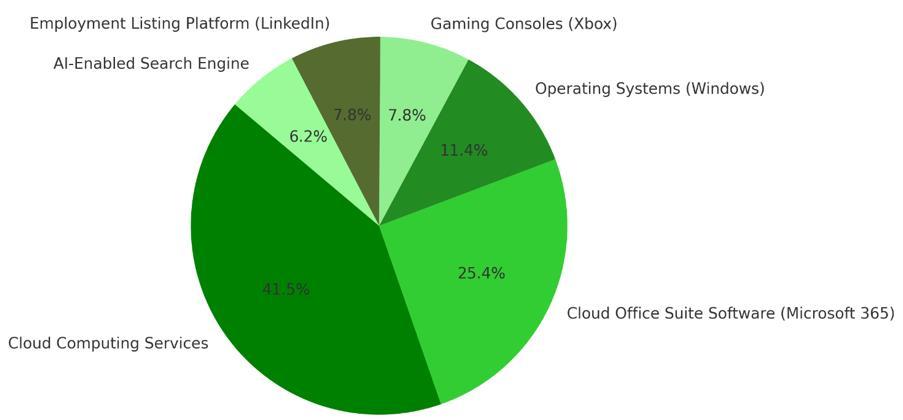
In 2023, Microsoft reported revenues of 211.9 billion dollars, showcasing its financial resilience and the success of its strategy (figure 1).
Figure 1. Revenue distribution by segment [8]
The implementation of AI enables Microsoft to optimize processes, enhance user experiences, and improve efficiency across its product offerings, thereby positioning itself as a leader in technological innovation amidst global economic uncertainties.
Apple Inc., renowned for its innovation in consumer electronics and technology, has effectively implemented business strategies to navigate global economic uncertainties. Central to Apple's approach is its robust commitment to environmental sustainability, demonstrated through initiatives aimed at reducing carbon footprints and increasing the use of recycled materials in its products. Apple has prioritized CSR as an important aspect of its business strategy. The company has launched various programs to support education and inclusivity, including coding education initiatives and partnerships with educational institutions. By embedding sustainability, strategic investments, and social responsibility into its core operations, Apple has strengthened its market position and ensured long-term competitiveness and resilience amid global economic uncertainties.
Tesla, Inc., an American electric vehicle and clean energy company, exemplifies the integration of sustainability and innovation to maintain competitiveness in an unstable economy. Tesla's strategy focuses on continuous innovation in electric vehicle technology and renewable energy solutions. By expanding its product line to include solar panels and energy storage systems, Tesla reduces its dependence on a single market segment and creates multiple growth opportunities.
Tesla's vertical integration approach, controlling many aspects of its supply chain, helps mitigate risks. This strategy ensures stable production and quality control, essential in times of economic uncertainty. Tesla's investment in research and development (R&D) drives continuous improvement and adaptation to market changes, reinforcing its competitive edge in a dynamic global economy. Tesla's revenue increased to nearly 96.8 billion dollars in the fiscal year 2023, which is 18.8% more than the previous year. The USA is Tesla's largest market. More than
78.5 billion dollars of the company's revenue comes from Tesla's automotive segment, which includes the design, manufacture, and sale of vehicles [9].
Starbucks Corporation in the USA has implemented ambitious sustainability goals to maintain its market position amidst economic uncertainties. By reducing its carbon footprint, conserving water, and ensuring ethical sourcing of its products, Starbucks addresses regulatory and consumer demands for sustainability. The «Greener Stores» initiative, which certifies eco-friendly retail locations, not only reduces operational costs but also appeals to environmentally conscious consumers, strengthening Starbucks' brand and market resilience.
Analysis of these companies illustrates diverse approaches to developing sustainable business strategies that enhance resilience and competitiveness amidst global economic uncertainties. Technology companies prioritize diversification and innovation, manufacturing firms focus on cleaner production and energy efficiency, and service providers emphasize social responsibility and ethical practices. These strategies enable companies to navigate economic fluctuations, reduce risks, and achieve long-term growth and sustainability in a dynamic global economy.
CONCLUSIONS
The development of sustainable business strategies is crucial for companies aiming to thrive amidst global economic uncertainties. The diverse methodologies outlined, including qualitative and quantitative research methods, case study approaches, and comparative industry analysis, provide a framework for understanding and implementing effective strategies. Strategies such as diversification and innovation, risk management and resilience building, CSR, and strategic partnerships are fundamental in ensuring long-term and sustainability.
REFERENCES
1. Kudrenko I. Adoption of Blockchain in Critical Minerals Supply Chain Risk Management // International Journal of Information Systems and Supply Chain Management (IJISSCM). Vol. 17. No. 1. P. 1-26. http://doi.org/10.4018/IJISSCM.342118
2. Drnevich P. L., West J. Performance implications of technological uncertainty, age, and size for small businesses // Journal of Small Business Management. 2021. Vol. 61. No. 4. P. 1806–1841. https://doi.org/10.1080/00472778.2020.1867733
3. Bobasu A., Quaglietti L., Ricci M. Tracking Global Economic Uncertainty: Implications for the Euro Area // IMF Econ Rev. 2023. https://doi.org/10.1057/s41308-023-00216-9
4. Abdullina L., Smirnov V., Alimova A., Kalistratova A., Kravets A. Development of eco-friendly mechanized rotary parking lots with a flywheel energy storage device // IOP Conf. Ser.: Earth Environ. Sci. 677 052037, 2021.
5. Koshekov K. T., Savostin A. A., Seidakhmetov B. K., Anayatova R. K., Fedorov I. O. Aviation Profiling Method Based on Deep Learning Technology for Emotion Recognition by Speech Signal // Transport and Telecommunication. 2021. Vol. 22. No. 4. P. 471–481
6. Kudrenko I. The new era of American manufacturing: evaluating the risks and rewards of reshoring //E3S Web of Conferences. EDP Sciences. 2024. Vol. 471. P. 05020.
7. Abdullina L., Bobovnikova A., Zrazhevskiy A. ESG-FACTORS AND CSR-STRATEGY IMPACT ON THE INVESTMENT ATTRACTIVENESS OF USA COMPANIES // Proceedings of the XLIII International Multidisciplinary Conference «Recent Scientific Investigation». Primedia E-launch LLC. Shawnee, USA. 2023.
8. Annual Report 2023 // Microsoft URL: https://www.microsoft.com/investor/reports/ar23/index.html (date of application: 01.04.2024)
9. Tesla's revenue from FY 2008 to FY 2023 // Statista URL: https://www.statista.com/statistics/272120/revenue-of-tesla/ (date of application: 02.04.2024)