Adding Value: taking a tailored approach to education
Mrs Elena Semenzato
Shining the Spotlight: perspectives from the mezzanine Henry Nixey
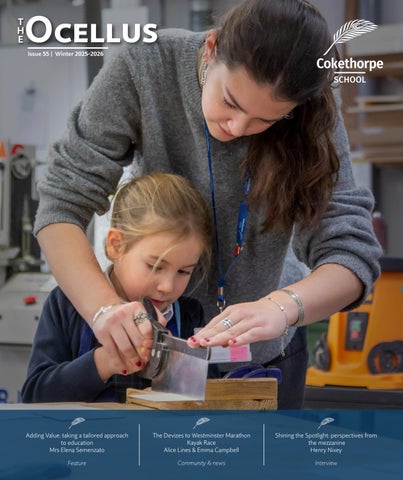
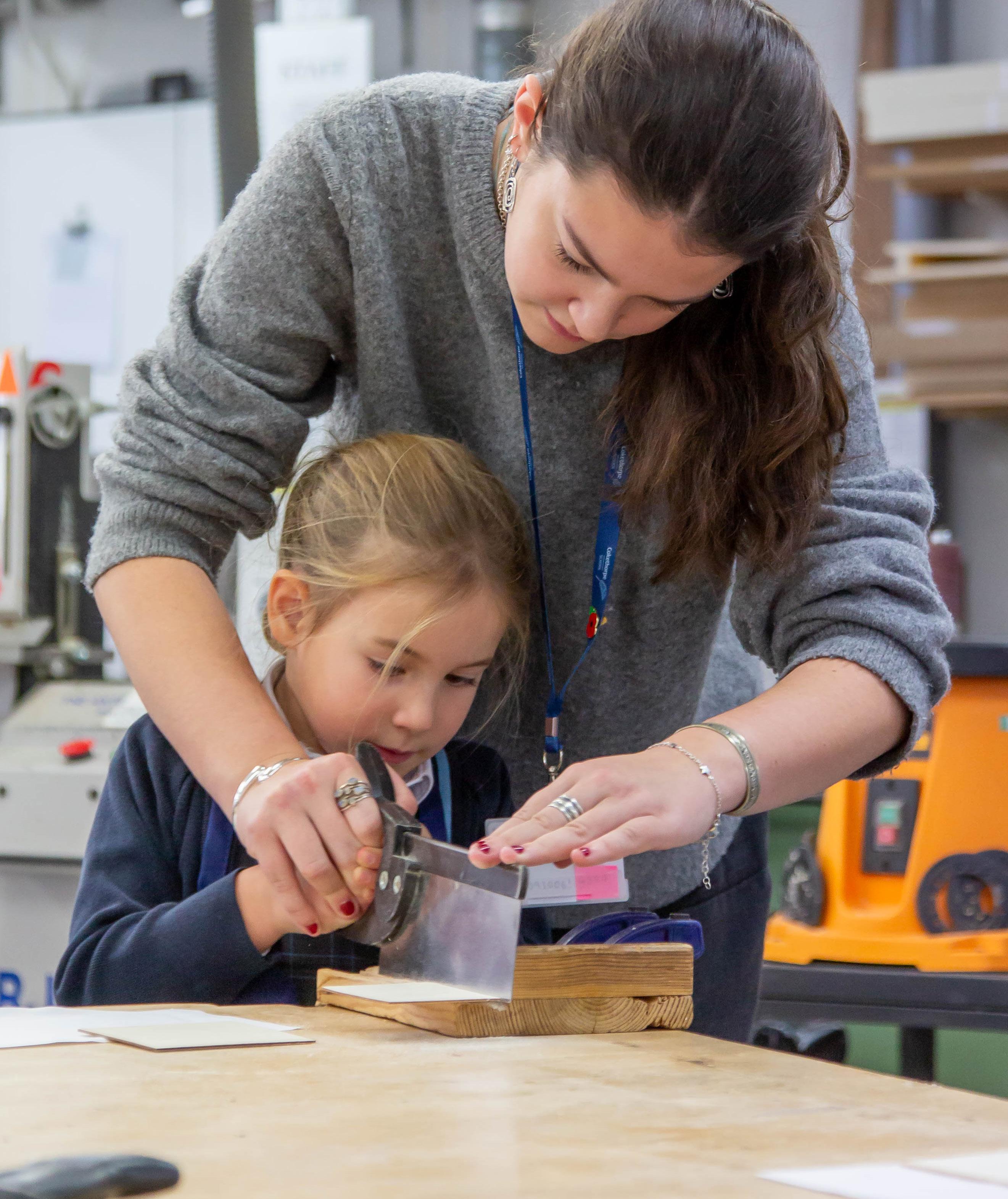
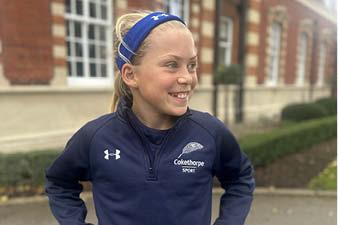
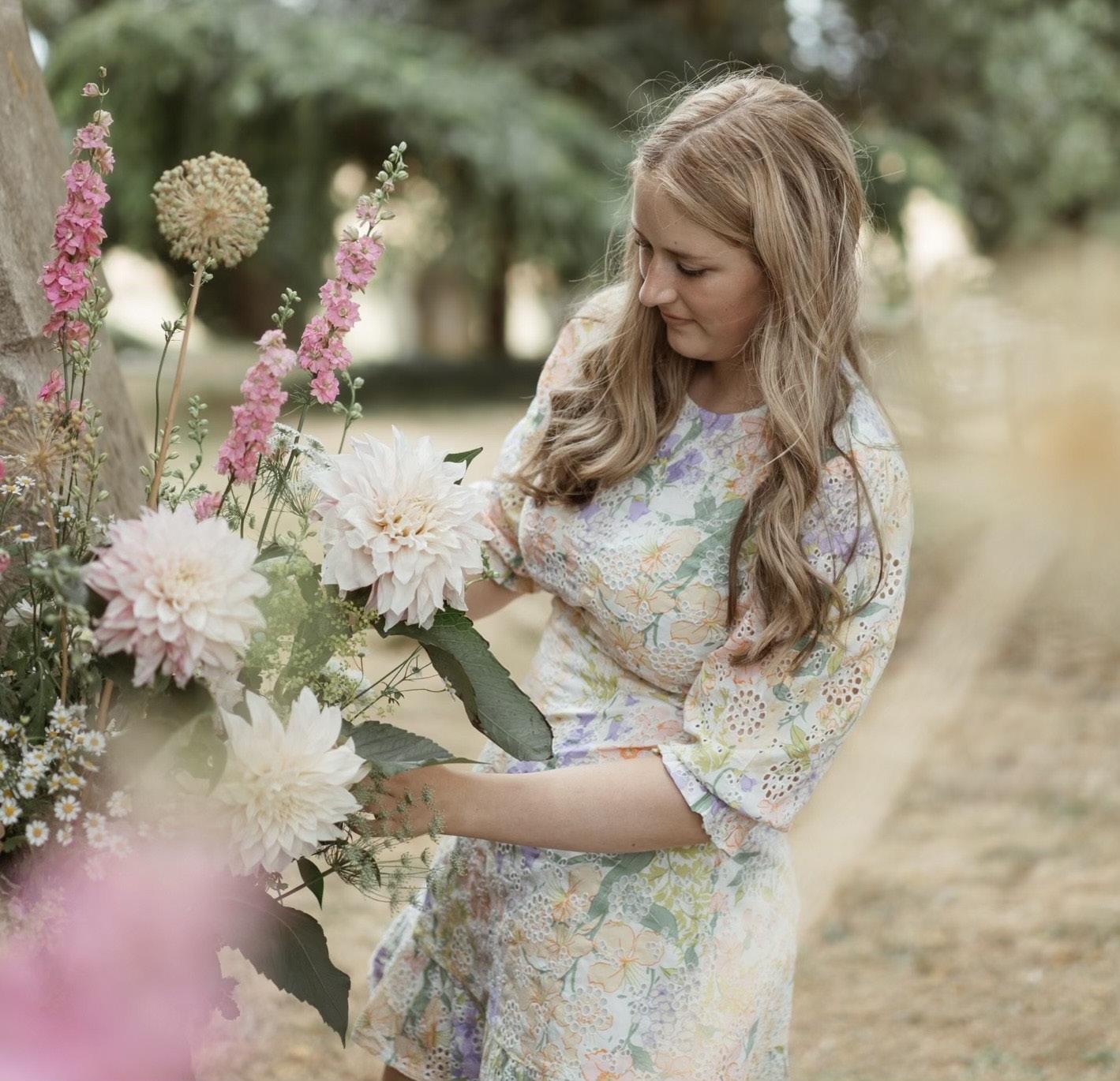
Front cover image: Florence Ogg-Rogers (Year 1, Symonds) with Poppy Symonds (OC 2025, Vanbrugh)
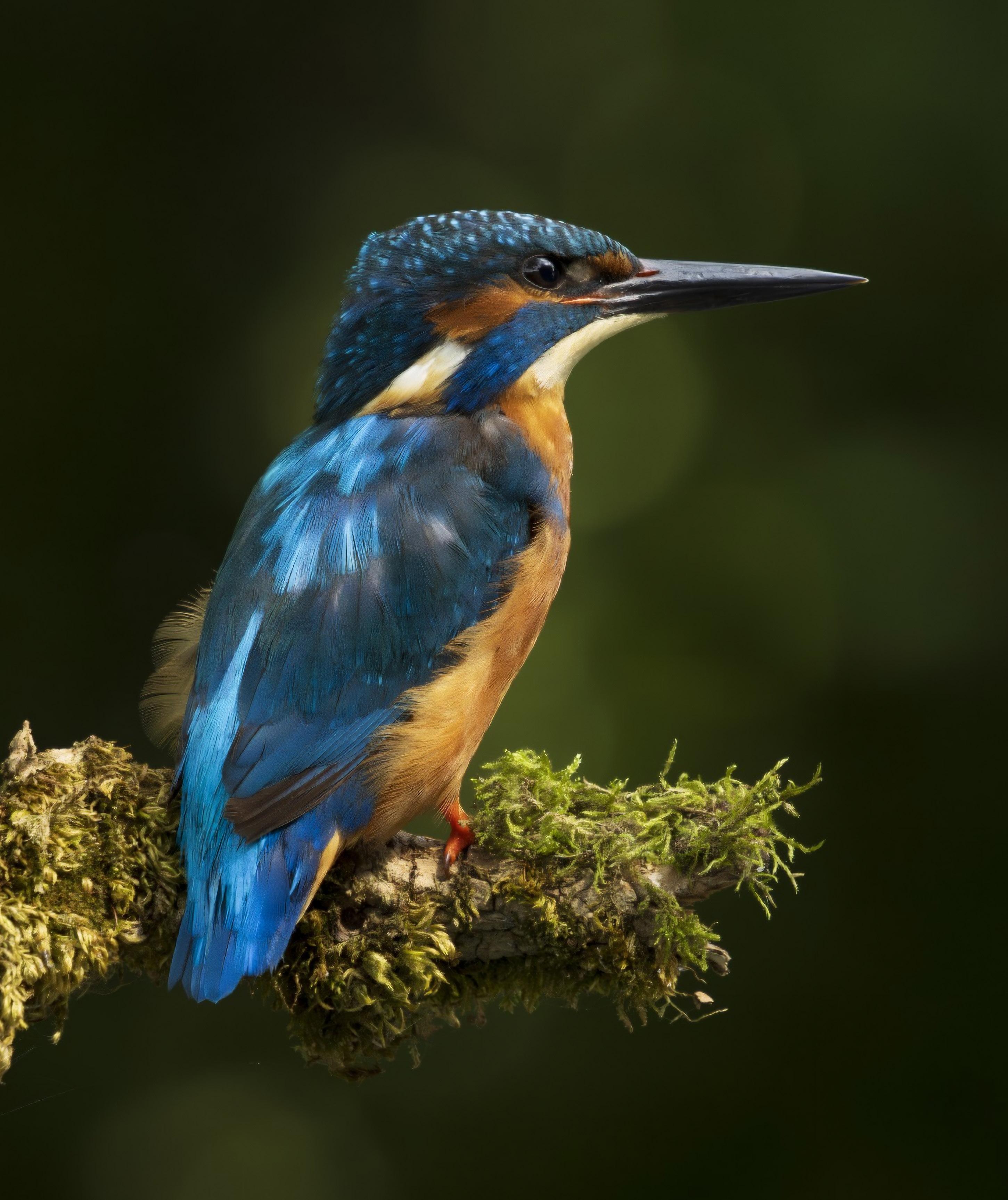
Inside front cover: Photo of a Kingfisher by Zak Penney (Third Form, Feilden)
Back cover: Artwork by Oscar Soukup (Year 6, Lockwood)
Cokethorpe School
Witney, Oxon
OX29 7PU
Tel: 01993 703921 | Email: admin@cokethorpe.org
Ocellus Issue 55 | Winter 2025-2026 Published by Cokethorpe School Editor: Lucy Williams (Communications Officer) Design, Layout & Feature Interviews: Will Griffiths (Head of Marketing)
Head’s Welcome
“
It is our community that binds us, that gives us our strength and that nurtures our success.
Assemblies are precious moments in school life. At Cokethorpe, our community pauses, gathers, and reconnects at the end of the week - a moment to feel “at home” together before we go our separate ways for the weekend. These occasions are always vibrant: a lively sharing of what’s been happening across the many corners of school life and celebrations of the achievements of individuals and groups. Whether it’s the (recently introduced) Golden Spoon award for table manners in the Prep, the Optimum Awards for academic endeavour in the Senior School, the long-service ties and scarves awarded to staff or the much-anticipated outcome of a House event, a shared sense of pride and togetherness makes these end of week gatherings something genuinely special.
Towards the end of the Michaelmas Term, I based one of our Senior School assemblies on the idea of “glimmer moments.” It’s easy for any of us to slip into focusing on the negatives - after all, our brains have evolved to notice potential “triggers” around us. Glimmer moments work as a gentle counterbalance to that. They are not about forced positivity or simply “looking on the bright side,” they’re about noticing, pausing, appreciating and re-living the everyday good things that can get lost in the rush of busy lives lived in busy places. We share “I love it when…” moments with each other: hearing a forgotten song which sends you back to a happy moment in time, relaxing into a warm bubble bath, spotting a rainbow, finding some money in a coat pocket.
Cokethorpe life provides an abundant pool for glimmer moments. Walking around the site, I am often struck by the genuineness of the connections between pupils of all ages – a warm smile accompanying a morning greeting, a ‘high-five’ offered and a pat of the back given on completing the Corinthian Run, the appreciation of a competitor’s efforts in House Music, or the empathy shown in accompanying a peer to the Nurse’s Office when in need. Innocent acts easily overlooked by the giver, but so powerful to the recipient and the observer.
Glimmer moments are not the sole recourse of giving and receiving either. They can be in the satisfaction of solving a challenging algebraic equation for the first time, in asking for guidance and receiving support, or even in facing failure in a task and finding the resolve and the courage to learn from the experience and come back stronger.
It is our community that binds us, that gives us our strength and that nurtures our success. And it is through glimmer moments that we can shine. I hope you will enjoy the many glimmer moments that are reflected in this Edition of the Ocellus.
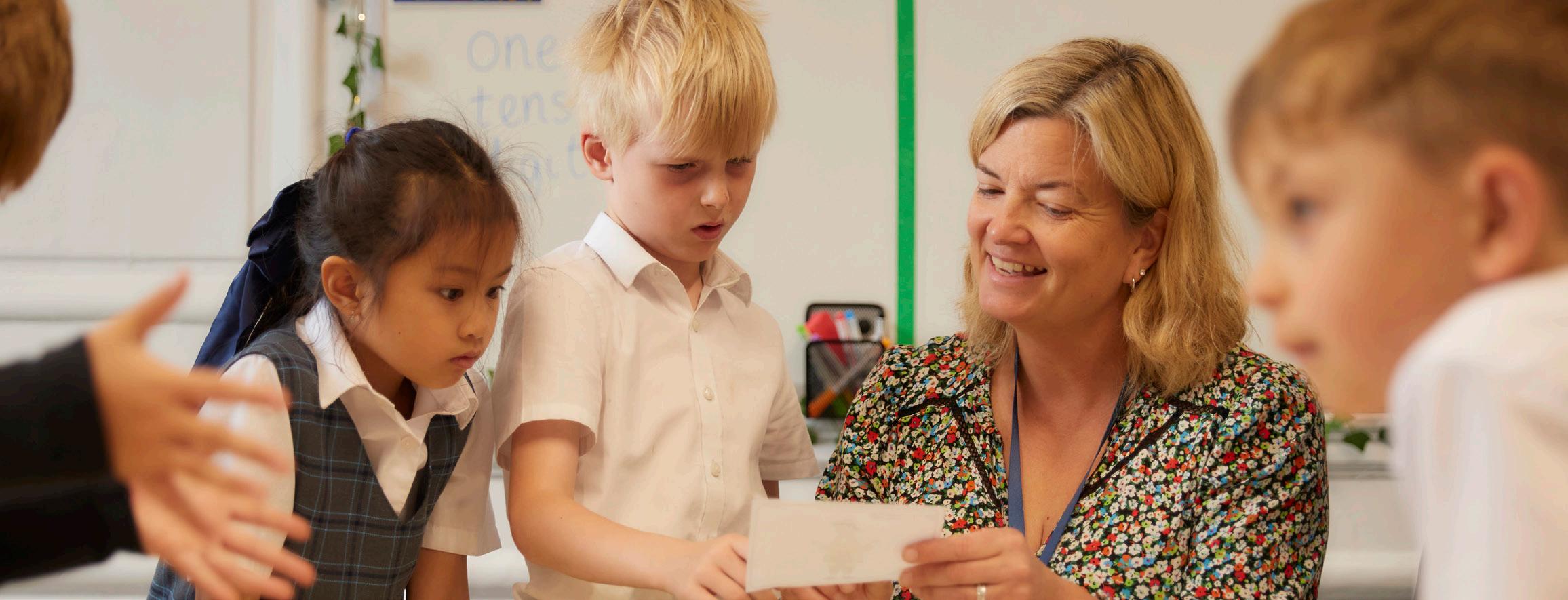
Adding Value: taking a tailored approach to education
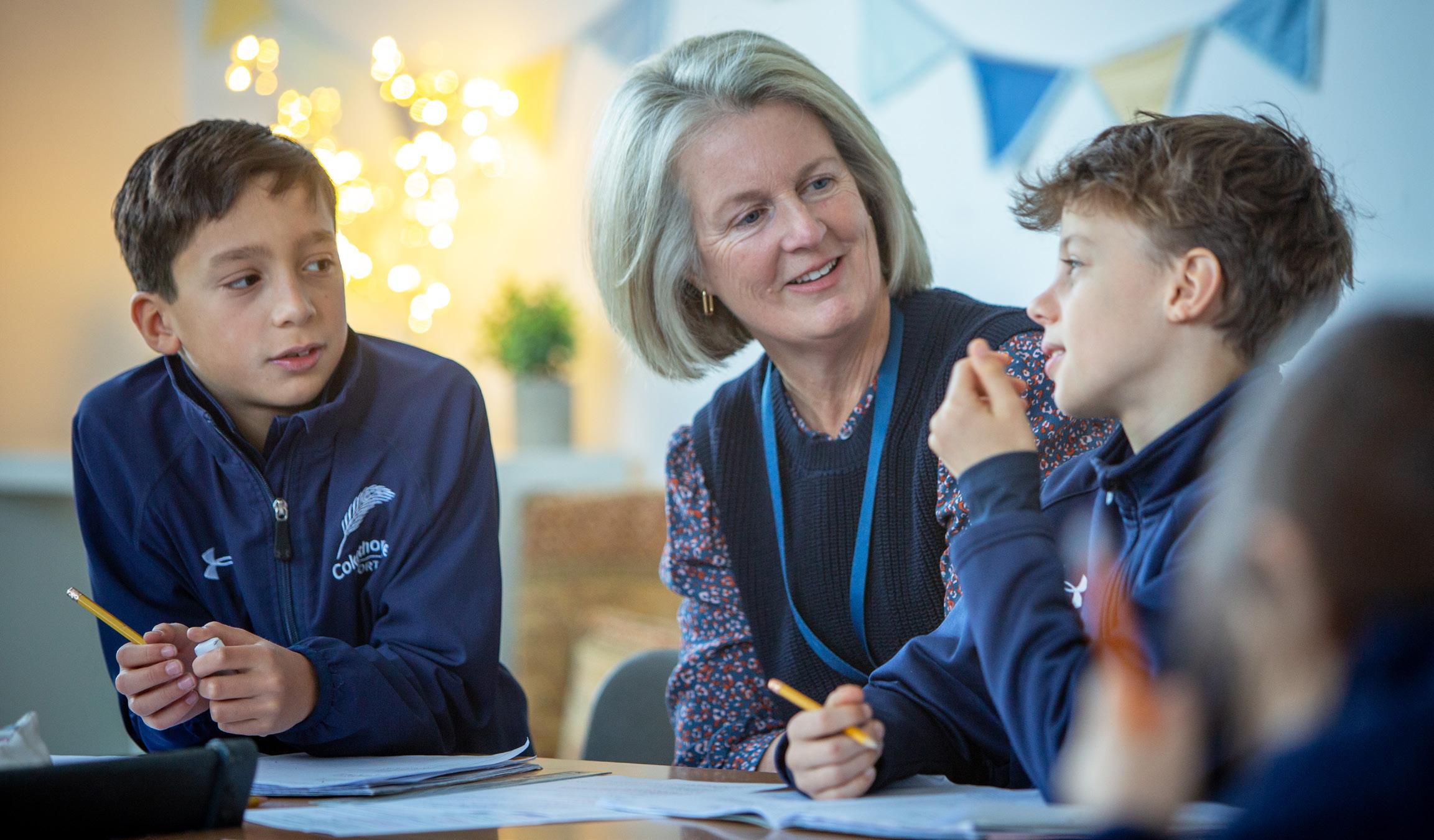
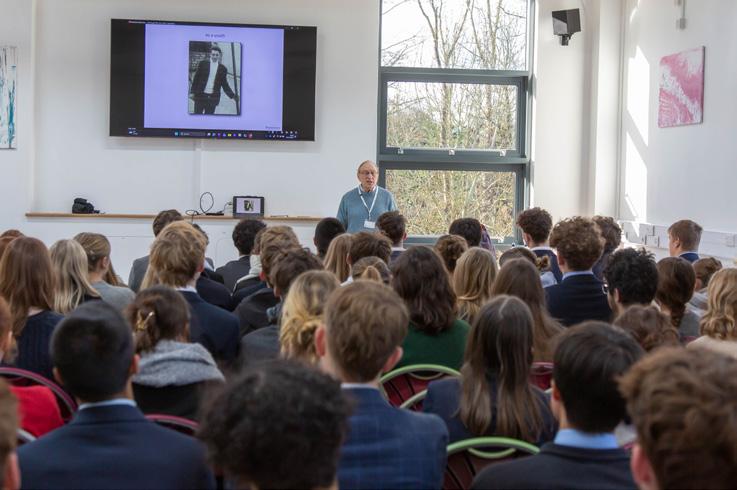
In today’s educational landscape, the phrase ‘value added’ has become a powerful indicator of how effectively schools support individual student progress. But what does it really mean in practice? Elena Semenzato (Assistant Director of Studies – Academic Progress) explains how the concept works and why it is integral to Cokethorpe’s teaching philosophy.
“Value added gives us a clear measure of how much better a pupil performs at the end of a cycle - such as GCSEs or A Levels - compared with their standardised scores,” Elena explains. These scores are generated through a series of online assessments taken at key moments in a student’s school career: First, Third and Fourth Forms, and again in the Lower Sixth. Similar to aptitude tests, they help predict future performance by analysing areas such as fluid reasoning.
Schools that routinely help students achieve grades beyond those predictions are recognised as consistently adding value, Elena says, a sign not only of effective teaching, but of an environment where every child is supported to exceed expectations.
These assessments, however, are not a verdict; they are a starting point. “They provide an initial indicator, highlighting where a pupil may benefit from targeted support, a different classroom approach, or additional challenge and stretch,” she notes. Development, she stresses, isn’t about deficits. It’s a broad spectrum, offering opportunities for every student to grow. “Our aim is to help pupils become well-rounded, not just to reinforce their strengths but to expand on them.”
Where Data Meets Classroom Reality
For Elena, data is a compass, useful, directional, but never the whole journey. The true work, she emphasises, unfolds in the classroom, shaped by the interplay between teacher expertise and pupil response.
“The adaptive approach at Cokethorpe is central,” she says. “Teachers may enter a lesson with a carefully considered plan, but the delivery shifts depending on the pupils in front of them.” Some days, she notes, that means setting aside the original structure entirely, an intentional move that
“
“If the aim is for every student to secure the core understanding, then sometimes the path needs to change mid‑lesson.”
reflects not disorder, but deep attentiveness to the learning process. “If the aim is for every student to secure the core understanding, then sometimes the path needs to change mid-lesson.”
This adaptive mindset is particularly powerful in mixed ability groups. Here, she explains, teachers work not only to secure foundational knowledge but to open additional avenues of challenge. “It’s about ensuring everyone is anchored in the essential learning, while also offering opportunities for those who are ready to push further.”
Data helps illuminate where those opportunities lie, but Elena is clear: no dataset can fully capture the complexity of a pupil’s learning journey.
“What it does give us is a clearer sense of the methods that might work best,” she says. “It helps us direct our energy where it will have the greatest impact.”
The School has begun to see a cultural shift emerging from this approach. Pupils are increasingly independent, more aware of their own progress, and more proactive about seeking challenge. “We’re watching them develop a better understanding of how they learn, what works for them across different subjects and situations. By the time they reach GCSE, our aim is that every pupil has a strong sense of their own learning identity. That, I think, is one of the most significant achievements we can offer.”
Responding When Things Don’t Go to Plan
When asked whether adapting to setbacks is part of that exploration, Elena’s response is immediate.
“Reflection is a valuable skill,” she says. Helping pupils analyse what happened (and why) is crucial in developing resilience and adaptability. “We encourage them to evaluate the moments that didn’t go as expected, not as failures, but as insights. Understanding why something didn’t work out is essential for shaping what they do next.”
Teaching, she says, follows the same rhythm. Staff regularly assess their own lessons: what worked well, what worked really well, and where new approaches might be needed. “The sweet spot is creating a rhythm where both pupils and teachers operate in harmony most of the time. There will always be variables, of course. But the skill is being able to adapt. We expect that of our pupils, and we expect it of ourselves.”
For Elena, this continual evolution is at the heart of the profession. “No teacher is ever the finished product. It would be dangerous to think so. We are all learning, always.”
Supporting Pupils Arriving from Diverse Backgrounds
Cokethorpe’s Senior School draws pupils from a wide range of educational backgrounds - up to 40 different schools in some years. Far from seeing this as a challenge, Elena describes it as a natural part of school life.
“Teachers of all age groups are used to working with pupils who arrive with different experiences, different levels of recall, or different approaches to learning,” she says. “Our use of retrieval practice - revisiting topics, drawing on prior knowledge, applying it in new contexts - means that everyone benefits.”
Pupils moving up from the Prep may be more familiar with our learning and teaching philosophy, she notes, but every child experiences some degree of adjustment. “There are more subjects, more classrooms, greater independence required. They’re navigating new routines and expectations. Even with familiar faces and spaces, there’s something new for everyone. The important thing is that they take that next step together.”
““Our objective is to ensure every pupil achieves the strongest outcomes they are capable of, but it is also to enrich, to enable, and to add value to the lives they will go on to lead.”
The School’s pastoral and academic structures are designed to support this transition. “We’re very good at helping pupils acclimate, while also giving them the space to adapt. Children are far more capable of adjusting than we sometimes give them credit for.”
She points to research showing the long-term benefits of learning to manage change. “When pupils encounter something truly challenging (like GCSEs) they draw on the strategies they’ve already built. Part of our role as educators is to help equip them for those moments.”
Measuring Value Add: The Story in the Data
When conversation returns to standardised scores, Elena is clear: high expectations are non-negotiable. “It’s a journey,” she says. “Every pupil starts at a different point, but our role is to support them along the way. And the data shows that we do add value, and do so consistently.”
Across GCSEs, A Levels, and BTECs, Cokethorpe’s value-add performance is strong. “On average, we improve a pupil’s standardised score by more than a grade,” she explains. “Sometimes substantially more.”
This value-add extends across the academic spectrum. “It is sometimes easier to see statistically where pupils with lower baseline scores have made significant progress,” she acknowledges, “but our most recent results show strong value-add right across the board. That tells us that teachers are not only supporting pupils who need it, but also effectively stretching and challenging those who begin from a higher starting point.”
In Elena’s experience, very few pupils enjoy a perfectly smooth academic trajectory. “There are almost always going to be bumps in the road - pastoral, academic, sometimes both. The pandemic reminded us of that. A child’s wellbeing and their academic success are deeply intertwined. A happy child is more open to the work we’re doing to help them reach their potential.”
Standardised scores may provide a number, she says, but they do not define the child. “Our commitment is to support them through every stage of their journey, no matter what.”
Beyond Buzzwords
Cokethorpe describes itself as offering exceptional breadth with individual focus, something Elena believes is more than a slogan. “These are not marketing buzzwords,” she says. “They represent how we operate every day.”
Teachers hold multiple roles (academic, pastoral, co curricular) forming a network around each pupil that works collaboratively rather than in isolation. This breadth of opportunity, she explains, is often transformative.
“A pupil who has lost confidence academically might rediscover it through sport, through a performance, a music ensemble, or something completely new in the AOB programme. These experiences aren’t add ons; they help recalibrate a child’s sense of self.”
Ultimately, Elena sees Cokethorpe’s mission as extending far beyond examination results.
“Our objective is to ensure every pupil achieves the strongest outcomes they are capable of,” she says. “But it is also to enrich, to enable, and to add value to the lives they will go on to lead. That is the true measure of what we do.”
Meet the School: Mrs Georgina Stubbings
What do you enjoy most about working here?
You can’t fail to be proud to work at Cokethorpe from the minute you drive through the gates each morning and are greeted by such stunning surroundings. The staff are so lovely and supportive, and the pupils are a delight. I have seen so many pupils go through the whole School in my time here and it’s lovely when they come back to let us know what they have been doing since leaving. There is a lovely sense of community here.
Community is so important to Cokethorpe. What stands out for you in the School’s approach?
Cokethorpe has a wonderful community feel. There seems to be a sense of belonging and we are all passionate about the wellbeing of our pupils. I think the strong relationship between pupils, staff and families is evident, particularly when we all meet on occasions such as the CPFA Fireworks and Carol Services.
Tell us something we might not know about you?
I have been a keen golfer for around 12 years, playing at Burford Golf Club, and had my first hole-in-one there in 2020. Last year, my husband was Club Captain and amongst other events we ran, such as quizzes (I love a quiz!), I did a skydive for his chosen charities, ‘On Course Foundation’ and ‘Crohn’s and Colitis UK’, helping to raise over £25,000 in his year. As a result of that, we were invited by ‘The Not Forgotten’ – a military charity connected to ‘On Course Foundation’, to attend a Royal Garden Party at Buckingham Palace, hosted by Princess Anne, to thank us for our fundraising efforts. It was quite some event – very humbling and one I will never forget.
I have also done a charity abseil down the JR maternity building for Oxfordshire Hospitals, who looked after my grandson who was poorly when he was a baby. He’s now seven and keeps me very busy in the school holidays! I have been known to put the odd poem together when staff members leave.
Prior to working at Cokethorpe, I was a Special Constable for Gloucestershire Constabulary in Cheltenham for four years, I also had Latin and Ballroom dance lessons for three years and after joining the Police, I did an evening course to study A Level Psychology at Witney College and got a grade A.
Mrs Stubbings has worked at Cokethorpe since 2010 and is Secretary to the Deputy Headmaster.
Drama Review
Seussical Success
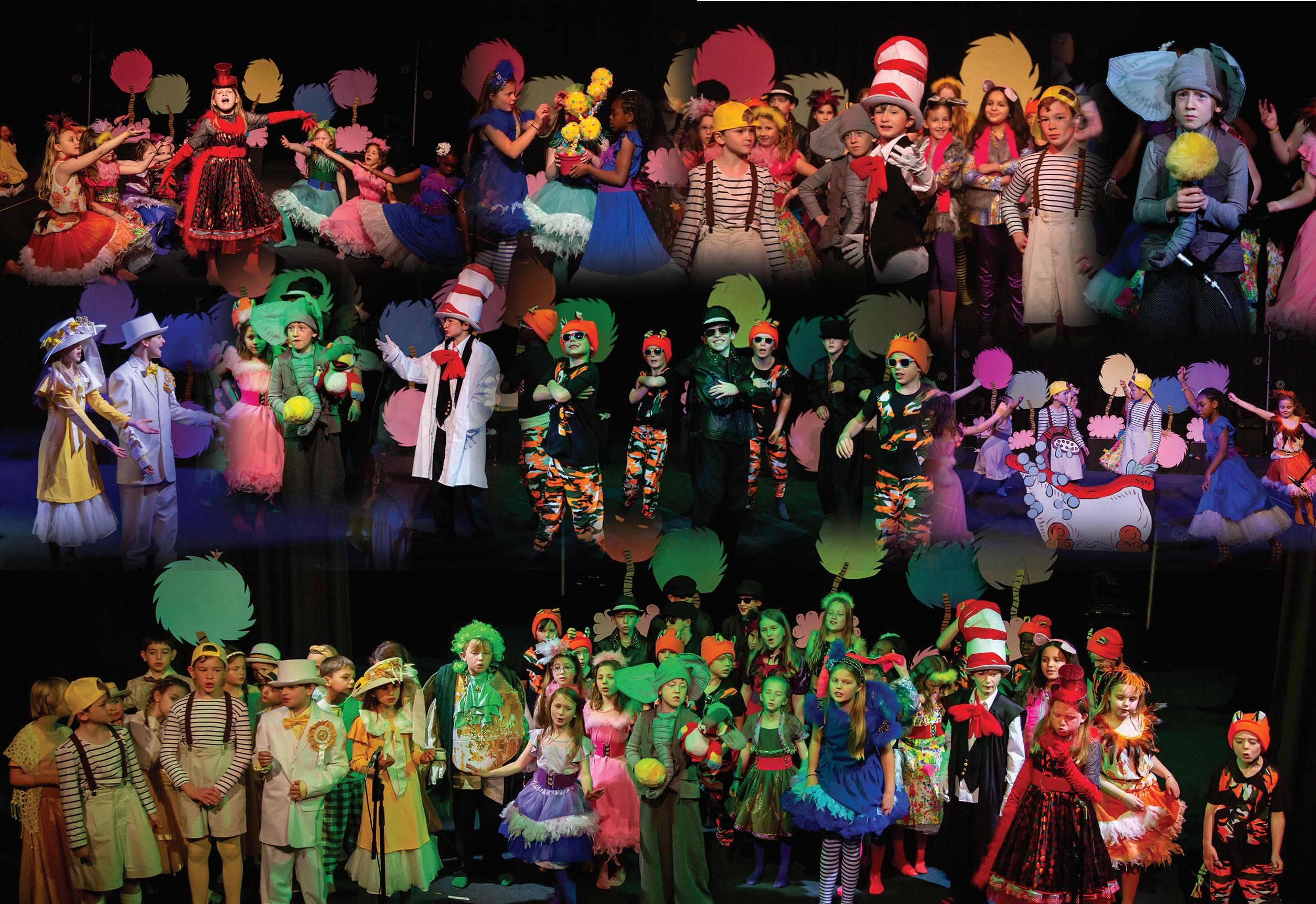
The Years 3 to 5 production of Seussical was nothing short of spectacular. From the very first note, the stage came alive with vibrant singing, confident acting, and energetic dancing. Every pupil brought their character to life, whether a Who, a Jungle Citizen, or one of
Dr Seuss’s most iconic creations. The wonderfully wacky storyline, woven together from Dr Seuss’s beloved tales, kept the audience captivated, laughing, and even a little emotional at times. Beneath the colourful chaos, the cast delivered the show’s powerful message with sincerity and warmth: no matter who we are, every person matters. This theme resonated beautifully throughout the performance, reminding us all of the importance of kindness, inclusion, and believing in ourselves. The outstanding costumes created by Mrs Wilkinson transformed the stage into a vivid Seussian world, bursting with bold colours, imaginative shapes, and whimsical details that made every character unforgettable.
Beau Jameson (Year 5, Lockwood) who played Horton, commented: ‘It was such an amazing experience and I felt really proud of myself. The Cat in the Hat who was played by Alfie Reed (Year 5, Gwyn) said of his experience, ‘I loved playing a character who was so confident and funny’. Martha Florey (Year 5, Baker) said she was ‘really nervous at the start, but by the end I felt so happy and proud’. Austin Harding (Year 5, Symonds) shared his thoughts, ‘I felt confident because I was performing with my friends and we worked so well as a team’.
Seussical was a joyful celebration of creativity, teamwork, and theatrical magic. Every pupil should feel immensely proud of their achievement, proving that, as Dr. Seuss said, ‘Today you are you, that is truer than true. There is no one alive who is youer than you.’
Adventure, Community, Independence: World Challenge Morocco
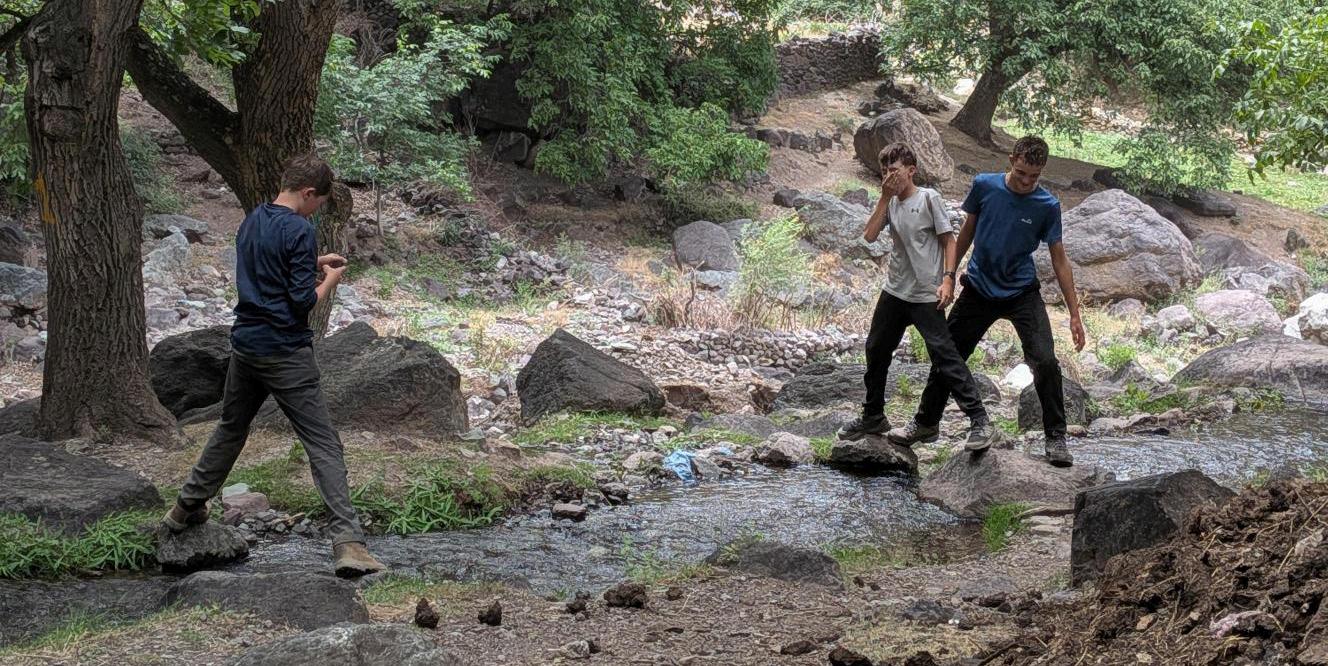
As part of this edition’s focus on co-curricular opportunities, we spoke to pupils who took part in the World Challenge expedition to Morocco last summer. From community volunteering to trekking in the Atlas Mountains, the experience was life changing. Immy Harris (Fifth Form, Gascoigne) and Joshua Spolander (Fourth Form, Queen Anne) spoke about their unforgettable adventure in Morocco.
During the summer holidays, you were both part of the World Challenge expedition to Morocco. Can you tell us a bit about the trip?
Immy: It started as a huge group of very excited (and slightly chaotic!) students piling onto a plane. Everyone was buzzing, talking about what we wanted to do first. As soon as we stepped off the plane in Marrakech, we were hit by a wall of heat and that was when it really felt like the adventure had begun.
Joshua: Marrakech was intense straight away. We were right in the centre, and as soon as we got off the bus people were trying to sell us things. It was busy, loud and completely different from anything we were used to.
What was the main purpose of the expedition?
Joshua: The trip had three main parts. First, we spent time in Marrakech, then we travelled to a very remote village where we worked on a community project, helping to rebuild and repaint a local school. After that, we completed a multi-day trek across the Atlas Mountains.
What was the community project like?
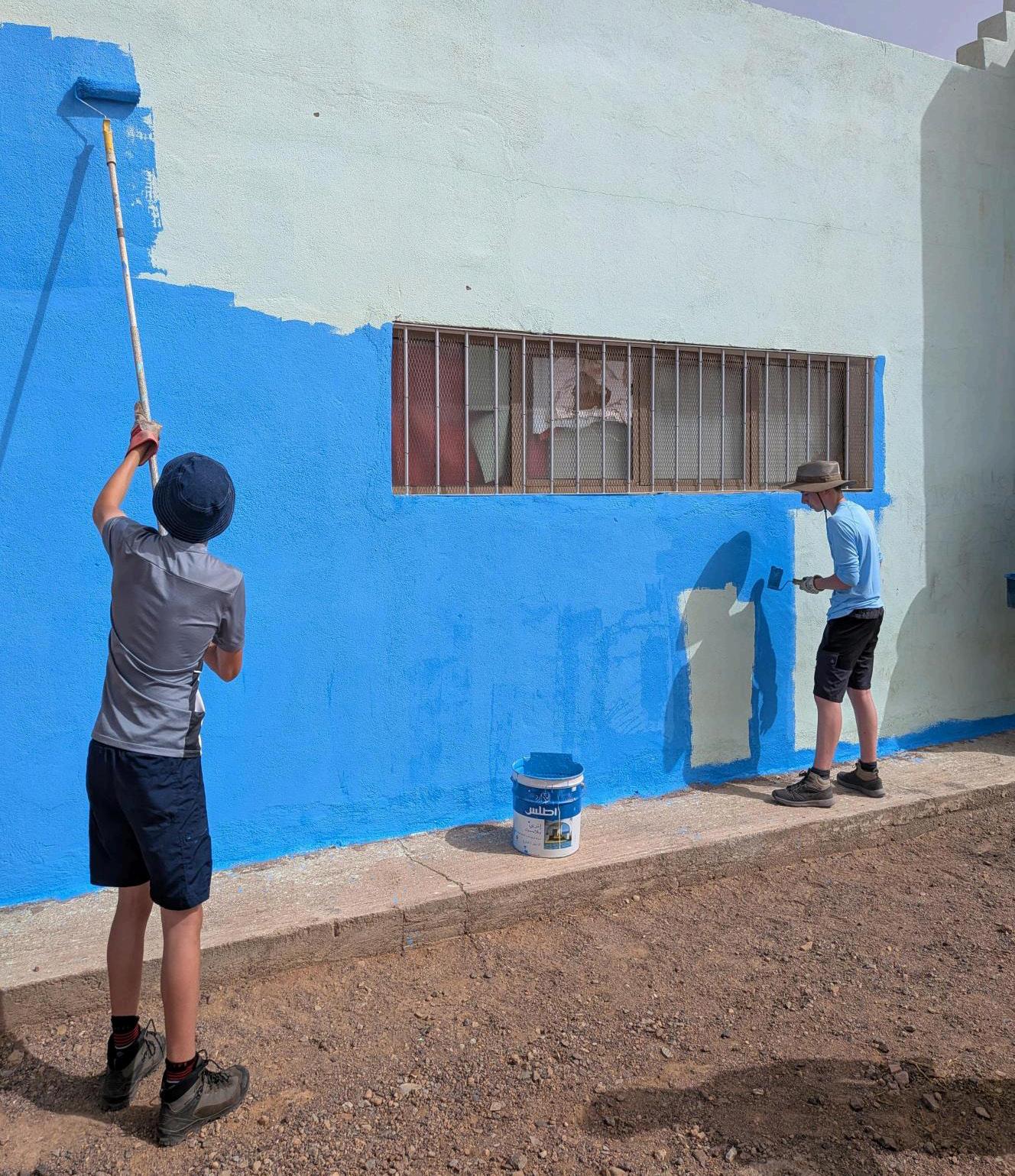
Immy: We stayed in the village for four or five nights. It was extremely remote, with very limited resources. Our work focused on reinforcing walls, laying stone and repainting a whole school building. The paint
had been flaking badly, so repainting it made a huge difference - but it took a long time and a lot of effort.
Joshua: We worked early in the mornings to avoid the worst of the heat, then rested in the middle of the day. In the evenings, the local children would come out and play football with us, barefoot on the rocks, and sometimes people from the village would dance and sing with us around a fire.
Immy: We stayed in a large communal house and slept on the roof under the stars. One night there was even a thunderstorm, but after that the nights were amazing.
What was it like working alongside local people?
Immy: The man we worked most closely alongside didn’t speak any English, so communication was mostly through gestures, actions and a bit of very basic French. But because we all had the same goal, it worked surprisingly well. You don’t need a shared language when you’re all trying to achieve the same thing.
Do you think your work had an impact on the community?
Joshua: We hope so. The amount of progress we made was huge; we repainted a whole building. The school looked completely different by the time we left. Spending time with the children and playing football with them every evening made it feel much more meaningful than just ‘doing a job’.
What happened after the community project?
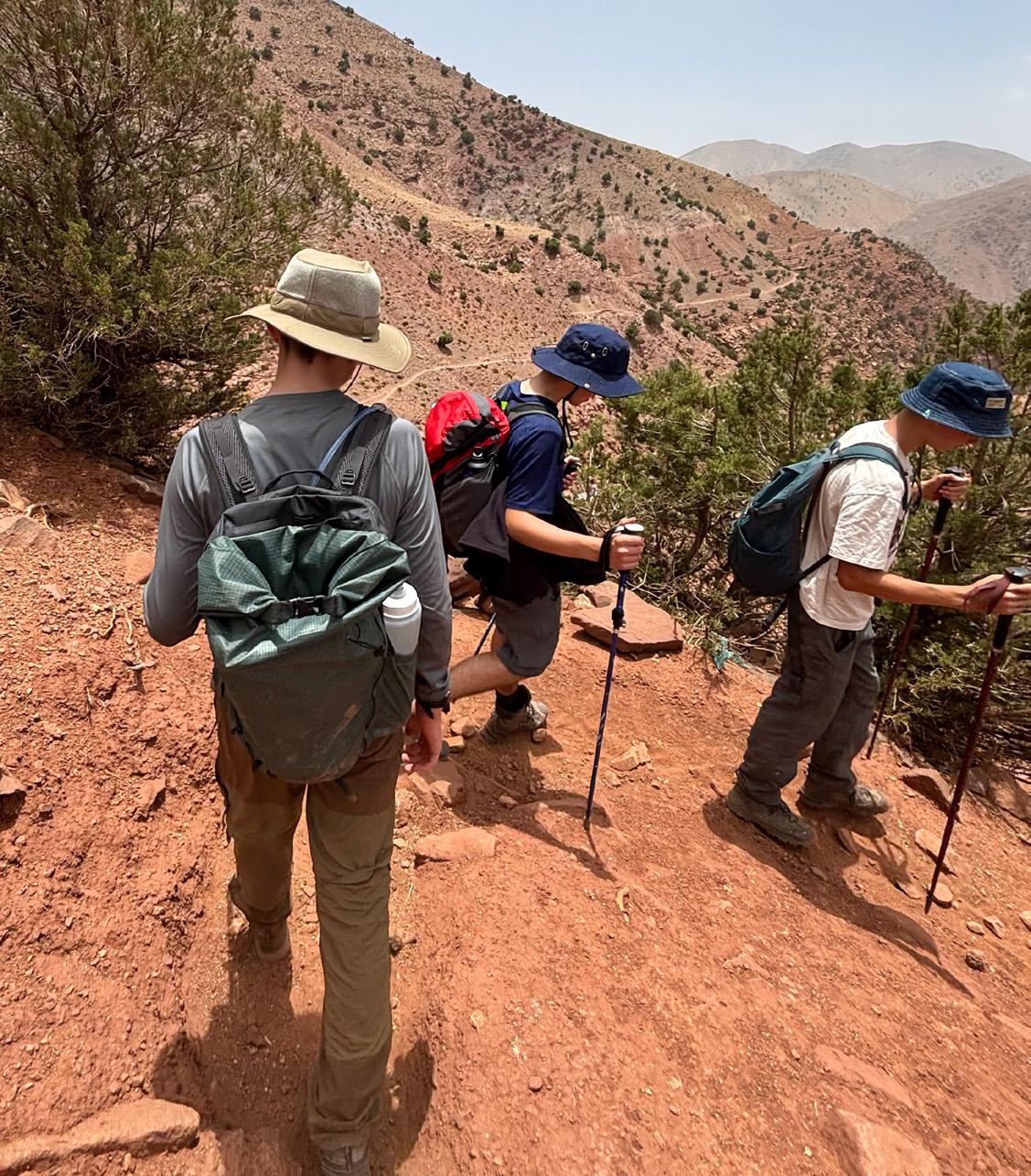
Joshua: After that, we travelled to the Atlas Mountains for the trekking phase of the expedition. Over four or five days, we hiked around 50–60 kilometres. Each day involved long walks up and down the mountains, but we took plenty of breaks and didn’t rush.
Immy: We camped each night in remote locations and had a mule, Aisha, who carried our food and equipment. Our main backpacks were transported ahead because they would have been far too heavy to carry.
How did you prepare for the trek?
Joshua: There wasn’t much formal training beforehand. We were advised to keep our fitness levels up and to break in our boots, which was definitely important, as blisters were a real issue for some of us.
Immy: The first day felt daunting, but once we settled into a routine it became much more manageable than expected.
What was the trekking experience like overall?
Joshua: It was completely new - nothing like anything we’d done before - but incredible. You’d wake up, hike all day, set up camp, eat together and then do it all again.
Immy: While it sounds exhausting, once you fall into the rhythm it becomes very rewarding.
What did you personally take away from the trip?
Joshua: Independence and confidence, without a doubt. We took turns being group leader, which meant managing budgets, finding places to eat and speaking to locals. It pushed us to step up and take responsibility.
Immy: I noticed this immediately afterwards, travelling through airports alone felt completely different after Morocco. There was a huge sense of confidence that came from knowing we could manage this ourselves.
Has the trip influenced your future plans?
Immy: Yes it has, massively. Before the trip, I had different ideas about gap years and next steps, but now travelling is a big goal. It really was a life changing experience.
Joshua: Experiencing another culture properly, not just as a tourist, has made me want to explore more of the world before settling into a career.
Would you recommend World Challenge to other pupils?
Immy: Absolutely. It’s challenging, but in the best possible way. You experience different cultures, give back to communities, build resilience and confidence, and come home with memories you’ll never forget. It’s completely different from a holiday and far more meaningful.
Community & news
The Pre-Prep Nativity performance, A Miracle in Town, brought warmth, wonder and festive cheer to the penultimate week before the Christmas break. From the very first song to the final bow, our young performers shone with confidence, charm and an infectious sense of joy that lit up the hall.
Each pupil embraced their role beautifully, delivering lines with pride and singing their hearts out. Their enthusiasm was matched by a sense of teamwork, supporting one another to bring this cherished Christmas story to life. It was a delight to see how much their hard work and rehearsals paid off on stage.
As always, the costumes were simply wonderful, a colourful array of angels, shepherds and wise men that added sparkle to every moment. The creative touches and attention to detail made the performance feel truly magical.
The Pre-Prep Nativity reminded us of the true spirit of the season: togetherness, joy and the excitement of sharing a special story. It was a heart-warming event and a memorable celebration of all the talent and confidence within our youngest learners.
Maths Together
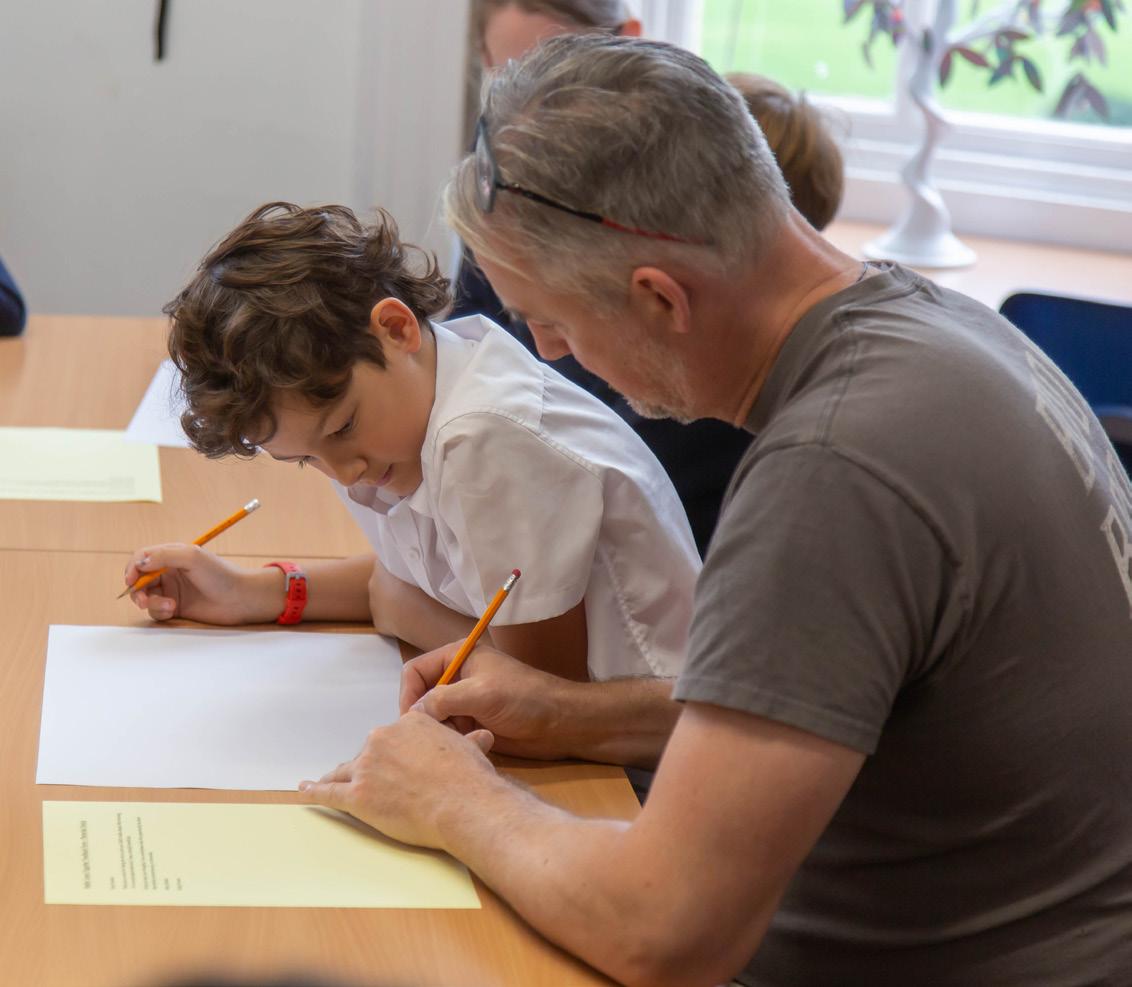
The Prep School’s recent Learn Together Maths Sessions were a resounding success, marked by vibrant energy and a strong sense of community. It was truly heartening to see such high levels of parental engagement, with families enthusiastically participating in the activities alongside the children.
The sessions provided a valuable opportunity for parents to gain insight into the methods and strategies used in the classroom, helping them feel more confident in supporting their child’s learning at home. The interaction between parent and child was a particular highlight, fostering collaboration and reinforcing the joy of learning together: ‘the session was very useful: fast-paced and interactive and the children clearly enjoy learning maths’.
Children were proud to showcase their mathematical understanding, sharing their thinking and problem-solving approaches in a lively and supportive environment.
A Miracle in Town: Pre-Prep Nativity
CPFA Fireworks Extravaganza
Cokethorpe families and friends came together for an unforgettable evening filled with laughter, colour, and community spirit. The fairground rides and games kept everyone smiling, while the delicious food stalls and roaring bonfire set the perfect atmosphere for a crisp November night. The skies above Cokethorpe burst into life with an incredible fireworks display, lighting up the grounds in a dazzling show of colour and sound.
The event would not have happened if it were not for the incredible team of CPFA parents and our fantastic Maintenance and Grounds staff. A huge thank you to everyone who joined us and helped make the evening so special.
First Form Disco and CPFA Cheese and Wine Evening
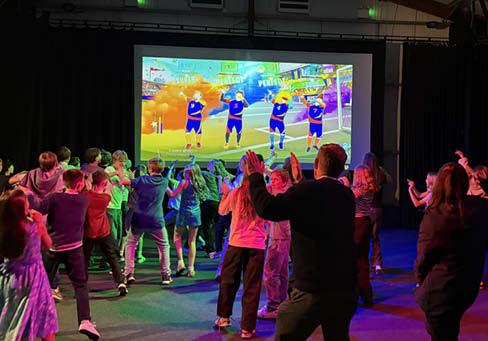
First Form pupils marked their successful transition into Senior School with a well-earned evening of celebration. The First Form disco was a lively and memorable event filled with music, laughter, and a strong sense of camaraderie.
Year 3 Chedworth Villa
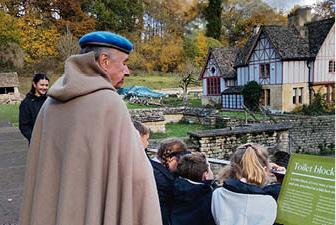
What a day it was for Year 3, as they journeyed back in time to the Roman era during their visit to Chedworth Roman Villa, one of Britain’s most impressive ancient sites, nestled in a beautiful Cotswold valley.
Their guided tour was led by a Roman character in full costume, who brought the Villa’s history to life with captivating stories and fascinating facts. In the Learning Pavilion, the children delved further into Roman life through a range of hands-on activities. They handled both real and replica artefacts, tried on traditional Roman clothing, and designed their own colourful mosaics using magnetic cubes.
The day offered a vivid insight into life in Roman Britain, from luxurious bathhouses to clever plumbing systems, leaving the children amazed at the sophistication of Roman design and daily life.
House Singing
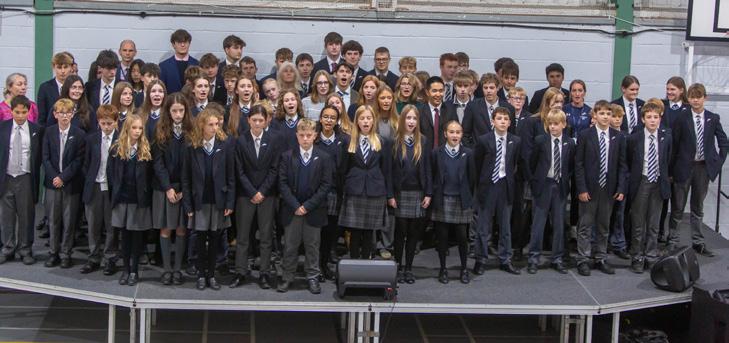
The Senior School came together for this year’s House Singing Competition - and, as always, it did not disappoint. Each House delivered an incredible performance under the theme of British Values. Pupils took to the stage in their Houses and sung their hearts out - loud, proud and in (nearly) perfect harmony! Staff and students performed side-by-side with confidence, energy, and plenty of enthusiasm.
One of the most rewarding aspects of House Singing is its ability to bring everyone together. Pupils from all year groups collaborate to sing a single piece, with each person contributing their part to a shared performance. For Lower House pupils, House Singing offers a particularly valuable experience, the chance to perform beyond their immediate peer group and participate in their Senior School House. Our judges, Miss Wilcox and Mrs Watson, had the difficult task of choosing the winners — every performance was brilliant — but in the end, it was Swift House who were crowned the winners with their performance of This Is Me from The Greatest Showman
The event was brilliantly supported by members of the Sixth Form, who took the lead in organising games and encouraging participation throughout the evening. The fantastic soundtrack for the disco had everyone on their feet, provided by the amazing Benjamin Gimson (Second Form, Feilden) aka DJ Benji. It was a wonderful way to celebrate a positive beginning to their Senior School journey, and a reminder of how much they have already grown in confidence.
While the First Form pupils were dancing the night away at their disco, the CPFA were hosting a rather more refined, but equally enjoyable, event for new parents.
The Cheese and Wine Evening offered a perfect opportunity for parents new to the Cokethorpe community to come together, relax, and begin building connections of their own.
Referendum
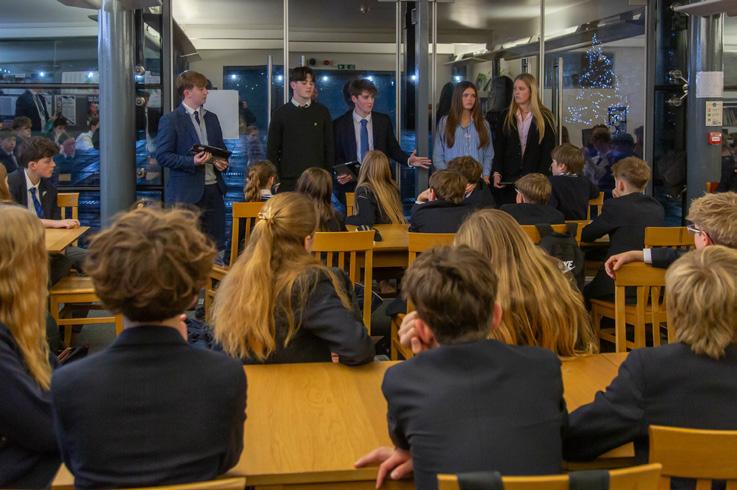
Following UK Parliament Week, Sixth Form Politics students worked on a School-wide referendum. Students presented their findings to House groups on each side of the question ‘Are the Royal Family value for money?’
After speeches pupils took part in a ballot, the results of which were revealed at the end of term assembly.
Prep School work
Descriptive Writing
‘The small brown owl is sleeping in a tree. The bright stars are shining in the sky. The sky is dark and blue.’
Colby La Réservée (Year 1, Symonds)
Acrostic Poems on Fire
Flames flickering as the ash fell down from the sky
Incredibly ginormous flames shooting out of the fire
Running people rushing away Embers shooting in the sky
Naomi Heywood (Year 2, Lockwood)
Volcano Description
The crater is the mouth of a volcano. Ash cloud is the gas emitted from a volcano erupting. The main vent of a volcano is the passage where magma travels through, before it reaches the Earth’s surface. The secondary vent of a volcano is a side passage where magma can escape. Lava is molten rock or magma that has escaped from a volcano. The magma chamber is the location underneath the main vent where magma is stored before a volcano erupts. The earth is made up of layers of rock. When lava cools on the outside of a volcano, it cools to form new layers of igneous rock.
Amarah Snapp (Year 3, Symonds)
The Magical Door
Behind the whimsical, ancient, ruined, mysterious and engraved door, lies a bright, colourful and magical new world, like a portal to my imagination. A land full of castles yearning to be explored, villages that inhabit tiny dwarf people, with a beautiful river flowing through this little cute kingdom called Levtopia. The inhabitants of Levtopia (the dwarf people) had no negative opinions of each other, just going about their lives.
Levison Simcox (Year 3, Baker)
Creative Writing
‘Quickly, I ran out of the huge yellow plane, the fire was as huge as a mountain. I was covered in ashes and gently brushed them off with my hand as I silently walked through the jungle. The trees danced in the wind. How would I get home now? The Tall trees tumbled down. I ran for my life and, luckily, got away.’
Romilly Bishop (Year 4, Lockwood)
The tall tree sat there in total darkness, it didn’t know it was famous. It was super duper scary. It looked like it was just going to crumble on my head, but it didn’t.
The steaming hot sun shone brightly in my eyes. It was as hot as an oven.
The volcano screamed as it exploded. The lava was as hot as a fire setting.
The white fluffy cloud moved towards the sun as it floated high up in the sky.
Roo Cable-Alexander (Year 4, Symonds)
S-L-O-W Writing
Vividly, the crystalline, ivory, snow covered the landscape in a fabulous sheet of winter glory.
The Aurora Borealis surveyed its icy domain like a king at atop a heavenly throne.
Snow consumed land.
Gently, light of the remote cabin illuminated the landscape with an ominous glow.
The trees stood tall, like ancient sentinels guarding a frozen kingdom.
As the icy fingertips of winter cradled the land, the iridescent colours that herald winter dance around the last cabin; how luxurious is this?
The glorious stars were like godly diamonds; the shooting stars ran across the sky leaving a celestial trail of star dust light.
Frozen world.
The icicles hang like the last lost, wishes of winter.
Suddenly, a lively fox darted across the pristine landscape then disappeared from view like the sun going behind the clouds.
Reggie Firth (Year 5, Baker)
Windrush Boy
Above your head
Windrush boy
The godly rags of light shines down upon you
Below your toes
Windrush boy
Ants wave goodbye
In your nose
Windrush boy
The scent of the Jamaican Ocean leaves you
Around you
Windrush boy
Jamaican people await England
Ahead of you
Windrush boy
Your English life begins
James Clayton (Year 6, Baker) and Rupert Heaton (Year 6, Lockwood)
The CREST Awards
Sammi Eagle (Third Form, Queen Anne) and Annie Clifton (Third Form, Vanbrugh) talk to us about the CREST Award they have undertaken as one of their AOBs.
The CREST Awards programme is a nationally recognised way for primary and secondary pupils to gain accreditation for their STEM project work. Working either independently or as part of a team, students carry out investigative, enquiry-led projects that give them a genuine insight into what it is like to work as a scientist. Completion of the CREST Award can also count towards the skills section of the Bronze Duke of Edinburgh’s Award.
Sammi and Annie tell us about their CREST Award project, why they chose it, and what they discovered along the way.
First of all, please could you explain what the CREST Awards are?
The CREST Awards are a STEM-based qualification that we have chosen to do as one of our AOBs. We chose to investigate whether expensive hair protection sprays for hair straightening are better than cheaper ones. Ours was a practical experiment, but you could also choose a research-based project, there’s a lot of freedom in what you can explore.
Why did you choose the CREST Award as your AOB?
It looked interesting, and it is a really good opportunity to learn a new skill outside of normal lessons. It can also be used towards the Skills section of the Bronze Duke of Edinburgh’s Award, which was a big bonus. It allows you to explore something you’re genuinely interested in, in much more detail.
Had you already been interested in STEM before this project?
Yes, we have taken part in STEM Weeks and other STEM projects at School, which we really enjoyed. Being able to design and run your own experiment made it even more engaging as we had a greater degree of independence than we have in our lessons.
Has the project helped you develop your STEM skills?
Definitely. It’s really helped with teamwork. We were already friends, but working together on a project meant we had to divide tasks and rely on each other. We also developed our research skills and learned how to plan and run an investigation independently.
How did you decide on your project idea?
Originally, we were going to work separately. One idea was based on Formula 1 engines, and the other was about heat protectant products. Because of other commitments, we decided to join forces and work together. That actually worked really well and improved our group-working skills.
Tell us more about your project?
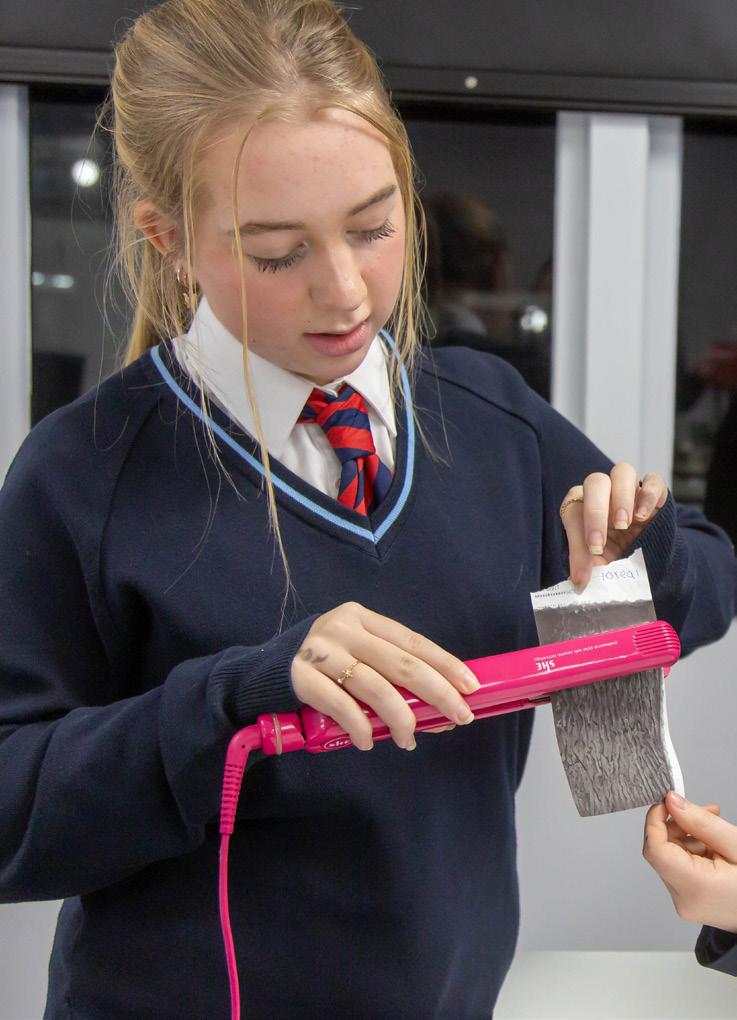
We investigated whether more expensive heat protectant products are actually better for your hair. We tested five products, ranging from very cheap to high-end brands. We sprayed them onto receipt paper and ran hair straighteners over the paper. The lighter the paper stayed, the better the heat protection.
What did you find?
Surprisingly, the cheapest product performed the best, while the most expensive one was the worst at protecting against heat. We honestly expected the opposite – we thought the more expensive products would use better ingredients and technology. It turned into a really interesting lesson: just because
something is more expensive or has a fancy name doesn’t mean it’s better quality. The cheaper product was also more accessible and had cleaner ingredients.
Did you face any challenges during the project?
We had to get the hair straighteners safetychecked before using them, which slowed us down. Another challenge was recording results, instead of numerical data, we had to rely on visual evidence. School cameras didn’t capture the colour differences clearly, so with permission from our teacher, we used our phones, which worked much better.
What have you learned from doing this project?
We learned not to judge products by their price or appearance. We also learned how important reliable research is, especially with so much misinformation online.
What skills have you developed?
Researching properly and finding trustworthy sources was a big one. We also improved our independence, organisation and teamwork. The project wasn’t heavily structured, we had a deadline, but how we got there was up to us.
Would you recommend the CREST Awards to others?
Absolutely. This was really fun because we could choose something we were passionate about. It’s a great way to explore your interests, work with friends, and share what you care about with others.
Leading with Heart: Sarah Orton on Community, Culture, and Learning
Tell us about the Prep School. What are the first things that come to mind?
It has to be all those wonderful smiling faces that arrive every day. The Cokethorpe community extends far beyond the School grounds; parents and families - so essential to that triangle of trust - are vital to ensuring their children arrive feeling supported and happy, and ready to embrace their learning and the various opportunities of the Cokethorpe day.
It would be hard not to acknowledge the impact our setting has on the learning experience in the Prep School: our parkland, fields, and woodland. Our children spend much of their day in a rich and varied outdoor learning environment. Muddy children, comfortable in their surroundings, learning, exploring, and playing outdoors; this is a big part of who we are as a Prep School, and is something which feels quite different from other settings.
Having previously been more involved in the day-to-day life of the Senior School, I also notice the nuances of the Prep’s implementation of Cokethorpe’s Learning and Teaching approach. A core part of the School’s ‘research-informed’ philosophy is its
adaptability, shaping different approaches to the children we teach rather than relying on a one-size-fits-all model. We use technology where appropriate, ensure teaching is age- and stage-appropriate, and maintain classroom environments that are engaging and dynamic while still respecting the aesthetic principles of Cognitive Load Theory. We maintain the central benefit of assessment and feedback. These are all hallmarks of the School’s Learning and Teaching philosophy, but there are these touches that make them distinctly the Prep School’s, and we anchor it around our Creative Curriculum.
All of this is made possible by being a through school. We can draw on specialist resources and subject expertise from the Senior School: specialist music and drama teaching, science facilities and laboratories for older Prep pupils, and the use of the DT workshop and expert staff. Our pupils have many opportunities for stretch and challenge, all within nurturing and consistent relationships with Class Teachers who know them deeply and provide that individual focus. It is Cokethorpe’s Learning and Teaching philosophy but tailored to the Prep School.
How does that through school approach work pastorally?
We are a school where pupils aged four to eighteen coexist and interact daily. You see this in the fantastic relationships between older and younger pupils, from the Senior School pupil giving a Prep child a ‘high five’ as they cross the quad to the Dining Hall, to the Upper Sixth student who might buddy a nervous Year 5 pupil on the bus. You see it on Assessment Days, where Sixth Form students volunteer to lead team building and warm-up activities (with great gusto!). Each class is paired with Sixth Form student partners who visit weekly during morning form time, leading activities and offering support. They act as role models and provide an additional layer of reassurance and belonging for Prep pupils.
You see the same spirit in the Prep Choir performing alongside the Senior Choir, or in a Prep child receiving academic help during lunch on a tricky maths problem. Third and Fourth Form pupils have been running sports and coaching sessions for Prep pupils
- a fantastic learning experience in both directions. These meaningful extras, which are often pupil-led rather than teacher-led, make Prep life varied, stimulating, and steeped in a strong sense of community.
Applying a wider lens, we’re well placed to support transitions. With time on our side, we can work deeply on what moving up to the Senior School looks like. During the Summer Term of Year 6, pupils work with some of the Senior School teachers they will soon encounter if they haven’t already, building familiarity and mutual understanding. We also ensure that information about prior learning, knowledge, and each pupil’s approach to learning is shared and coordinated well in advance of the First Form.
You started by mentioning ‘smiling faces’. What is it in school that brings those smiles out?
A big part of it comes from the individual attention given to pupils. It’s about each child feeling truly known and seen, and staff who invest the time to notice and value what matters to them. Whether it’s watching a film a child has made outside school and offering thoughtful feedback, or simply recognising efforts and achievements, these moments matter.
We work hard to build a school culture that reflects the qualities we value. The Cokethorpe Characters help us model and embed these traits. Our huge variety of clubs and activities ensures every child can find “their thing”, from pottery and fencing to robotics and archery. There is something for everyone, and that is just as important in generating those smiles.
Our Wellbeing Curriculum acknowledges the wider pressures children face in today’s world, and we take a proactive approach. The ‘Caught Being Kind’ initiative - one of those precious things that is so utterly heartwarming whilst having a practical benefit - allows pupils to recognise kindness in one another and to nominate their peers for acknowledgement in weekly Assembly. Add to this parent workshops, the Wellbeing Room, ELSA support, and our Mentoring Programme, and you see a community that works intentionally to nurture happiness.
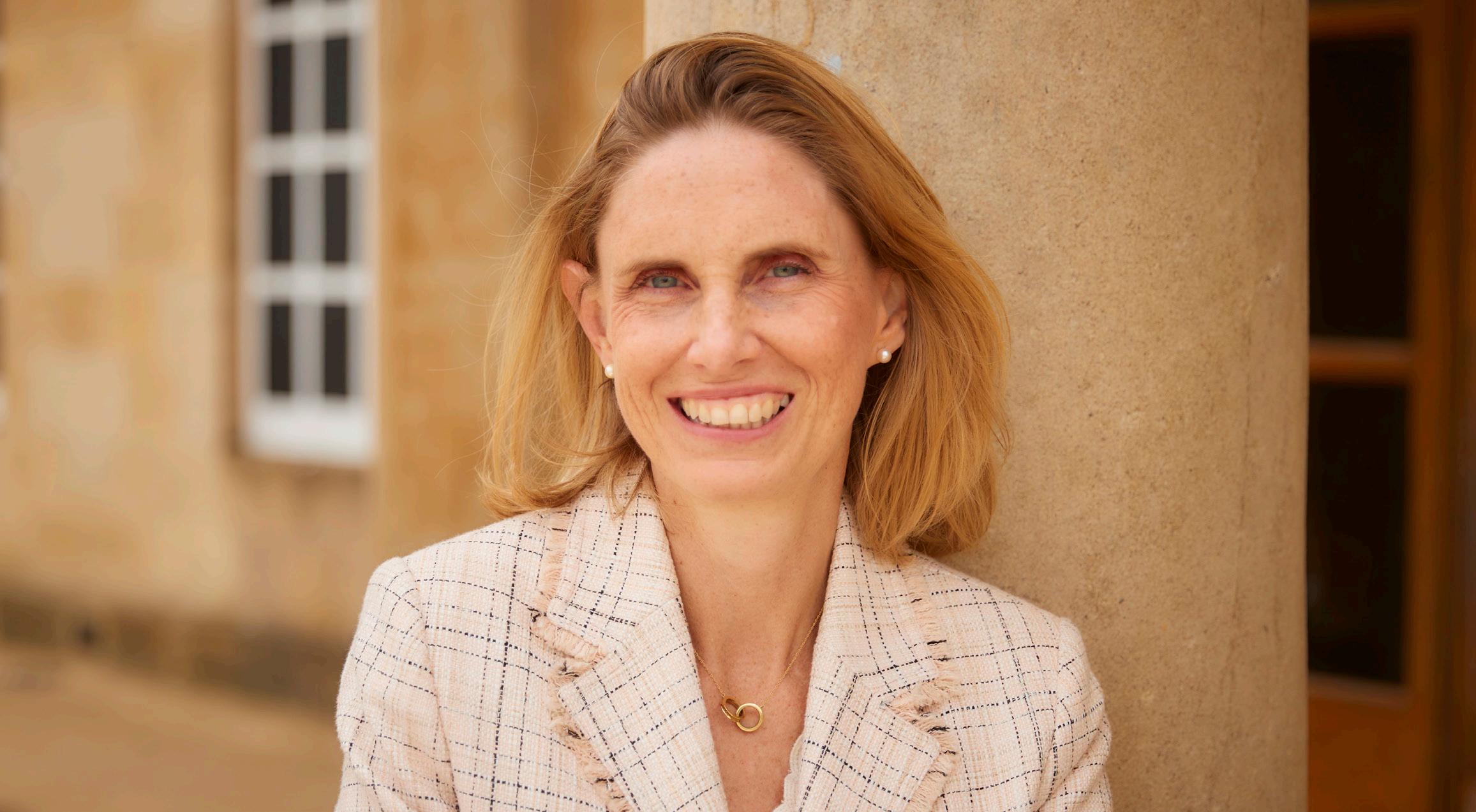
Sarah Orton became Head of Prep in January 2026
Smiles don’t just happen on their own. When they fade, it is just as important to act, liaising with home, piecing together what might be going on, and working together to make a positive difference.
You have spent a fair bit of your career with Cokethorpe. What does that experience bring?
Across all the roles I’ve held, Prep or Senior, at every level, my work and decision-making have always been pupil-centric. What I’ve learned is that maintaining those skills and approaches remains vital, no matter the role or the child you are working with.
Recently, I’ve spent a lot of time developing leadership skills, both in myself and in others, focusing on what good, wholesome leadership looks like. Moving into this role allows me to support the Prep team in ensuring the pupil experience is the best it can be.
I previously mentioned the benefits of being a through school, but one thing I didn’t highlight is the strength of our learning development provision. Having a SENCO covering the whole school brings enormous consistency to pupils’ experiences and progression. Being
one connected community - physically and culturally - matters greatly to what we offer, and with experience across both Prep and Senior, this is something I’m keen to see grow further.
How will wholesome leadership and a pupil-centric approach frame the future of the Prep School? What do the priorities look like?
Our priority is to provide the strongest academic foundations we possibly can, while being aspirational in how this looks. We want pupils to thrive, and we want to keep striving so that they can.
Our setting is truly special, not only our parkland, but the facilities available to our pupils, including the climbing tower and the boathouse. We want to make full use of all these spaces and resources.
Perhaps most importantly, throughout any journey we’re on, we must keep listeningto children, to parents, and to one another. Listening must never be lost, because if we stop reflecting on what we’re doing and why, then even the most ambitious direction risks being the wrong one. Our work must reflect the needs and values of our community.
Our foundations - care for our pupils, their wellbeing, and a determination to support their academic progression - are reflected in the roles of our three Prep Assistant Heads: Pre-Prep, Academic, and Pastoral. The ‘research-informed’ approach may often be associated with Learning and Teaching, but it underpins everything we do. For example, the Prep Assistant Head Pastoral, Dale Baker, is leading research into our community and culture, involving input from staff, pupils, and parents. Listening is central: when pupils share what is important to them, we use their feedback to understand and adapt, and it will inform our ongoing work.
Finally, can you describe the feeling when the Head of Prep role came up?
Excitement. Excitement about something new, the personal challenge. But more than that, a sense of responsibility. A responsibility to serve the Prep community, the wider School, and to do right by that triangle of parents, pupils, and teachers. Having been both a parent of children who have gone through the Prep and Senior Schools, and a teacher to these pupils, I feel that responsibility keenly. I want to hear them all and do my absolute best, every day, for each and every one.
The Lion, The Witch & The Wardrobe Drama Review
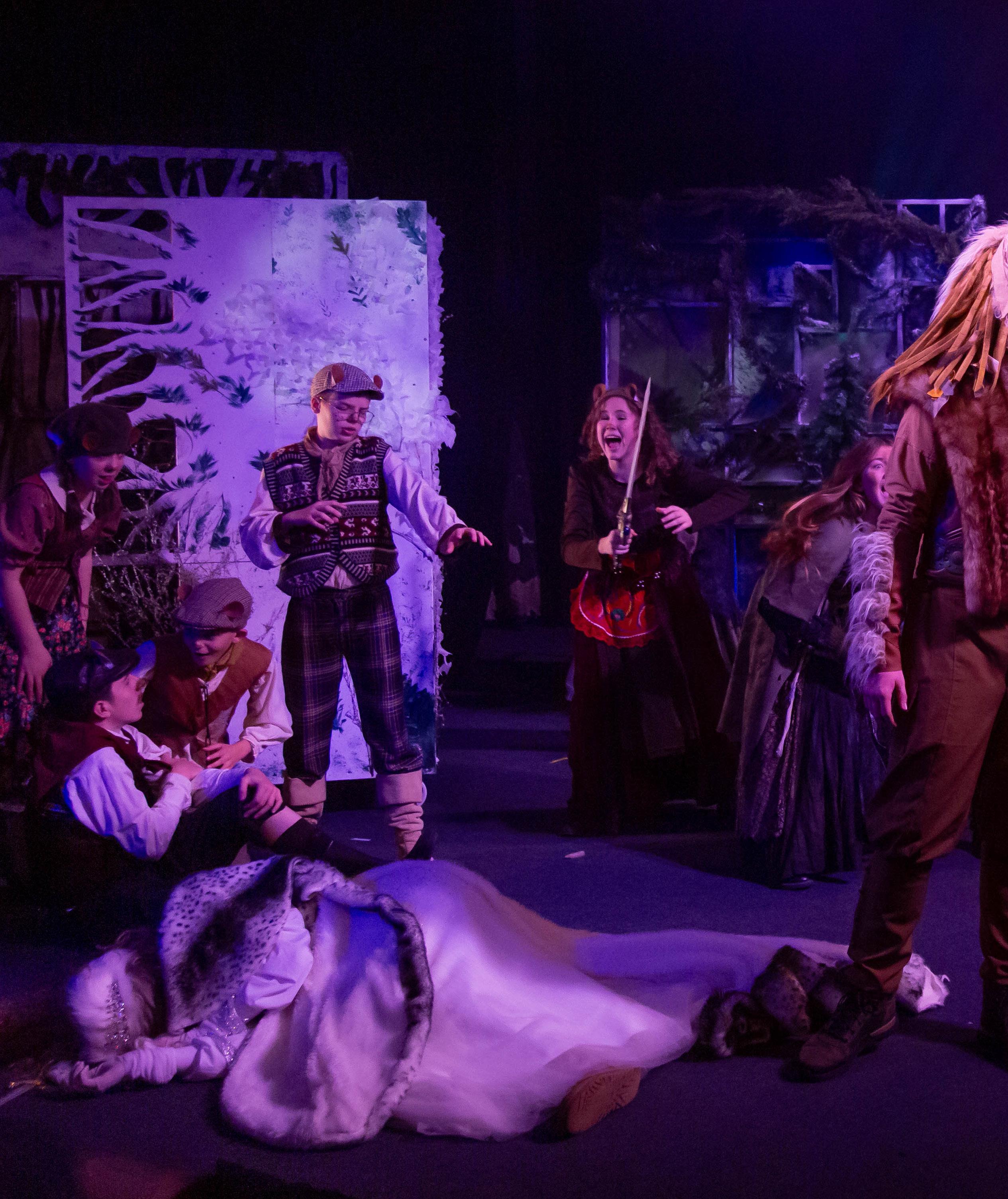
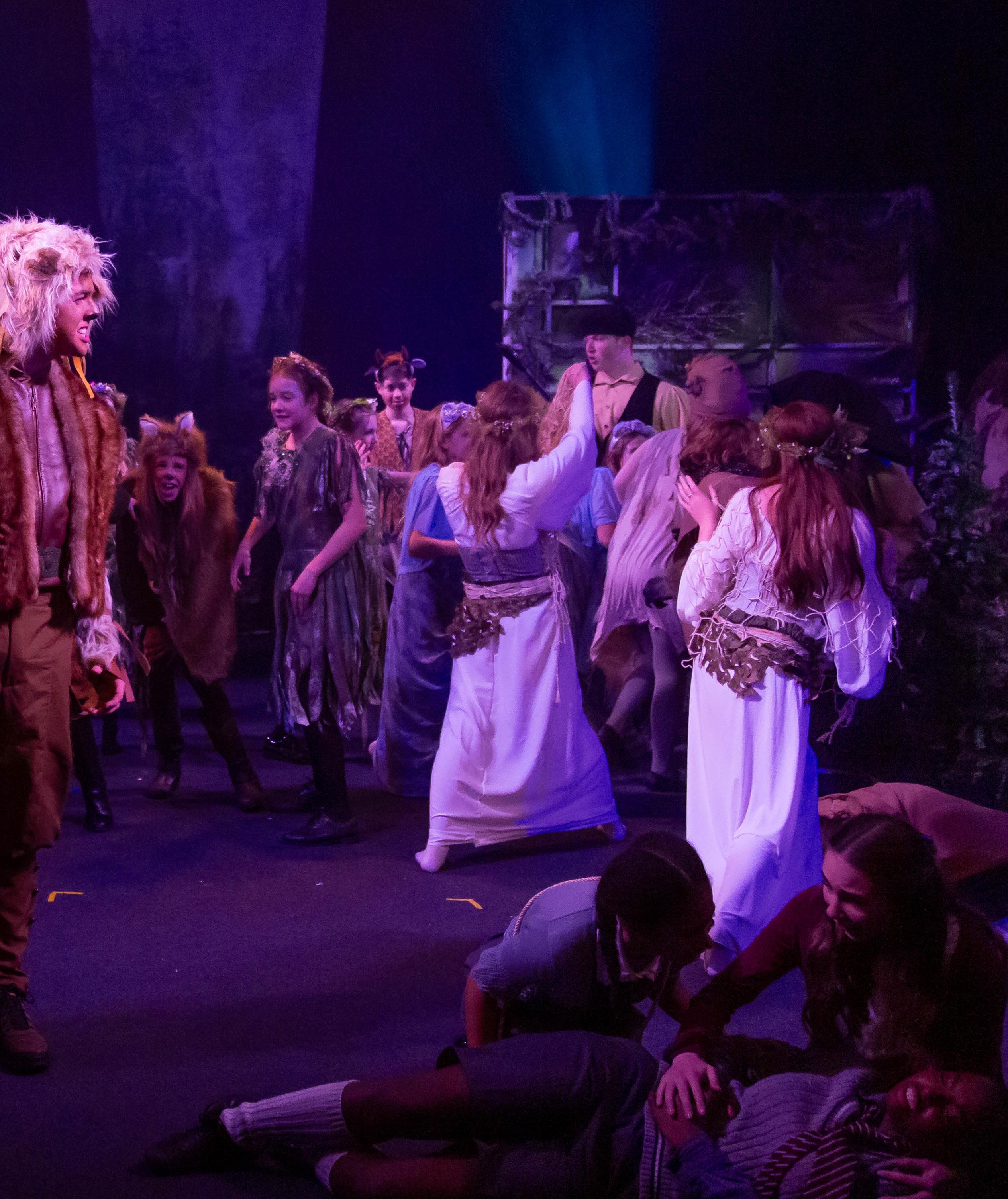
The Michaelmas end of term Drama production of The Lion, the Witch and the Wardrobe captivated full houses in The Shed in late December. A talented cast, spanning First Form to Upper Sixth, came together to bring this magical tale to life.
This production was a shining example of collaboration and creativity. The performers displayed remarkable commitment and professionalism, supported by an equally dedicated stage crew whose behind-the-scenes work ensured the show’s seamless success.
The visual and aural imagery, from the enchanting costumes and atmospheric lighting to the evocative set and immersive soundscape, kept the audience spellbound, transporting us into the wintery depths of Narnia.
Special recognition goes to the chillingly commanding White Witch played by Evie-Rose Burdick (Lower Sixth, Queen Anne), whose presence dominated the stage, flanked by her sinister accomplices; Megan Batchelor (Lower Sixth, Harcourt) and Megan Hunt (Lower Sixth, Vanbrugh). Equally memorable was the noble Aslan played by Xander Luckett (Fifth Form, Vanbrugh) radiating strength and wisdom, alongside the charming Pevensie children, whose innocence and courage anchored the story. The Beaver family brought warmth and humour, offering moments of levity that perfectly balanced the drama.
The whole cast created a tapestry of magic and emotion, leaving audiences with an unforgettable theatrical experience. Bravo to all involved!
Co-Curricular Spotlight
LAMDA: creativity, confidence, and fun
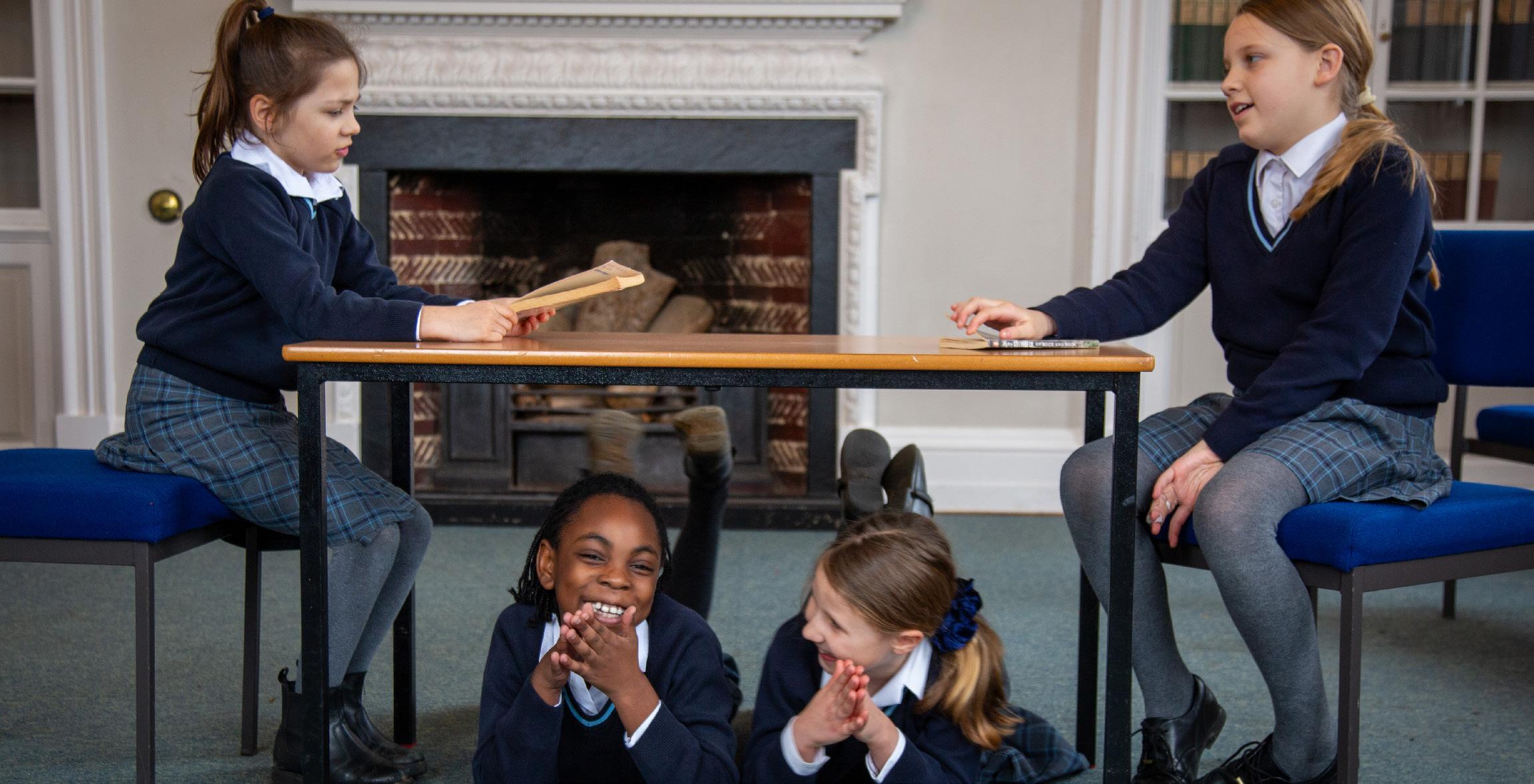
‘LAMDA’s (London Academy of Music and Dramatic Art) qualifications open doors to creativity, improved communication, and self-confidence. Senior (First Form to Upper Sixth) and Prep School pupils (Years 4 to 6) can take qualifications in Acting, Public Speaking, Musical Theatre, Mime, Verse and Prose and/or Devising. LAMDA lessons can significantly boost a child’s confidence. Through role-playing and performance, children learn to express themselves more freely and overcome shyness. They discover how to articulate their thoughts and emotions effectively, which is a valuable skill in all aspects of life. LAMDA classes enhance creativity and problem-solving abilities. Children are encouraged to think on their feet, improvise, and develop unique interpretations of characters and scenarios. This newfound confidence often extends beyond the stage, positively influencing their interactions in school, with friends, and even within the family.’
Performing a scene during a rehearsal for one of the Prep pupils’ devised drama grade 3 pieces
We spoke to some of our talented Prep School pupils, currently working towards their Devised Drama Grade 3, to discover what they love most about LAMDA.
Phoebe Mardle (Year 4, Symonds) enjoys the variety and creativity that LAMDA encourages. ‘It’s really fun, and I enjoy acting a lot - I even do it at home! I like how we always do a different story every time we come back, it helps with performing and confidence,’ she says. Beyond performance, Phoebe finds it a valuable outlet for self-expression. ‘It also helps express your feelings,’ she notes.
For Emmy Theyer (Year 4, Symonds), it’s the thrill of being involved in every aspect of the performance that excites her. ‘I like LAMDA because I really enjoy all of the show elements we do, and learning how to do them properly,’ she says. The programme has strengthened her public speaking skills. ‘It helps a lot with confidence, especially if you ever need to speak in front of people,’ Emmy reflects.
Tunmise Akinrolabu (Year 4, Gwyn) is swift to highlight the wider benefits. ‘I enjoy it because it’s not just about acting, there’s so much more to it,’ she says. She has discovered some new techniques. ‘I’ve learnt skills like acting without talking. It has also helped me
communicate with other people,’ she explains, highlighting the unique learning LAMDA provides.
Teddy Metcalf (Year 5, Baker) adds, ‘I enjoy LAMDA because we get to act but also have fun. It’s fun to embrace it!’ he explains. He’s discovered how performing in front of others builds confidence, particularly in high-pressure moments.
Etta Jennings (Year 5, Baker) who has been part of LAMDA for three years, describes it as a place to ‘enjoy the activities and fun things, like acting.’ She continued, ‘I’ve learned how to be more creative, we have to think bigger and better.’ There have been other key lessons too. ‘It also teaches you to be patient and let other people have a turn.’
Across the board, LAMDA is more than a drama programme. For Etta, Tunmise, Emmy, Phoebe, and Teddy, it’s a space to develop creativity, communication skills, confidence, and resilience, all while having fun and exploring the joys of performance.
- Ms Deborah Galea
Corinthian Concert & Cake: celebrating three years of the series
Every week, the sound of music fills the air in the Mansion House as pupils gather for the much-loved Corinthian Concert and Cake. More than just an enjoyable lunchtime event, this weekly concert has become a cornerstone of musical life at School, offering pupils across all year groups the opportunity to perform and develop confidence. Lucy Smith (Second Form, Swift) tells us about her musical journey: ‘I have been playing the flute since the start of First Form, when I took part in the Instrumental Scheme. I chose the flute because I felt that it is an instrument that I connect with unlike any other. When performing, I like having the attention of the audience and the power to entrance them with my playing. Being given the opportunity to regularly perform is helping me develop and improve. I am overcoming my nerves and becoming more experienced when in front of an audience. This has helped me become a better musician because it really tests your confidence and music talent.’
Prep School pupils in particular benefit enormously from these regular performance opportunities. From an early age, they become familiar with playing in front of an audience, helping to build confidence, manage nerves, and take pride in their achievement. For many, this marks the beginning of a lifelong enjoyment of music and performance.
Eloise Young-Gale (Year 6, Symonds) spoke to us about her experience of performing: ‘I am Grade 1 Piano and have been playing for four years. I have also been singing for a year and am now Grade 2. I’ve performed at the Corinthian Concert and Cake, Spring Concert, St Cecilia Concert, Prize Giving and Carol Services. My first public performance was at a Corinthian Concert and Cake when I was in Year 2, where I played a piece on the piano. The first time I performed I was so nervous! My hands were clammy, and my legs were shaking but now that I’ve done a few more concerts, I have got used to it and am fine. I love the pleasure afterwards when you hear and feel the applause and it’s just a lovely thing to feel and know that you’ve brightened someone’s day. I also love the challenge and the preparation that goes into the performance.’
One of the most special aspects of the Corinthian Concert and Cake is its inclusivity. Performers range from first-time musicians bravely taking their initial steps onto the stage, to highly skilled instrumentalists showcasing years of dedication and practice. This mixture creates a supportive and encouraging environment, where pupils learn not only to perform, but also to listen, appreciate, and support one another. Lucy comments: ‘I really enjoy performing with others. If they are
higher in musical ability I learn from them, if not then I take the chance to help and show them. I also get the humbling experience of playing alongside different pupils with different abilities and grades when I play in the Orchestra. I like listening to the numerous musical performances from all my peers and I get to explore the different genres of music.’
It is widely recognised by research that learning a musical instrument is closely linked to academic success. Studies have shown that pupils who receive sustained musical training often demonstrate enhanced memory, improved literacy and numeracy skills, and greater levels of concentration. Learning to read music engages both hemispheres of the brain, strengthening neural connections associated with language processing and mathematical reasoning. In addition, the structured practise required to master an instrument develops discipline, time management, and perseverance. These cognitive and organisational skills transfer directly into the classroom, meaning pupils who study music are frequently better equipped to manage academic challenges, sustain focus during lessons, and perform well across a broad range of subjects.
The Corinthian Concert and Cake is far more than a weekly musical showcase. It is a celebration of creativity, commitment, and community, nurturing confident performers, responsible learners, and well-rounded individuals, one performance at a time.
Community & news
Scholars’ Symposium
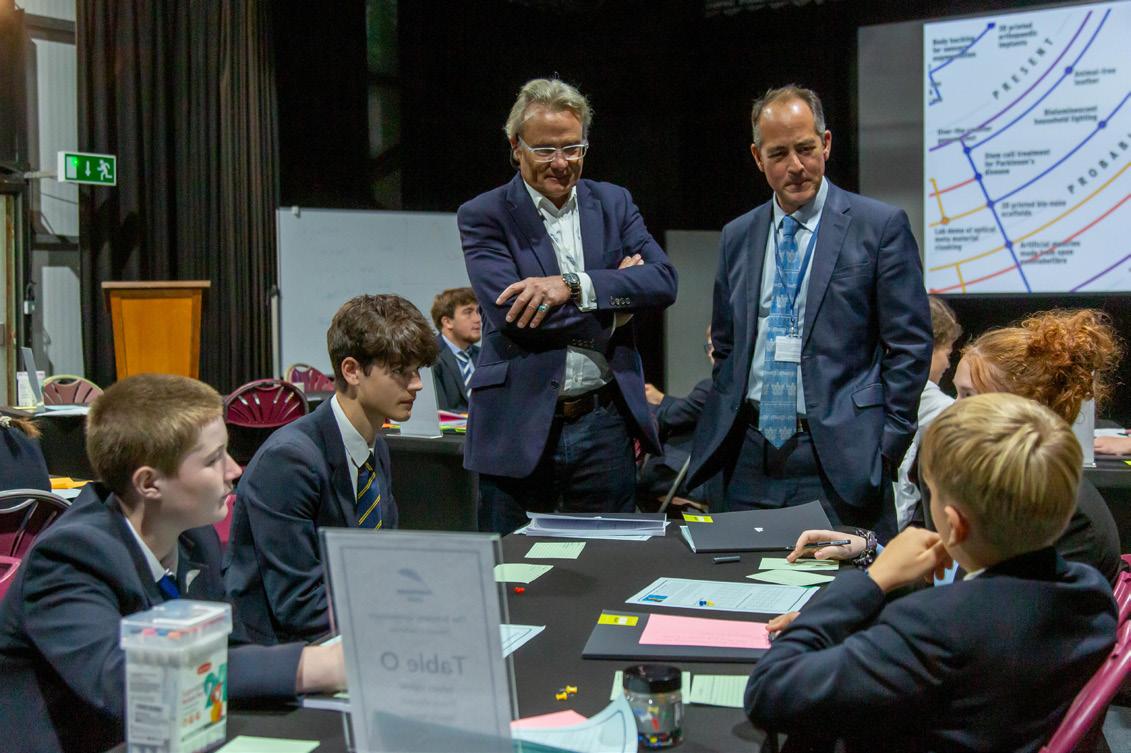
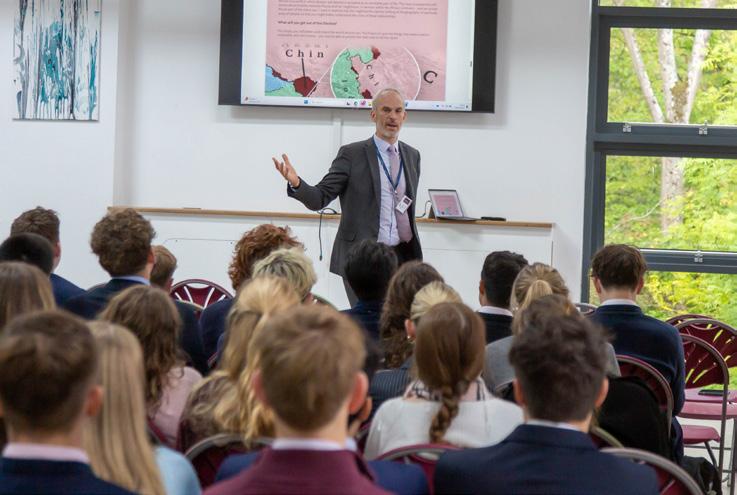
On Thursday 11 September, Scholars from Second Form to the Upper Sixth gathered for a Symposium led by Dr Richard Watson on the theme of Artificial Intelligence (AI). The Symposium brought together Scholars from different year groups to share their perspectives and explore their collective curiosity.
“
I came away from the Symposium feeling both excited and challenged. Excited, because AI clearly has the power to change so much in our world. Challenged, because it reminded me that, as a society, we have a responsibility to think critically and carefully about how it develops.
Dr Watson opened the session with a talk on ‘the what and the why of the future’, encouraging pupils to see AI not just as a set of tools, but as part of broader global shifts. He connected AI to major ‘megatrends’long-term forces like globalisation, environmental change, and digital transformation - highlighting its impact on how we will live and work in the future.
Dr Watson had pupils fully immersed in this interactive lecture throughout, with activities that afforded them the opportunity to form, change, and challenge their opinions on the subjects he spoke about.
Year 6 Living Rainforest Trip
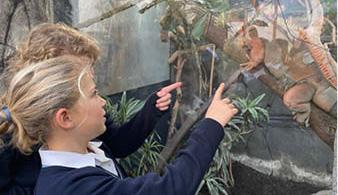
Our Year 6 pupils visited the Living Rainforest and explored the incredible ecosystems of the world’s tropical rainforests and discovered why these environments are so important for our future. They learnt how plants, animals and people depend on one another and looked closely at the real challenges facing rainforests today including habitat loss, farming, logging and the pet trade. The Sustainable Future tour helped them think about the choices we make in our own lives and how these can have an impact on communities and habitats thousands of miles away. From meeting threatened species to seeing Fairtrade crops up close, the children came away with a stronger understanding of sustainability and what it means to be responsible global citizens.
Parent Consultation – Digital and AI Strategy
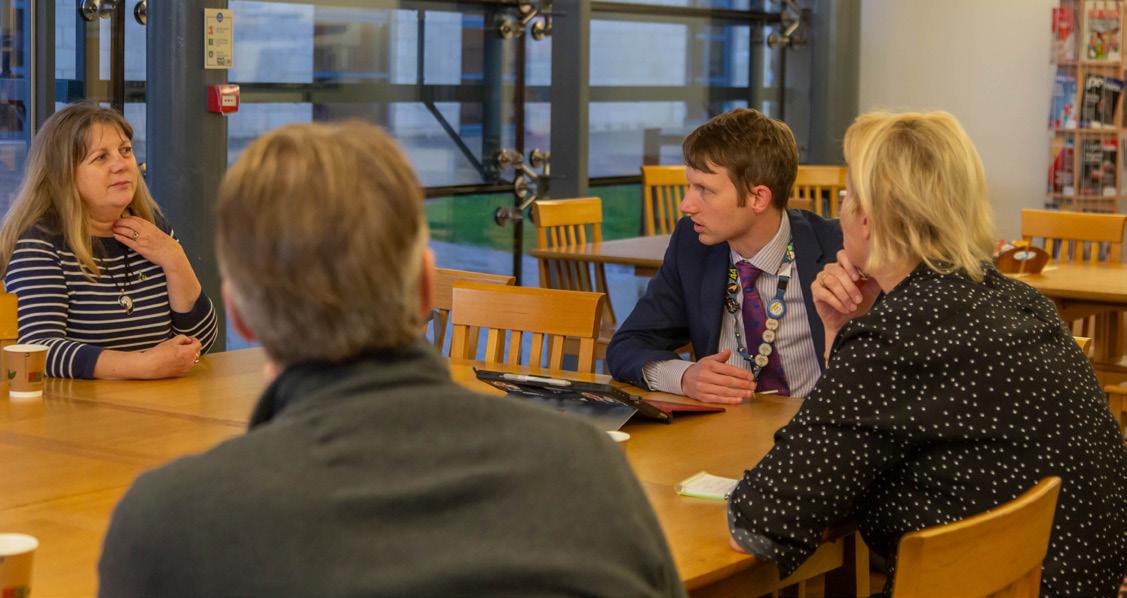
Through mid-November, those parents that had shown an interest in being involved in the Digital and AI Strategy of the School were invited in to discuss their experiences of AI and their hopes for the school. Discussions were wide ranging and brought a huge amount of expertise and differing viewpoints to the table. It was incredibly useful to have a variety of voices from parents involved in the future direction of the School, particularly in this rapidly changing area that is sure to have a huge impact on our pupils. Mr Ladell-Stuart and Mr Uglow would like to extend their thanks to every parent that gave up their time to be involved; they along with staff, pupils, governors and Senior Leadership have been a valuable part of forming an effective, well thought out, safe approach to preparing Cokethorpe pupils for the world of AI.
National Schools Kayak Championships
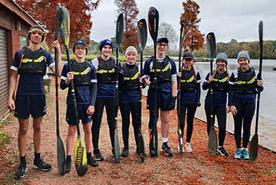
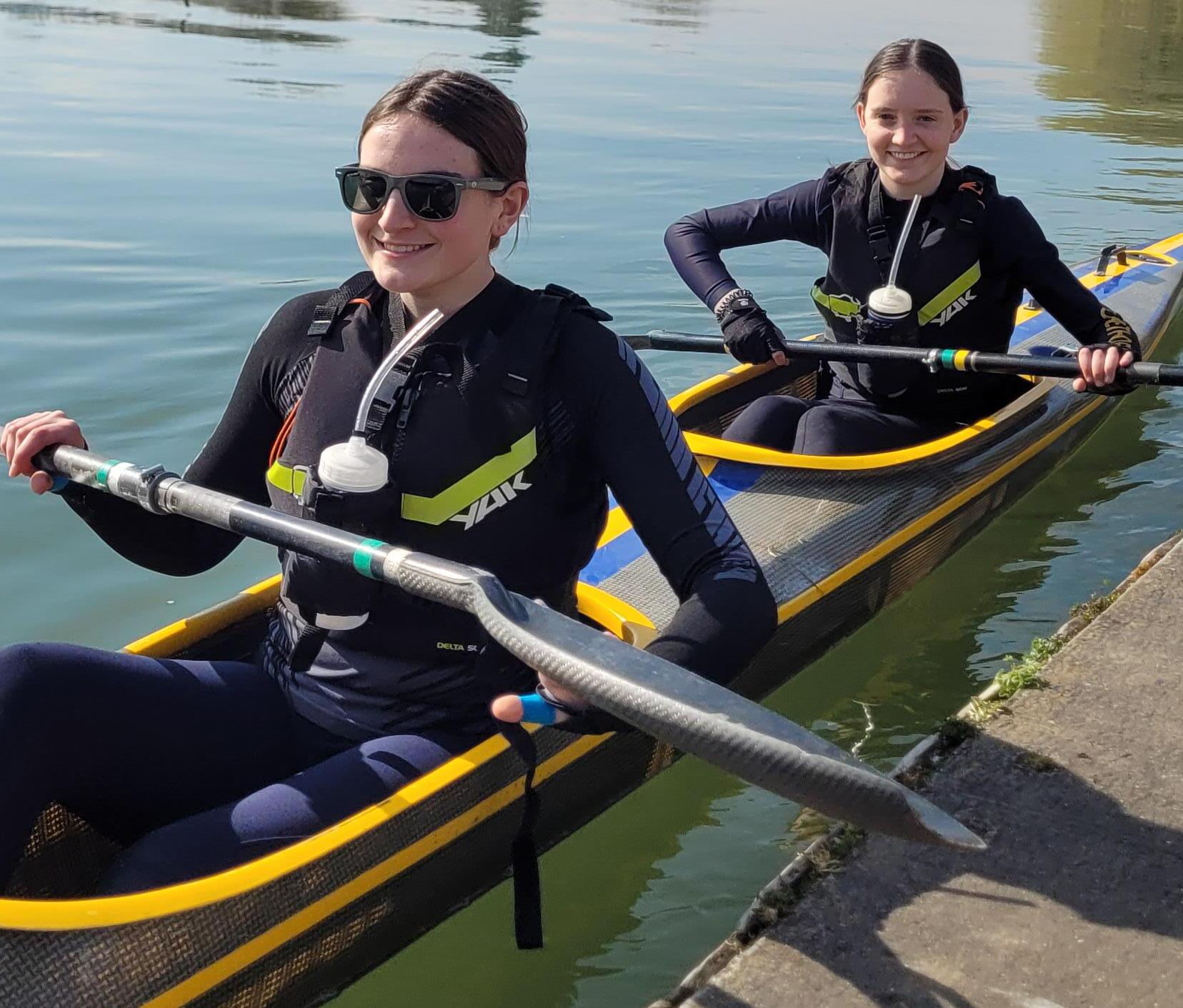
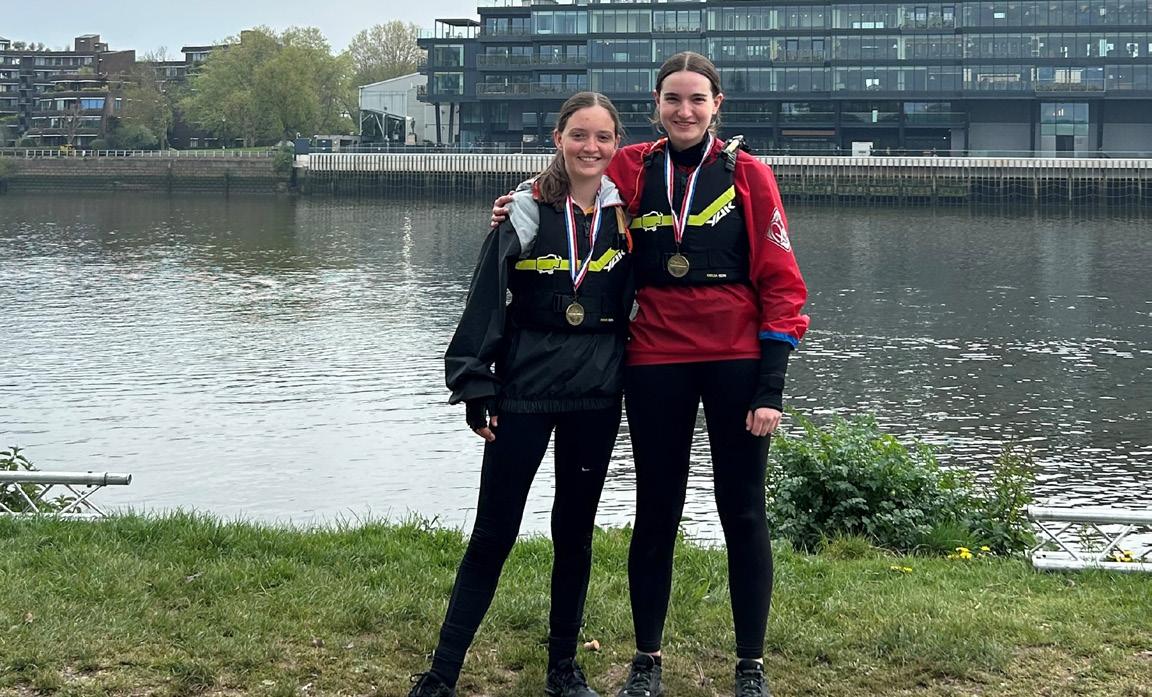
Our Cokethorpe paddlers competed in the National Schools Kayak Championships 2025 at Hawley Lake where all four crews gave superb performances across the sprint and marathon races. Josh Rosenow (Fifth Form, Swift) and Oli Tribble (Fifth Form, Swift) battled hard in the men’s events, pushing right to the finish.
Emma Campbell (Upper Sixth, Vanbrugh) and Alice Lines (Upper Sixth, Swift) showed real strength and consistency, earning an excellent second place in the Experienced Ladies category. Ben Picking (Fifth Form, Vanbrugh) and Evie Walker (Lower Sixth, Swift) brought
brilliant teamwork to the Mixed races, a standout feature of the championship.
And, rounding off the day in remarkable style, Lottie Graves (Fourth Form, Gascoigne) and Daisy Mathieson (Fourth Form, Gascoigne) stormed to victory in the Novice Ladies Marathon.
Lower Sixth Electives Fair
Lower Sixth students attended the Electives Fair, where staff introduced the wide range of Electives on offer for the year ahead. Each presenter outlined what their Elective would involve and why pupils might choose to take part, sparking plenty of interest and discussion. The Electives Programme gives
students the chance to explore subjects beyond their A Level choices, encouraging intellectual curiosity and broadening horizons. Each student will take part in three Electives across the year, engaging with topics purely for the joy of learning. Options range from ceramic vase design inspired by Grayson Perry to economics, conflict studies, and production planning. Whether creative or analytical, each Elective offers students the opportunity to discover new passions.
Crawford Relay
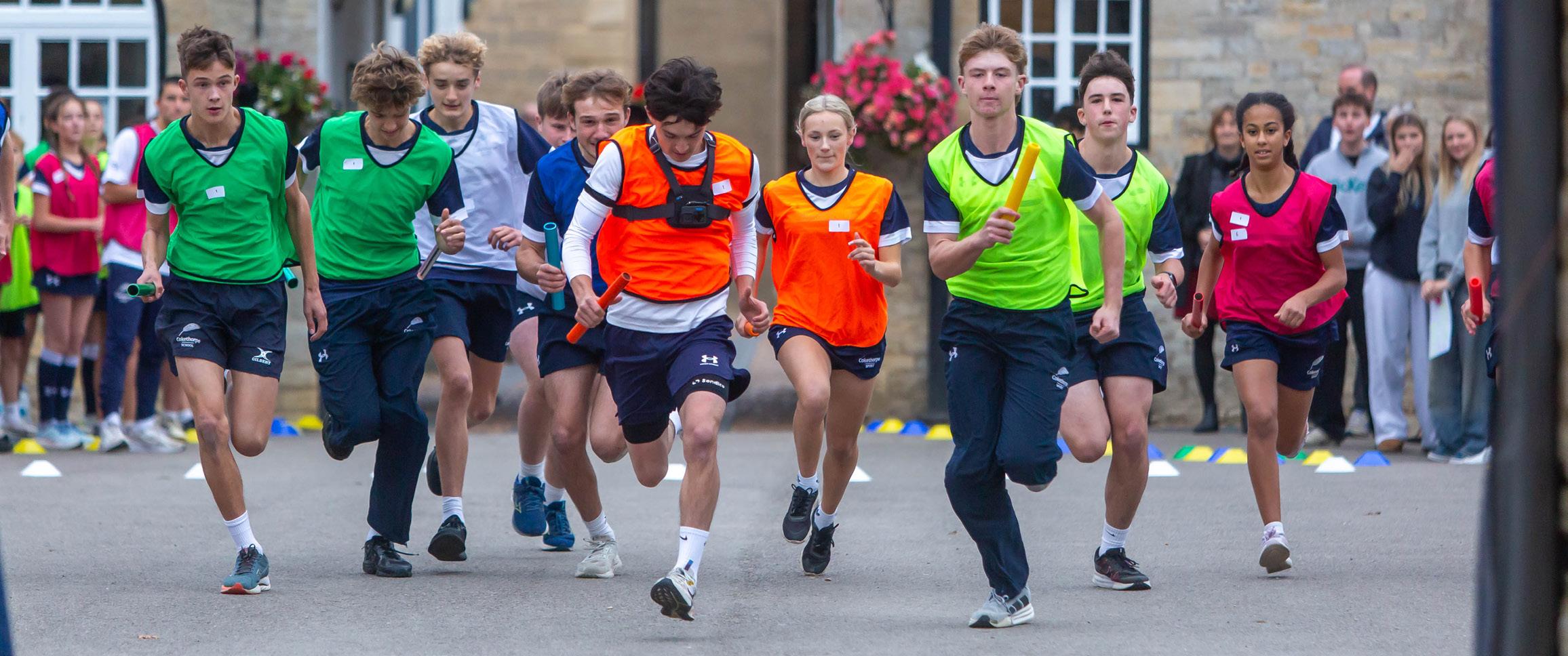
This year’s Crawford Relay brought a thrilling blend of House pride, athleticism, and school spirit to the forefront, as pupils gathered for one of Cokethorpe’s most anticipated sporting events. The tension was palpable as teams took their places, each determined to claim glory for their House. Mr Bowsher ascended the Bell Tower and sounded the historic Cokethorpe bell three times which unleashed a flurry of
movement as the first runners surged forward and cheers erupted across the grounds.
From the opening leg, it was clear the competition would be fierce, but it was Swift who claimed victory. Congratulations to Swift on their well-deserved win and to all the Houses for their enthusiasm and sportsmanship in what was yet another unforgettable Relay.
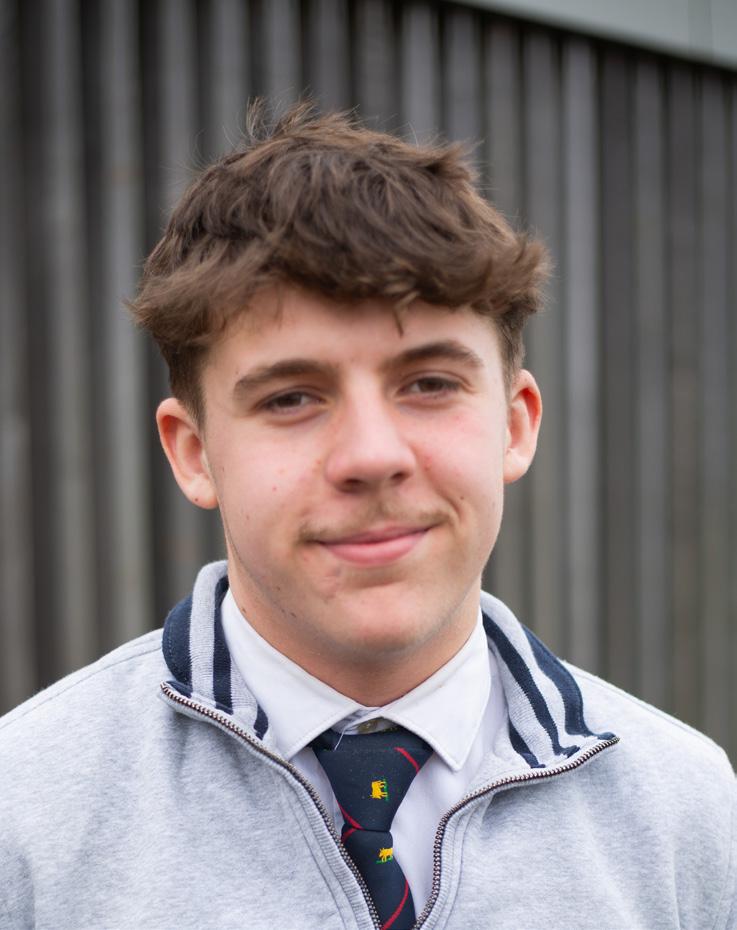
Interview Shining the Spotlight: perspectives from the mezzanine
Henry Nixey (Fifth Form, Gascoigne) shares his views on being
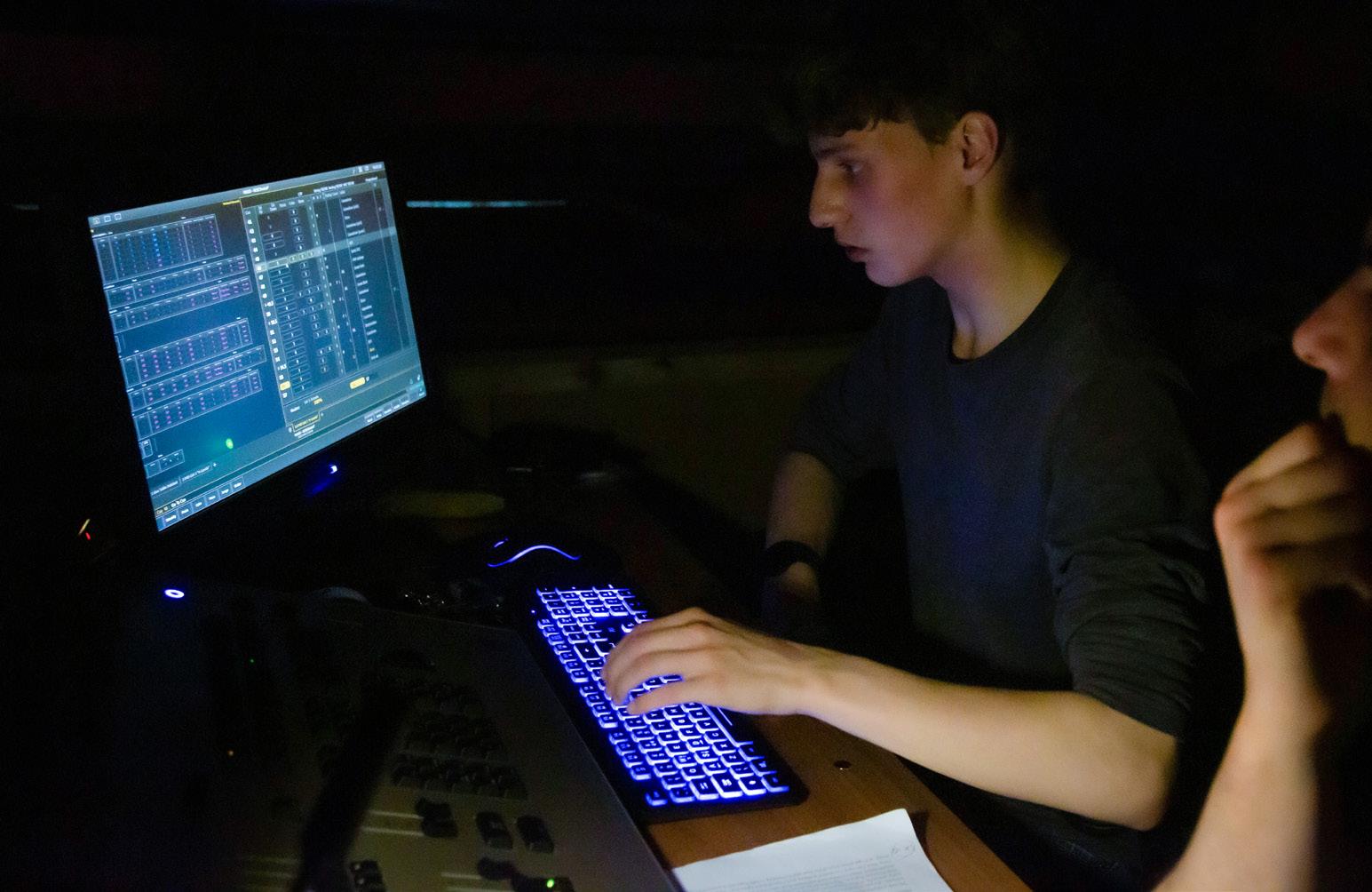
For most audiences, the magic of a school production begins when the lights come up. For Henry Nixey, that moment is exactly where the magic starts.
Henry’s journey into backstage theatre began not with a lighting desk, but on stage. His first production was A Christmas Carol, where he acted, but something else caught his attention.
“I’d always loved looking up at the lighting and thinking how cool it was,” he explains. When he chose Drama for GCSE, he discovered he could specialise in lighting design, and he didn’t hesitate.
The first show Henry lit was The Box of Delights and, midway through the run, the School’s lighting technician, James, was unable to attend a performance. Henry suddenly found himself running the entire lighting operation alone. “It was definitely being thrown in at the deep end,” he admits. “It was nerve-wracking, but also brilliant.”
That moment marked the start of something more serious. After expressing his interest, Henry found the School fully supportive, opening opportunities across backstage
the lighting engineer for productions
theatre, including lighting, sound, costume, set, props and stage furniture. Lighting stood out immediately, and it has since become central not only to productions, but to his GCSE coursework.
Lighting now forms all of Henry’s practical Drama work, apart from the written exam. For his devised performance, worth 40% of his final mark, he designed and operated the lighting for his group. For the scripted performance (20%), he chose lighting again. One of the aspects he values most is the flexibility - students can mix roles across components, with some choosing acting, others costume, or technical design.
Training has been both practical and independent. James taught Henry how to use the ETC lighting desk, while Henry built his skills further through online tutorials and hours of practice. Beyond School, he has attended specialist lighting courses at Garsington Opera, including one led by a lighting designer who worked on Eurovision.
“That was amazing,’ Henry says. ‘Next year, when I’m sixteen, I’m hoping to do the lighting for their junior opera production over the
summer. It’s unpaid, but the experience is invaluable.”
Designing lighting is a careful balance between creativity and precision. For his GCSE work, Henry had full control over the design. For School productions, James usually leads, but Henry attends rehearsals, suggests changes and works collaboratively to refine ideas.
The process is meticulous. Each scene may include several lighting changes, all programmed in advance. Actors are positioned, effects are designed, and each cue is saved so it can be triggered live during the performance, often timed exactly to music. And sometimes, things go wrong.
During the Music And Drama, Dance Evening, a completely student-led production, a performer dropped out just four minutes before the show began. While the performance continued on stage, Henry edited the lighting cues live, using ‘blind mode’ on the desk so the audience never noticed. “That was definitely stressful,” he laughs.
Good lighting, Henry explains, is not just about visibility. Sometimes, not lighting someone
Henry became involved with the school production lighting in Fourth Form, building his skills and experience ever since.
is just as important. In Into the Woods, for example, the Wolf often remained partially hidden. Colour, movement and intensity help define characters and moments - dark red LEDs for tension, strobes for lightning or gunshots, sharp spotlights to focus attention.
Among the many productions he’s worked on, the MADD Evening stands out for the responsibility it gave him. But his favourite overall was Into the Woods, where he also helped paint the set and enjoyed running the show without the pressure of programming it himself.
“There’s nothing quite like that moment,” he says, “when the audience arrives, the lights come up, and the show begins. You don’t realise how intense it’s been until the end and suddenly you’ve just pulled off a full performance.”
Beyond technical skills, lighting has taught Henry problem-solving, communication and teamwork, particularly when negotiating with set and stage crews over space, angles and sightlines. It’s also given him a creative outlet alongside his strengths in science and maths.
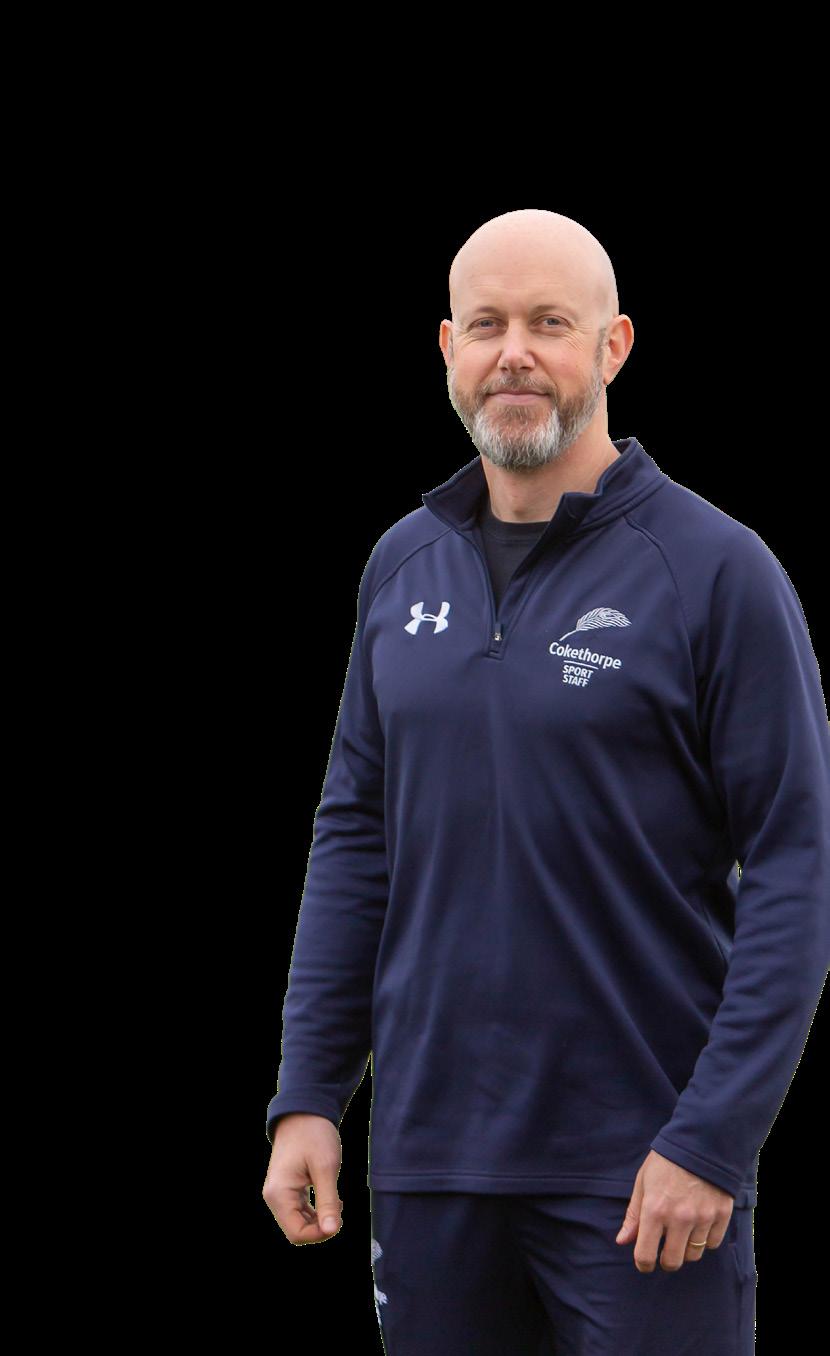
Meet the School: Mr Tom Phillips
What inspired you to become a teacher?
During nine years in the army, I was fortunate enough to posted as an instructor to both the Infantry Training Centre at Catterick and the Infantry Battle School in Brecon. I loved the challenge of supporting individuals in fulfilling their potential and overcoming challenges. When my wife and I decided that we wanted to start a family I decided to search for a job that would enable me to continue with this passion whilst also providing a stable homelife. Teaching mathematics and being a coach gives me variety and opportunities to help pupils develop key values that will benefit them in the future no matter what their chosen vocation may be.
What do you enjoy most about your subject?
Mathematics and Rugby are similar in that individuals often have a very binary response as to whether they enjoy them or not. I love that I have the opportunity to challenge these pre-conceptions and prove that it is possible to find enjoyment in both despite previous experiences.
Mathematics is an incredibly diverse subject that has both practical applications and theoretical implications that border philosophy. At its most basic mathematics allows us to understand the world around us; at a higher level the fact that mathematical theories are discovered rather than created is evidence of a potential primary Mathematician. In my lessons I aim to show pupils that a passion for mathematics is an acknowledgement of a desire to be curious about the world around us.
Rugby has the reputation for being a thuggish sport that focuses on strength and brute force but, when played with intelligence and creativity, it becomes an art form of movement. Often it is the style of coaching or gameplay that players have disliked rather than the game itself. I believe that it is almost singular as a game in enabling players to develop teamwork, confidence and ingenuity in a challenging yet manageable environment.
You lead the UK group for Le Plaisir du Mouvement, can you tell us what that is and talk about the philosophy behind it?
Almost ten years ago I began coaching alongside the Oxfordshire rugby legend Mr Lynn Evans and he introduced me to the coaching philosophy of the former Stade Toulousain and French National coach
While he doesn’t see lighting as a future career, it remains a passion he plans to continue beyond School. Most of all, Henry values the sense of community that productions create. Pupils from all year groups come together - actors, crew, lighting, sound and student directors - all working towards the same goal.
And when it’s all over? There’s tradition. “After the final performance,” Henry smiles, “we all go back to the changing rooms and sing I Want It That Way by the Backstreet Boys at the top of our lungs so the audience can hear us.”
His advice to anyone considering backstage theatre is simple: go for it. “It’s no less hectic than acting, it’s just a different kind of pressure. But it’s brilliant. You don’t even need to study Drama to be involved.”
“Lighting,” he adds, “isn’t just about switches and spotlights, it’s about collaboration, creativity and being part of something bigger than yourself.”
Pierre Villepreux. This philosophy is called Le Plaisir Du Mouvement (The Pleasure of Movement) and is the DNA of the coaching used at six-time European Cup winners Stade Toulousain. At its core, is the belief that rugby should be a pleasure to play and that all players should be encouraged to play with confidence and creativity. Rugby is an evasion rather than a collision sport and in recent years has suffered from the more direct (and physical) game play shown in the Premiership and on the international stage. LPM coaches use the simple principles of ‘Go Forward’ and ‘Support’ to create training sessions that focus on gameplay and encourage players to seek solutions to tactical problems and develop the ability to play free-flowing and exciting rugby.
What are your other areas of enthusiasm?
As well as mathematics and rugby I am a keen outdoorsman. I love shooting, climbing and mountaineering and am in my element in the countryside. I am currently working alongside the equally passionate Mr Walwyn to develop a clay-shooting set-up on site that will allow our students to compete at a national level and open the sport to a wider audience.
We are also developing the existing airrifle range to enable us to establish a target sprint facility (this is an Olympic event that combines sprinting and marksmanship). Within the athletics programme I am the dedicated javelin and discus coach and have been overwhelmed by how far the current crop of young athletes have developed in just one season. I love that Cokethorpe is able to seamlessly combine high academic achievement with co-curricular breadth and feel very grateful for the opportunity to have an impact in both fields.
Community & news
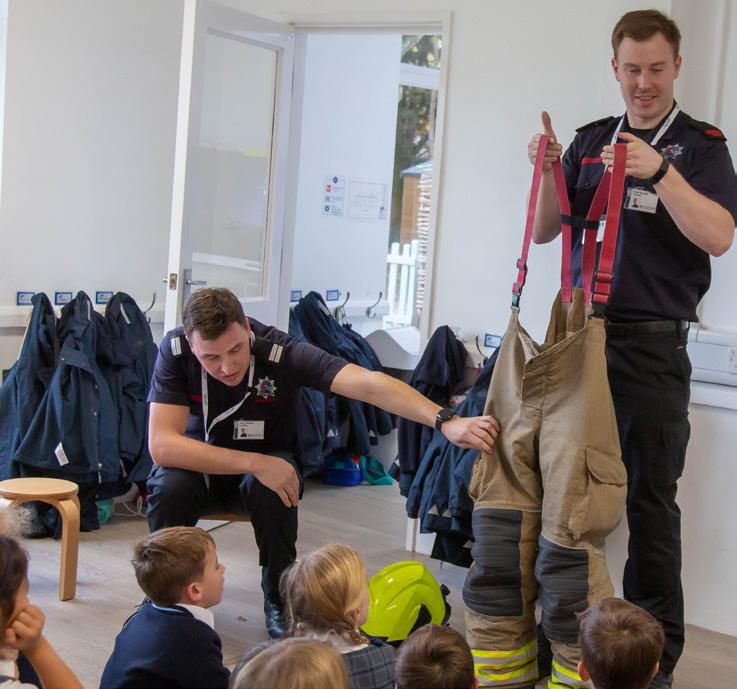
Pre-Prep Fire Station Visit
We were thrilled to welcome the Witney Fire Service for a special visit focused on fire safety. Our Pre-Prep children listened attentively as the firefighters shared important tips on staying safe around fire, especially during Bonfire Night and other seasonal celebrations. The children were full of curiosity, asking thoughtful questions and confidently answering ones posed by the crew. They explored the protective clothing and apparatus used in real emergencies, gaining a hands-on understanding of the brave work firefighters do. A highlight of the day was the chance to tour the fire engine where the children examined the equipment and even had a go with the hose.
Sixth Form Sculpture in a Day
Our A Level artists had the exciting chance to work with former teacher David Williams. They worked hard before the workshop using personal themes to draw for design and create several clay maquettes. This enabled them to visualise subtracting their design from stone, a material that they had never worked with before. David’s enthusiasm and detailed teaching on how to work the material resulted in successful outcomes for all students.
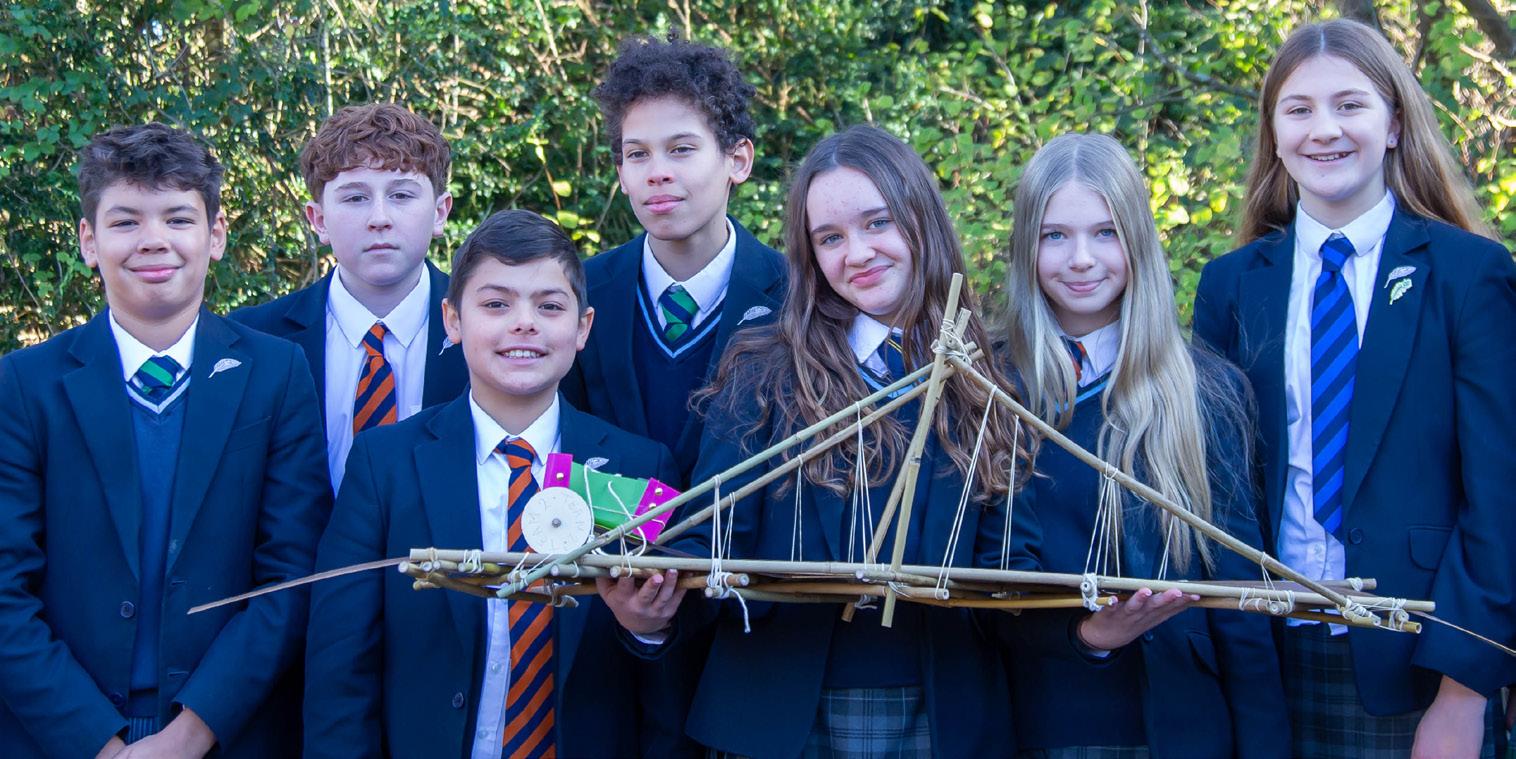
Second Form Bridge Building
Second Form pupils (along with new entrants for September 2026) recently demonstrated their creativity, teamwork, and problemsolving skills in an exciting Design and Technology challenge inspired by real-world disaster relief scenarios. The activity began with a breaking news alert: ‘Serious flooding leaves thousands without clean water and food.’ Pupils were tasked with a critical mission - to deliver essential supplies to a community cut off by flooding. With the main bridge washed away, the challenge required students to design and construct a new bridge using locally available materials.
To make the task even more engaging, pupils had to ensure that a programmable driverless vehicle and trailer could safely cross the bridge carrying relief supplies. This tested their understanding of structural integrity, weight distribution, and innovative engineering solutions. Throughout the activity, students showcased impressive collaboration and ingenuity, applying STEM principles to a scenario that mirrors real humanitarian efforts. The project not only strengthened technical skills but also highlighted the importance of resilience and resourcefulness in times of crisis.
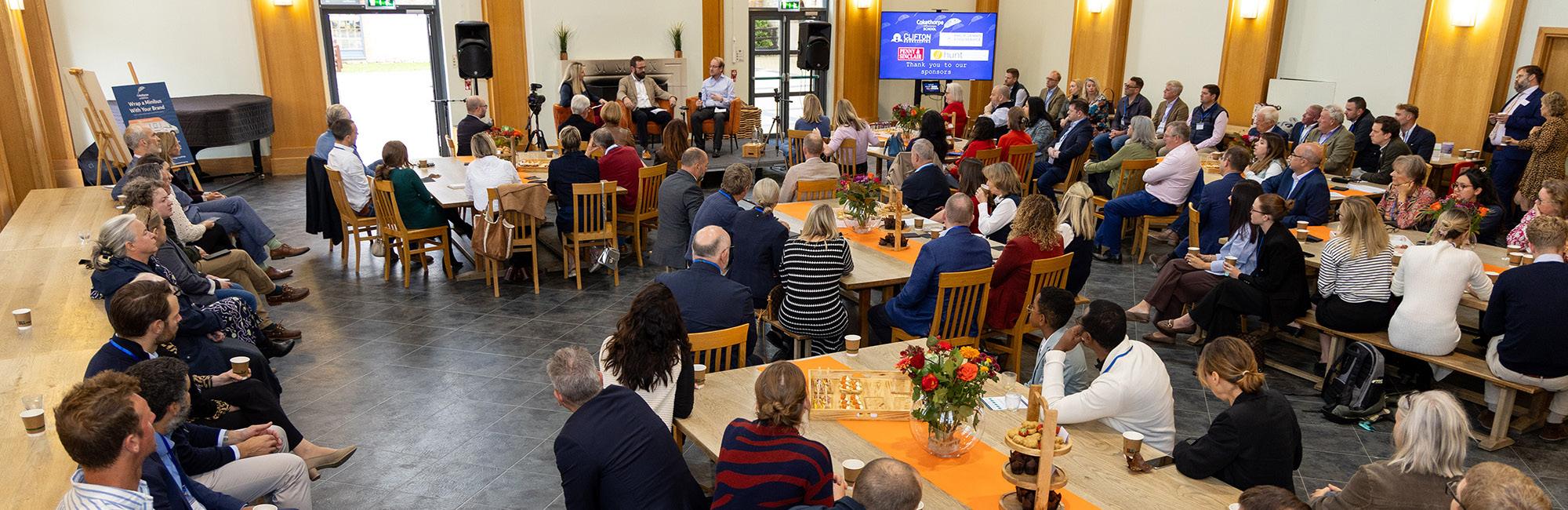
Business Breakfast Forum
Our Michaelmas Business Breakfast Forum was a tremendous success, with 135 registered guests filling the room with energy, ideas, and meaningful connections. Attendees described it as ‘the best one so far!’ Our two speakers - Tim Hatzis and James Fox - delivered compelling talks on the intricacies of AI and how organisations can harness its potential for innovation, efficiency, and growth.
We extend our sincere thanks to our outstanding speakers and to our generous sponsors: Penny & Sinclair, Philip Dennis Foodservice, Clifton Bookkeeping, and JJ Hunt Photography. We were also deeply grateful to all guests who contributed to our Bursary Programme, helping to widen access to a Cokethorpe education.
La Côte d’Opale
A group of Fourth and Fifth Form pupils embarked on a wonderful trip to la Côte d’Opale, immersing themselves in the sights, culture, and flavours of northern France. Pupils embraced every opportunity to broaden their linguistic skills and deepen their understanding of French life.
One of the highlights was a visit to a traditional chocolate factory. Here, pupils observed the meticulous artistry behind handcrafted chocolate before taking part in a dégustation artisanale de chocolat - a tasting session that was every bit as delicious as it was educational. Their culinary exploration continued with la fabrication du pain, where pupils learned the craft of French breadmaking. Guided by expert bakers, they kneaded, shaped, and baked their own loaves, producing some remarkably impressive bread. The weekend concluded with a lively and energetic session of Aéroball, a fast-paced strategy game played in pairs. It was a fantastic weekend filled with language, culture and camaraderie.
Concussed
We were privileged to welcome Sam Peters, journalist, campaigner, and author of Concussed: Sport’s Uncomfortable Truth, for a full day of talks and discussion centred on sport, storytelling, and player welfare.
Sam began the day with our Sixth Form, sharing his journey into journalism and his path to becoming a leading voice for change in contact sport. His honesty, experience, and encouragement offered our students a fascinating insight into both the craft of reporting and the responsibility of campaigning for safer sport.
In the afternoon, Sam joined our coaches and invited guests for a thought-provoking session exploring the evolving understanding of concussion, the culture of contact games, and the steps being taken to protect players at every level.
The day culminated in a packed evening event, An Audience with Sam Peters, where he delved into the personal stories and
Football News
Congratulations to Marnie Perkins (Year 6, Gwyn) who has been selected as part of the U11A Prep School Lions team.
The Lions’ programme includes matches against Academies, District teams from other areas, and an incredible Training Camp. Alongside this, Marnie will represent England in the Gothia World Youth Cup. Congratulations also go to Lucas Manson (Year 6, Gwyn) who has also been selected to represent Cokethorpe in the U11 Development team for the U11 Prep School Lions Team. Lucas and Marnie now join Tia Read (First Form, Gascoigne) as three Cokethorpe representatives at the Gothia World Cup following their success at getting into the A team for the U11 and U12 respectively.
decade-long investigation behind Concussed It was an engaging and enlightening discussion that left audience members reflecting deeply on the future of the sports we love.
Sixth Form Talk on The Holocaust
The History Department welcomed Sam Rogoff to speak to the Sixth Form about his Jewish, Polish-born mother Rela’s extraordinary survival during the Holocaust.
Sam described her experience hiding as a Catholic political prisoner in Auschwitz and the tragic loss of most of her family. It was a privilege to hear such a powerful and deeply moving account.
The event was organised through Generation2Generation, a charity that enables relatives of Holocaust survivors to share their families’ stories.
Pupil Perspective
Grasping Opportunities: school life through the eyes of a new student
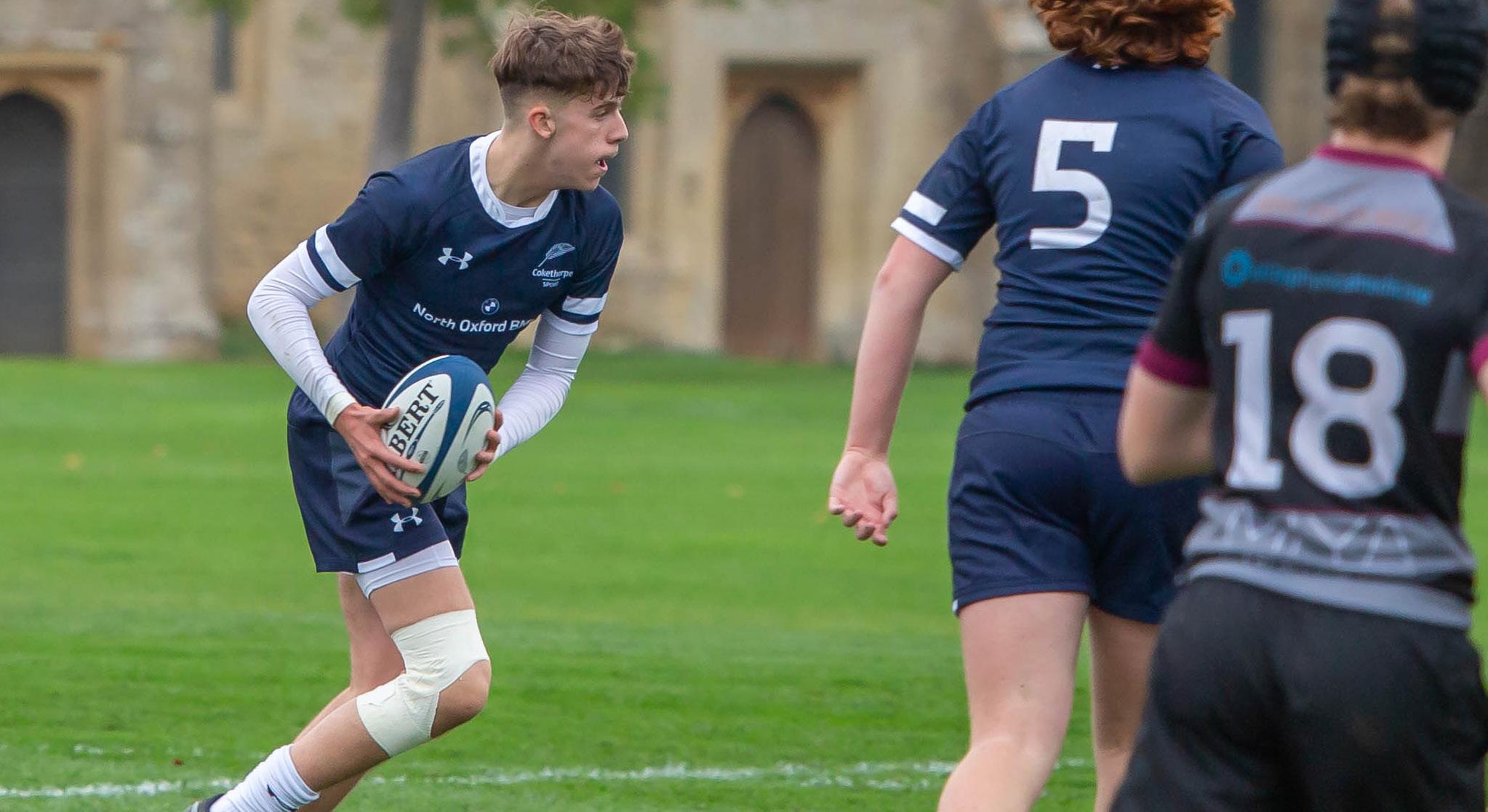
Jack Styles (Lower Sixth, Vanbrugh) was among the students joining Cokethorpe’s Sixth Form from another school in September. Here, Jack discusses his path to Cokethorpe, his experience so far, plans for the future and passion for rugby.
You were among the Cokethorpe students selected for the South West regional squad in February, tell us about that? There are four regional squads, in our case the South West. Within the South West, there are eight counties and, from these eight counties with squads of 30, a squad of 23 is selected to compete in games that are a form of try-out or recruitment game to be chosen to represent the U18 National Divisional Select XV squad who will then play together. This year that final game as the Select XV was against one of the academy sides – Yorkshire Academy. It is tough competition to get to the South West regional stage, and obviously a step further to go on to the Divisional Select XV.
I was one of the three from Cokethorpe to be selected, with Jack Potter (Upper Sixth, Gascoigne) and Luke Taylor (Upper Sixth, Swift). I was there a year young as it’s an U18s squad, which is what Luke did last year as well. Luke went on to represent the Select XV which was a great achievement, and it was also a great achievement for Jack and I to have joined him
at the South West as well, and a great learning experience for me to hopefully go again next year and maybe take it that step further. I have always aspired to play at the best level I am capable of and it was definitely the most exciting and challenging rugby environment I’ve played in so far.
The regional route is a different pathway to the academies into that level of competition. I was part of the Wasps Academy before the Club went under financially. I had a spell with Gloucester Academy after that coming into an established group and a full squad, that environment didn’t work out and I went down the county route. The Oxfordshire County route is a strong setup, and we have Mr Sheer and Mr Robinson as coaches there, which has been really positive for my development, having that coaching consistency between school and county. I don’t think I would have been playing for the South West if it wasn’t for them.
You joined Cokethorpe in September, had you been planning to move schools for a while?
I’d known I wanted to move schools for a while, yes. I didn’t feel my old school was giving me the opportunities that I wanted, particularly around my rugby. It was also quite a difficult journey. Being part of the Wasps Academy then all of us being released when the funding went, things at Gloucester, trying to decide what I wanted to do for Sixth Form... it was a lot of transitions.
I looked at quite a few schools, and had some scholarship offers made. I spoke to Mr Robinson about Cokethorpe and from that very first induction day I knew this was where I wanted to be. It was the pros of everything from all the other schools minus the cons. It’s been amazing ever since. On the induction day, last year’s Upper Sixth toured us around. You could tell that they weren’t just being nice to you because you were new, they were all very much just being themselves. Everyone I met was the same. It is a smaller school than where I was before and I really liked that. It is a closer relationship that you have with the teachers and the other pupils. When you’re walking around every teacher will know you or know of you, know what you are doing. I felt that really quickly from being in the School, from very early on. Even on that induction day
you pick up on it in the comments between the students I was with and the teachers. The nature of the conversations between them, it just seemed very healthy. Yes, they’re teachers and they are there to teach you, but it felt like they were also there to guide you as you’re growing up which I really liked.
The staff have been really supportive. Mr Sheer and Mr Robinson around my rugby commitments here and elsewhere help me to make that work. I’ve found the environment of the academic and the sport here is so well setup, so well balanced for what I want. There are schools that go too strongly one way or the other, that balance is important to me. My academic subjects are different passions to my rugby. I’d like to go on and do something in Chemistry, Biochemistry or Pharmaceuticals after school. I’m taking Biology, Chemistry and Psychology for A Level. Personally, I think Chemistry is probably the most difficult, but it is also the most rewarding, but I love all my subjects. Essays aren’t my greatest strength –and Psychology has a lot of those – but I feel I have the time to put in the effort I need to work on them and develop this when I need it. That balance I was talking about before, I can put an afternoon in at the gym in our sports session, but not feel that my academics are suffering because it is all integrated. We work with Mr Twine on our strength and conditioning, he works with me on a personal programme to help me get the best out of the sessions and out of myself. We check in once a week which is very helpful for keeping everything focused on the best outcomes. I feel that I have been developing my rugby at Cokethorpe, but I have also been developing as a person. I feel more confident in myself, I feel like I have more to me, more life to me. Everything feels like it is on the up. It is not that I would go back and change anything from before or do anything differently. You sometimes need those dips to really push you forward. It’s what got me to where I am now.
Picking up on the academic life, how have you found adapting to the Learning and Teaching approach here?
It wasn’t so much that I had to adapt. I knew it was going to be a change coming into a new environment as well as that step from GCSEs into Sixth Form, but I have just found that I had everything that I needed there for me. I think it is really important to take advantage
of the opportunities that are there for you and I am doing as much of that as I can whenever I can.
In the rest of school life, I think that is important as well. In the Lent and Summer Terms – rugby is staying put in the first term(!) – I’d like to try out some of the other opportunities we have here. I want to try these things out, yes to find new things I can enjoy, but also to find things that benefit the things I care about, that maybe give me a bit of a competitive edge in the rugby, for instance. Healthy competition is something that I’ve always had and it’s important. In the School First XV, I played a lot of the games at fly half, but there were games where Luke changed position and stepped in because he brought something that I couldn’t. It forces you to reflect and to adapt, to bring more of what someone else offers into how you go about things, making sure that we can both contribute positively for the team. When you’re younger, you maybe don’t appreciate that as much, but as you get older you can see how beneficial it is in pushing yourself and each other further. I wouldn’t want not to have that now.
Quite soon after I arrived there was the opportunity in Lower Sixth to apply for the Leadership Grants. I mentioned about taking every opportunity, that is something that comes from my mum; she’s always encouraged it. The Leadership Grants application comes around very early and I wasn’t sure I was ready for that yet. She mentioned it and I went for it. I did my letter and my interview. To be honest, I didn’t think I was going to get one. I’d never had to do anything like that before, applying by myself with a letter. When I started writing, it was quite eye-opening for me. I realised that I have
done some quite cool things and that they’re not just about the rugby or the academic things, they have taught me other things, other skills, and that I can push myself for more. In the short term, the choice of prefects come around next year. It is something I can hopefully have a chance at doing.
I was awarded one of the Grants and part of that is organising some events, which I’m looking forward to, it should be a lot of fun.
Any ideas on what you might do yet?
I have an idea about something based on the TV show Traitors, which would take place over a few lunchtimes, with a couple of people being eliminated each lunchtime. I did wonder about a poker tournament, but I’m not so sure on that one with the gambling!
You mentioned thoughts for after school before, what are your plans for the future? Chemistry at the moment is my favourite subject. I find it really interesting; there’s so much to it. I am doing my EPQ on synthetic chemistry at the moment. It is an area that really interests me and can see myself doing something in it in the future. I maybe haven’t figured out exactly what role I’d be aiming for but it is a world I can see myself working in and being passionate about. I will look out for things on chemistry on social media to watch – it is something I would never have imagined doing a few years ago, but that has just shown me that it is where I want to go. I have been quite proactive in thinking about universities and have narrowed the list down quite a bit. Beyond that, speaking to Mrs Bignell and to Mr Tyer, my form tutor - he’s been really supportive and helpful. We have had a lot of conversations around what I want to do and how I want to do it. Everyone has been incredibly helpful.
Visit from Charlie Maynard MP
‘On Friday 5 December, Cokethorpe was fortunate to welcome Witney MP Charlie Maynard for a visit. Alongside answering students’ questions during a Q&A session, he spoke about his daily life as a Member of Parliament, offering an engaging and insightful perspective. Charlie discussed his action against Thames Water, plans to build a railway from Oxford to Witney and how he interacts with constituents through weekly surgeries every Friday. He answered every question thoroughly, ensuring the session was educational for Fourth Form and Fifth Form students, as well as Sixth Form Politics classes. I really enjoyed meeting Charlie Maynard and gaining a deeper understanding of his political life. I am very grateful for the opportunity to meet him.’
Spanish Film Night Review
Pupils and students from Fourth, Fifth, and Sixth Form gathered for an exciting Spanish Film Night. The featured film was Ocho apellidos vascos, a popular Spanish comedy set in both Andalusia and the Basque Country. The film provided moments of good humour as well as more cultural elements, including a valuable linguistic experience by exposing students to authentic Spanish language, including regional accents and idiomatic expressions. This immersion helped deepen their understanding of the language in a fun and engaging way, while also increasing their awareness of Spain’s fascinating cultural richness.
Izzy Treadwell (Lower Sixth, Swift)
Community & news
Devizes to Westminster
Alice Lines (Upper Sixth, Swift) and Emma Campbell (Upper Sixth, Vanbrugh)
We caught up with Emma and Alice who recently conquered the legendary Devizes to Westminster (DW) International Canoe Race, a four-day 125-mile kayaking endurance challenge.
First of all, huge congratulations to you both! Can you start by telling us what the race actually involves?
Emma: Thanks! The DW race is four days, 169 km of paddling, with overnight camping each night. Day one is all canal, day two a mix of canal and river, day three fully on the Thames, and the last day is the Tideway straight into London, which was terrifying, but amazing. Alice: Yeah, the final stretch is intense. You are literally paddling through the heart of the city!
And the training? How did you prepare for it?
Emma: Mostly at School, during Games sessions, but we also did extra practice outside too.
Alice: It was proper winter training! It was freezing on the river, sometimes we were breaking through ice on the canal. It could be brutal at times, but I actually quite enjoyed it!
Emma: We also did three out of the four races in the Waterside Series: which are in the same locations as DW, each race gets longer in distance. By the time the main event came around, we’d logged plenty of hours in the boats, but the DW itself is a whole different challengeeight hours on the water, every day.
How long were the days on the water?
Emma: Our longest was 8.5 hours in the boat. And that’s non-stop - you only pause to portage around locks. You have to stay focused for hours. Alice: Each boat has a support team, shuttling food and supplies at every lock. Our parents were our support team and they were amazing. They were literally running around locks, shoving food in our hands while we were paddling!
Emma: And it can be scary at times. On the Thames, the water gets really wide, and waves are strong. You’re navigating alongside bigger boats, tiny locks, and low bridges.
That sounds exhausting. Did it ever get dark while you were on the water?
Emma: Not for us, the 24-hour option is only for older participants. We only paddled in daylight, which was enough!
When did you both start marathon kayaking?
Emma: We picked it up as a games option at the end of Fourth Form. It is totally different from regular kayaking; these boats are skinny and wobbly. I fell in three times in my first 500 metres!
Alice: I think I was just clinging on for dear life, but you adapt quickly.
What made you want to take on the DW in the first place?
Alice: The Kayaking programme’s goal is this race, it’s the ultimate challenge in marathon kayaking.
Emma: Yeah, it’s stamina, mental resilience, and just testing yourself to see if you can keep going for hours and hours.
Were there any standout moments during the race?
Alice: Day two was the toughest, with a headwind on the Thames that slowed us down massively.
Emma: But a highlight was finally moving from the canal onto the flowing river, it felt like progress we could see and enjoy, with music in our ears to help the time pass.
Alice: But finishing each day was amazing. And overtaking other crews was a massive morale boost! Although the other crews also became part of the camaraderie. Everyone’s rooting for each other. If someone falls in or struggles, you all share the experience. That makes the race really wholesome.
How did you support each other along the way?
Alice: It is mostly unspoken. We’ve known each other for years, so we know what the other is thinking. Just keep going, keep paddling and that’s enough.
Emma: Teamwork is everything. You get into this rhythm, trust each other, and just keep pushing forward.
1,539
from the banks, and even strangers along the route shout encouragement. It really keeps you going. We couldn’t have done it without them!
And the finish? What was it like crossing that line?
Emma: Crossing the line after 25 hours and 39 minutes, we were exhausted but elated.
you: your support crew, fellow competitors, everyone.
Alice: If you get the chance, go for it! What have you taken away from the experience?
Emma: It was the hardest, but most rewarding thing we’ve done so far. You really push yourself, physically and mentally.
Alice: Endurance, resilience, and appreciation
17,955
Minutes on the water Calories burned
What about the support from teachers and coaches?
Emma: The support from teachers, coaches and parents has just been incredible. They made everything possible. Mr Slader went above and beyond. He sacrificed his whole weekend, cycling and running alongside us, making sure we had everything we needed.
Alice: Miss Parris was amazing too, she came out to support us during the Easter weekend. Mr Gaertner and Mr Elkin-Jones have been really supportive too.
Emma: The support from all the volunteers is amazing. People can track you, cheer you on
We felt extremely proud of what we had achieved. All the preparation, all the challenges, it was all worth it.
Alice: It certainly was. Alongside that though there were some mixed emotions. I had a strange feeling of emptiness. After months of commitment and dedication to our training, all of a sudden it was over.
Any advice for future DW participants?
Alice: Food is vital! It gives you something to look forward to after a long day. And music, that really helped us pass the time too.
Emma: And just embrace the support around
Community Running Hub
The Cokethorpe Community Running Hub (CCRH) was launched recently, offering a friendly and welcoming environment for runners of all ages, abilities, and levels of experience. The Hub is open to anyone with a connection to Cokethorpe, current pupils, Old Cokethorpeans, prospective pupils, parents, staff, and members of the wider community. The aim is to bring people together to share a love of exercise and community, with opportunities to take part in local park runs, the Oxford Town and Gown 10km run in May, and potentially other organised runs and training sessions.
The inaugural outing saw a group of hardy runners braving the muddy conditions of Witney parkrun. Spirits were high throughout, with plenty of smiles and, inevitably, some very muddy trainers! The event demonstrated the Hub’s welcoming and inclusive ethos, emphasising that no particular level of running ability was required, just a willingness to enjoy exercise and be part of the community.
for the people around you.
Emma: It changes your perspective. After DW, other challenges don’t seem so impossible. If I can do the DW, I can do anything!
Would you do it again?
Alice: Definitely, but not this year as we have exams. But after that, for sure! Maybe a different endurance challenge next time?
Emma: Yeah, we are considering the London Marathon, desert marathons – we have definitely caught the bug for long-distance challenges!
Meet the School: Mrs Ann-Marie Armstrong
What is your background?
Well, I’ve been teaching for quite a while – long enough that my very first pupils are now in their thirties! I started out at The Dragon School Pre-Prep, where I wore lots of different hats over the years, including Head of Year and Assistant Head in charge of curriculum. I spent fourteen happy years there before my family and I relocated to Copenhagen.
Teaching in an international school in Denmark was an amazing experience. The school had students from over 70 nationalities, and many arrived with very little English, so every day was a new challenge and a huge learning curve. As a family, we loved Denmark - the freedom of cycling everywhere and being so close to the sea was just wonderful.
We returned to the UK in 2016, and I joined Oxford High Prep, teaching Year 3 and becoming Head of Griffin House. Griffin’s colour was blue, so I was thrilled when Mrs Black said I could join Lockwood House here – blue feels like home! In fact, I was in the blue house when I was at school, so it would feel very wrong to be in any other colour now.
What has your experience of Cokethorpe been since joining?
Cokethorpe already felt familiar before I joined because my son Jonty (Upper Sixth, Queen Anne) started in Third Form when we returned from Denmark, and then my daughter Immy (Fifth Form, Queen Anne) joined two years later. As a parent, I always found the School to be such a welcoming place – everyone was friendly and happy to help. The staff always spoke so highly of it and often said what a great place it was to work.
Now, one term in as a member of staff, I can honestly say they were right. Everyone has been so welcoming, friendly, and helpful. I feel like I’ve been here much longer (in a good way) and already feel like a valued part of the team. The grounds are absolutely stunning – how many schools can say you might spot deer, hares, or even peacocks out of the window? And I can’t not mention the Catering Department. Anyone who knows me knows I love food, and the lunches here are incredible. I have to stop myself from messaging my old colleagues just to show off!
How would you describe the approach to learning and teaching here?
I’d say it’s all about creating a nurturing, exploratory environment where learning feels like an adventure. The pupils are right at the heart of everything we do, and the teachers are constantly dreaming up exciting ways to deliver the curriculum and spark curiosity. There’s a real buzz in the classrooms – you can see pupils leaning in, asking questions, and wanting to know more.
What really stands out is the balance between academic challenge and pastoral care. That combination gives pupils the confidence to take risks, embrace challenges, and see mistakes as stepping stones rather than setbacks. It’s such a positive culture – because when children feel happy and supported, they truly thrive. And honestly, happy children learn!
What do you like to do outside of work?
I’m an active person and happiest outdoors, whether it’s a long walk, a game of rugby, or a cold-water swim (the colder the better!). Rugby is a huge part of my life now; if I’m not playing or watching, I’m volunteering at Gosford All Blacks RFC as the U16 girls’ team manager. It’s such a brilliant community, and I love that lots of Cokethorpe pupils play there too – new members are always welcome! One of my rugby highlights was being a flag bearer at the England v France Six Nations game last year. Walking out onto the pitch at Twickenham and meeting some of the England team afterwards was absolutely incredible.
In the summer, you’ll often find me at Eynsham Cricket Club, helping organise events and keeping the clubhouse running smoothly on youth training nights. Again, there are plenty of familiar Cokethorpe faces there, which makes it even more fun.
When I’m busy with rugby or cricket, I like to slow things down with some creative hobbies - baking (yes, food again!), gardening, and crochet are my go-to ways to relax. Who knows, maybe I’ll start a Prep School crochet club one day.
Ann-Marie joined the School as Year 2 Class Teacher in September 2025
Creative Writing
The stirring and a fluttering caught the man’s attention, No animal in England knows the meaning of happiness. Why is there childish playing?
The ducklings played round the corner unaware of man coming closer. “Man serves the interests of no creature but himself!” “Tyrant man shall be overthrown!”
The man watched them skip and sing about him with rage bubbling inside.
He grabbed a stick and turned on the ducklings thrashing and maltreating them
Until they ran with their tails tucked and mournful cries echoing.
The animals yelled in outrage when they heard of what happened. They declared that “Whatever goes upon two legs is an enemy!” They wanted freedom, freedom that wasn’t doled out by a grudging master for a minute or two.
The birds yelled that they had two legs; But the animals told them that the mark of man is the hand. The birds accepted this and flew off to tell of the news.
The news spread in vague and distorted forms until every animal in England had heard of it.
The humans came running to the farm to help him save his farm. The humans ran but the animals ran faster; they fought for freedom until it all ended with a kick.
The former owner lay on the ground kicked in the head by a mighty hoof; There was silence until the animals cried out;
“No sentimentality comrades!”
Darkness. I can’t see half a metre. Horizontal rain slashes down, and I squint and scrunch my eyes, making visibility even more limited. The wind is so loud, deafening even. Thunder crashes and booms overhead, and the occasional white flashes reveal a dark, swirling mass of foreboding approaching, making me feel miniscule next to the base – which was well over a mile long. Lightning was my only hope.
I step out of the car in disbelief, and the door slams behind me. Gawping, I stare up at the funnel of destruction looming above me, voices in the car shriek at me to return, but it almost seems as if the cyclone is drawing and dragging you closer. Whether it was the wind, or some subconscious part in the back of your mind, you had no idea. The teammates’ cries fade into the background, and you can only hear the howling wind. I step closer, and the noise begins to fade into something else; my younger self screams as my own mother was dragged out of the storm shelter, and whipped away from me, along with your childhood and happiness. Perhaps this is what sparked my obscene interest in tornadoes. How could I have prevented something like that from happening. I was only 7. What could I have done?
Abruptly, a loud crash echoed behind me, and I whipped around faster than a human eye could blink. The sirens wails seemed to fade into oblivion as what seemed to be a large truck sailed overhead, like a feather would as it flew through the air. Reality crashed back to me, and I realised it was now or never to get out of this godforsaken place, before I got sucked up into the core. I pelted back to the car, the panicked look on the blurred faces peering out from the windows, and I realised just how life-threatening the situation was. Into the car I leapt, and GO GO GO I heard myself roar, and the awful sound of the tyres wheel-spinning on the hard tarmac, and then the heart stopping clunk of a stalled engine. Then, even worse. No sound. Just movement. The car was being dragged backwards into the swirling vortex behind me. Up. Down. Up. Down. The rear bumped against the harsh gravel or the concrete road. The wind was all I could hear, along with the muffled screams of the people around me. You know that sensation when you’re dreaming and you suddenly fall? This is what it felt like. Only in real life. Up into the core we flew, nothing felt real. This may well have been the most exciting moment of my life. Nothing felt real.
Rebellion by Charlotte Moran (Second Form, Gascoigne)
Tornado by Immy Harris (Fifth Form, Gascoigne)
Society news
Tom Dunlop (OC 2024, Vanbrugh) has completed an extraordinary challenge: cycling to all 60 British racecourses in one continuous journey.
At just nineteen, and during his Gap year before joining the Royal Agricultural University, Tom set himself the goal of raising £60,000 for the Injured Jockeys Fund and Diverse Abilities. Inspired by his family’s racing heritage and driven to make a difference, his determination and resilience have taken him even further – raising an incredible £68,000+ for two causes close to his heart.
Tom arrived at his final destination, Newbury Racecourse, greeted and cheered on by a group of OCs (pictured above).
Emily James – Grace and Ivy Florist
Emily James (OC 2017, Queen Anne) talks to us about her career as a florist.
‘After leaving Cokethorpe, I went on to study Textile Design at university, drawn by my love of colour, texture and creativity. After graduating during lockdown, I found myself spending more time in the garden and arranging flowers, which had always been a hobby of mine. What began as a way to stay busy and connected to nature, soon grew into a business. Combining my background in design with my love of flowers, I now run Grace and Ivy Florist, specialising in wedding flowers and home fragrances, from my home studio.
Every wedding design is different, and I take great joy in crafting bespoke arrangements that reflect each couple’s vision. It’s a privilege to be part of so many love stories and to spend my days doing work that inspires me.
Looking back, I’d encourage current students to really think about their next steps after school. University can be an amazing experience, but it’s not the only route to success or fulfilment. Take some time to explore what you genuinely enjoy, try things out, and don’t be afraid if your path takes a few unexpected turns, sometimes that’s exactly where you’ll discover what you’re meant to do. I’m so proud that what started as a small lockdown project has now grown into a thriving wedding floristry business.
Tom’s Big Bike Ride
Ocellus
Cheerleading – Harry Phipps
Harry Phipps (OC 2019, Swift) has been selected to represent Team England Adaptive Abilities Advanced at the ICU World Cheerleading Championships 2026 at Walt Disney World, Florida – his first time representing England on the world stage. The Championships will see Harry join his teammates as they seek to defend their third consecutive World Championship gold medal, following Team England’s victories in 2024 and 2025. Competing in the Adaptive Abilities division, which unites athletes with and without disabilities, the team’s success highlights the power of inclusivity, teamwork, and shared ambition.
Born Deaf and having grown up in Witney, Harry’s enthusiasm for performance and sport began locally through Stagecoach and WOAPA, and was encouraged during his time at Cokethorpe. Since then, he has gone on to compete with Rebellion Allstars, Gymfinity Cheer & Dance, and the USW Coyotes, where he now serves as President for a second year. Reflecting on his selection, Harry said, ‘For my teammates and me, this is more than a competition – it is the culmination of years of dedication and an opportunity to inspire others both locally and around the world.’ To help make this opportunity possible, the team are seeking sponsorship to support the costs of travel, training, and specialist equipment. Businesses and individuals who choose to support Team England will be helping athletes from across the country represent their nation and champion inclusivity on the global stage.
Harry’s GoFundMe page can be found at: https://www.gofundme.com/f/englandadaptive-abilities-go-to-the-worldchampionships
We are immensely proud of Harry’s selection and of the determination, leadership, and resilience he has shown throughout his journey. His achievements stand as a shining example of the Cokethorpe spirit – one of perseverance, aspiration, and community pride.
The Cokethorpe Library has recently received a most generous donation from Old Cokethorpean Rory Bourke (1978), who has kindly presented the School with copies of his four-volume historical series, The Last Tribune
Set against the vivid backdrops of Ancient Rome and Egypt, The Last Tribune is an epic saga of war, faith, and transformation, exploring the enduring themes of honour, courage, and redemption. Through his storytelling, Rory encourages readers to reflect on the lessons of history and the timeless values of character and integrity that continue to resonate today.
Rory shared that he hopes his work will inspire Cokethorpe’s pupils to explore the richness of the past and to appreciate how the challenges and triumphs of earlier times mirror those of our own.
We extend our heartfelt thanks to Rory for his thoughtful and generous gift. His contribution not only enriches the library’s shelves but also strengthens the link between current pupils and the achievements of Old Cokethorpeans - a wonderful reflection of the Cokethorpe spirit and the School’s enduring sense of community.
Class of 2025 Reunion Drinks
‘On a cold evening in December, we gathered in the intimate and historic setting of St Edmund Hall’s College Bar (known as the Buttery) for a relaxed reunion drinks event for the Upper Sixth cohort who left in July 2025. Joined by Mr Tolputt and Mr Gale, we heard stories of first terms at university, reflections on new jobs, travel adventures, and the everyday rhythms of life beyond School. It
was lovely to catch up with so many of the recent leavers and witness how much they have grown and experienced in just a few months.
Thank you to everyone who made the effort to come along. It was a memorable evening and a great opportunity to reconnect, share stories and celebrate the start of new chapters together. Here’s to future catch-ups and continuing success in all you do!’
Ed Tolputt, Head of Sixth Form
A generous gift from Old Cokethorpean Rory Bourke (1978)
Sam Farr
We were delighted to welcome back Sam Farr (OC 2025, Swift), who returned to share his incredible experience of climbing Mount Kilimanjaro over the summer. Sam’s story is a remarkable example of the determination, ambition, and adventurous spirit that defines the Cokethorpe community.
Reflecting on his journey, Sam explained: ‘I have always been a big mountain climber. Hiking Mount Etna when I was nine, and Mount Toubkal when I was eleven. Kilimanjaro seemed like a natural step up in difficulty from those two. Also, it coincided closely with my 18th birthday, marking it both as a personal achievement and as a way to commemorate turning eighteen.
We took the Northern Circuit Route, which coincides with the Lemosho, Machame, and Rongai routes. This makes it the longest route up Mount Kilimanjaro (around 100km in eight days), but also one of the least travelled, so we spent a lot of time alone. It also allowed for superior acclimatisation over the more traditional five-day routes.
We hiked through dense jungle, steep heathland, alpine desert, ancient magma flows, and glaciers – a cathartic journey from the bright greenery of 1,600 metres to the barren, icy emptiness of 5,800 metres. The best moment was seeing the sun rise over the clouds (which we were above by a couple of thousand metres) after hiking in the dark for five hours. The sky was empty, then suddenly all the colours exploded, and you could see all the way down into the crater of the volcano.’
Sam is now preparing for his next adventure – a solo hike across New Zealand – before deciding which mountain to conquer next. Nepal, perhaps! We are immensely proud of Sam and wish him every success in his future expeditions. His story is a wonderful reminder that with determination, curiosity, and courage, there are no heights too great to climb.
Guy Biggs Christening
Congratulations to Guy Biggs (OC 2010, Feilden) and his wife, Yasmin, who christened their son Benjamin on Sunday 17 August in the Chapel. After the service, led by Rev’d Andrea Colbrook, the guests were invited to join them for a picnic on the lawn providing by our wonderful Catering Department.
‘We had a fantastic day. Thank you very much for helping us make the day happen. The Catering Department outdid themselves, as always, and all our guests could not speak highly enough of the experience.’ - Guy and Yasmin
50 Years of Friendship Reunited
It was wonderful to see six OCs come together in London to celebrate 50 years of friendship. John Meyer (OC 1978, Harcourt), Julian Keenlyside (OC 1980, Harcourt), Robert Gee (OC 1978, Swift), Nick Berg (OC 1980, Queen Anne), Philip Clarabut (OC 1979, Swift), and Matthew Walker (OC 1979, Harcourt) travelled from as far afield as California and France to reconnect.
The group enjoyed reminiscing and sharing fond memories of their time at Cokethorpe, proving that true friendships really do last a lifetime.
Staff news
Welcomes
Staff:
Dr Squire - Head
Mrs Armstrong - Teacher of Pre-Prep
Mrs Cable-Alexander - Learning Development Teaching
Assistant and Admin Support
Miss Carter - LAMDA Teacher
Mrs Haly - Learning Development Teacher
Mrs Mordaunt - Prep MFL Teacher
Mrs Mersh - Learning Support Teacher
Mr Waters - IT Support Technician
Mrs Whitby - Teacher of Geography
New Roles
Ms Garitey - Lead Tutor
Mr Hughes - Director of Safeguarding
Mrs Orton - Head of Prep
Mrs Statham & Mrs Webb - Joint Heads of Geography
Farewells
Mrs Black - Head of Prep School
Mr Bown - Head of Geography
Mr Brownless - Creative Officer
Mrs Fuchs - Prep MFL Teacher
Mrs Garner - Development Manager
Mrs McNaughton - Prep Secretary
Miss Marshman - Lead IT Technician
Mrs Wynne - Director of Development
Births
Congratulations to Teacher of English, Mr Everling and his wife, Lindsey, on the birth of their son Wilfred Rory Everling born on Sunday 24 August weighing 7lbs.
Congratulations to Head of Prep Sport and Prep Assistant Head Pastoral, Mr Baker, and his wife Kelsey, on the birth of their son Arthur John Baker born on Friday 5 September 2025 weighing 7lb 4oz.
Congratulations to Teaching Assistant, Mrs Slader and Head of Outdoor Education, Mr Slader, on the birth of their son William Edward Slader born on Monday 13 Oct 2025 weighing 8lbs 6oz.
Congratulations
OC Jacob Booty Published
Jacob Booty (OC 2012, Swift) has kindly donated a copy of his first book Storm the Manor to the School.
The book is described as a satirical crime drama, oozing in sarcasm and dark houmour.
“Rufus did not belong in the criminal underworld, and yet, here he was. He had been looking for adventure in his life, but not like this.” The storyline moves on at a pace, with laugh-out loud moments keeping you both engaged and eager to find out how on earth Rufus and his entourage will get out of this alive.
Jacob, who was Head of School in 2011-2012, attended Cokethorpe with his brother, Alex. Their father, Mark, was subsequently a Governor for eight years.
COKETHORPE CAMPS
Congratulations to Miss Jones for gaining a Distinction in her end point essay, which forms part of her initial teacher training.
Congratulations to Mr Baker, Mr Tyer and Mr Ladell Stuart for passing their Senior Leadership NPQ.
Visit
cokethorpe.org/cokethorpe-camps for information and booking
Prep School pupils surprised Mrs Black in her last assembly with re-written lyrics to Can you feel the love tonight
Every pupil has designed a feather for the peacock artwork as a gift from the pupils and the staff gifted an illustration of the Mansion House.
After reading The Christmas Eve Tree Nicky in turn gifted every pupil with a Norwegian Spruce sapling to care for and watch grow, just as she has watched pupils grow over her time at Cokethorpe.
Farewell to Mrs Black
The Ocellus has been printed on Carbon Balanced paper. This will create 34 square feet of new Native
here in the UK, and will capture 125 kilograms of CO2.