
A selection of articles written by our Scholars

Cokethorpe

A selection of articles written by our Scholars

Welcome to the 2026 issue of the Cokethorpe Scholars Journal. What a privilege it is to add to this celebration: not only a collective body of your scholarly work but also of your individual journeys, struggles and aspirations. I welcome you to this issue not just as an academic, but as someone whose faith in education has been tested and strengthened by lived experience.
In Ukraine, where I work alongside educators, students, and leaders in the midst of full-scale invasion, education isn’t abstract. It is not a rubber-stamped piece of paper, credential, a stepping stone, or a line on a CV. It is an act of hope. It is a refusal to accept that violence, fear, or uncertainty should define the future. To choose learning in such conditions is to believe that thought still matters, that truth is worth seeking, and that dialogue remains possible even when the world feels fractured. That is why I am deeply moved by this Journal and by you, the scholars who wrote it and educators who so generously supported you and curated it.
We often speak about young people as the next generation. As if responsibility always belongs somewhere just over the horizon. But what I have learned, again and again, is that the future is shaped not by age, but by mindset. It is shaped by people who believe they can make an impact. Who are willing to ask difficult questions, to sit with complexity, to challenge easy answers, and to centre human dignity in their thinking; especially when Generative AI presents such tempting shortcuts. Your research, undertaken so early in your careers, is tremendously inspiring.
In a world marked by polarisation, mis- and disinformation, and profound global uncertainty, peace is not sustained by silence or sameness. It is sustained by critical thinking, by ethical judgement, and by the courage to engage in difficult conversations with care and respect. It is sustained by people who can listen as well - and as passionately - as they argue; who can design solutions with others rather than for them; who understand that progress without humanity and empathy is not progress at all.
Human-centred design, my academic domain, teaches us that every system, policy, technology, or institution ultimately shapes real lives. It asks us to begin not with assumptions and our ego, but rather with empathy and curiosity. When societies are being rebuilt, whether after conflict, crisis or any sort of dissent and division, it is these capacities that determine whether we recreate the past or imagine something better, together.
At its best, Education prepares us not just to race or compete or ‘succeed’, but to contribute. Not just to know or hold on to knowledge, but to share it. Not just to speak, but to take responsibility for how our words and ideas shape the world.
This Journal is more than a collection of student research. It is a space where you, young scholars, practice truth-seeking, intellectual courage, and thoughtful disagreement. I hope it serves for many years to come as a reminder of belonging to this nurturing community; as a reminder that we can achieve so much more when we are united. Tomorrow starts today and you are co-creating it here, now, question by question, insight by insight, conversation by conversation. And that is why what you have done here matters so much.
Dr Bo Kelestyn PFHEA FEEUK Associate Professor University of Warwick
“You can’t step into the same river twice,” said the pre-Socratic Philosopher Heraclitus (c. BCE 540 – 480).
Heraclitus probably had direct experience of stepping in, or at least crossing, rivers often. He lived near Ephesus on the banks of the Cayster river by the Western Coast of Asia Minor (now modern-day Turkey). Heraclitus was interested in the idea of the unity of opposites – the notion that seemingly contradictory forces are interdependent, interconnected and essential to each other. The middle of the ocean might be great for fish, but bad for humans if they’re stranded alone in the middle of it. So, the human builds a raft and starts fishing for survival; the fish get wise and swim away. And so on. His framework suggests that conflict is not merely an obstacle, but a fundamental driver of growth and change.
That “everything changes and nothing stands still” has been as true for scholars at Cokethorpe as it was for Heraclitus. We opened the year with our first symposium, hosted by Futurologist Richard Watson on the theme of AI. During the multi-activity workshop, scholars explored their hopes and anxieties about AI. They learned how AI’s antecedents are embedded in the Industrial Revolution and they built skills using past trends to predict the future. This kind of sustained ‘deep learning’ - sitting with challenge, considering opposing views, evaluating arguments - is the kind of learning Dr Kelestyn asserts is key in nurturing determined, ambitious, resilient and enquiring minds.
The Scholars’ Journal 2026 is an example of some of that ‘deep learning.’ Do take some time to read it – from the history of comics, how horses help us heal, AI in Aviation and more is explored between these covers. Scholars have developed their own titles; gathered sources; planned their responses, and aspired to write in an academic style, complete with Harvard-style text referencing. For some, it has been a change to their normal way of working - but “to live is to change and to be perfect is to change often.” We don’t think any of the scholars would claim to have achieved the perfection suggested in the words of Oxford Theologian John Henry Newman, but for us as educators, it’s their seeking to change that’s important.
Curiosity leads us to enquire; it thrives when we are rigorous. Curiosity energises our ambition; our determination drives it when we fail. So, should you be reading this journal for the first time, or have written for it this last time, we will always urge you in the wisdom of Immanuel Kant: to ‘dare to be curious.’
Iago Elkin-Jones & Ally Hutchinson C0-Heads of Scholars
The Scholars’ Journal is a collection of articles created by pupils from First Form to Lower Sixth. The articles represent a selection of work across a wide range of disciplines.
Pages: 3 to 9
Marvel Comics and History: how far do the plots and characters reflect the times they were written in?
Johnny Palethorpe - Clarke - (First Form, Queen Anne)
Breaking stereotypes: how far did street artists in the twenty-first century push back social boundaries?
Grace Bassey - Allen - (Third Form, Vanbrugh)
How far do the depictions of triremes align with the written evidence given in the works of Thucydides?
Reuben Uglow (Fourth Form, Gascoigne)
To what extent does listening to hip hop create a uniquely energising feeling in listeners compared to other genres of music?
Diwen Zhu (Fourth Form, Swift)
Shock: to what extent do emotions manifest in your body in real time?
Molly Sheer - Clarke - (Second Form, Vanbrugh)
Pages: 10 to 31
The Enemy of my Enemy is my Friend: to what extent can bacteriophages help combat antimicrobial resistance?
Imogen Jones (Second Form, Queen Anne)
Help or Hinder: to what extent would AI implementation effect schools?
Will Chandler - Clarke - (Third Form, Gascoigne)
The Power of Hello: how significant is a first impression?
Lottie Graves (Fourth Form, Gascoigne)
Ultra Processed Foods: to what extent are they taking over our lives?
Kassia Walwyn - Trevis - (Fourth Form, Vanbrugh)
How do horses help us to heal?
Ella Allsop-Davis (Fourth Form, Vanbrugh)
AI: help or threat to the role of the pilot?
Charlie Parks (Fourth Form, Queen Anne)
The Wood Wide Web: in what ways do tree defence systems echo chemical warfare?
Elissa Boyle (Fourth Form, Harcourt)
Athletic prowess: to what extent do genes predetermine your running ability?
Freya Richards (Fourth Form, Feilden)
Bacteria resistance: are we returning to a zero-treatment world?
Poppy Lloyd (Lower Sixth, Feilden)
Humanities
What impact has the Highland bagpipes had during situations of war in the twentieth century?
Jolyon Uglow (Second Form, Gascoigne)
Gold - the human obsession: why are humans so naturally attracted to this element?
George Bains (Third Form, Feilden)
How has Spanish History shaped its Architecture?
Alex Regardsoe - Trevis - (Third Form, Swift)
The spread of bread: does it prove globalisation is evolution at its finest?
Freya Vincent (Fourth Form, Queen Anne)
Addiction: to what extent are social media companies encouraging addiction on their platforms?
Samuel Byrne (Fourth Form, Gascoigne)
Pages: 32 to 41
how far do the plots and characters reflect the times they were written in?
Johnny Palethorpe - Clarke - (First Form, Queen Anne)
Supervisor: Mr Elkin-Jones
Marvel: The term that everyone has heard, at some point in their lives: 30-page long books covered in pictures, and one of the best. A brand of comic strips that many like, but few know how this famous company has kept people strong in times of distress.

What was the beginning?
Marvel was first founded in 1939, under the name of ‘Timely Comics’. This was founded in New York City. It was made for 8–12-year-old boys, but it extended into all ages and genders by the 1950s. It was made by Martin Goodman, a part-time comic writer. This business really took off, selling 800,000 copies in its first year. Many children absolutely loved this, and the business skyrocketed since then, having sold over eight million copies up to now (Solkes magazine, 2023). People thought this just to be a small comic brand that would eventually fizzle out. Little did people know, this business was here to stay. It was viewed as influential and helpful and would eventually become a known name across the world.
What was happening in history then?
On the brink of The Second World War, with the imminent danger lurking just up the road, these comics were designed to take people’s minds off the war or get the (nonsensical) idea that one of these daring superheroes would come popping out of the page and save the country. Whatever the reason was, it worked. People started reading and enjoying these comics and focused less on the war. Another reason might have been to spur people on and make them think they could be a hero too, and then more people would join the war effort. They also served as sources of propaganda, and or simply reflecting a nation’s pride. In 1957, when the space race started, there was the creation of the Fantastic Four, and other interstellar characters. After September the 11th, although it is not a direct reference, characters from the books are shown recovering from a terrible shock, which was shown to shake the world. Even characters in other parts of the world are pictured as shocked and amazed at what happened. A shot from the comic shows Spiderman holding a tattered American flag, with two buildings ablaze in the background. This, although not stated explicitly as September the 11th, does show a strong resemblance to the infamous day when a huge terrorist attack hit America. The repercussions of this are shown in comics, where Tony Stark (Iron Man) goes to fight in Afghanistan and is captured in Kunar.
Why were the comics popular?
The comics were popular because, although not being the first comic, they were the first to involve superheroes and villains fighting each other for dominance. This was popular with children because they liked the action, and the comics continued to do that, and got a lot of sales. We love this sort of thing because our brain needs this to develop crucial skills, and it also helps us learn about conflict resolution.
What events and themes in that time are shown in the comics?
Often people think of marvel just to be a fun brand of comic, with good artists and inspiring stories. The way Marvel have shown events goes much deeper than anyone thought. For example, the Civil Rights Movement was included in the X-Men series, who faced prejudice and discrimination, and there was the first blind superhero, Daredevil. There was also the making of more women characters, other than Wonder Woman. Another example is The Second World War itself, when the
release of captain America showed him fighting against Axis powers (Wikipedia, 2013). The Vietnam war was also included, showing Iron Man and The Hulk grappling with the various moral complexities of war and its impact on soldiers- one being held prisoner, and one shown as a deeply affected veteran. Also, when drug-related problems became clear in the 1960s-70s, teen-directed heroes such as the Teen Titans were created to take teenagers’ minds off this. Civil Wars are also shown in comics, such as the ‘Civil War’ series, including seven comics. This shows the superheroes turning in on one another, to gain power. Wars like this are the most unhelpful, as viewing a nation turning in on itself is not a pleasant sight to see, even in the form of comics. This statement is shown by the end with the world turned to rubble and the enemy, silently watching from the sidelines, has a golden opportunity to attack.
How do comics relate to everyday struggles?
Another problem characters faced was little, everyday struggles like financial debt, which Spiderman had to overcome. Tony Stark also is portrayed with anxiety and PTSD. It makes them a little bit more human.
What storylines are influenced by the events of the war?
The Invaders (1975) is a series focused on a group of heroes fighting the Axis. It involved Superman, Captain America, and Black Widow. These daring heroes were portrayed fighting in the 1940s, stopping the Blitz, and saving the day by fighting the enemy away from their country. Another story that is influenced by war is the Spiderman and The Avengers, showing them addressing the themes of heroism and fighting off the effects of tragedy, although not exploring the causes or consequences of what happened around the time of September the 11th.
In conclusion, Marvel comics echo the events of the time they were written in. This is shown with the rise of Captain America, fighting off the Axis powers, and Spiderman, in the aftermath of September the 11th, recovering from deep shocks, or the space race, prior to creations such as the Fantastic Four. These comics served not only as entertainment, but as political role models and influencing mindsets for many. These pieces of paper are not only fun, but mirror people’s thoughts and feelings, giving a boost to the flagging morale of citizens, and helping people through times of emotional stress and trauma when they need it and showing that even superheroes can suffer and feel stress, just like the rest of us. Perhaps, like us, superheroes are only human after all.

References Salisbury, A. (2023) A history of marvel. 1st ed.
Wikipedia (2013) How has marvel evolved over time? Fandom (2025) How did the war affect marvel?
Grace Bassey - Allen - (Third Form, Vanbrugh)
Once associated with gangs and illegality, street art has advanced greatly, becoming a platform for artists to speak out about social issues. These areas have allowed these artists to bring together both people and their homes through their irreplaceable expression and creations. By bringing bleak walls to life, cities and towns are transformed into awe-striking masterpieces raising both controversy and empowerment for change. Whether it be alleyways or bustling roads, the sides of buildings or pasted on landmarks, their art truly does paint a thousand words about how past stereotypes must be broken. Once and for all.
Social change begins with promoting or resisting a formally standing belief or view of people or a community. A unique viewpoint allows for a fresh interpretation on society, meaning that the holder of this opinion can bring something distinctive to the public and use it to create change in that area. Often, artists change society when their beliefs, values or religion break a former stereotype. By rejecting this label that has categorised others previously, they establish new ideas that shape how they present someone through their work.
Panmela Castro, a Brazilian graffiti artist, has a strong belief that females should be seen as powerful individuals compared to the more inferior people they have been regarded as in the past. Built upon her unfortunate experiences of both her and her mother being victims of domestic violence, her artwork is a way for people to see a different representation of females through a women’s eyes, whilst hinting at her unfair days of abuse.
Standing out as a sign of revolt in a male dominated environment, her masterpieces of women always face the audience. This sign of rebellion portrays women as being bold and brave which is especially important when speaking out about ill-treatment in a public area.
By using the depiction of the “ideal female figure’’ (Ferri, 2019), she allows all women to be able to relate to the image and see a different version of themselves through her pieces. ‘’This universal “feminine” allows Castro’s works to be valid and meaningful in numerous countries.’’ (Ferri, 2019). Bold colours (in particular, the colour pink) and empowering phrases symbolise femininity and liberation in a world of restrictions. By portraying their features dramatically, Castro highlights aspects of femininity that separate us from being male, making it able for society to view females from a different angle and appreciate every woman’s unique beauty.
Supervisor: Ms Hutchinson
Castro often depicts women with intertwined hair. This symbolises a sense of community and union, showing them as more than individuals but also as a collective. In the past, women have been regarded as ‘stay at home’ people, cleaning and keeping the house running whilst the men went out to work. By using this illustrative way of standing for connection, Panmela builds this wider group within an environment where they are being put lower and separated from the rest of society.
By including aspects of traditional items, artists can weave old culture with innovative ideas. This is shown by the burkas illustrated in Shamsia Hassani’s works. These long-established, concealing garments juxtapose with the sense of ‘’freedom, creativity and expression’’ (Pagano, 2025) depicted through a woman playing an instrument. Shamsia is able to consolidate the fact that this item, which is perhaps more common in the area she lives (Afghanistan), holds power and hidden meaning whilst presenting views that break formally standing ways of thinking. They stand as a concrete image in a sea of new ideas. Using this aspect of tradition, Hassani intertwines the old with the new, representing girls with sharp, strong featuring spreading their light in midst of oppression and war. Her women are educated and independent and showing them wearing burkas displays how their identity is shaped by both the past and the change yet to come.
As well as being a way of breaking assumptions made of a certain people, street art is a creative stage to give artists a place to unite people that are seen as enemies. A prominent example of this is pseudonymous French artist, Jean-René (JR) who installs enlarged images he has photographed, pasting them on buildings, landmarks, and other urban areas. His project ‘Face 2 Face’ found people from the Palestinian and Israeli people with the same jobs, inserting them on opposite sides of both the areas, especially the separation wall. This immediately caused controversy as JR was presenting both sides equally, instead of taking sides. By finding common ground between the two peoples, intertwined with their personalities displayed in their humorous facial expressions, he illustrates each assembly in peace whilst still communicating his opinions to the audience. JR believes that ‘’art is not supposed to change the world […] but to change perceptions’’ (JR, 2011) which is reflected in the way he openly pastes unique photos in places impossible to ignore to help people clearly see that we are all human and should be viewed fairly.


Banksy’s piece ‘Son of a Migrant from Syria’ shows us a deeper insight to his view of immigration. Whilst it could be argued that ‘’his works often mock society’’ (Brenner, 2019) Bansky illustrates the story of Apple founder, Steve Jobs, carrying a sack over his shoulder whilst holding a Macintosh Classic. Unaware to many, he was a son of an immigrant. Especially with Britain’s current situation, everyone’s views of immigration are unique, however, Bansky has depicted how immigrants shouldn’t just be ignored and forgotten as they too hold unique talents and skills. Bansky peacefully protests for these people to be encouraged in the right way to use their aptitudes for good, just like Steve Jobs, and to illustrate that many great entrepreneurs were migrants or born to immigrant parents. (Brenner, 2019)
His work was left in a migrant camp called the ‘Calais Jungle’ in France. The refugees were often faced with discriminatory language which made the location all the more powerful. Banksy’s ingenuity to display his artwork for them to see, left it to be noticed and made it look as though they themselves were silently protesting through his art to be accepted and allowed a chance.
On the whole, artists have changed society through their fresh mindsets, uniting communities and their locations together. Through use of symbolistic images, unique photography and abstract techniques, they are able to speak a voice into new ways of thinking. Although some may see their work as mocking and degrading to society because of their passionate beliefs, the artists’ works hold greater power than their critics’ words, illustrating to the people how we should all be seen and viewed equally.
BRENNER, L. (2019). THE BANSKY EFFECT: REVOLUTIONIZING HUMANITARIAN PROTEST ART. Harvard International Review, [online] 40(2), pp.34–37.
Ferri, G. (n.d.). Panmela Castro: Feminism in Brazilian Graffiti Art Panmela Castro: Feminism in Brazilian Graffiti Art. [online] Available at: https:// academicworks.cuny.edu/cgi/viewcontent.cgi?article=1095&context=bb_ etds.
Hassani, S. (2023). Shamsia Hassani - Official Website. [online] www. shamsiahassani.net. Available at: https://www.shamsiahassani.net/.
JR (2011). My wish: Use art to turn the world inside out. TED. Available at: https://www.ted.com/talks/jr_my_wish_use_art_to_turn_the_world_inside_ out.
JR (2007). JR - Artist. [online] JR - Artist. Available at: https://www.jr-art.net/ projects/israel-palestine.
Pagano, L. (2025). Shamsia Hassani: The Afghan Graffiti Artist Who Paints for Those Without a Voice – COM 221 Writing Across the Media. [online] Jcucom.org.
How far do the depictions of triremes align with the written evidence given in the works of Thucydides?
Reuben Uglow (Fourth Form, Gascoigne)
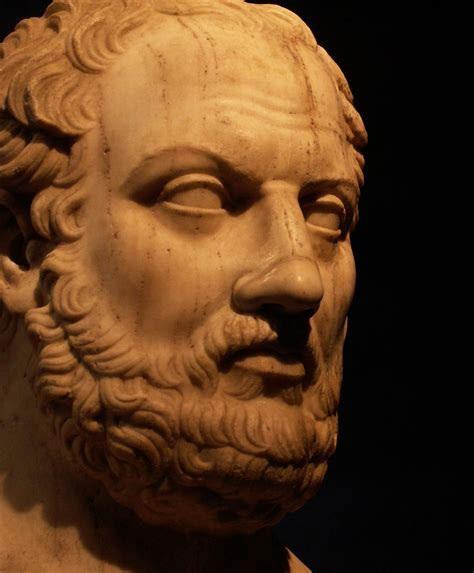
Thucydides is regarded as one of the most important historians of Ancient Greece and indeed by some “the father of scientific history,” with his historical work, The History of the Peloponnesian War, often valued for relying on evidence, eyewitness testimony, and rational explanation rather than mythological or religious interpretations.
Born in 460 BCE in Athens, Thucydides came from a wealthy family and was an Athenian General during the Peloponnesian War (431-404 BCE), the prolonged conflict between Athens and Sparta and their respective allies. After failing to prevent the Spartan capture of the city Amphipolis in 424 BCE, Thucydides was exiled from Athens for approximately twenty years. This exile presented him with opportunities to travel and gather information from multiple perspectives – all of which add to his being perceived as a ‘scientific historian.’ As such, he is considered a key source for our understanding of classical warfare and naval power, particularly in relation to the legendary triremes.
Supervisor: Mr Elkin-Jones
Piecing together the information he gives throughout his ‘History of the Peloponnesian War’, we learn that the triremes were long and sleek, at about 36m long and 4.5m wide with 170 rowers divided into three levels or banks – two enclosed, with the third mounted on the topside of the hull and responsible for guiding the stroke of the rower next to and immediately below. This meant the rowers worked as a team of three, hence the Greek name given to the vessel, trieres or “threefitted.” The design of the vessel was intended to maximise power and manoeuvrability, with ramming using the bronze-coated prow ram as the primary offensive tactic. Besides the rowers, Thucydides details that the only other personnel onboard an Athenian trireme during the Peloponnesian War were likely to be only ten soldiers, four archers, and up to sixteen other crew to sail the boat (Appendix G, 1996).
Thucydides even documents how the design of the triremes evolved over
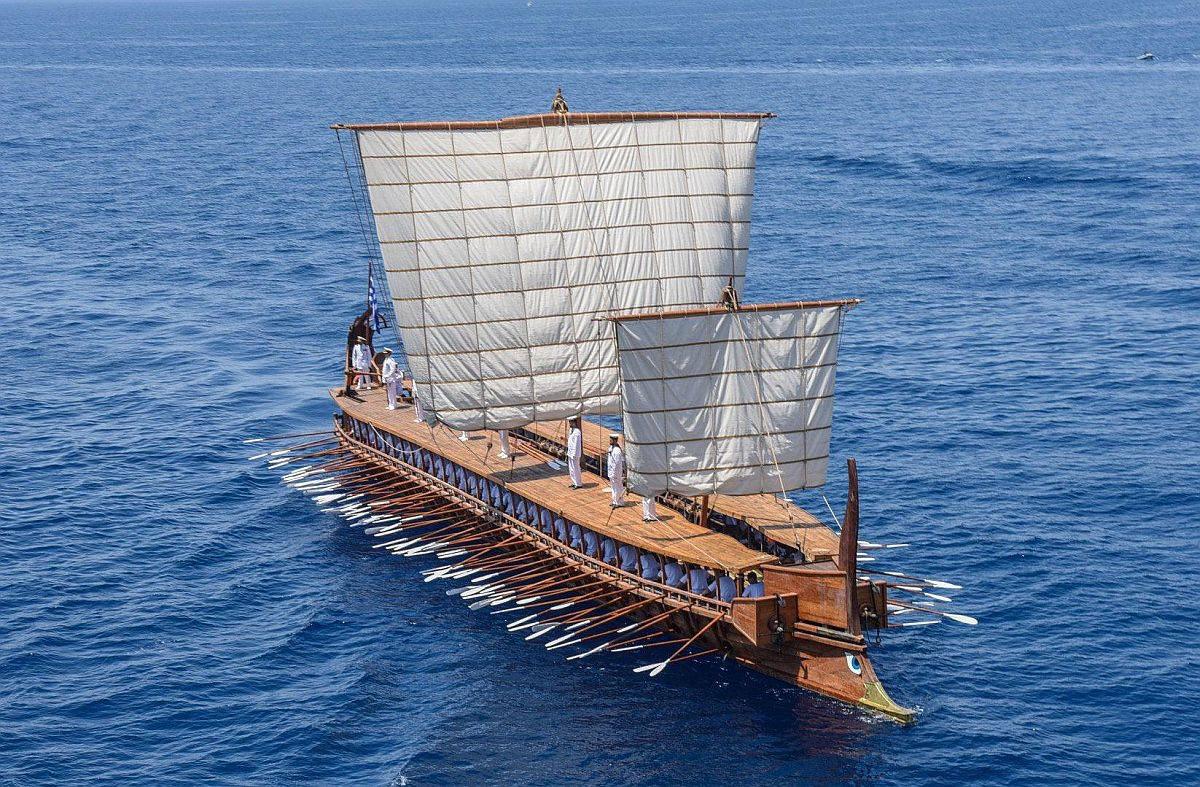
Ancient Greek triremes were a form of warship that has long captured the imagination of classists and all involved in sea-faring endeavours alike, so much so that in 1985, an Athenian-style trireme ‘Olympias’ was re-created to test the historical and archaeological sources pertaining to these ships, and in 2004, it ceremonially transported the Olympic flame from Keratsini to the main port of Piraeus ahead of the Summer Olympics (Triremes Trust, 2018)
Thucydides writes that triremes were:
elaborately equipped at great cost to the captains and the state; the treasury giving a drachma a day to each seaman, and providing empty ships, sixty men-of-war and forty transports, and manning these with the best crews obtainable; while the captains gave a bounty in addition to the pay from the treasury to the thranitae and crews generally, besides spending lavishly upon figure-heads and equipments, and one and all making the utmost exertions to enable their own ships to excel in beauty and fast sailing (Project Gutenberg, 2003).
the years of the war, as rival sides modified and adapted their vessels to gain an advantage:
The Syracusans thought that they would thus have an advantage over the Athenian vessels, which were not constructed with equal strength, but were slight in the bows, from their being more used to sail round and charge the enemy’s side than to meet him prow to prow, and that the battle being in the great harbour, with a great many ships in not much room, was also a fact in their favour. Charging prow to prow, they would stave in the enemy’s bows, by striking with solid and stout beaks against hollow and weak ones.” (Project Gutenberg, 2003)
To ‘fact check’ the veracity of Thucydides descriptions of triremes, we can look to archaeology and contemporary depictions of the vessels. The earliest of such, dating from around c700 BCE precedes Thucydides’ accounts and is found on the stone panels that decorated King Sennacherib’s palace at Nineveh. These reliefs, currently held in the British museum, show Phoenician warships with rams to the prow, two banks
of oars and soldiers above – a set up very much recognisable in the later triremes (The British Museum).
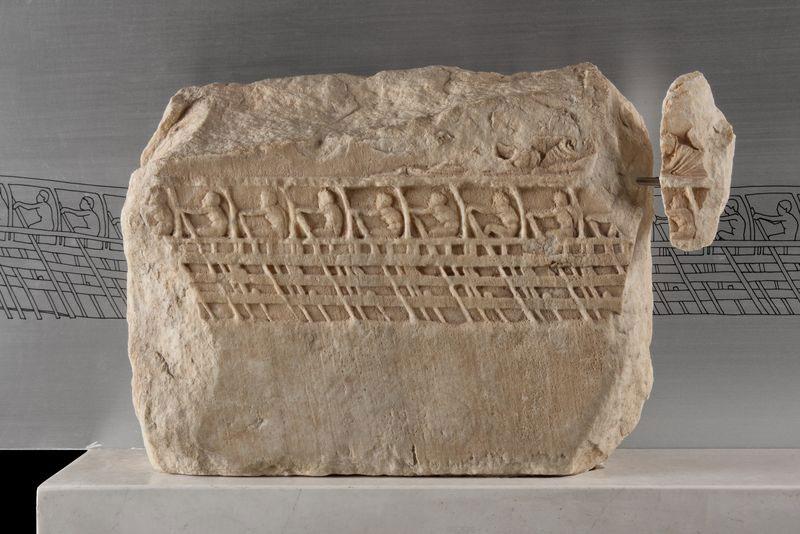
Dating from the same time as Thucydides was writing is the Lenormant Relief, a fragment of marble from a larger scene depicting ten nude oarsmen (of an original twenty-one that would have formed the top bank of oarsmen) that was dedicated on the Acropolis. It is thought that the vessel depicted is Paralos, a trireme of the Athenian state that “participated in sacred and public missions, usually of an urgent nature.” (The Acropolis Museum)
In terms of archaeology, as of now, an intact trireme has not been discovered. Thucydides gives a clue as to why in part this might be the case. He records how, due to the value of the timber (which being ‘dry’ sank slowly), after battle the victors would set about “employing themselves in lashing fast and hauling after them the hulls of the vessels which they had disabled.” (Project Gutenberg, 2003)
Should trireme vessels have eventually sunk to the seabed, being made of lightweight timber, they would likely soon decay or be washed ashore, but a small number of bronze battering rams, such as Thucydides describes being affixed to the prow of the triremes have been discovered, including one off the coast of Israel. The Athlit Ram, discovered in 1980, is thought to date from a few hundred years after Thucydides was writing, but “was almost certainly attached to a Hellenistic vessel of medium size - a quadrireme, or a trireme with only three tiers of oars.” (Haifa Museums)
Finally, although a trireme vessel has not been discovered, the infrastructure to support their construction and maintenance has been found and is well documented. Between 2001 and 2012 the Zea Harbor Project has mapped the remains of ancient Greek naval bases in Mounichia Harbor and Zea Harbor discovering massive fortifications and a total of fifteen structures that were thought to house ships when they were pulled ashore. The shed dimensions correlate to the dimensions assumed from the accounts of Thucydides, at ca. 40m long and just 6m wide (Archaeology Magazine, 2016).
The archaeological evidence and contemporary depictions of triremes does not entirely corroborate all the detail provided throughout Thucydides’ ‘The History of the Peloponnesian War,’ but nonetheless, I would argue there is a strong alignment. Certain details, such as how the ships were prepared to avoid grappling irons “ by stretching hides over the prows and much of the upper part of their vessels, in order that the irons when thrown might slip off without taking hold” were unlikely to feature on relief carving in stone, where an artist is working with a material that is less than flexible, and conveying a graphic representation rather than a detailed diagram. However, perhaps the most remarkable endorsement of Thucydides’ work comes from outside of contemporaneous depictions Using 170 volunteer oarsmen, the sea trials undertaken using the 1985 reconstruction trireme Olympias saw speeds of 9 knots (17 km/h) achieved, with 180 degree turns performed within one minute, and in an arc no wider than two and a half ship-lengths (90 metres). These results, despite an inexperienced, mixed sex crew, suggest that Thucydides was not exaggerating as he extolled both the beauty and the capability of these ancient warships.
Crawley, R. (2003). The Project Gutenberg eBook of The History of the Peloponnesian War, by Thucydides. [online] www.gutenberg.org. Available at: https://www.gutenberg.org/files/7142/7142-h/7142-h.htm#link2HCH0021
Crawley, R. (2003). The Project Gutenberg eBook of The History of the Peloponnesian War, by Thucydides. [online] www.gutenberg. org. Available at: https://www.gutenberg.org/files/7142/7142-h/7142-h. htm#link2HCH0017.
Crawley, R. (2003). The Project Gutenberg eBook of The History of the Peloponnesian War, by Thucydides. [online] www.gutenberg. org. Available at: https://www.gutenberg.org/files/7142/7142-h/7142-h. htm#link2HCH0002
Hirschfeld, N. (1996). Appendix G: Trireme warfare in Thucydides. In R. B. Strassler (Ed.), The Landmark Thucydides: A comprehensive guide to the Peloponnesian War, (pp. 608-613). New York, NY: Free Press.
Morrison, J. (2018). The Trireme Trust. [online] www.triremetrust.org.uk. Available at: http://www.triremetrust.org.uk/.
Saraceni, J.E. (2016). News - Ship Sheds of Ancient Naval Bases Found in Greece - Archaeology Magazine. [online] Archaeology Magazine. Available at: https://archaeology.org/news/2016/06/13/160613-athens-naval-base/ Vukosavović, F. (2024). The Athlit Ram - Haifa Museums - Six Museums in One Frame. [online] Haifa Museums - Six Museums in One Frame. Available at: https://www.nmm.org.il/eng/Exhibitions/468/The_Athlit_Ram. www.theacropolismuseum.gr. (2018). Relief Depicting a trireme. ‘The Lenormant Relief’ | Acropolis Museum | Official Website. [online] Available at: https://www.theacropolismuseum.gr/en/relief-depicting-triremelenormant-relief.
The British Museum. (n.d.). Assyria: Nineveh. [online] Available at: https:// www.britishmuseum.org/collection/galleries/assyria-nineveh.
To what extent does listening to hip hop create a uniquely energising feeling in listeners compared to other genres of music?
Diwen Zhu (Fourth Form, Swift)
When people hear the phrase ‘hip-hop’, they often think of rapping, graffiti and street fashion. For some of the older generations, hip hop is often linked to explicit language, rebellion and not necessarily a positive influence on young people’s mind. This narrow view overlooks hip hop’s origins in the 1970s New York as a powerful form of expression built on rhythm, storytelling, and identity. Today, hip hop is one of the most listened to genres among young people, yet its psychological impact is often overlooked. This raises the question of whether hip hop increases arousal and mood boost compared to other music genres, with its strong beats, fast tempo, and confident lyrics that can increase motivation, focus on listeners.
Listening t`o music can make people feel energized by influencing both the brain and body. Fast tempos, rhythmic patterns, and dynamic sounds increase arousal, which is the body’s level of alertness and physical reaction, often reflected in heart rate or emotional positivity, making listeners feel happier and more motivated. Together, increased arousal and positive mood activate the brains brain’s reward system, releasing neurotransmitters like dopamine that enhance motivation, focus and pleasure. The combination of physiological and psychological responses explains why certain music can make people feel ready to move, think or act, creating a sense of energy beyond subjective feeling.
Supervisor: Mr Elkin-Jones
A study published in the International Journal of Psychological Studies (Chen, 2018) examined how different music genres - Jazz, Hip Hop, pop and Classical - affect teenager’s mood energy and calmness. Researchers used EEG (electroencephalography, a method used to measure electrical activity in the brain) to watch brain activity while participants listened to each genre, alongside self -reported measures of their emotional state. The results showed clear differences between genres. Hip hop consistently produced the highest increase in energy, suggesting that its features strongly stimulate brain’s arousal systems. It also improved mood of the listeners, making them feel more positive and motivated. In contrast, the other three music genres had a more calming and stress-reducing effect on the listeners.
When listening to hip hop music, people often find themselves tapping and nodding along the rhythm. Because of hip hop’s strong rhythmic part, it leads to neural entrainment, a phenomenal where brainwaves synchronize with the rhythm of periodic eternal stimuli – in this case, hip hop music. In their article Attention, perception, & psychophysics Wöllner & Hammerschmidt examined how listeners physically interact with hip hop rhythms. Participants were asked to tap along to hip hop tracks, and although overall arousal levels did not significantly change, their perception of time was altered, suggesting heightened attentional engagement, this shows that hip hop’s strong regular meter interacts closely with motor systems in the brain, encouraging synchronized movement and sustained attention. This shows a level of physical engagement that goes beyond passive listening (Wöllner, C., Hammerschmidt, D. 2021). This idea is reinforced by research discussed in the Psychology of Rap by Steve Gwillim, which explores how rhythmic repetition, predictable beat patterns, and lyrical flow work together to enhance focus and motivation. Faster tempos and consistent rhythmic structures help listeners predict musical changes, making it easier to enter a flow state, where concentration and mental performances are increased. Together, these studies suggest that hip hop’s energizing quality comes not only from emotion but from how its rhythm actively engages the body and attention systems, creating a unique sense of drive and mental readiness (Steve Gwillim 2025).
Another reason hip hop has an energizing effect on listeners is that it operates upon the reward centre of our brains. When listening to music that you enjoy, including hip hop, our brains release dopamine


- a neurotransmitter involves in pleasure, reward and motivation. Interestingly, a study on NeuroLauch.com (NeuroLauch Editorial team, 2024) demonstrated that hip hop music causes our brain’s reward centre to release more dopamine than other genres of music. This suggests that the rhythmic and language complexity of hip hop activate brain’s reward system better, leading to a larger amount of dopamine released. Therefore, people often feel more pleasant and motivated when listening to hip hop music.
A systematic review in the Journal of Creativity in Mental Health (Lanita, Ashley, Sabrina, Jonathan, 2025) looked at how hip-hop and rap music are used in interventions to support mental health and well-being. The review found that hip-hop often helps listeners feel more engaged, confident, and emotionally active, especially young people. This is partly because hip-hop uses strong rhythms and expressive lyrics that naturally grab attention and encourage emotional involvement. Many studies showed that hip-hop-based activities improved mood and motivation, suggesting that its beats and delivery help stimulate energy and drive. Hip-hop also plays a role in empowerment, giving listeners a sense of identity and voice, which can further contribute to feeling energised. While the review recognises that other music genres can also have positive effects on mental health, it highlights that the combination of rhythm, expression, and cultural meaning in hip-hop makes its energising effect especially noticeable. Overall, the evidence suggests that hip-hop does create a uniquely energising feeling to a significant extent, even though it is not the only genre capable of doing so.
Despite the evidence supporting hip-hop’s energising effects, it is important to recognise several limitations and counterpoints. Other music genres can also produce strong feelings of energy, such as up-tempo pop, rock, and even certain classical compositions with fast tempos and dramatic dynamics. This suggests that energising effects are not exclusive to hip-hop but are influenced by shared musical features such as tempo, rhythm, and intensity. In addition, listeners respond to music differently depending on personal taste, and individual sensitivity to rhythm and lyrics. Cultural background and social context also play a role, as music that feels energising to one group may not have the same effect on another. Many studies rely on short listening sessions or specific age groups, which limits how widely these findings can be applied. Therefore, while hip-hop often stands out for its consistent energising impact, it should be understood as part of a wider musical aspect, where energy responses vary across genres, individuals, and contexts rather than there being one genre that is always more effective.
Overall, the evidence suggests that hip-hop does create a uniquely energising feeling to a significant extent, though it is not exclusive to the genre. It is clear that hip-hop’s rhythmic complexity strongly engages the body and attention, while its neurochemical impact supports increased mood, motivation, and mental drive. In addition, hip-hop’s cultural
emphasis on voice, identity, and empowerment adds an emotional intensity that can further heighten feelings of energy. While other genres can also be energising, the combination of rhythm, psychological stimulation, and cultural meaning makes hip-hop particularly effective at producing this kind of response.
References
Champion-Gwillim (2025). The Psychology of Rap: Unraveling the Connection Between Beats, Lyrics, and the Human Mind. [online] Official Website of Stangr The Man aka Stevie The Manager & Lit Nightz Records and News! Available at: https://stangrtheman.com/the-psychology-of-rapmusic/.
Chen, J.R. (2018). The Impact of Different Genres of Music on Teenagers. International Journal of Psychological Studies, 10(4), p.42. https://doi.org/10.5539/ijps.v10n4p42.
team, N. editorial (2024). Rap Music’s Impact on the Brain: Unveiling Cognitive and Emotional Effects. [online] NeuroLaunch.com. Available at: https://neurolaunch.com/how-does-rap-music-affect-the-brain/.
Jefferson, L., Waddington, A., Johnson, S. and Ohrt, J. (2024). Hip-Hop and Rap Music Interventions on Mental Health and Well-Being: A Systematic Review. Journal of Creativity in Mental Health, 20(1), pp.1–15. https://doi.org/ 10.1080/15401383.2024.2305294.
Wöllner, C. and Hammerschmidt, D. (2021). Tapping to hip-hop: Effects of cognitive load, arousal, and musical meter on time experiences. Attention, Perception, & Psychophysics, 83(4), pp.1552–1561. https://doi.org/10.3758/ s13414-020-02227-4.
Molly Sheer - Clarke - (Second Form, Swift)
Shock. A sudden upsetting or surprising event or experience.
You might feel numb, or cry, or feel rage. Or you might just sit there, emotionally unable to move. You might dissociate, and feel like nothing around you is real, or that it‘s actually happening to someone else. All these are examples of shock (Aimee Daramus PSYD).
What is shock?
According to the Oxford English Dictionary, shock is ‘a strong emotional feeling of surprise as a result of something happening, especially something unpleasant, the event that causes this feeling.’ The earliest known use of the noun ‘shock’ was in 1550 (Oxford English Dictionary, 2023).
What are emotions?
Scientists generally consider emotions to be automatic, unconscious, physiological reactions to stimuli. They play a central and cruel role, integrating physiology, cognition, behaviour, and feelings. Emotions are more complex than reflexes but simpler than deliberative behaviour. Surprisingly, to this day there is no scientific consensus on what emotions are, and where in the brain they are produced. Among the areas of continuing disagreement are whether, or to what degree, emotions are the product of deep, ancient subcortical brain circuits or more dependent on evolutionarily newer cortical regions; how widespread emotions are in the animal kingdom, and the relation between emotions and consciousness (Lewis, 2024).
“The limbic system is the primary part of the brain that controls emotions, encompassing structures like the amygdala, hippocampus, and hypothalamus.”
During any day, a person probably experiences many different emotions. These can be caused by an event, a person, or a thought. (Harvard.edu, 2025). Emotions, a lot of the time, can cause instant and physical changes, such as increased Heart Rate, muscle tension and a change in breathing. The head, gut, heart, and airways are places where people typically feel emotions, but everyone is different, so others might not feel the same way. A stressful situation can trigger a cascade of stress hormones that produce well-orchestrated physiological changes. The body, unfortunately, can also overreact to stressors that are not life-threatening, such as traffic jams, work pressure, and family difficulties (LeWine, H.E., 2024)
Supervisor: Mr Elkin-Jones
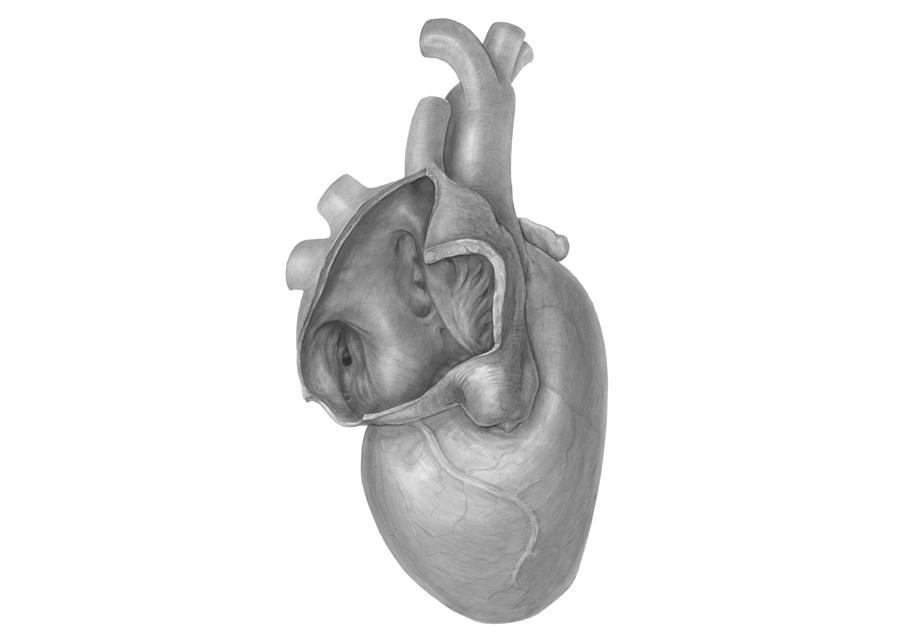
The limbic system is a complex network of interconnected brain structures that play a pivotal role in regulating human behaviour and emotions (GuyEvans, O. 2021). There are many factors in the limbic system, including the anterior thalamic nuclei (memory processing), septum (meditating connections through system) but it is the behavioural response stage where the emotions translate into actions.
These actions predominantly happen immediately, and each one, a little differently. Anger can typically result in clenched fists, tensed muscles, vasodilation, a phenomenon that occurs when tiny blood vessels beneath the skin widen, causing the skin to appear red (Science Insights, 2025). Whereas if one were to feel excitement, they would typically experience tachypnoea (or quick breathing) an energy rush, and a warm feeling inside. Shock is different though.
Noticing physical signals in the body can help us understand our emotions as they happen. The nervous system responds to emotion triggers in a fraction of a second, for example a tight chest might appear before you consciously register anxiety; and warmth in the face could show up before you are embarrassed.
Recognising these signs can help us to manage and respond in a calmer
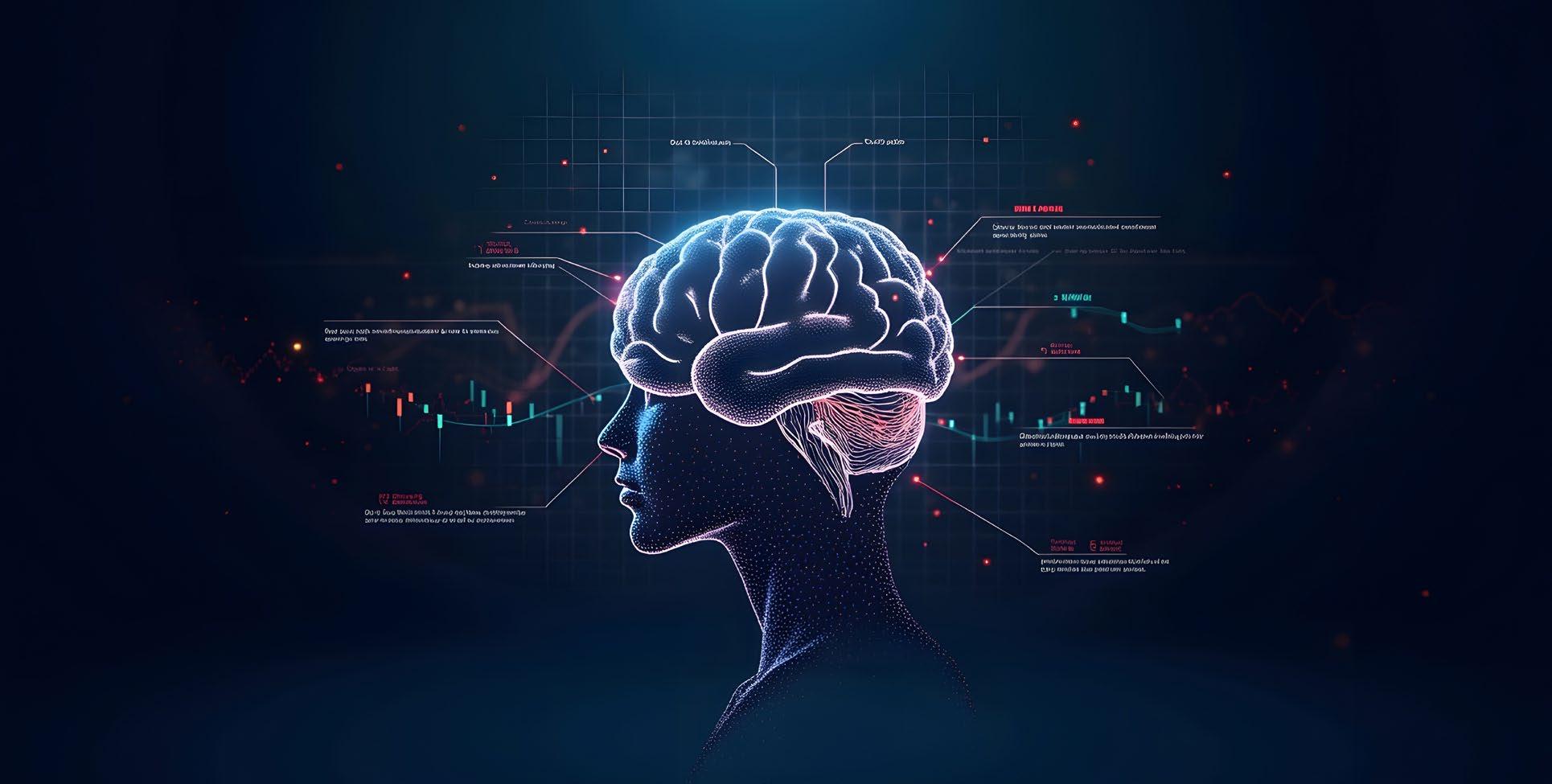
way rather than feeling overwhelmed. By becoming aware of how our bodies react to different emotions, we can better understand the signals that indicate stress, anxiety or other emotional states. This awareness allows us to take proactive steps to calm down and manage our responses, rather than react impulsively to our emotions. (Harvard. edu, 2024). Recognising physical signs of emotion can also help us to differentiate between genuine emotional distress and other physical symptoms such as stress or illness.
An emotion body map is a visual representation that illustrates how different emotions manifest physically in specific areas of the body, helping to enhance emotional awareness and regulation. Emotion body maps depict the physical sensations associated with various emotions. When we experience emotions, they do not just reside in our minds; they trigger physiological responses throughout our bodies. Emotion body maps were first used in a scientific study in 2013 by researchers at Aalto University in Finland. This study involved 701 participants who were shown human body silhouettes alongside various emotional stimuli, such as words, stories, movies or facial expressions. Participants were asked to colour the bodily regions where they felt increased activity with warm colours and decreased with cold colours. This method was named “emBODY”. (ABME, 2017).
Whilst scientific research in this area is still relatively new the evidence so far suggests that there is a connection between emotions and real-time bodily responses.

Not everyone’s response to emotion is the same, so not every person would relate to some of these actions. It could depend on one’s mindset: if someone were forward and gregarious in nature, they might share their emotions with another person and so get get help or a cure. Whereas if someone were more isolated or withdrawn, they may keep their emotions to themselves, leading to long-term, more severe consequences. It all depends on the person and who they are, what goes on inside their head, and how that correlates to their physical actions.
Body maps are a good way to show all the different ways a certain emotion could affect a person, however some research is still early, so the maps are not perfect predictors. The ongoing research towards body maps is a long process that will take time to finish, but current evidence shows that there is somewhat of a consensus of general placings for physical triggers. For example, if someone is embarrassed, generally people experience a hot feeling in their cheeks, or if some felt fear, typically people may feel a tight chest.
This shows that while emotions often manifest physically, the extent varies by person and situation.
Conclusion
Emotions do manifest in the body in real time, through signals like heart rate changes, tense muscles, breathing patterns and stomach sensations, with all of these actions varying depending on the person. Supporting this case study on what emotions actually are, are studies like the Aalto University’s in Finland based on body mapping, and those of Ralph Lewis’ (associate professor in the Department of Psychiatry at the University of Toronto).
Although people differ, the evidence strongly shows that emotions have immediate and noticeable physical effects. The general consensus has been that there are loose ties between certain emotions and the parts of the body they physically show in.
ABME. (2017). Origins and Theory of Mapping. [online] Available at: https:// www.bodymap.org/articles-the-basis-of-body-mapping/origins-andtheory-of-mapping.
Gupta, S. (2023). What Is Emotional Shock? [online] Verywell Mind. Available at: https://www.verywellmind.com/emotional-shock-definitionsymptoms-causes-and-treatment-5214434.
Guy-Evans, O. (2021). Limbic System: Definition, Parts, Functions, and Location. [online] Simply Psychology. Available at: https://www. simplypsychology.org/limbic-system.html.
Harvard.edu. (2025). How Do Emotions Show Up in Your Body? [online] Available at: https://www.health.harvard.edu/mindscape/for-youngpeople/brain-body-connection/how-do-emotions-show-up-in-your-body.
LeWine, H.E. (2024). Understanding the stress response. [online] Harvard Health. Available at: https://www.health.harvard.edu/staying-healthy/ understanding-the-stress-response.
Oxfordlearnersdictionaries.com. (2026). shock noun - Definition, pictures, pronunciation and usage notes | Oxford Advanced Learner’s Dictionary at OxfordLearnersDictionaries.com. [online] Available at: https://www. oxfordlearnersdictionaries.com/definition/english/shock_1?q=Shock [Accessed 18 Feb. 2026].
Lewis, R (2024). What Actually Are Emotions? in Psychology Today [online] Available at: https://www.psychologytoday.com/us/blog/findingpurpose/202408/what-actually-are-emotions?msockid=1e1695aba57565ee 1c738036a46764e0 [Accessed 18 Feb. 2026].
ScienceInsights. (2025). What Does It Mean When Your Face Feels Hot? [online] Available at: https://scienceinsights.org/what-does-it-meanwhen-your-face-feels-hot/ [Accessed 5 Feb. 2026].
shock, n.3 meanings, etymology and more | Oxford English Dictionary. (2023). Oed.com. [online] doi:https://doi.org/10.1093//OED//3066738394.
shweta.ghosh23 (2025). Emotion Maps Explained: How Your Body Reacts to Different Feelings - TheBrightDelights. [online] TheBrightDelights. Available at: https://thebrightdelights.com/emotion-maps-explained-howyour-body-reacts-to-different-feelings/ [Accessed 18 Feb. 2026].
Imogen Jones (Second Form, Queen Anne)
Supervisor: Ms Hutchinson
What if I told you that the most prolific killers on earth are living inside of you?
Not only that, but they are in fact, working for you. Billions of bacteriophages live everywhere that life exists and there are more phages on earth than every other living organism on earth, including bacteria. As specialised viruses, they have evolved to kill specific types of bacteria in order to replicate. They have recently caught the attention of scientists as a cure for antimicrobial resistance, a threat to the global population that is inevitably going to render the use of antibiotics obsolete. Yet phage therapy is an elusive and little-studied area of biology. Many researchers believe it is the ‘final frontier’ of microbiology. (Northwest, 2024)
In this essay, I will be investigating the history, current research, and future of phage therapy.
The idea of phage therapy may seem like a modern and complicated concept, but it has in fact been around for more than a century. Unfortunately, it was overshadowed by the invention of antibiotics after the Second World War, a cheaper and easier to produce cure for infections. The discovery of bacteriophages was made by a British bacteriologist by the name of Frederick Twort in 1915 and a French microbiologist Félix D’Hérelle in 1917. D’Hérelle noticed that bacteriophages always appeared in the stool samples of recovering patients from the bacteria Shigella. George Eliava, from Georgia (a previous member of the Soviet Union) was also making similar discoveries, and later he founded his own institute, now known as the George Eliava Institute in Georgia, devoted to the research of phage therapy (Mary Ann Liebeert, 2022). This caught the attention of the Soviet Union, who later instigated intensive research into the subject. Penicillin spread rapidly across western Europe and the Americas, causing bacteriophages to be forgotten by most scientists. However, the Soviet Union was still firmly set on the advancing of phage therapy and was implementing it as a treatment to their soldiers. Phage therapy is still used today, but only in fundamental, life-threatening situations, where antibiotics have proven ineffective. In many cases, this has actually saved the patient’s life and they have made a full recovery.
How it works
Bacteriophages are a mysterious and curious virus. They occupy 97% of the viruses in the gut and are responsible for killing 40% of bacteria in the ocean. All the bacteriophages in the world add up to ≈10³¹ or 10 nonillion. The phage that scientist have their eyes on is the lambda (λ) phage. This type of phage infects the E. coli bacteria. They consist of an icosahedral capsid that houses its genetic information, a tail and leg fibres. In order to kill bacteria, phages attach onto a bacterium’s cell wall and inject their genetic information into the cytoplasm using a syringe attached to their body. This DNA or RNA tells the bacterium to produce more phages inside
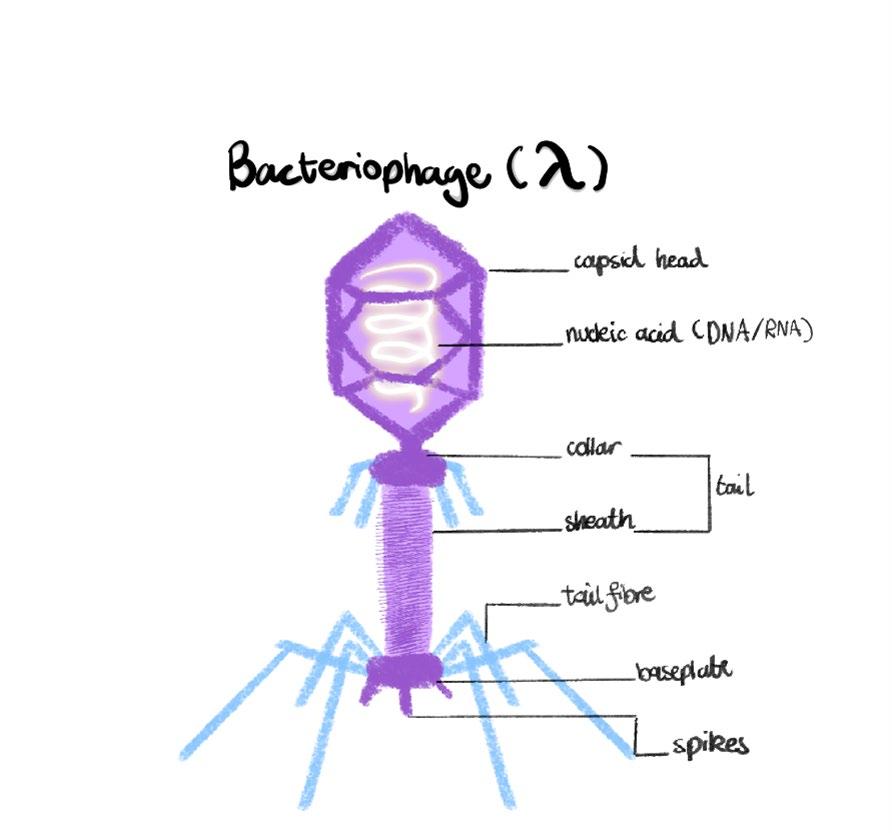
itself. Eventually, when the bacterium is full of phages, lambda produces an enzyme called endolysin which punctures a hole in the bacteria, releasing more phages and killing it. This is not the only way phages murder bacteria, in fact the second way they kill is by integrating their DNA into the bacteria’s DNA . This means that when the bacteria multiply, the new bacteria will also have the phage DNA inside, and when the bacteria have multiplied enough, the phages release endolysin into all of the bacteria, and even more phages will be released. Some other way phages help the human microbiome is by taking control of specific bacteria that are misbehaving and calming them down. They have also been known to help autoimmune diseases - such as Crohn’s disease - by alerting immune cells that certain bacteria are friendly and not worth attacking.
The dark side to phages
While phages may seem incredible and the superheroes of viruses, they do have a dark side. Some phages like the phage CTXφ attacks the usually harmless bacteria Vibrio cholerae (cholera). The phage’s DNA causes the bacteria to attack the wall of the stomach and release high levels of salt, which causes intense stomach problems. If left untreated, half of patients infected will die. Another example of this is Staphylococcus aureus (Staphylococcus) and the phage φSa3ms. Staphylococcus is a harmless bacteria that lives on your skin in billions and its main purpose is to take up space.However, the bacteriophage’s DNA causes the bacteria to turn evil and causes horrible infections. The infected Staphylococcus enters the skin through a cut or opening in the skin. They then produce antigens, a powerful substance, capable of stimulating immune response. The immune cells start to overreact. These confused immune cells cannot fight the virus and so it penetrates deeper into the skin. The infected bacteria also have the ability to dissolve fibrin, a substance created by the body to help heal wounds. (Kurzgesagt, 2024) Tens of thousands of people die from Staphylococcus aureus every year.
Why do we need phages?
Antimicrobial resistance is a crisis that we have been facing for decades. Antibiotics were an invention that changed the course of science forever; so much so that bacteria do not seem like our enemies anymore, with only the oldest and weakest dying from them. We have started taking antibiotics more and more for less serious infections, even for common colds, and sometimes for the wrong things, like a viral infection. However, bacteria are living creatures and like anything, they evolve. As a result, humans have created horrible beasts called superbugs. These are special bacteria that are immune to almost all medicine we have today and by 2050 superbugs are expected to kill more humans than cancer. The Global Antimicrobial Resistance and Use Surveillance System (GLASS) have reported that in 2020, 42% of infections caused by E. coli were resistant to third-generation cephalosporin and 35% of Staphylococcus infections were resistant to methicillin. (WHO, 2023)
You may be thinking: won’t bacteria just become resistant to phages too? Well, that might be true, but phages evolve too and so far, bacteria have not become immune to phages. If bacteria manage to become immune to phages, scientists predict that they may have to give up their immunity to antibiotics. (Kurzgesagt, 2024)
Conclusion
In conclusion, with the rapid advancement of antimicrobial resistance, and no other viable treatments emerging, it appears that phage therapy is the next best step. Phages are specialised viruses, which kill only a specific type of bacteria, whereas antibiotics strip your body of all bacteria, even the useful ones, such as the ones that help break down food in the stomach. They are efficient killers and are currently winning the resistance race against bacteria. However, they are extremely hard to transport and are currently not approved for widespread medical use. Another downside is that we need to find specific phages for specific bacteria, which means it could take years to find a suitable phage therapy for a type of infection- like trying to find a needle in a haystack. I also believe that it could take a while for the public to get on board, as injecting yourself with the most dangerous virus on Earth does not sound like a great idea at first!
However, once the medical community, pharmaceutical companies and the general public come together, bacteriophage therapy could become as normal as simply being prescribed a 10-day course of antibiotics.
References
Chanishvili, N., Myelnikov, D. and Blauvelt, T.K. (2022). Professor Giorgi Eliava and the Eliava Institute of Bacteriophage. PHAGE, 3(2), Professor Giorgi Eliava and the Eliava Institute of Bacteriophage | PHAGE
Gordillo Altamirano, F.L. and Barr, J.J. (2019). Phage Therapy in the Postantibiotic Era. Clinical Microbiology Reviews, [online] 32(2). Phage Therapy in the Postantibiotic Era - PMC.
Kurzgesagt (2018). The Deadliest Being on Planet Earth – the Bacteriophage. YouTube. Available at: https://www.youtube.com/ watch?v=YI3tsmFsrOg.
Kurzgesagt – In a Nutshell (2024). Why Scientists Are Puzzled By This Virus. [online] YouTube. Available at: https://www.youtube.com/ watch?v=SbvAaDN1bpE.
Northwestern.edu. (2024). Engineering viruses to kill deadly pathogens. [online] Available at: https://news.northwestern.edu/stories/2024/01/ engineering-viruses-to-kill-deadly-pathogens.
World Health Organization (2023). Antimicrobial resistance. [online] World Health Organization. Available at: https://www.who.int/news-room/factsheets/detail/antimicrobial-resistance.

Will Chandler - Clarke - (Third Form, Gascoigne)
Supervisor: Ms Hutchinson

Over the years, A.I. has evolved and numerous new innovative ideas have become prominent in education. Not only in education, we have also seen A.I. being implemented in many places such as, the NHS, where A.I. has been used to help patients in cancer screenings and identify disease, as well as in the police force, where they have used A.I. to identify criminals with ease. This is only the brink of what A.I. can do right now. However, A.I. has lots of negatives that come along with all these positives. Deepfake technology, for example, has made fraud easier as well as creating a risk for minors online with new A.I. photo manipulation. Not only on social media, but students who use A.I. are more likely to not think for themselves, are less likely to be able to do their own research and are more likely to resort to using A.I. to drafting their essays for them instead of just help them with brainstorming.
In Georgia State University, they have implemented a chatbot called “Pounce” that assists students with questions, contributing to higher enrolment rates and improved retention. This is only one example of how A.I. is being used for the better at schools and, although there are many more, thousands of students at university, college and schools across the world have used A.I. to skip homework assignments, long essay writing tasks and anything that they can get it to do for them. This is hindering the students’ ability to learn as they are becoming interdependent on A.I. to do all their work for them. There is clearly room for improvement.
If you were to ask someone what A.I. they have heard of or used, the foremost answers you would hear would likely be, “ChatGPT”. There is a reason for this. ChatGPT, unlike any other A.I. form at the moment and especially when it was first released, could adapt to how the user asked questions and create a neural pathway of connections that let it learn and become more accurate in responses over time. This is called a ‘large language model.’ Other apps such as: Snapchat, Duolingo, and Quizlet are all also large language models. After ChatGPT was released to the public in February 2023, it made the headline of many newspapers, including ‘New York Times’ with the headline, “How ChatGPT Kicked Off an A.I. Arms Race”. This invention sparked conversation on firstly the power of A.I, its capabilities, and if someone could find a way to abuse this power. The answer to that is, yes, they can. Students discovered that with just a few clicks of a button, an essay on any topic could be crafted. GPT4 was
then released in early March 2023. GPT 4 was ten times smarter than the previous ChatGPT, allowing it to not only respond to text, but also to analyse and respond to images and web links. This rapid change in a previously undiscovered form of A.I. caused an uproar in education, with many UK schools instantly placing a ban on all school owned computers, so that students would stop using it to do their homework. However, it is inevitable that some students would use it on other devices!
What are the potential benefits of using A.I. in education if it were focused on more by our government? It could help not only students but teachers as well. A new A.I. system, alike to “pounce” at Georgia State University

would help teachers marking jobs which were once long and tedious, turn into quick jobs that do not keep them up all night. This free time that teachers would acquire would allow them to use A.I. once again to create adapted lesson plans for the subject, students, and level of knowledge.
Now, you may be thinking, ‘what is the point of a teacher if we have A.I.?’ which is a good point. Well, the idea of having a teacher at the front of the classroom, delivering what A.I. has written is to not take away life from the classroom. As well as this, students would now have access to a reliable search engine, with educational sources and sites, which would incentivise students to use their own initiative and search for information themselves.
However, there are many negatives that come with these positives. For example, students at an early age are shaped by their teachers and if their role models at school get replaced by a computer screen, lots of students would find it difficult to be taught and would not have anybody teaching them real life skills, only the curriculum. With A.I. in education, it cannot specifically adapt to a student’s or several students learning capabilities, which means that many students’ needs would not be met. For example, if a student had ADHD, A.I. would not be able to comprehend that someone might not learn as easily as others. Another negative of having A.I. replacing teachers is that no moral lessons would be taught. For example: what is okay and what is not sociably acceptable; if students at an early age do not learn moral values, this could lead to a series of negatives events in the future.
On 27 June 1817, the British Member of Parliament William Lamb - or you may know it from spider man - stated: “the possession of great power necessarily implies great responsibility.” Can this idea be implemented into education as well? I believe that it can. If students use A.I. correctly, it is a great source of power, but educators need to ask themselves, how they will manage this? If students feel like what they learn will actually benefit them eventually, then they will become more invested and will most likely not look for shortcuts to get the work done. These generative A.I. systems will force educators and educational institutions to re-evaluate what they teach, why it is taught and how they teach it. Do students really need to know how to write a ten paragraph, rigorously structured essay? Or do they need to understand how to approach a concept? Do they need to know how to make food for themselves? Do they need to know how to use A.I. correctly? Is it fair to restrict use of A.I. in schools, instead of teaching us how to use it? Surely, it is heavily disadvantaging us as students to not be able to use A.I. Businesses all around the world use it, so why cannot students? In conclusion to my research, I believe that A.I. will affect schools positively in the right hands, however there is room for improvement.
Anurag Jain (2025). The Role of AI in Education - Benefits, Use Cases & Examples. [online] https://oyelabs.com. Available at: https://oyelabs.com/ role-of-ai-in-education-benefits-use-cases/.
Department for Education (2025). AI in schools and colleges: what you need to know – The Education Hub. [online] Blog.gov.uk. Available at: https://educationhub.blog.gov.uk/2025/06/artificial-intelligence-in-schoolseverything-you-need-to-know/.
Knight, L. (2026). How Schools Are Using AI In 2026: 7 Practical Use Cases from School Leaders. [online] Third Space Learning. Available at: https:// thirdspacelearning.com/blog/how-schools-are-using-ai/.
The (two thousand). Tablets vs. Textbooks | Pros, Cons, Debate, Arguments, & Education. [online] Encyclopaedia Britannica. Available at: https://www.britannica.com/procon/tablets-vs-textbooks-debate.
Vilcarino, J. and Lauraine Langreo (2025). Rising Use of AI in Schools Comes with Big Downsides for Students. [online] Education Week. Available at: https://www.edweek.org/technology/rising-use-of-ai-inschools-comes-with-big-downsides-for-students/2025/10

Lottie Graves (Fourth Form, Gascoigne)
Imagine entering a room full of strangers, feeling every eye turn to you, in an immediate, silent assessment. In those first few seconds, before you have uttered a single word, they have already begun forming their opinions about your personality, your social status and even how they imagine your voice to sound. Their minds have instinctively made these decisions based on your body language, facial expressions, age, ethnicity and even clues that we may not be conscious of, such as their own past experiences. We are told from a young age that we must never judge a book by its cover, yet human nature makes it virtually impossible not to.
Understanding the psychology of first impressions, as well as the reasons for their lasting impact, will help us to navigate modern society and relationships while presenting ourselves in a positive, honest manner.
The snap judgements we make based on first impressions are not just bad social habits; they are rooted in the that way our brains are wired, so it is important to understand what is actually happening beneath the surface of an introduction with a stranger. When we first encounter this stranger, our brains suddenly engage in a rapid evaluation of the person, a process that is almost entirely passive because it requires no conscious effort. Psychologists call this thin-slicing, as it describes the accuracy of using only a small “slice” of information to make decisions. This concept was first studied by Nalini Ambady and Robert Rosenthal (1992); they defined it as the ability to make accurate decisions based on nonverbal behaviour, and their research indicated that the judgements that are made from these “thin slices” are correct 70% of the time. Furthermore, people make these judgements in just 100 milliseconds of exposure to a person (Willis and Todorov, 2006), which means that just a glance at
Supervisor: Ms Hutchinson
In truth, many of the above analyses are not particularly important in isolated interactions: it is when those analyses become generalisations, which then grow into biases or prejudices that they gain power. The formation of these prejudices is linked to the mental framework for categorisation, a schema, which organises our knowledge for literally everything, and therefore is also significant in interpreting information about different social groups. When one meets someone from a new or different social group they will depend on these schemas to make links and predictions (Bezzon, F. 2024). However, if the schema contains negative associations, for example fear or powerlessness, it may lead to a prejudicial attitude towards all people within that social group. If generalised or shared, this bias can then lead to discrimination and injustice against different groups of people, often despite a lack of knowledge and understanding about them. One does not have to search far to understand how problematic this is – wars have been fought, oppressing, and often killing entire people groups purely because of this initial misunderstanding.
It is important to acknowledge why these immediate judgements have consistently occurred throughout human history – where did they come from? It can be argued, that what is now often regarded as an inevitable social flaw originated as a survival mechanism in early human history. For example, a prehistoric ‘cave man’ would be worried if their offspring did not carry a trait that was important to survival, such as the strong, muscular build that was important for hunting and protection, or thick hair, essential for warmth during colder seasons (Schaller, M. n.d.). Furthermore, the instant assessment of a person or situation could also be the decision
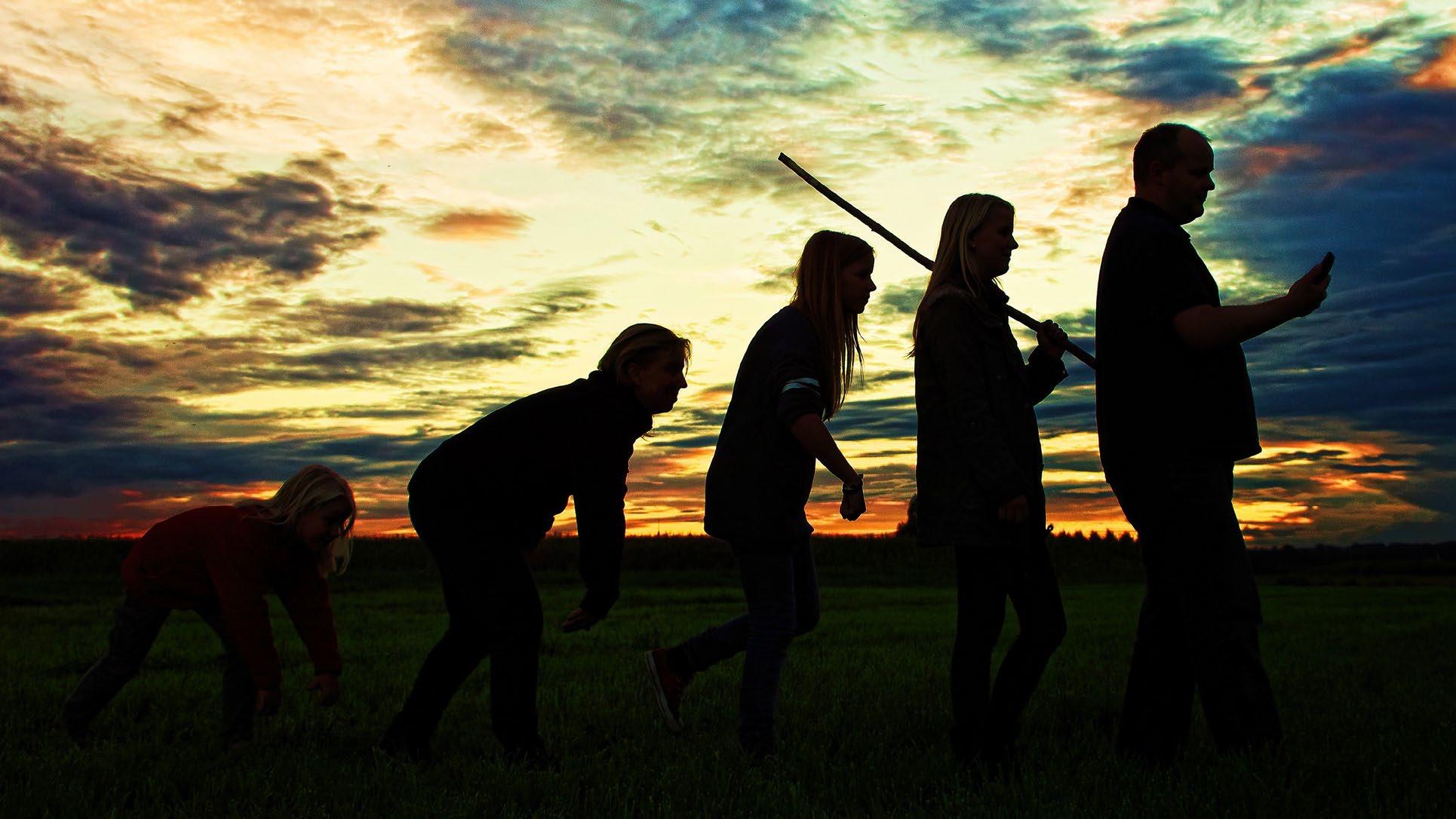
someone who walked past you on the street, or sits across from you on the bus, can lead to you subconsciously forming a lasting opinion about them. These initial impressions are so hard to contradict due to something called confirmation bias which leads individuals to seek and interpret information from future interactions that supports their first judgement (Nickerson, R. S. 1998).
between life and death, because misjudgements and false evaluations of potential danger could have a detrimental impact on a person’s life and situation.
Greetings and their implications
A popular song in American elementary schools begins, “Hello, Bonjour, Buenos días, Good day, Guten Tag, Konnichiwa” and continues to list the greetings in multiple other languages. Not only is this a great way to get

children learning new languages, but it also demonstrates the difference in each greeting, especially with their varying implications or meanings. Many greetings are completely nonverbal; for example, in Japan, people will bow to one another. This is a traditional greeting that symbolises respect, while the depth of the bow is used to indicate the level of respect they carry for their acquaintance. However, in Western culture, and especially common in the USA, a handshake is expected when meeting someone new –this physical connection between two people suggests a confidence and genuineness. This originated as a sign of peace, as it showed that neither person was armed with a weapon. (Anon, 2025). Finally, France is famous for cheek kissing, a greeting that implies an intimacy as it acts as an invitation into one’s personal space. That being said, the respect, genuineness or intimacy that may be implied by these forms of hello are certainly not guaranteed and especially when experienced and interpreted by an outsider can lead, at a minimum, to humorous awkwardness, and in some cases, dangerous misunderstandings can transpire. This is just another example of all the different information we are taking during those opening moments of interaction and how they can impact us, both in the moment and in future interactions.

As we have established, the impression you make in an encounter with someone new can have lasting, and sometimes negative effects, so it is important to present oneself in a respectable and positive manner. However, perhaps what is more important is presenting oneself in an honest manner. Especially in modern society, it is easy to conform to society’s harsh standards by altering one’s style, appearance, and personality in order to impress people. This behaviour is completely natural - Ruth Newton (2018) states that conformity comes from “a deep psychological need to belong” – still, that does not make this behaviour morally correct. Thus, I must raise the question: if the ‘good’ first impression you make is not authentic to your true self, one should rethink why they feel a need to falsely impress? For example, in a job interview, if someone were to present a false version of him or herself and then get the job, will they be able to uphold the persona that is being putting on, or will their true colours eventually seep through? Ultimately, authenticity may not impress everyone, however it ensures that the opportunities and friendships that are created are in alignment with who one truly is.
In conclusion, first impressions are inevitable and do have an effect on the development and success of relationships so what is one to do? If knowledge is power, then perhaps being aware of all the splitsecond micro inputs that are happening in each moment, we will be able to acknowledge our weaknesses and prejudices. Though the initial judgements all happen passively, that does not mean that our reactions have to be passive as well. Hopefully, we will all learn to strive further than the “cover” of a book, and truly begin to read each page.
Anon (2025) How People Greet Each Other Around the World | Cultural Greetings. Country Fact. Available at: https://www.countryfact.com/howpeople-greet-each-other/ Accessed 22 January 2025
Ambady, N. and Rosenthal, R. (1992) Thin Slices of Expressive Behavior as Predictors of Interpersonal Consequences: A Meta-Analysis. Psychological Bulletin
Bezzon, F. (2024) The psychology of prejudice and discrimination. Journal of Psychology and Cognition
Nickerson, R. S. (1998). Confirmation bias: A ubiquitous phenomenon in many guises. Review of General Psychology, 2(2),
Newton, R. (2018). The Psychology of Conformity or Why Do We Have the Need to Fit in? Learning Mind. Available at: https://www.learning-mind. com/psychology-of-conformity/. Accessed 24 January 2025
Schaller, M. (no date) Evolutionary Bases of First Impressions. New York: Guilford Press
Willis, J. and Todorov, A. (2006) First Impressions: Making up Your Mind after a 100-Ms Exposure to a Face. Sage Publications, Inc. on behalf of Association for Psychological Science
Kassia Walwyn - Trevis - (Fourth Form, Vanbrugh)
Supervisor: Mr Elkin-Jones
We have probably all heard of ultra-processed food and perhaps know that too much of it isn’t very healthy – but what does that label actually mean? And how can we determine the difference between ultra-processed, processed and not processed food?
Four types of food processing
Firstly, before we eat foods, they have almost certainly gone through some kind of process, whether it’s a stage one, two, three or four process as categorised by the NOVA classification system. Level one are fresh or minimally processed foods; level two are processed culinary ingredients; level three are processed foods and level four are ultra processed foods.
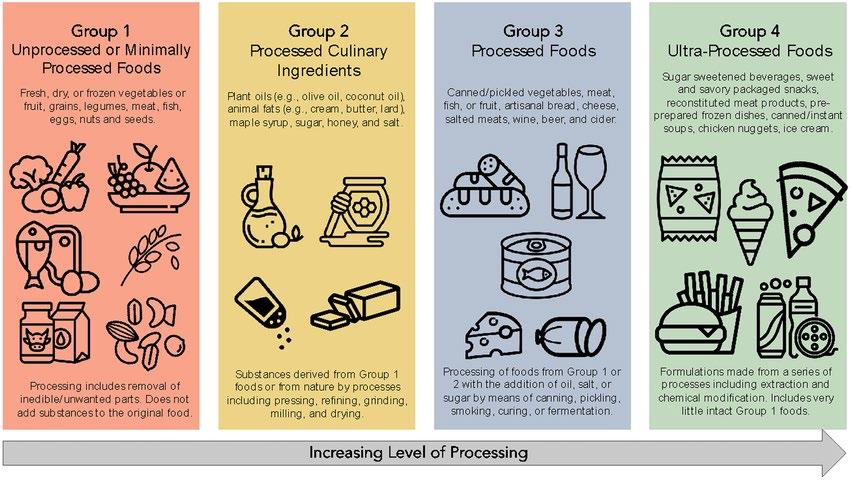
It is important to know that ultra-processed foods (commonly known as UPFs) are ingredients not generally used in home cooking. Essentially, if you don’t recognise some of the ingredients on the label, then it’s likely to be an ultra-processed food.
The problem is that UPFs are manufactured to be cheap and guarantee a long shelf life for the food product. They are also designed to be ‘hyper-palatable’ which means that you are likely to want to eat more of them. In the UK, the rising consumption of UPFs is creating a significant public health challenge: evidence links high intake of UPFs to increased risks of obesity, cardiovascular disease and poor diet quality. Evidently, we must create a healthier eating pattern (Hartfield & Torrens, 2023).
What ultraprocessed foods are and why do they exist?
UPFs are convenient for an easy grab on-the-go meal. They are affordable, tasty and have long shelf life – everything the busy customer surely needs. What customers might not know is that they also contain additives such as artificial flavours, emulsifiers, colouring and sweeteners (which are often cheaper and less likely to go off than natural ingredients). Emulsifiers are two or more substances that are unmixable. Using an emulsifier enables them to be combined into a single substance, such as water and oil becoming combined as one substance. It is this kind of chemical altering of food that makes it processed food.
The NOVA system in detail
As outlined above, NOVA classification system classifies food processing into four stages.
Stage 1
Stage one means that the food is minimally or unprocessed: for example, fruits, vegetables, grains, milk, meat, eggs are all natural foods.
Stage 2
Stage two are processed ingredients that are likely to be used in a combination with natural foods and aren’t normally consumed by themselves, such as, oils, butter, sugar and salt.
Stage 3
Stage three means that the food item is processed food. These are natural foods that have been modified to make them taste better or last longer. They include: tinned vegetables, canned fish, freshly made bread and cheese.
Stage 4
Then, stage four is known as ultra-processed foods (UPFs) which is more like a ‘formulation’ than an actual food. They contain added ingredients like: sugar, salt, trans-fats, artificial colours, additives, and industrial ingredients like artificial sweeteners. In the UK , UPFs account for 56% of calories consumed, a figure which surprises many leading them to ask how it came to be so high - the use of UPFs has increased over recent years. Supermarkets now frequently sell us things which contain many ingredients the average person wouldn’t recognise. We still buy them because people often have to take the easy route for acquire good, especially if they are on a tight schedule. UPFs dominate the food system because they are designed to be desirable and convenient (Yale School of Public Health, 2025).
To what extent UPFs have taken over our diets?
In the UK, 70% of supermarket products are ultra-processed. Many studies show that this can lead to lots of health problems in people developing at a young age. The problem is made worse as supermarkets promote their products to parents and children using cartoons and bright coloured packaged products, designed to come across as something desirable for children to eat, for example, in a school lunchbox.
Not only are UPFs high in calories but they also have low nutritional value. Put simply, they don’t make you full, which makes it too easy to eat too much of them. Among children and teenagers, UPF intake reaches 67% of daily calories, a figure that many find alarming. So we can safely assert that UPFs are not just common - they are dominant, shaping the diets of adults, teens, and children (BBC, 2019).
How UPFs affect our health and behaviour – a case study
In 2021, Dr Chris van Tulleken, the doctor and popular science communicator, went on a diet of 80% ultra-processed food for 30 days for a BBC television programme called What Are We Feeding Our Kids? He found that he: gained weight; felt sluggish; experienced heartburn; constipation; low libido; anxiety; disturbed sleep, and greater food cravings. Given the saturation of UPFs in the UK diet, it seems very likely that many people across the UK could have a regular long-term diet of mainly made up of UPFs, which could lead to more side effects than van Tulleken experienced, such as: obesity; cancer; heart disease; type 2 diabetes; mental disorders and a n increased risk of death (Bing. com. 2026). Yet UPFs are not addictive in the same way that many illegal drugs are; instead, research suggests that the high energy density and tastiness of these foods reward our brains in a way that may contribute to overconsumption. UPFs don’t just affect our body; they also affect our mind and emotions (Schlosser, 2026).

How to manage UPFs to take control of your health
UPFs influences cultures, routines, and expectations around eatingnot just nutrition. Over time, marketing and packaging make UPFs feel “normal” or even healthy, which is why experts have recommended reading the labels and balancing out your meals to control your exposure to UPFs. Society should not fear them because, with knowledge and a sensible approach, ultra-processed foods can fit into a healthy, enjoyable lifestyle without making things too challenging or extreme to manage. It is not bad to have a pizza in the oven or eat UPFs a couple times a

week because it won’t break your health. However, what matters is the general pattern of your diet and learning how to steady your intake of convenience foods with minimally processed ones. It is easy to fall into buying affordable, accessible foods often, especially in the current climate of ever-higher prices for fresh food (Colbert, 2025).
UPFs are not always a problem. They can help feed families who are struggling financially, they are easy to cook quickly without creating a mess or having to doing too much preparation, they are also known for being irresistible to eat and are perfect for ‘just grab on the go’ - when needed UPFs serve practical purposes. It’s not as simple as “UPFs bad, whole foods good” (Hopkinsmedicine.org, 2025) - so the essential aspect for us as we navigate our weekly shop is to find balance with whole foods, fruits and vegetables.
Conclusion
UPFs are taking over our lives through dominance in shops, heavy marketing, and daily convenience. However, individuals, parents, schools, and governments can push back by learning to help their citizens identify UPFs, encouraging the choice of whole, or minimally processed foods more often, and encouraging corporations to create clearer food labelling. Ultra processed foods may be everywhere—but understanding them is the first step to taking back control of our diets and our health (Childrens. com, 2024).
References:
BBC (2019) What Is Ultra-Processed Food? [online] BBC Food. Available at: https://www.bbc.co.uk/food/articles/what_is_ultra-processed_food.
Bing.com (2026) Channel 4 UPF - Search Videos. [online] Available at: https://www.bing.com/videos/riverview/
Childrens.com (2024) Effects of ultraprocessed foods on kids – Children’s Health. [online] Available at: https://www.childrens.com/health-wellness/ effects-of-ultraprocessed-foods-on-kids.
Colbert, A. (2025) What are ultra-processed foods and are they bad for me? [online] Popular Science. Available at: https://www.popsci.com/health/ ultra-processed-foods-explainer/.
Hartfield, E. and Torrens, K. (2023).What are ultra-processed foods? [online] Good Food. Available at: https://www.bbcgoodfood.com/ health/nutrition/what-are-ultra-processed-foods.
Hopkinsmedicine.org. (2025) Ultra-Processed Foods: Q&A with 2 Dietitians. [online] Available at: https://www.hopkinsmedicine.org/health/ wellness-and-prevention/ultra-processed-food.
Schlosser, E. (2026).Hard to digest: we still live in Fast Food Nation. [online] the Guardian. Available at: https://www.theguardian.com/news/2026/ jan/06/we-still-live-in-fast-food-nation-eric-schlosser.
Yale School of Public Health (2025) Ultra-Processed Foods Information Sheet | Yale School of Public Health. [online] Available at: https://ysph.yale. edu/research/information-sheets/ultra-processed-foods/.
Bibliography of wider reading:
Low, S. (2022). Emulsifiers: should we be avoiding them? [online] BBC Food. Available at: https://www.bbc.co.uk/food/articles/emulsifiers.
Ella Allsop-Davis (Fourth Form, Vanbrugh)
Supervisor: Mr Elkin-Jones
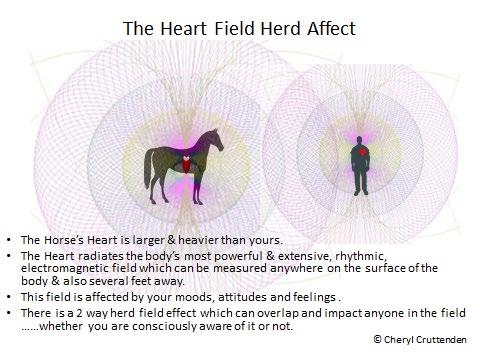
In our society, there are those who see horses as a symbol of wealth or importance, and there are those who see them as dangerous animals bred just for sport and money. What many people do not see, however, is that there is increasing evidence that horses can heal us in many different ways, improving our physical and mental wellbeing (Kim, 2025).
To being with some history regarding the relationship between horses and humans: Horses have been an integral part of our history, serving as companions, carrying soldiers to war, dragging ploughs for farmers, and helping to produce the food we eat. But how have they helped us on a healing level?
It was Xenophon, a Greek horseman, who wrote The Art of Horsemanship around 355 BC (Google Books, 2023). This is one of the earliest surviving works on horsemanship and discusses the selection, care, training, and riding of horses, with a focus on military service. The work emphasises humane, rewardbased training methods and an understanding of equine temperament and psychology (Google Books, 2023).
Xenophon’s work explore many of the principles we still use today when selecting horses for work and pleasure, such as listening to the sound of the hooves on the ground to ensure the horse is moving correctly. However, it is the principle of using kindness, patience, and partnership rather than force that the focus on this article, especially the wisdom in Xenophon’s line “Never deal with him when you are in a fit of passion” - a reminder that horses mirror our emotions (Google Books, 2023).
It is often thought that horses are gentle giants, huge animals sensitive to their surroundings, but I believe that this underestimates them. Some horses are described as “emotional sponges,” soaking up human emotions, while others behave like mirrors, reflecting nervousness or calmness back to us (Conley, 2024). Horses have been observed to react to human emotions rapidly and strongly, which is why one must stay calm when interacting with them—horses will often reflect that calm back. They are highly sensitive prey animals and naturally aware of everything around them, which helps explain their emotional responsiveness (Coleman, 2018). This forces us to be aware of our emotions and teaches us to regulate them before stepping into a horse’s space. This is why horses are used in therapy (Kim, 2025).
Equine therapy uses horses to help people who have experienced trauma, because horses provide insight into our emotional patterns as well as a safe, nonjudgemental space (Coleman, 2018). A case study provided by Katy Glaze, who worked for The Wish Foundation - a charity offering equine support for children in care and army veterans - further highlights this. The foundation worked with social services in Liverpool, Manchester, and North Wales, supporting children in the foster system and war
veterans with PTSD. This aligns with observations made in equineassisted therapy research (Kim, 2025).
Two young children under ten entered the programme suffering from disorders including selective mutism after witnessing serious violence. During their first visits, they were shy, but one was drawn to a small pony who “just seemed to know when to be good.” Gradually, through grooming and handling the horses, the children began to interact (Coleman, 2018). By the fifth or sixth visit, the older child - previously completely mute - began speaking to a pony named Jack. This was the first time services had heard them speak. The younger child also began speaking more freely. The sessions had a significant therapeutic effect despite lasting only ten weeks (Kim, 2025).
Veterans also benefitted from the horses, often gravitating towards the larger animals. Many were experiencing complex PTSD, and horses appeared to provide comfort and engagement that traditional therapy sometimes struggled with (Coleman, 2018).
Horses are calm, nonjudgemental beings, and many people - including myself - find they help them return to their true selves. Recognising this in myself helped me notice it in others too, leading me to appreciate the therapeutic potential of horses (Kim, 2025). Through emotional mirroring and growing selfawareness, people learn to confront and control their emotions, helping them manage PTSD, addiction, stress, and other challenges (Conley, 2024). Working with horses also develops patience, mental and physical strength, resilience, decisionmaking, and communication skills. Building a bond with a horse is incredibly rewarding, and that sense of achievement boosts self-esteem (Coleman, 2018).
A human heart produces an electromagnetic field in range of about 1–1.5 metres, but a horse’s electromagnetic field extends up to 9 metres. Their heart rates reflect their emotional state and allow them to sense ours (HeartMath Institute, 2025).
Studies by Anne Baldwin and Professor Ellen Gehrke, in collaboration with HeartMath, show that when humans focus on positive emotions such as love and appreciation, horses’ Heart Rate Variability (HRV) becomes more coherent (Carmichael, 2024). Coherent HRV is linked to reduced stress, emotional stability, and improved cognitive function (HeartMath Institute, 2025). Follow-up research found large increases in Very Low Frequency (VLF) rhythms in both humans and horses during interaction - an effect not observed in humantohuman interaction (Carmichael, 2024). Higher VLF activity is associated with better physical health and emotional regulation. This gives us scientific evidence for how horses can help us heal physically as well as mentally.
Conclusion
In sum, horses have been an intrinsic part of our lives throughout history, well before Xenophon. Today, we understand more clearly how they can influence our heart rhythms, reduce stress, and improve our wellbeing through their presence and sensitivity (Kim, 2025; HeartMath Institute, 2025).
We share a powerful, empathetic bond with horses - and just how deep that bond goes is a question that begs further study.
Sources
Carmichael, R. (2024). Human/Horse Heart Math: Does it Add Up? [online] Horse Sport. Available at: https://horsesport.com/magazine/behaviour/ human-horse-heart-math-does-it-add-up/ [Accessed 11 Dec. 2024].
Coleman, D.V. (2018). Horse Wisdom - Being Present in the Moment - Stand InBalance. [online] Stand InBalance. Available at: https:// standinbalance.com/horse-wisdom-being-present/ [Accessed 10 Feb. 2026].
Conley, D. (2024). The Equine Echo: How Horses Reflect Your Emotions Back to You. [online] Horse and Rider. Available at: https://horseandrider. com/how-to/the-equine-echo-how-horses-reflect-your-emotions-back-
to-you/.
Google Books. (2023). The Art of Horsemanship. [online] Available at: https://books.google.co.uk/ books?id=FbPDAgAAQBAJ&printsec=frontcover#v=onepage&q&f=false [Accessed 10 Feb. 2026].
Heartmath.org. (2025). Connecting Hearts: Understanding the Research of the Symbiotic Relationship Between Horses and Humans | HeartMath Institute. [online] Available at: https://www.heartmath.org/resources/ videos/symbiotic-relationship-between-horses-and-humans/ [Accessed 29 Oct. 2025]: https://youtu.be/JUiHf9yAG24
Kim (2025). The Psychological Bond Between Horses and Humans | Horsology.co.uk. [online] Horsology.co.uk. Available at: https://horsology.
Charlie Parks (Fourth Form, Queen Anne)
Supervisor: Mr Elkin-Jones

Introduction
Artificial intelligence is rapidly becoming more frequently used in the world of aviation. There are many uses for it; however, each comes with its own benefits and drawbacks. AI is a powerful tool that can make decisions faster than any human ever could, with a high-level precision and accuracy using data. However, AI is only as good as the information it is given, therefore it could not do more than a human could do; the key factor is that AI can do it quicker.
What has AI already taken over?
AI is not something that has been ‘invented’ in the past few years, so there are already some uses for it in aviation. These uses, and potential uses, can be split into 9 categories: traffic; trajectory; performance; airport; weather; accident; fuel; passenger, time (Science Direct, 2025).
Traffic refers to the management and flow of aircraft in the airport. Currently, AI uses historical data of previous days with similar traffic and conditions to more accurately forecast the flow of traffic in the airport. Using this prediction, air traffic controllers can more efficiently manoeuvre aircraft throughout the airport and airspace.
Trajectory refers to the prediction of aircrafts’ movements. AI can predict this movement using historical data and current data from aircraft. Air traffic controllers can then increase the efficiency of traffic flow.
Performance refers to the performance of the aircraft itself. This includes prediction off take-off cruising and landing speeds, calculation of fuel, and identifying inflight performance and operations. This aids the pilots by reducing human errors, calculations and also more accurately predicting necessary information about the flight.
Airport refers to the airport operations, especially the prediction and classification of delays. AI analyses meteorological and operational data to accurately predict delays or safety issues that may arise due to the conditions. This benefits the air traffic controllers by making ground movement and passenger flow optimal. It also uses this data to highlight potential risks.
Weather refers to the conditions in and around the airport. The weather is constantly changing and can be very difficult to predict. AI is able to use live data updating in real time. This can be very helpful for several reasons. The first is to keep accurate the ATIS service (Automatic Terminal Information Service), a radio broadcast that informs pilots of the current weather. It also provides accurate prediction of aircraft performance, potential risks, and optimal routing to avoid dangerous weather.
Accident refers to the prediction and avoidance of conflict. In the cockpit, the TCAS (Traffic alert and Collision Avoidance system) gives pilots warning when their aircraft gets too close to another aircraft, whilst also telling one plane to ascend and the other to descend. Since its introduction in 1981, there have been only 8 mid-air collision incidents whereas before 1981, 17 mid-air collision incidents occurred (Wikipedia, 2026). This may not seem like a huge difference, but when you compare the number of aircraft flying daily in recent years compared to the 1920s or the 1930s, the TCAS system has made a significant difference in the safety of aircraft.
Fuel refers to the prediction of fuel consumption. A pilot can easily estimate the amount of fuel they will need in a flight without the help of AI. However, AI is able to use advanced algorithms, physics-based models and data driven techniques to not only more accurately predict fuel consumption, but to save airlines money and be better for the environment.
Passenger refers to the airline’s customers. The passenger category is different to a lot of the other categories as instead of helping air traffic control or a pilot as much, it helps airlines more. Each aircraft is given a departure slot, meaning it must leave the gate and be all ready to depart by a certain time. This is crucial in busy airports like Heathrow when missing a slot could cause a delayed due to the density of traffic. In this scenario, AI is used to predict flow of passengers, such as predicting boarding times on the estimation of connecting passengers using simulation and past data analysis.
Time refers to the estimated time of arrival of aircraft, delays, and departure times. Time is similar to some of the previous categories, where AI uses prediction methods such as weather, departure and arrival
procedures and conditions to accurately predict the forecast of aircraft movement.
So, we have 9 categories that cover most of Aviation. What more, then, could AI do? The whole point of an “AI Takeover” would be to improve efficiency, safety and to optimise performance generally. As previously stated, AI can perform tasks and analyse data at a speed faster than any human will ever be able to, meaning optimisation of aircraft can be taken to another level.
Should AI not be able to just take over already? Firstly, we must consider the potential issues.
What are the downsides to an AI takeover?
Would you fly on an aircraft if you knew that there was no pilot? If you would, would you still fly on an aircraft with nobody on board who could fly the plane? One might suspect the answer to that question from most flyers is ‘probably not.’ A survey by UBS shows that 54% of people would agree, with concerns over many factors, which all can be categorised under safety (BBC News, 2017).
One significant factor to consider is what if an aeroplane’s AI system is hacked? In the last year, AI-powered cyberattacks have surged by 72%; 36,000 attack probes are being detected every second; and 87% of global organisations reported AI related incidents. For the average company, a data breach costs an average of $4.88 million (£3.6 million) (AllAboutAI, 2025). The effects of an AI-powered cyberattack on an aircraft would be unimaginable. One aircraft being hijacked is already be perilous, but a hijacking of multiple aircraft and Air Traffic control systems would cause irreversible chaos. On average, an aircraft holds 185 passengers. Heathrow airport averages 45 plane landing and take-offs (called ‘movements’) per hour, which amounts to over 8000 passengers put in danger of fatalities every hour (CAA, 2025). Another factor to consider is what if something goes wrong in the cockpit? We have all experienced technical problems in day-to-day life, and we know sometimes it can be very difficult to find the issue. At forty thousand feet, a technical problems may cause a mass fatality, or at least put many lives at risk. At the end of the day, an airline is a business that want to keep costs as low as possible; one way of doing this is to remove employees that are not needed. If AI is flying the plane, pilots would most certainly be in this category. So, with a malfunctioning plane, no pilots, and 185 souls on board, this is a potentially very concerning, dangerous scenario.
Conclusion
We have discussed the advantages, disadvantages, the uses, and AI’s potential. So, is AI a help or threat to the role of aviation? In reality, that comes down to a judgement. If you are someone who thinks that the uses outweigh the disadvantages, then AI is a threat. However, in my opinion, AI has much potential in the Aviation industry and could advance it greatly. This potential does not outweigh the safety issues just yet. In the future, AI could be powerful enough and safe enough to take over, but now, AI is too unreliable to be able to eliminate the needs for pilots for me.
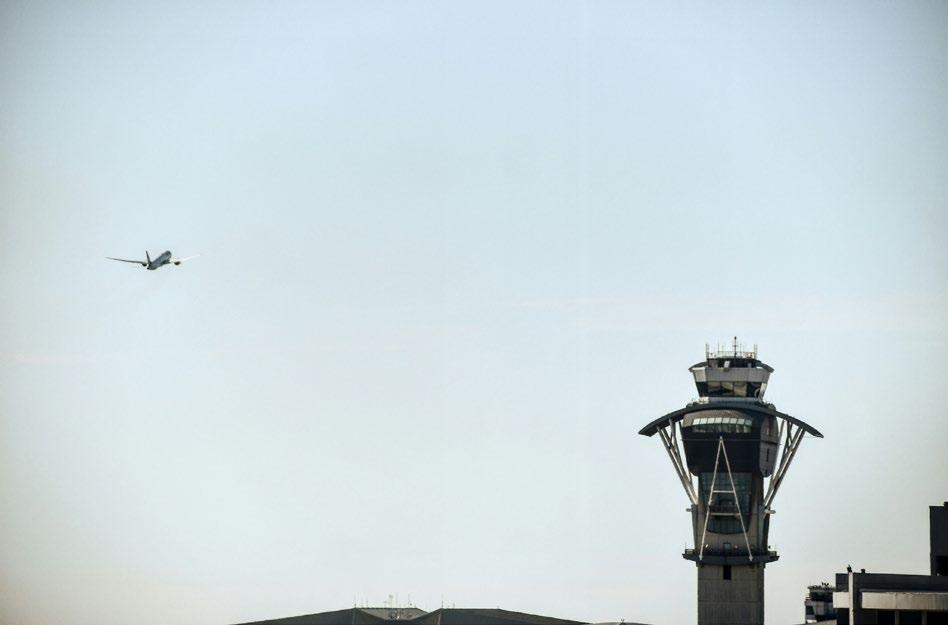
Bibiograhpy
(Science Direct, 2024): Tafur, 2024: Applications of artificial Intelligence in air operations, Fundación Universitaria los Libertadores, Bogotá, Colombia. Applications of artificial intelligence in air operations: A systematic review - ScienceDirect
(CAA, 2025): CAA (2025): Latest quarterly statistics, UK Latest quarterly statistics | UK Civil Aviation Authority
(Heathrow, 2025): Heathrow (2026): Which terminal, Nelson Road, Hounslow
Middlesex UK. Which terminal | Heathrow
(Wikipedia, 2026): Wikipedia (2026) List of accidents and incidents involving commercial aircraft List of accidents and incidents involving commercial aircraft - Wikipedia (Geeks for geeks, 2025)GeeksforGeeks (2025) How does AI work?: K 061, Tower K, Gulshan Vivante Apartment, Sector 137, Noida, Gautam Buddh Nagar, Uttar Pradesh How does AI work? - GeeksforGeeks
(Science News Today, 2025)Tuhin (2025) How artificial intelligence works: a beginner’s guide: How Artificial Intelligence Works: A Beginner’s Guide How Artificial Intelligence Works: A Beginner’s Guide
(BBC News, 2017): Westbrook (2017) Would you get on a pilotless plane?: Would you get on a pilotless plane? - BBC News
(AllAboutAI, 2025): Ehtesham (2025) AI cyberattack statistics 2026: what the data warns us about AI Cyberattack Statistics 2026: What the Data Warns Us About

Elissa Boyle (Fourth Form, Harcourt)
Supervisor: Mr Elkin-Jones
Just like us, trees are constantly communicating with one another, supporting one another, warning others of danger, providing each other with vital components for life and, like us, they are also constantly competing. However, unlike us, they do this not by means of verbal interaction or the ever-growing system of communication and source of competition that is social media, but instead through the intricately woven web of fungi which is the power source of plant life as we know it: The Wood Wide Web.
Have you ever questioned what may lie beneath us other than dirt and decay? Have you ever considered the notion that there may be an unknown world of immense power, one which we are centimetres from every single day? A world that we walk over, yet do not see and cannot control? Trees cannot feel like we feel and think like we think. They do not have nervous systems like us, or brains which enable them to think, talk and move like we do. However, they have been able to create their own platform for communication, one that may not be so different from ours as we think.
Whilst this relationship between trees is fundamental to their shared survival, by providing help to those in need and warning others of attack, this underground network has a more sinister side. Certain species of trees and other plants exploit the Wood Wide Web in a fight to gain the upper hand against others in the forest. Their ability to use this network as a means of attacking other plants is fundamental to their success, and the method they use could be considered as a form of chemical warfare.
How does the Wood Wide Web work?
Before we begin to uncover how tree defence systems can echo chemical warfare, it is first important to understand how this fascinating relationship between trees, which is imperative to the success of each plant, works. What is this unseen communication network?
Beneath every woodland and forest and most probably beneath you right now will be thousands of microscopic threads of hyphae creating dense networks of fungi known as mycelium. These thread like filaments which range from only 4-6 micrometres (Biology Dictionary, 2019) in diameter, weave through the soil, colonising the roots of trees, growing in and around them in a symbiotic relationship. In this relationship, the fungi supply the tree with vital nutrients such as phosphorus and nitrogen, which the fungi reaches by penetrating soil pores to access the water and nutrients that even the smallest tree roots are too large to reach (Biologist Insight, 2025). In exchange, the tree shares its sugars, which are a product of photosynthesis, a process that is impossible for the underground fungi to conduct due to the lack of sunlight. This relationship between tree and fungi is known as mycorrhiza (Simard, 2018). The 500-million-year-old network stretches further than just one tree as the mycelium connects a multitude of trees across a woodland. This system can then be accessed by other plants as a means of communication with the forest around them.
Through the plethora of hyphae that make up the Wood Wide Web, surrounding trees can help each other in a range of ways, whether that be to supply other trees with various sugars and mineral ions or to warn them of nearby danger. The oldest trees in the forest known as hub trees or mother trees are the main contributors to the Wood Wide Web. A study carried out in a patch of Canadian forest used DNA analysis to map the underground fungal network. Not only did this prove that one tree was connected to 47 others, but it also revealed that if the Mother trees were removed, there would be a 47% loss of connection, far more than if trees were removed at random (Simard S 2018). Through the Wood Wide Web, otherwise known as the Mycorrhizal Network, the Mother trees supply their saplings (babies) with glucose (BBC News, 2018). Due to the age and therefore height of the Mother trees, they are able to reach above the canopy where they have better access to sunlight for photosynthesis,

which would otherwise not reach the forest floor where short saplings grow. Mother trees support their saplings and help them to thrive, providing them with shelter as well as supporting the rest of the forest all through the Mycorrhizal Network.
This network adds value to the relationship between trees in other ways too. If a tree is sick or dying it may dump its resources into the network, so that other trees may harvest these nutrients and use them to flourish (BBC News, 2018). Another way in which neighbouring trees assist each other is by warning others of attack. If a tree is under threat, whether that be from a disease or an insect attack such as aphids. They do this by sending chemical and hormonal signals through the Mycorrhizal network. This allows the other plants time to put up their defences in order to try to supress the effects of the attack before it has even started.
How do trees exploit this network as a method of attack?
This network, however, also presents an opportunity for trees to attack each other, using a mechanism not so far removed from the concept of chemical warfare.
The definition of chemical warfare in the human sense the use of poisonous gases and other harmful chemicals against enemy forces (Cambridge Dictionary). So, how does this method of attack have any correlation with the connection between trees? While many trees are cooperative, all plants are still in competition for sunlight, nutrients and space to grow. As a result, some plants decide to exploit the network, using it as a means of gaining the upper hand on their opposition.
While it is true that some species of orchid, such as the coralroot or phantom orchid, hack the network, stealing carbon (Trees For Cities, 2019) and other assets, trees can also compete in a way that more resembles us as humans, their own version of chemical warfare: allelopathy. Allelopathy is the release of chemicals to inhibit the growth, health and productivity of other plants. Chemical warfare can be considered an analogy for allelopathy. Imagine that each tree or plant in a woodland is a country or empire, battling for territory, natural resources, and ultimately power. While fighting to be the most powerful, like us, they release toxins and chemicals to hinder the success of their opposition. Also like us it is primarily the most powerful who win, the ones willing to do anything, the ones prepared to kill to get to where they want to be.
Eucalypti are one of the most aggressive offenders, releasing harmful allelochemical such as phenolic acids and volatile oils emitted from the leaves, bark and roots (Zangh & Fu, 2009) into the air and rhizosphere soil (2024) surrounding other plants which hinders their growth. The chemicals, which are sent through the Mycorrhizal Network, can either reduce the chances of other plants becoming established nearby, or reduce the spread of beneficial microbes around their roots (Kato-Noguch, 2019). As well as this, Eucalyptus has been shown to monopolize resources to benefit itself rather than sharing through the system like other plants. Many studies have proven that the allelochemicals can prevent agricultural seed germination crop success (Isam et al, 2025) as well as the success of most other plants around them. Eucalyptus can be described as one of the most power-hungry and hostile aggressors of the Wood Wide Web.
Another example of this form of chemical warfare is displayed by the black walnut. The Black walnut spreads toxic allelochemicals called juglone (Mortier et l, 2020) to sabotage rivals. This aggressive approach is adopted by many plants all fighting for territory and power similarly to us humans. While some may call it belligerent, in many respects for these plants it is a way of life, a necessity in an environment of constant competition that echoes human concepts of alliances between countries, geographical advantage and the suppression or exploitation of other nations for national gain.
Many plants share an altruistic way of life: supporting, warning and providing for others which can draw parallels with our word as well; we trade, we warn, we provide and we form alliances. Whilst there is little need for competition in an environment where all can thrive, the reality is that resource is limited. The Mycorrhizal network is the trees’ version of our trading network, and the allelochemicals, employed as a weapon, represent the extreme end of the human tools of conflict. We trade and form alliances and gain power and fight and kill sometimes using tools which have been prohibited as they are deemed to be too harmful. These seemingly complex and highly developed methods of constant competition in the human world have actually be employed by plant life long before humans had evolved. These methods of combat, which humans have agreed to abolish, by the Chemical Weapons convention (OPCW), are a way of life for many plants, while for us, breaching these laws is deemed to be a vast crime. Perhaps when we consider the notion that plants echo human relationships in terms of mutual support and conflict, we should actually draw the conclusion that it is us humans that echo the relationship between plants.
In any forest or woodland, whether right here in the UK or on opposite sides of the world, know that plants are not solitary or simple organisms, but instead complex and multidimensional organisms. What is seen above the ground is only a fragment of what is really happening.

References
BBC News, Marshall C, (15 May 2001) Wood wide web: Trees’ social networks are mapped: https://www.bbc.co.uk/news/scienceenvironment-48257315
BBC News (2018), Science & Environment, 28 June 2018: How trees secretly talk to each other https://www.bbc.co.uk/news/av/scienceenvironment-44643177
Biology Insights, (2025): What Is the Wood Wide Web and How Does It Really Work? 21 July https://biologyinsights.com/what-is-the-wood-wideweb-and-how-does-it-really-work/
Biology Dictionary, (2019): Hyphae vs. Mycelium, 24 April 2019 https:// biologydictionary.net/hyphae-vs-mycelium/
Simard S, (2018) How Trees Secretly Talk to Each Other in the Forest | Decoder by) National Geographic, YouTube video https://www.youtube. com/watch?v=7kHZ0a_6TxY
Cambridge Dictionary (No date): Chemical Warfare | English meaning https://dictionary.cambridge.org/dictionary/english/chemical-warfare
Trees for Cities, (2019): Can trees communicate? War and peace through the internet of trees 19 February https://www.treesforcities.org/resources/ war-and-peace-through-the-internet-of-trees
Islam S, Ahmed S, Uddin Miah M, Aida Mahiddin N, Al Bakky A, Ismail Z, Sahlabji T, M. Idris A, (2025): Assessing the impact of eucalyptus trees on soil chemical properties in rice fields in Scientific Reports 09 May 2025, https://www.nature.com/articles/s41598-025-01220-x#:~:text=Some%20 eucalyptus%20species%20exhibit%20allelopathic,contributing%20to%20 soil%20degradation12.
Zhang C, & Fu S, 23 July (2009) Allelopathic effects of eucalyptus and the establishment of mixed stands of eucalyptus and native species in ScienceDirect, https://www.sciencedirect.com/science/article/abs/pii/ S0378112709004617#:~:text=Phenolic%20acids%20and%20volatile%20 oils,et%20al.%2C%202003).
Kato-Noguchi H, (2024): Isolation and identification of allelochemicals and their activities and functions in National Library of Medicine, PMC, February 2024, https://pmc.ncbi.nlm.nih.gov/articles/ PMC10912975/#:~:text=Allelochemicals%20are%20released%20from%20 the,donor%20plant%20litter%20and%20residues.
Mortier E, Lamotte O, Martin-Laurent F& Recorbet G, 02 November 2020, Volume 40, in Springer Nature article number 43: Forty years of study on interactions between walnut tree and arbuscular mycorrhizal fungi. A review | Agronomy for Sustainable Development | Springer Nature Link https://link.springer.com/article/10.1007/s13593-020-00647-y OPCW: chemical-weapons-convention https://www.opcw.org/chemicalweapons-convention
Freya Richards (Fourth Form, Feilden)
Supervisor:
Ms Hutchinson
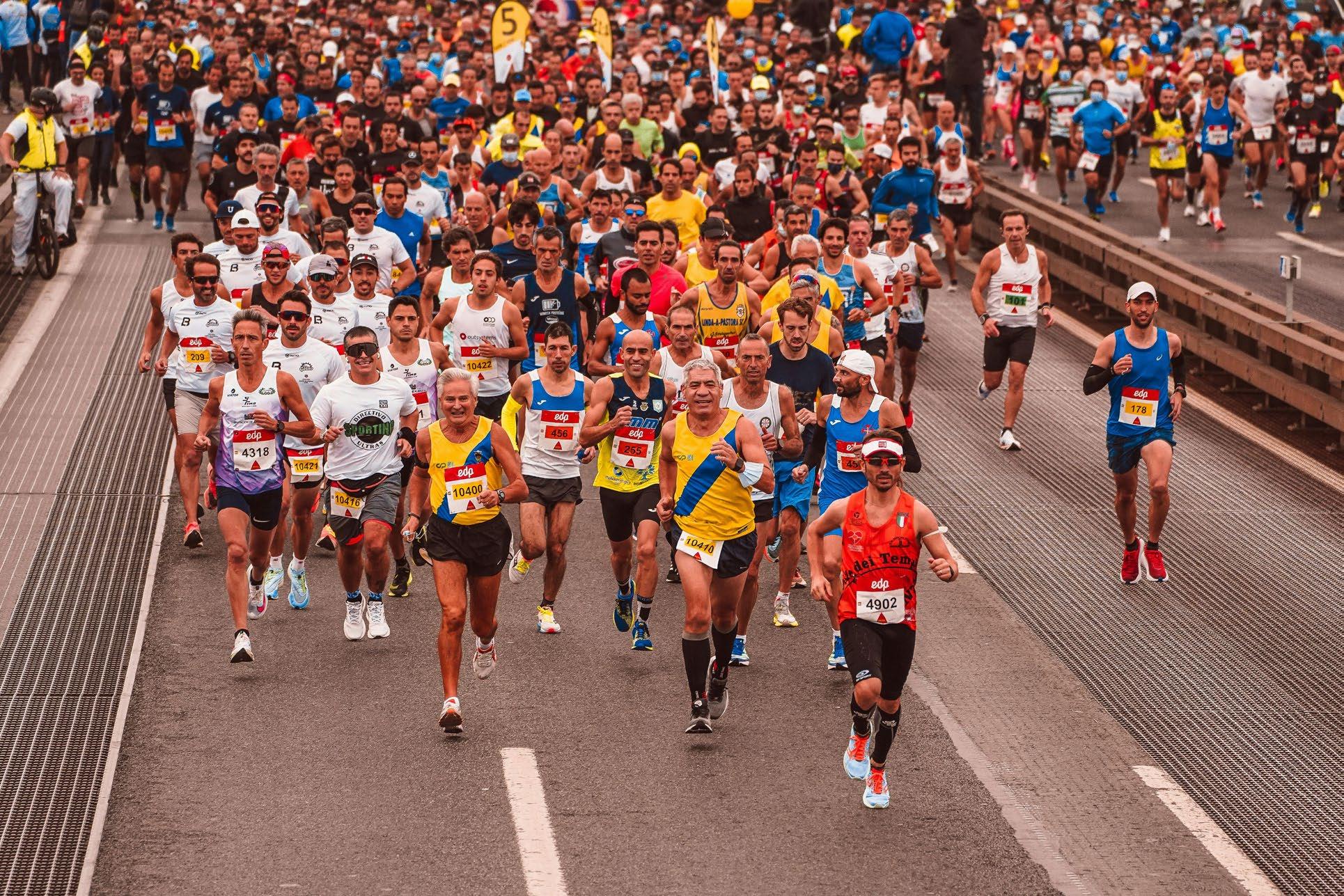
Annually, millions of athletes across the globe push themselves to the boundaries of human physical performance. However, only a few reach the professional level. If you look at the top runners across the world, you will find a large majority are African. In sprinting, the strongest representation tends to be of Jamaican descent, while long-distance running is dominated by Ethiopian and Kenyan athletes. But why is this the case?
Genetics
I believe it all comes back to genetic composition. A gene is a part of the DNA in a cell that controls the physical development, behaviour and other characteristics of an individual plant or animal, passed on from its parents. Within the world of running, one key gene stands out. The ACTN3 gene has two variants: type 1 contains slow-twitch fibres and type 2 contains fast-twitch fibres (23andMe, 2016).
Type 2 ACTN3, containing fast-twitch fibres, is more commonly known as the “sprinter’s gene” due to the fibres contracting quickly, offering short bursts of powerful energy but tiring rapidly. Type 1 ACTN3, containing slow-twitch fibres, is more beneficial to distance runners due to the fibres contracting slowly and resisting fatigue far more effectively. These genes help determine an individuals so called “genetic ceiling” and create limits on performance potential. However, many people never reach anywhere near their possible maximum. This could mean an individual has the potential to be the fastest person on Earth but does not grow up in an environment that encourages them to reach that level. This might suggest that whilst favourable genetic makeup is vital for elite performance, other nurturing and environmental factors also need to be considered.
The impact of personality and other heritable traits
Personality is the individualistic trait that sets all humans apart. Our characteristics are shaped by the genetics passed down through generations, but could these traits affect our running ability? Between
30% and 60% of personality is heritable, meaning the likelihood that an individual inherits levels of drive and persistence from their parents is high (Cornman, E., 2024). Therefore, those top runners who demonstrate exceptional persistence may well have inherited it, enabling them to reach their goals.
In races up to 195 miles the best runners are generally male, but in events beyond this distance women begin to outperform men. One theory to explain this is that women have higher oestrogen levels and therefore are better at burning fat, allowing them to conserve their limited carbohydrate stores and expend less energy over long distances. Another theory is that women tend to be more driven and determined than men, potentially as a result of inherited traits, which are essential throughout intense training and long, demanding races (Micallef, N., 2025).
Everyone knows that one person who always seems to be injured. Are they simply clumsy, or are there other factors? According to scientific research, injury predisposition (an individual’s likelihood of becoming injured) is partly determined by genes. Not only in running but also in daily life, the risk of sprains, strains, fractures, concussions, and overuse injuries can be increased by having particular genetic variants. Linking this to elite level running, possessing any of these predispositions could be detrimental to a professional career. Injuries can prevent an athlete from running for weeks, months, years, or in some cases permanently. In Born to Run by Christopher McDougall, he references the Sports Injury Bulletin, stating: “Each footfall hits one of their legs with a force equal to more than twice their body weight. Just as repeated hammering on an apparently impenetrable rock will eventually reduce the stone to dust, the impact loads associated with running can ultimately break down bones, cartilage, muscles, tendons, and ligaments” (McDougall, C., 2014). Almost half of recreational runners experience at least one significant injury, rising to 70% for professional athletes. At high level running, possessing any of these predispositions could be detrimental to a professional career.

However, I believe, along with many theorists, that running shoes may contribute to many of these injuries. When running barefoot, stride length shortens and the foot strikes directly beneath the torso instead of in front of it, potentially allowing the joints to absorb impact more effectively. This also strengthens the foot. Without shoes you can feel the ground and therefore notice whether your muscles are being strained. In many African cultures it is normal to run barefoot from childhood, which strengthens the feet and improves stride efficiency. This could gradually turn nurture into nature, potentially passing down stronger, more resilient feet to future generations (Mcdougall, C., 2014). Whilst modern elite African athletes do compete in running shoes or spikes - and one cannot immediately switch from shoes to no shoes - this could provide an advantage seen among many African runners.
Many runners are burdened with uncontrollable medical conditions such as asthma and type 1 diabetes, both of which are genetic and permanent. These conditions may hinder an individual’s dreams of becoming a professional athlete but do not necessarily make it impossible. With asthma, it is important to regulate breathing during physical activity, but contrary to popular belief, there is no need to stop exercising altogether. Many professional athletes have overcome this, such as Jackie JoynerKersee and David Beckham, both of whom found effective methods to train with their condition. Running with type 1 diabetes can also be challenging due to the constant need to fuel the body and manage fluctuating sugar levels, but many athletes, including Mandy Marquadt and Tim Atkins, have become successful while managing the condition. Although these heritable illnesses can be problematic, it is still possible to reach elite levels. Yet many people, after receiving a diagnosis, believe their dreams have become unattainable and give up, suggesting another way genetics can limit success.
Outstanding Athletes
Usain Bolt, the fastest man in the world, grew up in Jamaica with his parents, both of whom were athletic but never became professional athletes. Their son appears to have inherited their strong running ability. Bolt also inherited his father’s height, which contributes to his long stride. His muscle composition includes the type 2 ACTN3 gene, which enhances sprinting performance. The question arises: in another scenario, with different genes, would he still have become the 100metre world record
holder? Bolt’s case shows that favourable genetics can be activated and enhanced by the right environment (Wikipedia, 2001).
The record for the fastest female marathon is held by Ruth Chepng’etich, born in Kenya. She is of average height and weight, which could reflect her parent’s stature. Little information is known about them, other than that they supported their daughter unconditionally after recognising her passion at a young age. Despite knowing little about her genetics, Chepng’etich trained in Kenya’s Rift Valley, known for its high altitude, which is beneficial for endurance training. Was her success the result of nurture or nature? Later in her career she was found to have used performance enhancing drugs and is now serving a three-year ban, although her record still stands. Why did she turn to drugs? Possibly to reach her genetic ceiling, or to attempt to exceed it, something that would be impossible without performance enhancing substances with significant risks.
Conclusion
To conclude, is a person’s running ability predetermined by their genetic makeup, or is that ceiling something that can be surpassed? My research suggests that the level an athlete can reach is influenced by a mixture of factors determined by both nature and nurture. My opinion is that genetics play the initial and most important role, followed by an intense amount of grit (possibly also influenced by genetics). However, there is also a great deal of luck involved in receiving favourable genes and avoiding injury. Ultimately, it depends on whether those fortunate individuals choose to sit back or seize their opportunity, devoting their lives to running and training tirelessly.
References
23andMe (2016). Muscle Composition & Genetics - 23andMe United Kingdom. [online] 23andme.com. Available at: https://www.23andme.com/ en-gb/topics/wellness/muscle-composition/ [Accessed 7 Feb. 2026].
Cornman, E. (2024). How Genes Shape Personality Traits: New Links Are Discovered. [online] Yale School of Medicine. Available at: https://medicine. yale.edu/news-article/how-genes-shape-personality-traits-new-links-arediscovered/.
Mcdougall, C. (2014). Born to Run : the hidden tribe, the ultra-runners, and the greatest race the world has never seen. London: Profile Books.
Micallef, N. (2025). Are Women Better Ultra Runners than Men? [online] Substack.com. Available at: https://bornonthetrail.substack.com/p/arewomen-better-ultra-runners-than-men.
Wikipedia (2001). Wikipedia. [online] Wikipedia.org. Available at: https:// www.wikipedia.org/.

Poppy Lloyd (Lower Sixth, Feilden)
Introduction
Antibiotic resistance is a rapidly rising problem for the entire population that threatens to undermine the effectiveness of modern medicine by rendering previously easily treatable infections harder to treat. The World Health Organization (WHO) warns that a significant proportion of infections worldwide are now resistant to commonly used antibiotics. Antimicrobial resistance (AMR) occurs when bacteria divide and some may mutate allowing them to survive exposure to antibiotics. It is driven by factors like misuse and overuse of antibiotics in humans, animals and agriculture (UN News, 2023). While at this current point in time we have not reached a zero-treatment world, it is clear from reports and trends in healthcare, we could be returning to a world where once-treatable infections will again pose a serious threat to life.
Global trends
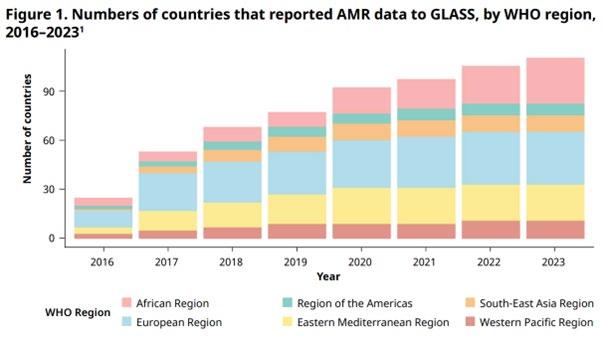
Many organisations such as the WHO and the UN believe that antibiotic resistance is rising worldwide with UN News (2025) warning that antibiotic resistance is surging globally. The WHO’s Global Antibiotic Resistance Surveillance report (2025) indicates increasing resistance levels among major bacterial pathogens responsible for bloodstream, urinary tract and gastrointestinal infections. This report uses data from over 23 million clinical cases from multiple regions (WHO, 2025), showing just how wide spread AMR is within the different types of infections. The report also reveals how, in many regions, common antibiotics are starting to be ineffective against serious infections.
AMR is a widespread problem in some parts of Africa where patients do not have the financial resources cover the treatment costs associated with antibiotic resistant pathogens. In some cases, such as in the case of baby Eniyohas’, patients are even abandoned. Having sepsis, Eniyoha was given antibiotics but they didn’t work. The hospital gave her stronger antibiotics, however these were very expensive. Eniyoha was left in the hospital by parents who were unable to meet the costs of her treatment. The story of such families being unable to afford antibiotics is not uncommon. Bilal, a teenage, bears a similar story. He was infected with drug-resistant typhoid, an illness that could once be treated with a course of inexpensive, easily available tablets. Sufferers now have to attend a hospital. Bilal’s Typhoid could only be treated with an antibiotic called Meropenem, reserved for the most serious infections, which is also expensive; families like his struggle to afford the treatment. This lack of resources and money reduces treatment, allowing the spread of antibiotic resistance pathogens to become more prevalent.
Alongside this, UN News has found an increase in resistance in more than 40% of the bacteria and drug combinations they have been tracking between 2018 and 2023. This growing trend depicts a rapid rise in antimicrobial resistance (AMR) across a number of pathogens and healthcare environments. AMR’s widespread impact and risk to the health care system is what the WHO has called AMR a “silent pandemic” (WHO, 2023).
Supervisor: Mr Elkin-Jones
The seriousness of AMR is highlighted by the rising mortality rates and diminishing treatment options. The UN estimate that in 2019, five million deaths were related to AMR, with about 1.27 million deaths being directly related to AMR infections (UN, 2022). These numbers are only predicted to rise with 10 million annual AMR related deaths being predicted by 2050. Alongside the UN’s predictions, the British newspaper The Guardian (based on the WHO report on hospital surveillance data) has also highlighted the growing prevalence of AMR infections within hospitals, cautioning that deaths could sharply increase as treatment options become limited (Sample, 2025).
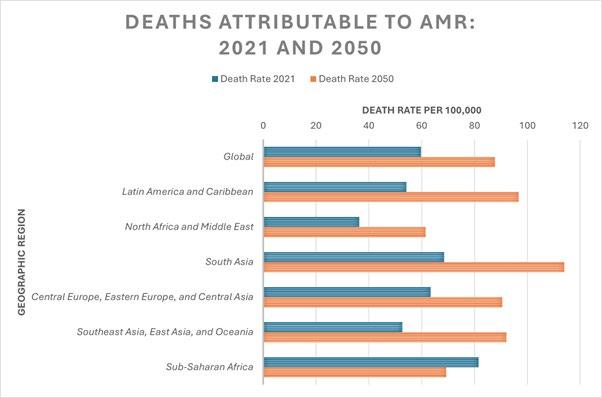
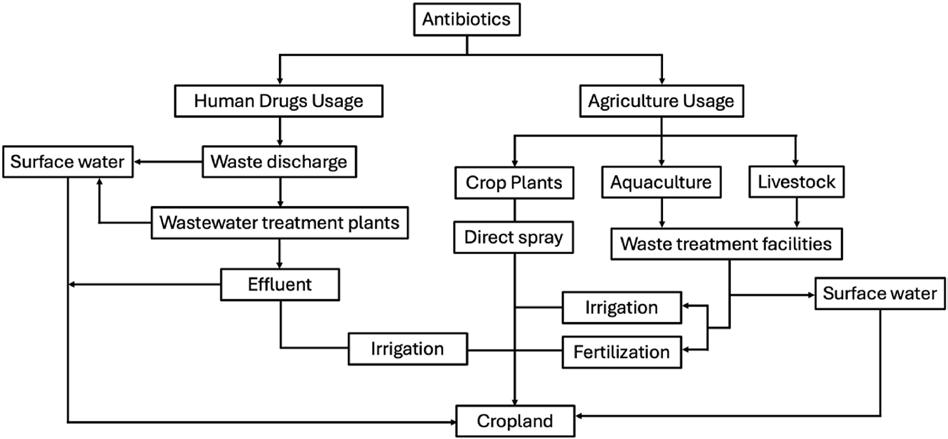
There are many ways in which Antibiotic resistance is spreading, the most prevalent ones are via wastewater (untreated water), food production, glacial melt and ancient reservoirs.
Water is a highly valued commodity; it is needed for the basics of life for people, animals and plants. Sustainable food production can bring about major challenges due to the increased occurrence of water scarcity, meaning people to have to recycle water. In over 50 countries wastewater is used to irrigate over 20 million hectares of land (News-Medical 2026). These countries struggle with water shortages. Organisations like the European Commission (EC) promote the use of urban wastewater treatment plan that use effluents instead of freshwater for irrigation. However, wastewater carries many pathogens. Being used for agricultural irrigation causes the crops to become contaminated with foodborne pathogens. This contamination becomes a particular problem with fresh products that are eaten raw. In Japan 308 colistin-resistant isolates were detected in 200 fresh vegetable samples (Kiskó., et al 2025). Many other studies carried out across Thailand, Vietnam, South Korea and China found at least one fresh vegetable collected from a market contained colistin-resistant isolates. This shows that antibiotic resistance is spreading beyond hospitals, most likely due to untreated wastewater and sewage from hospitals.
This pathogen carrying water can also be given to livestock. The low concentration of antibiotics means any the susceptible bacteria within
the animals will be killed and only the resistant bacteria will be left. This selective pressure favours the antibiotic-resistant bacteria.
Notably, it was found that wastewater produced via livestock contained the highest concentration of antibiotics (He, J. 2025). This is likely due to the large number of antibiotics being pumped into livestock. In 2020, ten million kilograms of antibiotics were given to livestock, to treat, control and prevent bacterial diseases and to promote faster growth. About 92% were via their feed or water (He, J. 2025). The livestock’s body is not “designed” to absorb antibiotics (He, J. 2025) 30%-90% of the ingested dose was found to be excreted in urine or faeces. This is often used as manure to fertilize fields and arable land and is thought to be the main contributor to the presence antibiotics in farmland soil. This is a particularly significant problem: as plants grow, they absorb the nutrients and antibiotics from the soil; wild animal eat the plants and absorb the antibiotics along with the resistant bacteria and the non-resistant bacteria. Again, this allows only the resistant bacteria to survive because of the simultaneous consumption of bacteria and antibiotics, and so the resistant bacteria become more prevalent. When the animal dies naturally or is eaten, the resistant bacteria and antibiotics are spread either to other animals or to the soil, where the resistant bacteria and the antibiotics can be absorbed by other plants.
Another significant problem is soil leaching. This is when the antibiotics move downwards through the soil during rainfall or irrigation. The antibiotics kill off the susceptible bacteria in the soil and again, the resistant bacteria survive and multiply. As they are carried downwards, these antibiotic resistant bacteria may be taken into groundwater, drainage systems and nearby surface waters. This allows for antibiotic resistance to be spread, via contaminated water far, far beyond their original location. Along with the hospitals wastewater many other supplies of water also contain antibiotics including household discharge, animal excrete, and pharmaceutical factories (He, J. 2025).
AMR has been found not only to be influenced by medical antibiotic use but also natural and climate-related processes. A study by (Francisco, H. 2026) described how melting glaciers can release ancient and modern antibiotic-resistant genes (ARGs) preserved in ice. As climate change continues to cause global temperatures to rise, glaciers will melt, allowing the ARGs to re-enter the soil and water systems (Francisco, H. 2026). This study also found that ARGs can survive for long periods of time in natural environments allowing them to be redistributed as the glacier melt. This
melt water can then enter rivers and ecosystems. This evidence suggests that AMR is not just the result of antibiotic misuse but, is also an ecological issue that climate change makes exacerbate. This adds another layer to the global challenge of AMR.
Healthcare systems around the world are facing significant challenges due to the threat posed by antibiotic resistance and their increasing occurrence in hospitals. Antibiotic resistant bacteria are often referred to as ‘superbugs’ as they are hard to treat and spread just as easily as nonresistant bacteria. In 2016, a meeting was arranged for the UN in New York to discuss the AMR crisis (FutureLearn 2026). This meeting was only the fourth ever time that the UN General Assembly held a high-level meeting for a health issue, emphasising the magnitude of the problem. Global leaders were present in order to address this emergency situation. They sought to commit to a sustainable response and support to the ‘Global action plan on antimicrobial resistance’ proposed by the WHO at the Sixty-eight World Health Assembly in May 2015. The action plan highlights “the need for an effective “one health” approach involving coordination among numerous international sectors and actors, including human and veterinary medicine, agriculture, finance, environment, and well-informed consumers.” This meeting was one of the first events to bring the world’s attention to the serious nature of the AMR challenge.
Another problem that hospitals are facing is that antibiotics are sometimes prescribed for anything and everything. This is one reason why we have seen resistant infections emerging worldwide over the last decades. An example from Europe is where resistant E. coli infections increased from below 5% of patients in 2001 to above 10% in 2012. After these numbers where released, Dame Sally Davies (the Chief Medical Officer for England at the time) decided to put AMR on the National Risk Register, alongside other major international concerns like terrorism and climate change. By putting AMR on the UK’s political agenda, the WHO launched the global action plan to combat AMR the following year. Shortly after this, countries such as the USA and Norway, along with almost 100 nations, likewise drew up and released their own action plans (FutureLearn 2026).
Both The Guardian and the WHO have raised concerns about the growing threat from highly resistant Gram-negative bacteria, such as Escherichia coli and Klebsiella pneumoniae (Sample, I. 2025). These infections are often acquired in hospitals, allowing them to become resistant to many types of antibiotics, including third generation cephalosporins which doctors often to treat serious infections. Doctors are having to use the “last resort” antibiotics to treat patients (so called because of their cost or additional side effects). This effectively allows the bacteria a greater
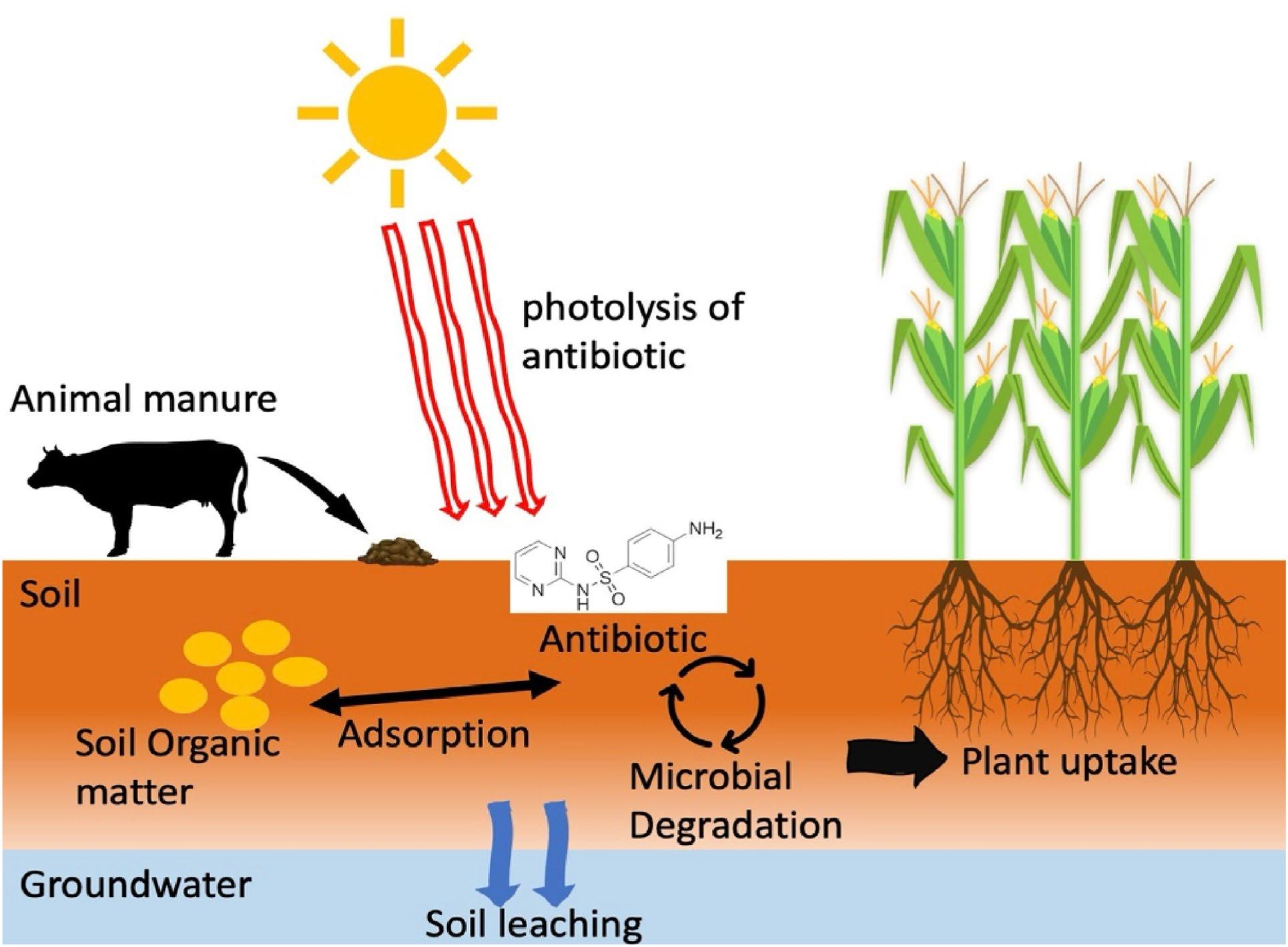
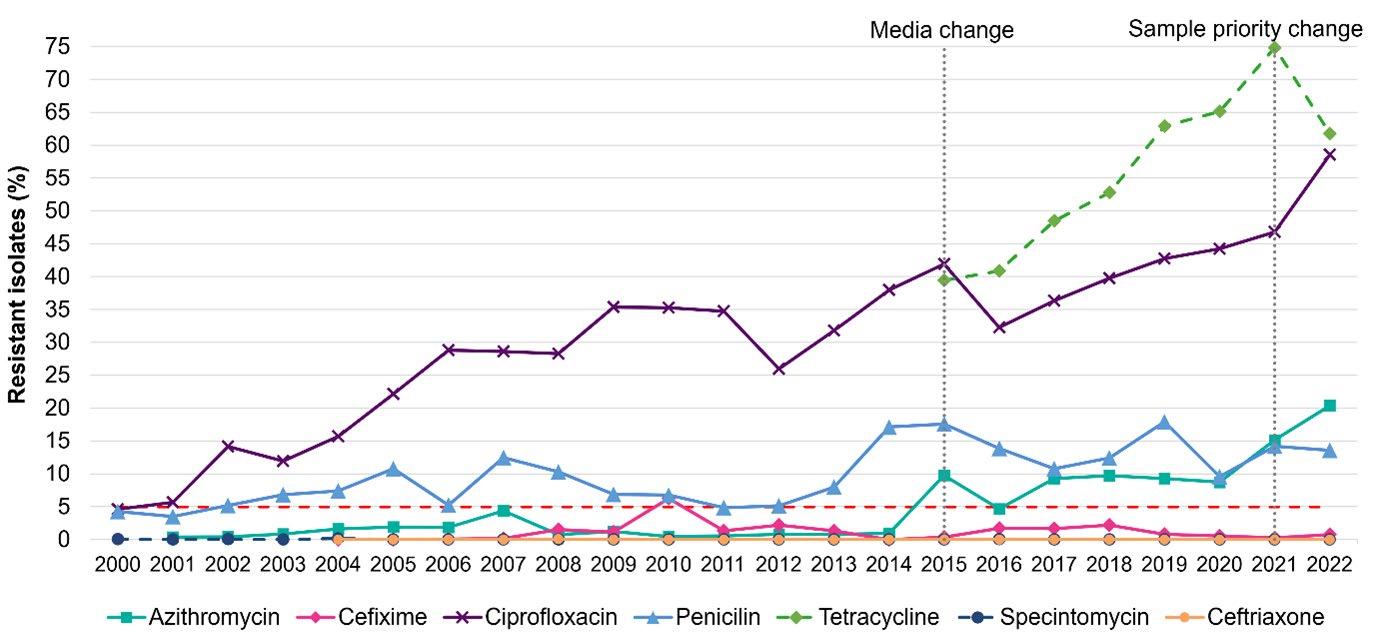
chance to develop resistance to even these “emergency” antibiotics. This further reduces the treatment options available and raises the risk of prolonged illness and death for vulnerable patients.
What is holding us back?
The lack of diagnostic capacity poses a further within the healthcare infrastructure, particularly in low- and middle-income countries. The WHO and UN news both report that the impact of antimicrobial resistance on these countries is far higher than in higher income countries. This is due to low- and middle-income countries limited access to rapid diagnostic testing, effective surveillance systems and strong infection control measures. The result of these limitations is that infections are commonly treated with broad-spectrum antibiotics based on guess work. This “scatter gun” approach increases the likelihood of resistant bacteria forming across many different types of bacteria. A specific report completed by the WHO found that, in regions where healthcare systems are under resourced, there are higher levels of resistant bacteria. This highlights how under resourced healthcare systems can contribute massively to the spread and the continuation of antibiotic resistance.
In 2021 7.7 million people died globally due to bacterial infections. 4.71 million of those deaths were contributed to by drug resistance and 1.14 million where directly attributed (Sample, I. 2025). This number is predicted to continue rising. It is predicted that 10 million deaths annually will occur due to antibiotic resistance by 2050, along with a total of $100 trillion in economic losses (FutureLearn 2026). This number is likely to continue to climb if a solution is not found. Either new antibiotics must be developed or replacements for antibiotics such as phages must be introduced, along with the eradication of antibiotics in our food and water.
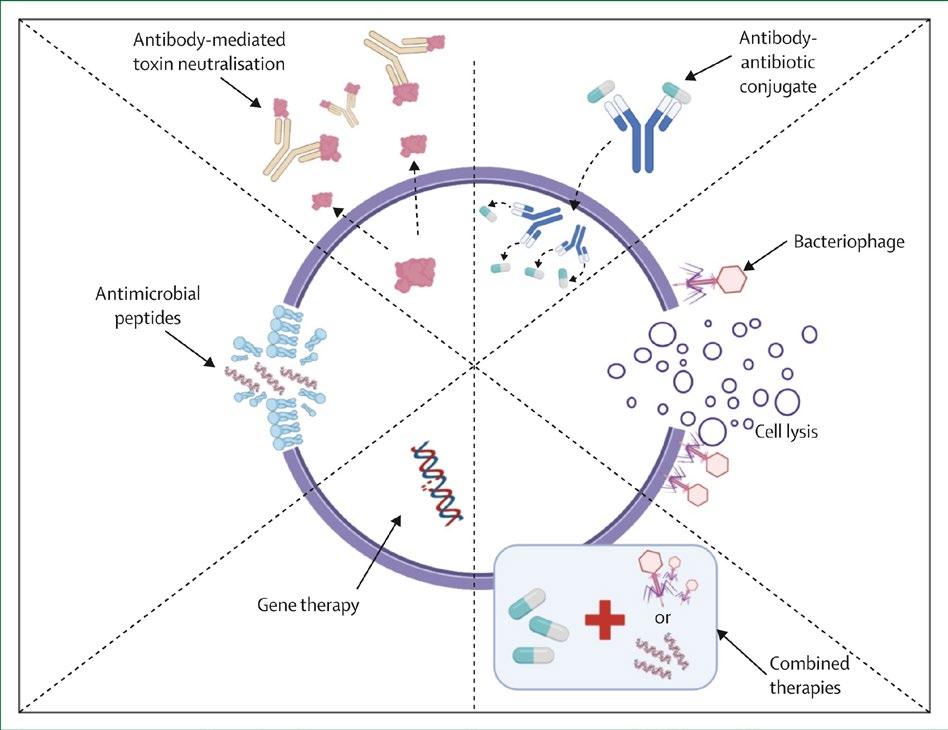
While it may seem like there is no hope and that we are fighting a losing battle against the evolution of bacteria, researchers have taken significant steps in their understanding of AMR. Recent progress has included developing a better understanding the molecular and genetic processes that allow microbes to spread resistance via mutations and horizontal gene transfer (Ho., et al 2024). This has allowed for quicker, more accurate diagnostic methods to be developed. This in turn has meant that more efficient identification of resistant infections has been possible, enabling
hospitals to quickly and effectively treat and isolate the patient to prevent further spread. A 2025 scientific update noting concerns about resistance to last-line antibiotics has ensured that awareness is being spread about AMR. This allows researchers and healthcare professionals to respond effectively to new challenges (Ho., et al 2024). These advances illustrate how ongoing research is enriching the healthcare system to allow it to better detect, respond and study AMR.
Another potential way that AMR is could be tackled is using artificial intelligence (Ho., et al 2024). The developments in artificial intelligencedriven technologies mean access to and the ability to process large amounts and ranges of data. AI is becoming an increasingly powerful tool for tackling infectious diseases and AMR, able to rapidly and reliably review tests, diagnostics, antimicrobial drug discovery and development (Ho., et al 2024). The development of this aspect of AI is particularly useful as it can instantly access, share and use data from around the world. Initiatives and issues
At the end of 2024, the WHO created a surveillance system GLASS, joined by 127 countries and 3 territories. One of these countries was China, one of the largest antibiotic consumers on the planet (Ho., et al 2024). The GLASS initiative was created to support countries in their efforts to monitor AMR (Shaw, M.L. 2025). These countries have implemented national action plans to stop AMR. However, only about 25% of participants are effectively implementing the GLASS plans, meaning that while there is room for improvement, at least some countries are beginning to take the problem of AMR seriously.
There are strong arguments to suggest that the global population is at risk of returning to a world where there are zero treatments for bacterial diseases, some even suggesting that there is a high probability that AMR related deaths will increase 70% by 2050 (Sample, I. 2025). This is supported by data from agricultural, environmental and clinical settings, showing antibiotics are becoming less effective at an accelerating rate. There is a large amount of evidence to show that AMR is spreading far beyond hospitals into the remotest places. Studies reported by NewsMedical, have found antibiotic resistance genes in waste water systems and glacial regions (Francisco, H. 2026). AMR spreading to our water systems and to remote places significantly increases the chances of AMR genes making their way back to humans. The WHO and The Guardian report increasing resistance among pathogens which cause severe infections, particularly in healthcare settings where antibiotics are often used (Sample, I. 2025, Various (2025). The combined research suggests that resistance is becoming a common factor in many interconnected systems, raising concerns about the widespread effectiveness of antibiotic treatment steadily decreasing.
However, there is also strong evidence for a counter argument suggesting it is not inevitable that we will return to a zero-treatment world. Governments and the global population are becoming aware and educated to the threat and spread of AMR. This increased awareness – along with scientists developing new ways to combat resistant infections - suggest not all hope is lost. The WHO’s use of GLASS has significantly improved the data collected, helping to strengthen the global monitoring efforts, allowing healthcare workers to spot resistant trends earlier and minimising their spread between patients. Furthermore, research published in Ho., et al (2024) highlights the development of new
therapeutic approaches, improved diagnostics and policies aiming to reduce the misuse of antibiotics. While there are still significant challenges to overcome, international efforts are being made to preserve the effectiveness of antibiotics and slow the spread of AMR. It is still possible to prevent the return to a zero-treatment world.
Conclusion
While progress is being made and we are not at a at a zero-treatment world, worryingly our trajectory is towards one, suggesting we run a very real risk of having few if any effective antibiotics without extensive, concerted global action. Fortunately, global governments seem to be realising AMR proposes a significant threat to our current lifestyle and have started to take significant action to combat it, whilst also developing new ways to treat infections.
References
Francisco, H. (2026). News-Medical. [online] News-Medical. Available at: https://www.news-medical.net/news/20260118/Ancient-ice-and-modernpollution-combine-to-spread-antibiotic-resistance-as-glaciers-melt.aspx
FutureLearn (2026). Page from Exploring the Landscape of Antibiotic Resistance in Microbiomes - University of Oslo. [online] FutureLearn. Available at: https://www.futurelearn.com/courses/exploring-thelandscape-of-antibiotic-resistance-in-microbiomes/1/steps/130790
He, J. (2025). Antibiotics pollution in cropland and crops: A comprehensive review. Advanced Agrochem. [online] doi: https://doi.org/10.1016/j. aac.2025.05.002
Ho, C.S., Wong, C.T.H., Aung, T.T., Lakshminarayanan, R., Mehta, J.S., Rauz, S., McNally, A., Kintses, B., Peacock, S.J., de la Fuente-Nunez, C., Hancock, R.E.W. and Ting, D.S.J. (2024). Antimicrobial resistance: a concise update. The Lancet Microbe, [online] 6(1), p.100947. doi: https://doi.org/10.1016/j. lanmic.2024.07.01
Kiskó, G., Bajramović, B., Elzhraa, F., Erdei-Tombor, P., Dobó, V., MohácsiFarkas, C., Taczman-Brückner, A. and Belák, Á. (2025). The Invisible Threat of Antibiotic Resistance in Food. Antibiotics, [online] 14(3), p.250. doi: https://doi.org/10.3390/antibiotics14030250
MD, T. (2026). News-Medical. [online] News-Medical. Available at: https:// www.news-medical.net/news/20260126/Secondary-treated-wastewaterstill-transfers-antibiotic-resistance-to-fresh-produce.aspx
Sample, I. (2025). Sharp global rise in antibiotic-resistant infections in hospitals, WHO finds. [online] the Guardian. Available at: https://www. theguardian.com/world/2025/oct/13/sharp-global-rise-in-antibioticresistant-infections-in-hospitals-who-finds
Shaw, M.L. (2025). New WHO Report Sounds Alarm on Antimicrobial Resistance. [online] Ajmc.com. Available at: https://www.ajmc.com/view/ new-who-reports-sounds-alarm-on-antimicrobial-resistance
UN News. (2025). Antibiotic resistance surges globally, UN health agency warns. [online] Available at: https://news.un.org/en/story/2025/10/1166087.
Various (2025) Antimicrobial Resistance Division AMR, Global antibiotic resistance surveillance report 2025. [online] Who.int. World Health Organization. Available at: https://www.who.int/publications/i/ item/9789240116337.

Jolyon Uglow (Second Form, Gascoigne)
Supervisor: Ms Hutchinson
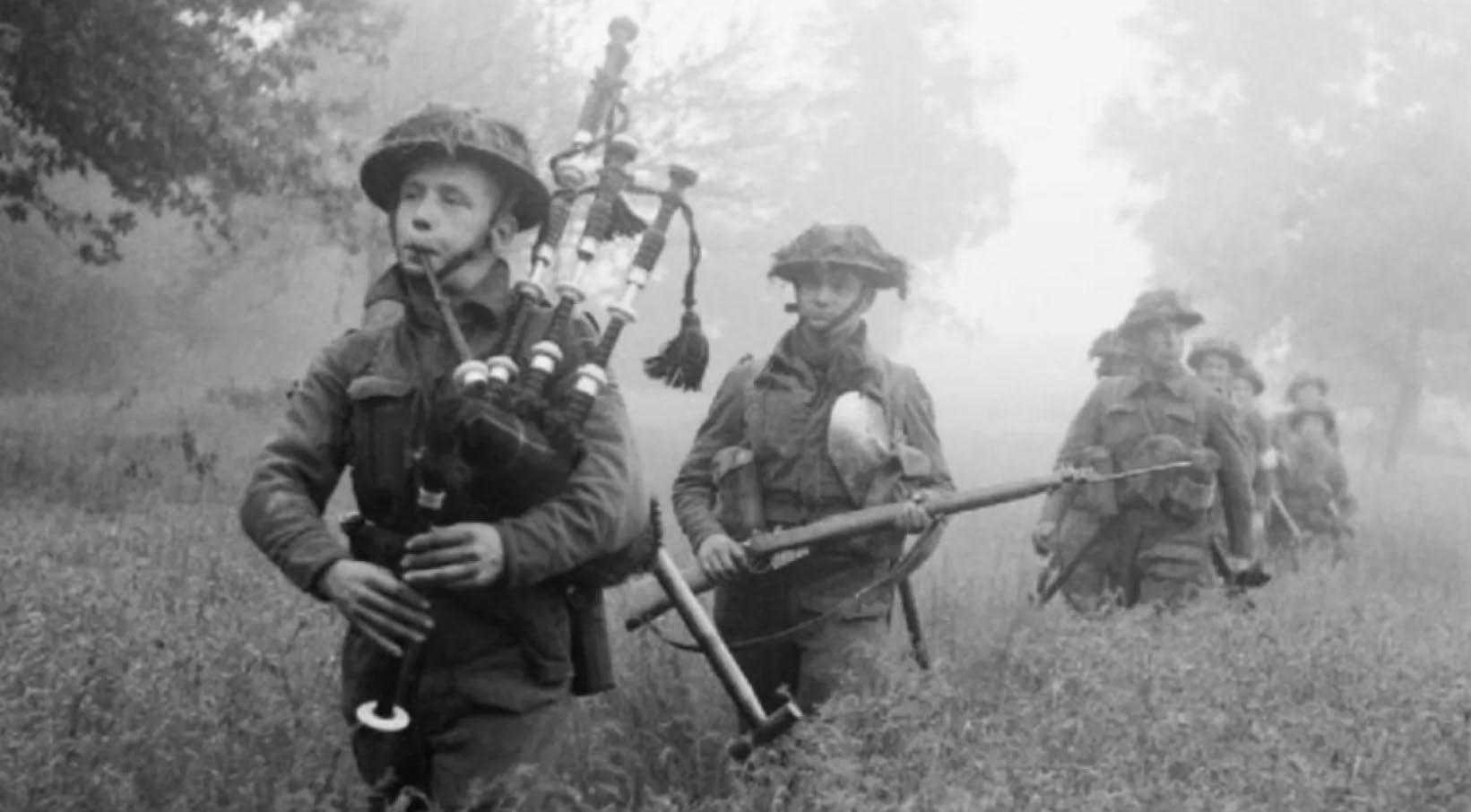
Introduction to the Highland Bagpipes:
The Highland Bagpipes is an instrument in the woodwind family, consisting of 4 main parts; the drones which make a low and continuous sound, the bag which acts as a lung for the instrument, the mouthpiece a tube into which one blows to inflate the bag, and lastly the chanter, a pipe with a reed and holes that plays the tunes (The Pitch and scale 1998. Retrieved 4 June 2018). Whilst other types of bagpipes exist, the Scottish pipes were invented in the rugged mountains of Scotland in the 14th century, and the first mention of ‘warpipes’ in Scottish records dates to 1396 during the Battle of the North Inch of Perth (Collinson, F.M. 2021). The Great Highland Bagpipes as we recognise them now began to fully take shape in the 15th century. Today, bagpipes are very much considered part of the fabric of Scotland and the UK, played in ceremonies, parades and national events as well as at Scottish rugby matches, but this article will focus on their military history.
Regiments and their Pipers:
Bagpipers were an integral part of the army in the Boer wars, World Wars I and II, and even feature (to a lesser extent) in more modern warfare situations, such as during the Gulf War conflict (Kinnairdbagpipes 2026). At the start of WWI, in the Scottish regiments, there were as many as 16 pipers for every battalion (roughly 1,100 men) – men who would carry a musical instrument into battle, rather than a weapon, although technically it was classified as a weapon of war by the British War Office until 1996 (Retrospect Journal, 2nd Nov. 2025). During WWI, 500 pipers lost their lives, a fact that caused their deployment to be reconsidered during WWII to less front-line positions.
There were many wartime pipers in the 20th century, but two of the most famous were Daniel Laidlaw (VC) and Bill Millin. Daniel Laidlaw (the ‘Piper of Loos’) was a piper in the 7th Kings Own Scottish Borderers during the first world war, when he was awarded the Victoria Cross (VC). His citation stated it was for ‘most conspicuous bravery prior to an assault on the German trenches near Loos and Hill 70 on 25th September 1915.’ (The London Gazette. 22 October 1918). After his company had been shaken by a gas attack, with absolute coolness and disregard for danger he mounted the parapet, marched up and down, and played the company out of the trench, despite being hit with shrapnel and machine gun fire in his left
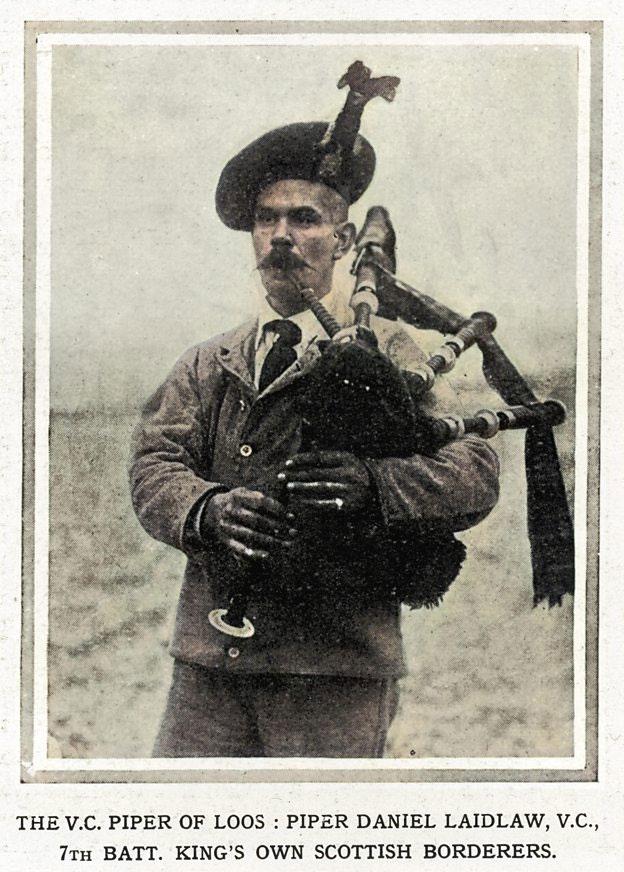
Bill Millin was a piper in the British 1st Special Service Brigade during the second world war, under command by the famous 15th Lord Lovat (Simon Fraser), who took part in the Operation Overlord Landings in Normandy in 1944 and ordered him to play under fire on Sword Beach. (Hull, M. 2024). Although the use of bagpipes had officially been restricted to rear areas by this time, Lovat is quoted as saying to Bill Millin, ‘Ah, but that is the English War Office, you and I are both Scottish, and that doesn’t apply!’ (Hull, M. 2024). Millin was the only man during the landings that wore a kilt, and he gained respect amongst both his fellow soldiers and the opposing Germans as he piped his way off the landing crafts amongst the first wave soldiers on Sword beach. He played ‘Highland Laddie’ and ‘Road to the Isles’ as machine gun and sniper fire from bunkers on the top of the beach took out men around him. Remarkably, he himself wasn’t hit and when some of the captured Wehrmacht infantry on Sword beach were interrogated, they said they didn’t shoot him, as he was ‘dummkopf’ (crazy) (Hull, M. 2024).
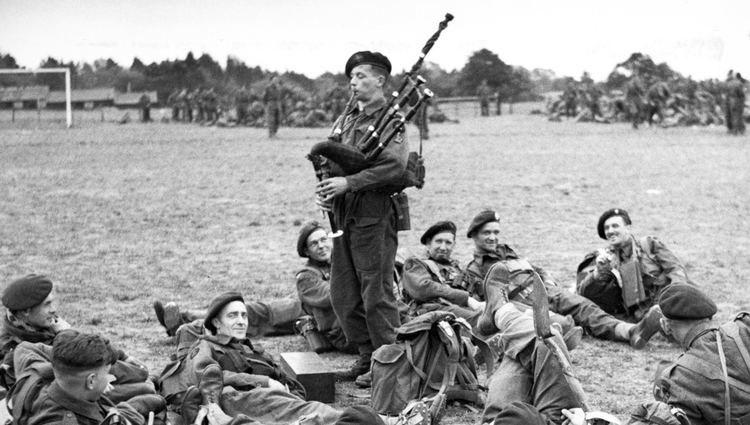
and the Legion of Honour by the French after the war, and his exploits on Sword Beach are depicted in the 1962 film ‘The Longest Day’. (Hull, M. 2024)
What effect did the Pipers have?
The sound of the bagpipe is certainly distinctive and unmistakable, carrying as it does for over a mile, but what impact can the bagpipe be argued to have in times of war? For the Scottish troops, there is much anecdotal evidence that they represented a cause for which to fight for: home. Harry Lunan, the last WWI piper recalled to the Sunday express in 1993: “in the first assault (at high wood), I played the tune Cock o’ the North. I played my company over the bloody top, right into the German trenches. It was stupid as hell… Men falling around me, falling dead… it was bloody horrible… (but) hearing the pipes gave the troops courage. You were scared, but you just had to do it, they were depending on you.” (Barrett, C. 2020). Similarly, General Frank M Richardson said: “What other instrument can equal our bagpipe in the rallying of a clan, in incitement to battle or, in days of peace, lifting tired men’s feet along the last few miles to camp?” (Campbell, J. 2018).
Specifically relating to the effect of Piper Bill Millin playing on Sword beach, D-Day veteran Tom Duncan said, “I shall never forget hearing the skirl of Bill Millin’s pipes. It is hard to describe the impact it had. It gave us a great lift and increased our determination. As well as the pride we felt, it reminded us of home and why we were there fighting for our lives and those of our loved ones.” (Hull, M. 2024).
For Scottish soldiers, tunes that reminded people of back home, like Scotland the Brave and Flower of Scotland may have boosted their morale, but the same tunes played to rally the troops might also strike fear into the enemy. Certainly, Sir Philip Gibbs, one of the official British reporters during WWI who filed an account from the Battle of High Wood in the Somme campaign seemed to think so. He wrote it was “the most awful music to be heard by men who have the Highland against them, and with fixed bayonets and hand-grenades they stormed the German trenches.” (Barrett, C. 2020). Indeed, Pipers from the ‘Black Watch’ -the 3rd Battalion, Royal Regiment of Scotland were apparently nicknamed Die Damen Aus der Hölle (Ladies from Hell) or Teufel in Röcken (Devils in skirts) by the Germans, because of their distinctive tartaned kilts and the bravery of the soldiers from this battalion (Key Military, 2020).
Further investigation on both of these points though suggests this ‘fear’ angle might be propaganda spread to hearten the British troops. A review of German soldiers’ letters and diaries finds no instances of the ‘Ladies from Hell’ or ‘Devils in Skirts’ nicknames being used at all, nor any particular attention paid to the allegedly superior bravery of the highland troops. (Key Military. 2020). Instead, letters and diaries mostly express curiosity at their dress: “The English soldiers here are mostly
Scots and even though they are strong men, they wear short skirts (no trousers) which only just cover their knees. They are strong men, but there is nothing a German solider is afraid of.” (Gefreiter Richard Wientzek –Reserve-Infanterie Regiment 11, 11 Oct 1915).
Conclusion:
The evidence suggests that the main purpose of bagpipes in war was less about the effect on enemy soldiers, but more about boosting morale and the sense of home amidst the horrors of war. When not fighting, men would gather around the pipes to dance and to sing, reinforcing bonds of comradery amongst the regiments. We see this on-going sense of connection perhaps most clearly in the use of the bagpipes to remember the fallen and indeed at state funerals, where the sound of the ‘war instrument’ conveys what words fail to articulate.
Bibliography:
Baker, C. (n.d.). What was a battalion of infantry? – The Long, Long Trail. [online] The Long, Long Trail . Available at: https://www.longlongtrail.co.uk/ army/definitions-of-units/what-was-a-battalion-of-infantry/.
Barrett, C. (2020). ‘Ladies from Hell’: Bagpipers Led the Charge During WWI. [online] HistoryNet. Available at: https://www.historynet.com/ladiesfrom-hell-bagpipers-led-the-charge-during-wwi/.
Campbell, J. (2018). Pipers of the Great War. [online] Lbps.net. Available at: https://lbps.net/j3site/index.php/common-stock/archive-issues/164december-2018/1085-pipers-of-the-great-war.
Collinson, F.M. (2021). The bagpipe : the history of a musical instrument. London: Routledge.
How the Bagpipes Motivated Troops in War - kinnairdbagpipes. [online] kinnairdbagpipes. Available at: https://kinnairdbagpipes.com/how-thebagpipes-motivated-troops-in-war/.
Hull, M. (2024). The Story of Bill Millin, Lord Lovat’s Mad Piper of Sword Beach. [online] Warfare History Network. Available at: https:// warfarehistorynetwork.com/article/the-story-of-bill-millin-lord-lovatsmad-piper-of-sword-beach/.
Key Military. (2020). Devils In Skirts And Ladies From Hell. [online] Available at: https://www.keymilitary.com/article/devils-skirts-and-ladieshell.
Mackenzie, S. (2025). An Instrument of War – The story of the Great Highland Bagpipe in ‘The Year of The Prince’. [online] Retrospect Journal. Available at: https://retrospectjournal.com/2025/11/02/an-instrument-ofwar-the-story-of-the-great-highland-bagpipe-in-the-year-of-the-prince/.
Macpherson, E. (1998). The Pitch and Scale of the Great Highland Bagpipe. [online] publish.uwo.ca. Available at: https://publish.uwo.ca/~emacphe3/ pipes/acoustics/pipescale.html.
“No. 30967”. The London Gazette (Supplement). 22 October 1918. p. 12488
Smith, K. (2019). Piper Daniel Laidlaw was the hero of Loos Scottish Field. [online] Scottish Field. Available at: https://www.scottishfield.co.uk/culture/ piper-daniel-laidlaw-was-the-hero-of-loos/.
George Bains (Third Form, Feilden)
Gold is not just a metal, it is a phenomenon. The human craving for gold is far superior to any other material. From your everyday jewellery to the deep complex of financial investment, gold reigns supreme, but have you ever stopped to wonder why? Why a metal that has very little practical value has ascended to a height where it can even subconsciously affect our minds? Why this same metal has been the one true universally tradable item since the age of the Egyptians? In this article, we will discuss why gold has been the metal that has dominated human history, on a scale that is almost impossible to comprehend.
Throughout the course of history, gold has played many prominent roles. The fact that gold is visually pleasing, malleable and does not corrode means that it was one of the earliest materials to captivate human attraction. (Britannica, 2019) The dawn of the gold obsession began in ancient civilizations such as the Egyptians and Mayans. Egyptian pharaohs often ordered skilled craftsmen to create jewellery, sculptures and decorative items such as the golden mask of Tutankhamun. Throughout Asia during this time, gold was also seen and still is viewed by many as a symbol of good fortune and prosperity. However, gold was not only used in crafts or trade but symbolized something much deeper, to ancient civilizations gold was also spiritual. The Egyptians related gold to the gods and the afterlife, as it was believed this metal was the flesh of the gods themselves (Elmasry, 2024). This is why many of the important people in ancient Egypt were buried with endless gold artefacts and often in a golden sarcophagus, as it was believed it was necessary to provide for the individual in the next life.
Gold has also been essential in the global economy and, as “gold has been the one true universal material accepted in exchange for goods and services,” it is has been central to trade for millennia (Britannica, 2019). Throughout countless places for as long as human time could tell, gold has been traded whether in the form of coins, bars or trinkets. Scattered throughout the country you can find golden coins left by the Romans thousands of years ago, or in areas of the old Byzantine Empire you can find their then currency called the Solidus, which was essentially a highly pure gold coin (Patar, 2024).
The use of gold in trade began to rise during the Middle Ages when it became the biggest currency medium by 1344. Even in more recent times, gold has continued to control economy and trade. After the invention of notes, gold was still influential in the form of the gold standard, where how much money a country could have in the form of notes was linked
Supervisor: Mr Elkin-Jones

to that country’s quantity of gold. Even after the abolition of the Gold Standard in 1971 (a system where all paper money was supposed to be backed by its equivalence of gold), gold still dominates economies up to this day: 45% of the world’s gold reserves are held by governments and central banks, due to the fact it doesn’t lose value quickly (if at all) at all making it an excellent reserve asset (Britannica, 2025).
Modern influence
Gold is also influential in modern everyday life. The most common use of gold in the modern world is jewellery, as about half of global gold demand comes from this area. This is especially so in regions like the Middle East. Golden jewellery has a cultural and religious significance (especially in Arab culture); not only there, in the UK, many people wear golden crosses which is important to their faith (Straits Financial, 2025).


The significant practical use of gold is in electronics, due to the fact that it is an excellent conductor of heat and electricity, meaning it can be used in smartphones and other devices. However, this is such a small portion in global gold demand that its other practical uses are negligible in the bigger picture of gold in the world.
The second most prominent role that gold plays in the modern world is in the economy, as gold has always been a safe haven against the challenges of inflation and the volatility of global markets. It often increases in value in times of global uncertainty. This is because gold has stood the test of time and is what is known as a ‘liquid asset’ meaning there is a constant demand for gold; it can be sold almost immediately after you choose to do so. One bar of gold in a bank in the US is the same as a bar of gold in a bank in London, therefore if a buyer in the US wishes to buy a bar of gold from the owner in the UK, the bank can facilitate that without any losses or shipping, leading to gold being yet again easy to sell and hold (Patar, 2025). Gold is typically renowned as a great way to preserve and invest money.
Why do humans value gold?
There are three main theories behind our illogical love of, what is after all, just a metal. Firstly, it has an attractive and appealing colour - yet there is also some science behind this answer. Dissimilar to yellow, it contains subtle red undertones which create a warmer richer colour. This warm, rich tone elevates our dopamine levels, making us naturally favour gold’s colour (Kamal, 2025). Secondly, the item – of itself - is not valuable or useful compared to others, but what it represents is of the utmost value to individuals in a society where humans have a natural impulse to show superiority. For example, take the Dutch Tulip Craze. This was a phenomena in the Netherlands where people would pay extremely large sums of money for fancy tulips. On its own, a vibrant, colourful tulip is practically useless. But what it symbolized was priceless, the symbol of wealth, power and superiority (Britannica, 2025). Finally, gold is spiritually important due to its incorruptibility, and association with sunlight. The association with incorruptibility is related to the eternal: people want to believe that their legacy (and indeed themselves) will last forever in this life or the next. Secondly and most importantly, the connection with the sun is important: for millennium, across thousands of religions and beliefs, the sun has represented the divine and the gods. This, for the makes it a majority the holy and sacred material for religiously minded people. Religion is one of the most powerful forces in the world: for example, during medieval The Crusades, thousands of people travelled thousands of miles, across seas and deserts, not knowing if they would ever return home (Kamal, 2025), so any object made of gold that could enhance their faith and hope of a return to a normal existence in this life (or the next) was powerful. So the power of religion has driven gold from a lowly metal to the most desired material on the planet.
Conclusion
Throughout history gold has been one of, if not the most, valuable substance on the planet. This has remained true even up until the present day where, gold’s influence on both every-day life and global economies and finance is astonishing. However, gold has not achieved this by being practically useful, but through a phenomenon of the human mind. Its colour elevates our dopamine levels, its symbol appealing to natural impulses and desires but most importantly its connection with the sun and the gods has driven this lowly material into the most desired item on the planet.
References
Britannica (2025) Tulip Mania. Available at: https://www.britannica.com/ money/Tulip-Mania (accessed February 2026)
Britannica (2019). Gold - Properties, occurrences, and uses.
In: Encyclopædia Britannica. [online] Available at: https://www.britannica. com/science/gold-chemical-element/Properties-occurrences-and-uses.
Elmasry, S. (2024). Gold: A Deep Dive into Its History and Importance. [online] StoneTrove. Available at: https://stonetrove.com/articles/goldhistory-science-significance/ [Accessed 9 Feb. 2026].
Gold-ira.info. (2026). Available at: https://gold-ira.info/the-psychology-ofgold-what-makes-it-so-desirable/ [Accessed 9 Feb. 2026].
Hemendra Patar (2025). The Role of Gold in the Global Economy: Past, Present, and Future - Gold Blog. [online] Gold Blog. Available at: https:// goldblog.org/the-role-of-gold-in-the-global-economy-past-present-andfuture/.
Jmbullion.com. (2026). Why Has Gold Always Been Valuable? | JM Bullion. [online] Available at: https://www.jmbullion.com/investing-guide/facts/ why-gold-is-valuable/?msockid=144bf79fbbc3661f3a13e23fbaa06787 [Accessed 9 Feb. 2026].
Kamal, M. (2025). Psychology of Color: Why Are We Attracted to Gold? [online] TheCollector. Available at: https://www.thecollector.com/ why-are-we-attracted-to-gold-psychology-of-color/.
Straits Financial . (2025). What Is Gold Used For in Everyday Life? [online] Available at: https://www.straitsfinancial.com/insights/what-is-gold-usedfor. The editors of encyclopaedia
Alex Regardsoe - Trevis - (Third Form, Swift)
Supervisor: Mr Elkin-Jones

An introduction
Andalusia is a region in Southern Spain known for its rich past and history.
The Phoenicians first settled in Andalusia in the 8th century B.C. Later came the Romans in the 1st century B.C., followed by the Vandals and the Visigoths who were mostly Christian Germanic people from Europe. Muslim rule, known as the era of Al-Andalus, lasted from 711 to 1492, and was established by the Umayyad dynasty, which had its capital in Córdoba (Qurtubah). In 1492, the Christian Reconquista was complete after conquering Granada – the last Muslim stronghold. This led to a predominant Christian rule over Spain (Rodriguez, 2026). With such a varied history, it is not surprising that Andalusian architecture illustrates its multi-cultural past.
An Islamic heritage
Architecture is defined as the art and technique of designing and building, with architectural works often perceived as cultural symbols and historical civilisations identified through their architectural achievements.
The Alhambra, located on the Sabika Hill in Granada, is cited as one of the greatest Islamic architectural monuments. It was first built as a large military fort, then later expanded in the 13th and 14th centuries, becoming a luxurious Nasrid palantine city. It is characterised by stunning geometric patterns and horseshoe arches, beautiful calligraphy, carvings and intricate tile work, innovative water features and courtyards, showcasing the unique skill and beauty of Moorish architecture (Hassan, 2025). Convivencia (convivir: to live with each other) is the term used to describe the peaceful interreligious coexistence in Al-Andalus between Muslims, Christians and Jews. The Alhambra is often seen as a symbol of Convivencia, but to what extent is this correct? (Chtatou, M, 2024). Even though the architectural style shows an integration of Islamic, Christian and Jewish elements, the Alhambra was a military stronghold, with great strategic importance during the Reconquista, representing dominance and its defensive role rather than coexistence and harmony. After the Christian Reconquista in 1492, the Catholic monarchs adapted and made additions to the palace incorporating Renaissance design with Moorish architecture, showcasing this part of Andalusian history. Over time the Alhambra has been damaged and is undergoing constant restoration (Discovering Spain, no date). Although it has been altered and rebuilt in recent times, the Alhambra still shows clear visible traces of its Islamic heritage and hence Andalusian history.
The Mosque-Cathedral of Córdoba shows the layered histories of this region and is seen as an example of a fusion of Islamic and Christian architecture. It was built on an original Visigothic church and incorporates Roman/Visigoth pillars to support the horseshoe arches of the mosque, alongside the characteristic Moorish architecture. Córdoba shows how the initial building represented tolerance amongst diverse cultures. During the

Reconquista the Catholics took control but made only minor alterations to the Mosque-Cathedral, indicating respect for the existing culture (Lions in the Piazza, 2021). However, in 1523 the Catholics built a Renaissance cathedral nave and transept in the middle of the mosque. This could be interpreted as the Catholics, on one hand, asserting their dominance and power. Not all were happy with the result: for example, when the Spanish King Carlos V visited the mosque, he is reported to have been shocked by the damage done, saying “You have built here what you or anyone might have built anywhere else, but you have destroyed what was unique in the world” (Malik, K, 2015). Conversely, due to the majority of the mosque being left intact, other historians have argued that this could be seen as cultural tolerance, therefore understanding the history becomes more complex here. There have been arguments even today about whether the Catholic church has the right to remove the word mosque from its title. This shows that architecture continues to be involved in the historical identity of a region, with your own viewpoint playing a role in how it is seen.
Architecture can also be used to convey Andalusia’s religious past. This is shown in the Mudéjar style of architecture, which is exclusive to Andalusia, flourishing in the region of Southern Spain, between the 12th and 16th centuries as the Christian Reconquista progressed (Lowry, R, no date). Mudéjar architecture refers to the art created by the Moors, according to traditions and techniques from the Almohads and the Nasrids. One of the finest remains of this style is the Alcazar in Sevilla. It may be thought that the architecture represents a “symbol of Christian military victory”, calling this an “act of triumphalism”, and therefore a way to seize culture as well as land (Lions in the Piazza, 2026). The Alcazar’s building style, however, could also demonstrate the process of cultural transfer, seen for example by the integration of the Islamic construction techniques and beautiful artwork influencing and blending with the emerging Christian society. Again, the historical interpretation of the architecture is more complex.

The above illustrates the historic timeline of events for Andalusia. The history of a region also includes how cultural identity is shaped in terms of the unique character, traditions and collective memory of the inhabitants. One example of this is the vernacular architecture seen in the whitewashed houses, the narrow streets and interior patios. This could be seen as an expression of typical Andalusian history; however, it could also be argued that these resulted from a response to the hot climate as opposed to a distinct cultural identity. These features are not unique to Andalusia as they are seen all throughout the Mediterranean, particularly in Greece. In addition, the economic need for tourism may play a role in influencing the modern-day interpretation of Andalusian society to make this more appealing to visitors. Restoration is a key factor for preservation of a country’s most important structures. It can be helpful to improve a country’s economic and social status. However, the process of restoration can cause an altered historical narrative, as it can result in centuries of the past being reestablished by promoting one architectural style over another. In Andalusia, this is seen by the balancing of the Roman,
Muslim and Christian legacy with modern, sustainable techniques like the “Pueblos Blancos”. Some of the region’s most iconic Moorish structures, such as the Mosque-Cathedral of Córdoba and Alhambra in Granada, have faced the challenges of time and neglect (García, JC, 2023). This means that a part of the historical footprint and architectural features will have been tampered with and lost.
Conclusion
In conclusion, the architectural evidence of Andalusia reflects clearly upon the series of its historical events, as well as expressing the artistic and cultural achievements of Andalusia’s multicultural past. The distinctive stucco work of the Alhambra, the beauty of the Mudéjar brickwork of the Sevillian Alcazar and the fusion of the Catholic and Islamic structures of the Mosque-Cathedral in Córdoba all show how architecture can be used to understand Andalusia’s rich and diverse past. Although, history is not simply understood in terms of a collection of buildings; the stories, the language, the cuisine and the dress, are essential in truly understanding the historical narrative of a region.
References:
Chtatou , M. (2024). “Convivencia, What Is It All About? – Analysis” [online] Available at: https://www.eurasiareview.com/29072024-convivencia-whatis-it-all-about-analysis/ [Accessed 24 January 2026].
Discovering Spain. (no date). “History of the Alhambra” [online] Available at: https://discoveringspain.net/en/ history-of-the-alhambra/?srsltid=AfmBOoqTHBtFvN37_ MJWiYFVZgVAGPjfc5TPWMUJlyfxRx-qtucavNnl [Accessed 24 January 2026].
García, JC. (2023) “The Influence of Moorish Architecture in Andalusian Cities” [online] Vamospanish.com. Available at: https://vamospanish.com/ discover/the-influence-of-moorish-architecture-in-andalusian-cities/ [Accessed 25 January 2026]
Hassan. (2025). “The Architecture of the Alhambra: Moorish Design and Historical Significance in Granada” [online] Available at: https:// travelpander.com/architecture-of-the-alhambra-nyt/ [Accessed 24 January 2026].
Lions in the Piazza. (2021). “The History and Architecture of Córdoba’s Mesmerizing Mezquita”. Available at: https://lionsinthepiazza.com/islamicarchitecture-cordoba-mezquita/ [Accessed 25 January 2026].
Lions in the Piazza. (2026). “Seville’s Architecture: an Islamic Legacy” Available at: https://lionsinthepiazza.com/seville-architecture-an-islamiclegacy/ [Accessed 25 January 2026]
Lowry, R. (no date). “Mudejar & Romanesque architecture” [online] Andalucia.com. Available at: https://www.andalucia.com/art/architecture/ mudejar-romanesque.htm [Accessed 25 January 2026]
Malik, K. (2015). “A cathedral, a mosque, a clash of civilizations” [online] Pandaemonium. Available at: https://kenanmalik.com/2015/05/11/acathedral-a-mosque-a-clash-of-civilizations/ [Accessed 24 January 2026].
Rodriguez, Vicente. (2026). “History of Andalusia” [online] Encyclopedia Britannica. Available at: https://www.britannica.com/place/Andalusiaregion-Spain [Accessed 24 January 2026].

Freya Vincent (Fourth Form, Queen Anne)
Essentially, why do humans like flat breads? Across the world different civilisations have curated level bread across millennia, despite most peoples of these civilisations having had no contact. How come Mesoamericans and African hunter gatherers had the same desire for a level source of carbohydrate, yet they never communicated across the Atlantic Ocean? The same ideas were materialised despite no link between the two, and other examples. How and why?
Though a novel angle to take, the use of bread in this article resonates with most people on the planet. However, it is not the sole focus of thought. Exploring the creation of bread is a vessel; to simply understanding the idea of globalisation and the process.

Globalisation and bread?
This sharing of ideas globally is not new, especially not so in our species with examples like the stone age, bronze age, iron age and development of bread. The definition of globalisation however changes, it varies from scholar to scholar but the general idea it encompasses is the process by which a group develops international/interterritorial influence and relations or begins operating on a global range (Soborski, R. (2022)). This definition then supports that the sharing of making bread, is indeed globalisation but had evolution been watching from afar?
The scattering of creative seeds:
In the beginning, there was human innovation, the driving force of all our species’ achievements. Remains of the earliest form of bread (made from wild barley, wheat and tubers) have been discovered in Jordan, in the black desert at the site Shubayqa 1. Due to the desert’s dry conditions, the stone structures, hearths and grindstones have been preserved extraordinarily and have been useful in confirming the complex process of making bread had begun. The people inhabiting this area - modern-day Syria, Lebanon, Israel and Jordan - were the Natufians (Hays, J. (2024)), hunter gatherers who merged a nomadic lifestyle with a settled one; producing a community that could find and identify wild food while remaining in
Supervisor: Ms Hutchinson
their clumps of small villages. They lived here for from 12,500-9,500 BCE, making the charred remnants of bread at least 14,000 years old (Chuvic (2025)). As raising agents such as yeast had not been discovered yet, these breads were unleavened, (remained flat) and cooked over a hot stone. These people were intelligent: they erected stone structures; they had cemeteries to bury their dead and they cultivated edible crops but not on a wide enough scale to classify the process as agriculture. The cultural evolution of these people is fascinating as they move from wanderers to some of the first settled people of the region.
The Natufian people were the earliest to produce bread around the world. This was due to them living in what is known as the Fertile Crescent (the area of Syria, Lebanon, North Egypt, Jordan, Israel, Palestine and Iraq that flourished in terms of vegetation growth due to large nearby water ways and good soil). Grindstones have been found in Asia dating back 30,000 years and in Australia some were unearthed dating back 60,000 years but neither have been confirmed in the use of making bread (Florek, S. (2014)). Instead, their intended purpose was to grind seeds. The chapatti (a flat baked wheat-based bread) was created during the rise of the Indus Valley civilisation which inhabited the northwest region of India from 3,5001,300 BCE (Wikipedia Contributors (2019b)), but the intentional planting of the grain began here in 2,300 BCE, making the bread at least 4,000 years old. The food spread across South Asia, East Africa and eventually the Caribbean becoming a staple in the diets of many (Wikipedia Contributors (2025)). 7,000 years ago, the Egyptians began growing grains along the banks of the fertile Nile River, they were crushed and used to make more unleavened breads. This practice spread across the Balkans, and throughout Europe, resulting in wheat eventually being cultivated here specifically for the purpose of making bread in Britain in 500 BCE. Over in South America, the Mesoamericans cultivated corn and maize 9,000 years ago. The kernels were nixtamalized (placed in a solution of lime and water to remove the outside skins) before getting ground into a dough called “masa”. A golf ball sized piece of this would then get flattened, and cooked on both sides on a hot, flat, griddle-like surface (Historyofbread. com. (2024)).
The kneading of ideas:
All over the globe bread was made by varying civilisations but all within 10,000 years of one another. This sparks questions as to whether the recipe and process of baking bread shared or did the peoples of varying cultures each come to the same conclusion on their own. The journey of bread discovered so far has been up from the Fertile Crescent up through the Balkans, Europe and finally to Britain is a form of globalisation. The expert Egyptian bread makers shared their skills with travellers who then passed them on as well, or the Egyptians travelled themselves and brought their techniques with them.
As well as this, the Mayans made tortillas, another unleavened flat bread in-between the making of bread in other cultures: 5,000 years before the Indus Valley’s chapati but 5,000 years after the Natufians. Had the Mayan people of South America, who shared their bread with the Aztecs of Mexico (universalising it) while being cut off entirely from the rest of the world by two great oceans, matured enough to invent their own unleavened carbohydrate before globalisation had carried the process of making bread to Britain? Had evolution worked better than globalisation?
Evolution rising:
Though the Maya shared their tortilla with the Aztecs, they did not attempt to globalise their culture. They had no need. The food they grew was successful thanks to the tropical climate of the region and the neighbouring Aztecs had made no attempt at conquering them; they were content. Bar one thing: to successfully extract the nutrients from the maize, the Mayans learnt to nixtamalize it - because they had to. This was what made the tortillas nutritional value increase in order for the people’s bodies demands to be met. They evolved a way of preparing food out of necessity. If you compare this to the globalisation that occurred in Egypt and Europe, the Europeans had no need for it as their main source of carbohydrates were roots, nuts and berries, tubers of plants and alethe “liquid” bread. The people living in warmer areas were the ones who
needed bread as it could be made in advance and meant only going out under the harsh sun for a few hours to gather the grain needed, rather than everyday like the Europeans to scavenge for berries or roots in a much more temperate climate.
The European tribes did not need bread, yet they still wanted it. Could this be one of the earliest forms of peer pressure? One person seeing another enjoy the taste of something and wanted to partake in that? Or did evolution take hold once again?
Science over sharing?
The Maillard reaction answers this. The reaction was discovered by French scientist Louis Camille Maillard in 1912 (Tessier, F.J. (2010)). The reaction involves the cooking of food, breaking down the amino acids and carbohydrates into smaller pieces and both nutrients are our primary source of energy as a species. This reaction stimulates multiple signals in our brain. The first is that the thermal cues from the fire meant the microbes in the food died. Things like salmonella and e-coli were cooked which made the food safe to eat, so our distant ancestors who enjoyed the smell of cooked food lived longer. They then passed this trait down to us. The second reason we are attracted to cooked food is because the reaction produces different compounds at the same time. When inhaled, this entices our brain as it is hit by many different flavours intriguing our curious, complex mind. Finally, the cooking down or reducing of food makes the nutrients easier to digest. The different larger molecules break down into smaller ones that are absorbed and digested easier and quicker by our small intestinal wall. These three factors are the evolutionary reasons as to why we like cooked food.
These reasons also provide the answer as to why globalisation of bread took hold so quickly – because as a species we were hard wired to accept it. We were biologically forced to want it and to try to learn how to make it ourselves so our bodies would have a safe food source. Arguably, the Mayans experienced the same thing just on a smaller scale. They found maize, attempted to digest it but their bodies found it too difficult to absorb the nutrients, so they processed it. Using lime to nixtamalize it then cooking the dough into a transportable shape, the tortilla then spread its way to the Aztecs who also, like the Europeans, wanted the disc of bread due to the bio-signals from the Maillard reaction.
Therefore, the spread of bread was not due to peer pressure or by accident. It was globalised due to evolutionary factors that our ancestors could not ignore. From the feel of hot bread associated as being safe to eat, to the scent of nutrients breaking down and intriguing our brain. Humans globalised bread due to evolution telling us we craved it, proving that globalisation is evolution at its finest.
Brushing up the crumbs:
Having found this out, do we need to pay attention to the globalisation occurring in this modern age? The elephant “on the paper” is the smart phone. Compared to bread, taking multiple millennia to become widely available, smartphones achieved this in just 34 years (from 1992 to 2026 (Fedewa, J. (2024))) making their way into the lives of nearly all 8 billion people around the world. Just as before, evolution drove this mass sharing of technology; the desire to make things easier for us. To be able to communicate with someone around the world in a few taps or to send money or goods to family members in a few clicks. The human mind finding innovative ways to do the least amount of work to preserve energy and use up our stores of it in the most efficient ways – essentially the scientific definition of being lazy. Is this what globalisation of the smart phone has done to us?
Yes, we can move money, goods and communicate around the world, but we have also been getting lazier by the day. Child screen time, public obesity and mental health issues are at an all-time high, so is globalisation

really a good thing? Arguably it depends on what you globalise, so having previously described the process as occurring due to political or economic reasons, I now believe it is due to science and to nature forcing our hand and the human drive to preserve our species by any means possible.
Bibliography:
Castro, M. (2023). Chapati | Food | Britannica. [online] www.britannica.com. Available at: https://www.britannica.com/topic/chapati.
Chuvic (2025). Archaeologists Discover 14,000-Year-Old Bread Remains That Predate Agriculture – Science Sensei. [online] Science Sensei. Available at: https://sciencesensei.com/archaeologists-discover-14000year-old-bread-remains-that-predate-agriculture/ [Accessed 20 Jan. 2026].
Federation of Bakers. (n.d.). History of bread - Antiquity. [online] Available at: https://www.fob.uk.com/about-the-bread-industry/history-of-breadantiquity/.
Fedewa, J. (2024). When Was the First Smartphone Invented? [online] How-To Geek. Available at: https://www.howtogeek.com/when-was-thefirst-smartphone-invented/.
Florek, S. (2014). Food Culture: Aboriginal Bread. [online] The Australian Museum. Available at: https://australian.museum/blog-archive/science/ food-culture-aboriginal-bread/.
Hays, J. (2024). NATUFIANS (12,500-9500 B.C.) | Facts and Details. [online] factsanddetails.com. Available at: https://factsanddetails.com/world/cat56/ sub362/entry-6006.html.
Historyofbread.com. (2024). Tortilla History – Facts and History of the Tortilla. [online] Available at: https://www.historyofbread.com/breadhistory/history-of-tortilla/.
Soborski, R. (2022). Globalisation. [online] Massolit.io. Available at: https:// massolit.io/courses/globalisation-61709ffa-357c-4421-a37f-5b1e48cad75a [Accessed 3 Feb. 2026].
Tessier, F.J. (2010). The Maillard reaction in the human body. The main discoveries and factors that affect glycation. Pathologie Biologie, 58(3), pp.214–219. doi:https://doi.org/10.1016/j.patbio.2009.09.014.
Wikipedia Contributors (2019a). History of bread. [online] Wikipedia. Available at: https://en.wikipedia.org/wiki/History_of_bread.
Wikipedia Contributors (2019b). Indus Valley Civilisation. [online] Wikipedia. Available at: https://en.wikipedia.org/wiki/Indus_Valley_ Civilisation.
Wikipedia Contributors (2025). Chapati. [online] Wikipedia. Available at: https://en.wikipedia.org/wiki/Chapati#History.
Samuel Byrne (Fourth Form, Gascoigne)
Supervisor: Mr Elkin-Jones

Introduction
Throughout our evolution, our brains have been trained and conditioned to reward behaviours such as eating, shelter and the making of new social connections. The Stanford University clincial Keith Humphreys recently said “we’ve got an old brain in a new environment,” (Williams, 2025) implying that in the past these mental rewards have helped to ensure our survival but in our modern world these reinforcements are more of a harm to us that an asset.

Rewards and reinforcements are the release of a chemical called dopamine into our brains. When we do something that our brain want us to remember feeling good about, this chemical is released and it stimulates receptors called the dopamine receptors that, in the shortest form, tell us to be happy. After we complete one of these dopamine hits, it connects a new dopamine pathway, for example, when eating. When someone consumes food, it will trigger a small dopamine hit. This means that our brain will then connect that action of eating with the release of dopamine and therefore a general sense of happiness. Back when these hits where essential to human survival there was very few things that could trigger them, so it helped us to seek out those things that were essential.
In today’s world, there is an abundance of these ‘essentials’, hundreds of times more than before, meaning that our brains are constantly being pumped with dopamine. As a result, our brain gets used to this exaggerated level of dopamine. However, if it stays like this for too long then our brain will remember that as our default dopamine level. This is because the constant flow of dopamine through the brain will over time reduce the sensitivity of the receptors. This means that when we do have that sustained level of dopamine, our brain tells us that we are unhappy and under stimulated, meaning that we do not get our dopamine “kick” from normal life. Just like any other addiction, when our brain feels it is lacking its stimulant it will crave it and this is when humans will start depending on things, such as their phones and the internet. For example, a smoker that has smoked for a long time will not smoke 10 cigarettes a day to feel a rush, they will do it so that they don’t feel the withdrawal symptoms and so that they can live and function like “normal” (Sheffield Addictions Research Group, 2025).
How are companies taking advantage of this?
The big social media companies know this and have taken it into consideration when designing and programming their apps. One of the biggest examples of this is the strategy implemented behind the biggest social media platform TikTok. They have taken into consideration their target audience, predominantly people ages 12 – 18. They know that young people are more impressionable and more prone do developing a lasting addiction.
One way that they have marketed towards this group of individuals is in their infinite scroll and auto play feature. This is the same principle that casinos use to keep people inside the building spending money. They make it very easy to get lost in the abyss of infinite scrolling. They do this by allowing the users to not have to search up or look for the next video; it is never more than one finger scroll away. This encourages the mindset of “just a few more” and eventually you end up in a flow state, mentally unable to stop scrolling and put the app down (Price, 2018).
To keep consumers hooked, TikTok has their own “for you” page. This is a dedicated feed that is tailored to the user’s previous interests, searches and viewing habits. This algorithm makes sure that every video that the view ratches give them the maximum dopamine hit possible and gets them addicted that much quicker (Price, 2018).
They also use some more scientific tactics to keep you addicted to their app. When you start using the platform regularly your brain will start to associate certain triggers to the surge of dopamine that you get from opening the app or watching a video. These companies know this and they put in physical cues for each time you get a notification on the app. These could be a buzz or a sound that, over time, will condition your brain to be dependent on these signals as it associates them with joy and relief. This constant prompting will only strengthen the addiction and make it even more harmful to the consumer (NeuroLaunch editorial team, 2024).
The strategy that is shown to be the most addictive and damaging in the brain is their short form content. Unlike platforms that have succeeded in the past, such as YouTube where videos posted can be hours long, TikTok’s most successful videos range from 5 seconds to a minute. When we watch a video, our brain wants us to be entertained and in longer form content the release of dopamine is a lot slower. For some, this is enough but for others they want to be entertained as soon as possible, and short form content is the way that we get that. Every time we scroll and start a new video, our brain lets out another little hit of dopamine. Even though these short videos deliver dopamine to the brain a lot quicker than other forms, they don’t give us as much of a ‘hit’. This detail is intentional; as we
want more dopamine, these little hits aren’t enough, and this is the reason that people end up “doom scrolling” as it is the only way to get enough dopamine to satisfy the ever-growing addiction (NeuroLaunch editorial team, 2024).
Just because this addiction is not a physical thing that you are doing or taking, it doesn’t mean that it has different consequences. One of these consequences is sleep disruption. Without good sleep, humans cannot function correctly. When we scroll late into the night is disrupts our circadian rhythms. In simple terms, these rhythms are our internal body clock that runs on a roughly 24-hour cycle. Not only do they tell your brain when it needs to sleep, they also control things like metabolism and the release of hormones.
This is not the only consequence. Addictions to social media platforms can also cause conditions such as depression and anxiety. The most obvious of the symptoms- but the one often overlooked- is the fact that it steals away hours from us every day. Duarte (2025) states that a teenager on average will spend 7 hours 30 minutes on their phones or other devices per day. Over the year that is 114 whole days and nights wasted!
Conclusion:
The apps that we consume every day are made to be the perfect place to develop an addiction. They make it as easy as possible to endlessly scroll and waste our lives away. This can have major mental health impacts, and it can completely kill off creativity. So think carefully before pick up that phone or open an app – you may be the cause of your own addiction.
References
Cleveland Clinic (2024). What Is Circadian Rhythm? [online] Cleveland Clinic. Available at: https://my.clevelandclinic.org/health/articles/circadianrhythm.
Duarte, F. (2025). Average Screen Time for Teens (2025). [online] Exploding Topics. Available at: https://explodingtopics.com/blog/screen-time-forteens.
NeuroLaunch editorial team (2024). TikTok Addiction: The DopamineDriven Cycle of Endless Scrolling. [online] NeuroLaunch.com. Available at: https://neurolaunch.com/tiktok-addiction/.
Price, C. (2018). Trapped - the secret ways social media is built to be addictive (and what you can do to fight back). [online] BBC Science Focus Magazine. Available at: https://www.sciencefocus.com/future-technology/ trapped-the-secret-ways-social-media-is-built-to-be-addictive-and-whatyou-can-do-to-fight-back.
Sheffield Addictions Research Group. (2025). Addiction isn’t just about brain chemistry – but nor is it just bad choices - Sheffield Addictions Research Group. [online] Available at: https://sarg-sheffield.ac.uk/blog/ addiction-isnt-just-about-brain-chemistry-but-nor-is-it-just-bad-choices/.
Walsh, H. (2025). Doomscrolling: Is Gen Z addicted to short-form internet content. BBC News. [online] 11 Feb. Available at: https://www.bbc.co.uk/ news/articles/cx2q1dzj2vko.
Williams, S. (2025) Why our brains are wired for addiction: What the science says. Stanford Medicine News Center, 5 August. Available at: https://med.stanford.edu/news/insights/2025/08/addiction-sciencehuman-brain-ancient-wiring.html