Industrial engineering student Addison Carriere wins on and off the field
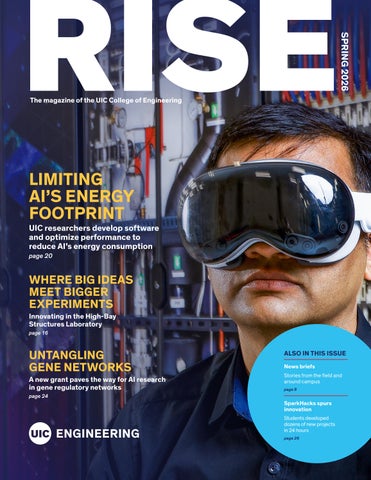
20 Limiting AI’s Energy Footprint
UIC researchers develop software and optimize performance to reduce AI’s energy consumption
16 Where Big Ideas Meet Bigger Experiments
Innovating in the High-Bay Structures Laboratory
24 Untangling Gene Networks
A new grant paves the way for AI research in gene regulatory networks
Addressing AI fairness p. 9 A flexible sensor p. 10 Building futures in quantum technology p. 8 Fighting bacteria with nanomaterials p. 11
Data+AI course p. 12
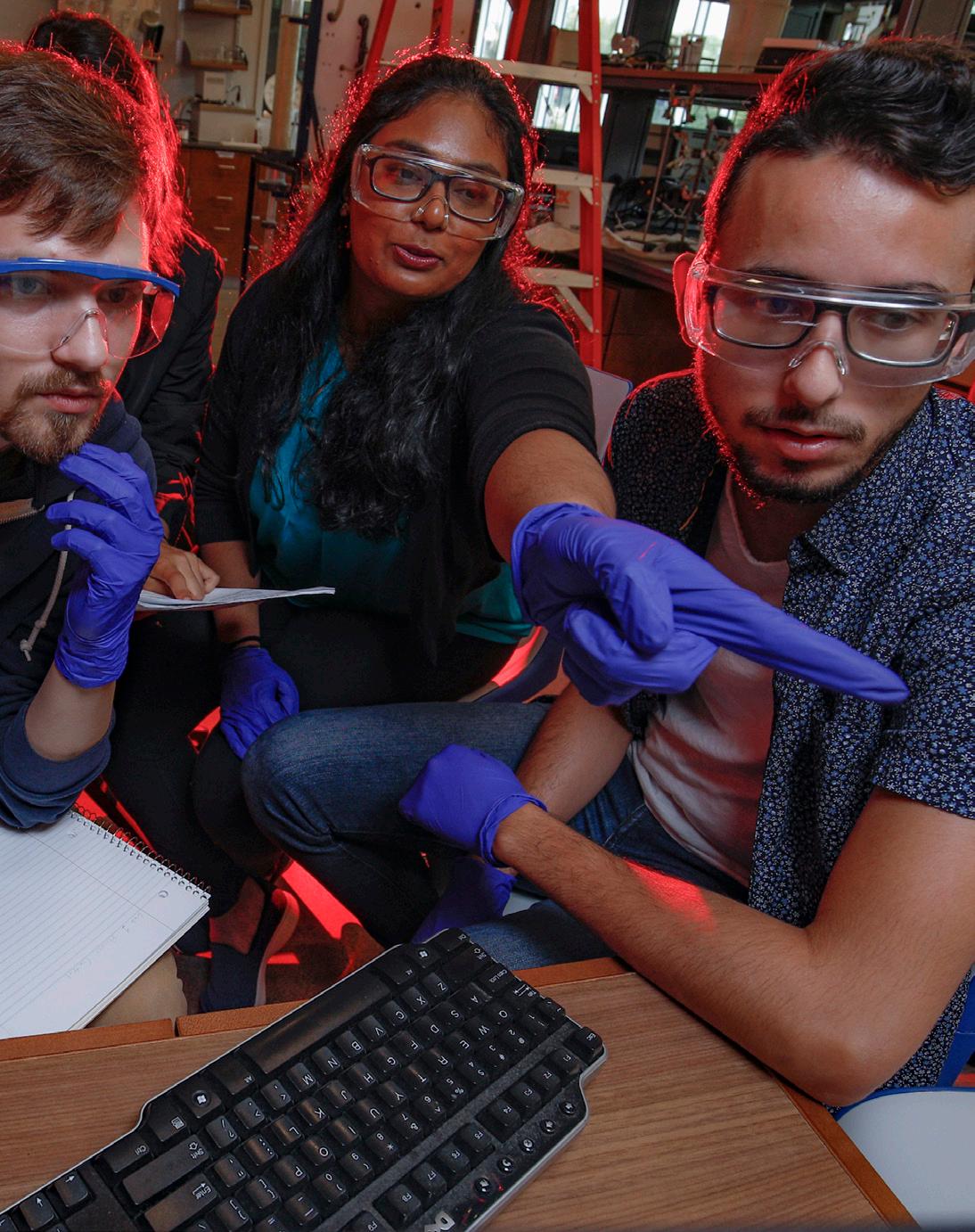
Engineering ingenuity at the Chicago Auto Show p. 14 Grant to improve chemical safety tasting p. 13
Faculty startup commercializes research p. 15
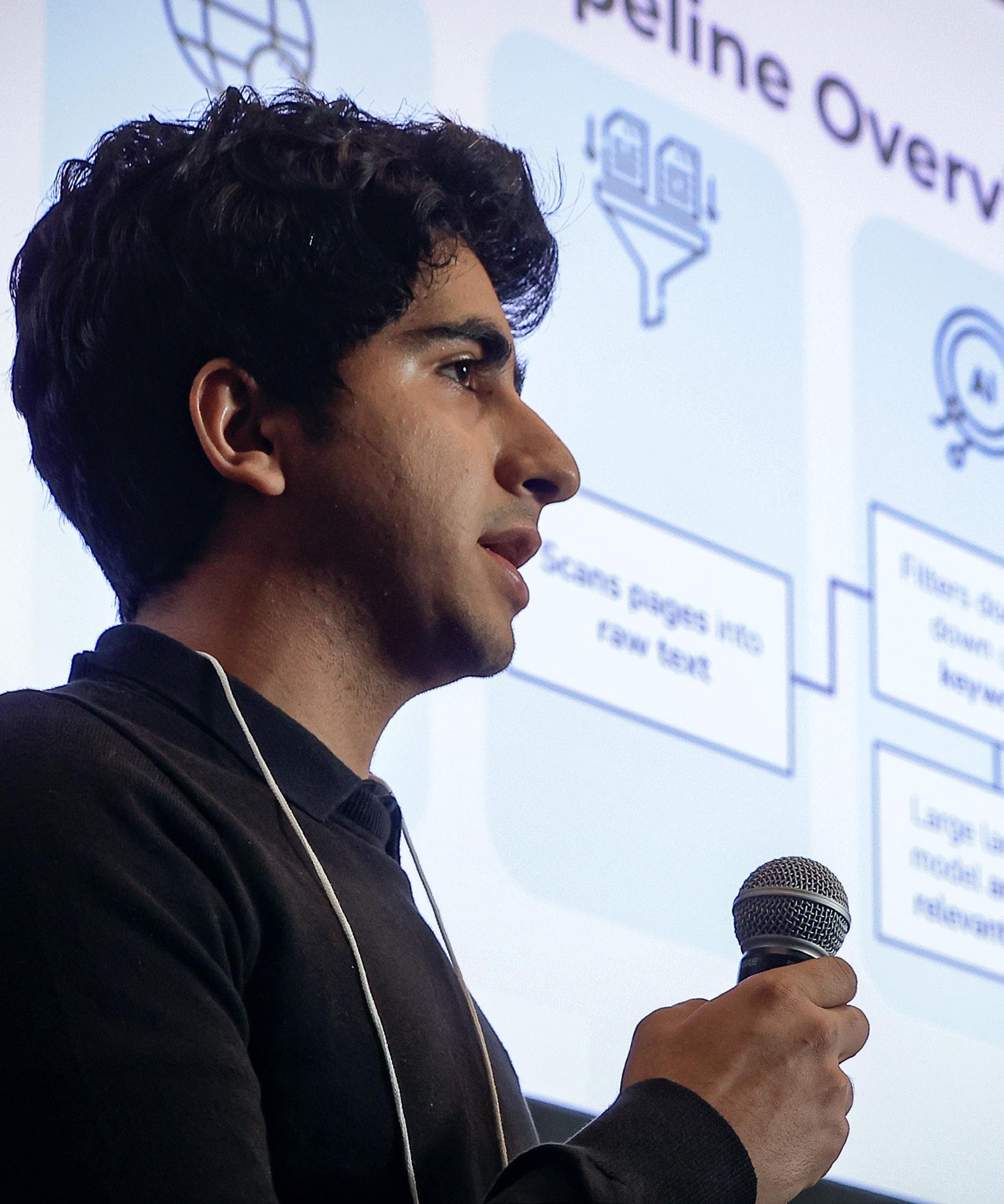
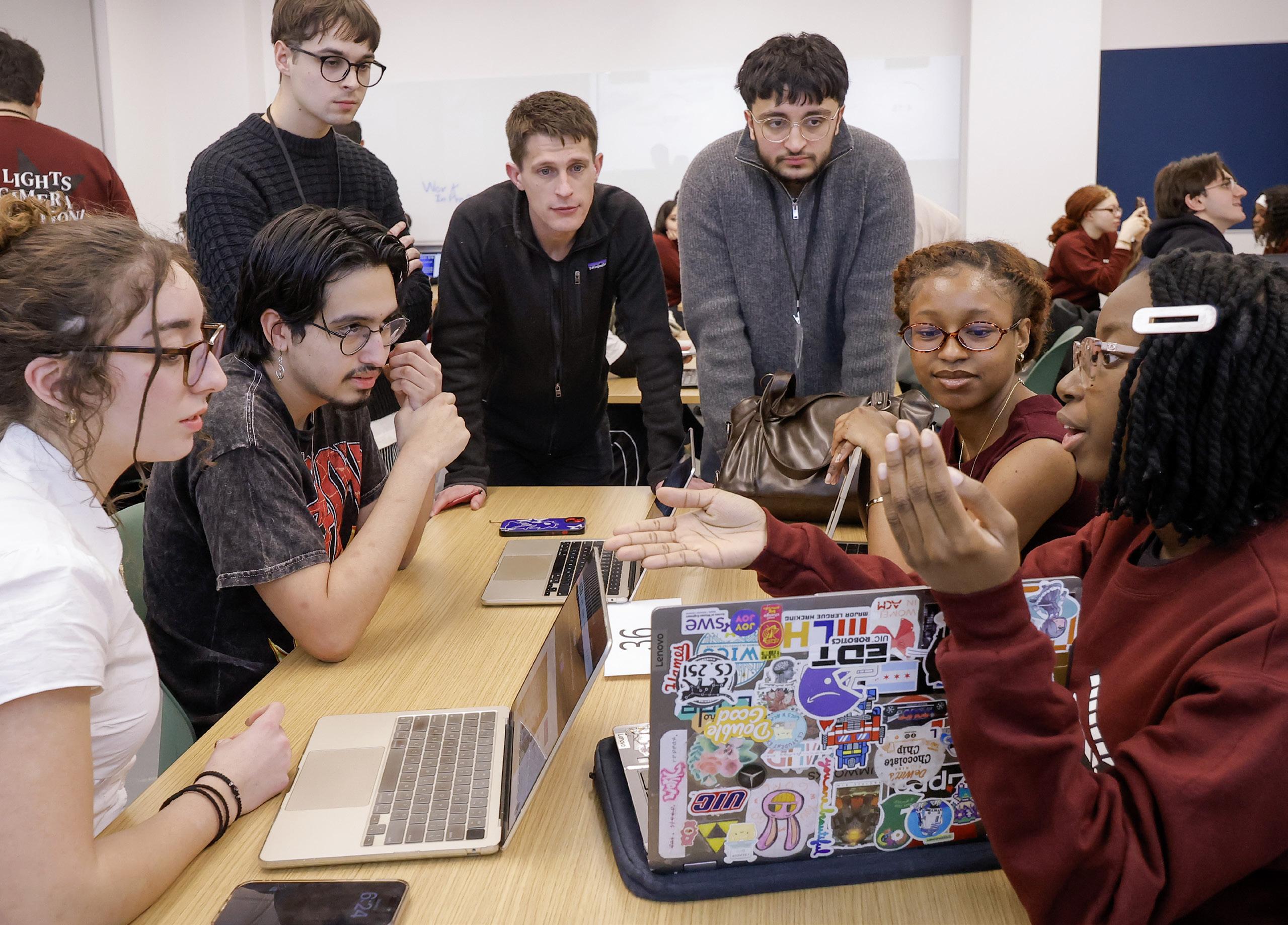
SparkHacks brought together nearly 300 students for a 24-hour project design competition.
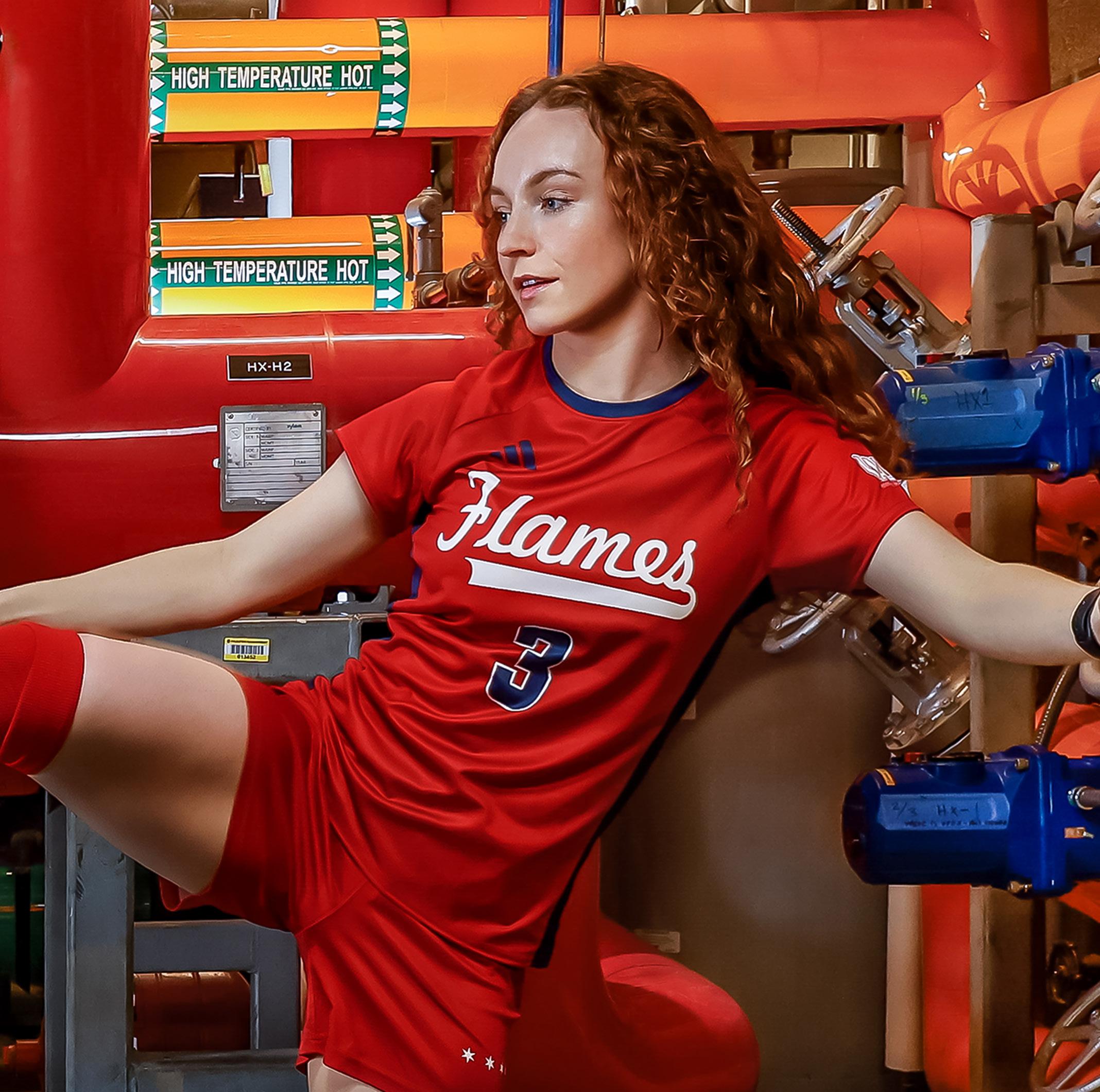
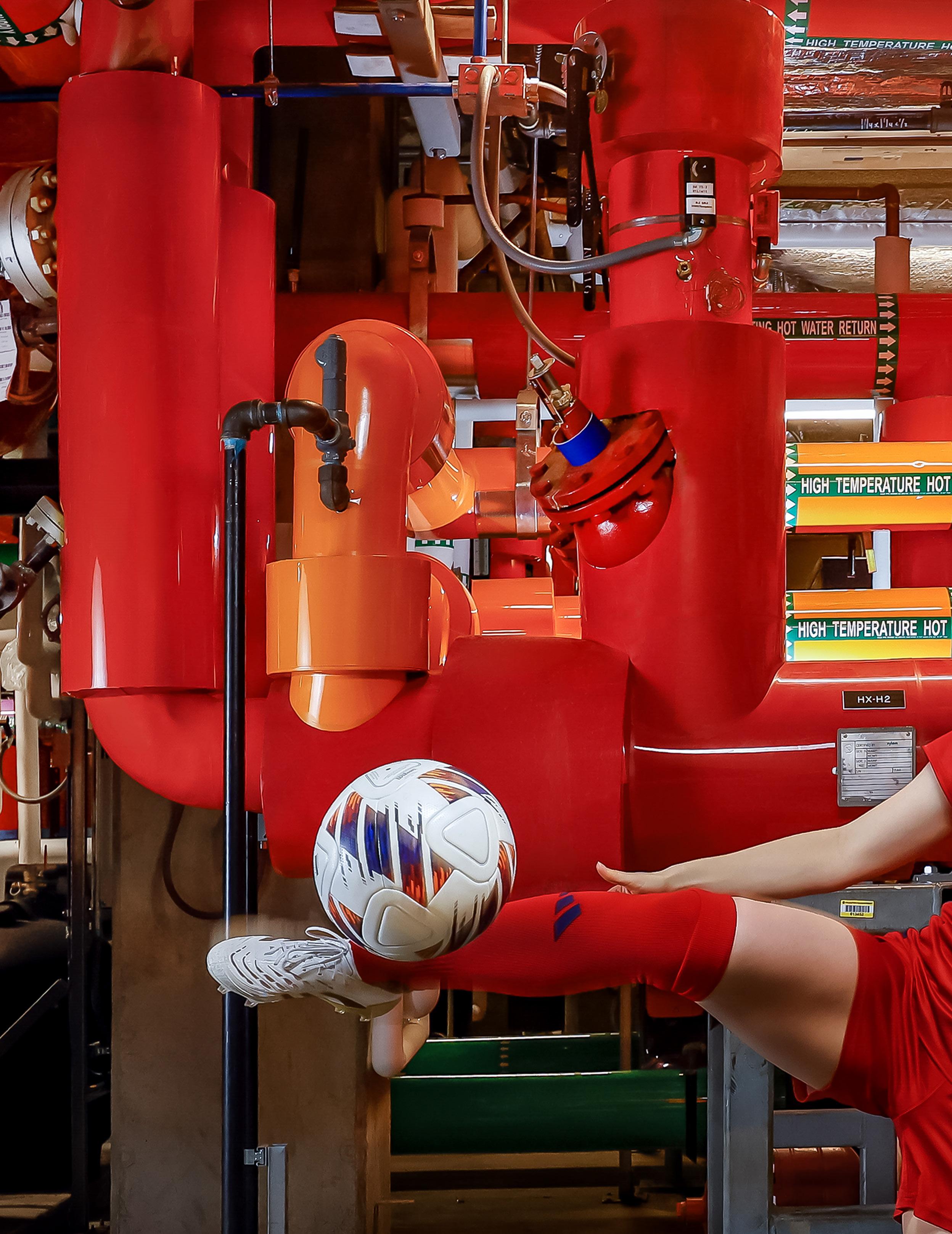
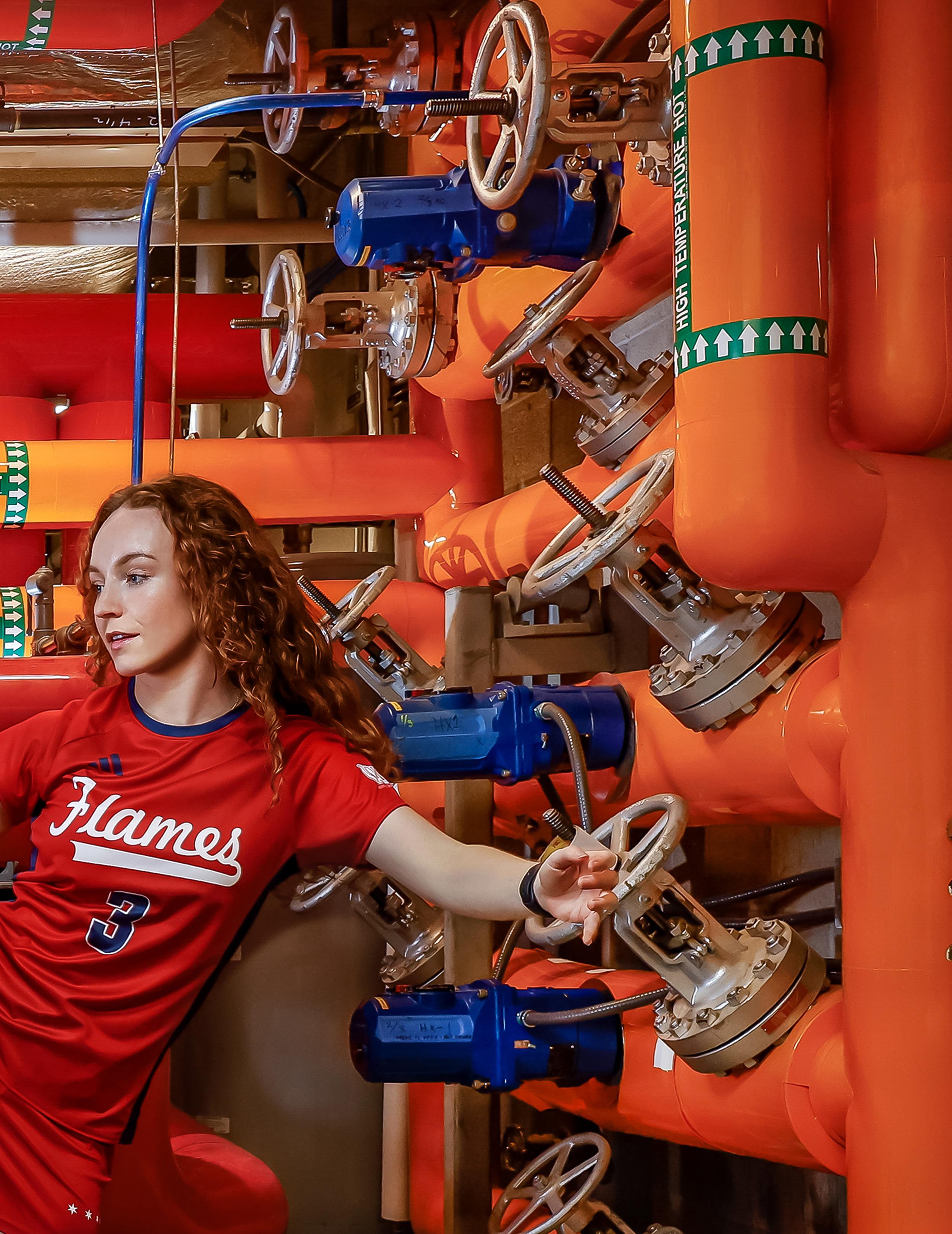
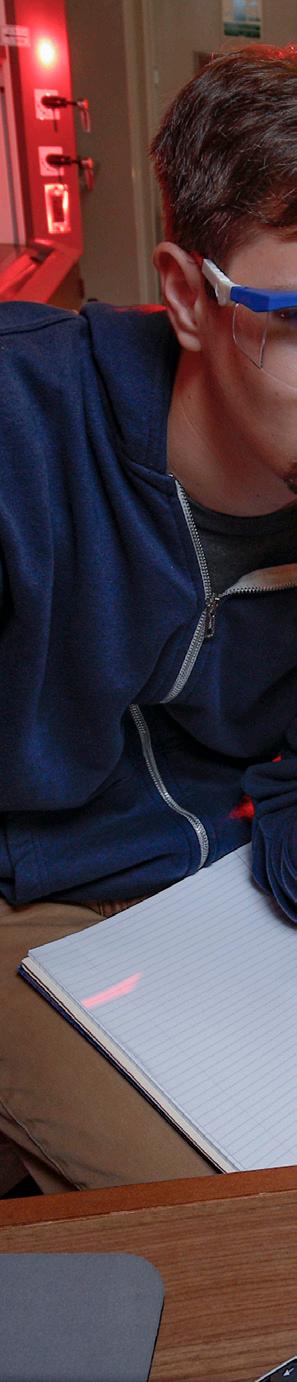
Industrial engineering student Addison “Chopper” Carriere is a member of the women’s soccer team that won the Missouri Valley Conference championship for the first time in UIC history. She was also honored for her performance on and off the field by being named to the 2025 MVC Women’s Soccer Scholar-Athlete Team and the 2025 College Sports Communicators Academic All-District team. After graduating in May, she will bring her talent to Powertron Global in Austin, Texas, where she previously worked as an engineering intern.
Photograph: Jim Young
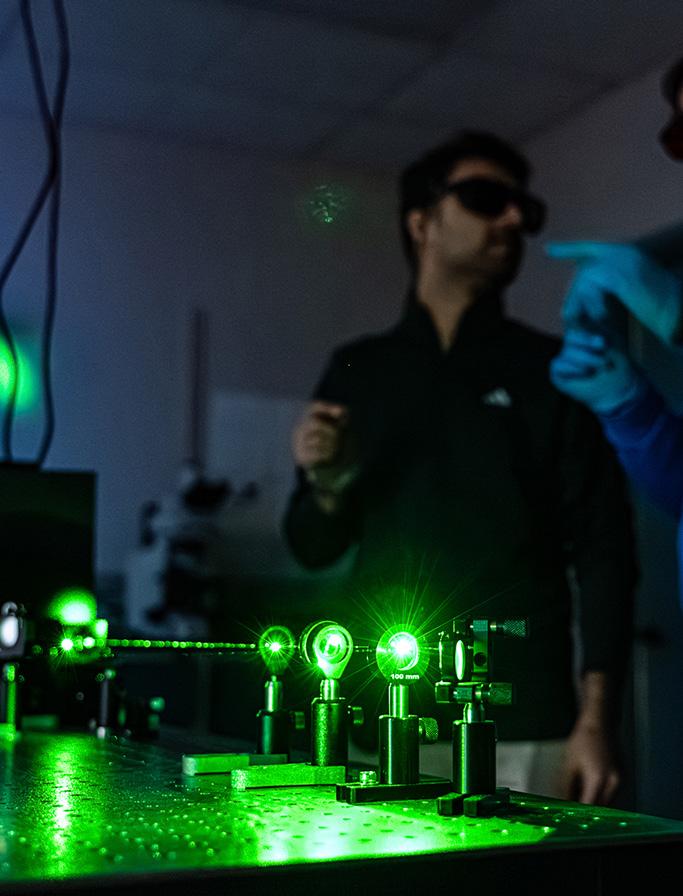
Building futures in quantum technology
When Hessam Shahbazi looks toward his future, he sees quantum computing — a field so revolutionary, it promises to reshape industries from aerospace to cybersecurity. As a PhD student in mechanical engineering at UIC, Shahbazi knows he’s in the right place at the right time.
Chicago has emerged as a national hub for quantum innovation, home to pioneers like Fermilab and Argonne National Laboratory and startups such as PsiQuantum and EeroQ Quantum Hardware. For Shahbazi and his peers, that proximity isn’t just geography, it’s opportunity.
“Being adjacent to all of these national labs and startups and companies, we have a better opportunity to build connections,” Shahbazi says.
UIC’s quantum computing program in the Department of Electrical and Computer Engineering celebrated a milestone in May when Ashley Blackwell became the first UIC student to earn a doctoral degree focused on quantum information science. Another graduate student will follow with a master’s degree later this year, and undergraduate opportunities are expanding fast. This fall, UIC debuted courses in quantum error correction, quantum hardware and sensing and quantum optics — with plans for a quantum entrepreneurship class on the horizon.
Students began catching the quantum bug even before formal coursework launched. Caleb Williams, who started as an electrical engineering major, co-founded a quantum student group and worked on a project at EeroQ, building a system that couples with the company’s superconducting qubit — the basic building block of quantum computing. For faculty member Zizwe Chase, that project exemplifies UIC’s approach: hands-on access to cutting-edge technology, interdisciplinary teamwork and exposure to quantum entrepreneurship.
“These students are very hungry to achieve and accomplish great things,” Chase says. “We want to show our students what’s possible — you can create your own pathway.”
That’s exactly what Hessam Shahbazi envisioned at the start: being in the right place at the right time. For him, that means quantum innovation.
Photograph: Yingtang Lu Steve Hendershot
Addressing AI fairness
As our society increasing relies on artificial intelligence models, ensuring that models agree and are fair is a growing problem.
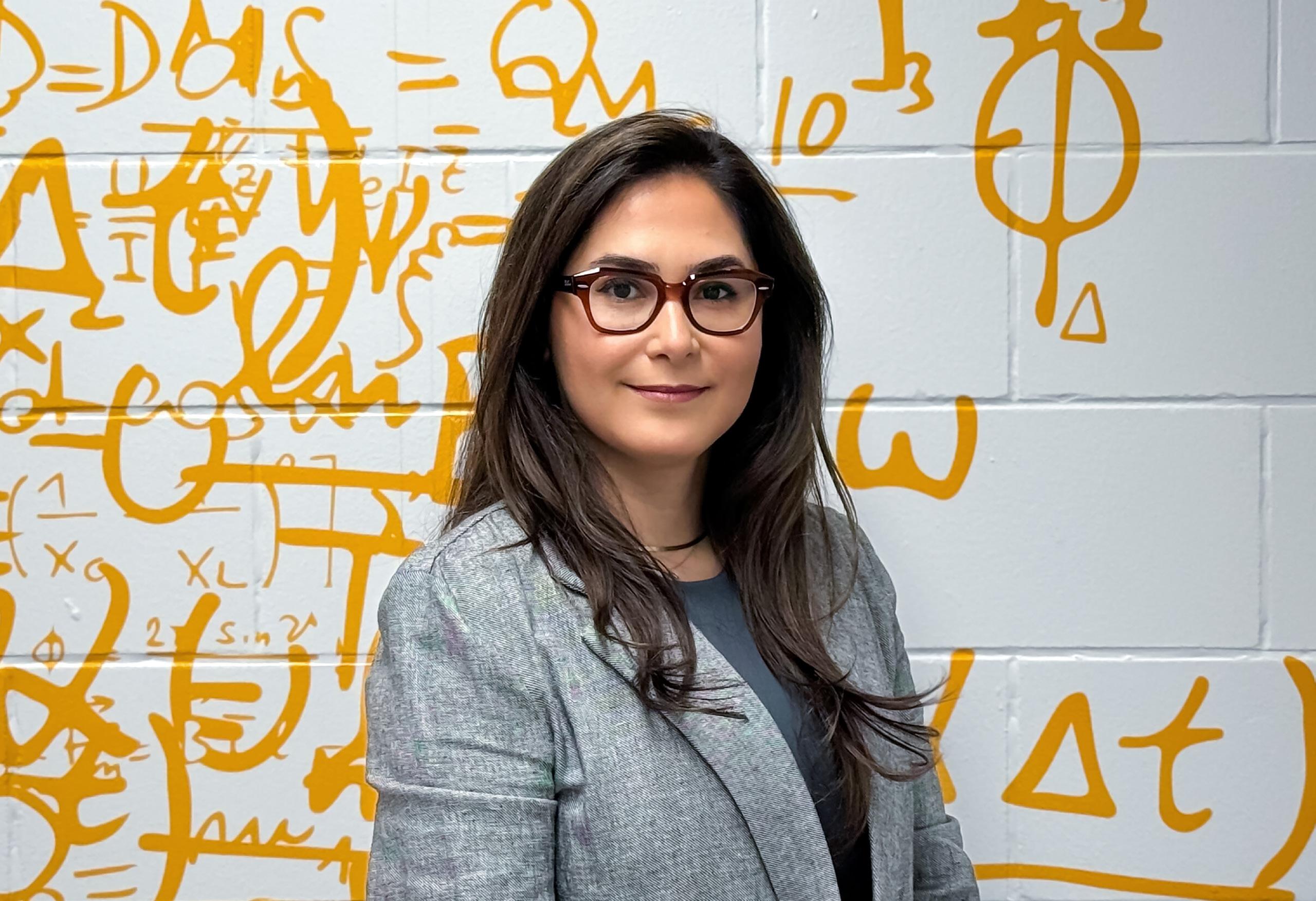
Industrial Engineering Assistant Professor Hadis Anahideh and her research team have worked to do just that. With PhD students Parian Haghighat and Mohammadsina Almasi, Anahideh is addressing critical challenges in trustworthy and socially responsible AI systems.
In one project, the team focused on cases where different models perform equally well overall but still disagree on predictions for individual people. When models disagree, it can be a serious problem in high-stakes settings where decisions need to be reliable and consistent.
To reduce these disagreements, the research team proposed three complementary methods. The first method is outlier correction, which targets data points that none of the wellperforming models can predict accurately. The second approach, called local patching, uses a separate set of data—
known as a validation set—to check how well each model is performing in small groups of similar cases. When a model shows a consistent bias—a pattern of repeatedly predicting values that are too high or too low—in one of these local areas, the method makes a small correction to improve its predictions. This helps different models agree more with each other while still remaining accurate.
The third method, called pairwise reconciliation, compares models that disagree on the same cases and gently adjusts their predictions, so they are more consistent and less biased.
“These methods can be used on their own or together, and each has its own benefits,” Anahideh said. “After reducing disagreement, the improved predictions can be combined into a single, interpretable model for real-world use. Tests on multiple datasets show that our methods reduce disagreement while keeping prediction accuracy high.”
A flexible sensor
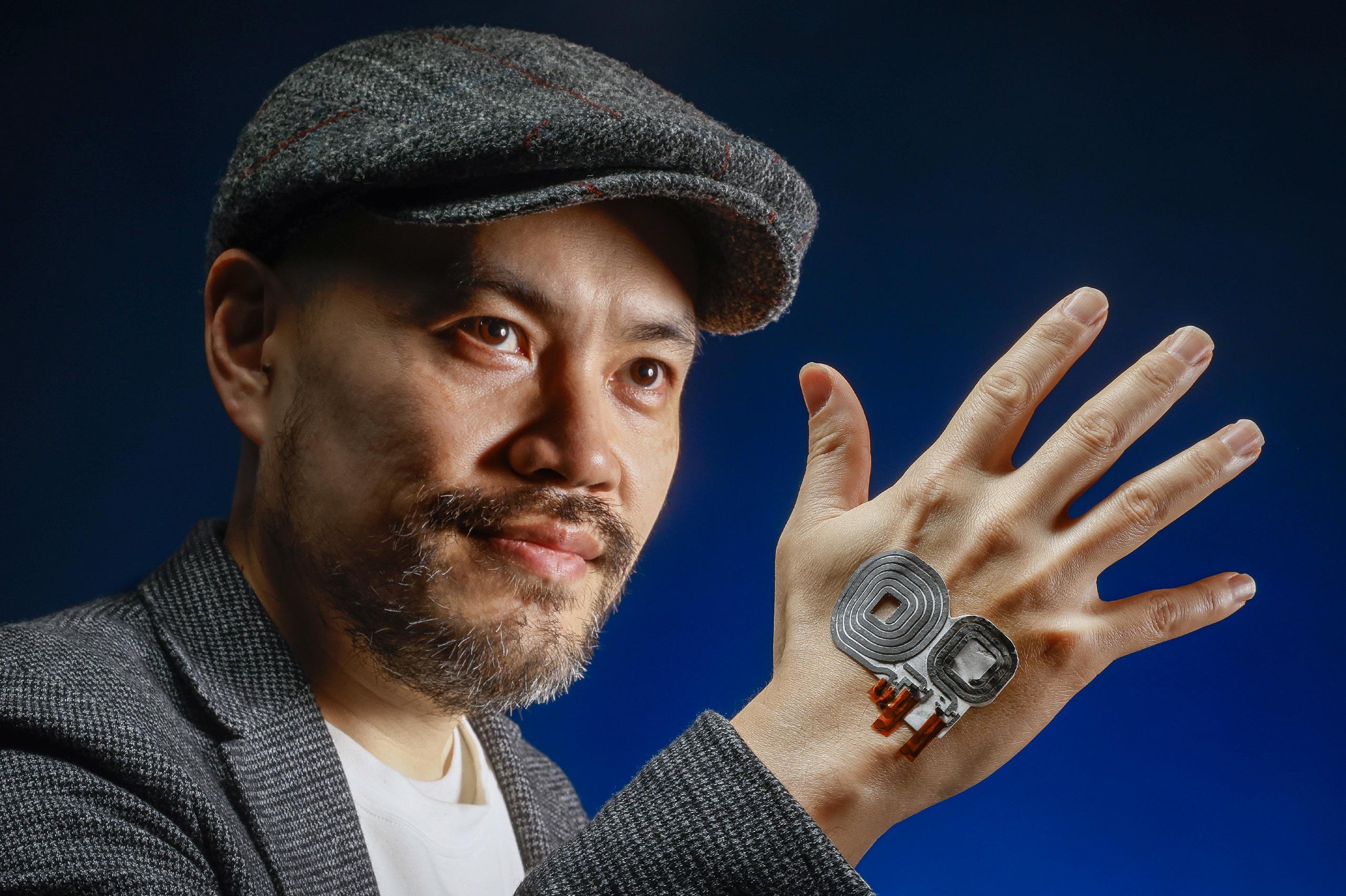
Researchers at UIC Engineering have created a wearable wireless sensor that sits on the skin and can measure temperature along with glucose, ammonium, sodium, potassium and pH levels in sweat.
The sensor, which is made of flexible, antimicrobial materials and does not have a battery, is highly sensitive and accurate. The technology could be applied to devices that monitor things like hyperglycemia in diabetic patients or hydration during exercise.
Compared to the wearable wireless sensing devices currently available, the new device can measure multiple variables with a very small footprint, said study senior author Pai-Yen Chen.
“In traditional wearable devices, we cannot simultaneously detect many physiological parameters,” said Chen, professor of electrical and computer engineering. “We wanted to build something that can wirelessly monitor multiple parameters, and we wanted to make the wearable device very, very compact.”
The resulting invention sits on the skin like a tattoo and is smaller than a playing card, about half the size of conventional systems. It’s made of a liquid metal injected into a porous, plastic-like material developed by collaborators at Caltech and University of MissouriColumbia. The material is shaped into coil antennas and sensors and flattened onto a soft surface that can flex with the body.
The sensor has no battery or wires. Instead, it sends data wirelessly to a portable reader through inductive coupling: the transfer of energy and information from one antenna to another through magnetic flux. The researchers also injected an antimicrobial molecule into the porous, flexible material, which makes it 99.9% resistant to common skin pathogens including MRSA, a type of staph infection.
Photograph: Jim Young
Fighting bacteria with nanomaterials
Antimicrobial resistance is making wound infections increasingly challenging to treat, underscoring the need for alternatives to conventional antibiotics.
Environmental and Materials Engineering Professor Stabryla received a What If…? Award for Creative Medical Research from the Science Philanthropy Alliance for research on how to fight drug-resistant bacteria with AI-designed nanomaterials.
Her research has found that metal and metal oxide nanoparticles, especially silver-based formulations (AgNPs), represent a promising class of antimicrobials that could help fight bacteria.
Stabryla and her team plan to rationally design next-generation, “evolutionresilient” nanoparticles by linking size, shape, and other properties to antimicrobial efficacy and bacterial adaptation pathways. Using wholegenome sequencing and a machine learning–based generative design model, she and her team will identify nanoparticle designs that maximize antimicrobial activity while minimizing or redirecting the evolution of resistance.
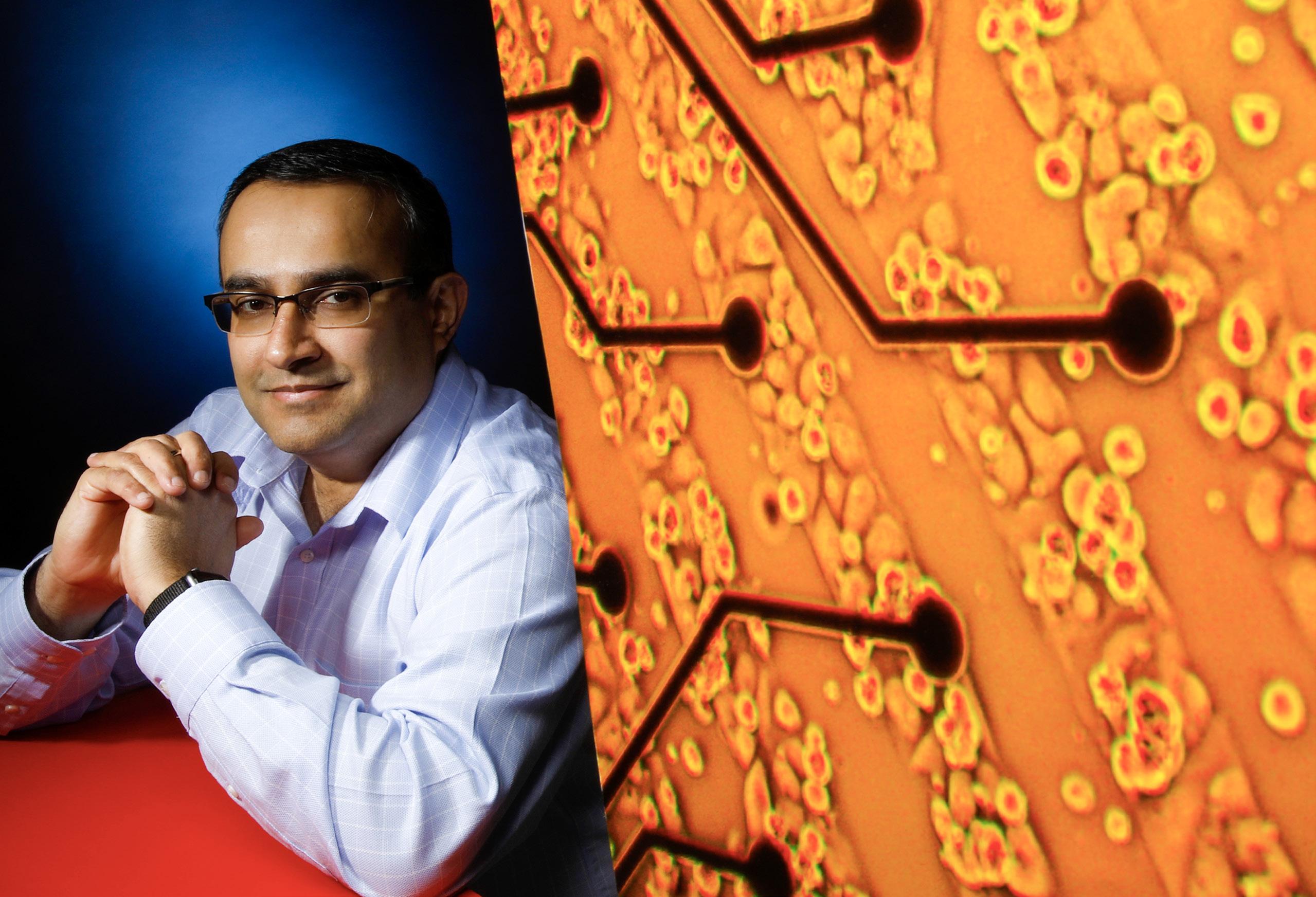
This generative approach, led by Assistant Professor Jida Huang of Mechanical and Industrial Engineering, is essential for efficiently exploring this vast design space and navigating the thousands of possible nanoparticle designs that cannot be tested experimentally to identify the most promising candidates.
Rather than focusing on optimization of a single material in isolation, this approach will set the stage for conceptualizing nanoparticles as tools that can be designed to work together as part of a larger engineered system.
Promising candidates will be chemically synthesized, tested against pathogenic bacteria, and incorporated into a prototype polymeric nanocomposite coating for future clinical application.
The outcome of this work could accelerate antimicrobial materials discovery and enable new infection-control technologies that improve patient safety and reduce the burden of antimicrobial resistance.
Photograph: Jim Young
Data+AI course
Data and artificial intelligence skills have quickly become critical for college graduates—but where can students learn those skills, especially if they aren’t computer science or data science majors?
UIC’s Chicago Tech Circle is here to help. The new initiative, launched with support from Google.org and UIC’s computer science department, provides UIC undergrads with applied data and AI skills. The initiative is an outgrowth of Break Through Tech Chicago, which doubled the number of women and nonbinary students in computing between 2020 and 2025, and showcased UIC talent.
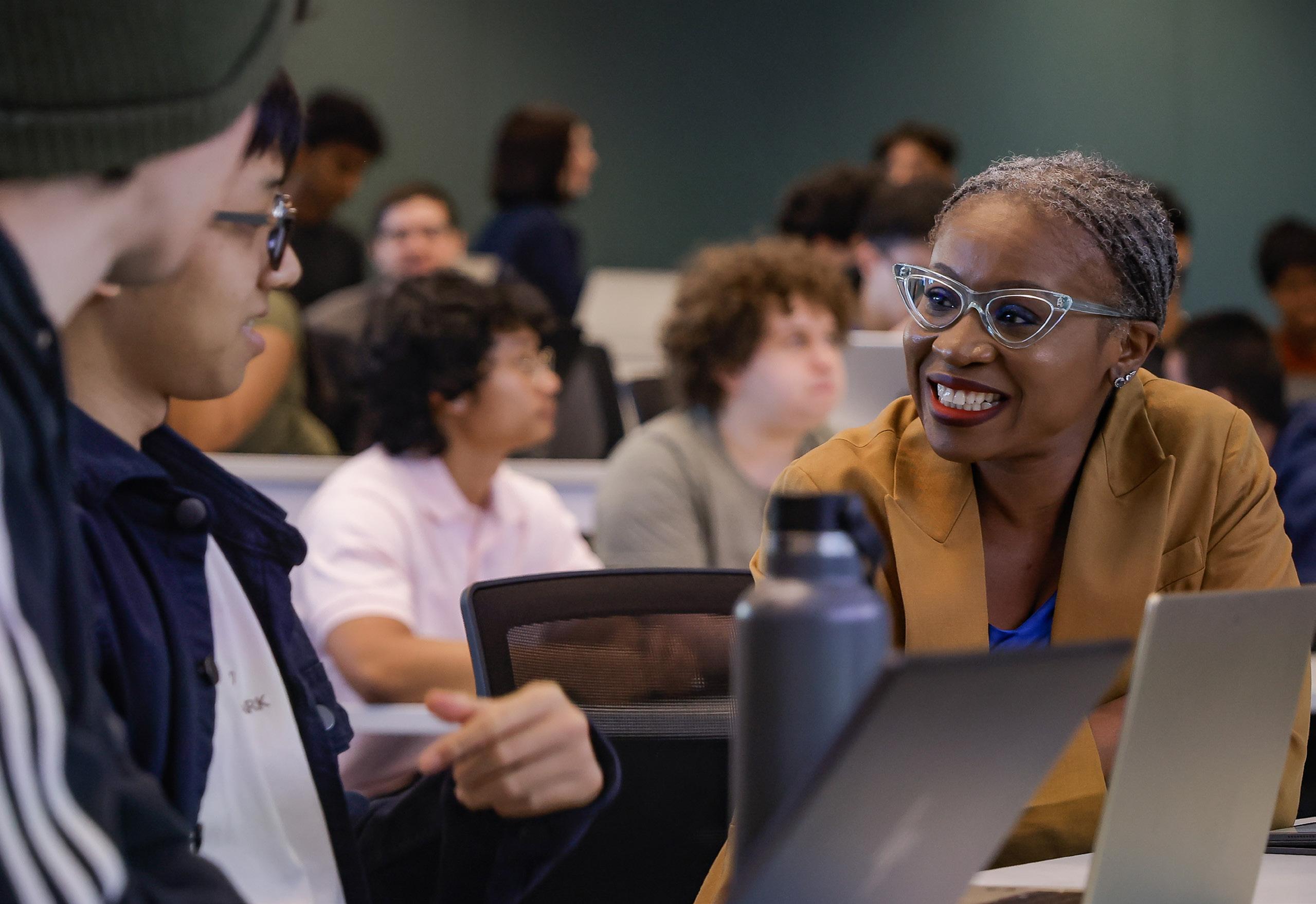
Chicago Tech Circle is offering a onesemester data and AI course, open to undergraduates who have completed at least 30 college credits. The course allows students from any major to develop data and AI skills applicable to their own areas of study and become more marketable.
Offered for the first time in fall 2025 to students from the colleges of business administration, engineering, and liberal arts and sciences, the course teaches students how to leverage AI tools effectively and ethically; how to use data handling tools and machine learning models; and how to explore workflow automation solutions. It emphasizes the use of GenAI alongside human judgment, is not about programming, and deliberately builds professional skills to create organizational value.
“In the end, we had to present a product that we made from scratch, solving a real-world problem and then pitch it to real companies,” said William Tanna, a finance major. “Overall, the course was one of the most interesting and beneficial courses I’ve taken.”
Photograph: Jim Young
Grant to improve chemical safety testing
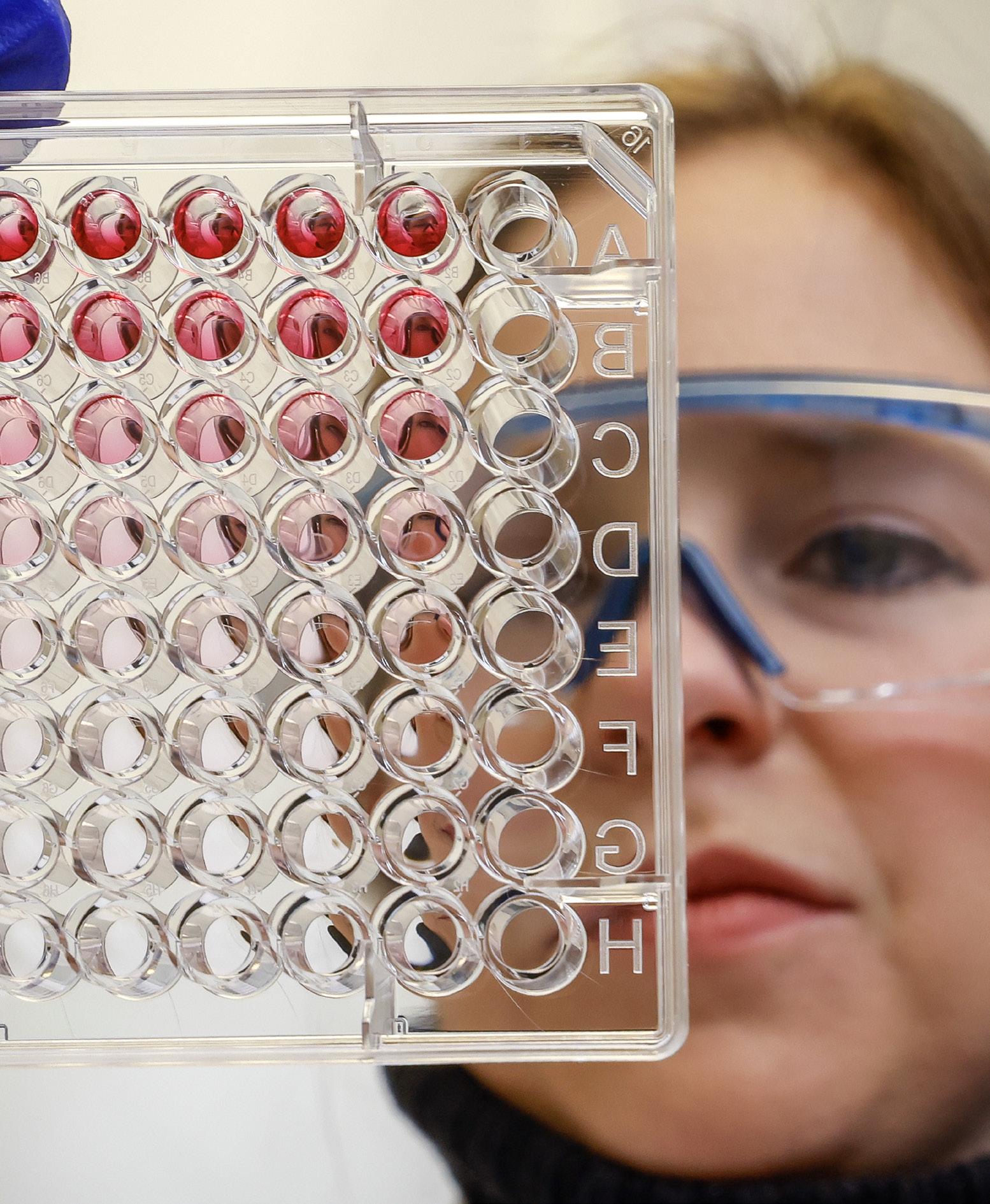
Animal testing has long been part of chemical safety assessment, but many industrial and consumer-use chemicals still lack direct safety data, and testing each compound individually is impractical.
A major new award from the National Institutes of Health (NIH) and its National Center for Advancing Translational Sciences (NCATS) will support efforts to address that challenge by integrating human-relevant laboratory models and computational methods into chemical safety assessment.
Robert Uyetani Collegiate Professor Salman Khetani is part of that effort as the UIC subcontract principal investigator on a new NAMs-Decision Center: New Approach Methods for Decisions on Industrial and Consumer-Use Chemicals. The center is led by Ivan Rusyn at Texas A&M University.
The center is part of NIH’s broader efforts to expand the use of new approach methodologies, including advanced laboratory models and computational tools, to improve how chemicals are evaluated for safety. These approaches can help reduce reliance on animal testing while generating information that is more directly relevant to human biology.
At UIC, Khetani and his team will refine in vitro models of the human gut and liver, which are critical for understanding how many compounds are absorbed and metabolized by the body. Other investigators at the center will complement these efforts with in vitro models of the human kidney and machine learning methods to make predictions from the collected data.
By strengthening the evidence used to compare related compounds with human-relevant data, the center aims to make chemical safety assessment more efficient and, most importantly, better aligned with public health needs.
Photograph: Jim Young
Engineering ingenuity at the Chicago Auto Show
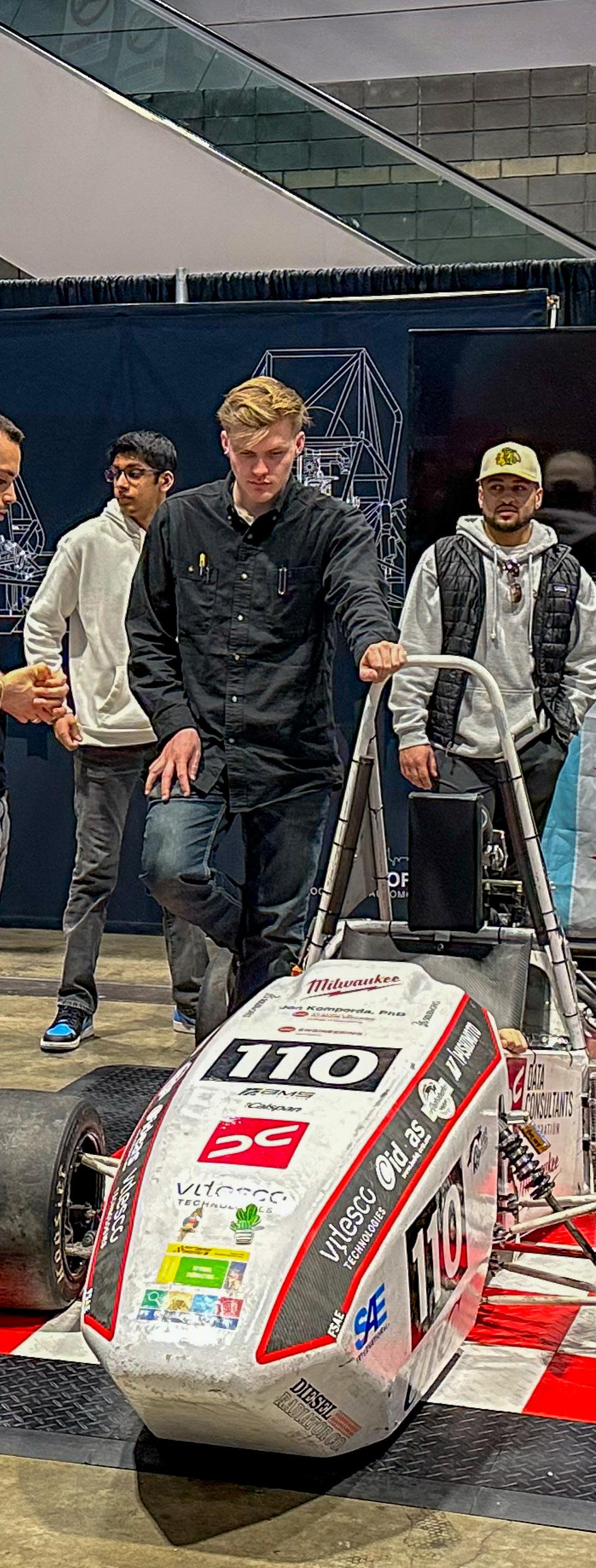
Members of the Society of Automotive Engineers (SAE) at UIC returned to the Chicago Auto Show in February at McCormick Place to show off the vehicles they built and raced.
The students displayed their Formula SAE internal combustion car, which they used to compete at the Michigan International Speedway, the Pittsburgh Shootout, and the Lawrence Tech Grand Prix last season. They also exhibited their eBaja, which was the first electric Baja SAE vehicle built in North America.
“Showing the cars together gives people a good sense of how our Formula and Baja programs operate, especially as we’re already deep into developing our next-generation vehicles,” said Uriel Delgado, SAE at UIC president and a student in mechanical and industrial engineering.
As SAE members, students are part of an interdisciplinary team with members from mechanical engineering, electrical engineering, computer science, and other colleges and majors across the university. In addition to the auto show, SAE membership provides students with a hands-on experience encompassing many aspects of engineering. Students are involved in design, manufacturing, business presentations, and testing the vehicles on a track.
At competitions, the cars are judged by industry professionals—many of whom are former SAE members—who provide detailed technical feedback. The organization also offers mentorship opportunities and access to professional and networking events that connect the members with engineers working in the field.
“That kind of real-world exposure, especially in the automotive space, helps students build practical skills early and better prepares them for engineering careers after graduation,” Delgado said. “Being part of SAE has given me the chance to compete at the national level alongside teams from all over the country and the world, which really expands my network beyond the classroom.”
Photo courtesy of SAE at UIC.
Faculty startup commercializes research
Graphene, a one-atom-thick form of carbon known for its exceptional strength and electrical conductivity, has long been viewed as a transformative material for industries ranging from energy storage to infrastructure. However, producing high-quality graphene at industrial scale and low cost remains one of the field’s most significant challenges.
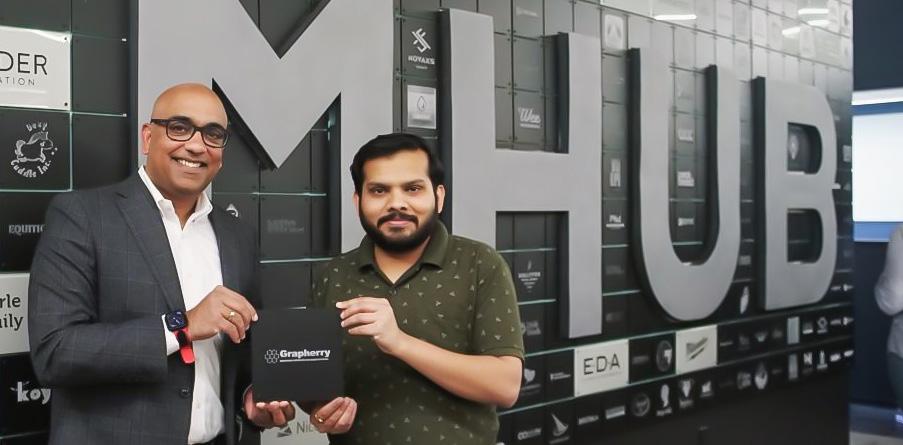
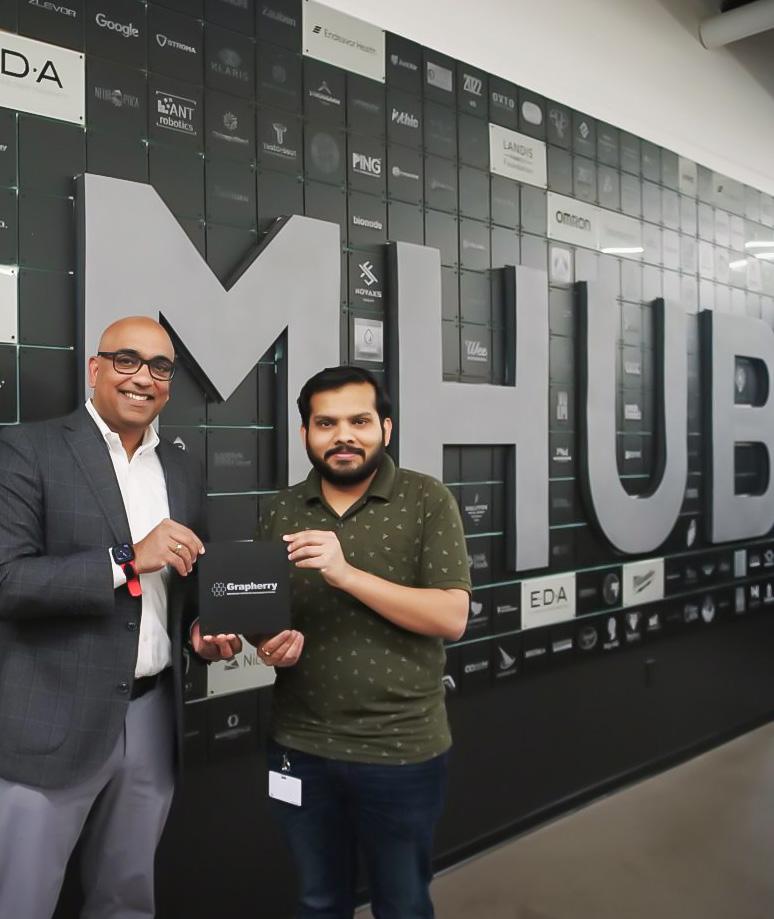
Grapherry, a Chicago-based startup founded by Vikas Berry, professor of chemical engineering, is addressing the key barriers in the graphene industry by upcycling carbon waste, such as biosolids from wastewater treatment plants and biochar from agricultural waste, into high-quality graphene and graphene oxide.
Earning multiple grants in 2025, the company is pursuing research on incorporating graphene into applications in energy, construction, agriculture, and advanced composite applications. One such grant enabling this research is the Illinois Innovation Voucher Program, which fuels collaboration between companies and Illinois’ top higher education initiatives.
Partnering with UIC, Berry and his team at Grapherry, including multiple UIC chemical engineering students, are testing the quality of the graphene produced for application-specific properties such as electrical conductivity and structural characteristics.
“Direct exposure to startup activities is an opportunity for students to experience a very fast-paced environment,” Berry said. “Students learn how to address real-world challenges in process scale-up, materials engineering, and product development. Collaborations between faculty-founded startups and the university help strengthen Chicago’s innovation ecosystem.”
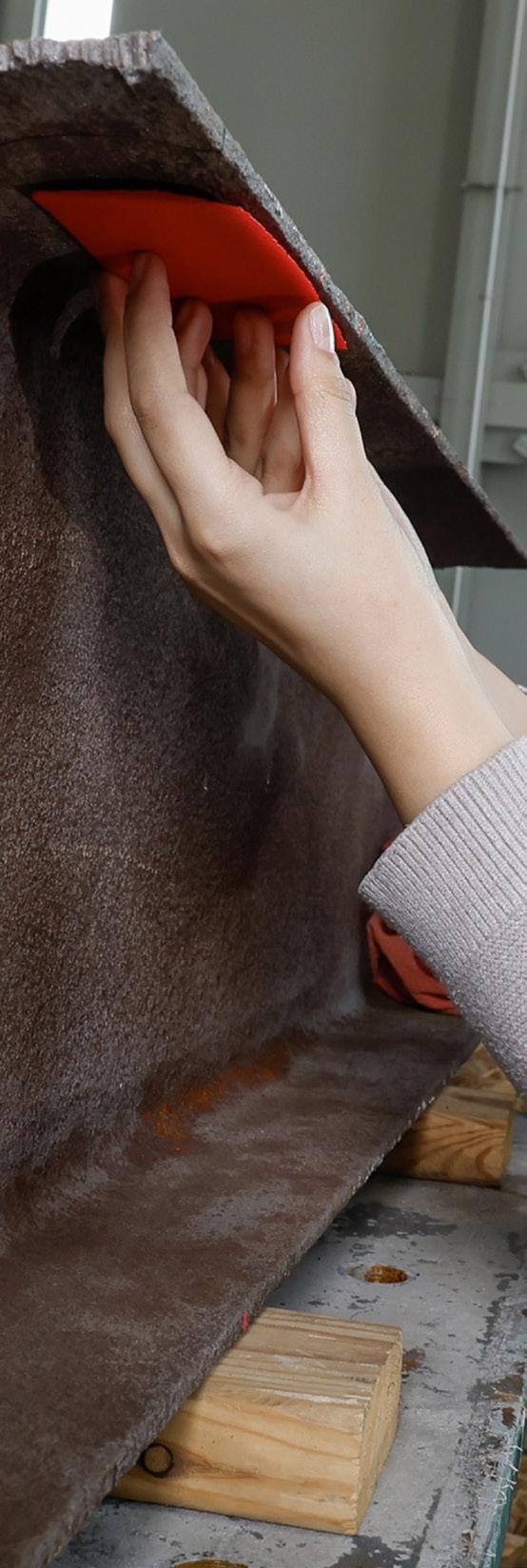
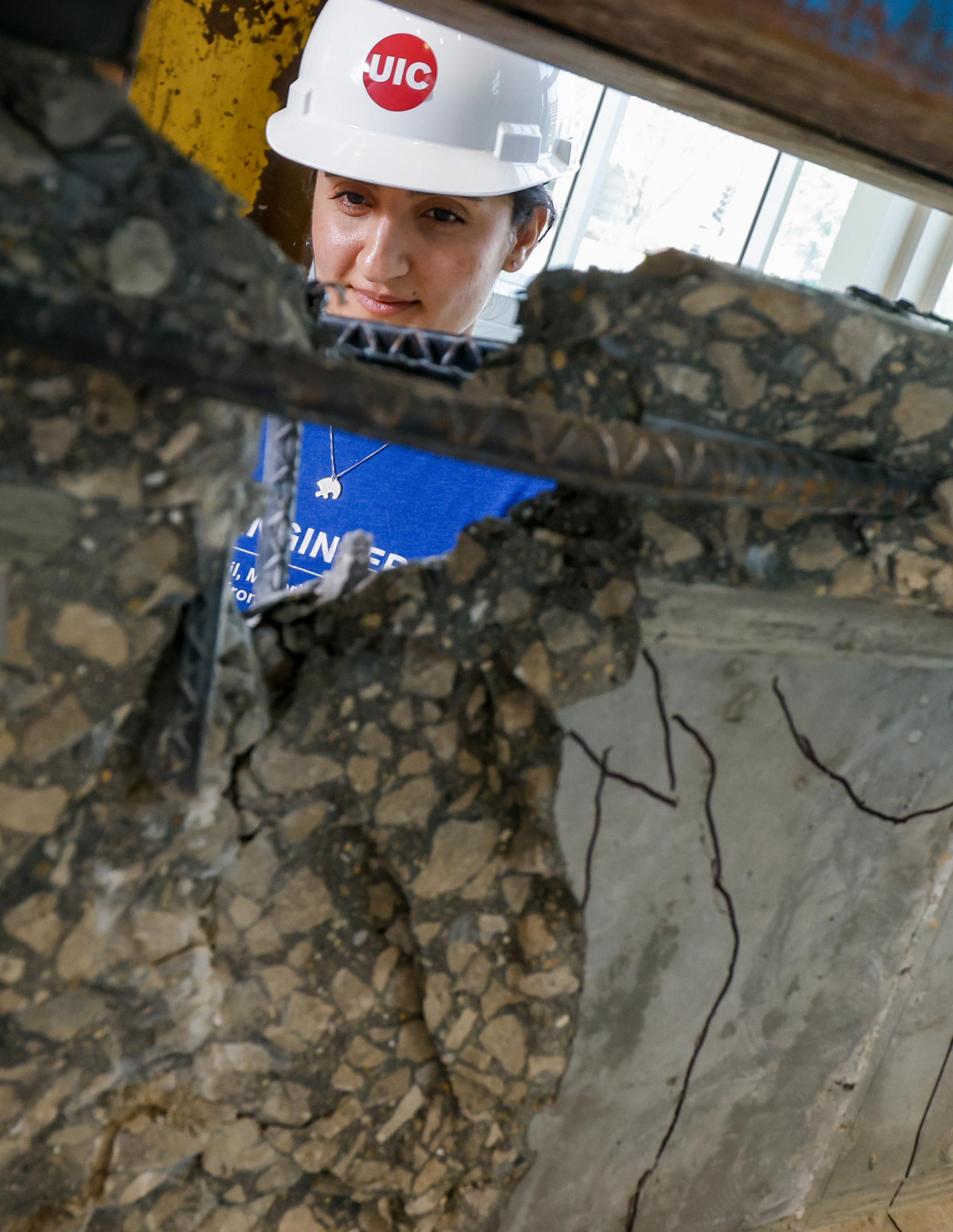
Photograph: Jim Young Civil, Materials, and Environmental Engineering PhD student Raguez Taha investigates a damaged decommissioned bridge beam from the Chicago Transit Authority in the High-Bay Structures Laboratory.
Where Big Ideas Meet Bigger Experiments
Innovating in the High-Bay Structures Laboratory
By David Staudacher
Grand in scale, the sheer size of the High-Bay Structures Laboratory at UIC Engineering can feel intimidating.
At the top of the 45-foot-high ceiling, large overhead doors open to allow the delivery of huge specimens and infrastructure components.
Bottomed by a five-foot six-inch thick strong floor, the 6,000-square-foot space holds the specialized machinery that provides civil, materials, and environmental engineering researchers with everything they need to perform large-scale tests—and get big results that benefit both industry and the public.
Bringing in big beams
A 2025 Report Card for America’s Infrastructure from the American Society of Civil Engineers reveals that thousands of people across the United States use bridges that are considered structurally deficient every day.
Much of that damage involves corrosion of old steel. A common way to repair bridges with this damage is with plating—attaching steel plates to the existing bridge members to increase load-bearing capacity.
But the plates increase the weight of the repaired section beyond its original design configuration, potentially causing further structural damage, and any gaps remain susceptible to corrosion.
To make bridge repairs more efficient, Professor Didem Ozevin and her PhD student Raguez Taha are testing new methods on large, decommissioned bridge beams they received from the Chicago Transit Authority.
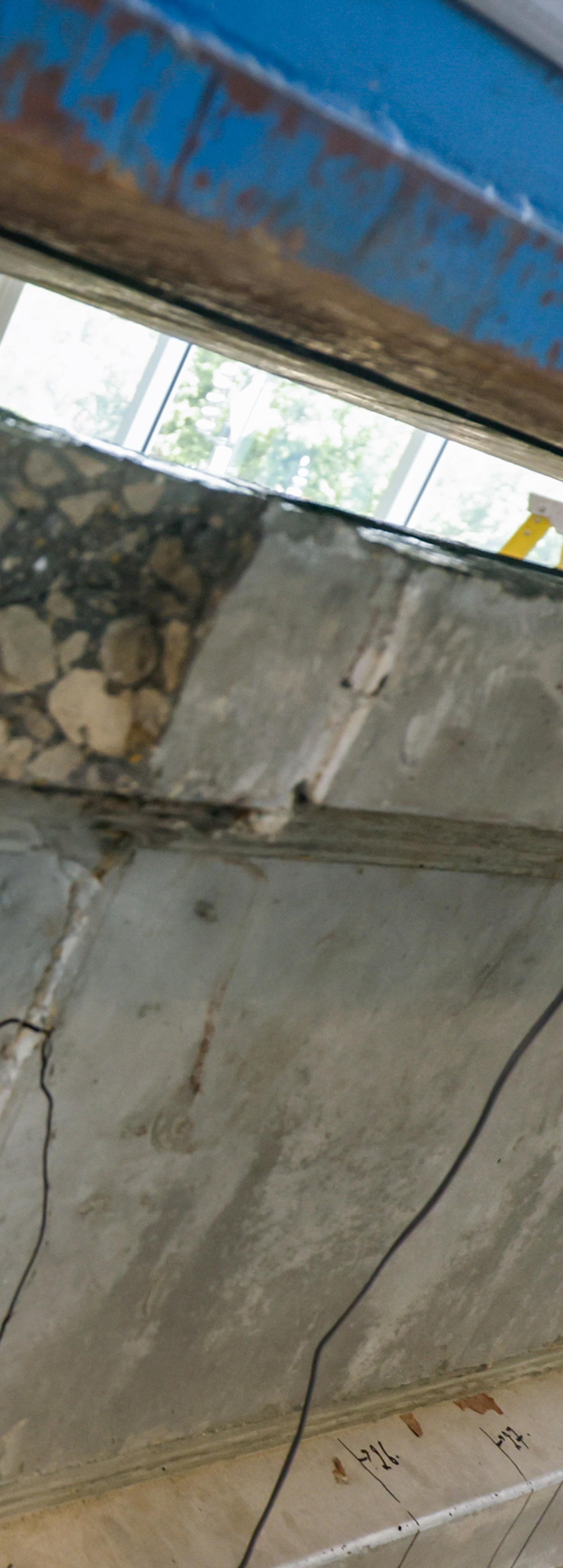
Using hydraulic actuators to perform bending tests, Taha is working to make section loss in steel bridges quantifiable. The current method is a visual inspection followed by minor manual repairs, which does not provide an accurate assessment of bridge health.
Taha takes photos of the sections, then turns them into 3D models using photogrammetry software. “It turns visual data into measurable data, which engineers can use to quantify deterioration and perform meaningful analysis on a bridge,” she said.
Using these models with structural analysis, engineers can determine precisely what is missing from the bridge and repair it with 3D-printed metal.
“What our method is doing is essentially repairing it so that it fits exactly to the section that’s missing, like a puzzle piece,” Taha said. “The method also increases the stiffness and brings the section close to its original capacity.”
With six steel beams ranging from 5 to 10 feet long and weighing as much as 840 pounds, the research wouldn’t be feasible without the High-Bay Structures Lab and the equipment housed there.
“There’s no other place that I could have tested beams of this size. Having dedicated space for large-scale testing is essential. I would not have been able to carry out this kind of research without a facility like this,” Taha said.
Monitoring structural health in real-time
When the United States Army Corps of Engineers (USACE) wanted to establish a distributed structural health monitoring system with its miter gates, it turned to UIC Distinguished Professor and Christopher B. and Susan S. Burke Chair in Civil Engineering Farhad Ansari.
The USACE operates and maintains the nation’s inland navigation channels, which consist of more than 25,000 miles of waterways. This vast infrastructure system of locks and dams is an essential part of the nation’s transportation network. The miter gates are a key component of the locks, operating as the door to the lock and the damming surface enabling water levels in the lock to rise and lower as needed.
However, miter gates suffer from structural fatigue, damage from debris and barge collisions, and aging components that need to be replaced. To inspect these gates, the USACE must drain the water and stop barge traffic, which can cost millions of dollars.
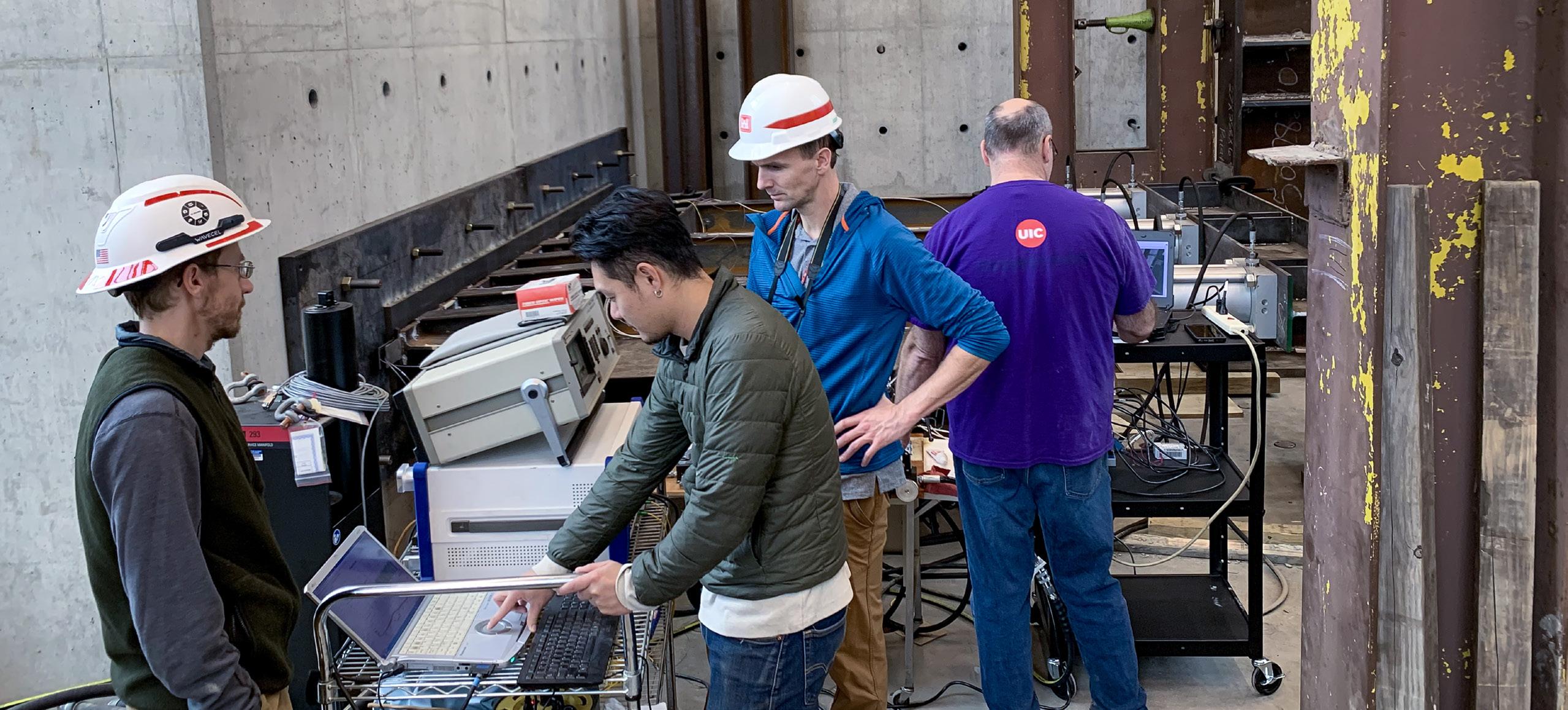
To help, Ansari and his team brought the project to the HighBay Structures Laboratory, where they installed optical fiber sensors on a scaled-down specimen that still measures 12 feet long and weighs approximately 2,800 pounds. The sensors measure microstrains and help the researchers investigate the structural behavior of the miter gates under operational conditions.
“We do not have the necessary support conditions for such a specimen in other laboratories,” said Todd Taylor, an instrument and measurement technician at UIC. “It had to be the High Bay.”
As part of the research, the researchers strategically remove sections of the quoin blocks to simulate a key damage scenario of concern to the US Army Corps that is known to accelerate fatigue damage on miter gates. This replicates the damage to the quoin blocks where the gates are in contact with each other or the supporting concrete walls at embankments and allow the researchers to investigate the stress distribution in the structural elements due to the change in load path.
“The primary goal of the research is to determine the load path distribution and redistribution within the miter gates subjected to large operational loads,” said PhD student Chengwei Wang.
“We want to know if we can detect the changes and see what’s the smallest amount of damage we can detect,” Taylor added.
Based on the results, the researchers will develop a numerical model to quantify the damage-induced strain redistribution in the miter gate structure. The results will provide the necessary proof of concept for the next stage of research. The distributed optical fiber sensor will be implemented at an operational lock and will provide the USACE with an invaluable tool for assessing the condition of the miter gate without interrupting waterway traffic.
Developing stronger railway crossties
Along railroads, railway crossties hold the track gauge, preventing train derailment and transferring loads from the rail to the supporting foundation. While concrete railway ties can last 30 to 45 years, weather and the type of train using the tracks can impact their longevity.
Research structural engineer Brian Eick and materials engineer Thomas Carlson, both of the Construction Engineering Research Laboratory, discuss the miter gate research with PhD student Chengwei Wang and UIC instrument and measurement technician Todd Taylor.
To remedy this problem, CME Professor Mohsen Issa is investigating ways to make a more resilient crosstie. The research is supported by a grant from Modern Habitat.
Corrosion is a primary source of structural deterioration of concrete structures and, more significantly, in railway crossties. While epoxy-coated steel bars offer a feasible solution against corrosion, the American Concrete Institute (ACI) Committee 440 reports that the bars still corrode when used in harsh weather.
Recent advancements in material technology have introduced various high-strength solutions to enhance the durability and performance of concrete structures. New steel, seven-wire strands offer a promising way to reinforce concrete due to their superior tensile strength, reduced relaxation, and long-term durability in aggressive environments.
To make crossties that are strong and durable, Issa and his team plan to test crossties that incorporate these strands with concrete and Metakaolin, a manufactured material derived from heating kaolin clay that improves the strength, durability, and other properties of concrete.
“The optimized configuration of the post-tensioned concrete crosstie is designed to resist cracking, provide corrosion-free durability, and achieve efficient load transfer,” Issa said. “The ultimate impact of the research is to produce a sustainable prestressed Metakaolin-based crosstie with good life cycle analysis that can serve for more years compared to the conventional prestressed concrete crosstie.”
Testing water penetration resistance
Assistant Professor Aslihan Karatas is working with industry partner USG Inc., a manufacturer of ceiling and wall products, to test water penetration resistance on the company’s panels.
Karatas aims to address a critical need within the construction industry by evaluating building materials and systems under diverse indoor and outdoor environmental conditions. Her team will perform water-resistance tests on USG bathroom panels, focusing on how the panels perform in a walk-in environmental chamber with extensive water exposure. In the chamber, the team can create targeted temperature and humidity levels and observe how panels behave under those conditions.
For testing of this nature, researchers use ASTM E331, the industry standard test method for water penetration of exterior windows, skylights, doors, and curtain walls. It is used to evaluate how well exterior building components resist water infiltration. But the research team will also go beyond those standards to expose the panels to water for 48 hours while reaching 86°F for constant water temperature.
“We have the capability of going beyond that, and we can do it for 98 hours and longer time periods,” Karatas said. “Our research results will contribute to the knowledge base in the construction industry and also provide valuable insights for professionals in the construction industry looking to make informed decisions about building assemblies.”
In addition, the research will benefit undergraduate, master’s, and PhD students, as they will see how lab work connects to real-life experiences.
“Testing at the ASCM standards and beyond will help students make the connection to how it relates to industry practitioners,” she said. “The students will learn how to adapt themselves, think critically and creatively, and build the skill set to take on projects after they graduate and start working.” •
Photograph: Jim Young
Limiting AI’s Energy Footprint
UIC researchers develop software and optimize performance to reduce AI’s energy consumption
By Andrea Poet
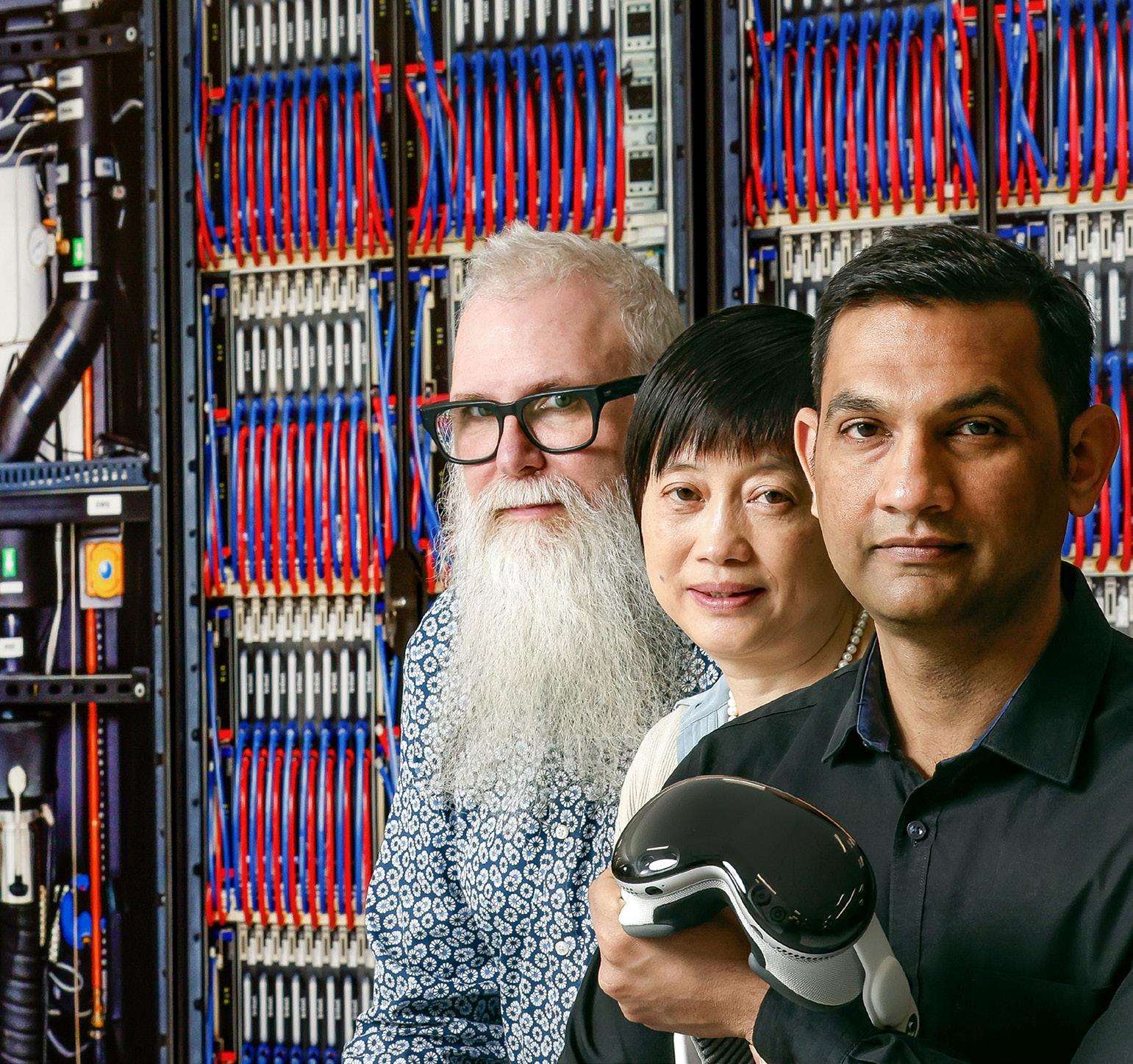
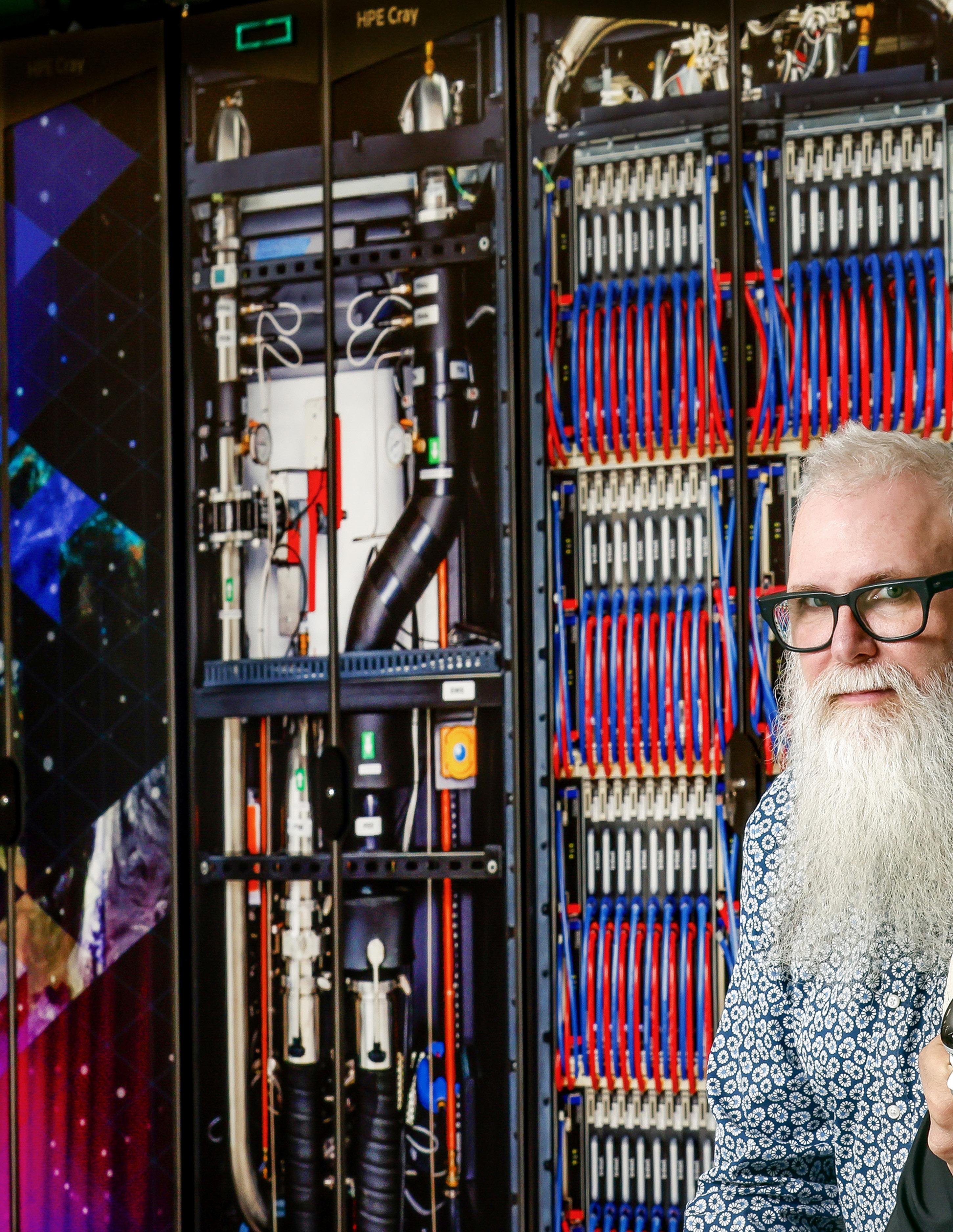
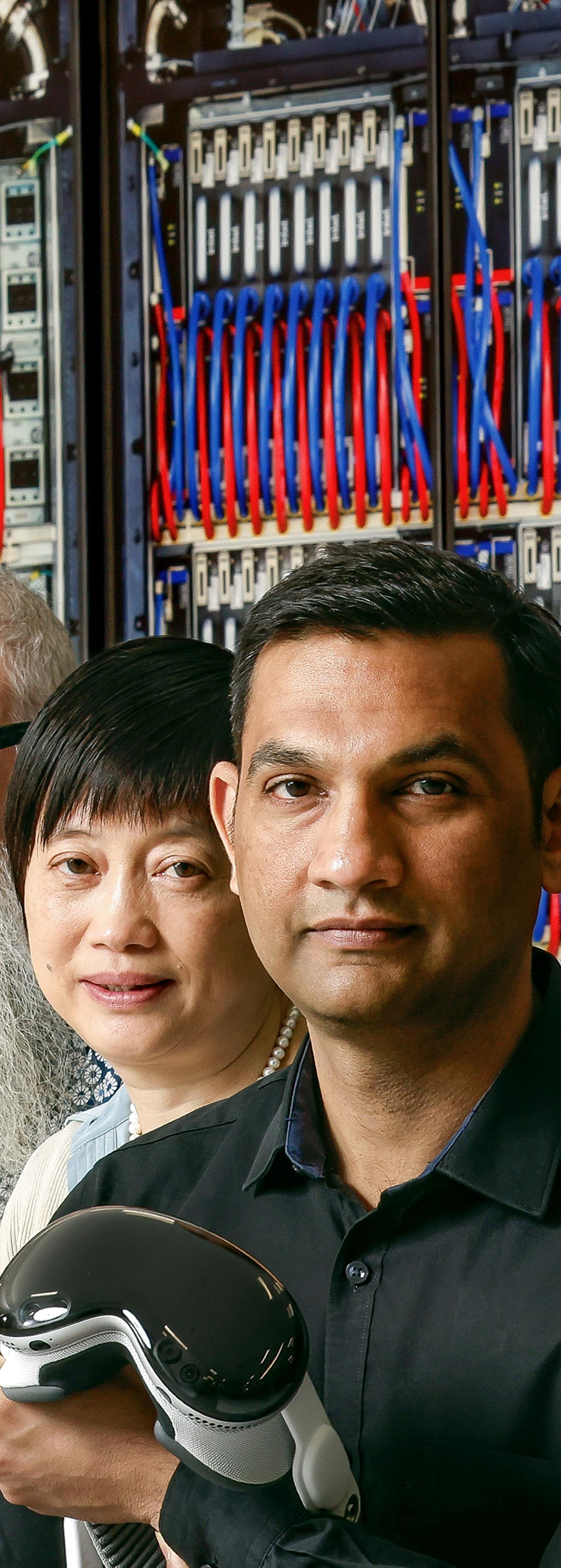
Michael E. Papka, the Collegiate Warren S. McCulloch Professor of Computer Science and the director of the Argonne Leadership Computing Facility; Zhiling Lan, professor of computer science; and Amit R. Trivedi, an associate professor of electrical and computer engineering, pictured with the Aurora exascale supercomputer at Argonne National Laboratory.
Photograph: Jim Young
Artificial intelligence is a powerhouse for scientific discovery and businesses. Within a few short years, these powerful tools have become enmeshed in our daily lives, from personalized recommendations to customer service chatbots.
As the use of AI has skyrocketed, increasing demand at data centers is straining the power grid and depleting environmental resources. In addition to the millions of gallons of water used per day to cool data centers, energy is wasted through almost every exchange of information.
“In the past, we cared about performance; optimization was the one priority goal for the field,” said computer science Professor Zhiling Lan. “We optimized models without thinking about how to coordinate power management. But things have changed, power and energy are the most important things now and for the future.”
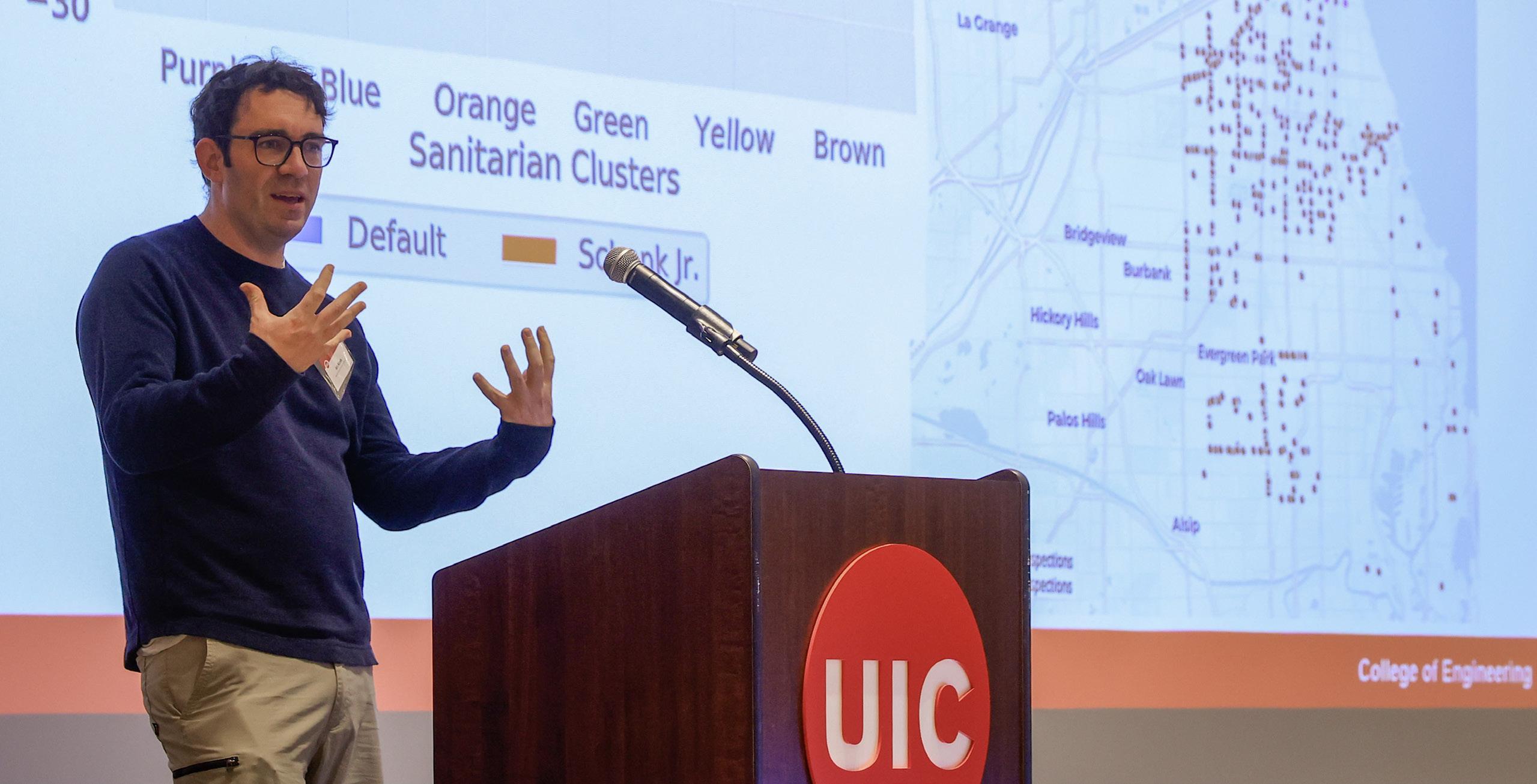
Associate Professor Ian Kash is developing market-based solutions to managing computing resources.
Researchers at UIC Engineering are at the forefront of this push to limit computing’s energy needs. Using their expertise, they are designing hardware that not only stores data but processes it locally, developing software that minimizes energy consumption and optimizes computing performance, and creating economic models to better manage workflow and limit downtime.
Managing power and energy waste
As the world increasingly relies on AI, the power problem will only continue to grow. OpenAI’s GPT-4 model consumed 50-gigawatt-hours of energy to train, enough energy to power 5 million homes in the U.S. for a day.
A new projection published by Lawrence Berkeley National Laboratory predicts that by 2028, more than half of the electricity going to data centers will be used to power AI, which is poised to consume as much electricity as 22% of all US households.
To help curb this, UIC Engineeirng professors are starting on their home turf. Lan has a joint appointment at Argonne National Laboratory, which operates several supercomputers, including the exascale Aurora computer, which can perform over a quintillion calculations per second. While a home computer has one central processing unit, or CPU, supercomputers have tens of thousands of connected nodes, each holding multiple CPUs and graphics processing units (GPUs), which are designed to handle complex visual and mathematical calculations.
Last year, Lan and Michael E. Papka, the Collegiate Warren S. McCulloch Professor of Computer Science and the director of the Argonne Leadership Computing Facility, were motivated to address two critical gaps in high-performance computing (HPC): power waste and dynamic power management.
During computing, not all the CPUs and GPUs in a supercomputer may be in use. While they can’t just be shut down, they can be placed in a higher-power state or be idled. But even an idle GPU consumes 60 watts of power. Lan and Papka conducted a field study of supercomputers and quantified the power waste among those HPCs at a staggering 50%.
In response, Lan and Papka developed an adaptive runtime system that dynamically predicts resource demands and allows applications to minimize power waste while maximizing performance. Their software uses AI to make recommendations to move power to where it is most needed and limits idle time through better application management.
“Everyone wants to build up their data center so that they can run AI,” Lan said. “But the power grid cannot handle the energy demands, and there are environmental concerns to building more data centers without first addressing efficiency.”
“ We’re rapidly hitting the point where throwing more resources at the problem is unsustainable, so it’s more appealing to find the solutions that let you operate things at a higher utilization.”
Ian Kash Associate Professor of Computer Science
Photograph: Jim Young
Who gets what: managing computing resources
When demand outstrips supply, as is the case with AI tools and available computing resources, mechanisms are needed to manage the allocation of resources. Ian Kash, an associate professor of computer science who works at the intersection of economics and computer science, is developing some market-based solutions in collaboration with Lan and Papka.
Access to computing resources can vary: the time a user can book might depend on availability and on other jobs that take precedence. Big government supercomputers have a similar issue; scientists are granted allocations of time, but don’t know exactly when they will receive that time and are competing for finite resources.
This resource allocation problem is similar to what the airline industry faces daily. An airline’s goal is to make sure all seats are filled and maximize profits based on demand, cutting prices if seats are selling too slowly or raising prices when demand is high.
UIC graduate students Andrea Giarduz and Matteo Del Grossi applied models similar to those used by airlines to the computational demand problem. Giarduz examined the promise of this approach for online cloud scheduling in comparison to existing pricing schemes such as on demand computing, volume discounts, spot use, and reserved instances. Del Grossi introduced a secondary preemptive market that would optimize the use of computational resources by allowing access to resources, knowing potential interruptions may occur.
Supercomputing sites are starting to use similar tactics, implementing a small discount if a customer is willing to make their workload preemptible if something more pressing comes in.
Kash, along with three researchers at University of Chicago, also created an algorithm that continuously assigns jobs to available servers to maximize the value of jobs processed.
“That’s where markets shine, in figuring out who should be left out when we’re running low on resources,” Kash said. “We’re rapidly hitting the point where throwing more resources at the problem is unsustainable, so it’s more appealing to find the solutions that let you operate things at a higher utilization. You have to pay the cost somewhere.”
For inspiration, look to the brain
Amit R. Trivedi, an associate professor of electrical and computer engineering, is turning to the human brain to improve computer hardware. Computer chips have long served as memory, transmitting data back and forth to CPUs and GPUs for computation. But AI models work very differently from other algorithms, with each model containing billions or trillions of parameters that require data to be transferred back and forth between multiple memories for computation.
For this work, the brain’s architecture might make a better model. “In our brains, storage and compute functions are all fused within each other, we store information in
synapses and compute with neurons,” Trivedi said. “They are all in a connected mesh.”
This evolutionary advantage is clear: an AI model may need to be trained on thousands of images of cars to recognize one, but a four-year-old only needs to see a handful of cars before she can do the same. And a human brain only takes about 20 watts of power, compared to an NVIDIA GPU that takes kilowatts of power to achieve the same thing.
Trivedi’s work with compute-in-memory chips, in partnership with Intel, not only eliminates some of the back-and-forth required with traditional chips, but speeds the process, enabling more real-time decision making—key to self-driving cars or autonomous robots.
Trivedi is also collaborating with a group of material scientists and neuroscientists at Northwestern University to replicate mechanisms inside the brain. The group is studying the cerebellum, the back-of-the-brain workhorse that coordinates movement and balance, helps with cognitive functions like attention and language, and assists with decision making and emotional regulation.
The brain is constantly receiving and ignoring massive amounts of sensory signals but remains vigilant to unanticipated events. For example, the cerebellum recognizes when you are about to fall, and somehow knows how to keep you on balance, quickly countering forces. Machine learning requires a lot of data training to do the same thing.
And while a brain is three dimensional, chips must be two dimensional, so Trivedi and his colleagues are working to replicate the mechanisms that allow for this within the constraints of chips.
“ In our brains, storage and compute functions are all fused within each other, we store information in synapses and compute with neurons. They are all in a connected mesh.”
Amit R. Trivedi Associate Professor of Electrical and Computer Engineering
All hands on deck
The easy answer is to continue to build more data centers, but these centers will continue to dominate the power grid, impact the environment, and cause issues we haven’t begun to recognize. Finding better ways to compute— through collaboration with researchers from other fields and universities, and with national labs and industry—are some of the ways UIC researchers are hoping to positively impact AI.
Untangling Gene Networks
A new grant paves the way for AI research in gene regulatory networks
By Meghan King
The intricate way that blueprints map out all aspects of a building. The way a family tree maps out a person’s ancestry. The way a circuit board maps the path through its wiring and switches to create electricity.
They all are maps that display complex relationships. UIC College of Engineering researchers have developed AI tools to create their own map of sorts to identify how transcription factors—proteins that regulate gene expression to turn genes on or off—control target genes within individual cells.
Using a grant from NVIDIA, the current leading AI hardware and software technology company, faculty within the Richard and Loan Hill Department of Biomedical Engineering will extend their work to use large language models (LLMs) to integrate scientific literature into the AI tools.
Inspired by collaboration
Last year, Mehrdad Zandigohar, a PhD student in BME professor and associate director of graduate studies Yang Dai’s lab, created scRegulate, an AI tool that takes massive amounts of genomic data and turns them into clear, understandable insights. More specifically, scRegulate infers how genes are regulated in single cells.
The tool avoids the so-called “black box” problem of many AI models that come to conclusions they can’t explain. “The challenge was to make powerful AI models meaningful for biology,” Zandigohar said. “Black-box results are hard to act on, so I set out to design a model whose internal parts map real biology.”
After a computational evaluation and benchmarking, Yang and Zandigohar demonstrated that scRegulate outperforms existing tools. But while the tool helps them to develop mechanistic insights and select the most relevant transcription factors for experimental validation, it still requires extensive literature reviews and expert knowledge from humans, which remain laborious and sometimes prohibitive.
“ The challenge was to make powerful AI models meaningful for biology.”
Mehrdad Zandigohar PhD student
Implementing LLMs
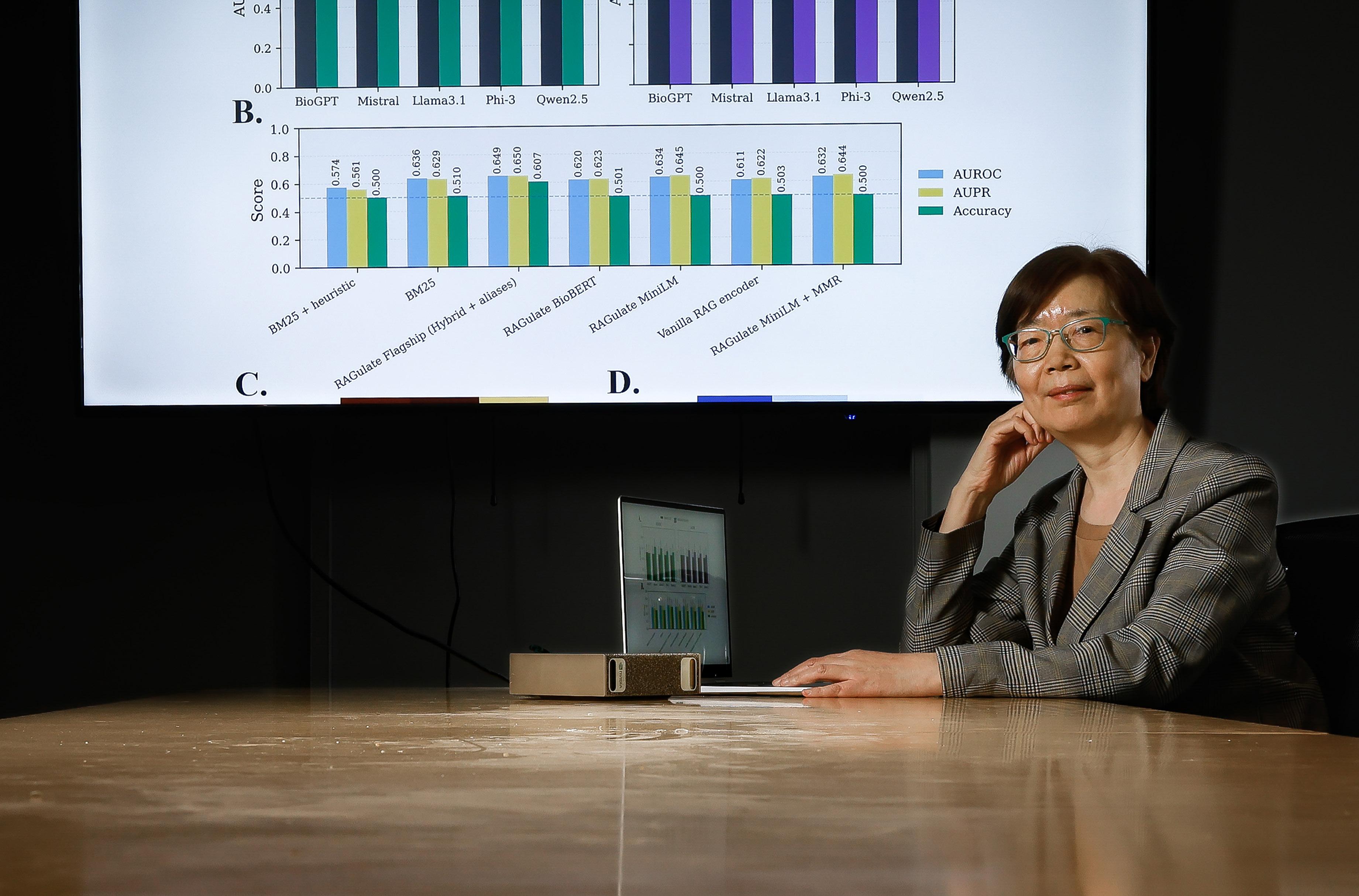
To better integrate scientific literature into the tool, Dai applied for and received the 2025 NVIDIA Academic Grant Program Award, which helps to advance academic research by providing world-class computing access and resources to researchers. Through the grant, Dai and her team were given the NVIDIA DGX Spark for AI, a personal AI supercomputer.
Access to the supercomputer will allow them to develop new ways to use large language models (LLMs) to connect scientific predictions with what’s already known in the literature to create explanations about the gene regulatory networks that other scientists can use.
“The graphics processing unit (GPU)-based tools help us take advantage of exploring different large language models,” said Dai, who is also the interim director of the Center for Bioinformatics and Quantitative Biology. “Our lab doesn’t have such a capacity, so this supercomputer allows us that usage. The goal is to try to expand the utility of these tools, through the hardware, the software, and their integration provided by the computer.”
Dai and her team are excited because she has been working in the machine learning area for a long time, but like everyone else, she has felt the challenges of AI. She also noted that without the NVIDIA supercomputer, her research wouldn’t be possible.
To streamline the process of using LLMs, Dai and Zandigohar created RAGulate, a retrieval-augmented generation framework that integrates transcription factor predictions with experimental datasets and biomedical literature. The framework also generates relevant questions for LLMs to produce the most accurate description about the transcription factors and target genes in question in a specific context. Built on NVIDIA DGX Spark’s GPUaccelerated embedding and reranking tools, the team demonstrated that RAGulate improves the biological plausibility of LLM answers and facilitates the prioritization of regulators and their targets for experimental validation.
With the NVIDIA AI supercomputer, Dai’s team aims to accelerate biological discovery by creating an automated system that improves the reliability of LLM responses and reduces false information.
Extending AI opportunities
Part of the motivation of this research was from a collaboration with other biomedical researchers’ wet labs. Dai is also collaborating with UIC Department of Biochemistry and Molecular Genetics Benjamin Goldberg Professor and Head Jalees Rehman, who is a co-author on the recently published scRegulate journal article. The article was published in Bioinformatics in December of 2025.
“We are currently studying the molecular mechanisms underlying uterine fibroids and hernias using single nucleus multi-omics approaches,” Dai said. “By combining our computational prediction model with a decisionsupporting system like RAGulate, we hope to identify key drivers of disease progression and ultimately contribute to therapeutic target discovery.”
“ By combining our computational prediction model with a decision-supporting system like RAGulate, we hope to identify key drivers of disease progression and ultimately contribute to therapeutic target discovery.”
Yang Dai Professor of Biomedical Engineering
These projects are supported by the three funded R01 grants jointly with Serdar Bulun, Northwestern University Department of Obstetrics and Gynecology Chair and John J. Sciarra Professor of Obstetrics and Gynecology, and his team.
Dai’s broader goal is to expand these AI-powered tools to investigate skin wound healing, including identifying therapeutic targets to enhance tissue repair in diabetic patients, who often experience impaired healing. The NVIDIA AI supercomputer will continue to advance AI-driven biomedical engineering research and strengthen research capacity at UIC. •
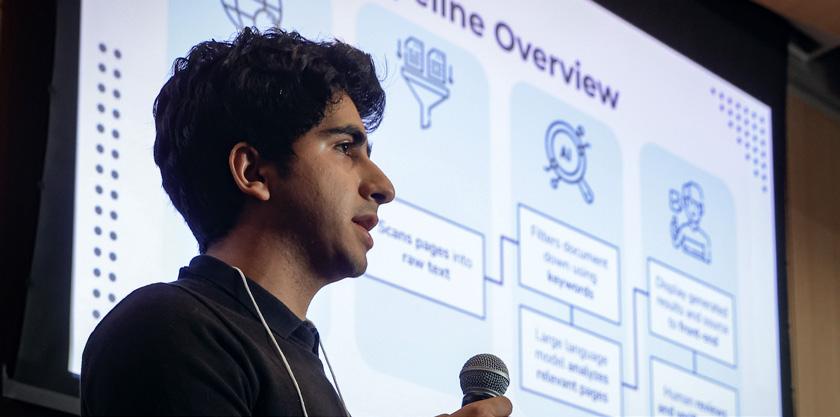
SparkHacks, UIC’s largest student-run hackathon, brought together nearly 300 students in February for a 24-hour project design competition.
Students collaborated with mentors, including UIC alumni, to build 69 innovative projects tackling real-world challenges. Organizers held workshops before the hackathon to teach students about managing databases and building dashboards, and they also created a nocode track for students who do not have a computing background.
Winning projects included a collaboration platform for film professionals, a short narrative game involving productivity and self-care at an internship, and a real-time equipment lifecycle simulation.
Hosted in partnership with the Department of Computer Science, SparkHacks has been bringing students together to innovate since 2023.
“A lot of students come to hackathons not to build like a startup, but to get experience,” said Kaito Sekiya, a senior in computer science. “The way it translates to success is they get something they can put on their resume and show off that recognition.”
Strategic Plan
UIC Engineering has launched a new strategic plan that builds on the school’s strengths while unlocking its future potential.
“UIC Engineering Rising: Rooted in Chicago, Reaching the World” elevates the school’s profile and enhances its impact by defining its mission, vision, values, priorities, and goals for the next five years.
Taking advantage of UIC Engineering’s defining assets—including its dynamic Chicago location, leading-edge research portfolio, diverse academic community, and commitment to inclusive excellence in education—the plan outlines four strategic priorities:
• Prepare Next-Generation Engineers
• Catalyze Signature Interdisciplinary Research Initiatives
• Be the Destination for Collaboration, Expertise and Problem-Solving
• Cultivate a Caring, Connected Community and Culture of Excellence
Learn more about our priorities and goals at engineering.uic.edu/about/strategic-plan.
851 S. Morgan St., MC 159
Lola Eniola-Adefeso, dean of UIC Engineering and professor of biomedical engineering, was named a 2025 fellow of the National Academy of Inventors. The fellowship is the highest professional distinction awarded solely to inventors.