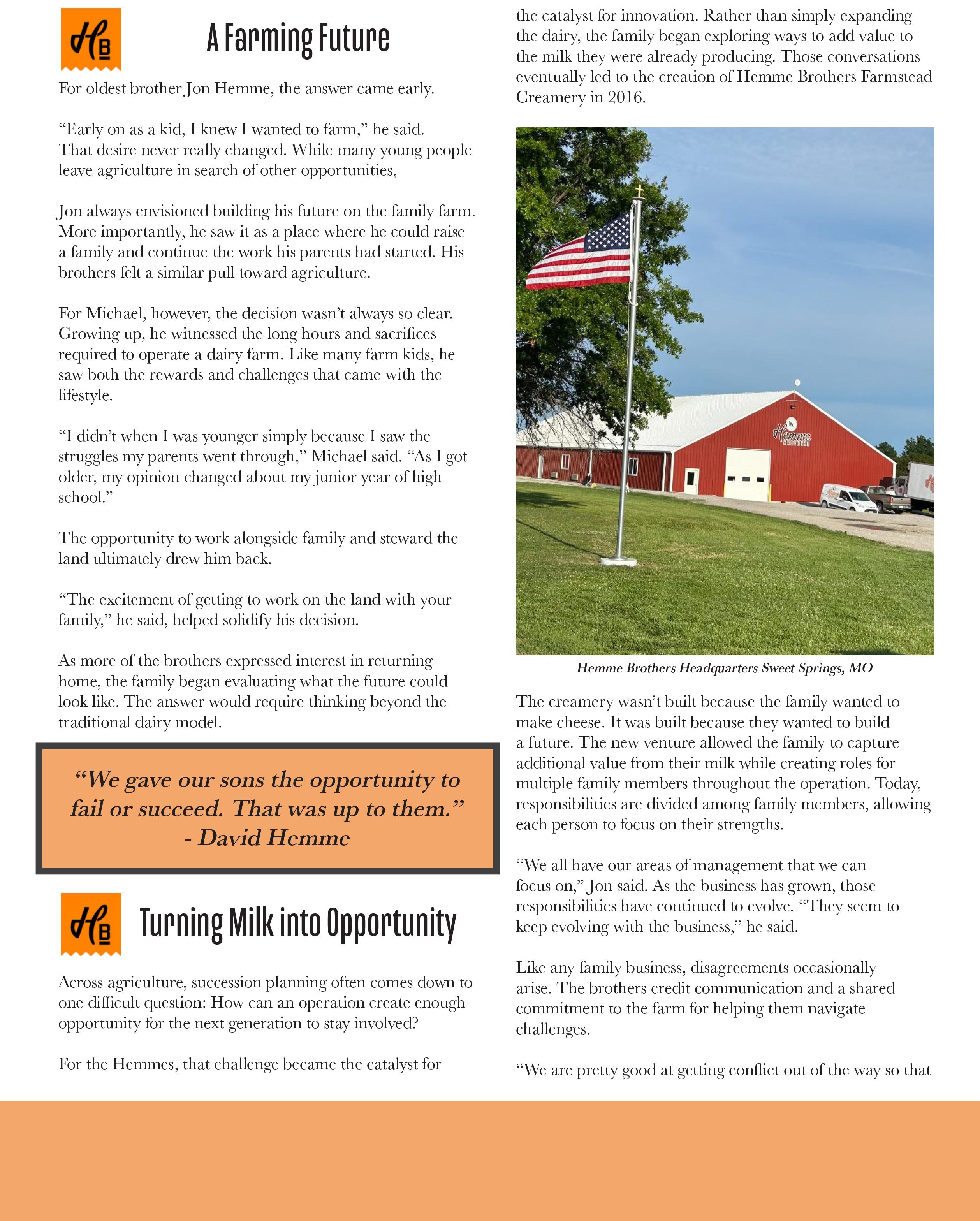
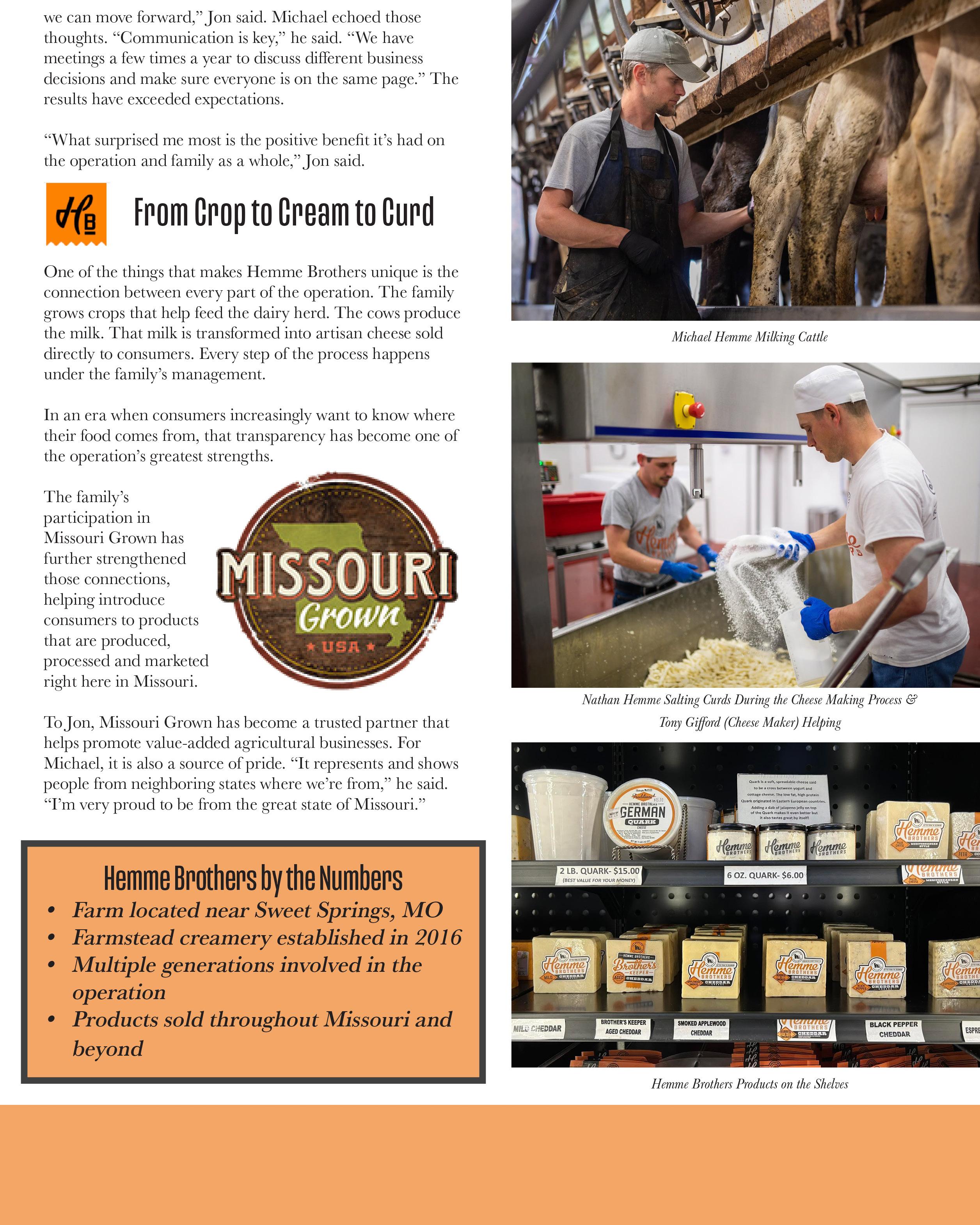
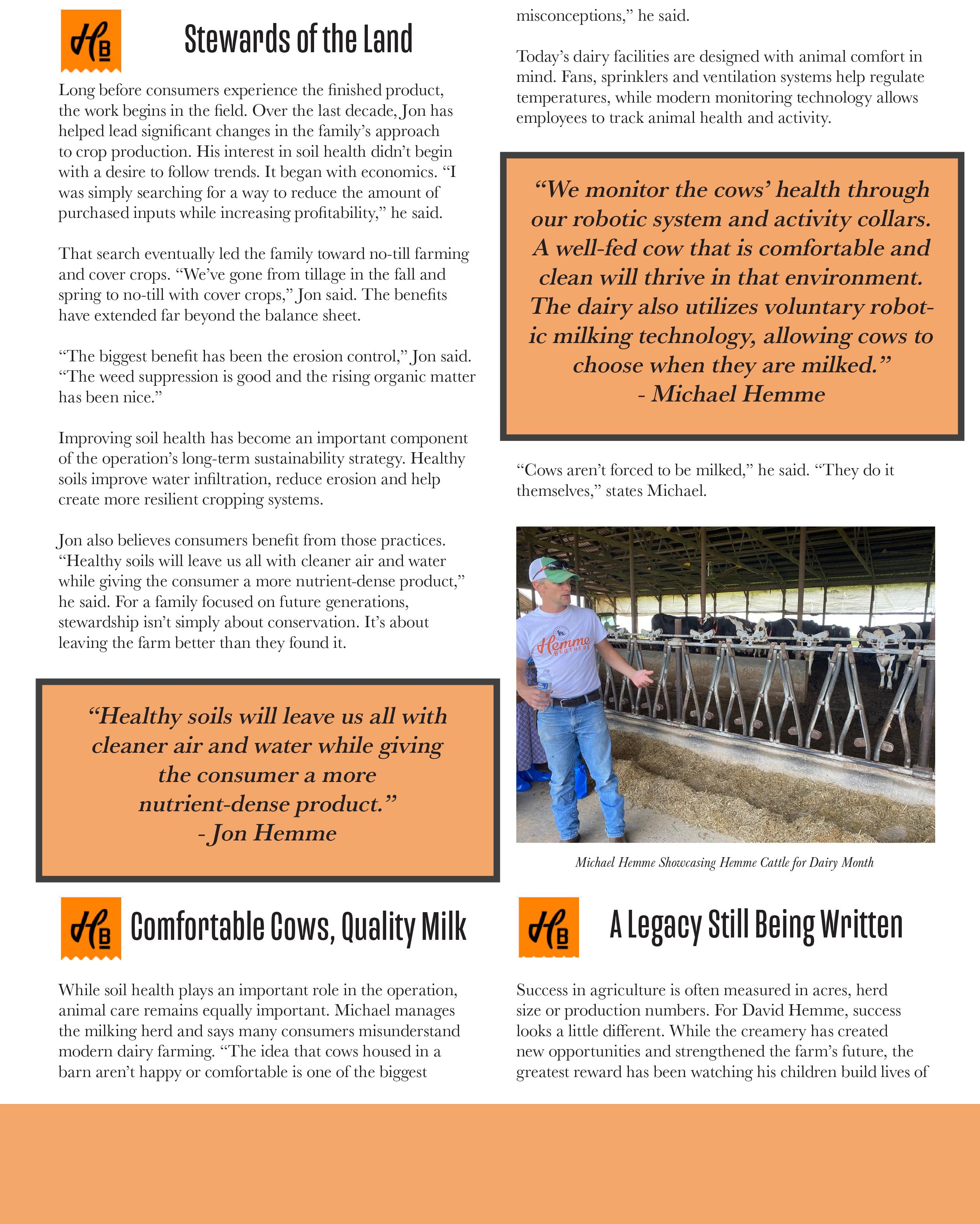
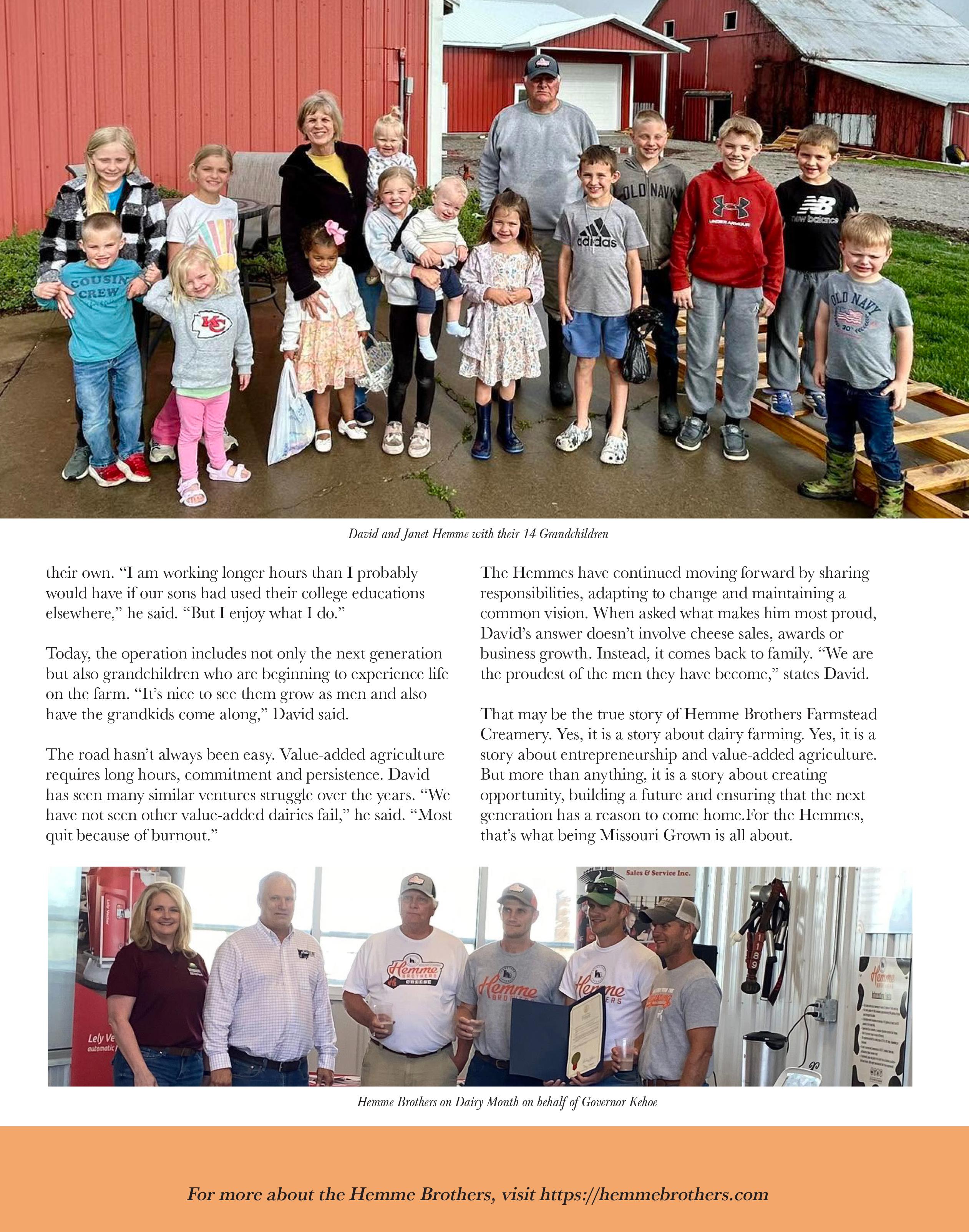
Missouri’s Cattlemen Foundation www.mocattlemenfoundation.org
2026 MCA Officers
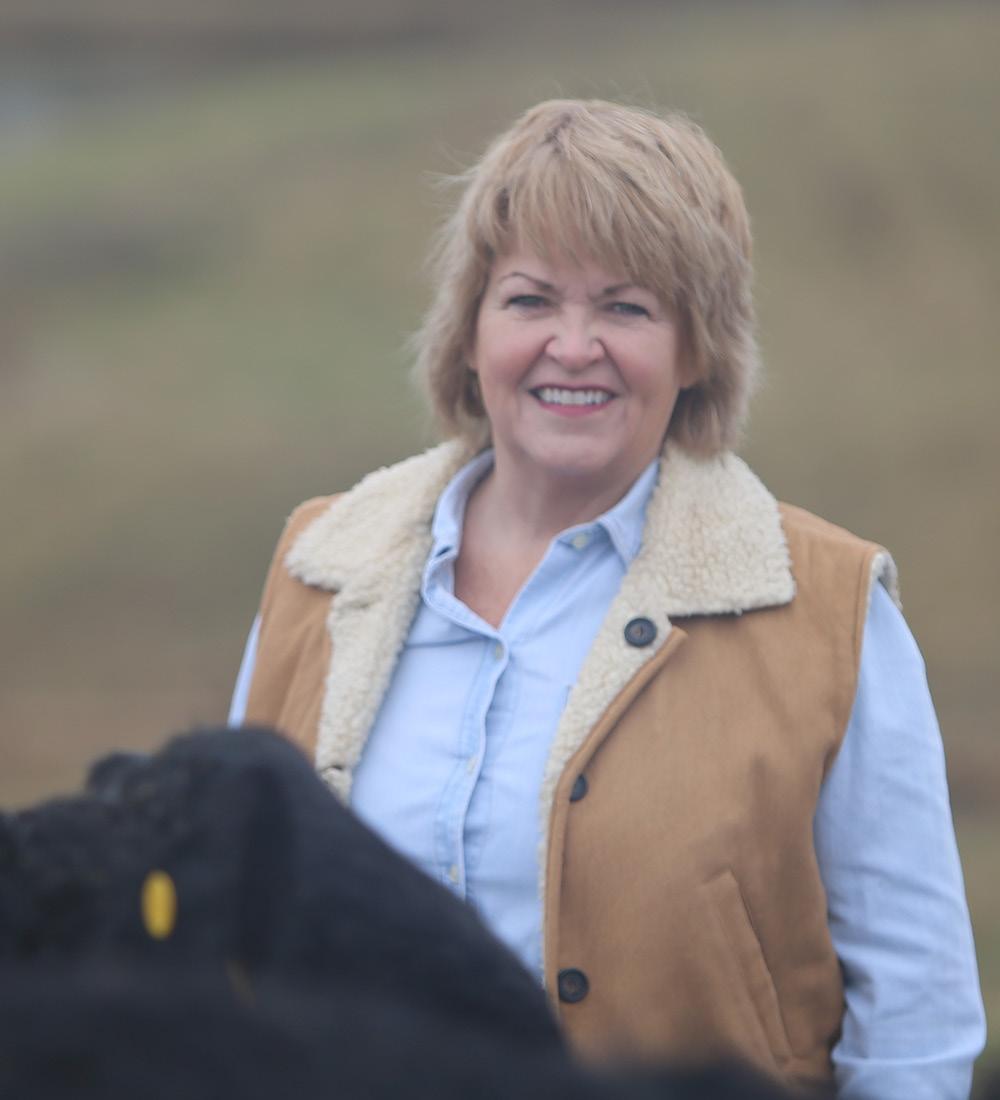
Anita Vanderwert, President 573-808-3000 • 620 State Route P, Fayette, MO 65248
Deb Thummel, President-Elect 660-541-2606 • 12601 Hwy. 46, Sheridan, MO 64486
Alex Haun, Vice President 816-345-0005 • 1031 SW 600 Rd., Holden, MO 64040
Vance Keaton, Treasurer
417-825-4853 • 5863 W. State Hwy 76, Anderson, MO 64831
Chris Cloud, Secretary 417-358-8459 • 7825 CL 173, Carthage MO 64836
Jeff Reed, Past MCA President 903-279-8360 • P.O. Box 35, Williamsville, MO 63967
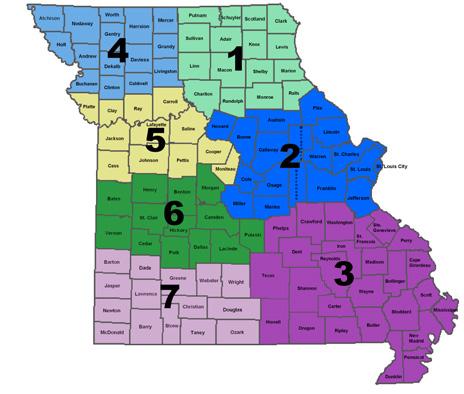
2026 MCA Regional Vice Presidents
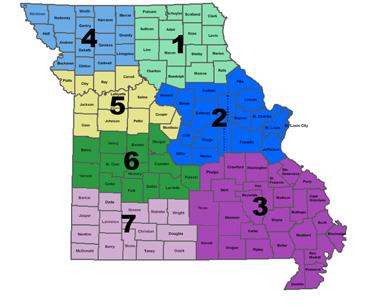
Region 1: Ethan McNeill, 325 McMurry St. Paris, MO 65275 636-544-9943
Region 2: Blake McDonald, 250 Clonts Rd. Sullivan, MO 63080 • 573-205-7914
Region 3: Danny Ross, 5514 Gaston Rd Eunice, MO 65468 • 417-932-4964
Region 4: Dale Buhman, 3751 SW Taylor Rd. Clarksdale, MO 64430 • 816-244-9249
Region 5: David Wolfe, 7761 Mount Vernon Rd Pilot Grove, MO 65276 • 660-834-3232
Region 6: Warren Love, 8381 NE Hwy ZZ Osceola, MO 64776 • 417-830-1950
Region 7: Nathan Isakson, 20706 Lawerence 2022 Everton, MO 65646 • 573-578-2518
Director At-Large: Stephanie Gable, 5622 State Hwy E Oak Ridge, MO 63769 • 573-256-3279
MCA Regional Grazing Coordinators
Region 1 - Kyle Viers 660-346-1084 kyle@mocattle.com
Region 2 - Doug Mertens 573-489-5261 doug@mocattle.com
Region 3 - Kenneth Ball 417-818-6400 kenneth@mocattle.com
Region 4 - Micah Hans 636-201-6846 micah@mocattle.com
Missouri Cattlemen’s Youth Expo
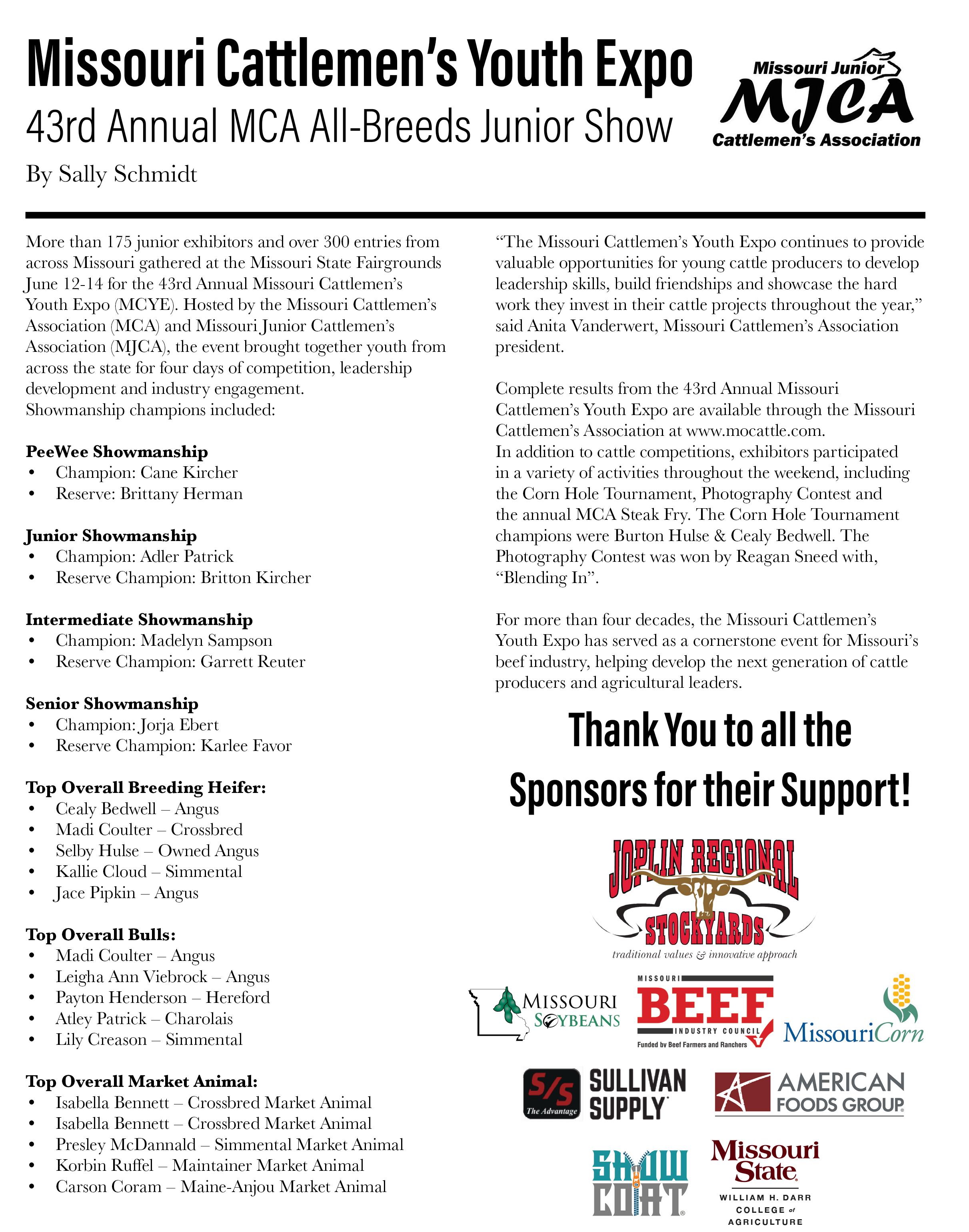
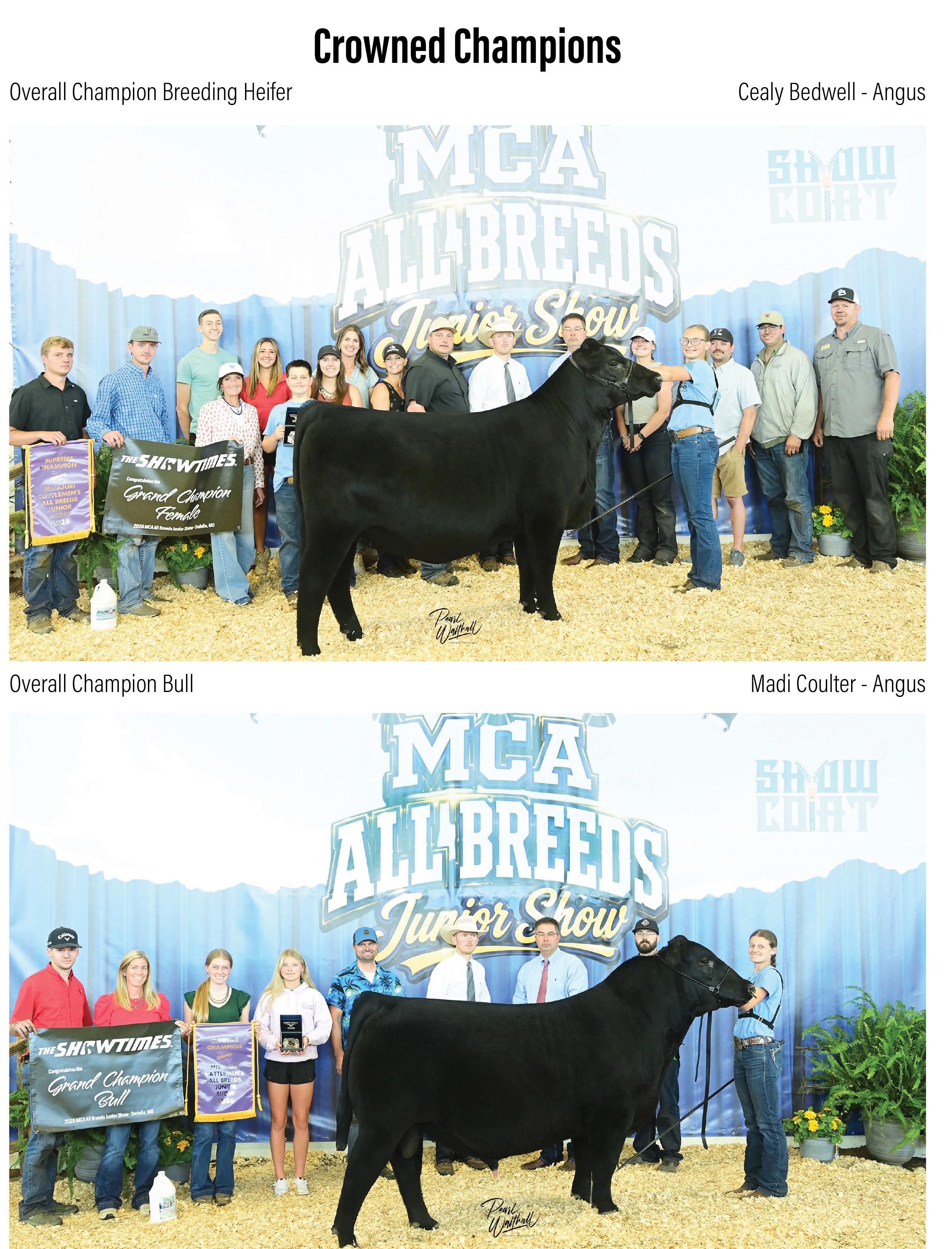
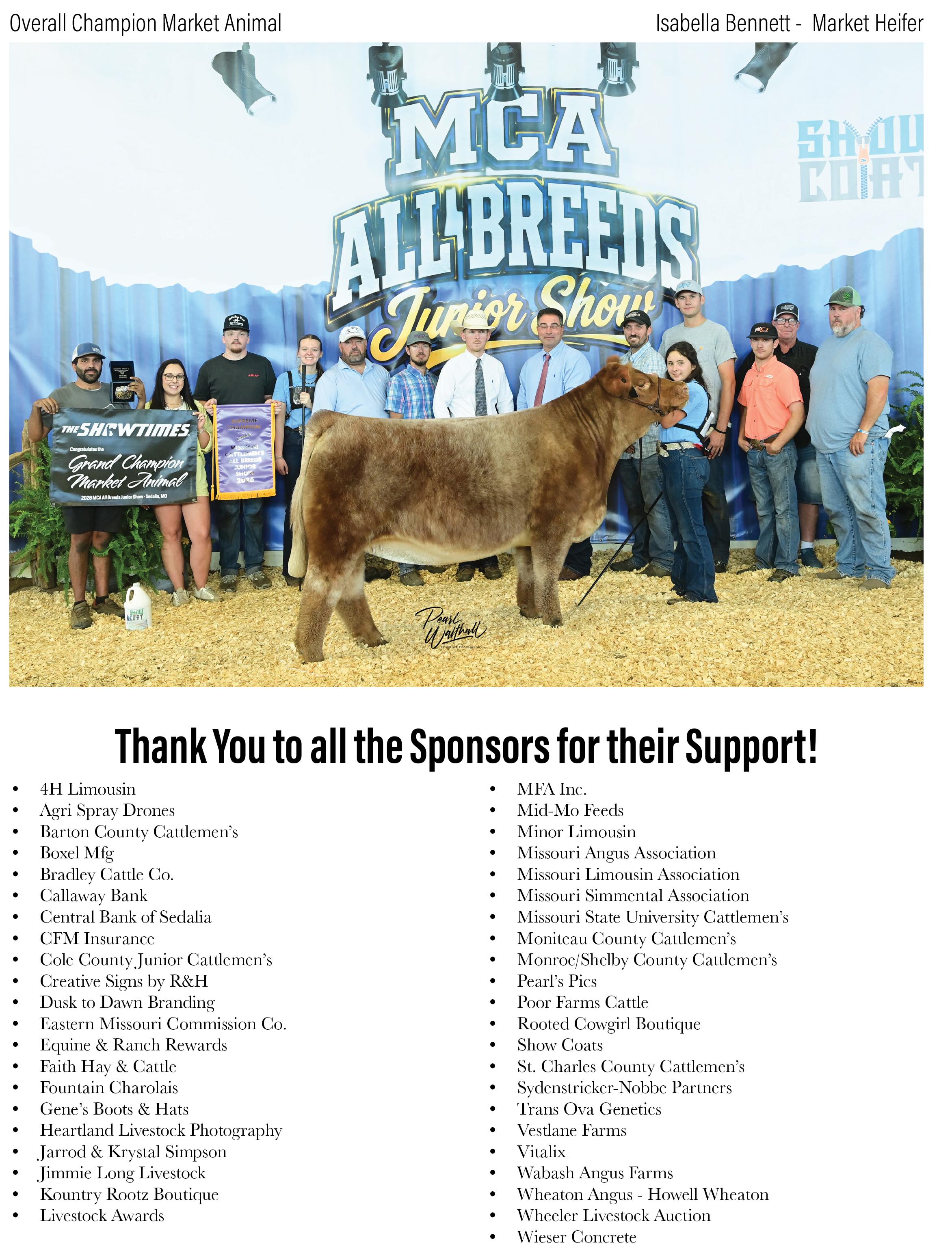
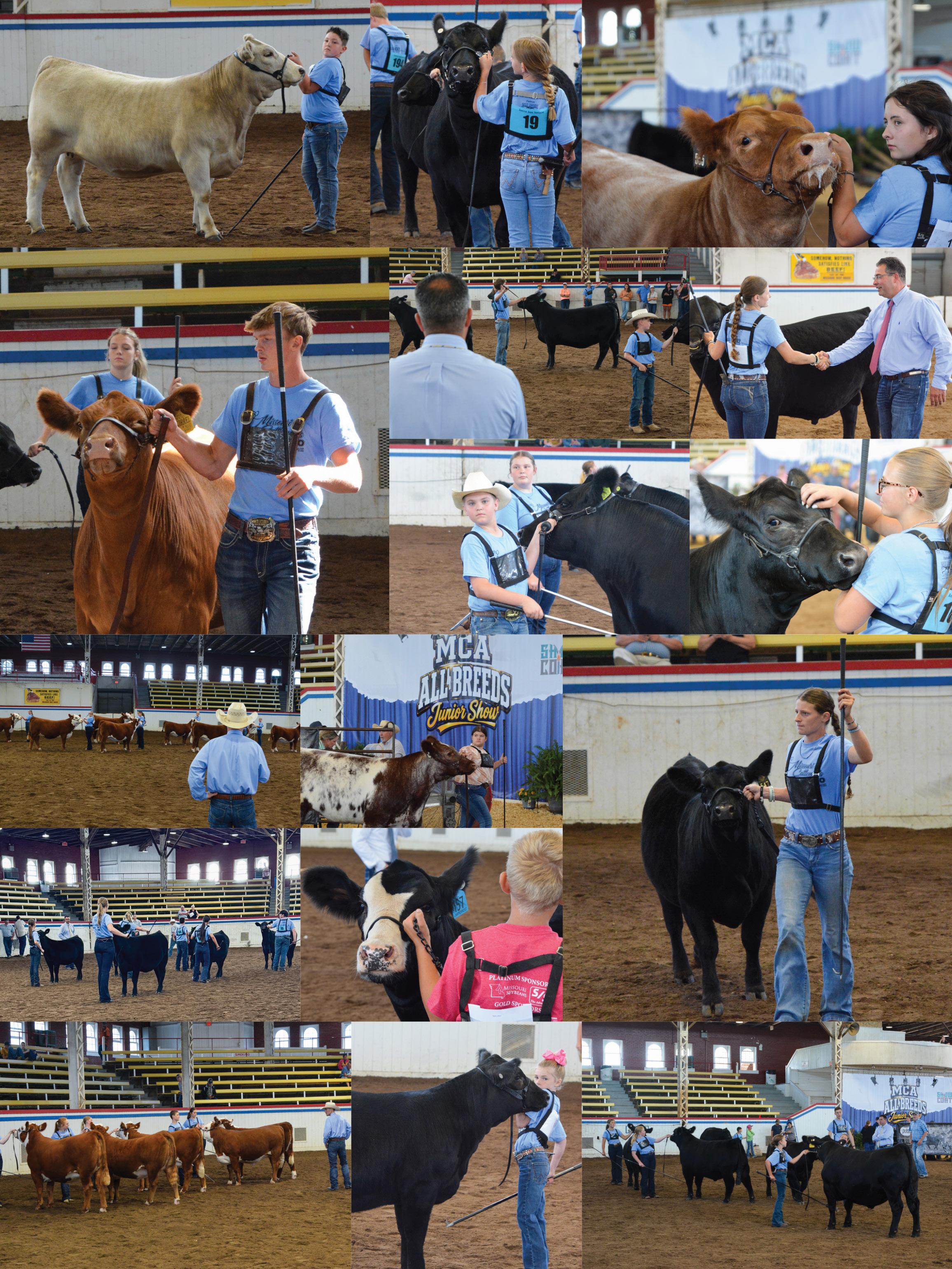
The Missouri Cattlemen’s Youth Expo was held June 11th-14th in Sedalia at the Missouri State Fairgrounds. This expo featured the Annual MCA All-Breeds Junior Show. We are thankful for the overwhelming support both events received and look forward to sharing updates for each event in the August 2026 magazine! To see more, turn to PAGE 28.
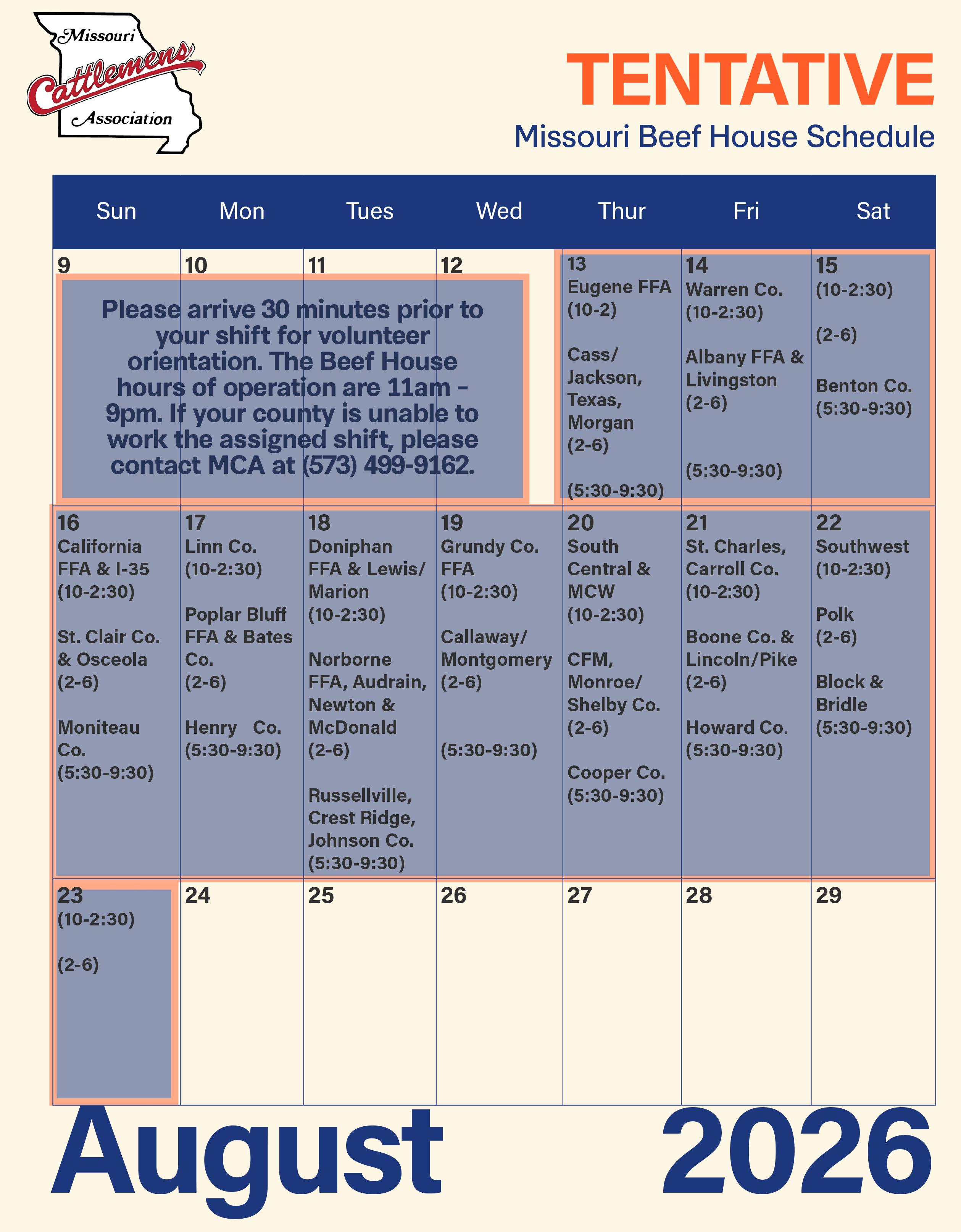
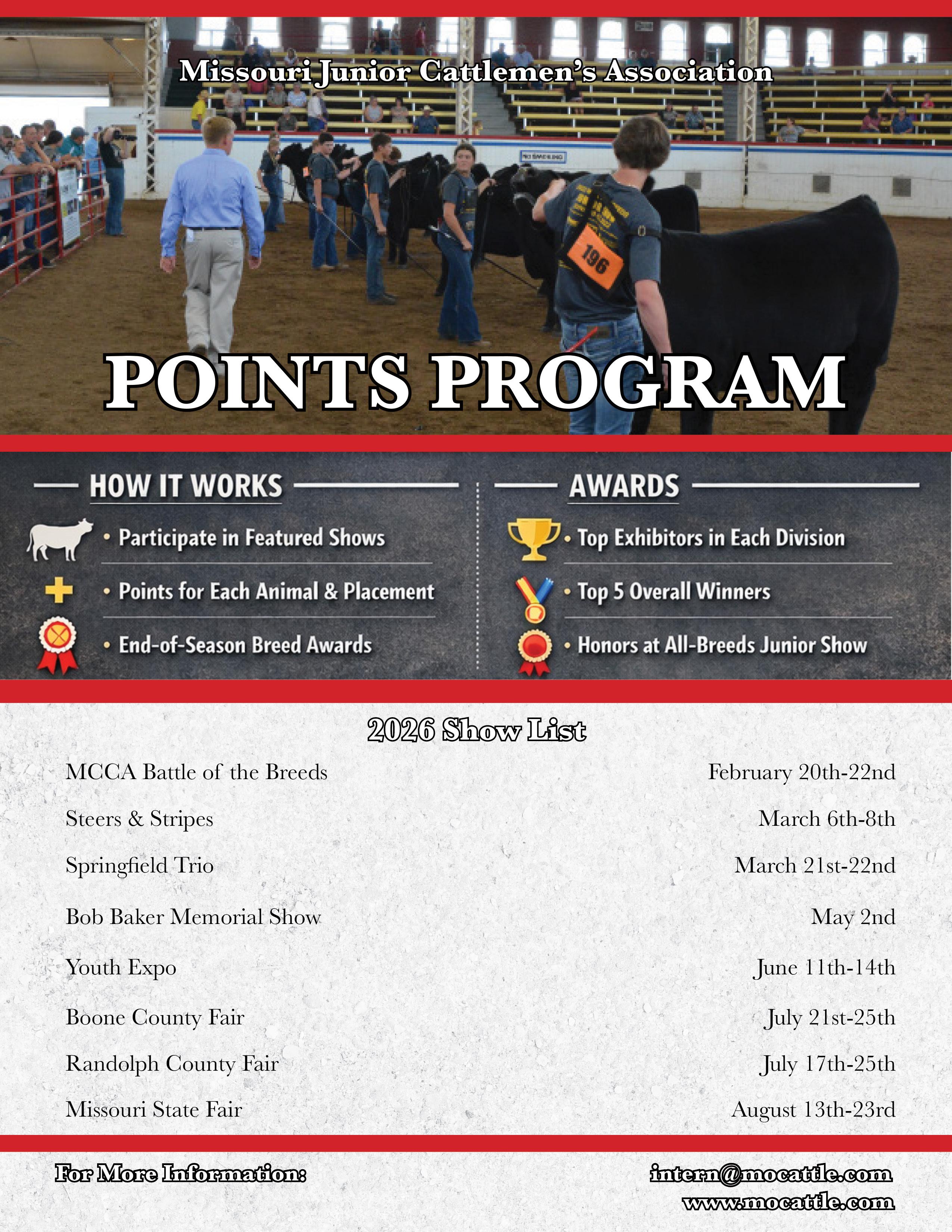
Missouri State Fair Beef House – August 13th-23rd
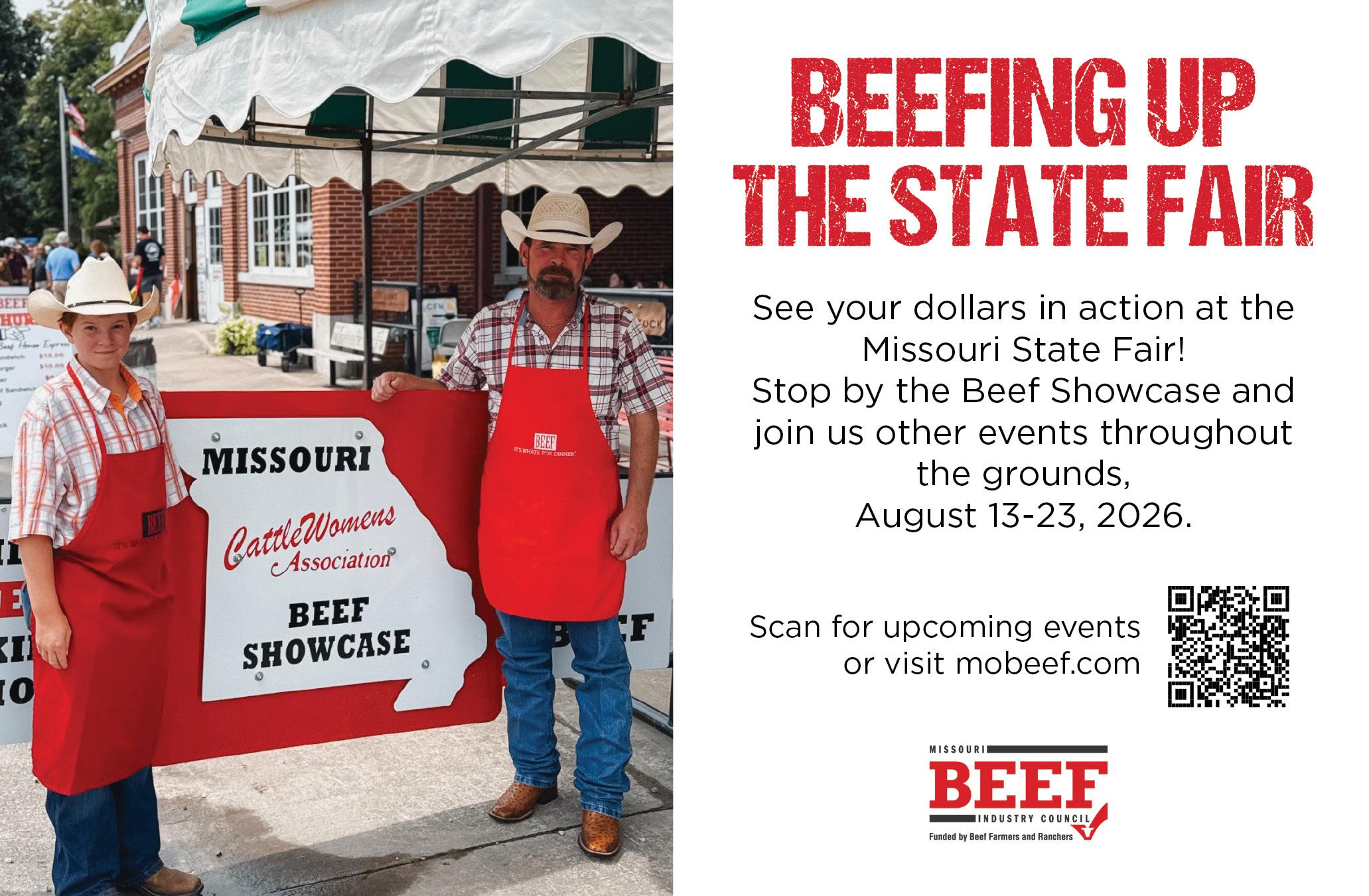
We are just a few short weeks away from the 2026 Missouri State Fair and another big year for the Beef House. Our volunteers help ensure the success year after year on the fairgrounds and we could not do it without you! Reminders will be sent out to all members with their respective county affiliate scheduled time to volunteer at the Beef House. To view the tentative Beef House schedule and for more information see PAGE 15.
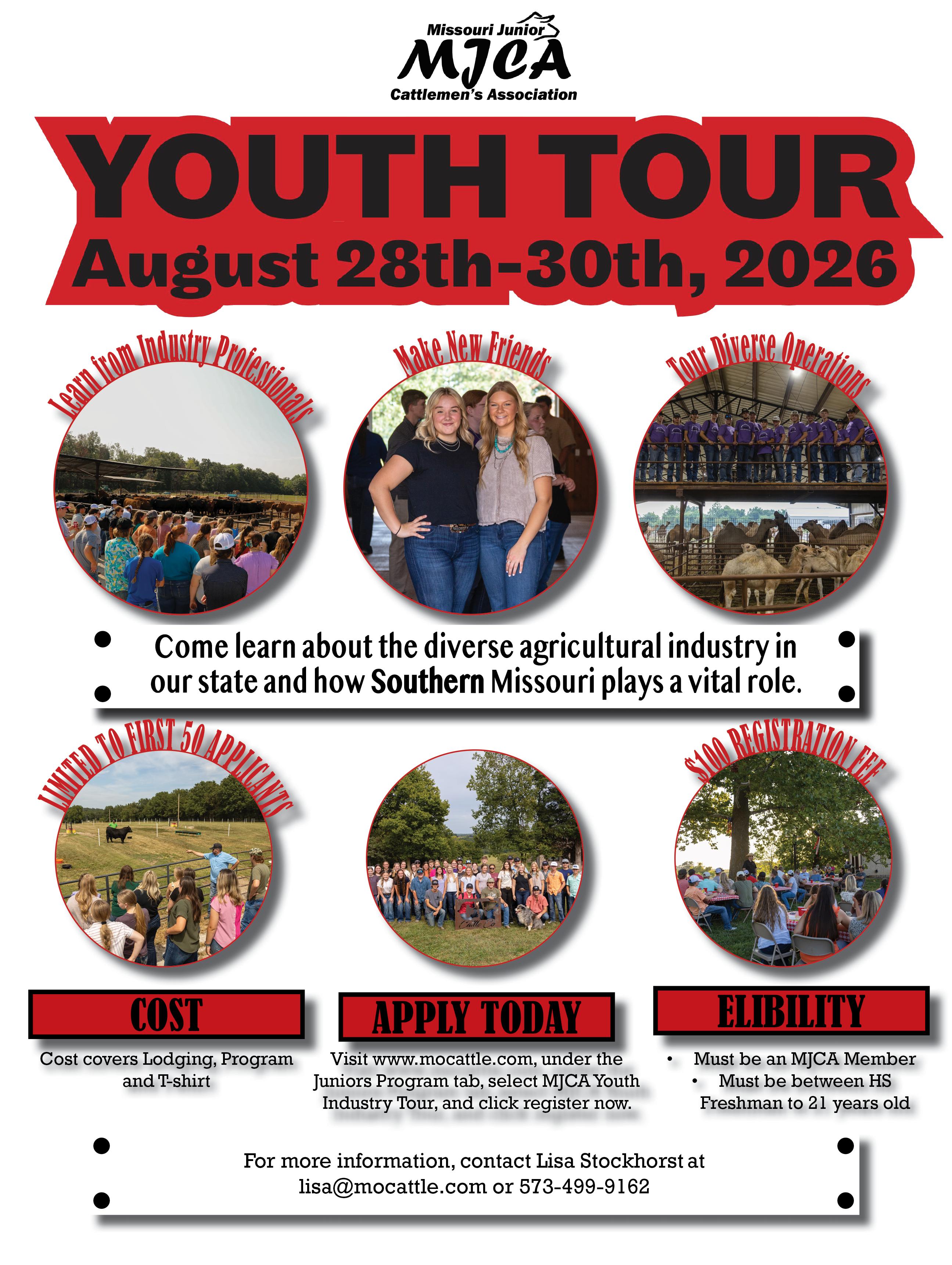
MJCA Youth Industry Tour
We are looking forward to the 2026 Youth Industry Tour. This year’s trip will take us to Southeast Missouri. We have exciting tour stops planned for local businesses and cattle operations. Stops will feature unique sectors of agricultural industry opportunities in the area. Participants must be a freshman in high school to 21 years of age. Space is limited to the first 50 applicants and spots are filling up fast. Registration is now open online. More information can be found on mocattle.com or by flipping to PAGE 33.
MCF Cattlemen’s Classic Golf Tournament
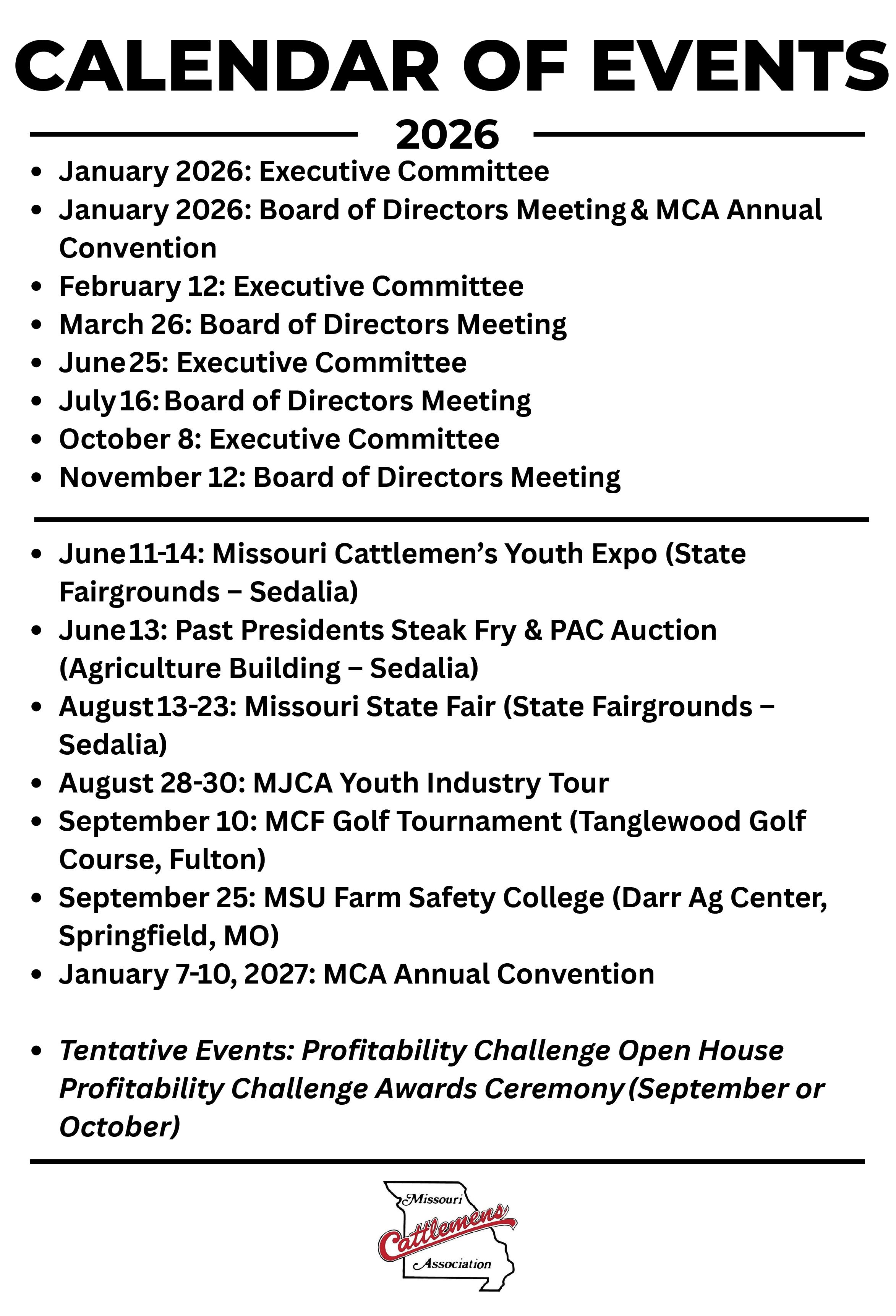
Summer is here, and events are in full swing, but don’t forget to mark your calendars for events scheduled this fall! The 31st Annual Missouri’s Cattlemen Foundation Cattlemen’s Classic Golf Tournament will be held on Thursday, September 10th, in Fulton at the Tanglewood Golf Course. The tournament will be a four-person scramble with a shotgun start. Prizes will be awarded to the top teams in both the “Cattlemen” and “Open” classes. 2025 saw a fantastic turnout for MCF supporters and we look forward to the same success in 2026. To join in on the fun and help raise money for a good cause, look for the registration form in this month’s magazine or visit the MCA website. For more details, see PAGE 70.
Show-Me-Select Heifer Replacement Program
We are partnering with Show-Me-Select again this year for an exclusive new member promotion drawing. New members of Missouri Cattlemen’s Association will be entered to win a drawing for a $2,000 credit to a Show-MeSelect Replacement Heifer sale. To be considered a new member, you must not have been an MCA member within the last 12 months. Credit must be redeemed in the same calendar year at any of the spring or fall sales. Learn more on PAGE 59.
Michaella Gruver, Gruver Land & Cattle, Seneca, MO
Bryce Opie, Opie Cattle Company, Olean, MO
Finley Asher, Linneus, MO
Jaxson Kable, Centralia, MO
Carson Coram, Browning, MO
Luke Schabbing, Cape Girardeau, MO
Pippa Fahrmeier, Lexington, MO
Wyatt Heim, Heim Farms, Cabool, MO
Joel Mahnken, Corder, MO
Eliza Randle, Montreal, MO
Victoria Randle, Montreal, MO
Archer Foster, Williamsville, MO
Jessica Hardy, Browning, MO
Hudson Nitsche, Smithville, MO
Clara Hendley, New Bloomfield, MO
Tucker Philipps, Dover, MO
Charlie Tyre, Slater, MO
Logan Rhodes, Carrollton, MO
Garth Bennett, Bennett Farms, Centerview, MO
President’s Perspective with Anita Vanderwert
The Power of Showing Up
Wow, what a fun and successful MCA Youth Beef Expo. It clearly reminded me once again why investing in our youth remains one of the most important things we do as an association. Our Youth Expo keeps growing. This year’s event saw an increase in the number of cattle exhibited compared to last year, a testament to the strength of Missouri’s cattle families and the dedication of our young exhibitors.
While the numbers are encouraging, what impresses me most isn’t how many cattle were shown but it’s the friendships that were formed, the teamwork that was displayed, and the life skills that were developed throughout the week. The cattle may bring us together, but the relationships and experiences are what keeps our young people engaged in our industry for years to come.
The MCA Youth Beef Expo will always hold a special place in my heart as I remember the very first MCA Show as I was named Champion Showman. Looking back, the banner was nice, but the lessons learned and the friendships made were far more valuable. Those experiences helped shape my involvement in the cattle industry and reinforced the importance of being part of something bigger than yourself.
I also want to thank everyone for showing up on a stormy night to raise funds for our PAC Auction held during the Expo. We raised yet again a record amount. We know it takes money to help the right people get elected and we keep stepping up and increasing the amount we are willing to donate.
As summer continues, county fair season is underway across Missouri. County fairs remain one of the best opportunities we have to showcase agriculture, promote the beef industry, and connect with fellow cattlemen and cattlewomen in our local communities. Whether you’re exhibiting cattle, supporting a young exhibitor, volunteering, or simply attending to visit with neighbors, I encourage you to show up and be involved. Our industry is strongest when we support one another and take time to build relationships.
If you know someone who isn’t currently involved with the Missouri Cattlemen’s Association, your county fair is a great time to invite them to join. MCA continues to advocate for Missouri cattle producers. The future of our industry depends on engaged producers working together to address challenges and seize opportunities.
Before long, we’ll all be gathering in Sedalia for the Missouri State Fair. The State Fair remains one of the highlights of the year and provides another outstanding opportunity to reconnect with friends, meet new producers, and celebrate Missouri agriculture.
We’re excited about continued improvements at the Missouri Cattlemen’s Beef House. This year, fairgoers will have the convenience of ordering carryout meals through a simple QR code system, making it easier than ever to enjoy your favorite meal at the fair while at the barns, campgrounds, or if you are just taking in all the fair has to offer. We encourage everyone to not only volunteer to work a shift, but to stop by and support the Beef House, and enjoy some of the best beef you’ll find anywhere.
Thank you to all of the volunteers, exhibitors, sponsors, parents, and supporters who help make our events successful. Your dedication ensures that Missouri’s cattle industry remains strong and that the next generation has opportunities to learn, grow, and lead.
I look forward to seeing many of you in the coming months. Until then, have a safe and successful summer, and thank you for all you do for Missouri’s beef industry.
Anita Vanderwert
573-808-3000 mobile
MCA President
CattleWomen’s Corner with
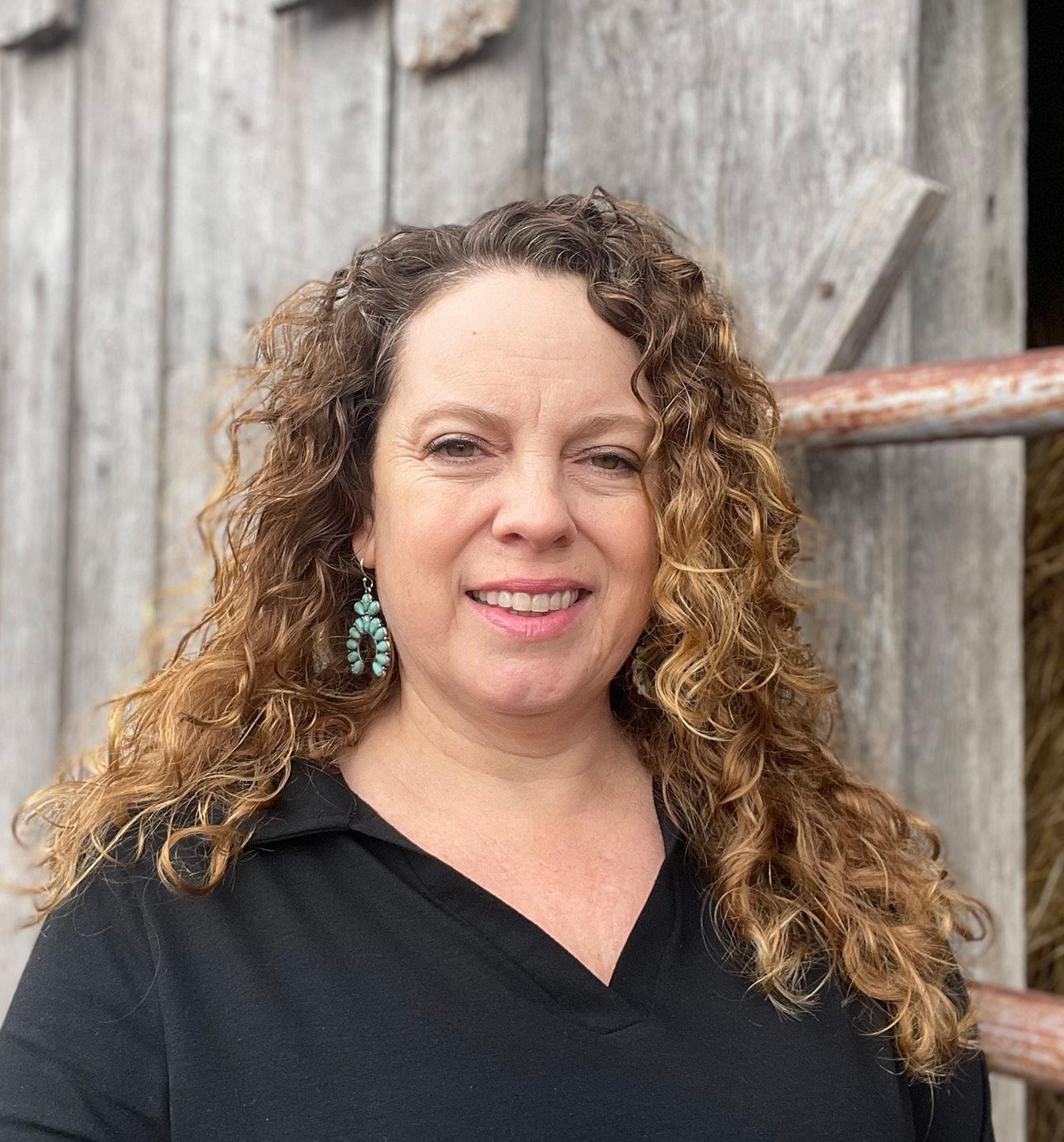
Jennifer Poor
Beyond the Barn: The Business of Farming
In May, I left a job that I have truly enjoyed for the last nine years. There were more days than not, that I looked forward to going to “work”. One of the best benefits of working at the high school was being there when my kids, Maddie and Cooper, attended. When it became public knowledge that I was leaving, people asked me what my plans were. When I told them I would be joining Jason full time on our farm, most of them would look at me and ask, “just farming?”. The more I thought about that question, the more I realized that a lot of people do not realize how much work is required to farm. It’s not all “drinking beer and checking fences”. It’s not completely their fault that they
Officers of the Missouri CattleWomen
President: Jennifer Poor
417-372-0227 • poorfarmscattle@gmail.com • Pomona
President Elect: Mandy Weigand 660-909-6781 • weigandranch@hotmail.com • Warrensburg
Secretary: Terry Bettels 660-424-3444 • cbettels55@gmail.com • Butler
Treasurer: Mary Kay Lyle 816-387-1930 • marykaylyle@gmail.com • Savannah
Past President: Marsha Corbin 660-232-1836 • oldtrailsregion@gmail.com • Dover
CattleWomen President
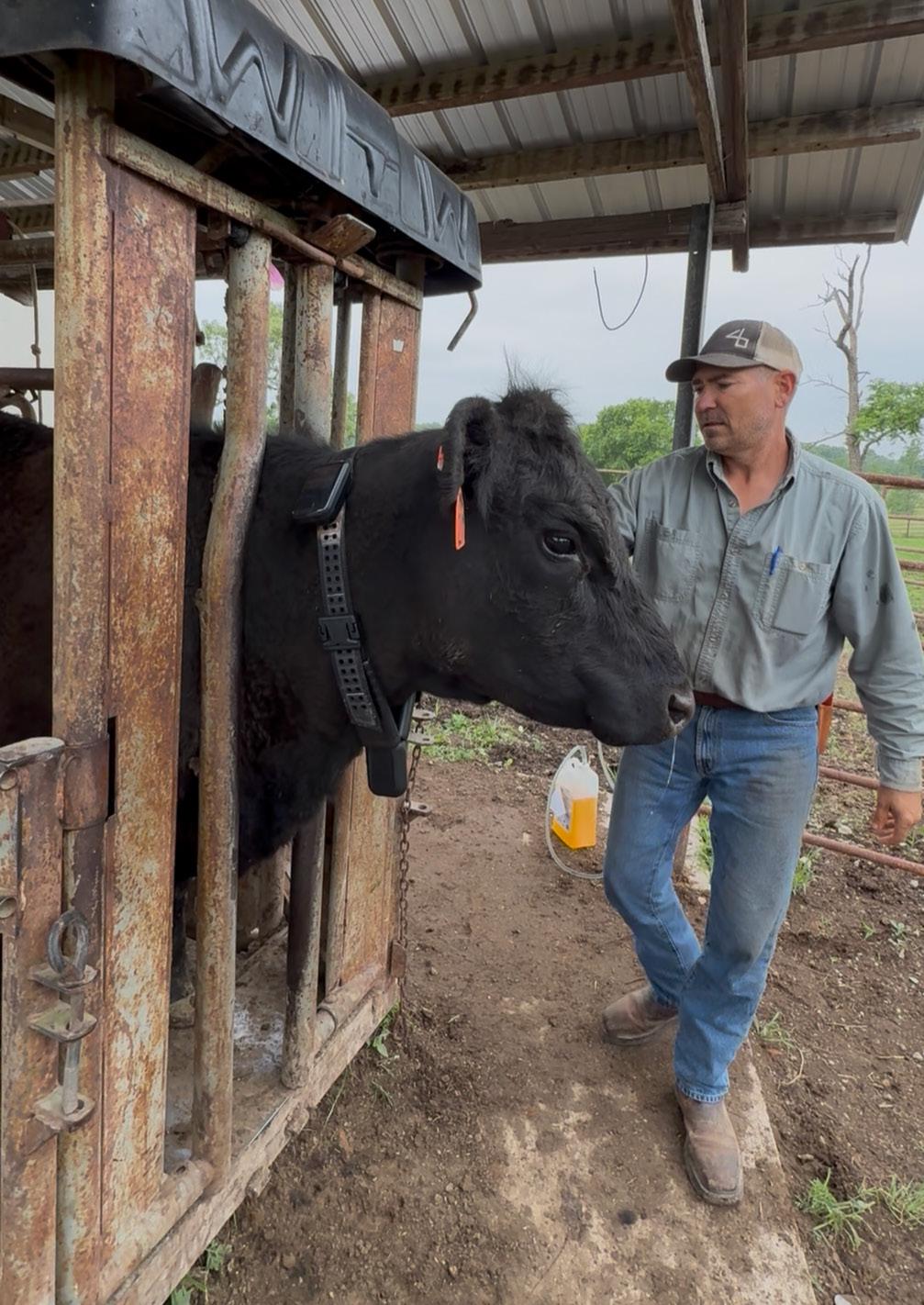
do not understand. Society today is so far removed from the farm that they have no idea what it takes to put food on their table. Coincidentally, the first two weeks out of school and on the farm, Jason, Cooper and I started the process of putting Halter® collars on all of our cows. That is a job in itself! I swear we worked cows for 148
days (yes, I’m being dramatic!). In the end, it was all worth it. However, going from a desk job where I sat for the majority of the day for the last nine years to learning and implementing a whole new fencing technology for our cattle the first two weeks of my “new just farming” job was intense!
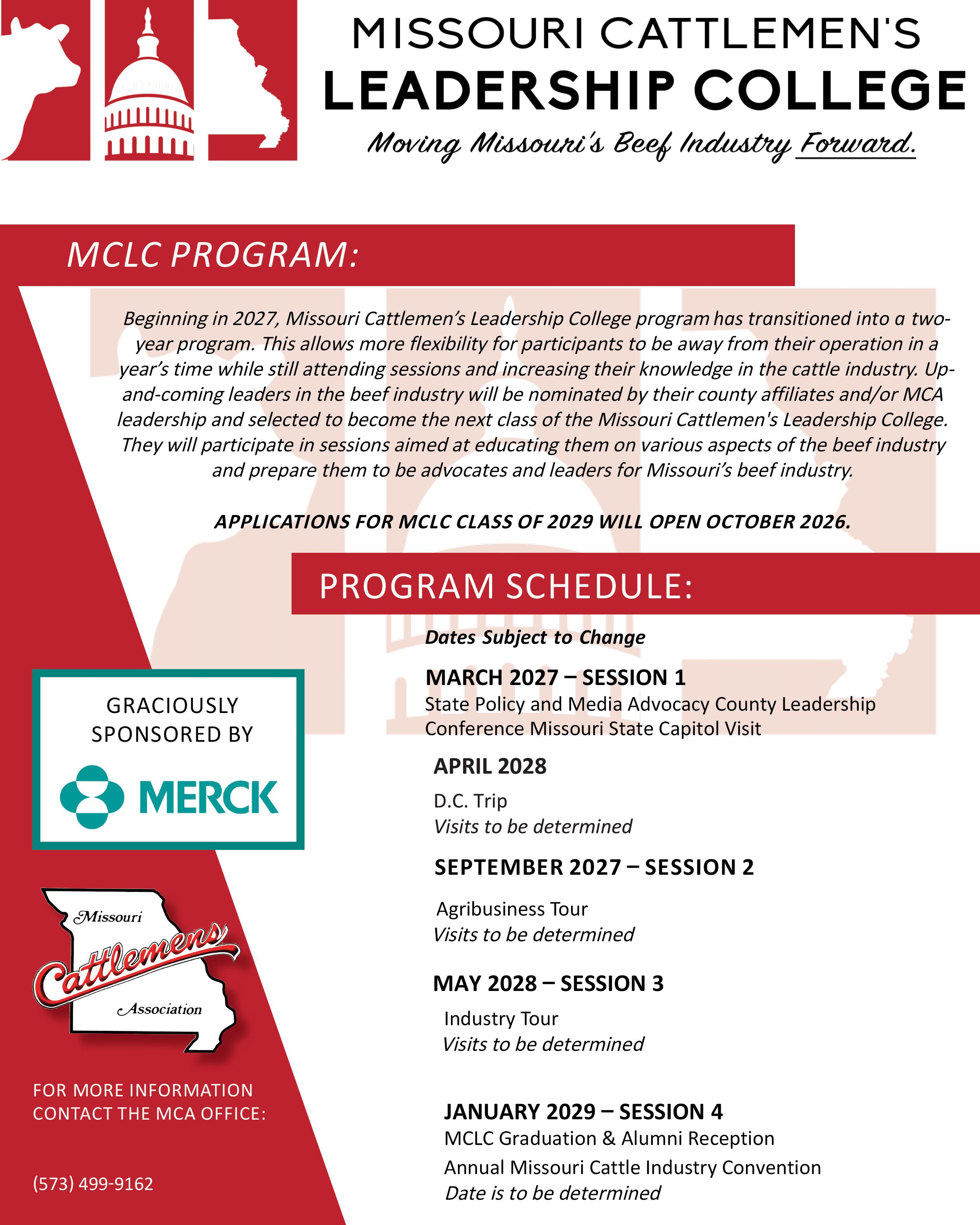
I have always maintained that knowledge is power. What most “agriculturally challenged” people don’t know is that “just farming” also includes educating ourselves on ways that we can improve our farm. Whether it’s adding virtual fencing, fertilizing with chicken litter or learning about better nutrition for our cattle, Jason and I are constantly researching what will work best for our farm. As producers, we have several opportunities to educate ourselves. One opportunity that is near and dear to my heart is the Missouri Cattlemen’s Leadership College (MCLC). The MCLC program gives you the tools needed for advocating for our industry. MCLC also educates individuals on different ways to improve their operations. If you ever get an opportunity to apply, I encourage you to do it. You won’t be disappointed.
Other educational opportunities available to producers include but are not limited to:
• MBIC’s Masters of Beef Advocacy program
• American National Cattlewomen’s WIRED events
• National Cattlemen’s Beef Association Trailblazer program
• American Angus Association Beef Leaders Institute
Beef Cheeks
Ingredients
2 Beef Cheeks
Salt and Pepper
1 tbsp Oil or beef tallow (I eyeball the amount)
Water or beef stock
1-2 cloves garlic (or more…whatever you like)
I am a true believer that if you don’t agree with a policy or legislation, then it is your responsibility to meet with your lawmakers and seek a compromise or make a change. One way to do that is to attend Cowboys at the Capitol. I understand that several producers have off the farm jobs and cannot attend; I get it! I was there. One of the solutions to that problem is to email your representative and/or senator or call them. Being there in person is best, however one representative told Jason and I that an email (not a form letter that we get from various organizations) is the next best thing.
It goes without saying that there is more to farming than ‘just farming’. I encourage you all to continue to learn ways to improve your operation and to get involved with your local and state organizations.
This month’s recipe is one that may take you off the beaten path of beef cuts. One day I was looking in our freezer trying to figure out what to cook. Quite honestly, I was tired of my usual recipes and wanted something different. That’s when I saw a package of Beef Cheeks that were hanging out in our freezer. I did a little research and found out that beef cheeks are super versatile and can be used in almost any Mexican recipe, on top of mashed potatoes with gravy drizzled over it, or used in place of steak for steak salad, the list is endless. I hope you give this underutilized cut a try. Enjoy!
Directions
1. Heat up a cast iron skillet on medium high heat. Add oil or tallow to the pan.
2. Salt and pepper the cheeks generously
3. Sear cheeks on both sides until nicely browned
4. Put cheeks in a stockpot or slow cooker and cover with water or beef stock. Add garlic
5. If using a stockpot, boil the mixture then reduce to a simmer and let simmer 8-10 hours. If using a crockpot, turn it to low and let the cheeks hang out for 8-10 hours
6. Remove the cheeks and shred with forks
7. Optional step… put shredded cheeks back into a cast iron skillet and saute until the fat crisps up then serve.
Straight Talk
with Mike Deering
The Top Spot for Agriculture
The Missouri State Fair is right around the corner, running August 13-23, and the Missouri Cattlemen’s Association is preparing once again to have a strong presence at one of the greatest agricultural showcases in America. From livestock exhibitions and youth competitions to agricultural education and honoring our nation’s veterans during America’s 250th anniversary year, the fair remains a place where Missouri’s agricultural heritage is celebrated and preserved.
For 125 years, the Missouri State Fair has stood as the premier stage for Missouri agriculture. While many fairs across the country have drifted toward entertainment and spectacle, Missouri has never lost sight of its roots. More than 300,000 people now attend annually—a remarkable increase from the approximately 25,000 who attended the first state fair in 1901. Yet despite that growth, the fair’s mission remains largely unchanged: showcasing agriculture and investing in the next generation.
At the heart of the Missouri Cattlemen’s Association’s involvement is the Missouri Cattlemen’s Beef House and the Missouri CattleWomen’s Beef Showcase. For more than four decades, cattle producers and beef advocates have rolled up their sleeves and volunteered countless hours serving high-quality, nutritious beef to fairgoers. To my knowledge, the Beef House is the only restaurant on the fairgrounds operated almost entirely by volunteers. That spirit of service is what makes it special. County cattlemen’s associations from across the state come together to work side-by-side, creating an experience that keeps Missouri families returning year after year.
Much like the Missouri Cattlemen’s Association itself, the Missouri State Fair was built by people who believed
Executive Vice President
in agriculture and were willing to fight for it. In 1899, Representative C.E. Clark of Mexico introduced legislation creating the Missouri State Fair at the recommendation of Governor Lon Stephens. Several communities competed fiercely to become its home. After lengthy deliberations and multiple rounds of voting, Sedalia earned the honor. The Van Riper family donated the land that would become the fairgrounds, and the rest is history.
More than a century later, locating the fair in rural Missouri remains one of the reasons it has stayed true to its agricultural purpose. The fair continues to showcase the hard work of young people exhibiting livestock and poultry while connecting consumers with the farmers and ranchers who feed them.
There is no better place to witness that pride than in the livestock barns and at the MCA Beef House. We invite you to join us, whether as an exhibitor, fairgoer, or volunteer. To see what days are still in need of volunteers at the Beef House, please turn to page 15. New this year, fairgoers will be able to order from their phone by scanning a QR code and have their food ready for pick up. This was added this year to help our cattle exhibitors and their families who are busy taking care of livestock.
Together, we can continue a tradition that has strengthened Missouri agriculture for generations. We’ll see you in Sedalia this August.
Observations from the Field
with
Kenneth Ball, Region Three Grazing Coordinator
Fixing Forage Problems
Hot temperatures, dry weather and uncertain forage conditions can quickly put pressure on a cattle operation. Whether drought has already arrived in your area, hay supplies are tighter than expected or you’re simply looking for ways to make your farm more efficient, taking a closer look at your management plan now can pay dividends later.
One thing we can do now is take a little time and take a soil sample in the areas of our operation that aren’t quite up to par! Those areas that just do not look as good as other fields, those that just do not have the same deep color in the forage or have more weed pressure than others. Those that have broom sedge in them as well.
The common thought when we see this in pastures is automatically, “we need to lime that field?” This could be the case in some situations, it could also be your phosphorus levels. When phosphorus levels drop too low or high, it will bind up available nutrients in the soil, not allowing the plant to take up those nutrients. Therefore, there is no way of telling exactly where we need to apply those dollars to those acres without a proper soil sample strategy on our farms.
A soil sample costs between $20-$30 (some may be higher or lower in your area), and it could save you hundreds or even thousands of dollars in your operation! It allows you to invest your dollars where they will make the greatest impact, rather than simply spending money across every acre. By identifying exactly what each field needs, you can make strategic, efficient management decisions that improve both productivity and profitability. In other words, you’re putting the cast on the fracture-not just covering it with a bandage.
Another option we can look at is possibly converting some of those acres to a native warm season grass; this will provide forage or hay or both during the typical
summer slump when our other forages are dormant and really need rest.
We have this on our farm and it has been a blessing to have this forage be growing when others are not. It helped expand the gap between spring cattle processing and hay season while providing valuable forage during drought-prone periods, reducing our reliance on purchased feed and other outside inputs. Which in return means more profit. As we all know it is always better to be proactive and be prepared than be reactive to what mother nature and those outside resources hit us with in the pocketbook.
If this is something you feel your operation would like to consider or have been thinking about doing and just not sure how to get started or have questions prior to getting started. Contact your Regional Grazing Coordinator with the Missouri Cattlemen’s Association; we would be glad to assist you in any way we can!
For help with management of native grass, or for help identifying plants or weeds (feel free to text pictures) contact Missouri Cattleman’s Association Grazing Coordinators:
Region 1 • NW MO
Kyle Viers
kyle@mocattle.com
660-346-1084
Region 2 • NE MO
Doug Mertens
doug@mocattle.com
573-489-5261
Region 3 • SW MO
Kenneth Ball
kenneth@mocattle.com
417-818-6400
Region 4 • SE MO
Micah Hans
micah@mocattle.com
636-201-6846
Regional Range Report
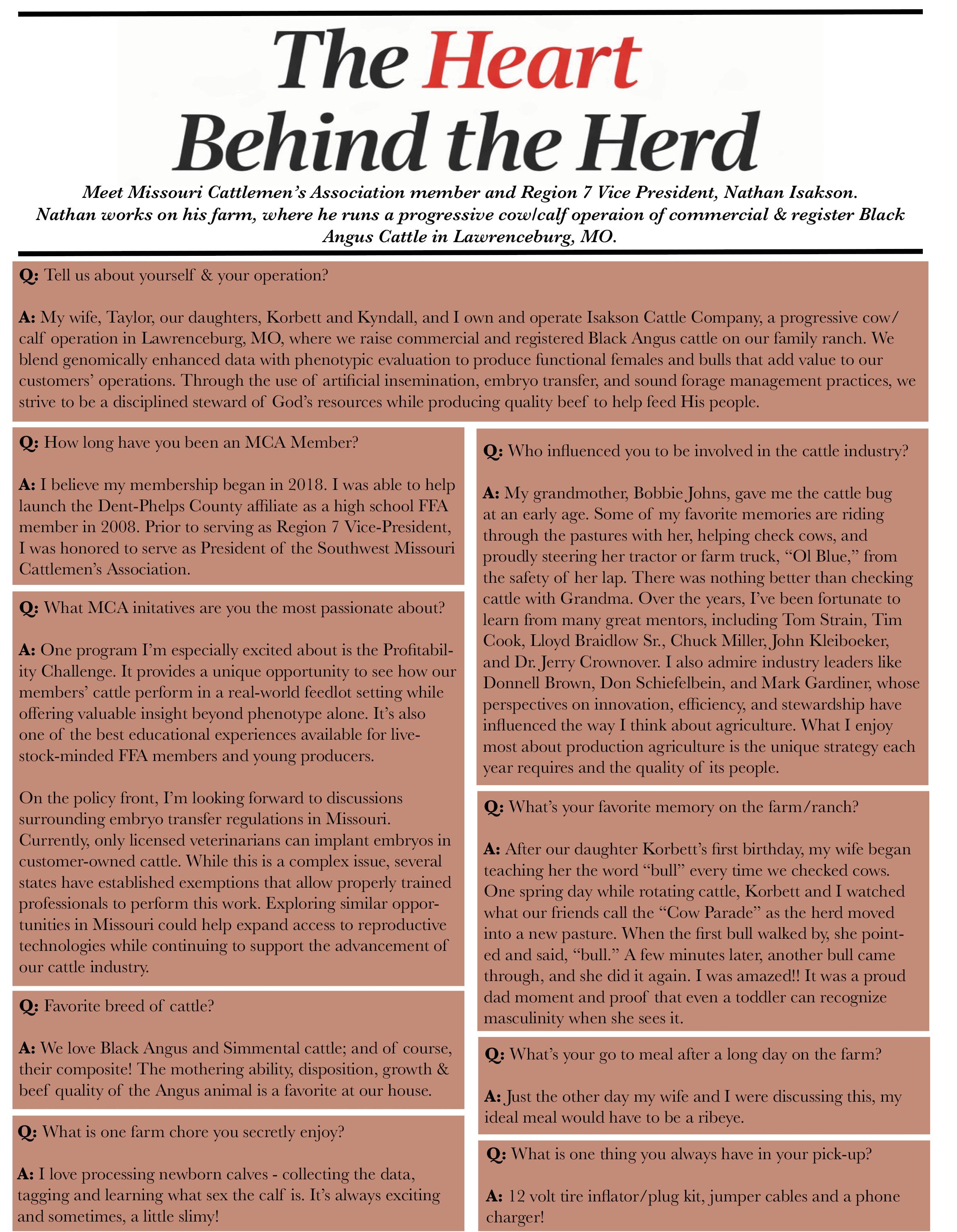
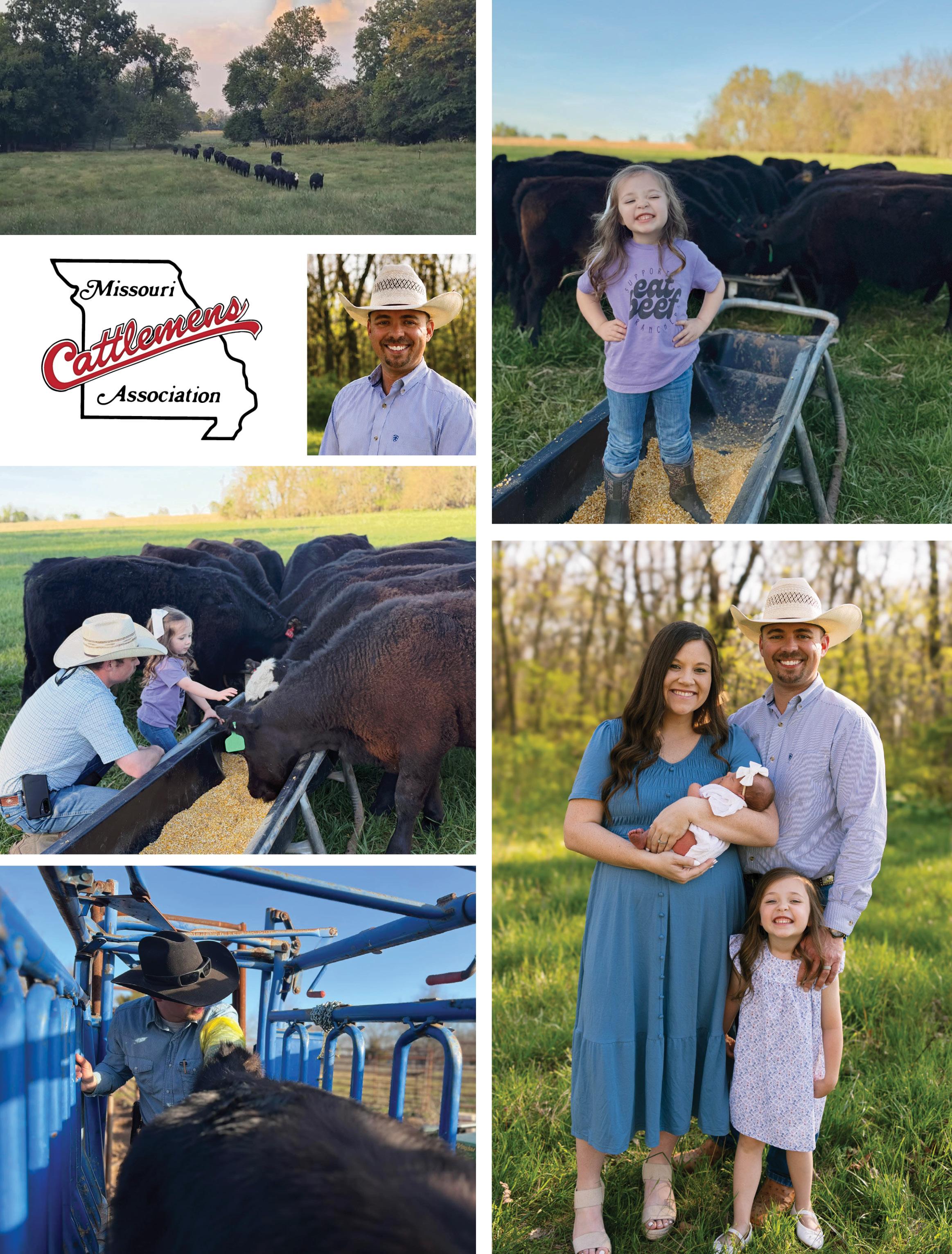
by Nathan Isakson, Region 7
Summer is Here!
Summer is here! I don’t know about you, but I’d much rather endure summer over winter. Simply put, I’ve never struggled to use my hands or hydraulics during the summer! Summer is a time of incredible activity, combined with long hours of daylight - and I love it. Marketing fall calves, haying, seed harvest, livestock shows and family gatherings (sometimes the first four double as the latter…) always make summer time a season to look forward to at our house.
Across Region 7, our affiliates are on their annual summer break. May and June brought the blessing of plentiful rain; although field work and haying was greatly delayed, it’s been a nice change in pace. 2026 brought a unique start to the year - we experienced a ‘mudless winter’ in Southwest Missouri. The drought monitor has continued to improve across our region, but I have yet to see a long-range forecast for this fall. Over the past four years, fall has started to take on a reputation as a time of lacking rainfall and a premature forage deficit across grazing and stockpile acres. I’d encourage anyone to give attention to Matt Makens, he is the meteorologist that consults with NCBA. He has predicted the last several fall droughts as far out as eight months! You can find his forecasts and models in the National Cattlemen and occasionally on “Cattlemen to Cattlemen”. He also offers a weekly weather service briefing through an annual subscription through his website (www.makensweather.com). It sounds like he has just launched an app to provide local weather modeling for your operation’s geographic location! On a positive note, the discussion right now is leaning towards an El Nino weather pattern establishing in the near future. I’m hoping it develops for cattle country.
Around Region 7 and across Missouri, Theileria has been a topic of growing concern. Recently the MU Veterinary School sent a small USDA funded research team into Southwest Missouri to collect blood and fecal
Region 1 VP - Ethan McNeill
Region 2 VP - Blake McDonald
Region 3 VP - Danny Ross
samples to run an extensive panel of labs to determine the severity of Theileria and other diseases such as Johnes, etc. among the sample cow herds. According to the experts, it is estimated that 90% of the beef herd has Theileria present. Medgene, an animal health company out of South Dakota is developing a Theileria vaccine and currently has a tick vaccine on the market. My understanding is the tick vaccine creates antibodies that inhibit the feeding, growth and reproduction of ticks. It’s easy to see that this vaccine could result in a tick population reduction. A local veterinarian shared with me that this may be a great opportunity not only for animal health, but human health! The emergence of new technologies such as these vaccines creates optimism that there may be an even greater solution around the corner for some of these issues. For example, I’m sure that I’m not the only one that is fascinated by the level of innovative thought and research that resulted in the creation of the Sterile Insect Technique used to eradicate the New World Screwworm in the sixties. Talk about an astounding story!
I’d be remiss if I didn’t mention the record setting cattle markets that we are currently enjoying. It is an outstanding time to be in the beef business. I believe that if we do our homework and make decisions that intentionally improve the Missouri cowherd, we’ll have the opportunity to increase the likelihood of a stable revenue stream for years to come. We’ve set high water marks, multiple times over the past twelve months. High markets tend to muddy the waters within the choice-select spread. According to economists, at times there isn’t as much differentiation as the market would typically signal. However, premium product still receives the premium. We have to realize that reduced supply and strong demand adds value to all grades of beefhigh tide floats all boats. If and when the smoke clears on these hot markets, we want to be on the winning side of product and price differentiation. Since the 1991 Beef Quality Audit, our industry has moved the needle exceptionally: 82% of beef in the US grades choice or better, but remember, choice is a large category when it comes to degrees of marbling. Marshall Goldsmith said it best, “what got us here, won’t get us there”.
Speaking of “Where We Are”, I’m beyond thankful that God saw fit to place each of us in the greatest country the world has ever seen. Recently I read that prior to 1900, it took 100 years for human knowledge to double.
Today, it takes a mere 12 hours! We live in an exciting time that often feels stressful. Technology has connected even the most remote of us and has made us extremely aware of many problems that 20 years ago wouldn’t have made the local newspaper. This month, as we celebrate America’s 250th milestone anniversary, I hope you can focus daily on how fortunate we are to live in the Land of the Free, Because of the Brave. No matter how you wear your hat, it’s always a great day for that. Happy Independence Day, America.
With deep gratitude,
Nathan Isakson Region 7 Vice-President
Your BEEF CHECKOFF NEWS
Agriculture Education on the Move: No Summer Slowdown
For many students across Missouri, the final school bell signals the start of summer vacation. For Ag Education on the Move (AEOTM), however, the mission of agricultural education doesn’t end when the school year does.
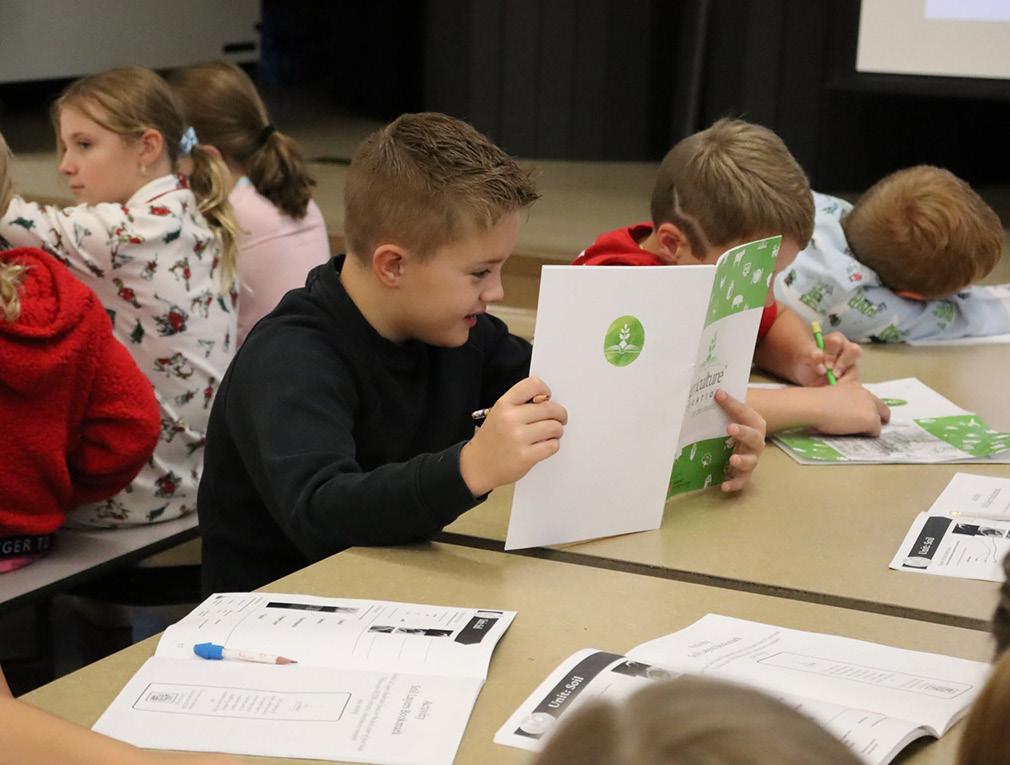
A valued partner of the Missouri Beef Industry Council (MBIC), AEOTM has become one of Missouri’s leading agricultural literacy programs, reaching thirdgrade students in more than 65 counties across the state. Through engaging, hands-on lessons, students gain a better understanding of where their food comes from and the important role agriculture plays in their everyday lives.
While AEOTM covers agriculture as a whole, the program places a special emphasis on the beef industry. Whether exploring the nutritional benefits of beef, learning how cattle are raised on Missouri farms and ranches, or discovering the many beef by-products found in everyday items, students are introduced to an industry that touches their lives in more ways than they realize.
For many children, these lessons provide their first meaningful exposure to production agriculture. They help answer questions, challenge misconceptions and build trust in the farmers and ranchers who work every day to provide safe, wholesome food for families across the country. By helping students understand the care, science and stewardship behind beef production, AEOTM is moving the needle for the beef industry and strengthening the connection between consumers and those who raise their food.
Even though most schools are on summer break, AEOTM hasn’t slowed down. This summer, the program is delivering educational experiences in 81 summer programs across Missouri, reaching 5,782 students through summer school classes, enrichment programs and day camps. While many of these opportunities take place through local school districts,
AEOTM educators are also connecting with youth through community organizations and camps, ensuring agricultural education remains accessible long after the traditional school year ends.
During the school year, AEOTM educators typically visit third-grade classrooms once each week over a 10-week period to deliver the full curriculum. Summer schedules, however, require flexibility. Because many summer school programs only last two to four weeks, educators often visit daily or every other day to complete all 10 lessons. Some programs even include two lessons per day over the course of a single week.
“Our team works to accommodate each school’s schedule and approach to summer learning,” Heather Flecher, Program Director said. “Every program looks a little different, but we want to make sure students receive the same high-quality experience.”
Helping make that possible is a team of 24 college educators and interns representing seven universities across the state. Many are studying agricultural education and bring both enthusiasm and firsthand agricultural knowledge into every lesson they teach. Beyond delivering curriculum, these interns serve as
ambassadors for agriculture, helping students connect classroom concepts to real-world experiences.
AEOTM also continues its partnership with Missouri FFA chapters during the summer months. This year, Neosho, Republic, Halfway, Clark County and Troy FFA chapters are helping teach lessons within their local school districts, extending the program’s reach while providing leadership opportunities for FFA members.
The organization’s commitment to agricultural literacy extends well beyond summer school classrooms. Throughout the summer, interns visit FFA camps each week to promote the AEOTM educator program and encourage FFA members to become future educators during the school year. These visits help cultivate the next generation of agricultural advocates while strengthening the pipeline of AEOTM educators.
The team has also spent time at 4-H Camp Clover Point, sharing interactive lessons focused on beef, dairy and soybeans. Additional programming has reached students through Jefferson City Parks and Recreation day camps, YMCA camps, Boys & Girls Club programs and other enrichment opportunities across the state.
“We love any opportunity to connect with students during the summer,” Heather shared.
As consumers become increasingly removed from production agriculture, programs like AEOTM play an important role in bridging the gap between the farm and the consumer. By reaching students early and often, the organization helps build a foundation of understanding that can last a lifetime.
For MBIC, supporting agricultural literacy is an investment in the future of the beef industry. Today’s third graders are tomorrow’s consumers, community leaders, and decision-makers. Helping them understand the value of beef production and the dedication of Missouri cattle producers today helps strengthen the industry for years to come.
Summer may bring a different pace and a different classroom setting, but AEOTM remains committed to its mission. Whether in a school cafeteria, an FFA camp, or a recreation center, the message remains clear: agriculture matters, beef matters and learning never takes a summer vacation.
Missouri Response to New World Screwworm Detection in U.S.
NWS does not affect the safety of the U.S. food supply.
JEFFERSON CITY, Mo. – The United States Department of Agriculture Animal and Plant Health Inspection Service (USDA-APHIS) has confirmed the presence of New World Screwworm (NWS) in the United States. On June 3, 2026, USDA confirmed NWS in a 3-week-old calf in Zavala County, Texas.
NWS is a serious pest that affects livestock, pets, wildlife and less commonly, people and birds. NWS larvae burrow into the flesh of living animals, causing serious damage to livestock and economic losses to producers.
The Texas case is the first detection of NWS in the U.S. since northward progression from Central America was observed in 2023. In preparation for the potential re-emergence of NWS in the U.S., Missouri assembled a New World Screwworm joint working group. Led by State Veterinarian Steve Strubberg, the working group is comprised of representatives from USDA, Missouri Department of Agriculture, University of Missouri Extension, Missouri Department of Conservation and Missouri Department of Health and Senior Services.
The working group prepared a Missouri NWS Response Plan. In light of the U.S. detection, Missouri has activated the Response Plan.
Animal Movement into Missouri
Any species traveling from an infested state, but not an infested zone, can enter Missouri with a Certificate of Veterinary Inspection (CVI) that includes a statement “All animals in shipment do not originate from or transit through a NWS infested zone.”
Any species that originates from an infested zone must meet the movement requirements for the state of origin and obtain a permit from the Missouri State Veterinarian’s office and have a CVI that states “all animals listed were individually inspected and found free of wounds.”
Steps to Protect Your Animals
Prepare.
• Develop and implement strong fly and tick protocol for animals.
• Clean, treat and cover open wounds.
• If possible, delay practices which cause skin openings such as castration, dehorning or branding. Treat areas where these practices are performed.
• Register your farm for a premises ID so the Missouri Department of Agriculture can notify you if NWS is confirmed in the state.
Inspect.
• Regularly monitor animals for signs of infection or maggots, especially around areas of castration, dehorning, branding, umbilical site, scrapes, lesions or a tick-feeding site.
Know the signs:
• Bloody or light-colored drainage from a cut or wound.
• A cut or wound that rapidly enlarges for seemingly no reason.
• White or cream-colored runny substance (the eggs) in and around a wound.
• Presence of fly larvae (maggots) in wounds.
• Irritated behavior and signs of pain.
• Head shaking.
• Reduced appetite.
• Fever and other signs of secondary infection.
• Foul odor or smell of decay.
Act.
• If you see a live animal with signs of infestation, report it immediately.
• For livestock and pets, contact your local veterinarian or the MDA Animal Health Department at (573) 751-3377.
• For wildlife, contact the Missouri Department of Conservation at (573) 522-0142 or report it online
It is important to note that this detection does not impact food safety and the U.S. food supply is safe.
For more information about the NWS, visit the Missouri New World Screwwormwebsite below. For more information about the Missouri Department of Agriculture and its programs, visit the MDA website.
COUNTY NEWS
See What’s Happening in Your County
St. Clair County Cattlemen
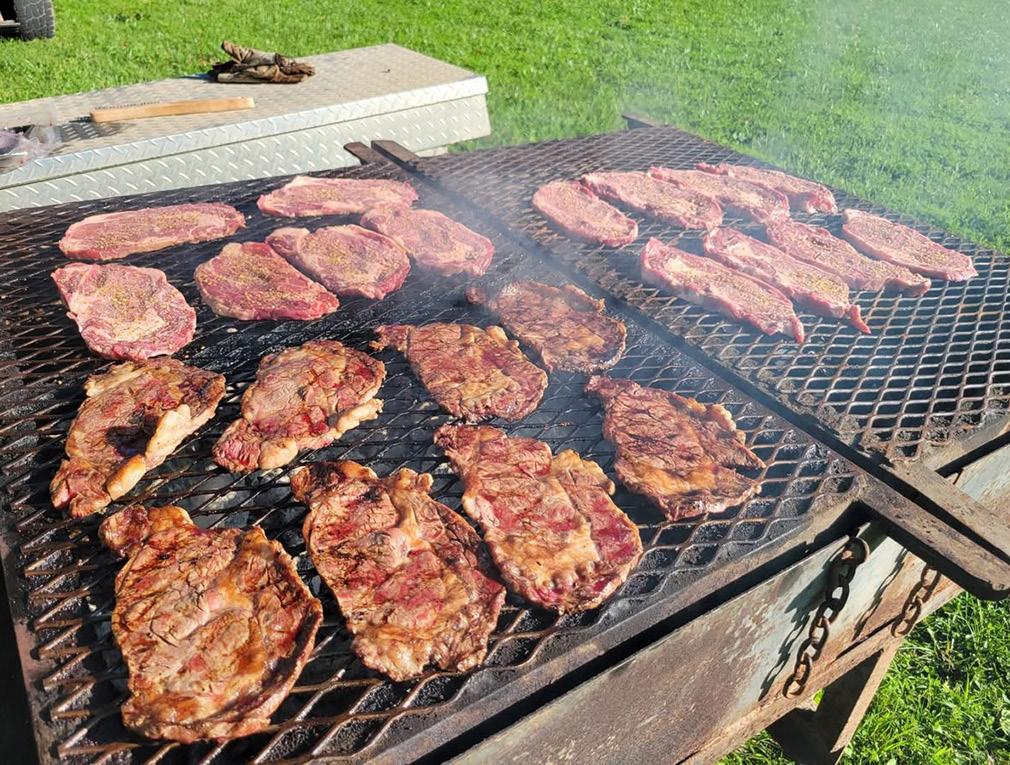
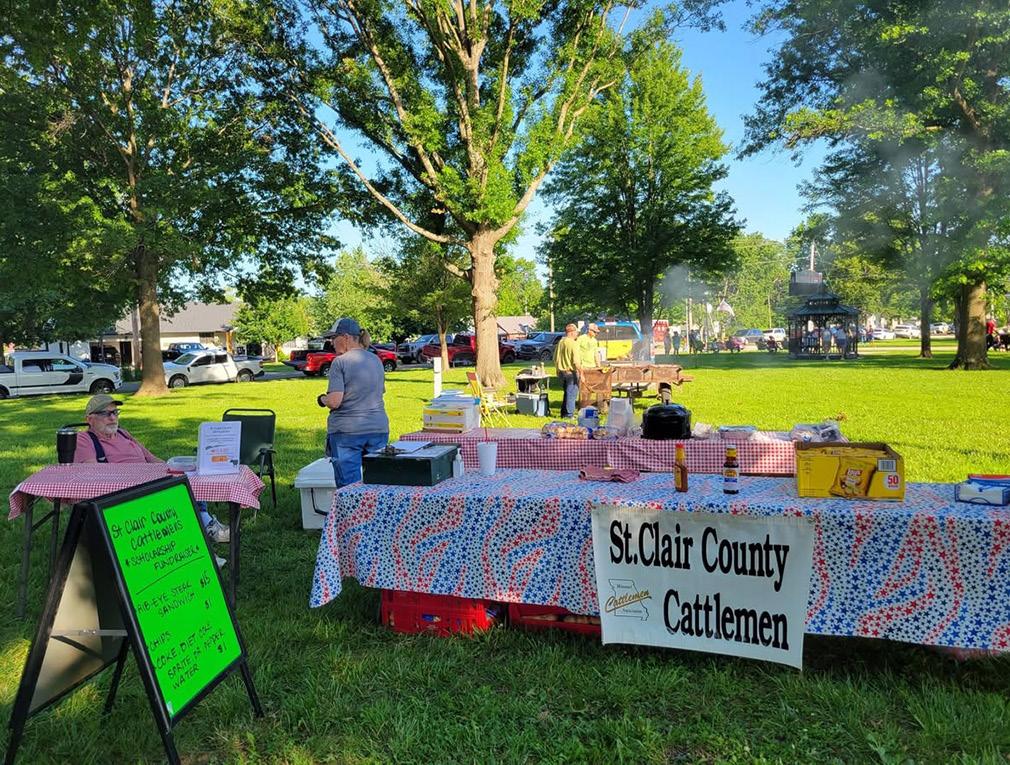
The St. Clair County Cattlemen’s Association spent Friday, June 12th, serving up delicious steaks at the Appleton City Fair. Throughout the evening, the group prepared and served 150 steaks to community members, making the event a great success.
Beyond the food, the Cattlemen enjoyed the chance to connect with local residents. They visited with many familiar faces and welcomed several repeat customers who returned for another great meal.
Events like this continue to showcase the group’s commitment to promoting beef, supporting local agriculture, and strengthening community ties. The St. Clair County Cattlemen look forward to many more opportunities to serve the people of St. Clair County.
SimAngus Bred Heifers & Bulls For Sale
Dallas County Cattlemen
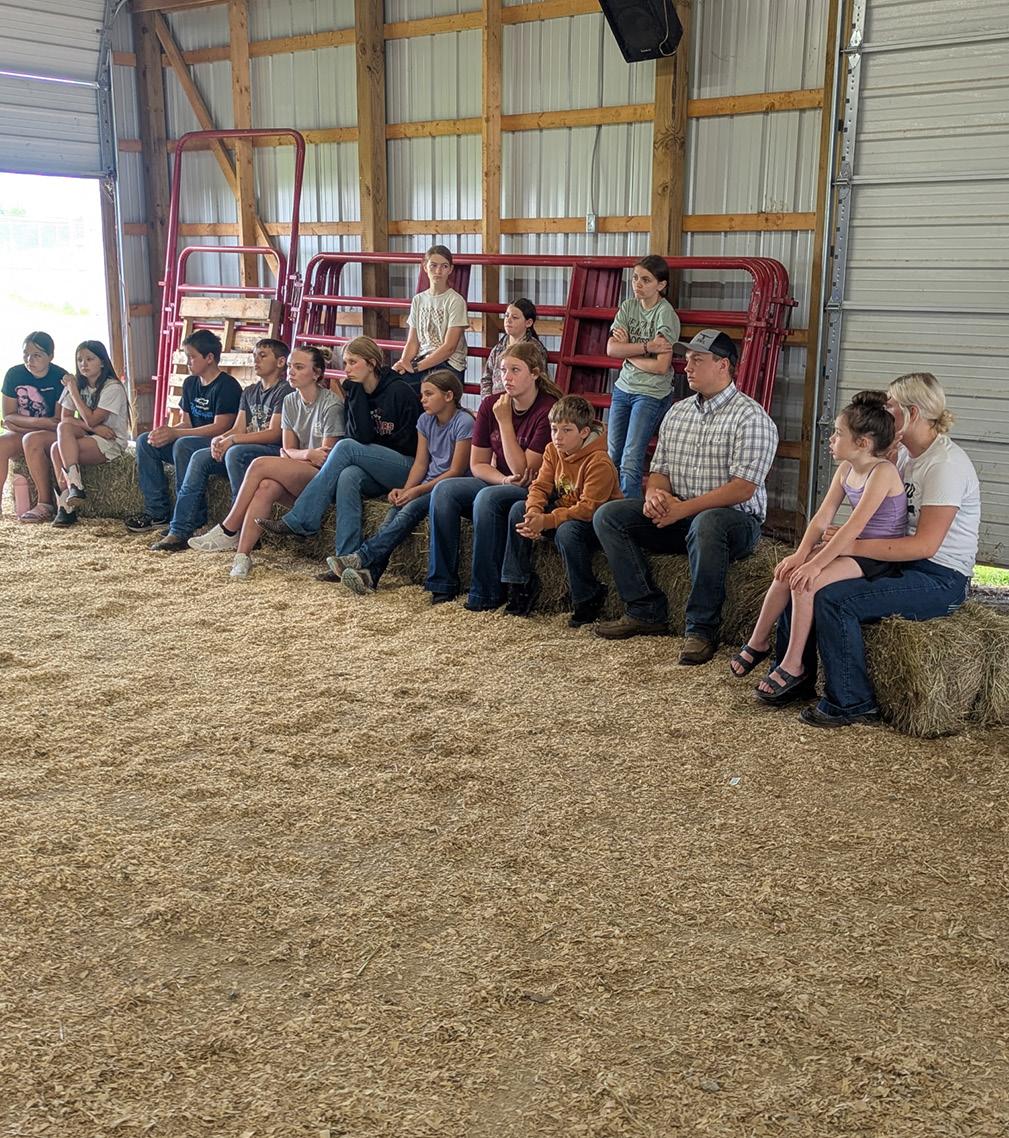
Enthusiasts of all ages spent June 2nd at the Dallas County Fairgrounds in Buffalo, MO, learning all about the beef cattle industry. The Dallas County Cattlemen’s Association (DCCA) sponsored the day-long clinic and event. The 22 kids in attendance had the opportunity to do some hands-on learning as well as hear from numerous industry experts on many educational topics. Also assisting with the day were DCCA members as well as parent volunteers and 4-H leaders.
Topics covered were DNA, marketing cattle, feeding and grooming, artificial insemination and reproduction, beef quality assurance, embryo transplanting, showmanship, and theileria. Lunch was provided by PaPa Brahmans and parent volunteers.
DCCA would like to thank everyone who helped make the day possible and a huge success. We are looking forward to firing up our grill and serving alot of beef at the Dallas County Fair at the end of June. We will be treating the beef exhibitors to ice cream one afternoon. Hope everyone is having a great summer!
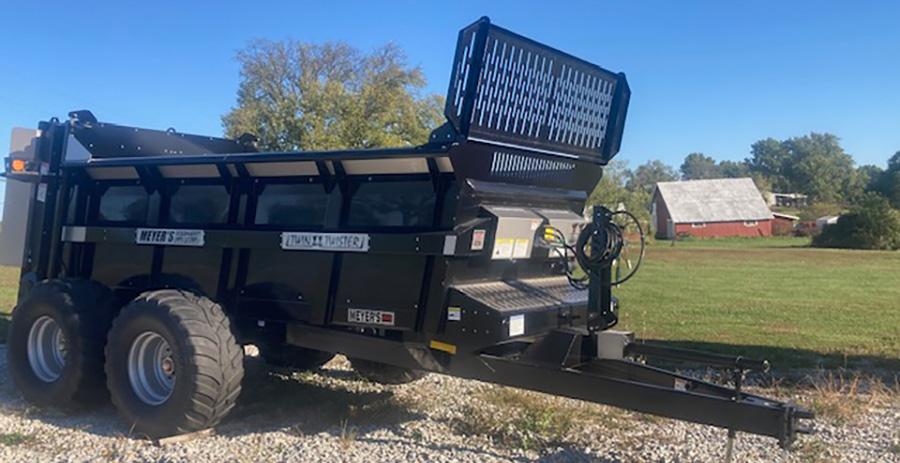
Meyers Truck Service
Participants at DCCA beef clinic
Linn County Cattlemen
The Linn County Cattlemen had another very busy May for Beef Month. Several members spent time again reading at local county schools in elementary classrooms. Books included Can Do Cowkids and Levi’s Lost Calf both written by Amanda Radke. We purchased a beef and had it ground into hamburger and donated it to the Linn County Food Pantry.
We had a good group of scholarship applicants and awarded twelve scholarships and one livestock grant this year. The proceeds all came from our annual banquet.
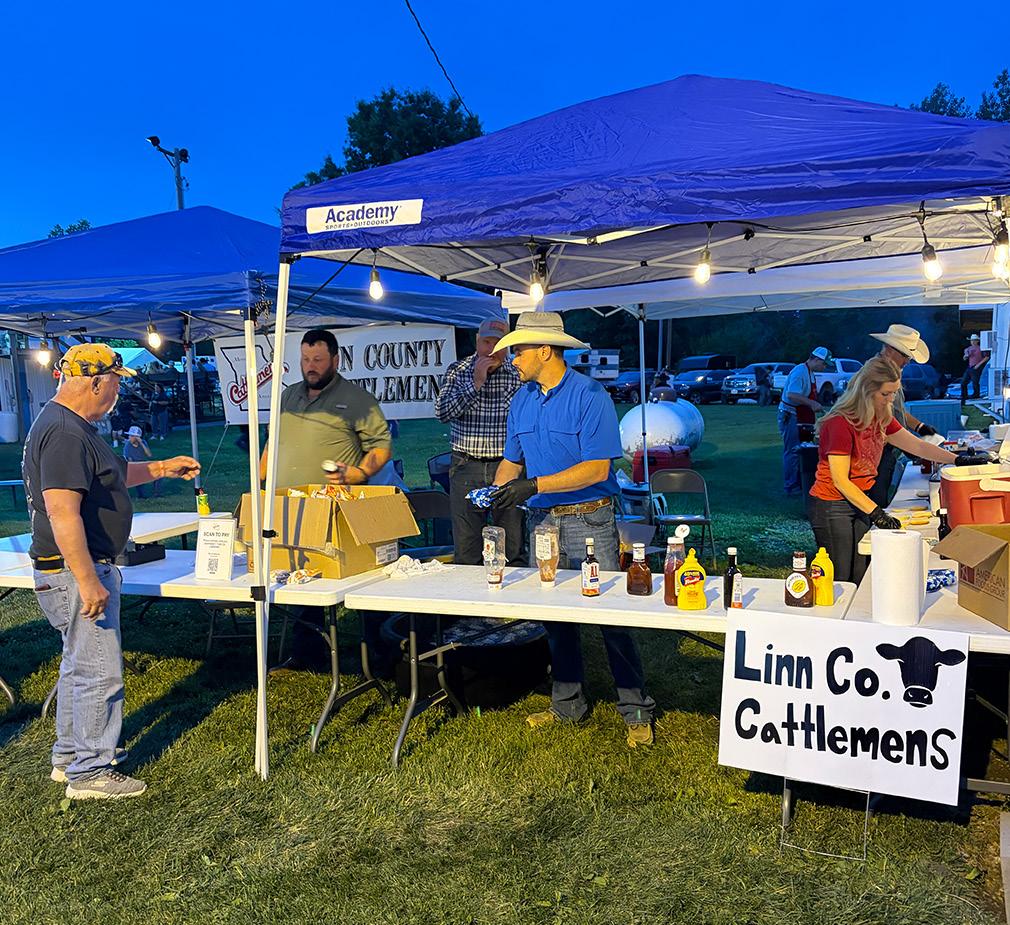
The biggest event of the month was operating a food booth at the annual bull ride held at the Linn County Fairgrounds. It was a beautiful Saturday evening with
Buffalo Livestock Market
1 mile west on Hwy 32 • Buffalo, MO 65622 Barn: 417-345-8122
Sale Every Saturday 12:00 Noon
• Selling 1200 to 1700 head Farm Fresh Cattle weekly
• Special Stock Cow and Bull Sale 3rd Tuesday night of each month at 6:30 p.m.
• Pre-Vac Feeder Calf Sales 2nd Saturday of every month in conjunction with Regular Sale (Pfizer Pre-Vac, BLM BPre-Vac, Bayer Program, Mo Quality Assurance. LMA-Vac and MFA Health Track)
Order Buying Service Available
Owners… Lyle Caselman Leon Caselman 417-345-7876 H 417-345-4514 H 417-533-2944 cell 417-588-6185 cell
both the bull ride and food booth having great success. We served ribeye steak sandwiches and hamburgers and both were in great demand. We felt it was a great way to end up the month promoting beef. We are very grateful for all the support.
The Bull Ride at the Linn County Fairgrounds Memorial Day Weekend with Linn County Cattlemen.
Linn County cattlemen bull ride
Donation for Beef Month to the Linn County Food Pantry. Pictured are Matt McDaniel, President; Debbie Scott, manager of the food pantry; and Tyler Gordon, Treasurer.
Missouri Angus Breeders
www.meadfarms.com
Newton and McDonald County Cattlemen
The May meeting of the Newton and McDonald County Cattlemen’s Association was held on May 12th, 2026 at 6:30 p.m. at Crowder College. There were approximately 115 members and guests in attendance. The meeting was sponsored by Eubanks Equipment Sales. A pizza dinner was enjoyed by all. Salad and Focaccia bread was also provided by Crowder Aggies with members providing desserts.
Lynn Morehead brought the meeting to order with the Pledge of Allegiance, Ronnie Tosh offered a prayer for the meal and gathering. Lynn thanked everyone for coming. And asked anyone running for office to stand up and introduce themselves. Candidates were able to leave their information on the tables for voters to take.
James Gibson and Lynn Morehead announced that all tickets had been sold for the gun raffle to benefit the Backpack Snack Pack program and asked James Miller age 4 to assist with drawing the winning names. The first winner was David Collingsworth and he elected to take the 22. The second winner who received the 357 was Larry Brown. It was suggested that this may be something that the Association does annually to help out a good cause.
11 Members attended Cowboys at the capitol. They talked about the things that were discussed that will be affecting the local cattlemen. And what the Senators and representatives can do to help with that.
The upcoming May 28th meeting regarding the proposed Data Center and Electric Transmission Lines was announced with everyone encouraged to attend.
Shawna with Crowder talked about the Annual Crowder Aggies Rodeo that will be held in August. She discussed how the Cattleman’s support the Rodeo by parking cars. She also asked for volunteers to help work the gates taking ticket money.
Shawna also talked about the Annual Calf Auction that was held on April 1st. The calf donated by Kunkle farms was purchased by Bo Johnson. The fund raiser brought in $19,350 which includes the sale of the calf and the proceeds from sponsors. It was also announced at that time that Bo Johnson will be donating the calf to be auctioned next year. Proceeds go to Crowder students as scholarships to help with expenses. It was also announced that this year Crowder is graduating 36 Vet Tech and Ag Degrees.
Ryan Carr with Vermeer presented a video showing the newest Vermeer equipment that can be purchased at Eubanks. He showed a video of the Bale Hawk, the new Autonomous Bale Mover that moves around the field by a suite of onboard sensors.
Max and Austin with Eubanks in Anderson announced the opening of their new store in Claremore, OK. They also wanted everyone to know that even though they are the #1 Vermeer dealer in the area, that they also have McHale Balers, and Deutz Fahr tractors.
The county fair dates were announced with Newton County Fair being July 8th-11th and the McDonald County Fair July 15th-18th. The Cattlemen’s provides a Herdsman award at each of the County Fairs. The participants are judged by a neutral third party that attends the fair and asks the participants questions about their animals and how they care for them. This along with visually seeing how their area is kept determines the award winner. Those winners are then presented with a cash prize. And their names will be announced at the first fall meeting of the Cattlemen’s association.
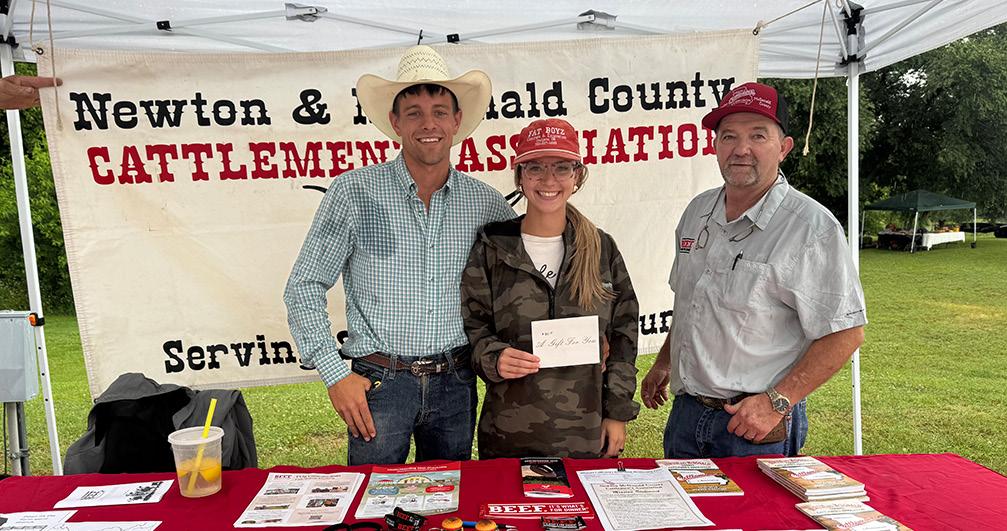
Newton/McDonald County Cattlemen Promote Beef Industry at Southwest City Old Timers Day Despite rainy weather throughout the day, community members gathered in Southwest City on Saturday, June 6th, for the annual Old Timers Day celebration
in Missouri’s far southwestern corner. The Newton/ McDonald County Cattlemen’s Association was among the organizations participating in the event, promoting the local beef industry and connecting with area residents.
The Newton/McDonald County Cattlemen’s Association partnered with Cornerstone Bank, Collinsworth Land, and Dave’s Supermarket to sponsor a series of beef gift card giveaways during the event. A total of 139 people registered for the free drawings, demonstrating strong community interest and support for local agriculture.
The Newton/McDonald County Cattlemen’s Association extends its appreciation to Cornerstone Bank, Collinsworth Land, Dave’s Supermarket, volunteers, and everyone who participated in helping promote Missouri beef and support local cattle producers during this year’s Old Timers Day celebration.
Feeding Quality Forum Set for August 4–5 in Amarillo
Source: Certified Angus Beef
From shifting cattle markets to evolving consumer demand, today’s cattle industry requires producers to make sharper, more strategic decisions than ever before. Set for Aug. 4-5, 2026, in Amarillo, Texas, the 2026 Feeding Quality Forum brings cattlemen together to explore practical solutions, timely market insights and real-world strategies designed to support the bottom line.
Join Certified Angus Beef LLC (CAB) in the Texas Panhandle for two days of engaging sessions, industryleading speakers and valuable networking opportunities to help producers navigate their business with confidence.
The weekend isn’t all lecture. Attendees can pick their choice of two Beef Blitz pre-event tours. Experience Caviness Beef Packers Harvest Facility or Caviness Beef Packers, Amarillo’s ground beef facility. Each tour costs an additional $50 to attend and has limited capacity, available on a first-come, first-served basis.
Stage sessions will kick off with returning speaker Dan Basse, AgResource Co., who will provide a global market overview of how to prepare for risk management amidst shifting markets. The afternoon will feature topics of cattle management and marketing, an update on red-meat yield, and a panel discussion about the value of coordinating supply chain efforts.
Cap off the night with a tip of the hat to 2026 Industry Achievement Award winner and veterinarian Del Miles at a reception and dinner featuring the Certified Angus Beef ® (CAB®) brand. Miles and CAB President John Stika will sit down to discuss the evolution of veterinary medicine in the beef industry and Miles’ commitment to improving feedyard management.
The event wraps up Wednesday, Aug. 5, after the morning sessions covering topics such as how CAB Prime is a practical target for cattlemen, evolving ground beef sales opportunities, updates on the beef-ondairy market, advancements in feed and herd health, and strategies for herd expansion and goal-setting.
The event concludes with a CAB brand lunch alongside closing remarks. Find more details and register at feedingqualityforum.com.
Feeding Quality Forum is sponsored by AngusLinkSM, BEEF Magazine, Caviness Beef Packers, Diamond V, Whole Cottonseed, Drovers, Elanco, Feed Lot, NCBA Cattlemen’s Education Series sponsored by National Corn Growers Association, Rabo AgriFinance, Select Sires Inc., and Selko.
U.S. Cattle on Feed up 2%
Source: Released June 18, 2026, by the National Agricultural Statistics Service (NASS), Agricultural Statistics Board, United States Department of Agriculture (USDA).
United States Cattle on Feed Up 2 Percent
Cattle and calves on feed for the slaughter market in the United States for feedlots with capacity of 1,000 or more head totaled 11.7 million head on June 1, 2026. The inventory was 2 percent above June 1, 2025.
Placements in feedlots during May totaled 1.70 million head, 10 percent below 2025. Net placements were 1.65 million head. During May, placements of cattle and calves weighing less than 600 pounds were 320,000 head, 600-699 pounds were 240,000 head, 700-799 pounds were 400,000 head, 800-899 pounds were 444,000 head, 900-999 pounds were 225,000 head, and 1,000 pounds and greater were 75,000 head.
Marketings of fed cattle during May totaled 1.55 million head, 12 percent below 2025. Marketings were the second lowest for May since the series began in 1996.
Other disappearance totaled 55,000 head during May, 11 percent below 2025.
Terms and Definitions of Cattle on Feed Estimates
Cattle on feed are steers and heifers being fed a ration of grain, silage, hay and/or protein supplement for slaughter market that are expected to produce a carcass that will grade select or better. It excludes cattle being “backgrounded only” for later sale as feeders or later placement in another feedlot.
Placements are steers and heifers put into a feedlot, fed a ration which will produce a carcass that will grade select or better, and are intended for the slaughter market.
Marketings are steers and heifers shipped out of feedlots to a slaughter market.
Other disappearance includes death loss, movement from feedlots to pasture, and shipments to other feedlots for further feeding.
Statistical Methodology
Survey Procedures: During January and July all known feedlots in the United States with capacity of 1,000 or more head are surveyed to provide data for cattle on feed estimates. During the other months, all known feedlots from 16 States are surveyed. The 16 States account for approximately 98 percent of the cattle on feed in feedlots with capacity of 1,000 or more head. Individual State estimates are published monthly for 11 of the 16 States. Data collected from the remaining 5 States are used to establish the “Other States” estimates. These 5 States include Illinois, Minnesota, New Mexico, Oregon, and Wyoming. The “Other States” category represents all cattle on feed with a capacity of 1,000 or more head for the rest of the United States.
Estimating Procedures: These cattle on feed estimates were prepared by the Agricultural Statistics Board after reviewing recommendations and analysis submitted by Regional Field Offices. Regional and State survey data were reviewed for reasonableness with each other and with estimates from the previous month when establishing the current estimates.
Revision Policy: Revisions to previous estimates are made to improve month-to-month relationships. Estimates for the previous month are subject to revision
in all States each month when current estimates are made. In February, all monthly estimates for the previous year, and the number of feedlots and annual marketings from two years ago are reviewed and subject to revisions. The reviews are primarily based on slaughter data, state check-off or brand data, and any other data that may have been received after the original estimate was made. Estimates will also be reviewed after data from the Census of Agriculture are available. No revisions will be made after that date and estimates become final.
Reliability: Since all 1,000+ capacity cattle on feed operators in every State are not included in the monthly survey, survey estimates are subject to sampling variability. Survey results are also subject to nonsampling errors such as omissions, duplications, and mistakes in reporting, recording, and processing the data. The effects of these errors cannot be measured directly. They are minimized through rigid quality controls in the data collection process and through a careful review of all reported data for consistency and reasonableness.
2026 Livestock Marketeers Hall of Fame
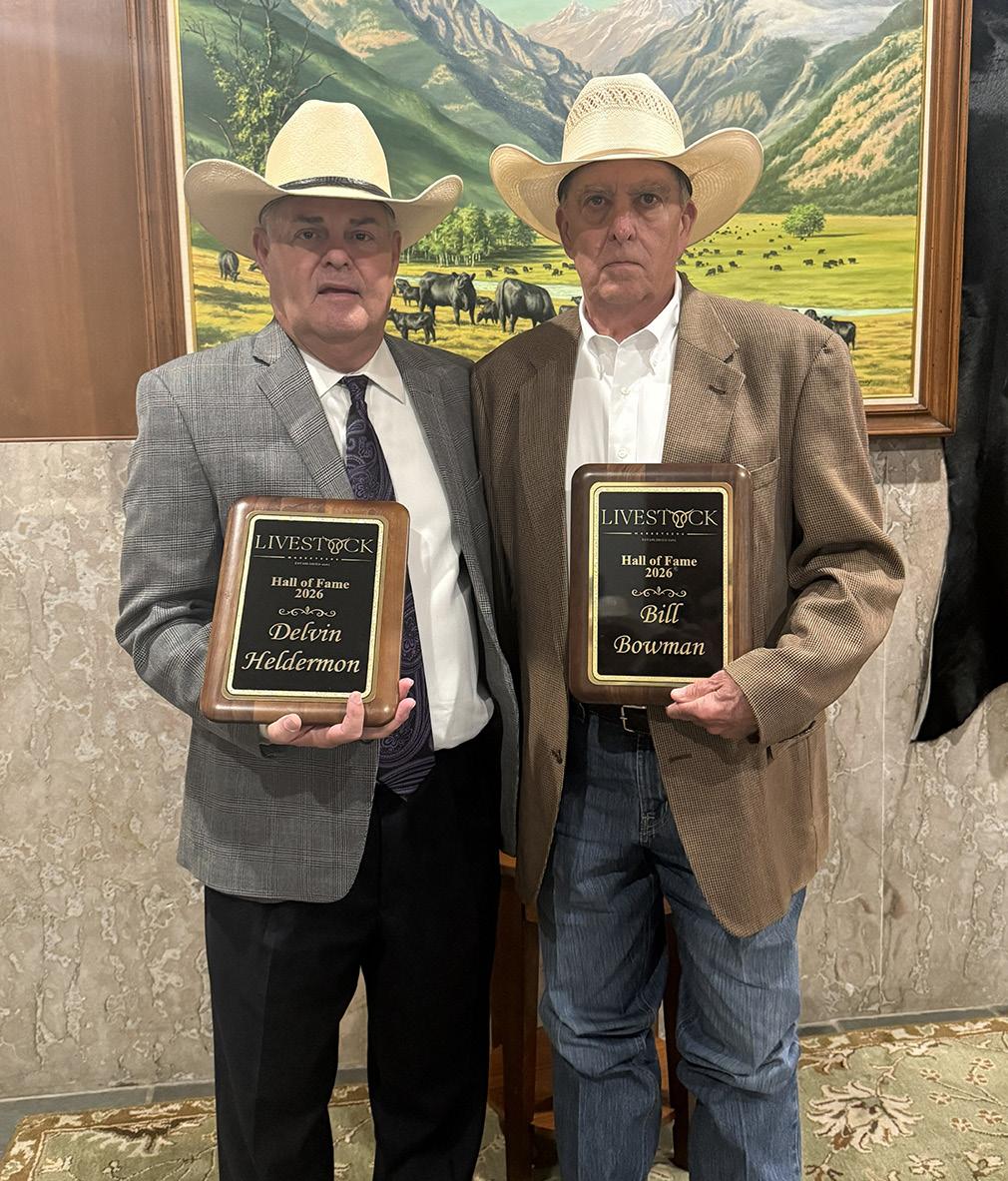
The Livestock Marketeers hosted their 61st annual Hall of Fame banquet on May 27th. This years’ event was hosted by the American Angus Association in St. Joesph, MO. The 2026 inductees were Bill Bowman, St. Joesph, MO, and Delvin Heldermon, Sulphur, OK.
Bill Bowman was born and raised in Stet, MO, and graduated from high School in 1975. He received a BS in Animal Science from the University of Missouri in 1979 and was a Regional Manager trainee for the American Angus Association the same year. From 19801990, Bill worked for VJP Angus and Sydenstricker Angus Farm in management and show cattle preparation roles. He then did a two year stint with the American Angus Hall of Fame. After that he began his 22 year career with the American Angus Association, where he held various positions including Regional Manager, head of commercial and performance programs, C.O.O., and served as the first President of Angus Genetics Inc. Since 2014, alongside his wife Sally Northcutt-Bowman, they have owned and operated Method Genetics. Bill & Sally have two children and six grandkids, and reside in St. Joesph, MO.
Delvin Heldermon was born in Hinton, Oklahoma. After high school graduation in 1980, he took a job with Coyote Hills Limousin and American Cattle Services in Chattanooga, Oklahoma. After two years under Ken Holloway, Delvin took a position with the Western Livestock Journal and moved to Fort Worth. In 1986 Delvin and several other colleagues bought the Livestock Market Digest. He worked at that publication until he started Heldermon Sales Company in 1991, specializing in ring service for cattle, equine, equipment, auto and land auctions. Delvin and his wife Donna live in Sulphur, OK, they have three children and six grandchildren.
The Livestock Marketeers is a non-profit organization that is dedicated to the history and advancement of the livestock marketing profession. The Livestock Marketeers Banquet is held each summer in conjunction with the Marketeers Classic Golf Tournament. The group established a scholarship in 2024 and has given six awards since its inception.
2026 Inductees - L- Delvin Heldermon, R - Bill Bowman.
U.S. Pork Exports on Robust Pace Through April, Beef Exports Below Year-Ago
Source: USMEF
Exports of U.S. pork maintained strong momentum in April, led by broad-based growth in Asian and Western Hemisphere markets, according to data released by USDA and compiled by the U.S. Meat Export Federation (USMEF). Beef exports trended lower in April due to the impasse with China, along with yearover-year declines in other major markets.
April Pork Exports Buoyed by Mexico, Japan, Dominican Republic
Pork exports totaled 257,212 metric tons (mt) in April, 8% (and nearly 20,000 mt) above last year, while value increased 6% to $718.1 million. Export value per head slaughtered equated to $66.83 in April, up 7% from a year ago. April’s strong performance reflected growth in Mexico, Japan, the Dominican Republic, Central America and the Philippines. For China and Canada, exports were significantly higher than the low volumes posted a year ago.
For January through April, pork exports were 4% above the 2025 pace in both volume (1.04 million mt) and value ($2.89 billion). Export value was slightly above the total posted in the first four months of 2024, when exports went on to set an annual value record.
“Mexico and other key Latin American markets continue to perform remarkably well for U.S. pork, as new product development and consumer education efforts are paying major dividends,” said USMEF
President and CEO Dan Halstrom. “Combine this with a rebound in Japan and Taiwan, growth in the Philippines and steady demand in Korea, and 2026 is shaping up to be a tremendous year for U.S. pork.”
Halstrom cautioned, however, that the April data does not capture the impact of restrictions on some pork variety meat items imposed in early May by Mexico and Colombia, following findings of pseudorabies virus (PRV) antibodies in five boars in quarantine at a small operation in Iowa. (Pork muscle cut exports have not been impacted.)
“USDA continues to work with its counterpart agencies in these countries to put these PRV-related restrictions behind us as soon as possible,” he explained. “There was a significant negative impact on May exports and the situation has continued into June, but it should hopefully be short-lived.”
Continued on page 48
Bright Spots for April beef exports include Taiwan, Egypt, Caribbean and ASEAN
April beef exports totaled 89,783 mt, down 11% from a year ago, while value fell 5% to $780.6 million. While prospects are brightening for U.S. beef’s return to the China market, April results still reflected a near-total lockout. April shipments were higher than a year ago to Taiwan and Egypt and increased significantly to the Caribbean and ASEAN regions and to Peru, but trended lower to other major markets. Beef variety meats were again a bright spot in April, with exports climbing 20% from a year ago to 25,314 mt, led by growth to top volume market Mexico, valued at $114.7 million (up 40%).
April beef exports shined on a per-head basis, as export value equated to $415.88 per head of fed slaughter, up 5% from a year ago.
For January through April, beef and beef variety meat exports were 11% below the 2025 pace at 365,138 mt, and declined 5% in value to $3.13 billion. But when excluding China from these results, exports were up slightly (+0.3%) in volume and increased 7% in value.
“Global demand for U.S. beef has proven very resilient, even in the face of tight supplies and higher prices,” Halstrom said. “But there are certainly significant headwinds, including the impact of weak currencies in Korea, Japan and Southeast Asia, and higher energy prices weighing on consumer confidence and disposable income. And while we were thrilled to see China renew U.S. beef plant registrations following the summit meeting between President Trump and President Xi, additional obstacles must also be addressed before U.S. beef’s presence in China rebounds.”
Lamb Exports Down in April, But Still Higher Year-to-date
April exports of U.S. lamb muscle cuts totaled 231 mt, down 10% from a year ago, while value fell 16% to $1.2 million. January-April exports were 4% above last year’s pace in volume (1,042 mt) and 3% higher in value ($5.7 million), led by growth in the Bahamas, Netherlands Antilles and Leeward-Windward Islands.
Lamb exports to Mexico have trended lower in 2026, after reaching the highest level since 2014 last year. No exports have yet been reported to Canada this year, after totaling 233 mt in 2025.
A detailed summary of the January-April export results for U.S. pork, beef and lamb, including market-specific highlights, is available from the USMEF website.
Joe Goggins Elected President of LMA
Source: Livestock Marketing Association
OVERLAND PARK, Kan. — Joe Goggins, a lifelong livestock marketer and rancher, will soon take the helm as president of the Livestock Marketing Association. He will assume the role during the association’s annual convention in June.
Goggins serves as chief executive officer of the Vermilion Ranch Corp. in Billings, Mont. In this role, he oversees Public Auction Yards, Billings Livestock Commission, Western Livestock Auction, Northern Livestock Video Auction, the Vermilion Ranch Registered Angus Herd, Diamond Ring Ranch and other diversified business ventures. Prior to becoming CEO, he worked alongside his late father, Pat Goggins, and grew up immersed in the family’s operations. Along with his wife, Linda, Goggins also operates J&L Livestock, a commercial cattle operation focused on breeding and raising Angus females.
He graduated from Montana State University with a degree in animal science before pursuing his passion for auctioneering. A longtime LMA supporter whose family has deep roots in the organization — his father also served as president — Goggins has been involved in the association for approximately 20 years, previously serving on the board of directors and executive committee.
And while he’s been engaged in many organizations over the years, LMA has a special place in his heart.
“This board is made up of people that have skin in the game,” Goggins said. “Every day they’re out doing the work, worrying about their producers, their consignors and the whole industry.”
Goggins emphasized the value the association provides to its more than 800 members, which include auction markets, order buyers and dealers. He highlighted the association’s industry-leading insurance products — particularly critical for livestock facilities — prompt pay reform advocacy, buyer verification services and payment protection insurance.
Beyond operational support, Goggins is passionate about LMA’s broader role in the industry.
He stressed the importance of initiatives like Common Ground Coalition that aim to unify the industry, keep producers on the land and sustain rural economies.
“We need producers,” he said. “We need folks on the land and we’ve got to come up with some ways all across this industry to help these people.”
He described LMA as a “well-oiled machine” with exceptional staff and plans to maintain its strong momentum while focusing on key priorities: protecting and enhancing payment protection, supporting policy efforts such as allowing auction market owners to own or invest in harvest facilities, making sure animal disease traceability rules work for producers and markets, and continuing industry unification efforts to support cowcalf producers.
“I’ve never been prouder to be part of an organization,” he concluded. “Because they see the big picture: this country needs food security and that only happens if we keep cow/calf producers on the land.”
Callaway Livestock Center, Inc.
Every Monday:
Slaughter Cattle 12:00 p.m.
Selling All Classes of Cattle 12:30 p.m.
1st Thursday Nite of Each Month: 6:00 p.m. Bred Cows and Breeding Bull Sale
Jack Harrison 573-999-7197 (owner)
John P Harrison 573-220-1482
Claude Niemeyer .............. 573-470-1017
Roger Temmen ................. 573-680-4538
Justin Oberling 217-440-7724
Glenn Stegman 573-619-8495
Joe Goggins - auction market owner and Montana cattleman will serve two-year term leading the national, member-led organization.
Don’t Let Your Profits Wander: Invest in New Pasture Fences
Source: MU Extension News
COLUMBIA, MO. – Few things will get a rancher’s attention like that late-night call from the neighbor about the cows being on the highway. Improving pasture fences can reduce the likelihood of that dreaded ringing in the wee hours of the morning.
“Pasture fences are one of the largest infrastructure investments for many cow-calf operations,” said Drew Kientzy, University of Missouri Extension senior research analyst in agricultural business. “The lean years make fixing the fence that is on its last leg an easy decision, but rusty wires and rotten posts can only hold for so long, and eventually we must bite the bullet to install new fence. Investing the revenues from today’s favorable markets in fence can be a great way to secure your operation’s future. Pasture fences qualify either as a Section 179 deduction or for bonus depreciation, so
installing new fence can be a great way to make long-term improvements to the farm while offsetting taxes.”
Wondering what your fencing project will cost? The Pasture Fence Construction Budget can help. Recently updated by Kientzy and MU Extension assistant professor Ryan Milhollin, the guide models three common types of permanent perimeter fences: woven-wire topped with a single strand of barbed wire, five-strand barbed wire and fivestrand smooth electrified high-tensile wire. The guide also outlines portable electric fence materials for management intensive grazing and a welded steel corral fencing.
With the Pasture Fence Construction
Cost workbook for Excel, farmers and fence contractors can model the exact fence to be built on their property and account for material selection and prices, construction methods, the impact of the terrain and the owner’s preference for gates and other accessories.
“Replacing fence of any type is a costly endeavor, and planning your project can help identify the materials needed, time required and the overall cost of the project,” Kientzy said. “With current
material prices, a mile of barbed wire fence built with on-farm labor on gently sloping terrain will likely cost around $3 per foot, or nearly $15,000 in materials and labor for the whole project. If a farm chose to expense the fence as a Section 179 deduction, tax savings of $4,500 could be realized, assuming marginal income tax rate of 30%.”
Fences following property boundaries present another challenge because they involve the neighboring landowner. Large investments like fencing can cause tempers to flare quickly. In the event of a dispute, Missouri law spells out the rights of landowners pertaining to property-boundary fences. For an overview of Missouri’s fence law, MU Extension’s “Missouri Fence and Boundary Law Reference Guide” is available for free download at https://extension. missouri.edu/publications/g810.
Red Angus Association Adds Two Co-Directors of Beef Supply & Market Development
Source: Red Angus Association of America
The Red Angus Association of America (RAAA) has made the addition of two Co-Directors of Beef Supply & Market Development, Troy Marshall and Ashley McCoy, to join and lead the Marketing Department at RAAA.
The Co-Directors are responsible for serving the Red Angus breed and it’s stakeholders through the beef cattle production and processing cycle. From aiding efforts with commercial program tools such as Angus Access, to supporting Red Angus beef in the retail market, Marshall and McCoy will continue to integrate demand for Red Angus genetics into the supply chain.
“Long known for its maternal strengths, the Red Angus breed is also a significant contributor to high-quality beef which under-pins the strong demand cycle shaping beef prices today,” said Executive Vice President, Greg Ruehle. “These individuals will simultaneously direct this program from the supply and demand sides, creating the greatest opportunity for developing a
Kingsville Livestock Auction
successful Red Angus beef program in the shortest time frame.”
During the selection process, Marshall and McCoy were named as the two best candidates from the final round. Marshall’s background in seedstock and commercial production, and McCoy’s experience developing demand-focused retail programs brings complimentary strengths that support two key organizational objectives; Increase market demand to achieve 20 percent of U.S. beef inventory to have a Red Angus influence, and expand on adding high profile talent to the association staff.
As a result, the search committee proposed a co-leader role to the Board of Directors. Marshall and McCoy will continue to provide leadership and develop Red Angus Premium Beef and Value-Added programs for producers across the country.
“Producers should expect a refreshing view of how a cattle breed association can lead development of a producer-run, consumer-focused beef program that delivers high quality beef products through programs such as Angus Access, supporting claims including breed integrity, animal age and farm or ranch of origin.” Ruehle said.
Troy Marshall – Co-Director of Beef Supply & Market Development
Troy Marshall comes to the RAAA with a strong agricultural background through beef cattle production. Currently, Marshall holds a bachelor’s degree in Animal Science and master’s degree specializing in Equine Science both from Colorado State University.
Marshall raised registered seedstock cattle for 30 years in Eastern Colorado, while broadening his career working with seedstock operations, commercial cattlemen, feeders, packers and marketers across the industry. He
also has been involved with many organizations such as the Beef Improvement Federation to ensure continued success for producers.
Prior to his role at RAAA, Marshall worked as the Director of Commercial Industry Relations at the American Angus Association. During his tenure he focused on connecting genetics, marketing and consumer demand to create value for producers through the Angus Link program.
“I think one of the frustrating things about our business is that below average cattle tend to be subsidized by the better than average cattle in our commodity system. I’ve always been passionate about trying to line genetics and genetic merit with actual prices that cattlemen receive,” Marshall said.
In this Co-Director role, Marshall explains that he will help “serve as the intersection to help seedstock and commercial producers tie the product of what they’re creating into what the consumer is demanding.”
Marshall looks forward to the opportunity to work with every segment of the beef supply chain – helping align interests to create more value for Red Angus feeder cattle and building relationships with producers.
“I see a real opportunity to help tell that story a little more effectively and to help create additional demand and value for Red Angus influenced feeder cattle,” Marshall said. “That challenge was exciting to me and
I felt like it was an opportunity to make a meaningful impact.”
Ashley McCoy – Co-Director of Beef Supply & Market Development
A Nebraska native, Ashley McCoy is no stranger to the beef industry. Growing up on her family’s farm in Southwest Nebraska led her to a career focused in animal agriculture. McCoy attended the University of Nebraska-Lincoln where she completed her bachelor’s degree in Animal Science, followed by her master’s degree in Meat Science.
McCoy has held roles throughout her career focused on product solutions. Her specialties have transitioned from meat traceability at IdentiGEN, to product strategy in her recent role as a Business Transformation Analyst at PetIQ.
Her interest in the role at the RAAA comes from her years of experience with all members of the value chain, from producers, to feedlots and retailers.
“There’s a lot of parallels that you can draw through my past experiences about bringing people together and getting them to align with a common goal,” McCoy said. “We want to have a program that showcases the value of Red Angus beef and aligns our producers to that goal.”
McCoy will continue to develop programs that are geared towards incorporating Red Angus genetics in the retail beef marketplace by managing programs focussing on consumer demand.
“I’m really looking forward to the people. I cannot wait to get out there and meet the rest of the Red Angus staff and get to have time with the producers and then build that into a way to get to the rest of the value chain,” McCoy said.
Capitol Update with Nancy Giddens & Shannon Cooper
Friends in All Pastures
As we charge headfirst into the 2026 election season, one thing already is certain: campaign mailers will multiply faster than spring flies, social media will become even less enjoyable, and somebody, somewhere, will compare their opponent to the end of civilization as we know it.
Welcome to election year.
Working as a lobbyist for agriculture in Missouri, people often ask me which party is better for farmers and ranchers. My answer usually disappoints them because it isn’t nearly as dramatic as they’d like.
The truth is agriculture doesn’t fit neatly into a red box or a blue box. Agriculture is everywhere. It’s in the deeply Republican counties of northern Missouri. It’s in suburban districts where elections are decided by a handful of votes. It’s in Democrat-held urban districts where consumers, processors, and transportation infrastructure all play critical roles in the food supply chain.
Cattle don’t check voter registration cards before they eat. Corn doesn’t grow differently based on party affiliation. And rural roads don’t care whether the legislator voting for transportation funding has an “R” or a “D” beside their name. That’s why successful agricultural advocacy requires something increasingly rare in modern politics: relationships with everyone.
Don’t get me wrong. Partisanship is real. Republicans and Democrats often have fundamentally different approaches to taxes, regulations, and environmental priorities. Elections matter because those differences affect policy outcomes. But if you’re representing Missouri agriculture, you can’t afford to treat half the Capitol as the enemy.
I’ve watched lawmakers who disagree on almost everything still come together to support drought relief, defend property rights, improve infrastructure, or address animal health concerns. Those conversations happen because someone
Nancy Giddens & Shannon Cooper
took the time to build trust before a crisis emerged.
A good lobbyist learns quickly that today’s fierce opponent on one issue may become tomorrow’s strongest ally on another. That reality can be frustrating for political purists. It’s much easier to sort people into teams and cheer from the sidelines. It’s harder to sit down with someone who voted differently than you did and find common ground.
Yet that’s exactly what agriculture has always done best. Farmers and ranchers are practical people. When a fence needs fixing, nobody asks about political affiliation before grabbing a post driver. When a neighbor’s cattle get out, help usually arrives before questions do. The agricultural community has long understood that cooperation isn’t weakness—it’s necessity.
The 2026 elections will bring plenty of heated rhetoric. Some races will be close. Some debates will become personal. That’s politics. But long after the campaign signs disappear and the television commercials stop, Missouri agriculture will still need champions in every corner of the state and in both political parties.
So, support your candidates. Volunteer. Vote. Engage in the process. Just remember to keep a few friends on the other side of the aisle.
In the cattle business, it’s called maintaining good fences. In politics, it’s called maintaining good relationships. Both are worth the effort.
Until next month, Nancy and Cooper
SALE CALENDAR
Sept. 25 KL3 Angus Farm Sale, Poplar Bluff, MO
Sept. 28 Gardiner Angus Ranch Fall Bull Sale, Ashland, KS
Oct. 2
Birk Genetics Sale, Jackson, MO
Oct. 6 Cantrell Creek Angus Sale, Marshfield, MO
Gelbvieh and Balancer® Bulls & Females Specializing in Balancers® for the Modern Rancher Ertel Cattle Company • 660.234.2654 26694 Anchor Way • Greentop, MO 63546 www.ertelcattle.com • gertel@ertelcattle.com
Oct. 9-25 American Royal Livestock Show, Kansas City, KS
Oct. 9
Smith Valley Angus Sale, Salem MO
Oct. 10 East Central Missouri Angus Ass’n Fall Sale, Cuba, MO
Oct. 17
Byergo Angus Sale, Savannah, MO
Oct. 17 3C Cattle Co. Sale, Carrollton, MO
Oct. 17 Seedstock Plus Fall Bull & Female Sale, JRS - Carthage, MO
Oct. 17 Gerloff Farms Bull Fest Sale, Bland, MO
Oct. 17 Fink Beef Genetics Bull Sale, Randolph, KS
Oct. 17
Oct. 18
Oct. 19
Oct. 21
Oct. 24
Shaver Angus Bull Sale, Norwood, MO
Missouri Angus Ladies of Autumn Sale, Point Lookout, MO
Hinkle’s Prime Cut Angus Sale, Nevada, MO
Peterson Prime Angus Sale, New Boston, MO
Lacy’s Red Angus and MC Livestock Annual Production Sale, Drexel, MO
Oct. 24 Mead Farms Sale, Versailles, MO
Oct. 26
Oct. 31
Nov. 4
Buck Ridge Cattle Co. Sale, Seymour, MO
Bradley Cattle Co. Bull Sale, Osceola, MO
Henke Angus Sale, Salisbury, MO
Nov. 5 Galaxy Beef Sale, Macon, MO
Nov. 6-7
Nov. 6
Nov. 7
GenePlus Brangus & UltraBlack
Bull and Female Sale, Concord, AR
Brinkley Angus Ranch Sale, Milan, MO
Seedstock Plus Red Reward Fall Edition
Bull & Female Sale, Osceola, MO
Nov. 7 Heart of the Ozarks Angus Association Bull & Female Sale, West Plains, MO
Nov. 7
Worthington Angus Bull & Commercial Female Sale, Dadeville, MO
Nov. 8 Frank/Hazelrigg Cattle Co. Sale, Fulton, MO
Nov. 8
Missouri Hereford Association Opportunity Sale, Sedalia, MO
Nov. 14 Valley Oaks Female Sale, Warsaw, MO
Nov. 16 Green Springs Bull Test featuring Garton Angus Ranch Females, Nevada, MO
Nov. 19 Benoit Angus Female Sale, Esbon, KS
Nov. 20 Lenz Farms Female Sale, Prairie Home, MO
Nov. 21
Sydenstricker Genetics Fall Production Sale, Mexico, MO
Nov. 21 Dalebanks Angus Ranch, Eureka, KS
Nov. 28 Gilbert Cattle Co. Sale, Oldfield, MO
Dec. 3
Sydenstricker Influence Commercial Heifer Sale, Kingdom City, MO
Dec. 12 Wheeler Angus Sale, Paris, MO
2027
Feb. 27
March 6
March 13
Seedstock Plus North Missouri Bull Sale, Kingsville, MO
Seedstock Plus Arkansas Bull Sale, Hope, AR
Seedstock Plus Red Reward Bull & Female Sale, Osceola, MO
March 27 Seedstock Plus South Missouri Bull & Female Sale, JRS - Carthage, MO Contact: Mike Williams
MO
816-797-5450
mwauctions@ctcis.net
MBC Classified
The MBC Classified column appears monthly. Classified advertising is only 50¢ per word. Send your check with your ad to Missouri Beef Cattleman, P.O. Box 480977, Kansas City, MO 64148. Deadline 15th of month before an issue.
“REESE” DISC MOWERS, CADDY V-RAKES, “REESE” TUBE-LINE BALE WRAPPER, AITCHISON DRILLS, SELF-UNLOADING HAY TRAILERS, HEAVY DUTY BALE AND MINERAL FEEDERS, FEED BUNKS, BALE SPIKES, CONTINUOUS FENCING, COMPLETE CORRAL SYSTEMS, INSTALLATION AVAILABLE: Tigerco Distributing Co. 660-645-2212, 800-432-4020 or www.tigercoinc.com.
BLACK SIMMENTAL BULLS SINCE 1993: Calving Ease, Attractive, Athletic, Sound Footed and Docile. We Deliver. Mike Williams, Higginsville, 816-797-5450
SYCAMORE CREEK SIMANGUS BULLS & BRED HEIFERS FOR SALE. Great EPDs. Wayne and Anita Vanderwert -15 minutes from Columbia. 573-808-3000 or 303-506-3508
SIM-ANGUS BULLS - Top EPD’s for Calving Ease and Growth. Lynn Snow Call Matt McQuitty 660-924-8037.
Advertiser Index
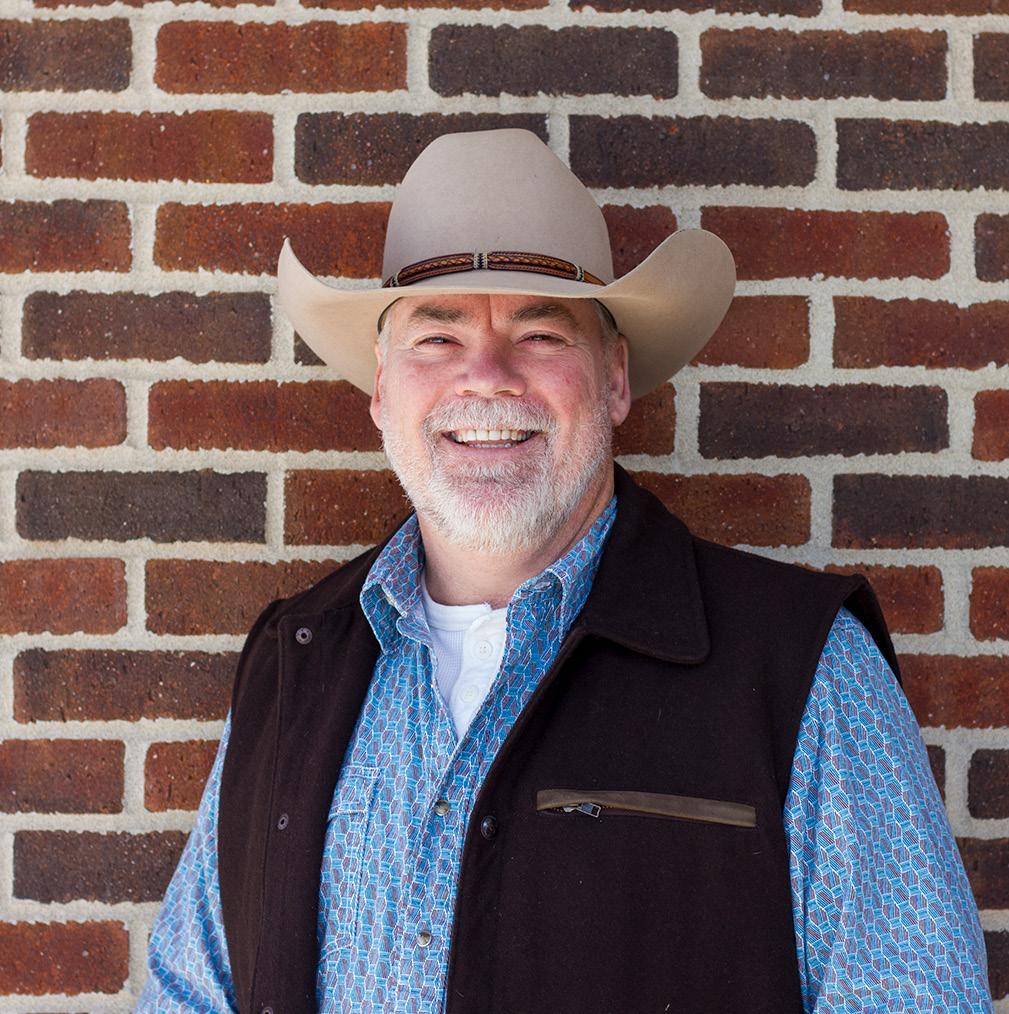
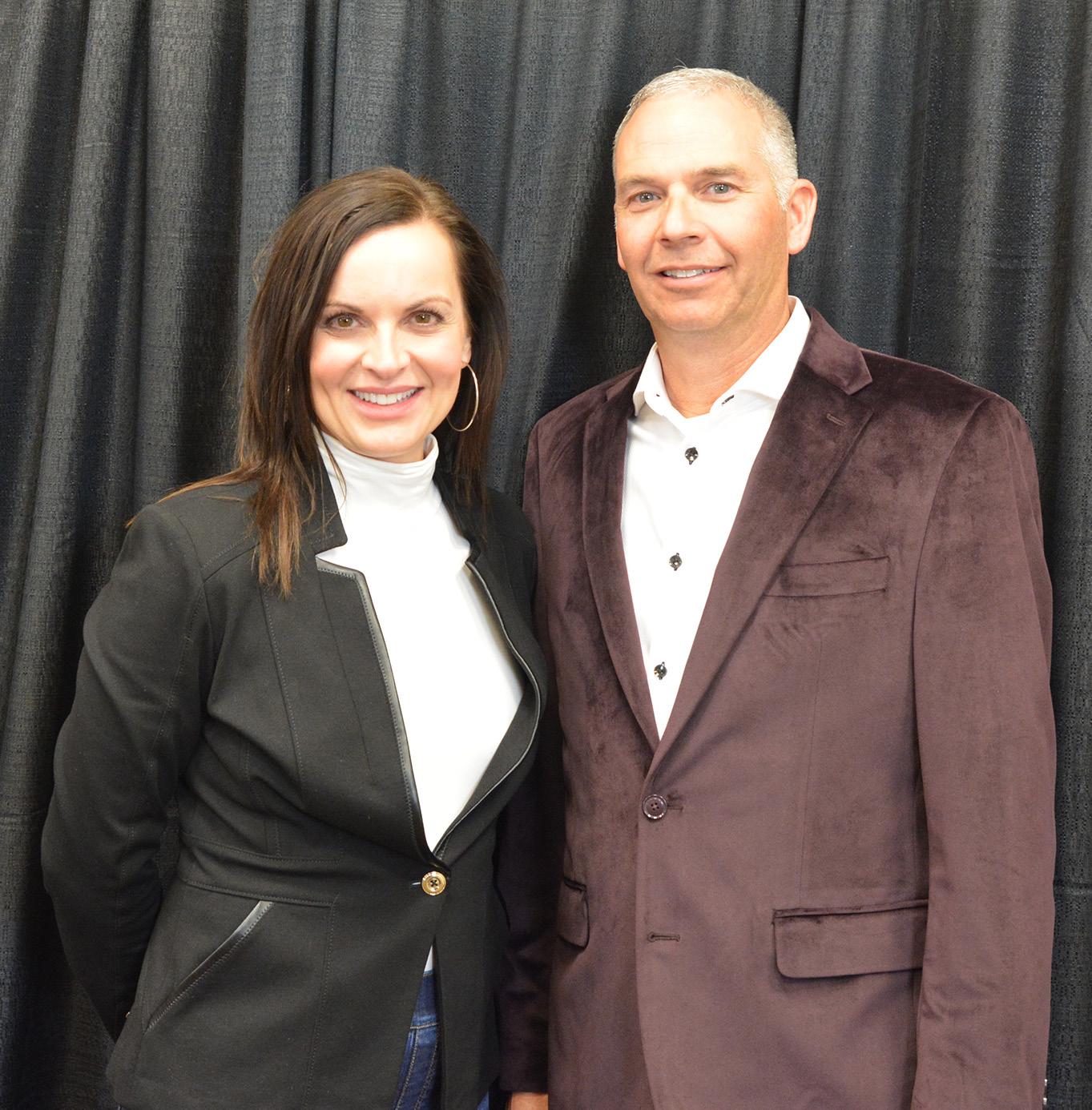
Scott Cape, Owner of Jim’s Motors in Cuba, Missouri.