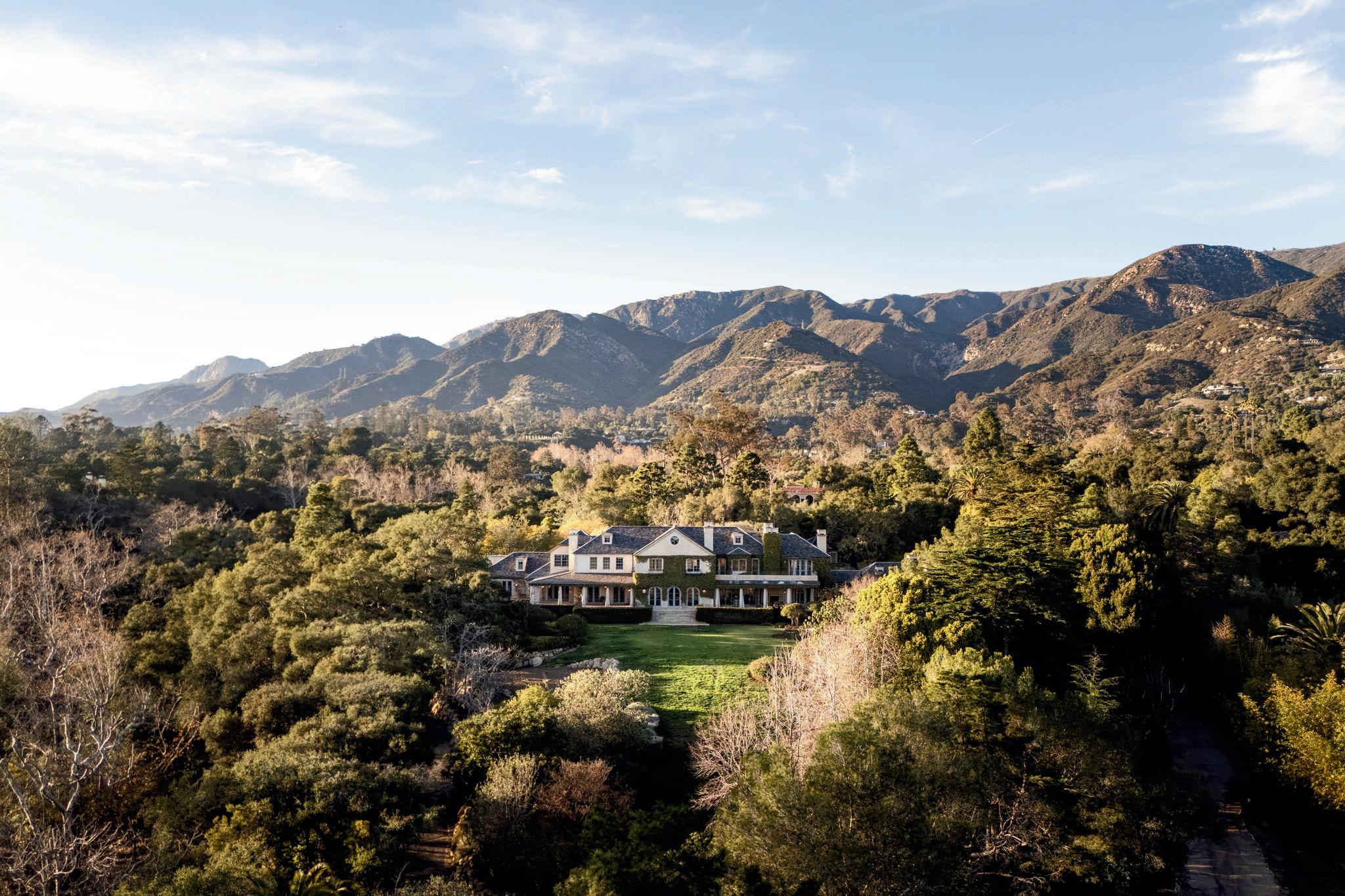
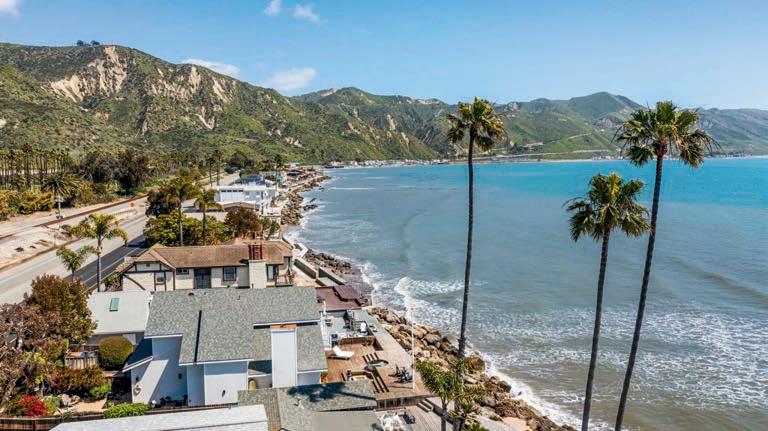
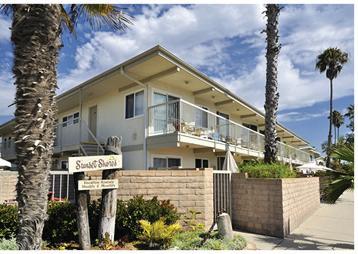
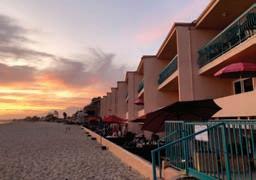
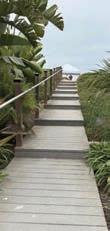
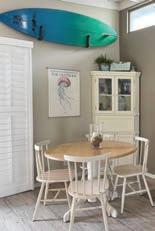
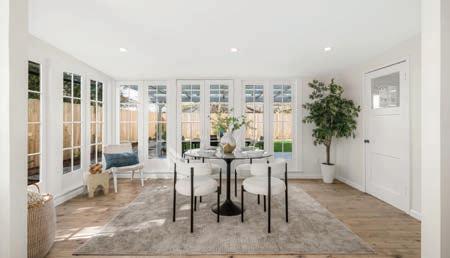
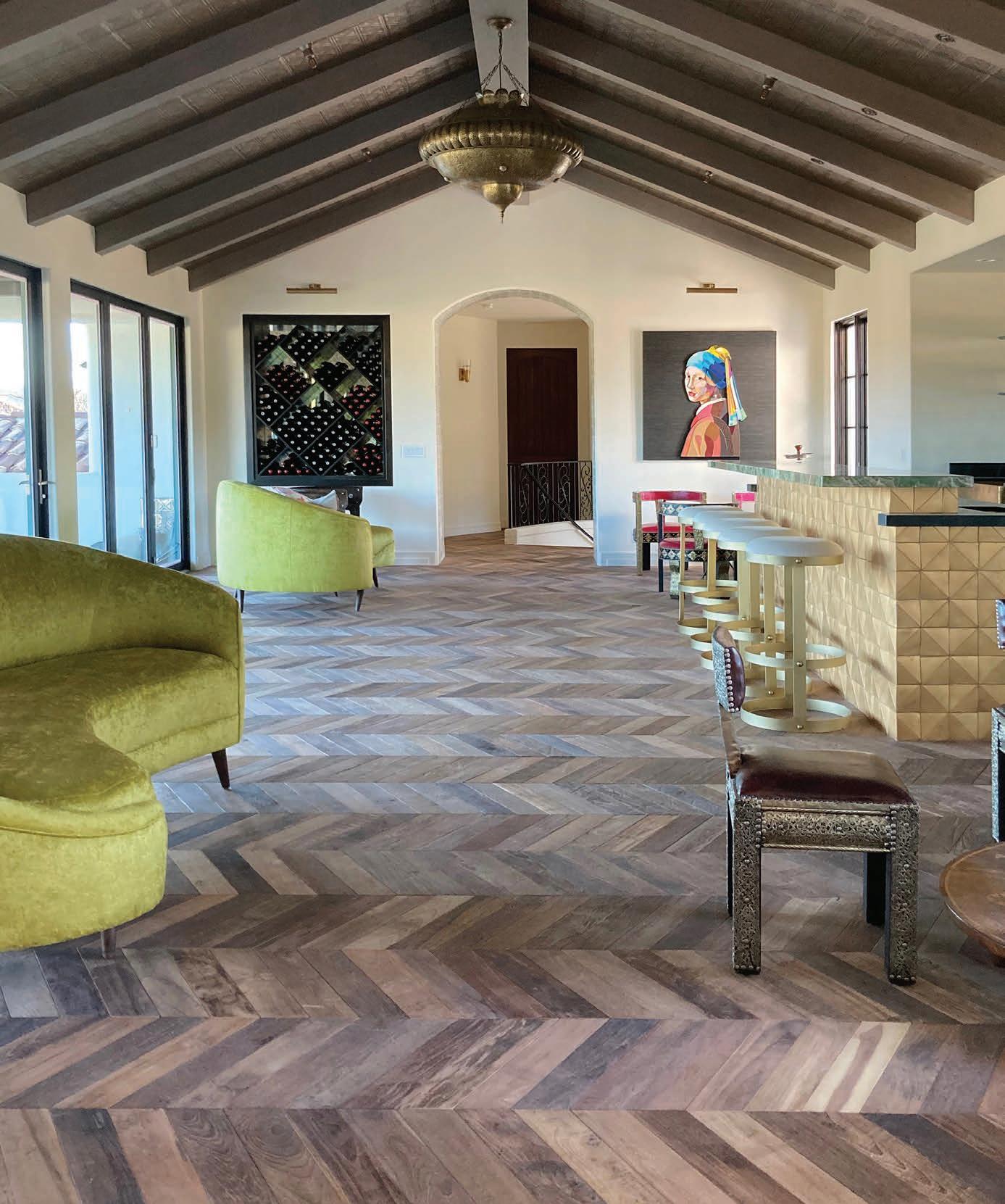
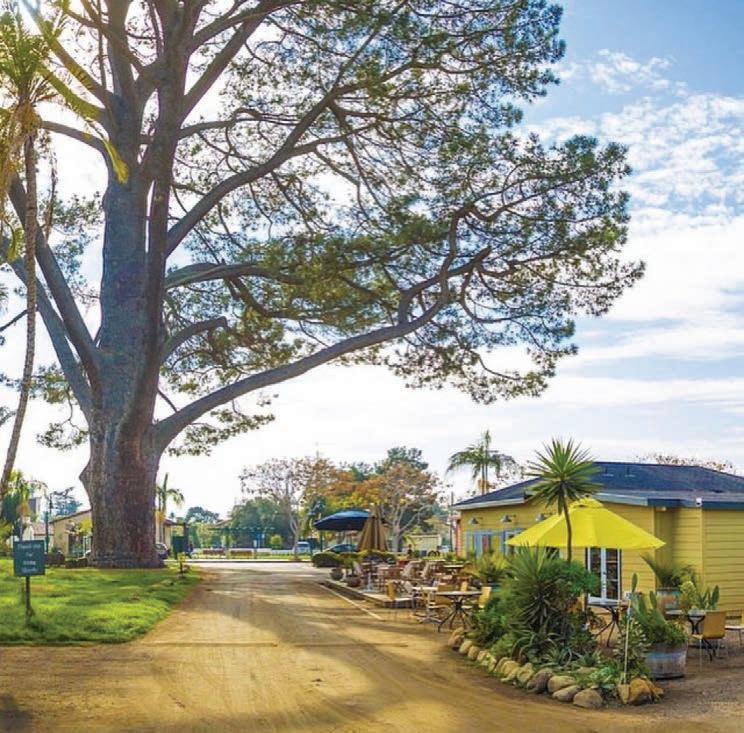
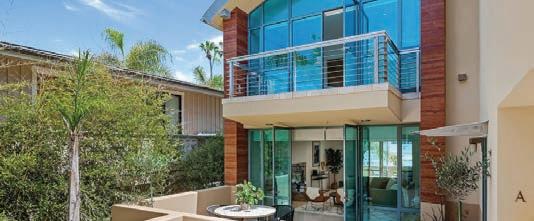
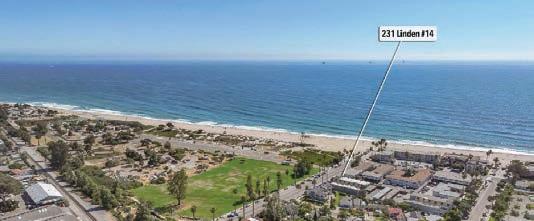
wo edroom, ne ath Condominium in well maintained Casitas Village. op oor unit with a pee of ocean view. ecent upgrades include new laminate ooring throughout, freshly painted with smooth ceilings, new window blinds, new itchen appliances include stove, microwave, refrigerator, and dishwasher. ssociation amenities include pool and .playground. Casitas Village is near Monte Vista ar and within wal ing distance to the ocean.
PRICE REDUCED $620,000.
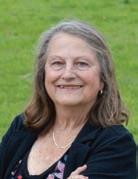
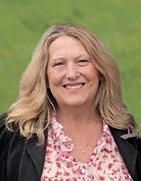
Please call Shirley Kimberlin at 805-886-0228
JUST LISTED ON CATLIN CIRCLE
Quality living in highly-desirable Villa Pinos
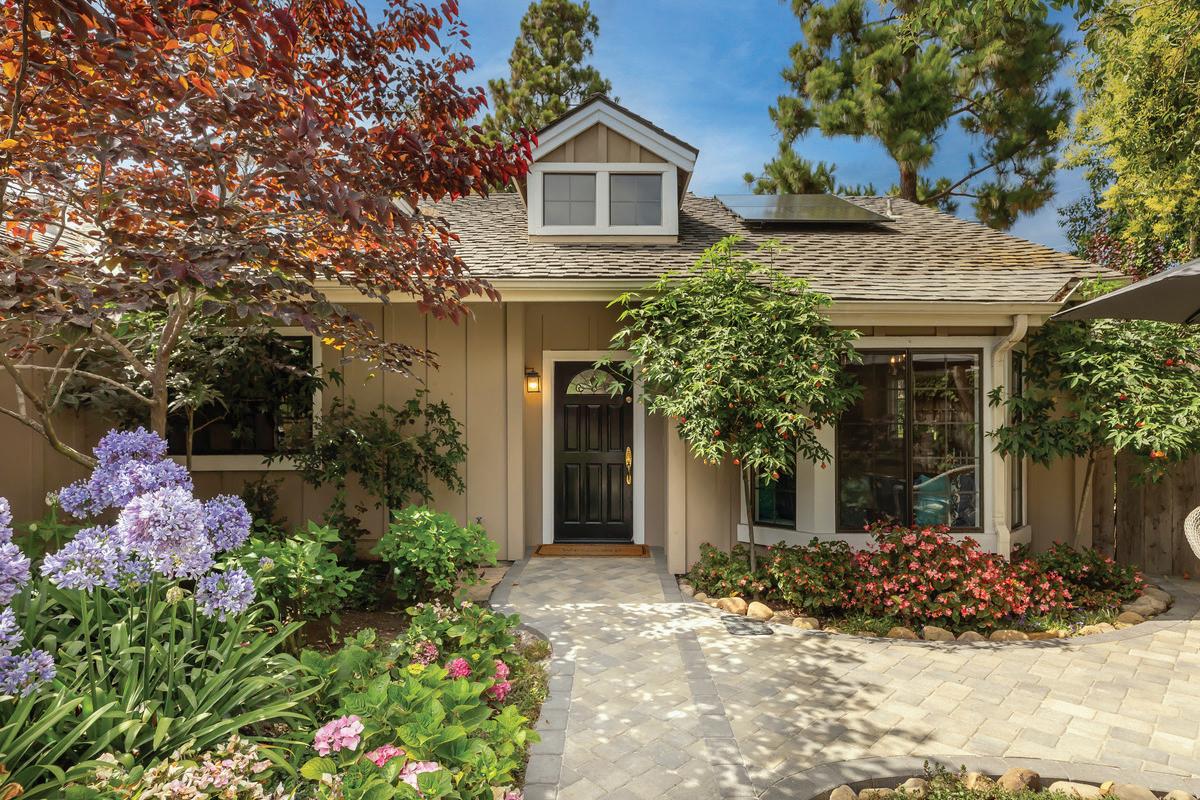
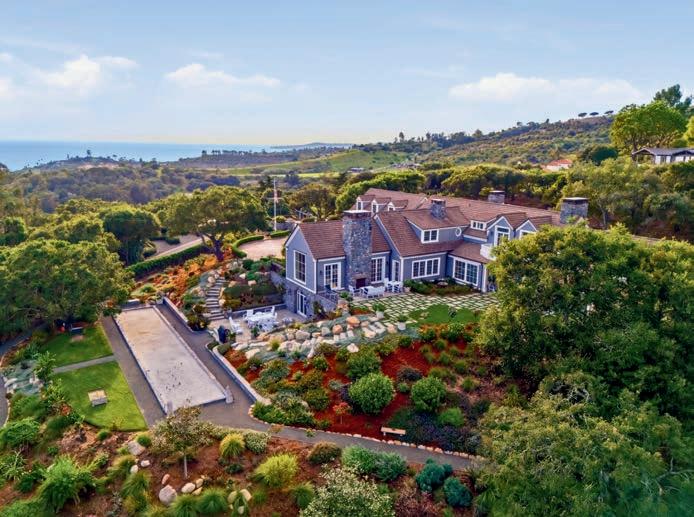
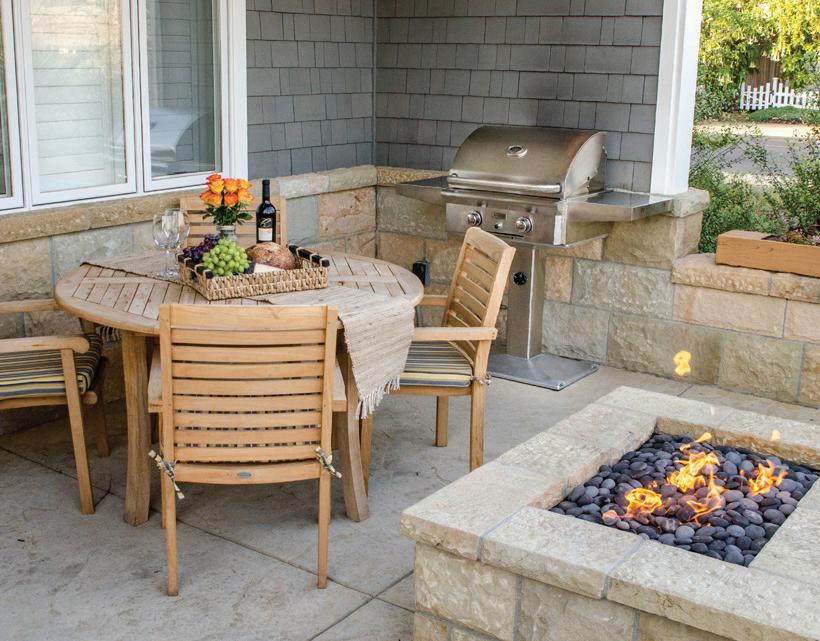
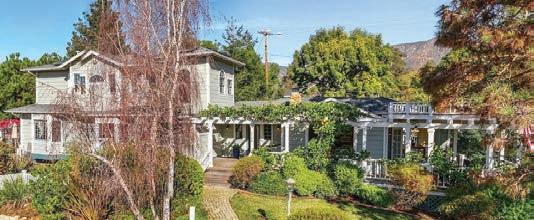
Condominium ssociation Catlin Circle his conveniently located 3 bedroom, 1.5 bath condo is newly renovated, including all-new paint ooring, new itchen appliances, and various new xtures, giving a sense of freshness brightness throughout. he home shares a pleasantly-surprising large greenbelt, and also includes a detached 2-car garage/ driveway and private patio.
OFFERED AT $849,000
Please call Shirley Kimberlin at 805-886-0228 or Terry Stain at 805-705-1310
SALE
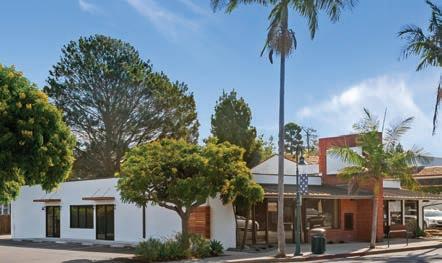
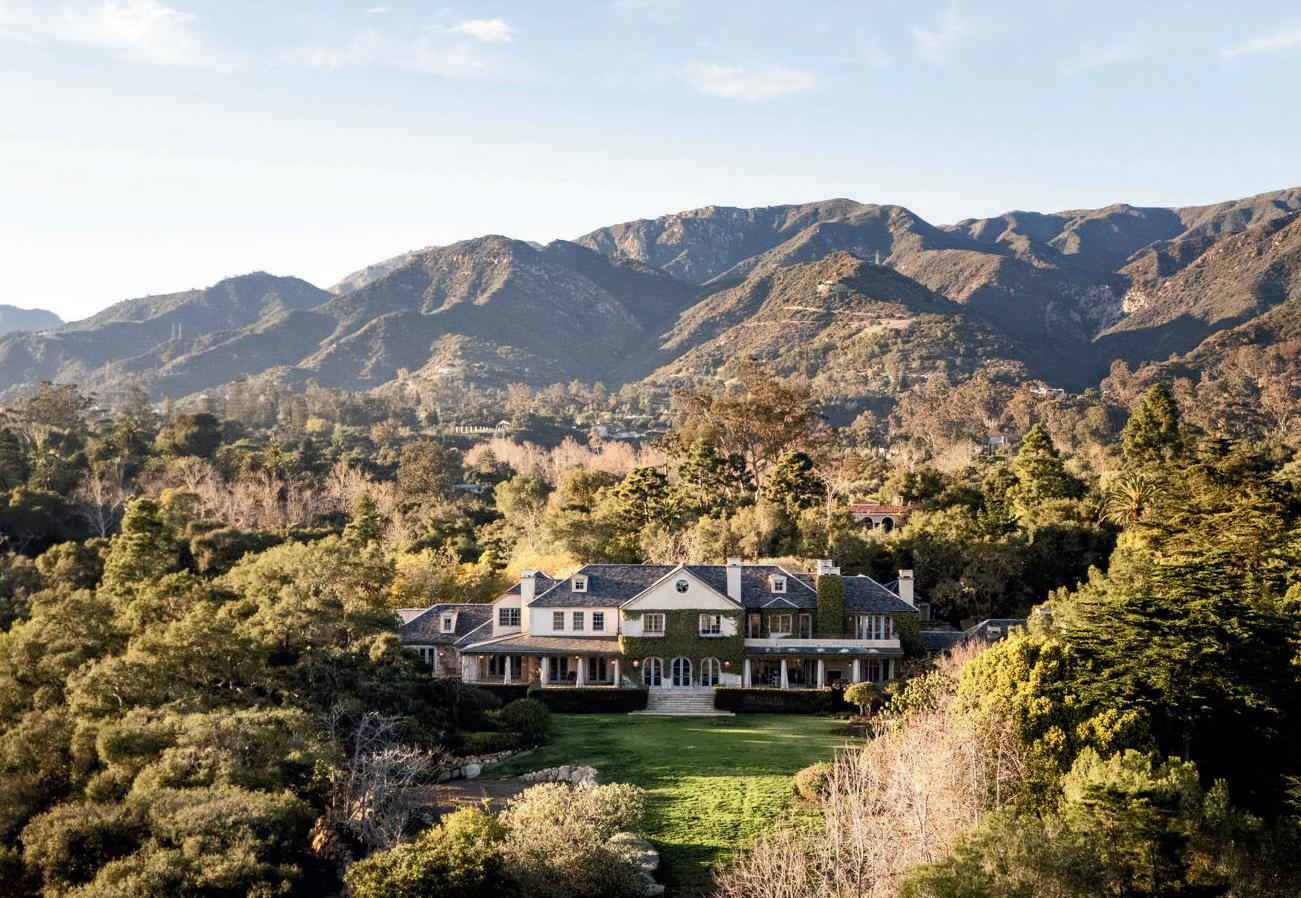
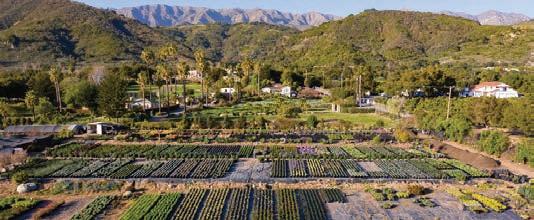
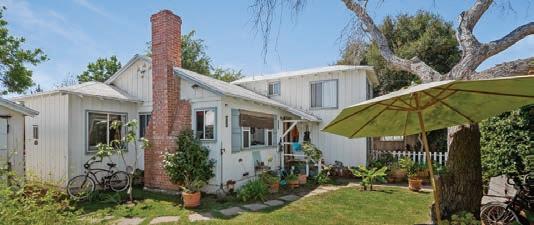
DOWNTOWN MIXED USE are, mixed use property on the ’ in downtown Carpinteria fantastic location arcel currently con gured as residential rental units and 1 commercial rental. Commercial building is a orist, but past uses include a salon, art gallery gi shop, bi e shop, and was once the location of the Carpinteria erald newspaper ll but one residential unit currently rented. Some tenant par ing onsite, W hoo ups in storage area. S N S N N S.
OFFERED AT $2,500,000
Please call Terry Stain at 805-705-1310
Lic. #01484280
Shirley Kimberlin Lic. #00623395
Sylvia Miller Lic. #00558548
Terry Stain Lic. #01484280
George Manuras Lic. #01991682
Diana Porter Lic. #01842390
Mark Brickley Lic.#02119204
Lynda Bohnett Lic. #01268751
Debbie Murphy, Realtor-Broker
Kim Fly, Realtor-Broker Associate
Leah Wagner, Realtor
Stacie Zubiate, Realtor
Heidi and Jim Michener, Vacation Hosts
Sunset Shores sits right across the street from Carpinteria City Beach. We manage several units of varying sizes in this desirable complex with amenities that include: heated pool, hot tub, BBQ & Picnic areas, laundry room and EV Charging Stations.
Debbie Murphy Kim Fly Leah Wagner Stacie Zubiate Heidi and Jim Michener
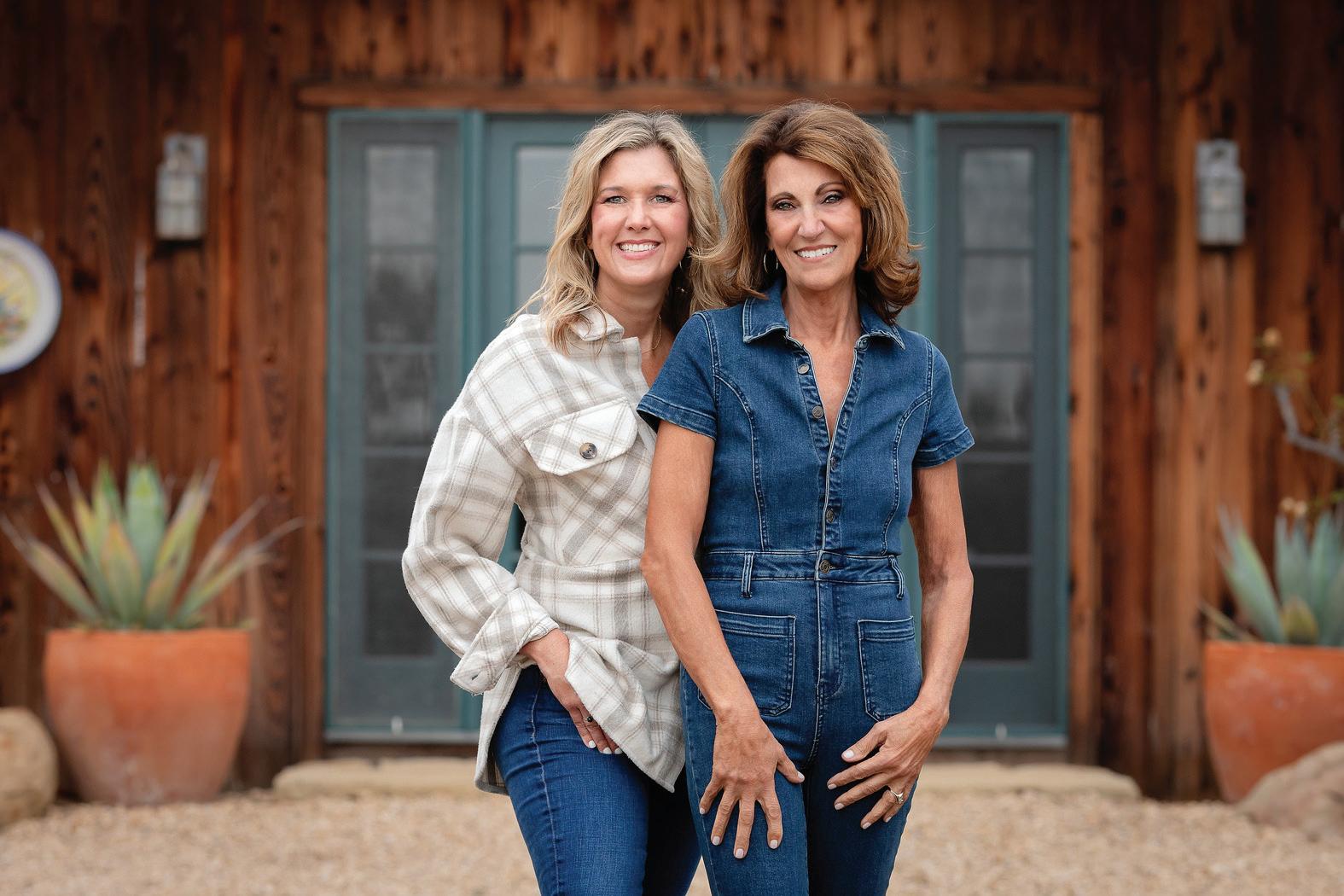
We are attentive listeners, dedicated to understanding your goals. We bring solid proven negotiating skills to every transaction. Through Compass Real Estate we offer unparalleled marketing strategies designed to showcase your home at its absolute best.
Local knowledge is an invaluable asset and our deep understanding of this unique coastline allows us to represent your home’s location with insight and authenticity. We invite you to discover why for over 30 years so many of our clients have trusted us for decades and across generations as their choice for local Realtor.
Call for a complimentary market analysis of your home value.
Client Testimonials
Excellent, professional, dedicated. They go above and beyond towards their service to their clients. With out the help, wouldn’t know how to navigate everything that needed to be done. They deserve recognition for the work they do for their clients. Big Thank you for everything!
- Marie France Williams
Working with Carolyn team was an amazing experience! From beginning to end, from listing the house to the final sale the process was so easy and never felt like had to worry about thing. Thank you!
- Nathan Wood
Excellent work! They are genuinely warm and extremely nice! We used them to purchase and buy properties over many years. Their years of experience were instrumental in helping us navigate the process each time. Very happy with the results! Thank you!
- JoJo & Barbara Fantone
Exceptional, Excellent, Professional. They put their clients first. Their knowledge, experience and communication makes them number one in the industry! They were very thorough
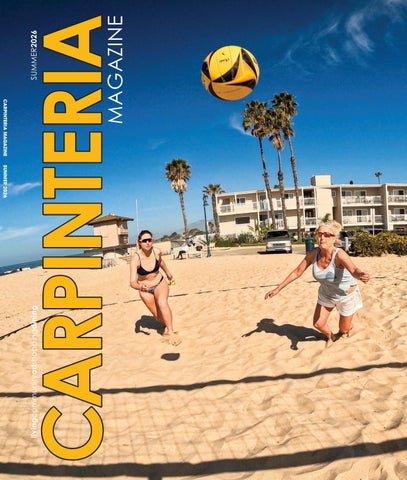
The soft sand’s grip is no match for Sally Yingst, left, and Kira Slade as they propel themselves toward the ball at “Linden Square.” Beach volleyball, surfing, swimming, kayaking — when it comes to summer sports, Carpinteria offers ideal conditions. Not too hot, not too cold and a coastline running the full length of town.
~ Photo by Glenn Dubock
Published by RMG Ventures, LLC
Michael VanStry, President
Gary L. Dobbins, Vice President
4180 Via Real, Suite F, Carpinteria, California 93013
Tel: (805) 684-4428
Email: info@carpinteriamagazine.com
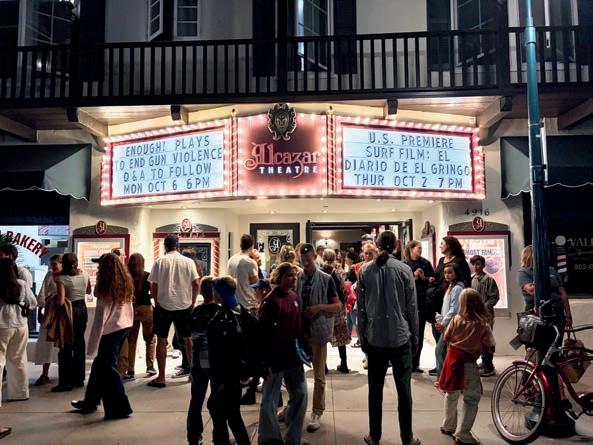
The Alcazar Theatre 4916 Carpinteria Ave., Carpinteria, CA 93013
PERFORMING ARTS AND ENTERTAINMENT EVENT CENTER
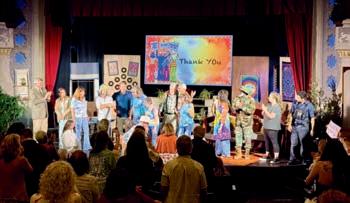
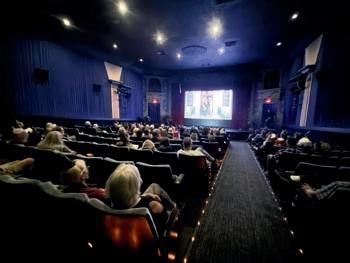
Established in 1928 along the California Central Coast, the Alcazar Theatre has evolved from a historic cinema into a celebrated venue for live theatre, concerts, comedy, and film events. It embodies the spirit of the community and offers a lively entertainment experience, featuring cutting-edge sound, lighting, and film projection that enhance every performance.
Diverse Programming & Opportunities
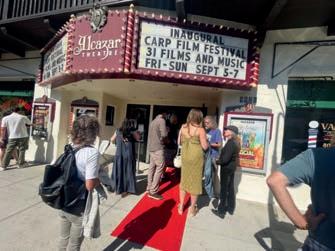
Carp Film Festival
Weekly Improv Classes
Comedy Nights
Concerts
Live Theatre
Movies/Foreign Films
Summer Drama Camp Theatre & Marquee Rentals
For more information, contact us at: 805.684.6380 info@thealcazar.org www.thealcazar.org
Improv Classes
The Carpinteria Community Theatre, Inc., operating as The Alcazar Theatre, is a nonprofit organization recognized under 501(c)(3) status, with Tax ID# 95-3565433.
ENJOY
Dear readers,
As I write this letter, the sun is rising on a clear spring day, the kind of day that hints at summer days to come. I like to imagine that you’re reading this on one of those sunsoaked, bees buzzing, no plans kind of days.
That’s a funny thing about producing a magazine that comes out twice a year. The prep for the summer edition begins in winter, and vice versa. On a rainy day under two sweaters, I started sending out feelers to find Carpinterians with exceptional outdoor showers. Brrr, outdoor showers. We ask our writers and photographers to think warm weather and schools-out vibes while they’re turning up the heater and packing Valentines into their kids’ school bags.
The off-season editorial prep can feel artificial sometimes, but it also sweetens one season with the anticipation of the next. A taste of June when the soup pot on the stove says February, a twinkle of July when the 5 p.m. darkness says January.
And while I’m still here in spring, you’re there in summer. Welcome to Carpinteria in summertime and welcome to our summer edition of Carpinteria Magazine ! We’re so excited to unbury treasures you’ve never seen in this little town. Literally. Please read the story about Jason Campbell and the centuries-old wrought iron he finds and forges into touchable art pieces.
Read it all, in fact! Our writers and photographers are also treasures, and they’ve poured themselves into the pages of this magazine. Just like the subjects of the articles, the talent of our contributors should be a point of pride for Carpinteria.
At the end of the day, the season celebrating, the talent showcasing, the treasure uncovering just wouldn’t be possible without the advertisers who choose Carpinteria Magazine . So don’t skip the ads. Read them, too, and then go visit the establishments and use the services of businesses that support this publication. They are the blood that delivers oxygen to all these stories.
Now enjoy,
Lea Boyd, Editor
CONTRIBS
INGRID BOSTROM
Ingrid Bostrom is an awardwinning photojournalist and freelance photographer whose work appears regularly in the Santa Barbara Independent and other local and regional publications. Through her lens, she captures history and amplifies stories that words alone cannot capture. ingridbostromphotography. com
PETER DUGRÉ
Peter Dugré spends his days putting local stories and important news in the hands of Central Coast residents. The co-owner of Two Trumpets Communications is most often thinking, writing, and advocating on behalf of nonprofits or public agencies. Off the clock, you’ll find him cheering at his kids’ sporting events, volunteering for local causes, or praying to the baseball gods for Red Sox victories. www.two-trumpets.com
GLENN DUBOCK
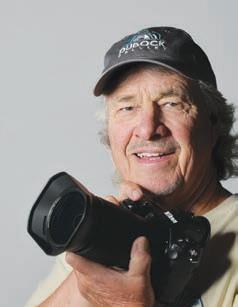
Glenn Dubock has been roaming Carpinteria with his camera in hand since 1976. After a successful career in marketing and editorial photography that took him to the far corners of the globe in search of good light, he has decided that there is no place for photos like home. www.dubockgallery.com
MATT DAYKA
Matt Dayka is a Santa Barbarabased freelance travel, documentary, and advertising photographer whose work has taken him around the globe. When he’s not behind a lens, he’s often found hunched over an old VW engine, hiking up a mountain, or sleeping beneath the stars.
www.mattdayka.com
DAVID POWDRELL
David Powdrell has several passions: photography, music, writing, gardening, and volunteering. He serves as Advisory Board Chair for the Lynda Fairly Carpinteria Arts Center. Professionally, he’s a CPA who absolutely loves his work. His happy place is sipping chilled Prosecco at Jelly Bowl beach with his wife, Valerie. @ddpowdrell
RYAN P. CRUZ
Ryan P. Cruz is a passionate journalist uncovering stories in every topic he can find, from sports to the arts, and from community profiles to hard-hitting news. For the past five years, Ryan has served as a full-time reporter with the Santa Barbara Independent, Sports Editor for Coastal View News, and contributing writer for Carpinteria Magazine. ryan.p.cruz@gmail.com
CONTRIBS
CHUCK GRAHAM
Chuck Graham is a freelance writer and photographer from Carpinteria. He’s been leading kayak tours at the Channel Islands National Park for 24 years. His work has appeared in National Geographic, BBC Wildlife Magazine, Westways, and more. He also authored the awardwinning book – “Paddling into a Natural Balance, Stories of Kayaking and Conservation around Channel Islands National Park.” @chuckgrahamphoto
CAMRYN LASALA
Camryn LaSala is a freelance writer and editor with over eight years of experience helping readers discover standout products across travel, beauty, fashion, and home. Having visited nearly 45 countries, she also writes hotel reviews, destination guides, and offers personalized trip planning services. www.highstandardtravels. com
AMY MARIE OROZCO
Amy Marie Orozco was raised on National Geographic and Mad magazines. She caught the travel bug decades ago and has never let it go. Domestic or international, trips don’t offer relief but rather increase the wanderlust itch. Though Amy loves being on the road, she loves returning to Carpinteria just as much. amymarieorozco@gmail.com
MARCO RIGONATI
Marco Rigonati is a photographer who specializes in collaborations with healthcare and biotechnology companies. His primary focus is documenting patient stories. While he resides in Carpinteria, his work takes him on assignments throughout the U.S. and internationally. When at home, he turns his lens to the magic moments of Carpinteria. www.marcorigonati.com
ROBIN KARLSSON
Robin Karlsson knows how fortunate she is to live in Carpinteria, a magical blend of small-town warmth and incredible natural beauty. It’s a photographer’s dream. The best part is that her family is here, too, and hanging with her grandkids around town has made for some incredible memories and photos. @bobnrbn
Rosana Swing’s long lens has captured nearly two decades worth of athletic accomplishments notched by local youths. A Carpinteria High School and U.C. Santa Barbara graduate, Rosana is typically found on side of the field, court or pool snapping the images that fill the sports page of Coastal View News. rsrdswing@gmail.com
ROSANA SWING
A SURF CLUB WITH A WARM WELCOME
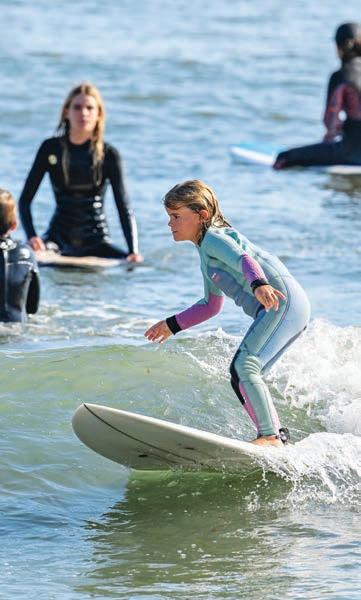
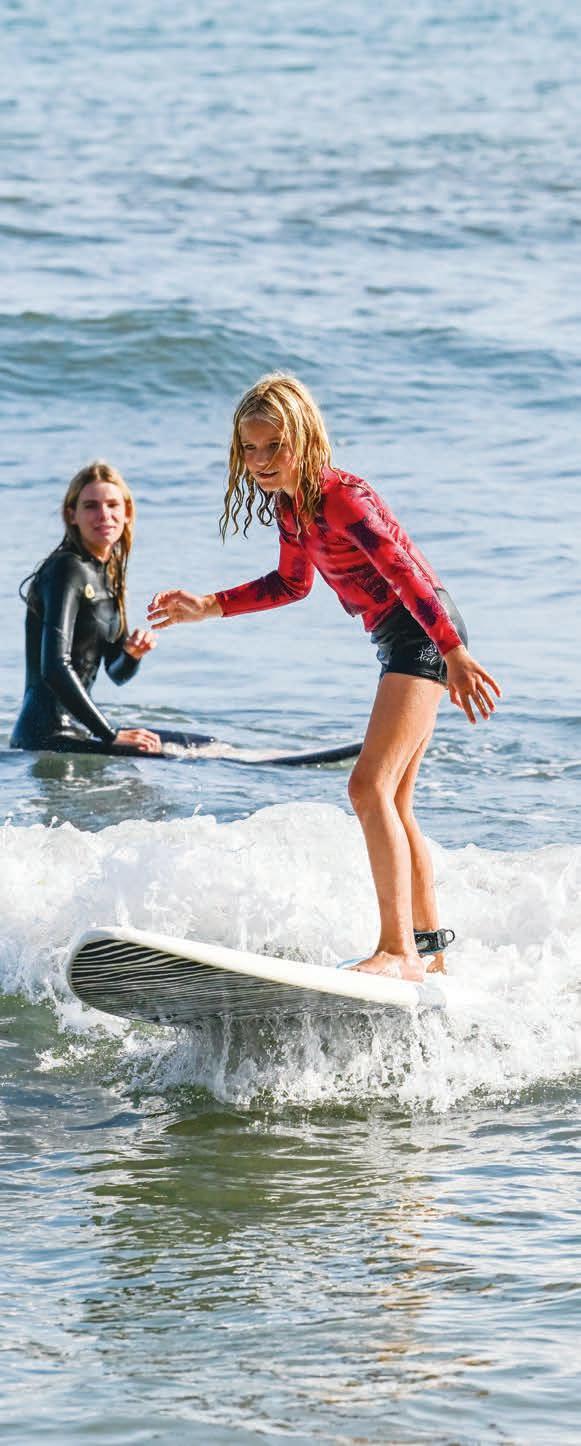
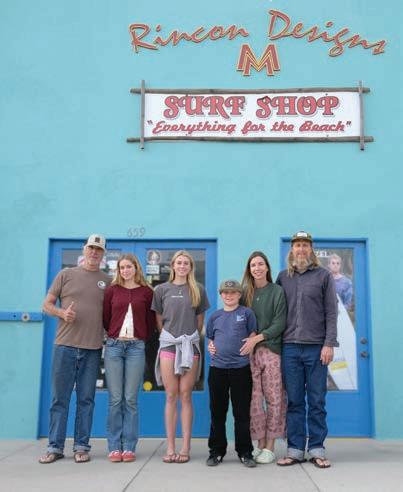
In the crowded surf zone known as The Cove at world famous Rincon Point, the sound of waves and giggles are not normally heard in unison. But on this sunny afternoon, the water is teaming with young girls riding the small curls, smiling the whole time.
Eloise Grewe and Tallulah Rankin are both 15 years old and have been noted as two of the best young female surfers coming out of Carpinteria. They started Rincon Surf Club “with the goal to inspire and encourage young girls from our area to enjoy surfing,” they say.
“We noticed that there weren’t that many young girls in the lineups here and we love to see them in the water surfing together,” the pair note. “We thought if we made our own club, it would be a way to inspire more girls to surf and have fun in the ocean.”
When asked how they teach and inspire, Eloise and Tallulah respond, “We are not a surf school, but we try to help the girls by giving them tips. We focus on teaching them surf etiquette, new skills, confidence and independence in the water while always keeping it fun.”
That’s where the sheer joy of wave riding becomes so clear. A young girl, with great determination in her eyes, is helped into a wave then jumps up on the surfboard — the stoke is obvious.
Eloise and Tallulah are quick to point out that they get so much in return for their efforts. “There is always a new achievement at each surf club meeting. Seeing the girls progress and become more confident in the water is our favorite thing to see.”
Ready to be inspired? You can connect with the Rincon Surf Club via email at rinconsurfclubgirls@gmail.com or get info and updates on their Instagram account: @rincon_surfclub.
— Glenn Dubock
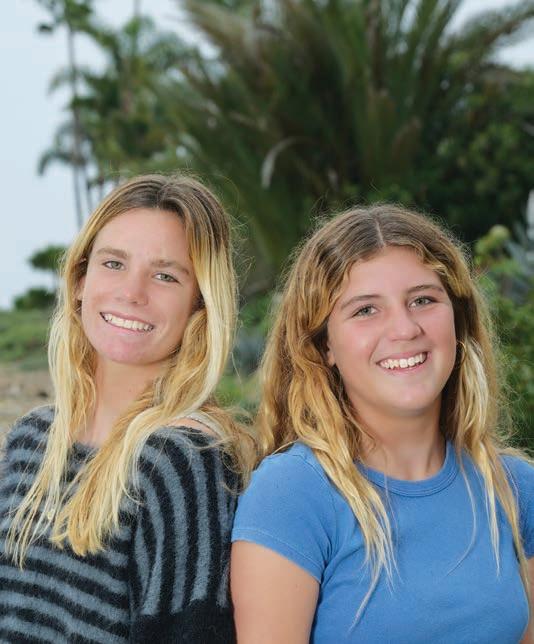
From left are Tallulah Rankin and Eloise Grewe, founders of Rincon Surf Club.
Sienna Laster feels the stoke.
ROOTED IN TRADITION. INSPIRED BY THE COAST
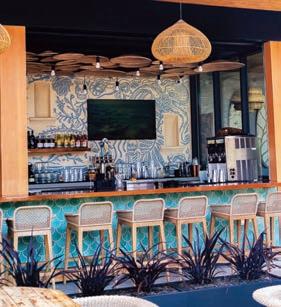
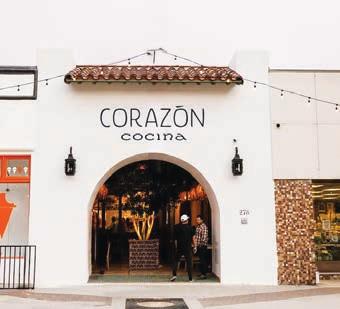
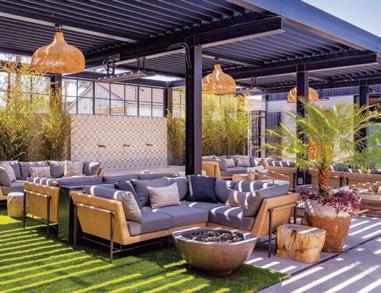
From the vibrant flavors of Mexico to the fresh ingredients of California’s coastline, Corazón Cocina brings a unique dining experience built on authenticity, quality, and heart.
Corazón Cocina was founded by Chef/Owner Ramon Velazquez, inspired by his recipes, techniques and overall experiences as a chef. What started as a way to share those flavors has grown into a concept that honors its roots while evolving with the ingredients and community of the California coast.
What began in Santa Barbara has grown into a family of restaurants, each reflecting our passion for bold flavors, handmade tortillas, and a deep connection to our community.
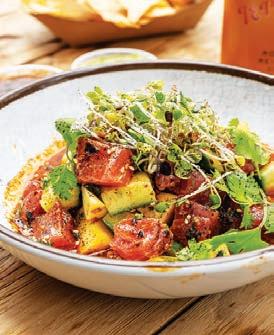
We are proud to source many of our ingredients from local farmers markets, working closely with an incredible community of farmers and producers who inspire our menu every day and allow us to showcase the very best of the region.
NOW SERVING ALONG THE COAST:
• Corazón Cocina – Santa Barbara Public Market
• Corazón Cocina Sur – Carpinteria
• Corazón Cocina Ventura
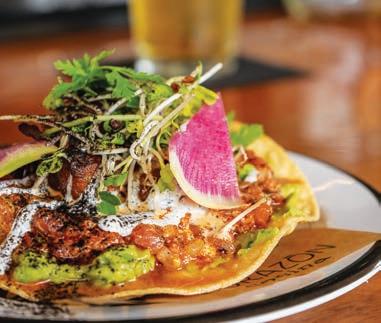
Our newest locations in Carpinteria and Ventura highlight a seafood-forward approach, showcasing fresh ceviches, aguachiles, and coastal-inspired dishes while staying true to our roots.
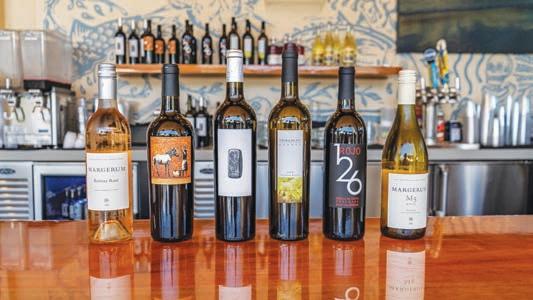
Our beverage program celebrates Mexico’s rich and evolving landscape, featuring a curated selection of wines and beers from regions such as Ensenada, Valle de Guadalupe, Baja California, and León — highlighting the depth, craftsmanship, and character of Mexican producers. JOIN
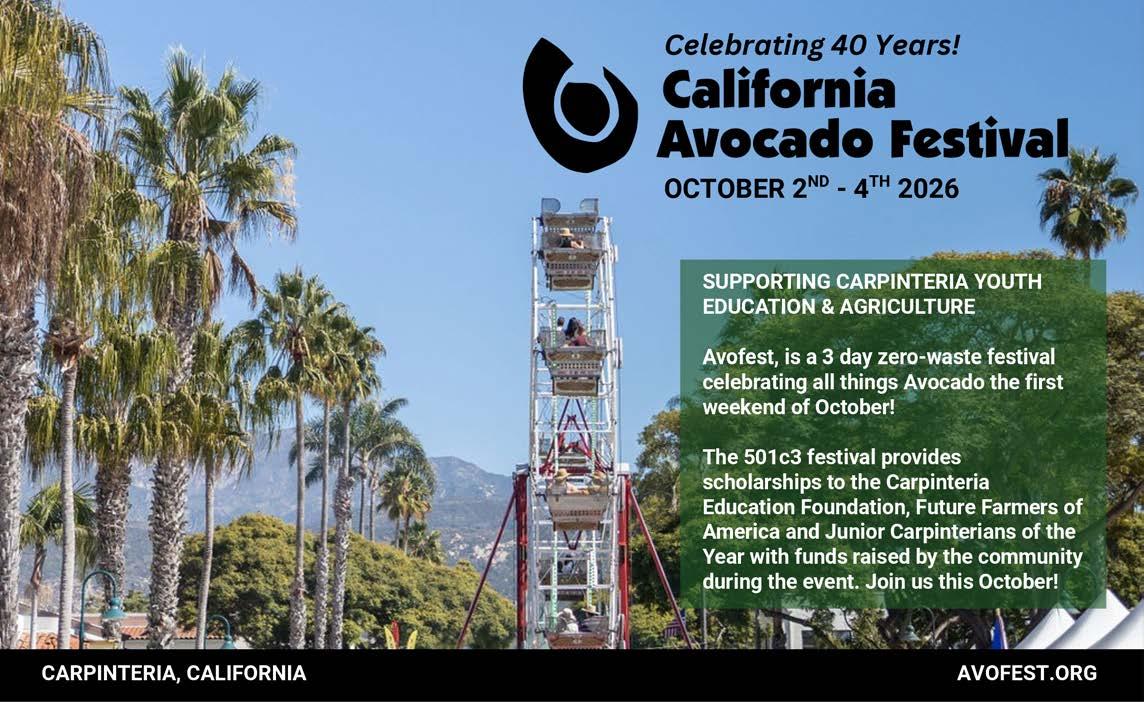
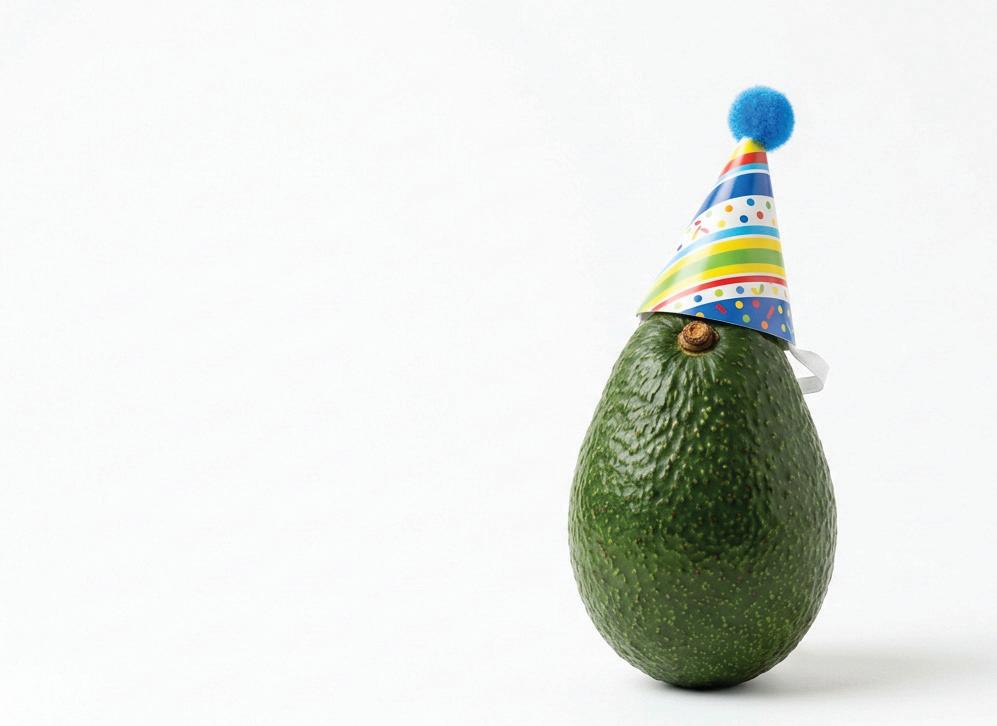
HAPPY BIRTHDAY, AVOFEST!
Defying all aging expectations, when the California Avocado Festival turns 40 this October, the popular festival will be in its prime. The annual homage to Carpinteria’s favorite fruit will deliver another three days of “peace, love and guacamole,” and that’s just the start of it. The festival packages unbelievable live music (all free!), fantastic food and so much fun. It also packs Carpinteria businesses and gives nonprofits an opportunity to raise critical funds thanks to thousands of visitors and locals. We asked festival organizers to quantify 40 years of Avofest, and here are the numbers they crunched.
400,000+ 1.4 million people
2.8 million dollars raised for local nonprofits
2 million dollars in tax benefit from festival (transient occupancy, sales, etc)
2,900 avocados consumed
24 miles band sets played
40,000+ volunteer hours dedicated by Avofest Board of Directors and service groups
CARPINTERIAN’S MERMAID LINE BLENDS MAGIC WITH MISSION
Cimmi Cumes has spent at least part of her days as a Carpinteria mom dreaming up pods of mermaid families who lead daring lives rescuing baby sea animals from the scourge of plastic pollution. Cimmi, a toy designer, and her artist husband, Paul Cumes, recently launched Cimmikids toy company and its debut product Seaglimmers, a whimsical line of mermaid plush dolls that bring a fresh pop of color and sparkle — you can dress them up — to the eco-conscious toy market.
Cimmi’s career has included toy design jobs for heavyweight brands like Cabbage Patch Kids and My Little Pony. Seaglimmers is her independent debut and weaves storytelling and education into an imaginative mermaid world. She and Paul gather inspiration for mermaid tales daily at Jellybowl and Tarpits beaches, where they stroll on the sand but never fail to find plenty of litter,
“especially after busy weekends,” Cimmi says. She grew up on the Santa Barbara coast with dreams of designing swimwear — Seaglimmers includes swimwear for mermaid dress up — and returned to Carpinteria in 2020 to settle into family life with now middle-school-aged son Isaac. “We believe play is one of the most magical ways to inspire children to love nature,” Cimmi says. “With Seaglimmers, we’re blending dress-up, storytelling, and doll play to encourage kids to care for our planet.” Seaglimmers supports ocean conservation by donating 1% for the planet, uses recycled fabrics for the plush dolls, and will soon include Youtube content narrating tales of mermaids rescuing distressed sea animals from environmental hazards.
— Peter Dugré of extension cords used to power event
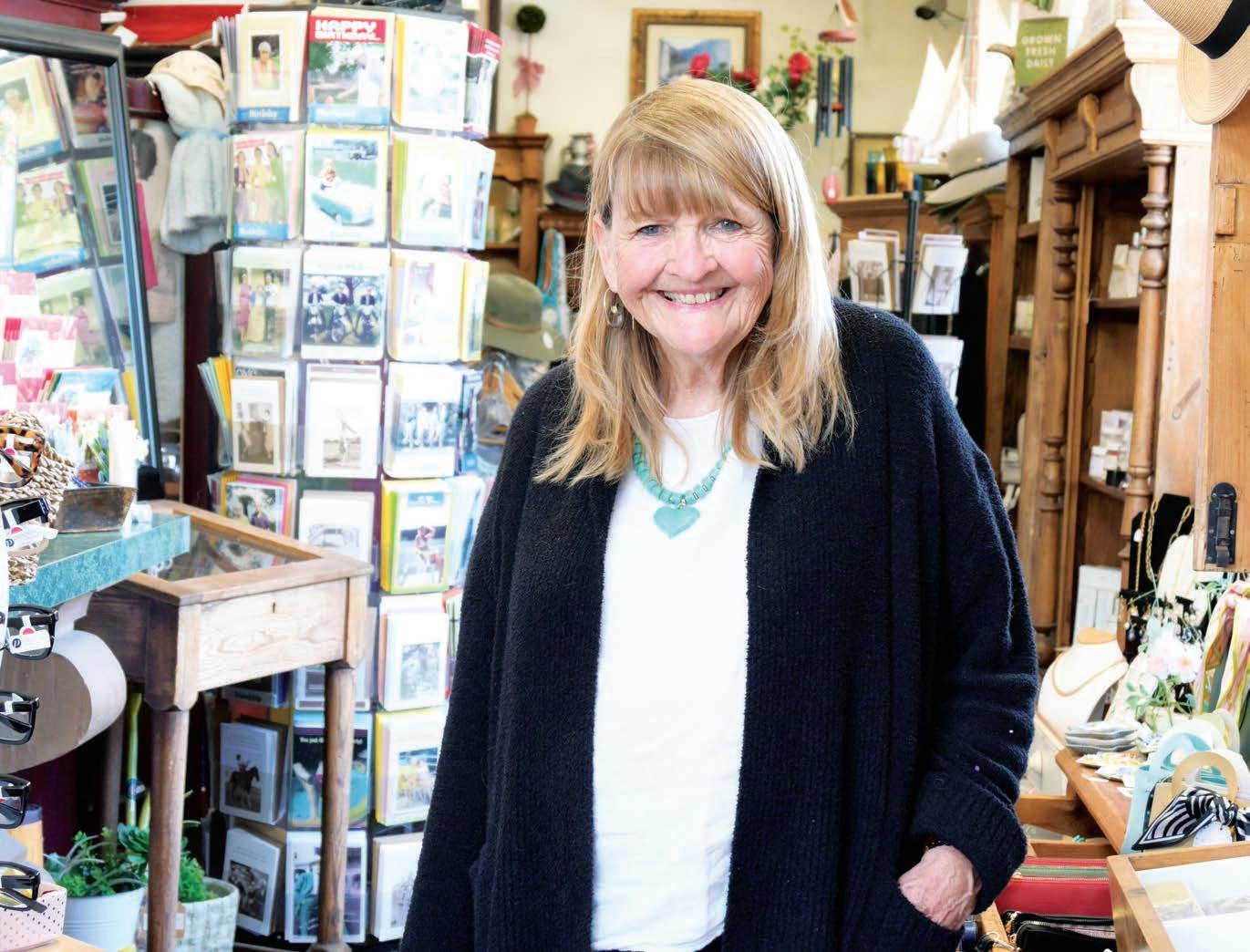
Susan Willis at her eponymous shop.
STEP INSIDE SUSAN WILLIS LTD.
WORDS BY CAMRYN LASALA
PHOTOS BY ROBIN KARLSSON
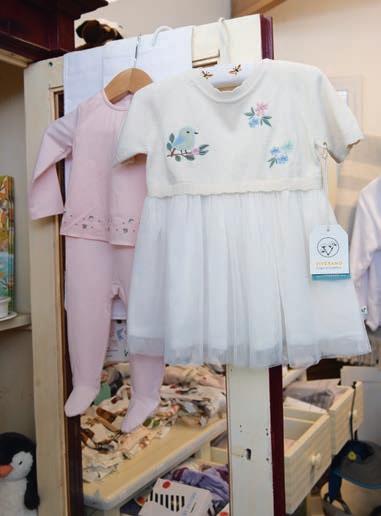
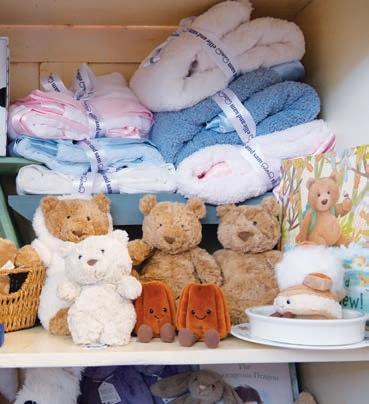
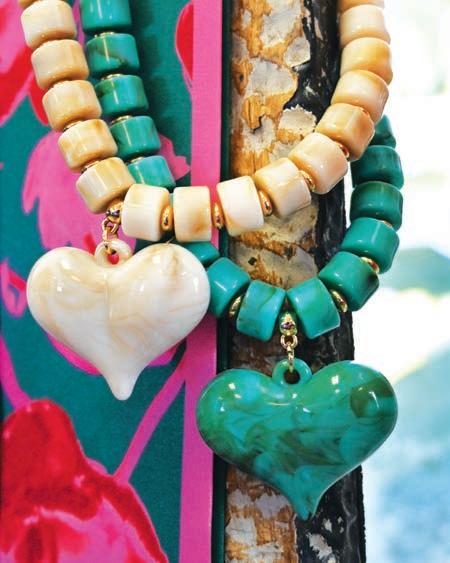
Tucked quietly off the main artery of Carpinteria, Susan Willis Ltd. is the kind of place you have to look for — or, more likely, the kind of place a neighbor tells you about. Once inside, though, it’s easy to see why locals call it the town’s best-kept secret for truly personal gifts.
What began in 1992 as a small business focused on furniture, slipcovers, and home sewing has, over the decades, turned into something more personal: a carefully curated gift shop that reflects both its owner’s eye for design and her deep connection to the community. The transition didn’t happen overnight. As the furniture market shifted and suppliers disappeared, the shop gradually leaned into what customers were already drawn to: home decor, thoughtful gifts, and items that bring comfort into everyday life.
“I describe it as a general store,” owner Susan Willis says. “A little bit of everything, from food to body products to baby gifts. Things that are affordable for everybody.”
Step inside, and the first thing you notice isn’t what you see — it’s what you smell. It doesn’t come from candles or artificial sprays, but from the products themselves: lotions, soaps, fabrics, and small goods that quietly layer together into something welcoming and familiar.
With a background in decorating, Susan relies on instinct as much as experience when selecting inventory. She attends tradeshows twice a year, often with her daughter, Lisa, who offers a “younger perspective,” and chooses items not by trend alone, but by whether they feel right in the space. Together, they strike a balance between timeless and new, ensuring the store feels fresh without losing its sense of tradition.
Over the years, the shop’s customers have come to feel more like a community. Some have been shopping at Susan Willis Ltd. since the doors first opened; others have discovered it after years of living nearby without realizing it was there at all.
“I’ve watched people come in with their babies,” Susan says, “and now their babies have babies.”
The shop’s family ties are part of its charm. Susan’s daughter spent her high school years helping with bookkeeping and floor displays. Next door, her husband runs a cabinetry
shop, and the two share lunch outside most days with their adorably scruffy poodle-terrier mix, Buddy, a longtime fixture of the store itself.
For many, the shop offers more than just a place to buy gifts. It’s a place to pause. During difficult times, customers often come in simply to feel a sense of normalcy. During the COVID-19 pandemic, while much of the world shut down, the shop remained open, providing exactly that.
“People wanted somewhere that felt normal,” she recalls. “They wanted to be around something that felt good.”
That philosophy, keeping things welcoming, affordable, and personal, has guided the business through decades of change. It’s also what continues to set it apart in an era dominated by online shopping.
“People like to feel important,” Susan says. “They want to touch things, see things, and have a conversation.”
Looking ahead, the future of the shop remains closely tied to its owner herself. Every item on the shelves is something she’s chosen, something she loves: a level of personal curation that would be difficult to replicate.
“It’s who I am,” she says simply.
In a small town like Carpinteria, where spots on Linden Avenue usually get the most attention, Susan Willis Ltd. remains an anchor — a place to find something unexpected and, more importantly, a place that just feels good to be in.
Susan Willis Ltd., 4488 Carpinteria Ave., (805) 684-5085.
SANTA BARBARA’S PREMIER SURF SCHOOL
Within Bowshot Carpinteria by Kayak
W
ORDS AND PHOTOS
BY CHUCK GRAHAM
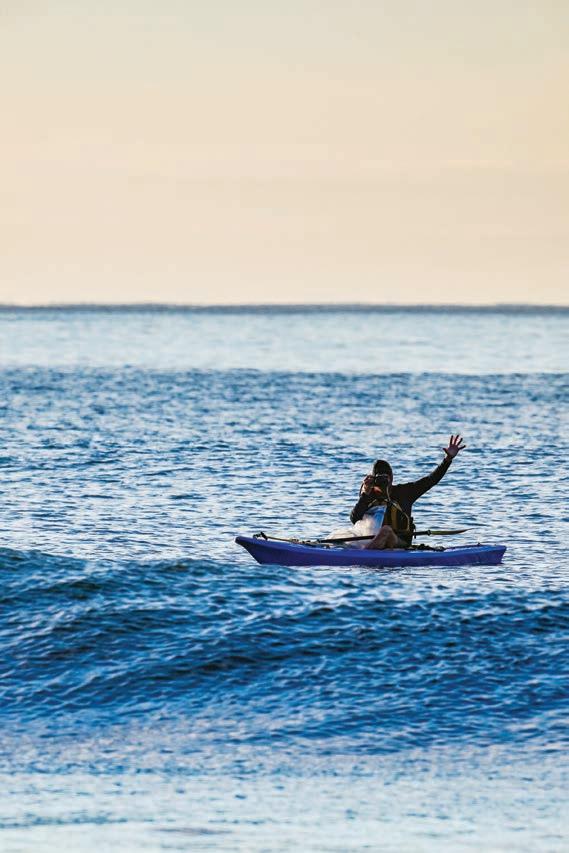
I’ve been photographing subjects from my kayak since 1996. That’s 30 years of spectacular moments in varying sea conditions and encounters with whales and dolphins, seals and sea lions, and a multitude of seabirds like elegant terns, western grebes, and cormorants.
Photographing Carpinteria from my kayak underscores my appreciation for living in and photographing one of the last remaining small coastal towns in Southern California. Carpinteria has always been (and remains so today) a great base to photograph what I love, which means locally the Carpinteria Reef and Carpinteria Salt Marsh and the surrounding beaches, scenic bluffs, and craggy rock outcroppings.
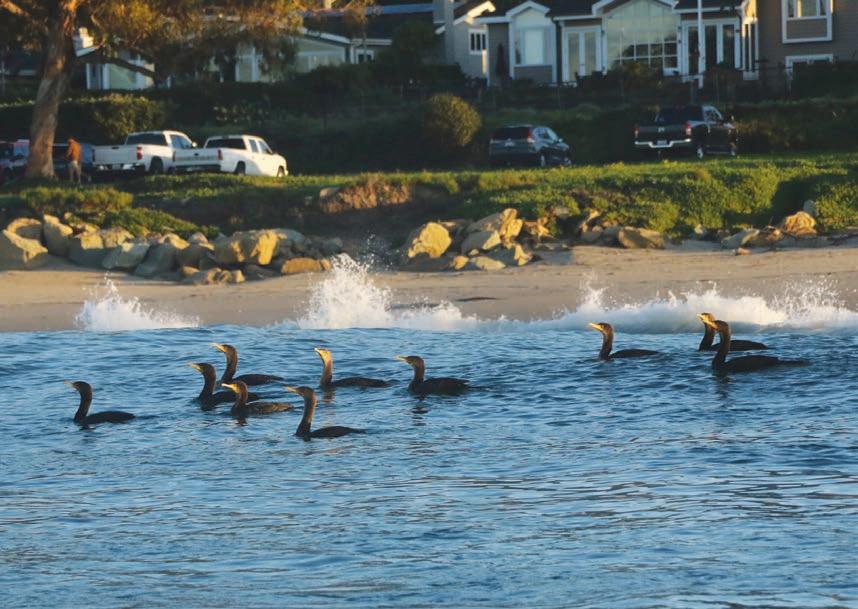
The perspective from the water pulls me out of the human realm and into the world of wildlife. Spotted harbor seals, coastal bottlenose dolphins, double-crested cormorants, and various gulls and seasonal migrating gray whales are all part of the unique experience along Carpinteria’s scenic coastline.
Jellybowl buzzing with activity.
From my kayak, the world is quiet aside from the crash of distant waves breaking on Carpinteria Reef. The seascape zings with seasonal and aerodynamic elegant terns that swoop overhead before diving and spearing tiny baitfish with their orangish red beaks.
The calm, however, can be fleeting and quickly forgotten. Sea conditions can change like the incoming tide. That’s when photography from my kayak becomes arduous. A northwest wind and strong down-coast current require me to constantly reposition myself to photograph a subject
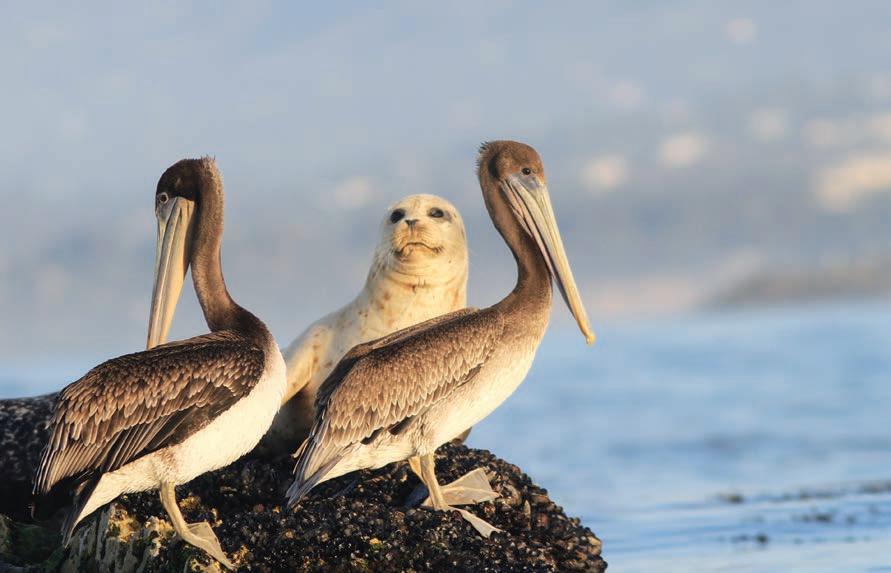
Brown pelicans and a harbor seal congregate on the rocks off of Jellybowl beach.
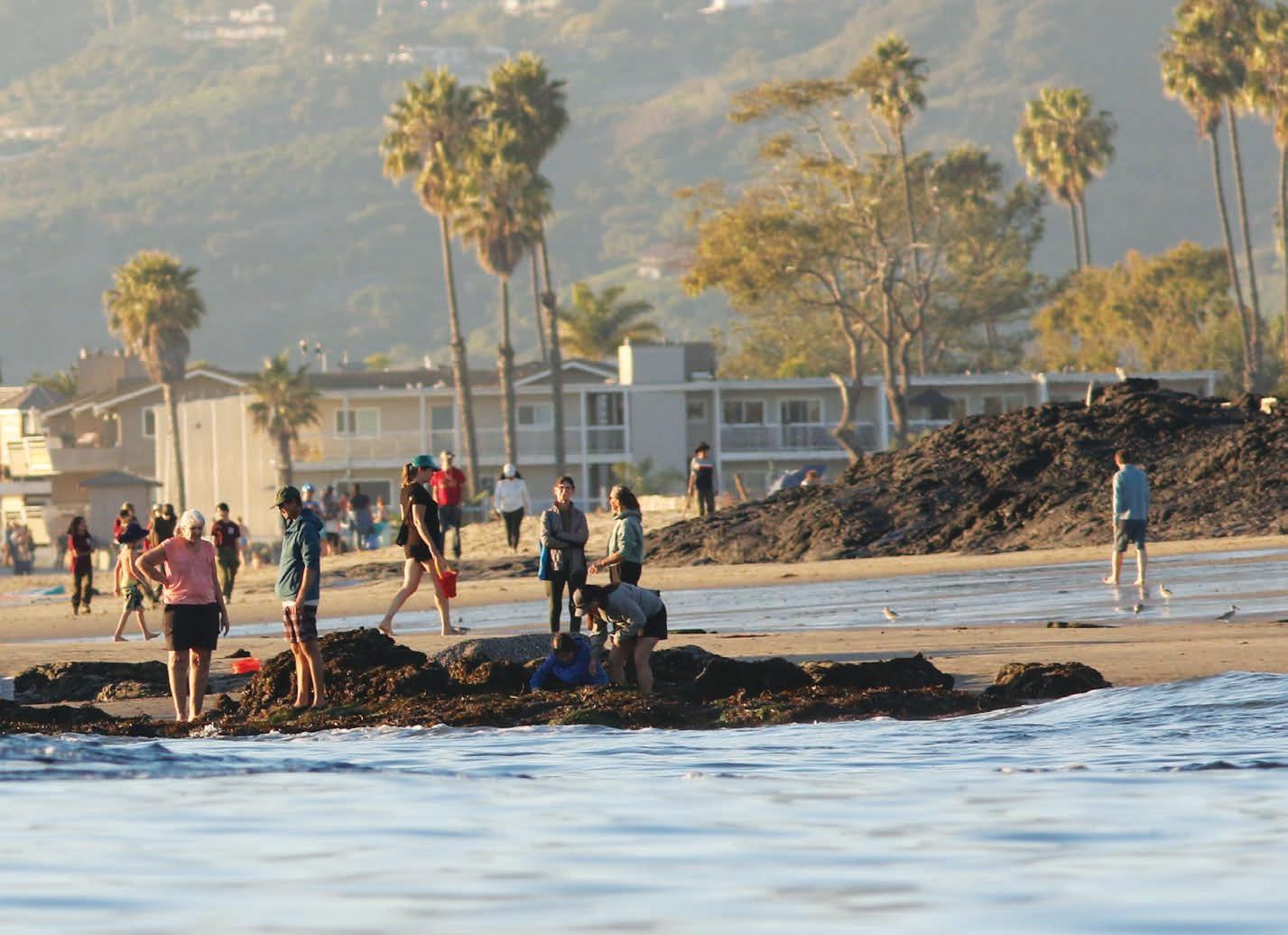
A minus tide at Carpinteria State Beach; tide pooling at its best.
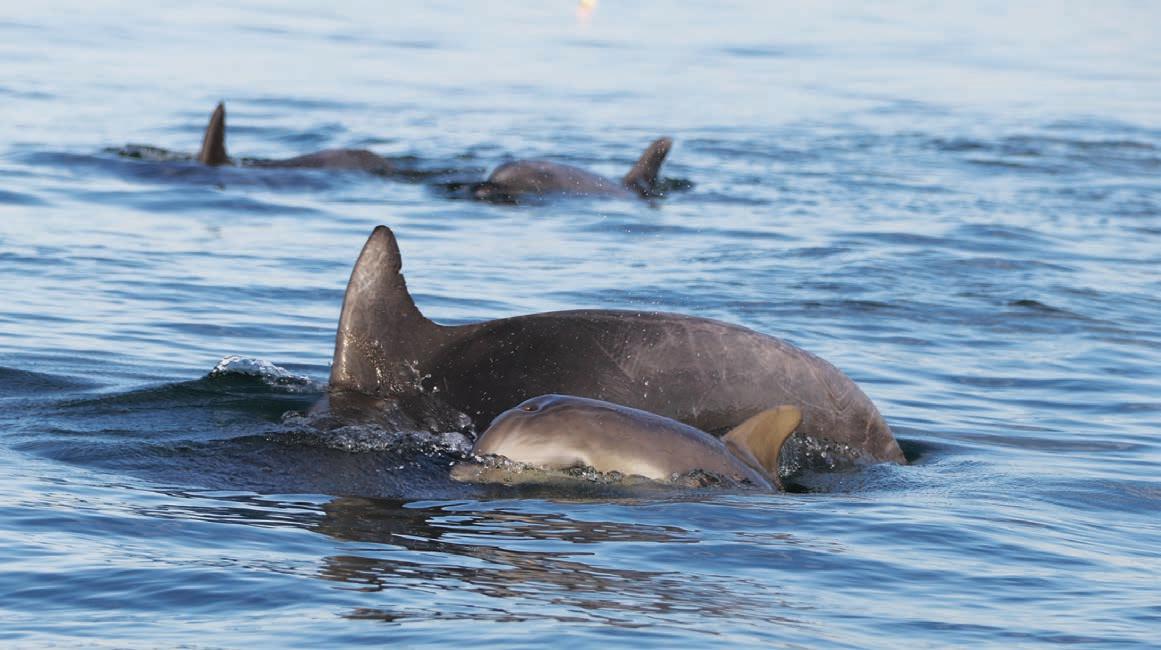
A coastal bottlennose dolphins calf looks Chuck in the eye.
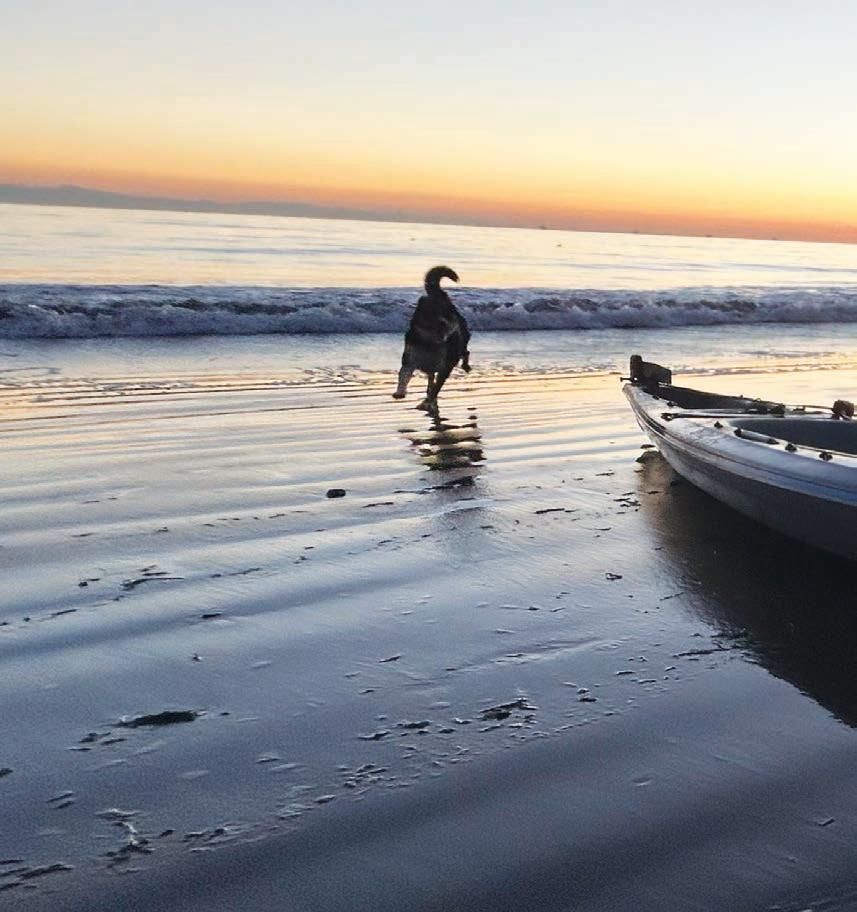
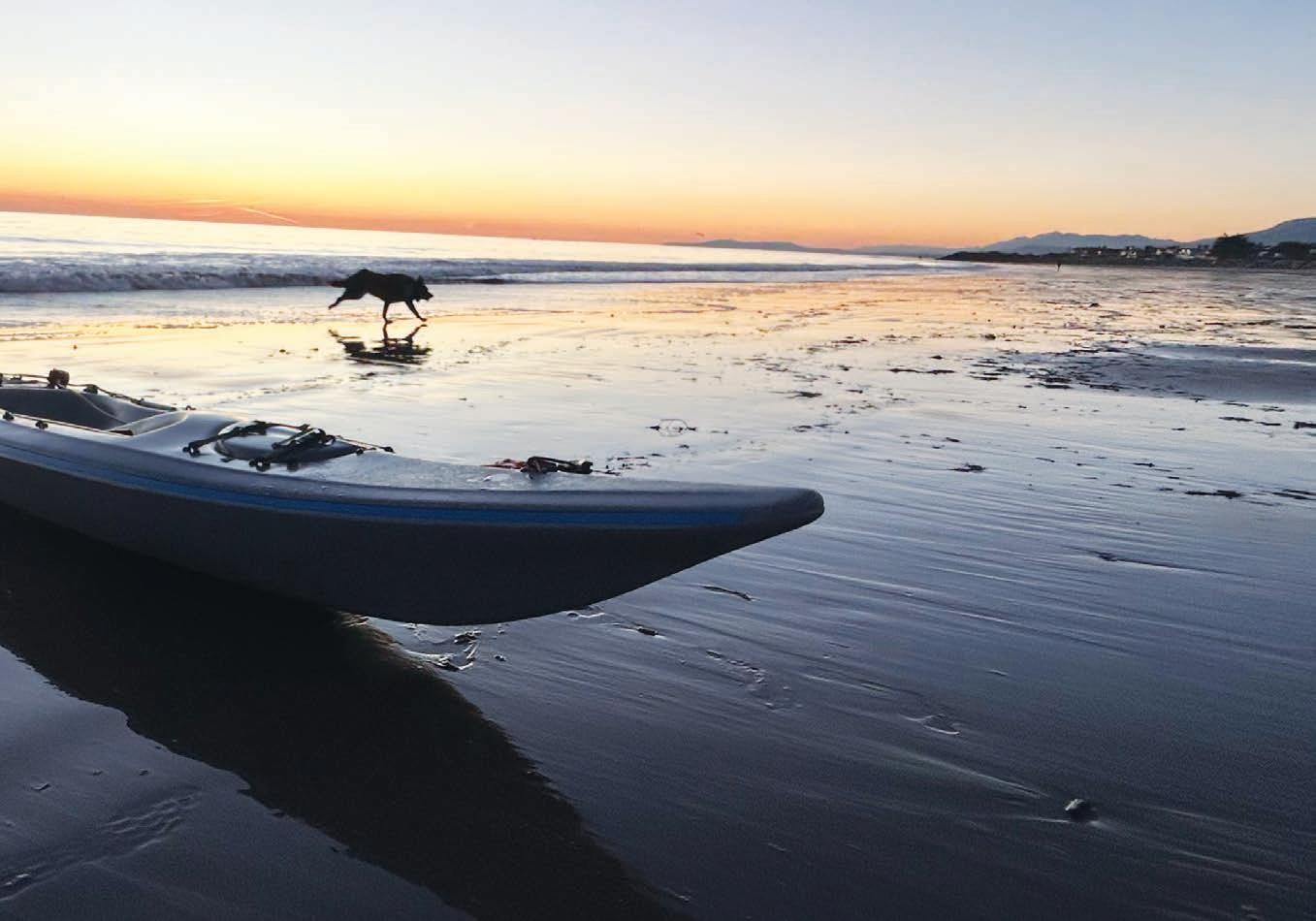
Greeted by playful pups at the end of the day at Ash Avenue.
Chuck on the water, photographed by Glenn Dubock.
and avoid any oncoming surf. And don’t forget launching and landing. Protecting my camera gear is a priority; the ocean doesn’t know better and getting on and off the beach can be the hardest part of the entire day.
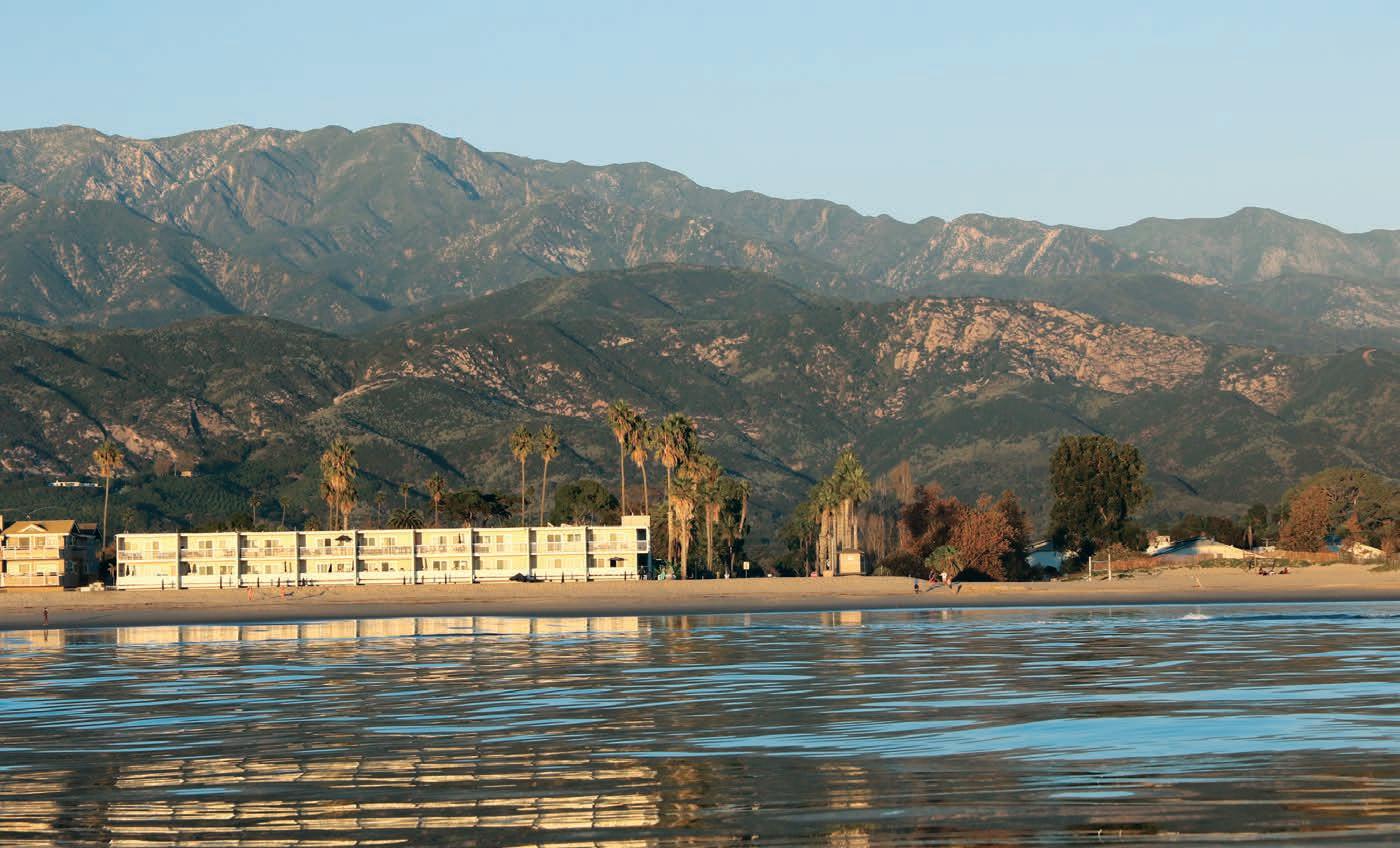
However, a pod of coastal bottlenose dolphins surfacing and spouting 20 feet off my bow quickly overrides worries about unruly sea conditions, especially when it’s a calf cozying up to its mom. These idyllic moments with the east to west-ranging Santa Ynez Mountains as a backdrop make me revel in coastal Carpinteria, all from the seat of my kayak. Paddle on!
A flock of double-crested cormorants off Carpinteria State Beach.
PROFESSIONAL GLOBETROTTERS
For most people, packing a bag and boarding a plane means leaving work behind, but for the Carpinterians on the following pages, travel is work. The livelihood of these four globetrotters relies on a sturdy suitcase, a valid passport, and a personal life with plenty of scaffolding for regular exits and re-entries. There’s adventure and novelty in these occupations, as well as the lonliness and logistical challenges that come with days and weeks away from home. Let’s meet these full-time Carpinterians whose commutes take them around the globe.
WORDS BY AMY MARIE OROZCO
PHOTOS BY MARCO RIGONATI
Ships ahoy!
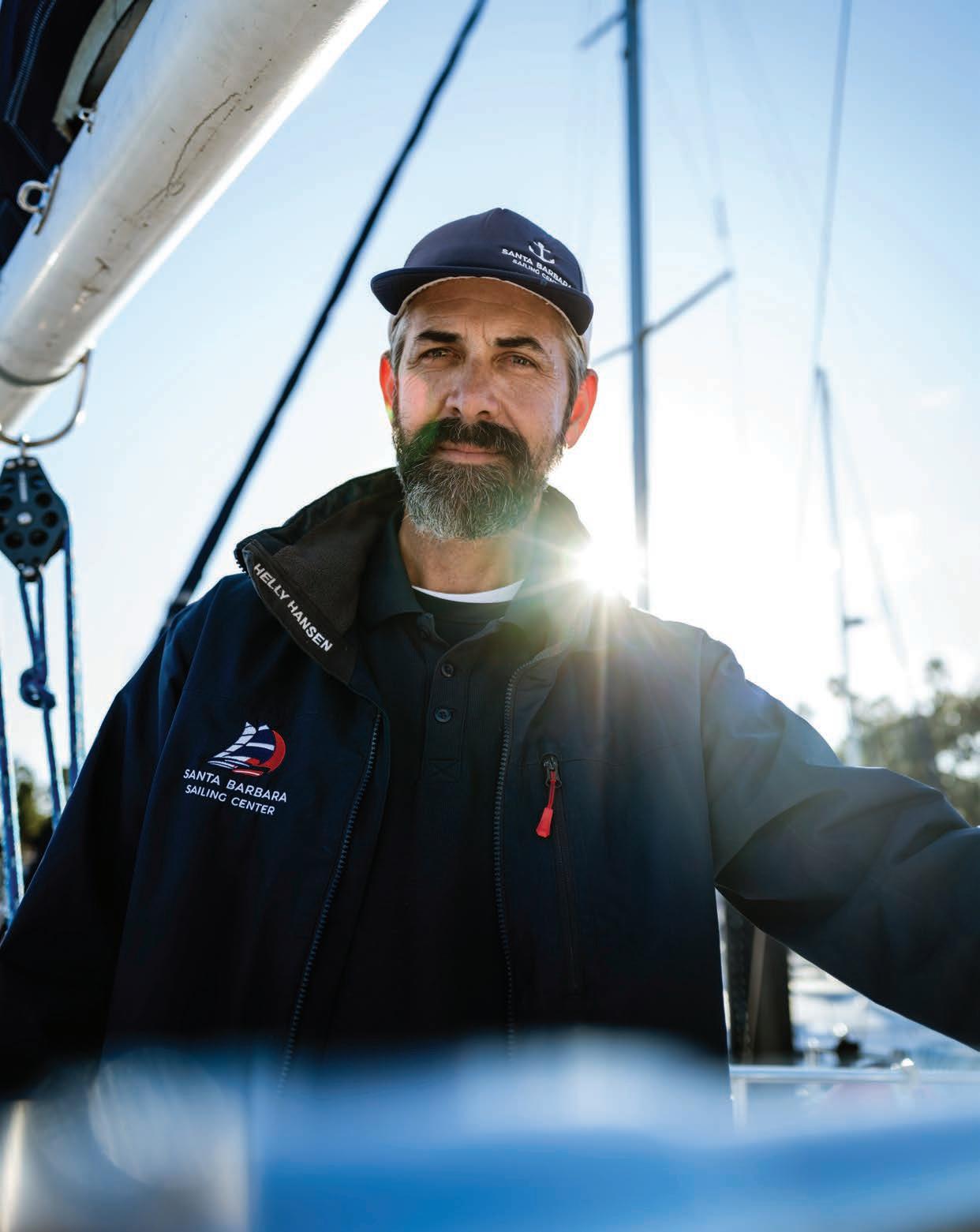
Mariner Mark Matthews sails through life, literally. The affable husband and father of two teaches sailing for a living, and in his spare time, he sails for fun. He’s cruised the North Atlantic, Mediterranean, and Caribbean seas, as well as the Pacific from Seattle to Panama.
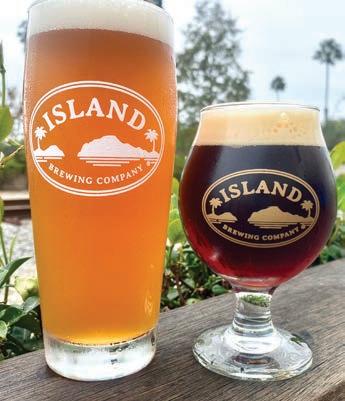
Hailing from the Finger Lakes region of upstate New York, Mark learned to sail on Lake Ontario when he was about 13 years old. His stepfather taught him. After college graduation, he followed friends to California and taught sailing in Sausalito, where he met his wife, Laurie, also a sailor, in 1997. After a few years of romance on the high seas, the two put down anchor in Carpinteria, where Laurie’s family’s business, Island Brewing Company, was fermenting and the husband-and-wife team jumped aboard.
The transition from seafaring to brewing was an easy and natural one, says Mark. Self-described as “a heavy stainless steel, liquid medium, rubber boots kind of guy,” he was never a brewer, he’s quick to point out, but rather a fixer and a doer. Like a commis chef, if you will.
Landlubber Carpinterians may recognize him from IBC, but his marine mates know him as “Captain.” Both he and Laurie hold 100 Master Captain’s Licenses, which require Coast Guard certification. He is also certified through the American Sailing Association (ASA).
Mark is an instructor for Nautilus Sailing and has taught in the Sea of Cortez, Croatia, Mallorca, the Bahamas, and Grenada. He also teaches for the Rhode Island Sailing School, New England Sailing Center, Santa Barbara Sailing Center, and is available for direct hire. He guesstimates being asea on five to six teaching trips a year.
“Everyone should learn how to sail, no matter how old you are,” Mark says, noting that two feet off the dock + the immersion in the elements = you’re in a different world.
Family time is sailing time, too. The Matthewses are members of the Santa Barbara Sea Shell Association, whose focus is educating children in sailing and getting them started in dinghy racing.
When the children were 9 and 7 years old, Mark and Laurie bought a boat in Grenada, thinking it was a good time for a family sailing trip, before the kids were too old to want to hang with their parents. Then the COVID-19 hit, leaving the Matthewes on a watery lock down in the Virgin Islands region. The excursion turned into a 13-month tour that included anchoring behind the Statue of Liberty and sailing to Maine.
Whether for work or for fun, Mark says each time sailing is a new time and he approaches it as such. It’s not worry-free either. Weather can be rough and emergencies happen.
“The good is amazing and also the bad is amazing,” he sums up.
Follow Mark on Instagram at @nowsailing or email markbmatthews@yahoo.com.
Winging it
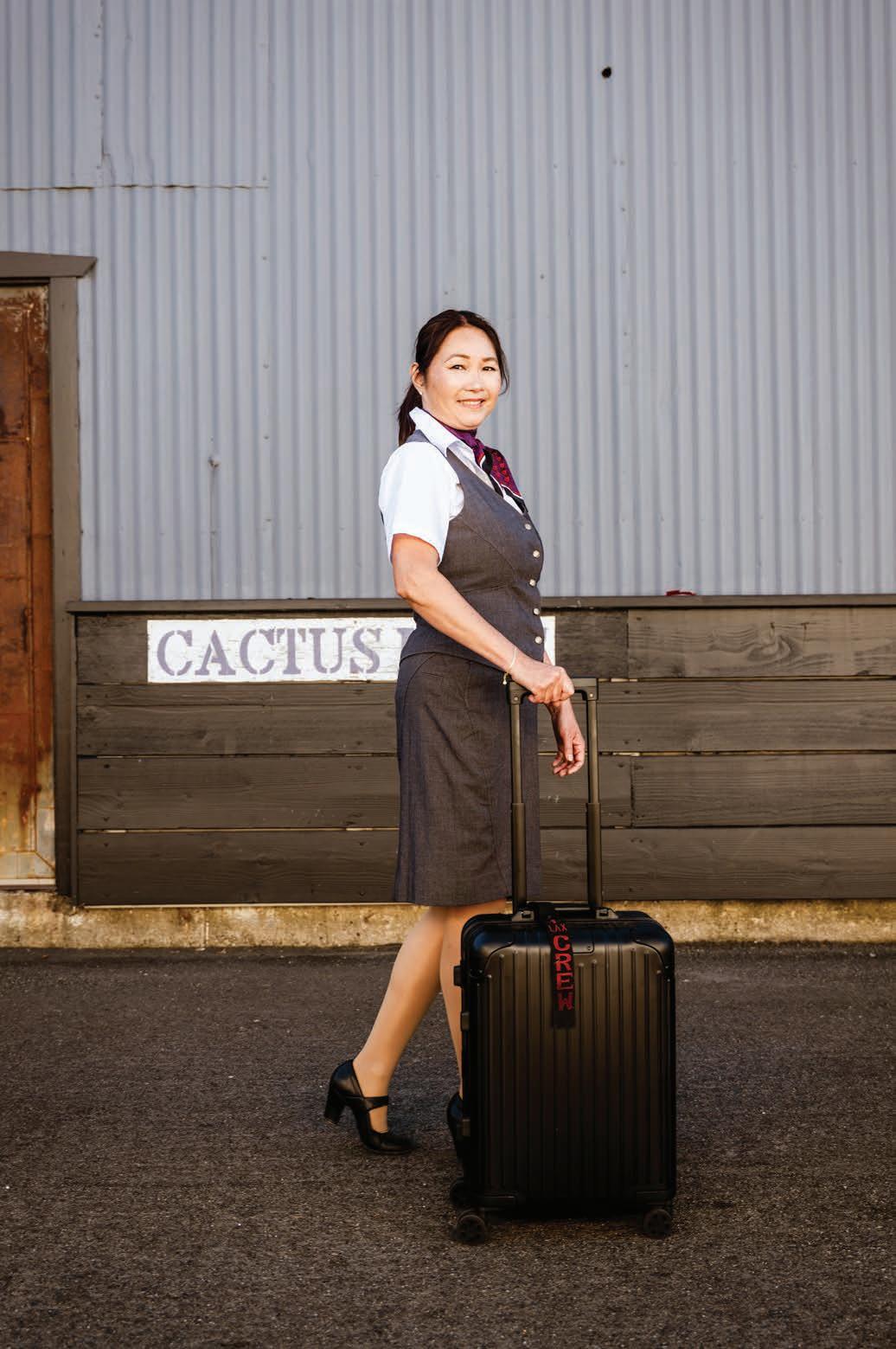
With 34-plus years under her wings, Donna Boyd still soars high in her career as a flight attendant. Impressive for someone who caught the travel bug after college graduation and was on a path in the human resources profession.
A friend of a friend recommended she give flying a try, suggesting if it didn’t work out she could transfer to HR. Soon, the Los Angeles transplant attended a travel career fair, was hired on the spot, and started the six-week training, which included safety, airplane basics, customer service, and weekly weigh-ins — back in the day when restrictions were tight for requirements now illegal.
Her friendly and warm personality is well suited to the job. Based at Los Angeles International Airport (LAX), Donna flew domestic night flights early in her career so she could spend as much time as possible with her children. Now it’s strictly international on extended long-haul flights, 12-to-16-plus hours one-way, in first, business, or economy class. After a one-to-three-day layover is the return flight.
Getting to LAX is one leg of the journey. For a flight departing at 10:30 p.m., Donna, dressed in uniform, boards the 3:30 p.m. air bus to make her 8:50 p.m. check-in time for a pre-boarding briefing with the purser. How many passengers, any unaccompanied children, anyone in a wheelchair, how many special meals, and other special considerations.
“It’s hard work,” says Donna. She is awake when usually she’d be sleeping, sometimes passengers drink too much, people’s trash has to be collected, medical emergencies happen, and passengers can be impatient with other travelers (she hasn’t witnessed fighting or other extreme behavior in the air). “But you don’t take it home with you. When the flight is done, it’s done,” she says.
For passengers to ingratiate themselves with the crew, she recommends not moving seats without asking and notes it’s not uncommon for passengers to give a present, such as a gift card, See’s Candies, or a thank-you note to the crew.
Destinations rotate every month. Flight attendants bid on the routes with seniority granting preference, and they learn their schedule by the 16th of the previous month. Her routes are to overseas popular destinations, and passengers are a mix of leisure and business travelers.
Nowadays the well beaten paths are to Tokyo, because of the weak yen, and to Auckland and Sydney, which are favorites with the cruise ship holidaymakers. Along with making sure her passengers start or finish their vacations on a very good note, Donna enjoys going to different destinations with co-workers she’s been flying with for 30-plus years to experience lamb in New Zealand, say, or ramen in Tokyo. Her favored destinations, in alphabetical order, are Auckland, Paris, Tahiti, and Tokyo. South Africa is on her bucket list.
“I consider this the best time of my career,” she says. Next year after her son goes to college, Donna adds, she and her husband will travel more as they’ll be empty nesters. “As long as I’m healthy, I will continue to fly.”
Notepad in hand
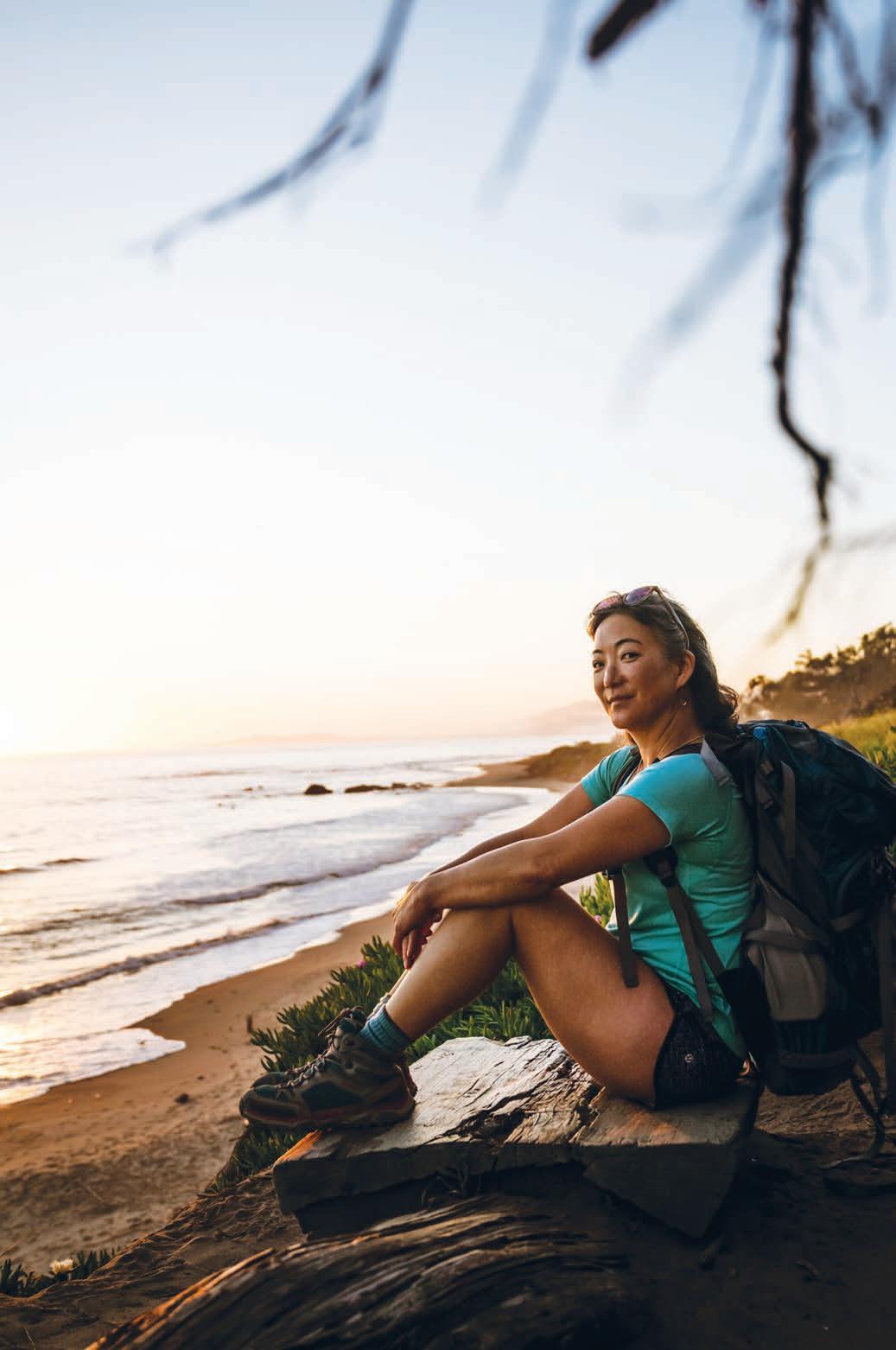
If looking for an exciting, well-paying career path requiring visits to exotic places, do not set your compass to travel writing. Just ask Wendy Yanagihara. For 23 years she has been covering the globe for Lonely Planet, the born-in-an-Australian-kitchen, 50-plus-year-old international publishing house dedicated to responsible, sustainable, and self-directed travel.
After graduating from U.C. Santa Cruz with a psychology major and a minor in art, the Carpinteria native moved to San Francisco and worked some soul-less gigs during the dot-com boom. Eventually she trained under a graphic designer for a few years, which led to a job laying out books, travel guides to be exact, at Lonely Planet.
Soon she took her first solo trip (to Costa Rica) and was robbed. The incident prompted a crash course in self-sufficiency, which she considers an important survival skill. Next she traveled to Vietnam, again solo, then quit her job and moved there. On a whim, she submitted a writing sample to Lonely Planet, which landed her into the author pool.
Two-plus decades later, she’s traveled all continents except Antarctica (not environmentally responsible), researched and contributed to 70 (maybe more) guidebooks, and is recognized for her expertise in Japan and Latin America — her Japanese and Spanish language skills help.
“It feels good to be able to advise people on how to tread lightly and be sensitive/ respectful to the customs, environment, and soul of a place,” reports Wendy, who credits growing up in Carpinteria for wanting to get out and see the world.
Like anything, travel writing has pros and cons. For Wendy, pros include spending deep time in a country, immersing in indigenous cultures, watching amazing wildlife, getting to go places not many people go, and doing activities many people don’t, such as trekking, camping, rafting, paddling, and snorkeling, to name a few.
The downside to the above is the weeks, and weeks, of writing. It’s lonely, sedentary, and can be boring. Print publishing takes a long time, information can be outdated or incorrect by the book’s release, staying on the page until the next edition. Along with typically low pay, another con is this ain’t no vacation. Erase the vision of sipping margaritas poolside while jotting the day’s activities in a notebook. Lingering is a rare and precious commodity. There’s an entire country to cover and the earworm of a tick-tocking deadline compromises spontaneity. Life on the road can be a strain to relationships and the continuity of life.
“If you want to try it and love to write, guidebook writing can be a wonderful gig to do a few times and move on,” says Wendy. For years, she’s been trying to exit the profession, but the allure of the destinations keeps her on the road and at the keyboard. “The job kinda drives me nuts but I still love it.”
Learn more at wendyyanagihara.com.
Coffee stop
The best place in the world to get coffee is Ethiopia, according to Todd Stewart, and he’s not just full of beans. He co-founded and co-owns Dune Coffee Roasters with wife Julia Mayer and annually buys approximately 200,000 pounds of coffee from around the globe to be roasted, ground, bagged or brewed, then sold wholesale to domestic and international customers and retailed online and at four locations in the Santa Barbara area.
Specifically, the CEO travels the coffee belt, the area between the Tropics of Cancer and Capricorn in the high elevations of Africa and Central and South America. He’s been to Mexico, Panama, Guatemala, Honduras, Costa Rica, El Salvador, Mexico, Brazil, Ecuador, Ethiopia, and Kenya.
“I go from hotel to coffee farm … there’s little time to recreate,” he explains. “I have made it to the beach a couple of times in a couple of places.”
The coffee-buying trips average about a week and coincide with harvest seasons: January to April for above the equator and August to September for below the equator. Because of its excellent coffee and strong farmer relationships, Honduras is an annual visit. He visits other countries every other year. Other travel, domestic mainly, is for tradeshows and barista competitions.
When Dune opened in 2009, Todd was new to the java business and became involved in the specialty coffee community through tradeshows, where he met importers/ exporters and coffee growers. As part of a guided group of five people, his first buying trip was to Panama to visit coffee farms. As testament to Dune’s commitment to sustainable partnerships, the company still buys from the farm where they made their first purchase.
Now he travels solo, with an employee, or with his family. He, Julia, and their two children journeyed to Ethiopia, including stops in Barcelona and Stockholm, in 2023. Seeing hippos, feeding monkeys, and his son playing soccer with local children are shared souvenir experiences. “The guide explained the children had never seen people with blond hair,” recalls Todd.
Before buying, there’s coffee tasting. Like wine, the emphasis is on tasting not ingesting. The process is called cupping, and it’s a simple set-up. The taster sits in front of about 10 to 20 seven-ounce cups filled with different coffees, takes a spoonful, slurps the coffee — no cream, no sugar, no squirt of a chemically engineered additive — spits out the coffee, and fills in a scorecard rating flavor, acidity, mouthfeel, and balance, among other factors.
Part of the job is global awareness. Each country has different ways of conducting business and systems of delivery. For example, given today’s political climate, a recently finalized Ethiopian buy will be shipped via the Cape of Good Hope. With coffee being an agricultural product — a fruit that looks like a cherry and the “beans” are actually seeds — there are taste variations and distinct bean varieties. That coupled with no two factories being alike can be a challenge.
Dune’s next destination is decidedly more local. The roasting operation is moving from Santa Barbara to Carpinteria on Rose Lane.
An open book
Carpinteria City Librarian shares brutal and beautiful history
WORDS
BY ERIC CASTRO
PHOTOS BY MATT DAYKA
Iwas born in Callao, Peru’s historic port — the place where the country meets the ocean and the ocean returns its stories. My childhood unfolded in my grandparents’ large home, a house that was always full: aunts coming and going, cousins playing in the courtyard, neighbors who felt like family. There was laughter, arguments, doors constantly opening and closing. And in the middle of all that joyful noise, there was a quiet sanctuary: my grandparents’ small library.
That is where I learned to read. I remember the enormous encyclopedias, heavy in my hands, their illustrations like windows into other worlds. I opened them almost daily. I dreamed of distant cities, endless rivers, impossible mountains. Without realizing it, those pages planted in me
a restlessness that would never fade — the need to know, to understand, to explore.
During my teenage years, my family moved to Chancay, north of Lima. It was a town of pre-Columbian origin, home to farmers and descendants of Japanese immigrants — but it was also a town by the sea. Once again, the ocean framed my life. The landscape changed, the rhythms slowed, but the horizon remained wide and infinite. Perhaps it was that steady line between sky and water that taught me to always look beyond what was immediately in front of me.
After finishing high school, I embarked on my first great journey with my older brother. We traveled south along the Pacific coast, passing through dusty towns and port cities before crossing into Chile. We reached Santiago and then
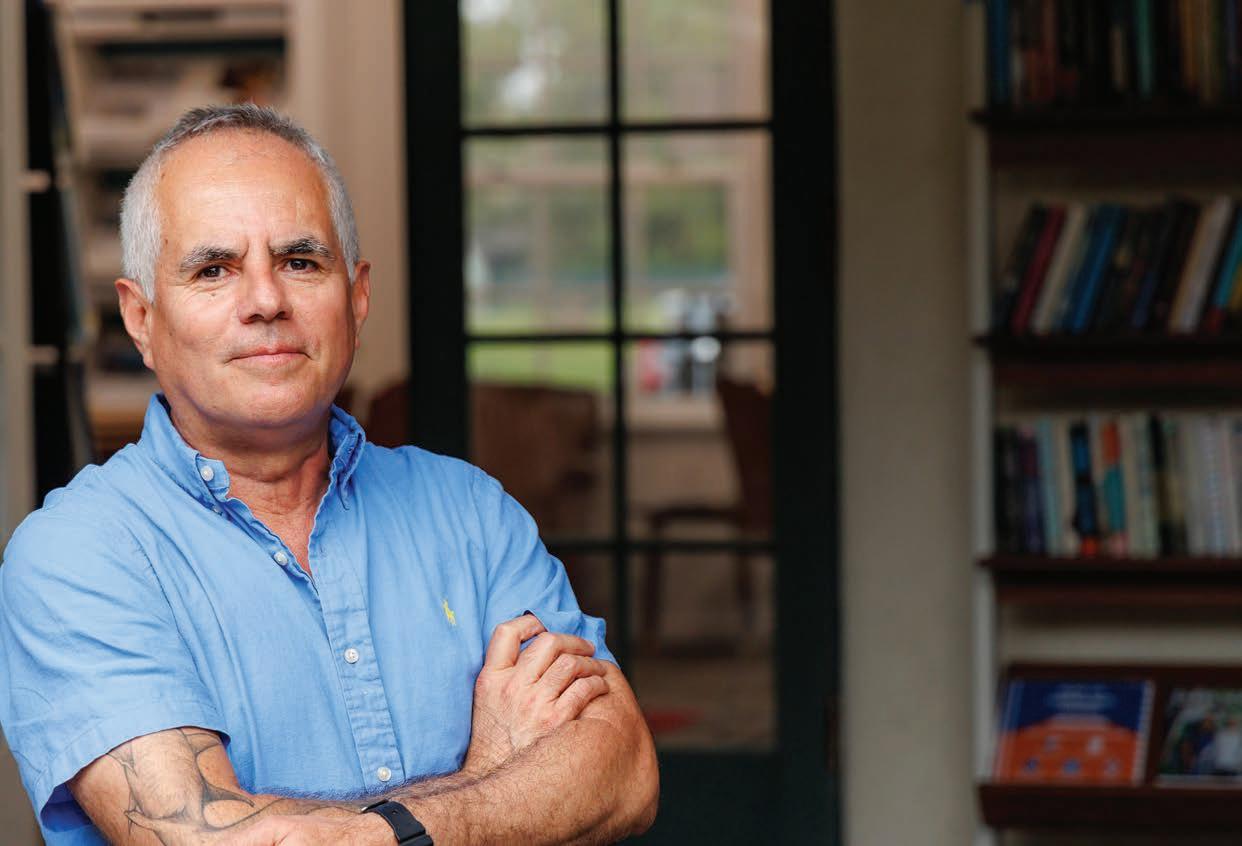
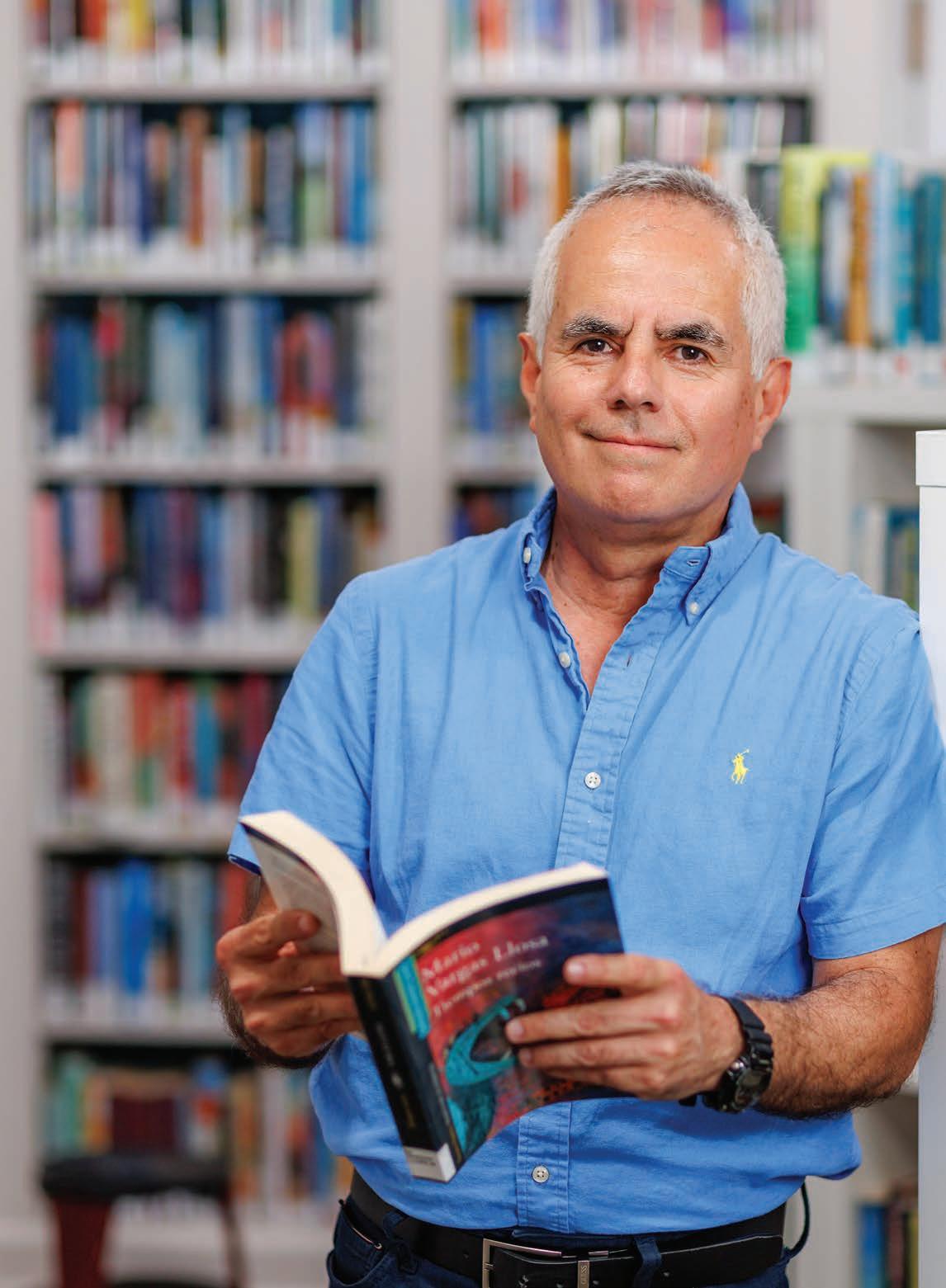
Eric Castro at the Carpinteria Community Library
Valparaíso, where colorful hills seem to spill into the sea. For the first time, I felt the true scale of the continent I had once only imagined in those encyclopedias.
The journey that transformed me most deeply came later. I crossed the Andes into the Peruvian Amazon Forest and traveled down the Ucayali River until it merged into the Amazon River. For days, the world was nothing but water, jungle, and sky. The green was so intense it seemed endless. The air vibrated with insects, birds, and life. I stopped in small riverside communities before finally reaching Manaus, Brazil. There, I understood both the grandeur and fragility of our land — its exuberant natural beauty coexisting with painful inequality. I encountered a South America that was magnificent and wounded at the same time.
Back in Lima in the early 1990s, I enrolled at the Universidad Nacional Mayor de San Marcos, founded in 1551 and one of the oldest universities in the Americas. I chose to study Library and Information Science with an inner certainty that traced back to childhood: I wanted to dedicate my life to knowledge — not only to gathering it, but to sharing it.
But the country was burning. Between 1980 and 2000, Peru endured an internal armed conflict that scarred an entire generation. Groups such as Sendero Luminoso and the Movimiento Revolucionario Túpac Amaru spread terror, while the State responded with its own violence and abuses. The university was a political battleground. I became involved in student leadership, organizing protests, and speaking out against human rights violations.
When Alberto Fujimori consolidated power and weakened democratic institutions, the student movement became one of the last spaces of resistance. The cost was devastating. Many classmates were imprisoned, disappeared, or killed.
I was kidnapped twice. Both times I was tortured. The last time, I was left severely beaten in a garbage dump on the outskirts of Lima — left there to die. But sometimes life chooses otherwise. Local residents found me and saved me. I remained hidden for weeks while friends organized
my escape. I never learned all the details. I only remember being taken to the airport and boarding a plane toward the only country for which I had a visa.
I arrived in the United States without a plan, without speaking the language, and without money. I arrived with a small suitcase and a story I did not yet know how to tell.
Adapting was an immense challenge. The language was a wall. Nostalgia was constant. And at times, xenophobia cut deeply. But I also found solidarity — people who extended their hands without hesitation. I learned that for every act of rejection, there are many more acts of generosity.
Over time, the library reappeared in my life, as if a circle had quietly closed. Today, I have the privilege of directing the public library in Carpinteria. Every day, I remember the child who once opened encyclopedias and dreamed of the world.
My work goes far beyond books. It means helping someone complete an online job application. It means assisting a mother who needs to schedule a medical appointment in a language she does not speak. It means offering citizenship classes, literacy tutoring, and computer courses in both Spanish and English. It means witnessing the look of surprise on an immigrant’s face when they discover that the library director speaks their language and understands their journey.
The library’s doors are open to everyone — to those seeking knowledge, refuge, or hope.
One of my favorite things to do is sit by the ocean in Carpinteria at sunset. The sea reminds me of Callao. It reminds me of Chancay. It reminds me that life, like the tides, carries us far away and brings us back transformed.
When I imagine the future, I see our library recognized not only for its programs, but for its humanity. I see it as a place where literacy changes destinies, where culture is amplified, and where community strength is nurtured. And I see myself continuing to learn, leading with humility and gratitude — aware that everything began in a small family library, among pages that smelled of old paper and infinite possibility.
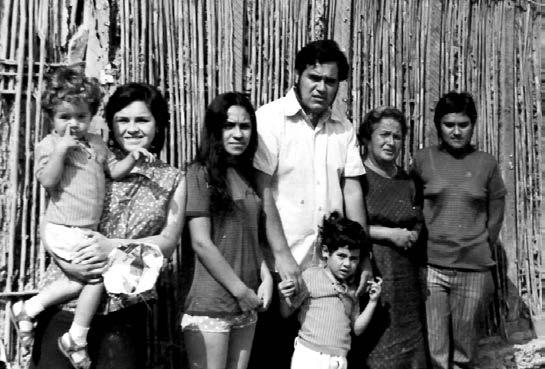
Held by his mother, Lidia, 3-year-old Eric appears here with, from left, his aunt María and uncle Pepe, his older brother Hugo, grandmother Julia, and aunt Aida.
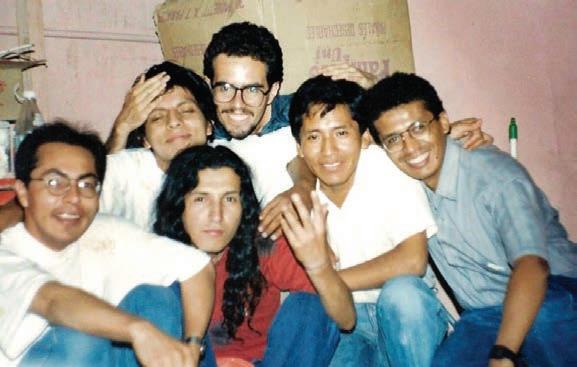
At about 24 years old, Eric is pictured top center with friends from the National University of San Marcos in Lima, Peru.
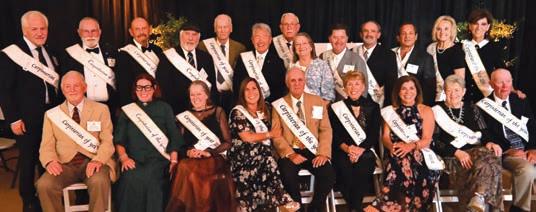
The Carpinteria Community Association was formed in 2023 by community members who recognize the unique spirit of our special town of Carpinteria.
As a nonprofit, CCA’s primary charge is to host the annual Community Awards Banquet which honors students, educators, community members, and the esteemed Carpinterian of the Year.
SAVE THE DATE: CULINARY CRAWL September 17, 2026 Get involved and learn more at carpca.org
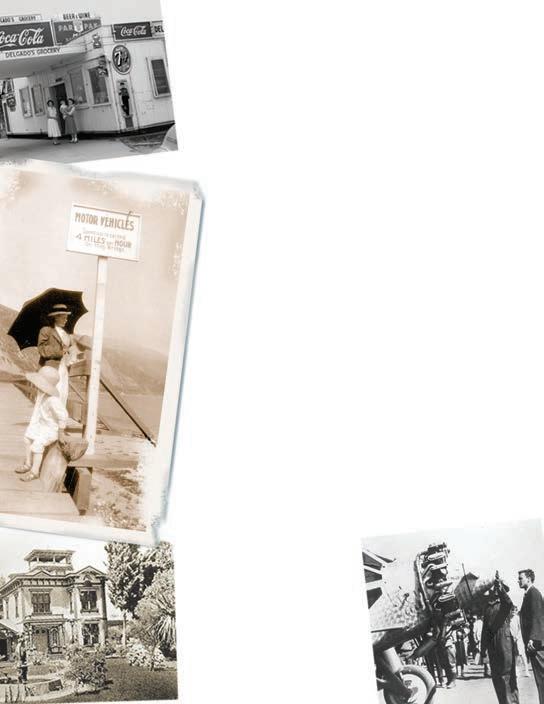
Discover Carpinteria’s Rich & Colorful Past at the
CARPINTERIA VALLEY MUSEUM OF HISTORY
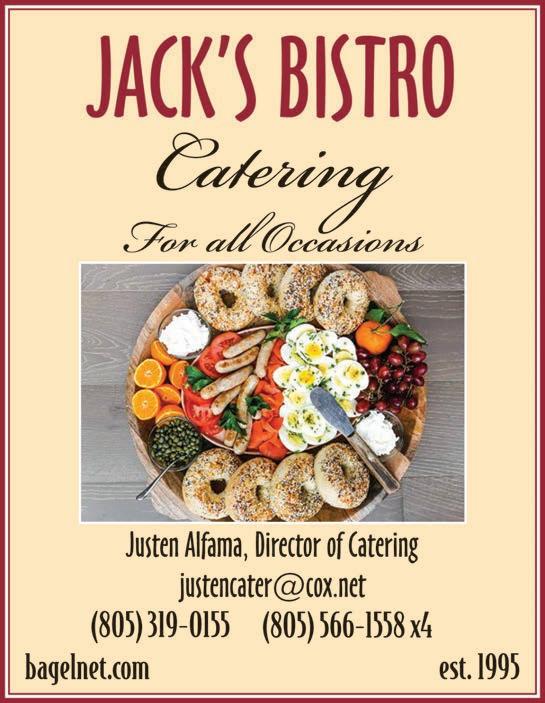
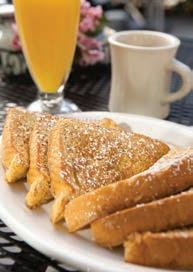
CATERING FOR ALL OCCASIONS
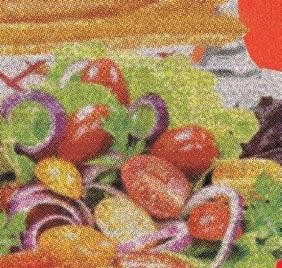
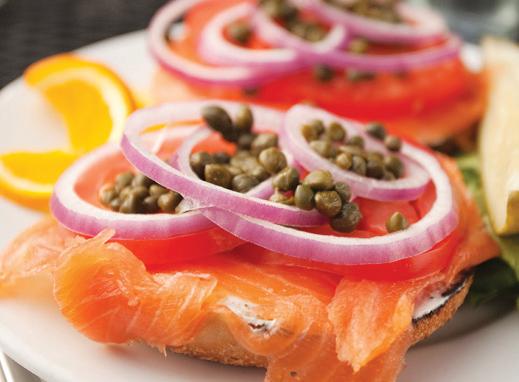
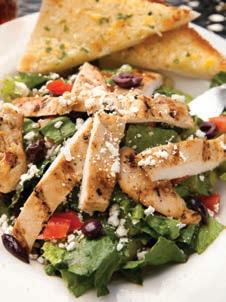
Best Bagels Since 1996 • Delicious Salads
Gourmet Sandwiches • Grand Parties
Hors D’oeuvres • Social & Corporate Catering
Featured Exhibits: Chumash • Summerland
Spanish & Mexican Ranchos
World War I • Carpinteria Pioneers
Victorian Homes • Agriculture & Tools 19th Century Schoohouse
carpinteriahistoricalmuseum.org
956 Maple Avenue Downtown Carpinteria
5050 Carpinteria Avenue • To Go 805.566.1558
5050 Carpinteria Avenue • To Go 805.566.1558
Monday-Friday 6:30am-2pm • Weekends 6:30am-3pm
Monday-Friday 6:30am-2pm • Weekends 6:30am-3pm
53 S. Milpas St. • 805.564.4331
53 S. Milpas St. • 805.564.4331
Daily 6am-2pm
Monday-Friday 6am-2pm • Weekends 7am-2pm
Open Hours: Tuesday- Saturday 1 - 4 p.m. (805) 684-3112
Catering 805.319.0155 • bagelnet.com
Catering 805.319.0155 • bagelnet.com
KARLSSON
Found & Forged
WORDS BY PETER DUGRÉ • PHOTOS BY MATT DAYKA
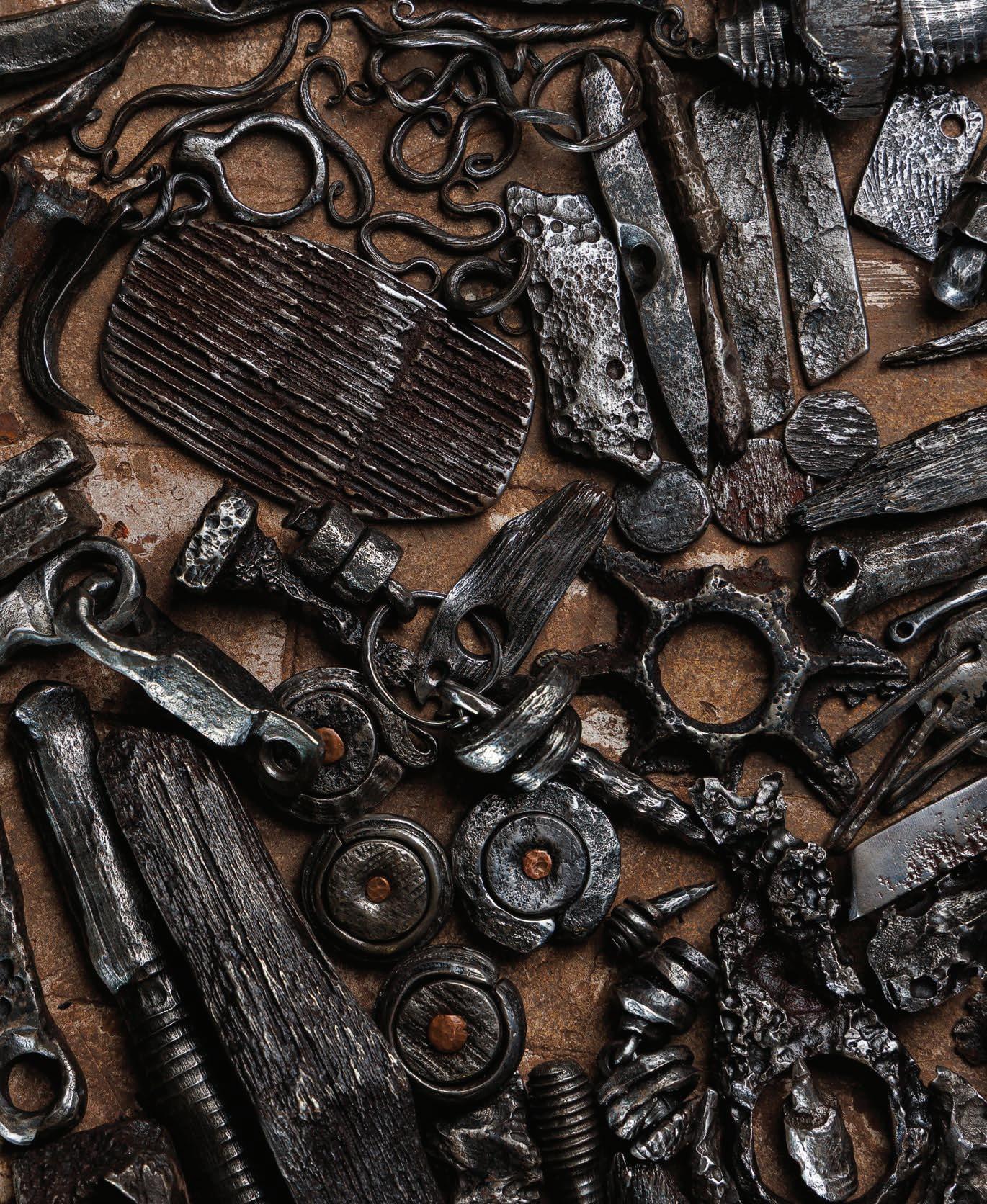
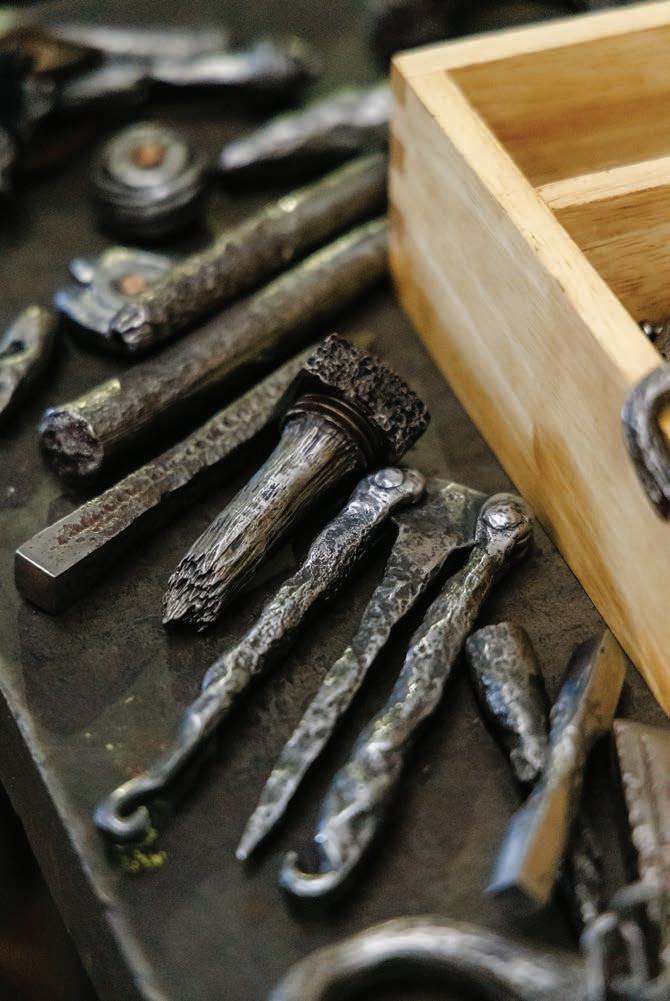
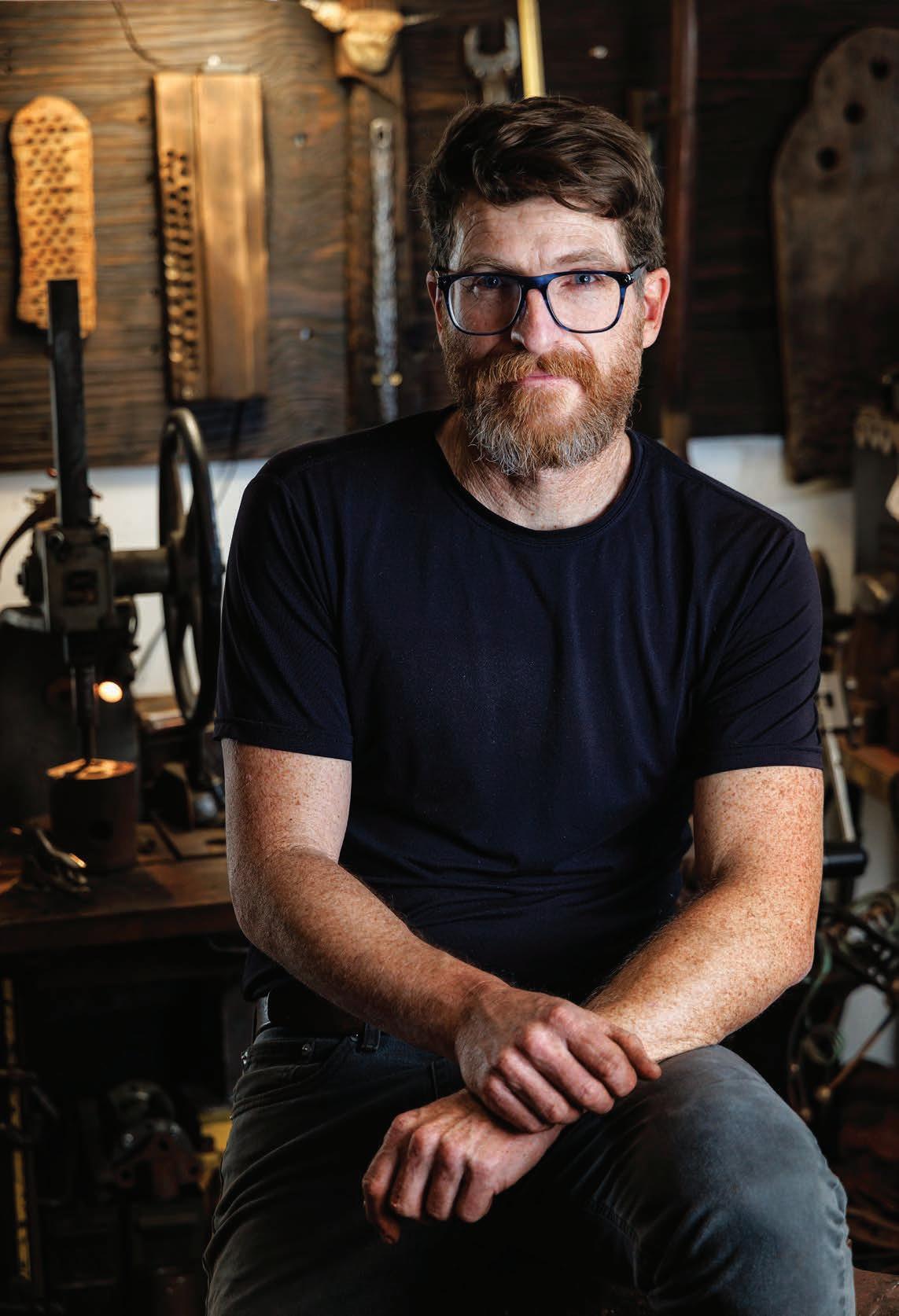
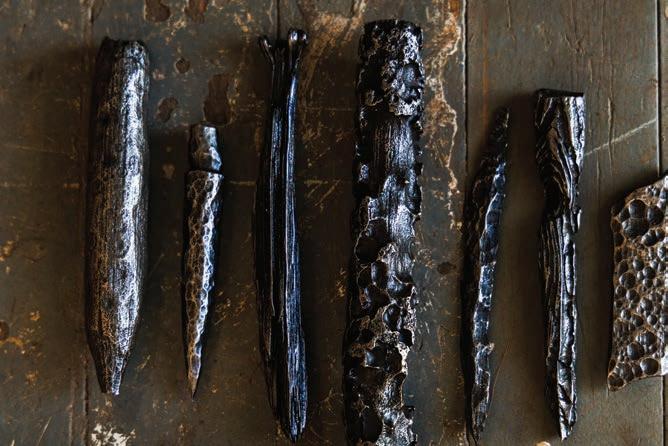
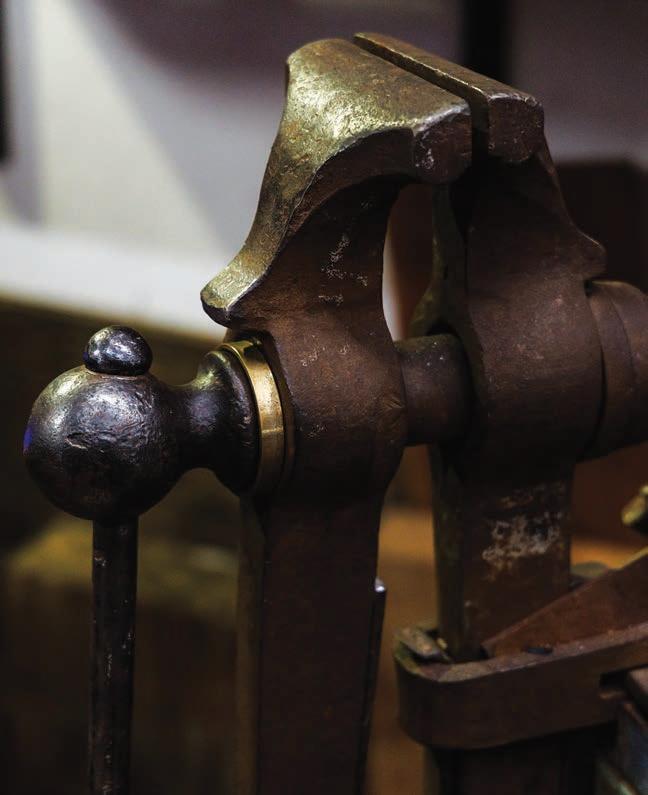
Rarity is an unmistakable feature of Jason Campbell’s blacksmith art and its core material. Jason uses wrought iron relics of the early oil industry that resemble a wizard’s mix of gnarled pterodactyl talon and extraterrestrial onyx to create seriously whimsical pieces playing on both the intellect and imagination. In Jason’s shop/studio at 500 Maple Ave., where hammer, anvil, and red hot metal add a hint of torture-chamber to the creative space, wrought iron is the inspiration for reincarnation.
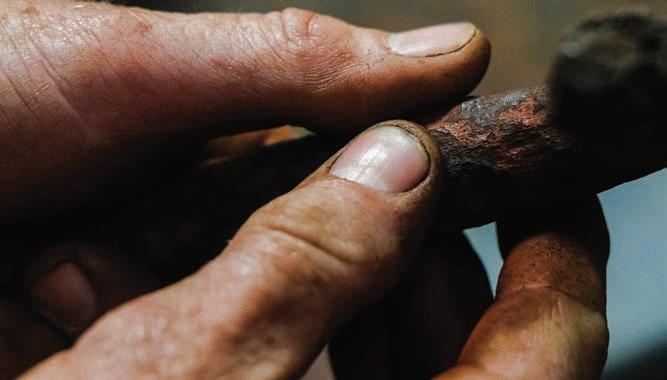
The artist calls his work “Corrosive Art” or “Drift Iron” because the pock-marked and striated metal has been on an epic journey from mined iron ore, to manufactured human tool of industry, to corroded cast-off. Jason finds 100-yearold wrought iron encased in rusted-rock tombs called concretions. Like an explorer stumbling upon an accidental time capsule, he doesn’t know what’s inside the bulging concretion until he frees the wrought iron from its shell of corrosion with a little finesse and hammering.
“A lot of this metal was part of some catastrophic failure of a huge piece of equipment,” Jason says while rolling out raw chunks of iron onto a wooden work bench.
Grainy, malleable wrought iron was once everywhere as the most mass-producible and moldable metal of its time. It reigned for thousands of years. The Industrial Revolution, the railroads, the Eiffel Tower were all made possible by the advancing metallurgy of wrought iron that peaked in
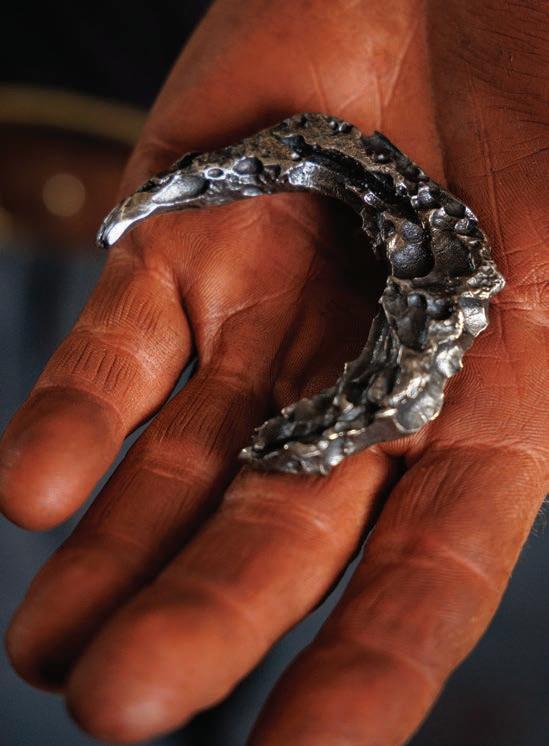
Likely a steel cast alloy, this deeply corroded crescent moon is for one of Jason’s clients.
Wrought iron pieces found at local beaches and forged by Jason Campbell into practical art.
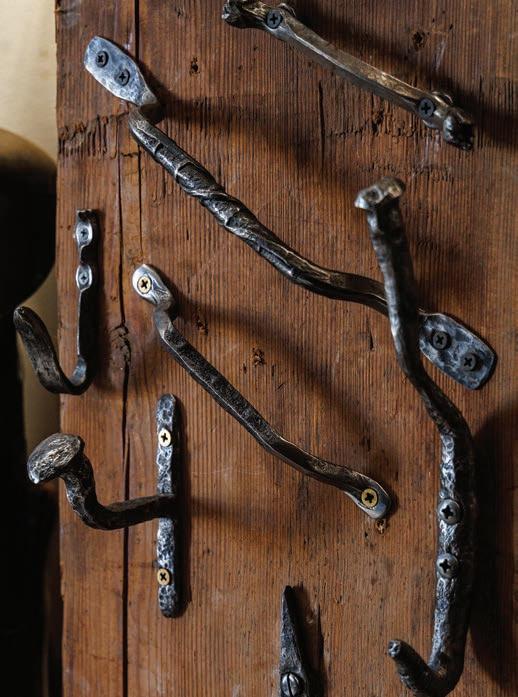
Hooks and handles show corrosion from age and exposure to elements.
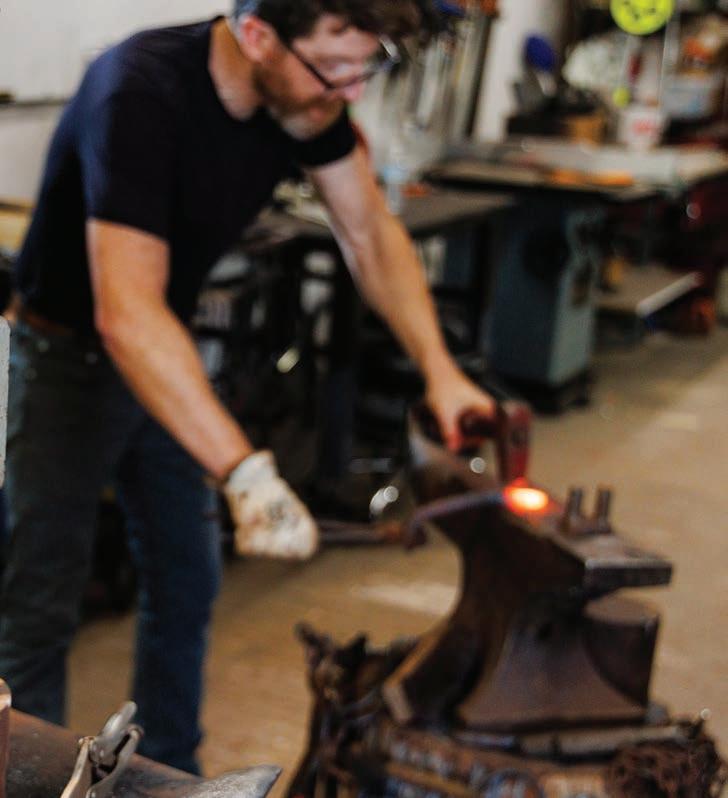
Running on induction, Jason’s forge creates a magnetic field that heats the metal.
the 19th Century. Then poof! Just like that, mild steel, an easier-to-produce moldable metal, took over as the state of the art metal. Commercially produced wrought iron became a relic of the past, virtually extinct after the 1960s, but its durability has made history’s favorite metal fairly easy to find, if you know what to look for.
Over the past decade, Jason has found enough to keep him busy at the anvil pounding, pressing and bending it into both the fanciful and practical — visual art, fidget spinners, hat hooks, belt buckles, decorative accents, handles, you name it. He likes making items that want to be handled, because tactility enhances the experience. The shape and texture of each find influences the final product. He has even taken to crowd sourcing ideas for shaping individual specimens by issuing “What is this?” social media prompts alongside images of cool pieces.
“You see it, feel it, hold it,” Jason says, handling a 4-inchlong, slick meteorite of wrought iron. “Sometimes I know right away what it can be.”
Invariably, the end-product blends the old and new. Even coarsened-to-death by corrosion, wrought iron can be smoothed, shined and reborn under heat and hammer. Wrought iron readily receives skin oil, taking on a polish from a warm palm. It cleans up nicely and is more corrosion resistant than mild steel. Still, it’s important to Jason that his products retain a portion of the edgier, nature-worn texture. Mesmerizing patterns are evocative of the lineage of the material. It gives invincibility.
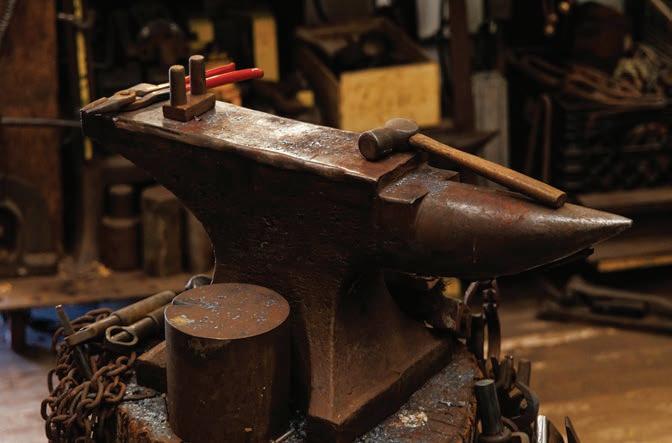
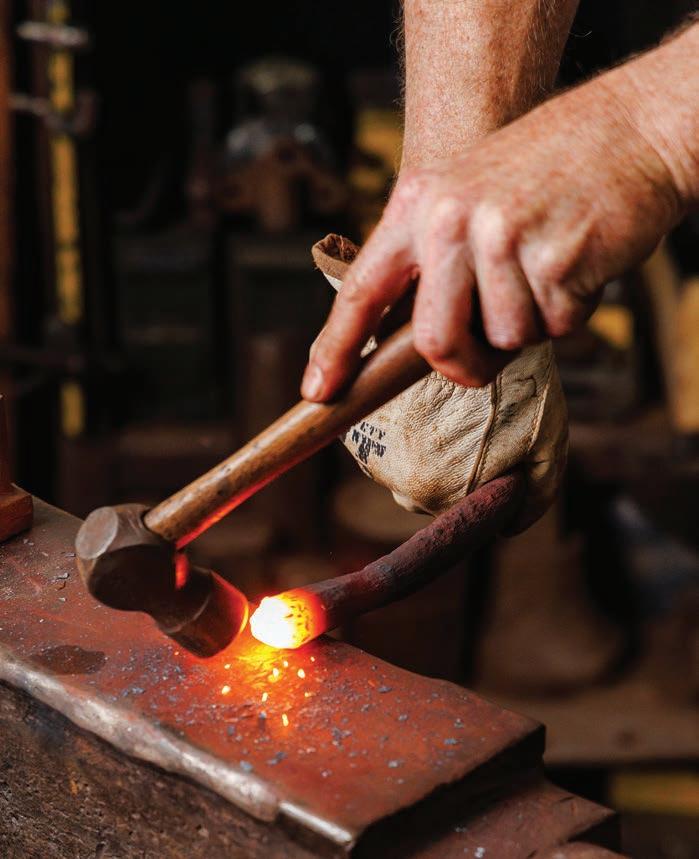
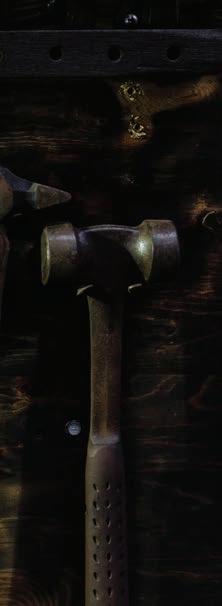
LEFT, Jason on the anvil with the hammer he uses for widening or lengthening material.
Jason holds a concretion with an unknown metal object inside.
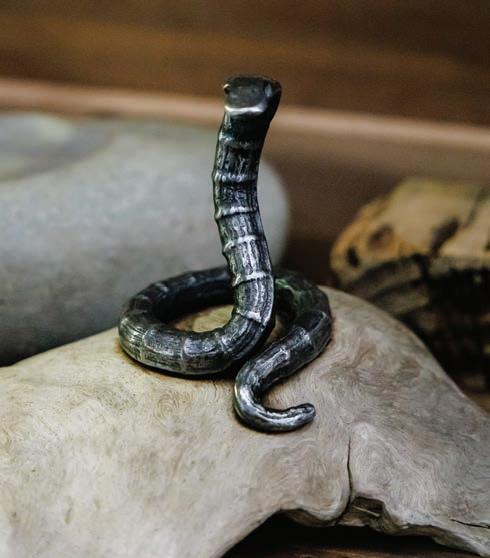
Wrought iron rebar snake on driftwood.
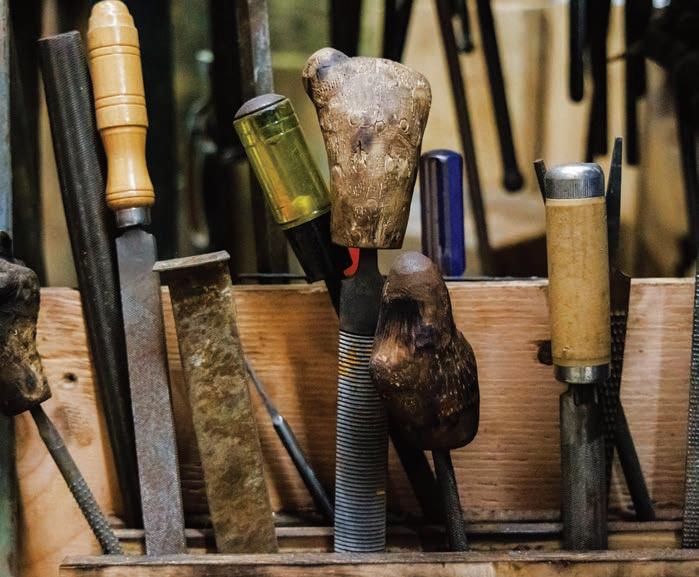
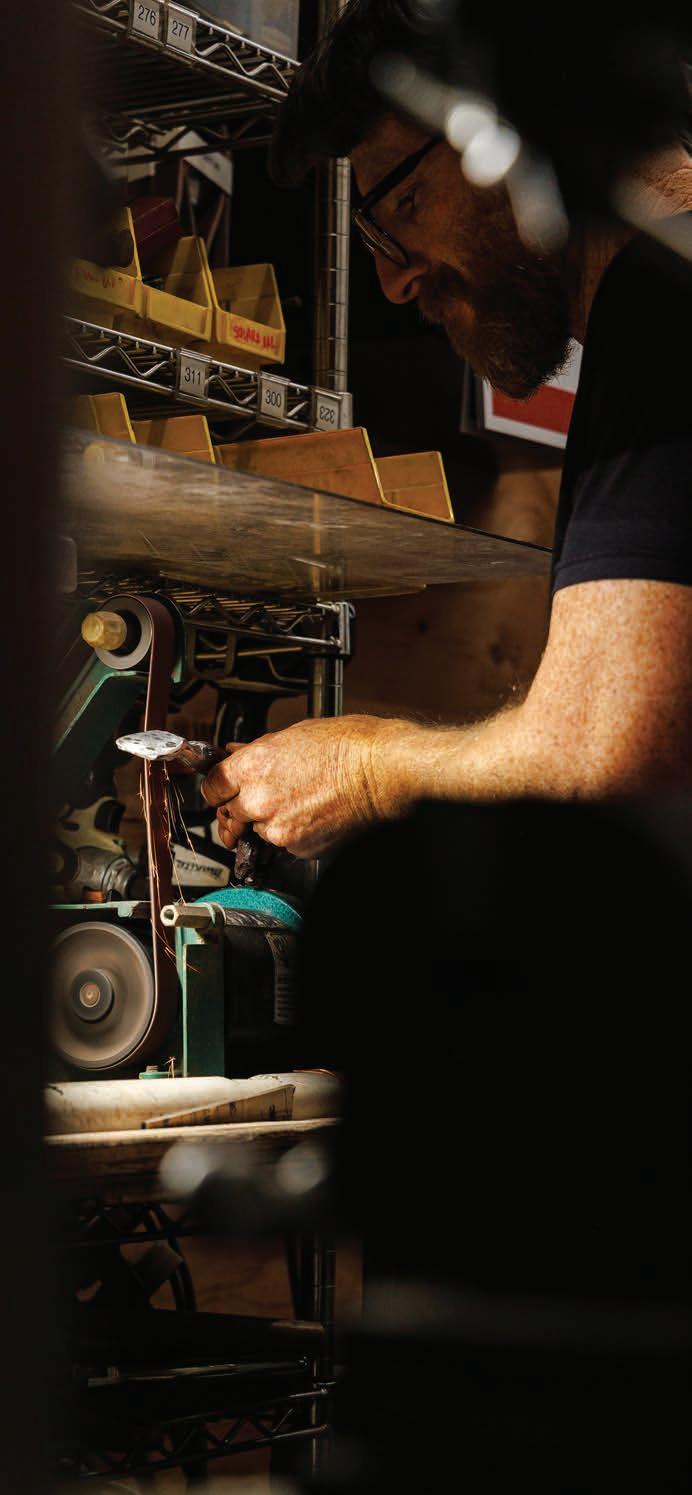
This page, tools of the trade: forge, hammers, files and clamp all play a role in Jason’s art.
Jason’s finds are most often remnants from shoddily abandoned oil infrastructure. Summerland was a pioneering place for coastal oil drilling. Up and down the Central Coast, wrought iron derricks, drills, and support structures were erected to extract oil on the beach and over the ocean with little regard for cleanup.
“The whole coast used to be a big dump,” Jason says, recalling the underwater metallic snags he and friends would familiarize themselves with for safety at their favorite surf spots. “Look out for the underwater death spike!” The terrifying snags were leftovers, likely wrought iron, corroded and trapped into rocky formations, like an iron homecoming.
His adult fascination with the stuff started when his kids were little. One day while Jason was at the beach and found a rusty rock with a pointy metal protrusion. He collected the curious rock and split it. Inside was a preserved piece of wrought iron resembling a crusty sword.
“It was like the ‘sword in the stone,’” Jason says. He freed the sword and was intrigued. “It was some type of blade.” Jason, a designer by trade and lifelong collector, took a deep dive into what he had found. Wrought iron was basically extinct other than in salvaged form, and Jason as a naturally curious tinkerer was hooked on the process of repurposing these workable bits. “It’s all free.”
“With little kids, I couldn’t paddle out to surf, so when we went to the beach, we looked for stuff,” Jason says. Finding the metal treasures fascinated the kids and totally transfixed the dad.
After researching the history of wrought iron, Jason was introduced to the ancient craft of blacksmithing and began transforming the found metal into new shapes. In his shop at 500 Maple Ave., he does the work of a traditional blacksmith but without the smoke and heat. His forge, used to make wrought iron red hot, runs on electrical induction, producing no heat but an intense magnetic field. Within it, the metal glows and is ready to manipulate almost instantly. No fire required.
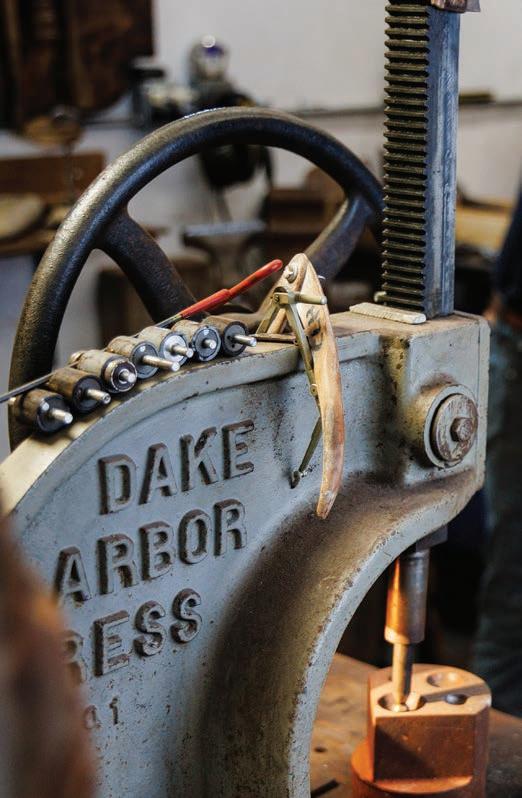
The other tools of the blacksmith trade in Jason’s shop are more traditional: anvil, vice, tongs, hammers, chisels, punches, pins, swages, files, and a 4-ton manual press. Red hot wrought iron bends like dense clay. It flattens and expands between a hammer and anvil. It twists and scrolls with a flourish. The maker of the art is part the universe, part human innovation, part oceanic corrosion, and part blacksmith artist. It finishes with a steamy hiss when plunged into the cooling bucket.
Find Jason's Drift Iron art at the Luminosity Shop, 500 Maple Ave., Unit 4, on June 20, from 10 a.m. to 6 p.m. at a special Summer Solstice celebration. He has ongoing product collaborations with Summerland Leather Co. and Catholic Guilt Clothing.
Rin and Repeat
BY INGRID BOSTROM
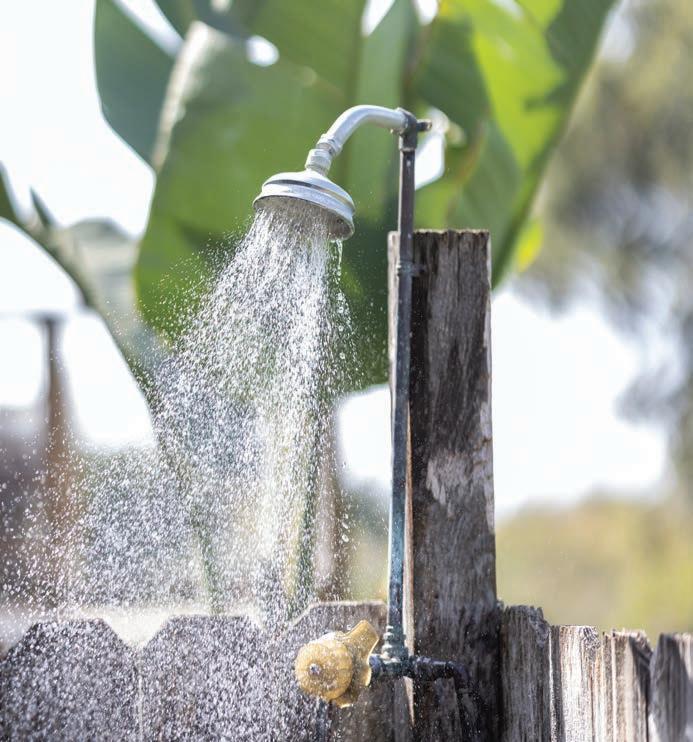
Is there anything more quintessential beachtown than an outdoor shower? The five showers that follow murmur “no” in the pitter patter of falling water. They’re 50 percent function, 50 percent art and 100 percent personal to the families that built them and love them. Escape into these semi-private places where whimsy and washing rub-a-dub-dub.
PHOTOS
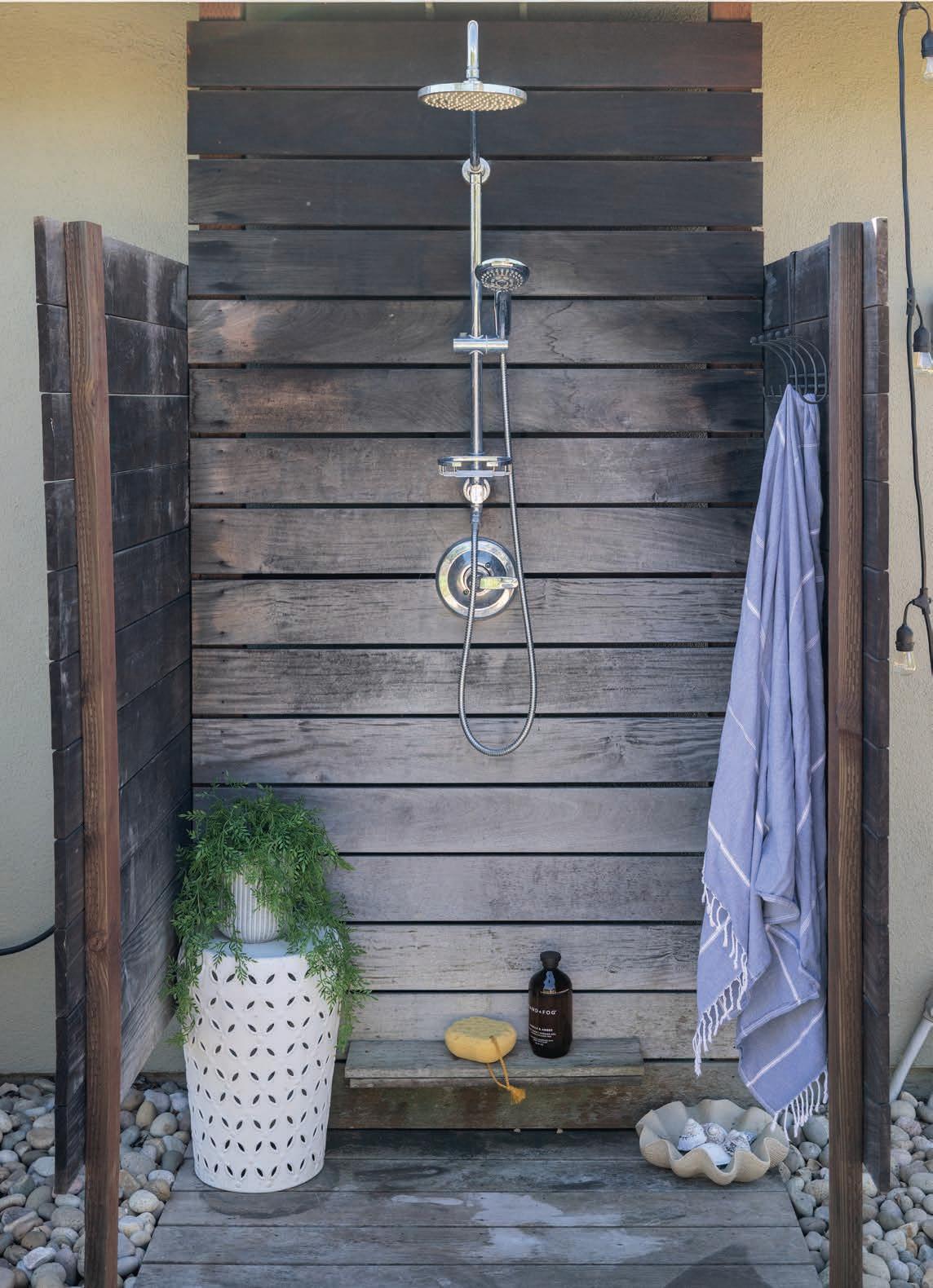
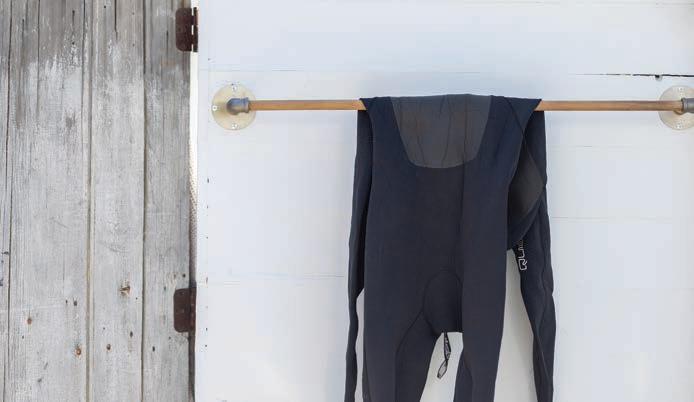
Durable ipe wood intentionally treated for a driftwood patina makes up the structure of the Porinsh family shower.
Tsand scru er
—— A conversation with Alia Porinsh
WHAT’S THE HISTORY OF YOUR OUTSIDE SHOWER?
When we bought our home, a simple shower head was already in place, and I imagine the previous owners used it like we do, to wash off sandy feet and bathe dirty dogs. We wanted to create moreprivacy, so you could take an actual shower outside, so we decided to build a surround. My husband, Jonathan, wanted to use ipe wood, because of its natural resistanceto water, but I wanted the surround to look more like driftwood, which is a different color than natural ipe. Once the surround was built, I used steel wool soaked in vinegar to accelerate the patina to a silvery-gray, and it turned out just like I wanted.
TELL US MORE ABOUT ITS PURPOSE.
Since we moved to Carp, there has been an uncanny phenomenon where sand appears in my house from May through September. As a result of that, everyone in our house knows that if you go to the beach, your first stop is the outdoor shower.
ARE THERE ANY ELEMENTS THAT ARE SPECIAL?
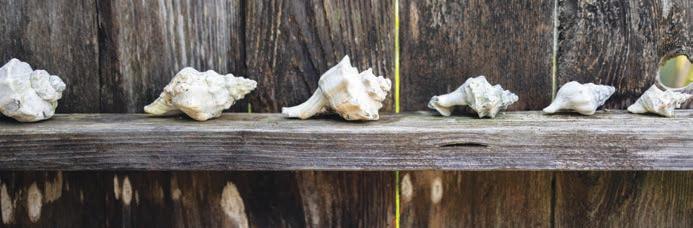
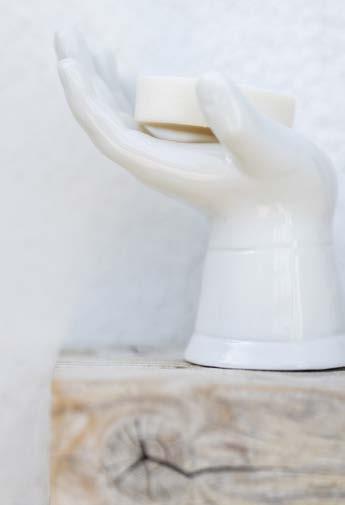
For years my girls have come back from the beach with shells. They are 21 and 19 now, but they stillpick up shells and toss them in their beach bag. Those shells used to end up in various places in the yard when they emptied their bags, but recently I added a little scalloped bowl in the shower and some really fabulous treasures have found a home in there.
ANYTHING ELSE WE SHOULD KNOW?
Although the humans in our house love our outdoor shower, another frequent user is our dog, Bruce. But truth be told, Bruce does not like that shower one bit!
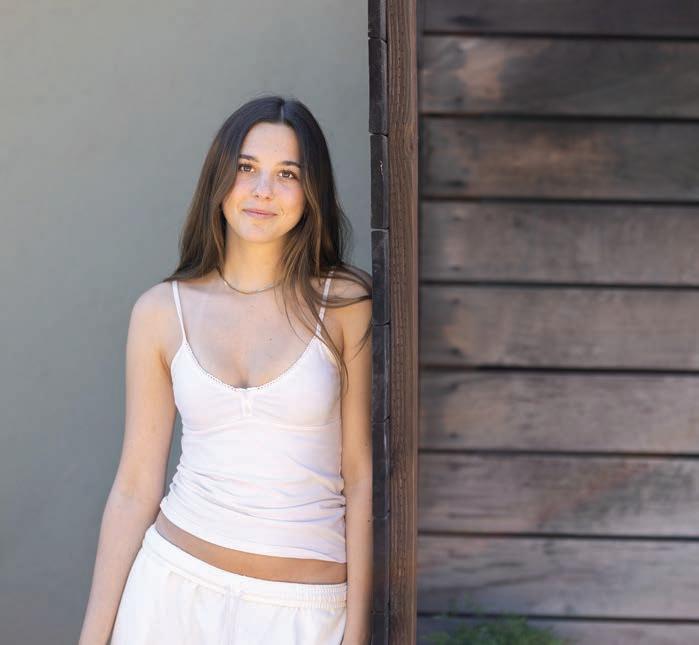
Sasha Porinsh at the entrance to her family’s outdoor shower.
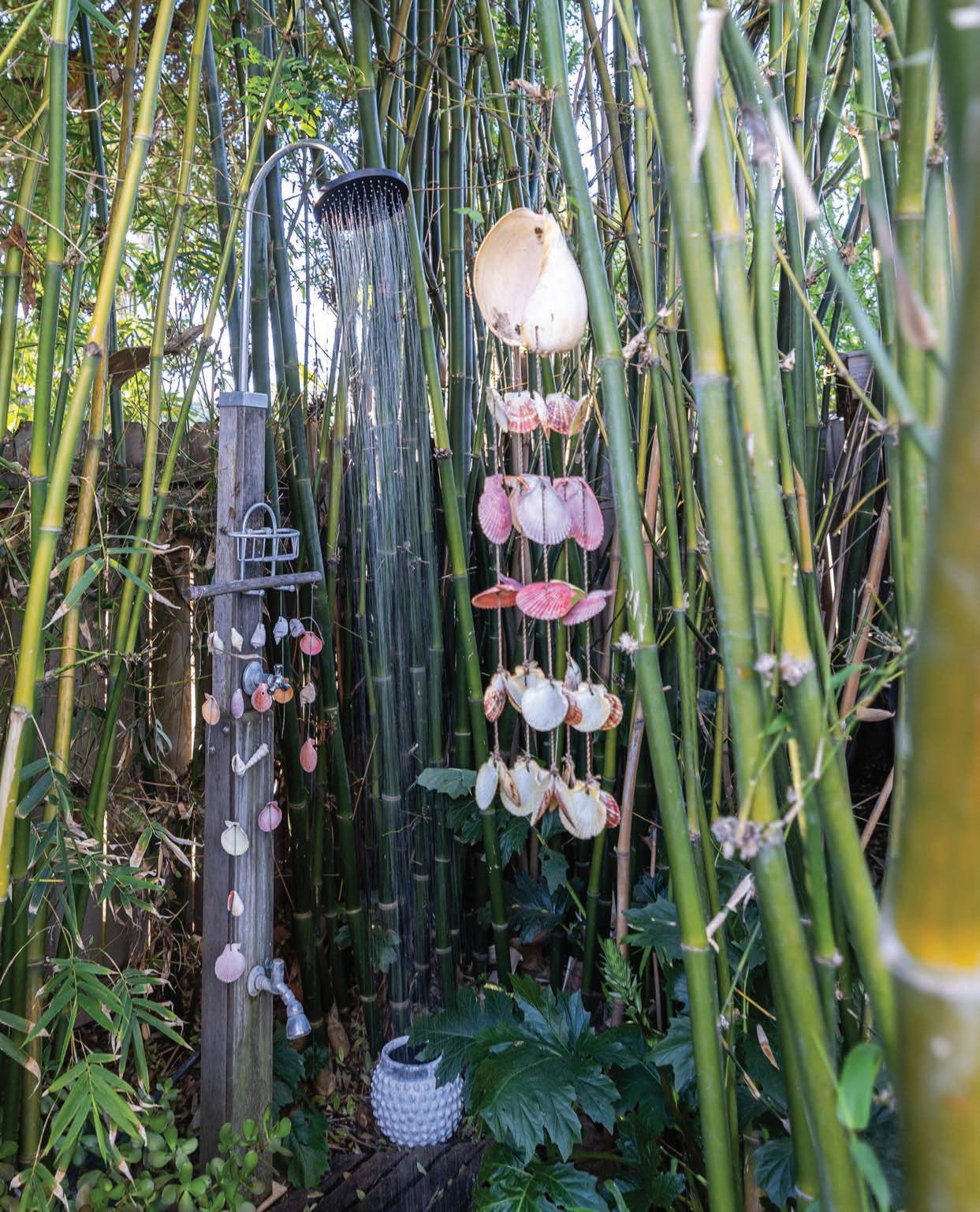
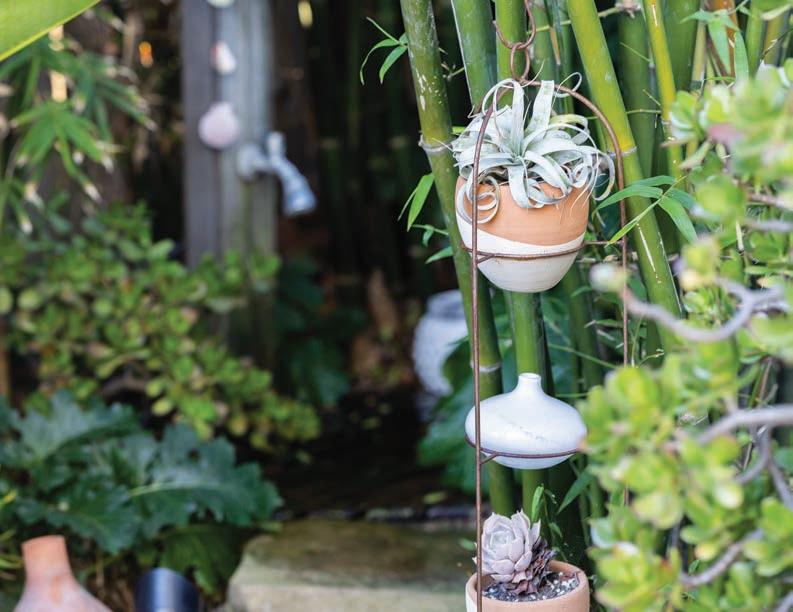
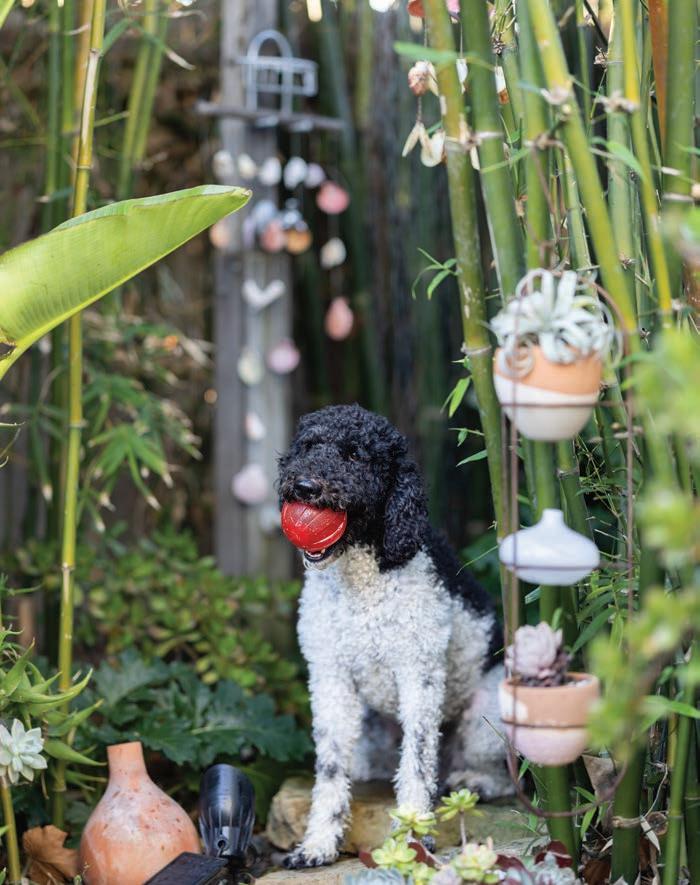
Sheltered by a stand of bamboo, the Anderson shower offers a cold rinse to follow a hot tub soak.
T cold sho r
—— A conversation with Leigh-Anne Anderson
WAS THE SHOWER THERE WHEN YOU MOVED IN?
We purchased the shower on Facebook Marketplace years ago and moved it from our former house to this house when we closed escrow. The bamboo grove was already there when we moved in, and it justfelt like the right place to put the shower for natural privacy. The bamboo has since tripled in size with the regular watering it receives. It’s a symbiotic relationship!
WHAT PURPOSE DOES IT SERVE?
It’s used daily! My husband, Ben, starts his day with a hot tub and cold shower and then my boys do the same after surfing early evening. It’s a cold-water shower, mainly used to rinse and cool off.
ANY INTERESTING BACKSTORY?
When we bought the shower from Facebook Marketplace it came from a house on the Mesa in Santa Barbara and had been used to rinse off after the beach and surfing. We’ve kept that same vibe and it’s held up well. We were thinking we should install a solar heater, but then the bamboo became too tall for sunlight to get through. I think it will always be a rootsy, beach town shower!
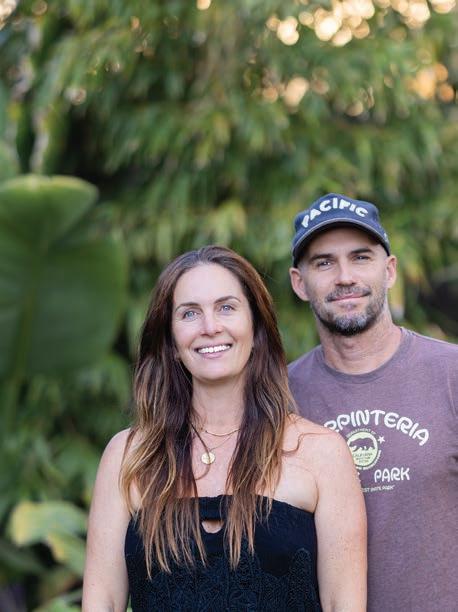
Leigh-Anne and Ben Anderson, at top, and their pooch Pancho, above, all enjoy a cold rinse outside.
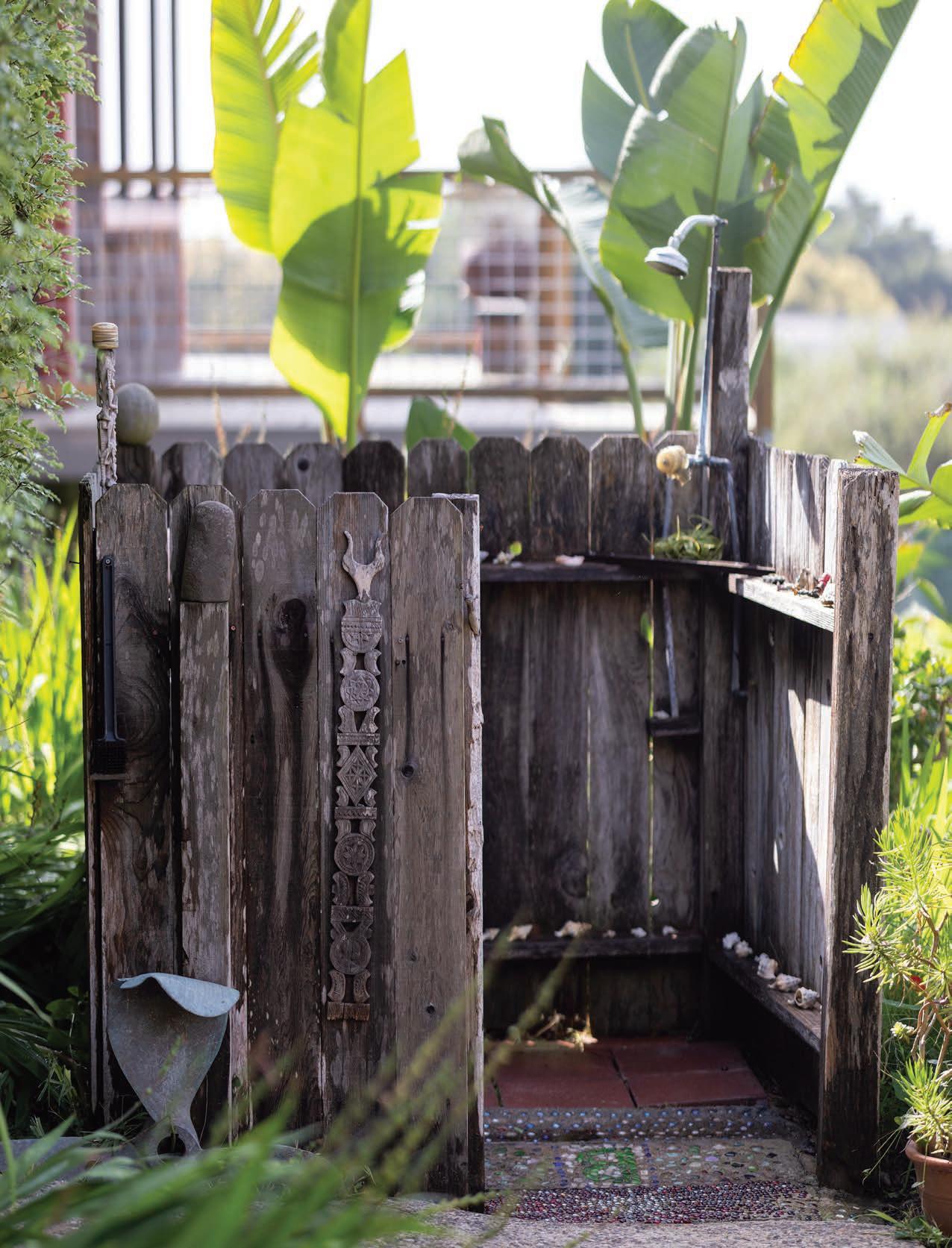
Surrounded by birds of paradise and oak trees, the Boyd shower offers privacy even sans door.
T post-surf scrub
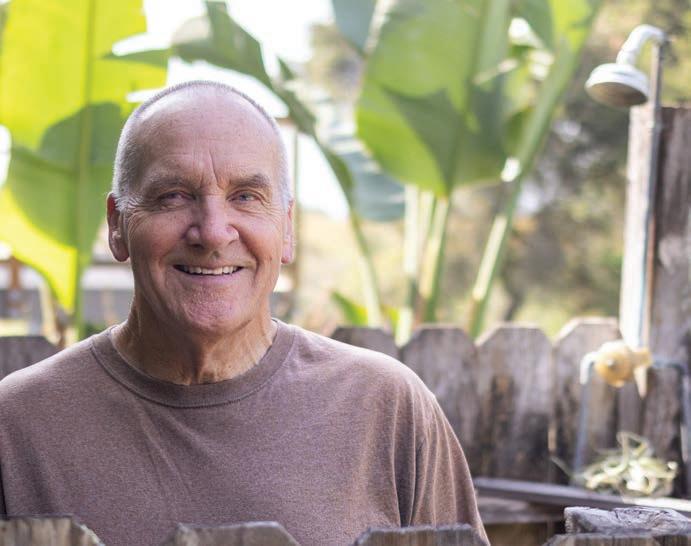
—— A conversation with Jeff Boyd
WHAT INSPIRED THE SHOWER AND ITS DESIGN?
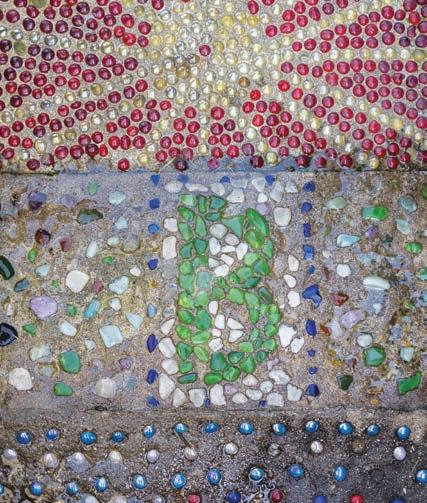
We bought our house over 50 years ago and have always had some form of outside shower. We built this one about 35 years ago out of redwood, so it has weathered beautifully and evolved over time. The basic design is functional, four walls with a showerhead in the corner. The personality comes from the birds of paradise and nasturtiums surrounding it year-round. In addition, the sea glass and marble mosaic floor collected by me and my wife, Christie; my mother; and Christie’s brother Paul make it unique.
WHAT PURPOSE DOES THE SHOWER SERVE?
This shower has washed off buckets and buckets of beach sand — probably half of Rincon Point has ended up on the colorful floor of this shower! Of course sand removal is an important function, but the shower is more than just functional. We’ve had decades of thawing out under the hot water after a good surf listening to the birds singing with the sky stretched out above us. The view from Santa Barbara to Chismahoo Mountain is a real bonus as well.
ARE THERE ANY PARTICULARLY SPECIAL ELEMENTS?
All of them! There’s the soap dish made from a clam shell I collected in Indonesia, the carved wooden totem that my daughter brought back from a trip to Madagascar, the seaglass B for Boyd that I added to the flooring, and the brass boat propeller from my father’s boat.
Jeff Boyd in the outside shower he has filled with treasures found all over the world.
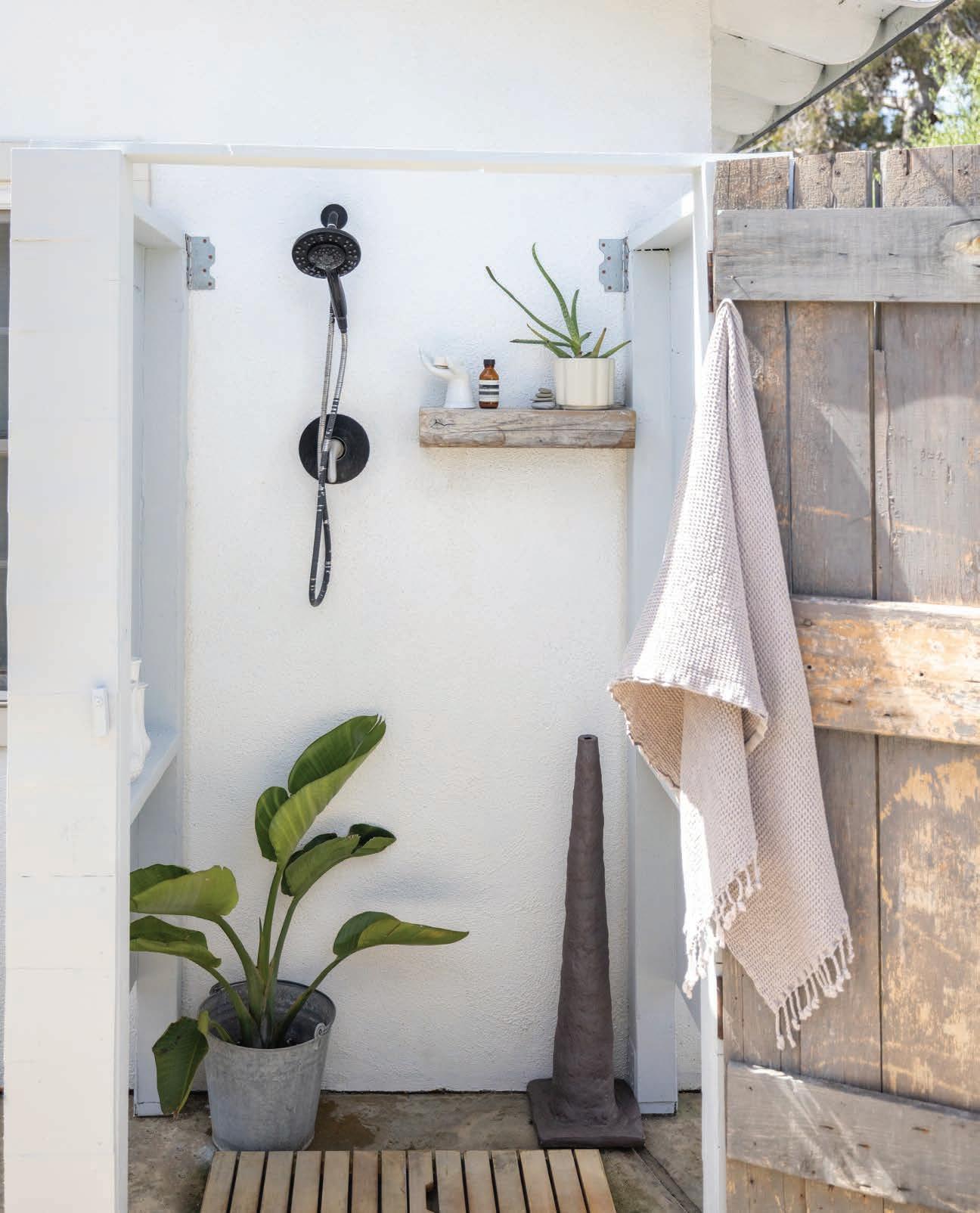
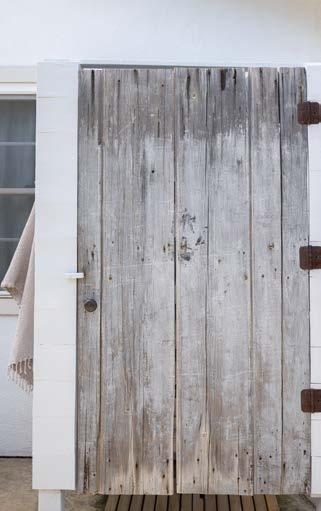
A door that once served as a headboard and later as a dining table opens to a space decorated in original art and finds from St. Joseph’s Resale Shop.
T lo ly fto rs
—— A conversation with Ingrid Bostrom
WHAT INSPIRED THE SHOWER’S DESIGN?
We jumped into remodeling as soon as we bought our home in 2019. By the time we got to the outdoor shower, we were committed to using only what was lying around — scrap wood, salvaged materials, and leftover hardware. The result is simple, functional, and shaped by weathered elements.
WHAT PURPOSE DOES IT SERVE?
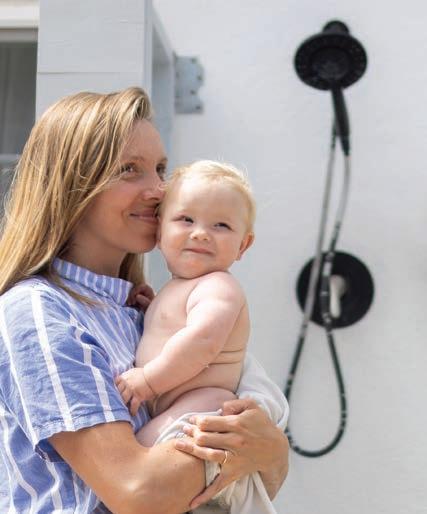
For a time, we cycled through hosting 13 exchange students who exclusively used the outdoor shower. Now it serves as an everyday rinse-off spot — especially after surfing or sauna sessions — and gets steady use from our tenants. Baby Arlyn takes her baths in a tub on the shower floor.
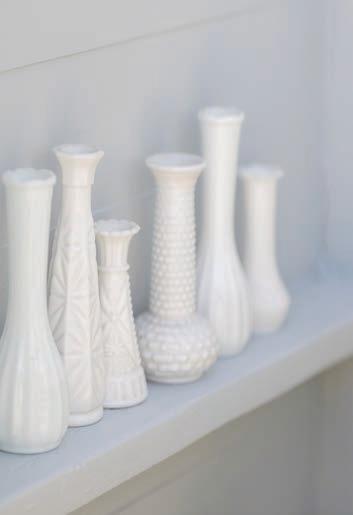
TELL US ABOUT THE PERSONAL ELEMENTS. The shower door came from a salvage yard in Vermont and has lived previous lives as both a headboard and a dining table. The shelf is a piece of driftwood collected from a local beach. A traffic-cone sculpture by local artist Pecos Pryor rests in the corner. St. Joseph’s Resale provided a whimsical soap dish and vintage vases.
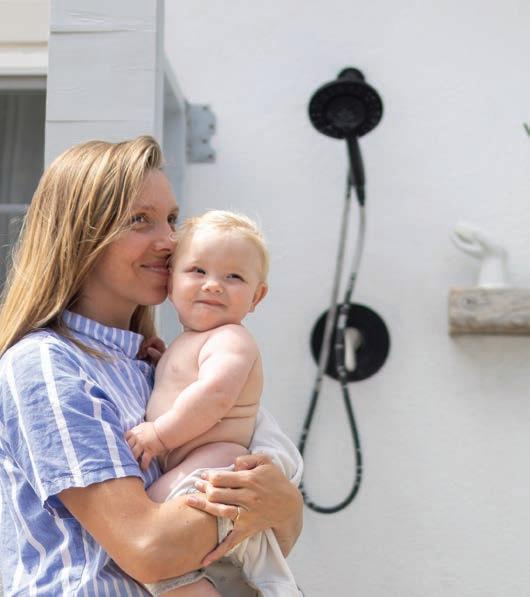
Laurel Hauck holds baby Arlyn Hedden Hauck in Ingrid Bostrom and Matt Kraybill’s shower.
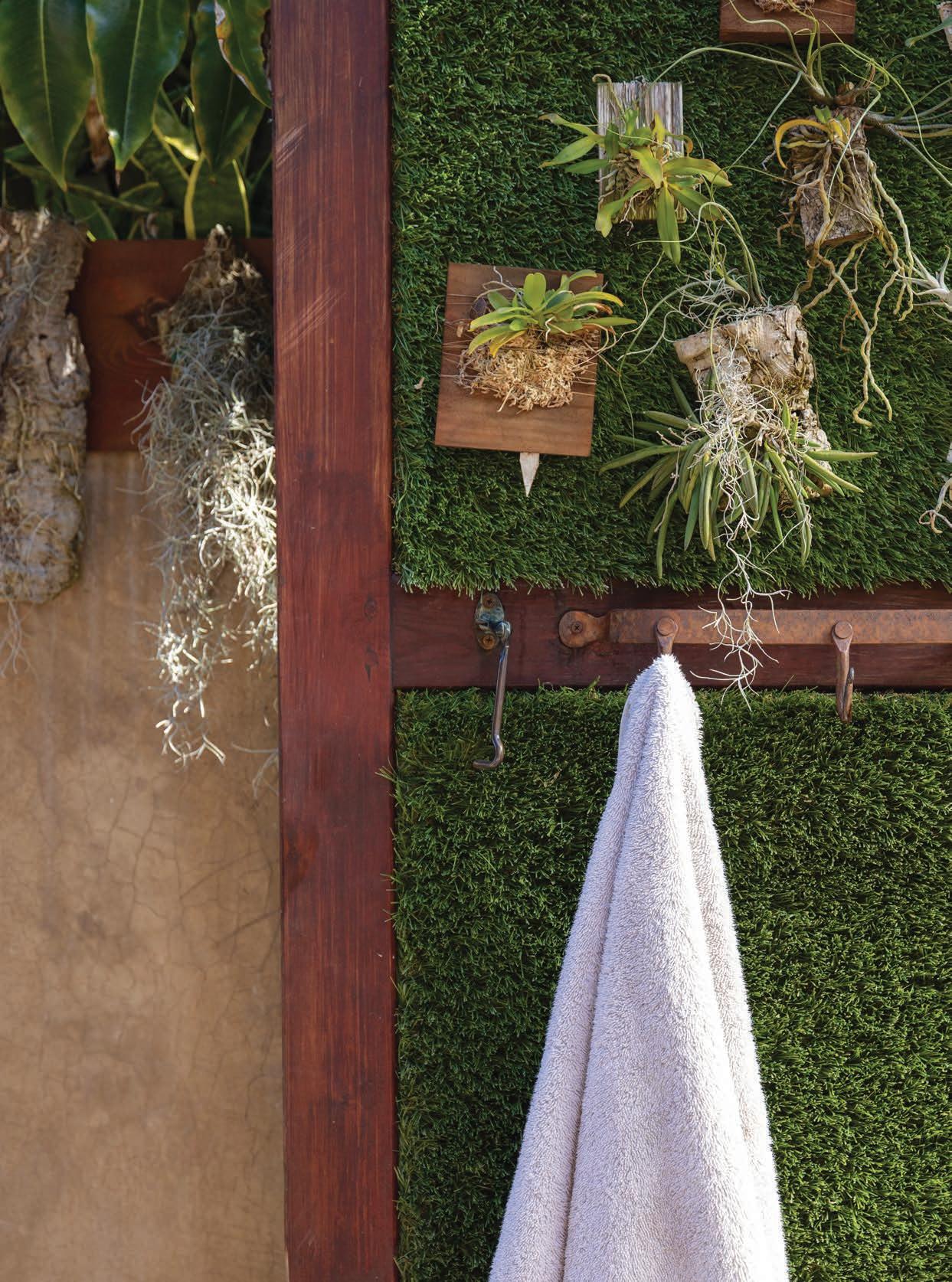
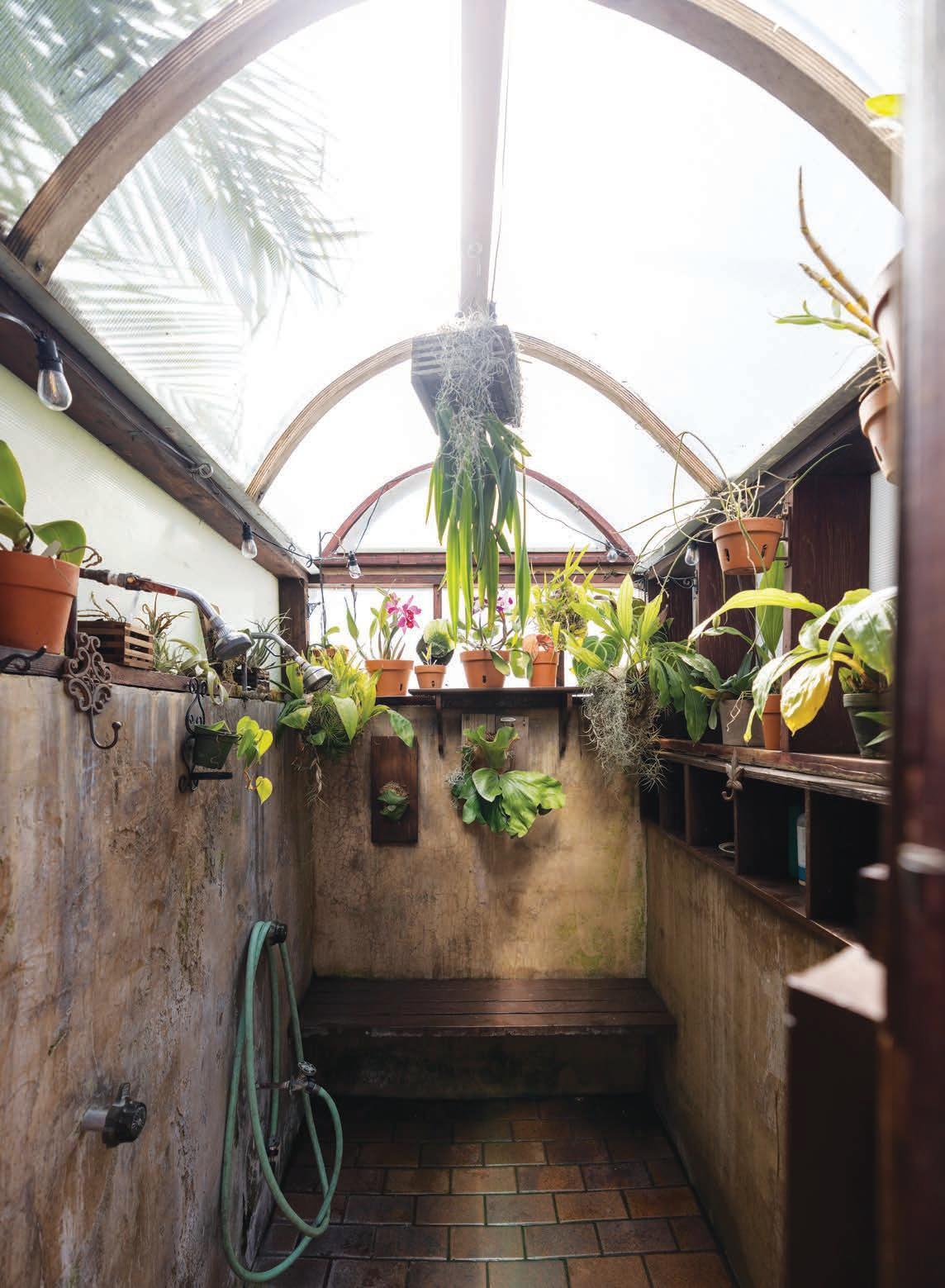
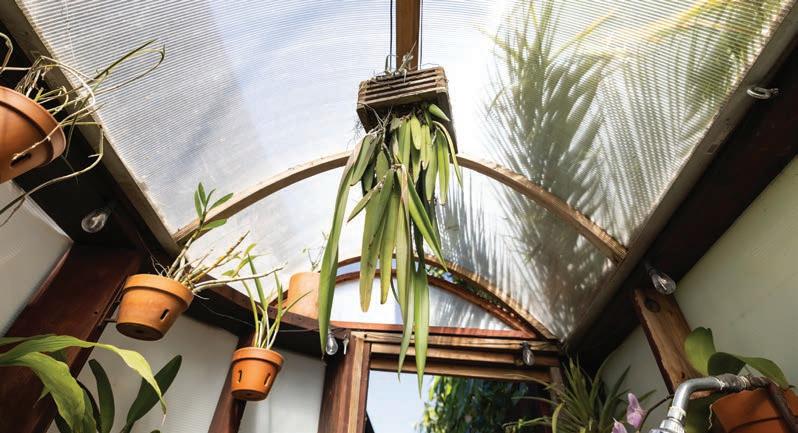
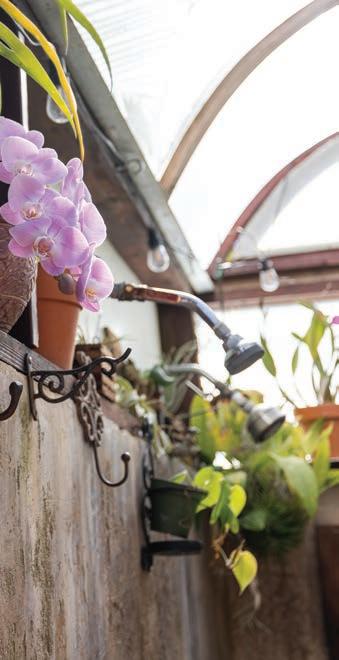
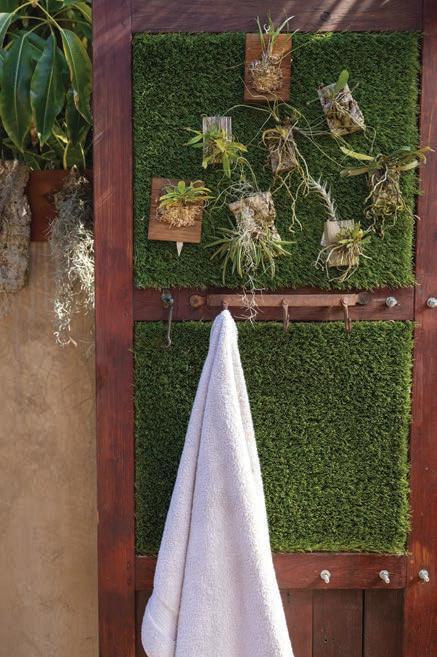
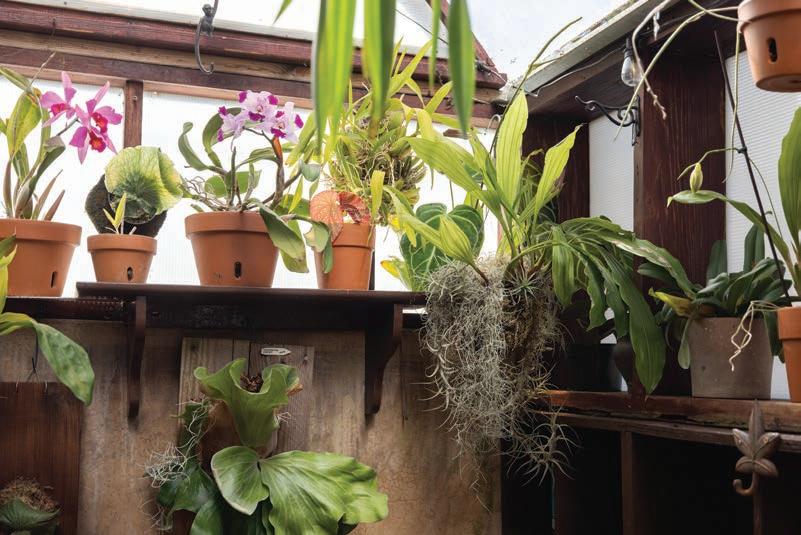
Doubling as a greenhouse, the Nesnadny shower hosts epiphytes from all over the globe.
T g enhou
—— A conversation with Jerry Nesnadny
WHAT INSPIRED THE SHOWER’S DESIGN?
The shower was an evolution from its basic form for washing the beach sand off the kids and our feet before going inside to put the kiddos in the tub to a fully functional hot and cold shower. The orchids entered the space because I collect them and thought they would be a nice touch. Of course, that led to the greenhouse finishing touch because what plant nerd doesn’t want a greenhouse?
WHAT PURPOSE DOES IT SERVE
It drains into a grey water system that waters the planting along our street in La Conchita, and it is the must go place for all and pets when returning from the beach. It is a secondary shower preferred by the family but hesitantly used by our uptight visitors who mostly prefer showering inside.
TELL US ABOUT THE PLANTS.
The plants get rotated between my primary orchid and Plantecerium growing area and the shower, based on when they are flowering or have a particular need. It allows me to see them daily and adjust to their needs more closely. In the winter, it houses mostly tropical plants, and a heater is added for the most chilly nights. There are venting windows on either side that occasionally let hummingbirds in and out, which is always a delight. It is also home to small frogs that hide in the plants and croak out tunes at night.
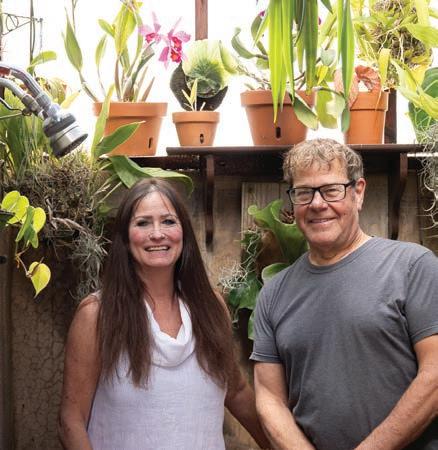
Diane and Jerry Nesnadny in their La Conchita shower.
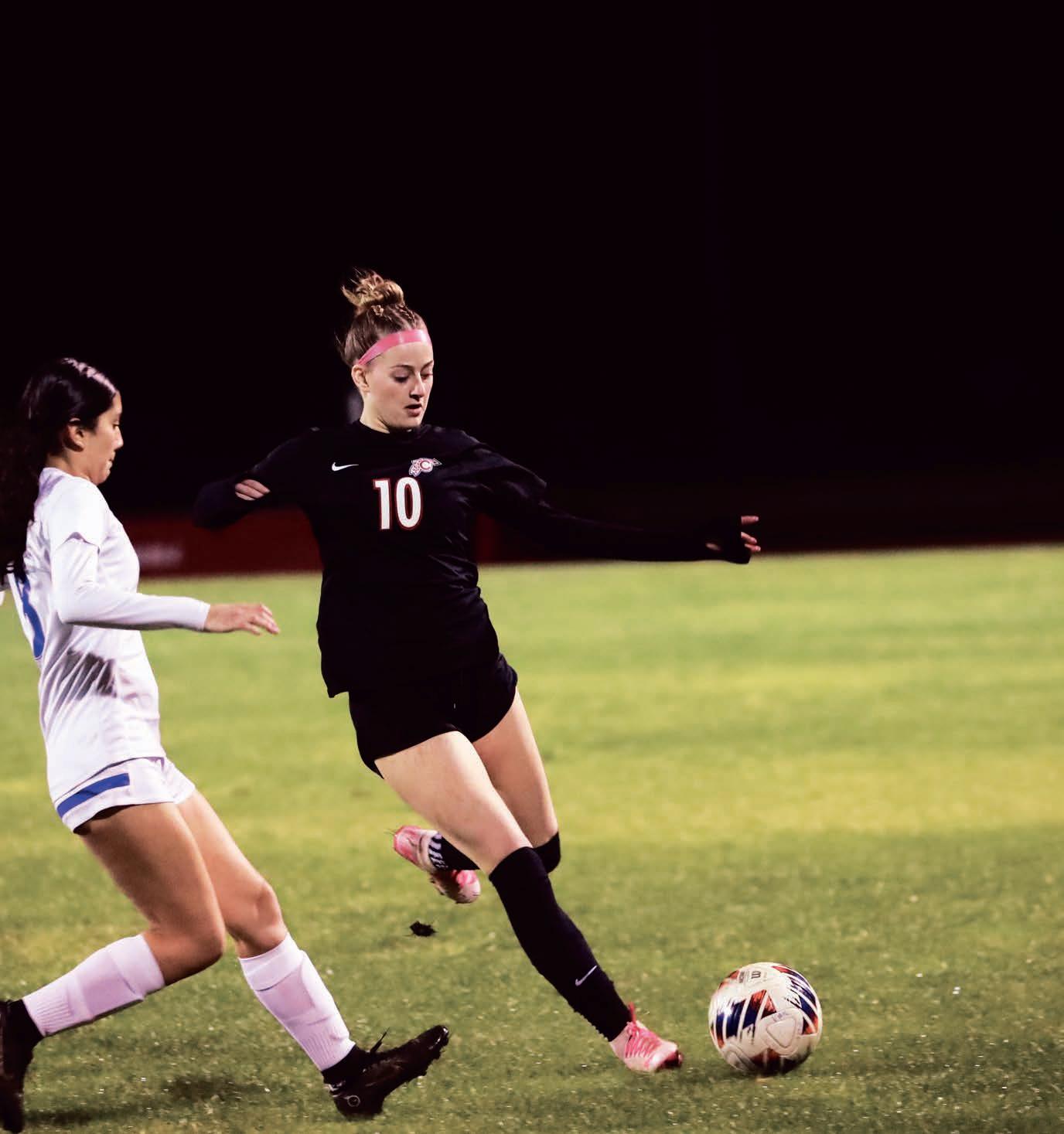
Senior defender Lacey Zimmerman protects the
from Fillmore. The Warriors backline kept them in control through an eightgame win streak during the 2025-2026 season.
Community fuels girls soccer success
ball
WORDS BY RYAN P. CRUZ
PHOTOS BY ROSANA SWING
It’s no secret that women’s soccer is exploding in popularity. Earlier this year, more than 15,000 fans showed up to watch the U.S. Women’s National Team play a sold-out match at U.C. Santa Barbara’s Harder Stadium, and here in Carpinteria, the girls soccer scene is brimming with talent from the high school level on down.
The close-knit Carpinteria soccer community has flourished in recent years, not with club teams and high-cost private camps, but through the family-like environment on the sidelines of the AYSO youth soccer league and at Carpinteria High School, where a passionate group of parents, volunteers and coaches have created a place where sports and community collide.
“Honestly, AYSO has been a blessing for me,” said Brett Labistour, father of Logan and Callie Labistour, two members of Carpinteria’s high school squad who made their way through the AYSO soccer pipeline. Brett, originally from South Africa, says youth soccer programs helped him truly become part of the community in Carpinteria, where his wife grew up.
“Being involved with AYSO, you get to meet a lot of the parents and kids,” Brett says. “Now we walk around town, and we know half the families because of the program. The girls all hang out together; there’s this camaraderie and they actually become really good friends.”
Watching a soccer team with layers that care about each other is like seeing a well choreographed dance. This chemistry comes naturally when teammates are friends, and even easier when they are family — as with last year’s highly talented CHS girls varsity team, which fielded four sets of sisters at the same time.
“Here in Carp, it’s like a family — besides the siblings actually being siblings,” says Freddy Martinez, the Warriors’ varsity head coach who helped guide last year’s team into the CIF playoffs. “All the older girls treat the younger ones as if they were their actual siblings, it’s phenomenal.”
Freddy says this can be credited to the local youth soccer culture, where the same girls spent countless weekends on the sidelines together. “It comes down to the grassroots, the culture of what AYSO instilled in them, and what their parents instilled in them from when they were young.,” he says. “It just continues on to their high school. Really, my only job is just trying to find the right combination.”
But coaching girls soccer can also require a thoughtful
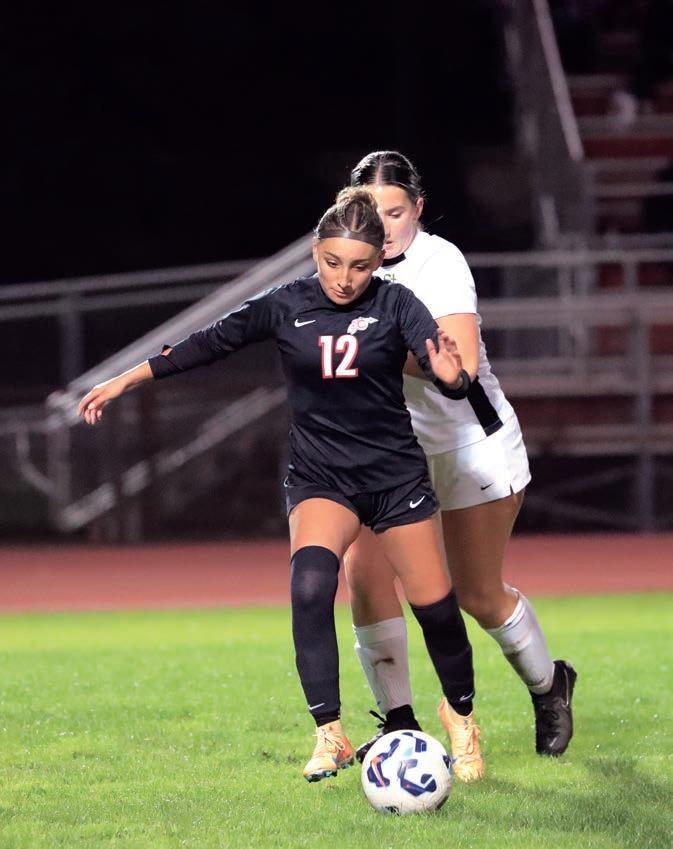
Sophomore Michelle Cornejo on defense. One of the younger members of the Warriors squad, Cornejo stepped up as a standout defender after switching positions earlier in the season.
approach, and a willingness to understand the unique pressures young women experience in their lives. This is where coaches like Julia Mayer and Carly Bass — who lead the Carpinteria junior varsity and AYSO U14 teams — can serve as amazing examples of empathetic and passionate leadership.
“I knew that feeling,” says Julia, a Santa Barbara High School Class of ‘97 soccer standout who now serves on the Carpinteria City Council. “Because girls feel that pressure to succeed so much. You don’t have to tell us, there’s already that expectation. We know what it’s like to exist and be very self-aware.”
Julia and Carly both describe having complicated relationships with the sport of soccer, partly due to the maledominated nature of sports at the time, when talented girl athletes had fewer options than their male counterparts. Julia says she wants to give her players a chance to see what it’s like to have a coach who truly understands things as they do.
“It’s like I’m re-coaching myself, and it’s so healing,” Julia says. “It heals a piece of us that was damaged by past coaches or past experiences. That’s why we do this, because we want the girls to have all these opportunities,
and we don’t want them to feel hurt or damaged. They get to walk away from the sport saying ‘I love this.’”
This love for the sport becomes contagious, spreading from coach to the varsity captains to the up-and-coming freshman and sophomores and down to the new generation of AYSO girls watching from the sidelines. “I watch these girls take on leadership roles and help the younger players,” Julia says. “That came from the coaching, but it comes from them now.”
This past year, Carpinteria’s girls soccer programs performed well at every level. Freddy Martinez was named Citrus Coast League Coach of the Year and several Warrior players earned All League honors; Carly and Julia led the junior varsity squad on an undefeated streak through much of the season and took the AYSO U14 All-Stars all the way to the Western State Championships; and several of the younger division AYSO teams had impressive showings at the regional tournament earlier this spring.
But for Carly, it’s not just about winning. It’s about building a healthy love for a sport that can help build community. “We’re here because we love soccer,” she says. “If we can’t walk away losing a game and still love soccer, then what are we doing? I’m just so excited for this to continue. Girls soccer is just getting started.”
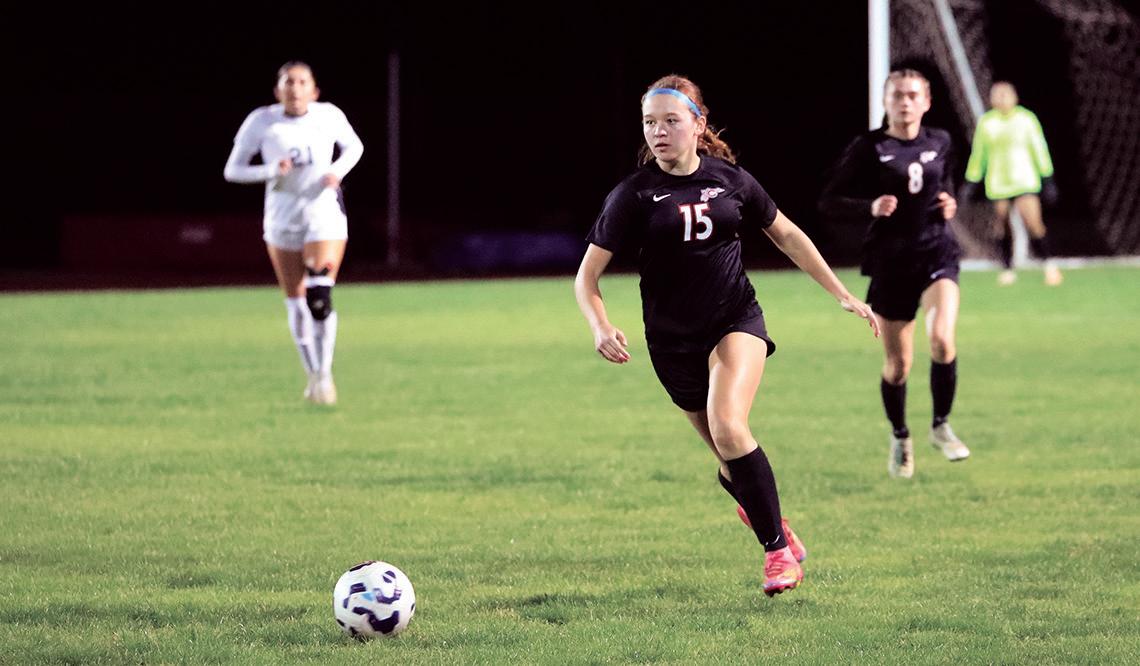
Sophomore Callie Labistour brings a long soccer history with her AYSO teammates and older sister, senior Logan Labistour.
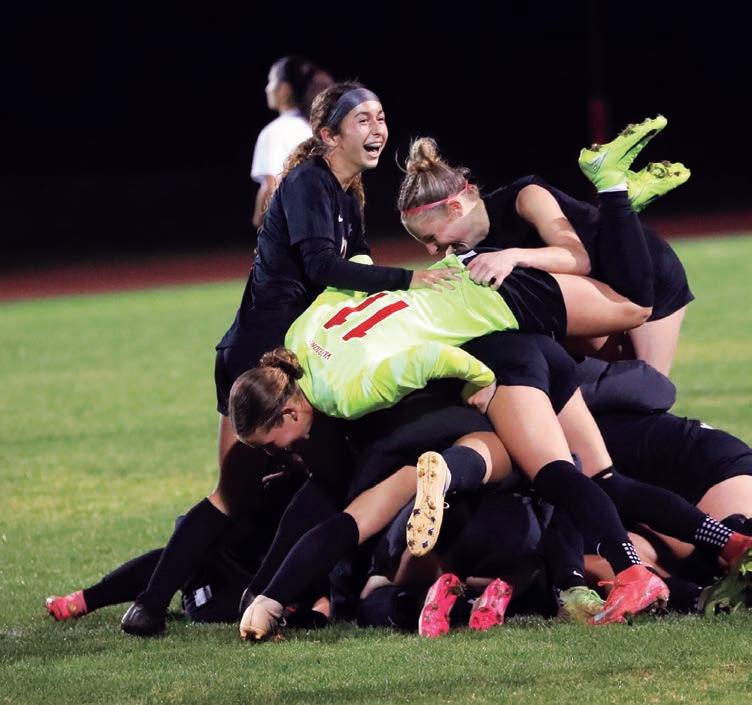
Freshman Caroline Cooney tops off a victory pile that includes Goalie of the Year Charlotte Cooney (#11) and senior Defensive MVP Vivian Huskins after the Warriors win their first-ever Citrus Coast League title in February 2026.
If you rush out to the newsstand every Thursday morning eager to learn of local happenings, clip photos for your refrigerator, or consider it your civic duty to engage with Carpinteria content exclusive to CVN, then it’s your time to become a Sustaining CVN Member. While we plan to continue to distribute CVN as a free publication, please consider supporting us and becoming a member who can proudly participate in our future.
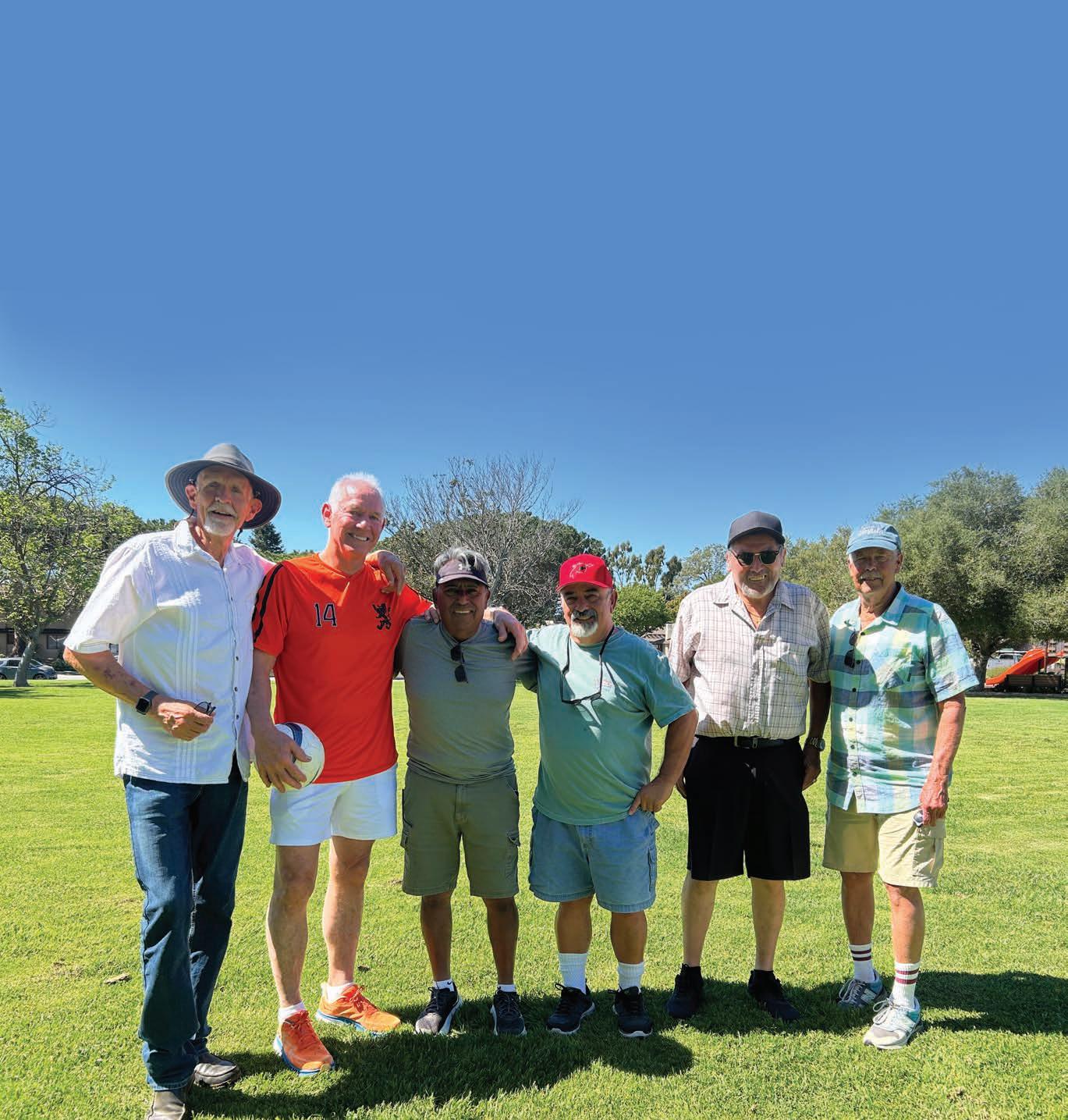
From left are Winfred Van Wingerden, Ed Van Wingerden, Santos Albarran, Fernando Tejeda, David “Compa” Lomeli and Larry Leatherman.
A PERFECT START
WORDS AND PHOTO BY RYAN P. CRUZ
From the very beginning, Carpinteria’s soccer scene has been based on a close-knit community that churns out talented players able to compete and succeed against teams from bigger cities with far more resources.
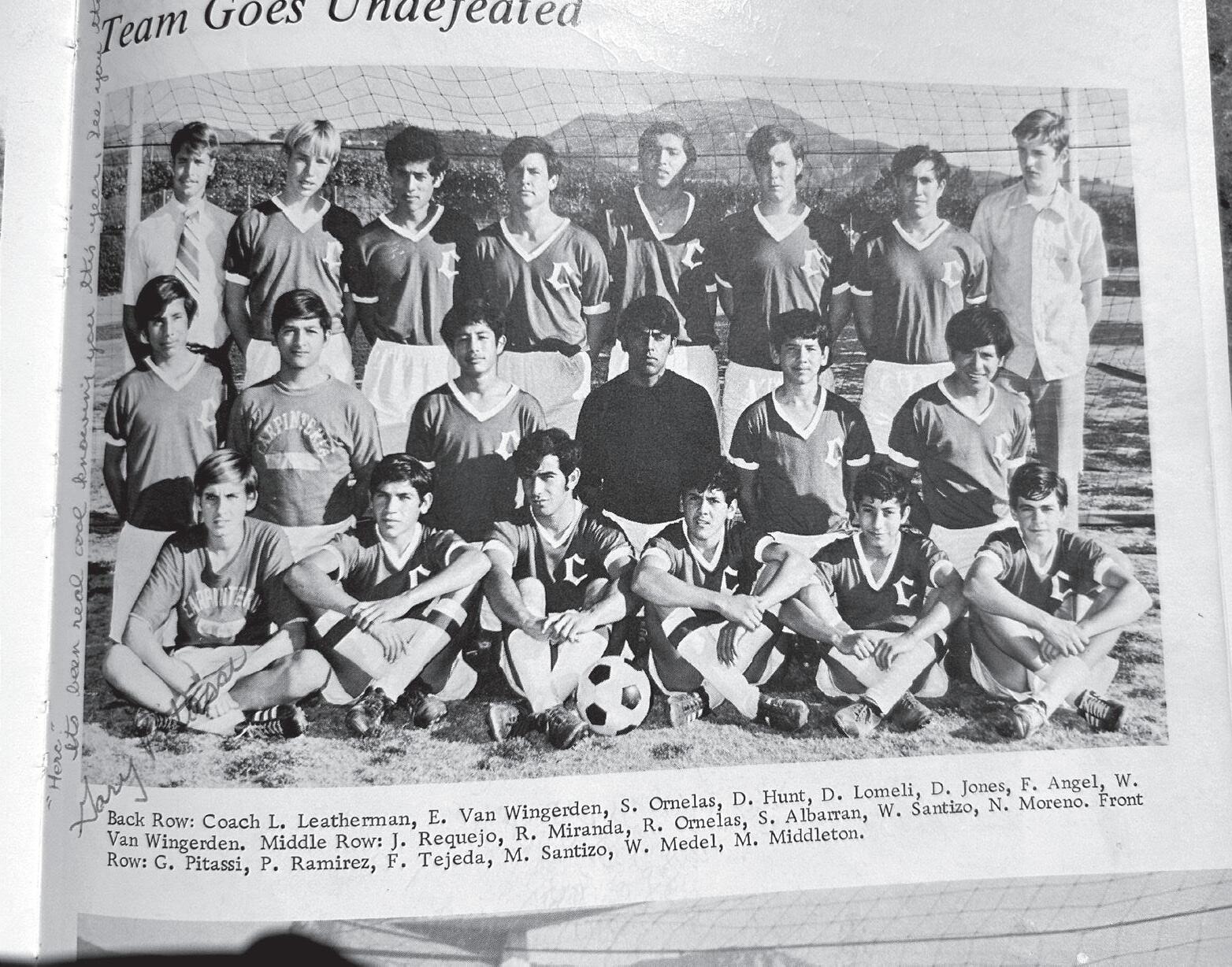
Such is the story of the first-ever Carpinteria High School varsity soccer team, a bunch of scrappy young players who grew up watching their fathers and uncles play Sunday league soccer at Dwight Murphy Park in Santa Barbara, where the local Latino community gathered to let loose and play the sport they brought with them from their home countries of Mexico, Guatemala, Honduras, or El Salvador.
In 1971, this group gathered to field the first Warriors soccer team, at a time when high school sports were dominated by football, basketball, and baseball. No other local public schools in the area had started their soccer programs at that point, so Carpinteria had to play as a de-facto club team, patching together a schedule against private schools from around the region.
The team was coached by Larry Leatherman, a Westmont College alum who wasn’t much older than the players he was brought in to lead. Larry and a few of the players on that first team reunited on a recent sunny afternoon in Carpinteria, where they reminisced about that magical first season, which ended with the Warriors preserving a perfect undefeated record in an exciting season finale against crosstown rival Cate School under the lights at Memorial Stadium.
Larry says coaching the team was easy, because the group had already built years worth of chemistry playing together in parks and youth club teams. Much of the team’s roster had competed on a youth team started by Teodoro Lomeli, the father of player David “Compa” Lomeli.
The team’s star scorer, Sal “Chava” Ornelas, who now lives in Williamsburg, Virginia, says the blue-collar culture the boys grew up with contributed to their relentless work ethic on the field. He credits the dads and family members who sacrificed nights and weekends to drive the team around, even after working two or three jobs to make ends meet.
From that first season, it was clear Carpinteria was a community where family connections spill onto the
playing fields. The 1971 team had three pairs of siblings on the team, including Eduard and Winfred Van Wingerden, a pair of Dutch brothers whose family had moved to Carpinteria a few years prior; Guatemalan brothers Miguel and Werner Santizo; and both Sal and Raul Ornelas, who teammates considered the playmaking core of the team.
Together, the first Warriors team played with a camaraderie and confidence that gave them an edge over opponents. There was the high-flying scoring ability of the Santizo brothers, the speed of Fernando Tejeda, and the lockdown defense from Lomeli and senior goalkeeper Santos Albarrán. Through the first six games, the Warriors were undefeated and feeling better than ever.
“I never felt that we were gonna lose,” Santos says.
The stars aligned for a dramatic season finale, with the Warriors taking on crosstown rival Cate in what was the first official “Battle for Carpinteria” in boys soccer. The game was changed to a nighttime kickoff to allow the boys’ families — many of whom worked during the day — to watch the Warriors under the lights at Memorial Stadium.
More than 600 fans packed the stands and sidelines that night, cheering on the undefeated Warriors as they came back from an early deficit to win the game 2-1 to finish the year with a perfect record. The former players can vividly recall every detail from that night, even the small mistakes that made the game much closer than they hoped.
Santos, the team’s goalie, admits that he still thinks about allowing Cate to score a goal when he got a little caught up in the moment and misjudged a ball that bounced over his head.
“They used to tease me, and say I was looking at my fans when I gave up the goal,” Santos says with a laugh. His teammates shrug it off, and Fernando explains that Santos’ play as goalie was one of the main reasons the Warriors were so successful that year. “It was so hard to score against us because of him,” he says.
The former players are proud to look back at their shared legacy, even though they regret that the CIF did not allow them to participate in the playoffs due to the fact that they weren’t in a league yet. “We could’ve done some damage in CIF,” Fernando says.
The Beaut’
Excerpted from the novella
by Brooks Hansen
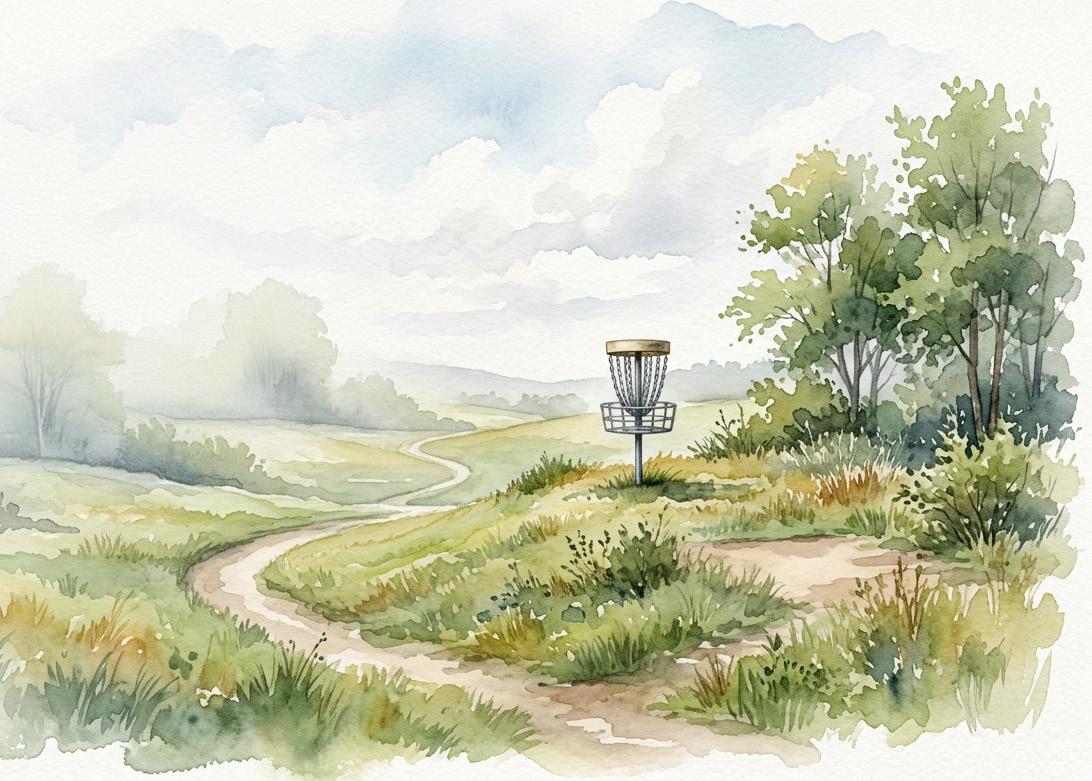
Editor’s note: Seventeen-year-old Eli has a messy homelife — an absent dad and a sister who’s been sent away to a school for troubled teens — but Eli can set that all aside when he’s at The Beaut’. A few miles outside of town, The Beaut’ is an isolated stretch of forest where Eli and his best friend, Dukes, spend their free time constructing what is sure to be the next world class disc golf course. But let’s turn it over to Eli, the protagonist of local author Brooks Hansen’s novella “The Beaut’” tell you all about it.
You know you’re getting close when you hit the burnt stretches. A couple years before all this — first summer of the lockdown — there was a bunch of fires all over the place up there. As soon as the smoke settled, Dukes and I went up to poke around the ruins, kinda just to do it. I mean I’ve always been partial to the woods. I don’t even know why. Robin Hood. Even driving along the highway as a kid, I can remember looking out the window and thinking about all the trees inside that no one ever saw. I used to pray for them.
But it was around that same time, Jack started taking me out to the local courses. Like I said, it was the lockdown, everybody was just cramped up inside with nothing to do. We went up and played Gold Hill, Tom Pearce, Moore Park. Dukes started coming along, and we’d talk about what made a good layout, what worked and what didn’t. Like you can’t just plant a bunch of baskets on top of an old golf course — that’s bullshit — or scatter them around a rec park like garbage cans. There has to be some-thing organic going on, you know? Like at Whistler’s Bend. Or Milo. Gorgeous. You’ve got to be responding to what the land is giving you. So you’re going to want to have some contour obviously. Water, if you can get it. Ponds. Streams. But woods are the most important. Woods are what disc golf is all about, if you ask me. Going in there, picking your
lines based on whatever shot you think you can make. And knowing that no matter what you choose, you could make a great shot, catch a low branch, and get burned. Or you can make a crap shot and get lucky, ping it off the trunk and you’re in business. That’s the game. Skill plus dealwith-it.
You look at them that way, the woods up there were pretty ideal. They had a nice roll, and space inside. Maples and white oak, white pine. They make space. Space makes lanes. Plus, there was no one else around. That was the most important thing, at least if you’re going to start redecorating.
So that’s really how the whole thing got started. I saw online how expensive baskets were. I asked Jack, ‘how hard do you think it would be to make our own?’ He said let’s see. Next day we started measuring bike wheels, the used ones.
The entrance we’d found was half a mile or so beyond the first burn. There’s this little dirt road that just kind of rambles in, blink and you’d miss it. We followed it down a little further than usual that day because we wanted to set up the seventh hole first thing and there was a bunch to carry. The disc bags, the food, and the new basket, which Dukes propped up on his shoulder like a hobo. I brought the base and the mat.
Place looked great. Early spring. The leaves were just starting out, that sort of tender green. And I’ll admit, any
time we went up there I felt a little surge of pride. Not like I owned the place or anything, but I kind of felt like I’d found it, you know? Like I was giving it purpose. Mrs. P, the art teacher at my old school, used to talk about how Michelangelo, when he was chiseling those figures out of the marble, never felt like he was sculpting them really, or shaping them. He felt more like he was letting ‘em out — like they were stuck inside the block, waiting to be released, or revealed. I’m not saying I was Michelangelo out there; just that that’s what it felt like, but exactly — like there was this hidden course inside the Beaut’ and it was my job to find it. It used to keep me up at night, thinking about all the different routes and alleys and configurations Dukes and I could try.
We’d set out six holes already. Two par fours and four par threes. We’d already discussed the seventh obviously, but just to give you a picture, there was a fair amount of meadow on either side of that little entry path I mentioned. The whole stretch is about the width of a football field and maybe five times the length, with woods on either side — north and south. Dukes and I called it ‘the pasture’. Question was, should we treat the pasture like the tongue of a sneaker and lace holes back and forth across it? Or
leave out the southern side entirely? Let the front nine kind of crazy-straw around inside the northern woods, which in addition to being a little roomier than the south, also sloped up to nice little ridge. Maybe save the back nine for what was overtop, depending on what we found.
That’s where I was leaning, but we didn’t have to decide just yet. Job One was setting up hole #7, which we’d already scouted. Six left off mid-way up that north-side ridge. We’d agreed the tee for 7 would point you back down to this little glade. I‘d never really understood why ‘glades’ exist. Turns out it’s because there’s rock just underneath the soil so the trees can’t send down roots. In this one, though, there’s two little ash trees that managed somehow, so we wanted to use them either to guard the basket or frame it. That was the question.
Dukes said, “If we set it back a little, like here, you make it a choice — whether to split the trees or go around.”
“Yeah, but too far back, and it’s no choice at all.”
He saw that. He looked up ridge again. “And where’d we say we were putting the tee?” I pointed. “But I guess if we shifted one or two slots over — like there — we could almost turn it into a dog leg.”
“So you mean like another par 4?”
“Well, if you’re you, you probably just come over top, but if you’re a normal human being, then yeah.”
“So no mando.”
“No, no mando.”
(‘Mando’ is short for ‘mandatory’ — meaning you have to take a certain route to the hole, like go left of the pine tree or you’re out-of-bounds and there’s a stroke penalty. Dukes and I hated mandos on principle.)
We figured it out. Dukes went to fill the base with creek water. Meanwhile, I cleaned up the first circle, pulling out all the tall grass, getting rid of loose branches and weeds. I actually had a trowel in my bag, and I was thinking about the new approach while I worked — the dog leg — which I kinda liked. The Beaut’ needed more power holes, no question, and I thought about the committee coming to see her, and how they’d approve. I always had the ‘committee’ in the back of my mind — you know, from the PDGA, with their clipboards and iPads — and how they’d find out about the Beaut’ in the first place. Maybe just to start, Dukes and I would set up a little sign out on 5. ‘Disc?’ Just nail it to a tree trunk. Then someone like Gregg Barsby would be driving by. With Simon Lizotte. In a beat-up old jalopy. They’d say, “Yeah, let’s check this out. We’ve got nothing better to do.” They’d go and play the course just like we set it out, and they’d be like, “Hey, this is not half bad, you know? Who did this?” Eventually they’d figure it out. They’d message me. “You the guy who set up those holes out on 5, just beyond the burn?” I’d be like, “Yeah, that’s me.” They’d say, “Well, that’s a nice course, kid. You know what? You should meet our friend Andrew Duvall, greatest
disc course designer in the world. You should come with us to Järva. We’re going this summer...”
It went on from there, but you get the idea. Pretty soon it’s cabin saunas. Ice hotels. Kristin Tattar dropping by with pancakes and vodka.
Dukes came back. I showed him the space I’d cleared. The ground was a little tilted, so we dug up some extra dirt. Dukes also kept a level in his backpack. He set it on the upper rim. “Come on, now.” (He liked to talk to the bubble, with his eyes all crossed.) “That’s right...little more...more...hello. Stay.” I shoved a few rocks under the base, just to keep it, then we both swept the dirt under. Packed it down, watered it. Packed it some more. A real couple of groundkeepers, we were.
“Best one yet,” Dukes took a step back. “I’d say.”
“Yeah, well, that’s life,” I said, even though if I’m being honest, I never really like the baskets with the bike chains as much. Oval links are better. But what are you gonna do?
“So where were you thinking from here?” he asked. “Where’s 8?”
I wasn’t sure yet, but I’d been weighing the options. If we were going to start lacing up the pasture, this wouldn’t be a bad place to start. There was a rock face I’d had my eye on over on the far side. But it also might be time head over the ridge again, get the lay of the land.
“We don’t have to decide now,” I said. ”Let’s play the seven we got. Start from the beginning. Feel the flow.”
Dukes agreed, so we picked up our bags and started back to the first tee.
“We eat first?” he asked. “I’m fucking starved.”
Meet the author
Carpinteria-based author Brooks Hansen is the author of 12 books, including four New York Times Notables, two books for young readers (which he also illustrated) and one memoir. His 1995 novel, “The Chess Garden,” was selected as a PW Book of the Year. He received a Guggenheim fellowship in 2005 for his quasi-history of John the Baptist, and his more recent title, “The Unknown Woman of the Seine,” was a New York Times pick for best historical fiction of 2021. In addition to The Beaut’, he released another full-length novel last year, “LucidDream ™,” a 5D speculation on the hybrid-bio/techno/virtual/vinyl world that lies ahead, and the choices we’ll be making in it. Born and raised in New York City, he teaches English and Comparative Religion at Cate School in Carpinteria, where he lives with his wife, Elizabeth, and — when he’s lucky — their now-fledged children, Theo and Ada. Brooks’ novella “The Beaut’” is available to order on Amazon.
FINAL FRAME
PAWS ON THE NOSE
Sugar the surfing dog and owner Ryan Rustan put on a salty show for spectators at the “Life Rolls On” event held at Rincon Point. The annual gathering teaches surfing to people of all ages with disabilities.