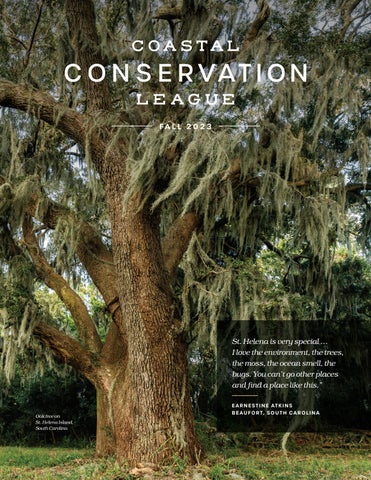
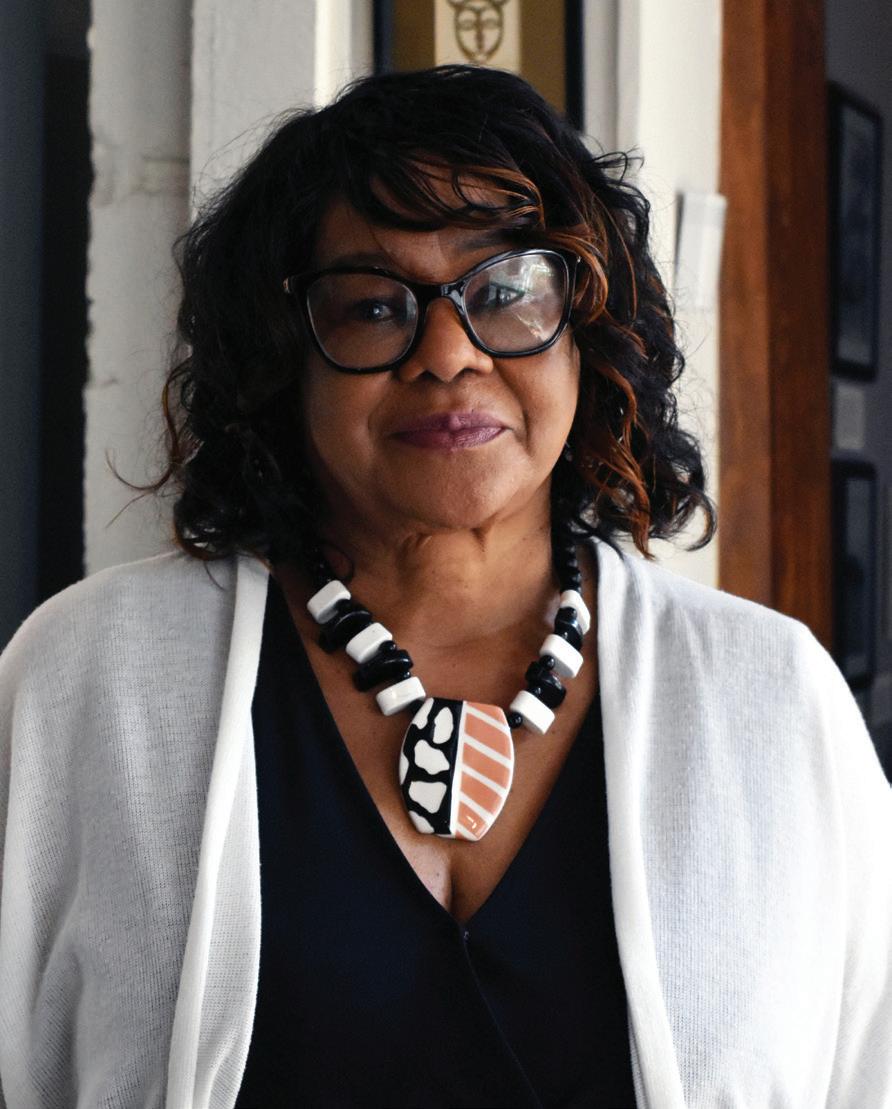
St. Helena is very special … I love the environment, the trees, the moss, the ocean smell, the bugs. You can’t go other places and find a place like this.”
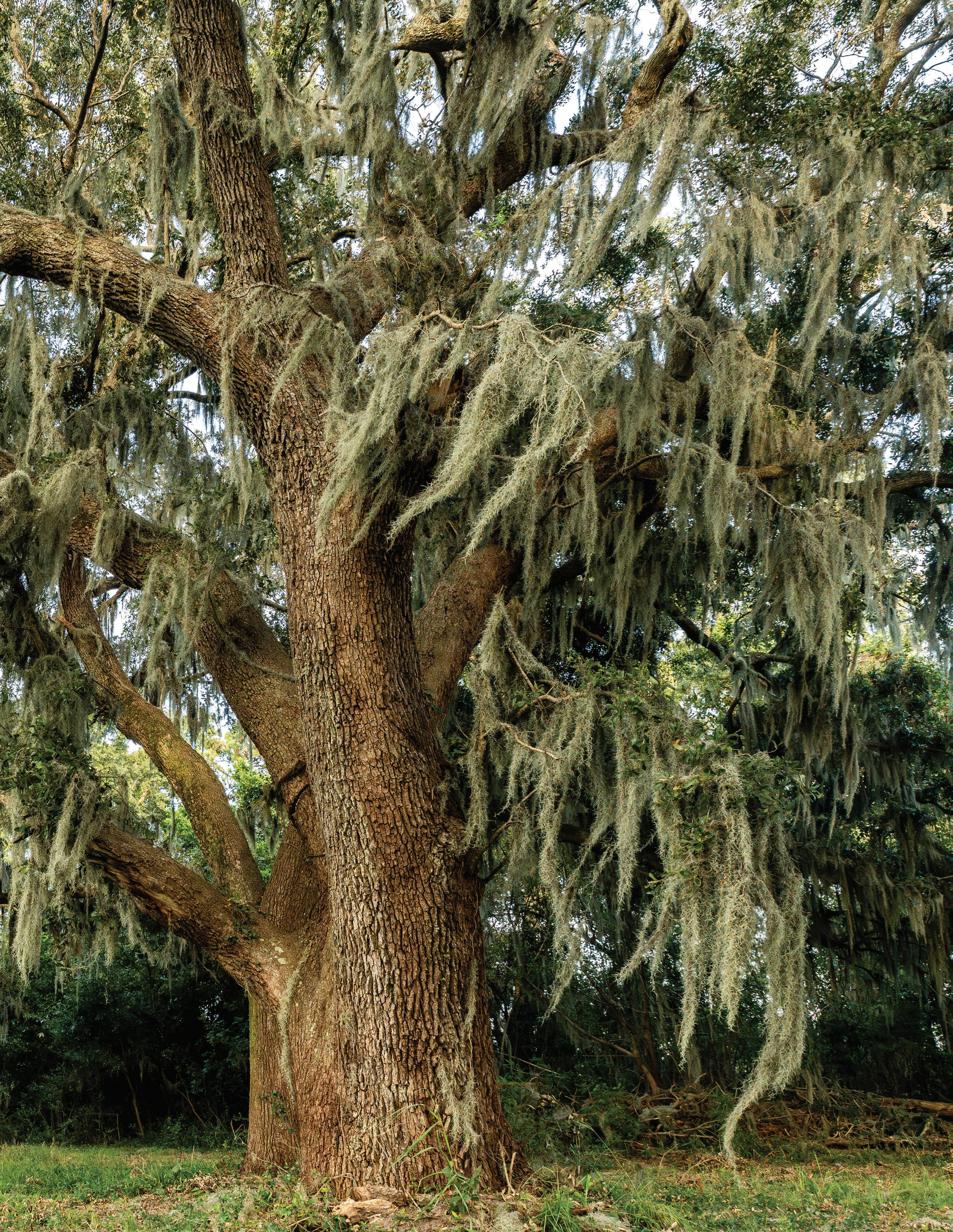
Oak tree on St. Helena Island, South Carolina
EARNESTINE ATKINS
BEAUFORT, SOUTH CAROLINA
The Staff A Letter from the Executive Director
Executive
Faith Rivers James, Executive Director
Renee Elek, Executive Assistant & Board Liaison
Elizabeth Gibson, Human Resources Director
Finance
Mike Mistler, Controller
Jamie Roschal, Office Administrator
Development
Nancy Appel, Development Director
Amy Carter, Assistant Director of Development
Kati McArdle, Grants & Donor Communications Manager
Amy Meola, Annual Giving Manager
Communications
Lily Abromeit, Director of Communications and Public Relations
Emily Cedzo, Director of Conservation Programs & Policy
Merrill McGregor, Director of Government Relations
Eddy Moore, Energy Senior Program Director
Ben Garris, Public Utility Analyst
alongside three partner groups to intervene to defend Beaufort County’s denial of plans for three six-hole golf courses on St. Helena Island, record heat for our state and the country as a whole, a historic win for red knots, and the formation of a community partnership through the Riley Center for Livable Communities to influence the Union Pier redevelopment.
inherently intersect and tie together. We are consistently focused on one overarching goal: keeping nature and community in balance.
Robby Maynor, Communities & Transportation Program Director
Emma Berry, Communities & Transportation Project Manager
Jessie White, South Coast Office Director
Grant McClure. South Coast Project Manager
Becky Ryon, North Coast Office Director
Trapper Fowler, North Coast Project Manager
GrowFood Carolina Program
Benton Montgomery, Interim Director of GrowFood Carolina
Becca Watson, Farm Outreach Manager
Deirdre Tanner, Supply Chain Manager
Anna Ware, Interim Sales & Marketing Director
Austin Lucas, Sales & Marketing Associate
Alexander Keesler, Sales & Marketing Assistant
Paul Haire, Warehouse Operations Manager
Shawn Parks, Driver & Warehouse Associate
Matt Mays, Driver & Warehouse Associate
Michael Albin, Driver & Warehouse Associate
Ryan Gonsalves, Driver & Warehouse Associate Offices
This August marked the end of my first year as Executive Director. Just like every other week at the Conservation League, my anniversary in August came amidst a whirlwind of activity — filing an independent motion
Of course, all of these milestone moments coincided with the everyday fight to protect the South Carolina coastal plain and the people who live in and love this special place. A few recent highlights include promoting sustainable and responsible land use and advocating against land annexations and mining operations, highlighting the beauty and complexity of places like Lewis Ocean Bay, supporting South Carolina farmers and making fresh produce more widely available, working with partners to identify and develop strategies to keep their communities rural, and holding our legislators accountable.
The beauty of the Conservation League and the work we do every day is that all of these things
While I now have the privilege of being on the front lines of this effort with our dedicated and talented staff, many of you have been fighting right alongside the Conservation League for decades. Thank you for your continued dedication to this lofty goal and to the many, many projects that make up our work to protect and sustain the Lowcountry.
Here, we have highlighted a few of our latest project updates, but of course, we can’t fit it all in one publication. To learn more about our ongoing work, visit our website, sign up for our emails (scan the QR code below!), meet us to volunteer or join us in the field to advocate for continued conservation of the Lowcountry.
We’ll see you out there,
Photograph by Miles Sanders
Faith Rivers James
Redevelopment of Union Pier
A community-led journey toward a sustainable waterfront development
Union Pier is a 65-acre waterfront site in downtown Charleston owned by the South Carolina Ports Authority. It has been used for shipping, port operations, and a cruise terminal, but now will support only shortterm port-of-calls. As a result, a large portion of Union Pier has the potential to be redeveloped to create greater access to the waterfront.
Everyone who lives in or visits Charleston has a stake in this once-in-a-lifetime opportunity.
In early 2023, the Ports Authority requested that the property be rezoned from its current industrial zoning to a Planned Unit Development (PUD), which allows for an applicant to effectively create their own zoning requirements within a set of guidelines provided by the City.
Over several months, the Ports Authority and their consultant Lowe created their PUD plans to determine how the property would be developed, and then submitted those plans to the City of Charleston for review. It was set to proceed rapidly—which is unprecedented for a development in Charleston — through Technical Review Committee, then Planning Commission, and then finally to City Council.
The proposed PUD plan failed to meet the standards set by the City, the Ports Authority, and the people of Charleston for a world-class waterfront seamlessly integrated with the surrounding neighborhoods. The Conservation League, in a coalition with Historic Charleston Foundation and Preservation Society of Charleston, remained steadfast in a shared vision for Union Pier: that it be resilient and embrace the natural and historic features of the site, be of appropriate size and scale, and provide benefits including green space, bike and pedestrian connectivity, and substantial affordable housing.
WHERE ARE WE IN THE PROCESS?
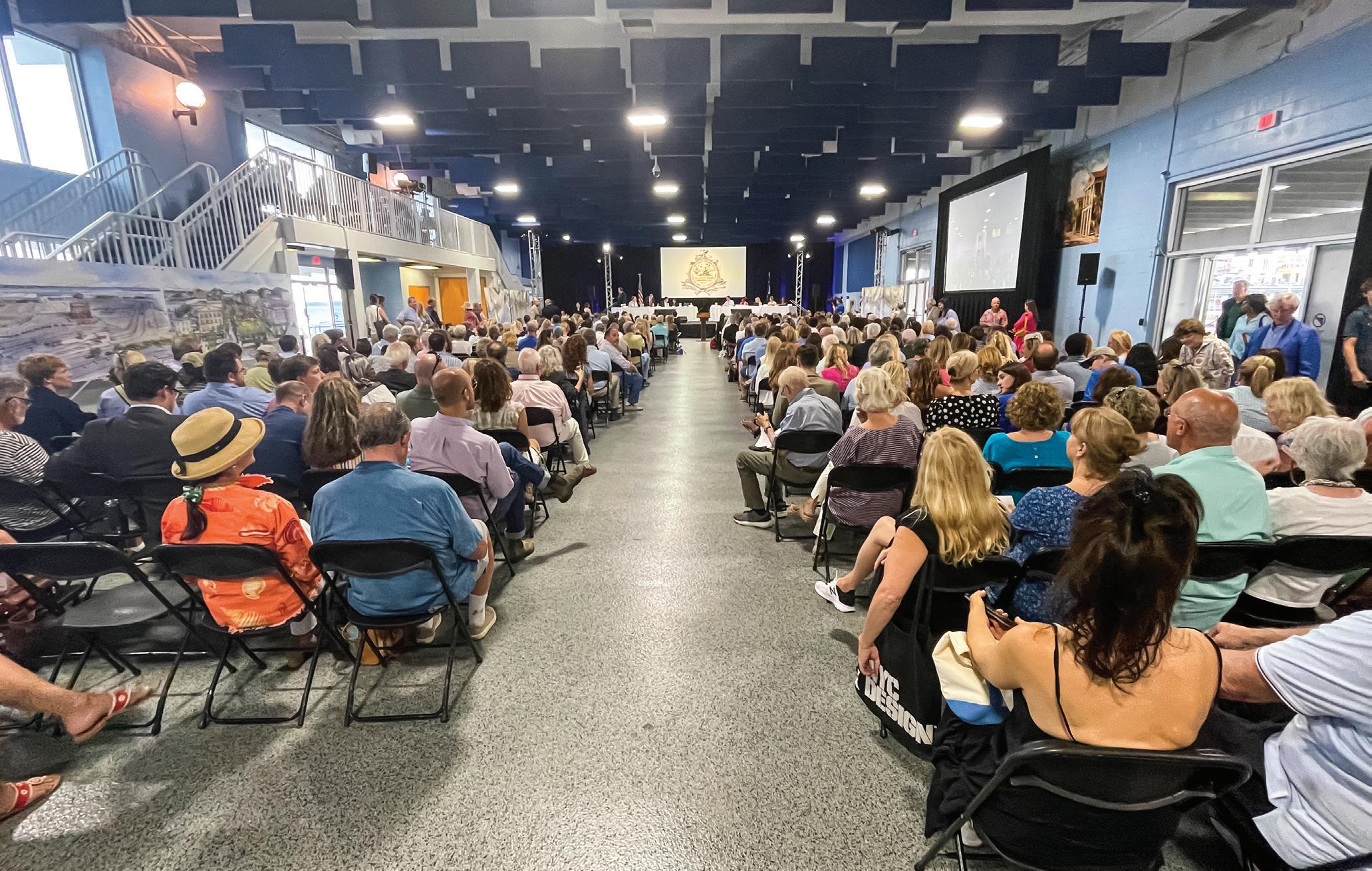
As a result of extensive community engagement by the coalition partners, at the June 7 Planning Commission meeting, hundreds of concerned citizens gathered in the passenger terminal, asking for a more inclusive and thoughtful process.
On June 16, Ports Authority and city leaders acknowledged these calls for a different process and announced they would change course and work with the Joe Riley Center for Livable Communities at the College of Charleston to create the new plan for Union Pier, taking more time—possibly a year—to do so.
In August, the Riley Center formed a stakeholder advisory committee to inform the process for determining the future of Union Pier, marking the first formal step in the new community-led planning process. The Conservation League was invited to join this committee, alongside other community partners.
Empowering Property Owners
Enhanced real estate disclosures in South Carolina’s flood-prone zones
Earlier this year, the South Carolina Real Estate Commission updated the real estate disclosure form with changes that require much more comprehensive information be provided to people looking to purchase property in areas vulnerable to flooding and erosion. For nearly five years, the Conservation League worked closely with the Southern Environmental Law Center to develop these recommendations, most recently collaborating with South Carolina REALTORS®. Since 2019, the form has accounted for FEMA flood claims, but there was a growing need to provide additional information around potential flood impacts and hazards that can occur when living in a coastal community or adjacent to a body of water. These changes went into effect in June and will provide much more transparency for consumers, and essential education for property owners. This update will make it easier for potential property owners to better understand the risks that may come with owning property in a flood zone or along a beach before they make a purchase, particularly given the accelerating impacts of climate change.
Donor Recognition: Planned Giving
Katy
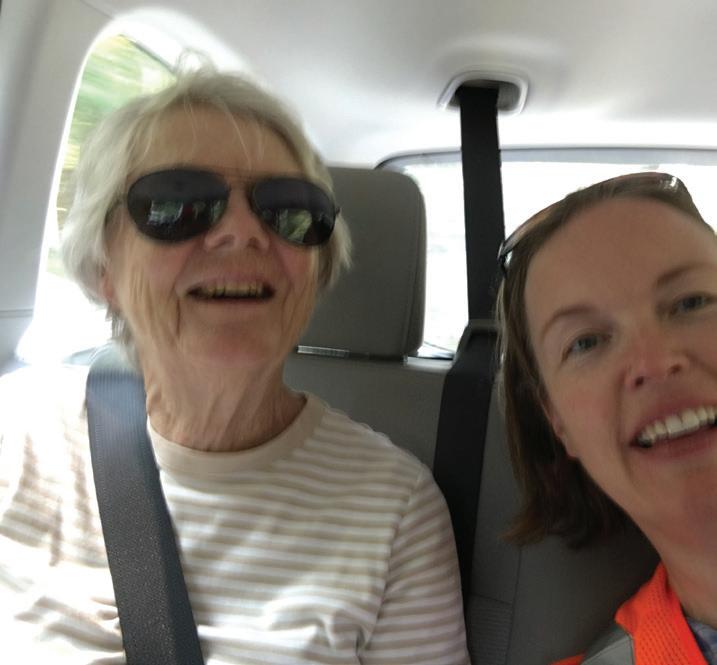
I met Katy Huger in 2015, about a year after I joined the Conservation League as Development Director. It quickly became apparent that we shared a love for “adventures,” as we called them –outings that mostly included birding. One Saturday that first summer, she invited me to join her at a Charleston Natural History Society outing into the Francis Marion National Forest in search of butterflies. As we met our expert guides for the day, we found we were the only participants. “Grey Hairstreak!” “Duskywing!” our guides would shout as the driver suddenly stopped by the side of the road so we could clamber out of his hatchback to find the target. This day together solidified our friendship, and we went on to have many other adventures in the years following. Katy’s adventures ended in August 2022, when she passed away from cancer. In her final days, played bird songs as she named the species, and she told me stories about her many adventures around the world with her husband, Danny, and their many friends. Before their deaths, Katy and Danny arranged for their estate to go to several of the charities they loved in life, including the Coastal Conservation League. In the coming years, their planned gift will support our work on the many projects Katy loved, including promotion of butterfly habitat.
— Nancy Appel, Development Director
Huger
Community members pack the SC Ports Authority’s passenger terminal during the June 7 Planning Commission meeting.
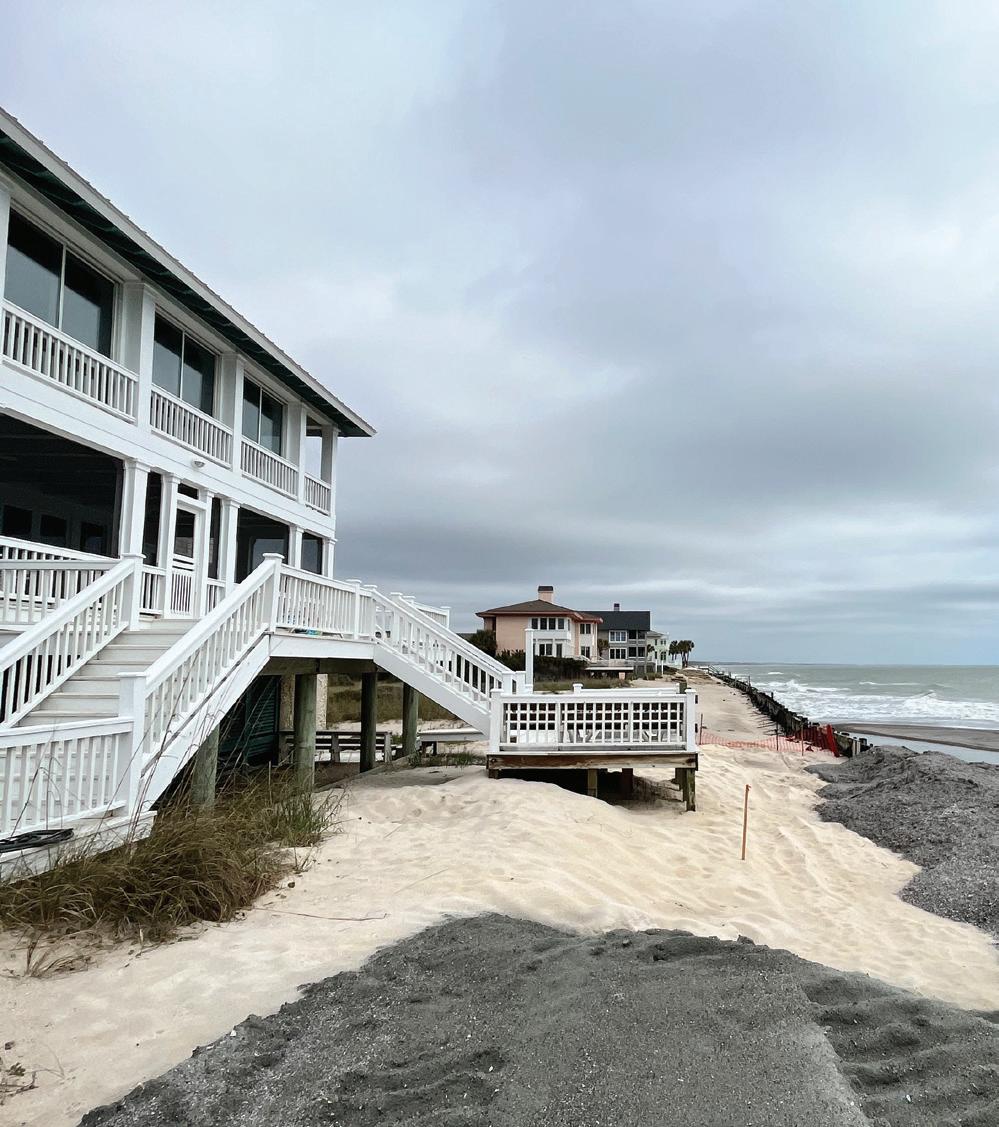
Houses on the shore of Debidue Beach.
Katy Huger and Nancy Appel on the drive to one of their many adventures.
Maintaining the Integrity of St. Helena Island
Efforts to protect and empower St. Helena and Beaufort County have been ongoing for many years. Below is a brief timeline of some of the significant moments.
1992
Sea Island Preservation Project launched with Conservation League and Penn Center, which includes the establishment of the Penn School for Preservation.
1994
Conservation League opens office in Beaufort.
1996
A proposal to widen Hwy. 21 on St. Helena Island to five lanes is defeated.
1999
Cultural Protection Overlay (CPO) is adopted in the Beaufort County zoning ordinance, prohibiting golf courses, gated communities and resorts on culturally significant locations on St. Helena Island.
A proposal to bridge North and South Palm marsh islands on St. Helena Island is defeated.
2010
Beaufort County Comprehensive Plan is updated, and continues to recommend the CPO for St. Helena Island.
2014
Beaufort County zoning ordinance is updated, including incorporation of the CPO for St. Helena Island.
2021
Pine Island GC, LLC enters an option contract to purchase Pine Island/St Helenaville for “construction of golf course and related lodging,” and officially purchases the property in March 2023.
Beaufort County Comprehensive Plan is updated, placing a priority on protecting the Gullah/ Geechee community and rural way of life on St. Helena Island, including retaining and strengthening the CPO.
2022
Beaufort County administration submits a proposed amendment to the CPO that would allow golf courses, gated communities, and resorts on St. Helena.
Prior to this, Pine Island GC, LLC applies for a zoning map amendment to remove Pine Island/St. Helenaville from the CPO to allow development of an exclusive, high-end golf resort.
MAY 2023
Beaufort County Council approves recommended language to the CPO, clarifying its original purpose and intent in prohibiting golf courses, gated communities, and resort development on St. Helena Island.
JUNE 2023
Beaufort County Planning Commission, Beaufort County Council’s Community Services and Land Use Committee, and Beaufort County Council all consider request to remove the Pine Island property from the CPO district boundaries, but ultimately all vote to deny the rezoning request, keeping Pine Island within the CPO boundary. The Planning Commission also upholds staff’s denial of plans for three 6-hole golf courses on the property.
JULY 2023
Pine Island GC, LLC/Pine Island Property Holdings, LLC files an appeal challenging the denial of plans for three 6-hole golf courses in circuit court, including a request for pre-litigation mediation. The Pine Island LLCs also file a civil complaint against Beaufort County, challenging the validity of the CPO, alleging violations of due process and takings, and seeking monetary damages.
SEPTEMBER 2023
Four partner groups, including the Conservation League, are granted intervention in the prelitigation mediation and appeal of three 6-hole golf courses to defend Beaufort County’s denial based on the CPO.
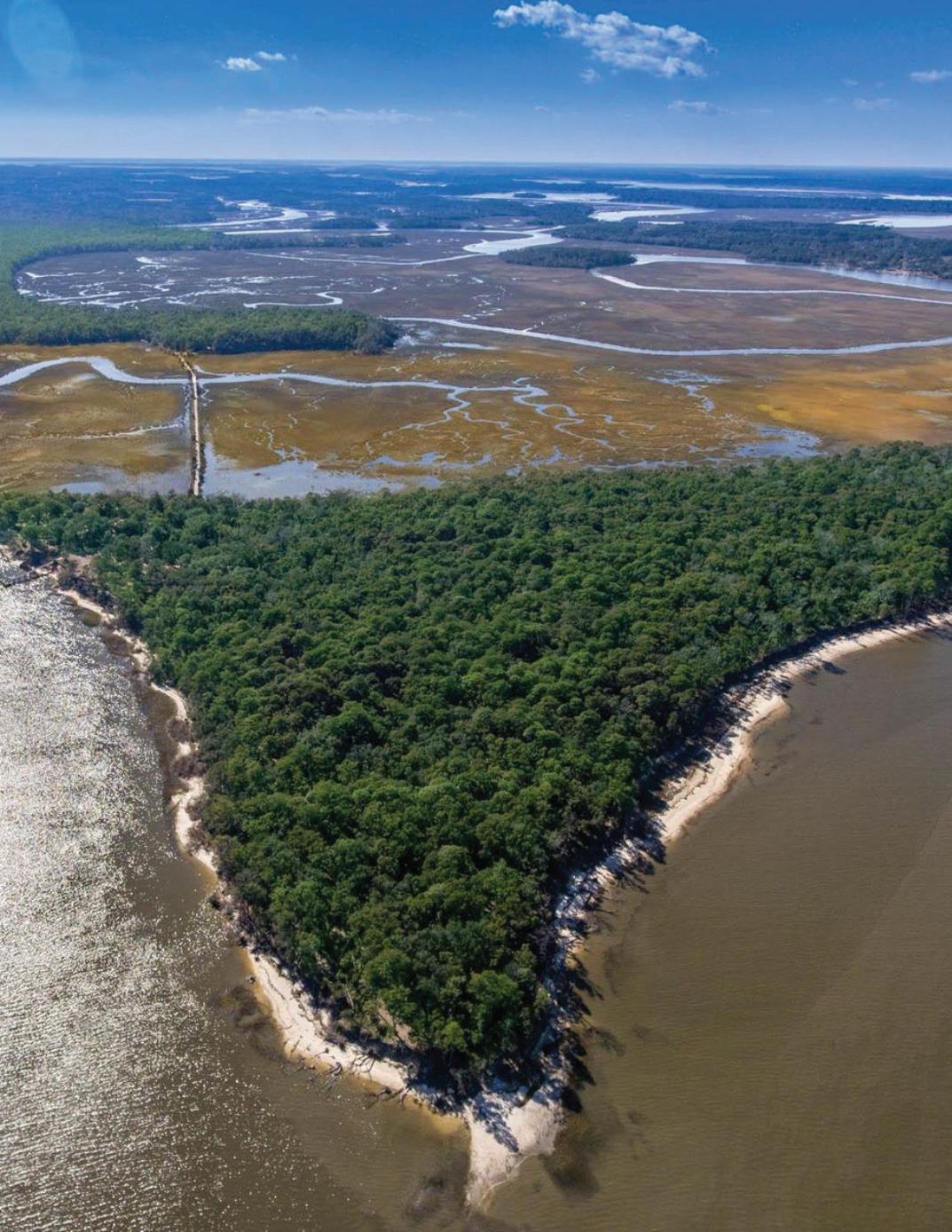
Pine Island in Beaufort County, SC
Guardians of the St. Helena Legacy
Stories of land, history, and advocacy from St. Helena Island
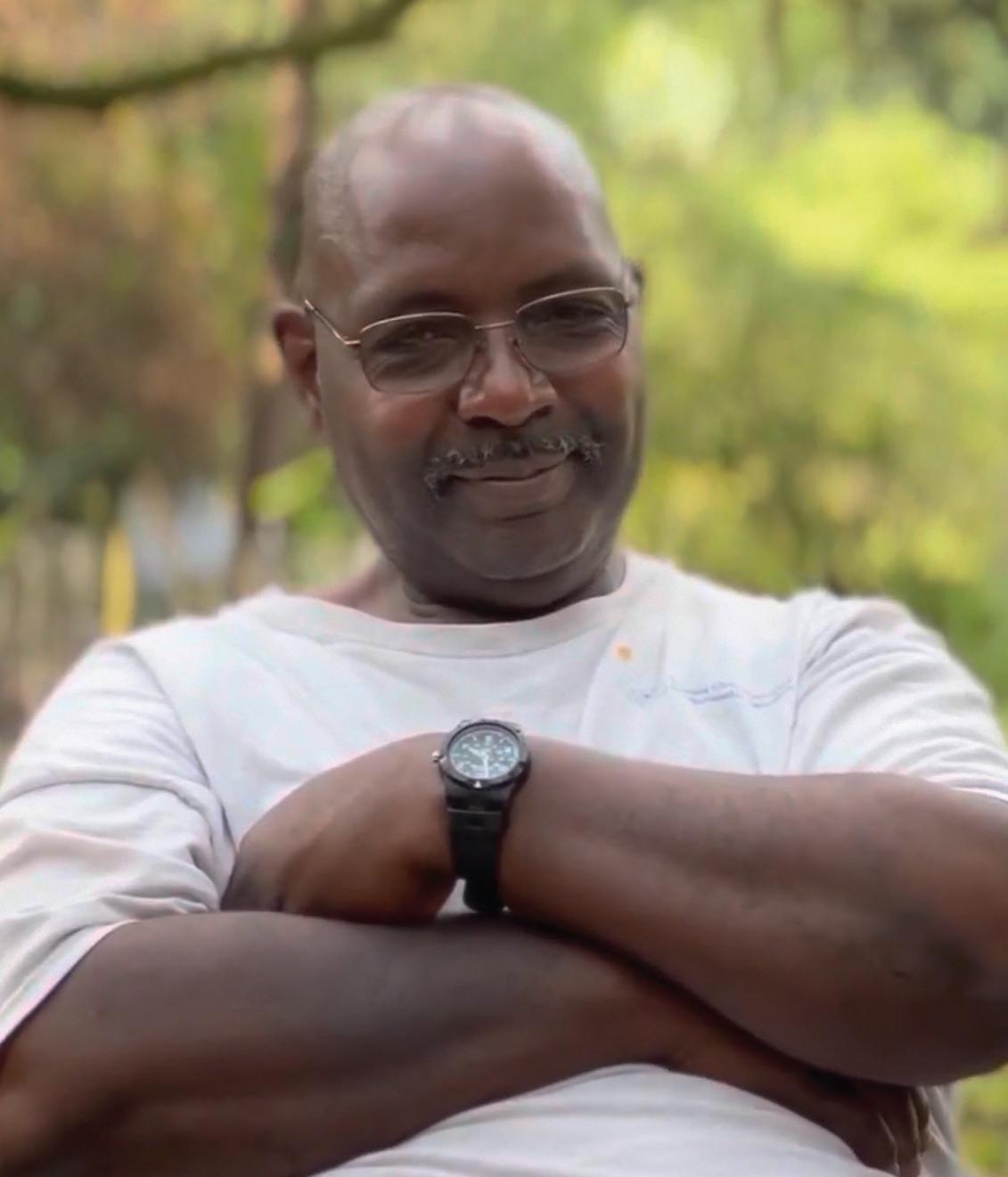
Tony Jones Morning Glory Farms, St. Helena
A way of life
“This land has been in my family since 1868.
A distant cousin of mine would mention when he was growing up, they would take the bateau out and go fishing at night [for] redfish, and the abundance that they were able to catch, along with the shrimp, they would feed the community with it.
Well, roll it forward to where we are now, there’s a limit on how much you can catch because of what has happened with the environmental impacts, for example the runoff from asphalts, the runoff from various chemicals and fertilizers that we’re using. In the past, folks use all natural, organic fertilizer; they would go out and get some of the pluff mud and use that as fertilizer along with the dead grasses in the
marsh. This farming practice has been lost by most current Gullah farmers—and let’s not talk about youngsters of today.
How can we reverse this? The first step is to teach the younger generation that there is value in what we have, before those of us who know about these practices are gone. Because once we are gone, they will be gone with us and there’s no way you can get it back. God is not making any more land; this is it.
That is a part of our way of life as Gullah/Geechee people and Gullah/Geechee people’s descendants. Too often a lot of families have erred, I feel, on the way of not allowing the kids to do these practices because this is always hard work, but good work. The sad and misinformed thought about farming is that it’s slave work. But I say, a work of survival; it’s work that was done by our ancestors to help them make ends meet. It was a practice of survival. Survival skills where folks learned to grow small plots of food; produce to sustain their family. They weren’t getting much from the master’s house, so they had to grow stuff to make sure that their family could live and thrive there on the plantation. So, it’s something that we need to teach the current generation.”
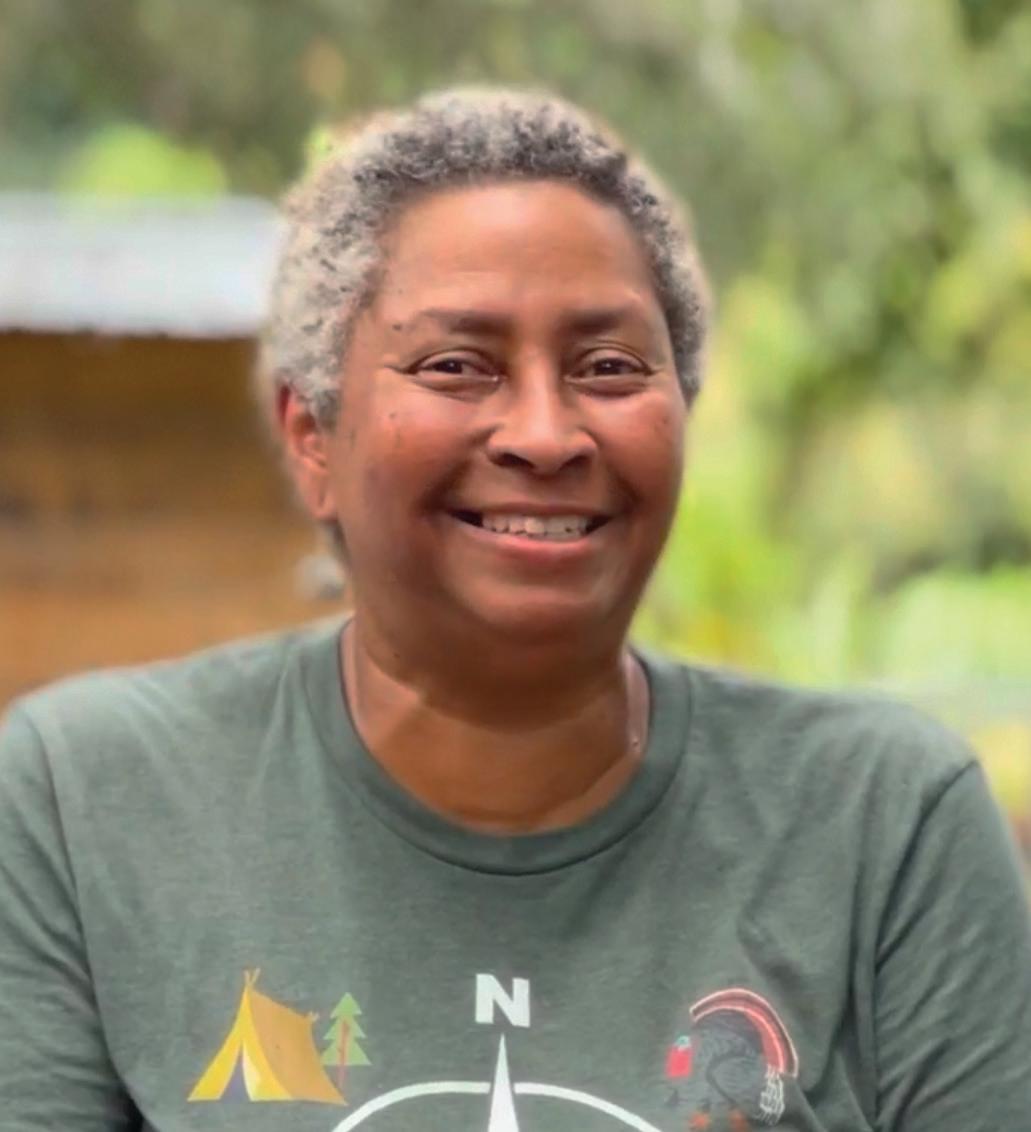
Belinda Jones
Morning Glory Farms, St. Helena
Ancestral connections to stewarding the land
“I’m originally from Orangeburg … [and the children and I] were just learning about the [Gullah] culture. … We heard the words
floating around, but we weren’t necessarily knowing how we connected. I started doing some digging into my family at the same time, and found out my father’s side of the family, my father’s mother, his grandmother and great-grandmother and their spouses were from the Charleston area [and] my great-grandmother was enslaved there. I was just beginning to put together what that meant, and how Gullah applied to me. It was really cool because now we have both sides of the family, as far as for our children, that have a Gullah background.
[The] part about the land and ownership and connection was really not different for me because I was just basically doing it at a different location. My parents, especially my father, always taught my brother and I about holding on to land. My father was a very good example to us about land stewardship and ownership and the history behind the land. To come here and be a part of Tony’s family and a community that had the same ideas and concerns about land and land ownership that I grew up with, was, in essence, a home-coming. Tony and I have instilled this in our children.
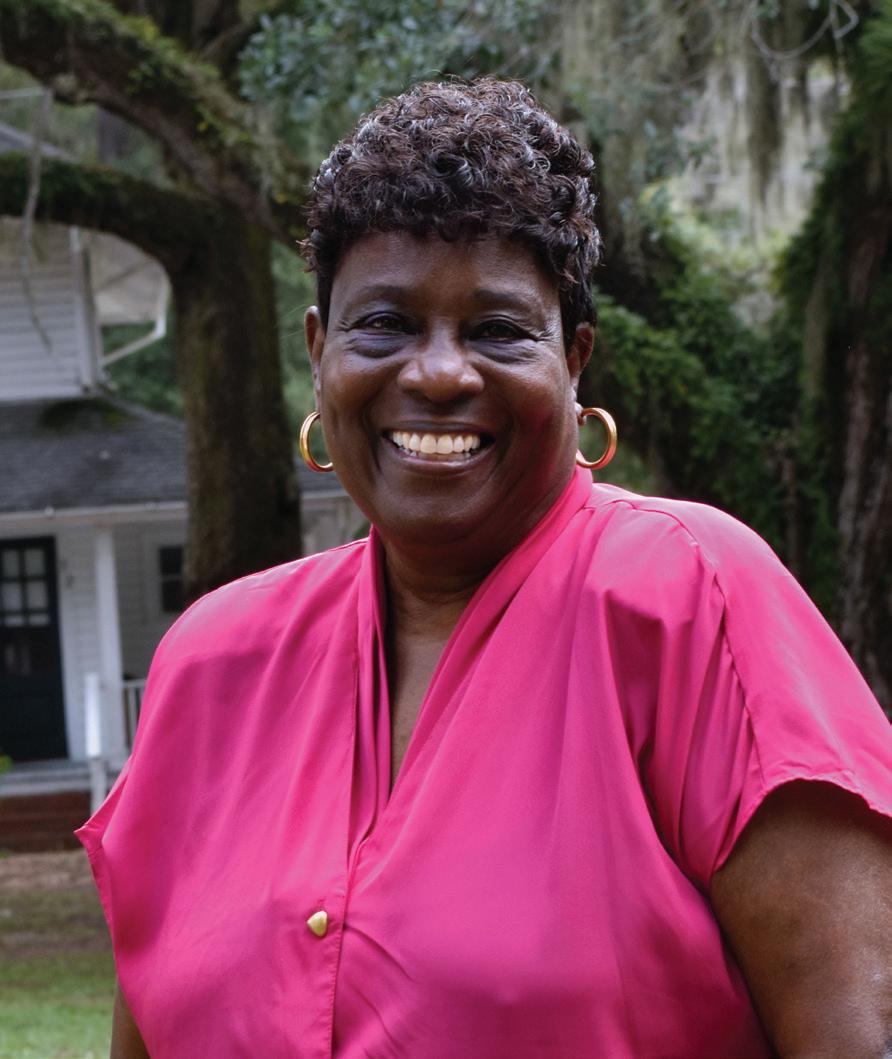
Earnestine
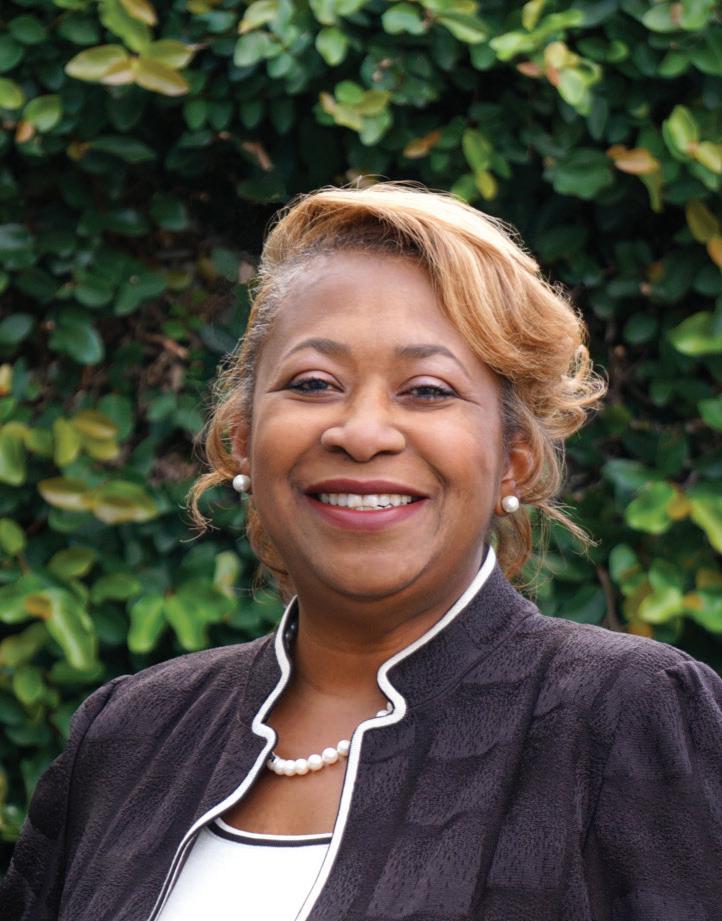
Atkins Beaufort, South Carolina
“Home” means St. Helena
“St. Helena is very special. … I love the environment, the trees, the moss, the ocean smell, the bugs. All of those things play a part, and it’s important to me because you can’t go other places and find a place like this.
When I say home, we’re talking about St. Helena. Home is reference to St. Helena, always.”
Changes over a lifetime
“The growth is just getting to be unbearable. It’s not that I’m against growth, but I like particular growth,
growth that is conducive to the need of the community.
I have not enjoyed growth [like] when you look up there’s a building over here; growth when people calling asking you to sell your property; growth like if I live a certain place they tell me that I can’t do anything with that property.
I’m not saying that there should not be anything [but] I would like to see St. Helena remain rural; with some growth, but rural. I mean: freedom, I’ll put it that way.”
Passing the legacy to the next generation
“People need to stand up and speak out about things that we want and don’t let people just railroad you. That’s what I would love to see happen in the future, and we have to get our young people educated to speak up because we are not going to always be around to do that.
I mean, I’m in my 70s and [we] need some more younger folks to step up because if you don’t, [we are] going to be railroaded by the developments.
I think it would be very helpful for [young people] to know that we have struggled back then to preserve the history and culture on this island.
Let’s get the history straight.
… We don’t need anyone to say ‘I thought, I think’. It needs to be straight; it needs to be pure. History ought to tell itself, history ought to be real. … When the kids grow up, they need to know the real history. And people who travel, people who come here, people who live here, need to know the real history. Point blank.”
Dr. Marie Gibbs Docent/Museum Program Manager for the Penn Center & Resident of St. Helena
An everlasting connection to the land
“My dad made sure that we understood the value of land and where it was. He would take us as children, walk us through every acre we had. ... He was educating us on where your land was, showing us our legacy.
If the land changes around here ... we’ll lose our generational wealth, number one. Our way of life is fishing industry, farming industry and if that landscape changes, our way of life — ourselves — will change.
I call it the gift. You can’t go any other place and see what we have here. I am the land. The land is me. That is my legacy.”
The importance of history
“Think about this: if the history was taught the correct way, how different you will see me today, how different I will see you. Coming to hear and learning about the history of the Gullah people, I don’t say it’s going to change everybody’s mind, but you will see me in a different light. You will understand the struggle we as a people went through. And it was not easy living. It might look easy at the end [but] there were pitfalls; we had to dig ourselves out.
We just had an exhibit: “Slavery by Another Name” that tells the story about even after emancipation people were still put in jail on trumped up charges. So, we were free, but still not. It’s 2023 and we are still experiencing some of the same discriminations from the past. That’s why history is so important. You have to be educated about family and culture. If we don’t know or recognize our culture and heritage, we are missing a part of who we are. Our true history gives us pride in who we are, and the strength to face challenges. As history unfolds, we say, “Our eyes are open. What are we going to do about it?”
These interviews have been edited for length and clarity, and approved by the subjects.
Dr. Marie Gibbs
Earnestine Atkins
Belinda Jones
Tony Jones
A Victory for the Red Knots
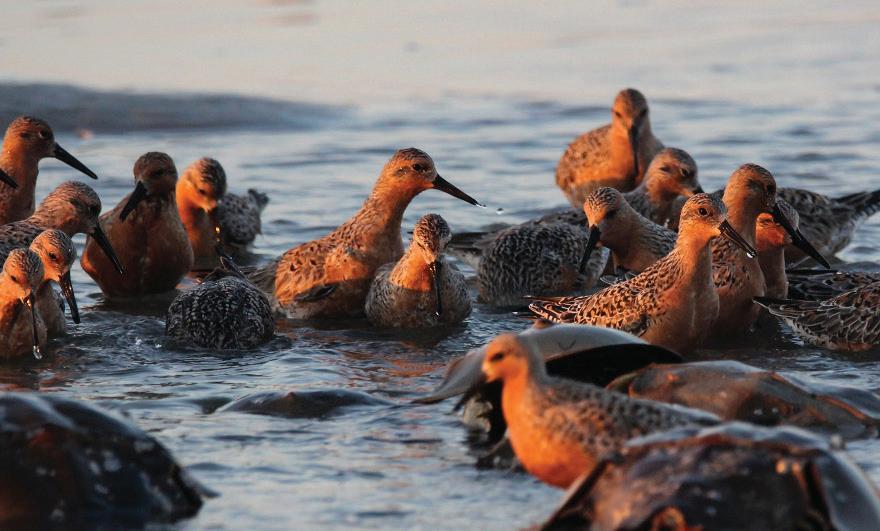
The Coastal Conservation League, Southern Environmental Law Center, and Defenders of Wildlife secured a milestone settlement agreement against industry and regulators over the use of holding ponds used in the biomedical bleeding of horseshoe crabs. This victory ensures necessary protections for the federally threatened rufa red knot, which has experienced a population decline of over 85% in recent decades.
The agreement ensures that:
• Over 30 beaches critical for red knots are prohibited from horseshoe crab harvesting until at least 2028.
• The entirety of Cape Romain National Wildlife Refuge – land, waters, marsh, and beaches – is off-limits to harvesting.
• Female horseshoe crabs will not be held in holding ponds, which increases the likelihood that spawning occurs on beaches where red knots can feed on their eggs.
• Additional permitting conditions will be in place, including enhanced protection of crabs during the collection process.
• Harvester boats will be GPS monitored, with data reported to SCDNR to ensure compliance.
This is a welcome relief for the imperiled red knot. Many thousands of horseshoe crabs are harvested when they come to shore to spawn on sandy beaches.
They are then sold to pharmaceutical company Charles River Labs and drained of a substantial amount of their blood for use in the biomedical industry. Red knots need to eat thousands of horseshoe crab eggs to accumulate the fat stores they need for their arduous transcontinental migration and this legal victory gives them a better chance of achieving that lofty goal.
knots
Scan the QR code to see the list of protected beaches
What’s Happening in Bucksport
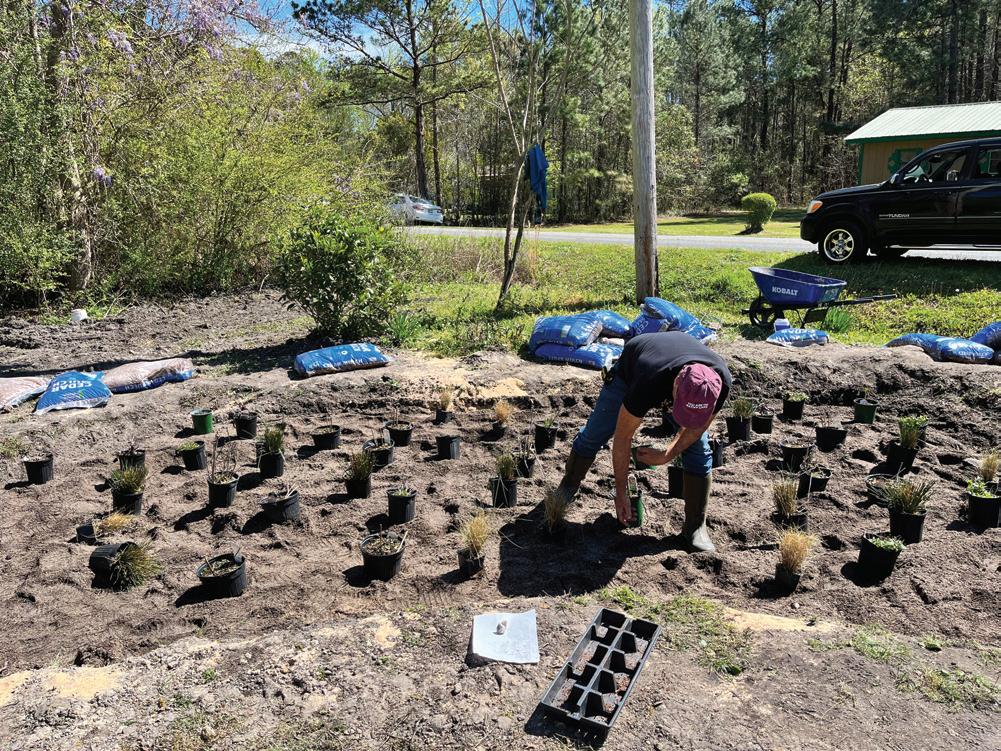
In March, the Conservation League, American Rivers, Coastal Carolina University, and Clemson Extension staff installed two new rain gardens in Bucksport, which has experienced major flooding events almost annually since 2015. Rain gardens will not solve the riverine flooding issue for the community, but will help mitigate flooding from heavy rain events while providing native vegetation for pollinators.
COMMUNITY CELEBRATION
Conserving Energy During Warm Times
It gets hot in the Lowcountry—really hot.
And with a warming planet, threats to our coast and communities are increasing each year.
The Conservation League’s Energy Program is working every day to increase renewable energy in South Carolina and improve efficiency at every level. And we can all do our part too by following a few tips for conserving energy during warm times. The best ways to conserve energy
and have better air conditioning, less humidity, and lower bills are to get a professional home energy audit and seal and insulate your home. Not only will your AC work less, but your home will be more comfortable.
Energy conserving home improvements come with tax credits and federal home energy tax credits have gotten much better and no longer have a lifetime limit.
Generally, you get 30% of the total cost of installation, up to a limit:
• Professional home energy audit: $150 tax credit
• Highly efficient new AC: 30% of cost, up to $600
• Solar, solar plus batteries, and EV charging upgrades: 30% credit
• Insulation and building envelope improvements such as sealing leaky ducts: 30% of cost, up to $1,200
• New heat pump or new heat pump hot water heater (an electric water heater that also dehumidifies): Up to $2,000
At the end of April, the Bucksport coalition of academics, nonprofits, and agencies hosted a community day and the opening of a new exhibition with interviews highlighting area history and what makes Bucksport so special. Over 100 residents enjoyed food, music, and dancing while hearing from partner organizations about their efforts in the community. The Conservation League helped sponsor the event and provided information about the harmful impacts the proposed SELL road could have on the Bucksport community. This highway project would exacerbate flooding and bring increased traffic to the area.
BIG BULL LANDING PROJECT
Horry County and the South Carolina Office of Resilience have proposed a flood mitigation project in Bucksport to elevate an existing dirt road, add three 36-inch pipes underneath, and, in the event of major flooding, sandbag culverts to create a levee to block flooding. Though we agree with and appreciate the desire to mitigate flooding for the community, the Conservation League has joined residents in raising concerns about potential unintended consequences of this short-term solution.
Alternative ways to donate
There are many ways to contribute to our fight to protect the South Carolina coastal plain. Talk with your financial advisor or tax professional to determine the best method for you to support this important work.
Giving Stocks or Appreciated Assets
Donating stocks, bonds, or other appreciated assets can potentially provide you with significant tax benefits. If you donate appreciated securities that you’ve held for more than a year, you may take a charitable tax deduction for the market value of the securities and avoid paying capital gains tax on the appreciation.
Qualified Charitable Distributions
If you are 70½ years old or older, you can make tax-free donations directly from your Individual Retirement Account (IRA) to the Coastal Conservation League, known as Qualified Charitable Distributions (QCDs). This type of gift can satisfy your required minimum distribution (RMD) for the year, up to $100,000, without adding to your taxable income.
Grants from Donor Advised Funds
Donor Advised Funds allow you to make a charitable contribution, receive an immediate tax benefit and then recommend grants from the fund over time. By giving through a Donor Advised Fund, your money can be invested for tax-free growth, and you can recommend grants to the Coastal Conservation League at your convenience.
RAIN GARDENS
A rain garden installation in Spring 2023.
Red
feast on eggs from spawning horseshoe crabs.
GrowFood on the Menu
Find GrowFood-sourced food at over 400 retailers across South Carolina and Georgia
What is GrowFood Carolina?
The Conservation League launched GrowFood Carolina in 2011 in an effort to protect productive agricultural landscapes and support small family farms across South Carolina. Now, GrowFood partners with more than 120 farmers across the state, collectively harvesting on 10,000 acres. In the nearly 13 years it has been operating, the food hub has distributed more than $14 million in local produce, returning $12 million back to South Carolina’s small farmers.
This Season’s Featured Retailers:
South Carolina farmers deliver fresh, seasonal produce and goods directly to our GrowFood facility located in Charleston. From there, the GrowFood team stores, advertises, and distributes locally grown food direct to the market, serving more than 400 restaurants, major retailers, and large institutions like corporate and college campuses. GrowFood Carolina currently distributes to Beaufort, Bluffton, Charleston, Charlotte, Columbia, Greenville, Hilton Head and Savannah.
We’re featuring 16 locations here, but these represent a small percentage of the restaurants or retailers featuring GrowFood on their menus. Once you’ve checked out these 16, use the QR code below, or visit coastalconservationleague.org/projects/growfood/#findthefork to find the closest GrowFood retailer to you.
CHARLESTON AREA
The Ordinary 544 King St Charleston, SC 29403 With GFC Since 2013
Harold’s Cabin 247 Congress St Charleston, SC 29403 With GFC Since 2017
Harken 62 Queen St Charleston, SC 29401 With GFC Since 2019
Post House 101 Pitt St Mt Pleasant, SC 29464 With GFC Since 2017
The Obstinate Daughter 2063 Middle St Sullivan’s Island, SC 29482 With GFC Since 2014
Jackrabbit Filly 4628 Spruill Ave #101 North Charleston, SC 29405 With GFC Since 2019
Early Bird Diner 1644 Savannah Hwy Charleston, SC 29407 With GFC Since 2013
Girl Nextdough 1230 Camp Rd Charleston, SC 29412 With GFC Since 2021
Island Provisions
1803 Crowne Commons Way A2 Johns Island, SC 29455 With GFC Since 2023
STATEWIDE
FARM 1301 May River Rd Bluffton, SC 29910 With GFC Since 2017
Ardsley Station 1102 E Victory Dr Savannah, GA 31405 With GFC Since 202
The Grey
109 Martin Luther King Jr Blvd Savannah, GA 31401 With GFC Since 2018
Husk Savannah 12 W Oglethorpe Ave Savannah, GA 31401 With GFC Since 2018
Hendrix 1649 Main St Columbia, SC 29201 With GFC Since 2019
Fork & Plough 1629 E North St Greenville, SC 29607 With GFC Since 2018
Foxcroft Wine Co. 631 S Main St Greenville, SC 29601 With GFC Since 2021
SCAN TO FIND THE FORK
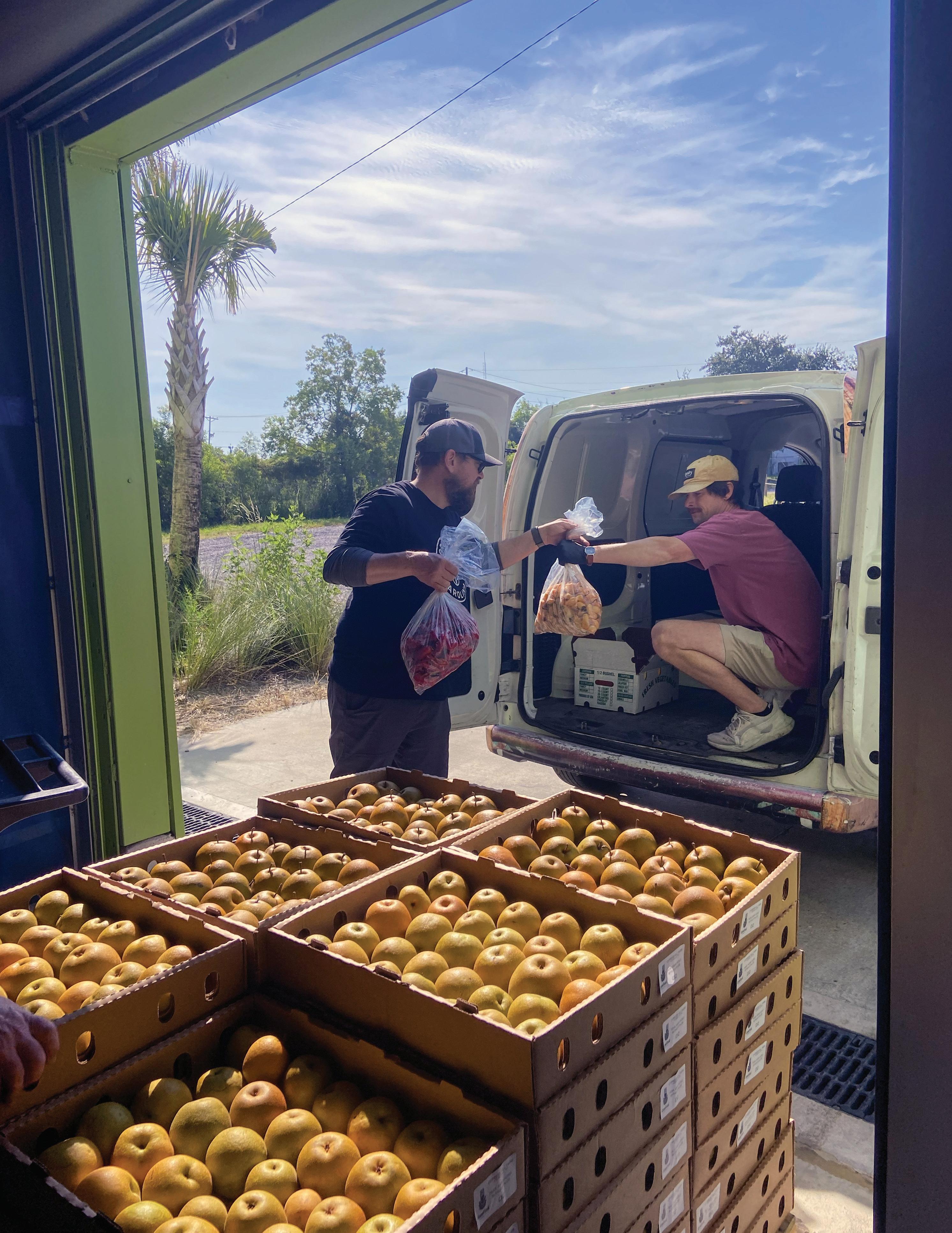
GrowFood Warehouse Operations Manager Paul Haire and Driver and Warehouse
Associate Matt Mays load produce in a GrowFood truck in September.
Battle for Wetland Protections: Taking a Stand
Despite the benefits of wetlands, the U.S. Supreme Court, in Sackett v. EPA, recently stripped federal protections for isolated wetlands, giving developers more leeway to disturb lands previously regulated under the Clean Water Act.
The Conservation League has long challenged ill-conceived development projects that threaten wetlands, and we’ll continue to fight for further protections to preserve these valuable natural resources.
This summer, the South Carolina Office of Resilience released the Strategic Statewide Resilience and Risk Reduction Plan to inform our state’s path forward. Conservation League staff served on multiple committees, along with hundreds of other stakeholders, to contribute to the 54 recommendations from this multi-year effort. The plan, released in July, recommends the development of laws and regulations for isolated wetlands—needed to fill the gaps created by the Sackett decision. A state framework of protections is urgently needed to further safeguard our wetlands and foster a resilient future.
THE BENEFITS OF WETLANDS
WILDLIFE HABITAT:
Provide critical habitat for waterfowl, fish, and shellfish and support commercial fisheries and recreational hunting and fishing.
for flood protection by acting as natural sponges, storing water and allowing for groundwater recharge.
as natural filters, helping to purify our waters by trapping sediment and removing pollutants.
Knowledge
Get to Know Us!
Get together with our staff and chat about our program work! Each month, we will feature a different opportunity to meet with a member of our team. Save the dates below for our first meetups in Charleston, find more details on our website and stayed tuned for additional opportunities to meet other Program staff.
October 10, 2023 – Land, Water, & Wildlife Program
November 8, 2023 – Communities & Transportation Program
Additional volunteer & engagement opportunities are on the horizon!
Stay in the loop by checking out our website or by signing up for our volunteer list!
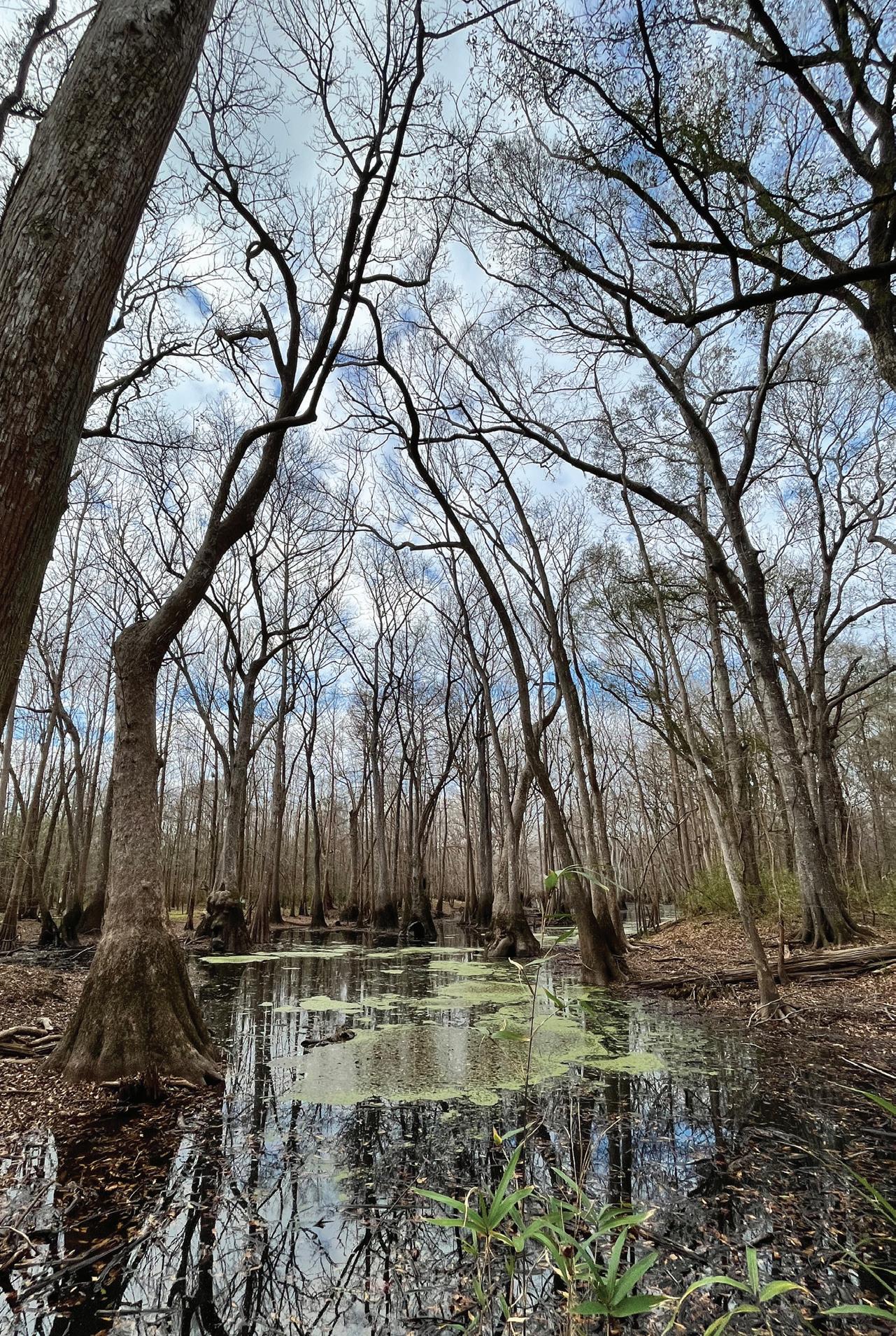
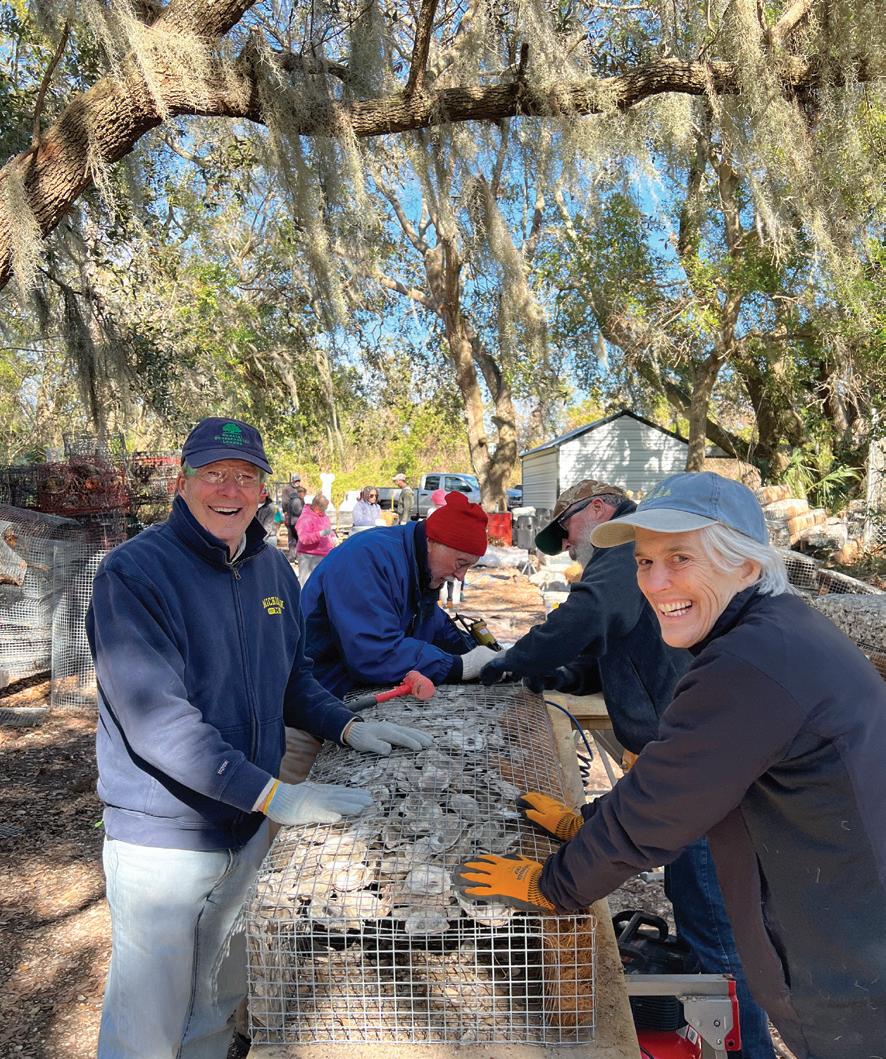
Oxbow wetland at Tillman Sand Ridge Heritage Preserve in Jasper County, South Carolina. Conservation League Board Member George Gephart and his wife, Pooh, volunteer at a 2023 manufactured wire reef fabrication.
Nature & Community in Balance
Working to protect the health of the natural resources of the South Carolina coastal plain and ensure a high quality of life for all of the people who live in and love this special place.