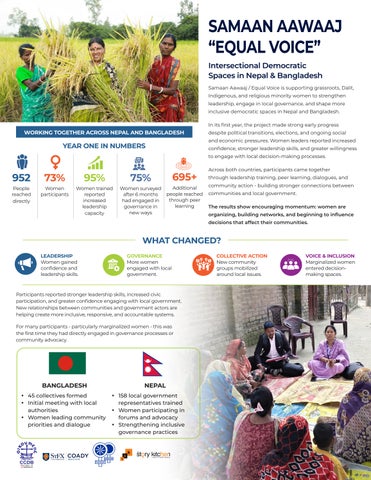
SAMAAN AAWAAJ “EQUAL VOICE” Intersectional Democratic Spaces in Nepal & Bangladesh
Samaan Aawaaj / Equal Voice is supporting grassroots, Dalit, Indigenous, and religious minority women to strengthen leadership, engage in local governance, and shape more inclusive democratic spaces in Nepal and Bangladesh.
WORKING TOGETHER ACROSS NEPAL AND BANGLADESH
In its first year, the project made strong early progress despite political transitions, elections, and ongoing social and economic pressures. Women leaders reported increased
YEAR ONE IN NUMBERS
confidence, stronger leadership skills, and greater willingness to engage with local decision-making processes.
952
People reached directly
73%
Women participants
95%
Women trained reported increased leadership capacity
75%
Women surveyed after 6 months had engaged in governance in new ways
695+
Additional people reached through peer learning
Across both countries, participants came together through leadership training, peer learning, dialogues, and community action - building stronger connections between communities and local government. The results show encouraging momentum: women are organizing, building networks, and beginning to influence decisions that affect their communities.
WHAT CHANGED? LEADERSHIP Women gained confidence and leadership skills.
GOVERNANCE More women engaged with local government.
Participants reported stronger leadership skills, increased civic participation, and greater confidence engaging with local government. New relationships between communities and government actors are helping create more inclusive, responsive, and accountable systems. For many participants - particularly marginalized women - this was the first time they had directly engaged in governance processes or community advocacy.
BANGLADESH y 45 collectives formed y Initial meeting with local authorities y Women leading community priorities and dialogue
NEPAL y 158 local government representatives trained y Women participating in forums and advocacy y Strengthening inclusive governance practices
COLLECTIVE ACTION New community groups mobilized around local issues.
VOICE & INCLUSION Marginalized women entered decisionmaking spaces.