
Through the interviews, participants identified the types of actions they would be able to take that served as indications of being treated equally, including being able to share information, opinions, and ideas, and taking part in decision making.
Through the interviews, participants identified the types of actions they would be able to take that served as indications of being treated equally, including being able to share information, opinions, and ideas, and taking part in decision making.
For me, equality means that the woman is not oppressed by her husband at home. To ensure that equality is respected, freedom from oppression, respect, equal participation in decision-making, and no sexual harassment needs to be guaranteed.
(Ethiopia)
[Equality means] sharing the same rights and duties. Nobody is better than another. We have the same chance, same opportunities. No one has privileges. (Haiti)
Previously, life is almost confined to the household, but now women are going outside and talking with others, and many of them applied to the administration and union council for different facilities like potable water and sewing machines. (Bangladesh)
Equality [comes] through in ownership. A woman has a right to have her name on land titles and other assets due to her contributions.
When my father-in-law died, the names of all his children – his sons and daughters – were added to the property.
(India)
There are equal rights fought for in our society. When there is a chance of raising questions in an equal manner, when husband and wife discuss equally, it ensures that there is equality in daily life.
(Ethiopia)
There has to be a distribution of work. As a woman, you don’t do everything as a man can do his share.
(Tanzania)

An emerging theme shows how collectivity has been the gateway to positive change. This collectivity is anchored in strong leadership qualities, including information sharing, organizing and mobilizing to advocate for the betterment of their communities, and providing support, advice, and mentorship to other women. Participants identified how much stronger they were in pushing for change when they worked together.
I do have active leadership participation, and it enabled me to establish a successful relationship with the Woreda leadership. This supports our plan to embrace more than 400 women as members. I also have a better relationship with WISE, which has enabled us to do our work successfully.
I slowly became a grassroot leader and started supporting more and more women like me. It gave me a sense of giving back.
The men of my village and surrounding villages find me knowledgeable and all know me. I am invited to all important village meetings and people approach me to learn about various topics – like availing loans, agricultural inputs, managing finances, etc.
(India)
Women in the community have been transformed; they are ready to train others and have a spirit of learning.
(Tanzania)
These group members are my community, we trust each other, I consider them as my family members.
(Bangladesh)
This program helped me a lot to expand my network and connect with multiple women in the country.
(Haiti)
Members of the women ’ s group all distribute blankets for extremely poor people bought from reserved money of the group.
(Bangladesh)
The women that I work with at SEWA are compassionate and try to understand each other’s problems. By talking to each other, we find solutions to problems. Each one cooperates with the others. (India)
I am putting in place a plan of action to start my support center for young teenage mothers. (Haiti)

Through ‘ENGAGE’, participants noted their increased involvement in their communities including: attending meetings and events, participating in decision making processes, supporting other community members, participating in elections, joining or leading committees and associations, and participating in advocacy efforts.
The study finds that income enhancing activities, when coupled with the relationship building and leadership development, leads to other improvements in lives of women including establishing safety nets, addressing financial needs of other family members, developing and sharing new skills and knowledge, and contributing to their communities through social entrepreneurship.
People in the community request that I participate in meetings, events and different festivals, and give space for me to speak. The Chairman, UNO, duty bearers, elite people, and stakeholders respect and honor me and call me to their meetings.
(Bangladesh)
People in the village consider me one of their own. Both men and women trust me. I’m able to impart agricultural knowledge, and I serve as the Minister of the Village Health Committee.
(India)
The men of my village and surrounding villages find me knowledgeable and all know me. I am invited to all important village meetings and people approach me to learn about various topics – like availing loans, agricultural inputs, managing finances, etc. (India)
I am a block leader. Women practice leadership at home with their families. There is also a revival of women ’ s leadership. Women are now active and, if something goes wrong, they realize that a woman is the first victim. Just like men, women work in social life to prevent crimes.
(Ethiopia)
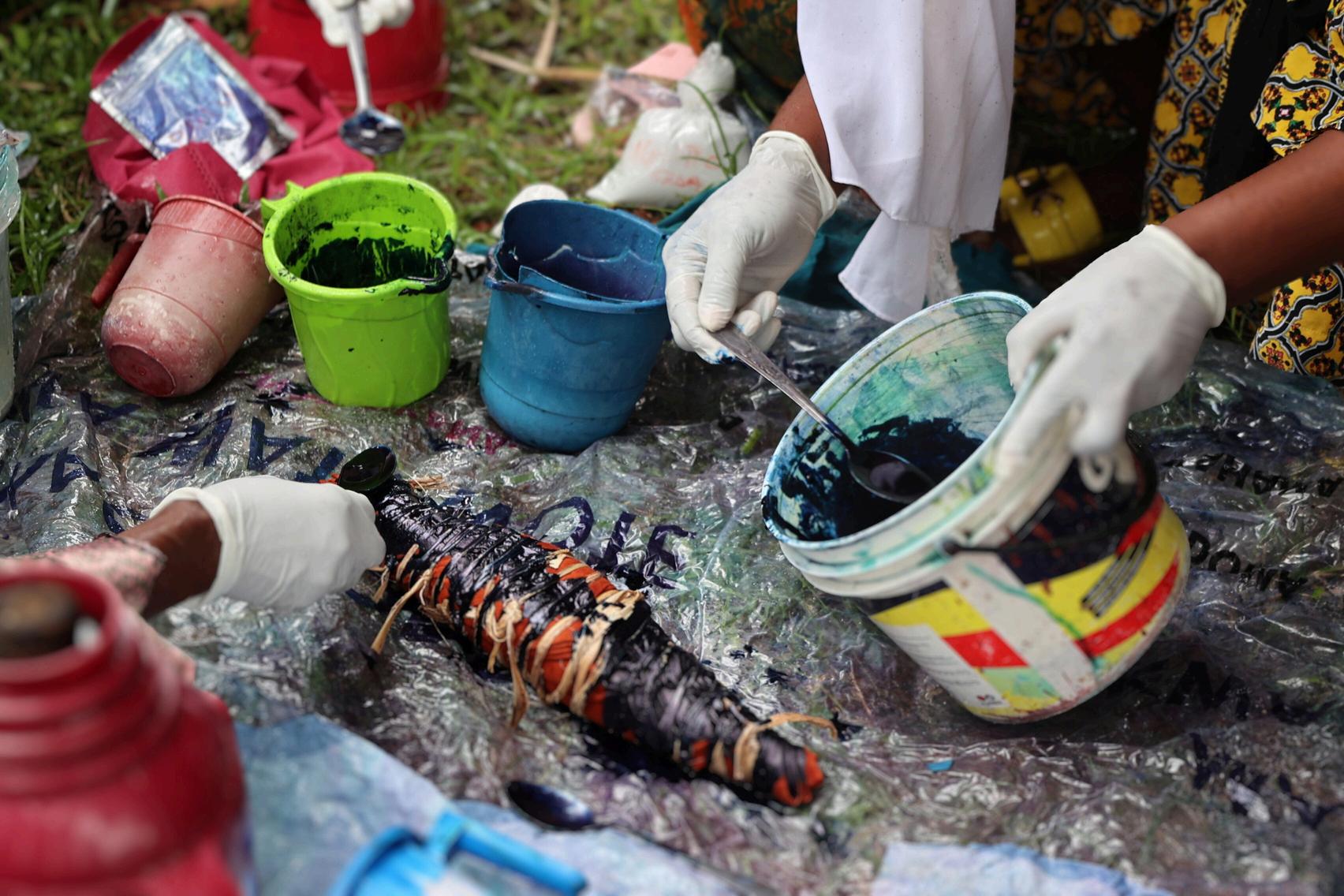
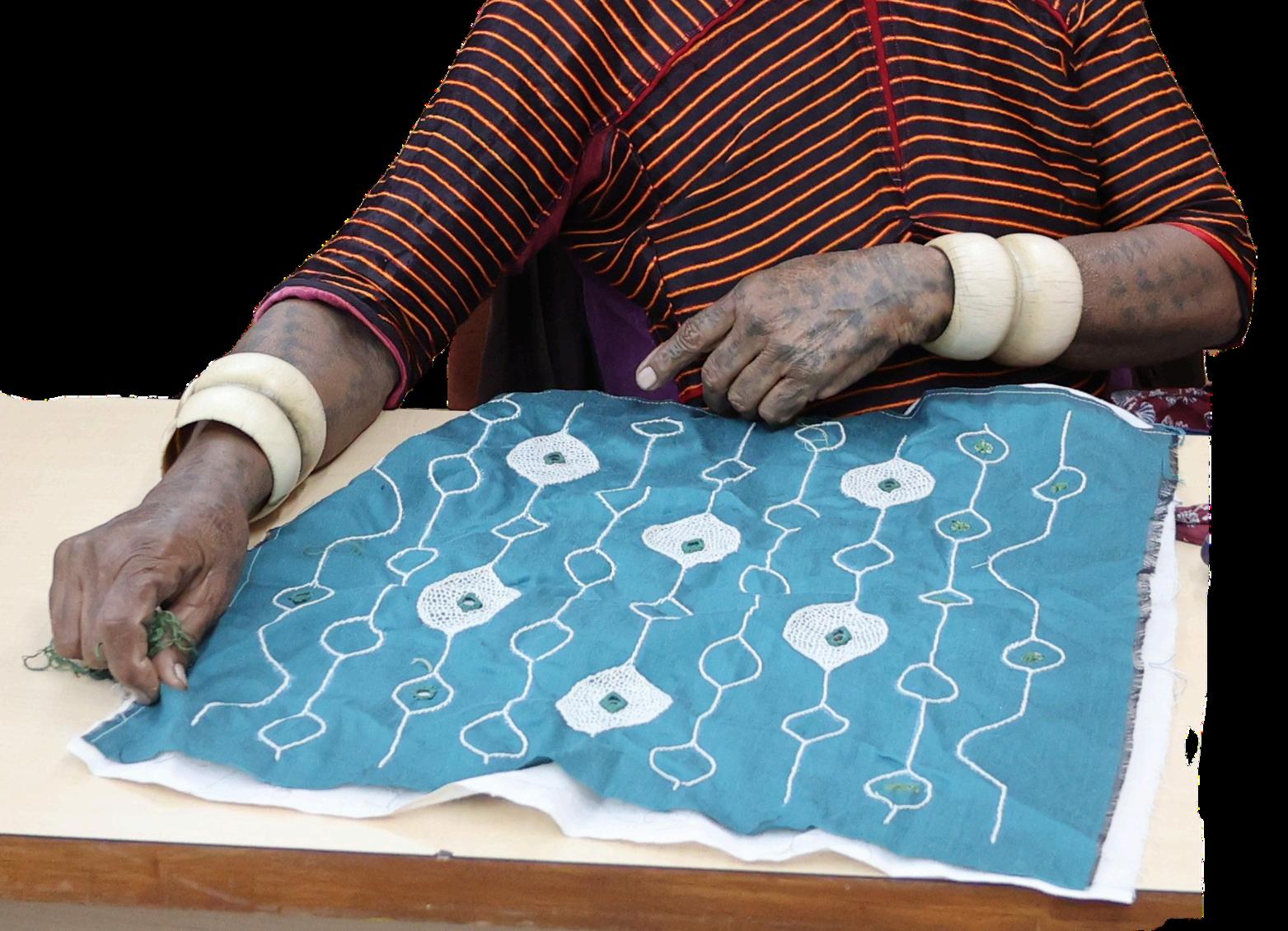
A SEWA participant recounted how when she first joined SEWA 30 years ago, women did not leave their homes or earn income, despite high levels of poverty. She had traditional embroidery skills, so when she learned of SEWA’s embroidery initiative, she joined the program, despite resistance from her family and community. This incomeearning activity has led to positive outcomes for her family.
agricultural land for my husband and sons, paid for education of my sons and even constructed our house from that income. Looking at my success, gradually more and more women came forward to join the embroidery initiative at SEWA and I helped link artisans from over 45 villages in my district to livelihood through embroidery.


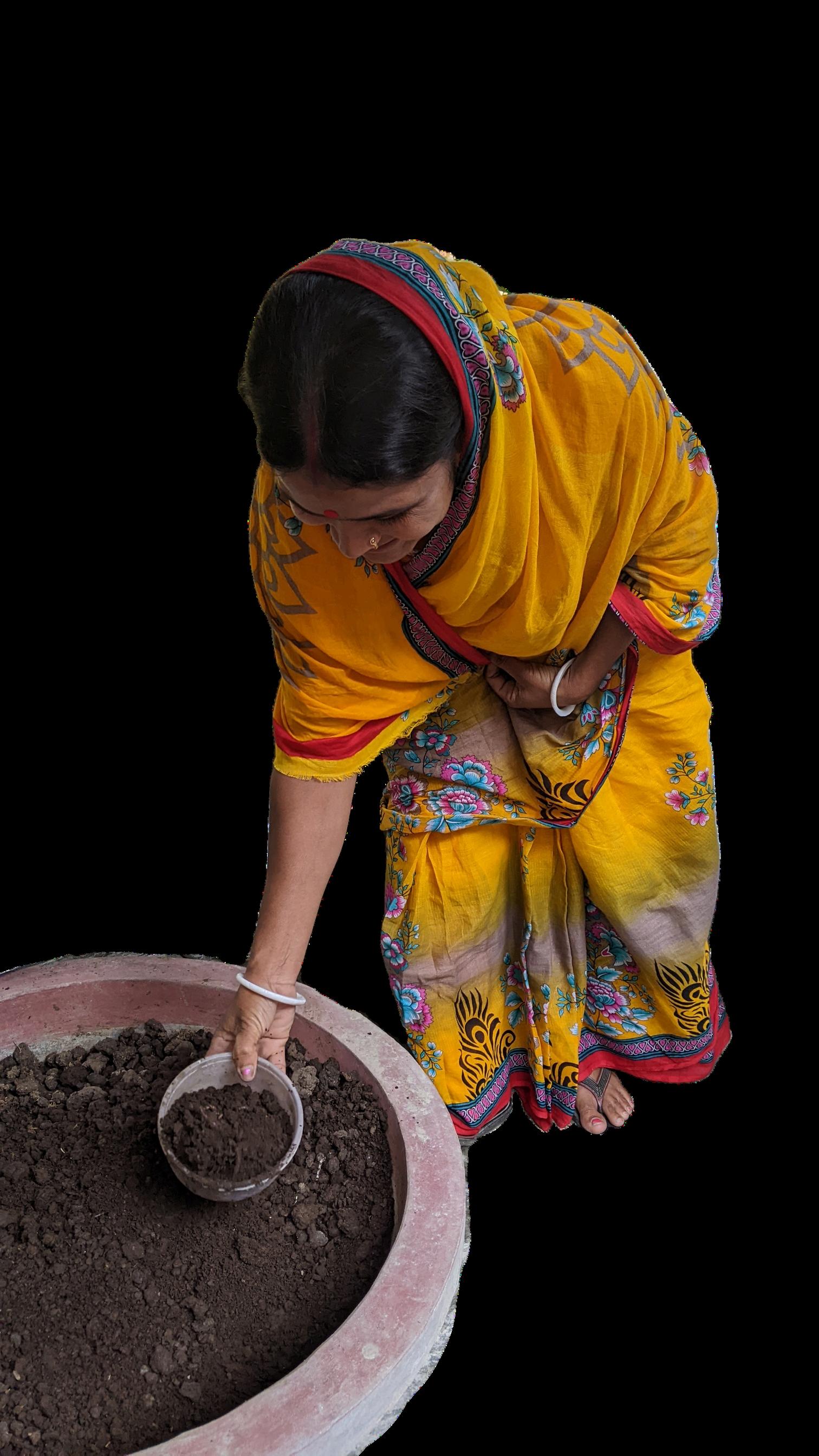


After receiving training, I cleaned my homestead land – it was barren – and started cultivating vegetables and implementing climate adaptive technologies, like hanging gardens, and started earning from that. I sold vegetables and earned 3000 taka selling chili and brinjal. I am very happy that I am now able to cover the education expenses for my kids.
I have two daughters and one son. My husband cannot do anything due to old age. My son and I maintain our family. My son works in an agricultural field, and I rear ducks, hens, cows, goats etc. By income coming from those, I maintain my family with my son.
CCDB participant

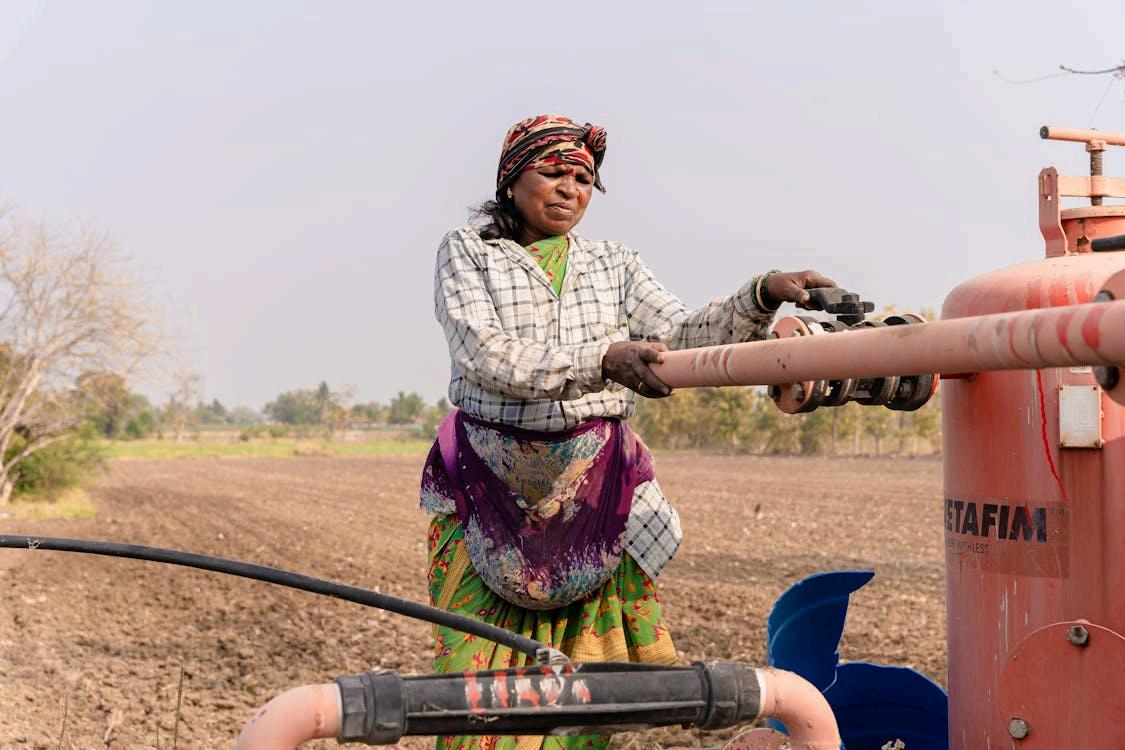
j , g g challenge faced by members in our district. Women had to walk several kilometers to fetch drinking water. Therefore, with SEWA’s support, I underwent training in handpump repair and became a handpump repair technician. I also trained 250 more sisters like me … and we formed a handpump repair cooperative and even got a contract from local government to repair over 400 handpumps in my district. Initially when we went to repair the handpumps, we were ridiculed and made fun of... because handpump repairing is traditionally categorized as a man ’ s job. But through our hard work and perseverance, we not only broke the gender stereotype but also helped solve the drinking water challenge in our district and generated dignified livelihood opportunities for us women. SEWA participant

coady.stfx.ca/engage
Engage: Women’s Empowerment and Active
Citizenship is a 6.5 year initiative co-designed by Coady Institute and five partner organizations in India, Ethiopia, Tanzania, Bangladesh, and Haiti. Coady is a convenor and is bringing these partners together in ways that they can share their expertise, learn from each other, and collectively explore new approaches and tools.
The project works primarily to support the leadership capacity of informal sector women in addressing key issues they are facing. This includes the future of work faced by women; engaging women in community governance; women ’ s leadership and feminist approaches, young women as entrepreneurs and agents of community change; and asset-based approaches to reducing urban and rural poverty through economic development.