Introduction
This research examines how the Organization for Women in Self Employment (WISE) has adapted and implemented Asset-Based and Community-Led Development (ABCD) within its organizational structures and practices The study is situated within the broader context of ENGAGE: Women’s Empowerment and Active Citizenship initiative funded by Global Affairs Canada and implemented between 2020 and 2026 across Bangladesh, Ethiopia, Haiti, Tanzania, and India ENGAGE was designed to advance gender equality and reduce poverty by strengthening women’s empowerment and active citizenship through non-formal education and community-led approaches. ABCD, an approach that is embedded within the ENGAGE project, has been a cornerstone of the community-level work WISE has conducted for many years.
Shifting attention from project-level application of ABCD, this study aims to observe how asset-based commitments are embedded, governed, and sustained within development organizations themselves. WISE staff and leadership were interviewed to share their insights through a qualitative study designed to purse this question: How has WISE adapted and implemented ABCD within its organizational structures and practices? Four interrelated themes are identified:
1 ABCD as an organizational logic for women’s empowerment;
2. the production of agency without dependency through responsibility, contribution, and reciprocity;
3 the governance of equality and dignity through accountability mechanisms and clear boundaries; and
4. learning and adaptation as modes of organizational governance.
WISE’s empowerment-oriented commitments require alignment across strategy, systems, and practice, through consistent and disciplined practices offering a case study of how this women-focused organization has institutionalized agency with dignity over time.
Context of the Study
ENGAGE: Women’s Empowerment and Active Citizenship is a 6.5-year international initiative funded by Global Affairs Canada The initiative is implemented through a partnership between the Coady Institute and five longstanding civil society organizations: Christian Commission for Development Bangladesh (CCDB), Centre Haïtien du Leadership et de l’Excellence (CLE), Organization for Women in Self-Employment (WISE) in Ethiopia, Self-Employed Women’s Association (SEWA) in India, and Tanzania Gender Networking Programme (TGNP) Each partner works within distinct socio-political and economic contexts marked by varying combinations of economic precarity, gender-based violence, informal labour structures, and civic constraints. ENGAGE operates as a multi-country consortium grounded in shared principles while allowing adaptation to local realities
At its core, ENGAGE seeks to contribute to women’s long-term empowerment and the expansion of active citizenship to support women’s capacity to exercise voice, influence collective decision-making, shape policy, and participate meaningfully in economic and political life. The initiative is structured around a layered theory of working across three interconnected levels:
Individual level: strengthening leadership capacities of women and supportive men for gender-equitable change.
Organizational level: enhancing the institutional capacity of civil society
organizations, particularly women-focused and grassroots organizations, to lead community-driven processes.
Systems and policy level: promoting the adoption and implementation of gender-equitable, community-driven policies and practices.
Key to the collaborative design was the creation of spaces for reflection and adaptation across contexts through communities of practice, workshops, exchanges, research, and collaborative monitoring processes. While Coady functions as coordinating institution, implementation authority remains grounded within country-level partners
Asset-Based Community-Led Development (ABCD) functions within ENGAGE as a cross-cutting approach intended to strengthen agency by shifting development practice away from deficit-oriented models and toward the recognition and mobilization of local strengths, skills, relationships, and economic capacities ABCD emphasizes community ownership of change processes, positioning women and communities as active agents. ENGAGE’s multi-country design encourages each partner to interpret, adapt, and institutionalize asset-based principles in ways that align with their organizational histories, governance arrangements, economic strategies, and political contexts
As the collaborative model of ENGAGE emphasizes opportunities for organizations to learn from each other, this study seeks to learn more from WISE on their longstanding experiences with ABCD
Asset-Based Community-Led Development in Ethiopia
ABCD evolved as a response to the deficit-oriented humanitarian aid models Ethiopia had experienced for decades that have framed communities primarily through their needs and problems (Peters, 2013). ABCD emphasizes the
recognition and mobilization of existing assets, including people’s skills, social relationships, associations, and locally embedded knowledge, as the foundation for community-led change (Kretzmann & McKnight, 1993; Mathie & Cunningham, 2005). Key to this shift is the repositioning of community members as contributors and decision-makers rather than beneficiaries of externally designed interventions.
In Ethiopia, ABCD grew through action research and NGO experimentation beginning in 2003 through partnerships among the Coady International Institute, Oxfam Canada, and local facilitating organizations (Peters et al., 2011; Peters, 2013) Early implementation involved multiple community groups across different regions and was accompanied by iterative evaluation processes designed to capture both tangible and intangible change. Evaluations documented outcomes such as increased confidence, collective problem-solving, and locally initiated livelihood activities, while also identifying methodological challenges, including measuring emergent and intangible change, attributing outcomes in multi-actor environments, developing locally responsive facilitation practices, and reconciling the priorities of multiple stakeholders (Peters et al, 2011; Peters, 2013).
The Organization for Women in Self-Employment (WISE)
From its inception in the late 1990s, Organization for Women in Self-Employment (WISE) WISE has worked with low-income, self-employed women and girls to promote self-reliance and improve quality of life in Ethiopia Its institutional vision centers on a society in which absolute poverty is reduced and women participate actively in national development (Organization for Women in Self Employment, n.d.). WISE has employed ABCD as one of its overarching approaches for over two decades (Peters, 2013)
WISE’s primary focus is the economic and social empowerment of women microenterprise operators using a coordinated approach that combines training with structured follow-up and credit access to foster enterprise sustainability (Haile, 2015). Women are brought together into Savings and Credit Cooperatives (SACCOs), which function as both financial institutions and collective platforms. Applying an ABCD mindset within the SACCO structure enables women to build from what they already possess knowledge, labour, relationships while using cooperative structures to expand access to financial and institutional resources. SACCOs operate through peer-based guarantees and collective accountability, reinforcing both financial inclusion and social cohesion Training encompasses enterprise development, financial literacy, leadership and management training, life skills education, health awareness, and literacy and numeracy support. The programs are structured to help participants recognize their skills, experiences, and social networks as resources for change, supporting both current livelihood needs and longer-term strategic interests within households and communities (Haile, 2015)
WISE as a Case for Studying Organizational Adaptation of ABCD
In practice, ABCD within WISE appears to operate at multiple levels At the individual level, training seeks to enhance knowledge, skills, attitudes, and practices. At the collective level, organizing into SACCOs builds shared economic infrastructure and collective voice. WISE’s cooperative model operationalizes asset-based principles through SACCOs and a Union structure that rely on women’s savings, peer accountability, and collective organization rather than external collateral or subsidy (Haile, 2015). The union ensures continuity and sustainability once WISE reduces direct involvement At the institutional level, the establishment of the Union and partnerships with other organizations indicates an effort to embed asset-based principles within durable governance structures.
WISE provides additional training and technical assistance to staff from governmental, non-governmental, private, and community organizations across Ethiopia furthering the outreach of WISE’s development model
Study Design
This study adopted a qualitative single-case research design (Yin, 2018) to examine how the WISE has adapted and implemented ABCD within its organizational structures and practices. WISE was selected because the organization had integrated ABCD approaches into its training curricula, cooperative development model, and enterprise support structures prior to its participation in ENGAGE providing an opportunity to examine how asset-based principles are translated into governance arrangements, operational routines, and leadership practices
Data analysis was guided by Reflexive Thematic Analysis (RTA), a qualitative approach oriented toward interpretive meaning-making and reflexive engagement with data (Braun & Clarke, 2023) to govern the interpretive construction of themes. RTA is suited to examining organizational practice, where meanings are shaped by histories, power relations, institutional commitments, and political constraints
Data were generated through in-person semi-structured interviews conducted by the researcher in November 2024, each lasting approximately 60–90 minutes Six participants were recruited from leadership, managerial, technical, and frontline training roles in order to capture how ABCD was articulated, operationalized, and governed throughout the organization. Ethical approval was obtained through the relevant institutional review process, and all participants provided informed consent prior to participation.
The interview guide was designed to prompt reflection on organizational practice across seven interrelated organizational domains. Each participant was invited to reflect across all domains, including areas beyond their immediate responsibilities:
Organizational culture: the shared values, norms, leadership orientations, and everyday practices through which community-led development and gender equity are enacted.
Organizational policy and practice: how ABCD principles are articulated in formal missions, policies, and strategic directions, and how these are translated into operational routines.
Decision-making processes: how authority, participation, and influence are distributed, including the extent to which women and community members shape organizational priorities and resource decisions.
Resource allocation: how financial, human, and material resources are distributed, and whether these allocations reflect asset-based and genderresponsive commitments.
Monitoring and evaluation: how implementation and impact are assessed, including the use of indicators, feedback mechanisms, and organizational learning processes
Training and capacity building: how staff and volunteers are supported to understand and apply ABCD principles, particularly in relation to advancing gender equity
Collaboration and partnerships: how WISE engages with external actors and community groups, and how partnerships are structured to reflect reciprocity, equity, and recognition of local strengths
Interview transcripts were analysed though iterative coding and interpretive
interpretive engagement with the data, consistent with RTA (Braun & Clarke, 2023). Quotes in this paper have been edited only for readability. The researcher’s positionality was understood as part of the analytic process The researcher’s longstanding engagement with ABCD through scholarship and partnership work within ENGAGE informed analytic sensitivity to questions of agency, institutional power, governance, and dependency At the same time, reflexive memoing was used throughout the analysis to examine how prior commitments to ABCD might shape interpretation to ensure accounts were interpreted from participants’ framing rather than assumed as inherently asset-based practices.
Four interrelated themes were identified:
1 ABCD as an organizational logic showing how it structures culture, decisionmaking, partnerships, and institutional sustainability.
2. How this logic produces agency without dependency, emphasizing responsibility, contribution, and reciprocity
3. How equality and dignity are actively governed through accountability mechanisms, safeguards, and clear organizational boundaries.
4 How learning and adaptation function as mechanisms of organizational governance, enabling WISE to maintain coherence, respond to change, and sustain empowerment over time without diluting core principles.
These themes provide a case-level account of how ABCD is localized within WISE as a coherent organizational practice, illustrating how empowerment is produced, protected, and sustained in a complex institutional and political environment
Theme 1: Asset-Based Community-Led Development as an Organizational Logic for Women’s Empowerment
ABCD at WISE functions as a shared orientation that informs organizational culture, decision-making, accountability, partnerships, and learning practices, shaping how the organization works beyond what it delivers
ABCD as lived organizational culture
ABCD at WISE is most clearly articulated as something that is lived and enacted within everyday organizational life:
Organizational culture…is manifested in the way that staff behave act…or believe and act. We have a very open organizational culture here because we believe that the women that we work with should have resources, [they] are not dependent on us. We are not up and they are down. No. We are there because of them. (Participant 1)
The rejection of hierarchical positioning reflects an asset-based logic in which women are recognized as agents rather than recipients, and the organization understands itself as accountable to them
ABCD as a governing principle rather than a flexible ideal
While ABCD at WISE is relational and value-driven, it is not informal or loosely held. It is actively governed through clear organizational expectations and boundaries that protect dignity and agency:
We respect people irrespective of their economic status, health status, ethnicity or religious affiliation or whatever…In our organization, the first thing that we tell a new staff member…if they, [are] unruly in their relationship with a community member, it's direct dismissal…from a job. If community members come and present their complaint about a staff for misbehaving with them, it's direct dismissal. (Participant 1)
This governance dimension is evident in how organizational culture is enforced. ABCD is not treated as a permissive or optional ethos
The other one is there is no free lunch here. I mean, they cannot come and get something for free. Either they have to earn it through competitions… when it comes to community members, or it's their allowance, during training or forums…If you ask a community member, they know that they cannot be given any free thing, except during the COVID We distributed some materials and cash to address the consequences of COVID That was the one year that we did handouts to communities (Participant 1)
ABCD is stabilized through firm governance mechanisms that protect community dignity by emphasizing contribution, responsibility, and agency, while direct dismissal underscores that organizational authority is exercised to safeguard these principles
ABCD as a principle shaping collaboration and institutional relationships
The organizational nature of ABCD becomes particularly visible in how WISE approaches collaboration and partnerships:
ABCD has its own principles. So, they don't have something, we do have something, so we share both what they have and what we have. We provide what we have for them, they give what they have. So, based on this principle, we work together with partners (Participant 2)
Partnerships are structured around mutual incompleteness and reciprocal asset exchange. ABCD structures decision-making about relationships.
ABCD as an institutional sustainability logic
At WISE, ABCD is also mobilized as a way of thinking about institutional resilience and sustainability, extending beyond community-level practice to shape how the organization understands its role within broader development ecosystems.
Sustainability is defined here as the capacity of institutions to support agency, resist dependency, and sustain empowerment over time. ABCD informs how WISE engages with other organizations and seeks to influence prevailing NGO practices:
Most NGOs like to give a free handout, free gift for community…. ABCD approach [is] opposite. ABCD approach is very effective because they use their own resources... When you give painkiller, they can get a relief for few hours and minutes. And again, the pain comes. The free handout is like that ABCD is important to create a resilient and sustainable institution So, we try to influence them (Participant 3)
The metaphor of the painkiller underscores the distinction: while immediate assistance may alleviate symptoms, it does not build the conditions necessary for long-term resilience. ABCD strives to strengthen institutional and community capacities by mobilizing existing resources. ABCD functions as the framework through which empowerment is imagined, legitimacy is defined, and institutional action is justified.
Theme 2: Producing Agency Without Dependency Through Responsibility, Contribution, and Reciprocity
The aspects of responsibility, contribution, and reciprocal relationships noted above, show how WISE advances a form of empowerment, grounded in relational support and institutional accountability, that is cultivated through expectations, relationships, and shared responsibility.
Agency through responsibility
Empowerment involves identifying agency through responsibility, contribution, and the recognition of existing capacities:
Everybody has something….So, they have to know that. We are just minimizing handouts and free supports. We are promoting to recognize their skill, to use their money, to start saving and even to generate their additional income from their own efforts. (Participant 4)
Women are positioned as individuals who already possess skills, resources, and the capacity to act WISE sees empowerment as a relational and ethical practice that requires participation and responsibility through recognizing, mobilizing,
and building upon what women already have. The emphasis on minimizing handouts is not framed as withdrawal of support, but as a strategic effort to avoid practices that undermine agency Agency as relational
WISE’s approach to agency is grounded in a deliberate rejection of hierarchical relationships between the organization and the women it works with. Women are the reason for the organization’s existence and the primary source of its legitimacy as noted earlier. Women are positioned as agents whose capacities and resources precede organizational intervention Agency is further enacted in everyday organizational practice, particularly through how access and voice are structured:
We don’t have a culture of hierarchy I don’t have a secretary, and you know, they don’t need to ask for appointment It’s always open. We use an opendoor policy with my office, so there is no hierarchy For instance, a trainer can directly come to me, passing the training head, and if she wants, she can complain, present her complaint. (Participant 1)
Here, agency is enacted through direct access and institutional openness rather than mediated through formal chains of authority, signalling an intentional flattening of hierarchy, enabling women and staff to engage leadership directly. The ability to raise concerns or lodge complaints is treated not as disruption, but as a legitimate form of participation and accountability Beyond individual autonomy, agency emerges through relational proximity, accessibility, and the recognition of voice within organizational relationships. Organizational authority remains present, but it is rendered accessible and responsive rather than distant or controlling
Responsibility and contribution as conditions of empowerment
Empowerment at WISE is organized around expectations of responsibility and
Our partnership is both sides. We provide for them our knowledge, skills, what we have. And we also take from them what they have, which help for us to support our activities, our programs. So, we work together with likeminded organizations to achieve our missions. (Participant 2)
Relationships require contribution, learning, and shared responsibility
Empowerment is framed as interdependence without hierarchy, where agency is sustained through reciprocal obligation.
Reciprocity as the operational form of agency
Reciprocity emerges as the operational mechanism through which agency is enacted:
As I said, the partnership starts by giving and taking We provide, for example for local structures WISE provide trainings So, after providing this training, we follow them, how they implement… If we come to address their challenge, we support them… this makes mutual understanding and trust between us. (Participant 2)
Reciprocity is built through follow-up, responsiveness, and shared problemsolving. Agency is sustained through ongoing engagement, reinforcing empowerment as a process practiced over time.
Resisting handouts as a strategy for sustainability
WISE links agency without dependency to institutional sustainability.
Empowerment is framed as inseparable from long-term resilience, both for individuals and organizations, as noted above with the painkiller analogy. Agency must endure beyond projects, funding cycles, or organizational presence.
Empowerment is future-oriented and institutionally grounded
Theme 3: Governing Equality and Dignity Through Accountability, Safeguards, and Clear Boundaries
WISE advances women’s empowerment through a governance approach that combines respect, accountability, and firm boundary-setting Equality is institutionalized through rules, safeguards, and organizational responsibility. Rather than avoiding power, WISE exercises power deliberately to prevent harm and protect dignity
Respect and equality as governed organizational commitments
At WISE, respect and equality are not left to individual discretion or interpersonal goodwill. They are formalized through organizational rules and procedures that apply across roles and levels to ensure respect and dignity are institutional obligations:
Yeah, we have a code of conduct here When new staff come to the organization, they should sign the code of conduct [where] it’s clearly put each rule of the organization (Participant 3)
Equality is governed through explicit expectations that define acceptable behaviour and prohibit discrimination or harassment, and to ensure all interactions protect dignity and prevent harm:
There is no room for disrespecting our target members in our organization It’s forbidden Disrespecting them because they are low-income women is forbidden when they come to us It is forbidden to disrespect or to show unnecessary action to them. (Participant 2)
Respect and dignity are governed through explicit prohibitions that apply regardless of circumstance.
Accountability as protection rather than punishment
Equality is actively protected through accountability mechanisms that provide consistent channels for reporting harm and responding to violations that are not
dependant upon personal relationships or informal negotiation:
If they faced any inequality with gender or harassment, they can report. We have a safeguarding task force to collect a complaint. (Participant 3)
The staff, if we don't serve properly, she will be asked…[we have] responsibility, accountability. It's restricted here…. it's encouraging us to value for one person. (Participant 6)
Organizational authority is exercised to safeguard dignity and prevent the reproduction of unequal or harmful relations
Exercising power deliberately to prevent inequality Authority is exercised through planning, oversight, and intervention aimed at preventing harm before it occurs:
Before going to implement the plan, we have to check the plan to be fit with the problem of the community and accepted by the community. (Participant 5).
Plans are checked to ensure alignment with community realities rather than to override them. The institutionalization of safeguards and accountability mechanisms raises questions about the relationship between empowerment, discipline and forms of governance that regulate conduct This tension does not negate the asset-based orientation; rather, it underscores that empowerment requires structured authority to prevent harm, even as that authority must remain subject to ongoing reflexive examination. By governing dignity rather than assuming it, WISE creates structured conditions in which empowerment can be practiced.
ABCD as a Systemic Organizational Approach at WISE
1
This section illustrates how ABCD functions as a guiding organizational logic that structures how empowerment is conceptualized, how authority is exercised, and how learning circulates within the organization, shifting the analytical lens from what organizations do with ABCD to how organizations are shaped by ABCD. This perspective helps clarify the organizational conditions under which asset-based approaches remain politically generative, resistant to dependency-producing interventions, and responsive to women’s lived realities over time ABCD operates across three interrelated organizational levels at WISE: strategic orientation, managerial and governance systems, and operational practice with women and communities:
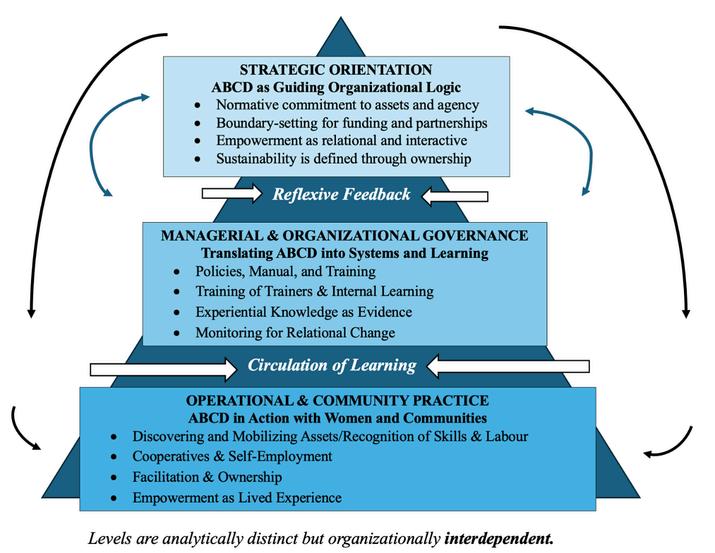
In this study, organizational logic refers to a patterned configuration of normative commitments, governance arrangements, decision-making criteria, and learning practices that shape how an organization defines legitimacy, authority, and sustainability Rather than a set of tools or techniques, a logic operates as a structuring orientation that governs what forms of action are considered legitimate, what boundaries are enforced, and how empowerment is interpreted across institutional domains
Figure 1: ABCD as a Systemic Organizational Logic
Level 1: Strategic Orientation (ABCD as a Guiding Organizational Logic)
At the strategic level, ABCD shapes how WISE understands development, empowerment, and its own institutional role Strategy is grounded in the conviction that women and communities possess existing assets, capacities, and forms of knowledge that must constitute the starting point of any meaningful empowerment process WISE prioritizes strategies that reinforce women’s selfemployment, collective organization, and financial autonomy--pathways through which confidence, negotiation capacity, and social recognition are built over time. ABCD operates at the strategic level as a filter for decision-making. Choices regarding partnerships, funding sources, and program design are evaluated against this asset-based orientation.
Level 2: Managerial and Organizational Governance (Translating ABCD into Systems, Policies, and Learning)
ABCD is embedded it into the everyday rules, routines, and decision-making structures of the organization through policies, planning tools and training materials--ensuring that asset-based thinking is not dependent on individual staff members or isolated projects. Manuals, codes of conduct, and planning processes reflect shared expectations around agency, responsibility, reciprocity, and dignity, formalizing ABCD as part of the organization’s operating framework This institutional embedding helps stabilize the approach over time, particularly in the face of staff turnover, project cycles, and shifting donor requirements.
Decision-making processes further reflect this asset-based governance orientation by privileging experiential knowledge drawn from women members, frontline staff, and community actors, shaping program adjustments, resource allocation, and strategic priorities. Monitoring and evaluation results document qualitative forms of change, including shifts in confidence, decision-making
capacity, negotiation within households, and collective action among women. These forms of evidence feed into organizational learning and governance.
Level 3: Operational and Community Practice (ABCD in Action with Women and Communities)
At the operational level, ABCD is most immediately visible in WISE’s direct engagement with women, cooperatives, and community groups through training, cooperative development and everyday interactions with women. Women’s existing skills, labour, social relationships, and aspirations are the primary resources for change Facilitators work with women to recognize and strengthen capacities that are often rendered invisible within their households and communities. Women are supported to assess what they can contribute individually, how they can organize collectively within cooperatives or savings groups, and how community-level relationships and structures can be leveraged to support shared goals. The experiences, challenges, and insights generated through work with women feed back into managerial learning processes and inform ongoing strategic reflection.
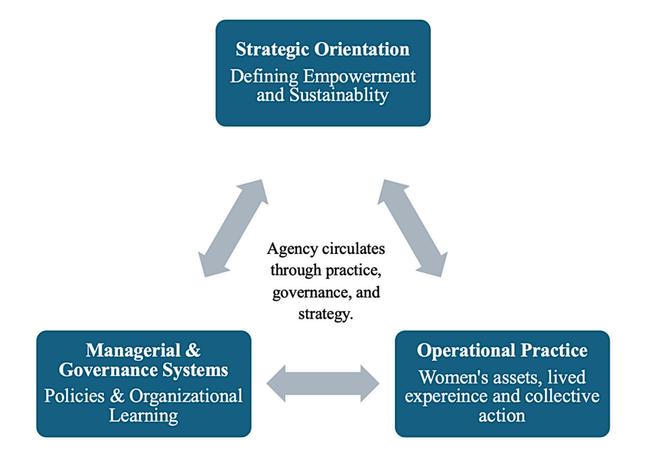
Figure 2: Circulation of Asset-Based Logic Across Domains
The three realms of strategic orientation, managerial governance, and operational practice illustrate how ABCD functions at WISE as a cyclical, systemic organizational approach Commitments to agency, reciprocity, responsibility, and dignity holds the system together, ensuring that governance and practice remain aligned even as contexts shift and new challenges emerge. Women’s experiences, reflections, and collective actions act as a continual source of legitimacy, learning, and direction, feeding back into managerial processes and strategic reflection. Through this circulation, ABCD remains dynamic and responsive, allowing the organization to adapt without losing coherence.
Final Thoughts
Organizations seeking to adopt asset-based approaches may need to look beyond training staff in ABCD tools and instead examine whether strategic decisions, funding relationships, accountability mechanisms, and learning systems align with asset-based commitments. Without alignment at the governance level, asset-based practice risks becoming episodic or symbolic. Sustaining empowerment requires organizations to scrutinize potential partners Protecting agency sometimes involves declining funding arrangements or program models that undermine mutual contribution and ownership. While such decisions may carry financial and institutional costs, they appear central to maintaining coherence between values and practice. Learning processes are pivotal. When experiential knowledge from women and frontline practice circulates into managerial and strategic decision-making, asset-based commitments remain grounded and adaptive. When circulation weakens, strategy risks becoming detached from lived realities. Organizations committed to empowerment may therefore benefit from strengthening internal mechanisms that allow practice to shape governance rather than merely implement it. The WISE case shows that durability of agency depends on how
institutions continuously structure relationships, allocate authority, define boundaries, and interpret sustainability.
References:
Braun, V, & Clarke, V (2023) Toward good practice in thematic analysis: Avoiding common problems and be(com)ing a knowing researcher International Journal of Transgender Health, 24(1), 1–6.
Fiala, N, & Riva, L (2017, October) Do non-profit organizations learn? Evidence from a random sample of NGOs in Uganda (Working paper).
Haile, M T (2015) Women’s entrepreneurship development in Ethiopia: A case study of Women in Self Employment (WISE) [Master’s capstone], SIT Graduate Institute
Kretzmann, J., & McKnight, J. (1993). Building communities from the inside out. ACTA.
MacLeod, M A , & Emejulu, A (2014) Neoliberalism with a community face? A critical analysis of asset-based community development in Scotland Journal of Community Practice, 22(4), 430–450.
Mathie, A , & Cunningham, G (2005) Who is driving development? Reflections on the transformative potential of asset-based community development. Coady Occasional Paper, No 5
Organization for Women in Self Employment (nd) About us
Peters, B. (Ed.). (2013). Applying an asset-based community-driven development approach in Ethiopia, 2003–2011: Final internal evaluation report Coady International Institute
Peters, B, Gonsamo, M, & Molla, S (2011) Capturing unpredictable and intangible change: Evaluating an asset-based community development (ABCD) approach in EthiopiaCoady Occasional Paper, No 10
To learn more:
coady.stfx.ca/engage
Organizations participated in this research:
Funding provided by: