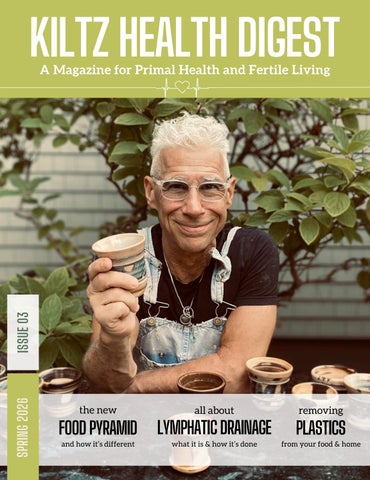
KILTZ HEALTH DIGEST
SPRING 2026
ISSUE 03
A Magazine for Primal Health and Fertile Living
the new
all about
removing
FOOD PYRAMID
LYMPHATIC DRAINAGE
PLASTICS
and how it’s different
what it is & how it’s done
from your food & home
a note from dr. rob kiltz
A FRESH START W E LC O M E S P R I N G ! It’s a time for rebirth, clarity, and shedding the heavy layers of the past. Just as the earth wakes up and begins to bloom, I want to invite you to consider this your personal invitation for a metabolic fresh start.
Remember, health is not a destination; it’s a daily practice of self-love. This spring, be kind to yourself. Slow down, breathe, and fuel your body with the whole foods that nature intended.
In nature, spring is about simplicity. In our health, it should be the same. We often overcomplicate wellness with endless "to-do" lists, but I believe the path to health is found in "to-don'ts." Let’s shed the inflammatory fuels—the sugars, the grains, and the industrial oils—that keep us feeling sluggish and "stuck."
I am so proud of this tribe and the transformations I see every day. Let’s make this season our most vibrant one yet. With love and faith in your journey,
By returning to the stable, life-giving fats of our ancestors: ribeye, butter, and eggs, and embracing the power of intermittent feasting, you aren't just changing your diet; you are recalibrating your body’s internal clock. You are clearing the "metabolic traffic jam" and allowing your body to heal from the inside out. Even the government is finally recognizing the importance of healthy fats. The release of the new inverted food pyramid offers hope for positive change in public health as Americans begin to understand the importance of consuming more nutrient-dense foods and reducing their consumption of unhealthy processed foods. If you need help navigating a path to better health, our Health Coaches are just a phone call away. Check out our Kiltz Health Coaching Program on page 13. Our team of coaches are ready to help you determine what wellness looks like for you and how to achieve your goals. They provide guidance based on their own experiences and training, tips and tricks for sticking to your chosen lifestyle, and support for the mind and body.
2
Scan to subscribe KiltzHealth.com
Dr. Rob Kiltz
contents
02 a note from dr. rob kiltz 04 the new food pyramid and how it’s different
invisible invader: 06 the microplastics in your diet
16 bulgogi
easy to prepare “fire meat” that’s tender & tasty
the 18 deconstructing "lipotoxicity" fallacy is your high-fat diet actually toxic?
how you can minimize exposure
10 lymphatic drainage
20 good reads
more titles for your ‘TBR’ pile
can help boost immunity
12 health coaching and how it can help transform your health
21 upcoming events don’t miss these fun & informative meat-ups!
22 success stories
read about two life-changing experiences with carnivore
3
20 25 –2 03 0
19 92
Di et ar y
Di et ar y
Gu id el in es fo rA m er
ic an s
Gu id el in es fo rA m er
ic an s
THE NEW FOOD PYRAMID: Turning Nutrition Upside Down
IMAGE SOURCE: https://www.businessinsider.com/old-food-pyramid-vs-new-rfk-1980-1992-myplate-2026-1
For decades, grains were heralded as the foundation of a healthy diet. This dietary guidance shaped food pyramids, school lunches, and household habits across America. Recently, that model has shifted. Modern nutritional advice now emphasizes “real food,” highlighting whole, nutrient-dense options such as quality proteins, dairy, healthy fats, vegetables, and fruits. The 2025–2030 Dietary Guidelines for Americans, which were released by the USDA in January, reflect an evolution, shifting away from rigid macronutrient dogma toward food quality, metabolic health, and individual needs—a shift that aligns closely with Dr. Kiltz’s BEBBIS approach, a simple framework grounded in nutrient density, satiety, and ancestral wisdom. The Evolution of Dietary Guidelines In 1992, the USDA introduced the food pyramid, which quickly became the cornerstone of American nutrition education. Grains made up the base, while fats huddled at the top, revealing a clear message: carbs are king and fat is the enemy. The pyramid eventually evolved into MyPlate, and the guidelines got wordier, but the message
4
This shift is a fundamental reassessment of how we should fuel our bodies for optimal health. We are designed to thrive on the nutrients and energy found in animal-based foods and their fats.
remained consistent: eat less fat, load up on grains and count your calories. Despite Americans diligently following this advice, rates of obesity, diabetes, and metabolic disease continued to rise. If the guidelines were sound, why were Americans getting sicker? It was time for a fundamental re-evaluation of what truly fuels our bodies for optimal function. The Science Behind the Shift Decades of nutritional dogma told us to fear fat, despite a lack of scientific backing. We now know fat is not the enemy. It’s fundamental to human health. Human brains are made up of 60% fat, which further solidifies the fact that fat is very important. When you replace processed carbs and seed oils with nutrient-dense animal fats, your body responds. A high-fat diet supports brain function, hormone production, immune response, and nutrient absorption. The results are measurable: lower inflammation markers, better insulin sensitivity, and stable energy levels throughout the day. Fat keeps you full for hours, eliminating the blood sugar roller coaster that drives cravings and weight gain. This isn't new science, it's ancestral wisdom backed by modern research.
Give the BEBBIS Diet a Chance Reconsidering everything you’ve been taught about food can feel uncomfortable. But meaningful change often begins in an uncomfortable state. BEBBIS invites curiosity, experimentation, and self-trust, while rejecting a one-size-fits-all model to nutrition. Consider exploring how to integrate these principles into your life. Small changes can lead to significant improvements in energy, mood, and overall wellbeing. Talk to your doctor. Try it for 30 days. Your body will tell you the truth. Dr. Kiltz's BEBBIS Diet refines nutrition down to the essentials: Bacon, Eggs, Butter, Beef, Kiltz’s Ice Cream (occasionally), and Salt. Combined with Intermittent Feasting, BEBBIS is a return to ancestral eating, prioritizing the bioavailable nutrients and healthy fats our bodies are designed to use while providing time to rest and digest between meals.
this approach can significantly benefit conditions like Polycystic Ovary Syndrome (PCOS), a common cause of infertility. Reduced Inflammation: Chronic inflammation is a silent aggressor in many modern diseases. While grains and processed foods can often be inflammatory for sensitive individuals, a diet rich in healthy fats and quality proteins, while minimizing processed elements, tends to be inherently antiinflammatory. The new Dietary Guidelines' move toward this model is a testament to evolving scientific understanding and recognition of the benefits of a nutrient-first approach. Better health is all about empowering your body with the fuel it was designed to run on.
Why This Shift Matters for Your Health The alignment of the new guidelines with BEBBIS principles offers several compelling benefits: Metabolic Reset: For many, a diet high in refined carbohydrates leads to constant blood sugar spikes and crashes, contributing to insulin resistance and metabolic dysfunction. By shifting the focus to healthy fats and proteins, the body learns to burn fat for fuel, leading to more stable energy levels, reduced cravings, and often, improved weight management. This metabolic flexibility is crucial for overall vitality. Nutrient Density: Animal-based foods are incredibly nutrient-dense. Red meat, for instance, is a powerhouse of iron, B vitamins, and zinc – essential for energy production, immune function, and cellular repair. Eggs are often called nature's multivitamin, packed with choline, vitamins A, D, and E. Butter, once demonized, is now recognized for its healthy saturated fats and fat-soluble vitamins. These components are vital, not just for basic survival, but for thriving. Hormonal Balance & Reproductive Health: From a fertility perspective, this dietary shift is particularly exciting. Hormones are derived from fats, and cholesterol is a precursor to crucial reproductive hormones such as estrogen, progesterone, and testosterone. Adequate intake of healthy fats and fatsoluble vitamins (A, D, K2) found in animal products supports robust hormonal health, which is foundational for both male and female fertility. Furthermore, stable blood sugar levels fostered by
5
THE INVISIBLE INVADER: MICROPLASTICS IN YOUR DIET
They’re in the air, water, and soil. They’re unavoidable. How can you minimize your exposure? Did you know the average person consumes five grams of plastic every week? That’s the equivalent of eating a credit card. Weekly. They’re in the water we drink, the food we eat, the clothes we wear, and the air we breathe. Microplastics have infiltrated every part of our lives. There’s no denying that it’s nearly impossible to completely eliminate plastic exposure. But through simple switches in your habits, and shopping choices, you can significantly reduce your exposure. What are Microplastics? Microplastics are invisible plastic particles smaller than 5 millimeters. Despite their tiny size, they’re a pervasive pollutant found in oceans, air, soil, food, and even our bodies. Microplastics enter our food chain through multiple pathways. Agricultural soil absorbs degraded plastics, which plants then take up through their root systems. Ocean creatures ingest plastic particles that accumulate in the food chain. Food processing and packaging add more contamination. Even the water we drink carries plastic particles from degraded bottles and pipes.
6
The Health Impact The long-term health implications of microplastics is still under investigation. But scientists have found plastic particles in human organs and tissue, including the brain, heart, stomach and lymph nodes. What we do know so far is concerning. A 2024 study published in the New England Journal of Medicine linked microplastics to increased cardiovascular events. Research also shows they disrupt hormone balance, trigger chronic inflammation, interfere with immune function, impact metabolic health,and may impact fertility. We do not have all the answers yet, but we have enough to identify the main offenders and take action. Where Microplastics Hide in Your Diet Coffee: The Issue: Many people start each day with a cup of coffee they brew at home with a single-serving pod or drip coffee maker. Many coffee pods and singleserve cups include plastics that break down as coffee is made. The machine itself is another source of microplastics as the inner parts are typically plastic— both in single-cup brewers and drip coffee makers. Water that sits in a plastic water tank can be contaminated before it even gets heated up and
DID YOU KNOW? your morning cup of coffee may contain microscopic debris with hidden health risks.
forced through the plastic pod. The Fix: Pods and cups made from stainless steel are safer and less expensive in the long run. Stainless steel is safer to heat than plastic. While the steel pods cost more initially, they can be washed and used repeatedly, as opposed to single-use plastic. Tea The Issue: When you brew tea with a plastic tea bag, you may be releasing 11.6 billion microplastics into your cup. Even paper tea bags often contain plastic sealants. Add contaminated tea leaves to the mix, and your cup becomes heated up plastic with a side of tea. The Fix: Choose loose-leaf tea or certified plastic-free tea bags. Brew in glass or ceramic. Fruit & Veggies The Issue: Plants absorb microplastics through their root systems. Shockingly, apples and carrots are the most contaminated fruits and vegetables. The Fix: Choose a meat-based carnivore diet! But if you are consuming some fruits and vegetables, be sure to wash all produce thoroughly. Peel when possible. Choose organic and locally grown options to reduce agricultural plastic exposure. Shrimp The Issue: The worst offender on the list. A single serving can contain over 300 microplastic pieces. Bottom-feeders like shrimp consume contaminated sediment, concentrating plastics in their bodies. The Fix: Choose wild-caught seafood from cleaner waters. Opt for larger fish over filter-feeders and bottom-dwellers. Chewing Gum The Issue: When you unwrap a piece of gum, you are essentially chewing plastic. A single gram of chewing gum contains 637 microplastic particles. Most are released in the first eight minutes of chewing and go straight into your system.
The Fix: Skip it entirely. If you need fresh breath, try mints or natural alternatives. Rice The Issue: Regular rice contains 3-4 mg of microplastics per 100 grams. Instant rice? A whopping 13 mg per serving. Rice plants absorb microplastics from contaminated soil and irrigation water. The Fix: Rinse rice thoroughly before cooking to reduce microplastic content by up to 40%. Choose organic when possible. Processed Proteins The Issue: Studies show 90% of both animal and plant-based proteins contain microplastics. Processing increases contamination. Chicken nuggets, fish sticks, and plant-based meat alternatives are particularly high-risk. The Fix: Choose whole, minimally processed proteins. Grass-fed beef, pasture-raised chicken, and wild-caught fish in their whole form contain significantly fewer microplastics. Bottled Water The Issue: A single liter of bottled water contains an average of 240,000 plastic particles—nearly twice as much as tap water. The plastic bottle itself leaches particles into the water, especially when exposed to heat or sunlight. The Fix: Switch to filtered tap water in glass or stainless steel bottles. Sea Salt The Issue: Ironically, the salt marketed as the purest option contains more microplastics than regular table salt. Ocean contamination means sea salt harvests include plastic particles along with minerals. The Fix: Consider high-quality table salt or look for brands that test for microplastic contamination. 7
Practical Steps to Reduce Your Exposure In the Kitchen:
✔️Ditch plastic containers and use glass or stainless steel instead ✔️Never microwave food in plastic ✔️Switch plastic cutting boards for wood or bamboo ✔️Rinse rice thoroughly before cooking ✔️Wash all produce, peel when possible ✔️Use glass or stainless steel water bottles At the store: Avoid plastic packaging, opt for paper or cardboard instead Select whole food over processed Skip pre-packaged, pre-cut produce
✔️ ✔️ ✔️
Protein Choices: Choose minimally processed proteins Consider grass-fed, pasture-raised options When eating seafood, choose larger fish over filterfeeders
✔️ ✔️ ✔️
Beverage Swaps: Switch to stainless steel, reusable coffee pods Use loose-leaf tea or paper tea bags Drink from glass or ceramic mugs Avoid plastic-lined takeaway cups Choose cold drinks over hot when using plastic containers
✔️ ✔️ ✔️ ✔️ ✔️
Plastic-free choices may seem inconvenient or expensive, but the cost of chronic inflammation, hormone distribution, and long term-health consequences is far greater. Every glass container you choose, plastic water bottle you skip, and piece of produce you wash or peel is one step closer to a healthier version of you. In this day and age, complete avoidance is impossible. Microplastics are in the air, water, and soil. They’re unavoidable. But reducing exposure is absolutely doable. Focus on what you can control: Food choices, storage, and preparation. Your body will thank you.
8
Most Contaminated Foods Food/Drink Bottled Water
Source of Plastic Most particles come from the plastic bottle itself and the filtration process (polyamide filters).
Apples, carrots, Recent research shows that nanoplastics pears, broccoli, can enter through the root system. lettuce Salt & Sugar
Whether it’s from the ocean or the ground, roughly 94% of salt products tested worldwide contain microplastics.
Tea
Steeping a single plastic tea bag at brewing temperature can release approximately 11.6 billion microplastics and 3.1 billion nanoplastics into a single cup.
Mussels, oysters, & shrimp
Because these are filter feeders, they trap plastic particles in their tissues.
Rice & Grains
Rice is a major contributor due to contaminated irrigation water and soil. Rinsing rice thoroughly before cooking can reduce microplastic content by 20% to 40%
Highly Processed Proteins
The more a food is handled, moved, and packaged, the higher the plastic count. Breaded shrimp, chicken nuggets, and even plant-based "meats" (like tofu and nuggets) show significantly higher levels of microplastics than whole cuts of meat or fish, likely due to the machinery and plastic packaging used during processing.
9
THE FLOW OF HEALTH:
LYMPHATIC DRAINAGE
While the circulatory system gets most of the glory, your lymphatic system is the silent hero of your immune health. Unlike the heart, which acts as a pump for blood, the lymphatic system has no central pump to move fluid. It relies on muscle movement, breathing, and what has become increasingly popular in the wellness world, Lymphatic Drainage Massage (LDM). What is it? Lymphatic Drainage Massage is a specialized, gentle technique designed to stimulate the movement of lymph fluids around the body. Developed in the 1930s by Dr. Emil Vodder, this method uses light pressure and rhythmic circular motions to encourage the "drainage" of toxins and waste products toward the lymph nodes. How It Works and Its Benefits The lymphatic system is a network of tissues and organs that help rid the body of toxins, waste, and other unwanted materials. LDM works by: Reducing Swelling: It is highly effective for lymphedema, post-surgical swelling, or general water retention. Boosting Immunity: By improving lymph flow, the body can transport white blood cells more efficiently. Skin Health: It is often used facially to reduce puffiness and improve "glow" by clearing interstitial waste.
10
How to Do It (The Golden Rules) If you are practicing self-massage at home, the key is lightness. The lymph vessels are located just beneath the skin; pressing too hard actually collapses them, stopping the flow. 1. Clear the Terminus: Always start by gently massaging the area just above your collarbones. This is where lymph re-enters the bloodstream. 2. Direction Matters: Always move toward the nearest cluster of lymph nodes (the neck, armpits, or groin). 3. The Technique: Use "stationary circles." Gently stretch the skin in the direction of the nodes, then release. 4. Stay Hydrated: Drinking water after a session is crucial to help your kidneys process the flushed toxins.
If you’re looking for the "biggest bang for your buck," the most beneficial place for LDM is the Neck and Collarbone (The Terminus). While people often focus on where they see swelling (like puffy eyes or swollen ankles), the neck is the "bottleneck" of the entire system. Why the Neck is #1 Think of your lymphatic system like a house's plumbing. The area just above your collarbones (the terminus) is the main drain. The Final Destination: All lymph fluid from the entire body eventually travels upward or downward to dump into the subclavian veins located right at the base of the neck. The Unclogging Effect: If the "main drain" in the neck is congested, performing LDM on your face or legs is like trying to pour more water into a clogged sink. It has nowhere to go. Neurological Connection: The neck houses a high concentration of lymph nodes that sit near the vagus nerve. Stimulating this area often triggers the "rest and digest" parasympathetic system, reducing overall body inflammation. The Secret to "Whole Body" Benefit Even if you only have one minute, gently pumping the hollows above your collarbones 15–20 times can jumpstart the flow for your entire body. It’s the "master switch" for lymphatic health.
Goal
Immune Boost
Bloating/Digestion
Reducing Leg Swelling
Brain Fog/Sinuses
Key Tips for Success Slow Down: Lymphatic vessels contract about 6–10 times per minute. Your movements should be rhythmic and slow, not fast like a traditional massage. Water is Key: Since you are moving metabolic waste into the circulatory system, drink a full glass of water immediately after to help your kidneys filter it out. When to avoid: Skip this if you have an active skin infection, a fever, or an undiagnosed lump in the neck area.
Primary Focus Area
Why?
Abdomen (Cisterna Chyli)
About 70-80% of your immune system and a massive reservoir of lymph fluid sit in the gut.
Abdomen
Deep (but gentle) belly LDM stimulates the central lymph trunk, aiding both waste removal and lipid (fat) transport.
Groin (Inguinal Nodes)
You must "clear" the nodes in the crease of the hip before the fluid in the calves can move upward.
Behind the Ears
This facilitates drainage from the glymphatic system (the brain's waste clearance) and the sinus cavities.
11
ONE-ON-ONE HEALTH COACHING get ready to transform your health We’ve all heard the standard advice: "Eat less, move more, and stick to whole grains." But for many of us, that path has led to chronic inflammation, fatigue, and frustration. Dr. Rob Kiltz has spent decades proving there is a better way—a way that prioritizes high-fat, nutrient-dense animal foods to heal the body from the inside out. However, moving from a standard diet to KetoCarnivore is a major shift. That’s where a Kiltz Health Coach comes in. What Does a Kiltz Health Coach Actually Do? Think of a health coach as your personal guide through the "Carni-verse." While Dr. Kiltz provides the medical vision and science, a coach provides the boots-on-the-ground support. They help you navigate the day-to-day reality of changing how you eat, think, and live. A one-on-one health coach doesn't just tell you what to do; they help you troubleshoot the transition so it sticks for life. How They Help You Transition Transitioning to Keto-Carnivore is about more than just buying steak. A coach helps you navigate the common hurdles, such as: The "Keto Flu" & Adaptation: Managing electrolytes and energy levels as your body switches from burning sugar to burning fat. Social Pressure: Learning how to handle family dinners or outings while staying true to your carnivore roots. Pantry Makeovers: Identifying the "hidden" inflammatory oils and sugars in your kitchen.
12
Simplicity: Helping you embrace a food plan based on Bacon, Eggs, Butter, and Beef—without overcomplicating your life and help you figure out an eating and fasting pattern that works for you. Who Needs a Kiltz Health Coach? You might benefit from a coach if: You’re tired of "Yo-Yo" dieting: You want a lifestyle, not a 30-day challenge. You’re feeling a bit stuck on your Keto/Carnivore journey: Maybe you’re dealing with the "noise" of old habits and need a clarifying voice. You struggle with inflammation: You’re dealing with joint pain, brain fog, or digestive issues and want to use food as medicine. You need a "Buddy": You thrive when you have someone to check in with, celebrate wins, and navigate setbacks. You’re trying to conceive and need to figure out what lifestyle choices will support your goals. You’re a "Student of Life": You want to understand the why behind the God-Flow and the fatty-meat lifestyle. How the Process Works At Kiltz Health, coaching is built on connection and consistency. It usually starts with an assessment of your current habits and your health goals. From there, you work together to build a roadmap. We’ve trained an incredible team of certified coaches who understand exactly how to help you navigate the transition to a fertile, fat-filled lifestyle. Whether
Coaches Spotlight:
you need help mastering BEBBIS, overcoming a plateau, or simply finding the faith to stay the course —we are here to walk beside you. Special Introductory Offer We want everyone to have the support they need to succeed. For a limited time, you can book a private session for an incredible rate: What: A focused, 30-minute private coaching call. The Goal: Tailored guidance to simplify your journey and boost your results. Investment: Only $39 (Limited time introductory rate). Don't do this alone. Let’s work together to clear the "heat" of inflammation and get you back into the "Temple" of health and peace.
$39 Intro Call SIGN UP NOW
https://bit.ly/kiltzhealth-one-on-one-coaching
Juliet Edens Location: Springfield, MO Stats: Carnivore for 18 months My Journey: Before transitioning to carnivore, I suffered from High Blood Pressure, severe Inflammatory Bowel Disease (IBD), Depression & Anxiety, and Type 2 Diabetes. I tried nearly every diet program available. Most restricted my food intake but never restored my health. In fact, I continued to feel worse. My metabolic health was deteriorating, and I knew there had to be an answer. At the suggestion of my own coach, after experiencing several food reactions, I searched for an “elimination diet.” That search unexpectedly led me to the carnivore diet. It seemed like a very strange way to eat. But my ‘why’ was strong. I committed to trying it for 30 days. Those 30 days turned into 18 months. Today, I am on no medications. I feel strong, clear, and energized. I eat real food to satiety, and I couldn’t be happier.
My Coaching Approach:
Juliet’s Signature Meal: Ground beef with egg yolk and butter. It’s simple, nourishing, and my go‑to meal that I never get tired of.
I help my clients understand that their bodies are high‑performance engines designed for strength, clarity, and resilience. My role is to simplify physiology, remove fear, and guide them toward fueling their bodies with intention. When clients understand how insulin, inflammation, sleep, muscle, and food quality interact, they can confidently take the wheel of their own health.
The Win: One simple habit every client can start today is reducing processed foods — anything in a box or bag, including crackers, chips, and even products labeled ‘healthy’ or ‘Keto’ — and eliminating seed oils. Returning to real, whole foods makes a profound difference. Another powerful habit is prioritizing sleep. Shutting down electronics at least one hour before bed can be challenging at first, but it is one of the most transformative practices for metabolic and hormonal health.
13
Coaches Spotlight:
manageable and sustainable. My passion is meeting people exactly where they are. Together, we can explore where clients fall on the lowcarb, keto, to carnivore spectrum and design a plan that fits their life. From there, we focus on building long-term habits and realistic goals that are consistent, attainable, and truly sustainable so their progress lasts.
The Win:
Amy Davis Location: Mishawaka, IN Stats: Keto for 2,705 days (8 Years), Carnivore for 235 days (8 months)
Before we even focus on food, I believe it’s essential to evaluate stress levels and sleep habits. If stress is high and sleep is poor, making meaningful changes to nutrition becomes much harder. When sleep and stress aren’t optimized, it’s significantly more challenging to make consistent, healthy food choices.
Amy’s Signature Meal: Ribeye, topped with 2 over medium eggs and butter and a side of bacon.
My Journey: One of my first health challenges was Trigeminal Neuralgia, the most excruciating pain I have ever experienced. There were moments I truly didn’t know how I could keep going. It completely consumed my life. I ultimately underwent brain surgery, and thankfully it cured me. Looking back now, I can’t help but wonder how much inflammation was at the root of it, and whether an anti-inflammatory way of eating might have helped calm some of the pain. The second battle was with repeated labral tears in my hip. I had three separate surgeries on my left hip. By age 42, I was walking with a limp and felt severely limited physically, far beyond what I thought my life would look like at that age. I felt trapped in a body that wasn’t functioning the way it should. That was before I discovered this lifestyle.
I first realized that a low-carb, ketogenic lifestyle worked for me nearly 20 years ago when I briefly tried Atkins. Even in that short period, I saw enough to know my body responded well to cutting carbs. Years later, when my weight climbed to 260 pounds and an orthopedic surgeon directly addressed the seriousness of my weight issue, I already knew what I needed to do. Eliminating carbs wasn’t a questions, it was the solution.
$39 Intro Call SIGN UP NOW
Over the past eight years, my way of eating has continued to evolve. What started as keto transitioned into ketovore, and eventually into a fully carnivore approach. Each step felt like a refinement, moving closer and closer to what helps me feel and function at my best, which is definitely carnivore.
My Coaching Approach: Every person is unique, and there’s no one-size-fits-all approach to health. Some people are ready to jump in with both feet and make bold, immediate changes. Others do better starting with small, steady adjustments that feel
14
https://bit.ly/kiltzhealth-one-on-one-coaching
f u el yo u r fer t i l i ty on e m ol e c u l e a t a t i m e TM
TM
Look for our spring promotions & save BIG!
FULL FERTILITY SYSTEM FOR MEN & WOMEN Sign up for emails & learn first about promotions
Shop
15 Available at MolecularFer tility.com and Amazon.com
15
BULGOGI
16
BULGOGI
Bulgogi, also known as Korean BBQ beef, is thinly sliced beef that’s been marinated and cooked over an open flame. “Bul” means fire in Korean, and “gogi” is a general term for meat. For ease of preparation, our recipe is sauteed and sauced during cooking.
Cook Time: 15 min.
Ingredients: 1 lb. ground or thinly shaved beef Salt to taste 1 Tablespoon Fish Sauce Optional: 2 Tablespoons coconut aminos 1 teaspoon ginger, minced or grated 1 teaspoon garlic, minced or grated
Servings: 3-4
Difficulty: 2/10
Instructions: 1. Heat a frying pan over medium heat. Add the ground or shaved beef to the pan and brown it, breaking it up into smaller pieces with a spatula. Season with salt to taste while browning. 2. Once the beef is browned, add the fish sauce, and if using, the coconut aminos, ginger, and garlic to the pan. 3. Stir and cook the beef with the seasonings and sauces for 2-3 minutes or until the liquid reduces and forms a thick sauce that coats the meat. 4. Remove the pan from heat and let the Bulgogi rest for a few minutes to allow the flavors to meld together. Serve hot and enjoy. Tip: Bulgogi pairs well with French slow scrambled eggs or soft boiled (6 min.) eggs. The perfect bold tasting steak & eggs combo!
17
DECONSTRUCTING THE "LIPOTOXICITY" FALLACY is your high-fat diet actually toxic?
There’s been rising concern in some keto and carnivore communities centered around the scientific term “lipotoxicity” and warnings that a high-fat diet may be toxic and cause weight loss stalls, inflammation, and health problems. So, is your ribeye poisoning your cells, or have we misunderstood the science entirely? The Lipotoxicity Alarm Lipotoxicity is a real medical condition. It describes the cellular damage caused by fat accumulating in tissue where it doesn't belong, such as the liver, pancreas, and heart. The deconstruction of non-fat tissue is caused by an abnormal buildup of lipid intermediates, such as ceramides and diacylglycerols. These fat molecules trigger inflammation, disrupt cellular function, and ultimately damage organs that aren't designed to store fat. True lipotoxicity is almost exclusively studied in the "mixed-fuel state." That's a diet high in both fats and carbohydrates. Chronically high insulin forces fat into cells while blocking fat burning. Fat gets stuck. Cells get damaged. Disease develops. But on a low-carb diet, insulin is low. Without insulin blocking the exits, fat gets burned, not trapped. The high-fat, low-carb diet Dr. Kiltz advocates can’t trigger lipotoxicity because it eliminates the carbs that raise insulin and trap fat in the first place. The Real Culprit: Fat Quality, Not Quantity Not all fats are created equally. When following highfat diets, the problem is usually not the amount of fat you’re consuming. It is the type.
18
Industrial Seed Oils: The Actual Toxin Oils like soybean, corn, and canola are high in omega6 linoleic acid. They're chemically unstable and prone to oxidation. When they break down, they create lipid peroxides and aldehydes. These are the substances that drive cellular stress and inflammation. This is what people mistake for lipotoxicity. Animal Fats: The Ancestral Fuel Saturated fats like butter, tallow, and lard are highly stable. They resist oxidation. They're the fuels our bodies evolved to process without creating a molecular firestorm. If you’re experiencing “toxic” symptoms on a high-fat low-carb diet, the issue isn’t how much fat you're consuming; it's the type. Incomplete Adaptation Isn’t Lipotoxicity Your body needs time to build fat-burning machinery. Think of it as a metabolic upgrade. Some symptoms that look like lipotoxicity are actually signs of incomplete adaptation: Fat stored in muscle cells Stalled weight loss Low energy Brain fog Elevated fasting glucose What's really happening? Your body hasn't finished building the mitochondrial machinery to burn fat efficiently. This isn't a flaw in the diet. It's a delay in the hardware upgrade. Be patient. Give it 6-12 weeks. Support the process with intermittent fasting. Trust your body's ability to adapt.
The Protein Factor Sometimes what looks like a fat problem is actually a protein problem. Excess protein converts to glucose through gluconeogenesis. This raises insulin just enough to slow fat burning. Dietary fat "backs up" in the system because your body is still running on lowgrade sugar metabolism. Not because the fat is toxic. Because you're blocking the fat-burning pathways with too much protein. The Fix: Don't slash fat. Optimize your protein-to-fat ratio to keep insulin low. For most people on a carnivore diet, that means moderate protein with generous fat. Your symptoms are real, but lipotoxicity probably isn't the cause. Understanding your body’s needs and what’s actually going on is the key to thriving on carnivore.
The Real Causes of Symptoms: 1. Eating seed oils instead of animal fats 2. Incomplete adaptation = body still building fatburning machinery 3. Too much protein raising insulin enough to block fat burning 4. Pre-existing metabolic damage being revealed, not caused by the diet The good news? These are fixable. For those struggling, tools like protein-sparing modified fasts or extended fasting aren’t stepping away from carnivore. They’re strategic interventions to accelerate adaptation and clear metabolic backlog, so you can return to sustainable, thriving high-fat living.
CONTEXT IS EVERYTHING. 19
GOOD READS The Light Eaters by Zoë Schlanger is a deep immersion into the drama of green life and the complexity of this wild and awe-inspiring world that challenges our very understanding of agency, consciousness, and intelligence.
Complete Carnivore by Jenny Mitich is your definitive guide to thriving on the carnivore diet, a way of eating that has captured the attention of hundreds of thousands for its transformative effects on weight loss, health, and overall well-being. Written by our friend Jenny with an intro from Dr. K!
The Big Fat Surprise by investigative journalist Nina Teicholz reveals the unthinkable: that everything we thought we knew about dietary fat is wrong. She documents how the low-fat nutrition advice of the past sixty years has amounted to a vast uncontrolled experiment on the entire population, with disastrous consequences for our health.
20
Good Energy by Dr. Casey Means & Calley Means delves into the question: What if depression, anxiety, infertility, insomnia, heart disease, erectile dysfunction, type 2 diabetes, Alzheimer’s, dementia, cancer and many other health conditions that torture and shorten our lives actually have the same root cause?
Dr. Jason Fung’s The Hunger Code asks what if the secret to long-term health isn’t just about what we eat — or even when we eat — but why we eat? Understanding the forces behind why we eat is more important than ever before in today’s ultra-processed environments.
The Ancient Warrior’s Manifesto Stress and struggle are not signs of failure—they are proof of life. God never promised ease; He promised presence. Every ache, every hunger, every tremor of fear is His whisper: “You are built for this.” Stand still. Breathe once. Remember your ancestors’ strength—they are alive in your bones. The sun you chase is already burning in your chest. Carry pain without worshiping it. Let it become motion, creativity, compassion. God is good, and God is here. Love is the only law. Hold both the wound and the wonder— that balance is holiness.
UPCOMING EVENTS MEAT-UPS: MAY 30 - Albany Meat Up (Albany, NY) 10:00 AM to 3:00 PM at the Marriott Albany. Includes engaging talks and Q&A followed by a Group Dinner at Texas de Brazil. Featured speakers include: Dr. Kiltz, Dr. Nelson, Dr. Ana Rosa, MissMeat, Nat Grosso, and Coach Bronson Dant. Tickets available at $50 (event only), $150 (event+dinner), and $250 (VIP event+dinner+VIP experience).
JULY 25 - Chicago Meat Up (Chicago, IL) 10:00 AM to 5:00 PM at the Aloft Chicago O’Hare/Rosemont. Includes a powerful lineup of speakers followed by a group Lunch at Fogo de Chão. Speakers include: Dr. Kiltz, Dr. Nelson, Coach Juliet Edens, Jenny Mitich, and Kerry Mann Jr. with Chris Cooking Nashville & Ash Taylor (special musical guests). Tickets available at $50 (event only), $150 (event+lunch), and $250 (VIP event+lunch+VIP experience).
FOR EVENT DETAILS & REGISTRATION LINKS, SCAN HERE:
May 1-3 - Meatstock (Gatlinburg, TN) Join us for an unforgettable experience where ancestral health merges with modern life and the breathtaking beauty of the Smoky Mountains in Gatlinburg, Tennessee
21
SUCCESS STORY
MEET GLORIA WILDER My journey started the first week of January 2020. At the time, I did not understand how my life would change. I was simply trying a new thing. I had already tried many diets and fasting routines. Weight Watchers (multiple times), Jenny Craig (multiple times), Slim Fast, juicing, eating right, protein and vegetables, etc. The results were always the same: I would lose weight, then go back to my old ways and gain it all back. So, the typical Yo-Yo dieter with a 40–50-pound swing. I always had a range of sizes in my closet (my fat clothes and my skinny clothes and anything in between). I had gotten to the point of not really caring. I couldn’t lose weight permanently, so I had decided if I can’t beat them, I will join them. Ironically through all of this, I had always gone to the gym, pretty consistently for (at that time) 20 years. As my trainer would say, you can’t out train bad eating. So in January 2020, my trainer said to me would you be willing to 30 days of Carnivore?
It was Carnivore January. I’m always game for things, and I think anyone, if they put their mind to it, can do something for 30 days. So, I started my 30day journey at age 56 and 240 pounds (from a SAD diet). The first few days were okay, but I was very tired. That lasted for about 2 weeks (including the withdrawals and stomach changes). By week 3, I was sick at the thought of meat. By week 4, I was counting the days I could go back to my SAD diet. I had been missing my sweets, ice cream, cookies, cafe con leche y tostada cabana con mantequilla. On the last day, something miraculous happened. I heard a little voice in my head saying something is happening here. There is a change going on. I’m not sure why or how, but I decided to listen to it (maybe godly intervention). I said to myself, You’ve done the hard part, why don’t you do 30 more days? And that’s how it all began. I continued to do 30 more days, then 30 more days, etc., and then COVID hit, and we were on lockdown. But I continued with this. My gym started offering Zoom classes, so my husband and I would log in to Zoom at 6:00 am and still do our workouts. One day, the trainer said to me, “Have you lost weight?” It was the first time I had really thought about it, but 4 months in, and I had lost close to 60 pounds (crazy as I wasn’t even trying, and I surely didn’t feel like I was restricting my food intake). I was floored. Everything was changing, and I felt excited and had a strong desire to learn. A person who NEVER thought of a self-help book started listening to all these books about making yourself better!
22
I started listening to Dr. Barry, Ben Azadi, Dr. Boz, Dr. Fung, Dr. Cywes, Dr. Pelz and of course Dr. Kiltz. As I continued on this journey I started realizing so many little changes and aha moments. I stopped getting headaches (typically I would get one every 3 weeks, my giant Advil bottle
finally expired, as I had no need for it anymore), my skin tags went away, my pain in my hands (probably arthritis) was gone, the morning pain I always felt when I walked first thing in the morning was gone. I got rid of one of my blood pressure meds, my Graves' disease symptoms did not progress, and the eye bulging actually got a little better. My two big Aha moments were: (1) I realized that I could be overweight but malnourished; and (2) I had not realized I was feeling bad until I felt good. It was like a noise in my body, a dull ache. I FEEL ALIVE. This has been my way of eating since then. I have had some ups and downs along the way, and I’m not always on the train, but I know now, this will be my way of eating and of life, even if Thanksgiving and Christmas may be a disaster. Now I want to spread the word, let people know about this magic way of eating. I know most people will not listen, but I only need one person to. I have already influenced my hubby and a few of my friends, who have all had a transformation. BTW, in that first year, I went from my FAT closet, past my skinny closet, and I had to start using my daughter’s clothes. Life is so full of surprises and miracles, you never know who you are going to meet that will change your life forever! My carnivore journey began in the summer of 2024 after I watched Dr. Kiltz's YouTube recording explaining about the "glycocalyx." The biggest ”aha” moment was when he explained, "like dissolves like," and that sugar layers (glycocalyx) can be damaged by glucose and fructose. My diet consisted of so many fruits and starchy vegetables that it connected dots inside my head that those sugars were the culprit in my health deterioration. My gut told me this is the diet that I should follow and literally overnight, I became a carnivore. Since then, my mysterious rashes around my legs and abdomen area and my sleeplessness have healed. My kidney and liver function have improved dramatically. I am not a huge fan of health checkups, exams and numbers, therefore, I do not know exactly what my illnesses were. Nevertheless, I am certain with so much fructose and glucose consumption, severe damage was done to my liver and kidneys, possibly causing diabetes. I suppose there is a reason for every twist in life. In my late 40's I pursued a plant based diet, influenced by spiritual teachings, Archangel Michael, thinking it is the most nutritious, beneficial diet for my age, holy
MEET SETSUKO grail for both my physical and mental well being. I never doubted myself that the vegetarian diet triggered health declines. Just like Sally Norton, I ate tons of organic sweet potatoes, pumpkins, spinach, fruits, beans, soy milk, soy products, excluding butter, meat, and fat. The irony is I considered myself "Mrs. Healthy" and "the fittest" among my circle of friends and family. Every detour has a lesson, and looking back, what looked like a very bad journey can just be clearing a way for good things to come. Through the Kiltz Mighty Tribe Coaching program, not only have I healed and strengthened myself, but I was able to deepen my knowledge of inflammation, insulin resistance, and the benefits of meat and a high fat diet. I am not a medical professional; however, from the knowledge I gained through the KMT Coaching Program, I would like to become an example to others here in Japan and spread the word that carnivore lifestyle heals both mental and physical wellness without relying on conventional medicine. I believe the greatest wealth is health and my dream is to pass down this knowledge to my children's generation and generations to come. I am forever grateful for Dr. Kiltz, Dr. Nelson, Alia and the KMT coaches andcommunity. My sincere gratitude for everything.
23
JOIN KILTZ MIGHTY TRIBE And start a journey to revolutionize the world of health through Dr. Kiltz's Carnivore Way™! We’ve created a space for engagement between Ketovores, Carnivores, Fatovores, and anyone/everyone looking to reclaim their health. Get direct access to high-quality keto/carnivore-related content, community events, keto/carnivore eating guides, recipes, groups, specialized programs, and more!
KILTZ HEALTH COACHING CERTIFICATION
Ready to turn your personal keto/carnivore healing journey into a powerful way to help others?
N O W
O N
D EM A N D !
Build new relationships, share ideas, and stay inspired!
What to Expect:
Register today!
Access exclusive content: We've designed Kiltz Health Coaching Certification to inspire, instruct, and engage. Week-by-week lessons that include a mix of selfpaced videos and lessons you can complete on your own schedule. Dive deep into: Kiltz Keto Is Carnivore (KKIC) and Beef, Butter, Eggs, Bacon, Intermittent Fasting, and Salt (BEBBIS) approaches, ketogenesis, reversing Type 2 Diabetes and other metabolic disorders, essential coaching skills and principles, and much more!