700 N Sacramento Blvd Suite 320 Chicago, IL 60612 (312) 877-5151
Volume No 38 JUL 30– AUG 12, 2026
Chicago News Weekly is Published on Thursday and a product of CNW Network
www cnwmedia com advertising@cnwmedia com editorial@cnwmedia com CHECK
E-NOTES
OBLIGATION–andIt'sRolein PoliteSociety
Kai EL’ Zabar - Editor-In-Chief
We all encounter obligations in life, from spending time with family and friends to being present at important functions in the lives of the people who form our community Today, more than ever, we are forced to look around us and realize that we are experiencing a shared, highly uncomfortable global reality The cost of living is skyrocketing in America Rent, grocery prices, and medical costs are sky-high; global oil prices continue to rise; and purchasing a home is completely out of reach for the average American Even crop scarcity, driven by fertilizer shortages and rising input costs adds to the burden Yet, thelistkeepsgrowing,andweremainhopeful
We have always shared the American Dream and its endless possibilities That dream is the very incentive that excites American citizens and immigrants alike from all over the world. To know that you can actually hold an "impossible dream" as a child is a gift from heaven. Growing up with that sense of possibility, and witnessing others achieve it, confirms that the dream can become one ’sreality
For some, the dream was simple to be looked upon as a human being and afforded basic human regard. Hardfought and not without casualties, it was time, faith, hard work, and self-belief that afforded Black Americans the strength and willpower to push through and surpass how otherschosetoviewthem Afterfacinginflictedhardships, surviving constant persecution, and enduring disrespect, wekeptrising Makenomistake:wemadeitpossibleforall people Asians, Hispanics, Pacific Islanders, Native Americans, and other racial groups defined by physical constructs to dream as well. We are incredibly fortunate to be part of a country that allows its citizens to dream the impossibledream
Yet, we must ask ourselves a critical question, one intertwined with the breaking down of social mores and theslowdeclineof ourculture:havewebegunquestioning ourhumanity,ourmanners,andthenecessityof politeness asanobligationinpolitesociety?Everyday,wewitnessthe loss of the social graces that once granted us a shared connectednessandentryintothemanydifferentworldsof American culture. These behaviors were once embraced byallAmericans.Politenessisourtickettomovesmoothly and seamlessly through various levels of society It is our obligation to uphold the social and political protocols that makeourworldgoround
Many times, these daily obligations can feel taxing and burdensome, while others are fun and fulfilling On the whole, we expect the rules of politeness to apply whether we are gallivanting down the street, sauntering through a department store, sashaying down office hallways, strolling through the park, swinging on the dance floor, or sitting at a dinner party This is our unwritten agreement with our fellow Americans It is an understanding worth investing in,extendingfromhowwedressfortheoffice,parties,and soirees, to knowing the proper topics for discussion namely, avoiding politics and religion, and steering clear of profanity.
At the same time, we all confront resistance when trying to meet these obligations, especially when we long for nothing more than a quiet evening at home Still, our primary obligation is to take care of ourselves. If saying, "I’m sorry, I won’t be attending," or offering a simple "hello, please, thank you, and may I help you " is what we must do, then we just do it It is the protocol a standardized set of rules and guidelinesthatgovernhowbehaviorisconducted Balancingtheseobligationsisaskillthatstartswith situationalawareness knowingwhetheryouarein theboardroom,atthedinnertable,orontelevision. Today’scasual,lackadaisicalattitudeamongnews anchors,talkshowhosts,andeventheUS President hasbecomefartooloose Usingprofanityon broadcastingnetworks sociallyoffensive,taboo,or irreverentlanguageregardingbodilyfunctions,sex,or religion isunprofessionalandentirelyvoidssocial etiquette.Iamappalled,woefullydisgusted,and disappointedinmymediacontemporarieswho participateinthis Havewenotconsideredtheyouth whoarelistening?Suchbehavioristotally unacceptable,particularlyfromthePresidentof the UnitedStates
Consider Walter Cronkite’s network peers during the 1960s and 1970s the legendary anchors often referred to as the "Big Three" His direct contemporaries, including Chet Huntley, David Brinkley, Harry Reasoner, and Dan Rather, would never have dreamed of cursing on national television, no matter the circumstances. Nor would they have shared their personal political views; they were reporters, not commentators They did not provide the public with their personal worldviews, nor did they ever reveal the candidates of their choice Furthermore, previous Presidents practiced this same decorum of politeness They understood "social grease" proper ethics and character mirroring, which simply means following the lead of those well-practiced in the social graces of their surroundings ContinuedonPage9.
WorkingFullTime,StillPricedOut
For millions of American workers, the housing crisis can be reduced to one stubborn calculation: 40 hours of work no longer guarantees an affordable place to live A full-time worker must earn $34.73 an hour to afford a modest twobedroom rental at the federal fair market rent without spending more than 30% of their income on housing, according to the National Low Income Housing Coalition’s 2026 Out of Reach report The average renter earns $24 84 an hour, leaving a gap of nearly $10
Illinois crossed a new threshold this year Housing Action Illinois put the finding plainly: “Full-time workers need to earn $30 36 per hour to afford a modest, twobedroom apartment at Fair Market Rent in Illinois ”
In the Chicago metropolitan area, the required wage climbs to $34 25 an hour In practical terms, that means a renter would need to work 40 hours a week, year-round, and earn about $71,000 annually before taxes to afford a modest two-bedroom apartment without spending more than 30% of their income on housing That works out to roughly $5,937 in gross monthly income, with about $1,780 available for rent and basic housing costs
The figure does not mean every apartment costs the equivalent of $34 25 an hour. It means a household must earn that much to pay the area’s estimated fair-market rent while still having enough income left for food, transportation, utilities, child care, medicine, and other expenses For the first time, Illinois’ Housing Wage has exceeded $30 an hour The Housing Wage represents what a full-time worker must earn to pay fairmarket rent without spending more than 30% of gross income on housing Those numbers expose a problem that cannot be explained by individual budgeting Illinois’ minimum wage is $15 an hour Housing Action Illinois reported that a minimum-wage worker would need to work 81 hours each week to afford a modest two-bedroom apartment at the state’s fair-market rent
“High rental costs continue to hurt people with the lowest incomes the most,” Bob Palmer, policy director for Housing Action Illinois, said in announcing the findings He said people with disabilities, people experiencing homelessness, and the organizations helping them are also being squeezed by the shortage of affordable apartments
The burden is not distributed equally Nationally, Black women working full time earn a median wage of $21.94 an hour, according to Out of Reach
That is $1 70 less than the median wage for Black men and $10 17 less than the median for white men The median wages of both Black and Latino workers fall nearly $7 short of what is needed for a one-bedroom apartment.
For Black Chicago, that national wage gap meets a local rental market shaped by segregation, disinvestment, job inequality, and the steady loss of lower-cost housing A City of Chicago homelessness blueprint found that just over half of Black renters are rentburdened, compared with 34% of white renters Rent burden means a household spends at least 30% of its income on housing, the point at which less money remains for food, transportation, child care, medicine, utilities, and emergencies
The consequences are visible across the South and West Sides A home health aide in Austin, a nursing assistant working near Roseland, a child care worker in Englewood, or a restaurant employee in Garfield Park may work full time and still earn far below the Chicago-area Housing Wage They care for older adults, support patients, feed families, and keep businesses operating
The city is also losing the kind of housing that has traditionally offered working families a more affordable option The Institute for Housing Studies at DePaul University found that Chicago lost nearly 28,000 rental units in two- to four-unit buildings between 2012 and 2023 Those brick two-flats, three-flats, and four-flats are a defining part of many Black neighborhoods and have often provided homes for renters alongside a path to ownership for small landlords
Over the same period, the city added more than 73,000 units in larger multifamily buildings, but nearly 78% of that growth occurred in higher-cost neighborhoods The Institute for Housing Studies also found that 36% of Chicago renters earned less than $35,000 in 2023, while only 18 8% of rental units were affordable to households at that income level
The pressure changes more than an address. JPMorganChase Institute researchers found that after Chicago-area renters experience an increase, they reduce spending on everyday goods, including groceries and clothing Housing costs therefore move through neighborhood economies When rent takes more of a paycheck, local stores, service providers, and family savings absorb the loss
Federal rental assistance does not reach everyone who qualifies The National Low Income Housing Coalition estimates that only one in four eligible households receives federal housing assistance, largely because programs such as Housing Choice Vouchers have never been funded to meet the full need
The 2026 report arrives while policymakers debate housing production, rental subsidies, zoning, public investment, and the future of federal assistance The central finding is plain The country has built an economy in which many workers can do everything expected of them, report to work, complete their shifts, and collect a paycheck, and still remain priced out
For Chicago’s Black working families, the question is not whether they are working hard enough The numbers show that too many jobs simply do not pay enough to live where the work is
CITY NEWS
BeneaththeBlock:WestSideFloodingProjectTakesShape
CNW STAFF REPORT
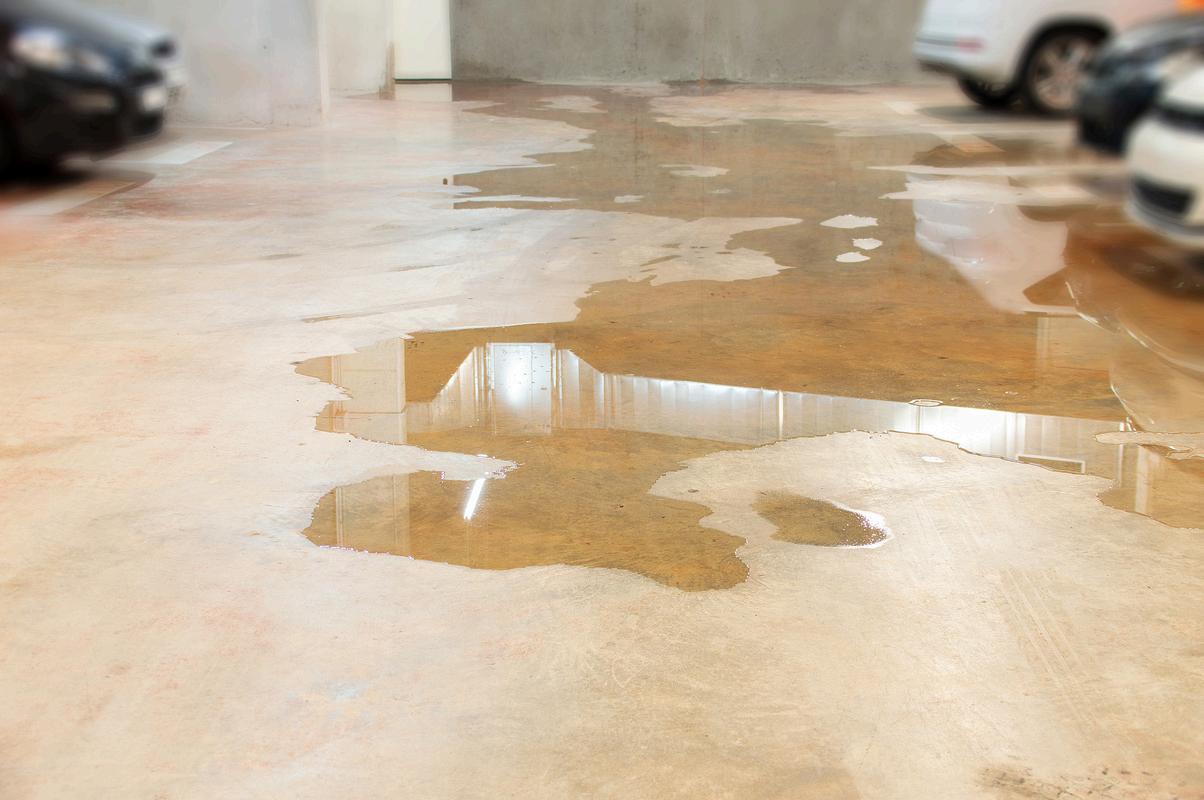
On Chicago’s West Side, the threat of flooding does not begin when water reaches the curb It begins with a forecast, a darkening sky, and the familiar calculation of what can be lifted from a basement before the sewer backs up again
A new pilot project beneath two residential streets is intended to give families more time and the neighborhood’s aging sewer system more room The Chicago Department of Water Management and the Metropolitan Water Reclamation District of Greater Chicago are building underground stormwater storage structures beneath Maypole Avenue and LeMoyne Street Together, the structures will temporarily hold nearly 1 7 million gallons of rainwater during intense storms
The $12 million project is expected to provide additional flood protection for more than 2,900 homes, businesses, and other buildings in the 28th, 29th, and 37th wards North Austin, South Austin, West Garfield Park, and Galewood are expected to receive the greatest benefit
The Maypole Avenue structure, located between Cicero and Lavergne avenues, was completed this spring Construction is continuing beneath LeMoyne Street between Luna and Lorel avenues, where a series of 12-foot-by-12-foot concrete boxes will form an underground holding tank. Austin Weekly News reported that the LeMoyne portion is scheduled for completion this fall
The structures are not designed to permanently retain the water During a heavy storm, they will collect water that might otherwise rush into already strained local sewers Once the sewer system regains capacity, the stored water will be released gradually and sent for treatment
That extra time can be the difference between water remaining below the street and sewage entering a family’s basement It also represents a change in scale Chicago’s massive Tunnel and Reservoir Plan, commonly known as the Deep Tunnel, manages billions of gallons across the region, but water must first travel through neighborhood sewer lines to reach it. Many of those local pipes are more than a century old and were built before much of the city was covered by pavement, parking lots, and other surfaces that prevent rain from soaking naturally into the ground
Following several rounds of severe storms between July 2 and July 4, WTTW reported that the Deep Tunnel’s reservoirs reached unprecedented levels and were nearly full Another round of severe weather moved through the Chicago area July 27, producing flooding, damaging winds, and new reminders that the city’s drainage system is repeatedly being asked to carry more water, more quickly The Chicago Sun-Times reported that hundreds of basements flooded during the storms, on July 27 which also produced four confirmed tornadoes in the region. th
The West Side pilot grew out of the damaging July 2023 storms A city disaster-recovery plan recorded 1,870 floodrelated complaints from that event Cook County was later included in a federal disaster declaration covering severe storms and flooding from June 29 through July 2, 2023.
“It provides additional volume for the sewers to have a little more time to drain,” Metropolitan Water Reclamation District engineer Justin Kirk told WTTW News The damage from those storms was not limited to furniture or boxes stored downstairs Floodwater can destroy furnaces, electrical systems, appliances, family photographs, and the lower levels of homes that residents use as bedrooms or living space
The damage from those storms was not limited to furniture or boxes stored downstairs. Floodwater can destroy furnaces, electrical systems, appliances, family photographs, and the lower levels of homes that residents use as bedrooms or living space Renters may lose property even when they have no control over a building’s drainage, while homeowners can face repair costs that exceed their insurance coverage or savings
City officials have described the underground tanks as one part of a larger response, not a complete solution Other measures include monitoring sewer flow in real time, disconnecting downspouts from sewer lines, installing devices that slow water entering catch basins, and adding green infrastructure that allows rainfall to soak into the ground
The location of the tanks also shows why the approach may be difficult to reproduce block by block. Underground Chicago is already crowded with gas lines, water mains, sewer pipes, cables, and other utilities Department of Water Management Commissioner Randy Conner told WTTW that adding infrastructure in a dense neighborhood can resemble assembling a 1,000-piece puzzle
Officials plan to evaluate the structures for six to nine months after both are operating
The findings should answer questions that matter beyond the pilot area: how much water the tanks capture during the most intense storms, whether nearby basement backups decline, how quickly the tanks empty, and whether the design can work in other floodprone neighborhoods
For West Side residents, success will not be measured by the size of the concrete boxes or the number of gallons listed in a news release It will be measured during the next hard rain, when families look downstairs and find their basements dry
NATIONAL NEWS
Stripe and Advent Offer $53 Billion for PayPal in Potential Largest-Ever FintechDeal
CNW STAFF REPORT
PayPal shares surged as much as 18% on July 15, 2026, after reports surfaced that payments giant Stripe and private equity firm Advent International had jointly offered $53 billion to acquire the company a deal that, if completed, would be the largest fintech acquisition in history
According to Reuters and the Financial Times, Stripe and Advent are offering $60 50 per share, a roughly 28% premium over PayPal's closing price the day before the offer became public The bid, submitted earlier this month, follows an initial approach the two suitors made back in April and an even earlier expression of interest from Stripe in February
How the deal would be structured
The offer comes backed by about $50 billion in committed bank financing, with Stripe, Advent, and payments company Block together contributing roughly $17 billion in equity. Under the proposed structure, Stripe and Advent would hold equal ownership stakes and keep PayPal intact rather than break the company into pieces PayPal's board is expected to meet as soon as July 20 to discuss the offer As of publication, neither PayPal, Stripe, nor Advent has issued an official public statement, though sources told Reuters that PayPal has so far been reluctant to engage with the proposal
Why now
The bid lands at a difficult moment for PayPal The company issued disappointing 2026 profit guidance at the start of the year, projecting a lowsingle-digit percentage decline in adjusted full-year profit, and replaced CEO Alex Chriss with former HP executive Enrique Lores earlier this year
Stripe, meanwhile, has been building out its ambitions well beyond its core payment-processing business including its 2025 acquisition of stablecoin infrastructure platform Bridge for $1 1 billion A combination with PayPal would bring together two of the most prominent players pushing stablecoins into mainstream payment rails; PayPal's own stablecoin, PYUSD, is currently the eighth-largest in the sector
The deal would also be notable for a structural reason: it's a rare case of a venture-backed private company (Stripe, last valued around $159 billion) moving to acquire a publicly traded S&P 500 company
And while Stripe's Braintree unit competes directly with parts of PayPal's business, PayPal's Venmo brand would give Stripe something it currently lacks a direct foothold in consumers' digital wallets
The business behind the buyout
It's worth understanding what's actually ailing PayPal, since "profitable company gets a takeover offer" can seem counterintuitive PayPal is not losing money — it generated roughly $33 billion in revenue over the past twelve months with a gross margin near 41%, still driven primarily by transaction fees on PayPal, Venmo, and Braintree checkouts, plus interest on customer balances and its buynow-pay-later loans The problem investors are reacting to is stalled growth, not lost profitability
Several forces have converged on the company Apple Pay and Google Pay are now built directly into phones and browsers, giving Big Tech an increasingly frictionless alternative that doesn't require shoppers to actively choose PayPal at checkout. Meanwhile, growth in PayPal's most profitable segment — branded checkout, the actual PayPal button at the point of sale — has slowed sharply, falling to just 1% quarter-over-quarter growth from roughly 5% the previous quarter. Weaker spending among lowerand middle-income consumers has compounded the slowdown, since that directly reduces the transaction volume PayPal's fees depend on.
The company's stock, down roughly 80% over the past five years, reflects investor frustration that PayPal didn't cement its lead during the pandemic-era e-commerce boom before rivals like Apple, Google, Stripe, and Block caught up Alex Chriss, brought in as CEO specifically to reverse the slide, was replaced by former HP chief Enrique Lores earlier this year after the board concluded his turnaround wasn't moving fast enough.
Market context shows a record $2 8 trillion in global M&A activity in the first half of 2026, expected to reach $4 trillion for the year Attention is on PayPal's board meeting around July 20th, as their response to the offer will influence the future of this significant deal in the payments industry
SPECIAL ANNOUNCEMENT
Calling Chicago's Next Generation of Visual Storytellers
Chicago has never lacked talent.
Every day, photographers across our city capture moments that deserve to be remembered They document neighborhood festivals, family traditions, entrepreneurs building businesses, artists creating culture, young athletes chasing dreams and the everyday moments that make Chicago unlike anywhere else Some have built impressive portfolios Others have quietly honed their craft without the recognition their work deserves
At Chicago News Weekly, we believe great storytelling isn't limited to those who already have the biggest platform Some of the city's most compelling visual storytellers simply haven't had the opportunity to publish their work in a newsroom
That's why we're launching CNW Through the Lens, a new initiative created to discover photographers whose work reflects the heart of Chicago. We're looking for photographers with a distinctive perspective, a passion for visual storytelling and a commitment to documenting the people and communities that make this city extraordinary Whether you're self-taught, a student, an experienced creative or someone who has simply been waiting for the right opportunity, we want to see the city through your lens
The selected photographer will have the opportunity to photograph an upcoming Chicago News Weekly cover story, receive a published editorial feature highlighting their work and be considered for future assignments as a contributing photographer.
This isn't simply about finding great photographs It's about opening the door for talented creatives whose work deserves a wider audience and creating another pathway into Chicago's media community Submission guidelines, deadlines and application details will be announced in our next issue Until then, start curating your strongest work and share this opportunity with a photographer whose talent deserves to be seen Because every published photographer had a first assignment Make yours at CNW!
LIVING CHICAGO
WhyisitsoexpensivetoreplaceleadpipesinChicago?
Chicago has more lead pipes than any other city in the country. It’s also paying more to replace each one.
No city dealing with a lot of lead pipes spends as much as Chicago does to replace them
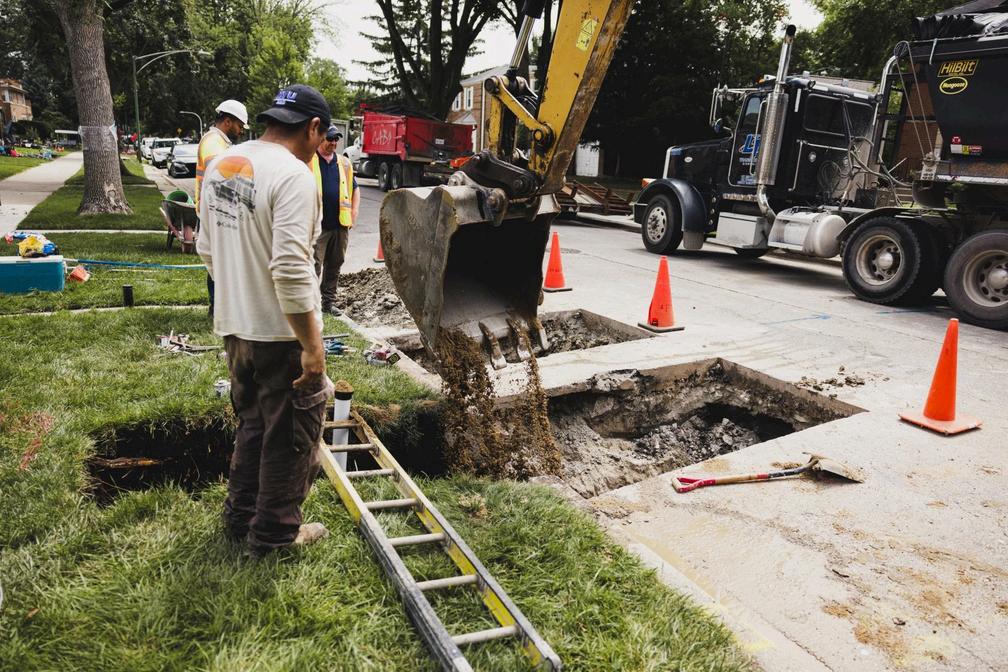
With more than 400,000 lead water service lines, Chicago has the largest known inventory of lead pipes of any city in the country Officials say replacing each one costs about $31,000 on average more than six times the Environmental Protection Agency’s national estimate of $4,700 a line
WBEZ, Grist and Inside Climate News surveyed other cities with the most lead service lines in the country, including Detroit, Milwaukee and New York, about the cost of fully replacing a lead service line The 18 that responded provided averages between $6,000 and $25,000, with most spending less than half what Chicago does. Engineering firm CDM Smith, which works with cities across the country, pegs the national average at $12,500 per line
Now, with a federal mandate to remove every lead pipe within roughly 20 years, Chicago is facing a daunting timeline and an astronomical price tag Replacing the city’s inventory at the current rate will cost more than $12 billion
“It is absurd,” said Cyndi Roper, a senior policy advocate with the Natural Resources Defense Council’s safe water initiative “You can’t play victim to your own policies. … You actually can make changes to bring the cost down ”
A review over seven months of hundreds of pages of program documents and contracts, plus dozens of interviews with city officials, policy experts, contractors and homeowners, found several key contributors The most significant include inefficient early contracts, cumbersome permitting requirements, and the city’s reliance on one-off replacements rather than undertaking whole blocks at once
A glaring lack of clarity from the Department of Water Management, which oversees the city’s replacement program, has also made it difficult to pinpoint the exact reasons for the high cost Its officials were unable to provide WBEZ, Grist and Inside Climate News with consistent figures for replacement costs and the number of lines replaced or to make clear whether the water department is tracking these costs systematically “It seems like the story here is how hard you have to work to get information that’s needed in order to figure out why the costs are so high,” Roper added
A spokesperson for Mayor Brandon Johnson said in an emailed statement that he is committed to accelerating replacements and minimizing the burden to residents but did not respond to specific questions about the city’s unusually high costs
“The Johnson administration is working across departments in coordination with local, state, and federal partners to accelerate replacements, streamline processes, and maximize every available dollar so more residents can access safe, reliable drinking water,” the statement said.
Officials with the water department said they see some room to bring expenses down as work ramps up But they’ve also disagreed with outside experts who say Chicago’s high costs are unreasonable, and they don’t appear to be treating the drastic cost differential with other cities as a high priority to address.
“There’s a lot of people that claim they know lead service line replacement,” said a senior official with the water department who spoke with WBEZ, Grist and Inside Climate News on the condition of not being named “They don’t know what they’re talking about ”
Illinois US Sen Tammy Duckworth, who has been working to secure federal funding for lead service line replacements across the state, said she wasn’t aware of the cost discrepancy but hoped the city would be transparent with the public about why costs are so high
“Cities just need to get their act together and get this done, and we ’ ve been slow to do this in Chicago,” Duckworth said “Other cities have moved much faster than us. ”
Replacing pipes on an entire block Chicago replaces lead service lines through several programs, including emergency repairs, capital improvement projects and equity initiatives targeting low-income neighborhoods and daycares
The city also replaces entire blocks of lead pipes at once But that program accounted for just 3 percent of the approximately 15,000 lines swapped out between 2021 and the end of 2025, according to an analysis of city replacement data by WBEZ, Grist and Inside Climate News Instead, nearly all of those lines were fixed piecemeal, mostly when crews were sent out to fix leaks and breaks.
Both city officials and experts agree that replacing lead pipes a full block at a time is cheaper In Milwaukee, per-line costs dropped by nearly $2,000 since implementing a block level program Chicago officials say they want to ramp up blockwide replacements, but there have been legal and logistical barriers to expanding that program
In Illinois, property owners control half the service line, and the municipality is responsible for the other State law forbids partial line replacement because the process can flush more lead into drinking water, and municipalities willing to replace private lines must first get the property owners’ permission. That’s harder and more time-consuming than it may seem, a key reason for the city’s low number of block replacements, according to officials
Earlier this year, state lawmakers introduced a new bill at the water department’s request to fix that, granting city plumbers access to private lines without the owner’s permission. It passed in May and now awaits Gov. JB Pritzker’s signature
“We need to accelerate, as much as humanly possible, this process,” said state Sen Ram Villivalam of Chicago, a co-sponsor of the bill
Still, it’s not clear how much block-level replacements will actually decrease Chicago’s costs. Water department officials pegged the average per-line cost for block-level work, which they have said is their cheapest program, at approximately $34,000, and the average for one-off replacements at $39,000 Both figures are well above the $31,000 overall average that department officials have cited
Asked to explain how that could be, the water department did not respond. In her last email to the news organizations in May, water department spokesperson Megan Vidis said she would not answer any more questions on the topic
The toll on homeowners
Any lead pipe a property owner replaces on their own is one the city doesn’t have to pay for. But some homeowners are finding that far harder than they imagined, in part because of the city’s prohibitively expensive and complex permitting process
Craig Hines and his wife, homeowners in Chicago’s Avondale neighborhood, discovered they had a lead service line last summer when they received a letter from the city They were immediately alarmed: They cook regularly for young nieces and nephews, and Hines knows there’s no safe level of lead exposure.
They called 14 plumbers looking for a quote Some refused to take them on or seemed to be trying to dissuade them from doing the work altogether, saying the job would be too expensive One preliminary quote totaled $25,000. The couple were told permits alone could cost between $5,000 and $7,000
“These fees seem so exorbitant when it’s like, this was a city screw-up,” Hines said, referring to Chicago’s history of installing lead lines long after the health consequences came to light “I just cannot believe that the permitting fees are so high to help fix a problem that the city created.”
Replacing a single line can require permits from the water and transportation departments, as well as inspection-related charges, according to the city’s Department of Buildings The fees vary based on the type of street and size of pipe
The water department said it waives all its permit fees when the city pays for replacements. But it’s not so simple when property owners want to shoulder the cost. Some qualify for a city program waiving up to $5,000 in fees; others don’t Water department officials could not provide an average cost for permits, saying it varies by project site
After more than six months of research including contacting their alderman, district commissioner and multiple city departments to track down answers about costs Hines and his wife finally settled on a plumber who knew how to navigate the city’s permit waivers He quoted them $22,000 for the job, which he said will include permits They hope their replacement will take place in July Continued on page 9.
E-NOTES
Continued from page 3: Being a leader or possessing celebrity status means operating under the public’s constant scrutiny and judgment. Therefore, our behavior matters. It is vital that just as we hold others to these expectations, we also expect the same from ourselves This practice includes being respectful of those who think us worthy of an invitation
Proper etiquette does not require immense planning Whether you plan to attend an event or not, simply inform the host. Never bring uninvited guests without asking first. If you cannot attend, reaching out with a phone call, a thoughtful card, or a gift lets people know that you are there in spirit, and that your absence is by no means a result of not caring
LIVINGCHICAGO
Continued from page 8
Several miles south, Ryan Wilson and his wife, Alaina Harkness, said they didn’t qualify for the fee waiver They paid nearly $25,000 to replace the lead line at their Hyde Park home last year, but because they also upsized their service line while replacing it, they weren’t eligible for the waiver
Wilson has worked in urban planning for decades, and even so, he said he found navigating the city’s permitting requirements extremely confusing They never were able to figure out how much of their final bill was allotted to permits If Chicago wants to improve citywide replacement efforts, Wilson said, improving the permitting process should be high on the list.
“There’s not a single person to talk to about this,” he said
Inefficient contracts and funding woes
Water department officials pointed to two key reasons for the high costs. First, they said that the city lacked a firm grasp of costs when launching its replacement program in 2021 and also that its first round of contracts was inefficient The early contracts also bundled jobs poorly, tasking contractors with work outside their specialization, like having plumbers work on restoration or outreach
“Early on, the issue was a lot of unknowns in our contracts,” the water department’s deputy commissioner, Michael Grillo, said in a webinar last fall “We are trying to be smarter with our contracts that go out, be more specific, eliminate those unknowns ”
Plumbing companies overbid to cover worst-case scenarios in those early contracts, Grillo said The water department’s Vidis confirmed via email that the city has implemented four new contracts this year focused on improving equitable access for small businesses to replace lead service lines but said the goal of those contracts was not to reduce per-line prices.
Grillo also blamed labor costs for part of the city’s high price tag, but that explanation doesn’t appear to pan out The base prevailing wage for a union plumber in the Chicago area is $99.52 per hour By contrast, it’s about $97 in Minneapolis and roughly $121 in New York City, both of which replace their lead pipes for less than half of Chicago’s costs “I have a hard time believing that the prevailing wage would be the cost factor,” said Betony Jones, a senior researcher at the University of California, Berkeley-
Meeting our obligations to others is an important part of being human, and it is not to be taken lightly We can navigate this quandary by being conscious of what we choose to do, and by finding concrete ways to extend our respect when we cannot be there in person At the end of the day, it all comes down to respect How we conduct ourselves socially, professionally, and privately reflects the exact manner of individual we are
This is the essence of "petite ethics" the unwritten codes of courtesy, plain etiquette, and common decency that grease the wheels of daily social interaction Rather than tackling deep moral dilemmas, it governs the vital surface-level behaviors like respecting boundaries, expressing gratitude, and practicing daily cordiality
and former director of energy jobs under the Biden administration
The city says a lack of robust, flexible funding is compounding the problem Chicago has to cobble together funding from a patchwork of local and federal sources in the form of grants and lowinterest loans, which brings red tape and restrictions
The Biden-era Infrastructure Investment and Jobs Act delivered a historic $15 billion for lead pipe removal, with Illinois getting about $1 2 billion, according to Duckworth’s office This month, Duckworth’s office announced a separate $22 million federal grant earmarked for Chicago’s majority-Black Austin neighborhood where 92 percent of service lines require replacement, according to last year’s lead service line inventory At Chicago’s price point, the state estimates that $22 million will only replace about 650 lines out of the nearly 17,000 reported in city data for Austin last year.
“Chicago needs to explain where the money is going and justify the cost,” wrote Elin Betanzo, a national drinking water expert who helped uncover the water crisis caused by lead pipes in Flint, Michigan, in an email
Betanzo, who has done extensive research on cost-saving tactics, said she has not seen a realistic cost breakdown that demonstrates why Chicago is paying as much as it is
“They need to figure out how to complete the most cost-efficient lead service line replacements in the country, not the most expensive,” she added
With funding from the Infrastructure Investment and Jobs Act set to run out this year, public health experts have been calling for more local, federal and state dollars to fund replacements, especially in overburdened cities like Chicago “It’s a critical part of the infrastructure,” Betanzo said. “It’s that final piece of public health protection ”
Amy Qin and Cam Rodriguez contributed data analysis for this story
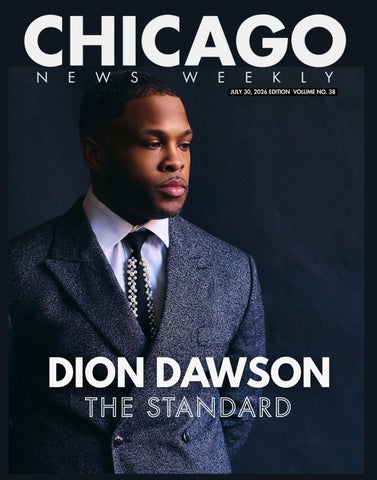
DIONDAWSON DIONDAWSON DIONDAWSON
The Lines He Remembers, The Standards He’s Set
BY LAURA MILLER, MANAGING EDITOR
DARYL WILKERSON JR
COVER STORY
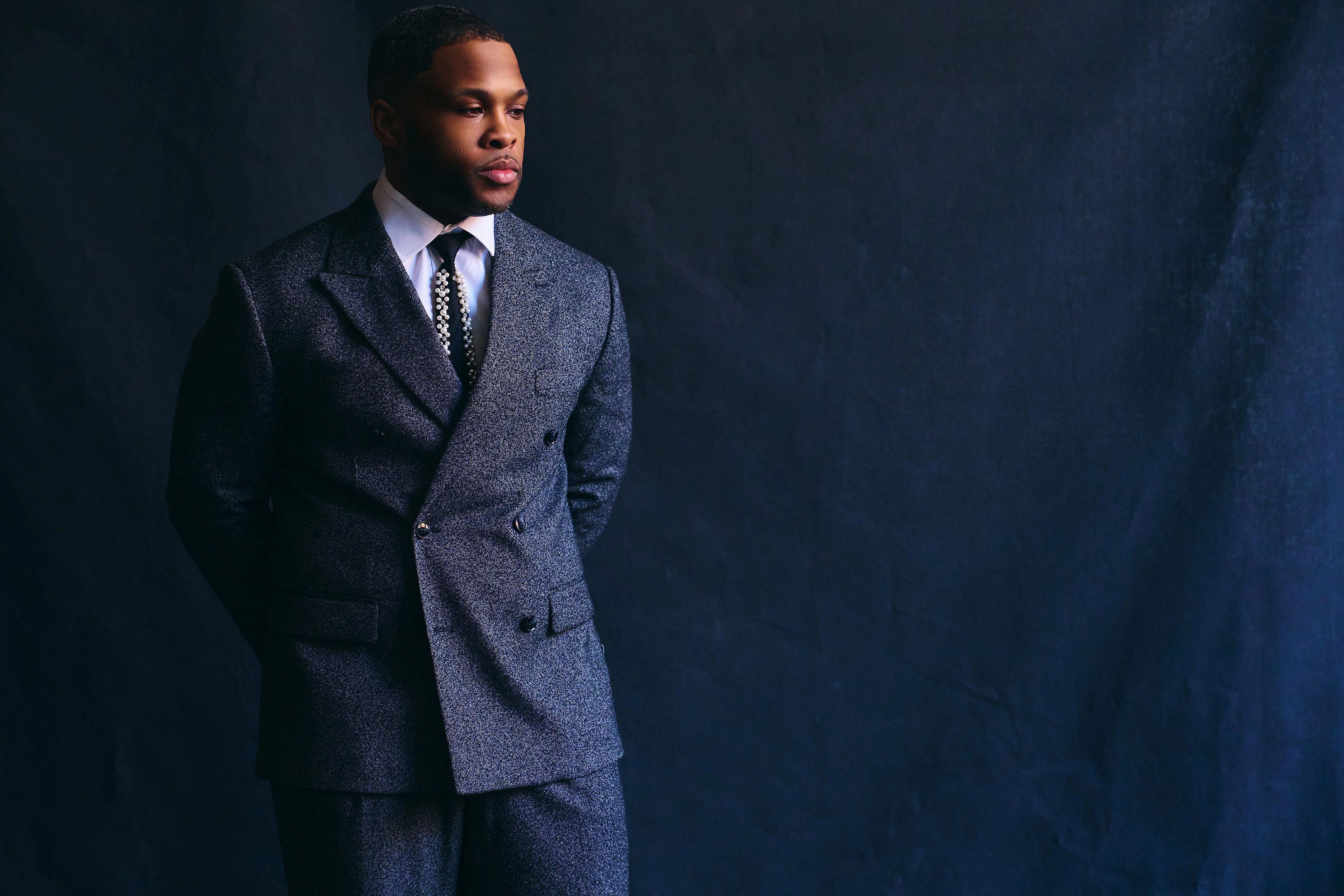
Dion Dawson turned a childhood marked by food lines, homelessness and deep Chicago pride into a fresh food model built on quality, wages, dignity and a refusal to serve people anything less than respect.
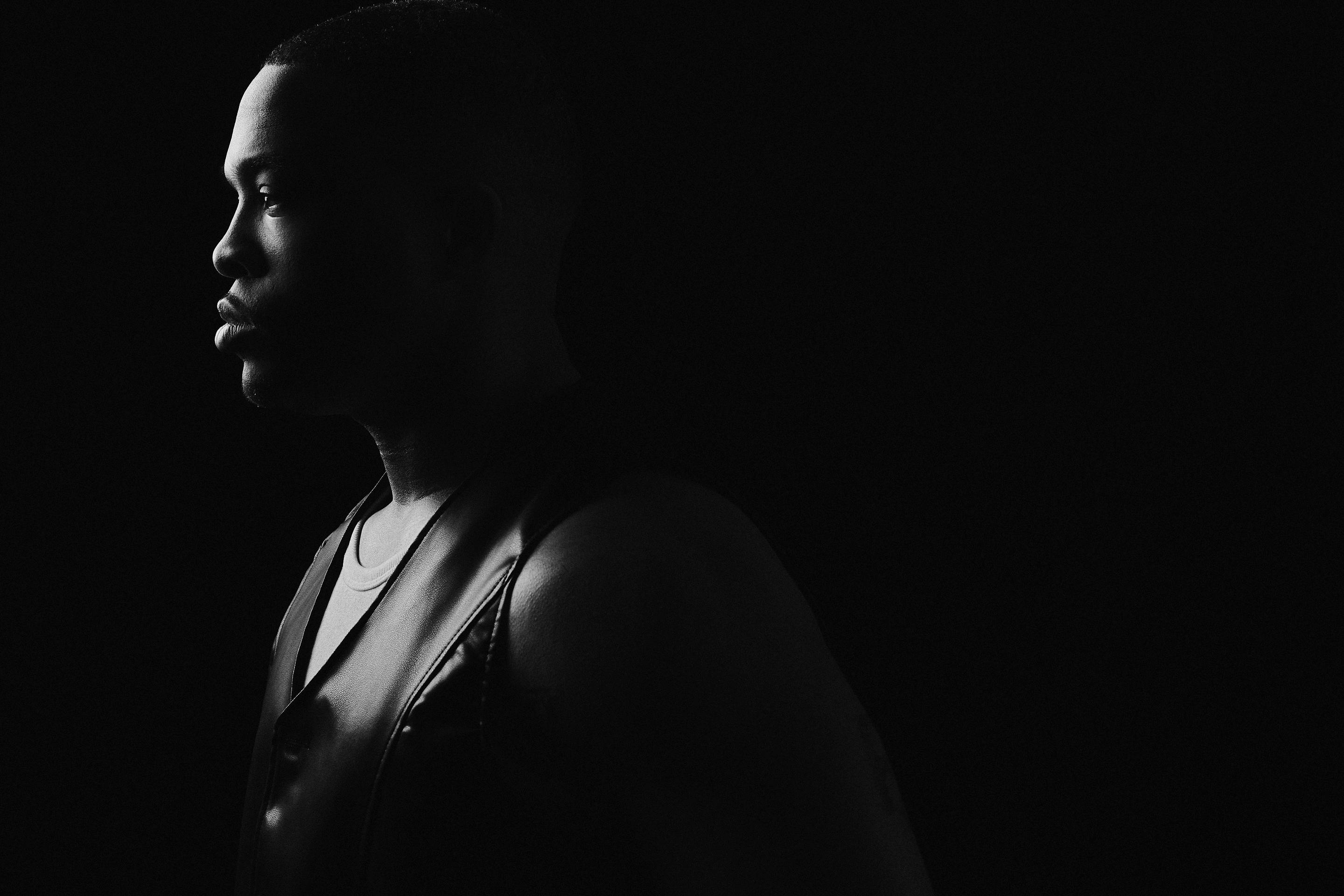
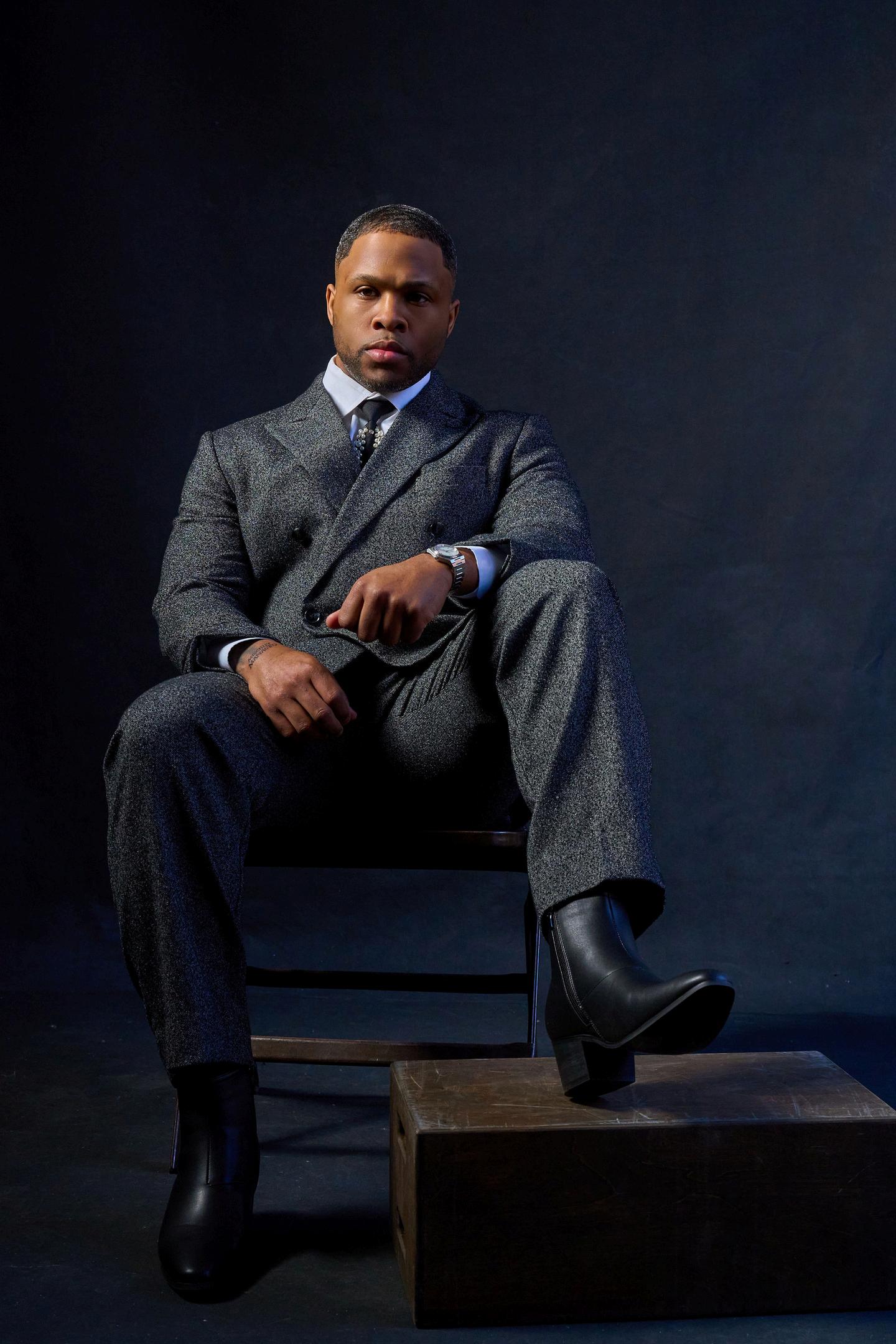
Dion Dawson walked into the studio dressed in all black, gold in his mouth and Chicago all over him, carrying the kind of ease that does not ask permission to be taken seriously The conversation started with jokes about the heat because it was June, and Chicago had already chosen to act like summer had something to prove Dawson laughed easily, answered directly and moved through the room with the kind of presence that made clear he was not there to perform the old custom of nonprofit respectability.
Dawson's work does not come from a polished distance He is young, Black, funny, direct sometimes blunt and deeply aware of what it means to be watched and underestimated The gold grill, the all-black fit, the cadence, the humor and the sharp analysis all belong to the same person One minute, he may laugh about Chicago weather. The next, he may explain why the traditional model of food philanthropy has left too many people standing outside, waiting for care that did not always feel like care once it reached them
There is a brightness to Dawson that does not come from innocence or ease It comes from the way he moves through hard stories without letting them darken his spirit or whole face. When asked who he is, Dawson did not begin with a title, a resume or a polished founder's statement
"Oh, man, I am a lucky guy who fed some people, and then got a chance to feed more people," Dawson said
That is one way to describe him. It is not his story There are different ways to tell his whole story
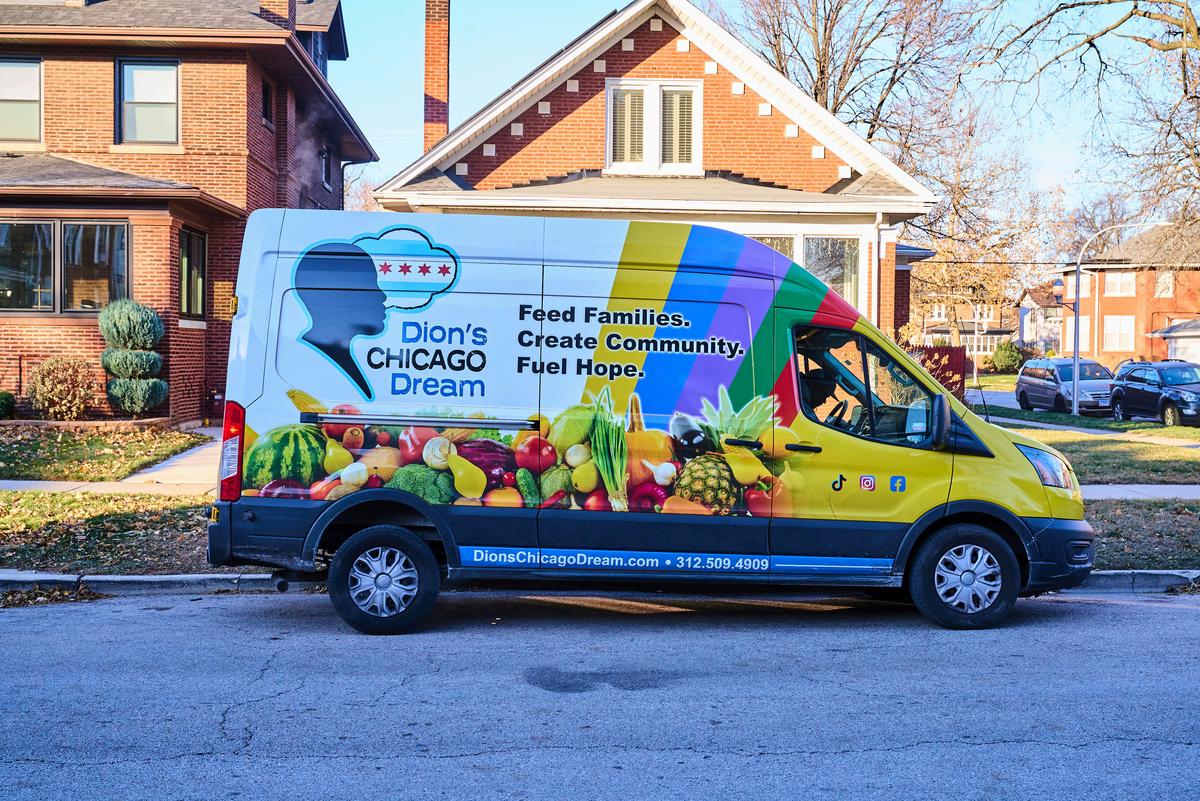
Dawson is the founder of Dion's Chicago Dream, a fresh food delivery organization that began on July 3, 2020, when he and his team fed 96 families In the years since, that first act of service has grown into about 8 million pounds of fresh food purchased, packed and delivered, more than 60 wage-paying jobs yielded and created more than 730,000 home deliveries completed The numbers are significant, but they are not the only reason the story carries weight For Chicago, the more urgent question is what had to happen before the dream for the model to mean what it means today
The Line Before the Dream
Before Dion's Chicago Dream, food assistance in many communities often meant arranging life around scarcity something many people have never had to consider Families arrived early, stood outside, waited in lines, accepted what was available and sometimes walked away with food that did not reflect their taste, culture, health needs or dignity Hunger was treated as a logistical issue, while shame, choice, quality and pride were left outside the conversation.
In Chicago, hunger has never been only about the absence of food It has always been tangled in distance, income, transportation, health and the quiet indignity of having to rearrange a life around a necessity that should be a basic daily ritual In CNW's "When Separate Equals Hungry," food insecurity was framed as a condition validated by zip code and often skin color, with access shaped by segregation, poverty, transportation and the quality of food available in Black and Brown neighborhoods. Nationally, 13.7% of U.S. households were food insecure at some point in 2024 18 3% among households with children In Cook County, the Greater Chicago Food Depository says 1 in 4 children are at risk of hunger, and during fiscal year 2025, its network served 2 3 million households and provided 96 million meals
Those numbers move Dawson's work beyond the frame of a feel-good story and into the center of a public emergency In a city with food banks, churches, pantries and volunteers who have been feeding families for generations, what does it mean to build a model that treats the recipient's experience as the design priority?
Dawson knows that experience from the inside As a child, the line was not a metaphor It was a place The memory is physical: the weather, the waiting, the need, the gate separating families from the food they came to receive. At the time, there was no language for food systems or end-user experience
There was only the understanding that receiving assistance could still make a person feel small "I didn't understand that I was collecting data," Dawson said That sentence explains more about Dion's Chicago Dream than any slogan could A child may not understand the economics of hunger, but a child knows when the process feels careless A child knows the difference between receiving help and being handled
A Different Kind of Care
That is why Dawson does not talk about food like charity The language is closer to infrastructure, memory, accountability and power to drive home its significance as an essential requirement to live "It was ultimately about controlling our supply chain," Dawson said "The more you lean on volunteerism, the more you lean on donated food, you don't have control of your operations "
For Dawson, control is not about ego It is about care. Purchasing food gives Dion's Chicago Dream more control over quality Paying workers creates jobs instead of building a model entirely on unpaid labor
Delivering directly to homes changes the experience for families who might otherwise have to stand outside in the rain, heat or cold waiting for whatever is left
"We should not all be feeding people outside on the folding table and having them wage war against the elements," Dawson said
His point is not an indictment of everyone who has volunteered or donated It is a challenge to the systems that have allowed need to lower the standard Generosity has value, but generosity without design can still leave people feeling unseen. The 2025 Greater Chicagoland Hunger Report found that 1 in 4 people in the region were facing food insecurity, while about 1 4 million households could not afford the basic cost of living in their county Numbers that large demand better systems, better metrics and a more honest conversation about what happens after food is handed out
From the Soil
Dawson grew up in Chicago, and his relationship with the city is not decorative Chicago, for him, means beauty and segregation, winters and food, contradictions and a kind of truth that does not let people look away from the country's larger failures
"You can't hide from the real U.S. experience in Chicago," Dawson said. Englewood, specifically, is part of his grounding It is the place his mind returned to when he was deployed in the Navy, standing outside a ship surrounded by darkness so complete that it triggered a panic attack
"I was outside the ship, it was pitch black, and I had a panic attack," Dawson said. "The thingthatcalmedmedownwas thinking of home, thinking of Englewood."
Englewood was not only where life had been hard It was where his body found calm, and where his identity returned when the world felt too large and too dark That pride now shows up in the work, not as nostalgia, but as responsibility
"Having that pride has since translated well into my work and how made me commit to holding myself accountable," Dawson said
Dawson left elementary school as valedictorian, before life shifted and he found himself navigating homelessness in Englewood while commuting nearly an hour across the city to attend Curie High School, a school with a freshman class of about 1,000 students He had no uniform a detail that, for a teenager, draws attention
"High school was rough because I was just trying to survive," Dawson said "It wasn't that I didn't want to go You never feel comfortable or settled " Dawson's experience was personal, but it was not isolated
Chicago's 2025 Point-in-Time Count estimated 7,452 people experiencing homelessness on a single night, and Black Chicagoans represented 53 2% of that population
The Chicago Coalition to End Homelessness reported that 22,438 CPS students experienced homelessness during the 2024-25 school year instability that often hides inside classrooms, invisible to the adults around it
Still, hardship did not erase joy Friends from elementary school Mark, Antoine and Paris let him stay over, borrow clothes and remain a child in a season that could have made him feel like a problem to be managed
"I couldn't do any of this without you all," Dawson said
That gratitude shows what Dawson understands about providing aid to help another Help is not neutral The delivery, tone, quality and memory it leaves behind all shape how care is received Dion's Chicago Dream is built around that truth
The Standard Is the Service
In Dawson's model, food is selected, purchased, packed and delivered with a standard The emphasis on fresh produce is part of a refusal to treat families as if anything should be good enough because they are in need
"Nobody likes donated food, so stop giving it like it's brand new," Dawson said. The line can make a room laugh, but the humor carries an old wound. The critique is not that people should stop giving Rather it's, that communities should stop being asked to confuse leftovers with love Dawson believes philanthropy must be pushed harder Money can move, programs can launch, food can be distributed, and still the language around need can make inequality sound accidental
"We're not underserved," Dawson said. "It's people bullshi##ing It's not a money issue It's an allocation issue "
That is where the critique moves beyond personal experience and into sector analysis What is the metric of success?
Pounds of food moved, or food eaten, enjoyed and used? The number of families reached, or the dignity preserved inside it?
"We always talk about the food pantry," Dawson said. "We never ask ourselves what metric determines whether that pantry was successful ”
The work does not reject philanthropy It demands that philanthropy grow up, mature that it move beyond the comfort of generosity and into the discipline of accountability, and treat the person receiving the service as the end user, not a symbol of need
"A lot of people who do show up philanthropically, they've been on autopilot for a couple decades," Dawson said "Having to break into that market and get them to see that we're worth investing in, and that our model is scalable "
The skepticism around fresh food came early "I can’t tell you how many people in the beginning tried to tell me, 'Oh, you can't give them new food,'" Dawson said "I said, 'You’ve lost your mind '"
Fresh food is not excess, it is not optional Fresh food is the point Dawson remembers conversations with his mother, when people would say, "Tell your son to come back and get this food," and he had to make clear that Dion's Chicago Dream would not take everything simply because it was offered
"We've never had a line we wouldn't cross," Dawson said "People think that the line is just caring about people No That's the minimum After you're in the door, how do you care about people? How do you hold yourself accountable? And how, when you get it wrong, how do you better yourselves?"
COVER STORY
Dion's Chicago Dream delivers food directly to homes, purchases fresh produce and pays workers The wage floor is $20 an hour, a number Dawson admits is still not enough in this economy, but one the organization refuses to go below
"We don't pay a penny under that," Dawson said Dawson has worked overnight at Amazon He has done delivery jobs. The exhaustion of leaving one job tired and entering another space where labor is undervalued again is not theoretical to him
"I'm
human,"
Dawson said. "When you know better, you
do better.
I
don't ever want to be that person that when someone is telling their life story, you were part of the people or the parties that did them wrong."
That was one of the most revealing things he said It turns the work from a service model into a moral one a question of whether Dion's Chicago Dream will appear in someone's life story as something that preserved dignity, or something that repeated the harm Dawson once knew Dreamville Campus
Even the branding comes back to pride Dawson is protective of Dion's Chicago Dream merchandise and clear about who wears it the Dream Team should look good, the trucks should look good, the work should feel good before the box is even opened.
"When you see our merch and our team, we fly," Dawson said "You gotta want to look good and feel good "
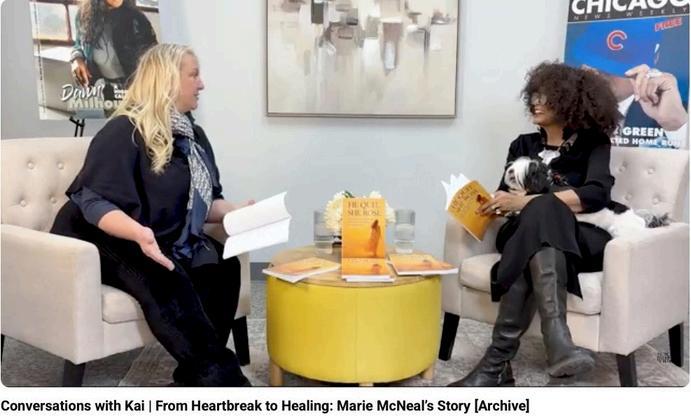
First, I was deeply impressed by the book's title and cover design Aesthetics are incredibly important to me, and avid readers know that a title lures you in while the imagery sets the entire tone Even when a cover design is minimalist defined simply by its script and the color of the jacket it makes an aesthetic statement that immediately speakstoyou,forbetterorworse Inthis case?Check,check,check,andcheck!
I was drawn in instantly, and then came the introduction page, which boldly states:
“This is a spoken word book. Every word in these pages is meant to be felt, heard, and spoken out loud like poetry that carries the pulse of truth through the voice of a woman rising It was written to be experienced, not just read to move through your heart, your breath, your body Allow the rhythm and tone to wash over you Pause where you need to Read it out loud when you feel called. Each passage is an activation an invitation to remember your own power and rise fullydevotedtoyou”
Hallelujah!Thosewordsresonateddeep inside the space where I dwell By the time I finished, I had experienced exactly what she promised: feeling every word, heard and spoken out loud like poetry My heart sang out, “You go, girl!”
Let me just say this: Marie McNeal is magical Her calling has always spoken toherloudandclear,andshehasalways risen to meet the occasion This book is nodifferent;shereceivedtheassignment andabsolutelynailedit
TheJourneyThroughtheChapters
Chapter 1: “The Wake Up” Youalreadyknowwhatthisis Yep, this is all about the "shift" It captures the exact moment awareness hits, bringing that familiar sense of fear and abandonment a wave of emotions so intense you feel like youmightdrown.
Chapter 2: “The Silence” This chapter takes you through deep inner reflection Or rather, it is the regurgitation of the last nine months or two years of your life, screaming like an echo not just in your head, but through your entire body. All you want is for the noise to stop, to be numb. Rest assured, thisisaprocess Whilethecathartic transition from one emotional escalation to another shows up differentlyforeachof us,thepoint ishonoringtheprocessitself
Chapter 3: “The Return to Self” Umph! Imagine that And here you thought there was no " you " without "him" McNeal gently walks you through this step, reminding you how to remember who you were and how to recognize the beauty in your own sacredness
Chapter 4: “Discernment and Boundaries” This is where you begin to recognize the power you havewillinglygivenaway Whatever you choose next, realize that you are making a conscious decision to bediscerningabouthowyoushare yourself and who you grant access to There is no judgment here In theend,thechoiceisentirelyyours
Chapter 5: “If He Comes Back” it doesn’t mean he’s ready This was one of my absolute favorite chapters It forces us, gently and with love, to face the raw realities: the truths, the lies, the desires, and the hopeful, idealized scenarios. This is the ultimate turning point: are you moving forward, or are you remaining unchanged? Without this step, thereisnotransformation
Trust me when I tell you that this riveting devotional is like having a love therapist within arm's reach Just pick it up and read In fact, I suggest treating it likealesson-plandirectory Eachchapter delivers new concepts and constructs designedtohelprestoreyoutoyourbest self the beautiful expression of love youwerealwaysmeanttobe
DeepeningtheTransformation
There are 27 chapters in total, each packedwithsoul-waking,heart-touching, and mind-blowing opportunities for spiritual growth Let’s peek at a few others:
Chapter 7: “The Shape of Sadness” Have you ever thought of it in that manner? That sadness actually holds a shape, and that it impacts you, your lover, and everyonearoundyou?Getreadyto reshape your thinking, because Marie McNeal brings it She calls it allin
Chapter 11: “The Magnetic Heart” This is what you ’ ve always wanted, even if you didn't know how to articulate it or how to embody it. Instead, we grow up reading fairy tales, fantasizing, watching movies, and embracing theconceptof theprinceinshining armor coming to the rescue But McNeal poses the real question: rescueyoufromwhat,exactly?
Chapter 18: “The Sacred Surrender” Oh boy We are gettingdeephere McNealtakesus straight to the heart and soul of love, engaging in the internal work while remaining fiercely true to oneself. You learn to distinguish a sacred surrender from losing yourself like putty in someone else'shands Youhavealreadybeen wonderfullycreated,sojustbeyou Chapter 22: “Healthy Partnership” You might think this chapter is the wrap-up, but there are still five additionalchapterstofollow!What more could there possibly be? That is for you to discover and embraceasyoustepintotruebliss Thisbookissomanythingsatonce:itis informative, it is a workbook providing practical tools to implement daily, and it is a self-guided devotional packed with affirmations and journaling prompts to pursue
Don’t put off your completeness A partner will not complete you; you become complete when you choose to share your whole self, as will he Together, your relationship becomes a reflectionof thatwholeness
Scan here to watch the indepth conversation with author Marie McNeal. Only on the CNW Network on YouTube.
America@250:AJournalismReckoning.
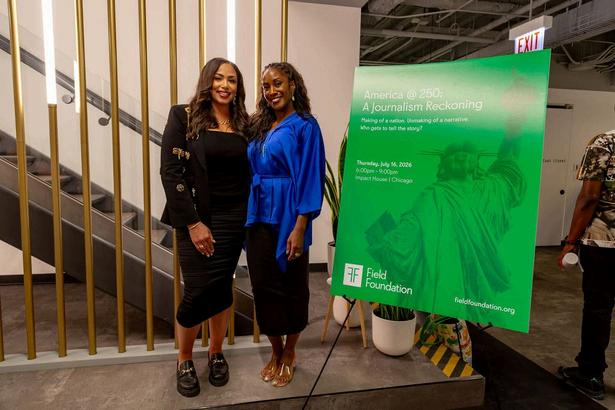
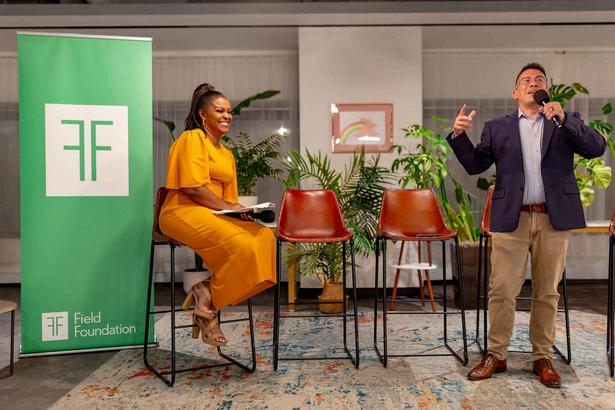
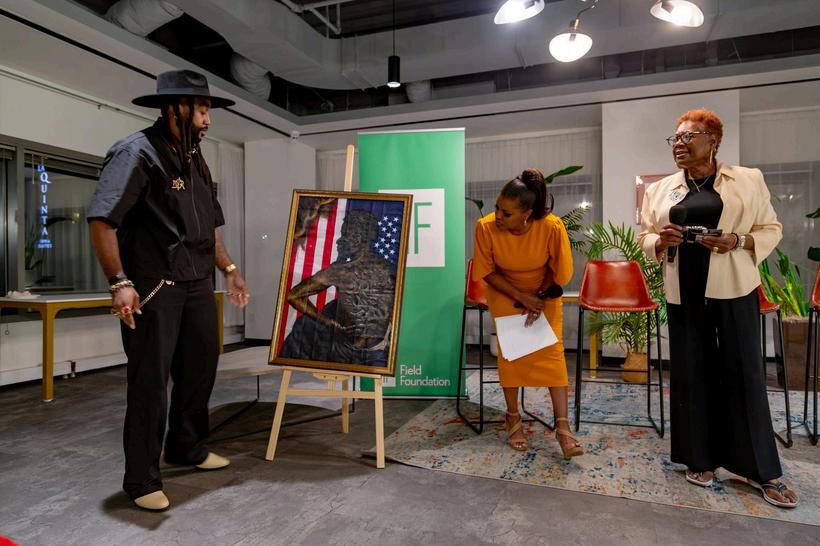
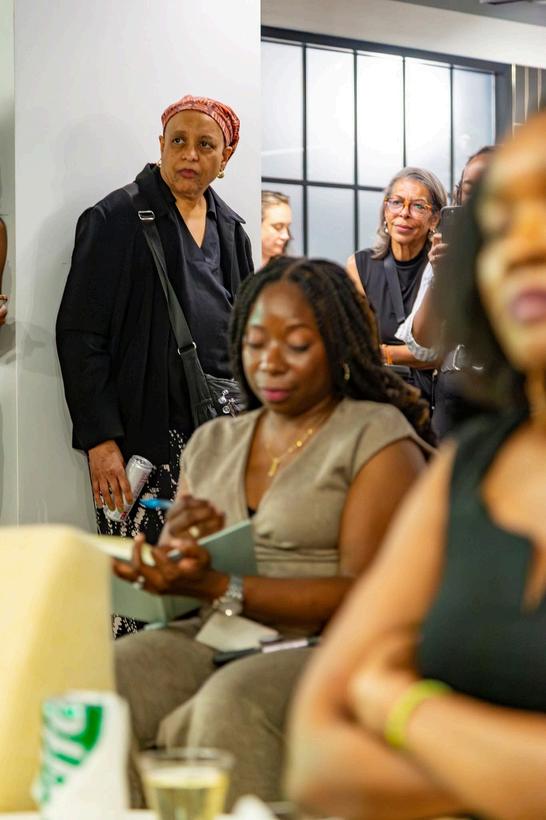
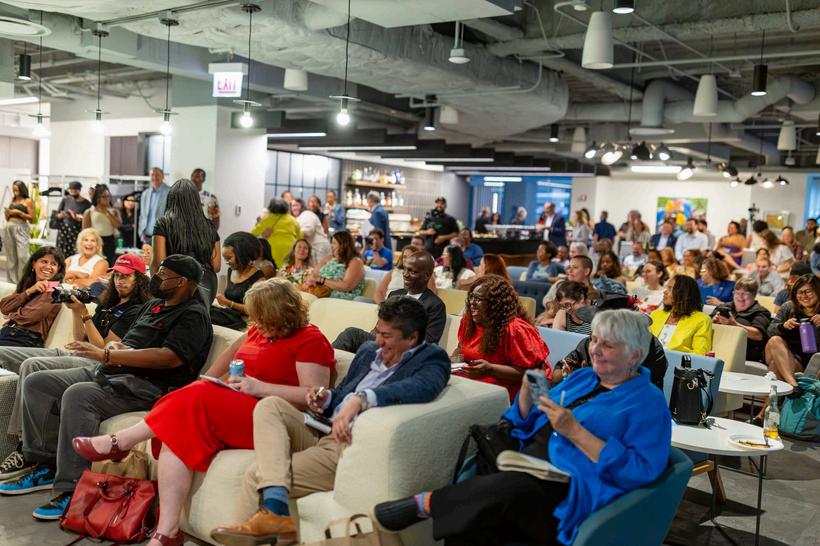
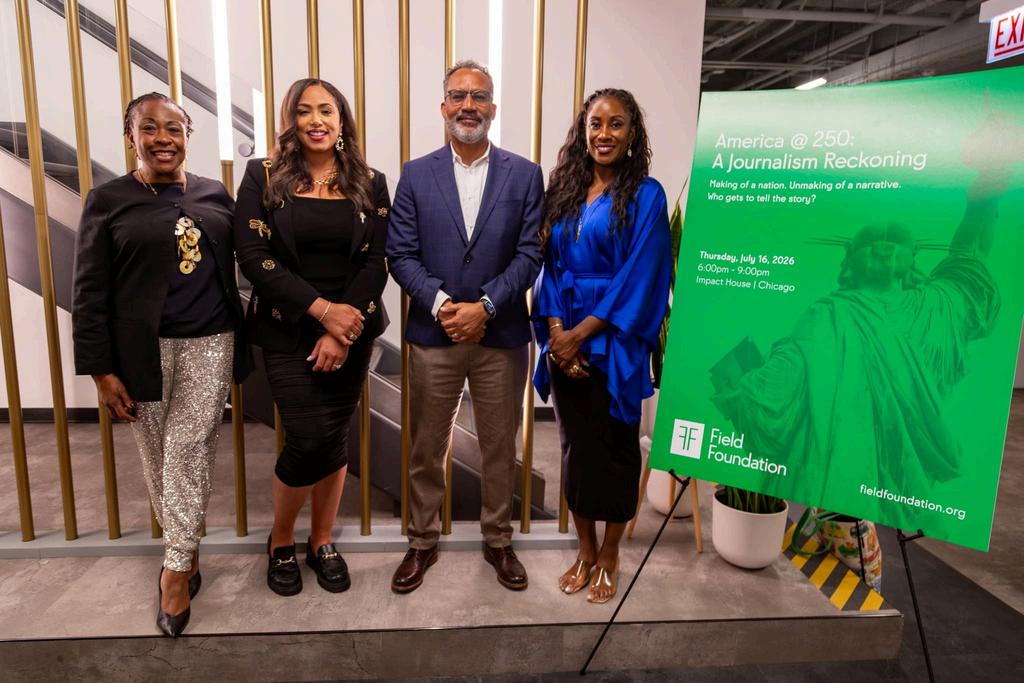
Chicago journalists, media leaders, and press freedom advocates gathered at My Impact House on July 16 for “America @ 250:AJournalismReckoning,”apowerful conversation about who gets to tell America’sstoryandwhatisatstakewhen public trust in the press begins to fracture The evening featured keynote speakers Karen Attiah and Georgia Fort, along with discussions on journalism’s history, current threats to press freedom, and the responsibility of newsrooms to provide communities with an accurate and trustworthy account of the world aroundthem
PhotosbyOliviaObineme/ThirdNook
Georgia Fort (Black) and Karen Attiah (Blue)
Tonya Francisco (WGN)
L–R: Maudelyn Ihejirika, Georgia Fort, Daniel Ash (President, Field Foundation ofIllinois) and Karen Attiah
Sylvia Snowden
Patricia Andrews Keenan (Pigment Intl)
Reggie McFly (Visual Artist)
Field Foundation of IL Team and Panelists
Cheryl Mainor (CNW)
CNW STAFF REPORT
COVER STORY
For Dawson, that is dignity People notice when care has been taken In communities too often asked to accept what is left, presentation becomes part of the message That is why Dawson's own presence belongs in this story the all black look, the gold grill, the humor, the Chicago cadence, the refusal to become palatable. His existence is proof that a young Black man from Englewood can be stylish, blunt, funny and fully himself while building something disciplined, measurable and worthy of serious investment
When asked what he would say if he had the world's attention, Dawson did not begin with a pitch Love came first
"I love you," Dawson said. "You're more than enough. I can be everything, but I'm Black first."
Then, because he is Dion Dawson, the tenderness came with a challenge: "Nobody likes donated food, so stop giving it like it's brand new "
That is the range of him Love and critique Humor and memory A man who can honor the people who helped him survive while holding systems accountable for making survival harder than it had to be
When the conversation turned toward what Dawson is proud of now, the answer moved toward his people
"I literally credit my team," Dawson said "I love hiring talented people "
Dion's Chicago Dream is no longer only about one man's memory or one act of service. The organization has become an operation that requires talent, discipline, logistics and trust and Dawson's team is part of the proof that the mission can scale without abandoning its soul
When the conversation turned toward what Dawson is proud of now, the answer moved toward his people
"I literally credit my team," Dawson said "I love hiring talented people "
Dion's Chicago Dream is no longer only about one man's memory or one act of service The organization has become an operation that requires talent, discipline, logistics and trust and Dawson's team is part of the proof that the mission can scale without abandoning its soul
The expansion changes how the story should be understood. Dion's Chicago Dream is no longer only the image of a community fridge or a delivery route According to Dawson's 2026 media materials, the organization has scaled from startup to a roughly $7 million operation, raised more than $15 million and is serving more than 5,300 households weekly while delivering more than 250,000 pounds of fresh food monthly across 182 zip codes
Through Dream Deliveries, Dream Fridges and Dream Vaults, the model has grown into a full suite of food access solutions built around health equity, logistics and dignity
That next chapter also includes Cosmic Crate, Dawson's logistics technology platform created to help mission-driven teams scale impact The dream began with food, but the problem Dawson is trying to solve has always been bigger than food It is about building systems with enough care, consistency and intelligence to meet people where they are
Dawson may describe himself as a lucky guy who fed some people, but what he has built is more deliberate than luck Dion's Chicago Dream is the result of a young man who remembered the line, studied the shame, respected the worker, protected the food and decided that feeding people well should mean more than placing something in their hands His vision became an intentional outcome he pursued.
His work is changing philanthropy because it refuses to let giving remain comfortable for the giver while the receiver carries the discomfort His program leaves people with their dignity intact
It also asks what becomes possible when the person who once stood in the line is trusted to redesign the system Dion Dawson is not simply feeding Chicago He is pushing Chicago to raise the standard for how care is delivered He is transforming the perspective of how we see people who need help and how we deliver assistance.
LOVE & RELATIONSHIPS
TheLastChapterYouPublished
The internet never forgets the milestones we celebrate, even when life quietly writes a new chapter.
LAURA MILLER - MANAGING EDITOR
"The opinions expressed in this column are my own and do not necessarily reflect the views of Chicago News Weekly "
"Congratulations! I remember you got married " "Girl and divorced " That conversation has happened to me more than once this summer There's something about a Chicago summer that turns the whole city into one big class reunion
You run into old coworkers, former neighbors, people you went to church with, friends of friends, and folks you haven't seen in five or even 10 years Between neighborhood festivals, concerts, block parties, and community events, it's almost impossible not to reconnect with someone from another chapter of your life
What I've noticed, though, is that social media has changed the way we have those reunions. We don't start by asking, "So, what's new?" We start where we think we left off
It made me realize something I hadn't really thought about before In the social media era, we don't necessarily remember people's lives We remember the last chapter they published
For some people, that's a wedding For others, it's an engagement, a new baby, a first home, or a graduation. Sometimes it's something much heavier, like the loss of a loved one Whatever that last major post was, that's where our minds press pause until we see them again This has happened to me enough times that I've developed an opinion Again, this is my opinion If your relationship begins loudly and publicly, don't be surprised when people assume they're still reading the story you started Celebrities are probably the most exaggerated version of this phenomenon
Jennifer Lopez and Ben Affleck turned their reunion into one of Hollywood's biggest love stories Twenty years after calling off their first engagement, they found their way back to one another, married in 2022, and reminded an entire generation that maybe timing really is everything Then, after months of speculation, Lopez filed for divorce in 2024 The public eventually learned the marriage had ended, but only after months of missing wedding rings, separate appearances, and internet detectives trying to piece the story together
Then there's Will and Jada Pinkett Smith Whether you love them or roll your eyes every time they make headlines, one thing is true: they've invited the public into many deeply personal conversations over the years We watched Red Table Talk We listened to discussions about marriage, parenting, healing, family, and yes, even entanglements Then came the 2022 Academy Awards, when Will Smith walked onstage, slapped Chris Rock, returned to his seat, and famously shouted for him to keep his wife's name out of his mouth.
At the time, most of us believed we were watching a husband defending his wife within a traditional marriage It wasn't until Jada's memoir was released in 2023 that she revealed they had actually been living separate lives since 2016
Looking back, it's remarkable to realize we'd been invited into so many rooms, heard so many deeply personal conversations, and somehow weren't in that group chat They had every right to keep that private That's not my point
Once you ' ve repeatedly invited people into your relationship, don't be surprised when people are confused about where the story went We don't need the screenshots We don't need the court documents We certainly don't need anyone ' s private pain But if you ' ve made us honorary guests at every milestone leading up to the wedding, it's understandable that people assume the marriage is still intact until they hear otherwise
If I've loaned you an accumulated 37 minutes of my life between the proposal video, the bridal blog, the engagement shoot, the wedding countdown, the anniversary carousel, the gender reveal, and the vacation reels, at least give me a heads-up before I run into you on Michigan Avenue congratulating you on a marriage that quietly ended two years ago I'm not asking for a press conference A relationship-status update would be sufficient
As funny as these awkward encounters can be, psychologists say social media has fundamentally changed the way we experience relationships and breakups. A study published in Computers in Human Behavior in November 2025 found that repeatedly checking an ex-partner's social media was associated with greater breakup distress and jealousy
Earlier research published in 2012 reached a similar conclusion, finding that people who remained connected to former partners on Facebook reported more longing, greater emotional distress, and less personal growth after a breakup
In other words, relationships don't simply end anymore Years ago, people separated, moved on, and eventually disappeared from one another's daily lives Today, the relationship may be over, but the algorithm keeps serving up anniversary memories, vacation photos from four summers ago, and suggested posts featuring someone you ' ve spent months trying to forget
Researchers at Pew Research Center have also found that social media creates new pressures within relationships themselves In a 2020 report, nearly one in four partnered adults said a partner's interactions on social media had made them feel jealous or uncertain about their relationship Among adults ages 18 to 29, that number rose to about one in three
Love already requires communication, trust, forgiveness, and patience Social media adds likes, comments, disappearing stories, read receipts, public expectations, and the pressure to make happiness look effortless. I also recognize there's another side to this conversation Maybe people aren't trying to deceive anyone Maybe they're simply trying to survive one of the hardest seasons of their lives Ending a relationship is painful enough without feeling obligated to make a public announcement I can appreciate that At the same time, I don't think it's unreasonable to acknowledge the strange position social media has created When you ' ve invited people to celebrate the beginning, they're naturally going to assume the story continued unless you tell them otherwise
Maybe that's where I've landed after all of these awkward conversations this summer I don't think people owe the public access to the most painful moments of their lives I do, however, think we should be a little more thoughtful about how much of the beginning we choose to make public Perhaps we don't need louder breakups Perhaps we need quieter beginnings.
Not because love should be hidden, and not because happiness shouldn't be celebrated, but because relationships deserve the opportunity to become real before they become public programming
Years ago, if you hadn't seen someone in five years, you expected their life to have changed Today, social media tricks us into believing we're current on everyone's story The reality is that we're often reading an old chapter and mistaking it for the ending.
The next time someone congratulates you on a marriage that quietly ended years ago, remember this: they're probably not being intrusive They're simply reading the last chapter you published
ARTS &CUTURE
EmmettTill
KAI EL’ ZABAR - EDITOR-IN-CHIEF
Janet Langhart Cohen’s one-act play, Anne & Emmett, presents an extraordinary imaginary conversation between Anne Frank and Emmett Till The play powerfully illuminates the shared history of persecution, rejection, and systemic hatred experienced by both Jewish and Black communities For many Baby Boomers, The Diary of a Young Girl by Anne Frank was required reading in public school providing a deeply personal, gripping perspective on the Holocaust through the eyes of a thirteen-year-old Jewish girl. Conversely, most Americans recognize Emmett Till as a pivotal figure in Black history: a fourteen-year-old Chicago youth whose brutal murder in Mississippi sparked the modern American Civil Rights Movement
Meeting Beyond the Grave
The play opens in "Memory" an isolated, otherworldly space that shields the two teenagers from the worldly cruelty they endured. This beyond-the-grave encounter allows Anne and Emmett to exchange personal stories, drawing startling parallels between their harrowing lives at the hands of societies that failed to protect them
A Powerful, Timely Message
The audience becomes an intimate witness to their dialogue, feeling the profound emotional weight of their stories as they recount the fathomless cruelty driven by bigotry
Playwright and Executive Producer Janet Langhart Cohen, an African American journalist and author, created Anne & Emmett as a vital conversation for modern audiences. Under the direction of Thomas W Jones II, whose extensive theater expertise brings deep nuance to the staging, the production delivers an unforgettable experience
Crafted with intelligence and sensitivity, the dialogue brings human faces to the devastating consequences of hatred and fear. Anne & Emmett is a deeply moving work that deserves to be seen
Production Note: Anne & Emmett was presented for a limited weekend engagement at The DuSable Museum of African American History (740 East 56th Place, Chicago, IL).
FOOD & WINE
ASweet,Sexy,andSatisfyingSummerMeal
MARE EVANS - STAFF WRITER
Ready for a satisfying and tasty meal? Try a grilled peach and prosciutto burrata salad with warm garlic crostini is light, vibrant, and requires minimal cooking—making it ideal for hot summer evenings.
The sweetness of caramelized peaches paired with creamy burrata and savory prosciutto creates a rich balance of flavors, while fresh basil and a drizzle of balsamic glaze keep every bite bright.
Ingredients
Peaches: 2 ripe peaches, halved and pitted
Burrata: 1 ball (4–8 oz) fresh burrata cheese
Prosciutto: 3–4 thin slices
Greens: 3 cups fresh arugula or mixed baby greens
Herbs: Handful of fresh basil leaves
Crostini: 1 small baguette or ciabatta loaf, sliced; 1 clove garlic
The Democratic Republic of Congo’s national team, known as The Leopards, made a historic return to the 2026 FIFA World Cup stage in style 52 years after their disappointing run in 1974 They landed in Houston sporting the designs of Congo-born Paris-based 30-year-old fashion designer Alvin LMak presenting their best selves.
That in itself made a huge statement regarding the unique place they found themselves and their awareness that they had to bring their best game, and that-- is their ‘authentic self-expression ‘ no holds barred held We all know now that Spain won the 2026 FIFA World Cup, defeating Argentina 1-0 in the final match marking Spain's second World Cup title
However, LMak made certain that the Congo’s boasting rights were justified on the fashion scene, there would be no shame, no hiding who they are, but rather noted undeniably Congolese men grounded in a powerful history, so they did not rely on a noted European luxury house brand to catapult recognition nor were they carrying the latest it- bags by Louie Vutton or Nike (both trademarks are influenced by African symbols) Instead, their leopard print bags reflected the lapel's of their suits with audacity
Congo’s ongoing conflict and outbreaks were never far from the minds of the world LMak said candidly and made reference to “In recent years, when people spoke about Congo, they often focus on war, violence, or diseases like Ebola ”
Some have said the DRC "Leopards" arrived in Houston for the World Cup, dressed in Alvin JMak’s elegant but manly attire suits designed from custom black silk crepe accented with velvet leopard-print lapels and matching gold panther/leopard brooches mindful of the Prince
LMak knew oh too well as one who moved to Paris from Congo at age 11 the residual impact from that perception Acknowledging those realities, he also made it clear, “they do not define our culture
“My desire was to transform the image and perception of my country through my art ” His goal was to showcase and promote Congolese culture, artisanal skills, and also contribute to job creation in Congo, and to change the world’s perception His intention to use traditional methods and cultural influence went a long way in the intended statement he wanted to convey LMak producing 55 suits for players and coaching staff was quite a considerable undertaking for LMak’s core team of three in Paris, which required enlisting artisans and craftspeople in Congo to help execute the project
My desire was to transform the image and perception of my country through my art. His goal was to showcase and promote Congolese culture, artisanal skills, and also contribute to job creation in Congo, and to change the world’s perception ” His intention to use traditional methods and cultural influence wenty a long way in the intended statement he wanted to convey Mak produced 55 suits for players and coaching staff was quite a considerable undertaking for Mak’s core team of three in Paris, which required enlisting artisans and craftspeople in Congo to help execute the project
The Finale
There it was in your face the magnificent beauty of the Congolese squad touching down in Houston, clad in sharply tailored black suits adorned with leopard skin lapels
Anchored with leopard brooches, animal-print paneling-
and matching star-shaped bags, reminiscent of attire worn by Eddie Murphy, James Earl Jones and Arsenio Hall in the films ‘Coming to America 1 and 2 which were inspired by the imaginary Kingdom of the wealthy, fictional African nation of Zamunda
Some give credit to the style culture of the Congo Republic as one of the most fashion conscious on the African continent. Those in the know have noted that Africa has given much to modern fashion designers, and continues to inspire their designs One doesn’t have to look far
About the Designer
Alvin Junior Mak, known as Alvin JMAK, is a Parisbased, Congolese French designer and founder of the luxury fashion brand JMAKxPARIS. He went viral globally after designing the standout, custom arrival suits and matching bags for the Democratic Republic of Congo (DRC) national football team at the 2026 FIFA World Cup
Design Inspiration
Alvin JManl says quite matter of fact, “Every choice was deeply intentional and designed to tell a larger story about Congolese heritage
The Leopard Print: Directly nods to the national team's nickname ("The Leopards") and symbolizes strength, courage, and leadership
Historical Tribute: The collection pays homage to the legendary 1974 squad the first Congolese team to ever reach the World Cup. La Sape Movement: Infused with the spirit of the Sapeurs, the look bridges French tailoring and Congolese heritage, highlighting a cultural taste for opulence, dignity, and self-expression