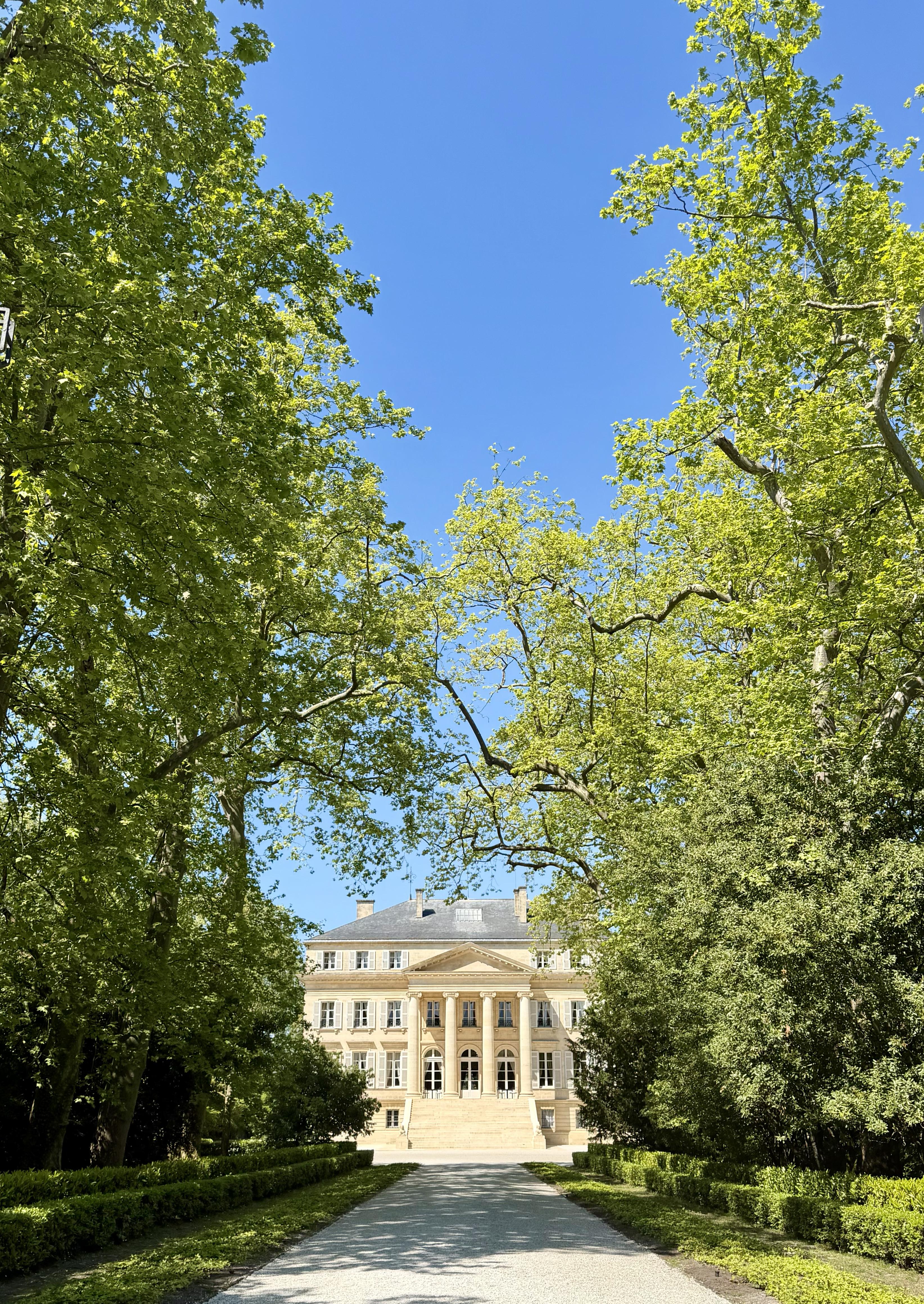

Twenty-five ranks amongst the great Bordeaux vintages. Its snow-capped peaks will be uttered in the same breath as legends gone by. This vintage takes scintillating duality to its zenith. The best wines offer both sides with utmost clarity, like two musical instruments that should theoretically clash but somehow sound harmonious together. “ ” Neal Martin, Vinous
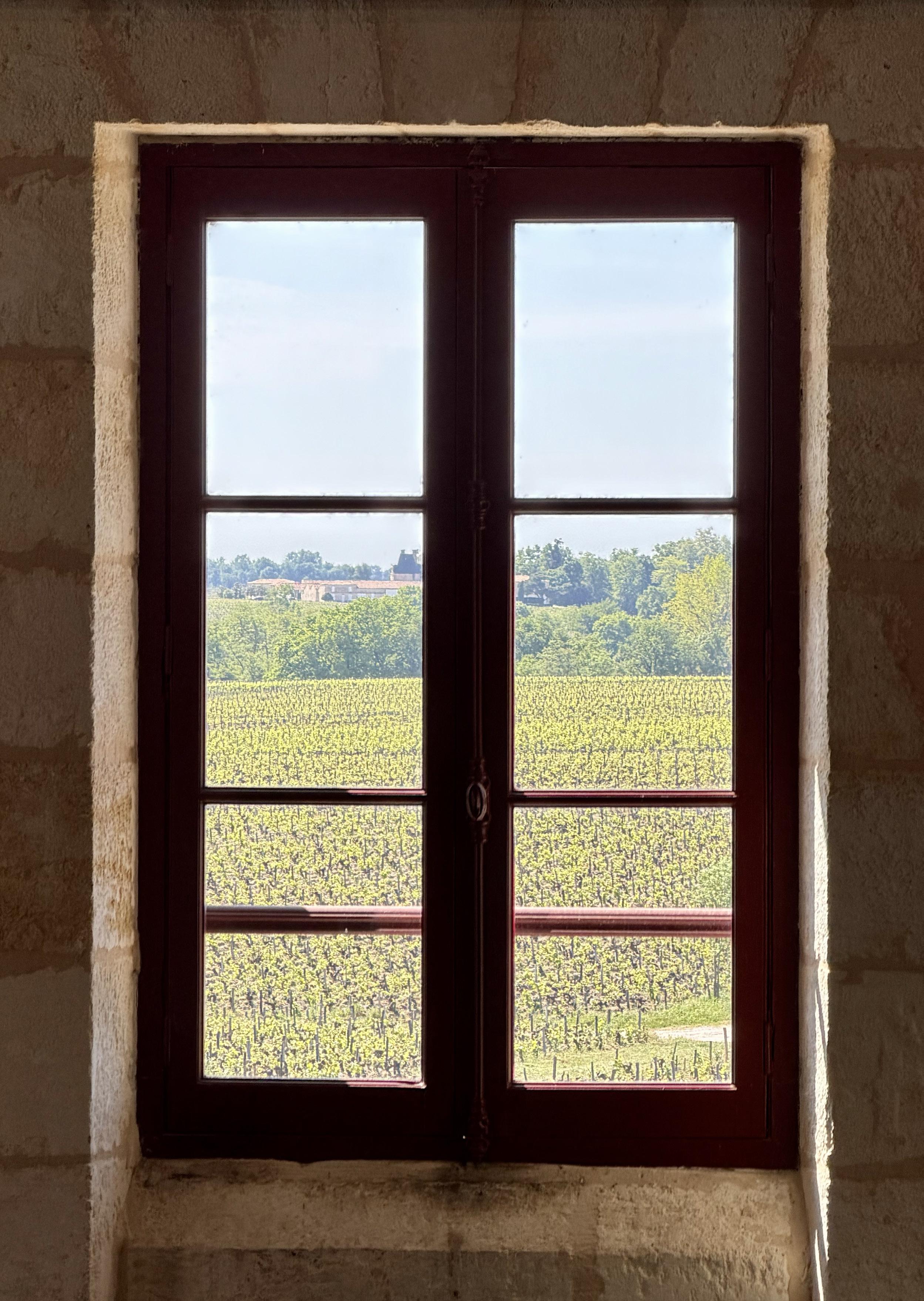
The paradox vintage: it certainly doesn’t fit neatly into the narrative of another glorious ‘5’ year, because you can’t buy confidently across the board – but the best wines live up to hype. “ ” Jane Anson, Inside Bordeaux
01. BORDEAUX 2025 EXECUTIVE SUMMARY
02. VINTAGE REPORT
03. CRITICAL CONSENSUS
04. WHY BUY EN PRIMEUR?
05. EXPLAINING LIV-EX’S FAIR VALUE
05. THE STATE OF THE MARKET
0 7. THE PICKS OF THE VINTAGE
CHÂTEAU MOTROSE
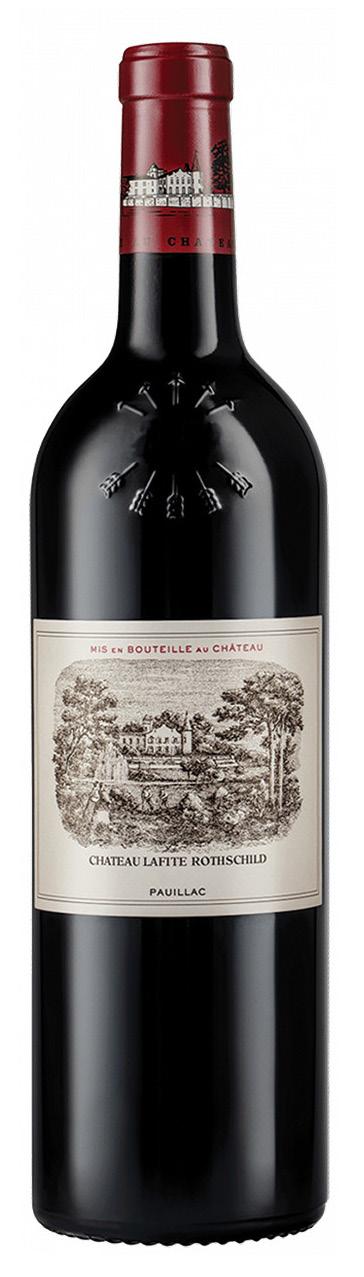
CHÂTEAU LAFITE ROTHSCHILD
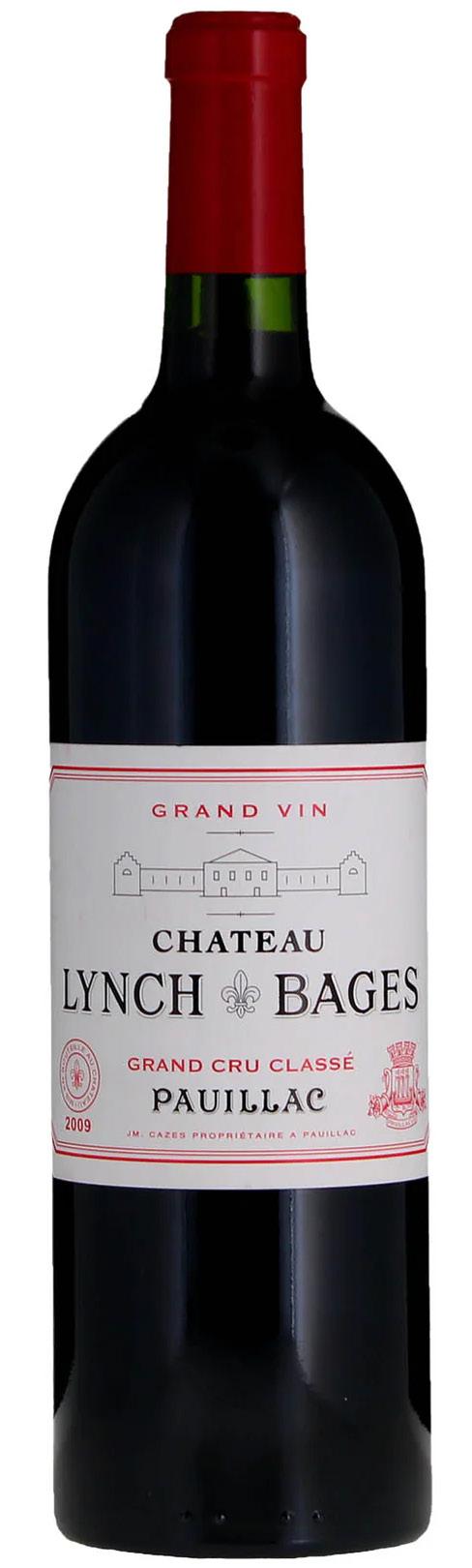
CHÂTEAU LYNCH BAGES
CHÂTEAU MOUTON ROTHSCHILD
CHÂTEAU PICHON COMTESSE
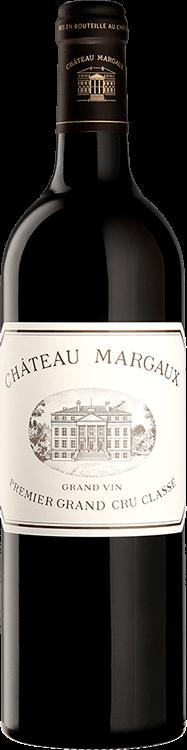
CHÂTEAU MARGAUX
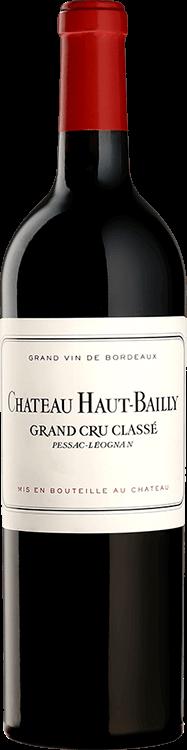
CHÂTEAU HAUT BAILLY
CHÂTEAU HAUT BRION
CHÂTEAU LES CARMES HAUT-BRION
CHÂTEAU CANON
CHÂTEAU CHEVAL BLANC
CHÂTEAU TROPLONG MONDOT
CHÂTEAU L’EGLISE CLINET
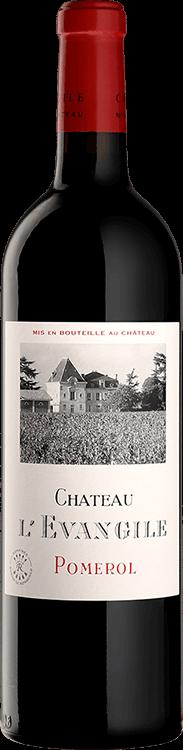
CHÂTEAU L’EVANGILE

I was born by the river
In a little tent
Oh, and just like the river, I’ve been runnin’
Ever since
It’s been a long
A long time comin’, but I know
A change gon’ come
Oh, yes, it will
It’s been too hard livin’
But I’m afraid to die
‘Cause I don’t know what’s up there
Beyond the sky
It’s been a long
A long time comin’, but I know
A change gon’ come
Oh, yes, it will
A change is gonna come, Sam Cooke
“It’s been a long, a long time coming…” And for Bordeaux, it really has.
After the sodden misery of 2024, growers entered 2025 with replenished water tables, reduced yields already baked in, and cautious optimism. What followed was a vintage that, for long stretches, looked like 2022 all over again—until, at the crucial moment, it wasn’t.
To understand 2025, you have to start with 2024.
2024’s relentless rain left aquifers full and vines well supplied as the new season began. Winter was relatively mild, with just enough cold to delay budbreak and avoid early frost risk. Flowering came early, clean, and efficient—no drama, no disruption, and a small crop already forming thanks to the previous year’s stress.
Then the rain stopped.
From late spring through much of the summer, Bordeaux saw prolonged dry conditions. Not quite as extreme as 2022, but close enough to raise eyebrows. Vine growth accelerated early, then slowed as hydric stress took hold. Berries remained small—very small in some cases—with thick skins and high tannin potential.
By July, conditions were firmly set, by early August, concern was rising and by mid-August, there was genu-
Temperatures soared, with multiple days above 35°C and peaks that pushed exposed fruit to extremes. Vines on free-draining gravel soils struggled, younger vines in particular, with clay and limstone-rich soils benefitting from more water retention. The spectre of an unforgiving, over-extracted vintage loomed large.
And then—just as the balance threatened to tip—the weather changed.
Rain arrived at the end of August and into early September. Not enough to dilute the wines, but enough to reset the trajectory. Sugars slowed, berry skins softened, and acidity was preserved. Alcohol levels came down a notch. The vintage pivoted.
Those few millimetres of rain are the difference between what 2025 could have been and what it ultimately is. To borrow from Cooke: “It’s been too hard living… but I know a change is gonna come.” — the growing season pushed vines to the edge, but Mother Nature intervened right when it mattered.
The result of the climactic conditions is a vintage defined by duality. On one hand, you have the imprint of the dry, hot summer: structure, intensity, small berries, high tannins. On the other, the late-season rains bring freshness, composure, and a more classical frame.
At their best, these elements dovetail beautifully. Cabernet Sauvignon, particularly on the Left Bank, delivers wines of real pedigree—intense yet controlled, with striking aromatic precision and unexpectedly bright acidity.
But this is not a forgiving vintage.
Where decisions in the vineyard or cellar missed the mark, the wines can feel dry, austere, even a touch severe. Extraction choices were critical. Picking dates were critical. Terroir, more than ever, was decisive. This is not a “safe” vintage. It is a thinking drinker’s vintage.
And this is where it becomes absolutely crucial for buyers. If there was ever a year to ask your merchant a simple question—did you actually go to Bordeaux?—this is it.
Because 2025 cannot be understood from a spreadsheet or a critic summary. It is too nuanced. Too varied. Too dependent on micro-decisions and micro-climates. The difference between success and mediocrity is often marginal—and invisible unless you’ve tasted widely, comparatively, and repeatedly.
Walking the region this April, there was a noticeable absence of some
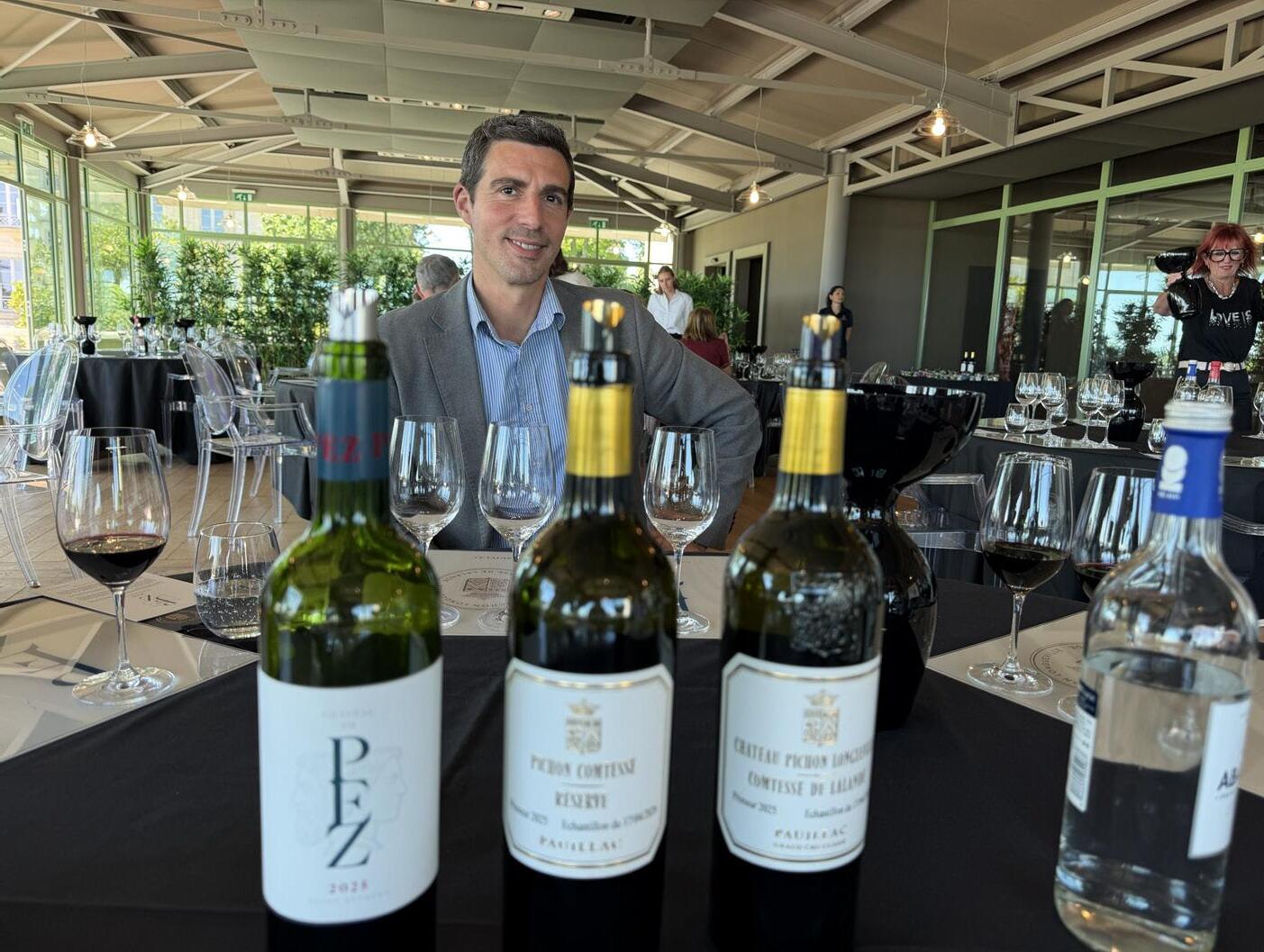
usual faces, particularly from the UK. Quiet tasting rooms. Half-empty line-ups. And yet, this is precisely the vintage that demanded presence, to assess as Neal Martin put it ‘it’s snow-capped peaks’ and and its near misses, too.
There are superb wines in 2025, but there are also plenty you should avoid. Knowing which is which is the whole point.
At the top end, 2025 will be spoken of very highly; not for flamboyance, but for precision. The critics have handed out a clitch of potential 100 point scores, so at its best this vintage promises very much.
The Left Bank has a slight edge, with Cabernet Sauvignon delivering structure, aromatic clarity, and longevity. Pauillac in particular leans into its classic graphite character more than I can remember in recent vintages. Saint-Julien remains reliably elegant, if yields were painfully low. Margaux combines its usual perfume with a little more backbone than usual and for me it was the appellation which won the day west of the river.
On the Right Bank, the picture is more fragmented. The best wines—particularly from clay and limestone soils—are excellent, even thrilling. Elsewhere, the vintage is less forgiving.
Some estates made the very best wines I’ve ever tried en primeur, whilst other reliable producers lacked mid-palate and balance. These are wines full of ripe fruit and floral hues, but also unerringly low alchol levels and freshness. Beguiling isn’t a word I use much in wine tastings, but it came up a few times with the 2025s.
All of this unfolds against a backdrop of a system under pressure.
The en primeur model, once seamless, is creaking. Demand has softened. Stock has accumulated. Buyers are more selective, more sceptical, and less willing to follow blindly. And frankly, who can blame them?
“It’s been a long time coming…” — but Bordeaux now faces a moment where it must adapt. Price this campaign sensibly, and confidence can begin to rebuild. Get it wrong, and the consequences will be felt for years.
The irony is that Bordeaux, at its best, still offers extraordinary value compared to its global peers, just look at the nosebleed inducing prices of Grand Cru Burgundy. But value has to be real, and has to be recognised.
2025 is a vintage of tension, nuance, and transformation. It is not uniform. It is not easy. But in the right hands, it is deeply compelling with some genuinely ‘perfect’ wines fashioned.
More than that, 2025 feels symbolic. A vintage shaped by extremes, rescued by timing, and defined by change. A change is gonna come. For the wines. For the market. For Bordeaux itself. The only question now is who moves with it—and who doesn’t.
I have selected a small handful of wines which delivered thrilling drinking, plus a collection of brilliant value picks from the vingage which I will be offering across the campaign. If you have any questions about the vintage then please do get in touch to ask me.

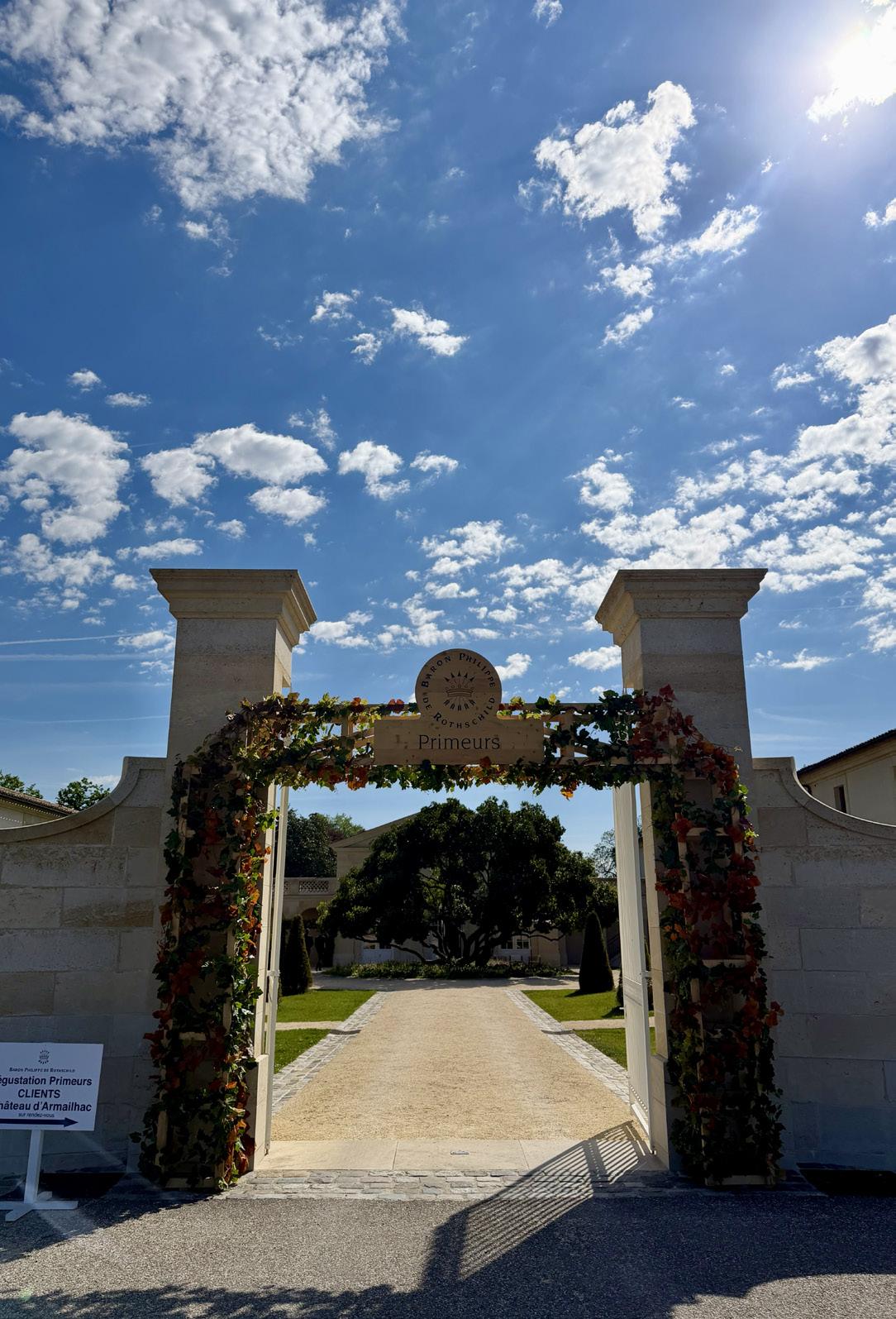
2025 is a vintage that rewards close attention. On paper, it resembles a warm, dry year in the mould of recent solar vintages, yet in practice it behaves very differently. Having tasted widely across the region, the overriding impression is of a year that combines concentration with freshness, but does so in a way that is far less uniform and far more exacting than the headline might suggest. This is not a vintage that can be summarised by a single stylistic descriptor; rather, it is one that reveals itself through detail, and where the margin between success and failure is often very fine.
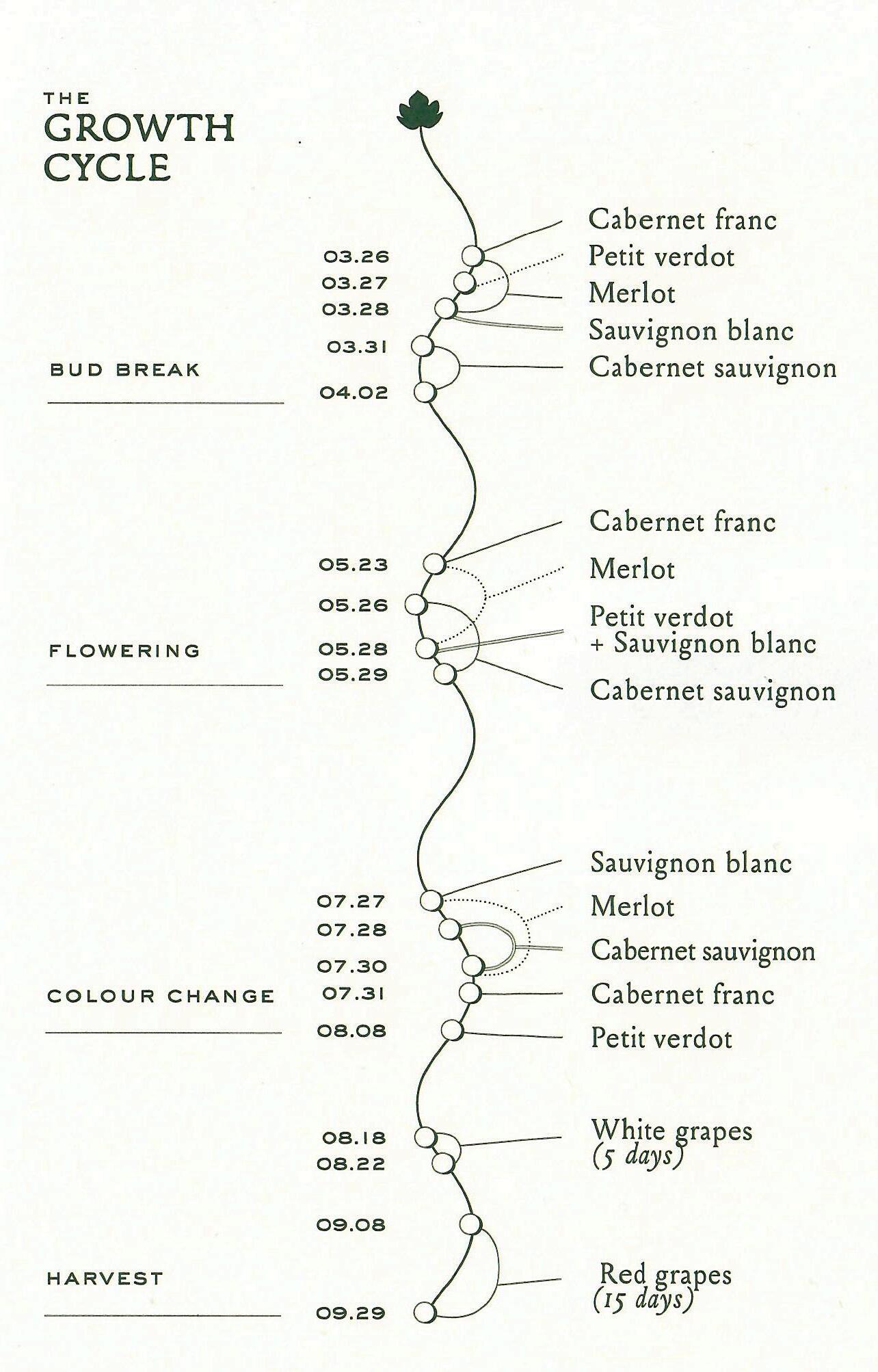
The foundations of 2025 were laid in the previous year. The difficult, rain-soaked conditions of 2024 limited the formation of inflorescences, meaning that yields were already reduced before the season had even begun. Winter was relatively mild and dry, and budbreak occurred in early April under stable conditions, aided by timely rainfall. From late April onwards, however, the weather shifted decisively. Dry, warm conditions set in, flowering occurred early and evenly, and from that point forward rainfall was consistently below average. The hydric deficit established itself early and persisted through much of the growing season, with only sporadic and localised relief.
These conditions had a marked impact on vine development. Berry size was significantly reduced, with many estates reporting Merlot berries scarcely exceeding one gram and Cabernet Sauvignon smaller still. At the same time, thick skins developed as a natural response to heat and drought, resulting in high concentrations of tannins and colour compounds. Veraison (colour change) began in the third week of July and progressed evenly, but by mid-August vines were under considerable stress, particularly on free-draining soils and in younger plantings. Two heat spikes intensified matters, pushing temperatures well above 35°C and raising the prospect of an over-concentrated, unbalanced vintage.
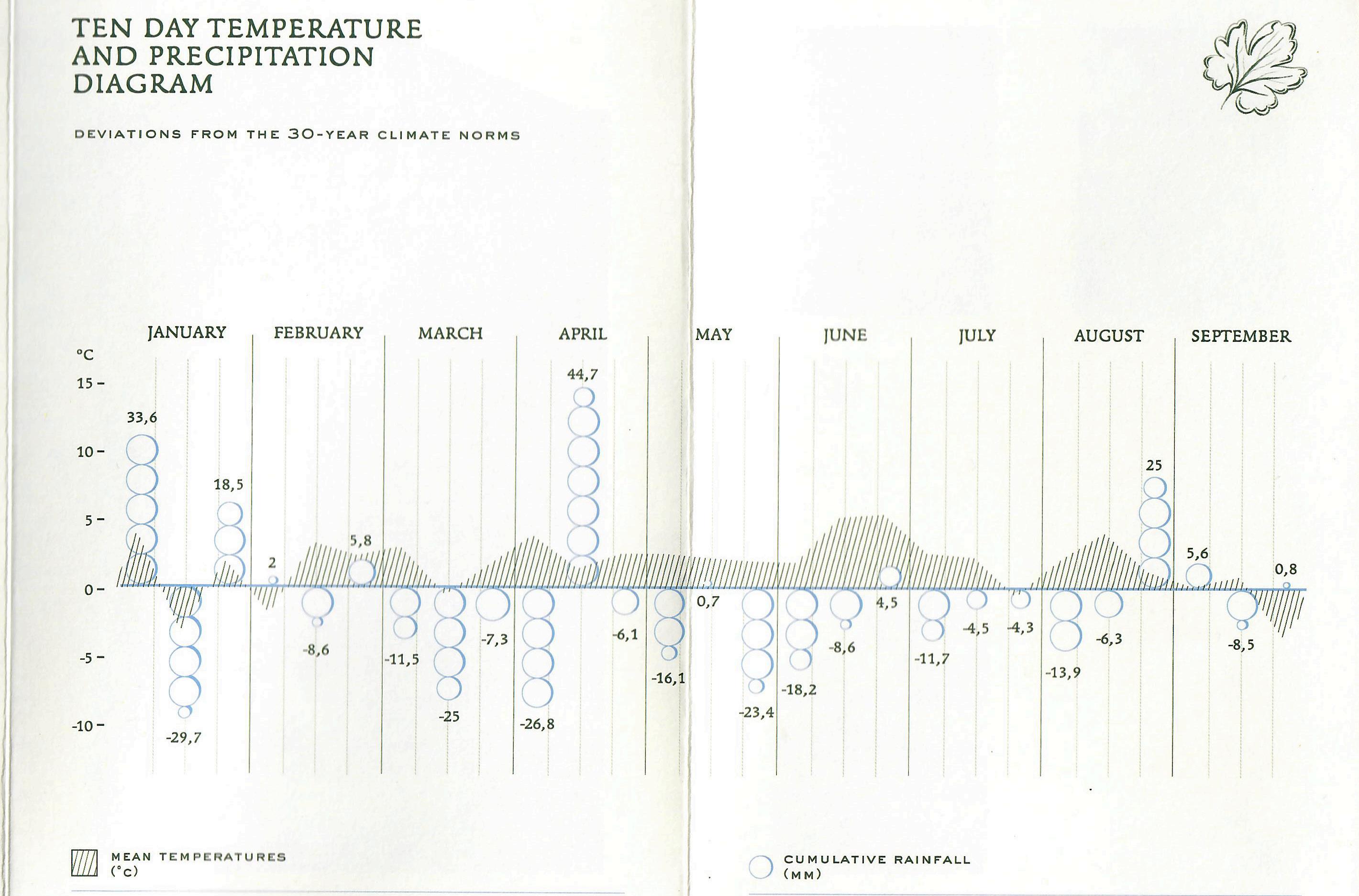
It was at this point that the season changed course. Rainfall at the end of August and into early September proved decisive (see the example above right from Château Margaux, where the rainfall in August far exceeds the 30-year climate norm). Unlike the excessive rains of the previous year, these showers were moderate and well-timed, restoring balance without diluting the fruit. Berry size increased slightly, skins softened, and the pace of sugar accumulation slowed. Crucially, acidity was preserved and potential alcohol levels moderated. Cooler nights through September further supported aromatic development and structural balance. Harvest took place in largely favourable conditions, beginning in August for the whites and continuing through early to mid-September for the reds, with minimal disease pressure and only limited sorting required in comparison to 2024.
In the winery, the character of the vintage dictated a measured approach. With naturally high skin-to-juice ratios, concentration and structure were effectively guaranteed, and the principal challenge lay in managing tannin extraction. Many estates adapted by favouring shorter macerations, lower fermentation temperatures and gentler handling, seeking to avoid drying the wines. The lower alcohol levels, typically between 12.5% and 13.5%, meant that tannins and acidity are more immediately apparent in barrel than in recent vintages, placing greater emphasis on their quality. Where this balance has been achieved, the results are impressive; where it has not, the wines can feel firm and austere.
The resulting style is one of clarity and precision. The best wines combine depth of fruit with freshness and definition, offering concentration without excess and structure without heaviness. Cabernet Sauvignon has performed particularly well, especially on the Left Bank, where it underpins many of the most successful wines with aromatic intensity and linearity. On the Right Bank, outcomes are more variable, with clay and limestone soils generally better able to manage the summer conditions than lighter, more free-draining sites. Unlike more homogeneous vintages, 2025 does not favour a simple regional hierarchy. Conditions across Bordeaux were broadly consistent, but the results are highly sensitive to terroir & producer decisions. This is a vintage that acts as a lens, bringing differences into sharper focus rather than smoothing them over. As a consequence, the gap between the best and the rest is more pronounced than in many recent years. The leading wines are of exceptional quality, combining intensity, freshness and ageing potential in equal measure, but there are also wines that fall short, their imbalances exposed by the nature of the vintage.
Neal Martin, one of the leading Bordeaux critics

When it comes to critics that genuinely move the market, in my opinion only Neal Martin, Jane Anson and William Kelley have the power to affect demand with their scores, though the latter is stepping down from Bordeaux duties after this year. We are, thankfully, no longer in a situation where one critic, like Robert Parker Jr can set the market; this reached its apotheosis with châteaux changing the way they made wine to align more closely with the famous critic’s tastes.
There has been unanimous praise from the top critics for Bordeaux 2025, with general acknowledgement that it is a vintage that needs careful sorting but that the very best wines are potentially perfect.
Critical consensus was that a confluence of agronomic advances, the late August rains and careful intervention in the winery created deft wines that marry ripe fruits, florals and tannins, but which also deliver remarkable freshness and low alcohol levels.
A selection of critical highlights on Bordeaux 2025 from the leading critics follows.

“Twenty-five ranks amongst the great Bordeaux vintages. Its snow-capped peaks will be uttered in the same breath as legends gone by. Perhaps the Left Bank edges the Right due to the raft of superlative Cabernet. Then again, your palate might never forgive you for ignoring gems that bejewel the choicest parts of Pomerol and Saint-Émilion. The caveat is that 2025 is complex, tricky to really understand, and not necessarily a “crowd-pleasing” vintage. It exaggerates vagaries between terroirs—whether limestone, clay, granite or sand—to create a patchwork of quality, also skewing appellations in different directions. Variations in rainfall paint many different pictures of Bordeaux.
Unlike 2022, the wines are not all curves and sumptuous fruit. Decadent? No. These are not Freddie Mercury in his full pomp and spandex, more Leonard Cohen at his poetic prime in a corduroy jacket. Many 2025s exhibit tropes of hot and cool growing seasons. I saw glimpses of this in 2020 and 2022, but this vintage takes that scintillating duality to its zenith. The best wines offer both sides with utmost clarity, like two musical instruments that should theoretically clash but somehow sound harmonious together”

“Concentrated, ripe and fresh, with moderate alcohol levels (generally 12.5% to 13.5%), striking aromatics and authoritative density, the best 2025s are thrilling wines. Where we described the 2022 vintage as an amplifier—magnifying differences of site, viticulture and winemaking into often larger-than-life expressions—2025 functions as a clarifier. It brings tighter focus to the nuances of terroir, winemaking decisions and style, delivering wines of real concentration (thanks in part to historically low yields) that nevertheless remain more classically proportioned and transparent than their 2022 counterparts.”

“This is a vintage of extremes, with a number of brilliant wines that deserve a place in anyone’s collection, and others that struggle to really perform at the top of their game. Overall, I would place it easily ahead of 2017, 2021 and 2024 over the past decade, and close to 2015 and 2019 in terms of potential – both vintages that I liked very much.
Intense, concentrated, high tannins and high acidity. Deep colours (reflecting the tiny berry sizes), low alcohols (reflecting some blockages that slowed sugar accumulation, and cooler temperatures in September in most cases). It’s a year with highs and lows, and anyone who tells you otherwise should be treated with caution, but the best wines have a combination of concentration and finesse that is extremely seductive”.

“Here is a vintage that nobody — and we mean nobody — saw coming. After a veritable pressure cooker of a summer that turned Bordeaux into something approaching a fruit preserve, 2025 had the audacity to be interesting in an entirely different way.
What ended up in the bottle is frankly a bit of a miracle. The freshness you get from a cool year — that electric, lip-smacking acidity that makes you sit up straight and pay attention — is all there. But so is the weight. The generosity. The sheer presence that you only get when the fruit has properly ripened and decided it means business. These two things seldom coexist. They are, in wine terms, the equivalent of being both funny and attractive. Bordeaux, ever the conjuror, has once again reached into the hat and produced something which has no right to be as good as it is. The rabbit blinks. The audience applauds”.
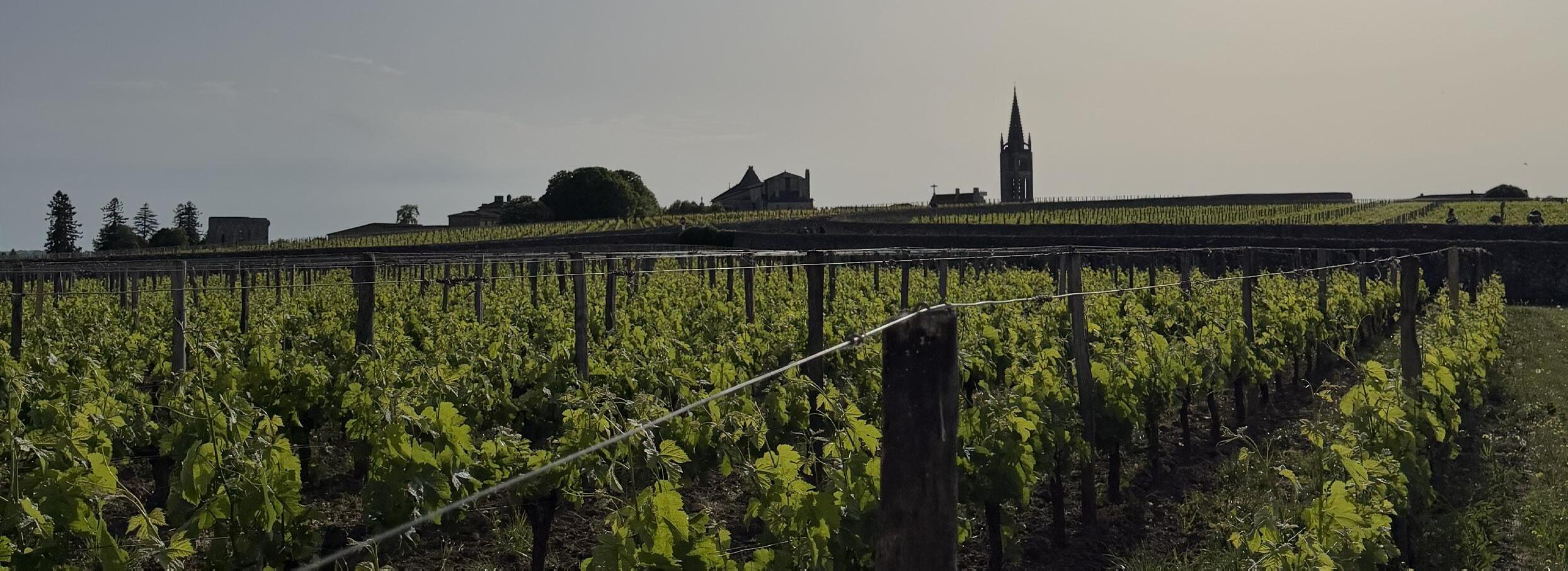
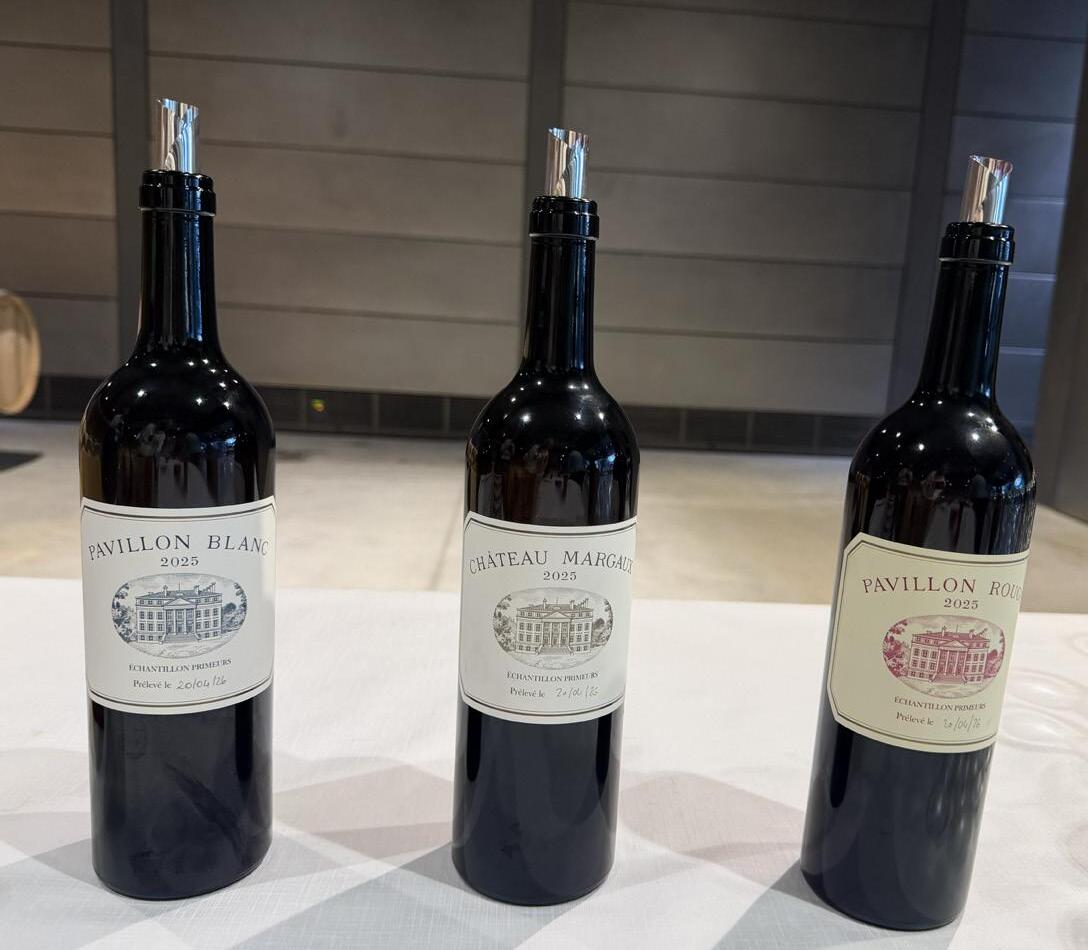
Above: Tasting at Château Margaux
The en primeur system or ‘wine futures system’ is the yearly ‘betting’ on wine futures that takes place in April when journalists, critics and wine buyers from around the world descend upon Bordeaux to give their prognosis on the most recent vintage, following which the Châteaux, in consultation with a courtier (or broker), set their prices accordingly, releasing them to the wider market around 12-18 months before the wines are physically available.
For many centuries the exchange was purely between local merchants and châteaux, but since the late 1970s the system has become increasingly public-facing. The rise to prominence of Robert Parker Jr as critic-inchief established a link between unbiased critic and end buyer, with the 100-point scoring system providing an easy-to-understand rating for each wine, with 100 ostensibly marking out ‘perfection’.
For wine lovers, en primeur was a guaranteed method of securing top clarets ahead of the rest of the market. The normal increase in value of the wine between en primeur sale and physical bottle in a shop in, say, London, meant that often the approach of buying two cases of wine ensured you could eventually sell the second at a premium, allowing you to drink the first case at a heavily subsidised cost. As the Place de Bordeaux has grown in scope, with hundreds of châteaux coming in under its umbrella, it continues to offer wine lovers access to the top wines, but also a slew of smaller, hidden gems which have gone on to become much loved favourites of the claret-drinking set: Beaumont, Batailley, Duhart-Milon, for example.
For investors, the futures system long played into the key fundamentals of Fine Wine investment, exacerbating both the brand positioning of top wines, which are offered on sought-after allocations, and the inverse supply curve which drives the value of this alternative investment asset, with decreasing allocations increasing the scarcity of top wines.
However, in my opinion, and one shared by many other brokers in the trade, the en primeur system is on its knees, driven by greed from the top châteaux . Over recent years properties have held back increasing quantities of stock to release years down the line at a premium, squeezing the stocks for negociants and driving up prices.
It is hard to argue that recent vintages, with the benefit of hindsight, have offered value across the board to drinkers and investors alike. The fundamental principle of en primeur is a relatively simple one; price your
in barrel, ‘future’ wine as the cheapest available on the market, it will sell well, it will go up in price and those buyers who took a punt early on are rewarded with modest or generous future gains, should they decide against drinking their case(s).
Sadly, avarice has taken hold of Bordeaux, and several recent vintages, particularly 2022 which sold at the summit of the Fine Wine market’s climb, were released much more expensive than bottles already on the market for several years. This upends the system and puts value in a tailspin.
So much depends on the pricing of the vintage by the châteaux: price keenly like the 2019 vintage, released during the early stages of a global pandemic, and the vintage will offer enticing value, but this can have a knock on effect to back vintages, as it did the 2017 vintage, an altogether less successful year which was suddenly priced at a premium to a superior 2019, devaluing it rapidly (though the wines are, in my opinion, wonderful to drink).
On the whole, the 2024 vintage was released at substantial discounts to the 2023s but in most cases the drops were not enough. On average, prices for 2024 releases were down c. 25% (source: Liv-Ex), bringing them roughly in line with the 2021 vintage, halved since the 2022 releases, which is an astonishing reset. In Neal Martin’s opinion, reductions of up to 50% would have represented serious value and would’be seen a successful campaign; alas, 25% was often the maximum most producers would countenance.
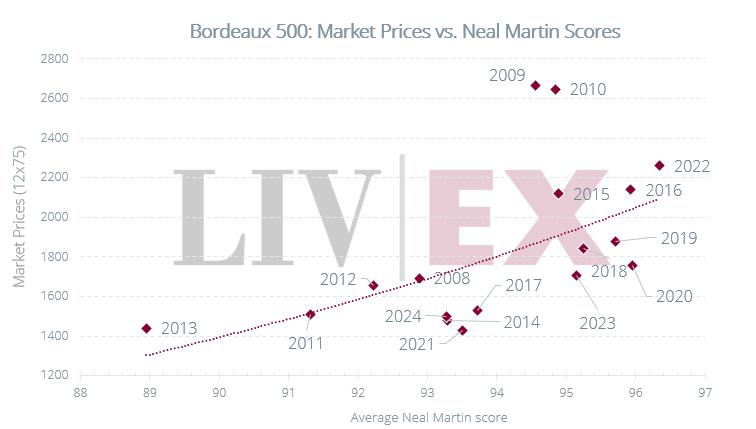
The chart below is an extension of Liv-Ex’s ‘Fair Value’ methodology, plotting vintage average scores against average market prices. It shows the previous 2024 vintage as well below the fair value line, despite generally poorer scores, showing that there is value to be had.
On the graph there is plenty of room for a very well scored 2025 vintage to offer genuine value if prices remain similar to last year. I fear that substantial price increases will be counterproductive and that rises in price will only be tolerated from properties who for whom demand will far exceed supply, like at Cheval Blanc where an increase of 20% is tempered by minute quantities, down two thirds on the average.
When criss-crossing Bordeaux in April the topic of price was clearly at the forefront of the minds of people working at Bordeaux’s myriad properties. The financial pressures have increased exponentially over the past few years and all but the biggest Château can genuinely afford to sit on unsold stock.
The 2025 vintage undeniably offers some wonderful wines and if priced well, those wines could sell well and deliver genuine value to buyers as assets across the next few years, particularly given the exacerbation of the inverse supply curve that drives wine with a high quality but low yields year.
As ever, I will only offer wines which match strict value proposition criteria at all levels, from First Growth wines to wonderful cru bourgeois drinking cases.

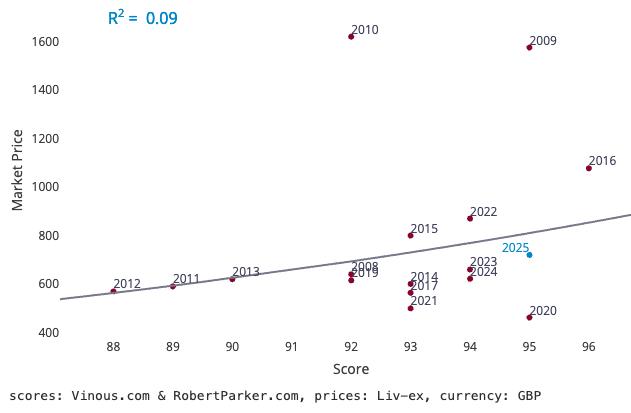
When judging which wines offer value for money I employ a suite of proprietary data tools which mark amongst other things the scores from the leading critic (Neal Martin of Vinous) and other top critics (William Kelley of The Wine Advocate & Jane Anson, formerly Decanter’s Bordeaux critic but now running her own website, Inside Bordeaux), the release price, the reduction in allocations & general production numbers.
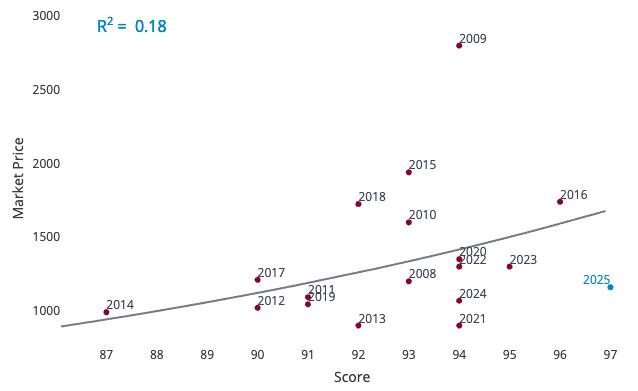
I then benchmark this data against back vintages of the wines in question, comparing the price performance of both similar vintages, and similarly-rated iterations of the wine. Underpinning my decisionmaking is LivEx’s ‘Fair Value’ tool. In their own words its “methodology represents a useful approach to pricing wines. It uses regression analysis to measure the relationship between price and quality and establish the fair price of a wine based on its critic score and vintages already available in the market. Where there is a correlation (R-squared) between the scores and prices of over 50%, the trend line suggests a wine’s ‘Fair Value’”.
The Fair Value chart from Liv-Ex on the right plots Pontet Canet 2025, using Neal Martin’s score of 94-96 points.
The blue dot of the 2025 Pontet Canet on the right is below the fair value regression line, demonstrating fair value.
As always, the devil is in the detail. Whilst the release price of Pontet Canet 2025 was flat on the 2024, which scored a point lower, the recommended retail price was substantially up. Whilst the 2025 release of Pontet Canet would make handsome margin for wine merchants, I cannot offer if because it does not offer the same potential for clients. So, whilst Fair Value is an important tool, it is just once such in our arsenal of Bordeaux release analytics.
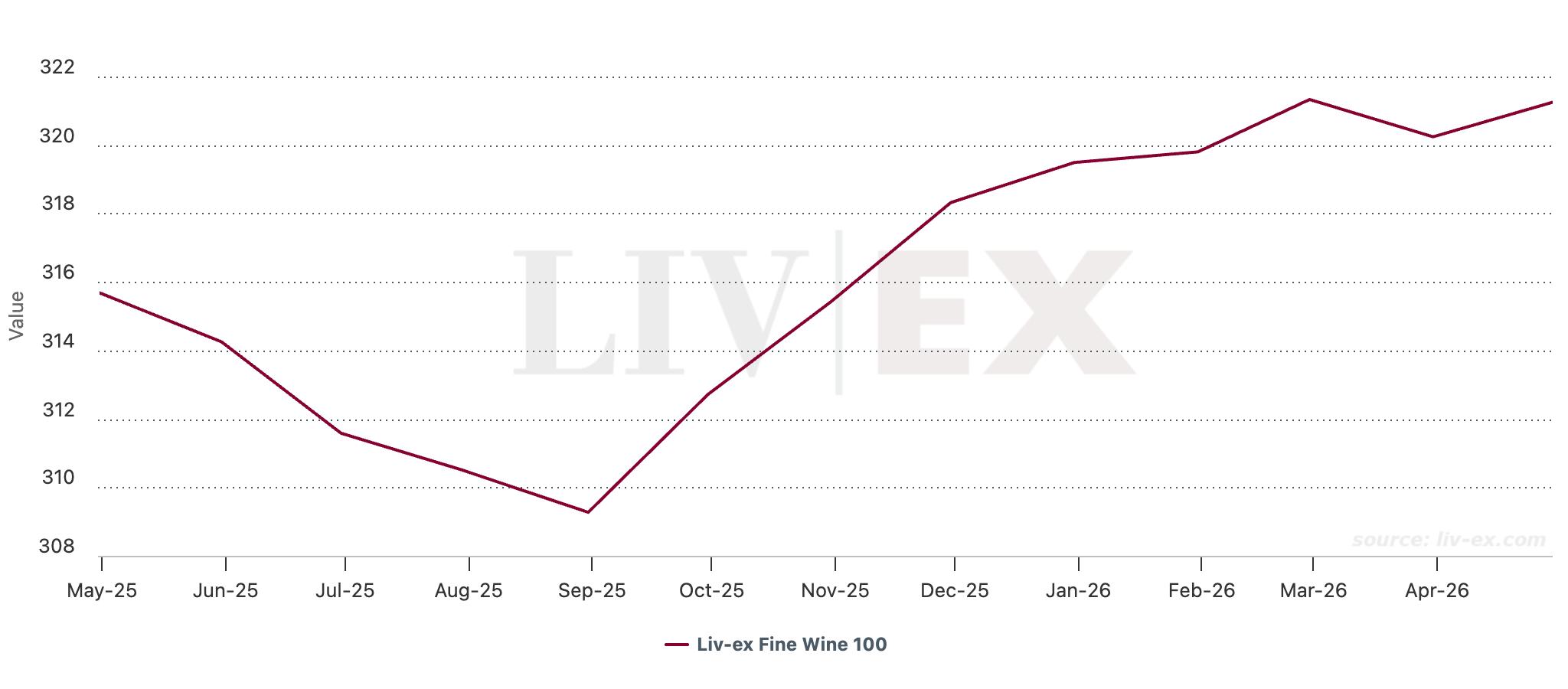
Above: The Liv-Ex Fine Wine 100 index has appreciated by 2% across the past year. showing that recovery is taking shape after the 2023-2025 downturn
The Fine Wine trade enters the Bordeaux 2025 En Primeur campaign at a critical juncture. After several years of post-release price declines, confidence in the system has been tested, leaving collectors and merchants questioning whether En Primeur still offers the value it once promised. In the words of Liv-ex, a breakdown of trust has emerged at the heart of the market. Price reductions alone are no longer sufficient when buyers have repeatedly seen wines fall below their release levels. En Primeur, once defined by undeniable value, has in recent years too often failed to reward participation.
And yet, Bordeaux En Primeur remains the most widely followed event in the fine wine calendar. Even as participation waned last year, attention did not. It continues to bring together the trade and private collectors in a way no other campaign can replicate. Encouragingly, the backdrop to this year’s campaign is more constructive. After three years of correction, the market is beginning to stabilise. Price declines are moderating, bid-side activity is increasing, and sentiment—while cautious—is improving. The Bordeaux 500 appears to be entering a period of consolidation, with stability replacing recent volatility.
Crucially, this improving market coincides with what is widely recognised as a vintage of undeniable quality. The best 2025s show striking concentration, freshness and balance, supported by strong early critical acclaim. Lower yields, driven by hydric stress, have further limited production, adding a layer of scarcity to the top wines. That alignment—improving market conditions alongside a high-quality, small-volume vintage— creates a far more compelling backdrop than in recent years. However, discipline remains essential. Buyers remain acutely aware of the availability of back vintages, many of which still offer strong relative value.
It is in this context that the 2025 vintage will be judged. Lower volumes and strong scores may tempt chateaux to push prices higher, but recent history has shown that misjudging the market will yield neither shortterm gains nor long-term goodwill. Wines that fail to offer clear value will simply add to existing supply. For the buyer, the approach is clear. Only those releases that combine the inherent quality of the vintage with pragmatic pricing—positioning themselves as the most attractive option available—are worthy of attention.
The Fine Wine 100 index may have endured a prolonged decline, but in doing so it has reset the market. For those willing to act selectively, the current environment—underpinned by a high-quality, limited vintage— offers something largely absent in recent campaigns: a rational and potentially rewarding entry point.
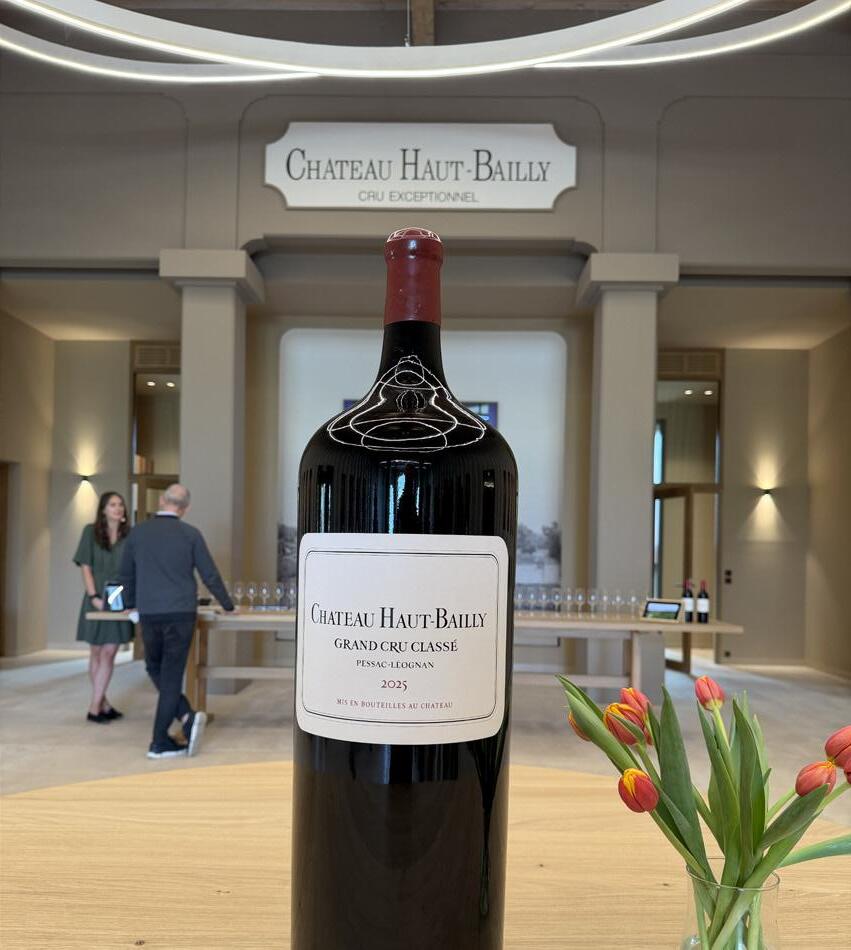
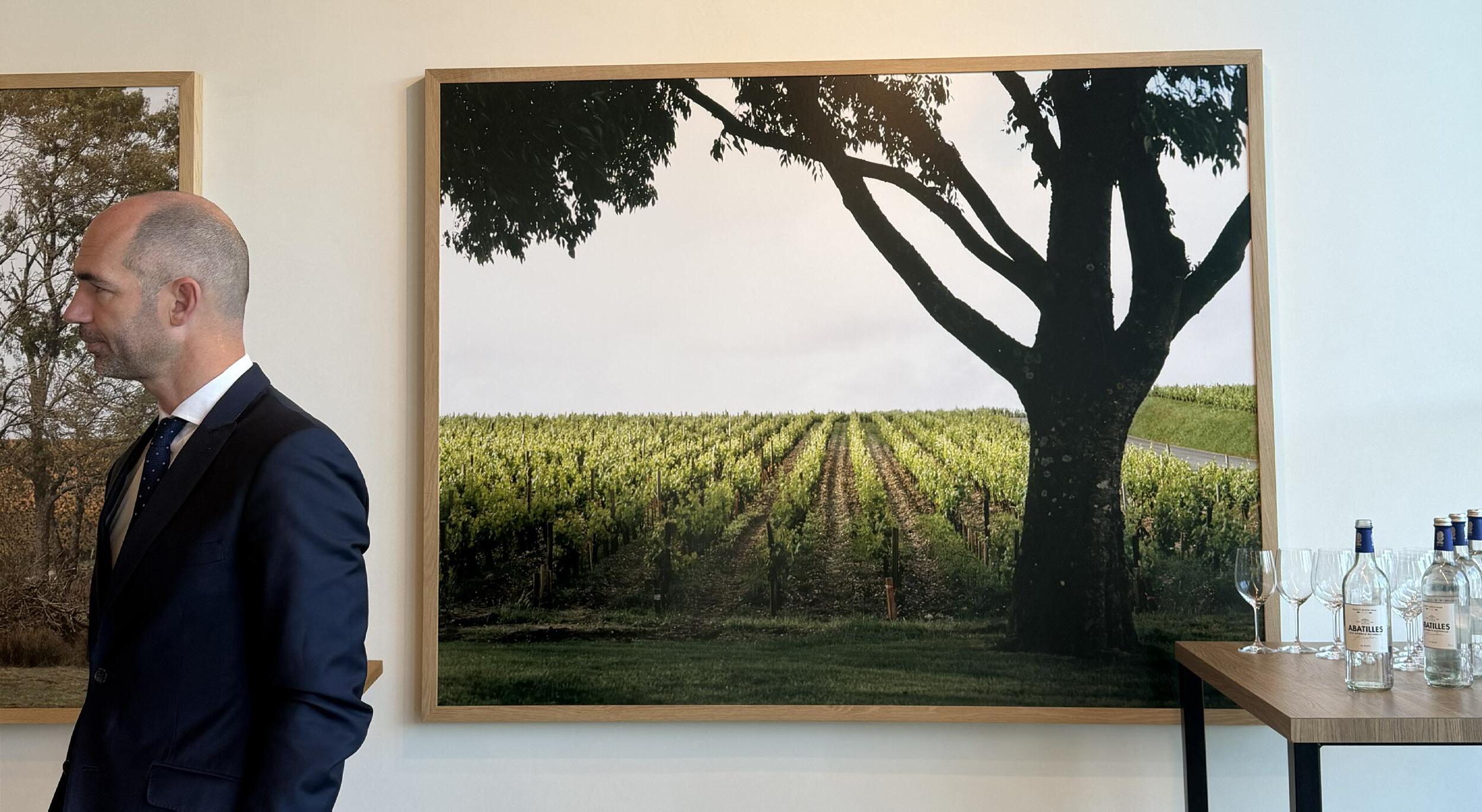
Above: Tasting at Château Haut Bailly
My picks of the 2025 Bordeaux vintage are a combination of the wines which impressed me the most when criss-crossing the region in late April and those scored equally highly by the leading wine critics. This is not an exhaustive list and it may well be that release prices of wines below rule a wine out due to overpricing, whilst wines price keenly not on my list may well them become strong buy options.
I also have suggested a list of wines at the petit chateau level which I posit will deliver enormous vinous pleasure for minimal capital outlay. After tasting widely — boots on the ground, not behind a desk — my selections at this pre-release price stage represent wines I’d buy myself based on a positive tasting experience. It is for the properties to convert these tasting recommendations into buying suggestions with sensible and fair pricing strategy.
Château Montrose
Château Lafite Rothschild
Château Lynch Bages
Château Mouton Rothschild
Château Pichon Longueville Comtesse de Lalande
Château Margaux
Château Haut Bailly
Château Haut Brion
Château Les Carmes Haut-Brion
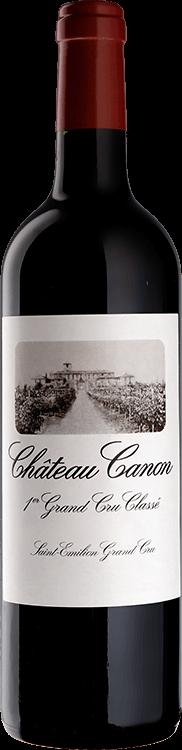
Château Canon
Château Cheval Blanc
Château Troplong Mondot
Château L’Eglise Clinet
Château L’Evangile
Saint-Estèphe
Pauillac
Margaux
Pessac-Léognan
Saint-Émilion
Pomerol
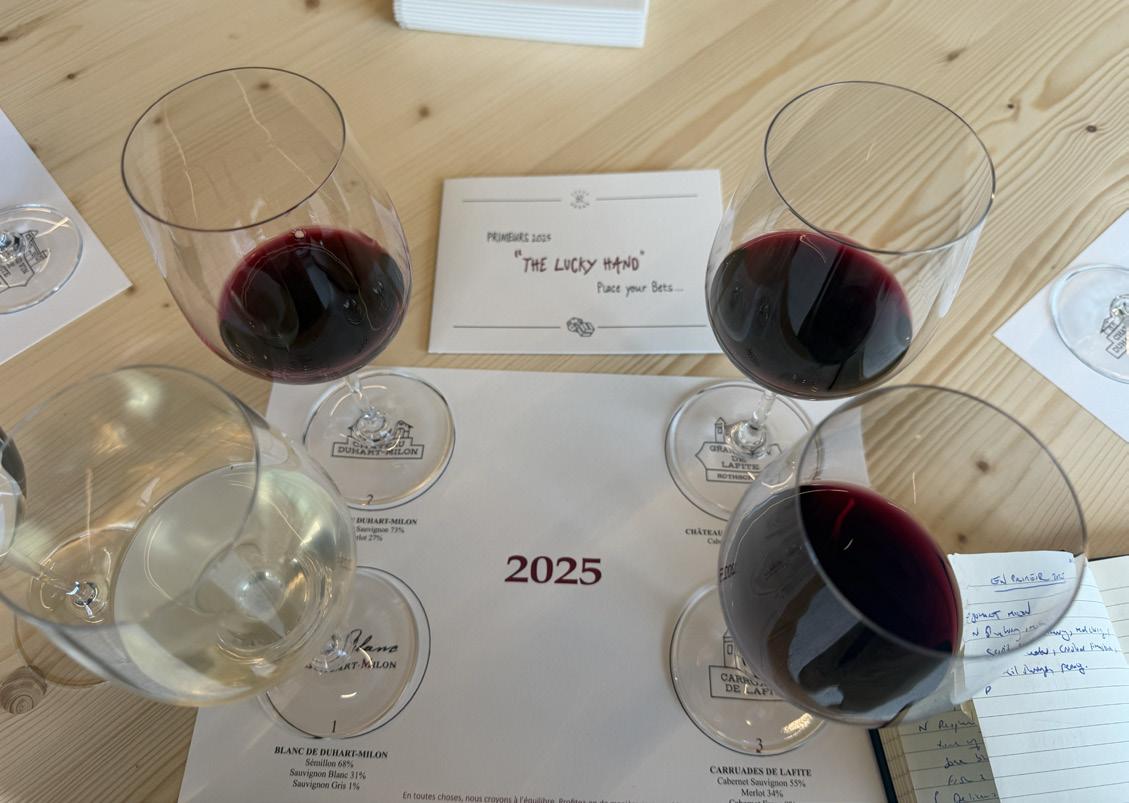
The following pages feature detailed analysis of these wines, including Liv-Ex’s fair value graphs, critical scores and release prices where avaialble set against market prices of recent vintages. If you’re considering Bordeaux 2025 for your cellar or your investment portfolio, these are the wines worth your attention.
Neal Martin, Vinous : 98-100 points
“The 2025 Montrose only comes from the Terrace IV, as has been the way since the 2023 vintage. This has another very intense nose with a potent graphite element that infuses the black fruit, beautifully defined but unapologetically classical in style. Wow. The purity of fruit is exceptional. The palate is medium-bodied with supple, very chiselled tannins, exquisite black fruit loaded with minéralité. So much freshness and vibrancy, gentle but insistent grip, very precise and refined on the finish, this is a Montrose that will rank as one for the ages. Wow (again)”.
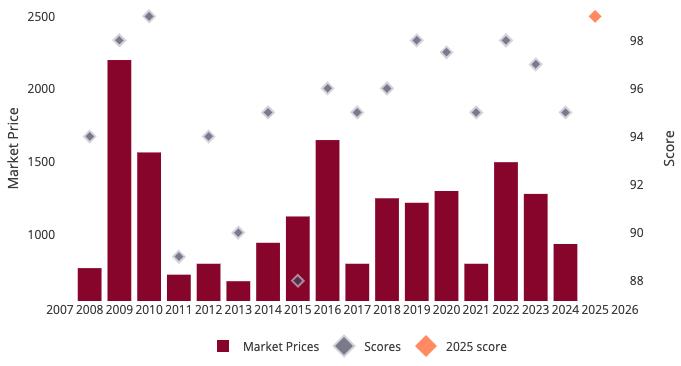
ANALYSIS Château Montrose has flirted with perfection (at least as far as Neal Martin posits) several times in recent vintages, most recently in 2019 & 2022. The 2025 is likely to hit that magic 100 which will immediately place it in an elite but small group of Martin’s Hall of Fame wines. This alone means that subject to pricing it will command attention for those lucky enough to secure some.
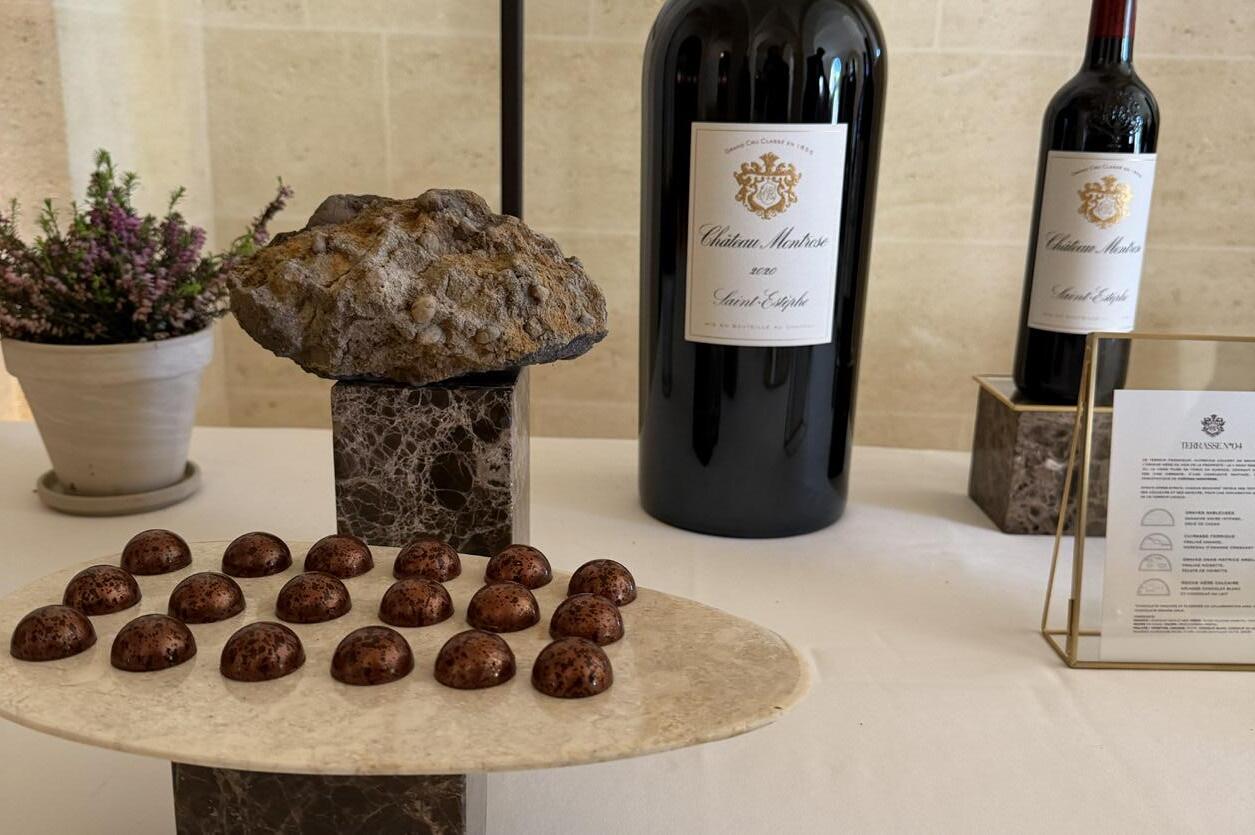
I rated the wine 97-99 points at the property, noting its “harmonious, precise and persistent finish”. We also tried chocolates made to convey the tastes & texture of the four main soil types under Montrose; they were eye-opening & delicious, as was Château Montrose itself.
£4,164 per 12 £2,082 per 6
Neal Martin, Vinous : 98-100 points
“A deliriously intoxicating nose, replete with nuanced blackberry, bilberry and estuarine scents, all beautifully defined and seamlessly integrated with the 90% new oak that is made from Lafite’s own cooper. The palate is medium-bodied with finely chiselled tannins. It is blessed with extraordinary harmony and it is so well balanced that you almost overlook the weight and minéralité towards the finish. This is a very succinct & refined Lafite-Rothschild that I suspect will drink earlier than the 2022, yet will age with equal grace in bottle. I admit that, upon returning to my car, it was only then that I realised what a brilliant wine the 2025 Lafite-Rothschild is destined to become”.
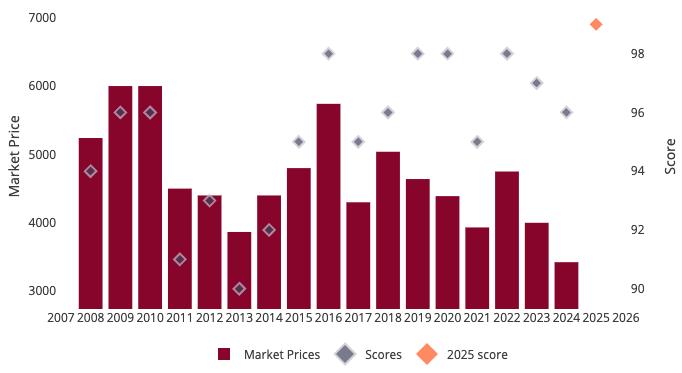
ANALYSIS As with Montrose, Lafite Rothschild has teased the idea of one of its recent vintage achieving critical perfection with Neal Martin, but even if this wine remains in the middle of its bracket at 99 points, it will be the highest scored across the past twenty years.
Lafite is an investment stalwart and the 2024 release was once of a very small handful of wines priced sensibly, with it available as the cheapest vintage on the market right now. The 2025 has been priced extremely keenly by the property, available as one of the cheapest Lafites on the market in spite of its potentially perfect score. This is genuine value for wine buyers and a rare STRONG BUY option.
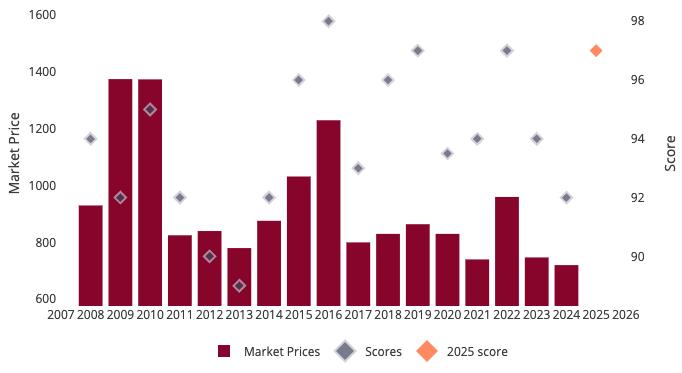
Neal Martin, Vinous : 96-98 points
“The 2025 Lynch-Bages was picked 9 to 21 September and matured in 75% new oak barrels. This has a stunning bouquet with exceptionally pure blackberry, cassis and subtle violet scents, the oak seamlessly integrated. The palate is medium-bodied with finely embroidered tannins, perfect acidity, a touch of cedar and black pepper that dovetails into a peacock’s tail finish that “clings” to the mouth. This continues the strongest run from Lynch-Bages since the 1980s and, perhaps with the 2025, it is close to surpassing that.”.
ANALYSIS Lynch Bages has long been a favourite with the UK market, tracing its ancestry to the Lynch’s of Ireland. Its highest, Neal Martin-rated vintage was 2016 points, which this 2025 may emulate. Pricing will be key and any release price which places it under the 97 point-rated 2019 & 2022 would surely reinvigorate interest in this super property as an asset.
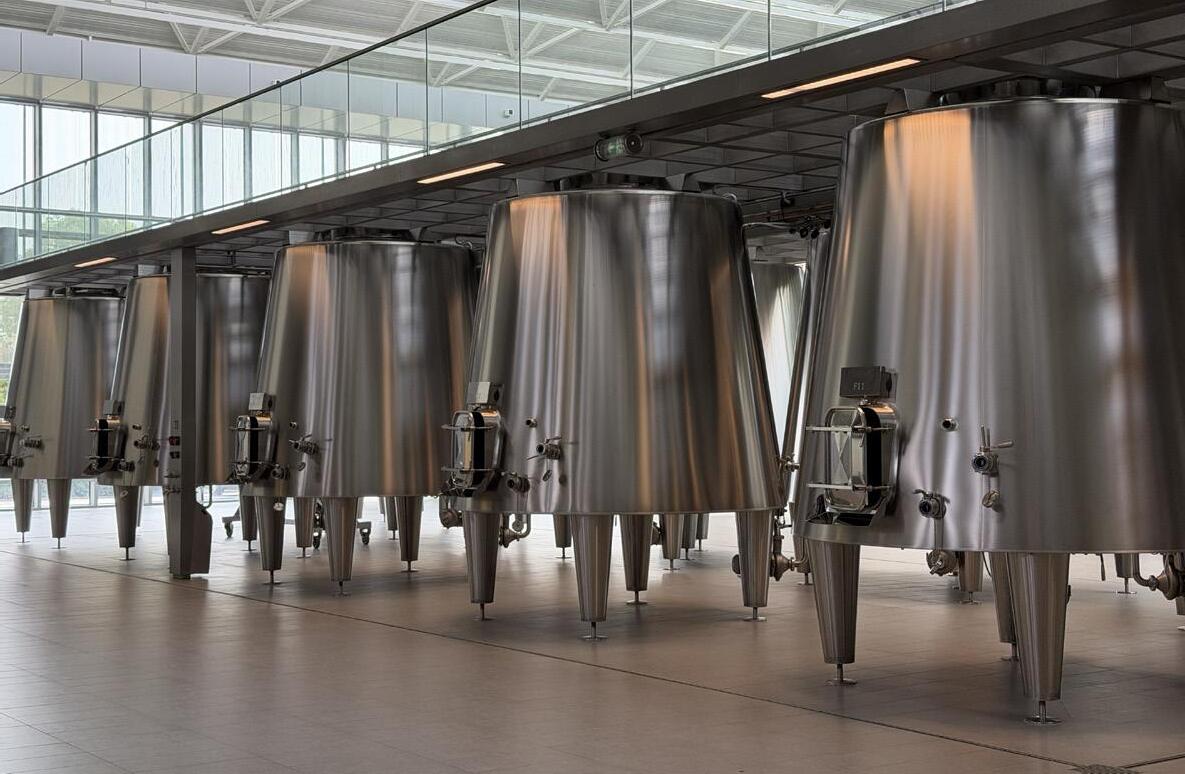
Happily, I rated the 2025 Lynch Bages 96-98 points, the same as Martin, when I tasted it at their space-age winery (left). I noted that it’s nose of damson, black plum, crushed limestone and morels gave way to an enticingly juicy, cerebrally-structured wine with a spice driven finish. Superb.
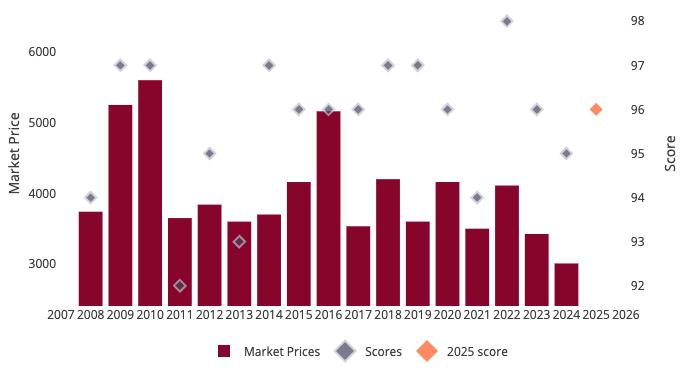
Jane Anson, Inside Bordeaux : 98-100 points
“Highest Cabernet Sauvignon on record (since 94% for the 2010 vintage), stately and reserved at first, then totally joyful. The right austerity, coupled with squid ink character and fabulous hidden depths that are going to take their time to fully unroll, with the incense of the oak coming through only after a good 10 minutes in the glass, you barely perceive it on the first tasting. What a beautiful Mouton, great stuff from wine director Jean-Philippe Danjoy. 52% Grand Vin, basically pure old vine Cabernet”.
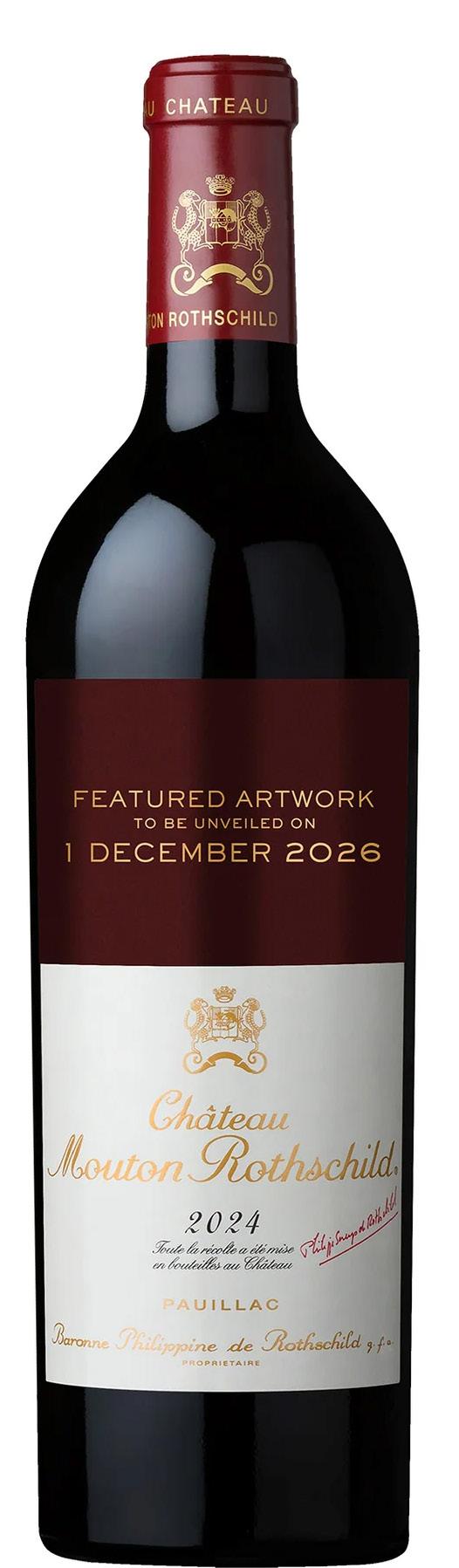
ANALYSIS Whilst a 95-97 point score from Neal Martin is not to be sniffed at, it is a very rare 98-100 rosette from Jane Anson which catches the eye with Mouton Rothschild 2025.
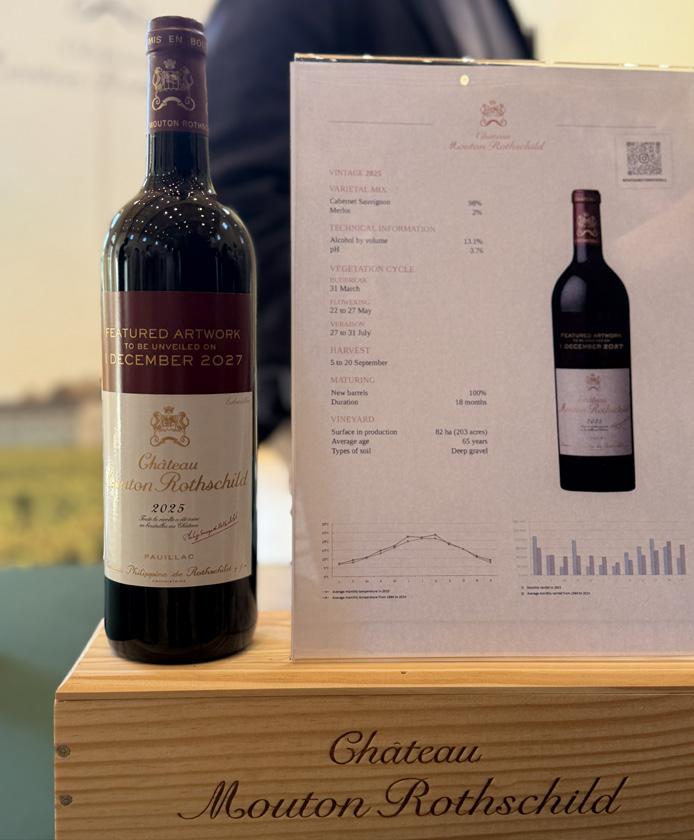
Mouton has always performed well in the markets helped by its unique tradition to employ a famous artist to design the label (previous contributors have included Braque, Picasso, Dali and Francis Bacon) which has created a second strand to its collectability.
Mouton has often followed rather than led when it comes to pricing and keen pricing of the 2025 would certainly make an asset with small quantities eminently viable as an investment. As a wine it is exquisite; I scored it 97-99+ points, commenting on its incredible aromas, flavours and structure which “might just be a hair’s breadth short of perfection”.
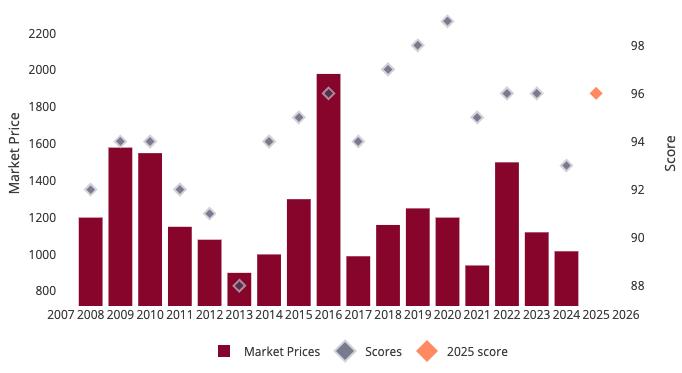
Neal Martin, Vinous : 95-97 points
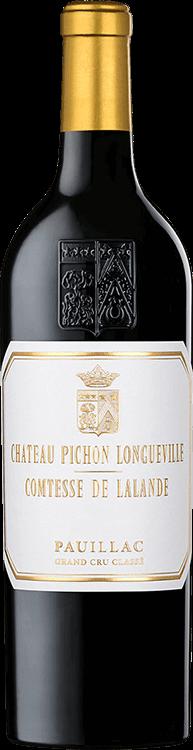
“The 2025 Pichon-Longueville Comtesse de Lalande was picked from August 28, the earliest ever, finishing on September 23, matured in 66% new oak, the rest one-year-old. It has a taut and linear nose, very classic in style, graphite/ pencil lead scents that permeate the black fruit. Beautiful delineation. The palate is medium-bodied with filigree tannins. A little more structured and austere than the more Merlot-driven vintages of old. Yet as it unfurls in the glass, it reveals the level of sophistication and precision you now come to expect from this Pauillac Second Growth”.
Tasting with Director Nicolas Glumineau and Florent Genty is always a treat, especially this year ahead of our mid-May dinner in London where we’ll enjoy vintages of this Super Second back to 1995. This is a property right in its sweet spot and its consistency is one of its overriding qualities.
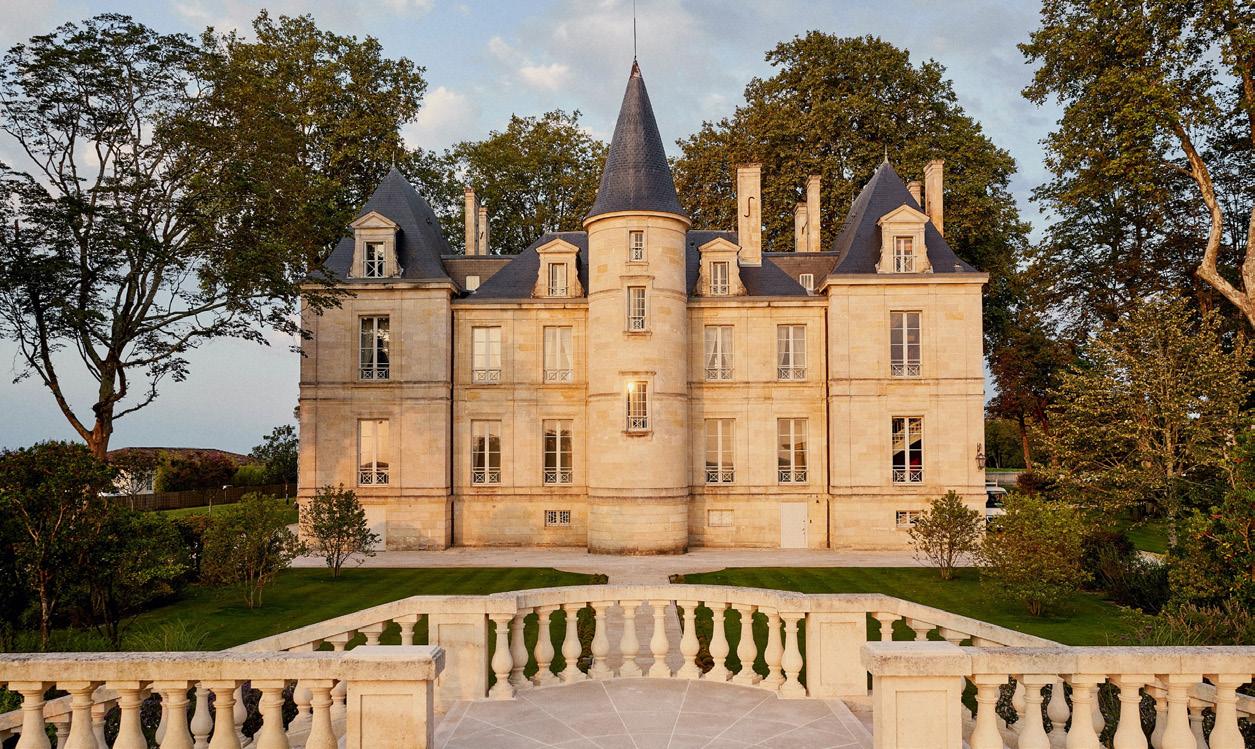
I would expect a modest price increase with this excellent 2025 but anything close to the 2022 price would feel out of kilter. I rated this new offering at 97-99 points, commenting especially on its “fine, filigree tannins, supple & pliant, well structured, mineral with supreme freshness & elegance; a wonderful wine”.
Jane Anson, Inside Bordeaux : 98-100 points
“More dense and yet more soft than the Pavillon Rouge, fully anchored in place and yet rising through the palate, with rose petals, pomegranate, cassis and damson fruits, so juicy and full of character, slate and crushed rocks, peony and iris, with volume that is expansive and striking. These guys held on to harvest after the rains and have been rewarded for it - can’t have been easy as everyone was picking around them, but this was a great decision that shows just what was capable in this vintage. I dont give 100 points En Primeur, but if I did, this would get it. It’s a slam dunk”.
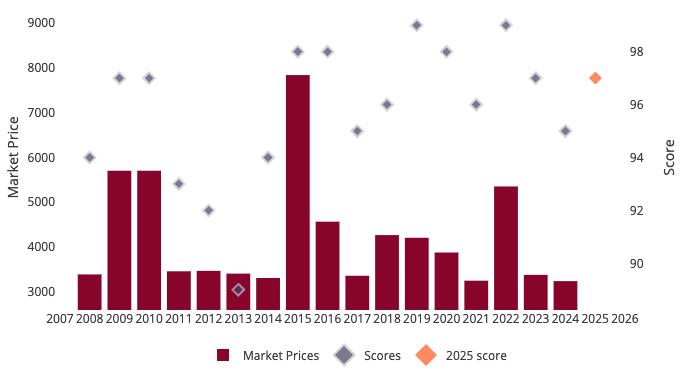
ANALYSIS In 2025, Château Margaux accounted for 55% of all wines from the appellation traded on Liv-Ex; it is a powerhouse of a First Growth and the most garlanded of the First Growths with high scores from critics across the past ten years.
For Margaux 2025, it is the 2015 vintage that acts best as canary down the mine as a wine conferred 100 points by Jane Anson, and the portents are good. Released in 2016 at £4,250, it now has a market value of £7,840, a return of 85% which is remarkable given the Fine Wine market lost some 25% of its value between 2023-2026. The 2025 will no doubt perform excellently for anyone lucky enough a secure even the tiniest slither of stock after the lowest yields since 1856.
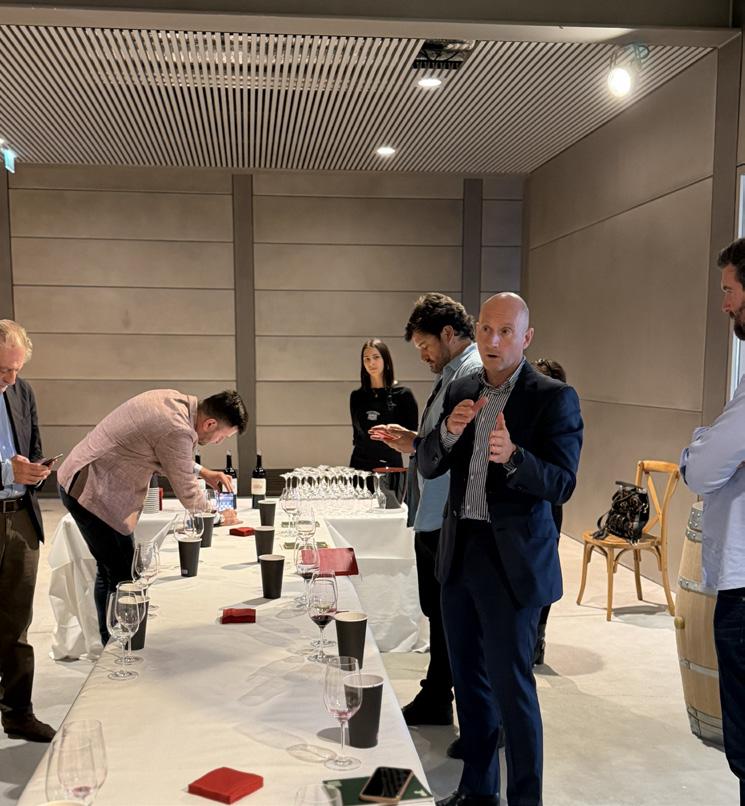
I was blown away by Margaux 2025, giving it 98-100 points when tasting with Thomas Burke and the MD, Philippe Bascaules (left).
Jane Anson, Inside Bordeaux : 98-100 points
“Super slow and steady expansion as it goes through the palate, this absolutely makes you smile and is right up at the top of my expectations for how Haut-Bailly would perform in this often-conflicting vintage. Beautiful, crushed rose petals, wet stones, iris flowers, squid ink, shows finesse but also generosity, a wine with so many dimensions and layers to experience. Sit back, give it a good 6 to 8 years in bottle, then get ready to celebrate. 55% in first wine, 50% new oak, 3.6ph. harvest September 4 to 22”.
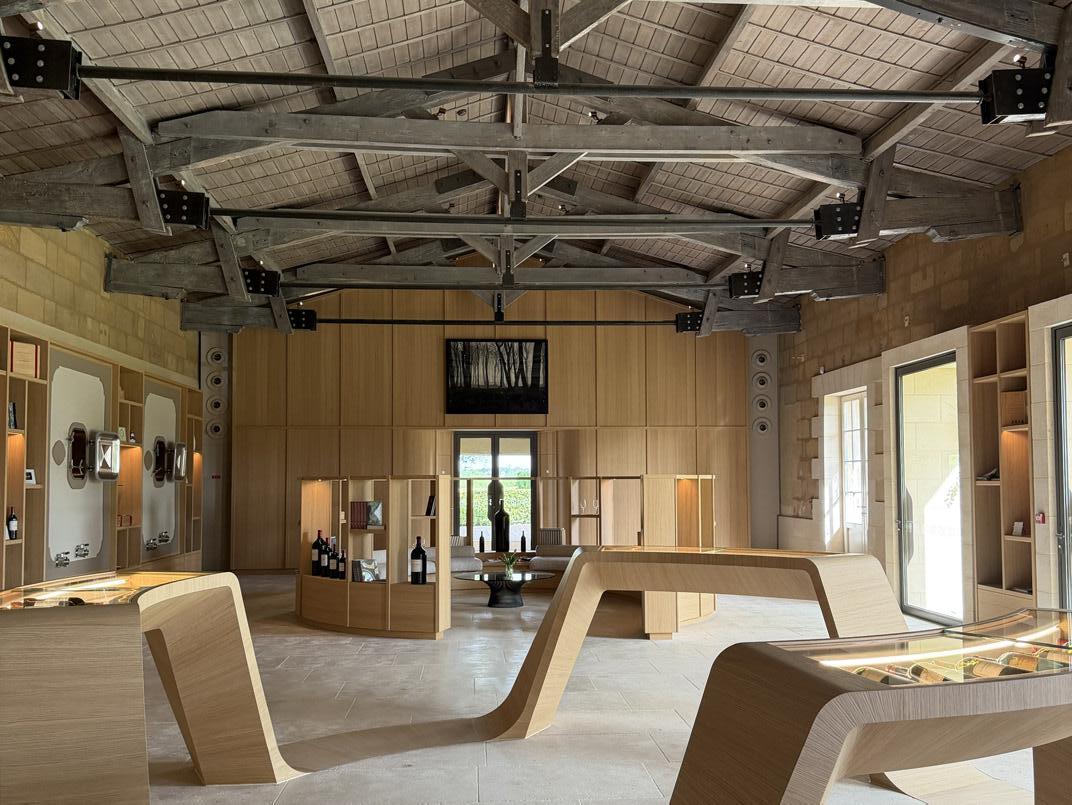
Haut Bailly have one of the most eye-grabbing new chais in all of Bordeaux; part winemaking facility, part Bond villain lair from “You Only Live Twice”. For all its dramatic visuals, it has undoubtedly elevated the quality levels at an estate which was already sought-after.
Following Jane Anson’s 100-point score for the 2016 vintage, recently announced, its value rose and it not a leap of imagination to posit that this potentially perfect offering from 2025 may go the same way. This is certainly one of my strongest tips from my week in Bordeaux, giving it 96-98 points and commenting when tasting with owner & winemaker Véronique Sanders on its persistent finish which takes off in the mouth. A superb wine.
Neal Martin, Vinous : 98-100 points
“The 2025 Haut-Brion has a very pure and elegant bouquet with ebullient brambly red fruit, crushed stone, potpourri and touches of Earl Grey. Wonderful delineation and a little more refined than, say, the 2020 or 2022. The palate is medium-bodied with very fine tannins, and there is more complexity here than La Mission, more depth and minéralité. Fresh and marine-tinged towards the finish that makes you want to come back. This year, the First Growth has put a bit of distance between itself and La Mission”.
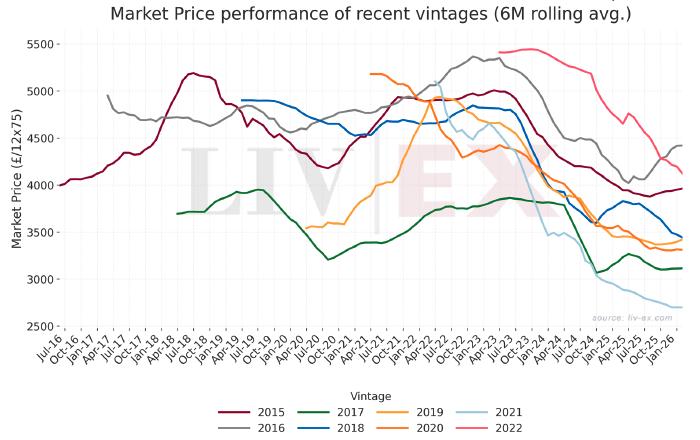
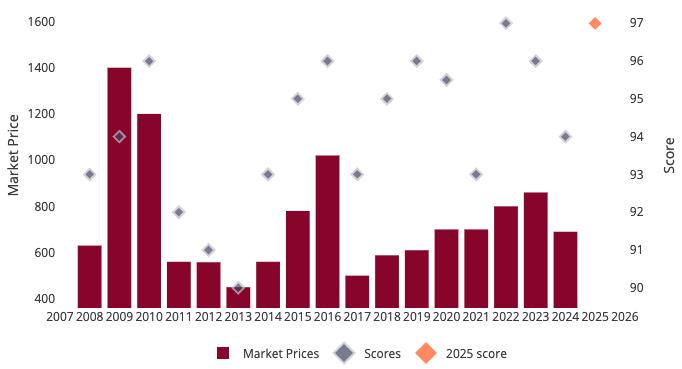
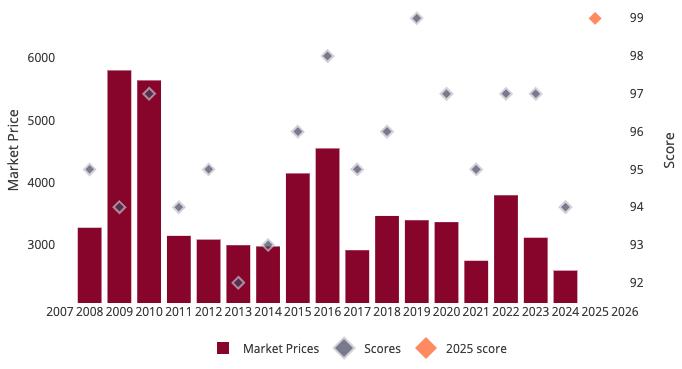
Haut Brion arrives into En Primeur season having not lost any of its value in the markets since April 2025, which shows it is ahead of the market recovery now being witnessed. Trades in 2025 were also up 7% higher than in 2024 which shows that demand has returned for this famous First Growth, especially over the past six months (left).
A Neal Martin potentially perfect score is rare, even for this estate, and with reduced yields and increasing market interest, Haut Brion 2025 is likely to be an enticing option, subject of course to sensible release pricing. For what its worth, I scored it 97-99+ points, commenting on its massive profile & persistent finish.
Neal Martin, Vinous : 95-97 points
“The 2025 Les Carmes Haut-Brion comes from clay-limestone soils. This takes time to open on the nose: blacker, darker fruit than the Le C, black plum and touches of iris flower. Very pure, very well defined. The palate is medium-bodied with slightly chalky tannins on the entry, crunchy in the mouth, black fruit interlaced with Earl Grey, subtle ash-like notes. Linear towards the finish but very sustained in the mouth, there is plenty of energy in this Les Carmes-Haut-Brion and it should age with style and grace. More sapidity on the finish than the Dead Sea”.
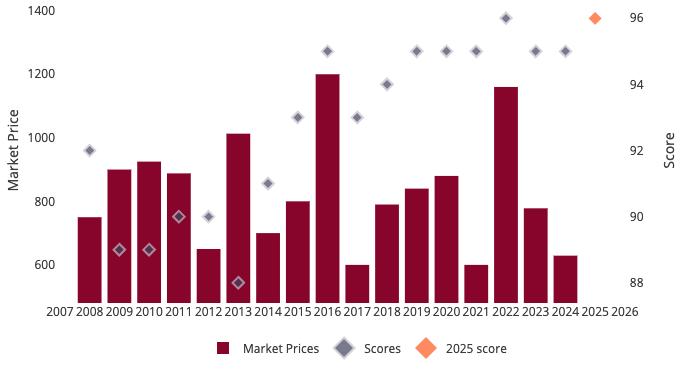
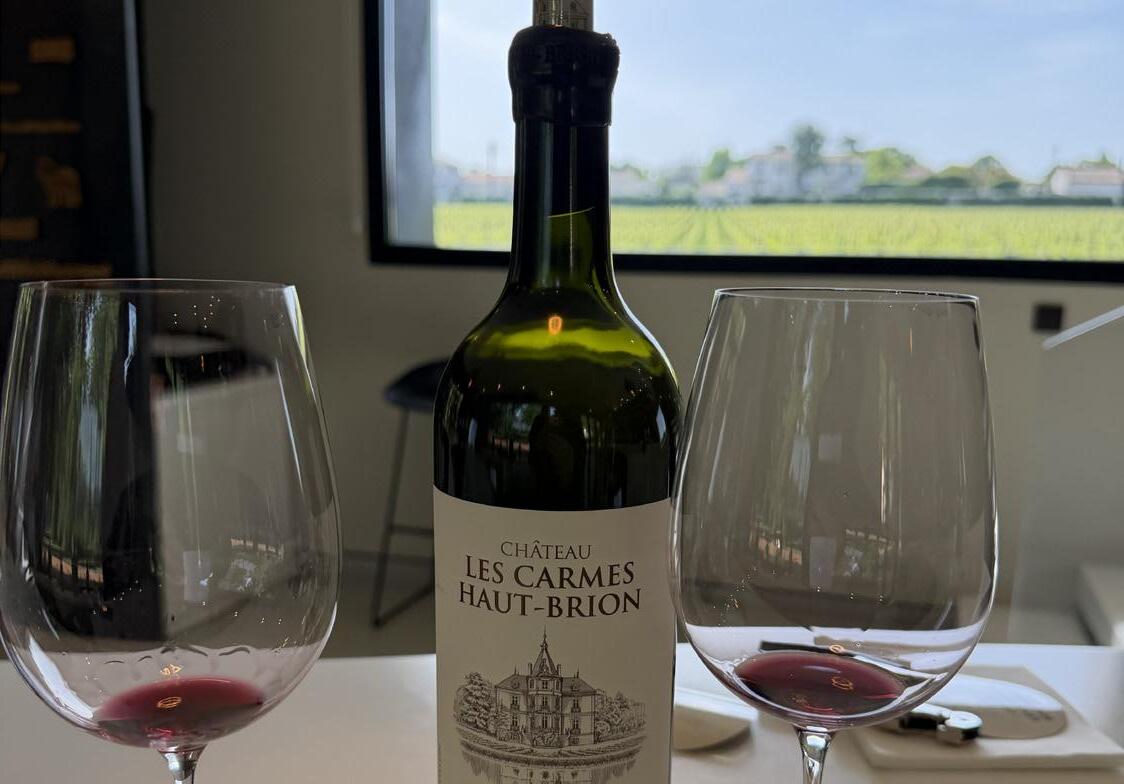
The graph above demonstrates Les Carmes Haut Brion’s consistency, regularly hitting 95 points or higher. For its relatively modest price when compared to its First Growth neighbours in Graves, Les Carmes has established a strong global following, particularly as it is the closest thing Bordeaux has to an urban winery (see left).
Since April 2025 Les Carmes Haut Brion has risen by 1% in value across all vintages (all during a market downturn) and global trade levels were up 53.5% than in 2024; this is a wine in high demand.
I scored the wine 95-96+ points when tasting with winemaker Guillaume Pouthier, noting its elegant texture and great finish.
Neal Martin, Vinous : 96-98 points
“The 2025 Canon was picked between August 28 and September 18 at 40 hl/ha. This is very pure and refined on the nose, with wonderful delineation, not as flattering as, say, the 2015 or 2019 at this stage, yet very focused and mineral-driven. The palate is medium-bodied with filigree tannins, quite sapid, with a pinch of cracked black pepper. Like its “sister”, Berliquet, the limestone terroir comes through and seems to “tingle” on the finish. Maybe not a crowd-pleaser, but I like its uncompromising nature that reflects its place of birth.”.
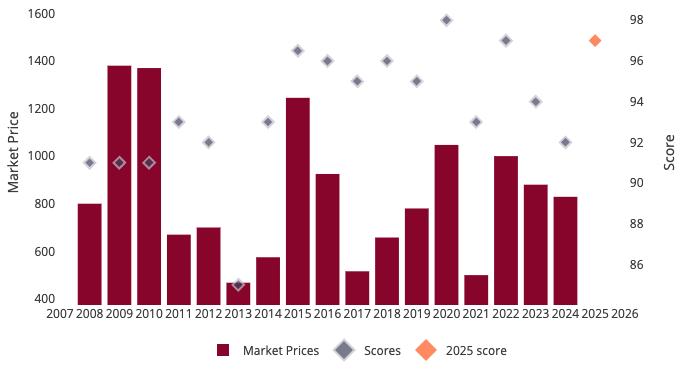
Canon is a Right Bank property that seems about six months ahead of many of its peers when it comes to recovery in the market. Since April 2025 it Market Price index has risen 8% in the same time the rest of the market rose by just 1.8% in comparison.
Pricing has often been the barrier to genuine success with Canon, perhaps understandable given it is owned by the Chanel group. 2024 was a big mis-step, with the release price not reduced enough, especially considering the 2021 vintage was scored more highly and available for half the price.
It is hard to see Chanel decide to keep the 2025 release price close to that of the 2024 but perhaps being available cheaper than the 97-point 2022 vintage would do it. All I know is that this is a tremendous offering and has all the qualities, save for the unknown of release price, to be a valuable asset.
Formerly 1er Grand Cru Classé (A)
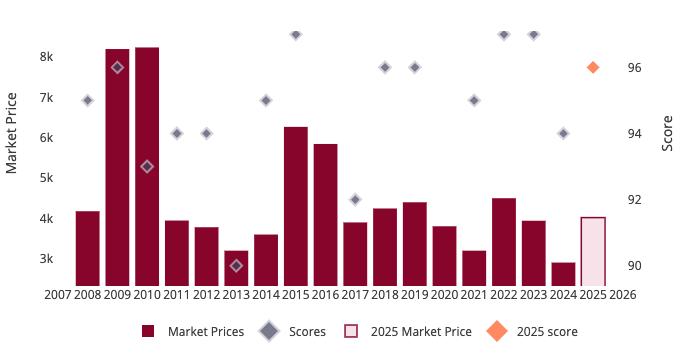
Neal Martin, Vinous : 95-97 points
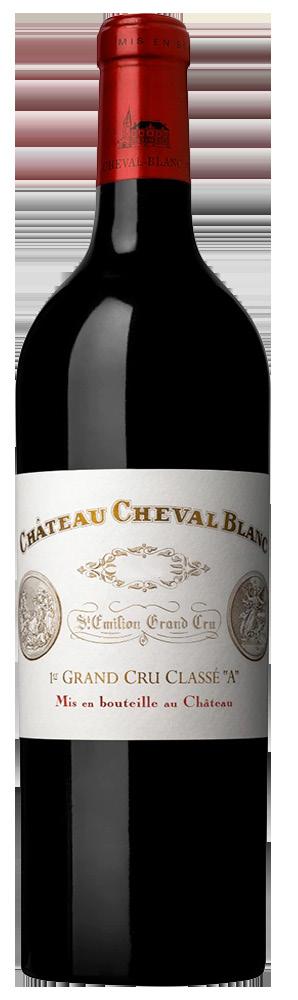
“This nose is more immediate than some of its neighbours, a mixture of blackcurrant, raspberry, strawberry & blueberry, very expressive, underneath which lie tobacco & graphite scents. The palate is medium-bodied with sapid red berry fruit, just a touch of black pepper, a more reserved and structured Cheval Blanc than usual, vertical in style, the Cabernet Franc driving the finish. Not what I’d call a sensual Cheval Blanc, but it has a distinctive character. Not everyone is going to fall head over heels for this Cheval Blanc because it is uncompromising, and I like that”.
ANALYSIS Château Cheval Blanc is a beguiling prospect in 2025 with the property announcing that it has decided to release all stocks of the wine to the market, holding nothing back, because overall yields were so significantly down. The 2025 has been released at a 20% increase in price to the 2024 but its scarcity, which will only be exacerbated with time, is what makes the 2025 a compelling option.
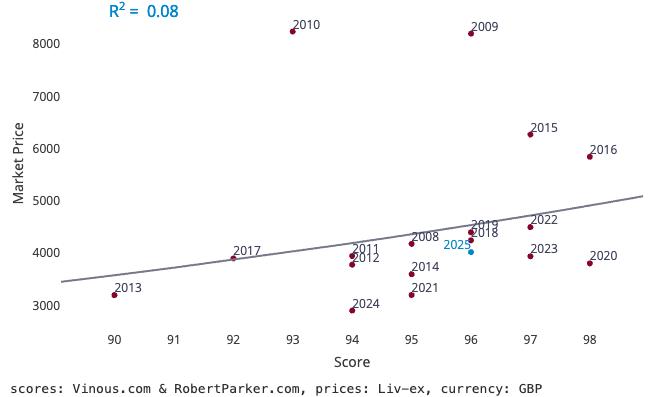
The Fair Value chart (left) shows that the 2025 does offer investors value and those lucky enough to snap up a case of three or six bottles will undoubtedly have an in demand asset on their hands. William Kelley of the Wine Advocate scored Cheval Blanc 2025 a potentially perfect 98-100 points. This is a strong release.
Neal Martin, Vinous : 96-98 points
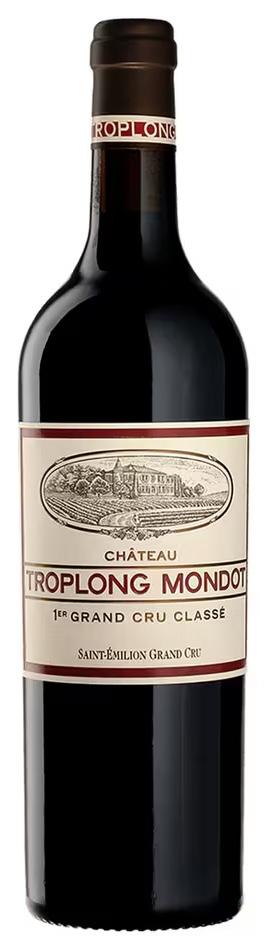
The 2025 Troplong Mondot is raised in 50% new oak, 40% foudres and 10% in one-year-old barrels. It has a very intense bouquet with black cherries, cassis and iris flower scents, and a hint of inkwell. Very well defined. The palate is medium-bodied with chalky tannins, plenty of tension and minéralité. Vivacious and yet linear and correct, it delivers plenty of fruit but in a very controlled fashion. You can feel the tongue tingling on the finish. Classy and sophisticated, this will rank as one of the finest Troplong Mondots to date”.
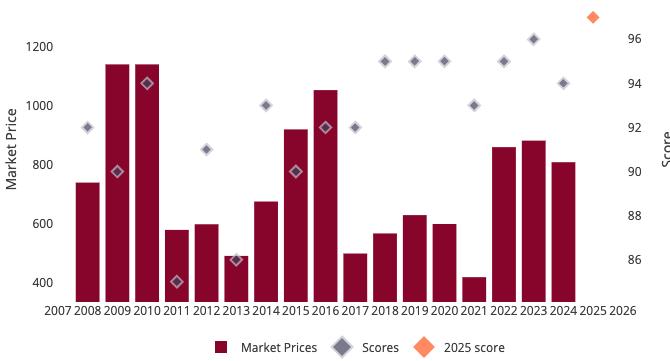
The 2025 vintage of Troplong Mondot represents a potential highwater mark for the property, with Neal Martin’s highest ever rating of 96-98 points. For a propery that regularly offers its wines at around £800 per 12 bottles, this is undoubtedly exceptional value.
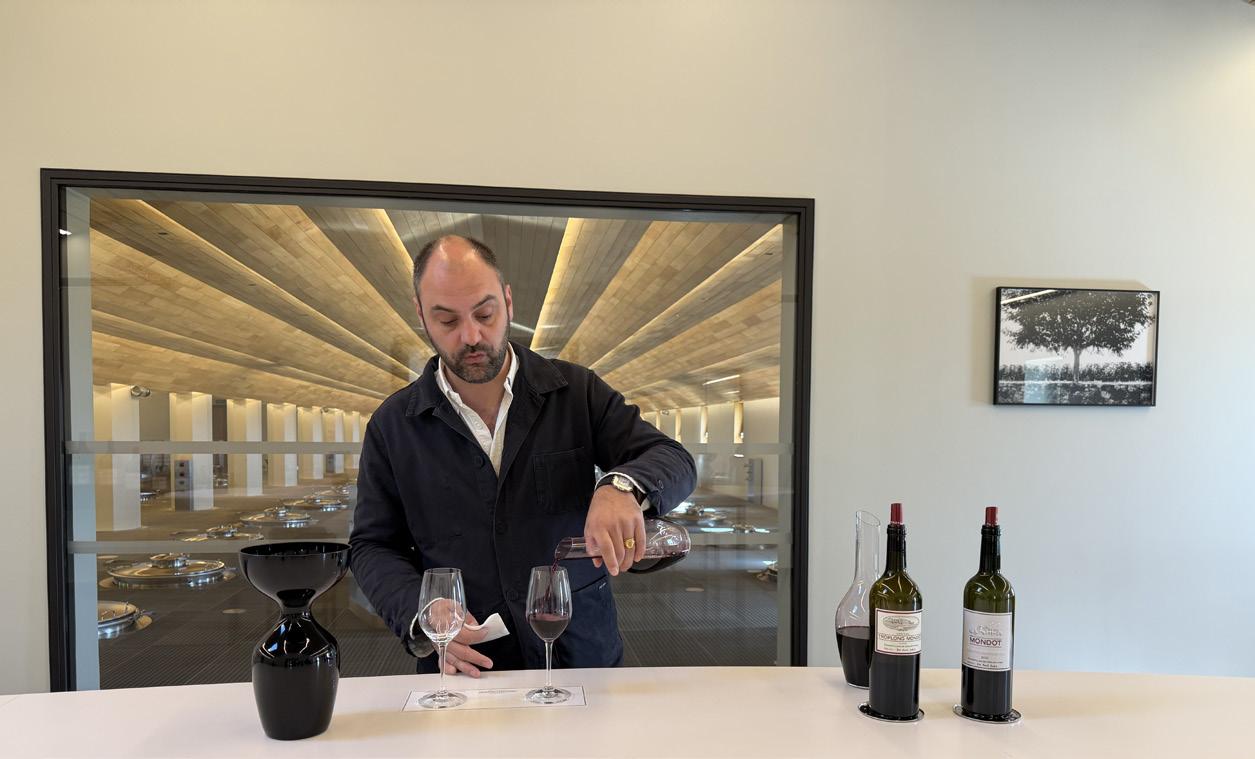
Better still, William Kelley of the Wine Advocate scored Troplong Mondot 98-100 points, calling it “one of the wines of the vintage”.
If priced sensibly, Troplong Mondot could be one of the genuine dark horses of the vintage, and it is certainly one of my tips; I awarded it 96-98 points when tasting at the estate (left) loving its silky-smooth mouthfeel & ripe, unctuous fruit. A wine to follow.
Neal Martin, Vinous : 96-98 points
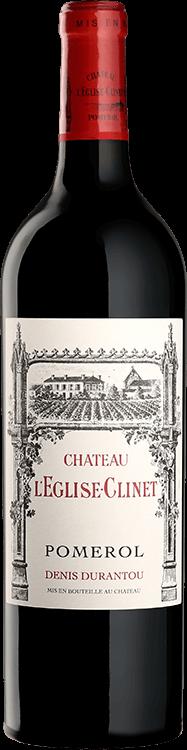
“The aromatics are timid at first, but unfurl in the glass, revealing enticing scents of raspberry, wild strawberry, truffle oil and cedar. The oak is beautifully integrated, and it gains delineation with each swirl. The palate is medium-bodied, with fine tannins, one of the most mineral-driven L’Eglise-Clinet wines that I have tasted from barrel, gaining cohesion and poise, with perfectly judged acidity and a gentle but insistent grip on the finish. There is a verticality to this Pomerol that gives it a more cerebral slant compared to the 2022, but it is still quite delicious”.
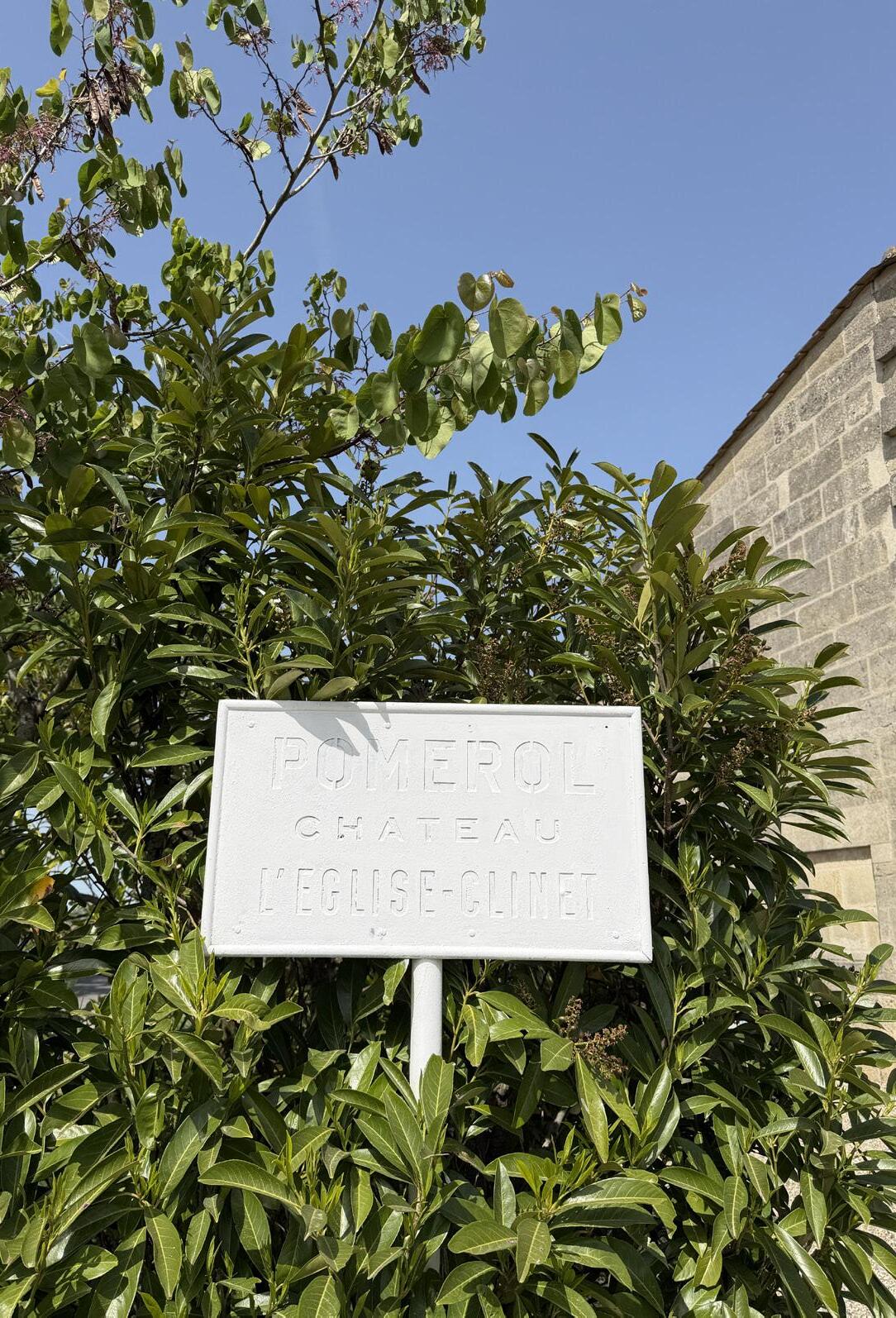
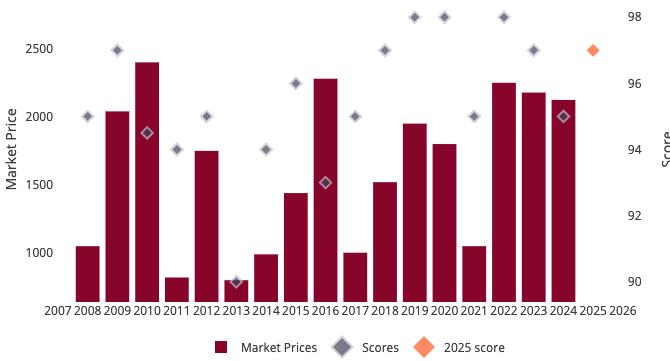
This year’s en primeur week was the first time I’ve managed to get an appointment at L’Eglise Clinet where sisters Noemie (below left) and Constance Durantou are doing tremendous work in continuing the work of their father, Denis, who very sadly passed away in 2020. 2025 is another triumph for the estate, with universal critical acclaim and small production levels sure to exacerbate the inverse supply that drives a tiny Pomerol producer like L’Eglise Clinet.
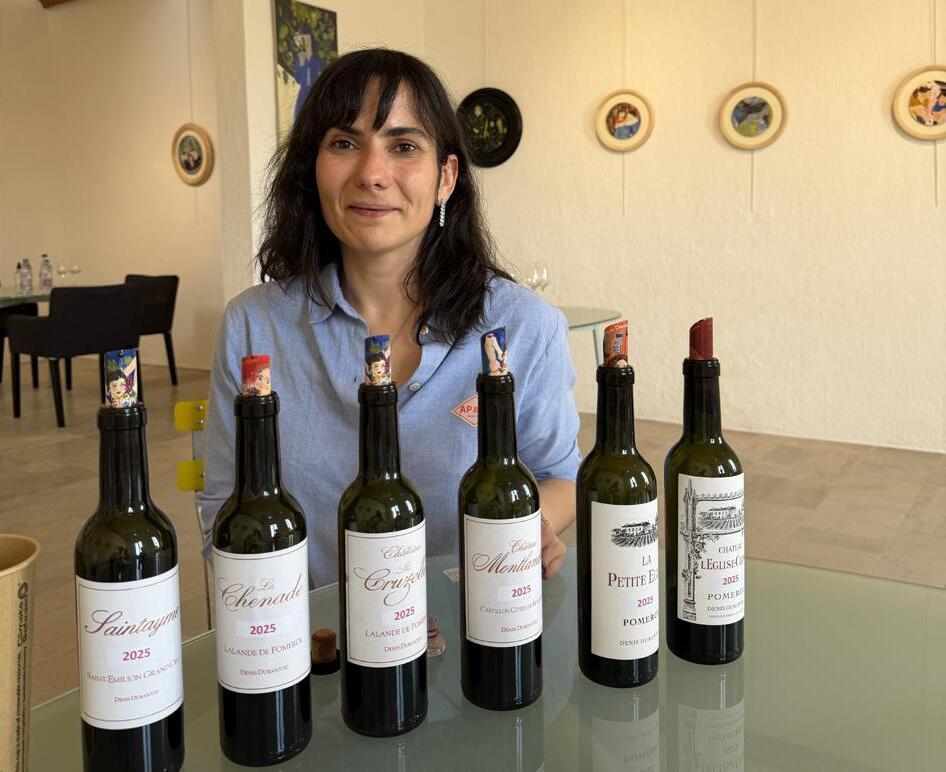
Pricing will be key bearing in mind the general affordability of 98-point vintages like 2019 & 2020 vis-a-vis the 95-point 2024. Worth noting are the other, very affordable wines made at this stable, all of which delighted me and which we hope to offer is pricing is keen (Saintem, La Chenade, Les Cruzelles & Montlandrie, not the mention the Second Wine, La Petite Eglise).
£1,164 per 12 £582 per 6
Neal Martin, Vinous : 94-96 points
“The 2025 L’Évangile has been given new impetus by winemaker Juliette Couderc. It is initially backward, but it really comes forth with a few swirls of the glass: black cherries, mint & juniper berries, just a hint of truffle, quite vibrant and vivacious. Wonderful delineation. The palate is medium-bodied with svelte tannins, a fine bead of acidity, superb minéralité, as if there were a bit of limestone soil, but there is none. Very saline on the aftertaste with impressive length. This is a marvellous L’Évangile given the growing season; it seems imbued with so much personality”.
ANALYSIS
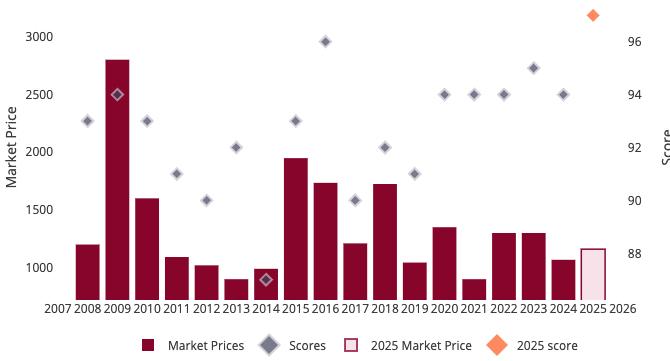
The 2025 L’Evangile was easily the most impressive 2025 that I have tried during an en primeur week at the property, scoring it 95-97 points and commenting on its lovely floral nose and grace and elegance on the palate and finish. It is pleasing then to see that the top critics agreed!
The release pricing was also very well judged by the property, with this highest ever Neal Martin score available at a massive 32% discount to the 96-point 2016.
As you can see on the graph to the left, L’Evangile is a rare wine that occupies the bottom left of the Fair Value chart, high scoring but well under the Fair Value line - a definite must buy in 2025.
Criss-crossing Bordeaux in mid-April I tried over a hundred wines a day and whilst the wines I’ve highlighted in previous pages are undoubtedly the creme de la creme, Bordeaux is a wonderful patchwork of exceptional producers at all price levels.
There are producers in Bordeaux I buy each year to lay down for more affordable drinking and, subject to release pricing, below is a list of wines you should keep an eye out for:
Saint-Estèphe Dame de Montrose, Meyney
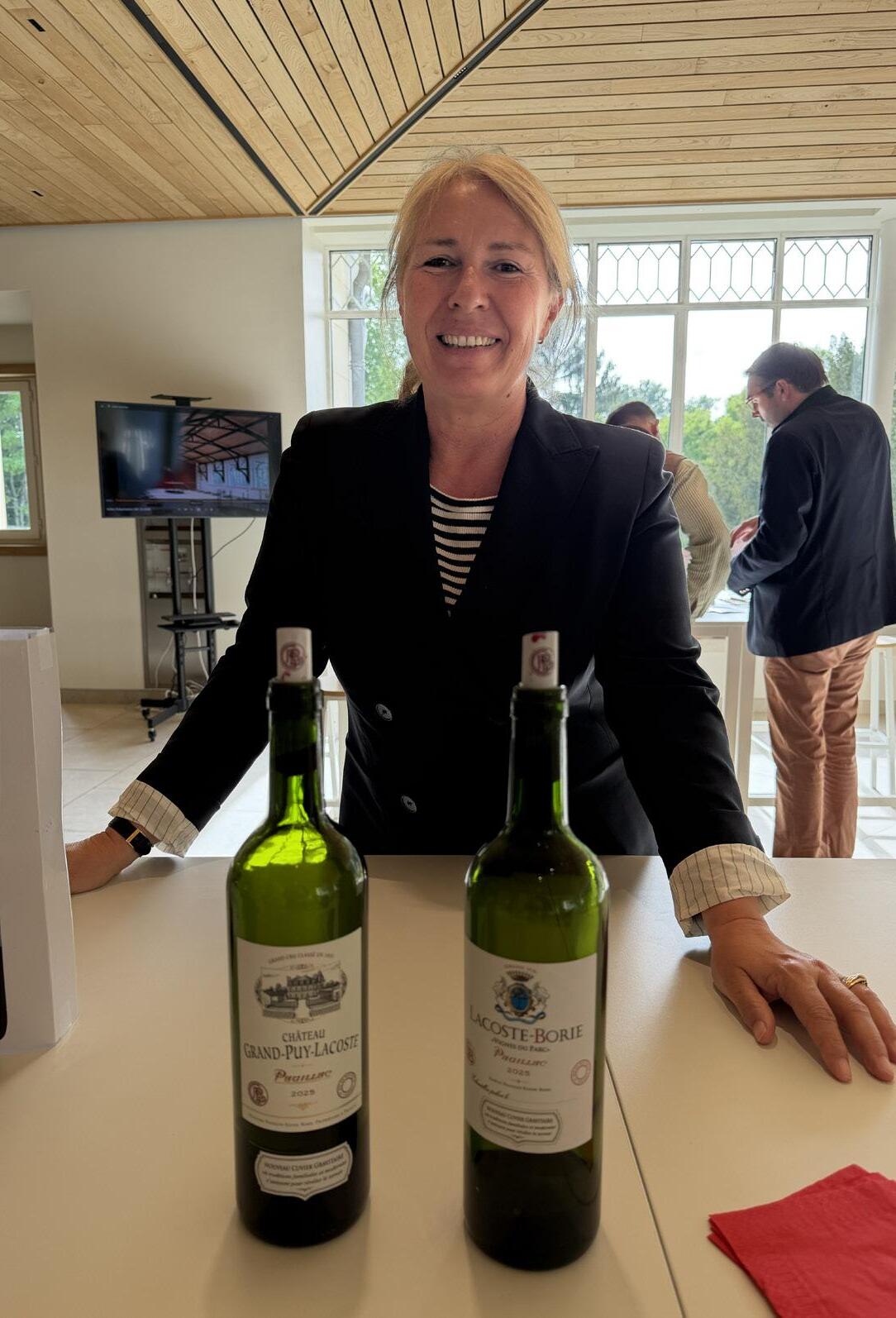
Pauillac Lacoste Borie, Clerc Milon, Reserve de Comtesse
Saint-Julien Langoa Barton, Talbot
Margaux Baron de Brane, Giscours, Le Coteau
Moulis, Listrac & Satellites Beaumont, Poujeaux, Fonréaud, Fourcas Hosten
Graves & Pessac Haut Bailly II
Saint-Emilion & Satellites Mondot, Quinault L’Enclos, Chauvin, Montlandire, Les Cruzelles, La Chenade, Les Trois Croix