
Why Your Pain Keeps
Coming Back: The Hidden Pattern Behind Chronic Pain
In this presentation, you’ll discover:
• -Whychronicpainkeepsreturning,evenafterrest,painkillers,orshort termtreatments
•Thehiddenloopbehindmostlongstandingpain(andwhywillpower alonewon’tbreakit)
• Howeverydayavoidancepatternsquietlymakepainworseovertime
• Simplewaystointerruptthecycleandstartmovingwithconfidence again
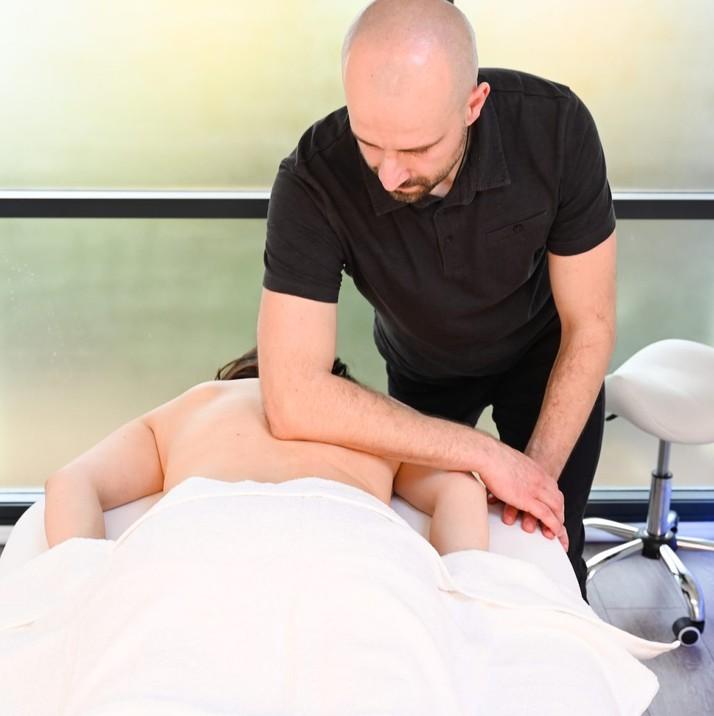
• HowclinicalmassageatClinicalMassageMKinMiltonKeyneshelpsyou breakthepatternforgood

How I Quit Smoking (Stay With Me,
This Is About Your Back)
A few years ago, I was a smoker. Not a heavy one, but enough to be woven into my whole day., Morning coffee with a cigarette. The walk to work, smoking. Every break at work, straight to the smoking area for another. Lunchtime, smoking area again. Coffee in the afternoon, a cigarette. The pattern was completely automatic. I didn’t even think about it.
I tried to quit many times. I’d promise myself this was the last packet. The next morning came around, the kettle went on, the coffee got poured, and I was back at it. Willpower lasted about as long as the coffee took to cool down. Here’s what I missed for years. I kept telling myself to stop the behaviour. I never changed the triggers around it. Then one morning, I overslept. Late for work, no time to stop at the shop, so I walked in without a cigarette. First break came and went too quickly to nip out and buy a packet, so I stayed in the canteen, had a coffee, and chatted with the guys. Lunchtime the same. By the end of the day, I’d gone a full shift without smoking.

The next morning, I did something different on purpose. Instead of a cigarette on the walk in, I grabbed an apple. Something in my hand. Something to do with the same energy. At work, I stayed in the canteen instead of going to the smoking area. I stopped putting myself in places where someone would offer me a cigarette, and I’d say yes without thinking. Slowly, the pattern unwound. Not from wanting it less, but from interrupting the loop and replacing the old behaviour with new ones. That’s the story I want to tell you, since it’s exactly what I see in the treatment room every single day. Not with cigarettes. With movement. With pain. With the way people slowly start to avoid things, guard their bodies, and shrink their lives without realising it.
Chronic pain is a pattern, not only a physical problem. And like every pattern, it has a structure you can actually see once you know what to look for.
What Is a Pain Pattern?
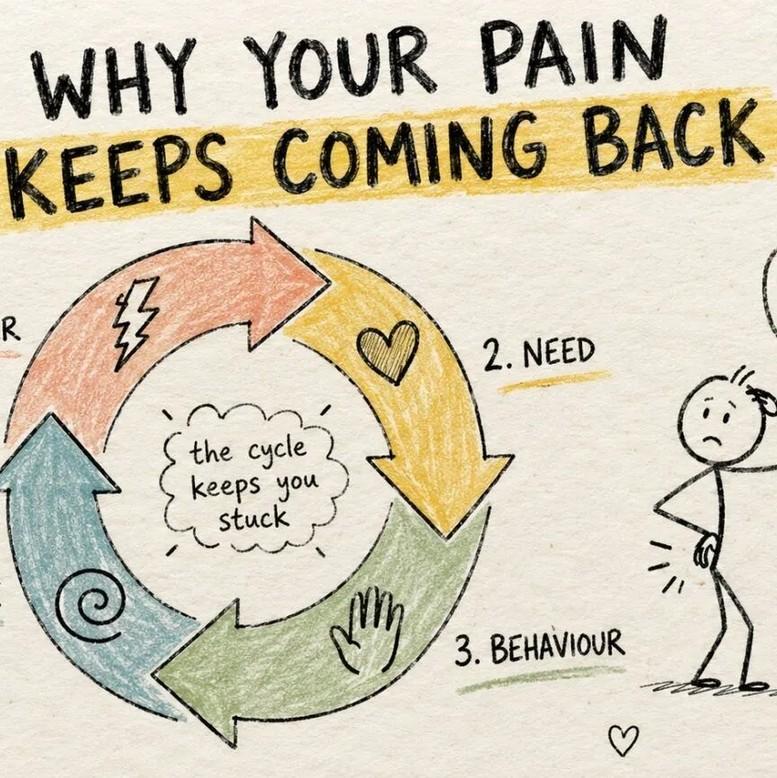
When I started breaking it down, the loop looked like this:
Trigger → Underlying Need →
Behaviour → Outcome
This isn’t something I invented. Charles Duhigg wrote about it in The Power of Habit as cue, routine, reward. James Clear expanded on it in Atomic Habits. The science of habit formation has been clear for years. What I’ve found is that the same loop runs the show in chronic pain, just with a different cast of characters.
Here’s how it played out with my smoking:
• Morningcoffee,thewalktowork,andeverybreakinthesmokingarea
• Underlying need. Chill,relax,switchoff,dosomethingwithmyhands
• Lightacigarette
• -Shortterm,itworked.Longterm,Istayedstuckintheloopforyears
Now look at how it plays out with lower back pain:
• Bendingtopicksomethingup,oreventhinkingaboutit
• Underlying need. Feelsafe,avoidpain,stayincontrolofmybody
• Brace,guard,holdbreath,movestiffly,oravoidthemovementaltogether
• -Shorttermsafety.Longterm,thebodygetsstiffer,weaker,andmorefearful
Same architecture. Different context. And once you see it, you can’t ignore it. What finally let me quit smoking was changing the triggers and replacing the behaviour. Not the apple itself, but everything around it. Different walk. Different break routine. Different hands-doing-something. The same principle works for chronic pain. You can’t break the pattern by removing the behaviour and hoping willpower fills the gap. You have to give your body a different way to meet the same need.

Why This Loop Is So Sticky in Chronic Pain
The avoidance behaviour actually works in the short term. Less movement equals less pain. Your brain takes that as a win and reinforces the pattern. The next time you face the trigger, avoidance fires faster and more strongly.
I see this in clients all the time:
• Thepersonwhostopsgoingtothegymisworriedaboutmakingitworse
• Thedadwholetshiskidscarrytheshoppingincasehisbackgoesout
• Theteacherwhohasn’tsatonthefloorwithaclassintwoyears
• Therunnerwhohasn’trunsincethetwingethreemonthsago
Everyoneofthesemakestotalsenseinthemoment.They’rethebody’sversionof lightingacigaretteonthemorningwalk.Theyscratchtheimmediateneed(feel safe,avoidpain),andtheycostalmostnothingrightnow.
Butoverweeksandmonths,theybuildsomethingnoneofuswants.Abodythat feelslessandlesstrustworthy.Musclesthatswitchoff.Jointsthatloserange.A nervoussystemthatstaysonhighalert.Andaconfidenceinmovementthatquietly drainsaway.
That’snotaweakness.That’stheloopdoingexactlywhatloopsdo.
How to Spot Your Own Pain Pattern
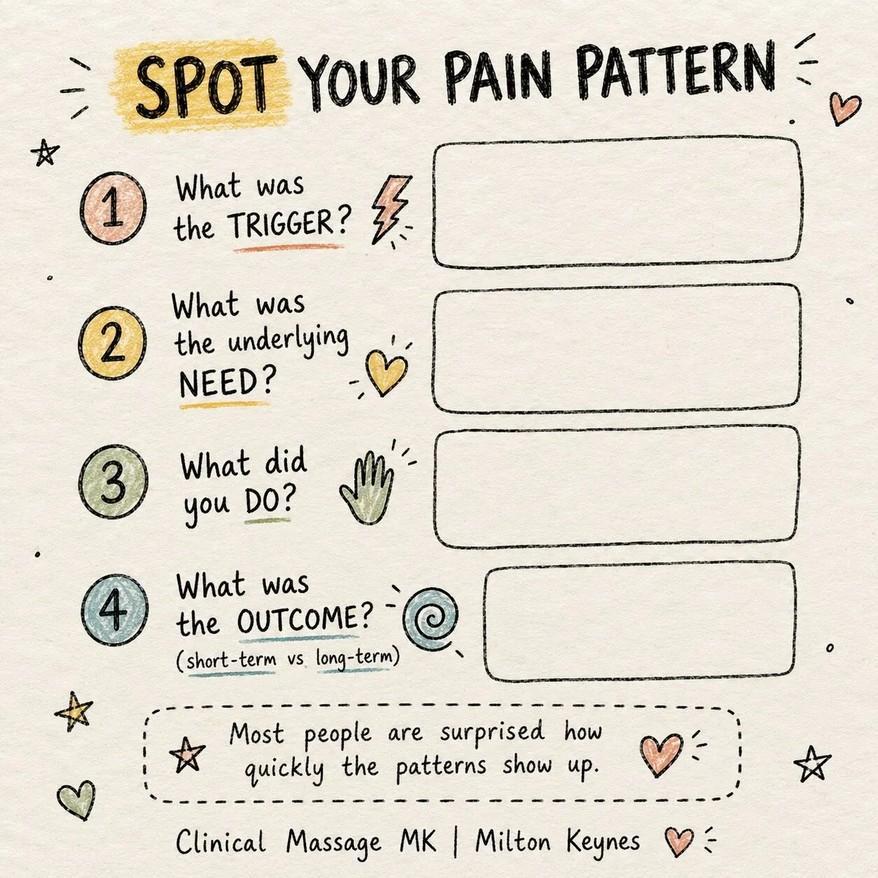
You don’t need a therapist to start mapping your own loop. Grab a notebook for a week and pay attention to:
1.The trigger. Whatwereyoudoingorabouttodowhenthepainorstiffness flared?Bending,sitting,driving,lifting,sleepingawkwardly,eventhinking aboutacertainmovement?
2.The underlying need. Whatwereyoutryingtoprotectorachieve?Safety? Avoidingembarrassment?Gettingthroughtheworkday?
3.The behaviour. Whatdidyouactuallydo?Stopmoving?Brace?Holdyour breath?Cancelsomething?Reachforthepainkillers?
4.The outcome. -Shortterm,howdiditfeel?Longterm,whereareyounow comparedtoamonthorthreemonthsago?
Most people are surprised by how quickly the patterns become visible. You’ll often spot the same trigger firing in three or four different situations. That’s worth paying attention to. That tells you where to focus.
Key Takeaways
• Chronicpainfollowsaloop:trigger,underlyingneed,behaviour, outcome.Spottheloop,andyoucaninterruptit.
• Avoidantbehavioursfeellikeprotectioninthemoment,butquietly makechronicpainworseoverweeksandmonths.
• Youcan’tbreakthepatternbyremovingthebehaviour.Youhaveto replaceitwithsomethingthatmeetsthesamesafetyneedsandhelps rebuildtrustinyourbody.
•Realchangecombineshandsonwork,movement,andunderstanding soyouleaveknowingyourbodybetter,notjustfeelinglooserforaday.
• AtClinicalMassageMKinMiltonKeynes,weworkwithchroniclowerbackpainusingastructured6sessionapproachdesignedtointerrupt thepatternandbuildlastingrecovery.