The Rambling Rose | Summer 2026 | Clifton High School
foRewoRd
Summer is in full swing, Ramblers! Outside, the days stretch generously long, light lingers into the evening, and there is a quiet expansiveness in the air: a season for curiosity, for looking outward (and perhaps inward) with renewed clarity.
Next on my ‘to read’ list is Aldous Huxley’s Brave New World: a dystopian novel set in a future society where human beings are artificially created, genetically engineered, and conditioned from birth to fit into rigid social classes. Stability and happiness are maintained through constant consumption, shallow pleasure, and the suppression of individuality, emotion, and critical thought, often aided by a drug.
Incredibly, I see echoes of Huxley’s 1931 novel threaded through our journalists’ spirit of inquiry. Their articles travel across continents and centuries, from the haunting myth of Orpheus and Eurydice, explored through art and history, to the stark and urgent reality of the endangered Aral Sea. These are stories - ancient and modern - asking to be revisited and reconsidered, and they sit squarely within the literary traditions we explore in English, from climate fiction to dystopia. Perceptively, our writers are tapping into the warnings of what happens when we lose touch with nature, history, and the messy complexity of human experience – just like Huxley.
That tension between preservation and change runs through many of this issue’s most compelling pieces. From Wojtek the bear’s unlikely wartime journey to species slipping quietly towards extinction, we are reminded not to fear, but to recognise how fragile both memory and the natural world can be. Meanwhile, volcanoes and revolutions — geological and political — capture moments when the world reshapes itself with dramatic, uncontrollable force, far removed from the carefully managed stability Huxley imagines.
Elsewhere, our writers confront questions that feel distinctly contemporary, and perhaps distinctly dystopian. Will AI render doctors redundant, or simply redefine care? Can medical intervention alone address rising rates of obesity, or do we risk reducing humanity to something overly controlled, optimised, and impersonal? These debates vividly mirror Huxley’s anxieties about a future in which science outpaces ethics, and comfort threatens to replace critical thought.
Art, too, offers resistance to such flattening. From the joy and imagination of Studio Ghibli to a Rosarian alumna’s portrait of Dr Neill, and reflections on our romanticising of figures such as the Romanovs and Marie Antoinette, these pieces remind us that creativity preserves individuality, nuance, and emotional truth: qualities no dystopia can fully erase.
And so, this twelfth issue of The Rambling Rose never loses sight of its central purpose: to provoke curiosity. To ask not only what we know, but how and why we come to know it, and whether we might look again, more carefully. So take this issue with you into the long summer days and allow its pages to transport you from past to future, from the fragile to the transformative. In doing so, we resist the passive ease of Huxley’s world and instead choose something richer: questioning, imagining, and thinking deeply about the one we inhabit.
Wishing you all a restful and inspiring summer. Good luck to our pupils receiving results and taking their next steps bravely, into their own New Worlds.
Mrs Pippa Lyons-White Head of English
ArTs & CuLturE
AN INTERVIEW WITH ANNA KILB
Esmée, Year 12
An Interview with former A-level Student, Anna Kilb, on her Portrait of Dr Neill
Esmée:
What inspired you to paint a portrait of our former head teacher, Dr Neill?
Anna:
I was inspired by the fact that I love painting realistic pictures and realism, and after doing A-level Art last year, I was really enjoying it. I wanted to kind of carry on doing painting and art and keep practising those skills so that I didn’t lose them. And yeah, I finished Art in May in this year, and I just wanted to do something over the summer. I had more time and didn't have to worry about revising for A-levels. I wanted something that I could enjoy doing and focus on and give me some direction.
Esmée:
Can you talk me through a process? How long did it take and what materials did you use?
Anna:
It took me... with these pieces, it's always hard. It's kind of like a rough estimate, because you get so lost in it when you're painting it. But I would say it took me around about 20 hours, and I used acrylic for the background. I did the base colours in acrylic, and then I did the skin tone and the actual figure itself in oil painting, just because it's easier to blend and I did my final pieces last year in oil paints. So, I was used to using that technique.
Esmée:
Was there a particular photo or moment you based the portrait on?
Anna:
I was just looking around on the website, and I found a picture of her celebrating the 150th Appeal on that page. It was a lovely photo, and it was a good way to do something which could also celebrate this school's Appeal.
Esmée:
The background is bright and lively. Was there a meaning behind your colour choices?
Anna:
I enjoy painting quite expressive as well as photorealistic paintings. I also like to add a bit of bright colour because it kind of livens it up the piece and I wanted to kind of bring the kind of neon tones that I used in my last year's final piece into the background, because I think it just creates some energy around the piece.
Esmée:
What was the most challenging part of creating this piece?
Anna:
Definitely painting the skin tones. I mean, human skin tones have so many different colours and shades, and it's really hard to kind of create the 3D structure on a 2D surface, so that was definitely a hard thing.
Esmée:
What made her an inspiring person to paint?
I think just being the headmistress of the school; being a headmaster or head mistress for school is quite inspiring. You kind of work your way up from starting as a teacher to the top of the school. And she was quite an inspiring person, and that's why I chose to paint her.
Esmée:
Did you know how personally? If so, how did that influence the portrait?
Anna:
So, it influenced the portrait, because I decided to paint her because when I joined the school in Year Five and she was the headmistress at the time for about a year and a half, I think. But those memories of first joining a school — it was the first time I'd moved school, so it was quite a scary, big jump. Definitely coming from a state school to a private school, she made me feel really welcome. It's almost a bit of nostalgia painting her because it reminds me of when I first arrived. She was there and it's kind of comes with those feelings.
Esmée:
How do you think this portrait represents her legacy at the school?
Anna:
Kind of similar, I hope that it stands as a piece where people can look at the painting and remember what she stood for and what the school stands for, and I think the painting itself will help to keep her legacy. Because obviously, it's not just about people's individual legacies at school. It's about the school as a whole growing and moving forwards.
Esmée:
What did you personally take away from creating the piece?
Anna:
Personally, I wanted to practise the skills of realistic painting, but the piece was also able to give me a focus and direction into doing a piece of art. Because my comfort zone is kind of painting realistic paintings, especially with the background being a bit more expressive. Because this piece wasn't for an A-level or an exam or anything, it was just me on my own doing it. It kind of gave me freedom to do what I wanted, and there was a bit less pressure because you can kind of decide for yourself what looks good, what doesn't, and you don't have to conform to any inspirations. You don’t have to be like, “I painted it red because there's another artist that painted it red”. You can just do it however you want. It was very freeing painting it how I wanted it to.
Esmée:
And finally, have staff, students or Dr Neill herself seen the painting yet, and if so, what were their reactions?
Anna:
I presented it to Mr Phelan on Friday, and he was very pleased with it. He thought it was pretty cool. I don't think Dr Neill has seen it herself, but she may have seen a photo of it or will be shown it — possibly even gifted to her. But I think it will be put up in the school somewhere. But yeah, I think everyone's liked it. It was good.
ART HISTORY AND COMPARISON
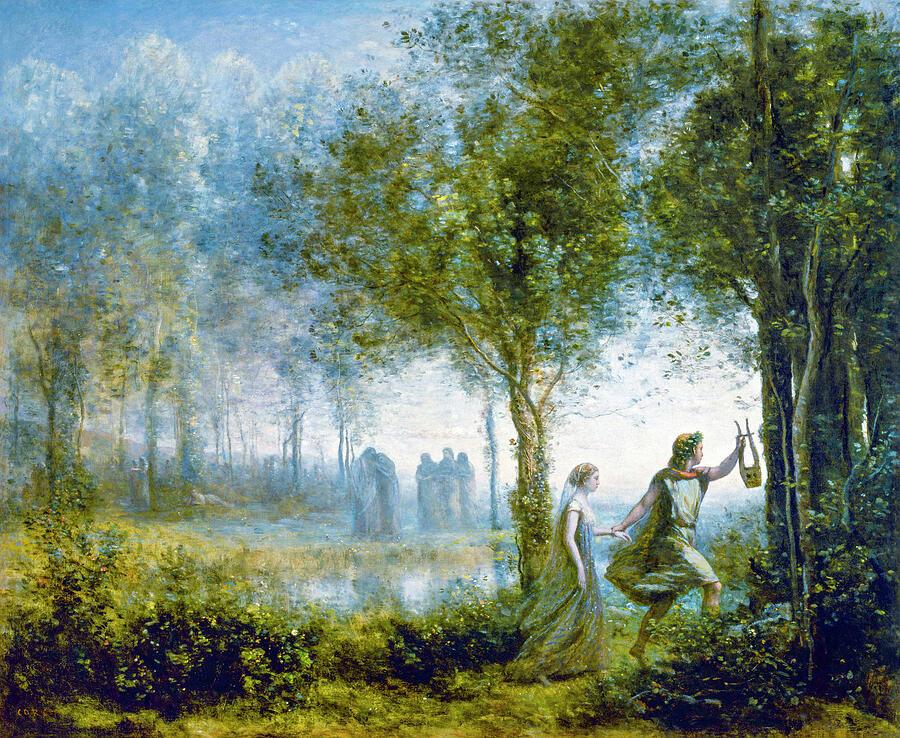
Orpheus Leading Eurydice from the Underworld
Jean-Baptiste Camille-Corot
Art analysis:
At first glance, this painting seems bright, two lovers walking through a forest with green trees and crystal blue water. However, when you consider the title, the painting becomes a lot darker. Painted in 1861, Camille-Corot presents the Greek myth of Orpheus and Eurydice. His use of pale blue oil paint to symbolise the Underworld creates a dream-like scene, the figures in the background almost disappearing into the haze. Eurydice, the woman, seems to echo these colours; pale and dull despite her being in the foreground. The bottom of her dress seems to morph into the grass by her feet, cementing her into death. Similarly, her skin seems translucent, like she isn’t there. Orpheus’ orange collar and blond hair stand out, symbolising that he is alive, and separate from the Underworld.
Orpheus’ hand on Eurydice’s arm could be the exact moment when Orpheus turns to look back, creating tension within the painting that can only be understood when considering the context. The darkness of the trees in front of the two figures could be the real world, showing just how close the lovers were to being
reunited. The middle of the painting is filled with blue hues that seem cloudy or even smudged, while the outside of the painting is dark and detailed. This could symbolise how internally, Eurydice is empty, unthinking and hazy. She appears to be alive and well, like the green leaves, but within she is gone. The entirely white centre mirrors her soul, no longer there despite Orpheus’ grief.
Furthermore, Eurydice’s dress was not in the original Ancient Greek style — it can be seen here as much more contemporary to the time it was painted. The 1800s clothing style helps relate the story of Orpheus and Eurydice to the ‘modern’ viewer, bringing the ancient myth to life. For a modern Western viewer, her veil also symbolises marriage, flowing into the Underworld around her.
Historical information:
Ὀρφεύς, Εὐρυδίκη in the original Greek, was an Ancient Greek myth. It tells the story of a talented musician Orpheus, who was taught to play the lyre by Apollo. He fell in love with Eurydice and married her, although a prophecy told them that their love was not to last. One
day, Eurydice was in the forest with nymphs, but a snake bit her, killing her instantly. When her husband Orpheus found her body, he played his lyre in grief, singing about his loss and pain. The whole world, including the Gods, heard his song. He decided to visit Hades in Hell, and ask for his wife back, protected by the Gods for his song. He sang his song to Hades and his wife Persephone. Hades was so moved by his song that he decided to let Orpheus have Eurydice back, on two conditions. She would have to walk behind him on their way out from the Underworld, and he must not look back at her.
However, Orpheus could not hear Eurydice’s footsteps behind him and began to think that Hades had tricked him. Eurydice was only a shadow at this point and would become alive again once they had entered the real world. Just a few steps away from the world of the living, Orpheus turned and saw his wife. She was taken back to the Underworld immediately, and Orpheus was left to grieve once more. He could not go back for her- no mortal could visit the Underworld more than once while living. Orpheus played a mournful song on his lyre and begged to be killed and reunited with Eurydice.
There is ambiguity to his death: some say that he was eaten by beasts, and some say Zeus struck him down with a lightning bolt for fear he would tell other mortals of the Underworld. Either way, Orpheus was
killed. His head was saved, and it sang in heaven for the pleasure of the Gods, while his lyre was made into a constellation.
Overall summary:
It is clear that the story of Orpheus and Eurydice is still an extremely influential myth, and from both the artwork and the story, any audience can understand the overwhelming emotions that come with their love. It reminds viewers and readers to trust in love, and not to doubt that someone will always be there for you when you need it most. When leaving the Underworld, trust in love. And whatever you do, don’t turn around...
Either way, it could be said that Orpheus turning is not necessarily a bad thing. He may have trusted Eurydice but loved her too much to leave it up to fate. Throughout time, through paintings and songs and myths, Orpheus will always turn around. But Eurydice will always know she is loved.
STUDIO GHIBLI
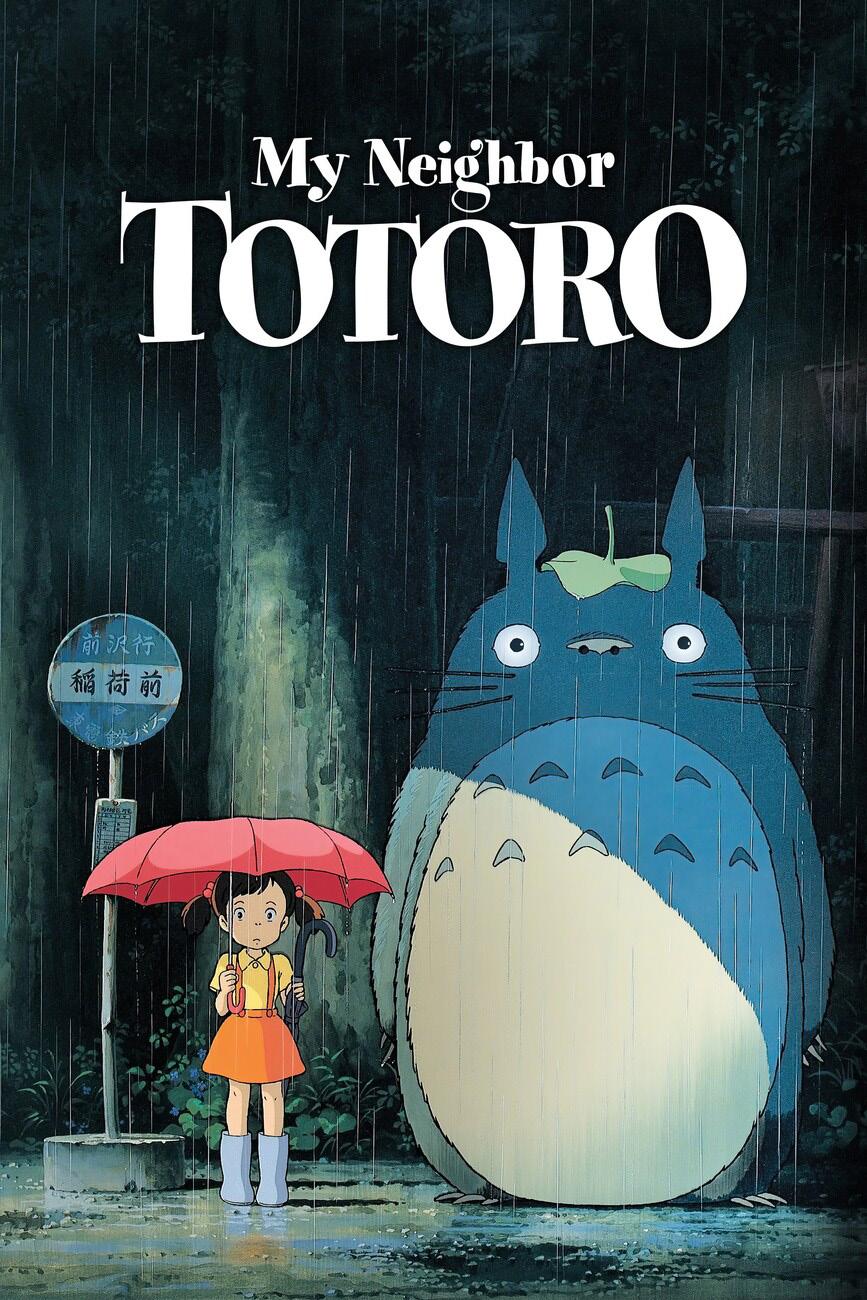
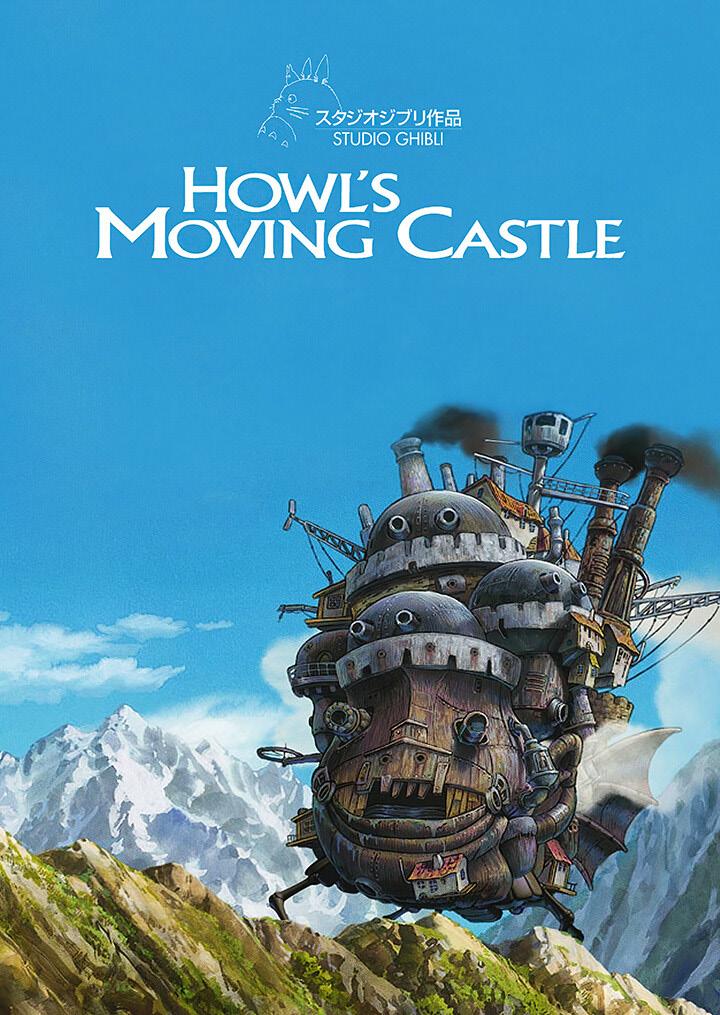
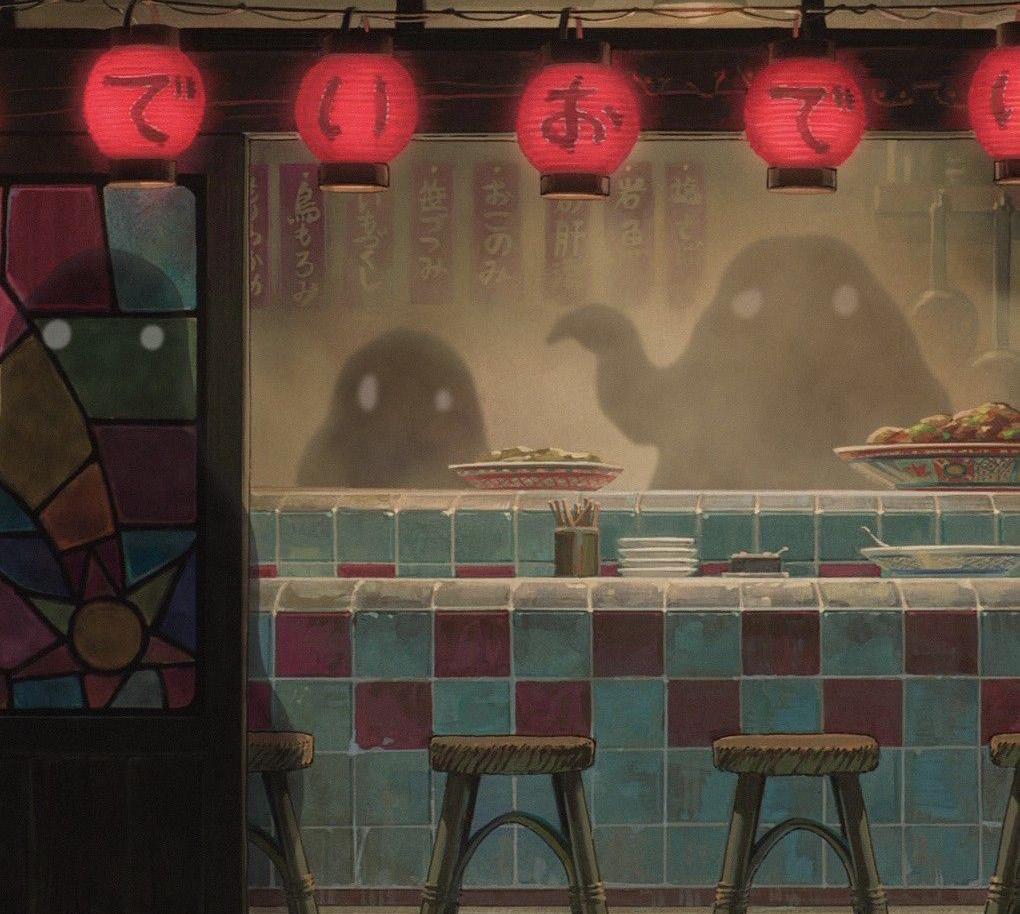
Studio Ghibli is a Japanese animation studio based in Koganei, Tokyo, founded in 1985 by directors Hayao Miyazaki and Isao Takahata, along with producer Toshio Suzuki. The name ‘Ghibli’, chosen by Miyazaki due to his passion for aircraft, originates from the Italian word for a hot desert wind that blows from the Sahara, having the intention of demonstrating to watchers that it would “blow a new wind through the anime industry”. The intention of the founders was to create animated films that focused on the “emotional depth of the human experience” through the emphasis of storytelling and imaginative artistry, rather than the commercialised nature of anime at the time. The studio is popularly recognisable by its mascot and likeable character of Totoro from their 1988 film, My Neighbour Totoro
Studio Ghibli is a Japanese animation studio based in Koganei, Tokyo, founded in 1985 by directors Hayao Miyazaki and Isao Takahata, along with producer Toshio Suzuki. The name ‘Ghibli’, chosen by Miyazaki due to his passion for aircraft, originates from the Italian word for a hot desert wind that blows from the Sahara, having the intention of demonstrating to watchers that it would “blow a new wind through the anime industry”. The intention of the founders was to create animated films that focused on the “emotional depth of the human experience” through the emphasis of storytelling and imaginative artistry, rather than the commercialised nature of anime at the time. The studio is popularly recognisable by its mascot and likeable character of Totoro from their 1988 film, My Neighbour Totoro.
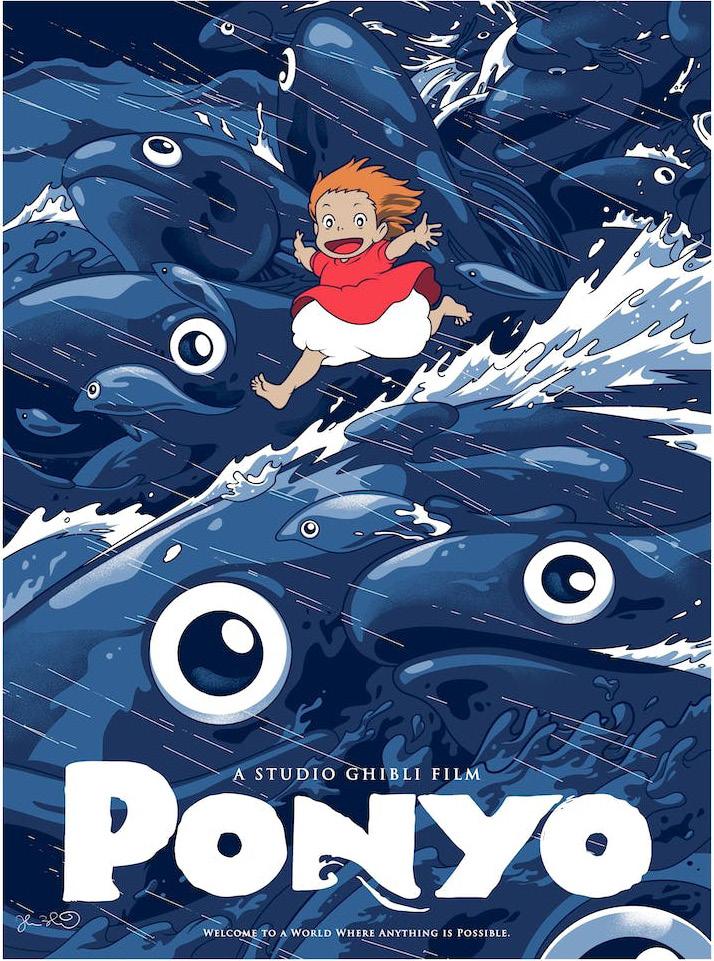
Studio Ghibli films are created through the traditional animation style of using individual, hand-drawn frames. Each frame is hand painted using a blend of rich watercolours and vibrant acrylic paints in order to bring its joyful and magical scenes to life. The contrast between the detail of the realistic, Japanese folk art inspired watercolour backgrounds and the strong, brightly coloured designs of characters in films such as Spirited Away really help to make the animation style and enjoyable storylines pop. The inspirational and talented designs of the studio’s art are heavily appreciated by fans, with a personal favourite of mine being the mesmerising water animation styles, seen in the light-hearted 2010 film, Ponyo.
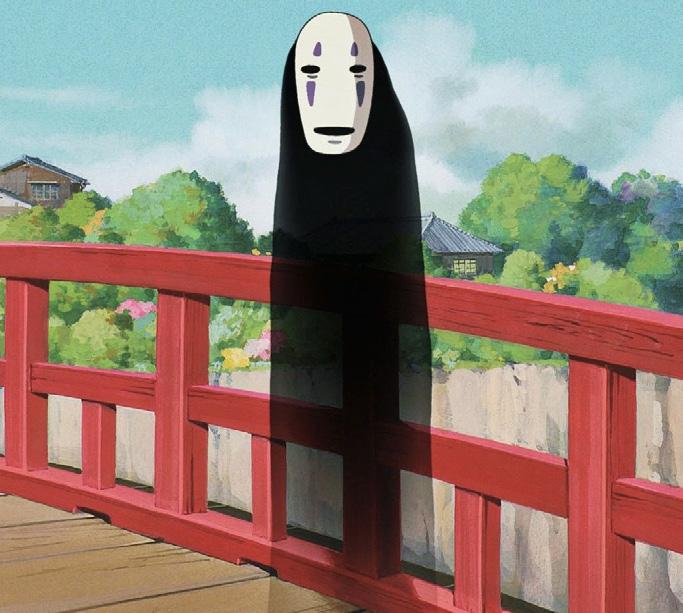
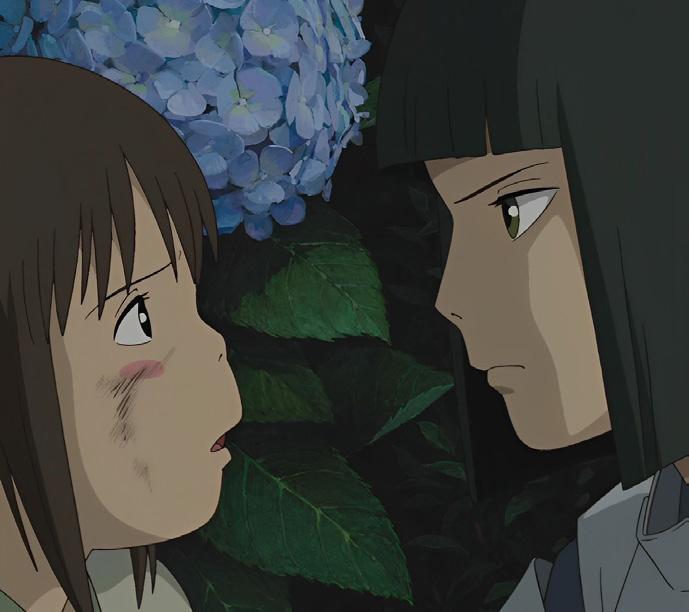
Spirited Away, one of Studio Ghibli’s most popular and praised films, follows the story of 10-year-old Chihiro and her traverse through the spirit realm of an abandoned bath house, in an attempt to save her transformed parents from the witch, Yubaba. The film highlights themes such as identity, nature and greed as a reflection of post-industrial societal issues and anxieties of Japanese people at the time, with the mysterious character of the spirit No Face representing the societal pressure for blind consumerism and the obsessive human desire for validation that he observed in others. The main heroine herself was inspired by the 10-year-old daughter of a friend of Miyazaki’s, who he shared reminded him of Chihiro. The film used over 300 layers for the animations of the bath house scenes in order to create realistic light reflections and detailing, strengthening the artistic depth of the storyline.
A few Studio Ghibli films that I would personally recommend that bring forward a wholesome and nostalgic atmosphere are the 2010 and 1988 films Ponyo and My Neighbour Totoro. However, for more emotionally and thematically deep storylines, I would recommend the 2023 and 1989 films The Boy and the Heron and Grave of the Fireflies.
Learn about block booking discounts and secure your spot today.
Lissie, Year 10
THE VANISHING WILD
Animals you may not know are disappearing before our eyes
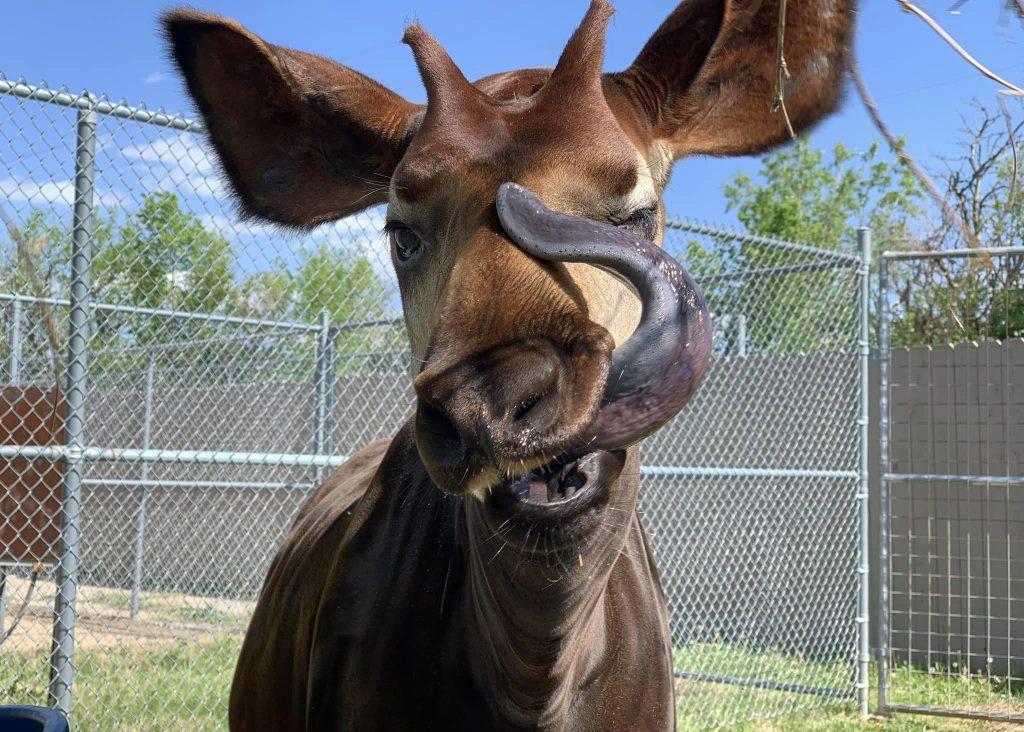
The Okapi – Okapia Johnstoni
The okapi is the closest relative of the giraffe compared to every other animal. On average, males measure around 1.5m tall while females are typically taller at 1.75m. Okapis are most easily identified by its long neck, reddish-brown coat and the unmissable white stripes on their flanks which serves as camouflage in the dense forest where they live. Similar to its cousin, the giraffe, the males have ossicones which are small horn-like structures on the top of their head but the female lack these and instead they may have small hair fluffs. They some of the longest living animals as they have been around for over 11.5 million years, but they have been endangered for around 13 years since 2013 after a 50% decline over the next two decades. Before 2013, okapis were already a rare species but due to the extensive mining, logging and bushmeat hunting caused for reclassification.
Komodo dragons - Varanus Komodoensis
This animal is a personal favourite of mine as I think it is one of the most interesting animals out there. It is currently the largest species of lizard in the world; males can grow up to 3m or 10ft and weighing up to 150kg and females can grow between 1.8 – 2.5m or around 7ft long and 40 – 70kg in weight. They are found throughout the Indonesian islands – primarily Komodo, Rinca, and Flores. Due to their giant size and group hunting habits, the dragons are classed as apex predators and because of this their diet surprisingly consists of Javan Rusa (a large type of native deer), larger feral pigs and any rotting meat. As well as this, older K.Ds will show cannibalistic behaviours to the younger, smaller or weaker individuals in their Bank (the term used for a group of Komodo Dragons). However, the reason I find them so incredible it because of the abilities the females have. Female Komodo Dragons can reproduce in two ways. The first is the more well-known reproduction involving male and female dragons but the part that interests me is that the females can produce asexually – through parthenogenesis. This is where the mother can fertilise her own eggs and does not need to find a mate. This allows for the continuation of the species when the female to male ratio is out of proportion. While we know that this ability is already common in reptiles and bugs like aphids, humans are studying these animals in attempt of transferring it to women, sometime in the future. This scientific movement will allow women to potentially become more independent and move away from the traditional view of having to rely on a man to have children. Due to humans taking the dragons into captivity and climate change, in 2021 their classification changed from vulnerable to endangered and the way climate change is going, it’s only going to get significantly worse for them.
Hirola – Beatragus Hunteri
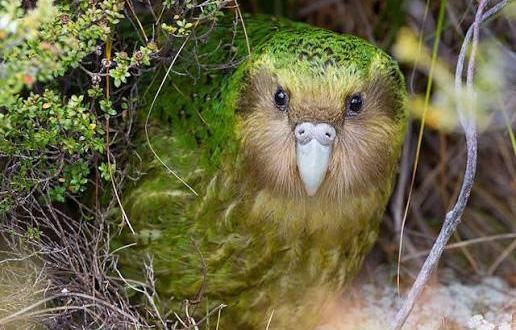
Also named the ‘owl-parrot’, the kakapo is one of the larger species of parrot. It is a nocturnal, ground dwelling bird that can grow to 64cm long with a combination of features found within a range of different parrots with a yellow and green plume, a large grey beak and large blue feet. It is the heaviest and only flightless parrot recorded – males being 1.3 to 1.5 kilos and females being around 0.9 to 1.3 kilos. They also have the longest recorded lifespan of over 100 years. Unfortunately, the kakapo is officially registered as critically endangered with near 235 known birds left however in 2023 a sanctuary in New Zealand was established to protect the species and a law was put in place to preserve many species like the kakapo – Wildlife Act, 1953 . The reason that the bird’ s numbers have had such a decrease is because of introduced mammals like ferrets, stoats, rats, and cats.
Vaquita – Phocoena sinus
A Vaquita is a species of porpoise native to Mexico, males can reach up to 140cm and females 150cm making them the smallest breed of porpoise. Its most distinctive features would be a domed head, a tall triangular dorsal fin and the dark grey patches around their eyes and lips – giving them a ‘smiling’ appearance. They are non-migratory animals meaning they will not migrate and instead choose to stay in the shallow water near the shore. They are the world's rarest marine animal with a record of between 7 and 10 left. The reason for such a devastating number is because they are prone to becoming caught in illegal fishing nets. In 2017 there was an international mission with aims of preventing extinction for the species – VaquitaCPR (conservation, protection, recovery).
These wombats are one of the three native species to Australia. This species of wombat is the rarest and largest measuring to around 1 metre tall and can weigh up to 40kg. They have soft dusty grey fur and long thin whiskers. They have long pointed ears that differentiate them from other species of wombat. Females are typically larger than the males due to an extra layer of fat - females can reach to around 40 kilos and males to around 32 kilos. The reason that these animals are so terribly endangered is firstly due to habitat loss and second to do with competition between livestock and rabbits. However, the Australian Wildlife Sanctuary has formed with the Queensland government to establish new ways to conserve the species.
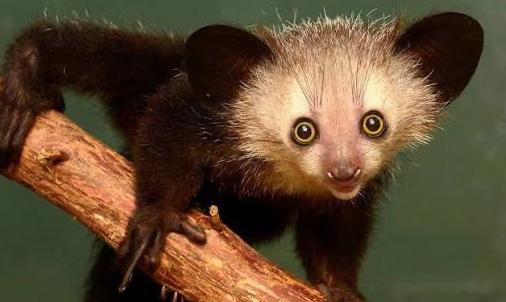
Aye-aye – Dubentonia Madagascariensis
The Aye-aye is the world's largest, nocturnal primate with almost abnormally large eyes and an extra-long middle finger designed to reach far into the middles of trees to reach all the grubs and bugs. Speaking of which, the Aye-aye has a strange way of catching its dinner. It will tap on trees to listen to echoes, echoes mean a hollow tree, this means that there is a space for bugs to live. Then they will bite finger-sized holes with their outward facing incisors to reach for anything they can – this foraging method is known as percussive foraging. Unfortunately, due to habitat destruction and spiteful hunting as in Madagascar they are seen as an omen of ill-luck, there are only a few thousand of these creatures left in the wild, however, they are officially protected by law.
An extra on parthenogenesis
Parthenogenesis is a type of asexual reproduction. Typically, reproduction between animals happens between a male and a female however in parthenogenesis the female's ovum is able to fertilise itself. This method is currently only possible to be used in several types of bugs, reptiles and amphibians therefore meaning that humans cannot use it. However, as I said, modern technology is working to potentially give women the ability and choice of asexual reproduction. If it were to be successful it would reduce the necessity of having a heterosexual relationship to have children and the need for more traditional roles and it could cause a more matriarchal leaning society or at least a society less dependent on each other.
EthICs & SoCiEty
HOW ETHICAL ARE TRUE CRIME PODCASTS AND MEDIA?
Ellie, Year 10
Before we start, we need to understand fully what true crime podcasts really are. A true crime podcast is “an audio programme that explores real life criminal cases, often combining storytelling, investigation, and psychological analysis to engage and inform listeners”. But are they actually for educating people about criminal cases, or just a money grab to play on society’s love for anything scary and gory?
The first true crime podcast ‘Serials’ aired in October 2014, discussing the 1999 murder of Hae Min Lee and the conviction of her ex-boyfriend, Adhan Syed. The podcast immediately gained popularity. This triggered a massive wave of podcasts being released. In only ten years, more than 23,000 (as of 2024) have been aired, with an increase of 63% as of 2021 in the US.
One of the biggest issues with true crime media is the violation of consent and privacy, particularly of those who have experienced trauma. While some hosts respect the privacy and anonymity of the case at hand, many have revealed sensitive information without notifying the family of victims, then using this information as ‘click-bait’ to gain popularity on social media. For example, in Netflix’s recent documentary Monster - The Jeffrey Dahmer Story (2022) the family of the many victims of Dahmer’s crimes weren’t asked for permission or even told about the shows production. Eric Perry, cousin of victim Errol Lindsey, tweeted, “it’s re-traumatising over and over again, and for what?” Furthermore, many creators often add fictional characteristics to real people to present them in a certain way that is not accurate, in order to tell a more compelling ‘story’ rather than accurately represent the people who are involved in the case.
As well as this, studies have shown that a vast majority of cases discussed involve a white female victim and show very little diversity. On average 70-85% of listeners are women, and as such creators often tailor their podcasts to the audience at hand. Rather than covering a wide range of cases, hosts often choose specific cases that listeners feel they can ‘relate to’. This can lead to romanticising horrific situations that have affected thousands of people, and desensitising listeners of the graphic cases discussed so commonly. This also leads to neglecting cases involving people of colour, male victims, and other minority groups. While true crime podcasts often aren’t professionally published, they can help raise awareness and sympathy for victims and
the families involved. By not discussing a diverse range of cases, the families of victims who have suffered the same trauma don’t receive the same level of sympathy.
Overall, I believe that while true crime media can be insightful ways to learn more about how criminal investigations work and how detectives work to solve a case, it is most often not an ethical and professional way to obtain such knowledge. Details may be skimmed over or skipped entirely, and people are often presented in ways tailored to the audience rather than accurately representing people involved. This can also lead to people becoming desensitised to violent and graphic crime, as hearing about such incidents has become so normalised in modern society.
Zoe, Year 12
WHY DO WE ROMANTICISE THE ROMANOVS & MARIE ANTOINETTE; IS IT MORAL?
The romanticisation (overly idealising someone or something, often distorting it) of Marie Antoinette and the Romanovs has inflamed with the rise of social media and filmmaking. The Romanovs were a Russian monarchical dynasty that ruled Russia for over 300 years (1613-1917). Marie Antoinette was the Queen of France; she was executed, much like the Romanovs, during the first wave of the French Revolution. There are glaring similarities between the two: the fall of monarchies, the absurdity of their wealth, their youth providing a narrative of innocence and the preservation of beauty. However, clear from the extent of the romanticisation of these royals through film, music and depictions of them under the agenda of entertainment, the similarity that alienates them from other royal tragedies and executions is the nature of their legacy; why were the deaths of the Romanovs and Marie Antoinette preserved in romanticism?
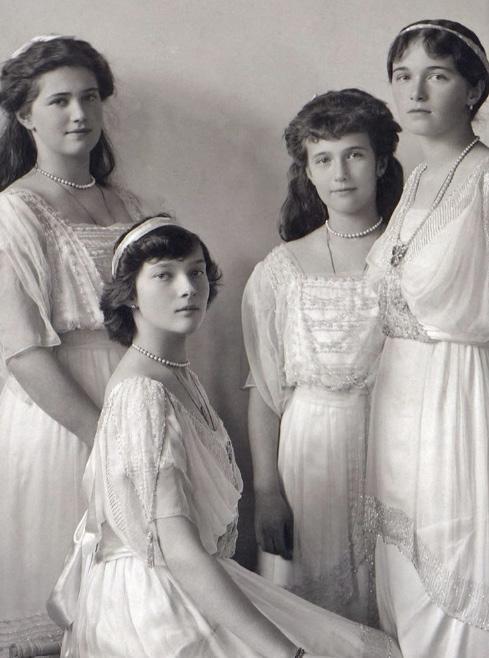
The Romanov children, Olga (22), Tatiana (21), Maria (19), Anastasia (17) and Alexei (13) were the Grand Duchesses and the Tsarevich of Russia. After their father, Nicholas II, was forced to abdicate in 1917 during the February Revolution, the family was funnelled through ever-worsening housing conditions, constrained under house arrest by Red Guards (Communist militia). On July 17th, 1918, the family was taken to the basement of a house in Ekaterinburg and shot. If it wasn’t already evident that they possessed incredible wealth, the girls had sewn diamonds and precious stones into their corsets, consequently making their deaths slower as the jewels deflected the gunfire. As the Romanovs had assumed their ‘divine right’ for the past three centuries, this tragedy rippled throughout Russia, sparking rumours and tales of escape: that of the youngest daughter, Anastasia.
One of the clearest distortions of the Romanovs in media is Disney’s 1997 film ‘Anastasia’, following the adapted rumour that Anastasia had escaped the execution. In the film, the mystic healer, Rasputin, whom the Tsar and Tsarina had trusted to heal their son of his haemophilia, is depicted as the undead antagonist, with the Russian Revolution being tagged as ‘a deadly plague’ that engulfed the nation. Despite the film being a beloved fairytale, it raises the question of Disney’s political message; the movie clearly frames the Romanovs as victims and generally sidelines the true struggles of workers and peasants in Russia under the monarchic system (Nicholas II was the wealthiest monarch in the world, harbouring 300 million roubles). The story takes inspiration from the claim of Anna Anderson shortly after the execution, that she was the lost princess, Anastasia; many other impersonators of the children sought recognition following her.
Several other media include Anastasia the musical, Nicholas and Alexandra (1956), a reenactment of the execution in 2022 in ‘The Crown’, as well as Boney M.'s song ‘Rasputin’. There are also martyrdom statues, paintings and depictions of the family sold at auctions, particularly in 1917 after the Winter Palace was ransacked, as well as after 1991 and the fall of Communism. The sheer scale of profit made from the tragedy has twisted the Romanovs into more of a fictional narrative than a real family, mythologising them in a similar way to the infamous French Queen.
Marie Antoinette has polarised historians; love her or hate her, her image is preserved despite, or perhaps thanks to, her divisive reputation. Among her rococo wedding-cake dresses and the Palace of Versailles (in 1994, American TV company PBS concluded that the French palace could have cost anywhere between $200300 billion in today’s money), her splendorous lifestyle contrasted to the deflated French economy, and lowerclass French people rioted, eventually overthrowing Louis XVI and France becoming a republic.
However, online this content is less prevalent; romanticism of her, now coined as ‘coquette’, has tainted the political narrative through misinterpreted facts being warped about her. In fact, she wasn’t actually French, she was born in Vienna, Austria (albeit an equally affluent city, given that it was built under the Habsburgs). Furthermore, the BBC conveys this narrative ‘One such myth is her apocryphal "let them eat cake" comment, a brattish response to devastating bread shortages. Attributed to "a great princess" in Rousseau's Confessions, written in 1765 when Marie Antoinette was aged 10 and still in Austria, it cannot have come from her’.
One way she has been over-romanticised online is through the ‘coquette’ aesthetic, at its zenith around 2024, from which girls and young women were buying into fast fashion to embrace a romantic, ‘demure’ appearance, clear from the increase in corset sales; ‘the Corsets Market was valued at USD 2.5 billion in 2025… this growth trajectory is driven by a resurgence in interest in vintage fashion’. Furthermore, the V&A has displayed two exhibitions dedicated solely to her, as well as the Grand Palais in Paris also dedicating an exhibition to her. Dr Sarah Grant, the curator of ‘Marie Antoinette Style’ opening at the V&A on the 20th of September 2025, stated she is the "most fashionable, scrutinised and controversial queen in history" Overall, Marie Antoinette has been misremembered, as people have used her feminine display of wealth to patch up her exploitation of France’s economy.
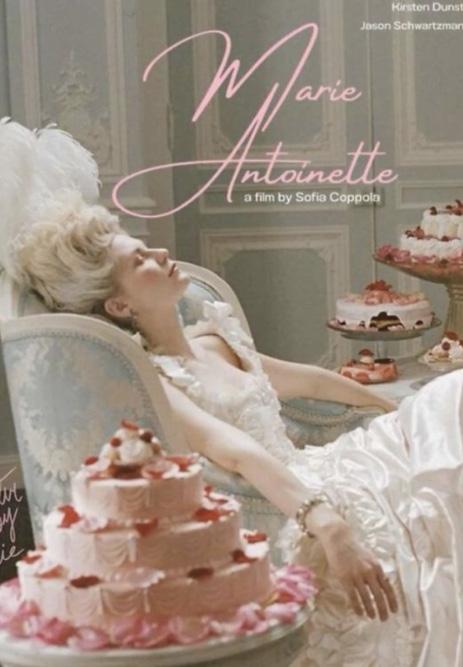
Arguably, this ‘resurgence’ in attention to Marie Antoinette is nothing new. In 2006, director Sofia Coppola
produced the film ‘Marie Antoinette’, a modern adaptation of her life story starring Kirsten Dunst, subsequently providing quips for ‘coquette’ audios online. Overall, it’s safe to say that her image has been imprinted in modern media. If you are still unconvinced, there is a real board game named ‘Marie Antoinette and the French Revolution’.
This ‘popularity’ of the two sets of royals raises the question, what is so special about them that makes their legacy so recyclable? After all, political figures are regularly assassinated; take Nicholas II’s uncle Alexander II, who was killed in 1881 due to injuries from an explosion while he was travelling in a carriage. Why is it that people are familiar with the Romanovs and, most potently, Marie Antoinette, but not as much any other deceased figures?
For the Romanovs, the clearest explanation is the brutality, the rumours surrounding the family, and the friction between the Bolshevik justification of the murder and sympathy for the violence they suffered. The Bolshevik motivation was to ensure that White armies would not reinstate the monarchy, as Alexei was still alive in 1918 and the Red Army had to hold Tsarist officer’s families hostage to prevent the officers from supporting the monarchy, demonstrating the conflict of political views. As little print and news had been released about the Romanovs between October 1917 and July 1918, the state of the family was interpreted by the public, creating rumours and mystery. Therefore, the uncertainty of their deaths made their image almost fantastical, exaggerated by the death of Rasputin in 1916.
One common thread between them was their wealth. Potentially their wealth, which revealed the gap between the poor and the rich, estranged them from the public populations. Therefore, the absurdity of wealthy royal families losing their influence and money so swiftly and brutally is easy to mythologise.
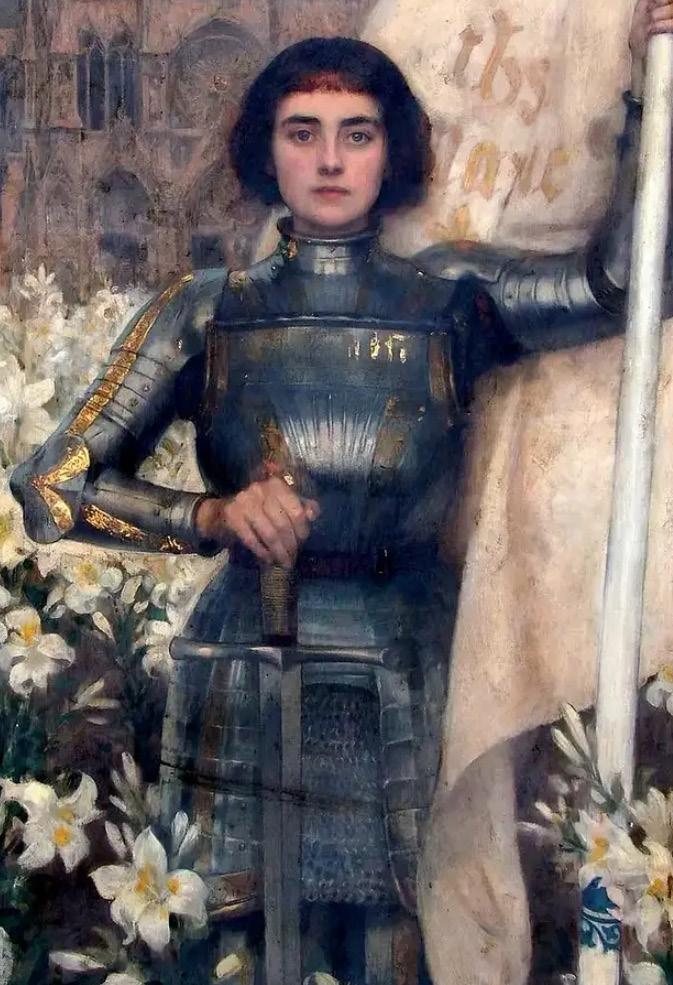
However, I believe that the most distinctive factor is their sex. Women, especially young women, have been pardoned and romanticised by modern historians to reclaim their influence in eras overshadowed by male power. Other examples of this are Joan D’Arc and Ching Shih, their crimes and political mistakes in justification of them being women. Of course, all the women I have mentioned achieved significant influence throughout their lives and careers, however it is evident that women are romanticised just because there is a lack of influential women throughout history in comparison to men.
The ages of the Romanovs exaggerate this theory, as the youngest daughter was only 17. Therefore, the innocence (or innocence created by rumours) transforms their deaths into martyrdoms. Online, as the main demographic of apps like TikTok are young women (By 2025, approximately 14.1% of TikTok’s global audience consisted of women aged 18 to 24… female users aged 25 to 34 constituted 14.6%) and younger audiences in general, their youth is relatable, therefore feeding into the romanticisation of them (not to mention many being raised on Disney, therefore highly likely to have engaged with the film ‘Anastasia’). Their innocence has been preserved due to the rarity of young princesses being murdered, as well as their high-class fashion style reflecting the weakening economy of 2026, therefore young women have leaned into the ‘coquette’ aesthetic to contrast the current poor-rich gap, even if subconsciously done.
A Painting of Jeanne d'Arc (Joan of Arc)
Additionally, the Grand Duchesses were sought after by European royal families for marriage prospects, and sadly after both the French and Russian Revolutions, the Queen and Tsarina, along with the Grand Duchesses, were sexualised and their reputation was marred by propaganda and newspaper printings. One scandal was that the Grand Duchess Maria had engaged in a romantic affair with a Red Guard, despite being a contender to marry Louis Mountbatten, 1st Earl Mountbatten of Burma. This, however, was proven false by her letters and Red Guard reports, conveying the misogynistic undertones of the treatment of the girls.
As previously mentioned, the 1997 film ‘Anastasia’ carries emphasis on the innocence of the Romanovs, implying the political stance of the US at that time. Perhaps they were simply telling a child-friendly story, leaving out the gore of the execution and the political debate to keep the film light-hearted, however it was conveniently released only six years after the fall of the Soviet Union; the film reflects the anti-Communist ideology of the West in 1997, consequently making the idolisation of the Romanovs prevalent in mainstream Western media. However, is this actually moral? Should we mythologise a real woman (a minor, might I add) who was murdered due to political turmoil? Should the women mentioned be shown respect, or held accountable for their actions and inability to rule to ensure autocracy is not exploited for wealth in the future?
In France, the country suffered from huge financial debt. In Russia, the First World War had resulted in 1/7th of the population being killed, wounded or taken as prisoners of war. The preservation of the Romanovs and Marie Antoinette evades them from being blamed for economic collapse, linking to current politicians assuming scapegoats to avoid letting down their own economic responsibilities, as the public may be less inclined to blame authority figures. However, their deaths were, fundamentally, tragic, therefore respect should be given and the Romanovs (being Orthodox Russian Catholics) had a divine right to be remembered as martyrs. Alexei was only 13, after all. Overall, it is ultimately immoral to rewrite these women’s lives and turn their economic exploits into displays (both physically and through media), on the justification of the violence of their deaths. Although it is important to recognise they, especially the Romanovs, died far too young and the perpetrators should be held accountable, romanticisation is fundamentally immoral, as it distorts the true stories.
GeogRaphy
Jason, Year 12
THE DEATH OF A SEA
It is difficult to overstate the importance of rivers, lakes and seas to human civilisation. These bodies of water are crucial for drinking, agriculture, fishing, and trade. 90% of the world population lives within 10 kilometres of a freshwater body, demonstrating our reliance on these vital natural features.
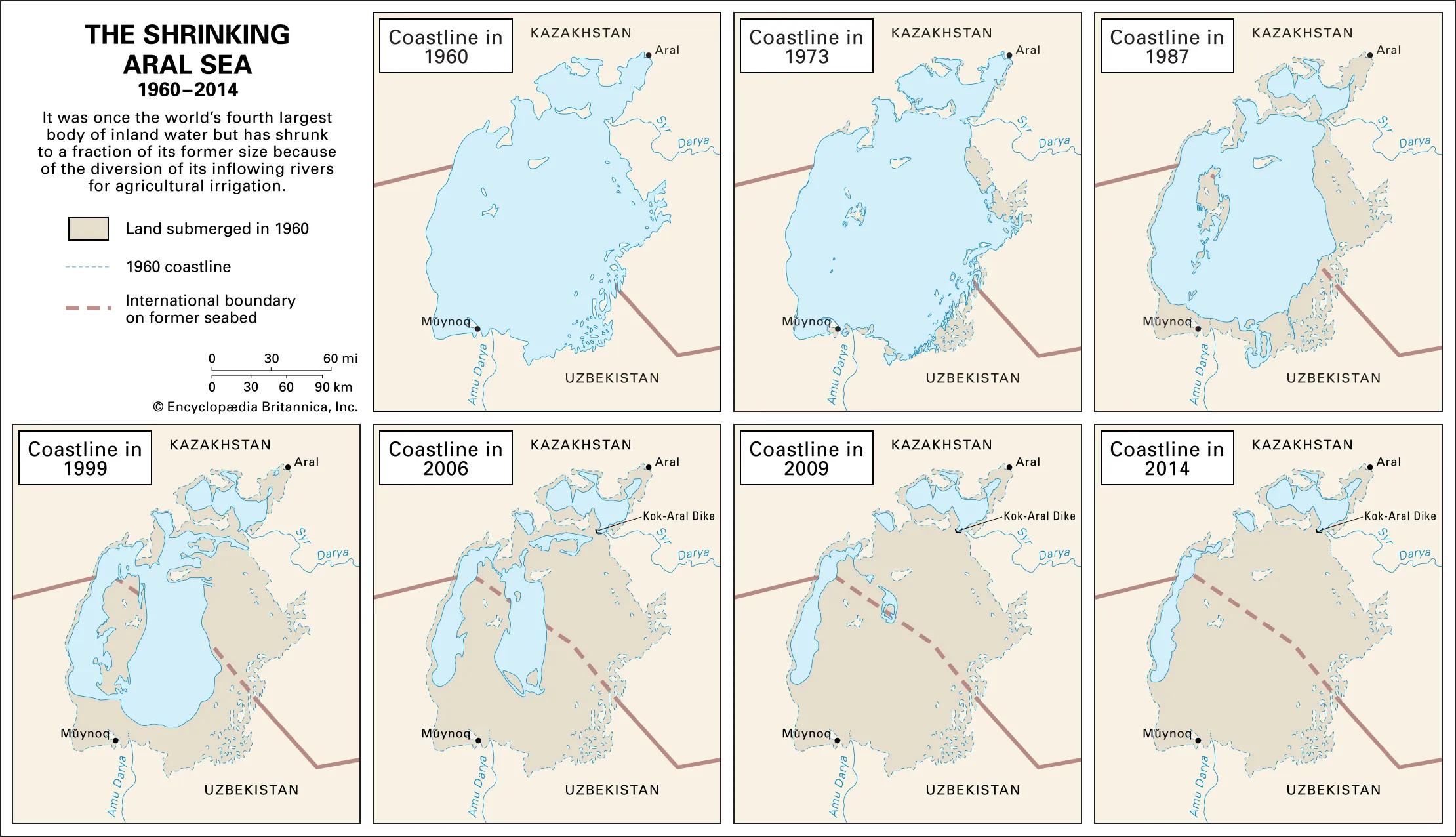
The Aral Sea, on the border of Kazakhstan and Uzbekistan, was once the fourth-largest lake in the world. Once measuring 68,000 km2, the rivers that fed into it were diverted for Soviet agricultural projects. The arid climate of the Central Asian deserts rapidly dried the remaining water of the sea, resulting in the loss of over 90% of its former volume.
By most definitions, the Aral Sea does not exist anymore. Rather, the drop in sea level has split it into three small remnant lakes, each featuring salt concentrations many times higher than ocean water.
Besides causing the mass death of dozens of endemic marine species, the evaporation of the sea has left billions of tonnes of toxic salt and pesticides in the newly-formed Aralkum Desert. All this occurred in a few short decades – the destruction of the Aral Sea has been quoted as one of the greatest ecological disasters in history, and one that is almost entirely engendered by human actions.
An Encyclopaedia Britannica diagram demonstrating the drying of the Aral Sea
Geography of the Aral Sea
To understand how the Aral Sea was so thoroughly devastated in such a short amount of time, its geographical circumstance must be acknowledged. It is located far within Central Asia and surrounded by highlands on all sides, such that rivers flow into it but cannot exit into the ocean. This is known as an endorheic basin, where rivers are the only source of water. The Aral Sea was therefore a lake, but its (former) size and cultural significance has lent it the term ‘sea’.
The Aral Basin lies within an arid desert climate. Being so far inland, the region experiences extreme temperature fluctuations, with highs of 50°C in the summer and lows of -45°C in the winter. High temperatures are of particular note, as this can cause swift evaporation. If not constantly replenished by its rivers, the Aral Sea will inevitably shrink rapidly.
There were two main rivers feeding the Aral, known as Syr Darya and Amu Darya. As with any other rivers, these are freshwater, only carrying tiny amounts of salt from contact with rocks throughout their flow. However, being an endorheic lake means the Aral cannot lose its salt by ocean discharge (and certainly not by evaporation). Its salt content therefore built up continuously over many millennia, which would culminate in huge environmental fallout when the Aral Sea dried up.
Another factor making the Aral Basin uniquely vulnerable is the wind impacting the region. Warm, dry winds known as ‘sukhovey’ exacerbate drought conditions by evaporating water from within soil and killing the plants that stabilise soil. All these factors mean the Aral Sea was hugely susceptible to drying up if its river flows were ever interrupted.
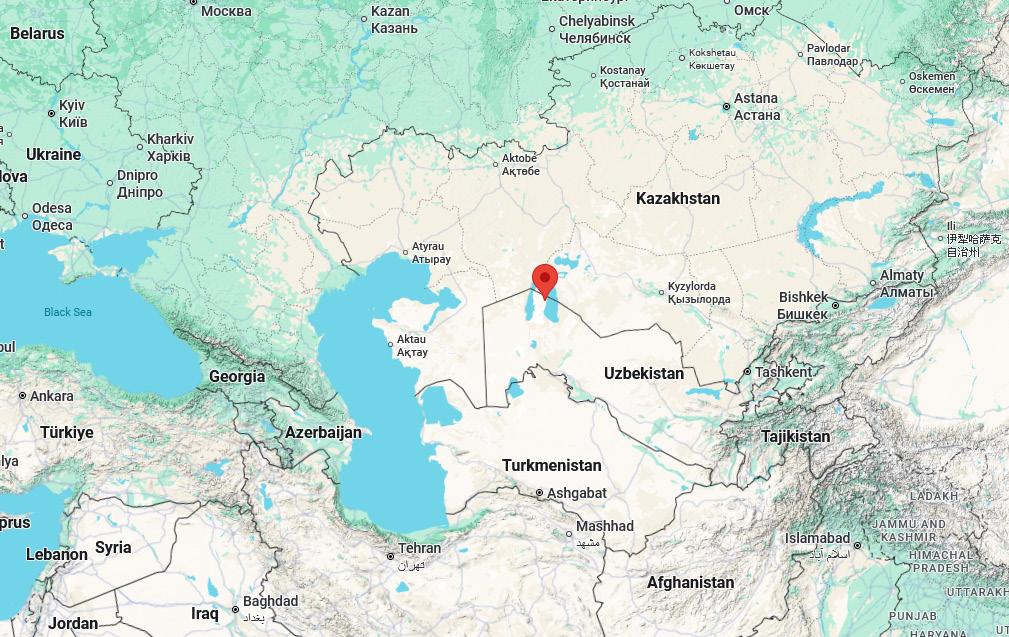
The Aral Sea was found in Central Asia, between Kazakhstan and Uzbekistan. To its west was the much larger Caspian Sea
History of the Aral Sea
Humans have been inhabiting the Aral Basin since prehistory. Its rivers provided relatively fertile soil in an otherwise arid region, leading to development of several settlements on the sea and its rivers. The area thrived
as a key part of the Silk Road connecting Chinese and European trade, while an expansive fishing industry further increased the population in the basin.
Scholars have long known about the volatility of the Aral Sea. In 1417, local water management diverted both main rivers, causing the sea’s volume to decrease rapidly. This phenomenon was not reversed until the diversion channels fell into disrepair a century later.
Control over the Aral Sea region has changed many times throughout history, from local powers to Mongol Khanates and later to the Russian Empire. The Bolshevik victory in the Russian Civil War led to the establishment of the Soviet Union, of which Kazakhstan and Uzbekistan were constituent republics.
The Soviet Union arguably reached its strongest global position in the early 1960s, when it held significant economic and political power over the communist world. The death of Stalin had brought an end to the devastating famines that plagued the Union for much of its history. These two factors enabled a diversification in agriculture away from food crops to profitable cash crops that would be sold to other communist states. In the Aral Sea region, the Soviets looked to expand cotton production, which would aid its domestic textile industry and reduce reliance on imports from rival powers.
Uzbekistan has had a cotton industry since the 19th century, something that was greatly expanded under Stalin’s collective farms. However, output was always limited by the aridity of the region – the Aral Sea region was chosen for its long growing seasons rather than fertile soil. To maximise production of this ‘white gold’, the Soviets implemented major irrigation systems from the 1960s onwards.
The two rivers feeding into the sea, Amu Darya and Syr Darya, were blocked by dams and diverted through thousands of miles of canals, severely limiting their discharge into the Aral Sea. To make matters worse, these channels were incredibly inefficient. They were prone to leakage and evaporation; at times up to 75% of diverted water was wasted. This meant even more water had to be diverted to reach the Soviet’s agricultural demands.
As mentioned previously, the Aral Sea’s climate meant it depended heavily on its rivers to maintain a constant size. Evaporation takes place quickly, and with the vast majority of its input diverted, the sea began shrinking
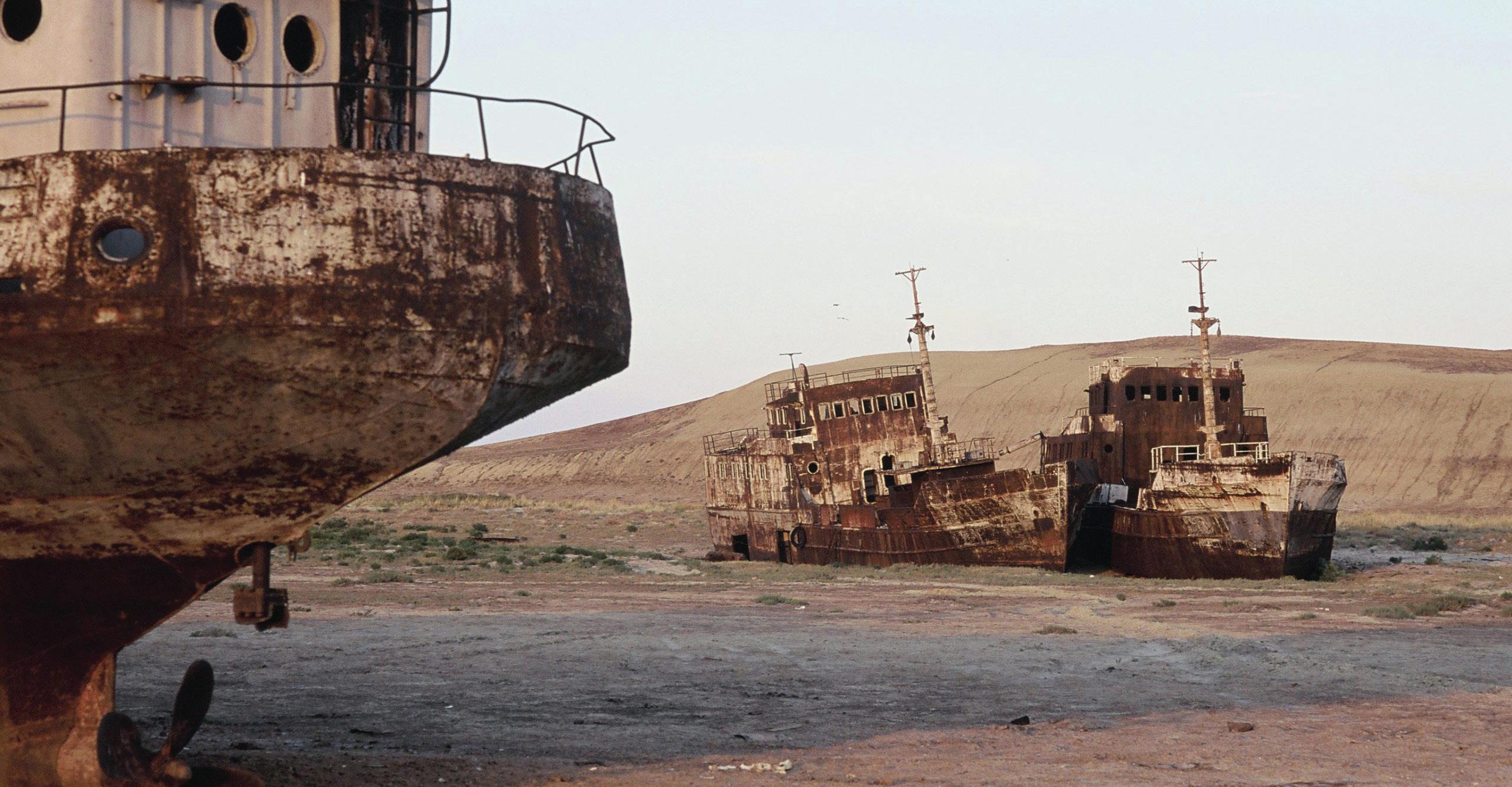
A fishing fleet on the exposed bed of the Aral Sea, now hundreds of miles from the coast
once again. In the 1960s, sea levels dropped 20 cm annually, accelerating to 50-60 cm of sea level fall by the 1970s.
This did not go unnoticed, as the expansive fishing industry of the Aral Sea collapsed as marine life died en masse and port cities found themselves miles from the new coastline. Despite this, the cotton quotas and thus water diversions only increased. By the 1980s, the Aral would drop by 80-90 cm every year.
Poor environmental management was not limited to the diversion of rivers. At its peak, the Soviets reported that half of Uzbekistan’s arable land was used for cotton alone. Such agricultural monocultures are environmentally destructive, causing soil degradation by stripping it of specific nutrients. This in turn makes the soil more vulnerable to wind erosion, paving the way for further desertification.
As water kept evaporating, the retreating coastline revealed vast expanses of new barren land, dubbed the Aralkum Desert. This wasteland was greatly polluted with salt and pesticide runoff that did not evaporate with the water, exposing locals to toxic chemicals. In the decades since, rates of cancers and birth defects skyrocketed. There is little medical care and research that can aid the victims of the Aralkum Desert’s toxicity. Additionally, many such households were cast into poverty as their fishing ports were now hundreds of miles from water, further limiting access to basic medical help.
The desertification of the Aral Basin has also cascaded into more frequent and severe dust storms. Dry, degraded soil is easily picked up by winds, damaging agriculture and causing health issues.
The Soviet Union’s totalitarianism was undoubtedly at fault for the destruction of the Aral Sea. Plans for cotton expansion came directly from the Politburo in Moscow and were fast-tracked by the numerous five-year plans set in place by the central government. Scientists were well aware of the environmental devastation entailed by the irrigation projects, yet in the dictatorial empire that was the Soviet Union, no one but far-away bureaucrats held any sway over state policy.
The dissolution of the Soviet Union did not solve the crisis; the newly independent Uzbekistan was still a dictatorship with a strong reliance on its cotton exports. By 2007, the sea level had fallen to a point where emergent land divided the remaining water into four lakes. The salt that had not been deposited into the new desert ended up in these remnant lakes, greatly increasing their salt concentration compared to the original Aral Sea. The lakes are three to eight
times saltier than seawater; this hyper salinity proved disastrous for species which could not adapt to their new habitats.
The river Amu Darya is no longer connected to what remains of the Aral Sea; its flow is so reduced, and the coastline has retreated so far that the river is almost always dried up before reaching the lakes. The Aral Sea has now been reduced to 10% of its size in 1960, a clear display of the scale of the environmental disaster.
Managing the sea
In spite of the ecological destruction that has already happened, there is hope to limit the fallout of the Aral Sea’s evaporation and help the basin recover. The North Aral Sea, one of the remnants located in Kazakhstan, is protected by the Kok-Aral Dam. Built in 2005 with funding from the World Bank and the Kazakh government, the dam prevents water from draining to a lower basin, which would increase the sea’s surface area and thus evaporation. This has allowed water levels to rise again, reducing its salinity and allowing a fishing industry to exist.
However, this has led to ramifications for Uzbekistan’s South Aral Sea. This lake is no longer fed by any rivers – the Syr Darya is dammed in Kazakhstan, and the Amu Darya dries up
before reaching any lakes. With Uzbekistan still reliant on water-intensive cotton farming, the South Aral Sea will continue to drain. Measures have been taken to slow the use of water, including reducing leakages from diversion canals and plans to use water more efficiently in agriculture.
Dust storms are another consequence of the Aral Sea’s destruction that have necessitated management. Afforestation efforts involve salt-tolerant saxaul trees being planted across the basin and the Aralkum Desert. Grown shrubs stabilise soil through their roots, helping prevent dust storms and restoring biodiversity in areas razed by the cotton monoculture. These efforts are present in both Kazakhstan and Uzbekistan, accelerating the recovery of the North Aral Sea and slowing the degradation of the South Aral Sea.
Conclusion
The destruction of the Aral Sea took place within only a few decades, yet its recovery will not be completed for centuries. Besides a drastic loss in water volume, the landscape has been scarred with toxic chemicals, and the local extinctions of fish species mean the sea’s former biodiversity will never return to previous levels. The effects on people are also evident, ranging
from loss of livelihoods to the onset of terminal illnesses.
The drying of the Aral Sea is therefore considered among the worst ecological disasters in history. It is a testament to the destructive effects of human interference with nature, especially under the vanity projects of tyrannical empires. With water being so important to wildlife, the landscape, and to people, environmental management policies must exist and be enforced, such that disasters of this scale are never repeated again.
Ben, Year 7
VOLCANOES
What is a volcano?
A volcano is an opening in the Earth’s crust through which molten rock, gases, and ash erupt, often forming mountains and hills over time.
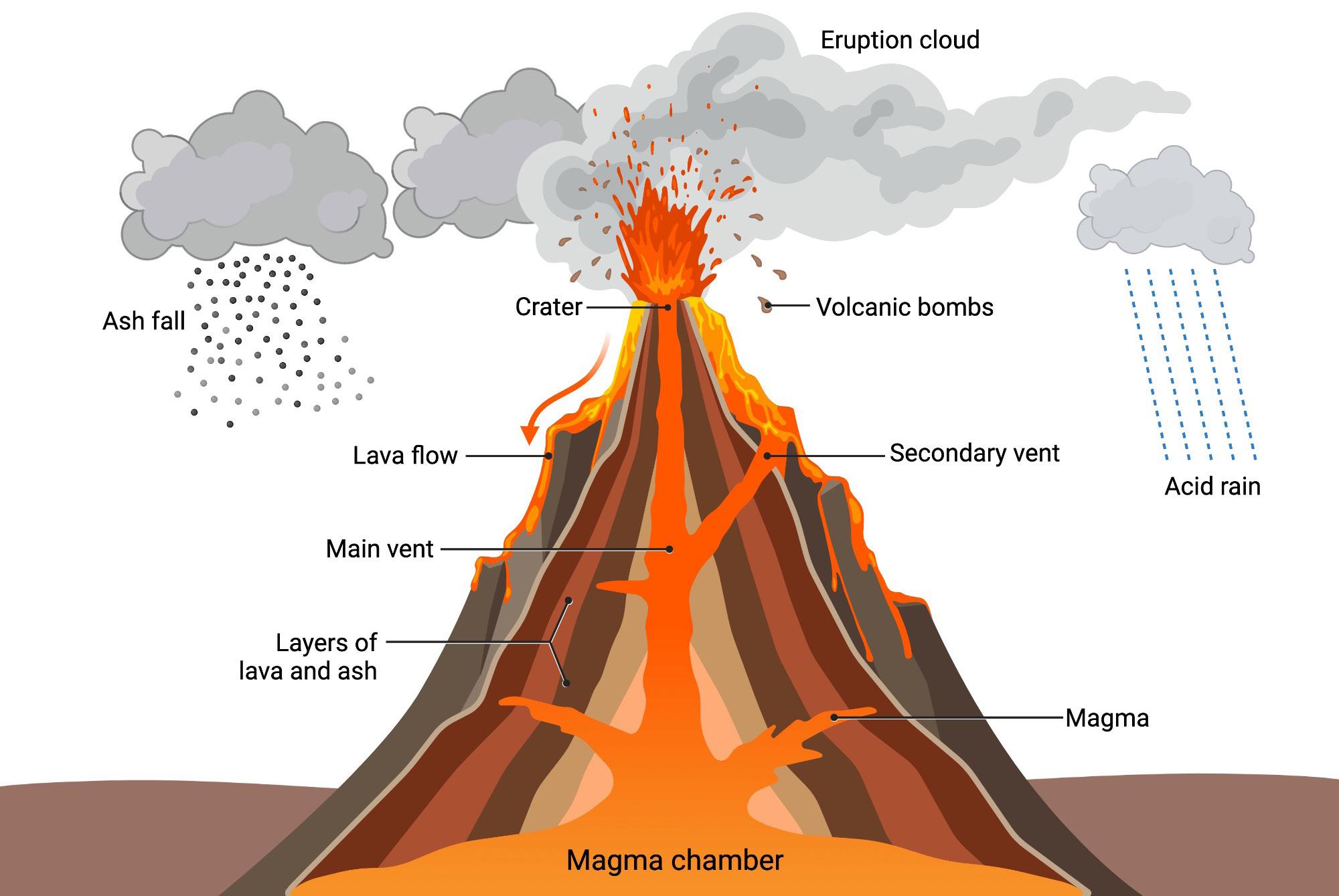
Diagram of the inside of a volcano
Definition and structure
A volcano is fundamentally a vent or a long narrow opening in the Earth’s crust that allows magma, gases, and volcanic ash to escape from the magma chamber beneath the surface. The magma that reaches the surface is called lava and repeated eruptions of lava and ash can build up volcanic landform, such as a hill or a mountain. Volcanoes typically have a vent, a magma chamber, and sometimes secondary vents on their flanks. The vent may appear as a crater, as a summit or as a fissure along the sides of the volcano.
What is a volcano?
A volcano is an opening in the Earth’s crust through which molten rock, gases, and ash erupt, often forming mountains and hills over time.
Definition and structure
A volcano is fundamentally a vent or a long narrow opening in the Earth’s crust that allows magma, gases, and volcanic ash to escape from the magma chamber beneath the surface. The magma that reaches the surface is called lava and repeated eruptions of lava and ash can build up volcanic landform, such as a hill or a mountain. Volcanoes typically have a vent, a magma chamber, and sometimes secondary vents on their flanks. The vent may appear as a crater, as a summit or as a fissure along the sides of the volcano.
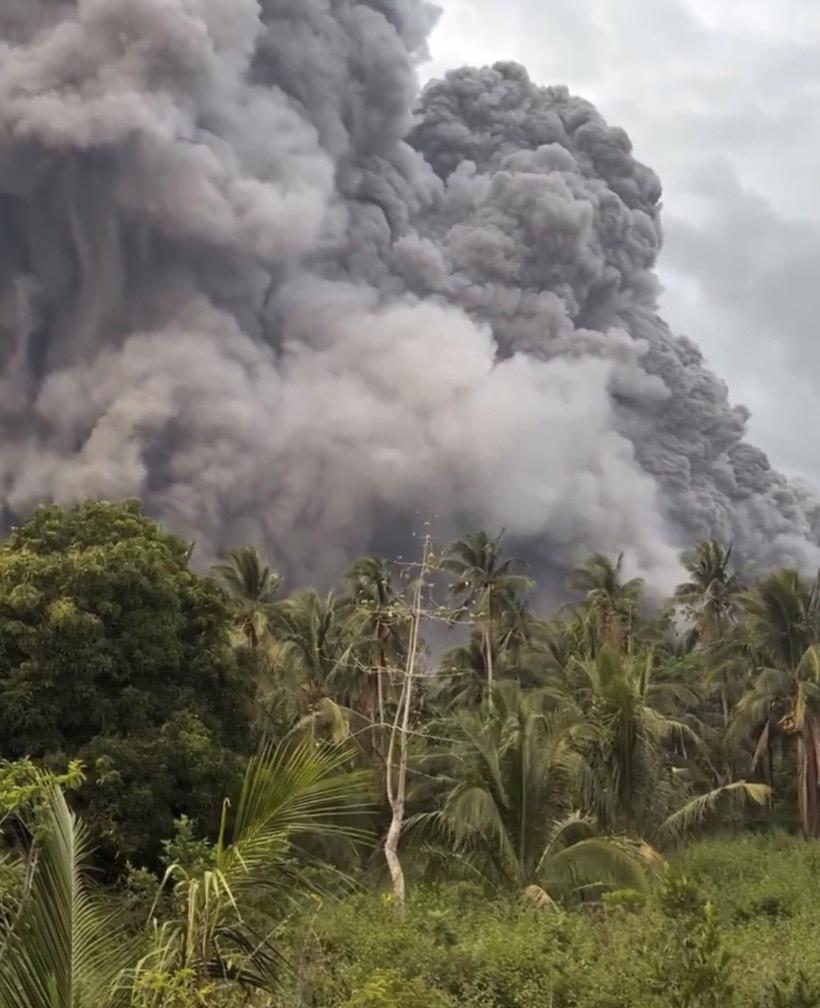
An ash cloud coming from the Mayon Volcano
May 14th, 2026
Latest eruptions
Volcanoes around the world have been erupting this month, creating dramatic scenes, and affecting thousands of people. Scientists say this level of activity is unusual but not dangerous for the UK.
One of the most powerful eruptions came from Mayon Volcano in the Philippines which sent huge ash clouds into the sky and forced families to leave their homes. Lava has been flowing down the volcano’s slopes, and local schools have been closed.
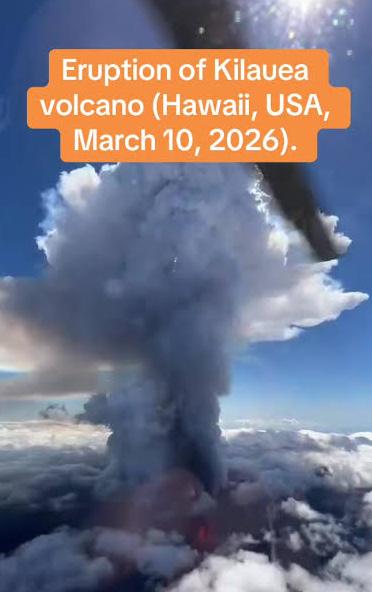
Another eruption was from the Kīlauea volcano in Hawaii, (USA).
All month long, scientists at the Hawaiian Volcano Observatory watched the ground around Kīlauea slowly puff up like bread dough. That swelling meant magma was pushing upward, getting ready to break through.
By late May, the signs were impossible to ignore:
• Night time glow coming from vents inside the crater
• Constant small earthquakes
• Gas rising from cracks in the ground
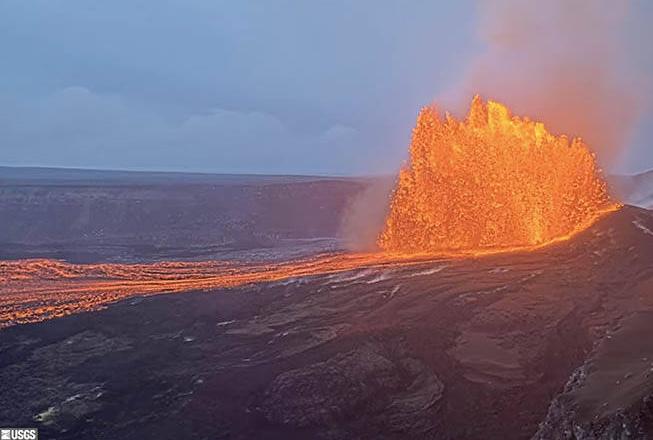
The volcano finally let loose. Lava blasted over 600ft into the air, which is taller than the London Eye. The eruption lasted about nine hours, and the wind carried ash and tiny glass-like strands called Pele’s hair into nearby communities.
Oliver B, Year 7
THE IRANIAN REVOLUTION
Introduction
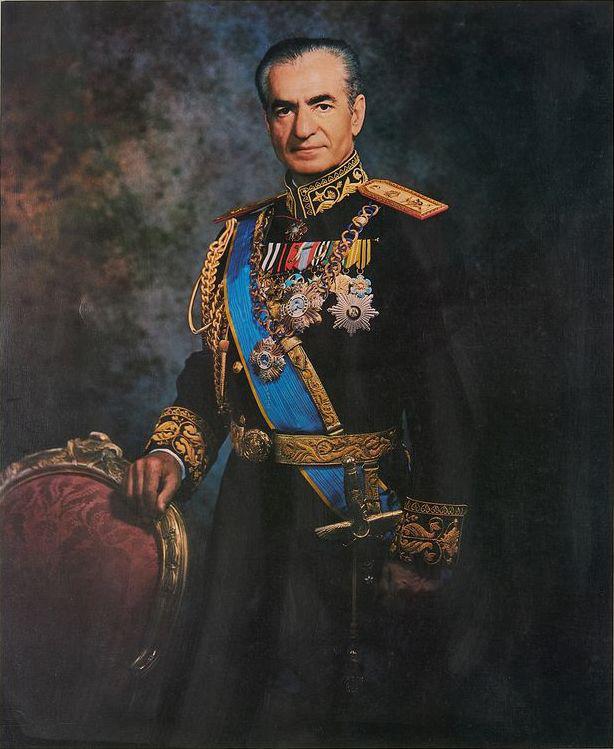
So, I know you might’ve heard of the French and Russian Revolutions, but have you heard of the Iranian Revolution? Now before I go into the revolution, I need to tell you the background. So, before the revolution, the person who was in charge of Iran was Shah Mohammad Reza Pahlavi and he had strong ties with the USA. But the Shah ruled as an autocrat, limiting democracy and silencing critics. His opponents were often arrested and imprisoned by the secret police. The people also saw his regime as too dependent on the USA and Britain. This was partly to do with the fact Britain (and later Western companies) had strong influence over Iran’s oil industry, which was the country’s main source of wealth. The Westernisation also alienated traditional and religious groups.
1978: Mass protests
During 1978 the first protests started to break out, the people who were protesting included students and religious groups. But this was just the start because the early protests were the trigger that started nationwide upset. By spring, protests had spread to many cities across Iran. This continued and when summer hit people became more openly critical of the Shah and more protests began happening in different cities. To try and calm things the government began replacing officials and promising reforms, but this effort didn’t stop the protests.
In September 1978, a fire in a cinema killed hundreds of people, many civilians blamed the government for this which increased anger. On the 8th of September the Shah declared martial law. For those who don’t know martial law, it’s when military authorities take over the functions of civilian government, including legislative, judicial, and policing roles. This is unlike a state of emergency, which expands executive powers while keeping civilian government intact. Martial law displaces civilian authority entirely, allowing military commanders to issue orders that carry the force of law, control public gatherings, regulate travel, and even try civilians in military courts.
By the end of 1978, millions of people were joining mass protests and strikes across the country. These strikes were national and included the oil industry, but that was not all. On top of all this, the economy was breaking down. The Shah had lost control in many areas and opposition groups were united against him. It is important to note that the revolution of 1979 wouldn’t have happened without the events of 1978.
1979: The end of the monarchy
In January of 1979, the Shah fled Iran after months of mass protests. He officially said he was going on holiday but in reality, it was exile. This showed that the government had lost control, this act also created a
power vacuum which meant there was no clear leader. But this wouldn’t last long because in February 1979 the religious leader Ayatollah Ruhollah Khomeini returned after over 14 years in exile, greeted by millions of his supporters. He rejected the existing government and declared he would create a new Islamic government. At first, fighting broke out between pro-Shah forces and revolutionary groups but the army declared neutrality, meaning it stopped supporting the Shah. But eventually the government collapsed and officially ended the monarchy after about 2,500 years of kings in Iran.
In the spring and summer of 1979, a referendum was held and the people voted on whether Iran should become an Islamic republic and the vast majority voted “yes”. This meant most of the power was increasingly held by Khomeini and religious leaders, and that religion (Islam) would play a central role in the government. In December 1979 Khomeini was declared the Supreme Leader (top authority) of Iran. A new constitution was created based on Islamic law and beliefs. On top of this, clerics - who are religious leaders - gained major political power. But some groups that actually helped the revolution (like liberals and the left-wing) were pushed out of power.
After the revolution in 1979, there was strong anti-American feeling in Iran because the US had supported the Shah for decades. The US also helped restore him to power in the 1953 coup and the Shah ruled controversially, so people blamed the US too. So, around 300-500 Iranian students stormed the US embassy in Tehran, and 66 Americans were taken hostage. Ayatollah Khomeini actually supported the takeover, and his support turned it from a protest into a major national crisis. The hostage crisis destroyed US-Iran relations and the two countries became extremely hostile to each other.
Now: The oil crisis
Now we fast forward 47 years to 2026 where conflict was sparked across the Middle East after the US and Israel launched wide-ranging strikes on Iran, killing the country's supreme leader (Ali Khamenei) on 28 February. The US and Israel then fired their missiles on key sites linked to Iran’s nuclear programme - which Iran insists is entirely peaceful - and oil and gas sites. Iran responded by shutting the Strait of Hormuz through which about 20% of the world’s oil flows. This is felt all over the globe with oil prices skyrocketing. US President Donald Trump has arranged peace talks with Iran, which are ongoing. So, what will the future hold for Iran? Will peace succeed? Will the Strait of Hormuz open again? Only time will tell.
THE HISTORY OF AEROPLANES
Introduction
Planes have been around for over 100 years. They have gone from slow to fast and have been helping people all around the globe. They help with moving heavy things faster than ships, enabling tourism and shortening travel times.
First designs of Aeroplanes
Between 1485 and 1505, inventor and artist Leonardo Da Vinci drew over 500 sketches of designs for a flying machine but they all either failed or were never built. This showed that humans had been thinking for a long time about flight.
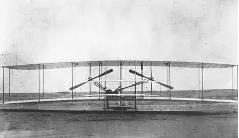
Brothers Orville and Wilbur Wright, American bicycle mechanics studying gliders, created the first ever plane called the Wright Flyer. On December 17th 1903 the first ever working flying machine took off in North Carolina. The flight lasted for 12 seconds and covered 37 metres on a windy beach but they had been successful. This was a massive development of technology. Humans had found a way to fly.
Development of Aeroplanes
The planes at the start of World War 1 were very simple, slow and fragile which was why they were only used as flying scouts. This meant they were generally only for reconnaissance, watching artillery fire or spotting movement from enemy troops.
Later in the war, they became more advanced and were used increasingly as bombers or early generation fighter planes. A notorious pilot was known as the Red Baron, a German flyer famous for air combat, who shot down over 80 aircraft. As time went on the fighting ceased but advancements in aeroplanes continued.
Between World War 1 and 2 major advancements changed these aircrafts from slow wooden machines to fast planes. In 1935, one of the most important passenger planes, the Douglas DC-3, was created. This was a very reliable plane that made air travel more practical and was a step closer to modern day planes. Another two very famous planes are the Supermarine Spitfire and the Hawker Hurricane, two fighter planes.
The First Jet-Powered Plane
In the early years, planes only used propellers as movement, but propellers had limits. Engineers were trying to make a faster plane.
The invention of the jet engine changed planes for ever. The jet engine was made before being incorporated into a plane. British engineer Frank Whittle was key in the invention. Even though it was an Allies invention the first operational jet plane was a German plane called the Heinkel He 178. The reason of this was that, independently, Germany had created an operational engine on their own.
A German company Heinkel created the first aircraft to be powered by a jet engine, the Heinkel He 178 which had its first flight in August 1939. Unfortunately, it’s speed was slow and it could only be in the air for a very short time...
Military Advancements of Plane
As planes advanced, the military saw that aircraft could be designed for specific jobs, planes were developed for different roles like a bomber would be bigger than a fighter because a bomber was designed to drop bombs when a fighter was designed for speed, dog fighting and overall air superiority.
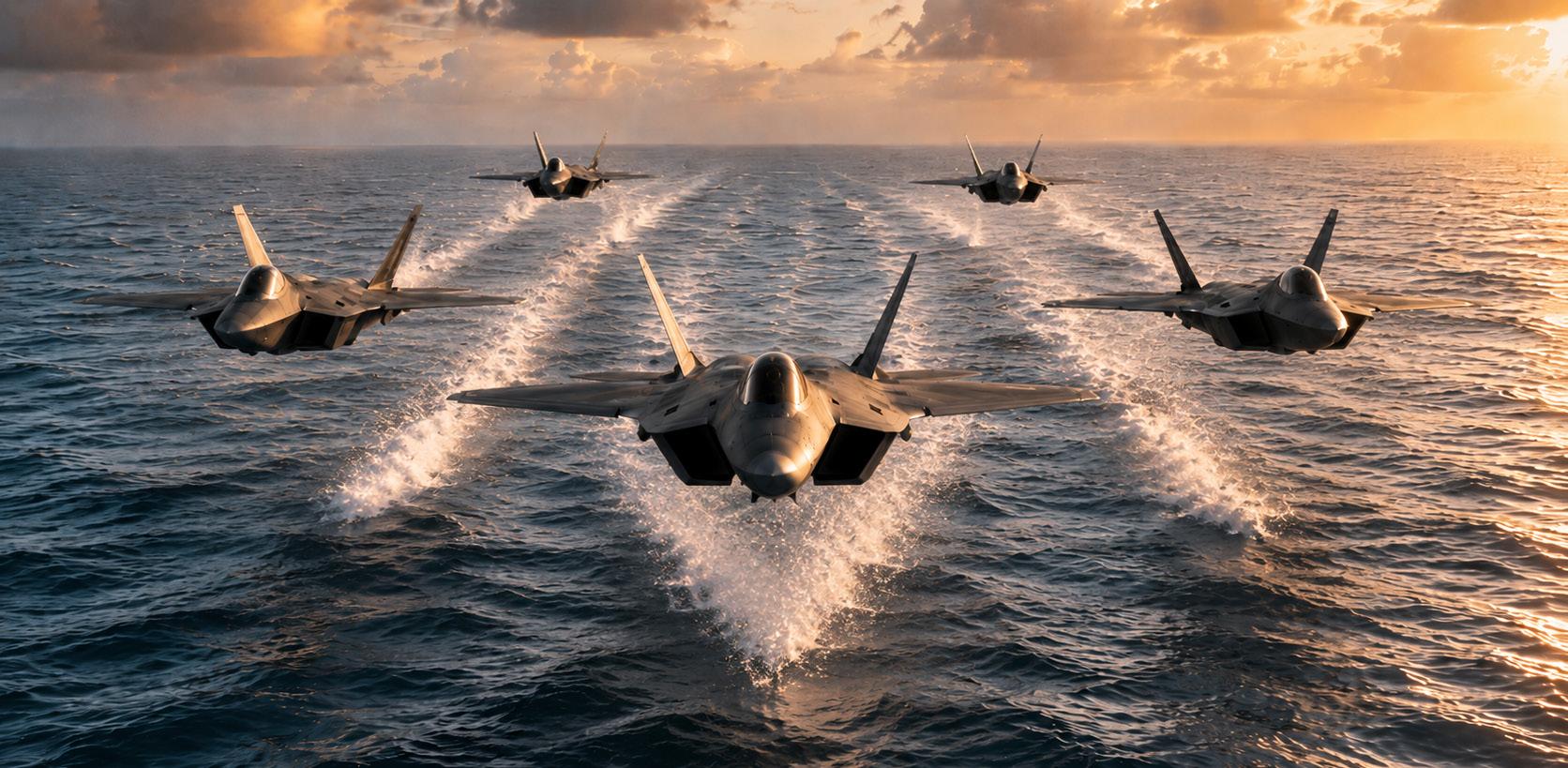
In American aircraft names they used letters to show the aircraft’s role. For example, B can stand for bomber, as in the B-2, and F can stand for fighter, as in the F-22. This shows how military aircraft became more specialised over time.
Adaptations of Planes
People have not just created planes they also have created variations of planes, like gliders that rely on hot air to blow them upwards, and passenger planes that are bigger and designed to carry people in comfortable conditions. Governments have also created bigger planes to carry cargo around the world. And finally, the helicopter; a smaller machine with 1 or 2 big rotors on top and intertwines more with the army than normal fighters.
*The above image has been generated by AI
Military Planes
Some famous planes include:
• The Spitfire a famous WW2 plane. It was crucial in times of WW2 and in the battle of Britain.
• The Typhoon one of great Britan’s most heavily used plane. It has larger engines designed for speed.
• F -22 a fifth-Generation stealth fighter jet, designed for air superiority and stealth. One of the world's more modern fifth generation planes.
• F- 35 multirole fighter designed to bomb and fight.
• Mig 31 one of the fastest fighter jets in the world.
Conclusion
As time has gone humans have gradually made more and more advancements into flying. There have been some good outcomes like tourism and cargo movement. But also some advancements that have a negative outcome, like planes designed to destroy. Planes have had major advancements from the Wright Flyer in 1903 to nowadays. They have become faster, stronger and more useful to society. Overall planes have gone from the wooden Wright flyer to the fastest ever flying machine flying at top speeds of 7,366 mph. I wonder what planes will be able to do next?
G
eT INVoLVED
Showcase your creativity by writing for The Rambling Rose!
Are you an artist? A writer? Someone with an opinion? Do you have a unique perspective? Have you got a passion you would like to tell others about? Perhaps you just want to flex your writing skills in preparation for a project, your EPQ, or to add to your CV.
We want to feature your work!
To contribute your work to the next issue of the Rambling Rose, please add your name to the club on SOCS in the new term. Alternatively, you can contact Mrs Lyons-White at plyonswhite@cliftonhigh.co.uk.
WOJTEK THE BEAR
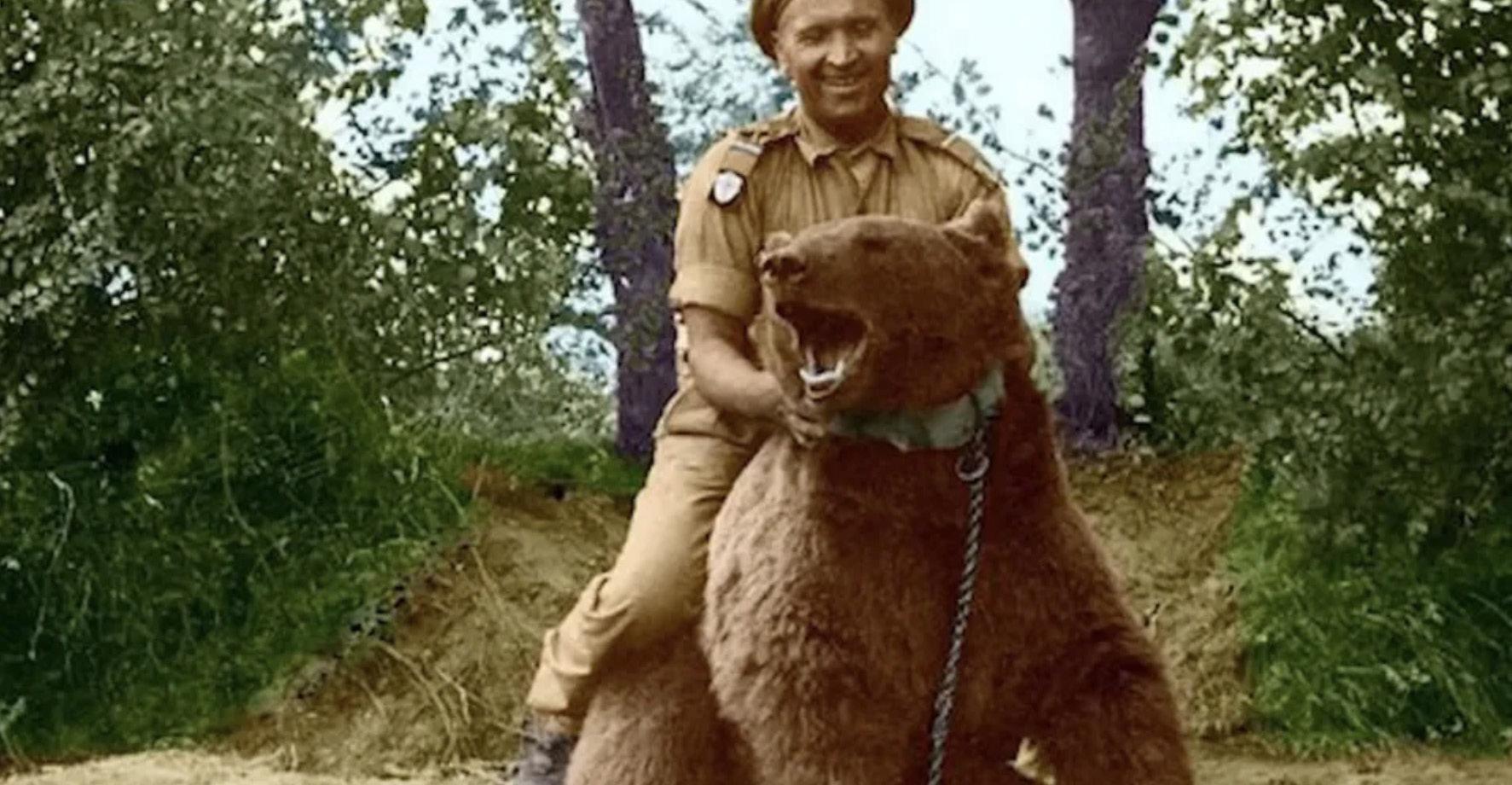
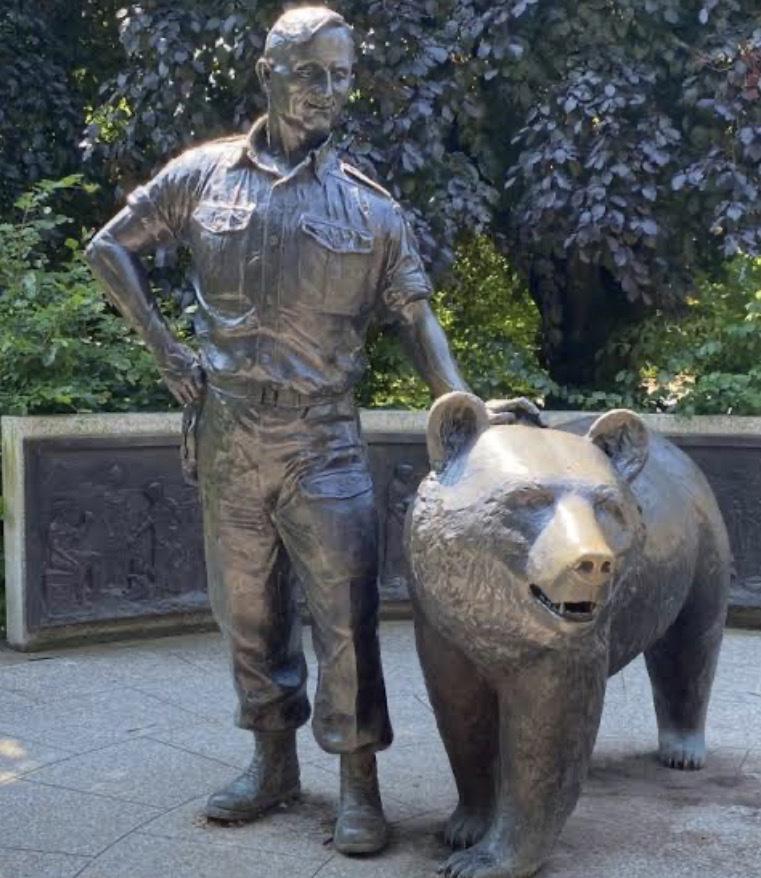
Wojtek was a Syrian brown bear that joined the Polish Army in many battles, including the Battle of Monte Cassino in 1944. He held the rank of Corporal and was a symbol of hope for the Polish.
Early life
Wojtek was born in 1942 in Hamadan. When he was a cub, he was orphaned because hunters had killed his mother. While the Second Polish Corps were travelling from a Soviet labour camp, they met an Iranian shepherd who took care of Wojtek. They traded a Swiss Army knife, canned beef and chocolate for Wojtek. He quickly became friendly with the Polish and enjoyed activities like wrestling and boxing.
Life in the Military
Wojtek joined the Polish army. He was enlisted into the army as a Private when a British transport ship rejected pets and animals. Doing this would make him an official soldier and would be allowed to go on the ship. As a Private, he was allowed a pay-book and allowed to sleep with the other soldiers in tents. He was a huge part of the Battle of Monte Cassino (next paragraph) in 1944 and carried ammunition. The army taught him things like saluting and marching. The soldiers fed him food like honey, beer and even cigarettes.
The Battle of Monte Cassino
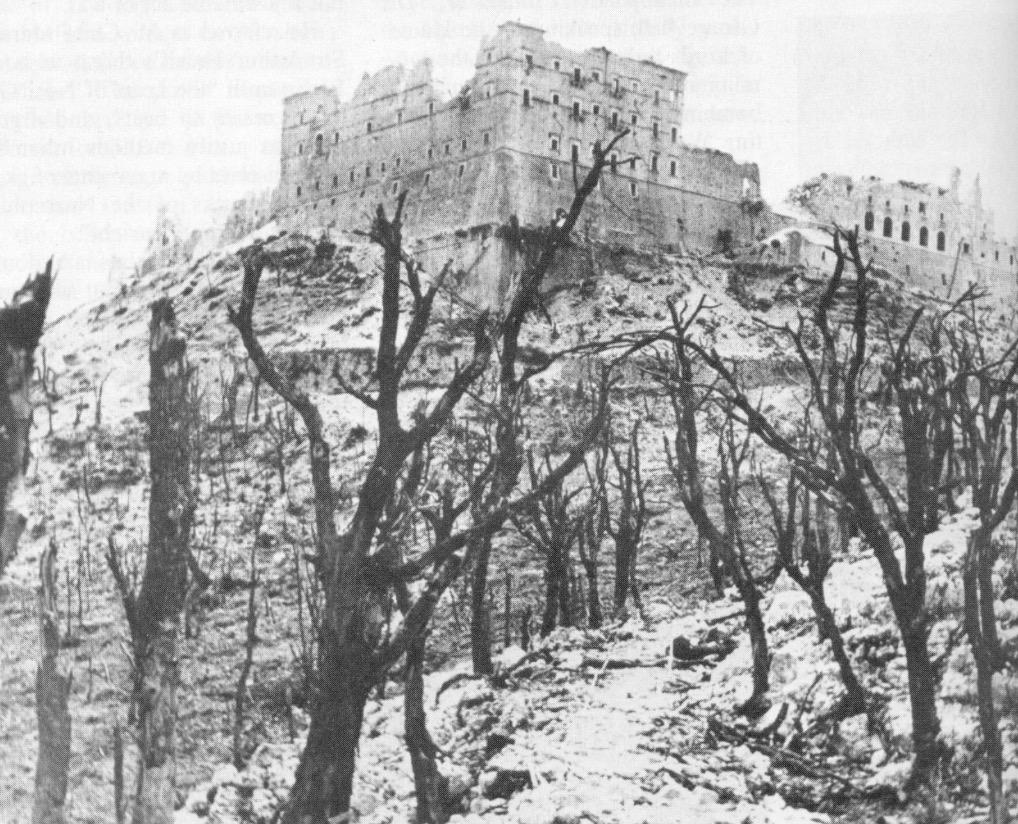
The Battle of Monte Cassino, also known as the Battle for Rome, were four military attacks by the Allies against the Axis forces in Italy while they had just started their war campaign. The goal was to break the 80mile network known as the “Winter Line”: this was the German and Italian forts. After breaking the line, they would try to get into Rome. Monte Cassino is a famous hilltop abbey founded in 529 by the Benedict of Nursia. On the 16th of May 1944, the Second Polish Corps launched one of the final assaults on the Gustav Line (the part of the Winter Line that occupied Monte Cassino), and eventually, the Polish flag was placed at the top of Monte Cassino.
After Military
After the Battle of Monte Cassino, Wojtek was promoted to Corporal. After World War Two, he left the army and joined the famous Edinburgh Zoo. Sadly, he died in 1963 in Edinburgh Zoo: his story is still famous. He travelled to many countries with the Polish, including Iraq, Syria, Palestine, Egypt, and Italy.
Impact
Wojtek had a significant impact for the Polish, and it added the bear to the list of the animals that fought in World War Two. This list includes dogs, cats, horses, and even pigeons and mice. All these animals had big roles to play in WW1 and WW2. Some had to send secret messages, and some had to be out on the front lines fighting.
The key parts of the Battle of Monte Cassino
On the 15th of February 1944, the Allies bombed the Abbey of Monte Cassino with 1,400 tonnes of explosives.
In May 1944, Operation Diadem took place. Lots of Moroccan and French troops broke the Gustav Line.
Finally, on May 18th, 1944, the Second Polish Corps (led by General Władysław Anders) planted the Polish flag on Monte Cassino hill.
Emily, Year 12
CAN MEDICAL INTERVENTIONS ALONE TREAT THE RISING RATES OF OBESITY?
In 2022, 12.5% of people worldwide were living with obesity (World Health Organisation, 2024). This is a figure which has more than doubled between 1990 and 2022 (World Health Organisation, 2024), showing the rapid increase in cases of obesity. In the UK, this figure is even higher as in 2022-2023, it was estimated that 26.2% of adults were living with obesity (Office for Health and Improvement Disparities, 2025).
The World Health Organisation (2024) states that “obesity is a chronic, relapsing disease arising from complex interactions between genetics, neurobiology, eating behaviours, access to healthy diet, market forces, and the broader environment”. This shows that obesity has multiple different causes and is not simply the result of an individual’s choices but is instead a result of a much wider set of influences.
To understand why the rates of obesity are increasing so rapidly it is important to look at the different causes of obesity.
Causes of obesity:
Obesity results from an imbalance between energy expenditure and energy intake.
This can be due to lifestyle factors such as food and drink consumption or physical inactivity. The increase in obesity rates could be due to an increase in portion size, increase in food prices and an increase in ultraprocessed food. It has also been estimated that the population of the UK is around 20% less active than in the 1960s (National Institute for Health and Care Excellence, 2025). Therefore, this shows that more calories are being consumed due to increased portion sizes, yet less energy is expended due to people generally being less active.
Genetics also play a role in obesity. The approximate heritability of obesity ranges from 40-70% (National Institute for Health and Care Excellence, 2025), showing the significant effect of genetics. This is because certain variations of genetics can influence the metabolism and therefore effects how the body processes nutrients. For example, the ‘ob’ gene controls the production of leptin in fat cells, and leptin is a hormone which signals to the brain that you are satiated. However some people have leptin resistance, which can lead to overeating and therefore increased total body mass.
There are also certain medical conditions that can lead to obesity such as Cushing’s syndrome, hypothyroidism or Prader-Willi syndrome, as well as certain medications such as steroids or beta-blockers.
Obesity management:
Obesity management has multiple components, and it is essential that it is tailored to meet individual needs.
One way that obesity can be managed is through behavioural interventions. This intervention is focused on modifying their diet and increasing physical activity through setting goals, teaching strategies and giving feedback or rewards for progress.
Another way is through low energy diets. This is where the diet consists of only 800-1200 calories per day. However, these are not suitable as a long-term strategy and should not last more than 12 weeks. It has benefits but also has many risks such as fatigue, hair loss or weight cycling, and weight regain is likely to happen.
Another way is using medications such as tirzepatide, commonly known as Mounjaro or Eli Lilly. It is recommended by NICE that Tirzepatide should be given alongside long-term diet and exercise support, showing that medications alone may not be the sole solution like they are often marketed to be.
Another way is surgical intervention – bariatric surgery. There are many types of bariatric surgery such as a sleeve gastrectomy (gastric sleeve) which removes about 75% of the stomach, therefore reducing food intake or a gastric band which is where an adjustable band is placed around the top section of the stomach which reduces the total volume of the stomach, so also reduces food intake. These can work however they come with serious risks which need to be considered, such as blood clots, wound infections or a stomach leak.
Therefore, there are multiple ways of managing obesity, however each one comes with risks. Therefore, it is essential that obesity is prevented rather than solely relying on treatments.
Preventing obesity:
To prevent obesity, people should be educated about things which may prevent them from losing weight such as underestimating how much food is consumed or using food as a reward. This will allow people to make healthier decisions from the beginning, which will help to prevent people from becoming obese.
Furthermore, people should not just be educated on ways to maintain a healthy weight, they should also be educated on the benefits of healthy behaviours as these benefits are not just limited to maintaining a healthy weight. They also can lower blood cholesterol, improve fitness and improve mental wellbeing. This will encourage people to continue with healthy behaviours even after they have lost weight which may help to prevent them from regaining weight as it will allow them to create healthy habits.
Education should start from when children are young, for example by encouraging children to be active at every opportunity and avoiding using food as a reward. This will allow children to create healthy habits from an early age.
However, all information that is shared needs to be clear, consistent and non-judgemental to avoid weight stigma.
Conclusion
This shows that whilst obesity is often portrayed as a simple problem that is down to the individual, in reality it is far more complex with many factors playing a role that makes maintaining a healthy weight challenging for many people. Although treatments are effective for individuals, they do not address the societal causes of obesity which are causing obesity rates to increase. Therefore, in order to reduce obesity rates, the focus needs to be on improving access to healthy food options, reducing the stigma around weight and educating young people about healthy habits. This shows that whilst medicine is essential for treating obesity, we cannot solely rely on medical interventions to treat the rising rates of obesity.
References:
Office for Health Improvement and Disparities. (2025). Obesity profile: Short statistical commentary, May 2025. GOV.UK. https:// www.gov.uk/government/statistics/obesity-profile-may-2025-update/obesity-profile-short-statistical-commentary-may-2025
World Health Organization. (2024). Obesity and overweight. https://www.who. int/news-room/fact-sheets/detail/obesity-and-overweight
NHS Digital. (2024). Health Survey for England 2024: Adults – overweight and obesity. https://digital.nhs.uk/dataand-information/publications/statistical/health-survey-for-england/2024/adults-overweight-and-obesity
National Institute for Health and Care Excellence. (2024). Overweight and obesity: Management (NICE guideline NG246). https://www.nice.org.uk/guidance/ng246/resources/overweight-and-obesity-management-pdf-66143959958725
National Institute for Health and Care Excellence. (2024). Preventing overweight, obesity and central adiposity (NG246). NICE. https://www.nice.org.uk/guidance/ng246/chapter/Preventing-overweight-obesity-and-central-adiposity
IS AI GOING TO MAKE DOCTORS REDUNDANT?
Most of us have reacted to a new ache, rash or other ailment by ‘Googling it’. This is usually a prelude to a visit to the doctor, often confirming the explanations proposed online. But would you be happy for all of your medical needs to be provided by a computer?
Medicine is fundamentally both a science and an art, grounded in the dynamics of the physician-patient relationship. At its core lies not only technical expertise but also empathy, contextual sensitivity, and the careful exercise of clinical judgement (Monajemi, 2025). Through attentive listening, physical examination, and interpretation of subtle verbal and non-verbal cues, clinicians integrate biomedical knowledge with an understanding of the patient’s lived experience to reach informed and compassionate decisions.
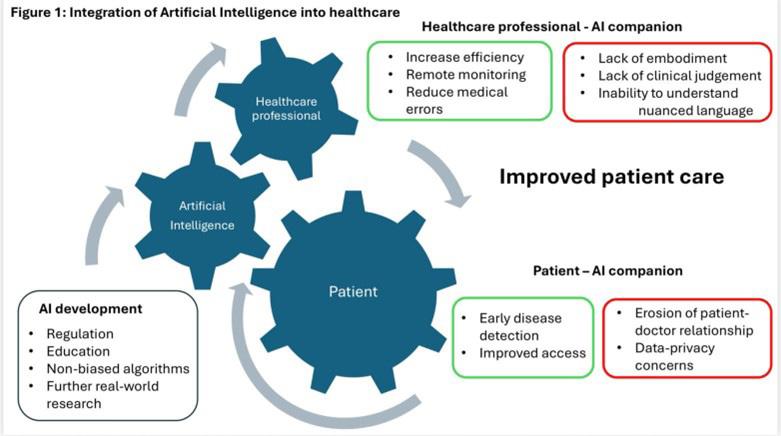
Artificial intelligence (AI) is increasingly positioned to completely transform healthcare, with the capacity to enhance diagnostic accuracy, streamline workflows, reduce medical errors, enhance efficiencies and expand access to care. Yet, alongside this potential, important limitations remain. This essay will examine three key constraints: AI’s lack of physical embodiment, its limited grasp of the nuances of everyday language and human context, and its inability to exercise genuine clinical judgement and reasoning. These limitations underscore the continuing indispensability of human clinicians in delivering holistic, patient-centred care. By critically evaluating both the constraints and capabilities of AI, the irreplaceable human elements of medical practice are highlighted, whilst also emphasising the domains in which AI can most effectively augment human expertise. This results in a narrative that moves away from replacement and redundancy, towards one of a technological-healthcare collaboration.
One major limitation of AI is its lack of physical embodiment (Fjelland, 2020), which prevents it from engaging in an authentic clinical encounter, the cornerstone of medical practice. During medical consultations, health care professionals (HCP) gather crucial information through non-verbal cues such as body language, facial expression, tone of voice, and even smell, each offering valuable insights into a patient’s condition and wellbeing. Although this interpretive process may appear straightforward, it uses a complex analytical process. A skilled physical examination allows the clinician to detect subtle signs, recognise important absent features, and assess qualities such as warmth, texture, and thickness, findings that can sometimes carry greater diagnostic significance than laboratory or imaging results. Whilst AI models can provide an empathetic and compassionate response to a question, the absence of physical presence also limits AI’s capacity to convey genuine empathy; an integral component of patient care.
A second limitation lies in AI’s difficulty interpreting the subtleties of everyday language (Fjelland, 2020; Hubert, 2001). At the beginning of a consultation, patients typically describe their symptoms, signs and concerns in their own words. Physicians must translate these descriptions into recognised medical terminology, often refining or filtering information through open and closed questioning. Although AI systems can process vast quantities of data, they struggle to fully grasp linguistic nuance, context, and the deeper meanings embedded in personal narratives. Factors such as family history, cultural background, and lived experience shape patients’ healthcare needs and autonomous choices. Understanding these influences requires empathy, contextual awareness, and professional judgement. In addition, emotional states such as anxiety can shape symptom perception, sometimes in the absence of identifiable pathology, another layer of complexity that AI may find difficult to interpret accurately.
A further significant limitation is AI’s inability to exercise clinical judgement and reasoning (Hubert, 2001). Sound medical decision-making depends heavily on contextual understanding. For instance, although a blood clot is typically treated with anticoagulation (blood thinning) therapy, this approach would be inappropriate if the patient is simultaneously experiencing active bleeding. Treatment decisions must therefore be individualised, taking into account the patient’s specific clinical circumstances at that moment. Our incomplete understanding of how the human brain integrates knowledge, context, and experience to produce clinical reasoning may partly explain why replicating such judgement in AI systems remains challenging (Sadegh-Zadeh, 1980).
Framing the AI-clinician relationship negatively may be counterproductive, however. A collaborative model, where AI enhances rather than replaces human ability, offers the greatest potential for improving patient care (Briganti, 2020). Used responsibly and by focusing on collaboration, AI presents an incredible opportunity to revolutionise healthcare by using it to help overcome current challenges, reduce medical errors and ultimately to improve patient health outcomes.
Given its lack of embodiment, AI performs particularly well in areas that do not require physical patient interaction, such as analysing medical images and laboratory data. For example, AI algorithms have demonstrated high accuracy in interpreting radiological images, in some cases outperforming human radiologists (Liu et al., 2019). A recent breast cancer screening study found that an AI platform called ‘Mia’ had the ability to increase detection by 10.4% (de Vries, 2026). AI is currently contributing to patient safety by analysing rule-based scenarios, such as identifying potential drug–drug interactions. As such AI is serving as a valuable safety net by alerting clinicians to increase risk of adverse outcomes if drug X and drug Y are prescribed together. Additionally, AI has the potential to streamline workflows and increase efficiency by automating many timeconsuming tasks for HCPs such as scheduling appointments and generating reports, freeing clinician time to focus more on direct patient care. For example, scientists at the University of the West of England in Bristol are developing AI technologies to help doctors record patient consultations to then
create notes and letters for clinicians to review and approve. This ambient voice technology has been found to save up to three minutes per session, allowing doctors more time to find the underlying cause of a patient's problems.
When examining the role of AI in medicine it is crucial to consider both sides of the clinician encounter. Research suggests that patients generally have a more favourable view of AI than physicians (Briganti, 2020). Emerging evidence suggests that 4 in 10 adults in the UK would be happy to use AI for counselling services and as a mental health support. AI as a patient companion may help support early disease detection and intervention, e.g. wearable devices may pick up a heart arrhythmia and alert them to seek medical attention. Furthermore, AI platforms incorporating telemedicine may increase access to health care services for those living in remote or underserved areas. AI also provides the opportunity for patients to remotely monitor their condition, e.g. through home performed lung function, allowing earlier detection and thus intervention before deterioration (Abdulnabi, 2017). Some physician concerns may be mitigated through improved education, including integration of AI literacy into medical curricula and through robust regulatory frameworks (Brouillette, 2019). Other concerns are more complex to address. Patients may use AI-generated information to question clinical advice more readily, potentially eroding the doctorpatient relationship and increasing health anxiety (Brown, 2020). Research from the Oxford Internet Institute has shown that some large language model
AI softwares currently provide inaccurate diagnoses and do not recognise when urgent help is required. Data ownership and privacy represent additional concerns, particularly as many AI systems are developed by private companies, making the protection of identifiable patient information essential (Williamson, 1996). Moreover, AI systems are only as reliable as the data on which they are trained; biased or incomplete datasets may result in inaccurate diagnoses or recommendations. The opaque nature of many algorithms further complicates matters, as difficulty explaining AI-generated decisions may undermine trust and slow adoption (Al-Antari, 2023). From an ethical perspective, incorporating AI into healthcare requires careful consideration and human oversight is required to ensure responsible use in the healthcare setting.
In conclusion, the idea that AI will make doctors redundant is misguided. Fundamental limitations, including the absence of physical embodiment, restricted comprehension of everyday language, and the inability to exercise judgment and clinical reasoning based on contextual information highlight the indispensable role of human clinicians. Rather than asking whether AI will replace doctors, the more constructive question is how to cultivate effective partnerships between clinicians and AI systems (Figure 1). AI has already shown promise in key areas, for example in supporting reductions in medical errors, early identification of disease through wearables and remote monitoring. Nonetheless, concerns surrounding data security, algorithmic bias, and the integrity of the doctor-patient relationship require careful consideration. With careful development and responsible implementation, AI has the potential to complement, rather than replace compassionate, humancentred medical care.
Charlie & Oliver B, Year 7
INTERVIEW WITH ANDY GYLES, OWNER OF GYLES BROTHERS
We are delighted to feature this interview with Andy Gyles, owner of Gyles Brothers, in The Rambling Rose. Gyles Brothers is a long-established, family-run business in Bristol, proudly serving the local community with high-quality sports equipment for everyone, from beginners to seasoned athletes. Located on Whiteladies Road, the shop has become a trusted destination for many of our pupils, offering expert advice, a wide range of sporting clothing and equipment, and specialist services including next-day racket restringing and grip replacement. With a long-standing reputation, it is a veteran store, and we are pleased to celebrate its strong connection to our school community.
Gyles Brothers Ltd
188 Whiteladies Road
Clifton, Bristol, BS8 2XU 0117 973 3143
Charlie & Oliver:
Hello.
Andy Gyles:
Good afternoon.
Charlie:
Once you get the right kind of size of equipment, does it build your confidence?
Andy Gyles:
Hopefully. But then once you've got the size, then it's a matter of you choosing the piece of equipment you like. Of course, you can figure out the size off the internet, and you can go buy the colour on the internet. But you can never get the feel off the internet, which will be very important. But I do always say to people, you know, don't go out with a yellow tennis racket if you don't like yellow.
Charlie:
What is your favourite sport?
Andy Gyles:
My favourite sport? Well, I've played a lot of sports and I still play a little bit of squash and racquetball, but I'm getting too old for it. Hockey, I gave up probably 15 years ago and cricket, you can always judge life by cricket. When you're single, you play Saturdays, Sundays, go to the nets, play for a midweek 20 overs side, great. Then you get married, Sundays gone. Then you have children, nets are gone. And then you're left with four overs on Wednesday evening, and then you might as well give up.
Oliver:
Why do you let people try the bats and hockey sticks in shop?
Andy Gyles:
Well, I mean, you've got to get a feel for something. So, the hockey stick in our lower display area, you can have a ball and fiddle around. It's not quite the same as Astro, it's a bit fast on carpet but, it gives you an idea. You can't do much about cricket — we haven't got a cricket net. Tennis rackets, we have a demo
system where you can take a demo racket away and try it properly.
Oliver:
Yes, my mum's done that.
Andy Gyles:
Yeah, that's the only sport we do a demo system with because it's hard work. But being able to feel the stick, bat, racket, hopefully makes a difference. Particularly hockey sticks you know, you go for a Y1LB70 and if you have a rack of five in it, every single one will feel slightly different. You can find the stick that feels right to you, which you can't do on the internet. So that hopefully makes a bit of a difference. It does to some, not to others.
Charlie:
What inspired you to make a sports shop?
Andy Gyles:
Well, I didn't, I'm the fourth generation.
Oliver: Wow.
Andy Gyles:
My great-grandfather started it in 1894.
Charlie:
So that's why it's called Gyles Brothers.
Andy Gyles:
Well, it was my grandfather who had the brother. So, it started in 1894 down in town where Broadmead is now, and that was all bombed in the war. Whiteladies Road started in 1906 — there were two brothers, one running the city centre, one running Blackboy Hill, from then until 1942-ish, when the whole centre was bombed and basically just flattened. And then we had just the one stall, so the brother that ran the original city centre stall went and became the publican of the Post Office Tavern in Westbury Village. My grandfather, luckily, carried on with the shop on Whiteladies Road. And then yeah, my father took it over and then me. Neither my son nor daughter are interested in doing it. They're both doing other things, so it could be the end of the line.
Mrs Lyons-White:
What's going to happen?
Andy Gyles:
Well, I don't know. I'm 65, as you know, on Friday, so I've got a couple more years left, and then we'll see.
Andy Gyles:
It is important that we stock the right stuff. Unfortunately, because I'm not playing many sports, I discovered Y1 was the trendy brand in hockey five years ago and we stocked it straight away. But I'm not on the pitch anymore to find out what the latest brands are, which can make life a bit more difficult. I do hear it through the grapevine a bit. But it's important as the shop has to keep up with the latest products and what we should be stocking — compete with the internet, basically.
Charlie:
Do you think the internet is your biggest rival?
Andy Gyles:
It's our biggest rival. Sports Direct isn't because they all do cheap stuff. I always say that Sports Direct is good for us, because you think “I might want to try the sport”, and you try it with something cheap bought from Sports Direct. And then you think, “I'm really enjoying the sport but this isn't good enough”, and then hopefully you come to me and buy a proper piece of equipment for the sport they've chosen.
Oliver:
Yes, because I got my cricket stuff, I got like some pads and stuff from Sports Direct, but then we we wanted a proper bat, so we came to you and they were just really helpful. I think one of my earlier hockey sticks and a few other things also came from Gyles.
Charlie:
How long do you work at the shop?
Andy Gyles:
Too much time; most of my time I’m upstairs in the office. There's always two members of staff on the shop floor. I might cover lunches, so there's a chance I'm downstairs for an hour or so — and sometimes when there's a lack of staff out downstairs. But it's always all the financial back-office work I've got to do. I also do all the ordering and deal with any problems.
Charlie:
Does every day bring something new?
Andy Gyles:
It's always different problems. I mean, the buck really stops with me, so any difficulties, I get call down. The biggest nightmare is complaints. We do our best to help a customer with any problems, but equally we get people bringing in stuff that has come to the end of its life. You should just get used to the fact it's time to replace it. A person came in this morning with a pair of shoes she'd been running in for a year. You shouldn’t bring this back under complaint — you should be replacing it anyway.
Charlie & Oliver:
Thanks for your time.
Andy Gyles:
You’re welcome.
GeT INVoLVED
We Want to Hear From You!
Do you have thoughts or opinions on the topics covered in this edition of The Rambling Rose? We invite you to share your views with us!
Submit your 'Readers' Letters' to marketing@cliftonhigh.co.uk.
Selected letters will be featured in our upcoming editions. We look forward to hearing from you and sparking engaging discussions within our School community!
LoCAL buSINeSs dIRECtoRy
COMING SOON
We’re creating a handy directory of trusted businesses and services within our school community and local area.
If you’re a parent or family member who runs a business, offers a trade, or provides a service, we’d love for you to be part of it. From home improvements and professional services to creative businesses and everyday essentials, this is a great opportunity to showcase what you do while supporting our school at the same time.
For a small advertising fee, your business can be featured in our magazine and introduced to families who value recommendations from people they know.
Your listing will include your business name, a brief description and your contact details and will look like this:
Bristol-based specialist delivering high-quality renovations with over 30 years’ experience and reliable, professional service.
Tel: 07796956557
For £30 per year, your business will be featured in each issue of the magazine, which is published once per term in both print and online formats and promoted on social media to an engaged audience of up to 1,000 readers each term.
We’re looking for a wide range of businesses, including:
For more details or to book your place, please email marketing@cliftonhigh.co.uk.
We also welcome recommendations from parents for other local businessesthey trust.