
CLC CONNECTS
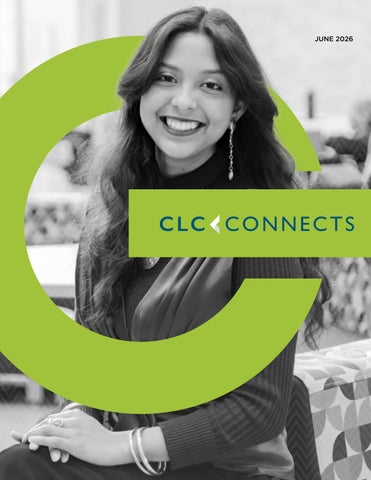
COVER: Dedicated student trustee Andrea Gomez served in many capacities, including as an intern for a state representative, where she developed a passion to advocate for community college students across Illinois. Gomez plans to continue studying political science at Lake Forest College and become a lawyer.


Growing forward with community support

Excitement is blooming for this fall’s grand opening of the Urban Farm Center at the Lakeshore Campus in downtown Waukegan. The Urban Farm Center is an innovative, multi-use facility designed to integrate education, workforce training, food production and entrepreneurship into a single hub that supports regional economic development.
The Urban Farm Center will serve as a hands-on training environment, equipping students and community members with skills in indoor urban agriculture, food safety and supply chain management. This integration expands CLC’s ability to deliver workforce training, support small business development and strengthen the regional food system. It also will be a space for the community to purchase locally grown produce, learn more about food production and gather in a vibrant space.
Since 2020, more than 500 community members have engaged around program and facility design and awareness. More than $15 million in private and public funds were raised to support the $21.25 million project, reaching the philanthropic goal set for the CLC Foundation’s first-ever capital campaign.
The $1.25 million from the Illinois Department of Agriculture Resilient Food System Infrastructure Grant rounded out the collective efforts that engaged individual and corporate donors, family foundations, regional nonprofits and the college in achieving this significant investment.
CLC is proud to introduce the Urban Farm Center to the community this fall. All are welcome to attend.
Grand Opening Celebration
Saturday, Oct. 17, 2-6 p.m.
Lakeshore Campus, 34 N. Sheridan Road
Waukegan

The 24,000-square-foot facility will feature:
• A year-round indoor growing space for hydroponic vertical farming, greenhouse growing and mushroom production
• A shared-use space for food businesses, culinary education and farm-to-table meal preparation for the community
• A retail marketplace and café for locally grown and prepared foods

SUPPORT FROM THE DONORS
Adeline “Addie” Morrison, a significant supporter of the Urban Farm Center, has described the initiative as creating “joyful impact” for Lake County and “at its very core, the Urban Farm is a powerful expression of community.” Through the Urban Farm Center, that vision will come to life by connecting students, growers, entrepreneurs and partners to expand access to fresh food, strengthen the local food system and create new educational and economic opportunities.
Joel M. Friedman, Alvin H. Baum Family Fund president, said, “The Alvin H. Baum Family Fund is happy to support the Urban Farm Center at the College of Lake County because it will be an innovative space to foster collaboration between community organizations across Lake County, while showcasing and training the next generation of growers on sustainable agriculture practices, and at the same it will play a significant role in revitalizing downtown Waukegan. We are thrilled to be foundational supporters of this gathering place for food, wellness and workforce development.”
Another big urban farm supporter, Holly Kerr, CLC Foundation board member emeritus, added, “For many years I have been a great believer in the value of urban farms. They provide needed fresh food to populations that often have little access to fresh produce. The Urban Farm will not only do those things, but, as an educational institution, will train students to be a part of this exciting growth opportunity. I am personally thrilled with the way in which the farm will provide many needed health-related services to Waukegan, along with new employment opportunities.”
Watch a timelapse video of the Urban Farm Center under construction
Recognition rooted in results
Rooted in its 2030 strategic plan that focuses on student access and success, community vibrancy and being a future-ready organization, CLC takes a data-driven approach when determining its success markers. This focus has led to national and regional recognition.
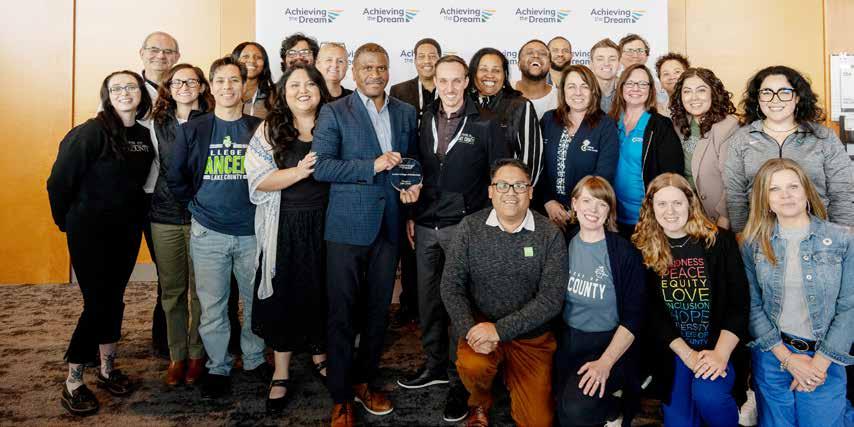
CLC was recertified in February by Achieving the Dream (ATD) as a Leader College of Distinction. The ATD Network is made up of more than 300 colleges committed to supporting student success at their institutions and promoting economic vitality throughout their communities. The Leader College of Distinction recognizes institutions that have demonstrated sustained excellence in advancing student success outcomes over time. CLC has been a member of the ATD Network since 2019 and has held Leader College status since 2023, and Leader College of Distinction since 2025.
“Being reaffirmed as a Leader College of Distinction reflects CLC’s sustained measurable gains in student success outcomes,” said CLC Vice President for Strategic Advancement Dr. Derrick Harden. “This recognition demonstrates that the College’s data-informed strategies and student-centered efforts are working. More importantly, it represents the unwavering commitment of faculty and staff to meet students where they are and get them where they want to go.”


In 2025, the Aspen Institute named CLC as one of the 200 institutions eligible to compete for the $1 million Aspen Prize for Community College Excellence. Institutions were selected based on their student outcomes data, including retention, completion, transfer and bachelor’s attainment rates.
At the regional level, CLC was honored at Lake County Partners’ Big Event in April. CLC received the Talent Advancement Award for shaping the future of the Lake County region through innovative programs, strong partnerships with employers and a deep understanding of workforce needs, creating clear, accessible pathways from education to career. CLC was recognized for its commitment to collaborate and focus on outcomes and for being an indispensable partner in the shared work to grow and sustain a competitive regional economy.
CLC delivers value to the Lake County community by anchoring to its mission to be a comprehensive community college committed to equitable high-quality education, cultural enrichment and partnerships to advance the diverse communities it serves.

Meaningful Stepping Stone Before Transfer
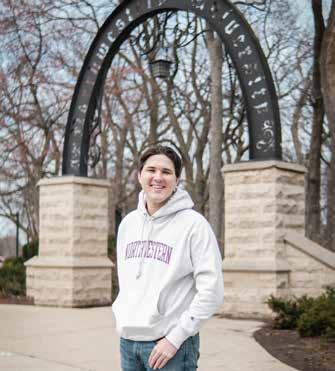
Eric Polanski cast a wide net in high school, applying to more than a dozen colleges as he searched for the best opportunity. His decision to attend CLC came down to getting the best return on his investment.
“For me, it was all about the location and affordability,” Polanski said. “CLC is close to home, had the lowest cost of attendance and had great resources available to me.”
Polanski came to CLC interested in studying business but switched to computer science after his time as a student worker with public relations and marketing. He did coding work on the website, which tapped into
his interest in computers, and the experience clarified computer science as a career choice.
While at CLC, Polanski planned to transfer to a fouryear college or university after two years at CLC. When he started researching opportunities, Northwestern University rose to the top of the list. Along with having a prestigious computer science program, Northwestern is, like CLC, close by, so Polanski could continue living at home. When he visited the campus, the community felt natural and right for him.
Transferring was a big shift, but Polanski felt like CLC made him ready for the opportunity.
“I felt very prepared for the academic load,” he said. “Some CLC classes were actually harder than some of the classes I took at Northwestern.”
Northwestern was not a school Polanski anticipated being an option. He credits his time at CLC for building his resume. At CLC, Polanski was Student Government Association president, founder of the chess club, and an active member of numerous other extracurriculars.
Polanski is a proud graduate of Northwestern University.
$6 Million Gift Expands Opportunity and Student Success
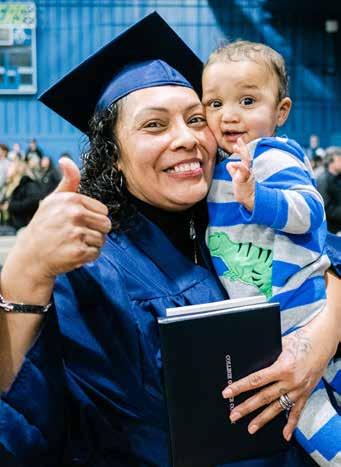
For many community college students, the path to a degree is not defined by ability or ambition—it is defined by affordability. A modest financial gap can become an insurmountable barrier, forcing students to choose between staying enrolled and stepping away from the future they are working so hard to build.
Students balance jobs, family responsibilities, housing costs, and transportation challenges while pursuing their education. For these students, even a few hundred dollars can determine whether they cross the finish line or pause their dreams indefinitely.
Federal and state funding and financial aid remain critical, but philanthropy plays a uniquely powerful role: it moves swiftly, meets students where they are and removes obstacles before they derail progress. Philanthropic investment makes the difference between potential unrealized and promise fulfilled.
That belief is at the heart of a transformational commitment from Schreiber Philanthropy, whose extraordinary investment is strengthening student persistence and academic attainment. Last December,
Schreiber Philanthropy committed $6.065 million to the CLC Foundation, the largest single philanthropic gift in the college’s history. More than a milestone, this commitment represents confidence in the institution, its students and the power of education to transform lives and communities.
While historic in scale, the investment is grounded in purpose: to eliminate the financial barriers that too often stand between students and their degrees, empowering them to focus on learning, complete their education and pursue meaningful careers.
“Community colleges are opportunity factories for students and their families,” said Bethany Williams, portfolio manager with Schreiber Philanthropy. “We’re proud to help put a CLC education within reach for many, but there are even more students who need support. Our hope is that donors of all sizes will recognize the multiplying power of a pooled endowment scholarship and invest alongside us in these students.”
Schreiber Philanthropy has been a valued CLC partner for years, supporting initiatives that expand access, workforce readiness and economic mobility. That partnership has deepened through conversations centered on opportunity—how community colleges serve as engines of growth for individuals, families and the region they call home.
This new commitment marks the next chapter of that partnership, dramatically expanding the resources available to students and setting a bold example for what is possible through philanthropic leadership.
“This investment reflects our shared belief that education transforms lives,” said Leigh Ann Jacobson, CFRE, executive director of the College of Lake County Foundation. “Support of this magnitude allows the college and the Foundation to strengthen programs that help students persist, graduate and build better futures.”
To respond to this need, at the heart of the Schreiber Philanthropy investment is a pooled scholarship endowment designed to provide sustainable, long-term support to students facing financial barriers that threaten their progress. Endowment funds are invested to generate annual scholarship support in perpetuity. Each year, a portion of investment earnings is awarded directly to students while the principal remains invested, creating a lasting source of opportunity for generations to come. The Schreiber Philanthropy grant will support about 60 students to graduate debt-free per year in perpetuity. The balance of the grant will fund wraparound resources for students so they can focus on learning, persist through challenges, and complete their educational goals.
Importantly, the Schreiber endowment gift was designed to be a catalyst for collective impact. It invites additional donors to invest alongside
Schreiber Philanthropy, amplifying its reach and extending its life-changing support to even more students over time.
While Schreiber Philanthropy launched the endowment with a transformational lead investment, their vision extends further: to inspire individuals, families and organizations to join in building a permanent foundation of student support.
“When donors invest in students, they invest in possibility. Through a pooled endowment, that possibility becomes permanent and invites our community to invest together in a future where access to education endures for generations,” Leigh Ann Jacobson added.

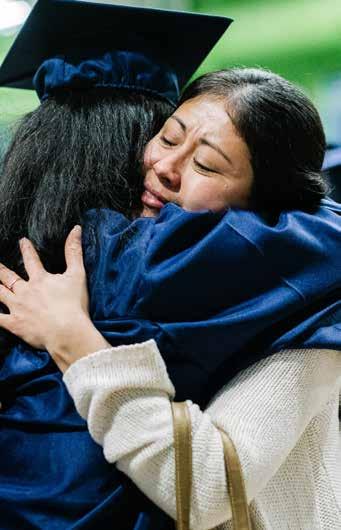
Together, contributors to the endowed scholarships help ensure that financial hardship does not interrupt education—and that determination, not circumstance, defines a student’s future.
For Schreiber Philanthropy, this investment reflects a deep belief in education as a force for transformation. For the CLC Foundation, it represents a powerful step forward in expanding access, advancing equity, and strengthening the region through student success.
The CLC Foundation invites the broader community to be part of this impact. By investing in endowed scholarships, donors can help remove barriers, open doors, and ensure that students have the support they need to persist, graduate, and thrive.
To learn about joining the pooled endowment fund launched by Schreiber Philanthropy and getting more students to a debt-free associates degree, contact the CLC Foundation at foundation@clcillinois.edu or (847) 543-2091.
The Impact of Scholarships
• 77% of CLC Foundation scholarship recipients graduate or transfer, compared to 51% of CLC student peers who do not receive scholarship support.
• Estimated 60 students per year could graduate debtfree through the Schreiber Philanthropy grant.
• Approximately 450 students experience unmet financial gaps each year, specifically related to tuition, fees and books. The average financial gap is $1,082 for direct educational costs.

Out-of-the-park upgrade
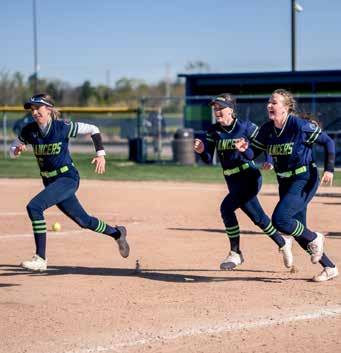
A new sense of energy is arriving at the Grayslake Campus as construction begins on a dedicated sports complex along Washington Street. While the project includes a new roundabout to make the campus entrance safer and more accessible, the heart of the work is focused on creating a high-quality environment for student athletes.
Set to open for the spring 2027 season, the new baseball and softball facilities are designed to better support the daily lives of student athletes. For the broader campus community, the addition of expanded seating—including a unique rooftop view—will make it easier for Lancer fans to come together and cheer on their peers.

“The main reason for this project is to elevate student-athlete experience and create a true home for our baseball and softball program,” Athletic Director Brad Unger said. “This will be the first time having designated spaces for those programs, with locker rooms and team areas. This is the first phase in improving our outdoor facilities for our athletics programs.”
New fields and sports facilities play a big role in recruiting college athletes at all levels. Not only

do athletes enjoy playing on modernized fields and courts, but the up-to-date, high-quality facilities represent a commitment to student athletes and the athletics program.
“This complex is about visibility and first impressions,” Unger said. “Located at the main entrance, it immediately reflects the college’s investment in students and will have the wow factor that creates a sense of pride for both student athletes and the broader campus community.”
Emma Andrews, a first-year softball player from Grayslake, says there is a lot of excitement from the players about the improved quality the new complex will bring to the team’s experience.
The improvement she looks forward to most is that the locker rooms will be located close to the field. She agrees that the fields will have a big impact on recruiting.
“It’s going to really catch people’s eyes and grab attention,” Andrews said. “It’ll be big for recruiting.

A nice, new, clean complex gives everyone a better feeling on game day.”
For first-year baseball player Javier Rolon of Round Lake Beach, the new field at the sports complex will improve the players’ gameday experience.
“The new field will make me a better player and us a better team,” Rolon said.
Rolon also appreciates the college’s investment in athletics, which is a crucial part of student life.
For Lancer fans who attend the games, the sports complex will have bleachers, including rooftop seating with a capacity of 400, and public restrooms. The Lancer student athletes look forward to welcoming the teams in the Illinois Skyway Collegiate Conference and the fans who will cheer them on starting in spring 2027.
The Architecture of Belonging: A
Conversation with Dra. Tricia Rosado
For Dean of Southlake Campus Doctora Tricia Rosado, leadership at Southlake Campus isn’t just about academics: it’s about ensuring each student feels “at home” before even stepping into a classroom. As a first-generation college graduate and one of the fewer than �% of Latinas who hold a doctorate, Rosado is driven by a deeply personal mission.
“College of Lake County is a place where you can be your authentic self.”
Q.
How do you personally define ‘belonging’ at Southlake, and how does that shape your leadership?
A.
Belonging has evolved from “academic match” to “cultural fit.” It’s not only about navigating barriers; it’s about an institution that affirms a student’s lived experience. My leadership is driven by my own journey. As a first-generation commuter student, I often felt the campus “wasn’t for me.” Now, I ensure our students see themselves represented in our staff and programs. We meet students where they are, whether that’s providing professional translation to ensuring everyone can be addressed in their language of choice or recognizing that a family’s absence from a campus tour doesn’t mean a lack of support.
Q.
Belonging often happens in the ‘in-between’ moments. What spaces act as catalysts for connection?
A.
Our College and Career Navigators are the first point of belonging. They represent the communities they serve, helping students demystify the system. Physically, expanding El Centro (a gathering place and resource designed with Latinx students in mind that is housed at the Grayslake Campus) to Southlake will provide a dedicated space for connection. We also host events at night specifically for our students who take classes in the evenings, ensuring that those with 9-to-5 responsibilities aren’t excluded from the “college experience.”
Q.
What role do community partnerships play in connecting education to the wider world?
A.
We serve a vibrant spectrum, from English-language learners to Polish and Ukrainian populations. Our partnerships create a community vibrancy where commonalities transcend differences. By welcoming students into programs that stem from CLC’s Community and Workforce Partnerships unit or by providing family care, we demonstrate that CLC is a safe place that can be easily integrated into their daily lives.
Q.
What is the most rewarding part of seeing a student transition from ‘just attending’ to ‘truly belonging’?
A.
Seeing students realize that their culture is an asset that is authentically welcomed, rather than a deficit, is an exciting moment. When a student stops rushing to their car and starts engaging with the scavenger hunts or classroom visits, CLC becomes familiar and a place they want to be. Watching them own their authentic selves is the ultimate success.
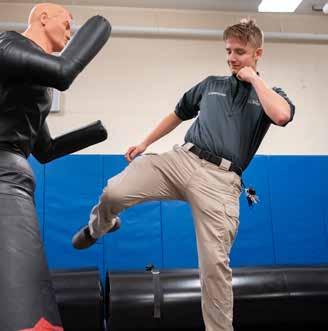
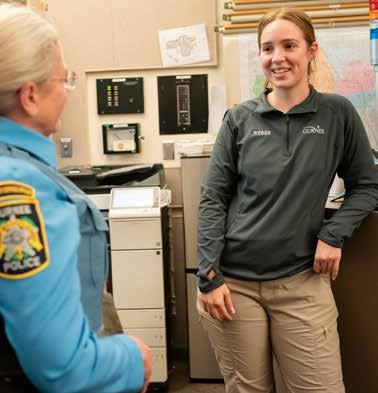
While most criminal justice students learn policing in a classroom, some College of Lake County students are already on the job and on the clock flying drones for a local police department. Through a partnership with the Gurnee Police Department, students can earn an employer-paid criminal justice degree while gaining hands-on experience in law enforcement.
Matthew Steinbrecher, 20, of Grayslake, always imagined himself with a career in the military or law enforcement. Thanks to CLC and the Gurnee Police Department’s initiative, Steinbrecher’s dream is on the fast-track to reality.
Criminal Justice Apprenticeship Allows Students to Learn and Earn

While juggling a full-time retail job, keeping his grades up at CLC, staying connected with family and friends and playing guitar in a band, Steinbrecher saw an ad for a law enforcement apprenticeship program offered through CLC and the Gurnee Police Department. It seemed like the perfect opportunity.
“There were 90 other applicants,” Steinbrecher said. “I never expected to get it. But then I got the call.”
Tiffany Rodriguez, 19, was attending the Lake County Tech Campus while in high school when she learned about the apprenticeship program. Her interest in criminal justice was inspired by local professionals in the field.
Her mother, Esperanza Rodriguez, from Round Lake, is thrilled her daughter is on this path.
“I believe she has received an amazing opportunity for her future, education and career, and I am happy that she is able to be fully supported by her school and job as she works for something she enjoys doing,” she said.
PAID TO LEARN WHILE SERVING COMMUNITY
Steinbrecher and Rodriguez are two of seven students accepted into the program’s first term. Students are able to earn their associate degree in criminal justice and enter directly into the police academy when they turn 21.
Gurnee Police and the entire community. Engaging apprentices through CLC’s program helps Gurnee Police reduce turnover costs, retain employees and invest in local students who already care for the community they’ll be protecting.
“They have eliminated the need for a front desk officer as our dispatch center consolidated. This task would tie up an officer for a whole shift and allow our officers to respond to calls for service instead of doing administrative tasks the apprentices have taken on,” said Detective Tyler Schutt.
“At a time when police departments nationwide are struggling to find qualified applicants, our apprenticeship program helps Gurnee build a reliable local pipeline of future officers,” said CLC Criminal Justice Department Chair Chris Utecht. “The apprenticeship also gives young people a clear path into the profession, allowing them to earn a paycheck, gain real experience and take college classes all at the same time.”
The on-the-job training includes ride-alongs, answering non-emergency calls and operating the department’s state-of-the-art drone, as well as engaging with the public at events. The collaboration benefits students,
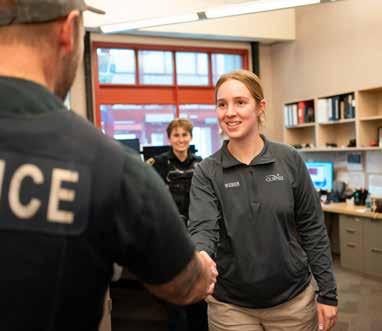
“From being role players, to jumping in and training with our officers, they have also been able to provide more realistic experience for our officers.”
Rodriguez said she enjoys engaging with the public when they come in for help. Even though she is not a police officer yet, she feels valuable to the force.
Gurnee Police Chief Jeremy Gaughan said, “By investing in apprentices early, supporting their education and giving them the opportunity to learn across multiple police divisions, we’re building a true career pipeline for
the Gurnee Police Department. It allows us to grow our own future officers, while giving young people a clear, structured pathway into a profession dedicated to service, accountability and community trust.”
SUPPORTED IN A NEW PATH
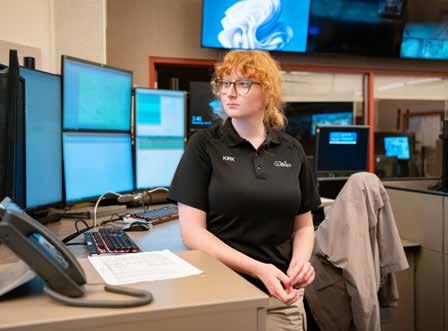
Mylah Kirk, 18, began taking classes at the Tech Campus when she was a junior in high school. She initially wanted to become a medical examiner, but the idea of another decade-plus of school was not appealing. Kirk learns best by being hands-on, so applying for an apprenticeship designed for students to learn by doing was a good fit. She also was inspired by
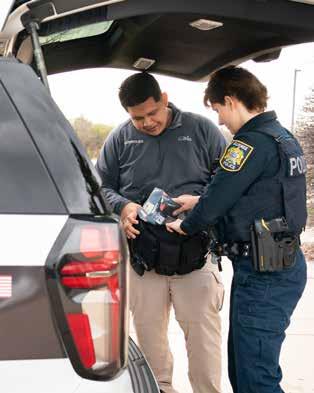
her CLC instructors to pursue policing. Kirk explains how her instructors have changed her life:
“The way they talk about helping people is inspiring. It was cool to hear it from a female officer, too. I’m enjoying the program itself. Every aspect of it is amazing. The pay is great. Even though there’s a large age gap with the other officers, we all get along so well. They immediately welcomed us. It’s really opened my eyes to what police officers do.”
Her mother, Wendy Kirk, was nervous about the potential danger her daughter might face in this program, but the Gurnee Police representatives put her concerns at ease during an orientation for the program. It also helped that she already felt confident with her daughter’s experience on the CLC campus.
“Mylah loved the Tech Campus more than her own high school. She was more connected, more engaged and more challenged. The opportunities there are so


huge,” Kirk said, adding that she’s impressed with the new program. “It’s an incredible opportunity for these kids. They’ll graduate with a degree and no college debt, plus an income and benefits.”
FOCUSED ON THE FUTURE
While the job is demanding, Steinbrecher enjoys showing up each day and learning new things. He’s even found a niche inside the department as the go-to social media content creator. His goal is to stay with the department and eventually join the Northern Illinois Police Alarm System (NIPAS). He feels confident he’s on the right path to get there and so do his parents, Douglas and Laura Steinbrecher. They are impressed with the growth and maturity he has demonstrated since participating in the program.
For Kirk, a newfound sense of purpose is front and center.
“As soon as I joined the law enforcement apprenticeship, I knew it was right for me. This is where I’m meant to be,” she says. “This is what I’m hoping to enjoy doing for the rest of my life.”
From Classroom to Career
Launched in Fall 2020, the CLC Apprenticeship Program has grown to include more than 140 participants, with 19 employer partners and 73 active apprentices. An impressive 87 percent of apprentices complete the program with a certificate or associate degree, says CLC Apprenticeship Manager Dan Ortego.
The criminal justice program is the newest addition, with the Gurnee Police Department serving as the first participating agency. Gurnee is among only a few police departments in the country that offers a formal apprenticeship model, providing a unique pathway into the profession. Through the program, apprentices are hired as full-time employees while their employer covers the cost of their education at CLC.
This partnership removes financial barriers and creates a direct, supported route from the classroom to a career in public service for students.
Learn more about apprenticeship programs online.
C elebrating Faculty

OUTSTANDING FULL-TIME FACULTY
AWARD RECIPIENT
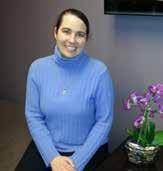
DR. JOANA PABEDINSKAS
Health & Wellness Promotion, Kinesiology & Massage Therapy
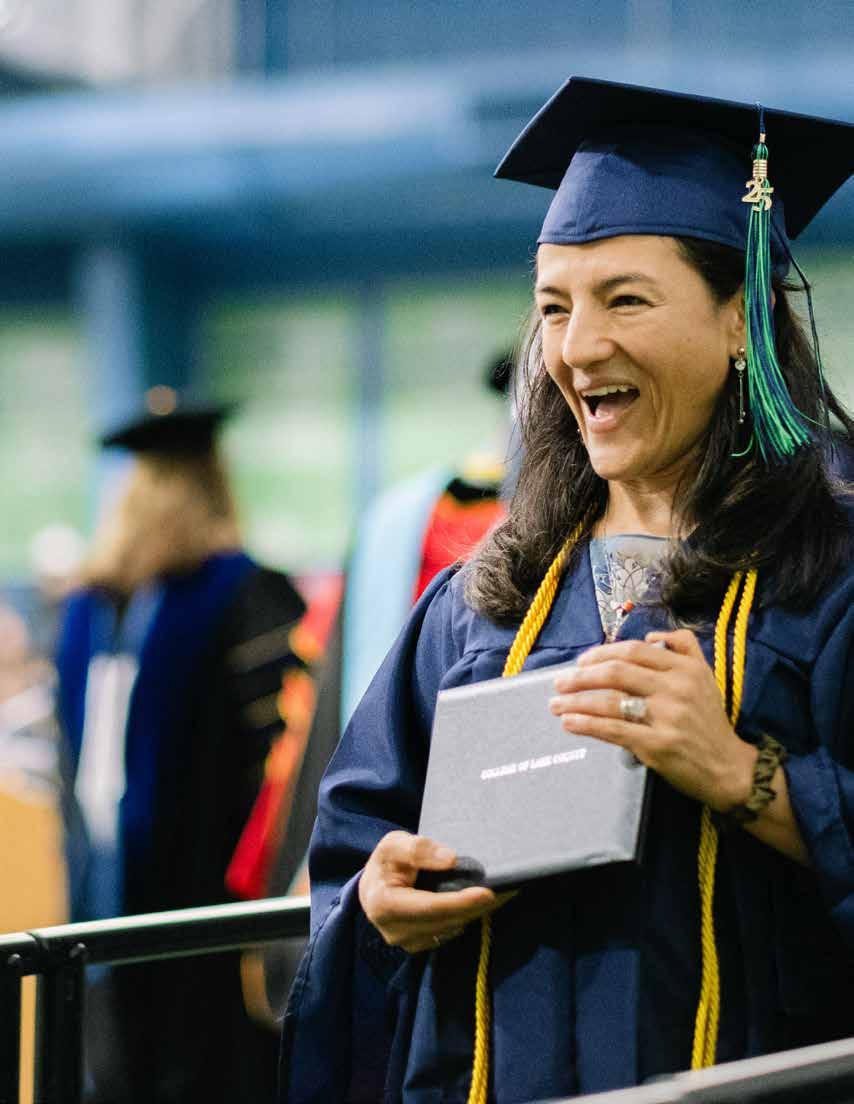
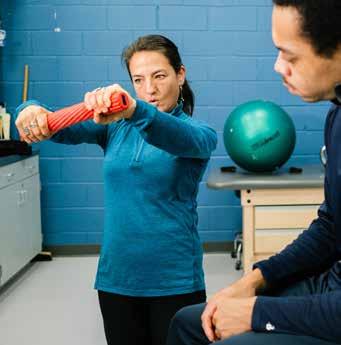
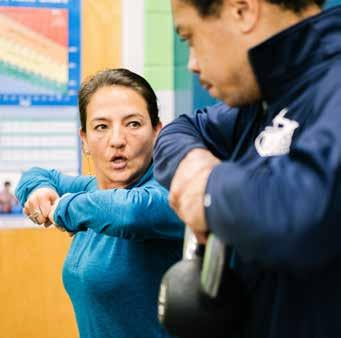
With 29 years teaching in higher education, including 13 at CLC, Joana Pabedinskas brings a deep commitment to student success and a passion for teaching. She describes receiving the award as incredibly meaningful and humbling, reflecting her dedication to her students. Known for her learner-centered and versatile teaching style, Pabedinskas values building strong connections through advising, office hours and classroom experiences.
“I am here first and foremost for our students,” she said, emphasizing her role not only as an instructor but also as a mentor guiding students along their academic and career journeys. “I am committed to seeing each student succeed in what they are most passionate about.”
Selected by student leaders for their lasting impact in the classroom and beyond, this year’s Outstanding Faculty Award recipients exemplify the very best of teaching and learning at the College of Lake County. Join us in celebrating Joana Pabedinskas and Carlotta Conley for their dedication to student success and excellence in education. These faculty members will represent CLC in a statewide competition sponsored by the Illinois Community College Trustees Association and take the stage as featured speakers at the college’s commencement ceremonies in May and December 2026.

OUTSTANDING
ADJUNCT FACULTY
AWARD RECIPIENT
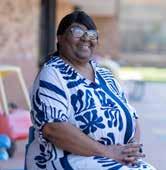
DR. CARLOTTA CONLEY
Early Childhood Education
Carlotta Conley has spent 30 years teaching students from early childhood through college, and her favorite moment remains the “aha” when a student tries something new and realizes they can succeed. In addition to her role as Director of the Children’s Learning Center at CLC, she has taught courses in early childhood education for more than 15 years.
“To be nominated by your students is a very high honor,” she said about receiving the Outstanding Adjunct Faculty Award. “It says a lot about you as an instructor for students to feel the need to recognize you.”
Conley connects lessons to real-world experiences to keep students engaged. She also values learning from her students, recognizing the knowledge they bring into the classroom.
Finding Your Voice: How
Adult Education Transforms Lives
For many adults, the path to a new career or a better life starts with a single, often intimidating step: walking through the doors of a college. At College of Lake County, the Adult Education & English Language Acquisition (ELA) program is a welcoming place for these new or returning students and the resources offered are free. At CLC, adult students gain new skills that lead them to building families, restoring confidence and opening doors that may have seemed closed.
“ Our job is not simply to get students into college. It’s to position them to be successful.” - Dean of Adult Education Dr. Tasha Shell
Overcoming Language Barriers
When Elham “Ellie” Edalatian arrived in the United States in December 2021, she had a bachelor’s degree but did not speak English. Her first day at CLC was daunting, as she sat among students who seemed to speak perfect English. She might have left feeling confused and uncomfortable, questioning whether she was in the right place. However, the support of the faculty changed everything. “They expressed that they are ‘here to help you,’” Edalatian recalled. “That meant a lot.”
“If I don’t have family here, they can be my family,” Edalatian said.
Edalatian immersed herself in English as a Second Language (ESL) and English for Speakers of Other Languages (ESOL) college classes. She enrolled in the Early Childhood Education Bridge Program and earned her paraprofessional substitute teacher credential.
Today, she is a proud employee at CLC’s Children’s Learning Center, where she shares her passion for educating young children.
The Power of Resilience
Luisa Campo Londono’s journey similarly highlights the life-changing impact of CLC’s support systems. Starting with ESL classes on Saturdays, Campo Londono worked through the Bridge Program and the Integrated Career & Academic Preparation System (ICAPS). Her resilience was tested during stressful exams, but she found strength in her instructors. “Teachers feel like your friends,” she said, noting how they coached her when she felt shy or uncertain.
In April 2024, Campo Londono achieved a major milestone by earning her high school diploma. Her proudest moment was seeing her own narrative published in Prairie Voices, CLC’s award-winning literary magazine that features students’ writing. “It reminded me how far I’ve come,” she said.
“Studying opens doors. It opens opportunities. Step by step, stay motivated with a positive attitude and gratitude.”
- Luisa Campo Londono
Luisa Campo Londono proudly celebrates her CLC achievement.
A Legacy of Learning
For these students, education is a tool for generational change. Campo Londono, a mother of two teenage sons, wants to be an example of resilience for her children. She credits her own mother’s advice—that education is the best way to obtain a better life—as being “tattooed on her brain.” Having earned a CLC Foundation scholarship, she is pursuing her dream to become a physical therapist assistant or a nurse.
The Adult Education & ELA program at CLC provides a unique environment that focuses on professional growth and community. For Edalatian, the college community became her support system in a new country.
Through persistence and the help of a dedicated team, adult learners at CLC are finding their voices and building bright futures for themselves and their families.
More than 3,400 students in Adult Education & ELA


POWERING FUTURES
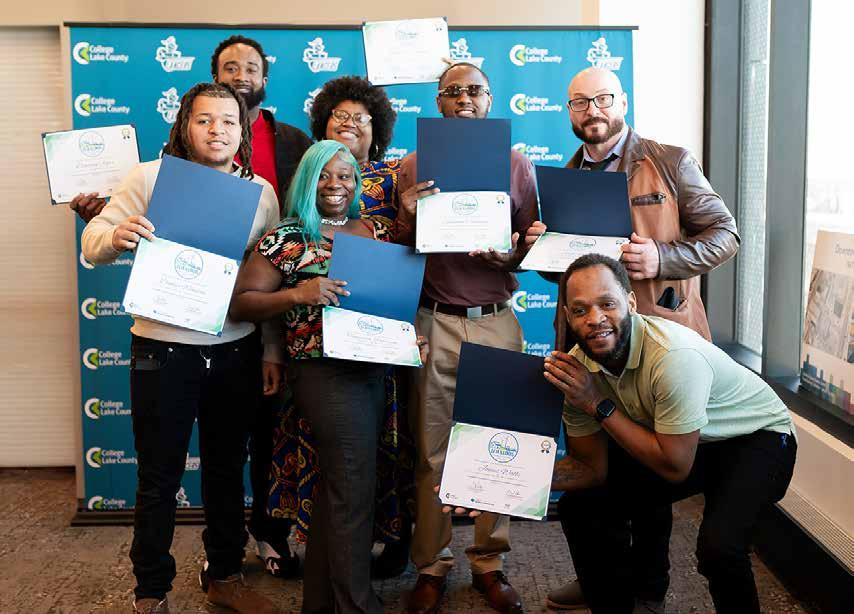
At College of Lake County, opportunity meets purpose through the Climate and Equitable Jobs Act (CEJA). In partnership with Lake County Workforce Development, The Community Works and the Lake County Job Center, CLC is helping job seekers step into careers that power a more sustainable future. More than 150 students have completed the bridge program before starting their specialized training or new employment.
Supported by a $3.5 million state grant, this initiative provides hands-on training in high-demand fields like HVAC, electric vehicle automotive technology, energy auditor and construction and building inspection— while intentionally removing barriers to entry. As one of Illinois’ 14 CEJA Workforce Hubs, Waukegan is a launchpad for local talent, connecting people to careers that strengthen families, communities and the clean energy workforce.
“I wasn’t just looking for a job–I was looking for a real path forward. CEJA gave me that.”
- Scott Ranft
“When I think about CEJA, I think about life-changing experiences.”
- Antoinette Howard Taylor


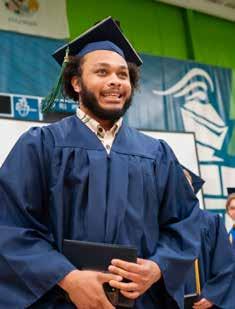
Every tassel tells a story
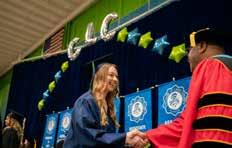
“I’ve worked hard balancing a job and school at the same time. Now here at graduation, I’m actually accomplishing what I set out to do.”
-Cameron Sassano, Deerfield
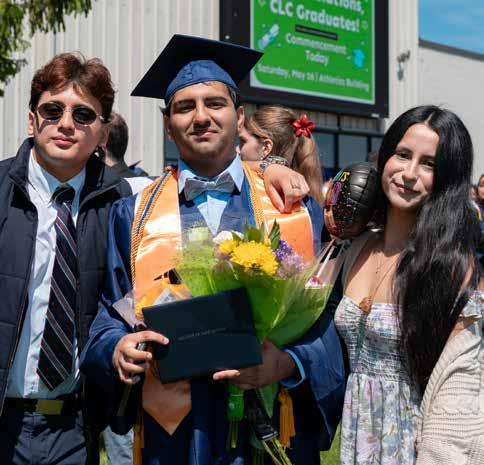

“I haven’t fully decided what I’m going to get my bachelor’s degree in, but I am probably trying out a program in digital fabrication and design. My main goal for now is to finish college.” -Natalie Holcomb, Gurnee
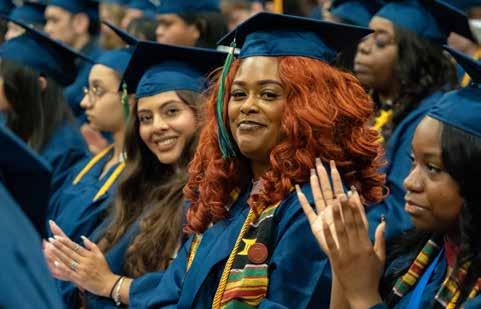
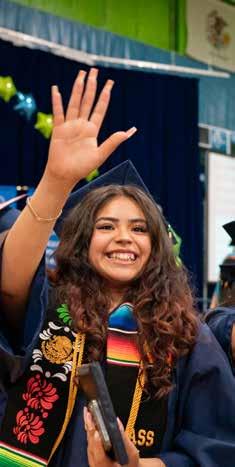
What each of the more than 600 graduates who participated in CLC’s spring commencement ceremonies plan to do after college is a bit different. Each had their own unique path and goal. The overall feeling of excitement united everyone and their family and friends.
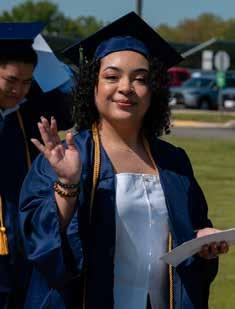
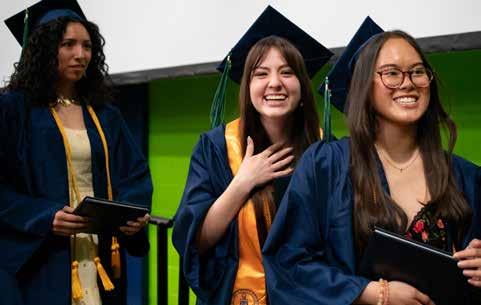
“I live in the area, and I’m paying for my own tuition. CLC was the safest idea, and I wanted to stay close to home.”
-Emily
Morris, Antioch
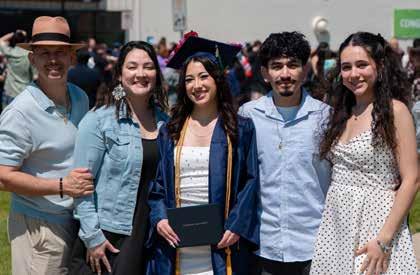
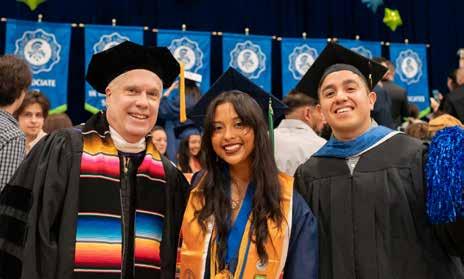
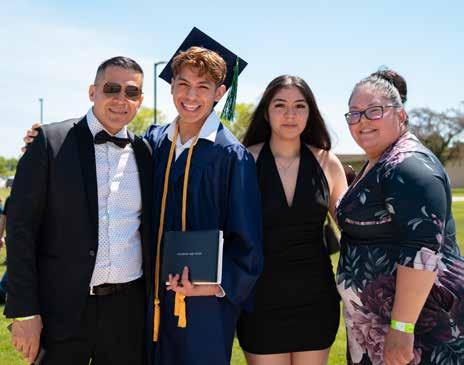

“I am deeply grateful for the time I have been gifted with you,” said CLC Interim President Dr. Kristen Jones. “I have learned from you, been inspired by you and am filled with hope because of you. Each of you has shaped the culture of this college, and I hope your CLC journey has been as meaningful and transformative as the impact you have had on us.”
QUOTE ME!
“CLC is a great place to receive an education because of their efforts through ample resources and genuine people who understand and care about, not only the student, but the person who’s looking to become successful.”
– David
Brent
“I feel prepared to transfer. I’ve had great instructors, and I’ve learned a lot. I’m ready for the next step.”
– Jacob Garcia
“Small class sizes are very personal with more time for one-on-one. Especially in difficult courses that I struggle with, I feel comfortable enough to ask questions.”
– Estefanni Cabellero
“CLC set me up to become the student athlete I am today. It has taught me to create balance between school and sports, and a lot of that help came from professors being so understanding of what being a student athlete entails. Through my career here, I have found what I am passionate about both academically and athletically.”
– Megan Livingston
19351 W. Washington St., Grayslake, IL 60030-1198
CLC Connects is published biannually by the Public Relations and Marketing department. To subscribe, unsubscribe or update an address, email PR@clcillinois.edu or call (847) 543-2094.
POSTMASTER:
Send change of address to CLC Connects, College of Lake County 19351 West Washington Street, Grayslake, IL 60030-1198
Volume 6, Issue 1 June 2026
FOLLOW CLC ONLINE:
www.clcillinois.edu
Board of Trustees
Allena Barbato, J.D., L.M.F.T. Chair
William M. Griffin, Ed.D. Vice Chair
Celeste Flores, B.A. Secretary
Dawn Abernathy, M.A.T.
Janet Gibson, M.D.S. H.P.
Amanda D. Howland, M.A., M.S., J.D.
Paul G. Virgilio, B.S., S.E., P.E.
Allison Bolisay Student Trustee
Kristen Jones, Ed.D. Interim President
Trustees Emeriti
Richard A. Anderson, J.D.
William M. Griffin, Ed.D. (2021-2023)
Patricia Jones, M.Ed.
Torrie Mark Newsome, J.D.
Barbara D. Oilschlager, M.Ed.
Julie B. Shroka, M.A.

Return on Education
Check out the impact of College of Lake County on the local economy:
• For every $1 students invest in their education, they receive $4.70 in higher future earnings. This return outperforms the long-term average of the U.S. stock market.
• The average associate degree graduate sees an additional $9,600 in earnings each year compared to a worker with only a high school diploma.
Source: The Economic Value of the Community Colleges of Illinois, February 2026