
This presentation offers a comprehensive guide to LMSforeducationalinstitutions, exploring their fundamental role, core features, and transformative impact on modern learning environments. It delves into selection criteria, deployment options, and strategies for maximizing LMS success, culminating in a forward-looking perspective on their evolving capabilities.
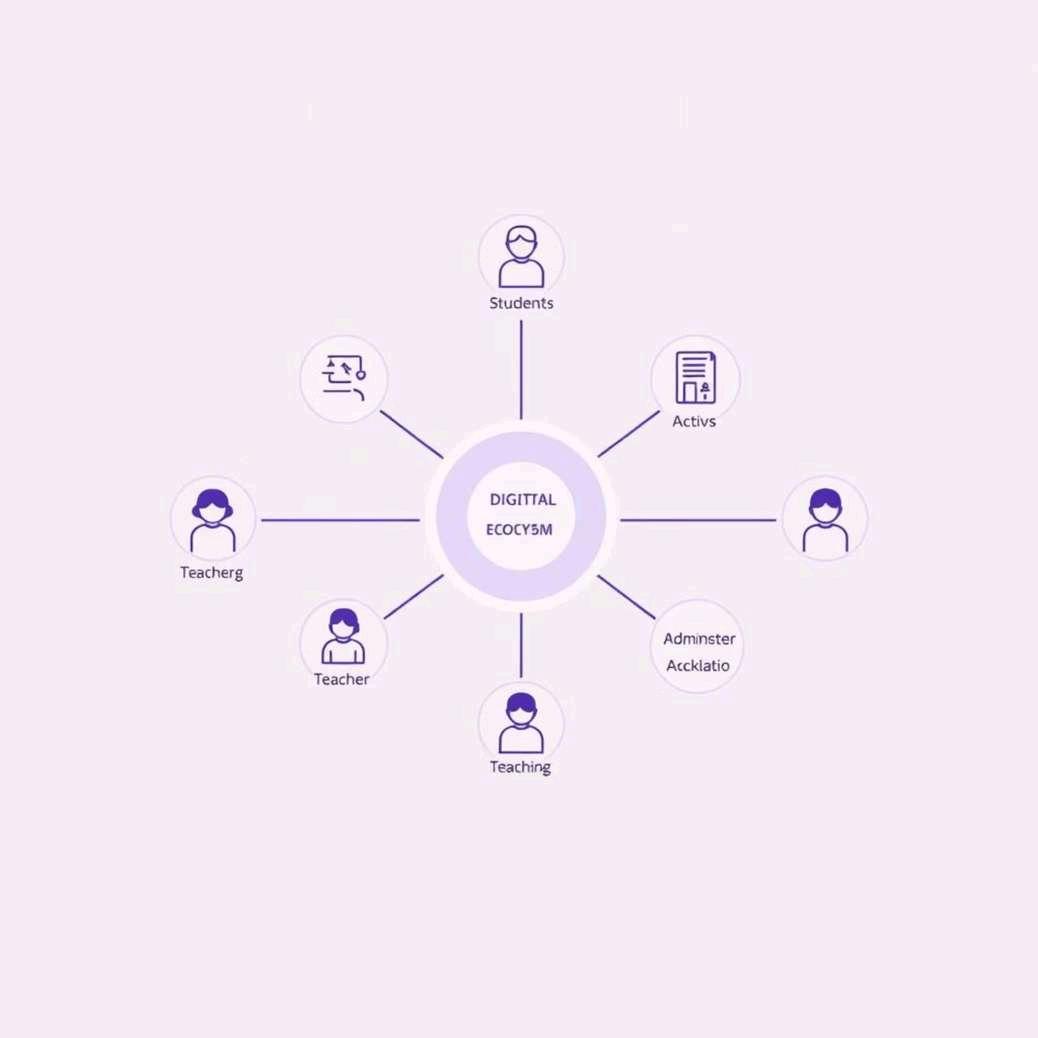
An LMS is a sophisticated software platform designed to centralise the creation, delivery, management, and tracking of educational content and training programmes. It acts as a digitalnexus connecting students, teachers, administrators, and even families within a unified ecosystem.

Facilitates easy uploading and organisation of diverse learning materials, including video lectures, interactive quizzes, comprehensive documents, and rich multimedia content.

Provides robust functionalities for creating and administering tests, managing assignment submissions, facilitating efficient grading, and delivering timely, constructive feedback.

Streamlines enrolment processes and defines distinct roles for various stakeholders: students, teachers, and administrators, ensuring tailored access and permissions.

Offers powerful capabilities to monitor individual learner progress, track engagement, and generate detailed analytics for insightful performance evaluation and strategic planning.
These features collectively empower educational institutions to deliver structured, engaging, and measurable learning experiences.
Enhances resource sharing and facilitates seamless communication across the entire school community, fostering a connected learning environment.
Supports the institution's ability to scale effectively for growing student populations and seamlessly adapt to evolving educational models and demands.
Adapts to individual student needs, learning paces, and diverse teaching styles, promoting a truly tailored educational experience.
Enables learning anytime, anywhere, and on any device, breaking down geographical and temporal barriers to education.
An LMS is no longer a luxury but a strategic imperative for fostering dynamic, accessible, and effective learning environments in the 21st century.
Improved communication and collaboration among students, teachers, and parents, fostering a cohesive educational community.
Efficient course management significantly reduces administrative workload for educators, allowing them to focus more on teaching.
Data-driven insights help identify at-risk learners early, enabling timely interventions and improving overall academic outcomes.
Facilitates compliance with stringent accreditation standards and simplifies reporting requirements for educational bodies.

Hosted online, offering unparalleled ease of scalability and vendor-managed updates. Ideal for institutions seeking minimal IT overhead.
Installed on the institution's own servers, providing greater control and extensive customisation capabilities, but requiring in-house IT expertise.
Free to use and highly customisable, fostering community support. However, it typically demands significant technical expertise for setup and maintenance.
Ready-to-use solutions backed by dedicated vendor support and consistent feature updates, often offering a comprehensive suite of tools out-of-the-box.

ConsiderthesecriticalfactorstoensureyourchosenLMSalignsperfectlywithyourinstitution'suniqueneedsand long-termvision:
Prioritise an intuitive interface for all users, mobilefriendliness, and WCAG 2.1 compliance to ensure inclusivity.
Ensure compatibility with existing systems like Student Information Systems (SIS), Google Drive, and communication platforms.
Look for comprehensive reporting capabilities that provide actionable insights tailored to your institutional goals and objectives.
Evaluate vendor support, available training resources, and the system's capacity to scale with your evolving educational mission.


Renowned for its intuitive user experience and seamless integration of diverse learning tools, making it a favourite among educators and students alike.
A highly flexible open-source platform offering extensive customisation options, popular for its adaptability to specific institutional requirements.
Distinguished by its robust assessment features and powerful analytics capabilities, providing deep insights into student performance and course effectiveness.
Features AI-powered personalised learning experiences and advanced analytics, delivering a highly adaptive and data-driven educational journey.
These platforms represent the vanguard of educational technology, each offering unique strengths to empower modern learning environments.
Provide extensive and ongoing training and support programmes for all faculty and staff to ensure confident and proficient LMS usage.
Foster widespread adoption by clearly communicating the tangible benefits and value proposition of the LMS to all stakeholders.
Regularly assess LMS effectiveness through user feedback, performance data, and continuous improvement cycles.
Strategically plan for future growth and proactively adapt to evolving educational needs and technological advancements.

The LMS is rapidly evolving from a mere content delivery system into a strategic tool that actively drives innovation in education. We are witnessing a transformative shift towards:
Deeper integration of Artificial Intelligence (AI) for personalised learning pathways.
Incorporation of Virtual Reality (VR) and Augmented Reality (AR) for immersive educational experiences.
Advanced analytics predicting learning outcomes and informing pedagogical strategies.
These advancements are empowering institutions to deliver increasingly inclusive, engaging, and highly effective education. Your journey with an LMS isn't just about managing courses; it's about pioneering the future of learning for your entire community.