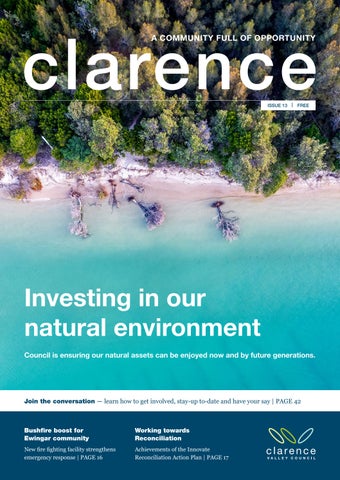
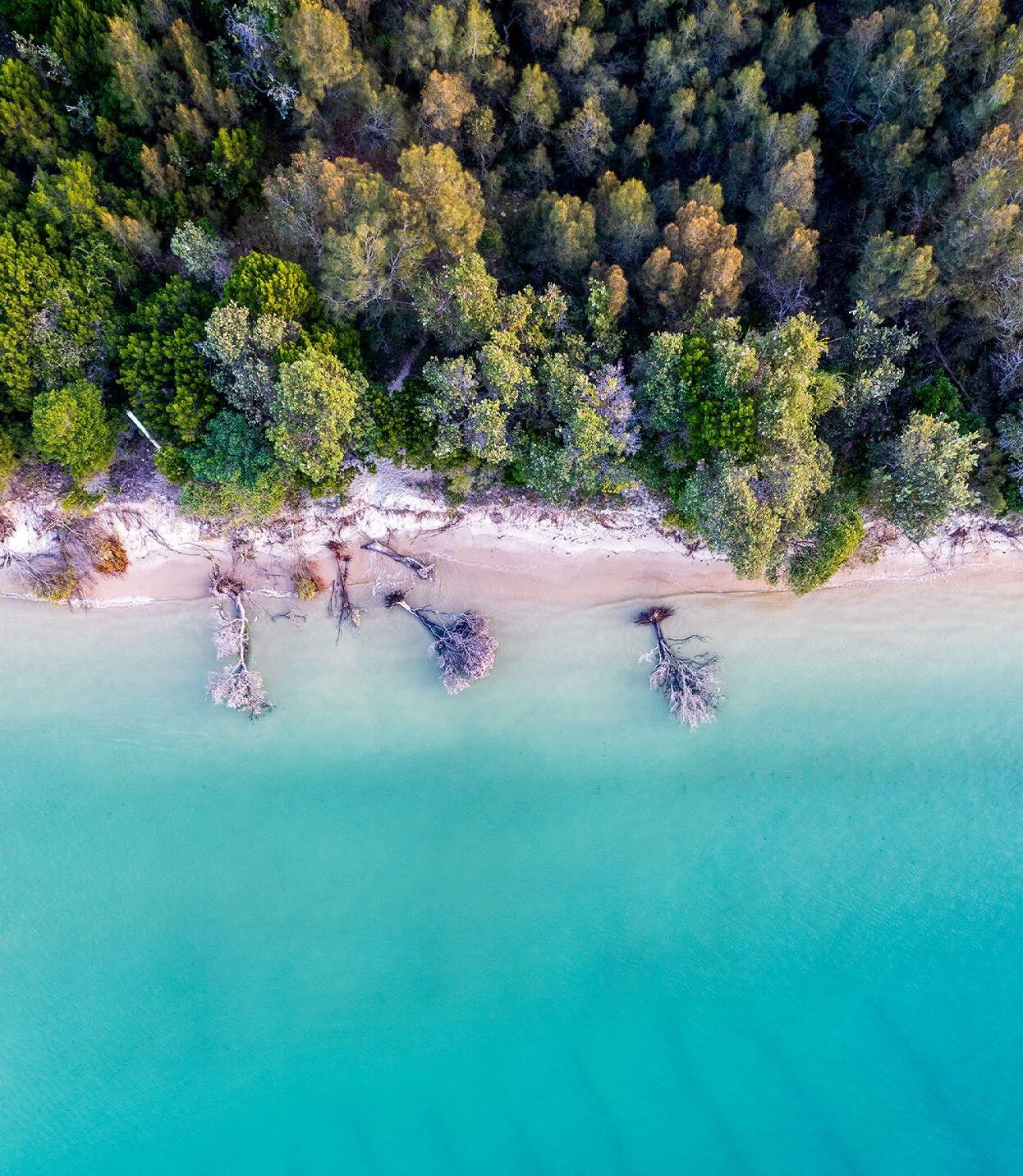
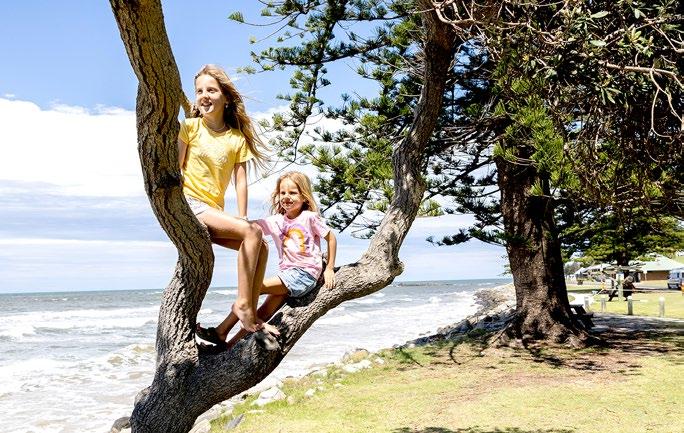
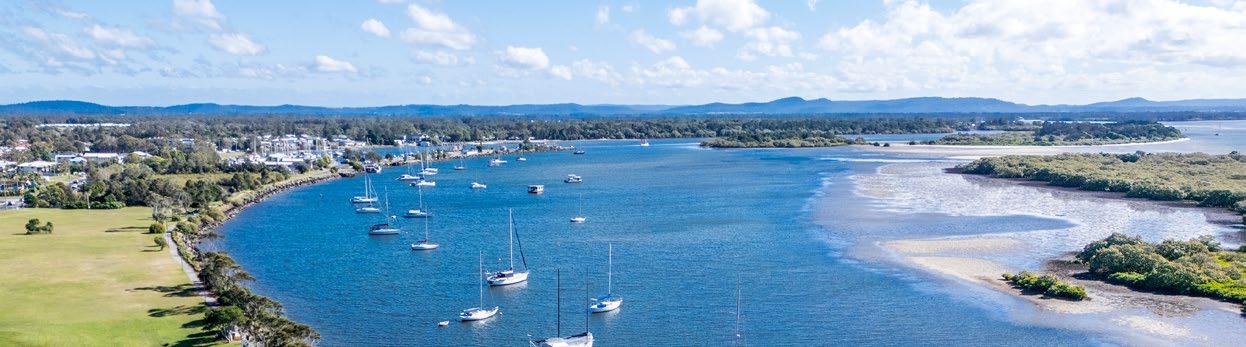
ON THE COVER: Yamba’s Whiting Beach captured by photographer, Liz McGinnes.
Publisher
Clarence Valley Council ABN 85 864 095 684
Contact us
council@clarence.nsw.gov.au (02) 6643 0200
Locked Bag 23, Grafton NSW 2460
Customer Service Centres
2 Prince Street, Grafton 50 River Street, Maclean clarence.gov.nsw.au
Clarence magazine is printed locally on FSC certified paper and is recyclable. If you want to dispose of it when you’ve finished reading it, you can pop it in your yellow bin.
To view Clarence magazine online scan the QR code or visit clarence.nsw.gov.au
ACKNOWLEDGMENT
We acknowledge the Bundjalung, Gumbaynggirr and Yaegl people as the Traditional Owners of the land on which we live and work. We honour the First Nations peoples’ culture and connection to land, sea and community. We pay our respects to their Elders past, present and emerging.
Clarence magazine reports on Council’s projects and services which contribute to making the Clarence Valley a community full of opportunity as outlined in the Community Strategic Plan. The magazine is structured in line with Council’s fouryear Delivery Program and annual Operational Plan to provide clear and transparent information to the community on the key priorities under five strategic themes. The magazine contributes to Council’s reporting obligations as set out under the Integrated Planning and Reporting Framework.
THE FIVE STRATEGIC THEMES:
Community
A community that is safe, connected and inclusive.
Infrastructure
Infrastructure and facilities that are safe, accessible and serve the needs of the Clarence.
Economy
A diverse economy that complements the environmental and social values of the Clarence.
Environment
A natural environment that is protected from local and global pressures.
Leadership
Open and transparent leadership that effectively sets and delivers the long-term goals of the Clarence.
For more information on Council’s Intergrated Planning and Reporting framework visit clarence.nsw.gov.au/IPR
Welcome to the thirteenth edition of Clarence magazine, highlighting the wide-ranging work that has been carried out in Quarter 1 of 2025/2026, as outlined in Council’s Operational Plan.
Regular readers of Clarence magazine would already be familiar with the tremendous work that has been completed over the past 12 months by our tourism team. It is with much pride that I can now congratulate the team for taking out Gold for their efforts at the North Coast Regional Tourism Awards, in the Tourism Retail, Hire and Services category. Fingers crossed now as they vie for honours at the NSW Tourism Awards.
Our work to engage youth has also been recognised, taking out the Best Local Youth Week Program at the NSW Local Government Awards. Congratulations to all involved, including our community partners who helped deliver this engaging and exciting week of events. Clarence magazine was also recognised, named as a finalist in the RH Dougherty Awards – Events and Communications Award.
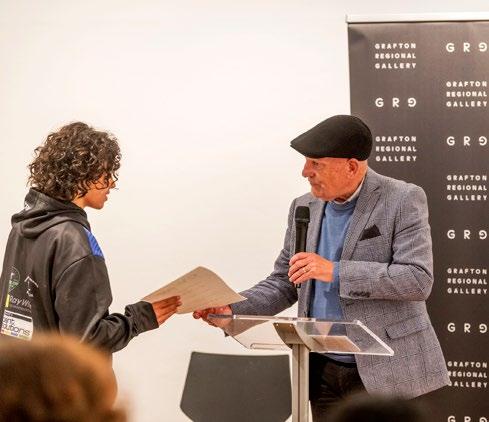
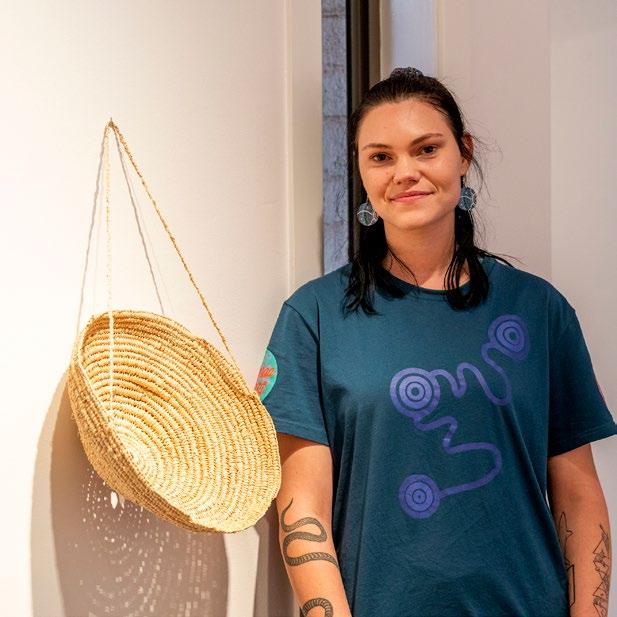
Congratulations also to the artists who shared their exceptional talents and culture as part of the Clarence Valley Indigenous Art Awards, which I had the pleasure of presenting.
And finally, I’d like to congratulate all of the incredible local businesses that were showcased through the Clarence Valley Business Excellence Awards, which was sponsored by Council.
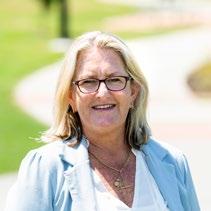
— Cr Ray Smith PSM, Mayor
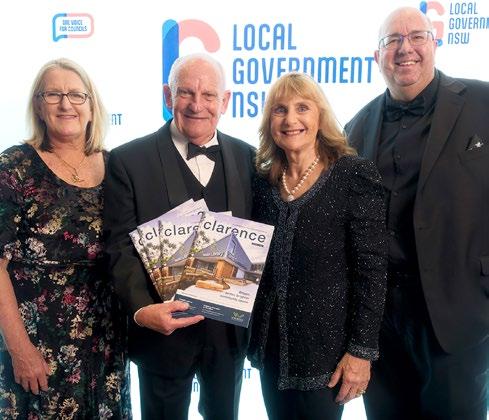
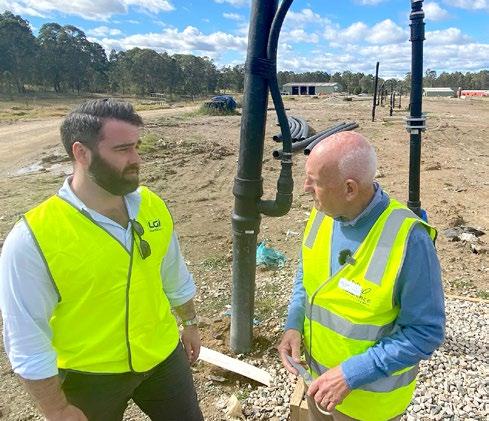
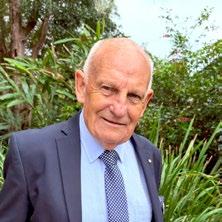
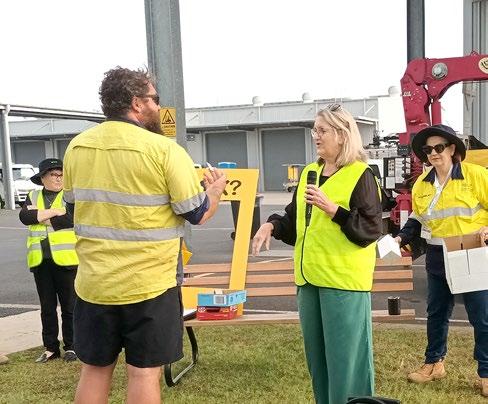
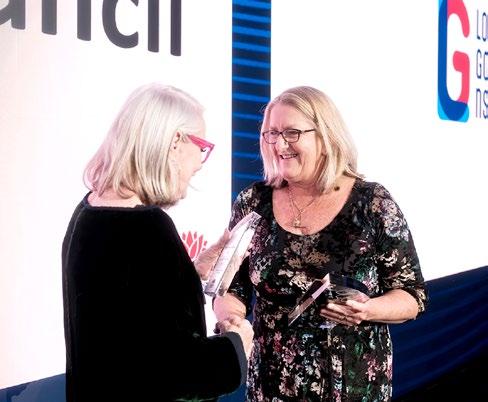
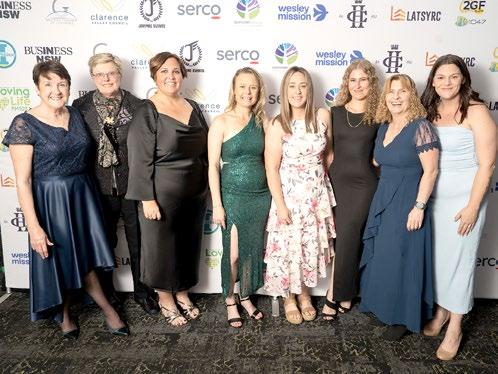
PICTURED: from top; enjoying a successful night at the NSW Local Government Awards; presenting the Clarence Valley Indigenous Art Awards at the Grafton Regional Gallery; and officially opening the expanded landfill gas capture project at the Grafton Regional Landfill and Resource Recovery Centre.
17
Working towards Reconciliation
We take an in-depth look at achievements so far of the Innovate Reconciliation Action Plan. FEATURES IN-DEPTH
BEHIND THE SCENES
20
Meet the Urban Stormwater Management team
Meet the team responsible for improving drainage across the Clarence Valley.
PERFORMANCE
Update on performance in the first quarter of the 2025/2026 financial year, as outlined by the Operational Plan across all five strategic pillars:
Investing in our natural environment
A special variation to rates is being considered to fund additional environmental projects, in response to public demand. 10
Providing facilities for the benefit of the community
We chat to residents about the significant role Council facilities play in their everyday lives. 16 Bushfire boost for Ewingar community
Learn more about what is being done to provide and preserve our most vital asset.
COMMUNITY ENGAGEMENT
42 Learn more about how you can have your say and stay up to date on Council’s community engagement activities.
This Council has a strong record of delivering environmental outcomes for the community, and there is so much more we would like to achieve in the next 10 years.
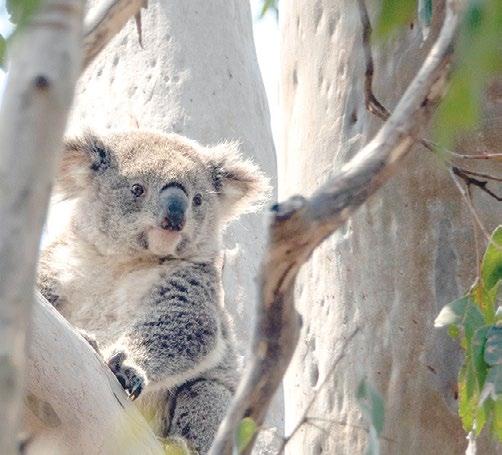
To name a few current examples of what we’ve achieved: landfill emissions are being dramatically decreased through an innovative gas capture and flaring program; renewables are helping power operations via extensive rooftop solar and a hydro-electric generator; mapping has been created to support vulnerable local koala populations; and flying fox habitat is being restored on Susan Island.
To build on what’s already been achieved, Council has developed a 10-year plan to deliver projects to care for our coastline and waterways, manage biodiversity, monitor the environment, and provide community support, education and research. It has been created with input from the community following a review of Council adopted strategies and plans. Feedback has been supportive of Council taking more action on enhancing and protecting our natural environment.
In recent weeks, we have been out and about meeting community seeking further feedback on the proposed $25.95 million funding program. As part of this program, Council is proposing a Special Variation to rates of 2.17 per cent on top of the pegged limit, to raise $11.6 million over 10 years. Internal reserves and external government funding would make up the balance.
If approved, ratepayers would pay an average of $35 per rateable property per year based on land value and rating category, which works out at approximately 67 cents per week.
Your views will go back to the elected Council to decide whether to proceed with an application to IPART for a Special Variation to rates to take effect in the 2026/2027 rating year.
— Laura Black, General Manager, Clarence Valley Council
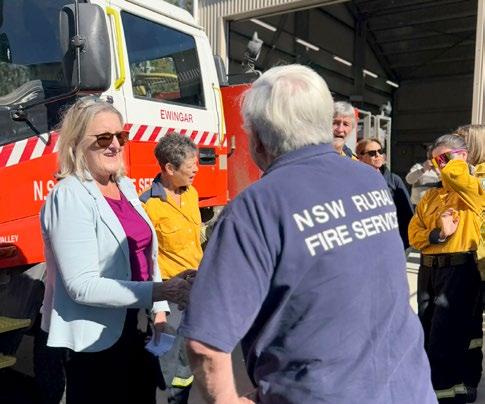
PICTURED: Chatting with staff on Are You Okay Day, celebrating the opening of a new Rural Fire Service shed at Ewingar, and receiving honours on behalf of staff at the Local Government Week Awards.
AT A GLANCE
— Reducing landfill gas emissions
— Free power from the sun
— Town water generating electricity
— Mapping project supports koala populations
— Restoring flying fox habitat on Susan Island
— Improving Council’s operations
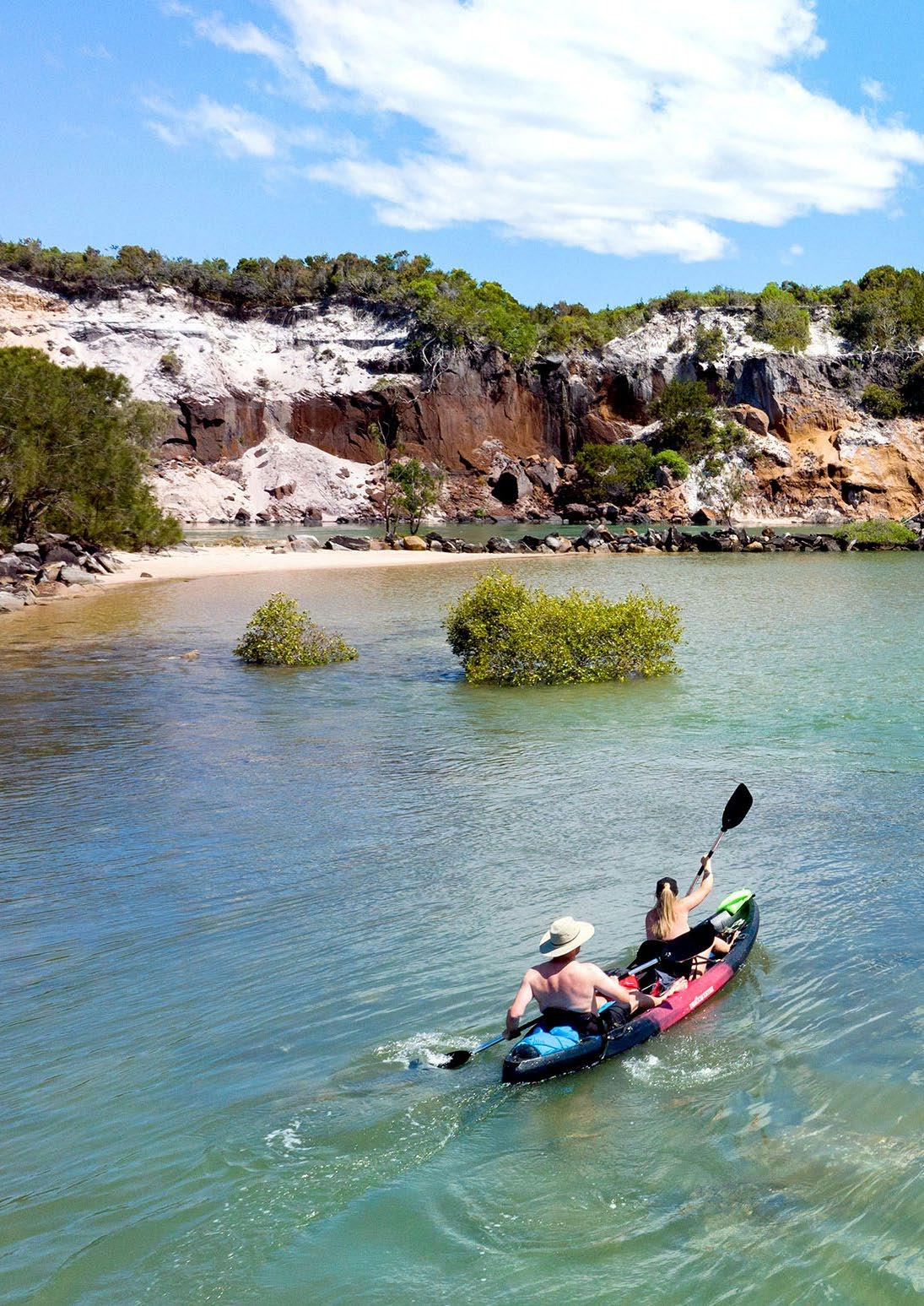
Kayaking on the Wooli Wooli River, one of the many locations Council will care for through the proposed environment funding.
Investing in our natural environment
Council has a strong track record when it comes to delivery of outcomes for the environment from reducing landfill gas emissions, investing in solar power and utlising hydropower generation to mapping vulnerable koala populations and restoring flying fox habitat. Council is working to help ensure residents can enjoy our natural environment for many years to come.
Reducing
landfill gas emissions
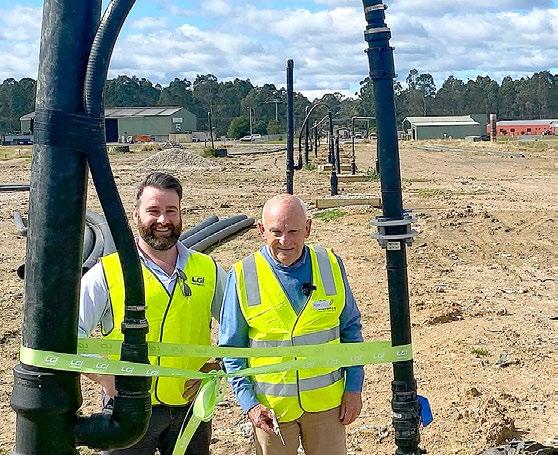
Major upgrades to better capture and reduce harmful methane gas emissions at Grafton Regional Landfill have delivered results for the environment and the local community. The work, commissioned by Council and completed by LGI Limited (LGI) included 12 vertical gas extraction wells, five gas collection lines and more than 800 metres of underground pipe connected to an enclosed flaring unit. Flaring of methane emissions has dramatically reduced the impact on the environment and allows Council to receive a share of the Australian Carbon Credit Units (ACCUs) generated.
The project, which started in 2015, contributes to Council’s long-term goal to reach net zero emissions. The expansion carried out this year has more than doubled the volume of landfill gas captured. Under the partnership, LGI pays to install, operate and expand the gas extraction system, while Council receives a royalty share of ACCUs over the life of the project. Council has the option to sell the ACCUs to create revenue or to use them to offset emissions. Over the past decade, Council has abated 179,000 tonnes of carbon
emissions – equivalent to planting 2.9 million seedlings. So far, 19 million cubic metres of methane-based biogas has been captured at the landfill.
Other recent improvements at the landfill have included a major expansion of the organics recycling facility and construction of an additional landfill cell designed to minimise environmental impacts of waste disposal.
Free power from the sun
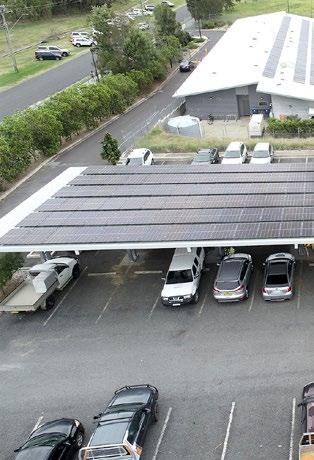
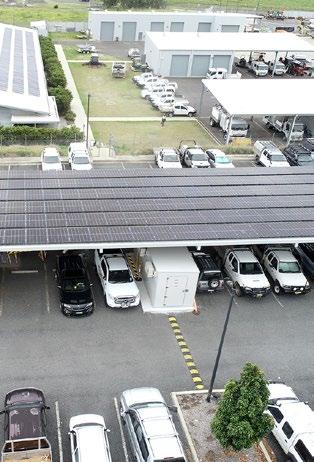
More than 40 Council buildings and facilities have rooftop solar installed, with the capacity to generate a total of 1,320 kilowatts (kW) of free power from the sun. The largest system is at the Rushforth Road Works Depot, including 210kW of solar panels and 200 kilowatt-hours (kWh) of battery storage. It was upgraded in 2023. The system covers the site’s power needs and enables it to be fully operational even during disasters when grid power is offline.
It also includes four electric vehicle charging stations and is being used to power Council’s first electric vehicle, purchased in 2024. The electric vehicle is being utilised as part of Council’s fleet of mostly hybrid vehicles, reducing emissions and ongoing costs.
Town water generating electricity
The water that flows to the taps in your home is generating free, environmentally friendly electricity. A submersible hydro-electric turbine was installed in 2024 at the Rushforth Water Treatment Plant, to utilise inflows from the Nymboida River of around 35 megalitres a day to produce an estimated 1,760 kilowatts of power.
The power is used on site at the plant, primarily for ultraviolet disinfection, reducing electricity costs and carbon emissions. Once treated, the water is supplied to homes and businesses throughout the Clarence. The cost of the $365,000 project was anticipated to be recouped in savings within two years of operation.
Mapping project supports koala populations
New koala mapping has been created this year and integrated into Council systems to better inform sustainable development and help protect and increase populations of the endangered species.
The mapping reveals significant populations of koalas in the Lawrence and Waterview Heights areas, and moderate levels of koala activity and large areas of suitable habitat in Ashby, South Grafton and Shannondale. It has also identified large areas of suitable habitat in the Coutts Crossing area. The mapping is based on surveys carried out in 2024 that included the use of specialised koala detection dogs, drones, and assessment of habitat by ecologists. The mapping will help inform future decision-making and development planning.
Restoring flying fox habitat on Susan Island
New flying fox habitat is growing prolifically on Susan Island as the result of a restoration program and ideal growth conditions. In the past 12 months almost 1,500
The Grafton Regional Landfill methane gas reduction project, which started in 2015, contributes to Council’s long-term goal to reach net zero emissions.
seedlings have been planted, 17 hectares of weeds sprayed, and 1.5 hectares of seed sown, as part of the Susan Island – Restoring to Reduce Conflict project.
Clearing of weeds has paved the way for regeneration of native species, with newly germinated native plants thriving in the wet first half of 2025. Planted seedlings have had a high rate of survival, and efforts for the coming year will focus on ensuring these plants continue to grow towards maturity. Three years of the eight-year program have now been completed.
The program aims to link rainforest remnants on the island and revive roosting and breeding areas for endangered grey-headed flying foxes, as well as black and little red flying foxes. Improving habitat on the island aims to reduce the incidence of camps roosting in areas populated by people.
Improving Council’s operations
An Environmental Management System is being implemented to improve Council’s environmental practices across all aspects of operations including civil works, maintenance activities, waste management and energy use. It was created in response to a recommendation of an internal audit in December 2022.
PICTURED: Above, from left; Clarence Valley Mayor Ray Smith officially opened the expanded landfill gas capture and flaring project on 31 July 2025 alongside LGI National Operations Manager Tom O’Connor, pictured here at one of 12 vertical extraction wells; more than 200kW of solar panels and a 200kWh battery system power the Rushforth Road Works depot; and, Koala populations and habitat have been mapped to better protect the endangered species.
Funding a future program
Council decided in June 2025 to engage with the community to explore options for funding additional environmental projects through a potential special variation to rates.
Clarence Valley residents have said it’s a top priority to have access to a clean, healthy natural environment. As part of this process, Council has sought community feedback on whether a special variation to rates should be considered to help deliver more environmental outcomes.
A recent review of adopted Council plans and strategies identified 113 environmental actions that were consolidated into 75 environmental projects that the community expects to see delivered but Council doesn’t currently have the capacity to fund.
If progressed, a potential special variation could help fund a portion of these projects, alongside contributions from Council’s internal reserves and external funding programs. The projects under consideration can generally be grouped into categories of
bush regeneration, environmental monitoring, biodiversity planning, pollution control, riverbank and waterway management, coastal protection, climate adaptation, and community education.
Council has completed extensive community consultation and engagement to prepare the strategies and plans that identify these recommended environmental projects. Community information sessions were held throughout September and October 2025, and feedback is being gathered through Clarence Conversations.
Elected councillors will later decide whether to make an application to the Independent Pricing and Regulatory Tribunal (IPART) for consideration of a special variation, depending on community feedback.
A few of the projects proposed under the special variation include:
y 10 actions under the Clarence Estuary Management Plan including a $4 million investment to improve fish habitat in Clarence flood drains through the installation of more tidal floodgates, and improving management of acid sulphate soils and runoff to reduce pollution and fish kills by implementing a landholder education campaign.
y 22 actions under the Biodiversity Strategy 2020 –2025 including $1.8 million to prepare vegetation management plans and biodiversity assessments on Council land to enhance long-term biodiversity values, and a $1 million project to encourage landholders to take up incentives to conserve high-value wetlands.
y 13 actions under the Clarence Valley Green Infrastructure Strategy including $600,000 to enhance compliance activity to reduce unauthorised clearing, particularly in urban areas, to support maintenance of a healthy tree canopy cover.
y 32 actions under the Clarence Valley Coastline Coastal Management Program including $3.8 million to restore habitat on 12 coastal reserves from Iluka to Wooli, and $100,000 to enhance waterway access for activities such as recreation.
Providing facilities for the benefit of the community
Whether you’re playing sport on the weekend, enjoying a lunchtime barbecue by the river, or celebrating a birthday at the local hall, chances are you’re using a Council facility. Council provides a long list of public facilities for the benefit of the community, including libraries, halls, community centres, sporting facilities, parks and reserves, pools, and cemeteries. We had a chat to a few Clarence Valley residents to find out more about how they use Council facilities in their lives.
To check out a short video on how the community is benefiting from three popular Council facilities, visit clarence.nsw.gov.au/facilities-video
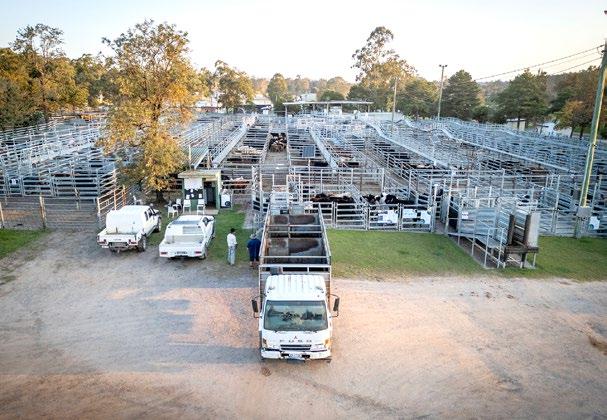
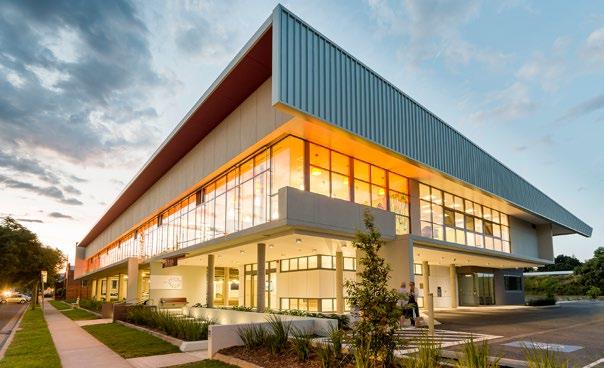
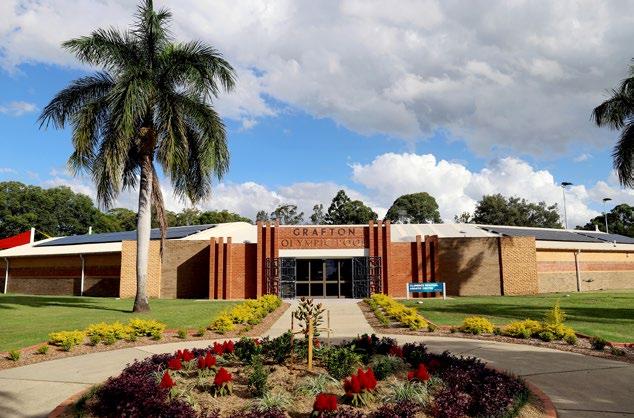
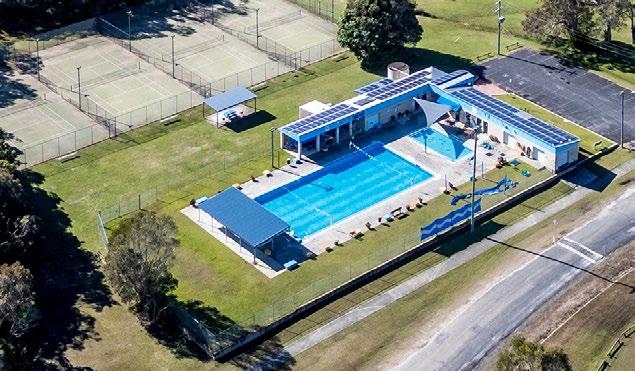
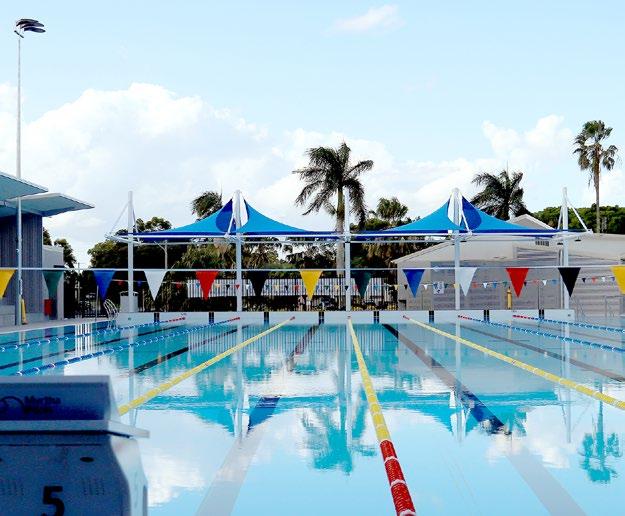
PICTURED: Clockwise from top left; Grafton saleyards; Clarence Regional Aquatic Centre; Yamba Communtiy Pool; and, the Grafton library.
Making a
splash at
Clarence pools
Two brand new water slides that are underway at the Grafton Regional Aquatic Centre will be “the icing on the cake” for Grafton grandmother, Susan Polson.
“Last Christmas the slide was very much missed by my grandchildren who come home to visit. With the addition of two slides, the splash pad and the indoor baby pool, my family now has no need to leave the Valley to find suitable fun water activities. I’m excited for them to come home to visit this year,” she said.
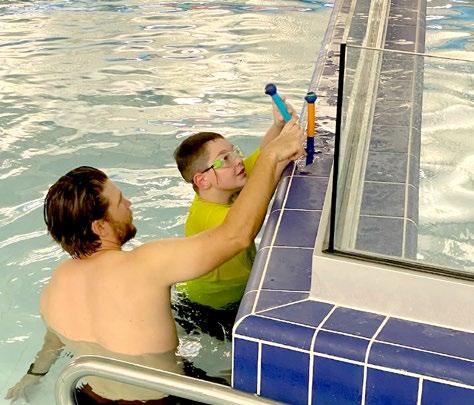
The heated, indoor leisure and programs pool is also being used by many people for physical therapy, including nine-year-old Cooper, who has autism and ADHD. Cooper’s mum, Mel, said his weekly physiotherapy sessions improved his emotional regulation, fitness, and muscle coordination.
Council has also resumed management of the Yamba Community Heated Pool, upon conclusion of the contract with long-time managers Richard and Yvette. It reopened on 11 August following its scheduled two-month annual closure.
Learn to Swim and aquafitness programs continue to be operated by Council staff. To find out more about enrolling in Learn to Swim or to check out job opportunities at the Yamba Community Heated Pool, visit Council’s website at clarence.nsw.gov.au
In Maclean, the Olympic pool reopened on 27 September following routine maintenance in the off-season.
Mary finds friendship through library programs
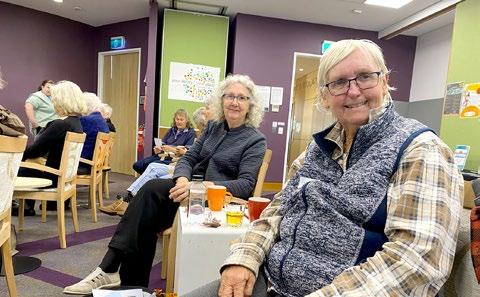
Mary Lynch didn’t know which film was to play at the July Vintage Film Club at the Grafton library – it didn’t matter. What mattered was catching up with the friends she has made by coming along to the event for the past five or six years.
“It’s lovely to join with others to watch a film rather than at home, and they’re films I can’t access at home. We’ve formed a lot of friendships here too,” she said.
Vintage Film Club isn’t the only library activity Mary enjoys. She also comes along to KnitWits knitting group that is held twice a month; the seniors’ games mornings once a month; the twiceweekly Tech Help group; borrows books regularly; and attends the odd art workshop.
“They’re all great ways of making friends. I’m also a bit limited as far as financials go, so I come along to the activities that are free. I also like supporting the library to help make sure they keep their funding,” Mary said.
To find out more about library activities and programs or to access the online catalogue and resources, visit crl.nsw.gov.au
“They’re all great ways of making friends ... I also like supporting the library to help make sure they keep their funding. — Mary Lynch.
PICTURED: Mary Lynch ready to watch the July Vintage Film Club screening at the Grafton library.
PICTURED: Nine-year-old Cooper is among the many people enjoying use of the new programs and leisure pool at the Clarence Regional Aquatic Centre.
Saleyards – a vital part of the Clarence community
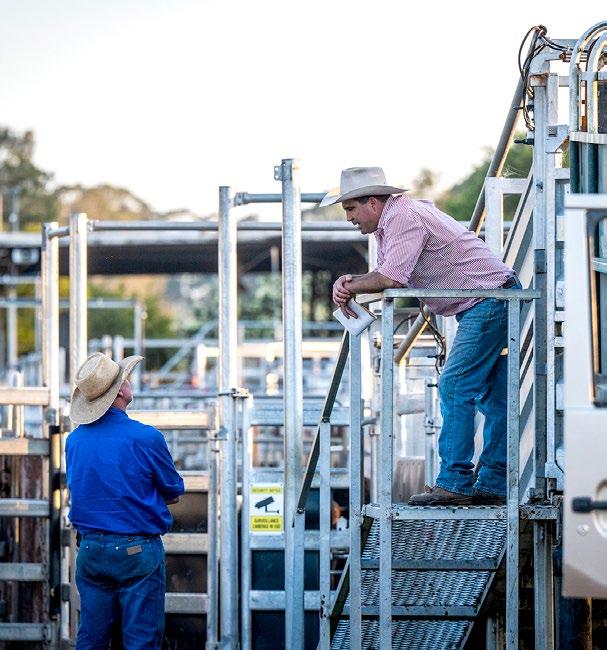
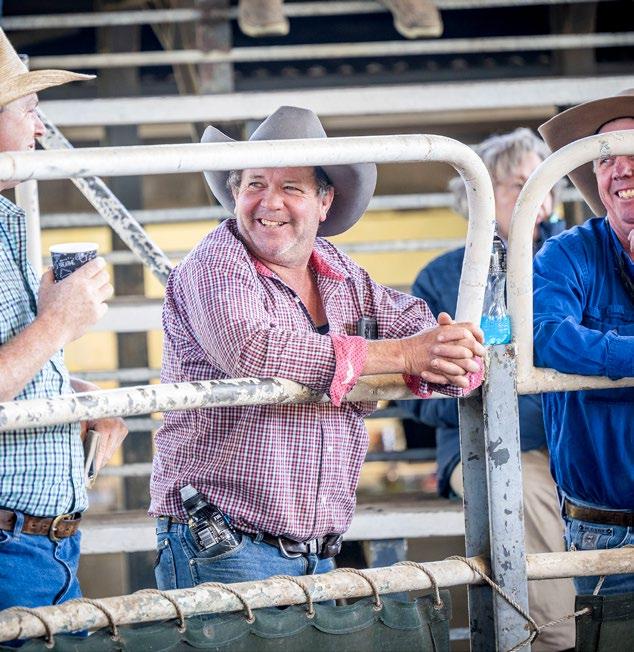
The Grafton saleyards have been a massive part of Mitch Donovan’s life, from helping out at just nine years old right through to becoming the principal of Donovan Livestock and Property.
Mitch said he was a passionate advocate for the saleyards, which host weekly sales that attract producers and buyers from a 100-kilometre radius.
“The saleyards bring people to town to sell their cattle then they spend money in town – it’s a chain reaction where the money generated is spent back in the community,” he said.
“There’s also the social aspect, it’s a meeting place which is important for mental health. When things are a bit tough producers can catch up with each other, find out what’s been happening around the place.”
David Farrell of Farrell McCrohan Stock and Station Agents echoed Mitch’s comments.
David welcomed the installation of a B-double loading ramp at the saleyards in July, saying that it had significantly improved safety while loading and unloading cattle trucks.
“There’s also the social aspect, it’s a meeting place which is important for mental health. When things are a bit tough producers can catch up with each other, find out what’s been happening around the place.
— Mitch Donovan.
PICTURED: Mitch Donovan (left image) at a recent sale. The saleyards generate significant income for the Clarence economy, as well as providing a place where farmers can meet and connect.
DID
YOU KNOW?
Use of more than 50 Council parks, sportsgrounds, halls, community centres and reserves can be booked online at clarence.bookable.net.au
Accessible fun for all at Bailey Park Ulmarra
Having a disability doesn’t have to get in the way of having a great time at the park thanks to accessible facilities like Bailey Park at Ulmarra.
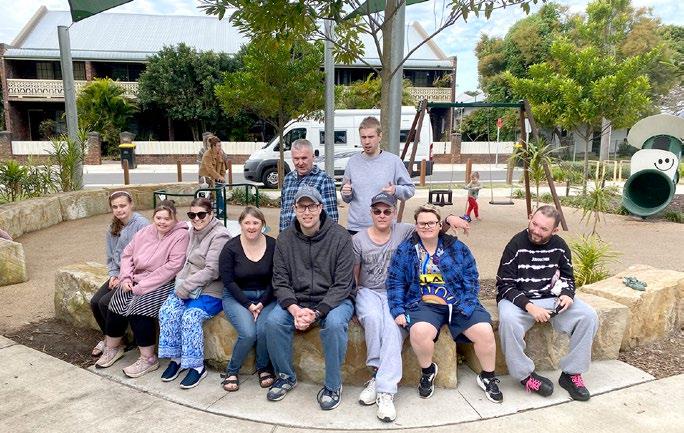
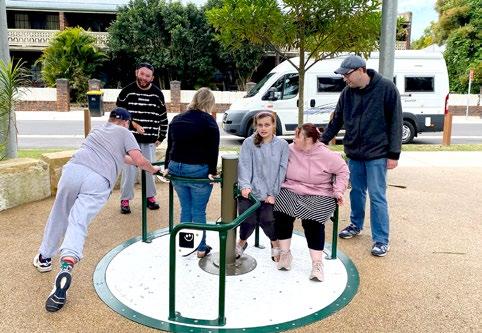
Whether it’s spinning on the carousel, climbing the rope netting tower or swinging on the swings, the crew from Livable loves regular outings to the riverside park, which was created in 2023 as part of a major redevelopment of the Ulmarra CBD.
Ruben, Joel, Peter, Coady, Riley, Karlie, RondaLee, Michelle, Sammy, and Liz were excited to be at the park once again in early July.
“I like the spinny thingy, and climbing up the ropes there – I stacked it, just misplaced my foot on the rope,” Liz said with a laugh.
Likewise Riley was enjoying the equipment, but added the park is also a great place to relax.
“It’s a fun place to come to, the scenery, fresh air … I usually love to sit down and just enjoy the quiet,” he said.
People living with a disability were closely consulted during the design and construction of Bailey Park to ensure accessibility across parking, paths, amenities and play equipment.
“It’s a fun place to come to, the scenery, fresh air … I usually love to sit down and just enjoy the quiet. — Ethan Davis.
PICTURED: The crew from Livable enjoy the carousel during an outing at Bailey Park Ulmarra.
Maclean Showground ideal for working dog championships
Woodford Island’s Ethan Davis is a third generation working dog trainer and breeder and has been honing his skills since the age of 13. It was a proud moment for him to take out the Working Stock Dog Association’s NSW Novice Title in 2016, at the age of just 14 years. He also later took out a national title in 2018.
Ethan and his border collies Pablo, Mohammad and Akmal had the chance to show off their skills at the NSW Titles in July this year, on home turf at the Maclean Showground.
“It has good yards, everything’s there and ready to go, it’s in town, and the hill is there too for the spectators – it’s probably one of the best showgrounds in Australia,” Ethan said.
The working dog titles are just one of many events hosted at the Maclean Showgrounds. Others include the annual agricultural show, the Maclean Highland Gathering, the Lawrence Rodeo, as well as camping and recreational vehicle (RV) stays.
To book use of a pavilion, tea rooms, or the showground oval, visit clarence.bookable.net.au
“It has good yards ... it’s probably one of the best showgrounds in Australia. — Ethan Davis.
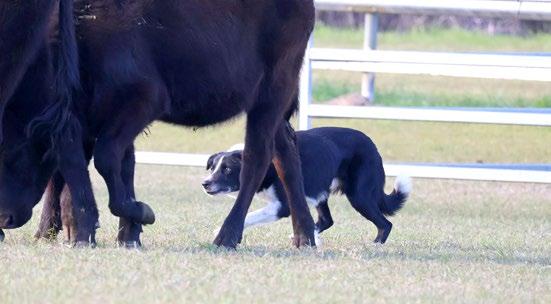
PICTURED: Above; Pablo the border collie is put through his paces prior to the NSW Working Stock Dog Association NSW titles in July this year.
Yamba Library a hit for book lovers
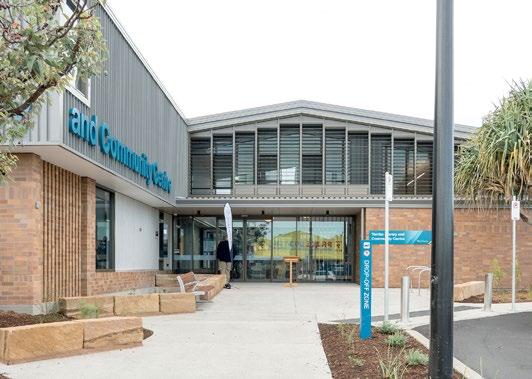
Hundreds turned out to the official opening of the new Yamba Library and Community Centre in Treelands Drive on 18 July, eager to check out what the facility has to offer.
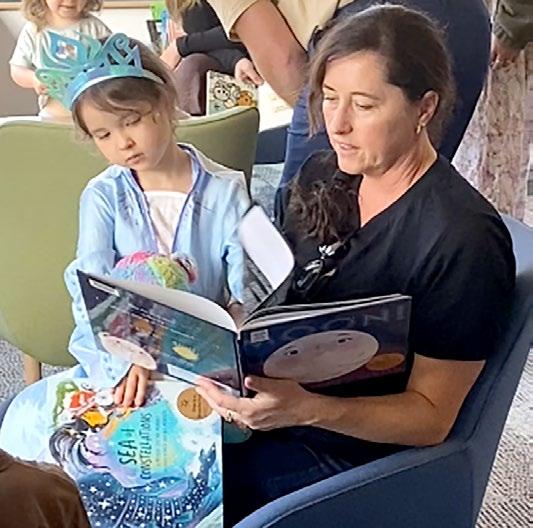
Talitha and Fleur of Yamba were among the first to enjoy reading a book together in the library, which is more than twice the size of Yamba’s old library.
“We’re very excited about the new library. We go to the library regularly and this is such a nice facility,” Talitha said.
Her daughter Fleur was also enthusiastic about the new facility.
“Fleur’s favourite part of the library is the books,” Mum added after Fleur whispered in her ear.
Fleur’s brother Logan and grandmother Deb, of Nana Glen, were also keen to check out some new books including ‘Saving species’, featuring Logan’s favourite animal, the axolotl.
“I live 100k’s away at Nana Glen but I come up here quite often to visit my grandchildren. They’re so into books and I’m really happy to see that. All these beautiful new books and this beautiful facility make a real difference. It’s a beautiful space and we should be incredibly proud of this achievement for the Clarence Valley,” Deb said.
The centre also includes meeting rooms, a flexibly configured hall and kitchen, an art gallery and creation space, a Changing Places accessible adult change room, and much more.
“We’re very excited about the new library. We go to the library regularly and this is such a nice facility.
PICTURED: Above, Fleur and her mum Talitha share a book at the new Yamba Library and Community Centre; they are among many people who have enjoyed the new facility in Treelands Drive since it opened in July.
Celebrating National Water Week
Clarence Valley Council is proud to support the annual National Water Week (20-26 October), inspiring communities and organisations to work together on water issues and future fixes. It reminds everyone that water must be used wisely and celebrates water innovation and achievements supporting Australia’s sustainable future.
Protecting our most vital asset
Clarence Valley Council voted in 2020 to oppose mining exploration in the Clarence catchment, amid fears it could result in contamination of drinking water supplies. Council reaffirmed this position in May 2025 in response to exploration activity by a mining company near Wild Cattle Creek, in the vicinity of the Nymboida River headwaters.
Free
power from flowing town water
The water that flows to the taps in your home is generating free, environmentally friendly electricity. A submersible hydro-electric turbine was installed at the Rushforth Water Treatment Plant in late 2024, which is using inflows from the Nymboida River of around 35 megalitres a day to produce an estimated 1,760 kilowatts of power. The power is used on-site at the plant primarily for ultraviolet disinfection, which reduces electricity costs and carbon emissions. Once treated, the water is supplied to homes and businesses throughout the Clarence.
Educating our future generations
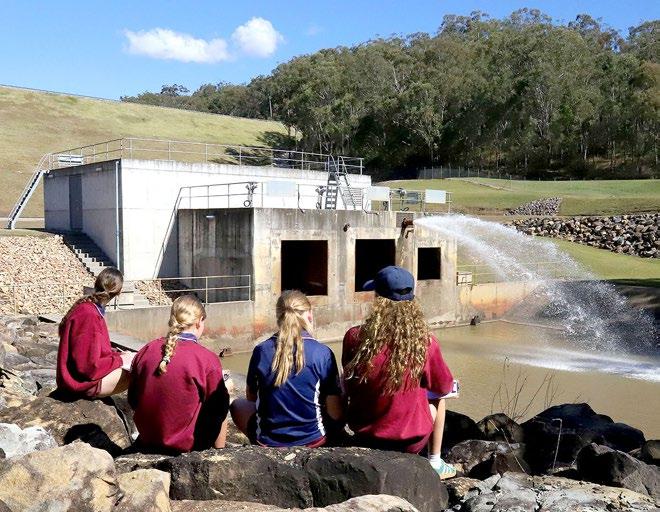
Council regularly takes school groups on educational tours of facilities in the Clarence, including Shannon Creek Dam. Students learn about how water is supplied to the local community, and measures that help conserve the precious natural resource.
PICTURED: McAuley Catholic College students visit Shannon Creek Dam in August 2025, as part of Council’s water education activities.
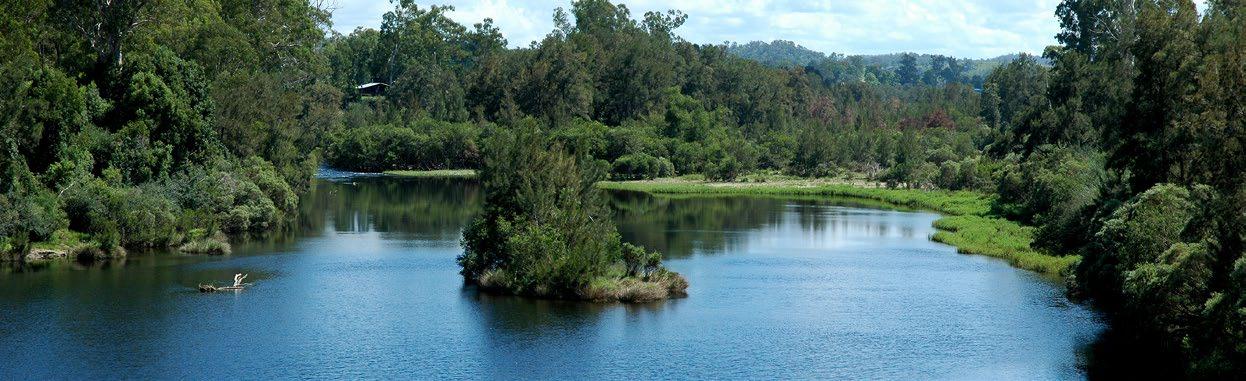
PICTURED: The Nymboida River is the primary source of drinking water for the Clarence Valley.
Bushfire boost for Ewingar community
The 2019 bushfires were devastating for the Ewingar community, resulting in the loss of two lives and the destruction of more than 20 homes. Bushfire response for the community has now been bolstered with construction of a new purpose-built NSW Rural Fire Service facility.
Bigger better fire shed fit for purpose
The three-bay RFS shed, fitted out to facilitate bushfire and emergency response, was officially opened in July 2025 near the community hall that is also utlised during emergencies.
Following the devastation of the 2019 bushfires, Council applied for funding to build a new fire shed at Ewingar through the Bushfire Local Economic Recovery Fund (BLERF). The grant application was successful, securing $836,000.
Construction commenced in October 2024, involving several local contractors, and was completed and fitted out in consultation with the NSW Rural Fire Service.
New Facility welcomed by RFS
The new modern facility has better equipped the Ewingar community to respond to bushfires, according to NSW Rural Fire Service Clarence Valley District Manager, Superintendent Stuart Watts.
“During the fires, the 2000 fires and the 2019-2020 fires, we’d generally send people to work out of the back of cars. Now we can set our radios up in this place to be a command and control centre,” he said.
“The way this place has come together it’s really enhanced our operational capability in this part of the world. It’s a great step forward from the old shed on Bulldog Road – it was really good in its day, but it did have its contraints being the new trucks are higher, wider, and longer, and didn’t fit.
“The new station is equipped to take on these trucks, and looks to the future of what sort of vehicles we may have here in future emergencies – it will meet the needs of our operations regardless of what emergency services work out of here at the time.”
Be bushfire prepared this season
The Bushfire Danger Period commenced on Wednesday 1 October and continues to the end of March next year. Clarence Valley residents are urged to take action to ensure they are prepared.
For more information on how you can be bushfire prepared go to rfs.nsw.gov.au/plan-and-prepare
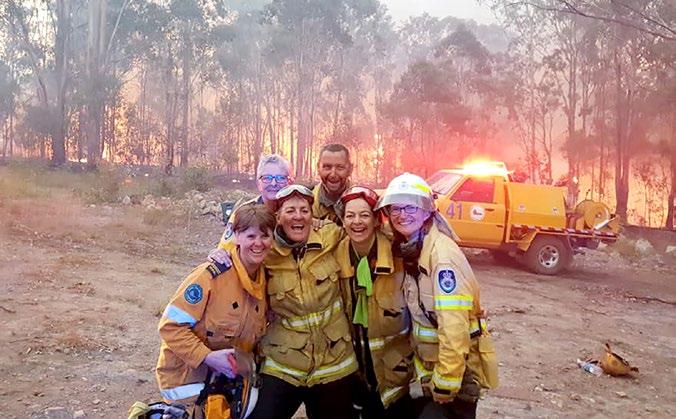
PICTURED: The NSW Rural Fire Service in action during the 2019 bushfires. CREDIT: NSW RFS.
Working towards Reconciliation
Extensive work has been undertaken by Council towards achieving the goals of the Innovate Reconciliation Action Plan (RAP), since it was endorsed in November 2024. The first annual report of actions and outcomes against the RAP was tabled at the July meeting of Council, outlining the work undertaken so far to build relationships, respect, opportunities, and accountable governance. The 18-page report detailed actions taken to achieve the 14 goals of the RAP. To view the full report, go to clarence.nsw.gov.au/rap-report
Relationships
1. Establish and maintain mutually beneficial relationships with Aboriginal and Torres Strait Islander Peoples, communities and organisations. Roundtable meetings and community consultation sessions have been held with Yaegl, Bundjalung and Gumbaynggirr people, to build understanding and communication and work towards increased involvement of First Nations people with local government decision-making.
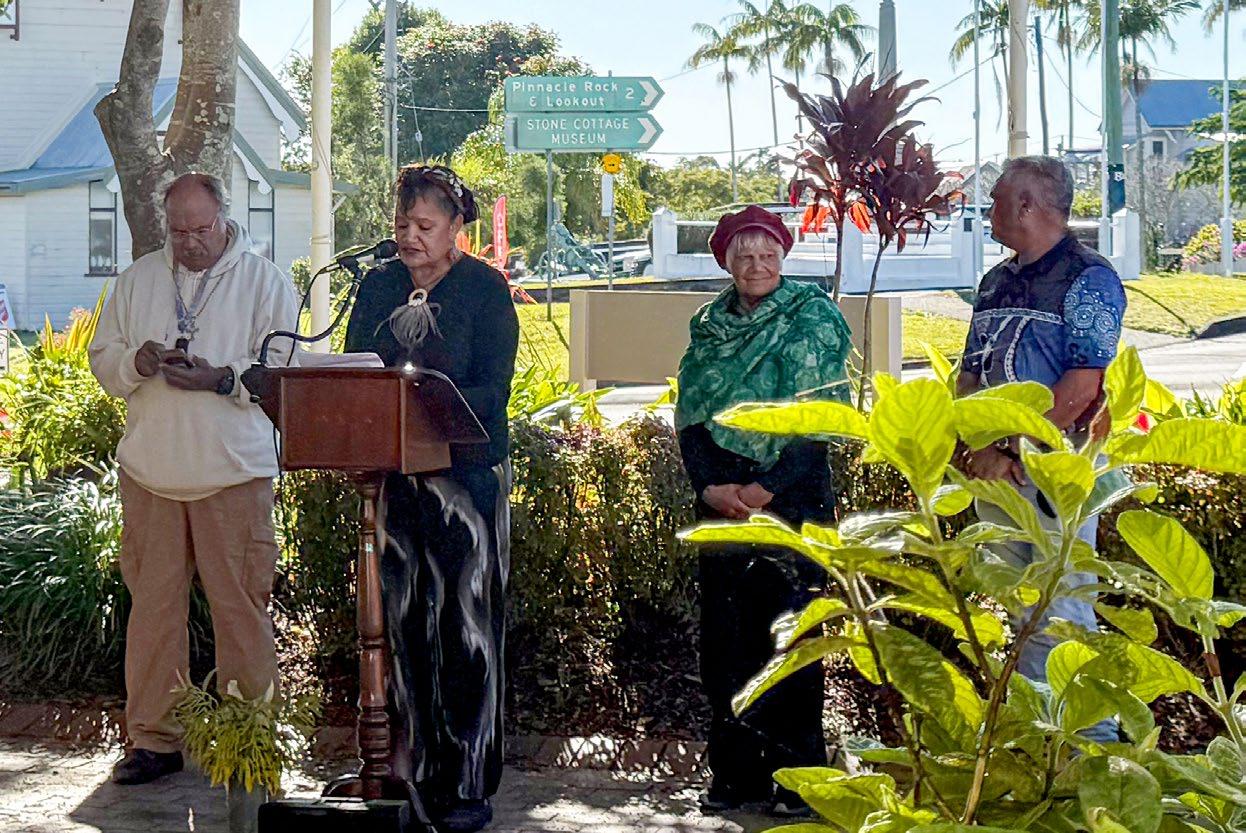
PICTURED: Council staff joined Yaegl Elders to take part in NAIDOC Week including a flag raising ceremony in Maclean.
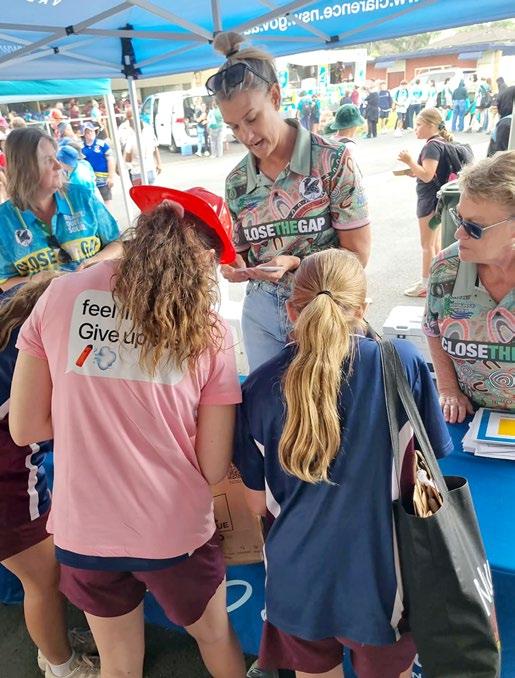
2. Build relationships through celebrating National Reconciliation Week and recognising significant dates. Flag raising ceremonies, morning teas and a lunch were held to celebrate NAIDOC Week. Council also supported Close the Gap celebrations attended by more than 1,500 students from across the Clarence, and staff and Councillors participated in two National Reconciliation Week events in Maclean.
3. Promote reconciliation through our sphere of influence. Days of national significance were promoted and acknowledged publicly and internally including Reconciliation Week, National Sorry Day, and Mabo Day. Clarence magazine featured 11 First Nations stories across four editions. First Nations engagement meetings were held across the Clarence, and a steady increase in participation was achieved across the community roundtable meetings. First Nations staff were invited to meet monthly to share concerns and support one another.
4. Promote positive race relations through antidiscrimination strategies. Mandatory face-to-face training has been scheduled for senior leaders on the effects of racism. Relevant policies and procedures were to be reviewed and communicated to staff in the 2025/2026 year, following engagement with First Nations staff.
Respect
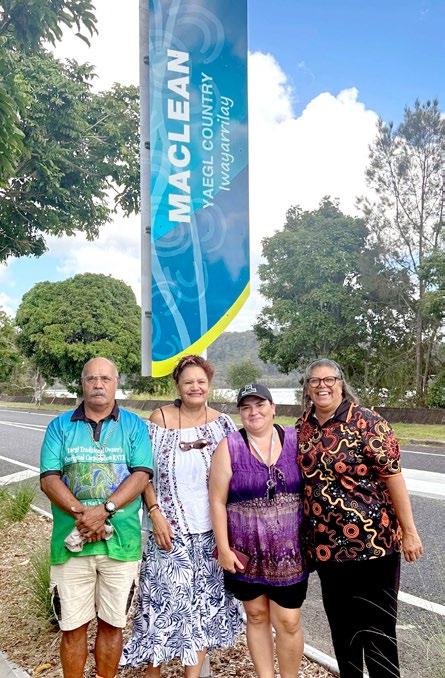
5. Increase understanding and awareness of Aboriginal and Torres Strait Islander cultures, histories and cultural heritage across the wider community. #Yaegl, #Gumbaynggirr and #Bundjalung hashtags were used on more than 1,000 posts on Council’s tourism socials to identify First Nations locations. First Nations language and artwork was incorporated on new signage including 37 at parks and reserves, and 41 at LGA and town entries.
6. Increase understanding, value and recognition of Aboriginal and Torres Strait Islander cultures, histories, knowledge, and rights through cultural learning. Staff cultural learning needs were reviewed, and mandatory cultural awareness training undertaken as part of staff inductions and ongoing training opportunities created for existing staff.
7. Demonstrate respect to Aboriginal and Torres Strait Islander peoples by observing cultural protocols. Community consultation meetings have been held in Yamba, Maclean and Grafton to gain a better understanding of cultural protocols such as Welcome to Country.
8. Build respect for Aboriginal and Torres Strait Islander cultures and histories by celebrating NAIDOC Week. Staff took part in events across NAIDOC Week including flag raising ceremonies, an Elders luncheon and community events.
Opportunities
9. Improve employment outcomes by increasing Aboriginal and Torres Strait Islander recruitment, retention, and professional development. Feedback is being sought to finalise a First Nations Employment Strategy, and a schedule has been created for a review of My Employee Journey documents to identify and remove any barriers to First Nations employment. A workshop was held to connect First Nations community with employment opportunities. Potential to expand a range of other existing strategies has been identified.
10. Increase Aboriginal and Torres Strait Islander supplier diversity to support improved economic and social outcomes. Council has continued to work collaboratively with First Nations to realise business partnerships and has signed a partnership agreement with Mudyala Aboriginal Corporation for the Townsend Collective project. First Nations suppliers were encouraged to attend supplier information sessions, and a grant writing resource is being drafted to support future workshops.
Governance
11. Establish and maintain an effective RAP Working Group (RWG) to drive governance of the RAP. Internal representation includes four First Nations staff and discussions are ongoing to invite external representation. Meetings were held in December and June to monitor and drive RAP implementation, with four more planned prior to the end of June 2026.
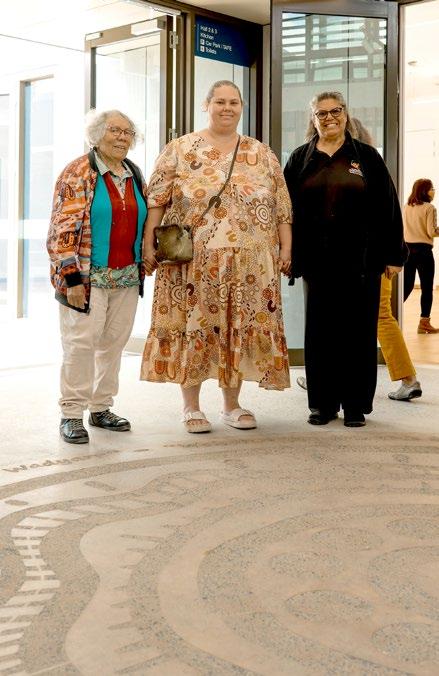
PICTURED: From left; Council staff take part in Close the Gap Day, engaging with community at a public event; Aunty Lenore Parker, artist Anieka Kapeen, and Diane Randall at the opening of the Yamba Library and Community Centre – they are standing beside Anieka Kapeen’s artwork and the Yaegl Acknowledgment to Country, featured in the foyer; and, the new town entry signage for Maclean was part of wider inclusion of First Nations artwork and language.
12. Provide appropriate support for effective implementation of RAP commitments. The RAP was included in the Operational Plan and Budget and RAP outcomes were included in the Community Strategic Plan. An internal RAP champion was appointed, senior leaders were engaged with the RAP by including it quarterly in leadership team meetings, and quarterly working group meetings were established.
13. Build accountability and transparency through reporting RAP achievements, challenges, and learnings both internally and externally. The annual RAP Impact Survey was completed and submitted to Reconciliation Australia, a progress report was tabled to the July 2025 Council meeting, and progress has been publicised in Clarence magazine.
14. Continue our reconciliation journey by developing our next RAP. A meeting was held in June with Reconciliation Australia to discuss the process for registering the next RAP.
Meet the Urban Stormwater Management team
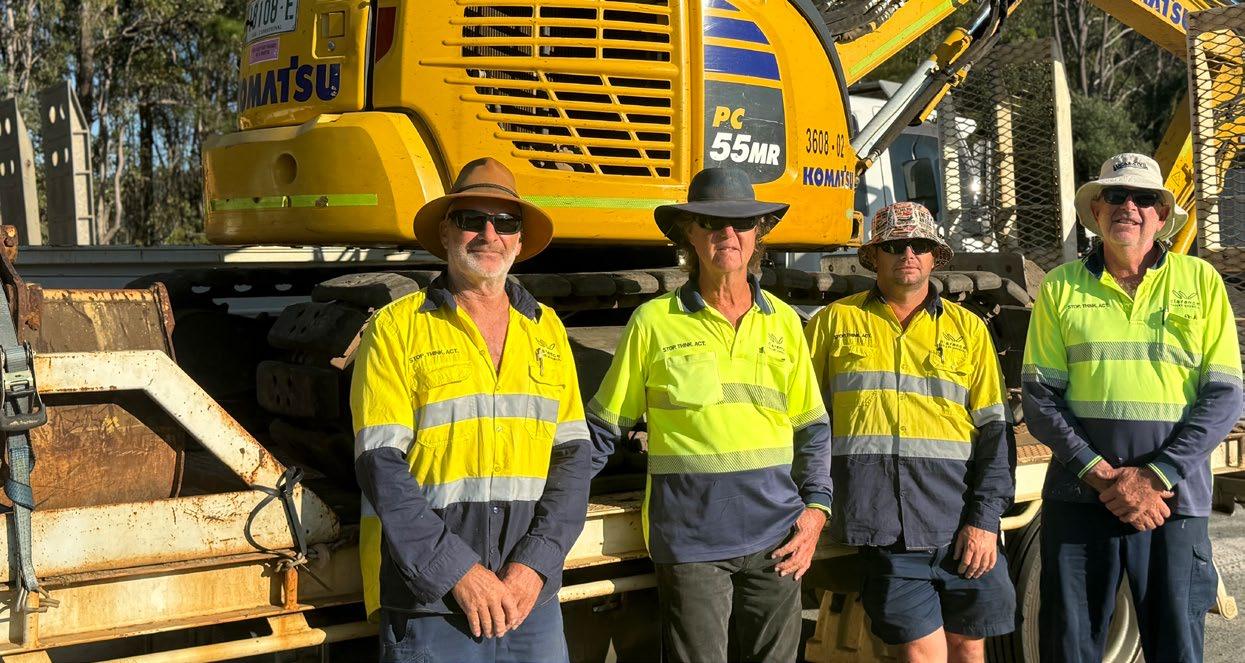
In 2023 a dedicated team was set up to improve drainage in urban areas across the Clarence, in response to strong demand from the community. We catch up with the team responsible for the ongoing program of inspection, cleaning and clearing that has been improving the flood resilience of towns and villages.
Mark, Brock, Al, Ross and Richard all have one thing in common – they love the lifestyle of living in the Clarence Valley and working for Council.
Ross is the team’s primary excavator operator and has been with the local Council for 36 years, starting out with Maclean Shire in 1989. His skills are utilised to carefully recut surface drains with precision, to ensure stormwater flows down the drain instead of ponding and flooding residences.
He is planning retirement next year to spend time fishing, surfing, and “reading the newspaper
cover to cover”.
“It’s been great having the security and stability of working with Council, and the flexibility of having long service leave, sick leave, time off when you need it. And Council has a good reputation of delivering duty of care for its employees,” he said.
“One thing I’ll miss for sure is the camaraderie, the mateship part of it … you become friends, you can’t help it.”
At the other end of the spectrum is fellow excavator operator Brock, who has been with Council just
PICTURED: The Urban Stormwater Management team – Mark, Ross, Brock and Al.
Glenreagh stormwater drains cleaned and cleared
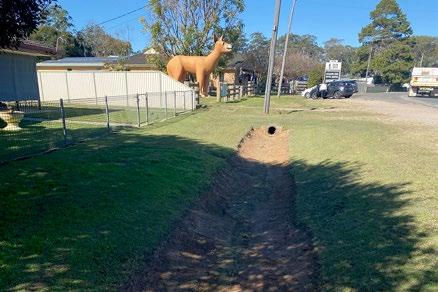
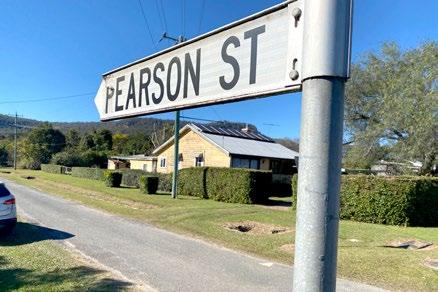
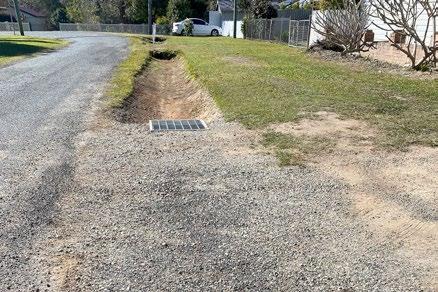
Homes and businesses in the village of Glenreagh will be less likely to flood following a program of urban stormwater drain inspection and clearing, funded by the annual $25 Urban Stormwater Management Charge. Stormwater pipes were inspected by CCTV and cleared using high-pressure water jetting, while surface drains were cleared and reshaped using an excavator guided by a laser level.
under a year. Although he is new to Council, Brock is far from inexperienced, with 26 years of excavator operation under his belt including with Nambucca Shire Council’s bridge crew.
“It all comes down to time in the machine – it takes years and years to be able to do stuff by eye. You pick up skills as you go. You never stop learning, every job is different,” Brock said.
Mark supervises the team and has been with Council for 25 years, also starting his career back in the days of Maclean Shire.
“It’s about where you live – it’s a lifestyle. I didn’t have a trade, and I went down the career path with Council, learning on the job,” he said.
For labourer Richard, starting out with Council just over a year ago marked the start of a new career after 28 years in aquaculture.
Following the devastation of the white spot outbreak, Richard tried his hand at labour contract work on the Pacific Highway upgrade but ended up deciding instead to work for Council.
“Working with Council offered a better lifestyle at the end of the day,” Richard said.
Fellow labourer Al moved to the Clarence to enjoy the warmer weather and waterskiing, after working as a grader driver for Glen Innes Severn Shire Council.
“I like working for Council, there’s a lifestyle involved and a lot of flexibility. You only do overtime if you want to, there are RDOs (regular days off), holidays, sick days, and they’re a great crew to work for here at Clarence Valley Council,” Al said.
PICTURED: Surface drains in Glenreagh village have been cleared and reshaped to prevent flooding during high rainfall, including the length of the main street Coramba Street, Pearson Street, and Shannon Street.
Old Glen Innes Road now safer for motorists
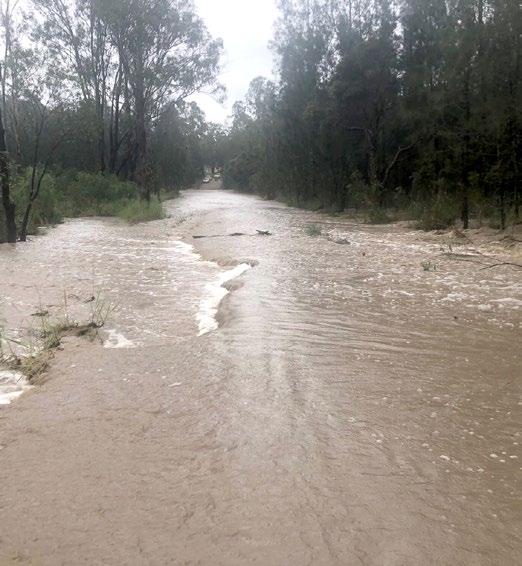
More than nine kilometres of the Old Glen Innes Road has been repaired, making it safer and smoother to travel the back way to Glen Innes or access popular camping and fishing spots along the Boyd River.
The $2 million in repairs involved ripping up damaged and deteriorated sections of sealed road, rebuilding and stabilising the road base, and relaying the bitumen seal. Repairs were funded by Commonwealth-NSW Disaster Recovery Funding Arrangements (DRFA), and the
NSW Regional Emergency Road Repair Fund. The road had been extensively damaged by flooding and heavy rainfall. Meanwhile, a new project on the Armidale Road has commenced, to repair damaged and deteriorated sections from Nymboida to the local government boundary with Armidale Regional Council. The $10 million project involves restoration of more than 30 kilometres of the regional road. It was funded by the DRFA.
PICTURED: Old Glen Innes Road is now smoother and safer for motorists following repairs to damaged sections.
Contract work resumes on State roads
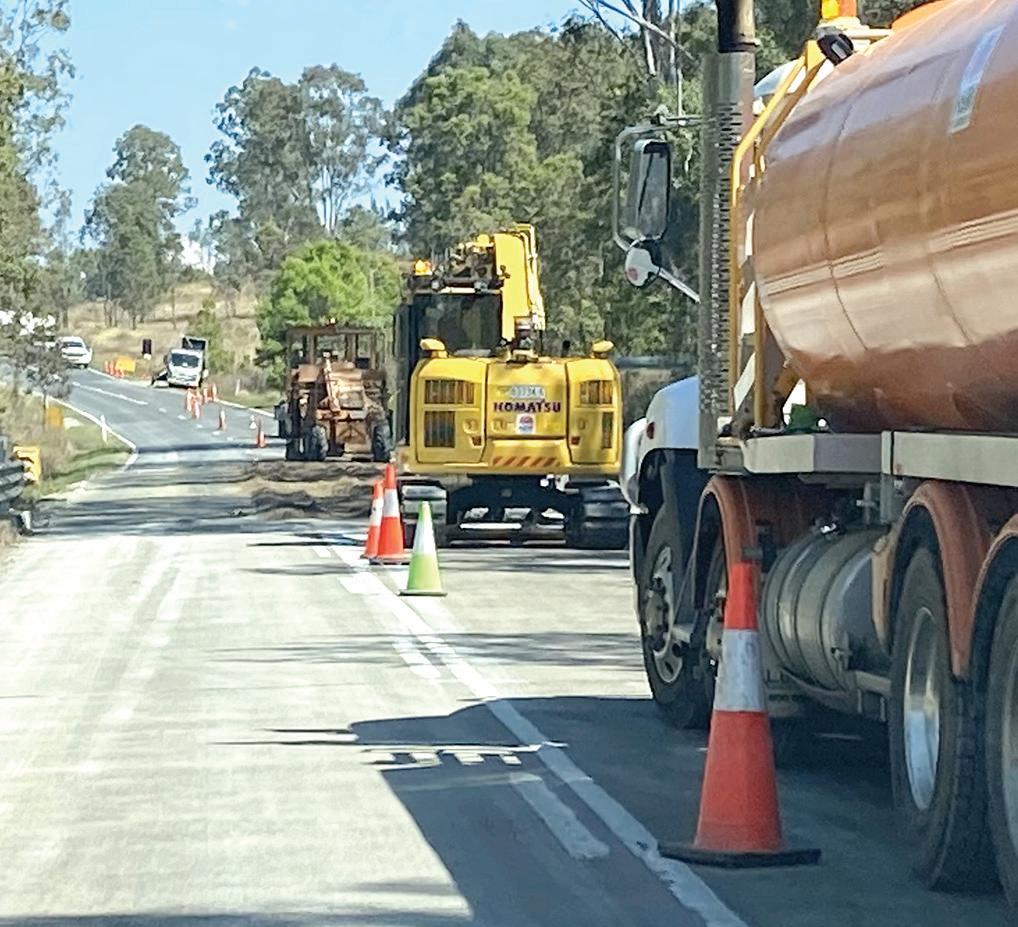
Maintenance work on two major state roads is helping Council improve management efficiencies and support the ongoing delivery of its local road network.
The Gwydir Highway and Summerland Way are state roads managed under the responsibility of the NSW Government. Council maintains these roads on behalf of the NSW Government through a formal contract that delivers operational efficiencies and supports Council’s broader road management program.
This partnership allows Council to optimise resources and reinvest efficiencies into the maintenance of local and regional roads across the Clarence Valley.
Council’s contract to manage these two state roads resumed in July 2025, following a two-year pause while flood recovery works were prioritised across local and regional roads.
Maintenance work on two major state roads is helping Council improve management efficiencies and support the ongoing delivery of its local road network.
PICTURED: Road maintenance work is carried out on the Gwydir Highway, west of Grafton.
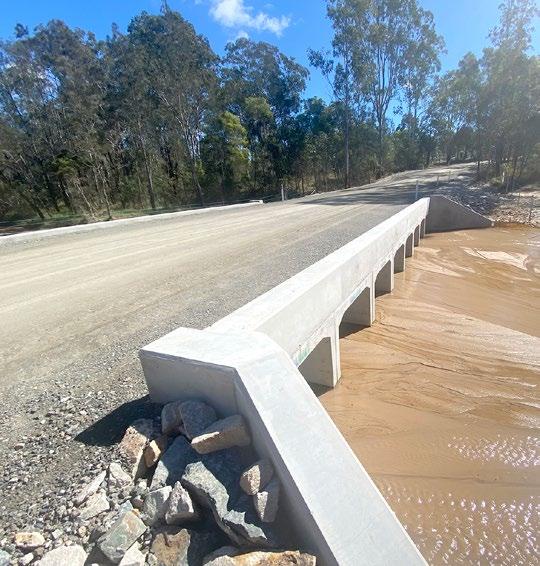
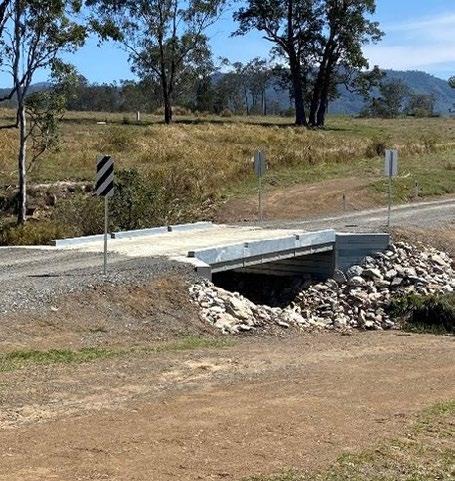
PICTURED: Build-up of sand across the causeway at Sandy Swamp Road created access issues for surrounding residents. The causway has been replaced with a multi-cell box culvert and the road has been raised.
Causeway upgrades bolster flood resilience
More than $3.8 million has been invested to create lasting and resilient solutions on two flood-prone roads.
At the aptly named Sandy Swamp Road near Coutts Crossing, sand would repeatedly build up around and over the causeway, making it uneven and prone to flooding.
The causeway has now been replaced with a multi-cell box culvert that is designed to be self-cleaning, so it doesn’t become blocked with sand. The road has also been raised to make it more flood resilient. The Sandy Swamp project cost $1.8 million.
Local resident Ryven Grant described the project as “life changing” as difficulty with access had been an issue for residents for many years.
“It’s absolutely fantastic – it’s life changing. It has made it accessible including for emergency services and buses because before anyone would have struggled to get over it,” he said.
“For a long time, it was four-wheel drive access only. Now it’s absolutely phenomenal.”
On the Gorge Road at Copmanhurst, the road has been raised, and an additional culvert has been installed to improve drainage, prevent damage to the road, and allow the passage of fish. In the past the road had repeatedly been damaged by flooding. The road is used to access popular camping, fishing and recreation areas at The Gorge. The Gorge project cost just over $2 million.
“It’s absolutely fantastic – it’s life changing. It has made it accessible including for emergency services and buses because before anyone would have struggled to get over it.
— Ryven Grant, Coutts Crossing resident.
Significant progress on bridge projects
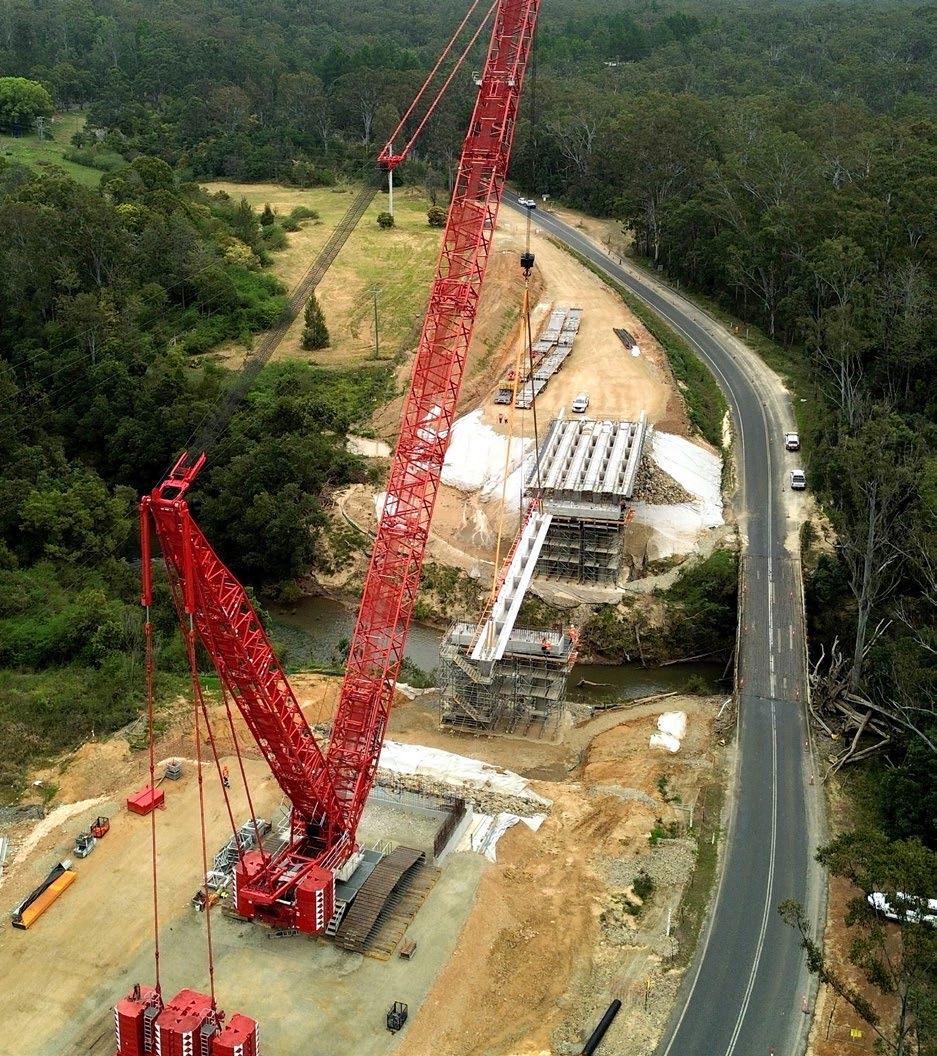
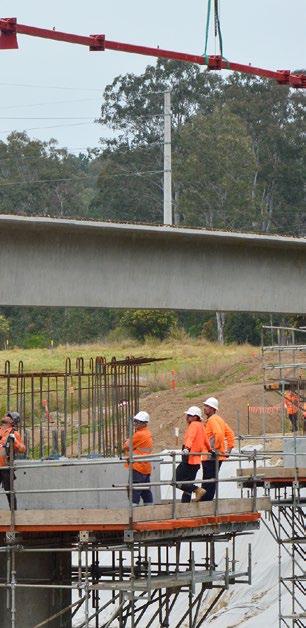
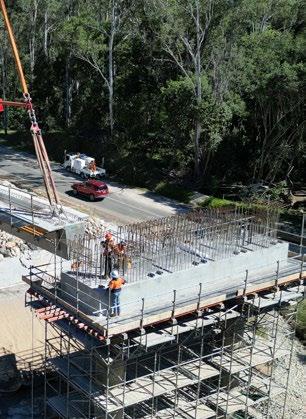
Significant structural work has been completed on the Bluff Bridge on the Orara Way, which is on track to be open to traffic by December 2025.
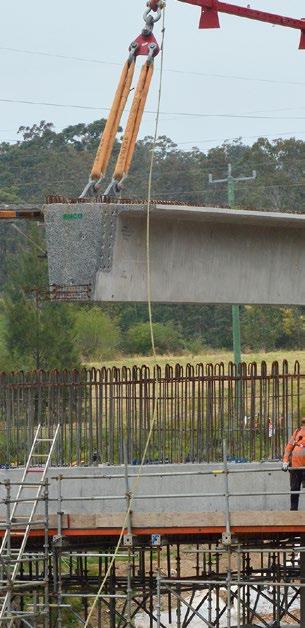
Massive concrete girders were lifted in place by crane in September to form the three spans of the new bridge, which is eight metres higher than the old timber one to provide improved flood immunity. Bridge steelwork was nearing completion as of October 2025 and roadworks were ongoing, to connect the bridge to the existing road.
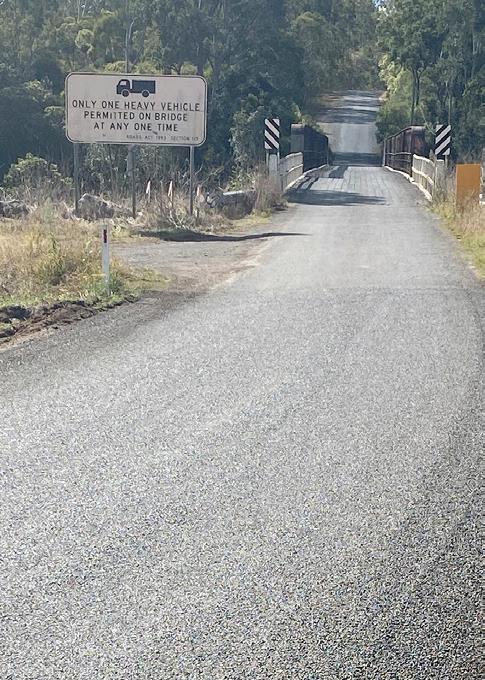
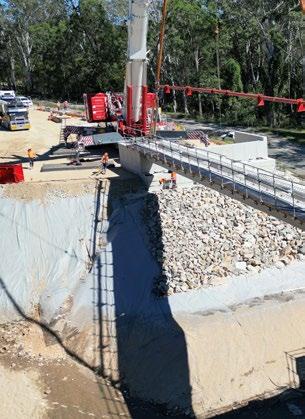
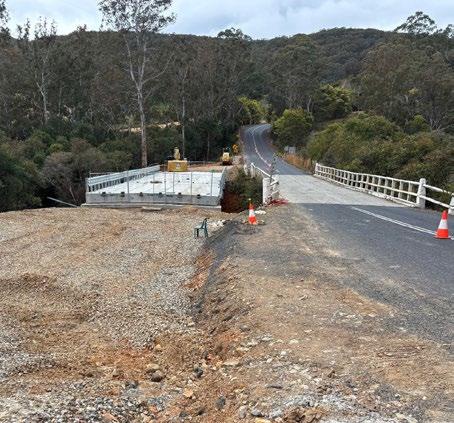
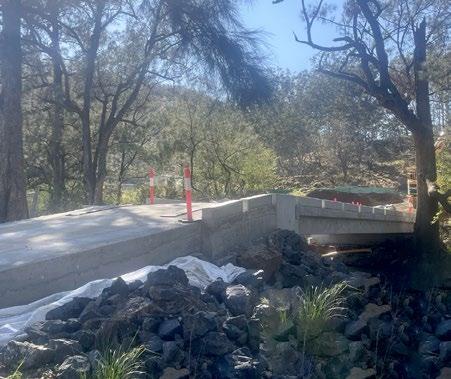
Work on the new bridge over Billys Creek on the Armidale Road is also on track to be completed by December 2025. On Harness Cask Road at Tyringham, 97 kilometres south-west of Grafton, a bridge has been completed over the Nymboida River. Three further small bridges were completed on Coombadjha Road, approximately 80 kilometres north-west of Grafton. Replacement of timber bridges with concrete significantly reduces ongoing inspection and maintainance costs, particularly in remote locations.
Billys Creek, Armidale Road
Work on the new bridge over Billys Creek on the Armidale Road, approximately 70 kilometres southwest of Grafton, is also on track to be completed by December 2025. Precast headstocks, abutment and deck units have been installed, to be followed by work to align the road to the new bridge. The old timber bridge will be demolished once the new one is open.
Harness Cask Road, Tyringham
A new concrete bridge over the Nymboida River has been completed, on Harness Cask Road at Tyringham, 97 kilometres southwest of Grafton on the border with the Bellingen Shire. The new bridge and concrete causeway opened to traffic on 11 September, followed by site remediation and planting of native Lomandra.
Coombadjha Road, Coombadjha
PICTURED: Clockwise from top left; a 600 tonne crane lifts 80-tonne, 38-metre concrete girders into place for the new Bluff Bridge on the Orara Way; and, a new concrete bridge has been completed on Harness Cask Road over the Nymboida River.
Three further small bridges were completed on Coombadjha Road, approximately 80 kilometres northwest of Grafton. Construction utlised use of Inquik precast bridge units to reduce construction time and costs, while maximising safety and durability. Replacement of timber bridges with concrete significantly reduces ongoing inspection and maintainance costs, particularly in remote locations such as Coombadjha.
Say goodbye to Maclean’s bumpiest intersection
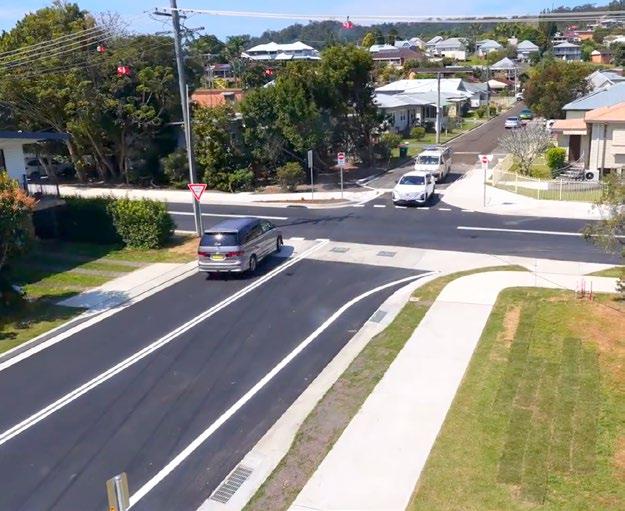
A $1.4 million project to create a lasting solution to the notoriously bumpy McLachlan-Argyle Street intersection in Maclean is now complete.
The project involved replacement of a leaking and deteriorated stormwater drain under the intersection and installation of additional drainage. The road surface was replaced with long-lasting dense-graded asphalt to cope better with heavy traffic loads.
Work was also carried out to improve pedestrian and cyclist access and safety around the Maclean Olympic Pool and nearby shopping precinct. The work included extension of the Argyle Street footpath, creation of a new shared path along McLachlan Street, and creation of a bus bay in Argyle Street to provide a safe drop-off area near the Maclean Olympic Pool.
PICTURED: The McLachlan-Argyle Street intersection has been repaired and upgraded, and new paths constructed in the surrounding area.
To check out a timelapse of the project from start to finish, go to clarence.nsw.gov.au/mclachlan
Town water supply improvements
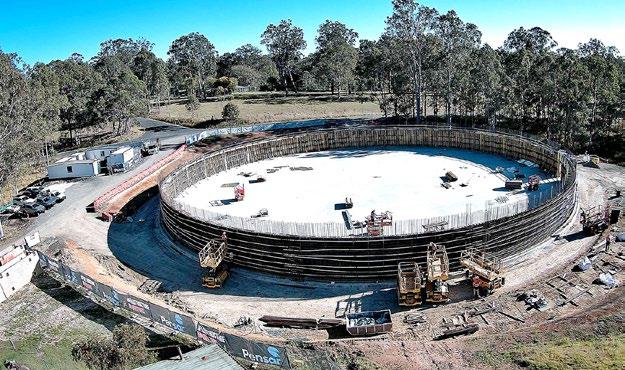
A new water reservoir and chlorine contact tank for town water supplies is under construction .
The 16 megalitre enclosed reservoir at the Rushforth Road Water Treatment Plant is located so pumping wouldn’t be required should a filtration plant be installed at the site, saving on power consumption.
Meanwhile, the current open-air water reservoir was cleaned using a dredge in August 2025, as part of ongoing work to ensure drinking water supplies are clean and safe.
PICTURED: A new water reservoir is being built at the Rushforth Road Water Treatment Plant.
Simplified plan for developer contributions
A single, simplified plan has been created to guide how developments such as new housing will contribute towards the cost of infrastructure like roads, parks and paths across the Clarence over the next 15 years.
The new Clarence Valley Local Infrastructure Contributions Plan 2025 replaces 17 complex, fragmented and out-of-date plans that were created between 1992 and 2011 to determine the contributions that applied to different types of developments in different areas across the Clarence. The new plan was adopted in September and comes into effect from 1 November 2025.
It estimates there will be almost 3,000 new homes built in the Clarence over the next 15 years, with $307 million in additional infrastructure required to service the increasing population. Developers will contribute an average $20,000 per new home in Yamba and $16,152 per dwelling across the rest of the Clarence. Non-residential developments will be charged up to one per cent of the development cost over $200,000. There are a range of exemptions including seniors and
Contribution rates
$/new dwellings
(approx.)
affordable accommodation, secondary dwellings and community facilities. Yamba-Angourie tops the list of anticipated new homes (820), followed by Gulmarrad-Townsend (448), AshbyIluka-Woombah (272), and Junction Hill-Southgate (256).
Anticipated infrastructure costs include $190 million for new roads, $85 million for open spaces and recreational facilities, $17 million for active transport (including paths and crossings), and $15 million for bypass works at Yamba.
Tourism excellence recognised at regional awards
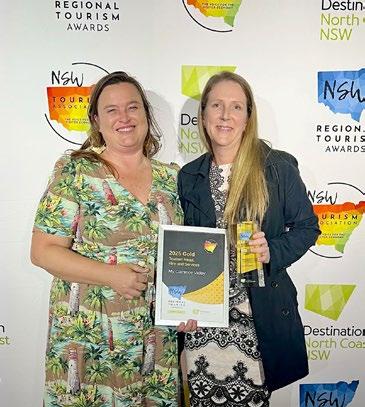
Clarence Valley Council has won gold at the 2025 North Coast Regional Tourism Awards.
Celebrating the region’s most outstanding tourism operators and experiences, the awards showcase excellence, innovation, and resilience across 11 categories. They were announced on 31 July at a ceremony in Byron Bay, by the NSW Tourism Association and Destination North Coast.
Clarence Valley Council’s tourism team, known as My Clarence Valley, was acknowledged with gold in the Tourism Retail, Hire and Services category, for its creative, community-led approach to visitor servicing, sustainable development, and destination marketing.
My Clarence Valley’s submission focused on a sustainable approach to the visitor economy and improvements made to its tourism operations in the past 12 months. These included the adoption of the Clarence Valley Destination Management Plan (2024–2030), the delivery of collaborative Visitor Information Services, the introduction of a business-led Visitor Information Guide and the ongoing commitment to becoming an Eco Certified Destination.
Clarence Valley Mayor Ray Smith said the award recognised the innovative and collaborative approach taken by the team and the community to support the visitor economy.
“This award isn’t just for the My Clarence Valley team, but also for the local businesses that work alongside them and the collaborative effort that contributes to the development of Clarence Valley services and experiences for visitors,” he said.
The next stop for the My Clarence Valley team is the NSW Tourism Awards, where winners will be announced at a gala event on 27 November 2025.
“
This award isn’t just for the My Clarence Valley team, but also for the local businesses that work alongside them and the collaborative effort that contributes to the development of Clarence Valley services and experiences for visitors.
— Clarence Valley Council Mayor Ray Smith.
PICTURED: Tourism Project Officer Jacqui McLeod receives the gold award on behalf of Council, at the North Coast Regional Tourism Awards.
Business awards attract record numbers
The Council-sponsored 2025 Clarence Valley Business Excellence Awards attracted a record number of entries across the Clarence Valley, with Maclean Medical taking out the top honour of Business of the Year.
Awards coordinator John Myers said this year’s awards attracted 63 entries from 50 different businesses across the Clarence Valley, as part of a move to make the event more regionally inclusive. Mr Myers said the strength of nominations reflected the resilience of local businesses despite challenges in recent years.
“What we noted was a lot of businesses have bounced back in a positive way despite what has been happening in the recent past with floods, fires and COVID-19,” he said.
Mayor Ray Smith said it was an honour for Clarence Valley Council to be involved as a major sponsor of this year’s awards.
“I’d like to extend my congratulations to the winners and all businesses that have been involved in this year’s awards that have showcased the excellence, innovation and sustainability of businesses across the Clarence,” Cr Smith said.
And the winners are…
Maclean Medical
y Business of the Year.
y Excellence in Small Business.
y Excellence in Innovation.
Dimattia & Co Group
y Excellence in Retail and Personal Services.
y Outstanding Employer of Choice - 20 Employees and under.
Grafton Jacaranda Festival
y Excellence in Sustainable Tourism.
y Outstanding Visitor Economy Collaboration.
y Outstanding Visitor Experience.
y Excellence in Diversity and Inclusion.
Provenance Propagation
y Excellence in Sustainability.
y Outstanding Young Business Leader – Jack Mooney.
y Excellence in Agriculture & Primary Industries.
HoneyBee Hives
y Excellence in International Business.
y Excellence in Micro Business.
Elite Brands
y Excellence in Business & Professional Services.
y Outstanding Business Leader – 20 Employees and Under – Dan Nikas.
Your Choice Support Services Clarence Valley
y Excellence in Health, Care & Wellness.
Original Sound Lounge
y Excellence in Creative Industries.
Bethany Smith
y Outstanding Trainee/Apprentice of the Year.
Bridge Knowledge Pty Ltd
y Outstanding Employer of Choice - 21 Employees and over.
Clarence Valley Funerals - Sharon Ross
y Outstanding Employee.
Clarence Valley Community InformationNatalie Porter
y Outstanding Young Business Leader.
Lions Club of Maclean Return & Earn
y Outstanding Community Organisation.
Phytocopia Herbal Balms Australia
y Outstanding New Business.
PICTURED: Maclean Medical.
Onsite wastewater inspections to be expanded
An expanded onsite wastewater inspection program is to be rolled out from July 2026, to reduce the risk of pollution of the natural environment and harm to human health.
The new risk-based program was a key recommendation of the Onsite Wastewater Management Strategy 2025, which was adopted by Council in July 2025. Under the old program, funded by an annual fee of around $50 per property, only 3,700 of the 10,000 onsite wastewater systems in the Clarence could be inspected over a 12-year cycle.
The new program has been designed to enable all systems in the Clarence to be inspected, with frequency ranging from every 12 years for low-risk systems, through to annually for very high-risk systems.
A new risk-based annual charges structure is proposed to ensure the expanded program is adequately resourced, ranging from $60 to $100 for domestic systems, and up to $350 for very high risk non-domestic systems.
Risk-based charges and inspection frequency
Better sewage treatment, cleaner river
Construction has commenced on the new North Grafton Sewage Treatment Plant (STP), which will result in positive environmental outcomes for the Clarence River.
The new modern plant will produce much cleaner wastewater. Modern treatment adds chemical processing, ultraviolet disinfection and additional aeration on top of traditional biological processes, resulting in less nutrients in the end product such as nitrogen and phosphorus.
Treated wastewater can also be used to water outdoor areas such as the Grafton racecourse and greyhound track, following
additional processing via filtration and chlorination.
Treated wastewater that is unable to be reused will be discharged into the river at the end of the treatment process.
The new plant will also include 100 kilowatts of solar power to help offset power consumption.
The North Grafton STP is the last plant in the Clarence to be upgraded to modern standards, which is a requirement of strict new environmental regulations. Construction is scheduled to be completed in late 2026, followed by decommissioning and demolition of the old plant.
PICTURED: The Clarence River will benefit from cleaner water discharged from a new modern sewage treatment plant being built in Grafton.
Caring for our river systems
Council is currently undertaking a major review of how best to protect the Clarence River catchment into the future from a range of threats including climate change.
Stage 1 of the five-stage plan has been completed – a scoping study that outlines the current knowledge on issues impacting the river system, including input from the community.
The top threats to the health of the river and estuary system include impacts of acid sulphate soils, bank erosion, habitat degradation and clearing, invasive species, sediment and nutrient runoff, blackwater (low oxygen levels following flooding), and climate change.
Stage 2 is underway, involving
We are currently at Stage 2 of the Clarence River Estuary Coastal Management Plan (CMP)
Stage 1 develop scoping study.
Stage 2 determine risks, vulnerabilities and opportunities.
Stage 3 identify and evaluate options.
Stage 4 prepare, exhibit, finalise, certify and adopt the CMP.
Stage 5 implement, monitor, evaluate and report.
detailed studies to expand on existing knowledge, including a review of coastal planning controls that may help address threats, and an investigation into the impacts of coastal inundation including tides and storm surges.
Community input will be sought again during stages 3 and 4.
Greening our urban environment
More trees will be planted in urban areas across the Clarence including local native species, as part of a strategy to increase canopy cover and boost social and environmental outcomes. The Urban Tree Strategy was adopted in June, outlining the steps required to increase canopy cover across the diverse 10,441 square kilometre area of the Clarence Valley. It emphasises the importance of protecting heritage trees, including the iconic jacarandas, while also promoting the use of local native species.
DID YOU KNOW?
The Clarence River is the largest coastal catchment in NSW, with an area of more than 2.2 million hectares.
Benefits of increased canopy cover include:
y climate resilience - urban trees help mitigate climate change
y infrastructure protection - tree canopies reduce stormwater runoff
y operational efficiency - cooler urban environments reduce energy costs
y community well-being - green spaces promote mental and physical health, increase property values, and foster social cohesion.
Online plant buyers beware
Online marketplaces can be a fantastic way of picking up a bargain or seeking out unusual items that aren’t in local stores. But when it comes to plants, it’s a classic case of buyer beware.
Council Biosecurity Team Leader Shane Landrigan said that although many species may have an attractive appearance and seem like an ideal plant for the home garden, dam or pond, you could be taking on more than you bargained for.
“Online trading websites, particularly Facebook Marketplace, are notorious for people illegally selling plants that are actually highly invasive weed species. By buying a plant without knowing exactly what it is, you could be inviting an unwanted pest into your own backyard,” he said.
“These weeds then grow and spread rapidly, taking over large areas of land or waterways, wreaking havoc by outcompeting native plant species and reducing habitat for native animals. Outbreaks can also impact farming, agriculture and recreation. Heavy fines apply to selling these species.”
Mr Landrigan said there were a range of resources that could be helpful in identifying whether a plant was an invasive weed, such as the Weeds of the North Coast publication, and the Department of Primary Industries NSW WeedWise website, weeds.dpi.nsw.gov.au.
He said, however, that if in doubt it was always safer to buy garden plants from a reputable nursery.
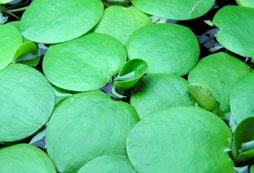
1 Frogbit: fast-growing floating freshwater weed forms dense mats across the water surface, outcompeting native plants, impacting aquatic animals and choking waterways.
2 Most Opuntia cactus species: listed as invasive weeds, each varying greatly in appearance. Pictured is ‘bunny ears cactus’ which can form dense thickets that impact native plants, recreation, and agriculture.
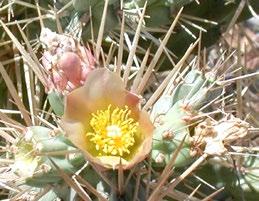
3 All Cylindropuntia cactus species: pictured is the Brownspined Hudson Pear, which has spines up to seven centimetres long that cause painful injuries to people and animals and can even damage car tyres.
4 All Austrocylindropuntia cactus species: three different cacti of this species are listed as invasive weeds. Pictured is the cane cactus (also known as coral cactus or prickly pear); forms dense thickets and can injure people and animals.
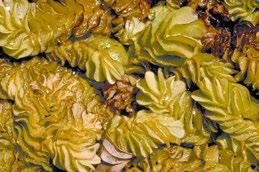
5 Salvinia: forms dense mats smothering and blocking waterways, interfering with flood gates and impacting water quality, aquatic life, agriculture and recreation.
CREDIT: All images courtesy NSW DPI.
Early detection is key
Report an invasive plant via ‘Report It’ on Council’s website or by contacting a weeds officer on 6643 0200. Scan the QR code or got to clarence.nsw.gov.au/Environment/Biosecurity/Invasive-Plants where you report an invasive plant, access more information and the Weeds of the North Coast guide. You can also report weeds directly to the NSW DPI Biosecurity Helpline on 1800 680 244.
Tomorrow’s green heroes get realworld experience
Year 12 student Logan Cone isn’t the sort of person who wants to be stuck indoors all day. That’s why he’s been helping to plant hundreds of trees on conservation sites throughout the area and assisting with weed management, as part of work experience with Council.
Logan said his two weeks of work experience during July was part of his TAFE Certificate II in Conservation and Ecosystem Management, and he hoped it would pave the way to an ongoing career.
“I want to go into exactly this work here. I don’t like being in an office, I like being outdoors with plants and animals,” he said.
“The work experience with Council has been great. It’s a lot of labour but it’s not too intensive, and it’s flexible too – we can go to multiple sites in a day.”
Logan was one of two work experience students during July working with Council’s biosecurity team as part of its bush regeneration work that is carried out alongside local Landcare groups.
Campaign urges drivers to slow down in koala hotspots
Drivers in the Clarence were urged to slow down to protect koalas crossing the road from July to September, as part of an online awareness campaign.
The social media campaign targeted local motorists, urging them to be on the lookout for koalas crossing the road, especially at known hotspots at Ashby, Lawrence, Eatonsville and Waterview Heights. Across northern NSW the number of koala deaths on roads climbs during July and August and peaks in September when the breeding season begins.
Variable messaging signs were also used in koala strike hotspots, which also log vehicle speeds and numbers.
Long-range EVs trial
Two fully electric SUV-style vehicles with long-range capacity of more than 450 kilometres were trialled by Council for two weeks in September as part of a partnership with the Northern Rivers Joint Organisation (NRJO). The trial was undertaken with a view to assess the suitability of such a vehicle being incorporated into Council’s fleet. Costs were covered by NRJO.
PICTURED: Year 12 McAuley Catholic College student Logan Cone gets some real-world experience in conservation and ecosystem management during work experience with Council.
Elders welcome community precinct to Yaegl land
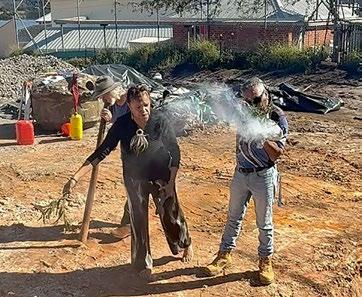
A smoking ceremony was conducted by Yaegl Elders as the foundations were laid for the Maclean Community Precinct in July. So what is a smoking ceremony about? Yaegl Elders Aboriginal Corporation Chairperson Glenda MacPhail explains.
“Many people may not be too familiar with a smoking ceremony, but this practice happens regularly within our Aboriginal communities all over Australia.
Smoking ceremony is performed by local sovereign people to welcome new events and visitors into a sacred place if they are not from that particular area. The smoking ceremony was performed at the Maclean Community Precinct on 7 July by Shane McLeay and myself with accompanying didg played by Michael Cuming.
The smoking ceremony was and is basically a blessing from the Yaegl people to all… this is our Yaegl country and as a tribe we have always lived here.
Smoking ceremonies have been an integral part of Aboriginal culture for millennia, weaving together the spiritual, physical, and social threads of Indigenous Australian life. These ancient rituals, still practised today, hold a deep significance
that goes beyond the visible act of burning native plants. They are a powerful means of cleansing, healing, and connecting with the land, the spirits, and the community.
At the core of every smoking ceremony is the use of smoke, born from the smouldering of carefully chosen native plants. This smoke is believed to possess both spiritual and physical cleansing properties, capable of warding off negative energies, purifying people and spaces, and promoting the overall wellbeing of the community.
My nephew Shane and I were so proud and very grateful that we have been acknowledged by Clarence Valley Council to perform such a gracious act.”
School holiday fun
“Many people may not be too familiar with a smoking ceremony, but this practice happens regularly within our Aboriginal communities all over Australia. — Glenda MacPhail, Chairperson Yaegl Elders Aboriginal Corporation
PICTURED: Yaegl Elders Glenda MacPhail and Shane McLeay perform a smoking ceremony accompanied by Michael Cumming on didgeridoo, at the site of the new Maclean Community Precinct on 7 July.
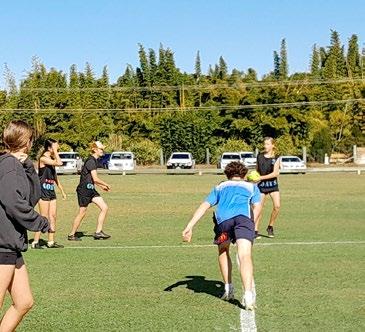
A massive two weeks of free fun and activities were held for young people throughout the July school holidays. A total of 18 events were held at locations across the Clarence Valley from Iluka to Glenreagh, including art and craft workshops, NAIDOC community fun days, laser skirmish, skate and create workshops, surfing and skating, drumming workshops and activities, and much more. Council proudly sponsors the Clarence Youth program of school holiday events.
PICTURED: Touch football was among the many events hosted by Council during the July school holidays.
Angus supported to compete at World Triathlon
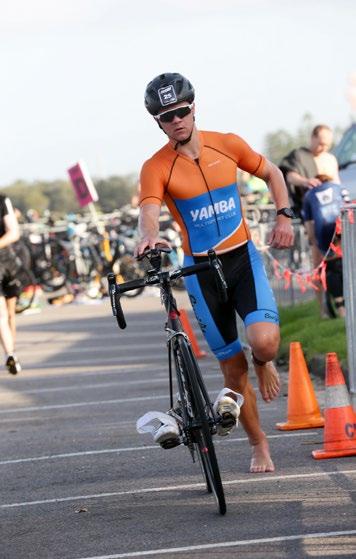
Ashby 17-year-old Angus Ogilvie has been selected to compete in his first international triathlon competition, with financial support through Council’s Cultural and Sports Trust Fund.
The Cultural and Sports Trust Fund offers financial support to individuals under 19 years to help cover costs of participating in national and international events.
Angus was among the latest successful applicants for support, receiving $500 to help him represent Australia at the World Triathlon Age Group Championships in Wollongong from 15-19 October 2025.
The local teen said he was excited to be selected for his first international event and proud as a rural athlete to make the Australian team. He said he was grateful for financial support from Council to help cover costs of competing.
Emergency beacon for Turners Beach
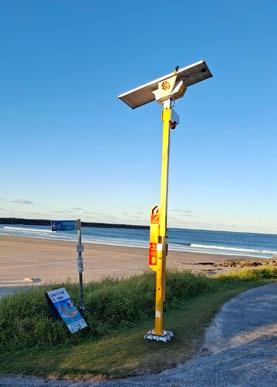
An emergency response beacon has been installed at Turners Beach to fasttrack incident reporting and response.
The beacon is the first of its kind in the Clarence Valley and enables members of the public to report an incident directly to Surf Life Saving NSW (SLSNSW) State Operations Centre, which can quickly coordinate a response and provide instructions and support to the person reporting the incident.
Council gave its agreement and support in June for SLSNSW to install the emergency beacon at Flinders Park, which is Council-managed Crown land.
The NSW Government is funding the roll-out of Emergency Response Beacons (ERBs) at identified “black spot” beach locations throughout NSW, where the risks of serious incidents such as drownings are considered high and where the beach is not patrolled year-round by surf lifesavers.
Council would also like to congratulate the following athletes who received $300 through the Cultural and Sports Trust Fund to represent at a national level:
y Stella Skeels and Hugh Fletcher - 2025 Hockey Australia Girls Under 14s national championships in Brisbane 5-11 October 2025.
y Nash Wall - Boxing Australia’s Australian School Aged Championships in Marrara, Northern Territory, from 30 September to 3 October 2025.
y Bridget Wattersstudent official at the School Sport Australia Championships, to referee the Under 15 Championships in Ballarat, Victoria, from 25-30 October 2025.
PICTURED: Angus Ogilvie is among the latest recipients of support through the Cultural and Sports Trust Fund.
Cultural celebration gains support through Council donation
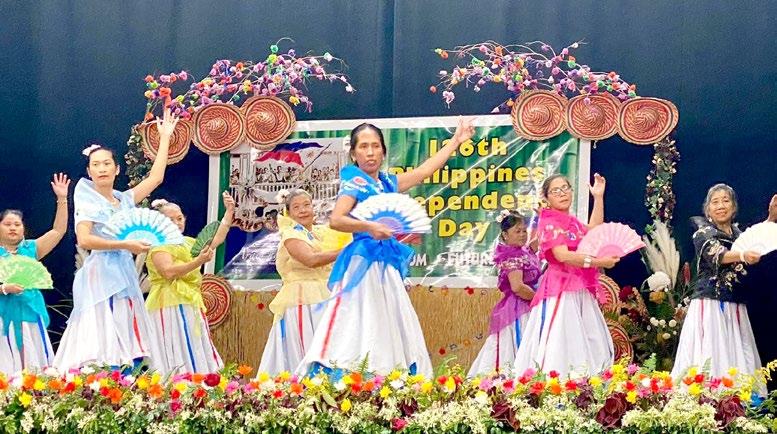
PICTURED: Next year’s local Philippine Independence Day celebration has received support through the Community Initiatives Program.
The Clarence Valley Filipino-Australian Community Club is one of nine local groups to receive support from Council through Round 1 of the 2025/2026 Community Initiatives Program.
The club has been awarded $2,000 towards next year’s 128th Philippine Independence Day in June – a colourful celebration of food, dance and culture that marks the nation’s freedom from colonial Spanish rule in 1898.
Club President Nancy Crook said the Clarence Filipino community of around 150-200 people was proud to share its culture with the wider community through the annual commemoration.
“Filipino culture is about celebrating love, family, and food. Filipinos are
friendly, accommodating and willing to share what we have, even if we don’t have much,” she said.
“The Independence Day celebrations are important to show appreciation for our native leaders, their courage and bravery in gaining independence. It honours their sacrifices and love for people and country. Without this, we would still be under the influence of the colonisers.”
The Community Initiatives Program supports not-for-profit organisations to produce new or continuing projects and initiatives for the benefit of the Clarence Valley community. It includes direct contributions as well as waivers of rates and fees.
For further information of the Community Initiatives Program, go to clarence.nsw.gov.au/communityinitiatives
The other community groups to receive support through Round 1 of the Community Initiatives Program were:
y Alumy Creek Reserve Land Manager –safety repairs to school building
y Glenreagh P&C Association – paint and landscaping of kids’ cubby and play area
y Grafton Camera Club – room hire for monthly meetings
y Grafton Senior Citizens Inc – room hire for group activities
y Grafton District Services Bowling Club Inc – sponsorship of Invitational Triples Carnival
y Maclean Rotary Club Inc – centre hire to host two-day RYDA program
y Rotary Club of Yamba – three community events in Yamba
y Maclean & District Orchid Society Inc – Spring and Autumn shows.
Supporting 50 years of NAIDOC
Clarence Valley Council was proud to once again support NAIDOC Week on 6–13 July, now in its 50th year of recognising and uplifting the voices, achievements and culture of First Nations people.
Council hosted flag raising events in Grafton and Maclean and supported a range of events including community fun days in Yamba and Grafton, a services day in Baryulgil, a morning tea with Elders in Grafton, and a memorial golf day in Maclean.
Clarence Valley Mayor Ray Smith said he believed it was important for Council to take an active role in supporting First Nations people.
“Local government plays a key role in walking alongside community – supporting cultural celebration, listening with intent, and amplifying the voices that have too often been unheard,” he said.
“Every story shared, every tradition upheld, every moment of resilience recognised – these are not only acts of remembrance, but steps towards lasting change.”
Council also joined with local First Nations people to celebrate Reconciliation Week on 5 August, with a tour of the Clarence Valley Indigenous Art Award Exhibition at Grafton Regional Gallery.
Listening to First Nations
Council is hosting ongoing workshops with Clarence Valley First Nations communities to work towards increased cooperation and involvement in Council decision-making.
Three meetings with Yaegl, Bundjalung and Gumbaynggirr communities were held throughout February, for Council to gain an increased understanding of how we can better engage with each community and involve them in council decisions.
Three more meetings were held in August–September, with a focus on listening to communities on cultural protocols such as Welcome to Country and Men’s and Women’s Business.
A further three workshops are planned for September–October, to take findings from the earlier meetings back to the community for more discussion and feedback.
Further dates for ongoing workshops are to be announced.
The workshops are part of Council’s ongoing efforts towards reconciliation, outlined by the Innovate Reconciliation Action Plan (see page 17 for more).
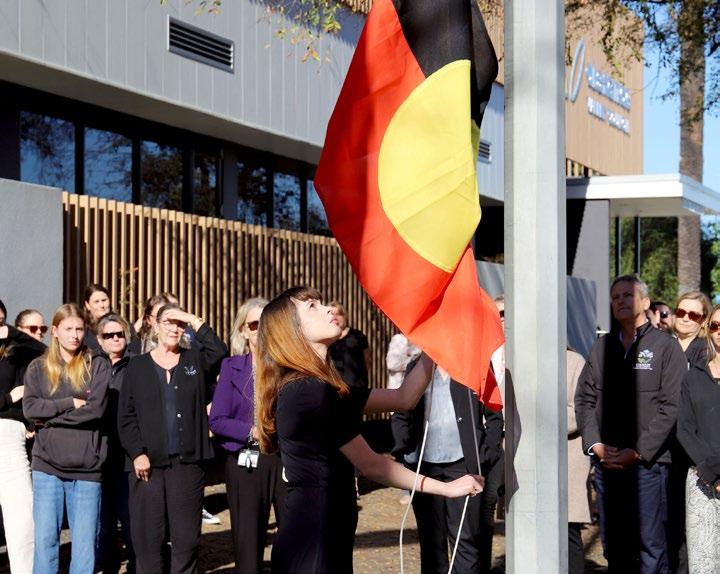
PICTURED: Council First Nations staff member Miah Bell raises the Aboriginal flag in a ceremony in Grafton on 7 July.
Youth program takes out State award
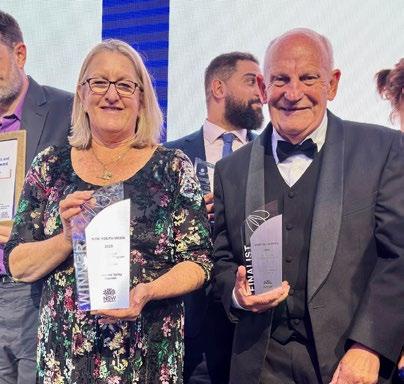
Council’s Youth Week program has taken out a top honour at the NSW Local Government Awards.
General Manager Laura Black proudly accepted the Best Local Youth Week Program award on behalf of all who were involved at a ceremony held in Sydney on 7 August.
“This year’s success was the result of collaboration with 20 local services and groups to deliver a vibrant, inclusive calendar of 16 events across seven locations, which gave more than 1,000 young people a platform to connect, create and thrive,” Ms Black said.
Clarence magazine was also recognised as a finalist in the RH Dougherty Awards –Events and Communications award.
Ms Black acknowledged the outstanding work of former Youth Community Development Officer Allira Newton, whose dedication to delivering inclusive youthfocussed programs and strengthening partnerships was instrumental in achieving the Best Local Youth Week Program award.
Ms Black also thanked Council’s partners in delivering the Youth Week
program: Bulgarr Ngaru Aboriginal Medical Service Youth Team, New School of Arts, Headspace, Social Futures, PCYC, Council library and Clarence Regional Aquatic Centre teams, and Council’s many committed local contractors.
Highlights of the award-winning Youth Week program included a pool party, youth market, basketball tournament, skate and scooter competition, Art in the Park, and a PCYC Open Day.
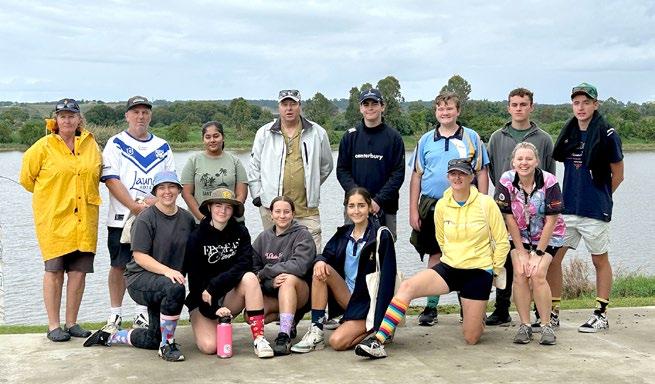
A standout event was the Youth Run for Mental Health, driven by Clarence Valley Anglican School students as part of their involvement in Council’s Youth Voice Pilot Program. The event was an effort by participants to spark conversations and destigmatise mental health.
The youth market, inspired by feedback from young people, supported nine young entrepreneurs to showcase their talents to thousands, while the Live ‘n’ Loud music event attracted a crowd of more than 500 and gave 13 young performers valuable exposure and opportunities.
PICTURED: From left; Clarence Valley Council General Manager Laura Black and Clarence Mayor Ray Smith with the Best Local Youth Week Program award at the NSW Local Government Awards in Sydney; and, the Youth Run for Mental Health was driven by Clarence Valley Anglican School students alongside Council’s former Youth Community Development Officer Allira Newton (front right), as part of their involvement in Council’s Youth Voice Pilot Program.
Mayor welcomes significant achievements in latest progress report
Clarence Valley Mayor Ray Smith has welcomed the results of the bi-annual Delivery Program Progress Report, saying it showed significant progress towards realising the four-year direction set by Councillors.
The progress report is undertaken twice a year to inform councillors how Council is tracking on achieving the outcomes of the Delivery Program that is created by councillors at the start of their term.
“There was significant progress made from January to June this year on achieving the objectives set out by the Delivery Program, across all five pillars of the Community Strategic Plan – Society, Infrastructure, Economy, Environment, and Leadership,” Cr Smith said.
“A few of the most visible achievements included completion of the Clarence Regional Aquatic Centre, the new Yamba Library and Community Centre was
largely finished and set for opening, an immense amount of flood recovery work was done to repair our damaged transport network, and Clarence magazine was redesigned and relaunched resulting in a significant boost in online readership of this publication that supports transparency by reporting on work being undertaken.
“But there’s also an incredible amount of work that has been done behind the scenes that is vital to achieving positive outcomes for the community. Just over $100,000 was invested in sponsoring events to generate an estimated $16.5 million in economic benefit, artificial intelligence was integrated to fasttrack disaster assessments and funding applications, and internal information technology systems were upgraded to enhance staff performance, just to name a few.”
PICTURED: From left, completion of the Clarence Regional Aquatic Centre and the new Yamba Library and Community Centre was among the achievements highlighted in the six-monthly Delivery Program Progress Report.
The full Delivery Program Progress Report, can be found on the Integrated Planning and Reporting page on Council's website, go to clarence.nsw.gov.au/IPR
Internal audits help improve how we do things
Two internal audits of Council processes were completed to determine what was being done well and what could be improved across two areas of Council operations. The audit process is overseen by the Audit Risk and Improvement Committee (ARIC).
The Procurement, Contract Management and Tender Process audit was completed in July. It found that Council has a good system in place to monitor financials such as raising and receiving purchase orders and has a clear system to ensure different staff understand financial limits that apply to them with regards to procurements and approvals.
The findings indicated that there was a need to: review and update sustainable procurement procedures; develop contract management and procurement frameworks; improve procurement and contract management procedures; undertake induction and refresher training on procurement and contract management procedures; and develop spending analysis reporting.
The Enforcement and Compliance Process audit was completed in August. It found that skills and knowledge of staff were very high in relation to legislation and compliance requirements, and staff showed a willingness to improve and were open to feedback.
The findings indicated a need to: develop an enforcement and compliance framework; automate the issue of fines and notices to replace paper-based processes; review and update the property and rating module in Council’s corporate system; and review and update the enforcement policy.
Students grill mayor on hot topics
High school students from four Clarence Valley schools were given the chance to grill the mayor directly on issues of importance to them, as part of the Youth Voices Pilot Program. Mayor Ray Smith visited South Grafton High School, Maclean High School, Clarence Valley Anglican School (CVAS) and Grafton High School in September, fielding a wide range of questions from students.
Some of the questions included:
y What are Council’s plans for the South Grafton Indoor Pool complex?
y What is being done to improve flood infrastructure?
y How is Council planning to improve its sustainability?
y How is funding allocated to different projects and jobs?
y Can we have more parks designed for kids over the age of 10, more wheelchair accessible playgrounds, a walking track along the southern bank of the Clarence, and a dedicated hydrotherapy pool for disability therapy?
y What is being done to improve drainage on sporting fields?
PICTURED: Students at Clarence Valley Anglican School ask Mayor Ray Smith questions on topics of interest.
Casey and Zoe graduate apprenticeships
Casey and Zoe are among the latest graduates of Council’s award-winning Grow Your Own Apprenticeship and Traineeship Program, recently completing their apprenticeships to take on permanent roles.
Zoe, 20, and Casey, 24, completed their Certificate III in Horticulture attending TAFE one day per week while working as apprentices with Council.
“I saw the advertisement for it, and it was something I always wanted to do. I’d already done Certificate II in Horticulture, and I thought with Council it would be a good way to do it, plenty of opportunity,” Zoe said.
The work of a field operator can vary greatly day to day, including planting and maintenance of gardens, weed control, collecting green waste, mowing, whipper snipping, and cleaning and maintenance of public facilities.
“It’s fun being able to go out with different teams, there’s good variety,
different scenery,” Casey said.
Zoe and Casey said they were well supported throughout the apprenticeship program, which aimed to maximise retention rates and strengthen Council’s skilled workforce.
Earlier in 2025, the program won the People, Workplace, Wellbeing - Under 150K Population award at the Local Government Professionals Australia Awards.
The program was recognised for its support of the wellbeing of trainees and apprentices across the organisation through structured health and learning sessions, achieving a 12-month retention rate of 99.5 per cent – well above the NSW average of 67 per cent.
Meanwhile, Council advertised three further vacancies in the program in September, calling for applications from hopeful apprentice plumbers, trainees sewer treatment plant, and trainees water treatment plant.
“It’s fun being able to go out with different teams, there’s good variety, different scenery.
PICTURED: Zoe (in pink) and Casey (in yellow) enjoy working outdoors at See Park. They are the latest graduates of Council’s award-winning apprentice and trainee program.
Your Clarence. Your conversation. Your future. Have your say.
Community engagement plays an important role in building communities and helping to shape better outcomes for the future of our region.
Get involved by registering with Clarence Conversations – stay informed and find out how you can have your say
Clarence Conversations allows you to take part in community engagement. Stay up to date with current projects and share your feedback – either online or in person at a drop-in information session.
Simply register online and sign up for the Community Engagement eNewsletter to receive the latest updates and opportunities to get involved. Scan the QR code below for more details and to register.
Join the conversation with Clarence Conversations
clarenceconversations.com.au
Other ways to stay informed and have your say:
Follow us on facebook: facebook.com/clarencevalleycouncil
Subscribe to Council’s weekly eNewsletter, Noticeboard: clarence.nsw.gov.au/noticeboard
View items currently on public exhibition and make a submission: clarence.nsw.gov.au/on-exhibition
y Look out for updates in The Independent newspaper and tune in to local radio.
y Visit our customer service centres in Grafton or Maclean
y Drop into your local library
y Attend Council meetings and public forums to hear updates and share your views – public forums are held before each Council meeting.
For more information visit Council’s website, clarence.nsw.gov.au
We asked. You answered. We listened.
Investing in environmental outcomes
A Special Variation to rates, averaging $35 per rateable property per year, has been proposed in response to community views that action was needed to protect and enhance the natural environment. This recommendation was established through extensive community consultation.
Strategies and management plans
Council has adopted 15 strategies and management plans that contain actions to complete environmental projects that council has not had the funds or resources to deliver. These actions were identified in consultation with the community.
An internal review of the plans and strategies identified 113 environmental activities which have been prioritised into 75 projects for implementation over a 10-year period. This included 32 actions from the Clarence Valley Coastline Coastal Management Program, and 22 actions under the Biodiversity Strategy 2020-2025.
Community survey
A community survey of 526 Clarence Valley residents in November 2024 revealed the issue of greatest importance was the natural environment (65%).
The majority of survey respondents also indicated climate change was having an impact on the area (55%) and action was required to address the effects including education (62%), protection of biodiversity (62%), conservation of natural resources (54%), and reduction of pollution (52%).
Community Strategic Plan review
The vast majority of people strongly agreed with valuing, respecting and actively participating in the care and management of the Clarence Valley’s natural environment.
Most people strongly agreed with creating a place where people are healthy, safe, connected and in harmony with the natural environment to retain and improve the quality of community life.
Feedback was collected over a six-week period from August to October 2024.
y Informed via website, social media, e-newsletter, newspaper (212,712 reach)
y Engagement hub on Clarence Conversations (6107 informed visitors)
y Online survey via Clarence Conversations (68 completed surveys)
y Face-to-face drop-in sessions (11 face-to-face sessions)
y Dot voting (321 votes)
y Focus groups with stakeholders (4 focus groups)
y Direct – letters and email (3 received)
Thanks for your feedback.
Informing the community
Further community engagement was completed in September-October 2025, to inform the community about the proposed Special Variation to rates, how it may impact rates, and the benefits of delivery of environmental projects across the Clarence. This engagement included:
y Clarence Conversations webpage
y local media
y newspaper advertising
y radio advertising
y social media
y email communication via Noticeboard
y brochure in Council centres and facilities
y face-to-face sessions at Iluka, Maclean, Yamba, and Grafton
Thank you to the community who have continued to provide important feedback.
Clarence Valley Indigenous Art Award 2025
The 2025 Clarence Valley Indigenous Art Award was announced at Grafton Regional Gallery on 26 July. The award supports and celebrates the region’s rich First Nation’s culture. Now in its 22nd year, the award showcased all entrants to this year’s prize.
PICTURED: Clockwise from top left; $5,000 acquisitive award winner Amber Morris with her work titled Warrior Woman Neckpiece; members of the public check out the CVIAA exhibition which ran from 27 July to 14 September 2025; $1,000 Emerging Artist Prize winner Brittney Lavis with her work, Woven Healing; and, $250 Youth Prize winner Jaxon Clifford looks on at his drawing, Freedom the Frill Neck Lizard