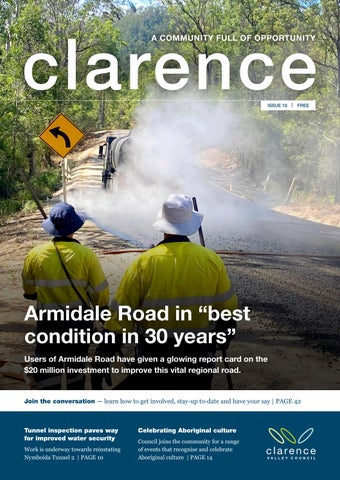
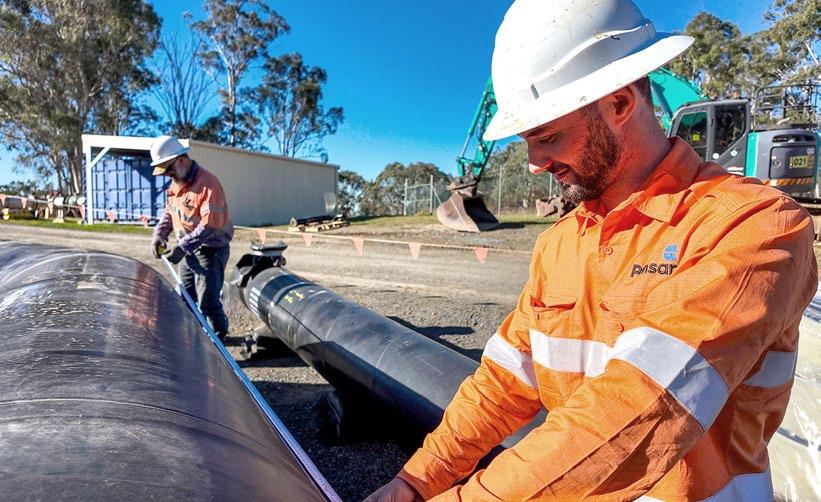
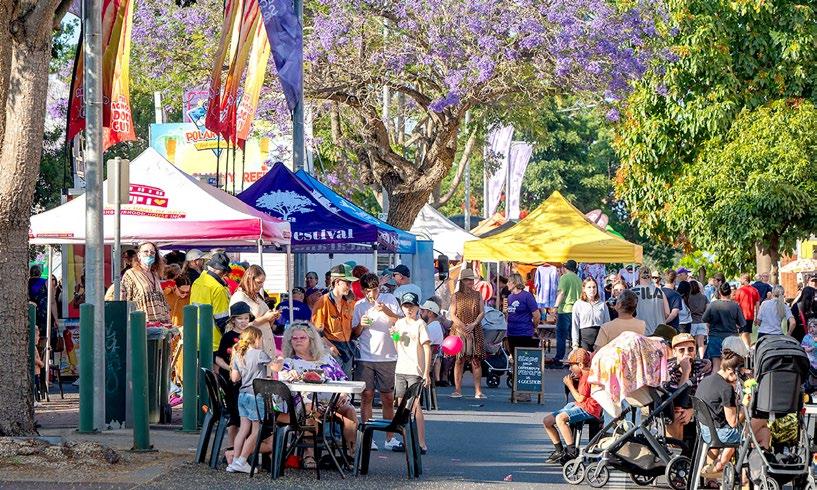
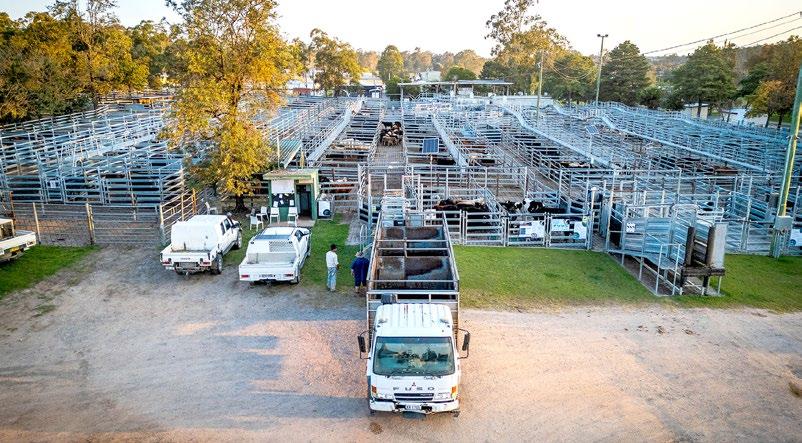
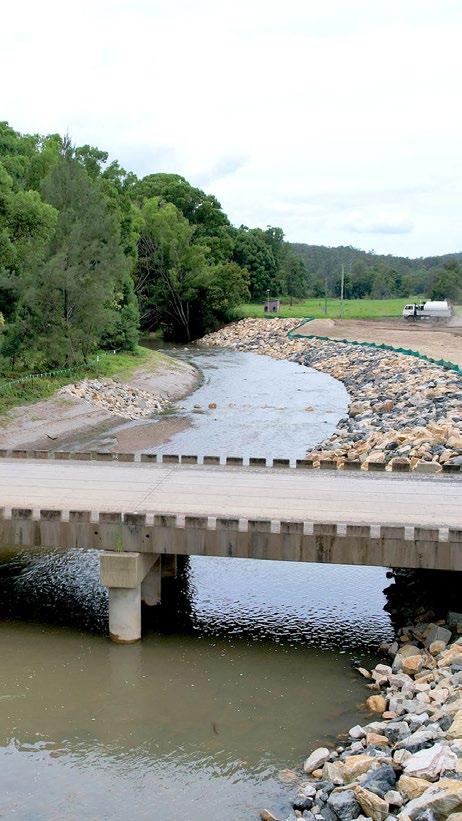
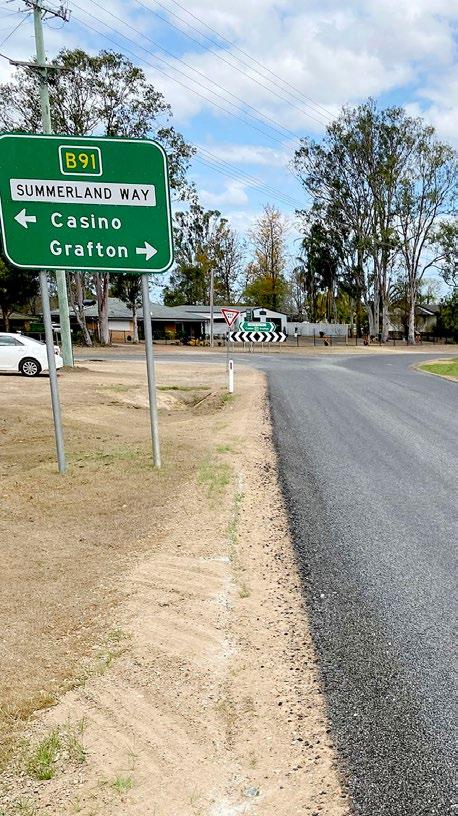
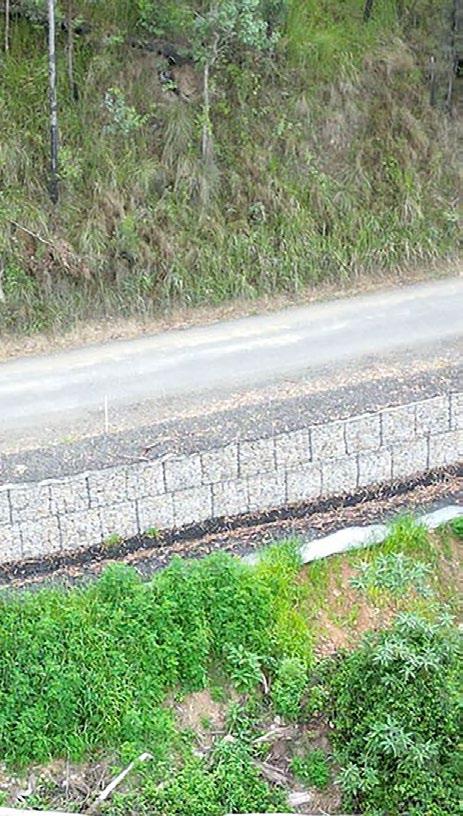
Users of Armidale Road have given a glowing report card on the $20 million investment to improve this vital regional road.
Join the conversation learn how to get involved, stay-up to-date and have your say | PAGE 42
Celebrating Aboriginal culture Tunnel inspection paves way for improved water security
Work is underway towards reinstating Nymboida Tunnel 2 | PAGE 10
Council joins the community for a range of events that recognise and celebrate Aboriginal culture | PAGE 14
Publisher
Clarence Valley Council
ABN 85 864 095 684
Contact us council@clarence.nsw.gov.au
(02) 6643 0200
Locked Bag 23, Grafton NSW 2460
Customer Service Centres 2 Prince Street, Grafton 50 River Street, Maclean
clarence.gov.nsw.au
Clarence magazine is printed locally on FSC certified paper and is recyclable. If you want to dispose of it when you’ve finished reading it, you can pop it in your yellow bin.
To view Clarence magazine online scan the QR code or visit clarence.nsw.gov.au
ACKNOWLEDGMENT
We acknowledge the Bundjalung, Gumbaynggirr and Yaegl people as the Traditional Owners of the land on which we live and work.
We honour the First Nations peoples’ culture and connection to land, sea and community. We pay our respects to their Elders past, present and emerging.
Clarence magazine reports on Council’s projects and services which contribute to making the Clarence Valley a community full of opportunity as outlined in the Community Strategic Plan. The magazine is structured in line with Council’s fouryear Delivery Program and annual Operational Plan to provide clear and transparent information to the community on the key priorities under five strategic themes. The magazine contributes to Council’s reporting obligations as set out under the Integrated Planning and Reporting Framework.
THE FIVE STRATEGIC THEMES:
Community
A community that is safe, connected and inclusive.
Infrastructure
Infrastructure and facilities that are safe, accessible and serve the needs of the Clarence.
Economy
A diverse economy that complements the environmental and social values of the Clarence.
Environment
A natural environment that is protected from local and global pressures.
Leadership
Open and transparent leadership that effectively sets and delivers the long-term goals of the Clarence.
For more information on Council’s Integrated Planning and Reporting framework visit clarence.nsw.gov.au/IPR
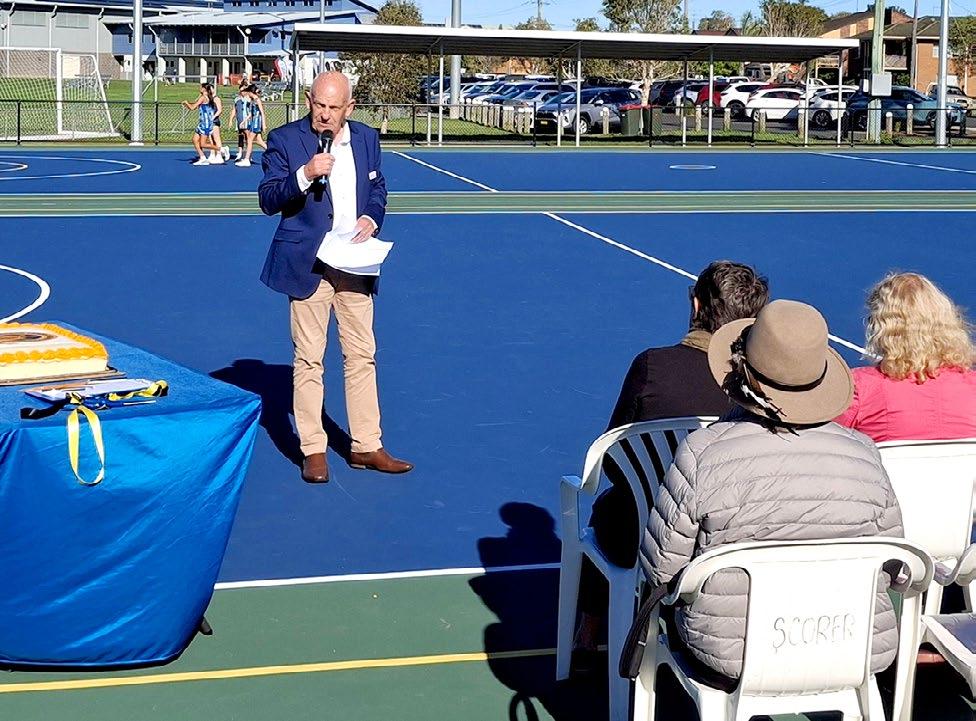
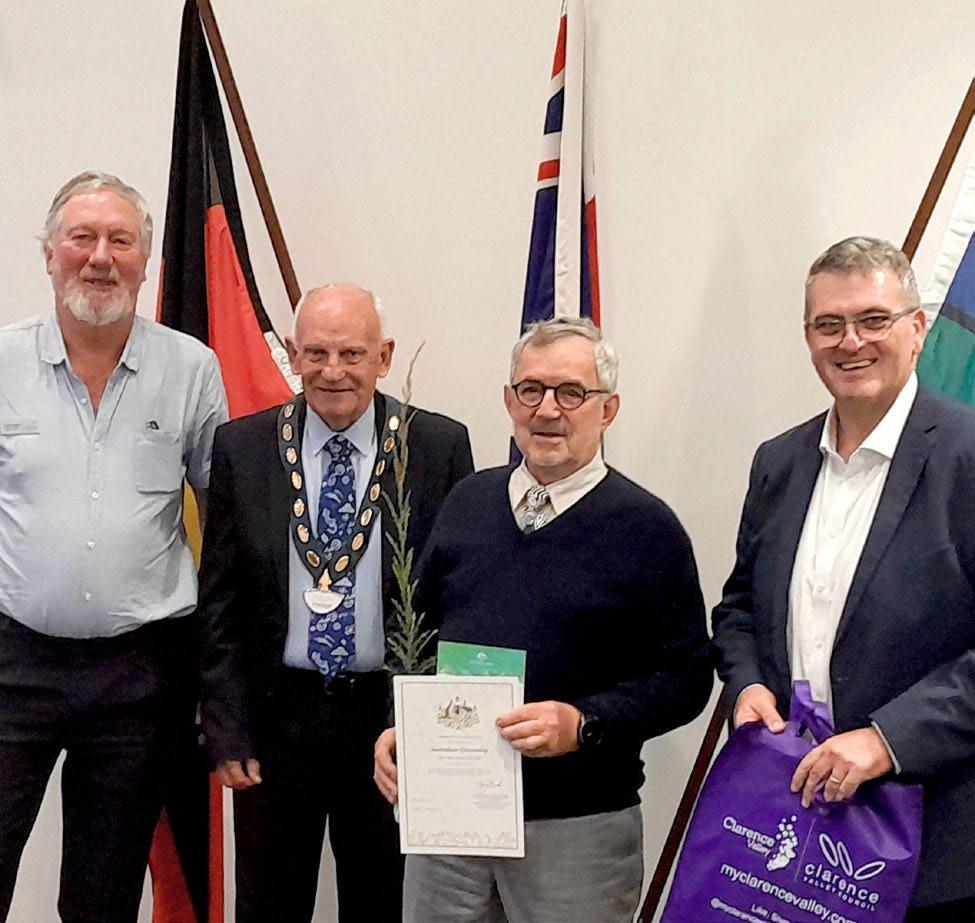
PICTURED: I had the pleasure of officially opening the brand-new Maclean Netball Courts on 30 May, featuring six new concrete courts and 200-lux LED lighting. I also officiated citizenship ceremonies to officially welcome our newest Australian Citizens, alongside Deputy Mayor Greg Clancy and Clarence MP Richie Williamson.
Welcome to the 16th edition of Clarence magazine, highlighting the wide-ranging work that has been carried out from April to June 2026, as outlined in Council’s Operational Plan.
I had the pleasure of officially opening the brandnew Maclean Netball Courts on 30 May, which were completed in time for the netball season. Netballers of all ages are now benefiting from the six new concrete courts, LED lighting that enables night games and training, and sheltered seating. The facility is not only anticipated to strengthen local netball – it will also enable Maclean to host mid-level regional competitions, contributing to the economic wellbeing of our community. The improved modern courts will accommodate more players across all age groups and will support a more inclusive and accessible sport. I’d like to thank everyone involved in this wonderful project, including the Lower Clarence Netball Association, contractors, and the Commonwealth Government’s Play Our Way Program, which provided essential funding.
We have also welcomed our latest official Australian Citizens to our community during ceremonies held at the Council chambers, hosted by me alongside Clarence MP Richie Williamson and Deputy Mayor Greg Clancy. These proud new Australians come from a diverse range of backgrounds, bringing with them their own unique contribution to our richly multicultural society.
Australian citizenship is the legal bond between an individual and the Commonwealth of Australia. It grants individuals formal membership in the Australian community, providing exclusive rights such as voting in elections, holding an Australian passport, and entering and leaving Australia freely. Becoming a citizen also involves a commitment to share in Australia’s democratic beliefs, respect its liberties, and uphold the rule of law.
— Cr Ray Smith PSM, Mayor.
FEATURES
Armidale Road in the “best condition in 30 years”
Community welcomes work that has created a far safer and smoother trip on Armidale Road.
Tunnel inspection paves the way for improved water security
Work is underway towards reinstating Nymboida Tunnel 2 to provide a more secure water supply to the region.
Aboriginal culture Council joins the community for a range of events that recognise and celebrate Aboriginal culture.
People adopting a pet will have more opportunity to interact with potential new family members at the Clarence Valley Council Animal Shelter.
18
Year in Review
Much has been achieved in the past financial year, in line with the annual Operational Plan and Budget. IN-DEPTH
BEHIND THE SCENES
20
Strict controls limit landfill fire
We delve into how landfill design features and daily procedures helped ensure a fire at the regional landfill was quickly contained and extinguished.
PERFORMANCE
Update on performance in the third quarter of the 2025-26 financial year, as outlined in the Operational Plan across all five strategic pillars:
42 Learn more about how you can have your say and stay up to date on Council’s community engagement activities.
The 2025/2026 financial year has been a big one for Clarence Valley Council.
The five-year $46 million Fixing Country Bridges Program has resulted in the replacement of 36 timber bridges with concrete structures, providing communities with more disaster resilient connections. Sections of Yamba Road have also been upgraded to improve their flood immunity, and the Armidale Road has undergone a $20 million repair program. New slides were opened at the Grafton Regional Aquatic Centre. Not to mention all of the business-as-usual activities including library operations, processing development applications, relining aging sewer lines, filling potholes, rescuing and rehoming cats and dogs, operation of the landfill and recycling centre, and much more.
Despite how much has been done in the past year, we still have work to do towards achieving the goals set out in the four-year Delivery Program, based on the aspirations of the community captured in the 10-year Community Strategic Plan. In June Council adopted the Operational Plan to implement the second year of the Delivery Program, including plans to implement a $183 million capital works program, featuring five substantial infrastructure projects: a water filtration plant in South Grafton; a modern sewage treatment plant in North Grafton; reinstating Nymboida Tunnel 2 and its water pipeline; restoration of key sections of the flood levee; and the Maclean Community Precinct.
We will also continue to work alongside our various advisory and Section 355 committees to achieve outcomes for the community, including the recently established Nymboida Powerhouse Museum Committee.
Meaningful engagement will continue to be a focus across Council operations, and I strongly encourage you to stay up to date and get involved.
— Laura Black, General Manager
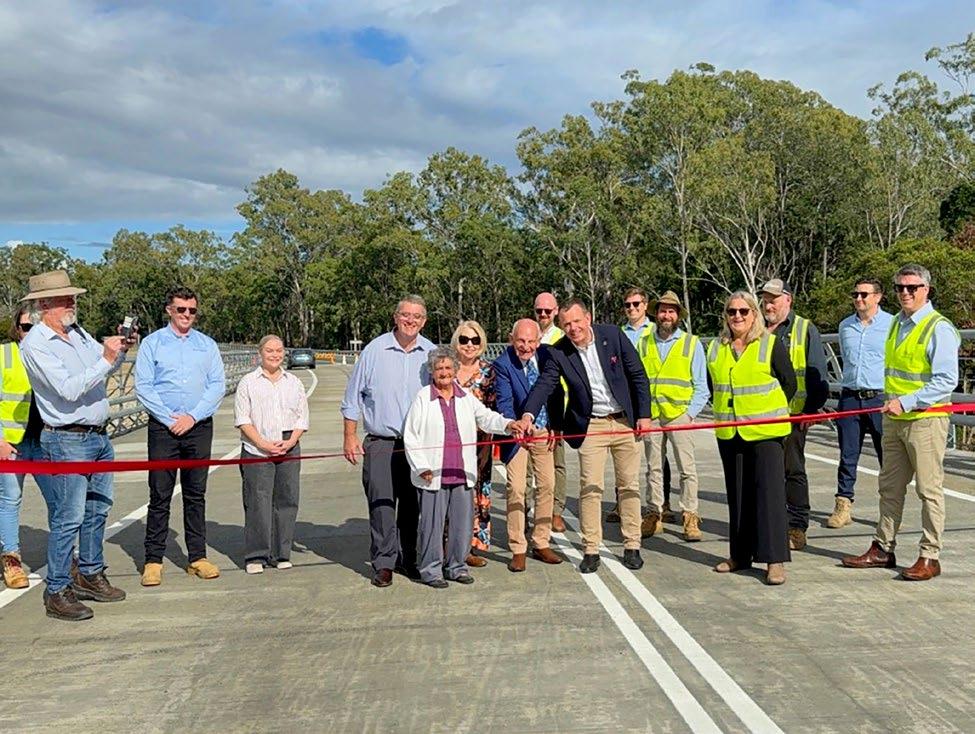
PICTURED: The opening of Bluff Bridge was a major achievement in the past financial year. The Section 355 group headed by Nymboida local Lyle Gilmore will be supported in the coming year to establish the Nymboida Powerhouse Museum.
We rely upon through traffic, with people coming from Tamworth through to the
and international travellers heading to
Gold Coast,
Byron Bay. — Ros Cooper, resident.
Armidale Road in “best condition in 30 years”
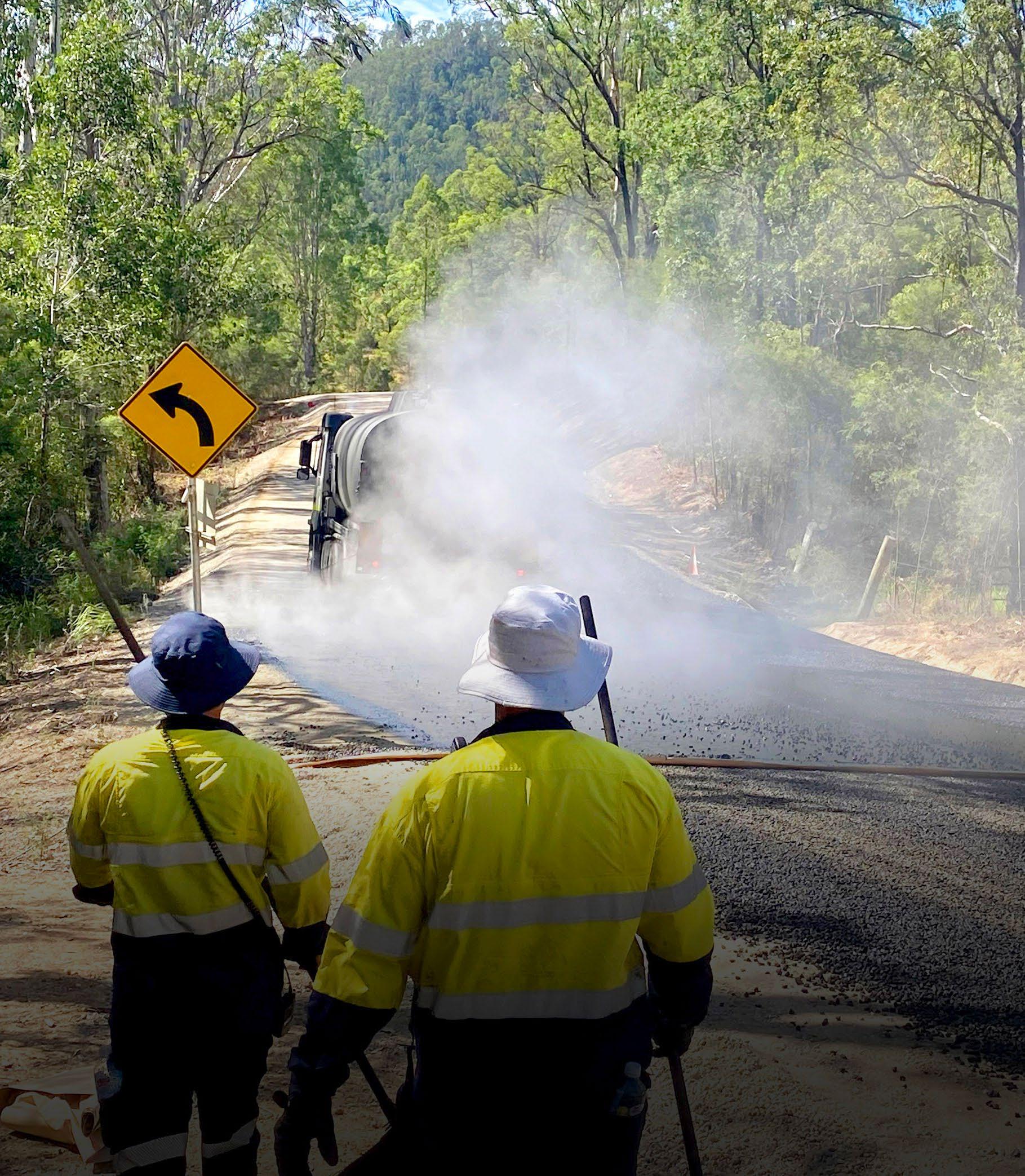
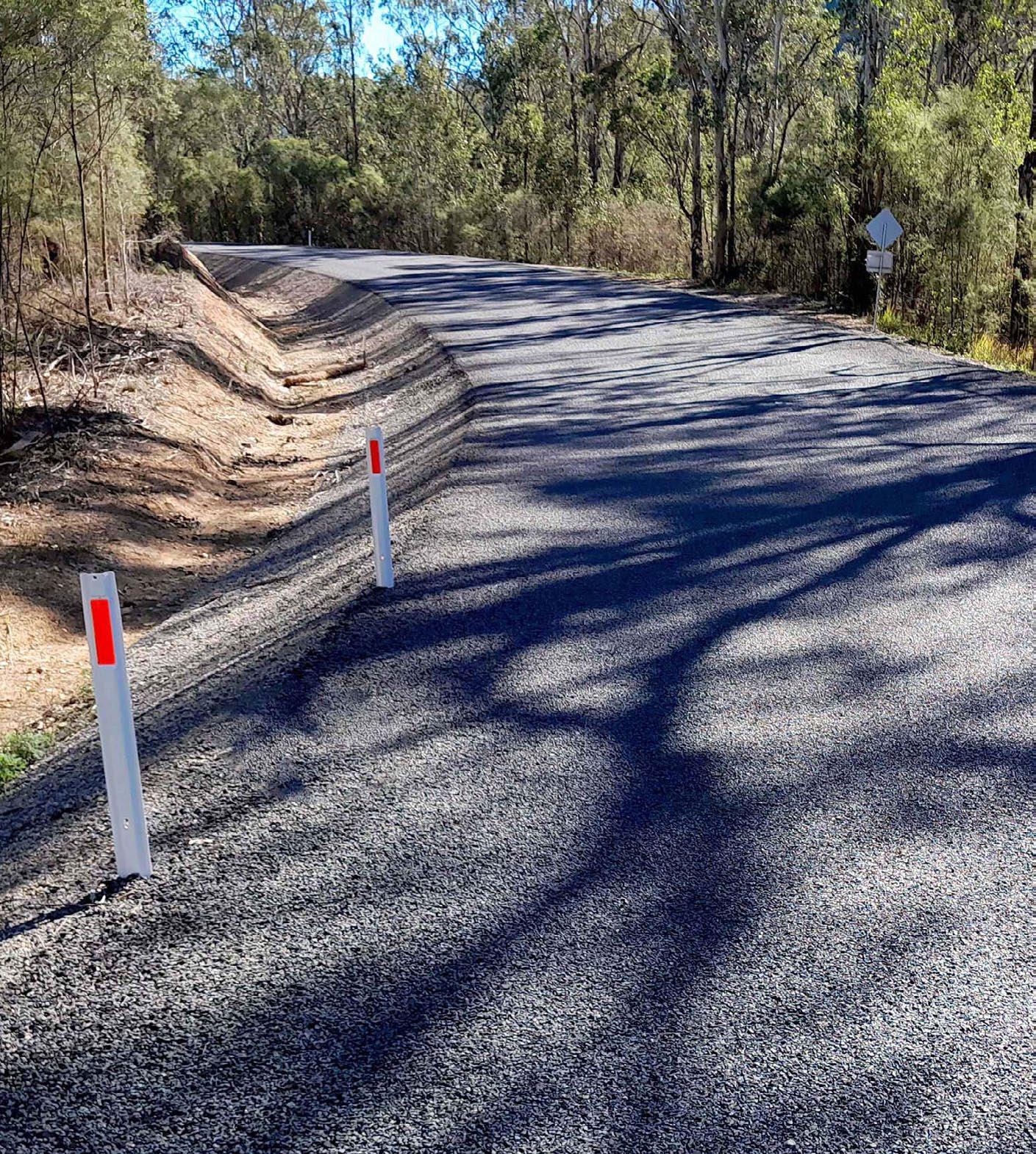
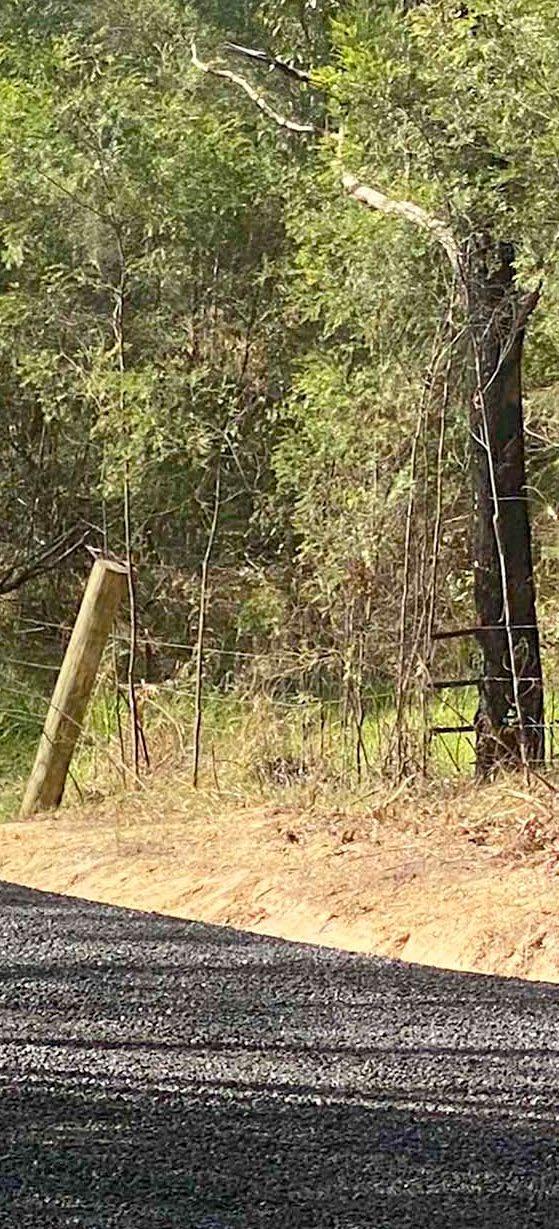
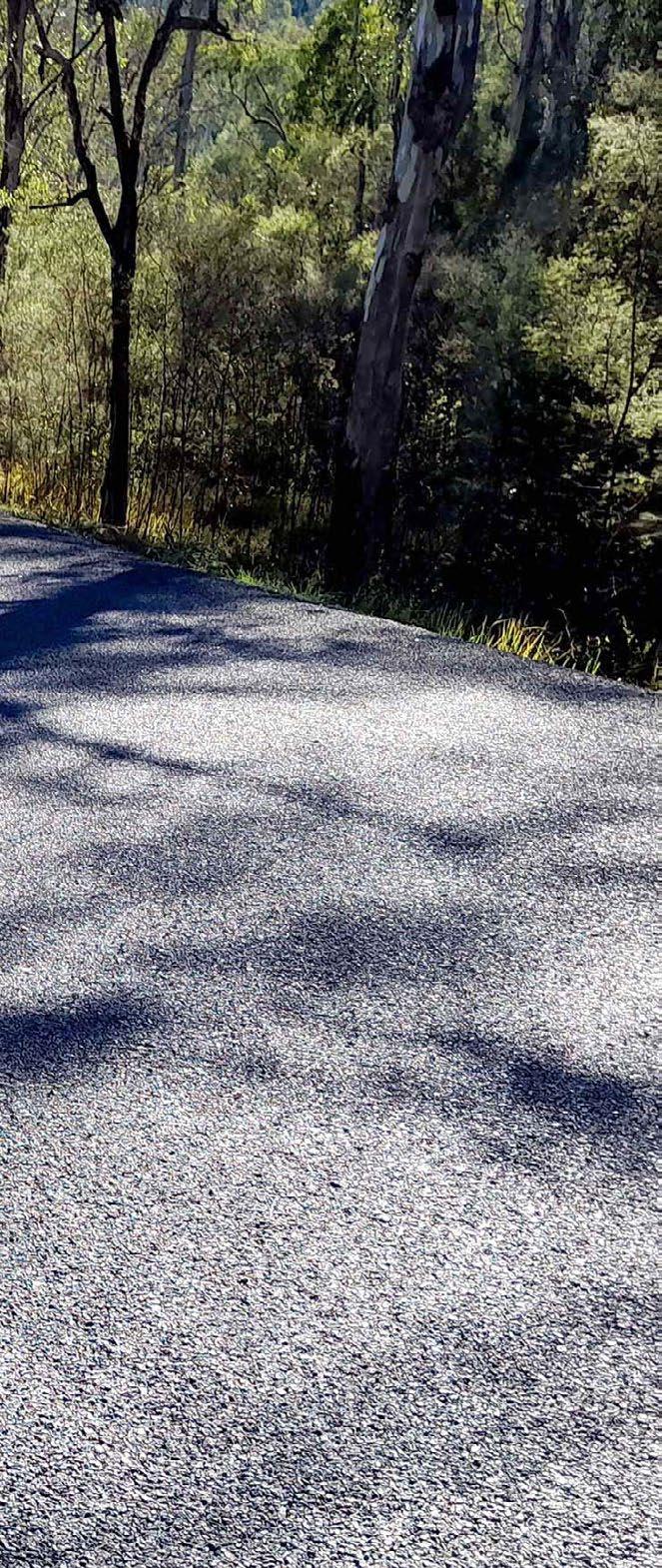
The $20 million upgrade of Armidale Road has made it safer for everyone who relies upon the important regional link, including residents, visitors, kids on school buses and truckies hauling timber. Instead of frequent complaints, the important regional road is now drawing praise from travellers, bus drivers, truckies, locals and businesses.
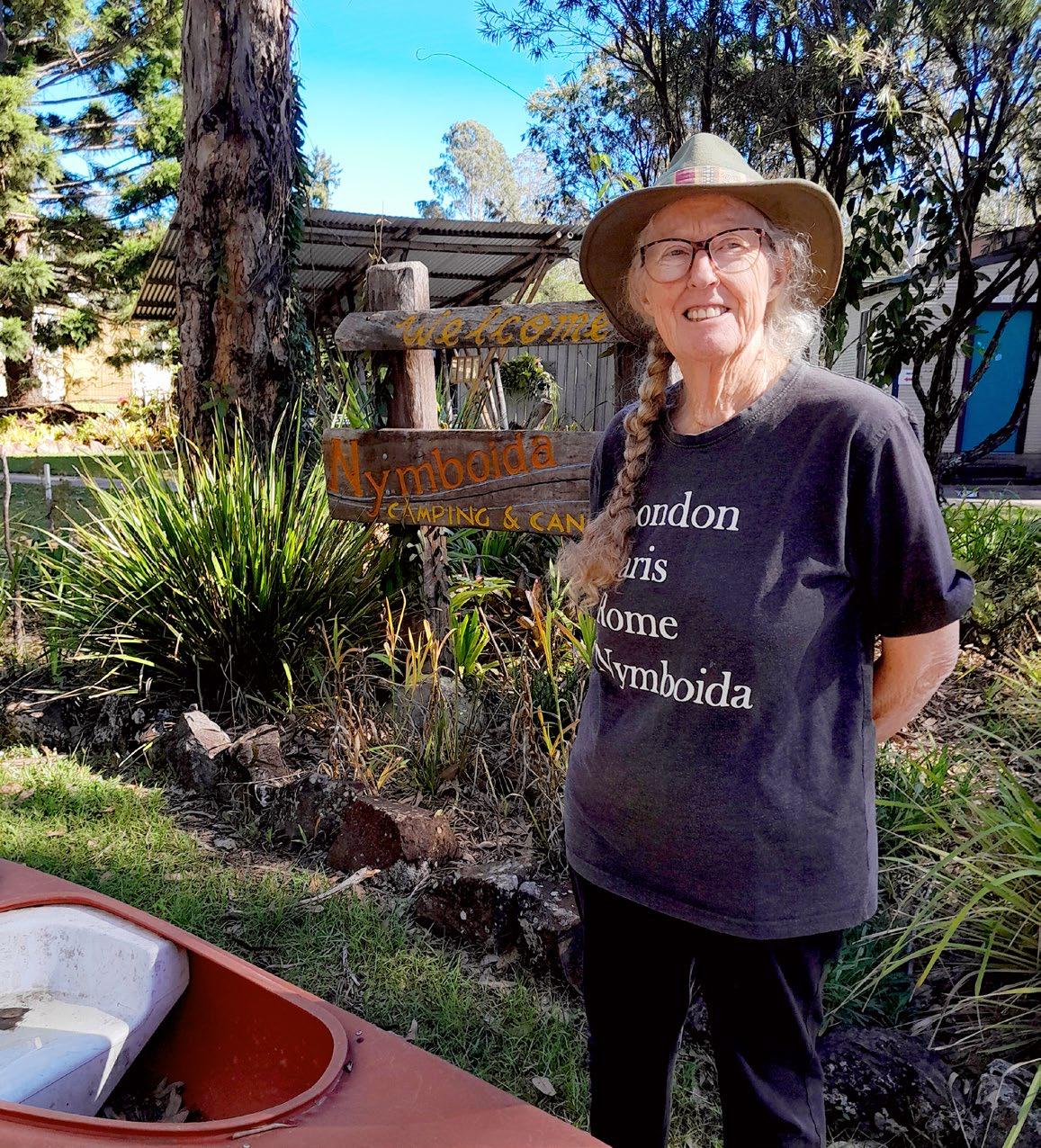
Nymboida Camping and Canoeing Centre committee secretary Ros Cooper said the upgrade was making an impact locally and regionally, with more people feeling safe to travel on the road.
“It’s fabulous. We’ve been waiting with bated breath for this. It’s been built quickly and professionally; it’s the best road work I’ve seen since coming to the district (in 2018),” she said.
“We rely upon through traffic, with people coming from Tamworth through to the Gold Coast, and international travellers heading to Byron Bay.
Armidale Road is also a popular destination for motorcyclists. They’ve all commented on how good the road is… I think we’ll have more return visitors now.
“We also get a lot of people from around the Clarence Valley who come out to enjoy Wagtails Café – including people with disabilities and their carers – and it has become a community hub and meeting place.”
Ms Cooper added, however, that there were still a few spots along the
“It’s fabulous ... it’s been built quickly and professionally; it’s the best road work I’ve seen since coming to the district.
— Ros Cooper, resident.
road that needed to be repaired, and she was hopeful these would be done soon.
Rehabilitation of 210,000 square metres of pavement was completed by July 2026 (equivalent to 29 standard soccer pitches), with a further 88,000 square metres of work planned after winter.
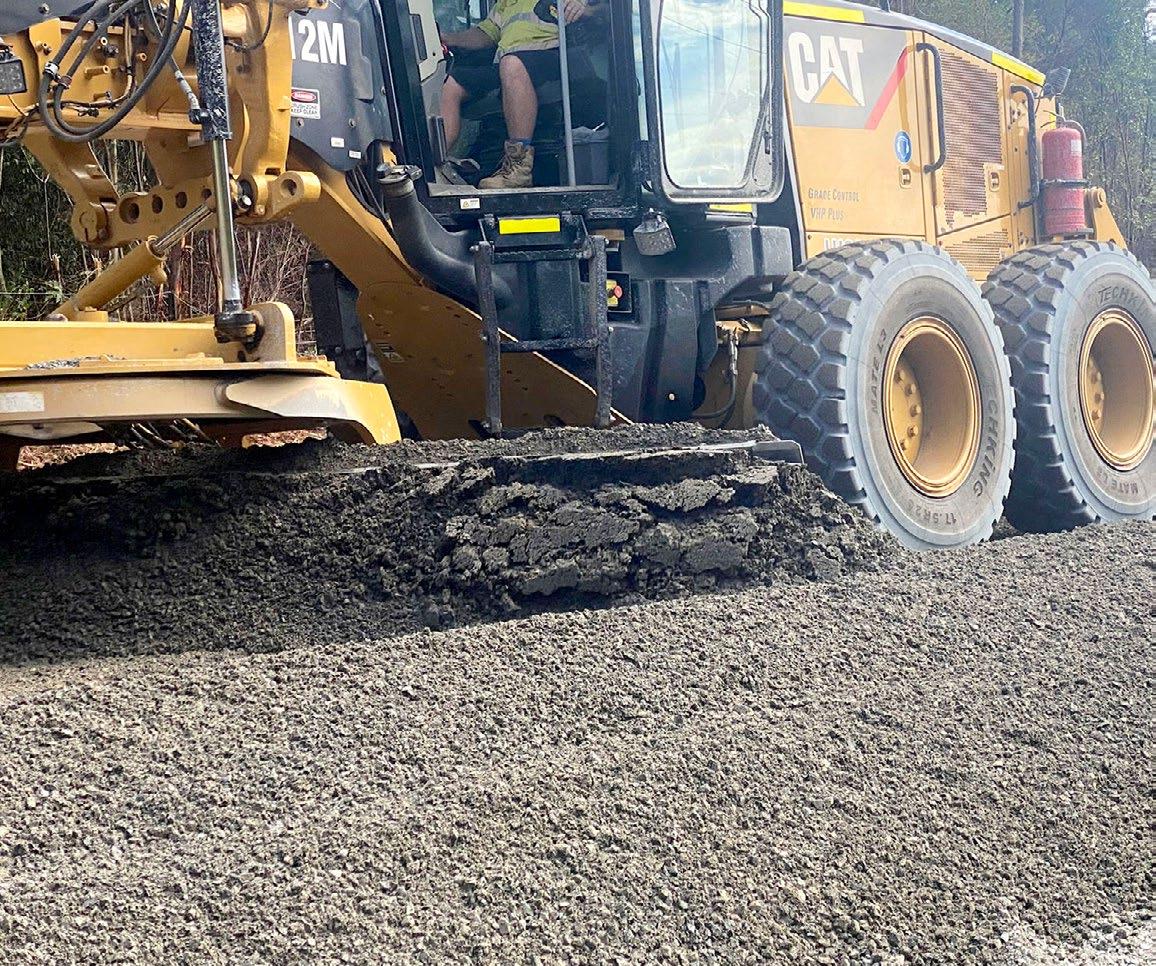
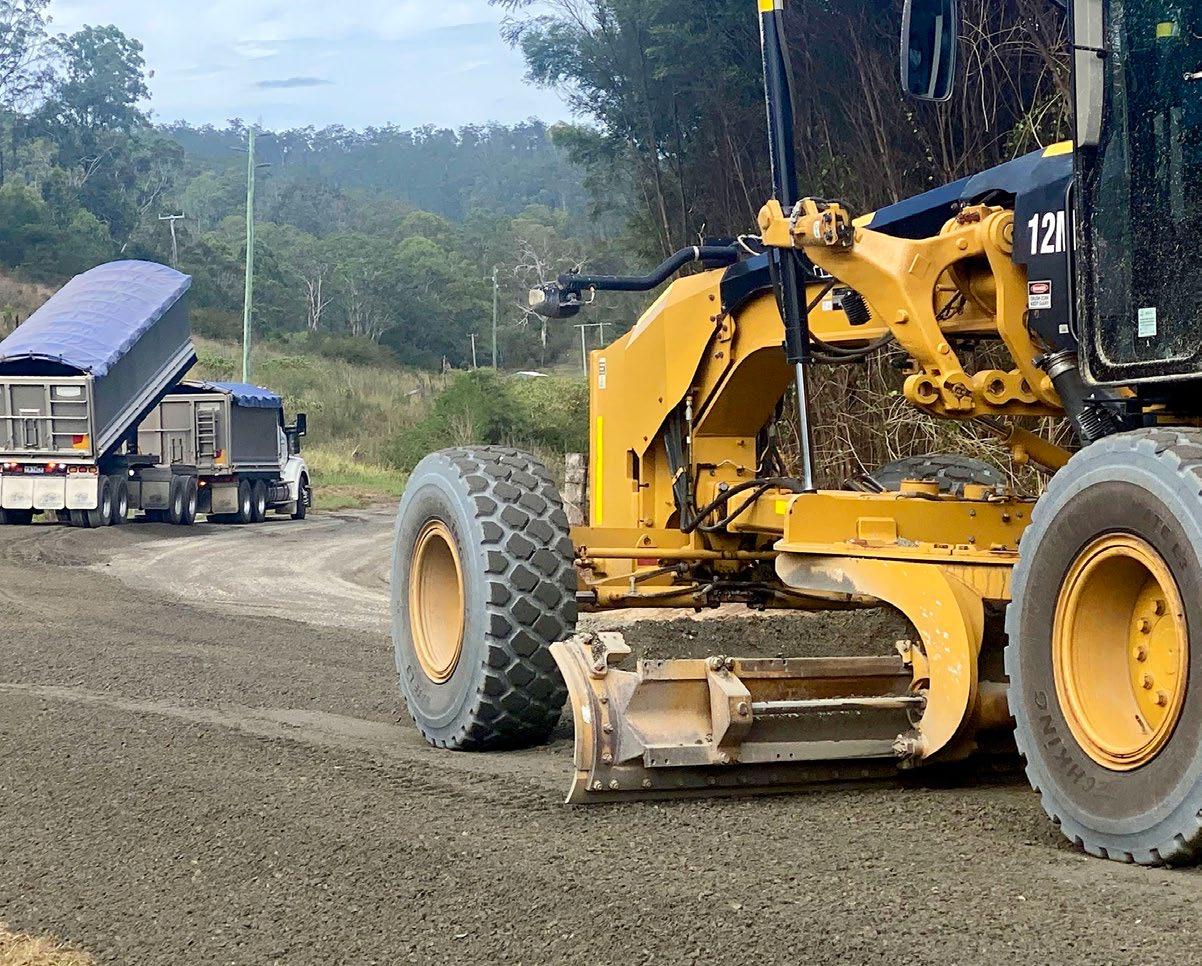
Two stabilisation crews were operating at full steam to repair the worst sections of the severely deteriorated road and improve its safety. The work was carried out on
the 115 kilometres of road between Coutts Crossing and Waterfall Way near the Armidale local government area border.
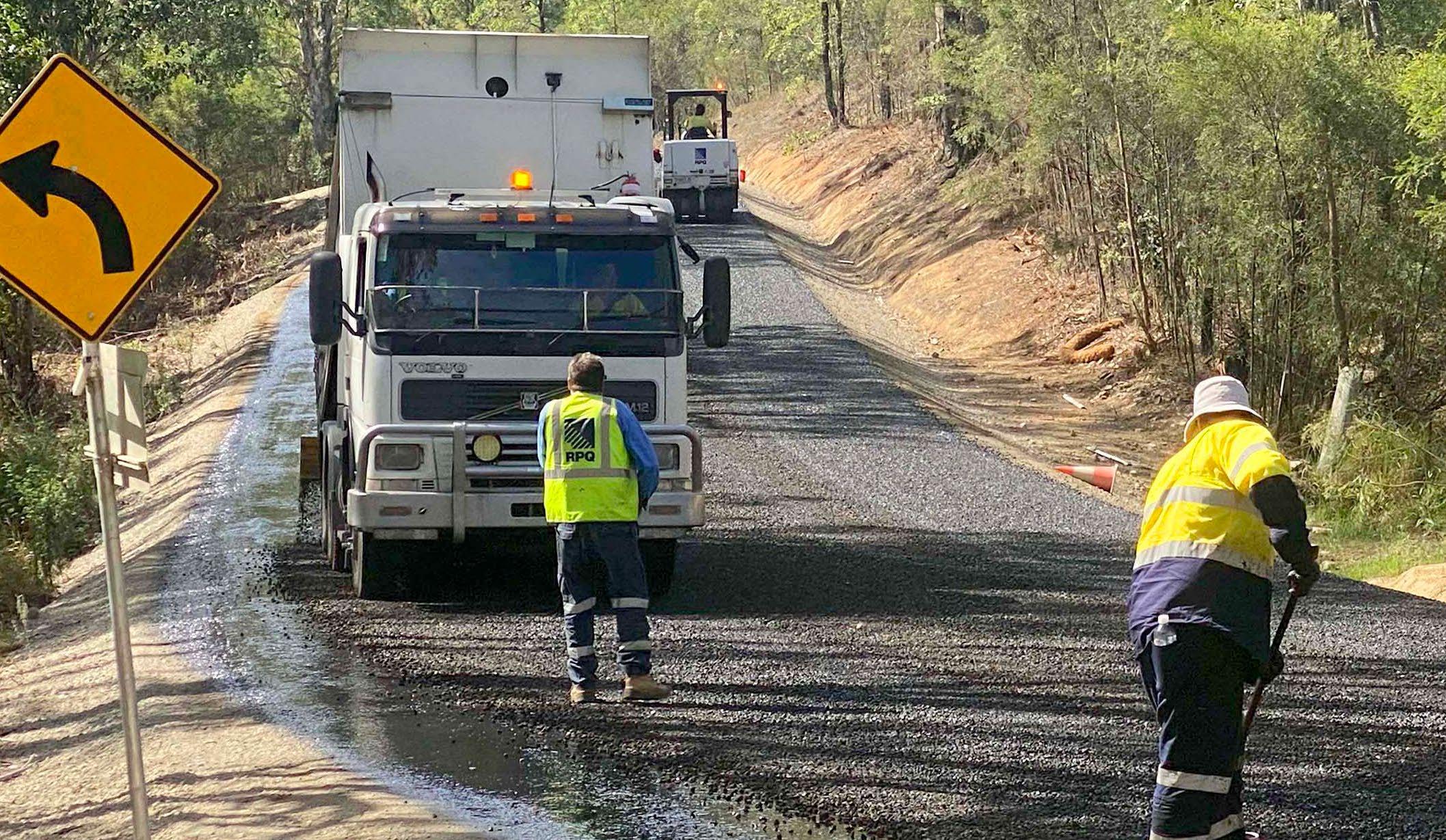
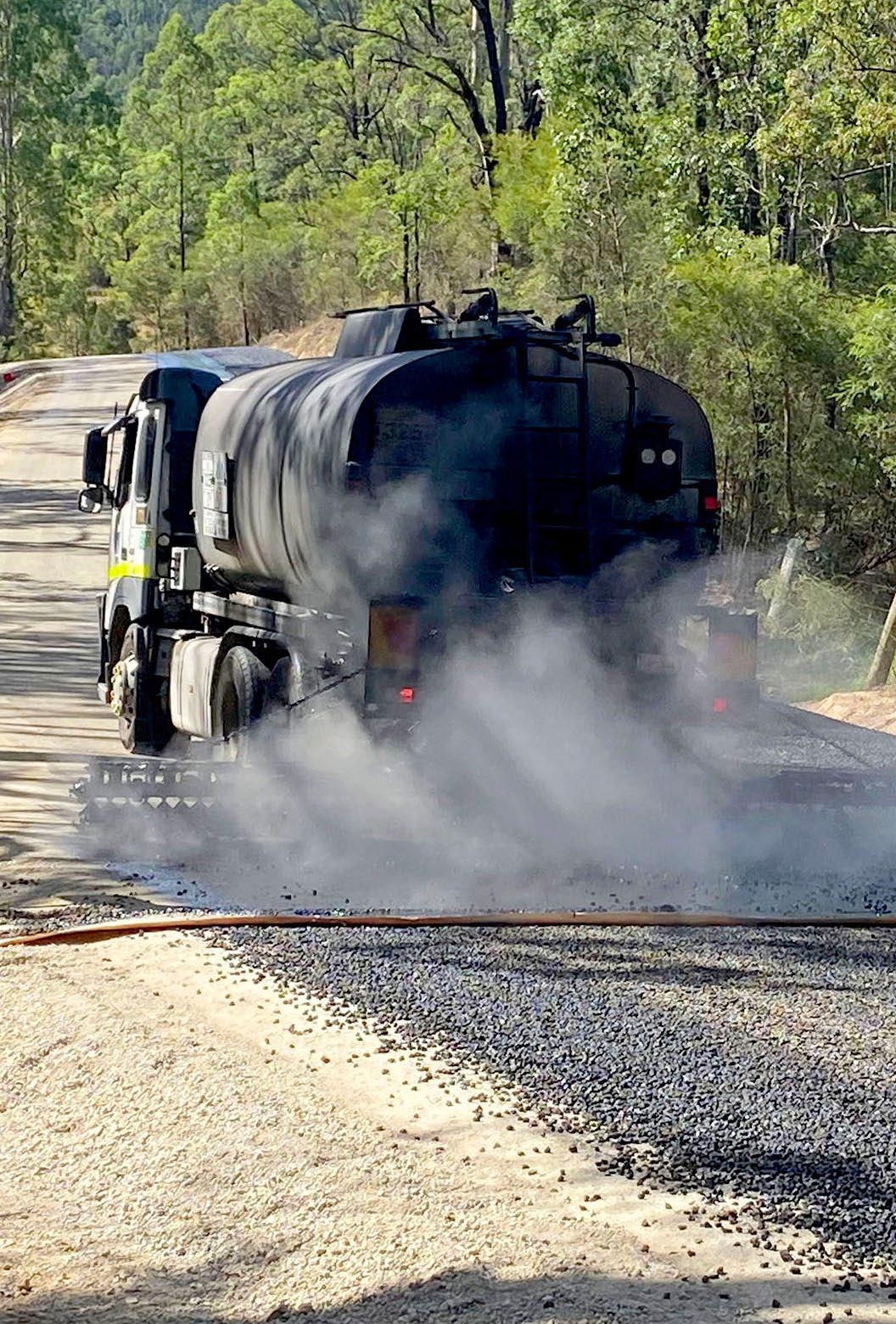
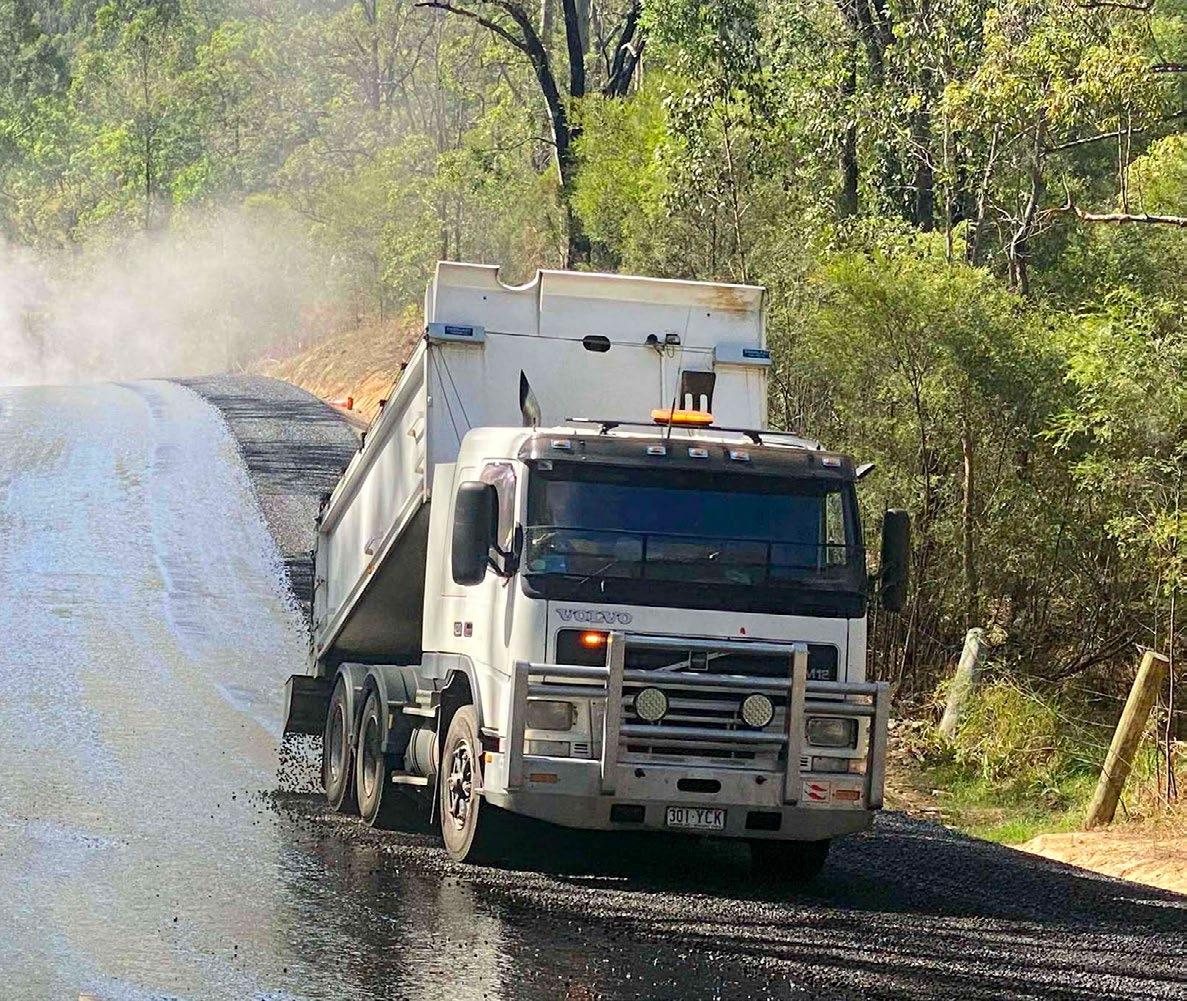
The heavy patching works involved ripping up damaged sections of road, reconstruction and stabilisation of the pavement, and laying of a new bitumen seal. Extensive machinery was required including pulverisers, graders, excavators, multi-wheel rollers, pad foot rollers, smooth foot rollers, and bitumen spray seal trucks.
Despite the massive extent of the repair program, much more will need to be done to fully restore the road, which has deteriorated significantly over the past three
years as the result of bureaucratic red tape and political indecision by the NSW Government.
The work, focusing on damage from Tropical Cyclone Alfred (March 2025) and flooding (February 2022), was funded under the Commonwealth Disaster Recovery Funding Arrangements (DRFA) through the NSW Essential Public Asset Restoration Works program. It utilised three local contractors.
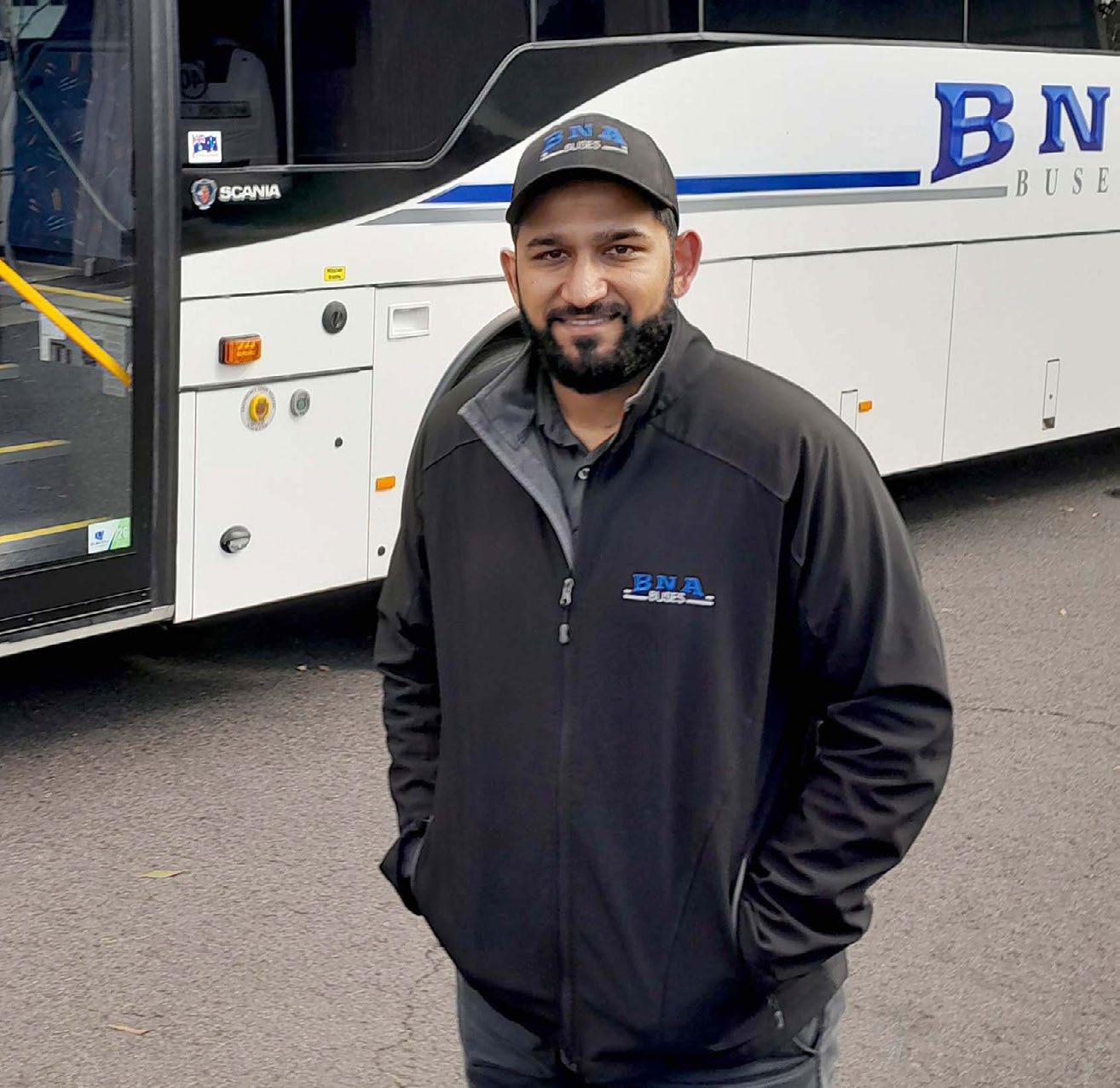
BNA Buses driver for the Nymboida Public School run, Malcolm Larkin, described the repair works as “absolutely brilliant”.
“Armidale Road is in the best condition I’ve seen in my 30 years of driving buses. They’ve resurfaced and
“Armidale Road is in the best condition I’ve seen in my 30 years of driving buses. They’ve resurfaced and widened the road, cleared the edges and the bushes – it’s a pleasure to drive out there at the moment.
— Malcolm Larkin, bus driver.
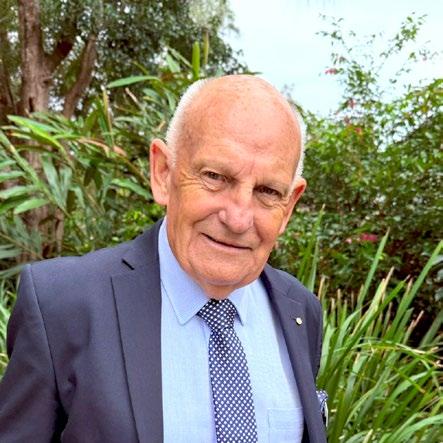
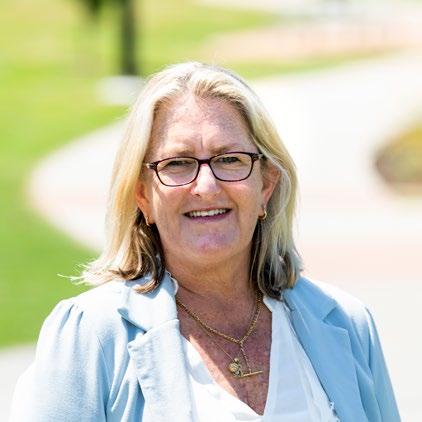
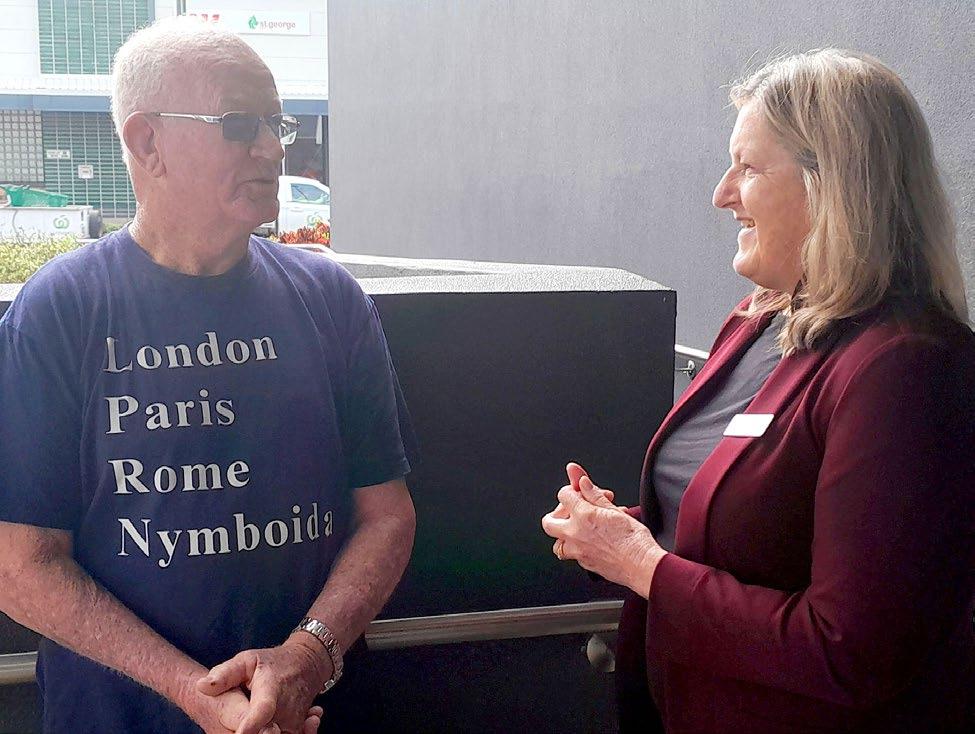
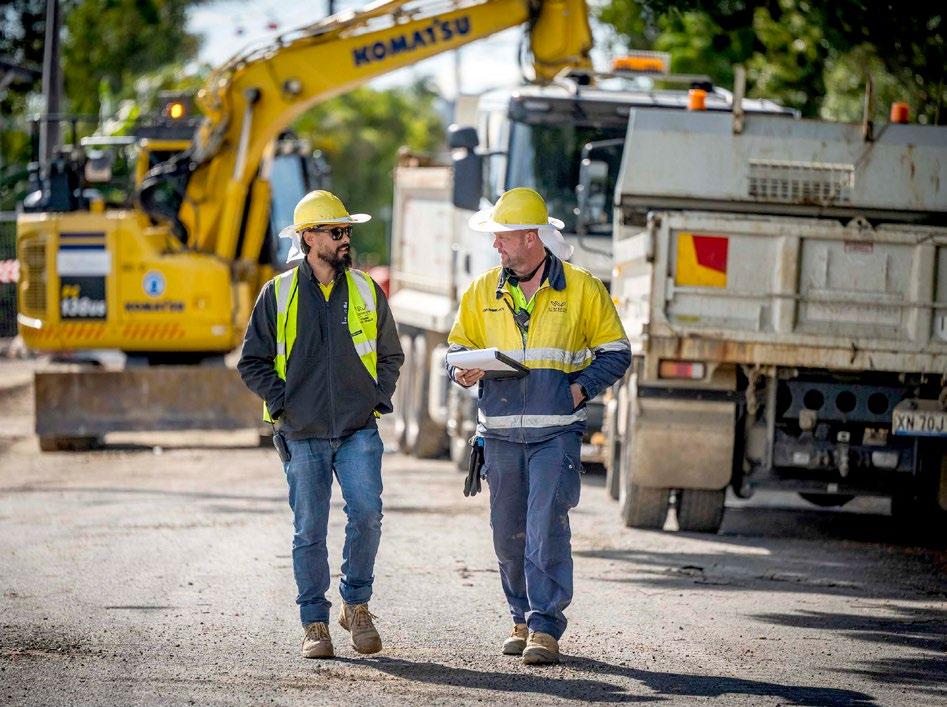
PICTURED: From left, Nymboida Camping and Canoeing Centre secretary Ros Cooper and BNA Buses co-owner Josh Atwal are among those praising the upgraded Armidale Road.
Stay up-to-date with roadworks in your area
Council updates the ‘Schedule of Works’ every week, so you always know what’s happening on local roads.
View the Schedule of Works:
clarence.nsw.gov.au/schedule-of-works
Want it delivered direct to your inbox?
Our weekly e-newsletter rounds up all the community news that matters, including roadworks, every Friday.
Subscribe today:
clarence.nsw.gov.au/noticeboard
widened the road, cleared the edges and the bushes – it’s a pleasure to drive out there at the moment,” he said.
“The crews undertaking the road works were great as well, they’d do whatever they could to make sure delays were kept to a minimum and the busses could run pretty much on time.”
BNA co-owner, Josh Atwal, added that the road upgrade reduced wear and tear on buses, and made the ride to and from school safer and smoother for kids.
“The road was shocking, potholes everywhere. It caused excessive wear on tyres, suspension and steering components would become worn prematurely, and
there were many temporary patches that caused heavy vehicles to flick up tar that we would have to clean off the buses,” he said.
“But it’s smooth sailing now – almost like highway. It’s so much safer and smoother ride for the school kids now.”
Mr Atwal agreed, however, that there were still a few “rough patches” yet to be repaired.
The owner of Baff Sawmilling at Tyringham, Nick Baff, said he had around 10 trucks a week coming from Armidale to cart processed timber to Brisbane.
“People don’t mind coming here when the road’s better. The truckies are quite happy about it now,” he said.
Tunnel inspection paves way for more secure water supply
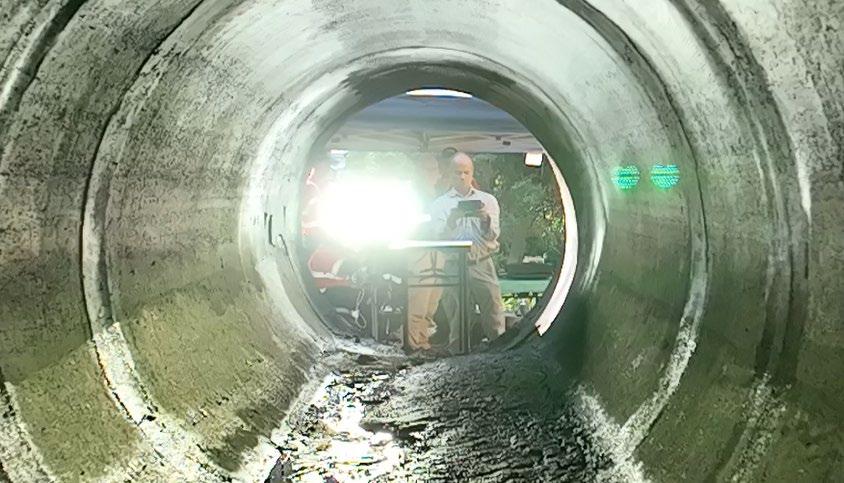
As the four-tonne steel plate was heaved from the entrance, no one knew what to expect inside the 94-year-old disused water tunnel bored through a rock mountain. Was it still intact? Could it collapse if anyone entered to assess its condition? Would noxious gases and low oxygen make the air unbreathable?
For many decades Nymboida Tunnel 2 provided a secondary route for drinking water to be supplied to the Clarence community from the Nymboida River. In 2013 it suffered a catastrophic failure during major flooding, and since then the community has relied upon a single pipeline for its water. In 2021 Clarence Valley Council negotiated the purchase of the pipelines and associated infrastructure from Essential Energy. Now, concerns have emerged about the structural integrity of the sole operational pipeline, posing a potential risk to the security of the region’s
drinking water.
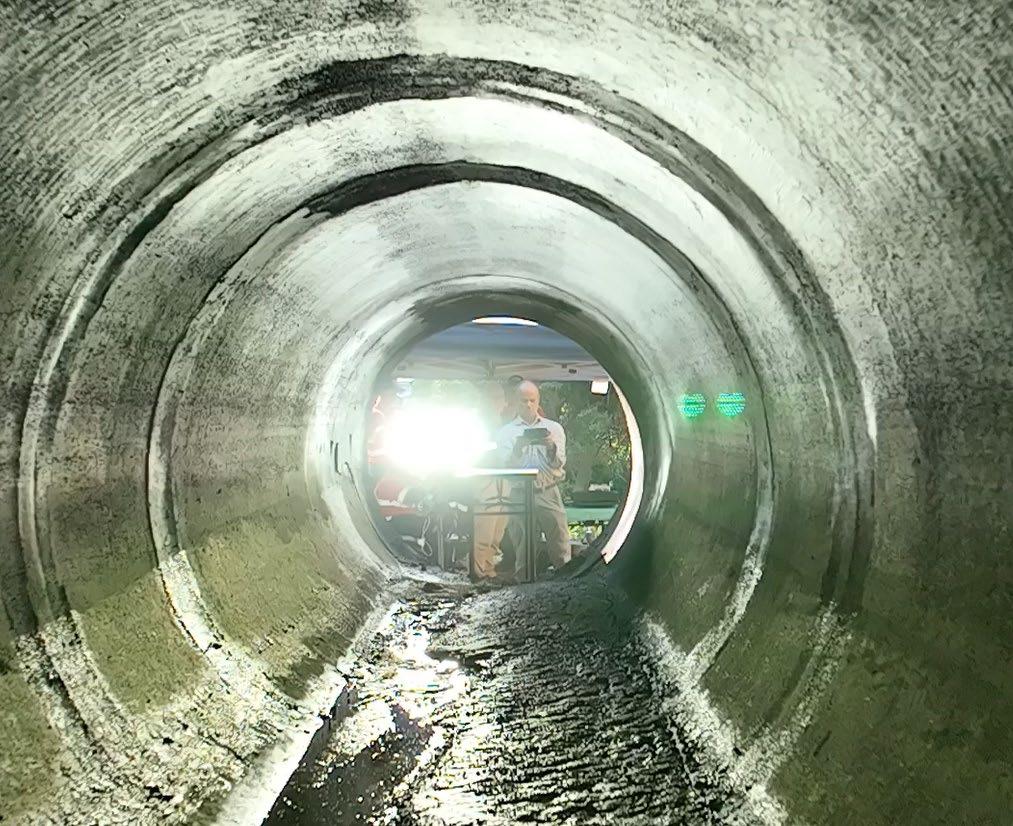
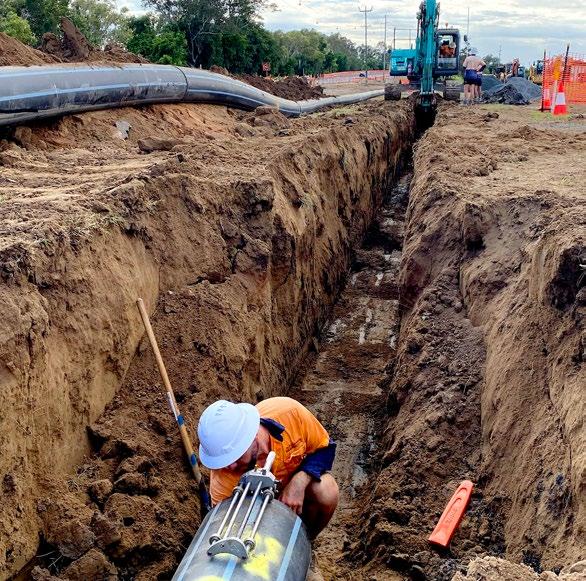
Work has begun towards reinstating the second pipeline, but little was known about the condition of what remained of the 660-metre tunnel that provided the essential link to the Nymboida River.
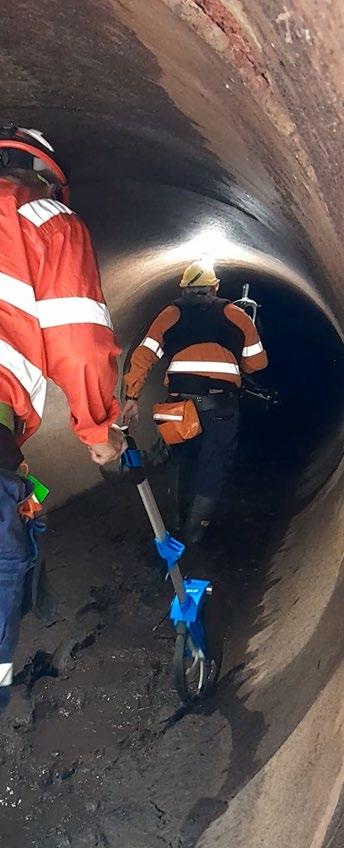
A team of experts was assembled in May this year to enter Nymboida Tunnel 2 and inspect its condition, while managing serious safety risks such as structural collapse or suffocation.
To prepare for the inspection, inflow of water was closed off, the tunnel drained, and the end plate unbolted and removed with the help of an excavator.
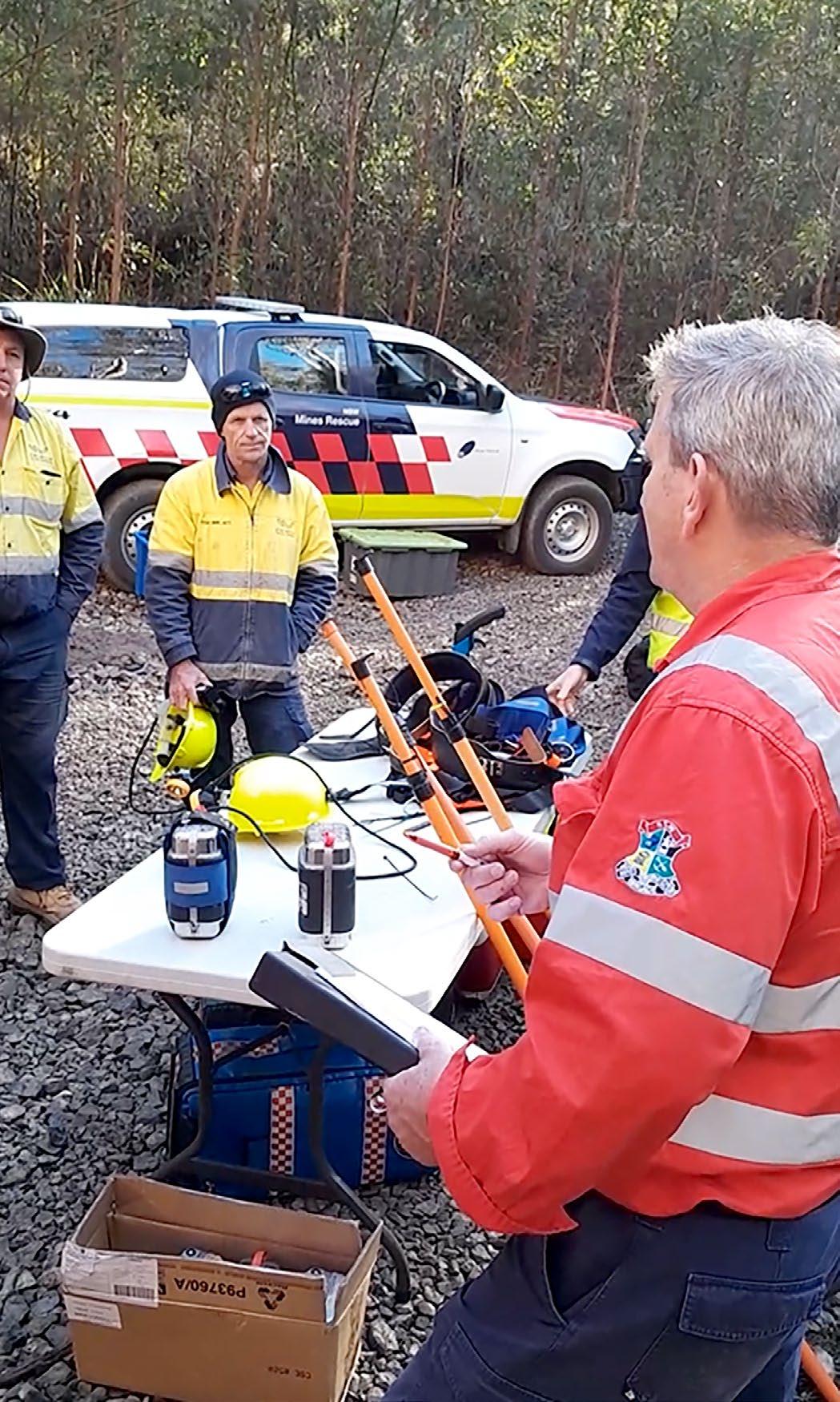
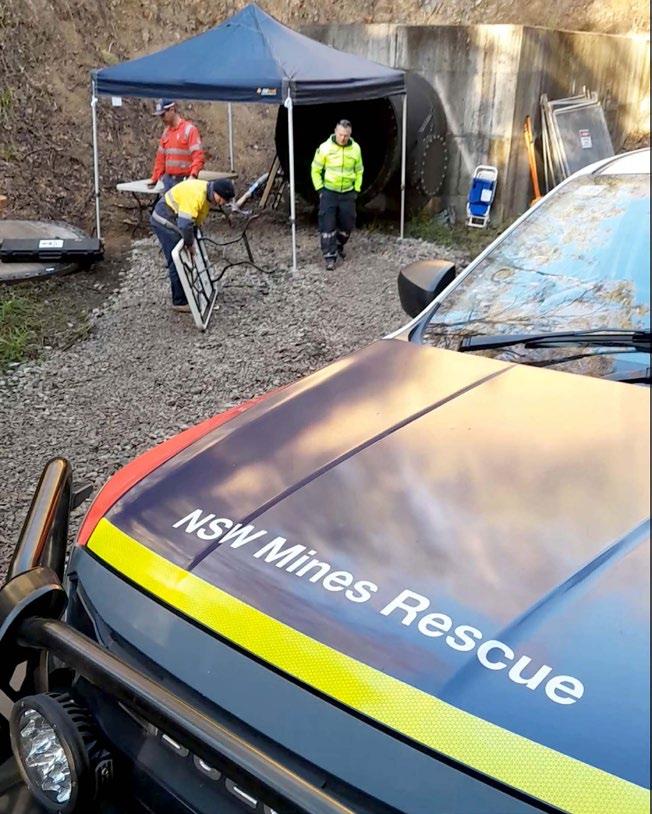
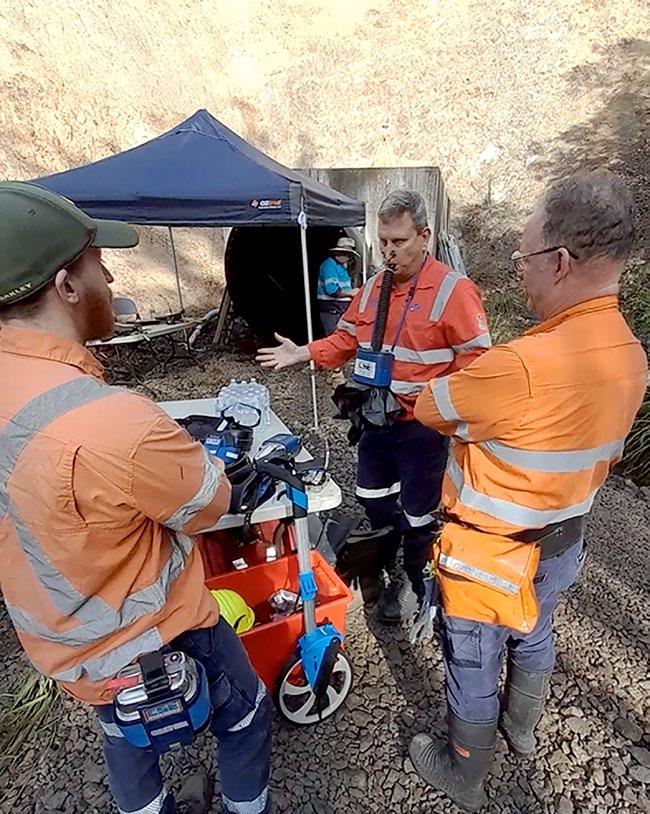
PICTURED: The Council rescue team is briefed on the use of breathing apparatus prior to people entering the disused water tunnel. Teams enter the tunnel for detailed inspections led by Mines Rescue NSW.
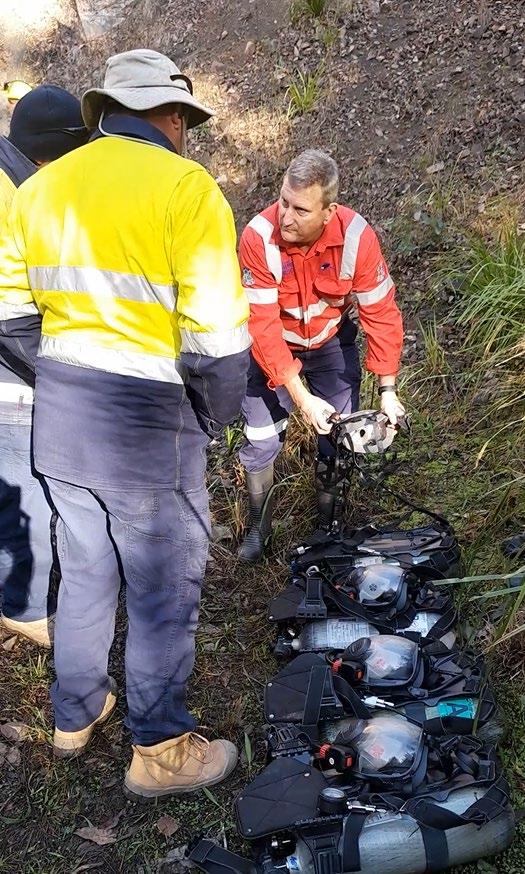
PICTURED: The Council rescue team is briefed on the use of breathing apparatus prior to people entering the disused water tunnel. A camera-equipped drone reveals that the aging structure is still intact.
Gas monitoring and extraction equipment were set up and the tunnel was left to ventilate for a day to allow oxygenated air to enter and toxic hydrogen sulfide to escape.
Mines Rescue NSW personnel headed the exploratory mission, setting up communications, and training onsite contractors and Council staff in safety and rescue procedures.
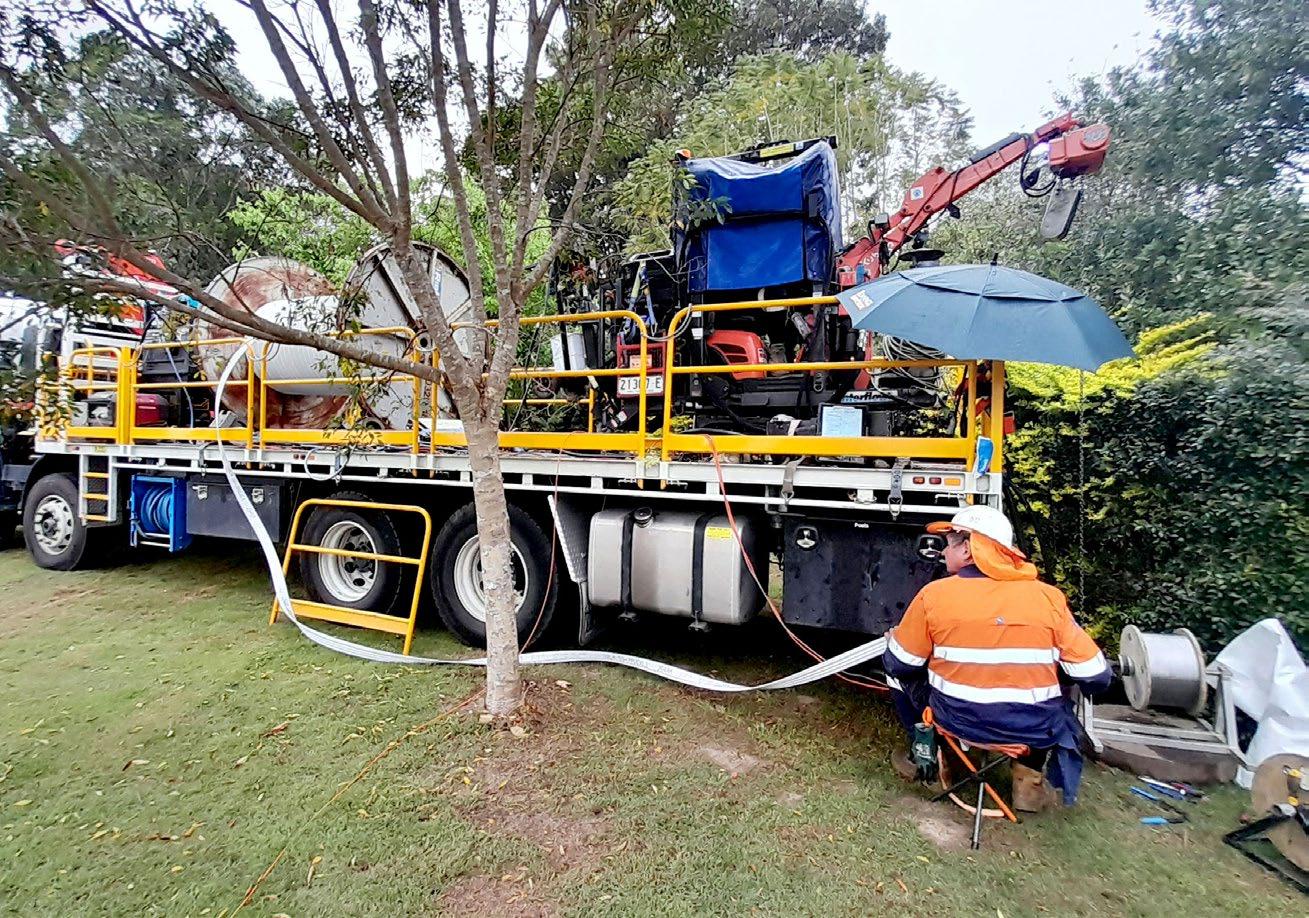
The first to enter was a specialised long-range drone, which relayed high-definition footage and gas readings as it flew the length of the tunnel and back. It revealed the concrete-lined structure was still intact and the air was breathable, paving the way for human entry and a more detailed physical assessment.
Mines Rescue personnel were the first to enter to lay out communication cables and wireless repeaters, as a medic and rescue team stood by ready to respond. A structural engineer was then led into the tunnel to carry out a visual inspection and take photographs.
The entire length of the tunnel was then mapped in 3D using a high-tech SLAM (simultaneous localisation
“A team of experts was assembled in May this year to enter Nymboida Tunnel 2 and inspect its condition ...
and mapping) survey, followed by ground penetrating radar to determine whether there were any voids in the rock surrounding the 75-millimetre concrete lining. Two potential contractors interested in completing the rehabilitation works also inspected the tunnel. The operation was completed without incident.
All data will be compiled into a report to be presented to elected councillors to consider repair options and the estimated cost of reinstatement of the tunnel, to be undertaken in cooperation with Coffs Harbour City Council. Funding sources are also being sought.
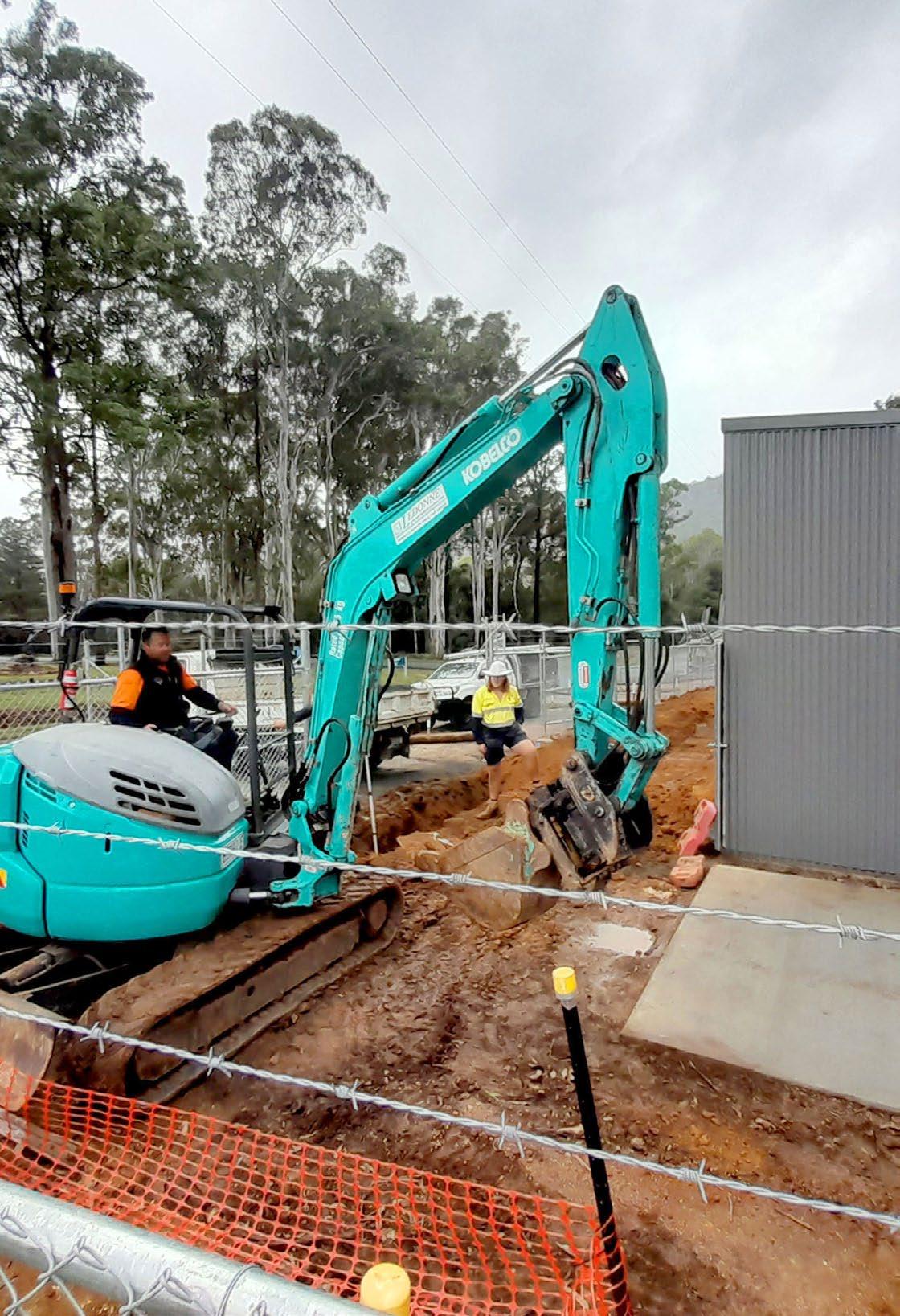
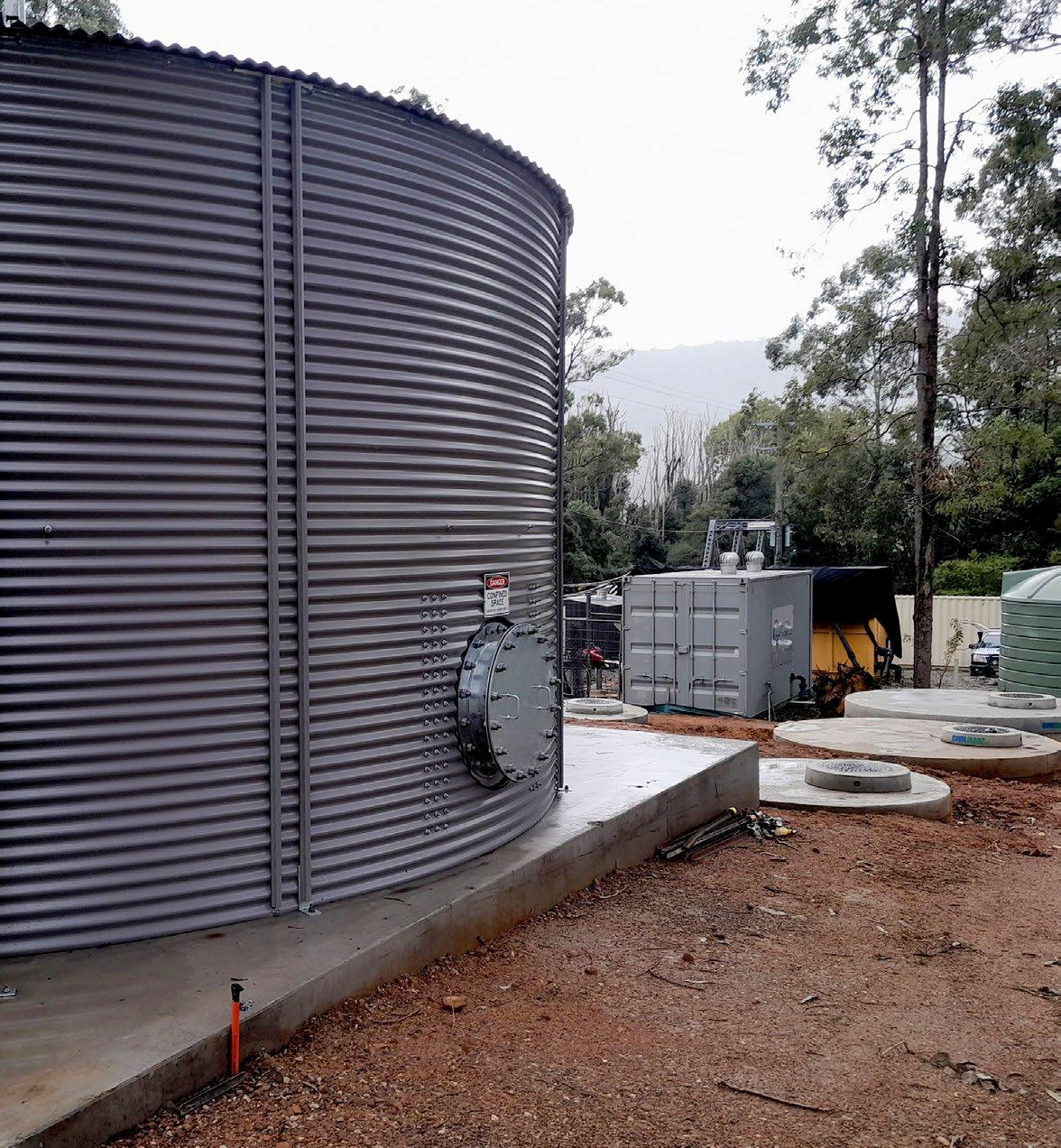
PICTURED: Installation underway at the Glenreagh water filtration plant. Glenreagh and Coutts Crossing filtration plants are scheduled to be completed by November.
Safe secure water supply a top priority
Providing a safe and secure water supply is a top priority for Council and much is being done to ensure infrastructure meets current and future demands.
New filtration plants are currently being built at Glenreagh and Coutts Crossing to provide clean drinking water to homes and businesses throughout the villages. They are scheduled to be completed by November this year.
Concept designs have also been created for a filtration plant at the Rushforth Road Water Treatment Plant (RRWTP), which supplies most of the Clarence. The next step is to call tenders for detailed design and construction. A report is anticipated to go to Council in late 2026 where elected councillors will consider tenders and decide whether to proceed with the project, and if so, how it would be funded.
Filtration is required to meet strict new Australian Drinking Water Guidelines introduced in 2022 and
would further reduce health risks by removing viruses and pathogens, preventing algae, and reducing suspended particles.
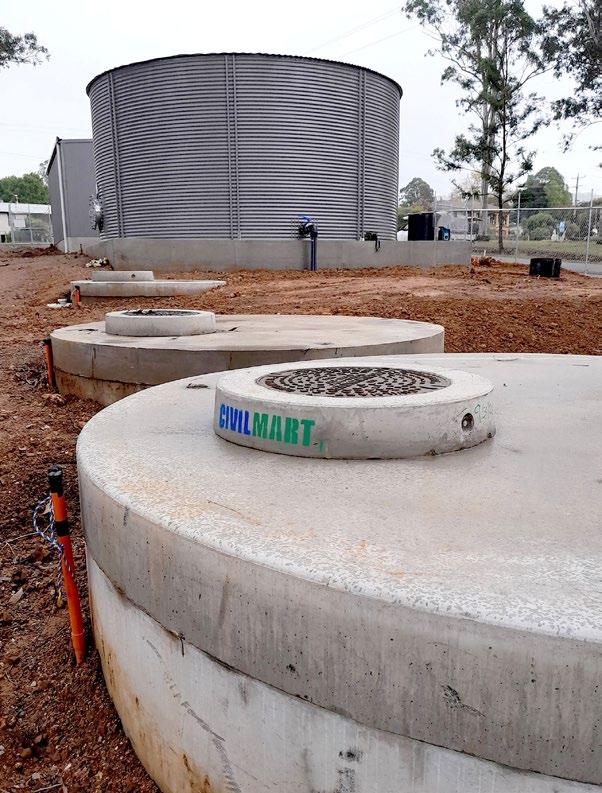
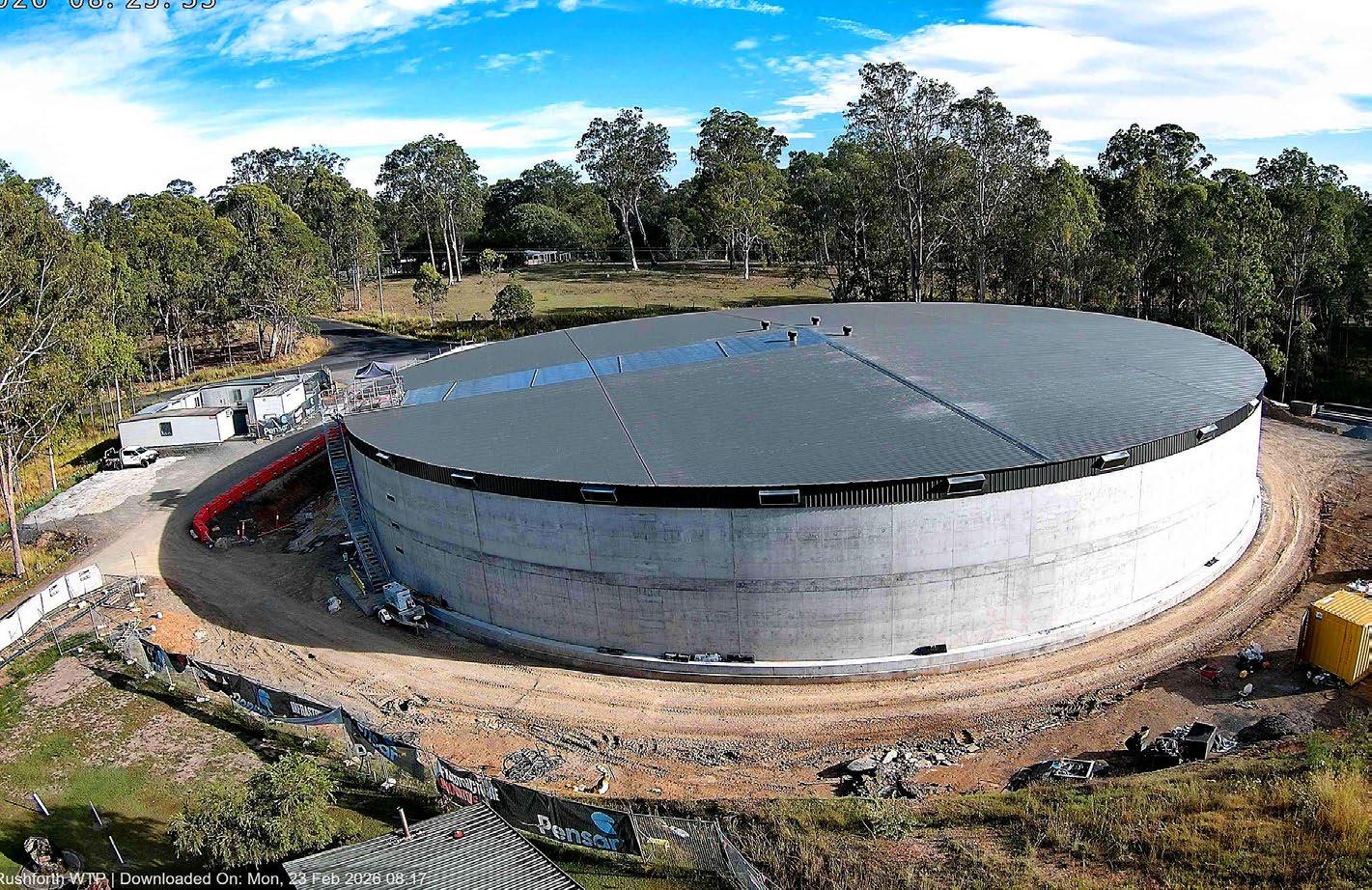
A new enclosed 16-megalitre concrete reservoir and chlorine contact tank were recently commissioned at the RRWTP, to replace the open-air storage that had reached the end of its operational life. It provides increased security against contamination and has been designed to be compatible with the future addition of a filtration plant.
Water mains pipelines are also being progressively upgraded throughout the Clarence, with more than $10.5 million allocated over the four years from 2025 to 2029. This includes $540,000 a year for mains renewal at Brooms Head, and an additional $1.1 million a year for mains renewal for the rest of the Clarence. A total of $4 million has also been allocated for a trunk main replacement on Rushforth Road in 2027/2028.
Celebrating Aboriginal culture
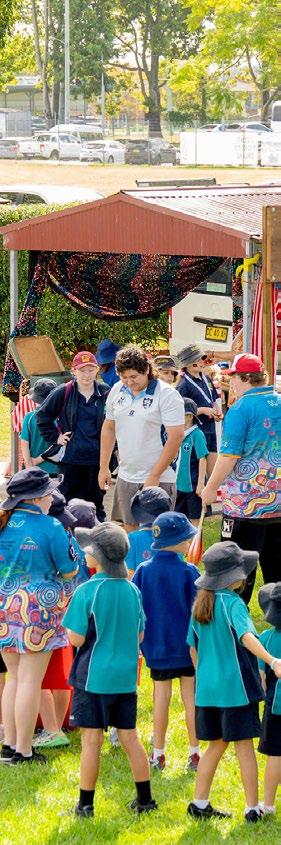
The rich cultures of the Gumbaynggirr, Bundjalung and Yaegl people were celebrated across a series of five public events supported by Council from May to June.
The rich cultures of the Gumbaynggir, Bundjalung and Yaegl people were celebrated across a series of five public events supported by Council from May to June.
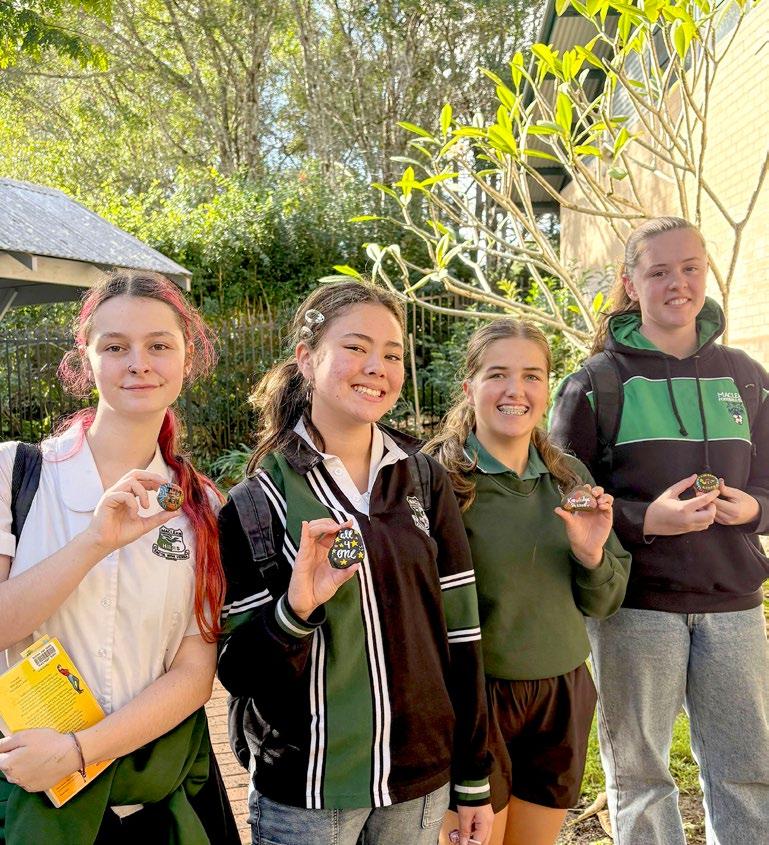
National Reconciliation Week (27 May to 3 June) was celebrated with local high school students involved in the Youth Voice project, through discussion of the week’s theme ‘All In’ and creation of rock art. Students were from South Grafton High School, Clarence Valley Anglican School, Maclean High and Grafton High.
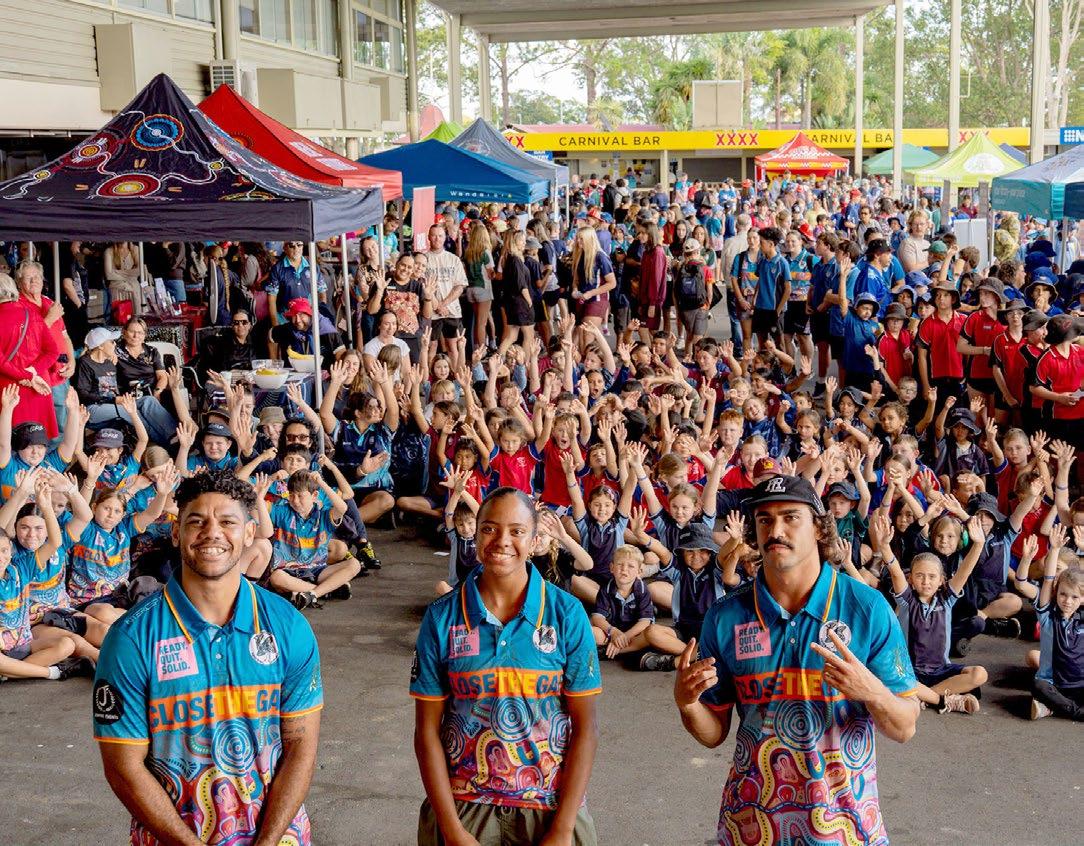
For Close the Gap (13 May) Council took part in an event at the Clarence River Jockey Club that attracted
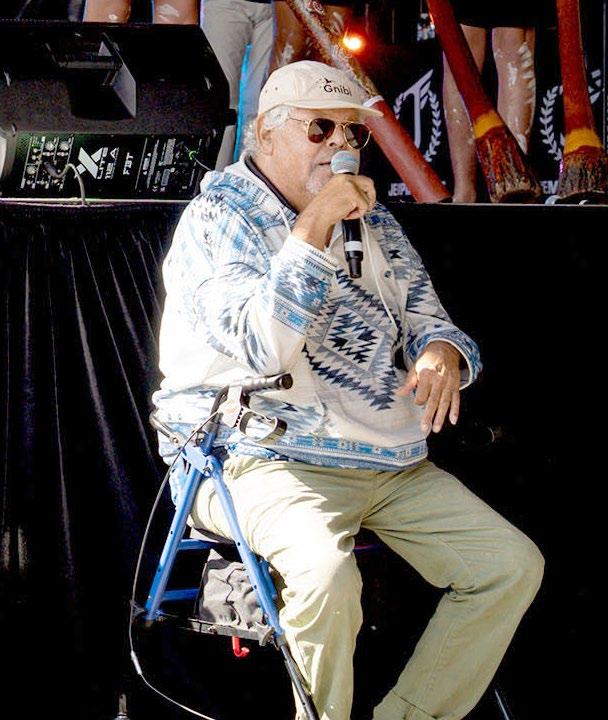
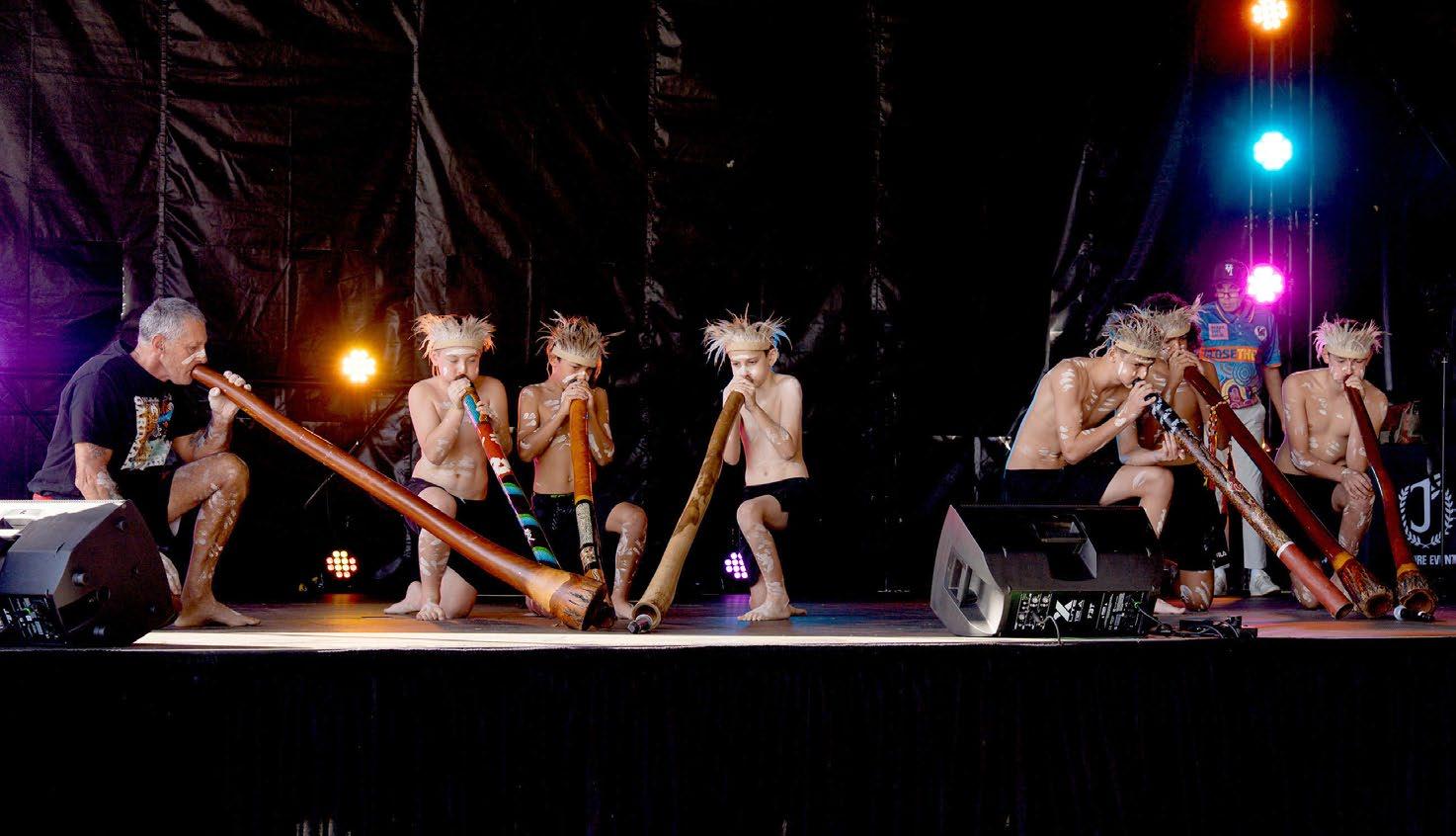
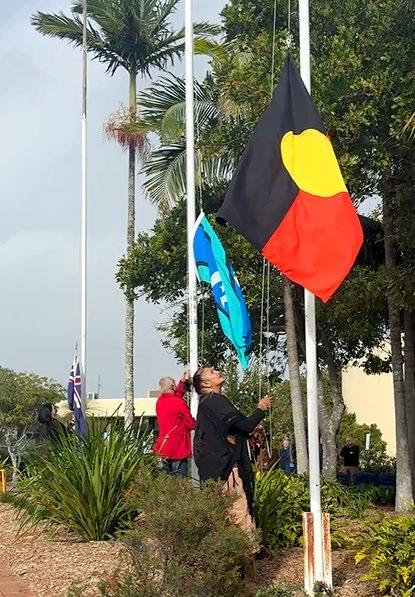
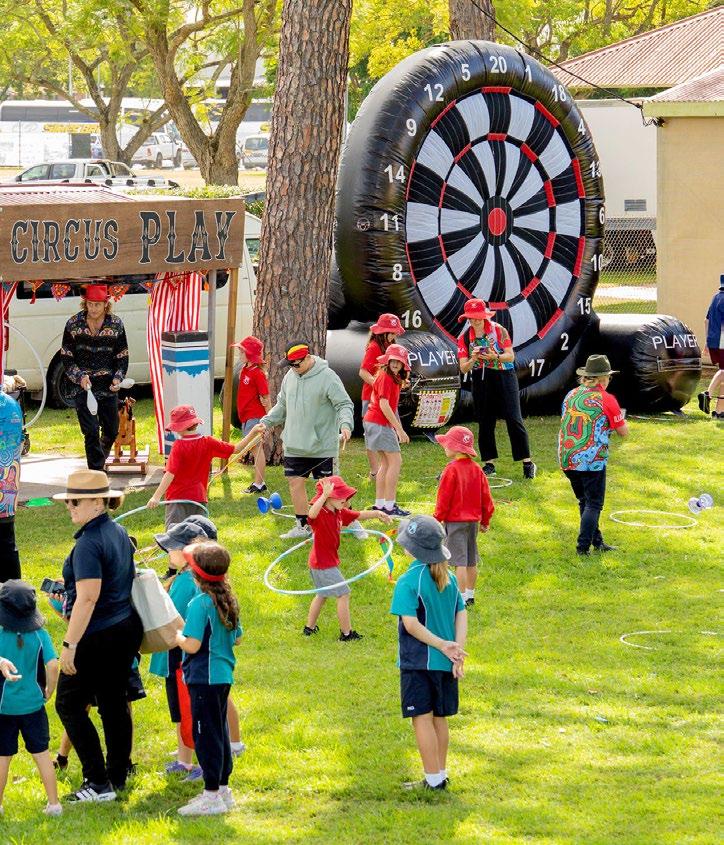
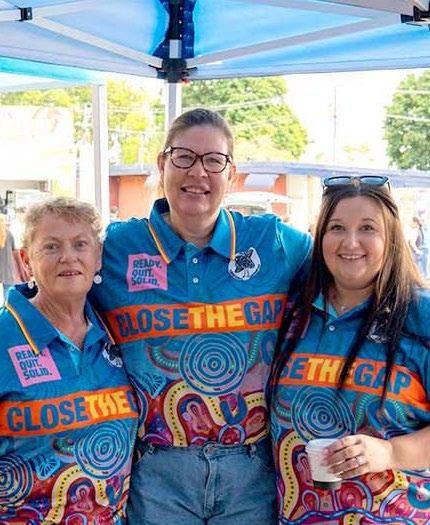
PICTURED: Clockwise from far left; Uncle Ken Gordon performs the Welcome to Country at the Close the Gap event at the Clarence River Jockey Club; traditional dance was an important part of celebrations; a wide varity of activities was on offer for the kids to enjoy; Clarence Valley Council staff; NRL stars Brian Kelly, Phoenix Hippi and Daine Laurie at Close the Gap celebrations; NAIDOC Week flag raising at Maclean Council Chambers; and, high school students with their rock art created for National Reconciliation Week. CREDIT: Close the Gap event images courtesy of Jempire Events.
Fostering relationships key to meaningful engagement
The Three Nations One River Aboriginal Cultural Insights and Engagement Guide was created in consultation with local Yaegl, Bundjalung and Gumbaynggirr people to shape how Clarence Valley Council works with Aboriginal communities.
Consultation with Elders and communities revealed that Aboriginal people want to be consulted on issues affecting them by having a cuppa and a yarn to build respectful relationships, in addition to formal local government processes such as online public exhibition of plans, projects and strategies.
The internal document guides staff on cultural protocols such as Welcome to Country, Men’s and Women’s Business, Smoking Ceremonies, and Sorry Business. It also covers expectations around Indigenous cultural and intellectual property.
A report has also been presented to Council highlighting progress made towards the goals of the Innovate Reconciliation Action Plan (RAP). The plan details a series of actions to be undertaken to build relationships, respect, opportunities and accountable governance.
over 1,000 students. A Welcome to Country by Uncle Ken Gordon and traditional dance by Garimaa Ngahri were the highlight of the event.
NRL stars Brian Kelly, Phoenix Hippi and Daine Laurie were special guests on the day. Council staff also took part in facilitating activities.
Flag raising ceremonies, morning teas and other activities were also held to celebrate NAIDOC Week July 5-12.
These events were promoted by Council alongside Mabo Day and National Sorry Day.
A place to fall in love
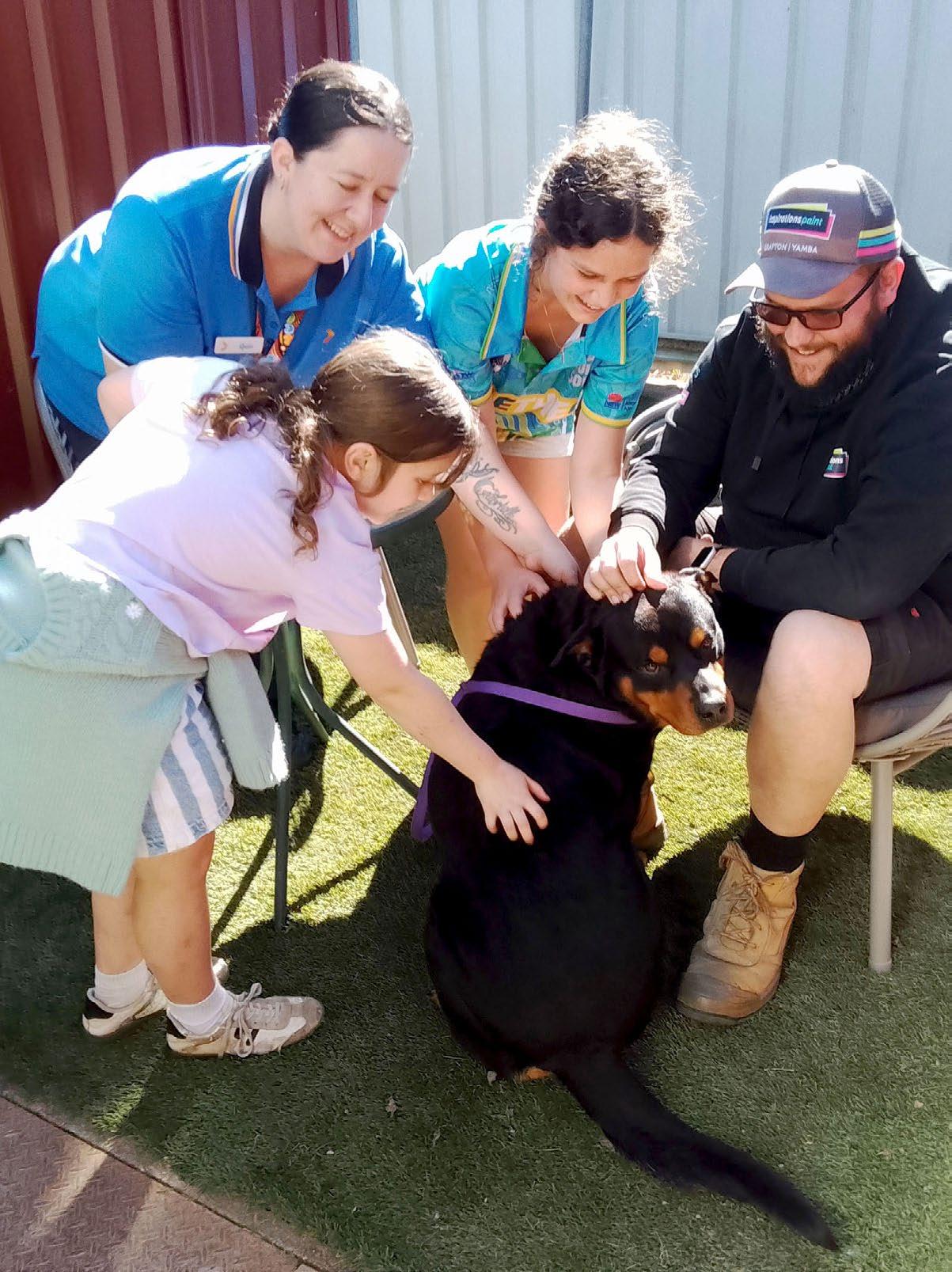
The new meet and greet area at the Clarence Valley Animal Shelter is a simple space, consisting of a few sheets of Colorbond fencing, a small area of artificial turf and concrete, and a few chairs and a table. But for the Fergussons and many more families to come, it is the special place where they fall in love with the fur baby that becomes their newest family member.
Nine-year-old Ebonee sits on a bench seat swinging her legs in excited anticipation. Nearby, big sister Rhianna, 14, and mum and dad Quin and Anthony, gather around a small round table to wait for the big moment. They had been impressed with the online video and pictures of five-year-old Rottweiler, Duke, but what would their first face-to-muzzle meeting be like?
Duke had been found roaming local streets and was brought into the animal shelter by a member of the public. Although he was microchipped, Duke’s details were not up to date in the system which meant the owner couldn’t be contacted. Shelter staff put out a public advertisement calling for Duke’s owner to come forward without success.
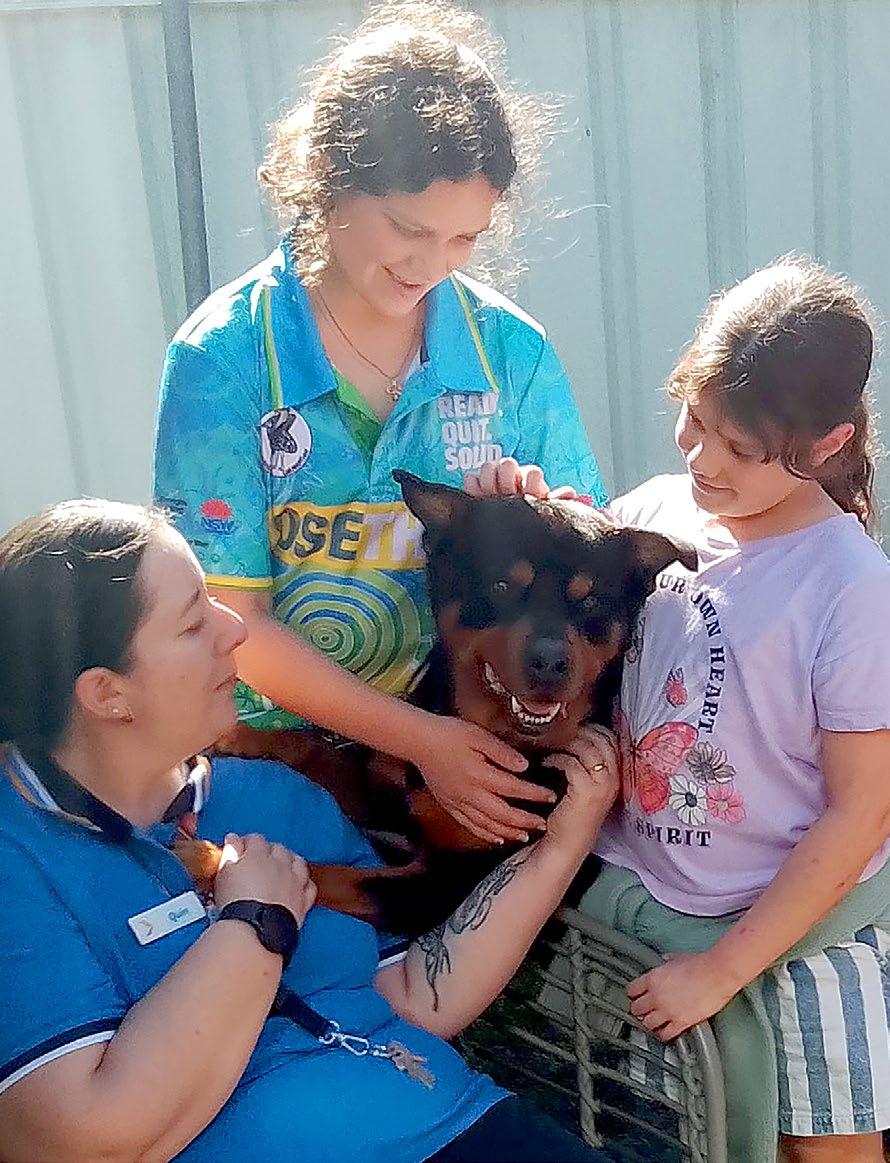
As the meet and greet area gate swings open, Duke bounds in, tail wagging enthusiastically, grinning toothily from ear to ear. Straining at his lead, he heads straight for the waiting family, and is instantly smothered with loving pats and compliments.
“He’s so beautiful – a big cuddly teddy bear,” Quin coos as Duke jumps up for a hug.
“Sit. Shake,” Anthony suggests and Duke obliges, prompting a chorus of approving laughter.
The love is immediate and mutual, but what will three-year-old Dachshund, Raymond, think of his potential new fur-brother?
Raymond struts through the gate and issues a series of short authoritative barks to let Duke know
he intends to be the boss. Duke doesn’t mind one bit, as he continues to wag and smile invitingly, eager to make a new friend.
Raymond wanders off to explore the rest of the new meet and greet area, and Duke plonks himself down in the shade for a rest. After a minute or two, Raymond makes his way over to Duke, and the pair seal their ongoing friendship with a customary butt-sniffing ceremony.
“This is super good for him,” Anthony says of Raymond, adding that, as a little dog he has a big ego. “It looks like he’s going to be the alpha male though!” So, has the family made a decision to adopt Duke? Or do they need some time to consider what will be a long-term arrangement?
PICTURED: Five-year-old Rottweiler, Duke, meets the Fergusson family in the new meet and greet area built at the Clarence Valley Animal Shelter in South Grafton.
“I don’t think we have to think about it at all,” Anthony says with a beaming smile.
“I’m going to cry – this is so special. He’s so friendly and went straight to the kids, which is really reassuring,” Quin adds.
Duke underwent the mandatory vaccination and desexing, before being picked up by the Fergussons and taken to his new forever home in Grafton.
The new meet and greet area is one of a series of improvements made at the animal shelter between May-July 2026. Three outdoor pens have been built, linking to the meet and greet area, which will provide a grassed space for impounded dogs to enjoy some fresh air and a run around. A small lunch room has also been built for staff.
Adopt a pet
The Clarence Valley Council Animal shelters are located in South Grafton and Townsend.
The South Grafton shelter on Induna Street is open 8.30am-3pm, Monday to Thursday and 8.30am-12pm on Fridays. Other times may be arranged be appointment. The Townsend facility is open by appointment only.
Check out our facebook page to find your new fur family member:
facebook.com/cvcpound
Register your pet
In NSW, registering your cat or dog is a requirement under the NSW Companion Animals Act 1998, and helps ensure your pet can be returned to you should it get lost.
You can register your animal for its lifetime by following these simple steps:
1. Microchip your cat or dog by 12 weeks of age, or before being sold or given away (whichever comes first).
2. Register your cat or dog by 12 weeks of age.
3. Desex your dog by six months of age and your cat by four months of age for discounted lifetime registration fees.
Use your Service NSW login details to access the NSW Pet Registry and follow the steps to register and pay the fees online. If you are unable to pay online, you can come into Clarence Valley Council at 50 River Street, Maclean, or 2 Prince Street, Grafton, for assistance.
To register your pet and learn more about responsible pet ownership and dogfriendly areas in the Clarence Valley, visit:
clarence.nsw.gov.au/pet-ownership
Achievements of the 2025/2026 financial year
An ambitious program of investment in the community was completed in the past 12 months in line with the 2025/2026 Operational Plan and Capital Works Schedule, including extensive repairs and improvements across the transport network. Work was also undertaken to plan for the future to address current and anticipated challenges and achieve the aspirations of the community as outlined in the Community Strategic Plan – The Clarence 2035.
PICTURED: From left; Water mains are replaced as part of the Yamba Road upgrade; the Argyle-McLachlan Street intersection is reconstructed; and, major land slips are repaired on Old Glen Innes Road.
*As of 28 June 2026.
Project highlights
y Public Art Trail established
y Yamba Road upgraded
y Armidale Road repaired
y Bluff Bridge built and opened
y Rushforth Road water reservoir constructed
y New slides opened at the Grafton Regional Aquatic Centre
y New hall constructed for Ilarwill
y Cyclone repairs completed
y Special events and community initiatives supported
y Independent audits undertaken
y Connectivity and cyber security improved
y Implementation of Reconciliation Action Plan goals
y Old Glen Innes Road repaired
y Sustainable Agriculture Grants introduced
Plans and strategies
y Library Services Review
y Saleyards Future Options Plan
y Flinders Park Vegetation Management Plan
y Koala Strategy
y Community Halls Strategy
For more on Council’s reporting and accountability, visit clarence.nsw.gov.au/reports
13,390 tonnes of waste diverted from landfill
23,173 tonnes of kerbside waste collected
180,713 library items borrowed (to 31 May 2026)
116,555 total library visitors (to 31 May 2026)
PICTURED: Clockwise from top left; Clarence Regional Aquatic Centre stage 3 complete; Rushforth Road water reservoir works; Carnival Capers event; and, Bluff Bridge.
Working together to fight landfill fire
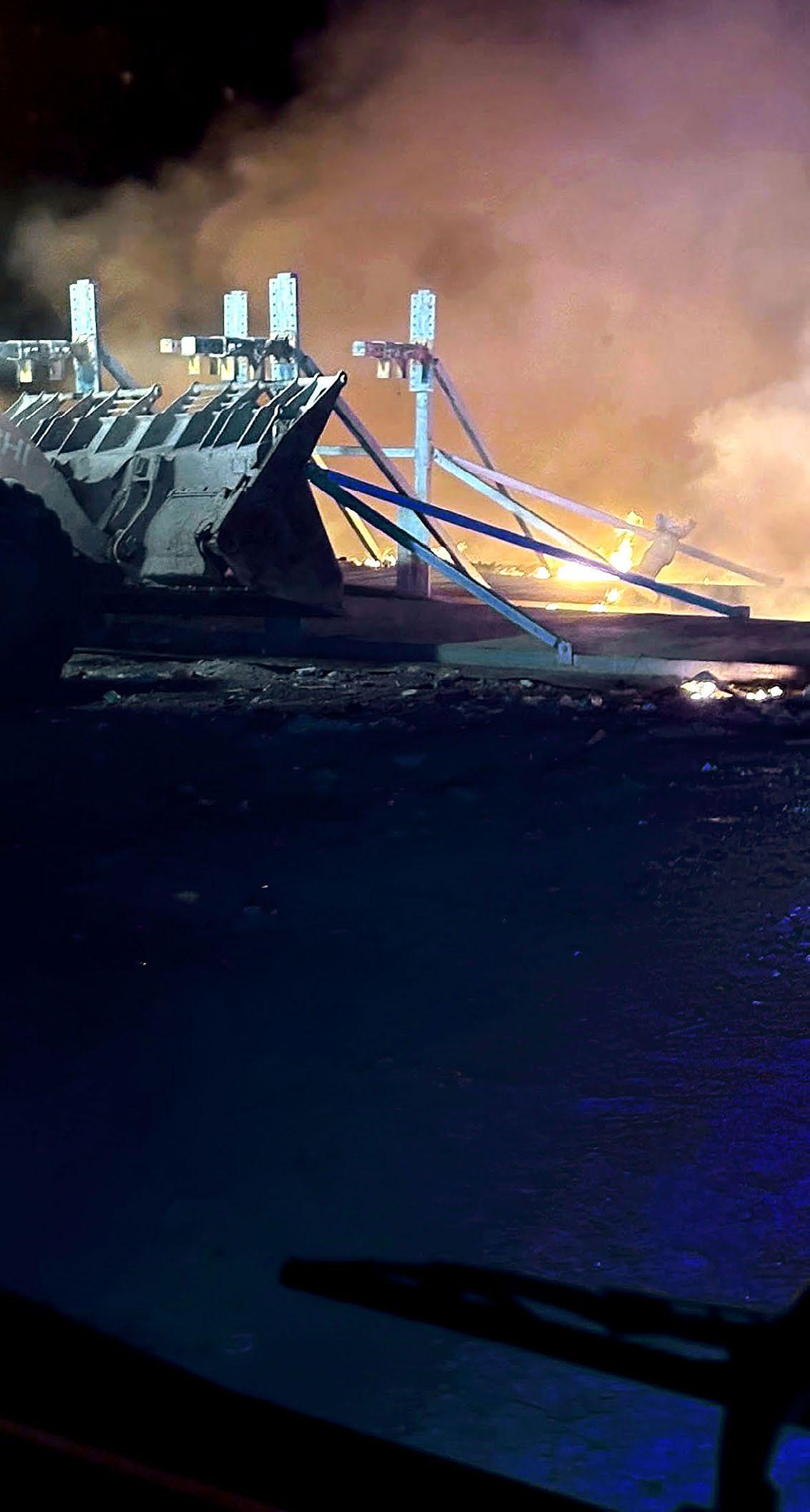
Landfill fires can pose a risk to homes, property and surrounding bushland, and can be notoriously difficult to extinguish. Such a fire broke out at the Grafton Regional Landfill and Resource Recovery Centre in April. However, it was contained to the tip face and extinguished within hours as a result of careful site design, strict adherence to daily safety procedures, and an effective response from staff and emergency services.
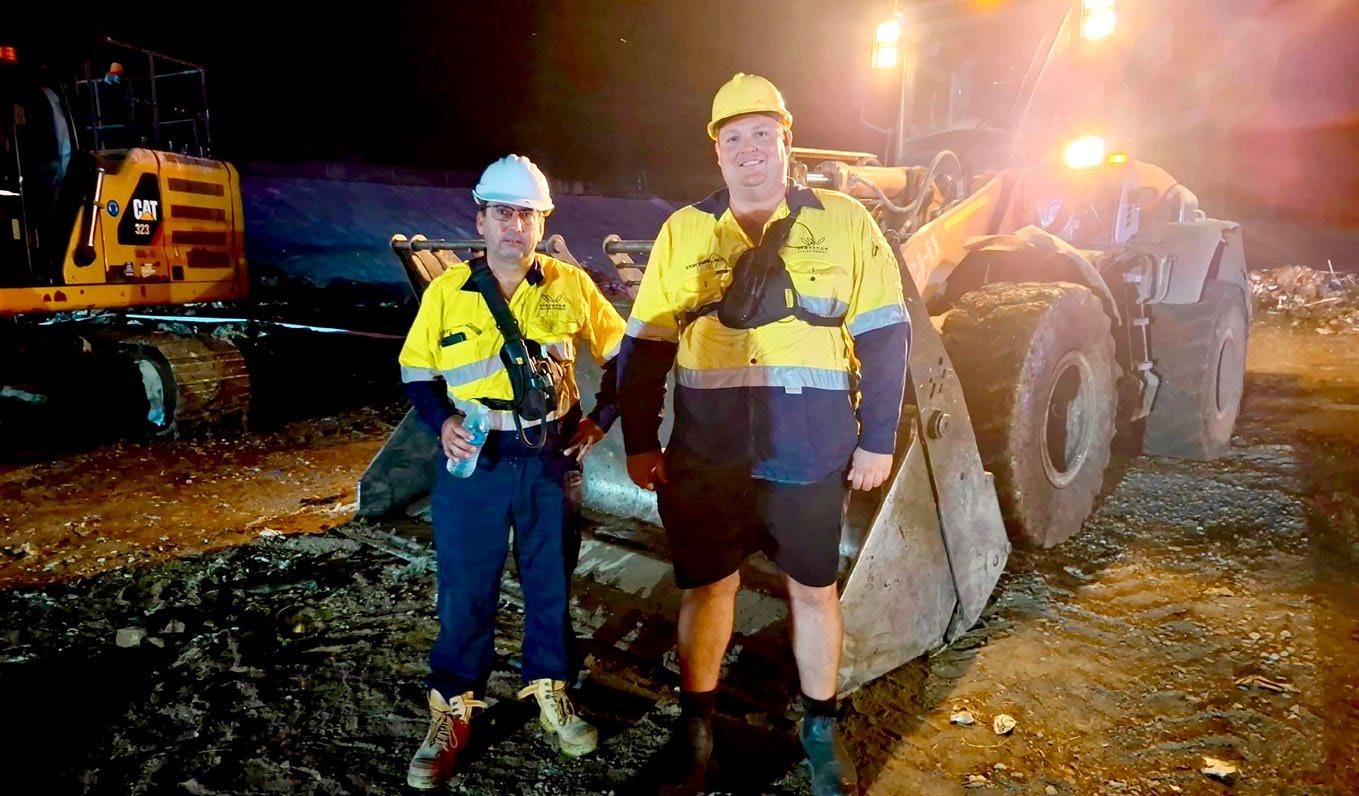
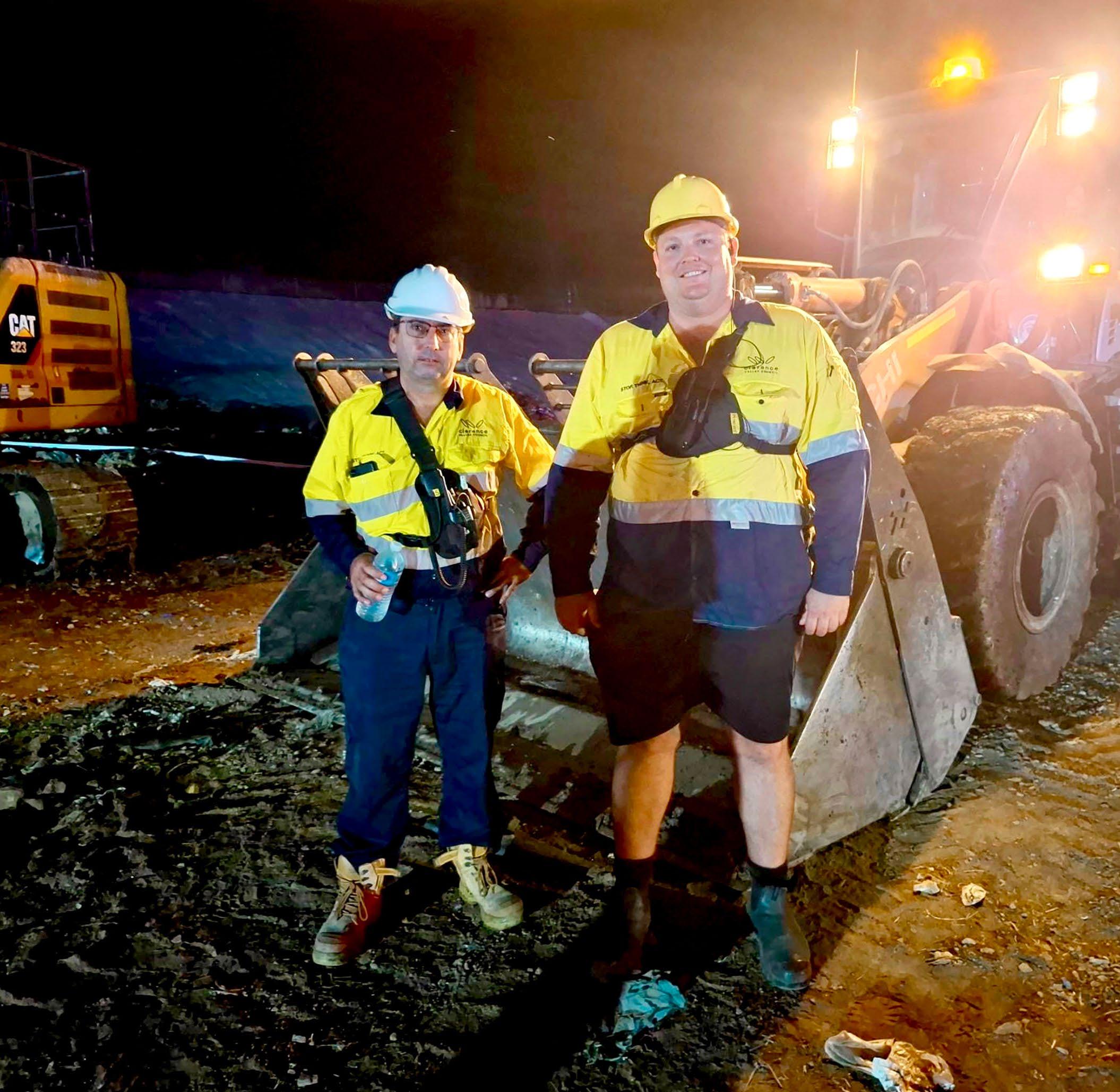
PICTURED: From far left, landfill supervisor Andrew Buchanan and landfill operator Matt O’Meally, who were among those who responded to a recent fire at the Grafton Landfill and Resource Recovery Centre in South Grafton, and, landfill lids are removed to prevent them from being destroyed.
It was Friday evening, and Grafton Regional Landfill and Resource Recovery Centre staff had all finished work for the day.
Meanwhile, an orange glow appeared on the darkened horizon beyond Armidale Road in South Grafton, catching the attention of a local resident who notified Council staff and emergency services.
Landfill operators Matt O’Meally and Lisa Luzzi were first on the scene. They discovered the fire had engulfed a section of rubbish along the tip face, covering an estimated 30 metres. Firefighters with the Rural Fire Service and NSW Fire and Rescue NSW’s HAZMAT team followed soon after.
The flames threatened to engulf nearby plant machinery and Lisa and Matt worked quickly to move them to a safe distance. As firefighters doused
“As a result, we were able to prevent potentially costly damage to the gas extraction system and geomembrane cell liner, while protecting neighbouring properties and bushland.
— Andrew Buchanan, landfill supervisor.
the flames, Matt and landfill supervisor Andrew Buchanan used a loader and excavator to pull burning rubbish away from the pile to prevent the fire’s spread. Lisa carefully removed steel and plastic landfill lids with a loader to prevent them from being destroyed.
By the early hours of the morning, the blaze had been extinguished. The landfill remained closed to the public over the weekend as staff monitored the site for any potential flare-ups.
Andrew said a combination of careful site design, strict daily safety procedures and an effective response by staff and emergency services had contained the blaze to a small section of the landfill.
“As a result, we were able to prevent potentially costly damage to the gas extraction system and geomembrane cell liner, while protecting neighbouring properties and bushland,” he said.
“The extraction system removes highly flammable methane, while hazardous materials such as mattresses and tyres are stored separately. The availability of oxygen that feeds fire is reduced by regularly compacting waste and encasing it in soil or specialised covers.”
A lithium battery is believed to have caused the fire, prompting a reminder for people to safely dispose of batteries and electrical items by taking them to their nearest recycling centre at the Grafton landfill or the Maclean transfer station, or to a participating local business.
$100M flood recovery program complete
The $1 million upgrade of Marine Parade Yamba has been completed, marking the conclusion of a $100 million three-year program to repair damage from the 2022 floods.
Torrential rain and flooding devastated much of the Clarence Valley’s extensive road network in early 2022. Emergency works were commenced immediately and funding applications made for repair more substantial damage.
A total $100 million was approved from the Commonwealth Disaster Recovery Funding Arrangements through the NSW Essential Public Asset Restoration Works program.
Repair works were fast-tracked to commence at the start of the 2023/2024 financial year and a specialist project management contractor was recruited to oversee the recovery program.
Works completed by the end of the 2025/2026 financial year included:
y $15 million regional roads recovery package, including rehabilitation of Iluka Road, Lawrence Road, Clarence Way, Eight Mile Lane, Wooli Road and Yamba Road
Palmers Channel cycle bridge construction
underway
PICTURED: Works completed as part of a $100M recovery package in response to the 2022 floods included realignment of Tullawadjah Creek, rehabilitation of Clarence Way, and repair of land slips along Old Glen Innes Road.
y $35 million local roads package to fix more than 30 sealed local roads
y $4 million realignment of Tullawadjah Creek, Glenreagh
y $5 million towards fixing Armidale Road
y $19 million repairs to more than 60 land slips along Old Glen Innes Road
y extensive repairs to drainage and replacement of damaged culverts.
Construction is underway on two cycle bridges on either side of the Palmers Channel Bridge.
The 75-metre-long, 1.5-metre-wide cantilever bridges are part of an overall upgrade of Yamba Road from Maclean to Yamba. The bridges are scheduled to be complete in August 2026, depending upon weather.
Repair works on Marine Parade near Main Beach were completed in June 2026 and included replacement of the bitumen road surface, improvements to stormwater drainage, and construction of retention walls to improve slope stability.
Damage from the 2022 floods included holes and sinking under the surface, movement of the roads edge, breaks in the road surface, and land slips along the slopes.
Meanwhile, wet weather has delayed completion of the $10 million upgrade of the Yamba RoadSouth Bank Road intersection near the Palmers Channel Bridge.
The work is now scheduled to be finished in September, following more than 50 rainy days in the first five months of 2026.
Reviving our ageing sewer network
More than five kilometres of ageing sewer has been relined and renewed across the Clarence as part of the $1.5 million annual program.
The program focussed on relining pipes that ran under roads or buildings, or were particularly deep or old, as they would be difficult to repair should they fail. They included Grafton (1,700 metres), South Grafton (1640 metres), Maclean (970 metres), Yamba (990 metres) and Junction Hill (100 metres).
Relining involved the use of close-circuit television (CCTV) to inspect the lines before customised structural plastic was rolled out to form a smooth,
strong lining on the inside of the pipes. This approach extends the life of sewer lines by many decades at a far lower cost than excavation and replacement.
CCTV was also used to uncover three manholes in Maclean that had been missing for years. One was discovered under the deck of a motel and another buried in a backyard – these two were raised to restore their use for future inspections and maintenance. Another was located under a caravan in a holiday park.
Several collapsed sewer mains were discovered, which were scheduled to be excavated and replaced.
Water filtration for Glenreagh and Coutts Crossing
Two filtration plants are under construction to provide Glenreagh and Coutts Crossing communities with clean, safe drinking water.
The $2.4 million project involves the supply by a contractor of specialised plant and equipment, and general installation by Council staff. The filtration plants include feed tanks where chemicals are added to raw water drawn from the Orara River, filtration and ultraviolet disinfection equipment housed in a shed, and a chlorine contact tank where water is stored before being pumped to local reservoirs. They also include backwash tanks and chemical waste tanks that are utilised for self-cleaning of the plant and equipment.
Both filtration plants are scheduled to be completed and commissioned towards the end of 2026.
PICTURED: A contractor deploys specialised structural plastic that expands to provide a strong, smooth lining for aging sewer pipes. CREDIT: Interflow.
PICTURED: Work is underway on a filtration plant at Glenreagh.
Improving streets in Maclean CBD
More bumpy streets are being upgraded and footpaths constructed in Maclean, improving safety for motorists and pedestrians.
Stage 2 of the project involves asphalt resurfacing of Alexander, Stanley and Short Streets, improvement of stormwater drainage and construction of a concrete
footpath and a shared path. A new raised ‘wombat’ crossing is to be installed near the Maclean Bowling Club carpark entrance.
The latest works, which are nearing completion, followed Stage 1 improvements to the Stanley-Argyle Street intersection and footpaths near the Maclean Olympic Pool.
PICTURED: Work is nearing completion to upgrade deteriorated roads in the Maclean town centre.
Water pressure restored for Iluka
Council’s Water Cycle team recently tackled an unusual task after trending data from an internal monitoring program indicated a potential leak on one of the water mains crossing the Clarence River at Iluka.
To prevent further damage, the 250mm water main was shut down, leaving the 200mm main to supply all of Iluka. This
resulted in slightly reduced water pressure due to increased friction losses.
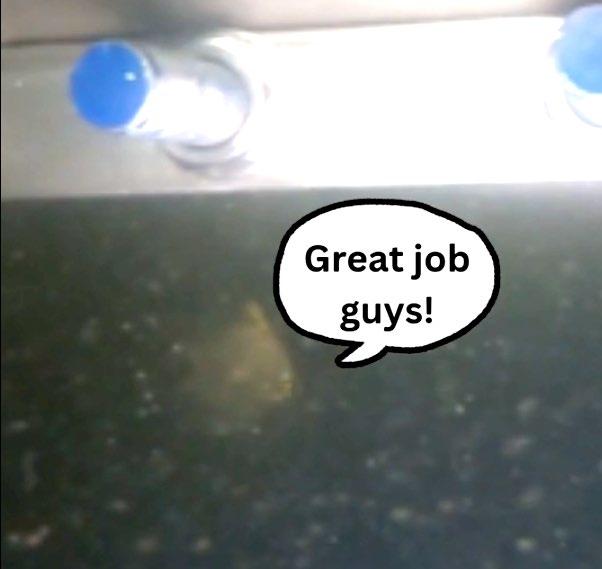
Utilising qualified divers, the crew successfully located the leak, identified as a split approximately 200mm long, situated about 50m from the shoreline.
On Friday 19 June, the pipe was repaired, and water supply was back to normal for Iluka.
Shared path to connect North Street
A safer and more connected North Street is on the way, with construction underway on the first stage of a shared path that will eventually link Queen Street and Marlow Road.
The new 295-metre concrete path will connect St Catherine’s Residential Aged Care to the existing footpath network at Queen Street, improving access for people walking, riding and using mobility aids.
In 2026/2027, the path will be extended to Turf Street funded by a combination of developer contributions and Council’s active transport budget. A future stage, subject to funding, will continue past Westlawn Public School, creating an important active transport link for local residents, students and families. Future works will also improve crossing opportunities at key intersections along the route.
The project was identified as a priority in the Clarence Valley Active Transport Strategy and supports Council’s commitment to safer, healthier and more accessible travel options.
PICTURED: A passing fish gives the ‘fins-up’ to a job well done.
Check out this video of the crews identifying the leak and the repair: clarence.nsw.gov.au/great-job-guys
Call for more funding to replace timber bridges
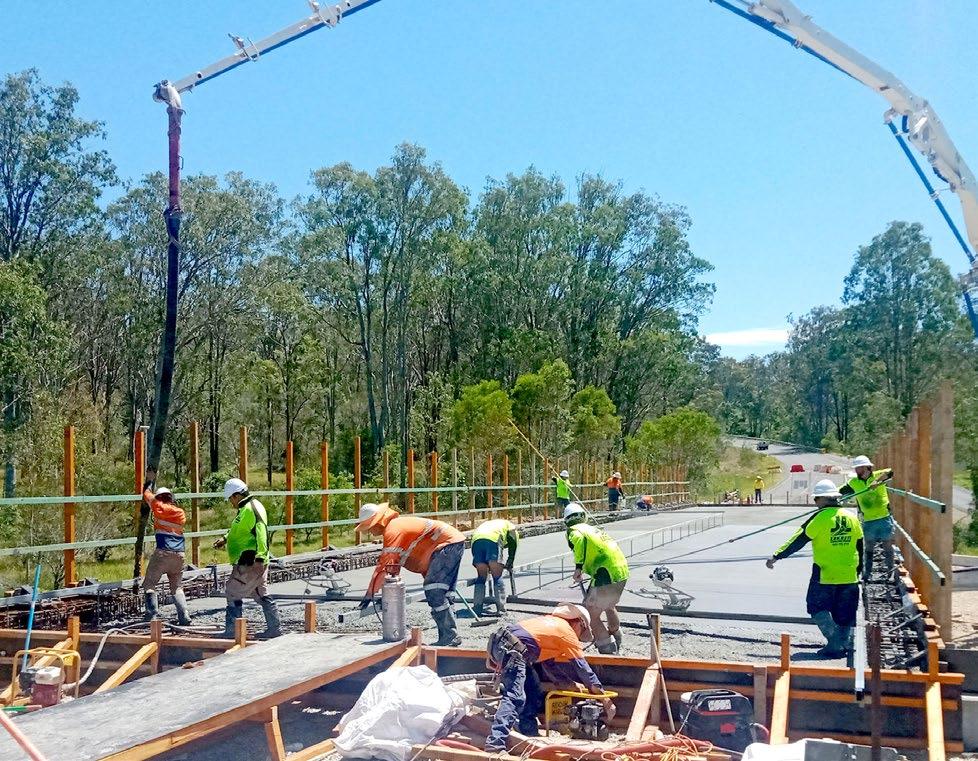
The intensive $46 million Fixing Country Bridges Program funded the replacement of 36 timber bridges with concrete structures in the Clarence Valley over the past five years. Now, Council is vigorously lobbying politicians and governments for further funding towards replacement of the remaining more than 100 local timber bridges.
Mayor Ray Smith said he was extremely grateful for the funding support from Transport for NSW that enabled Council to replace ageing timber bridges, as concrete bridges were far more disaster resilient and required minimal maintenance.
Cr Smith said, however, that there was still much more to do.
“Thanks to Fixing Country Bridges, we’ve been able to
PICTURED:
Concrete is poured for decking on Coutts Crossing No1 Bridge, one of 36 replaced as part of the Fixing Country Bridges program.
increase the number of concrete bridges to 177, but we still have 106 timber bridges left. Out of those, the majority will need replacement within the next 20 years,” Cr Smith said.
“Further government support is absolutely vital to enable this work to continue and make our transport network safer and more reliable for those who depend upon it, particularly during and immediately after disasters such as flooding and bushfires.”
In the meantime, Council’s focus turns to maintenance of the remaining timber bridges to ensure their continued usability and safety. In the past year, decking replacement was undertaken on 35 bridges, with an ongoing annual maintenance budget of around $300,000.
$1M secured for safer South Grafton streets
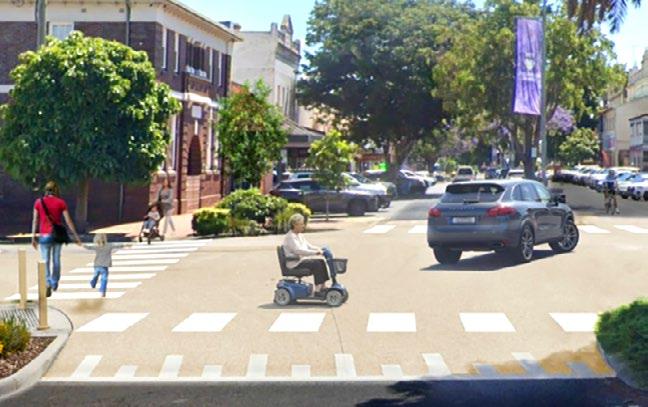
Safer crossings, lower traffic speeds and a more pedestrianfriendly town centre are on the way for South Grafton, with Council securing $1 million through the NSW Government’s Towards Zero Safer Roads Program, High Pedestrian Activity Area SubProgram.
The project responds to longstanding community requests for a safer and more welcoming town centre, making it easier for people of all ages and abilities to walk, cross the road and access local businesses.
Following community consultation and detailed design, the project is expected to include a new 30 km/h High Pedestrian Activity Area across Skinner Street, Spring Street and Through Street, featuring:
y gateway treatments and landscaping at key entry points
y a raised intersection and marked pedestrian crossing at Skinner Street and Spring Street
y raised wombat crossings to improve pedestrian safety and accessibility.
Community consultation and design will take place during 2026/2027, with construction planned for 2027/2028.
PICTURED: An artist’s impression of works to be undertaken in the South Grafton CBD.
Hydro-electric museum one step closer
The Nymboida Hydro-Electric Powerhouse Museum is one step closer to becoming a reality, with endorsement of the Section 355 committee that will be the driving force behind the facility.
The 13-person committee was officially endorsed at the June Council meeting and consists of: Lyle Gilmore, Fortunat Nienhaus, Norelle McLennan, Lorena Chater, Lynney Grieves, Clem D’Alessandro, Eloise Cichero, Peter Nixon, Robyn Nixon, Kim Lavery, Richard Buckmaster, Jon Lavery and Phillip Wakeling.
The committee will be responsible for planning and delivering public tours of the facility, following completion of essential safety works and compliance with governance and risk requirements.
The power station was decommissioned in 2013 and acquired by Council in 2021 as part of the purchase of the associated water supply infrastructure from Essential Energy.
Hailed as the first attempt on mainland Australia to generate electricity by waterpower on a large scale, the Nymboida Hydro-Electric Power Station was officially
opened on 25 November 1924.
It had been more than a decade in the making, successfully championed by South Grafton mayor and later Cowper MP Dr Earl Page, after years of political and economic challenges, including the Great War. Dr Page laid the foundation stone for the Nymboida plant as acting Prime Minister in September 1923.
Nymboida was the first of seven hydroelectric power plants announced in 1919 that were planned to power the entire eastern half of New South Wales, including Sydney’s future Snowy Mountains scheme.
The Clarence was set to be the regional capital of hydropower, with a second much larger plant planned for The Gorge at Jackadgery.
The Jackadgery scheme was abandoned in 1925, however, upon the emergence of the far cheaper option of coal-fired power. The Snowy scheme eventually survived the challenge of coal and was opened in 1974 after more than 25 years of construction.
Nymboida was finally decommissioned in 2013 after almost 90 years of operation.
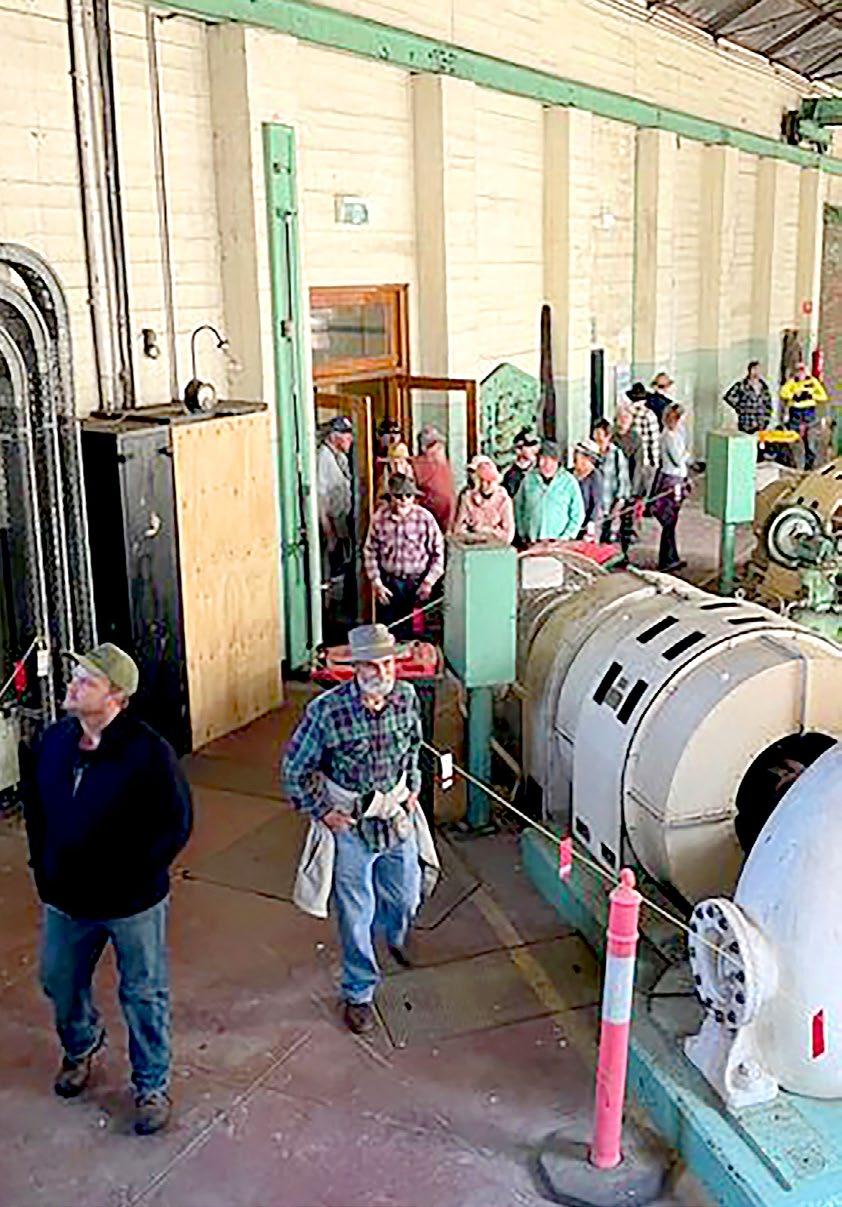
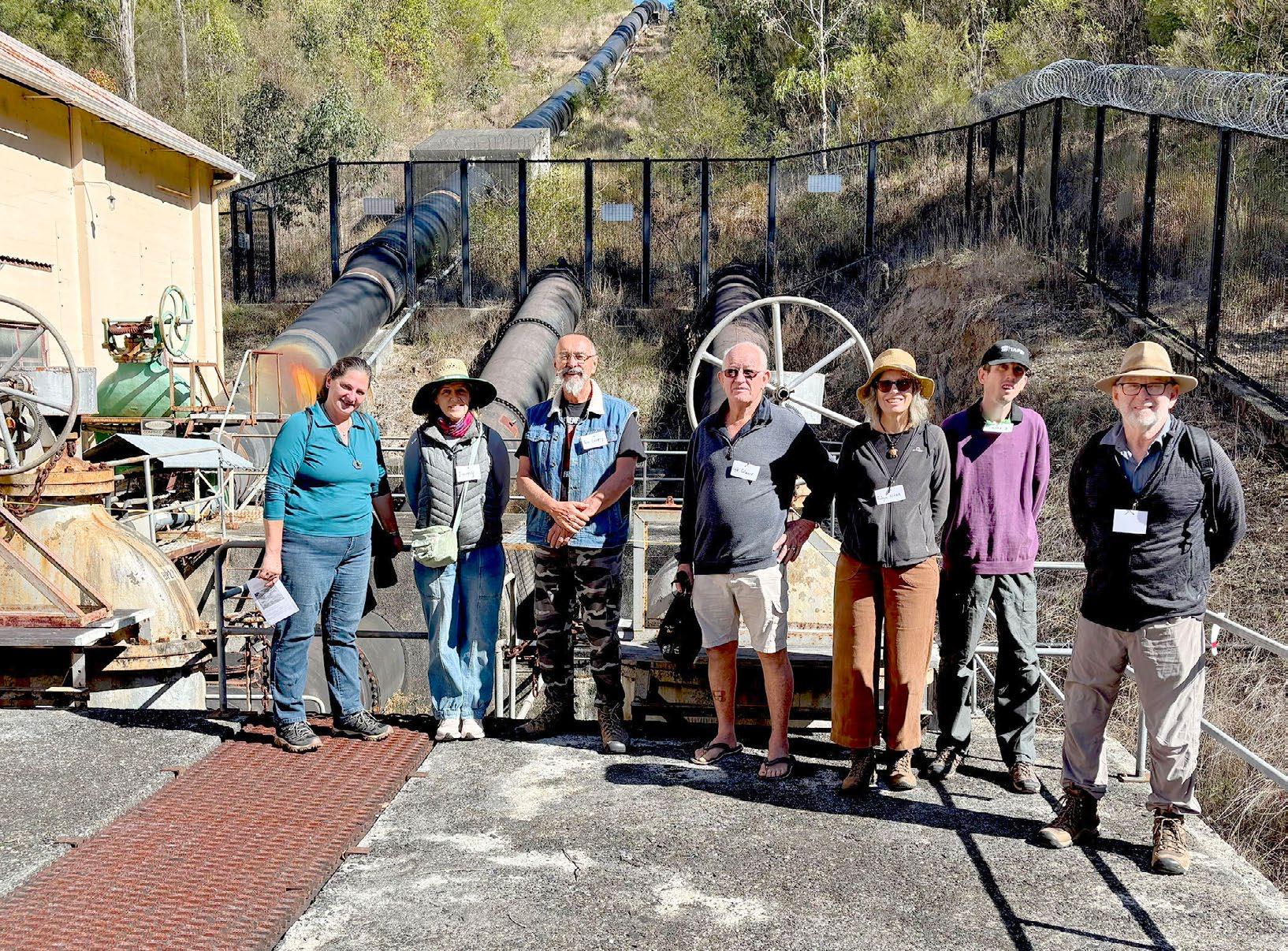
PICTURED: Curious residents tour the former Nymboida HydroElectric Power Station for its 100th anniversary, and later prior to establishment of a Section 355 Committee to reopen the facility as a museum.
Saleyard operations in the spotlight
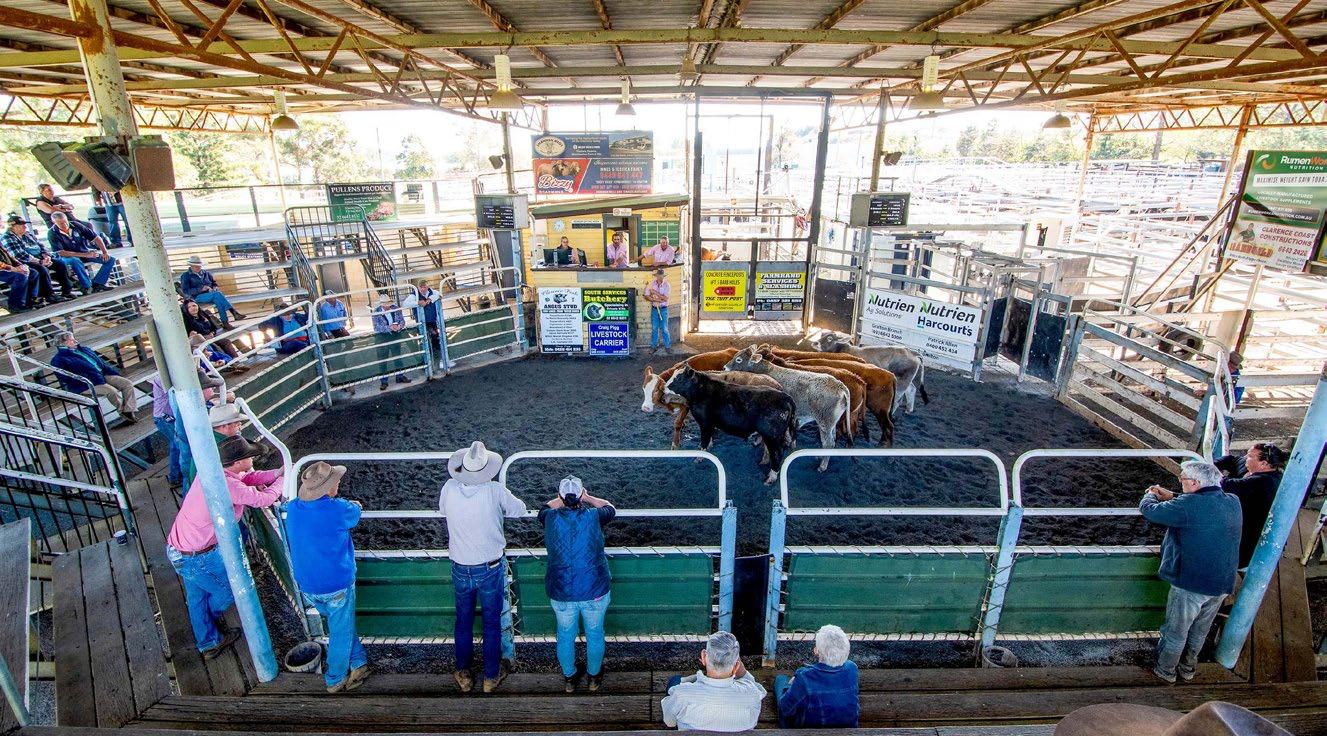
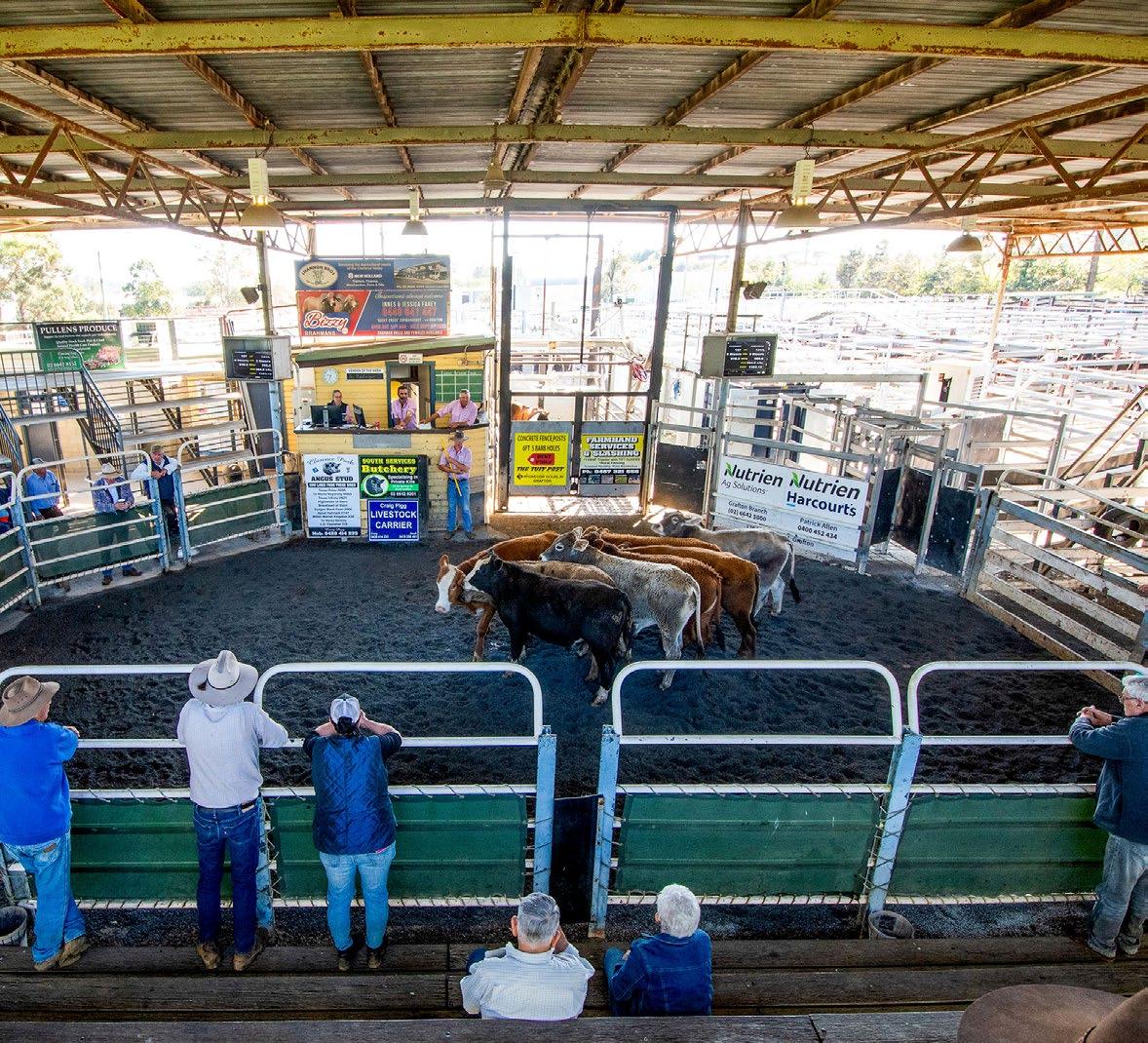
PICTURED: A future management options plan has recommended that Council retain ownership and operation of the Grafton saleyards while talking steps to improve its sustainability.
Council should retain ownership and operation of the Grafton saleyards while taking steps to improve their sustainability, according to a comprehensive future management options report.
The 70-page report on the Grafton Regional Livestock Selling Centre was completed for Council by an independent consultant and involved extensive engagement with primary producers, agents, saleyard users, relevant Council staff and other industry participants. An online survey also generated 86 responses.
The report recommended that Council retain ownership and operation of the saleyards, supported by a refreshed business model, targeted capital investment (subject to available funding), improved operational practices,
enhanced stakeholder engagement and revised fees and charges.
The report found that the facility provided important economic, agricultural and community value to the Clarence Valley, including a local selling point for livestock, reduced transport impacts for producers, support for associated rural industries and an ongoing social connection point for the rural sector. It also confirmed, however, that the current operating model was financially unsustainable when full asset lifecycle costs such as depreciation and renewal requirements were considered.
Installation of a $10,000 truck wash high-pressure pump was identified as a priority and has been included in the Capital Works Plan 2026/2027.
Yamba library proving to be popular
Twice as many people have participated in programs at the new Yamba library in the past eight months, compared to the old library in the previous year.
Almost 3,000 people took part in programs at the new library from August 2025 to April 2026 – a 100 per cent increase on the previous year. The library now has 229 programs on offer, which is 80 per cent more than the old library located in Wooli Street.
A total of 26,750 people visited the new library, an increase of 50 per cent on the previous year. Loans were up 53 per cent, collections up 26 per cent, and membership up 19 per cent.
A total of 31,912 people walked through the doors of the Yamba Library and Community Centre over eight months, including 5,162 taking part in events in hired rooms at the community centre.
The largest proportion of community centre hirers were funded community groups (47.3 per cent), with the majority of bookings for meetings, community development, and workshops.
26,750 people that have visited the Yamba library in eight months.
3,000 people that took part in library programs.
$500,000 secured for street event improvements
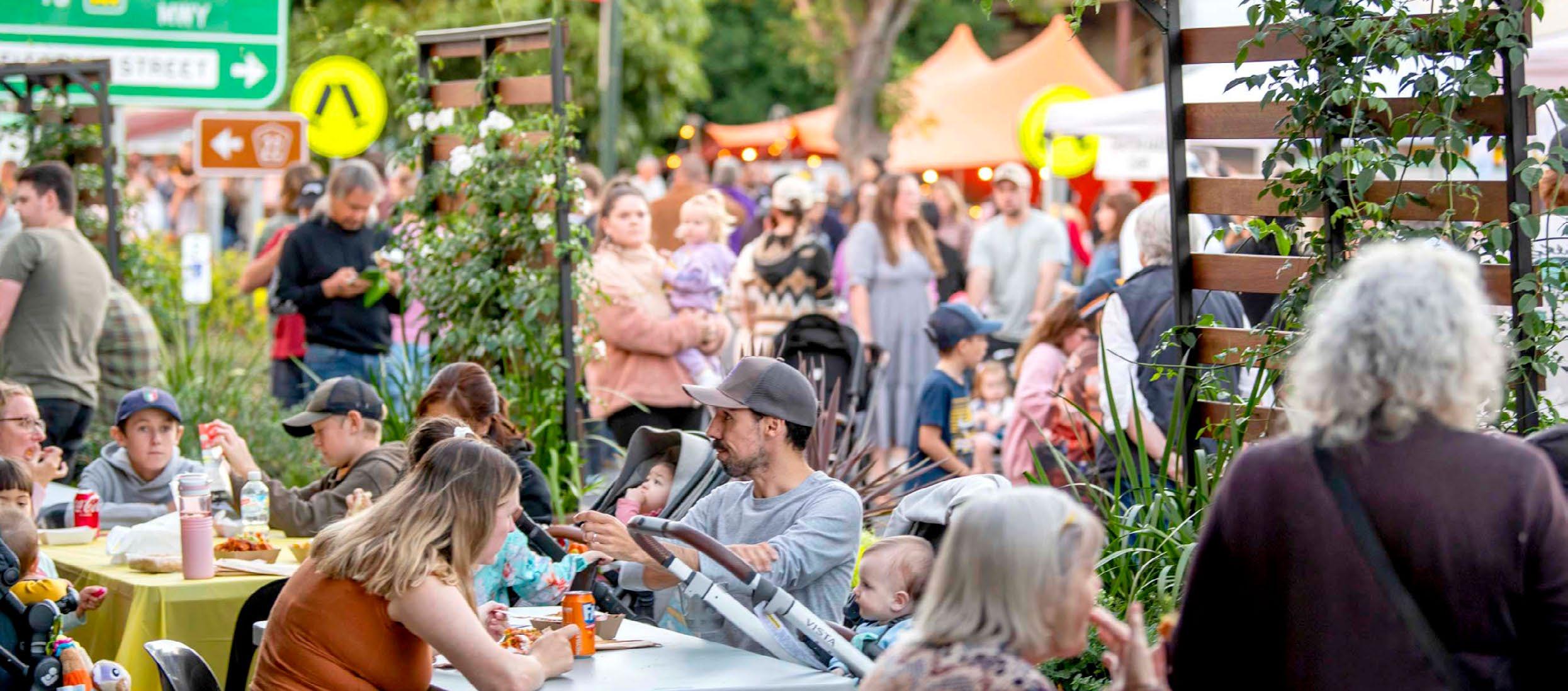
Clarence Valley Council is one of 24 NSW councils to be given $500,000 under the NSW Government’s Permit, Plug, Play Program, announced in early June 2026.
The initiative aims to make street-based events easier and more cost-effective to deliver by simplifying approval processes, improving internal workflows, and investing in essential place-based infrastructure to support vibrant, community-focused events.
General Manager Laura Black said the funding will allow Council to review its current event approval processes and develop key event infrastructure.
“This funding will allow us to take a strategic, whole-of-Council approach to delivering events, reviewing and streamlining our approval processes, improving internal workflows, and creating clear, consistent procedures that make it easier for events to happen,” she said.
“We’ll also invest in critical infrastructure, including traffic management equipment and electrical upgrades to support safer, more efficient and vibrant street activations.
“Importantly, this program will help us empower event organisers through practical tools, better planning, and data-driven insights that support future opportunities.”
The funding will focus on three council-owned road sites - Skinner Street in South Grafton, Coldstream Street in Yamba and Centenary Drive in Maclean. A special event is to be delivered in Skinner Street, South Grafton, in 2027.
“This is about removing barriers and creating more opportunities for our community to come together. By streamlining approvals, upgrading infrastructure, and providing better tools for organisers, we’re making it easier to
deliver safe, high-quality events in our streets and public spaces,” Ms Black said.
The Permit, Plug, Play Program forms part of the NSW Government’s Vibrant Streets Package, which is an investment of more than $40 million to revitalise streets into thriving local places that support communities, boost local businesses, and energise the creative sector.
This isn’t the first time the Clarence Valley area has benefited from the NSW Government’s program, with the successful Prince Street upgrade project, Rediscover Grafton, funded through the Streets as Shared Spaces program in 2022; five free community street events funded through the Open Streets Program in 2024; and the completion of the Yamba Community Improvement Districts project in 2025.
PICTURED: More street-based events will be held across the Clarence thanks to securing $500,000 in NSW Government funding.
Developers to contribute more to water and sewer
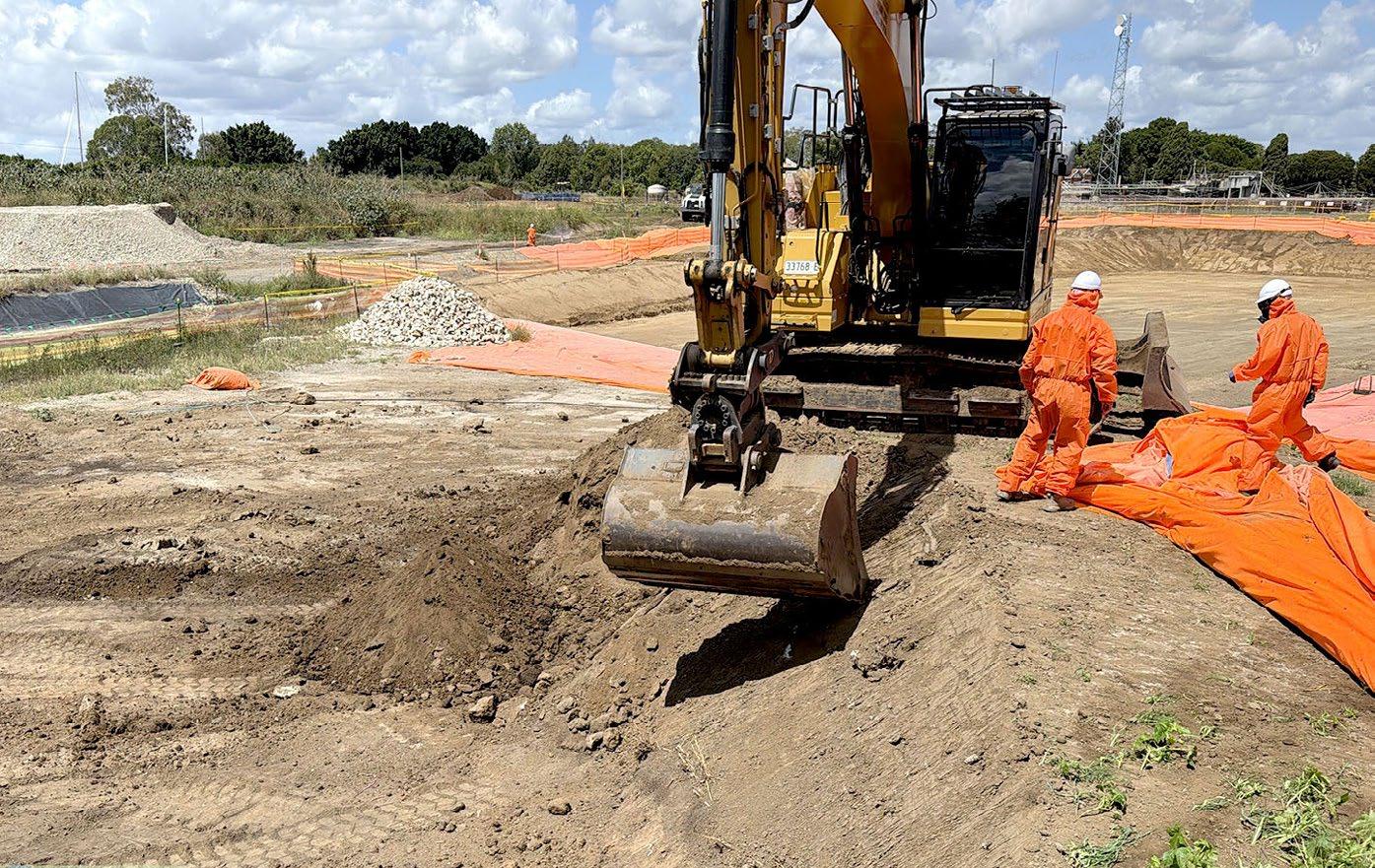
Developers will be required to contribute more towards the cost of water and sewer infrastructure to ease the burden on ratepayers under a proposed new contributions plan.
The Draft Review of Sewer and Water Development Servicing Plans was placed on public exhibition for 30 working days during FebruaryMarch and was adopted in June.
The plan proposes an increase in developer contributions to water infrastructure across the Clarence and to sewer infrastructure in the Upper River area (Clarenza, Coutts Crossing and Grafton). The increases are to be phased in over three years.
A review of the former 2017 development servicing plans found that a significant proportion of growth-related infrastructure costs were being borne by water and sewer customers, rather than being recovered by future development. The review incorporates major water and sewer infrastructure investments delivered since 2017 and recalculates developer contributions to ensure an appropriate share of growth-related infrastructure costs is recovered from future development rather than existing customers.
PICTURED: As part of a Review of Sewer and Water Development Servicing Plans, developers will contribute more towards the cost of sewer and water infrastructure such as the North Grafton Sewage Treatment Plant, and the Rushforth Road Water Treatment Plant reservoir.
Since the 2017 plans were adopted, Council has delivered or committed to several major water and sewer projects that provide capacity for future development, including:
y upgrades to water treatment and disinfection at multiple locations
y additional storage and treatment capacity at the Rushforth Road Water Treatment Plant
y upgrades to sewage treatment, including North Grafton and Coutts Crossing.
Digital approach to koala protection recognised
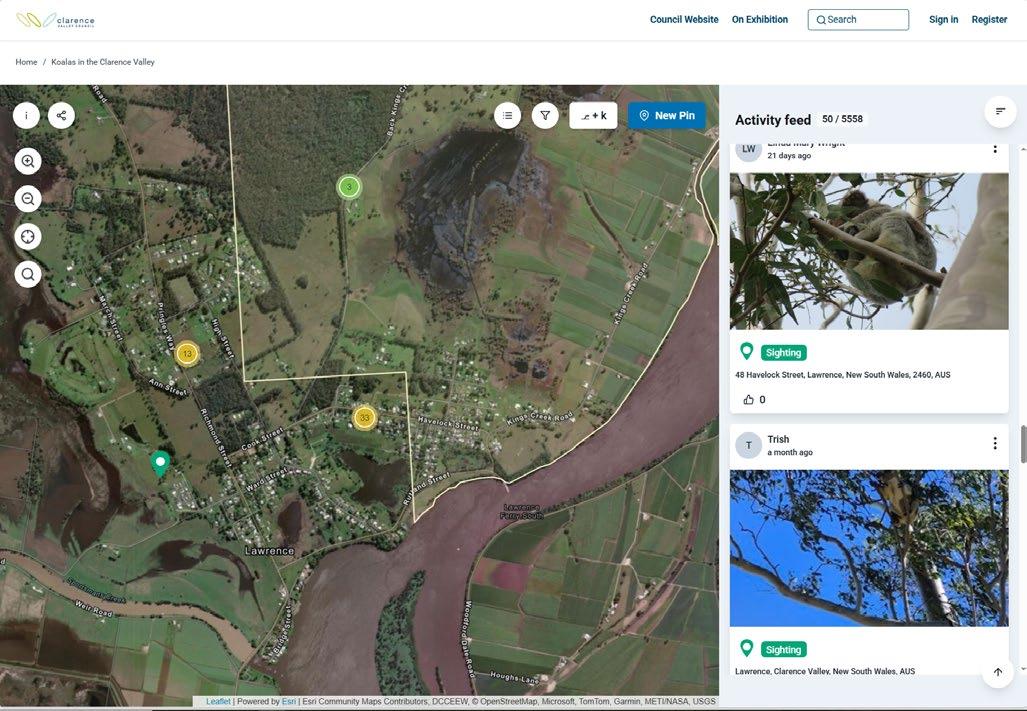
The interactive online system that empowers residents to report koala sightings and be an active part of their conservation has been recognised with a national award from a global digital industry leader.
The Granicus Digital Government Awards for Australia and New Zealand recognise public sector agencies and local governments for implementing technology-driven solutions to enhance citizen engagement, service delivery, and community transparency.
Clarence Valley Council was named winner of the Changemaker Award for the Koalas in the Clarence initiative, which enables residents to become active contributors to conservation through a live, interactive koala-sighting map.
General Manager Laura Black said the award recognised the work being done to actively involve the community in vital conservation work.
“All reported sightings are collected and shared with BioNet, the NSW Government’s main database ... to support biodiversity studies, environmental planning, threatened species protection, and wider conservation efforts across the state.
“The Koalas in the Clarence program has changed how the community helps protect endangered koalas. It encourages people to get involved through citizen science and digital tools, helping to collect valuable environmental information,” Ms Black said.
The project used a two way digital system to connect with the community through the Clarence Conversations platform and an interactive map. Local residents can report koala sightings using the Koala Register, and each sighting is automatically added to a live map showing where koalas are being seen.
“All reported sightings are collected and shared with BioNet, the NSW Government’s main database for plants and animals. This information is then used to support biodiversity studies, environmental planning, threatened species protection, and wider conservation efforts across the state,” Ms Black added.
To register a koala sighting, visit clarenceconversations.com.au/koalaregister
Residents and visitors are encouraged to report koala sightings via the award-winning Koala Mapping Program webpage on the Clarence Conversations. Reporting sightings will help inform future conservation and protection.
PICTURED: A preview of the Koala Register.
Empowering sustainable agriculture
Five local projects have received support through the Clarence’s firstever $25,000 Sustainable Agriculture Small Grants Program.
The inaugural grants program attracted 50 applications, and the field was narrowed down to just five successful applications by a panel of three judges.
The program aims to collaborate with primary producers to encourage improved land management, strengthen knowledge and skills in natural resource management and sustainable farming, and enhance onfarm biodiversity, water quality, and soil health.
The funding will be shared by the successful applicants.
Local Loop Fertility and Soil Health Demonstration Project Pigface Farm, 291 Mororo Road, Mororo.
This project enhances Pigface Farm by creating a community-focused demonstration site dedicated to improving soil health, on-farm fertility, and climate resilience through regenerative agriculture practices.
Sunny Acres Farm education and space enhancements
313 Palmers Channel South Bank Road, Palmers Channel.
This project seeks to restore four acres of land previously degraded by long-term monoculture cane and soy
farming through chemical-free, notill practices that rebuild soil health and biodiversity.
Chaffin Creek Farm – Regenerate Learn Grow
233 Firth Heinze Road, Pillar Valley.
This project proposes a placebased workshop event at Chaffin Creek Farm that brings together a panel of practitioners from diverse regenerative agriculture disciplines to explore their shared principles and practical applications for improving landscape health.
Irrigation Infrastructure and River Protection
480 Boundary Creek Road, Nymboida.
This project aims to improve water management and protect sensitive river ecosystems on a 100-acre property with 750 metres of Nymboida River frontage.
Riparian Zone Restoration –Weed Removal, Stock Exclusion Fencing and Off-Stream Watering Infrastructure
169 Levenstrath Road, Levenstrath. This project focuses on restoring a degraded riparian zone by removing established infestations of privet, camphor laurel and lantana through mechanical mulching, followed by targeted hand-applied herbicide treatments to prevent regrowth.
Food businesses get ready for FOGO
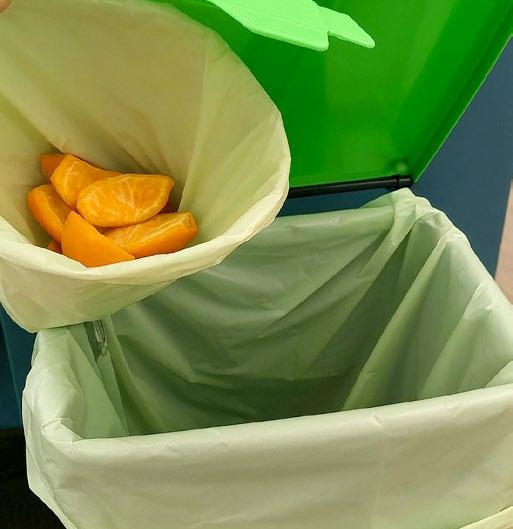
Under new laws, from 1 July 2026 organisations that sell or handle food, such as supermarkets, cafes, schools and hotels, must separate food waste from general waste.
By doing so, businesses can save costs on waste disposal to landfill, improve business operations, reduce their carbon footprint and divert food waste for beneficial reuse.
Commercial Food Organics and Garden Organics (FOGO) services have been provided in the Clarence since 2012, with onsite organics processing established to create compost for agricultural use.
The NSW Government mandate requiring separation of food waste from general waste will happen in stages from 1 July 2026, based on weekly rubbish bin volumes.
For more information, go to the EPA website and search for ‘FOGO mandate’.
PICTURED: Organics recycling is now mandated for businesses.
Be in the know on all things waste
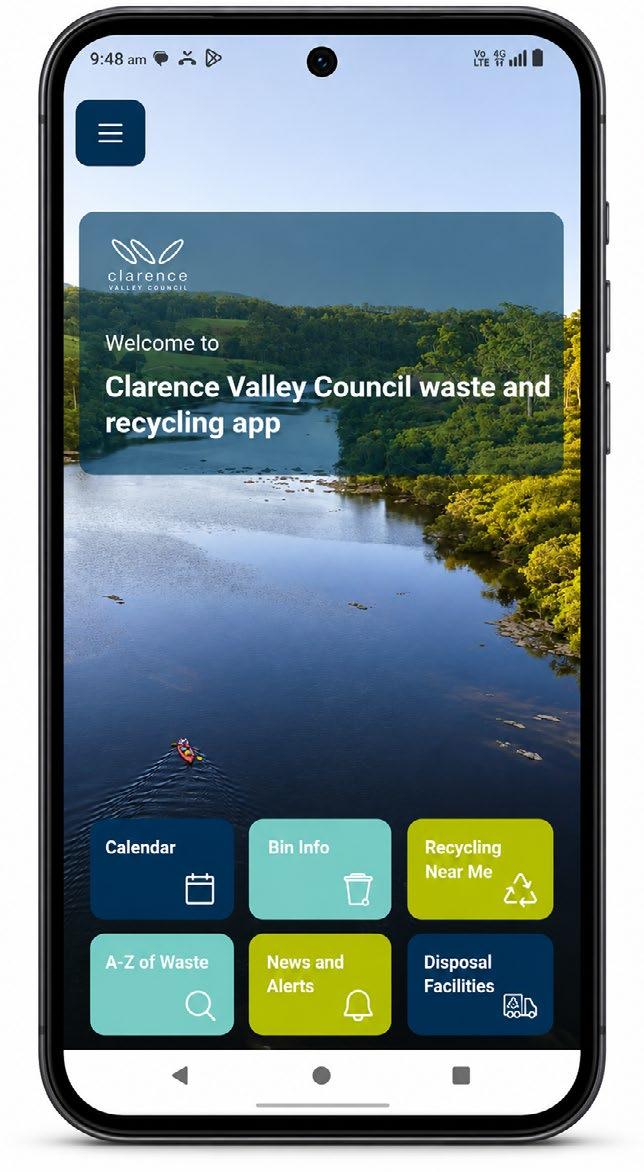
Never again forget to put the right bin out for collection by downloading the latest revised version of the free AZ of Waste Management app.
The new and improved app was launched in June, with a sleek new look and improved functionality and links to information.
The app has a range of functions including:
y reminders about when to put each bin out for collection
y alerts to special events like Clean Up Australia Day and National Recycling Week
y information about the bulky waste collection service
y maps of local waste collection centres
y locations for used battery drop-off.
Download ‘LoopedIn Councils’ from the Play Store on Android or the App Store on Apple, and select ‘Clarence Valley Council’.
Keep an eye out for your handy 2026/2027 waste collection calendar fridge magnet in your letterbox.
Bright Sparks light up at ELF
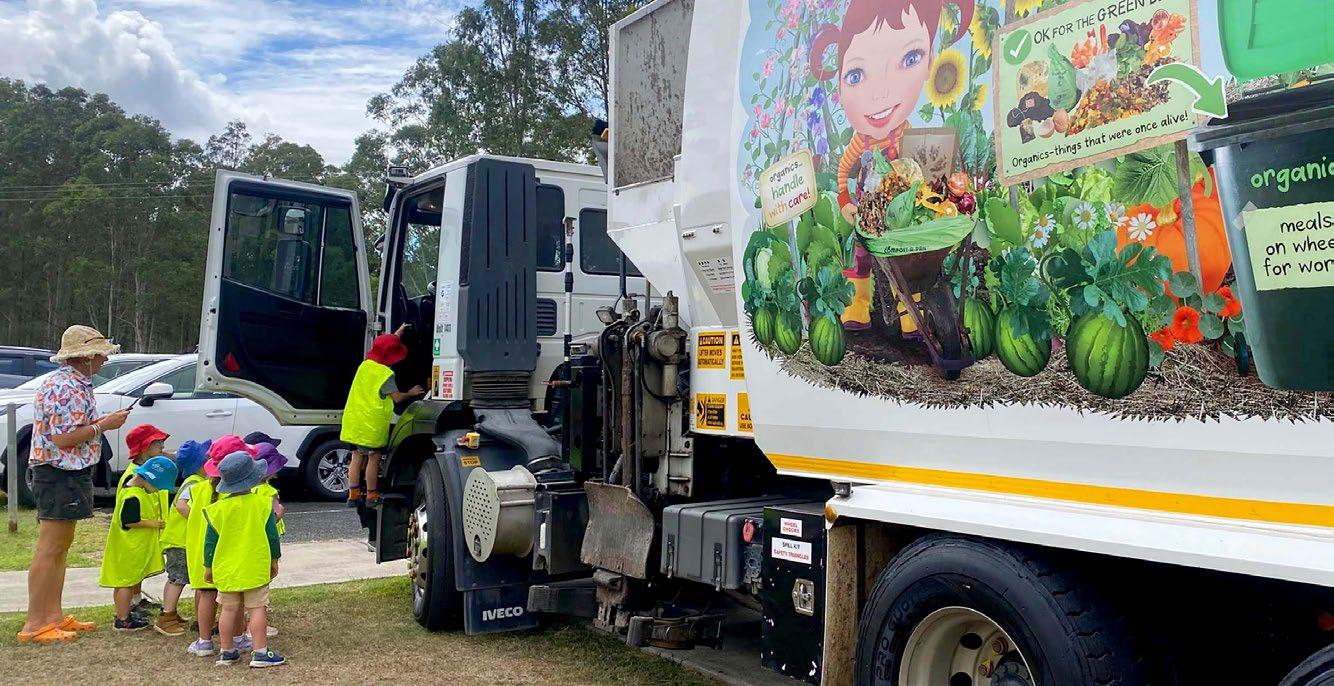
There’s nothing quite like seeing a child’s face light up when a tractor, bus or train goes by, and the excitement was no different when a JR Richards garbage truck rolled in during a visit to the Environmental Learning Facility (ELF).
The group of four-year-olds from Bright Sparks Child Development Centre not only learnt about the importance of recycling and which bin to use, but they were also treated to a very special experience. Each child had the chance to get up close, taking turns sitting in the cab of the truck alongside JR Richards driver Michael.
The garbage truck demonstration was just one element on offer at the ELF.
Through interactive displays, group workshops, activities and tours and meeting room facilities, the ELF aims to improve environmental awareness, with a major focus on sustainable lifestyle choices. The ELF is located at the Grafton Regional Landfill and Resource Recovery Centre on the Armidale Road South Grafton.
For more information, visit clarence.nsw.gov.au/ELF
PICTURED: Kids from Bright Sparks Child Development Centre get to sit in a garbage truck, as part of their visit to the Environmental Learning Facility.
Focus on sustainability and job creation
Resource Recovery Australia took over the operation of Clarence Valley Council’s eight waste transfer stations from 1 May 2026.
Following a decision by councillors at the November 2025 Ordinary Council Meeting, the not for profit organisation was awarded the contract to manage facilities at Copmanhurst, Glenreagh, Tyringham, Baryulgil, Iluka, Minnie Water, Maclean and Grafton.
Director Environment and Planning, Adam Cameron said Council was looking forward to working with Resource Recovery Australia.
“Resource Recovery Australia runs multiple facilities in the Northern Territory, Queensland, New South Wales and Victoria. The organisation is recognised for its innovative waste management practices and for giving household goods and materials a second life through its Reviva Reuse Shops,” Mr Cameron said.
“Additional improvements at the transfer stations will include the introduction of EFTPOS facilities at most remote transfer stations where services allow, as well as new transaction management software being implemented across all sites.”
Resource Recovery Australia’s General Manager Matt Curtis, said he was excited to operate these facilities and was looking forward to creating local jobs for the area.
“We’re pleased to be partnering with Clarence Valley Council to operate these facilities and provide safe, reliable waste and resource
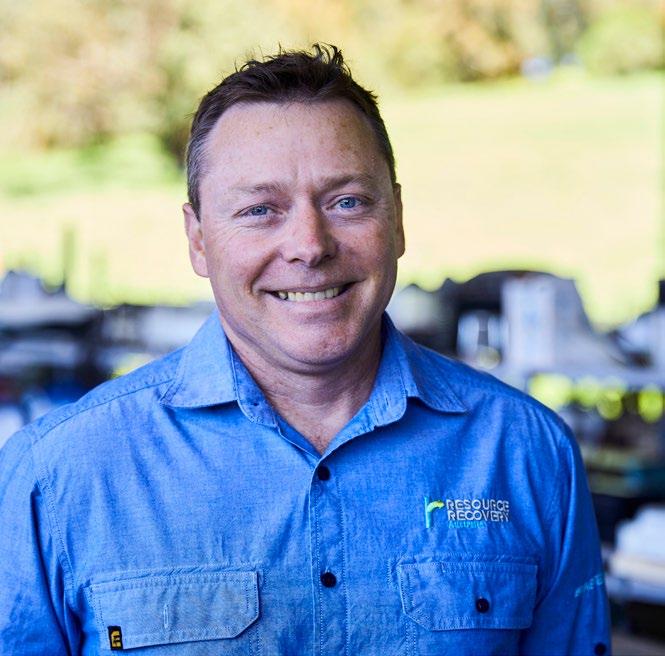
PICTURED: Resource Recovery Australia’s General Manager, Matt Curtis.
recovery services for the community,”
Mr Curtis said.
“Our approach combines waste management with social outcomes by creating local jobs and training opportunities for people facing barriers to employment. We look forward to working closely with Council and the local community during the transition.”
Coordinated approach to flying fox management
A Clarence-wide, coordinated approach to managing flying foxes is the focus of a new Flying-fox Camp Management Plan 2026, with a particular focus on camps at Maclean, Ulmarra and Glenreagh.
It replaces the previous site-specific approach with an integrated LGA-wide strategy, recognising that flying-fox populations are highly mobile and that management actions at one site can influence outcomes at others.
The primary objective of the Plan is to balance community amenity, public health and safety, and biodiversity conservation. It recognises that flying-fox camps can generate ongoing impacts for nearby residents, including noise, odour, droppings and perceived health concerns, while also acknowledging that flying-foxes are protected native species that play an important ecological role.
The draft plan was put on public exhibition for 28 days in June prior to formal adoption.
Customers who have accessed the transfer stations previously with an MI Organics account should enquire with Council about applying for a new account with Council. Contact the Waste team between 8:30 am – 4:30 pm, Monday to Friday, on (02) 6643 0200.
Roof repairs to restore library
Completion of repairs to the Grafton library roof and interior will enable the facility to resume normal services from August 2026.
A full escort and traffic control were required for the delivery of two truckloads of 40-metre-long roof sheeting, with the entire roof replaced due to extensive hail damage. The rooftop solar power system was also replaced.
Inside the library, electrical repairs were undertaken, including lighting, fire alarms and
speakers. Sections of ceiling and insulation were also replaced, and timber flooring was sanded and refinished. The carpets were professionally cleaned.
The cost of repairing the damage was covered by insurance.
Reduced library services had been provided in the downstairs ‘hub’, that was unaffected by the storm in August 2025. Now, full library services will resume including activities and programs for a wide range of community members.
PICTURED:
Roofing iron is delivered to repair the Grafton library roof that had been damaged in a hail storm.
New courts for Maclean netball
More people will be able to get involved in netball in the Lower Clarence thanks to newly completed courts in Maclean.
The $1.3 million project was completed in time for the winter netball season and included six new concrete courts, new 200lux LED lighting, and covered seating. The new facility meets modern design standards and will allow the area to host mid-level local and regional competitions and high-level training.
Lower Clarence Netball Association (LCNA) secretary Aneeka Jones said the new courts and lighting would provide a significant boost to the sport in the local area.
“With increased court capacity, we will be able to accommodate more players across all age groups and look to introduce new formats such as mixed netball, summer competitions, and walking netball,” she said.
Golf and tennis for the school holidays
Free golf and tennis featured in a 12-event program for the two-week April school holidays.
More than 270 young people took part in the school holiday activities. Daily golf sessions were on offer at the Grafton Golf Club and tennis skills and games proved to be popular at the Junction Hill
Tennis Club.
Other activities included laser skirmish, jewellery making, cooking classes, green thumb and design a pot workshops, native seed collecting and processing, beeswax wrap workshop, skate snacks and art, and a surfing workshop.
“These additions will make the sport more inclusive and accessible, ensuring there are opportunities for everyone to get involved, regardless of age or ability. Importantly, the new courts provide a safe, high-quality environment for players, families, and supporters. They will become a central hub for connection, participation, and community engagement, strengthening the role netball plays in the Lower Clarence region.”
The project was funded through the Australian Government Play Our Way Program, in association with Clarence Valley Council and the Lower Clarence Netball Association.
Securing the future of community halls
The draft Clarence Valley Community Halls Strategy 2026–2036 has been prepared to provide strategic direction for the future management, maintenance and operation of Council-owned and Council-managed community halls across the Clarence Valley over the next 10 years.
Covering 24 community halls and centres, the Strategy has been informed by a detailed network review and extensive community engagement, including more than 190 responses from hall management committees, user groups, stakeholders and community members.
Key outcomes include a framework for sustainable management, improved utilisation, ongoing asset renewal and enhanced governance arrangements, while recognising the differing needs of communities across the Clarence Valley.
The draft Strategy was presented to Council’s Community and Liveability Advisory Committee and the Accessible and Connected Infrastructure Advisory Committee on 12 May 2026 and was presented to Council in June for endorsement for public exhibition.
The review confirmed that community halls continue to provide important social, cultural and community benefits across the Clarence Valley. However varying levels of utilisation, asset condition and management capacity highlight the need for a strategic and evidence-based approach to future planning and investment.
The Strategy identifies a number of common challenges across the network including:
y ageing infrastructure and ongoing maintenance requirements
y declining volunteer participation and management capacity
y increasing governance and compliance obligations
y limited financial and human resources
y varying levels of facility utilisation
y competition from alternative community and private venues
y challenges associated with technology and booking systems.
PICTURED: Halls such as those at Wooloweyah and Harwood Island play a vital role in communities, a role that has been strengthened through the new draft Clarence Valley Community Halls Strategy 2026–2036.
The Strategy establishes five guiding principles:
y maintain quality facilities
y increase community use and accessibility
y increase value and sustainability
y support evidence-based decisionmaking
y improve operational oversight and management systems
These principles are supported by 11 strategic directions across the key themes of management and assets.
The Strategy does not propose reducing Council’s support for community halls. Rather, it seeks to improve long-term sustainability, utilisation and service delivery while ensuring resources are allocated effectively across the network.
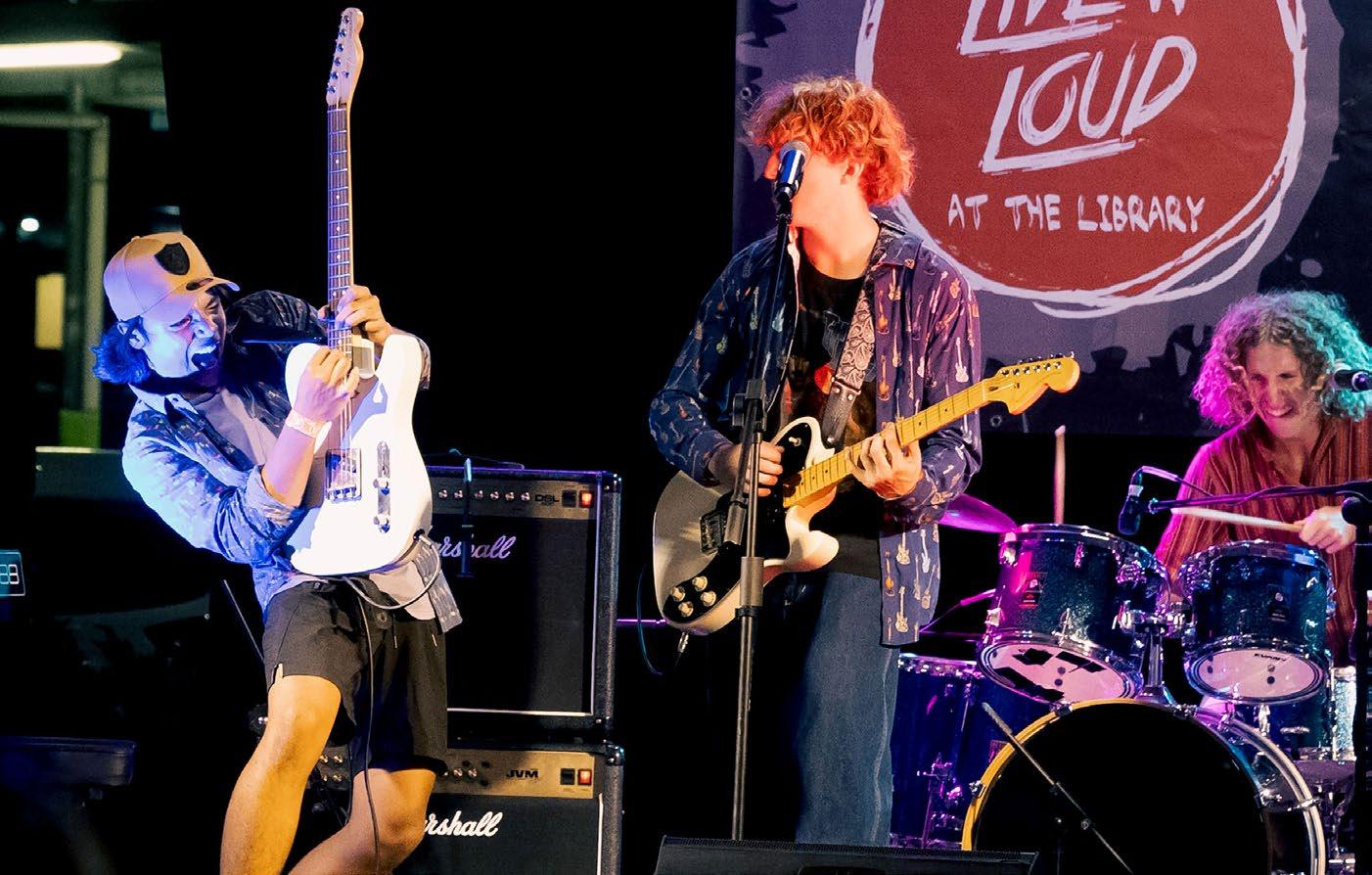
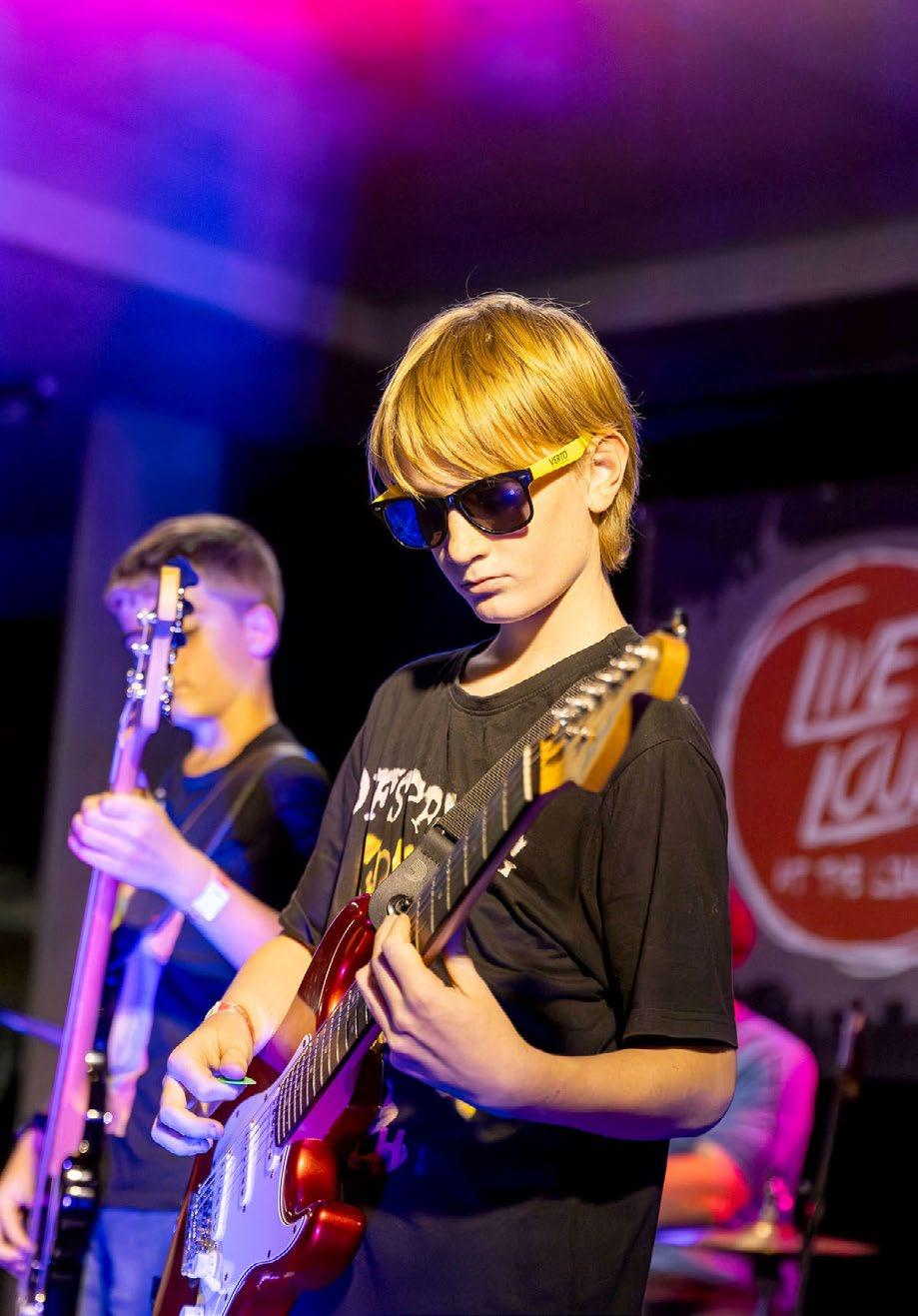
Record crowd at Live ‘n’ Loud heads Youth Week
PICTURED: Young local bands had their first opportunity to perform in front of an audience for Live ‘n’ Loud at the Library in April. CREDIT: Billy Long
Live ‘n’ Loud at the Library attracted a record crowd of over 570 people as part of a huge program of Youth Week events coordinated by Council across the Clarence from 16 to 26 April.
The free program included 14 events across the Clarence at Iluka, Grafton, Maclean, Yamba and Lawrence, with more than 1,500 people taking part.
More than 50 first-time local performers featured at the 14-band event at the Grafton library, putting on a live show across a wide range of genres including punk, jazz, pop, rock, grunge, metal and blues.
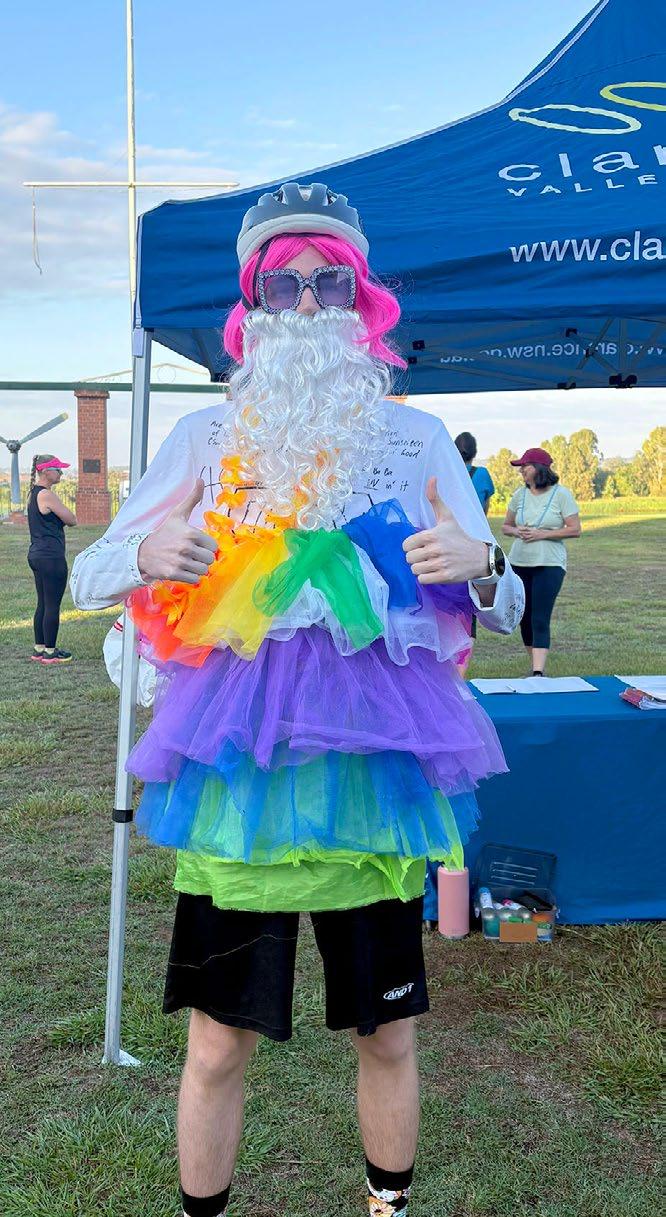
The Youth Run for Mental Health was organised by South Grafton High School students as part of their involvement in Council’s Youth Voice program. The event held at
Grafton’s Memorial Park involved more than 100 participants, many taking part in the fun theme by wearing colourful and funky head accessories.
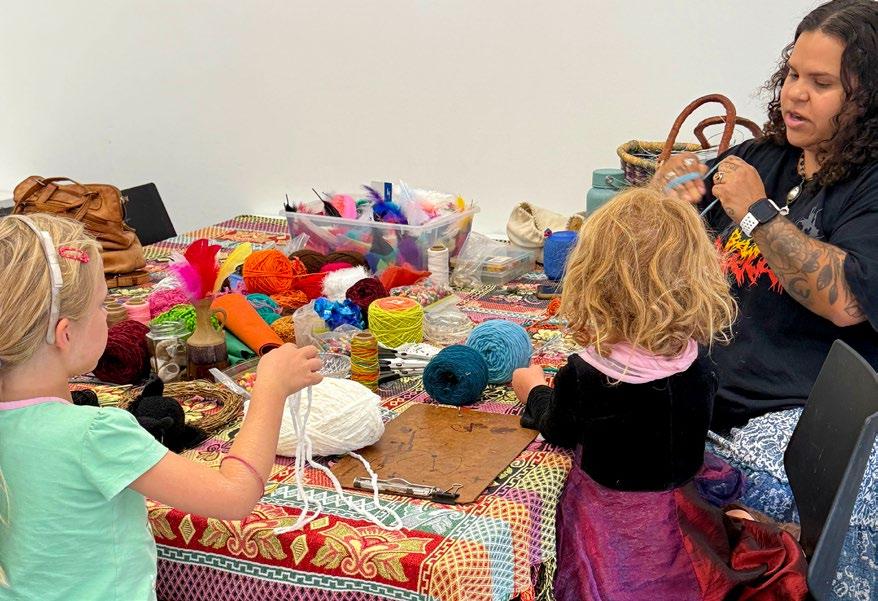
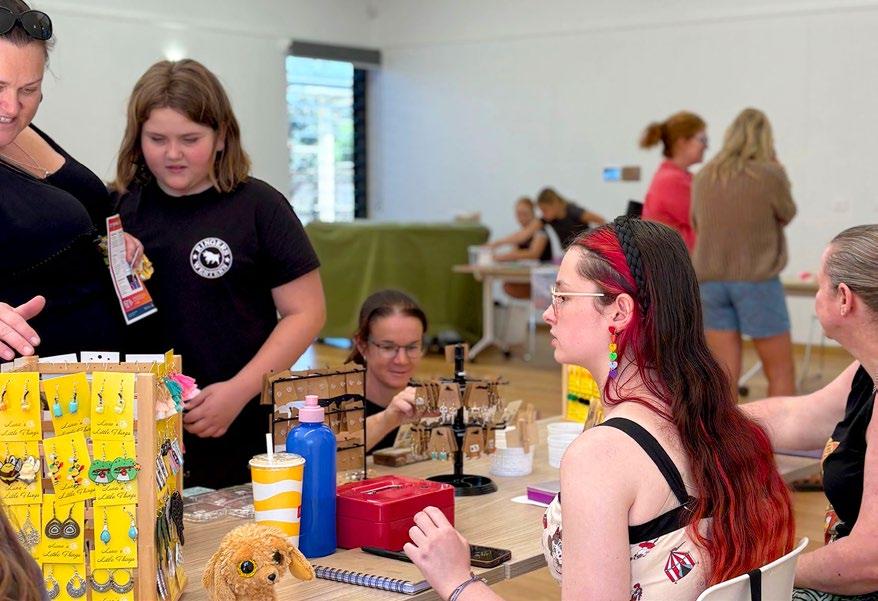
Youth Voice program participants from Maclean High School organised Youth Markets at the Yamba Library and Community Centre, in conjunction with Mudyala Aboriginal Corporation. The event gave young local entrepreneurs the opportunity to try their hand at marketing, with many creating their own homemade arts and accessories.
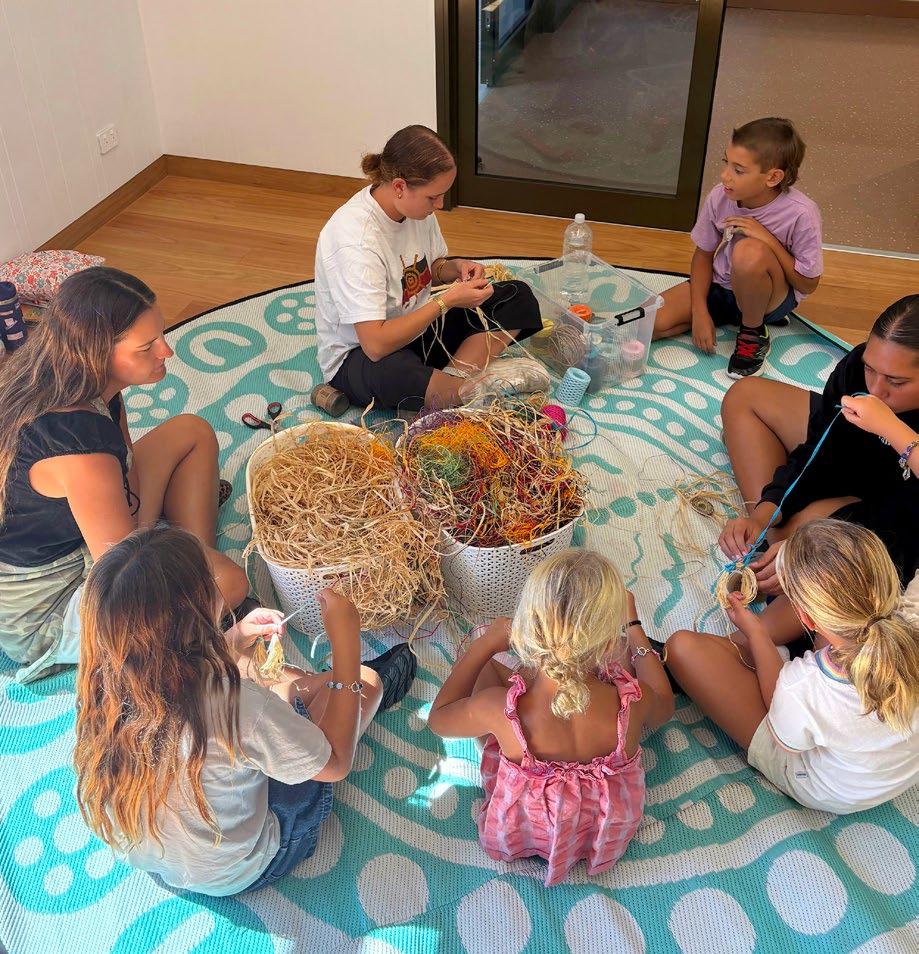
Other events included laser skirmish, a colour fun run, a dreamcatcher workshop, basketball, skate snacks and art, arts and crafts, Your Future Fest at TAFE, a movie screening, and a floral posy workshop.
Guide to choosing the right heritage colours
A comprehensive heritage colour scheme guide is being created to help property owners choose historically accurate colours when repainting their homes.
The digital guide covers different periods and styles of architecture, from Victorian through to Federation, interwar and post-war eras. It also provides information on consent requirements before repainting.
The Clarence has more than 1,000 heritage items and 13 heritage conservation areas that are legally protected through the Clarence Valley Local Environment Plan 2011, with many more historic buildings located outside these precincts.
The use of appropriate colours is important to conserve the appearance, consistency, character and authenticity of buildings from different eras.
The guide will be made available through Council’s website in the coming months.
Strategy shapes culture in coming decade
Culture is central to how people connect, how communities express who they are, and how places thrive. In the Clarence Valley, arts and culture contribute to belonging, pride, wellbeing and economic resilience across our towns, villages and communities.
The Clarence Valley Cultural Strategy 2036 was developed in collaboration with the community, and will guide Council’s role in supporting arts, heritage and culture across the region over the next 10 years. The Cultural Strategy was on public exhibition in May-June with feedback being considered and an updated strategy presented back to Council.
Five key parts of the cultural ecology of the Clarence Valley were identified as pillars of the Cultural
Strategy: First Nations arts and culture; festivals and events; creative careers; places, spaces and country; and community.
General Manager Laura Black said the values in the Strategy reflected a shared commitment between Council and the community.
“We are committed to working with the community to develop actions, review priorities and ensure the Strategy remains responsive to community needs over time,” she said.
“During development of the Strategy, it was clear the community sees Council playing different roles in supporting culture. The Cultural Strategy 2036 brings further clarity to what Council already offers, and how it can work strategically with the community and partners to achieve the vision.”
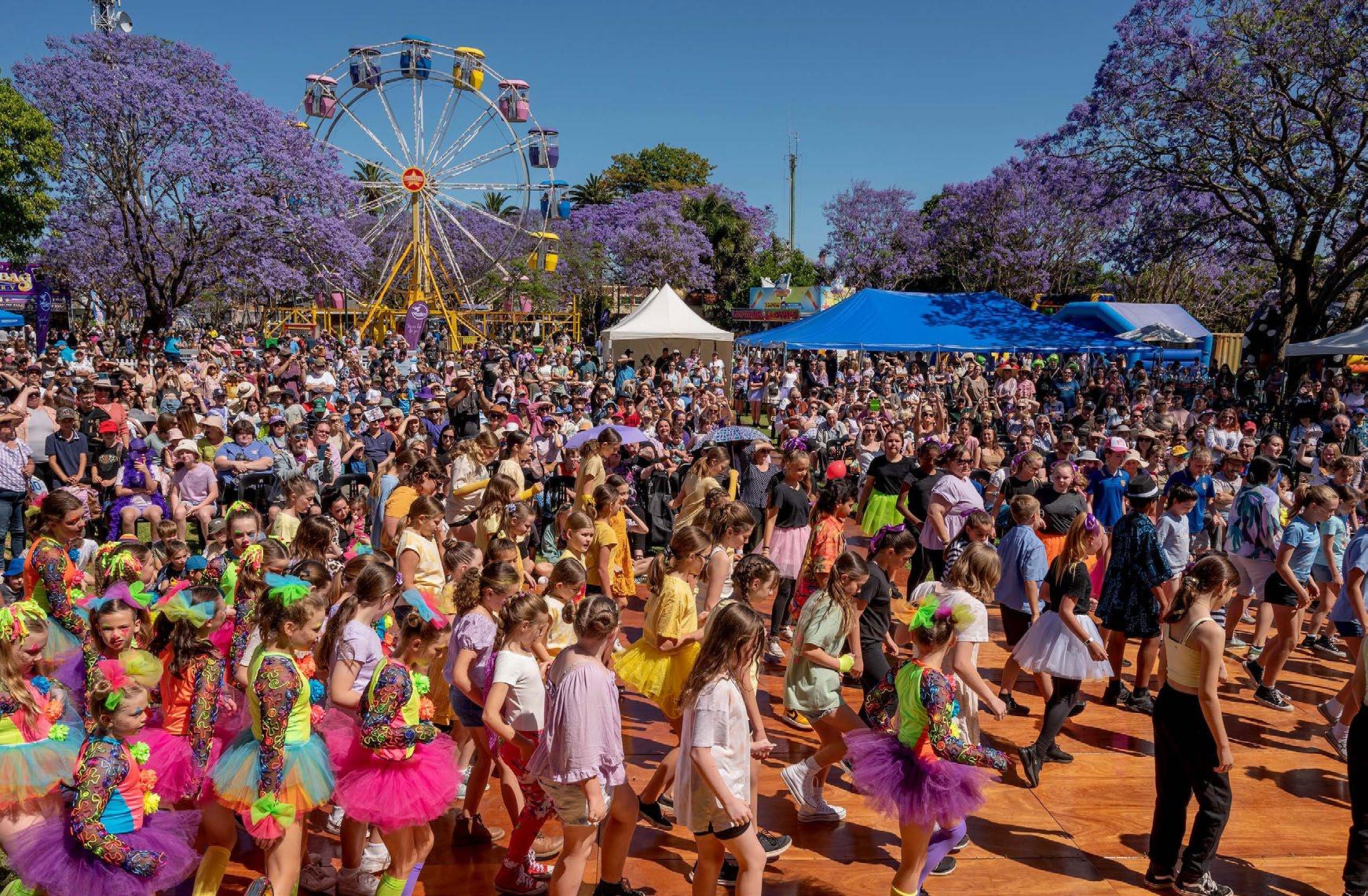
“PICTURED: The annual Jacaranda Festival is among the many cultural events supported by Council.
The Cultural Strategy guides Council’s role in supporting arts, heritage and culture across the region over the next ten years.
Leading the way on disaster resilience
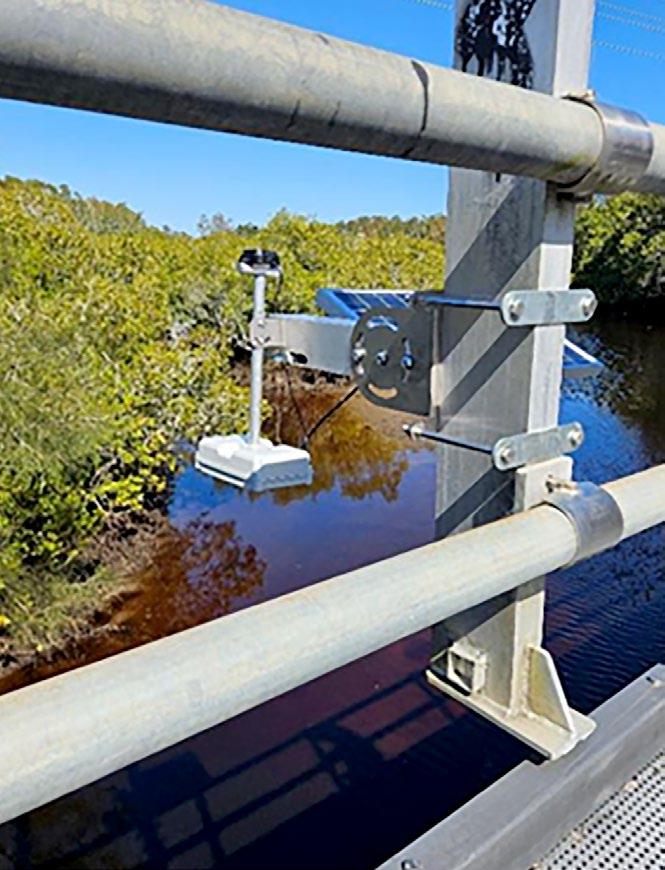
Clarence Valley Council is taking part in a $3.3 million world-class field trial of seven early warning technologies to better protect communities from natural disasters.
The Natural Hazards Detection System Program is designed to test innovative early-warning technologies and provides a platform for companies to prove to emergency management agencies that their solutions are effective and cost efficient.
These systems are now being piloted in the Clarence Valley and Shoalhaven Local Government Areas. The program is being led by the NSW Reconstruction Authority and administered by the Office of the Chief Scientist and Engineer.
Seven chosen technologies are:
y Vortex Micro Station (Aquamonix): A reliable, low-maintenance monitoring system that provides real-time data on water height, velocity and temperature, including day and night imagery for flash flood tracking.
y FloodCAM (Aquamonix): Advanced visual AI software that monitors water levels against safety thresholds and can automatically trigger local warning speakers, lights or digital signs.
y Citizen Intelligence Workflow (Kablamo): Enhancements to the Hazards Near Me app allowing users to securely submit hazard photos, which are then converted into validated, actionable intelligence for emergency agencies.
y Spectra Water Level Sensors (Kallipr): Robust, vandal-resistant radar sensors designed for regional areas, using redundant communication methods and longlife batteries to ensure data flows even in remote locations.
y Virtual River Gauge Project (NGIS): An AI-powered pilot program combining satellite data, rainfall and cameras to deliver near real-time river heights and flood volume predictions.
y FloodMate (Silicon Vandals): A rapid-deployment sensor network for floodprone road crossings, providing real-time “water-over-road” data to support safer road closure decisions.
y Samara (Silicon Vandals): Low-cost sensors that can be deployed by hand or air to provide early bushfire detection and live data on fuel moisture, temperature, and humidity in hard-to-access areas.
Triple finalist in 2026 Local Government Excellence Awards
Three projects have been recognised as finalists in the 2026 Local Government Excellence Awards.
The Yamba Library and Community Centre was recognised in the Asset and Infrastructure – Over $1.5 million (Population under 100,000) category for the delivery of the new modern, multipurpose facility designed to address long-standing gaps in cultural, educational and social infrastructure in the Lower Clarence.
Council’s Accelerated Development Application Service was recognised in the Special Project Initiative (Population under 100,000) category for its innovative solution to addressing delays affecting low-risk, small-scale residential developments that were being held up in assessment queues.
The staff Health and Wellbeing Expo was recognised in the People, Workplace and Wellbeing (Population under 100,000) category, with the Expo showcasing health and wellbeing initiatives while offering practical services such as mini health checks and mental health awareness sessions.
PICTURED: The Clarence is one of two locations hosting a trial of early warning technologies.
Awards for aquatic centre and disaster recovery program
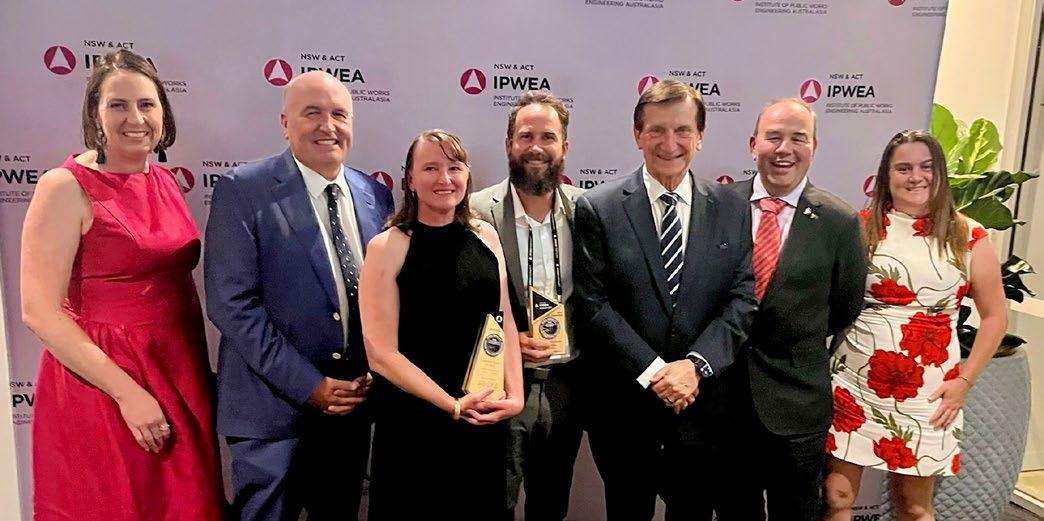
The Clarence Regional Aquatic Centre project and the Disaster Recovery Portfolio Management program were recognised at the 2026 NSW and ACT Engineering Excellence Awards.
The awards were held at the Institute of Public Works Engineering Australia’s (IPWEA) state conference in the Hunter Valley.
The Clarence Regional Aquatic Centre won the Design & Construction of a Public Works Project greater than $5m category.
The vital community asset is a hub for the whole community with swimming lessons, school carnivals, aqua fitness classes and family celebrations taking place each week.
Replacing the Grafton Olympic Pool, which was over 60 years old, the new facility includes three indoor pools that are open yearround and an outdoor eight-lane, 50-metre pool, all with ramp access, greatly improving accessibility at the facility. The centre also includes a 600-seat grandstand, an all-ability splash pad, refurbished amenities, canteen, picnic facilities and two brand new slides.
General Manager Laura Black said it was great to see this amazing project recognised by the industry.
“Community engagement has been at the heart of the project from day one, beginning with the masterplan design in 2016 and continuing through to the design and construction phase in 2024, with a community focus group actively involved along the way,” she said.
Manager of Civil Services Devin Simpson was recognised at the awards, receiving a Highly Commended award for Disaster Recovery Portfolio Management.
“Devin’s recognition is a strong reflection of the dedication and collaboration of the entire team that mobilises after a disaster event,” Ms Black said.
“Unfortunately, natural disasters
PICTURED: Clarence Valley Council took out two titles at the 2026 NSW and ACT Engineering Excellence Awards.
are not uncommon in the Clarence Valley, from fires to floods, we experience it all. The work undertaken before, during and after these events is nothing short of incredible, and it’s fantastic to see Clarence Valley Council recognised for that effort.”
The IPWEA Young Leaders Grant was also awarded to Council’s Coordinator Asset Management, enabling attendance and participation in the delivery of the conference as an MC of one of the technical streams.
“Tanvir Hasan joined us last year, with a wealth of experience in asset management across all asset classes, coupled with valuable experience in the use of TechOne our corporate system, for asset management,” Ms Black said.
Your Future Fest at TAFE
More than 300 high school students were given first-hand insight into the wide variety of potential careers at Clarence Valley Council as part of Your Future Fest at Grafton TAFE in April. The event was a collaboration between Grafton TAFE, Headspace
Grafton, Country Universities Centre, Southern Cross University, University of Wollongong, Clarence Valley Council and the Department of Education to bring young people a day filled with opportunities and insights into their future.
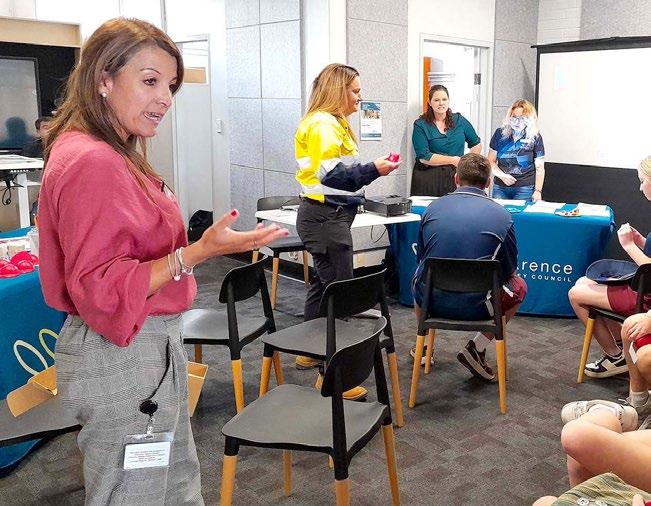
PICTURED: Staff share information about career opportunities at Council as part of Your Future Fest.
Investing in long-term sustainability
The Operational Plan 2026/2027 is the second in a series of four that aims to meet the strategies developed by the elected Council, as identified in the 2025 to 2029 Delivery Program.
Council will further strengthen long-term financial sustainability in the next 12 months through reviewing business activities and investing in robust long-term business goals to drive forward operations, including the saleyards, holiday parks and the regional airport.
Ethically responsible use of evolving technologies will be utilised to modernise and strengthen efficiency and long-term financial sustainability.
This year’s $183 million capital works program is an investment in the future and will strengthen community resilience. It features five substantial infrastructure projects: $45 million to build a water filtration plant in South Grafton; $36.5 million for construction of a modern sewage treatment plant in North Grafton; $22.25 million to reinstate Nymboida Tunnel 2; $20.9 million to carry out restoration of key sections of the flood levee; and $9 million to complete the Maclean Community Precinct.
Council will continue to demonstrate our commitment to collaborate respectfully and engage in a meaningful way to deliver outcomes for the community.
There will be significant investment in our natural environment, with more than $500,000 allocated for an expanded schedule of projects in 2026/2027.
Clarence magazine is published each quarter to show what Council is achieving against the Operational Plan. Council also provides an annual report, and half-yearly reports against the four-year Delivery Program, as required by the Integrated Planning and Reporting Framework.
1. Respectful and meaningful engagement will help inform decision-making to deliver outcomes for the community.
2. Capital works program includes funding to complete the Maclean Community Precinct.
3. Business operations will be reviewed, such as the Grafton Regional Livestock Selling Centre, to ensure ongoing sustainability and quality of service delivery.
View the plan: clarence.nsw.gov.au/op-plan
Snapshot
Highlights of Council’s Operational Plan 2026/2027
$183M capital works program
$45M to build a water filtration plant in South Grafton.
$22.25M to reinstate Nymboida Tunnel 2.
$20.9M to carry out restoration of key sections of flood levee.
$36.5M for construction of a modern sewage treatment plant in North Grafton.
$9M to complete the Maclean Community Precinct.
Review business activities and invest in business goals.
Use evolving technology to strengthen efficiency and sustainability.
More than $500,000 investment in our natural environment.
Respectfully engage with the community in a meaningful way.
To learn more about out how Council is progressing towards its goals, visit clarence.nsw.gov.au/reports
Have your say.
Community engagement plays an important role in building communities and helping to shape better outcomes for the future of our region.
Get involved by registering with Clarence Conversations – stay informed and find out how you can have your say
Clarence Conversations allows you to take part in community engagement. Stay up to date with current projects and share your feedback – either online or in person at a drop-in information session.
Simply register online and sign up for the Community Engagement eNewsletter to receive the latest updates and opportunities to get involved. Scan the QR code below for more details and to register.
Join the conversation with Clarence Conversations clarenceconversations.com.au
Other ways to stay informed and have your say:
Follow us on facebook: facebook.com/clarencevalleycouncil
Subscribe to Council’s weekly eNewsletter, Noticeboard: clarence.nsw.gov.au/noticeboard
View items currently on public exhibition and make a submission: clarence.nsw.gov.au/on-exhibition
y Visit our customer service centres in Grafton or Maclean
y Drop into your local library
y Attend Council meetings and public forums to hear updates and share your views – public forums are held before each Council meeting.
For more information visit Council’s website, clarence.nsw.gov.au
Aboriginal Cultural Insights and Engagement Guide
How we engaged
Eight face-to-face workshop sessions across the three Nations, with 50 participants.
Insights
y Respectful relationships are key
y Early involvement in planning is crucial
y Cultural authority must be respected
y Cultural heritage protection is a priority
y Cultural awareness training is essential
y Cultural safety is critical
What we did
The Three Nations One River Aboriginal Cultural Insights and Engagement Guide was created in close consultation with the three local Nations and will be used to guide Council staff in engaging with Aboriginal people.
Naming of the Maclean Community Precinct
How we engaged
y Clarence Conversations, 400 page visits
y Online submissions, 62 responses.
y Social media, reach of 14,040 reach, 86 interactions and 93 link clicks.
Insights
There was a high level of engagement with participants openly sharing their naming suggestions. Some negative views were expressed about the project.
What we did
Submissions were assessed against agreed criteria and will inform the officer’s recommendation, which will be presented to the July 2026 Council meeting.
Integrated Planning and Reporting Framework (IP&R)
How we engaged
Community feedback for the 2026/2027 IP&R suite of documents including the Operational Plan, Revenue Policy, Capital Works Program and Budget, was sought through public exhibition during May 2026.
y Online exhibition, 51 submissions, 58 link clicks.
y Four drop-in sessions, 30 one-on-one conversations.
y Social media, reach of 8,041, 60 link clicks.
Insights
Fees and charges were of particular interest with 18 submissions, followed by the Operational Plan (14 submissions), Capital Works Program (14 submissions), Budget (4 submissions), Revenue Policy (3 submissions) and the Asset Management Strategy (2 submissions).
What we did
Submissions were considered in finalising the documents and a number of updates implemented:
y Budget (11 updates)
y Fees and Charges (6 updates)
y Operational Plan (3 updates)
y Capital Works Program (1 update)
y Revenue Policy (1 update).
To view items currently on public exhibition and make a submission visit, clarence.nsw.gov.au/on-exhibition