Exchange the

ENTS
The Exchange, Fall 2024
The Exchange is for Kansas State University Department of Agricultural Economics friends and alumni. If you have story ideas, comments, or suggestions, please let us know.
The Exchange Editor: Mary Sullivan 304E Waters Hall Manhattan, KS 66506-4011
785.532.4435 mjbowen@ksu.edu
The Exchange Student Contributor: Claire Geiger
Department Head and Director of Master of Agribusiness Program: Dr. Allen Featherstone 342 Waters Hall Manhattan, KS 66506-4011
785.532.6702 l afeather@ksu.edu
Undergraduate Program Director: Dr. Elizabeth Yeager 343D Waters Hall Manhattan, KS 66506-4011
785.532.4935 l eyeager@ksu.edu
Director of Graduate Studies: Dr. Nathan Hendricks 326 Waters Hall Manhattan, KS 66506-4011
785.532.3740 l nph@ksu.edu
FROM THE DESK OF
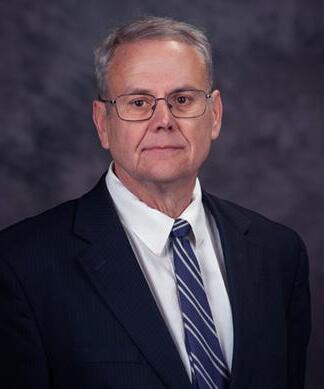
Dr. Allen Featherstone
Welcome to the Exchange. We are sharing with you some of the awards our faculty and students have received over the past year and give you an update on our departmental programs.
In this issue of the Exchange, we wanted to highlight some of our achievements, activities and in the Department of Agricultural Economics at Kansas State University. Our faculty and students continue to achieve high marks within the economic community garnering several awards for teaching and research. You can read updates their research, outreach, and teaching efforts; global projects; and senior Paige Vulgamore’s election as K-State Student Body President. Finally, we will also share activities of our undergraduates and graduate students, and departmental units.
We are pleased to announce our 2024 Distinguished Alumni Steven Johnson who we will recognize at our annual scholarship and awards banquet. We hope you will join us for the scholarship banquet Thursday, September 12, and at the tailgate event before the Friday, September 13, football game against new Big 12 member Arizona.
Our achievements are directly related to the continued support of our alumni and corporate sponsorships. We appreciate the dedication and engagement of our alumni and outside supporters. Thank you to our generous donors who give back to the Department. If you have an interest in giving before the end of the year, please contact me about departmental needs or go to our Give Back page to contribute.
We also encourage you to share your career and family developments so we can keep your fellow alumni informed. Please email me at afeather@ksu.edu or Mary Sullivan, our communications coordinator, at mjbowen@ksu.edu with information you would like to share with your fellow alumni. Go Cats!
Dr. Allen Featherstone
Department Head, Professor, and Master of Agribusiness Program Director
Departmental Giving Options
Ag Econ Departmental Excellence Fund - D15290
Ag Econ Emeritus Faculty & Friends Scholarship Fund - O50290
AgManager.info - D15180
Arthur Capper Cooperative Center - C55950
Coolidge (J.H.) Farm Management Fund - D58235
Flinchbaugh (Barry) Chair in Agricultural EconomicsO65027
Kansas Society Farm Managers and Rural AppraisersO08650
Master of Agribusiness Scholarship Fund (MAB) - O01137 Risk Management Center - D84855
Travel Diary by Ben Jensen
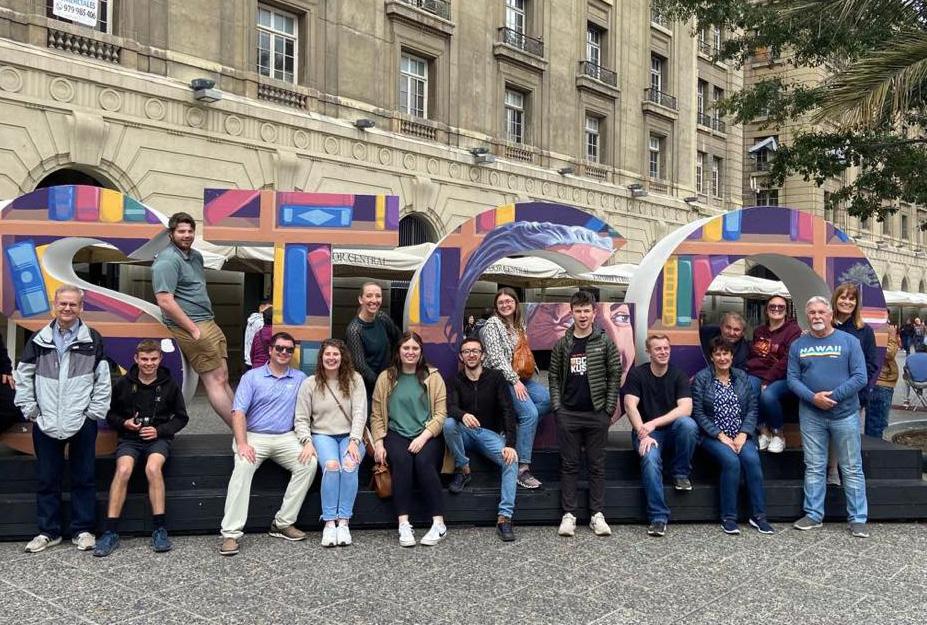
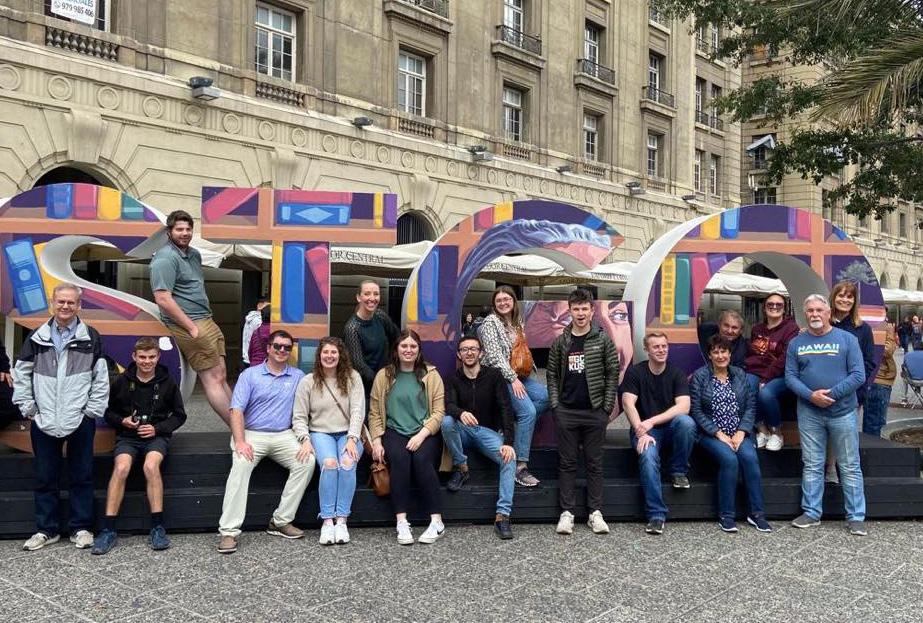
A group of travelers recently got back to the U.S. from a nearly two-week-long farm and agriculture trip to Chile and Argentina.
We landed in Buenos Aires after most of us spent the night on a plane. The first two days, we were met with a massive city to explore and plenty of political, historical, and cultural monuments to see. On the second day, our city tour quickly got us accustomed to the city. Capping off the weekend, we attended a tango show and dinner on Sunday night.
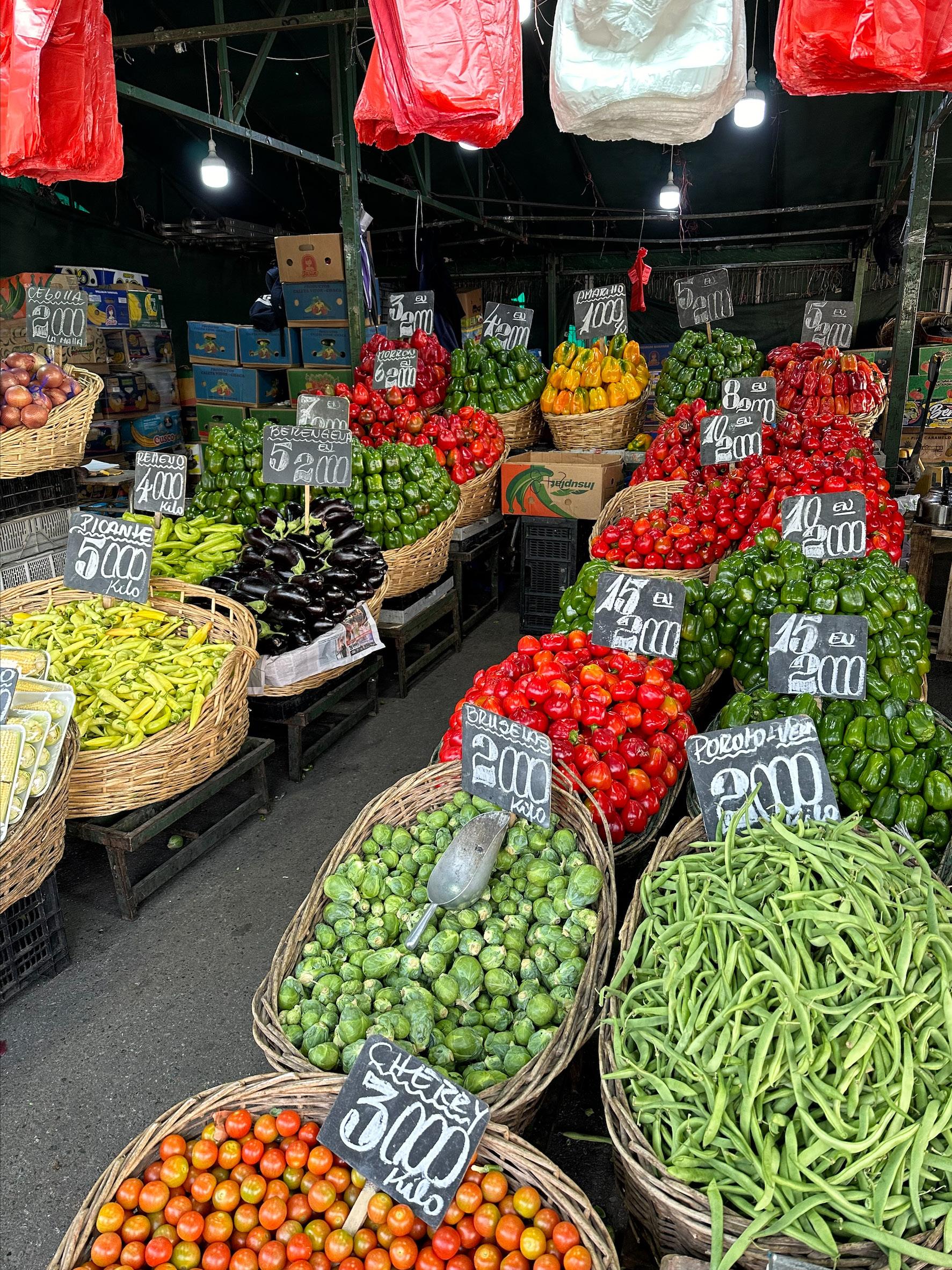
We had a quick turnaround the next morning when we visited a massive wholesale fruit and vegetable market on the outskirts of Buenos Aires. Afterward, we visited a family-run dairy farm. We started with a discussion of the dairy and cattle industry in Argentina and then further discussed a variety of topics that gave us more insight into Argentina. The dinner that night in a small restaurant introduced some unfamiliar cuisine which included beef intestines and blood sausage.
The next morning, we toured an agricultural cooperative and a farm near the co-op. This gave us a better idea of how cooperatives in Argentina function and gave us plenty of views of farm ground in the area.
After staying the night in Rosario, we toured the Rosario Board of Trade and a John Deere Factory. The John Deere factory provided insight into the assembly of John Deere tractors. Afterward, we heard from Diego Feldman, the marketing manager of dealers for John Deere in Latin America. We continued the following day to a grain exportation port near Rosario where we learned about exporting grain by ocean vessel.
The next day, we flew to Mendoza and encountered a
MAB Argentina Trip 2024
much dryer climate. We were impressed by the irrigation system that ran through the entire city to water their many trees. The agriculture in the area relies heavily on irrigation from melted snow from the Andes mountains. That day we visited the largest peach farm in the world in one single area. It was surprisingly cold that day and even more surprisingly it began to rain for the rest of the time spent in Mendoza. We embraced the rain the next day and visited a couple of wineries near Mendoza. The day concluded with a short tour of Mendoza.
We had planned to drive through the Andes mountains on a tour bus but the precipitation we experienced in Mendoza turned into much heavier snow in the mountains that prevented us from making the bus trip. We got our view of the mountains as we flew over them on our short plane ride to Santiago, Chile.
In Santiago, we explored the city and hiked up a hill that overlooked the entire city. We toured a massive wholesale market, a vegetable farm, and stopped at a beautiful grape-growing operation with a winery. Santiago had amazingly overcome many earthquakes and still managed to have amazing architecture. We saw many government buildings and a massive and beautiful cathedral on our tour. The final night we celebrated by eating dinner on the top of a skyscraper.
Some of us said our farewell that evening but those who flew out of Chile later the last day took a trip to Valparaiso, Chile to see the Pacific Ocean. It was hard to say goodbye to the many travelers because we had become close friends by the end of the trip. I will finish this summary by saying thank you to all the wonderful travelers for making the most of the trip.
Previous trips have been to South America, Russia, Southeast Asia, New Zealand and Australia, and Europe. Read about these trips at https://mab.k-state.edu/internationaltours/index.html. The next MAB international farm and agriculture tour will be in 2026. If you’d like to be added to our travel list, please email Mary mjbowen@ksu.edu or call 785-532-4435

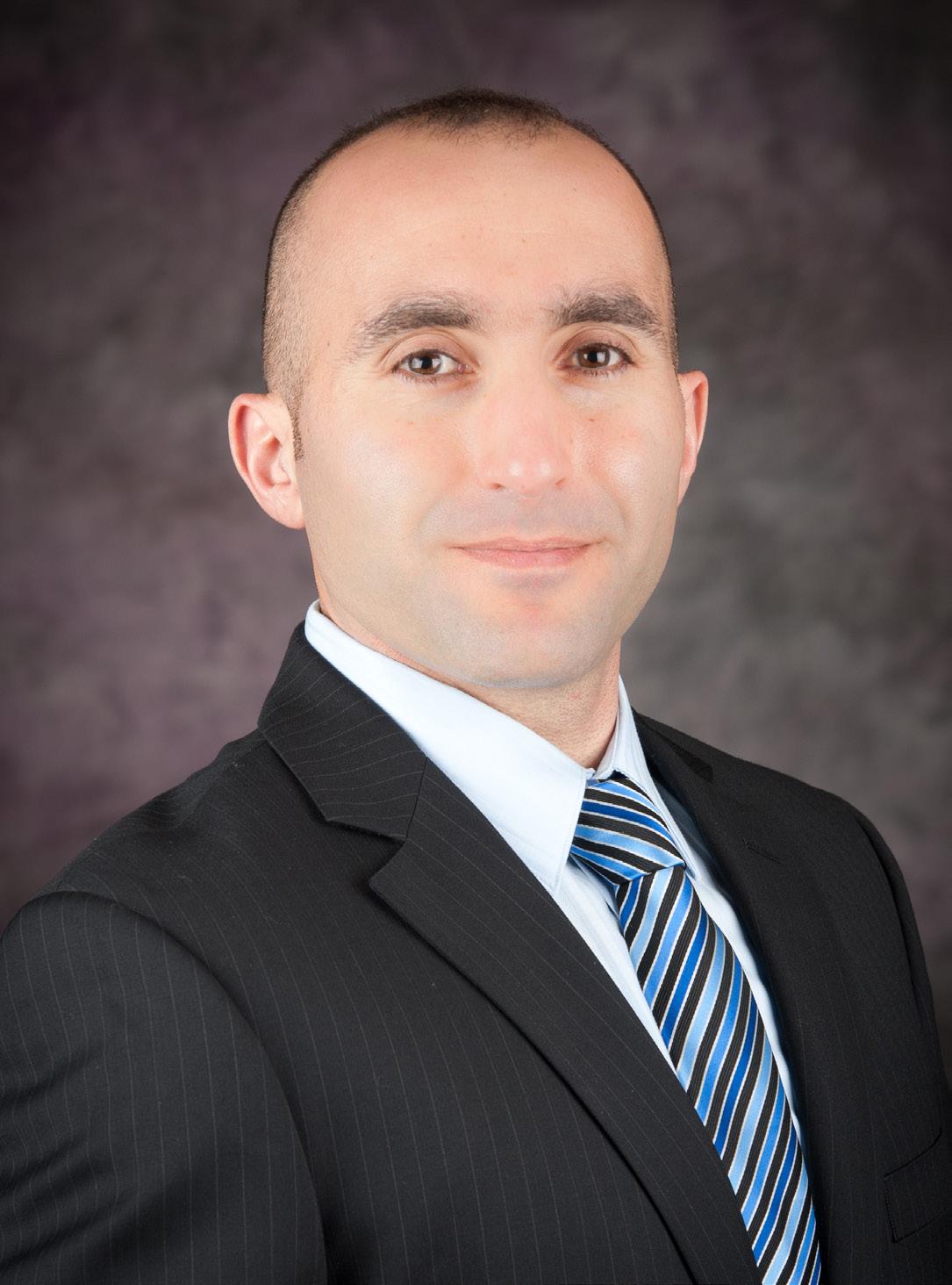
Dr.
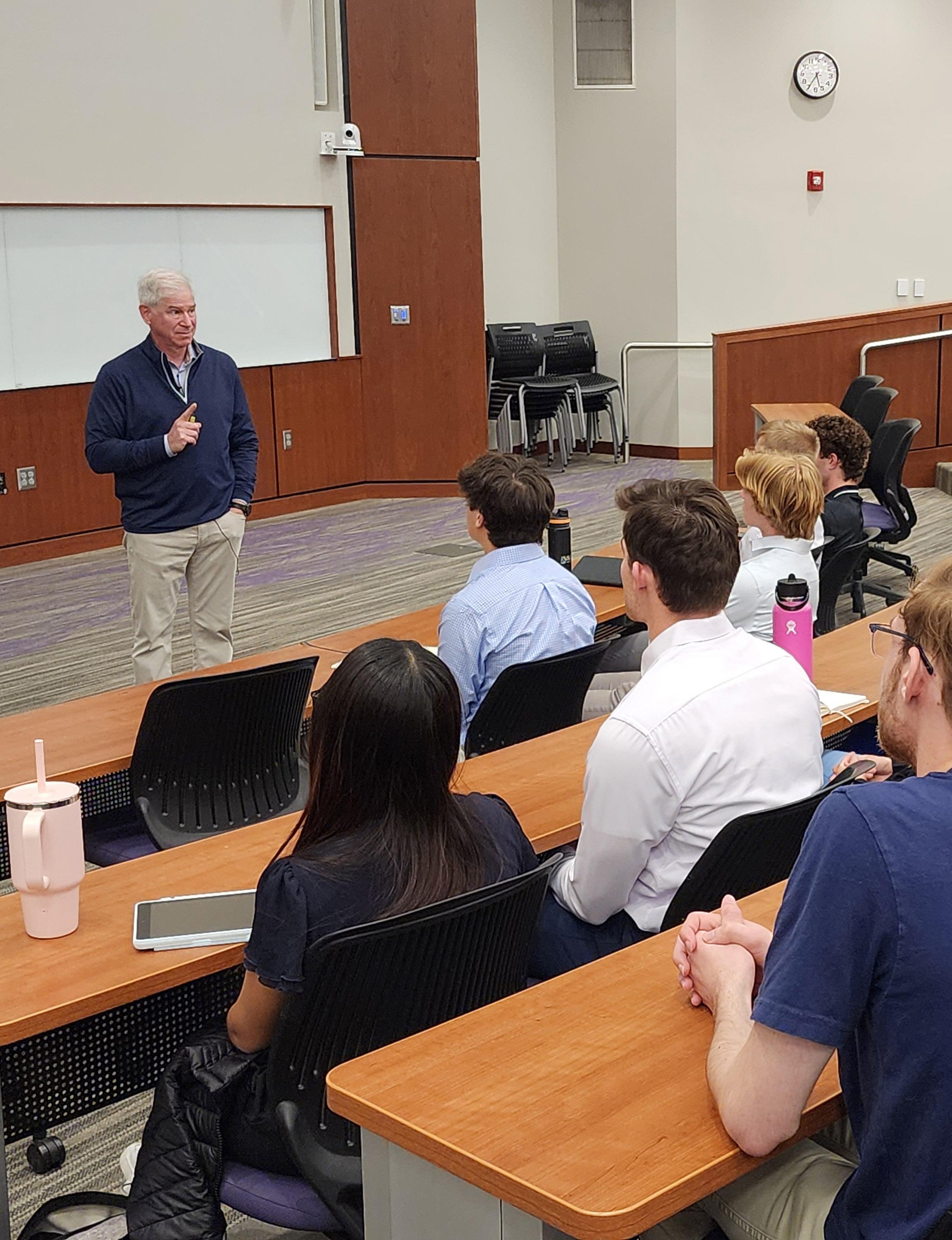
Aleksan “Alex” Shanoyan, associate professor, has been selected as the University’s 2024-25 Coffman Chair for Distinguished Teaching Scholars. As the Coffman chair, Shanoyan intends to explore how generative AI impacts undergraduate instruction and develop resources for educators working with new technology.
Shanoyan currently teaches a food and agribusiness management course, an agribusiness management strategies course, as well as graduate-level courses. His dedication and enthusiasm for engaging students in and out of the classroom is a key reason nominators say they suggested Shanoyan for this honor.
Since 1995, the Coffman chair has highlighted K-State’s commitment to excellence in undergraduate education. Selected chairs receive time and resources to conduct research or develop programming that improves teaching methods at K-State.
As this year’s Coffman chair, Shanoyan will establish a platform to increase awareness of how generative AI and pre-trained transformer advancements can impact
Shanoyan named 2024-25 Coffman Chair
undergraduate instruction. He also plans to develop resources instructors can use to capitalize on the opportunities and confront the challenges generative AI creates in classroom settings.
“With the rapid advancements in generative artificial intelligence and generative pre-trained transformers technologies, it was clear to me that in order to offer the best teaching and learning experience for our students, we need to expand our understanding of the effect that these technologies can have on undergraduate education,” Shanoyan said.
Shanoyan’s work will take place in three stages:
• Determine the positive and negative impacts of ChatGPT (a generative AI platform) on programming, curricula, and coursework at K-State.
• Identify what pedagogical strategies K-State faculty already use to mitigate the risk and leverage the positive potential of ChatGPT on student learning outcomes.
• Develop a series of best practices for national and international higher education instructors to capitalize on generative AI opportunities and confront obstacles it creates within higher education settings.
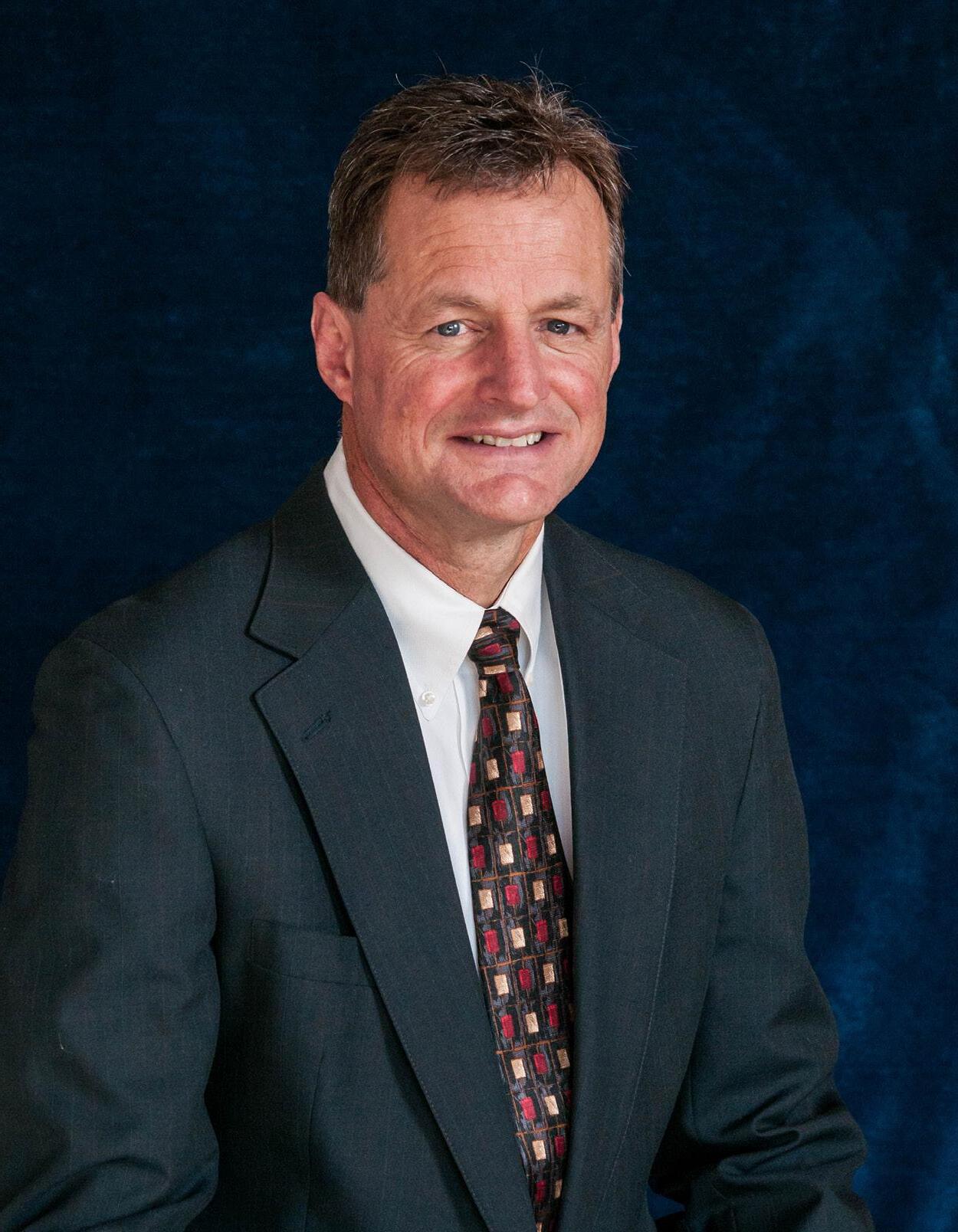
Schroeder honored by Gardiner Angus Ranch
Dr. Ted Schroeder, University Distinguished Professor, was selected as the 2024 recipient of the Mark and Eva Gardiner Innovation and Excellence faculty award. The award is designed to honor K-State College of Agriculture faculty who positively impact the global food system through teaching, research or extension.
An invaluable asset to the department, Schroeder’s
positive career impact both personally and professionally has been praised as incalculable by Ernie Minton, the Eldon Gideon dean of the College of Agriculture.
Since 1986, Schroeder has served as a K-State faculty member where his expertise in marketing, price discovery and trade has helped shape the livestock and grain industries. His work was instrumental in developing the U.S. Premium Beef program and has helped generate over $2.7 billion for producers in grid premiums.
Schroeder’s industry-leading research focuses on improving commodity market efficiency through risk management, improved market coordination mechanisms and innovative price discovery methods. He also teaches courses in risk management and marketing.
Schroeder has either authored or co-authored 140 peer-reviewed articles, over 60 research reports, and nine book chapters. Outside of his research and teaching positions, Schroeder also speaks nationally and internationally on issues of agricultural economics and advises legislative action related to agricultural policy and the Farm Bill.
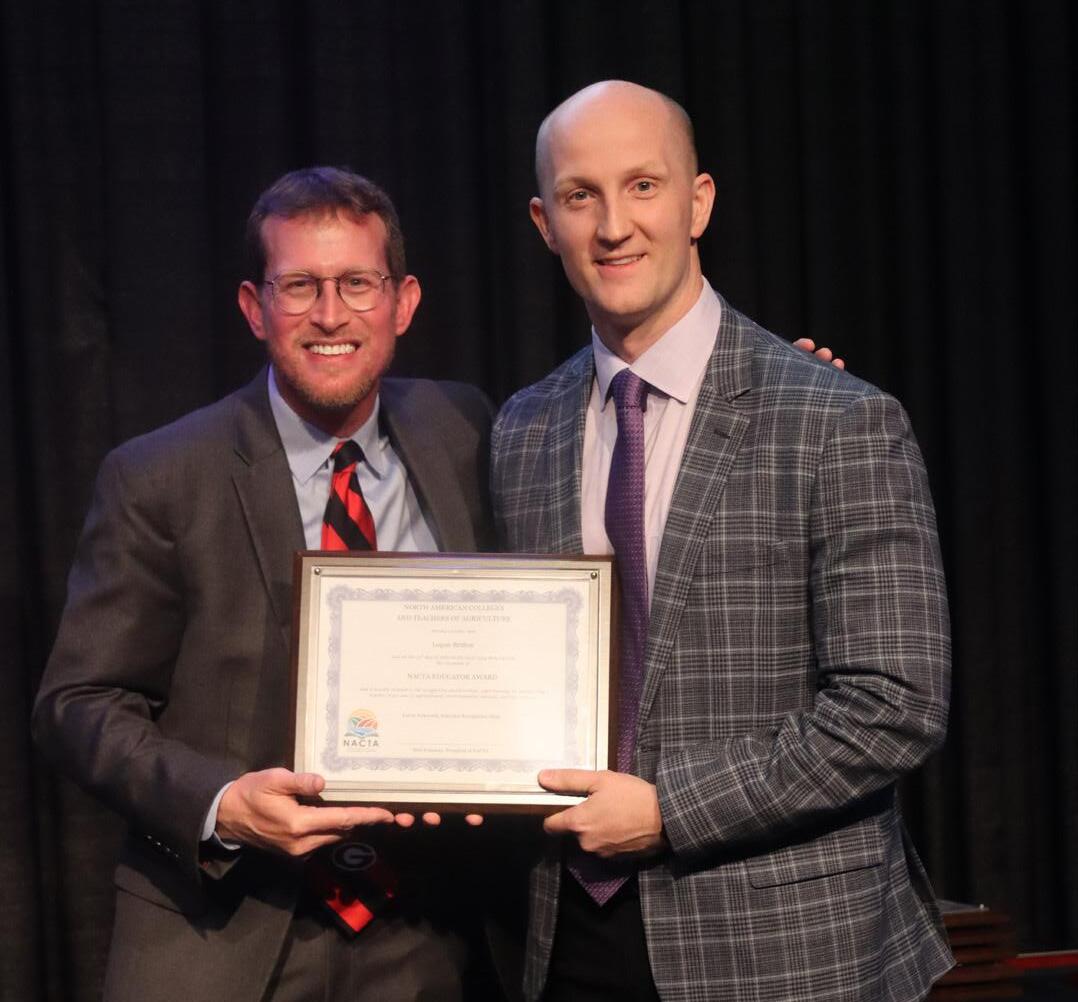
Britton receives 2024 NACTA Educator Award
Assistant professor Logan Britton received the 2024 North American Colleges and Teachers of Agriculture (NACTA) Educator Award in June at the 70th NACTA Annual Conference in Wooster, Ohio.
This criterion-based award is designed to recognize the exemplary efforts of agricultural teachers in higher education settings. The selection committee considers an educator’s teaching philosophy; administrative, faculty and student reviews of their teaching capabilities; and a comprehensive self-assessment in their decision.
A key characteristic of this award is the weight of student input. To earn this award, educators must provide recent student evaluations and letters of support from students. Britton’s dedication to connecting and engaging with students was instrumental in earning this award.
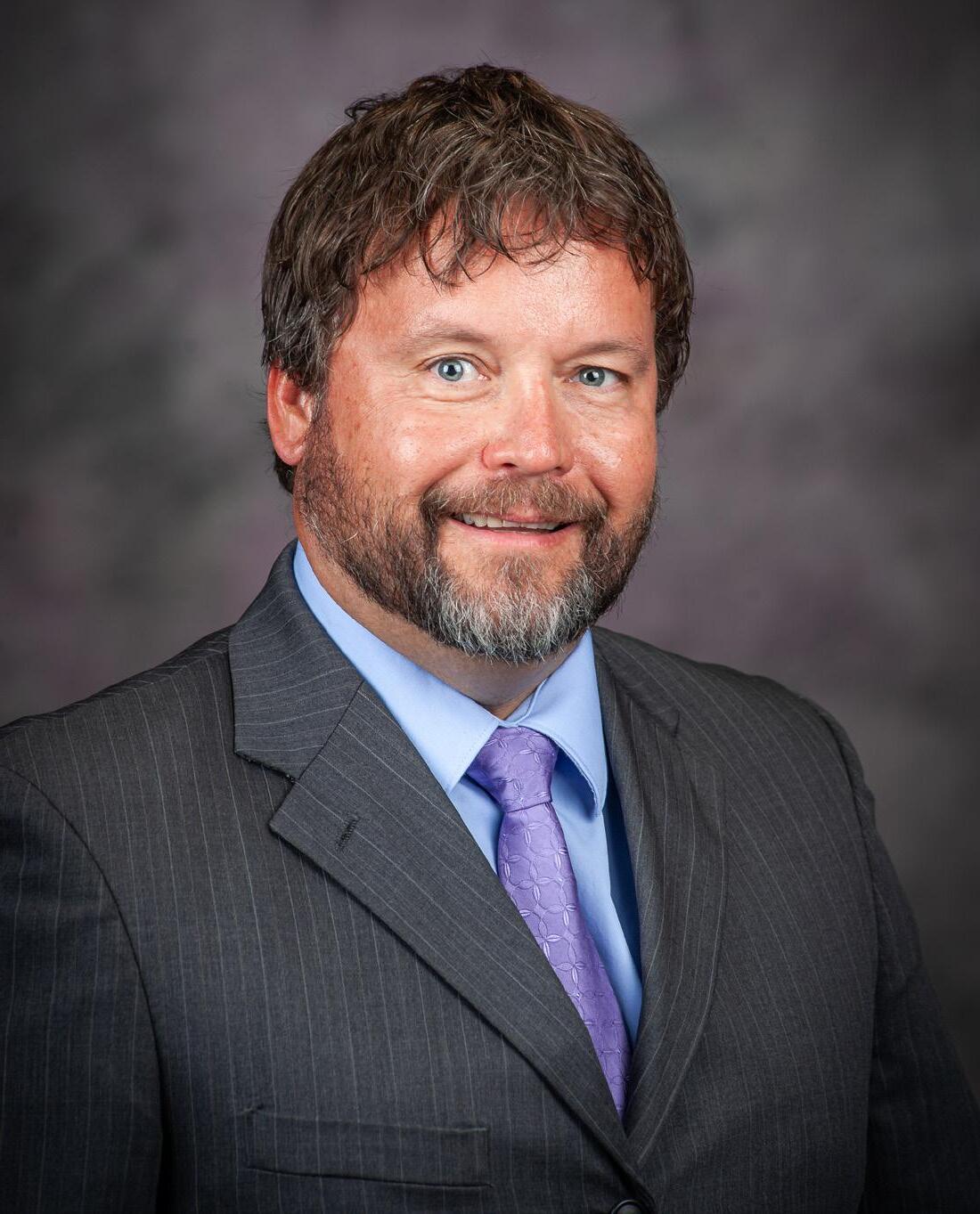
Britton’s teaching responsibilities include undergraduate and graduate level courses in agricultural finance, agribusiness logistics, global food systems issues and computer decision tools. His research focuses on agribusiness concepts, supply chains, consumer demand, and teaching and learning.
Briggeman earns undergraduate teaching award
Dr.
Brian Briggeman was awarded the Distinguished Undergraduate Teaching Award: More than 10 years experience at the Agricultural & Applied Economics Association’s (AAEA) annual meeting. The award is designed to highlight the exemplary teaching efforts of undergraduate ag economics instructors.
Briggeman’s efforts to engage students in his agricultural finance course and enhance student learning outcomes through innovative teaching methods made him a clear choice.
Outside of his teaching and research responsibilities, Briggeman directs the department’s Arthur Capper Cooperative Center (ACCC).
New Faculty Highlight
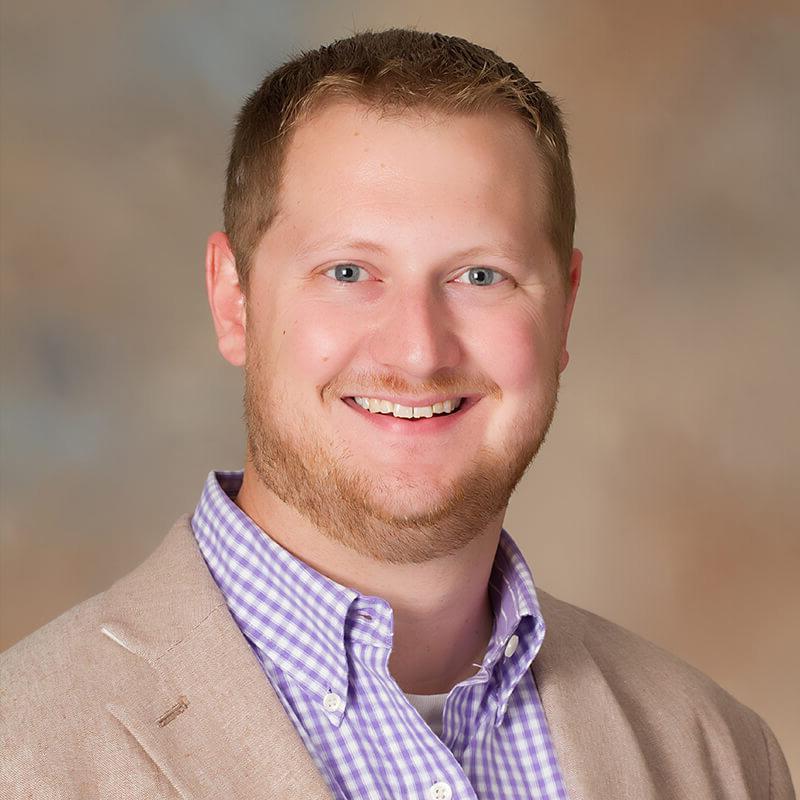
Dr. Brady Brewer
Starting this fall, the Agricultural Economics Department will welcome a new faculty member. Dr. Brady Brewer will return to the department, and will teach an undergraduate course in agribusiness management as well as a master’s level course in economics and strategy for the Master of Agribusiness (MAB) program.
“I love teaching to students that are in an executive program working while taking classes. They challenge me on how ideas and theory can be applied to their work which in terms makes me a better teacher as well.
Teaching in a program like the MAB is a rewarding experience where I only hope the students get as much out of the coursework as I learn from the students,” Brewer said.
Brewer has been an Associate professor in the Department of Agricultural Economics at Purdue University. His teaching responsibilities included an undergraduate agribusiness management course as well as a graduate course on the economics of strategy. His research agenda includes the broader topics of agribusiness and profitability, agricultural finance, and production/supply chain issues. His extension program includes education on credit and lending to both farmers and bankers as well as working with agribusinesses on a variety of financial management topics.
“At Purdue I taught an undergraduate class in agribusiness management, a master’s level class on the economics of strategy, research in the field of agricultural finance, and provided extension programming to agricultural lenders and agribusinesses,” Brewer said. “I am looking forward to being back at K-State so that I can make an impact on the program and provide expertise to agribusiness professionals.
“I love teaching to executive audiences as they ensure that what I am teaching is applicable to what they are doing out in the agricultural industry. I find that students that seek out programs challenge me to provide real world examples and keep me updated on what is happening out in industry. This makes me a better teacher and also provides me with ideas for better research,” he said.
Brewer grew up on a family farm in Oklahoma that raised wheat, soybeans, alfalfa, and cattle. He received a B.S. in agricultural economics and accounting from Oklahoma State University and later earned both his M.S. and Ph.D. from Kansas State University in agricultural economics.
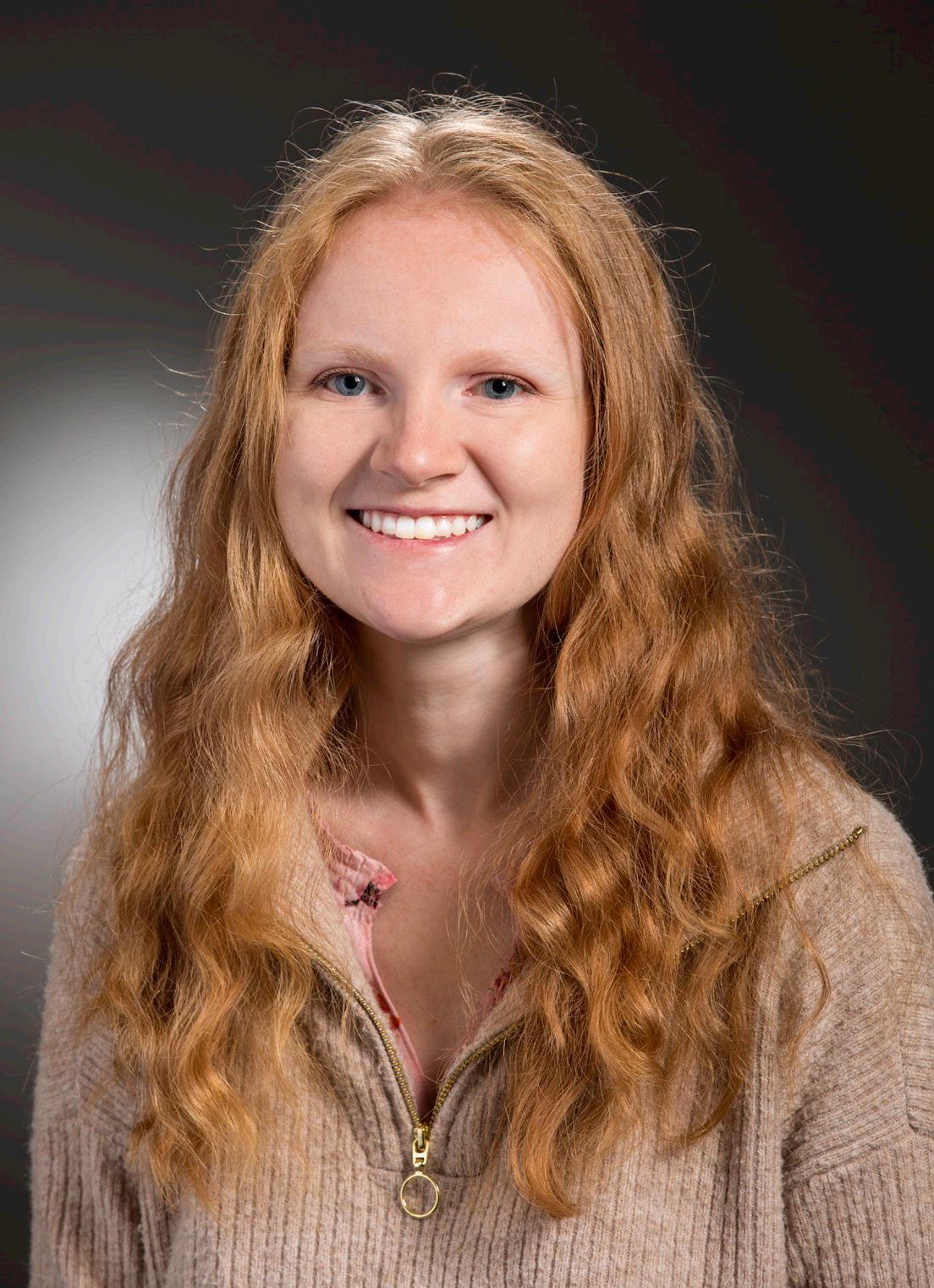
Dr.HughesMegan
Megan Hughes will join the Agricultural Economics Department this fall after completing her Ph.D. at Purdue. Hughes’ focus will be on extension and research in the areas of crop production and land markets.
“I’m really looking forward to joining a department with a friendly culture, and who is at the forefront of commercial agriculture. I’m excited to be working with my future colleagues, and to get to know, and learn from stakeholders around Kansas. I think the extension programs are excellent, and I look forward to being a part of this team,” she said.
She grew up on an independent seed farm in Northern Illinois, and completed a bachelor’s in Agribusiness Management from Michigan State University.
“My mentor [at Michigan State] suggested I might enjoy research, and that I consider applying to graduate programs. I took her advice and made my way to Purdue for my M.S. in Agricultural Economics and ended up staying for my Ph.D.,” Hughes said. “Additionally, I have had internships with GreenStone Farm Credit and John Deere.”
Hughes master’s degree focused on how adopting cover crops can impact farm profitability. For her
Before joining the faculty at Purdue, he spent three years in the Department of Agricultural and Applied Economics at the University of Georgia. While there, he taught undergraduate courses in agribusiness management, agricultural finance and a graduate course in agricultural finance.
dissertation, she focused more broadly on agricultural finance issues, specifically looking at FSA farm loan programs, and farmers’ perceptions of risk. She has given extension talks on cover crop adoption and farm profitability, carbon sequestration programs, and farmland value forecasts.
Another bonus to coming to K-State?
“My favorite color is purple, so I’m pretty excited about that as well. Go Cats!”

2024OutstandingSeniors
Riley Buss, Hattie Polson, Piper Schlatter and Caleb Stout were recently recognized as this year’s outstanding seniors within the Department of Agricultural Economics.
Department outstanding seniors demonstrate excellence and service on campus, in their classes and throughout their communities.
“It is an honor to recognize four exceptional seniors from our department this year,” said Dr. Elizabeth Yeager, associate professor and director of undergraduate programs. “Each of these students has excelled in the classroom and served their communities, our department and the University well.”
Riley Buss, bachelor’s degree in agricultural economics and mathematics, was active on campus as an Agriculture Ambassador, secretary and treasurer of Alpha Zeta, and a student fellow of the Center for Risk Management Education and Research. Buss has accepted an actuarial analyst role with Actuarial Resources Corporation of Kansas (ARC) and will begin this summer.
Hattie Polson, bachelor’s degree in agricultural economics with a minor in global food systems leadership, held leadership roles in the Student Governing Association (SGA), Kappa Alpha Theta sorority, Food Security Scholars and Blue Key Senior Honorary. In the fall, Polson will begin a master’s degree in agriculture, food, and resource economics at Michigan State University.
time at K-State, Schlatter was active in Agriculture Ambassadors, Alpha Clovia, Agricultural Economics/ Agribusiness Club, Collegiate Farm Bureau, Alpha Zeta, Kansas Corn Collegiate Academy and the Agriculture Future of America organization. Following graduation, Schlatter began working as an Associate Crop Insurance Consultant with American AgCredit.
Caleb Stout, bachelor’s degree in agricultural economics, was involved in FarmHouse Fraternity, Student Alumni Board, Quest Freshman Honorary, Blue Key Senior Honorary and the Student Governing Association (SGA). In his senior year, Stout served as the 77th K-State Student Body President. Stout plans to move
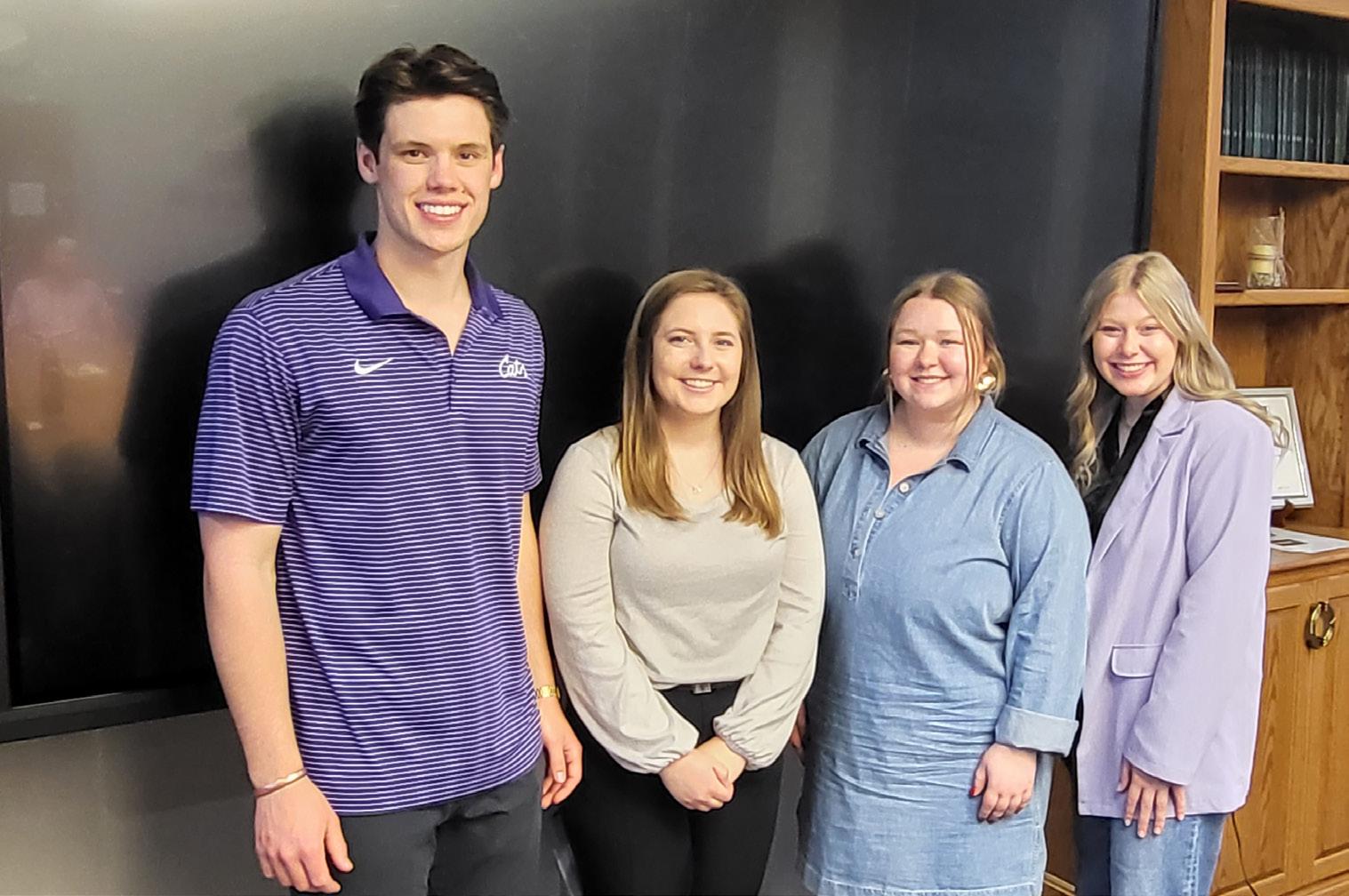
From L to R: Caleb Stout, Riley Buss, Hattie
and
Piper Schlatter graduated in December 2023 with a Bachelor of Science in agribusiness. During her
to Washington D.C. to complete an internship with National Student Leadership.
Polson
Piper Schlatter
A HUNGER FOR Change
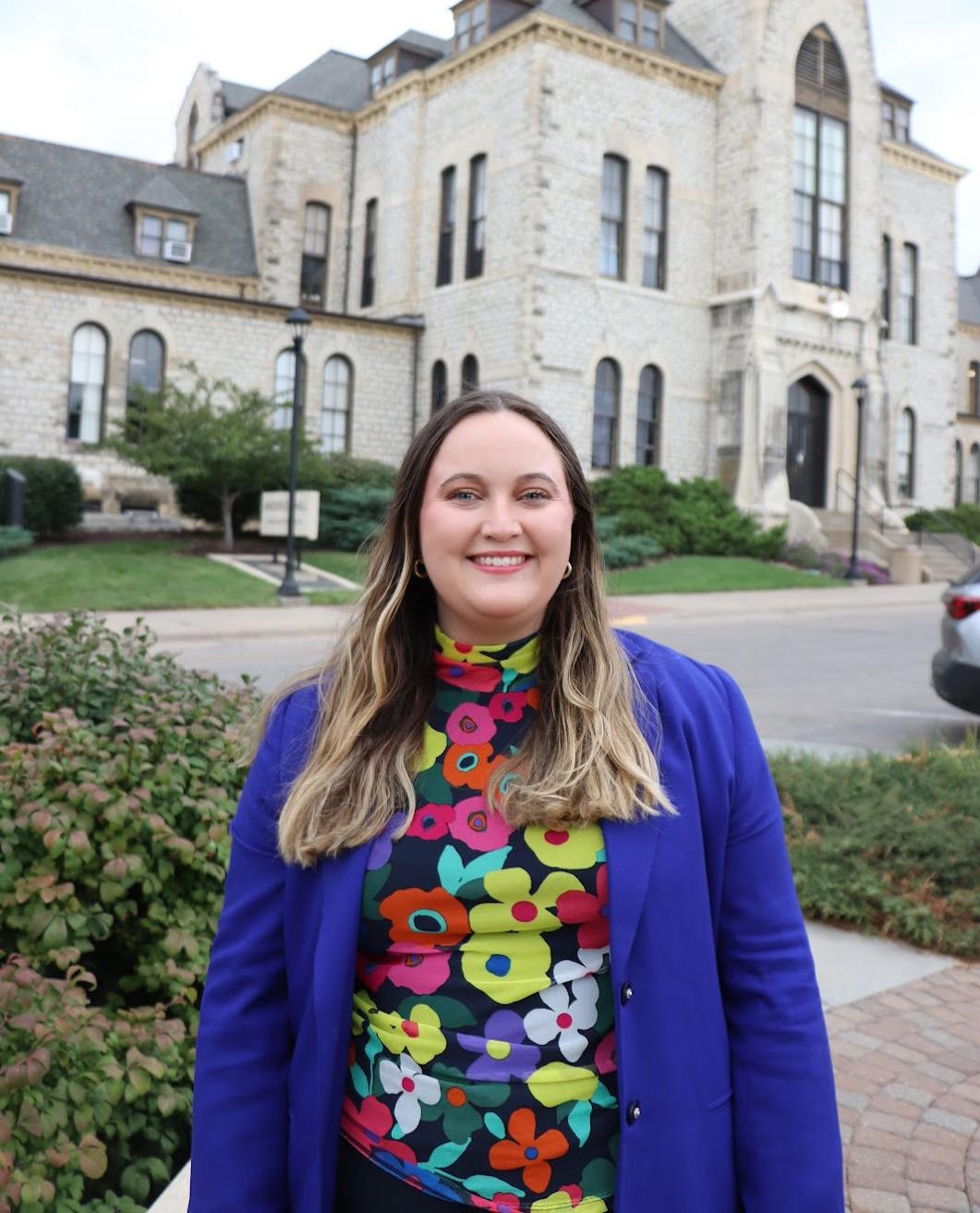
Easter, a senior in agricultural economics and global food systems leadership, was selected as a 2024 Harry S. Truman scholar. This makes her the 39th K-Stater and the sixth agricultural economics student to receive this honor.
As a Truman scholar, Easter exemplifies outstanding leadership, academic excellence and commitment to a career path in nonprofit or governmental sectors. The nationally competitive scholarship provides recipients with up to $30,000 for graduate coursework, career counseling, leadership training, and fellowships and internships focusing on federal government.
As a former bakery science major, Easter first found her calling for addressing hunger through the Global
Food Systems Leadership Program.
“My passion for creating food and sharing it was inspired by my grandmother’s influence as a cake decorator. However, my path changed when I joined the Global Food Systems Leadership program,” Easter said. “Through this program, I discovered my passion for ensuring people have equitable access to food.”
“I discovered my passion for ensuring people have equitable access to food.”
From there, Easter quickly transitioned to the Department of Agricultural Economics to continue learning more about how market structures and economic principles align with her future aspirations for work in public service.
Once Easter decided to enter the pool of more than 700 Truman scholar candidates, support from past scholars became key to her success.
“Through the application process I connected with, sought advice from, and learned about the experiences of both K-State Truman scholars and those who have applied for competitive scholarships like this,” Easter said. “Even within the Trumans from K-State, there is a subset of people from backgrounds of programs like ag economics and global food systems leadership. It was through some of these scholars that I first learned about the Truman scholarship.
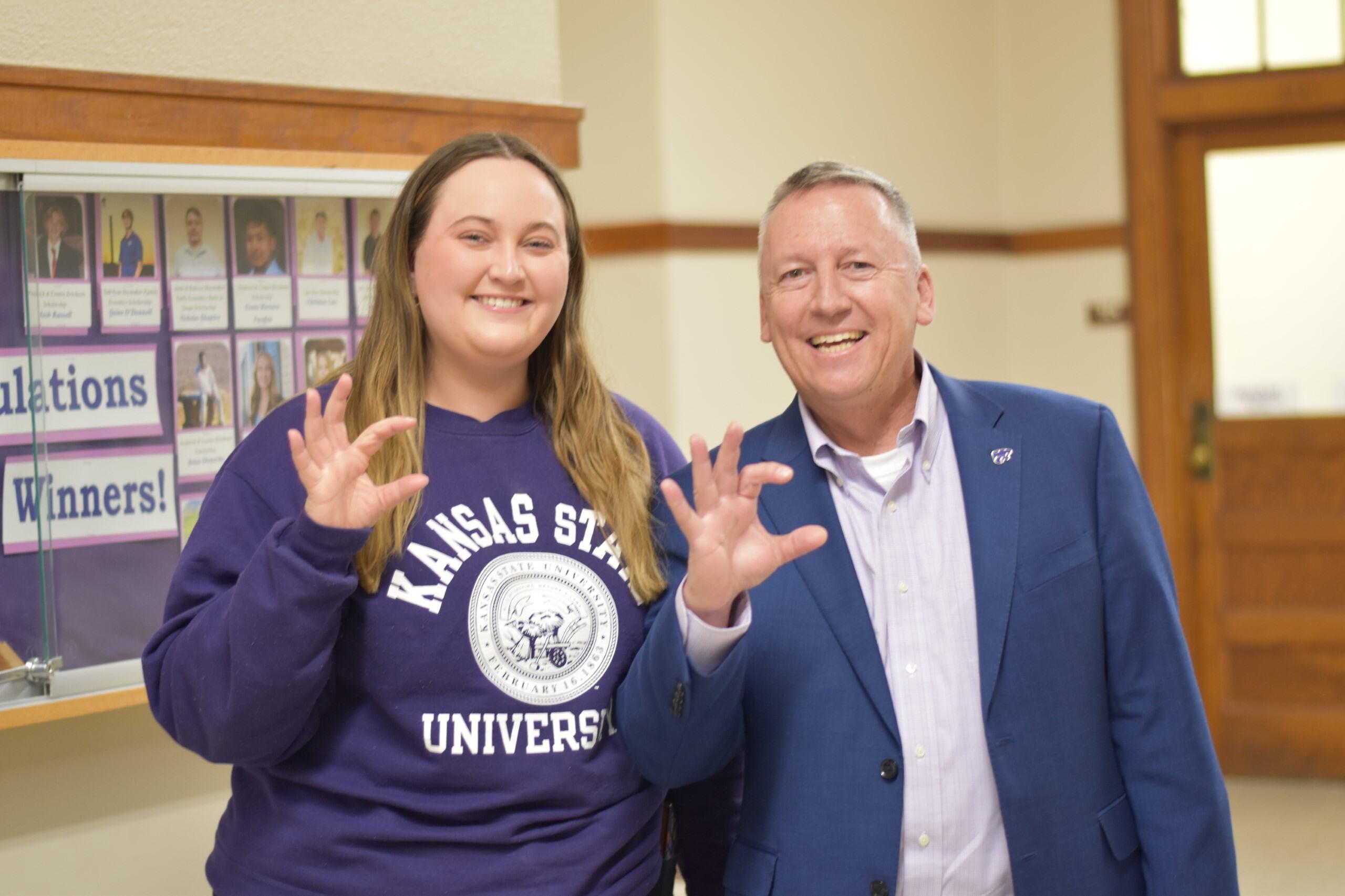
After a rigorous application, interview and selection process, Easter was notified that she had been chosen as a Truman scholar during the 2024 spring semester. University President Richard Linton announced Easter’s selection as one of 60 Truman scholars during her AGEC 501- Data Analysis and Optimization class. In the summer of 2024, Easter attended the Truman Leadership Week in Liberty, Mo., with her fellow Truman scholars. She also worked as a Local Food Fellow with K-State Research and Extension, where she focused on establishing a K-State food recovery network.
“Participating in the Truman Scholars Leadership Week in Liberty, Mo., was eye-opening, showing me the multitude of opportunities available as a Truman scholar,” Easter said. “However, what excites me most is the opportunity to participate in the Truman Summer Institute in Washington D.C. after graduation.”
Easter will attend the Truman Foundation’s 2025 Summer Institute with hopes of addressing food security as a Zero Hunger Intern with the Congressional Hunger Center in Washington, D.C. She will also complete a seminar series focusing on domestic and global hunger, as well as complete a research project examining causes of and solutions for hunger in her local community of Salina, Kan.
Honors Program. Easter also founded the Student Basic Needs Coalition, which she leads as president.
“This entire process has been incredibly rewarding. It forced me to reflect deeply on the work that has brought me here, making me proud of my
Easter plans to earn a master’s degree in food and agriculture law to work with policy and development to address hunger and enhance agricultural equity. In the long-term future, Easter is considering serving as a Senate Agriculture Committee member or working as a U.S. Foreign Service Officer for the U.S. Agency for International Development.
One of the things that exemplifies Easter’s outstanding leadership capabilities is her involvement on campus. She is involved in Blue Key Senior Honorary, Food Security Scholars, Global Food Systems Leadership program, Staley School of Leadership ambassadors, Cats’ Cupboard Advisory Board, and the University
“Applying for the Truman Scholarship has clarified my vision for the future.”
commitment to public service and helping me define what drives my core values,” Easter said. “Applying for the Truman Scholarship has clarified my vision for the future, providing me with a renewed sense of purpose and peace of mind.”
PAST SCHOLARS FROM THE DEPARTMENT
Hattie Polson - 2023 Truman
Sara Gammon - 2020 Truman
Clara Wicoff - 2020 Marshall, 2019 Truman
Vincent Hoffer - 2009 Rhodes
Leslie Turner - 2002 Truman
Tim Riemann - 1999 Marshall, 1998
Truman
Kelly Welch - 1987 Rhodes
Easter and University President Richard Linton
Legacy of Leadership
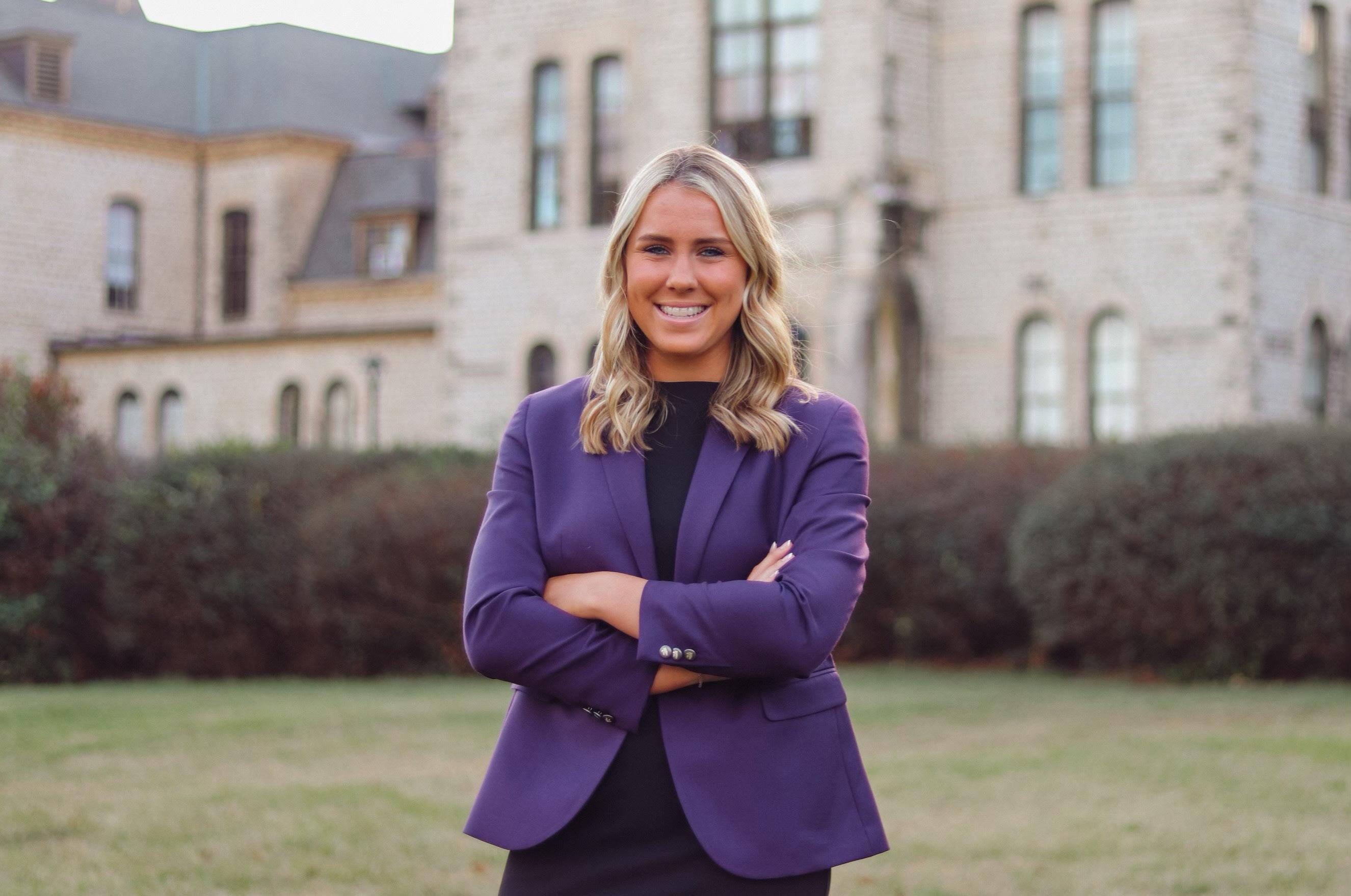
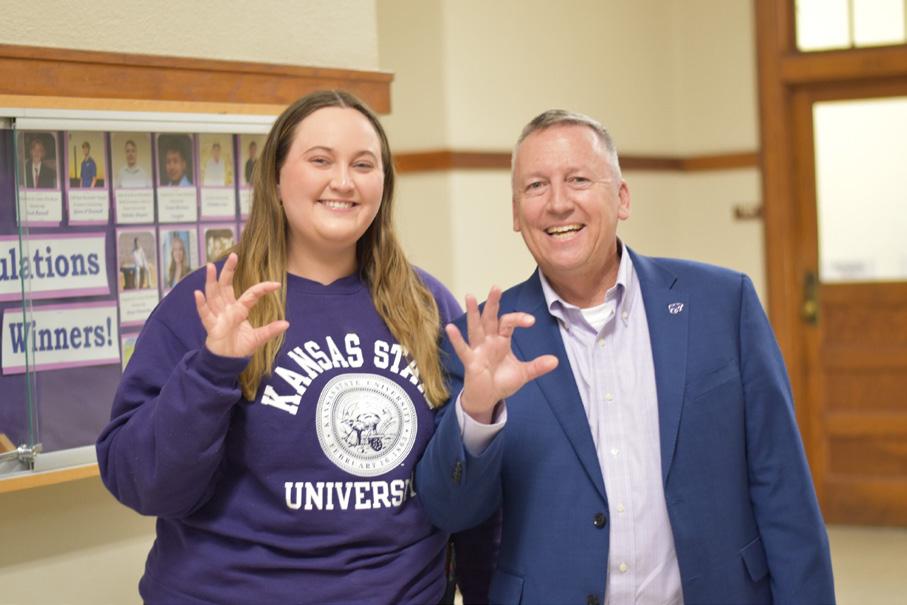
Paige Vulgamore, a junior in agricultural economics and global food systems leadership, was elected K-State’s student body president for the 2024-25 academic year. Her election makes her the 23rd president from the Department of Agricultural Economics and the third student in a row from the department to hold the office.
Vulgamore was elected alongside her running mate and student body vice president-elect, Jack O’Malley, junior in business administration. The duo received roughly two-thirds of the student body vote in the election held in February. Their platform is built around three pillars – voice, values and vision.
“We value the unique perspective that every K-State student has to offer,” said Vulgamore. We are committed to upholding the values that unite us all as K-State students, including the sense of family, belonging and K-State pride. Our vision encompasses an inclusive, innovative and sustainable campus.” Vulgamore has been involved in the Student
Governing Association (SGA) since her freshman year at K-State. Before exploring the executive branch of SGA in her sophomore year, she served as a senator for the College of Agriculture.
“Our vision encompasses an inclusive, innovative and sustainable campus.”
The junior from Scott City, Kan., is also involved in Gamma Phi Beta sorority, where she recently finished serving as chapter president, as well as College of Agriculture Ambassadors and Student Alumni Board.
Vulgamore attributes much of her success to the support of the faculty at the Department of Ag Economics and reflects positively on the department’s history of student leadership.
“It’s a great honor to be
recognized alongside the legacy of leaders that have emerged from the department.”
“Since my freshman year, I’ve been fortunate to have professors and advisors who have guided me and encouraged my involvement in organizations such as the Student Governing Association,” Vulgamore said. “It’s a great honor to be recognized alongside the legacy of leaders that have emerged from the department.”
Past Presidents from the Department
• Caleb Stout 2023-24
• Parker Vulgamore 2022-23
• Reagan Kays 2014-15
• Nate Spriggs 2012-13
• Wayne Stoskopf 2009-10
• Lucas Maddy 2006-07
• Michael Burns 2005-06
• Jake Worcester 2000-01
• Tracey Mann 1998-99
• Tim Riemann 1997-98
• Jennafer (Neufeld) Watson 1997-98
Students win annual AAEA awards
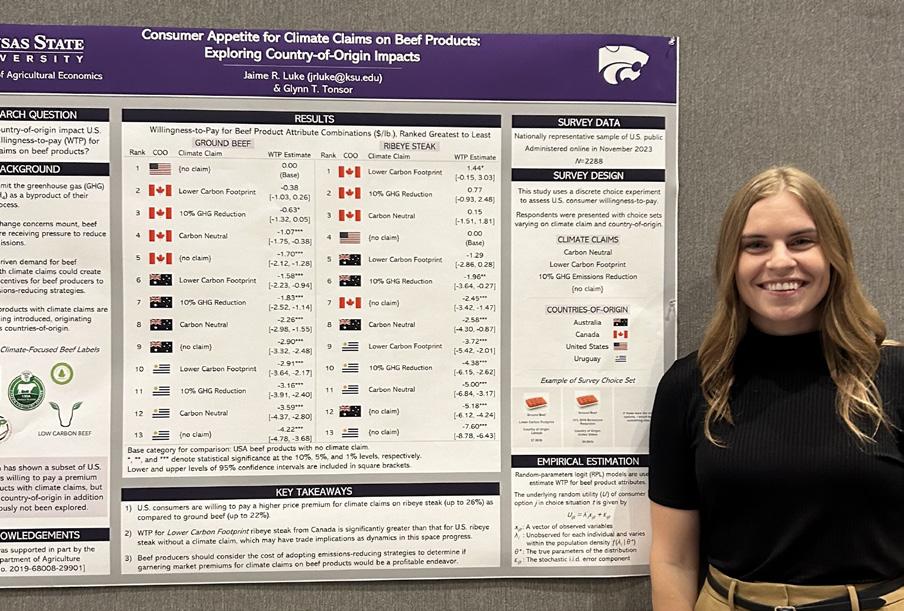
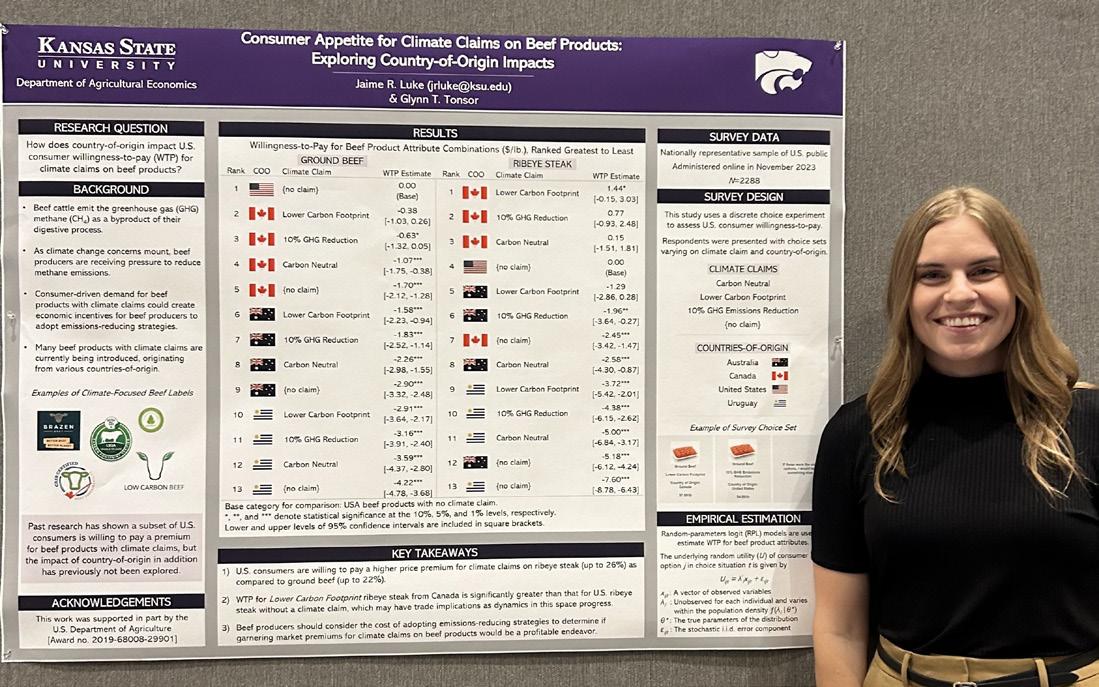
Jaime Luke, Ph.D. in agricultural economics, won the Food & Agricultural Marketing Policy Section Poster Competition at the Agricultural and Applied Economics Association’s (AAEA) annual meeting.
Luke’s poster, titled “Consumer Appetite for Climate Claims on Beef Products: Exploring Country-of-Origin Impacts,” explores how climate claims impact consumer willingness to pay higher prices for beef.
Luke’s research specializes in applied econometrics and analyzes supply and demand trends in the pork and beef industries and how these trends impact consumers, processors, and other industry stakeholders.
• Jackie McClaskey 1991-93
• Todd Heitschmidt 1990-91
• Steven Johnson 1986-87
• Sam Brownback 1978-79
• Chris Badger 1976-77
• Mark Edelman 1974-75
• R.D. Harmon 1971-72
• Sam Forrer 1962-63
• Don Biggs 1951-52
• Floyd Ricker 1950-51
• Merle Eyestone 1944-46
Economics Data Visualization Challenge.
Eight teams of three students each from across the country were tasked with developing innovative data visualizations using the Local Food Data Warehouse and the Food and Agriculture Mapper and Explorer (FAME).
The KSU team developed a tool called the Local Food Manufacturing Gap Index to identify the difference between the predicted and actual number of local food manufacturing businesses in the Heartland region with fewer than 50 employees.
“We analyzed household and local business characteristics across Nebraska, Kansas, Missouri, Iowa, and Oklahoma,” said Sharma. “Our findings highlighted areas with the highest potential for new local food manufacturing businesses.”
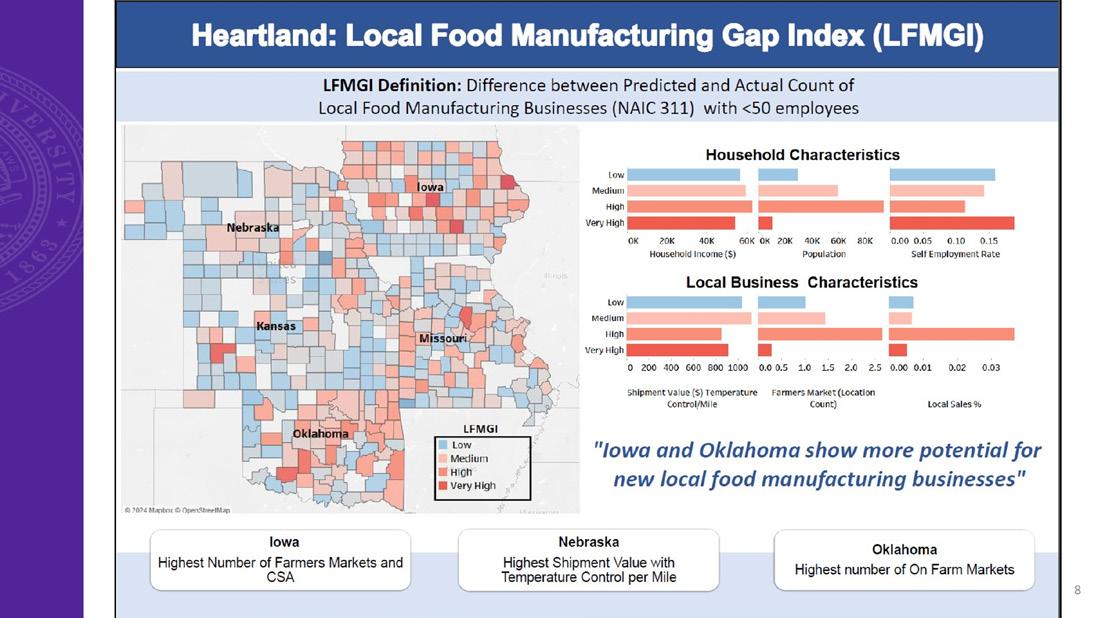
The graduate student team of Walter AC Pangan, Jiyeon Kim and Priyanka Sharma won the AAEA’s Local Food
Agricultural Scholars FARM FOUNDATION
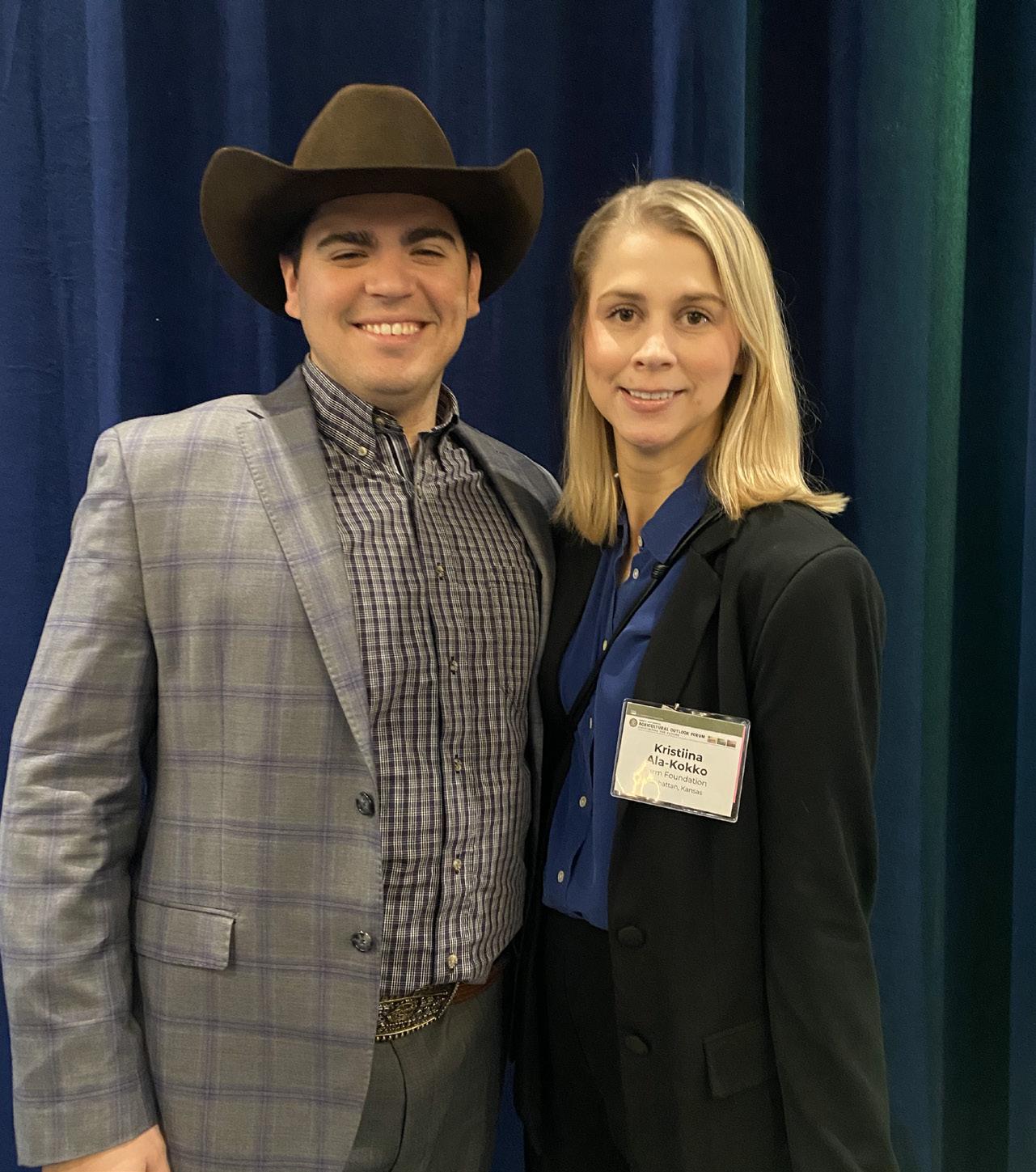
Farm Foundation Agricultural Scholars Kristiina Ala-Kokko, agricultural economics Ph. D. candidate, and Matthew Melchor, M.S. in agricultural economics, have been traveling and learning about government and agricultural policy this year.
The foundation’s Agricultural Scholars Program aims to engage graduate-level students in a year-long series of learning experiences to enhance understanding of and participation in the field of ag policy. Each year, the program attracts graduate students interested in career work and advocacy in agricultural policy, commodity market analysis, agricultural finance, and other applied fields of economics.
“I wanted to participate to develop a better understanding of the policy issues facing the food and ag sector and the different perspectives held by those impacted the most by policy changes,” Ala-Kokko said.
Ala-Kokko and Melchor have traveled to numerous national and international agricultural
operations and conferences. They attended the USDA’s 100th Annual Agricultural Outlook Forum in Washington, D.C., the Agricultural and Applied Economics Association meeting in New Orleans, La., and an Agricultural Economics Society meeting in Edinburgh, Scotland. They also traveled to farms and ag facilities in Colorado and Hawaii.
Their travels have allowed them to take part in round table meetings with fellow scholars, industry leaders, politicians and other stakeholders.
These round table sessions gave Ala-Kokko more perspective on how to address challenges within the agricultural industry.
“I enjoyed connecting with the attendees at the round table meetings, particularly the Farm Foundation Fellows and the Ag Scholars,” Ala-Kokko said. “The round table meetings provided an environment that facilitated meaningful conversations about challenges facing the food and ag sector and rural communities.”
For Melchor, these experiences have allowed him to better understand the livestock industry, both nationally and internationally.
“There are so many parts to the agricultural world that I had not even considered until we saw them in person,” Melchor said. “Through all of these experiences, I have learned something incredibly new and fascinating about the livestock sector that would not have been possible without the Farm Foundation’s program.”
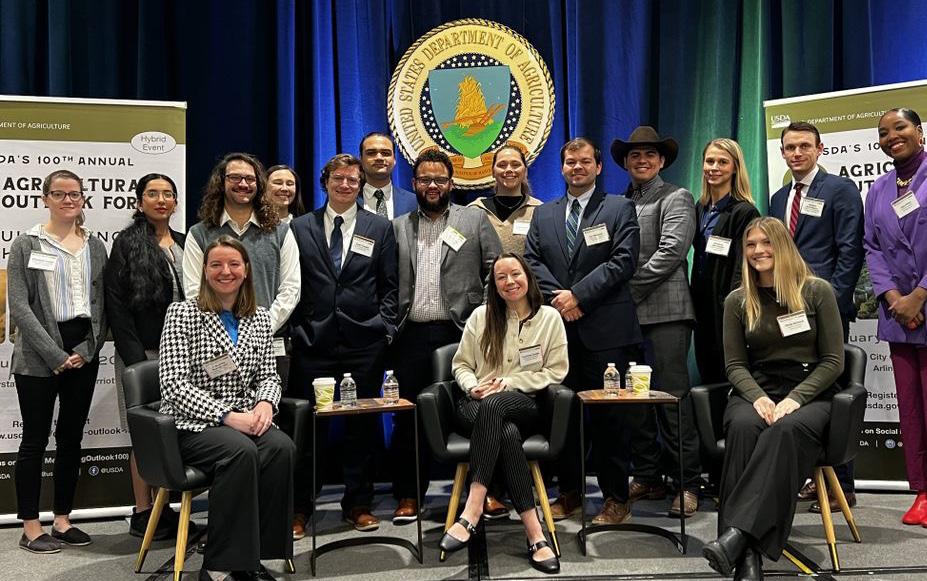
2024 Farm Foundation scholars at the USDA’s Annual Agricultural Outlook Forum in Washington, D.C.
2024 IFAMA World Conference
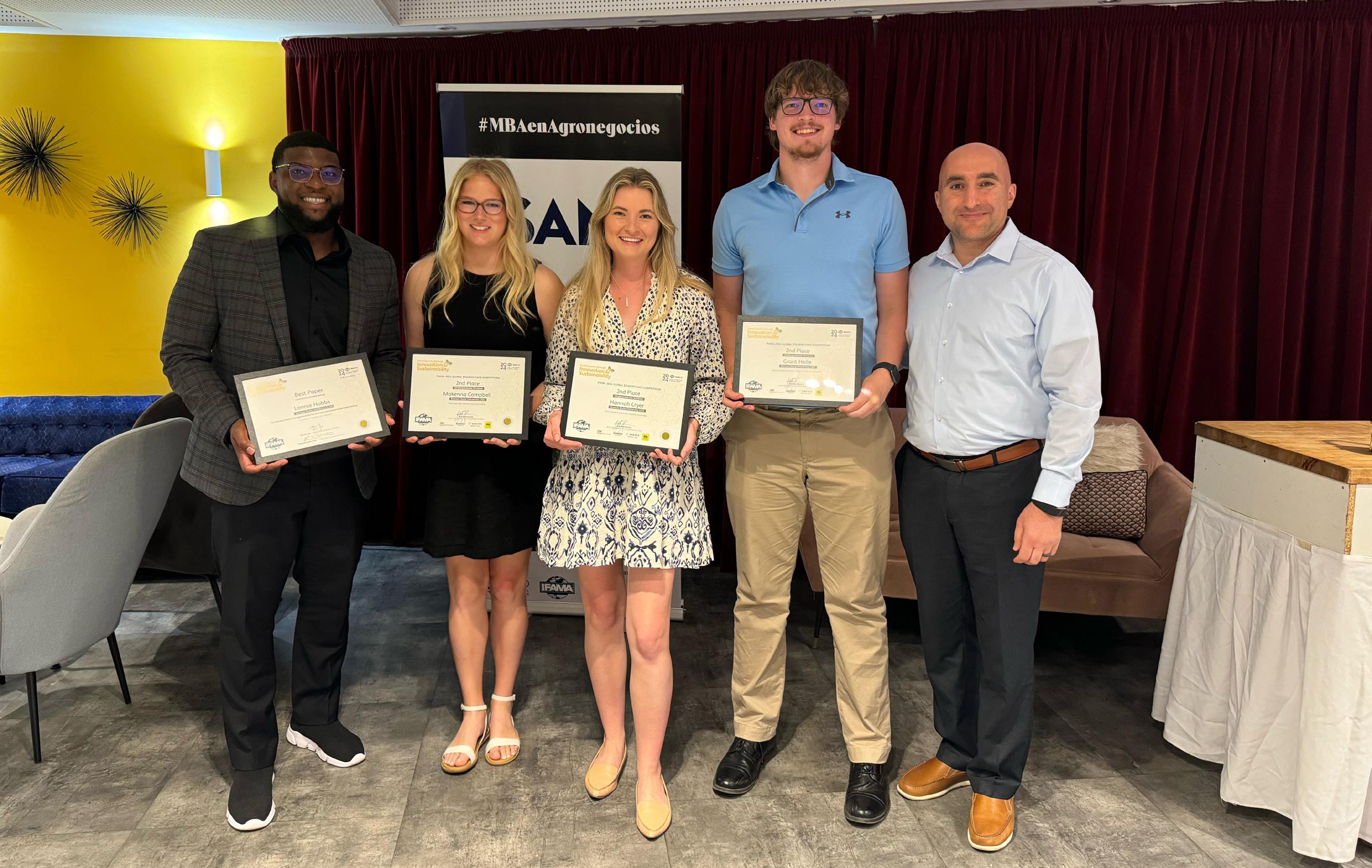
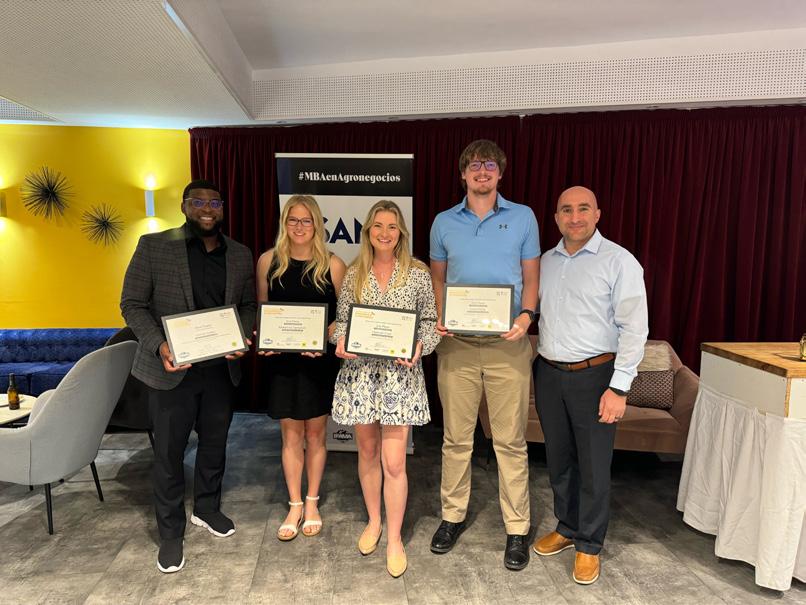
Department students and faculty members recently attended the 2024 International Food and Agribusiness Management Association (IFAMA) World Conference in Almería, Spain, on June 17-20, 2024. The conference connects leaders and stakeholders in the food and agribusiness industries through keynote speakers, discussion, and the Student Case Competition.
Undergraduate and graduate teams led by Dr. Aleksan Shanoyan competed in their respective Student Case Competition divisions. The undergraduate team of Hannah Cryer, Makenna Campbell and Grant Holle placed second in the international competition and the graduate team of Calder McCollum, Jenae Tilford, Delide Joseph, Abena Damuah and Vera Adabrah-Danquah reached the competition semifinals.
“Both the undergraduate and graduate case study teams performed exceptionally well in this year’s competition. They demonstrated their training and ability to pinpoint an agribusiness-related problem and systematically devise a solution,” said Lonnie Hobbs, Jr., assistant professor. “I had the opportunity to observe their presentations to the judges. Their poise, confidence, presentation skills, and
Q&A sessions thoroughly impressed me.”
Teams from around the world competed to analyze case studies in front of professional and academic judges. In each round, teams either analyzed or revised a case study and were scored based on their presentation and responses to questions from the judges. The undergraduate team scored in the top five to advance to the semi-finals and in the top two to advance to the final round, where they later earned a second-place finish.
“For the 2024 IFAMA World Conference, the theme was Sustainability and Innovation,” said undergraduate team member Grant Holle. “We were assigned a case study based around the International Seed Federation (ISF) and we had to come up with a solution for sustainability in agriculture. This solution had to tie into the ISF and be one that they could possibly implement.”
Outside of the Student Case Competition, department faculty members also earned awards and recognition at the conference. Hobbs, Jr. won the Best Paper Award in the Marketing and Communication category, and Dr. Vincent Amanor-Boadu was named an IFAMA fellow.
From L to R: Lonnie Hobbs Jr., Makenna Campbell, Hannah Cryer, Grant Holle, and Aleksan Shanoyan
2024Student Spotlight &
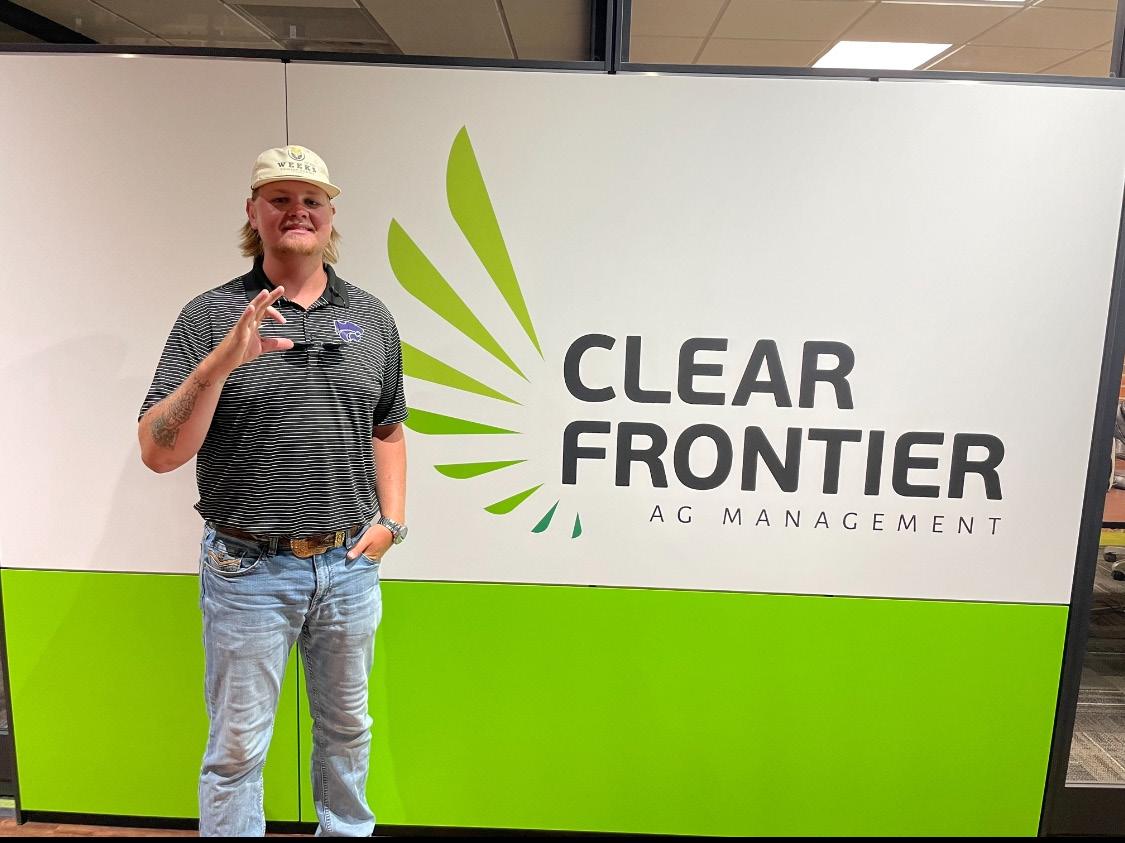
AIDEN WEEKS
What is your major and why did you choose to pursue agriculture?
Agribusiness is my major as of now, and I plan to double major in finance with a minor in something within real estate or investment management. The reason I chose agriculture has a lot to do with my upbringing on a family farm. Seeing the hard work and dedication that is present in the ag world is something I will always admire and respect. The broad group of individuals I meet from different backgrounds and upbringings always fascinates me. The valuable relationships I have gained from the farm alone made me want to join the agricultural community when I graduate. The idea of making the world a better place and being able to do so in common ag practices made me want to pursue ag. I also enjoy being involved in the ag world and if I didn’t pursue ag, I wouldn’t know what to do.
What are some of your favorite classes, professors, clubs, activities, etc. on campus?
My favorite classes tend to be major-related, I took Ag Econ 120 with Professor Perry and enjoyed that class. Grain Science 101 has been my favorite thus far because all of the milling and processing material was completely new to me. It was an experience to broaden my scope of the ag industry and look into the milling and baking process. My favorite professor so far has been Professor Jason Watt. I am a member of the Alpha Gamma Rho Fraternity here at Kansas State. In my free time, I enjoy going to the football and baseball games and cheering on the Wildcats.
What kind of internship do you have, what do you do on a daily/weekly basis, where is it located, and what made you want to work for the internship you chose?
I work for Clear Frontier Ag Management out of Omaha, Nebraska. As of now, I am traveling to different farms in the CFAM portfolio. On this three-state work trip, I am utilizing farm management software FarmQA to scout and evaluate fields for management practices, crop health, and capital improvement conditions and functionality. I wanted to work for Clear Frontier because I like what they stand for, a leading partner to specialist farmers and support them in growing a more sustainable business for the mutual benefit of our investors, the environment, and family farms. The idea of producing a more profitable crop on healthier soils drew my attention.
What are your career goals with your major?
My career goals are to obtain my real estate and broker license. My plan with those would be to work side by side with an ag management company in my early to mid-twenties while being on the lookout for new ground and opportunities that are available. I’d then like to come back to my family’s farm with the
Q & A Summer Internship
tools I need for the operation to excel to the next level through profitable growth and sustainable farming practices.
Are you going to further your academic career or continue in the work field?
I think for what I would like to do in the ag world a four-year degree would suit me well for the tools needed. However, if the opportunity arises to gain more knowledge in a certain area I become interested in, I would not be opposed to further my academics.
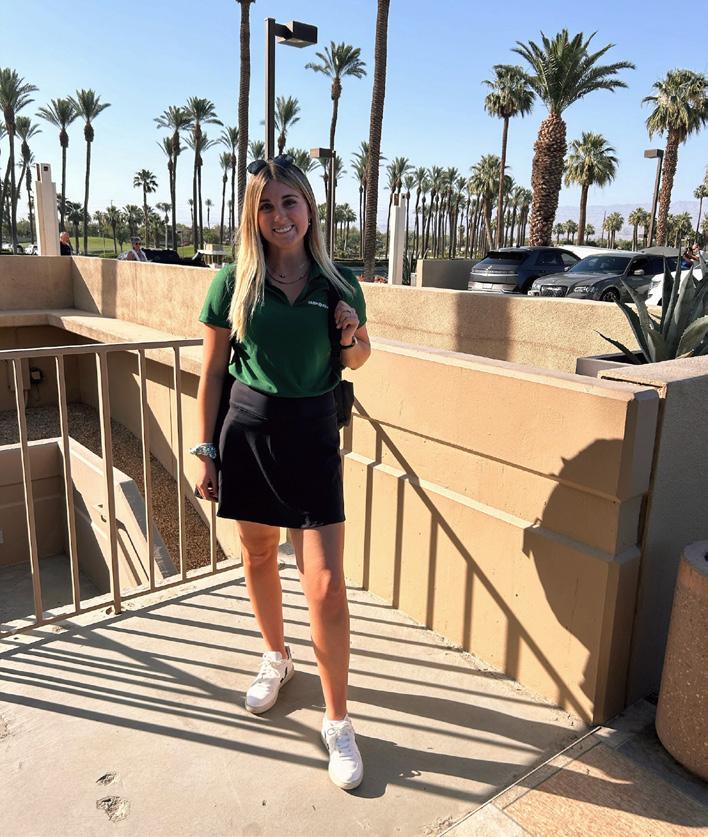
SYDNEE SUMMERS
What is your major and why did you choose to pursue agriculture?
Major: Agribusiness
Minor: Agronomy
I chose to pursue a degree in agriculture because I have grown up on a farm my whole life. When I was a kid if you asked me what I wanted to do when I grew up, I would have easily replied, “Be just like my dad, a farmer”!
What are some of your favorite classes, professors, clubs, activities, etc. on campus?
Favorite Classes: AGEC 500 & AGEC 505
Favorite Professor: David Lehman & Andrew Barkley
Favorite Club: Agribusiness/AgEcon Club & NAMA Team
What kind of internship do you have, what do you do on a daily/ weekly basis, where is it located, and what made you want to work for the internship you chose?
I am interning for Farm Journal this summer as their marketing intern. I work in Lenexa, KS, at their office two days a week. I work remote the rest of the week. So far I have already traveled to Palm Springs, CA, to assist in hosting the West Coast Produce Expo. I have also traveled to Des Moines, IA, for the World Pork Expo. I wanted to work for this company because of the many diverse aspects of ag this company interacts with. I grew up always seeing Farm Journal magazine on the table at my house and my grandparents house.
What are your career goals with your major?
My career goal is to promote agriculture while being involved in production agriculture. My family farms corn and soybeans in Missouri and I plan to continue our family’s farm.
Are you going to further your academic career or continue in the work field?
Once I graduate in December 2024, I plan to begin working.
Aaron Patrick Morrison Scholarship
Berren Strope
Adrian John Polansky II Scholarship
Emily Hansen
Bill Hanson Crop Insurance Professionals Association
Memorial Scholarship
Reece Geer
Charles Dean and Harriet McNeal
Memorial Scholarship
Breckin Bowin
Cav Carlgren
Brett Buhrman
Carissa Dalquest
Samuel Derks
Jonathan Frisbie
Cheyenne Handsaker
Reed Hedrick
Jace Korf
Abigail La Spada
Ethan Lulich
Dillon Mai
Crayton McCafferty
Dylan Metzger
Macie Morris
Cameron Oswald
Elijah Peterson
Kadence Riddick
Brooke Rogers
Cambree Schmaltz
Isabella Stubbs
Charles W. and Lois H. Nauheim
Agricultural Economics Scholarship
Trent Beier
Hannah Cryer
Chancy Johnson
Emma Kasselman
Hannah Schreiner
CHS Foundation Scholarships
Stephanie Atkinson
Korben Clawson
Kash Liddeke
Cleo Harvey Kuhn Scholarship
Bailey Lavender
CoBank Outstanding Student Scholarship
Rheo Dykstra
Dan and Beth Bird Scholarship in Agricultural Economics
Carter Kramer
Aubrey Markt
Alexis Powelson
Blake Skalsky

2024
Dave Woolfolk Scholarship
Mackenzie Malson
David and Susan Barton
Cooperative Leadership Scholarship
Lane Klepper
Duane and Pauline Murphy
Agricultural Economics Scholarship
Blake Harrold
E. Robert and Donna Kern
Agricultural Economics Scholarship
Margaret Lugo
Farmers National Company Foundation Scholarship
Harrison Bhend
Flinchbaugh Agriculture Policy Scholarship
Jenna Wallace
George R. Hanson Scholarship in Agriculture
Samantha Bonifas
Riley Showalter
Gladwin A. Read Memorial Fund
Hannah Andringa
Jackson Arender
Brynn Boxberger
David Branson
Kaitlyn Butler
Jaylee Callaway
Makenna Campbell
Grady Clouse
Lucas DeDonder
Scholarship Recipients
James DeRouchey
Adelaide Easter
Hunter Engle
Christopher Faller
Presli Firkins
Evan Fowler
Jaxson Gebhardt
Kristin Gerety
Jayla Johnson
Ty Knodle
Alex Kuhr
Nicholas Lines
Mitchell Lorenz
Hannah Macke
Matthew Nemechek
Jioh Park
Haley Plaschka
Jenson Schoenfeld
Zander Seth
Roman Stec
Caleb Van Booven
Gillian Mae Villa
Bailey Wadlow
Grace Walenta
Madeline Welch
Jody Zimmerman
Hosea S. Harkness Agricultural Economics Scholarship
Mallory Bergeron
Brett Noland
Benjamin Suber
Cara Wharton
J. Adair Hodges Memorial Fellowship
Avery Glasgow
Cody Schurle
Jim and Mary Lou Birkbeck Family Scholarship
Ryan Feldkamp
Abigail Robinson
Neva Roenne
John T. and Pearl E. Bullock Memorial Scholarship
Jonathan Temaat
Joseph Lieber Memorial
Cooperative Scholarship
Emma Thorpe
Kansas Ag Bankers Scholarship
Dalton Carey
Jay Tatum
Leonard W Schruben Agricultural Economics Scholarship
Delaney New
Matthew Kent Stamper Memorial Scholarship
Coy Stamm
Orlen Grunewald Agricultural Economics Scholarship
Kyla Mennen
Otis and Mary Lee Molz Cooperative Scholarship
Madeline Drake
Packebush Family - Mary Vanier KSU Family Scholarship
Callie Collins
Madelyn Hill
Raymond J. and Mary Clare Doll Scholarship
Paige Vulgamore
Ruth McClanahan Dotson (Class of 1940) and John Dotson (Class of 1939) Agricultural Economics Scholarship
Maci Behrnes
Sam and Martha Logan - Kruse Family Scholarship
Reagan Morris
Schroeder Family Scholarship
Blake Fowler
Seyfert Family - Vanier Family Scholarship
Samuel Birdsall
Stanley G. Wendland Memorial Scholarship
Kiran Elam
Ted Heath Memorial Scholarship Fund
Kendall Geist
Thomas G. Hobbs Memorial Scholarship
John Stoecker
Tim Lim Undergraduate Scholarship in Agriculture
Joel Bryan
Sage Toews
W. Dan and Lynn Weaver Scholarship
Lauryn Karr
W.L. ‘Bill’ Webber Memorial Scholarship
Courtney Clinesmith
William S. May Scholarship for Agricultural Finance
Audrianna Byers
Andrew Husband

USDA and K-State examine Armenian wheat resilience
Asthe Russian-Ukrainian conflict continues, Armenia’s reliance on Russian wheat has become a prevalent issue for the Government of Armenia (GOA). According to the Jamestown Foundation, almost 100% of Armenia’s wheat came from Russia in 2022. In response to this, the USDA, in conjunction with a K-State research team inlcuding ag econ professors Aleksan Shanoyan and Antonina Broyaka, have taken part in a series of visits to Armenia to assess the country’s Russian wheat reliance and possible solutions.
USDA representatives and K-State researchers initially went to Armenia between Oct. 30-Nov. 3, 2023, to assess the country’s wheat production capacity, trade options and processing industry. At the GOA’s request, the team determined steps Armenia can take to establish a strategic wheat reserve.
In a debriefing with the Armenian Ministry of Economy following this initial assessment, the Deputy Minister of Economy requested follow-up analysis to determine several additional factors concerning Armenian wheat stores.
In response, the USDA-KSU team developed the following research objectives:
• Determine the availability and quality of grain storage within Armenia and Poti Port
• Develop an advanced cost and scheduling analysis for grain import diversification
• Determine how cost increases will affect bread prices
• Conduct a yield gap analysis between current and potential Armenian wheat production
The USDA-KSU team is now completing a series of visits to accomplish the above research objectives. In May, the team visited mills and bakeries, planned farm visits, obtained weather and soil data, and communicated with Poti Port officials. In June, the team visited wheat fields to determine optimum yield constraints for a comprehensive yield gap analysis.
Additional trips are planned for early and late fall of this year to complete the research and begin presenting findings to critical Armenian stakeholders.
40 Years of Cooperative Education Excellence
In 1984, a public-private partnership was formed between the Kansas Cooperative Council (KCC) and the Department of Agricultural Economics (AGEC) at Kansas State University, leading to the establishment of the Arthur Capper Cooperative Center (ACCC). This visionary alliance was designed to leverage the combined resources of academia and industry, with the aim of enhancing cooperative education, research and outreach.
Named in honor of Senator Arthur Capper, who cosponsored the Capper-Volstead Act, often hailed as the “Magna Carta of Farmer Cooperatives,” the ACCC was created to uphold and advance the values and goals central to cooperative organizations.
Founding and Evolution
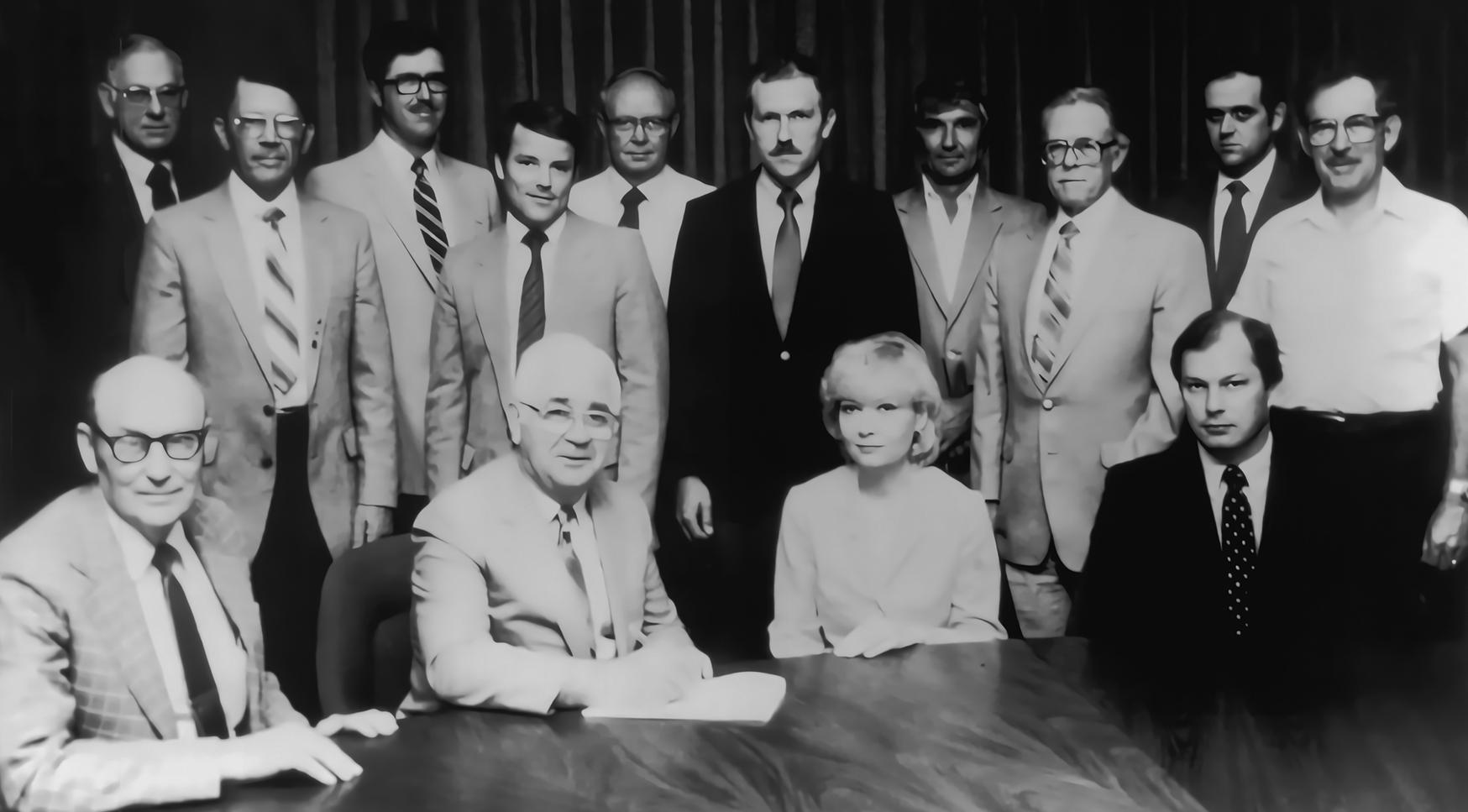
The success of the ACCC can be attributed to its strong partnerships and strategic vision from the start. The Center’s inaugural Advisory Council in 19841985 included Pete Anderson, David Barton, Bob Broeckelman, Byron Carpenter, Jim Dooley, Harley Foulks, Darwin Francis, Fritz Gwin, Nancy Kantola, Paul Kelley, Milton Manuel, Richard Phillips, Galen Rapp and John Riley. This council played a crucial role in shaping the ACCC’s direction, securing funding and ensuring its
relevance to the cooperative sector.
Dr. David Barton, the founding director, served the ACCC for 27 years. Reflecting on his tenure, Dr. Barton shared, “The formation of the Kansas State University Arthur Capper Cooperative Center and my role as the first Director remains one of my most fulfilling achievements. It allowed us to expand our educational reach and impact, following the Land-Grant tradition of public service combined with industry collaboration. I’m deeply grateful for the support and vision of the university and industry founders.”
Under Dr. Barton’s leadership, the ACCC offered, by request, high-quality educational programs such as the Symposium and the CEO Roundtable, as well as individualized co-op training. Additionally, Dr. Barton served as a course designer and instructor on the KCC’s Director Development Program. These programs were tailored to the unique business model of cooperatives, emphasizing cooperative finance, governance, and strategy.
A New Era of Leadership
In 2011, Dr. Brian Briggeman took over as Director,

building on the strong foundation established by his predecessor. Dr. Briggeman has continued to elevate the ACCC’s offerings, introducing initiatives like the CFO Roundtable and the Emerging Leaders training programs. His commitment to bringing cooperative education to cooperative leaders and to undergraduates is evident not only in the outreach programs but also in his work teaching an online cooperative management course and an on-campus ag finance class. Sharing the cooperative business model with undergraduates along with overseeing the awarding of cooperative scholarships, over $1 million in awards since 1985, connects K-State students to the cooperative community.
Dr. Briggeman remarked, “It is an honor to serve as the director of the Arthur Capper Cooperative Center. For 40 years, we have been dedicated to advancing research and education for the cooperative community. The land grant model of teaching, research, and extension at Kansas State University provides a robust platform for us to connect with students and cooperative leaders alike. Looking ahead, it’s vital for us to keep engaging with the cooperative industry to address challenges and seize opportunities, ensuring that academia and industry collaborate to strengthen the cooperative system.”
Kansas Landowner Conference
The department held its inaugural Kansas Landowner Conference in November 2023. The main goal of the conference was to help Kansas landowners build networks and increase their knowledge in many aspects of land management. The conference was held at the K-State Alumni Center on Kansas State University campus.
It was a one-day conference with topics ranging from the macroeconomy to components of a good written lease. There were nine presentations with nine different speakers to provide a wide breadth of information for the attendees. The conference brought in 165 attendees from 18 different states. Out of 102 evaluation responses, 96.1% ranked the information valuable to very valuable.
Looking Forward
As the ACCC celebrates its 40th anniversary, it stands as a testament to the power of collaboration between academia and industry. The Center’s achievements over the decades reflect a deep commitment to cooperative education and a shared vision for a thriving cooperative community. Partnerships, relationships and innovative thinking will continue to be key as the ACCC prepares for future opportunities in cooperative education, research and outreach.
After asking the participants what the most important things they learned at the conference, we had someone state being at a table with other women landowners helped them not feel alone. A lot of participants stated lease types and lease information were the most important topics. When asked how the conference will affect their management decisions, many participants said the conference will help with their written leases and tenant communication.
Based on our evaluation results, we have decided to host another Kansas Landowner Conference in 2024. This conference will have many topics that were suggested by our attendees from our inaugural conference. Additionally, we have extended the conference to a day and a half as we did not allow enough time for questions/discussions as we had desired. The 2024 conference topics include the Macroeconomy, Land Values & Trends, Landowner.Tenant Communication, Estate Planning, Wind & Solar Leases, Hunting Leases, Carbon Credits, Conservation Programs, Lease Basics, Farm Economy Outlook, Grain Marketing, Crop Insurance & Government Programs, and more. All information can be found on agmanager.info/landowner.
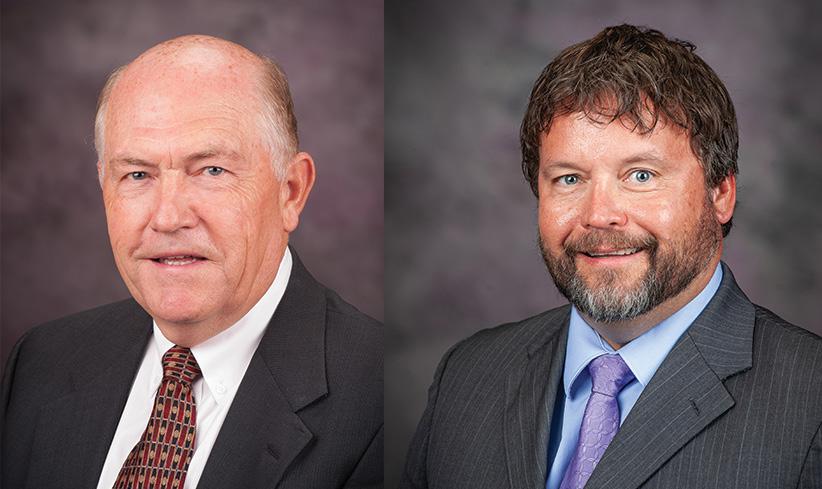
Left: David Barton; Right: Brian Briggeman
Johnson named distinguished alumni
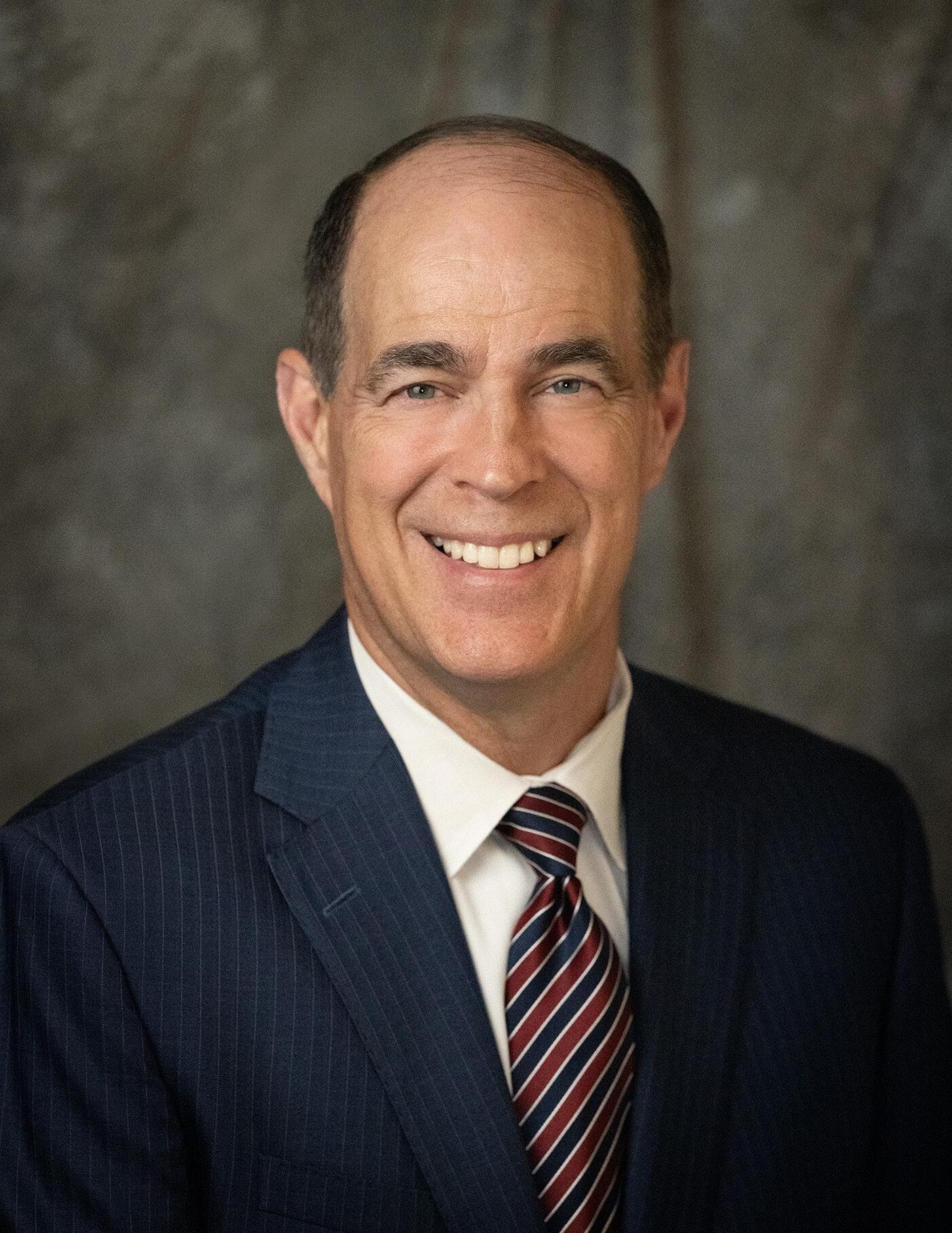
Steven Johnson, a native of Kansas, has been honored with the 2024 Agricultural Economics Department Distinguished Alumni Award. His journey from a cattle and grain farm to the state treasurer’s office is a testament to his dedication, leadership, and financial acumen.
Born and raised near Assaria, Kansas, he graduated from Southeast Saline High School, and went on to study Agricultural Economics at Kansas State University, where he was elected Student Body President and graduated with honors.
“There are so many distinguished alumni across the
Department and College of Agriculture that are doing phenomenal things across the agriculture industry. I am so honored to be recognized,” Johnson said. “At K-State, the overall experience, economic framework of thinking, and learning how to maximize the assets you have were outstanding.”
“It’s been fun to reflect on my time at K-State and to think about the development of K-State, and the vision being shared with today’s students to meet the needs of the future. I am inspired by our past developments that will lead to remarkable innovations in our future,” Johnson said.
While at K-State, he worked with Dr. Barry Flinchbaugh and Dr. Bryan Schurle who further shaped his economic perspective.
“I still remember Dr. Schurle’s hamburgers and Cokes lecture on marginal utility. How many Cokes will I give up for someone else’s hamburgers? What are the tradeoffs?’ Johnson said. “While working with Dr. Schurle and Dr. Flinchbaugh, I also learned more about the state of Kansas and all the counties – their locations and economies. This information has been helpful in my time as State Treasurer.”
Johnson’s roots run deep in Kansas agriculture. His involvement in 4-H and leadership roles in youth organizations fostered his skills as a communicator and collaborator. Active in youth programs, he held several leadership positions, including the National President of the Rural Electric Youth Program that allowed him to travel throughout the country.
“There are so many distinguished alumni across the Department and College of Agriculture that are doing phenomenal things...”
After college, Steven went to work for Ameriprise, a financial services firm. He also received his MBA from the University of Chicago with an emphasis in finance and business policy. At Ameriprise, Steven was
awarded the firm’s highest individual and team awards for his lead in creating a software program calculating the highest return investment portfolio for a particular need.
“Between 1992 and 2013, we were able to not only calculate the portfolios but calibrate the success of the projections to meet reality. I continue to use this market and planning expertise for the state as well as in my farming operation,” he said.
“I am inspired by our past developments that will lead to remarkable innovations in our future.”
His interest and expertise in financial issues during the economic downturn of 2008-09 was a catalyst in his decision to enter public service. Johnson ran for the Kansas legislature and was elected in 2010. His financial and agricultural background led to committee appointments including Chairman of the Tax Committee, Chairman of Insurance and Pensions Committee, and a member of committees including Appropriations and Agriculture and Natural Resources.
funds and a responsible fiduciary of invested dollars.
“As treasurer, I work with handling money for the state. The office handles the books and payments. I focus on the allocation of money in each portfolio, putting it to work within the appropriate risk constraints. We have several great saving programs and a loan program through partner banks for agriculture producers. Our unclaimed department works to return assets to our citizens. That one is fun to help people identify when they are the rightful owners of money we are holding,” he said.
Johnson continues to farm wheat, soybeans, corn and milo on the family farm. He is an active member of the Assaria Lutheran Church where he serves on the finance committee. Johnson has put his investment expertise to work for several non-profit entities, including serving on the investment committee of his church, the K-State Foundation and the Kansas 4-H Foundation.
Johnson was elected the state’s 42nd state treasurer in 2022. He assumed office on January 9, 2023 and he is committed to serving Kansas as both a reliable banker for state
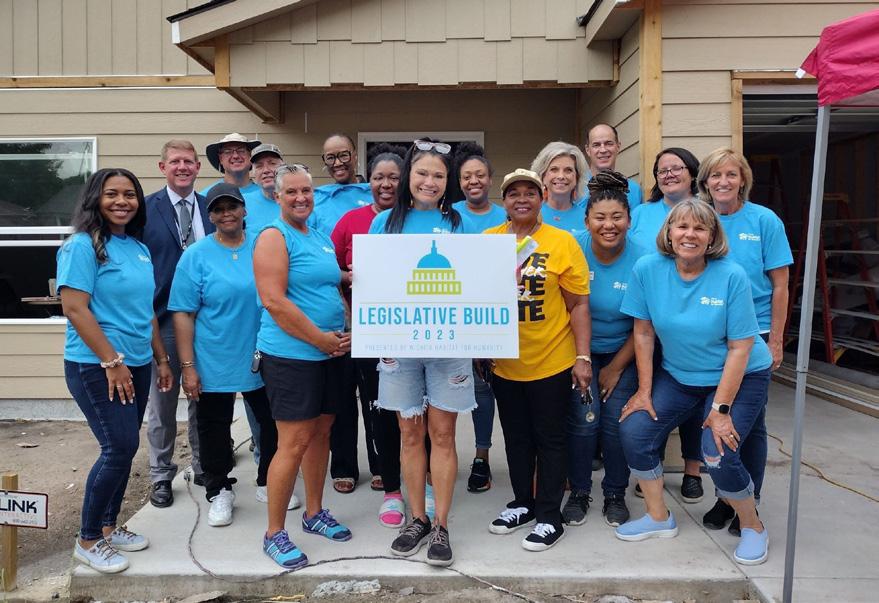
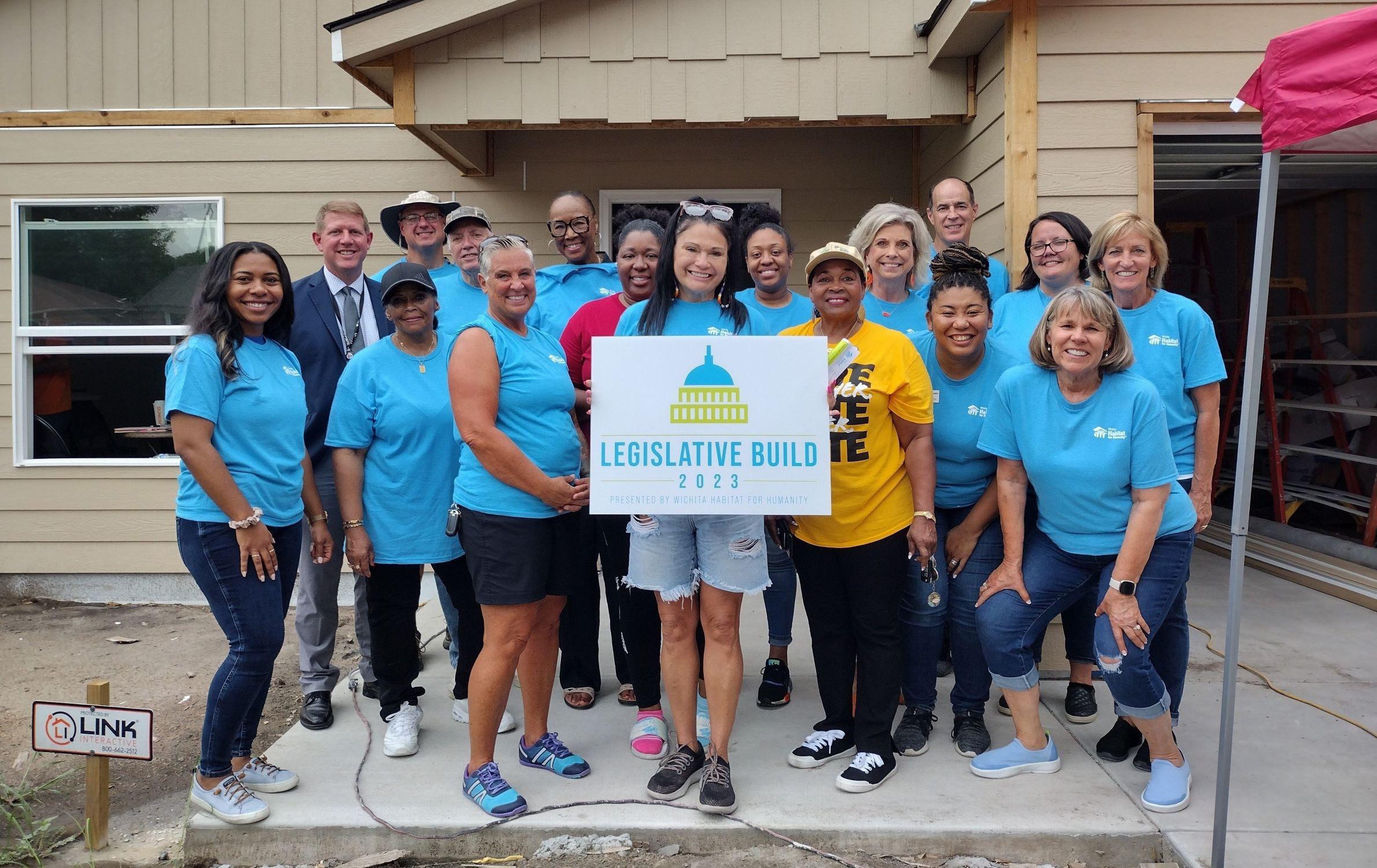
Johnson (far right in the back row) participates in Wichita Habitat for Humanity’s 2023 Legislative build. Image courtesy of the Kansas State Treasurer’s Office.
Center for Risk Management Education and Research UPDATE
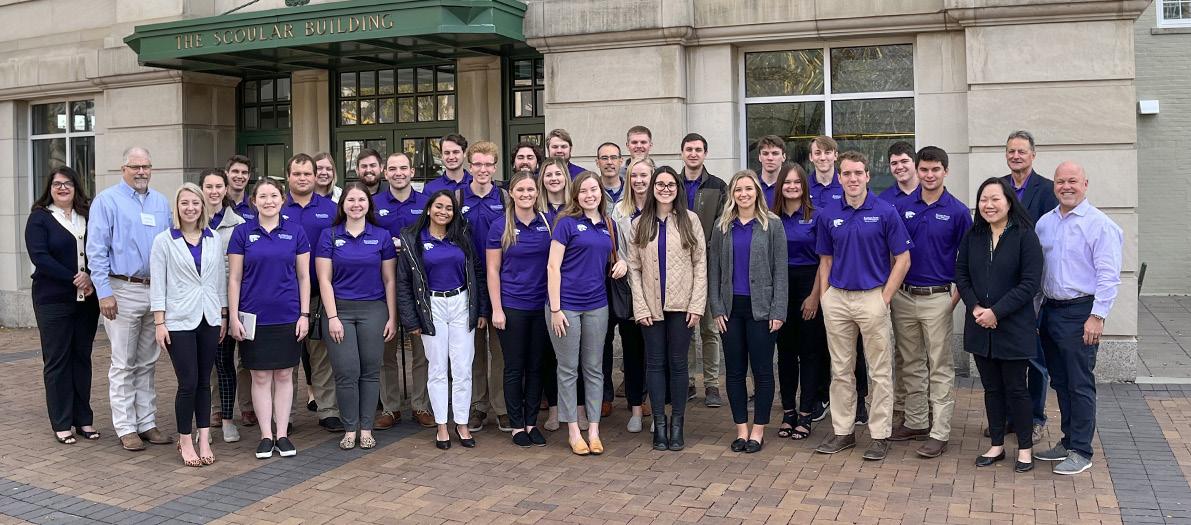
The KSU Center for Risk Management highlights a year of success with over 45 student fellows completing the year-long program and welcoming over 50 new student fellows selected for the 2024/25 school year. Below are three highlights from 2024, as well as opportunities to connect with the Center for the upcoming year.
Experiential Learning at Risk Camp
Risk Camp, held the week before the spring semester, brings student-fellows back to campus a week early. They collaborated as interdisciplinary teams to address real-world challenges with partner companies. The positive feedback ensures Risk Camp will be a staple of our experiential learning programming going forward.
• Risk Camp 2025: January 13-17.
• Contact Emily Garwood to submit project ideas. A $2,000 sponsorship is requested for projects from a company not a Center partner.
Continuing Education at AgCon
AgCon 2024, the Agricultural Commodity Futures Conference, hosted 200 attendees and was co-hosted with the Commodity Futures Trading Commission (CFTC), enhancing K-State’s reputation as a top land-grant institution.
• We look forward to co-sponsoring with CFTC again in the future with AgCon Commodity Markets 2026. Learn more about the program on our website: https://www.k-state.edu/riskmanagement/agcon2024.html
• Plans are underway for co-sponsoring AgCon Commodity Insurance with a 2025 timeline.
Student Travel Experiences
In February, 20 student-fellows visited Wichita and then in late April, 48 student-fellows visited Washington, D.C. The Center had the opportunity to arrange panels to maximize student engagement and leader participation. Our Fall programs are set for:
• Kansas City program: Sept. 10, 2024.
• Chicago trip: Nov. 3-5, 2024.
Follow us on LinkedIn at https://www.linkedin.com/company/crmer/ and subscribe to our CRMER Adviser e-newsletter by emailing Emily Garwood at emily20@ksu.edu .
UPCOMING EVENTS
Risk and Profit Conference
August 15-16, 2024 | Manhattan, KS
Questions? Contact Rich Llewelyn at rvl@ksu.edu or 785.532.1504.
Ag Lenders Conference
October 1, 2024 | Garden City, KS
K-State’s annual Agricultural Lenders Conferences are designed to provide the Kansas financial community with updates on current agricultural topics, but it’s not only for lenders and bankers. Producers, landlords, crop insurance agents, and agribusiness managers also attend.
Kansas Landowner Conference
October 10-11, 2024 | Manhattan, KS
K-State Department of Agricultural Economics is looking forward to hosting the 2nd Annual Kansas Landowner Conference. This conference is specifically tailored to folks who have agricultural land in Kansas, but may not reside on the property, or even in the state of Kansas. The Kansas Landowner Conference is designed to be a resource where landowners can build networks and increase their knowledge in many aspects of land management.
Kansas Crop Insurance Workshop
October 24, 2024 | Salina, KS
This one-day workshop will help crop insurance agents, agricultural lenders, farmers/ranchers, and other financial consultants provide better risk management information and advice to their clients or apply to their farm-ranch. If you are involved in the crop insurance industry, either as an agent, a producer, or an ag lender, you should consider attending this workshop.
Kansas Income Tax Institute
October 30-31, 2024 | Online
The Kansas State University Department of Agricultural Economics invites you to attend the 75th annual Kansas Income Tax Institute. The program is for tax professionals and is designed to provide up‐to‐date training on current tax law, regulations, and updates.
For a full list of events and to register for any, visit https://www.agmanager.info/events