From internships to in-demand skills, our students don’t just learn business, they live it.
In this Mosaic issue, our goal is to celebrate the rich history of our community. We worked to include every institution, organization, and business that has been part of our story for more than fifty years. If we missed you or you have another great University Heights story to share, contact Renée Krause at 216‑932‑7800.
Interested in Advertising in University Heights Mosaic Magazine?
Make sure to schedule your advertisement for the Fall 2026 issue. Call Marilyn Evans at 216-577-8125 for more information.
University Heights Mosaic Magazine is a publication of the City of University Heights. We are looking for interesting University Heights people and places to profile in upcoming issues. If you have any story ideas, please share them with us by contacting Renée Krause at rkrause@ universityheights.com or 216-932-7800, ext. 225.
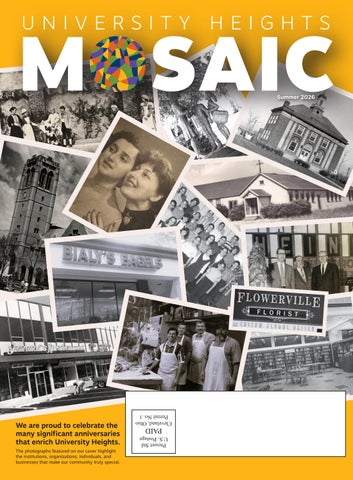
On the Cover
We are proud to celebrate the many significant anniversaries that enrich University Heights. The photographs featured on our cover highlight the institutions, organizations, individuals, and businesses that make our community truly special.
OConnecting with Our Past
ne of the greatest strengths of University Heights is the sense of continuity that connects our past to our present. While communities change and evolve, certain institutions and businesses become woven into the fabric of a city, helping to define its character and preserve its history.
As you read through this edition of our city magazine, I invite you to reflect on the organizations and establishments that have been serving our residents for generations. These are more than just institutions and businesses; they are trusted neighbors, community partners, and cherished landmarks that have helped shape University Heights into the vibrant community we know today.
For more than 90 years John Carroll University, for which our city is named, has contributed to the character and growth of University Heights. For decades, Bellefaire JCB has provided vital services and support to children and families throughout our region. Gesu Parish and School have educated generations of students while serving as a cornerstone of faith and community life. The University Heights Library has fostered a love of learning and lifelong curiosity among residents of all ages.
Our local businesses have also played an essential role in creating the unique identity of our city. Flowerville has helped residents celebrate life’s special moments with beauty and care. Bialy’s Bagels has been a gathering place where friends and neighbors begin their mornings. Heinen’s has served generations of families with quality and service. Al & Fran Cleaners has built
lasting relationships through decades of dedicated customer care. Geraci’s Restaurant has become synonymous with family traditions and memorable meals. Tibor’s and J & G Shoes have provided personalized service that is increasingly rare in today’s world.
These organizations and businesses remind us that a city is not simply made up of streets and buildings. It is built by people who invest their time, talents, and passion into serving others. Their commitment has enriched our community, strengthened our neighborhoods, and created memories that span generations.
And Julia Tucker, believed to be the last Holocaust survivor in our community, shares her powerful history of survival and renewal.
On behalf of the City of University Heights, I thank these institutions, businesses, and the many others like them that continue to contribute to our community’s success. Their stories are an important part of our history, and their continued presence helps ensure a bright future for generations to come.
Sincerely,
Michele Weiss
Mayor Michele Weiss City of University Heights
Mayor Michele Weiss
• Flexibility training
• Conditioning exercises
• Basic skills & drills in tumbling, bars, bean, and vault
• Fun & supportive environment with amazing coaches
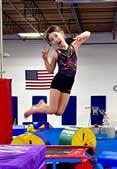
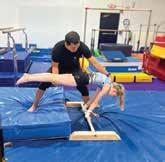
YOUTH GYMNASTIC CLASSES
• Perfect for both nervous beginners and experienced adults who want to refine their skills
• No pre-registration, walk-ins welcome
Birthday Parties
Jump Start is a great place to celebrate Birthdays! Our party host tailors each party to the birthday child's age, making it fun for everyone. Guests will enjoy gymnastics games, our 50-foot trampoline, in-ground foam pit, and a mix of organized activities and supervised free play on the equipment. Cost: $195 for 10 children & $20 for each additional guest.
TWISTER PROGRAM: Ages 20 months–6 years old FLIPS FOR GIRLS: 7–16 years old. Beginner. GYM SKILLS FOR BOYS: 5–16 years old. Advanced.
JUMP STARS:
The City of University Heights
The Story Behind University Heights: John Carroll University’s Lasting Influence
By Sage Verdi
The city we all know and call home wasn’t always called University Heights.
In 1925, residents voted to rename what was first known as the Village of Idlewood to University Heights in anticipation of John Carroll University’s planned move from Cleveland’s Ohio City to the eastern suburbs. That decision marked the beginning of a partnership that continues to shape the city today.
At the time, John Carroll had not yet constructed its campus, which now sits just north of Fairmount Circle. In fact, the university would not open its doors in University Heights until 1935, a full decade after the city adopted its new name.
In the years that followed, the university worked to raise $2.5 million to support the construction of its new campus. Despite delays caused by the Great Depression, John Carroll officially opened its doors in 1935, establishing roots in a community that it would call home for generations to come.
“Some cities are university towns, and some say a university resides in the city,” Mayor Michele Weiss said. “I think the current and future relationship that University Heights and John Carroll University are building blurs those lines in a good way. It doesn’t have to be one or the other. We can coexist as partners.”
Over the decades, both the city and the university
Photo Pat Jones
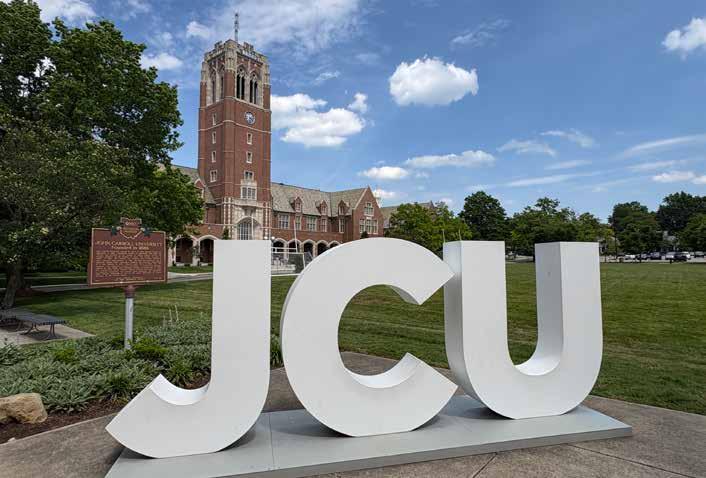
JCU initials in front of Administration Building on the Main Quad
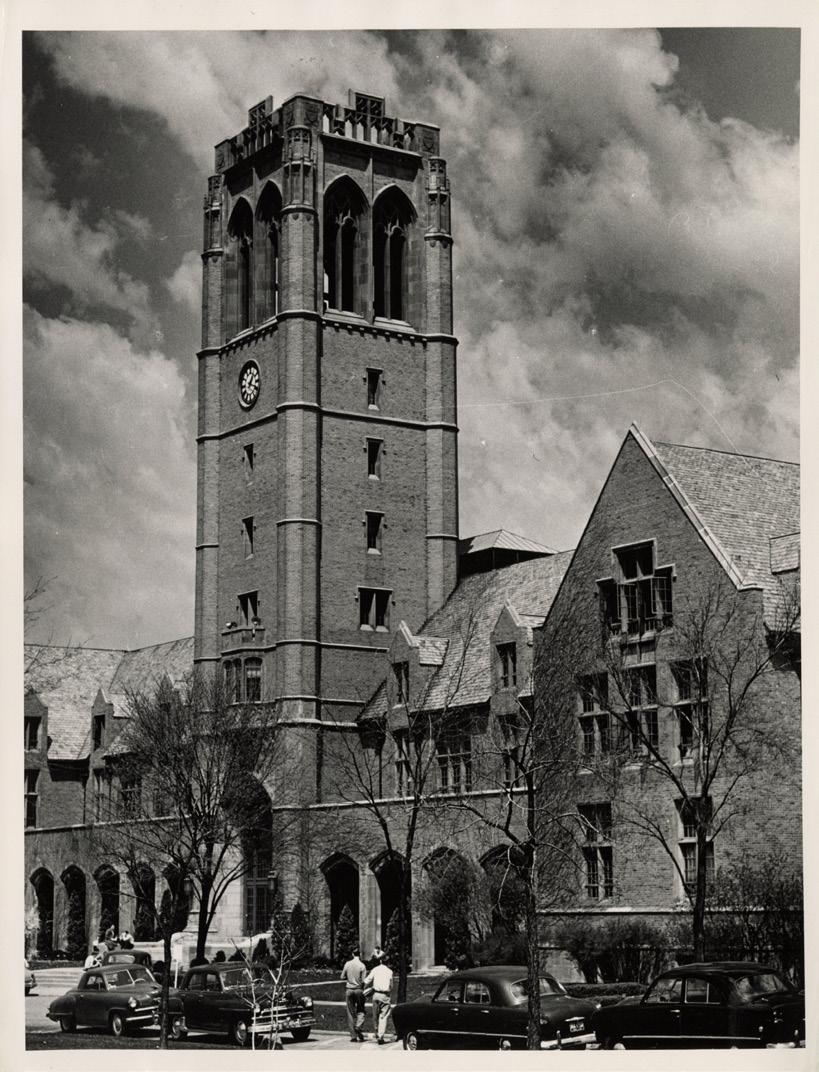
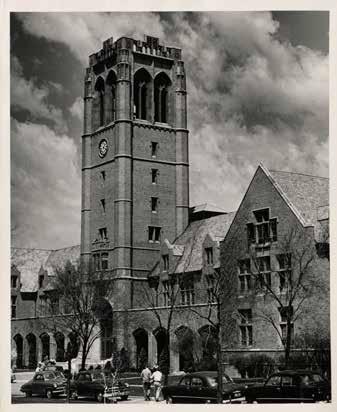
John Carroll's iconic Grasselli Tower circa 1935
have grown side by side. Generations of residents have attended lectures, concerts, athletic events, and community gatherings on campus, experiences that have often deepened their connection to the university and, in some cases, led them to enroll.
“I grew up in the Heights system, including Wiley and Cleveland Heights High,” said Keevin Berman, a former University Heights resident and 1973 JCU graduate. “University Heights is a great city, and after high school, I enrolled at John Carroll. I thought I would stay for a year and find myself. What I found was a great education at a friendly and welcoming school. I was active at the radio station and class events, and I still participate and donate. I went to law school afterward, but when asked where I went to school, I always lead with JCU.”
In turn, John Carroll students have long been engaged in the University Heights community, volunteering throughout the city, interning at and supporting local businesses, and contributing to the city’s civic life. As a major employer, the university also plays an important role in University Heights’ tax base and local economy, highlighting the close connection between the university and the city’s shared success.
Today, John Carroll University serves 3,000 students from across the country and has over 45,000 alumni worldwide. The institution ranks in the top 7% of fouryear universities nationwide, according to The Wall Street Journal, and has earned recognition as #4 in the country for Most Engaged in Community Service by The Princeton Review.
John Carroll’s investment in the community is perhaps most visible through its Gateway North project, a mixed-use retail and student housing
The City of University Heights
complex located at Fairmount Circle. The project will introduce new amenities to residents while creating additional opportunities for students and strengthening the connection between the campus and the community.
“John Carroll University is proud to have called the City of University Heights home for nearly a century,” said President Carolyn Noll Sorg. “Our Gateway North project represents an exciting next chapter in our continued partnership. It will support student life, strengthen the surrounding area, and foster meaningful growth and long-term investment both on our campus and throughout the community.”
Nearly 100 years after residents chose the name University Heights, the influence of John Carroll University remains woven into the fabric of the community.
To learn more about the latest news and events at John Carroll, visit www.jcu.edu/news.
Sage Verdi is John Carroll’s Director of Public Relations.
JCU Alumni Across Many Disciplines Fitting the Jesuit Focus on Leadership, Ethics, and Service
• Sara Bloomfield ‘77 – Director U.S. Holocaust Memorial Museum
• John G. Breen ‘56 – Former Chairman/CEO Sherwin Williams Co.
• Anthony J. Celebrezze ‘34 – U.S. Cabinet member and Cleveland mayor
• John Cranley ‘96 – former mayor of Cincinnati
• Paisley Dodds ‘93 – Associated Press London bureau chief
• Charles Dolan ‘52 – founder of HBO and Cablevision
• London Fletcher ‘97 – Former NFL player
• Carter Ham ‘76 – Retired U.S. Army general
• Marcello Hernández ’19 – comedian, Saturday Night Live cast member
• Caitlin Huey-Burns ‘09 – CBS News political correspondent
• Jack Kahl ‘62 – founder of the Duck Tape (duct tape) brand
• Richard J. Kramer ’86 – Former chairman, CEO, and president of Goodyear
• Josh McDaniels ‘99 – NFL football coach
• Jack Riley ‘57 – actor/comedian (The Bob Newhart Show, voice work in Rugrats)
• Tim Russert ‘72 – Former NBC “Meet the Press” moderator and for whom the Department of Communication and Theatre Arts is named
• Don Shula ‘51 – winningest coach in NFL history and for whom the football stadium is named
• Carl E. Walz ‘79 – Former NASA astronaut
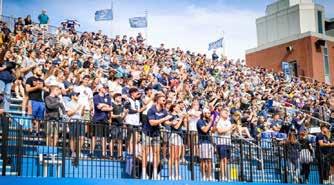
JCU Football fans. Courtesy of jcu.edu
The City of University Heights
From Jewish Orphan Asylum to World-Class Child Service Agency Bellefaire Grows Up and Out in University Heights
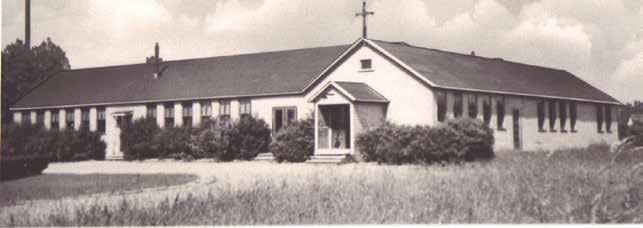
What has become one of the country’s largest and most renowned child service agencies, Bellefaire JCB started as The Cleveland Jewish Orphan Asylum in 1868 and was the first Jewish social service agency in the city. Eighty children moved into its first residence and by 1900 the orphanage cared for 400 children in its home at E. 55th Street and Woodland Avenue.
In 1929, the orphanage moved its new 32-acre campus in University Heights, where Bellefaire JCB has expanded both in physical size and service offerings for nearly a century. “Bellefaire has evolved with the times and evolved with community needs through its history,” Executive Director Carl Brass said. Today it offers 25 programs and reaches up to 43,000 people annually.
“We have always been responsive. Bellefaire had the foresight to see emerging trends of challenges for children and families. We were an early adopter of serving children with autism through the Monarch Center for Autism because of prominent voices on our Board of Trustees,” Brass said.
The new campus opened with five cottages that were staffed by Jewish parents. Even before then, Michael Starlitt was a child who grew up in the original orphanage. In his memoir, As I Remember: The Home in my Heart, he described growing up there around the turn of the 20th century. The child who once experienced love and hardships eventually became the superintendent of the Jewish Orphan Asylum from 1922 – 1941 during which time he led its move to University Heights.
Of his time growing up there, Starlitt wrote, “It was, in many ways, the only home we knew.” During those formative years, Starlitt found himself surrounded by community among the 400 children and coping with illnesses like ringworm and trachoma that forced quarantines. Yet, he wrote, “We learned early to depend on each other…Bellefaire shaped who I became.”
Geraldine Neuberger Lester lived on the UH campus from 1931-1940. “I had friends, lots of friends. There were 30 girls in my cottage. It wasn’t always easy getting along with 29 other girls, but I met my best friend, Rosie Tolchin Albert, who remains my closest friend to this day. She’s eight months older than I am. I’m 95 and she’s 96. We talk all the time,” she said in Bellefaire’s 150th Anniversary booklet in 2019. By 1941, another transition updated the services to become a residential treatment center for emotionally challenged children.
Courtesy of Bellefaire JCB
Today, Bellefaire’s influence spans the globe. “People reach out to us to inquire about services for a child or family. It transcends beyond northeast Ohio to the entire country and the world,” Brass said. The largest employer in the city, its staff numbers about 750, including psychologists, family, child and trauma therapists, crisis counselors and social workers.
Beth Brandon, Bellefaire JCB Board Chair, is very proud of the organization she leads.
“Bellefaire JCB is remarkable in its ability to evolve while remaining deeply rooted in our mission of caring for children and families. What began more than a 150 years ago as a Jewish orphanage has grown into one of the nation’s leading child and family service organizations, reaching tens of thousands of individuals across Northeast Ohio and beyond,” Brandon said.
“That growth reflects not only the changing needs of our community, but Bellefaire’s unwavering commitment to anticipating those needs and responding with compassion, innovation, and expertise.
“Looking ahead, I believe Bellefaire JCB will continue to lead by listening closely to the community and investing in programs that address the growing mental health and developmental needs of young people. The challenges facing children and families are evolving rapidly, and Bellefaire has consistently demonstrated both the vision and the courage to meet those challenges head-on. I am incredibly optimistic about the organization’s future and the lives it will continue to transform for generations to come,” Brandon said.
The City of University Heights
Bellefaire Timeline
• 1868 Jewish Orphan Asylum founded in Cleveland
• 1900 Serves 400 children; largest orphanage in Cleveland
• 1922 Jewish Day Nursery opens
• 1924 First psychiatrist hired, laying groundwork for behavioral health services
• 1929 New campus built in University Heights; renamed Bellefaire Jewish Children’s Bureau
• 1940–1943 Shifts focus from serving orphans to residential therapeutic care for emotionally disturbed children with stable living environments on campus
• 1954 Opens admissions to children of all faiths, reflecting its inclusive mission
• 1961 Partners with Jewish Big Brother Association; program evolves into Jewish Big Brother/Big Sister Association
• 1979 On-campus residential treatment begins; introduces therapeutic foster care, substance abuse treatment, and family counseling
• 2000 Opens Monarch School for Autism with 12 students; now serves 140+ students from preschool to young adulthood
• 2004 Launches Monarch Boarding Academy for co-ed therapeutic residential treatment for autism
• 2006 Adds preschool program for ages 3–6 with autism diagnoses
• 2014 Monarch Transitional Education Program moves to a renovated 10,000-sq.-ft. facility
• 2026 Cleveland’s oldest social service agency offers 25 service lines and services about 43,000 individuals and families annually
The City of University Heights
Church of the Gesu Celebrates 100 Years
One Faith – One Family – One
Future
Imagine:
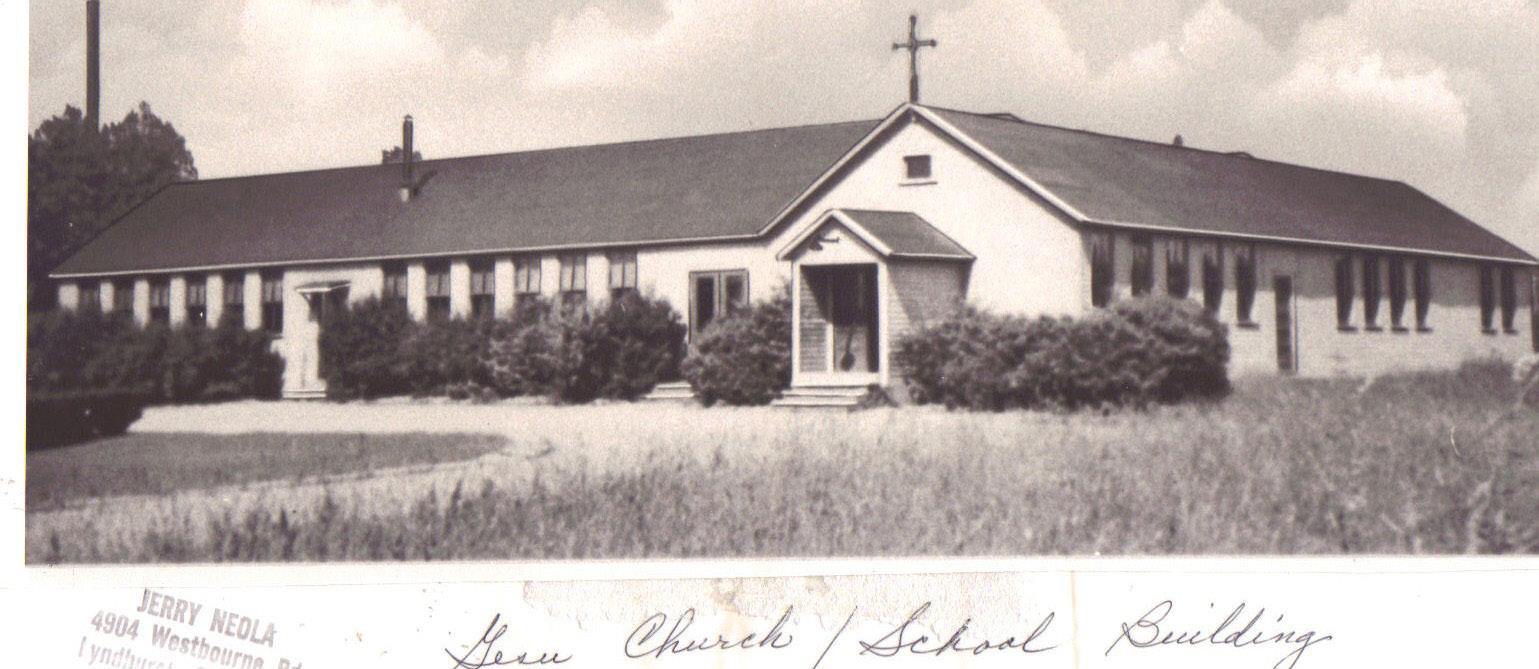
It’s Easter 1926. It was a brisk, spring day in University Heights. Town Hall had recently opened. Dirt roads, farmland, and some new smaller lots for houses were being developed for the increasing population that numbered 131 people just six years prior. Fourteen parishioners from the newly established Church of the Gesu attended its first mass in the new brick building. The collection plate totaled seven dollars.
“We have been here as long as the city,” said Father Lukas M. Laniauskas. When the Jesuit order decided to move farther east, “we expanded into the prairies to create the first Catholic Parish in University Heights.”
As the 16th pastor of Gesu, he takes great pride in the mission of the church and school that he leads. “We are very much so a neighborhood parish and remain so to this day.”
In the beginning, 53 families belonged to the church with Father Frances Rudden leading the way. He also opened the Gesu School in September in a rented duplex on Silsby Road, with a classroom on the first floor for grades one and two. Three 2nd-floor rooms housed grades three to eight with 24 secondhand desks crammed into each and one solitary chair for the teacher.
Now numbering more than 2,800 families, Church of the Gesu has four masses every weekend to meet the needs of its parishioners in its main sanctuary that seats up to 1,000. “This church is a huge accomplishment,” Father Laniauskas said. “We renovated it for the centennial. Our name is after the mother church in Rome.”
More than $12 million was raised for capital improvements and for the church’s endowment in its fundraising campaign. It also published a 131-page book detailing its history, titled Celebrating A Century, Church of the Gesu’s 100th Anniversary.
The school now educates 740 students, from preschool through 8th grade. The original mission of the founders was to educate the children of the parishioners “so our children’s children would follow in their path,” said Principal Regan Kazel. “We are still a community school. A good portion of our students still walk or bike to school. They go to Purvis Park in the summer. We still have a community feel.”
Over time, the school has educated multiple generations of the same families and welcomed families who recently moved into the neighborhood. “The school
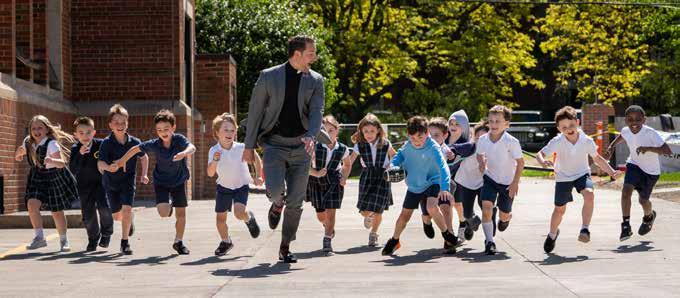
Father Lukas M. Laniauskas runs with elementary students outside Gesu School Courtesy of Gesu
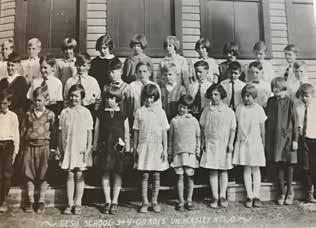
Third and fourth grade students in the early days Courtesy of Gesu
is a subset of the parish and its biggest ministry” Kazel said. “I am proudest of the way our community comes together for each other; it can be the passing away of a parishioner or the celebration of first communion. We’re here to support each other whether it’s tears, smiles or laughter.
Parish Council Chair Sal Miroglotta said his favorite part of the masses led by Father Laniauskas is when he invites the children to come up to him at the end of the service. The Father always asks the children a question. “The answer to all of the questions is Jesus,” Miroglotta said. “It reminds me when faith was simple and pure and easy to embrace.”
His dream for Gesu is to continue its mission and hope for peace and justice: “We need to look inward so we can look outward.”
The City of University Heights
Gesu’s Many Firsts
• 1927 Fourteen children received their first communion in town hall
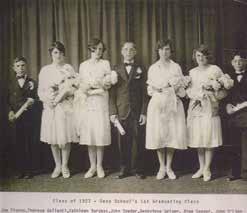
• 1928 One boy and four girls graduated from eighth grade
• 1929 Parish grows to 125 families
• 1949 Gesu’s 556 students are taught by 14 sisters of Notre Dame
• 1956 New church is built on current property
• 1966 Boosters produce Babes in Toyland, get first library books funded by government
• 1987 Gesu School earns National Blue Ribbon School of Excellence Award
• 1996 Gesu opens pre-school with 60 students
• 2006 Day of Service initiated to serve organizations in Northeast Ohio
• 2018 Gesu school receives STEM certification from Ohio
• 2019 Strategic planning begins for “The Gesu Century”
• 2025 Outdoor Magis Chapel dedicated
• 2026 Yearlong 100th Anniversary Celebrations
Gesu's First Permanent Home Courtesy of Cleveland State University Michael Schwartz Library
Gesu's First 8th Grade Class 1927 Courtesy of Gesu
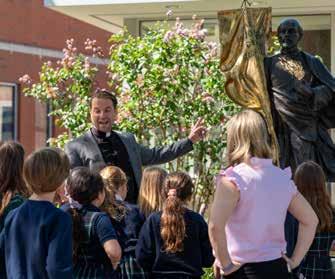
Courtesy of Gesu
The City of University Heights
A Survivor Thrives in University Heights
Bombs dropped on the penthouse apartment Julia Tucker shared with her mother and other family members in Budapest, Hungary. She was only eight years old when the apartment came under attack from the Nazis and Russians who were fighting overhead.
It was 1942. Her father had already been taken to a forced labor camp. Suddenly, she and her mother were forced to move into a lower-level apartment in what had become the Jewish Ghetto, and another 40 people were forced to live with them. The building’s population was then bulging with about 300 people, not the 60- to -80 it was built to house.
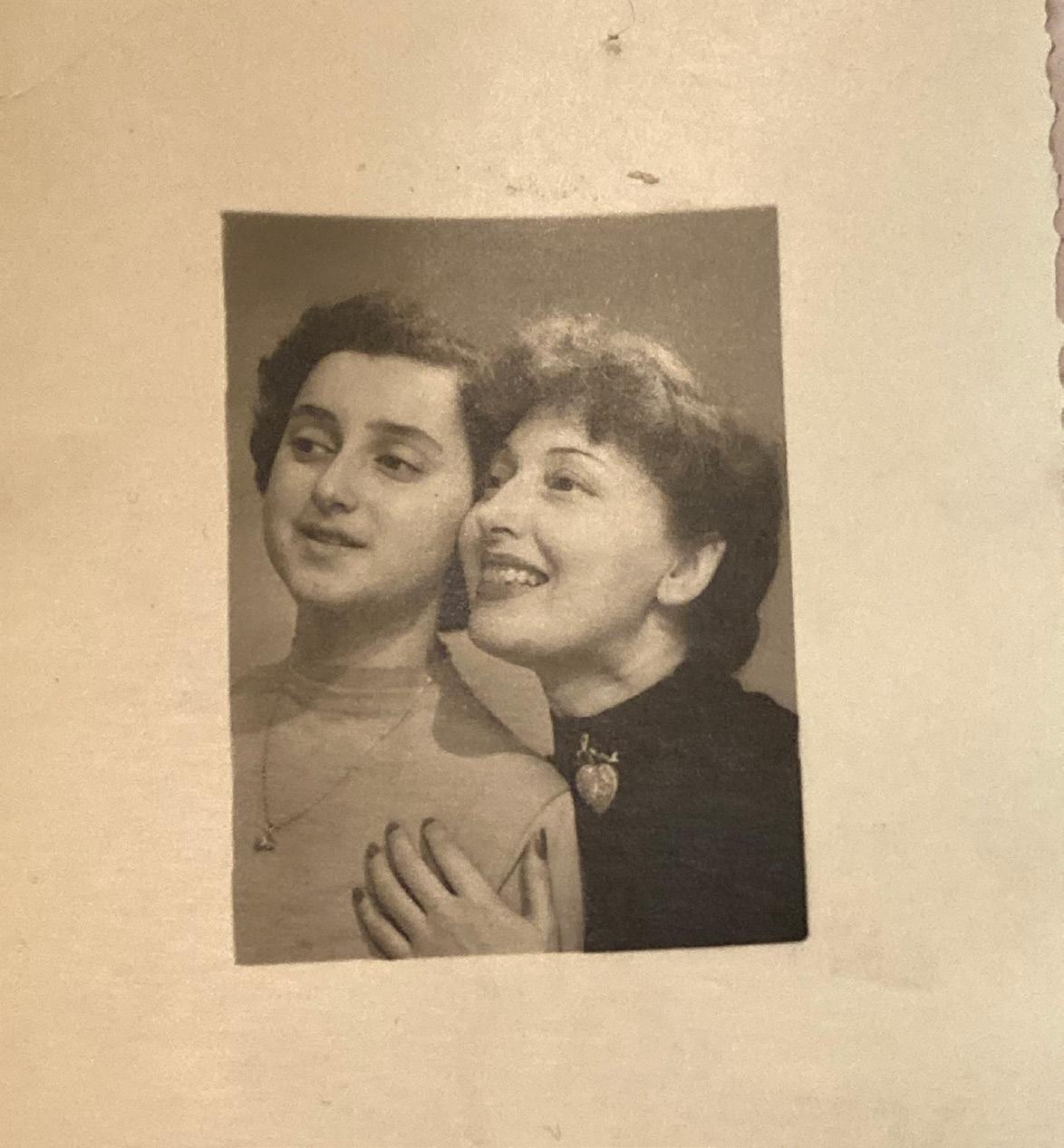
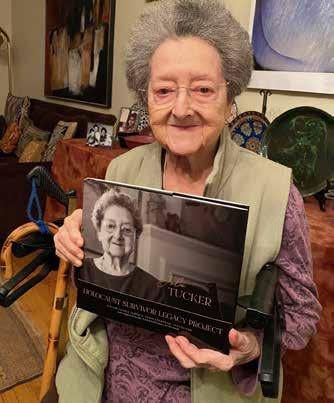
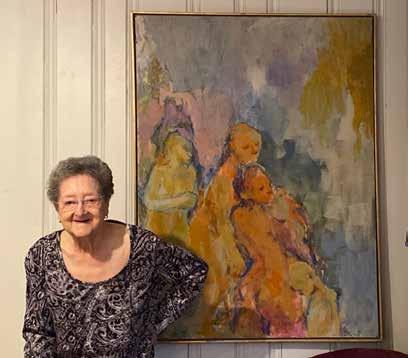
According to the Jewish Family Service Association (JFSA), Julia may be the last Holocaust survivor living in University Heights. Her photograph is one of several that hangs is one of several included in their Holocaust Legacy Project sitting room. They also published a book about her and others, detailing their histories and legacies.
“We lived on the Danube River. We faced the Pest side, not the Buda side,” said Julia, 91, said while sitting at her dining room table in University Heights recently. “Nazis on one side, Russia on the other. I heard all the shooting between them. Our top floor apartment was destroyed by crossfire. We were in the battlefield.”
Schooling for Julia was suspended when she was in second grade. The Jewish school she attended was closed. Her entire world became the building at 45 at Utca Street, or Island Street in English. In all, she missed four years of schooling that she would not make up.
Her mother, Edita Kertis who “could have been in Vogue,” became the caretaker of the building residents.” Julia proudly recounts that her mother took a first aid class so she could mend residents when they became ill or wounded.
“She was designated the medical officer of the building, amputating toes and healing the wounded and injured from the crossfire.” Julia said. With no money, the daily battles, and the imposed curfews, they were all starving. Once again, Edita persevered. She snuck out at night to trade possessions for a sack of potatoes, or any other food for which she could barter. Once she even negotiated for a priceless jar of strawberry jam, that she hid for Julia, treating her to a spoonful each night until there was nothing more to scrape.
Then, Edita “improvised stoves out of metal buckets turned upside down, dug holes in the courtyard and put furniture my grandfather chopped to make fire to cook. She distributed food to every apartment, so everyone had something to eat.”
At some point the bombings became so frequent, it became too dangerous to stay in their apartment. She and her mother moved from basement to basement of other buildings in the ghetto. While Julia had a yellow
star sewn into her clothes, somehow her blonde, fancy mother “refused to wear the star. I never understood how she got away with that.”
One day, the Nazis ordered all women to gather on the first level in one hour with one bag. “She was supposed to go to the camps. Wearing high heels, makeup, a fancy dress, hat, and carrying an alligator purse, she followed Hungarian participants walking outside. She looked didn’t like the other women. She didn’t look like she belonged in that group at all. At that time, we heard rumors about what happened to people taken to the railroad station. But we didn’t know for sure. We knew it wasn’t for good,” Julia said.
“She kept sneaking back in line until she was the last woman. Once she got to the first corner, she turned around and walked back to the building,” Julia recounted. “She did this twice to save me. I was very lucky because I never went to a camp. She was like a whole army by herself trying to protect me. At that time, we heard rumors about what happened to people taken to the railroad station. But we didn’t know for sure."
When the war ended in 1945, they moved to Transylvania to live with her father’s family. In 1946, they returned to Budapest and Julia reentered school
Julia is holding the book Jewish Family Services had written about her life
for two years. When the communists took over Hungary, they were on the move again. Somehow, her mother arranged with great difficulty a move to Switzerland. Julia attended a boarding school, where her mother left her for a while trying to establish herself in the Paris fashion industry.
Four months later, Julia and her parakeet Lurko moved with Edita to the City of Light. Her mother reinvented herself as an independent knitwear designer, selling her designs to the House of Dior and other fashion industry powerhouses as she earned an international reputation. Again, Julia attended boarding school, seeing her mother on weekends. “Little by little I got an education, I never finished high school,” Julia said.
The next stop was Montreal. Julia attended the Montreal School of Art and Design. Finally, they settled in Cleveland in 1954. Within a year she married Hal Tucker, a scientist. They had two sons and a daughter.
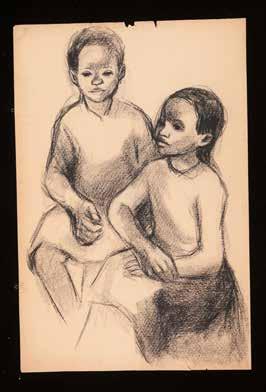
Julia volunteered for 16 years at a Montessori School her daughter attended. Her goal was to offer children with special needs the opportunity to find their artistic voices. Some picked colors, some participated in drawing murals. Everyone took part.
She and Tucker were married 37 years when he passed away. She’s been living alone since 1993. She moved to University Heights about 15 years ago. Her home is filled with a lot of art, much of it her own.
Julia spoke of her Holocaust experiences with her children and grandchildren. She always has imparted the lessons she learned. “Treat people with respect. The Nazis had to have embraced some kind of fatal twist to the world to be able to do what they did. They were able to, and convince others to, regard other humans as nonhuman.
“It’s a tragedy. It’s a failing. You are no longer seeing another person as human.” And yet, she survived.
Julia painted the Exodus to depict her view on the Jews leaving Europe after the Holocaust
The City of University Heights
100 Years and Counting – UH City Hall
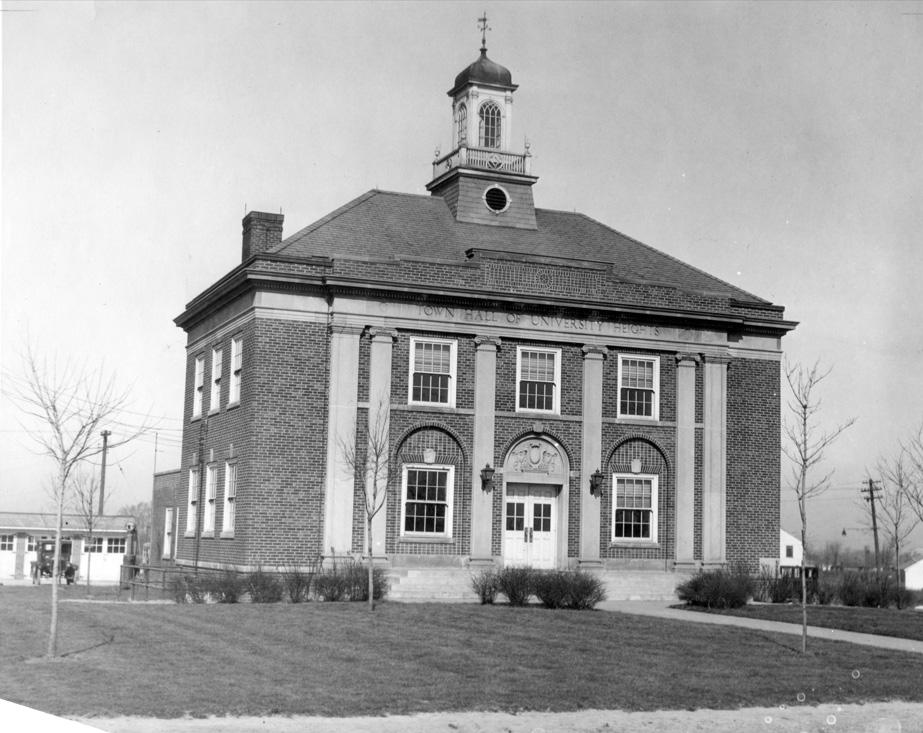
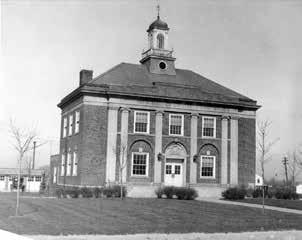
Still standing strong a century later, University Heights City Hall first opened its doors in April 1926. Its inaugural event was the Church of Gesu’s Easter Mass on Sunday, April 4, 1926, celebrated by Father Francis Rudden.
Just six days later, more than 1,000 people gathered for a grand opening celebration filled with dinner, dancing, and carnival festivities. The event welcomed residents to a building that represented a new chapter— the shift from Idlewood Village to the City of University Heights—and the rise of nearby John Carroll University, which would open its new campus a decade later near Fairmount Circle.
The need to move from cramped quarters – “where the council room adjoins the cell block” – became imperative, said Mayor John J. Howard early in 1925. By June of that year, the UH City Council approved a $40,000 bond for construction of the all-brick, colonialstyle building.
The street department and jail were on the lower level. Up a flight of stairs were the administrative offices for the mayor, city clerk and the marshal. Up two flights of stairs were the council chambers. The fire department was located at Northwood Public School. Total cost of the city hall: $54,177.90.
As Mayor Howard said on June 9th, 1926 Cleveland Press article, “We want every resident to make use of this new building. The hall belongs to the people, and we want them to use it.”
As the city grew, so did the demand for additional government space. Today, the police department is housed in a small building next to City Hall. The fire department has its vehicles and the “home” for the
firefighters is part of the City Hall building. Service is in yet another building on the same site. The finance department is on the 2nd floor and council meetings have been moved to Wiley Middle School. The police department’s detective bureau and the fire department’s administrative offices are in converted houses nearby.
“Many organizations inthe city are celebrating their centennial or almost 100 years together. This demonstrates the growth of the community a century ago,” Mayor Michele Weiss said. “The city is seeing a different kind of growth now that requires updates and shows progress. All of our institutions have expanded and or updated in the last few years. We are excited that the city will hopefully as well.”
City Hall 1926
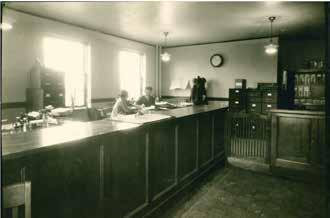
City Hall Front Desk circa 1920s
Photo State University Michael Schwartz Library
City Council 1926 in Council Chambers on 2nd floor
Photo Courtesy of Cleveland State University Michael Schwartz
•
•
•
The City of University Heights
University Heights Library
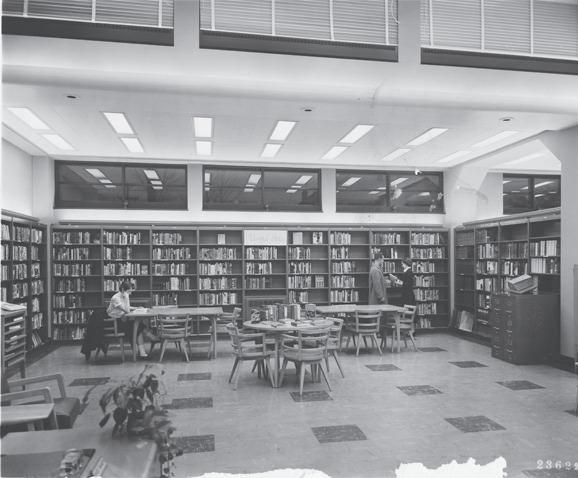
If you’re a reader, you’ve likely spent time at the University Heights Library – it’s a familiar and welcoming spot in our community. This gem has served the residents of our city, and many others since 1952. Prominently located at the corner of Cedar and Fenwick, the library is more than just a place to check out books – it’s a space where people gather, learn, and connect.
It’s a welcoming place where ideas spark and learning thrives at every stage of life. Whether you want to read in the comfy chairs with a view of Cedar Road, bring your children for story time, or use the computers or take a senior strength class, this is the place for you.
Originally built at a modest 6,300 square feet, the 2016-2017 renovation increased not only its size to 18,000 square feet. It also allowed the library to improve its resources for the community. “We were able to bolster our services and patron comfort by moving our children’s room downstairs, adding meeting rooms, an elevator, another bathroom and we expanded our parking lot,” said Sara Phillips, the library’s branch manager. In the past, patrons had shushed the young children when they acted their age, and people of all generations wouldn’t stay as long due to the cramped quarters.
The Heights Library system celebrates its 110th
anniversary this year, starting with libraries in schools, then expanding to its first dedicated building on Coventry Road.
Gale Koritansky, the Heights Libraries’ new executive director, said the University Heights branch serves the residents better than ever. “We now have dedicated collections, for children, adults and teens. We have African American and Jewish collections to accommodate the community’s needs. We get books, magazines and movies in Russian, and we have rotating foreign language collections, Spanish, French and Hebrew between us and Cleveland Public Library,” Koritansky said.
Every day patrons will find something new to do, such as educational programming, book discussions, morning story times, afternoon snacks for students, and senior exercise. Additionally, Koritansky wants to spread the library’s reach. “I want to take us from being inside our walls to expanding
more into the community. We want University Heights to think of us as part of the city, expanding on the partnership between us.”
With its Book Bike, the University Heights Library gets around. Often seen at the annual Memorial Day Parade, and Purvis and The Walter Stinson community parks, the bookson-a-bike literally meets people where they are. And when you come inside, you’ll be greeted by the friendly librarians and staff ready to recommend a good book, assist with research projects, or celebrate everyone’s favorite neighbor, Mr. Rogers, on his birthday in the children’s library in the lower level.
Friends of the Heights Libraries has long been an integral part of its history. Started in 1962 to support programs, services and outreach, the Friends continue to bring added value. Each year, the Friends sponsor Topic Tuesday events, distribute free books and provide funding for many special projects the library undertakes, like its weekly Sound Bathing Class. Participants are “bathed” in sound waves and vibrations for a meditative experience.
Whether you stop in to browse the books, attend an event, or simply enjoy a quiet moment, the University Heights Library remains a cornerstone of our city where knowledge, opportunity, and community come together.
“Please get a library card and use us!” Koritanksy said. “Everything we offer is free. And we are your tax dollars at work.”
The City of University Heights
For more information about our library: Website: heightslibrary.org Email: info@friendsheightslibraries.org
University Heights Library Fun Facts
2025
• Visitors: 74,995
• Items Borrowed: 207,117
• Avg. per Resident: 14.28 items
2026 (Year-to-Date)
• Items in Circulation: 36,000
Most Popular Titles ADULT
• Counter Force Rahel Shor
• The Picasso Heist James Patterson CHILDREN
• Diary of a Wimpy Kid: The Getaway Jeff Kinney
• The Baby-Sitters Club: Goodbye Stacey, Goodbye Gabriela Epstein TEEN
• Listening In: Real Teens, Real Stories
Devorah Grant
• Bullied Y. Kormonick
Top DVDs & Blu-rays
1. Sinners
2. Despicable Me 4
Putting University Heights on the Zoning Map
By John Miesle
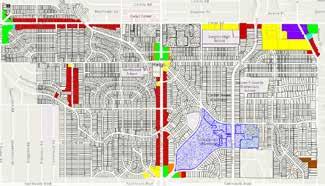
The University Heights Building & Housing Department has created a variety of interactive maps designed to help you find location-based information about their community quickly and easily. The map page includes information about services and individual properties, and hosts additional mapping resources from Cuyahoga County Planning, Cuyahoga County MyPlace, Greater Cleveland Regional Transit Authority, and the County Board of Elections. You will be able to easily find basic information without attempting multiple searches or needing to contact City Hall.
The List of Maps
Rubbish
Pickup
• Confirm your rubbish/recycling pickup day.
• Use search bar to find your address or click on your property within the map.
Zoning Districts
• View the zoning district of any property – simply hover over desired parcel and click.
• Read full code for all districts.
• Better understand how land is planned and regulated by the city.
• Confirm conformity of use for planned residential and commercial development.
Building Construction Dates
• Learn the approximate construction year of homes and buildings.
• Use for historical interest, property research, and neighborhood context.
Community Facilities
• Locate parks, schools, municipal buildings, and other public amenities in UH and neighboring cities.
• Find nearby City services and community resources, e.g. daycares, educational institutions, fire/police stations, library, and recreational facilities.
John Miesle is the University Heights Community Development Coordinator.
Keep University Heights Beautiful Brings Neighbors Together
One of the easiest ways to get some fresh air, exercise, and to improve your own front yard is the simple task of picking up litter. When you practice the kind act picking up litter in University Heights, you will be contributing to the efforts of a new and determined team of residents who are actively and quietly collecting, recycling, and disposing of the litter that detracts from the beauty of University Heights.
On April 30, the Keep UH Beautiful team gathered at the library. We discussed many topics pertaining to litter. Motivating factors to join the committee included: concerns about litter blocking sewers that leads to basement flooding, wanting to live in a clean environment, encouraging neighbors to be more thoughtful, and just wanting to do good.
They also discussed sources of litter and how to combat them. Ideas such as ongoing recycling education, focusing on neglected spaces, and picking up litter from yards and tree lawns. Often, it takes less than
five minutes to pick up litter from your yard or street.
“Delivering litter removal equipment was a good opportunity to see the types of litter throughout our city,” said Rebecca Slifer. “In some areas it’s a single popsicle wrapper and in others it’s an entire bag of the remnants of a fast-food meal.”
Another dedicated volunteer said, “It’s been fun interacting with my neighbors on my street! And it seems like there is less trash the more we interact.” An entertaining perk of the picks is the interesting finds that can inspire the imagination. The finds include toy trucks without their engines, action figures missing an arm, and other toys that have seen better days.
The Keep UH Beautiful ambassador team is just getting started. To date, they’ve collected about 250+ pounds of trash. They are looking for more volunteers. If you would like to join the Keep UH Beautiful committee, please join us by calling Renée Krause at 216-932-7800 or emailing her at rkrause@universityheights.com.
Zoning Map
For generations, we’ve helped buyers and sellers navigate the Heights real estate market with local expertise, personalized service, and a commitment to exceptional results. Whether you’re purchasing your first home, moving up, downsizing, or preparing to sell, our team is here to guide you every step of the way.
Serving University Heights, Cleveland Heights, Shaker Heights, Beachwood, and surrounding communities.
Mary Lou McHenry: (216) 319-3333
Karen McHenry-Ruppe: (216) 214-6945
Mary Jo O’Neill: (216) 570-4330
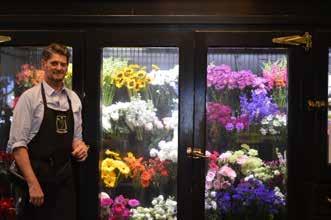
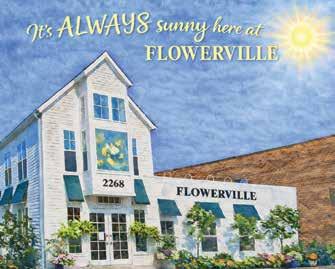
Michael Day’s Flowerville A Legacy in Bloom
Once upon a time, many years ago, Michael Day and his Flowerville shop decorated a wedding with white tulips and three-foot tall candelabras as the centerpieces of every table at the Music School Settlement in University Circle. It was simple. It was just what the bride ordered.
Brides continue to count on Day for their one of their happiest days based on his reputation for creativity, artistry. and family tradition. “I’m with my clients through their lives, from their wedding to birth of children, school, proms, kids’
weddings and then, unfortunately even funerals,” Day said. “I’m with them through all the good and the sad times of their lives.”
Day’s initiation to the flower industry started when he was 15. He worked after school and on Saturdays at Flowerama at the Randall Park Mall. Later, attending John Carroll University, he went to work with Max Meltzer at Flowerville on Warrensville Center Road.
Meltzer got his start selling flowers on the streets of
Cleveland after World War II. After owning another shop, Meltzer opened Flowerville in University Heights in 1962. “I learned the business and about running a retail shop from Max,” Day said. “He taught me the mechanics, ordering, processing, and he taught me design. He was old school and that was great, because eventually it all comes around again.”
When Day was 24 years old, Meltzer was ready to retire. Day, with the help of a “guardian angel who guaranteed my loan,” was able to buy the business. On August 1 he will celebrate 42 years of making floral dreams come true. In 1999, he created a new milestone when he built out the former Marathon gas station at the corner of Silsby and Warrenville Center roads. Shortly after that he said, “I think people will come to see this as a landmark.”
He says the business is a tribute to his parents who, after they retired, joined him in Flowerville. His father helped with the business side and his creative mother helped in designing floral arrangements.
“It’s a dirty, difficult, wet, strenuous, business with lots of physical work,” Day said. When he and his team are setting up corporate events, weddings and more, he may go up and down a ladder more than 100 times. Yet, “I still get to come in here and smell the roses.”
The City of University Heights
Gearity: Named for Educational Icon and Continuing in Her Spirit
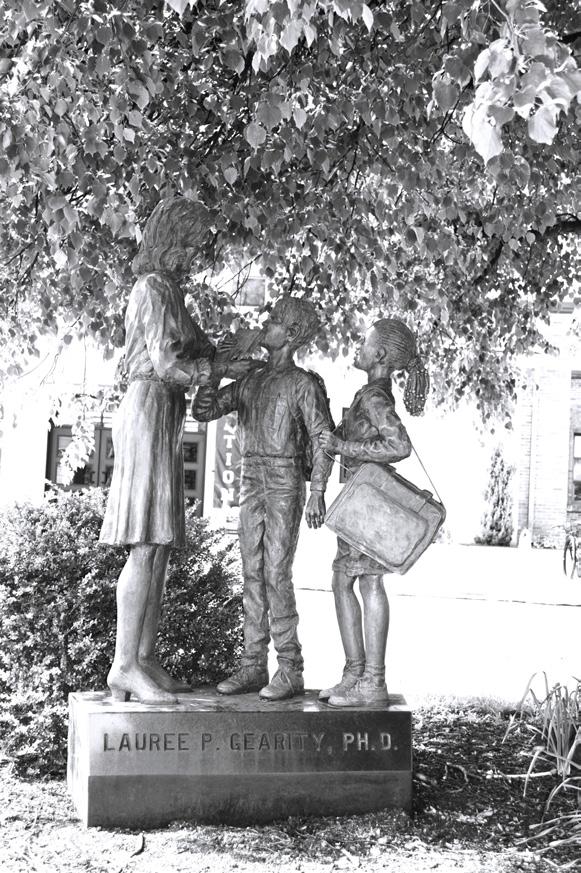
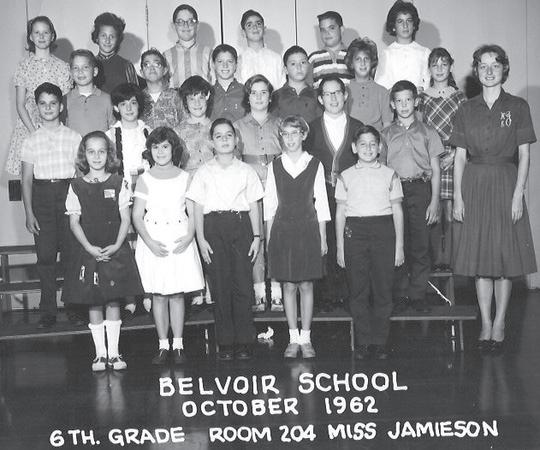
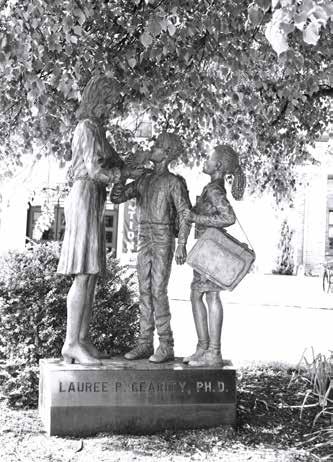
Gearity Professional Development School is the last public school within the University Heights City limits. Built during the suburban and baby booms of the late 1940’s, its doors opened for the 1947 school year. Ten years later, the school educated up to 650 students, common for public neighborhood schools back in the day of The Adventures of Ozzie & Harriet sitcom.
Originally named Belvoir Elementary School, as it sits at the intersection of Belvoir and Silsby roads, this school met the needs of the burgeoning University Heights neighborhoods. Over the decades, school district leaders recognized its value and continued to add on to the building to provide continuity in public education. The school’s name honors Dr. Lauree P. Gearity who was both its principal and the Cleveland Heights-University Heights School District superintendent.
Today, staff greet each of the 390 students when they arrive in the morning. Principal Patrick McNichols
is often outside welcoming children from pre-school through 5th grade and wishing each student – by name – to have an amazing day. “We want every child to feel loved and cared for,” McNichols said.
“We’re a dynamic community,” McNichols said. “I like the diversity of our student and family population which gives us the opportunity to meet many needs and offer many learning opportunities. We have a large population of English learners. We serve a wide range of student learning needs from those needing intensive educational support to those who receive gifted services.”
Additionally, students with multiple disabilities maintain the school’s community garden from which residents may purchase fresh produce.
“Our goal is to ensure all students are showing proficiency with grade level standards. Many students respond well to classroom instruction, but for those who need intensive support we have the resources to help them grow,” McNichol said. Those efforts paid off when Gearity was awarded the Silver Medal by the Ohio Department of Education.
Today, as the school continues in the spirit of Lauree Gearity, it offers added value to the community. It hosts elections. GESU’s basketball team also uses the gym during the winter. Playground is open when the school is closed. It offers monthly food distribution for student families and UH residents. Boy Scouts camp in the field every September. The spirit of Lauree Gearity lives on.
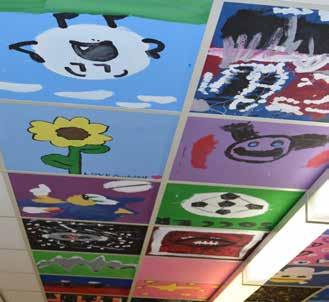
Ceiling tiles painted by graduating 5th graders
The City of University Heights
Heights Youth Theater Still Flying High
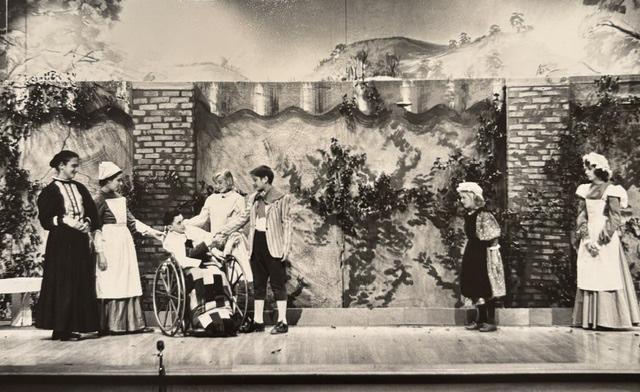
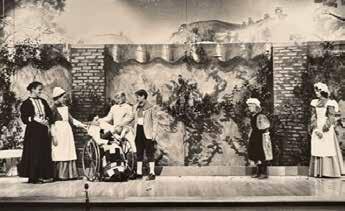
At 81 years of age, Heights Youth Theater (HYT) looks as young today as it did back when it opened in 1954. Students continue to flock to show off their theatrical skills in venerable and memorable plays such as Peter Pan, Annie, The Sound of Music, The Wizard of Oz, The Phantom of the Opera, and Footloose
“We’re taking this next generation, trying to be good role models. This theater helps children build confidence, thrive and find their place without judgment,” said Executive Director Pamela Fine.
“I’m happy to be a small part of their development.”
Her involvement started 30 years ago as a volunteer when her two daughters joined the ensemble at ages 8 and 5. Like many other parents, she then became a board member which led to being asked to lead HYT as its one paid staff member.
HYT started as a Cleveland Heights-University Heights Board of Education summer program at Cain Park. Within a few years, the parents and volunteers wanted to create an all-season theater. When Wiley Middle School was in development to open in University Heights, the theater space was planned to be the home of HYT. “They built the theater to equity specifications, with dressing rooms, a fly system, scene shop, and costume storage. This was not a typical school auditorium.”
Just as it did at its inception, the company continues to make its own costumes and build its own sets, said board president Carlita Skok. “I feel like this place raised my three kids. They learned self-esteem, how to manage their time, and be responsible. They learned how to be good humans here and co-exist with children who were younger and to mentor them. I have such a fondness for being around the children even after my children have grown.”
Heights Youth Theater Alumni
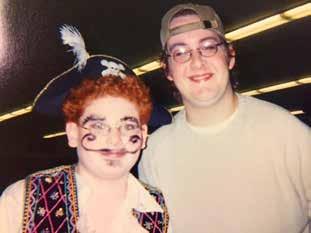
Max Chernin represents a long list of Heights Youth Theater alumni who have taken the skills they learned on the Wiley stage to Broadway and beyond.
After his debut at seven years old in You’re a Good Man Charlie Brown in 1997, Chernin quickly knew he wanted a future in musical theater, which he studied at the University of Cincinnati. In 2012 he moved to New York City and has been an actor and educator ever since.
“HYT to me was a place outside of my school where I could meet kids from all neighborhoods and we all shared the same passion,” Chernin said. “It fostered a really good community for an awkward little theater boy. I loved watching the older kids grow up and grow into themselves and pursue this in college. They planted the seed in me to pursue theater arts.”
Most recently, Chernin performed in Parade, winning a Tony for Best Revival of a Musical. Not only was he in the Broadway production, he also was the lead in the national tour playing Leo Frank. He has also performed on television.
He credits Andrew Kober, with whom he grew up at HYT, for being his inspiration to pursue his dreams. Kober has also won a Tony for Best Revival of a Musical for Hair,
in which he played Margaret Mead. He has performed in London’s West End, Off Broadway and on television.
“He’s the reason I knew this was possible,” Chernin said.
A Secret Garden, 1959 Courtesy Heights Youth Theater
Max Chernin and Andrew Kober
Courtesy Max Chernin
Her daughter, Victoria Skok, 22, was helping her mother and other volunteers recently as they cleaned up and tossed out vestiges of the past no longer needed in the scene shop to make room for new sets. Victoria started with HYT in fourth grade, performing in Willie Wonka and The Chocolate Factory.
Between 60 to 90 children, some from as far away as Sandusky, participate in each of three to four shows each year. They rehearsed for six weeks and performed six to eight shows. About 3,500 people enjoy the shows every year.
HYT is a self-supporting nonprofit that depends on outside funding and The Friends of HYT to continue its mission “to create quality live theater that entertains its audiences and educates, encourages and inspires its young artists to grow.”
So appreciative for her formative training with HYT, Victoria remembers her first singing solo was “I don’t like the look of it” in Oompa Loompa and the choreography for the play. A graduate of Ohio University’s Now musical theater program, she is heading to New York City to audition as a triple-threat as she sings, dances, and acts. Each performance brings great joy to all participants, Fine said. “When we open a show, there’s nothing like it. We do three shows a year with up to 200 student performers yearly. It warms our hearts. We feel like we are doing really important work.”
J & G Shoe Service: A Legacy in Leather
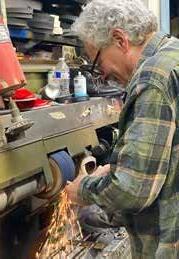
Jim Mallos has been working the family business since he was knee-high to a shoehorn. He was just ten when he began shining men’s leather shoes and sweeping up his father’s shop, which had first opened its doors in 1944. By high school, he had graduated from odd jobs to real responsibility pulling off worn heels, managing the front counter, greeting customers by name, and ringing up sales on the old cash register that had been there since before he was born.
And he was hooked. Shoe and leather repair would be his livelihood for the next 60 years. Once asked by a high school teacher what he wanted to be, Mallos proudly said: “A shoe repairman. I liked it. I enjoyed what I was doing.”
When he turned 16 and got his driver’s license, he made the daily commute from Brecksville after high school for his “major training” until 9 p.m. each weekday and on Saturdays.
By the 1980s, his father moved J & G to where it remains today, 14414 Cedar Road, nestled between CVS and Al & Fran Cleaners. The shop was named for his father, Jim, and his uncle, George, It is in this shop, redolent with decades’ worth of leather, solvents, glue and polish smells, that Mallos continues to work six days
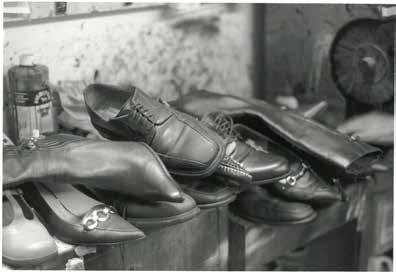
a week. In his plaid shirt and denim work pants, Mallos hones his skills at the same machines that have served him well as he labors in a shop crowded with long-forgotten shoes and purses, some wrapped for pickup on high shelves while the recent repairs wait on a shelf below.
Even as he considers retirement, Mallos comes to work every day around 7 a.m. Some regulars know he is there even before the shop officially opens and visit him through the rear door.
Today, he repairs all things leather. He replaces heels. Cleans boots. Fixes purses. Sew zippers on coats. None of his five children will be taking over in an industry that is fading, yet not gone. Mallos is a craftsman, a cobbler, and a custodian of a trade that won’t disappear.
Heinen’s: A Modern Legacy, Four Generations Strong
In 1929, Wall Street crashed. The Great Depression started. The first Academy Awards were held. And Joseph Heinen opened his first store near Kinsman and Lee roads.
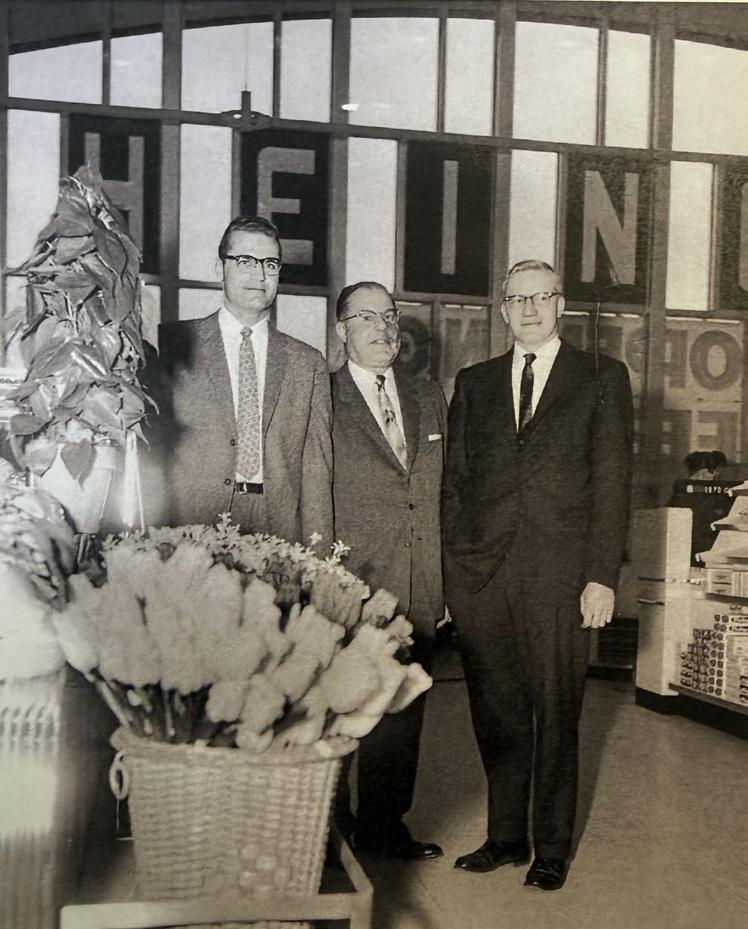
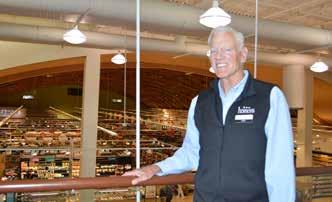
Four generations and 24 Heinen’s grocery stores later, the family business is thriving. The University Heights location boasts its original and restored wooden concave ceiling, 36,000 distinctive products, all supported by a staff who have worked and greeted customers for decades.
“It’s all about our associates,” said owner Jeff Heinen co-owner, sitting on the upper-level dining area from which one can view the entire store. “We’re proud of the longevity of our workforce. We’ve recognized thousands of associates with service awards. We take associates to lunch on milestone anniversaries…it starts with having associates who love working with Heinen’s.”
When the UH store opened 67 years ago in 1959, bananas were the biggest seller with berries running a close second. “We might have had 12,000 items. Now, people travel the world, and they want foods they ate in other countries,” Heinen said.
His grandfather worked for a butcher while attending John Hay High School. Four years later, “he saw an opportunity to sell more than meat” and he opened his own place just 150 yards farther east on Kinsman from his former employer.” Joseph Heinen continued moving his stores farther east, following the migration of people out Cleveland and into the suburbs.
“My father and his brother worked and grew the business,” Heinen said. When his father passed away, Jeff
Al & Fran Cleaners:
Part of University Heights’ Fabric
When they first moved to Ohio, Hwang J. and Young Lee opened the first Korean restaurant in the Akron area. For 13 years they worked long hours serving Bibimbap, Bulgogi and Korean BBQ.
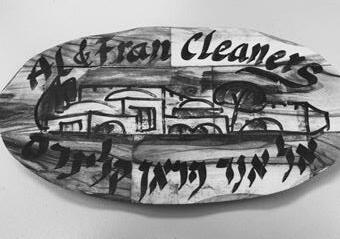
Tired of the long hours and hard work in the restaurant industry, they opened their first dry cleaning business in 2004. “We went from a hot kitchen to a hot cleaning plant,” said owner Young Lee. In 2016, they bought Al & Fran Cleaners because it had a good reputation and they liked University Heights and the surrounding suburbs. Every Tuesday, her husband delivers and picks up laundry from regular customers. And they have a seamstress who does alterations.
“It’s a good area here on Cedar Road,” said Young Lee. “A lot of the old customers continue coming here. I like talking to the customers and the fresh smells of steam, detergent and dry-cleaning chemicals.”
and his brother, Tom, refocused priorities on maintaining staff and creating a strategic plan.
Marty Ferrara has worked with Heinen’s for 47 years. For 42 of those years, he has been managing the dairy department. “I’ve always been treated right,” he said. “They gave me the opportunity to manage and make more money.
“When (Jim’s) father and grandfather came into the store, they knew my name. They were genuine and talked to you like you were one of them. I plan on making it to 50 years. I still enjoy it.”
The Heinen Brothers long ago recognized the growing Orthodox Jewish community and opened its only room dedicated to kosher products. The store even stays open late on the day that the holiday of Passover ends to meet the carbohydrate cravings of its Jewish customers.
Sign up for our Weekly Wrap Up and for Senior Spotlight to keep up with all information we provide for our residents. Its as easy as using:
For nearly 33 years, Chocolate Emporium specializes in gourmet
Jeff Heinen on second level
The City of University Heights
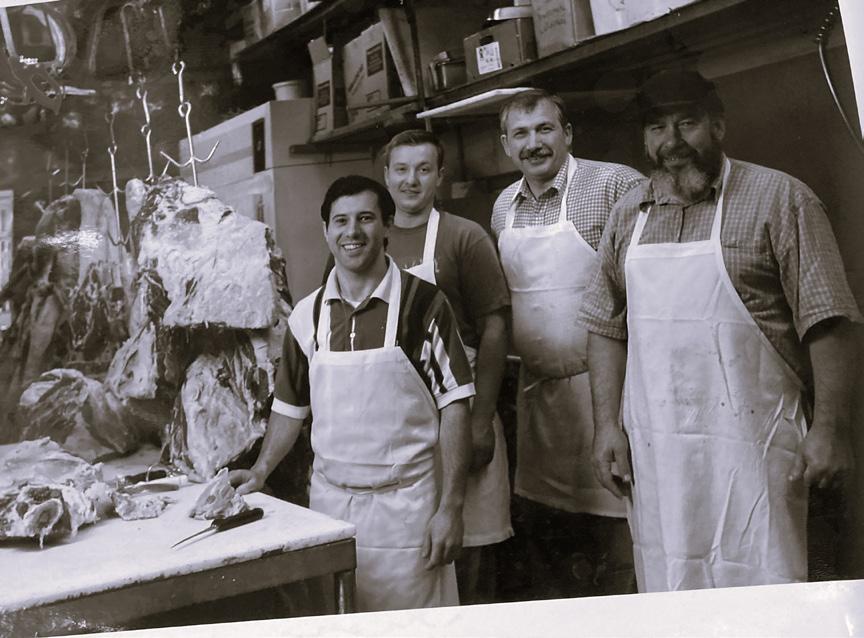
In the heyday of Cleveland kosher butchers, there were an estimated 20-plus stores from the 1920s through the 1950s. All were clustered in the Glenville, Kinsman, and Hough areas where the Jewish community lived mid-century. As the community moved further east, so did the butchers. Today, there are two left standing. Boris’ Kosher Meats and Tibor’s Kosher Meats are both in University Heights, meeting the needs of kosher-eating Jewish community throughout NE Ohio.
Boris’ Kosher Meats
Meeting Expectations of an Ever-Changing Demographic
Boris Mikhli came to the United States from Ukraine in 1974, carrying with him the quiet hope of building a new life. In New York, he learned the craft of butchering, a skill that soon became both his livelihood and his pride. When he later settled in Cleveland, he found a home in a cherished kosher meat market founded decades earlier by Jack Gilder. Taking over the shop in 1983 was his way to honor Jewish tradition, serve a community, and keep his promise to his mother-in-law to take care of bride.
At first, Boris’ Kosher Meats sold mostly to nursing homes that kept kosher for their residents. When that opportunity dissipated, he decided he “had to reinvent myself, to being a family butcher,” Mikhli said. In the back of his shop, he learned to make the fragrant and favorite mainstays of salami, baloney, pastrami, and corned beef.
Over time, the business kept evolving to meet the needs of the community he has served for more 40 years. When South African Jews moved to the Cleveland suburbs, he taught himself to make boerewors, a standard sausage for a growing group of immigrants.
A man with a big smile, warm welcome, few words about his accomplishments and always wearing the iconic long white apron of a butcher, Mikhli said his next challenge was meeting the expectations of people who had recently started keeping kosher. After eating bacon and other foods not permitted in the Torah for most of their lives, “They wanted bacon, so I started making breakfast lamb,” Mikhli said standing in the midst of white display cases filled with his food inventions.
Throughout the store, you’ll be able to find chicken pullets for traditional Jewish chicken soup, chopped liver, brisket, beef ribs and the many homemade specialties for which he is well known.
After decades working in the same U.H. location meeting the expectations of generations of kosherkeeping Jews, Mikhli said, “I love being here.”
Tibor’s Kosher Market – L’Dor v’ Dor
From Generation to Generation
As Cleveland’s Jewish population migrated eastward into the suburbs, the infrastructure of Jewish daily life followed them. Altman’s Kosher Meats moved from its original location to University Heights in 1966 to meet the needs of the community.
Next came Tibor Rosenberg, who took over the location at 2185 S. Green Road and transitioned it to become his own in the 1980s. Owned by Ilan Senders since 2019, the butcher shop holds true to its origins using recipes from his two predecessors.
“Nothing has changed other than a couple of new faces. The cholent recipe is from Altman,” Senders said of the traditional slow-cooked stew typically eaten on the Sabbath. “Pretty much everything we make that is smoked are Tibor’s recipes, including our world-famous beef jerky.”
Senders worked in the store when he was in high school and then after returning from studying in Israel for two years, he started working at the butcher shop full-time. He told Altman he wanted to work in the butcher shop with the goal of buying it when the time was right.
His relationship with the store and the people working there goes back to when he was a baby, his mother bringing him there at least once a week to purchase her kosher food and Senders interacting with “the guys” and always happy to get a slice of salami as a treat.
The man handing him that cold cut was Igor Spira. He continues serving up treats to children from behind the meat counter to this day. “Getting a really nice piece of meat that puts a smile on their faces is probably my favorite part,” said University Heights resident Spira from his post since 1988. An engineer from Czechoslovakia, Spira changed his career when he moved to the United States. “I like working in this store. I like the people. I got used to it,” he said.
Senders commented, “He’s the source of everyone’s happiness here.”
Today, the team makes and sells about 100 pounds of beef jerky weekly. The other favorites are its homemade chicken poppers and Altman’s original cholent.
Geraci’s – A Family Tradition
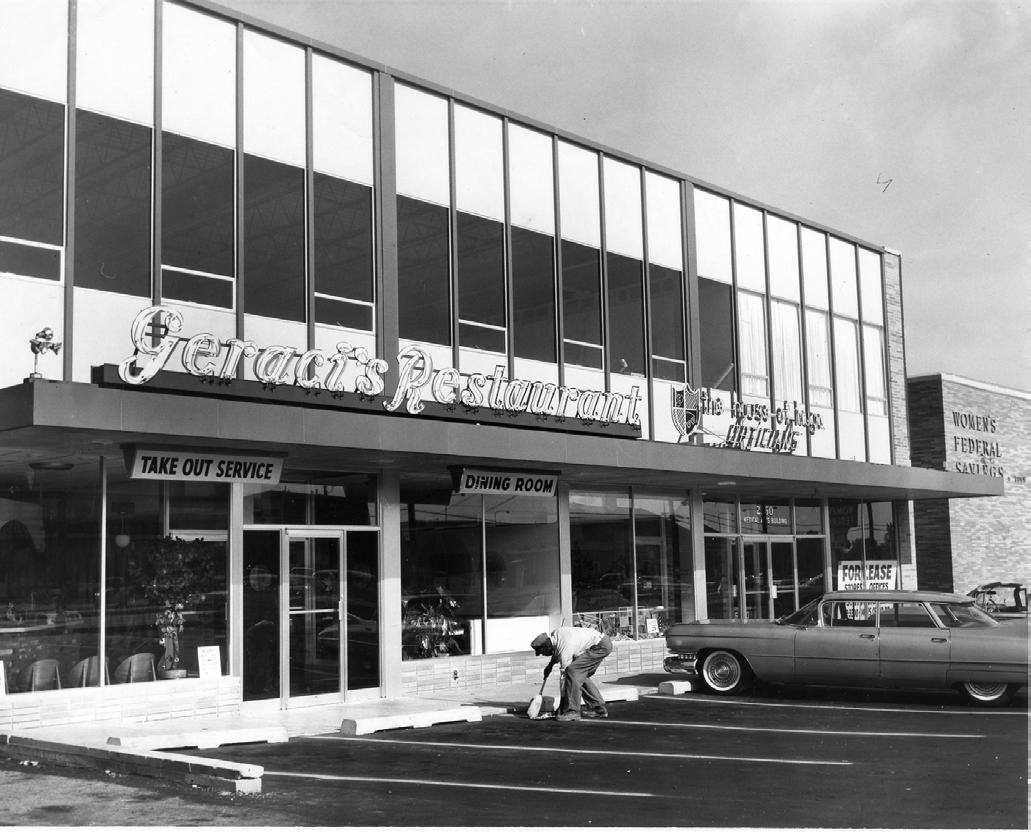
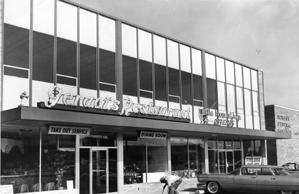
In 1960, Frances and Michael Geraci opened the doors to their renowned, old world Italian restaurant in the brand-new strip center on Warrensville Center Road near Silsby. And there it remains, 66 years later. Brick walls, black vinyl booths and paintings of the old country remain the décor. And the same Geraci family runs the front and back of the house, maintaining traditions started generations ago.
“I started working in the restaurant in 1995 during high school,” said Patrick Brown, third-generation family member and owner. “I worked here during college breaks and 20 years later I returned full-time.”
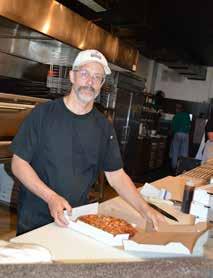
Most days you will see Patrick behind the counter, making pizza dough. “I developed pizza elbow and now others have to roll it out,” he says with a laugh.
He recalls that in the restaurant’s “glory days” customers queued up on the sidewalk for their chance to dine in the three-sided vinyl booths, glass-topped tables, surrounded by brick interior walls. Today, they still enjoy a steady flow of regulars and newcomers to the area. Favorites remain they’re nationally recognized pizzas, linguini with clam sauce, lasagna and chicken parmesan – which have been featured twice on the Food Network’s Diners, Drive-Ins and Dives with Guy Fieri.
Most recipes date back to Brown’s grandparents, and the menu remains mostly as it was in 1960. If it’s not broken…
and third-generation family member, Patrick Brown works behind the counter every day making their famous pizza
Owner
Courtesy of Cleveland State University Michael Schwartz Library
The City of University Heights
60 Years and Counting: Bialy’s Bagels, Baked to be Better
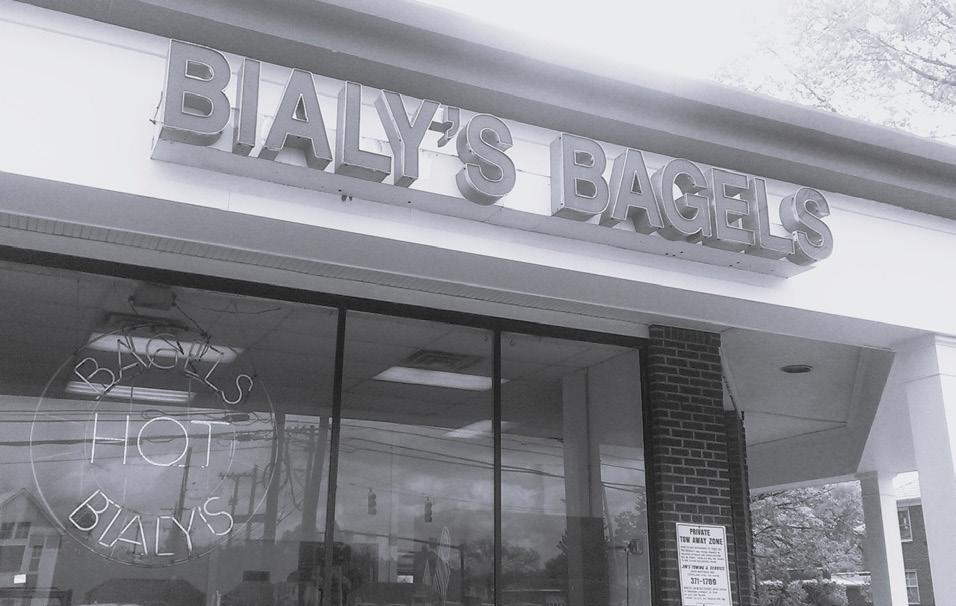
The year 1966 brought us memorable music, television shows and iconic products. The Beatles released “Revolver,” “Star Trek” premiered and the body-bending Twister game was introduced, along with Doritos, Cool Whip and Bialy’s Bagels.
Terry Skolnick, a baker from Brooklyn, N.Y., opened the business at its current location, 2267 Warrensville Center Road and operated until his retirement in 1997. His daughter and son-in-law then took over for another 20 years.
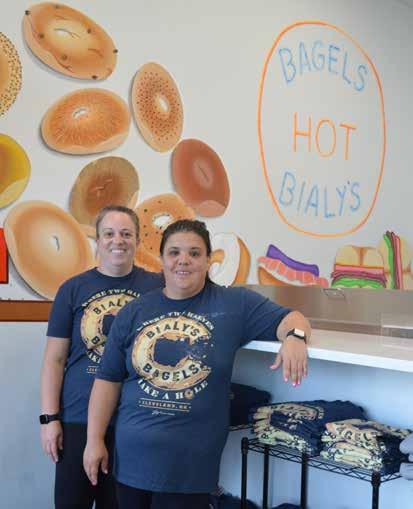
Then twin sisters Rachel and Sarah Gross heard that the bagel shop would be coming on the market. After spending time in 2011 at their uncle’s bagel shop in Winston-Salem, N.C., they’d been looking for a business to buy to replicate his success. “We really wanted to bring Uncle Danny’s concept to Cleveland,” Rachel said at a recent Topic Tuesday at the University Heights Library.
Rachel had been a Spanish-language teacher and Sarah worked in human resources before embarking on their gluten-focused enterprise. To meet a goal set when they first purchased Bialy’s, they expanded the footprint of the store to make room to make and sell sandwiches. In February 2024, that dream happened with the sandwiches such as the Lox & Schmear, The Veggie, Turkey Pastrami and the Egg & Cheese. “Now it really is our dream bagel shop,” Rachel said.
It was during Covid that the sisters realized they didn’t have to be open seven days a week. Concerned about staff burnout, Rachel and Sarah decided to create a fiveday schedule for the store, employees and themselves. They are now open Wednesday to Saturday from 6 a.m. to 1:30 p.m. and on Sundays from 7 a.m. to 1:30 p.m.
For the bagel aficionados, Bialy’s top selling bagels are plain, mishmash and sesame. What’s your favorite?
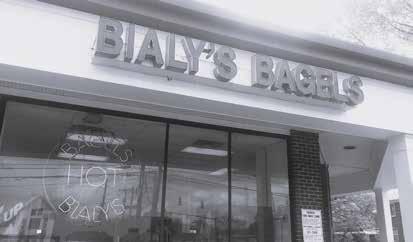
Bialy's. Same sign after all these years.
Sara and Rachel Gross are happy to continue the Bialy's legacy.
Let’s Talk A Series of Discoveries
University Heights and John Carroll University are partnering in a Series of Discoveries starting this summer. Our first programs are about “bringing our community together through dialogue.”
“Dialogue is a process of genuine interaction through which human beings listen to each other deeply enough to be changed by what they learn,” said Dr. Harold Saunders, founder of the Sustained Dialogue Method.
In today’s rapidly changing world – one increasingly shaped by social media rather than personto-person connection – meaningful dialogue has become
more challenging. We invite you to participate in these opportunities to learn how to bridge divides, strengthen relationships, and communicate constructively and respectively.
“Bringing the community together is a priority in my administration,” Mayor Michele Weiss said. “Having free programming on civil discourse makes this priority that much closer to fruition.” There is one program scheduled for Tuesday, August 17 entitled “Civil Discourse” and we will continue with “A Series of Discoveries” to provide greater awareness of our community and our neighbors starting in September. More details will be available in the Friday Wrap Ups.
Saunders continued, “Each (person) makes a serious effort to take others’ concerns into their own picture, even when disagreement persists. No participant gives up their identity, but each recognizes enough of the other’s valid human claims that he or she will act differently toward the other.”
Space is limited. If interested, fill out Let’s Talk or use the QR code.
The City of University Heights
A Cut Above
More than a Barbershop
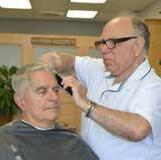
Crossing the threshold of A Cut Above, you’re immediately welcomed, and soon joking with the team and the clients and comparing who’s been coming to Jim Lentine’s barbershop the longest. Sometimes those people have come from Michigan, Illinois, Florida, California and even Israel.
On a recent day, one client bragged about Jim cutting his hair for 54 years and now doing haircuts for his grandchildren. Another client, Jeff Saks, has been a customer on and off since 1981. The only interludes were when he took a job in Zanesville, Ohio, and then went to law school on the east coast. Saks’ stylist. Anita Sidoti, has been his go-to person for cuts and shaves since just before his bar mitzvah.
“I get a great haircut, great price and they are great people,” Saks said of his barbershop of choice. “Jimmy has been a staple in University Heights since 1972.”
Lentine has been in the Cedar Center/University Heights area for almost 50 years. A decade ago, he had a choice to make. His lease at Cedar Center was not renewed, leaving him in a quandary. Does he retire? Lease space from another barber? He wasn’t ready for either. He heard that a larger space was available at 2252 Warrensville Center
Road, and he signed on the dotted line.
Sidoti came, too. Per her request, she has her own spot behind a wood wall for privacy. She has many clients who, like Saks, have been regulars for 45 years, or more. “People who have moved away come back to A Cut Above when they return to Cleveland,” some even driving from the West side, Sidoti said.
As for Lentine, at 79, he has no plans on slowing down. He’d miss the clients, the schmoozing, meeting the fourth generation of original clients. He recently cut a boy’s hair after a Jewish ritual first haircut when a boy turns three. “I’ve cut hair on babies as young as six months.”
He’s proud of the barber pole hanging outside his shop which came with the first business he bought. And he’s proud of the friends he has made along the way. “It’s a social gathering place. College kids come back,” Lentine said. “It’s a way to keep in touch with the neighborhood and, selfishly speaking, it’s my social life.”
Code Red
For your safety, please sign up for CodeRED, Cuyahoga County’s emergency communication system. To sign up, go to www.readynotify. us and click on University Heights. If you need assistance, call City Hall at 216-932-7800.
JOIN THE FRIDAY WRAP UP
Stay informed with the latest University Heights news, local updates, events, and more — all in one weekly email. And for residents 60 years and older, you may also sign up for the quarterly Senior Spotlight for information about programming and services specifically for you!!!
Kindness in Action: Celebrating the Volunteers of University Heights
By Cici Caver
We know you’re out there. You’re the ones doing quiet acts of kindness every day, giving your time, energy, and heart to make University Heights a better place. Or maybe you’re the lucky ones surrounded by family, friends, and neighbors who show up for you with generosity and compassion whenever life gets tough.
That same spirit of community was on full display during our incredible Juneteenth celebration. Led by our outstanding event coordinator, Jamie Smith, the day brought people together in the most meaningful way – celebrating freedom, culture, and unity with joy and purpose.
From the moment attendees arrived, our dedicated volunteers were there greeting families at the registration table, directing traffic in the parking lot, ensuring everyone found their way to the bounce houses, food trucks, amazing vendors, and children’s activities.
This IS community. In University Heights, we believe in serving together, caring together, uplifting together, engaging together, supporting together, and celebrating together. These are not just words. This is the foundation of who we are. Community equals care, and when we volunteer and serve alongside our neighbors, we all
BigHearted Blooms
become better.
University Heights is made up of people from all backgrounds, all ages, all walks of life. And every single day, we exhibit kindness through our commitment to one another, our dedication to service, and our passion for community. This Juneteenth event was a testament to what happens when we show up for each other.
We want to hear from you. How do you show acts of kindness at our events, in our community or elsehere? Do you volunteer? Do you support a neighbor? We want your stories. Send your stories of service and compassion to our Communications Coordinator Renee Krause at rkrause@ universityheights.com and Kindland.
By sharing these moments, Kindland will collect all the wonderful acts of kindness and we will highlight your stories on our community Facebook pages and inspire others to join us in making University Heights a place where kindness thrives. Your story matters, and we cannot wait to celebrate you!
Cici Caver is a University Heights resident and volunteer.
Brightening People Lives One Bouquet at a Time
Sue Buddenbaum survived cancer. And she knew she had more to give. So, she started the nonprofit BigHearted Blooms to bring joy to people who may not be feeling joyous.
Since 2018, she and her team of volunteers have done just that for more than 71,000 people in Northeast Ohio. “Our mission is to repurpose flowers donated by local grocery stores, brides or others, put them in vases and deliver them primarily to people in hospitals and care facilities, said Kim Metheny, a University Heights resident and Director of Operations. “We’re able to surprise people with something beautiful and hopefully give them a lift.”
Kindland and BigHearted Blooms have partnered for three years.
“BigHearted Blooms is an organization that beautifully transforms moments of celebration into acts of compassion,” said Shaun Sweet, Kindland’s Director of Community Partnerships. “Floral arrangements from several yearly Kindland galas are collected and repurposed by Big Hearted Blooms, extending the life and impact of every bouquet. Rather than allowing flowers to be discarded after
an event, they are thoughtfully redesigned and delivered to individuals who could use a reminder that they are seen, valued, and loved.”
Metheny said she joined the BigHearted team for its raison d’etre and because Buddenbaum is her best friend. “We’ve reached 16,000 people in the last year alone. All of this is done by about 90 volunteers who give time every week to prep, clean, arrange and deliver bouquets,” Metheny said. “I love the way we touch lives and make people happy. Our volunteers are the best and we’d love to have a few more University Heights volunteers."
“BigHearted Blooms spreads kindness by delivering these repurposed arrangements to seniors, hospice patients, veterans, healthcare workers, and others facing challenging circumstances. Their volunteers not only create beautiful bouquets but also deliver hope, encouragement, and human connection through every arrangement,” Sweet said.
To volunteer or donate please check out bigheartedblooms.org.
University Heights City Government
Michele
Threse
Senior Programming and Services
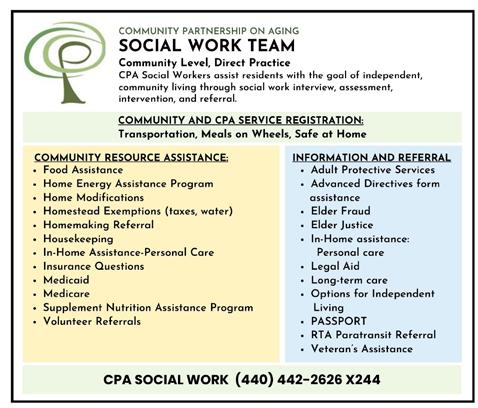
From wellness classes to social programs to essential support services, our older adults have more opportunities than ever to thrive. We encourage our residents to take advantage of all the possibilities available to help you age in place and be the best you can be for yourself, your family and friends – maybe even make some new friends. University Heights added the Community Partnership on Aging (CPA) to our senior repertoire in April. All residents 60 years and older may sign up for various classes held at the University Heights Library, social services such as home safety evaluations, equipment and adaptive tools. The program offers older adult homeowners access to durable equipment and money to enable those with lower incomes or other barriers to apply for and receive adaptive tools for comfort and safety. For more information, call the CPA social work office at 440-442-2626, ext. 244.
Our partnership with the City of Cleveland Height’s Senior Center opens many doors to free classes, sports, lecture and free membership to the city’s fitness center for those who have Silver Sneakers.
Among the offerings are weekly strength training, table tennis, yoga, tai chi, senior walking, chair volleyball, creative dance, bridge, pinochle, and so much more. To register, go to the Cleveland Heights Community Center front desk, 1 Monticello Boulevard, with your picture ID and proof of University Heights residency.
Also, in conjunction with The Greater Cleveland Food Bank, there will be a free produce market for seniors on the following third Wednesdays – August 19, September 16, October 21 and November 18. Bring a bag to the South Atrium.
For more information, please call the Senior Center at 216-691-7377.
And, of course, our relationship with the University Heights Library is growing ever stronger. Topic Tuesdays, from 3 to 4 p.m. weekly, continues with a variety of informational talks, crafts.
Upcoming topics are:
• July 7- James Meredith and the Civil Rights Movement: 60 Years Later with historian Vijay Shah
• July 14 - Necessary
Conversations with Kimberly Washington of E.F. Boyd Funeral Home
• July 21 - End of Life Planning Workshop with Kimberly Washington of E.F. Boyd Funeral Home
• July 28 - Free For All Crafternoon
• August 4 - NOPEC 101
• August 11 - The GutHormone Connection: Why Digestive Health Matters for
Women with Kayla Barron of Root & Soul Nutrition (twopart series)
• August 18 - Natural Dyes (craft)
• August 25 - The GutHormone Connection: Why Digestive Health Matters for Women with Kayla Barron of Root & Soul Nutrition (2-part series) For more information, call 216-321-4700.
For Free Senior Transportation
Keep Moving Forward
Care with Purpose
Tri-C helps you gain skills that matter now to move forward and stand out. Whether you’re earning a credential, a degree, or job-ready training, you’ll be prepared for your next move.