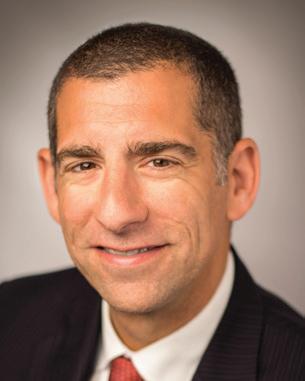
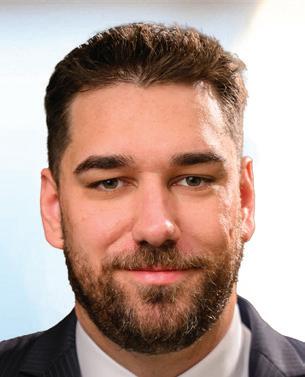
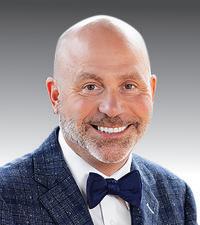
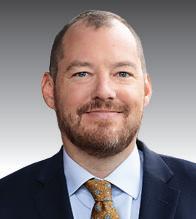
A Cleveland Jewish News Advertising Special Section
Hey, that’s my photo or article you’re using. Can you do that?
ELLEN BARUNSTEIN
If someone copies your photograph, article, artwork or other creative work and posts it online without permission, what rights do you have?
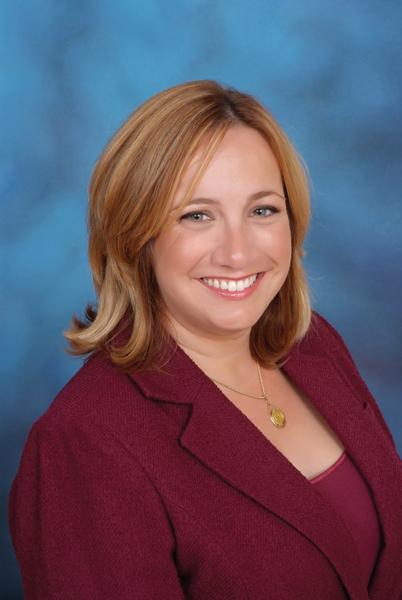
According to Anna Kelberg-Kim, founder of Kelberg Law, an intellectual property, media and entertainment law rm in Pepper Pike, the answer begins with understanding what copyright law is designed to protect.
“Copyright protection generally applies to original works created by a human author and xed in a tangible medium of expression,” Kelberg-Kim said. “ e creator automatically receives copyright protection once the work is created in a tangible form.”
Copyright law gives creators exclusive rights to reproduce, distribute, display, perform and create derivative works. If someone uses a protected work without permission, that may constitute copyright infringement.
One of the biggest misconceptions she encounters is the belief that content found online is free to use.
“One of the biggest misunderstandings people have about copyright protection is that if something is online or easy to access, then it must be ‘free to use,’” she said.
Another common misconception is that a use automatically quali es as fair use if the person is not making money from it.
“Fair use is often misunderstood as a blanket permission to use someone else’s content,” Kelberg-Kim said. “It is not. It is actually a legal defense that may apply after copyrighted material has already been used without permission and a copyright infringement claim is raised.”
she said. “But royalty-free content is usually still accompanied by licensing terms that may place certain limitations on how the content can actually be used.”
For creators looking to protect their work, she recommends taking steps before problems arise.
“I strongly recommend that creators register their work with the U.S. Copyright O ce before publicly releasing it whenever possible,” she said.
Registration creates a public record of ownership and can provide important enforcement advantages if infringement occurs.
If a creator discovers that work has been copied online, Kelberg-Kim advised preserving evidence immediately.
“ e rst step is to preserve evidence before anything is changed or removed –take screenshots, save links and document where and how the work is being used,” she said.
Many online platforms provide procedures for reporting copyright infringement and removing infringing content. In other cases, a cease-and-desist letter may resolve the dispute.
“Cease-and-desist letters are often very e ective in copyright disputes, especially when the infringement is unintentional,” she said.
e rapid growth of arti cial intelligence is creating a new set of copyright questions.
“AI is changing the copyright landscape very quickly,” Kelberg-Kim said. “ e copyright law was built around human creators – not machines.”
One major issue is ownership of AIgenerated content.
“One of the biggest legal issues right now is that U.S. copyright law generally requires human authorship,” she said. “ at means purely AI-generated content may not qualify for copyright protection at all.”
Another debate involves the copyrighted works used to train AI systems. Courts are still sorting through whether those uses constitute fair use and how AI-generated content may a ect the market for original creative works.
She said courts look at the speci c facts and circumstances of each case, including whether the use is transformative, how much of the work was used and what e ect the use may have on the original work’s market value.
Kelberg-Kim also cautioned users not to assume that “royalty-free” content comes without restrictions.
“In my practice, I often see situations where someone believes they are permitted to use content for their own projects simply because they found it online labeled as ‘royalty free,’”
For now, Kelberg-Kim said she believes the law is struggling to keep pace with the technology.
“Copyright law is evolving much more slowly than AI technology itself,” she said. “I believe we live in a period where the copyright law is evolving in real time.”
Ellen Braunstein is a freelance journalist.
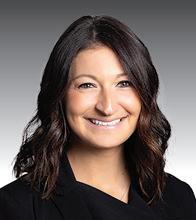
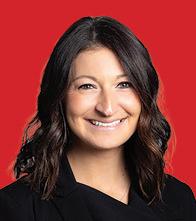
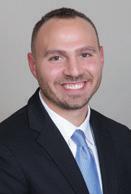
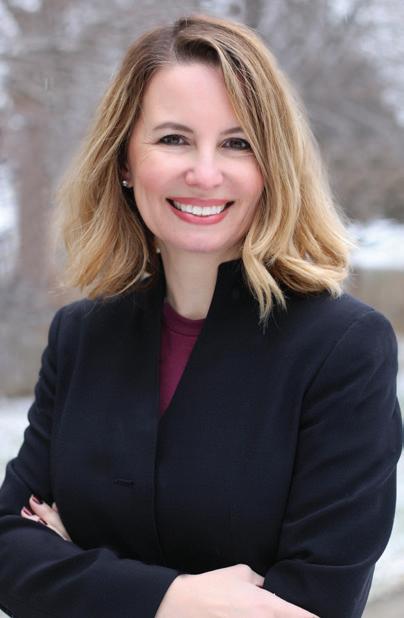
Kelberg-Kim
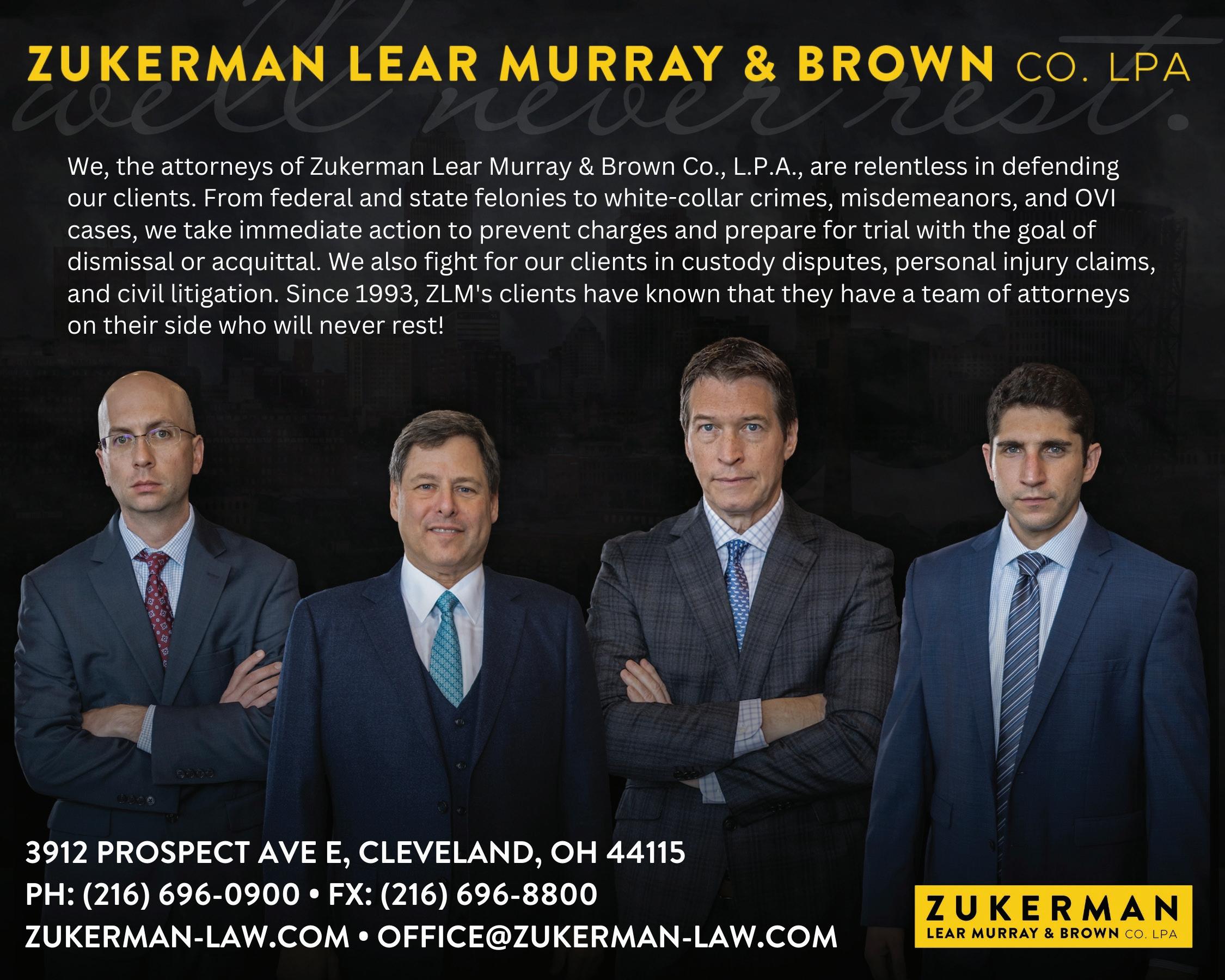
We, the attorneys of Zukerman Lear Murray & Brown Co., L.P.A., are relentless in defending our clients. From federal and state felonies to white-collar crimes, misdemeanors, and OVI cases, we take immediate action to prevent charges and prepare for trial with the goal of dismissal or acquittal. We also fight for our clients in custody disputes, personal injury claims, and civil litigation. Since 1993, ZLM's clients have known that they have a team of attorneys on their side who will never rest!
Not all medical mistakes lead to malpractice lawsuit
ELLEN BRAUNSTEIN
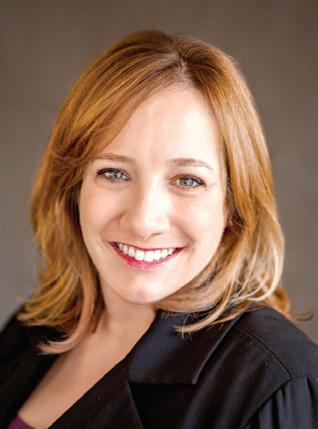
Medical negligence remains a concern for patients and families, but the biggest misunderstandings often involve what malpractice actually means, according to attorney Jonathan Mester, who has handled medical negligence cases for nearly three decades.
“Sometimes people call us after something terrible has happened, and unfortunately no one is responsible,” Mester, managing partner of Nurenberg Paris Heller & McCarthy in Cleveland, said. “A bad outcome does not automatically mean there was malpractice.”
Mester said many prospective clients are surprised to learn that a medical error alone is not enough to support a malpractice claim. e mistake must have caused signi cant harm.
“We’ll see situations where an error clearly occurred, but it didn’t result in a serious injury,” he said. “ ose cases generally don’t move forward.”
One area where Mester has seen changes over the course of his career is the growing role of nurse practitioners. Over the past 25 years, nurse practitioners have become increasingly common in urgent care centers, emergency departments, primary care o ces and specialty practices, he said.
WE WORK WITH YOU TO HELP CRAFT SOLUTIONS TO ACHIEVE YOUR BUSINESS AND LEGAL GOALS.
“Nurse practitioners are highly-trained and very skilled providers,” Mester said. “But, they don’t have the same level of education, training and expertise that physicians do.”
While emphasizing that many nurse practitioners provide excellent care, Mester said some cases involve communication breakdowns or clinical decisions that may have been handled di erently by a physician. He has seen such issues arise in cases involving newborns and infants, particularly when communication between nurses and physicians breaks down.
Much of Mester’s practice focuses on birth injury cases. ese cases often involve labor and delivery complications, neonatal resuscitation e orts or problems occurring during the rst weeks of a baby’s life. Communication failures can play a signi cant role.
“We see situations where important information isn’t communicated to the doctor, or where the doctor isn’t involved as much as they should be,” he said.
While concerns have been raised nationally about physician burnout, sta ng shortages and rushed appointments, Mester said those factors are often di cult to evaluate in individual malpractice cases.
He also has not seen telemedicine emerge as a major source of malpractice claims.
“For the most part, a telehealth visit can be just as e ective,” he said. “I haven’t seen a lot of cases involving telehealth.”
Arti cial intelligence is also becoming more common in healthcare, particularly in documentation and recordkeeping. However, Mester said he has not yet seen evidence that physicians are relying on AI instead of their own medical judgment.
“I think medical providers are using it as a tool,” he said. “I don’t think they’re substituting AI for their own knowledge and decision making.”
One challenge for patients is recognizing when a medical error may have occurred. Hospitals and physicians do not typically disclose mistakes unless they choose to do so voluntarily.
“It is di cult for patients to know when there’s been an error,” Mester said.
He encourages patients to become active participants in their own health care by asking questions, researching their conditions and seeking additional medical opinions when necessary.
“You need to be an informed patient,” he said. “You need to participate in your medical care.”
For parents, that vigilance can be especially important. If something does not seem right, Mester advised trusting your instincts and continuing to seek answers.
“ ere is certainly such a thing as parents’ intuition,” he said. “If you’re concerned, be an advocate for your child and make sure they’re getting the evaluation and care they need.”
Despite advances in medicine, Mester said he believes one principle remains unchanged: informed, engaged patients are often the best defense against preventable errors.
Ellen Braunstein is a freelance journalist.
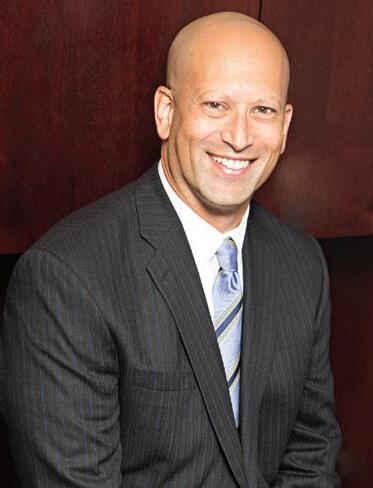
Mester
Posting bad business review can lead you to court
A.KEVIN CORVO
Business owners today have myriad of ways and means to advertise, promote and sell their goods and services to customers and clients but as with almost every piece of technology, it can be leveraged in beneficial and detrimental ways.
Social media provides a means of instant and aroundthe-clock communication but it also allows for people the ability to hide behind technology and promote half-truths and, in some instances, false information.
Sometimes, it shows up slanderous or as a fake review on
a business owner’s social media platforms, risking damage to the owner’s reputation and image, leaving the owner with questions about how to remove it or challenge the person who created it.
According to a consumer advocate page on the website of the Office of the Ohio Attorney General, such false content can be generated by artificial intelligence.
The webpage provides identifiers such as the use of overly generic language and repetitive phrases across multiple reviews as signs of AI-generated content.
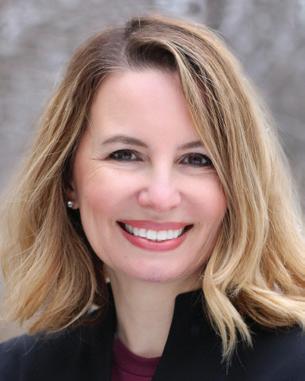
It terms of a remedy for a targeted business owner, it is determined on a case-by-case basis, according to Matthew
Cavanagh, a First Amendment attorney for McDonald Hopkins in Cleveland.
Litigation typically stems from online attacks against individuals rather than businesses as the latter is often considered a civil matter, but there are exceptions, according to Cavanagh.
“It depends on what is said and who is saying it that determines the best plan of attack,” he said.
Retaining an attorney is not usually the first line of defense, according to Cavanagh.
“Telling your side of the story (in the same arena) and making a direct response to the person posting the bad review is an effective way to handle it,” he said.
But if it escalates to language beyond dissatisfaction with goods or services, other parties can and do get involved, Cavanagh said.
If the user is posting personal attacks, intimating physical harm, violence or property damage, or using language that could be considered hate speech, litigation is something to consider, he said.
In many instances, the platform where the exchanges are being made publicly has policies in place and will intervene in the matter and sometimes take actions, according to Cavanagh.
“If it reaches this level, you might consider retaining an attorney,” which has the power of subpoena to investigate and identify the origin of the content, he said.
“That’s something you can’t do on your own,” Cavanagh said.
“People who make false posts and attacks anonymously don’t want to bear the responsibility for doing it (and) that is where subpoenas come in,” Cavanagh said.
Kyle Stroup, a partner in the defamation and content removal practice group at Kohrman Jackson & Krantz in Cleveland, said that subpoenas can help identify bad actors and also advise business owners to learn about a platform’s policies.
“Business owners can look to the platform’s policies, rules and terms, which generally govern the type of review that is permissible and what crosses the line,’ he said.
“Attorneys can be involved in this process from the start by providing business owners with a new set of eyes and then address each and every part of a review that may violate the platforms policies. Attorneys can also use subpoenas and discovery to unmask who may be posting the negative reviews, especially if, for example, the reviews are not posted by actual customers or customers are posting anonymously.”
Cavanagh said the “ultimate goal is to get the content removed, (but) litigation can also result in judgments (against the defendants).”
A.Kevin Corvo is a freelance journalist.
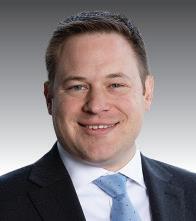
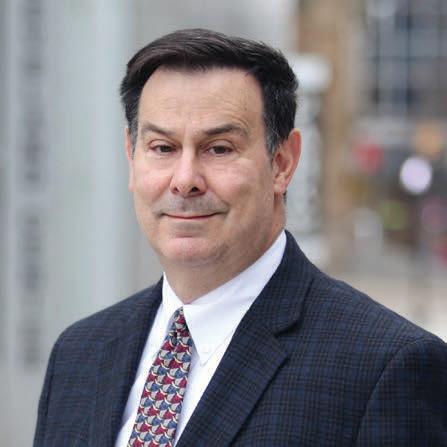
Cavanagh
Stroup
TOP 10 RANKED #3
Ian N. Friedman
IAN N. FRIEDMAN, ESQ.
Selected
IAN N. FRIEDMAN, ESQ.
ERIC NEMECEK, ESQ.
ERIC F. LONG, ESQ.
Selected to Super
IAN N. FRIEDMAN, ESQ.
Friedman
Selected to Super Lawyers
Friedman
IAN N. FRIEDMAN, ESQ.
Selected to Super Lawyers
ERIC NEMECEK, ESQ.
Selected to Super Lawyers
Selected to Super Lawyers
ERIC NEMECEK, ESQ.
Selected to Super Lawyers
ERIC NEMECEK, ESQ.
Selected to Super Lawyers
ERIC F. LONG, ESQ.
Selected to Super Lawyers
ERIC F. LONG, ESQ.
Selected
Selected to Super Lawyers
ERIC F. LONG, ESQ.
Selected to Super Lawyers
Friedman Nemecek Long & Grant, LLC is frequently called upon by individuals and organizations across the United States and abroad to render superior legal representation in the most sensitive and highprofile criminal defense matters. From the investigative to trial stages of the criminal justice process, their creative and driven approaches regularly earn their clients the greatest successes.
ERIC F. LONG, ESQ.
Selected to Super Lawyers
Friedman Nemecek Long & Grant, LLC is frequently called upon by individuals and organizations across the United States and abroad to render superior legal representation in the most sensitive and highprofile criminal defense matters. From the investigative to trial stages of the criminal justice process, their creative and driven approaches regularly earn their clients the greatest successes.
MADELYN GRANT, ESQ.
Selected
Selected
MADELYN GRANT, ESQ.
Selected to Rising Stars
GRANT, ESQ.
Selected to Super Lawyers TYLER WALCHANOWICZ, ESQ.
Selected to Rising Stars
GRANT, ESQ.
Selected
ESQ.
TYLER WALCHANOWICZ, ESQ.
Selected to Rising Stars
Selected to Rising Stars
Selected to Rising Stars
Friedman Nemecek Long & Grant, LLC is frequently called upon by individuals and organizations across the United States and abroad to render superior legal representation in the most sensitive and highprofile criminal defense matters. From the investigative to trial stages of the criminal justice process, their creative and driven approaches regularly earn their clients the greatest successes.
LUCAS D. TROTT, ESQ.
LUCAS D. TROTT, ESQ.
Selected
LUCAS D. TROTT, ESQ.
Selected to Rising Stars
Selected to Rising Stars
LUCAS D. TROTT, ESQ.
Selected to Rising Stars
$2 Billion + Recovered for Injured Families
Falkoff named dean of Capital University Law School
Capital University in Bexley recently named Marc Falko as the next dean of its Law School e ective June 1, the school announced in a news release.
Falko previously was a visiting professor of law and senior associate dean for faculty a airs at Rutgers Law School in Camden, N.J. He also served as a professor of law at the Northern Illinois University College of Law in DeKalb, Ill., and as the director of the NIU Prisoners’ Rights Project, where student-lawyers have represented over 25 prisoners who alleged that their constitutional rights were violated by prison employees, according to the NIU Law website.
said in the release. “He understands what makes Capital Law distinctive: our historic commitment to access and opportunity, our strength in practical and practice-ready legal education, our location in the heart of state and local government, and our deep connection to the Columbus legal community.”
Falko graduated from the University of Pennsylvania in Philadelphia with his Bachelor of Arts degree in English and psychology. He received his master’s in American literature from the University of Michigan in Ann Arbor before earning his Doctor of Philosophy in American literature at Brandeis University in Waltham, Mass. He earned his juris doctor from Columbia Law School in New York City.
In 2025, Falko received his Doctor of Education in higher education/higher education administration from Northern Illinois University in DeKalb.
“I am deeply honored to have been chosen to serve as dean of Capital University Law School, and particularly proud to be joining a school with nearly 125 years of enhancing access to legal education,” Falko said in the release. “I was drawn to Capital Law by its tight-knit community of faculty, sta , students and alumni, who all recognize the value of law school as an engine of social mobility.”
“Marc’s many years of experience in the classroom and in the courtroom, in addition to strategic leadership and proven commitment to student success, will support ongoing e orts to advance innovation, deepen alumni commitment and community engagement, and build an even stronger future for Capital University Law School,” Capital President Jared Tice
From 2004 to 2024, Falko presented a number of prisoners suspected of terrorism held by the U.S. military at Guantánamo Bay. He also clerked for Judges Carlos F. Lucero of the U.S. Court of Appeals for the Tenth Circuit and Jack B. Weinstein of the U.S. District Court for the Eastern District of New York after law school. From 2003 to 2004, he was appointed habeas corpus special master for the EDNY.
“Marc has proven leadership in areas central to the dean’s responsibilities, including academic a airs, admissions, faculty development, accreditation and strategic planning,” Tice said. “He brings a clear commitment to the kind of accessible, practice-oriented legal education that has been a cornerstone of Capital Law’s mission for more than a century.”
“(Marc) brings a clear commitment to the kind of accessible, practice-oriented legal education that has been a cornerstone of Capital Law’s mission for more than a century.”
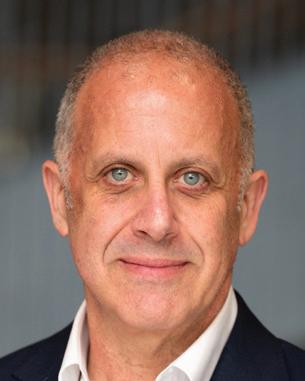
Falkoff
Jared Tice Capital University
Ohio Supreme Court clarifies path for felons seeking firearm rights restoration
LARRY W. ZUKERMAN AND ADAM M. BROWN Special to the CJN
In a 6-1 decision handed down on June 2, the Supreme Court of Ohio opened the door for certain individuals with felony convictions to petition for restoration of their firearm rights under state law. The case, State v. Heffley, centered on Patrick Heffley, an Allen County man whose single 2006 domestic violence conviction triggered both a state and a federal ban on possessing firearms. In practical terms, this meant that the one conviction created overlapping legal barriers, under both Ohio and federal rules, effectively prohibiting him from legally possessing a firearm, or even ammunition, under either system. He sought relief from the state disability more than 17 years later.
Jeffrey D. Zimon, Esq.
Ohio Revised Code Section 2923.14 allows eligible persons to apply to a court of common pleas for relief from a rearms disability. A key requirement is that the applicant must not be “otherwise prohibited by law” from acquiring, having or using rearms. e Court’s majority opinion, written by Justice R. Patrick DeWine, interpreted the phrase “otherwise prohibited by law” to mean a prohibition arising in a di erent way or from a separate conviction. Because He ey’s state and federal disabilities stemmed from the same Ohio conviction, the federal bar did not independently block his ability to seek state relief. Further, the federal rearm disquali er against He ey would no longer apply if his state rights to possess a rearm were restored.
Accordingly, the court held that He ey was not “otherwise prohibited by law” from possessing a rearm by virtue of the federal disquali er, and thus he was eligible to seek the restoration of his rearm rights in Ohio.
is decision however does not automatically restore convicted felons’ rearm rights. Applicants must still demonstrate to the trial court that they meet all statutory criteria, including evidence
of rehabilitation and that granting relief would not pose a risk to public safety. e process involves a formal petition, notice to the prosecutor and a hearing.
Supporters of the ruling highlight its alignment with principles of rehabilitation and second chances. ey point out that after many years without reo ending, individuals deserve an opportunity to petition for restored rights, with courts retaining discretion to protect the community. is approach, they argue, respects the balance between individual rights and public safety without allowing automatic restoration.
Critics, including some law enforcement groups and victims’ advocates, worry that the decision could weaken safeguards, especially in cases involving domestic violence or other serious o enses. ey emphasize that federal prohibitions under laws like the Gun Control Act of 1968 exist to reduce gun violence risks. Ohio continues to face signi cant challenges with rearm-related incidents, making any changes to restoration processes a matter of careful scrutiny.
e ruling highlights the roles of both the legislative process, and judicial interpretation, in shaping outcomes. By interpreting the existing statute’s “otherwise prohibited by law” provision narrowly, the court has clari ed eligibility for those with overlapping state and federal disabilities from a single conviction. Observers note that any further adjustments to this framework would likely require action by the Ohio General Assembly to amend the law, rather than through judicial reinterpretation.
e decision comes amid ongoing national discussions about balancing Second Amendment rights with e orts to prevent gun violence. In Northeast Ohio, where communities grapple with both crime concerns and personal safety, the practical e ects will depend on how trial courts apply the clari ed standard moving forward.
Whether this statutory clari cation leads to more successful restorations or prompts legislative updates to the statute remains to be seen, but communities across the State will continue to weigh the competing interests of rehabilitation, accountability, safety and the constitutional right to bear arms.
For more information about Larry Zukerman, Adam Brown and the law firm of Zukerman, Lear, Murray & Brown, Co., LPA, visit the firm’s website at zukerman-law.com.
Content provided by advertising partner.
DISCLAIMER
The Cleveland Jewish News does not make endorsements of political candidates and/or political or other ballot issues on any level. Letters, commentaries, opinions, advertisements and online posts appearing in the Cleveland Jewish News, on cjn.org or our social media pages reflect the views and thoughts of the writer and do not necessarily reflect the opinions of the Cleveland Jewish Publication Company, its board, officers or staff or any other organization unless explicitly stated.
Zukerman Brown
NAVIGATIN G TH E WORL D OF
New name. Same smart, steady guidance.
Guided by experience and laser focused on facts, Fried Law Group’s growing, collaborative team is ready to simplify complex legal terrain and help you chart your path forward to solving the most complicated estate and trust disputes.
Questions? Don’t wait. Let’s talk about what you need. Call 216-307-1900 or visit us at EstateDisputesLaw.com.
CMBA to host several educational progams in June
The Cleveland Metropolitan Bar Association will host a series of educational programs in June focused on some of the legal profession’s most pressing issues, including artificial intelligence, election integrity, immigration law and professional ethics.
The Third Annual Cyber+ Artificial Intelligence Summer Summit will take place from 11:30 a.m. to 5:30 p.m. June 18 at the Cleveland Metropolitan Bar Association at 1375 E. 9th St., Floor 2, in downtown Cleveland. The in-person event will examine emerging legal, ethical and practical questions surrounding artificial intelligence and its increasing role in the practice of law.
The summit will feature attorneys, judges, technologists and industry leaders discussing topics such as AI adoption in legal practice, evidentiary concerns, marketing challenges and the use of generative AI tools by self-represented litigants. Sessions also will address ethical considerations, AI-generated legal filings and strategies attorneys can use as artificial intelligence becomes more widely accessible.
On June 22, the bar association will host the Election Integrity Summit from 1 to 5 p.m. The nonpartisan program will bring together legal leaders, election officials, academics and civic organizations to discuss election integrity, democratic trust and the rule of law.
The summit will include a keynote
address by Judge Michael Luttig and panel discussions focused on civic trust, media influence and the role attorneys and community leaders play in strengthening democratic institutions. The event is presented in partnership with the Task Force for American Democracy and is open to attorneys, students, educators, nonprofit professionals and members of the public.
The Mid-Year Immigration Roundup, presented by the International Law Section, will be held virtually via Zoom from noon to 1 p.m. June 24. The program will provide updates on immigration law developments in 2026, including recent policy changes, regulatory updates and notable case law affecting immigration practice. Organizers said the session is designed for both immigration and non-immigration attorneys seeking to stay informed in a rapidly changing legal environment.
A day later, attorneys can participate in Honest Mistakes as Unethical Conduct, a virtual ethics program scheduled from noon to 1 p.m. June 25. The presentation will explore how common oversights and well-intentioned decisions can lead to disciplinary action and ethical violations. Using practical examples, speakers will discuss strategies to help legal professionals recognize potential pitfalls and protect their clients, practices and professional reputations.
For more information, visit clemetrobar.org.
Palko joins Hahn Loeser & Parks LLP Cleveland office
Ryan M. Palko recently joined the Cleveland office of Hahn Loeser & Parks LLP as an associate in its business law practice.
Palko represents lower-middle market companies engaged in mergers and acquisitions, and general corporate matters, while performing tax planning and offering comprehensive guidance for closely held businesses, according to a news release.
“We are looking forward to all that we can accomplish with Ryan on our team,” business practice chair Benjamin M. Cooke said in the release. “He brings a strong blend of tax and corporate law experience that will be a real asset to our clients. As an additional member of our M&A team, he will support many of our group’s middle market deals.”
A Northeast Ohio native, Palko simultaneously completed his J.D., MBA and MAcc from Cleveland State University. He also recently earned an LLM from the University of Baltimore.
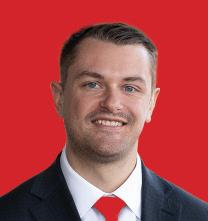
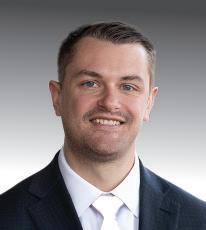
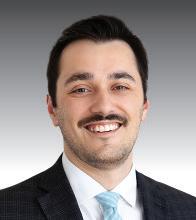
Palko
• Capital Markets and Securities
• Commercial and Public Finance
• Corporate/M&A and Private Equity
• Economic Development/Incentives
• Employee Benefits and Executive Compensation
• Energy and Utilities
• Estate and Succession Planning and Administration
• Government Relations and Legislation
• Intellectual Property/Patents
• Labor and Employment
• Litigation and Insurance Recovery/Coverage
• Privacy and Data Security
• Real Estate, Environmental and Construction Law
Ohio State trustees approve $100M settlement with hundreds of former students abused by doctor
ASSOCIATED PRESS
The Ohio State University agreed on June 3 to pay approximately $100 million to settle legal claims from hundreds of former student athletes who said they were sexually abused decades ago by a doctor at the university.
e school has fought lawsuits in federal court since 2018 brought by former student
athletes against the university over its failure to stop abuse by Dr. Richard Strauss. Strauss worked at the school from 1978 to 1998 and also ran an o -campus clinic. He died in 2005.
During a meeting last week, the school’s board of trustees approved a preliminary agreement with all but one of the 280 survivors with claims still involved in pending litigation. Once nalized, the
settlement could mark the end of a lengthy legal battle and close a painful chapter in the school’s history.
personnel knew of complaints about Strauss’ conduct as early as 1979 but failed for years to investigate or take meaningful action.
In a joint statement Wednesday, the university and plainti s thanked mediators and said they were working to nalize the details of the settlements.
“ e survivors of the Strauss abuse are all Buckeyes, will always be a part of our family and our community, and I rmly believe that,” the school’s president, Ravi Bellamkonda, said during the meeting. “We continue to be very grateful to them for their courage in coming forward, and reaching a nal resolution is very important to us and is an important step forward.”
Years ago, an independent report had concluded that scores of Ohio State
Ohio State already had settled with 317 survivors for more than $61 million, the school had said. Many former student athletes signed sealed agreements that kept their names a secret. Some former NFL players were among the victims, according to a lawyer in one of the lawsuits.
Ads in New York must label
AI-generated ‘synthetic performers’
KAITLYN HUAMANI | AP TECHNOLOGY WRITER
Any advertisements in New York that feature arti cial intelligencegenerated people in place of actors will now be violating state law if they don’t clearly label that they have used a “synthetic performer.”
e law, signed in December by Gov. Kathy Hochul, went into e ect on June 9. Her o ce is calling it a “ rst-in-the-nation law” that will boost transparency at a time when it says AI generated performers are popping up across all forms of media, including on social platforms and in digital advertising.
Synthetic performers are de ned under state law as “digitally-created media that appear as a real person.” e law applies to ads in any medium.
“In New York, we are setting the rules of the road instead of letting AI run the show,” Hochul, a Democrat, said in a statement. e “simple, honest disclosure” required by the law “protects consumers, respects our creative workforce and keeps New York at the forefront of responsible innovation,” she said.
Ads that don’t “conspicuously disclose” that they have used a synthetic performer will be subject to a penalty of $1,000 for a rst violation and $5,000 for any further violations.
ere are speci c carve outs listed in the law to exempt ads for movies, television shows, streaming content, video games and other works that feature synthetic performers in the entire work. It also doesn’t
apply to audio advertisements or ads where AI is solely used for language translation. When the law was making its way through the state legislature last year, the American Association of Advertising Agencies and several other advertising organizations issued statements in strong opposition to the law.
e 4As, as the organization is better known, said in one blog post that it would hurt advertisers by “injecting compliance uncertainty into the advertising process, burdening brands (and their agencies) who advertise in New York and undermining creative and technological innovation.”
Other organizations, like the e New York State Broadcasters Association, said in public statements during the legislation’s journey to become law that they were relieved to see some of those carve outs that were created through amendments, but remained concerned about the broad de nition of a synthetic performer. David Donovan, the president of the organization, said in a statement to e Associated Press on Tuesday that local broadcast stations are ready to comply with the law.
e biggest supporter of the law was SAG-AFTRA, the actors’ union that recently rati ed a new contract with studios and streamers that they say provides further protections against synthetic performers. e law is one of many proposed or enacted in several U.S. states with the goal
Motorists sue NY county over 1.6 billion license plate scans
BYRON TAU | ASSOCIATED PRESS
Acoalition of civil rights groups on June 9 asked a state judge to order one of New York’s largest suburban counties to stop its deployment of nearly 600 license plate readers, calling it a warrantless and “indiscriminate surveillance system” that violates the state constitution. e class action lawsuit also alleged that Westchester County never got proper authorization to launch the program, which has amassed a database of 1.6 billion plate scans that has been shared with more than 50 outside law enforcement agencies, including U.S. Immigration and Customs Enforcement. e complaint said the network “records the long-term travel patterns, daily habits, and intimate information of millions of law-abiding New Yorkers and other motorists who travel through Westchester.”
“In a democracy, a police department cannot unilaterally decide – without legislative authorization – to surveil the daily movements of its own citizens without any real accountability, transparency, or oversight,” said Barry Friedman, founder and faculty director of the Policing Project at NYU School of Law, which brought the suit on behalf of four motorists. “ is indiscriminate data surveillance must not be allowed to continue in the dark.”
“Westchester County has not yet received or reviewed the lawsuit referenced,” a spokesperson for the county said. e widespread use of license plate reader systems, which utilize a system of cameras to scan and record motorists’ license plate information, has generated
controversy. e Associated Press in November reported that the U.S. Border Patrol was running a secretive license plate reader program that singled drivers out over their travel patterns, prompting a complaint from congressional Democrats that the program may be unlawful.
A license plate reader company, Flock Safety, said last year it was pausing work with the Department of Homeland Security after it was revealed that police departments across the country were sharing license plate reader data with immigration authorities. Other cities and states are restricting data sharing with federal authorities, reducing how long they keep license plate reader data or even canceling contracts in response to residents’ complaints.
e civil rights groups brought the case against Westchester County on behalf of four women who live in the county or in nearby jurisdictions. e suit alleged that the four motorists’ license plate data had been collectively captured thousands of times by the county’s camera network in the past few years. A vehicle belonging to one plainti , Lora Nelson, was captured by the county’s cameras more than 2,400 times. Another plainti ’s vehicle was captured 1,134 times between 2023 and 2026, the suit alleged.
Westchester County, which is 430-square miles (1,114 square kilometers) and just north of New York City, is crisscrossed by major thoroughfares, including Interstate 87 and Interstate 95 and the Hutchinson River Parkway that serve daily commuter tra c into and out of New York City and longer distance travel.
e women who brought the case are represented by the
Policing Project at New York University School of Law, the Knight First Amendment Institute at Columbia University, the New York Civil Liberties Union and the law rm Fresh elds.
e use of license plate readers has broadly been upheld by most courts because they document the movement of cars on public roadways. e Westchester litigation is part of a broader legal e ort seeking to have courts reconsider such legal doctrines amid the proliferation of surveillance technologies, data collection and analysis.
of boosting job security for real humans or curbing the potential privacy and safety risks posed by AI. e existing state laws that have been passed include barring deepfakes in speci c instances, limiting the collection of certain personal information and requiring more transparency from companies. Just after Hochul signed the synthetic performers law in December, President Donald Trump signed an executive order pressuring states not to regulate AI. e move came out of fear that the patchwork of regulations across the states could impede AI companies’ growth and allow China to catch up to the U.S. in the AI race. Critics of the executive order argue it will allow tech companies to operate with little to no oversight.
Roetzel & Andress, LPA relocates to larger space
JIMMY OSWALD joswald@cjn.org
Roetzel & Andress, LPA is moving on up –both figuratively and literally.
The growing Akron-based law firm recently relocated its Cleveland office from the 10th floor of One Cleveland Center in downtown to the 30th floor, ringing in a new chapter for the 150-year-old practice.
“It’s fantastic,” Douglas E. Spiker, shareholder-in-charge of Cleveland, told the Cleveland Jewish News. “The elevator doors open up and it’s just so open, bright and spacious. It’s a very exciting place to come to work.”
Spiker said that Roetzel & Andress’s Cleveland office has been housed at One Cleveland Center at 1375 E. 9th St. for over 20 years, and the firm was on the 10th floor for over 10 of those years. The firm has 13 offices across Ohio and Florida, as well as in Chicago, Detroit, Lexington, Ky. and Washington D.C.
The move had been in the works since October 2024, when Roetzel and Andress acquired Brouse McDowell’s assets, resulting in around eight to 10 attorneys joining the firm’s 30 lawyers.
The two operated as one practice in different locations, but as the end of the lease was coming up, Cecchi, Spiker, Jessica Thomas, chief administrative officer, and Kelly Nizzer Bates, project manager, looked into the next steps for the office, viewing other options, such as the Fifth Third Center, before deciding to stay in their current skyscraper.
“One of the reasons is it has attached parking, which is a huge benefit to our staff, attorneys and clients,” Spiker said. “Covered parking where you can walk right into the office was a big plus.”
Marianne Cecchi, Cleveland firm administrator, told the CJN that where One Center Cleveland is located was also a deciding factor.
“The proximity to the courthouse is great,” she said. “It’s just a walk. We also really wanted a space that the two firms coming together could call their own. It wasn’t our space, and it wasn’t their space. It’s a brand new spot to make it our space.”
The new space is 17,050-square-feet in size and is better able to support a flexible, collaborative work environment, while also spacious enough to accommodate the practice as it grows into the future.
It features 39 glass-front offices and a much larger space for the employees, with a bigger area in which people can have lunch together. The firm also inherited a pool table that was left behind.
“Some of the offices have lake views, we can look down into Public Square, Huntington Bank Field and Progressive Field,” Cecchi said. “It’s just beautiful. Also, in our old location, we were very limited on how we could host events. This new space also has allowed us to host events that can hold 50 people. That was something we needed to do.”
The move also saw the firm update its technology in meeting rooms, installing
set-ups that make it easier to communicate virtually.
“It’s become effortless to conduct meetings,” Spiker said. “You can walk into a conference room and instantaneously do a (Microsoft) Teams meeting or Zoom mediation or deposition without having to get things set up. It’s nice to have that because as I transition out of my position, whenever that occurs, it’s a lot easier because we’re all much more collaborative within the office. It positions us for the future.”
A few of the attorneys work fully remote with the option to come into the office, and the new space has resulted in more of them choosing to come into work.
“There’s definitely been a noticeable shift, and people say they’re craving face-to-face time with their co-workers,” Cecchi said. “Plus, they
love the modern space and looking at the views. It’s helped bring people back in and made them happy.”
The new space was designed by HSB Architects + Engineers, lead by architect Robert Bajko, while Infinity Construction Co., led by Adam Parker served as the contractor for the project. The lease transaction was brokered by Rob Roe and Heather Gilleland of JLL. Construction began in early November 2025 and was completed at the end of February 2026, a timeline that was established at the start and met on time, according to Spiker.
“We’re never going to be one of the mega firms, but for a local, homegrown firm, we’re very well-positioned,” Spiker said. “This new space not only solidifies the commitment we have to our continued growth, but also to the city and region.”
Roetzel & Andress, LPA’s new Cleveland office space on the 30th floor of One Cleveland Center is more spacious and has glass offices that overlook Lake Erie and the city. | Submitted photos
The conference rooms at Roetzel & Andress, LPA’s new office space in downtown Cleveland have newer technology, allowing staff and attorneys to have an easier time holding meets virtually.
A large kitchen and dining area at Roetzel & Andress, LPA’s new Cleveland office space, which features a pool table, allows for more colleagues to take their lunch break together.