CITY WEEKLY salt lake Down the Drain
Ogden is taking advantage of Utah’s record drought to fix a 100-year-old pipeline.
BY JAMES GORDON










Ogden is taking advantage of Utah’s record drought to fix a 100-year-old pipeline.
BY JAMES GORDON
Men aren’t quitting dating because it’s too expensive. Or because dating apps are broken. Or because nobody knows who should text first.
They’re quitting because somewhere along the way, dating became an interview with people who have absolutely nothing to say.
George Carlin would’ve had a field day. Everyone likes to travel. Everyone is a foodie. Everyone loves live music. Everyone wants someone who can “make them laugh.” We’ve confused preferences with personalities.
The problem isn’t that people are bad. The problem is they’re astonishingly well-curated. Every profile is a closing argument written by defense counsel. Every first date is a press release.
Law school has a better system. Before a trial begins, attorneys conduct voir dire
They don’t ask jurors whether they’re fair, because everyone says they’re fair. They ask questions that uncover values, assumptions and biases.
Dating should work exactly the same way. The profile is just the petition. It gets you into court. The first few dates are voir dire. But instead of asking, “What’s your favorite vacation?” ask something that actually matters.
Here’s mine. If I died tomorrow, would you raise my kids according to my values? Not because I expect you to. Because I want to know whether you understand what those values are.
Would you teach them that character matters more than achievement? Would you tell them to question authority or trust institutions?
Would you raise children who seek comfort or who seek responsibility?
The answer isn’t right or wrong. It’s revealing. That’s the point of voir dire
You’re not looking for perfect answers. You’re looking for compatibility at the level where lives are actually lived.
Modern dating never gets there. Instead, we compare playlists.
We discuss favorite restaurants. We exchange travel stories that all sound suspiciously alike.
“I found this little café…” No, you didn’t. Google Maps did.
Then comes the inevitable question. “So…what are you looking for?” A witness who can testify to the existence of an original thought.
Because here’s what nobody says out loud. Dating isn’t the hard part. Marriage isn’t even the hard part.
Children are the hard part. Children are tiny, irrational defense attorneys who object to everything.
“Put your shoes on.”
“Why?”
“Because we’re leaving.”
“I don’t consent.”
If you can’t agree on values before they’re born, you’re certainly not going to

agree after one of them decides crayons belong in the dishwasher. That’s why the little things don’t interest me. Whether you ski. Whether you like tacos. Whether you’ve backpacked through Europe.
None of that predicts whether you’ll become the kind of person I want standing beside me when life stops being interesting and starts being difficult.
The purpose of dating isn’t to discover chemistry. Chemistry is easy. Fire has chemistry.
The purpose is to determine whether two people share a constitution before they try to build a country together. That’s what voir dire has always been about. Not finding perfect people. Finding the people you can trust when the verdict actually matters.
BRENDAN RYAN Salt Lake City
Care to sound off on a feature in our pages or about a local concern?
Write to comments@cityweekly.net or post your thoughts on our social media. We want to hear from you!
If your life had a completely inappropriate theme song, what would it be?
Scott Renshaw
“Funkytown” by Lipps Inc., inasmuch as I may be the least funky human being that has ever walked this globe.
Gavin Dahl
“Too Much” by Amber Mark.
Elizabeth Converse
“Poison” by Bell Biv Devoe.
Bryan Bale
“(I Can’t Get No) Satisfaction” by the Rolling Stones.
Derek Carlisle
“The Gentle Art of Making Enemies” by Faith No More. What album would be my soundtrack? Fair ain’t Fair by Time Fite.
Benjamin Wood
“Toxic” by Britney Spears. That song is an absolute banger.
Lynn O’Connor
“Girls Just Wanna Have Fun,” by Cyndi Lauper. It’s not inapropriate, it’s just a good song.
Wes Long
“Fish Eye Lens” from Strong Bad, Coach Z and Homestar Runner. All the ladies and mens, they know everything is better with a fish eye lens.

BY KEITH BURNS
In November, The Church of Jesus Christ of Latter-day Saints sued John Dehlin and the Open Stories Foundation, the host and organization behind the prominent, twodecade-old Mormon Stories podcast. To understand the dispute, it is important to clarify what the church is alleging. The lawsuit argues that Dehlin and Open Stories Foundation violated trademarks through both the continued use of the name Mormon Stories and the podcast’s visual branding.
The church specifically points to logos used by Mormon Stories, beginning in 2022, arguing that the podcast borrowed elements of official church branding, including similar color schemes, fonts and light-ray imagery associated with the church’s own trademarks. The lawsuit’s central argument is that these choices create confusion among a “reasonable and informed consumer” who may believe the Mormon Stories podcast is affiliated with or endorsed by the faith. Legally, the central question is not whether Mormon Stories produces critical commentary about the church, but whether its branding creates a likelihood of consumer confusion—the core issue in trademark law.
The church’s argument raises some inconsistencies. Mormon Stories has existed since 2005. For two decades, Dehlin has operated the podcast under that name, building a substantial audience and public identity. Church lawyers were certainly aware of Dehlin long before filing this lawsuit. In 2015, Dehlin’s excommunication by his stake president was a public event, and leaked materials identified him as a significant challenge to church efforts in retaining members.
This raises a basic question: if Mormon Stories’ branding created confusion, why did the church wait nearly 20 years to take legal action? Trademark law allows rights holders to protect their intellectual property, but such a lengthy delay in enforcement can undermine the credibility of a claim.
The church’s enforcement of the “Mormon” trademark also raises concerns about consistency. Dozens of podcasts, publications and organizations use “Mormon,” yet Mormon Stories appears to be receiving particular scrutiny. The church may have legal reasons for distinguishing between different uses, but the selective nature of the lawsuit creates an inconsistency that requires explanation.
Perhaps the most significant inconsistency involves the church’s own recent history with the word “Mormon.” In 2018, President Russell M. Nelson directed members and the public to use the faith’s full name, describing the change as a correction of an inaccurate name and famously stating that using the term was a “victory for Satan.”
Indeed, the church’s institutional campaign to disavow the term “Mormon” creates a precarious backdrop for a lawsuit asserting broad rights over its use. At minimum, these inconsistencies raise questions about the strength and consistency of the church’s trademark claims. The legal arguments will ultimately be decided by a court, but the circumstances surrounding the lawsuit suggest that this dispute involves more than a simple question of branding.
Mormon Stories and the Open Stories Foundation have also offered several counterarguments. First, they have already made significant changes to address many of the church’s stated concerns. They changed elements of their branding, including removing the light-ray design elements from their logo, and they added disclaimers clearly stating that Mormon Stories is not affiliated with, endorsed by or sponsored by the church.
According to Dehlin and Open Stories, they attempted to resolve the dispute in good faith and agreed to multiple requested changes. However, they declined certain additional demands, including a requirement that a verbal disclaimer be included repeatedly throughout podcast episodes.
Beyond the branding itself, Mormon Stories argues that the podcast’s content makes institutional confusion unlikely. For more than two decades, the podcast has openly focused on faith transitions, church history and critical discussions of Latter-day Saint beliefs and policies. A reasonable consumer familiar with the podcast’s content would likely understand that it represents an independent platform offering commentary about the church, not communication from the church itself.
While the stated rationale for the lawsuit centers on trademark protection, some observers have raised broader concerns about the role this litigation may play in responding to institutional criticism. The church has a long and complicated history with dissent and public criticism, particularly when those critiques challenge established practices, policies or interpretations of doctrine.
The most prominent example is the 1993 “September Six,” when a group of Latter-day Saint intellectuals faced excommunication or disfellowship after promoting scholarship that challenged aspects of either church history, theology or policy. More recently, other members and former members who have publicly criticized church policies or raised questions about institutional practices have also faced disciplinary consequences from their local leaders.
The timing of the Mormon Stories lawsuit does raise questions. The church had nearly two decades to pursued legal action. Instead, it waited until Mormon Stories had become a prominent platform for discussing faith transition and critical perspectives on Latter-day Saint issues. When an institution with enormous resources brings legal action against a prominent critic after years of public disagreement, it is reasonable to consider whether the lawsuit reflects concerns beyond branding alone.
Regardless of the outcome of this lawsuit, the broader implications deserve attention. Litigation can be a powerful tool for institutions seeking to protect legitimate interests, but it can also function as a means of suppressing dissent from those challenging established power structures.
When a large and influential institution uses legal resources against a prominent critic, the impact extends beyond the immediate parties. It can signal to others that institutional criticism may carry significant consequences.
If The Church of Jesus Christ of Latter-day Saints is going to successfully navigate the 21st century and respond to continued membership decline in the global north, its members and leaders will need to develop a greater capacity for engaging criticism with maturity and responsibility. Institutions that adapt are not those that eliminate criticism, but those that engage with and learn from it.
The future of the church will depend not only on how it protects its institutional identity, but also on how willing it is to listen when that identity is challenged. CW






No need to wait for Pie & Beer Day—these local bakeries cater to Team Cream and Team Fruit fans year round. With a new storefront on Highland Drive, Instagram darling Pie Party whips up flavors like chocolate cream, caramel banana cream and lemon lime coconut available by the slice, Thursday–Sunday until 2 p.m. If your pie preference is more for the peach or apple variety, South Jordan’s Flake Pie Co. serves up personal-size pies with their signature flakey butter crust. And if you get asked to bring desserts to holiday dinner, both of these pie purveyors offer whole pies to go.


STAY TUNED FOR THE 2026 BEST OF UTAH BALLOT THIS AUGUST!
Each week, City Weekly will publish, email to our Best of Utah list and post on our socials an expanded version of our beloved Best of Utah issue. With over 400 categories to choose from, we selected our favorites to post from now til the Best of Utah issue in November. Remember, always support local!



CORNER CANYON HALF MARATHON, 5K & 10K
SATURDAY, SEPTEMBER 19 @ 7AM
Challenge yourself with a run through beautiful Corner Canyon
More info at www.DraperUtah.gov/Half

BY KATHARINE BIELE | @kathybiele
BY ARICA ROBERTS
Gates: 7:00 PM
Show: 8:00 PM
www.DraperUtah.gov/Amphitheater


July 31, August 1, 3, 6, 7, 8
Gates: 7:00 PM
Show: 7:30 PM
www.DraperUtah.gov/Amphitheater
2025 BEST OF UTAH WINNER 16 WINS SINCE 2015
THANKS FOR VOTING FOR US IN BEST OF UTAH!

UTAH’S BEST
GAY•GOTH•RAVER•VINTAGE•FESTIVAL CONSIGNMENT/THRIFT SHOP & BOUTIQUE!
WE SELL YOUR PRE-ROCKED STUFF, YOU KEEP 50% CASH!
Learn more about selling at iconoCLAD at iconoCLAD.com Find us at , , & wherever @iconoCLAD


855 S STATE STREET, SLC
MON-SAT: 10AM - 8PM
SUNDAY: 11AM - 6PM 801-833-2272
414 EAST 300 SOUTH, SLC
MON-SAT: 11AM - 8PM SUNDAY: 11AM - 6PM 385-432-3600









The best part about Sen. Todd Weiler’s new position with the Sutherland Institute is all the Monday morning quarterbacking. Sutherland Institute has been around since 1995 as a conservative think tank that focuses on family and limited government. On one hand, it supports school vouchers. On another, it decries partisan gerrymandering. The institute has run through as many presidents as it has policies, and Weiler—R, Woods Cross—will now have to navigate the think tank’s politics while working as a Utah senator. “A sitting senator should not be paid to lead an organization whose purpose is to influence public policy,” said patient advocate Christine Stenquist. Maybe, but it’s happened several times before. Former Sen. Howard Stephenson ran the Utah Taxpayers Association, and the late Sen. Ed Mayne also ran the Utah AFL-CIO. One internet commenter who “likes” Weiler, asked if he would give up “snarky Twitter Todd,” and Stephenson wondered if Weiler is really aligned with Sutherland’s values. We’ll see who influences what when Weiler’s center-right politics meets Sutherland’s far-right.
Mike Lee has another idea. What could possibly go wrong? Just ask Rick Bennett, a Utah author and professor whose Linkedin profile describes him as a “guerilla warfare hired gun.” Bennett kind of likes Lee’s idea to set private hackers loose on foreign cybercriminals. He made the point in a novel 15 years ago that “private entrepreneurs”—call them privateers, like the pirates of old—could clean up cyberspace. “Imagine licensed and bonded cyber privateers looting offending criminal enterprises (including governments) and splitting the proceeds 50-50 with the U.S. Treasury.” Lee’s Cyber Letters of Marque and Reprisal Act would let the president authorize this virtual army. It’s the second time Lee’s tried the bill and, gee, look how great this kind of private army works. ICE has no problems, right? So why should privateers who can work in and around both you and your government?
Power—America at 250 is all about who’s got it and how they wield it. Spoiler alert: It’s not you, the people. Case in point is the latest salvo to “fix” Utah’s Government Records Access and Management Act (GRAMA), which originally passed in 1991. Sen. Mike McKell, R-Spanish Fork, wants to wipe out the seven-member State Records Committee. They take too long, boo-hoo, to get through a backlog of complaints. Impatience with process, BTW, is a hallmark of the Legislature. It is largely why ballots now have to be received, not postmarked by Election Day. McKell wants a single attorney—appointed by the governor—to make decisions on public records. No more “diverse” group of practitioners making decisions. The GRAMA lawyer would have high ethics, like that’s a thing, and speed up the process. Maybe he’d even kill it. CW
If you are looking for a meaningful Pioneer Day activity, the Salt Lake Art Museum will fully open its main exhibitions in the historic B’nai Israel Temple at 249 S. 400 East this Friday, on July 24.
The museum positions itself as a guardian against cultural erasure by focusing exclusively on Utah artists, Utah art and Utah’s art communities.
“Utah, per capita, has more artists than any other state in the nation,” said Chris Jensen, the museum’s executive director. “It’s sort of a shame that Utah produces these world-class artists and they have to go elsewhere to become recognized in their craft.”
The Salt Lake Art Museum represents a deliberate effort to counter this brain drain of Utah’s artistic talent.
The Utah Master Series has already been up and running, showcasing artwork from world-renowned locals Galina Perova, Stanley Wanlass and Ben Hammond. Other planned exhibitions highlight Utah connections using both historical art and figures to address contemporary social issues, particularly around women’s recognition and environmental concerns.
For example, the museum will showcase the story and artwork of Spanish immigrant Pilar Pobil, who fled to Utah when her father was one of the first people killed in the Franco Revolution. There will also be a special Julia Reagan exhibition highlighting her achievements—beyond the billboard empire that carries her family name—and centering Reagan’s individual accomplishments.
“So many times, people will highlight a woman in their lives where they say ‘she was a lovely grandmother or a lovely wife or a lovely mother, and that’s why we love her,’” Jensen said. “But then they miss that story of who she really was.”
The museum is also committed to addressing current environmental crises through art, exemplified by the famous 19th century landscape painter Albert Bierstadt, who made several expeditions to the West and produced breathtaking panoramic vistas of the Salt Lake Valley as well as localized natural landmarks.
Bierstadt’s landscape paintings will be featured side-by-side with work from modern artists.
“We want people to think about the changing landscape and how it’s changed since Bierstadt’s paintings in the 1800s,” Jensen explained.
And finally, the B’nai Israel Temple Exhibition will utilize the building itself to tell the history of Judaism in Utah. Constructed between 1890 and 1891, it is the oldest synagogue in the state and even predates the Latter-day Saint Temple on downtown’s Temple Square. The exhibit is intended to provoke thought about modern day issues that affect different communities in Utah and around the world.
“People see themselves through art. And art, whether it’s old or contemporary, tells a story of who we are,” Jensen explained. “We want people to think of that when they walk through the museum.” CW



about what people think about me, and what do I do with that?” Dexter recalls. “So I decided to start performing comedy.”
this event.
Great Salt Lake Fringe Festival provides a space for work that might only exist for
BY SCOTT RENSHAW SCOTTR@CITYWEEKLY.NET
For audiences, “fringe” theater festivals are a chance to experience a sampler platter of creative work of a kind that might be hard to find in any other place. For those who create those works, it’s a blank canvas with a built-in support structure. And for many of those creators, it’s just fine if this venue is the only place where the work and an audience connect.
Since 2015, Great Salt Lake Fringe has built on the model of festivals around the world—most specifically the Edinburgh Fringe Festival—of providing a venue for performing artists to present short, selfcontained works that might otherwise never be seen. While some of the pieces performed at GSL Fringe have gone on to have life elsewhere, or subsequently been expanded (like a Sundance Film Festival short film that serves as a calling card for a feature), others have their two weekends in the spotlight, after which the artists simply move on.
Cache Dexter—who appeared at the 2025 GSL Fringe with the one-man show Second Grade Problems—returns in 2026 with The 2,145,048,704th Most Interesting Person in the World, a show about trying to move ahead one spot on the list of the world’s most interesting people by becoming more interesting than the 2,145,048,703rd most interesting person, an accountant from Ohio named “Baby Satan.” The concept fits into an adventurous comedic sensibility for Dexter, who started performing comedy only in recent years.
“A few years ago, I realized about myself that I don’t necessarily care too much
Prior to performing at last year’s GSL Fringe, Dexter had never attended a fringe festival himself, but saw the way the event was advertised as a perfect place for the kind of work he was already doing.
“I had seen [GSL Fringe] advertised online, ‘Apply with whatever you want to do, and here’s your stage,’” he says. “I put together different bits I’d been doing at open mics over the past year or two, and had a great experience. … I don’t know where else I could perform what I’m doing. I don’t fit in at the comedy club necessarily.”
Dexter believes that The 2,145,048,704th Most Interesting Person in the World is in some ways more polished and cohesive than Second Grade Problems, yet still feels fine with the idea that it will exist at this festival, and not necessarily afterwards.
“I don’t have any expectations beyond this,” Dexter says. “If that’s as far as it goes, I’m happy with that. … There’s still a lot of kind of disparate-feeling bits, because stylistically that’s what I’m drawn to. It’s me trying to be interesting, and I hope that’s interesting to somebody.”
Happy Birthday Mr. President, the story of an awkward office party, is a collaboration of several first-time fringers, including co-directors Shila Sudbury and Thomas Lambert. While both had seen shows at the festival in the past, they were drawn to having a pre-existing infrastructure to present a new work.
“It’s a really cool opportunity to put on a show, and more of the annoying elements are handled by not-me,” Lambert notes.
Sudbury adds that she’d had the opportunity to hear from a friend, director Sonny Payne, about the process working on the fringe production Ants Go Marching in 2025. “I got to hear a lot of the behindthe-scenes work, some of the challenges,” she says. “I went to see the show, and fell in love with [fringe]. It was so cool that so many people got to do so many different kinds of theater.”
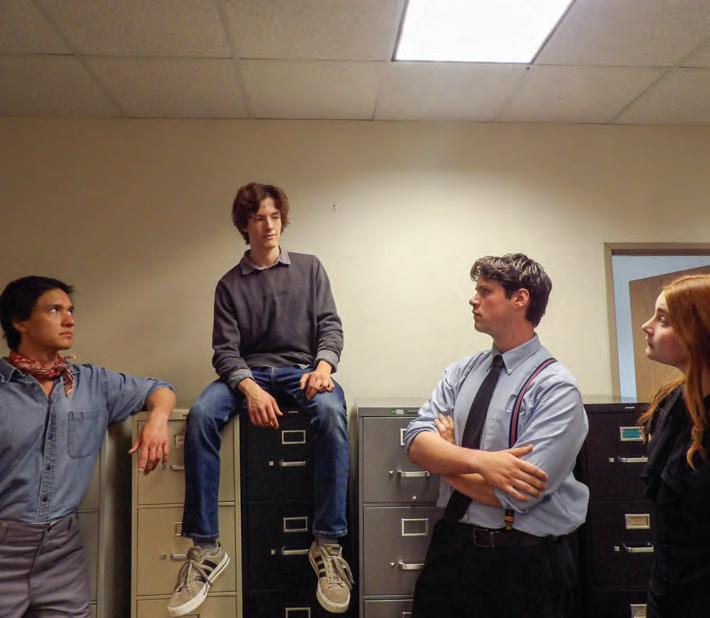
Birthday Mr. President went through several possible writers in its development process, and all along the way, the creative team thought of what they were creating as a specifically “fringe” show. “It would be totally against what the play is about for it to continue,” Sudbury says. “What makes this script so magical is it’s only premiering here right now. … I think this particular show, it feels very much like a fringe show, and it should be left there.”
That said, they have found this creative process rich enough that they hope to continue collaborating into the future on other projects.
“This partnership developed over time,” Lambert says. “We were in this to make art, and not necessarily to build something greater. Our partnership is the thing greater.”
of
And while this year’s production still isn’t wrapped, both Lambert and Sudbury are looking forward to the possibility of working in future festivals.
“I loved working with Thomas and these actors,” Sudbury says. “I’ve loved working with everyone at Fringe. It’s something that really fills my soul. … What’s important to me is what art does, and especially what theater does for people. ... This sense of looking onto the horizon and seeing new things and being able to feel so deeply. Just the sensation of connection. That feeling of almost magic.” CW
GREAT SALT LAKE FRINGE FESTIVAL
Mad King Fellowship Theater, The Gateway Alliance Theater, Trolley Square July 23 – Aug. 2 $15 individual shows/packages available gslfringe.org for full festival lineup and schedule

Heather Hansman: Fierce Country
As is true in so many areas, the contributions of women in pioneering recreation and conservation in the West can be given short shrift. Journalist Heather Hansman (the 2021 book Powder Days) attempts to correct that in Fierce Country with profiles of three fascinating women: Georgie White, who kickstarted the riverrunning craze and the recreation industry in the Grand Canyon in the 1940s; Anne LaBastille, author, wilderness guide and early voice in warning about climate change; and Dolores LaChapelle, a skier who helped shape the radical environmental movement.

On the Pen Pals podcast, Hansman expressed an initial reluctance to dive into what became Fierce Country, when someone suggested expanding on stories of women characters in Powder Days. “I was immediately like, ‘I don’t want to write a girl book,’” she recalled. “And then I was like, ‘Oh, that’s interesting—why do I feel so resistant to that?’ … I’ve often been the only women in these [outdoors] spaces, and … I didn’t have, for lack of a better word, heroes. So many of the stories about how you could be out in these places were about men. And I don’t think that’s actually true.”
Heather Hansman comes to The King’s English Bookshop (1511 S. 1500 East) on Thursday, July 23, 6:30 p.m. – 8:30 p.m. for a reading and signing event. Two ticket options are available: $5, with all proceeds going to The King’s English non-profit partner, Brain Food Books; and $30.99, which includes a copy of Fierce Country Registration is available via Eventbrite; visit kingsenglish.com for tickets and additional event information. (Scott Renshaw)
of ’47/Uniting Communities Powwow/ Pie & Beer Day
July 24 in Utah means a lot of different things to a lot of different people, depending on your particular background and interests. If you’re planning to spend the holiday recognizing Utah statehood in celebration, there are plenty of different ways to do it.
For the traditionalists, Days of ’47 festivities take place throughout the state, including rodeos, the Deseret News marathon through Emigration Canyon and the big parade in downtown Salt Lake City on the 24th beginning at 9 a.m. For a full schedule of activities and additional information, visit Daysof47.com.

As an alternative to the festivities recognizing the Mormon pioneers, the Uniting Communities Powwow—presented by the Utah Native American Chamber of Commerce—celebrates the indigenous residents of the state through song, dancing, stories and traditional crafts. The free, all-day event on July 24 takes place at Pioneer Park (600 Harvey Milk Blvd.) from 10 a.m. – 9 p.m., including drum circles, a marketplace of Native vendors and a closing drone show. Visit utncoc.com for additional event information.
A more irreverent sensibility emerged over the years in turning Pioneer Day into “Pie and Beer” day, giving those less connected to the pioneer heritage their own chance for fun. This year’s official event comes to the Ballpark Stadium (formerly Smith’s Ballpark, 77 W. 1300 South) on July 24 from 4 p.m. – 8 p.m. The event brings together local brewers, bakers and a few thousand of their fans to enjoy samples of their wares, plus vendors, amateur pie-baking contest, live music and entertainment. Tickets are $10 general admission advance/$15 day of event, kids with adults free. Visit officialpieandbeerday.com for more information. (SR)
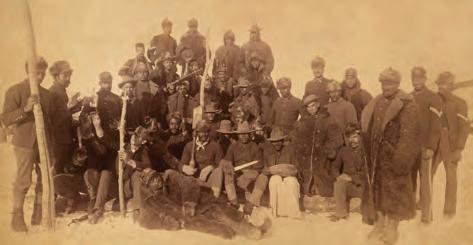
The history of what we know as the settling of the American West involves plenty of contributions from people of color, perhaps none more notably than the “Buffalo Soldier” allBlack regiments of the 1860s-1890s. Formed from many of the Black former enslaved people fleeing the poverty of the post-Civil War South, these regiments were dubbed “Buffalo Soldiers,” so the stories go, in the 1870s by Apache and Cheyenne people referring to the soldiers’ curly hair, and the designation stuck as a kind of badge of honor.
The specific Utah history of the Buffalo Soldiers received an acknowledgement with the launch of the Buffalo Soldiers Heritage Trail in 2024. The 475-mile trail will eventually stretch across eight sites, including the newest one at the Moab Museum. The city’s specific connection to the Buffalo Soldiers is most closely related to the 9th Cavalry, which began an expedition into the Utah Territory in 1878 from Colorado, initially along the Old Spanish Trail. During their 12-week patrol, the 9th Cavalry scouted for Ute tribal members in and around the Abajo Mountains while extensively exploring eastern Utah. Their route was recorded in remarkable detail, documenting campsites, geographical landmarks and even man-made structures along the way. Notable locations included Kane Springs, a critical water source along the Old Spanish Trail.
The Moab Museum (118 E. Center St., Moab) presents a free opening event of the Buffalo Soldiers Heritage Trail on Tuesday, July 28, 9 a.m. – 5 p.m.; a special event for museum donors follows 5:30 p.m. – 7:30 p.m. The site continues during regular museum operating hours; visit moabmuseum.org for additional event information. (SR)





From stage to screen, from animation to live action, not every concept can plug-and-play across formats.
BY SCOTT RENSHAW scottr@cityweekly.net @scottrenshaw
The release of Disney’s live-action version of Moana this month had folks asking plenty of questions: How did this version compare to the original? When will Disney stop chasing its own tail? Why does it feel so weird to see The Rock with hair? Yet there was another important question, one that applied not specifically to that movie: What manner of storytelling serves a particular story best?
It was a subject I recall coming sharply into focus in the wake of the 2017 release of Disney’s CGI-animated—don’t you dare call it “live-action”—version of The Lion King. It was yet another of the company’s ill-advised (albeit very financially lucrative) remakes, but one of the key reasons it didn’t work was particular to the choice to animate animal characters photorealistically. The emphasis on making them look like real animals robbed Simba, Timon and company of the personality that hand-drawn animation afforded them, including broad facial expressions. Lion King ’17 failed artistically because it failed to understand that The Lion King was a story that needed to be told in the specific manner it was told back in 1994.
A variation on this idea emerges frequently when novels are adapted to the screen, often leading to “the book was

better”-type comparisons. And while it certainly isn’t always true, frequently these people are trying to articulate that the story belongs in its on-the-page incarnation. Maybe it’s because the author’s writing style and turns of phrase were intrinsic to what made it successful; maybe it’s because, as with Kafka’s Metamorphosis or Joyce’s Ulysses, the concept is so intrinsically literary that the mere idea of representing it visually misses the point entirely. It’s not so much that “the book was better” as it is “the book was meant to be a book, and nothing else.”
This isn’t a phenomenon exclusive to book-to-movie translations.
We got a particularly interesting example with the recent movie adaptation(s) of the Broadway musical Wicked, which itself was an adaptation of Gregory Maguire’s novel. Maguire’s book is quite good, but it’s much darker and more expressly political, and the musical became its own thing entirely. Turning that musical into a movie, however, robbed it of the sense of theatrical spectacle that was one of the stage Wicked’s chief appeals; an actor being elevated above the stage while you’re sitting in the room just hits differently than watching someone inserted into the sky via computer animation. Like the stageto-film adaptations of 2004’s The Phantom of the Opera, 2012’s Les Misérables or—perhaps most notoriously—2019’s Cats, Wicked was a story that, in that particular form, was meant to be seen in person.
To return to the example of The Lion King, there’s a reason that Julie Taymor’s Broadway version found its own completely distinctive way to tell that story, one that simply wouldn’t have the same impact as a movie.
The individual category examples of this phenomenon are almost too numerous to mention: short films that were expanded to feature length (but clearly shouldn’t have been); goofy kid-centric Saturdaymorning cartoons turned into big-budget CGI tentpoles; Saturday Night Live sketches



allowed to become 90 excruciating minutes. As understandable as it is for studios and filmmakers to try to capitalize on an idea that was successful in another form, there’s too little willingness to ask the very simple question, “Leaving aside any of the talent involved, does this story have any chance of working if it’s presented in this format?”
Of course, there are also many examples of stories that work across storytelling platforms, because sufficient thought was put into deciding what elements to keep, what elements to jettison, where to take things in a completely different direction, or simply seeing that the story is simple and malleable enough to cross formats.
Steven Spielberg’s Jaws famously took a
successful potboiler and turned it into one of the greatest works of cinematic art ever created; ditto Francis Ford Coppola with Mario Puzo’s The Godfather. Peter Jackson’s original Lord of the Rings trilogy brought a new visual majesty to everything that had made the books beloved for decades, in much the same way that Sam Raimi’s Spider-Man movies did for the comic-book hero. There’s nothing sacred about the idea that the original version has to be the only version. It just involves someone considering the words of Ian Malcolm in Jurassic Park, and not being “so preoccupied with whether or not they could, they didn’t stop to think if they should.” Not for nothing, Jurassic Park was a book that worked better as a movie. CW
















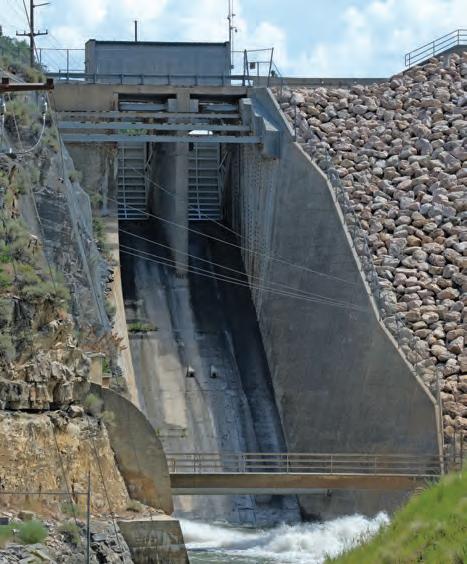
Ogden is taking advantage of Utah’s record drought to fix a 100-year-old pipeline.
BY JAMES GORDON comments@cityweekly.net
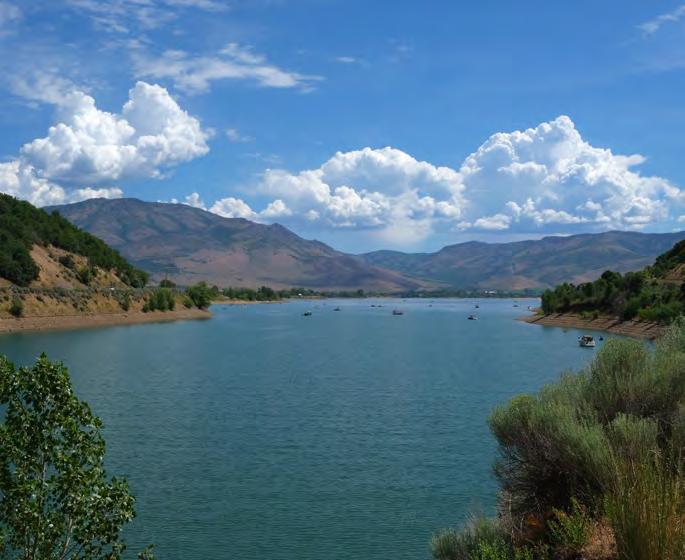
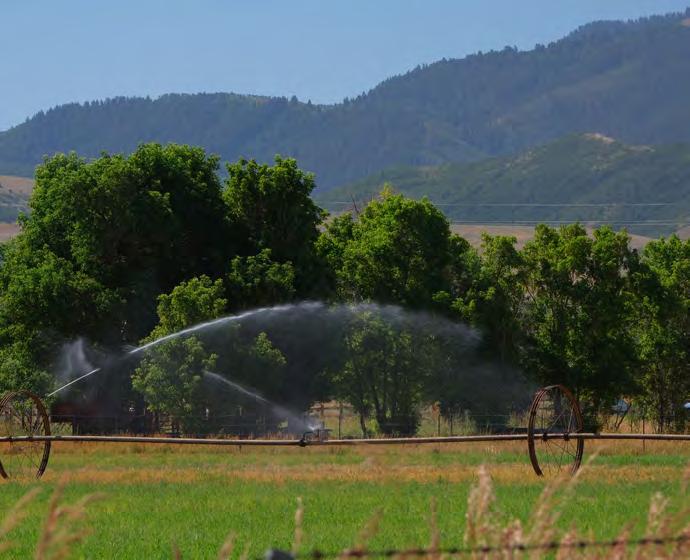
the blue waters of Pineview Reservoir lies a century-old pipeline that carries roughly half of Ogden’s drinking water. After one of Utah’s lowest snowpack years on record, officials say the aging pipeline can no longer wait to be replaced.
On June 26, officials announced the next phase of a project that seeks to reduce water waste and stave off potentially catastrophic deterioration of Ogden City’s water infrastructure.
In order to proceed, construction crews will first drain Pineview Reservoir—beloved by swimmers, paddlers, anglers and water-skiers—down to a puddle.
“Replacing it now protects long-term water reliability, preserves the integrity of a vital public asset and takes advantage of a rare opportunity created by naturally low reservoir levels,” said Justin Anderson, Ogden’s executive director of Public Services, in a prepared statement.
While the Pineview project addresses the infrastructure specific to that reservoir, it also highlights a broader challenge facing Utah’s aging wa-
ter systems. As weather patterns become less predictable, water managers are increasingly balancing outdated facilities and an uncertain water supply.
Beneath Pineview, a 100-year-old pipeline runs to Ogden Canyon, channeling water from the reservoir and its tributaries into wellfields and water storage that serves roughly 120,000 Ogden City residents.
Anderson said the line was last serviced around 55 years ago. Upgrading it now is estimated to save one million gallons of water each day that otherwise leaks from the 36-inch diameter pipe.
The reservoir was routinely drained for maintenance during its early decades, but that practice ended in the 1970s.
Since then, officials say, opportunities to access infrastructure beneath the reservoir have been rare.
“The city has not seen it. We have not inspected it. We know nothing, really, of the condition,” Anderson remarked during a City Council workshop on June 9. “It carries probably 50% of our water supply. It is vitally important to the success of our city.”
Anderson pointed to Huntsville, located on the east shore of Pineview Reservoir, where a pipe failure last year left residents without water for nearly two weeks. He said the city wants to replace the pipeline before it becomes an emergency.
“When water lines quit working, it never is during a convenient time, and it’s sometimes not a quick fix,” Anderson said. “We’ve got to have some assurances that we know our culinary water supply is not at risk.”
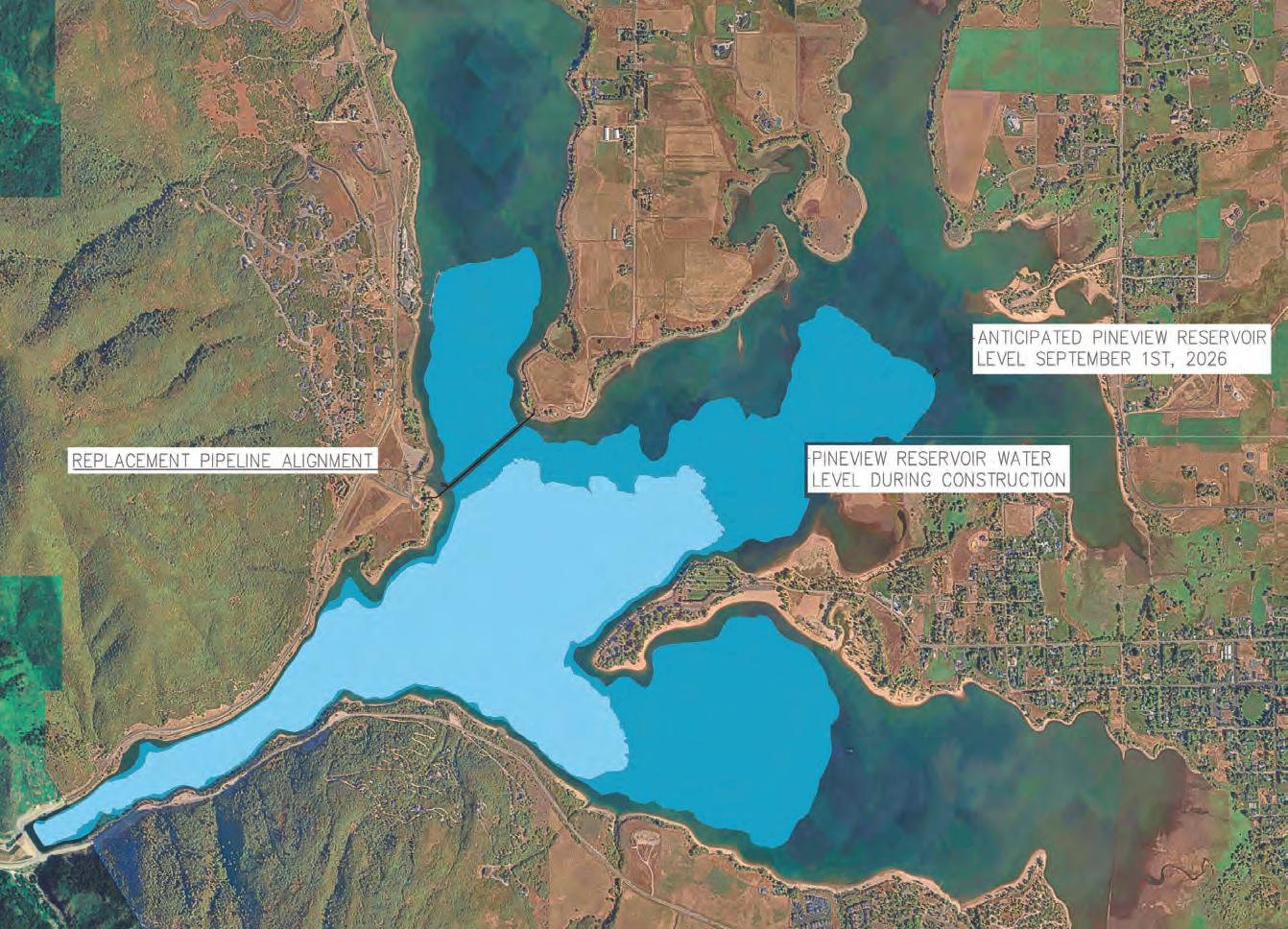
The city doesn’t plan to fully drain the reservoir, but will drop it to the lowest levels seen since the 1970s. Maps released by Ogden City anticipate the shoreline receding substantially by September 1, with the reservoir’s north, northeast and east arms expected to be completely dry two weeks later.
Once water levels are low enough, construction crews will install a new pipeline of the same size alongside the existing one, which crosses the bottom of the reservoir near its north arm before emerging near State Route 158. The current pipeline will not be removed. Instead, it will remain in service throughout installation and will continue to act as a backup, emergency conduit.
The work costs $100 million and is funded primarily through federal grants from the Water Infrastructure Finance and Innovation Act (WIFIA) and American Rescue Plan Act (ARPA), with some state support. Ogden City had initially planned to start construction in the Fall of 2027, but accelerated the timeline after unusually low snowpack created an opportunity to access the pipeline.
National Weather Service meteorologist Alex DeSmet said snowpack in the western United States can vary dramatically from year to year. A normal snowpack fills the reservoir, while an exceptional snow year like 2023 could delay construction because the reservoir would remain too full.
Last winter played out differently, however, with Utah experiencing its worst snowpack on record.
“Utah’s record-low snowpack melted off one to two months ahead of schedule,” DeSmet observed.
“As a result, runoff was both at or near record lows and occurred in late March instead of the usual early-mid June.”
“We could be in trouble if we don’t have a decent winter.”—Club Rec owner Casey Pratt
And as water levels fell, temperatures rose.
“2026 is Utah’s warmest on record, driven by a record-warm January-March timeframe,” DeSmet said, noting that April, May and June were all above normal too, but not record-breaking. On July 12, Salt Lake City set an all-time heat record at 109 degrees.
DeSmet said the hot and dry trends are likely to continue, but Utahns may also have a higher chance of rain in the coming weeks due to models that favor a more active monsoon season.
However, whether that moisture reaches Utah depends on broader weather patterns across the Four Corners region. Similar projections for above-normal precipitation were forecasted last summer, but those storms largely missed Utah.
Regardless of how much summer rain falls, Paul Brooks, a University of Utah professor in the Geology department, said Utah’s water supply overwhelmingly depends on winter snowpack.
Brooks said this year’s water levels have been “extremely unusual,” adding that the amount of observed rain in the mountains between late November and March were unprecedented.
“The rain and warm temperatures causes snowpack to melt, and while some of that melt contributes to streamflow or groundwater, a portion of it evaporates,” Brooks said. “That leaves us with less water overall, and especially less water during spring snowmelt when we count on streamflow to fill our reservoirs.”
Brooks noted that rainfall contributes to water supply by easing stress on forests, crops or landscapes during summer, reducing demand on water stored in reservoirs, soils and groundwater. However, rainfall alone does not provide most of Utah’s usable water.
“Ninety to ninety-five percent of our societal water supply is from snow,” Brooks said.
According to the U.S. Geological Survey, snowmelt and rain naturally seeps into the ground, replenishing groundwater that can supply communities for years.
But with seasonal snowpack becoming less predictable, reducing water loss becomes increasingly important.
“Because the water that leaks from the pipeline is not available to the people who need it, the system is inefficient, meaning that more water needs to be stored in the reservoir and released in the pipeline than is actually needed,” Brooks commented. “Replacing the pipeline reduces risks of a system failure.”
He added that once water is lost to leaks, it is no longer available to other users and may never reach the Great Salt Lake.
“Over the last 10 to 20 years, however, the water cycle is changing in ways we’ve never observed before,” Brooks said. “Which means that all of us, from scientists and engineers working with water, to the general public, are being surprised as our preconceptions of how snowmelt becomes water supply turn out to be wrong, or only partially correct.”
Those changing conditions aren’t just affecting water managers, they’re also reshaping the businesses that depend on reservoirs like Pineview.
Casey Pratt, an owner of a recreational vehicle rental company called Club Rec, said this year’s snowpack and the planned drawdown of Pineview have shortened his business season.
Maps released by Ogden City show that Club Rec’s location at Cemetery Point, Huntsville’s primary beach and marina, will be completely drained by early September.
“It’s devastating,” Pratt remarked. “Especially in a drought year, it’s kind of rough.”
Pratt said Club Rec had already made its seasonal purchases and finalized summer plans when it learned the drawdown would begin earlier than expected.
He said the company had initially been told construction would not begin until mid-October, after its busiest season had ended.
“After all of our purchases, after all our investments, everything, you know, all the plans for the summer,” he related.
Pratt said the goal is to operate as long as they can and as long as it’s safe for people to navigate the reservoir. But even a best-case scenario will cut nearly a month and a half out of Club Rec’s seasonal business.
Pratt said he’s never seen the reservoir hit the levels they are planning to drain it to by the end of the summer, and is expecting boat ramps to become inoperable by mid-August.
“I understand why they’re doing it and that they need to replace this pipe,” Pratt acknowledged. “I mean, it’s a good year for it, but I don’t know why they couldn’t have pushed it back a month or two.”
Even so, Pratt said he’s more concerned about what comes next.
“I mean, it’s affecting us this year, but the thing that worries me the most is if we have a winter that’s even close to the one that we had last year,” he said. “We could be in trouble if we don’t have a decent winter.”




’Mina
BY AIMEE L. COOK comments@cityweekly.net

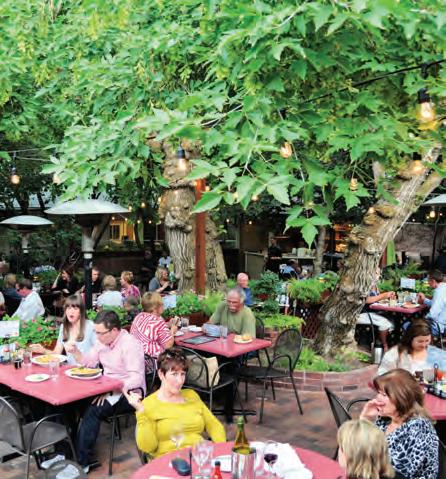
Salt Lake City has a new Italian restaurant, and it has the kind of welcoming atmosphere that makes you want to stay a while.
’Mina is now open at 439 E. 900 South, taking over the spot where Matteo used to be before moving downtown. But when walking inside, the venue feels completely new. Co-owners Adam Rosh and Giro Messeri renovated the space, adding a sprinkler system, soundproofing and better airflow so guests feel comfortable. The aesthetics have also changed from a concrete-heavy look to something much warmer and more inviting.
The restaurant’s name comes from Taormina, a historic coastal town in Sicily where Messeri grew up. That sense of place is felt throughout the restaurant. As an only child, he says his friends have played a big role in his life.
“We wanted to create a very personalized experience; we want to know your name, we want to know where you are from,” Messeri said. “We want to have genuine human connection, and have joy as an outcome.”
The team at ’Mina brings real Sicilian roots to every part of the restaurant. Messeri runs the dining room and wine program as a Level 3 sommelier, using his years of experience in Utah’s hospitality scene. “One of our big goals is to have the largest Sicilian wine list in the United States,” Messeri remarked.
In the kitchen, Executive Chef Leonardo Li Mura is from Catania, Sicily. A large mural of his hometown welcomes guests as they enter, giving the meal a personal
touch right from the start. Pastry chef Francesco Biono, who is from Palermo, brings the same regional care to the dessert selections.
The menu features house-made pastas, fresh seafood and classic Sicilian comfort dishes. Almost everything can be made gluten-free, which is a thoughtful way to make the experience accessible without losing any authenticity.
When I visited ’Mina, I enjoyed an array of dishes that reflected both the creativity and authenticity of Sicilian cooking. Each plate combined high-quality ingredients with skilled techniques. Although the meal for two was relatively expensive, the quality of the dishes, along with the careful preparation and distinct regional flavors, helped to justify the cost.
To start, the Carpaccio di Wagyu ($38) was a delicate dish made with thin slices of local UT47 Wagyu beef. It was lightly dressed with extra-virgin olive oil and fresh lemon juice, and served with peppery arugula, aged Parmigiano Reggiano and crispy Nonpareil capers. The flavors balanced richness and acidity perfectly.
The Gazpacho Bianco Siciliano ($16) was a refreshing break between courses. This chilled almond soup included apple crisp, cucumber pearls and burrata snow for interesting textures. Basil oil and Castelvetrano olives added to the savory and slightly sweet flavors, making the dish light, creative and a pleasant surprise. For pasta, I chose Chef Leonardo Li Mura’s favorite: the Norma Rigatoni ($26). It was covered in a hearty tomato sauce, with pieces of golden eggplant, topped with grated hard ricotta cheese and a sprinkle of onion ash. “This dish was created in Catania, where I was born,” Chef Leonardo said. “I created it that [same] way [here].”
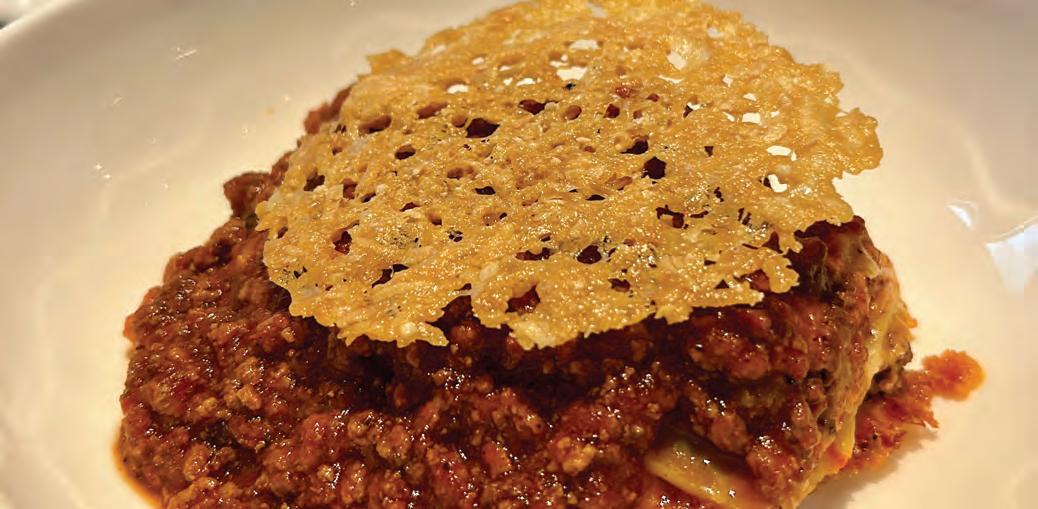
The Lasagna Tradizionale ($30) was a delicious example of careful layering. Fresh pasta sheets held a rich threemeat Bolognese, creamy béchamel and a crispy tuile made from aged Parmigiano Reggiano. Each flavorful bite evinced the time and care put into making it.
For my main course, I had the Filetto al Pistacchio ($62), a center-cut beef tenderloin coated in pistachios. It came with charred asparagus and a smooth asparagus soubise. The nutty crust gave a nice crunch to the tender steak, which was cooked perfectly to medium, just as recommended. The Maiale alla Milanese ($40) was another standout. This bone-in Duroc pork chop was breaded and fried until golden perfection. It came with truffle mayo and a salad of arugula, heirloom tomatoes, white balsamic and Parmigiano Reggiano. The dish balanced rustic flavors with refined touches.
Dessert was a highlight on its own. The Setteveli ($22), a beautiful seven-layer chocolate cake, was pure decadence. It had layers of chocolate génoise, pistachio mousse, hazelnut mousse and crunchy praline, making each bite full of flavor and texture.
No Sicilian meal would be complete without a cannoli ($12), which was prepared tableside. The sweet sheep’s-milk ricotta was piped fresh into a crisp shell and finished with my choice of toppings, ending the meal on a perfect sweet note.
Messeri says the goal is to create a restaurant that feels both high-quality and welcoming, where every dish is made with care and every guest feels at home. For example, during my visit, the staff introduced themselves by name and offered thoughtful recommendations based on my preferences. With ‘Mina’s calm, pleasant atmosphere and warm service from start to finish, they are succeeding.
“We have built a team that is outstanding, and we are so proud; they are so genuine, they enjoy getting to know you,” Messeri said. “It made it so easy for us. We want you to be a friend of ’Mina.” CW
’MINA RISTORANTE SICILIANO 439 E. 900 South, Salt Lake City, UT 84111 minaslc.com















2 Row Brewing
73 West 7200 South, Midvale
2RowBrewing.com
On Tap: Total JamnationFruited sour
Avenues Proper
376 8th Ave, SLC avenuesproper.com
On Tap: Drop Top - English summer ale (collab with Salt Flats)
Bewilder Brewing
445 S. 400 West, SLC BewilderBrewing.com
On Tap: Pink Boots - Pink Pony Pilz
Bohemian Brewery
94 E. Fort Union Blvd, Midvale BohemianBrewery.com
NEW Releases: Kölsch, Dusseldorfer “Alt” Bier
Bonneville Brewery
1641 N. Main, Tooele
BonnevilleBrewery.com
On Tap: Peaches and Cream Ale
Chappell Brewing
2285 S Main Street, SLC chappell.beer
On Tap: Pie Hole - Strawberry Rhubarb Tart Ale
Desert Edge Brewery
273 Trolley Square, SLC DesertEdgeBrewery.com
On Tap: Edge’s Special Bitter ESB
Epic Brewing Co.
825 S. State, SLC EpicBrewing.com
On Tap: Pie & Beer Day Cherry Pie Ale
Etta Place Cidery
700 W Main St, Torrey EttaPlaceCider.com
On Tap: Orange Creamsicle Session Mead
Fisher Brewing Co.
320 W. 800 South, SLC FisherBeer.com
On Tap: A rotation of up to 17 Fresh Beers!
Grid City Beer Works
333 W. 2100 South, SLC GridCityBeerWorks.com
In a Can: Extra Pale Ale
Heber Valley Brewing
501 N. Main Street, Heber City hebervalleybrewing.com
Freshly Canned: East RidgeBelgian Tripel 8% ABV
Helper Beer
159 N Main Street, Helper helperbeer.com
Hopkins Brewing Co. 1048 E. 2100 South, SLC HopkinsBrewingCompany.com
On Tap: The Hunter: Kölsch
Kiitos Brewing
608 W. 700 South, SLC KiitosBrewing.com
On Draft: Bliss IPA (Extremely Small Batch)
Kiitos Brewing Sugar House 1533 S. 1100 East, SLC KiitosBrewing.com
On Draft: Bliss IPA (Extremely Small Batch)
Level Crossing Brewing Co. 2496 S. West Temple, SLC LevelCrossingBrewing.com
On Tap: Nitro Sinday Pale Ale
Level Crossing Brewing, POST 550 South 300 West, Suite 100, Salt Lake City LevelCrossingBrewing.com
On Tap: Helles Munich Pale Lager
Moab Brewing 686 S. Main, Moab TheMoabBrewery.com
On Tap: “Big Drop” West Coast Pilsner
Mountain West Cider 425 N. 400 West, SLC MountainWestCider.com
On Tap: Island Orchard Punch (Strawberry and peach cider)
Offset Bier Co 1755 Bonanza Dr Unit C, Park City offsetbier.com/ On Tap: DOPO IPA
Ogden Beer Company 358 Park Blvd, Ogden OgdenBeerCompany.com
On Tap: 11 rotating taps as well as high point cans and guest beers
Park City Brewing 1764 Uinta Way C1 ParkCityBrewing.com On Tap: America Hefe YeahAmerican Wheat
Prodigy Brewing 25 W Center St., Logan Prodigy-brewing.com On Tap: 302 Czech Pilsner
Proper Brewing/Proper Burger 857 & 865 So. Main properbrewingco.com On Tap: Concerning HopsWest Coast IPA
Proper Brewing Moab 1393 US-191, Moab properbrewingco.com On Tap: Concerning Hops - West Coast IPA
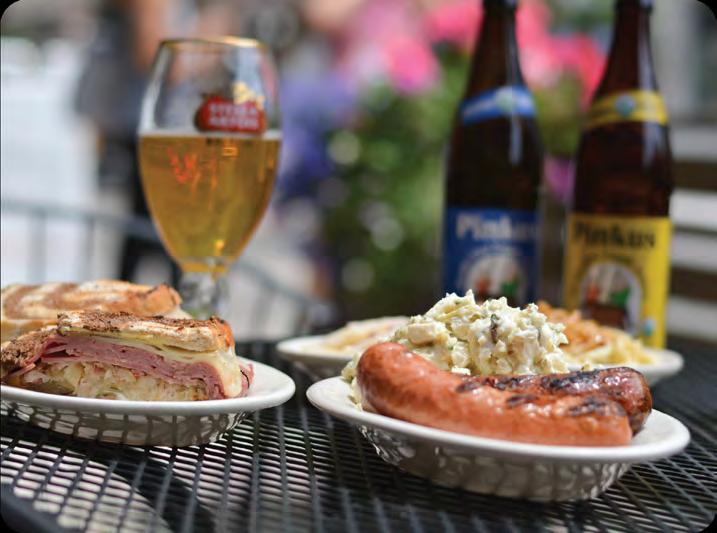
A list of what local craft breweries and cider houses have on tap this week
Red Rock Brewing 254 So. 200 West
RedRockBrewing.com
On Tap: Gypsy Scratch
Red Rock Fashion Place 6227 So. State Redrockbrewing.com
On Tap: Grand Bavaria
Red Rock Kimball Junction 1640 Redstone Center Redrockbrewing.com
On Tap: Bamberg Rauch Bier
RoHa Brewing Project
30 Kensington Ave, SLC RoHaBrewing.com
On Tap: Bramble Brown
Roosters Brewing
Multiple Locations RoostersBrewingCo.com
On Tap: Hibiscus Sour
SaltFire Brewing 2199 S. West Temple, SLC SaltFireBrewing.com
On Tap/Canned: Monachus Adriatic Pilsner 5%
Salt Flats Brewing 2020 Industrial Circle, SLC SaltFlatsBeer.com
On Tap: OPEN ROAD SERIES #3 - Barrel Aged Grand Cru
Scion Cider Bar 916 Jefferson St W, SLC Scionciderbar.com
On Tap: Smokeshow 9% ABV
Second Summit Cider 4010 So. Main, Millcreek secondsummitcider.com
On Tap: Honeycrisp
Single Varietal
Shades Brewing 1388 S. 300 West, SLC ShadesBrewing.beer
New Batch: Raspberry Pistachio Sour Ale
Shades On State
366 S. State Street, SLC Shadesonstate.com
On Tap: Six Wheat Under Hefeweizen
Silver Reef 4391 S. Enterprise Drive, St. George SGBev.com
Squatters Brew Pub
Sugar House 2110 S. Highland Drive, SLC squatterspubs.com
On Tap: Salt Lake Brewing Co. Big U Pilsner
Squatters Brew Pub West Valley
3555 Constitution Blvd, West Valley City squatterspubs.com
On Tap: Salt Lake Brewing Co. Acapulco Gold Mexican Lager
Squatters Pub Brewery / Salt Lake Brewing Co. 147 W. Broadway, SLC squatterspubs.com
On Tap: Salt Lake Brewing Co. Emigration Amber Ale
Strap Tank Brewery, Lehi 3661 Outlet Pkwy, Lehi StrapTankBrewery.com
On Tap: “Virgil the Guide” (Italian Pilsner); “Smiles und Sunshine” (German Leichtes Weizen)
Strap Tank Brewery, Springville
596 S 1750 W, Springville StrapTankBrewery.com
On Tap: “Orange Hopsicle” Hazy Pale; “Trouble” American Sour with Mango and Passionfruit
TF Brewing
936 S. 300 West, SLC TFBrewing.com
On Tap: Twelve taps and high point cans available.
Talisman Brewing Co. 1258 Gibson Ave, Ogden TalismanBrewingCo.com
On Tap: Pucker? I Berry Know Her! (Lemon blueberry sour); The Baskin (Tigers blood seltzer)
Thieves Guild Cidery 117 W. 900 South, SLC thievesguildcidery.com On Tap: Scorching Ray - Sweet pepper cider with a beam of habanero spice | 6.5%
Uinta Brewing 1722 S. Fremont Drive, SLC UintaBrewing.com
On Tap: Was Angeles Craft Beer
UTOG 2331 Grant Ave, Ogden UTOGBrewing.com
On Tap: Bar Down IPA
Vernal Brewing
55 S. 500 East, Vernal VernalBrewing.com
Zion Brewery
95 Zion Park Blvd, Springdale ZionBrewery.com
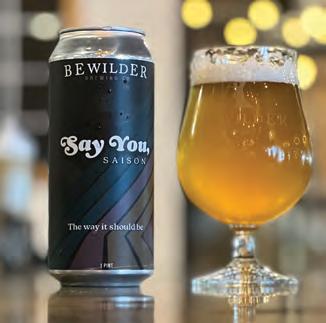
Attractive flavors drive these stylistic ales.
BY MIKE RIEDEL comments@cityweekly.net
@utahbeer
Bewilder - Say You, Saison: Saison is one of those beer styles that can take on a personality all its own depending on the yeast, and this latest release proves that you don’t have to crank the peppery farmhouse character to 11 to make a memorable example. At 6.2% ABV, this Belgian-inspired ale finds a welcoming middle ground between expressive yeast character and an elegant hop complexity.
The aroma shows the Saison yeast with classic phenolic notes of clove, but it’s the pleasant bubblegum sweetness that steals the show. Rather than feeling overly funky or rustic, the nose is bright, inviting and surprisingly approachable. Behind the yeast character, subtle floral hints from the Saaz and Hallertauer hops mingle with the unmistakable New Zealand influence of Nelson Sauvin.
The first sip follows the aroma almost perfectly. Bubblegum flavors lead the way, accompanied by gentle clove notes that provide just enough spice without dominating the palate. It’s a softer interpretation of the style, allowing the malt and hop profile plenty of room to contribute. Mid-palate, the Nelson Sauvin hops begin to shine, with berry notes and a touch of citrus zest that lifts the beer without overwhelming the yeastdriven character. As the finish develops, the hops leave behind a pleasant bitterness that cleanses the palate but knows when to exit. It’s crisp, refreshing and never overstays its welcome, making each sip feel as inviting as the last.
Verdict: What stands out most is the restraint. Many Saisons lean heavily into pepper, earthiness or rustic funk, but this one chooses balance instead. The yeast remains expressive while allowing the carefully selected hop bill of Nelson Sauvin, Saaz and Hallertauer
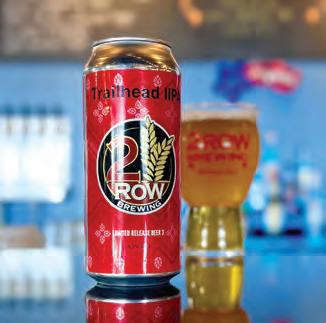
to add layers of fruit, spice and subtle herbal complexity.
2 Row - Trailhead: There are plenty of Imperial IPAs chasing fruit-bomb territory these days, but this New Zealandinspired version manages to strike a satisfying balance between juicy Southern Hemisphere character and classic West Coast structure. Clocking in at 8.5% ABV, it’s a beer that delivers plenty of flavor without letting the alcohol steal the spotlight.
The aroma opens with bright citrus from the jump; think freshly grated orange and grapefruit zest mixed with fragrant citrus oils that leap from the glass. It’s vibrant and inviting, setting the stage for what turns out to be a layered drinking experience.
The first sip keeps the citrus train rolling with waves of juicy orange and grapefruit before a distinctly New Zealand hop character begins to emerge. A subtle diesel-like dankness adds depth rather than overpowering the palate, while mellow melon flavors drift in to soften the edges.
As the beer warms, hints of ripe strawberry begin to peek through, adding another dimension to an already complex hop profile.
What really separates this Imperial IPA from many of its hazy cousins is the malt backbone. There’s enough sturdy, slightly sweet malt character to support the aggressive hopping without weighing the beer down. That balance gradually shifts the beer into familiar West Coast IPA territory, where pine resin lingers on the finish and provides a pleasantly bitter snap that keeps one reaching for another sip.
Verdict: It’s almost like someone took the bright, expressive hop profile of New Zealand and gave it a firm American handshake. The result feels like a “West Coast of New Zealand IPA”—if that’s a style that doesn’t officially exist yet, maybe it should.
Look for Trailhead at 2 Row Brewing in Midvale. It’s a “limited release beer,” and is available in 16-oz. cans. Say You, Saison is also in 16-oz. cans and available at Bewilder Brewing in SLC. As always, cheers! CW









BY AIMEE L. COOK

“We’re creating community connections every Thursday at MPH!” said Stacy House, owner of Millcreek Pizza House. “We do everything from classes to open mic—like this week [July 23], we had the lovely Jamera Naquai leading a poetry workshop followed by an open mic. Great food + Community = Connection at MPH.” Upcoming events include Suc Rocks Bingo & Pizza Rodizio on July 30 and Dogs Days of Summer Runway, a fun runway photo shoot for the pups on Aug. 6. All events begin at 6:30 p.m. Follow @millcreekpizzahouse for details.
The Mountain Mixer Park City cocktail contest is back for summer 2026. Locals and visitors can sip their way through 21 original cocktails crafted by talented bartenders and mixologists from Park City Area Restaurant Association member establishments, now featured on summer menus across town. Throughout July, a panel of secret judges will visit each venue to score every entry, with the Top 10 finalists announced on Aug. 1, when tickets for the live finale at Silver Lake Lodge also go on sale. The culminating event takes place on Aug. 22, when one cocktail will be crowned 2026 Mountain Mixer Champion. A few standouts are the Freedom of Peach by Victor Wilson from Pine Cone Ridge, Bloods Lake by Allan Joseph Anderson from Handle and The Darlene Spritz by Indy Lance from Matilda. Find the full lineup at parkcityrestaurants.com/mountain-mixer-park-city/mm-2026.
Utahns are invited to sink their teeth into the ultimate burger showdown this July as the Utah Beef Council and Dairy West launch the Utah Cheeseburger Battle. This month-long, statewide competition is a celebration of Utah’s restaurant scene and the hardworking dairy farmers and beef producers who make every bite possible. Throughout July, residents can cast votes daily for their favorite cheeseburgers, encouraging everyone to explore local eateries and support homegrown businesses. T he competition not only spotlights the delicious creativity of Utah’s chefs but also honors the partnerships between local agriculture and the restaurant industry.
The top five cheeseburgers, as chosen by Utahns, will advance to a final tasting round in August, where a panel of food and industry experts will determine the ultimate champion. To qualify, each entry must feature a 100% beef patty, real cheese, and be served on a bun or bread as a regular menu item. Winners will take home cash prizes, and voting ends on July 31. To join the fun, discover participating restaurants and cast your vote, visit utahbeef.org/cheeseburgerbattle.



Tim Tincher, Floatingaround, July Rooftop Concert, Spirit Assembly, Del Perro.
BY EMILEE ATKINSON eatkinson@cityweekly.net @emileelovesvinyl
As we creep further into the summer, we’re getting to the part where it’s a little too hot. While it does make being outside tough, it’s a perfect time to stay inside and catch up on local releases. What follows are some new-ish releases, or some stuff that you might have missed altogether to add to your playlists.
Tim Tincher, “Light Sensitive”: The dreamiest of dream pop artists, Tim Tincher exemplifies the genre’s vibe with his latest single. “Light Sensitive” is itself light; the electronic effects are soft, and Tincher comes in with gentle vocals, so that the song as a whole feels like floating on a cloud. “I’m drowning in / Blue light / So I try to hide / I found myself too identified / With virtual vapid / Streams of consciousness / But am I content in this / Basking downtown in the blue light,” Tincher sings. As the blue light of screens dominates many people’s lives (including this writer), the lyrics are superrelatable and oddly validating—more people are probably sick of the blue lights than we think. LinkTree: linktr.ee/timtincher Floatinground, “Shameless Sleep”: Alt/ indie band Floatinground is an O-Town group boasting a fun and versatile sound, offering up great tunes for those who want something a little different. Their latest single “Shameless Sleep” is a jazzy, bluesy track with a walking bassline that will make you want to get up and move. It sounds like it should be playing in a speak-
easy, with flapper dresses twirling along with the music. (The song was recorded at Wildwood Tofu Bar in Ogden, so it’s fitting.) Even though the bass is the most prominent sound, they still bring in bits of electric guitar that add an extra spice—creating a recipe for something great. Lyrically this is another song that’s very relatable: “We were not built to be broken constantly / And I know you’re tired of faking it every day / Didn’t mean to interrupt your shameless sleep / You’ll find me lying awake.” The lyrics paint this picture of being burned out and just kind of zoning out; or feeling like the slow-moving zombie at the beginning of Shaun of the Dead. If the burnout is more of a raging fire inside of you, give this one a listen. BandCamp: floatinground.bandcamp.com/album/shameless-sleep
July Rooftop Concert: Not a new release, but Provo’s Rooftop Concert this month features some excellent acts that you won’t want to miss. At the top of the bill is The Lower Lights, a collective of local musicians who join up to do what they do best. The group was originally formed in 2009, and they “explore the traditional Christian songbook,” according to their bio. Also joining in is Ryan Shupe and the RubberBand, another group that has been jamming together for a long time; for well over 20 years, Shupe and his colleagues have been putting out acclaimed music. Singer/songwriter Susie Brown rounds things out, bringing her magnetic presence that will make the show complete. The Rooftop Concert is this Friday, July 24, at 7:00 p.m. and is free. Website: rooftopconcertseries.com/
Spirit Assembly, Sun Faded Things: “Spirit Assembly reflects on the idea of embracing change we cannot control.” So says singer/ songwriter Brandon Root, who with this project brings a satisfying indie/rock sound to the table. “The music explores the subtle and slow erosion of time that shapes each of us. Lyrically contemplative, the writing balances quiet damage, self-observation, and making peace with what can’t be resolved,” Root said. Sun Faded Things is mellow, and as
Tim Tincher

Root described, contemplative. The album offers a mix of synths, guitar with tons of reverb and soft but reassuring vocals. The album title is aptly named for the songs— the idea of a sun-faded thing that isn’t as bright and vibrant as it used to be is fitting. If you’re feeling a bit sun-faded yourself, maybe check this one out. BandCamp: spiritassembly.bandcamp.com/album/sunfaded-things
Del Perro, “Stray”: The beloved SLC indie rockers hit listeners with their latest single “Stray” last November, and this one falls in the “missed altogether” category for me. They haven’t released anything since then (aside from some live recordings), but they do note on BandCamp that they have an album coming next year, so that’s something to look forward to. “Stray” sounds like it should be in a coming-of-age teen movie, in the best way. It’s got a sentimental sound and lyrics that would pair perfectly with a movie of the same classification. The album
art for the single is a black-and-white still of a sweet dog sitting alone, wrapping the song up with a nice, neat bow. LinkTree: linktr.ee/delperroband
T-James, “Risk It All”: SLC rapper TJames has an epic catalog full of music, going back to his debut album in 2018. His latest release is the title track from a new, upcoming album. “Risk It All” has a stomp and holler feel that audiences can easily catch onto while seeing T-James live, and easy to tap your foot to if you’re at home chilling by yourself. T-James is uber talented, spitting bars with precision, singing and compelling lyrics. “Risk It All” is a track that can be dedicated to that person you love the most; the one you’d do anything for—the one you’d risk it all for. This title track is just a taste of an upcoming album that’s sure to be great if it is at all similar to this early release. LinkTree: https://linktr. ee/tjamesmusic CW




TUESDAYS

WEDNESDAYS




Ah, the 1980s. A time when artists became more than musicians—they became brands, capable of influencing culture on a global scale through music videos, groundbreaking tours and unforgettable songs. Taylor Dayne’s single “Tell It to My Heart” is one of those big spectacle records that remains timeless. Off her 1987 release, the powerfully synthesized jam occupied a chunk of the pop zeitgeist as it shot up the charts, wedged in between Casey Kasem’s commentary and trivia nuggets. “It was very grassroots. That’s ‘Tell it to My Heart.’ It took off, in a very organic, club international way,” Dayne told RadioRadiox. “It broke in Europe first and then it was fed back to the club. It depends on the groundswell. That’s what we call viral now didn’t exist then. But the song went viral.” Exposé’s debut LP, Exposure, is an amazing piece of art that soundtracked my youth. Becoming the first debut release by any group to feature four Top 10 hits on Billboard, this record is a broad, multi-generational, immediately identifiable staple of “freestyle” music. This feel-good electro is a mix of the era, so come on out and throw down some power moves. These icons taught the world what it meant to be superstars. Catch them at the Concert On The Slopes: ’80s Weekend series at The Amphitheatre at Canyons Village at Park City Mountain on Saturday, July 25 at 7 p.m. Tickets for the all-ages show are $61.81 and can be found at parkcityinstitute.org. (Mark Dago)

7/23

7/24
7/25
7/27
7/28
7/29

Transgender Menace & Her Funny Friends: A Comedy Show
Old Straits
Simple Balloon
When We Met
Seth Beamer
Maryanne Muglia




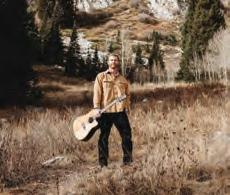
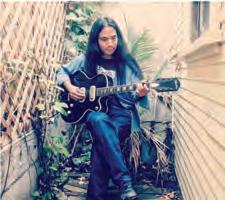





One of indie music’s most influential psychedelic, avant-garde bands, of Montreal, is set to play Salt Lake City on July 25 at the Metro Music Hall. After celebrating 20 years of the Sunlandic Twins album in 2025, the band has released their 20th studio album, aethermead, on June 5, with singles “Already Dreaming” and “Take the Form” taking off since their release earlier this year. In the likeness of such bands as Animal Collective and The Olivia Tremor Control, of Montreal has come a long way with their sensibility, experimenting with both electric and acoustic sounds. An ensemble of voices and instruments, they serve up music that feels like you’re floating off into an ethereal cloud of cotton candy. If you find yourself in a bad mood, then of Montreal will put you back at ease. Within each track, the band takes you through a mix of emotions you may have never experienced. It is a true 1960s trip within each instrumental bridge and harmony. The project began in 1996 with frontman Kevin Barnes, whose romantic background inspired the band’s name after dating a girl from Montreal. The band is now composed of members Barnes, Clayton Rychlik, Jojo Glidewell, Ross Brand and Matthew Danger Lippman, with many others who have come and gone throughout the years. So celebrate 30 years of music with of Montreal and join them at the Metro on July 25. The show starts at 7 p.m., and tickets are $38 ahead of time and $40 at the door. Find yours now at 24tix.com. You must be 21+ for entry. (Laney Hansen)




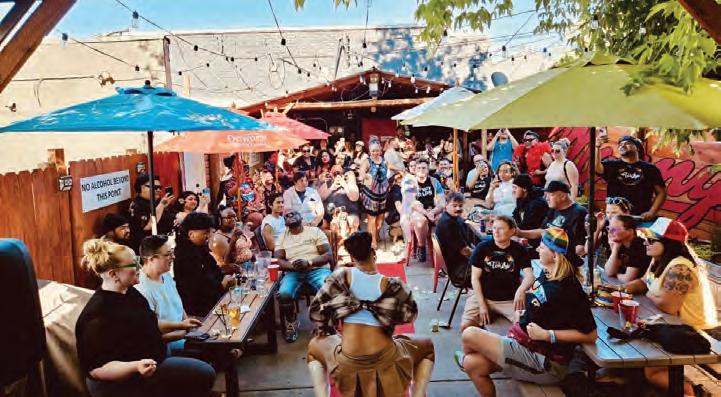
Enough time has passed that musical nostalgia—with its terms like “oldies”—now refers to the 1980s. The era of MTV, big hair, digital synthesizers, shoulder pads and the signature graphic illustrations of Patrick Nagel are now the currency of a generation’s fond looks toward the past. That explains the popularity of this package tour, featuring a mix of the era’s major artists and a few one- (or two-) hit wonders. Topping the bill is Thomas Dolby, both a hitmaker (“She Blinded Me With Science”) and a respected innovator, appearing with his band the Lost Toy People. While A Flock of Seagulls are most readily remembered for keyboardist Mike Score’s distinctive hairdo, their synthesizer-based music like the hit “I Ran” has worn remarkably well, and (like Dolby) the band continues to record and release worthwhile material to this day. Also on the bill are Bow Wow Wow, power pop quartet the Producers and Tommy Tutone (of “867-5309” fame). Still lesser-known but purveyors of ’80s hit singles are Animotion (“Obsession” from 1984) and The Escape Club (“Wild Wild West”). Concertgoers can expect to hear all the hits. The Totally Tubular Festival comes to Red Butte Garden on Sunday, July 26 at 6 p.m. Tickets are $72 from etix.com. (Bill Kopp)
The dream-pop, indie-folk princess Suki Waterhouse will play the Twilight Concert Series this week. She’s known for her mix of ’90s alternative sound and folk Americana, with an ethereal flair. Rolling Stone magazine this month said that her discography, “spanning albums like I Can’t Let Go, Memoir of a Sparklemuffin and Loveland—has evolved in both depth and sonic texture.” What does that mean exactly? It’s a bit like when you are having a latenight confessional with your best friend and all the emotional vulnerability comes flooding out—except that your voice also happens to sound like honey, and there’s a retro band accompanying your words. For example, her 2017 viral hit “Good Looking” explores the slow deterioration of a rela-
tionship. The lyrics, “The skyline falls as I try to make sense of it all,” highlight the painful realization that the relationship is ending and the idealized view of one’s partner is falling away. There are also happier anthems like “Back in Love,” which is about reclaiming one’s identity and falling back in love with life with renewed confidence. The point is, if you want to experience a summer night in the city in an ambient, dreamy atmosphere with some exceptional storytelling, then you don’t want to miss Waterhouse with her signature teal guitar at The Gallivan Center on Monday, June 27 at 6 p.m. Tickets cost $24.23; grab yours at 24tix.com. (Arica Roberts)
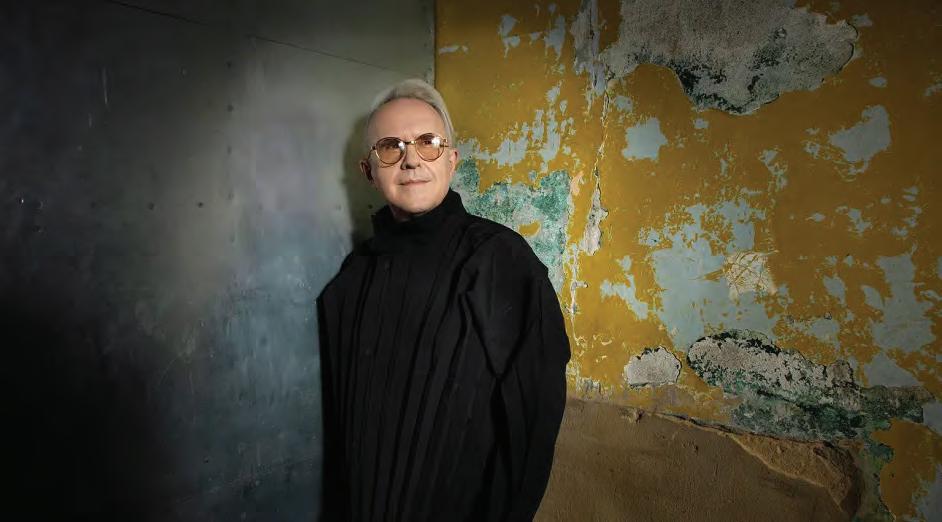
It doesn’t matter when, or where, the music you listen to is from. If it’s good, it’s good—and the world would be a better place if kids grew up with HoJo on repeat.
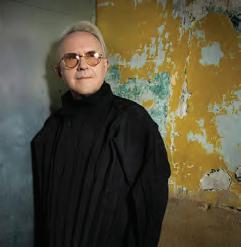
Four decades in the game, British musician Howard Jones is still as prolific as ever. His first LP, Human’s Lib, dropped in 1984, and his newest single—“Stand Up,” from his upcoming Global Citizen record—was released just over a week ago. His hit-making abilities and knowledge of technology have come a long way from his solo electronic performances. “The oneman-show was really about the fact that no one had done it before,” Jones told Chaos Control. “You also get a lot of negativity because you’re doing something new. They say, ‘You’re not rock and roll; who do you think you are?’ That was difficult at the time, but I have to laugh at it now.”
The 1980s provided the globe with an endless carousel of trends and influences all going around at the same time and the tour package here proves it. Wang Chung, The English Beat and Modern English all open. With these bands still being in the mix, it seems like this curated tour (which Jones hopes to make an annual thing) might last longer than the actual ’80s did. Catch these musicians on the Things Can Only Get Better tour (hosted by DJ Richard Blade) on Wednesday, July 29. Doors open at 5:30 p.m. and the show starts at 6:30 p.m.
Tickets for the all-ages show are $78.90 and can be found at ticketmaster.com.
(Mark Dago)
BY ROB BREZSNY
(March 21-April 19)
Authentic love songs are rare. Much of contemporary music leans toward infatuation, sex, heartbreak and fury, while few artists seem interested in singing unabashedly about unique expressions of tenderness and enduring devotion. In the months ahead, Aries, your inner life will be gloriously out of step with that trend. Your heart is poised to wake up in sometimes surprising ways. Even if you’re not a trained vocalist, you may feel regular urges to express your passion and adoration in song. If I could give you a gift, it might be a curated playlist packed with the most radiant love songs of the last 60 years, so you’d have a soundtrack worthy of the lush emotions that I suspect will bloom in you.
TAURUS (April 20-May 20)
Nobel Prize-winning Taurus physicist Richard Feynman kept a notebook titled “Things I Don’t Know About.” When he came across a question that he couldn’t answer, he added it to the collection. I recommend a similar discipline for you now, Taurus, but with a twist. Keep a log of “Beautiful Mysteries I Don’t Really Need to Solve.” Rejoice that not every paradox and puzzle needs resolution. Savor the fun fact that some riddles enrich your life precisely because they remain open-ended. Hooray for not knowing! My theory is that some of your finest qualities will flourish in the presence of more productive uncertainty.
GEMINI (May 21-June 20)
In the early days of radio broadcasting, engineers sometimes spoke of “tuning the receiver.” Even when a station was transmitting clearly, a listener might hear static until their radio dial was adjusted to exactly the right frequency. The message was present and clear; the challenge was homing in on it. There’s a similar phenomenon going on in your life, Gemini. Useful information, fun inspiration and interesting possibilities may be circulating in your vicinity. But you will need to adjust your attention so you can actually receive it. To bring the signals into focus, listen differently. Or pose alternate questions. Or pay attention to sources you don’t usually notice.
(June 21-July 22)
Neuroscientists have found that remembering the past and imagining the future rely on many of the same brain networks. That overlap helps explain why vivid visualization may influence emotions and behavior. When we repeatedly simulate alarming scenarios about what could conceivably happen, our brains treat them much like memories. This makes us prone to spotting “threats” in places that may be relatively safe. The good news is that the coming months will be an excellent time to retrain this habit, Cancerian. More than ever, your imagination can be a precision instrument to recalibrate yourself away from fear and toward possibility. Fantasize about wonderful possibilities with the same intensity that in the past you have dwelled on scary speculations.
LEO (July 23-Aug. 22)
Oak trees produce far more acorns than could ever grow into trees. Squirrels bury thousands and forget many of them, preparing the way for the next generation of forest. The trees succeed through strategic overproduction. I invite you to adopt their method, Leo. In the coming weeks, overproduce. Make more than you can track. Release more than you can manage. You don’t need to be perfect, just abundant. PS: This expansive capacity is yours to explore with delight and confidence, I guarantee it.
VIRGO (Aug. 23-Sept. 22)
In the 19th century, Virgo naturalist Alexander von Humboldt helped launch the modern science of ecology. While exploring South America, he came to a revolutionary conclusion that’s obvious to us now: Nature isn’t a collection of separate objects but an intricate web of relationships. Mountains shape the weather. The plants and pollinators rely on each other. Underground mycelial networks perform many services for the trees. I propose that you channel your inner
Humboldt, Virgo. Shift your focus away from isolated problems and instead observe the larger systems. Solutions may be elusive when you’re bound to a narrow view but strikingly clear when you perceive the wider pattern. If you’d like to take bold action, rely on the spacious perspective.
LIBRA (Sept. 23-Oct. 22)
The coming months will be a favorable time to triple your devotion to the art of rowdy fun. I urge you to attend more revels and celebrations than usual, and always be ready to energize social functions with infusions of festive wit and gleeful conviviality. You will also have extra power to inject buoyant amusements into your intimate liaisons. Therefore, dear Libra, I designate you to be the Party Maestro of the Zodiac. I hope you will carry out your role with maximum exuberance, ingenuity, and joy.
SCORPIO (Oct. 23-Nov. 21)
What if I told you that your most personal and potent dream can come true—but only through months of persistence, disciplined sacrifice and stretches of bewildering but fascinating uncertainty? Would you reorder your priorities to chase it with every ounce of creativity you have? Or would you set it aside in favor of a safer and easier possibility? Between now and the end of October, I predict the moment will arrive to choose one path or the other.
SAGITTARIUS (Nov. 22-Dec. 21)
On some occasions, you just don’t have the power to act with impeccable integrity and do the totally right thing. Doing the partially right thing may, however, be a useful and compassionate option. I bet this will soon be helpful advice for you. Blunt truth: There are moments when the “perfect” ethical, emotional or practical choice simply isn’t available: The timing is off, resources are thin, or someone else’s limits block the ideal outcome. In those situations, waiting around for the flawless solution is a kind of paralysis that keeps you stuck in guilt or indecision. Instead, you can aim for the best available good.
CAPRICORN (Dec. 22-Jan. 19)
In botany and gardening, there is a practice called “companion planting.” Certain plants thrive when grown near each other because they share nutrients, repel or distract pests, or improve soil and microclimate. Here’s an example: Indigenous peoples of the Americas planted the “Three Sisters” together: Corn gave beans a living trellis, beans added nitrogen to the soil, and squash shaded the ground to hold moisture and deter weeds. This principle may be useful for you to contemplate now, Capricorn. The people, tools and influences you place near one another will influence your productivity and well-being. By blending complementary energies, your efforts will flourish without strain.
AQUARIUS (Jan. 20-Feb. 18)
Author Alain de Botton observed that “the person we marry is always far more remarkable, frightening and complex than we quite realized when we first declared our love.” Rather than feeling alarmed by this revelation, I invite you to find it thrilling as you apply it to your best allies. The fact that they contain mysteries you haven’t yet plumbed means the relationships aren’t likely to grow stale. There are undiscovered depths in those you may think you know completely. My advice: Approach even your most familiar intimacies as ongoing discoveries.
PISCES (Feb. 19-March 20)
Do you ever fear or distrust your own desires? Are you suspicious of achieving “too much” success? Do you ever feel starved for hope, but belittle yourself for wanting it? Do you go emotionally blank in the face of possibilities that should thrill you? If so, the coming weeks could bring healing and a breakthrough. You will have a chance to perform a rare kind of exorcism—not of garish demons or foolish ghosts, but of the quiet defeatism and lack of faith that dull your brilliance. Seize this moment, dear Pisces! Purge the automatic doubts that the world has trained you to mistake for wisdom.
LHM Inc. (dba The Larry H. Miller Company) seeks Cloud Identity Engineer in Sandy, UT. Req. Bach. in Comp Sci, Info Sys, Cybersec, or rel. field and 2 yrs exp. Hybrid position requiring in-person presence 3 days/week. Position may telecommute from home within reasonable commuting distance of Sandy, UT. Apply at https://www.lhm.com/careers. Salary: $102,086-$112,000/yr.
SelectHealth, Inc. seeks a Software Engineer – Staff II in Murray, UT. This is a hybrid position requiring in-person presence once per week. Position may telecommute from home within a reasonable commuting distance of Murray, UT. Apply at https://imh. wd108.myworkdayjobs.com/ IntermountainCareers or email resume to mary.hansen@imail.org. Salary: $152,402.00 – $165,402.00/yr.
True Midvale Hospitality LLC
(dba Tru by Hilton Midvale) seeks a General Manager in Midvale, UT: Plan, dir. & coord. hotel ops per co. policies & best practices; ensure efficient daily ops.; handle guest complaints; participate in financial activities; manage events; maintain high cust. satisfaction; supervise Hotel, Motel & Resort Desk Clerks (43-4081.00) & Concierges (39-6012.00). Bachelor’s degree or foreign equivalent in hospitality, management, or a related field required. Mon-Fri. 40 hrs/wk. Email resumes: Nisha Chokshi, nc@snnmanagement.com.

CandyCo., LLC (dba Mrs. Call’s Candy Co.) seeks a Quality Engineer in Lindon, UT: Ensure plant GMP & safety compliance; analyze validation data; prep. reports; recommend resolutions; contribute to action plans; focus on mfg. process data; manage supplier quality; assist w/ audits. Mon-Fri. 40 hrs/wk. Bachelor’s Degree in engineering, electrical engineering, mechanical engineering, industrial engineering, manufacturing, or foreign equivalent. Email resumes: Stephanie Arnold, stephanie.arnold@candyco.com





WITH BABS DELAY
Broker, Urban Utah Homes & Estates, urbanutah.com
Iapologize in advance, this isn’t great news. U.S. foreclosure filings totaled 42,430 properties this past spring, including default notices, auctions and bank repossessions, representing an 18% year-over-year increase, but an 8% decline from March 2026, according to Realtor.com.
Nationwide, one in every 3,388 housing units had a foreclosure filing. Foreclosure starts increased 12% annually, and completed foreclosures (REOs) rose 42% year-over-year.
We had massive foreclosures during our country’s 2008-era recession. Sadly, I had clients call days before the bank repossessed their property—but that was too late to offer help.








1. Jail-adjacent phrase?
13. Coleridge’s seafaring subject
16. Consideration without cons?
17. Hard out, e.g.
18. Bit by bit
20. “The Joy of Cooking” author Rombauer
21. Three-mo. period
22. Twill suit fabric
23. Acute
24. Spa offerings
27. Buck
28. TV composer Kalehoff (known for “The Price is Right” and “Double Dare”)
29. Was in charge of irons, perhaps
31. It may precede Caps or Cat
32. “Black Mirror” creator Charlie
33. “You, Me & Tuscany” actress Vardalos
36. Optimal, to an old-school rapper
37. Like nine
40. “It’s ___ ever wanted”
42. Sixth note in an F minor scale
43. San Francisco feature
44. Owen of “Sin City”
If you’ve never been through this process, it can be very stressful. Foreclosure is a legal process where the lender takes a property back because the borrower failed to make payments. When you buy a home, the property serves as collateral for the home loan. Miss a payment and the homeowner goes into default with the bank, just like if you missed a car payment with your lender.
Once you go into default, the lender sends out a notice. You have a chance to make the payment up if you can, with penalties and interest, but after 90 days the lender will file a Notice of Default, wherein you get 30 days to pay what’s in arrears to reinstate your loan. If you don’t pay what’s in arrears, the lender will sell the property through the legal process of foreclosure.
During the 2008 Recession I saw banks either being aggressive to foreclose or taking months—even years— to do so depending on the lender.
The process isn’t fun for a homeowner. And for me to help someone, I must have time to work with their lender, not just a few days. Generally, your credit will be trashed for a while if you have a foreclosure, but a short sale can be less damaging. A short is where you sell your home or property for less than what you owe on your mortgage, with the lender’s approval.
States with heavy foreclosure rates right now include Delaware, due to rising housing costs and a recent hike in property taxes; South Carolina, where there are affordability issues in some areas; and Florida, where insurance and condo fees have skyrocketed and people are just walking away from their units. What’s driving foreclosures? Higher mortgage rates, rising insurance and HOA fees, property tax jumps and job losses. Plus, people are finding it hard to find good paying jobs, making hundreds of applications before landing decent pay.
Foreclosure rates have been rising, but I’m not seeing an overall crisis yet. If you are facing loss of your property and don’t see a way out, do call me or your realtor, who can help stop the stress and assist with a short sale. Do not wait until the last minute! ■
46. “El Pibe de ___” (“The Golden Boy”), Diego Maradona’s nickname
47. Dakota’s younger sister
48. Personal enforcer in “The Godfather”
51. Throws (off)
52. Ticklish spots, perhaps
54. Gets set, in a way
55. Victorian-era waterproof leggings (socalled from Greek because they protect against wet mud)
1. Adjective for some carnivorous plants that snap shut
2. Not on the payroll yet
3. Did some smishing, perhaps
4. “Ecce Homo” painter (1543)
5. Suit part
6. Wayside building
7. Stayed over briefly
8. Post-slump comment
9. Wealthy “Soap” family surname
10. 1980s Camaro
11. TV’s younger Dr. Crane
12. Garden guardians
14. Turns inside-out
15. Subject of the video for Genesis’s “Land of Confusion”
19. Brand with a Carlsbad, Calif. theme park

21. Showed leniency
25. Line repeated in a 2016 Bishop Briggs song
26. Follows through on 29. Hemp ingredient infused into some beers
30. “___ & the Women” (2000 Altman film)
33. Salt, but more specific
34. Abbr. near an artist’s name, in print
35. Former MLB infielder and coach Luis (it’s a woman’s name if you drop the last letter)
37. Engine leak-preventing device
38. West Coast Mexican chain with a sun in its logo
39. Shifts, e.g.
41. “How Do You
Solve a Problem Like ___?” (2017 Politico article about the First Daughter)
43. ___ Vision (eye care chain)
Last week’s answers


Complete the grid so that each row, column, diagonal and 3x3 square contain all of the numbers 1 to 9. No math is involved. The grid has numbers, but nothing has to add up to anything else. Solve the puzzle with reasoning and logic. Solving time is typically 10 to 30 minutes, depending on your skill and experience.
I’ve Fallen and I Can’t Get Up
An 82-year-old widow is regaining her strength after surviving nine days stuck in her bathtub. On June 1, Joan Rivet of North Carolina was getting ready for bed in the bathroom of her home, where she lives by herself, when she “ tripped over [her] own two feet” and fell backward into the bathtub, People reported. The fall rendered her mostly immobile, though she was eventually able to use her toes to manipulate the faucet and her hand to bring water to her mouth. The shower rod had come down during the fall, and she used it to drag her robe to herself for warmth. Eventually, her brother, Bill Lesko, 79, of Georgia, called police for a wellness check when he hadn’t heard from her for a few days. “I was unconscious and barely had a pulse when the rescuers arrived,” Rivet said. “I don’t remember being rescued by them at all, to be honest with you.” She was brought to Haywood Regional Medical Center before being transferred to a nearby rehabilitation center. “I think several more hours or another day, she would have died,” Lesko said. Rivet is undergoing physical therapy and preparing to move to Georgia to be closer to her family.
In some parts of Russia, men are running personal ads, not to look for love, but to offer themselves for a different kind of connection: as a barbecue companion. Oddity Central reported on July 13 that the service is exactly what it sounds like—someone to come over and enjoy some barbecue, beer and conversation. The cost ranges from $13 to $65, and can include services such as preparing the grill, cooking the meat, setting up the tent and acting as a friendly companion. “I’ll help you organize barbecues and camping, keep you company, and grill some meat. Jokes and anecdotes are also included,” one person wrote in his ad. The ads are exclusively marketed to other men, and clearly state that the services aren’t meant to spark a friendship. If someone wants to engage the barbecue buddy’s services again, they will have to pay for it. “From a business perspective, this is absolutely natural: If there’s an unmet need, a service will emerge,” Russian restaurateur Evgeny Demchenko said.
At the advice of her doctor, an elderly woman recently consumed one and a half liters of Diet Coke to dissolve a mass in her stomach ... and it worked! Oddity Central said on July 9 that a team of doctors reported the case in the New England Journal of Medicine. An elderly woman presented with a bezoar, or a large mass, that resulted as a side effect of taking a GLP-1. She lost 40 pounds over the course of a year, but reported continued stomach pain. After an endoscopy revealed the bezoar, she discontinued her medication and, in an effort to avoid surgery, doctors suggested drinking carbonated beverages to help dissolve the mass. “Existing evidence, largely from case series and anecdotal experiences, supports the administration of 3 liters of cola, either orally or through a nasogastric tube, within a 12-hour window,” the doctors said in the report. “It is not well understood whether acidity, carbonation, or another mechanism accounts for dissolution of the bezoar.” As the woman was diabetic, her “prescription” was adjusted to one and a half liters of diet cola. After just a couple of days on the cola regimen, the woman reported relief from her symptoms, and another endoscopy revealed the mass had dissolved. See, soda can be healthy!
Something Old, Something New ...
■ After Taylor Swift and Travis Kelce’s blockbuster July 3 wedding at Madison Square Garden, one New York man made bank by collecting the trash outside the venue and selling the treasure to Swifties. “There’s garbage on the floor after the party. Collected from the edge of a love story outside Madison Square Garden, as close to Taylor & Travis’ big day as you could’ve gotten without an invite,” collector Justin Gignac wrote on his website.
Items he found include cigarette butts, paper cups, plastic straws, scraps of fabric, an ovulation test kit, plastic bags, candy wrappers and a single AirPod. Gignac wrapped each item in an airtight plastic cube—labeled “JUST&T MARRIED”—and marketed his wares as “Pocket Garbage.” He says he is sold out after Swifties bought up all 50 of his trash cubes. Each cube sold for $25.
■ In Ecuador, couples getting married in civil ceremonies now have more options for who can serve as their formal witnesses: their pets. Yahoo News reported on July 11 that when Diana Tupiza, 38, and Andres Alquinga, 31, got married, they brought their dog, Luna, who “signed” the marriage certificate with her paw print. Luna’s paw stamp is merely symbolic, and the document she signed says “Symbolic marriage certificate,” with a space that indicates “paw print of your furry friend.” The couples’ official marriage certificate was signed by the couple and their (human) witnesses.
■ Robert, an office worker, recently got married to Matilda, a dancer, in Moscow’s Pushkin Library. The couple’s wedding ceremony was the first ever of its kind in Russia. That’s because both Robert and Matilda are robots. The humanoid machines, made by the Russian company IT-Imperial, exchanged vows that were written by AI, MSN reported on July 13. While their “marriage” has no legal standing, organizers say that the goal of the event was to showcase the robots’ capabilities and to foster more interaction between humans and humanoid machines. Videos and photos of the wedding that were posted on social media show the “couple” dancing and visiting with human guests.
What Is This, a Center for PLANTS?
Lacking a green thumb? You can take your plant(s) to Hilda Houseplant Hospital, run by Rosanna Costello of Edinburgh, Scotland. According to a July 11 report from the Good News Network, the houseplant hospital is run by horticulturalist Rosanna Costello, who remembers going into plant shops and wishing she had more guidance to help her care for her own plants. Costello works up a “patient history” when customers bring in their plants, and chats with them about possible diagnoses and treatments. Like their human counterparts, “patients” in the plant hospital can be “put on drips,” quarantined or even undergo “surgery”—which usually just means something like repotting or removing pests.
“Once they’ve been repotted and trimmed, we feed them, give them a really good cleaning, and let the customer know they’re ready to collect,” Costello said. “There’s an awful lot of feelings and emotions attached to the houseplants that we see, and when they come to collect and get care information, there’s so much relief and joy.”
Send your weird news items with subject line WEIRD NEWS to WeirdNewsTips@amuniversal.com.
HC Health Services, Inc. (dba Intermountain Health) seeks a Movement Disorder Neurologist in Murray, UT. Apply at https:// imh.wd108.myworkdayjobs. com/IntermountainCareers or email resume to mary. hansen@imail.org. Salary: $250,000.00 - $350,000.00/yr.