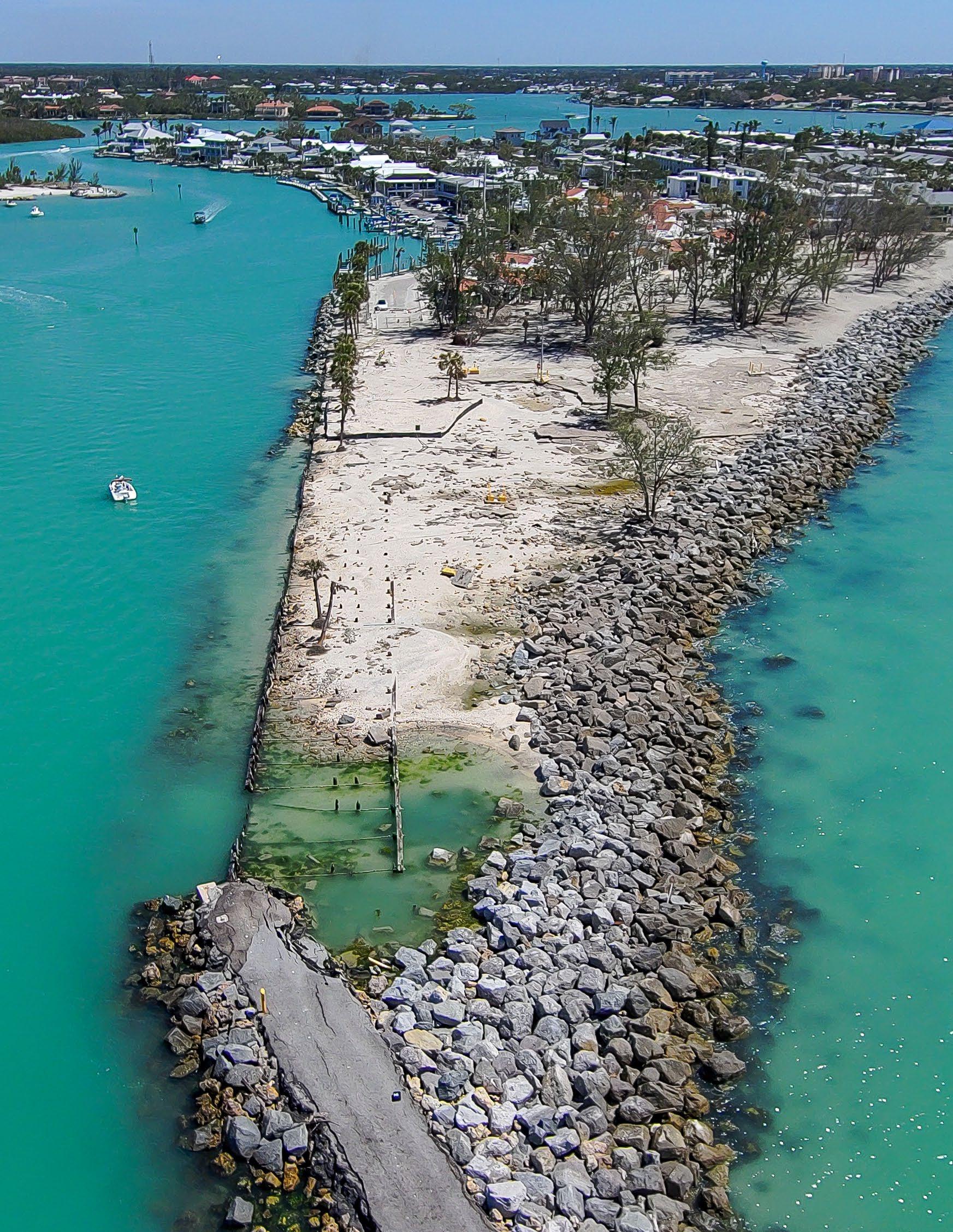
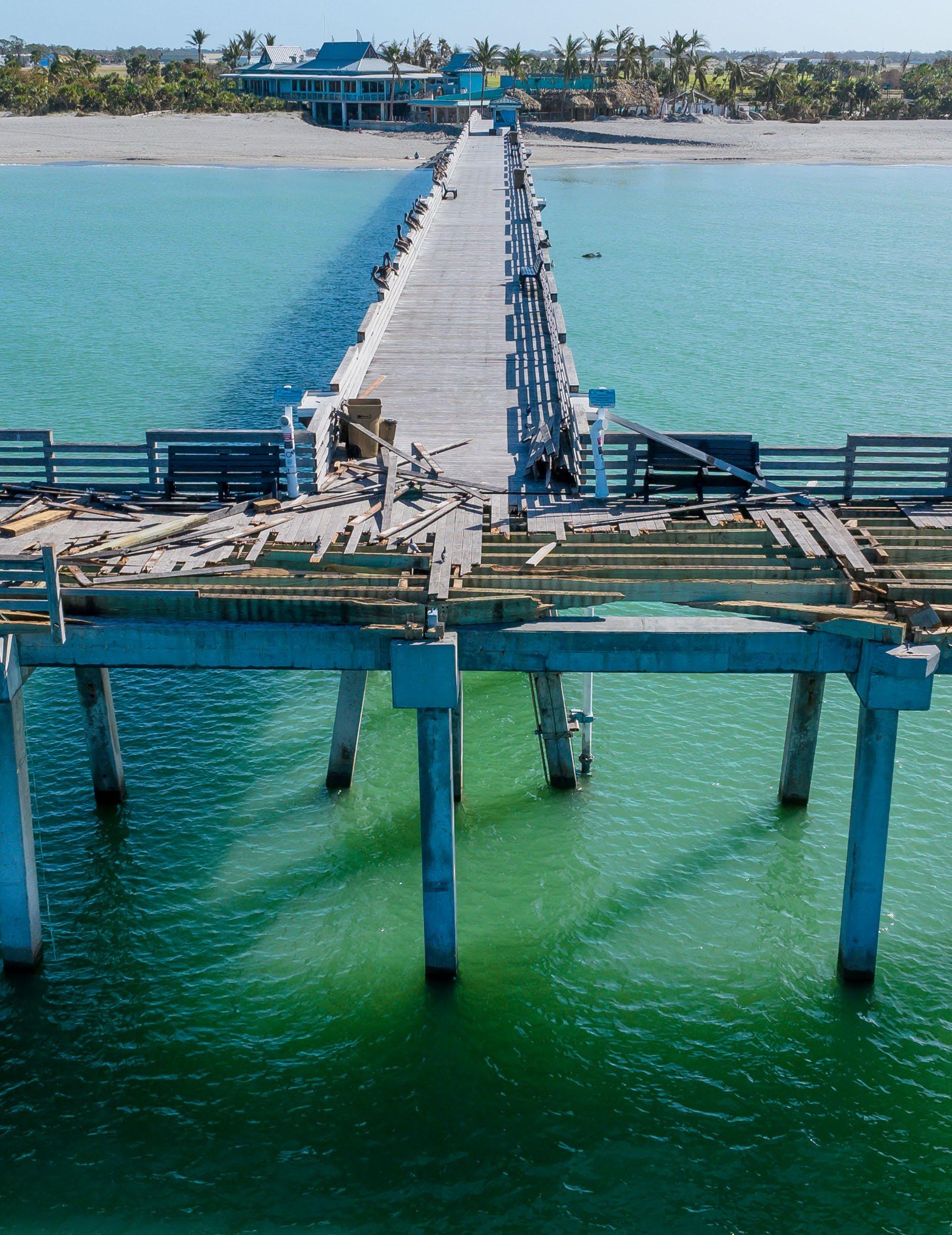
2026 City of Venice HURRICANE GUIDE


2026 City of Venice HURRICANE GUIDE

Dear Venice Resident,
Living in coastal Florida means preparing for more than just hurricanes. While the 2024 season brought multiple named storms to our region, 2025 reminded us that even in the absence of hurricanes, we are not immune to risk.

Extreme drought conditions, wildfire concerns, high winds, severe rain events, and extreme hot and cold temperatures are all part of the environment we call home. Whether you have lived here for decades or recently joined our community, it is essential to have a plan in place.
Florida is an all-hazards state, and preparedness is not seasonal it is continuous. Just as you prepare for hurricanes, you should also consider wildfire safety, flooding risks, lightning safety, and other emergencies. Know your evacuation level. Understand when to leave and where to go. Have supplies ready before they are needed.
This 2026 guide reflects an all-hazards approach, outlining what to expect before, during, and after a hurricane, but also other natural disasters or emergency situations.
While the City works year-round to strengthen infrastructure, coordinate with regional partners, and enhance response capabilities, community resilience begins at home. Your preparedness strengthens our collective preparedness. When residents are informed and ready, recovery is faster and impacts are reduced.
Thank you for doing your part to keep Venice safe, resilient, and ready for whatever comes next.

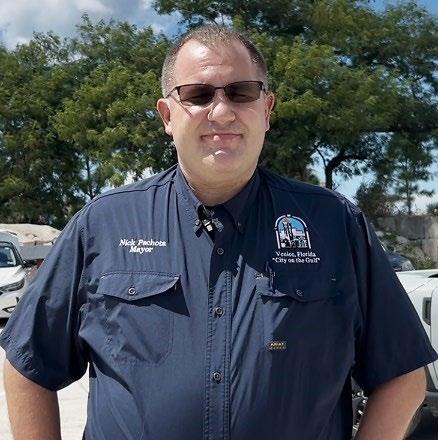
Nick Pachota City of Venice Mayor


Two-week minimum supply of medication, regularly used medical supplies, and a list of allergies
Food - nonperishable packaged or canned food and beverages, snack foods, juices, baby food, and any special dietary items to last at least 7 days
Water – one gallon per person per day for at least 7 days
Non-electric can opener, napkins, plastic cups, paper plates and utensils
A list of the style, serial number, and manufacturer information of required medical devices
Flashlight and batteries - do NOT use candles
NOAA Weather Radio -battery operated or hand cranked
Cash - banks and ATMs may not be available after a storm
Cell phone chargers
Books, games, puzzles or other activities for children
Keep your motor vehicle tanks filled with gasoline
Rain gear such as jackets, hats, umbrellas and rain boots
Sturdy shoes or boots, work gloves
First aid kit with manual, complete with sterile adhesive bandages of different sizes, gauze pads, gloves, antiseptics, tweezers and scissors
Hand sanitizer and soap
Aspirin or other pain relivers, anti-diarrheal medicine, antacid, laxative
Sunscreen and aloe vera
Q-tips and cotton balls
Safety pins and sewing needles
Specialty items for infants, small children, elderly, and family members with disabilities or dietary restrictions
Thermometer
Pet food and water to last at least 7 days, and water and food bowls
Proper identification
Medical records/microchip information
A carrier or cage, and toys or comfort items
Muzzle and leash
Medications
Supplies for your service animal
Insurance cards
Medical records
Banking information
Credit card numbers
Copies of social security cards
Copies of birth and/or marriage certificates
Other personal documents
Set of car, house, and office keys
Service animal I.D., veterinary records, and proof of ownership
Information about where you receive medication, the name of the drug, and dosage
Copy of will
Maintain a list of important phone numbers including City and County emergency phone numbers, evacuation sites, doctors, banks, schools, veterinarian, and a number for out-of-town contacts, friends and family
*Items should be kept in a waterproof container. Consider taking photos of documents as a digital backup.

The City’s Emergency Services team works closely with Sarasota County’s Emergency Management Department to begin emergency planning based on the hazard’s path and intensity. Our preparedness, response, and recovery activities mostly align or mirror the county and may include:
• Before: opening sandbag stations; transitioning City staff into their emergency response roles; activating the Emergency Operations Center; closing parks and facilities; issuing evacuation notices
• During: issuing a Declaration of Emergency (which allows the City to request county, state, and federal resources and funding); issuing critical information on the City’s website, social media and through local media partners; temporarily turning off utility services; temporarily suspending police and fire services; continued coordination with county, state and federal agencies
Level 1
Level 2
Threat-specific activation, all City staff perform their essential emergency role. Full EOC operations 24/7 through recovery.
Threat-specific activation, key staff report into the EOC, prepare facilities, amenities and infrastructure. Limited staffed EOC operations 24/7.
Level 3
Threat-specific monitoring, Emergency Manager and City leadership begin to plan. EOC operations regular hours with early morning and late evening briefings.
Level 4 Daily operations, weather, traffic, hazard and threat monitoring during regular business hours.
• After: resuming police and fire services; restoring water and sewer services; issuing boil-water notices; collecting debris; conducting high-water rescues and damage assessments; issuing permits and coordinating recovery resources; requesting federal reimbursement or aid
Because the City of Venice is located within Sarasota County, the County serves as the lead agency during major storms and cross-jurisdictional events. Sarasota County also manages evacuation notices and the opening and closing of public evacuation center for residents across the county, including Venice, North Port, and Sarasota.
While the City follows the County’s lead during large-scale emergencies and hurricanes, Venice maintains responsibility for local operations, including managing traffic on the City’s three bridges, maintaining stormwater systems, and restoring City utility services for residents.


Getting the right information at the right time can help you make informed decisions for you, your family and your property. Stay informed before, during, and after a storm by registering for emergency alerts and following official sources such as the City of Venice, Venice Police and Fire, Sarasota County, the Florida Division of Emergency Management, the National Hurricane Center, the National Weather Service, and trusted local television, radio, and print media:
Distress/Raise Marina/Vessel
Channel 16
Tip: Access radio by your vehicle’s AM/FM radio, a portable or hand-held batteryoperated radio, NOAA or HAM radios, or satellite phone.
yoursun.com/venice
heraldtribune.com/news/ venice-and-north-port/ Bridgetender
Channel 2
Channel 9 Tip: Low bandwidth mobile applications such as Next-door, Ring, or Signal or Zello may continue to work when cellular and internet services are down

Never miss an evacuation, boil water, or other emergency notification. Sign up for rapid emergency alerts by call, text, email, TTY: https://loom.ly/C-vB_kw Or scan the QR code at right


Non-emergency Venice Police Department
941-486-2444
Non-emergency Venice Fire Rescue 941-480-3030
Code Enforcement 941-882-7549
City Hall 941-486-2626
City Building Department 941-882-7547
City Solid Waste (Garbage/Recycling) 941-486-2422
City Stormwater/Engineering 941-882-7410
City Utilities (Water/Sewer)
Utilities Emergency Water/Sewer Outage 941-480-3333 941-486-2770
Sarasota County Government Contact Center
311 or T TY 711 941-861-5000
1-800-955-8771
Sarasota County Department of Health 941-861-2784
Sarasota County Schools 941-927-9000
Sheriff’s Office Non-Emergency Sheriff’s Office Animal Services
Power Outage - Florida Power & Light
Natural Gas Leak
People’s Gas (TECO)
American Red Cross Family Assistance
941-316-1201 941-861-9500
1-800-468-8243
Call 911 first, then evacuate 1-877-832-6747
1-833-492-0094
American Red Cross Southwest Florida 941-379-9300
Crisis Cleanup
Crisis Lifeline Suicide Hotline
FEMA Individual Assistance
1-844-965-1386
Call or Text 988
1-800-621-3362
Florida Disaster Legal Aid Helpline 1-833-514-2940
Fraud Hotline
Insurance Consumer Helpline
TTY 1-800-462-7585
1-866-966-7226
1-877-693-5239
Insurance Fraud Hotline 1-800-378-0445
Samaritan’s Purse
Do not call 911 to check on storm damage to your property. The City of Venice does not assess damage to individual properties or businesses. Welfare checks are only conducted for individuals in peril or facing immediate danger after a storm has passed and sustained winds have dropped below 45 mph.
Call or text 911 for emergencies that are an immediate threat to life and safety. During a hurricane, a dispatcher or medical professional may provide life-saving instructions over the phone until first responders arrive.
1-833-747-1234
Sea Tow Venice 941-484-4183
Small Business Administration (SBA) 1-800-659-2955
State Assistance Information Line (SAIL) 1-800-342-3557
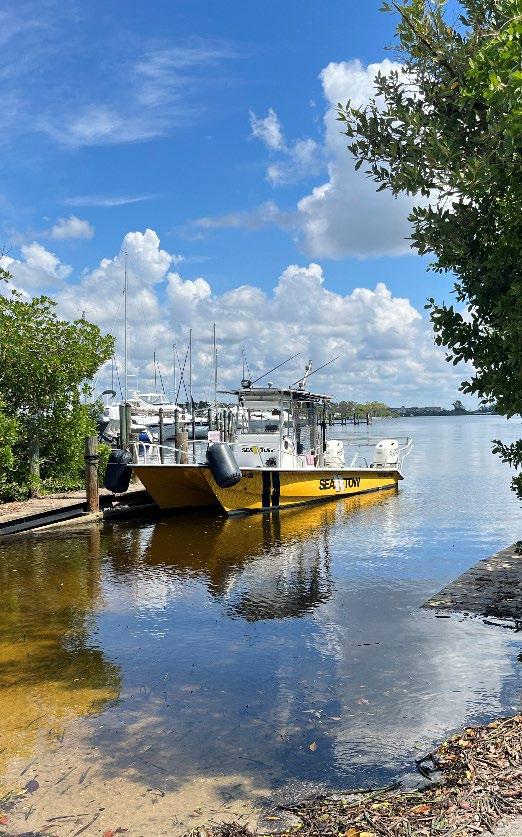
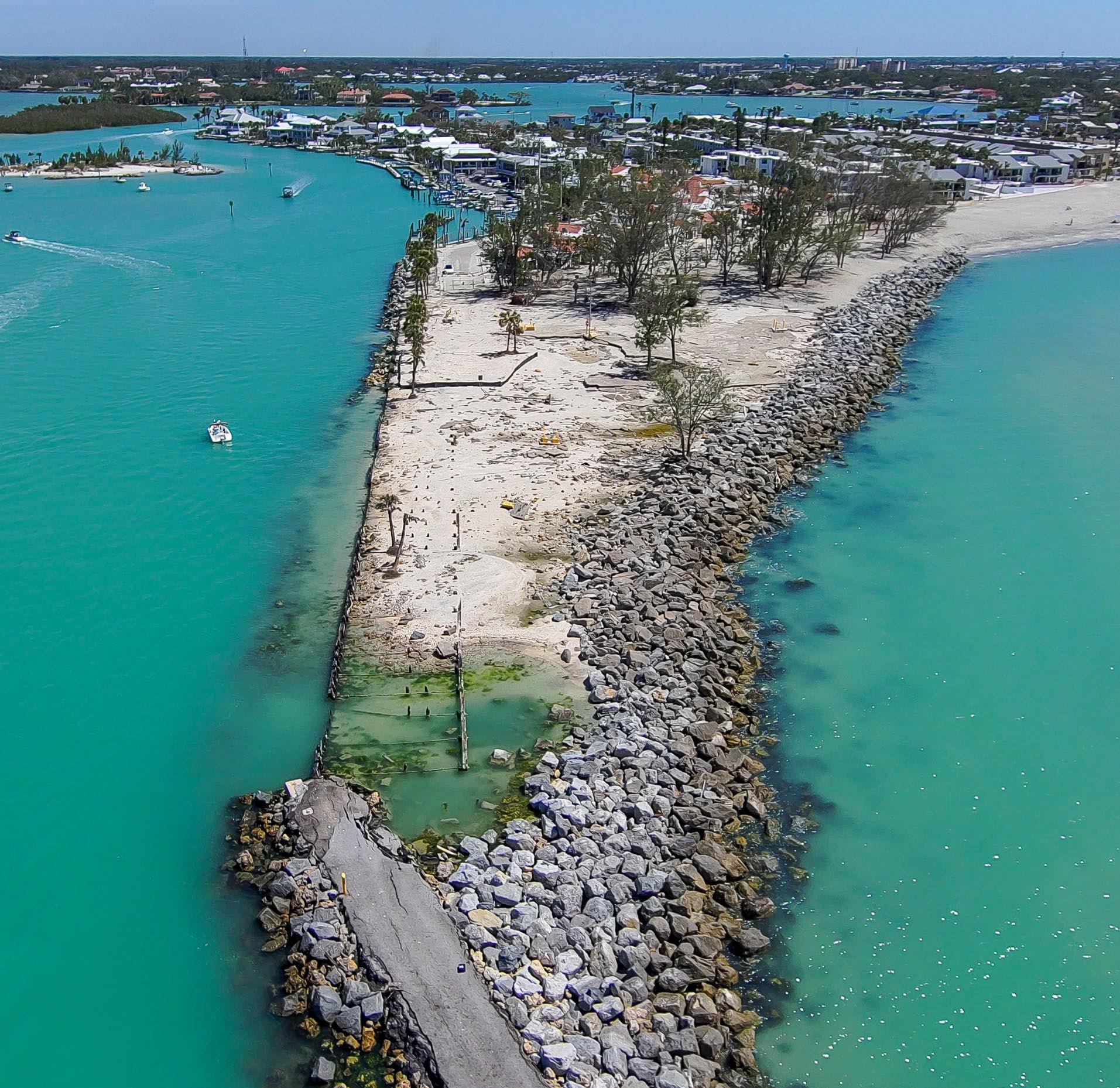

Your local perspective




Located along the Gulf, our community faces unique challenges during the Atlantic hurricane season, lasting from June 1 to Nov. 30 and reaching its highest intensity between mid-August and late October.
With low elevation and flat terrain, the City is especially vulnerable to storm surge, flooding, strong winds, and tornadoes. Features like Venice island and the Intracoastal Waterway further influence storm impacts, affecting evacuation routes, isolating water service, and increasing flood risk. Severe weather can disrupt daily life, and recovery may take days, weeks, or even months depending on the storm’s severity and our community’s individual preparedness.
This guide outlines what to expect before, during, and after a hurricane, helping residents and businesses prepare for the realities of storm season in our community.

The City of Venice is committed to maintaining government operations and resuming services swiftly and safely, especially during emergencies. Government facilities, parks and other public spaces may be closed to the public, and services may be suspended for various reasons, including:
• Emergency response operations: Some City facilities may be closed to the public as they serve as an emergency command post, are housing resources, staff and equipment or are not critical to emergency response.
• Infrastructure preparation and recovery: Staff may need to secure facilities before a storm, conduct safety checks, perform immediate repairs, or transition to generator power and temporary service schedules.
• Emergency response roles take priority: Staff may be reassigned to critical emergency operations, which can delay standard response times or non-essential services.
Despite these challenges, our staff is equipped to provide services remotely via a secure City network. Some services may be restored more quickly than others, and we’re grateful for your patience as our staff work as safely as possible to get your daily life back to normal.
Utility Shutoff or Reduced Pressure (Water and Sewer): To protect the utility system and prevent saltwater intrusion, pressure loss, or failure — and to ensure critical facilities like Sarasota Memorial Hospital-Venice continue to receive water and wastewater services — the City will shut off potable water and wastewater services before significant storm events. Once water service is restored, a boil water advisory for drinking water will be in effect for at least 72 hours. If you lose power and cannot boil water on an electric stove, consider using a propane or charcoal grill, camping burner, or follow household bleach instructions to disinfect drinking water. Residents are encouraged to factor this into their evacuation plans and prepare in advance by storing bottled water and filling bathtubs or other containers.
Learn more on pages 45-46.


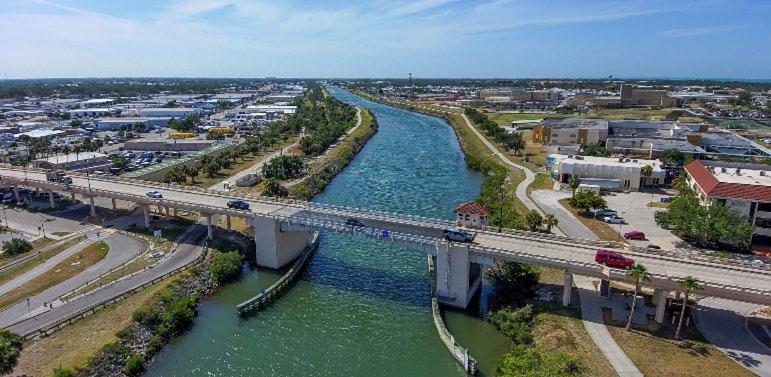
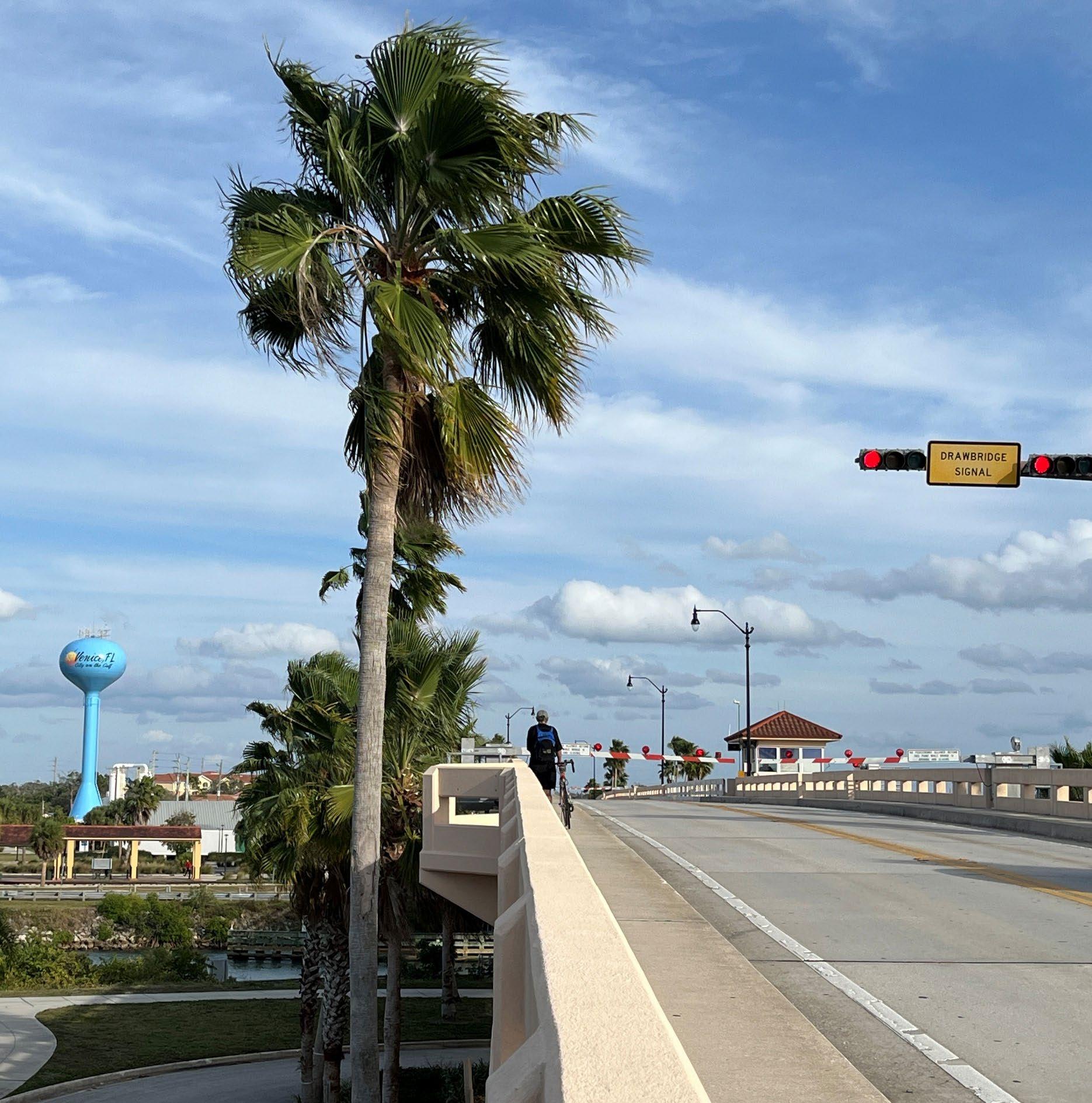
Bridge Access to Venice Island: The three bridges, North/KMI, Venice Avenue and Circus, are locked in the down position, allowing vehicles to drive on and off the island.
Limited Gas Supply: Before a storm, gasoline supplies may become limited, and long lines at stations are common as residents rush to fuel up. To avoid last-minute shortages, keep your vehicle’s gas tank at least three-quarters full throughout hurricane season. If you rely on a generator, store extra fuel in approved 3- to 5-gallon containers, kept in a cool, dry place away from heat sources, flames, or water exposure. Waiting until a storm is imminent may leave you without the fuel you need.
Evacuation Levels and Notifications: Evacuation Levels are NOT the same as Flood Zones. Sarasota County Government, in coordination with the Florida Division of Emergency Management (FDEM) and the National Hurricane Center (NHC), determines Evacuation Levels (A, B, C, D, and E) based on storm surge risk, wind speeds, and storm projections.

All mobile and manufactured homes, vessels, and RVs are considered Special Evacuation Areas and are always included in Level A evacuations due to their heightened vulnerability.
Sarasota County issues evacuation notices for all areas, including the City of Venice and neighboring municipalities (City of Sarasota, City of North Port, and Town of Longboat Key). The City of Venice communicates the same evacuation notices through Alert Sarasota County (an opt-in emergency alert system), the City of Venice Facebook page and website, local TV, print, and radio news stations, and Public Service Announcements (PSAs) via Venice Police Department loudspeakers in designated evacuation areas
Evacuating to a shelter should be your last resort, not your first option: If you must go, know the three closest locations in case your nearest evacuation center reaches capacity. Evacuation centers provide a safe, hardened building, but they do not supply food, bedding, or other essentials. You must bring your own sleeping bag or air mattress, clothing, food, water, medications, pet supplies, and comfort items. All evacuation centers are pet-friendly. Transportation rally points and medically dependent centers require preregistration through Sarasota County.
Sarasota County Government, in coordination with the Florida Division of Emergency Management and the Federal Emergency Management Agency, determines the location of hurricane evacuation centers based on their elevation and distance from potential catastrophic storm surge impacts. The island of Venice cannot host an evacuation center due to its low elevation and coastal proximity.
Find your evacuation level and more information on pages 14-15.

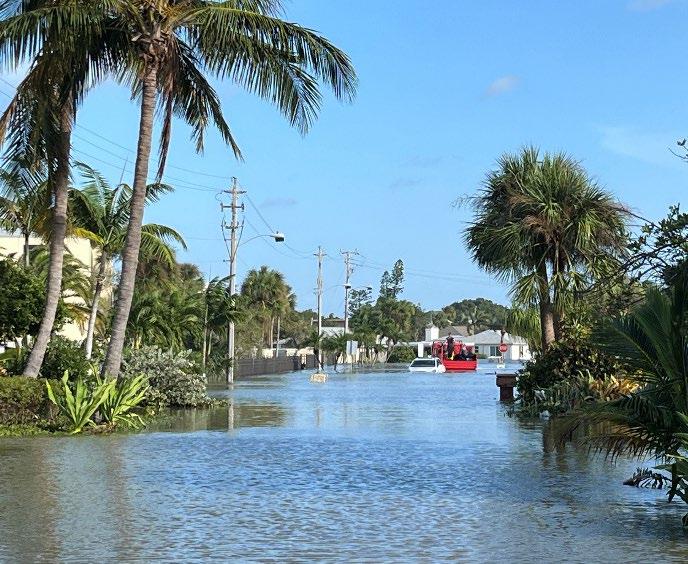
Coastal flooding: Low-lying areas like The Esplanade, Tarpon Center Drive, Flamingo Drive, and Golden Beach Boulevard are especially vulnerable to storm surge, heavy rain, and stormwater. These conditions can overwhelm infrastructure, making roads inoperable when submerged by seawater or tidal surge. Coastal flooding threatens homes, roadways, businesses and public spaces adjacent to the Gulf and Intracoastal Waterway.
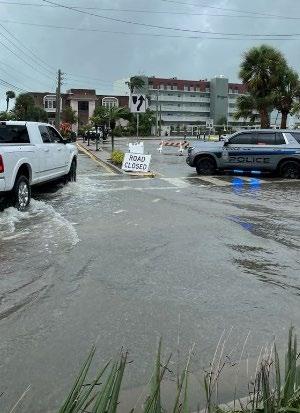
Never drive through floodwaters. It only takes 12 inches of water to float or sweep away a vehicle. Floodwaters may hide hazards like downed power lines, erosion, debris, wildlife, and harmful bacteria. Use alternate routes or wait until water recedes to stay safe. Turn around, don’t drown.
Cellular and internet services: May be unavailable during and after a storm. Restoration depends on your service provider and may vary by location. The City of Venice offers Starlink-powered Wi-Fi access points to support Wi-Fi calling and basic connectivity after a storm. Have a communication plan in place to keep your friends and family, both near and far, informed
Extended power outages: Are expected after a storm. The City of Venice is not responsible for power restoration. Florida Power & Light (FPL) manages repairs and prioritizes critical facilities like hospitals and government buildings. Use the FPL outage map to track restoration progress after a storm, at fplmaps.com. Be prepared to be without power for seven days or more. Consider options like using a generator, staying with friends or family, or evacuating in advance.
Traffic lights: May be out after a storm. The City works with Sarasota County to restore signals at major intersections using generators until full power returns, but this takes time. If you approach an intersection with a non-working signal, slow down, treat it as a four-way stop, and make eye contact with other drivers before proceeding.
Street signs: May be damaged, repositioned or missing after a storm. The City works quickly to repair and replace them, but your help speeds things up. Report missing or downed signs using SeeClickFix to help us respond faster at seeclickfix.com/venice.
Garbage and recycling: Secure your garbage and recycling carts before a storm to prevent them from becoming hazards. After a storm, trash, recycling, yard waste, and bulk collection may be delayed or suspended, expect service delays.
Debris collection: After a storm, it can take up to or over 90 days to complete the first pass depending on debris volume, roadway accessibly and availability of contracted debris monitors and haulers. The City’s contractors activate once roadways are clear to storm-related debris. Learn more on page 36.

Preparing yourself, your family, home, business, and property




Living in Florida means facing a range of potential hazards. Hurricanes are just one part of the picture. Storm surge, flooding, tornadoes, and extreme heat can all impact your safety, home, and daily life. Understanding your personal risk is the first step in preparing for any emergency.
Know your risk, hurricanes vary each year (pg. 13)
Evacuation levels and notices (pg. 14)
Transportation rally points, medically dependent (pg. 16)
Evacuation centers (pg. 17)
Sheltering in place (pg. 18)
Securing your home, using sandbags (pgs. 19-20)
Knowing your flood zone (pg. 21)
Protecting your vessel or aircraft (pg. 22)
Preparing your business and technology (pg. 23)
Preparing yourself and your family (pg. 24)
Preparing your pets and rural animals (pg. 25)
Protecting your history (pg. 26)
Arthur
Bertha
Cristobal
Dolly
Edouard
Fay
Gonzalo
Hanna
Isaias
Josephine
Kyle
Leah
Marco
Nana
Omar
Paulette
Rene
Sally
Teddy
Vicky
Wilfred
The National Hurricane Center began naming Atlantic tropical storms in 1953. Today, an international committee from the World Meteorological Organization maintains and updates the lists.
Hurricanes are rated on the Saffir-Simpson Hurricane Wind Scale from Category 1 to Category 5, based on their sustained wind speed. The scale estimates potential property damage. Hurricanes of Category 3 or higher are considered major because of their potential for significant loss of life and damage.
Category 1 and 2 hurricanes are still dangerous and require preventive measures. Do NOT make evacuation decisions based on a storm category. This scale does not reflect potential for storm surge. Cat. 1 and 2 storms often bring dangerous storm surge. Hurricane season runs from June 1 through Nov. 30. Listen to officials and heed evacuation notices when called.
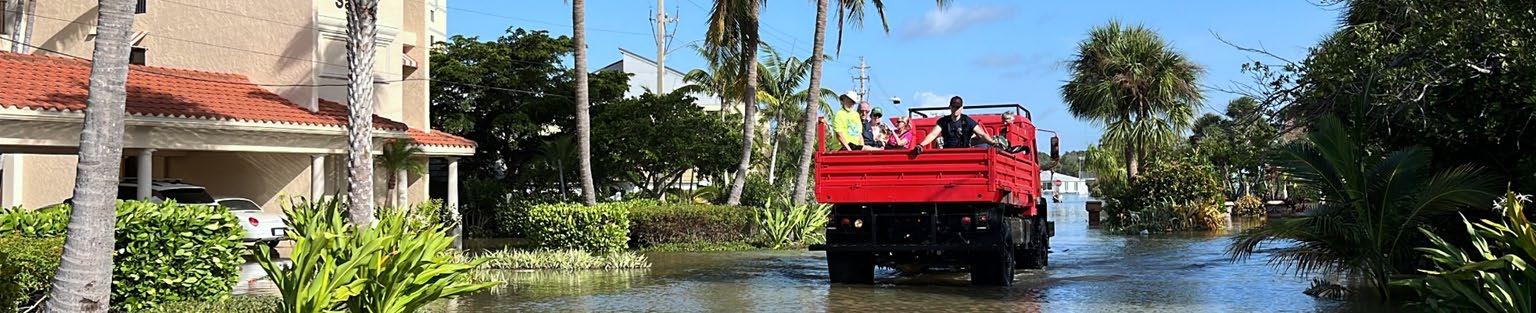
The height of hurricane season is August - October. During the historic 2024 hurricane season, all three storms that impacted the City of Venice and other areas of Sarasota County, arrived during this peak During hurricanes Helene and Milton there were over 50 high-water rescues conducted, no storm-related fatalities reported, and no injuries to City first responders. More than $120 million in damage to residential and commercial properties, as well as City facilities and infrastructure, was reported following Hurricanes Helene and Milton. Residents reported being without power or cellular service for up to 10 days. Recovery resources were provided at both the Venice Community Center and City Hall.
MYTH: “We made it through a Category 4 hurricane before with no damage. I’ll be fine this time.”
REALITY: A hurricane’s category is based on wind speed and potential wind damage, but it does not account for storm surge, rainfall, flooding, wind direction, or other hazards that can be just as dangerous, or more so. Do not let the category be your deciding factor. Impacts vary with every storm, and conditions can change quickly. Evacuate early. Your life is worth more than your property.

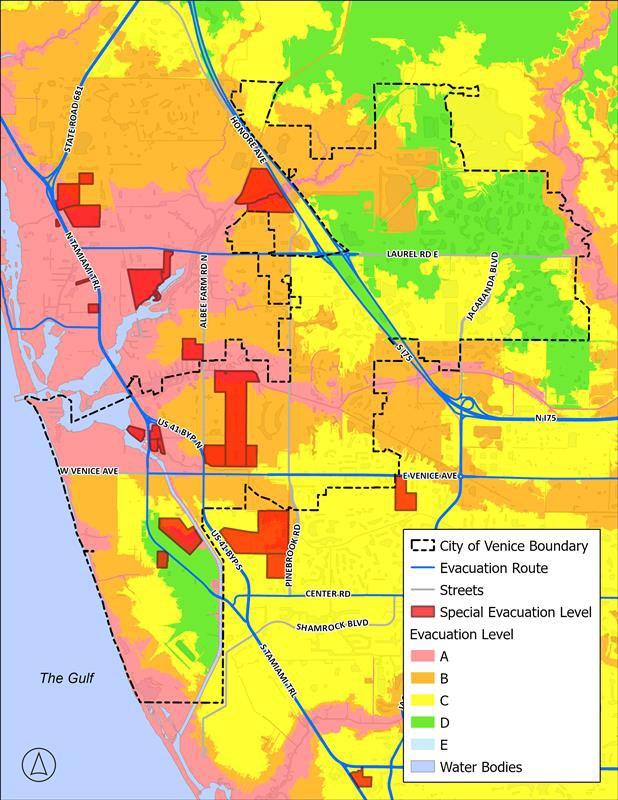
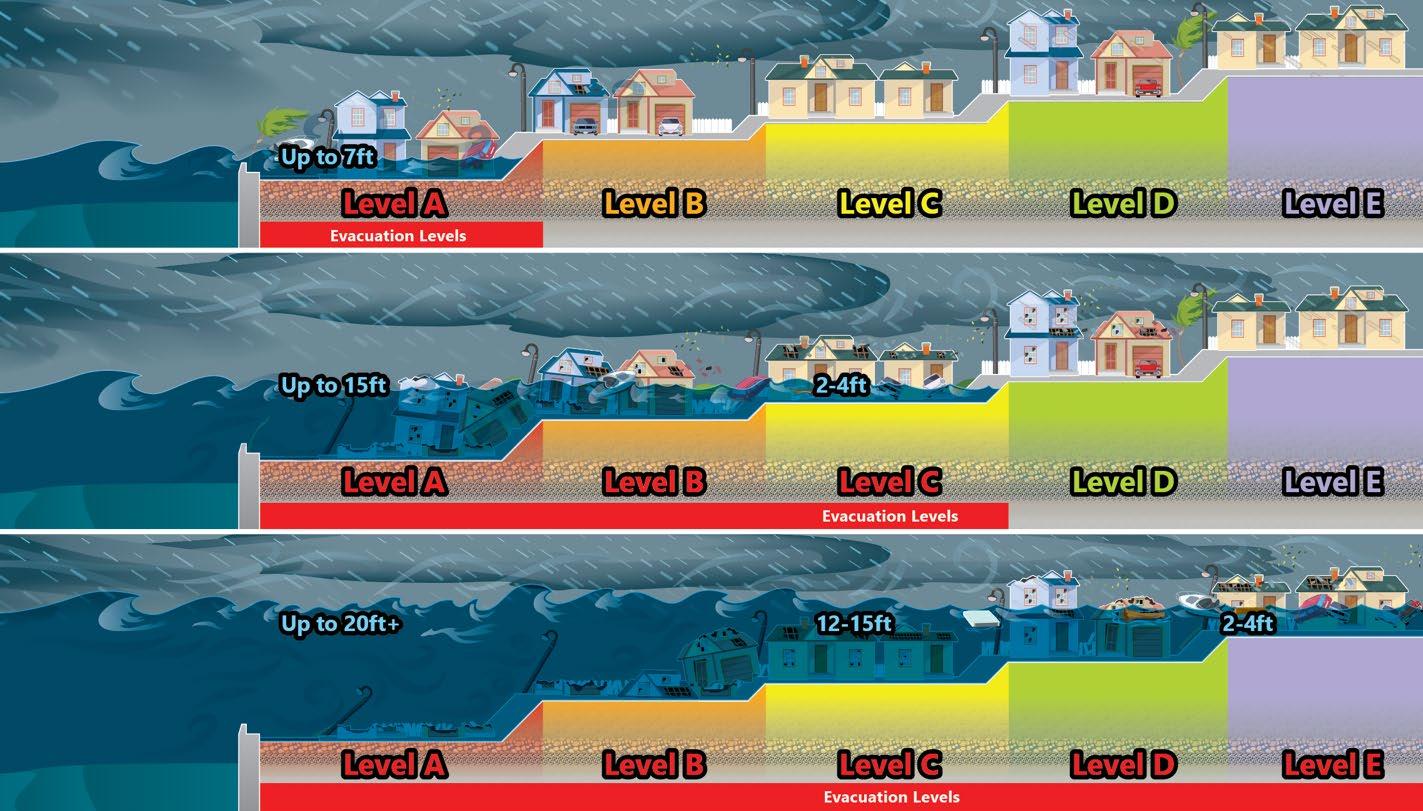
EVACUATION LEVELS: Evacuation Levels (A, B, C, D, and E) are determined by the National Hurricane Center based on ground elevation and an area’s vulnerability to storm surge. Leave early to avoid traffic, long delays, and worsening conditions as winds, rain, and storm surge intensify.

Find your evacuation level: https://bit.ly/EvacuationLevel Or scan the QR code on the right with your mobile device.
Evacuation Levels are NOT the same as Flood Zones. Evacuations are issued by Sarasota County and the City of Venice as a storm approaches to give residents, visitors, and business owners time to relocate to a safer inland area.
No two storms are the same. Many coastal roads could be underwater well in advance of a storm, restricting their use as evacuation routes. If you are going to leave the area, be prepared to evacuate early and head inland to avoid the high winds and heavy rains that precede the arrival of a storm. Evacuate tens of miles, not hundreds.
EVACUATION NOTICES: When Sarasota County and the City of Venice issue an evacuation notice, everyone within the identified evacuation level needs to leave the area. Evacuation notices are issued through:
• Alert Sarasota County, register today at alertsarasotacounty.com
• City of Venice website banner, venicegov.com
• City and County social media, @CityofVenice
• Local televisions news channels, refer to page 6.
• Local radio channels, refer to page 6.
• The Venice Police Department makes evacuation announcements over loudspeakers in designated evacuation areas, including mobile and manufactured home communities on Venice island.
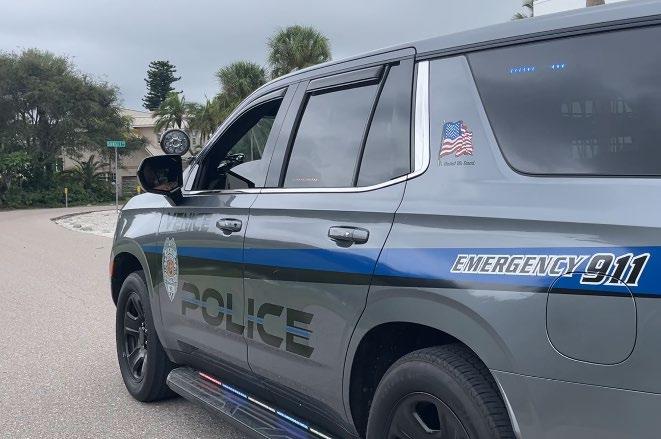
If your home is outside of Level A, not on the island, and built to modern building codes (2002 or later) you may consider sheltering in place. Know your home, know your risk, and make an informed decision.
MYTH: “I can wait until I see how bad the weather gets before deciding if I will evacuate.”
REALITY: Every storm is different. Conditions can rapidly deteriorate as a hurricane approaches, roads may flood, and winds can become too dangerous for travel. First responders may be forced to cease operations, leaving you on your own until sustained winds drop below 45 mph and floodwaters recede. Do not wait. By the time conditions worsen, it may be too late to evacuate!

TRANSPORTATION RALLY POINTS: If you are going to leave the area, be prepared to evacuate early and head inland to avoid the high winds and heavy rains that come before a storm. Evacuate tens of miles, not hundreds. For those who cannot drive or otherwise be transported by family, friends or neighbors, Sarasota County will provide last-resort, free bus transportation at the rally points for you and your pets, along with a limited amount of supplies, to and from a general population evacuation center. You must complete an online registration with Sarasota County before a storm or submit preregistration 48 hours before a storm makes landfall.
Rally points are NOT evacuation centers, and locations may change depending on the storm:
• Buchan Airport Community Park/Kiwanis Park, 1390 Old Englewood Rd, Englewood
• Colonial Oaks Park, 5300 Colonial Oaks Blvd, Sarasota
• Englewood Sports Complex, 1300 S. River Rd, Englewood
• Garden Elementary School, 700 Center Rd, Venice
• George Mullen Activity Center, 1602 Kramer Way, North Port
• Laurel Park and Sandra Sims Terry Community Center, 509 Collins Rd, Nokomis
• Lido Beach, 400 Benjamin Franklin Dr. Sarasota
• North Port Library, 13800 S. Tamiami Trail, North Port
• Pine View School, Athletic Court Facilities, 1 Python Path, Osprey
• Potter Park, 8587 Potter Park Dr., Sarasota
• Publix Super Market at Shoppes of Bay Isles, 525 Bay Isles Parkway, Longboat Key
• Breeze Downtown Station, 150 N. Lemon Ave, Sarasota
• Siesta Beach, 948 Beach Rd, Sarasota
• Suncoast Technical College , 4675 Career Lane, North Port
• Breeze UTC Station, 500 N. Cattlemen Rd, Sarasota
• Venice Community Center, 326 Nokomis Ave S, Venice

Never go to an evacuation center or rally point until local officials announce it is open. Always turn off your main water valve, irrigation system and secure loose items before leaving your home. Never leave pets, children or older adults behind. Mark or tag livestock or farm animals.
MEDICALLY DEPENDENT: City of Venice residents with qualifying medical needs are encouraged to apply for registration as a Medically Dependent Person (MDP) with Sarasota County by calling 311 or online at scgov.net/MedicalNeedsProgram All MDPs must bring a caregiver to the designated medically dependent evacuation center. The caregiver must be able to: assist you with all activities of daily living, including dressing and toileting; lift you to/from toilet and cot and wheelchair as needed; assist you with walking (with or without walker); assist with wheelchair; transport food from cafeteria to you as needed; assist with medication and any treatments as needed; monitor your oxygen usage; provide evacuation center management with a discharge plan in the event you cannot return to your home.
For more information on what to bring with you to a Medically Dependent Center visit https://bit.ly/SRQMedicalNeedsProgram

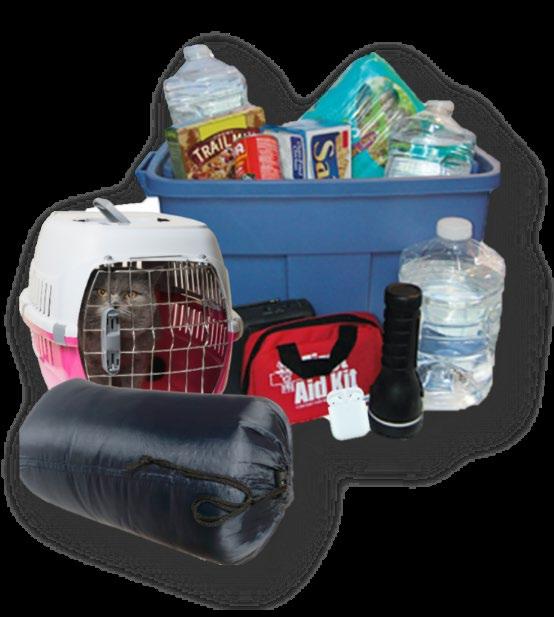
EVACUATION CENTERS: Should be your last resort, not your first option. All evacuation centers are pet friendly. Medically dependent shelters require advanced registration through Sarasota County. You must bring everything you need, including:
• Sleeping bag, air mattress and pump, pillow, blankets, bedding, cots, etc.
• Clothing, medications, medical supplies, and comfort items
• Pet supplies, including water, food, litterboxes, pee-pads, crates, and carrying cases
• Food and water for each member of your group for multiple days
Evacuation Center locations: The island of Venice cannot host an evacuation center due to its low elevation and coastal proximity. Centers should be your last resort, not your first option. Know the three nearest locations in case the one closest to you is full.
1. Booker High School, 3201 N. Orange Ave, Sarasota
2. Fruitville Elementary School, 601 Honore Ave, Sarasota
3. Southside Elementary School, 1901 Webber St, Sarasota
4. Brookside Middle School, 3636 S. Shade Ave, Sarasota
5. Phillippi Shores Elementary, 4747 S. Tamiami Trail, Sarasota
6. Riverview High School, 1 Ram Way, Sarasota
7. Gulf Gate Elementary, 6500 S. Lockwood Ridge Rd, Sarasota
8. Taylor Ranch Elementary, 2500 Taylor Ranch Trail, Venice
9. Heron Creek Middle School, 6501 W. Price Blvd, North Port
10. North Port High School, 6400 W. Price Blvd, North Port
11. Woodland Middle School, 2700 Panacea Blvd, North Port
12. Atwater Elementary School, 4701 Huntsville Ave, North Port
Sarasota County Government, in coordination with Florida Division of Emergency Management and the Federal Emergency Management Agency, determines the location of hurricane evacuation centers based on their elevation and distance from potential catastrophic storm surge impacts The county is governing agency for opening, closing, or continuing center operations.
MYTH: “I’ll be provided with a cot, bedding, three hot meals, and comfort items when I evacuate to a Sarasota County Hurricane Evacuation Center.”
REALITY: Evacuation Centers provide a safe, hardened building, but they do not supply food, bedding, or other essentials. Expect no privacy and limited space, approximately 20 square feet per person, with about six feet of separation between families in a shared classroom or hallway.
MYTH: “My first choice for evacuating is to go straight to the nearest center.”
REALITY: Evacuation Centers should be your last resort. Plan to evacuate early and travel inland, tens of miles away from the coast when possible. Consider staying with friends, family, or in temporary housing. Do not wait until the last minute; dangerous conditions can arrive quickly ahead of a storm.

SHOULD I SHELTER IN PLACE? Sometimes, sheltering in place isn’t a choice. If you delay evacuation too long or if conditions worsen rapidly, roads may become impassable. Always have a disaster kit ready in case you need to shelter unexpectedly. Before deciding to shelter in place, ask yourself:
• Do I have medical needs that depend on power or electricity?
• Do I have young children, older adults, or pets who require temperature control?
• Can I go for days or even a week without power, internet, or running water?
• When was my roof last inspected or replaced?
• Do I have a safe space away from windows and doors?
• Am I outside an evacuation area or a level that has been called?
• Do I have a generator, backup fuel, and enough supplies to last?
When was your home built? Hurricane research studies have shown that on average, homes built under the 2002 Florida Building Code sustained less damage, and when paired with shutters, may be safe to stay in as long as they are not in an evacuation area. Homes built between 1994 and 2001 under the Standard Building Code sustained more damage, and homes built before 1994 fared even worse.
Fill a clean bathtub or other large containers with water for cleaning, flushing, or personal maintenance
Drinking water, one gallon per person, per pet, per day, for at least seven days
Canned food and a manual can opener
Disposable (paper/plastic) items for food/snacks
Baby needs
Special dietary needs
Cash (ATMs may be out-of-service)
Pet supplies
Photocopies of important documents (birth certificate, license and insurance)
Full tank of gasoline in your car
Cell phone/tablet chargers, power banks, car phone chargers
Battery-operated fans with extra batteries
Medications, prescriptions and a first aid kit
Essential hurricane supplies can be purchased tax-free year-round (exceptions may apply). Learn more at floridarevenue.com or flsenate.gov
MOBILE AND MANUFACTURED HOMES: Are an unsafe shelter in high winds no matter how wellfastened to the ground. Take precautions to ensure that your mobile home is properly secured to reduce possible damage to your home and your neighbor’s property.
• Check tie-downs annually. Make sure straps are tight, properly aligned and not at an angle.
• Verify that ground anchors and stabilizer plates have been installed properly.
• Be sure support piers are in contact with the frame.
• Replace straps or ground anchors that show signs of corrosion or damage.
For detailed information or to verify a contractor’s license, call the Department of Highway Safety and Motor Vehicles, Bureau of Mobile Home and Recreational Vehicle Construction at 850-617-3004.

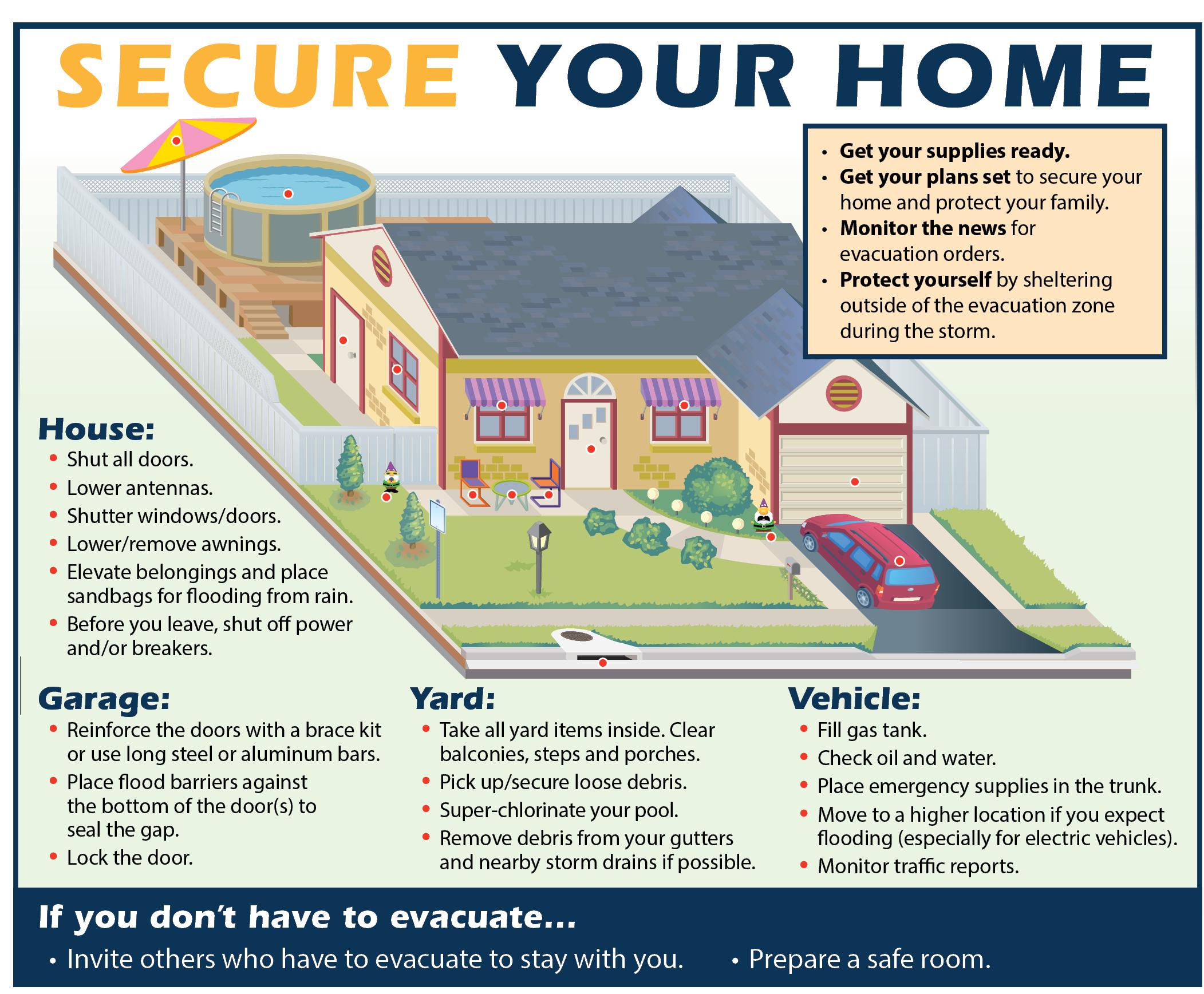
YOUR HOME AND PROPERTY: Individual preparedness strengthens community preparedness. Taking steps before hurricane season to secure your home and property can help reduce damage and support a safer, more resilient community. Use the checklist below to get started.
• Use a certified Florida-certified arborist to properly trim trees before hurricane season.
• Remove or secure any items, decorations, or other belongings that can become airborne.
• Keep storm drains, ditches, and gutters clear of yard debris, trash and litter.

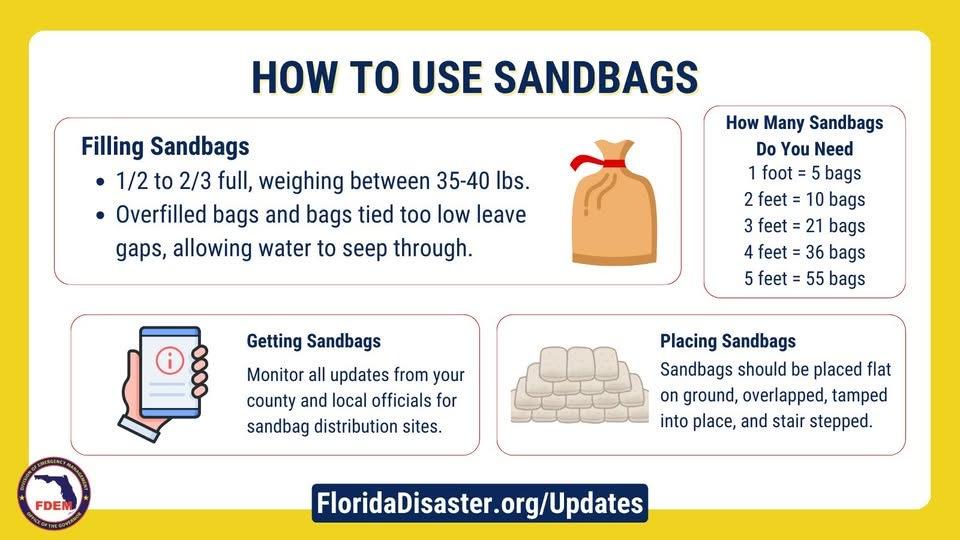
Before a storm, the City of Venice provides free empty sandbags to City residents at Venice City Hall (401 W. Venice Ave.) and the Public Works Department (1350 Ridgewood Ave.); limit 10 sandbags per household. A self-service sandbag station on Seaboard Avenue offers free sand, but residents are responsible for shoveling and transporting their own bags.

Not all protective measures work in every area. Sandbags may not be effective in coastal, water-adjacent, low-lying areas, and where storm surge and widespread flooding are expected.
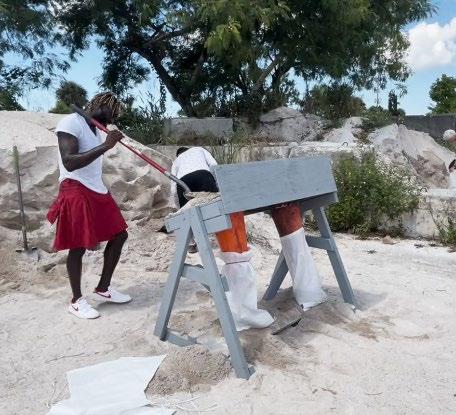
Used sandbags have a short lifespan. After storms, they may be contaminated even if they look clean, and should not be reused for flood protection or placed near children or edible plants. Clean, dry sand can go on lawns or landscaping but must not enter storm drains, roads, or water. Never place filled sandbags in garbage carts; empty bags are allowed in regular waste.
Unused sandbags that have remained dry and uncontaminated can be stored for future use. Keep them in a cool, dry, covered area to prevent damage from moisture or sunlight. Inspect stored sandbags each hurricane season, and replace any that show signs of deterioration, mold, or weakening.

KNOW YOUR FLOOD ZONE: Flood zones are NOT the same as evacuation levels. Everywhere in Florida is in a flood zone; it's the level of risk that varies. Flooding issues can arise even in locations far from water sources or outside the high-risk Special Flood Hazard Area (SFHA). SFHAs are high-risk areas that are very likely to be inundated by a flood event in any given year.
• High-risk flood hazard: Also known as a Special Hazard Area, are the most at risk, and likely to flood during any event.
• Moderate flood hazard areas: These areas are labeled as Zone B or Zone X (shaded), and a 500-year flood risk.
• Areas of minimal flood hazard: These areas are labeled as Zone C or Zone X (unshaded), and are usually higher than the elevation of moderate flood risk areas.
• Properties within an SFHA must have flood insurance if they have a federally backed mortgage.
• SFHAs are shown on Flood Insurance Rate Map (FIRM) as Zone A, AO, AR, AH, A1-A30, AE, A99, AR/A, AR/AE, AR/AH, AR/AO, AR/A1-A30, V1-V30, VE or V.
• SFHAs have a 1% chance of being exceeded, also known as a blasé flood or 100-year flood.

To check on your property’s risk of flood hazard, contact the City’s Engineering Department at 941-882-7412 or use the online tool by scanning the QR code or https://bit.ly/FindMyFloodZone
National Flood Insurance Program (NFIP): Managed by FEMA and delivered through more than 50 insurance companies, the NFIP provides flood insurance to homeowners, renters, and businesses to help speed recovery after a flood. Standard homeowners’ insurance does not cover flood or wind damage. Eligible Venice residents may receive up to a 25% discount through the Community Rating System, no code required. Visit floodsmart.gov for a quote. There is a 30-day waiting period before coverage begins.
Flooding causes more deaths each year than any other thunderstorm-related hazard. According to the CDC, over half of flood-related drownings occur when vehicles are driven into floodwaters, with many others happening when people walk into or near them. Just 6 inches of fast-moving water can knock over an adult, 12 inches can carry away most cars, and just 2 feet can sweep away SUVs and trucks.
Floodwaters are dangerous and unpredictable. They can hide washed-out roads, downed power lines, wildlife, and debris, and may contain stormwater runoff, pollutants, and harmful bacteria. Never drive or walk into floodwaters, and never go around barricades. Seek alternate routes when possible.

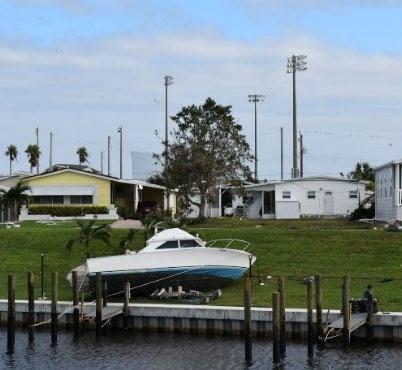
PREPARE YOUR VESSEL: Have a hurricane plan by deciding early whether to relocate your vessel or secure it in place and ensure someone else can carry out the plan if you’re away. If able to be trailered, move your boat out and relocate it away from tidal waters and storm surge zones.
Learn more at myfwc.com/boating/safety-education/hurricane/

Never stay onboard during a hurricane. Evacuate early and monitor local alerts. If you have to leave your boat behind…
• on the water - remove or secure sails, canvas, electronics, and loose gear. Double mooring lines, rig cross-spring lines, tie high on pilings, and use chafe protection and fenders. In protected areas, set multiple anchors with a 10:1 scope.
• on the lift - raise as high as safely possible without making the boat unstable. Tie it to the lift frame (not just straps), remove the drain plug and all loose items, and secure or disconnect the battery.
• at the dock - use high pilings and tie lines above usual height. Double or triple mooring lines with long spring lines for surge and protect all lines with chafe gear.
PREPARE YOUR AIRCRAFT: Before a hurricane approaches, tenants of the Venice Municipal Airport (VNC) should plan to keep their airplane and hangar secured or to relocate their plane out of the path of an approaching storm system.
Issued for the City of Venice indicates the possibility that we could experience hurricane conditions within 36 hours. A hurricane watch should trigger your family’s disaster plan, and protective measures should be initiated including securing your airplane and items within your hangar at Venice Airport. Plan ahead as access roads may be limited.
Issued for the City of Venice indicates that sustained winds of at least 74 mph are expected within 24 hours. During a hurricane warning, VNC will close and airport staff will initiate the Hurricane Hangar Strap Installation Protocol (HSIP). The HSIP is meant to secure the hangar doors from being lifted off the tracks, falling onto airplanes, and becoming an airborne hazard.
The Hurricane Hangar Strap system uses heavy-duty ratcheting straps secured to ground-mounted Drings to help prevent hangar doors from lifting during hurricane-force winds. D-rings remain in place, while straps are installed by airport staff only when a storm is approaching. Hangar locks will be replaced with staff-controlled padlocks to protect the system and neighboring hangars.
During a Hurricane Warning, the Airport Operations Area (AOA) will be closed and secured. No access will be permitted, including tenants. Only authorized personnel may enter. Once conditions are safe, airport staff will assess the property, remove straps, and reopen the AOA. Updates will be shared via email and social media. For specific questions, please contact the airport directly at 941-486-2711

PREPARE YOUR BUSINESS: All businesses should have a disaster plan to communicate with employees, local authorities, customers and others during and after a disaster. Follow these guidelines to prepare your place of work:
• Provide employees with information on when, if and how to report to work following an emergency.
• Set up a telephone call tree, a password-protected page on the company website, an email alert or a call-in voice recording to communicate with employees.
• Store valuable information in fire/waterproof containers, offsite and away from the storm’s path.
• Evaluate your insurance coverage to ensure it will allow your business to fully recover after a storm. Keep your policy in a location offsite.
• Maintain a video or pictures of your office/equipment prior to a disaster; stockpile spare parts and alternative power supplies.
• Unplug equipment during major storms.
• Ensure that there are written procedures in place, lists of customers, vendors, inventory, calendars and schedules, and that this information and location is shared with other employees who will be needed to get the business back in operation.
• Encourage employees to have a workplace survival kit.
Complete a business disaster recovery plan. You can find a sample business emergency plan at ready.gov/business, FloridaDisaster.org, or with the Economic Development Corporation (EDC) of Sarasota County’s continuity planning guide: edcsarasotacounty.com/business-continuity-planning.
PREPARE YOUR TECHNOLOGY: It is essential to store important documents in both digital and physical formats to safeguard them from potential loss. Follow these suggested guidelines:
• Charge all batteries and devices in advance to ensure ample power supplies when needed.
• Take photos/videos of your property, belongings, and assets before and after a disaster for insurance claims.
• Move major electronics (computers, TVs, servers, etc.) away from windows, doors, and exterior walls to reduce risk of water or wind damage.
• Cover electronics with plastic sheeting or trash bags, or place them in waterproof containers to protect against leaks or broken windows.
• Unplug electronics before the storm to prevent damage from power surges or outages
• If possible, elevate valuable devices off the floor in case of flooding.
• Securely store passwords and access codes.
• Convert essential paperwork into digital files by scanning them with a scanner, mobile camera, or smartphone app.
• Back up your digital files to external drives, USB sticks, and the cloud, and update them regularly to keep data current and accessible
• Remember to take your backup drives during an evacuation.

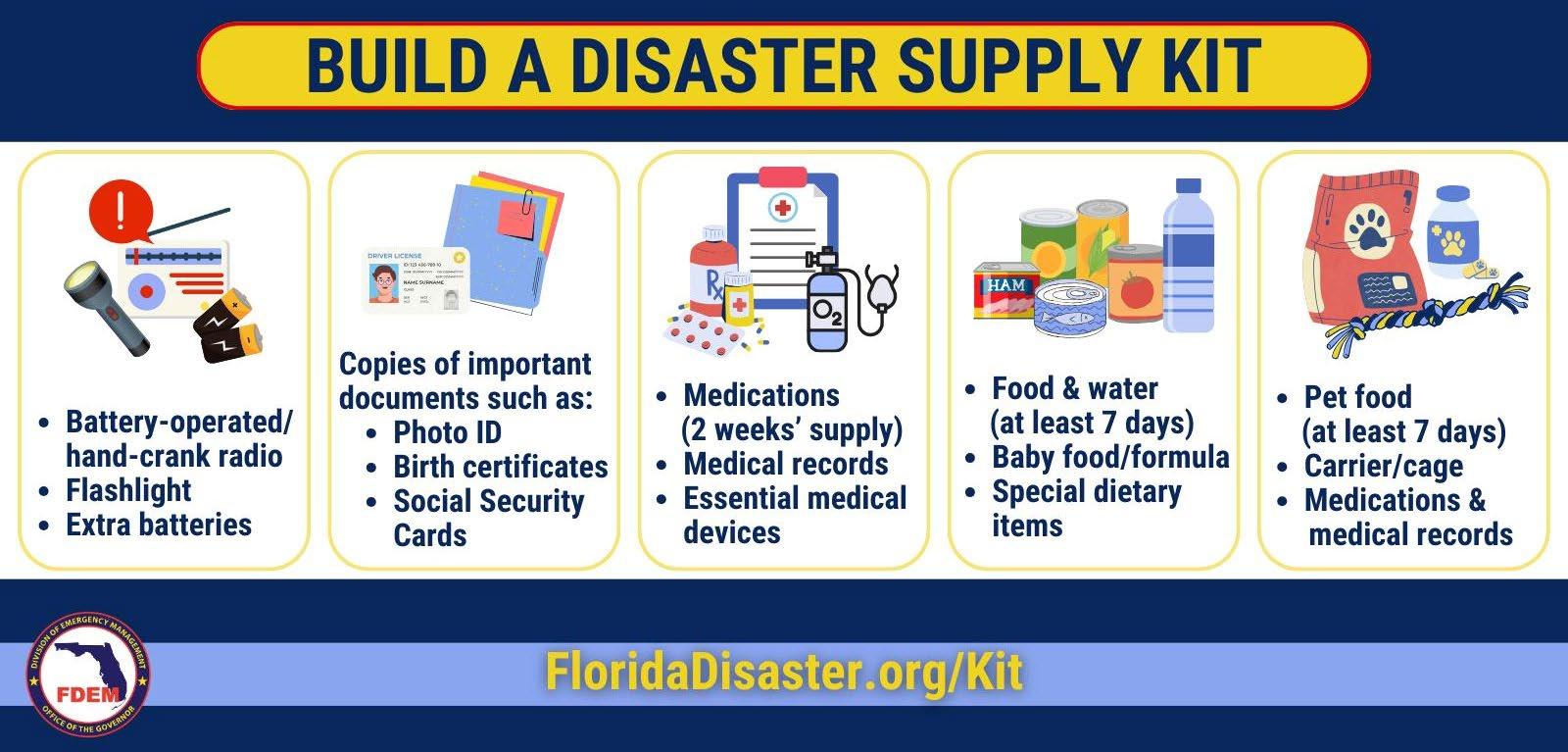
BUILD YOUR DISASTER PREPAREDNESS KIT: When we say, "build your kit," we don’t mean waiting until June 1 to rush to the store and stock up. Instead, start early and gradually gather supplies between January and June. Add extra cases or bottles of water, canned food, toiletries, pet food, baby items, and other essentials to your regular shopping.

Your kit should have enough supplies to last each person and pet in your household at least seven days. See the disaster checklist on page 4 for more information.
As you pack your kit, be sure to include medications, water for drinking and hygiene, nonperishable foods, dietary or specialty foods, snacks, clothing, bedding, comfort items, cellphone chargers, headphones, power banks, and extra batteries.
MAKE AN EVACUATION PLAN: Know and practice your routes. Make sure your gas tank is ¾ full and you have cash. If you are evacuating, be sure to bring your pets, their food, carriers, and waste bags or boxes. And don’t leave behind important documents, cherished keepsakes or valuables. Some areas may be flooded or inaccessible during a storm. If your home is not safe to ride out a storm in, consider evacuating tens of miles, not hundreds of miles
Stay with a friend or leave the area: Sheltering with friends or family inland or checking into a nearby hotel outside of an evacuation zone and away from potential storm surge may be enough to keep you safe.
Move to an evacuation center: If you plan to go to an evacuation center, know that they should be a last resort. Identify at least three nearby locations, as the closest one may be full. Learn more on page 17.
PREPARE YOUR PETS: The safety of your pets depends on you, especially in an emergency. During severe weather or other emergency situations, if it is unsafe for you to stay in your home, it is also unsafe for your pets. Do not leave your pet behind, and do not use your pet as an excuse not to evacuate.
All Sarasota County evacuation centers are pet-friendly, but you must be prepared before you go. Bring a crate for your pet and all necessary supplies including food, water, medications, toys, litter boxes, pee-pads, and waste bags. If your pet is not accustomed to being confined, acclimate it to the crate before an emergency to help reduce stress.
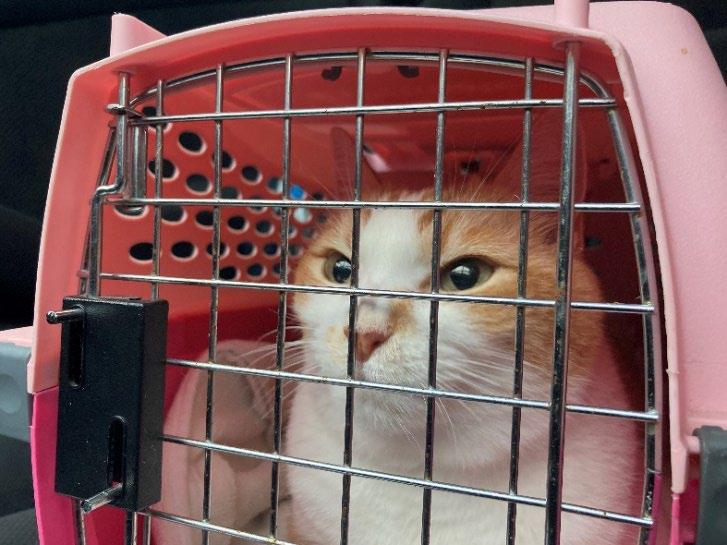
During disasters, pets may become afraid and run away. Consider microchipping your pets to make reunification easier.
PREPARE YOUR RURAL ANIMALS: The decision to evacuate your livestock depends on many factors. If they are in a storm-surge area, flood plain, small pasture or urban area where they will be unable to avoid debris or could be in danger of collapsing buildings, you should consider evacuation. Decide in advance how you are going to evacuate and, in case you cannot evacuate, how you and your animals are going to cope with limited water, electricity and access to assistance for three or four days or more. Write down your plan and store it with your important documents, so it's easy to grab if you need to act quickly.
If you must evacuate and cannot take your animals with you, let friends and neighbors know about your plans and leave clear and detailed instructions in multiple spots around your property.
Leave water for at least three days and access to quality hay.
Do not leave animals with free access to grain, this can cause digestive issues, colic, or stress eating.
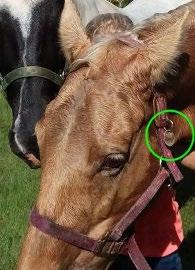
The safest place for large animals to weather a storm is in a large pasture.
Label your animals with a non-toxic grease pencil or spray paint with your phone number.
Label your contact information onto waterproof luggage tags and attach them to their halters/collars or braid them into the mane or tail
Learn more about preparing rural animals from University of Florida's Institute of Food and Agricultural Sciences (UF/IFAS): https://bit.ly/4cptfGt


HISTORIC PROPERTY: Along with preparing for yourself, your loved ones, and your pets, plan for your irreplaceable memories.
For historic properties, begin with guidance from the Federal Emergency Management Agency (FEMA) on hurricane preparedness and recovery. The State of Florida also provides resources specific to historic structures. For designated historic properties, the FEMA 50% Rule (see pg. 34) does not apply during restoration, provided federal preservation guidelines are followed.
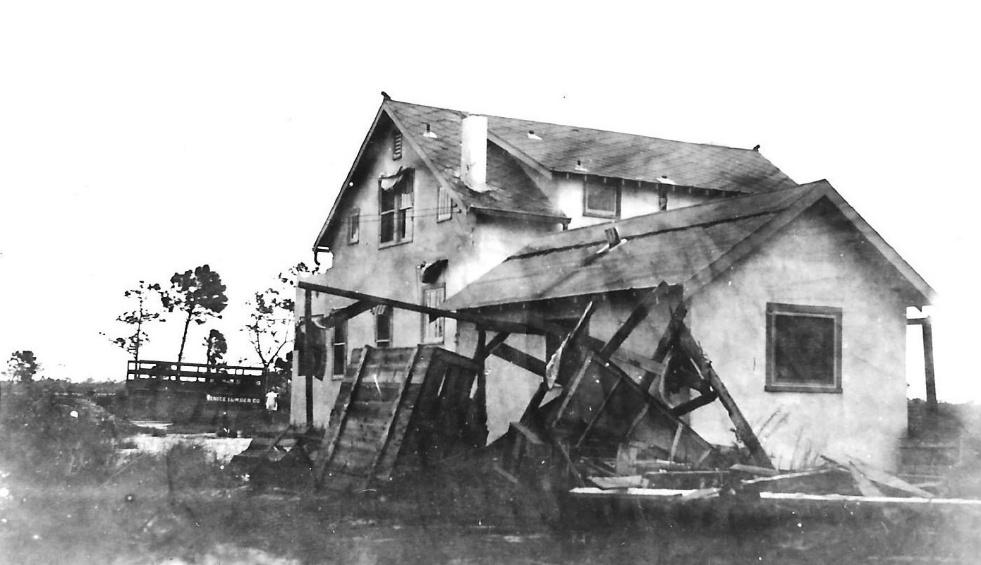
Plan ahead, before hurricane season begins on June 1:
• Decide now what you will take with you and what will remain in your home.
• Digitize photographs and documents whenever possible.
• Keep priority items packed, accessible, and stored in sturdy, water or moisture-proof containers.
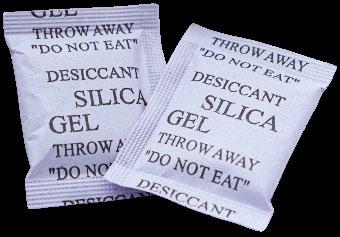
• Use protective wrapping to reduce damage during transport, especially if multiple relocations are possible, in addition to silica gel pack to absorb any moisture.

Do not wait until a storm is approaching to make these decisions. Do not use your belongings as a reason to delay evacuation. Your life is worth more than your possessions.
For items that stay behind or if you shelter in place, take steps to protect them from potential hazards:
• Store items in high locations such as shelves, closets, or cabinets.
• Seal items in heavy-duty plastic bags or water-proof containers to protect them from water, heat, and humidity. In severe flooding, sealed containers may help items stay dry and even float.
• Consider adding silica gel packs to absorb any moisture.
• Include your contact information in case items are displaced.
• Archival emergency kits are also available online.
• If damage does occur, resources are available to support recovery.
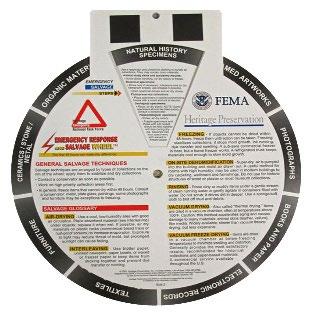
AFTER THE STORM: Open sealed containers to allow items to air out. If damage has occurred, assess it as soon as possible and begin carefully cleaning and drying items. Using fans or a shop vacuum can help remove moisture and reduce the risk of mold.
To explore more Hurricane Resources for Historic Properties, visit venicegov.com/government/hurricane-resources.
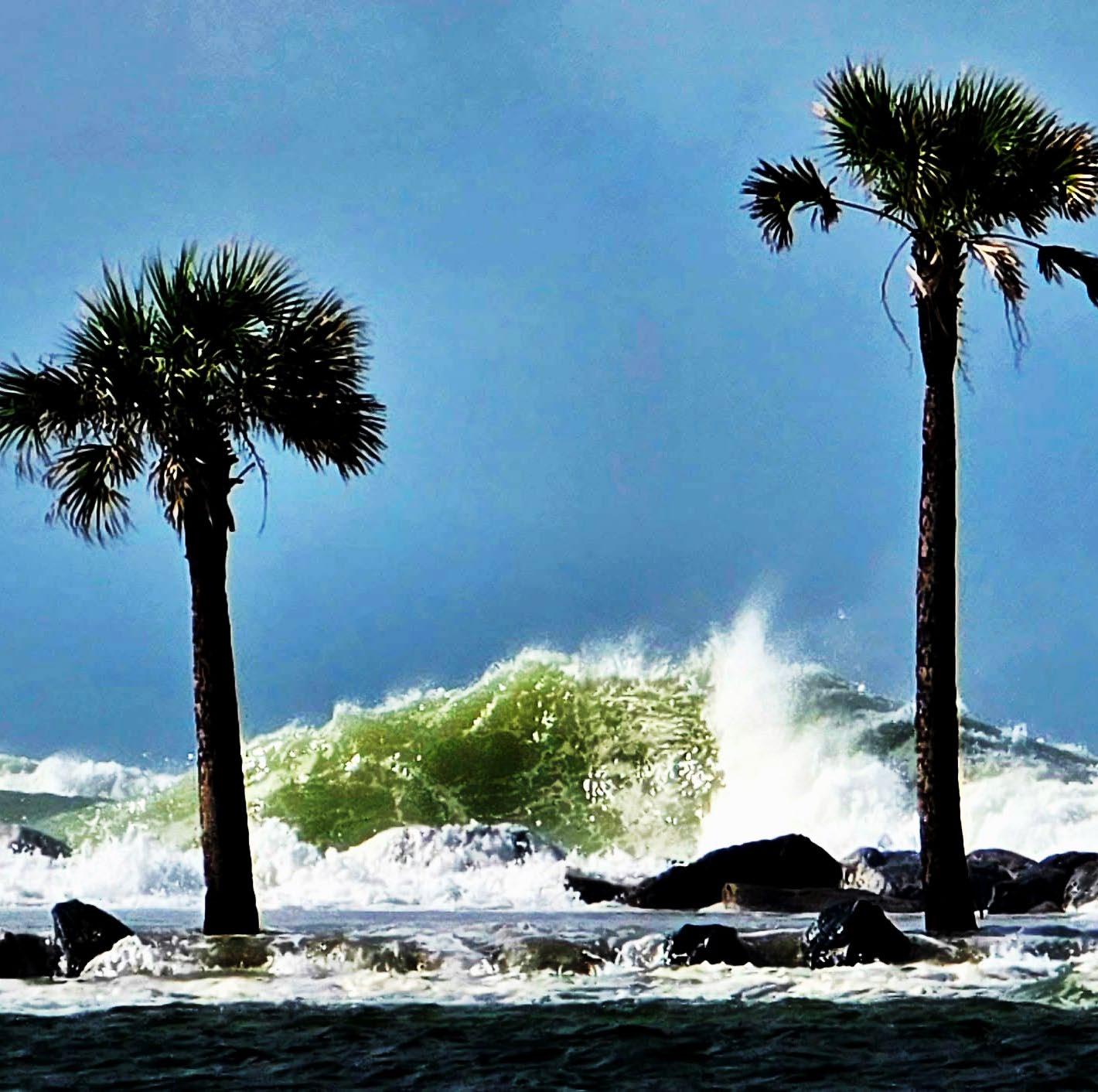

Stay indoors, conserve resources, stay informed and remain informed




During a storm, conditions can become dangerous quickly, especially if Venice is within the cone of impact or in the direct path of the storm. City services may be limited or unavailable, roadways may become flooded and impassable, and downed power lines may pose serious hazards. Be prepared for rapidly changing conditions, delayed emergency response, and the gradual restoration of services after the storm passes.
What to expect:
Loss of power, internet, and cellular service for several days, missing stop signs and traffic lights, downed power lines and trees.
Water service interruptions on Venice island; off-island residents may experience low pressure or temporary service disruptions as systems are isolated for protection.
Learn more water and sewer service impacts on pages 45-46.
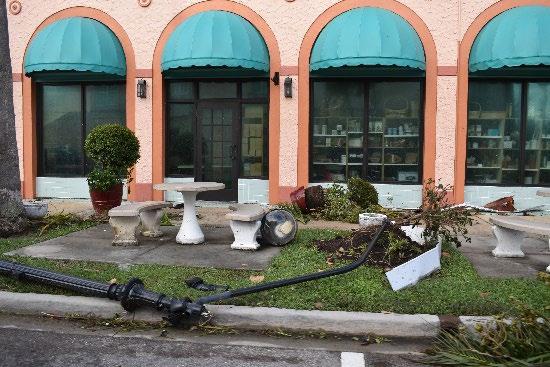
High winds, loud noises, and potential impacts to your home, carport, fence, an/or lanai, along with debris spread along yards and roadways.
Suspension of Fire, EMS, Police, and Sarasota County Breeze Transit services when sustained winds reach 45 mph.
Emergency services will not resume until sustained winds drop below 45 mph and roadways are clear or passable.
What to do:
• Stay indoors and away from exterior windows and doors; shelter in an interior room, closet, hallway, or FEMA-rated safe room if available.
• If your home is damaged, move to the safest interior area away from glass; be prepared to evacuate quickly if conditions worsen or your home becomes unsafe. Do not leave pets or service animals behind.
• Do not go outside during the eye of the storm; conditions may briefly calm but will return quickly with dangerous winds, rain, and debris.
• If you have a life-threatening emergency during the storm, still call 911; dispatchers or medical professionals may provide life-saving instructions until responders can reach you.
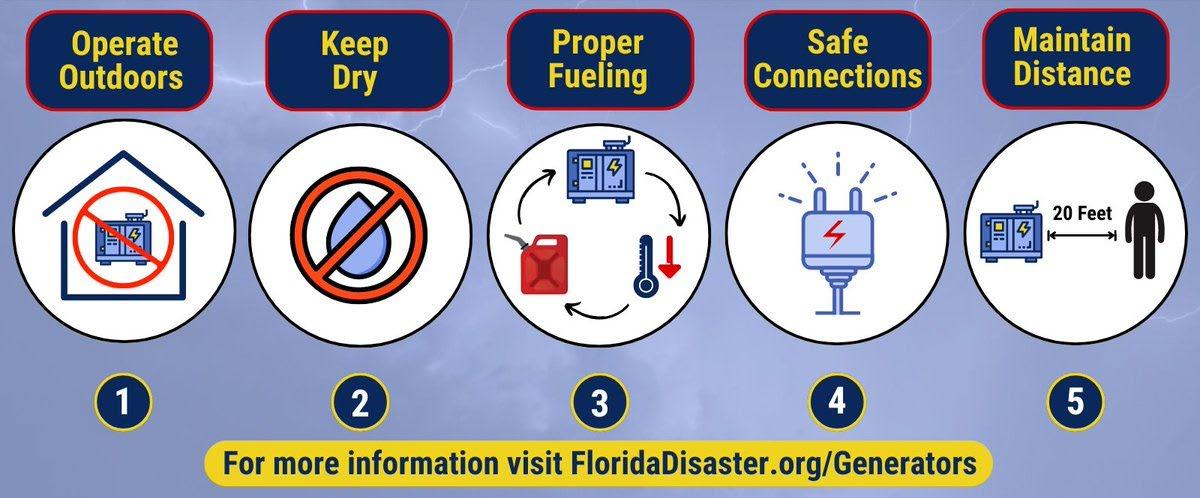
• Use generators only after the storm, outside the garage or lanai, and at least 20 feet from your home, windows, and doors (pg. 31).

Do not attempt to return home immediately after a storm; allow first responders to clear debris and downed power lines, and respond to emergencies.
Stay informed and conserve resources:
• Use a NOAA weather radio or local radio for official updates (pg. 6).
• Conserve phone battery and limit power usage to essential needs.
• Keep refrigerator and freezer doors shut to preserve food (pg. 31).
• Reduce water use to help prevent sewer backups (pg. 46).
MYTH: “I should run my generator during the storm to keep the power on.”
REALITY: Generators should only be used after the storm passes and conditions are safe. Expect power outages and plan accordingly. Never operate your generator in the garage or lanai.
PLAN AHEAD: Have battery-operated carbon monoxide detectors in your disaster kit if you plan to run a generator.
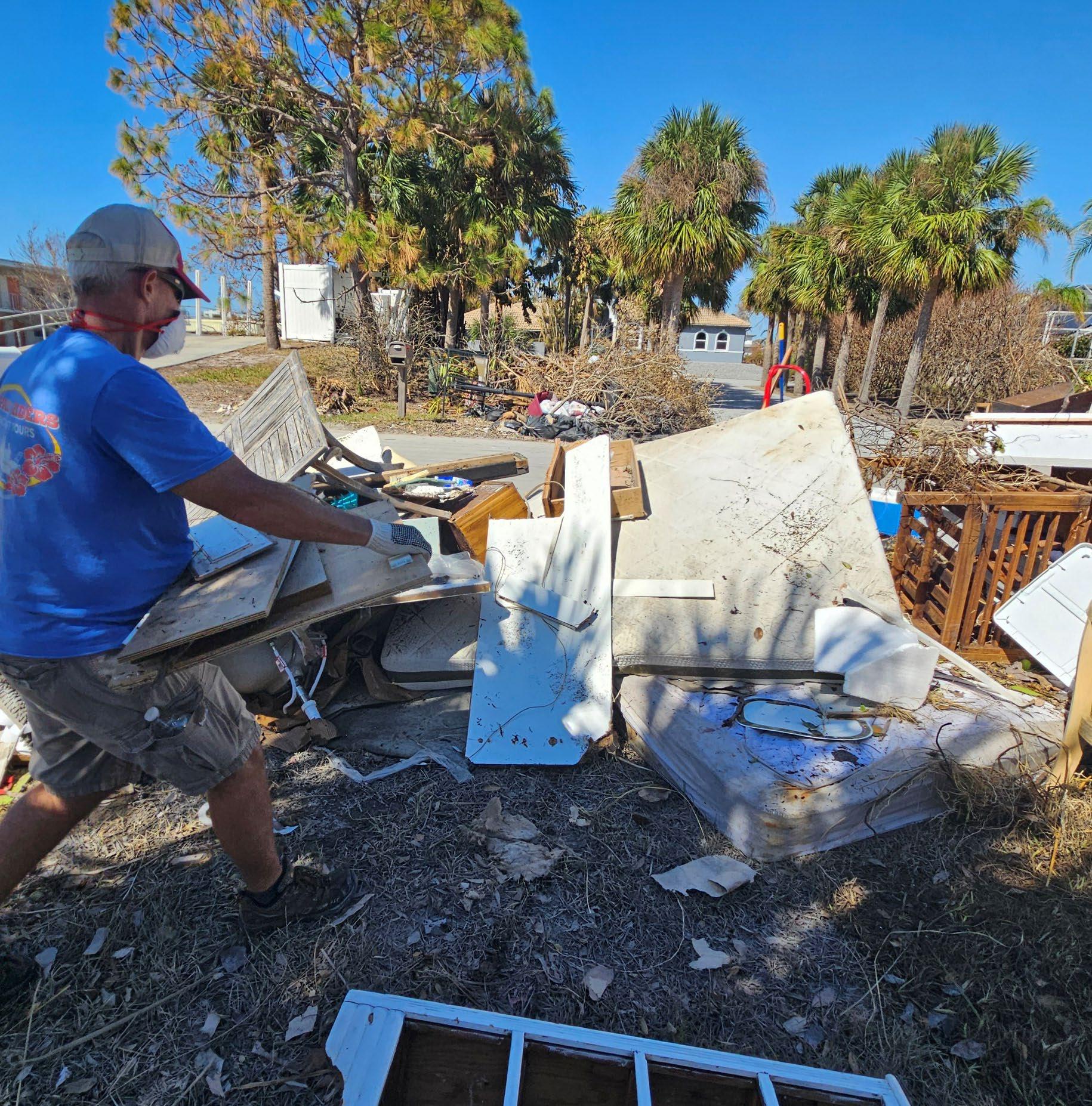


Returning home, recovery resources, and rebuilding



ONCE THE STORM PASSES: Once sustained winds drop below 45 mph, the City’s Tactical First-In Teams (TFIT) deploy to assess conditions and report to the Emergency Operations Center on the status of critical facilities, infrastructure, major roadways, and overall impacts. Following these initial assessments:
• Venice Fire Rescue and Venice Police Department mobilize to clear suspended 911 calls, conduct rescue missions, and perform welfare checks. They do not assess damage to individual homes or businesses. Do not call 911 to check on property damage.
• Public Works crews and contractors deploy push-and-cut teams to remove debris and clear roadways, while identifying and securing downed power and communication lines.
• Debris contractors are mobilized as part of FEMA, U.S. Army Corps of Engineers, and Florida Division of Emergency Management certification processes before large-scale construction, demolition, vegetative, and white goods collection begins.
• Utilities crews work to restore water and sewer services, including deploying generators at lift stations and booster pump stations where needed.
• Information Technology (IT) staff establish temporary connectivity, including Starlink Wi-Fi access at designated locations, and ensure critical business systems remain operational.
• Florida Power & Light may use the Airport Festival Grounds as a staging area to support restoration efforts across Sarasota County, prioritizing hospitals, government facilities, and other critical infrastructure.
• The City EOC coordinates with county, state, and federal partners to bring in recovery resources, including Points of Distribution (PODs) for water, ice, Meals Ready to Eat (MREs), and tarps; financial assistance programs; the U.S. Army Corps of Engineers Blue Roof Program; FEMA; and volunteer organizations supporting community recovery.
Recovery can take days, weeks, months, or even years depending on the severity of a storm.
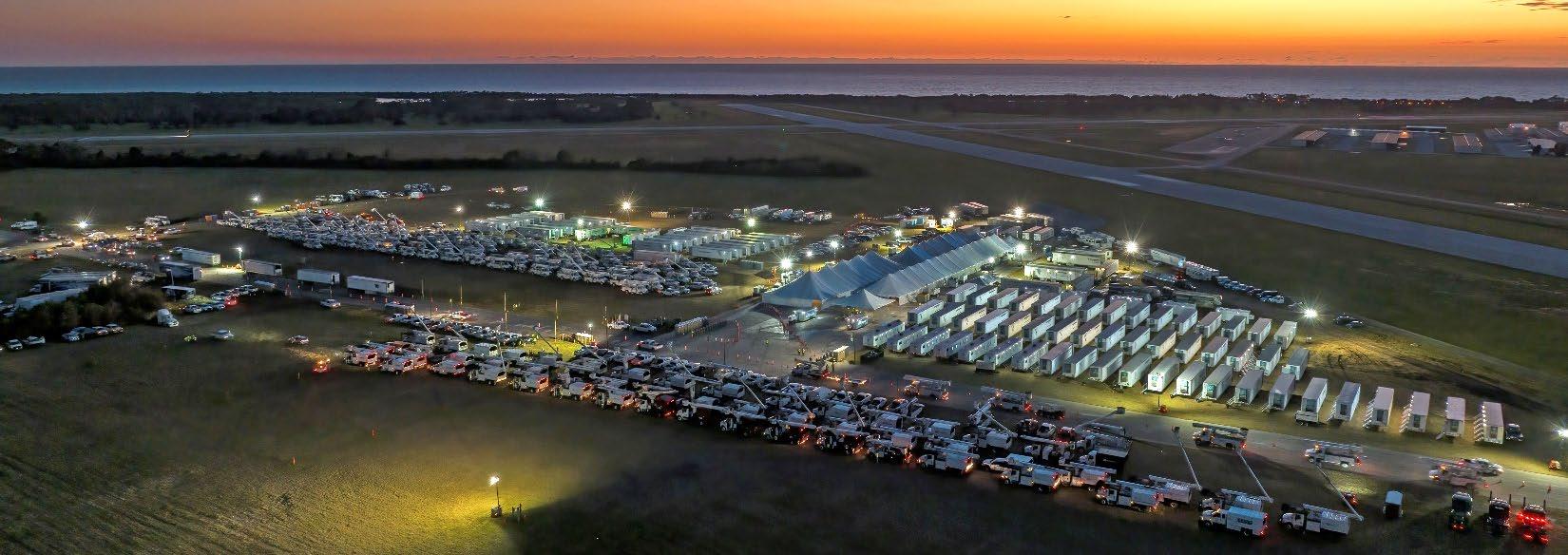

RETURNING HOME: It is critical that you do not attempt to return home immediately after a storm. Entering too soon can delay emergency response and recovery operations. Hazardous conditions such as downed power lines, flooding, debris, and unstable roadways must be cleared before it is safe. Follow guidance from local officials and allow time for conditions to stabilize.
Be extremely cautious when returning home. Check on neighbors, especially those who are elderly, disabled, or living alone, and offer assistance if needed.
• Expect power, internet, and cellular outages for several days or longer
• Florida Power & Light (FPL) restores critical facilities first, followed by neighborhoods
• Assume all downed power lines are live; stay away and report them immediately
• Avoid standing water near electrical sources; stay away from outlets if water entered walls or ceilings
• Turn off appliances and your main breaker until systems are confirmed safe
• Traffic lights, streetlights, and signs may be out or missing, creating hazardous driving conditions. Treat nonfunctioning traffic signals as a four-way stop. Slow down, stay alert, and proceed with caution
• If you are unsure how long power was out, when in doubt, throw it out
• Discard refrigerated food kept above 40°F for more than two hours
• Frozen food may be refrozen if it still contains ice crystals or is at 40°F or below
• Never taste food to determine safety
• For more guidance, visit FoodSafety.gov
• Use generators outdoors only, at least 20 feet from your home
• Never operate a generator inside a home, garage, or near windows, doors, or vents
• Install and use carbon monoxide (CO) detectors outside of all sleep areas
• Never connect a generator directly to your home’s wiring

• Stay hydrated by drinking water and electrolyte drinks to replenish fluids lost through sweat.
• Take breaks in shade or air-conditioned areas.
• Avoid peak heat hours, 10 a.m. to 4 p.m.
• Wear lightweight, light-colored clothing, sunscreen.
• Check on children and older adults often.
• Watch for signs of heat illness such as dizziness, confusion, or nausea.
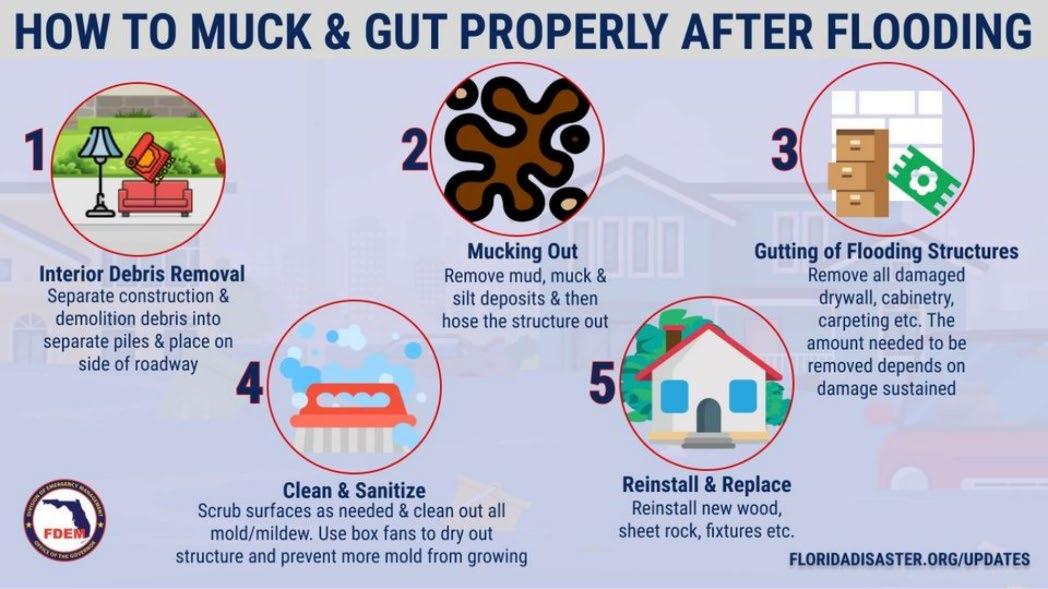
Act quickly to dry out waterdamaged areas to prevent mold growth Remove wet materials such as drywall, insulation, and carpet as soon as possible.
Wear runner gloves, boots, long sleeves, and an N95 mask when cleaning. Never mix cleaning products. Ventilate when safe to do so. Those with respiratory conditions should consider professional remediation.
Learn more at floridadisaster.org
• Use caution with chainsaws, pole saws, and other power tools.
• Wear proper protective equipment and follow manufacturer instructions.
• Keep pets and others clear of your work area.
• Hire a professional for hazardous debris or tree removal if needed
If you experience symptoms of heat stroke, call 911 immediately. If you experience heat exhaustion symptoms, move to a cool place, rest, slowly rehydrate, and watch for any change in symptoms.
Potable Water
• After a storm, you may have a boil water notice
• Boil water for at least one minute before using it for drinking, cooking, or brushing teeth.
• If you can't boil water, disinfect it using bleach as instructed.
• Water pressure may be low in some areas after a storm.
• Sign up for emergency alerts or visit venicegov.com to check for boil water notices.
Floodwater
• Do not drive, walk, or play in floodwaters. Keep children and pets away.
• Just 12 inches of water can move or float a vehicle.
• Floodwater may contain downed live power lines, debris, harmful bacteria, or even wild animals.
• Discard any personal items exposed to floodwater if they cannot be fully cleaned and dried within 24-48 hours.
Gulf Waters
• Avoid Gulf waters after a storm due to debris and pollution
• Do not swim, boat, or launch vessels until conditions are safe, or advisories/warnings are lifted.
• Check conditions through local health or beach monitoring resources, visitbeaches.org.
• Report marine debris to Florida Fish and Wildlife Conservation Commission (FWC).
• Report missing waterway signs to the U.S. Coast Guard.

CONTRACTORS AND BUILDING PERMITS: The City of Venice Building Department offers a complimentary inspection to assess damage to your home. This inspection helps identify necessary repairs, determine if a permit is required, and evaluate whether your home is substantially damaged. There is no cost, but it must be completed before beginning any repairs or reconstruction.
After a storm, Building Department staff conduct damage assessments to determine whether structures are safe to enter, document impacts such as flooding and structural damage, and provide guidance to residents on next steps. For in-person assistance, visit the Building Department Monday through Friday, 8 a.m. to 4 p.m., at Venice City Hall, 401 W. Venice Ave., or call 941-882-7547. Hours may vary immediately after a storm. Online applications, permits, and forms are available at venicegov.com.
REBUILDING YOUR BUSINESS: The City of Venice Business Liaison (BL) is here to help guide you through the recovery and rebuilding process by serving as a single point of contact. Whether you are reopening, repairing damage, or planning improvements, the BL is here to help streamline the review process and connect with permitting, planning, zoning, navigating City requirements and coordinating with the appropriate departments. Contact the BL at 941-882-7435. Additional support is available for:
• Business Tax Receipts (BTRs)
• Change-of-use requests
• Building expansions and site improvements
• Redevelopment plans and long-term investments
WHEN A PERMIT IS REQUIRED: A permit is required before you remove, alter, or replace structural or system components, including:
• Replacement or installation of roofs, walls, siding, wallboard, plaster, insulation, paneling, cabinets or flooring
• Replacement or installation of electrical, plumbing, heating, or air-conditioning systems

More broadly, permits are required for any work involving construction, enlargement, alteration, repair, demolition, or replacement of building systems.
WHEN A PERMIT IS NOT REQUIRED: Permits are not required for basic cleanup or temporary emergency repairs, including:
• Removing and disposing of damaged contents, carpeting, wallboard, insulation, and debris
• Cleaning floors, walls, and ductwork
• Covering holes in roofs or walls and boarding windows to prevent further damage
• Removing sagging ceilings or stabilizing structures to make them safe to enter
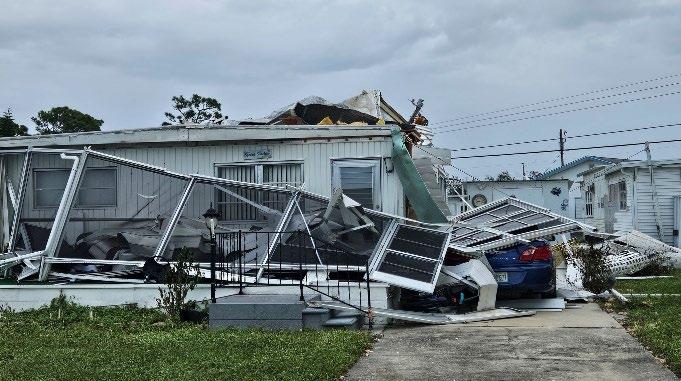

UNDERSTANDING THE 50% RULE: Under the National Flood Insurance Program (NFIP), if repairs or improvements exceed 50% of a building’s market value (excluding land), the structure must be brought into compliance with current flood protection standards. This may include elevating the building, using flood-resistant materials, adding flood vents, and other required improvements.
This determination is based on the building’s market value and the total cost of repairs or improvements. To estimate your threshold using the tax roll value:
• Search your property on the Sarasota County Property Appraiser’s website: sc-pa.com
• Locate the most recent improvement value
• Multiply that value by 1.2
• Your threshold is 50% of that adjusted amount
• You may also use a new appraisal from a state-licensed appraiser. The City cannot recommend one method over another.
SUBSTANTIAL DAMAGE: If a structure is determined to be substantially damaged or improved (50% or more of market value), it must meet current floodplain management standards. This may include elevation, relocation of utilities, or other structural modifications.
Learn more at: fema.gov/fact-sheet/substantial-damage-quick-guide
SCAM WARNING: Contracted work must be performed by a contractor licensed in the State of Florida and registered with the City of Venice. Unlicensed contracting is a felony during a state of emergency.
• Do not sign blank or incomplete contracts
• Verify contractor registration before agreeing to any work
• Do not authorize work that has not been approved by the Building Department
• Do not pay for services until work is completed

To verify a contractor or report fraud, contact the Florida Department of Business and Professional Regulation (DBPR) at 850-487-1395, call 866-966-7226 or visit myfloridalicense.com.
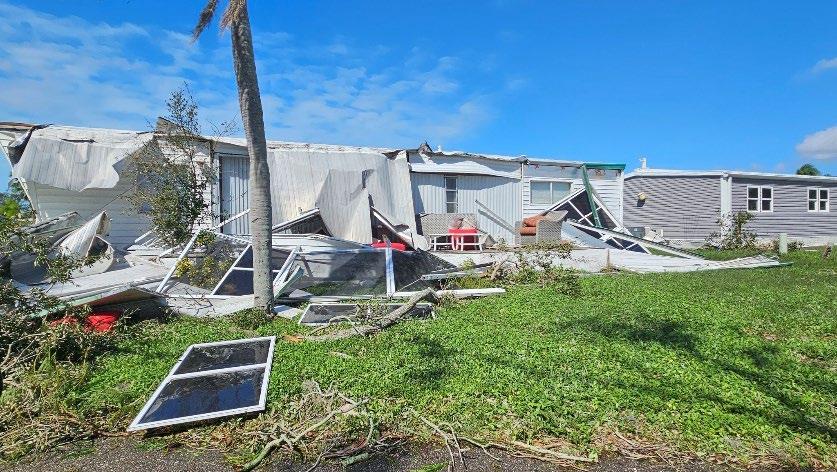
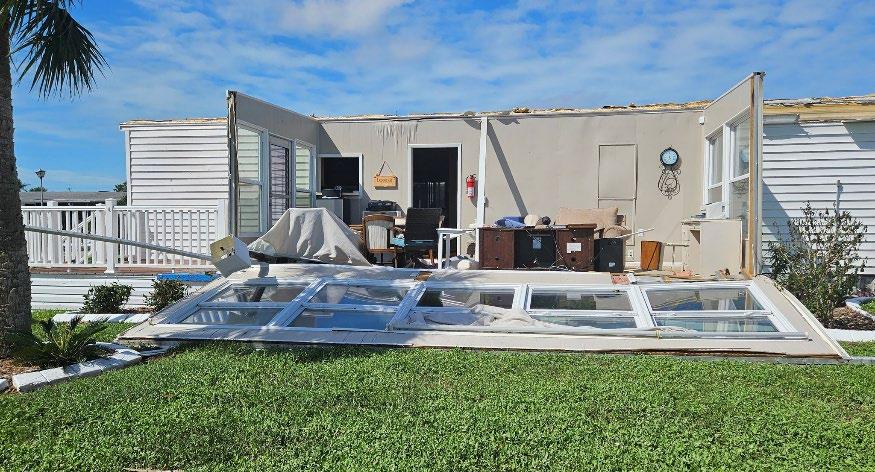

DEBRIS COLLECTION: Debris collections after a storm can take up to or over 90 days to complete the first pass depending on debris volume, roadway accessibility and availability of contracted debris monitors and haulers. T he City of Venice contractors activate once the storm has passed and roadways are clear to collect construction and demolition (C&D), vegetative and white goods debris and materials from public right-of-way.
Debris haulers determine their collection route and typically begin in the hardest-hit areas. If you see debris haulers on your road, give them plenty of space to avoid delays.

Never place debris in the roadway, under power lines or low-hanging branches, in your storm drain, or next to your vehicle or mailbox. Place debris in front of the home where the debris originated, on the easement, out of the road. It is illegal to dump debris at City parks and beaches. Burning vegetative debris is prohibited.
Debris must be properly prepared and separated by type:
• Cut large tree limbs, trunks, or logs into 4-foot sections weighing less than 40 pounds.
• Tape shut refrigerators with food waste and label them as spoiled.
• Wet sandbags cannot be disposed of with regular trash pickup.
Debris is collected by type, with haulers making multiple passes. Once removed from the right-of-way, debris is taken to a federally monitored Debris Management Site (DMS), where each truckload is measured, photographed and cataloged by the City's contracted debris monitor. The DMS is not open to the public.
After offloading, debris is separated by type, consolidated, and then hauled away for final disposal. Sarasota County may open the landfill for residential and commercial dropoffs; standard tipping fees may apply.
Debris collection takes time, and it can be frustrating to see your grass die or go dormant. Many native grass will rebound naturally while others may need additional nutrients once debris are removed.
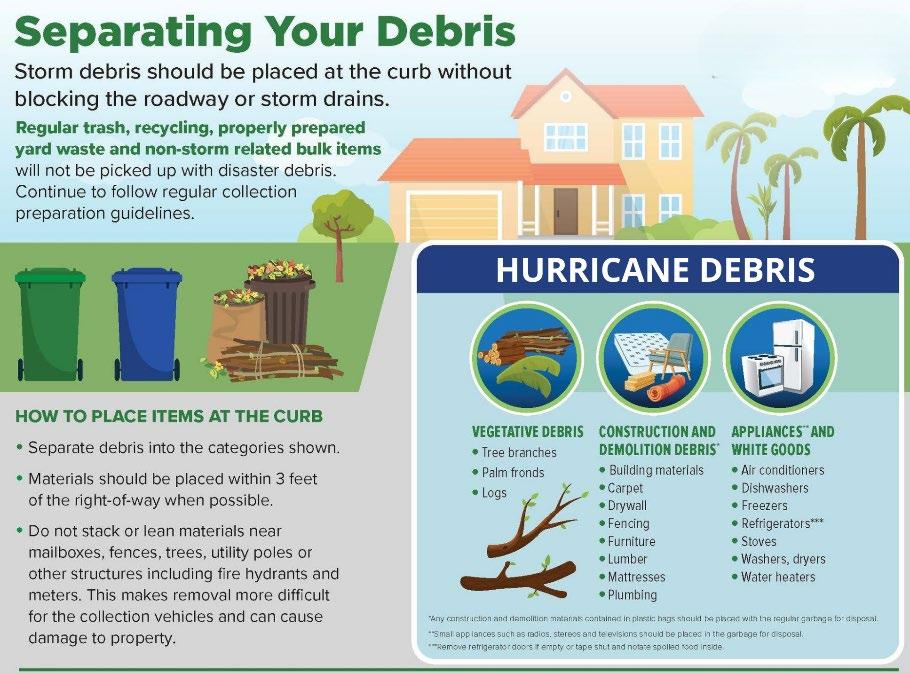
COMMERCIAL PROPERTIES: Commercial properties including businesses, manufactured home communities, mobile home parks, condominiums, and private streets are NOT eligible for City collection, according to FEMA guidelines
Commercial properties should work through their insurance, a private debris hauler, or the Small Business Administration for storm debris removal claims. A right-of-entry form is required if FEMA authorizes debris collection from private roads and communities
DEBRIS HAULERS: Per Ordinance No. 2019-30, private haulers must be permitted by the City of Venice before operating. The haulers listed below are approved to provide roll-off construction dumpsters. Use a permitted hauler for debris removal. Only recyclable materials such as construction debris, concrete, asphalt, and yard waste may be collected by private haulers; all other materials must be collected by the City.
1. City of Venice Solid Waste & Recycling & Fleet Services
280 U.S. Bypass S., Venice, FL 941-486-2422
2. Waste Connections of FL, Inc. 11500 43rd St. Clearwater, FL 727- 572-6800
3. Waste Management Inc. of Florida 5221 State Rd. 776 Venice, FL 866-849-0076
4. Waste Pro 7921 15th St. E., Sarasota, FL 941-355-9600
5. ECO South 8001 Fruitville Rd. Sarasota, FL 941-256-3609
6. Wasted Away Inc. Dba: Griffin Waste Services 2452 19th St. Sarasota, FL 941-271-7382
7. Rhino Dumpster Rental 333 Warfield Ave., Venice, FL 941-217-0093
8. Coastal Waste & Recycling 4220 15th East. Bradenton, FL. 34208 239-939-5050
9. Patriot Dumpster LLC 1633 Boathouse Circle, Unit HA 133 Sarasota, FL 941-278-0246
10. RCL Strategies Dba: Dumpster Divas 1247 N. San Mateo Dr., North Port, FL 941-525-2589
11. Waste Haul LLC. 223 Taylor St, Punta Gorda, FL 337-515-0116
12. Venice Family Ent: Dba Kingdom Dumpster, 2502 Hermitage Blvd., Venice, FL 863-32-6212
Any private haulers found operating in the City that are not on this list are in violation of Chapter 54 of the City Code of Ordinances and containers must be removed from job sites. For more information on becoming a permitted private hauler, please contact the City of Venice Public Works Department at 941-486-2422.

The City cannot manage disaster recovery alone and relies on partnerships with county, state, federal, and nonprofit agencies to provide critical resources and support to help our community recover and rebuild after a storm.
Crisis Cleanup: If you need help cleaning up damage from a storm, call 844-965-1386 or visit crisiscleanup.org to be connected with volunteers from local relief organizations, community groups and faith communities. These groups may be able to assist with muck-out, downed trees, tarps and debris. All services are free, but service is not guaranteed due to need.
Local Relief: Nonprofit and mobile app supported by locals for locals seeking help, locals wanting to help, volunteers with boots on the ground, and information on where to find supplies and resources necessary to rebuild, localrelief.com
YMCA of Southwest Florida: Often offers amenities to those in need, including hot showers, charging stations, Wi-Fi, and space to relax away from the elements. The Venice YMCA is located at 701 Center Rd.; call 941-492-9622 to check on amenities available.
Venice-Nokomis Rotary Club: Organizes volunteers to assist residents in need with moving debris to the curb, cleaning, cutting drywall, and salvaging and packing items, among other tasks. venicenokomisrotary.org and on Facebook.
FEMA Individual Assistance: Apply for FEMA assistance such as housing, financial support, and direct services, and get additional resources here: fema.gov/assistance/individual.
Small Business Administration: Offers low-interest disaster loans to help homeowners, renters, and businesses of all sizes recover from declared disasters. Get more information at sba.gov/funding-programs/disaster-assistance.
Links to other helpful disaster recovery resources:
► U.S. Army Corps of Engineers: BlueRoof.gov
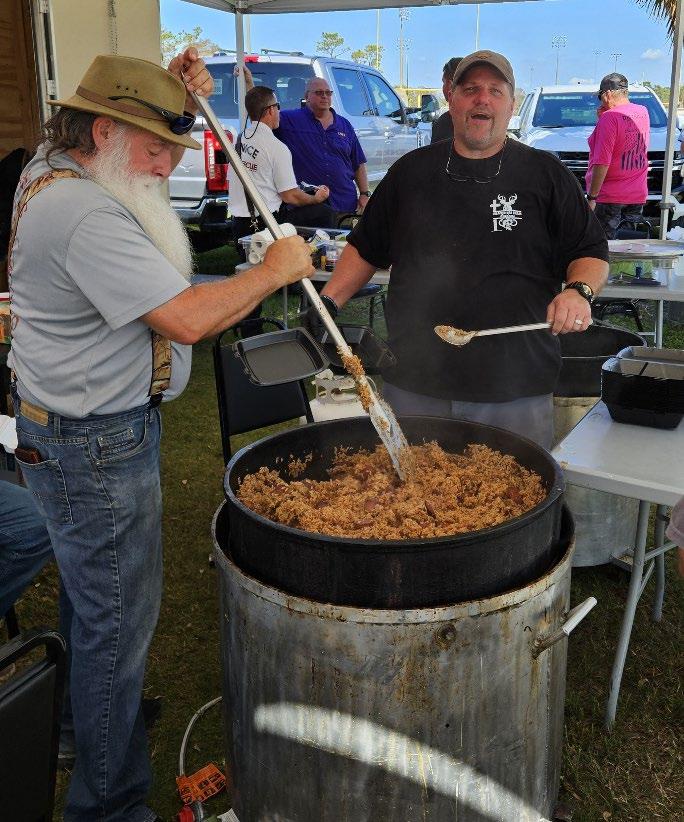
Livingston Parish Fire Chiefs Association and Southern Boyz Outdoors from Baton Rouge, La., drove overnight to volunteer to help our community after 2024 Hurricane Milton.
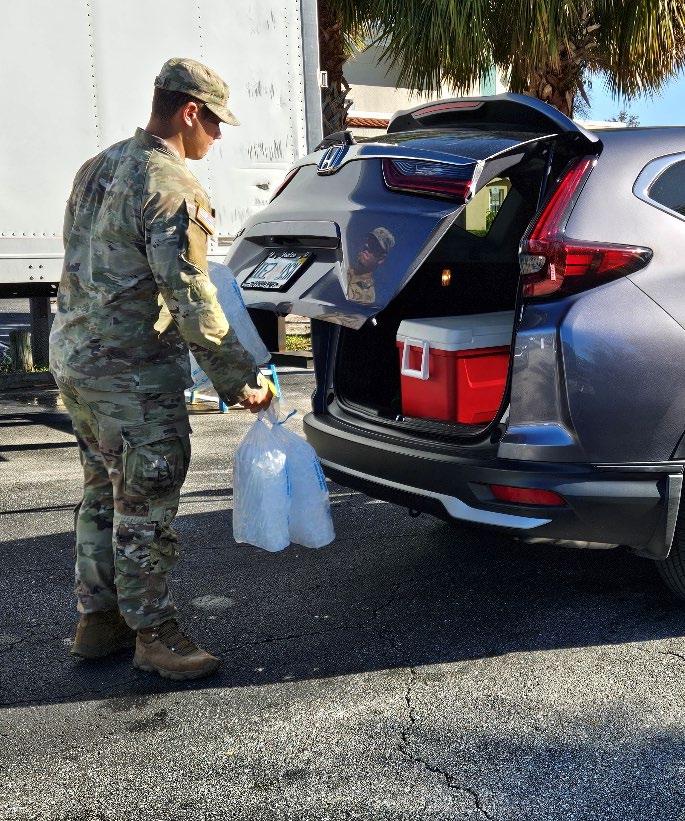
The U.S. Army National Guard operates a Point of Distribution (POD) at the Venice Community Center, providing ice, MREs, water, and tarps after Hurricane Milton.
► U.S. Department of Housing and Urban Development: hudexchange.info/programs
► Federal Emergency Management Agency: disasterassistance.gov
► Florida Division of Emergency Management: floridadisaster.org/dem/recovery/
► Florida Housing Finance Corporation: floridahousing.org/programs/special-programs
► U.S. Department of Commerce Disaster Recovery Resources



All year-round preparedness for all hazards, all the time


Florida faces a wide range of hazards throughout the year. Understanding your risks and preparing in advance helps protect you, your family, and your property:
Extreme Cold/Heat Temperatures
During drought conditions, conserve water whenever possible, including indoor potable use and outdoor irrigation such as reclaimed water. Florida’s water supply comes from a shared aquifer system, and increased demand can impact both private wells and municipal utilities. Reducing water use helps protect this critical resource and ensures continued availability for the community. Learn more: swfwmd.state.fl.us/
Cold Weather: When temperatures drop below 40°F, conditions can become dangerous, especially in Florida where homes may lack adequate insulation and residents are not accustomed to prolonged cold. Older adults are particularly vulnerable to hypothermia, which can cause confusion and loss of coordination. Keep pets indoors, limit time outside, dress in layers, heat your home safely, and check on elderly neighbors or family members. Learn more at weather.gov/safety/cold
Extreme Heat: High temperatures and humidity can quickly lead to heat-related illness, including heat exhaustion and heat stroke, which are serious medical conditions. Limit outdoor activity during peak heat hours, 10 a.m. to 4 p.m., stay hydrated with water and electrolytes, wear lightweight, light-colored clothing, and take breaks in shaded or airconditioned areas. Never leave pets, children or older adults in vehicles. Learn more at: weather.gov/safety/heat
Fire
Hazardous Materials
House Fire: Take time now to prepare for a fire emergency. Test smoke alarms regularly, gather emergency contact information, and identify at least two escape routes from your home or business. Practice fire drills with your household, including plans for pets or service animals. In a fire, you may only have minutes to evacuate. Reduce your risk by never leaving cooking unattended; keeping flammable items away from heat sources; using space heaters and electrical equipment safely; charging lithium-ion batteries (such as in e-bikes or devices) on hard, flat surfaces and never overnight or unattended; storing and handling batteries according to manufacturer guidelines. Install smoke detectors near bedrooms and living areas. Learn more: ready.gov/home-fires
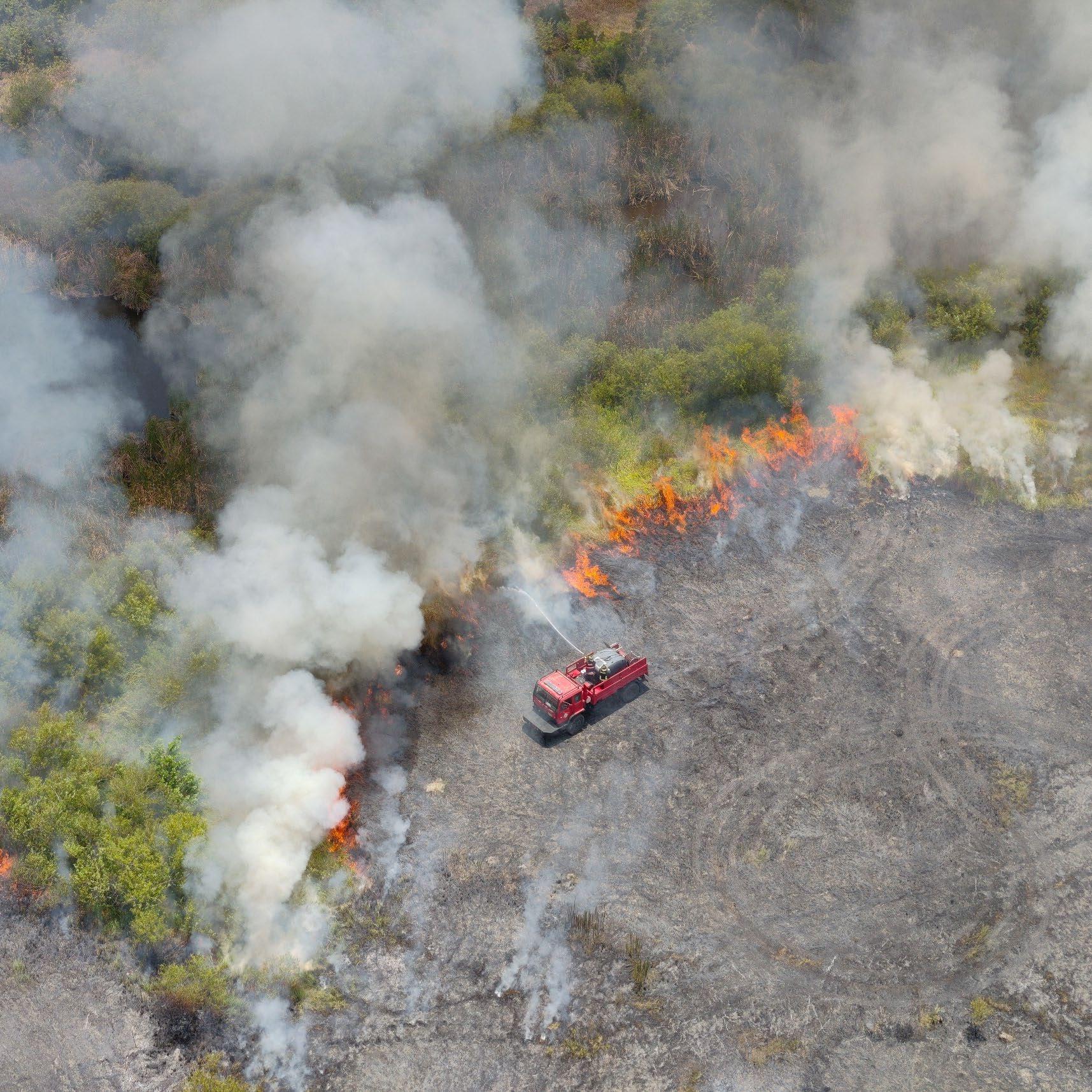
Wildfire: In Florida, wildfire risk exists, especially during dry conditions. Take steps to protect your property and be prepared to act quickly. Reduce your risk by creating a defensible space around your home by clearing dry vegetation and debris; keeping roofs, gutters, and yards free of leaves and debris; following local burn bans and outdoor burning regulations; having an evacuation plan in place and knowing multiple routes out of your area. Learn more: ready.gov/wildfires
Incidents such as gas leaks or chemical spills may require immediate action. If told to evacuate, stay calm, gather essential items if time allows, and follow directions from officials. Keep car windows and vents closed until you are safely out of the area. If instructed to shelter in place, bring pets indoors, close doors and windows, turn off ventilation systems, and remain inside until authorities say it is safe. Learn more: ready.gov/hazmat
Lightning Storms
Never seek cover under a tree, do not lie down in an open area, stay away from bodies of water. Take cover inside a home, business, park restroom or shelter, and remain inside for at least 30 minutes after thunder stops. Lightning can strike up to 10 miles away and even under clear skies. Learn more: ready.gov/thunderstorms-lightning

Mosquitoborne Illness
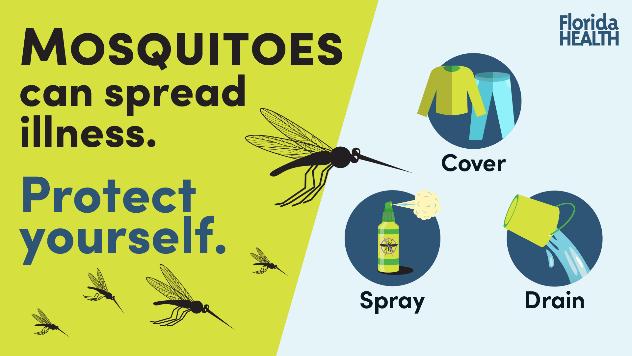
Immediately after a hurricane, nuisance mosquitoes hatch. Prevent mosquito bites by using insect repellent, wearing proper clothing, and wearing permethrin-treated clothing. Use window and door screens or air-conditioning when possible. Request mosquito prevention services through Sarasota County Mosquito Management Services: https://sarasota.leateamapps.com/PublicSR/
Storm Surge & Roadway Flooding
Storm Surge: Storm surge is the abnormal rise of seawater pushed inland by a storm’s winds above normal tide levels. Impacts can be worsened by storm intensity, coastline shape, and local conditions, and are often highest during high tide or full and new moon (king tide) events. Storm tide is the total water level during a storm, combining storm surge and the normal astronomical tide. Learn more: oceanservice.noaa.gov/facts/
Flooding: Roadway flooding can result from heavy rain, storm surge, or overwhelmed drainage systems. Never drive through floodwaters; turn around and find a safer route.
Tornadoes are fast-spinning columns of air that reach from a thunderstorm down to the ground. They can destroy buildings, flip cars, and send dangerous debris flying through the air. Go to a safe shelter immediately such as a small interior room on the lowest level of a sturdy building. Stay away from windows, doors, and outside walls. Do not go under an overpass or bridge. You’re safer in a low, flat location. Watch out for flying debris that can cause injury or death. Use your arms to protect your head and neck. Mobile homes are not safe during tornadoes. Learn more: ready.gov/tornadoes

Cyclone: A strong storm forms over warm ocean water. It has thunderstorms and winds that spin around a clear center.
Depression: An organized weather system with a closed circulation that forms over tropical waters with maximum sustained winds of 38 mph or less.
Tropical Storm: An organized system of strong thunderstorms with defined circulation and maximum sustained winds of 39–73 mph.
Hurricane: An organized system of strong thunderstorms that blow in a large spiral around a calm center known as the “eye.” The winds reach a constant speed of 74 mph or higher.
The Saffir-Simpson Hurricane Wind Scale is a 1 to 5 rating based only on a hurricane's maximum sustained wind speed. This scale does not consider other potentially deadly hazards such as storm surge, rainfall flooding, and tornadoes. The Saffir-Simpson Hurricane Wind Scale estimates potential property damage.
• Hurricane Watch: A Hurricane Watch is issued when a tropical cyclone containing winds of 74 mph or higher poses a possible threat, generally within 48 hours. These winds may be accompanied by storm surge, coastal flooding, and/or river flooding. The watch does not mean that hurricane conditions will occur. It only means that these conditions are possible. When a hurricane watch is issued, you should ensure your preparedness kit is accessible, your vehicle has gas, and your family are prepared should a hurricane become imminent. You should continue to “watch” local media and official government communications for updates.
• Hurricane Warning: A Hurricane Warning is issued when sustained winds of 74 mph or higher associated with a tropical cyclone are expected in 36 hours or less. These winds may be accompanied by storm surge, coastal flooding, and/or river flooding. A hurricane warning can remain in effect when dangerously high water or a combination of dangerously high water and exceptionally high waves continue, even though winds may be less than hurricane force.
For more information about storm advisories, watches and warnings, visit weather.gov/lwx/warningsdefined
Red tide is a harmful algal bloom caused by higher-than-normal concentrations of the alga Karenia brevis, which produces toxins that can impact both marine life and human health. These blooms can cause fish kills along area beaches and canals, and when winds blow onshore, toxins released into the air may lead to respiratory irritation such as coughing, sneezing, and eye or throat discomfort. Sensitive individuals, including those with asthma or other respiratory conditions, may experience more severe symptoms, and consuming contaminated shellfish can lead to illness. Learn more: myfwc.com/research/redtide/faq/
Rip currents are powerful currents of water moving way from shore. They can sweep even the strongest swimmer away. Check conditions before entering the water. Swim near a lifeguard when possible. Do NOT try to swim directly to the shore. Swim along the shoreline until you escape the current's pull. When free from the pull of the current, swim at an angle away from the current toward shore. If you feel you can't reach shore, relax, face the shore, and call or wave for help. Check beach conditions: visitbeaches.org
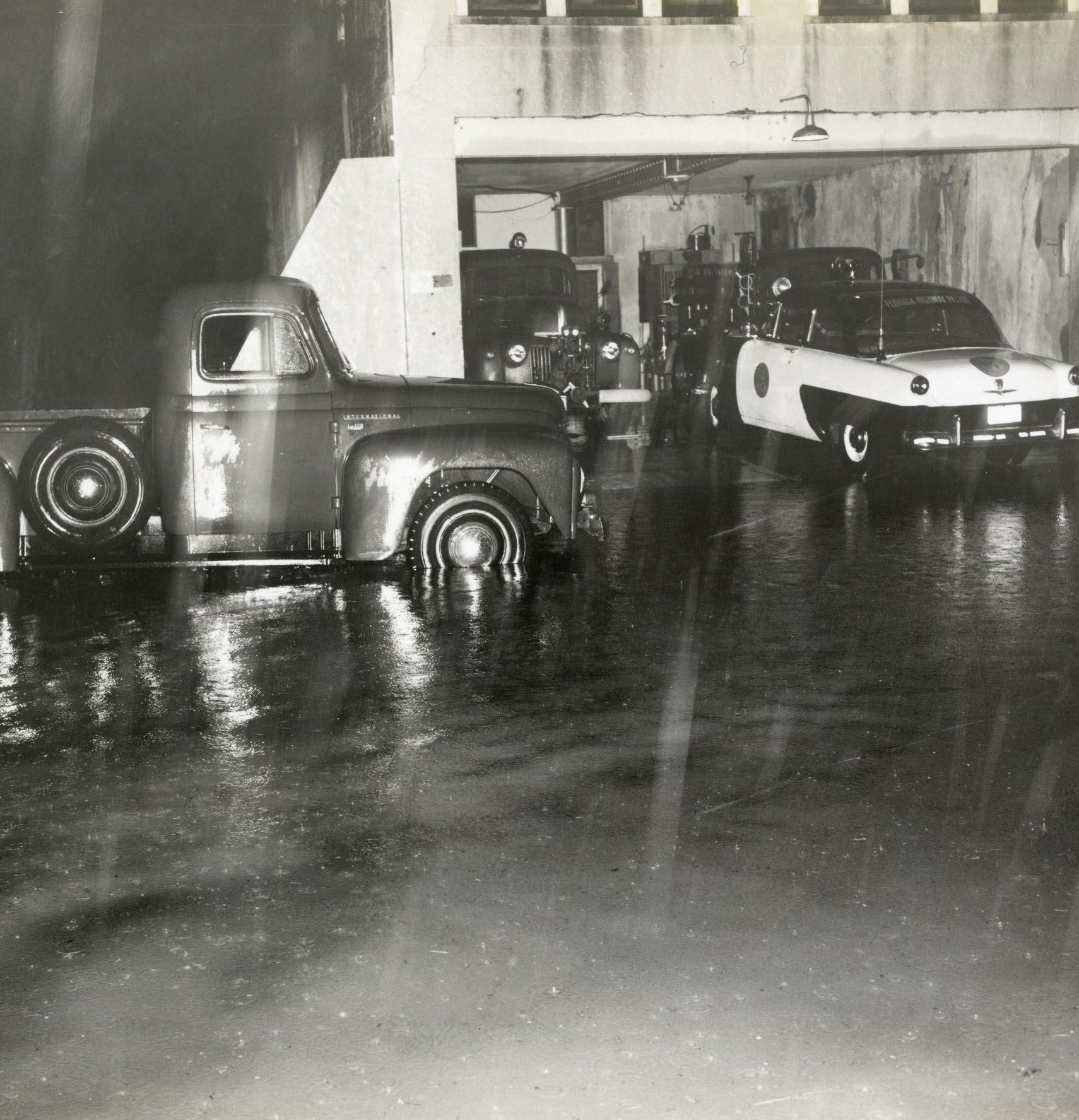
Over 100 years of storm impacts

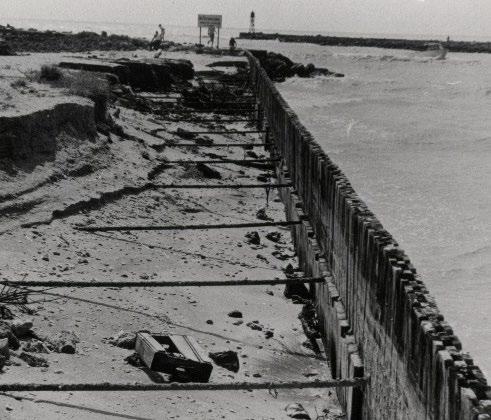
Even though there is long-standing lore that Venice is protected from hurricanes, history tells a different story. The National Weather Service began keeping records in 1872, and the first reported hurricane in the area struck Punta Rassa just one year later, near where Hurricane Ian made landfall. Since then, more than two dozen storms have directly impacted the Venice area or surrounding areas.
1850-1874
- Cat. 2 Hurricane, Unamed, 1873
1875-1899
- Topical Storm, Unamed, 1878
- Tropical Storm, Unamed, 1897
1900-1924
- Tropical Storm, Unamed, 1901
- Tropical Storm, Unamed, 1903
- Cat. 4 Hurricane, Unamed, 1910
- Cat. 4 Hurricane, Unamed, 1921
1925-1949
- Cat. 4 Hurricane, Unamed, 1926
- Cat. 5 Hurricane, Unamed, 1928
- Cat. 4 Hurricane, Unamed, 1933
- Cat. 5 Hurricane, Unamed, 1935
- Cat. 1 Hurricane, Unamed, 1939
- Cat. 3 Hurricane, Unamed, 1941
- Cat. 4 Hurricane, Unamed, 1944
- Cat. 4 Hurricane, Unamed, 1945
- Cat. 2 Hurricane, Unamed, 1946
- Cat. 4 Hurricane, Unamed, 1947
- Cat. 4 Hurricane, Unamed, 1949
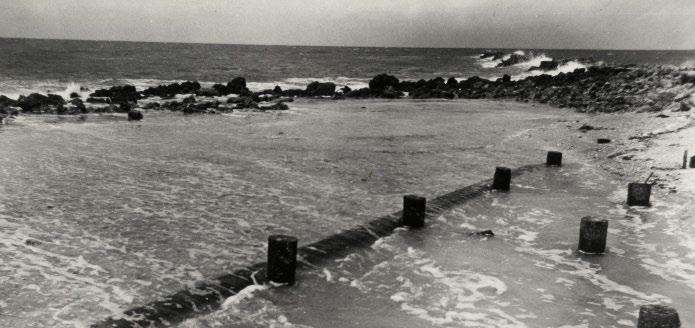
1950-1974
- Cat. 3 Hurricane Easy, 1950
- Tropical Storm Ana, 1991
- Cat. 1 Hurricane Hazel, 1953
- Cat. 4 Hurricane Donna, 1960
- Cat. 3 Hurricane Alma, 1966
1975-199
- Topical Storm Ana, 1991
2000-2025
- Tropical Storm Gabrielle, 2001
- Cat. 4 Hurricane Charley, 2004
- Cat. 4 Hurricane Frances, 2004
- Cat. 3 Hurricane Jeanne, 2004
- Cat. 5 Hurricane Irma, 2017
- Cat. 1 Hurricane Elsa, 2021
- Cat. 5 Hurricane Ian,2022
- Cat. 3 Hurricane Idalia, 2023
- Cat. 1 Hurricane Debby, 2024
- Cat. 4 Hurricane Helene, 2024
- Cat. 5, Hurricane Milton, 2024
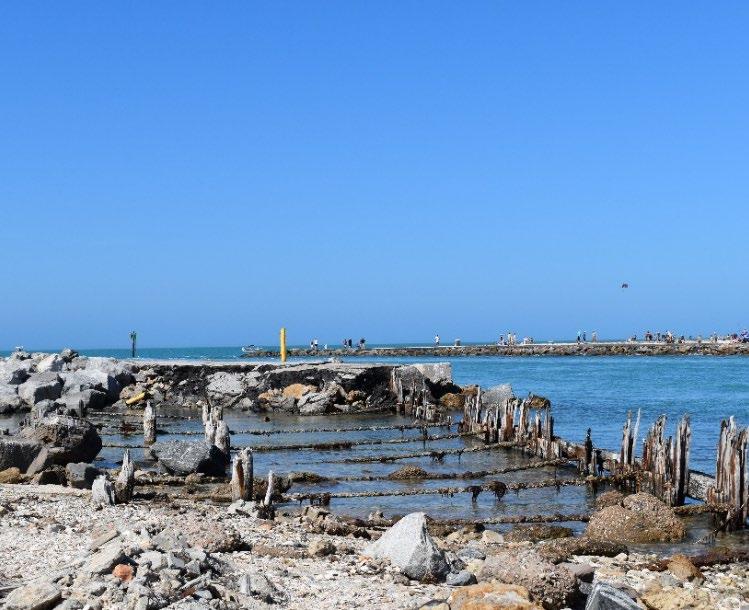
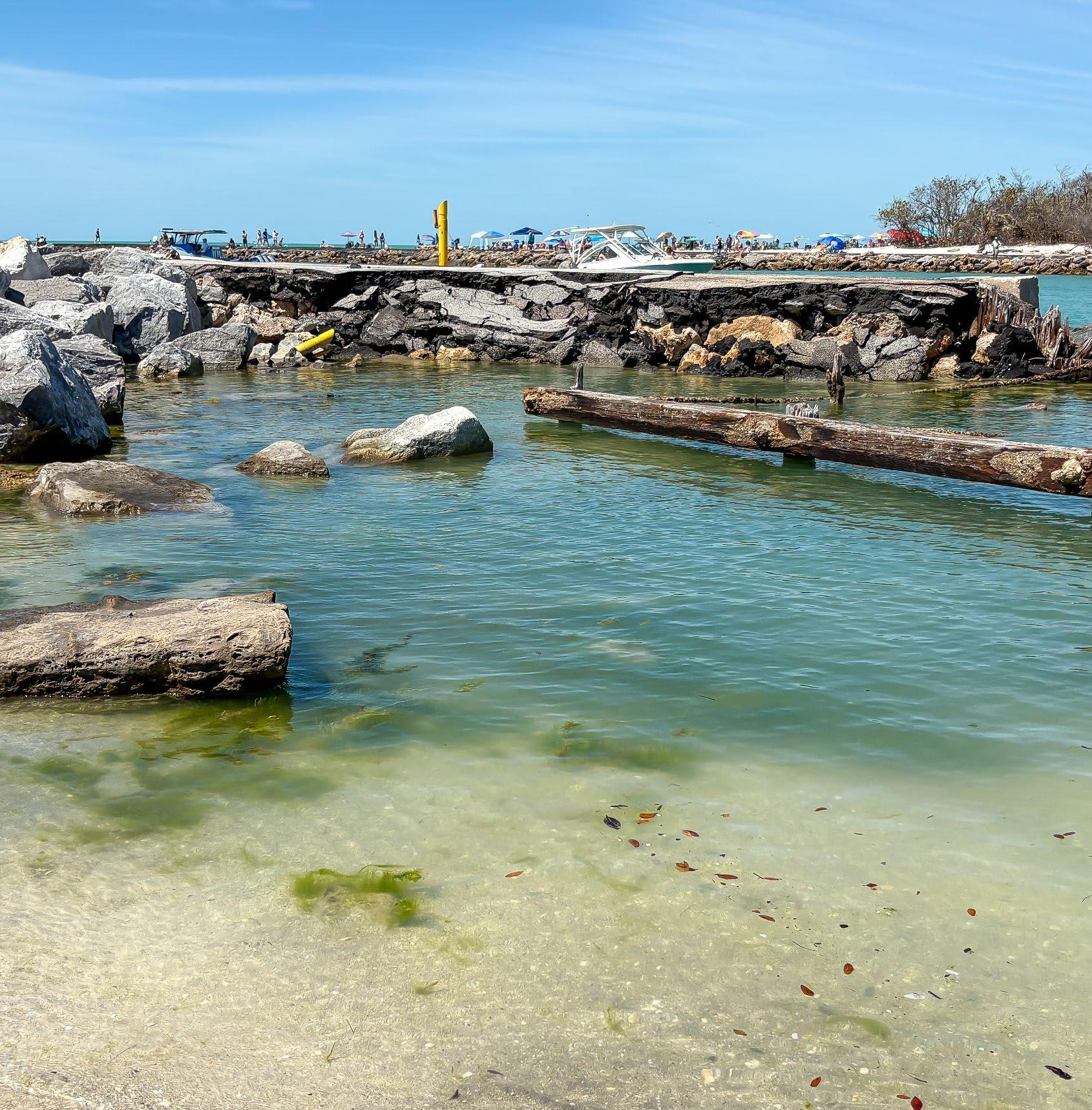


Why would Utilities turn off my water in the event of a hurricane? It has become a standard practice to turn off the potable water to the barrier islands in Sarasota and Manatee counties if we are expecting a major storm, in order to protect the utilities and property during the event. The potable water system is a pressurized system which derives its pressure from high service pumps at the Water Treatment Plant, as well as elevated water towers. Turning off water to Venice island is performed by closing valves on the mains that serve the island, physically isolating the system from the mainland. Therefore, the system no longer has a continuous supply. The system is still filled, and you may see pressure because of the height of the tower, until that water runs out. During a hurricane, high winds tend to fell trees, which may pull water mains out of the ground. Also, the increased groundwater pressure and movement can create breaks. Turning off the water supply to the island reduces the pressure in the mains, thereby reducing the risk of breaks, as well as limiting the loss of water in the event of breaks, in a potential critical time. Turning off the water also reduces the risk of introducing contaminants into the water system from flooding or storm surge, as well as mitigating potential flooding of homes from leaks or breaks. We will endeavor to turn the water system back on as quickly as possible when it is safe following the storm.
Occasionally, it may also become necessary to turn the water plant off, and therefore the whole City’s potable water system during the storm. The existing water plant on Venice Avenue is in the flood zone/storm surge area. Storm surge elevations are provided Above Ground Level (AGL), not sea level like the flood elevations. Prior to Hurricane Milton, the storm surge was expected to be up to 15 feet AGL. The water plant may have been submerged. Also, the buildings at the water plant are only rated for a Category 3 hurricane. Despite several hardening measures (flood doors, emergency power), the site was not safe for City staff in the projected conditions. Therefore, the decision was made to turn off the water plant and evacuate while it was still safe for staff to leave. They remained within the City and returned to the water plant to restart as soon as it was safe to do so.
If it becomes necessary to evacuate the water plant again, staff will attempt to restart the water plant as quickly as possible, once the dangerous part of the storm has passed, depending on the damage. However, as we experienced in Hurricane Ian, much of the water distribution system was damaged. Staff prioritize and fix water mains as quickly as possible, but depending on what break may be affecting you, it may take days to get to it (just like with power outages). This breakage is also a major risk with the sewer collection system, as it is highly susceptible to stormwater intrusion.
How will I be notified of a water shutoff? Make sure you are signed up for Alert Sarasota County/Everbridge, which provides location-specific alert notifications via phone, text, or email as you designate. That can be done by visiting alertsarasotacounty.com. In addition, messaging is distributed via the City’s website, venicegov.com and the City’s Facebook page and other social media platforms. If there is a break in your community that only affects a small area, you may also receive a door hanger with the anticipated water off timing and boil water notice.
If a water main break occurs or the pressure of the public potable water system drops below 20 psi, a boil water advisory (BWA) notice will be issued for the area affected. A boil water notice means that any water that is ingested, (i.e., cooking, drinking, brushing teeth) should be brought to a rolling boil for at least 3 minutes to confirm it is safe to ingest. To rescind the boil water notice, the City takes samples for bacteriological analysis. When the samples show no evidence of contamination for two consecutive days, the notice is rescinded. Rescinds are posted in the same methods described as the water shutoffs.
Please note, BWAs normally take a minimum of 2-3 days, but rarely go past that. If there are any concerns about current boil water notices, residents may call the water plant at 941-486-2770 or visit venicegov.com/government/utilities.
How will I be notified when my water is safe to drink? Via Alert Sarasota County/Everbridge and by monitoring the City’s website, Facebook page and other social media. Also, for small areas, door hangers will be redistributed.
Why would the wastewater system be shut off? Regarding sewer services, the wastewater from the City collection system and portions of Sarasota County’s collection system is pumped to the Venice Water Reclamation Facility. Pump stations (aka lift stations) run on electricity and many have generators available if the power goes out. However, on the island and in lower-lying areas of the City, we do not want to pump floodwaters or storm surge, or have a running generator submerged. This would cause a risk of electric shock from the water. Therefore, pump stations on the island and other areas of the City where this is a risk may been emptied and turned off, resulting in the collection system acting as storage, and if full, potentially backing up into homes. It is important to note, this generally occurs in mandatory evacuation areas where no one should be using the utilities. Also, usually the water is off in these areas. Since the pump stations are reliant on power, it may take longer for them to be back online depending on the extent of the outages. Generator power is prioritized based on service area and critical customers. Similarly, lift stations have many electrical components for communication and control. We attempt to mitigate the risks to these sensitive components, particularly on the Island and low-lying areas, but damage may also affect service restoration.
What is the Utilities Department doing as a storm approaches? As a storm approaches, the Utilities Department has a representative at the City’s Emergency Operations Center (EOC) monitoring tropical activity and coordinating with other EOC representatives and City management to make decisions and disseminate information. Utility technicians, working with Fire and Police, confirm any critical facilities are aware of any potential interruptions in services. Technicians also work to prepare the facilities, including placement of hurricane shutters and flood gates at the treatment plants. Potable water storage facilities are filled, in case the treatment capacity is limited, and reclaimed, and wastewater storage facilities are emptied as much as possible, so that if the storm brings inundation of the sewer system, we have a safe place to put it until it can be treated. Staff wait as long as possible, while it is still safe to shut down any systems; however, some systems may be partially isolated in the 24 hours before the storm so that less work needs to be done to affect a total shutdown. Most hurricane preparedness is done in the months before hurricane season, so that staff can mobilize quickly and safely as we get information on an approaching storm.

Air Release Valve (ARV) - a pipeline component that automatically expels trapped gases to prevent flow restrictions, pressure surges, and system inefficiencies
Continuity of Operations Plan (COOP) - a framework that ensures essential functions continue during and after emergencies by outlining procedures for maintaining government operations, delegating authority, and restoring critical services
Damage Assessment - the process of evaluating the impact of a disaster on infrastructure, homes, and communities to determine the extent of destruction, estimate recovery needs, and support emergency response efforts
Disaster Declaration – issued by the City Manager, governing authority, during a disaster to allow access to emergency County, state and federal resources, funding, and assistance for response and recovery efforts
Emergency Operations Center (EOC) - centralized facility where government agencies and emergency responders coordinate disaster response, resource allocation, and decision-making during emergencies
Emergency Declaration – issued by the City Manager to allow the City to make state and federal resource and funding requests
Evacuation Level - designated zones or areas that determine when residents should evacuate based on the severity of a storm, storm surge risk, and emergency management plans
Evacuation Notice – sent by text, phone call or email through Alert Sarasota County in addition to VPD PSAs via loudspeaker in neighborhoods within Levels A, B, C
FEMA Public Assistance Program and Policy Guide (PAPPG) Categories – PAPPG provides assistance to state, local, tribal nation, and territorial (SLTT) governments and certain types of private nonprofit (PNP) organizations so that communities can quickly respond to and recover from major disasters or emergencies under federal law, the Robert T. Stafford Disaster Relief and Emergency Assistance Act Title 42, allows FEMA to provide assistance for the following categories pending all federal regulation are met: Category A – Debris removal, clearing of debris from public and private property
Category B – Emergency protective measures, search and rescue, protection from damage and EOC operations
Category C – Roads and bridges, restoration of damage road systems and bridges
Category D – Water control facilities, restoration of dams and similar stormwater management systems
Category E – Building and equipment, restoration of buildings, contents and equipment
Category F – Utilities systems, restoration of utility plants, water and wastewater distribution systems
Category G – Recreational and other park-related work not otherwise specified
FIRM – Flood Insurance Rate Map determined by FEMA based on likelihood and risk of flooding. Used to determine Flood Zones and requirements for flood insurance
Flood Zone - a geographic area defined by FEMA based on its risk of flooding, used for insurance requirements and land-use planning
Geographic Information System (GIS) - technology that captures, analyzes, and visualizes spatial data to support decision-making in areas like emergency management, urban planning, and environmental monitoring
Mitigation - process of reducing or preventing the long-term risks and impacts of disasters
Point of Distribution (POD) - established by the County and City with state and federal resources and essential supplies including meals ready to eat (MREs), water, ice and tarps
Preparedness - planning, training, and equipping individuals, communities, and organizations to effectively respond to and recover from disasters
Saffir-Simpson Scale - a five-category system used to classify hurricanes based on their sustained wind speeds and potential damage
Hurricane Category 1 (74-95 mph) – causes minor damage to roofs, siding, and trees, with possible power outages
Hurricane Category 2 (96-110 mph) – leads to more significant roof and siding damage, fallen trees, and extended power outages
Hurricane Category 3 (111-129 mph) – results in major structural damage, uprooted trees, and widespread power loss lasting days to weeks
Hurricane Category 4 (130-156 mph) – causes severe destruction, with most trees and power poles down and catastrophic home damage
Hurricane Category 5 (157+ mph) – leads to total roof and building failures, widespread devastation, and long-term infrastructure collapse
Storm surge - abnormal rise of seawater above the normal tide level caused by a storm’s winds pushing water onshore, often leading to coastal flooding
Special Hazard Flood Zone - FEMA-designated high-risk flood zone where there is at least a 1% annual chance of flooding (also known as the 100-year flood), requiring mandatory flood insurance for properties with federally backed mortgages
Tactical First In Teams (TFIT) - specialized response units deployed in the initial phase of an emergency to assess conditions and clear critical roadways for emergency services to resume response
100-Year Flood - a flood event that has a 1% chance of occurring in any given year based on historical data and statistical analysis