2 CONSUMER g CONFIDENCE s REPORT

Since 1991, California water utilities have been providing information on water served to its consumers. This report, prepared in May 2026, is a snapshot of the tap water quality that we provided last year. Included are details that outline state and federal limits, where your water comes from, how it is tested and what is in it. We strive to keep you informed about the quality of your water, and to provide a reliable and economic supply that meets all regulatory requirements.
WHERE DOES MY TAP WATER COME FROM?
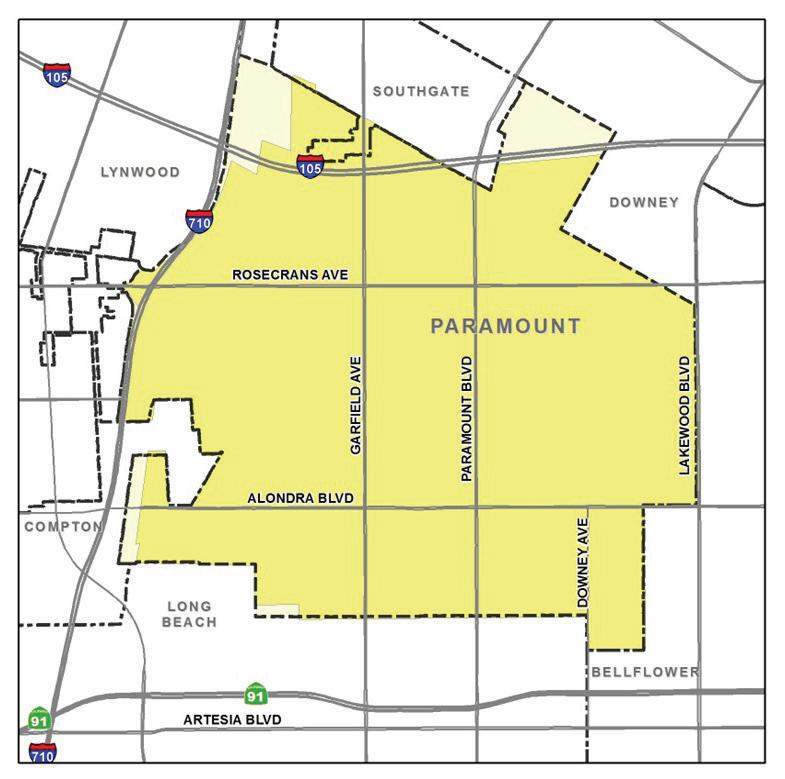
Your tap water comes from 2 sources: groundwater and surface water. We pump groundwater from local, deep wells. We also use Metropolitan Water District of Southern California’s (MWD) surface water from both the Colorado River and the State Water Project in northern California. These water sources supply our service area shown on the adjacent map. The quality of our groundwater and MWD’s surface water supplies is presented in this report.
HOW IS MY DRINKING WATER TESTED?
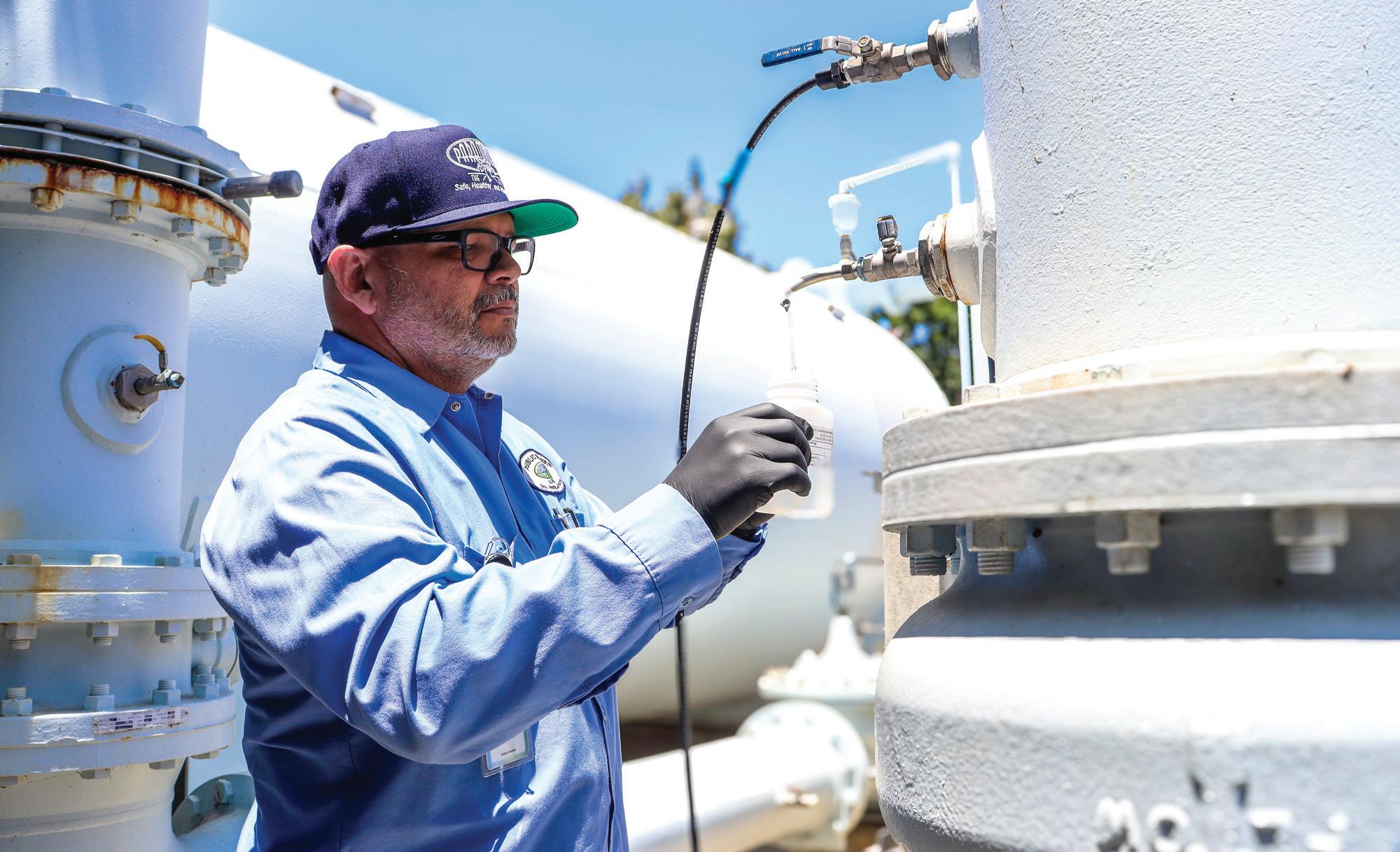
Your drinking water is tested regularly for unsafe levels of chemicals, radioactivity and bacteria at the source and in the distribution system. We test weekly, monthly, quarterly, annually or less often depending on the substance. State and federal laws allow us to test some substances less than once per year because their levels do not change frequently. All water quality tests are conducted by specially trained technicians in state-certified laboratories.
WHAT ARE DRINKING WATER STANDARDS?
The U.S Environmental Protection Agency (USEPA) limits the amount of certain substances allowed in tap water. In California, the State Water Resources Control Board (State Water Board) regulates tap water quality by enforcing limits that are at least as stringent as the Federal EPA’s (USEPA). Historically, California limits are more stringent than the Federal ones.
HOW DO I READ THE WATER QUALITY TABLE?
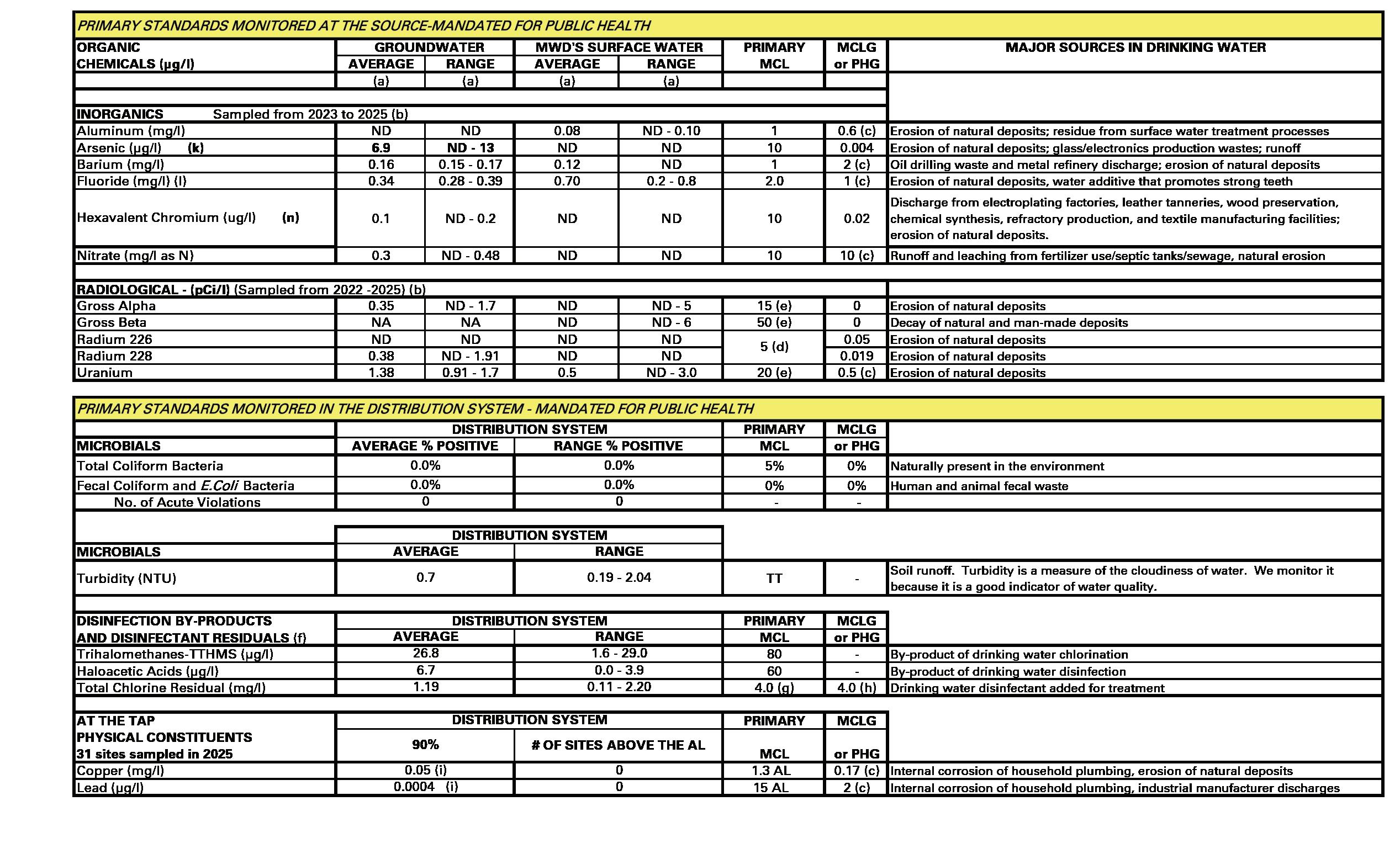
Although we test for over 100 substances, regulations require us to report only those found in your water. The first column of the water quality table lists substances detected in your water. The next columns list the average concentration and range of concentrations found in your drinking water. Following are columns that list the Maximum Contaminant Level (MCL) and Public Health Goal (PHG) or Maximum Contaminant Level Goal (MCLG), if appropriate. The last column describes the likely sources of these substances in drinking water.
To review the quality of your drinking water, compare the highest concentration and the MCL. Check for substances greater than the MCL. Exceedance of a primary MCL does not usually constitute an immediate health threat. Rather, it requires testing the source water more frequently for a short duration.
If test results show that the water continues to exceed the MCL, the water must be treated to remove the substance, or the source must be removed from service.
There are two types of these limits, known as standards. Primary standards protect you from substances that could potentially affect your health. Secondary standards regulate substances that affect the aesthetic qualities of water. Regulations set a Maximum Contaminant Level (MCL) for each of the primary and secondary standards. The MCL is the highest level of a substance that is allowed in your drinking water.
Public Health Goals (PHGs) are set by the California Environmental Protection Agency. PHGs provide more information on the quality of drinking water to customers, and are similar to their federal counterparts, Maximum Contaminant Level Goals (MCLGs). PHGs and MCLGs are advisory levels that are non-enforceable. Both PHGs and MCLGs are concentrations of a substance below which there are no known or expected health risks.
WHY DO I SEE SO MUCH COVERAGE IN THE NEWS ABOUT THE QUALITY OF TAP WATER?
The sources of drinking water (both tap water and bottled water) include rivers, lakes, streams, ponds, reservoirs, springs and wells.
As water travels over the surface of the land or through the ground, it dissolves naturally occurring minerals and, in some cases, radioactive material, and can pick up substances resulting from the presence of animals or from human activity.
Contaminants that may be present in source water include:
•Microbial contaminants, including viruses and bacteria, that may come from sewage treatment plants, septic systems, agricultural livestock operations, and wildlife.
•Inorganic contaminants, such as salts and metals, that can be naturally-occurring or result from urban stormwater runoff, industrial or domestic wastewater discharges, oil and gas production, mining or farming.
•Pesticides and herbicides, which may come from a variety of sources such as agriculture, urban stormwater runoff, and residential uses.
•Organic chemical contaminants, including synthetic and volatile organic chemicals, that are byproducts of industrial processes and petroleum production, and can also come from gas stations, urban stormwater runoff, agricultural application, and septic systems.
•Radioactive contaminants, which can be naturally occurring or be the result of oil and gas production and mining activities.
In order to ensure that tap water is safe to drink, the USEPA and the State Water Board prescribe regulations that limit the amount of certain contaminants in water provided by public water systems. U.S. Food and Drug Administration regulations and California law also establish limits for contaminants in bottled water that provide the same protection for public health.
Drinking water, including bottled water, may reasonably be expected to contain at least small amounts of some contaminants. The presence of contaminants does not necessarily indicate that water poses a health risk. More information about contaminants and potential health effects can be obtained by calling the USEPA’s Safe Drinking Water Hotline (1-800-426-4791). You can also get more information on tap water by logging on to these helpful web sites:
• www.epa.gov/ground-water-and-drinking-water/ safe-drinking-water-information (USEPA’s web site)
• www.waterboards.ca.gov/drinking_water/certlic/ drinkingwater/Chemicalcontaminants.html (State Water Board web site)
If present, elevated levels of lead can cause serious health problem, especially for pregnant women and young children. Lead in drinking water is primarily from materials and components associated with service lines and home plumbing. The City of Paramount is responsible for providing high quality drinking water, but cannot control the variety of materials used in plumbing components. When your water has been sitting for several hours, you can minimize the potential for lead exposure by flushing your tap for 30 seconds to 2 minutes before using water for drinking or cooking. If you are concerned about lead in your water, you may wish to have your water tested. Information on lead in drinking water, testing methods, and steps you can take to minimize exposure is available from the Safe Drinking Water Hotline or at www.epa.gov/safewater/lead
SHOULD I TAKE ADDITIONAL PRECAUTIONS?
Some people may be more vulnerable to contaminants in drinking water than the general population. Immunocompromised persons such as persons with cancer undergoing chemotherapy, persons who have undergone organ transplants, people with HIV/AIDS or other immune system disorders, some elderly, and infants can be particularly at risk from infections. These people should seek advice about drinking water from their health care providers. The USEPA/Centers for Disease Control guidelines on appropriate means to lessen the risk of infection of Cryptosporidium and other microbial contaminants are available from the USEPA’s Safe Drinking Water Hotline (1-800-426-4791).
SOURCE WATER ASSESSMENT
MWD completed an assessment of its Colorado River and State Water Project supplies in 2002. Colorado River supplies are considered most vulnerable to recreation, urban/storm water runoff, increasing urbanization in the watershed, and wastewater. State Water Project supplies are considered most vulnerable to urban/storm water runoff, wildlife, agriculture, recreation and wastewater. A copy of the assessment can be obtained by contacting MWD at (213) 217-6000.
The City of Paramount conducted an assessment of its groundwater supplies in 2003. Groundwater supplies are considered most vulnerable to chemical/petroleum processing/storage, metal plating/finishing/fabricating, dry cleaners, automobile gas stations, automobile body shops, automobile repair shops, junk/scrap/salvage yards, and plastics/synthetics producers.
A copy of the Source Water Assessment is available by contacting the Paramount Public Works Department at publicworksdept@paramountcity. gov, or by calling (562) 220-2020.
HOW CAN I PARTICIPATE IN DECISIONS ON WATER ISSUES THAT AFFECT ME?
The public is welcome to attend Public Works Commission meetings located at Paramount City Hall, 16400 Colorado Avenue, Paramount, CA 90723. Meetings are held on the 1st Thursday of each month at 6:00 p.m.
HOW DO I CONTACT MY WATER AGENCY IF I HAVE ANY QUESTIONS ABOUT WATER QUALITY?
If you have specific questions about your tap water quality, please contact David Arellano at (562) 220-2020.

• Fix leaky faucets in your home – save up to 20 gallons every day for every leak stopped
Save between 15 and 50 gallons each time by only washing full loads of laundry
Adjust your sprinklers so that water lands on your lawn/garden, not the sidewalk/driveway – save 500 gallons per month
•Use organic mulch around plants to reduce evaporation – save hundreds of gallons a year
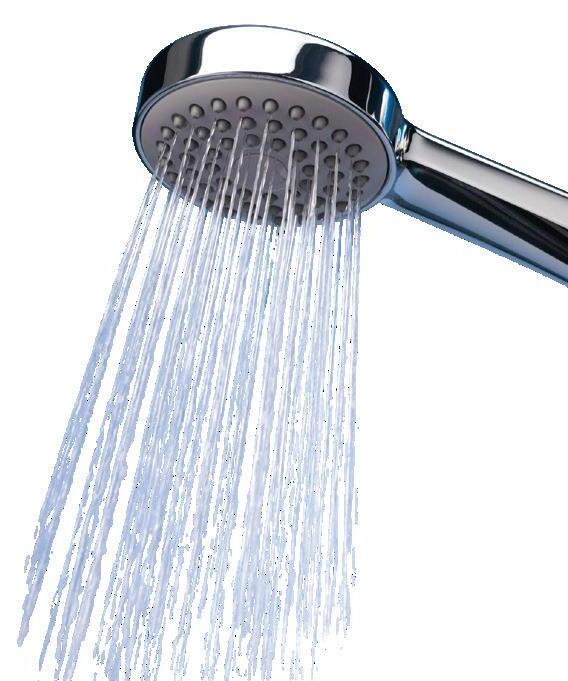
•Use a water-efficient showerhead. They are inexpensive, easy to install, and can save you up to 750 gallons a month.
Visit www.epa.gov/watersense for more details.
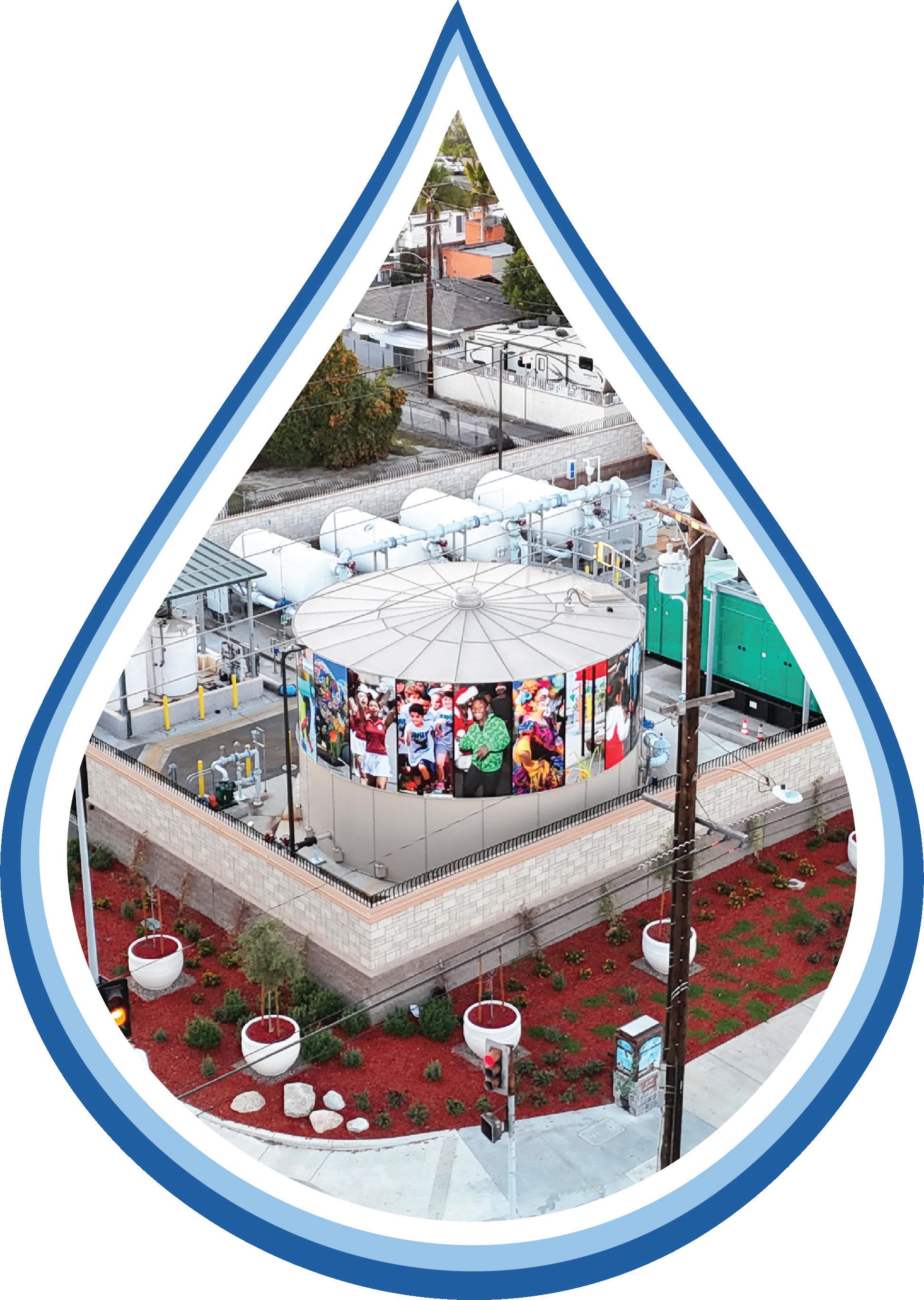
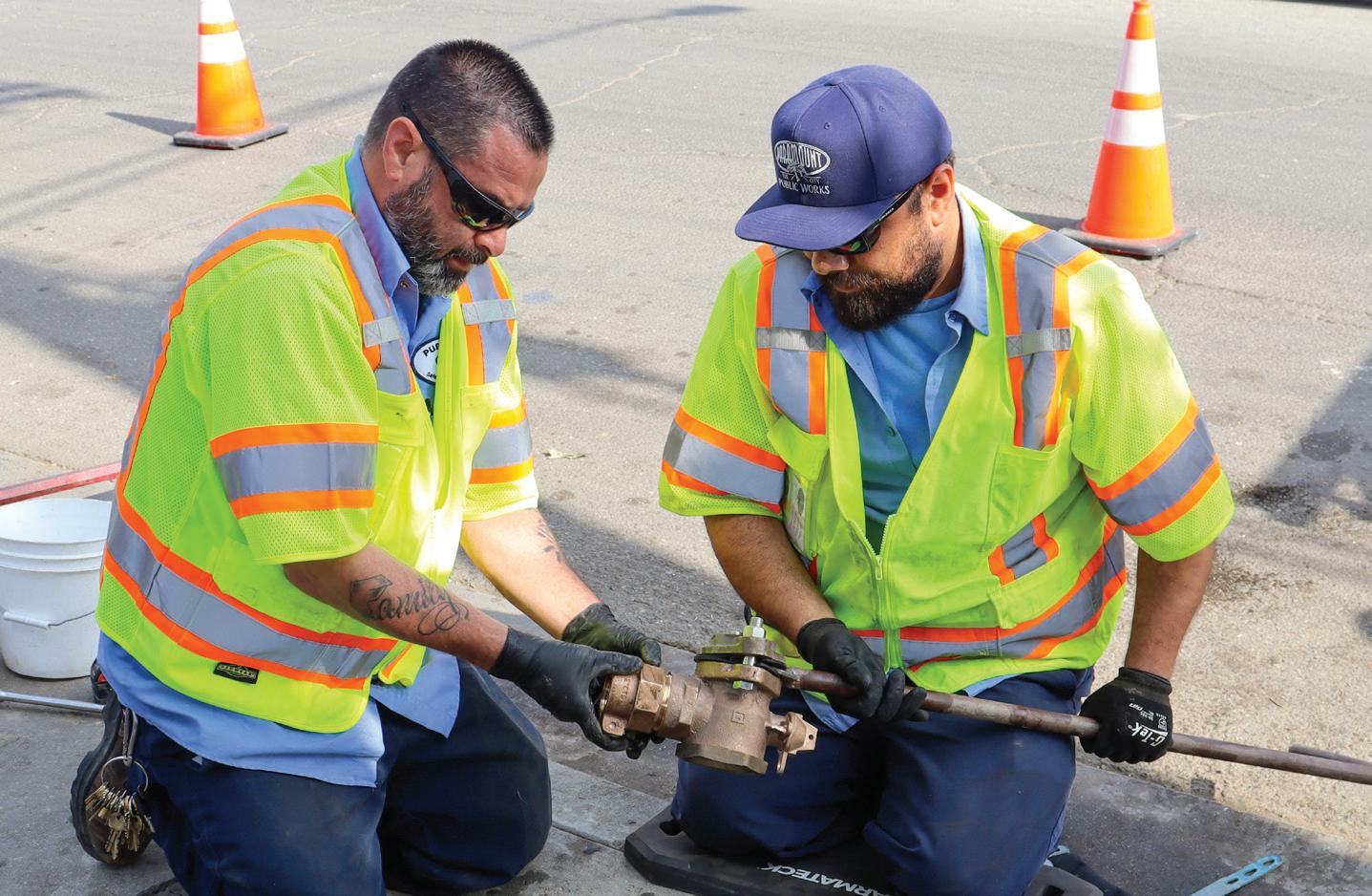
On behalf of the City of Paramount’s Water Divison, we appreciate you taking the time to review the 2025 Consumer Confidence Report (CCR). Our Water Division works hard every day to deliver safe, clean, and reliable water, while maintaining 130 miles of water lines, upgrading smart meters, and improving infrastructure to better serve you. Thank you for your trust and support!
En nombre de la División de Agua de la Ciudad de Paramount, agradecemos su tiempo para revisar el Informe de Confianza del Consumidor (CCR) de 2025. Nuestra División de Agua trabaja arduamente todos los días para brindar agua segura, limpia y confiable, manteniendo 210 kilómetros de tuberías, modernizando medidores inteligentes y mejorando la infraestructura para brindarle un mejor servicio. ¡Gracias por su confianza y apoyo!
-CITY OF PARAMOUNT WATER DIVISION

Results are from the most recent testing performed in accordance with state and federal drinking water regulations. The State allows monitoring for some contaminants less than once per year because the concentrations of these contaminants do not change frequently. Some of the data, though representative, are more than one year old.
Los resultados provienen de las pruebas más recientes realizadas de acuerdo con las regulaciones estatales y federales sobre agua potable. El Estado permite el monitoreo de algunos contaminantes menos de una vez al año porque las concentraciones de estos contaminantes no cambian con frecuencia. Algunos de los datos, aunque representativos, tienen más de un año.
I
Odor (threshold odor number) I
ADDITIONALCHEMICALSOFINTEREST
Sampled from 2023 to 2025
Alkalinity (mg/I) I
Boron (uo/1) I
Calcium (ma/I) I
1,4-Dioxane (ug/1) (ml
Maanesium (mQ/I) I
N-Nitrosodimethylamine (na/I)
IPH (standard unit) I
Potassium (mg/I) I
Sodium (mg/I) I
Total Hardness (mg/I)
Total Organic Carbon (mg/I)
PERFLUOROOCTANE
FOOTNOTES
(a) Over 50 regulated and unregulated organic chemicals were analyzed. None were detected at or above the reporting limit in groundwater or surface water sources.
(b) Indicates dates sampled for groundwater sourcesonly.
lc) California Public Health Goal (PHG). Other advisory levels listed in this column are federal Maximum Contaminant Level Goals (MCLGs).
Id) Combined Radium 226 + Radium 228 has a Maximum Contaminant Level (MCL) of 5 pCi/L.
(e) MCL compliance based on 4 consecutive quarters of sampling.
If) Running annual average used to calculate average, range, and MCL compliance.
(g) Maximum Residual Disinfectant Level (MRDL)
lh) Maximum Residual Disinfectant Level Goal (MRDLG)
(i) 90th percentile from the most recent sampling at selected customer taps.
(j) Aluminum has primary and secondary standards.
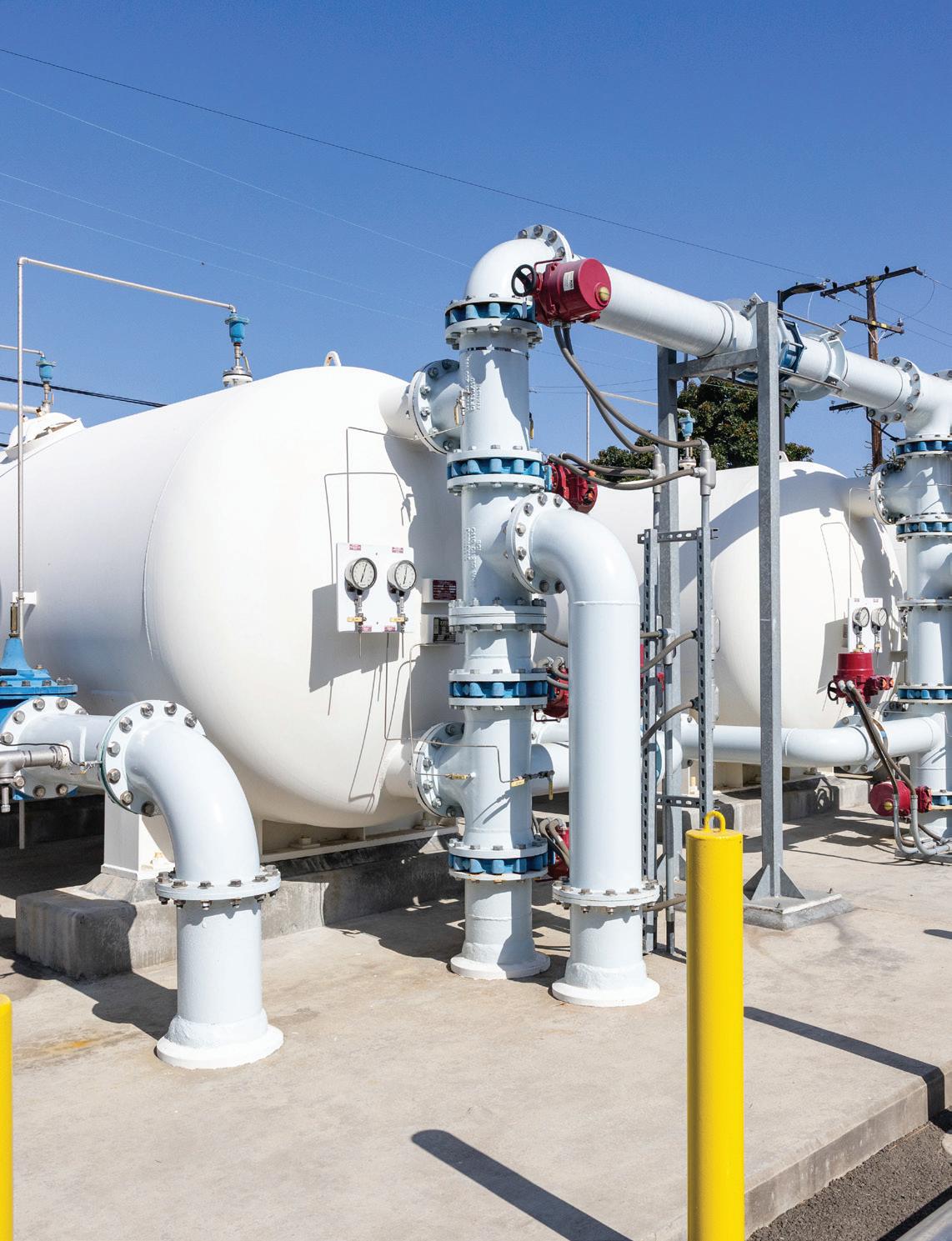
(k) While your drinking water meets the federal and state standard for arsenic, it does contain low levels of arsenic. The arsenic standard balances the current understanding of arsenic's possible health effects against the costs of removing arsenicfrom drinking water. The US EnvironmentalProtectionAgencycontinuestoresearchthe healtheffectsof low levels of arsenic, which is a mineral known to cause cancer in humans at high concentrations and is linked to other health effects such as skin damage and circulatory problems. For this well system, the filtration treatment technique is used to remove arsenic and manganese from the water prior to distribution. Water after treatment isin compliance and below the MCL.
(1) Starting June 1, 2015, the fluoride levels at the MWD treatment plants were adjusted to achieve an optimal fluoride level of 0.7 ppm and a control range od 0.6 ppm to 1.2 ppm to comply with the existing State's Water Fluoridation Standards. Fluride feed systems were temporarily out of seivice during treatment plant shutdowns and/or maintenance work in 2023 resulting inoccassionalfluoride levels below0.7 mg/L. MWD was in compliance with all provisions of the State'sfluoridationrequirements.
Im) The Notification Level of 1 ug/1for1,4-Dioxanewas exceeded in one well in 2025. This well was monitored but was out of seivice. Some people who use water containing 1.4dioxane in excessof the Notification Level over many years may experience liver or kidney problems and may have an increased risk of getting cancer, based on studies in laboratory animals.
In) Hexavalent Chromium (CR-6) was detectedin two wells in 2025. Pursuant to the Detection Limits for Purposes of Reporting (DLRs), the DLR for Hexavalent Chromium is 0.0001 mg/L or 0.1 ug/L. Paramount\monitoredforHexavalentChromiumand has notexceededtheannual runningaverage of 10 ug/1.
ABBREV/ATIONS
MaximumRssidualDisinfsctantLsvsl(MRDL): The hightest level of a disinfectant allowed in drinking water. There is convincing evidence that addition of a disinfectant is necessary for control of microbial contaminants.
MaximumRssidualDisinfsctantLsvslGoal(MRDLG): The level of a drinking water disinfectant below which there is no known or expected risk to health MRDLGs do not reflect the benefits of the use of disinfectants to control microbial contaminants.
NotificationLsvs/(NL): The level at which notification of the public water system governing body is required. A health-based advisory level for an unregulated contaminant.
PublicHsalthGoal(PHG): The level of a contaminant in drinking water below which there is no known or expected risk to health. PHGs are set by the California Environmental Protection Agency.
Trsatmsnt Tschniqus(TT): A required process intended to reduce the level of a contaminant in drinking water.
RsgulatoryActionLsvsl(AL): The concentration of a contaminant which, if exceeded, triggers treatment or other requirements that a water system must follow.
PrimaryDrinkingWatsrStandard(PDWS): MCLs and MRDLs for contaminants that affect health along with their monitoring and reporting requirements, and water treatment requirements.
SscondaryDrinkingWatsrStandard(SOWS) MCLs for contaminants that affect taste, odor, or appearance of the drinking water. Contaminants with SDWSs do not affect the health at the MCL levels.
VariancssandExsmptions: Department permission to exceed an MCL or not comply with a treatment technique under certain conditions.