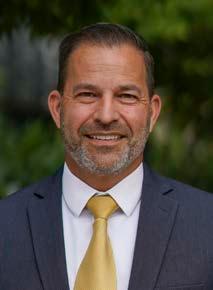
First elected 2025, Group I Profession: Public Servant
COMMISSIONER
Tanya K. Bhatt
305.673.7105
tanya@miamibeachfl.gov
Current term 2023 2027
First elected 2023, Group IV
Profession: Marketing & Branding Professional
LETTER FROM THE CITY MANAGER
DEL ADMINISTRADOR DE LA CIUDAD
It’s been more than three decades since the Holocaust Memorial Miami Beach opened amid haunting words by Nobel Laureate survivor Elie Wiesel who foresaw a day when people would question whether the evil of the past ever really happened at all. That’s why the newly opened Holocaust Memorial Miami Beach Education Center is so important for future generations to experience as you’ll learn in “Preserving Their Truth” on page 8.
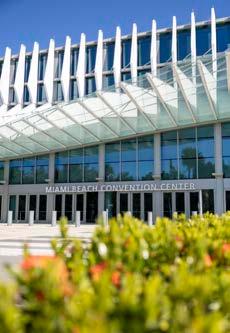
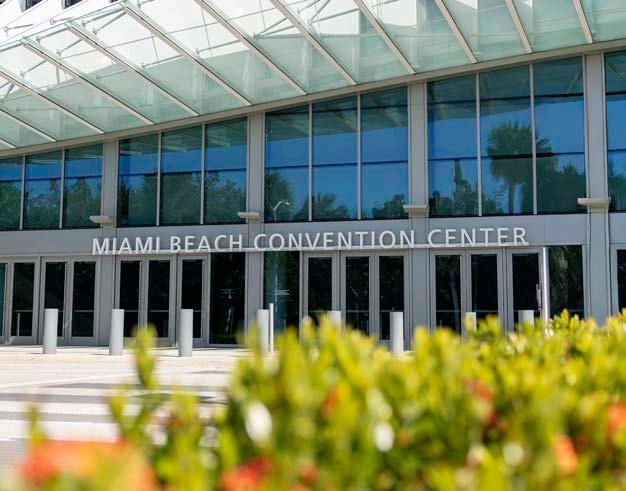
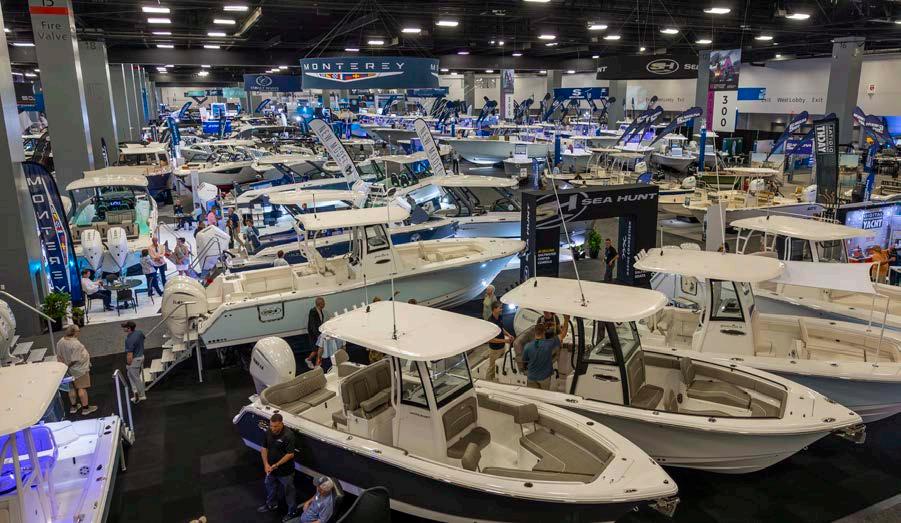
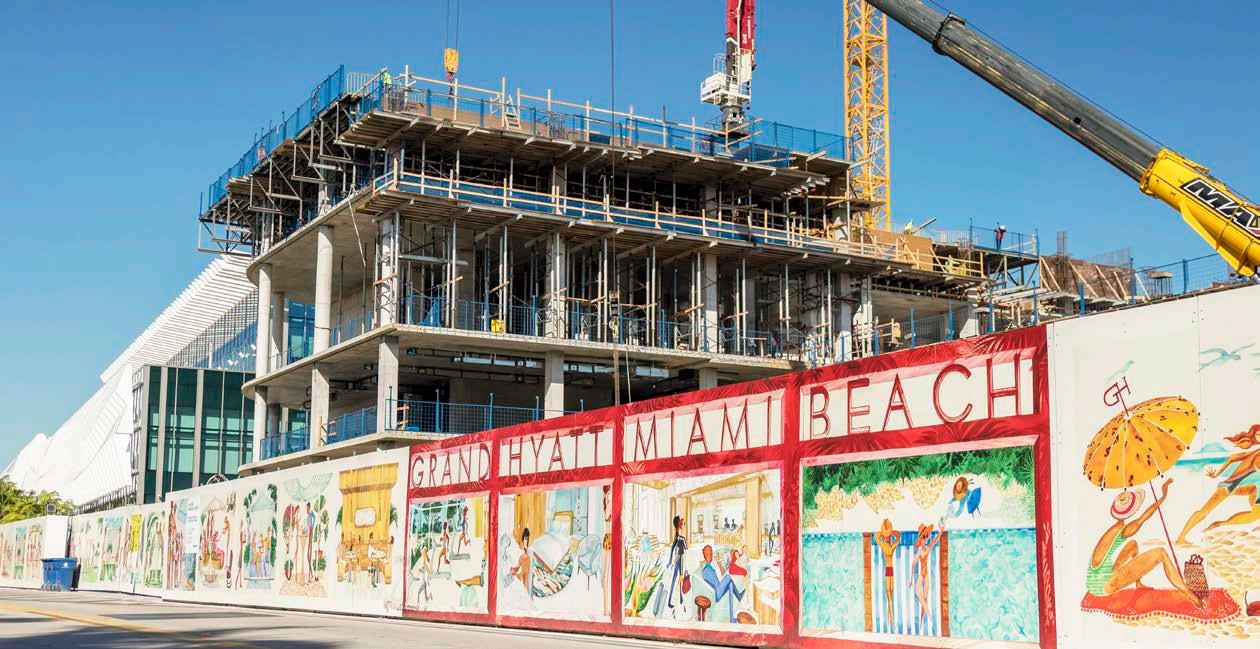
Thousands of Miami Beach businesses, shops, entertainment venues and boutique hotels stand to see additional economic benefits in the future with the planned opening of the Grand Hyatt Miami Beach as you’ll discover in “New Dawn Rising Over Convention Center” on page 38. The 17-story hotel will be the first property that is physically connected to the convention center.
Three of the newest public art pieces in Miami Beach share one common artistic element — from the approximately 22-foot BirdHouse in Mid Beach to the wall-sized mural, “She Spoke for the Birds” in South Beach and the Reflection water feature in North Beach — as you’ll read in “Renaissance of Women Artists in Miami Beach” on page 28.
Spring is bursting out all over Miami Beach. This is a great time of year to visit some of our public parks and enjoy our newest public art pieces.
Respectfully,
Eric T. Carpenter Miami Beach City Manager
MAYOR
Steven Meiner
305.849.8932
stevenmeiner@miamibeachfl.gov
Current term 2025 2027
First elected 2019
Profession: Attorney
COMMISSIONER
Laura Dominguez
305.673.7104
laura@miamibeachfl.gov
Current term 2025—2029
First elected 2022, Group II Profession: Business Professional
COMMISSIONER
David Suarez
305.673.7107
davidsuarez@miamibeachfl.gov
Current term 2023 2027
First elected 2023, Group V Profession: Engineer
COMMISSIONER
Alex Fernandez
305.673.7106
alex@miamibeachfl.gov
Current term 2025 2029
First elected 2021, Group III Profession: Public Servant
COMMISSIONER
Joseph Magazine
305.673.7102
joe@miamibeachfl.gov
Current term 2023 2027
First elected 2023, Group VI Profession: Investment Banking
Han pasado más de tres décadas desde que se inauguró el Holocaust Memorial de Miami Beach, en medio de las inquietantes palabras del sobreviviente y premio Nobel Elie Wiesel, quien previó un día en el que la gente se preguntaría si el mal del pasado realmente había ocurrido. Por eso es tan importante que las generaciones futuras visiten y experimenten el recién inaugurado Centro Educativo del Memorial del Holocausto de Miami Beach Memorial de Miami Beach, como podrán comprobarlo en el artículo “Preservando su verdad” en la página 8.
Miles de negocios, tiendas, locales de entretenimiento y hoteles boutique de Miami Beach obtendrán beneficios económicos adicionales en el futuro con la inauguración prevista del Grand Hyatt Miami Beach, como lo descubrirán en el artículo “Un nuevo amanecer sobre el Centro de Convenciones” en la página 38. El hotel de 17 pisos será el primer establecimiento que estará conectado físicamente con el centro de convenciones.
Tres de las obras de arte público más recientes en Miami Beach –la escultura “Bird House” de aproximadamente 22 pies de altura en Mid Beach, el mural “She Spoke for the Birds” del tamaño de una pared en South Beach y la estructura acuática “Reflection” en North Beach– comparten un elemento artístico común, como podrán leerlo en el artículo “Renacimiento de las mujeres artistas en Miami Beach” en la página 28.
La primavera irrumpe en todo Miami Beach. Esta es una época ideal para visitar algunos de nuestros parques públicos y disfrutar de nuestras nuevas obras de arte público.
Atentamente,
Eric T. Carpenter Administrador de la Ciudad de Miami Beach
Finally, a Way to Sail Around Traffic Por fin, una forma de navegar el tráfico
Visit miamibeachfl.gov/subscriptions
Berthier
Scicchitano
DIRECTOR
Gonzalez
Daniel Conde Julio Silva CONTRIBUTING PHOTOGRAPHERS
Daniel Conde
Jonathan Fetherolf Pierre Joseph
CONTRIBUTING WRITERS
Dr. Leslie Rosenfeld
ADVERTISING
Aliette Fournié aliettefournie@miamibeachfl.gov
CONTACT US paulscicchitano@miamibeachfl.gov
305.673.7575
MB magazine is produced quarterly by the Office of Marketing & Communications. The publication of an advertisement does not imply endorsement of any product, service or opinion by the City of Miami Beach, its employees or officials. Revista MB es producida cada tres meses por la Oficina de Mercadeo y Comunicaciones. La publicación de un anuncio no implica respaldo de ningún producto, servicio u opinión por parte de la Ciudad de Miami Beach, sus empleados o funcionarios.
To request this material in alternate format, sign language interpreter (5-day notice required), information on access for persons with disabilities, and/or any accommodation to review any document or participate in any city-sponsored proceedings, call 305.604.2ADA (2232) (voice), select 1 (English) or 2 (Spanish) and leave a message with your request. TTY users may call via 711 (Florida Relay Service). You can also make requests online at www.miamibeachfl. gov/ada by selecting ADA request. Para solicitar esta publicación en formato alternativo, intérprete de lenguaje de señas (5 días de aviso previo), información de acceso para personas con discapacidades, y/o cualquier ajuste para revisar documentos o participar en acontecimientos patrocinados por la ciudad, llame al 305.604.2ADA (2232) (voz), seleccione 1 para Inglés o 2 para Español, y deje un mensaje con su solicitud. Usuarios de teléfonos de texto (TTY) pueden llamar a través del 711 (Servicio de Retransmisión de la Florida). También puede hacer solicitudes en línea en www.miamibeachfl.gov/ada y seleccione “ADA request.”
FEATURES ARTÍCULOS PRINCIPALES
8 Preserving Their Truth Preservando su verdad
28 Women Artists Enjoy Renaissance in Miami Beach
Las mujeres artistas disfrutan del renacimiento en Miami Beach
38 New Dawn Rising Over Convention Center Un nuevo amanecer sobre el Centro de Convenciones
INFRASTRUCTURE INFRAESTRUCTURA
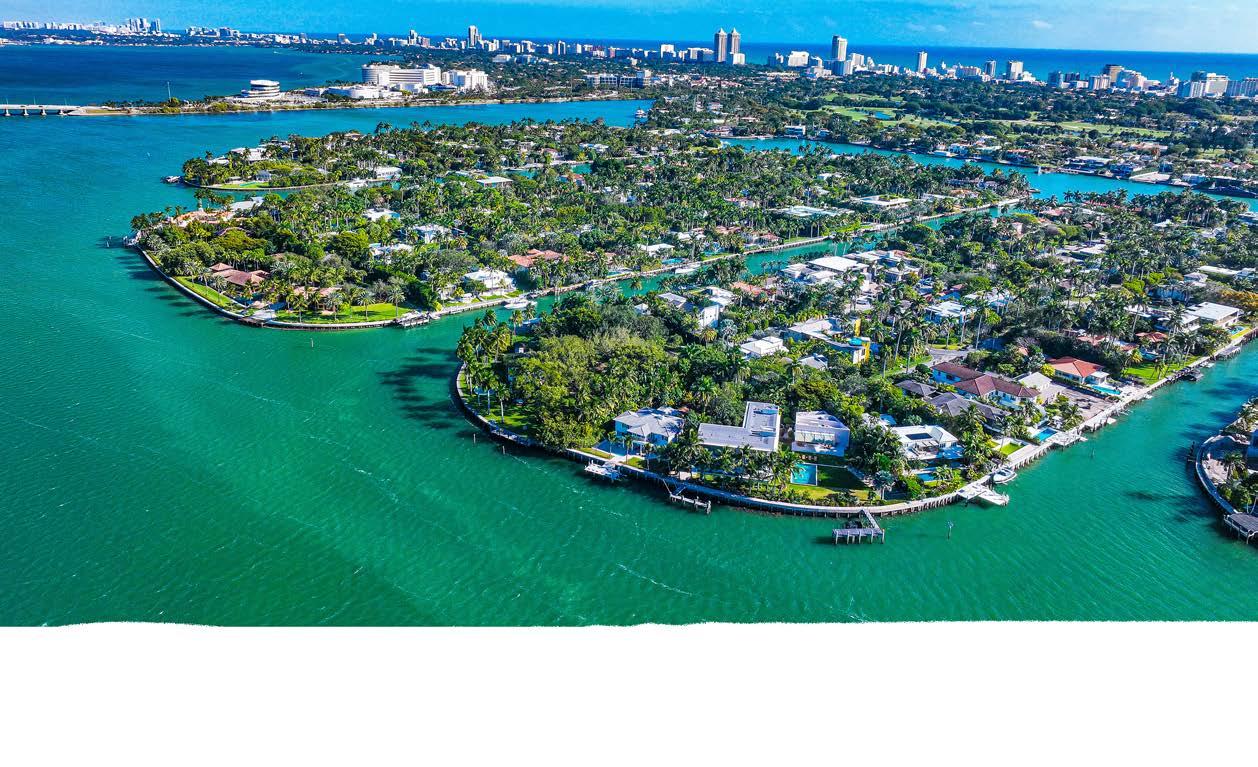
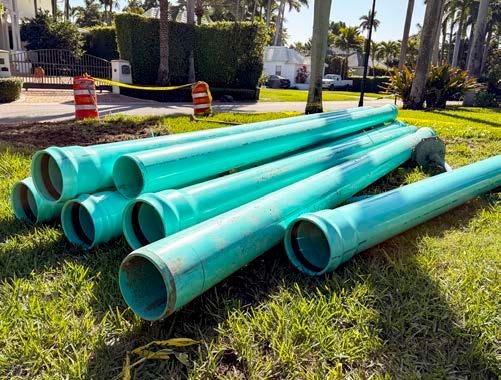
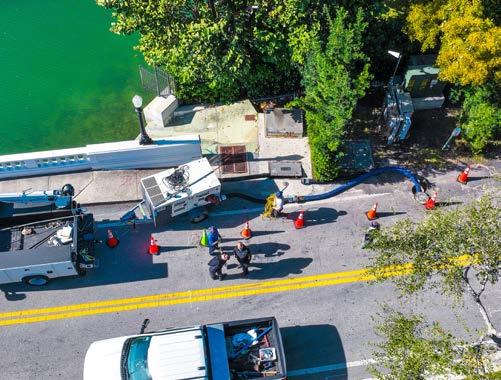
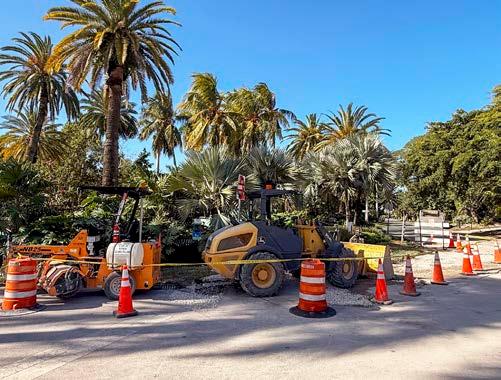
48 New Infrastructure in Sunset Islands
La nueva infraestructura en Sunset Island
EDUCATION EDUCACIÓN
50 Fleet Internships Drive Job Market Experience
Las pasantías en la División de Gestión de Flotas impulsan el mercado laboral
PARKS AND RECREATION PARQUES Y RECREO
56 Summer Camp Guide
Guía de campamentos de verano
The City of Miami Beach fights for your human rights. Let us fight for you.
La Ciudad de Miami Beach lucha por sus derechos humanos. Permítanos luchar por usted.
www.miamibeachfl. gov/humanrights
To report possible misconduct by a Miami Beach official, employee or contractor, call the Miami Beach Inspector General’s confidential hotline at 786.897.1111.
Para denunciar una posible mala conducta por parte de un funcionario, empleado o contratista de Miami Beach, llame a la línea telefónica confidencial del Inspector General de Miami Beach al 786.897.1111.
Cele ating All y l ear ong
America’s 250th Birthday Bash
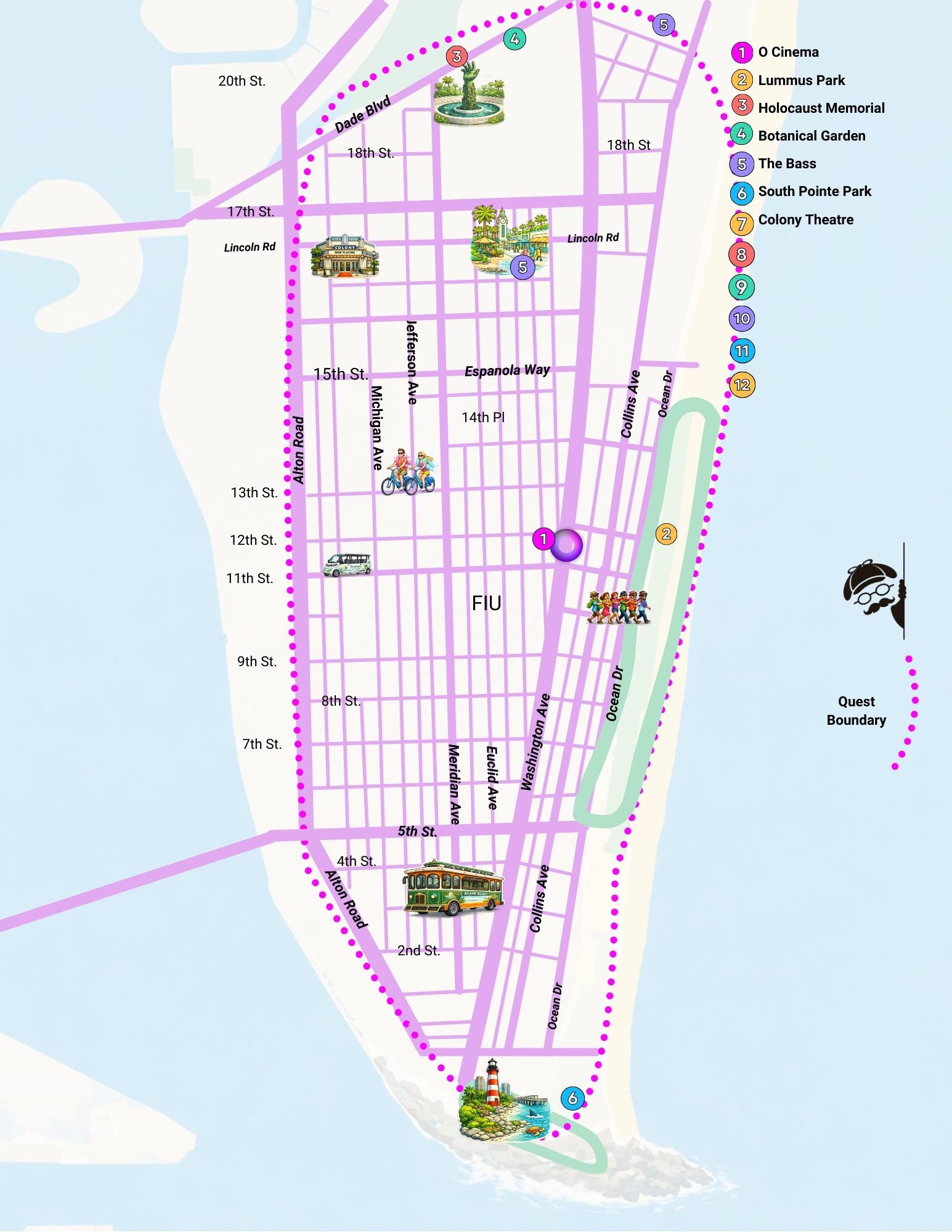
Celebrate America’s semiquincentennial birthday at multiple America 250 events in Miami Beach, starting with Memorial Day weekend when the legendary Air Force Thunderbirds roar through the skies of South Beach for the first time ever at the Hyundai Air & Sea Show as part of the National Salute to America’s Heroes on May 23–24. The free event brings the “Greatest Show Above the Earth” back to the sands of Miami Beach, with official viewing areas between 11 and 14 streets.
Next, brush up on your dancing skills when Red, White and Boots: Line Dancing on Lummus hits South Beach on May 30 from 6 p.m. to 8 p.m.
The following month on June 14, take your beach chair and blanket over to American Summer Cinema on the Sand for an outdoor movie screening of “National Treasure” at 8:30 p.m. Both events will be held at 12 Street and Ocean Drive. The celebration continues on July 4 with a full day of fun, music and fireworks in South Beach and North Beach. Finish off the anniversary celebration on Nov. 11 with the city’s annual Veterans Day parade.
For details on all events, visit www.miamibeachfl.gov/america250.
Fiesta del 250.º aniversario de Estados Unidos
Celebre el ducentésimo quincuagésimo aniversario de Estados Unidos en múltiples eventos de “America 250” en Miami Beach, comenzando con el fin de semana del Memorial Day, cuando los legendarios Thunderbirds de la Fuerza Aérea rugirán por primera vez en los cielos de South Beach con la Exhibición Aérea y Marítima de Hyundai, como parte del Saludo Nacional a los Héroes de Estados Unidos los días 23 y 24 de mayo. Este evento gratuito trae de vuelta el “Greatest Show Above the Earth” a las arenas de Miami Beach, con zonas de observación oficiales entre las calles 11 y 14.
A continuación, repase sus habilidades para bailar al estilo country en el Red, White and Boots: cuando el baile en línea en Lummus llegue a South Beach el 30 de mayo, de 6 p.m. a 8 p.m. El mes siguiente, el 14 de junio, lleve su silla de playa y su frazada al American Summer Cinema on the Sand para ver una proyección al aire libre de “National Treasure” a las 8:30 p.m. Ambos eventos se llevarán a cabo en 12 Street y Ocean Drive. La celebración continúa el 4 de julio con un día lleno de diversión, música y fuegos artificiales en South Beach y North Beach. Termine la celebración del aniversario el 11 de noviembre con el desfile anual del Día de los Veteranos de la ciudad.
Para más detalles, visite www.miamibeachfl.gov/america250
Lock it Up
Remember to lock your vehicle when you park in front of your home or anywhere — and take your key fob with you. MB previously accompanied Neighborhood Resource Officer Eliut Hazzi on a crime prevention ride-along in which 99 parked vehicles were randomly selected for a safety check. Overall, 12 of the 99 were unlocked — leaving these cars vulnerable to theft.
Ciérrelo
Recuerde dejar su vehículo cerrado con llave cuando lo estacione frente a su casa o en cualquier otro lugar, y lléve consigo la llave electrónica. MB acompañó anteriormente al Oficial de Recursos Vecinales Eliut Hazzi en un paseo sobre prevención de delitos en el que se escogieron al azar 99 vehículos estacionados para hacer un control de seguridad. En total, 12 de los 99 estaban sin llave — dejando estos carros vulnerables al robo.
Fitness Festival for Kids and Families
The inaugural Miami Beach Youth Sports & Wellness Festival takes over Flamingo Park on May 29–31. In addition to free sports clinics, open play, wellness activations for the entire family and fee-based youth tournaments, the festival will feature opportunities for kids to sample a wide range of sports — including soccer, basketball, volleyball, tennis, pickleball, flag football, golf, baseball, softball, swimming, an obstacle course race and a 3K fun run. Learn more at www.mbyswfest.com.
Festival de fitness para niños y familias
El primer Miami Beach Youth Sports & Wellness Festival se llevará a cabo en Flamingo Park del 29 al 31 de mayo. Además de talleres deportivos gratuitos, juegos abiertos, actividades de bienestar para toda la familia y torneos juveniles con costo, el festival ofrecerá oportunidades para que los niños practiquen una amplia gama de deportes, como fútbol, baloncesto, voleibol, tenis, pickleball, fútbol bandera, golf, béisbol, sóftbol, natación, una carrera de obstáculos y una carrera popular de 3 km. Más información en www.mbyswfest.com
Sea Turtle Season
Remember not to disturb nesting sea turtles along beach areas. April 1 marked the opening of this year’s turtle nesting season in Miami Beach (the season begins one month later in other parts of Florida). To learn more, visit www.mbrisingabove.com/seaturtles
Temporada de tortugas marinas
Recuerda no molestar a las tortugas marinas que anidan en las zonas de playa. El 1 de abril marcó el inicio de la temporada de anidación de tortugas de este año en Miami Beach (la temporada comienza un mes más tarde en otras partes de Florida). Para más información, visite www.mbrisingabove.com/seaturtles
PRESERVING THEIR TRUTH
With an ever-diminishing number of survivors left to bear witness to the systematic torture and murder of 6 million Jews during World War II, future generations in Miami Beach and elsewhere are now assured the opportunity to ask questions of Holocaust survivors and hear firsthand accounts of one of the darkest periods of the 20th century — today and well into the future — thanks to technology pioneered by legendary filmmaker Steven Spielberg that is a centerpiece of the city’s new Holocaust Memorial Miami Beach Education Center.
By Paul Scicchitano
The education center, in my opinion, fulfills the grand vision that we had hoped for
- Chair
Emeritus Norman Braman of the Miami Beach Holocaust Memorial Committee
The new education center features technology pioneered by Steven Spielberg.
Despite the inhumanity that gripped Nazi Germany and its European Axis allies, Jewish mothers didn’t stop having babies in 1944 — the penultimate year of World War II — but the odds of a baby surviving the death camps and extreme malnutrition that beset longtime Miami Beach resident Allan J. Hall and his family led them to an unimaginable choice in Warsaw, Poland that still haunts the 91-year-old to this day.
“We could not leave through any checkpoint because we had no current valid identification papers,” Hall remembered. “If we went in the sewers, we would have to be very quiet; any noise would alert the Germans and they would either release poison gas or throw grenades down there.”
Tale of Survival
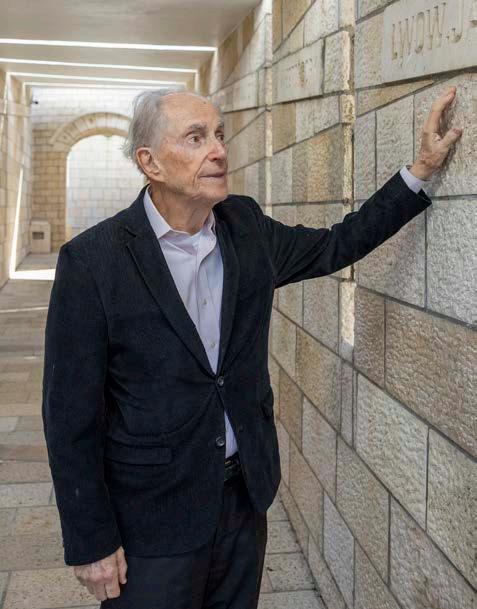
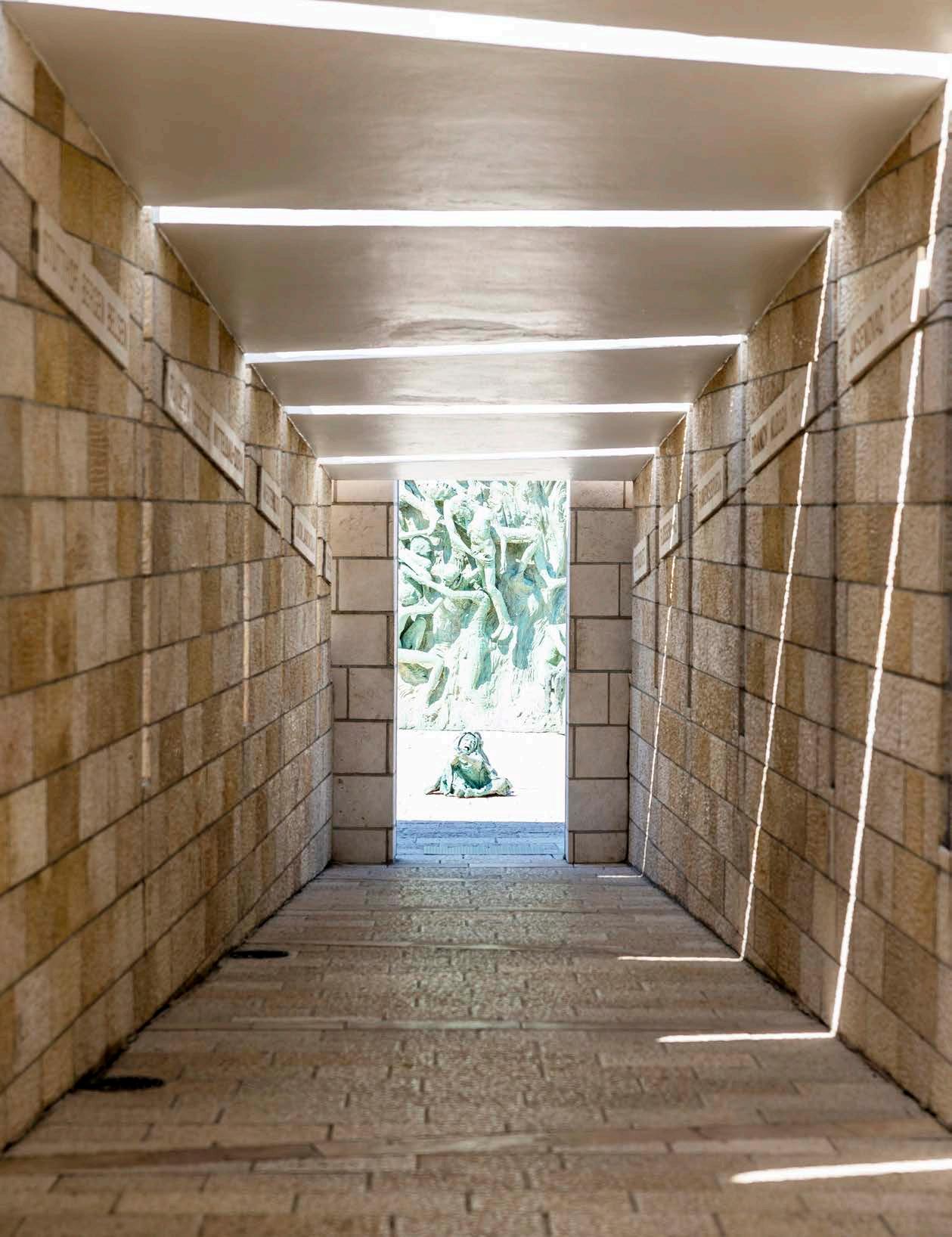
The nonagenarian’s harrowing tale of survival — which includes walking hundreds of miles with his baby brother on his back and hiding in a closet for two years with his mother inside a Polish office building that housed the Nazi-era German Luftwaffe or air force, is one of a number of epic stories now enshrined in the newly opened Holocaust Memorial Miami Beach Education Center at 1933-1945 Meridian Ave. next to the Miami Beach Botanical Garden.
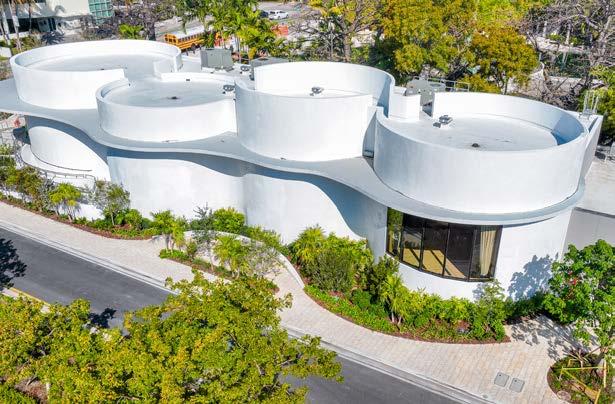
Marked by a series of interconnected circles, the contemporarylooking structure allows visitors to hold virtual question and
answer sessions with Holocaust survivors based on technology developed by filmmaker Steven Spielberg through his University of Southern California Shoah Foundation created after the release of Spielberg’s critically acclaimed “Schindler’s List” in 1993.
The Dimensions in Testimony technology generates real-time responses from prerecorded video interviews with Holocaust survivors using a combination of advanced filming techniques, specialized display technologies and next-generation natural language processing to create interactive biographies.
Keeping Memories Alive
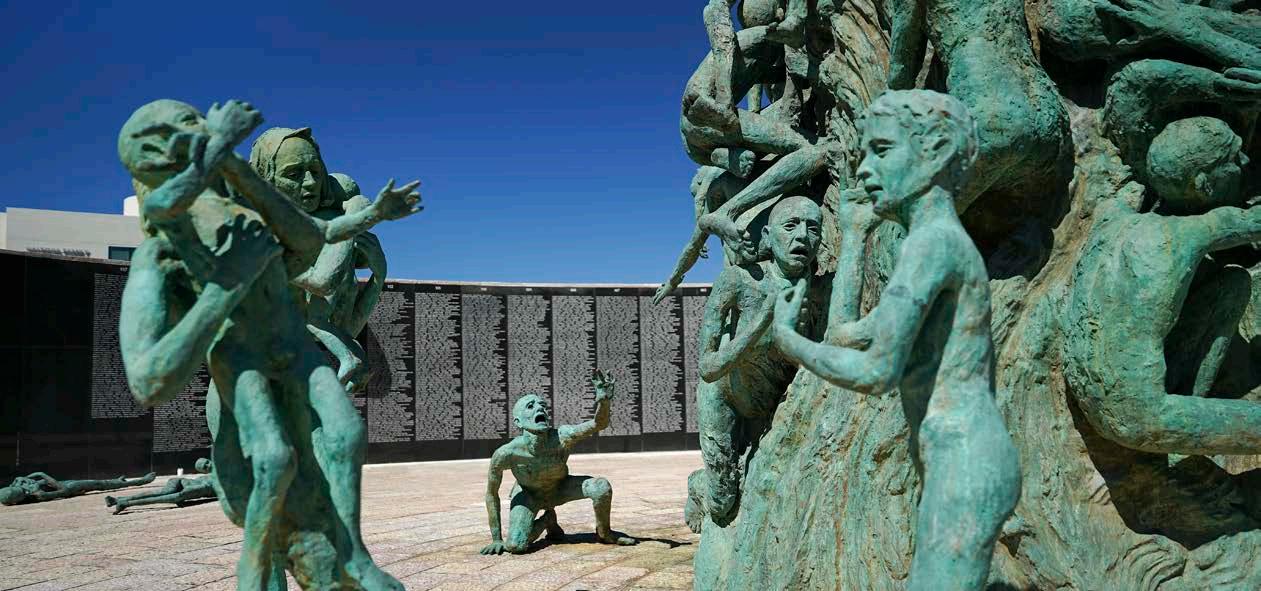
It has been 35 years since Nobel Laureate and Holocaust survivor Elie Wiesel challenged attendees at the memorial dedication on Feb. 4,1990 to consider the possibility that “one day, a man or a woman will enter this sanctuary of remembrance and wonder: Was it all true? Were the killers really that cruel? And the victims that helpless? That lonely? That abandoned?”
But with fewer survivors left after each passing year, the late Wiesel’s words have taken on greater meaning today than ever before.
At the 1990 dedication, famed Holocaust survivor Elie Wiesel feared that visitors might one day question whether the Holocaust even happened.
30 Busloads of Survivors
“The memorial itself used to have a number of docents who were Holocaust survivors, most of them — just about all of them — are gone,” lamented businessman Norman Braman, who is a principal founder of the memorial along with his wife, Irma, and continues to serve as the chair emeritus of the Miami Beach Holocaust Memorial Committee.
“When we opened the memorial in 1990, there were 30 busloads of Holocaust survivors who came to the opening of it. Today, in South Florida — among the Holocaust survivors — there are literally a handful that have the ability to speak about their experiences — and most of them that are living today were children during that time period,” he said.
Braman has feared the inevitable for some time — the day there won’t be any survivors left alive to share personal accounts of the Holocaust even as hate crimes against Jewish people in the United States remain at historically high levels. That makes the interactive technology in the new education center all the more relevant.
“This would never have happened without Steven Spielberg,” acknowledged Braman, who was honored for his philanthropic contributions to the City of Miami Beach late last year with the unveiling of Norman Braman Way on 17 Street between Washington Avenue and Alton Road.
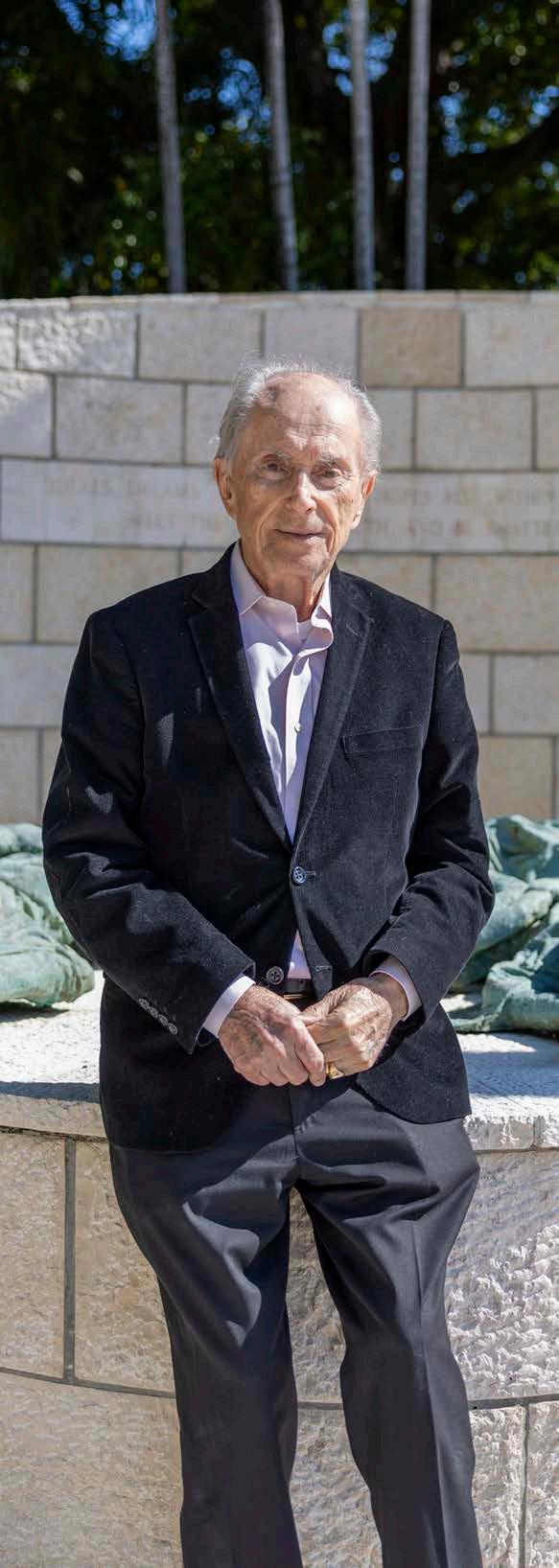
“The education center, in my opinion, fulfills the grand vision that we had hoped for,” said Braman, who owns multiple car dealerships and once owned the Philadelphia Eagles. “At the education center, you’re going to hear from Holocaust survivors and others that were not children — that were adults when this happened. “It’s not just designed to combat antisemitism. It’s to combat hate wherever it exists.”
Hate Crimes at Historic Levels
In 2024 — the most recent year for which statistics are available from the FBI — a total of 11,679 hate crime incidents were logged in the United States involving 14,243 victims. Slightly less than a quarter of the incidents — or 23.5%, involved religion while 53.2% centered around race, ethnicity or ancestry. Another 17.2% of cases stemmed from sexual orientation while 3.9% were attributed to gender identity.
Social Media Misinformation
The grandchild of four Holocaust survivors, memorial CEO Sheri Zvi was only 18 when the Miami Beach memorial first opened. She blames misinformation on social media for the large numbers of people who now question whether the Holocaust actually happened at all.
“Interacting with Holocaust survivors is the most impactful experience a visitor can have,” said Zvi, “Through the lens of film, virtual reality and interactive interviews, eyewitness testimony will always be at the heart of the education center.”
A number of interactive interviews with local South Florida survivors have been recorded and will be accessible to visitors at the new education center. Some interviews were conducted in a green-screen environment surrounded by cameras in front of a microphone as an interviewer posed a series of questions.
Anywhere from 1,000 to 1,500 questions were asked over extended recording sessions that lasted as long as five days and required subjects to wear the same clothing and return to the same positions for hours at a time. Every answer generated a separate video clip.
“It’s just amazing that you can go and ask what it was like growing up before the Holocaust and what it was like in their community,” Braman explained. “You can ask how neighbors reacted or didn’t react. You can ask about those that went to the camps — how they survived? What happened to their lives? To their families? It’s an amazing technology.”
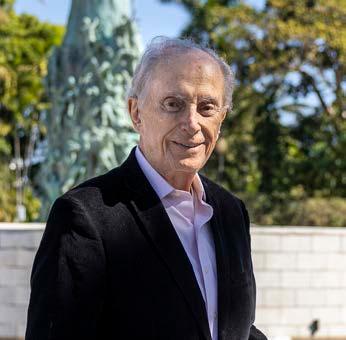
Miami Beach resident Allan J. Hall and his family faced an unimaginable choice during the Holocaust that haunts him to this day.
Interactive Dialogue
Zvi demonstrated the new technology in the education center by striking up an interactive dialogue with survivor Rodi Glass.
“Rodi, how old are you?,” Zvi inquired.
“I am 88 years old,” a video image of Glass responded.
“Are you married?” Zvi continued.
“Marvin Glass and I were married in Oct. 16, 1955. We were married for 62 years. He passed away July 2017,” according to the video reply.
“Were you in a ghetto?” Zvi pressed.
“We lived in a ghetto from June 1943 to September 1943,” Glass added.
Using natural language technology, the system transforms asked questions into search terms. It then matches search terms to the most appropriate response and plays back relevant video clips to create a conversational experience with only a short pause between responses. At least one of the interviews was conducted in Spanish.
Since the system logs every question and answer, trained staff at the USC Shoah Foundation periodically review system logs to make sure the most appropriate answers are selected and tweak the system as needed. The USC Shoah Foundation provides assurances to the families of survivors that artificial intelligence will never be misused to take recorded interviews out of context.
For the time being, the images that will be projected in the new education center are two-dimensional displays of video clips rather than holograms, which do not yet exist as three-dimensional videos, according to the foundation. The organization has attempted to future-proof its process so that interviews can be projected as holograms once holographic technology becomes available.
The Holocaust Memorial Miami Beach already attracts some 100,000 visitors each year and more are expected to visit with the addition of the single-story education center. The center provides access to hundreds of photographs as well as thousands of written and recorded witness accounts, including videotaped interviews with local and international survivors, many of whom have since passed.
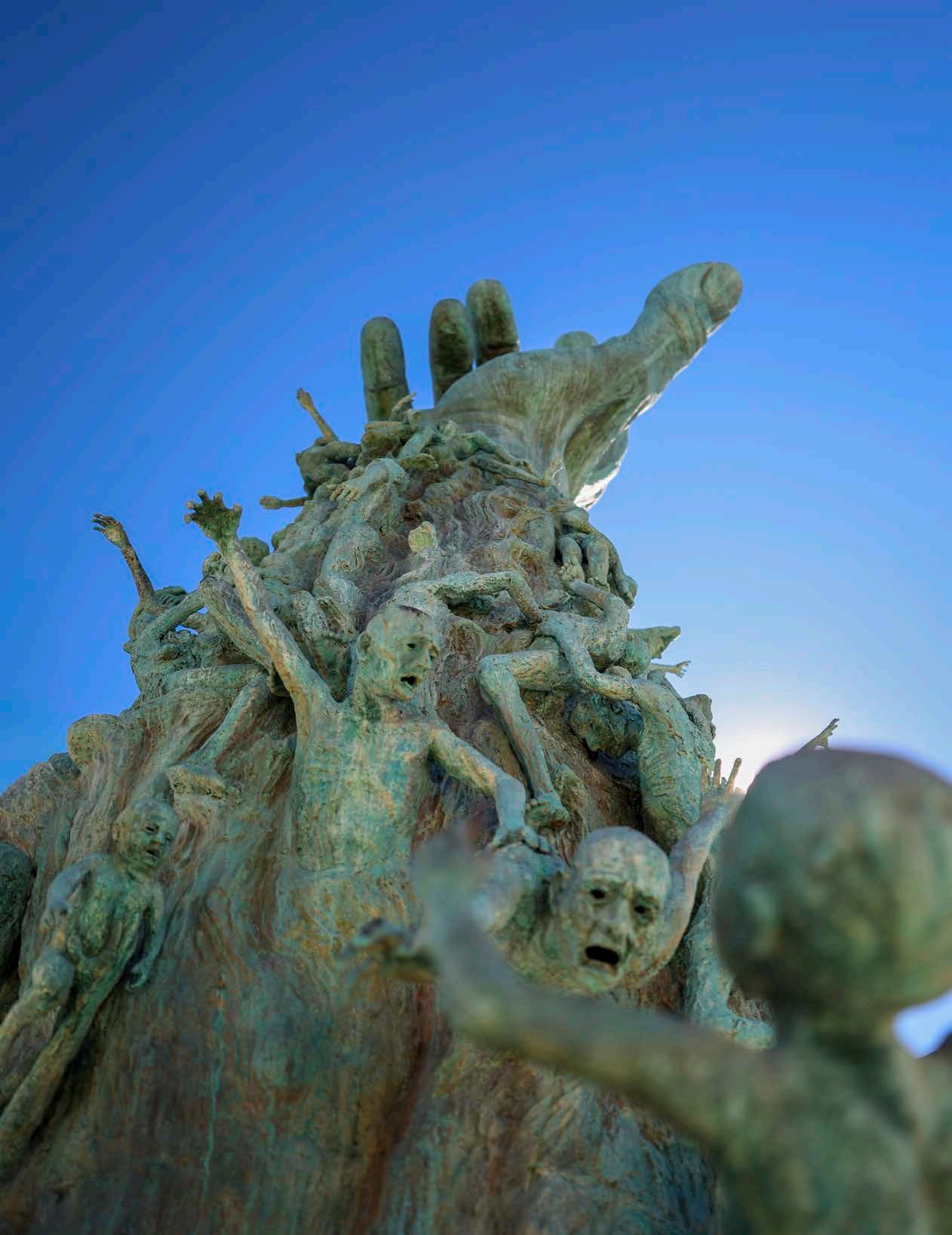
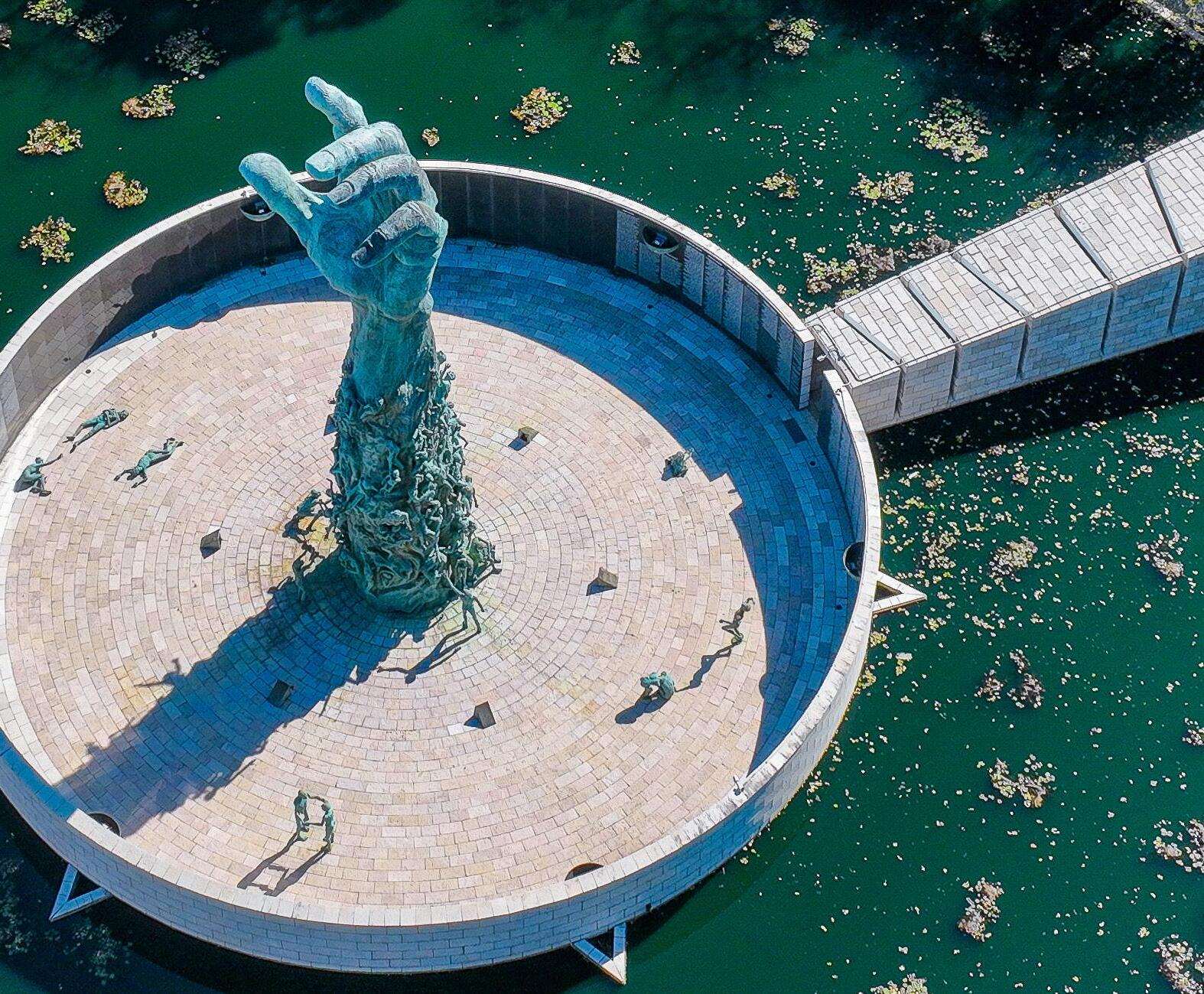
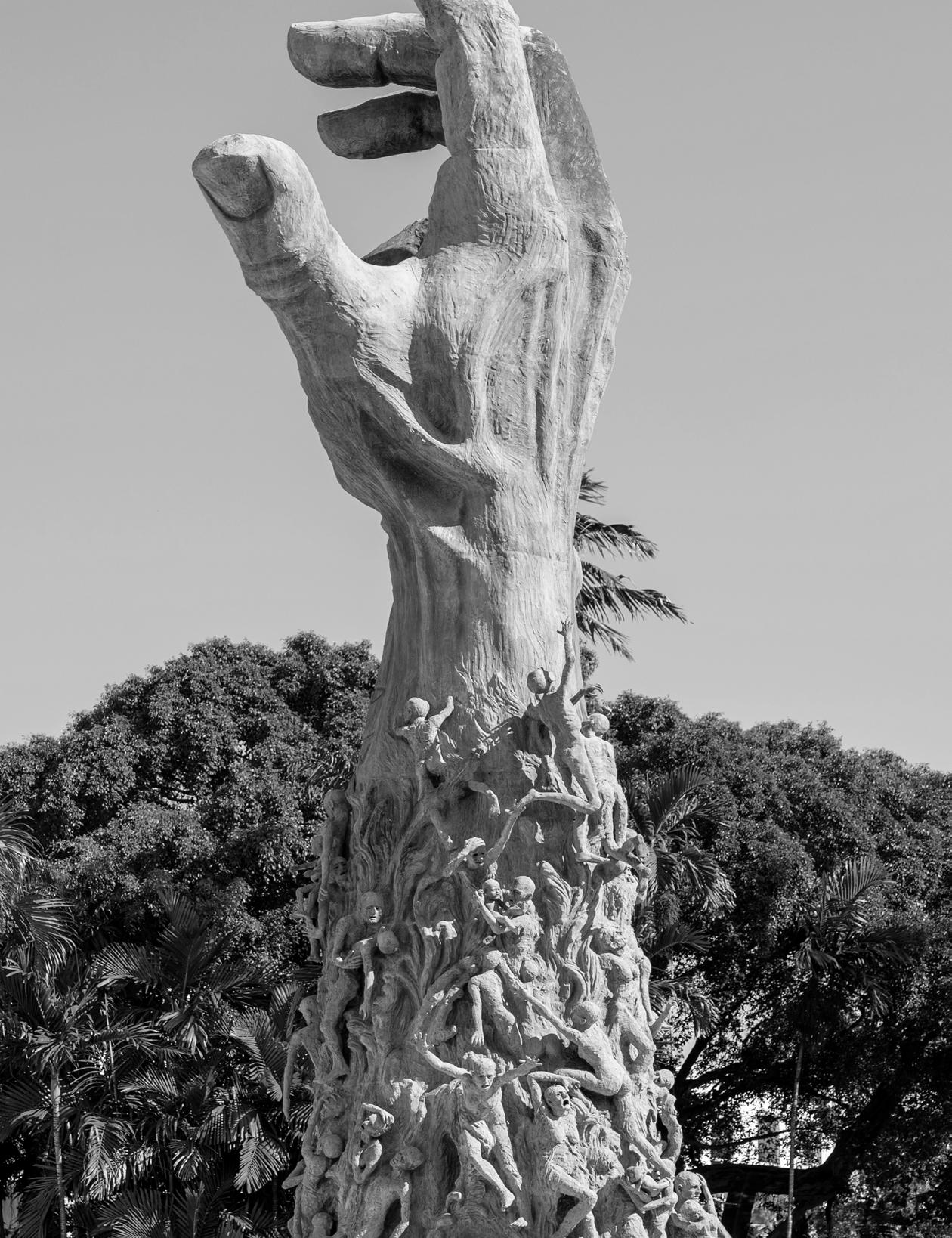
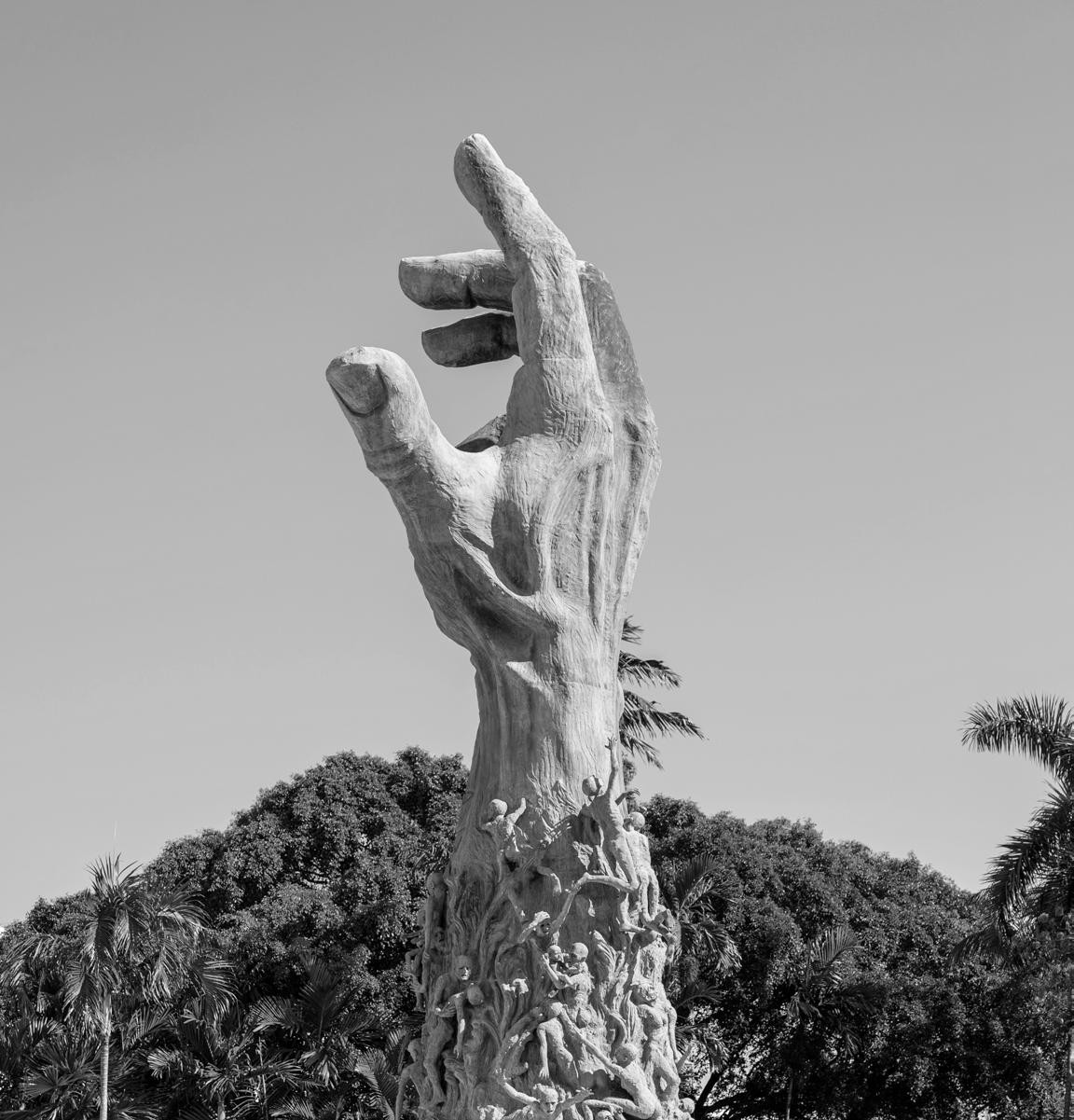
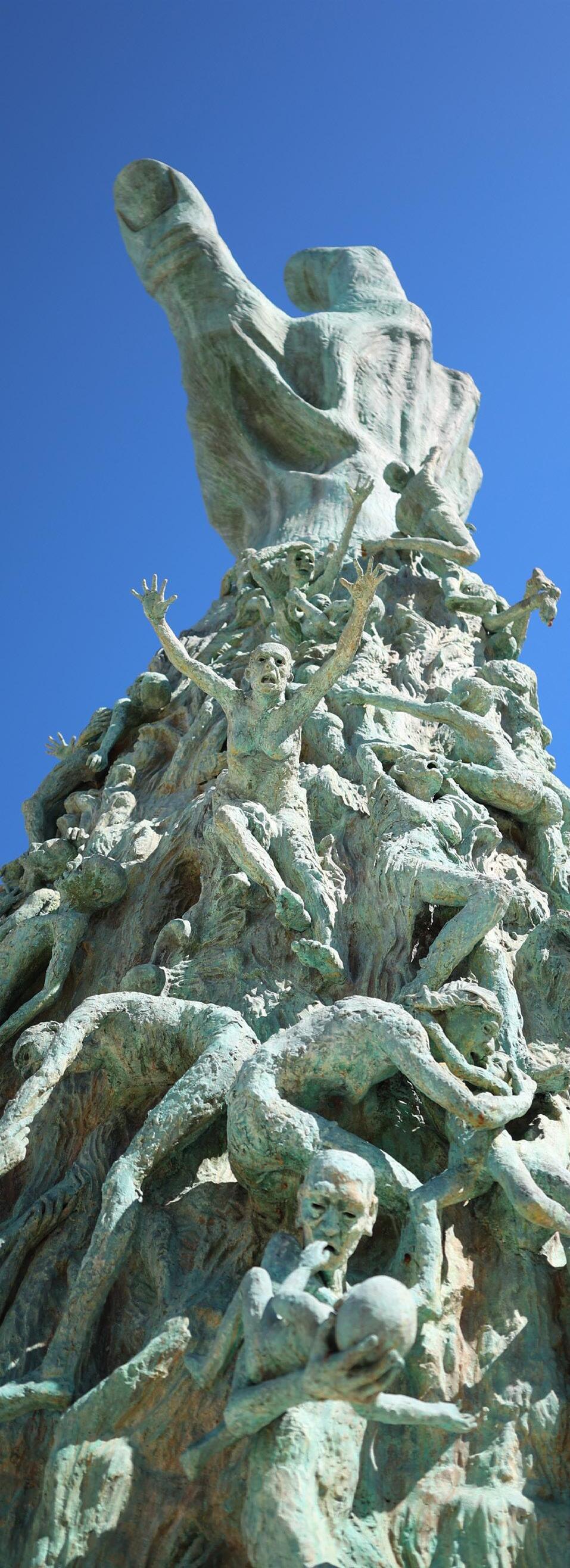
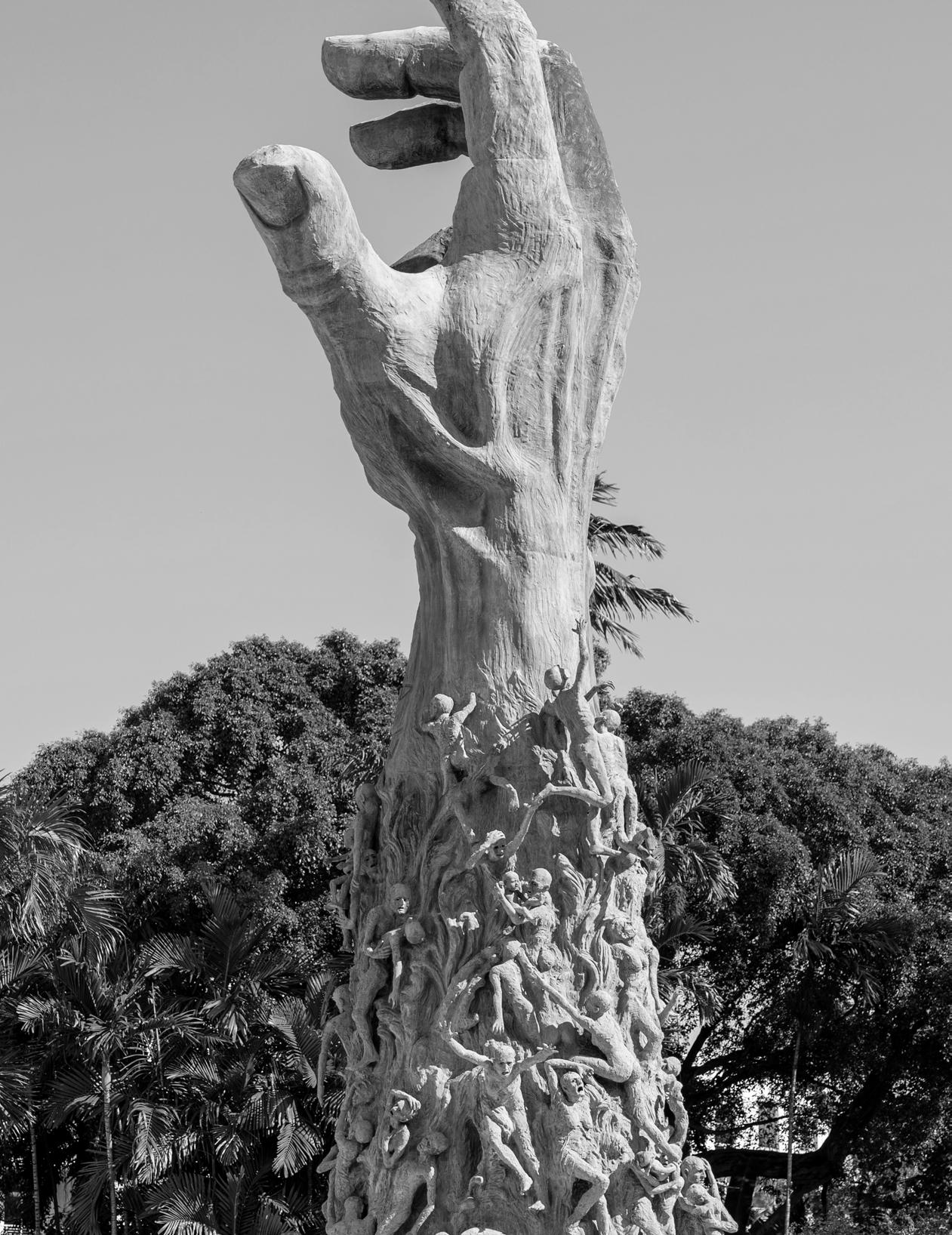
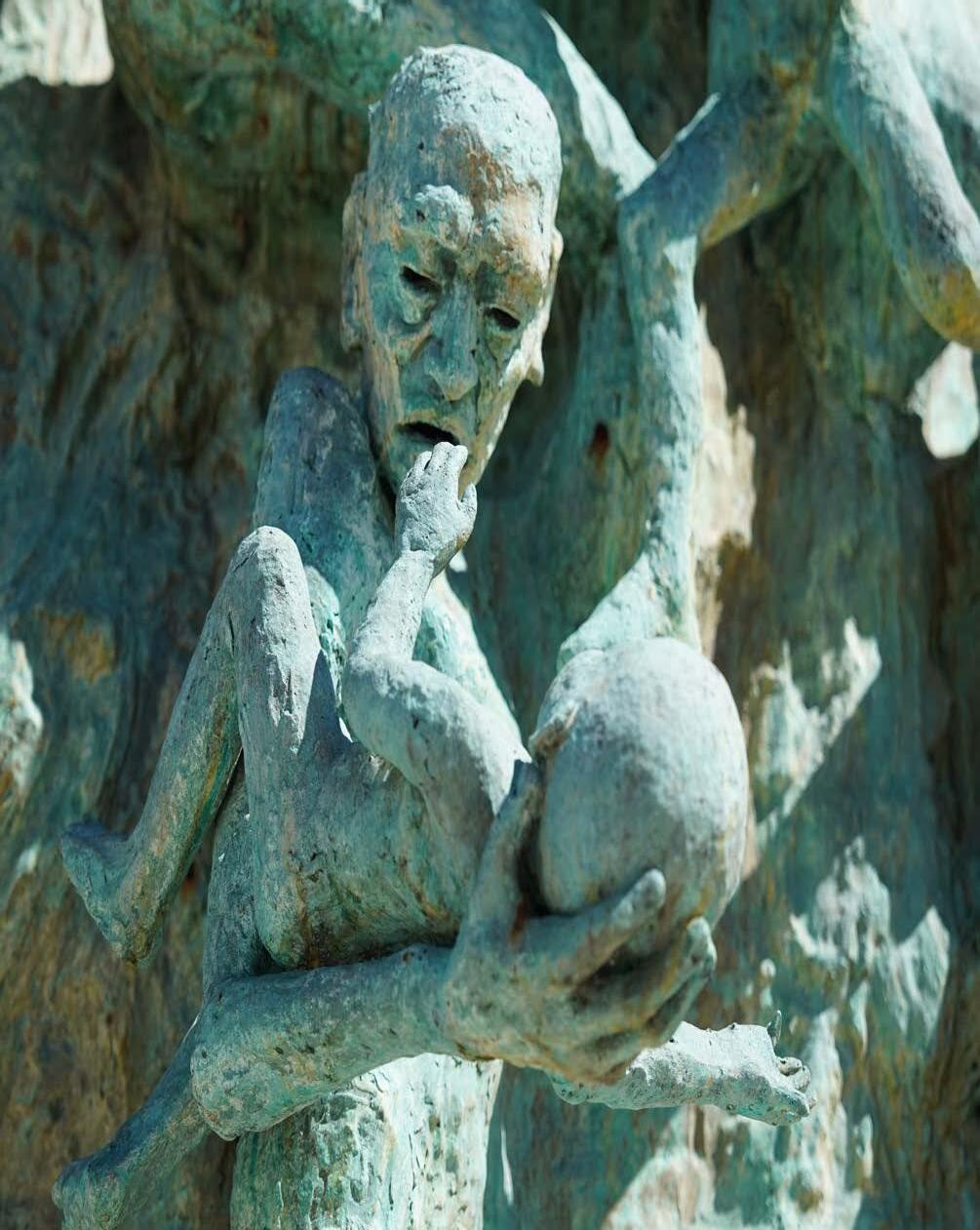
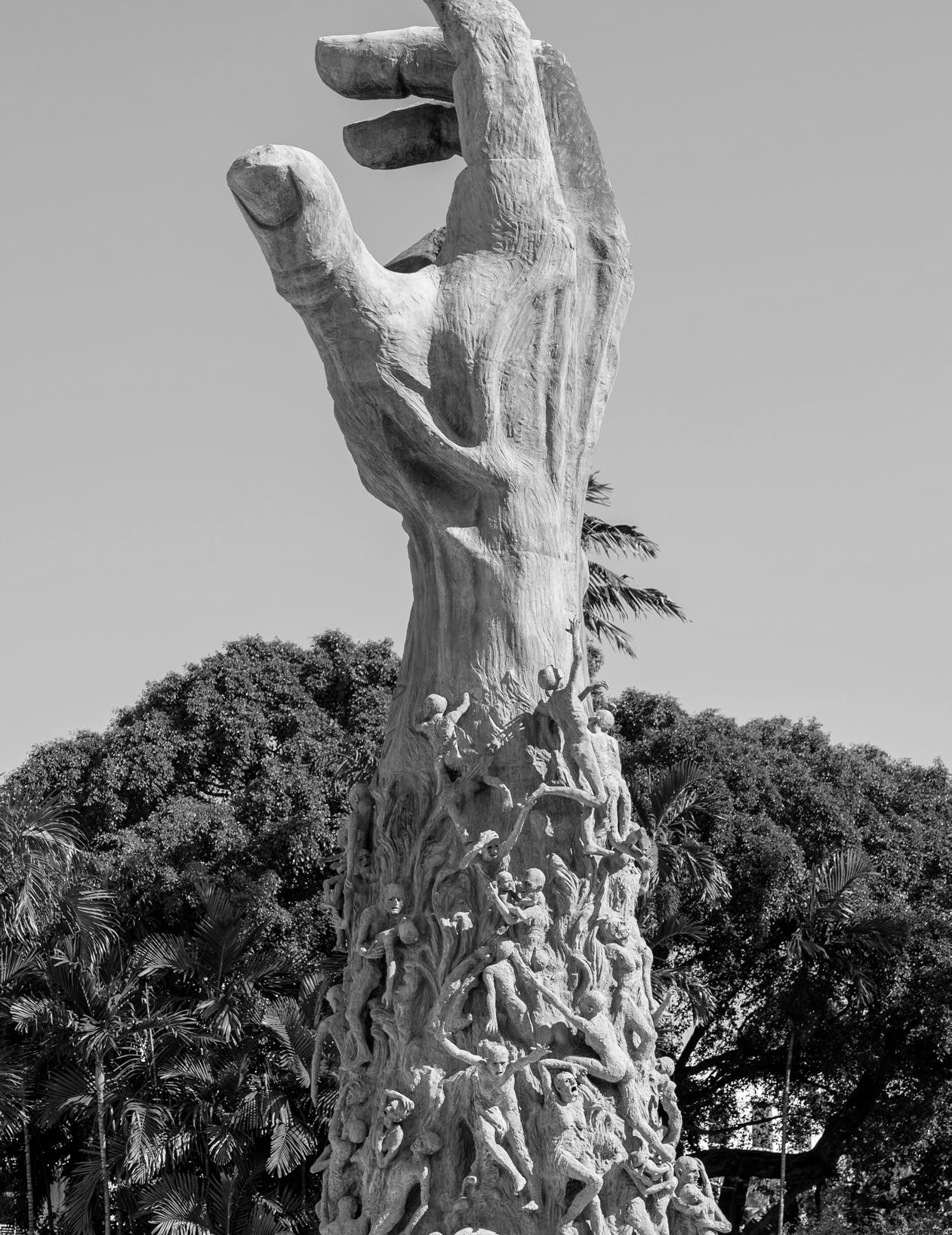
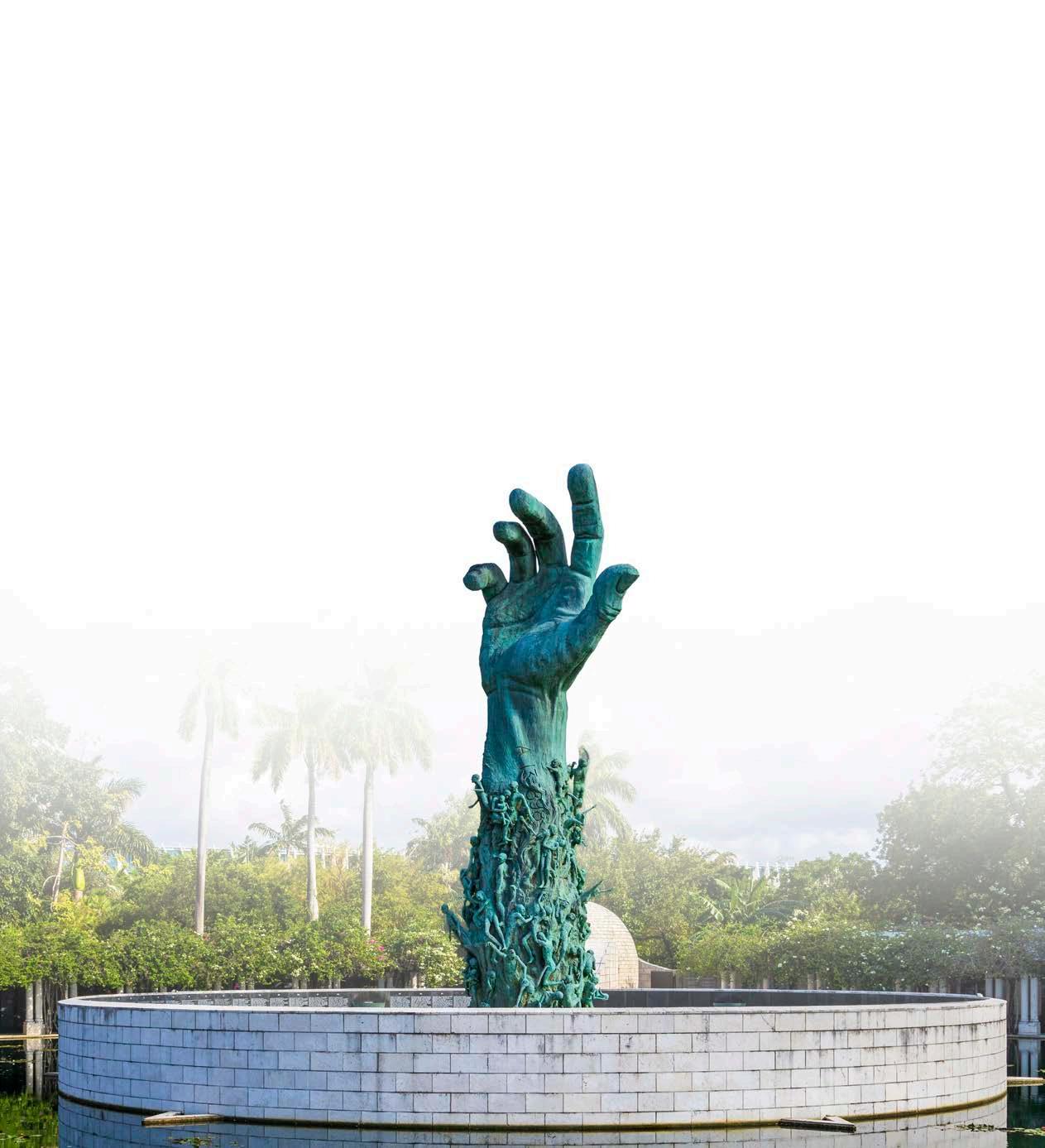
The focal point of the memorial is a massive bronze arm etched with an unidentifiable Auschwitz-Birkenau tattoo rising from a circular reflecting pond. While perceptions differ, the sculpture has been interpreted to symbolize the emaciated Holocaust victims rising from the depths of hell as they are swept into heaven. The towering 42-foot piece was designed by Floridabased architect and sculptor Kenneth Treister.
Hidden in an Oil Drum
At just 18 months of age, Marcel Fachler was dropped off by his parents at a Belgian orphanage in Louvain halfway between Antwerp and Brussels to escape the Nazi purge. From that time on, he would see his parents only once a year until 1944 when he would emerge from the converted estate run by Madeleine Sorel and her two sisters as a completely different person by the tender age of 4.
He even had a different name — Lawrence Allen McColm — one that he still uses today at 86.
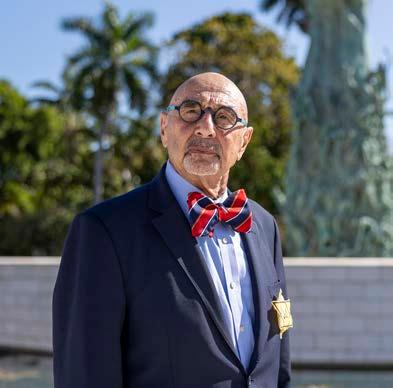
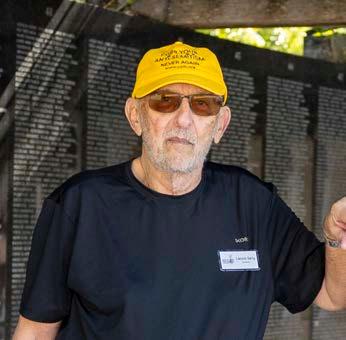
“There were 50 of us Jewish children,” recalled McColm, who moved to Aventura after selling a pawn shop that specialized in jewelry. He frequently shares his story to visiting groups at the Holocaust Memorial Miami Beach Education Center.
“The Belgian resistance gave us all new identities,” he said. “That is how I became Lawrence Allen McColm, a very Irish name compared to Marcel Fachler, which was a Jewish German name.”
About once a month, Nazis would come unannounced to the orphanage to try to find Jewish children hiding in the four-story chateau behind an iron gate. If found, the children would have been taken away and sent to a camp where they likely would have been murdered. Since McColm had a dark complexion, he had to hide in an attic every time the Nazis came calling.
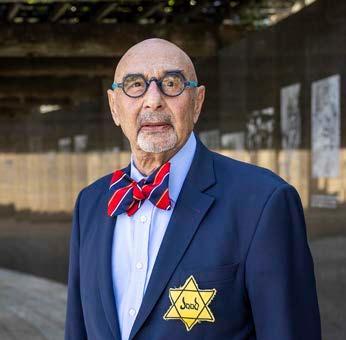
“My grandmother on my mother’s side was moved to a ghetto in Poland and starved to death,” said McColm, who was wearing a replica of a yellow fabric Star of David on his blue blazer similar to the ones Jews were forced to wear in public during the Holocaust.
“My grandfather on my mother’s side was taken to Dachau and was burnt in the ovens,” he said.
The orphanage staff, including a trio of Catholic priests, gave McColm a glass of red wine as a toddler to help him stay calm whenever he had to hide in an empty oil drum with a false top that contained leftover oil during random Nazi searches.
Three letters of the Dutch word “Motorolie” stamped on the drum were drilled so McColm could breathe. “The smell
As a young child, Lawrence Allen McColm was placed in an oil drum to avoid detection by the Nazis.
was absolutely horrible and I can still smell it today,” he remembered. Black pepper was used to mask McColm’s scent from the dogs that accompanied the Nazis.
“I was scared. My heart was beating at 100 miles an hour as you can well imagine, but the pepper that was sprayed around the drum did its trick,” he said. “The dogs sneezed and they left. I was saved but this happened regularly.”
Righteous Among The Nations
Long after the war — and two years before her death, Madeleine Sorel’s name was added to the list of the Righteous Among The Nations, an honor bestowed upon non-Jewish individuals who risked their lives to aid Jews during the Holocaust.
McColm, who has never been able to make friendships other than with his wife, gathered in Jerusalem with three of the other children from the orphanage at Yad Vashem — The World Holocaust Remembrance Center for an induction ceremony in Sorel’s honor.
“It was very nice to see them, but I don’t make friends,” he reminded, struggling to remember whether he hugged Sorel when they were reunited in Jerusalem.
“No tears, just duty. We felt it was our duty to try and do that,” he said emphatically. “She was the shining light in the face of pervasive Jew hatred. Can you imagine the risk that she took — and her sisters took as well as the three Catholic priests — as well as the Belgian resistance — to give us all new identities.”
Together in Death
While the Hall family openly discussed a plan of last resort, Hall’s mother remained steadfast that either all of her family would escape the Holocaust together — or she, her husband — Edmund Horowitz Hall — and their two boys would lie together in death.
“There was talk of leaving Andzej (Andrew) behind or smothering him before we left,” Hall confided in what he described as his mother’s most defining moment. “I desperately wanted to live — enough that perhaps I could have accepted that plan. I am still troubled by those thoughts.”
Indeed, the Hall family found a way to stay together — and overcome staggering odds — through a combination of improvised spy craft that involved a series of name changes, fake papers when they could get them and even crude cosmetic surgery to alter his father’s appearance with only a half-bottle of vodka to dull the excruciating pain.
The family met some good people on their journey and used their wits along with good timing and more than a bit of luck to stay alive.
Andrew Hall went on to become a prominent attorney in the United States and even chaired the Miami Beach Holocaust Memorial Committee for a time. In his legal practice, Andrew successfully established a precedent that allows Americans to sue foreign government sponsors of terrorism in U.S. courts even if the terrorist act occurred outside of the United States. This resulted in an outstanding $3.5 billion judgement against Cuba, according to his brother. Andrew passed away at age 75 after a full life of being married with children and grandchildren of his own. His son, Adam Hall, is also an attorney, who now sits on the Miami Beach Holocaust Memorial Committee while two of Andrew’s granddaughters are frequent speakers on the Holocaust.
“I wanted to see my brother die so that I could live,” Allan Hall confided to MB, acknowledging that he apologized for what he described as the bitter truth.
“But I think it is a truth,” he said, choosing his words carefully. “At that time, we lived in a binary world, and I only knew life and death and any way to survive. I lived on a cliff’s edge for years.”
The City of Miami Beach has contributed a $7.5 million grant to the Holocaust Memorial Miami Beach as part of the 2022 voter-approved $159 million General Obligation Bond Program for Arts and Culture.
It’s pure coincidence that the address of the Holocaust Memorial Miami Beach Education Center is 1933-1945 Meridian Ave. — coinciding with the years that Adolph Hitler and his Nazi Party remained in power.
Admission to the education center is free but reservations are required. The center is open on weekdays from 9 a.m. to 6 p.m. and 10 a.m. to 4 p.m. on Sundays. For reservations, visit www.holocaustmemorialmiamibeach.org
Preservando su verdad. Con un número cada vez menor de sobrevivientes que dan testimonio de la tortura y el asesinato sistemáticos de seis millones de judíos durante la Segunda Guerra Mundial, las futuras generaciones de Miami Beach y otros lugares tienen ahora la oportunidad de hacer preguntas a los sobrevivientes del Holocausto y escuchar relatos de primera mano sobre uno de los períodos más oscuros del siglo XX –tanto hoy como en el futuro– gracias a la tecnología pionera del legendario cineasta Steven Spielberg, lo que constituye la pieza central del nuevo Centro Educativo del Memorial del Holocausto de Miami Beach.
A pesar de la inhumanidad que se apoderó de la Alemania nazi y sus aliados europeos del Eje, las madres judías no dejaron de tener hijos en 1944 –el penúltimo año de la Segunda Guerra Mundial–, pero las probabilidades de que un bebé sobreviviera a los campos de exterminio y a la desnutrición extrema que entonces acosaban al viejo residente de Miami Beach Allan J. Hall y a su familia les llevaron a tomar una decisión inconcebible en Varsovia, Polonia, algo que aún hoy atormenta al anciano de 91 años.
“No podíamos pasar por ningún puesto de control porque no teníamos documentos de identidad válidos”, recuerda Hall. “Si nos metíamos en las alcantarillas, teníamos que estar muy callados; cualquier ruido alertaría a los alemanes y estos lanzarían gases venenosos o granadas”.
Si nos metíamos en las alcantarillas, teníamos que estar muy callados; cualquier ruido alertaría a los alemanes y estos lanzarían gases venenosos o granadas .
- Allan J. Hall
Historia de sobrevivencia
La angustiosa historia de sobrevivencia del nonagenario, quien tuvo que caminar cientos de kilómetros con su hermano pequeño a la espalda y esconderse durante dos años con su madre en un clóset dentro de un edificio de oficinas polaco que albergaba la Luftwaffe o fuerza aérea alemana de la época nazi, es una de las numerosas historias épicas consagradas ahora en el recién inaugurado Centro Educativo del Memorial del Holocausto de Miami Beach, situado en 1933-1945 Meridian Ave. junto al Jardín Botánico de Miami Beach.
Caracterizada por una serie de círculos interconectados, esta estructura de aspecto contemporáneo permite a los visitantes mantener sesiones virtuales de preguntas y respuestas con sobrevivientes del Holocausto gracias a la tecnología desarrollada por el cineasta Steven Spielberg a través de su Fundación Shoah de la Universidad del Sur de California, creada luego del estreno de su película aclamada por la crítica “La lista de Schindler” en 1993.
La tecnología de la iniciativa interactiva “Dimensions in Testimony” genera respuestas en tiempo real a partir de entrevistas en video grabadas previamente con sobrevivientes del Holocausto, mediante una combinación de técnicas de filmación avanzadas, tecnologías de visualización especializadas y procesamiento del lenguaje natural de última generación para crear biografías interactivas.
Mantener vivos los recuerdos
Han pasado 35 años desde que el premio Nobel y sobreviviente del Holocausto Elie Wiesel desafió a los asistentes a la inauguración del monumento conmemorativo el 4 de febrero de 1990 a considerar la posibilidad de que
“algún día, un hombre o una mujer entrarán a este santuario del recuerdo y se preguntarán: ¿Fue todo verdadero? ¿Realmente los asesinos eran tan crueles? ¿Y las víctimas tan indefensas? ¿Tan solitarias? ¿Tan abandonadas?”.
Pero con cada año que pasa y cada vez menos sobrevivientes, las palabras del ya fallecido Wiesel han adquirido hoy más significado que nunca.
30 autobuses llenos de sobrevivientes
“El monumento conmemorativo solía contar con varios guías que eran sobrevivientes del Holocausto, pero la mayoría de ellos –casi todos–, ya han fallecido”, lamentó el empresario Norman Braman, uno de los principales fundadores del monumento conmemorativo junto con su esposa, Irma, y quien sigue ocupando el cargo de presidente emérito del Comité del Holocaust Memorial de Miami Beach.
“Cuando inauguramos el monumento conmemorativo en 1990, llegaron 30 autobuses llenos de sobrevivientes del Holocausto que asistieron a la inauguración. Hoy en día, en el sur de la Florida –entre los sobrevivientes del Holocausto– solo hay un puñado que pueden hablar de sus experiencias, y la mayoría de quienes están vivos hoy en día eran niños en aquella época”, afirmó.
Braman lleva tiempo temiendo lo inevitable: el día en que ya no haya ningún sobreviviente que pueda compartir sus experiencias personales sobre el Holocausto, más ahora que los crímenes de odio contra los judíos en Estados Unidos permanecen en niveles históricamente altos. Esto hace que la tecnología interactiva del nuevo Centro Educativo sea aún más relevante.
From left: Holocaust survivors Allan J. Hall, Lawrence Allen McColm and Laszlo Selly share their experiences with memorial visitors.
“Esto nunca habría sido posible sin Steven Spielberg”, reconoció Braman, a quien se le rindió homenaje por sus contribuciones filantrópicas a la Ciudad de Miami Beach a finales del año pasado con la inauguración del tramo en 17 Street, entre Washington Avenue y Alton Road, como Norman Braman Way.
“En mi opinión, el centro educativo cumple con la gran visión que esperábamos”, dijo Braman, propietario de varios concesionarios de automóviles y antiguo propietario de los Philadelphia Eagles. “En el Centro Educativo será posible oír a sobrevivientes del Holocausto y a otras personas que no eran niños, sino adultos cuando ocurrió todo esto. No solo está diseñado para combatir el antisemitismo. Está pensado para combatir el odio dondequiera que exista”.
Los crímenes de odio alcanzan niveles históricos
En 2024, el año más reciente para el que se tienen estadísticas del FBI, se registraron en Estados Unidos un total de 11,679 crímenes de odio que afectaron a 14,243 víctimas. Un poco menos de una cuarta parte de los incidentes, el 23.5%, estaban relacionados con la religión, mientras que el 53.2% de los incidentes se centraban en la raza, el origen étnico o la ascendencia. Otro 17.2% de los casos se debieron a la orientación sexual, mientras que el 3.9% se atribuyó a la identidad de género.
Desinformación en las redes sociales
Sheri Zvi, nieta de cuatro sobrevivientes del Holocausto y CEO del monumento conmemorativo, solo tenía 18 años cuando se
inauguró el Holocaust Memorial de Miami Beach. Ella culpa a la desinformación en las redes sociales por el gran número de personas que ahora cuestionan si el Holocausto realmente ocurrió.
“Interactuar con los sobrevivientes del Holocausto es la experiencia más impactante que puede tener un visitante”, dijo Zvi. “A través del lente del cine, la realidad virtual y las entrevistas interactivas, el testimonio de los testigos presenciales siempre estará en el corazón del Centro Educativo”.
Se han grabado varias entrevistas interactivas con sobrevivientes locales del sur de la Florida, las cuales estarán a disposición de los visitantes en el nuevo centro educativo. Algunas entrevistas se realizaron en un entorno de pantalla verde rodeado de cámaras frente a un micrófono, mientras un entrevistador planteaba una serie de preguntas.
Se formularon entre 1,000 y 1,500 preguntas durante largas sesiones de grabación que duraron hasta cinco días y en las que los entrevistados debían llevar la misma ropa y permanecer en la misma posición durante horas. Cada respuesta generó un videoclip independiente.
“Es increíble poder preguntarles cómo fue crecer antes del Holocausto y cómo era la vida en su comunidad”, explicó Braman. “Se les puede preguntar cómo reaccionaron o no reaccionaron los vecinos. Puedes preguntar por aquellos que fueron llevados a los campos: ¿Cómo sobrevivieron? ¿Qué pasó con sus vidas? ¿Qué les sucedió a sus familias? Es una tecnología increíble”.
Diálogo interactivo
Para demostrar la nueva tecnología en el centro educativo, Zvi inició un diálogo interactivo con la sobreviviente Rodi Glass.
“Rodi, ¿cuántos años tienes?”, preguntó Zvi.
“Tengo 88 años”, respondió la imagen en video de Glas s.
“¿Estás casada?”, continuó Zvi.
“Marvin Glass y yo nos casamos el 16 de octubre de 1955. Estuvimos casados durante 62 años. Él falleció en julio de 2017”, según la respuesta que dio en el video.
“¿Estuviste en un gueto?”, preguntó Zvi.
“Vivimos en un gueto desde junio de 1943 hasta septiembre de 1943”, añadió Glass.
Con tecnología de lenguaje natural, el sistema transforma las preguntas formuladas en términos de búsqueda. Luego hace coincidir los términos de búsqueda con la respuesta más adecuada y reproduce los videoclips pertinentes para crear una experiencia conversacional con apenas una breve pausa entre las respuestas. Al menos una de las entrevistas se hizo en español.
Como el sistema registra todas las preguntas y respuestas, el personal capacitado de la Fundación Shoah de la Universidad del Sur de California revisa periódicamente los registros del sistema para asegurarse
de que se seleccionan las respuestas más adecuadas y con ello adaptar el sistema según sea necesario. Esta fundación garantiza a las familias de los sobrevivientes que nunca se hará uso indebido de la inteligencia artificial para sacar de contexto las entrevistas.
Por lo pronto, las imágenes que se proyectarán en el nuevo centro educativo son representaciones bidimensionales de videoclips, en lugar de hologramas que, de acuerdo con la fundación, aún no existen como videos tridimensionales. La organización ha tratado de preparar su proceso para el futuro, de manera que las entrevistas puedan proyectarse como hologramas una vez que la tecnología holográfica esté disponible.
El Holocaust Memorial de Miami Beach ya atrae a unos 100,000 visitantes cada año y se espera que la cifra aumente con la incorporación del centro educativo de un solo piso. El centro ofrece acceso a cientos de fotografías y miles de testimonios escritos y grabados, además de entrevistas en video con sobrevivientes locales e internacionales, muchos de los cuales ya han fallecido.
En la parte central del Memorial llama la atención un enorme brazo de bronce grabado con un tatuaje irreconocible de Auschwitz-Birkenau que surge de un estanque circular reflectante. Aunque las percepciones difieren, la escultura se ha interpretado como un símbolo de las víctimas demacradas del Holocausto que son arrastradas desde las profundidades del infierno para ser llevadas al cielo. La gran obra de 42 pies de altura fue diseñada por el arquitecto y escultor Kenneth Treister, quien vive en Florida.
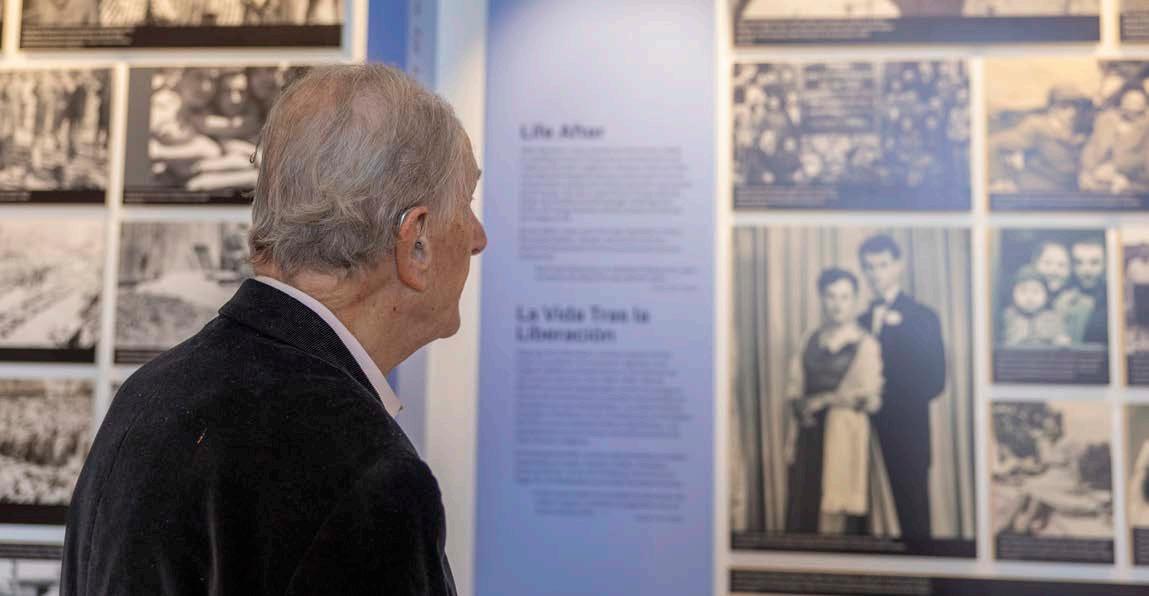
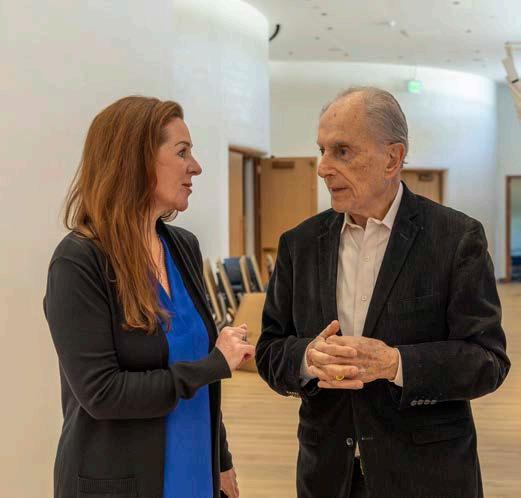
Hall tours the new Holocaust Memorial Miami Beach Education Center with CEO Sheri Zvi.
Con solo 18 meses de edad, Marcel Fachler fue abandonado por sus padres en un orfanato belga en Lovaina, a medio camino entre Amberes y Bruselas, para escapar de la purga nazi. Desde ese momento, solo vería a sus padres una vez al año hasta 1944, cuando salió de la edificación reconvertida dirigida por Madeleine Sorel y sus dos hermanas como una persona completamente diferente a la tierna edad de 4 años.
Incluso tenía un nombre diferente, Lawrence Allen McColm, que sigue usando hoy en día a sus 86 años.
“Éramos 50 niños judíos”, recuerda McColm, quien se mudó a Aventura después de vender una casa de empeño especializada en joyería. A menudo comparte su historia con los grupos que visitan el Centro Educativo del Memorial del Holocausto de Miami Beach.
“La resistencia belga nos dio a todos nuevas identidades”, dijo. “Así es como me convertí en Lawrence Allen McColm, un nombre muy irlandés a diferencia de Marcel Fachler, un nombre judío alemán”.
Aproximadamente una vez al mes, los nazis llegaban sin previo aviso al orfanato para tratar de encontrar a los niños judíos que se escondían en el castillo de cuatro pisos detrás de un portón de hierro. Si los encontraban, se los llevaban y los enviaban a un campo donde muy probablemente acabarían asesinados. Como McColm tenía la piel oscura, tenía que esconderse en el ático cada vez que llegaban los nazis.
“Mi abuela materna fue trasladada a un gueto en Polonia y murió de hambre”, dijo McColm, quien llevaba una réplica de una estrella de David en tela amarilla sobre su chaqueta azul, similar a las que los judíos se veían obligados a llevar en público durante el Holocausto.
“A mi abuelo materno se lo llevaron a Dachau y murió quemado en los hornos”, dijo.
El personal del orfanato, en el que había tres sacerdotes católicos, le daba al pequeño McColm
una copa de vino tinto para ayudarle a mantenerse tranquilo cuando tenía que esconderse en un barril de aceite vacío con una tapa falsa que contenía restos de aceite durante los registros de los nazis.
Tres letras de la palabra holandesa “Motorolie” estampadas en el barril fueron perforadas para que McColm respirara. “El olor era absolutamente horrible y todavía hoy puedo olerlo”, recordaba. Se usó pimienta negra para enmascarar el olor de McColm ante los perros que acompañaban a los nazis.
“Estaba aterrorizado. Mi corazón latía a mil por hora, como podrán imaginar, pero la pimienta que se roció alrededor del barril surtió efecto”, dijo. “Los perros estornudaron y se marcharon. Me salvé, pero esto ocurría con frecuencia”.
Justos entre las Naciones
Mucho después de la guerra, y dos años antes de su muerte, el nombre de Madeleine Sorel fue añadido a la lista de los Justos entre las Naciones, un honor que se otorga a personas no judías que arriesgaron sus vidas para ayudar a los judíos durante el Holocausto.
McColm, quien nunca ha podido entablar amistad con nadie más que con su esposa, se reunió en Jerusalén con otros tres niños del orfanato en Yad Vashem, el Centro Mundial de Conmemoración de la Shoá, para asistir a una ceremonia de investidura en honor a Sorel.
“Fue muy bonito verlos, pero yo no hago amigos”, recordó, esforzándose por recordar si abrazó a Sorel cuando se reunieron en Jerusalén.
“Sin lágrimas, solo por deber. Sentimos que era nuestro deber tratar de hacerlo”, dijo enfáticamente. “Ella fue la luz brillante frente al odio generalizado hacia los judíos.
¿Te imaginas el riesgo que corrieron ella, sus hermanas, los tres sacerdotes católicos y la resistencia belga para darnos a todos una nueva identidad?”.
Juntos en la muerte
Mientras la familia Hall discutía abiertamente sobre un plan de último recurso, la madre de Hall se mantuvo firme en que o bien toda su familia escaparía junta del Holocausto, o bien ella, su marido –Edmund Horowitz Hall– y sus dos hijos morirían juntos.
“Se habló de dejar atrás a Andzej (Andrew) o de asfixiarlo antes de partir”, confió Hall en lo que describió como el momento más decisivo de su madre. “Yo quería vivir desesperadamente, tanto que quizá habría aceptado ese plan. Esos pensamientos aún me atormentan”.
De hecho, la familia Hall encontró la manera de permanecer unida –y superar las enormes dificultades– gracias a una combinación de improvisadas técnicas de espionaje que implicaban una serie de cambios de nombre, documentos falsos cuando podían conseguirlos e incluso una rudimentaria cirugía estética para alterar la apariencia de su padre realizada con solo media botella de vodka para aliviar el insoportable dolor.
La familia conoció a algunas personas buenas en su viaje y recurrió a su ingenio y a saber escoger el mejor momento en situaciones difíciles, junto con más que un poco de suerte, para mantenerse con vida.
Andrew Hall se convirtió en un destacado abogado en Estados Unidos e incluso presidió durante un tiempo el Comité del Holocaust Memorial de Miami Beach. En su práctica jurídica, Andrew estableció con éxito un precedente que permite a los estadounidenses demandar ante los tribunales estadounidenses a los gobiernos extranjeros que financian el terrorismo, incluso si el acto terrorista se produjo fuera de Estados Unidos. Esto dio lugar a una sentencia excepcional de 3,500 millones de dólares contra Cuba, según su hermano. Andrew falleció a la edad de 75 años tras una vida plena, casado y con hijos y nietos. Su hijo, Adam Hall, también es abogado y ahora forma parte del Comité del Holocaust Memorial de Miami Beach,
mientras que dos de las nietas de Andrew dan conferencias frecuentes sobre el Holocausto.
“Quería ver morir a mi hermano para poder vivir”, confió Allan Hall a MB, reconociendo que se estaba disculpando por lo que describió como la amarga realidad.
“Pero creo que es la verdad”, dijo, eligiendo cuidadosamente sus palabras. “En aquella época, vivíamos en un mundo binario, y yo solo conocía la vida y la muerte y cualquier forma de sobrevivir. Viví al borde del precipicio durante años”.
La Ciudad de Miami Beach ha contribuido con una subvención de 7.5 millones de dólares al Holocaust Memorial de Miami Beach como parte del Bono de Obligación General de 159 millones de dólares aprobado por los votantes en 2022 para financiar programas para las artes y la cultura.
Es pura coincidencia que la dirección del Centro Educativo del Holocaust Memorial de Miami Beach sea 1933-1945 Meridian Ave., lo que coincide con los años que Adolfo Hitler y su partido nazi permanecieron en el poder. La entrada al centro educativo es gratuita, pero debe reservar. El centro está abierto de lunes a viernes de 9 a.m. a 6 p.m. y de 10 a.m. a 4 p.m. los domingos. Para reservar, visite www.holocaustmemorialmiamibeach.org
,
A WAY TO SAIL AROUND TRAFFIC
By Paul Scicchitano
It has been super helpful and the fact that it’s free is even nicer
- Commuter Elyse DePasquale
After hours of meetings, marketing executive Elyse DePasquale was looking forward to a relaxing commute back to downtown Miami on the 3:30 p.m. sailing of the newly launched Miami Beach Water Taxi — not to mention the possibility of encountering a playful dolphin or two while crossing scenic Biscayne Bay.
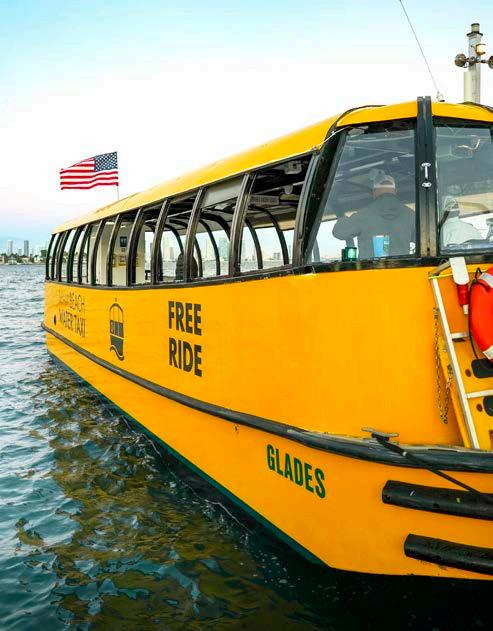
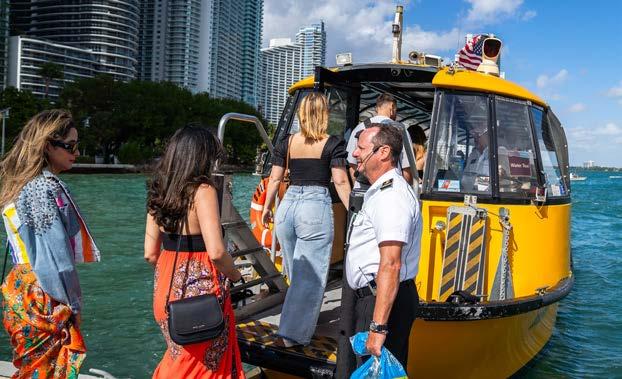
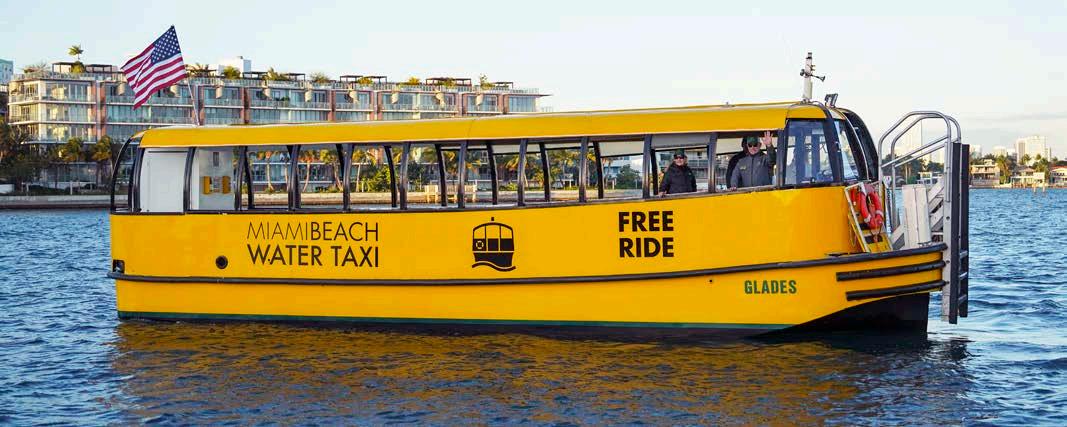
“This is a blessing for me because I take it to work,” DePasquale said of the bright yellow water taxis that shuttle passengers to and from Maurice Gibb Memorial Park at 1790 Purdy Ave. — steps away from the one-of-a-kind music-themed playground that pays homage to the Bee Gees in the Sunset Harbour neighborhood of Miami Beach — and the Venetian Marina and Yacht Club (also known as Sea Isle Marina) at 1635 North Bayshore Drive on the Miami side of the bay.
“I just jump back on and I usually get a car from there,” DePasquale shared as she boarded the water taxi in Miami Beach. She not only saves money on ride-sharing services but actually enjoys her commute, something that was not the case in the past. “It has been super helpful and the fact that it’s free is even nicer.”
Miami Beach Water Taxi Capt. Sebastian MacMillian was manning the helm for DePasquale’s late afternoon crossing.
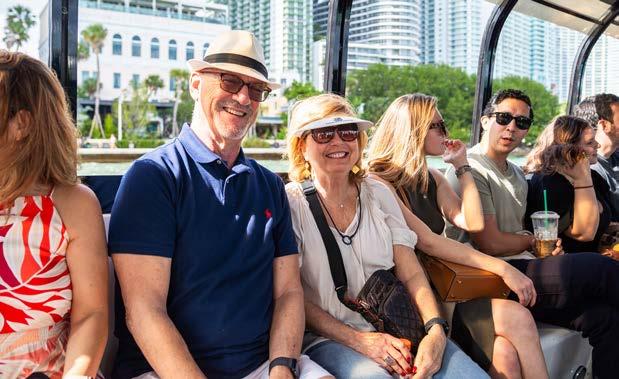
“It’s a different group of people every single time,” said MacMillian, who grew up in a family of boating enthusiasts in New England. “You meet new people. It’s fun. Everybody loves the service so I can’t complain.”
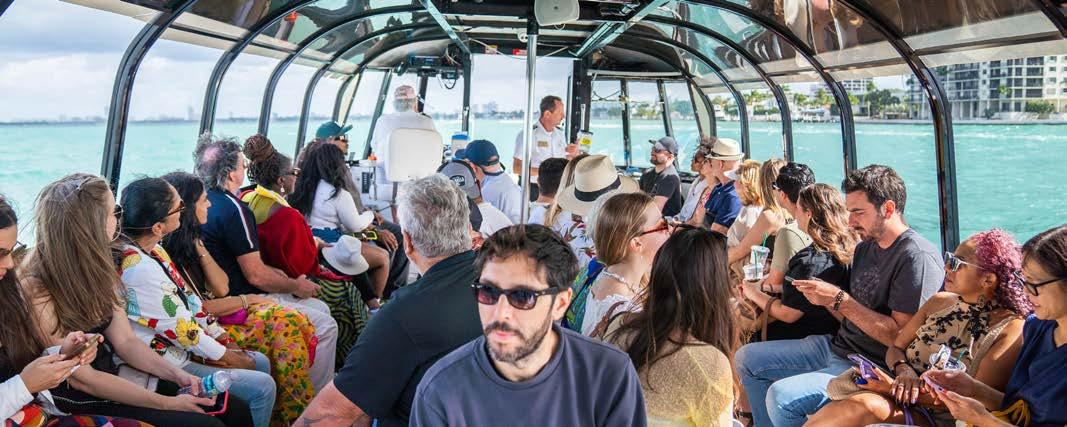
With a maximum capacity of 55 passengers, the service shuttles a total of about 900 people across Biscayne Bay in both directions every day.
Success wasn’t unexpected since the water taxis proved to be a hit among the tens of thousands of art lovers who visited Art Week Miami Beach over the past two years, creating as much buzz as some of the artwork. The service was made permanent in January under a contract between the City of Miami Beach and Water Taxi of Miami Beach, LLC.
“We took 32,000 people last year out of the 75,000 that came to Art Week Miami Beach,” noted Bill Walker, the CEO and principal of Miami Beach Water Taxi LLC, who has more than 30 years of experience in the passenger vessel industry.
Marketing student Sadeen Ramahi from Amman, Jordan got to ride the 40-foot water taxis during a recent visit to Miami Beach to see her sister.
“It was very nice,” said Ramahi, who found the service to be a convenient alternative to cars. “It was helpful and it’s quick. It’s easy for the tourists and for the people.”
Joseph Bodden, a former boat captain in Honduras, is now part of the water taxi crew in Miami Beach. He suggests people arrive at the dock as early as possible before their scheduled departure times, particularly if they are traveling with bicycles. People with bicycles are among the first to board based on available space and the captain’s discretion.
“Most of them come to enjoy the beach and some come to work,” Bodden said of the passengers. The boats generally arrive at the docks about 10 minutes prior to departure. “It’s a 20-minute boat ride,” he said.
The vessels operate approximately every 60 minutes on weekdays from 7 a.m. to 4:30 p.m. and every 30 minutes from 4:30 p.m. to 7:30 p.m. The free service does not yet operate on weekends but may be expanded in the future.
Peggy Zabel from Germany was visiting the Miami Beach area for the first time with her police officer boyfriend, Marcel Jacoby, and her boyfriend’s brother, Ringo. They spotted the water taxi in the distance from one of the bridges and decided to investigate.
“We saw the water taxi going through the harbor and then discovered it’s for free,” said Zabel, a mechanical engineer who was sporting colorful hair and didn’t mind the unseasonably chilly temperatures during her visit. “In Germany, now we have snow and minus degrees.”
Back home in southern Spain, Victoria Heredia was planning for her upcoming trip to the Miami Beach area with her mother, Yolanda Leal, when she learned of the water taxi through social media.
“I started scrolling on TikTok seeing what to do in Miami and it was a TikTok about this taxi boat that goes from Miami Beach
to Miami,” Heredia said. “We thought it would be great to have this vision of the skyline of Miami while taking the water taxi.”
Aesthetician Evelyn Moran, who works in Coral Gables, arranged an overnight stay in South Beach with her aunt who was visiting from Dallas and other family members from Rhode Island and Doral.
They were visiting Maurice Gibb Memorial Park and noticed the water taxi. “We were just curious and we went on it,” she explained. “It was nice — really relaxing with beautiful views.”
In addition to the water taxi service, the City of Miami Beach continues to operate its free trolley system throughout the city, as well as a free on-demand transit service in parts of Mid Beach and North Beach through a partnership with Freebee and a robust citywide bicycle sharing program through a partnership with CitiBike. These services, in addition to the Miami-Dade County Transit bus service, provide seamless transit connections with the water taxi as well as local and regional connectivity.
City officials anticipate a potential future north-south expansion of the water taxi service along the western portion of the city and service along the Indian Creek waterway contingent upon additional funding.
Eric Brinker was walking Teddy — short for Theodore Herzl — his brown-haired Aussiedoodle, as passengers disembarked from the return trip at Maurice Gibb Memorial Park.
“Love it,” he said of the new service though he confided that he hadn’t yet had the opportunity to experience it for himself.
“This is something that can really help alleviate traffic,” he said. “It’d be nice if it had maybe even another stop or two if it’s successful.”
Water taxis travel between Maurice Gibb Memorial Park in Miami Beach and the Venetian Marina and Yacht Club in Miami.
Por fin, una forma de sortear el tráfico. Después de horas de reuniones, la ejecutiva de mercadeo Elyse DePasquale esperaba con ansias un relajante viaje de regreso al centro de Miami en el servicio de las 3:30 p.m. del recién inaugurado taxi acuático de Miami Beach, sin mencionar la posibilidad de encontrarse con uno o dos delfines juguetones durante el recorrido a través de la bella bahía de Biscayne.
“Para mí es una bendición porque los uso para ir al trabajo”, dijo DePasquale refiriéndose a los taxis acuáticos de color amarillo brillante que transportan pasajeros hacia y desde el Maurice Gibb Memorial Park, situado en 1790 Purdy Ave. –a pocos pasos del singular parque infantil temático musical que rinde homenaje a los Bee Gees en el vecindario de Sunset Harbour de Miami Beach– y el Venetian Marina and Yacht Club (también conocido como Sea Isle Marina), en 1635 North Bayshore Drive, del lado de la bahía de Miami.
“Solo vuelvo a subirme y por lo general consigo un carro desde allí”, comentó DePasquale mientras se subía al taxi acuático en Miami Beach. No solo ahorra dinero en los viajes compartidos, sino que además disfruta de su trayecto diario al trabajo, algo que no ocurría en el pasado. “Me ha sido de enorme ayuda y el hecho de que sea gratuito es aún mejor”.
El capitán del taxi acuático de Miami Beach, Sebastian MacMillian, era quien estaba al mando del timón durante el trayecto de DePasquale al final de la tarde.
“Cada vez hay un grupo distinto de personas”, dijo MacMillian, quien creció en una familia de aficionados a la navegación en Nueva Inglaterra. “Conoces a gente nueva. Es divertido. A todo el mundo le encanta el servicio, así que no me puedo quejar”.
Con una capacidad máxima de 55 pasajeros, el servicio transporta alrededor de 900 personas al día a lo largo de la bahía de Biscayne en ambas direcciones.
El éxito no fue inesperado, ya que los taxis acuáticos resultaron ser un gran acontecimiento entre las decenas de miles de amantes del arte que visitaron la Semana del Arte de Miami Beach en los últimos dos años, creando tanto revuelo como algunas de las obras de arte. El servicio se hizo permanente en enero en virtud de un contrato entre la Ciudad de Miami Beach y Water Taxi of Miami Beach, LLC.
“El año pasado transportamos a 32,000 personas de las 75,000 que acudieron a la Semana del Arte de Miami Beach”, señaló Bill Walker, presidente y director ejecutivo de Miami Beach Water Taxi LLC, una compañía que cuenta con más de 30 años de experiencia en el sector del transporte marítimo de pasajeros.
Sadeen Ramahi, estudiante de mercadeo de Amán, capital de Jordania, pudo viajar en los taxis acuáticos de 40 pies durante una visita reciente que hizo a Miami Beach para ver a su hermana.
“Fue muy agradable”, dijo Ramahi, quien consideró que el servicio es una alternativa cómoda a los automóviles. “Fue un servicio útil y rápido. Es sencillo para los turistas y para la gente”.
Joseph Bodden, quien fue capitán de barco en Honduras, ahora forma parte de la tripulación de los taxis acuáticos de Miami Beach. Recomienda a los pasajeros que lleguen al muelle lo antes posible antes de la hora de salida programada, sobre todo si viajan con bicicletas. Las personas con bicicletas son las primeras en subir a los taxis, en función del espacio disponible y a discreción del capitán.
“La mayoría vienen a disfrutar de la playa y algunos vienen a trabajar”, dijo Bodden sobre los pasajeros. Los botes suelen llegar al muelle unos 10 minutos antes de la salida. “Es un viaje en barco de 20 minutos”, dijo.
Las embarcaciones operan aproximadamente cada 60 minutos entre semana de 7 a.m. a 4:30 p.m. y cada 30 minutos entre semana de 4:30 p.m. a 7:30 p.m. El servicio gratuito aún no funciona los fines de semana, pero es posible que se amplíe en el futuro.
Peggy Zabel, de Alemania, estaba visitando por primera vez la zona de Miami Beach con su novio, el oficial de policía Marcel Jacoby, y Ringo, hermano del oficial. Vieron el taxi acuático a lo lejos desde uno de los puentes y decidieron acercarse para ver de qué se trataba.
“Vimos el taxi acuático atravesando el puerto y luego nos dimos cuenta de que era gratuito”, dijo Zabel, una ingeniera mecánica que lucía un cabello colorido y a quien no le importaban las temperaturas inusualmente frías durante su visita. “En Alemania, ahora tenemos nieve y temperaturas bajo cero”.
En su casa, en el sur de España, Victoria Heredia estaba planeando su próximo viaje a la zona de Miami Beach con su madre, Yolanda Leal, cuando se enteró de la existencia del taxi acuático en las redes sociales.
“Empecé a buscar en los mensajes de TikTok para ver qué hacer en Miami y encontré un video sobre este taxi acuático que va de Miami Beach a Miami”, dijo Heredia. “Pensamos que sería estupendo disfrutar de la silueta urbana de Miami durante el recorrido en el taxi acuático”.
La esteticista Evelyn Moran, quien trabaja en Coral Gables, organizó una estadía nocturna en South Beach con su tía, quien estaba de visita desde Dallas, y otros familiares de Rhode Island y Doral.
Estaban visitando el Maurice Gibb Memorial Park y vieron el taxi acuático. “Nos dio curiosidad y nos subimos”, explicó. “Fue muy agradable –realmente relajante y con unas vistas preciosas”.
Además del servicio de taxi acuático, la Ciudad de Miami Beach sigue operando su sistema de trolebuses gratuitos por toda la ciudad, así como un servicio de transporte gratuito a solicitud en algunas zonas de Mid Beach y North Beach por medio de una colaboración con Freebee, y un programa muy completo de bicicletas compartidas en toda la ciudad a través de una colaboración con CitiBike. Estos servicios, además del servicio de autobuses del Condado de Miami-Dade, proporcionan conexiones de transporte directas con el taxi acuático, así como conectividad local y regional.
Las autoridades municipales prevén una posible ampliación futura del servicio de taxis acuáticos en dirección norte-sur a lo largo de la parte occidental de la ciudad y un servicio a lo largo de la vía fluvial Indian Creek, siempre y cuando se obtenga financiación adicional.
Eric Brinker paseaba a Teddy –diminutivo de Theodore Herzl–su perro Aussiedoodle de pelo café, mientras los pasajeros desembarcaban del viaje de regreso en el Maurice Gibb Memorial Park.
“Me encanta”, dijo sobre el nuevo servicio, aunque confesó que aún no ha tenido la oportunidad de probarlo por sí mismo.
“Esto es algo que realmente puede ayudar a aliviar el tráfico”, afirmó. “Sería bueno que añadieran una o dos paradas más si tiene éxito”.
THROWING A LITTLE SHADE OUR WAY
By Paul Scicchitano
As the property manager of a 244-unit condominium building in the North Beach neighborhood of Miami Beach, Nicolas Costarelli often has to balance competing priorities for how his association’s funds are spent around the approximately 5-acre complex.
“We have a tight budget,” Costarelli acknowledged, saying that increasing the number of trees wasn’t at the top of his wish list following a series of structural improvements in recent years that included a new seawall, hurricane windows, a roof, pool improvements and an upcoming 60-year building recertification.
That’s why he was elated to participate in the city’s first-ever Let Us Throw You Some Shade program which is expected to provide hundreds of native and Florida-friendly trees to Miami Beach residents, condominiums and businesses this spring and summer. There is only one caveat — recipients or their organizations had to agree in writing to take over the care and responsibility of the leafy additions after the first 90-days from planting. Each tree comes with a one-year warranty.
“I love this program,” said Costarelli, who requested five trees for the property’s 300-space parking lot and other areas. “I know a lot of property managers who would be thrilled to get free trees.”
Miami Beach Urban Forester Michael Atkin was part of the team of city officials who culled through dozens of applications to select the right trees to be placed in each requested right of way swale area.
“I think the best thing they can say is they want you to take care of it to be honest with you,” Atkin said of the online request process which closed on March 31. “Hopefully, the urban forest will grow.”
There are multiple benefits to increasing the number of trees in Miami Beach from an estimated 17% to 22% of the city’s total area, according to Atkin. Among them: more shade can reduce surface temperatures — referred to as the urban heat island effect by scientists. Trees also create oxygen, sequester harmful carbon gases and absorb stormwater.
Funded by the city’s voter-led $439 million General Obligation Bond in 2018, the Let Us Throw You Some Shade initiative will contribute to the city’s goal of adding 5,000 new shade trees. Of the total, about 2,000 had already been planted as of late January prior to the launch of the new campaign.
The city compiled a list of select trees from which residents were able to choose, prioritizing native and Florida-friendly species. The decision to place trees in a particular location was to be made by the city based on proximity to below-ground infrastructure, overhead utilities, travel lanes, bike lanes and other considerations.
Each tree that will be planted over the coming weeks and months will be maintained and watered by a city contractor during the initial three-month period.
When you take responsibility for something living, like a tree, you feel more connected to your home and your neighborhood
- Co-President Joanne Rosen of the Miami Beach Botanical Garden Board of Directors
DirectorofHorticulture
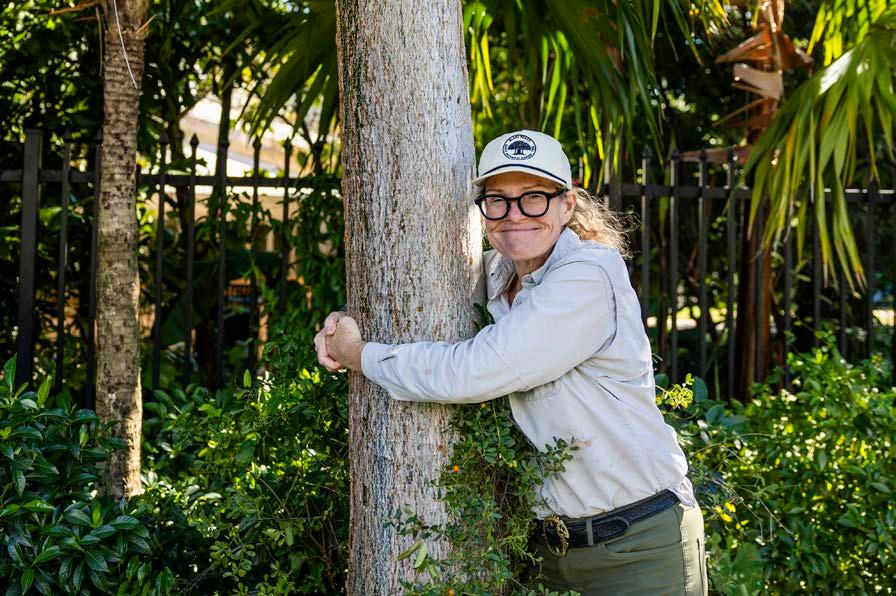
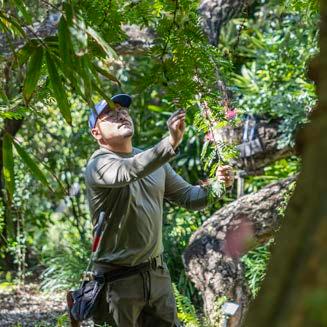
Kathy Cahillshares a hug with a gumbo limbo tree at the Miami Beach
“When you take responsibility for something living, like a tree, you feel more connected to your home and your neighborhood,” said Joanne Rosen, co-president of the Miami Beach Botanical Garden Board of Directors, praising the giveaway. “There’s a real mind-body benefit, and it’s also something beautiful you get to see right in front of your house.”
Director of Horticulture Kathy Cahill at the garden encouraged residents to experience a wide selection of native and Floridafriendly trees around the 3-acre facility. The garden is open from 9 a.m. to 5 p.m. Tuesday through Sunday at 2000 Convention Center Drive across the street from the Miami Beach Convention Center with complimentary admission.
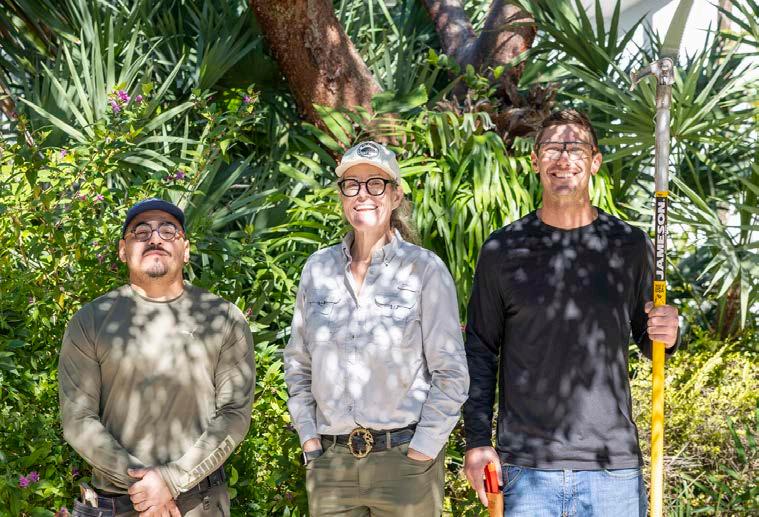
In most cases, Florida-friendly trees will last for decades without much watering outside of the dry season. The city requires that any pruning be performed by a licensed arborist.
Cahill said there are many reasons to hire licensed arborists but particularly to avoid detrimental pruning techniques.
One of the most common examples of improper pruning in South Florida is called lion’s tailing, which involves removing the foliage from tree limbs everywhere except the tip — hence the name lion’s tail.
Another example involves so-called hat-racking or topping, where the entire tree canopy is removed. The remaining stubbed branches have weaker unions and experience unnecessary stress due to the sudden loss of leaves.
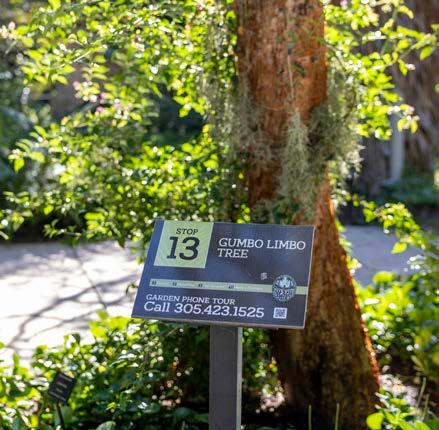
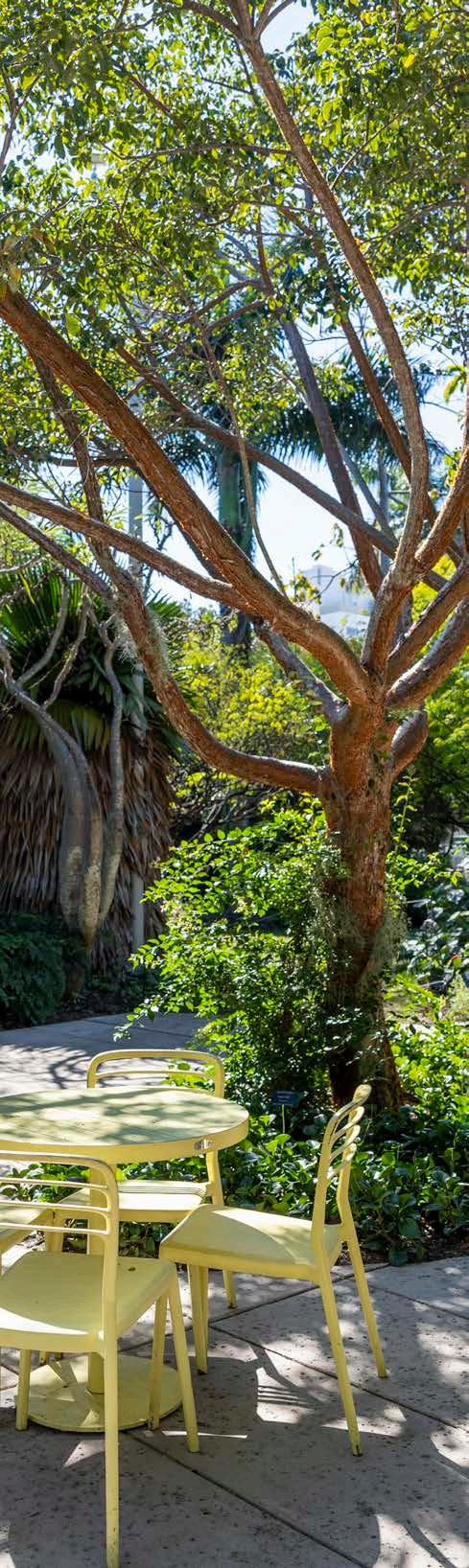
“A free tree giveaway? How wonderful,” Cahill said of the program, pointing to a fast-growing gumbo limbo with reddishcopper bark just outside the garden offices.
“It’s got this incredibly long arch out over the terrace, which we love because it shades tables and it makes people comfortable,” she added.
Trees Recommended for Large Open Spaces
• Green buttonwood
• Gumbo limbo
• Live oak
• Wild tamarind
Trees Recommended Under Power Lines
• Bulnesia (verawood)
• Crape myrtle
• Dahoon holly
• Pigeon plum
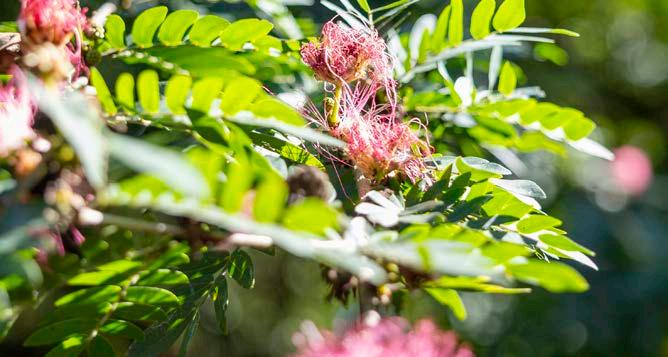
• Powderpuff
• Silver buttonwood
• Simpson stopper
• Spanish stopper
In caring for your trees, please remember that fertilizer application in Miami Beach is prohibited from May 15 through Nov. 1
To find a licensed arborist, visit the International Society of Arborculture at www.isa-arbor.com or the American Society of Consulting Arborists at www.asca-consultants.org
For more information, visit mbrisingabove.com/throwshade.
Poniendo un poco de sombra en nuestra vida. Como administrador de un edificio de condominios de 244 unidades en el vecindario North Beach de Miami Beach, Nicolas Costarelli a menudo tiene que equilibrar prioridades contrapuestas sobre la manera como se gastan los fondos de su asociación en el complejo de aproximadamente 5 acres.
“Tenemos un presupuesto muy ajustado”, reconoció Costarelli, quien también dijo que aumentar el número de árboles no era una de sus prioridades luego de una serie de mejoras estructurales hechas en los últimos años, entre las que se incluyen un nuevo dique, ventanas contra huracanes, un techo, mejoras en la piscina y una próxima recertificación del edificio después de 60 años.
Por eso se alegró mucho de participar en el primer programa de la ciudad “Let Us Throw You Some Shade” (Permite que te demos algo de sombra), con el cual se tiene previsto proporcionar cientos de árboles autóctonos y árboles aptos para la Florida a los residentes, condominios y negocios de Miami Beach esta primavera y verano. Solo hay una salvedad: los beneficiarios o sus organizaciones tenían que comprometerse por escrito a responsabilizarse y hacerse cargo del cuidado de las nuevas plantas frondosas luego de los primeros 90 días desde su plantación. Cada árbol se entrega con una garantía de un año.
“Me encanta este programa”, dijo Costarelli, quien solicitó cinco árboles para el estacionamiento de 300 espacios de la propiedad y otras zonas. “Conozco a muchos administradores de propiedades que estarían dichosos de recibir árboles gratis”.
El silvicultor urbano de Miami Beach, Michael Atkin, formó parte del equipo de funcionarios municipales que revisó docenas de solicitudes para seleccionar los árboles adecuados que se colocarán en cada zanja de infiltración solicitada en las zonas de derecho de paso.
“Para ser sinceros, creo que lo mejor es que ellos quieran ocuparse de ello”, dijo Atkin sobre el proceso de solicitud en línea que finalizó el 31 de marzo. “Esperemos que el bosque urbano crezca”.
De acuerdo con Atkin, aumentar el número de árboles en Miami Beach de cerca del 17% a un 22% de la superficie total de la ciudad tiene muchos beneficios. Entre ellos, una mayor sombra puede reducir las temperaturas superficiales, lo que los científicos denominan como efecto de “isla de calor urbano”. Los árboles también producen oxígeno, capturan gases de carbono nocivos y absorben las aguas pluviales.
Financiada por el Bono de Obligación General de 439 millones de dólares de la ciudad aprobado por los votantes en 2018, la campaña “Let Us Throw You Some Shade” contribuirá al objetivo de la ciudad de añadir 5,000 nuevos árboles de sombra. Del total, ya se habían plantado unos 2,000 a finales de enero, antes del lanzamiento de la nueva campaña.
La ciudad elaboró una lista de árboles seleccionados entre los que los residentes podían elegir, dando prioridad a las especies autóctonas y las que son aptas para la Florida. La decisión de poner árboles en lugares específicos la tomaría la ciudad teniendo en cuenta la proximidad a las infraestructuras subterráneas, los servicios públicos aéreos, los carriles de circulación, los carriles para bicicletas y otras consideraciones.
Cada árbol que se plantará en las próximas semanas y meses será mantenido y regado por un contratista de la ciudad durante los tres primeros meses.
“Cuando te responsabilizas de cuidar algo vivo, como un árbol, te sientes más conectado con tu hogar y tu vecindario”, dijo Joanne Rosen, copresidenta de la Junta Directiva del Jardín Botánico de Miami Beach, elogiando la iniciativa. “Es muy beneficioso para la mente y el cuerpo, y además es algo hermoso que puedes contemplar justo frente a tu casa”.
La Directora de Horticultura del Jardín Botánico, Kathy Cahill, animó a los residentes a conocer la amplia selección de árboles autóctonos y aptos para la Florida que hay en las instalaciones de 3 acres del jardín. El jardín está abierto de 9 a.m. to 5 p.m. martes a domingo en el 2000 Convention Center Drive, frente al Centro de Convenciones de Miami Beach. La entrada es gratuita para todos.
En la mayoría de los casos, los árboles aptos para la Florida durarán décadas sin necesidad de mucho riego fuera de la temporada seca. La ciudad exige que cualquier poda sea realizada por un arboricultor con licencia.
Cahill dijo que hay muchos motivos para contratar arboricultores con licencia, siendo uno de los más importantes el de evitar técnicas de poda perjudiciales.
Uno de los ejemplos más comunes de poda perjudicial en el sur de la Florida es la que se conoce como “cola de león”, que consiste en eliminar el follaje de las ramas de los árboles en todas partes excepto en la punta, de ahí su nombre.
Otro ejemplo es el desmoche, que hace que el árbol parezca una percha para colgar sombreros (hat-racking o topping), que elimina toda la copa del árbol. Las ramas cortadas restantes tienen uniones más débiles y sufren un estrés innecesario debido a la pérdida repentina de hojas.
“¿Árboles regalados? ¡Qué maravilla!”, dijo Cahill sobre el programa, señalando un palo mulato de rápido crecimiento con corteza de color rojo cobrizo justo fuera de las oficinas del jardín.
“Tiene una rama increíblemente larga en forma de arco sobre la terraza, lo que nos encanta porque da sombra a las mesas y hace que la gente se sienta cómoda”, añadió.
Árboles recomendados para grandes espacios abiertos
• Mangle botoncillo
• Palo mulato
• Encino siempreverde
• Tamarindo silvestre
Árboles recomendados debajo de líneas eléctricas
• Guayacán de bola (Bulnesia arborea)
• Árbol de Júpiter
• Acebo dahoon
• Ciruelo de paloma
• Pompón
• Mangle plateado
• Guayabillo
• Guairaje
Al cuidar sus árboles, tenga presente que la aplicación de fertilizantes en Miami Beach está prohibida desde el 15 de mayo hasta el 1 de noviembre.
Para encontrar un arboricultor certificado, visite la Sociedad Internacional de Arboricultura en www.isa-arbor.com o la Sociedad Estadounidense de Arboricultores Consultores en www.asca-consultants.org
Si desea más información, visite mbrisingabove.com/throwshade
Women Artists in Miami Beach
By Paul Scicchitano
“She Spoke for the Birds” byChristinaPettersson
Renaissance of
Artist’s rendering of the BirdHouse
esvarnish to BirdHouse.
I’m grateful for the opportunity to imagine a sculpture for this beautiful park and to take part in a new chapter for North Beach
- Artist Prune Nourry
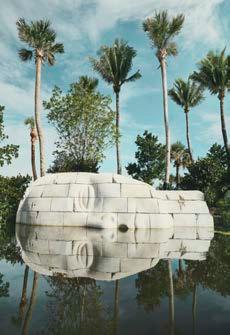
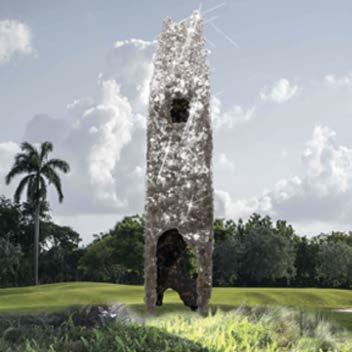
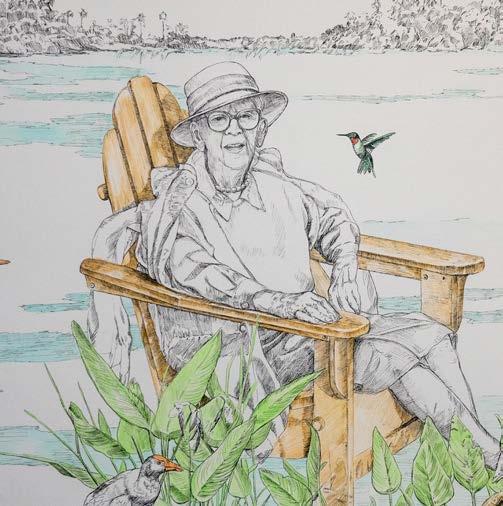
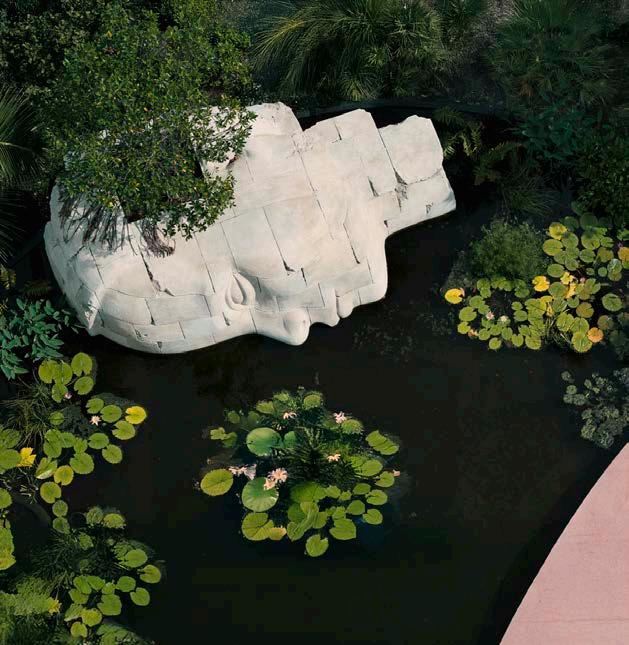
Three of the newest public art pieces in Miami Beach couldn’t be more different, yet all share one common artistic element — from the approximately 22-foot BirdHouse in Mid Beach to the wall-sized mural, “She Spoke for the Birds,” in South Beach and the Reflection water feature in North Beach — all three were created by women.
Two of the trio of works — the BirdHouse sculpture by Miami Beach native Michele Oka Doner at Bayshore Park and “She Spoke for the Birds” by Christina Pettersson at Marjory Stoneman Douglas Park — were selected by the city’s Art in Public Places (AiPP) Committee made up of art experts. The sevenmember committee is appointed by the Miami Beach City Commission.
Growing up across the street from the park, Oka Doner said she always marveled at her encounters with wildlife and attributes her inspiration to an abandoned birdhouse she came across in a coconut palm. The design incorporates shining mica as a radiant call for visitors to take in the natural and artistic beauty of Miami Beach.
The artist’s other works include Radiant Site at New York’s Herald Square transit station, A Walk on the Beach at Miami International Airport and Velocity of Light in Shanghai. Additional works can be found in the collections of New York’s Metropolitan Museum of Art and the Louvre in Paris among other places.
“It is significant that the City of Miami Beach is thoughtful in its curating of the AiPP collection to make sure that there is a diverse representation of artists,” explained Miami Beach Director of Tourism and Culture Lissette Garcia Arrogante.
BirdHouse draws inspiration from Oka Doner’s childhood in Miami Beach and the natural features of Bayshore Park. Made of mica, the 6-foot-in-diameter, sculpture is located at Fairview Hill inside the park at 2795 Prairie Ave. adjacent to the Scott Rakow Youth Center. It was still being installed as of press time.
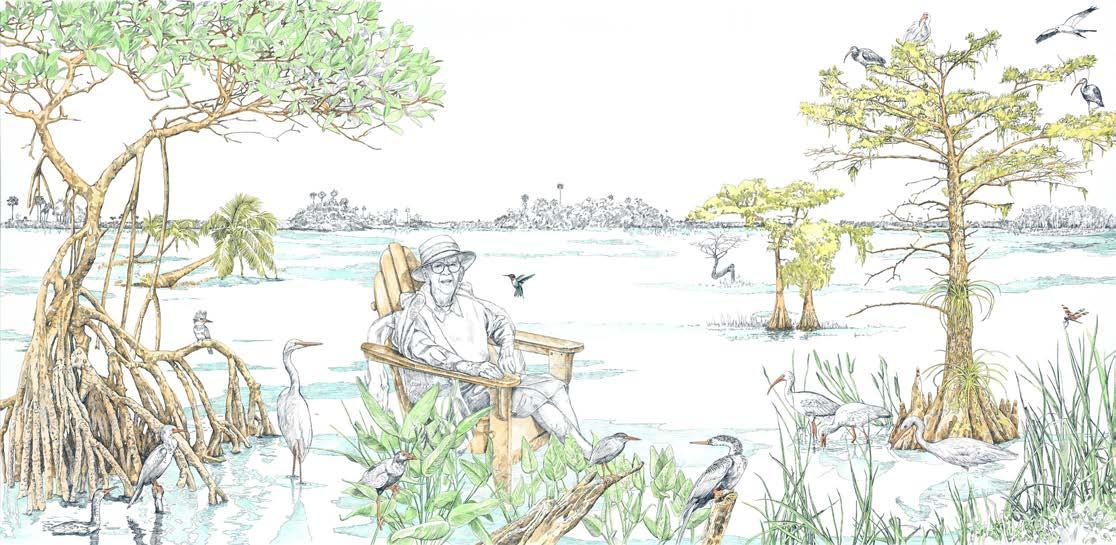
“She Spoke for the Birds” by Christina Pettersson at Marjory Stoneman Douglas Park, 225 Ocean Drive, is a new mural that depicts Marjory Stoneman Douglas relaxing in the Florida Everglades, the habitat she spent her life protecting. The mural unveiling included guests from Friends of the Everglades, the organization Douglas founded, as well as members of the Miami Beach Commission for Women.
“As a Miami Beach native who has written a book about Miami Beach: ‘Blueprint of an Eden,’ I’m actively supportive of and representative of the city,” said Oka Doner, who continues to represent Miami Beach as an ambassador for arts and culture.
The unveiling of her piece was expected to include poetry by O, Miami’s Sunroom program students and the sounds of a Caribbean conch in one of Miami Beach’s most tranquil green spaces on a former par 3 golf course that was originally part of a 36-hole golf course developed by Miami Beach founding father Carl Fisher.
Oka Doner’s BirdHouse was selected by the city’s AiPP committee out of 67 submissions to become a permanent art installation in the park which opened last year. It is the largest public art commission since FriendsWithYou’s Starchild in 2022.
“I grew up tramping the Everglades, but it was birding that first encouraged me to look more deeply into the landscape,” Pettersson told MB. “Protecting birds from plume hunters is the reason the park was founded. Marjory was an avid birder too, and imagery of wading flocks and bird colonies fill her books. I wanted to surround her with a jolly group of grateful birds. She was a giant, but we all become better stewards when we speak for the flora and fauna in a personal way. I’m so delighted to be given this chance to honor her.”
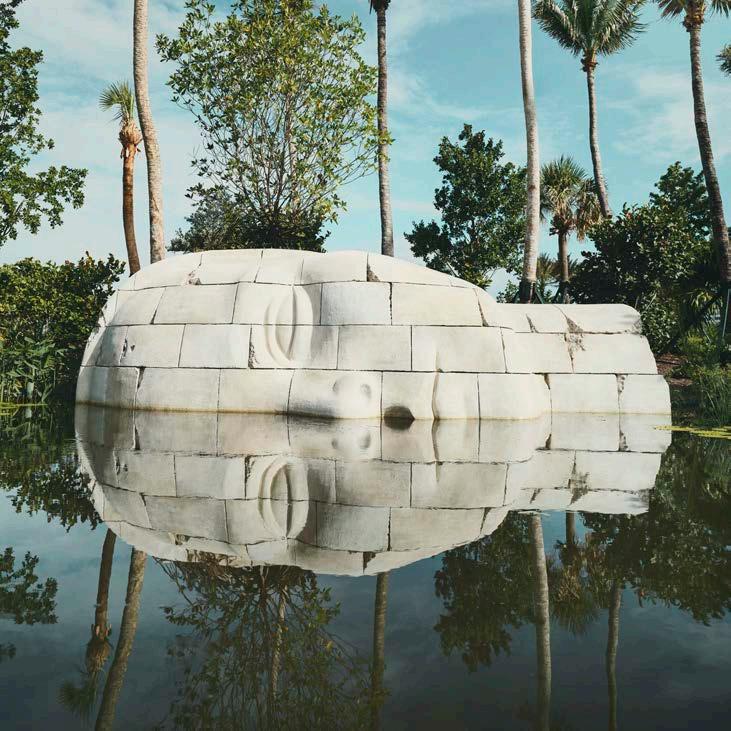
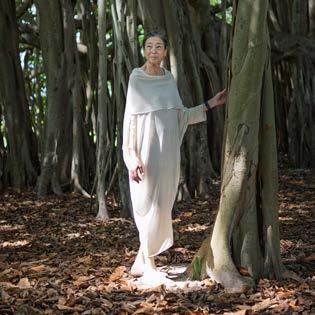
Reflection by Paris-born artist Prune Nourry celebrates the long history of women in the U.S. Coast Guard. The sculpture of a woman was cast from 86 hydrophobic cellular concrete blocks created by Nourry and inspired by Nelly Locust, who was chosen to represent a larger group of heroine women in times of war.
“I’m grateful for the opportunity to imagine a sculpture for this beautiful park and to take part in a new chapter for North Beach,” said Nourry. “Collaborating with landscape architect Raymond Jungles to weave the artwork into nature and local species was equally inspiring.”
Locust was one of 10,000 women who served in the Coast Guard Women’s Reserve during the war, including 400 in the Miami area.
“World War II was horrific, yet opportunities emerged for women,” Nourry said in a video describing her piece. “After the war they went home. It totally transformed their lives. Some women used the GI Bill to go to college, became lawyers and stockbrokers and they wouldn’t have been able to do those things had they not served in the Coast Guard.”
The full face of the bust of the work becomes visible only in the still water of the adjacent reflecting pool.
Interestingly, for the past five years, the AiPP Legacy Purchase Program has been acquiring artworks by women artists
- Director of Tourism and Culture Lissette Garcia Arrogante
It is set off from a grouping of cascading red mangrove trees that rise out of a built-in planter within the water feature.
The 5-acre beachfront park is located along Ocean Terrace between 73 and 75 streets just off the beach and a short walk from the Miami Beach Bandshell.
In addition to the newly installed AiPP works, the public is asked to vote each year on an annual city art acquisition as part of the AiPP’s Legacy Purchase Program once the committee narrows the slate of prospective acquisitions down to three works.
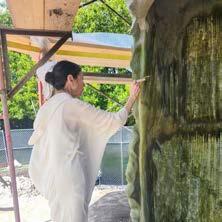
Oka Doner at BayshorePark
“Interestingly, for the past five years, the AiPP Legacy Purchase Program has been acquiring artworks by women artists,” added Garcia Arrogante. “Specifically, for this program, the artworks are voted on by the public, including our residents.”
Once acquired, the legacy works become part of the city’s public art collection and are displayed at the Miami Beach Convention Center. The AiPP program began in 1995 with a fund generated by 2% of hard costs for city projects and joint private and public projects.
Las mujeres artistas disfrutan del renacimiento en Miami Beach. Las tres obras de arte público más recientes en Miami Beach no podrían ser más diferentes; sin embargo, todas comparten un elemento artístico común: tanto la escultura “Bird House” de aproximadamente 22 pies de altura en Mid Beach como el mural “She Spoke for the Birds” del tamaño de una pared en South Beach y la estructura acuática Reflection en North Beach, las tres han sido creadas por mujeres.
Dos de las tres obras –la escultura “Bird House”, de la artista oriunda de Miami Beach Michele Oka Doner, en Bayshore Park, y el mural “She Spoke for the Birds”, de Christina Pettersson, en Marjory Stoneman Douglas Park– fueron seleccionadas por el Comité de Art in Public Places (AiPP) de la ciudad, integrado por expertos en arte.
“Es significativo que la Ciudad de Miami Beach sea tan cuidadosa en la selección de la colección de AiPP para garantizar que haya una representación diversa de artistas”, explicó Lissette García Arrogante, Directora del Departamento de Turismo y Cultura de Miami Beach. El comité, conformado por siete miembros, es nombrado por la Comisión Municipal de Miami Beach.
Bird House se inspira en la infancia de Oka Doner en Miami Beach y en las características naturales de Bayshore Park. La escultura, realizada en mica y con un diámetro de 6 pies, está en Fairview Hill, dentro del parque, en 2795 Prairie Ave., junto al Centro juvenil Scott Rakow. Todavía se estaba instalando al cierre de esta edición.
“Por haber nacido en Miami Beach y ser autora de un libro sobre la ciudad titulado “Blueprint of an Eden”, represento y apoyo activamente a la ciudad”, dijo Oka Doner, quien sigue representando a Miami Beach como embajadora de las artes y la cultura.
Se esperaba que la inauguración de su obra incluiría poemas a cargo de los estudiantes del programa The Sunroom de “O, Miami” y los sonidos de un caracol caribeño en uno de los espacios verdes más tranquilos de Miami Beach, en un antiguo campo de golf par 3 que originalmente formaba parte de un campo de golf de 36 hoyos desarrollado por Carl Fisher, padre fundador de Miami Beach.
Bird House, de Oka Doner, fue seleccionada por el comité de AiPP de la ciudad entre 67 propuestas para convertirse en una instalación artística permanente en el parque, que fue inaugurado el año pasado. Se trata de la mayor obra de arte público desde Starchild, de FriendsWithYou, en 2022.
Oka Doner, quien creció al otro lado de la calle del parque, dijo que siempre se maravillaba de sus encuentros con la fauna silvestre y atribuye su inspiración a una casita para pájaros abandonada que encontró en un cocotero. El diseño incorpora mica brillante como una llamada radiante para que los visitantes disfruten de la belleza natural y artística de Miami Beach.
Entre las obras de la artista están Radiant Site en la estación de tránsito Herald Square de Nueva York, A Walk on the Beach en el Aeropuerto Internacional de Miami y Velocity of Light en Shanghái. Más obras de esta artista se pueden encontrar en las colecciones del Museo Metropolitano de Arte de Nueva York y en el Louvre de París, entre otros lugares.
La obra “She Spoke for the Birds” de Christina Pettersson que se encuentra en Marjory Stoneman Douglas Park, 225 Ocean Drive, es un nuevo mural que representa a Marjory Stoneman Douglas relajándose en los Everglades de la Florida, el hábitat que dedicó su vida a proteger. A la inauguración del mural asistieron invitados de Friends of the Everglades, la organización fundada por Douglas, y miembros de la Comisión para la Mujer de Miami Beach.
“Crecí recorriendo los Everglades, pero fue la observación de aves lo que me animó a mirar el paisaje con más profundidad”, le dijo Pettersson a MB. “Proteger a las aves de los cazadores de plumas es el motivo por el que se fundó el parque. Marjory también era una ávida observadora de aves, y las imágenes de bandadas de aves zancudas y de colonias de pájaros llenan sus libros. Quería rodearla de un alegre grupo de aves agradecidas. Ella era una gran mujer, aunque todos nos convertimos en mejores guardianes cuando hablamos de la flora y la fauna de una manera personal. Me llena de alegría tener esta oportunidad de honrarla”.
Reflection, de la artista parisina Prune Nourry, celebra la larga historia de las mujeres en la Guardia Costera de Estados Unidos. La escultura de una mujer fue moldeada a partir de 86 bloques de concreto celular hidrófobo creados por Nourry e inspirados en Nelly Locust, quien fue elegida para representar a un grupo más grande de mujeres heroínas en tiempos de guerra.
“Estoy agradecida por la oportunidad de imaginar una escultura para este hermoso parque y de participar en un nuevo capítulo para North Beach”, dijo Nourry. “Colaborar con el arquitecto paisajista Raymond Jungles para entretejer la obra de arte en la naturaleza y las especies locales fue igualmente inspirador”.
Locust fue una de las 10,000 mujeres que sirvieron en la Reserva Femenina de la Guardia Costera durante la guerra, de las cuales 400 estaban en el área de Miami.
“La Segunda Guerra Mundial fue horrible, pero surgió una oportunidad para las mujeres”, afirmó Nourry en un video que describe su obra. “Después de la guerra, regresaron a casa. La experiencia transformó por completo sus vidas. Algunas mujeres usaron la G.I. Bill para ir a la universidad, se convirtieron en abogadas y agentes de bolsa, y no habrían
podido hacer esas cosas si no hubieran servido en la Guardia Costera”.
El rostro completo del busto de la obra solo se ve en las aguas tranquilas del estanque reflectante adyacente. La obra se destaca entre un grupo de manglares rojos en cascada que se elevan desde una jardinera empotrada dentro del elemento acuático.
El parque de cinco acres frente al mar está situado en Ocean Terrace, entre 73 Street y 75 Street, junto a la playa y a poca distancia del Bandshell de Miami Beach.
Además de las obras recién instaladas por AiPP, cada año se pide al público que vote sobre una adquisición artística municipal anual como parte del Programa de Adquisición de Legados de AiPP, una vez que el comité reduce la lista de posibles adquisiciones a tres obras. Las obras de arte elegidas pasan a formar parte de la colección permanente de arte público de la ciudad.
“Curiosamente, durante los últimos cinco años, el Programa de Adquisición de Legados de AiPP ha adquirido obras de arte de mujeres artistas”, añadió García Arrogante. “En concreto, para este programa, las obras de arte son votadas por el público, incluidos nuestros residentes”.
Una vez adquiridas, las obras pasan a formar parte de la colección de arte público de la ciudad y se exhiben en el Centro de Convenciones de Miami Beach. El programa AiPP comenzó en 1995 con un fondo generado por el 2% de los costos directos de los proyectos municipales y de los proyectos conjuntos privados y públicos.
Curiosamente, durante los últimos cinco años, el Programa de Adquisición de Legados de AiPP ha adquirido obras de arte de mujeres artistas
- Directora del Departamento de Turismo y Cultura de Miami Beach Lissette Garcia Arrogante
ALL HANDS ON DECK
Fireboat 5 brings state-of-the-art search and rescue capabilities to 60 miles of waterways in and around Miami Beach
By Paul Scicchitano
The four-member crew of Miami Beach Fireboat 5 was still feeling their way around the controls of the 36-foot MetalCraft Marine FireStorm and its newly rebuilt jet propulsion system as the final two deckhands of “B” shift — Mike Viera and Jason Bugay — completed their initial eight-hour training on the twin bucket levers and shiny steel captain’s wheel inside the red-white-and-blue wheelhouse.
“Everyone’s cross-trained,” explained Capt. Douglas Thompson, who helped set up the agency’s marine unit in 2015 with only a single operator on duty at any given shift and a rotating crew made up of land-based firefighters from Fire Station 4 along Indian Creek in Miami Beach’s North Beach neighborhood.
“We were assigned to the fire engine,” Thompson recalled.
“When a fireboat call would come in, we would leave the fire truck and get on the boat and then we would run the call” on a 27-foot Metal Shark aluminum-hulled vessel fitted with twin Mercury 300 Verado outboard motors.
While the smaller Metal Shark fireboat remains in service, it is now a backup to the larger MetalCraft Marine FireStorm which was put into service recently as the agency’s primary response vessel for dozens of water rescues, boat fires and medical emergencies that Miami Beach firefighters respond to each year along the
60 miles of waterways in and around the city — Indian Creek, Tatum Waterway, Collins Canal, Government Cut, Biscayne Bay as well as a 7-mile stretch of the Atlantic Ocean.
Miami Beach waterways regularly see every type of vessel from personal watercraft to superyachts, cruise ships and even paddleboards.
“We carry a full complement of medical gear — Lifepak, medication, everything,” said Thompson, who leads the “B” shift of what has evolved to be a 24/7 marine-based operation with three shifts. “We can run any kind of medical call in this boat that we can run out of a rescue truck.”
Since there is no resupply out on the water, fireboats have to be prepared for every kind of emergency.
“When we get medical calls, they are generally serious calls — someone’s been hit by a boat, a drowning, hit by a propeller — a lot of people are injured from diving accidents — people missing in the water,” said Thompson. “Trauma calls for us are going to be personal watercraft hitting each other. We’ve had people run into seawalls and into the jetty in Government Cut.”
Firefighters Anthony Wilson and RicardoFernandez
Capt Douglas Thompson
Unlike the city’s four other fire stations, Fire Station 5 is located alongside U.S. Coast Guard Base Miami Beach just off busy MacArthur Causeway on Terminal Isle in South Beach. The second-floor station is accessible only by an exterior metal staircase and equipped with multiple bunkrooms and a full kitchen where crew members take turns cooking — some with more success than others.
Crew members recently completed training on the new larger vessel following a comprehensive multiyear upgrade in Kingston, Ontario, where the boat originated. The vessel began its service as Fireboat 21 with Miami-Dade Fire Rescue and was subsequently donated by the county to Miami Beach. It was retrofitted with structural upgrades and the latest marine technology, including Forward Looking InfraRed (FLIR) detection capabilities similar to that used by the U.S. military.
“You can see at night almost as well as you’re going to see during the day,” acknowledged Thompson. “If you’re running at night, everything kind of blends in when you’re coming towards the city, but this tool will remove that challenge.”
The department’s smaller boat is capable of pumping 1,500 gallons of water per minute drawn from the surrounding water with the equivalent of a car engine. “The new one will put out 4,700 or 4,800 gallons per minute,” according to Thompson.
The smaller vessel fits better in tight spaces and can travel under some Miami Beach bridges where the larger vessel simply wouldn’t fit.
“The radar and the FLIR work together,” added Virginia-based Terry Hill, who pioneered the use of midsized fireboats for first responders around the United States and oversaw the Miami Beach training.
“If you’ve got a boat that you’re trying to follow, you can lock onto a target on the radar, and the camera will follow that boat for you so that you can track it down if you need to — or if you’re trying to identify a boat.”
Each firefighter holds a U.S. Coast Guard captain’s license and dive certification in addition to being a certified paramedic or working toward those certifications.
Many waterway calls can be avoided simply by preparing for emergencies and staying away from alcohol.
“The people who are drinking on the water are the ones who get into the most trouble — especially on personal watercraft,” Thompson shared. “We have a lot of drownings where people don’t swim, yet they’re out there fishing in small boats or whatever. You need to know your capabilities. What is your boat capability? What are you capable of doing? Night boating is very different than day boating.”
From left: Firefighters Jason Bugay, Capt. Douglas Thompson, Anthony Wilson, Ricardo Fernandez and Mike Viera.
Todos a cubierta. El barco de bomberos 5 proporciona capacidades de búsqueda y rescate de última generación en 60 millas de vías fluviales de Miami Beach y sus alrededores. Los cuatro integrantes de la tripulación del barco de bomberos 5 de Miami Beach aún estaban aprendiendo a manejar los controles del MetalCraft Marine FireStorm de 36 pies y su sistema de propulsión a chorro recién reconstruido, mientras los dos últimos marineros del turno “B”, Mike Viera y Jason Bugay, completaban su capacitación inicial de ocho horas sobre el brillante timón de acero de doble pala del capitán dentro de la timonera roja, blanca y azul.
incendios en embarcaciones y emergencias médicas a las que responden los bomberos de Miami Beach cada año a lo largo de las 60 millas de vías fluviales de la ciudad y sus alrededores: Indian Creek, Tatum Waterway, Collins Canal, Government Cut, la bahía de Biscayne y un tramo de 7 millas en el océano Atlántico.
En las vías fluviales de Miami Beach se ven con frecuencia todo tipo de embarcaciones, desde vehículos acuáticos personales hasta yates de lujo, cruceros e incluso tablas de surf con remo.
“Todos reciben capacitación en diversas funciones”, explicó el capitán Douglas Thompson, quien ayudó a crear la unidad marítima de la agencia en 2015 con un solo operador de guardia en cada turno y una tripulación rotativa compuesta por bomberos terrestres de la estación de bomberos 4, situada en Indian Creek, en el vecindario de North Beach de Miami Beach.
“Nos asignaron al carro de bomberos”, recordó Thompson. “Cuando recibíamos una llamada para un barco de bomberos, dejábamos el carro de bomberos, nos subíamos al barco y acudíamos a la llamada en un barco Metal Shark de 27 pies con casco de aluminio equipado con dos motores fuera de borda Mercury 300 Verado”.
Aunque el barco de bomberos Metal Shark, más pequeño, sigue en servicio, ahora funciona como respaldo del MetalCraft Marine FireStorm, más grande, que se puso en servicio recientemente como el barco de respuesta principal de la agencia para docenas de rescates acuáticos,
“Llevamos una dotación completa de suministros médicos: Lifepak, medicamentos, todo”, dijo Thompson, quien dirige el turno “B” de lo que se ha convertido en una operación marítima 24/7 con tres turnos. “En este barco podemos atender cualquier tipo de llamada médica similar a la que podemos atender en un camión de rescate”.
Dado que en el agua no hay posibilidad de reabastecimiento, los barcos de bomberos deben estar preparados para cualquier tipo de emergencia.
“Cuando recibimos llamadas médicas, casi siempre son de carácter grave: alguien atropellado por un barco, una persona que se está ahogando, o que ha sido golpeada por una hélice –muchas personas resultan heridas en accidentes de buceo–hay personas desaparecidas en el agua”, explica Thompson. “Las llamadas por traumatismos que recibimos suelen ser por colisiones entre vehículos acuáticos personales. Hemos tenido casos de personas que se han estrellado contra diques y contra el embarcadero de Government Cut”.
Firefighters
Ricardo Fernandez and AnthonyWilson
A diferencia de las otras cuatro estaciones de bomberos de la ciudad, la estación 5 está situada junto a la base de la Guardia Costera de Estados Unidos en Miami Beach, justo al lado de la concurrida MacArthur Causeway, en Terminal Isle, South Beach. A la estación, situada en el segundo piso, solo se puede acceder por una escalera metálica exterior y está equipada con varios dormitorios con literas y una cocina completa donde los integrantes de la tripulación se turnan para cocinar, algunos con más éxito que otros.
Los integrantes de la tripulación completaron recientemente su capacitación en el nuevo barco, de mayor tamaño, luego de una exhaustiva remodelación de varios años en Kingston, Ontario, donde se construyó originalmente el barco. El barco comenzó su servicio como el barco de bomberos 21 del Cuerpo de Bomberos de Miami-Dade, y posteriormente fue donado por el condado a Miami Beach. Se reacondicionó con mejoras estructurales y se le incorporó la última tecnología marina, además de integrarle capacidades de detección mediante infrarrojo de barrido frontal similares a las empleadas por el ejército estadounidense.
“Se puede ver durante la noche casi tan bien como en el día”, reconoció Thompson. “Si navegas de noche, todo se confunde cuando te acercas a la ciudad, pero esta herramienta elimina ese problema”.
El barco de menor tamaño del departamento es capaz de bombear 1,500 galones de agua por minuto extraídos del agua circundante, equivalente a un motor de carro. “El nuevo barco bombeará entre 4,700 y 4,800 galones por minuto”, según Thompson.
El barco más pequeño se adapta mejor a espacios reducidos y puede pasar por debajo de algunos puentes de Miami Beach por los que el barco más grande simplemente no cabría.
“El radar y el sistema de detección mediante infrarrojo de barrido frontal funcionan juntos”, añadió Terry Hill, quien trabaja en Virginia y fue pionero en el uso de barcos de bomberos de tamaño mediano para los profesionales de intervención inmediata en todo Estados Unidos, y quien supervisó la capacitación en Miami Beach.
“Si hay un barco al que estás tratando de seguir, puedes fijar un objetivo en el radar y la cámara seguirá ese barco por ti, de modo que puedas localizarlo si lo necesitas, o si estás tratando de identificar un barco”.
Todos los bomberos tienen licencia de capitán de la Guardia Costera de Estados Unidos y certificación de buceo, además de ser paramédicos certificados o estar trabajando para obtener esas certificaciones.
Muchas llamadas relacionadas con las vías fluviales se pueden evitar simplemente preparándose para las emergencias y evitando el consumo de alcohol.
“Las personas que consumen bebidas alcohólicas en el agua son las que más se meten en problemas, especialmente en vehículos acuáticos personales”, compartió Thompson. “Tenemos muchos ahogamientos porque hay personas que sin saber nadar salen a pescar en pequeñas embarcaciones o botes de otro tipo. Es necesario conocer las propias limitaciones. ¿Qué capacidad tiene su embarcación? ¿Qué es capaz de hacer usted? Navegar de noche es muy diferente a navegar de día”.
Obtenga más información sobre la seguridad en la navegación en www.myfwc.com/boating/ safety-education/safety-tips
By Paul Scicchitano
New Dawn Rising Over CONVENTION CENTER
Whenever a large trade show or event comes to the Miami Beach Convention Center, Ilana Shor, her sister and parents see a surge in business less than a mile away at their Ace Hardware Alton Hardgoods.
“It depends on the show. We know which shows are more visited — especially Art Basel Miami Beach and the Discover Boating Miami International Boat Show are really big,” emphasized Shor, whose family has sold hand tools, batteries, paint and packing supplies to exhibitors for 29 of the venue’s 67 years, the last three at 1665 Alton Road just off iconic Lincoln Road.
“They’re generally looking for extension cords and lightbulbs. You never know because if there’s a party then they might end up with tiki torches,” she said of the 12,000 exhibitors who passed through the sleek glass and steel convention center last year, attracting 537,000 visitors through 143 regional, national and international events spanning multiple industries.
Related businesses in Miami Beach — not only the Shors’ hardware store — but thousands of restaurants, shops, entertainment venues and boutique hotels — that serve millions of Miami Beach visitors and residents stand to see additional economic benefits in the future with the planned opening of the Grand Hyatt Miami Beach in November of 2027.
Located at 17 Street and Convention Center Drive, the hotel will be the first property that is physically connected to the convention center — making 800 luxury guestrooms, including 52 suites with four floors of additional meeting space easily accessible via a climate-controlled, art-filled skybridge connecting the 1.4-million-square-foot venue. The project is being developed through a partnership between Terra Group and Turnberry Associates, which created Aventura Mall and the 533-room JW Marriott Nashville.
• Becoming Reality
“Once we announced that Hyatt was going to be the partner and it’s going to be 800 rooms, it became real,” recalled Greater Miami Convention & Visitors Bureau President & CEO David Whitaker.
Prior to the announcement of the 17-story hotel in 2022 and subsequent groundbreaking in May of 2025, the sales team of the Greater Miami Convention & Visitors Bureau generated 78 leads for future trade shows and events. The next year — 2023 — brought a major change in fortunes.
“We more than doubled the number of leads to 180,” according to Whitaker. By 2024, the number of leads for future business jumped to 216. It takes about 10 leads to land one new event that has the potential to generate millions of dollars in economic benefits for Miami Beach. Recent years have seen other noteworthy events at the center like international sports competition Premier Padel and RaquetX as well as Cosmoprof, America’s Food & Beverage Show & Conference, Jewelers International Showcase Miami, the American Black Film Festival and WHX Miami in addition to mainstays like eMerge Americas, SwimShow, Art Basel Miami Beach and the boat show.
“We’re already pacing ahead of last year,” Whitaker said in the first quarter of 2026. “Miami Beach is one of the hottest destinations in the country but meeting planners had to have confidence that when they chose to be here in 2028, 2029 or 2030 the hotel would be ready.”
Once we announced that Hyatt was going to be the partner and it’s going to be 800 rooms, it became real
- Greater Miami Convention & Visitors Bureau President & CEO David Whitaker
• New Markets Await
Many convention centers around the country have had host hotels for some time, giving them a competitive advantage over cities like Miami Beach in the past.
“Because of that 800-room hotel coming online in November of 2027, we’re going to be able to capture anywhere from 30% to 40% more meetings, convention and association business that otherwise we could not bid on,” explained Miami Beach Convention Center General Manager Freddie Peterson, who was named the 2025 South Florida Tourism Professional of the Year by the Advisory Board of Miami-Dade Public Schools’ NAF Academy of Hospitality & Tourism. Peterson was even more excited by the center receiving a coveted Venue Excellence Award from the International Association of Venue Managers, which has more than 8,000 active members representing auditoriums, arenas, convention centers, exhibit halls, stadiums, performing arts centers, university complexes, amphitheaters and fairgrounds.
“It’s not only a milestone for the center, but also for all our team members who strive each day to achieve excellence in their role at MBCC,” said Peterson, who works for venue management company Oak View Group, which operates the convention center on behalf of the city of Miami Beach. “The recognition is incredibly impactful if you think about the number of venues globally.”
• Billion-Dollar Investment
Between the $600 million hotel investment — featuring a resort-style pool deck with panoramic views of Miami Beach — the combined investment to the campus represents $1.24 billion, including a $640 million facility renovation and expansion of the convention center that was completed in 2020.
The refurbishment gave the facility a sleek modern facade, 500,000 square feet of flexible exhibition space, a 60,000-square-foot grand ballroom, expansive pre-function areas, grand lobby, 84 breakout rooms and 2,100 miles of high-speed cabling to make even the most high-tech groups take note. Ongoing capital investments by the City of Miami Beach with the support of Miami-Dade County for upgrades to safety and security, digital assets, technology and infrastructure help keep the convention center competitive.
Such competitive improvements have attracted events like the prestigious global financial conference, SIBOS, which is coming to the convention center this fall. That one event is likely to bring an additional economic benefit of $40 million to the area.
• Storied History
Legendary boxer Muhammad Ali overcame 8-1 odds to beat then heavyweight boxing champion Sonny Liston at the Miami Beach Convention Center on Feb. 25,1964. The championship bout in which Ali scored a seventh-round technical knockout over Liston put the convention center on the world stage. The fight was later dubbed by Sports Illustrated as one of the top 10 sports moments of the 20th century.
The long list of iconic events held at the convention center since it opened in October of 1958 includes the Miss Universe pageant in 1960, a youth rally the following year where famed civil and human rights leader Martin Luther King, Jr. addressed attendees, beloved American preacher Billy Graham’s Crusade in 1961 as well as the 1968 and 1972 Republican National Conventions in which former President Richard M. Nixon was twice selected to be the Republican presidential nominee.
The venue also hosted the 1972 Democratic National Convention, where Sen. George McGovern was selected to run against Nixon.
• Finding Success
The convention center has played a major role in the evolution of Miami Beach as an international travel destination. Hotel industry reports shared by the Greater Miami Convention & Visitors Bureau consistently rank the Miami area among the nation’s top hotel markets in both hotel occupancy and room rates.
The center produces economic impacts by hosting events that bring in tens of thousands of attendees, exhibitors and contract partners who in turn patronize related businesses — businesses that then collect a 4% tax on hotel rooms and 2% tax on food and beverages. Last year, Miami Beach received $110 million in resort taxes from more than 4,000 businesses which represents an increase of $320,000 over 2024. Resort tax funds are restricted in their use and must be used for the promotion of tourism and other expenses that can be tied to impacts from related activities.
For example, the resort tax pays for the popular free trolley service that runs daily throughout Miami Beach, for the new free water taxi service, all city sponsorships at events like Art Basel Miami Beach, the South Beach Wine & Food Festival as well as the Hyundai Air & Sea Show. It also pays for the park rangers, homeless outreach, public safety programs such as Ocean Rescue, police services, holiday lighting as well as enhanced cleaning services throughout the entertainment district and elsewhere.
• High-Value Business
Today, the convention center focuses on key industry events like high tech and financial conferences built around the medical, health, education, sports, arts and culture spaces as well as corporate events and major lifestyle trade shows that generate countywide economic impacts.
“AdobeMAX, which was really one of our signature events from the tech industry, was calculated according to the GMCVB model with $25 million in economic impact” in 2024, noted Miami Beach Convention Center Director of Sales & Marketing Ariane Hiltebrand.
Some of those economic benefits spill over to nearby Lincoln Road, which is undergoing a $30 million facelift to solidify its place as a world-class shopping and entertainment district. The convention center also enjoys synergistic relationships with cultural institutions like the adjacent Fillmore Miami Beach at Jackie Gleason Theater, The Bass Museum of Art, Miami Beach Botanical Garden, New World Center, Miami Beach Bandhsell and others that regularly host ancillary events and receptions tied back to the convention center. Those institutions are benefitting from the 2022 voter-approved $159 million general obligation bond that is funding 46 projects around the city to bring expanded arts and cultural activities for residents and visitors.
• Rum Room
In recent years, the city completed renovations on the historic Carl Fisher Clubhouse and annex just outside the convention center along Collins Canal Park. The 1916 structure, which once served as the Miami Beach Municipal Golf Course Clubhouse, now houses the Rum Room, a combined indoor and outdoor, 80-seat restaurant with an upscale tapas-style menu full of contemporary Latin flavors highlighting fresh local ingredients and plant-based options with a 1920s Florida vibe. The site is in one of the oldest public buildings in the city dating back to one year after the city’s founding. Adjacent to the main dining room is Venu, an airy yet sophisticated space that includes an
open terrace for al fresco entertaining, weddings and other private functions throughout the year.
• Wow Moments
Indiana native Paula Hunterman was taking in the massive football field and other larger-than-life fan experiences at the convention center ahead of the 2025-26 College Football Playoff National Championship in which her University of Indiana Hoosiers defeated the University of Miami Hurricanes 27-21 to bring home their first collegiate football crown.
“I think it’s amazing,” said Hunterman dressed in a University of Indiana visor, matching red beads and a Hoosiers long-sleeved T-shirt at the fan experience, which included areas to kick field goals, sample Chick-fil-A’s new root beer float or ride the equivalent of a mechanical bull. “This is history. We’re making history right now. Indiana’s never done it before.”
Whether it be constructing an indoor football field in the name of fan fervor or erecting a Premier Padel or RaquetX competition court with bleachers, the convention center’s Peterson said his team doesn’t shy away from helping organizations achieve wow moments.
“I have a deep sense of pride and honor of the team here — especially pride — but the team loves to be challenged or really look at the opportunity,” Peterson said. “They are incredibly adaptable and flexible — and because we have that team mentality, we always jump in to support one another.”
Un nuevo amanecer sobre el Centro de Convenciones. Cada vez que se celebra un gran evento o exposición comercial en el Centro de Convenciones de Miami Beach, Ilana Shor, su hermana y sus padres ven cómo aumentan los negocios en su ferretería Ace Hardware Alton Hardgoods, situada a menos de una milla de distancia.
“Depende de la exposición. Sabemos cuáles exposiciones son las más visitadas, sobre todo Art Basel Miami Beach y Discover Boating Miami International Boat Show, que son realmente grandes”, destaca Shor, cuya familia ha estado vendiendo herramientas manuales, baterías, pintura y material de embalaje a los expositores a la convención durante 29 de los 67 años de existencia del establecimiento, ubicado desde hace tres años en 1665 Alton Road, justo al lado de la emblemática Lincoln Road.
“En general, buscan cables de extensión y bombillas. Nunca se sabe, porque si hay una fiesta, pueden acabar comprando antorchas Tiki”, dijo sobre los 12,000 expositores que pasaron por el elegante centro de convenciones de cristal y acero el año pasado y que atrajo a 537,000 visitantes a través de 143 eventos regionales, nacionales e internacionales que abarcaban múltiples sectores.
Los negocios relacionados en Miami Beach, no solo la ferretería de los Shors, sino también miles de restaurantes, tiendas, locales de entretenimiento y hoteles boutique, que ofrecen sus servicios a millones de visitantes y residentes de Miami Beach, obtendrán beneficios económicos adicionales en el futuro con la inauguración del Grand Hyatt Miami Beach prevista para noviembre de 2027.
Situado en 17 Street y Convention Center Drive, el hotel será el primer establecimiento que estará conectado físicamente con el centro de convenciones y que contará con 800 habitaciones de lujo, incluidas 52 suites, y cuatro pisos de espacio adicional para reuniones fácilmente accesibles a través de un puente aéreo climatizado y lleno de obras de arte que servirá de conexión con los 1.4 millones de pies cuadrados del recinto. El proyecto se está desarrollando gracias a la colaboración entre Terra Group y Turnberry Associates, creadores del centro comercial Aventura Mall y del JW Marriott Nashville, de 533 habitaciones.
• Se hace realidad
“Una vez que anunciamos que Hyatt iba a ser el socio y que habría 800 habitaciones, el proyecto se hizo realidad”,
recuerda David Whitaker, Presidente y CEO de la Oficina de Convenciones y Visitantes del Área Metropolitana de Miami.
Antes del anuncio del hotel de 17 pisos en 2022 y del posterior inicio de la obra en mayo de 2025, el equipo de ventas de la Oficina de Convenciones y Visitantes del Área Metropolitana de Miami generó 78 contactos para futuros eventos y exposiciones comerciales. El año siguiente, 2023, trajo consigo un cambio importante en la suerte.
“Duplicamos con creces el número de clientes potenciales hasta alcanzar los 180”, de acuerdo con Whitaker. En 2024, el número de clientes potenciales para futuros negocios aumentó hasta los 216. Se necesitan cerca de 10 contactos para conseguir un nuevo evento que tenga el potencial de generar millones de dólares en beneficios económicos para Miami Beach. En los últimos años se han celebrado otros eventos destacados en el centro, como las competencias deportivas internacionales Premier Padel y RaquetX, así como Cosmoprof, America’s Food & Beverage Show & Conference, Jewelers International Showcase Miami, American Black Film Festival y WHX Miami, además de eventos principales como eMerge Americas, SwimShow, Art Basel Miami Beach y el salón náutico.
“Ya estamos superando el ritmo del año pasado”, dijo Whitaker en el primer trimestre de 2026. “Miami Beach es uno de los destinos más populares en el país, pero los planificadores de reuniones tenían que estar seguros de que, cuando decidieran venir aquí en 2028, 2029 o 2030, el hotel estaría listo”.
• Nuevos mercados en espera
Muchos centros de convenciones en el país han tenido desde hace tiempo hoteles asociados, lo que les ha dado una ventaja competitiva sobre ciudades como Miami Beach en el pasado.
“Gracias a ese hotel de 800 habitaciones que comenzará a operar en noviembre de 2027, podremos captar entre un 30% y un 40% más de reuniones, convenciones y eventos de asociaciones empresariales a las que, de otro modo, no podríamos proponerles ofertas”, explicó Freddie Peterson, Gerente General del Centro de Convenciones de Miami Beach, quien fue nombrado Profesional del Turismo en el Sur de la Florida en 2025 por el Comité Asesor de la Academia NAF de Hotelería y Turismo de las Escuelas Públicas del Condado de Miami-Dade. Peterson se mostró aún más entusiasmado por el hecho de que el centro recibiera el codiciado premio Venue Excellence Award de la Asociación Internacional de Gerentes de Espacios, integrado por más de 8,000 miembros activos representantes de auditorios, estadios, centros de convenciones, salas de exposiciones, estadios, centros de artes escénicas, complejos universitarios, anfiteatros y espacios para ferias.
“No solo es un hito para el centro, sino también para todos los integrantes de nuestro equipo que se esfuerzan cada día por alcanzar la excelencia en su trabajo en el MBCC”, dijo Peterson, quien trabaja para la compañía de gestión de espacios Oak View Group, encargada de dirigir el centro de convenciones en nombre de la ciudad de Miami Beach. “El reconocimiento tiene un impacto increíble si se piensa en el número de recintos que hay en todo el mundo”.
• Inversión de miles de millones de dólares
Entre la inversión de 600 millones de dólares en el hotel, que tendrá una terraza con piscina al estilo de las piscinas de los complejos turísticos con vistas panorámicas de Miami Beach, la inversión combinada en el campus asciende a 1,240 millones de dólares, que incluye 640 millones de dólares en trabajos de renovación y ampliación de las instalaciones del centro de convenciones que se completaron en 2020.
La remodelación le dio una nueva concepción al espacio con una fachada moderna y elegante, 500,000 pies cuadrados de espacio flexible para exposiciones, un gran salón de baile de 60,000 pies cuadrados, amplias zonas para actividades previas a eventos, un gran vestíbulo, 84 salas de conferencias para grupos y 2,100 millas de cableado de alta velocidad que hará que incluso los grupos más experimentados en tecnología queden maravillados. Las continuas inversiones de capital de la Ciudad de Miami Beach con el apoyo del Condado de Miami-Dade para mejorar la seguridad y protección, los activos digitales, la tecnología y las infraestructuras contribuyen a mantener la competitividad del centro de convenciones.
Estas mejoras competitivas han atraído eventos como la prestigiosa conferencia financiera mundial SIBOS, que se celebrará en el centro de convenciones este otoño. Es probable que este evento aporte un beneficio económico adicional de 40 millones de dólares a la zona.
• Historia legendaria
El legendario boxeador Muhammad Ali se impuso, con una probabilidad de 8 a 1, al entonces campeón de boxeo de los pesos pesados Sonny Liston en el Centro de Convenciones de Miami Beach el 25 de febrero de 1964. La pelea por el campeonato, en la que Ali ganó por nocaut técnico en el séptimo asalto contra Liston, puso al centro de convenciones en el escenario mundial. Más tarde, Sports Illustrated le otorgó a esta pelea el título de uno de los 10 mejores momentos deportivos del siglo XX.
Entre la larga lista de eventos emblemáticos celebrados en el centro de convenciones desde su inauguración en octubre de 1958 se encuentran el certamen de Miss Universo en 1960, una reunión juvenil el siguiente año en la que el famoso líder de los derechos civiles y humanos Martin Luther King, Jr. se dirigió a los asistentes, la cruzada del querido predicador estadounidense Billy Graham en 1961 y las Convenciones Nacionales Republicanas de 1968 y 1972, en las que el expresidente Richard M. Nixon fue elegido dos veces candidato presidencial republicano.
En este centro también tuvo lugar la Convención Nacional Demócrata de 1972, en la que el senador George McGovern fue elegido para enfrentarse a Nixon.
• En busca del éxito
El centro de convenciones ha desempeñado un papel importante en la evolución de Miami Beach como destino turístico internacional. Los informes sobre el sector hotelero compartidos por la Oficina de Convenciones y Visitantes del Área Metropolitana de Miami sitúan sistemáticamente a la zona de Miami entre los principales mercados hoteleros del país, tanto en ocupación hotelera como en tarifas por habitación.
El centro genera un impacto económico porque acoge eventos que atraen a decenas de miles de asistentes, expositores y socios contractuales que, a su vez, patrocinan negocios relacionados –negocios que recaudan un impuesto del 4% sobre las habitaciones de hotel y del 2% sobre los alimentos y bebidas. El año pasado, Miami Beach recibió 110 millones de dólares en impuestos turísticos de más de 4,000 negocios, lo que representa un aumento de 320,000 dólares con respecto a 2024. Los fondos de los impuestos turísticos están restringidos en su uso y deben destinarse a la promoción del turismo y otros gastos que pueden vincularse a los impactos de las actividades relacionadas.
Por ejemplo, los impuestos turísticos pagan el popular servicio gratuito de los trolebuses que circulan diariamente por todo Miami Beach, el nuevo servicio gratuito de taxis acuáticos, todos los patrocinios de la ciudad en eventos como Art Basel, el Festival del Vino y la Comida (Wine & Food Festival) de South Beach y la Exhibición Aérea y Marítima (Air & Sea Show) de Hyundai. También sufraga los gastos de los guardaparques, la asistencia comunitaria para indigentes, los programas de seguridad pública como Ocean Rescue, los servicios de la policía, la iluminación navideña y el mejoramiento de los servicios de limpieza en todo el distrito del entretenimiento y en otros lugares.
• Negocios de alto valor
Hoy en día, el centro de convenciones se centra en eventos importantes de diversos sectores, como conferencias de alta tecnología y finanzas relacionadas con los ámbitos de la medicina, la salud, la educación, los deportes, las artes y la cultura, así como eventos corporativos y grandes exposiciones comerciales de estilo de vida que generan un impacto económico en todo el condado.
“AdobeMAX, que fue realmente uno de nuestros eventos emblemáticos de la industria tecnológica, tuvo un impacto económico de 25 millones de dólares según los cálculos del modelo de la Oficina de Convenciones y Visitantes del Área Metropolitana de Miami en 2024”, señaló Ariane Hiltebrand, Directora de Ventas y Mercadeo del Centro de Convenciones de Miami Beach.
Algunos de esos beneficios económicos se extienden a la cercana Lincoln Road, que está siendo sometida a un rejuvenecimiento de 30 millones de dólares para consolidar su posición como distrito comercial y de entretenimiento de primera categoría.
El centro de convenciones también disfruta de relaciones sinérgicas con instituciones culturales como el adyacente Fillmore Miami Beach at Jackie Gleason Theater, el Bass Museum of Art, el Jardín Botánico de Miami Beach, el New World Center, el Bandshell de Miami Beach y otras que regularmente organizan recepciones y eventos complementarios relacionados con el centro de convenciones. Estas instituciones se benefician del bono de obligación general de 159 millones de dólares aprobado por los votantes en 2022, que financia 46 proyectos en toda la ciudad para ampliar las actividades artísticas y culturales de los residentes y visitantes.
• Rum Room
En los últimos años, la ciudad finalizó las obras de renovación de la histórica casa club de Carl Fisher y su anexo, ubicados a las afueras del centro de convenciones, junto a Collins Canal Park. La estructura de 1916, que en su día fue casa club del campo de golf municipal de Miami Beach, alberga ahora el Rum Room, un restaurante interior y exterior con capacidad para 80 comensales, y un menú de tapas de primera calidad con sabores latinos contemporáneos e ingredientes locales frescos y opciones vegetales, todo dentro de un ambiente similar al que tenía la Florida en los años veinte. El lugar está en uno de los edificios públicos más antiguos de la ciudad, construido un año después de la fundación de la misma. Junto al comedor principal se encuentra Venu, un espacio amplio y sofisticado con una terraza abierta para celebrar eventos de entretenimiento al aire libre, bodas y otras funciones privadas durante todo el año.
• Momentos sorprendentes
Paula Hunterman, originaria de Indiana, contemplaba el enorme campo de fútbol y otras experiencias extraordinarias para los aficionados en el centro de convenciones antes del Campeonato Nacional de Fútbol Americano Universitario de 2025-26, donde su equipo, los Hoosiers de la Universidad de Indiana, derrotó a los Hurricanes de la Universidad de Miami por 27 a 21, para llevar a casa su primer título universitario de fútbol americano.
“Creo que es increíble”, dijo Hunterman, vestida con una visera de la Universidad de Indiana, cuentas rojas haciendo juego y una camiseta de manga larga de los Hoosiers, en la experiencia para aficionados, con zonas para lanzar goles de campo, probar la nueva bebida “root beer float” (un flotante de cerveza de raíz) de Chick-fil-A o montar en un toro mecánico. “Esto es historia. Estamos haciendo historia en este momento. Indiana nunca lo había hecho antes”.
Ya sea construyendo un campo de fútbol en interior en nombre del fervor de los aficionados o erigiendo una cancha de competencias Premier Padel o RaquetX con graderías, Peterson, del centro de convenciones, dijo que su equipo no duda en ayudar a las organizaciones a lograr momentos sorprendentes.
“Siento un profundo orgullo y honor por el equipo que tenemos aquí –sobre todo orgullo–, pero al equipo le encanta enfrentarse a retos o estudiar realmente las oportunidades”, dijo Peterson. “Son increíblemente adaptables y flexibles, y como tenemos esa mentalidad de equipo, siempre intervenimos para apoyarnos unos a otros”.
NEW PUBLIC WORKS DIRECTOR
FOCUSES ON CITY’S AGING INFRASTRUCTURE
By Paul Scicchitano
The difference of being director of Public Works in Miami Beach compared to other municipalities where John Norris has held similar positions comes down to a faster pace, aging infrastructure and challenges associated with being a densely populated barrier island.
“Because the city never sleeps, my phone does not stop ringing and it requires a high level of commitment to sustain a work-life balance because you are always on call,” acknowledged Norris, who served as a director with three other municipalities before accepting the position of director of Public Works in Miami Beach.
“Since we are a barrier island, we have infrastructure that exists in conditions that are not ideal. We have some subaqueous crossings of sanitary sewer force mains,” according to Norris, who holds a bachelor’s degree in civil engineering from The Citadel, The Military College of South Carolina and a master’s degree in public administration from Columbia Southern University.
As a result, much of the city’s underground network of pipes is subject to corrosion by the saltwater environment.
“The department’s priorities are to update the infrastructure,” Norris told MB. “We have pressurized sanitary sewer pipes that run under Biscayne Bay. They’re in good condition now and within their serviceable life, but are approaching the latter part of that life cycle. So, we have a lot of work to do as far as replacement of this older infrastructure. Modern available pipe materials have a much longer uninterrupted serviceable life.”
Newer pipes have fewer joints and consequently fewer points of weakness. “The processes to install them are much less invasive and these pipes will last a lot longer,” he added.
Norris also spoke about the capabilities of his department, his initial observations about the job and family life.
Q: You’ve led public works teams in other Florida cities. How does Miami Beach stack up?
A: Miami Beach is the epicenter for infrastructure work. If there are innovative projects going on, it’s here in Miami Beach. That’s due to the fact that we are a very small barrier island that is extremely densely populated. It creates unique challenges for us from an infrastructure standpoint. Our full-time resident population is not representative of the effective population.
Q: How large is the Public Works Department?
A: We have around 400 employees. Most of those employees are in Sanitation and Infrastructure which is comprised of water, sewer, streets, stormwater, street lighting and the control room. They’re the ones keeping the city running 24/7.
Q: What’s been the biggest adjustment for you?
A: Public Works is a 24/7 job. We have to be ready for emergency calls. Miami Beach is well structured to deal with those and is very unique in the fact that we have the control room. That’s unheard of to have 24/7 coverage for infrastructure. It’s almost like a 911 center for Public Works. The control room can be reached 24/7 every day of the year at 305.673.7625.
Q: Tell me about your family life?
A: My wife, Annie, and I have three daughters — Caroline, our 12-year-old who goes to Miami Beach Nautilus Middle School; Logan — our 16-year-old who goes to Miami Beach Senior High School and Charlotte, our 23-year-old who is a geologist in Baltimore. They definitely keep me busy.
Q: What does your family like best about living in Miami Beach?
A: We really love the walkability. I am not a fan of having to get in my car to go drive to the grocery store, drive to a restaurant. We love where we live. We can walk to the beach. We can go to the park or Rollerblade on the Beachwalk.
El nuevo Director del Departamento de Obras Públicas se centra en la infraestructura envejecida de la ciudad. La diferencia entre ser director del Departamento de Obras Públicas en Miami Beach y otros municipios en los que John Norris ha ocupado puestos similares radica en un ritmo más acelerado, unas infraestructuras envejecidas y los retos asociados a ser una isla de barrera densamente poblada.
“Como la ciudad nunca duerme, mi teléfono no deja de sonar y requiere un alto nivel de compromiso mantener el equilibrio entre el trabajo y la vida personal porque siempre estás de guardia”, reconoció Norris, quien ocupó el cargo de director en otros tres municipios antes de aceptar el puesto de director del Departamento de Obras Públicas en Miami Beach.
“Por ser una isla de barrera, tenemos infraestructuras que se encuentran en condiciones que no son ideales. Tenemos algunos cruces subacuáticos de tuberías de alcantarillado de aguas residuales presurizadas”, según Norris, quien tiene un título en ingeniería civil otorgado por The Citadel, The Military College of South Carolina, y una maestría en administración pública otorgada por Columbia Southern University.
Como resultado, gran parte de la red subterránea de tuberías de la ciudad está sujeta a la corrosión del entorno salino.
Esto nos plantea retos únicos desde el punto de vista de la infraestructura. Nuestra población de residentes permanentes no es representativa de la población efectiva.
P. ¿Qué tamaño tiene el Departamento de Obras Públicas?
R. Tenemos alrededor de 400 empleados. La mayoría de ellos trabajan en saneamiento e infraestructura, lo cual comprende agua, alcantarillado, calles, aguas pluviales, alumbrado público y la sala de control. Son ellos quienes mantienen la ciudad en funcionamiento las 24 horas del día, los 7 días de la semana.
P. ¿Cuál ha sido el mayor ajuste para usted?
R. Las obras públicas son un trabajo de 24 horas del día, 7 días a la semana. Siempre tenemos que estar preparados para las llamadas de emergencia. Miami Beach está bien estructurada para hacer frente a esas situaciones y es particularmente especial por el hecho de tener la sala de control. Es algo inédito tener cobertura día tras día, sin interrupción, para toda la infraestructura. Es casi como un centro de emergencias 911 para obras públicas. La sala de control está disponible las 24 horas del día, todos los días del año, en el número telefónico 305.673.7625.
P. Hábleme sobre su vida familiar.
“Las prioridades del departamento son actualizar la infraestructura”, le dijo Norris a MB. “Tenemos tuberías presurizadas de alcantarillado que pasan por debajo de la bahía de Biscayne. Ahora mismo están en buen estado y aún dentro de su vida útil, pero se están acercando al final de su termino. Por ello, tenemos mucho trabajo por delante en lo que respecta al reemplazo de esta infraestructura antigua”. Los materiales modernos disponibles para tuberías tienen una vida útil continua mucho más larga.
Las tuberías más nuevas tienen menos uniones y, por lo tanto, menos puntos débiles. “Los procesos para instalarlas son mucho menos invasivos y estas tuberías durarán mucho más”, añadió.
Norris también habló sobre las capacidades de su departamento, sus observaciones iniciales sobre el trabajo y su vida familiar.
P. Usted ha dirigido equipos de obras públicas en otras ciudades de la Florida. ¿Cómo se compara eso con Miami Beach?
R. Miami Beach es el epicentro de las obras de infraestructura. Si hay proyectos innovadores en marcha, están aquí, en Miami Beach. Esto se debe al hecho de que somos una isla de barrera muy pequeña y muy densamente poblada.
R. Mi esposa, Annie, y yo tenemos tres hijas: Caroline, de 12 años, quien va a Miami Beach Nautilus Middle School; Logan, de 16 años, quien va a Miami Beach Senior High School, y Charlotte, de 23 años, quien es geóloga en Baltimore. Definitivamente me mantienen muy ocupado.
P. ¿Qué es lo que más le gusta a su familia de vivir en Miami Beach?
R. Nos fascina lo fácil que es caminar por todas partes. No me agrada tener que subirme al carro para ir al supermercado o a un restaurante. Nos encanta el lugar donde vivimos. Podemos ir caminando a la playa. Podemos ir al parque o pasear en patines en el Beachwalk.
NEW INFRASTRUCTURE IN SUNSET ISLANDS
WILL PROTECT BISCAYNE BAY FOR DECADES
By Paul Scicchitano
After nearly a year of construction, residents of Sunset Islands II and III will now benefit from improvements that help safeguard the fragile ecosystem of Biscayne Bay for years to come.
“We are replacing this infrastructure to avoid having discharges into the environment and to help protect the bay by ensuring that our critical infrastructure is functioning as it should,” explained Miami Beach City Manager Eric T. Carpenter, who credits the city’s Public Works Department and City Attorney’s Office with the successful completion of the project.
Construction required new easement agreements with multiple homeowners to replace and upgrade an aging 8-inch sanitary force main with a new 12-inch pipe and install a new 8-inch water main. The work was completed recently by Amici Engineering Contractors.
Beyond the actual construction time involved, the project took years to reach agreement with each of the affected homeowners.
Unlike traditional open-cut drilling, Amici employed horizontal directional drilling to minimize the potential disruption to the surrounding neighborhoods. Popular in the oil industry, the innovative drilling technology essentially pulled pipe through an underground tunnel — approximately 35 feet below ground — from one island to the other.
“The old pipes were at least 80 years old and past their useful life,” said Miami Beach Construction Manager Matthew LePera with the Public Works Department. He said the drilling technology made a big difference.
“We would have been in front of somebody’s property for a lot longer,” LePera said with respect to traditional construction methods. “We would have been blocking access to their driveways with a lot of equipment on either side and a big pile of fill.”
All temporary piping was in the process of being removed by the contractor, according to LePera.
“There’s another future project that will be replacing the force main from Sunset Island II all the way out to Alton Road in addition to a future project to install a new pump station on Alton Road and another force main that goes over to 28 Street,” LePera said.
The upgraded infrastructure on Sunset Islands II and III is expected to last for decades.
“I am pleased that this segment of infrastructure will not be a concern for another 80-100 years,” Carpenter added.
La nueva infraestructura en Sunset Islands protegerá la bahía de Biscayne durante décadas. Después de casi un año de construcción, los residentes de Sunset Islands II y III se beneficiarán ahora de mejoras que ayudarán a proteger el frágil ecosistema de la bahía de Biscayne durante muchos años.
“Estamos reemplazando esta infraestructura para evitar vertidos en el entorno y ayudar a proteger la bahía, garantizando que nuestra infraestructura crítica funcione como es debido”, explicó el Administrador de la Ciudad de Miami Beach, Eric T. Carpenter, quien atribuye la exitosa finalización del proyecto al Departamento de Obras Públicas de la ciudad y a la Oficina del Fiscal Municipal.
La construcción requirió nuevos acuerdos de derecho de paso con varios propietarios para reemplazar y mejorar una antigua tubería presurizada de alcantarillado de 8 pulgadas por una nueva de 12 pulgadas e instalar una nueva tubería principal de agua de 8 pulgadas. Las obras fueron completadas recientemente por Amici Engineering Contractors.
Además del tiempo de construcción propiamente dicho, el proyecto llevó años para llegar a un acuerdo con cada uno de los propietarios afectados.
A diferencia de la excavación tradicional de zanjas, Amici empleó la perforación horizontal dirigida para minimizar las posibles molestias a los vecindarios circundantes. Popular en la industria petrolera, la innovadora tecnología de perforación consistió básicamente en introducir una tubería a través de un túnel subterráneo –a unos 35 pies bajo tierra– desde una isla a la otra.
“Las tuberías antiguas tenían al menos 80 años y habían superado su vida útil”, dijo Matthew LePera, Gerente de Construcción del Departamento de Obras Públicas de Miami Beach. Según él, la tecnología de perforación marcó una gran diferencia.
“Habríamos estado frente a las propiedades afectadas durante mucho más tiempo”, dijo LePera en referencia a los métodos de construcción tradicionales.
“Habríamos bloqueado el acceso a sus entradas con muchos equipos a ambos lados y una gran cantidad de relleno”.
Según LePera, el contratista ya estaba retirando todas las tuberías temporales.
“Hay otro proyecto futuro que reemplazará la tubería presurizada desde Sunset Island II hasta Alton Road, además de un proyecto futuro para instalar una nueva estación de bombeo en Alton Road y otra tubería presurizada que llega hasta 28 Street”, explicó LePera.
Se espera que la infraestructura mejorada en Sunset Islands II y III dure décadas.
“Me complace que este segmento de infraestructura no será un motivo de preocupación en los próximo 80 a 100 años”, añadió Carpenter.
FLEET INTERNSHIPS DRIVE JOB MARKET EXPERIENCE
By Dr. Leslie Rosenfeld
Thirty-year-old Marc Edouard Mathurin was servicing his third city vehicle of the day at the Terminal Island garage after landing a full-time mechanic’s job with the Miami Beach Parks, Facilities, Fleet and Beaches Management Department late last year.
“I do the electrical, the mechanical. I do oil changes, change tires. I do all those things that super mechanics do,” he said. “I love repairing cars. Coming here is a good opportunity for me.”
Mathurin is one of a number of current and former technical college students who gained a competitive advantage in the job market by working for the city as paid interns while undergoing automotive training at a technical college — in Mathurin’s case, Lindsey Hopkins Technical College.
Chantal Osborne, the director of Lindsey Hopkins, said her students understand that most will not be hired by the sponsoring organization based on internships alone. The school also prepares its students to become ASE certified to work on various vehicle systems through the National Institute for Automotive Service Excellence.
“Maybe they will find a mentor there. It’s all about networking — who you know and who can help place you where you need to be in the industry that you want to be in,” Osborne said of the internship program. “We are able to provide them
some hands-on experience but really putting them in a real-life application opportunity is a win-win.”
Miami Beach Fleet Management Division Director Carlos Berriz said the city’s technical internship program allows him to find excellent mechanics at the start of their careers. The city also accepts technical interns who specialize in electrical work or heating, ventilation and air conditioning.
“They get to work in a real shop with real deadlines and a different variety of vehicles,” Berriz said of the student mechanics who have worked for him since the program was launched two years ago. “What we’re looking for is somebody that we see that they’re a natural. They absorb the data. They want to learn. They’re hungry for the knowledge.”
Alegio Tomas Zanotti, who also came from Lindsey Hopkins, parlayed his internship into a temporary job with the city as a mechanic specializing in rescue vehicles for the Miami Beach Fire Department. He is thankful to have worked with a master mechanic who mentored him throughout his city internship.
“The kind of people that you have are really warm,” he said of the city employees he has worked with. “They want to help you and teach you. This is the place that I would like to work.”
For information on educational programs available through the city, please visit www.miamibeachfl.gov/education
From left, mechanics Billy Catoni, Carlos George and Alegio Zanotti
Las pasantías en la División de Gestión de Flotas impulsan la experiencia en el mercado laboral. Marc Edouard Mathurin, de treinta años, estaba reparando su tercer vehículo municipal del día en el garaje Terminal Island después de conseguir un trabajo de tiempo completo como mecánico en el Departamento de Gestión de Parques, Instalaciones, Flotas y Playas de Miami Beach a finales del año pasado.
“Me encargo de la parte eléctrica y la mecánica. Hago cambios de aceite y cambio llantas. Hago todo lo que hacen los supermecánicos”, afirma. “Me encanta reparar carros. Venir aquí es una buena oportunidad para mí”.
Mathurin es uno de los muchos estudiantes y egresados de institutos técnicos que han obtenido una ventaja competitiva en el mercado laboral por trabajar para la ciudad como becarios remunerados mientras se capacitaban en automoción en un instituto técnico, que en el caso de Mathurin es Lindsey Hopkins Technical College.
Chantal Osborne, directora de Lindsey Hopkins, dijo que sus estudiantes entienden que la mayoría no serán contratados por la organización patrocinadora solo por las pasantías. El instituto técnico también prepara a sus estudiantes para obtener la certificación ASE para trabajar en diversos sistemas de vehículos a través del Instituto Nacional para la Excelencia en el Servicio Automotor.
“Quizás encuentren allí un mentor. Todo se basa en las relaciones: a quién conoces y quién puede ayudarte a obtener un puesto donde necesitas estar dentro del sector en el que quieres trabajar”, dijo Osborne sobre el programa de pasantías. “Podemos proporcionarles algo de experiencia práctica, pero lo que realmente les beneficia a todos es darles la oportunidad de aplicar sus conocimientos en la vida real”.
Carlos Berriz, director de la División de Gestión de Flotas de Miami Beach, dijo que el programa de pasantías técnicas de la ciudad le permite encontrar mecánicos “excelentes” que están empezando su carrera. La ciudad también acepta becarios técnicos especializados en trabajos eléctricos o en calefacción, ventilación y aire acondicionado.
“Tienen la oportunidad de trabajar en un taller real, con plazos reales y con una gran variedad de vehículos”, dijo Berriz sobre los estudiantes de mecánica que han trabajado para él desde que se puso en marcha el programa hace dos años. “Lo que buscamos es a alguien que se destaque por su talento natural. Que absorba la información. Que quiera aprender. Que tenga sed de conocimiento”.
Alegio Tomas Zanotti, quien también estudió en Lindsey Hopkins, aprovechó su pasantía para conseguir un trabajo temporal en la ciudad como mecánico especializado en vehículos de rescate en el Departamento de Bomberos de Miami Beach. Está agradecido por haber trabajado con un maestro mecánico que lo guio durante su pasantía en la ciudad.
“La gente que te rodea es muy amable”, dijo sobre los empleados municipales con los que ha trabajado. “Quieren ayudarte y enseñarte. Este es el lugar en el que me gustaría trabajar”.
Para obtener información sobre los programas educativos que ofrece la ciudad, visite www.miamibeachfl.gov/education.
Former intern Marc Mathurin now works for the city.
Fleet Management Division
Director Carlos Berriz confers with Marc Mathurin.
10 STEPS
TO FLOOD AWARENESS
1. COASTAL CITIES FACE FLOOD RISK.
93% of properties on Miami Beach are located in a Special Flood Hazard Area, as mapped by FEMA. The city is reducing risk through elevating roads, a new stormwater system and new construction regulations to build higher.
LAS CIUDADES COSTERAS ENFRENTAN RIESGO DE INUNDACIONES. El 93% de las propiedades de Miami Beach se encuentran en un Área Especial de Riesgo de Inundaciones, como lo indica la Agencia Federal para el Manejo de Emergencias. La ciudad está reduciendo el riesgo tomando medidas como la elevación de carreteras, un nuevo sistema de recogida de aguas pluviales y nuevas normas para construir más alto.
3. BE SMART IF YOU SEE FLOOD WATERS!
Avoid driving through or coming in contact with flood waters. Make sure you are tuned into Miami Beach social media and local weather alerts.
¡SÉ INTELIGENTE SI VES INUNDACIONES! No conduzca con su vehículo ni camine por áreas donde haya inundaciones. Manténgase informado a través de las redes sociales y las alertas meteorológicas locales de Miami Beach.
5. BUILD RESILIENTLY.
Follow the Florida Building Code to reduce flood risk. An elevation certificate provides your property’s elevations, and can potentially lower your insurance premiums. The city may have these for properties built after 1995. Call 305.673.7610 to learn more.
CONSTRUYE DE MANERA RESISTENTE. Siga las normas del Código de Construcción de Florida para reducir el riesgo de inundaciones. Un certificado de elevación da la altura exacta de su propiedad y puede potencialmente reducir el costo del seguro contra inundaciones. Es posible que la ciudad tenga estos certificados disponibles para propiedades construidas después de 1995. Llame al 305.673.7610 para obtener más información.
7. HAVE A PLAN! SOUTH FLORIDA CAN EXPERIENCE
FLOODING FROM HURRICANES AND KING TIDES. Know your evacuation routes, and how to protect yourself and your loved ones.
¡TENGA UN PLAN! EL SUR DE FLORIDA PUEDE EXPERIMENTAR INUNDACIONES DEBIDO A HURACANES Y MAREAS ESPECIALMENTE ALTAS (KING TIDES). Conozca las rutas de evacuación y la manera de protegerse a usted mismo y a sus seres queridos.
9. FINANCIAL ASSISTANCE.
Information is available on limited federal financial assistance and loans for properties that have experienced damage. Mitigation measures include home elevation, if the property qualifies. Learn more through the Grants Office at 305.673.7510.
ASISTENCIA FINANCIERA. Información sobre asistencia financiera federal limitada y préstamos para propiedades que han sufrido daños está disponible. Las medidas de mitigación incluyen la elevación de casas. Para obtener más información, llame a la Oficina de Subvenciones a 305.673.7510.
2. PROTECT YOUR PROPERTY WITH FLOOD INSURANCE.
It’s required by federally backed mortgages. The city saves you 25%, or $8.4 million annually, in flood insurance premiums through top-tier performance in the Community Rating System (CRS). For more information, check floodsmart.gov.
PROTEGE SU PROPIEDAD CON UN SEGURO CONTRA INUNDACIONES. Es requerido por hipotecas financiadas con fondos federales. A través del desempeño de nivel superior en el Sistema de Calificación de la Comunidad (CRS), la ciudad le ahorra un 25%, o $8.4 milliones anuales, en primas de seguro contra inundaciones. Para obtener más información, visite floodsmart.gov.
4. KEEP YOUR HOME AND BELONGINGS DRY.
Consider elevating important appliances, like washers and dryers. Choose materials, such as tile flooring as opposed to wood, that are resistant to water damage. MANTÉN SU HOGAR Y PERTENENCIAS SECOS. Pon en alto los electrodomésticos importantes como la lavadora y la secadora. Para los suelos o pisos elija baldosas en lugar de madera, ya que se trata de un material más resistente a los daños causados por el agua.
6. OUR NATURAL SYSTEMS PROTECT US AGAINST FLOODS.
Beach sand dunes and vegetation, coral reefs and green open areas are natural flood barriers.
NUESTROS SISTEMAS NATURALES NOS PROTEGEN CONTRA INUNDACIONES. Las dunas de arena y la vegetación de las playas, los arrecifes de coral y las zonas verdes son barreras naturales contra las inundaciones.
8. KEEP IT CLEAN!
Don’t litter! Keep storm drains clear of litter and debris to prevent flooding and keep Biscayne Bay clean. Report issues on the free Miami Beach Gov app or call 305.604.CITY.
¡MANTÉNGALO LIMPIO! No tire basura. Mantenga los desagües limpios de basura y escombros para evitar inundaciones y no bote basura en la Bahía de Biscayne. Reporte problemas a través de la app gratuita Miami Beach e-Gov o llame al teléfono 305.604.CITY
10. MIAMI BEACH IS HERE TO HELP.
The Building Department offers free technical assistance to identify ways to reduce flood hazards. Call 305.673.7610 to learn more.
MIAMI BEACH ESTÁ AQUÍ PARA AYUDAR. El Departamento de Construcción ofrece asistencia técnica gratuita para identificar las maneras de reducir los riesgos de inundación. Llame al 305.673.7610 para obtener más información.
EXPANSION TO MIDDLE SCHOOL
In
the Heart of South of Fifth
Welcome to the Miami Beach Parks & Recreation 2026 Summer Camp guide. We are pleased to offer summer camp programs for children in grades K-12 conveniently located in your own backyard. Online registration is available for your convenience. Please visit miamibeachparks.com for more information on how to create a profile and register online.
Bienvenidos a la guía de verano 2026 de Parques y Recreo de Miami Beach. Nos complace ofrecerles campamentos de verano para niños entre los grados K - 12. La inscripción por internet está disponible para su conveniencia. Por favor visite miamibeachparks.com para más información sobre como crear su perfil e inscribirse por internet.
ONLINE REGISTRATION DATES
for Summer Camp and Specialty Camps Summer Camp for Miami Beach residents .
Campamento de verano para residentes de Miami Beach Specialty Camps for Miami Beach residents
Campamentos especiales para residentes de Miami Beach Summer and Specialty Camps for nonresidents
. April 13 (10 a.m.)
April 27 (10 a.m.)
May 4 (10 a.m.)
Campamentos de verano y especialidad para no-residentes de Miami Beach
Register early, space is limited. Inscríbase temprano, el espacio es limitado.
CAMP SESSIONS
WEEK 1 June 8 – June 12 WEEK 2 June 15 – June 18 WEEK 3 June 22 – June 26 WEEK 4 June 29 – July 2 WEEK 5 July 6 – July 10
WEEK 6 July 13 – July 17
WEEK 7 July 20 – July 24
WEEK 8 July 27 – July 31
WEEK 9 Aug. 3 – Aug. 7
Camps closed on June 19 and July 3.
Miami Beach Parks & Recreation Administration Office 305.673.7272 miamibeachparks.com recreation@miamibeachfl.gov
CAMP LOCATIONS
All Summer Camp information is subject to change. Toda la información sobre los campamentos está sujeta a cambios.
Summer Camp online registration for MB residents: Monday, April 13 • 10 AM register.miamibeachparks.com Must create your profile and confirm residency online prior to registration.
Miami Beach summer camps offer cool fun under the sun. Whether your child is interested in becoming a culinary chef, playing soccer at one of our specialty camps or creating lifetime memories at our structured and supervised summer camps, we have you covered. Come experience all the fun that awaits you with Miami Beach Parks and Recreation.
Los campamentos de verano de Miami Beach ofrecen diversión fresca bajo el sol. Ya sea que sus intereses sean convertirse en un cocinero culinario, un jugador de fútbol en uno de nuestros campamentos especializados o crear gratos recuerdos que perduran toda la vida en nuestros estructurados y supervisados campamentos de verano, lo tenemos todo cubierto. Venga a experimentar toda la diversión que le espera con el departamento de Parques y Recreo de Miami Beach.
DATES & HOURS
Summer Camp: June 8 - Aug. 7
(No camp on June 19 and July 3)
Monday - Friday | 9 AM - 5 PM
Camp facilities are open 7:30 AM - 6 PM for your convenience at no extra cost. Las localidades abren de lunes a viernes de 7:30
a.m. - 6 p.m. para su conveniencia sin ningún costo adicional.
SUMMER CAMP FEES (9 weeks)
$826 RES ($413 sibling/hermano)
$1,456 NR
No daily or weekly passes available. Proof of residency required.
No ofrecemos pases para un solo día o semanal. Se requiere prueba de residencia.
AGE GROUP BY LOCATION
Entering Grades • Grado entrante
Peewees (K-1) | Primers (2-3) | Juniors (4-5)
Pre-teens (6-8) | Teens (9-12)
Flamingo Park
Muss Park
North Shore Park Youth Center
PW/P/J
PW/P
PW/P/J
Scott Rakow Youth Center P/J/PT/T
SPECIALTY CAMPS
Online registration for MB residents opens: Monday, April 27 • 10 AM register.miamibeachparks.com
You must create a profile and confirm residency online prior to registration.
Specialty camps focus on specific interests and provide an opportunity to pursue a hobby or learn something new. Camps may be canceled due to low enrollment.
Los campamentos especializados se centran en intereses específicos y proporcionan la oportunidad de disfrutar de un pasatiempo o aprender algo nuevo. Los campamentos pueden ser cancelados debido a una baja inscripción.
ARCHERY AND LASER TAG
Learn archery in the mornings and experience the newest top-of-the-line laser tag equipment in the afternoon. Aprenda a practicar el tiro con arco por las mañanas y experimente el más novedoso equipo de laser tag por las tardes.
Campers are introduced to the world of law enforcement. Activities include mock crime scene investigations, fingerprinting, search and rescue drills and a ride on the Police Marine Patrol boat. Introducción al mundo de la ley. Incluye un simulacro de investigaciones de un crimen, huellas digitales, búsqueda y rescate y un paseo en el bote de la Patrulla Marina de la policía.
LOCATION WEEK# GRADES TIME RES/NR
Police HQ 1 2 - 5 9AM - 5PM $197/$433
For more information call 305.673.7205.
MULTISPORT CAMP
Compete in different sports while learning skills, drills and sport history. Compite en diferentes deportes mientras aprendes habilidades, ejercicios y la historia de los deportes.
LOCATION WEEK# GRADES TIME RES/NR
Flamingo Locker Room 2 4 - 8 9AM - 5PM $197/$433
*No camp 6/19
SOBE GREAT ADVENTURES
Enjoy cycling, kayaking, snorkeling and horseback riding. Must be good swimmers and own a bycycle in good working condition as well as a helmet. Disfrute montar bicicletas, kayak, bucear y montar a caballo. Los participantes deben ser buenos nadadores y tener una bicicleta y casco en buenas condiciones.
LOCATION WEEK# GRADES TIME RES/NR
Nautilus 8 5 - 9 9AM - 5PM $292/$721
SURF CAMP
Campers must pass a 300-yard swim test, a 30-second treading water challenge and a 15-yard underwater swim. Los campistas deben pasar una prueba de natación de 300 yardas, un desafío de 30 segundos en el agua y una prueba de natación debajo del agua de 15 yardas.
LOCATION WEEK# GRADES TIME RES/NR
NIP 6 4 - 8 9AM - 5PM $229/$562
WATER SPORTS
Learn kayaking and develop paddling skills. Must pass a swim test. Aprenda kayaking. Debe pasar un examen de natación.
Once you create your profile and confirm your residency, you’ll be ready to register for the 2026 Summer Camp when the registration period opens.
1. Go to register.miamibeachparks.com to create a profile and click on “Create an account.”
2. Fill out all requested information.
3. Complete your registration process by emailing your proof of residency to recreation@miamibeachfl.gov in order to be fully registered.
4. Once residency is verified you may register for camp.
INSCRÍBASE POR INTERNET
Una vez que cree su perfil y confirme su residencia, usted estará listo para inscribirse en el campamento de verano 2026 una vez que la inscripción este abierta.
1. Visite register.miamibeachparks.com para crear su perfil y haga un clic en “Create your account now.“
2. Complete toda la información que se requiere.
3. Complete su proceso de inscripción enviando su prueba de residencia por correo electrónico a recreation@miamibeachfl.gov para estar completamente inscrito.
4. Una vez que la residencia se verifica, usted se puede inscribir en los campamentos.
THINGS TO KNOW
REGISTRATION REQUIREMENTS
Children who live in Miami Beach are eligible for resident rates. You must submit participant’s birth certificate or most current report card and two of the following: current lease or property tax statement showing your homestead exemption or approved exemption application, Florida ID/driver’s license, utility bill or voter’s registration card. We may require additional documentation. Los niños que viven en Miami Beach califican para tarifas de residentes. Debe presentar el certificado de nacimiento del participante o el boletín de calificaciones más reciente y dos de los siguientes documentos: Contrato de alquiler o impuestos de propiedad que muestren su exención de homestead o solicitud de exención aprobada, identificación de la Florida/licencia de conducir, factura de servicios públicos (recibo de agua o electricidad) o tarjeta de registro de votante. Pudiésemos requerir otros documentos.
REFUND POLICY
For summer camp, specialty camps, classes and programs Due to the seasonal nature of our camps, classes and programs as well as their popularity and limited space, we are precluded from issuing any refunds or credits within two weeks of the program start date for any cause. Refund requests must be received by email at recreation@miamibeachfl.gov two weeks prior to the program start date to receive a 50% refund or a full credit to be applied to a sibling or another program within the same fiscal year. Debido a la estacionalidad de nuestros campamentos, clases y programas, así como a su popularidad y la limitación de cupo, no podemos emitir reembolsos o créditos en las dos semanas siguientes a la fecha de inicio del programa por ningún motivo. Las solicitudes de reembolso deberán recibirse por escrito dos semanas antes de la fecha de inicio del programa para recibir un reembolso del 50% o un crédito total que se aplicará a un hermano u otro programa dentro del mismo año fiscal.
PROGRAM CANCELLATION
In the event of program cancellations due to, but not limited to, lack of enrollment, force majeure, etc., a credit will automatically be applied to your RecTrac account to use for future programming. If you would like to request a refund by check, please send a completed refund request form to recreation@miamibeachfl.gov. Visit miamibeachparks.com to download any required forms. En el caso de que se cancele un programa debido a, pero no limitado a, falta de inscripción, fuerza mayor, etc., se aplicará automáticamente un crédito a su cuenta RecTrac para utilizarlo en futuros programas. Si desea solicitar un reembolso por cheque, envíe un formulario de solicitud de reembolso a recreation@miamibeachfl.gov. Visite miamibeachparks.com para descargar los formularios necesarios.
FINANCIAL AID POLICY
Summer Camp financial assistance is available for qualified Miami Beach residents. To be considered for financial aid, you must submit a completed registration and scholarship packet. Some restrictions apply. Documentation is required. Email recreation@miamibeachfl. gov for more information. Asistencia financiera para el campamento de verano está disponible para los residentes calificados de Miami Beach. Para considerarle para ayuda financiera, debe presentar un paquete de inscripción y beca completa. Se aplican algunas restricciones. Se requiere documentación. Para más información envía un correo electrónico a recreation@miamibeachfl.gov.
MORE CAMPS
IN PARTNERSHIP WITH #MBPARKS
DANNY BERRY BASEBALL CAMP
Fun, skill-building camp for recreational players of all levels, focusing on improving batting, fielding and core baseball fundamentals. Campamento divertido para jugadores recreativos de todos los niveles, enfocado en mejorar el bateo, el fildeo y las habilidades esenciales del béisbol.
Before making payment on the city’s website: register.miamibeachparks.com , you must first register at miamibeachyouthbaseball.com. For questions call Danny Berry at 305.281.0961.
DAVIS FENCING ACADEMY CAMP NEW
MIAMI BEACH ALL STARS
Discover the exhilarating sport of Olympic fencing and master essential techniques in a fun, group setting. Descubre el emocionante deporte de la esgrima olímpica y domina técnicas esenciales en un ambiente grupal y divertido.
LOCATION WEEK# AGES TIME RES/NR
Normandy Isle 1 7 - 17 9AM - 12PM $399/$480
Please contact Jeff@davisfencingmiami.com or visit davisfencingmiami.com for more information and registration.
JUNIOR GOLF CAMP
Quality instruction in a fun environment taught by Jim McLean Certified Instructors. Learn putting, rules of golf and scoring, footwork and physical conditioning, irons and woods instruction. Instrucciones de golf en un ambiente divertido por instuctores certificados de PGA.
LOCATION WEEK# GRADES TIME RES/NR*
NSGC 1 - 8 K - 10 9AM - 12PM $500/$550
MBGC 1 - 8 6 - 12 9AM - 12PM $790/$840
Normandy Shores Golf Club, 305.868.6502 • Miami Beach Golf Club, 305.532.3350. Register at the respective golf club. * The fee is weekly.
JUNIOR LIFEGUARD
Learn ocean/beach safety, lifesaving techniques, rescue board skills, ecology and marine life, first aid and competitions. Aprenda seguridad sobre el océano y la playa, técnicas de salvavidas y del tablero del rescate, ecología y vida marina, primeros auxilios y competencias en eventos.
LOCATION WEEK# AGES TIME RES/NR
79 Street beach 1 8 - 10 9AM - 12PM $110/$140
79 Street beach 2 11 - 13 9AM - 12PM $110/$140 register.miamibeachparks.com • 305.673.7714. Must be excellent swimmers.
A free summer program with fun hands-on activities that include art projects, cooking and nutrition, business, fitness, field trips, life skills, critical thinking, leadership, teamwork and more. Un campamento gratis con divertidas actividades como arte, clases de cocina y nutrición, negocios, excursiones, trabajo en equipo, liderazgo y más.
LOCATION WEEK# GRADES TIME RES Nautilus 1 - 9 6 - 8 9AM - 5PM Free
To register contact Allstarsprogram@miamibeachfl.gov
MARTIAL ARTS
Learn martial arts and fitness, including wrestling, Brazilian jiujitsu, boxing, calisthenics, outdoor sports and games. Aprende artes marciales y ejercicios, como la lucha libre, jiujitsu brasileño, boxeo, calistenia, deportes al aire libre y juegos.
LOCATION WEEK# GRADES TIME RES/NR
NIP 3 3 - 7 9AM - 5PM $275/$525
NIP 8 3 - 7 9AM - 5PM $275/$525
To register contact help@Miami-MartialArts.com • 305.859.1624.
SOCCER STARS SUMMER CAMP NEW
Build confidence and soccer skills through fun, age-appropriate activities. Develop core fundamentals—dribbling, passing, shooting, ball control, teamwork and game understanding—in a positive, energetic setting. Including drills, small-sided play and plenty of action for recreational players of all levels, focusing on improving batting, fielding and core baseball fundamentals. Construye confianza y habilidades en el fútbol a través de actividades divertidas y apropiadas para cada edad. Desarrolla fundamentos clave como el dribbling, el pase, el tiro, el control del balón, el trabajo en equipo y la comprensión del juego en un entorno positivo y lleno de energía. Incluyendo ejercicios, juegos reducidos y mucha acción para jugadores recreativos de todos los niveles, centrado en mejorar el bateo, el fildeo y los fundamentos esenciales del béisbol.
LOCATION WEEK# GRADES TIME RES/NR
Flamingo Softball Field
3,5,7 4 - 10 9AM - 12PM $99/$125
Please contact miami@soccerstars.com or call 305.777.7077 for more information and registration.
MUSICAL THEATER
Perform in a fully-produced musical and learn vocal technique, singing, acting, theater, as well as stage performance techniques. Aprenda técnica vocal, canto, actuación, teatro y interpretación escénica.
Register and more information at koperformingarts.com. • koperformingarts@gmail.com.
ROWING CAMP
Learn the fundamentals of rowing and develop your skills on the water with our professional coaches at MB Rowing Club. Campers must pass a swim test. Aprenda los aspectos básicos del remo y desarrolle habilidades en el agua con entrenadores profesionales en el Club. Debe pasar una prueba de natación.
LEVELS WEEK# GRADES TIME RES
Novice 2, 3, 4, 5 6 - 12 8:30 - 11:30AM $275
Varsity 2, 3, 4, 5 6 - 12 8AM - 12PM $350
Register at rowmiamibeach.com/summer-camp Novice: new rowers or rowers with up to one year of experience. Varsity: rowers with more than one year of competitive racing experience. Rowing camp is open on June 19 and July 3
RHYTHMIC GYMNASTICS
A rhythmic gymnastics camp for all levels, focusing on skill development, flexibility, strength and coordination in a fun and supportive environment. Un campamento de gimnasia rítmica para todos los niveles, enfocado en el desarrollo de habilidades, flexibilidad, fuerza y coordinación en un ambiente divertido y de apoyo.
LOCATION WEEK# AGES TIME RES/NR
NIP 2 6 - 10 9AM - 3:30PM $192/$232
Register at atlasgymnasticsmiami.com • 305.399.7694
Info@atlasgymnasticsmiami.com.
RHYTHMIC GYMNASTICS TEAM
This camp is designed specifically for athletes already in the team program to review new season requirements and create new routines. Este campamento esta diseñado específicamente para atletas que ya forman parte del programa del equipo, con el fin de revisar los requisitos de la nueva temporada y crear nuevas rutinas.
LOCATION WEEK# AGES TIME RES
NIP 9 8 - 13 9AM - 3:30PM $240/$290
Register at atlasgymnasticsmiami.com • Email info@atlasgymnasticsmiami.com.
TEEN CERT
(Community Emergency Response Team)
Learn how to respond in disaster situations, including fire safety, light search and rescue, basic first aid and how to assist emergency responders. Aprenderá a responder en situaciones de catástrofe, lo que incluye seguridad contra incendios, búsqueda y rescate con luz, primeros auxilios básicos y cómo ayudar a los equipos de emergencia.
LOCATION WEEK# GRADES TIME RES
Nautilus 3 9 - 12 9AM - 4PM Free
Contact Irene Valines at 305.673.7736 or cert@miamibeachfl.gov
Students will be given community service hours. Los estudiantes recibirán horas de servicio comunitario.
SNAPOLOGY
Have fun learning the basics of robotics with games and sports themes. Diviértete aprendiendo los fundamentos de la robótica con temas de juegos y deportes.
LOCATION WEEK# GRADES TIME RES/NR
Nautilus 1,2,3,4, 5,6,7,8 5 - 12 Full Day 9AM - 4PM $337.50/$375
Nautilus 1,2,3,4, 5,6,7,8 5 - 12 Half Day 9AM12:30PM $200/$225
Embed.snapology.com/licensee/95/events
One-day, full-day and half-day passes are available. Visit link for more information.
GYMNASTICS
Open to all levels. Join us for gynmastics, fitness activities, crafts, team building and more. Abierto a todos los niveles. Incluye gimnasia, ejercicios, manualidades, trabajo en equipo y más.
LOCATION WEEK# GRADES TIME RES/NR
SRYC 2, 3, 8, 9 1 - 5 9AM - 4PM $375/$500
Register at miamibeachgymnastics.com • Info@miamibeachgymnastics.com.
GYMNASTICS
TEAM TRAINING CAMP
Open to current team gymnasts and those trying out for a compeititve team for the 26-27 season. Abierto a gimnastas de los equipos actuales y a las que se presenten a las pruebas para el equipo competitivo para la temporada 26-27.
LOCATION WEEK# GRADES TIME RES/NR
SRYC 1, 2, 3, 7, 8, 9 K & up 9AM - 4PM $375/$500
Register at miamibeachgymnastics.com • Info@miamibeachgymnastics.com.
TENNIS CAMP | MIAMI BEACH TENNIS CENTER
Camp offers beginner-level instruction on basic strokes, rules, sportsmanship and more. El campamento ofrece enseñanza para principiantes y niveles intermedios para aprender golpes básicos, reglas y más.
LOCATION WEEK# GRADES TIME RES
Bayshore Park (Pee Wees) 1 - 9 K - 3 9:30AM2:30 PM $450
Bayshore Park (Beg./Jr. Academy) 1 - 9 K - 8 9:30AM2:30 PM $525+
Register at mbtennisacademy.com • 501 72 St. • 305.604.4080. Daily fees available.
TENNIS CAMP | FLAMINGO PARK TENNIS CENTER
A fun, active blend of tennis, multisport games and recreational activities. Development Programs (ages 5–15) and Performance Programs (ages 7–15, based on age and skill level). Una divertida y activa combinación de tenis, juegos multideportivos y actividades recreativas. Programas de desarrollo (edades 5–15) y programas de rendimiento (edades 7–15, según edad y nivel de habilidad) .
LOCATION WEEK# GRADES TIME RES*
FPTC 1 - 9 Pre-K - 8 9:15AM - 12:30PM $330
FPTC 1 - 9 Pre-K - 8 9:15AM - 2:30PM $475
FPTC 1 - 9 4 - 12 9:15AM - 12:30PM $350
FPTC 1 - 9 4 - 12 9:15AM - 3PM $550
Register at flamingotenniscenter.com. • 11 St. & Jefferson Ave. • 305.673.7761. Early bird discounts and daily fees available. *The fee is weekly.
VOLLEYBALL CAMP AT THE BEACH
Bump, set, spike. Learn and develop your beach volleyball skills. Pasar, acomodar, rematar. Aprenda técnicas de voleibol de playa.
Register at southbeachvolley.com * The fee is weekly. ** Tuesdays and Thursdays.
psst... remember the Tropic Hunt?
In honor of O Cinema’s 15th anniversary, we’re transforming Miami Beach into a live action mystery movie set.
In honor of O Cinema’s 15th anniversary, we’re transforming Miami Beach into a live action mystery movie set.
On Saturday, April 25, 2026, players will embark on The Miami Beach Quest — a film-inspired scavenger hunt where art, history, and community come alive through interactive “quests” at local landmarks.
On Saturday, April 25, 2026, players will embark on The Miami Beach Quest — a film-inspired scavenger hunt where art, history, and community come alive through interactive “quests” at local landmarks.
We loved Oliver’s very sound advice about how to price the properties we were selling as like most owners we tend to overvalue our own homes. He sold the first one in less than a week and we ended up with two well-qualified buyers in a mini bidding war. We appreciate his listening skills so knowing what we wanted to buy he didn’t waste our time showing us unsuitable properties. In the end, he sold three properties for us and bought another one in less than a month and he and his team made what is often very traumatic into a delightful and enjoyable experience. It’s so refreshing to be able to work with Oliver and be able to both trust his experience and his impeccable business skills.