The United States population is aging at a faster pace than ever before and people are living longer, healthier lives. According to AARP, by 2030, one in five U.S. residents will be age 65 or older. This shift is already shaping how communities plan everything from transportation and entertainment to utilities and emergency-response systems
Across the country, more than 1,000 communities have joined the Network of Age-Friendly States and Communities, committing to creating places that support residents of all ages. Planning plays a critical role in turning that vision into reality.
In Cedar Rapids, long-range efforts like EnvisionCR guide how we invest in infrastructure, deliver services, and prepare for change. These plans help align priorities and ensure our decisions today support a stronger tomorrow.
Adopted by City Council in 2022, the Age-Friendly Action Plan is part of this broader approach. It reflects input from residents, community partners, and a dedicated steering committee to provide a framework for collaboration across neighborhoods, organizations, and City Departments.
This issue highlights just a few of the many ways our work is taking shape across the community. We look forward to building on this momentum as we continue implementing the Age-Friendly Action Plan and I encourage you to explore how all our planning efforts come together by visiting CityofCR.com/Plan
Cedar Rapids is always evolving. One important question shaping its future is, “How do we make this a great place to live at every stage of life?”
The Age-Friendly Action Plan is our community’s answer. It outlines what we can do to improve our community for people of all ages across eight key focus areas — or “elements” — that define what it means to be an agefriendly community. Each includes specific goals and action steps that guide how the City and its partners plan to invest and deliver services over time.
This issue gives you a closer look at some of the many ways Cedar Rapids is bringing this vision to life.
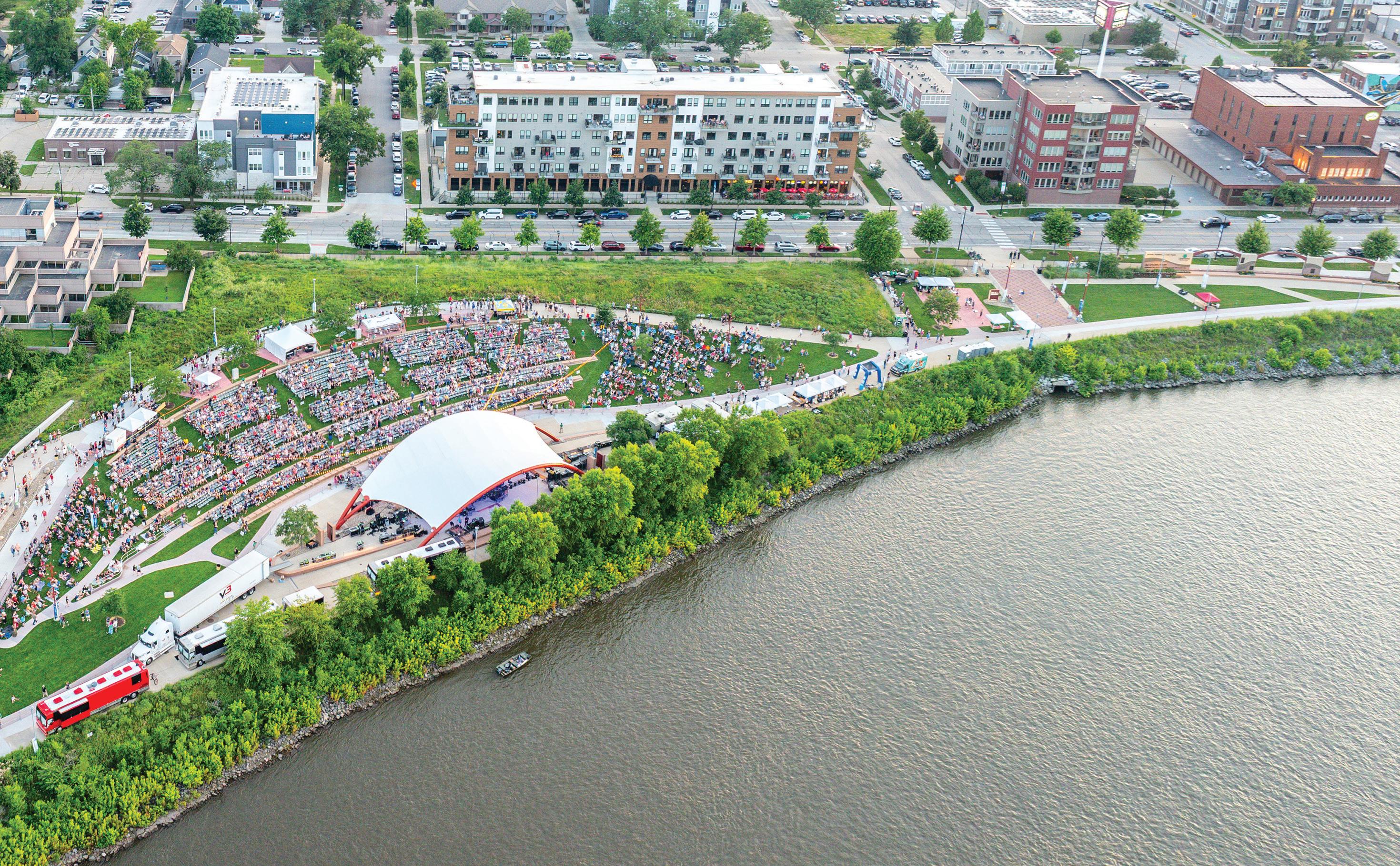
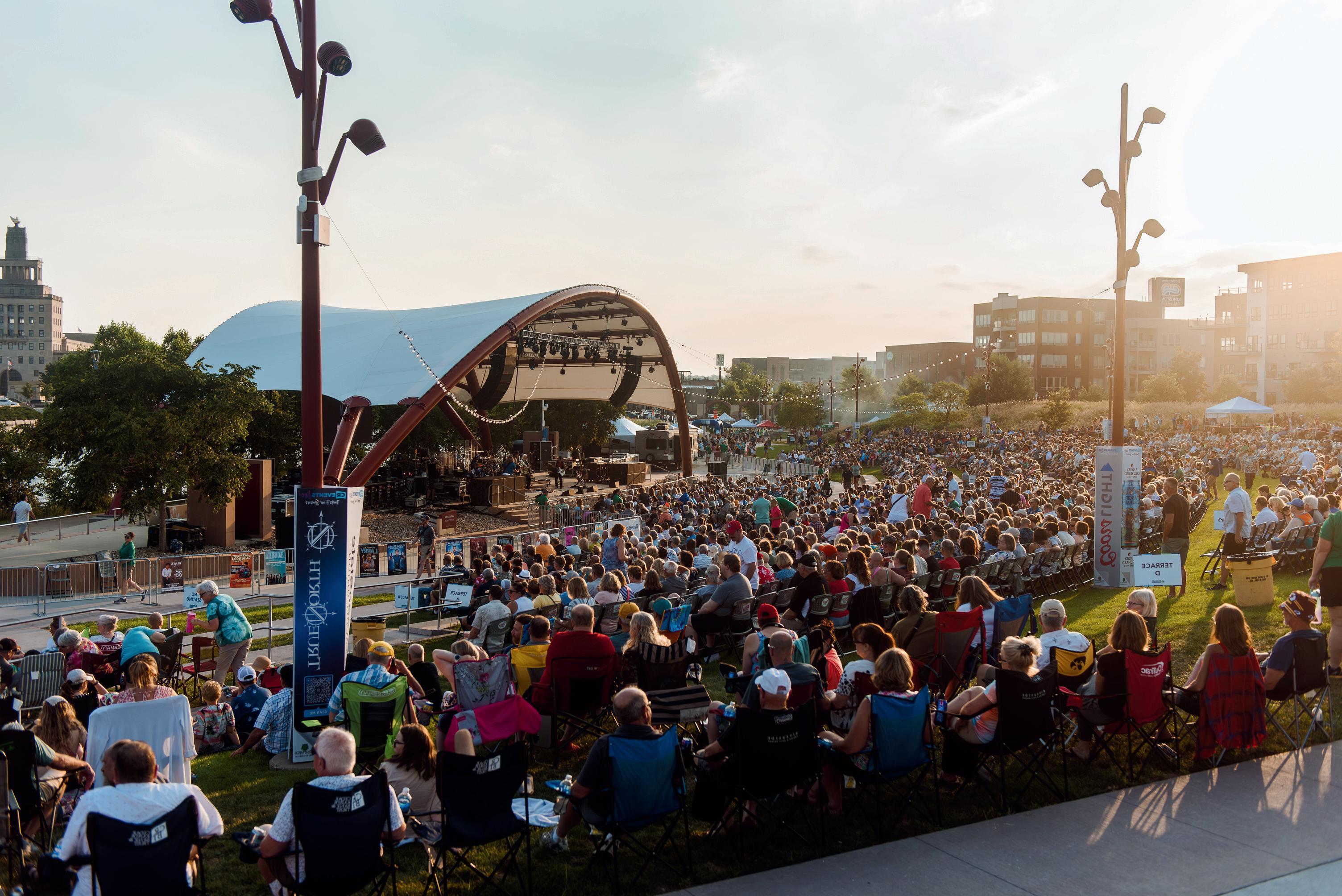
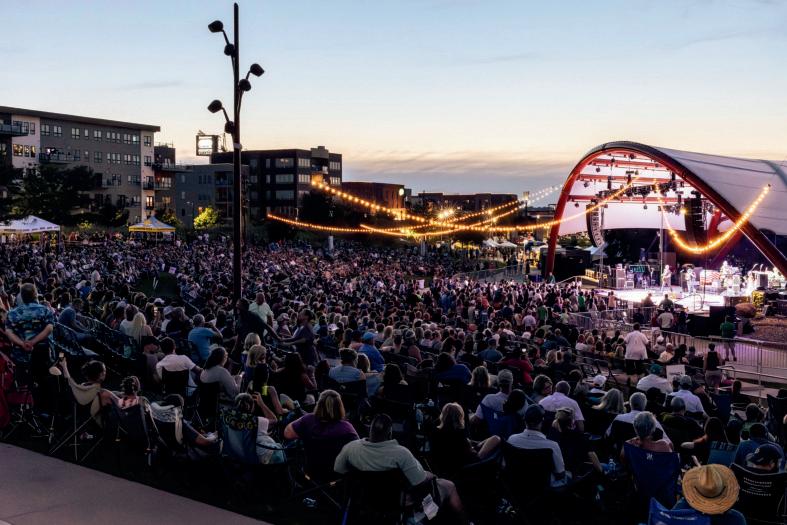
Little River Band - June 5th
CRBT Movies at the Riverbank - June 13th
Russell Dickerson - June 26th
CRBT Movies at the Riverbank - July 11th
Cypress Hill - July 21st
CRBT Movies at the Riverbank - August 8th
John Mulaney - August 13th
Jefferson Dickerson - September 25th
And more!
Organized around eight key elements, the Age-Friendly Action Plan focuses on various aspects of daily life that are deeply connected — working together to create the building blocks of a livable community.
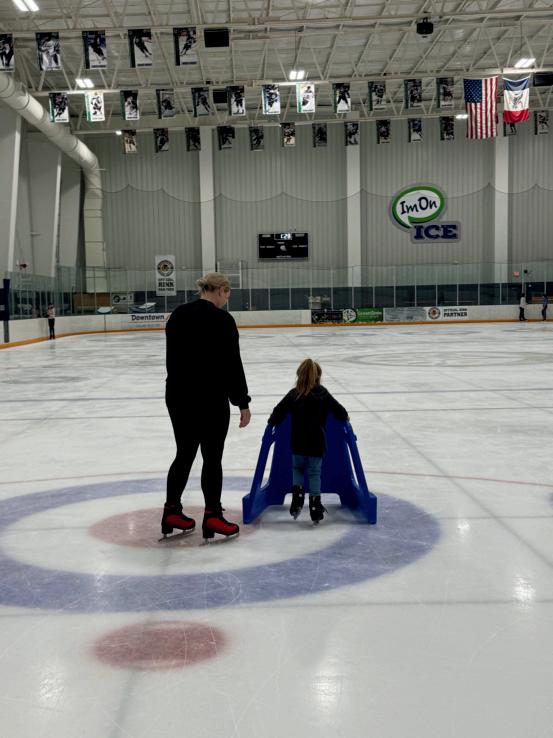
Get ready for a fun summer on the ice at ImOn Ice Arena! This camp is designed for students ages 7 years and up. One week is dedicated to Basic 1-6 levels and the second week is dedicated to the Aspire
ImOn Ice Cedar Rapids has public skate sessions scheduled throughout the summer. Always check for updated times on our social media & website!
Follow us on our socials to stay up to date on programming including Learn to Skate, public skate schedules and more!
Help Around The Home
City Programs Give More Housing Options
If you are looking for an updated home in Cedar Rapids, you have more options than buying new. Multiple City programs help residents improve existing homes, add usable space, and increase accessibility.
COMPREHENSIVE REHABILITATION PROGRAM
This program helps low- and moderate-income homeowners make essential repairs, address lead hazards, and improve safety and accessibility. It also plays a key role in preserving affordable housing.
` Up to $35,000 per project
` Homes must be 50+ years old in select neighborhoods
` Must be owner-occupied for at least one year
more at CityofCR.com/CompHousingRehab
FIRST-TIME HOME BUYER PROGRAM
This program provides up to $14,999 in forgivable assistance toward a downpayment and closing costs. It is available to income-qualified buyers purchasing eligible homes within city limits. Funds are forgiven over five years, helping make homeownership more attainable for new buyers.
Accessory Dwelling Units
Sometimes called coach houses, alley flats, or in-law units, accessory dwelling units (ADUs) are self-contained living spaces — complete with a kitchen, bathroom, and living and sleeping areas — on the same lot as a primary home. They can be created through options like basement conversions, additions, or new backyard structures. ADUs provide flexible housing options for families, caregivers, renters, and aging residents.
As part of the 2022 EnvisionCR update, the Cedar Rapids City Council approved ADUs in residential zones with a limit of two ADUs allowed per lot.
` Learn more at CityofCR.com/ADU
Family Self-Sufficiency Program
Our Family Self-Sufficiency Program (FSS) helps people move from housing assistance programs into long-term financial independence through guided goal-setting , education, job training, and supportive services. The program connects participants with coaching and resources to increase their income and resiliency over time. Eligible participants can build savings through an escrow account tied to increased earnings, creating additional pathways to housing and economic mobility.
` To learn more, visit CityofCR.com/FSS
LEARN MORE
LEARN MORE
Support Starts Before Emergencies
Health and safety often intersect in moments of crisis. Some of the most impactful work happens long before a call for help. In Cedar Rapids, partnerships between public safety, schools, healthcare, and community organizations help residents stay safe, connected, and supported.
CRFD Cares
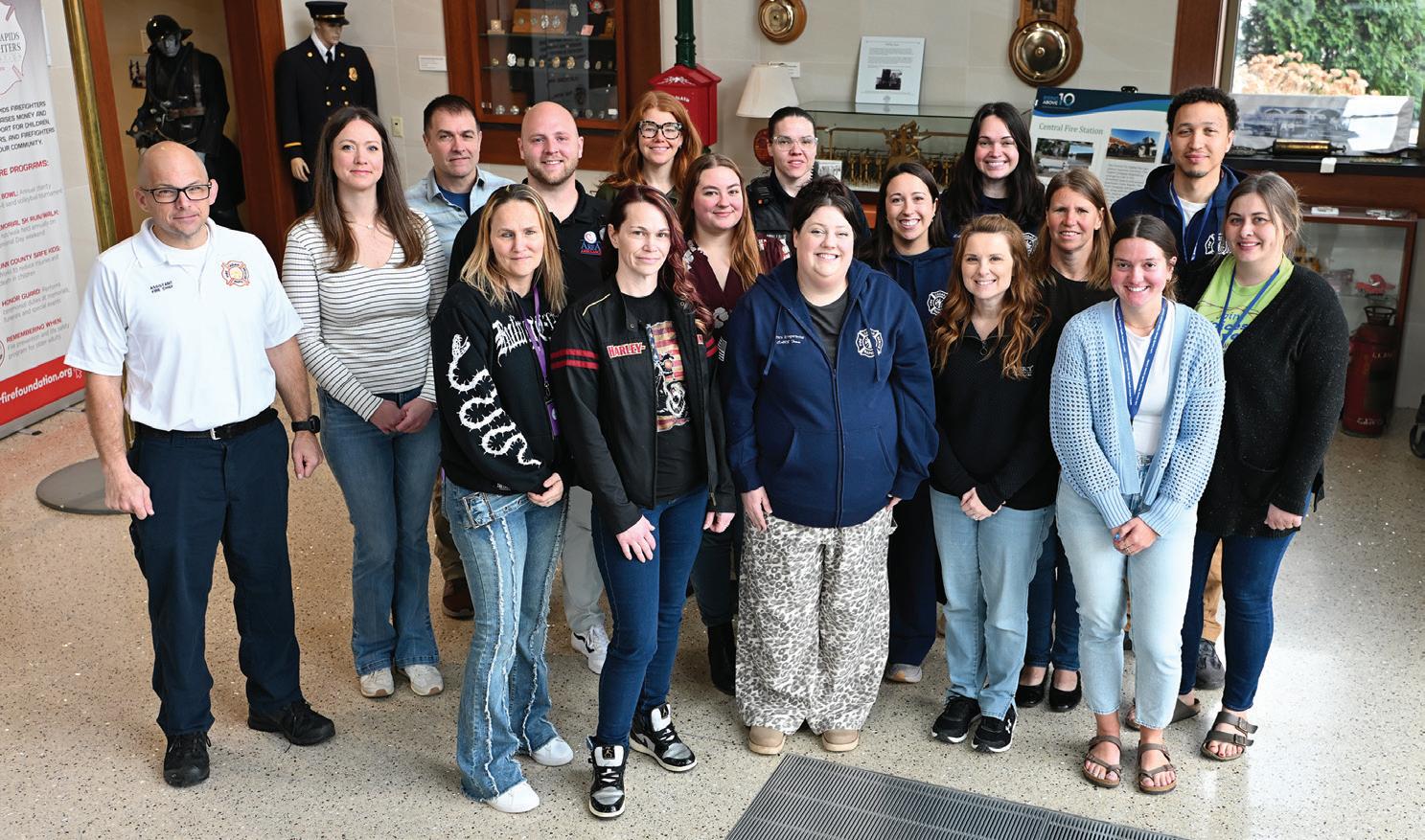
Formed in 2017 as the first-known program of its kind in Iowa, the Cedar Rapids Fire Department’s “Cares Team” works to uncover root causes behind frequent 9-1-1 callers’ emergencies. Today, communities across the region have modeled similar efforts after Cedar Rapids’ success.
Firefighters are often the first to notice declines in a person’s wellness. Instead of returning to provide repeated assistance, CRFD Cares connects individuals with
Police PALs
The CRFD Cares Team includes partners from the Cedar Rapids Fire Department, Cedar Rapids Police Department Mental Health Unit, Heritage Agency on Aging, Area Ambulance Service, ASAC Outreach, CRUSH Recovery Community Center, Foundation 2, Linn County Public Health, Mercy Medical Center, Unity Point-St Luke’s Hospital, Linn County Mental Health Access Center, and Eastern Iowa Disability Alliance.
services that help them stabilize, regain independence, and live with greater dignity. Assistant Fire Chief Andy Olesen describes the effort as, “a laser-focused group with the goal of improving quality of life for residents while reducing call volumes for first responders.”
The impact is personal. Laura Symmonds, elder rights coordinator at Heritage Agency on Aging, recalls working with an older woman determined to remain
For more than 30 years, the Cedar Rapids Police Department has provided age-appropriate education to elementary students through Police PALs (Protect, Assist, Listen). Officers visit classrooms to share lessons on personal safety, bullying, and making responsible decisions.
Officers Josh Carter and Shawn Burke visit every elementary classroom in Cedar Rapids’ public and private schools, building early, positive relationships with students through honest discussions with law enforcement. CRPD Police PALs work with schools, teachers, parents, and — most importantly — students, to support safety, provide education, and build trust. These early contacts build strong relationships as students move to middle and high school.
Learn more about SROs and the PALs program at CityofCR.com/SROs
in her home with her dog. After several falls brought first responders to her door, the Cares team helped connect her to support. “We were able to establish a rapport with [the individual] and family living out-of-state,” said Symmonds. “Heritage provided assistive devices to reduce her risk of falls and helped her apply for a Medicaid program covering professional, in-home care.”
A Place You Belong
Welcome is Our Language
Respect and inclusion are about creating a community where people feel welcome. This is reflected in the spaces the City creates, the programs it offers, and the ways the community connects and partners. In developing the Age-Friendly Action Plan, community feedback consistently highlighted the importance of connection, including a strong desire for spaces and activities that bring people together and foster meaningful relationships across generations.
“Our Place” Senior Center
Horizons Family Services’ “Our Place” senior center is a direct response to the residentidentified need for opportunities for older adults to connect and stay engaged. Designed as a vibrant, everyday destination, the space will offer a café and informal gathering areas where relationships can grow naturally, along with fitness and wellness programming to support active, healthy living. Classes, counseling, and social opportunities will create additional pathways for connection, allowing the center to meet people where they are, both socially and personally.
The project reflects strong public-private partnerships across the community,
including support from the City of Cedar Rapids as part of its broader commitment to expanding access to community spaces and services. Momentum for the project continues to build. Horizons is leading a multi-phase fundraising effort to support the approximately $5.5 million project; a recent $2 million anonymous donation provided a major boost moving the center closer to construction. Additional support comes from a combination of private donors, community partners, and public investment. Construction is anticipated to move forward as fundraising progresses, with the goal of bringing the center online in early 2027.
Cedar Rapids’ “Welcome is Our Language” campaign reflects agefriendly ideals in a simple, powerful way. Developed in partnership with community organizations, the campaign highlights a shared identity: Cedar Rapids is a community where people are invited to be part of something larger. It emphasizes local pride, connection, and the everyday ways neighbors and visitors come together and support one another. Having places to gather, opportunities to engage, and a sense of belonging are essential elements to overall livability.
Learn how your organization can get involved in the campaign at CityofCR.com/Welcome
Places to gather, learn, & play
Across Cedar Rapids, public spaces are designed with people in mind — each offering unique opportunities to stay active, learn something new, and spend time together. This reflects the City’s commitment to creating welcoming spaces for residents at every stage of life and ability.
Old MacDonald’s Farm
Families return each summer to visit animals, explore the grounds, and take part in hands-on learning. School groups and first-time visitors alike have the chance to learn about agriculture in a setting that encourages curiosity and play. For many, it’s an early connection to the valuable role nature plays in everyday life.
Visit CityofCR.com/OldMacDonaldsFarm for more.
Northwest Recreation Center
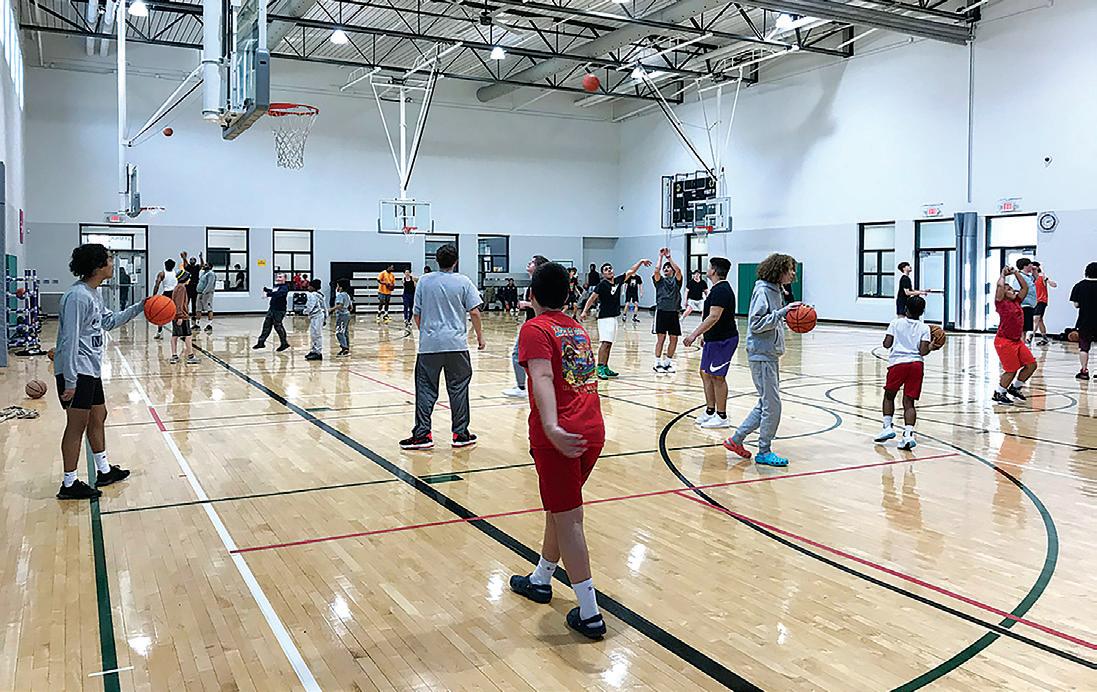
Daily activity fills this space year-round: youth sports, open recreation, and fitness classes bring people through the doors, while community programs create opportunities to connect. Some stop in for workouts, others for a class or game. Over time, the center becomes part of their routine — a place to stay active and see familiar faces.
Visit CityofCR.com/NorthwestRecreationCenter
Ushers Ferry Historic Village
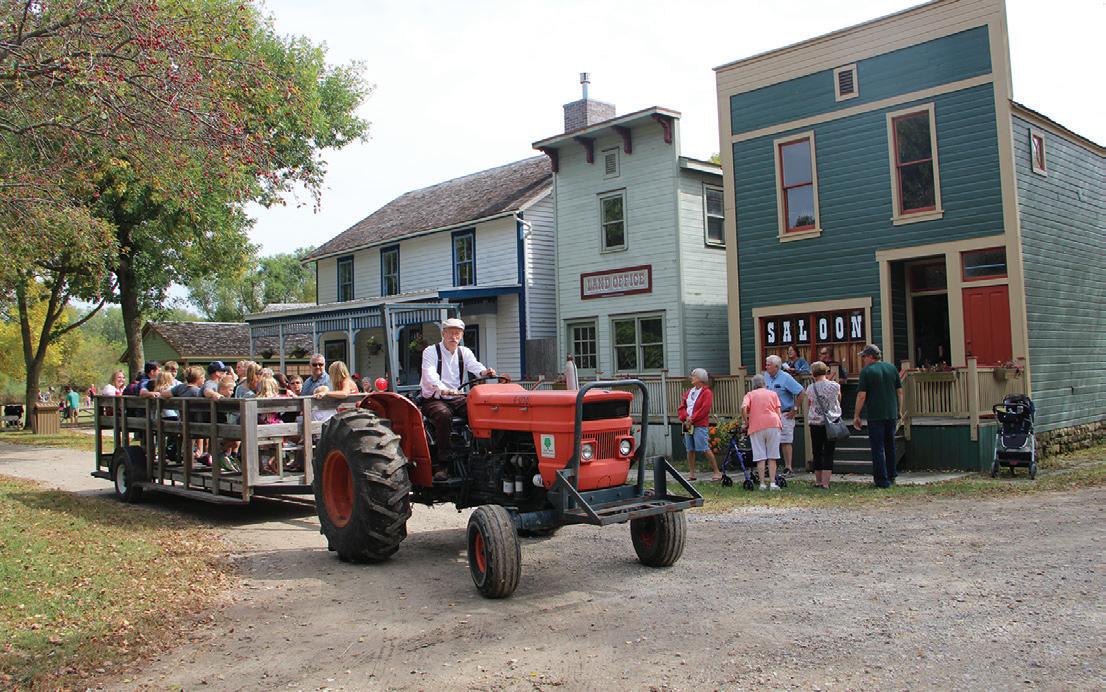
Living-history programs, field trips, and community events shift the focus to the past at Ushers Ferry. Visitors see what daily life looked like in earlier eras. The site serves as both a learning space and a gathering place where history comes to life through demonstrations and shared experiences.
Learn more at CityofCR.com/UshersFerry
See Marvelous Art
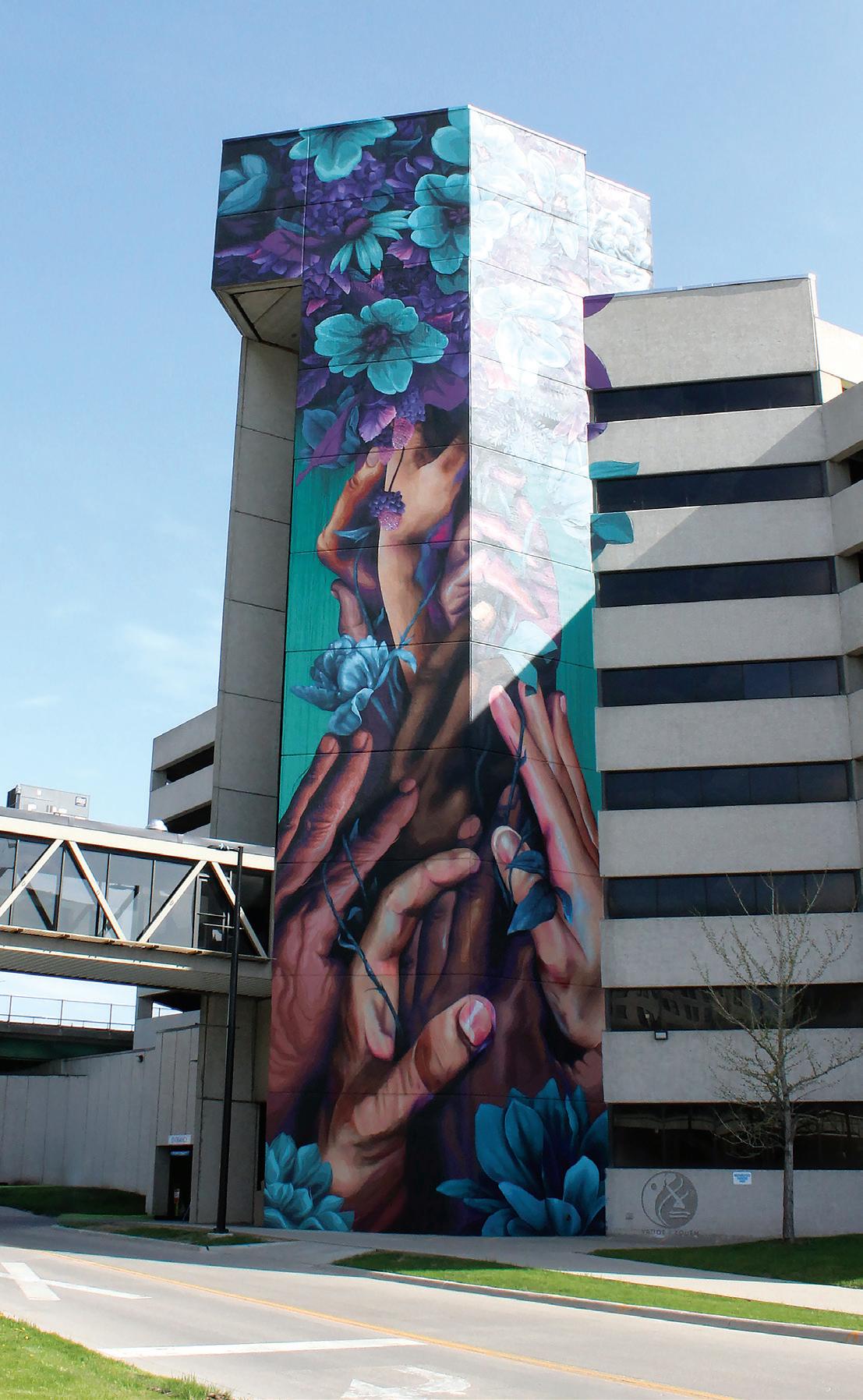
The Self-Guided Downtown Cedar Rapids Art Tour highlights more than 20 public artworks located throughout our downtown core, showcasing large-scale murals, sculptures, and installations that reflect Cedar Rapids’ creative identity and evolving urban landscape.
The Self-Guided Art Tour: Czech Village & New Bohemia follows a curated route through two of Cedar Rapids’ most distinctive neighborhoods, covering public art that celebrates local culture, history, and community expression.
Visit CityofCR.com/ArtTours for more.
Experience Our History
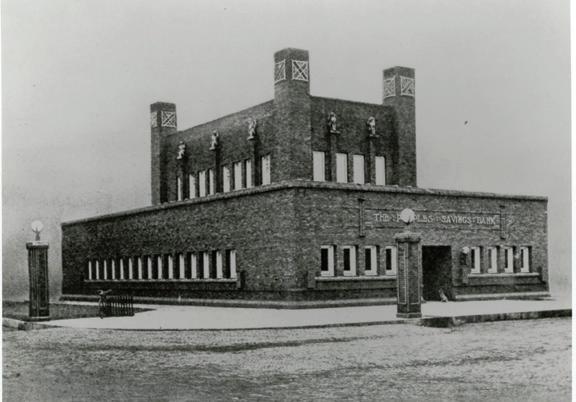
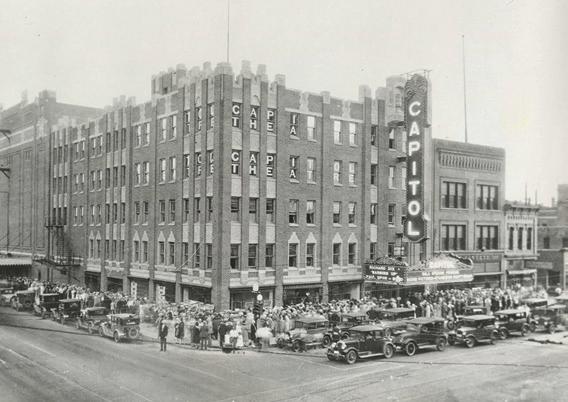
Developed in collaboration with The History Center and Downtown Cedar Rapids, the City-created Cedar Rapids Self-Guided Downtown History Tour features 20 historic sites arranged in a walkable 1.5-mile loop. Follow along using your tablet or smartphone to learn more about about City Hall, Veterans Memorial, the Roosevelt Hotel, and more in an easy-to-follow tour complete with a map and photos.
Visit CityofCR.com/HistoryTour to take the tour.
History Happened Here! is another way to tour Cedar Rapids while learning about its history. This collaborative community project highlights notable historic sites and markers throughout Cedar Rapids, from architecturally significant buildings to lesser-known stories about our community’s past. The tour includes visits to places like Coe College, the Iowa Theatre Building, Kingston Hill, Mother Mosque, Oak Hill Cemetery, and more locations where key buildings used to stand, like Adams School and the Fifth Avenue Roller Skating Rink. Key collaborators include the Cedar Rapids Historic Preservation Commission, The History Center, Coe College, the African American Museum of Iowa, local faith communities, neighborhood associations, and a number of individual residents.
Interested in more? Visit CityofCR.com/Markers
grand touring
Want to learn more about Cedar Rapids? Try one of our self-guided tours! The City’s website features multiple self-guided tours covering historic sites and public art in a celebration of local neighborhoods, culture, and beyond.
CARING FOR OUR PARKS
In Cedar Rapids, caring for parks is something the community does together. This shared effort is expanding through a new Parks & Recreation Adopt-A-Park initiative. As part of the initiative, local businesses and service organizations commit volunteer teams to help care for neighborhood parks, supporting cleanup and upkeep throughout the year.
OPENING THE DOOR TO PLAY
The program is built around the City Manager’s 1-Bag Challenge, with participating groups using litter-collection kits as they work to make a difference in our parks — one bag at a time. While the effort grows, volunteers continue to support parks and recreation in many ways. Some assist with programs and events, while others help at golf courses or activities like Special Olympics. Each contribution adds to the care and energy that keeps these spaces welcoming.
As groups step forward, Adopt-A-Park is giving more people opportunities to get involved, help care for parks, strengthen social connections, and meet neighbors.
` Learn more at: CityofCR.com/AdoptAPark
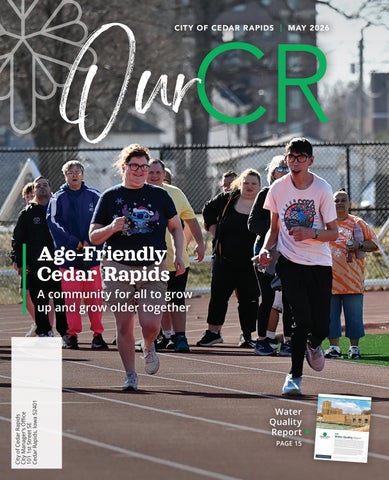
Special Olympics athlete Adam Todd participates in a track event
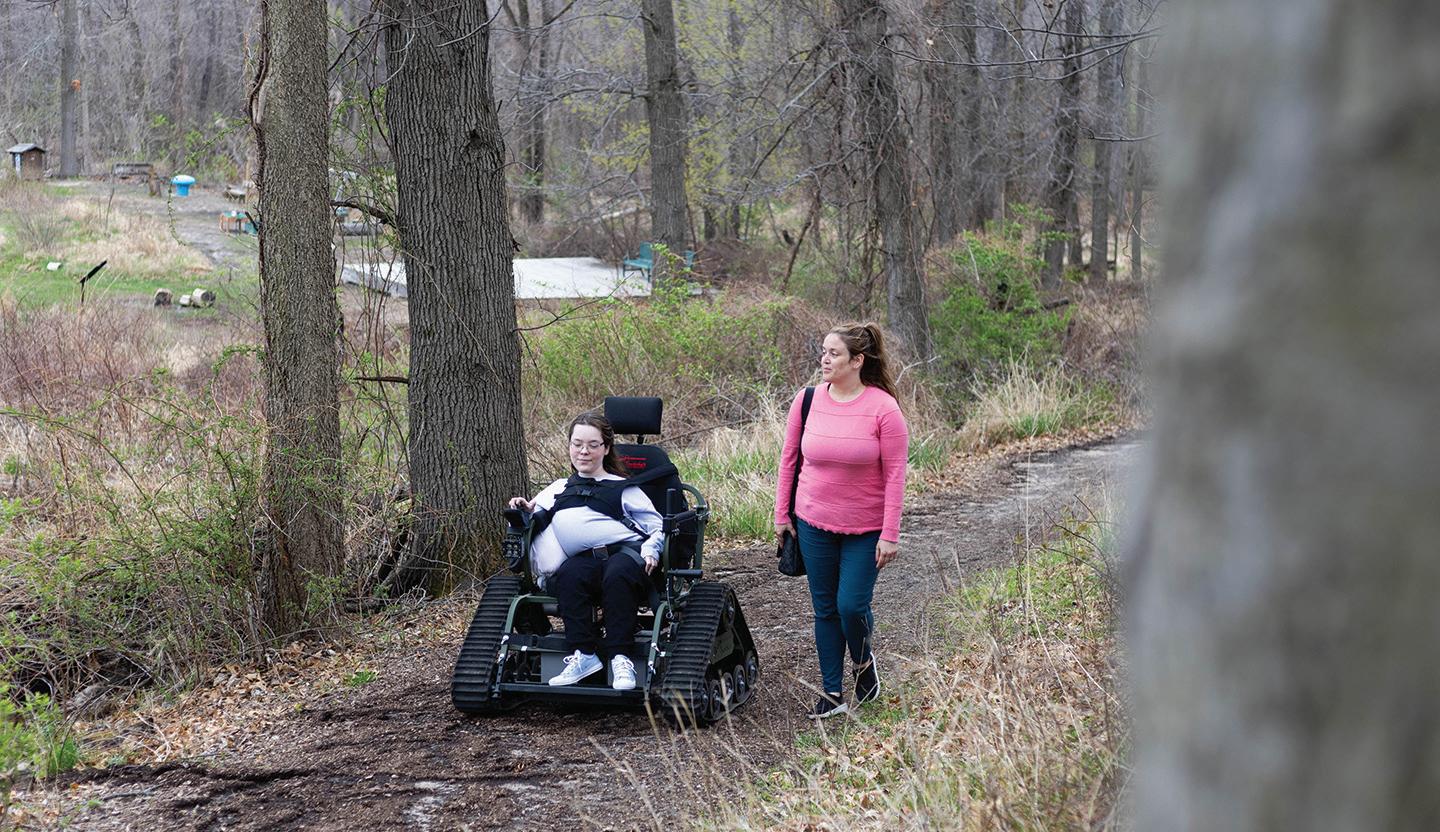
On any given day in a Cedar Rapids Therapeutic Recreation program, participants might learn a new game, practice skills for an upcoming Special Olympics event, or share laughs with friends during group activities. These programs help residents who may face barriers in traditional recreation settings take part in meaningful experiences.
We design activities to encourage participation and personal growth. With guidance from trained staff and volunteers, participants build confidence, develop new skills, and discover activities they enjoy in a supportive environment. Therapeutic Recreation programs welcome residents at many stages of life. Older adults stay active through senior recreation and social opportunities, while youth take part in adaptive activities that encourage movement and creativity. Special Olympics athletes also train and compete through the program. In Cedar Rapids, Therapeutic Recreation programs help ensure everyone has a place to play, participate, and feel part of the community.
` Learn more at: CityofCR.com/TherapeuticRecreation
Summer in the Square
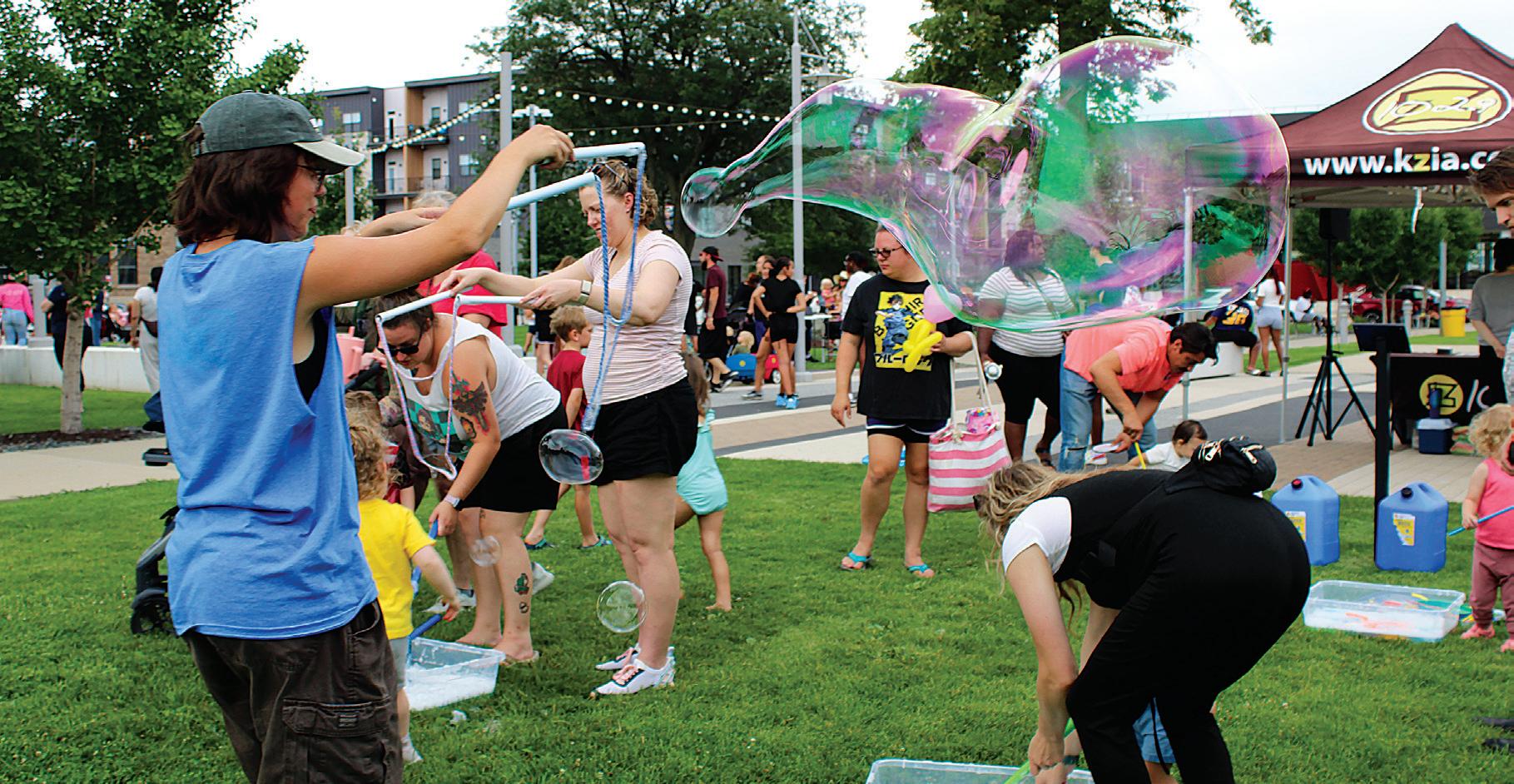
Greene Square comes to life this June with Summer in the Square, a series of weekday events made possible by the generous businesses shown to the right. From morning through evening, Cedar Rapids’ premiere downtown destination transforms into a lively place where residents can gather, stay active, and spend time together in the heart of our city.
For Youth
Stop by for family-friendly games , crafts, and hands-on activities for all ages. Whether you stop for a quick visit or linger, the park can become part of your regular routine. Laughter, movement, and conversation carry through the space as people come and go throughout the day.
For Grownups
Evening activities focus on adults, turning Greene Square into a shared space for health and recreation. Outdoor fitness, yoga, and group workouts offer a chance to stay active.
Live Music
As part of Weekend Rehearsal, concerts take place each Thursday evening in July, bringing local and regional bands downtown while supporting area nonprofits.
Attendees receive a card that can be used throughout the summer to enjoy special offers at nearby restaurants and businesses through Live Beats, Local Eats
` See specials and participating businesses at CityofCR.com/LiveBeatsLocalEats
From morning crafts to fitness classes and live evening concerts, there is something for everyone! Find schedules, updates, and event details by visiting CityofCR.com/SummerInTheSquare.
Coming to Your Neighborhood
This summer, recreation and community connections arrive in your neighborhood. Check out just a few ways to connect with neighbors — just around the corner!
ROLLIN’ RECMOBILE
The Rollin’ Recmobile brings the fun to parks across Cedar Rapids with free games and activities for kids and families. At select stops, lunch is included, making it easy to drop in and play.
` Find the full schedule at: CityofCR.com/RollinRec
BLOCK ’N ROLL
Block ’n Roll helps neighbors turn gatherings into something bigger. The trailer is available to rent and comes packed with games and equipment, making it easy to host block parties.
` Learn more by visiting: CityofCR.com/BlockNRoll
CR Transit
Many Cedar Rapids residents rely on the availability of our public transit system. If you haven't already, give it a try! City buses provide fast, reliable connections and positively affect the health, stability, and economic vitality of the whole community. Reliable transportation helps ensure workers, students, caregivers, and residents of all backgrounds can access healthcare, shopping, and community services — and have dependable ways to reach the places they need.
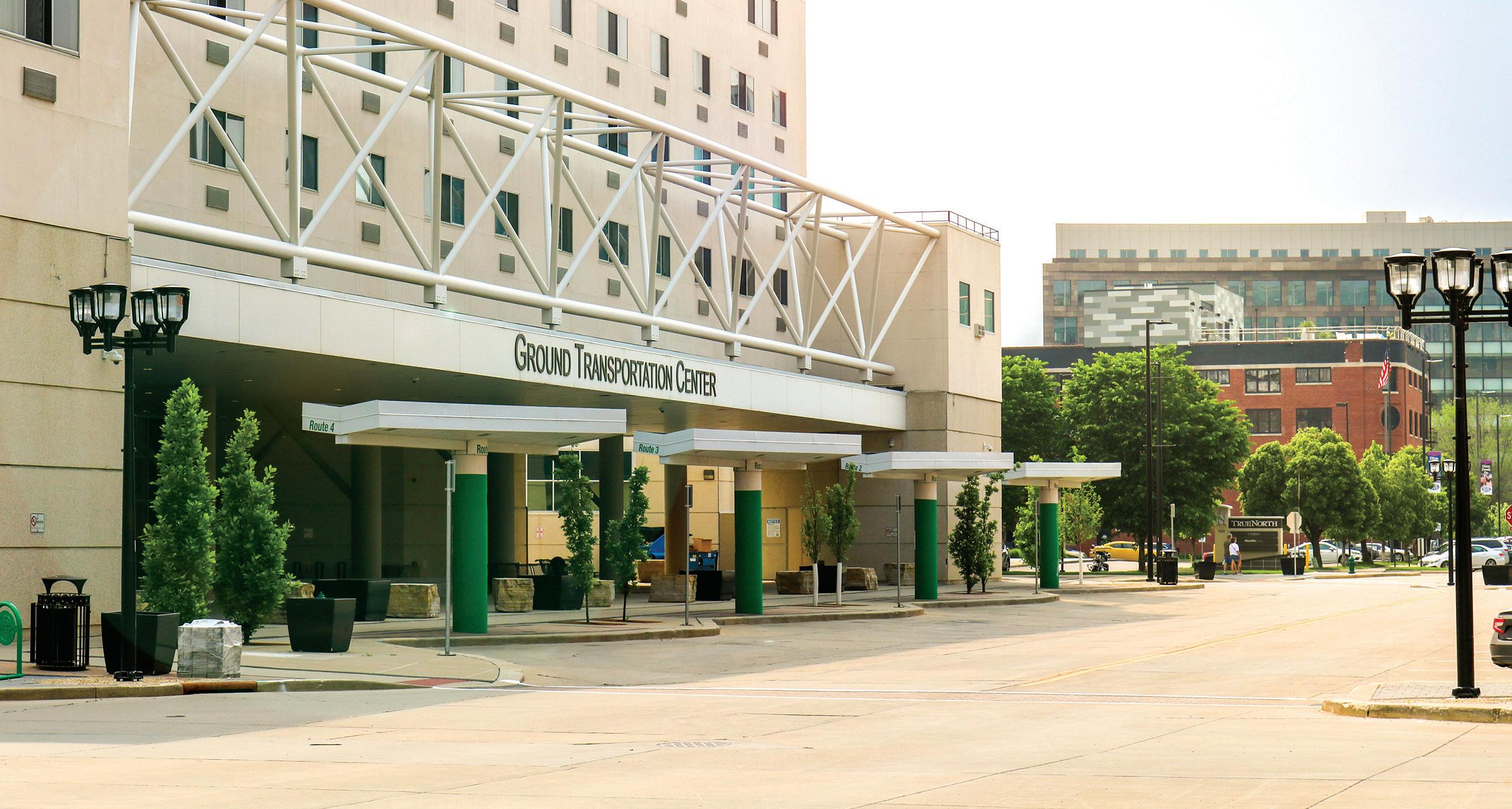
Cedar Rapids designed its transit system with comfort and safety in mind. Clean buses, accessible stops and boarding, new shelters along popular routes, and vibrant, art-covered stations all make waiting and riding more enjoyable, no matter the season.
A key element of CR Transit is LIFTS, the City’s demand response service designed for seniors and individuals with disabilities. LIFTS provides door-to-door transportation using accessible vehicles that accommodate a range of mobility needs. Riders often use the service to reach medical visits, workplaces, grocery stores,
connecting residents to places & spaces
Cedar Rapids has long recognized that a strong community depends on reliable, accessible ways for people to move through it. Students commuting to class, older adults traveling to medical appointments, and employees heading to early morning shifts all rely on mobility
The Age-Friendly Action Plan recognizes transportation as a critical part of daily life, ensuring residents have access to, “a variety of quality transportation options” that support independence and connection.
Stay Connected: Rain, Sleet, Snow, or Sun
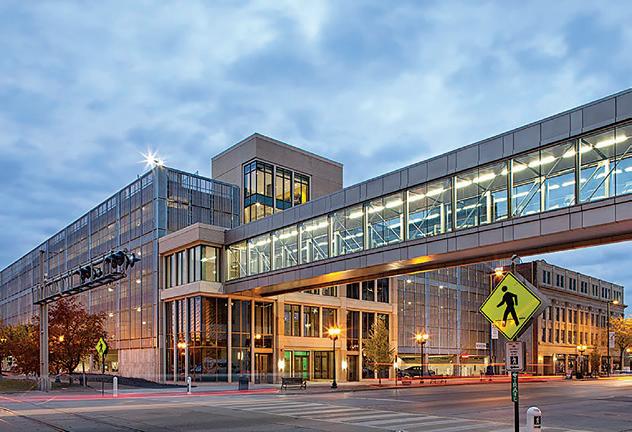
The Age-Friendly Action Plan specifically highlighted Cedar Rapids’ Skywalks as an important asset for improving yearround accessibility and supporting safe, comfortable movement throughout downtown. The system offers enclosed, elevated walkways linking key buildings, parking areas, and destinations. Skywalks provide weather-protected routes that keep people moving comfortably in every season. For transit riders making transfers or walking to nearby stops, the system adds an extra layer of convenience and safety, especially during winter weather. This strengthens year-round accessibility for all.
Find a map of skywalks and downtown parking at CityofCR.com/Skywalks
Effective communication helps people access the City services they need. It also helps the community be part of decisions affecting their daily lives.
The City of Cedar Rapids works to share information that is clear, easy to understand, and available to everyone, no matter their age or background.
Sign up to get updates the way you prefer at CityofCR.com/Subscribe.
Clear communication CONNECTING RESIDENTS THROUGH
Many Ways to
Get Information
People access information in different ways. Some prefer online tools, while others rely on printed materials or talking with someone in person. That’s why the City shares information in many ways. This includes the City website and digital apps, social media, printed newsletters — like this magazine — utility bill inserts, local news, and community events.
By using many channels, we make sure residents can receive important updates in the way that works best for them.
Listening Matters
Communication is not just about sharing information. It is also about listening.
The City wants to make it easy for residents to ask questions, share concerns, and stay involved. Tools like My CR and the Mobile CR digital app let residents report issues and track progress. Community meetings, events, and everyday conversations with City staff also give people a chance to share feedback and connect.
` Find ways you can get involved by visiting CityofCR.com/Engage.
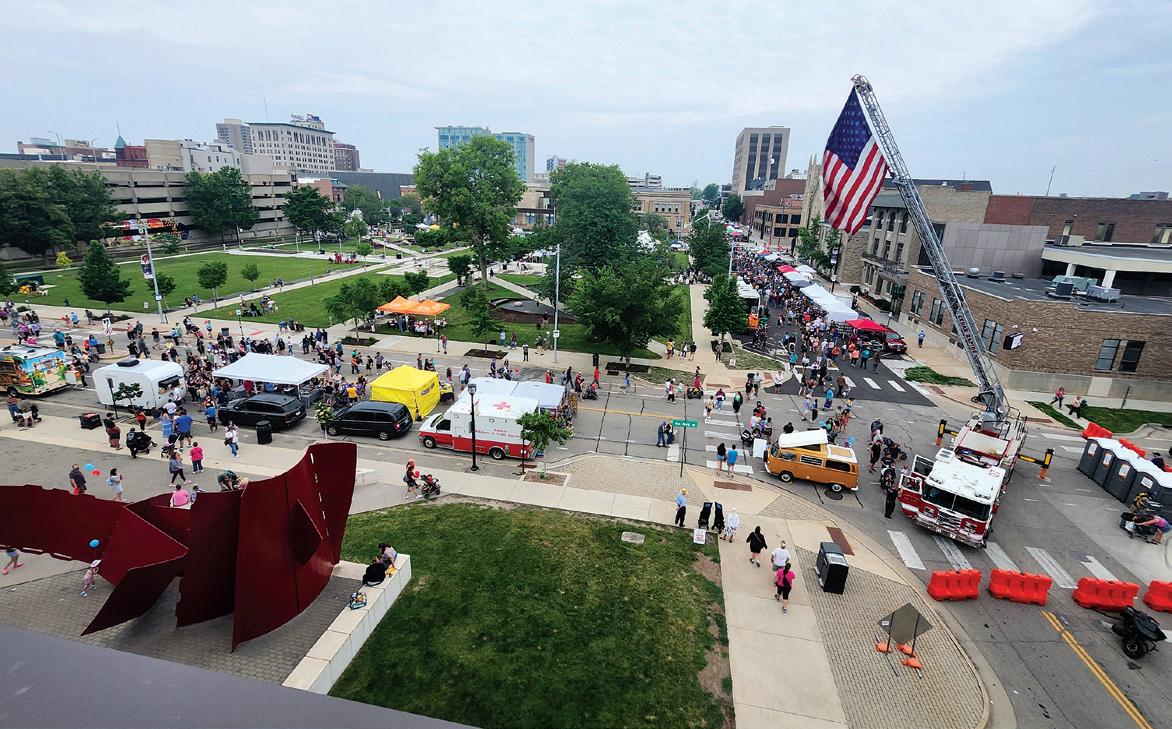
Join Us at Resident Appreciation Day
SATURDAY, JUNE 6 | 7:30 AM–NOON
DOWNTOWN FARMERS MARKET |
GREENE SQUARE
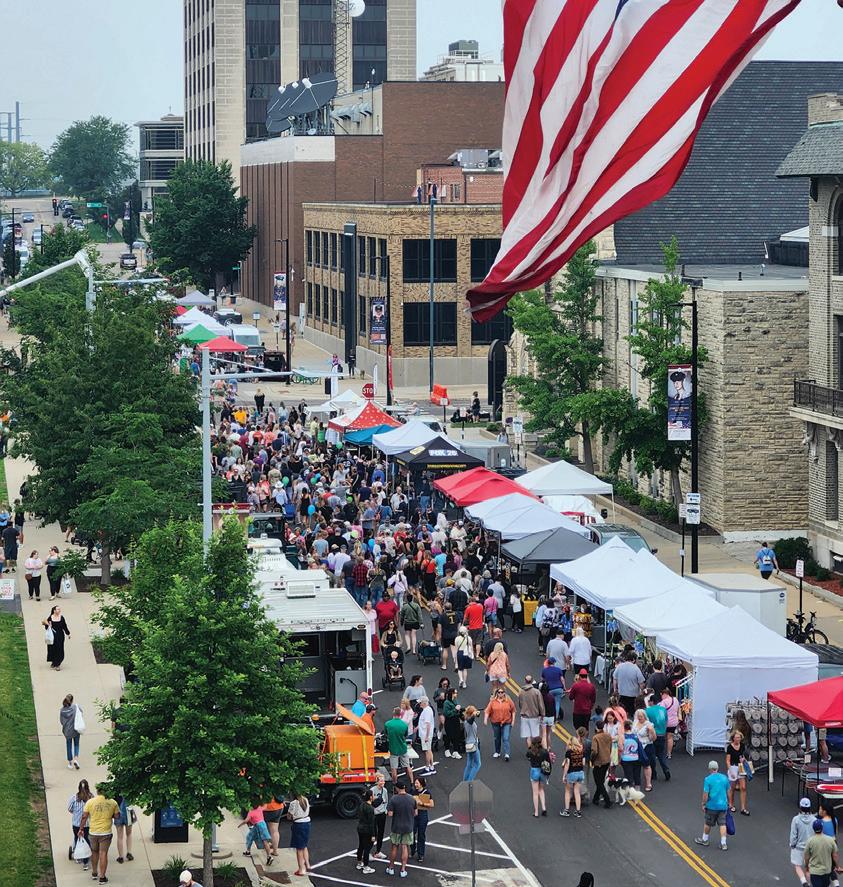
Join us for a morning that celebrates what makes Cedar Rapids truly special — our residents. Meet City staff, ask questions, and discover the services that support your everyday life. Families can enjoy games, hands-on activities, and up-close looks at City vehicles, from fire trucks to snowplows.
Bring the kids for fun photo opportunities, connect with neighbors, and pick up a City Manager’s 1-Bag Challenge kit as we work together to Clean Up CR. Don’t miss this free, family-friendly event for all ages — and get involved at CityofCR.com/CleanUpCR .
Better Roads Ahead
Construction season is an investment in safer streets, smoother travel, and longterm community growth. While roadwork may bring temporary changes, our commitment to keeping businesses accessible throughout construction remains strong.
Through Better Roads Ahead, the City is partnering with local businesses to help keep them visible and supported throughout construction. This new program highlights opportunities for you to support local businesses affected by construction — a great way to help keep our city thriving.
Every visit, every purchase, and every show of support makes a difference.
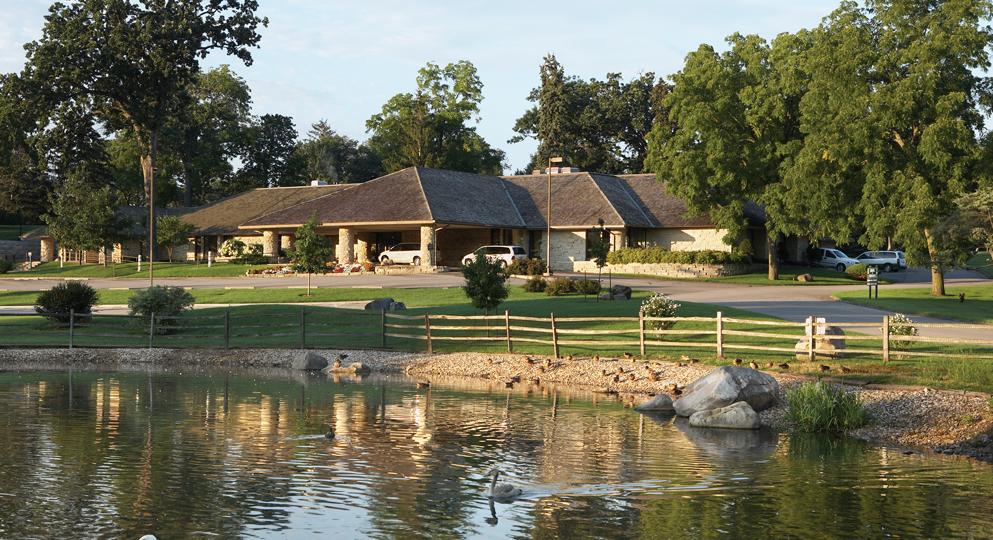
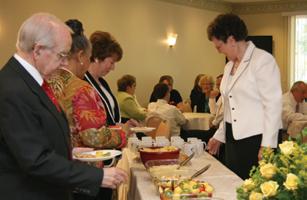
At Cedar Memorial, you’ll find comfort, dignity, and quality at every turn. From our distinctive facilities and grounds to our caring, professional staff—we provide everything for your family.
We pride ourselves in providing innovative funeral and cemetery services to families throughout the Marion and Cedar Rapids area. Learn more today at www.CedarMemorial.com
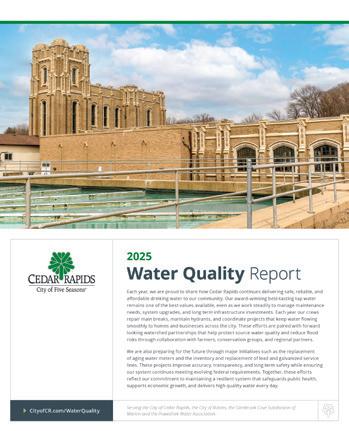
2025 Water Quality Report
Each year, we are proud to share how Cedar Rapids continues delivering safe, reliable, and affordable drinking water to our community. Our award-winning best-tasting tap water remains one of the best values available, even as we work steadily to manage maintenance needs, system upgrades, and long term infrastructure investments. Throughout the year, our crews repair main breaks, maintain hydrants, and coordinate projects that keep water flowing continually to homes and businesses across the city. These efforts are paired with strategic watershed partnerships that help protect source water quality and reduce flood risks through collaboration with farmers, conservation groups, and regional partners.
We are also preparing for the future through major initiatives such as the replacement of aging water meters and the inventory and replacement of lead and galvanized service lines. These projects improve accuracy, transparency, and long term safety while ensuring our system continues meeting evolving federal requirements. Together, these efforts reflect our commitment to maintaining a resilient system that safeguards public health, supports economic growth, and delivers high quality water every day.
Each year, we review rates for the services many people rely on every day, including Water, Sewer, Solid Waste, and Recycling. We know costs are increasing in many areas, and we work to keep rates steady and manageable for residents. Several factors influence what people pay. These include routine maintenance, unexpected
repairs, upcoming projects, treatment expenses, and opportunities that support growth and economic development. Compared with other large public water systems in Iowa, our utility rates remain near the middle of the range. Have you ever wondered how it compares to the cost of some of our coveted everyday items?
That’s right! Our residents are only paying, on average, roughly $0.02 per gallon of water ! Water-only Rate Increase from 2025 to 2026 was 5% and is expected to be 6% between 2026 and 2027, which is consistent with the average of the last five years.
Water Maintenance
Maintaining a system in a city over 175 years old requires ongoing work. Here are a few ways we protected the integrity of our operations in 2025:
128
1,686
Under Construction: Prioritizing Projects
Our water system includes pipes that date back more than a century and require a mix of routine work and urgent repairs. Each year, crews respond to roughly 125 main breaks, and 75 valve and hydrant replacements. Breaks happen for a variety of reasons: aging cast iron pipe, shifting soil during freeze–thaw cycles, corrosion from certain soils, and/or sudden changes in water pressure.
When a break occurs, we prioritize repairs based on the size of pipe, the impact of the shut down for repairs, and how many customers are affected. Emergencies are not the only way our underground systems are maintained. Planned upgrades are coordinated with other City projects; roadway and utility work almost always occur in tandem. While some older pipe remains in service, newer ductile iron pipe and corrosion protection methods have strengthened today’s system.
BUILDING BRIDGES:
Our Source Water Partnerships
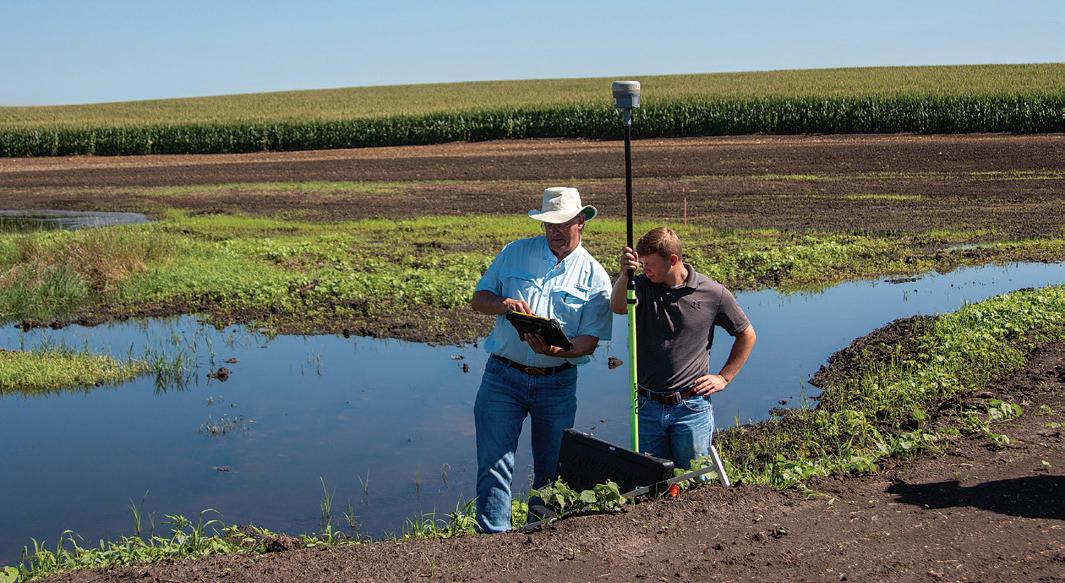
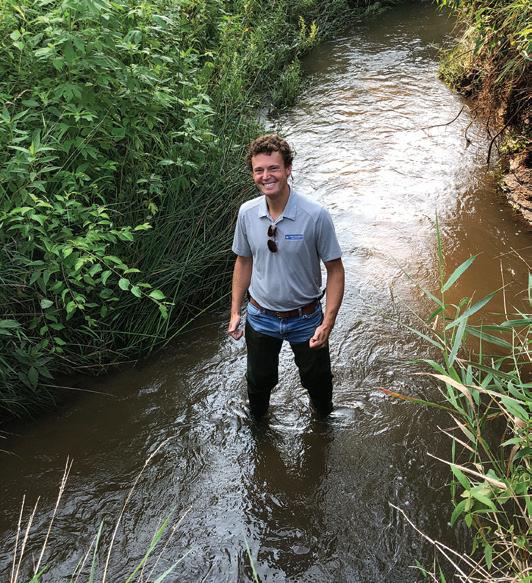
Without our watershed, clean water and a public water system simply would not exist for many Eastern Iowa residents. We have long recognized building bridges across urban-rural divides is a key ingredient for successful watershed management. This urban-rural partnership approach is the foundation for the City’s watershed program, established over ten years ago to address persistent challenges related to flood prevention, nutrient loading, and source water protection.
The goal of the watershed program is simple: improve water quality and reduce flood risk through partnerships with farmers and conservation groups .
The Utilities Watershed Program has evolved and now leverages over $15 million in state, federal, and partner funding. The program’s watershed partnerships have also thrived, as we are now working with 20+ partners including governmental agencies, non-profit organizations, academic institutions, commodity groups, and agricultural retailers.
We are working to maintain a healthy and resilient Cedar River Watershed; helping safeguard community drinking water supplies into the future and promoting a sustainable approach to agriculture.
lead service lines
New regulations from the EPA were issued in 2024, requiring public water systems to create an inventory of water line materials and work with residents to replace lead or galvanized iron pipes.
In Cedar Rapids, the city owns the portion of the service line that runs from the water main to your curb stop; the homeowner owns the portion of pipe from the curb stop to their meter. We prioritize projects that identify and replace as many service lines as possible.
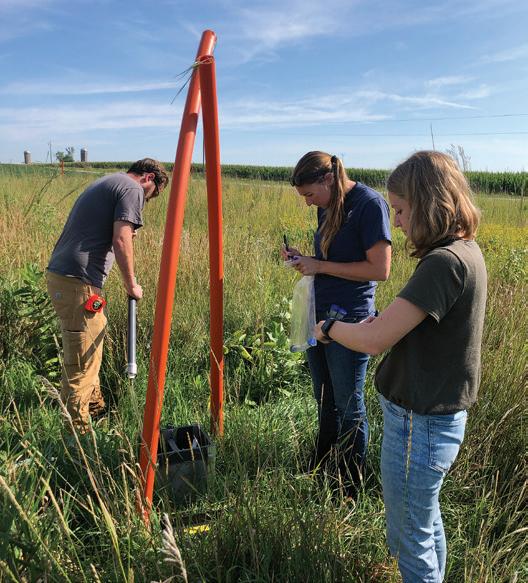
Since 2024, we have been identifying service line materials through inhouse visits and hydroexcavation, sometimes called potholing: a small, precise opening in the yard to safely expose the service line without damaging a large area.
Upcoming Projects:
SPRING 2026
` Hydroexcavation at the 1800 block of Hamilton Street SW
WINTER 2026
` Hydroexcavation and replacements at approximately 600 addresses east of I-380, north of Wilson Avenue SW, and south of 8th Avenue SW
SUMMER 2027
` Hydroexcavation and replacements at approximately 600 addresses north of E Avenue NW and east of 13th Street NW to Ellis Park
Meter Replacements
The City’s Meter Exchange Project accomplishes two goals: upgrading all customers to networked meter reading devices, and replacing aging water meters to ensure overall system accuracy and efficiency. By moving to these modern units, the City can monitor water usage more quickly and accurately for billing, leak detection, and malfunctions.
WHY ARE WE EXCHANGING METERS?
Meters are typically replaced every 15–20 years. Older meters can inaccurately capture total water consumption. At the time of the device exchange, we are replacing meters that are 14 years or older to ensure overall consistency.
HOW MANY HOUSEHOLDS STILL NEED THEIR METER EXCHANGED?
We have exchanged over 52,000 devices and still have approximately 5,000 left.
WHEN DO THEY HAVE TO BE EXCHANGED BY?
It is important we complete all installations and meter exchanges by June 30, 2026. Residents and businesses who have not yet scheduled their exchange are asked to set up an appointment at fergusonscheduling.com or 1-888-828-7323 .
What's in Our Water?
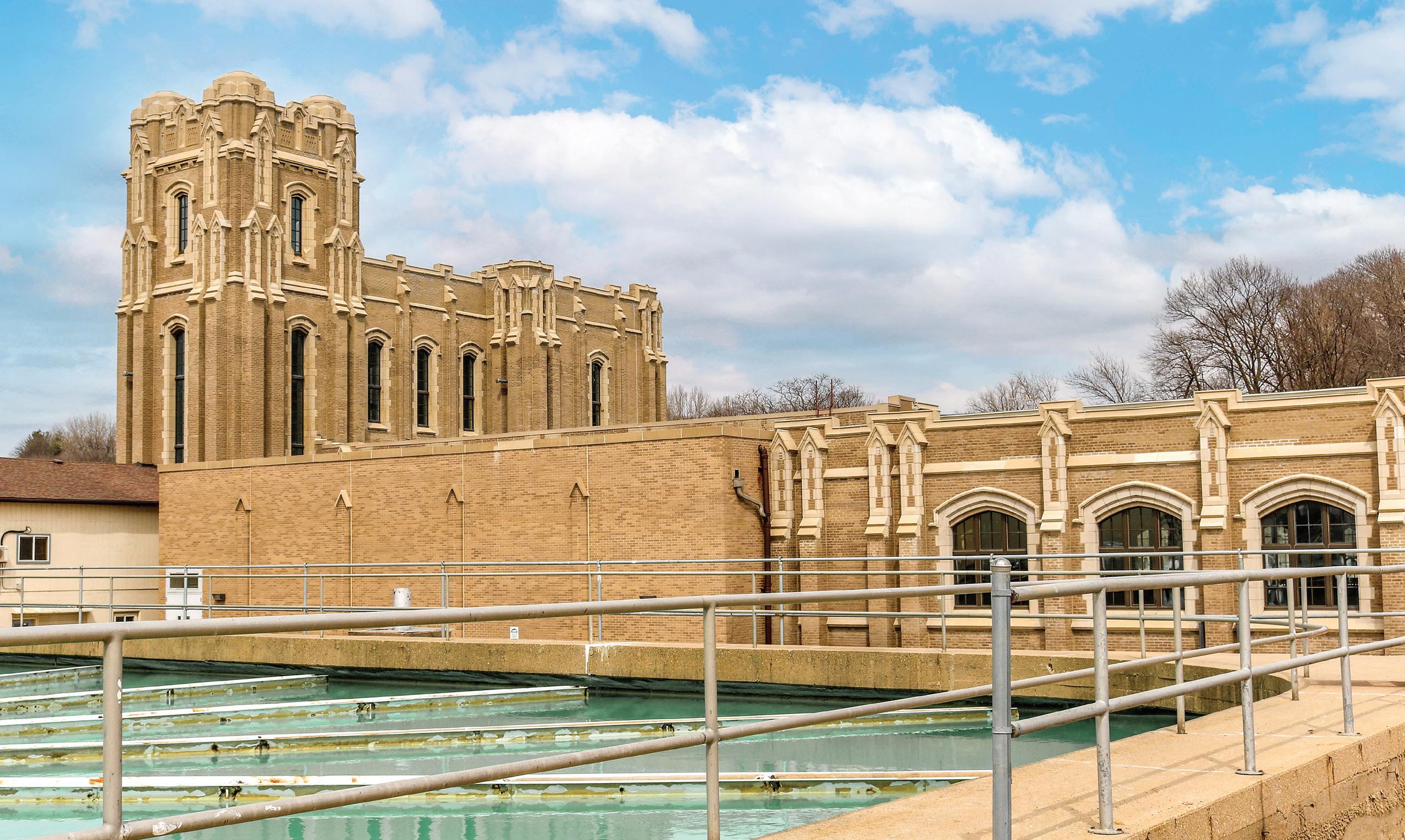
The City of Cedar Rapids obtains its drinking water supply from wells constructed in sand and gravel deposits along the Cedar River. Those deposits form an underground, water-bearing layer called an alluvial aquifer. Because of continuous pumping of the City’s wells, most of the water in the aquifer is recharged from the river. The rest of the water is supplied as water percolates up from a deeper bedrock aquifer, or down from the top of the ground. As the wells perform their work, your drinking water benefits from natural filtration through sand in the riverbank. This filtration has proven to be a beneficial pretreatment to water before it reaches the City’s conventional lime-softening facilities.
LEAD INVENTORY
Elevated levels of lead can cause serious health problems, especially for pregnant women and young children. Lead in drinking water is primarily from materials and components associated with service lines and home plumbing. The Cedar Rapids Water Division (CRWD) is responsible for providing high quality drinking water, though it cannot control the variety of materials used in home plumbing components
When your water has been sitting for several hours, you can minimize the potential for lead exposure by flushing your tap for 30 seconds to 2 minutes before using water for drinking and cooking. If you are concerned about lead in your water, you may have it tested. Information on lead in drinking water, testing methods, and steps you can take to minimize exposure is available by calling the Safe Drinking Water Hotline: 1-800-426-4791 or by visiting epa.gov/safewater/lead
NITRATES
How does nitrate end up in our water?
Nitrate is a dissolved form of nitrogen found in fertilizers and human and animal waste which can leach into groundwater and other water sources. Nitrates occur naturally in some waters. Over time, nitrates can infiltrate aquifers and contaminate groundwater.
Why is this important?
When present at elevated concentrations, nitrates are harmful to human health and have been linked to different types of cancers and thyroid disease. Nitrate levels tend to be higher in the spring and early summer during periods of rain and agricultural activities. Levels of nitrate in the City’s drinking water have never violated the legal safety limit of 10 ppm, and the City continuously monitors levels to ensure safety. If levels exceed 10 ppm, the City will notify all users of the
potential health risk, particularly for infants less than six months of age. High nitrate levels in drinking water can cause blue baby syndrome. If you are caring for an infant, ask for advice from your health care provider.
PFAS
Per- and Polyfluoroalkyl substances (PFAS) are of increasing interest in drinking water quality. PFAS have been used in a variety of industries around the globe since the 1940s. When present, the chemicals persist in the environment and in the human body, meaning they don’t break down and can accumulate over time. Due to their persistence and wide use over the last several decades, they are now making their way into bodies of water and groundwater sources and becoming a contaminate of concern for the drinking water industry.
While primary human exposure is from several common household items — nonstick surfaces, waterproofing, greaseresistant coatings, stain-resistant coatings, cosmetics, and firefighting foams — we diligently monitor City water for PFAS levels. This ongoing monitoring is being performed by the CRWD. Monitoring includes sampling of the groundwater source wells and the drinking water supply.
The Environmental Protection Agency (EPA) is performing research and has set Maximum Contaminant Levels for six (6) PFAS-specific compounds. The CRWD finished water has not had any detections for these compounds in its treated drinking water thus far. The CRWD took part in the EPA’s Unregulated Contaminant Monitoring Rule (UCMR) program’s fifth round of sampling in 2023. The program tested for 29 PFAS compounds; this testing will continue quarterly.
For more information on PFAS, visit CityofCR.com/PFAS or epa.gov/pfas
Have Any Questions?
If you have any questions or concerns about our water quality or this report, we invite you to attend our upcoming public engagement opportunity.
RESIDENT APPRECIATION DAY
Join the City of Cedar Rapids in celebrating our residents! Come chat with our water team to receive a complimentary reusable water bottle and learn more about your drinking water. Water bottles are available on a first come, first served basis.
WHERE: Downtown Farmers’ Market WHEN: Saturday, June 6 , 202 6 TIME: 7:30 AM – Noon
AT-RISK POPULATIONS
It is important to be aware that some people may be more vulnerable than the general population to contaminants in drinking water. Immuno-compromised persons — those undergoing cancer chemo-therapy or organ transplants, some elderly or infants and people with HIV/AIDS or other immune system disorders — can be particularly at risk from infections.
We ask anyone that may be at risk to seek advice about drinking water from their health care providers. Guidelines from the EPA and Centers for Disease Control on appropriate steps to lessen the risk of infection by microbial contaminants and/or Cryptosporidium are available from the National Safe Drinking Water Hotline at 1-800-426-4791
Water Quality Findings
This table summarizes required water quality monitoring results for regulated parameters that were detected in the 2025 calendar year. A comprehensive report
of natural deposits; Runoff from orchards; Runoff from glass and electronics production wastes
Source Water
Source Water Assessment Information: This water supply obtains its water from the sand and gravel of the Alluvial aquifer of the Cedar River. The Alluvial aquifer was determined to be highly susceptible to contamination because the aquifer characteristics and the overlying materials provide little protection from contamination at the land surface. The Alluvial wells will be highly susceptible to surface contaminants such as leaking underground storage tanks, contaminant spills, and excess fertilizer application. A detailed evaluation of the source water supply was completed by the IDNR, and is available by contacting the public water supply at 319-286-5975. Information about work being done to help minimize contamination of the source water supply can be found at CityofCR.com/Watershed
AVG: Average
ND: Not Detected
MRDL: Maximum Residual Disinfectant Level
NR: Not Regulated
mg/L: Milligrams per liter or parts per million
μg/L: Micrograms per liter or parts per billion
pCi/L: Picocuries per liter
cfu/mL: Colony-forming unit per milliliter
ACRONYMS
MCL: Maximum Contaminant Level
MCLG: Maximum Contaminant Level Goal
NA: Not Applicable
NTU: Nephelometric Turbidity Unit
MRDLG: Maximum Residual Disinfection Level Goal
HLRAA: Highest Locational Running Annual Average
RAA: Running Annual Average
Frequently Asked Questions
What is the fluoride concentration, and why is it added?
Fluoride is added during the treatment process to help prevent dental cavities. The optimal concentration is maintained at 0.7 parts per million (ppm) with a range of 0.6-0.9 ppm as recommended by the U.S. Department of Health and Human Services.
My toilet tank and inside of my dishwasher are stained dark brown to black. Is my water safe to drink?
The dark staining is likely due to the corrosion-control chemical added during treatment. Its purpose is to lay a protective coating on the insides of pipes so water never comes in contact with the pipe, thereby reducing the risk of dissolving lead or copper into the drinking water. It has been tested extensively and no health or safety concerns have been identified.
My water throughout the entire house tastes and smells musty or stale.
Sometimes in low-use areas or dead-end main areas, the water does not get circulated as it should. Where this is the case, the distribution crew can be notified to flush hydrants in the area to help bring in fresh water.
The water is discolored yellow or cloudy/milky. Does this mean it is unsafe?
Discoloration of water as light brown or yellow is a result of maintenance and flushing activity. Natural sediment gets stirred up and will clear as it settles. Milky, cloudy, or white water, especially if it clears from the bottom up when put in a glass, is an indication that air has gotten into the plumbing and is not harmful. A thorough flush of two or three
An important message from the Environmental Protection Agency:
Drinking water, including bottled water, may be reasonably expected to contain at least small amounts of some contaminants. That’s because as the water we draw from — lakes, rivers, streams, ponds, reservoirs, springs and wells — travels over the surface of the land or through the ground, it picks up naturally occurring minerals and, in some cases, radioactive material. It can also pick up substances resulting from the presence of animals or from human activity. The presence of contaminants does not necessarily indicate that water poses a health risk. More information about contaminants and potential health effects can be obtained by calling the EPA’s Safe Drinking Water Hotline at 800-426-4791 or visiting the website at www.epa.gov/ogwdw. Inadequately treated water may contain disease-causing organisms. These organisms include bacteria, viruses and parasites, which can cause symptoms such as nausea, cramps, diarrhea and associated headaches.
cold water taps at the same time for a few minutes can help release the trapped air. Sediment and discoloration will clear as it has time to settle back out. If the discoloration remains, staff can be notified to flush the water mains in the area.
Why is there slimy pink or orange stuff in my water or on a surface near water?
This is a common occurrence, stemming from an airborne organism that collects on moist surfaces and forms growing colonies, usually around drains, toilets, sink fixtures, pet water dishes, showers, and shower curtains. This substance does not pose any additional health risks, given that it is already found in the air we breathe. The best way to reduce the growth of these organisms is to use cleaners that contain bleach.
Why is my household water filter brown?
Due to the age of the Cedar Rapids water system, the Iowa Department of Natural Resources requires the Cedar Rapids Water Division (CRWD) to have a corrosion control process. This is a chemical addition that prevents the leaching of lead, copper, and other metals from water pipes and fixtures.
Zinc-orthophosphate is continuously added in very low doses to form a protective coating on the inside of pipes, service lines, and household plumbing. This coating keeps lead and copper levels low. However, this process can also turn filters brown and cause filters to last a shorter length of time than advertised. CRWD treats water with a softening process, eliminating the need for water softeners. We also meet or exceed all state and federal regulations, which eliminates many of the reasons to use a home filtration system.
What should I expect if my water is shut off due to a water main break?
Water main breaks are often indicated by a lack of water at the tap or water bubbling to the surface of neighborhood streets. This may prompt a water service disruption to your home or business.
Repair crews attempt to reach all homes, businesses, and apartments prior to shutting off water, except in emergencies. Crews leave a door hanger at the property which explains what to do if water is shut off. It generally takes repair crews 8-12 hours to fix a break and restore water service. If air or particles are coming out of your drinking tap, run water for several minutes to flush the line.
If you receive a precautionary boil advisory notice, follow these steps before consuming tap water: 1) Bring water to a boil, 2) Let water boil rapidly for at least one minute, 3) Allow to completely cool before consuming, 4) Check City website for advisory status updates, or call Water Customer Service at 319-286-5900
If precautionary advisories are in place, bacteria testing will be done. In most cases, it takes two days for a bacterial contamination sample to return. If the sample shows no contamination in the water, another information sheet is issued, indicating an All Clear. Information will be posted to the City's website (CityofCR.com) if a precautionary boil advisory notice is issued.
How much will it cost me to flush my water lines? Running all faucets for 30 minutes costs ~$1 to $2.
2025 WATER REPORT SHOWS 100% COMPLIANCE
The Water division achieved 100% compliance with the Iowa Department of Natural Resources’ water quality expectations in 2025. This marks the eighth consecutive year the division earned this distinction. Cedar Rapids residents can be proud of the exceptional standards upheld by their Utilities Department every day.
QUESTIONS?
If you have questions or concerns about our water quality or this report, please contact Water Division Customer Service. We are happy to help identify issues and resolve your concerns.
Glossary
Action Level (AL): The concentration of a contaminant that, if exceeded, triggers treatment or other requirements that a water system must follow.
Arsenic: The EPA recently lowered the arsenic Maximum Contaminant Level (MCL) to 10 ppb. Trace amounts of arsenic are occasionally detected in your drinking water at levels well below this more stringent standard. Arsenic is a mineral known to cause cancer in humans at high concentrations and is linked to other health effects such as skin damage and circulatory problems
Coliform: A bacteria originating in the digestive system of mammals. Its presence in water alerts lab technicians that disease-causing agents may be present.
Colony-forming unit: Where a colony of microbes grow on a petri dish, form one single microbe.
Compliance: Following all rules and regulations defined in the Safe Drinking Water Act and maintaining water quality below MCLs.
Contaminant: One of a variety of natural or man-made physical, chemical, biological or radiological substances whose presence in public water systems may cause adverse health effects to consumers.
Detection: The positive identification of the presence of a particular contaminant. Detection of a contaminant does not necessarily represent a serious health risk to consumers if the concentration is below the MCL.
Disinfection: Killing the larger portion of microorganisms in water, with the probability that the disinfecting agent kills all disease-causing bacteria.
Drought: A period of unusually persistent dry weather that persists long enough to cause serious problems such as crop damage and/or water supply shortages.
Filtration: A treatment process that physically removes particles from water as the water passes through a medium.
Groundwater: The supply of fresh water found beneath the earth’s surface, usually in aquifers. Groundwater is often used to supply wells and springs.
Herbicide: A chemical agent used to kill plants, especially weeds. Used widely in agriculture.
Highest Locational Running Annual Average (HLRAA): The average of sample analytical results for samples taken at a particular monitoring location during the previous four calendar quarters.
Immunocompromised: A physical condition in which the human immune system becomes less capable of warding off illness or infection.
319-286-5900
watermail@cedar-rapids.org
Inorganic: Composed of or involving organisms (or their remains or products) that are not living. Examples of inorganic substances include minerals, rocks and salt.
Maximum Contaminant Level (MCL): The highest level of a contaminant that is allowed in drinking water. MCLs are set as close to the Maximum Contaminant Level Goals (MCLGs) as feasible, using the best available treatment technology.
Maximum Contaminant Level Goal (MCLG): The level of a contaminant in drinking water below which there is no known or expected risk to health. MCLGs allow for a margin of safety.
Maximum Residual Disinfection Level (MRDL): The highest level of a disinfectant allowed in drinking water. There is convincing evidence that addition of a disinfectant is necessary for control of microbial contaminants.
Maximum Residual Disinfection Level Goal (MRDLG): The level of drinking water disinfectant below which there is no known or expected risk to health. MRDLGs do not reflect the benefits of the use of disinfectants to control microbial contaminants.
Microbial: A group of microorganisms such as bacteria, protozoa and viruses.
Nephelometric Turbidity Unit (NTU): A unit of measure used to determine the clarity of drinking water.
Organic: Of, pertaining to or derived from living organisms. Organic matter contains carbon, hydrogen and oxygen. Examples include humans, plants and animals.
Particulates: Of or relating to minute separate particles.
Pesticides: Any substance or chemical applied to kill or control pests, including weeds, insects, algae, rodents and other undesirable agents.
Radionuclides: Naturally occurring and human-made radionuclides are present throughout the environment. They are found in varying amounts in soil, water, indoor and outdoor air — and even within our bodies — making exposure inevitable. State and Federal regulations establish safe drinking water maximum contaminant levels for a variety of radionuclides. Monitored contaminants include Gross Alpha Radiation, Radium-226, Radium-228, and Combined Radium radionuclides. The existing treatment process does not reduce or remove these contaminants. Except in extreme circumstances, radiation resulting from the ingestion of radionuclides in drinking water is far lower than radiation resulting from other sources of exposure, like radon found in some basements. Radon is a radionuclide classified as an unregulated contaminant. During the aeration treatment stage,
radon can be removed from the water source. Additional information about Radon and aeration is included in this report. The concentration of radionuclides found in our water is well within safe regulatory guidelines.
Radon: Radon is a radioactive gas that you can’t see, taste or smell. It is found throughout the United States. Radon is a known human carcinogen. Breathing air containing radon can lead to lung cancer. Drinking water containing radon may also increase the risk of stomach cancer. Radon can build up to high levels in all types of homes. Radon can move up through the ground and into a home through cracks and holes in the foundation. Radon can also be released into indoor air from tap water when showering, washing dishes, and performing other household activities. A radon level less than 4 picocuries per liter of air (pCi/L) is considered safe. Between 0.0019 – 0.0070 pCi/L of radon may enter the air from City tap water — far less than radon entering homes through the foundation. Fix your home if the level of radon in your air is 4 picocuries per liter of air (pCi/L) or higher. There are simple ways to fix a radon problem that aren’t too costly. If you are concerned about radon in your home, test the air in your home. Testing is inexpensive and easy.
For additional information, call your state radon program (800-838-5992) or the EPA’s Radon Hotline (800-767-7236).
Running Annual Average (RAA): An average of sample analytical results for samples taken during the previous four calendar quarters.
Surface water: All water naturally open to the atmosphere and all springs, wells or other collectors that are directly influenced by surface water. Water located close to the earth’s surface.
Total Organic Carbon (TOC): Amount of carbon found in an organic compound; used as an indicator of water quality.
Revised Total Coliform Rule (RTCR): Revised compliance rule that aims to increase public health protection through reduction of pathways for contamination; find-fix-document.
Treatment Technique (TT): A required process intended to reduce the level of a contaminant in drinking water.
Turbidity: Turbidity is a measure of the cloudiness of water. Turbidity is a good indicator of treatment filter performance and is regulated as a Treatment Technique. Violation: Exceeding the MCL of a contaminant regulated by the federal government; failure to properly monitor or report regulated contaminants would also be considered a violation.
CITY SERVICES DIRECTORY
CITY SERVICE LOCATION PHONE EMAIL ADDRESS
Animals 7241 Washington View Parkway SW 319-286-5993 AnimalControlMgmt@Cedar-Rapids.org
Assessor City Services Center, 500 15th Avenue SW 319-286-5888 CRAssessor@Cedar-Rapids.org
Bid Opportunities
City Hall, 101 1st Street SE 319-286-5021 Bid-Purchasing@Cedar-Rapids.org
Building and Housing Codes City Services Center, 500 15th Avenue SW 319-286-5831 Building@Cedar-Rapids.org
Buses
Ground Transportation Center, 450 1st Street SE 319-286-5573 CRTransit@Cedar-Rapids.org
Fire Safety Inspections 713 1st Avenue SE 319-286-5166 CRFire@Cedar-Rapids.org
Garbage, Recycling, and Yard Waste Collection City Services Center, 500 15th Avenue SW 319-286-5897 Solid-Waste-Recycling@Cedar-Rapids.org
Housing Assistance Programs City Hall, 101 1st Street SE 319-286-5872 HSG-Admin@Cedar-Rapids.org
Land Development City Services Center, 500 15th Avenue SW 319-286-5822 DevelopmentServices@Cedar-Rapids.org
Park Pavilion & Shelter Rentals City Services Center, 500 15th Avenue SW 319-286-5566 Parks@Cedar-Rapids.org
Police — Non-Emergency 319-286-5491
Potholes and Street Maintenance City Services Center, 500 15th Avenue SW 319-286-5826 Street@Cedar-Rapids.org
Recreation Programs
Northwest Recreation Center, 1340 11th Street NW 319-286-5566 Recreation@Cedar-Rapids.org
Sewer Backup or Problems City Services Center, 500 15th Avenue SW 319-286-5815 Sewer@Cedar-Rapids.org
Traffic Signals, Signs, and Markings City Services Center, 500 15th Avenue SW 319-286-5176 Traffic@Cedar-Rapids.org
Utility Billing City Hall, 101 1st Street SE 319-286-5900 WaterMail@Cedar-Rapids.org
For more information about the City of Cedar Rapids and its services, call 319-286-5080 or visit CityofCR.com
CITY COUNCIL
MAYOR
To leave a message for a City Council member, call 319-286-5051. Find your district at LinnCountyElections.org.
Tiffany O’Donnell t.odonnell@cedar-rapids.org
DISTRICT 1
Martin Hoeger m.hoeger@cedar-rapids.org
DISTRICT 2
Scott Overland s.overland@cedar-rapids.org
DISTRICT 3
Dale Todd d.todd@cedar-rapids.org
DISTRICT 4
Scott Olson scott.olson@cedar-rapids.org
DISTRICT 5
Ashley Vanorny a.vanorny@cedar-rapids.org
AT LARGE
David Maier d.maier@cedar-rapids.org
AT LARGE
Tyler Olson
t.olson@cedar-rapids.org
AT LARGE
Ann Poe
ann.poe@cedar-rapids.org
isCaring our specialty
Physicians’ Clinic of Iowa’s board-certified pediatricians are dedicated to providing compassionate, patient-centered care for children of all ages, from newborns to adolescents. We focus on your child’s unique needs and take the time to listen and address your concerns.
We offer a full range of pediatric services, including routine check-ups, immunizations, well-child visits, and chronic condition management. Our team works closely with specialists to ensure the best possible care.
We’re accepting new patients! Call (319) 247-3820 or easily schedule online.