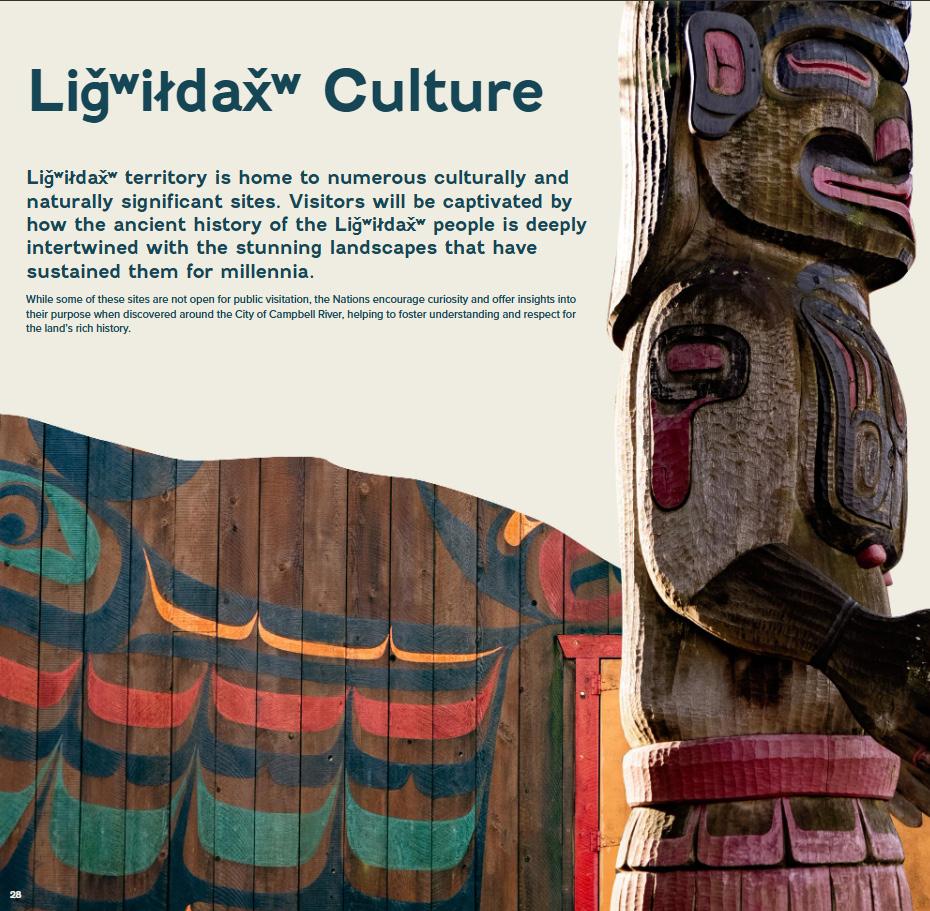
The City acknowledges we are on the territory of the Liǧʷiłdax̌ʷ people of the Wei Wai Kum and We Wai Kai First Nations.
Document Preperation
This document’s financial reporting was prepared by the City of Campbell River’s Finance Department. The document was produced by the Communications Department.
View this document online, at campbellriver.ca/annual-report or scan the QR code.
Message from the Mayor
Council stepped into office in 2022 at a time when Campbell River, like many communities across Canada, was facing complex challenges. Since then responding to those challenges has been a clear and steady focus.
In 2025, Council continued to advocate for the community, support a strong local economy, and deliver high-quality services. We made progress revitalizing the downtown, expanding housing options, and strengthening community safety, while continuing to work with partners and other levels of government to advance shared priorities.
Throughout 2025, we remained focused on advocating to other levels of government for what residents need, strengthening the local economy, and continuing to deliver high-quality services to citizens. We took meaningful steps forward to support local businesses and a revitalized downtown core, expand housing options with strategic investments, and tackle community safety head on. We’ve also continued advocating for resources and support for the community and explored opportunities to collaborate on projects.
Here are a few highlights from 2025:
D Eight additional spaces were added to the Homewood temporary housing initiative, bringing the total to 48 residents supported with housing and services.
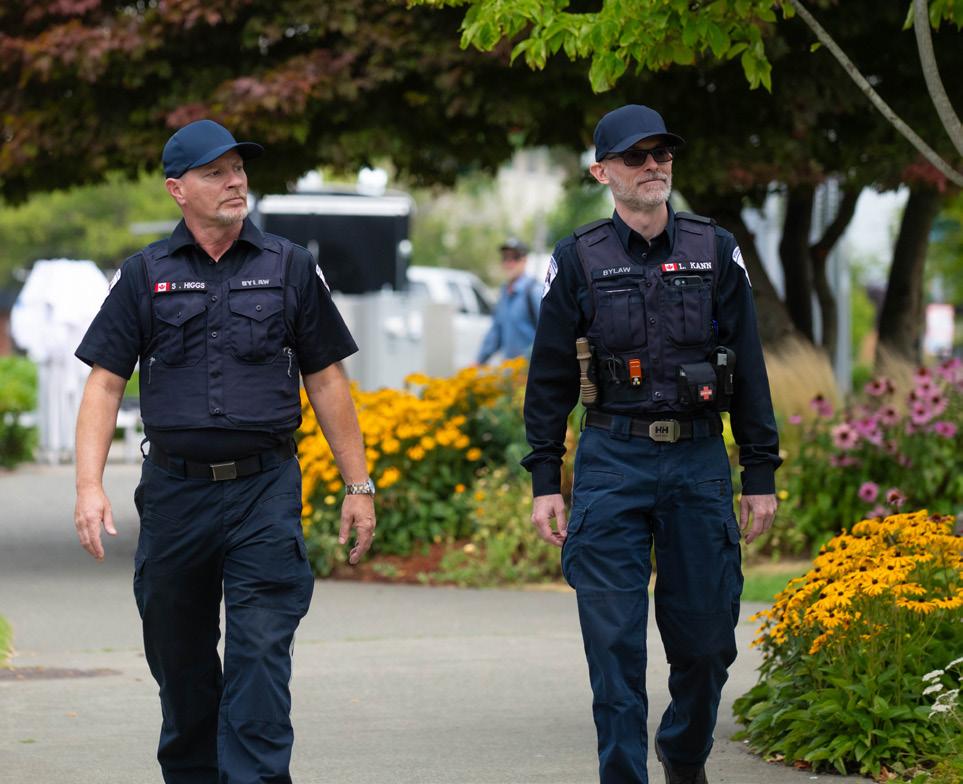
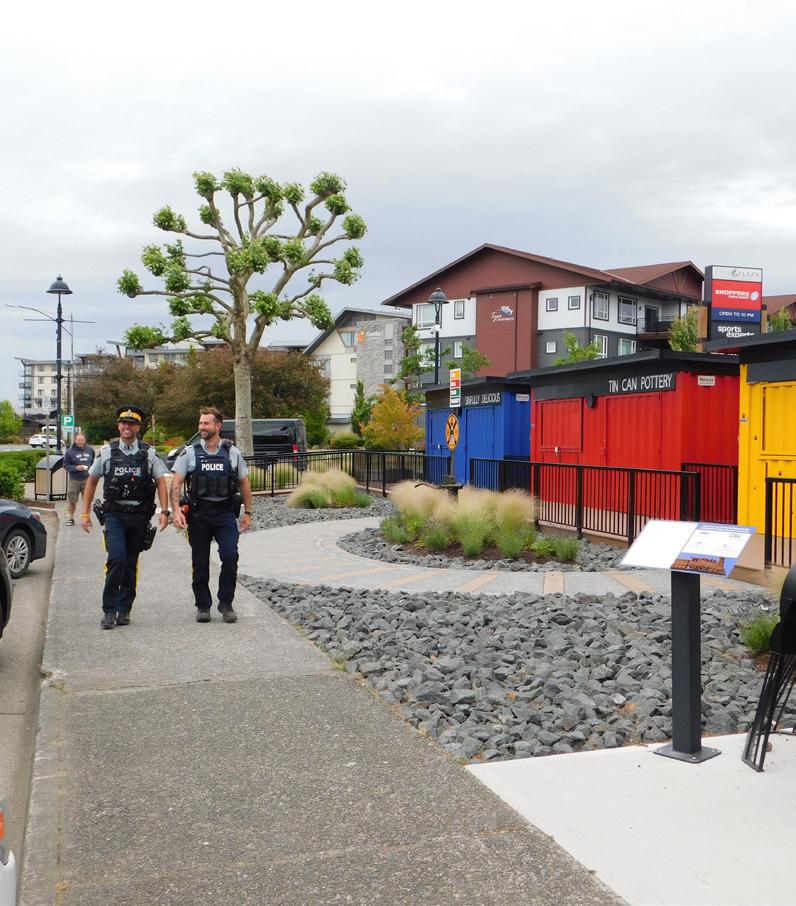
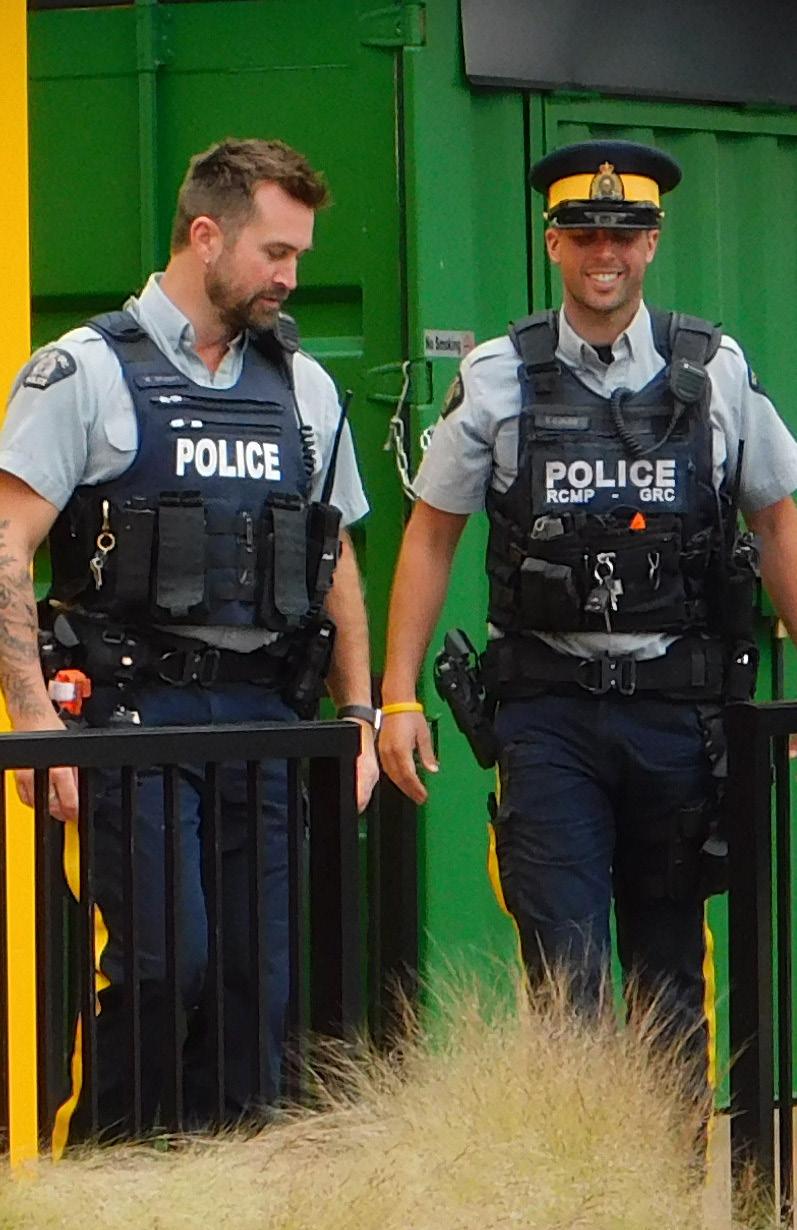
D Bylaw enforcement and RCMP presence increased, especially downtown, with proactive patrols and clean-ups. 2025 data shows declines in property crime and police calls, and improved community safety feedback from residents.
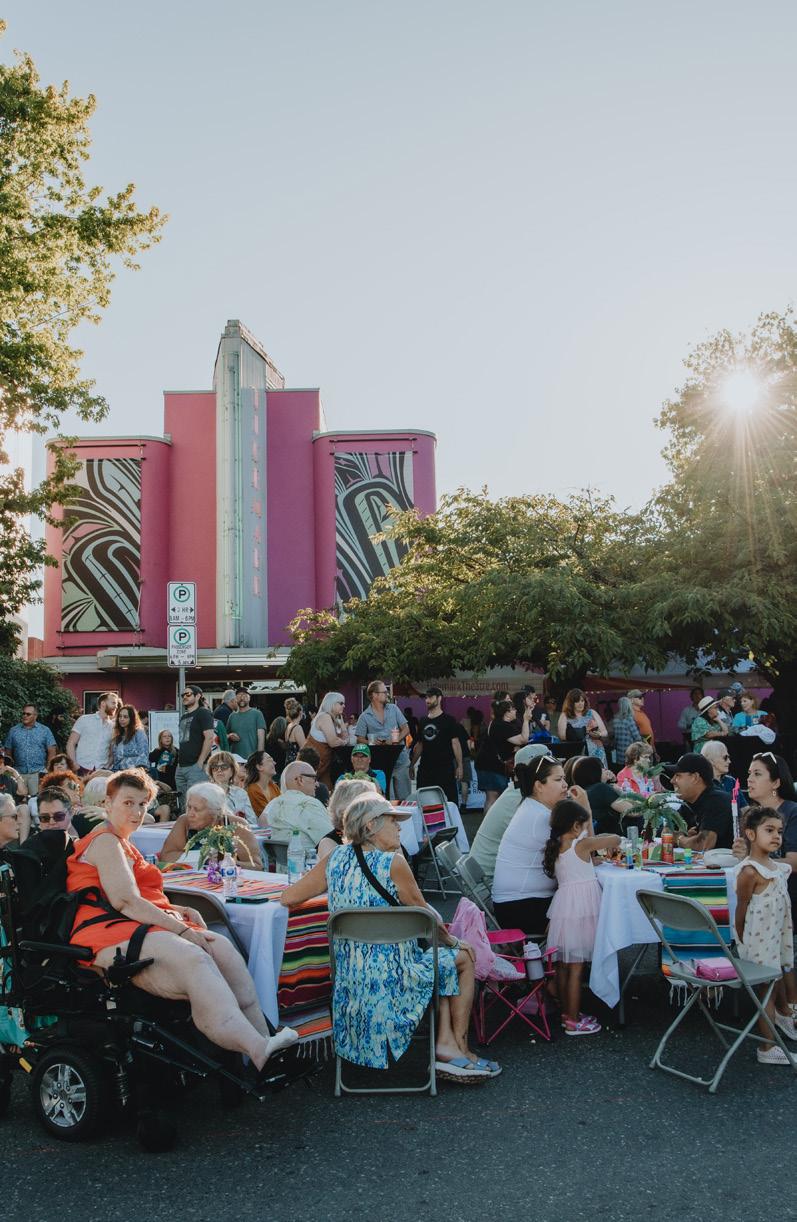
D Hosted well-attended downtown events, including CR Live Streets and the Spirit Square Concert Series; CR Live Streets alone received 10,000 visits and generated significant economic activity.
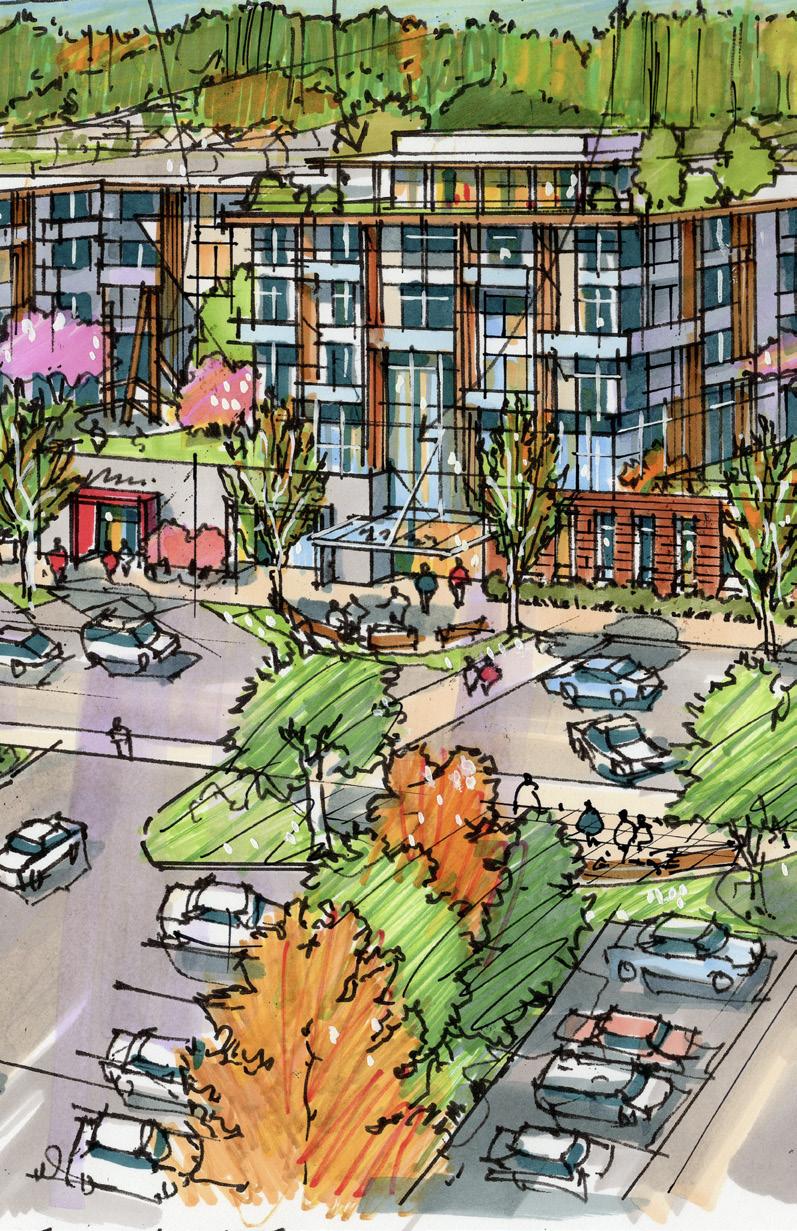
D Progress continued on Reimagine the Row, a project that will bring new commercial space, civic amenities, and much-needed rental housing, including affordable units.
D Council formed a business advisory team and convened the Alliance of Resource Communities to support local jobs and economic resilience amidst global economic challenges.
D It was made easier to visit and enjoy Campbell River with downtown parking zones increased from one to two hours; new connections to the community being announced, like Harbour Air’s seasonal Vancouver service; and new dog parks being opened through partnerships with SD72.
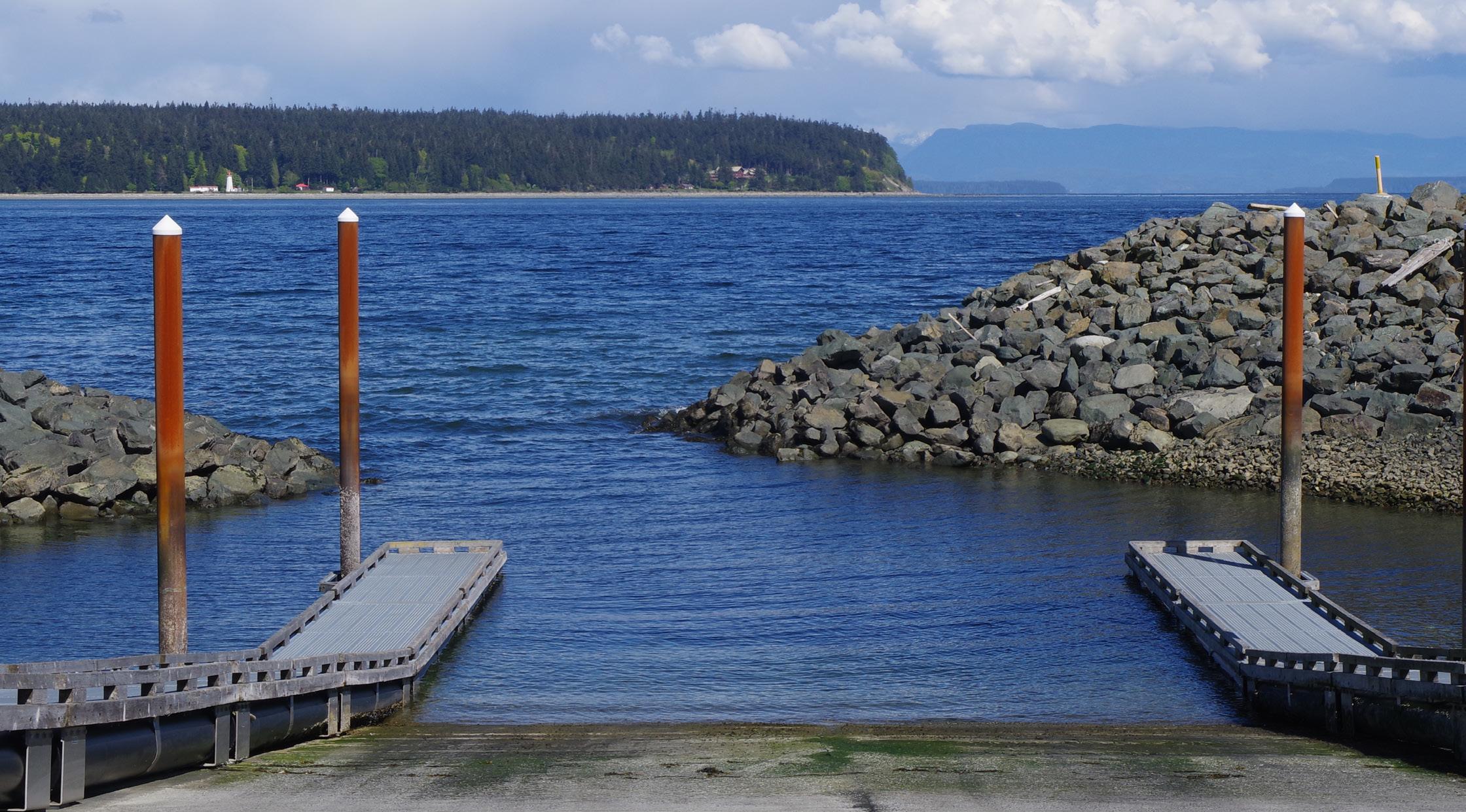
D The City purchased 1021 Island Highway South to improve parking capacity and traffic flow and support future amenities at Big Rock Boat Ramp.
D Progress continued on housing initiatives with several actions completed under the Housing Accelerator Fund and work underway toward adding 1,277 new housing units by 2028.
These achievements reflect the collective efforts of Council, City staff, and community partners.
As we move through 2026, Council remains focused on maintaining strong services, supporting community safety and well-being, growing the local economy, and continuing to revitalize the downtown. It is an honour to serve this community alongside my fellow councillors and dedicated City staff. I am proud of what we have accomplished together and remain committed to continuing this work in 2026.
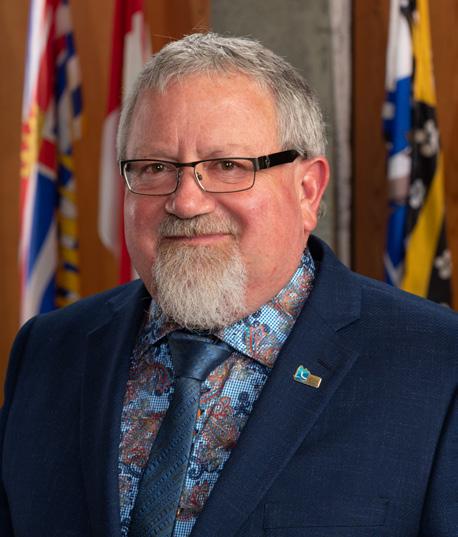
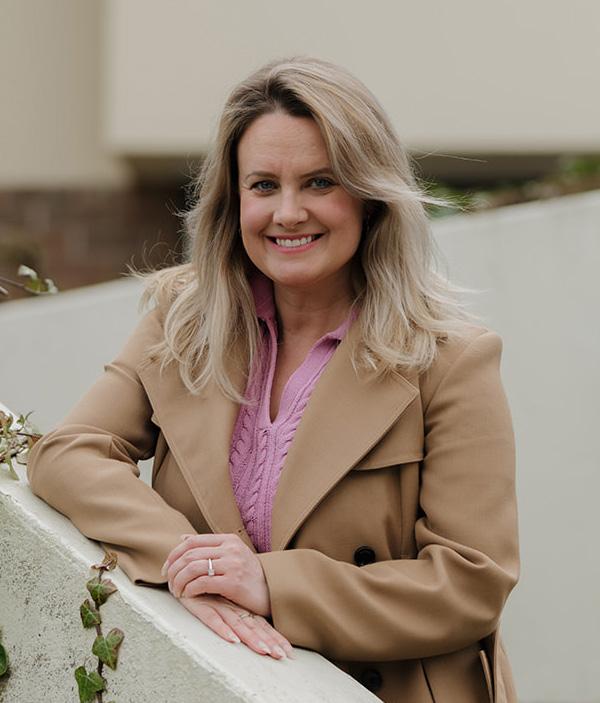
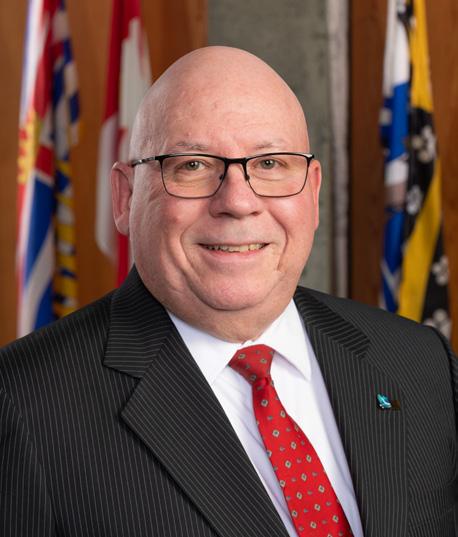
Kermit Dahl Mayor
Message from Chief Administrative Officer
The 2025 Annual Report celebrates a year of accomplishment and progress in Campbell River. It documents the City’s commitment to delivering quality services while investing in the community’s future. Guided by Mayor and Council, we continue to turn priorities into action— supporting residents day to day and advancing projects that keep Campbell River moving forward.
The Mayor’s message highlighted some key projects that took place this past year. These successes are made possible by the dedication of City staff, who deliver essential services, maintain infrastructure, support public safety, and help bring Council’s direction to life.
Following Council’s direction, staff delivered a moderate 2.7% property tax increase in the 2026 budget (about $5 per month for the average home), balancing rising costs through careful spending, targeted investments, and cost-saving measures.
The 2025 Citizen Satisfaction Survey confirmed that residents continue to see Campbell River as an exceptional place to live. Staff received high marks for service and expertise, and satisfaction with parks, trails, and events remains strong.
As an organization, we’re taking steps to strengthen the City’s workforce. We continued our work from previous years to strengthen our recruitment and retention efforts. This year, we completed an employee survey to engage with staff and are taking the feedback onboard to help with building a stronger and even more positive work culture that supports staff, so that they can continue supporting the community.
Looking ahead, there’s lots to tell you about. We’re moving forward with Reimagine the Row and working to strategically acquire new properties.
Capital projects like the Erickson Road Renewal Project are underway. Work to update the Official Community Plan and Master Transportation Plan and to develop a new Quinsam Heights Neighbourhood Plan is complete or progressing. Staff are planning for another summer season of free downtown entertainment—including CR Live Streets. And, of course, we’re getting ready for the upcoming municipal election.
As we work to support Campbell River’s growth, revitalize downtown, and create opportunities, we’re also working to address the needs of vulnerable residents. We appreciate the contributions of our community partners as we work together for Campbell River’s present and future.
Whether you call Campbell River home, run a business, visit, or enjoy our services, thank you for being part of Campbell River’s dynamic community. It’s a privilege to work toward Council’s vision for a safer, healthier city, and to lead a remarkable team that goes above and beyond every day. We look forward to another great year together!
Thank you for reviewing the Annual Report and reading about what was achieved in 2025. I encourage you to stay connected with the City through the resources listed below. (Redesigning the City’s website was another project we completed in 2025. I encourage you to check it out and see what’s changed!) If you see City staff out and about in your neighbourhood, I hope that you’ll exchange a friendly greeting!
Elle Brovold City Manager and Chief Administrative Officer
Of Campbell River
Our Financial Awards
Distinguished Budget Presentation Award
In 2025, the City received a Distinguished Budget Presentation Award (DBPA). The Government Finance Officers Association of the United States and Canada (GFOA) presented the DBPA to the City of Campbell River, British Columbia, for the Annual Budget beginning January 1, 2025.
This was the tenth year that the City received this prestigious award for best practice budgeting principles. To receive this award, a government entity must publish a budget document that meets program criteria as a policy document, as an operations guide, as a financial plan, and as a communications device. This award is valid for one year only. See more details at campbellriver.ca under City Honours.
Canadian Award for Financial Reporting
The City also received the Canadian Award for Financial Reporting for its Annual Financial Report for the Fiscal Year ended December 31, 2024. This was the eighth consecutive year that the City received this award.
Canadian Award for Financial Reporting
Presented to City of Campbell River British Columbia For its Annual Financial Report for the Year Ended December 31, 2024
Executive Director/CEO
City Of Campbell River
About Us
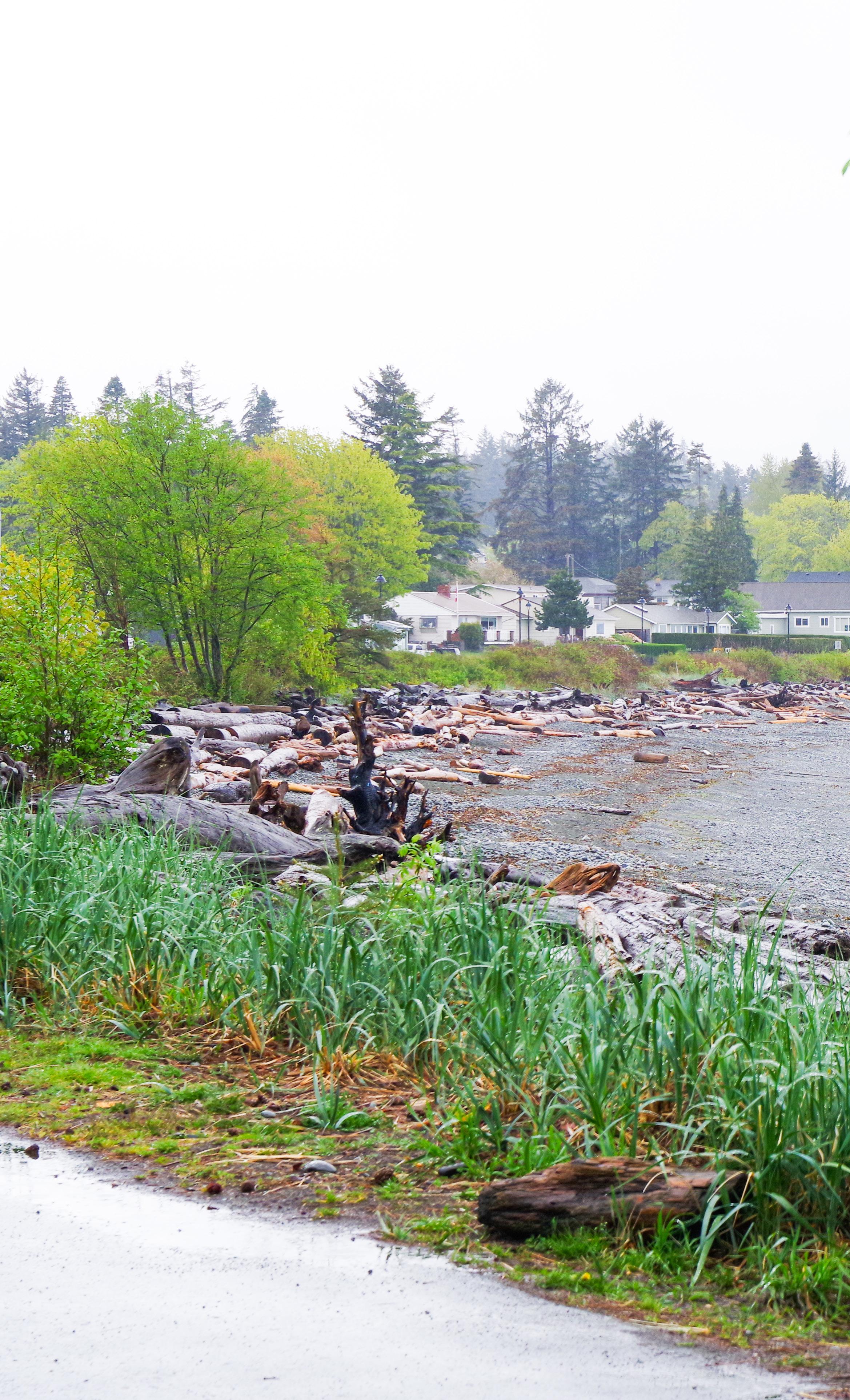
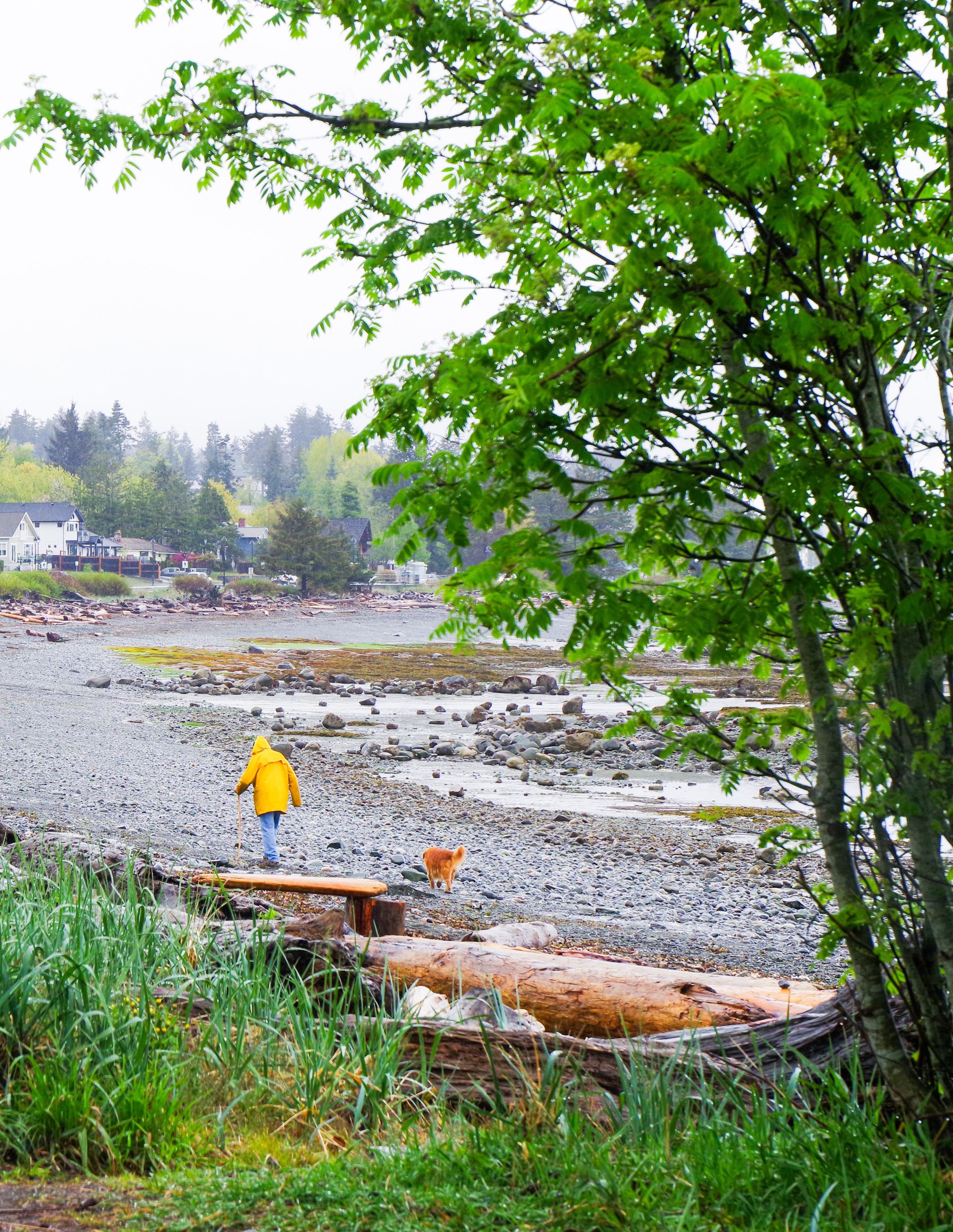
Campbell River is an all-season oceanfront gem, located at the 50th parallel on the east coast of central Vancouver Island.
We acknowledge we are located on the territory of the Liǧʷiłdax̌ʷ people of the Wei Wai Kum (Campbell River Indian Band) and We Wai Kai (Cape Mudge Indian Band) First Nations. Campbell River is also home to the Homalco First Nation.
Enriched by Land and Sea, Campbell River is nestled between the iconic shoreline and waters of Discovery Passage and is blessed with the backdrop of spectacularly pristine, yet easy-to-access, wilderness and mountains. The four seasons of play, combined with the city vibe, lively culture, and timeless traditions, make Campbell River the welcoming, neighbourly, and resourceful community it is today.
Connections flow naturally here, starting with our central location’s easy access by highways, air, and ferries. Campbell River is a base for recreation and industry throughout the north island and central coast.
With a rich natural resource background, integrated services, and a world-class reputation as a tourism destination, the community is set for high levels of investment and even more economic diversity.
Incorporated as a village in 1947 and later designated a municipal district, Campbell River became a City in 2005. In 1948, the Elk Falls John Hart Dam hydro development project changed the landscape of Campbell River, enabling the growing community to prosper.
In 1958, a national heritage event “rocked” Campbell River when the Ripple Rock explosion removed the top of a marine hazard in Seymour Narrows that had claimed at least 114 lives. The spectacular blast moved 100,000 tons of rock and water, allowing larger vessels through the passage. At the time, the Ripple Rock blast was the world’s largest non-nuclear explosion.
These and other community facts are showcased on more than 20 information panels found downtown and around the Museum at Campbell River.
Our Community at a Glance
35 , 51 9
Our Elected Officials
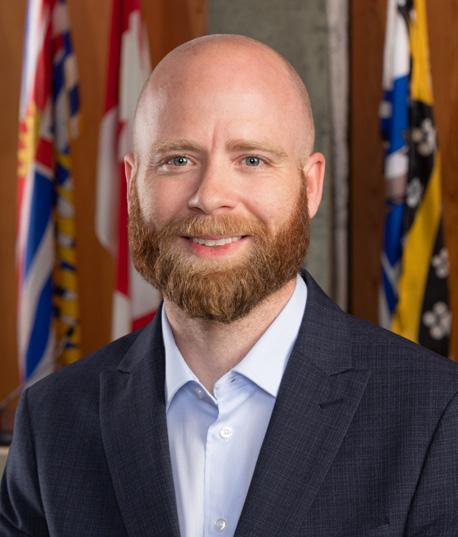
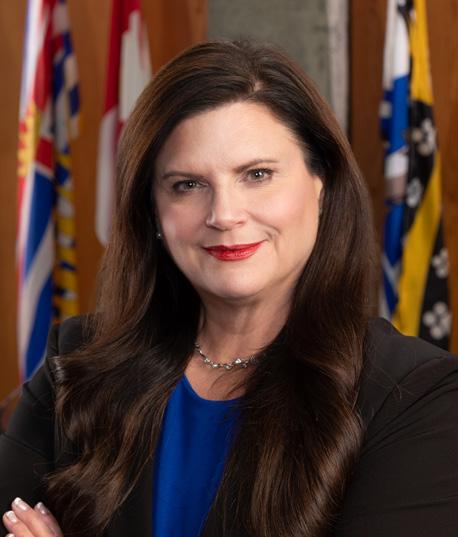
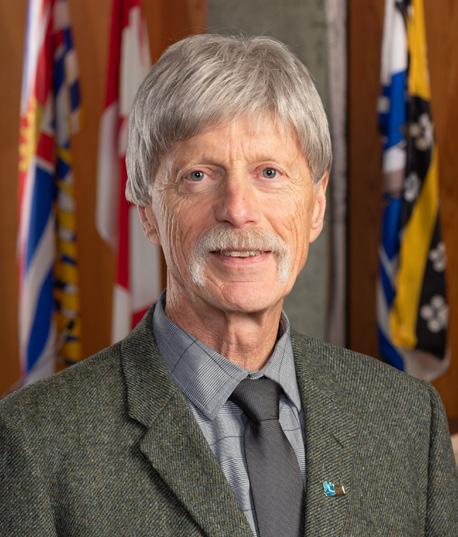
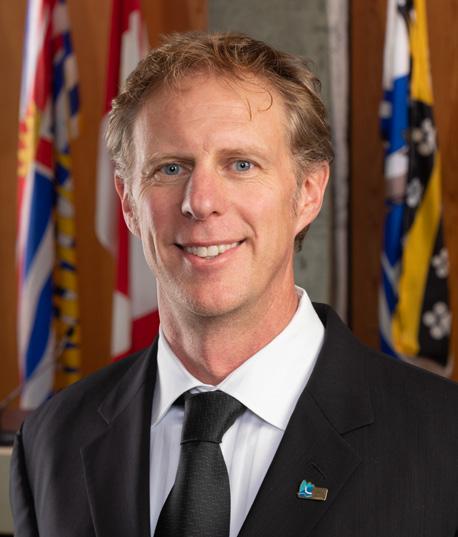
Mayor Kermit Dahl was elected to office alongside Councillors Susan Sinnott, Ben Lanyon, Sean Smyth, Ron Kerr, Doug Chapman and Tanille Johnston in October 2022. Following the election, Mayor and Council swiftly began working on Strategic priorities for their 2022-2026 term.
Kermit Dahl Mayor
Doug Chapman Councillor
Ben Lanyon Councillor
Tanille Johnston Councillor
Susan Sinnott Councillor
Ron Kerr Councillor
Sean Smyth Councillor
Strategic Priorities 2023–2026
Healthy and Safe Community
Downtown Revitalization
Crime Reduction
Livability
Housing
Future Growth
Attainable Housing Supply
Infrastructure Readiness
Community Growth
Future Planning
Asset Management
Economic Vitality
Organizational Capacity
Fiscal Responsibility
Workplace Culture
Effective Governance
Collaboration
Indigenous Relationships
Strengthen Partnerships
Advocacy
Find the Strategic Plan at campbellriver.ca/strategic-plan
2025 Year in Review
On top of the City’s day-to-day services, such as water delivery, sewer, roads and parks maintenance, recreational programming, customer and financial services, and so much more, the City is also working towards Council’s 2023 to 2026 Strategic Plan. This plan outlines five strategic priorities listed above: Housing, Organizational Capacity, Community Growth, Healthy and Safe Community, and Collaboration. The Year in Review section of the 2025 Annual Report highlights the progress made towards Council’s 2023 to 2026 Strategic Plan in 2025.
City Of Campbell River
Healthy and Safe Community
“Support a high quality of life and ensure Campbell River is safe and welcoming for residents, businesses and visitors. Foster a sense of place and pride, and incorporate healthy living opportunities for people of all ages.”
Downtown Revitalization
D Began work on Reimagine the Row, a project that will deliver new housing—including affordable units—as well as commercial and civic spaces in the downtown core
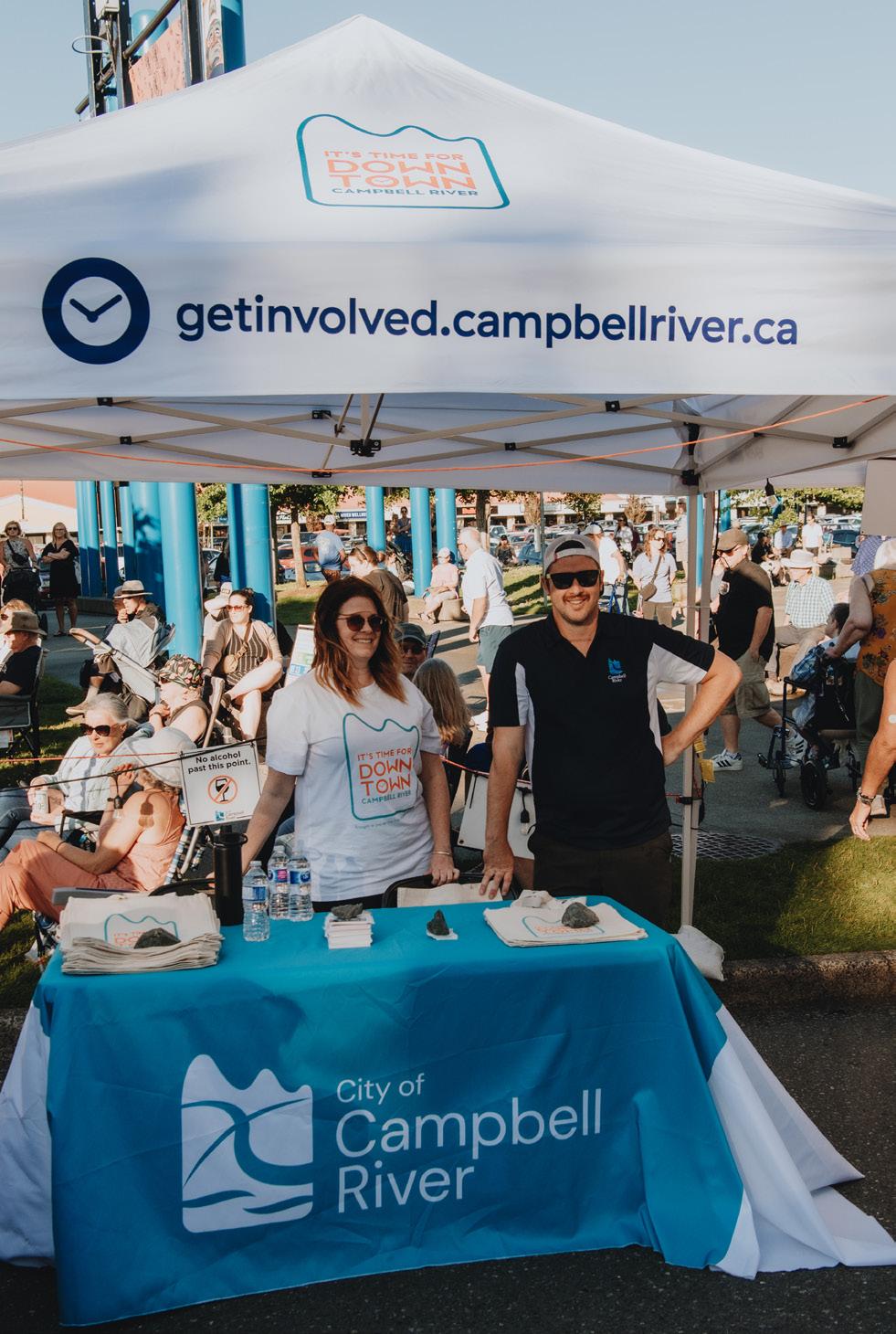
D Continued the “It’s Time for Downtown” campaign, promoting the great things Campbell River’s downtown has to offer and connecting with residents through community events and engagement
D Continued to provide designated overnight shelter locations and support vulnerable residents
D Hosted well-attended downtown events, including CR Live Streets and the Spirit Square Concert Series; CR Live Streets alone received 10,000 visits and generated significant economic activity.
Crime Reduction
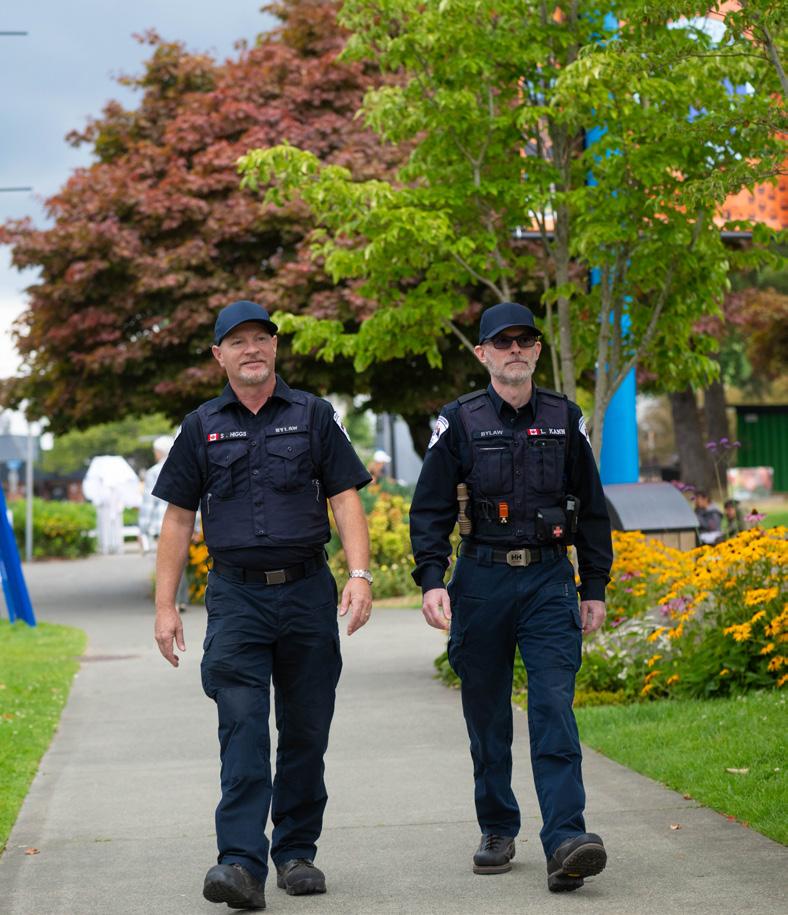
D Increased bylaw enforcement, security and RCMP presence downtown, including daily foot patrols and regular cleanups to improve safety, cleanliness and compliance
D Expanded bylaw enforcement services to seven days a week, increasing proactive patrols across the community
D Began implementing actions from the Community Safety and Well-Being Action Plan to enhance safety, wellbeing and sense of security across the community
D Expanded and upgraded CCTV coverage at key downtown locations to support public safety and traffic monitoring
Livability
D Supported Improved parking and traffic flow at Big Rock Boat Ramp by acquiring 1021 Island Highway South
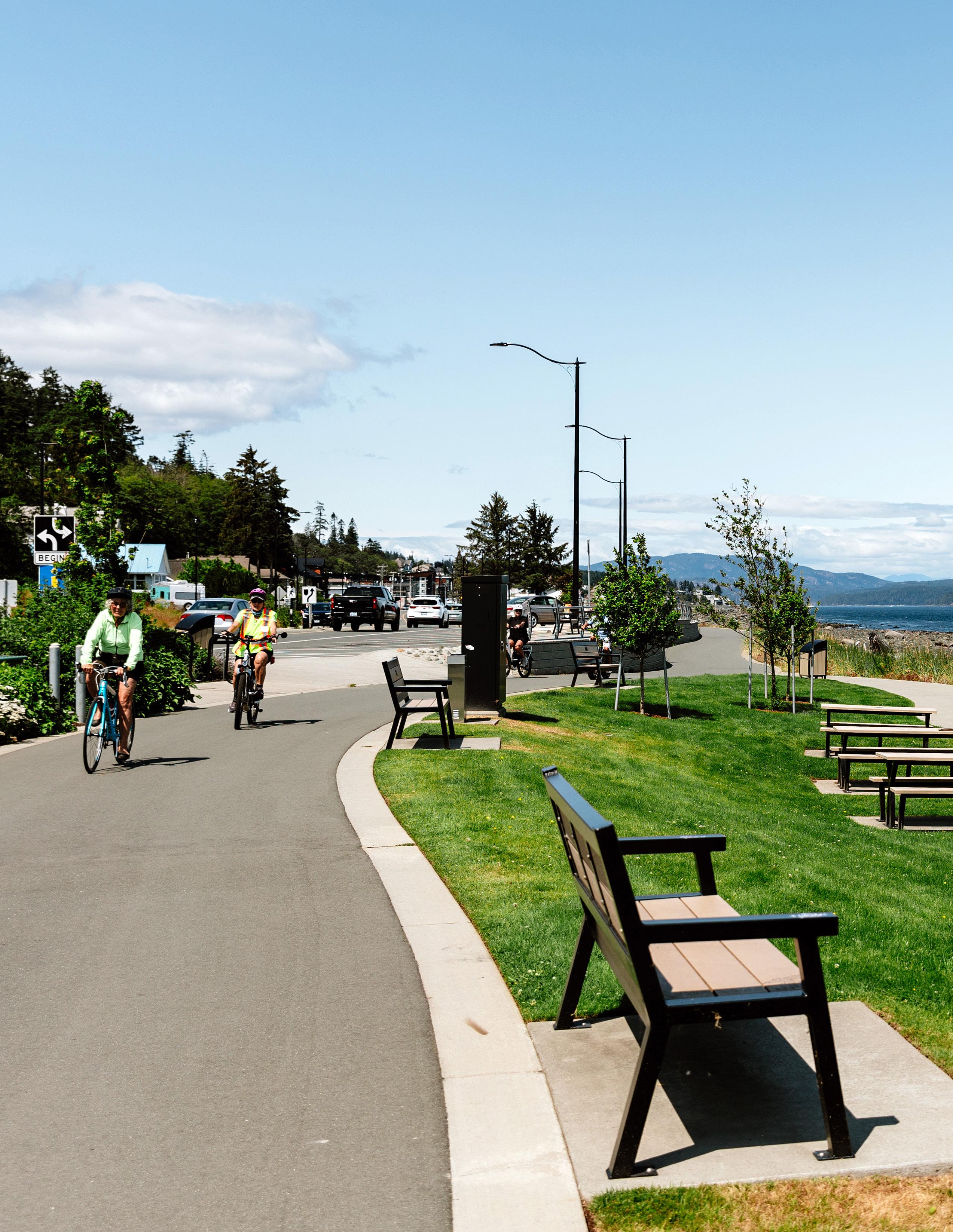
D Supported expansion of the River Route trail and partnered with the Campbellton Neighbourhood Association on a new community park and playground in Campbellton River Village
D Increased cleaning and maintenance services at McIvor Lake Park
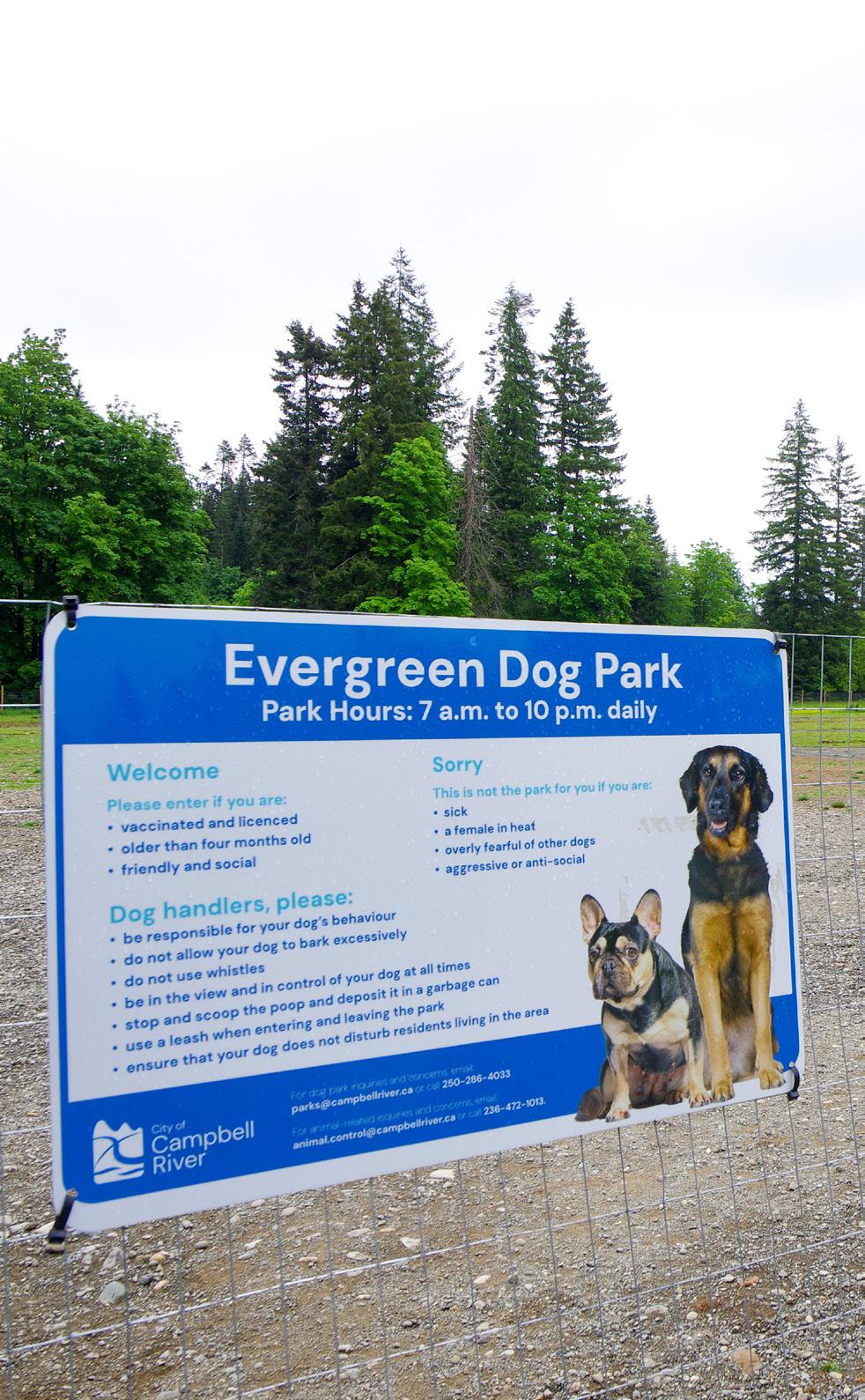
D Partnered with School District 72 to create temporary off-leash dog parks at Robron Park and the former Evergreen school
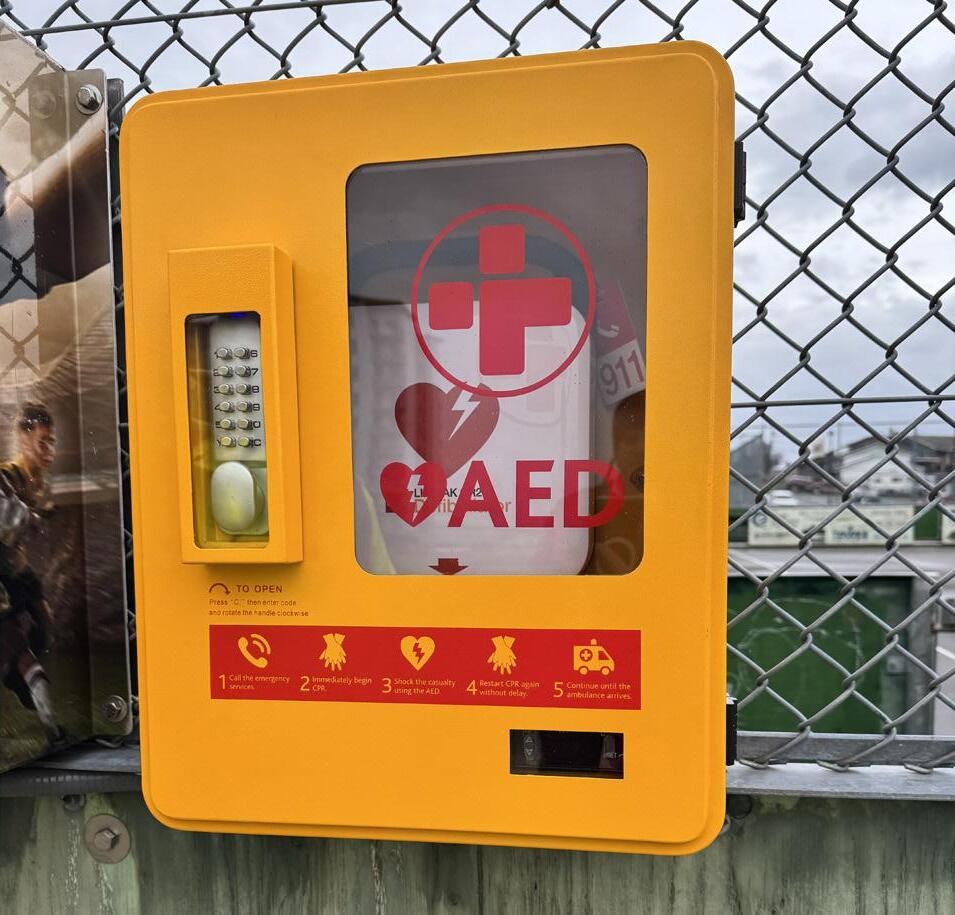
D Installed two publicly accessible AEDs at Robron and Willow Point parks
D Added public washrooms at Holm Road and Dogwood Street in partnership with Rotary Club of Campbell River
These achievements also supported Organizational Capacity, Community Growth and Collaboration goals.
Housing
“Ensure that future community growth is carefully considered and strategically managed to ensure that available housing meets the community’s diverse and emerging needs.”
Future Growth
D Processed approximately:
• 69 development, land use and subdivision applications
• 221 building permit applications, resulting in over 349 new residential units
D Updated or advanced key planning documents, including:
• Official Community Plan
• Parks, Recreation and Culture Master Plan
• Master Transportation Plan (in conjunction with the Petersen Corridor Study)
• Quinsam Heights Neighourhood Plan
• Transit Future Actions Plan (with BC Transit)
Attainable Housing Supply
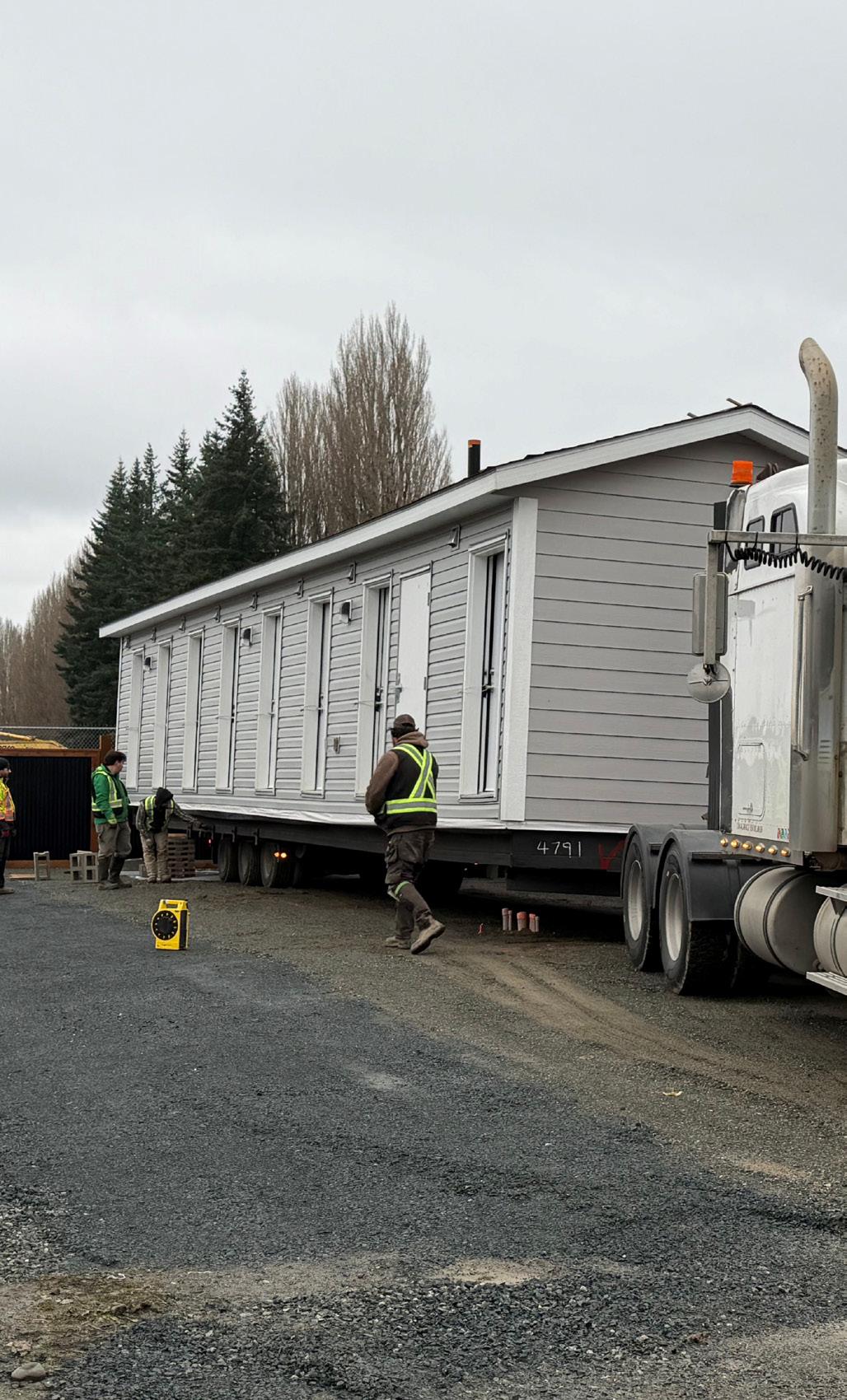
D Eight new spaces were added to the Homewood temporary housing facility, increasing capacity to 48 residents, with supports. The City and the Province, through BC Housing, partnered to build and develop Homewood, which is now run by Lookout Housing and Health Society
D The City continued investing $10.4 million from the Housing Accelerator Fund to support housing development, with a target of 1,277 new units by January 2028
Infrastructure Readiness
D Completed Downtown Infrastructure Capacity Study (stormwater and wastewater) to support downtown development
D Conducting a city-wide Infrastructure Readiness Assessment as part of the Official Community Plan update
D Completed Complete Communities Mapping Exercise, with funding from UBCM, to identify areas in the community to inform land use decision-making, considering housing need, supply, and location; providing transportation options, including increased walkability; and making connections to infrastructure investment and servicing decisions
D Updated Development Cost Charges Bylaw to ensure infrastructure costs associated with new development are paid for by development
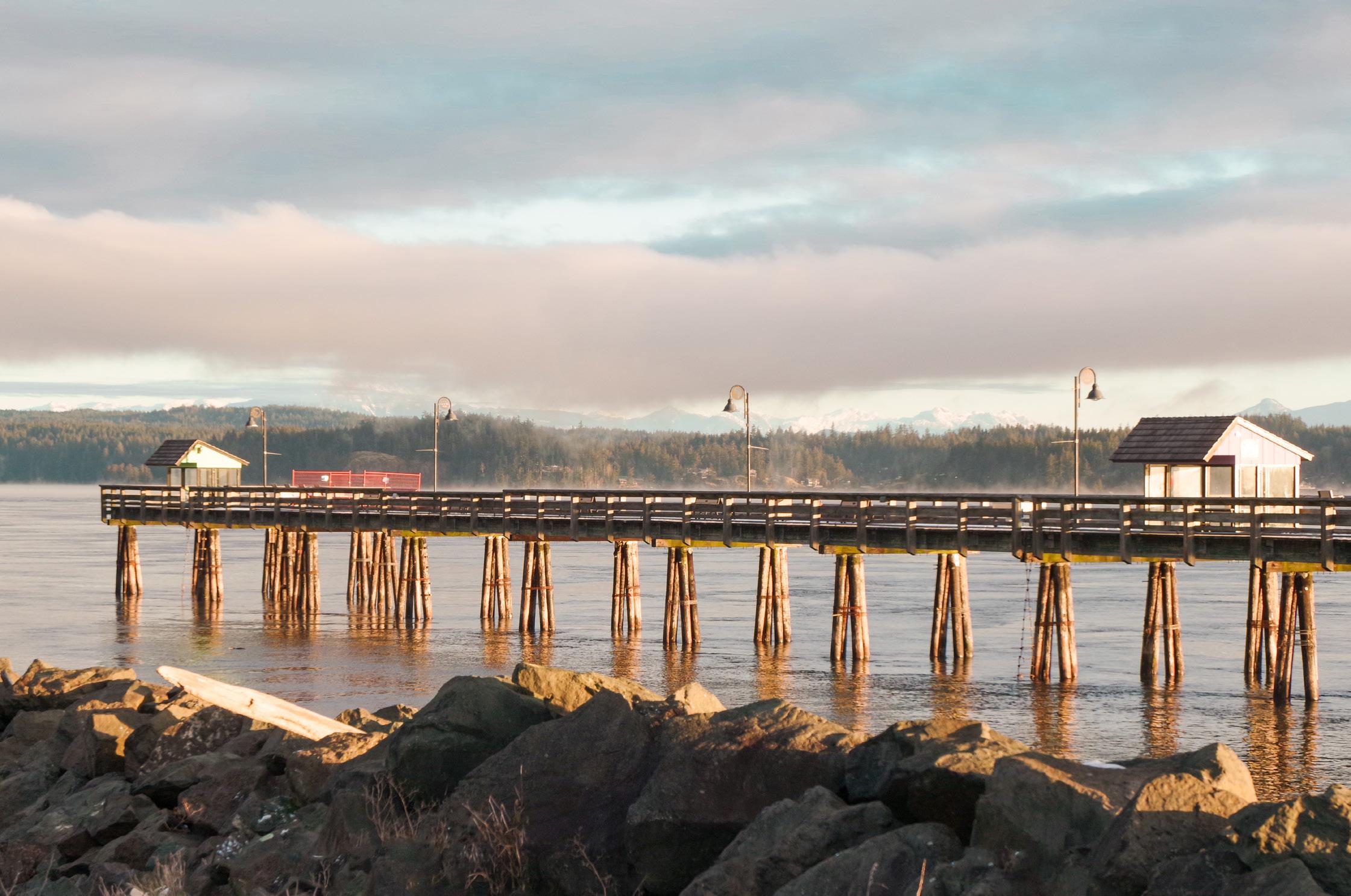
D Completing Discovery Pier structural repairs
D Invested $1.68 million from the Government of Canada’s Canada Community-Building Fund in infrastructure upgrades, including road and bridge rehabilitations, pedestrian safety and traffic improvements, and the Official Community Plan and Zoning Bylaw updates
These achievements also supported Community Growth and Healthy and Safe Community goals.
Community Growth
“Meet the growing needs of tomorrow through strategic and long-term planning and provide stability and support for residents, businesses and investors. Together, we can continue to build a vibrant community based on economic resilience, sustainable infrastructure, quality of life amenities, environmental stewardship and diverse employment.”
Future Planning
D These plans will guide future land, transportation and recreation development across Campbell River
D Advanced work on Reimagine the Row, a project that will deliver new housing—including affordable units—as well as commercial and civic spaces in the downtown core
D Adopted development, building and servicing bylaws that will create clarification for the development community and efficiency in processing applications
D Completing a Quinsam Heights ditch review
Asset Management
D Continued the implementation of the new Operational Management Software (OMS) environment
D Reviewing the Quinsam Heights Integrated Stormwater Management Plan
D Expansion of the RCMP parking lot
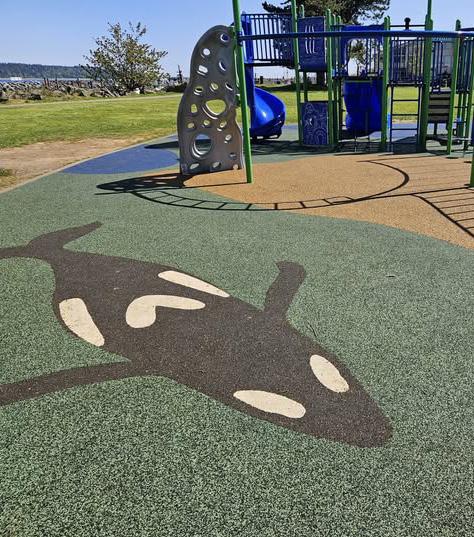
D Replacement of rubberized playground surface at Ostler Park
D Replacement of the downtown decorative lighting
Economic Vitality
D Completed the Campbell River Airport (YBL) Strategic Plan to guide long-term growth, service development, and infrastructure planning
D Processed approximately 240 new business licence applications, supporting continued local business activity and entrepreneurship
D Received commitment on the expansion of air services (WestJet and Harbour Air), strengthening regional connectivity for residents, businesses, and visitors
D Continued advancing airport development priorities, including planning for future service capacity and infrastructure enhancements
D Supported local business retention and growth through business licensing, advisory support, and streamlined processes
D Launched the Business Advisory Team, bringing together local industry representatives for regular monthly meetings to inform City priorities, identify emerging issues, and strengthen ongoing dialogue with the business community
D Supported the creation of the Alliance of Resource Communities, contributing to coordinated, province-wide advocacy on issues impacting resource-based communities, including forestry, aquaculture, and regional economic resilience
D Promoted Campbell River as a destination for tourism and business investment, aligned with broader economic development objectives
D Supported initiatives that enhance visitor experience and contribute to local economic activity
These achievements also supported Collaboration and Healthy and Safe Community goals.
Organizational Capacity
“Realize and leverage the maximum potential of the City through productive and effective resource management.”
Fiscal Responsibility
D The 2026–2035 Financial Plan was approved by Council with a modest tax increase of 2.7 per cent (an increase of approximately $5 per month for the average household). The budget balances fiscal responsibility with maintaining core services. It is lower than many comparator communities across BC that saw increases up to and above 10 per cent
D Enhanced tax communications were shared throughout the year through the use of clear messaging, videos, and social media to improve public understanding of and access to the City’s financial information
D The City implemented a new Financial Assistance Policy to improve overall fairness and equitability while being cognizant of remaining fiscally responsible. The City partnered with the Community Foundation and Scale Collaborative to offer a multiple day seminar to build financial resiliency amongst not for profit groups
D 93 purchasing competitions were completed, which achieved approximately $3.5 million in savings
D The City received the Distinguished Budget Presentation Award for the 2025–2034 Financial Plan and the Canadian Award for Financial Reporting from the Government Finance Officers Association of Canada and the United States for the 2024 annual report
D Implementation of the Unit4 project continued; this project will upgrade and streamline all processes supporting finance, payroll and HR operations and services
Workplace Culture
D Trending employee statistics showed increased employee retention
D Completed and passed the City’s third WorkSafeBC Certificate of Recognition audit
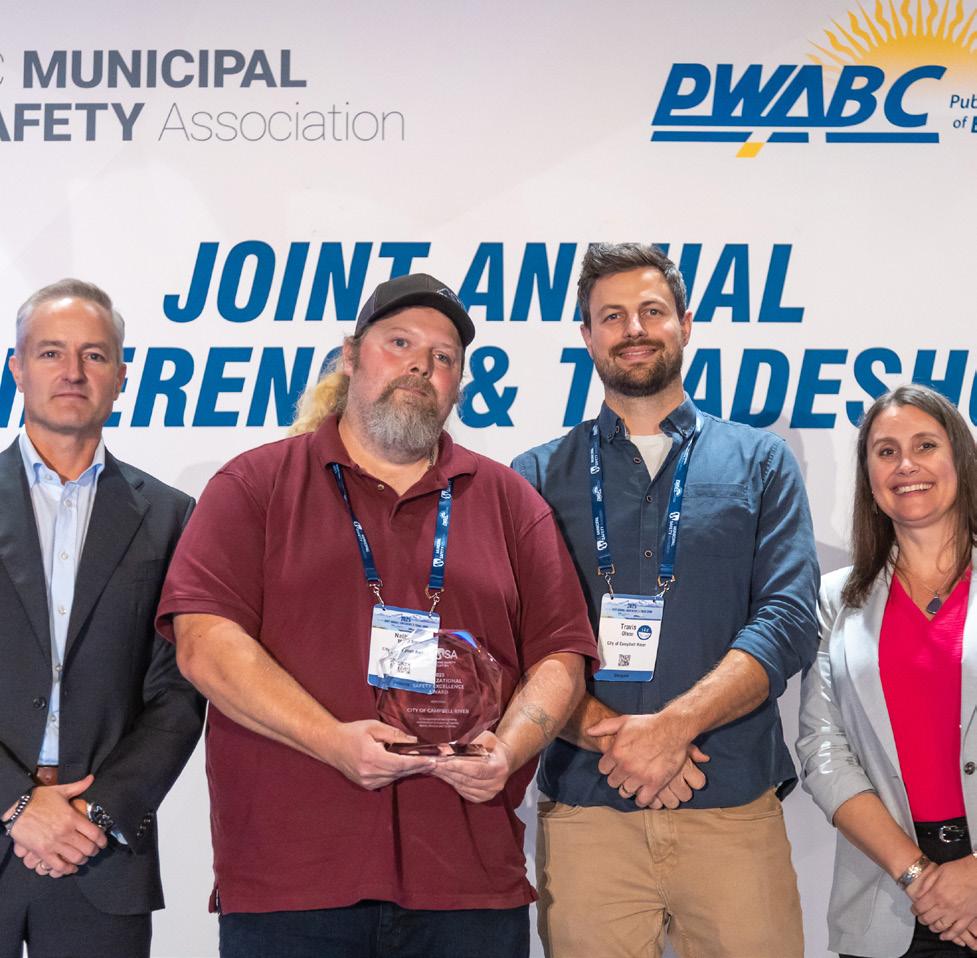
D The BC Municipal Safety Association awarded the City an Organizational Safety Excellence Award
Effective Governance
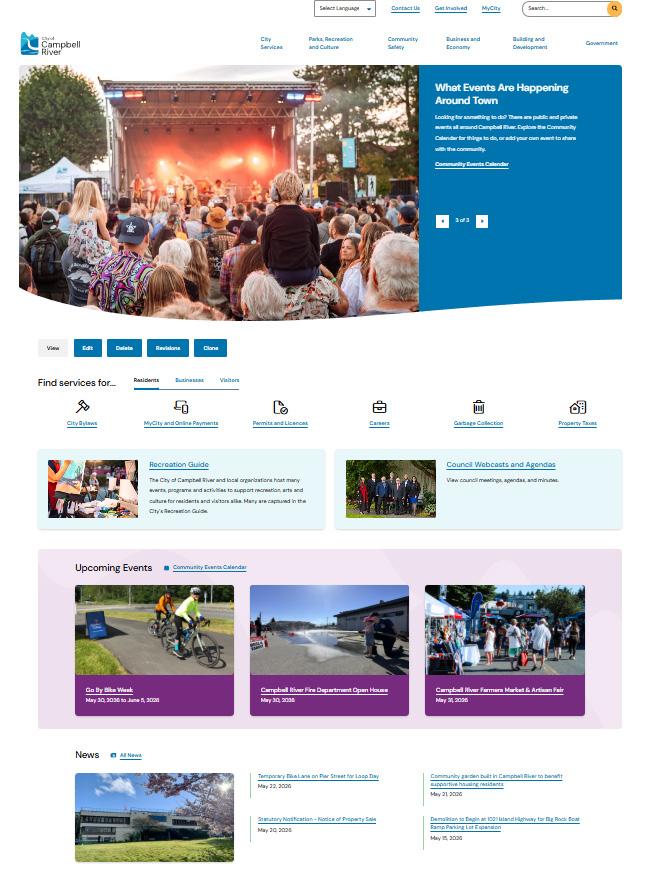
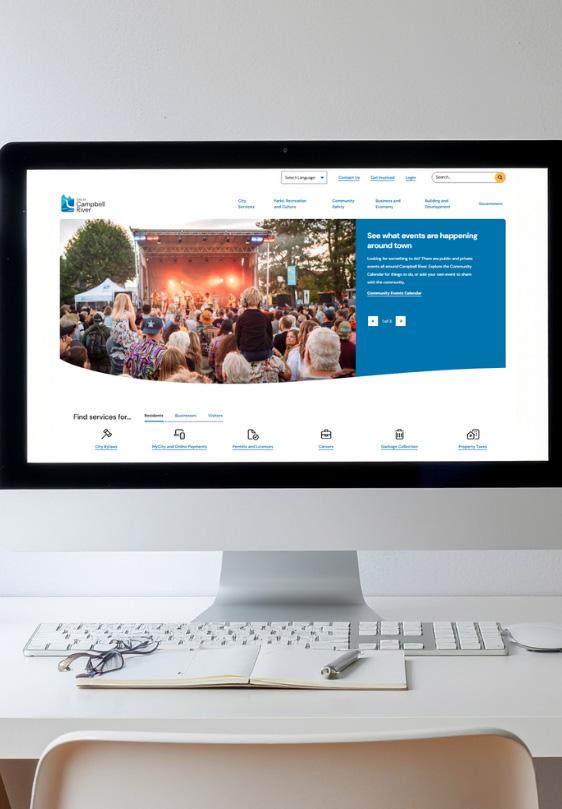
D Transitioned the City website to a streamlined, accessible, user-friendly site, shaped by community input and industry best practices
D Completed the Citizen Satisfaction Survey (2025), which is conducted once every two years, the results of which showed that residents continue to rate Campbell River as an exceptional place to live
These achievements also supported Community Growth, Collaboration and Healthy and Safe Community goals.
Collaboration
“Work with First Nations and all key community partners collaboratively to develop synergies and innovation and achieve our common strategic goals.”
Indigenous Relationships
D Published the Liǧʷiłdax̌ʷ First Nations Guide to Campbell River in partnership with the Wei Wai Kum First Nation and We Wai Kai Nation, helping residents and visitors explore the community’s rich Indigenous culture
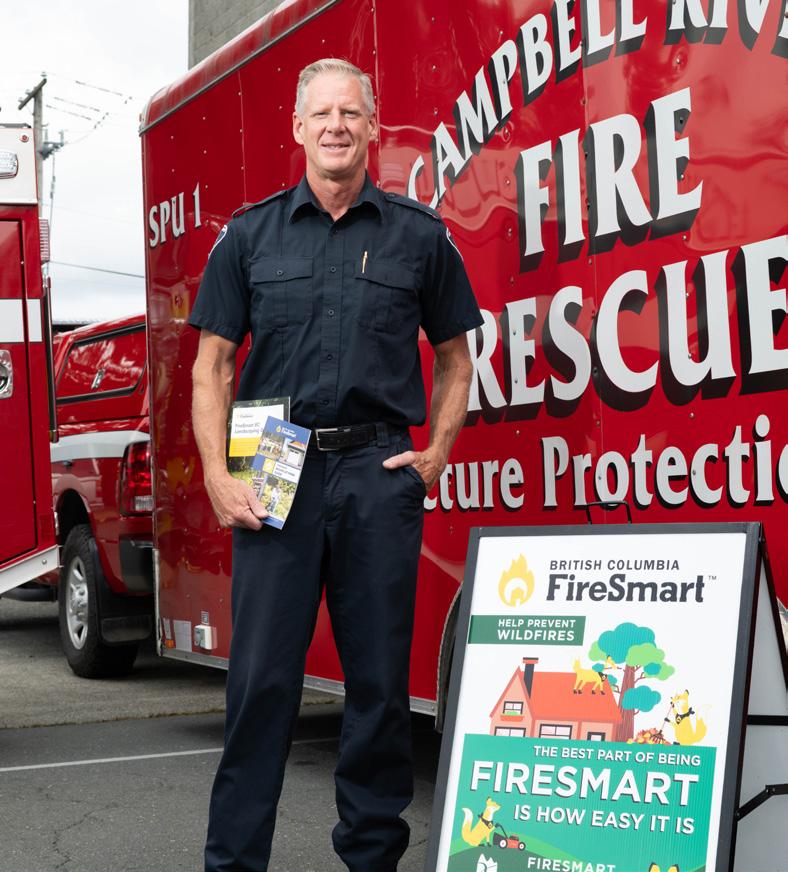
D Partnered with the Wei Wai Kum First Nation and We Wai Kai Nation to expand FireSmart™ initiatives, increasing community awareness and reducing wildfire risk through education and prevention
D Strengthened emergency communication protocols with local First Nations to support coordinated, timely information sharing during emergencies
D Held two Council-to-Council meetings with First Nations governments to strengthen relationships and advance reconciliation
D Observed key national days, including National Day for Truth and Reconciliation, National Indigenous Peoples Day and Red Dress Day, to honour and reflect on Indigenous history and culture
Strengthen Partnerships
D Worked with downtown businesses and organizations—including the Downtown Campbell River Business Improvement Association (BIA), Canada Day Committee, Tidemark Theatre, the Campbell River branch of the Vancouver Island Regional Library and many more—on initiatives such as CR Live Streets, Deck the Downtown and the downtown banner program
D Partnered with local organizations and industry to deliver community improvements, including new dog parks and additional childcare spaces with School District 72 and expanded air service connections like Harbour Air’s seasonal Vancouver to Campbell River route
D Formed the Community Safety Working Group with local partners to advance projects and initiatives from the Community Safety and WellBeing Action Plan
Advocacy
D Advocated to other levels of government through participation in key meetings and forums, including Union of BC Municipalities (UBCM), where the City called for targeted substance use and mental health treatment and resources, bail reform to address chronic offenders, removal of regulatory barriers that slow housing creation, funding for affordable housing projects and funding for critical infrastructure in the community
D Formed the Business Advisory Team to identify solutions to economic challenges and support local businesses and jobs
D Convened the Alliance of Resource Communities to advocate for resource sector jobs and economic development (allianceofresourcecommunities.ca)
These achievements also supported Healthy and Safe Community, Organizational Capacity and Housing goals.
Campbell River
Our Organizational Structure
Council
City Manager
Community Planning and Livability
Community Safety
Corporate Services
Development Services
Economic Development and Indigenous Relations
• Long Range Planning
• Property Services
• Public Transit
• Bylaw Enforcement Services and Animal Control
• Emergency Fire Dispatching Services and (E-911) Emergency Management
• Communications
• Human Resources
• Recreation and Culture
• Solid Waste
• Fire Protection
• RCMP
• RCMP Municipal Support
• Victim Services
Financial Services
• Building Services
• Development Engineering
• Information Technology
• Legislative Services
• Development Planning
• Airport Marketing and Business Development
• Airport Operations
• Finance
• Risk Management
• Capital Projects
• Fleet Operations
• Cemeteries
• Facilities
• Economic Development
• Tourism
• Indigenous Relations
• Supply Management
• Liquid Waste
• Parks
• Roads
• Water
Departmental Reviews
The following section summarizes each organizational division and department, reviews the highlights of 2025, and looks forward to the goals and objectives of 2026.
City Manager
The City Manager delivers on Council’s strategic plan, drives forward the community’s vision and takes the lead in managing the implementation of policy direction established by Council. The City Manager also provides managerial leadership, control and direction for all departments and is responsible for planning and implementing policies necessary for sustaining excellence in City operations and staffing.
Community Planning and Livability Departmental Overviews
Director of Community Planning and Livability
As a member of the Senior Leadership Team, the Director of Community Planning and Livability provides overall strategic direction and leadership for community development (long range planning, city lands management and development, and transportation) and recreation and culture.
An emphasis is placed on promoting community livability and well-being in alignment with the City’s Official Community Plan.
Long Range Planning
This department provides a centralized, coordinated resource for long-range community planning. The department aims to ensure that the City’s actions and decisions consider social, environmental, economic, and cultural community values. While an important focus is the City’s corporate actions, the department also provides a supportive and educational role in influencing community actions and decisions.
Core Services
D Land use planning, through the Official Community Plan, and neighbourhood plans, housing and parks planning
D Transportation planning, such as active transportation for cyclists and pedestrians, transit, road network and parking
D Housing: development of policies and programs to encourage development across the housing spectrum, from housing with supports, to market housing
2025 Highlights
› Initiated a comprehensive review and update of the City’s Official Community Plan and Zoning, including the completion of a community survey.
› Implemented several initiatives under the City’s Housing Accelerator Fund program, including:
• Created the Accessory Dwelling Unit (ADU) Implementation Strategy, incenting ADU creation through zoning updates, and incentives like grants for secondary suites.
• Developed the Missing Middle Housing Strategy to increase housing diversity by promoting midsized housing options—like duplexes, townhomes, and small apartment buildings—that fit between single-family homes and high-rise apartments.
• Established a Development Cost Charges (DCC) reduction bylaw to reduce DCCs for non-market housing, making affordable housing projects more financially viable.
• Completed amendments to the City’s Zoning Bylaw to reduce parking requirements for residential developments – reducing costs and making more land available for housing.
• Implemented a new Dogwood Corridor Zone; increasing permitted residential densities and building heights, up to 10-storeys, in key areas along the City’s most frequently utilized transit corridor.
2026 Goals and Objectives
› Continue to address barriers to development towards the goal of fast-tracking the creation of 1,277 new housing units in Campbell River by December 2027, using the $10.4 million secured from the Government of Canada’s Housing Accelerator Fund.
› Implement a robust public engagement campaign and complete the Official Community Plan.
› Complete the Master Transportation Plan.
› Complete the Quinsam Heights Neighbourhood Plan.
› Complete the Petersen Corridor review, as the first phase of the Quinsam Heights Transportation and Growth Infrastructure Study.
› Complete the Parks, Recreation and Culture Master Plan.
› Administer grant programs for downtown beautification, including a refresh of the Downtown Facade Enhancement Grant.
› Update the City’s Housing Needs Report.
Property Services
Property Services includes the management of the City’s land inventory through strategic acquisition and disposition of land for maximum benefit to the community, now and in the future.
Core Services
D Lease management for City-owned community facilities and lands, the Tyee Spit and Campbell River Airport
D Property acquisition and disposal
D Tenancy policies and agreements administration
D Securing land tenures, including permits, easements, rightsof-way, licences, and releases
D Field investigations and inspections to value property
D Development and administration of property related policies and strategies
D Project management of development projects to support housing initiatives and programs
2025 Highlights
› Secured land tenures and agreements to facilitate capital and community projects.
› Implemented the revised Council Property Policy and Guidelines for the disposition of City-owned lands and buildings at below market value.
› Completed the development and implementation of an internal Land Strategy.
› Acquired 1021 Island Highway South to facilitate the expansion of the Big Rock Boat Ramp.
› Supported downtown revitalization projects including the relocation of the residential and commercial tenants and demolition work to support “Reimagine the Row”. This project includes the development of a mixed-use building with commercial and civic spaces, as well as purpose-built middle-income and below market rates rental housing.
› Administered property agreements for the Campbell River Airport, Tyee Spit, and with other levels of government.
2026 Goals and Objectives
› Complete pre-development and future lease work for the Reimagine the Row project.
› Analyze the City land inventory and consider strategic property acquisitions to support future asset management. requirements and other strategic priorities such as affordable and nonmarket housing.
› Complete pending tenure applications with the Provincial Government to support City initiatives and objectives.
› Complete pending road closures for City-owned roadways and conclude the sale of these lands.
› Continue work to support housing initiatives and programs.
› Review fees and charges for services provided by the Property Services department.
Public Transit
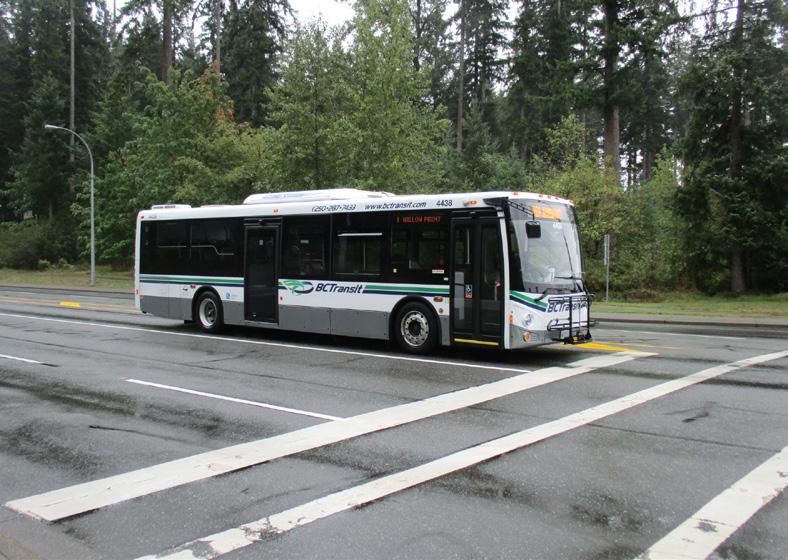
This Department provides reliable, convenient transit which offers residents an additional option to get to where they need to go, whether to work, school, recreation opportunities or shopping. Public transit is provided in Campbell River and portions of Area D to the south through a partnership between the City, Strathcona Regional District (SRD) and BC Transit.
Core Services
D Conventional transit service
D Custom (HandyDART) transit service
D Transit partnerships with local First Nations Communities and Area D
D Working with local operating company – Keolis Canada
D Local transit planning and promotion
D Bus stops and shelters
2025 Highlights
› Continued development of the Transit Future Action Plan, a guiding document to enhance transit service over the next three years.
› Advanced updates to the City’s Master Transportation Plan to support accessible, multi-modal mobility for all residents.
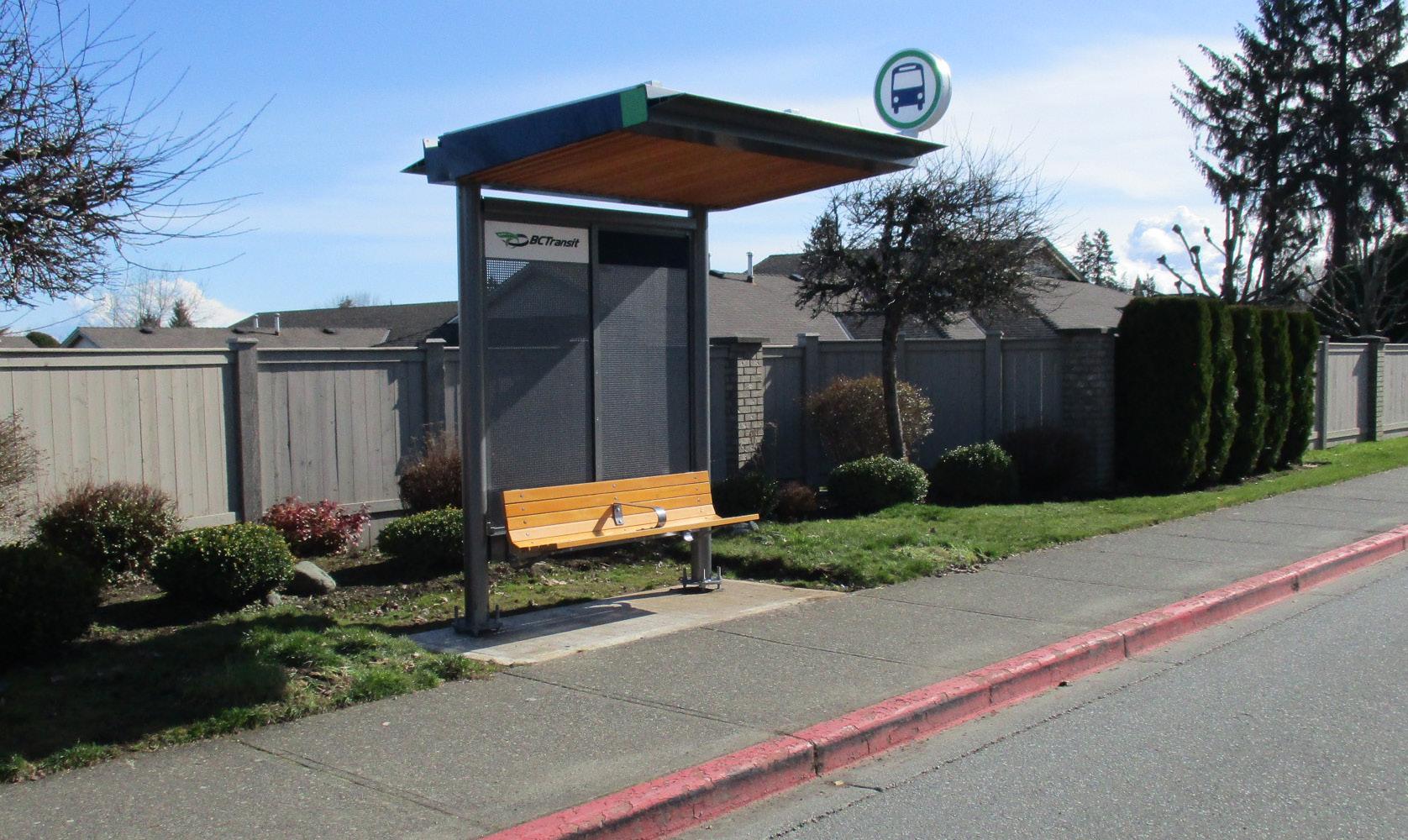
› Enhanced transit infrastructure through the installation of three new transit bus shelters.
2026 Goals and Objectives
› Complete the Transit Future Action Plan and begin implementation of service.
› Complete the Master Transportation Plan, with public transit integrated within a multi-modal transportation network.
› Continue investing in transit infrastructure through the addition of new transit shelters.
› Promote transit use through public awareness initiatives, including free-transit events.
Recreation and Culture
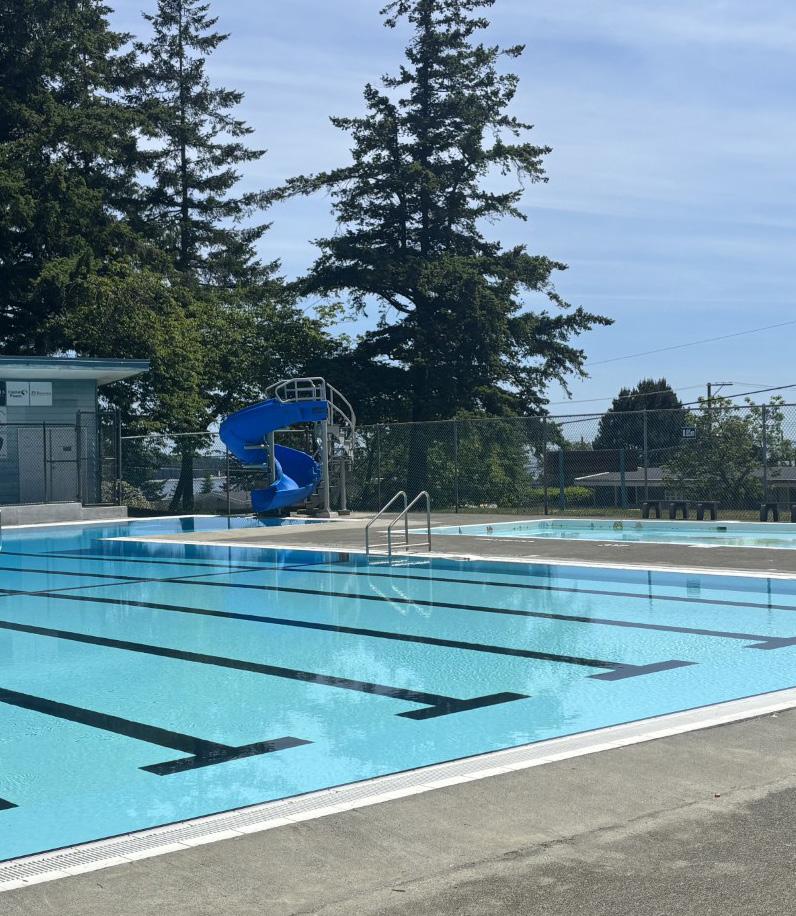
The Recreation and Culture Department provides a wide variety of recreation and culture services for people of all ages, stages and abilities in Campbell River. Campbell River is home to an active Sportsplex, Community Centre, Rotary Club Fieldhouse, Centennial Outdoor Pool, Spirit Square and the awardwinning CR Live Streets.
Core Services
D Fitness classes, weightroom and programming
D Operation of City recreation facilities which includes indoor rental bookings and scheduling
D Activation of the downtown through CR Live Streets and Spirit Square bookings and programming
D Liaising with recreation and culture community partners
D Operation of the summer Centennial Outdoor Pool
D Custodial services for all City recreation facilities, City Hall, the Enterprise Centre, Norm Wood Environmental Centre, the City of Campbell River Airport (YBL), and the City Pound
D Special event permit management
2025 Highlights
› More people joined and used City recreation services, including increased annual memberships, and visits to the fitness centre, weight room, programs, camps, events, and the Centennial Outdoor Pool.
› Hosted well-attended downtown events, including CR Live Streets and the Spirit Square Concert Series; CR Live Streets alone received 10,000 visits and generated significant economic activity.
› Worked closely with downtown partners, including the Downtown BIA, Tidemark Theatre, the Vancouver Island Regional Library, and the Campbell River Art Gallery and Art Hive.
2026 Goals and Objectives
› Complete the 10 Year Parks, Recreation and Culture Master Plan, which will set priorities and guide how the City provides and invests in recreation facilities, programs and events over the next 10 years.
› Support Canada Day celebrations, in partnership with the Campbell River Canada Day Committee.
› Engage with the community to ensure programs, events and services reflect the community’s needs and interests.
› Manage City recreation facilities to support community health, wellness and livability.
› Activate the downtown through summer programming, including the CR Live Streets event series, the Spirit Square Concert Series, Yoga in the Park and other community events.
› Launch the new Recreation and Culture App for easy, on-the-go access to recreation programs and services.
Solid Waste
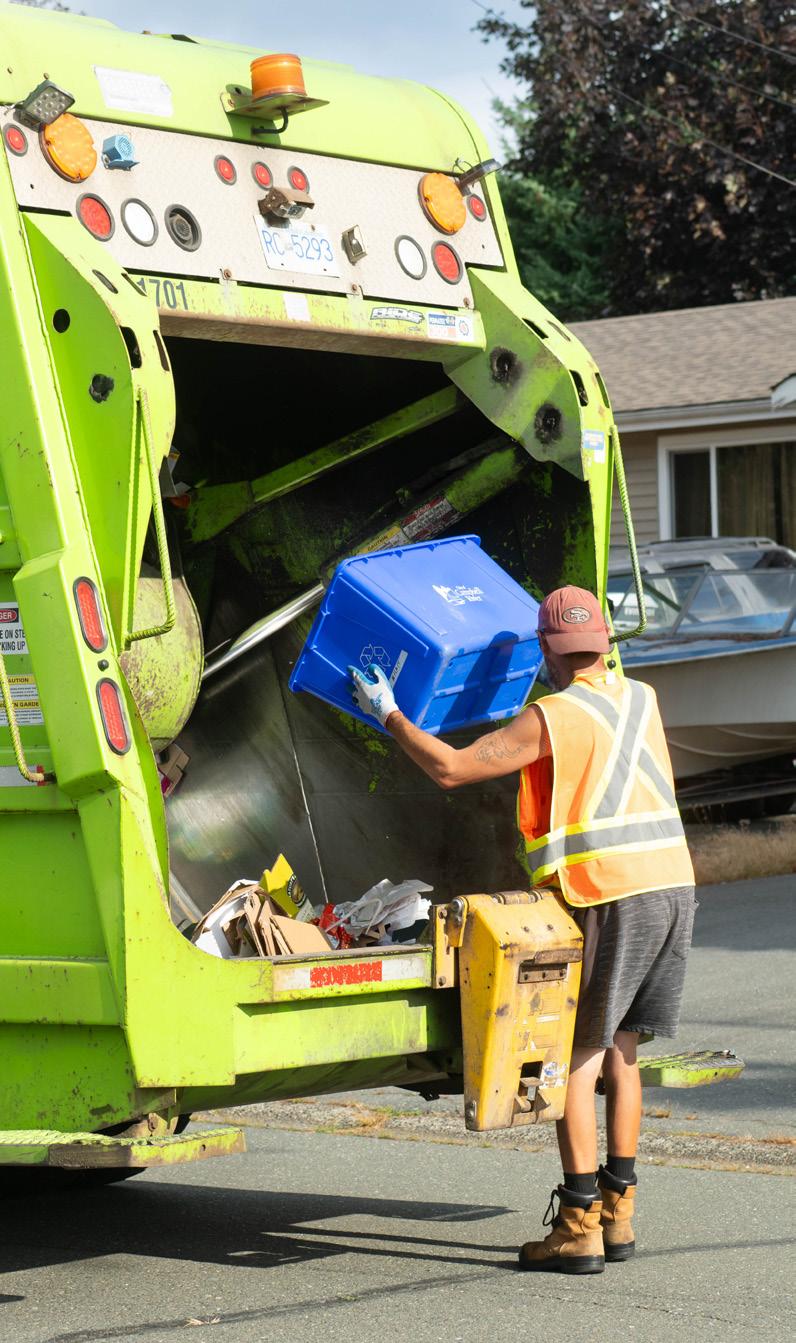
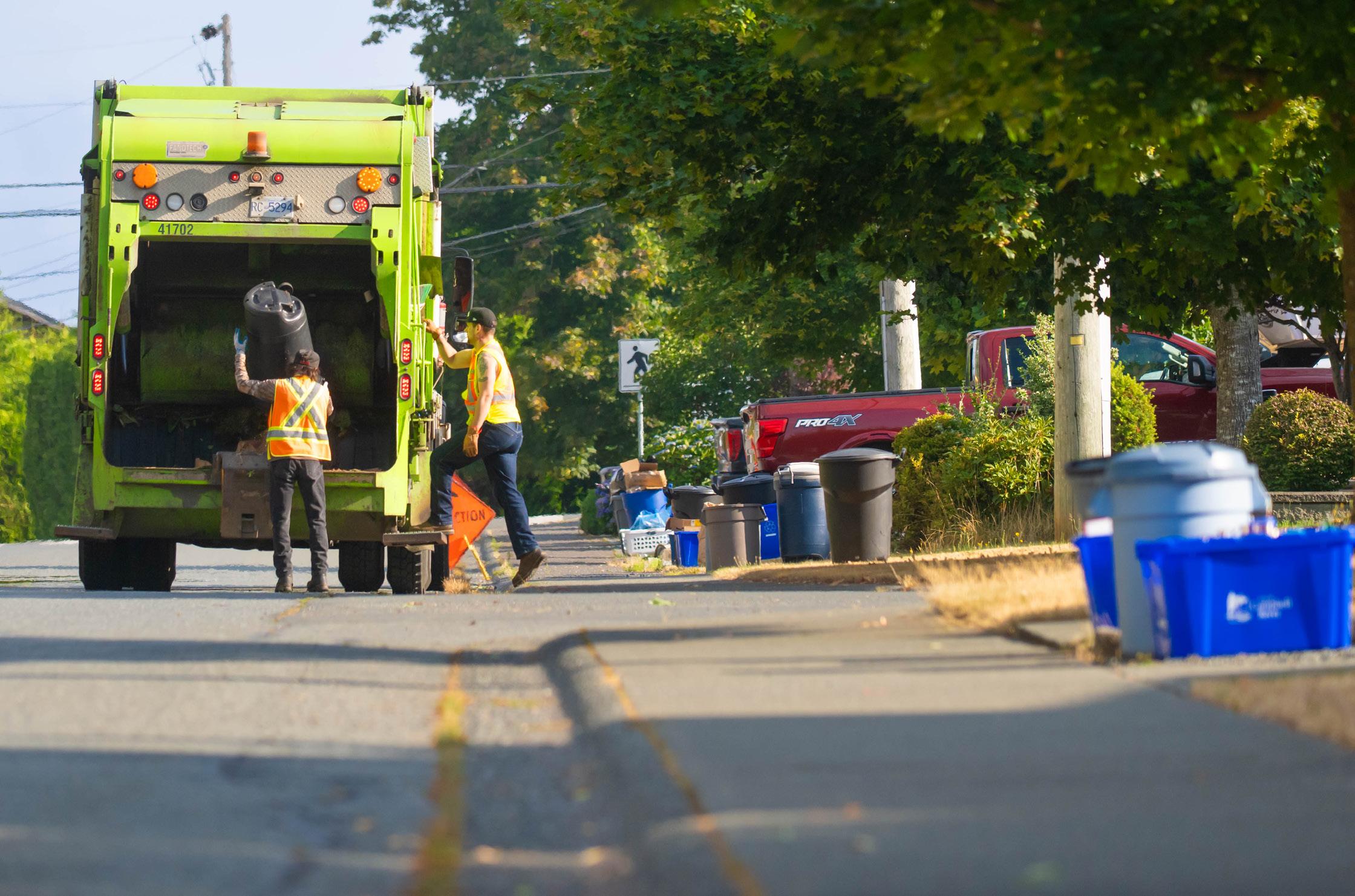
Waste reduction programs, including curbside collection of garbage, recyclables and organics, are provided for single-family and duplex residential properties, with optional services for triplexes and fourplexes. This department also works with Comox Strathcona Waste Management (www.cswm.ca) on regional services such as landfill and organics.
Core Services
D Weekly curbside collection of garbage, recyclables, and organics
D Public education
D Liaise with Comox Strathcona Waste Management
D Liaise with collection contractor (Emterra)
2025 Highlights
› The City’s curbside collection contract was awarded to Emterra Environmental for a new 10year curbside collection term.
› The City continued to support the ReCollect App (CR Recycles) for curbside collection notifications.
2026 Goals and Objectives
› Hire a Solid Waste Clerk Technician to facilitate curbside collection roll-out in late 2026/early 2027.
› Contract a Solid Waste Manager position to lead the City through the transition to an automated curbside collection service.
› Purchase and deliver the new organics, garbage, and recycling carts.
› Inform and engage with residents on the new automated curbside collection system including new routes and collection schedules, ahead of the roll out of the new service.
Overviews
Community Safety Departmental
Director of Community Safety
As a member of the Senior Leadership Team, the Director of Community Safety provides overall strategic direction and leadership for bylaw enforcement, fire services, fire dispatch for North Island 911, emergency program, RCMP municipal support services, and liaises with the Campbell River RCMP Detachment, with an emphasis on maintaining and enhancing community safety, particularly in response to the challenges associated with homelessness, mental health and addictions.
Bylaw Enforcement and Animal Control
The Bylaw Enforcement Department provides bylaw enforcement services focusing on community safety and security and maintaining the community standards reflected in City bylaws. The department actively monitors the downtown core and surroundings, ensuring compliance with bylaws and code of conduct standards to promote public safety in public spaces. The Bylaw Enforcement Department looks to gain bylaw compliance by informing, educating, and enforcing if needed.
Core Services
D Bylaw compliance response and complaint investigation
D Proactive downtown foot patrols in City facilities and public spaces
D Animal control services within the City, Strathcona Regional District Area D, and Wei Wai Kum and We Wai Kai First Nations reserve lands
D Downtown parking enforcement and downtown security service management
2025 Highlights
› Enhanced Downtown Foot Patrols: Significantly increased daily downtown foot patrol hours, including regular encampment cleanups, to improve safety and cleanliness and address bylaw violations such as public liquor consumption.
› Increased Bylaw Compliance Activity: Responded to 1,630 bylaw complaint files across various City bylaws, representing an increase over 2024.
› Expanded Enforcement Coverage: Implemented bylaw enforcement coverage seven days per week, 365 days per year.
› Strengthened Downtown Safety Collaboration: Worked closely with the Downtown Business Improvement Association, downtown businesses, and social service providers to address issues and support information sharing, and participated in the Downtown Safety Working Group to support coordinated responses to downtown challenges.
› Animal Control Operations: Delivered animal control patrols within the City, Strathcona Regional District, and Wei Wai Kum and We Wai Kai First Nations lands, responding to an increased number of complaints year over year.
› Department Relocation Completed: Relocated the Bylaw Enforcement Department to the Centennial Building to accommodate the Reimagine the Row development on Shoppers Row.
› New Bylaw Adopted: Adopted nuisance illumination bylaw regulations to address lightrelated impacts in the community.
2026 Goals and Objectives
› Further increase foot patrols to continue to promote downtown safety and cleanliness.
› Address bylaw violations such as camping, consumption of liquor, and other issues.
› Respond promptly to all bylaw complaints, prioritizing health and safety issues.
› Recruit two additional bylaw enforcement officers and a part-time bylaw administrative assistant.
› Implement the Nuisance Abatement and Cost Recovery Bylaw and procedure to recover costs related to repeated attendances at designated nuisance properties.
› Enhance relationships with downtown businesses, the Downtown BIA, and social service providers to address downtown issues, and continue to participate in the Downtown Safety Working Group.
› Formalize the partnership with provincial community outreach staff to help address risk and conflict and connect individuals with services and support.
› Continue to optimize bylaw’s coverage of the downtown, using an enhanced enforcement strategy.
› Enhance dog licencing compliance.
Emergency Fire Dispatching Services and (E-911) Emergency Management
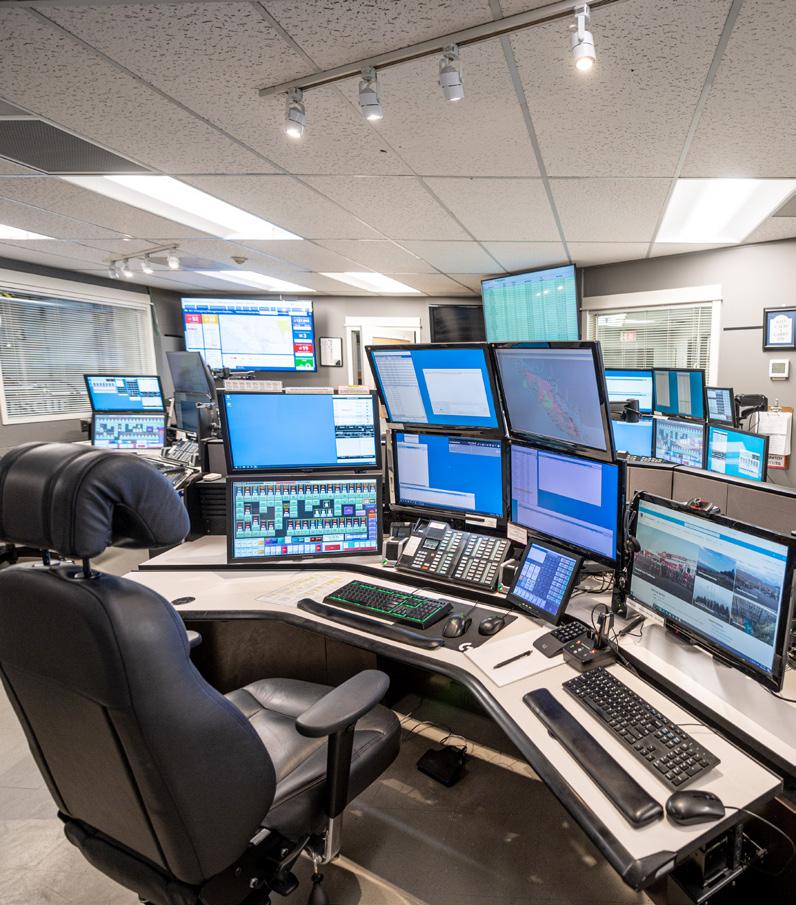
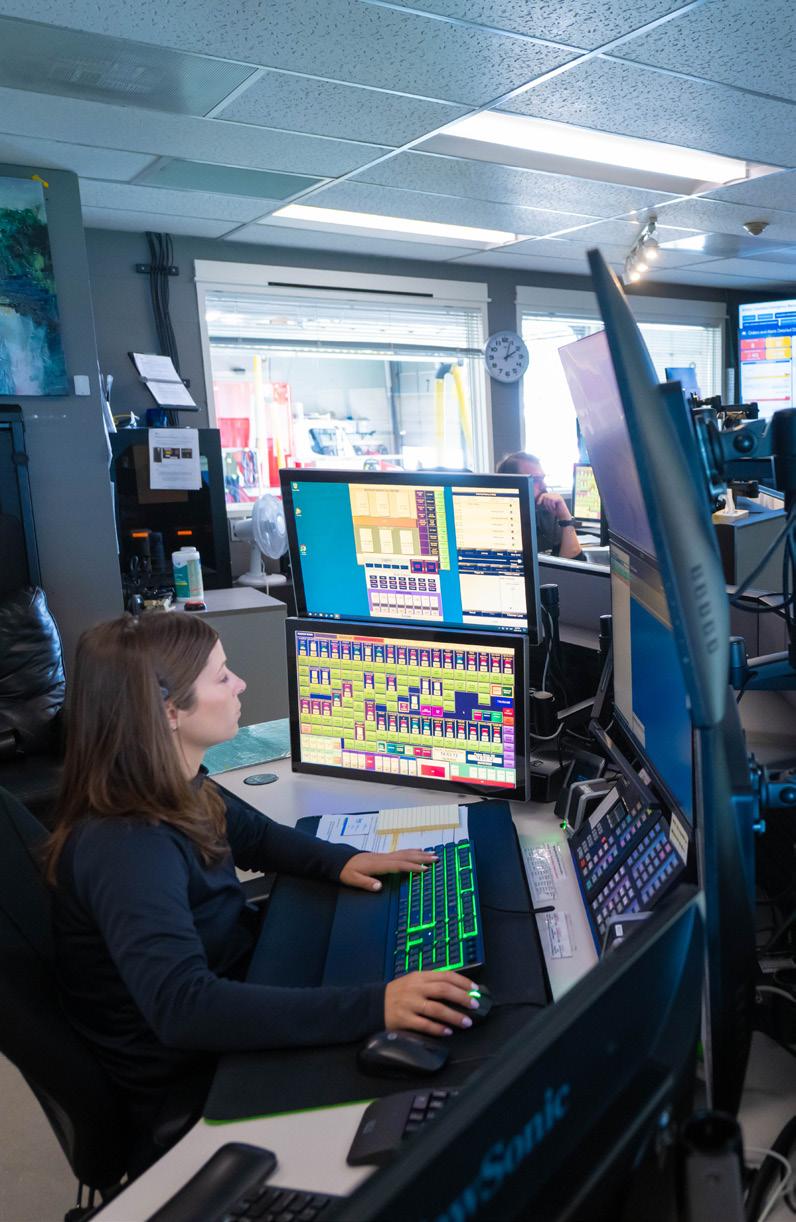
Campbell River’s 9-1-1 Fire Dispatch Service handles emergency 9-1-1 calls and fire dispatch for eight regional districts (81 fire departments) across Vancouver Island, the qathet Region, and the Peace River region, spanning over 185,000 square kilometres. Operating around-the-clock, the City’s dispatch centre, under contract with the North Island 9-1-1 Corporation (NI911), has achieved significant milestones.
Core Services
D 24/7/365 emergency 9-1-1 and fire dispatching service to 81 fire departments, including Campbell River
D Legislative reporting and incident tracking support
D Emergency management liaison services between the City and Strathcona Regional District
D Emergency Operations Centre (EOC) establishment, activation, and coordination support
D Emergency management planning, training, activation, demobilization, and recovery support
D Fire department information sharing through mobile computer-aided dispatch systems
D Ongoing radio communications to support fire department operations and resource access
D Emergency resource coordination and support upon request by fire departments
D Radio communications training for fire agencies within the North Island 9 1 1 service area
D Emergency management readiness and operational support for first responders and public safety
2025 Highlights
› Celebrated 30 years of public safety communications on behalf of North Island 911.
› Supported two wildfires of note in the Province of BC on Vancouver Island.
› Provided dispatch services for over 27,000 fire and medical emergency incidents to 81 fire departments within the NI911 Corporation Service area.
› Continued to test and build business continuity plans for backup fire dispatch services with the Regional District of Fraser-Fort George.
› Created a position to support the operations and technology needs of the 9-1-1 Fire Dispatch Centre in case of an emergency, evacuation, or disaster.
› Provided training to maintain qualifications for public safety telecommunications personnel.
› Designed and installed a clean agent extinguisher system in the server room at #1 Fire Station.
› Implemented Rapid SOS, a tool used to accurately locate emergencies
2026 Goals and Objectives
› Renew the dispatch contract with NI911.
› Deploy technology upgrades and training associated with Next Generation 9-1-1 (NG911).
› Enhance business continuity and redundancy plans to ensure uninterrupted service provision.
› Review call-taking and dispatch practices to smoothly transition to and meet NG911 standards.
› Provide state-of-the-art dispatch and NG911 technology to support customers.
› Collaborate with partners to enhance the quality of fire dispatch and develop a positive relationship with the fire departments and regional districts we serve.
› Continue to improve the work environment focused on health, wellness and a positive culture so that all emergency service employees can feel supported physically and mentally.
› Explore areas of growth and economic development for dispatch services.
› Review Emergency Management plans and make recommendations for areas of growth.
Fire Protection
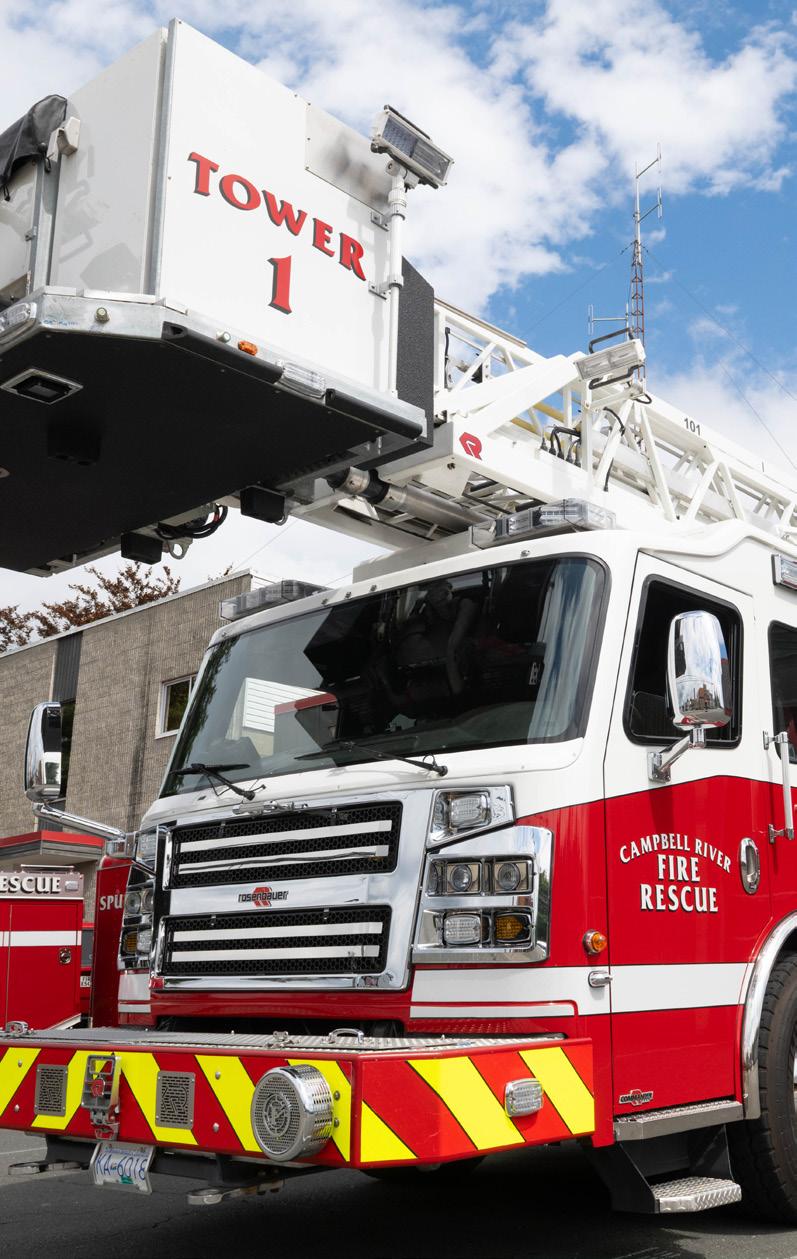
Campbell River emergency services are delivered to the citizens and visitors of Campbell River, three First Nation communities, and a portion of Area D of the SRD south of Campbell River, from two fire stations. Fire protection services are maintained 24 hours a day by 28 career firefighters, 45 paid-on-call firefighters, one fire mechanic, one FireSmart coordinator, and one fire prevention officer. The department provides professional fire protection services, maintains legislative obligation to life safety and provides fire prevention services to the City and contract partners.
Core Services
D Fire suppression, vehicle extrication, hazardous material response, environmental protection, prehospital emergency medical care, technical rescue (including confined space, low and high angle rope, tower crane, shore-based swift water and elevator rescue)
D Airport fire and rescue services
D Fire inspections and code enforcement
D Pre-incident planning
D Fire, life safety, and FireSmart public education
D Enforcement of Fire Services Bylaw, Building Bylaw, Clean Air Bylaw, Fireworks Regulation Bylaw and False Alarm Bylaw
› Hired and onboarded a dispatcher, promoted a Captain to Deputy Fire Chief and promoted a Deputy Fire Chief to Fire Chief.
› Launched the first phase of firefighter medical screening to support prevention and early intervention for chronic illnesses prevalent in the fire service.
› Implemented the UBCM FireSmart Grant with the support of two local First Nation partners.
› Enhanced partnerships with First Nations and community groups around Emergency Management.
› Implemented strategies to reduce overtime.
› Commissioned a new decontamination vehicle.
› Replaced our fleet of breathing apparatus.
2026 Goals and Objectives
› Complete the Fire Master Plan.
› Update the Community Wildfire Resiliency Plan.
› Negotiate and renew the City’s Collective Agreement with IAFF Local 1668.
› Recommend revisions to the City’s fire bylaws.
› Continue the medical screening program for firefighters.
› Integrate recent changes to the Fire Safety Act into City policies.
› Begin service delivery to the Duncan Bay road area of the SRD.
› Continue work on the Aerial apparatus – ladder truck replacement process.
› Review fleet services to determine needs and replacement intervals.
› Replace the City’s portable radios and thermal imaging cameras.
› Standardize the department’s uniform policy to include paid-on-call firefighters.
RCMP
The City funds 46 RCMP Members in the Campbell River Detachment, bringing the authorized establishment to 49 officers for 2025.
The RCMP, through policing and protective services initiatives, addresses crimes related to substance abuse, against persons and property , involving traffic law enforcement, as well as crime reduction strategies.
Core Services
D Policing and protective services
D Enhanced community relations with participation in as many community events as possible
D Drug enforcement
D Traffic enforcement
D First Nations policing
D Crime reduction strategies
2025 Highlights
› Responded to 16,124 calls for service; a 9.8 per cent decrease over 2024.
› Submitted 684 submissions to the Crown for charge approval; a 1.3 per cent increase over 2024.
› Implemented the National Body Worn Camera program for front line officers.
2026 Goals and Objectives
› Address strategic initiatives through the development of the Annual Performance Plan.
› Participate in community events.
› Continue to combat the negative effects of alcohol/drug use within the community by facilitating high school education awareness.
› Continue to focus on distracted driving as well as impaired driving to keep roads safer.
› Continue to contribute to safer and healthier First Nation Communities through proactive enforcement and cultural sensitivity training.
› Decrease the number of incidents of Cause Disturbance/Drunk in a Public Place through foot patrols and participation in the Downtown Safety Working Group.
› Monitor operational impact of National Body Worn Camera Program.
RCMP Municipal Support
RCMP Municipal Support provides services to the RCMP, supporting their administrative and operational needs to provide effective police services to the citizens of Campbell River. The department also provides and maintains jail and lock-up facilities for the care and keeping of Municipal, Provincial, and Federal prisoners, inclusive of custodial services, as well as supporting the RCMP’s custodial and overall building maintenance needs. Quality customer service is provided to the citizens of Campbell River and community partners in relation to general inquiries, Police Information Checks, requests for information, and other general administrative services, as well as policing and victim support programs such as Victim Services, Restorative Justice, and Crime Stoppers.
Core Services
D Administration of the Municipal Police Unit Agreement between the City and the Province
D Crime analysis
D RCMP clerical and administrative support
D Records and crime statistics management
D Information requests and civil fingerprinting
D Phone/reception services
D Statement and audio/video transcription
D Exhibit maintenance
D Electronic file disclosure
D Forensic video support
D Court file/document processing
D Building and cellblock facilities cleaning and maintenance
D Community Policing Programs: Restorative Justice and Crime Stoppers
2025 Highlights
› Provided administrative support services for 16,124 RCMP files.
› Processed 684 submissions to the Crown for charge approval.
› Processed 1,186 police information checks (642 employment/other, 17 student and 522 volunteer) and 519 civil fingerprint submissions (an 8% increase over 2024).
› Received 85 referrals to the Restorative Justice program; a 31% increase over 2024.
› Developed the trauma-informed knowledge base of the Restorative Justice Program Volunteer Team, providing victims and others harmed by crime, with support and assistance.
› Received 279 tips to Crime Stoppers. From these tips, nine arrests were made; four vehicles recovered; and a total of $321,620 worth of property, cash and/or drugs were recovered or seized.
2026 Goals and Objectives
› Continue to review and align administrative and operational support services with RCMP demands for service.
› Monitor administrative and operational requirements generated by the RCMP National Body Worn Camera Program.
› Continue to provide expanded Restorative Justice services through developing partnerships, establishing protocol, liaising, and bridging the gap between the community and access to youth engagement programs addressing gun and gang violence.
› Continue to explore opportunities to enhance partnerships with local Indigenous communities and RCMP to support individuals and families, and assist with all aspects of Restorative Justice service delivery.
› Continue to improve the work environment focused on health and safety, wellness, training and development and a positive culture.
Victim Services
Victim Services provides supports to victims and witnesses of all crimes and trauma.
Core Services
D Victim support and assistance
D Emotional support services
D Referral to community and social service agencies
D Court process information and justice system support
D Financial benefits information and application support
2025 Highlights
› Provided continued support and assistance to victims and witnesses of crime and trauma, for 403 individuals from 304 incidents/files.
› Supported the Restorative Justice program by providing paid and volunteer support to victims before, during and following Restorative Justice Forums.
2026 Goals and Objectives
› Continue to provide crisis intervention and immediate and follow-up assistance to victims and witnesses of crime and trauma.
› Continue to enhance the Victim Services volunteer program to directly work with victims of crime and call-outs.
› Expand critical incident response to call-outs from hospital.
› Host and/or participate in victim-related events.
› Provide public education and promote awareness regarding victims’ issues.
Departmental Overviews
Corporate Services
Director of Corporate Services
As a member of the Senior Leadership Team, the Director of Corporate Services provides overall strategic direction and leadership for corporate communications, human resources, information technology and legislative services. An emphasis is placed on developing and implementing corporate strategic goals, driving progressive change, and contributing to a positive organizational culture through excellent service delivery.
Communications
The Communications Department facilitates meaningful communications and relationship development with Campbell River residents and visitors, Indigenous Peoples, governments, organizational partners, City staff and the public, and is also responsible for corporate communications initiatives. Communications supports sharing clear, concise, and complete information on City programs, services, events and initiatives. Valuable feedback and positive working relationships that improve City services are encouraged and facilitated through engagement.
Core Services
D Strategic communications planning
D Management of the City’s communications platforms
D Community engagement
D Communications training for City staff
D Development and distribution of communications materials
D Brand management
2025 Highlights
› Modernized City Website: Successfully replaced and launched a new City website that is accessible, mobile friendly, and easier for residents and staff to use.
› Stronger Community Engagement: Delivered the second year of the It’s Time for Downtown campaign, meeting residents where they were—at the Campbell River Farmers Market and CR Live Streets—to share information, distribute City swag, and build meaningful connections. The City also supported community engagement for key initiatives, including the Official Community Plan, Erickson Road Renewal, and the Stormwater Utility Funding Study.
› High-Impact Communications Campaigns: Supported a wide range of City campaigns, including the Homewood temporary housing expansion, warming centre activations, Reimagine the Row, property tax awareness, CR Live Streets, and new facility or service offerings such as the dog park openings.
› Grew Digital Reach: Implemented a new social media strategy that significantly strengthened the City’s online presence: with a 15% increase in Facebook followers and a 40% increase in engagements.
› Citizen Satisfaction Survey Completed: Completed the 2025 Citizen Satisfaction Survey with 810 responses from randomly selected households. Key findings include:
› 93% rate Campbell River’s overall quality of life as good or very good.
› 70% agree the City is doing a good job overall.
› City staff received high marks for helpfulness (86%) and knowledge (89%).
2026 Goals and Objectives
› Launch a new and improved intranet (StaffWeb) to better connect staff and streamline internal communications.
› Align resources and roll out updated communications policies, procedures, and staff training to strengthen efficient, strategic, and consistent City communications.
› Support and lead key communications campaigns, including the 2026 municipal election, Reimagine the Row, It’s Time for Downtown, property tax awareness, and CR Live Streets.
› Continue to strengthen the City’s social media presence by growing audiences, increasing engagement, and addressing misinformation when needed.
› Leverage the 2026 Co-op Student to tell the City’s story by showcasing events and highlighting staff and their work.
› Expand the use of digital communication tools, including the Recreation App, City e-news updates, and the suite of tools available on the new City website.
Human Resources
The Human Resources Department (HR) delivers a wide range of core services to the organization including managing the employee life cycle for approximately 400 employees, including 284 permanent employees; recruiting and onboarding; applying the City’s collective agreements with CUPE Local 401 and IAFF Local 1668 and managing associated issues resolution and collective bargaining; advancing employee safety and health programs and procedures; and promoting and advancing employee learning and development. HR acts as a strategic partner within the organization by developing forward-thinking initiatives in the areas of talent acquisition, talent development and growth, workplace culture and employee health and safety. HR staff are professional experts in a diversity of areas and focus on creating and maintaining a positive experience for City employees by providing timely and efficient service.
Core Services
D Talent acquisition (staffing and retention)
D Health and safety
D Labour and employee relations
D Talent management, development and growth
D Compensation and benefits administration and management
D Workplace culture development
D Human Resources policy and program development
2025 Highlights
› Recruitment: Managed over 120 job competitions while navigating an ongoing, highly competitive labour market and persistent talent shortages.
› Employee Retention and Workplace Culture: In 2025, the vacancy rate (4.3%) and turnover rate (5.2%) decreased significantly compared to 2024 and recorded their lowest levels since 2020, reflecting stronger employee retention and greater workforce stability.
HR also delivered the 2025 Workplace Culture Employee Survey with a high response rate. Key culture strengths and opportunities were identified and will inform updated action plans.
› Health and Safety: Received the 2025 Organizational Safety Excellence Award by the BC Municipal Safety Association (BCMSA). The City also completed its third WorkSafeBC Certificate of Recognition (COR) audit, which resulted in a $95,000 incentive to the City.
› New Benefits Provider: Led the transition to a new benefits provider for all eligible employees, delivering measurable cost savings and improved service outcomes for the City and its employees.
› Training and Development: Completed the first year of the corporate training program, providing in-house training and development opportunities for all employees.
› Unit4 Implementation: Continued to support preparations for the implementation of Unit4, which will replace some City systems, including Vadim and Info:HR, and will integrate with several others.
2026 Goals and Objectives
› Support for the Unit4 implementation.
› Renew the City and IAFF Local 1668 collective agreement.
› Lead organization-wide Workplace Culture initiatives, including action plans following from the 2025 all employee survey.
› Implement WorkSafeBC 2025 COR audit recommendations through a targeted action plan and prepare for the fourth COR audit in the fall of 2026.
› Complete and roll out key administrative policy updates.
Information Technology
As the central technology provider for the City, the Information Technology (IT) Department provides services encompassing enterprisewide municipal applications, technology infrastructure and integration, IT security, geographic information systems (GIS), and local network and cloud strategic support. The IT Department serves as a technical consultant and provides desktop, network, application and systems management services for all City departments, and some IT-provided services that are accessed by the public directly.
Core Services
D Business technology and applications support
D Geographic Information Systems (GIS) hardware, software and cloud-based environments management
D Oversight and strategic coordination of municipal technology initiatives
D Website, mobile and cloud-based business requirements support
D Network operations and security
D Advisory guidance on emerging technologies, data management standards, and legislative requirements
D Support for the Campbell River RCMP detachment’s technology needs
2025 Highlights
› Provided technical expertise for the City’s new campbellriver.ca website.
› Completed migration to Windows 11 ahead of Windows 10 End of Support deadline.
› Provided technical project support for the migration of Finance and HR systems to Unit4.
› Completed mandatory GIS updates to support the Federal Next Gen 9-1-1 implementation.
2026 Goals and Objectives
› Support the City’s implementation of Unit4, and assume ownership and operational support of the system.
› Implement significant security improvements with new network security hardware.
› Complete a GIS audit to develop a multi-year strategic roadmap.
› Review and update disaster recovery and incident response playbooks.
› Complete a network and organizational readiness audit to develop a new information security roadmap.
Legislative Services
The Legislative Services Department includes the Office of the Corporate Officer. The department carries out a wide variety of statutory responsibilities and supports legislative matters and decisions of Council, as outlined in the Community Charter. The department guides and delivers governance, accountability and transparency through the administration of the City’s legislative services, Privacy Management Program and Records Management Program.
Core Services
D Coordination for Council meetings including agendas, minutes, bylaws and follow-up reports
D Legislative and procedural guidance for Council, Councilappointed bodies, and staff
D Administration and oversight of the City’s Records Management Program, including classification, retention and disposition of corporate records
D Support for drafting, amending, and maintaining bylaws, Council policies, and Administrative policies
D Freedom of Information and Protection of Privacy Act (FOIPPA) compliance
D Privacy Management Program maintenance and development
D Signing authority for City-entered contracts and agreements
D Administration of local government elections and byelections in accordance with statutory requirements
D City Hall reception and corporate switchboard services
2025 Highlights
› Welcomed and onboarded a Legislative Services Manager into the long vacant role.
› Completed Phase 1 Council agenda process update: review and system update for agenda building and processing of staff reports to Council.
› Completed department records cleanup and drafted City-wide records management plan.
› Processed 40 Freedom of Information (FOI) requests.
2026 Goals and Objectives
› Implement a Records Management Policy and Manual.
› Complete Phase 2 Council agenda process update: follow-up procedure, correspondence, and annual review.
› Review and update Delegations to Council process.
› Provide organization-wide privacy and records management training.
› Complete FOI system migration to SharePoint, and procedure update.
› Update procedural bylaws including Council Procedure bylaw and an amalgamated Delegation of Authority bylaw.
› Administer the 2026 Municipal Election.
› Develop and schedule orientation for incoming Council.
Departmental Overviews
Development Services
Director of Development Services
As a member of the Senior Leadership Team, the Director of Development Services provides overall strategic direction and leadership for development planning, development engineering, building inspection, and business licensing. An emphasis is placed on driving progressive change through a culture of efficiency, ongoing process improvement and accountability, to deliver the comprehensive, strategic goals set by Council while remaining focused on excellent service delivery.
Development Services
The Development Services Division provides a centralized, coordinated, one-stop service for all development applications, queries, permits and projects in Campbell River. Over the past three years, the department has processed an average of 235 building permit applications each year, with an annual construction value averaging over $110 million, and approved roughly $2 million of new public infrastructure. Land use and development applications involve preparing reports and recommendations for City Council’s consideration and often involve public consultation.
Core Services
D Building permits, inspections, and compliance development and land use planning applications (Official Community Plan and zoning amendments, development permit, and variance permit applications)
D Subdivision review and approval
D Engineering infrastructure review and approvals for current and future development
D Information and support for the local real estate industry
D Business licensing and compliance
2025 Highlights
› Processed 55 development land use applications.
› Approved 8 subdivisions totalling 58 new lots.
› Administered 14 new subdivision applications that totalled 90 proposed lots.
› Processed 111 Works on City Land Permits and 1,849 BC 1 Calls.
› Approved planning applications for 175 residential units and 912 m² of commercial space.
› Responded to 610 planning-related enquiries.
› Processed 221 building permit applications with a total construction value of $107 million, creating 349 new residential units.
› Processed 240 business license applications and renewed 2,230 existing licences.
› Processed 400 Property Record Requests.
› Led updates to the proposed Development Cost Charges Bylaw, reviewing infrastructure projects, proposed rates, and benefit allocations, and supporting a six-month consultation process.
2026 Goals and Objectives
› Continue to implement recommendations outlined in the Development Approvals Processes Review.
› Adopt a new Development Cost Charges Bylaw.
› Modernize and update a Latecomer Policy.
› Assist Community Planning and Livability with Official Community Plan and Zoning Bylaw updates.
› Move to digital applications for building, business license and planning applications.
› Implement a new online application and payment process for Property Record Requests.
› Update the Procedures and Delegation Bylaw and the Business Licence Bylaw.
› Conduct a review of the Sign Bylaw, with a concentration on simplification and clarity.
Departmental Overviews
Economic Development and Indigenous Relations
Director of Economic Development and Indigenous Relations
As a member of the Senior Leadership Team, the Director of Economic Development and Indigenous Relations is responsible for the design and implementation of the City’s economic development strategy to enhance economic activity in the city and surrounding region, and oversee tourism. They also advance reconciliation and Indigenous relations efforts and are responsible for the operation of the Airport.
Airport
The Campbell River Airport (YBL) is owned by the City and operates 24 hours a day, seven days a week. The airport offers regularly scheduled passenger service to Vancouver International Airport and services general aviation year-round. With a 6,500-foot, grooved runway, and jet fuel available, aircraft of any size up to a Boeing 737 can operate with ease from YBL. The airport is staffed from 5:30 a.m. to 8:30 p.m. daily to ensure compliance with Canadian Aviation Regulations.
Core Services
D Airfield operation maintenance
D Snow and ice control
D Provision of Jet “A1” Fuel
D Wildlife control
D Field and ditch maintenance
D Access road maintenance (Jubilee Parkway)
D Drainage management
D Safety and security, including security for commercial apron, airside lands
D Airport buildings operations and maintenance
2025 Highlights
› Renovated the Air Terminal Building universal washroom.
› Opened a washroom in the General Aviation Pilot’s Lounge.
› Began construction on Airport Fuel Systems Expansion project.
› Officially opened the new Airport Viewing Platform overlooking airside operations.
› Hosted a spectacular 2025 Wings ‘N’ Wheels event.
› Increased overall aircraft movements by 9.6% over 2024.
› Acquired and commissioned a new aircraft lavatory cart.
2026 Goals and Objectives
› Secure a new regional commercial air route.
› Host the 2026 Wings ‘N’ Wheels event.
› Expand the main public parking lot at the Air Terminal Building.
› Upgrade gate and road access from the Duncan Bay Main Road onto the airfield for emergency responses.
› Hold a functional emergency response plan exercise to test and enhance coordinated emergency responses at the airport.
Economic Development and Indigenous Relations
The Economic Development and Indigenous Relations Department works to grow a strong, inclusive, and future-ready economy for Campbell River. Through investment attraction, business support, tourism development, and strategic advocacy, the department strengthens key sectors and promotes Campbell River as a vibrant place to live, work, visit, and do business.
The department is also committed to building respectful, collaborative relationships with Indigenous Nations. By prioritizing engagement, shared learning, and partnership, this work supports reconciliation, economic participation, and shared prosperity.
Core Services
D Support local economic growth and downtown vitality
D Provide businesses with tools, resources, and training
D Advocate for economic resilience across sectors
D Promote Campbell River to investors, newcomers, and visitors
D Lead a coordinated destination management approach
D Support tourism partners through planning and collaboration
D Engage in industry, Indigenous, and government forums
D Implement the City’s Indigenous Relations Strategy
D Serve as liaison between the City and Indigenous Nations
D Provide Indigenous relations guidance to Council and staff
2025 Highlights
Business and Resource Sector Advocay
› Convened the Business Advisory Team, bringing together local business and industry leaders to provide real-time insight on economic conditions, regulatory impacts, and emerging opportunities.
› Used feedback from the Business Advisory Team to inform City advocacy, policy discussions, and economic priorities.
› Established the Alliance of Resource Communities, a collaborative network of communities advocating for regulatory certainty and economic stability across forestry, mining, aquaculture, energy, and related sectors including tourism.
› Strengthened Campbell River’s voice in provincial and federal discussions affecting resource-dependent communities.
› Supported coordinated advocacy focused on sustaining jobs, investment, and long-term community resilience.
Economic Development
› Launched the Business Growth Track, an online business development program supporting local entrepreneurs and the Rail Yard Market.
› Received a BC Economic Development Association Community Development Award for the Rail Yard Market.
› Completed a Business Pulse Survey to better understand local business needs and pressures.
› Developed Investment Attraction Readiness Tools, including a Community Profile, Target Sector Analysis, and Employment Lands Assessment.
› Continued the Essential Workers Temporary Housing program and welcome packages
› Participated in the Healthcare Professional Attraction Group to address workforce shortages.
Tourism
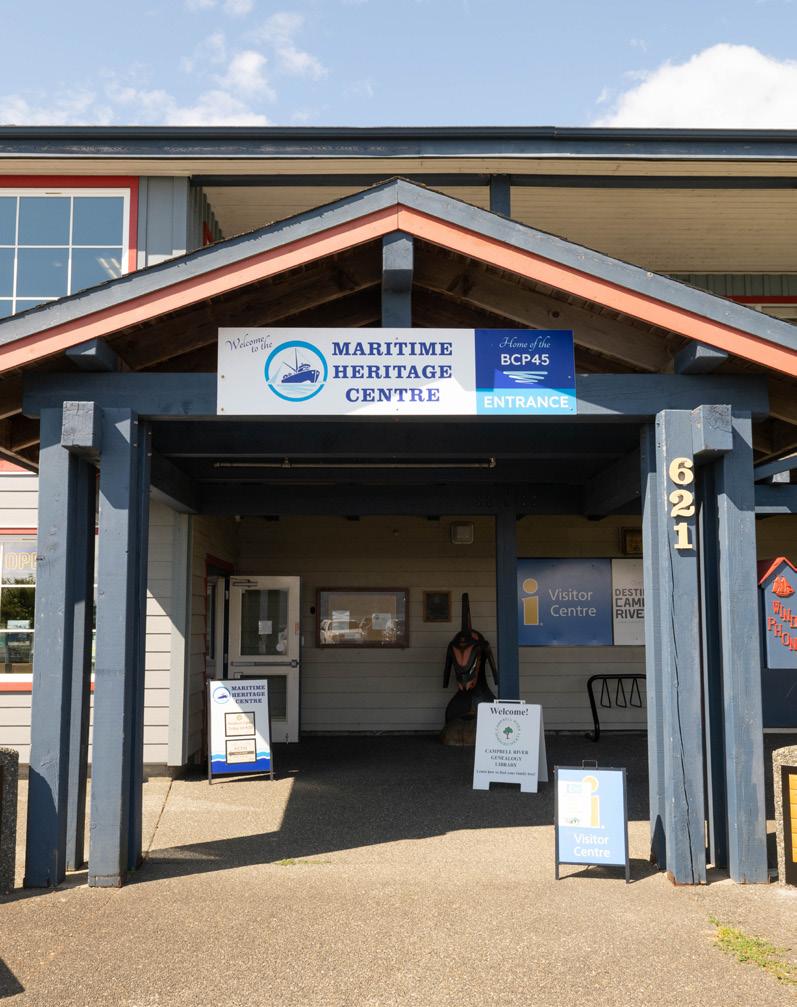
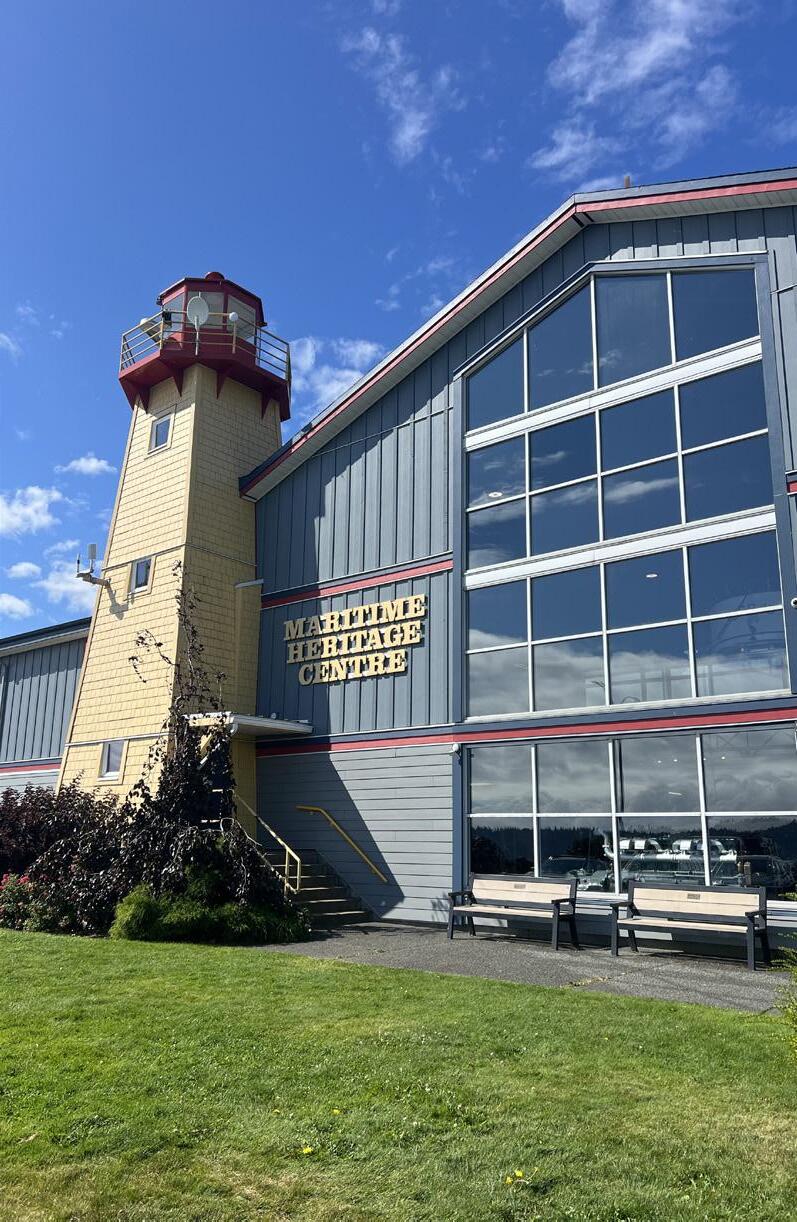
› Secured a contract to manage the Visitor Information Centre at the Maritime Heritage Centre.
› Approved Destination Campbell River’s 2026 Tactical Plan and submitted reporting to Destination BC.
› Engaged a new marketing partner to expand destination reach locally and globally
› Supported sports, arts, and cultural events to grow festival and event tourism.
› Secured regularly scheduled floatplane service to downtown Vancouver.
› Featured in Destination BC’s Infinite Coast global familiarization tour.
› Recognized in major travel publications worldwide
› Published the Liǧʷiłdax̌ʷ Indigenous Tourism Guide, a collaboration with We Wai Kai Nation and Wei Wai Kum First Nation.
Indigenous Relations
› Held Council-to-Council meetings with First Nations focused on relationship-building.
› Supported learning opportunities for Council and staff on Indigenous history, cultures, and shared responsibilities.
2026 Goals and Objectives
Economic Development and Advocacy
› Advance initiatives aligned with the City’s 5-Year Strategic Plan.
› Implement actions from the Business Pulse Survey to support business growth and retention.
› Continue the Business Advisory Team as a forum for dialogue, insight, and collaboration.
› Support businesses navigating regulatory uncertainty through advocacy, information sharing, and partnerships.
› Continue Essential Workers Temporary Housing and healthcare attraction initiatives.
Tourism
› Secure a major airline carrier with regularly scheduled service.
› Implement the approved 2026 Tourism Tactical Plan.
› Develop the 2027–2032 MRDT Strategic Plan and 2027 Tourism Tactical Plan with industry, residents, and Council.
› Expand travel trade and consumer marketing efforts.
› Support tourism product development and investment.
Indigenous Relations
› Facilitate regular meetings between Indigenous Nations and City Council.
Departmental Overviews
Financial Services
Director of Financial Services
As a member of the Senior Leadership Team, the Director of Financial Services provides overall strategic direction and leadership for all financial services functions, procurement and risk management. An emphasis is placed on stewarding the City’s financial resources and assets, developing and implementing strategic goals, and service delivery excellence.
Finance
The Finance Department is responsible for all financial administration matters for the City. The department delivers services to the public, industry, and all City departments. The department oversees a $110 million annual operating budget (including 71 operating projects) and a $69 million annual capital budget of 113 capital projects. The City is also the tax collector for other governments and agencies such as the Strathcona Regional District, School District No. 72 and the hospital, resulting in 15,000 tax notices being prepared and mailed, and payments being collected, each year.
Core Services
D Financial planning, budgeting and reporting
D Investment, debt, reserve, grant, and tangible capital assets management
D Property tax levy and collection
D Utility billing
D Accounts receivable
D Accounts payable
D Payroll
2025 Highlights
› Implemented the Financial Assistance Policy adopted by Council in late 2024. Engaged with local not-for-profit organizations through town hall sessions to explain policy changes and impacts, and partnered with the Campbell River Community Foundation and Scale Collaborative to deliver a multi-day Thriving Not-for-Profits workshop focused on financial resilience and sustainability.
› Reviewed and provided user fee recommendations to Council that balanced sustainability and affordability for utility rates over the next five years, including water, sewer, solid waste, and the Parks Parcel Tax.
› Continued with a multi-year project to replace the City’s legacy finance and human resources software, with Unit4. Completed the system build and first phase of testing in preparation for a full organization-wide rollout in 2026.
› Received the Distinguished Budget Presentation Award for the 2025-2034 Financial Plan from the Government Finance Officers Association of Canada and the United States.
› Received the Canadian Award for Financial Reporting from the Government Finance Officers Association of Canada and the United States.
2026 Goals and Objectives
› Complete the Unit4 project testing and support the organization-wide rollout of the new accounting and human resources system.
› Complete a bylaw amalgamation project that consolidates numerous miscellaneous fees and charges across the City into a single, streamlined document, improving clarity and accessibility for the public.
› Obtain the Government Finance Officers Association of Canada and the United States Distinguished Budget Presentation Award for the 2026-2035 Budget and the Canadian Award for Financial Reporting for the 2025 Annual Report.
› Draft revisions to the Reserve and Surplus Policy to improve the City’s financial administration for council consideration in later 2026 or early 2027.
Risk Management
This function coordinates the City’s response to all property and liability claims by utilizing City staff, private adjusters, legal counsel, and City insurers. Risk Management advises all City departments on insurance requirements and agreement wording, and develops and implements policies and procedures that look to reduce the City’s exposure to risk. Risk Management also oversees the placement of insurance and handles any related insurance claims and legal concerns.
Core Services
D Risk management advice
D Claims management (approximately 10 to 20 per year)
D Insurance administration
2025 Highlights
› Reviewed insurance coverages to conduct a gap analysis on all policies.
2026 Goals and Objectives
› Update the City’s risk management framework/ policy.
› Conduct a property insurance provider assessment.
› Foster a proactive risk-aware culture within the City through training and awareness.
› Integrate risk assessments into City strategic planning.
Supply Management
Procurement is a professional service that ensures the best value, without bias or favour, in purchasing decisions. Maintaining and adhering to a strict purchasing policy and following bylaws and domestic and international trade agreements ensures that purchases are accountable and maintains high standards for goods and services procured using public funds. This department also disposes of surplus equipment in a legally compliant, ethical, and cost-effective manner.
Core Services
D Procurement
D Asset disposal
2025 Highlights
› Conducted 97 competitions receiving over 263 bid submissions: 40 per cent of the competitions were for the purchase of services, 47 per cent for goods, and 12 per cent for construction projects.
› Major acquisitions included:
› RCMP Parking Lot Expansion and Upgrade
› Fire Department Self Contained Breathing Apparatus
› RCMP HVAC Upgrades
› Housing Needs Report
› Norm Woods Environmental Centre Heat Pump System
› Quinsam Heights Transportation and Growth Study
› Awarded a combined value of approximately $7.8 million for City projects.
› Saved approximately $3.5 million.
2026 Goals and Objectives
› Complete the Unit4 project and support the organization-wide rollout, including communicating purchasing process changes resulting from the new system and fully implementing a purchase order and requisition framework aligned with industry best practices.
› Provide ongoing procurement training to ensure staff understand Council policy and administrative processes.
› Update purchasing templates and procedural documents to ensure tools and resources used by purchasing staff and employees across the City are user-friendly and as efficient as possible.
Operations Departmental Overview
Director of Operations
As a member of the Senior Leadership Team, the Director of Operations provides overall strategic direction and leadership for capital works project delivery, facilities, fleet, roads, parks, water, and liquid waste services, with an emphasis on asset management, implementing strategic goals, and delivery of essential services to the community.
Capital Projects
This department delivers on the capital projects approved for design and/or construction in the City’s long-range Capital Plan. Services provided by the department evolve from a support role early in the project life cycle, transitioning to the lead role when the project enters detailed design and construction, and resuming a support role during the maintenance period.
Core Services
D Manage the construction and administration of all capital projects within the Operations Division, including land use services; environment; sanitary sewer collection and treatment; stormwater management; transportation; water supply, treatment and distribution; facilities; and parks.
2025 Highlights
› Continued to address the infrastructure gap identified in the capital plan through infrastructure delivery, technological advancements, and studies supporting the City’s asset management strategy.
› Worked with Fisheries and Oceans Canada (DFO) and City consultants on repairing the north section of the Seagull Walkway and identifying suitable habitat compensation sites. Project and compensation designs have been submitted to DFO for approval. Completed Phase 3 construction at Norm Wood Environmental Centre, including upgrades to SCADA and redundancy systems.
› Completed design and construction of approximately four kilometers of sewer main renewal.
› Continued the design phase for the John Hart Reservoir at the Water Supply Centre , with design drawings now 90% completed.
› Continued design work for the Lift Station #1 Revitalization project.
› Advanced the detailed design for the Campbellton Sewer System Upgrades, with drawings now at 90%.
› Issued the tender for Phase 1 of the Erickson Road Rehabilitation project.
2026 Goals and Objectives
› Continue implementing the new OMS to support decision-making for the City’s 10-year Capital Plan.
› Complete construction of the Seagull Walkway North section and development habitat compensation.
› Finalize detailed design and tender construction of new water mains on Simms Road.
› Complete design and tender preparation for the John Hart Reservoir, Campbellton Sewer System Upgrades, Sewer Main Point Repairs and Hwy 19 Left Turn Lane into Ocean Shores Condos projects.
› Complete Phase 1 of the Erickson Road Rehabilitation project.
› Continue design work for the Interceptor Corrosion Mitigation project.
› Redevelop Nunn’s Creek Park.
Cemeteries
The Parks Department is responsible for the operation and maintenance of the Highway 19A and Elk Falls cemeteries.
Core Services
D Burials
D Interments (ashes)
D Place markers
D Horticulture, green space, and tree maintenance
2025 Highlights
› Removed invasive species from Elk Falls Cemetery.
› Completed 58 interments.
2026 Goals and Objectives
› Maintain Campbell River’s Elk Falls and Highway 19 cemeteries.
› Improve levels of service at cemeteries through focused staffing role.
› Continue facilitating burials and marker placements at Elk Falls and Campbell River cemeteries.
› Establish the Muslim Burial Meadow.
› Mark plots in the expanded area of Elk Falls.
Facilities
Facilities is responsible for the maintenance, repair, and lifecycle management of more than 300,000 square feet of space across over 30 facilities, including office, recreational, operational, cultural, and residential buildings. The portfolio has an estimated total replacement value of approximately $200 million.
The department provides ongoing support to non-profit tenants operating within City-owned facilities and leads corporate security initiatives, including oversight of the City’s networked video surveillance and access control systems.
In addition, Facilities is responsible for the development and delivery of the departmental capital plan, ensuring that infrastructure renewal, major maintenance, and facility upgrades are strategically planned, prioritized, and executed to protect and enhance the City’s assets.
Core Services
D Operations and maintenance
D Building Energy Performance
D Occupancy and space management
D Security, access control and video surveillance
D Capital Project planning and delivery
2025 Highlights
› Refined and adapted the Facilities Department to the City’s Operations Management System.
› Completed structural repairs at the Discovery Pier.
› Completed the RCMP Parking lot expansion and security upgrades.
› Temporarily relocated the Downtown Safety Office to support the Reimagine the Row Project.
› Completed bathroom renovations in City Hall, including the addition of an accessible bathroom.
2026 Goals and Objectives
› Leverage OMS data to drive informed decisionmaking in operations, maintenance, and asset renewal plans.
› Update fall protection at the Museum, Fire Training Facility and the Library.
› RCMP Chiller and Controls Replacement.
› Maritime Heritage Centre roof and heat pump replacement.
› Fire Hall #1 roof replacement.
› Expand and update the City CCTV, entry and alarm system.
Fleet
The Fleet Department maintains and manages the City’s fleet of vehicles and equipment, ensuring their safe, reliable, and cost-effective operation. The department oversees approximately 130 vehicles and about 100 pieces of auxiliary equipment, including backup generators for City facilities, small engines, tow-behind units, and various small tools.
Through proactive maintenance, strategic asset management, and responsive support, the Fleet Department plays a vital role in enabling seamless City operations—including critical services at the airport—and delivering high-quality infrastructure and community services.
Core Services
D Preventive and corrective vehicle maintenance
D Safety inspections and compliance checks
D Support for after-hours emergencies, breakdowns, and roadside assistance for City vehicles
D In-house maintenance for small tooling, fabrication services, and standby generator maintenance
2025 Highlights
› Successfully replaced several aging fleet units, including multiple light-duty vehicles, heavyduty service trucks, and a range of essential support equipment. These upgrades improved reliability, safety, and operational efficiency during challenging seasonal conditions.
2026 Goals and Objectives
› Help lead the transition to the City’s new Operations Management System (OMS), which will centralize and streamline all preventative maintenance scheduling, service ticketing, and asset management functions for the entire fleet.
Stores
The Stores Department is responsible for managing internal parts and materials, maintaining approximately 1,700 stock-keeping units (SKUs) with an estimated total value of $350,000. The department provides support and supply services to all City departments.
Stores operates as the City’s primary shipping and receiving hub and manages the Dogwood Operations Centre yard. Inventory includes a broad range of repair clamps, pipes, and fittings used for emergency water and sewer utility repairs—many of which are not readily available through local suppliers. These materials are essential to ensuring uninterrupted delivery of City services.
In addition, the Stores Department oversees a tool crib and administers the City’s in-house fuel depot.
Core Services
D Inventory management
D Shipping and receiving
D Tool crib management
D Fuel depot management
2025 Highlights
› Launched the stores inventory module in OMS.
› Began inventory implementation in Unit-4
› Procured safety gear for the Operations Division.
2026 Goals and Objectives
› Complete implementation of inventory into Unit-4.
› Conduct an inventory gap analysis to verify that stock items and inventory levels adequately support operational requirements.
› Perform yard inventory cleanup and reorganization.
› Enhance and implement standardized tool crib processes.
Liquid Waste Services
The Liquid Waste Services Department provides collection and treatment of sanitary sewage for the City, as well as hauled sewage from nearby regional districts and First Nations communities.
The Norm Wood Environmental Centre (NWEC) treats an average of 14 million litres of wastewater per day. The system includes approximately 260 kilometres of sanitary sewer pipe and 15 lift stations that collect and transfer wastewater to the treatment facility. A smaller treatment lagoon also serves the northern industrial park.
Core Services
D Wastewater infrastructure maintenance, including the NWEC, Industrial Park Lagoon, sanitary sewer mains, manholes, lift stations, and biofilters
D Public health and environmental protection through regulatory compliance for effluent and biosolids quality
D Septic receiving services for the City and surrounding areas
2025 Highlights
› Continued implementation of Liquid Waste Services data into the City’s new Operations Management System (OMS), with NWEC now fully integrated.
› Completed Phase Three of the NWEC upgrade, including the installation of a new backup generator and upgrades to the septage receiving station.
› Completed 164 sewer service requests.
› Completed 14 sanitary excavation point repairs.
› More than 40 kilometres of sanitary sewer mains and services were inspected using CCTV video technology.
2026 Goals and Objectives
› Continue work on the Campbellton Sewer Upgrade.
› Complete the NWEC Solids Handling Study to prepare for new Provincial biosolids standards coming into effect in 2027.
› Complete construction of a collection system chemical addition station to control corrosion and reduce odour complaints.
› Complete full implementation of Liquid Waste Services data into the City’s OMS program.
› Complete Lift Station #1 revitalization.
Drainage (Storm Drains)
The City’s stormwater system is a critical component of our infrastructure network, supporting flood mitigation, environmental protection, and public safety. The system has an estimated replacement value of $358 million and includes:
• 264 km of drainage pipes
• 3,457 storm manholes
• 5,093 catch basins
• 94 storm outlets/outfalls
• 25 storm retention facilities
Core Services
D Maintenance and operational oversight of the stormwater network
D Maintenance of detention ponds, storm pipes, manholes, ditches, catch basins, and outfalls
D Culvert cleaning and inspection
D Annual ditch mowing
D Line inspection and preventative maintenance
D Water quality monitoring and regulatory reporting
2025 Highlights
› Service Response and Operations: Responded to more than 200 drainage-related service requests, including:
› 140 drainage issues
› 5 culvert concerns
› 17 detention pond matters
› 35 storm drain issues
› Approximately 20 miscellaneous requests
› Environmental Protection: Identified and reported 9 sites involving deleterious discharge into the stormwater system in violation of the Environmental Protection Bylaw. Responded to two fuel spills entering the stormwater system, and continued monitoring and investigation at 738 Island Highway.
› Infrastructure Renewal: Replaced and upsized six end-of-life culverts, increasing system capacity while addressing aging infrastructure.
2026 Goals and Objectives
› Long-term planning, asset management, and system resilience.
› Update the Quinsam Heights Integrated Stormwater Management Plan.
› Continue work on an implementation strategy for a stormwater fee structure.
› Rehabilitate the Trillium detention pond.
› Expand asset inventory documentation to support stormwater modelling and integration into the asset management system.
› Stabilize the City right-of-way slope at 390 Island Highway.
› Develop a long-term upgrade plan for aging culverts in the Painter Barclay area.
Parks
The Parks Department manages 337 acres of parks, sports fields, trails, public open spaces, urban forest and playgrounds. 76 parks require turf, irrigation and horticulture maintenance. The department also maintains the Splash Park, Skatepark, Spirit Square, Sybil Andrews Cottage, tennis courts, pickleball courts, soccer and baseball facilities, bike park, sand volleyball courts, oceanfront and McIvor Lake boat ramps, 240 garbage receptacles and 26 outdoor washrooms. Improvements are implemented following the Strategic Parks Plan and Parks Parcel Tax projects.
Core Services
D Maintenance of parks, trails, outdoor sports facilities, the Seawalk, and McIvor Lake beach
D Community banner program and decorative lighting
D Marine foreshore restoration
D Outdoor washroom maintenance
D Garbage receptacles collections
D Park furniture donation program
D Hazard Assessments for City property, greenspace and street trees
D Outdoor special events support
D Vandalism repairs, graffiti removal, biohazard disposal
D Invasive plant species removal and community beautification support
D City tree and flower bed maintenance
2025 Highlights
› Replaced the protective surface at Robert Ostler Park.
› Completed the renewal of the median flower beds from Forberg Road to Hilchey Road.
› Continue development of asset management plan for parks standards.
› Complete Nunns Creek Park Redevelopment.
› Continue with the Parks Irrigation Strategy upgrades.
› Continue implementation of Asset Management –Park Infrastructure Renewal.
› Complete the Baikie Island Bridge Replacement project.
› Install protective netting at Willow Point Park.
› Install new bear-proof garbage receptacles.
› Design Park Space for Quinsam Heights Neighborhood.
› Re-design Robert Ostler Park.
Roads
The Roads Department is committed to maintaining, repairing, and improving the City’s road network and associated infrastructure. With over 200 km of roads, including arterial, collector, and local roads, the department delivers essential services to ensure safe, efficient, accessible, and sustainable transportation for residents, businesses, and visitors in Campbell River.
Core Services
D Road maintenance and repair
D Snow and ice control
D Traffic signage and signals
D Street lighting
D Public parking lot maintenance
D Roadside vegetation management
D Sidewalk and pathway maintenance
D Construction supervisor assistance to all City departments
2025 Highlights
› Responded to more than 1,800 service requests.
› Completed multiple asphalt resurfacing projects throughout the City.
› Assisted with the site preparation at Homewood, a temporary supportive housing project.
2026 Goals and Objectives
› Complete the Argonaut Road Asphalt Renewal project.
› Make parking lot improvements.
› Create a left turn lane at 169 S Island Hwy.
Water
The Water Department is responsible for delivering high-quality domestic water and maintaining emergency fire flow capacity for more than 38,000 residents. The service area includes three First Nations and Area D of the Strathcona Regional District.
Water Quality is monitored throughout an 1,800-square-kilometre watershed and operators manage a dual disinfection treatment facility utilizing ultraviolet (UV) disinfection and chlorination to protect public health. More than 300 kilometers of water distribution infrastructure are maintained to ensure reliable service. A comprehensive sampling and testing program is carried out year-round to safeguard water quality and meet regulatory standards.
Core Services
D Operation and preventative maintenance of water supply, treatment and distribution systems.
D Emergency repair of watermains and service failures during and after regular work hours.
D Manage requests for service, leak investigations, and customer concerns.
D Monitor for water quality changes within the watershed supply area.
Watershed Protection
The first step to protect drinking water quality is protection of the watershed to ensure the best quality source water. Source water monitoring provides:
D Ongoing confirmation that the source water is safe
D Early identification of potential impacts on water quality
D Necessary data to determine the level of treatment required
The watershed-sampling program collects data at various depths and locations within the watershed, monitoring for long-term environmental change. Through proactive watershed protection initiatives, the City has realized savings on ongoing operational and construction expenses for additional treatment systems and infrastructure such as filtration by demonstrating effective watershed protection. We check for degradation by monitoring levels of turbidity and the presence of protozoan pathogens. In 2025 average turbidity remained below 1.0 NTU (nephelometric turbidity unit). This meets all requirements in the City’s Permit to Operate and indicates that our source water continues to be of a high quality More than 200 hours are spent annually monitoring erosion and illegal dumping in the watershed.
Water Sampling and Testing
To ensure that the City’s drinking water is safe and that all disinfection processes are working properly, the Water Department regularly samples, tests and analyzes the results of testing procedures at different stages and locations throughout the water distribution system.
Due to the nature of our source water (Campbell River watershed), additional testing for specific organic and inorganic parameters is conducted as listed in the Guidelines for Canadian Drinking Water Quality published by Health Canada.
2025 Highlights
› Updated the Water System Strategic Action Plan.
› Implemented new cross connection control management system.
› Completed an extended Leak Detection Pilot project.
› Continued the Water System Cathodic Protection survey project, including improvement designs.
› Completed annual water conservation initiatives.
› Repaired 25 main breaks and 35 service breaks.
› Replaced 24 services and 6 hydrants.
› Installed 11 meters.
› Performed 330 investigation tasks, 217 water on/offs, and 59 hydrant A-services.
› Prepared 16 BC 1 call reports.
› Completed all Campbell River and Strathcona Regional District hydrant B-services, and flushed all Campbell River dead ends.
2026 Goals and Objectives
› Complete the John Hart Reservoir detailed design and construction phase 1.
› Communicate updated Water System Strategic Action Plan.
› Update the City’s Cross Connection Control Program Policy, Bylaw and software implementation.
› Install Water System Cathodic Protection rectifier project.
› Install a roof membrane on the Evergreen Reservoir.
Statements Financial
The enclosed audited financial statements present the City’s financial position as at December 31, 2025 and are prepared as prescribed by Canadian public sector accounting standards and pursuant to sections 98 and 167 of the British Columbia Community Charter
Report from the Director of Financial Services
We are pleased to present the City of Campbell River’s audited financial statements for the year ended December 31, 2025, together with detailed information regarding the City’s financial position.
The City’s independent external auditors, MNP LLP, have audited the financial statements in accordance with Canadian generally accepted auditing standards and have issued an unqualified audit opinion. In their opinion, the financial statements present fairly, in all material respects, the financial position of the City of Campbell River as at December 31, 2025, and the results of its operations and cash flows for the year then ended, in accordance with Canadian public sector accounting standards.
While the City relies on the expertise of its external auditors, responsibility for the financial statements rests with management. This includes maintaining strong internal controls to ensure the reliability and accuracy of financial reporting and to safeguard City assets. Management is also responsible for ensuring the City remains fiscally prudent and financially sustainable through ongoing oversight of all financial affairs.
Aaron Daur Acting Director of Financial Services / Chief Financial Officer
The 2025 financial statements have been prepared by City staff in accordance with generally accepted accounting principles, as prescribed by Canadian public sector accounting standards, and in compliance with Sections 98 and 167 of the Community Charter.
City Of Campbell River
Financial Statement Highlights
The City recorded an increase in accumulated surplus of $8.6 million in 2025, bringing the total accumulated surplus to $396.66 million. Accumulated surplus represents the net value of the City’s assets and includes reserves, operating funds, and the net book value of capital assets used to deliver services. The increase in surplus primarily reflects capital related activity totaling $6.6 million, largely associated with funding received through the CMHC Housing Accelerator Fund and capital asset transactions. The remaining surplus of approximately $2.0 million relates to general operations.
The City continues to strengthen utility reserves to support future infrastructure renewal and upgrades, while also expanding nontaxation revenue sources such as user fees and investment income to help offset rising costs.
Total revenues for 2025 were $98.9 million, compared to $101.5 million in 2024. The decrease is primarily due to lower grant funding following several one-time funding sources received in the prior year. Taxation and parcel tax revenues increased by $1.8 million, reflecting both the approved tax increase and growth in the assessment base.
Total expenses for the year were approximately $90.3 million, slightly above the approved operating budget. Variances were largely attributable to higher amortization and costs that did not meet capitalization criteria and were therefore expensed. These pressures were partially offset by savings related to vacancies and contract costs that were lower than anticipated.
Overall, financial results remain closely aligned with the approved financial plan and reflect continued investment in infrastructure and service delivery.
Forward Facing
The City is committed to continually strengthening its financial position to support sustainable service delivery both now and in the future. To achieve this, several key initiatives are underway:
› The Financial Stability and Resiliency Policy provides a long-term framework for stable and predictable funding. This approach supports maintaining existing service levels, introducing modest service enhancements, and investing in critical infrastructure. Annual tax increases are structured to address inflationary pressures, support incremental service level improvements, and contribute to capital reserves for the maintenance and renewal of assets such as roads, facilities, fleet, and fire services.
› The City maintains a fair and equitable property tax policy, with the objective of keeping tax rates for all property classes within the provincial average. Each class generally receives the same percentage increase, with any required realignments phased in over multiple years to reduce impacts to taxpayers. In addition, a five year utility rate structure supports stable and adequate funding for service delivery and infrastructure upgrades in alignment with the ten year capital plan. During the year, Council also approved user fees and charges for the next five years to further support financial stability and predictability.
› The City continues to enhance its asset management practices through the development of standard operating procedures and a corporate wide asset management plan. The implementation of new operating management software will further support these efforts.
› Ongoing efforts are being made to diversify revenue sources to reduce reliance on residential property taxation.
› City agreements and user fees are regularly reviewed to ensure they reflect the full cost of services and align with a user pay model where appropriate.
› Development cost charges were updated to ensure that growth related infrastructure costs are appropriately captured and that development is paying for itself.
› Through its reserve policy, the City is maximizing the effective use of financial resources, ensuring funds are available for cash flow needs, risk management, capital infrastructure, and service enhancements. While prioritizing asset renewal, the financial plan also allocates funding for strategic initiatives that enhance service levels and align with Council’s priorities.
› Service delivery reviews are ongoing to identify potential efficiencies and opportunities for improvement.
Campbell River continues to be an attractive community to live, work, and invest in, resulting in sustained growth and development. A balanced mix of residential, commercial, and industrial activity continues to support economic strength and attract new investment. This growth contributes to increased revenues and assessment values, providing additional funding for City services and infrastructure.
At the same time, growth presents challenges in maintaining service levels and meeting rising demand. The City’s ten year financial plan addresses these pressures by planning for incremental service level increases. It also highlights the importance of longer term planning, particularly in relation to asset management and the ongoing renewal and replacement of critical infrastructure.
The City is committed to the continual improvement of its financial reporting practices.
As part of this effort, Key Performance Indicators have been incorporated, including financial ratios established by the Public Sector Accounting Board through its Statement of Recommended Practices. These indicators provide valuable insight into the City’s financial sustainability, flexibility, and vulnerability, and help to illustrate emerging trends and the City’s capacity to respond to changes in economic conditions.
Sustainability indicators demonstrate the City’s overall financial health and its ability to operate within its means. Flexibility indicators reflect the remaining useful life of capital assets, recognizing that future repair and replacement obligations can affect financial capacity. Current trends indicate that the City continues to make consistent annual investments in critical
infrastructure and is aligned with leading asset management practices. Vulnerability indicators measure the City’s reliance on transfers from senior levels of government and demonstrate that the City maintains a relatively low level of dependence, supporting financial independence and resilience.
The City of Campbell River continues to maintain a strong financial position and is well positioned to deliver the dozens of services it provides. Through its award winning Financial Stability and Resiliency Policy, supporting financial policies and procedures, and long term financial planning, the City continues to strengthen its financial sustainability and its ability to meet the needs of residents and businesses. The City’s commitment to quarterly financial reporting, along with its Government Finance Officers Association recognized budget and annual reporting practices, supports a transparent and accountable decision making framework.
Through continued collaboration and disciplined financial management, the City remains focused on enhancing long term financial sustainability by maintaining service levels, supporting service enhancements, upholding strong financial policies and practices, managing debt prudently, and investing in capital assets and reserves.
Sincerely,
Aaron Daur Acting Director of Financial Services / Chief Financial Officer
June 1, 2026
Overview of the Financial Statements
The 2025 financial statements provide a summary of the City’s financial activity and financial assets, liabilities, and net equity position for the year ended December 31, 2025, with comparatives to the 2024 fiscal year. The financial statements include:
› Statement of Financial Position - summarizes year end balances of financial assets, liabilities, non- financial assets, and accumulated surplus.
› Statement of Operations - summarizes annual surplus for the year, which consists of revenues earned during the year, expenses incurred, and the estimated usage of tangible capital assets.
› Statement of Changes in Net Financial Assets - reconciles the annual surplus for the year to the change in value of net financial assets.
› Statement of Cash Flows - summarizes how the City’s cash and investments changed during the year, sorted into operating, capital, and financing transactions.
› Notes and Schedules - provides additional detail and explanations to enhance the reader’s understanding and transparency of the City’s financial results.
Statement of Financial Position
The Statement of Financial Position provides a summary of the City’s economic resources available to meet its obligations (Net Financial Assets) and to provide services (Non Financial Assets) as of December 31, 2025. During the year, the City’s Financial Assets increased, as did its Financial Liabilities, resulting in an overall increase in Net Financial Assets of $4.9 million. Financial Assets continued to grow despite significant investment in capital projects, with $14.6 million invested in capital assets in 2025.
Financial Assets
Financial assets include cash, investments, accounts receivable, and inventory held for sale that are available to meet current and future obligations. The City’s financial assets increased by approximately $8.20 million to $150.64 million in the current year. This level of assets supports the City’s ability to meet its liabilities while continuing to invest in critical infrastructure. Major changes in financial assets are summarized below:
D Cash and cash equivalents increased by $9.4 million compared to December 31, 2024. This was anticipated due to the City receiving funding under the Housing Accelerator Fund and its continued investment in critical infrastructure. The 2026 Financial Plan includes several high value capital projects and, as a result, cash balances are projected to decline modestly in 2026 if these projects proceed as planned.
D Investments decreased by $1.9 million, primarily due to the timing and renewal of investment maturities. As investments mature, funds are temporarily transferred to cash until reinvested. Total investment revenue for the year was $5.05 million, supporting financial sustainability by helping to maintain lower taxation levels while providing additional funding for infrastructure renewal and enhancement.
D Accounts receivable primarily consists of outstanding property taxes and government funding receivable. The balance increased by approximately $746k, largely due to higher property tax receivables of $379k and government receivables of $287k.
Financial Liabilities
Financial liabilities, which represent the City’s current and long term obligations, increased by approximately $3.30 million from the prior year. This increase is consistent with operational activity throughout the year. Financial liabilities include accounts payable, deposits and holdbacks, development cost charges, deferred revenue, long term debt, and asset retirement obligations.
While total financial assets have increased, the City has approximately $80.5 million in current liabilities that will need to be settled in the future.
› Development cost charges increased by $2.2 million. This reflects the collection of $1.7 million (2024 $1.3 million) from new subdivisions and $714k in interest allocated to outstanding balances.
› Deferred revenue increased by $3.4 million. Deferred revenue consists of prepaid property taxes and funding received for projects not yet complete or not started as of December 31, 2025. The increase is primarily attributable to larger grant funding received during the year that had not been fully utilized by year end. This includes the second installment of the CMHC Housing Accelerator Fund totaling $2.6 million, which remained partially unspent. In addition, other grant funding received but not spent totaled $520.7k.
› Long term debt decreased by approximately $879k, consistent with scheduled principal repayments to the Municipal Finance Authority. No new debt was incurred during the year and interest payments totaled approximately $360.5k. The outstanding balance of debt is $7.12 million, which remains low in accordance with City policy and in comparison to similar municipalities. General fund debt was fully retired in 2025, with remaining debt related solely to water and sewer services. This places the City in a strong position to maintain service levels and respond to future capital needs. The most recent loan authorization bylaw was approved in 2013 for sewer and water infrastructure upgrades, and all current debt is scheduled to be fully repaid by 2034.
Non Financial Assets
Non financial assets primarily consist of the City’s capital infrastructure and increased by approximately $3.7 million during the year. The City acquired $16.9 million (2024 $29.3 million) in new tangible capital assets. Major acquisitions included the purchase of 1021 South Island Highway, a decontamination truck and self contained breathing apparatus for Fire Hall 1, 16 fleet vehicles, and various mobile equipment such as mowers, backhoes, loaders, and trailers. Assets under construction, representing projects in progress at year end, totaled $14.3 million. This includes the upgrade to the Norm Wood Environmental Centre with $883.4k invested in 2025 and a total project value of $6.3 million, the continued development of the Unit4 Enterprise Resource Planning system with $868.4k invested in 2025 and a total value of $2.7 million, and the Police and Public Safety Building Lot Security Upgrade with $1.3 million invested in 2025.
Contributed tangible capital assets include infrastructure such as roads, water, and sewer systems received through subdivision and development activity. Upon completion, these assets are transferred to the City, which assumes responsibility for their maintenance and replacement. In 2025, the City acquired $2.3 million (2024 $5.4 million) in contributed assets associated with developments.
The City’s accumulated surplus is approximately $397 million and represents the net value of the organization. This includes unappropriated surplus for cash flow requirements, reserves to support infrastructure and Council priorities, and the net book value of capital assets that support service delivery, including sewer, water, roads, storm water, parks, facilities, airport, and information technology.
Statement of Operations
The Statement of Operations summarizes the City’s financial performance for 2025, including revenues and expenses, and presents comparisons to both the approved budget and the prior year.
The financial statements are prepared in accordance with Public Sector Accounting Standards, and as such, their presentation differs significantly from that of the City’s Financial Plan. The Financial Plan presents operating and capital activities separately, whereas the financial statements combine these amounts into a single consolidated view.
In addition, as required under Public Sector Accounting Standards, the budget presented in the audited financial statements reflects the original financial plan as adopted by Council. It does not incorporate subsequent amendments made to the 2025 to 2034 Financial Plan during the year, which may result in variances being reported as over budget.
Revenue
Overall, the City’s revenues totaled approximately $98.9 million in 2025, compared to $101.5 million in 2024. The increase in taxation and parcel tax revenues of $1.9 million reflects the approved 2025 tax increase and continued growth in the City’s assessment base, supporting core operations, service delivery, and infrastructure investment.
Core service revenues, including airport operations, development activity, recreation programs, and utility fees, increased by approximately $2.0 million. This growth was driven by updates to user rates, contractual adjustments, and increased activity levels, and supports long term financial sustainability by
providing additional funding to offset rising operating costs. Investment income remained strong at just over $5.0 million, although slightly lower than the prior year due to changing market conditions.
Transfers from other governments declined in 2025, primarily due to the timing and completion of one time funding programs received in 2024. Contributed capital was also lower compared to the prior year, reflecting fewer completed subdivision projects.
The loss reported in the financial statements relates to the disposal of assets that had reached the end of their useful lives and were replaced as part of the City’s ongoing asset management and renewal program.
Expenses
Total expenses for the year were approximately $90.3 million, compared to $85.0 million in 2024, and were marginally above the operating budget included in the 2025 to 2034 Financial Plan. Overall, expenditures remained closely aligned with budget expectations, with variances primarily reflecting timing differences and accounting treatment under Public Sector Accounting Standards.
Variances from budget were largely driven by higher than anticipated amortization and costs that did not meet capitalization criteria and were therefore expensed in the year. In addition, certain costs related to the Reimagine the Row Project were incurred that were fully offset by corresponding revenues, resulting in no net financial impact. Offsetting these pressures, some expenditures trended below budget due to staffing vacancies and contracts being completed under budget.
Additional variances were related to infrastructure work and contributions from development activity, which are partially expensed in the current year but not included in the financial plan on the same basis. Collectively, these items reflect ongoing investment in infrastructure, growth within the community, and standard year end accounting adjustments.
The annual surplus represents the economic resources accumulated by the City during the year and totaled $8.6 million in 2025, compared to $16.5 million in 2024. The majority of this
surplus relates to capital-related activity, which accounted for $6.6 million and includes taxation and fee revenues allocated to capital, contributed capital assets, and amortization. The remaining $2.0 million is attributable to general operations. In accordance with the City’s Financial Stability and Resiliency Policy, this operating surplus will be transferred to the Financial Stabilization Reserve to support emerging risks, future liabilities, and strategic capital investment.
A reconciliation of the key factors contributing to the General Fund operating surplus is provided below:
A summary of changes in reserve balances is provided below which shows the allocation of the annual surplus in the year:
Statement of Changes in Net Financial Assets
The Statement of Changes in Net Financial Assets highlights the City’s continued investment in capital infrastructure. Purchases of tangible capital assets totaled $14.60 million in 2025, compared to $23.86 million in 2024. In addition, the City acquired $2.32 million in contributed assets from developers and community groups. These assets primarily consist of infrastructure associated with new subdivisions, including roads, streetlighting, storm drainage systems, and water and sewer networks. Upon completion, these assets are transferred to the City, which assumes responsibility for their ongoing maintenance and eventual renewal.
The City’s net financial assets increased from $65.26 million in 2024 to $70.16 million in 2025. This increase reflects the City’s overall positive financial position and its continued ability to fund operations, invest in infrastructure, and maintain financial flexibility.
Statement of Changes in Cash Flows
The Statement of Changes in Cash Flows identifies an increase in cash of $9.36 million during the year. This increase primarily reflects the City’s collection of funds designated for capital purposes, which are being reinvested into infrastructure enhancement and renewal.
The statement also highlights the relationship between amortization expenses reported in the Statement of Operations and actual cash outflows for capital assets. While amortization reflects the annual consumption of existing assets, the City invested $14.60 million in cash during the year to acquire new assets in support of service delivery to the community.
Financial Indicators
The City is committed to continual improvement of public performance reporting. As a result, the City has incorporated key performance indicators (KPIs) as part of the 2025 annual report, which include Public Sector Accounting Board issued Statement of Recommended Practices (SORP) financial ratios to provide insight on the City’s financial sustainability, flexibility, and vulnerability. These indicators are helpful as they illustrate certain trends that are occurring. The SORP KPIs provide information on the financial condition of the City by demonstrating how the City may be able to respond to economic climate changes.
› Sustainability indicators provide a general indication of the City’s financial position and whether the City is living within its means. The City’s sustainability indicators are strong, even with a slight negative trend, which is related to the City taking on additional debt to fund significant sewer and water upgrades, as well as increased accounts payable, accrued liabilities and development cost charges which will be used in future the future to fund infrastructure upgrades.
› Flexibility indicators provide a general indication of the City’s reliance on long-term debt financing and whether the City can meet rising commitments by expanding its revenues or increasing its debt. This indicator identifies the City has very low debt levels and has been focused on repayment in recent years; with the focus on infrastructure maintenance and upgrade for utilities in the long-term financial plan, this ratio will slightly increase in coming years. However, the City’s long-term debt policy ensures the debt servicing costs will remain at maximum 10% of ongoing revenues, therefore the City will continue to be well below that level.
› Vulnerability indicators provide a a general indication of the City’s reliance on transfers from senior levels of government. The City has been receiving significant grants in recent years for the airport and Sportsplex rehabilitation project. The City utilizes a balanced approach for the use of internal reserves, external debt, and government grants when funding the ten-year capital plan which ensures the City’s tax rate and utility user fee increases are stable and incremental following the City’s Financial Stability and Resiliency Policy.
Financial Indicators
The below summary of financial indicators considered demonstrate the improved financial condition of the City.
Financial Sustainability (assets/liabilities)
This shows the extent to which the City finances its operations by issuing debt. A ratio greater than one indicates that the City does not require debt to fund its operations.
This shows the extent to which the City finances its operations by issuing debt. A ratio greater than one indicates that the City does not require debt to fund its operations. The ratio increased in 2025 as a result of a decrease in deferred revenue, where funds were received but were not used at the end of 2025.
Provides a measure of sustainability of the municipal fiscal policies. If the ratio increasing, the municipal debt is becoming more onerous on the taxpayers which may lead to increased taxes and/or reduced program expenses.
Provides the trend of municipal spending over time in relation to the growth of property values. A trend that shows that total spending is growing faster than the values may not be sustainable.
Flexibility (revenue)
Rate of user fees and own source revenues to taxable assessments. A change in the size of a local government's taxable assessment or a change in the rate of growth in assessment in relation to changes in own-source revenues could influence flexibility. Over time, decreases in these ratios suggest increased flexibility.
Financial Flexibility (net debt / revenue)
Provides a measure of the future revenue required to pay for past transactions and events. An increasing trend indicates that more time to eliminate net debt will be necessary. The ratio decreased during 2025 as the City's revenues remained relatively constant while the City paid down its long term debt in accordance with the terms of the debt. In 2025, the general debt was fully retired.
Future Focused Financial Flexibility
This shows the percentage of the estimated useful lives of the capital assets. Financial flexibility can be significantly impaired by the impending future costs of asset repair or replacement. The City continues to invest in its critical infrastructure.
Vulnerability (total government transfers to total revenues)
This percentage reflects the City’s reliance on revenue from other levels of government. A higher percentage indicates greater vulnerability to provincial and federal fiscal decisions. The ratio decreased in 2025 as the City did not receive funding under the Local Government Climate Action Plan Grant, the CleanBC grant, or the Airports Capital Assistance Program during the year.
Financial Controls Reliability
Measures the quality of financial accounting practises and procedures. The number reported reflects the number of items identified during the annual audit as possible areas for improvement.
Financial Planning Relevance
Measures the number of days required to adopt the next year's financial plan bylaw. A lower number indicates faster approval times.
Automated Tax Payments
Percentage of taxes paid monthly via pre-authorized bank drafts.
Electronic EFT Payments to Vendors
Provides a measure of the efficiency of the City's vendor payments. The higher the percentage the more efficient (cost and time) the City is in paying its suppliers.
Vendors set up for EFT payments
Provides a measure of the efficiency of the City's vendor payment processes. The higher the percentage the more efficient (cost and time) the City is in paying its suppliers.
Additional analysis on detailed financial figures are included in the Statistical Information section of the annual report. The graphical presentations provide a visual indication of the City’s financial trends over the last five years.
Financial and Statistical Analysis
The City of Campbell River reports on a significant amount of financial and non-financial information. The City regularly reviews and analyzes data collected to ensure informed policy decisions are made.
Demographics
Population totals are based on population estimates from the provincial site referenced below https://www2.gov.bc.ca/gov/content/data/statistics/people-population-community/population/ population-estimates
estimates
dynamics
R evenues by Source
Revenues by Source
Total Revenues
Expenses by Function
Expenses
Expenses by Object
Expenses by Object
Funds
General Fund Reserves and Surplus
Reserves and Surplus Sewer
D ebt Debt Limits
Long Term Debt
Long Term Debt Per Capita
Tangible Capital Assets
Tangible Capital Asset Acquisition
Funding Sources for Capital Acquisitions
and Assessment
Assessment by Property Class
Taxation and Assessment
2025 Assessment by Property Class
Property Taxes Levied and Collected
New Construction
Non-Market Assessment
Revenues from Non-Market Change
CITY OF CAMPBELL RIVER
FINANCIAL STATEMENTS
For the Year Ended December 31, 2025
City Of Campbell River
Independent Auditor's Report
To the Mayor and Council of the City of Campbell River:
Opinion
We have audited the financial statements of the City of Campbell River (the "City"), which comprise the statement of financial position as at December 31, 2025, and the statements of operations, net financial assets and cash flows for the year then ended, and notes to the financial statements, including a summary of significant accounting policies.
In our opinion, the accompanying financial statements present fairly, in all material respects, the financial position of the City as at December 31, 2025, and the results of its operations, net financial assets and its cash flows for the year then ended in accordance with Canadian public sector accounting standards
Basis for Opinion
We conducted our audit in accordance with Canadian generally accepted auditing standards. Our responsibilities under those standards are further described in the Auditor’s Responsibilities for the Audit of the Financial Statements section of our report. We are independent of the City in accordance with the ethical requirements that are relevant to our audit of the financial statements in Canada, and we have fulfilled our other ethical responsibilities in accordance with these requirements. We believe that the audit evidence we have obtained is sufficient and appropriate to provide a basis for our opinion.
Other Information
Management is responsible for the other information, comprising the annual report, which is expected to be made available to us after the date of this auditor’s report.
Our opinion on the financial statements does not cover the other information and we will not express any form of assurance conclusion thereon.
In connection with our audit of the financial statements, our responsibility is to read the other information identified above when it becomes available and, in doing so, consider whether the other information is materially inconsistent with the financial statements or our knowledge obtained in the audit or otherwise appears to be materially misstated.
When we read the annual report, if we conclude that there is a material misstatement therein, we are required to communicate the matter to those charged with governance.
Responsibilities of Management and Those Charged with Governance for the Financial Statements
Management is responsible for the preparation and fair presentation of the financial statements in accordance with Canadian public sector accounting standards, and for such internal control as management determines is necessary to enable the preparation of financial statements that are free from material misstatement, whether due to fraud or error.
In preparing the financial statements, management is responsible for assessing the City’s ability to continue as a going concern, disclosing, as applicable, matters related to going concern and using the going concern basis of accounting unless management either intends to liquidate the City or to cease operations, or has no realistic alternative but to do so.
Those charged with governance are responsible for overseeing the City’s financial reporting process.
Auditor's Responsibilities for the Audit of the Financial Statements
Our objectives are to obtain reasonable assurance about whether the financial statements as a whole are free from material misstatement, whether due to fraud or error, and to issue an auditor's report that includes our opinion. Reasonable assurance is a high level of assurance, but is not a guarantee that an audit conducted in accordance with Canadian generally accepted auditing standards will always detect a material misstatement when it exists. Misstatements can arise from fraud or error and are considered material if, individually or in the aggregate, they could reasonably be expected to influence the economic decisions of users taken on the basis of these financial statements.
As part of an audit in accordance with Canadian generally accepted auditing standards, we exercise professional judgment and maintain professional skepticism throughout the audit. We also:
Identify and assess the risks of material misstatement of the financial statements, whether due to fraud or error, design and perform audit procedures responsive to those risks, and obtain audit evidence that is sufficient and appropriate to provide a basis for our opinion. The risk of not detecting a material misstatement resulting from fraud is higher than for one resulting from error, as fraud may involve collusion, forgery, intentional omissions, misrepresentations, or the override of internal control.
Obtain an understanding of internal control relevant to the audit in order to design audit procedures that are appropriate in the circumstances, but not for the purpose of expressing an opinion on the effectiveness of the City’s internal control.
Evaluate the appropriateness of accounting policies used and the reasonableness of accounting estimates and related disclosures made by management.
Conclude on the appropriateness of management's use of the going concern basis of accounting and, based on the audit evidence obtained, whether a material uncertainty exists related to events or conditions that may cast significant doubt on the City’s ability to continue as a going concern. If we conclude that a material uncertainty exists, we are required to draw attention in our auditor's report to the related disclosures in the financial statements or, if such disclosures are inadequate, to modify our opinion. Our conclusions are based on the audit evidence obtained up to the date of our auditor's report. However, future events or conditions may cause the City to cease to continue as a going concern.
Evaluate the overall presentation, structure and content of the financial statements, including the disclosures, and whether the financial statements represent the underlying transactions and events in a manner that achieves fair presentation.
We communicate with those charged with governance regarding, among other matters, the planned scope and timing of the audit and significant audit findings, including any significant deficiencies in internal control that we identify during our audit
Campbell River, British Columbia
May 14, 2026
CITY OF CAMPBELL RIVER
FINANCIAL REPORTING RESPONSIBILITY
For the Year Ended December 31, 2025
ThepreparationandpresentationoftheFinancialStatements is theresponsibilityofthemanagementofthe City ofCampbell River. TheFinancialStatementshavebeenpreparedpursuant to Section167ofthe CommunityCharterand in accordance with Canadianpublicsectoraccountingstandards.Thefinancial informationcontainedhereinnecessarilyinvolvestheuseofestimatesandjudgments, which havebeenbased oncarefulassessmentofthedata,madeavailablethroughthe City's information systems. The City maintains a system ofinternalaccountingcontrolsdesigned to safeguardourassetsandprovide reliable financial information.
MNPLLPhasbeenappointedbytheCouncilofthe City ofCampbell River asthe City's independentauditor. Their report accompanies the Financial Statements.
Aaron E. Daur, CPA Acting Director of Financial Services / Chief Financial Officer
Nicole Lansdowne, CPA Controller
FINANCIAL ASSETS
(Note 3)
FINANCIAL LIABILITIES
CITY OF CAMPBELL RIVER STATEMENT OF FINANCIAL POSITION For the Year Ended December 31, 2025
(Note 2)
(Note 5)
See Contingent liabilities Note 12.
Aaron E. Daur, CPA Acting Director of Financial Services / Chief Financial Officer
Nicole Lansdowne, CPA Controller
REVENUE
EXPENSES
CITY OF CAMPBELL RIVER STATEMENT OF
OPERATIONS
For the Year Ended December 31, 2025
See Budget legislative compliance Note 14.
CITY OF CAMPBELL RIVER
STATEMENT OF CHANGES IN NET FINANCIAL ASSETS
For the Year Ended December 31, 2025
CITY OF CAMPBELL RIVER
STATEMENT OF CASH FLOWS
For the Year Ended December 31, 2025
CITY OF CAMPBELL RIVER
NOTES TO THE FINANCIAL STATEMENTS
For the Year Ended December 31, 2025
The City of Campbell River ("City") was incorporated as a municipal district in 1947 under the provisions of the British Columbia Municipal Act, and was reinforced as a city by letters patent in 2005. Its principal activities are the provision of local government services to the residents of the City, as governed by the Community Charter and the Local Government Act
Thenotes to theFinancialStatementsareanintegralpartofthese statements. Theyprovidedetailedinformation andexplainthesignificantaccountingandreportingpoliciesandprinciplesthatformthebasisforthese statements. Theyalsoproviderelevantsupplementaryinformationandexplanations which cannotbeconvenientlyexpressed in the Financial Statements.
1. Significant accounting policies
a) Basis of presentation
TheFinancialStatementsofthe City aretherepresentationsofmanagementprepared in accordance with Canadianpublic sector accountingstandards ("PSAS"). Budgetinformationhasbeenaggregated to comply with these reporting standards.
b) Reporting entity
TheFinancialStatementsreflectthe assets, liabilities, revenues,expensesandchanges in financialposition ofthereportingentity which comprisesalltheorganizationsthatareaccountablefortheadministrationof theirfinancialaffairsandresources to Councilandareownedorcontrolledbythe City. All inter-fund balances and transactions are eliminated.
TheCemetery Trust Fundsadministeredbythe City are specifically excludedfromtheFinancialStatements and are reported separately (Note 4).
c) Accrual accounting
Items recognized in thefinancialstatementsareaccountedfor in accordance with theaccrualbasisof accounting.Theaccrualbasisofaccountingrecognizesthe effect oftransactionsandevents in theperiod in which theyoccur,regardlessofwhethertherehasbeen a receiptorpaymentof cash or its equivalent. Assets arerecognizeduntilthefutureeconomicbenefitunderlyingtheasset is partlyorwhollyusedor lost. Liabilities arerecognizeduntiltheobligationorcondition(s)underlyingthe liabilityis partlyorwholly satisfied. Theaccrualbasisofaccountingrecognizesexpensesastheyareincurredandbecome measurable based upon receipt of goods or services and/or creation of a legal obligation to pay.
d) Revenue recognition
Revenue is recorded in theperiod in which thetransactionsoreventsthatgave rise to therevenueoccur. Following are the types of revenue received and a description of their recognition:
i) Taxation
TaxesforMunicipalPurposesarerecognized in theyearlevied.Leviesimposedbyothertaxing authorities (Note 13) are not included in these financial statements.
For the Year Ended December 31, 2025
1. Significant accounting policies (continued)
d) Revenue recognition (continued)
ii) Sale of services
Sale of services arerecognized in theyearthattheperformanceobligation to thecustomer is satisfied, provided the amount can be estimated and collection is reasonably assured.
iii) Transfers from other governments
The City recognizes a governmenttransferasrevenuewhenthetransfer is authorizedandall eligibility criteria,if any,havebeen met. A governmenttransfer with stipulationsgiving rise to anobligationthat meetsthedefinitionof aliabilityis recognizedas aliability. Insuchcircumstances, the City recognizes revenueasthe liabilityis settled.Transfersofnon-depreciable assets arerecognized in revenuewhen received or receivable.
iv) Other revenue
Investmentincome,taxationpenaltiesandactuarialearningsarerecorded in theyeartheyareearned, provided the amount can be estimated and collection is reasonably assured.
v) Development cost charges and other deferred revenues
Development cost chargesarerecognized in theyearthattheyareused to fundan eligible capital projectthathasbeenauthorizedby bylaw. Receipts which are restricted byagreement with external partiesarereportedasDeferredRevenueatthe time theyarereceived.Whenthequalifyingexpenses areincurredtherelatedDeferredRevenue is broughtintorevenue.DeferredRevenuesarecomprisedof the amounts shown in Note 7.
e) Cash and cash equivalents
Cash and cash equivalentsinclude cash andshort-terminvestments with maturitiesofthreemonthsorless atthedateofacquisition,arereadilyconvertible to knownamountsof cash andaresubject to an insignificant risk ofchange in value. Cash and cash equivalentsincludemoneymarketfunds,operating bank accounts and high interest savings accounts.
f) Financial instruments
The City recognizes its financialinstrumentswhenthe City becomesparty to thecontractualprovisionsof thefinancialinstrument. All financialinstrumentsare initially recordedattheirfairvalue. Atinitial recognition, the Citymay irrevocablyelect to subsequentlymeasureanyfinancialinstrumentatfairvalue.The City has not made such an election during the year.
The City subsequentlymeasuresinvestments in equityinstrumentsquoted in an active marketandall derivativeinstruments,exceptthosethatarelinkedto,and must be settled bydeliveryof,unquotedequity instrumentsofanotherentity,atfairvalue. Fair value is determinedbypublished price quotations. Transactions to purchaseorsellthese items arerecordedonthetradedate.Unrealizedchanges in fair valuearerecognized in theStatementofRemeasurementGainsandLossesuntiltheyarerealized,when theyaretransferred to theStatementofOperations.Therearenounrealizedchanges in fairvalueasat December31,2025andDecember31,2024. Asa result,the City doesnothave a Statementof Remeasurement Gain and Losses.
CITY OF CAMPBELL RIVER
NOTES TO
THE
FINANCIAL STATEMENTS
For the Year Ended December 31, 2025
1. Significant accounting policies (continued)
f) Financial instruments (continued)
Interestincome is recognized in thestatementofoperations. Investments in equityinstrumentsnotquoted in an active marketandderivativesthatarelinkedto,and must be settled bydeliveryof,unquotedequity instrumentsofanotherentity,aresubsequentlymeasuredat cost. With theexceptionofthoseinstruments designatedatfairvalue,allotherfinancial assets and liabilities aresubsequentlymeasuredatamortized cost using the effective interest rate method.
Transaction costs directly attributable to theorigination,acquisition,issuanceorassumptionoffinancial instrumentssubsequentlymeasuredatfairvalueareimmediatelyrecognized in operatingannualsurplus. Conversely,transaction costs areadded to the carrying amountforthosefinancialinstrumentssubsequently measured at cost or amortized cost.
g) Long-term debt
All long-termdebt is borrowedfromtheMunicipalFinanceAuthorityof BC(MFA). Interestpaymentsand actuarialearningsrelated to long-termdebtobligationsarerecordedonanaccrualbasis.Actuarialrevenue is investmentearningsonthe City's principalpaymentsmadeto,andinvested by, the MFA, prior to the MFA usingthesefunds to retire therelateddebt.Theactuarialinterestrate is setwhenthedebt is issued to the City and may beadjustedby MFA duringthetermofthedebt if marketconditions dictate thattheratecan nolongerbeachieved.Theratesofinterestonoutstandingdebtare1.28% to 3.15%asdisclosedon Schedule1.Actualactuarialearningsbeyondthesetratearepaid to the City whentherelateddebt is retired.Actuarialrevenue is recognizedandcompoundedannually starting in thesecondyearofthedebt term.
h) Financial risk
Unlessotherwisenoted, itis management'sopinionthatthe City is notexposed to significantinterest, currency,creditand liquidityriskarising fromthesefinancialinstruments.Interestratesforlong-termdebt aresetat fixed ratesforthe term. The City doesnothavesignificantforeigncurrencydenominated transactions.Accountsreceivableareduefrom a broadbaseof customers, exceptasotherwise commentedon in Note 5.Accountspayableandaccrued liabilities aregenerallydue within 30daysof receiptofaninvoice.Thecontractualmaturitiesoflong-termdebtaredisclosed in Note 8.Therehavebeen no significant changes to the interest, currency, credit and liquidity risk from 2024.
i) Non-financial assets
The City's non-financial assetsconsist ofinventoryofsupplies,prepaids,andtangiblecapital assets. Nonfinancial assets arenotavailable to discharge existing liabilities andareheldforuse in theprovisionof goodsand services. Theyhaveuseful lives extendingbeyondthecurrentyearandarenotintendedforsale in theordinarycourseofoperations.Intangible assets,such aswaterrightsandmineralresources,arenot recorded in the financial statements.
i) Tangible capital assets
Tangible capital assets are recorded at cost, net of disposals, write-downs and amortization. The useful life is applied on a straight line basis to calculate amortization that is calculated when the asset is put in use.
CITY
OF CAMPBELL RIVER
NOTES TO THE FINANCIAL STATEMENTS
For the Year Ended December 31, 2025
1. Significant accounting policies (continued)
i) Tangible capital assets (continued)
The estimated useful lives that the City uses to amortize its tangible capital assets are:
Carrying costs directly attributable to theacquisition, construction ordevelopment activity, excluding interest costs, arecapitalized to thepoint in time theasset is substantiallycompleteandreadyforuse. Contributions of tangible capital assets are recorded at fair value at the date of contribution.
ii) Natural resources, works of art, and cultural and historical assets
Natural resources, works of art, and cultural and historic assets are not recorded as assets in the financial statements.
iii) Inventory
Inventoriesarerecordedatthelowerof cost andnetrealizablevalue. Cost is determinedusingthe weighted average cost basis.
j) Use of estimates/measurement uncertainty
Thepreparationoffinancialstatementsrequiresmanagement to make estimatesandassumptionsthat affect thereportedamountsof assets and liabilities, thedisclosureofcontingent assets and liabilities, and thereportedamountsofrevenuesandexpensesduringthereportingperiod.Significantareasrequiringuse ofmanagementestimatesrelate to theuseful lives oftangiblecapital assets, assetretirementobligations, determinationofemployeefuturebenefits,accrualfor retroactive wagesandtheoutcomeof litigation and claims. Accountsreceivablearerecordedafterconsideringthe collectability oftheamountsand setting up anallowancefordoubtfulaccounts, if necessary.Actualresults will dependonfutureeconomiceventsand coulddifferfromthe estimates. Adjustments, if any, will bereflected in theperiodofsettlementorupon a change in theestimate. Liabilities forcontaminated sites areestimatedbasedonthebestinformation available regarding potentially contaminated sites under the responsibility of the City.
OF CAMPBELL RIVER
For the Year Ended December 31, 2025
1. Significant accounting policies (continued)
k) Liability for contaminated sites
Aliability forremediationof a contaminated site is recognizedatthebest estimate oftheamountrequired to remediatethecontaminated site whencontaminationexceedinganenvironmentalstandard exists, the City is either directly responsibleoracceptsresponsibility, itis expectedthatfutureeconomicbenefits will be givenup,and a reasonable estimate oftheamount is determinable.Thebest estimate ofthe liability includesall costs directly attributable to remediation activities and is reducedbyexpectednetrecoveries based on information available at December 31, 2025.
At eachfinancialreportingdate,the City reviewsthe carrying amountofthe liability. Anyrevisionsrequired to theamountpreviouslyrecognized is accountedfor in theperiodrevisionsaremade.The City continues to recognizethe liability until itis settled orotherwiseextinguished.Disbursementsmade tosettle the liability are deducted from the reported liability when they are made.
l) Asset retirement obligations
Aliability foranassetretirementobligation is recognizedatthebest estimate oftheamountrequired to retirea tangiblecapitalasset(orcomponentthereof)atthefinancialstatementdatewhenthere isa legal obligationforthe City to incurretirement costs in relation to a tangiblecapitalasset(orcomponentthereof), thepasttransactionoreventgiving rise to the liability hasoccurred, itis expectedthatfutureeconomic benefits will begivenup,and a reasonable estimate oftheamountcanbemade.Thebest estimate ofthe liability includesall costs directly attributable to assetretirement activities, basedoninformationavailableat December 31, 2025.
When aliability foranassetretirementobligation isinitially recognized, a correspondingassetretirement cost is capitalized to the carrying amountoftherelatedtangiblecapitalasset(orcomponentthereof).The asset retirement cost is amortized over the useful life of the related asset.
At eachfinancialreportingdate,the City reviewsthe carrying amountofthe liability. The City recognizesthe period-to-periodchanges to the liability due to thepassageof time asaccretionexpense.Changes to the liabilityarising fromrevisions to eitherthetiming,theamountoftheoriginal estimate ofundiscounted cash flows orthediscountratearerecognizedasanincreaseordecrease to the carrying amountoftherelated tangible capital asset.
The City continues to recognizethe liability until itis settled orotherwiseextinguished.Disbursementsmade to settle the liability are deducted from the reported liability when they are made.
m) Recognition of expenses
Expenses are recognized as they are incurred and measurable based on receipt of goods and services and/or the creation of a legal obligation to pay.
2. Cash and cash equivalents
CAMPBELL RIVER
For the Year Ended December 31, 2025
Investments
Deposits include long-term, non-redeemable guaranteed investment certificates with varying maturity dates from October 2025 to September 2030 and varying rates of return ranging from 2.50% to 5.15% (20244.00% - 5.50%).
The fair market value of the Municipal Finance Authority Short-Term Bond fund at December 31, 2025 was $3,363,712 (2024 - $3,236,411).
The fair market value of the Municipal Finance Authority Pooled Mortgage Fund at December 31, 2025 was $10,428,626 (2024 - $9,956,371).
The City of Campbell River's portfolio investments are comprised of fixed income securities. The fixed income securities have varying maturity dates from January 2025 to December 2033 and have rates of return ranging from 1.65% to 6.35%.
4. Trust funds
The City holds trust fundsunder British Columbialawforthepurposesofmaintainingpubliccemeteries. These funds are excluded from the Financial Statements and are comprised of the following:
5. Accounts receivable
Otherreceivablesincludeanamountfromonecustomerof$155,470(2024 - $228,000) which isa structured paymentestablishedthrough a local service agreementand is collectedaspartoftheannualtax levy with thefinalpaymentoccurring in 2027.Theannualrepaymentamount is $81,353basedonan interestrateof4.71%overthe20yearrepayment term. Thereare 2 yearsremainingontherepayment term.
6. Accounts payable and accrued liabilities
Included in accrued liabilitiesisaliability for a contaminated site the City owns.The site is potentially contaminated with elevatedlevelsofminerals inits soilandgroundwaterfrom its formeruseas a dumping site forindustrialwood waste andrequiresremediation to anacceptableenvironmentalstandard.The City hasestimatedthatthenecessaryremediation will cost approximately$190,000(2024 - $190,000)basedon a letter of opinion from the City's consultant.
Full-time permanentemployeesreceiveup to one-thirdorone-sixthoftheir sick bankonretirement,per their respectivecollective agreement.Permanentemployeesarealsoentitled to awardsofsupplemental vacationoncertainanniversaryyears.Thevalueofthe liabilities for sick leaveandsupplementalvacation asatDecember31,2025arecalculatedbyanActuaryengagedbythe City andreflectthelikelihoodthat eligible employees will becomeentitled tosuch benefits.Therearenoadditional liabilities accruedforthese amounts as they are included in the sick leave, vacation, and banked overtime liability accounts.
OF CAMPBELL RIVER
For the Year Ended December 31, 2025
7. Development cost charges and deferred revenue
Included in deferredrevenuearecontributionsfromdeveloperscollectedundertheDevelopment Cost Charges (DCC) Bylaw. Thesecontributions will berecognizedasrevenue in futureyearswhenthesefunds areusedforexpensesaspermittedbytheDevelopment Cost Charges Bylaw andtherelevantsectionsof the Local Government Act , unless otherwise authorized by the Ministry of Municipal Affairs and Housing.
The funded DCC's are disclosed as cash and cash equivalents in Note 2 and total $20,426,945 (2024$18,158,154).
8. Long-term debt
Debt is reportedatthegrossamount.SeeSchedule 1 formaturitydates,interestratesandpayments in the year. The principal payments for the next five years are:
8. Long-term debt (continued)
The interest payments for the next five years are:
The City has no debt assumed by others on its behalf, and has not directly assumed any debt for others (Note 12b).
9. Municipal Finance Authority debt reserve fund
TheMunicipalFinanceAuthority (MFA) of British Columbiaprovidescapitalfinancingforregional districts and theirmembermunicipalities.The MFA is required to establish a debtreservefund.Eachregional district, through its membermunicipalities who share in theproceedsof a debtissue, is required to payintothedebt reservefundcertainamountssetout in thedebtagreements.The MFA paysintothedebtreservefundthese moniesfrom which interestearnedthereonlessadministrativeexpensesbecomesanobligation to theregional districts.It must thenusethisfund if atany time thereareinsufficientfunds to meetpaymentson its obligations. When this occurs the regional districts may be called upon to restore the fund.
Uponthematurityof a debtissue,theunusedportionofthedebtreservefundestablishedforthat issue will be discharged to the City. Theproceedsfromthesedischarges will becredited to income in theyeartheyare received. The City's MFA debt reserve fund is:
Legal liabilities exist fortheremovalanddisposalofasbestosandremediationofland within some municipal ownedbuildingsand structures that will undergomajorrenovationsordemolition in thefuture.The obligationhasbeenmeasuredatcurrent cost asthe timing offuture cash flows cannotbereasonably determined.These costs havebeencapitalizedaspartofthe assets' carrying valueandareamortizedover the assets' remaining estimated useful lives.
For the Year Ended December 31, 2025 11. Accumulated surplus
TheUnappropriatedsurplus is available to temporarilyfinanceoperationsuntilplannedrevenuesincluding property taxes are received, or for other operating or capital purposes as determined by Council.
TheNon-statutoryreserveshavebeensetasidebydecisionofCouncilfor a specifiedpurpose. In thenormal courseofoperations,thesefunds will beused to financethefuture services orcapital works for which they have been appropriated.
TheStatutoryreserveshavebeenestablishedbybylaw in accordance with the Community Charterandtheir use is restricted bylegislation. In thenormalcourseofoperations,thesefunds will beused to financethefuture services or capital works for which they have been appropriated.
Investment in tangiblecapital assets includesthenetbookvalueofcapital assets forall City funds(General, Sewer, Water), less long-term obligations associated with these assets.
CITY OF CAMPBELL RIVER NOTES TO THE FINANCIAL STATEMENTS
For the Year Ended December 31, 2025
12. Contingent liabilities
a) Pension liability
The City and its employeescontribute to theMunicipalPension Plan(a jointlytrusteedpensionplan).The boardof trustees, representingplanmembersandemployers, is responsibleforadministeringtheplan, includinginvestmentofthe assets andadministrationofbenefits.The Planisa multi-employerdefined benefitpensionplan. Basic pensionbenefitsprovidedarebasedon a formula. As atDecember31,2024, theplanhasabout273,000 active membersandapproximately133,000 retired members. Active members include approximately 47,000 contributors from local governments.
Every threeyears,anactuarialvaluation is performed toassess thefinancialpositionoftheplanand adequacyofplanfunding.Theactuarydeterminesanappropriatecombinedemployerandmember contributionrate to fundtheplan.Theactuary’scalculatedcontributionrate is basedontheentry-age normal cost method, which producesthelong-termrateofmemberandemployercontributions sufficientto providebenefitsforaveragefutureentrants to theplan.Thisrate may beadjustedfortheamortizationof any actuarial funding surplus and will be adjusted for the amortization of any unfunded actuarial liability.
The most recentvaluationfortheMunicipalPension Plan asatDecember31,2024,indicated a $2,675 million funding surplus for basic pension benefits on a going concern basis.
The City ofCampbell River paid$2,557,723(2024 - $2,356,195)foremployercontributions, while employees contributed $2,224,533 (2024 - $2,026,810) to the Plan in fiscal 2025.
The next valuation will be as at December 31, 2027, with results available in 2028.
Employersparticipating in theplanrecordtheirpensionexpenseastheamountofemployercontributions madeduringthe fiscal year(definedcontributionpensionplanaccounting).This is becausetheplanrecords accrued liabilities andaccrued assets fortheplan in aggregate,resulting in noconsistentand reliable basis for allocating the obligation, assets and cost to individual employers participating in the plan.
b) Regional District debt
DebtissuedbytheStrathconaRegional Districtisa directjointandseveral liability oftheRegional District andeachmembermunicipality,includingthe City ofCampbell River. Readersarereferred to the Strathcona Regional District Audited Financial Statements for specific information and detail.
c) Other claims and contingent liabilities
In thecourseof a year,the City is faced with lawsuits, assessmentappealsonpropertyvalues,andother claims fordamagesandmanagementbelievestheexposure to beinsignificant. As atDecember31,2025 there existed several claims which managementbelieves may be successful againstthe City. The City has recorded a liability for these claims, as it believes a reasonable estimate can be made. An accrued liability of $195,317 (2024 - $164,617) has been recorded for these claims.
13. Property taxation
CITY OF CAMPBELL RIVER
14. Budget legislative compliance
ThefollowingtablereconcilesthedifferencebetweentheStatementofOperations Surplus/Deficit andthe Financial Plan (Budget)balance,wheresourcesoffundsequaluseoffunds,demonstratinghowthe City has complied with the legislative requirement for a balanced budget.
ThebudgetamountspresentedthroughoutthesefinancialstatementsarebasedontheTenYearFinancial Plan bylaw adopted by Council on December 12, 2024, to the exception of the amounts noted below.
City Of Campbell River
CITY OF CAMPBELL RIVER
the Year Ended December 31, 2025
15. Contractual rights
Contractualrightsarerights to economicresources arising from contracts oragreementsthat will result in revenuesand assets in thefuture.The City's contractualrights arise becauseof contracts enteredintofor futurelease/rentalrevenue,E-911operationsagreementand a localarea service agreement.Thefollowing table summarizes the contractual rights of the City for future assets:
16. Segmented reporting
Thereafter, to completion
The City ofCampbell River providesvarious City services within variousdivisions.Theschedulesegmented reporting as disclosed in Schedule 3 reflects those functions offered by the City as summarized below:
General government - activities related to theadministrationofthe City as a wholeincludingcentral administration, finance, human resources, information technology and legislative operations.
Protective services - activities related to providingforthe security ofthepropertyandcitizensofthe City includingpolicing, fire protection,emergencyplanning,buildinginspection,animalcontrolandbylaw enforcement.
Transportation services - activities related to transportationandtransit services includingairportoperations, maintenance of roads, sidewalks, street lighting and signage.
Environmental health services - activities related to solid waste management.
Public health services - activities related to child care, victim services and cemetery maintenance.
Development services - activities related to economic development, community planning and development.
Parks,recreation & cultural services - activities related to allrecreationandcultural services includingthe maintenance of parks, recreation and fitness programs as well cultural facilities including the museum.
Sewer utility services - activities related to gathering,transporting,storing,treatinganddischargingsewage and reclaimed water.
Water utility services - activities related to treating, storing, supplying and transporting water.
17. Government transfers
CITY OF CAMPBELL RIVER
NOTES TO THE FINANCIAL STATEMENTS
For the Year Ended December 31, 2025
18. Contributed tangible capital assets
$2,325,637(2024 - $5,433,211)ofcontributedtangiblecapital assets were received in 2025.These assets consisted of subdivision installations (roads, drainage, water and sewer assets) and a new bike rack.
Campbell River
CITY OF CAMPBELL RIVER FINANCIAL STATEMENTS
SCHEDULE OF LONG-TERM DEBT For the Year Ended December 31, 2025
CITY OF CAMPBELL RIVER
For the Year Ended December 31, 2025
3 (page 1 of 2)
3 (page 2 of 2)
CITY OF CAMPBELL RIVER FINANCIAL STATEMENTS
SCHEDULE OF GROWING COMMUNITIES FUNDS For the Year Ended December 31, 2025