Where Next? For Sustainability
1Executive Summary
At City of Bristol College (CoBC), sustainability is not a standalone ambition, it is integral to who we are and how we operate. As we launch our Sustainability Strategy, we do so at a time when the role of Further Education in addressing climate change, social inequality and economic transition has never been more pivotal. This strategy reflects both our progress to date and our commitment to doing more.
Sustainability is embedded as a core value and priority within our Where Next? College Strategy, shaping our decisions and guiding our long term direction. We are clear in our ambition to become a carbon neutral college by 2040, and this strategy sets out how we will move purposefully towards that goal. We recognise that meaningful change requires collaboration beyond our own organisation. That is why we are proud to be signatories to the Bristol One City Climate Ask and active members of Bristol’s Transition Team, working alongside partners from across the city to help deliver the One City Climate Action Plan. These commitments demonstrate our determination to act both independently and collectively, playing our part as an anchor institution within Bristol and the wider region.
Looking ahead, there are significant opportunities for the college to lead by example. We want to embed sustainability into our culture, curriculum and campus so that students and colleagues alike are encouraged and supported to make choices that benefit their own wellbeing, their communities and the environment. Crucially, this means placing students at the heart of our sustainability journey, empowering them not only through what they learn, but through the role they play in shaping our actions and priorities.
As one of the largest Further Education colleges in the South West, City of Bristol College is uniquely positioned to champion and facilitate inclusive green skills programmes. By working with employers, local authorities and partners, we can help equip learners across the region with the skills, knowledge and confidence that they need to thrive in a rapidly evolving green economy, simultaneously supporting economic opportunity whilst contributing to a Just Transition.
This strategy sets out clear priorities for the next phase of our journey. Central to our success will be fostering a genuine, college wide appetite for sustainability, where leaders, colleagues and students are engaged, empowered and motivated to contribute. We are committed to promoting sustainability literacy across all curricula, ensuring that every learner develops an understanding of environmental responsibility and the role they can play in creating a more sustainable future. At the same time, we will continue to minimise the college’s environmental footprint through efficient resource management, delivering cost savings, operational resilience and lower emissions.
For me, and for the entire Senior Leadership Team, sustainability matters because it is inseparable from our responsibility to current and future generations. As an educational institution, we have both the opportunity and the duty to lead with integrity, ambition and accountability. This strategy represents a shared commitment across the college’s leadership and I look forward to working with our students, colleagues and partners to channel that commitment into lasting impact.
Tim Peacock Chief Operating Officer
City of Bristol College
2Sustainability Strategy for City of Bristol College
Introduction
In 2024, CoBC published its strategy for 20242029: ‘Where Next?’ In it, sustainability is one of the college’s values, with a clear commitment to sustainable practices and Green Skills delivery, and it is a key theme in four out of the eight aims.
Definition of Sustainability
The definition of sustainability that the college follows is aligned with UNESCO’s definition of education for sustainable development (ESD): “ESD empowers people with the knowledge, skills, values, attitudes and behaviours to live in a way that is good for the environment, economy, and society. It encourages people to make smart, responsible choices that help create a better future for everyone.”
The college works to balance the needs of the future with the needs of present, remaining responsive to local employers’ needs and supporting pupils to gain the skills that they need to successfully move through the world as it is now, without compromising the ability of future generations to meet their own needs. The college also works to prepare the pupils of today with the knowledge and skills they are likely to need as the world adapts and responds to changing climate, particularly through its green skills provision.
Context
The college’s efforts are within the greater context of the UK’s aims for environmental action. The Department for Education’s (DfE) sustainability and climate change strategy for education states: “By 2025, all education settings will have nominated a sustainability lead and put in place a climate action plan.” What exactly this looks like for each setting is not prescribed and left to institutions to determine for themselves. There are key requirements, as dictated by the various legislative requirements and recommendations from key bodies like the United Nations Convention on the Rights of the Child and the Committee for Climate Change.
This sustainability strategy outlines the college’s approach and aims with regard to sustainability, to guide our action and allow us to report on our efforts in a robust and meaningful way. We invite our pupils, colleagues and external stakeholders to work with us as well as hold us to account for fulfilling the commitments outlined here.
Why Sustainability Matters to City
of Bristol College
There are a number of reasons why we put thought and action into sustainability:
• Student and colleague interest: they want us to take action.
• Educational imperative: preparing students for a green economy and responsible citizenship.
• Moral and ethical responsibility: addressing climate change and environmental degradation.
• Operational benefits: cost savings, enhanced reputation, improved well-being.
• Alignment with DfE strategy and other relevant national/local policies.
Current State Assessment:
There is evidence of good, productive action being taken in all aspects of the college. This section highlights some key areas.
Reporting
The college uses the recommended Streamlined Energy and Carbon Reporting (SECR) framework to report its carbon footprint. The carbon reporting is undertaken by the estates team.
The latest SECR was completed for the year 2024-2025, reporting against scope 1, 2 and partial 3, with a net tCO2e of 1,762.4, a reduction of 41.5% on baseline.
Employee Engagement
A question about environmental action was included in the 2024 colleague survey. The vast majority of responses indicate that sustainability and climate action are considered “very important,” “extremely important,” “essential,” or “crucial”. Many explicitly state it should be a “main focus”.
Environmental Action
Sustainability is identified and actioned in departments across the college. For example:
• Estates:
o In 2022, the college employed a consultant to undertake a review of all sites, identifying opportunities for decarbonisation. Many of these actions have since been completed, resulting in the projected savings of 310 tCO2e
o The Estates Team have clear ideas about the work that needs to be undertaken to decarbonise, with an objective to ‘degas’ the entire estate.
• Procurement:
o The procurement strategy takes sustainability considerations into account, including ethical sourcing and low carbon alternatives.
o Sustainability is incorporated into the recent cleaning tender, which is one of the largest contracts.
o The Procurement Manager has undertaken CPD to support embedding sustainability further and to support efforts to track more scope 3 categories.
• Marketing:
o A new digital prospectus has been created to reduce material usage.
o The new website will follow climate (and user) friendly design and hosting.
o There is plan is for it to contain more and better information on the college’s climate action.
• Curriculum:
o Green Skills awareness and insights delivered through main programmes and apprenticeship provision across the construction sector.
o Heads of Departments in all curriculum areas have been asked to incorporate sustainability into all planning and many have incorporated this into their employer engagement
o Students undertake social action projects that focus on environmental impact
o Sustainability topics are being used throughout curriculum delivery, like tourism and floristry.
o Construction delivered a retrofit awareness retreat to develop lecturers’ skills in this area.
o Science students were involved in a project taking water samples to understand environmental impact at the docks.
o All curriculum areas have examples of how materials are being rethought, in order to minimise waste, for example:
o The Hair and Beauty department are members of the Green Salon Collective, changing to reusable towels, and are paying to have all recyclables collected
Sustainability Strategy for City of Bristol College
o Art and Design are re-using wall displays that would otherwise go to landfill, and have revamped the media being used
o Health and Social Care have updated their sterilisation techniques to reduce single use plastic
o Childcare are using more natural resources like hessian board and reducing the use of plastic
o Catering buy locally, working within the procurement strategy and pass appropriate food offcuts to animal care
o Animal Care use materials from other departments and have changed to a more sustainable substrate
o Digital tools are being used to reduce material usage in several departments
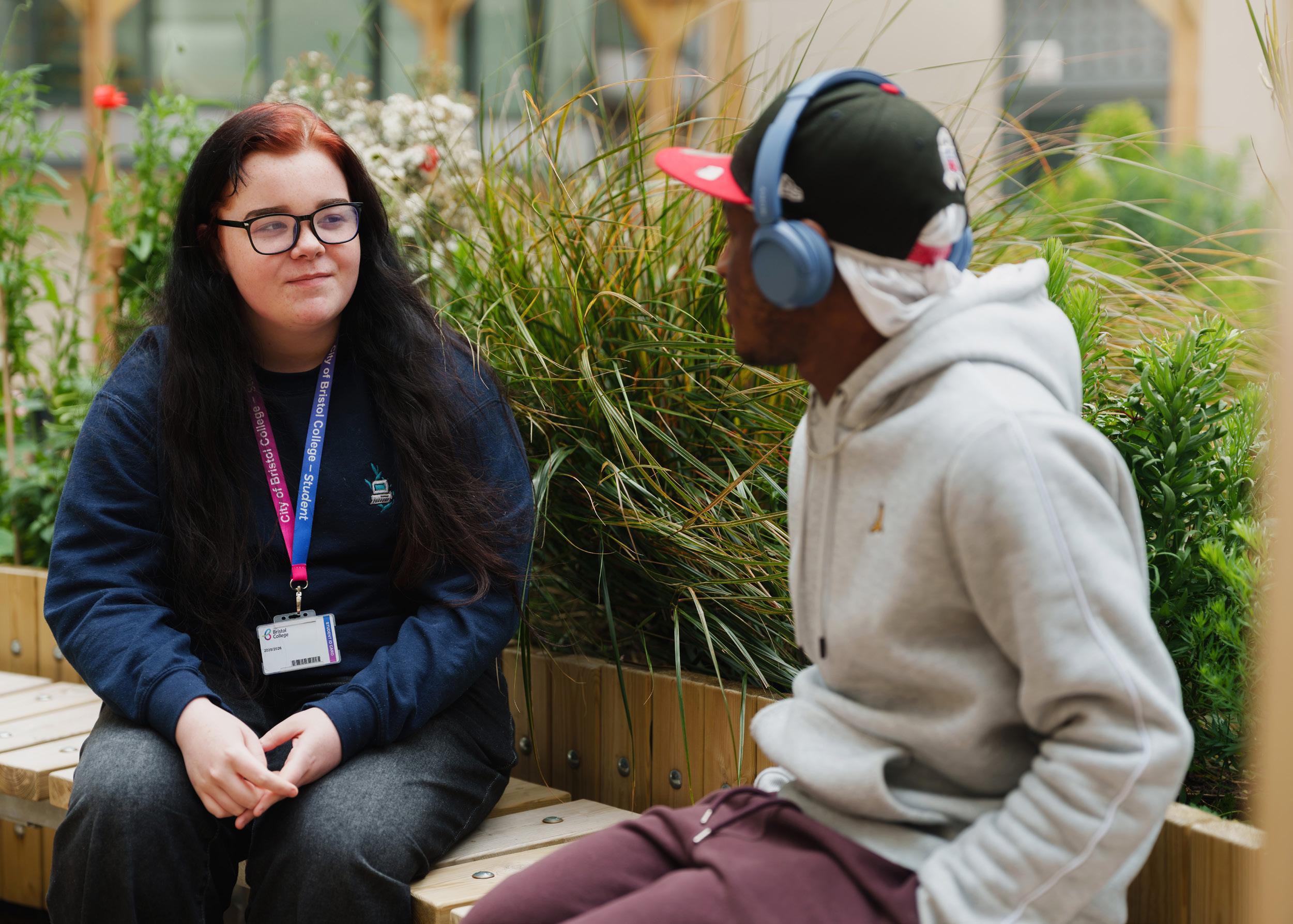
• Student Experience:
o Students in digital and creative undertake the WWF Sustainable Futures module, as part of their personal development tutor time
o Clothes swaps have taken place on multiple sites, to highlight reusable fashion and cut costs for pupils
o The Green Careers Fair is held annually to highlight future careers
3Vision, Mission & Values
Our College Vision Statement:
Through educational excellence we will underpin the economic growth and productivity of Bristol and the wider West of England region.
Our Vision for Sustainability:
We will be a climate leader, responding to the climate emergency by reducing our carbon footprint in an effective and fair way. We will embed sustainability within our culture, campus infrastructure and curriculum to benefit our students, colleagues and the wider community.
Our College Mission Statement:
We are City of Bristol College, we will deliver transformative education in dynamic learning environments.
Our Mission Statement for Sustainability:
We will deliver transformative and inclusive education that empowers people with the knowledge, skills and behaviours to live in a way that is beneficial for them, their communities and the environment.
Our Values
Boldness
We will innovate and take risks for the benefit of our students, communities and employer stakeholders.
Respect
We will work and learn in an environment of mutual respect, valuing diversity.
Inclusion
We will be ambitious for all of our students, colleagues and stakeholders.
Sustainability
We will commit to sustainable practices and green skills delivery.
Teamwork
We will work collaboratively and our team will deliver high performance.
Openness
We will be open to new ideas, perspectives, cultures and learning experiences, creating an inclusive and welcoming environment.
Learning
We commit to lifelong learning, continuously striving for knowledge, skills and innovation.
4Strategic Aims & Objectives
This strategy uses the key thematic areas identified by the Environmental Association for Universities and Colleges (EAUC) Climate Action Roadmap:
• Leadership and governance
• Teaching and learning
• Estates and operations
• Partnership and engagement
• Data collection and reporting Each area has a broad long-term goal and nearterm objectives and activities. Actions in green are for completion in the 2025-26 academic year; actions in orange are to take place in the following years.
Leadership and Governance
Aim: To foster a college-wide culture of sustainability where all leaders, colleagues and students are engaged. Sustainability is embedded into all systems and processes.
Actions:
• Re-establish a “Sustainability Voice” for colleagues and students, with new terms of reference and representation across departments.
• Incorporate sustainability into the Corporation Board:
o Make sustainability a standing agenda item on full board meetings and have sustainability as a core element in all Board decision-making.
o Governors need to regularly ask key questions of themselves and SLT about sustainability. All governors should feel confident that they understand the key performance indicators being used to measure progress.
o Add this as a topic at a future governor development day to allow opportunity to engage with the theme.
• Update the risk register to incorporate both climate mitigation and climate adaptation risks and mitigations.
• Create budget for the Sustainability Lead to direct towards resources, development, projects, materials.
• Embed Climate Responsibility Into All Colleague Development
o Embed sustainability into induction processes for new colleagues and students, including the new starter day.
o Become a Carbon Literate Educator (Bronze).
o Ensure that CPD days regularly include updates on progress on sustainability.
o Work to become Carbon Literate Educator (Silver) by 2030.
• Develop and Implement Internal Communication Campaigns to Raise Awareness and Encourage Sustainable Behaviours
o Quarterly splash screen content.
o Twice yearly video updates of stories about sustainability around the college, and/or ‘Your Questions Answered’.
o Use SharePoint page for reports, updates.
o Enable sustainability content in the Student Voice magazine.
o Consider using an employeebased sustainability app like Giki to ‘gamify’ action.
o Use calendar of external events to drive campaigns (e.g. Colleges’ Green Week, COP, Festival of Nature).
• Recognise and Reward Sustainable Actions by Colleagues and Students
o Add a sustainability award in the People Awards.
o Track and celebrate environmental action being done through paid time off for volunteering.
• Create a college wide project voted for by students.
• Submit the college for a Green Gown award.
Teaching and Learning
Aim: To embed sustainability knowledge, skills, and values across all curricula. The college promotes a culture of environmental literacy and action.
Actions:
• Continue implementation and growth of the Green Skills Centre, as well as relevant sustainability modules and courses.
• Review and integrate sustainability themes into all relevant vocational and academic courses.
o Consider sustainability themes in deep dives to identify good practice, gaps and opportunities.
o Continue incorporating sustainability questions in sector fora, to capture employer needs, identify sector developments and provide leadership.
o Undertake a Students Organising for Sustainability review of curriculum (or use ESD mapping tool).
• Deliver Carbon Literacy Training to Students
o Expand delivery of personal development tutor-led sustainability module, using WWF Sustainable Futures content.
o Use “CarbonedOut” game to help pupils explore concepts.
o Consider incorporating Carbon Literacy training to groups of students.
• Support Teaching Colleagues to Incorporate Sustainability into Curriculum for All Courses
o Promote peer-to-peer learning on how to incorporate sustainability into curriculum for all courses.
o Create central repository of modules/projects/lessons for reference and sharing good practice.
o Ensure that Colleagues have access to CPD and incorporate sustainability in their professional practice.
• Promote student-led sustainability projects and initiatives.
Estates & Operations
Aim: To minimise the college’s environmental footprint through efficient resource management and sustainable infrastructure, ensuring that the college is carbon neutral by 2040.
Actions:
• Energy and Carbon
o Implement strategies to reduce energy usecontinue with activities in line with decarbonisation review from 2022.
o Achieve ecograder score >70 for new web site.
o Apply for funding to improve energy efficiency/reduce emissions.
o Use latest SECR and estate development plan to develop roadmap and milestones for achieving net-zero emissions by 2040.
o Transition to renewable energy sources including the Vattenfall heat network and solar installations with Bristol Energy Cooperative.
• Waste Management:
o Set and implement a target to reduce waste in the college.
o Partner with local organisations for reuse and repair initiatives.
• Water Management:
o Undertake a water-use audit with Waterwise.
o Set water consumption target across the estate.
o Identify and implement additional water-saving technologies (e.g. low-flow fixtures, rainwater harvesting).
• Procurement:
o Continue implementation of the procurement policy, encouraging. environmentally friendly and ethically sourced goods and services.
o Complete supplier review, identifying high impact suppliers.
o Work with top suppliers to track and reduce supply chain emissions.
o Review electricity contract review; move to renewable only tariff.
o Undertake further thematic purchasing reviews to identify improvements to practice.
• Travel & Transport:
o Use Travel to Work Survey results and employee survey comments to identify actions the college can take to promote sustainable travel options for colleagues and students (e.g. cycling, walking, public transport).
o Continue using annual travel survey to track use and raise awareness; increase response rate to the survey.
o Expand number of EV charging points.
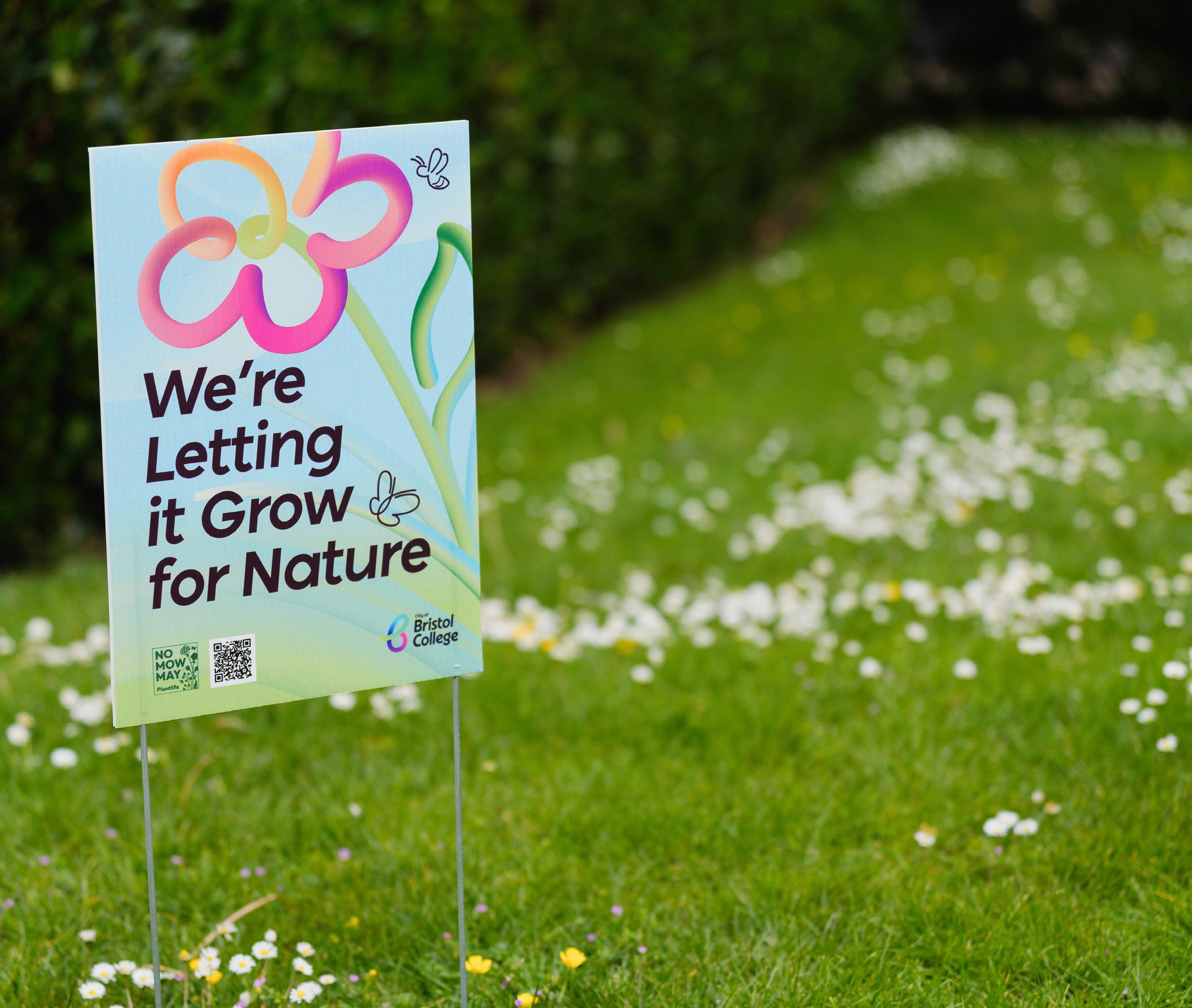
• Biodiversity & Land Use:
o Develop and implement biodiversity-positive approaches to estates management.
Partnership and Engagement
Aim: To extend the college’s sustainability efforts beyond its immediate estate, fostering positive impact within the local community and collaborating with external partners.
Actions:
• Use Existing Partnerships More Effectively
o Submit information annually in order to participate fully in the Race to Zero for Universities and Colleges .
o Actively engage with the Climate City Contract by working with the Bristol City Council Transition Team.
o Join the Bristol Climate Leaders group.
o Participate in the National Nature Education Map.
• In line with procurement actions noted above, engage with the college’s supply chain to improve sustainability.
• Work With Our Businesses:
o Engage more sustainably minded business in the sector fora.
o Work with local community/ council/businesses to improve local biodiversity.
• Offer sustainability-related training and resources to the wider community.
• Share information about environmental volunteering opportunities with colleagues.
• Share best practices with and learn from other FE colleges and educational institutions via participation in event panels and the EAUC Communities of Practice.
Data Collection and Reporting
Aim: To ensure that the college understands and shares its progress towards achieving its sustainability objectives.
Actions:
• Gather More Information
o Termly check in with heads of departments about what they were intending, what was implemented and what were the outcomes.
o Add questions to student survey, e.g.
o Do you feel the college takes sustainability seriously?
o What have you learnt about it?
o Have you benefitted from learning about sustainability?
o Conduct biodiversity survey of estate.
o Develop and implement plan to measure all scope 3 emissions.
o Share data collection methodology with other colleges and adapt based on good practice.
o Identify methods for measuring ESD outcome and impact.
• Report, Share and Promote
o Incorporate triple bottom line reporting.
o Publish annual sustainability report.
o Publish sustainability targets and related strategies on SharePoint e.g. this strategy, Procurement Strategy, Sustainable Travel Policy.
o Publish relevant strategies and reports on website.
4Governance & Implementation of Strategy
Leadership & Responsibility of Strategy
This strategy’s implementation, monitoring and reporting will be overseen by the college’s Sustainability Lead. The overall leadership on this topic will be provided by a Sustainability Link Governor, the COO and Director of Marketing. The Sustainability Lead will work across all areas of the college, supported by a Sustainability Steering Group with key leads covering the action plan thematic areas of:
• Leadership and governance
• Teaching and learning
• Estates and operations
• Partnership and engagement
In addition, an informal, cross-functional ‘Sustainability Voice’ group will be recreated with clear terms of reference to provide a conduit for testing ideas, gathering feedback and encouraging peer to peer support.
As part of implementation, all departments will be expected to identify areas for action, in line with the strategy, reporting on progress through established processes and methods, e.g. business planning, curriculum deep dives.
Policy Integration
The goal is for sustainability is integrated into all relevant college policies. The college is already incorporating sustainable thinking into estates, procurement and curriculum; the next step is to embed key questions into monitoring and evaluation processes.
Action Plan, Monitoring, Evaluation and Reporting
The specific tasks, timelines, assigned responsibilities, and key performance indicators (KPIs) are found in the EAUC modelled climate action plan. This plan outlines the necessary resources (financial, human, technical) to implement the strategy. External funding opportunities will be sought to support larger scale action.
One initial step will be to ensure that effective and efficient systems are in place for regular data collection to track progress. Updates to the Senior leadership Team will take place three times a year (December, April and July), and results will be shared with all colleagues.
Governors will review progress annually. An annual report, including SECR, will be published for all internal and external stakeholders. Case studies and stories of good practice will be publicised on our website and social media channels.
This strategy will be reviewed every three years to ensure that it is fit for purpose and sufficiently ambitious, adapting it as necessary to changing circumstances, technologies, and best practices.
Conclusion
City of Bristol College is committed to taking environmental action. It is a core part of our strategy and imperative for us to consider as we prepare our students for the future. The college has made headway on its journey to net zero and sustainability, but accelerated, meaningful action needs to be taken. We intend to follow the actions outlined in this strategic plan and will report annually on our progress. We invite our students, colleagues and partners to join us since it is only by working together that we will achieve our goal of an inclusive sustainable community where our pupils thrive.