To Our Customers
We are proud to present the 2025 Water Quality Report, which provides important information about the safety and quality of your drinking water. Serving the American Canyon community with safe, clean and reliable water is both our responsibility and our commitment.
Our water system is supported by state-of-the-art infrastructure and operates in full compliance with the rigorous standards set by the State of California. Through comprehensive and ongoing testing, we ensure that your drinking water consistently meets these standards. Our goal is simple: that you can turn on your tap with complete confidence, knowing your water is safe, clean and of the highest quality.
Behind this work is a dedicated team of professionals who take great pride in maintaining and operating our facilities with care and precision. They are not only stewards of critical infrastructure, but also members of this community, invested in its well-being, its future and continued growth. Their efforts support our local economy while advancing sustainable practices that help ensure long-term climate resilience.
In addition to providing high-quality drinking water, we are also proud of our recycled water program, which helps preserve valuable potable water resources while supporting our parks, open spaces and community landscapes.
While residents may not choose their water provider, we strive every day to earn your trust and confidence through the quality of our service and our commitment to transparency. It is our privilege to serve you, and we remain dedicated to protecting this essential resource for today and for generations to come.
Thank you for taking the time to stay informed about your drinking water.
Sincerely,
Dominic Patrick Water Systems Manager
If you have questions about this report or your water quality, please contact our Utility Billing at (707) 647-4364. For emergencies after hours or on weekends or holidays, the City of American Canyon’s answering service can be reached at (707) 647-5308.
Behind the Tap
American Canyon’s dedicated Water Treatment & Distribution team works diligently to provide safe, reliable drinking water to our community.
From source to tap, our comprehensive water system is designed to ensure quality and safety at every stage:
h PUMPED: Water is drawn from our sources and carefully monitored.
h TREATED: Our dual treatment systems use advanced filtration systems to remove contaminants.
h DISTRIBUTED: Treated water flows through a meticulously maintained network.
h RECYCLED: Sustainable practices conserve this precious resource, recycling it for use on landscapes and other irrigation.
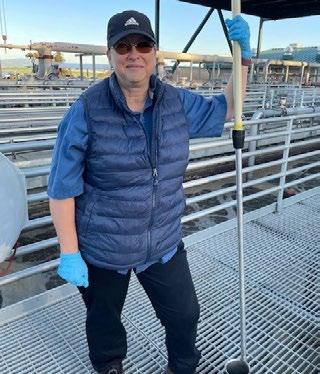
Our team of water professionals monitors every stage of treatment to ensure consistent quality and efficient delivery to your taps.
Your Dollar at Work
American Canyon is committed to responsibly stewarding our financial and environmental resources. Every dollar you pay for water services supports essential functions that keep our system operating safely and reliably.
We are continually working to lower operating expenses and enhance system efficiency. By utilizing Advanced Metering Infrastructure (AMI) for early leak detection, implementing pressure management devices, and repairing both minor and major leaks, our team is proactively improving system performance and using technology to better serve our community. Over the past year alone, we repaired more than 267 leaks throughout the distribution system—a significant accomplishment that has contributed to meaningful water savings across the community.
These efforts strengthen system reliability, reduce water loss, and support the long-term sustainability of our water resources while maintaining high-quality service for our community.
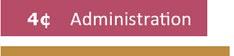
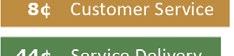
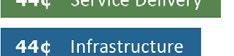
*Based on FY 2025/26 Budget
Your Water at a Glance
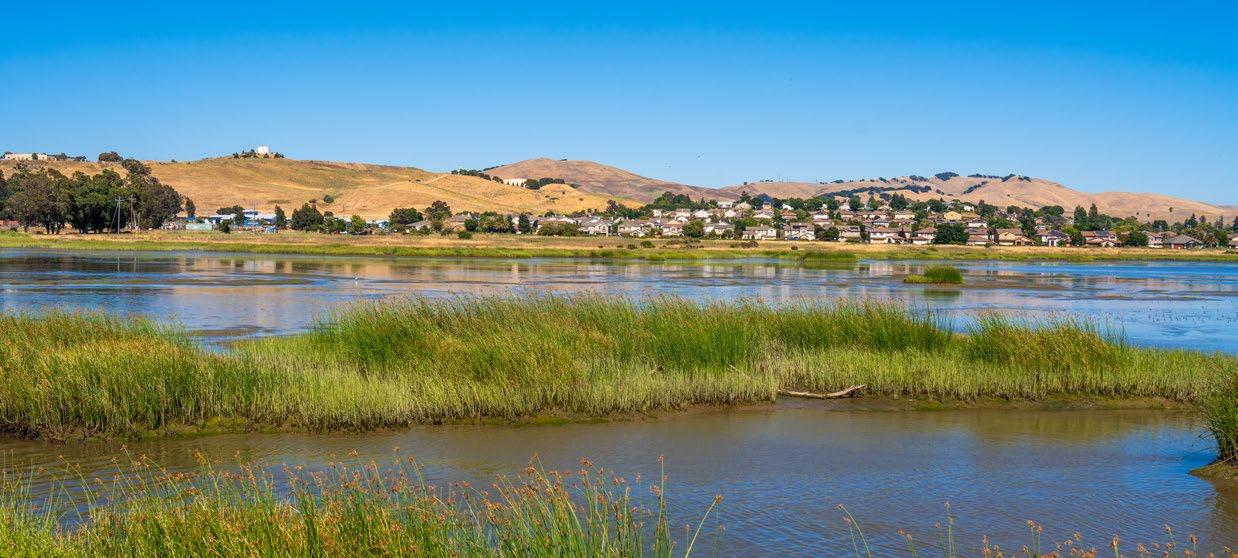
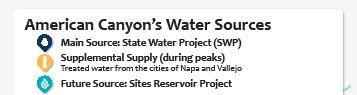
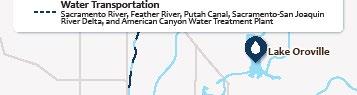
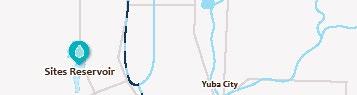
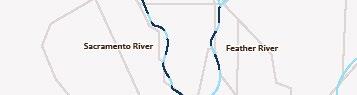
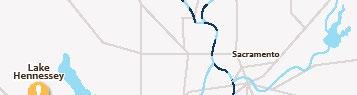
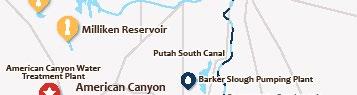
American Canyon’s water primarily comes from the State Water Project (SWP) through the North Bay Aqueduct (NBA), originating at Barker Slough. The City has the ability to purchase and utilize potable water connections from the Cities of Napa and Vallejo.
Our dual-plant treatment system combines conventional treatment with advanced membrane technology to provide exceptional water quality. Filtered water is disinfected with chlorine and pH-adjusted before distribution, with all processes monitored by state-certified operators.
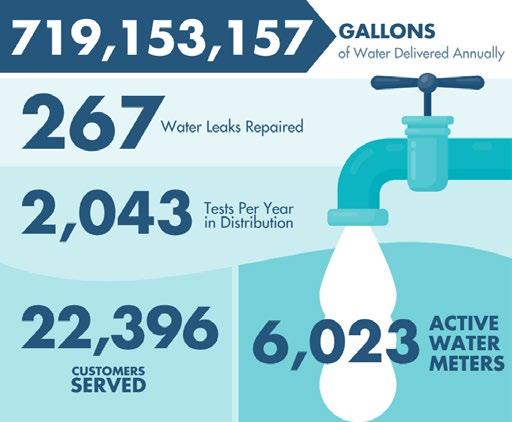
To ensure your water is safe to drink, we follow rigorous federal and state regulations that limit contaminants in public water systems. We conduct comprehensive testing throughout the year, monitoring for over 100 potential contaminants. Our tests ensure that American Canyon’s water consistently meets or exceeds all drinking water standards set by the U.S. Environmental Protection Agency and the State Water Resources Control Board.
For more information about water quality and treatment, visit www.DrinkTap.org, a resource designed to explain complex water topics in easy-to-understand formats.
Capital Improvement Projects
American Canyon is committed to ongoing investments in its water system to support the needs of our growing community. The following capital improvement projects highlight how we are strengthening infrastructure and planning for the future.
Ultrafiltration Membrane Replacement ( Completed)
This project replaced aging membrane filters at the Water Treatment Plant, increasing treatment capacity by 33% while enhancing the removal of contaminants. The upgrade significantly improves drinking water quality and strengthens system reliability for our community.
Knightsbridge Rehabilitation & Water Main Improvements ( Completed)
This project replaced an aging 8-inch water main along Knightsbridge Way and its associated courts, improving the reliability of the water distribution system. At the same time, ADA curb ramps were upgraded and crosswalks and pavement conditions were improved throughout the neighborhood. These enhancements support a safer, more accessible environment and contribute to the overall quality of life for residents now and into the future.
Rancho Del Mar Paving & Utility Improvements ( Completed)
This award-winning project represents one of the most comprehensive neighborhood infrastructure improvements completed in 2025, spanning approximately 2.3 square miles within the Rancho Del Mar neighborhood. The work included full pavement rehabilitation and utility upgrades across multiple streets including Del Rey Court, Los Altos Place, Alta Loma Drive, Joan Drive, Rio Del Mar, Flamingo Way, Cassayre Drive and Carolyn Drive.
The project utilized Full Depth Reclamation with Cement (FDR-C), recycling 100% of the existing pavement base in place. In addition, crews installed new water mains, rehabilitated sewer mains using cured-in-place lining, and completed critical system repairs. Improvements also included enhanced pavement conditions, upgraded striping and pavement markings, and the installation of 24 ADA-compliant curb ramps—enhancing mobility, accessibility, and overall travel throughout the neighborhood while modernizing critical underground infrastructure.
As the largest residential infrastructure projects completed in American Canyon in 2025, this effort reflects a major reinvestment in one of the City’s oldest neighborhoods—replacing aging infrastructure and modernizing essential systems to support a growing community.
SCADA System Upgrades
( In Progress)
American Canyon is continuing to upgrade its Supervisory Control and Data Acquisition (SCADA) system— technology that helps monitor and manage the water system in real time. These upgrades enhance water quality monitoring, strengthen system reliability and support compliance with regulatory standards.
By investing in modern technology and improved cybersecurity, the City is better equipped to respond quickly to system changes and maintain safe, dependable water service for the community.
Source Water Contaminant Information
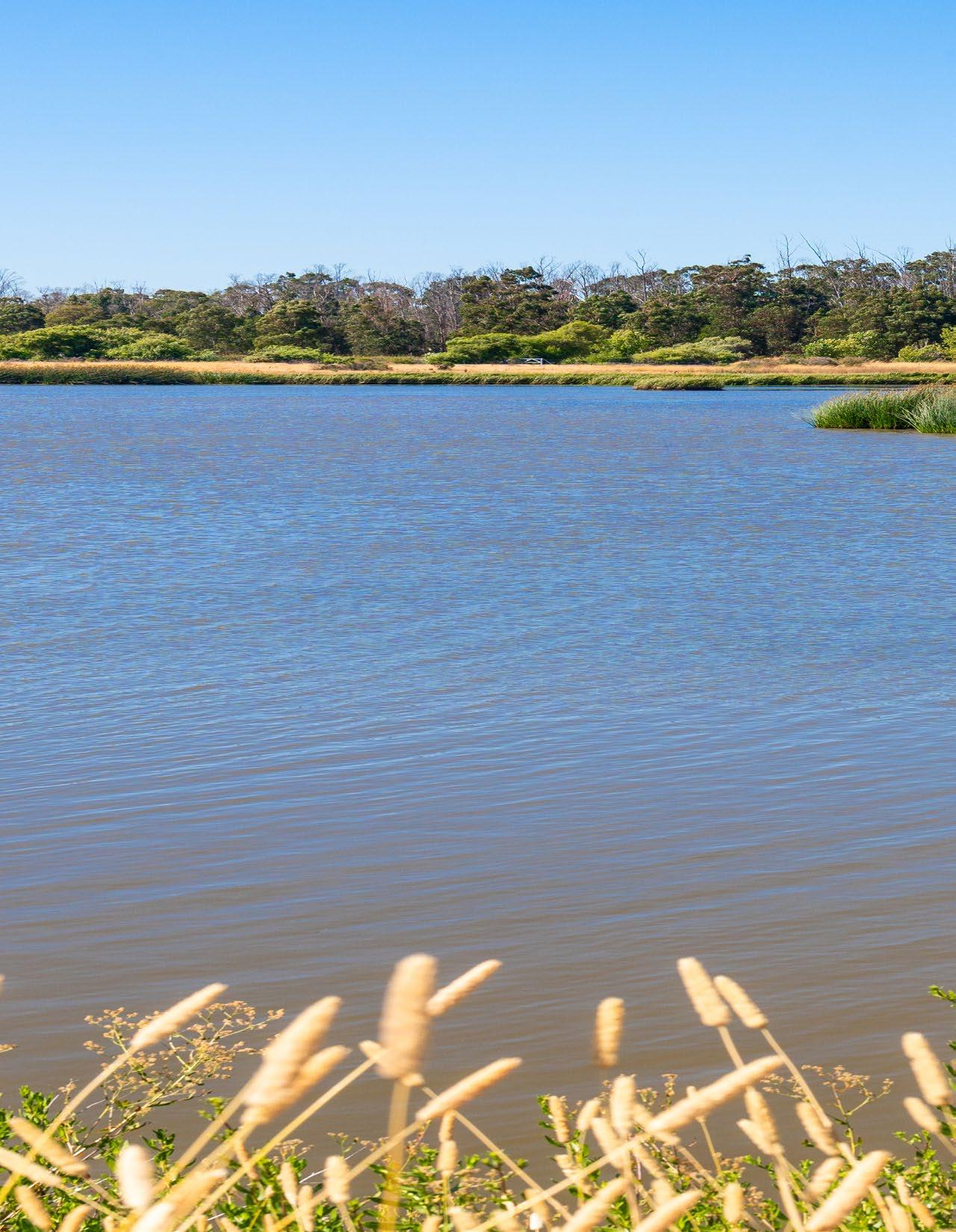
The sources of drinking water (both tap water and bottled water) include rivers, lakes, streams, ponds, reservoirs, springs and wells. As water travels over the surface of the land or through the ground, it dissolves naturally-occurring minerals and, in some cases, radioactive material, and can pick up substances resulting from the presence of animals or from human activity.
Contaminants that may be present in untreated source water include:
Microbial contaminants, such as viruses and bacteria, that may come from sewage treatment plants, septic systems, agricultural livestock operations and wildlife.
Inorganic contaminants, such as salts and metals, that can be naturally-occurring or result from urban stormwater runoff, industrial or domestic wastewater discharges, oil and gas production, mining or farming.
Pesticides and herbicides that may come from a variety of sources such as agriculture, urban stormwater runoff and residential uses.
Organic chemical contaminants, including synthetic and volatile organic chemicals, that are byproducts of industrial processes and petroleum production, and can also come from gas stations, urban stormwater runoff, agricultural application and septic systems.
Radioactive contaminants, which can be naturally occurring or the result of oil and gas production and mining activities.
Understanding Coliform Bacteriological Results
Coliforms are bacteria that are not harmful at low levels and are naturally present in the environment. Positive samples can result due to improper laboratory sampling analysis, improper sample collection, new construction, repair and/or biological activity occurring with equipment and piping.
The Revised Total Coliform Rule (RTCR) establishes a maximum contaminant level (MCL). It requires public water systems (PWS) to assess sanitary defects and then correct them. Total coliform samples must be collected by PWS at sites which represent water quality throughout the distribution system. Water systems that exceed a specified frequency of total coliform occurrences must conduct an assessment to determine if any sanitary defects exist. If found, the water system must correct these defects. The state Revised Total Coliform Rule became effective July 1, 2021.
Important Information on Your Drinking Water
The City of American Canyon routinely monitors for contaminants in your drinking water according to federal and state laws. The following pages show the results of our most recent monitoring for the period of January 1, 2025, through December 31, 2025, unless otherwise noted.
All drinking water, including bottled water, may be reasonably expected to contain at least small amounts of some contaminants. The presence of contaminants does not necessarily indicate that the water poses a health risk. More information about contaminants and potential health effects can be obtained by calling the Environmental Protection Agency’s Safe Drinking Water Hotline att 1-800-426-4791.
Some people may be more vulnerable to contaminants in drinking water than the general population. Immuno-compromised individuals such as those with cancer undergoing chemotherapy, those who have undergone organ transplants, people with HIV/AIDS or other immune system disorders, some elderly and infants can be particularly at risk from infections. These people should seek advice about drinking water from their health care providers.
Environmental Protection Agency (EPA) guidelines on appropriate means to lessen the risk of infection by Cryptosporidium and other microbiological contaminants are available from the Safe Drinking Water Hotline at 1-800-426-4791.
About Your Water Quality Report
Important Definitions
To aid in understanding the information on the following pages, American Canyon has compiled a list of important definitions and acronyms below.
Action Level (AL): The concentration of a contaminant which, if exceeded, triggers treatment or other requirements which a drinking water system must follow.
Treatment Technique (TT): A required process intended to reduce the level of a contaminant in drinking water.
Maximum Contaminant Level Goal (MCLG): The level of a contaminant in drinking water below which there is no known or expected risk to health. MCLGs are set by the US Environmental Protection Agency.
Maximum Residual Disinfectant Level (MRDL): The level of a disinfectant added for water treatment that cannot be exceeded at the consumer’s tap.
Maximum Residual Disinfectant Level Goal (MRDLG): The level of a disinfectant added for water treatment below which there is no known or expected health risk. MRDLGs are set by the US Environmental Protection Agency.
Public Health Goal (PHG): The level of a contaminant in drinking water below which there is no known or expected risk to health. PHGs are set by the California Environmental Protection Agency.
Maximum Contaminant Level (MCL): The highest level of a contaminant that is allowed in drinking water. Primary MCLs are set as close to the PHGs (or MCLGs) as is economically or technologically feasible. Secondary maximum contaminant levels (SMCLs) are set to protect the odor, taste and appearance of drinking water.
Primary Drinking Water Standard (PDWS): MCLs and MRDLs for contaminants that affect health along with their monitoring and reporting requirements, and water treatment requirements.
Acronyms
CDPH — California Department of Public Health
DBP — Disinfection Byproducts
HAA — Haloacetic Acids
NA — Not Analyzed
N/A — Not Applicable
NBA — North Bay Aqueduct
ND — None Detected
NL — Notification Level
Concentration Comparisons
NS — No Standard
SWP — State Water Project
THM — Trihalomethanes
TOC — Total Organic Carbon
uS/cm — microsiemens per centimeter
US EPA — United States Environmental Protection Agency
μg/L — Microgram per liter
Trace chemicals in water are measured in extremely small concentrations, typically in parts per million (ppm), parts per billion (ppb), or parts per trillion (ppt). The comparisons below help show just how small these amounts really are. Part per Million (PPM)
Water Quality Data
SAMPLING RESULTS SHOWING THE DETECTION OF COLIFORM BACTERIA 2025
Microbiological Contaminants
routine sample and a repeat sample detect
sample also detects fecal
Note: The City of American Canyon analyzes a minimum of 20 water samples per month throughout the year in the water distribution system for coliform bacteria.
SAMPLING RESULTS SHOWING THE DETECTION OF LEAD AND COPPER 2025
of household water plumbing
Internal corrosion of household plumbing systems; erosion of natural deposits; leaching from wood preservatives
SAMPLING RESULTS FOR SODIUM, HARDNESS AND GENERAL CHEMISTRY 2025
DETECTION OF UNREGULATED CONTAMINANTS 2025
DETECTION OF CONTAMINANTS WITH A PRIMARY DRINKING WATER STANDARD 2025
Disinfectant required by regulation to be added to drinking water.
Erosion of natural deposits; residual from some water treatment process
Discharge of oil drilling wastes and from metal refineries; erosion of natural deposits. Some people who drink water containing barium in excess of the MCL over many years may experience an increase in blood pressure.
Runoff and leaching from fertilizer use; leaching from septic tanks and sewage; erosion of natural deposits. Infants below the age of six months who drink water containing nitrate in excess of the MCL may quickly become seriously ill and, if untreated, may die because high nitrate levels can interfere with the capacity of the infant’s blood to carry oxygen. Symptoms include shortness of breath and blueness of the skin. High nitrate levels may affect the oxygencarrying ability of the blood of pregnant women.
Total organic carbon (TOC) has no health effects. However, total organic carbon provides a medium for the formation of disinfection byproducts.
Erosion of natural deposits; water additive that promotes
DETECTION OF CONTAMINANTS WITH A SECONDARY DRINKING WATER STANDARD 2025
Sampling results for US EPA UNREGULATED MONITORING RULE (UCMR 5) (SWRCB DDW PFOA/PFOS) All Public Water Systems (PWSs) serving 10,000 or more service connections are required by US EPA to participate in this program. This data serves as a primary source of occurrence and exposure information that the US EPA uses to develop regulatory decisions. Large PWSs pay for their own testing costs.
Annual Water Quality Report
Published June 2026
Translation Available
The City of American Canyon’s 2025 Annual Water Quality Report will be available in Spanish at AmericanCanyon.gov/WaterQuality by July 1, 2026.
El Informe anual sobre la calidad del agua de 2024 de la ciudad de American Canyon estará disponible en AmericanCanyon.gov/WaterQuality antes del 1 de julio de 2025.
Rate Assistance Available
Rate assistance programs are available for qualifying customers. Visit AmericanCanyon.gov/Assistance for more information.
Customer Water Portal
American Canyon uses Advanced Metering Infrastructure (AMI) to help conserve and prevent water loss. To empower our utility customers, we provide a Customer Water Usage Portal with several capabilities, including water tracking, comparison data and alerts to notify you of high water consumption. Learn more and create your account at AmericanCanyon.gov/MyWaterPortal. Visit AmericanCanyon.gov for more