Reach thousands of transportation professionals and students with ITE Canada’s Job Board
ITE Canada Job Board offers:
Ad posted instantly & proof-read
Job emailed to 3,600+
member mailing list
Job posting shared to ITE Canada’s social media channels
Your direct pipeline to thousands of top candidates
Grow your team
See the 2026 opportunities for national recognition including new bursaries for emerging leaders, technical project awards, and student scholarships
Hear from
and Bunt & Associaties, the first two major corporate donors to the Future Transportation Leaders Fund on the importance of giving back and why they chose ITE Canada
Registration is open! Preview the jam-packed program coming to Victoria, BC this May 31-June 3 and register by March 31
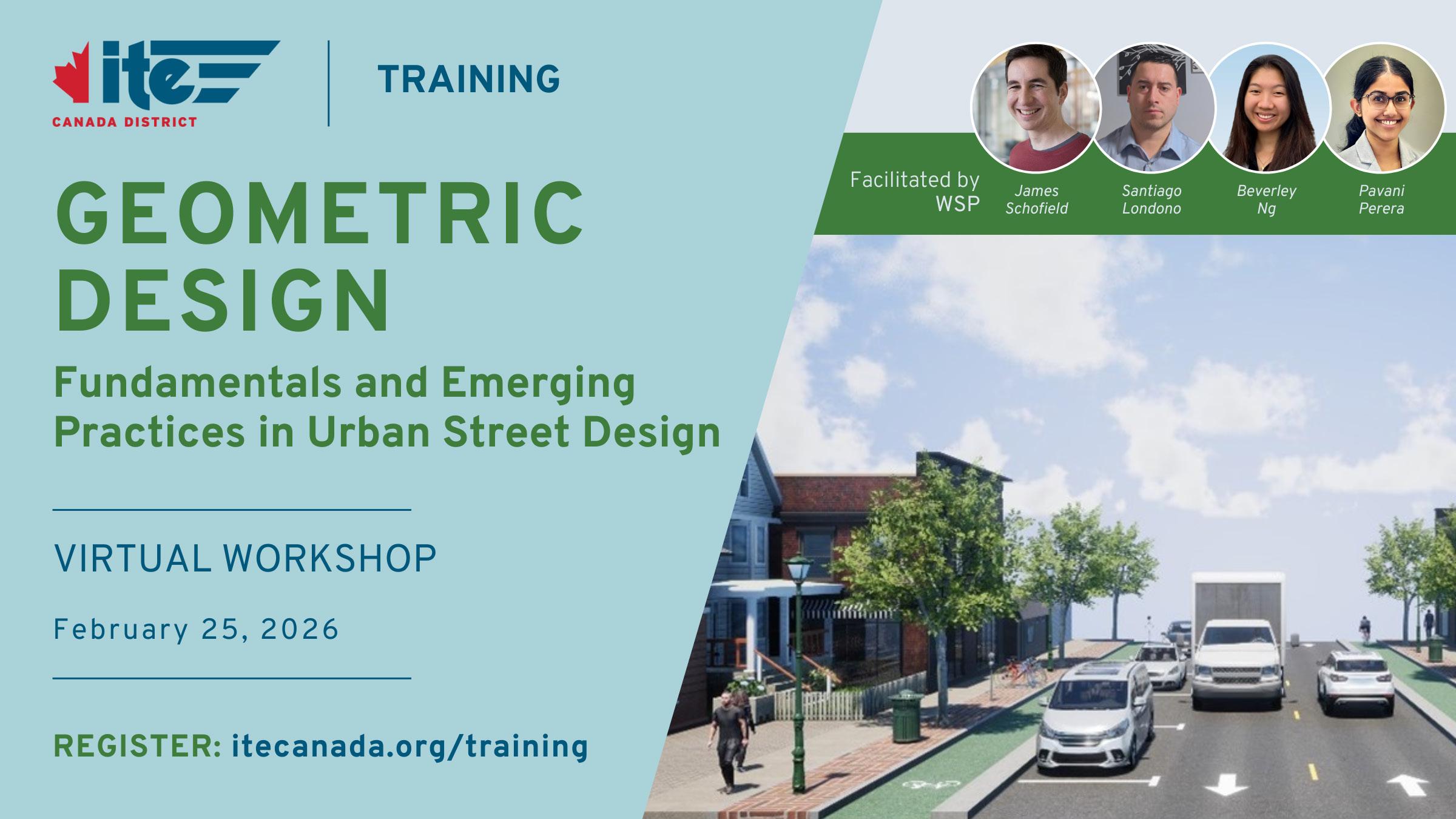
James Schofield and Pavani Perera highlight shifting practices in urban geometric design and preview ITE Canada District’s new training with a first workshop happening on February 25
Sam Pollock shares insights from his experience living in Germany in a multimodal culture and
Get to know the Student Chapter Advisor and 2025 ITE Young Leader to Follow
Member Highlight: Abigail Cartwright
Meet the 2025 Student Leadership Summit Co-Chair in our new feature showcasing younger members
Irini Akhnoukh, P.Eng. President, ITE Canada District president@itecanada.org
Merry Christmas and Happy New Year to all our ITE Canada members, friends, and colleagues. I hope the holiday season gave you a chance to rest, reset, and reconnect with the people and things that matter most. As we step into 2026 together, I’m grateful for the opportunity to write to you for the first time as President of ITE Canada. I embark on my year as President, and it feels wonderfully serendipitous that this is happening in 2026 as it marks 20 years since I took on my very first leadership role in ITE Canada, serving as Treasurer of the University of Manitoba Student Chapter. It was the beginning of my ITE journey, and I certainly didn’t imagine at the time that I’d be writing this message to you two decades later. 2026 is also a landmark year for ITE Canada itself as we celebrate our 75th anniversary as a District/Section of ITE. That is 75 years of advancing the profession, building relationships, debating policies, shaping communities, and—most importantly—supporting one another as transportation professionals across this great country.
If there’s one theme that’s carried through my last 20 years with ITE, it’s this: strong student chapters matter. Truly. I’ve seen firsthand how transformational an active, engaged student chapter can be—not just for the students who participate, but for the broader ITE community. These chapters connect emerging professionals with peers, mentors, and the wider network of practitioners. They build confidence. They spark leadership. They create friendships that often last decades. It may sound a bit trite to say that ITE is a community and a family—but that doesn’t make it any less true. And like any family, that sense of belonging starts early. For so many of us, it starts at the student chapter level.
This belief is reflected clearly in our current strategic plan and in our priorities for 2026. One of our key areas of focus is strengthening student chapters and, more specifically, supporting student chapter advisors. These advisors are the anchors of our student network. They inspire, encourage, and often keep chapters going through transitions and changing student leadership. Their role cannot be overstated. I think often of Dr. Jeannette Montufar, who served as the Student Chapter Advisor at the University of Manitoba when I was a student. Jeannette was instrumental in many UofM grads’ involvement with ITE. Her encouragement opened doors and many of her students have gone on to leadership roles at the Section, District, and International levels of ITE. That is the power of dedicated mentorship, and it is something we want to continue nurturing across Canada.
This year, Transportation Talk will build on that commitment by introducing a second member highlight focused specifically on emerging student leaders. It is a small but meaningful way to recognize the passion, ideas, and leadership potential already shaping our profession—and to signal clearly that their voices matter, today and into the future.
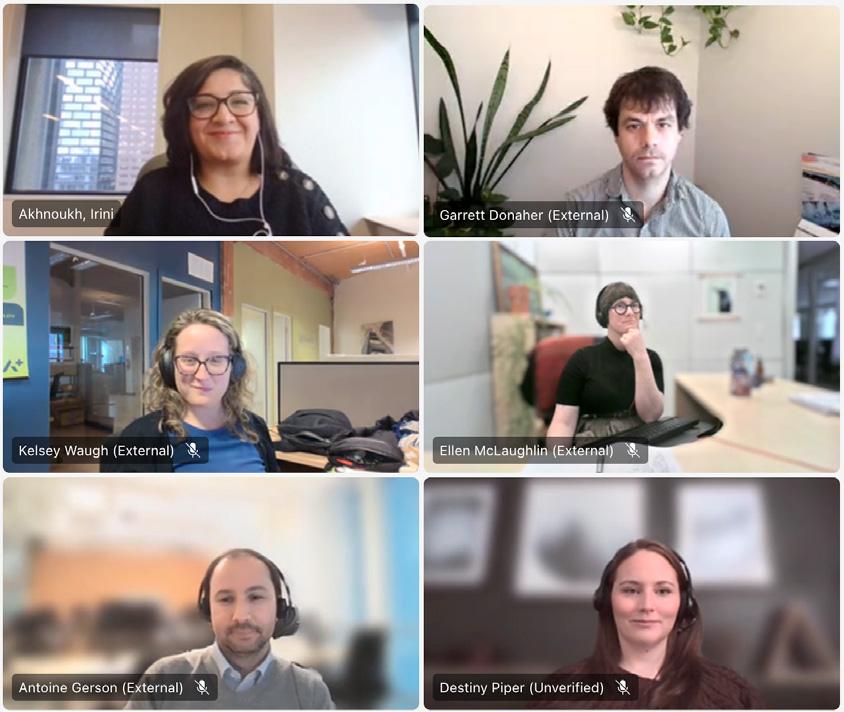
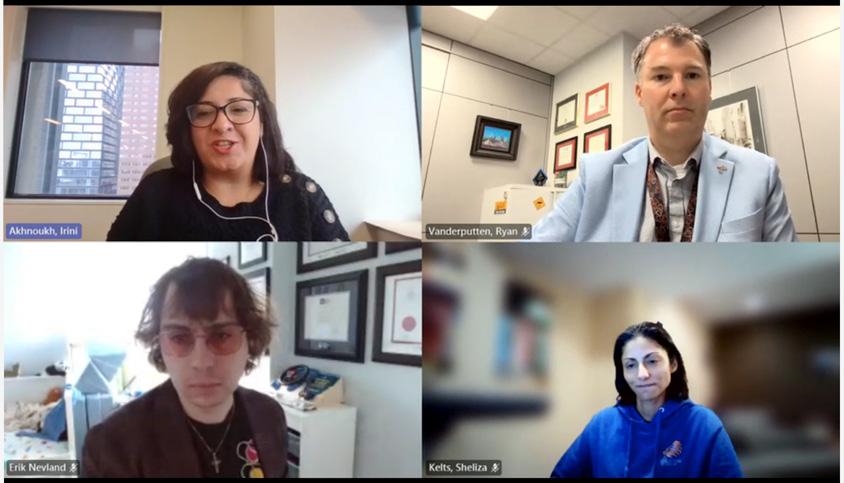
It has already been a busy winter for ITE Canada. Our Annual General Meeting took place on December 11th and with it came changes to our Board of Directors. I’m very pleased to welcome Kelsey Waugh as our new Executive Committee member serving as Treasurer for 2026–2027, along with Stephanie Pham, Garrett Donaher, Ellen McLaughlin, and Antoine Gerson who will serve as new Board members. I want to extend sincere thanks to outgoing Board members for their service and commitment: Section Directors Sheliza Kelts, Erik Nevland, and Greg O’Brien and especially outgoing Past President Ryan Vanderputten. Ryan served on the Executive Committee for eight and a half years and has been instrumental in improving the organization’s financial and organizational procedures and policies. We’re fortunate to have such a passionate and engaged volunteer base.
We also hosted our second Virtual Technical Symposium on December 3, bringing together over 200 participants and 13 presenters from across the country. Sessions covered timely and evolving topics including AI, electric vehicles, parking and curbside management, and transit. The level of engagement and knowledge sharing was exceptional, and I’m proud that ITE Canada continues to serve as a platform for professional growth and discussion.
And of course, this is the time of year when conference season planning truly begins. Preparations are well underway for our 2026 Annual Conference in Victoria, and registration is open. We received a record number of abstract submissions this year, which means you can look forward to a rich, diverse, and dynamic program. We are also trying a new session format with one-hour blocks and shorter presentations to encourage more variety and discussion. I can’t wait to reconnect with many of you there and in the meantime, please don’t hesitate to reach out with your suggestions or thoughts.
Irini Akhnoukh, P.Eng. President, ITE Canada
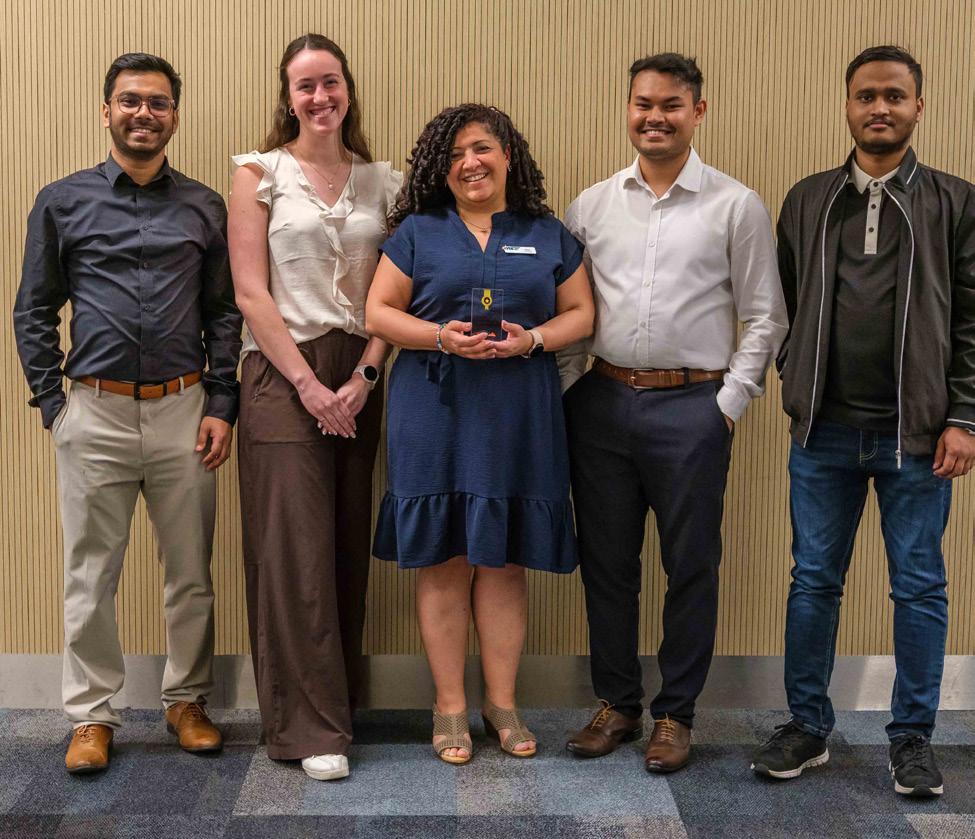
Irini with the 2025 Student Leadership Summit planning team from Dalhousie and UNB
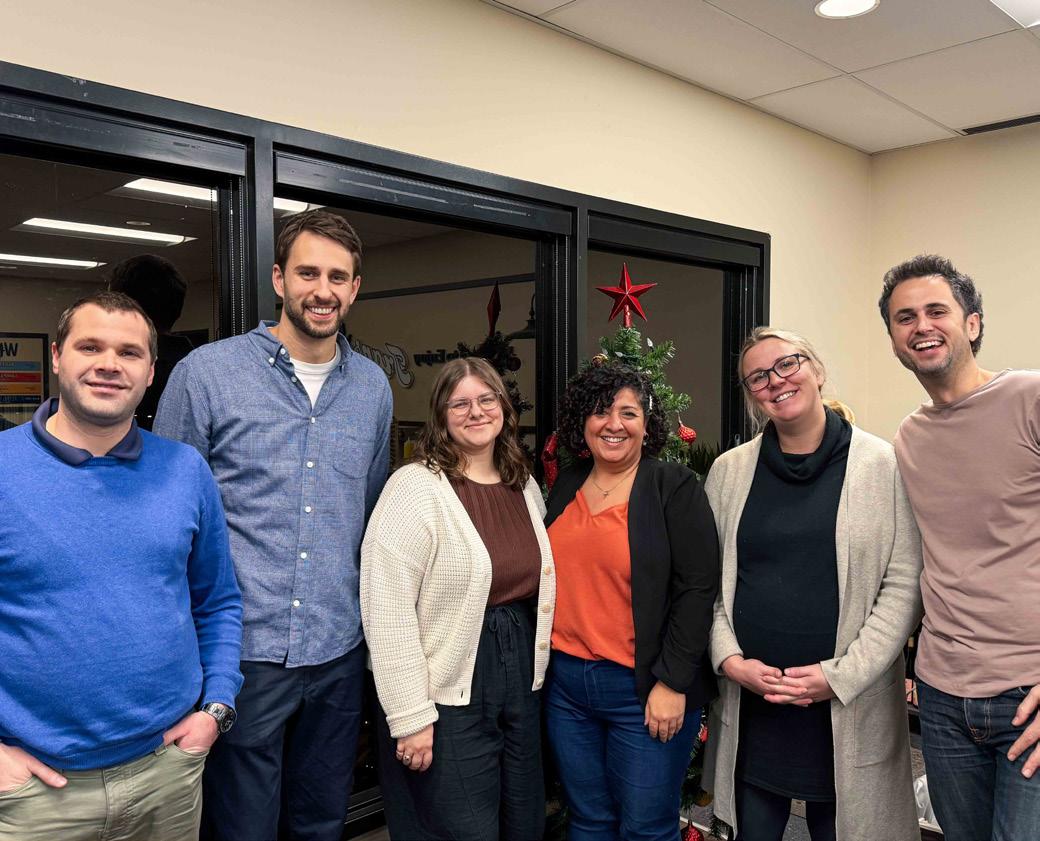
Irini and the Executive Committee of her home region Manitoba Section
Julia Salvini, MEng, PEng, FITE
Canadian District Director, ITE
director@itecanada.org
What a winter we are experiencing across this country! The weather serves as an important reminder that the work that we do as transportation professionals is especially important when the weather is cold and snowy. Better pedestrian connections, separated bike facilities, and relevant connected transit stop locations are so important this time of year along with all of the vehicular considerations that go into developing transportation networks that work in all weather. I’ve had a lot of philosophical conversations with myself about the importance of sight distance assessments this year as I’ve been driving and walking in inclement weather.
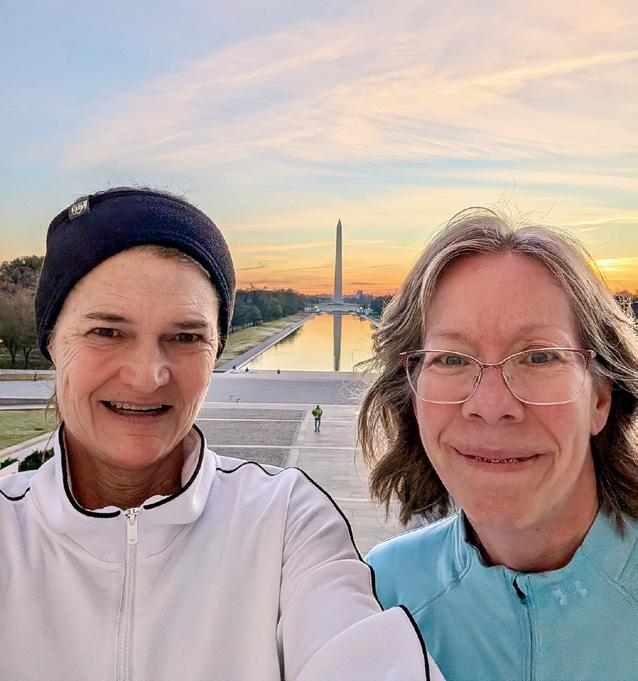
The start of the year gave me the opportunity to connect with the new ITE International Board of Direction in Washington and meet up with colleagues from all over the world that were congregating for ITE meetings, LeadershipITE, and TRB. Canadians were out in full force and it was a delight to meet up with Omar Shams, who is participating in the LeadershipITE program, and Erica Bayley, who is leading as a Vice Chair of the program. A huge highlight of my trip to Washington was meeting up with Michael Sanderson and Jonathan Upchurch who are receiving honorary membership in the Institute for the remarkable contributions they have made to ITE over their incredible and ongoing careers. I also enjoyed thawing out a bit and running outside with my fellow board members Karen Aspelin and Peter Koonce.
There are many exciting things happening at ITE International and many Canadians involved in those efforts. Edward Soldo is leading the development of the next ITE Strategic plan and both Destiny Piper and Gene Chartier are participating on the committee. Thank you all for your involvement. Sheliza Kelts is serving as a Canadian representative on a new ITE Member Engagement Committee that is looking to implement some of the leadership actions identified by the Leadership Taskforce and will be reviewing member-related benefits, programs, and opportunities across the Districts, Sections, and Chapters. Thank you to all our members across the country that are participating and leading on projects, Committees, and Councils of ITE. Your work brings a valuable international perspective to the work that ITE is doing.
I want to take this opportunity to ask you as an ITE member to participate in the ITE 2026 All-Member Survey. The survey is a critical tool for the leadership across the organization to understand what its membership values and what it is looking for in the coming years. The
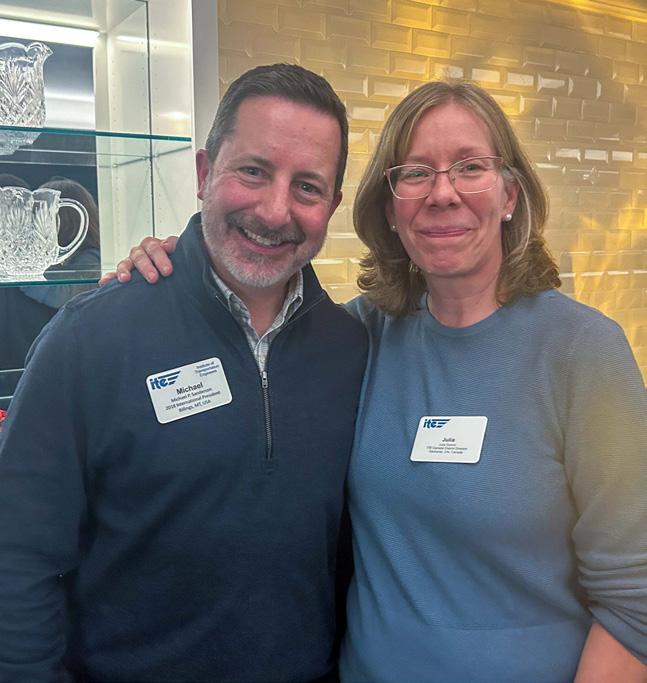
Julia with former ITE International Presidents Karen Aspelin (above) and Michael Sanderson (below)
results of the survey will guide the decision making of staff, the International Board and Districts, Sections, and Chapters all over the world. The results will also provide input to the development of the updated Strategic Plan and help prioritize the goals and actions of the organization. Yes, there are prizes, and yes, there are goals for Districts to gain participation, but I am asking you to please take the time to do the survey so that ITE can continue to be relevant and provide value to you as a member. We value your input and your perspective. The Survey will be open until February 15, 2026 and takes about 20-30 minutes to complete. Thank you for your ongoing participation in ITE and for taking the time to provide your thoughts.
With that, I want to tell you a little about the incoming leadership of ITE International. Karen Aspelin is stepping into the Past President role and will be providing her gentle guidance, support and perspective to the Executive Committee and the IBOD. Gord Meth, our own Canadian and University of Waterloo grad, takes on the role of President and will continue to be a presence at student events and other ITE meetings across the US and Canada. Both Gord and Karen have attended numerous events here in Canada and we look forward to connecting with them both over the coming year.
Neelam Dorman works for the Oregon Department of Transportation in Portland and is the Vice President of ITE this year. She is a thoughtful leader and I look forward to introducing her to all of you when she joins us in Victoria at the ITE Canada Annual Conference. Thank you to our outgoing Past President John Davis who visited us many times here in Canada and has been a friend and supporter of all things ITE Canada for years.
I look forward to connecting with all of you virtually and in person over the coming year. Please reach out to say hi or to talk ITE with me. And as we continue to focus on the ITE Safety Roadmap and Action Plan, please continue to ask yourself how each decision you are making as a transportation professional can help make our streets safer for all road users.
Julia Salvini, P.Eng., FITE ITE Canada District Director
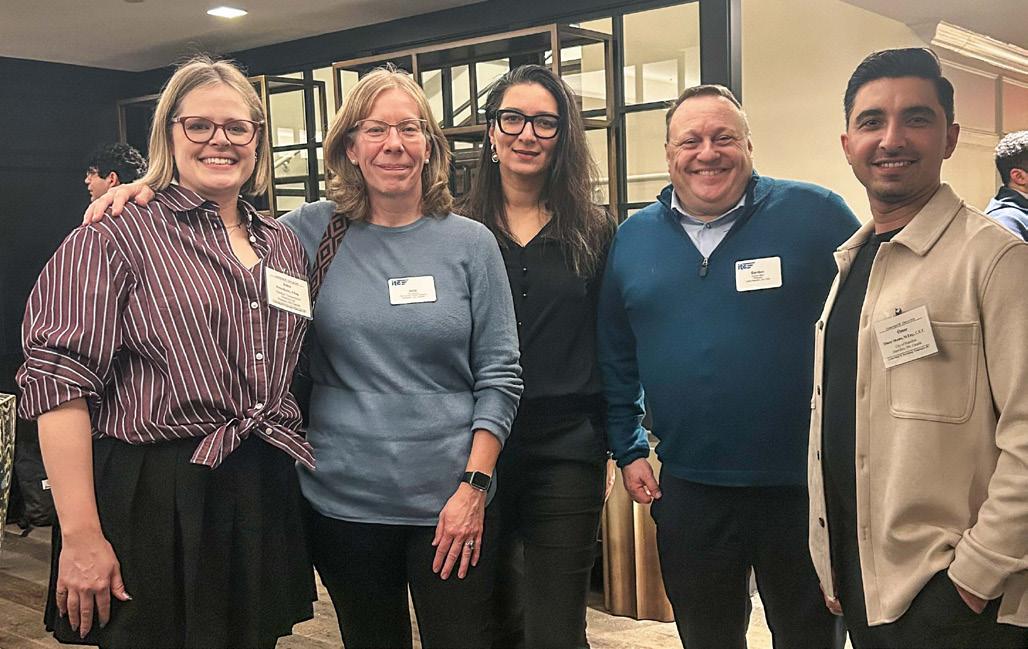
Julia and Canadian ITE members mingle at January 2026 ITE International meetings in Washington, DC
Julia with ITE International President Gord Meth and Past President John Davis
News from ITE Canada
Annual General Meeting (AGM) Recap | Dec 11, 2025
On December 11, 2025 the ITE Canada District Annual General Meeting (AGM) was held virtually covering our financial year spanning September 1, 2024 to August 31, 2025.
Chaired by 2025 Vice-President Irini Akhnoukh, the meeting began with an overview of the 2024–2025 Annual Report highlighting progress on Strategic Plan goals, celebrating successes, accolades and programs at the District, Section and Student Chapter levels, and thanking our many volunteers and their employers.
ITE Canada 2025 Treasurer Destiny Piper provided a financial summary for the 2024–2025 year, subsequently approved by the membership, as well as an overview of the 2025–2026 budget. These and all documents related to the 2025 AGM are available for download here
The membership approved the appointment of the following members elected to the ITE Canada Board of Directors with two-year terms beginning January 1, 2026:
• Kelsey Waugh, Treasurer
• Garrett Donaher, Atlantic Canada Section
• Jennifer Hardy, Vancouver Island Section
• Antoine Gerson, Quebec Section
• Ellen McLaughlin, Saskatchewan Section
• Stephanie Pham, Toronto Section
In addition, the following members were re-appointed to the Board with one-year terms beginning January 1, 2026.
• Irini Akhnoukh, President
• Destiny Piper, Vice-President
• Jasmine Smith, ITE BC Interior Section
The motion was followed by a swearing in of the new directors administered by outgoing ITE Canada Past President Ryan Vanderputten.
The 2025–2027 Strategic Plan was reviewed with focus areas for 2026 identified.
Finally, outgoing Board members were thanked for their dedication and contributions:
• Ryan Vanderputten, Past President
• Sheliza Kelts, Saskatchewan Section
• Erik Nevland, Toronto Section
• Greg O’Brien, Atlantic Canada Section
Incoming and Outgoing Board Members at AGM
ITE CANADA | Strategic Plan 2025–2027
MISSION GUIDING PRINCIPLES
To provide the Canadian transportation community opportunities to learn, connect, contribute and grow to best meet the needs for safe and healthy mobility in Canada
Priority Areas
MEMBERSHIP GROWTH & RETENTION
Goals
Provide opportunities for all our members to learn, connect, contribute and grow
Strategies
▶ Develop and implement initiatives to increase members in sections and chapters
▶ Focus on young members and develop strategy to transition students into becoming full ITE members*
▶ Strengthen the connection between student chapters and their sections
▶ Provide support to strengthen Section activities, operations, and knowledge sharing*
▶ Provide support to strengthen Student Chapter activities, operations, and knowledge sharing*
▶ *Focus areas for 2026
Integrity
Inclusivity
Excellence
VALUE OF OUR PRODUCTS & SERVICES ORGANIZATIONAL STRENGTH
Provide products and services that strengthen and advance the transportation community
Sustain a thriving organization and a strong sense of community
▶ Maintain engaging conferences that build skills, address priority issues, and explore emerging areas of interest
▶ Use tailored messaging to maximize the sharing of our products and services
▶ Increase the quantity and content of training and professional development opportunities*
▶ Add a virtual technical conference to provide further opportunities for professional development
▶ Strengthen the connection to ITE and the services they provide including webinars and encourage involvement in ITE Councils & Committees
▶ Ensure the effectiveness of our systems, policies, and procedures
▶ Build a strong culture that fosters fun and upholds our Guiding Principles
▶ Strengthen the connection between the Board of Directors and Section Executives
▶ Monitor our governance and plan for knowledge transfer between the Executive Committee and Board Directors
▶ Review financial commitments and evaluate the benefits to the members*
ITE Canada District and the Future Transportation Leaders Fund are proud to recognize outstanding achievement in the transportation profession, technical excellence, emerging leaders, and service to the District through the following awards, bursaries, and student scholarships. Nominate and apply by March 1 at itecanada .org/awards.
Distinguished Service Award in honour of H. Robert Burton
ITE Canada’s most prestigious award honours an individual with a notable career in the field and a record of service with ITE
Outstanding Voluntary Contribution Award
Celebrates a member who has made exceptional voluntary contributions to ITE Canada or its programs and projects
Outstanding Technical Project Award in honour of Stan Teply
This award showcases quality projects that have shown significant and proven technical excellence in transportation planning/engineering
Nominations for ITE International Transportation Achievement Awards
The District will put forward Canadian nominations for these ITE Awards recognizing technical achievement in a range of categories
Awards & Bursaries for Emerging Professionals
Rising Star Award
Identifying members under the age of 35 who have made an impact on the profession, demonstrated the ability to lead the next generation & implemented innovative techniques to the transportation practice
Women in Transportation Travel Bursary from the Estate of Jenn and Jan Voss
$1,000 bursaries to encourage women early in their engineering careers to participate at ITE Canada District conferences
Professional Development
Bursary in honour of David Tam
$2,500 bursaries to support the continued learning and growth of emerging leaders in transportation, generously sponsored by Bunt & Associates
Emerging Transportation Leader Travel Bursary
$1,000 bursaries to support transportation professionals early in their careers travelling to attend the ITE Canada District conference
Section & Student Chapter Awards
These annual awards acknowledge the tremendous work done at the local level of ITE Canada. Section and Student Chapter Annual Reports for the previous calendar year must be submitted by March 1 at itecanada .org/awards to be considered for these awards.
Outstanding Section Award
recognizes the overall quality of Section activities, either technical or non-technical in nature
Section
Momentum Award
celebrates those Sections who have achieved commendable improvement from year(s) past
Outstanding Student Chapter Award
recognizes outstanding accomplishments in student chapter activities that achieve the objectives set forth in the Charter
Student Chapter Momentum Award
celebrates those Student Chapters who have achieved overall improvement from year(s) past
Transportation SCHOLARSHIPS & AWARDS
Scholarships and awards are offered by ITE Canada District, an association of transportation professionals, and the Future Transportation Leaders Fund to post-secondary students in transportationrelated studies such as engineering, planning, and geography. Winners receive registration, travel support, and recognition at our Annual Conference taking place in Victoria, BC this May 31-June 3, 2026.
ITE Canada Doctoral Transportation Scholarship in honour of Dr. Michel Van Aerde
$3,000
ITE Canada Master’s Transportation Scholarship in honour of John Vardon
Scan for elgibility criteria and application instructions
1, 2026
ITE Canada Innovation in Transportation Scholarship in honour of John Morrall
$2,000
For full time students in a master’s- or doctorate-level program conducting transportation research
Student Paper Competition & Award
$2,000
Awarded based on the quality of a technical paper addressing a transportation topic
Student Presentation Competition
One winner from the local ITE Canada Section competitions will be chosen for this award
FUTURE TRANSPORTATION LEADERS Fund
Giving Back to Advance the Transportation Profession
Highlighting major contributions and recent developments from the Future Transportation Leaders Fund
The Future Transportation Leaders Fund represents an important evolution in how ITE Canada supports students and emerging professionals. While members are already familiar with the Foundation’s launch and purpose, this update highlights recent developments, including changes to award naming, new bursaries, and the growing momentum behind industry support. Most importantly, it reflects on why giving back— collectively and intentionally—matters to the future of the profession.
As early commitments from member firms demonstrate, the Foundation is already becoming a meaningful vehicle for sustaining opportunity, honouring legacy, and investing in the next generation of transportation leaders.
Evolving Award Names to Honour Legacy and Purpose
The Future Transportation Leaders Fund and ITE Canada District have undertaken a thoughtful review of its program and several long-standing awards and scholarships have been renamed to create a consistent, forward-looking structure. Where awards were previously named for specific individuals, they have been updated to names in honour of those individuals. This approach preserves recognition of each person’s contributions while ensuring that award titles clearly communicate their purpose and remain adaptable over time.
ITE Canada is deeply grateful to the individuals and families whose names and legacies continue to be associated with these awards, and whose impact on the profession remains central to the Foundation’s mission.
New and Expanded Bursaries Supporting Future Leaders
In parallel with award updates, the Foundation introduces new and expanded bursaries designed to address the evolving needs of students and early-career professionals. These bursaries are intended to reduce financial barriers and expand access to opportunities that are often careerdefining.
By investing in leadership development and continuing education, particularly for emerging leaders, our transportation community will be better positioned to plan, grow, and respond to emerging priorities across the country.
Why Giving Back Matters
For many ITE Canada members, early engagement with the organization—whether through student presentations, scholarships, or conferences—played a pivotal role in shaping their careers. The Future Transportation Leaders Fund formalizes a way to give back to those same pathways, ensuring they remain accessible for the next generation.
Continued on next page
Giving to the Foundation is not simply about philanthropy; it is about stewardship of the profession. It is also an acknowledgement that none of us arrived where we are today without support from others, whether mentors, employers, or professional organizations.
Early corporate commitments demonstrate how firms of different sizes and backgrounds are stepping forward to support that shared responsibility.
A Full-Circle Story: Martinson Golly
For Martinson Golly, supporting the Future Transportation Leaders Fund is deeply personal. The firm’s leadership traces its professional roots directly to opportunities provided through ITE Canada.
As students, members of the Martinson Golly team benefited from presenting research at ITE Section luncheons, receiving scholarships, and engaging with peers and practitioners across the country. Those early experiences provided a forum to test ideas, gain confidence, and receive constructive feedback—often for the first time in a professional setting.
One formative moment came when Ryan Martinson, fresh from presenting a student paper at an ITE luncheon, struck up a conversation with a Principal from a local transportation consulting firm outside the meeting room. That chance interaction led to Ryan’s first role in the transportation industry. What began as a student presentation became the foundation of a career.
Similarly, Tyler Golly’s introduction to ITE came through a luncheon at the University of Alberta. As a co-op student, he was exposed not only to technical work but to the broader purpose of creating better communities. His subsequent research presentations, conference participation, and mentorship from academic and industry leaders were all supported, in part, by ITE Canada.
These experiences shaped not only individual careers, but the values of the firm itself.
When the Future Transportation Leaders Fund was announced, Martinson Golly recognized an opportunity to give back in a way that reflected the support they had received. Despite being a small firm based in the Prairies, they committed at the Visionary level— the Foundation’s highest tier. Their decision was driven by a desire to create a sustaining fund that would continue to support students and young professionals long after any single donation cycle.
Their message to peers is simple and sincere: if a small firm can step forward, so can others. Participation at any level matters; the Foundation is designed to make a meaningful impact whether contributions are modest or substantial. And in doing so, each contributor becomes part of a shared legacy that strengthens the profession as a whole.
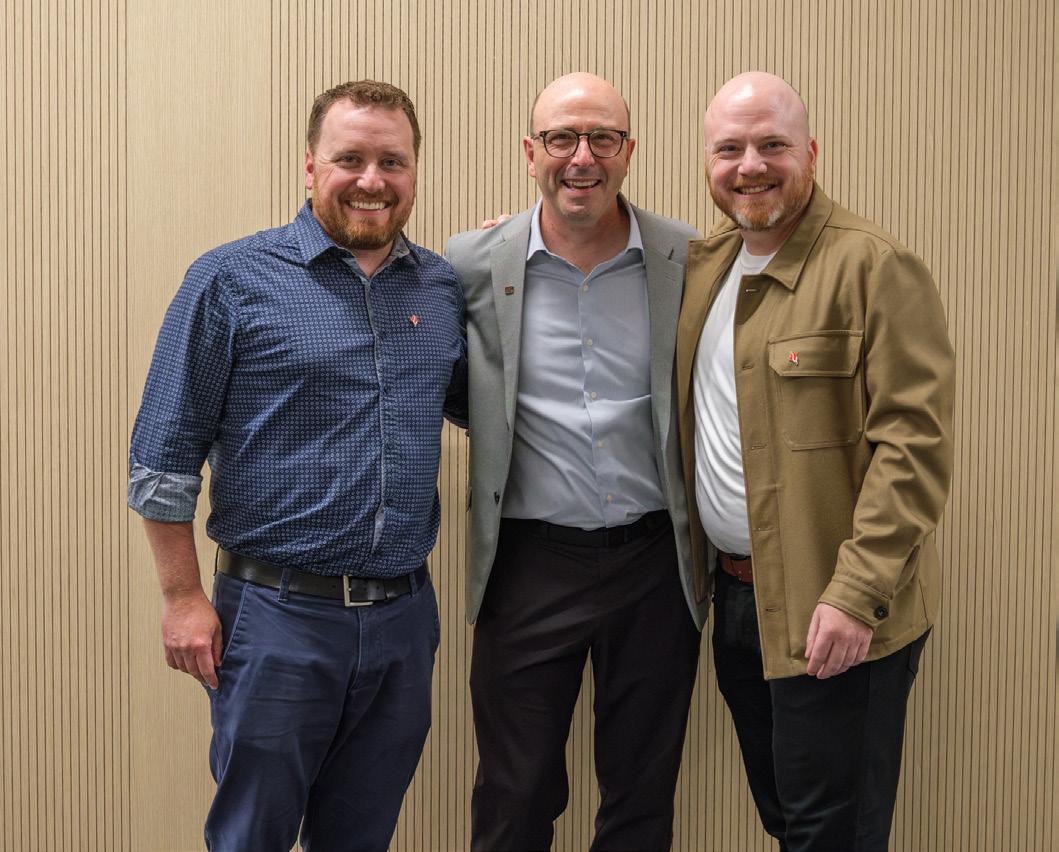
Left-Right: Ryan Martinson, Bruce Belmore, and Tyler Golly
Honouring Legacy Through Sustained Support: Bunt & Associates Engineering Ltd.
For Bunt & Associates Engineering Ltd., supporting the Future Transportation Leaders Fund represents both continuity and growth.
Bunt pledged $25,000 through an extendable five-year contribution. This commitment builds on the firm’s long-standing support of the David Tam Award which they established with ITE Canada in 2021 and has evolved to become the Professional Development Bursary in honour of David Tam.
These contributions reflect a continued dedication to education, mentorship, and professional growth. David Tam’s career exemplified these values. Arriving in Canada from Hong Kong in 1994, David brought with him a background and approach that reflected a belief in lifelong learning. As a Principal and CFO at Bunt, he was not only a skilled consultant but a mentor and trusted colleague. Following his passing in 2020, supporting future leaders in his honour became a priority for the firm.
In describing why the Foundation matters, Glen Pardoe of Bunt shared the following reflection:
“ITE Canada is a strong and diverse organization that promotes the importance and competence of professions within the transportation planning/engineering field. It offers training, leadership, mentoring and a place where like-minded professionals can share experiences and lean on each other to aid in career growth and personal development. It may sound cliched to say that no one person is an island, but it is very true; and people like David – and
indeed ITE Canada – are what ensure the continued existence and growth of the industry. Some people need more help than others to reach their goals, and like David Tam, ITE is and has always been there to provide a voice of support, an opportunity to learn and grow, and a place to check-in and seek help when needed.
Bunt is proud to continue to support ITE Canada through an on-going annual contribution to the Future Transportation Leaders Fund in honour and memory of David Tam, and on behalf of all the staff of Bunt—past, present and future—who strive to be the best they can be both as professionals, and as people. David would be thrilled to know that this is happening.”
A Call to the Profession
The Future Transportation Leaders Fund is more than a new administrative structure; it is a call to action. It invites companies and individuals to reflect on how they benefited from ITE Canada—and how they can help ensure those same opportunities exist for others. Whether through a one-time donation, an annual pledge, or opportunities to honour specific individuals, every contribution strengthens the profession’s foundation.
As the early commitments from Martinson Golly and Bunt & Associates demonstrate, giving back is not about firm size or visibility. It is about recognizing the value of shared opportunity and taking responsibility for what comes next.
To learn more about the Future Transportation Leaders Fund or to explore ways to contribute, visit foundation.itecanada.org
ITE CANADA DISTRICT
May 31–June 3, 2026
Victoria, BC
Join hundreds of transportation professionals, students, and industry members in Victoria, British Columbia for the ITE Canada District Annual Conference May 31–June 3, 2026.
The ITE Vancouver Island Section is excited to welcome you to their stunning capital city. The conference will feature endless opportunities to connect with industry leaders, expand your knowledge, and create memories.
Keep up to date with all conferencerelated news at our official website— conference.itecanada.org, via the ITE Canada email list, and by following #ITECanada2026.
CONFERENCE WEBSITE
VENUE & TRAVEL
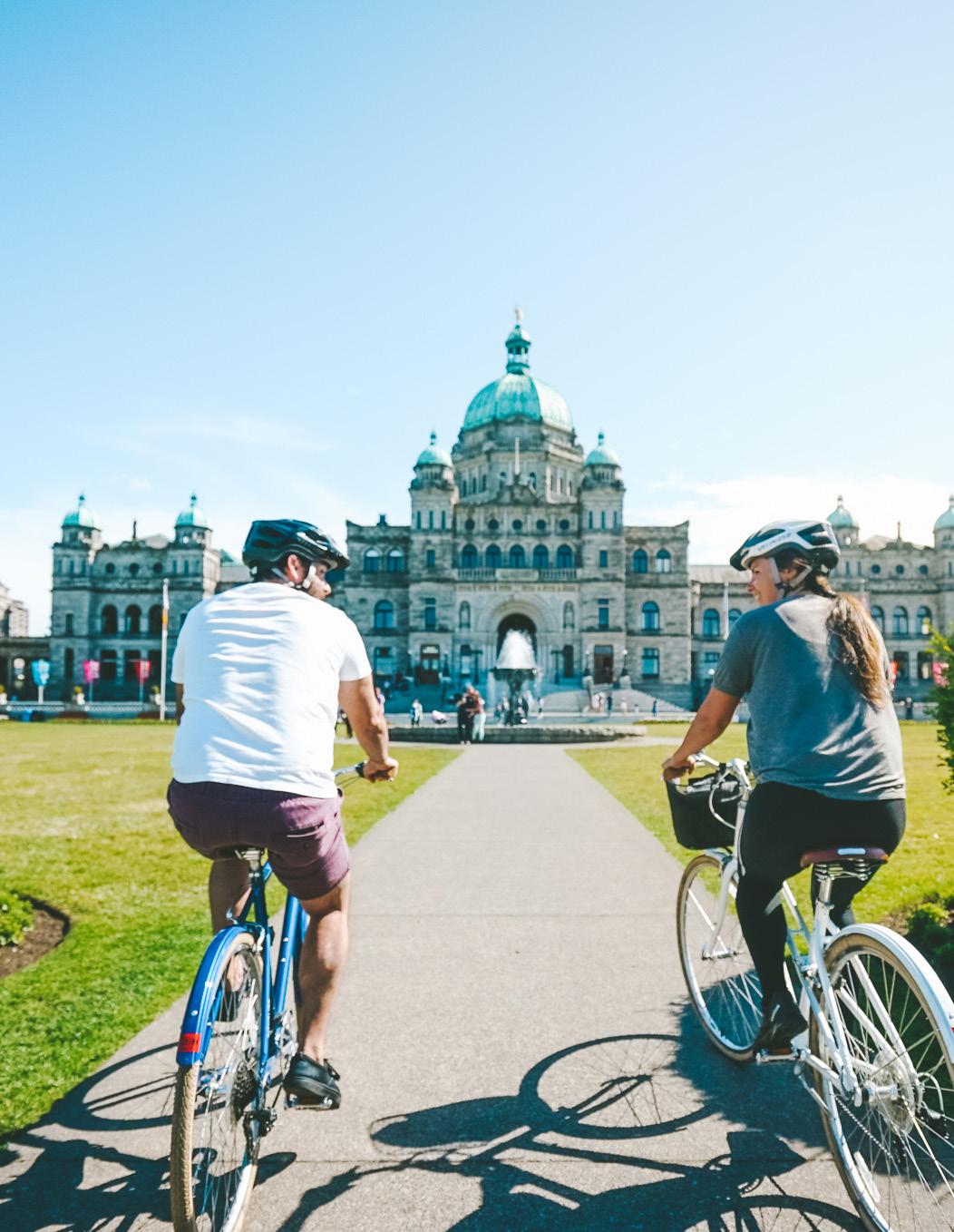
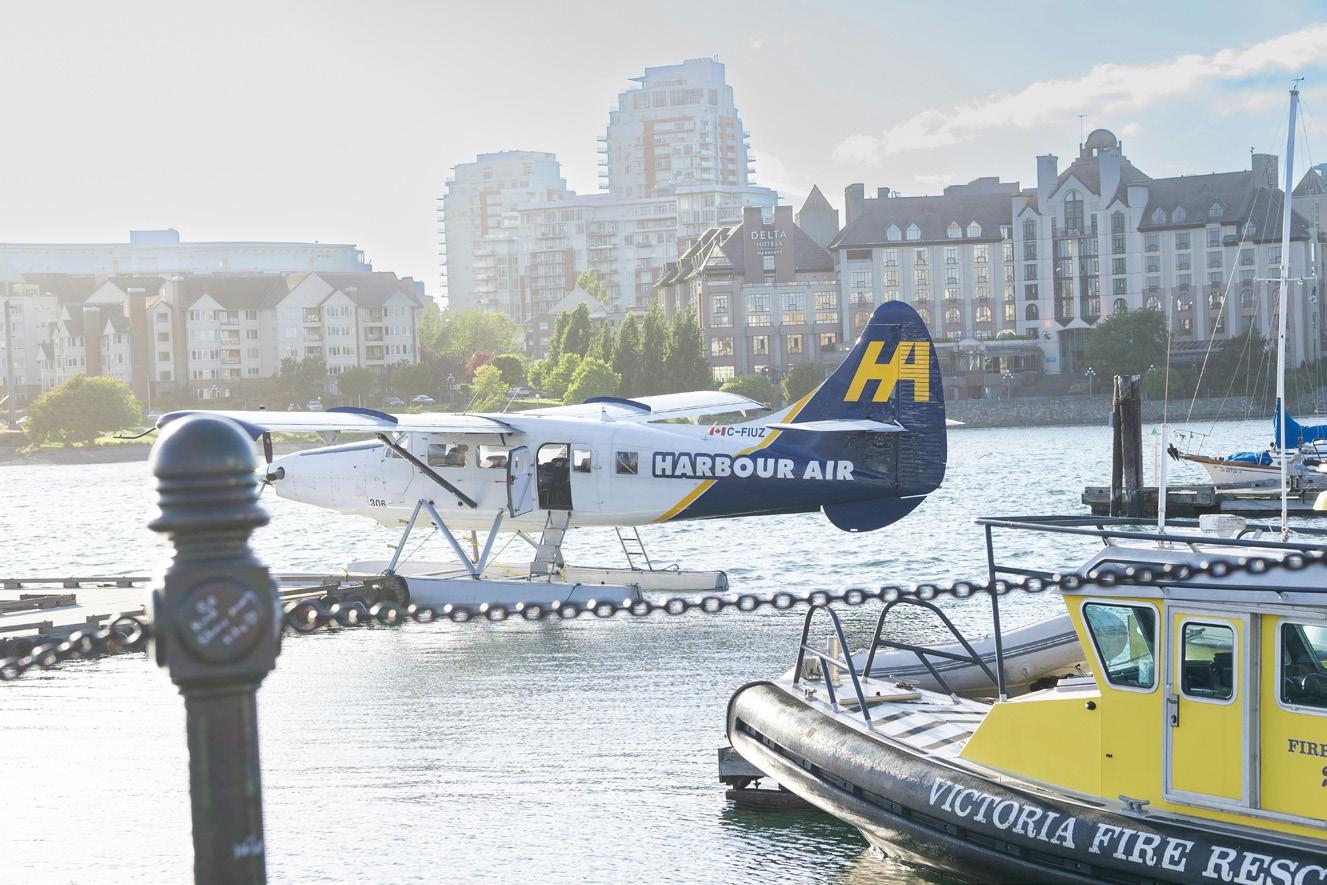
Our venue, the Victoria Conference Centre, and official hotels—Marriott Victoria Inner Harbour and the Grand Pacific Hote—are all centrally located in downtown Victoria. They are a stone’s throw from the Victoria Harbour and iconic sights and attractions including the Legislative Assembly of British Columbia, Royal BC Museum, and much more!
HOTEL & TAVEL INFO
ITE Canada District and the Future Transportation Leaders Fund are pleased to offer conference travel and professional development funding support through three bursaries. Applications are due March 1, 2026
REGISTRATION
Early bird registration is now open with reduced rates available until March 31. Secure your spot before registration closes on May 21! ITE members receive additional discounts with special rates for younger, student & retired members. Find all the info you need to register here
Creating Connections Through Transportation
Our transportation community is excited to gather in Victoria and share emerging trends, new ideas, and many lessons learned from across the country. Created from a record number of 260+ abstracts submitted, the #ITECanada2026 program is bursting with diverse learning opportunities.
Technical Sessions
This includes a technical program featuring over 60 presentation format, workshop, panel, and creative interactive sessions spanning many practice areas such as:
• Multi-modal transportation and urban issues like parking, curb use, right-ofway, urban design, and complete streets
• Active transportation including cycling, walkable neighbourhoods, wayfinding, and solutions for smaller communities
• Road Safety topics like school zones, traffic calming, ASE, Vision Zero, and culture
• Community and Public Engagement
• Transit topics including equity, network planning, data, and project lifecycles,
• Workforce issues such as mentorship, mental health, careers, and leading teams
• Traffic engineering topics like modelling, AI and data, construction, and signals
• ...and much more!
Technical Tours
Not to be outdone, this conference will offer 10 tours for on-the-ground learning throughout the Greater Victoria area:
• Greater Victoria’s Island Platform Bus Stops (Tour 1)
• Exploring Greater Victoria’s Regional Trails by E-Bike (Tour 2)
• Campus Mobility Planning: UVic’s Active Transportation & Public Spaces, Five Years On (Tour 7)
• On Course: Exploring Victoria’s Shared Mobility Options (Tour 9)
We’re also happy to announce our Keynote Speaker: Jeremy Caradonna, Victoria City Councillor, Capital Regional District (CRD) Director, and Victoria Regional Transit Commissioner. With a background in academia and civil service, he will highlight regional and local transportation planning from multiple perspectives.
PROGRAM
SHOWCASE YOUR COMPANY
Join leading companies like our Diamond and Platinum Sponsors below to connect with hundreds of transportation professionals at #ITECanada2026.
Watch our conference website, LinkedIn page, and member email notices for more news and details to be released in the coming weeks. We can’t wait to see you in Victoria!
SPECIAL EVENTS
ITE Canada conferences are well known for their memorable social events program full of familiar favourites, including Traffic Bowl, the Street Hockey Classic, and the Annual Banquet happening at the historic Crystal Garden. The Student Mixer will be a unique highlight this year featuring rooftop beach volleyball!
You will love the ample opportunities to connect with colleagues, make some new friends, and create lasting memories at #ITECanada2026.
SUNDAY, May 31
MONDAY, June 1
Jeremy Caradonna, Victoria City Councillor
1A: Right-of-Way Revolution: Policy to People
1B: A+ Street: School Zone Safety
1C: Scaling Infrastructure for Small Communities
1D: Who Killed Main Street? Murder Mystery*
1E: System-level Analysis and Applications
2A: Collaborative Context: Shared Urban Design
2B: Whoa There! Safety Through Traffic Calming
2C: Vehicle Access to Key Destinations
2D: The Accessibility Game Show*
2E: Truck/Bike Compromises in Design Debate*
Gordon
3A: Community Engagement
3B: Safety at Many Levels
3C: Multi-Modal Design
3D: Reverse Mentoring: Bridging Gaps*
3E: Project Lifecycle Planning for Rapid Transit*
SCHEDULE AT A GLANCE
TUESDAY, June 2
Morning Run
#ITECanada2026 | This is a preliminary schedule. All details are subject to change.
WEDNESDAY, June 3
6:30
BREAKFAST (7:30–8:30) 7:30
4A: Parking and Curb Use
4B: Design Resilience
4C: Automated Speed Enforcement
4D: Transportation Speed Dating (WATT)
4E: Procurement Panel*
5A: Complexities of Urban Design
5B: Macro Innovations
5C: Equity in Transit
5D: Burnout and Mental Health Convos*
5E: Transit Network Planning Panel (Arup)*
6A: Complete Streets
6B: AI and Data
6C: The EV Evolution
6D: Active & Alternative Transportation in the Island Corridor Workshop (Bunt)*
6E: Peer Review Best Practice*
NETWORKING LUNCH (12:15-1:15)
Exhibitor Passport Raffle Draw
7A: Inclusive Urban Roads
7B: Construction and Implementation
7C: Access for All
7D: Multi-modal Intersection Design (ISL)*
7E: Leading & Managing Teams Panel*
8A: Navigating Complexity
8B: Signals Optimized!
8C: Transit Improvements
8D: Public Engagement & Behaviour Change*
8E: Resiliency in Design Panel (Stantec)*
9A: Data Driving Decisions
9B: Traffic Strategies for Modern Cities
9C: Transit Priorities
9D: BC Active Transportation Guide*
9E: THOUGHT LEADER Session (EXP)*
9F: Career Connect Panel* BANQUET DINNER (6:00-10:00)
*Special format sessions are tentative topics, dates, and times to be confirmed. All schedule details are subject to change. Version: 5 February 2026
Urban Geometric Design Fundamentals and Emerging Practices
By James Schofield & Pavani Perera, WSP Canada
Cities across Canada are experiencing rapid growth, placing new demands on urban streets. As urban areas densify and sustainable travel modes attract increased investment, our streets are being asked to do more and more: providing comfortable travel for pedestrians and cyclists, supporting high-quality public
transit, and managing goods movement—all while keeping traffic flowing.
Unlike higher-speed rural streets and freeways, which are focused nearly-exclusively on serving as conduits to move from one place to another, urban streets are complex environments. Some
urban streets are designed to be places to stop and linger, perhaps enjoying a meal on a restaurant patio. A local neighbourhood street might be taken over by an impromptu game of street hockey. Meanwhile, a suburban arterial might struggle to juggle the competing demands of frequent commercial driveways and a need to efficiently accommodate many lanes of relatively high-speed traffic.
In the past decade, there has been considerable evolution in thinking and in design practices, particularly as they relate to urban streets across Canada. The 2017 update to the Transportation Association of Canada (TAC) Geometric Design Guide for Canadian Roads marked an important step in the evolution from design driven by minimum standards towards a “design domain” approach. This more nuanced design guidance comes along with a need for greater engineering judgment in the choice of design parameters. However, the state of practice continues to evolve, with increased attention to lower-speed street design and new design approaches at protected intersections and multi-modal roundabouts.
Who and What Are Urban Streets For?
Urban streets are spaces through which people experience their community – consisting of different elements, each with critical functions. There are spaces for pedestrians, cyclists, transit users, commercial vehicles, and personal vehicles to travel along with supporting facilities for parking as well as loading and unloading. The space between the curb and adjacent buildings support a variety of activity, such as providing access to destinations, street furniture for people to rest, and placemaking features that encourage social gatherings. Above and below the ground are utilities that supply water, sanitary sewer,
and storm drainage systems; electrical distribution; gas lines; and telecommunications. Green infrastructure creates an attractive public realm and serves numerous hydrological and ecologic purposes, such as erosion control, stormwater management, improving air and water quality, and enhancing biodiversity.
Complete Streets
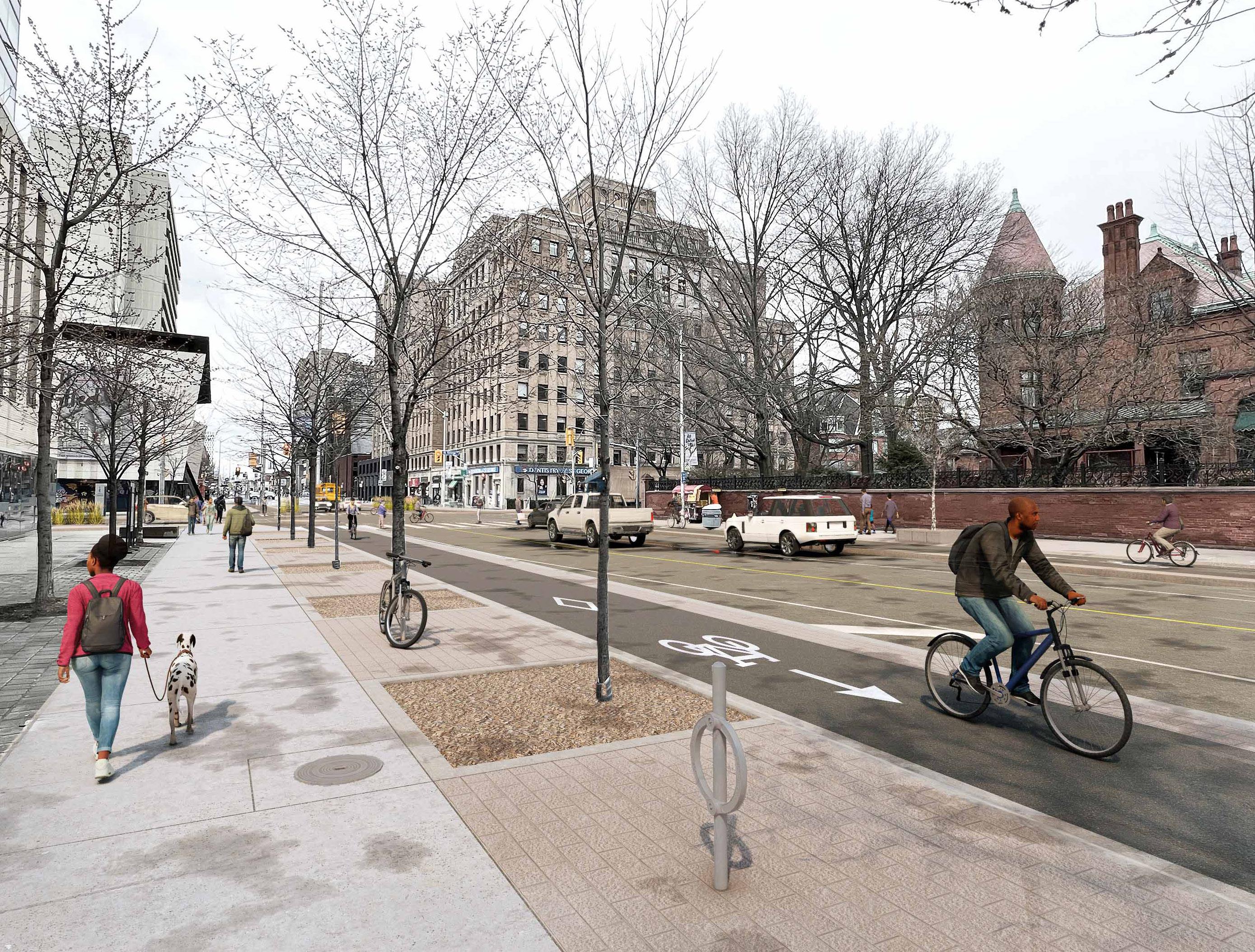
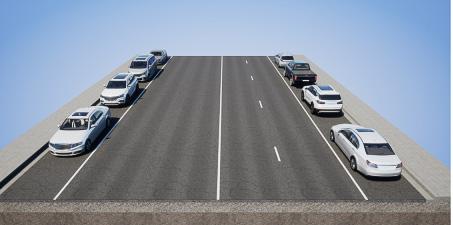
The way urban streets are designed significantly impacts who uses them and the opportunities people have to participate in community life. Transportation professionals naturally tend to focus on motor vehicle traffic needs when designing a street—often starting with a determination that a certain number of lanes of traffic are needed to meet demand, or that a street needs to be widened to meet future demand. While these are crucial considerations, the traditional “centreline out” design approach may result in a street design that over-prioritizes motor vehicle considerations and overlooks other important considerations.
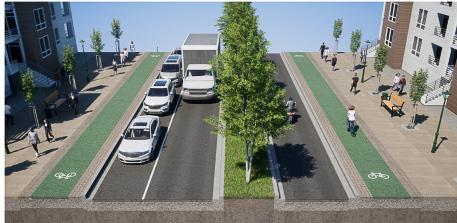
A Complete Street design approach aims to balance the varying needs of streets based on their local context and role within the broader transportation network. It places an emphasis on the safety and accessibility of vulnerable road users of varying ages and abilities and considers how streets can better support community objectives. Complete Streets come in all forms and flourish in communities small and large, from urban to suburban to rural. There is no singular approach to creating a vibrant and successful complete street; in fact, complete streets actively respond to their surrounding environments, resulting in contextspecific designs rather than a standardized approach. In contrast to the traditional “centreline out” design approach, Complete Streets build a design from the outside in,
beginning with a consideration of the surrounding context and the overall objectives of the street.
In a Complete Streets approach, street elements should be incorporated into an urban street design to achieve either a “mobility focus” or an “access focus”. Urban streets designed with a “mobility focus” prioritize the safe and efficient movement of people and goods with greater separation between conflicting users, limited access to adjacent land uses, and higher vehicle operating speeds. On the other hand, urban streets with an “access focus” prioritize safe access to destinations with a higher degree of placemaking, less separation between conflicting users, frequent accesses, frequent curbside activity, and lower vehicle operating speeds.
From Minimum Standards to Self-Enforcing Streets
Historical approaches to street design have been based on meeting minimum standards for design criteria such as stopping sight distance, horizontal curvature, and lane widths. Current design standards take a more nuanced approach based on a design domain, typically offering a target range and absolute minimum and maximum values for design elements. However, a “bigger is better” bias persists, and practitioners often reach for larger values within the design domain unless constrained by space, cost, or other factors. This design approach prioritizes creating “forgiving” environments to make room for driver error, which may unintentionally encourage drivers to operate at speeds greater than the design or
Outside in
COMPLETE STREETS DESIGN
• move people and goods efficiently
• ensure safe and accessible streets for all users
• provide people with transportation options
• promote active lifestyles
• create vibrant and attractive public spaces
• strengthen local economies
• improve environmental sustainability and climate resiliency
FIGURE 1. Comparison of the “Centreline Out” Traditional Design Versus “Outside In” Complete Street Design Approaches
target operating speed. It also results in less space being available for other street elements.
With improved appreciation of human factors, design practice is evolving towards selfenforcing streets, particularly in urban contexts where vulnerable road users are frequently present. These streets provide design cues to drivers that communicates the desired speed and makes it difficult or uncomfortable to travel faster, thus naturally encouraging safer behaviour. This contributes to operating speeds suitable to the surrounding context, improved awareness of other users, and predictable interactions.
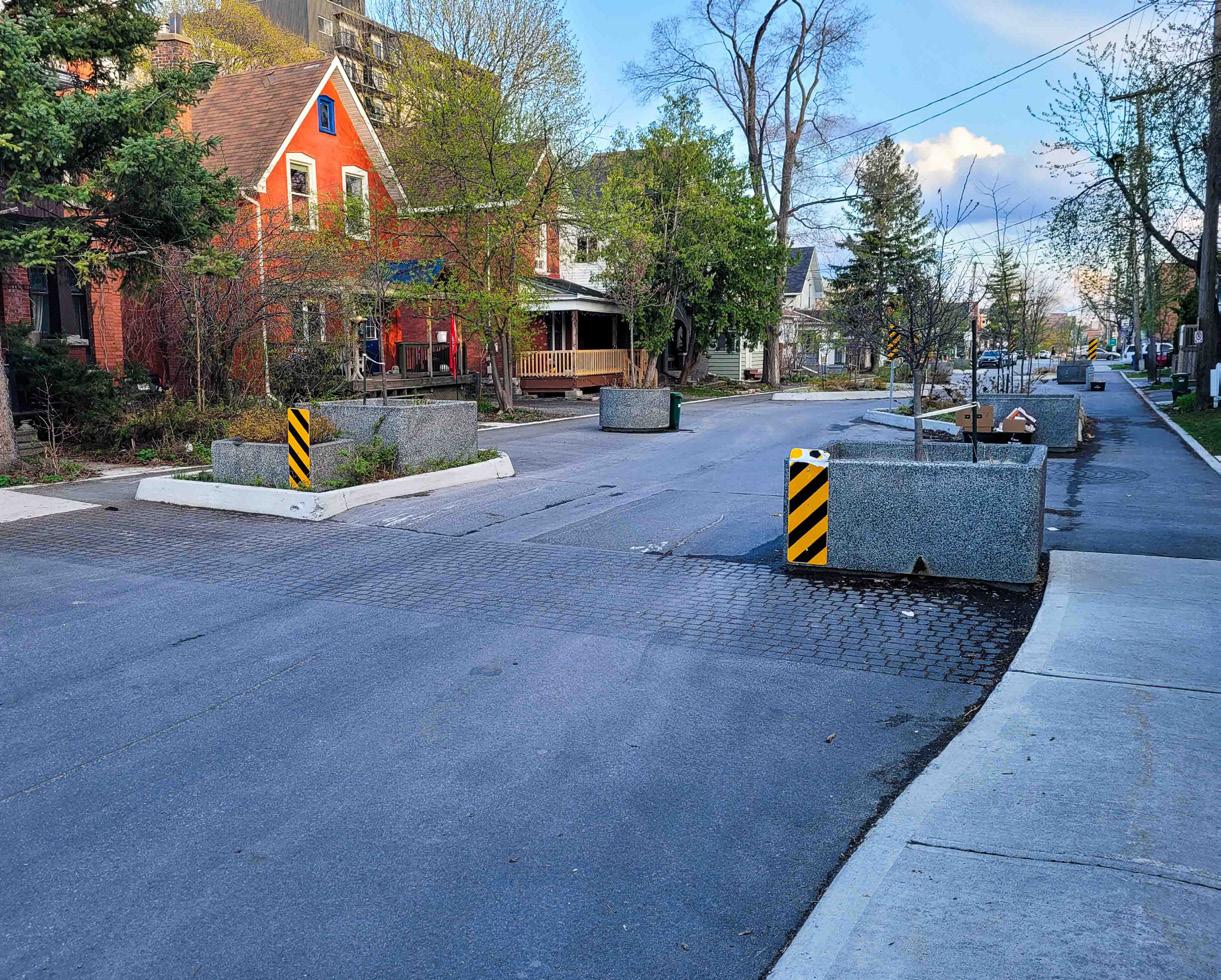
A self-enforcing street relies on a variety of measures to achieve a desired operating speed. These include techniques that provide a sense of enclosure by narrowing a driver’s field-ofview—such as buildings, trees, or parked cars— along with horizontal and vertical deflection measures.
Emerging Approaches for Intersection Design
Protected Intersections
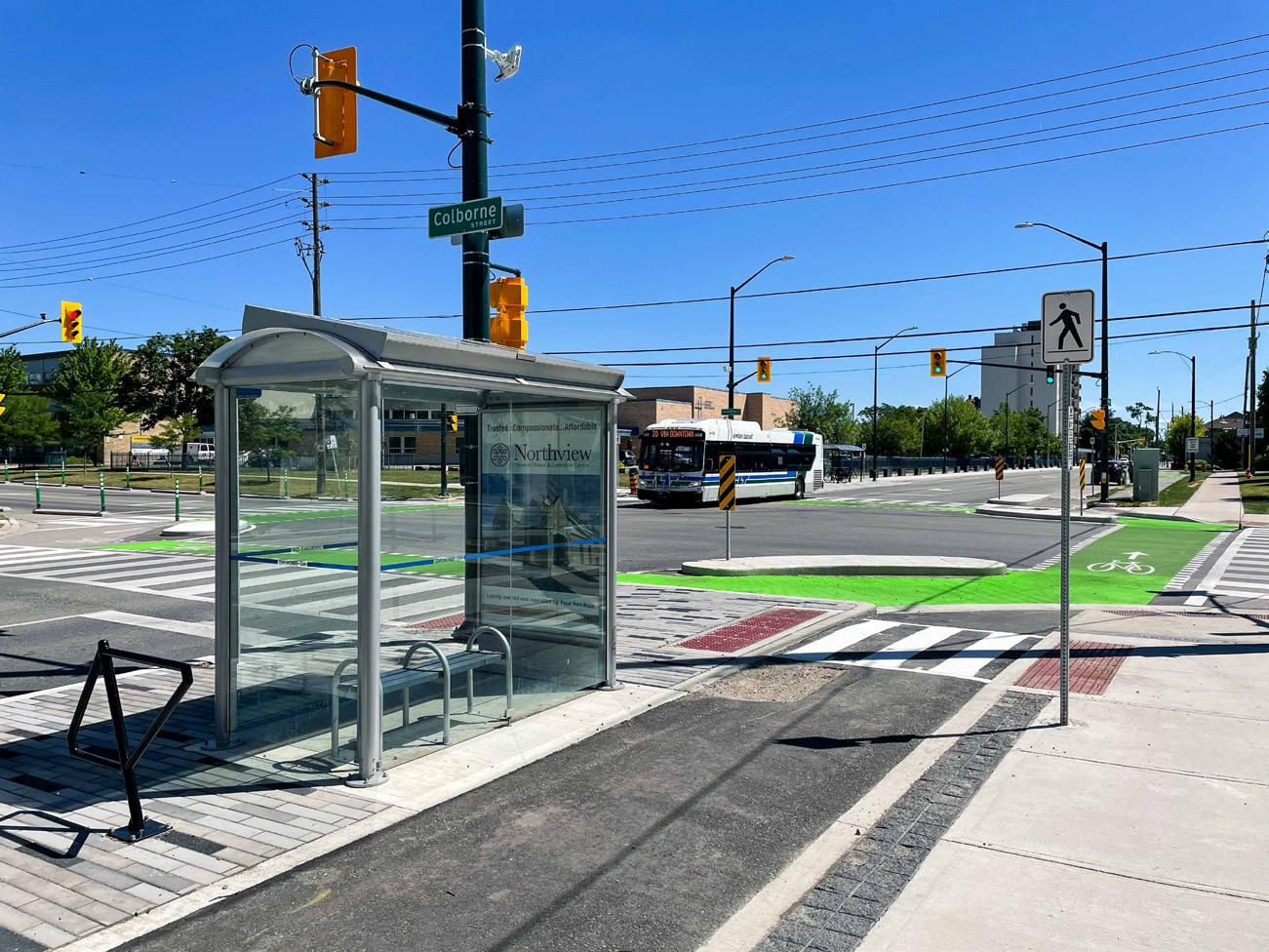
Protected intersections are rapidly being adapted into the Canadian context to prioritize the safety of pedestrians and cyclists. The key features of a protected intersection include setback crossings, forward queueing areas, pedestrian refuge areas, corner islands, and protected signal phasing. The overarching objectives are to reduce vehicle operating speeds; maximize visibility of all users; minimize crossing distances and traffic exposure for pedestrians and cyclists; and separate high-risk conflicts in time and space. The features of protected intersections can be applied to a variety of contexts based on local guidance and engineering judgement.
FIGURE 3. Protected Intersection in London, Ontario
FIGURE 2 . Example of Speed Management on an Urban Street in Ottawa, Ontario
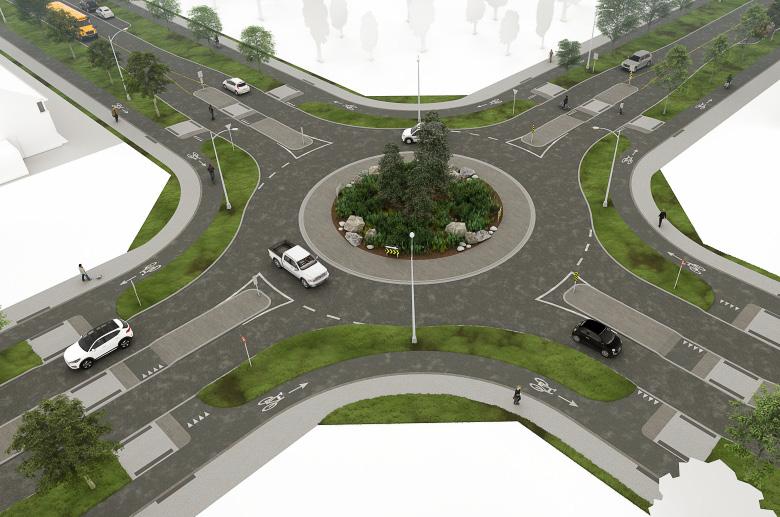
4. Multi-Modal Urban Roundabout
(Source: Hamilton Complete Streets Design Guidelines, June 2022)
Multi-Modal Urban Roundabouts
As an increasing number of Canadian municipalities adopt urban roundabouts, there continues to be a desire to better accommodate pedestrians and cyclists at these junctions. Some Canadian municipalities are exploring treatments inspired by Dutch roundabout design practice to improve safety and comfort for these users. Compared to a traditional roundabout design, the Dutch approach features radial entries with a sharp turn into the circulatory roadway, and cycle tracks that circumnavigate the roundabout with intuitive crossings at approaches.
Conclusion
Looking ahead, urban street designs must rise to meet evolving community needs, including in user safety, public health, environmental sustainability, economic prosperity, and social equity. Essentially, urban streets must serve as foundations for vibrant public spaces that improve the overall quality of life for communities. This challenges professionals in transportation and related fields to carefully consider local context; balance the needs of multiple users; and incorporate broader community objectives.
LEARN MORE
In 2026, ITE Canada and WSP Canada are offering a training workshop with live facilitators to explore the fundamentals and emerging practices in urban street design as they apply to Canadian cities. This will cover concepts in cross-section design, horizontal and vertical alignment, and intersection geometry with case studies and practical exercises that will challenge participants to apply context-sensitive solutions for varying urban contexts. Learn more and register for an upcoming workshop here.
FIGURE
DATE & TIME
Ǭ Wednesday, February 25, 2026
Ǭ 12 to 4 pm (Eastern) / 9 am to 1 pm (Pacific)
g FACILITATORS
Ǭ James Schofield, Santiago Londono, Beverley Ng, and Pavani Perera of WSP Canada
REGISTRATION FEES
Ǭ ITE Member (Individual or Public Agency): $275*
Ǭ Non-Member: $400*
Ǭ ITE Young Member: $200
Ǭ ITE Student Member: $150
*15% group rate discount for 3+ registrations purchased together
REGISTER
QUESTIONS ABOUT THE TRAINING PROGRAM? Contact the Training Committee at training@itecanada.org
QUESTIONS ABOUT REGISTRATION? Contact ITE Canada at info@itecanada.org
TRAINING SUMMARY
This interactive half-day workshop introduces the fundamentals and emerging practices of urban street design , emphasizing safety, mobility, and livability for all users. Participants will learn how to apply foundational concepts in cross-section design, horizontal and vertical alignment, and intersection geometry to create context-sensitive solutions for varying urban contexts. Emerging topics such as low-speed streets , self-enforcing streets , multimodal roundabouts , and protected intersections for urban contexts will be integrated throughout the curriculum.
Through presentations , real-world case studies , and handson exercises using collaborative tools led by four facilitators, participants will gain practical skills to apply design principles and innovative solutions in their own projects. Designed for both entry-level and experienced professionals, this training will equip participants with the knowledge and confidence to navigate the evolving landscape of urban street design in Canada.
KEY LEARNING OUTCOMES
Ǭ Describe the key functions and elements of urban streets
Ǭ Explain the importance of engineering judgment in selecting design parameters
Ǭ Understand speed management and the relationship between design features and operating speeds
Ǭ Analyze and design cross-sections for urban streets
Ǭ Collaborate in group exercises to solve real-world challenges
Ǭ Interpret case studies, connecting concepts to built examples
Multimodal by Default
How Europe Supports Transportation Choice
By Sam Pollock, MSc, EIT
I spent the fall semester of 2025 as a visiting researcher in Germany at the University of Wuppertal’s Chair of Bicycle Traffic, working on various active transportation research projects. One project involved testing draft survey questions on colleagues, including what seemed like a straightforward question: “What is your primary mode of transport?” For most Canadians, this is an easy question- the answer is usually driving with some people choosing transit, walking, or cycling, if they happen to live in an area that supports these modes.
In Wuppertal, however, the question consistently caused my colleagues to pause, think, and occasionally argue with its premise. It’s rarely a good sign when a survey respondent argues with the premise of a question. For most of my test respondents, the idea of a “primary” mode didn’t make sense. Rather than considering possible exceptions to a default mode, my colleagues treated mode choice as a flexible decision that depended on the characteristics of a given trip.
Transportation plans often contain rhetoric about “transportation choice” or the idea that people should be able to choose between multiple attractive modes for most trips. My colleagues’ reaction to the question about their “primary” mode demonstrates this idea in practice.
After studying in and travelling around Germany and its neighbouring countries for a semester, here are two mechanisms that I observed through which European transportation systems support transportation choice.
It Starts with Land Use
Most of the cities that I visited had a central, pedestrian-oriented area with mixed residential-commercial land use. In and around these areas, walking and cycling were automatically competitive modes due to short trip lengths and limited motor vehicle access. More than any of the other cities I visited, Münster, Germany took advantage of this by constructing an active transportation “ringroad” around the city centre, making it even easier to cycle between destinations in and around the inner city. Short trip distances, which are supported by dense land use, are often a prerequisite for the viability of active modes.
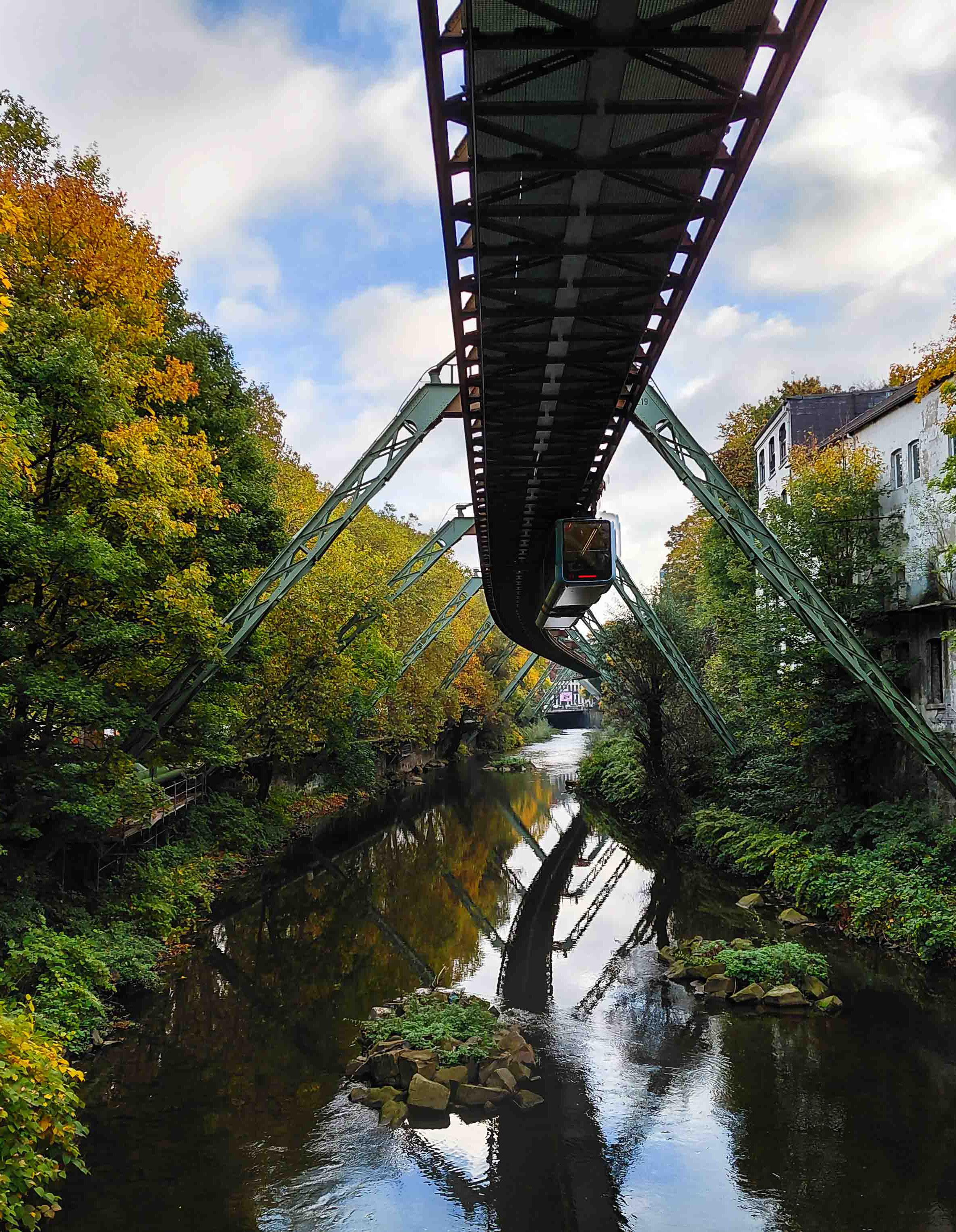
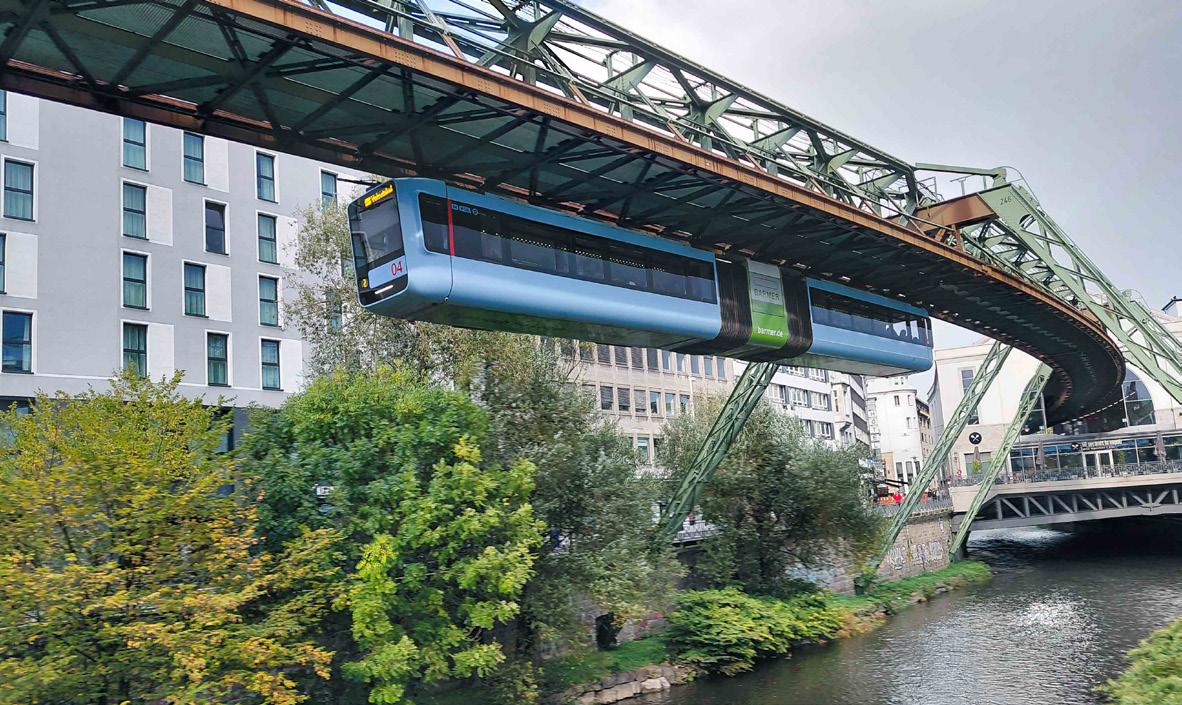
Dense and mixed land use supports transportation choice by enabling easier switching between modes. By keeping different modes closer together, effective land use reduces the risk and commitment associated with a mode choice. When I got caught in the rain biking to work in Wuppertal, I was never far from a station for the Schwebebahn, Wuppertal’s beloved and historical suspended monorail (pictured here) where I could lock my bike and continue my journey by public transport. This isn’t possible when destinations are far apart and transit stops are correspondingly sparse.
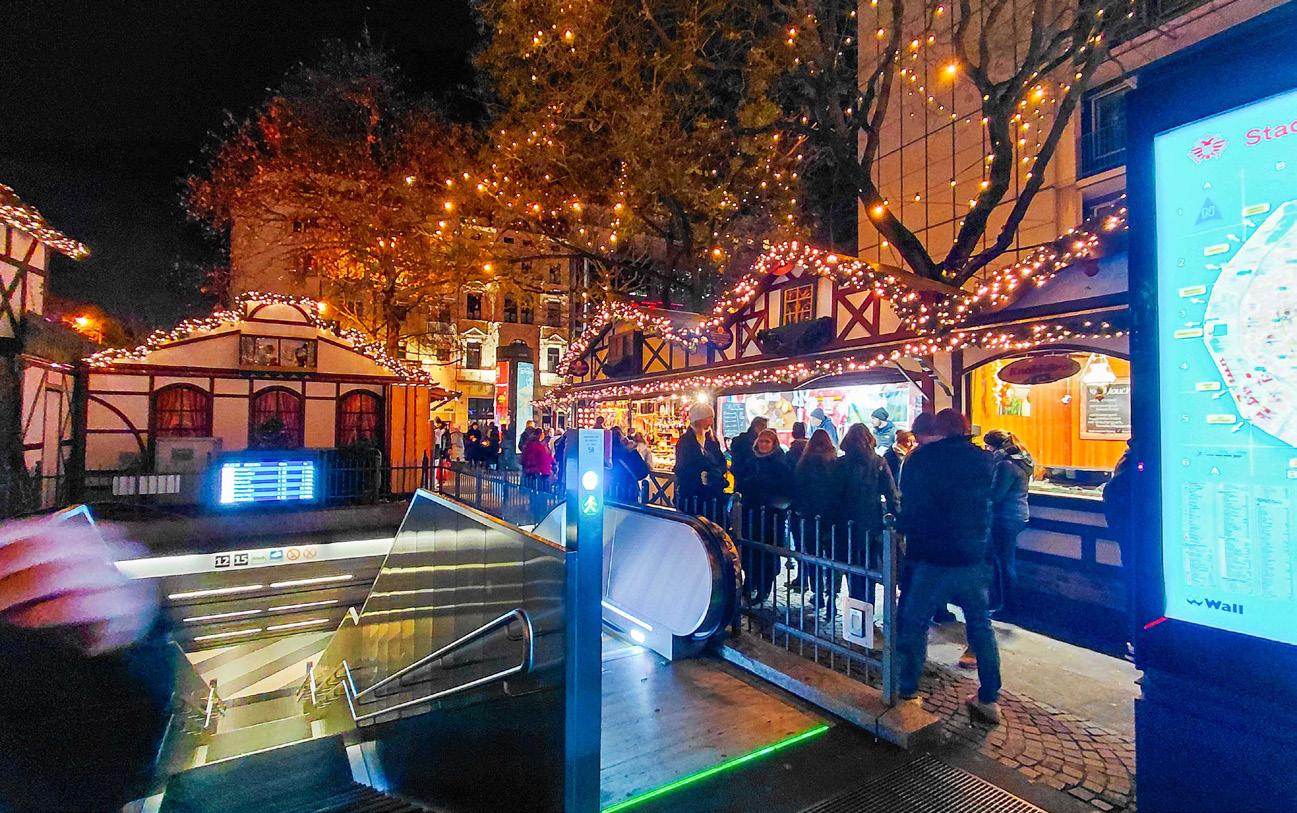
My favourite example of land use facilitating transportation choice was in Cologne. While walking through one of the city’s Christmas markets, I was surprised to find the entrance to a subway station in the centre of the market.
Although the market was located outside of the city’s central pedestrian district, public transit was still embedded in the middle of an activity centre, rather than on its periphery. This made transit one of several viable ways to get to the Christmas market, in addition to driving and active modes. Examples like these emphasize the continued need to consider land use in transportation planning to facilitate transportation choice.
Redundancy Makes Failure Tolerable
Another way in which European countries support transportation choice is by providing redundancy. Northwestern Germany’s rail network exemplifies redundancy. Even the relatively small Wuppertal Central Station served an impressive number of local trains, regional trains, regional express trains, and intercity express trains. For trips to nearby cities, there were almost always multiple route or service options. This insulated me against the lackluster (and often criticized) reliability of German trains. Whenever I missed a connection, there was often another viable route or service to my destination. This made
rail a viable competitor to driving, because I knew that I was going to get where I needed to go, even if things went wrong.
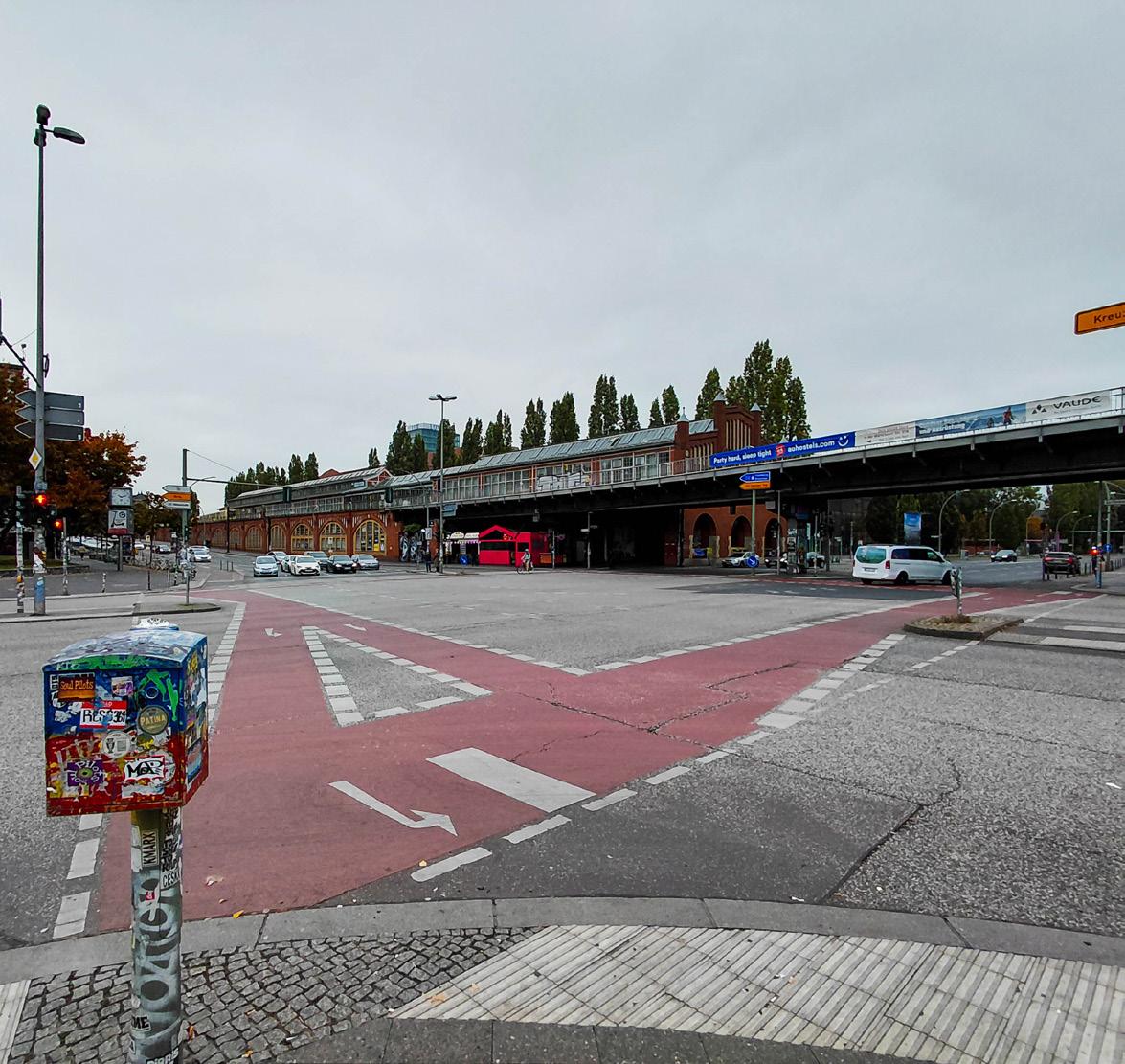
Similarly, I observed that providing network redundancy can help make cycling more attractive. There were some good examples of this in Berlin where there were painted bike lanes on many major streets, in addition to protected cycling routes nearby. Although the painted bike lanes were not always comfortable, providing dedicated cycling space on many streets reinforced the inevitability of cyclists in the transportation network and helped make cycling ordinary everywhere, not just on dedicated facilities.
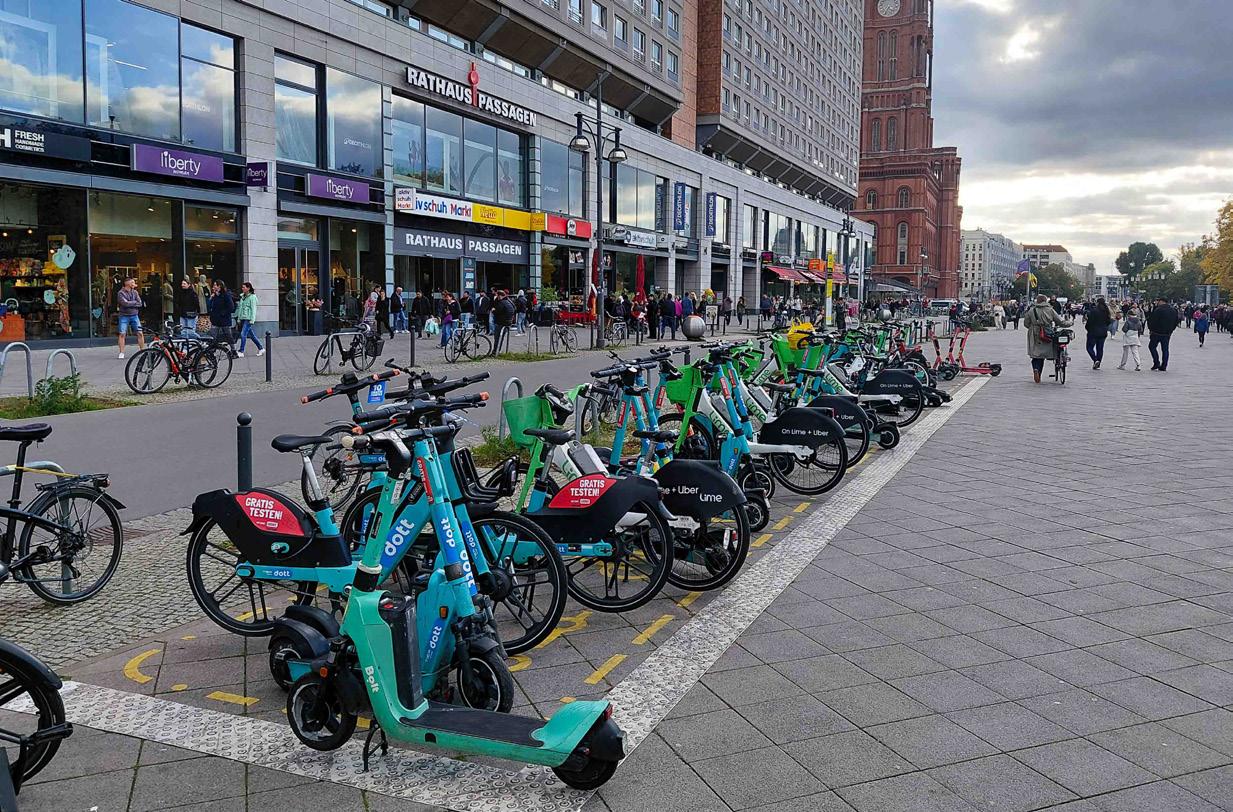
In contrast to network redundancy, dockless micromobility provided modal redundancy, where micromobility acted as a “fallback” mode that increased the viability and attractiveness of other modes. In cities like Brussels and Cambridge, UK, being able to drop an e-scooter or e-bike almost anywhere made it easy to get around. I also witnessed many people flock to micromobility devices when there was a service disruption on the London Underground. Micromobility is perhaps the best example of a mode that is unlikely to be
A subway station entrance in the middle of a Christmas market in Cologne, Germany
A parking area for several different micromobility services in Berlin, Germany
anybody’s “primary” mode. However, by adding modal redundancy to the transportation system, it supports other modes by providing a reasonable fallback option.
A Multimodal Mindset
When the right conditions exist, multimodal travel becomes normal. Cycling somewhere isn’t heroic; it’s just how you get to work. Taking transit isn’t a crazy decision; it’s just an acceptable default option. My colleagues chose travel modes based on practicality rather than on identity factors. Even in a cycling research lab, people didn’t identify as “cyclists” but rather chose to bike when it was convenient. When other modes were more convenient, they chose other modes. The system itself makes the behaviour unremarkable.
Canadian cities will not become perfectly multimodal overnight. However, focusing on aspects like land use and providing redundancy can help planners and engineers provide attractive transportation choices that encourage people to adopt a multimodal mindset.
AUTHOR
Sam Pollock, MSc, EIT is a PhD student at the University of Calgary and a Transportation Consultant at Martinson Golly Ltd. where he works on projects related to active transportation, road safety, and more. His thesis research focuses on the safety, comfort, and design of multi-use pathways.
In 2025, Sam was awarded the ITE Canada Doctoral Transportation Scholarship in honour of Dr. Michel Van Aerde. Submissions are open for all ITE Canada awards, scholarships, and bursaries until March 1. Learn more here
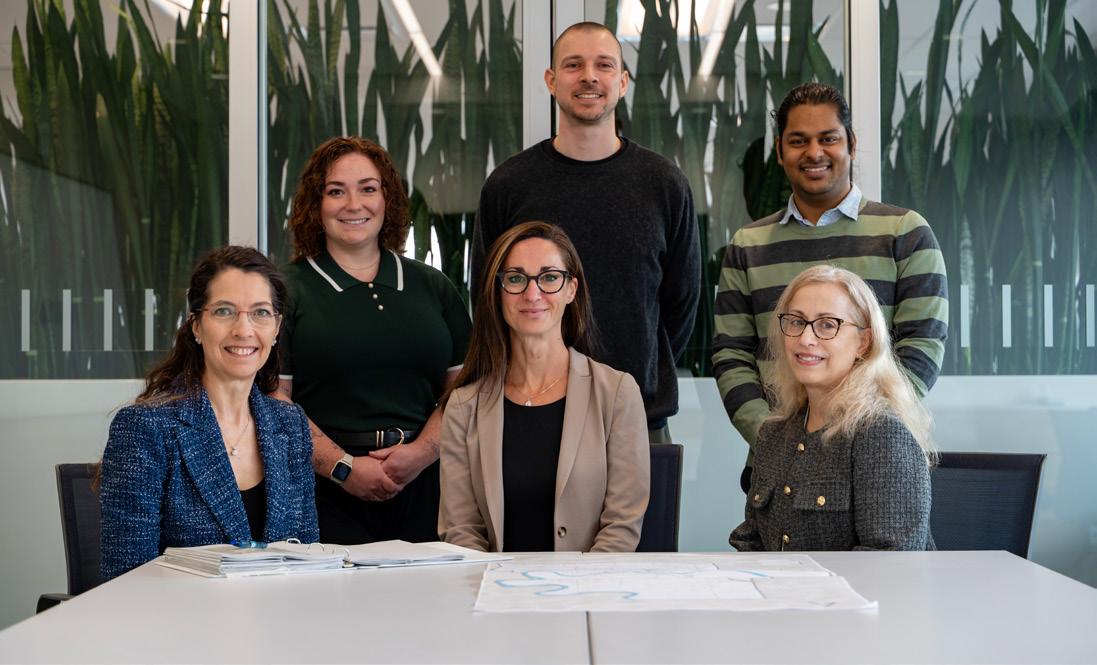
Meet Associated’s Transportation Planning & Traffic Engineering Team
Associated Engineering is a proudly Canadian, employee-owned company. Our transportation planning & traffic engineering team provides customized strategic services and works with clients, communities, and stakeholders to develop sustainable and resilient transportation solutions. We are passionate about building vibrant, healthy, and resilient communities that support economic growth.
Together, we are shaping a better future.
An intersection of two arterials with painted bike lanes in Berlin, Germany
Jacob Lamb
Ph.D., M.Eng., E.I.T.
Employment: University of Calgary, Assistant Professor (Teaching)
Education: University of Calgary, Canada, Doctoral Degree in Transportation Engineering, 2024. Heriot-Watt University, Scotland, IntegratedMasters Degree in Civil Engineering, 2018
First transportation job: Bridge Inspector at BEAR Scotland
City of Residence: Calgary, Alberta, Canada
Hometown: New Gilston, Fife, Scotland
Hobbies: Long time Warhammer 40k player, hiker and backpacker, golfer and cyclist
What roles have you taken on as a member of ITE:
• ITE International Urban Goods Movement Committee Chair and past-Secretary
• University of Calgary Student Chapter Faculty Advisor and past student president
ITE INVOLVEMENT
When did you first attend an ITE event?
I quite clearly remember attending my first ITE Section luncheon in Calgary at a hotel near the 39th Ave Ctrain station after taking the train from campus. Although I don’t remember the topic, I recall that it was a session where the new Executive were being sworn in and I was glad to see a group of people taking a commitment to their community seriously.
What is your ITE involvement?
I am currently the Chair of the Urban Goods Movement Committee where I am pleased to speak with freight practitioners across the world. I am also the Faculty Advisor for the UCalgary student chapter which is such a privilege to continue supporting after being involved as the chapter president during my graduate school. I think the one item I am most proud of in the faculty advising role is introducing a “Traffic Bowl
Qualifier” event that introduces undergraduates to the jeopardy-style event; I’ve found it to be a fantastic recruitment tool and an all-around fun time to play gameshow host.
What do you value most about your ITE membership?
It is, without a doubt, the community. Being connected so consistently with the network of like-minded professionals in Calgary, across Canada, and internationally is a joy that keeps me motivated to educate and make a difference.
GETTING TO KNOW YOU
What attracted you to the transportation profession?
I was originally registered in the structural engineering minor in my undergrad, but after taking my first transportation engineering class
and then working at BEAR Scotland for a summer internship, I really connected with the combination of big-picture network optimization challenge and the policy to community challenge of the field.
What is the most daring thing you’ve done in your lifetime (that you’re willing to see in print)?
Going on two exchange programs during my undergrad: one to Dubai and one to Calgary. These two exchanges really affected my life for the better so, although it’s a big step to move abroad away from family, travel is one thing I recommend people try if at all possible.
What is the last book that you read or are currently reading?
I finished reading V for Vendetta, after it being a long time favourite movie I finally read the graphic novel.
PROFESSIONAL ACHIEVEMENTS & PERSPECTIVES
Tell us about a project that you’re particularly proud to have worked on
During my time as a junior consultant at Associated Engineering, I was so pleased to be even a small part of the “Closing the Infrastructure Gap for First Nations” project. I contributed an analysis of the relative vulnerability of winter ice roads to northern communities to climate change and possible upgrades to all-season access. The report received numerous consulting awards but more importantly I hope it genuinely accelerates the actual closing of the infrastructure gap for First Nations communities in Canada.
What is one aspect of your work that you particularly enjoy?
Being a professor is an absolute privilege so there are many aspects. To highlight one, it is certainly the teaching, and particularly it is the
office hours and extra-curricular discussions with students I get to have that really highlight the influence and impact I can have.
Projecting yourself into the future, from an endof-career perspective, what will you hope to have accomplished?
As a tenure-track professor, this is something I’ve pondered a lot at the start of my career. I would really like to introduce a “Constructionarium” experience to Canada; an experiential learning site where civil engineering students can “get their hands dirty” building human-scale structures not just models with real concrete, steel, soil, wood, and more. As the world gets more digital, I would really like to have made an impact in keeping all civil engineers connected to construction. Give me a call or email if this sounds good to you and you’d like to be involved.
If you could change one thing about the transportation practice, what would it be?
I think it would be our tendency towards analysis-paralysis. With data becoming so much more readily available than before, I think it is often more overwhelming than insightful now. I also see people defer decision making down the road justified either on data “need” or relying on some ill-described magical data-fidelity that will solve the problem later. A pair of phrases I hold dear are “no decision is worse than the wrong decision” and “things should be made as simple as possible, but no simpler”.
What is the greatest opportunity you see for the field?
Unfortunately, safety. Calgary recently saw a record-breaking tragic year, so it is top of mind for us here. I’ve estimated from Stats Canada data that traffic fatalities are in the top three causes of lost-productive life in the country. Canada overall has a long way to go towards reducing transportation related injuries and fatalities—the scale of the problem is both our field’s greatest shame and our greatest opportunity.
Abigail Cartwright M.Sc.E, EIT
Employment: Englobe, Transportation Engineer in Training
Education: University of New Brunswick, BScE, 2023 and MScE, 2025
City of Residence & Hometown: Fredericton, NB
Hobbies: Love to be active outside with my friends, you can usually find me playing ultimate frisbee, running, biking or walking the trails in Fredericton and in the winter cross country skiing
What roles have you taken on as a member of ITE:
• Vice-President then Co-President (with Maddie Whitehouse) of the UNB ITE Student Chapter
• Co-Chair of the 2025 ITE Canada Student Leadership Summit
ITE INVOLVEMENT
When did you first attend an ITE event?
My first ITE student chapter event ever was an in-person Career Connect with Kate Whitfield in 2022 with the UNB ITE Student Chapter. Then in 2023, I attended my first ITE Atlantic Canada Section event: the fall technical session.
Tell us about your involvement with ITE
My first executive position was Vice President of the UNB Student Chapter in 2023. Then in 2024, I became Co-President of the UNB Student Chapter with Maddie Whitehouse.
I was Co-Chair of the ITE Student Leadership Summit in Halifax in 2025. It was a great way to meet and get to know Canadian District Executives who were kind enough to participate in a panel at our event.
I’ve participated at three traffic bowls: the Canadian District Conference in 2024 and 2025 and the ITE International 2025 Conference.
I also participated on a student leadership panel at the 2025 ITE Conference in Orlando, talking about what I have learned being a ITE Student Chapter Executive.
What do you value most about your ITE membership?
The Atlantic Canada Section spring and fall technical sessions allow me to meet and learn from other professionals who have similar careers. I really value the mentorship and community of other transportation professionals.
GETTING TO KNOW YOU
What attracted you to the transportation profession?
I always knew I wanted to do engineering. Originally I wanted to be a biomedical engineer. Then I realized I really liked learning about transportation and built environment access, and how to balance needs for varying user groups. Transportation connects people with infrastructure and I think that’s a beautiful thing.
What is the most daring thing you’ve done in your lifetime (that you’re willing to see in print)?
Traffic Bowl.
What is the last book that you read or are currently reading?
I just finished The Rose Code by Kate Quinn, and I really enjoyed it. Up next is The Testaments by Margret Atwood.
What is your favourite mode of transportation?
Active transportation! I love to run, bike and walk to get where I am going. Wandering through new cities racking up steps is one of my favourite things to do when traveling.
EARLY CAREER & PERSPECTIVES
Tell us about a project, course, co-op, or early work experience are you’re particularly proud of.
I really enjoy working on the Transport Canada collision field team. Every case is different, and I get to figure out how a collision or event occurred. I find understanding the “how” of the events in collisions research or recall cases really rewarding.
What is one aspect of transportation work or study that you’ve enjoyed the most so far?
I really enjoy getting to work on so many varying projects. Each project teaches me something different. I do really enjoy sifting through data and figuring a way to best represent what its trying to tell us.
Who has had the greatest influence on you so far as you begin your career?
I have been very lucky to have so many great influences. Having both Eric Hilderbrand and Trevor Hanson as professors in my undergrad and into my Masters exposed me to two areas I found really interesting road safety and accessibility. In my 3rd year of my undergrad I had the opportunity to participate in a Transportation Field School with Dr Hanson in Stuttgart, Germany which allowed my to dive deeper into accessibility and transportation engineering. In my masters, I took a road safety course from Dr. Hildebrand and that piqued my interest in the field of road safety.
What is one lesson you’ve learned as a student or new graduate that you didn’t expect?
As a student, especially in engineering, nearly every assignment is important in some way, and it’s easy to become overwhelmed. In reality, staying on track and progressing projects means understanding priorities and knowing where you absolutely can’t afford to drop the ball. That kind of judgment matters, and it is something that carries well beyond school.
What advice would you give to students or recent graduates who are just getting involved in ITE or the transportation profession?
ITE and transportation profession are both so rewarding and it is truly what you make of it. As daunting as it can seem at first, getting involved creates so many great opportunities within ITE and even the profession. Take my word: it is definitely worth it!
News from CARSP
CARSP/ITE Canada Partnership Agreement
We are now in negotiations to extend this partnership having completed its 2.5 year term. The collaboration has resulted in joint initiatives for our members, including conference sessions, webinars and student activities.
Upcoming Conference Information
• CARSP/ACIP Conference 2026, co-hosted with Parachute – June 14-17, 2026, in Halifax, Nova Scotia. The theme of this conference is “Connecting Paths: Advancing Road Safety for All”. Learn more here
• The Call for Abstracts and Student Competitions are now closed, and accepted abstracts have been announced. Keep an eye out for the preliminary program and registration details here to not miss early-bird discount. Sponsorship Opportunities are still open! Learn more here.
Publications and Resources
• Canadian Road Safety News Digest – monthly compilation of news stories on road safety in Canada. January issue now posted here (most current issue only available to CARSP members, past issues available to the public). Read our latest, and past News Digests, here
• CARSP’s Safety Network Newsletter (SNN) (available to the public). The Fall Issue is now posted. Read our SNN here
• Other CARSP resource sections: Newly updated Road Safety Information is available (key information on salient topics, including links to resources)
Outreach, workshops, and training opportunities
• Monthly CARSP webinars on Road Safety Topics – Learn more here.
• Many past webinars on various road safety topics, free to the public, posted here.
Actions for ITE Canada Members
• Join our mailing list – updates on the CARSP Conference, webinars, release of publications, etc.
• Consider joining CARSP! Membership is $125/year. Multi-year discounts and group rates available.
• Spread the word about CARSP to your networks.
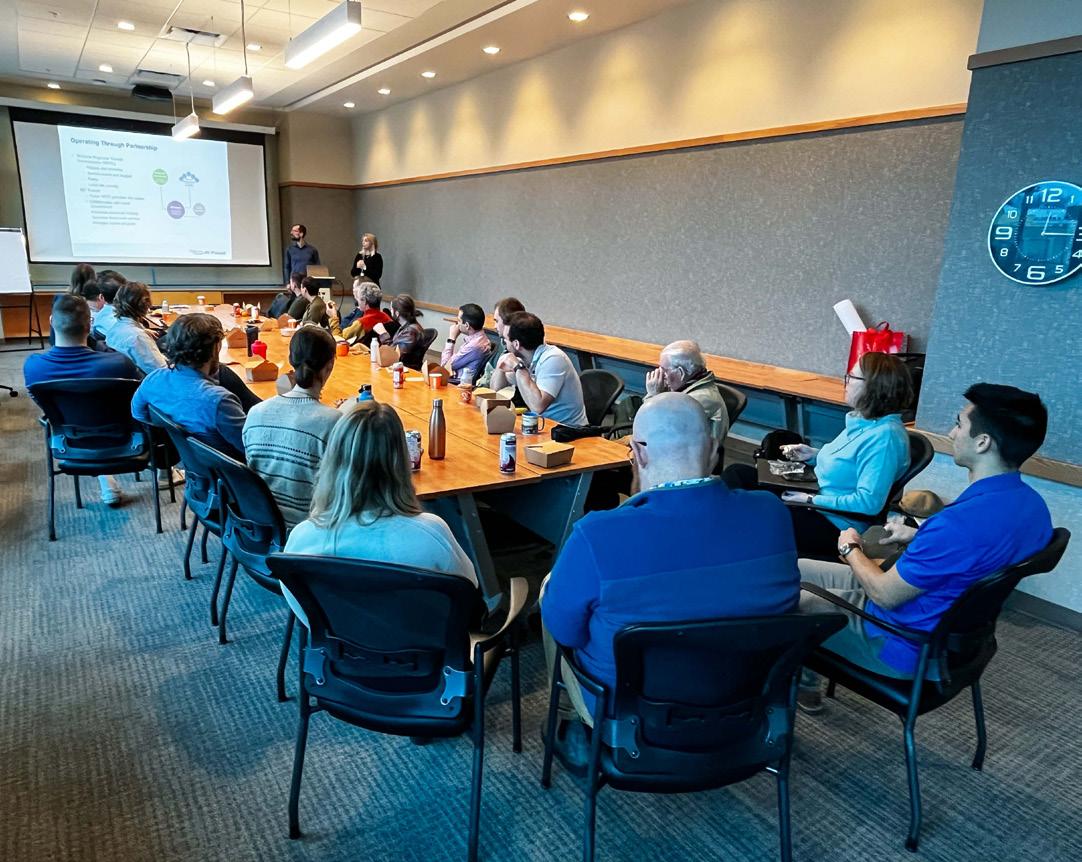
We held two Lunch’n’Learns last fall: one in October (Capital Regional District: Coordinating Multi-Modal Transportation - The CRD’s New Regional Transportation Service) and the other in November (BC Transit: Shaping the Future of Transit Together).
We currently have two more Lunch’n’Learns scheduled for February (Watt Consulting: Access to Opportunities Measurement: Applications in Transportation and Complete Communities) and March (BC Ferries).
Other presentations before the summer may be on hold as our team is currently actively participating on the Local Arrangements Committee for the upcoming ITE Canada Annual Conference in June.
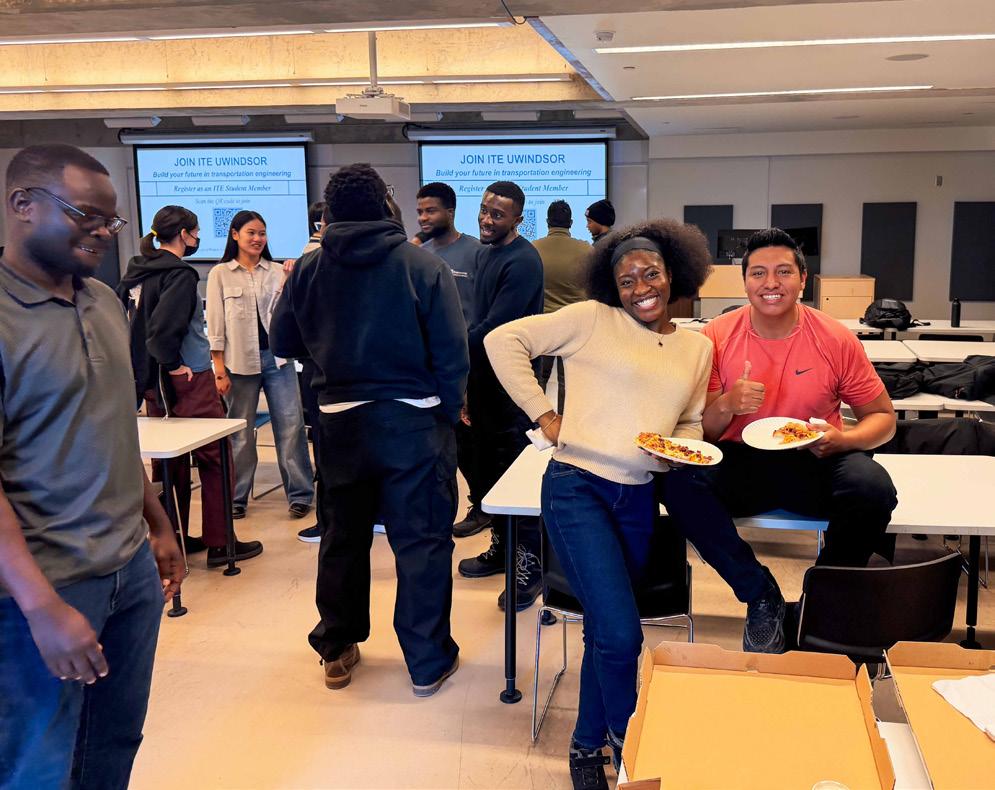
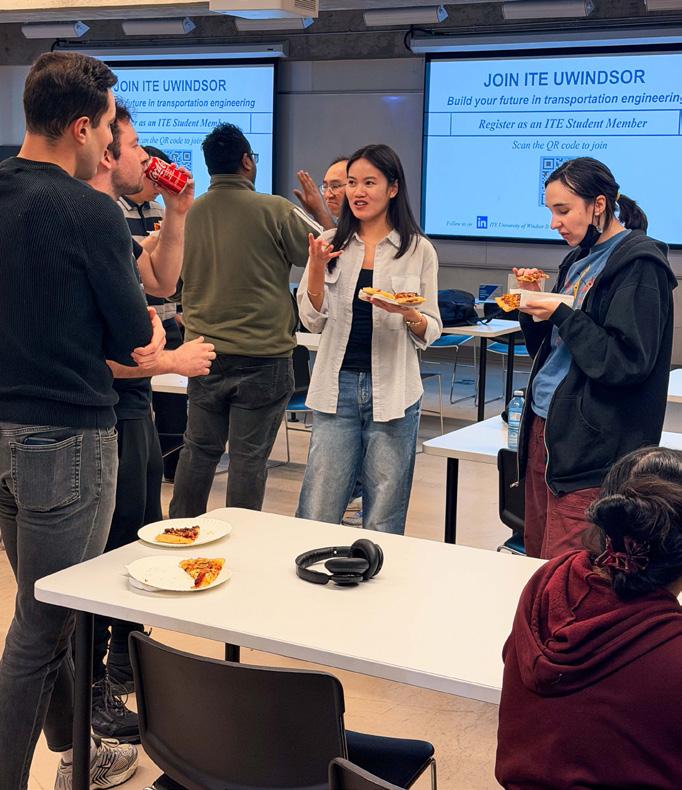
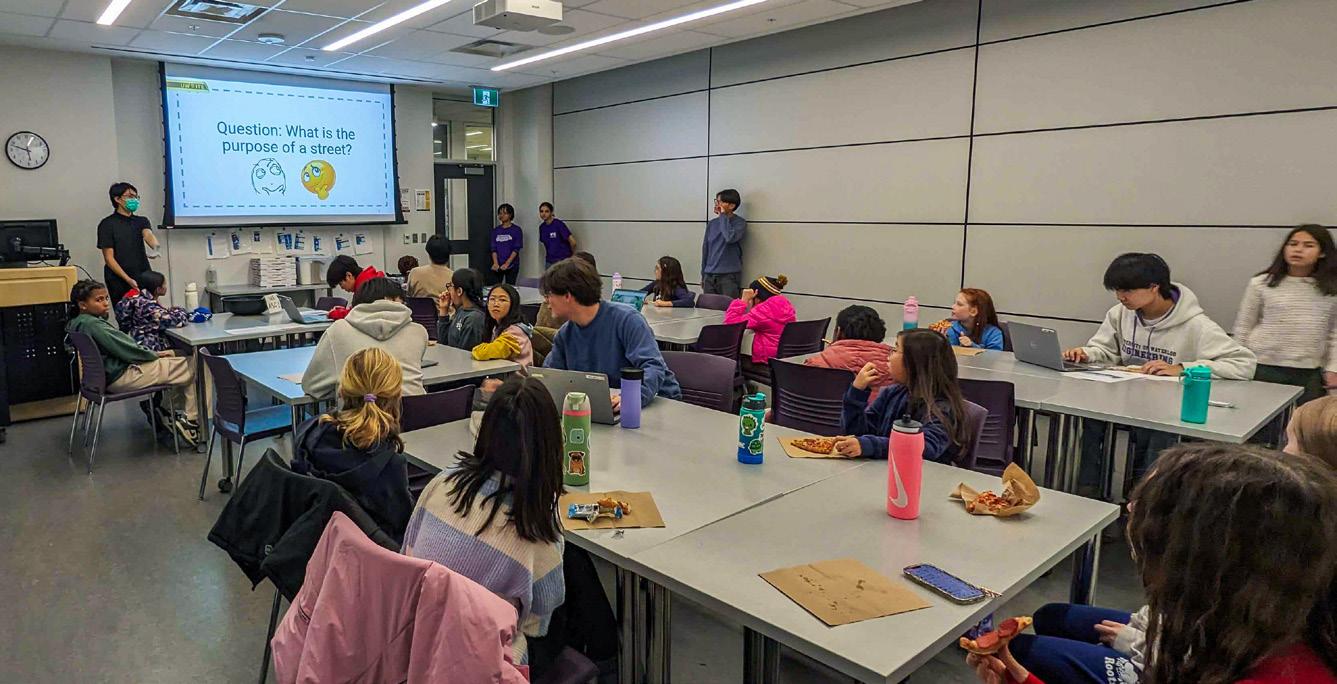
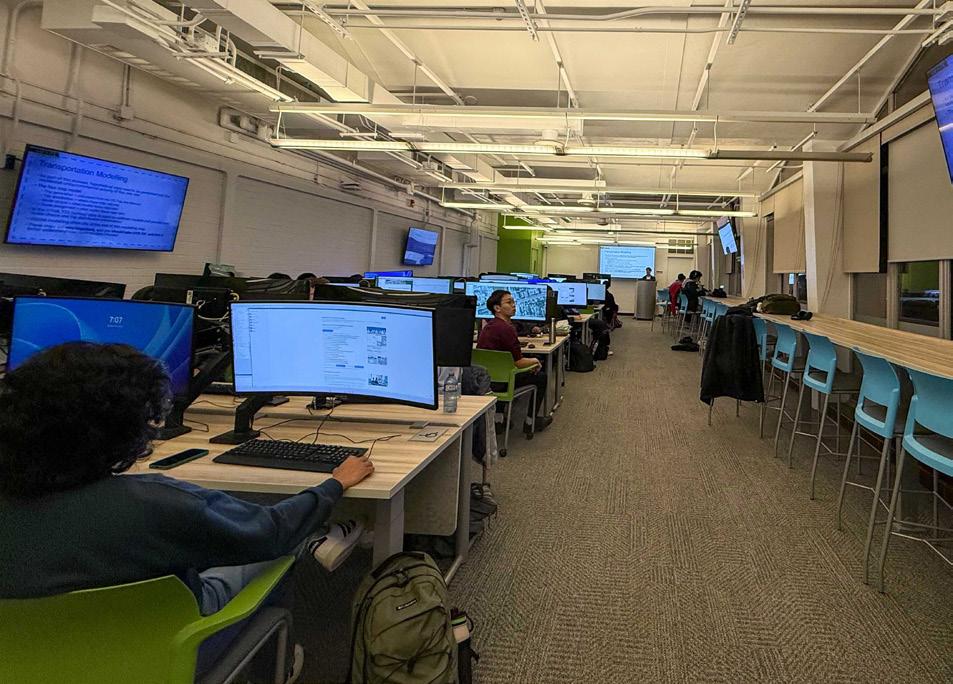
This winter has been fairly quiet for the ITE - Saskatchewan Section as new board members transition into their roles. Since wrapping up our Fall Session and AGM, we had the opportunity to join a University of Regina lab for 3rd year engineering students to teach them about traffic modelling, the benefits and limitations of macro-, meso-, and micro-models and various software common in our industry. The session concluded with a live demonstration of a model using a familiar intersection to match operational measurements with the lived experiences of the class.
Looking ahead, we have begun planning for our annual student presentation competition, student mixers at both the University of Regina and the University of Saskatoon, the possible introduction of our first Traffic Bowl, and Spring Session to be hosted in Regina.
As the ITE Southern Alberta Section concluded a successful year, members came together through multiple events to reflect on achievements, recognize leadership, and build momentum for the year ahead.
ITE Southern Alberta Section 2025 Annual General Meeting (AGM)
The ITE Southern Alberta Section successfully hosted its 2025 Annual General Meeting on November 12, bringing together members virtually from across the region. The meeting provided an opportunity to reflect on the Section’s accomplishments over the past year, review governance matters, and outline priorities moving forward. Members were introduced to the newly appointed Publicity Coordinator, alongside the remaining Executive Committee members and their updated roles for the upcoming term. The AGM also reinforced the importance of member engagement and collaboration in advancing transportation initiatives across Southern Alberta.
ITE Southern Alberta 2025 Winter Gala
The ITE Southern Alberta Section hosted its 2025 Winter Gala on November 20 at Hotel Arts in Calgary, bringing together members, industry partners, and public-sector professionals to celebrate a successful year. The evening featured networking, dinner, and the presentation of the ITE Southern Alberta 2025 Awards, recognizing outstanding contributions to the local transportation community.
The event’s keynote speaker, Courtney Walcott, former Calgary City Councillor and awardwinning educator, delivered an engaging presentation focused on inclusive city building and the role of human rights, equity, and sustainability in shaping public infrastructure and urban systems. Drawing on his leadership of Calgary’s Housing, Anti-Racism, and Climate strategies, Courtney highlighted the importance of community-centered approaches in transportation planning and policy
ITE Southern Alberta 50-Year Recognition and Reunion Event
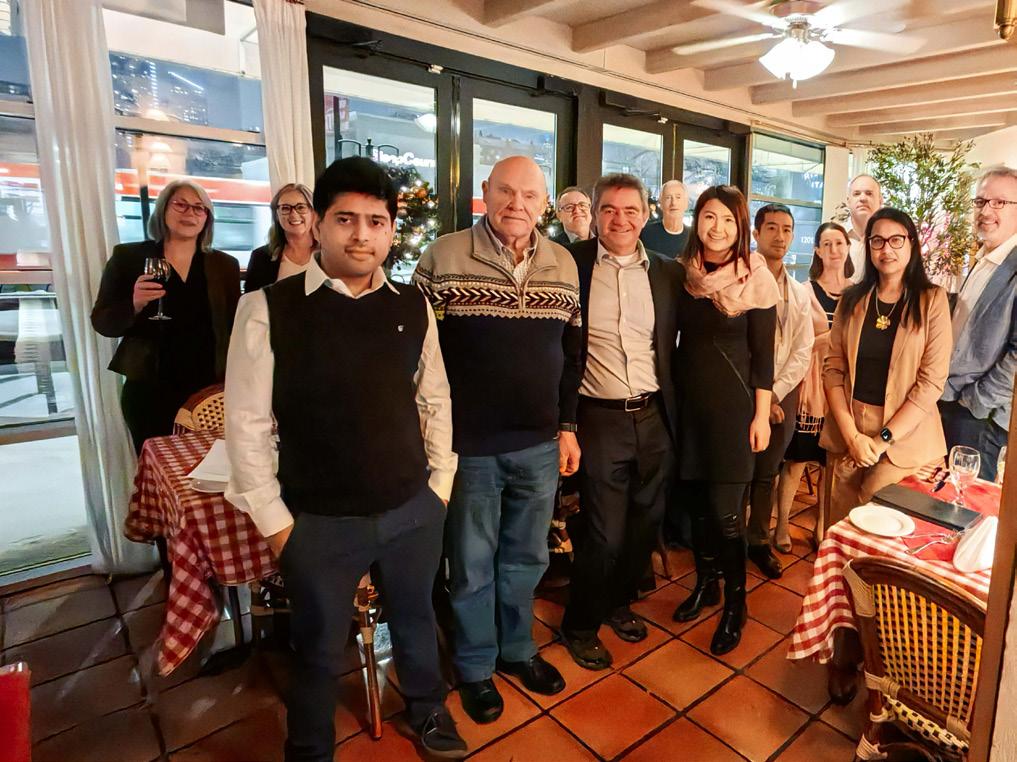
In celebration of a major milestone, the ITE Southern Alberta Section hosted a special 50-Year Recognition and Reunion Event on December 2 at Buon Giorno Ristorante Italiano in Calgary. This casual, mingle-friendly gathering brought together past and present Executive Committee members, volunteers, and long-standing supporters of the Section. The event honored the dedication of those who helped build and sustain the Section while strengthening connections between generations of professionals.
Looking Ahead: Member Engagement and 2026 Programming
As the Section closed out a successful year, the Executive Committee extended its appreciation to all members for their continued support and involvement. To help shape a strong and relevant 2026 program, members were invited to provide input on future presentation topics and technical tour ideas.
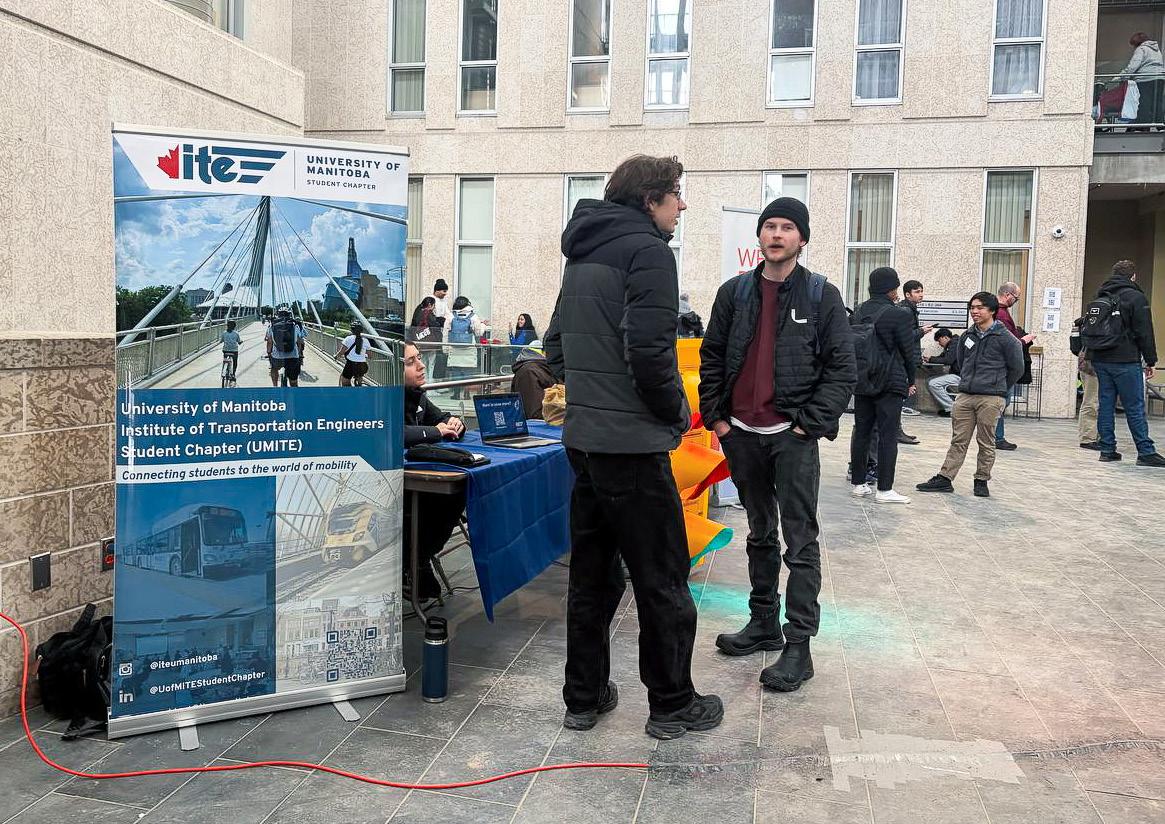
This Fall, ITE Manitoba hosted two luncheons, co-hosted a spare-ingly fun networking event with the University of Manitoba ITE Student Chapter, and concluded the year by celebrating our 2025 community contributions and new Section award.
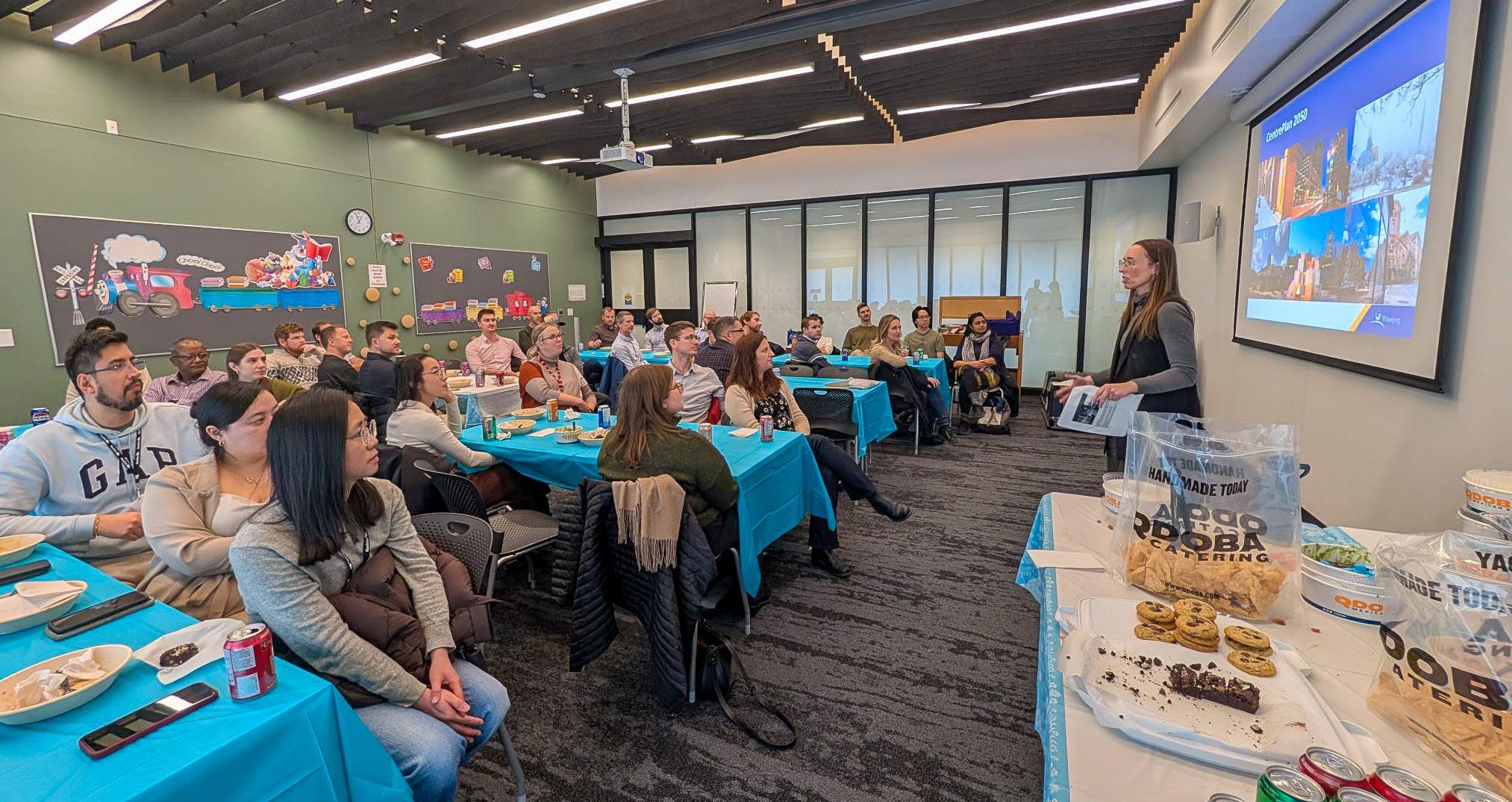
November Luncheon: City of Winnipeg Centreplan 2050
In November, we hosted a Tex-Mex fiesta at the Bill and Helen Norrie Library. Karen Kliewer from the City of Winnipeg’s Property, Planning, and Development Department presented on Centreplan 2050; the City’s Downtown infrastructure and development plan that outlines growth and change over the next 30 years. Karen came equipped with an extremely engaging presentation, and renderings showcasing a very different version of Winnipeg’s Downtown. Special thanks to our Section Secretary, Jaime, for making sure there was enough cheese sauce!
Networking Bowling
We also co-hosted another successful bowling networking event with the University of Manitoba ITE Student Chapter. Last year’s networking bowling was a real hit, and yet again, this year’s event was a home run! ITE Manitoba is looking forward to more events with the Student Chapter in 2026, including the upcoming Professional Networking Night.
December Luncheon & Annual Business Meeting
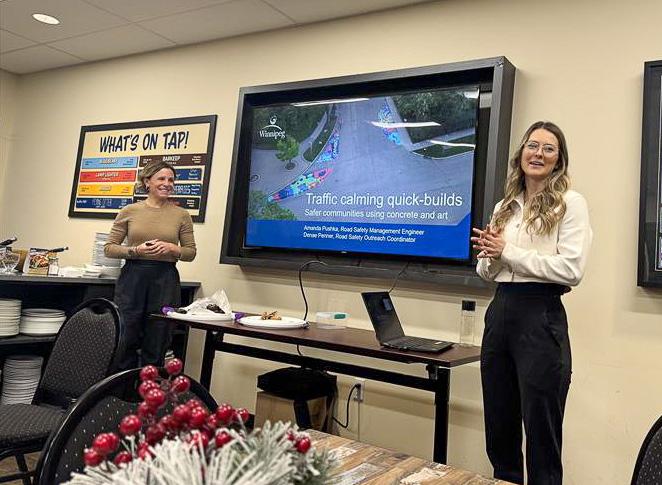
To wrap up 2025, we held our Annual Business Meeting (ABM) in December. The ABM featured a presentation about TC curbs as well as pizza from the TC Brewery. Denae Penner and Amanda Pushka came in to chat about the City of Winnipeg’s Traffic Calming Curb quick-builds pilot; a project that uses 2,000 pound precast concrete curbs to allow for rapid, low-cost adjustments to roadway geometry to quickly
improve road safety at various locations throughout Winnipeg. At the ABM, we also introduced our new executive members for 2026. Starting on January 1st, 2026, the Manitoba executive consists of:
• President - Karalee Bloch (acclaimed)
• Vice President - Adam Budowski (acclaimed)
• Secretary - Jaime Lacoste (acclaimed)
• Treasurer - Trevor Nickel
• Past President - Mark Hearson (acclaimed)
• Director - Mark Hearson
2025 Community Contributions & ITE Manitoba Awards
In 2024, ITE Manitoba introduced a new way of thanking our luncheon speakers: a $30 donation on their behalf to a charity of their choice. We continued this initiative in 2025,
resulting in $270 donated to six different organizations: The Wrench, Manitoba Underdogs Rescue, Indspire, Sleep in Heavenly Peace, Movement Centre of Manitoba, and Rainbow Resource Centre! We extend our thanks to all of our luncheon speakers for sharing their time and expertise.
ITE Manitoba also launched our own Section awards in 2025 with the creation of an annual Volunteer Award, recognizing the member who attended the most ITE Manitoba events throughout the year. Congratulations to Sarah Klassen, the 2025 recipient of this inaugural award!
Looking Ahead
We’re looking ahead to a busy and exciting schedule for 2026, with a full lineup of technical events, networking opportunities, and plenty of fun along the way.
Traffic Calming Luncheon
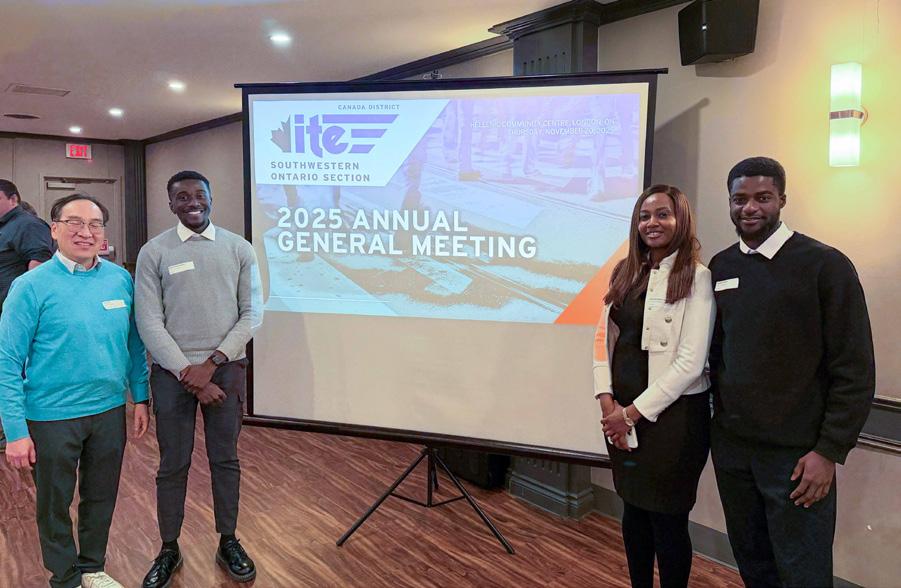
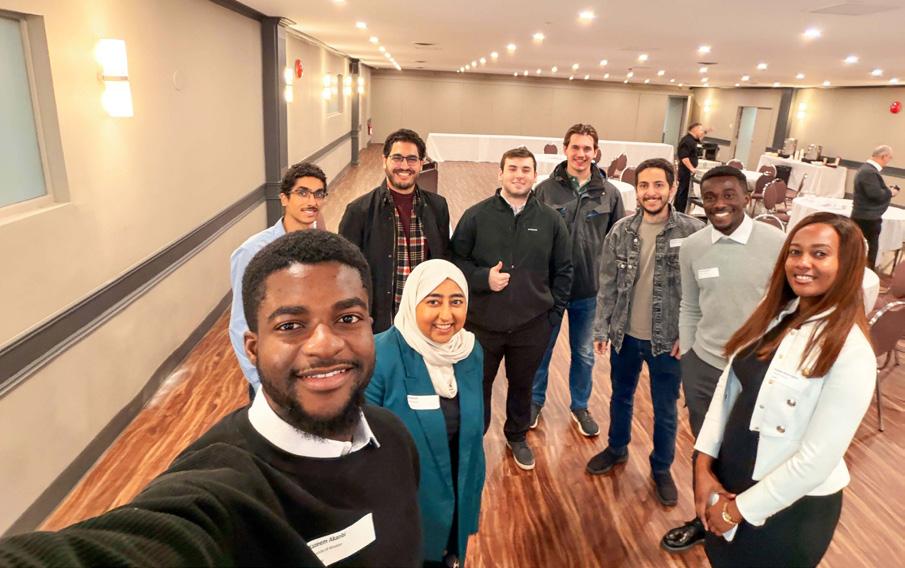
The ITE Southwestern Ontario Section was able to host two events in Fall 2025, with us hosting our first ‘Travel Trivia Night’ in early October 2025 in Waterloo. Thanks to the students and professionals who were able to attend.
In November 2025, we hosted our Annual General Meeting to run through the past year and details. A special thanks to our keynote speaker, Stephen Oliver from GHD who presented on how we can design effective mobility hubs. Tim Kooistra, President of the Section and Pedram Izadpanah, President of the District were also able to share an update from both the Section and District. At our AGM, we were also excited to welcome Chris Lee as our new Student Liaison, taking over from Chris Bachmann starting January 2026. Thank you, Chris, for your contributions and support to our Section.
We’re excited about what’s ahead and look forward to seeing you at our upcoming events in 2026!
For 2026, our Section Executive consists of:
• President & Section Director - Tim Kooistra
• Vice President - Adam Morrison
• Secretary - Mavjot Kaur
• Treasurer - Ian Lindley
• Past President - Jeff Jongsma
• Student Liaison - Chris Lee
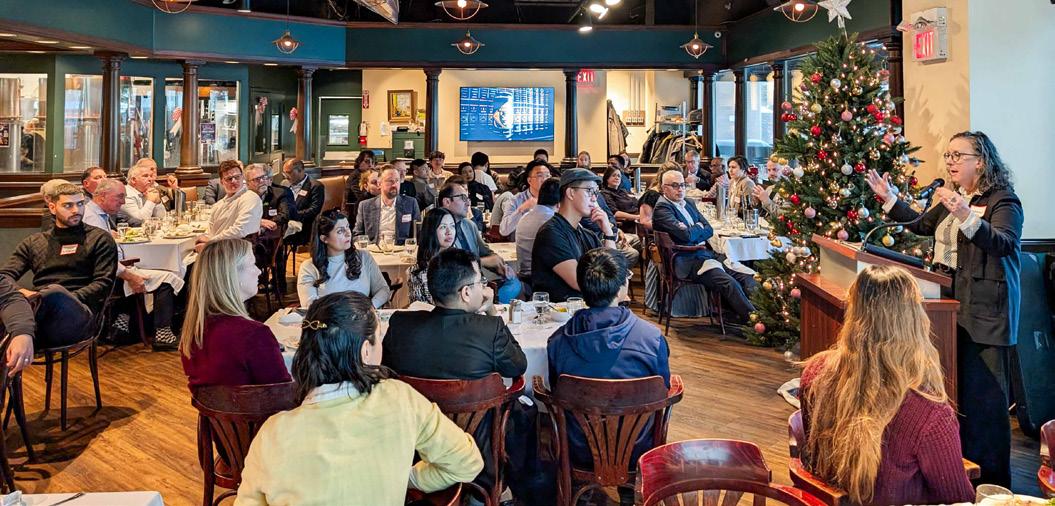
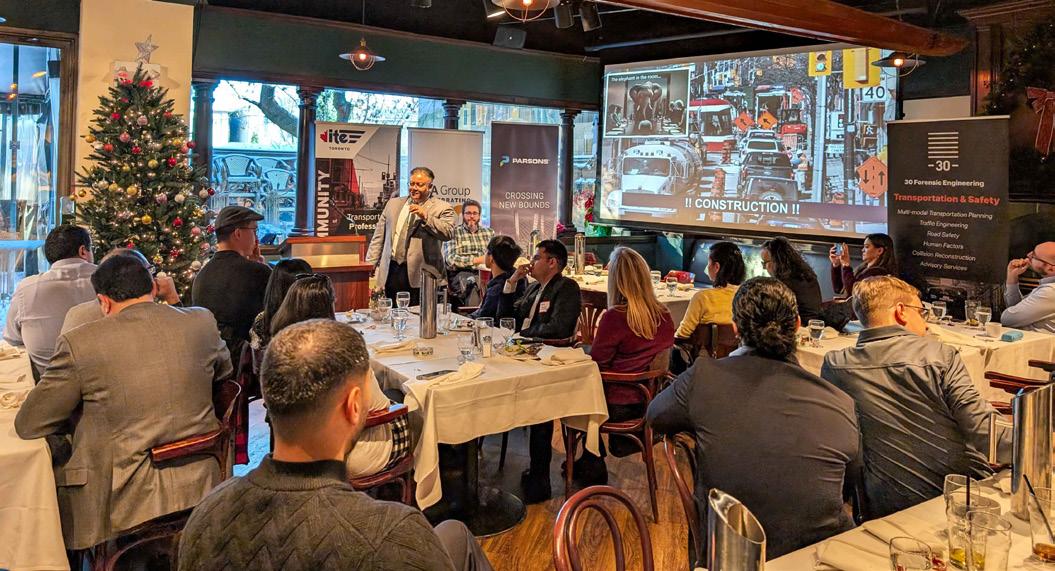
On December 4th, we hosted our sold-out 2025 Christmas Luncheon and Annual General Meeting at the Granite Brewery and Tied House.
Our keynote speakers included Barbara Gray, retired former General Manager of Transportation Services at the City of Toronto, who discussed her experience delivering technical solutions in a political environment. Our second keynote speaker was Roger Brown, Director of Congestion and Network Management, Transportation Services at the City of Toronto, who gave a presentation on Managing Toronto’s Congestion. He delved into the casual factors for congestion in the City and detailed the strategies for tackling congestion: reduce impact of construction,
expand congestion management capacity, improve surface transit reliability, leverage AI technology, and travel demand management and active transportation.
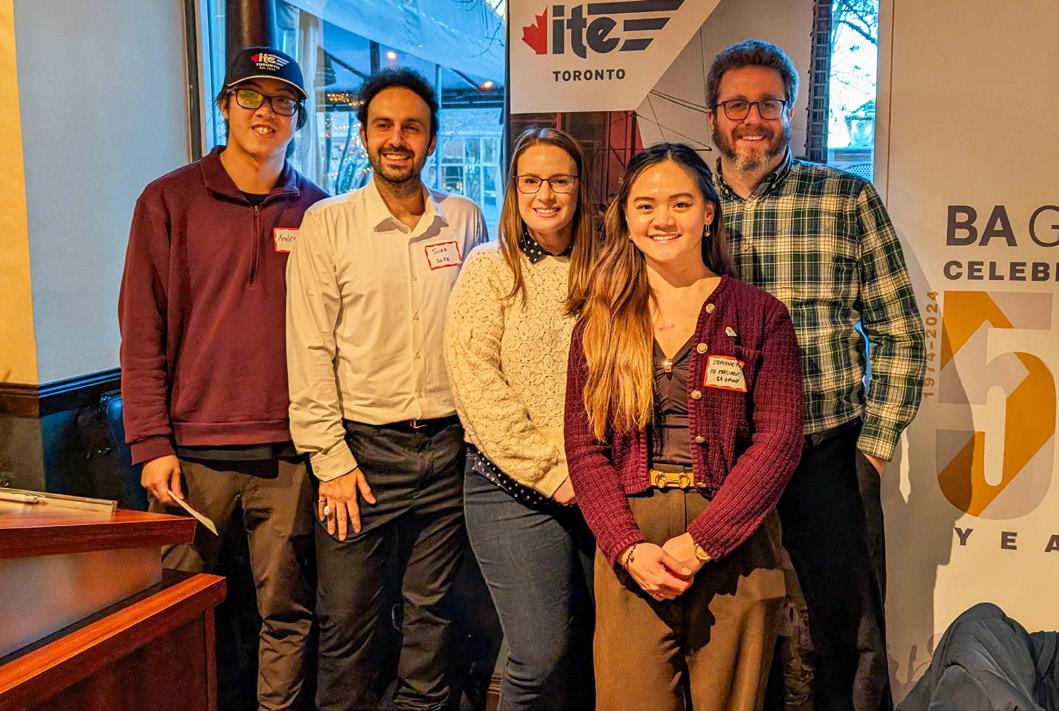
Several awards were distributed, including the 2025 Project of the Year Award to York University for their “Transit Headway Management Tool” project. The President’s Award was presented to Sina Shad (30 Forensic Engineering) and Andrew Shan (City of Toronto). We would also like to issue a big thank you to event gold sponsors BA Group, 30 Forensic Engineering, Paradigm Transportation Solutions Limited, and Parsons for their support of this event.
In 2026, we welcome Sina Shad to our executive committee as Secretary. Thank you to outgoing executive Erik Nevland (City of Mississauga) and Azadeh Heydari (GHD) for your years of service to ITE Toronto. Thank you to everyone who attended, volunteered at, or sponsored our events in 2025, we look forward to connecting in 2026!
The ITE National Capital Section finished the 2025 program strong with our end of year events. Fall brought two technical events and our Annual General Meeting.
Fall Technical Luncheon - November 2025
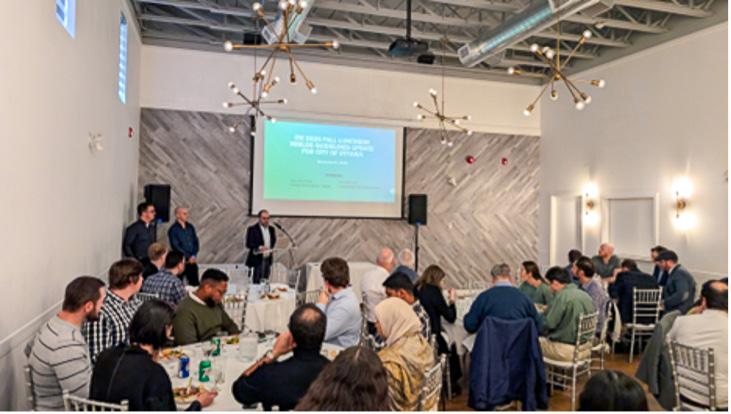
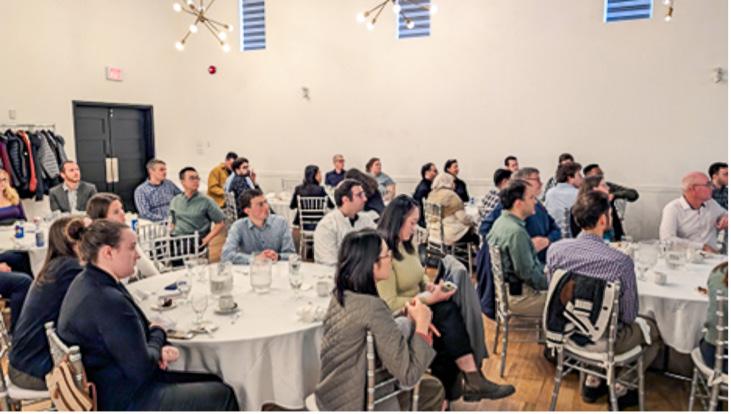
A technical luncheon hosted at Sala San Marco Event and Conference Centre presented the City of Ottawa’s MMLOS Guidelines Update and a discussion of the first Dutch-style roundabout installed in Ottawa at Carleton University. Both highlighted the importance of sustainable mobility and the efforts being made to prioritize the safe movement of people throughout the region, no matter the mode.
Road Safety Webinar – November 2025
We also hosted a virtual webinar given jointly by TIRF/SMATS regarding an evaluation of how reduction in posted speed limits affect user behaviour. While many practitioners are seeking to use physical measures to reduce
speed, it was an interesting case study in understanding the effect of other measures to increase safety on roads.
End of Year AGM - December 2025
We hosted a lunch event for our Annual General Meeting to discuss the year’s events and obtain feedback from our membership. We welcomed our two new executives, Romaine Morrison and Jeremy Kearns, who will be joining the team as Technical Representative and Secretary, respectively. We also wished our departing executive the best with their next adventures.
Looking Ahead
We have an exciting year ahead of us full of technical and social events. Our members can look forward to a webinar during the winter season. In the spring, keep your eyes peeled for our annual Ata M. Khan Lifetime Achievement and Project of the year award in-person technical event, and the Cleaning the Capital volunteer event.
After a period of relative quiet, ITE Québec is officially becoming active again. Over the past few months, a group of dedicated members came together to reinvigorate the Section, rebuild its presence, and reconnect with transportation professionals across the province. This renewed momentum marks an exciting new chapter for ITE Québec, and our recently formed committee is already hard at work planning activities that support both professional practice and knowledge exchange.
First Event of Our Relaunch: “De la recherche à la pratique”
As part of this revitalization, we were proud to host our first event: a panel discussion titled “De la recherche à la pratique” (From Research to Practical Applications), held on Thursday, November 20th at 5:00PM at the École de Technologie Supérieure (ÉTS) in Montréal.
This panel explored how academic research contributes to the advancement and improvement of professional practice in the transportation field, highlighting opportunities to strengthen collaboration between universities and practitioners.
University of Victoria
The University of Victoria ITE Student Chapter finished the year strong!
In the fall we hosted two Lunch and Learns: one to introduce students to transportation and a second in collaboration with the City of Victoria focusing on transportation operations. In November, we hosted a transit tour with BC Transit to learn more about the growing RapidBUS network.
Alongside these events, we hosted our inaugural Transportation Design Competition in partnership with the District of Saanich. This event challenged students to design solutions to local transportation problems in the community using planning and engineering skills. Participants also had the opportunity to attend a workshop to learn about transportation modeling (PTV Vistro) and planning. The following are some photos of submissions from this event and the winners!
To cap off the semester, we hosted our first Transportation Industry Night! This event brought together over 50 students and professionals for a night of networking, displays from the design competition (and announcement of the winners!), and a panel centered around the transportation industry. The event was made possible through support from Urban Systems, Bunt & Associates, and Watt Consulting.
Outside of professional events and learning opportunities, our club volunteered within the community to engage younger students in transportation. In the fall we volunteered as Ride Marshals for the Truth and Reconciliation Ride, participated in Explore UVic, and ran workshops for a Girl Guides troop and Science Venture on transportation, which included the basics of transportation, a traffic count, and designing for a more safe system. This year we will be volunteering with Girl Guides and the District of Saanich to engage more youth in transportation and empower them to understand their communities better.
Looking forward to 2026, we will be running Lunch and Learns, workshops, tours, and our first bridge engineering competition (happening February 7th!) Our first lunch and learn is on January 27th with the Ministry of Infrastructure to learn more about provincial transportation systems. We will be hosting the Student Leadership Summit this May and look forward to seeing everyone in Victoria!
British Columbia Institute of Technology
Story of the Establishment
The BCIT ITE Student Chapter was founded in 2025 by a group of Civil Engineering students interested in transportation engineering. It began when faculty advisor Haesung Ahn, Ph.D., P.Eng., invited Breanna Jackson, P.Eng., and Matt Woo, P.Eng., M.Sc., PTOE, RSP1, from the ITE Greater Vancouver Section to speak about ITE and its student chapters. This presentation encouraged students to take the initiative to establish an ITE student chapter at BCIT. With support from faculty and the ITE Vancouver Section, the BCIT ITE Student Chapter was established to connect students with the region’s transportation engineering community. Currently, the chapter has 23 members ranging from first- to fourth-year students, and is actively gaining the interest of new members through events, such as Lunch and Learns.
First Annual General Meeting
In early 2026, after spending much of 2025 organizing the structure, requirements, and approvals needed to launch the chapter, the BCIT ITE Student Chapter held its first Annual General Meeting (AGM). This inaugural AGM marked the official start of the chapter, bringing together student members. The meeting outlined the chapter’s plans for the year ahead, introduced upcoming events, reviewed finances, and conducted the first election of the executive team.
Upcoming Events
Lunch and Learns
The meeting began with an overview of the chapter’s upcoming events. The first are Lunch and Learns, where industry professionals are invited to speak about their work, current trends in transportation engineering, and potential work opportunities.
ITE Greater Vancouver Presentation by Breanna Jackson at BCIT
Inaugural Annual Genera Meeting (AGM) at BCIT
The chapter is pleased to welcome Yulia Liem, P.Eng., PTOE, Senior Transportation Engineer at Bunt & Associates Engineering Ltd. (Bunt), as its first guest speaker. Students will have the opportunity to learn about Bunt’s involvement in the transportation engineering industry and several projects in which Yulia has played a key part. The chapter extends its appreciation to everyone who is interested in hosting a lunch and learn or sponsoring BCIT’s new chapter.
Victoria ITE Canada Conference
Another major highlight is the Victoria ITE Canada Conference, where transportation professionals gather annually to discuss trends and developments in the field. Attending this conference provides BCIT students with the opportunity to learn from leaders in the field and experience the broader ITE community. Moreover, the chapter announced its interest in competing in the Traffic Bowl. This will be BCIT’s first time participating, marking an exciting milestone.
Election of the Executive Team
The AGM also included the election of the executive team, during which members unanimously selected the President, Vice President, Treasurer, Secretary, Social Media Director, and Outreach Director. The elected positions and their respective representatives are listed below.
• President: Alexander Reis
• Vice President: Aaron Hsieh
• Secretary: Andrei Aberin
• Treasurer: Dany Rico
• Social Media Director: Armand Deu
• Outreach Director: Brian Castillo
University of Alberta
STUDENT CHAPTER NEWS
The University of Alberta Student Chapter (ITEUA) had a productive fall! ITEUA’s new executive began planning for the upcoming year and hosted a Game Night Competition in late November! We ran three small transportation-themed video game stations for Mini Metro, Mini Motorways, and Freeways, and the students enjoyed their introductions to each of the games, with some students even buying the games for themselves afterwards. We finished the night with a trivia competition of transportation and pop culture questions! Check out the photos below!
We are currently planning multiple events this winter and are excited to share more about them in the next issue of Transportation Talk. Stay tuned to ITEUA!
University of Calgary
STUDENT CHAPTER NEWS
Things have been busy at the University of Calgary Student Chapter (UCITE). A new executive was elected in December. The following executives will serve their term for the next year:
• President: Sam Pollock
• VP Finance: Mehrnoosh Zare
• VP Communications: Mohammed Abuhadrous
• VP Events: Mariana Otero Becerril
• Past President: Amin Ashena
• Member at Large: Pedram Ghouchani
We have lots of exciting events this winter semester including our annual student-industry mixer in February, where students and industry professionals will come together on campus for an evening of fun and networking. We will also be hosting Traffic Bowl qualifiers in March, where the winning students will be selected to compete for U of C at 2026 ITE Canada Conference. Several UCITE members will also be attending and presenting at the 2026 conference.
UCITE will also be continuing our successful Transportation Industry Talks series this winter where transportation professionals share their experience and advice with our student community. If you’re a local professional and would like to present, please get in touch!
University of Manitoba
The University of Manitoba ITE Student Chapter (UMITE) has had a very active and engaging fall and fall semester, offering a wide range of opportunities focused on technical learning, professional development, community outreach, and social connection. Our executives have been hard at work, planning out the successful events below!
Pumpkin Painting Night - Oct 21
Our Pumpkin Painting event was a fun success! Participants enjoyed an afternoon of creativity, painting pumpkins to take home while getting into the Halloween spirit. This year’s winner was awarded a gift card! With art supplies and treats provided, it was a fantastic opportunity for everyone to showcase their artistic talents.
Winnipeg Transit Facilities Tour - Nov 4
18 student members had the opportunity to tour the Winnipeg Transit Garage and get a behind-the-scenes look at how our city’s buses are kept running smoothly every day. Many students came out and were eager to learn about the ongoing bus electrification efforts, the Primary Transit Network Master Plan, and improvements in Para Transit services.
A huge thank you to the incredible staff at Winnipeg Transit for welcoming us, sharing their expertise, and giving us valuable insight into the work that keeps our city moving!
ITE Manitoba Collaborative Networking Event - Nov
18
The Student Chapter upheld its tradition of hosting a bowling networking event in collaboration with the ITE Manitoba Section! Students and professionals were able to network while trying to get some strikes at Park Alleys. A big thank you goes out to ITE Manitoba for helping to fund and coordinate this event.
Synchro Timing Case Study - Nov 25
UMITE hosted a Signal Timing Case Study led by Steve Wood and Nikki Lewis, Engineers with the City of Winnipeg. Using Synchro Studio, the presenters walked students through how traffic signals in Winnipeg are modeled and optimized, offering a practical look at real-world traffic engineering applications.
UMITE Sandbox Info-session - Nov 26
UMITE hosted an information session introducing the Sandbox Design Competition, an ITE International competition focused on solving real-world transportation and planning challenges. Students learned about the competition format, team expectations, and how to get involved in UMITE’s first-ever Sandbox design team.
Lunch & Learn - Erik Dickson - Nov 28
UMITE welcomed Erik Dickson, Senior Active Transportation Planner with the City of Winnipeg, for a Lunch & Learn session. Over pizza, members learned about Erik’s career path and gained insights into active transportation projects currently shaping Winnipeg.
Samosa Sale Fundraiser - Jan 6th
UMITE kicked off the new year with a Samosa Sale Fundraiser in the Engineering Atrium. The event was a success, helping raise funds to support future UMITE networking events, technical tours, and student opportunities, all while giving members a tasty break between classes.
Lunch & Learn - Cassidy Zrobek – Jan 19
UMITE hosted a Lunch & Learn featuring Cassidy Zrobek, who presented on Winnipeg’s Emergency Vehicle Preemption Pilot Project. Members learned how the City of Winnipeg is leading efforts in signal priority to improve emergency vehicle response times and intersection operations.
ITE Manitoba Collaborative Networking Event – Jan 26
UMITE members attended a collaborative networking night hosted with ITE Manitoba at the King’s Head Pub. The event provided a relaxed setting for students to connect with transportation professionals, enjoy food and drinks, and learn more about career paths within the industry.
Technical Societies Recruitment Event –Jan 28
UMITE participated in the Winter Technical Societies Recruitment Event, engaging with students newly enrolled in the Winter semester. Executives and volunteers shared information about UMITE and its events, helping introduce new students to the transportation engineering community.
Elementary School Outreach – Jan 30
UMITE continued its community outreach efforts with a visit to École Julie-Riel, where members spoke with elementary students about the role of transportation engineers. The team also delivered a traffic safety lesson and enjoyed answering the many thoughtful questions from engaged and curious students.
Additionally, UMITE’s Fall and Winter newsletters have now been issued, highlighting these activities and more, and can be found at iteumanitoba.ca.
Looking ahead, UMITE has an exciting lineup of upcoming events planned for the remainder of the academic year, including additional technical speaker sessions, networking events with industry partners, community outreach initiatives, and student presentation opportunities.
The chapter is also preparing for a major international technical experience, with ten students traveling to Japan next month for an immersive transportation-focused study tour. This trip will include exclusive technical tours with Japan Rail (JR) and Tokyo Metro, academic sessions with transportation professors, and a collaborative exchange with University of Tokyo civil engineering students, providing participants with firsthand exposure to world-class transit systems and international perspectives on transportation engineering.
UMITE thanks ITE Manitoba, ITE Canada, and all involved members for their continued support!
University of Windsor
The University of Windsor ITE Student Chapter wrapped up an eventful fall semester and has hit the ground running with exciting initiatives for the winter term.
Fall Semester Highlights
Our fall semester concluded on a high note with student chapter members attending the ITE Southwestern Ontario Section’s Annual General Meeting in London, Ontario, on November 20, 2024. This event provided valuable networking opportunities with transportation professionals and fellow students from across the region, while also offering insights into the section’s current initiatives and strategic direction for the coming year.
Winter Semester Activities
The winter semester has begun with renewed energy and a focus on growth and professional development. To expand our chapter’s reach, executive members have been visiting transportation-related courses across campus to introduce ITE to students and share the valuable opportunities that come with membership. This outreach has generated considerable interest and enthusiasm.
Building on that momentum, on January 30, 2026, we successfully hosted our Meet and Greet event (pictured on the next page), welcoming both new and current members to the chapter. The gathering provided students with the opportunity to connect with fellow ITE members and our faculty advisor in a relaxed and engaging setting. Attendees were given a thorough overview of the Institute of Transportation Engineers, the University of Windsor chapter’s goals, accomplishments, and available awards. Students also had the chance to engage with one another and explore each other’s transportation interests, sparking meaningful conversations and connections within the chapter community. The event generated strong enthusiasm, with many students asking questions about ITE and expressing interest in upcoming opportunities, including the Traffic Bowl and conference attendance. Interest was also shown in our upcoming seminars and training sessions, reflecting a promising level of engagement as we move forward in the winter semester.
Looking Ahead
Our winter programming includes several exciting initiatives:
• Campus to Career Seminar Series: Beginning the week following our Meet and Greet, we will welcome our first industry speaker of the semester to share insights on career pathways in transportation engineering.
• Technical Skills Development: We are launching bi-weekly hands-on training sessions in GIS, AutoCAD, and PTV VISSIM, providing members with practical software skills that are essential in today’s transportation industry.
The University of Windsor ITE Student Chapter is committed to creating opportunities for students to develop professionally, build industry connections, and deepen their knowledge of transportation engineering. We look forward to a productive winter semester and continued engagement with the ITE community across Canada.
University of Waterloo
These past few months were an active, and community-driven season for the ITE UW Student Chapter. Through social events, technical workshops, and outreach initiatives, our chapter continued to connect students with transportation engineering planning both on and off campus.
K-12 Outreach and Community Engagement
In collaboration with University of Waterloo Engineering Outreach’s K-12 after-school clubs, ITE UW delivered an interactive workshop introducing students to complete streets. Participants designed their own street crosssections using StreetPlan.net, learning key principles of street design and safety while exploring how streets serve diverse users.
Skills Up! Software Workshops
Throughout the fall term, our chapter held workshops for PTV VISSIM and ArcGIS Pro, led by ITE UW members and the University of
Waterloo Geospatial Centre. With strong turnout, these sessions provided students with practical exposure to industry-relevant tools and will return in future terms.
Student Team Dodgeball Match
In November, UW ITE joined four other UW Civil and Environmental Engineering clubs and design teams for the inaugural CAGE Dodgeball Match. While Team Transportation did not take first place overall, we like to think we proudly earned first place in team spirit, making for a fun and energetic end to the term.
Construction Clash Minecraft Social
Over the winter break, members participated in the first-ever ITE UW Construction Clash, a Minecraft-based design challenge. Participants designed and pitched transportation hubs, with submissions evaluated on transportation planning and design principles, offering a creative and accessible way to stay connected during the break.
Beginning-of-Term Kick-off Trivia Night
To welcome members back and share highlights from the fall term, the chapter hosted a Beginning-of-Term event featuring a public recap and a mini transportation-themed quiz bowl. The winning participant took home some UW ITE Student Chapter merchandise, making for a lively and engaging kickoff to the term.
Resume? Reviewed!
ITE UW is also hosting virtual resume review sessions throughout the winter term, led by upper-year student volunteers in civil engineering and planning, supporting members as they prepare for co-op and early-career opportunities.
New Executive Team
The new term also marked the transition to a new executive team through an election held in January. The following executives will serve their term for the next 16 months:
• President, Society A: Eric Tran
• President, Society B: Benjamin Gosselin
• Secretary: Adrian Hipolito
• Treasurer: Chris Stephens
• Events Directors: Vincent Kopum, Andrew Wong
• Media Director: Wanita Luwawu
• Outreach Directors: Dylan Mah, Neil Simmons
• Chapter Advisor: Chris Bachmann
McMaster University
Holiday Train
McMaster’s chapter started the winter off strong with a visit to the CPKC Holiday Train as it visited Hamilton on November 20th. An evening filled with hot chocolate, local music, —and a train???— who could complain!
Union Station Enhancement Project Presentation
Just five days later, the chapter hosted a team from WSP to learn about the Union Station Enhancement project in Toronto. Many members were excited to learn about an alliance model between companies being used to accomplish a complex project. The team also discussed design, construction, and the importance of community engagement. Afterwards, students had the opportunity to ask questions and network with their peers and the guest speakers.
How to Network Night
On January 20th, the McMaster chapter hosted a ‘How to Network’ night (pictured below) where exec team members and the school’s career educators helped students brush up on networking skills before attending Industry Night later in the month.
Industry Night
The chapter hosted its biggest night of the year on January 29th. ITE Industry Night, now in its third year, has become a landmark event looked forward to by students from a variety of programs, including Civil Engineering, Planning, and the Bachelor of Technology in Automotive Engineering program. Students had the opportunity to network with and learn about 18 transportation-related employers, all while enjoying a delicious catered meal. This year’s event boasted an attendance of over 130 students and 45 employer representatives.
A huge thank you to our sponsors and first-time employer attendees who helped make this event possible!
University of Toronto
UT-ITE & ITE Toronto Transportation Career Night
In November, UT-ITE held its annual studentindustry mixer, for the first time in partnership with ITE Toronto. Branded this year as the Transportation Career Night, the event was a resounding success, bringing together over 120 students and professionals to make meaningful connections and explore opportunities in transportation and urban planning across the Greater Toronto Area.
The event featured speed networking, open conversation at company exhibits, and plenty of delicious food options, now customary at UT-ITE events. We wish to thank all our
incredible sponsors for their support, including the University of Toronto Transportation Alumni Network (UTTAN) for assisting in the event outreach!
UT-ITE Wayfinding: Student Opportunities in Transportation
UT-ITE kicked off 2026 with the inaugural Wayfinding: Student Opportunities in Transportation, in collaboration with the Skule (UofT Engineering) Commuter Club. The event, which attracted over 40 attendees, aimed to inform students across all engineering disciplines on how to prepare for research and industry opportunities after graduation.
First, undergrad students Lucas Gaspari, Michael Hollander, and Thanusan Regulan, spoke on their experience in a recent UTTAN competition, where they worked on a transit signal priority (TSP) solution for Toronto.
Next, Professor Amer Shalaby, head of the UofT Transportation Research Institute (UTTRI), provided a flavour of all the current transportation research opportunities at UofT. Finally, alumnus Anna Hii, explained her work as a Transportation Operations and Safety Analyst at Arcadis, providing insights into how she prepared for industry while as a student.
Seminars, competitions, and more!
UT-ITE re-commenced weekly seminars in January, featuring Russell Brownlee from Northbound Safety Group, Gonzalo Martinez-Santos and Marian Mendoza from the Arcadis CurbIQ project, UofT Professor Khandker Nurul Habib, and long-time City of Toronto Transportation Services General Manager, Barbara Gray.
This semester, several undergraduate and graduate UT-ITE members will be putting their wits to the test in the ITE International Sandbox Competition and the Transportation Technology Tournament, hosted by ITE and the National Operations Center of Excellence (NOCoE).
Stay tuned for future UT-ITE updates!
University of New Brusnwick
The University of New Brunswick’s student chapter kept the ball rolling by hosting a study night on October 23rd for undergraduate students who had upcoming transportationrelated midterms. The study night offered a chance for students interested in transportation to interact with current graduate students in attendance, as well as prepare for their upcoming tests.
On November 3rd, the ITE UNB student chapter held a trivia night in conjunction with UNB’s CSCE student chapter at the University’s student bar. The prize pool included a WC-14 sign (i.e. a moose crossing sign) and UNB Civil Engineering merchandise. The event had a solid turnout, with many students and some alumni attending the event.
On November 13th, the ITE UNB student chapter worked with the ITE Atlantic Chapter to hold their Fall Technical Session at the new Allison D. McCain Commons on UNB campus in Fredericton. Students helped set up the area in the morning and held a raffle to raise money for the student chapter. Two Student Chapter executives - President Daniel Higdon and Secretary Ekene Splendor Ijeh - also presented at the Technical Session.
On December 13th, ITE UNB held a bowling night as both an end-of-semester celebration and a de-stresser for students during exams.
Calgary Edmonton Vancouver Victoria Kelowna
New Members
Welcome to these new Canadian members who joined ITE between October and December 2025. We look forward to connecting with you and supporting your professional learning and growth in our community of transportation professionals!
Ahmed Abdelnabi, McMaster University, Hamilton, ON
Andrei Aberin, British Columbia Institute of Technology, Richmond, BC
Alaleh Adib, Vancouver, BC
Sana Aftab, Regional Municipality of Niagara, Thorold, ON
Ilyas Akram, Saskatchewan Ministry Of Highways And Infrastructure, Regina, SK
Firoz Ali, Sturgeon County, Morinville, AB
Sabrina Allan, British Columbia Institute of Technology, Coquitlam, BC
Laura Archila, City Of Mississauga, Mississauga, ON
Eli Arthurs, Wesleyan University, Toronto, ON
Pierre Bedard, City of Whitehorse, Whitehorse, YT
Elmira Berjisian, City of Kelowna, Kelowna, BC
Navdeep Bhullar, Sturgeon County, Morinville, AB
Nadia Bisek, Ryerson University, Mississauga, ON
Matthew Bisquera, Mississauga, ON
Luke Bonnet, KGS Group, Regina, SK
Kathryn Broadbelt, City of Brantford, Brantford, ON
Sonya Bubas, City Of Mississauga, Mississauga, ON
Amelia Buck, University of Waterloo, Waterloo, ON
Emma Calvert, City Of Mississauga, Mississauga, ON
Bradley Carver, University of British Columbia, Surrey, BC
Brian Castillo, British Columbia Institute of Technology, Coquitlam, BC
Sally Chedaoui, Nova Scotia Dept. of Public Works, Halifax, NS
Yi Wen Chen, British Columbia Institute of Technology, Delta, BC
Yuhong Chen, Waterloo, ON
Mackenzie Clarke, University of Victoria, Coquitlam, BC
Alison Collicutt, Nova Scotia Dept. of Public Works, Halifax, NS
Sean Czerwonka, City of Victoria, BC, Victoria, BC
Khang Dang, British Columbia Institute of Technology, Surrey, BC
Ella Dela Cruz, Winnipeg, MB
Armand Deu, British Columbia Institute of Technology, Langley, BC
Benny Domingo, City of Regina, Saskatchewan, Regina, SK
Jonathan Doucette, City of Kelowna, Kelowna, BC
Tatum Ellwood, University of British Columbia, Kelowna, BC
Jason Endrawis, Scarborough, ON
Ralph Estopace, University of Manitoba, Winnipeg, MB
Ryssa Estopace, University of Manitoba, Winnipeg, MB
Ochuko Eyeta, University of Windsor, Windsor, ON
Andrew Forsgren, McGill University, Vancouver, BC
Travis Friesen, University of Manitoba, East St Paul, MB
Karla Gamboa, Artelia, Montréal, QC
Yosan Ghebrehiwot, University of Regina, Regina, SK
Alaina Gregson Lamb, University of Victoria, Toronto, ON
Gurshan Grewal, British Columbia Institute of Technology, Surrey, BC
Jiade Guo, Toronto, ON
Marina Heisel, Port Moody, BC
Alice Ho, City Of Mississauga, Mississauga, ON
Brayden Ho, British Columbia Institute of Technology, Vancouver, BC
Aaron Hsieh, British Columbia Institute of Technology, Vancouver, BC
Alexandra Hughes, Watt Consulting Group, Victoria, BC
Anees Hussain, Edmonton, AB
Alex Iskandar, University of Waterloo, Waterloo, ON
Michael Jhouree, Surrey, BC
Trevor Jones, University of Toronto, Toronto, ON
Varsha Joseph, Vancouver, BC
Adnan Kamal, Sturgeon County, Morinville, AB
Jay Kim, City of Surrey Engineering Department, Surrey, BC
Kelli Lachance, City of Winnipeg, Winnipeg, MB
Ethan Lai, Richmond Hill, ON
Devin Le, City of Brantford, Brantford, ON
Chris Lee, University of Windsor, Windsor, ON
Andre Lower, GFT Canada, Oakville, ON
Fisher Luce, British Columbia Institute of Technology, Coquitlam, BC
Raphael Maltais, British Columbia Institute of Technology, Surrey, BC
Béatrice Massicotte, AECOM, Montréal, QC
Khyla McCarty, Saint John, NB
Caelum McConnell, University of Manitoba, La Salle, MB
Dhruv Mehta, University of New Brunswick, Oromocto, NB
Charlotte Mihaljevic, University of Waterloo, Waterloo, ON
David Mok, British Columbia Institute of Technology, Langley, BC
Reza Noroozi, Richmond Hill, ON
Sachin Parthipan, University of Waterloo, Oakville, ON
Lily Peaker, University of Windsor, Windsor, ON
Candace Pilling, City of Kelowna, Kelowna, BC
Steven Robertson, City of Kelowna, Kelowna, BC
Mohammadsina Semnarshad, 30 Forensic Engineering, Toronto, ON
Lavan Shanthikumar, RICHMOND HILL, ON
Mahima Sharma, EXP, Ottawa, ON
Basmalah Shedid, University of Regina, Regina, SK
Ramez Shehata, University of College London, West Vancouver, BC
Manveer Shergill, Simon Fraser University, Surrey, BC
Siyu Song, University of Manitoba, Winnipeg, MB
Stefan Stanisavljevic, City of Brantford, Brantford, ON
Noelle Stensby, University of Calgary, Calgary, AB
Nebojsa Stulic, University of Toronto, Toronto, ON
Allan Su, Toronto Metropolitan University, North York, ON
Amir Sufipour, Regional Municipality of Durham, Whitby, ON
Barzan Suleyman, British Columbia Institute of Technology, Surrey, BC
Aiysha Syed, City Of Mississauga, Mississauga, ON
Carole Taillee, Artelia, Montréal, QC
Paul Theoret, Sturgeon County, Morinville, AB
Joy Thimer, Sturgeon County, Morinville, AB
Bhadra Thumpayil, University of Waterloo, Markham, ON
Brandon To, British Columbia Institute of Technology, Vancouver, BC
Hurvy Toribio, Sturgeon County, Morinville, AB
Roger Wang, Western University, Mississauga, ON
Russ Watts, City of Red Deer, Red Deer, AB
Rylie Wickman, Camosun College, Parksville, BC
Christopher Wilson, City of Saskatoon, Saskatoon, SK
Sandrine Yeban, Lakehead University, Thunder Bay, ON
Ivena Yeung, Pickering, ON
Muhammad Yousaf, University of Calgary, Calgary, AB
Mohammadali Yousefzadeh, York University, North York, ON
Xinyi Zhang, Toronto, ON
Yolanda Zhou, McMaster University, Toronto, ON
ITE Canada Executive Committee
President .............. Irini Akhnoukh, M.Eng., P.Eng., PTOE president@itecanada.org
Vice President .......... Destiny Piper, P.Eng. vicepresident@itecanada.org
University of Manitoba Giuseppe Grande Darin Ng umanitoba@itecanada.org Giuseppe.Grande@umanitoba.ca
University of New Brunswick Trevor Hanson
Daniel Higdon unb@itecanada.org thanson@unb.ca
University of Regina ....................... Ben Lichtenwald ....................... Sania Sami uregina@itecanada.org Ben.Lichtenwald@uregina.ca
University of Saskatchewan ................ Vacant ............................... Vacant usask@itecanada.org usask@itecanada.org
University of Toronto Eric Miller Sebastian Villada Rivera utoronto@itecanada.org eric.miller@utoronto.ca
University of Victoria Laura Minet Aislinn Dressler uvic@itecanada.org lauraminet@uvic.ca
University of Waterloo Chris Bachmann Shrinidhi Elangovanneela & uwaterloo@itecanada.org chris.bachmann@uwaterloo.ca William Duy-Anh Pham
University of Windsor ...................... Hanna Maoh .......................... Ochuko Keren Eyeta uwindsor@itecanada.org Hanna.Maoh@uwindsor.ca
Western University ........................ Mohamed Zaki Hussein ................. Michael Mariano & Ahmed Elnawawy westernu@itecanada.org m.zaki@uwo.ca
York University Mehdi Nourinejad
Won Mo (Tony) Jeoung yorku@itecanada.org mehdi.nourinejad@lassonde.yorku.ca
ROAD SAFETY for Canadian Practitioners Online Training
The Road Safety For Canadian Practitioners online training program, presented by TAC & ITE Canada, allows you to tailor your learning to your specific professional development needs Five courses are offered:
Foundations of Road Safety
Measuring Safety
Human Factors and Road Safety
Solving Safety Problems
Implementing Road Safety Programs
Comprehensive & tailored professional development
FORMAT
Courses are delivered through TAC’s Online Training Centre as self-paced, on-demand modules that include recorded lectures, case studies, exercises, supplemental reading lists & quizzes
DURATION
Lectures in each course range from 3-6 hours. In total, the five courses offer 24 hours of learning. Modules are accessible for 6 months after payment.
PURCHASE
The five modules can be purchased individually or as discounted bundles. Find complete course details and prices at tac-atc.ca.
More Information: tac-atc ca/en/knowledge-centre/training-courses/#roadsafety