Reach thousands of transportation professionals and students with ITE Canada’s Job Board
ITE Canada Job Board offers:
Ad posted instantly & proof-read
Job emailed to 3,600+
member mailing list
Job posting shared to ITE Canada’s social media channels
Your direct pipeline to thousands of top candidates
Grow your team
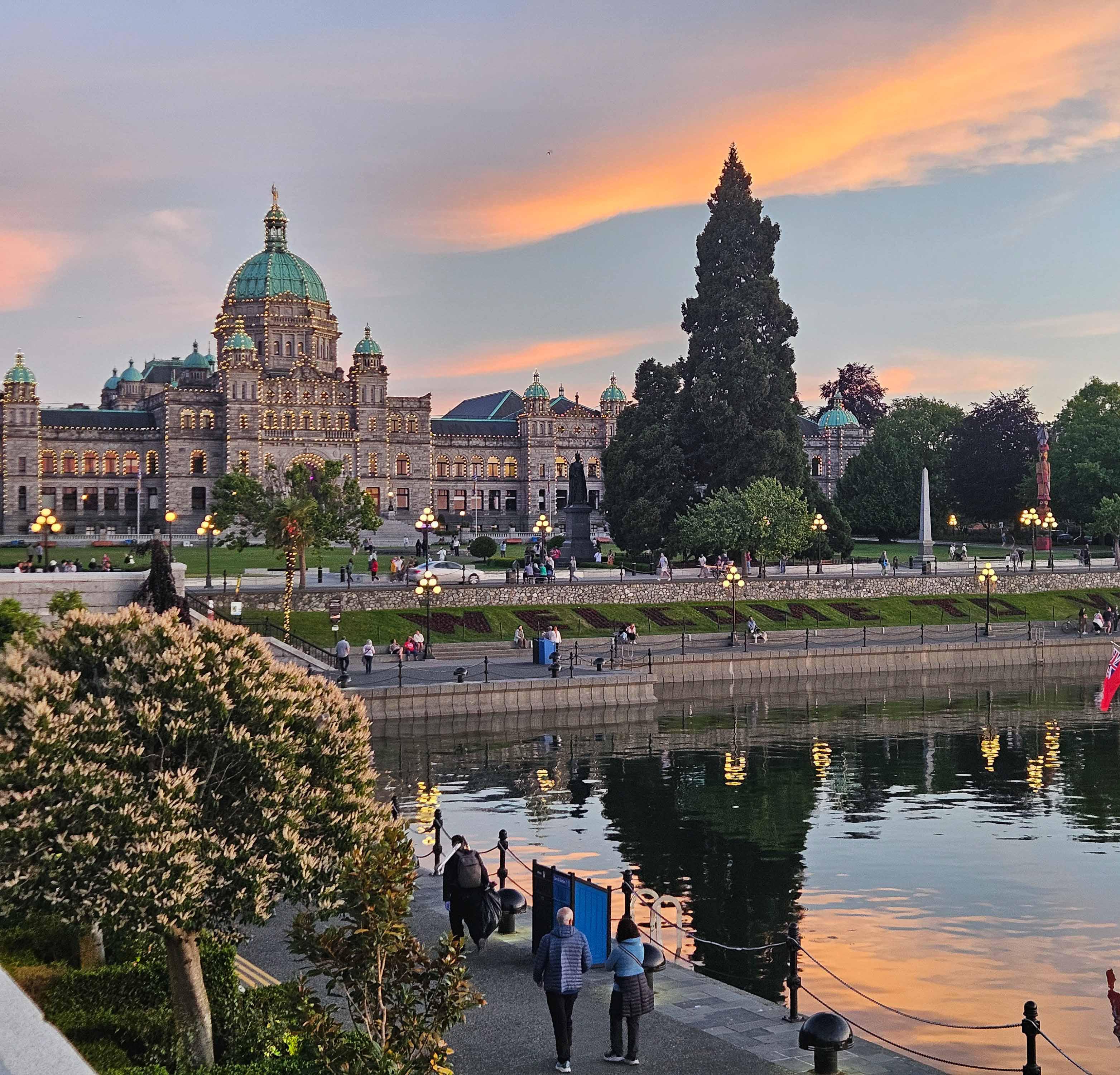
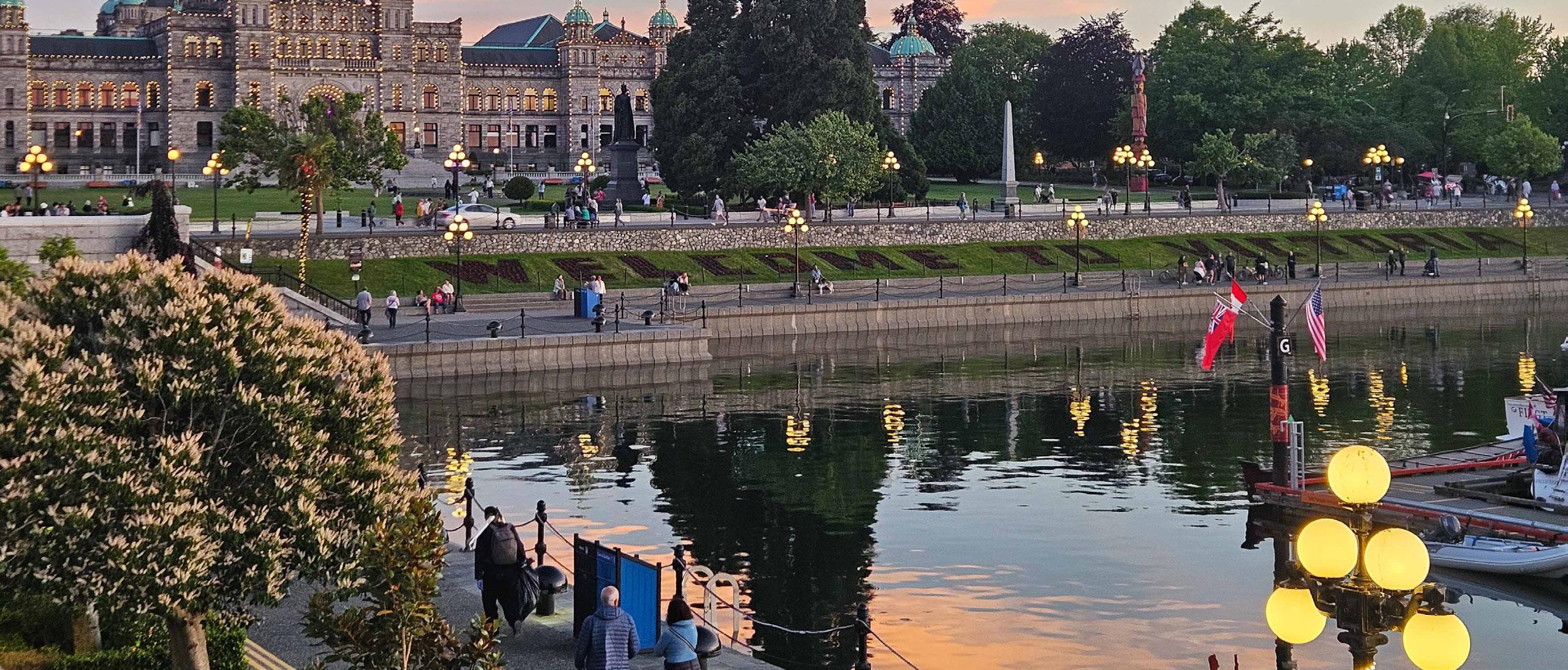
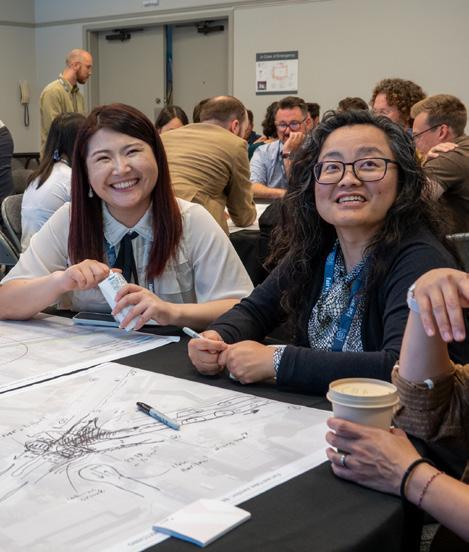
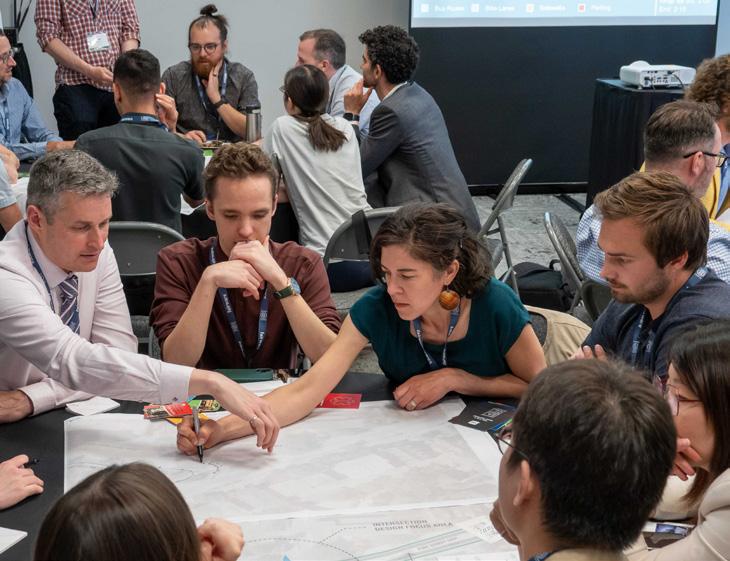
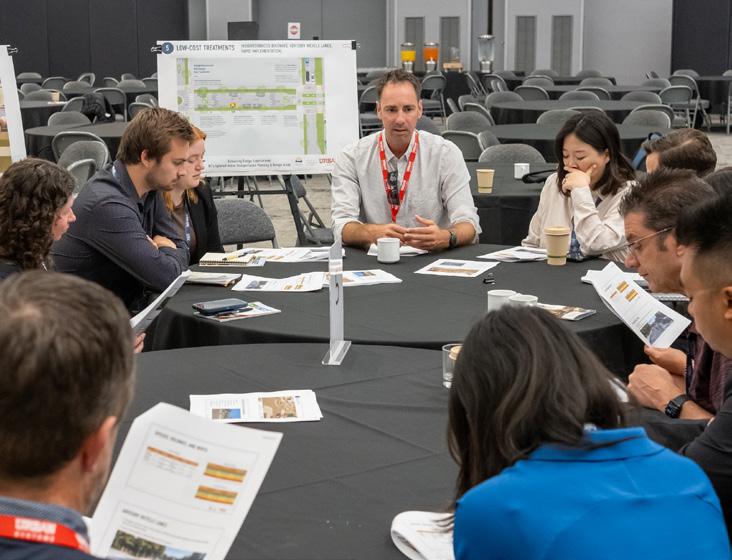
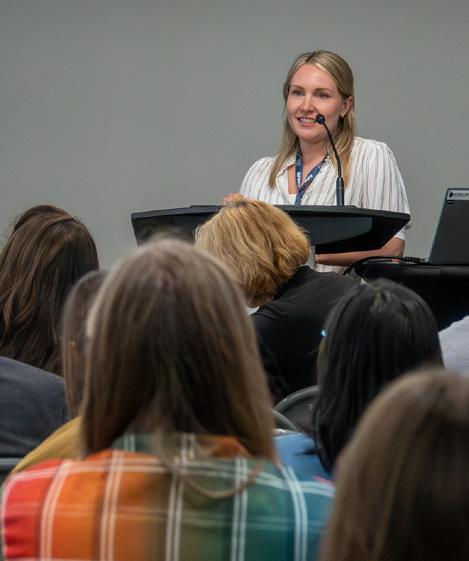
Relive the best moments from our record-breaking 2026 conference in beautiful Victoria, BC
Leadership Summit (SLS) 2026
Check out the highlights from this professional and leadership development summit hosted by the
Engineering and Enforcement: Traffic Safety Culture
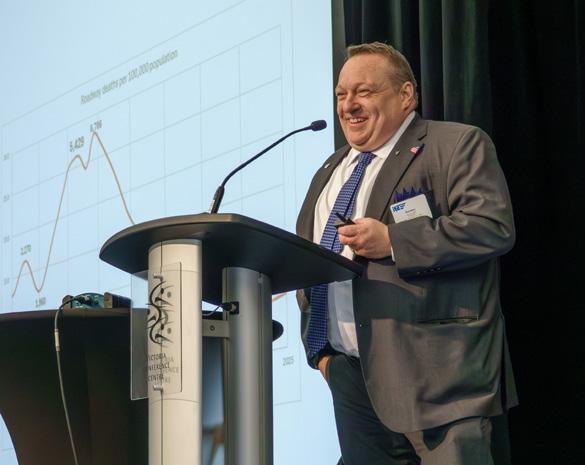
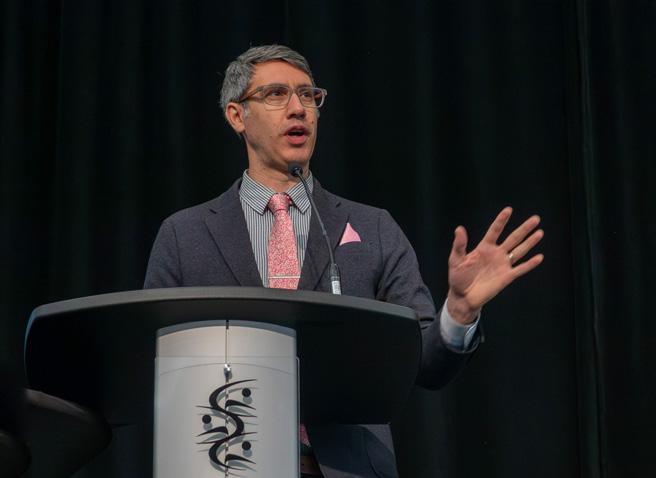
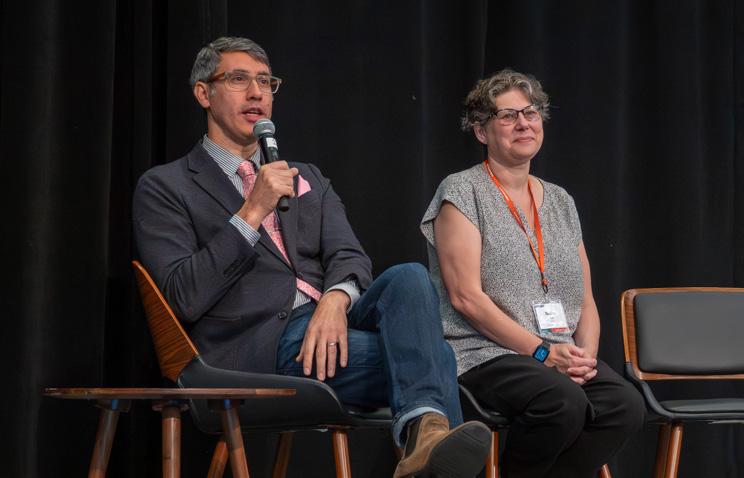
Tyler Golly, Ryan Martinson, and Adam St. Amant explore why traffic safety culture may be the missing piece to achieve Vision Zero and the factors that create cultural transformation
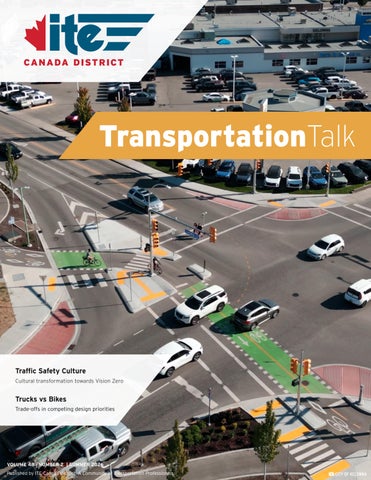
Trucks vs Bikes: This Street Is Not Built for the Two of Us!
Vanessa Skelton highlights the trade-offs when accommodating both trucks and active transportation and Tom Baumgartner profiles the Leckie Active Transportation Corridor Case Study where this challenge was addressed through thoughtful design details
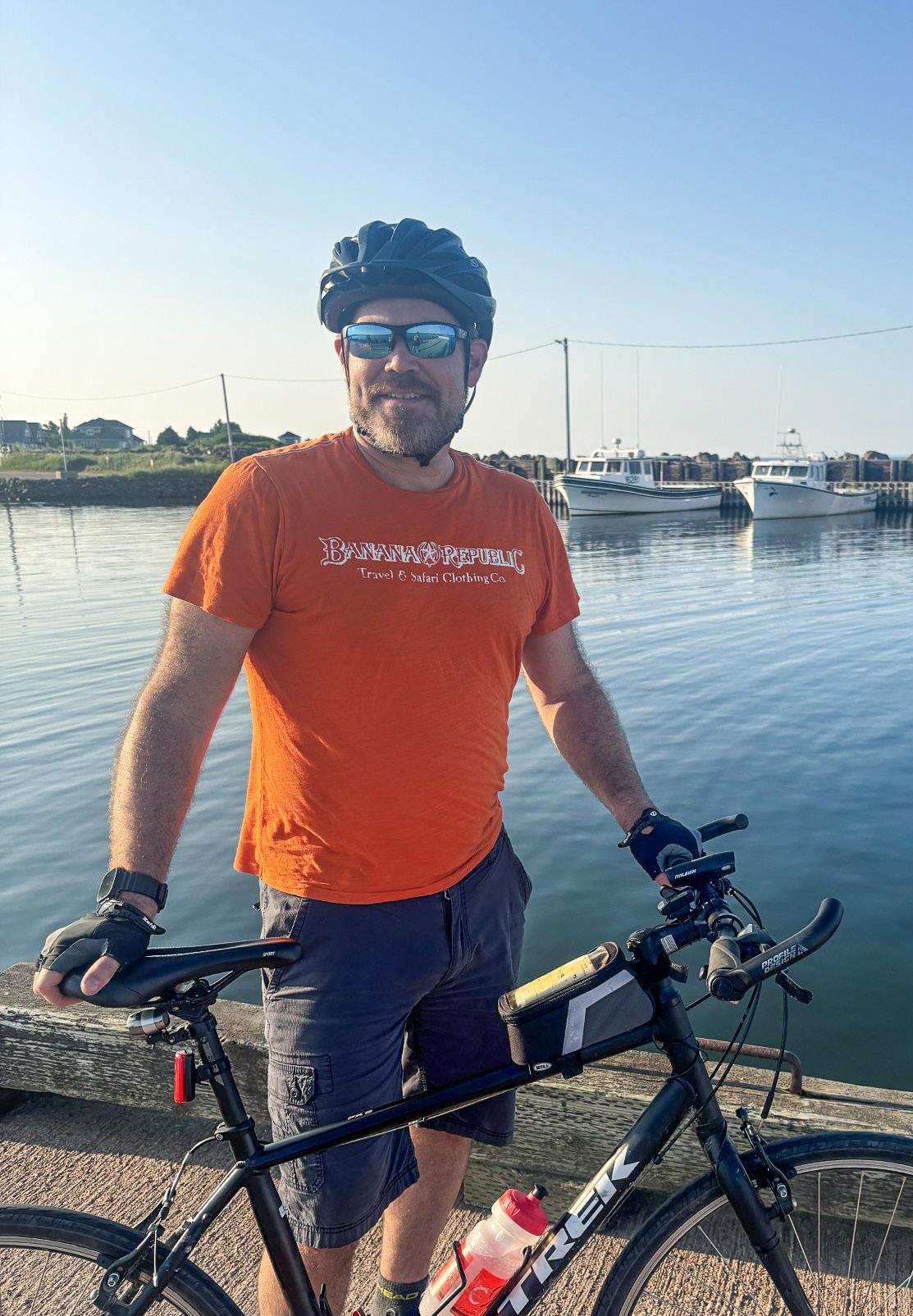
Member Highlight: Greg O’Brien
Get to know the 2026 ITE Canada District Secretary, past ITE Atlantic Canada Executive Member, and our Oustanding Voluntary Contribution Award recipient 47 Young Member Highlight: Aislinn Dressler
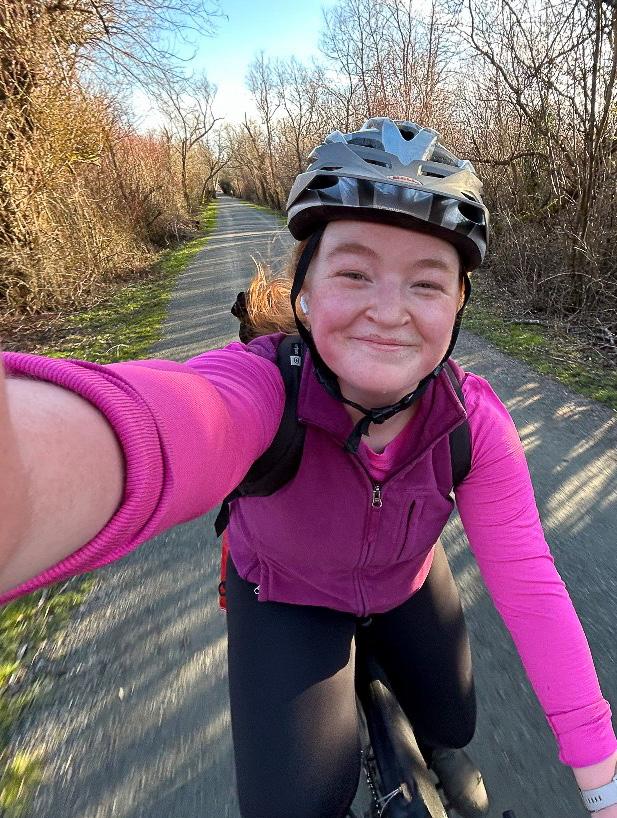
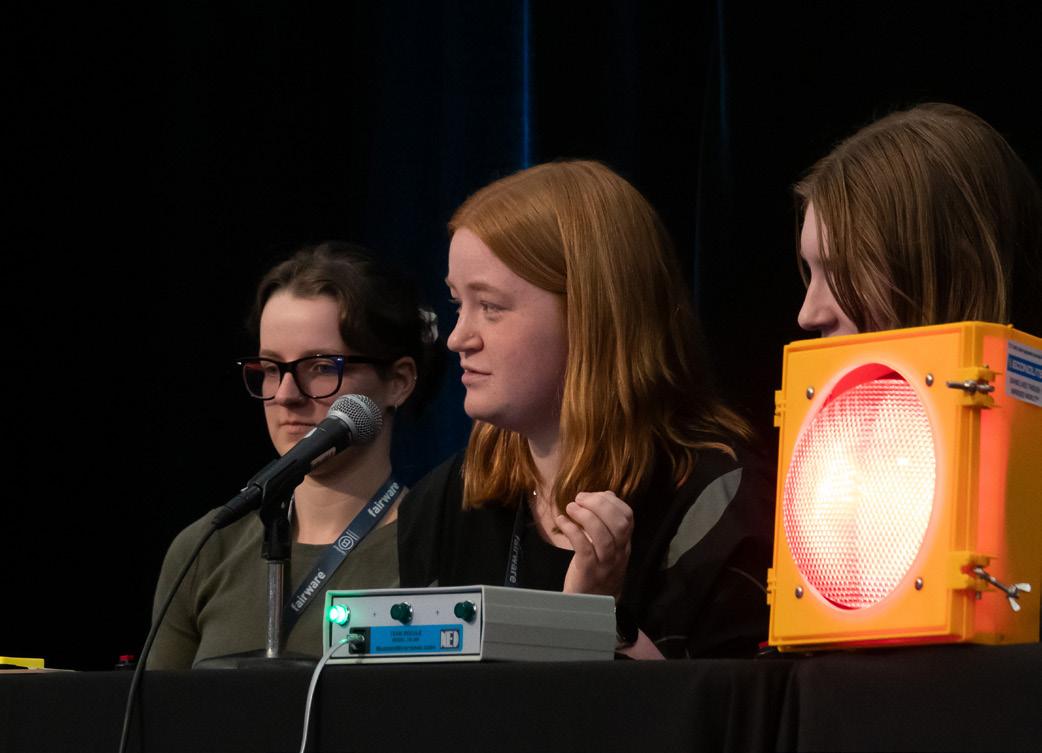
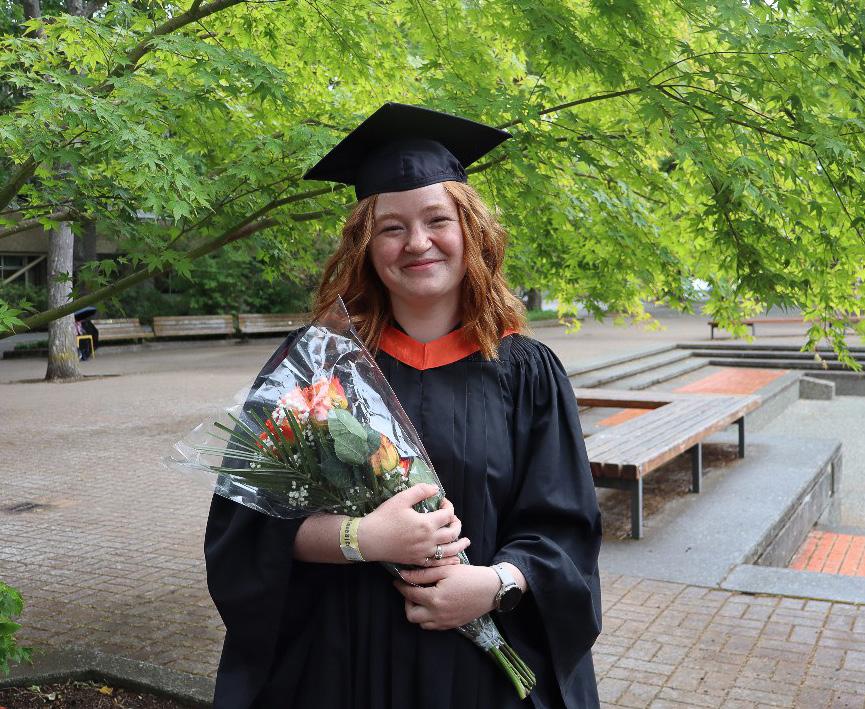
Meet the outgoing President of the University of Victoria Student Chapter, Co-Chair of the 2026 ITE Canada Student Leadership Summit, and winner of our 2026 Undergraduate Scholarship
Irini Akhnoukh, M.Eng., P.Eng., FITE President, ITE Canada District president@itecanada.org
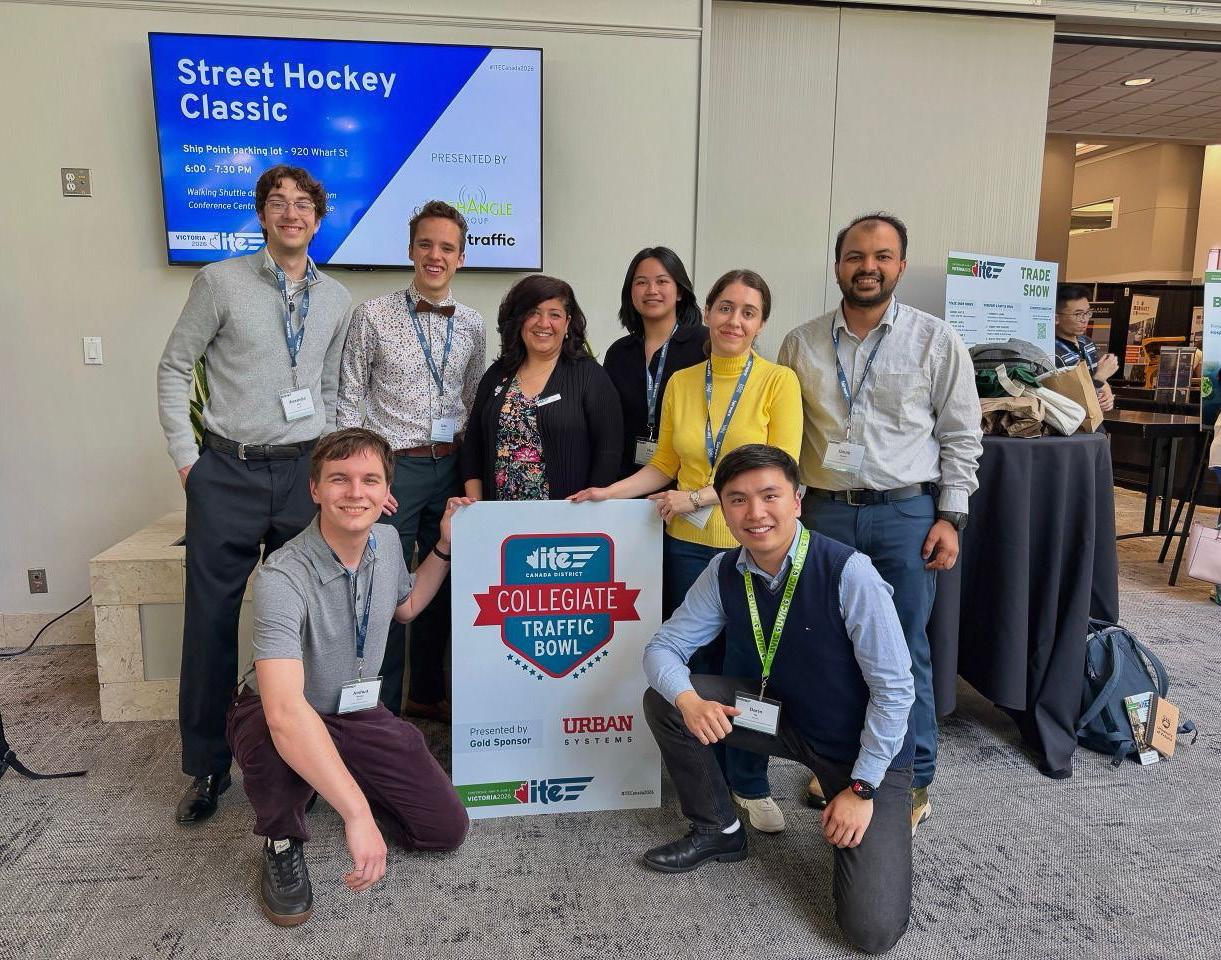
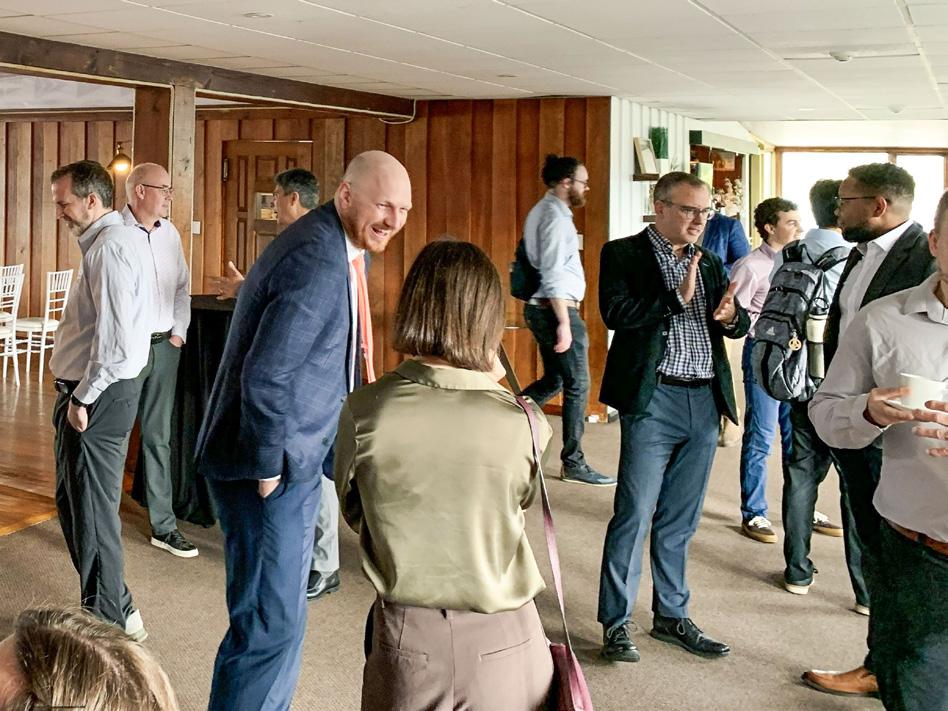
Summer is well underway, and I’m still energized by the incredible success of our Annual Conference in Victoria. This year’s conference was one for the record books. More than 600 delegates, speakers, volunteers, exhibitors, and guests came together to share ideas, learn from one another, and strengthen the connections that make our profession—and our organization—so valuable. From the technical program to the tours, networking events, Traffic Bowl, and street hockey tournament, there was no shortage of opportunities to learn, connect, and have some fun along the way.
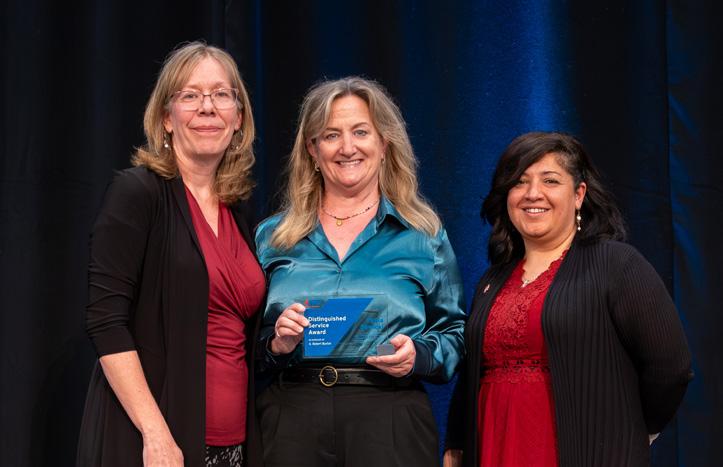
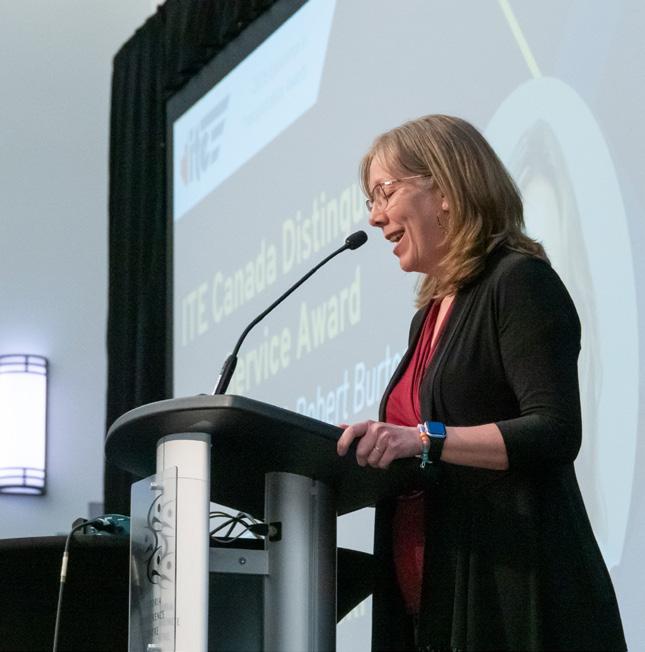
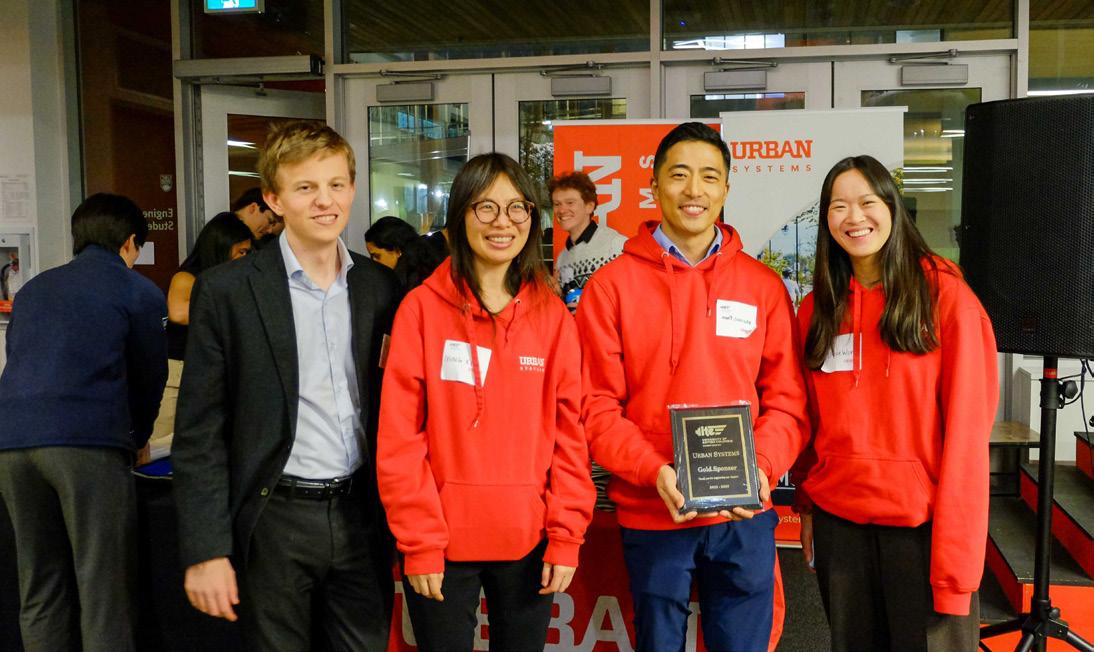
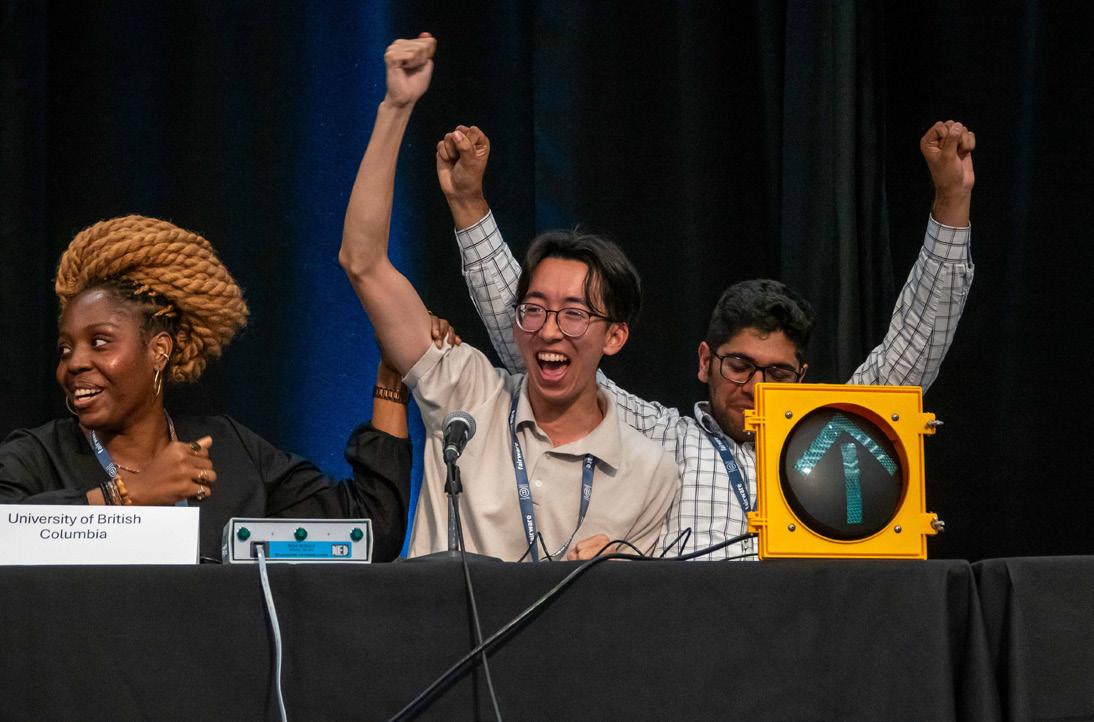
Congratulations to all of this year’s award winners. I would especially like to recognize Paula Sawicki, who received the ITE Canada Distinguished Service Award in Honour of H. Robert Burton. This award recognizes outstanding service and dedication to ITE Canada, and Paula’s contributions to our organization make her a very deserving recipient. Congrats also to the Canadian Traffic Bowl champions UBC who represented us with pride as they competed in Detroit. Great job, team!
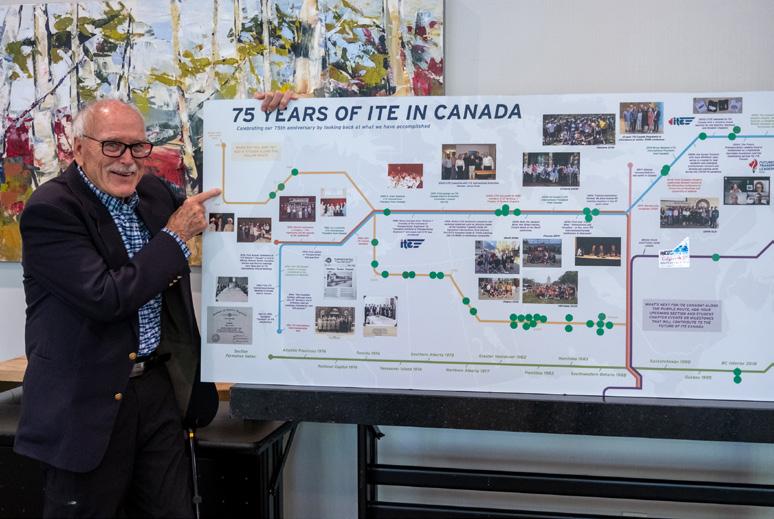
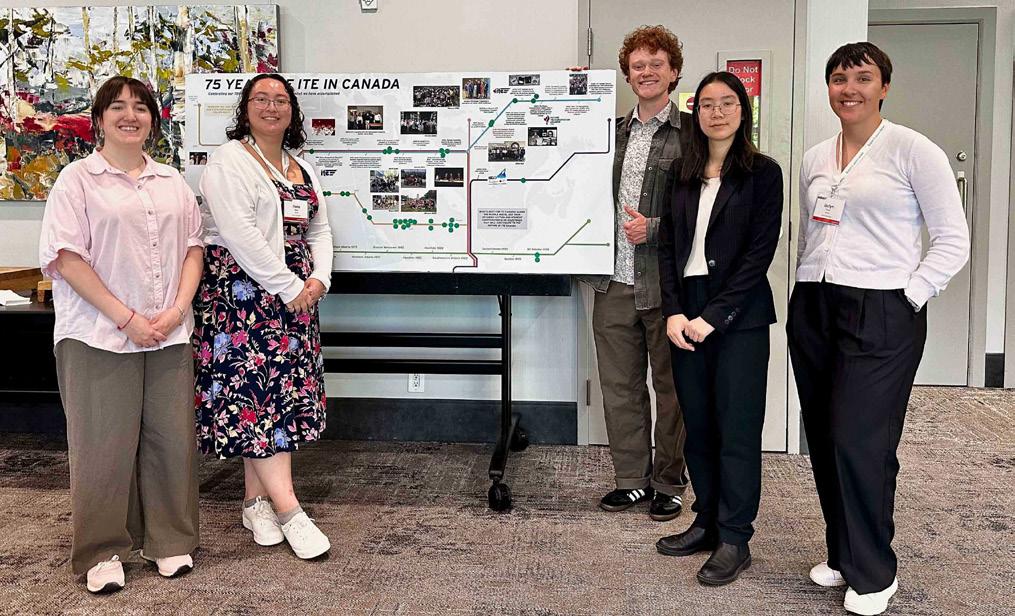
The conference also provided a fitting opportunity to celebrate an important milestone for our organization. 2026 marks the 75th anniversary of ITE in Canada. Looking around the conference, it was inspiring to see students, young professionals, seasoned practitioners, and many past leaders all gathered together. The strength of ITE Canada has always been its people, and our anniversary celebrations have been a great reminder of the community we’ve built over the past 75 years. Take a look at some of the archives we have gathered and continue to assemble on a new History page on our website. If you have any pieces of ITE Canada history to share, contact us at archives@itecanada.org.
The Board of Directors also met in Victoria and approved the 2026–2027 budget, ensuring we remain well positioned to continue delivering value to our members through professional development, technical resources, student support, and events across the country.
As our annual conference continues to grow in both size and complexity, the Board has also established a Conference Review Task Force. The task force will undertake a comprehensive review of all aspects of the conference and provide recommendations to help ensure the event remains sustainable, accessible, and successful as attendance continues to increase. We look forward to sharing the outcomes of this work with members in the future.
Dr. John Morrall was the most season ITE member in attendance at our Victoria conference, having joined the organization in 1967.
I would like to extend my sincere thanks to everyone who helped make the conference possible, including the Local Arrangements Committee, the National Technical Program Committee, our volunteers, sponsors, exhibitors, speakers, and staff. Events like this require an incredible amount of effort, and their dedication resulted in an outstanding experience for all attendees.
Earlier this spring, we put out a call for nominations for the Secretary role on the ITE Canada Executive Committee. I’m pleased to share that Breanna Jackson has been acclaimed as Secretary-Elect for 2027–2028. Breanna brings a tremendous amount of experience and currently serves on our Board of Directors representing the Greater Vancouver Section, contributes to the National Technical Program Committee, and is a graduate of LeadershipITE. I’m looking forward to working with her in the years ahead.
As we head into the second half of the year, there are still plenty of opportunities to get involved with ITE Canada. Additional training courses and professional development opportunities are planned for the coming months, and I encourage you to take advantage of them. Thank you for your continued support of ITE Canada, and I look forward to connecting with many of you throughout the fall.
Canadian District Director, ITE director@itecanada.org
The summer season is (finally) here and it has been wonderful to explore our transportation networks outside as the weather has warmed up over the last few months.
In early May, I travelled to Rhode Island to meet with the ITE International Board of Directors at the Northeastern District Annual Conference in Newport. Not only did I enjoy connecting with colleagues from around the world and hearing about the work they are engaging in, it was also a chance to explore the transportation options in Rhode Island. From walking to an island for breakfast to booking a woman driver on Uber, from some airline adventures to exploring the Cliff Walk, I had many good opportunities to be a “customer” in our collective workplace and to see and experience the network personally. Travelling away from home and using the transportation network can open our minds to new ideas and when you are travelling with other transportation professionals, you just know we’re evaluating it every step of the way.
The highlight of the last few months in ITE here in Canada has been the ITE Canada District conference in Victoria. Vancouver Island is one of the most beautiful places in the world and we are so fortunate to have it in our country and to have been able to hold the conference there. There was lots to explore and enjoy in Greater Victoria. Some highlights of the conference for me included:
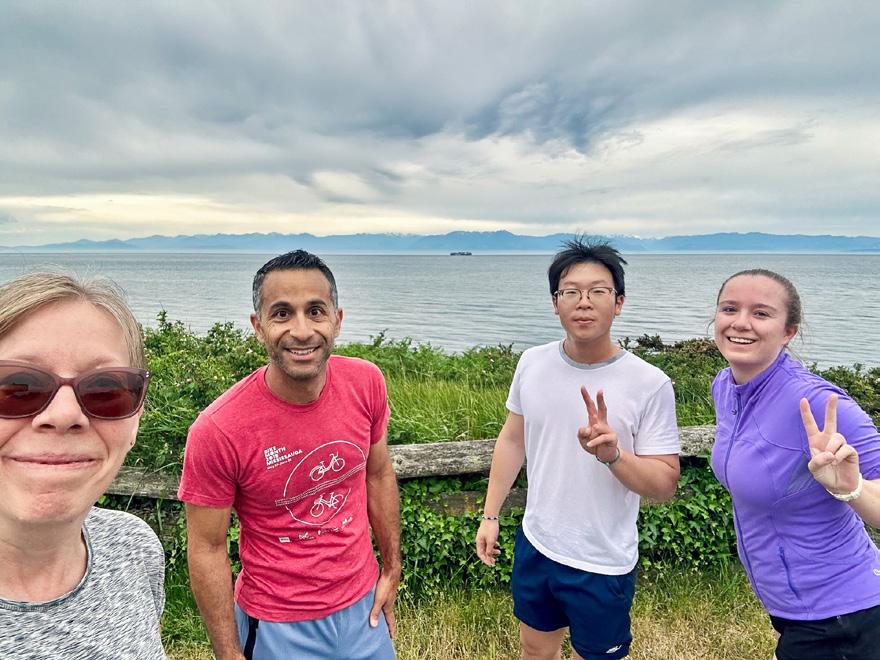
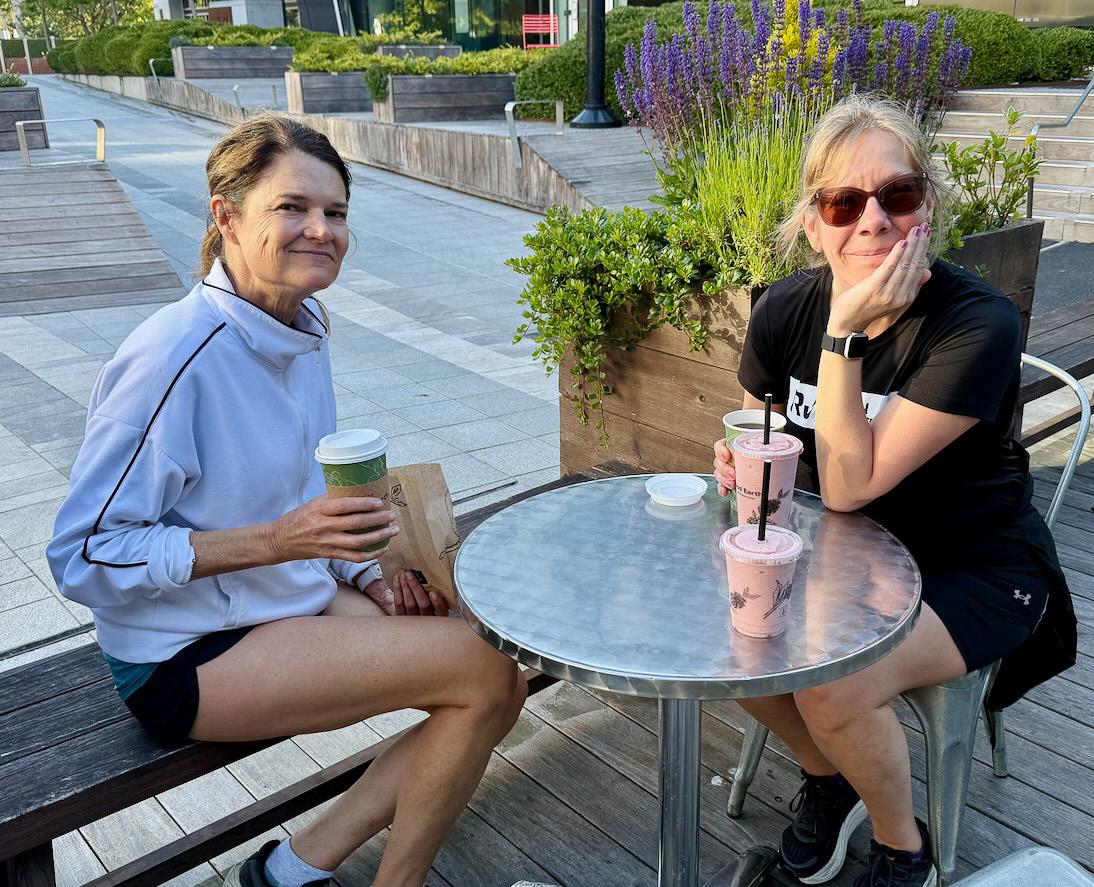
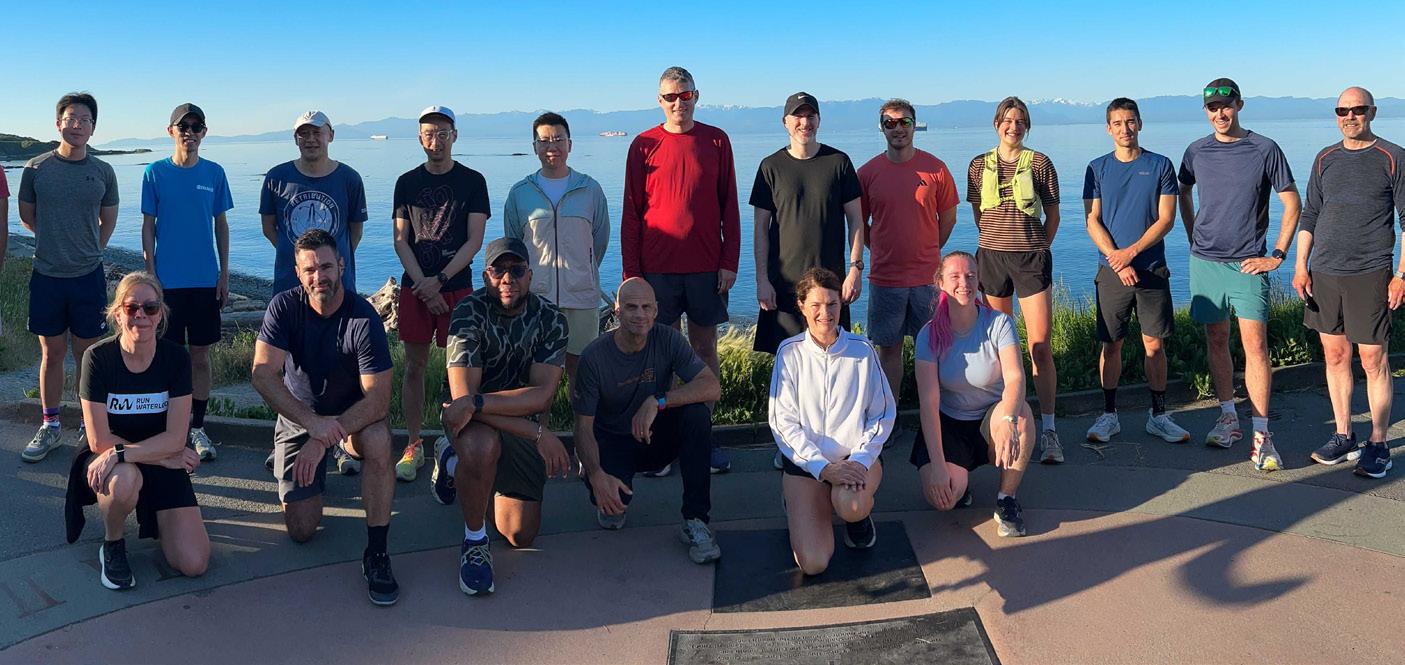
• The morning runs. Shout out to Kieran Quan from Bunt & Associates for leading the runs with me each day. We did three different routes and got to see some beautiful parts of Victoria and deer! Thank you to the faithful who came out early each morning to start the day off moving and the after run coffee shop crew.
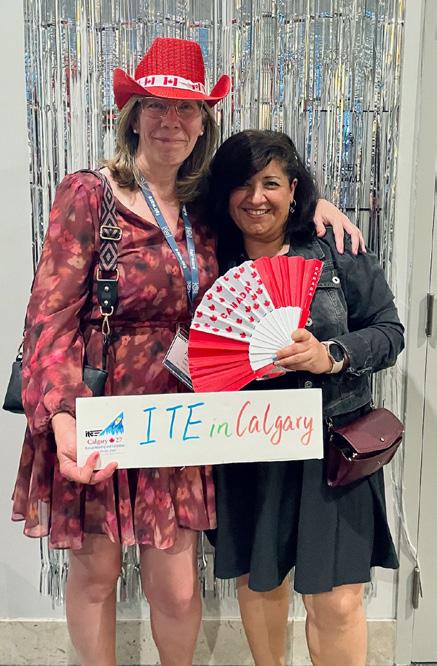
• Wearing cowboy hats with Irini Akhnoukh in celebration of next year’s joint ITE International and Canada District conference in Calgary.
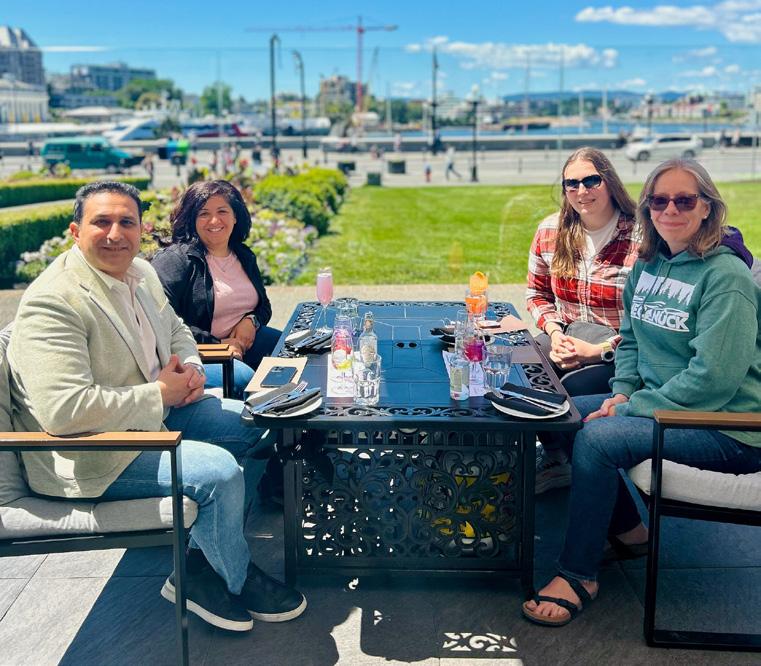
• Reconnecting with friends, some who I haven’t seen in a year or more. I sat on a lot of patios in Victoria and was grateful for each friend (including lots of new ones!) who shared a patio with me.
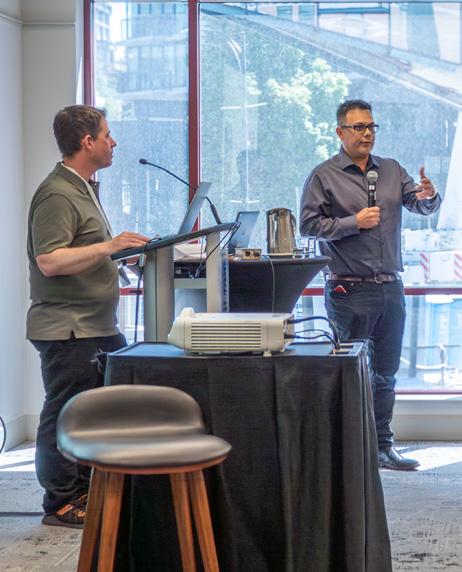
• The technical content. Thank you to all of the speakers, presenters and workshop hosts who participated in the conference. I always go to the conference looking for thoughtful ideas and inspiration and there was plenty of that to go around.
• The awards program. We have amazing volunteers in our midst and it was a wonderful opportunity to recognize their work. In addition, each year there are such interesting technical projects highlighted in the program; I look forward to learning more about them as they are profiled in this publication over the next year.
• Having the entire ITE International Executive Committee at our conference. Thank you to Gord Meth, Neelam Dorman, and Karen Aspelin for joining us and jumping into our District activities.
• Hugging Breanna Jackson and getting to congratulate her in person on her upcoming role as ITE Canada District Secretary starting in January of 2027.
• I could go on and on. Strategic planning with our ITE Canada Board, Traffic Bowl, attending the Student Leadership Summit, friendship bracelets, coffee breaks, cheese trays, random hallway chats, conversation circles…
The community part of ITE is strong and the in-person opportunities to connect and mingle only make the community stronger. I’m excited to represent our membership at the ITE International Annual Meeting in Detroit and continue to learn, connect, and grow with colleagues from around the world. Keep an eye out for more news to come on that.
In the coming year, ITE will be updating the Parking Generation Manual. As part of that effort, we are looking for parking data to support the update. It would be wonderful to increase the Canadian content in the manual. See the Parking Generation Manual Call for Data and submit here by September 1, 2026 to get your data into this next edition.
I hope this season will bring you each the rest and rejuvenation we so often need at this time of year in whatever form that takes for you. Stay cool and travel safely!
Julia Salvini, P.Eng., FITE ITE Canada District Director
News from ITE Canada
Board Meeting Highlights | May 31, 2026
As transportation professionals from across the country gathered in Victoria, the ITE Canada Board of Directors convened for its in-person Board Meeting. The session was marked by productive discussions regarding the organization’s long-term financial health, upcoming conferences, policy modernization, and new initiatives to support our members.
The Board received an update from Future Transportation Leaders Fund (FTLF) Vice-Chair Joanna Kervin highlighting commitments and pledges for 2026 and beyond as well as priorities for the foundation moving forward.
Our 2026 Annual Conference in Victoria set historic milestones. With over 625 attendees, it stood as our earliest conference to reach capacity. This year’s event also piloted a new one-hour block schedule, making it our largest technical program to date. The Board also solidified plans for future conferences:
• Calgary 2027: Joint ITE International Annual Meeting, July 25–28, BMO Centre
• London 2028: June 4–7, RBC Place London
• Saskatoon 2029: The Board approved a proposal from the Saskatchewan Section to host the 2029 Conference with Ellen McLaughlin and Sheliza Kelts as co-chairs.
With the 2027 conference being a Joint ITE International event, ITE Canada will not generate its typical District-led conference revenue. However, the Executive Committee recommends maintaining standard operating expenses and travel support for award winners. Consequently, the Board approved a projected deficit for 2027, which will be fully balanced by drawing on the healthy reserve funds built up from past successful conferences.
The Board formally approved the acclamation of Breanna Jackson as Secretary for 2027–2028. One nomination was presented to the Nominations Committee following a Call that was open from April 2 to May 1, 2026. As this nomination met the eligibility criteria and guiding principles outlined in our Nominations & Elections Policy, no election will be held.
To ensure our organization remains modern and effective, the Board undertook a systematic review of all governing policies. Updates were approved for the LeadershipITE, Board Member’s Code of Conduct, Reimbursement of Expenses, Conflict of Interest, and Student Support policies. The Email Meeting Policy, Training Module Financial Policy, and Advocacy Guidelines were officially resinded as they are either no longer relevant or are operational rather than policy-based. More thorough review of the remaining policies continues.
A Conference Review Task Force was formed as an advisory panel to review all elements of our annual meetings and elevate the attendee experience starting in London 2028.
President Irini Akhnoukh presented a Strategic Plan Health Check, highlighting progress on focus areas such as improved Traffic Bowl funding, the continued work of the Young Member Task Force, and a new Section Events Guide, among other items.
Finally, the Board explored initiatives for the year ahead and identified several priorities for further exploration including a comprehensive review of our technical committees and products, ITE mentorship programs in Canada, a Young Leaders Summit, and merchandise.
2026 Election | Breanna Jackson acclaimed
Breanna Jackson has been acclaimed as Secretary-Elect on our Executive Committee beginning January 1, 2027 for a two-year term. Breanna brings a wealth of experience from every level of ITE, currently serving on our Board of Directors (representing Greater Vancouver Section) and the National Technical Program Committee, and is a graduate of LeadershipITE. Join us in welcoming Breanna, who shares the message below:
Dear ITE Members,
I am very excited to be joining the ITE Canada Executive as Secretary and grateful for the opportunity to serve the organization. I am passionate about creating opportunities for members to engage, share knowledge, and grow professionally, and I look forward to supporting students and emerging professionals within our industry.
ITE has been a major part of my professional journey for more than a decade. I began attending meetings as a student and have since remained involved at all levels of the organization. During my time with the Greater Vancouver Section, I helped support member engagement and rebuild momentum following the pandemic through innovative programming, stronger collaboration across Sections, and expanded opportunities for connection. I recently supported the establishment of the BCIT Student Chapter, reflecting my commitment to helping grow and strengthen the future of our profession.
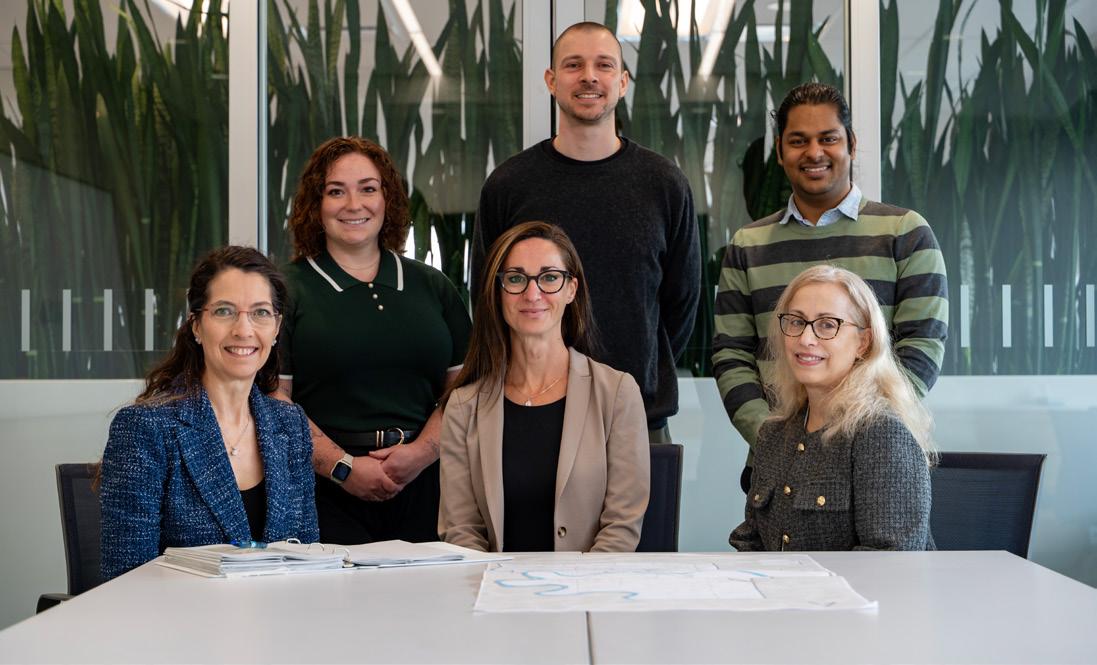
Meet Associated’s Transportation Planning & Traffic Engineering Team
Associated Engineering is a proudly Canadian, employee-owned company. Our transportation planning & traffic engineering team provides customized strategic services and works with clients, communities, and stakeholders to develop sustainable and resilient transportation solutions. We are passionate about building vibrant, healthy, and resilient communities that support economic growth.
Together, we are shaping a better future.
Professionally, I am a transportation engineer with experience spanning transportation planning, traffic engineering, active transportation, and roadway design. My work focuses on developing practical, people-focused transportation solutions that improve safety, mobility, and connectivity within communities. I have had the opportunity to lead multidisciplinary teams and manage a wide range of projects, balancing technical analysis with collaboration, public engagement, and long-term community vision.
One of the things I value most about ITE is the people. The mentorship, encouragement, and relationships I have built through this organization have had a lasting impact on me, and I am grateful for the opportunity to give back in this new role.
As Secretary, I am excited to support ITE Canada, and I look forward to connecting with many of you in the coming months and years.
Breanna Jackson, P.Eng.
Greater Vancouver Section / Associated Engineering
ITE Canada District 2026
Excellence in Transportation Awards & Scholarships
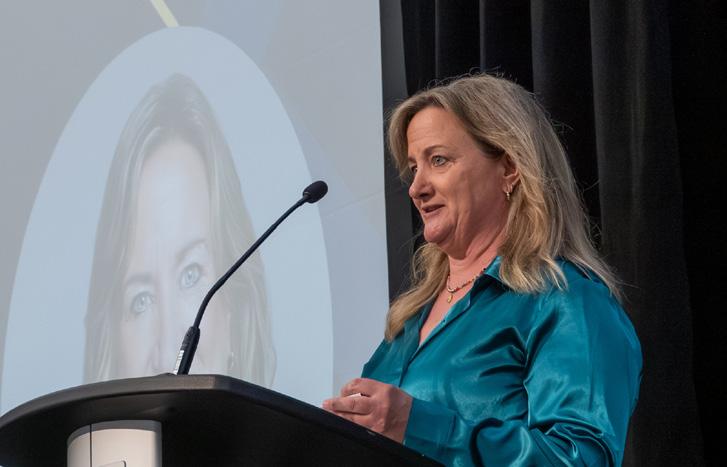
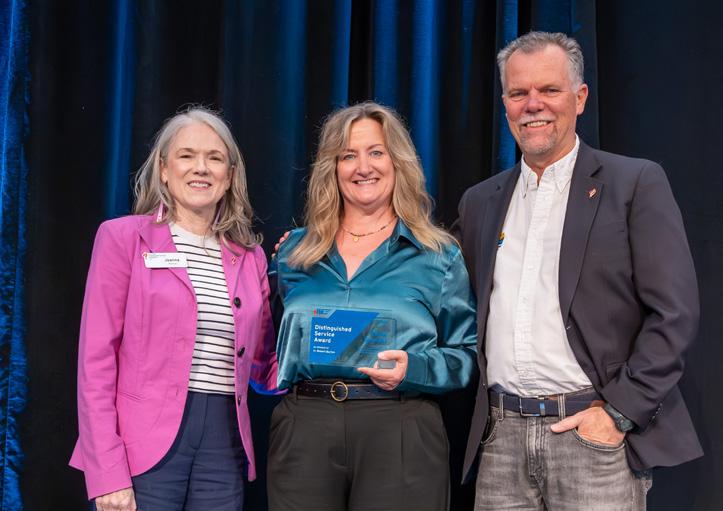
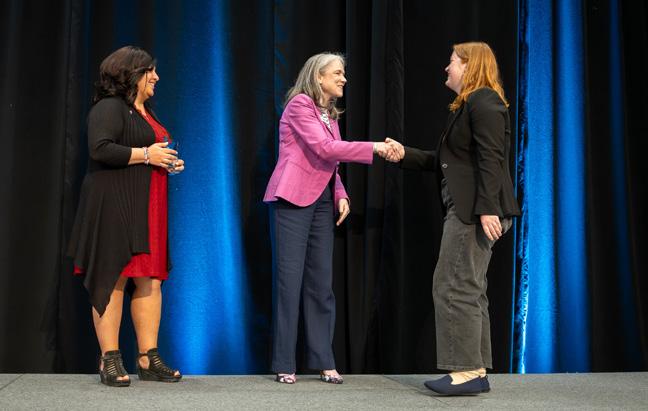
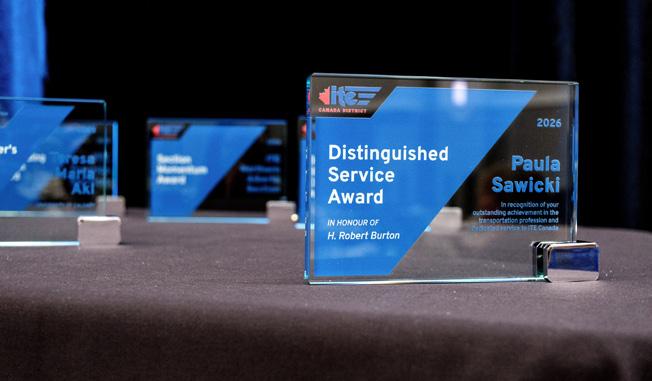
H. Robert Burton Distinguished Service Award Paula Sawicki
ITE Canada’s most prestigious honour, the H. Robert Burton Distinguished Service Award, is named after a founder of the original Canadian Section in 1951. Bob dedicated much of his life to the transportation profession and was still attending ITE meetings right up to his death at the age of 101 years. This award is bestowed upon members who have shown these same qualities and demonstrated a notable career in the field and a record of service with ITE Canada.
Paula Sawicki, P.Eng., is a transportation engineer with more than 30 years of experience across the public and private sectors, with a career focused on transit, transportation planning, policy development, traffic operations, and municipal infrastructure projects across Ontario.
Paula is known for combining strong technical expertise with practical implementation experience and a collaborative approach to solving complex transportation challenges. Paula has also been an active and enthusiastic contributor to ITE throughout her career, participating in a wide variety of technical projects, committees, conferences, and industry initiatives. She served as ITE Canada’s Newsletter Editor during the transition to a digital format, was the Local Arrangements Committee (LAC) Chair for the 2014 joint ITE/OTC Annual Conference in Kitchener, and later served on the LAC for the 2024 Annual Conference in Hamilton. Paula was also the inaugural Chair of the National Technical Program Committee (NTPC) and continues to remain actively involved with the committee today. She is a frequent presenter and strong supporter of professional collaboration, technical knowledge sharing, and the continued growth of ITE and its events.
Southwestern Ontario Section | Mosaic Mobility Group
Paula is the fifth woman to be bestowed this honour, after Joanna Kervin (pictured with Paula and fellow past recipient Jan Voss), Jeannette Montufar, Jen Malzer, and Geni Bahar
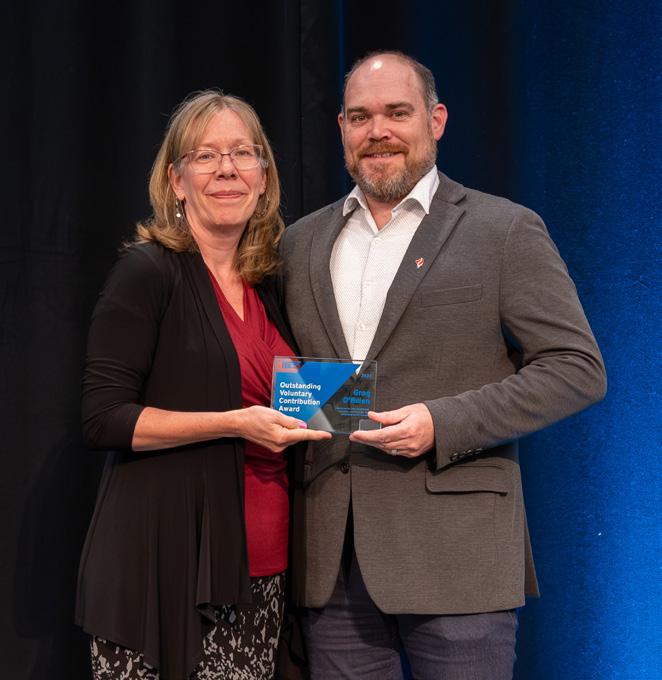
Outstanding Voluntary Contribution Award
This award celebrates the hard work and dedication of members who have made exceptional voluntary contributions to ITE Canada and its programs or projects.
Greg is an ITE Fellow whose involvement with ITE Canada spans more than 20 years. His dedication to the organization began as a student and has evolved into a long-standing and impactful record of volunteer service. Over the years, he has contributed in numerous leadership capacities, including serving on the Executive of the ITE Atlantic Canada Section, completing multiple terms on the District Board of Directors, participating in Board committees and task forces, supporting Conference Local Arrangement Committees, and representing ITE Canada on Transportation Association of Canada (TAC) technical committees. Most recently, Greg demonstrated his continued commitment by stepping into the role of Secretary on the Executive Committee, providing leadership and support to the organization during a period of transition.
Greg O’Brien
Atlantic Canada Section | WSP
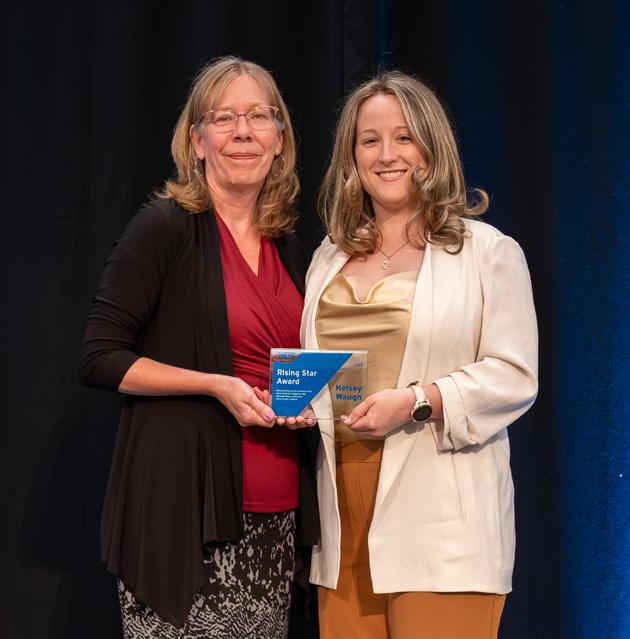
Rising Star Award Kelsey Waugh
Toronto Section | CIMA+
The Rising Stars Program identifies the next generation of the transportation profession, recognizing members under the age of 35 who have made an impact on the profession early in their careers.
Kelsey is a Project Manager in the CIMA+ Mobility group in Toronto and has been a dedicated ITE member since 2014. Over the past decade, she has made significant contributions to ITE, including service on the ITE Toronto Section, the Local Arrangements Committee for the 2017 Toronto ITE International Conference, and currently as Treasurer for ITE Canada District. She is a University of Waterloo alumna, a licensed Professional Engineer in Ontario, holds an RSP1 designation and was named one of Canadian Consulting Engineer’s Top 10 Under 40 in 2023.
ITE Canada 2026
EXCELLENCE IN TRANSPORTATION AWARDS & SCHOLARSHIPS
Recognition of Service Award
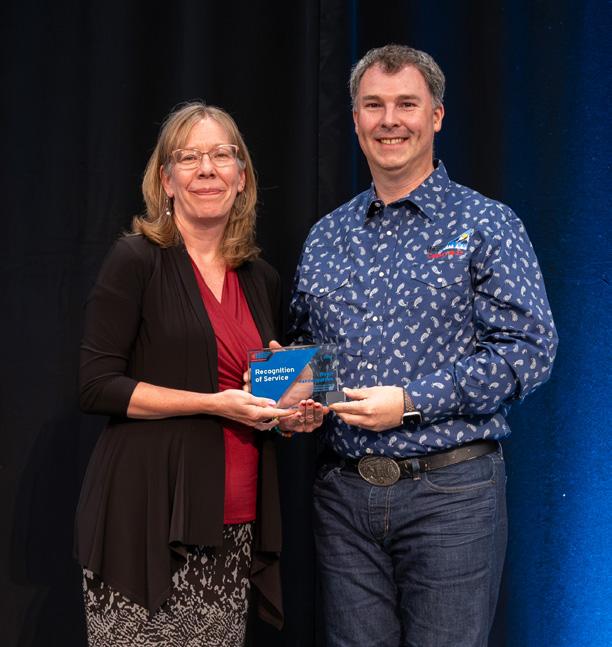
In 2026, we formally introduced a Recognition of Service Award to acknowledge the significant dedication of a member of our Executive Committee leading ITE Canada District.
Ryan Vanderputten joined the Executive in 2017 as SecretaryTreasurer at the start of a transformational period. He helped oversee the modernization of many of our operational and financial practices and processes and, throughout his term that ended in 2025, injected his governance and policy expertise to all areas of the organization. Ryan’s calm, collaborative, and thoughtful approach, as well as his executive management expertise, brought a unique and valuable perspective to the ITE Canada leadership, particularly during his tenure as President in 2022–2023.
Ryan Vanderputten
Southern Alberta Section | City of Calgary
Canadians named ITE Young Leaders to Follow
The ITE Young Leaders to Follow program highlights younger members making an impact in ITE and the profession. We congratulate the Canadians included in the 2026 Class:
Karalee Bloch
Manitoba Section
Manitoba Department of Transportation & Infrastructure
Kelsey Waugh
Toronto Section CIMA+
Canadian Nominees for the ITE International Transportation Achievement Awards
The ITE Transportation Achievement Awards are presented annually for significant achievements in the advancement of transportation. We were proud to put forward the following Canadian nominees for consideration in their categories.
Complete Streets
Guildford Way Complete Street
ISL, DMD & Associates Electrical Consultants Ltd. and City of Coquitlam
Planning
Shaping neighbourhoods: 2025 update of Edmonton’s Complete Streets Design and Construction Standards (CSDCS) CIMA+, Martinson Golly
Safety
Vision Zero Guelph: Action Plan for Safe Streets
City of Guelph
Transportation Systems Management and Operations
Real-time Decision Support for Transit Headway Management
Toronto Transit Commission (TTC)
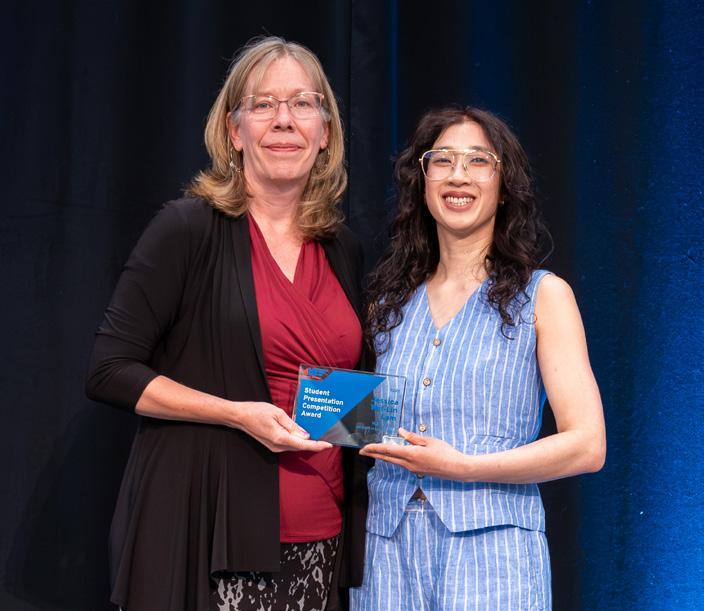
Student Presentation Competition Award
Jessica was born and raised in Calgary and holds a B.Sc. in Civil Engineering from the University of Calgary, and a M.Sc. from the Frankfurt University of Applied Sciences. As a Transportation Engineer in Calgary and Vancouver she designed, planned and managed active, bus, and light rail transit projects. In non-profit spaces, Jessica has led local, provincial, and national initiatives focused on equity, diversity, and inclusion. Her current Ph.D. candidacy at the University of Saskatchewan explores long-term impacts of transit closures on travel behaviour, satisfaction, and well-being.
University of Saskatchewan
Jessica accepts award from Julia Salvini, ITE Canada District Director.
Jessica Wei Lin Lam
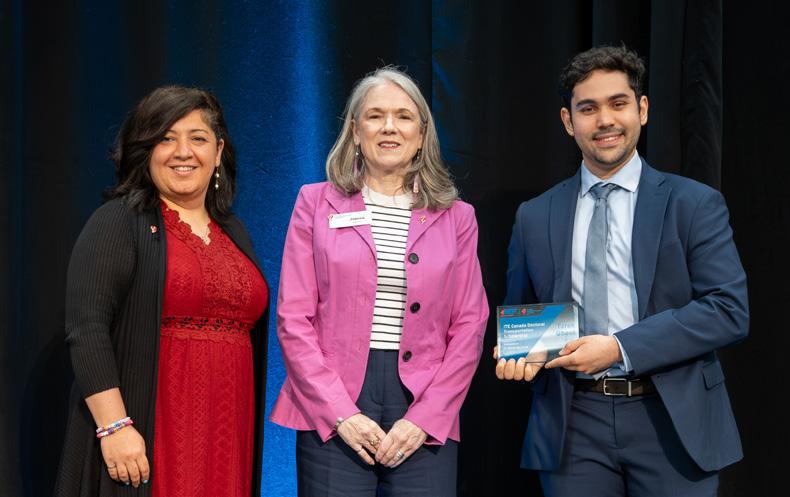
ITE Canada Doctoral Transportation Scholarship in honour of Dr. Michel Van Aerde
Tarek Ghoul is a PhD candidate at the University of British Columbia, where his research focuses on developing Intelligent Transportation Systems for road safety applications. Drawing on data from cameras, drones, and autonomous vehicles, his work quantifies crash risk before collisions occur and deploys real-time interventions to reduce it. Tarek joined the UBC ITE Student Chapter in 2018 and has held many roles on the Chapter’s leadership team, helping to maintain its institutional memory and continuity across successive executive teams over several years.
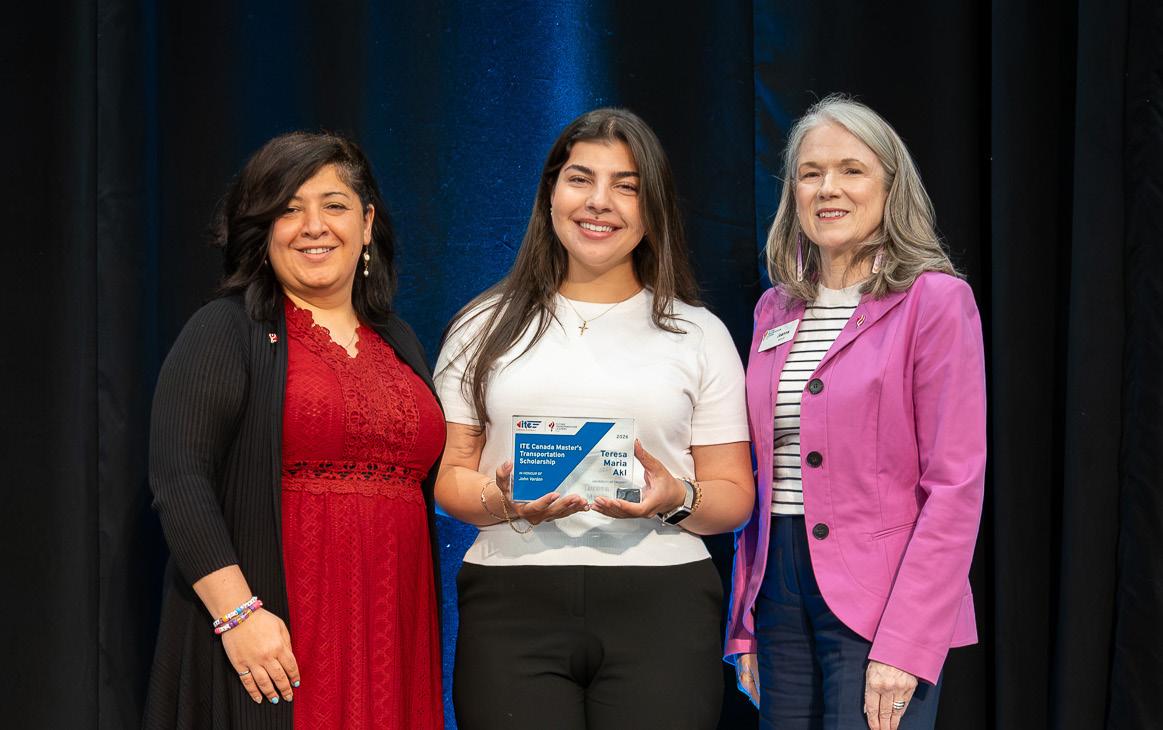
ITE Canada Master’s Transportation Scholarship in honour of John Vardon
Teresa Akl is a Master of Science student in Civil Engineering at the University of Calgary, specializing in Transportation Engineering, and a Mobility Safety Engineer-in-Training with the City of Calgary. Her research integrates transportation and sustainable engineering principles to advance road safety, with a particular focus on pedestrian safety. Her background in road safety is grounded in several years of non-profit and NGO work at both national and international levels.
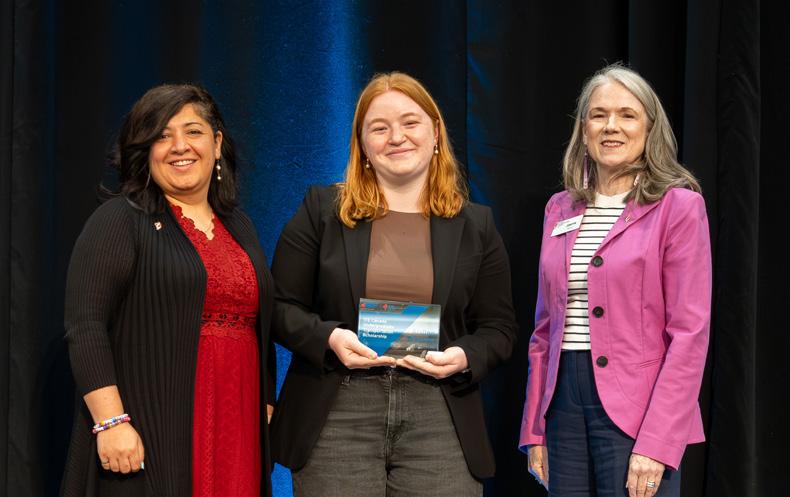
Aislinn is a recent graduate of the University of Victoria civil engineering program, and is starting her Masters of Applied Science in Transportation Engineering at the University of British Columbia in the fall. She is passionate about transportation engineering and planning, and loves to explore her surroundings on bike and foot.
Tarek Ghoul
University of British Columbia
Teresa Maria Akl
University of Calgary
Aislinn Dressler
University of Victoria
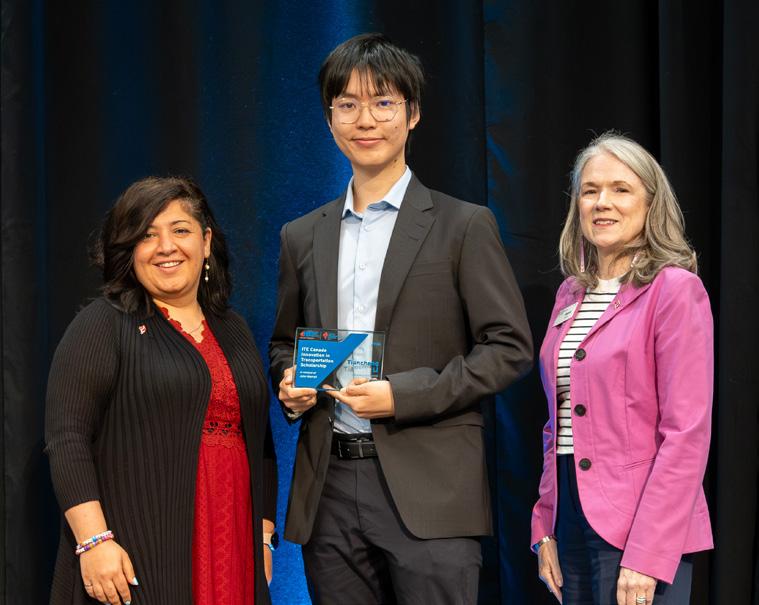
ITE Canada Innovation in Transportation Scholarship in honour of John Morrall
Tiancheng Li is a graduate student in transportation engineering at the University of Toronto, specializing in transportation analysis under the supervision of Professor Khandker Nurul Habib. His work integrates travel behavior analysis and urban planning policies, helping municipalities make more informed planning decisions and develop evidence-based frameworks for future projects. In the past, Tiancheng has contributed to transportation impact studies, bicycle and pedestrian planning, and complete streets initiatives.
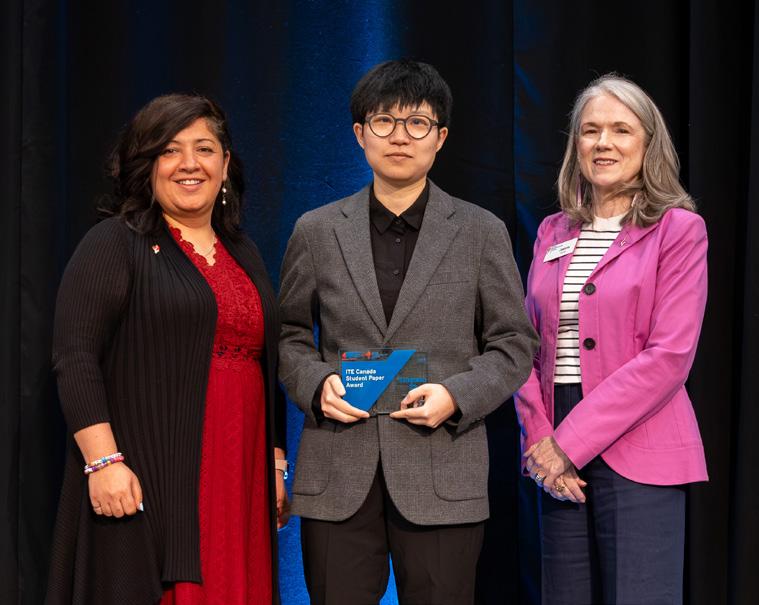
ITE Canada Student Paper Competition Award
Xingnan Zhou is a PhD candidate in the Department of Building, Civil, and Environmental Engineering at Concordia University, supervised by Prof. Ciprian Alecsandru. Her research focuses on autonomous vehicle trajectory prediction using transformer and attention-based architectures, with the Waymo Open Motion Dataset. Her award-winning paper demonstrates how road structure can serve as a powerful prior for safer prediction at intersections, with direct applications to Canadian AV deployment. She also achieved a top-15 solo ranking in the 2025 Waymo Open Dataset End-to-End Driving Challenge.
ITE Canada’s monetary scholarships and awards are made possible by generous donors and the Future Transportation Leaders Fund
Xingnan Zhou
Concordia University
Xingnan accepts award from Irini Akhnoukh, ITE Canada President and Joanna Kervin, the Vice Chair of the Future Transportation Leaders Fund.
Tiancheng Li
University of Toronto
Tiancheng accepts award from Irini Akhnoukh, ITE Canada President and Joanna Kervin, the Vice Chair of the Future Transportation Leaders Fund.
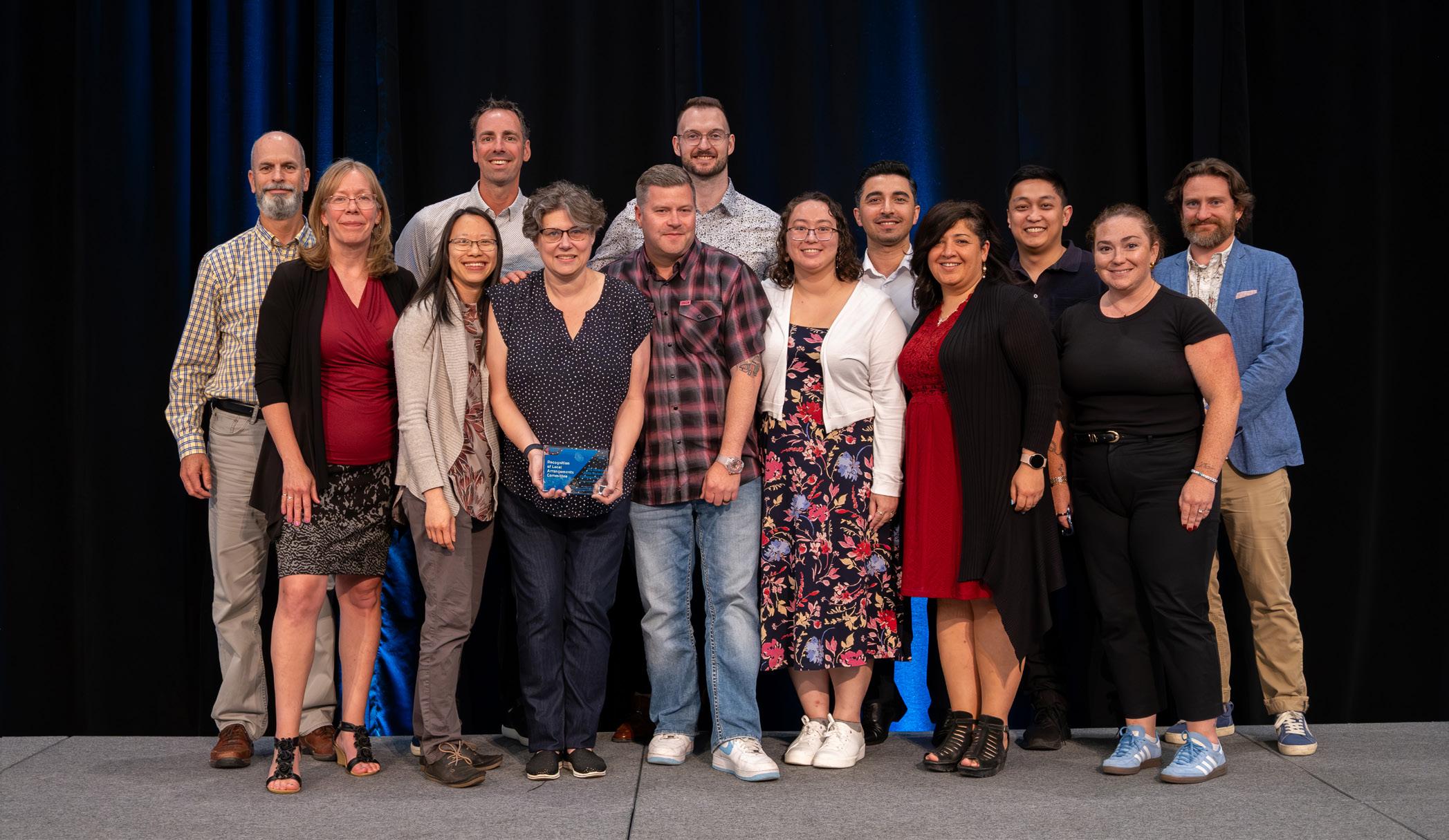
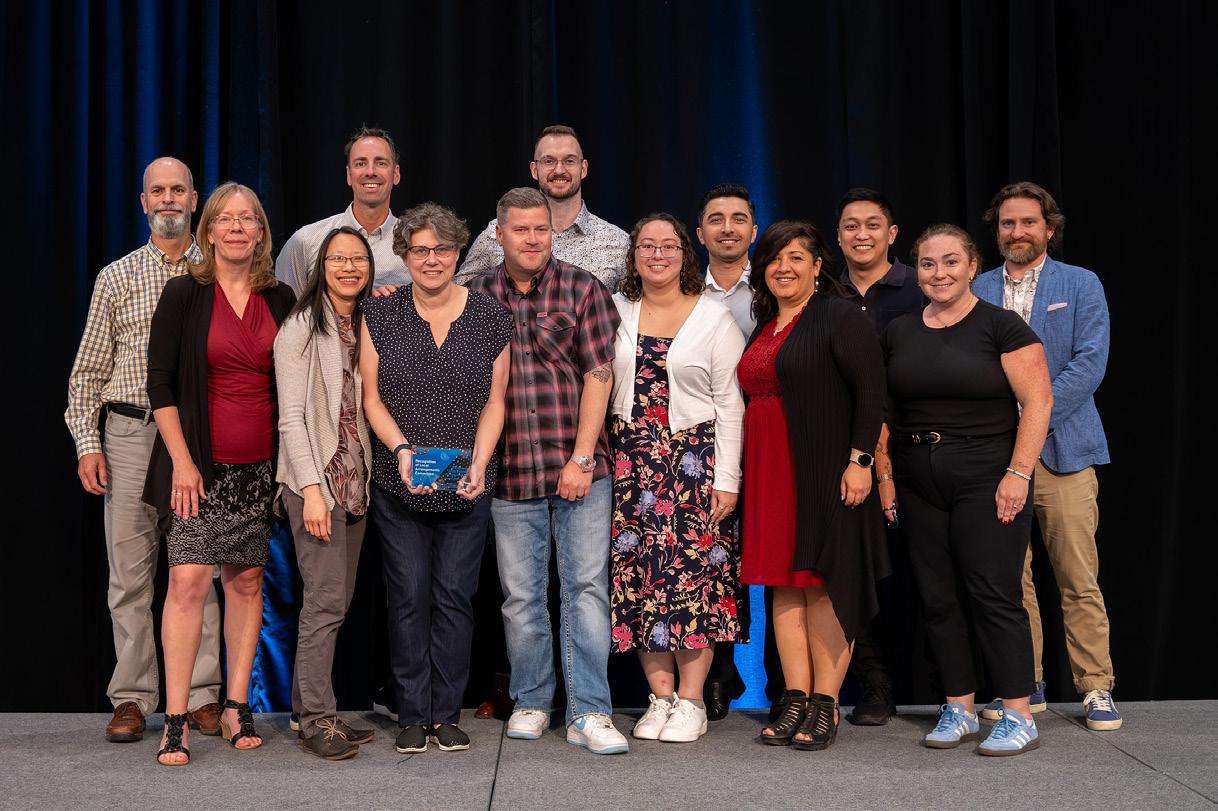
Recognition of 2026 Local Arrangements Committee Vancouver Island Section
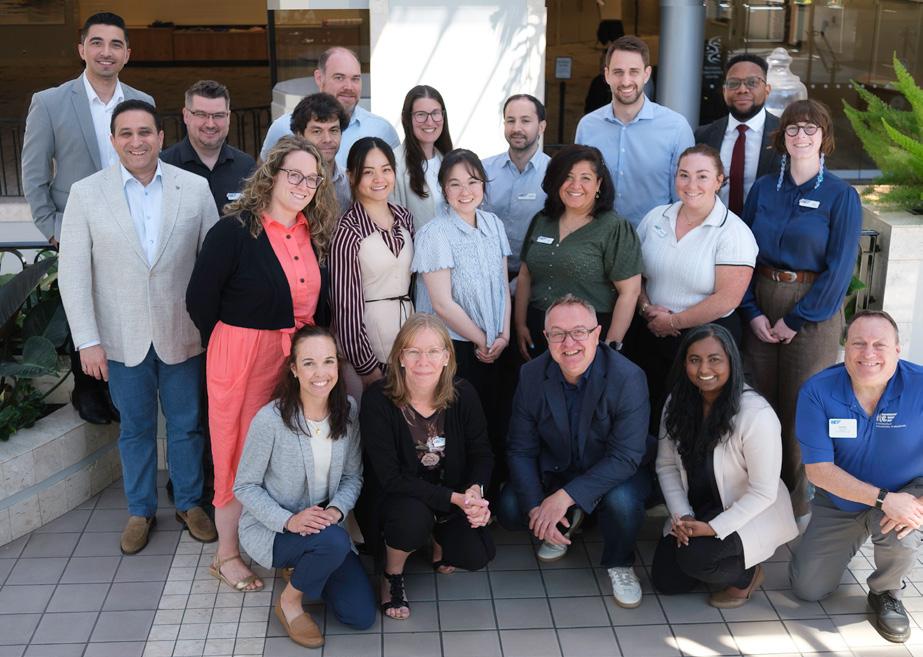
We thank the 2026 Local Arrangements Committee (LAC) from the ITE Vancouver Island Section for their dedication to the planning of this year’s conference. The LAC devoted months to organizing an incredibly successful conference in Victoria and we would like to recognize their outstanding hard work and effort. Thank you to not only the LAC, but also to their families and employers who have continued to support their service to ITE Canada.
We also extend our gratitude to all of the volunteers, including the National Technical Program Committee, who contributed to making the 2026 Victoria conference a reality.
Vancouver Island Section
Local Arrangements Committee
• Nick Armstrong, City of Victoria
• Bruce Beames, Stantec
• Kenneth Bulahan, JSF Technologies
• Dan Casey, Urban Systems
• Andy Kading, City of Victoria
• Nadine King (Chair), WATT Consulting Group
• Steve Martin, WATT Consulting Group
• Hana Stoer, Bunt & Associates
2026 Canadian Collegiate Traffic Bowl Champions
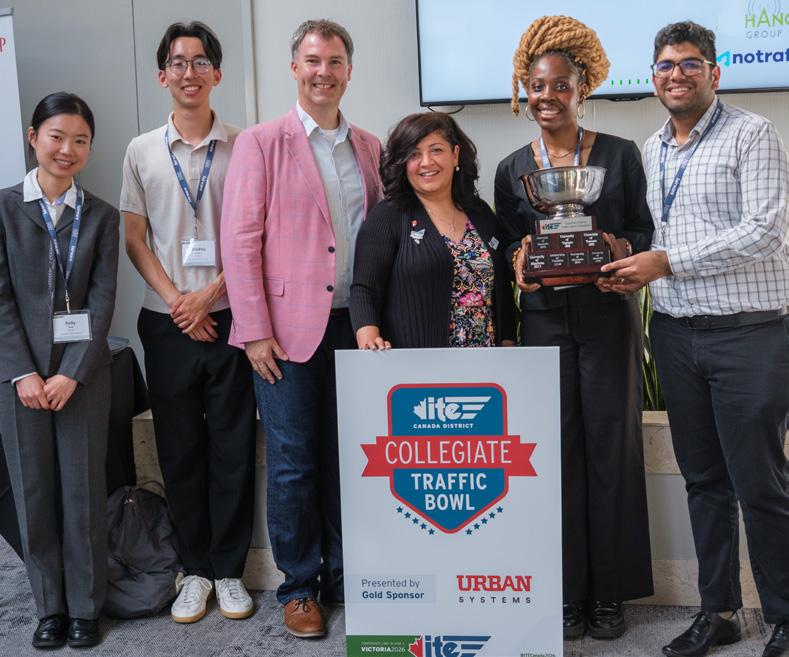
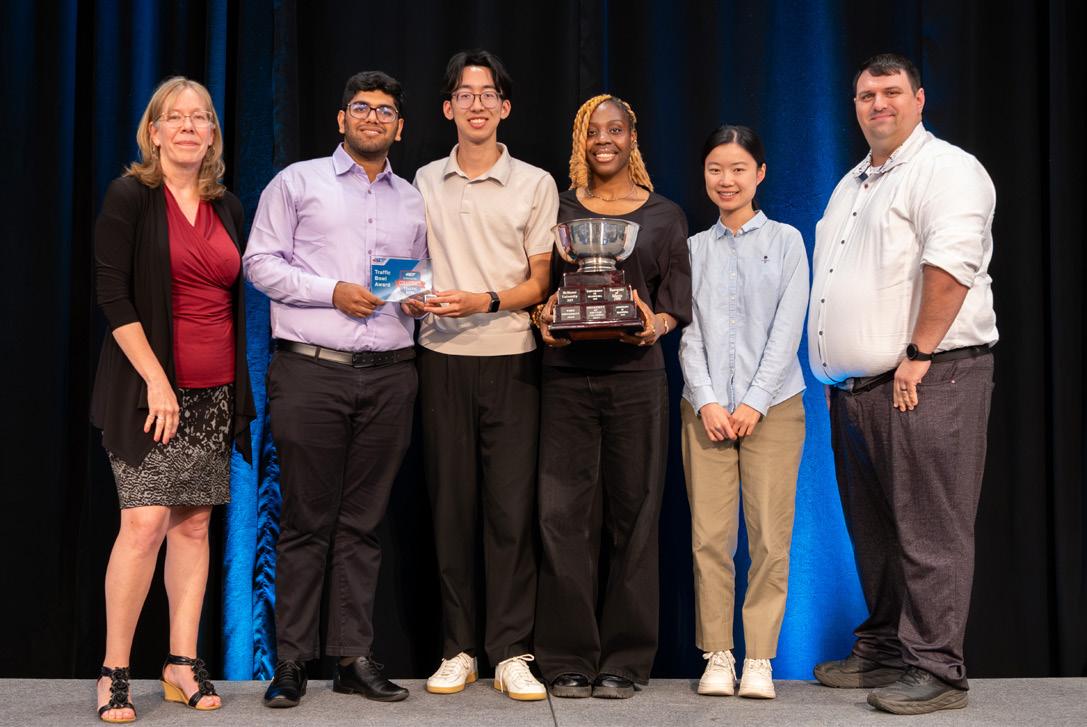
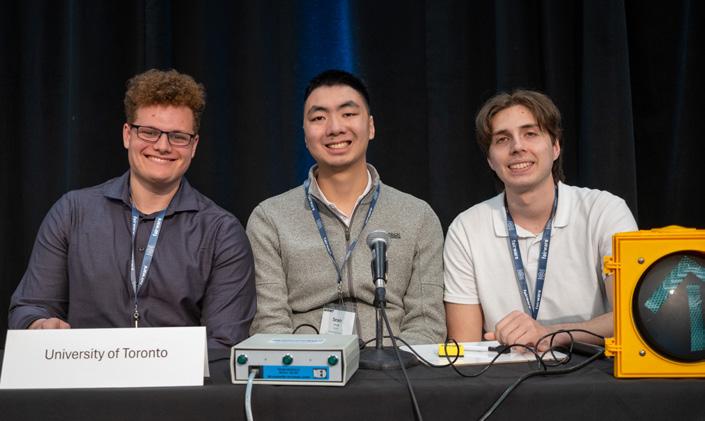
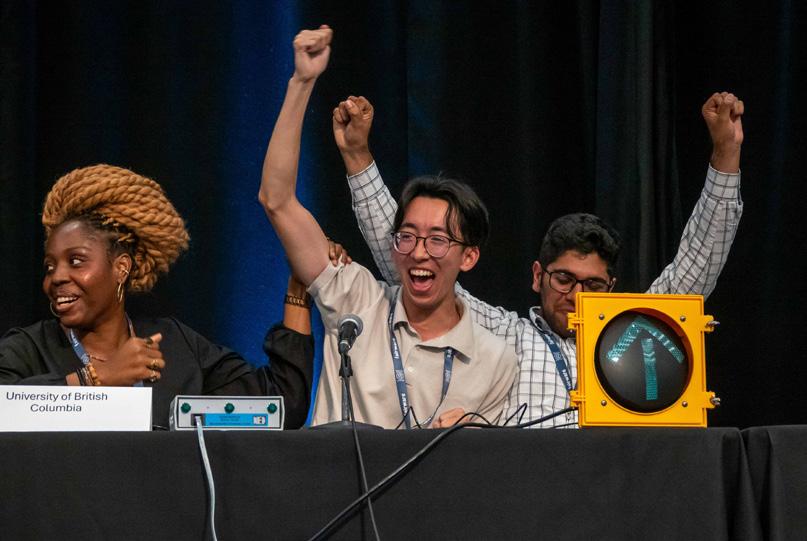
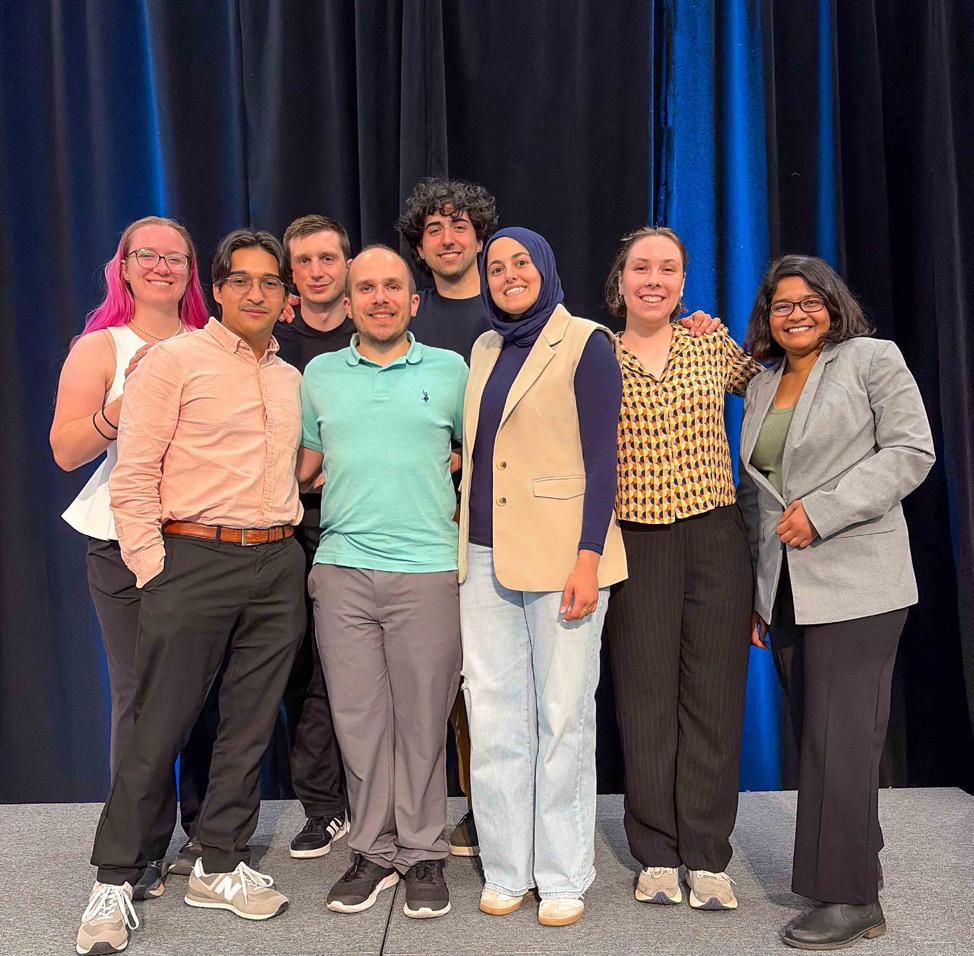
Congratulations to the 2026 Traffic Bowl Champions from the University of British Columbia Student Chapter: Sambhav Goyal, Bradley Carver, Victress Philemon, and alternate Kelly Zhang
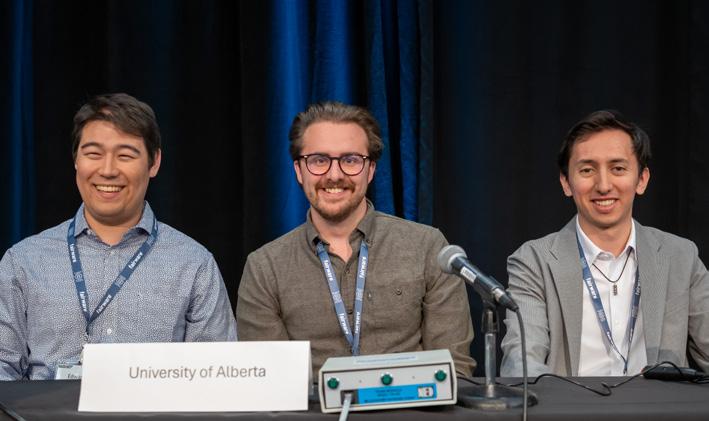
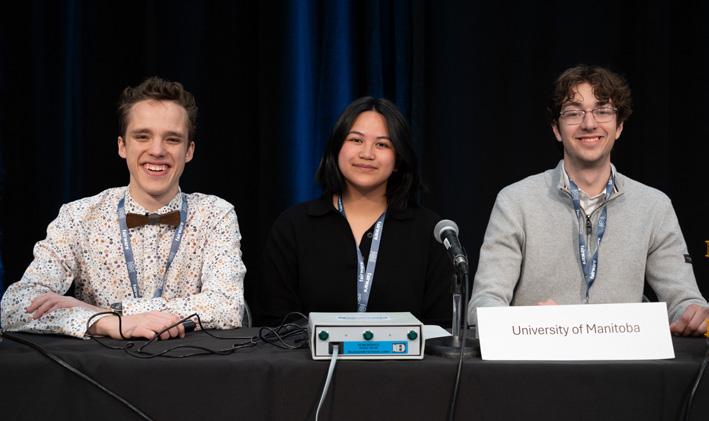
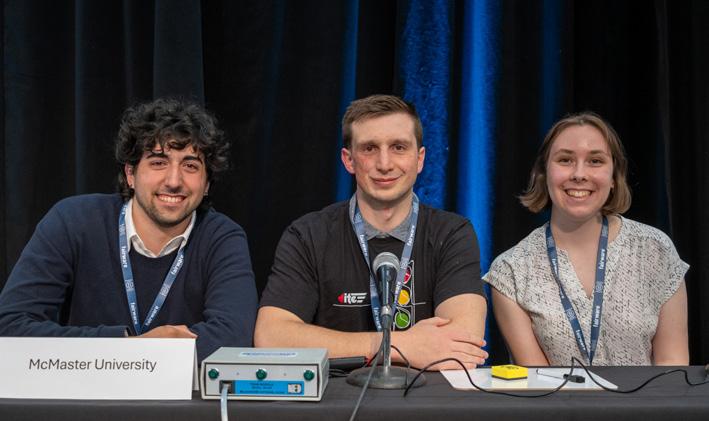
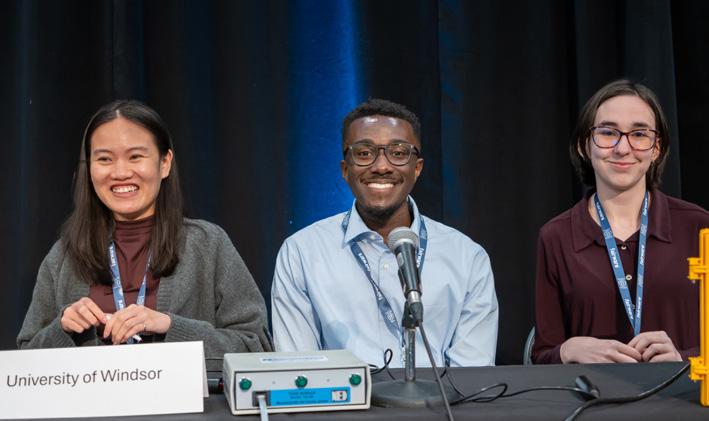
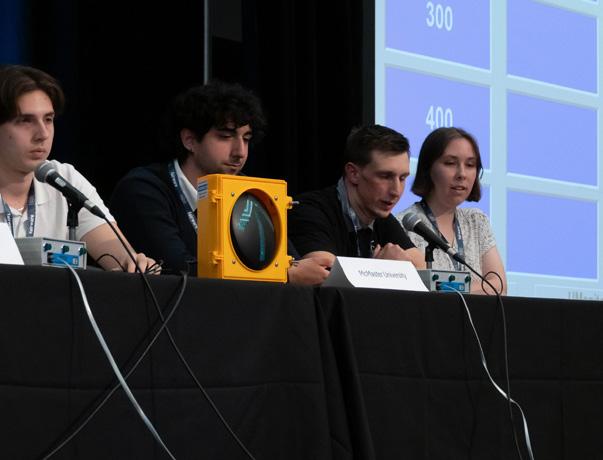
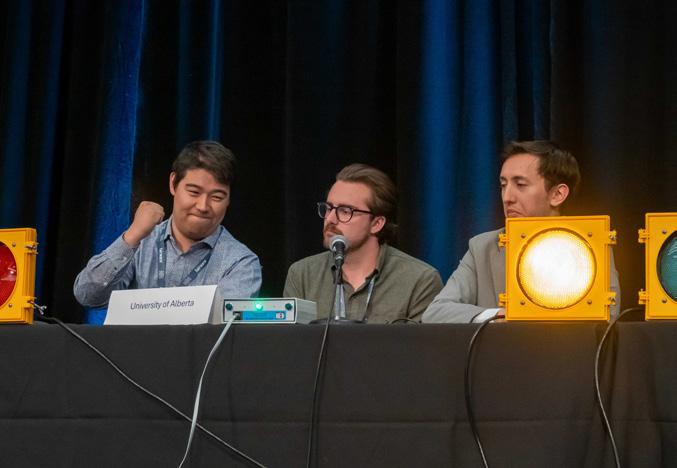
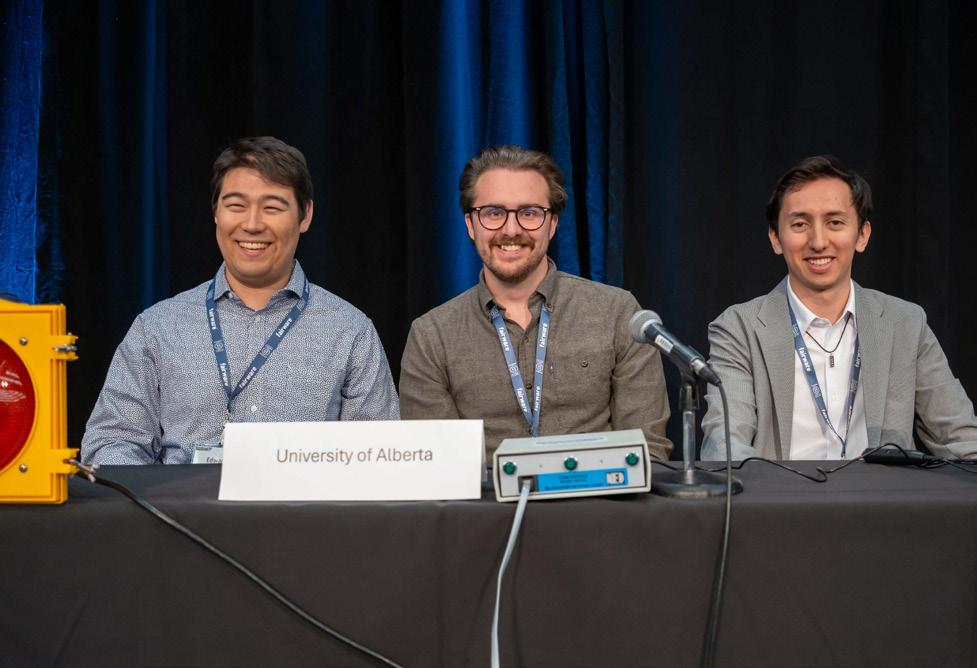
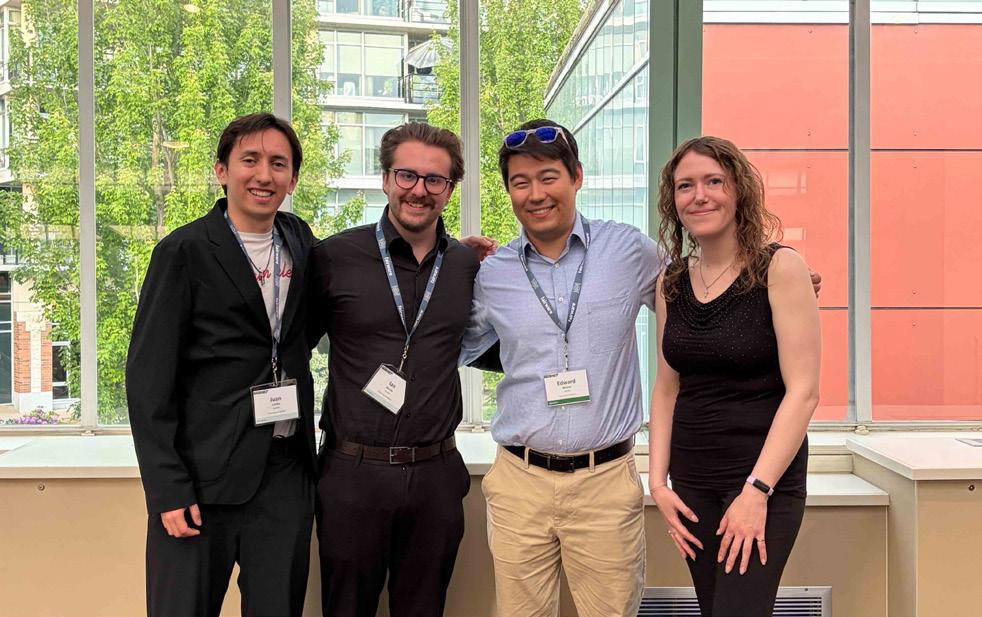
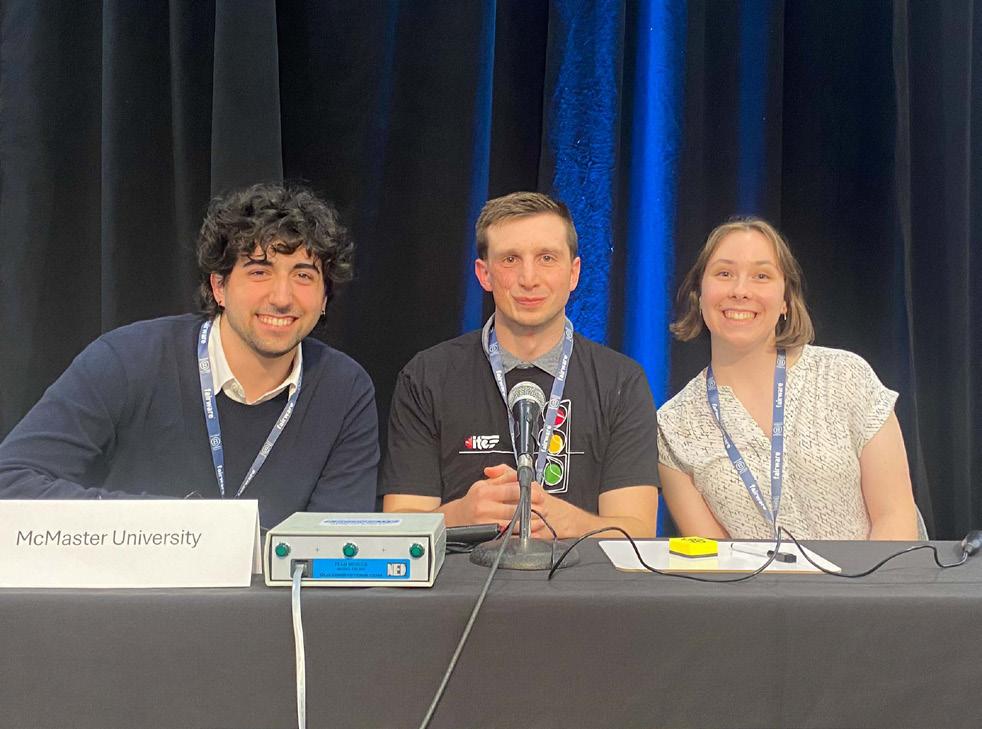
Well done to all of the teams for your hard work, especially the finalists from McMaster University and University of Alberta! Many thanks to the people who helped make this competition a great success— notably Traffic Bowl Coordinator Ian Lindley, MC Ryan Vanderputten, and clue master Russell Brownlee.
University of British Columbia
Sambhav, Bradley, Victress, and Kelly accept award from ITE Canada District Director Julia Salvini and Traffic Bowl Coordinator Ian Lindley
University of Manitoba
McMaster University
BCIT
University of Toronto
University of Waterloo
University of Windsor
University of Victoria University of Calgary
University of Alberta
ITE Canada 2026
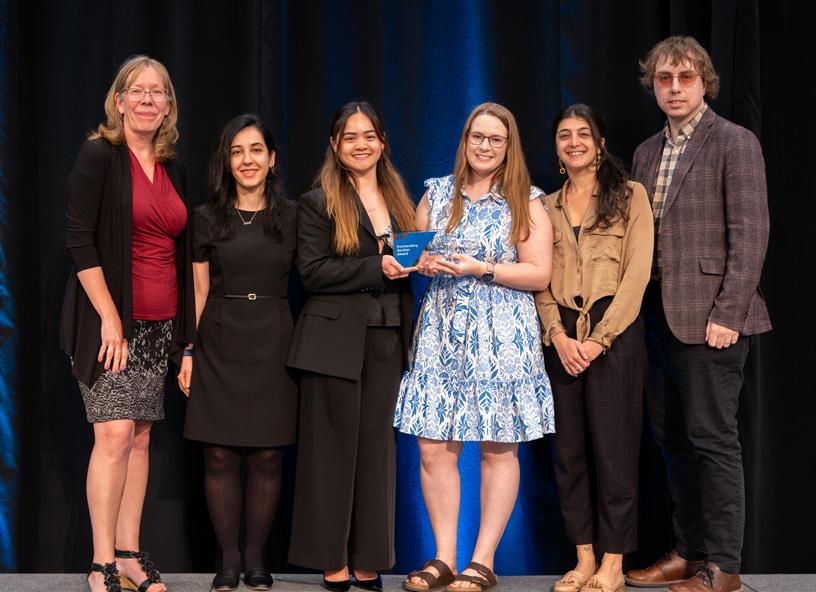
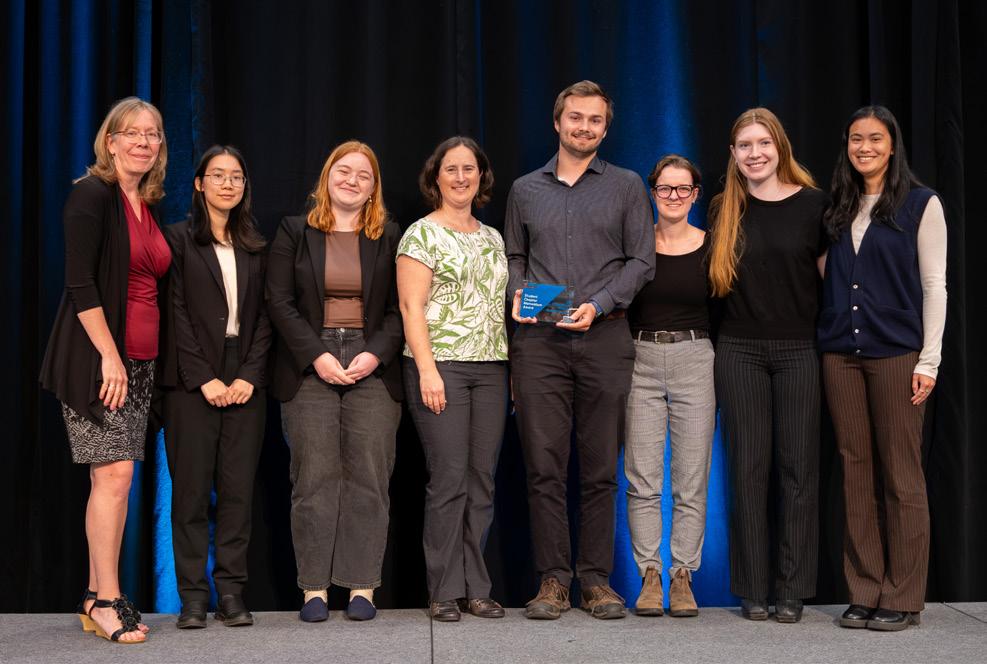
Outstanding Section Award
ITE Toronto Section engaged their many members with intentional effort in 2025. They hosted or co-hosted joint efforts with other ITE Sections and Student Chapters for a total of 12 diverse events ranging from workshops, tours, luncheons, webinars, and student events with a particular focus on accessibility and road safety. Notable events included the CNIB Accessibility Workshop & Walking Tour, Waterfront Toronto Bike Tour and Summer Social, Mini Transportation Conference (with ITE SWO and Hamilton) and Lakehead University Accessible Transportation Systems Workshop in Thunder Bay. Their focus on partnership and collaboration allowed them to serve a broad membership with diverse needs and foster a strong local transportation community.
2024 SECTION EXECUTIVE COMMITTEE
• President: Heather Hector
• Vice President: Jocelyn Wallen
• Secretary: Sina Semnarshad
• Treasurer: Jordan Hart-Bishop
• Section Director, non-voting & Past President: Stephanie Pham
Section Momentum Award
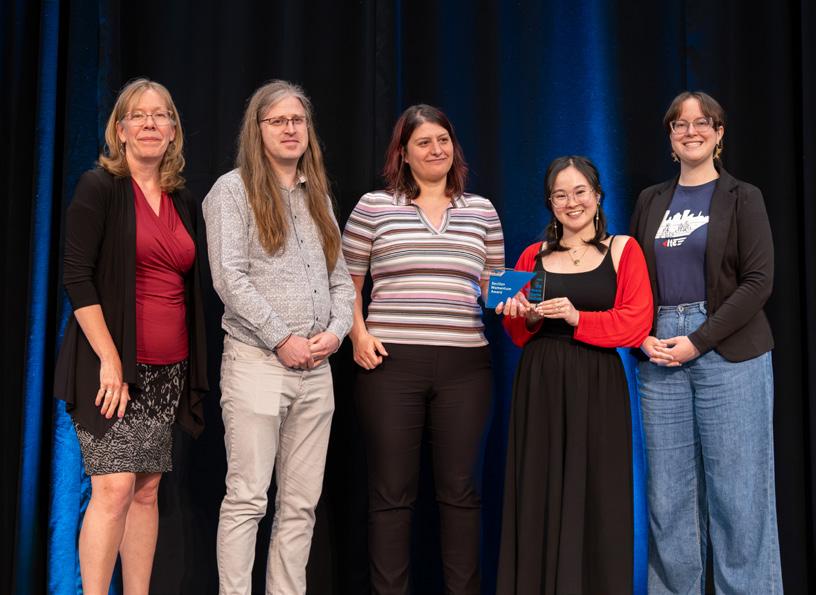
2025 was a year of growth and development for the Northern Alberta Section. They initiated new efforts such as their first K-12 STEM outreach event supporting the University of Alberta’s DiscoverE program and building a Section sponsorship package. The Section also advanced several member-focused initiatives: they organized a series of monthly knowledge sharing events, arranged and advertised a member award program, and enhanced integration with the University of Alberta Student Chapter.
2025 SECTION EXECUTIVE COMMITTEE
• President: David Mason
• Vice President: Chris Lehmann Skelton
• Secretary & Treasurer: Mounira Sayour
• Past President: Jackie Prior
• Section Director: Olivia Duong
Toronto Section
Northern Alberta Section
Members of the Northern Alberta Section accept award from Julia Salvini, ITE Canada District Director
Members of the Toronto Section accept award from Julia Salvini, ITE Canada District Director
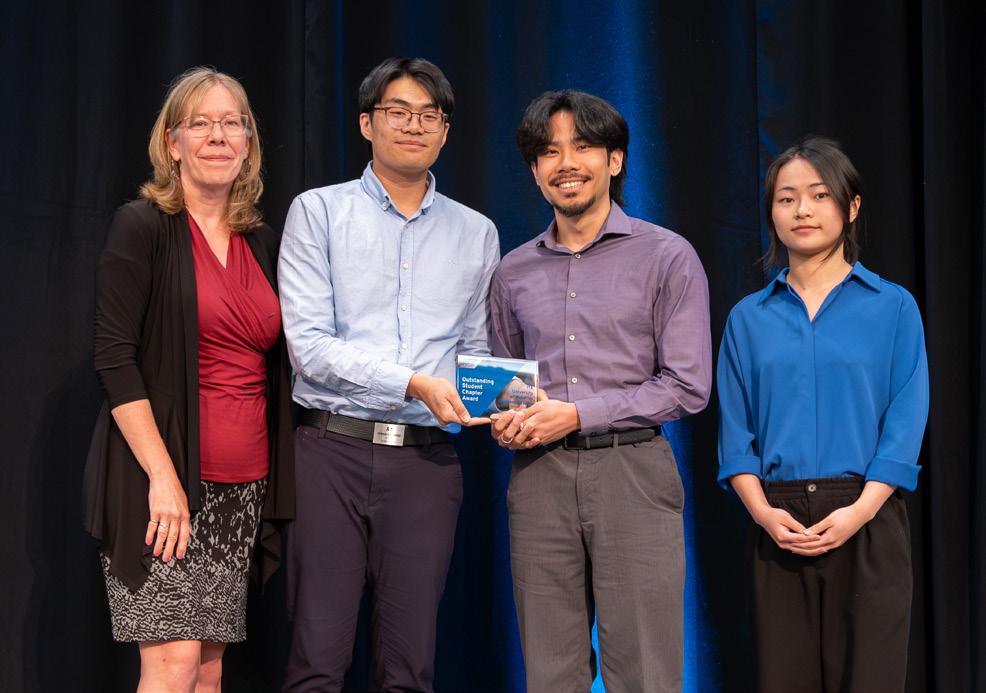
Outstanding Student Chapter Award
This year the University of Waterloo student Chapter contributed to significant growth in chapter recruitment and overall campus presence. They organized more than 10 industry seminars, technical tours, and software workshops with strong student participation and attendance. The chapter led extensive K–12 outreach initiatives through Campus Open Houses and Engineering Outreach workshops, helping expand community engagement and awareness of engineering programs. They also participated in the Sandbox Competition to create new opportunities for student engagement, leadership development, and professional growth within the chapter.
2024-2025 STUDENT CHAPTER EXECUTIVE COMMITTEE
• Presidents: Shrinidhi Elangovanneela & William Pham
• Treasurer: Aditi Atodaria
• Secretary: Tayler Lam
• Events Directors: Eric Tran & Andrew Wong
• Media Director: Benjamin Gosselin
• Chapter Advisor: Dr. Chris Bachmann
• Outreach Director: Dylan Mah
• Faculty Advisor: Christian Bachmann
Student Chapter Momentum Award
In 2025, this team’s tremendous efforts revived the hometown ITE UVic Student Chapter. From March to December, the chapter hosted two technical tours, five Lunch & Learns, one scavenger hunt, one Design Competition, one Industry Night, and five community outreach events. Their focus has been on introducing university and K-12 students to different aspects of transportation engineering and planning through engaging and learning events. They also just hosted the 2026 Student Leadership Summit, bringing together over 40 students for a weekend of professional and leadership development.
2025-2026 STUDENT CHAPTER EXECUTIVE COMMITTEE
• President: Aislinn Dressler
• VP Internal: Mikayla Isted
• VP Outreach: Julia Tay
• Secretary + 4th Year Representative: Oliver Kerr
• Treasurer: Robyn Jutras
• 3rd Year Representative: Colin Sparks
• VP Sponsorship + 2nd Year Representative: Cathy Yeung
• VP Media: Mackenzie Clarke
• Advisor: Laura Minet, Assistant Professor
University of Waterloo
University of Victoria
Members of the University of Waterloo Student Chapter accept award from Julia Salvini
Members of the University of Victoria Chapter accept award from Julia Salvini, ITE Canada District Director
ITE CANADA 2026
ANNUAL CONFERENCE
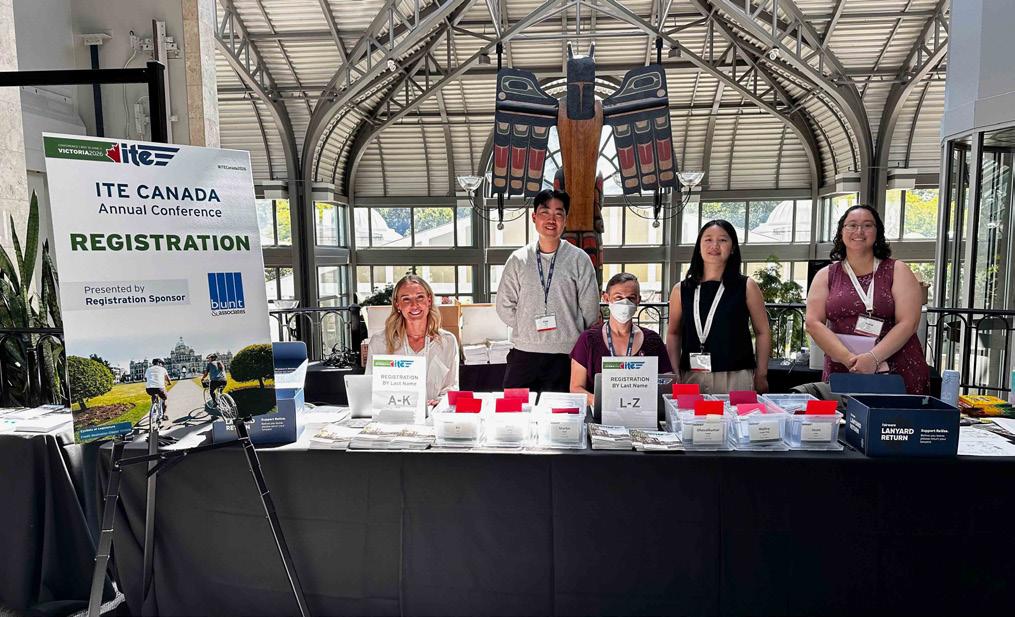
From May 31 to June 3, 2026, ITE Vancouver Island Section welcomed transportation professionals from all across the country to Victoria, BC for the ITE Canada District Annual Conference. Hosted on the traditional territories of the Lək̓ʷəŋən-speaking Peoples of the Songhees and Esquimalt Nations and the W̱SÁNEĆ peoples, the Annual Conference brought together over 630 delegates, exhibitors, volunteers, and speakers to foster connections, share best practices and research, and exchange ideas for safe and healthy mobility around the theme of Creating Connections Through Transportation.
Attendees discovered everything that beautiful Victoria has to offer, from the lively downtown to the scenic West Coast waterfront through a dynamic program of technical sessions, inspiring keynote speakers, local tours, and meaningful networking opportunities. In addition to being a record-breaking event in size, this conference was also a milestone in ITE Canada history, celebrating our 75th anniversary since the first Canadian Section was established in 1951 and 50 years since the first District conference in 1976.
On behalf of the Local Arrangements Committee, we extend our sincere thanks to our speakers, moderators, panelists, exhibitors, sponsors, and volunteers for helping make this conference a success. Your time, expertise, and dedication were instrumental in creating an engaging and memorable event. We also extend our gratitude to ITE Canada for the opportunity to host this collaborative event in Victoria and showcase everything that the city has to offer.
We hope to see you all next year with your cowboy boots in Calgary for the Joint ITE International and ITE Canada Annual Meeting!
SCOTT JUNIPER
SOCIAL + PLENARY EVENTS
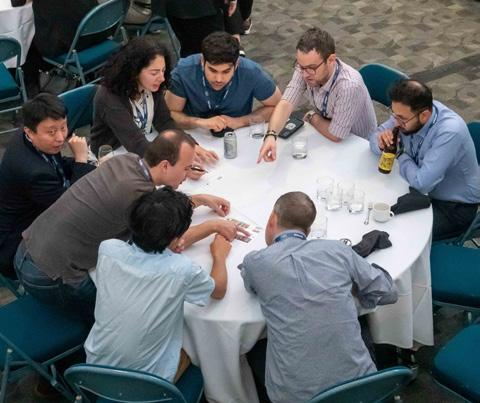
Welcome + Exhibitor Showcase
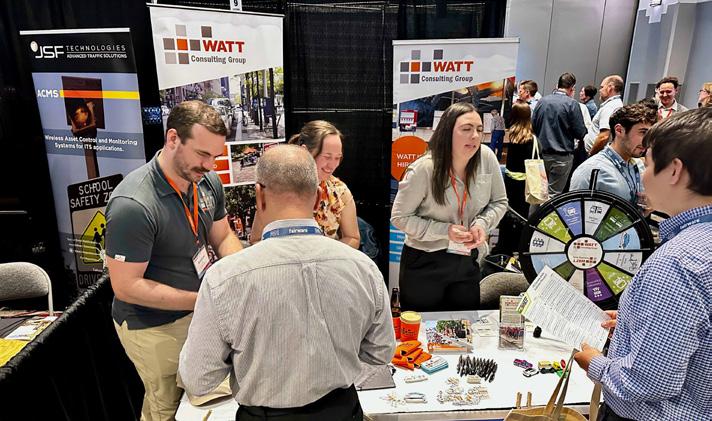
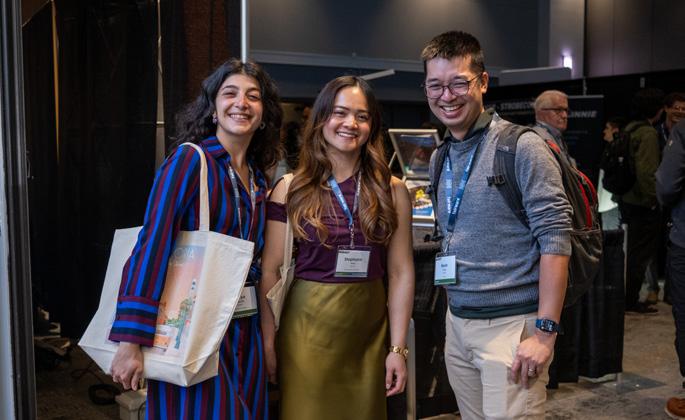
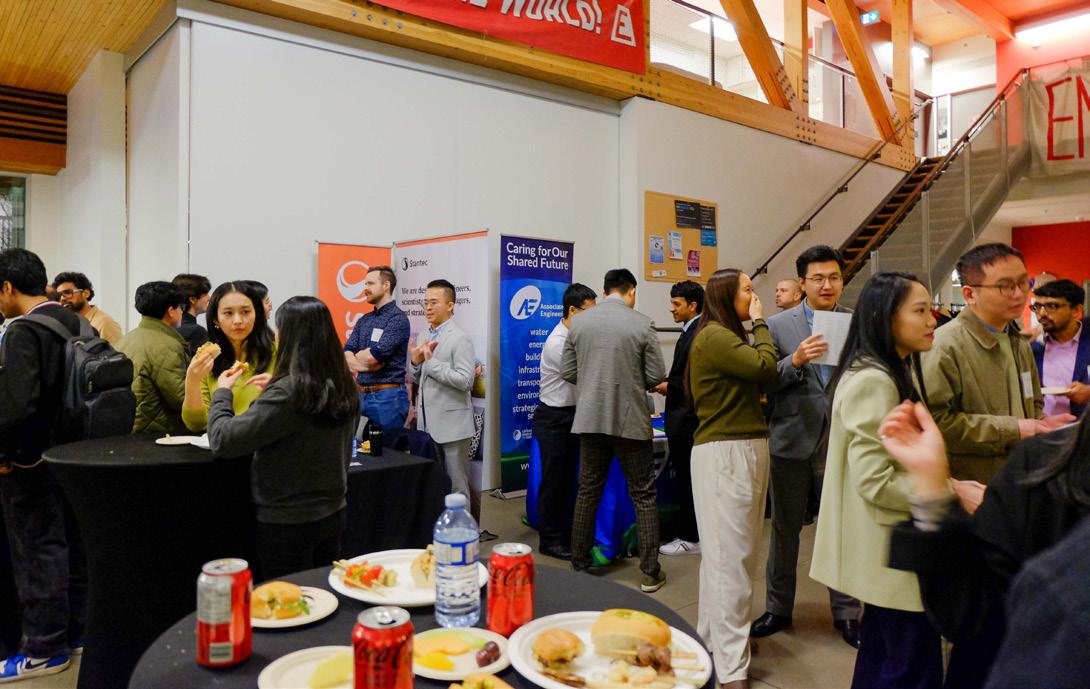
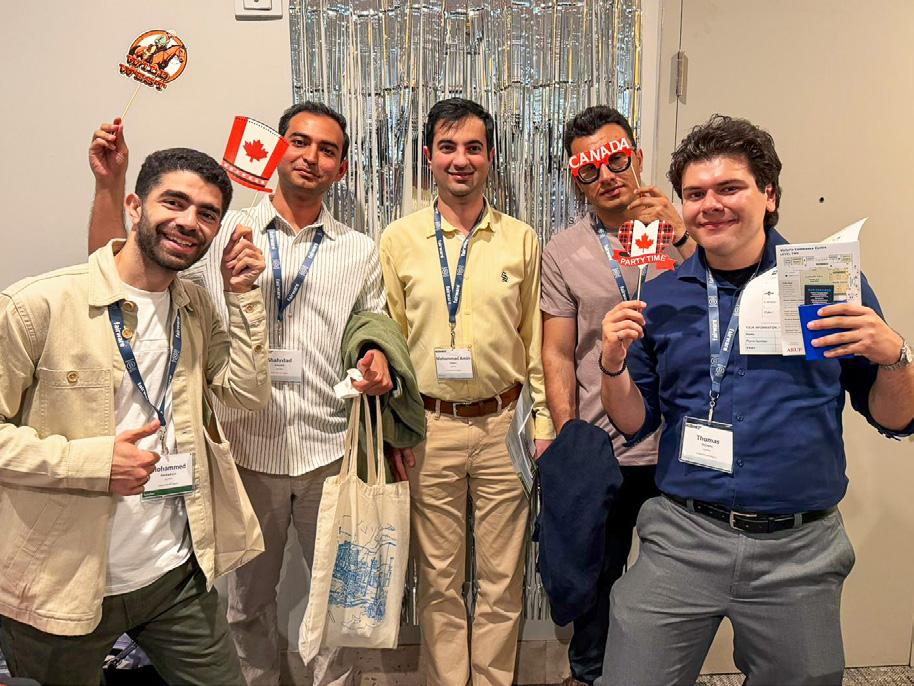
We opened the Annual Conference with a Welcome Reception & Exhibitor Showcase where our attendees gathered to connect, or re-connect, with fellow transportation colleagues. Presented by Gold Sponsor RVA, attendees enjoyed appetizers and beverages, learned about new innovations and services, and completed their exhibitor passports.
Kickoff Keynote
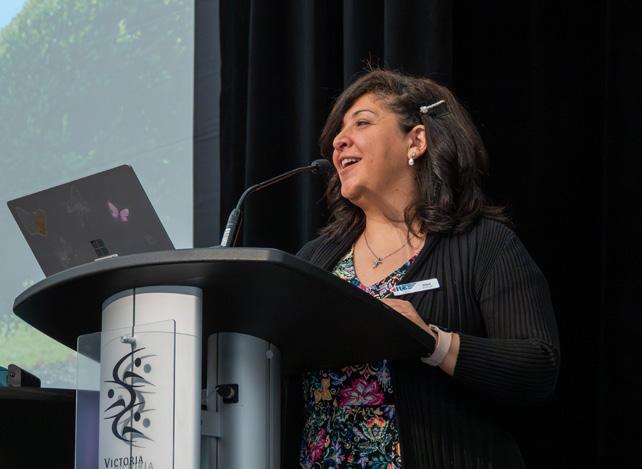
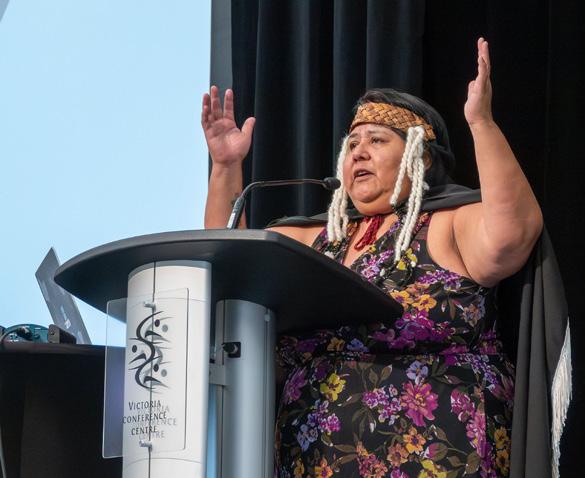
To launch the 2026 conference, we began on Monday morning with a territorial welcome from Florence Dick of the Lək̓ʷəŋən People, an opening address from ITE Canada President Irini Akhnoukh, and remarks from Conference Chair Nadine King who also represented the conference’s top Diamond Sponsor, WATT Consulting Group
The keynote address featured Jeremy Caradonna Victoria City Councillor, Capital Regional District (CRD) Director, and Victoria Regional Transit Commissioner— who gave a presentation on the evolution, opportunities, and challenges of regional transportation in Greater Victoria and CRD. It was an insightful presentation that set the stage for delegates
experiencing the transportation systems and development throughout Greater Victoria during the conference and offered a glimpse at what the future may hold for the region.
Monday Lunch + ITE Address
We were thrilled to welcome Gordon Meth, President of ITE International, to share news and updates from our parent organization at the conference Monday Lunch presented by McElhanny. Gord spoke about the ITE Safety Roadmap and Action Plan, milestones being reached by our community of transportation professionals, professional development and technical resources from ITE International, and the many opportunities for members to get involved and become leaders in the profession. He invited delegates to find a path for involvement and learning at ite.org.
Delegates connect at our Exhibitor Showcase
Gordon Meth
Jeremy Caradonna
Jeremy & Nadine King
Irini Akhnoukh
Florence Dick
Traffic Bowl
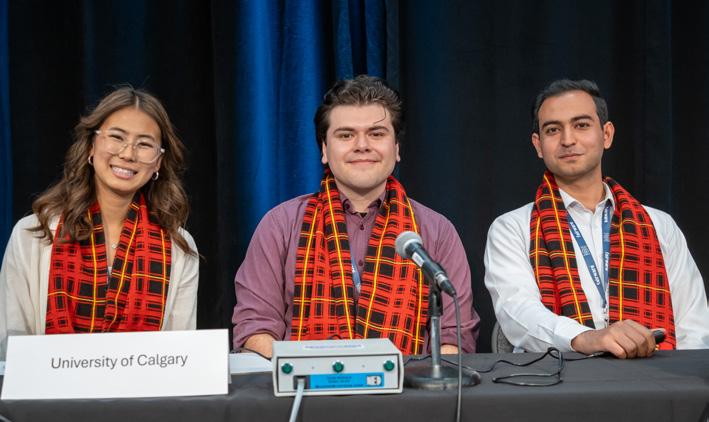
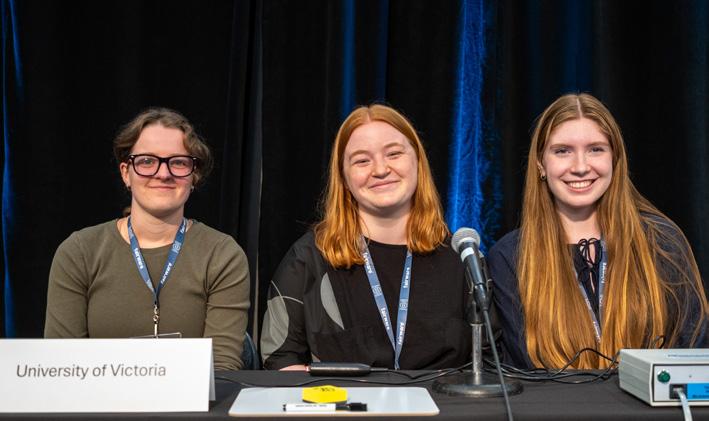
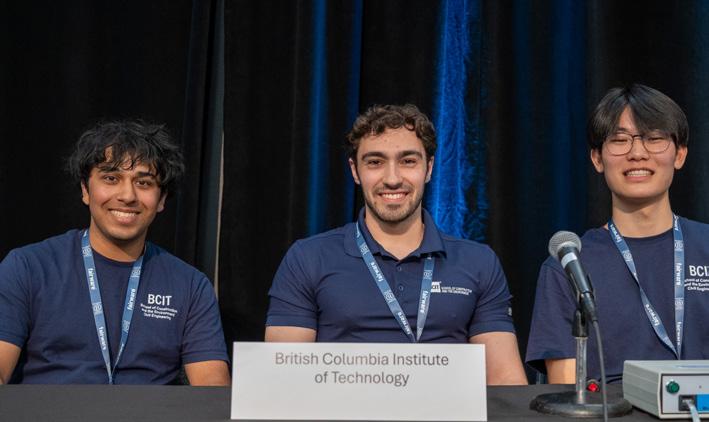
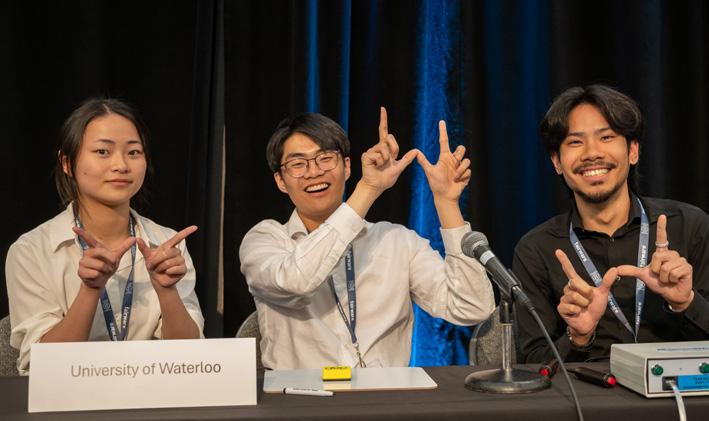
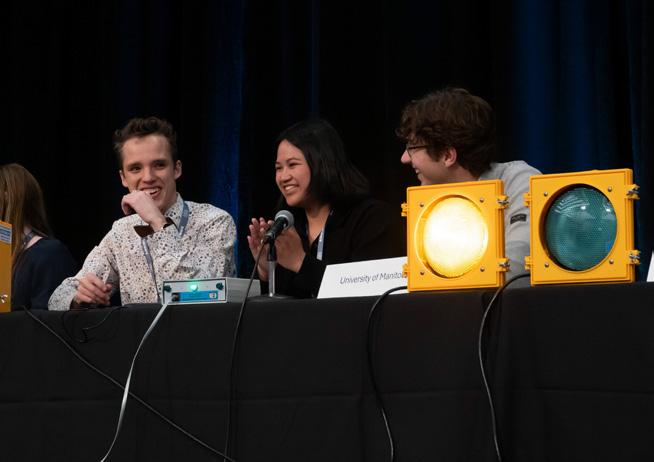
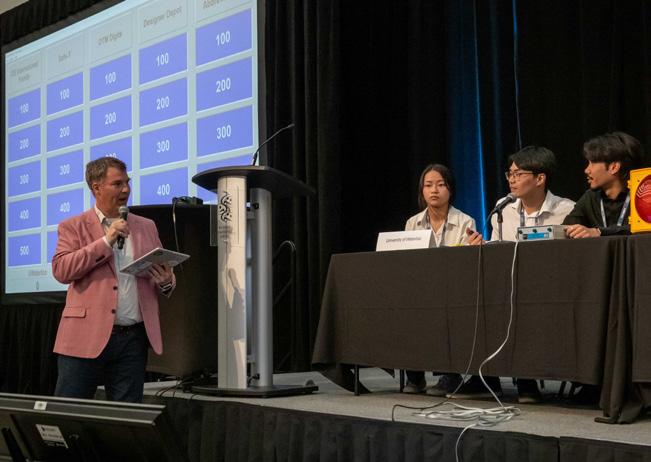
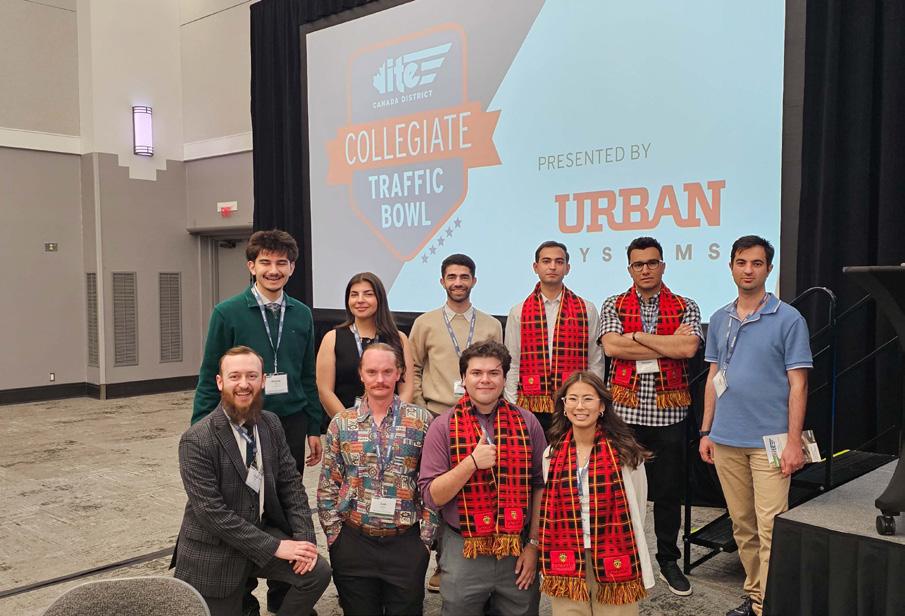
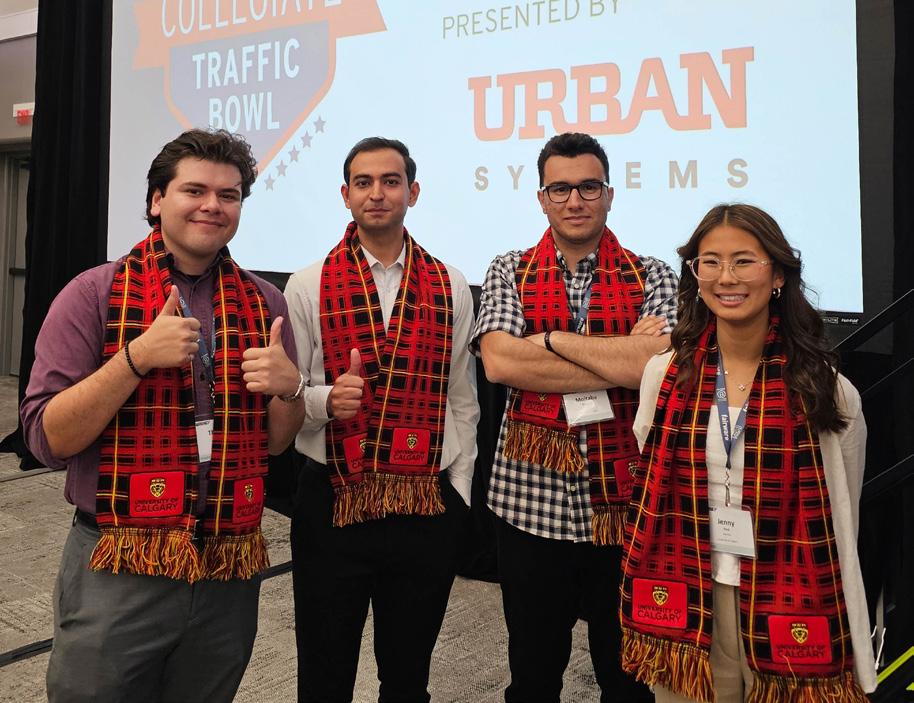
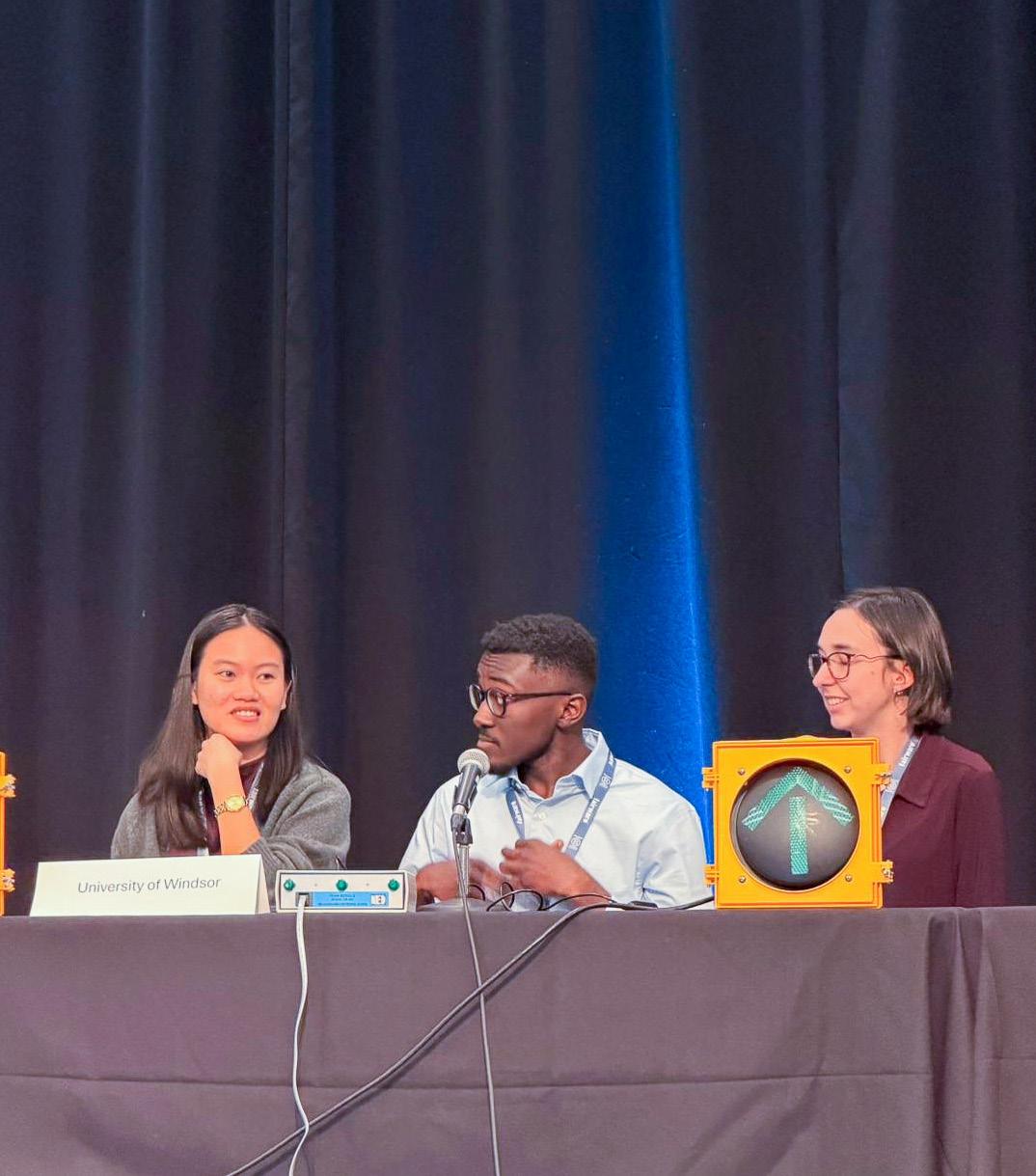
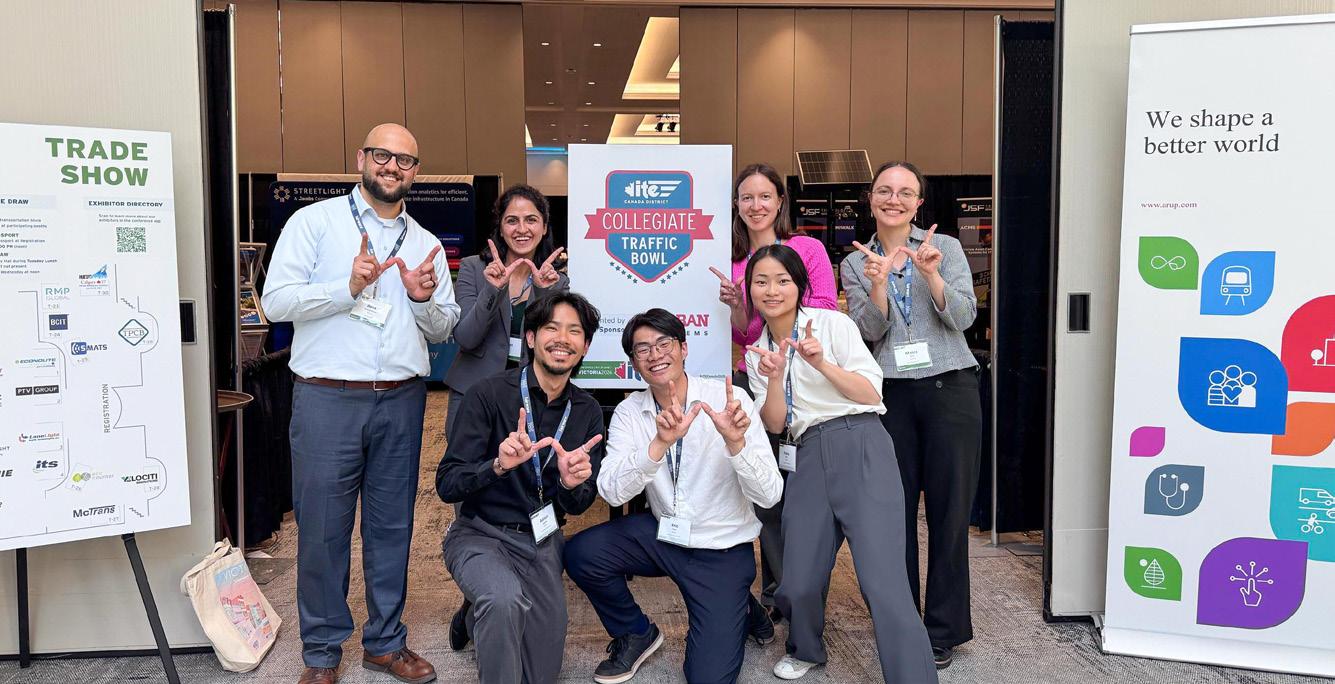
Congratulations to the 2026 ITE Canada District Traffic Bowl Champions: UBC ITE Student Chapter for the fourth year in a row. Our legendary jeopardy-style event, sponsored by Urban Systems, was a success yet again, with ten phenomenal teams from universities all across Canada. Well done to our finalists McMaster University and University of Alberta, as well as the participating teams representing the brightest of minds from the University of Toronto, University of Manitoba, University of Windsor, University of Victoria, University of Waterloo, University of Calgary, and British Columbia Institute of Technology ITE Student Chapters.
Street Hockey
Student Mixer
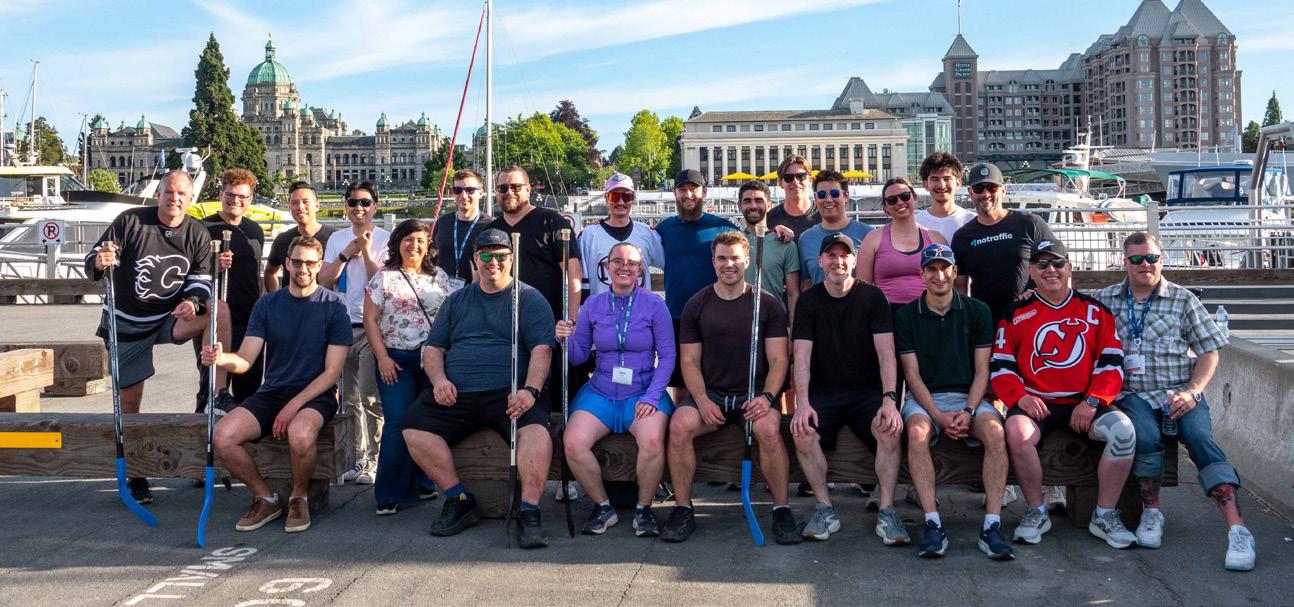
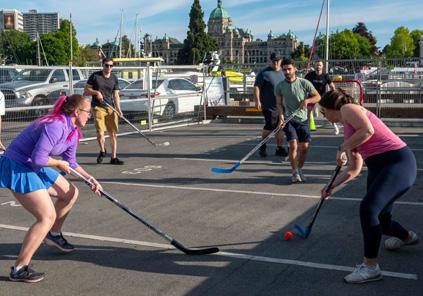
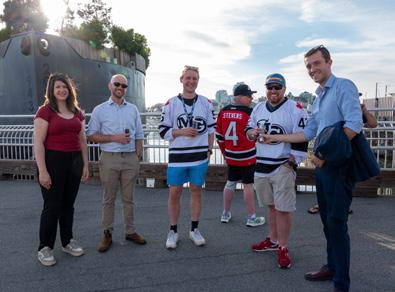
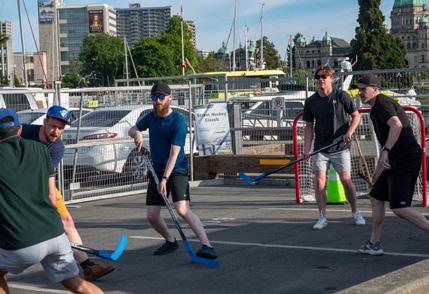
Our annual Street Hockey Classic landed on the Victoria harbour waterfront on Monday evening. The East took on the West in a hard fought battle with the iconic BC Legislature and Fairmont Empress Hotel overlooking the game. Special thanks to Gold Sponsor HighAngle Group/No Traffic for presenting this fan-favourite event and well done to all participants!
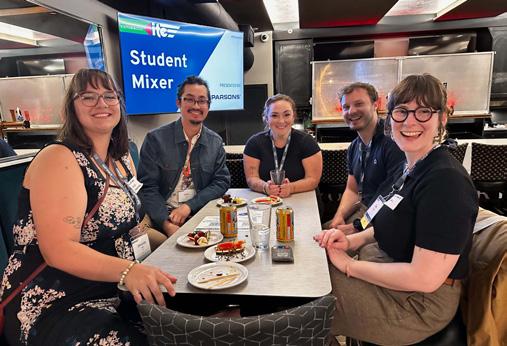
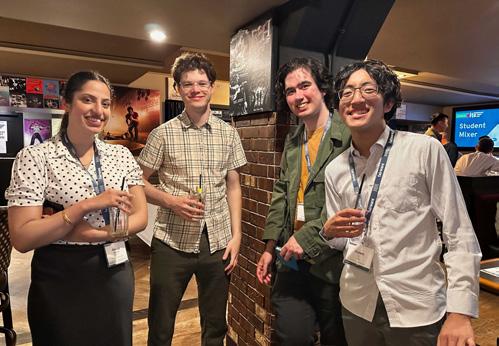
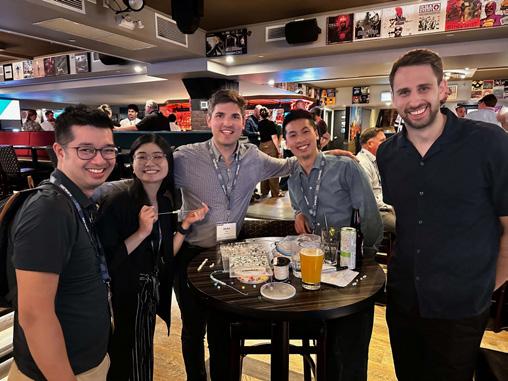
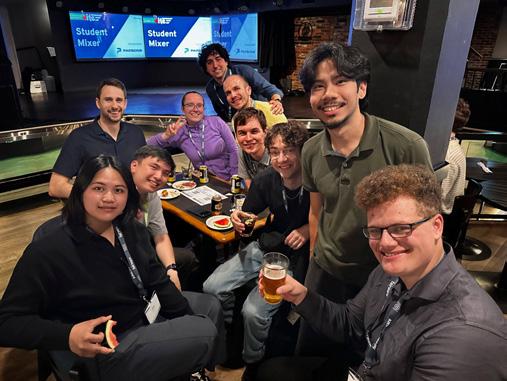
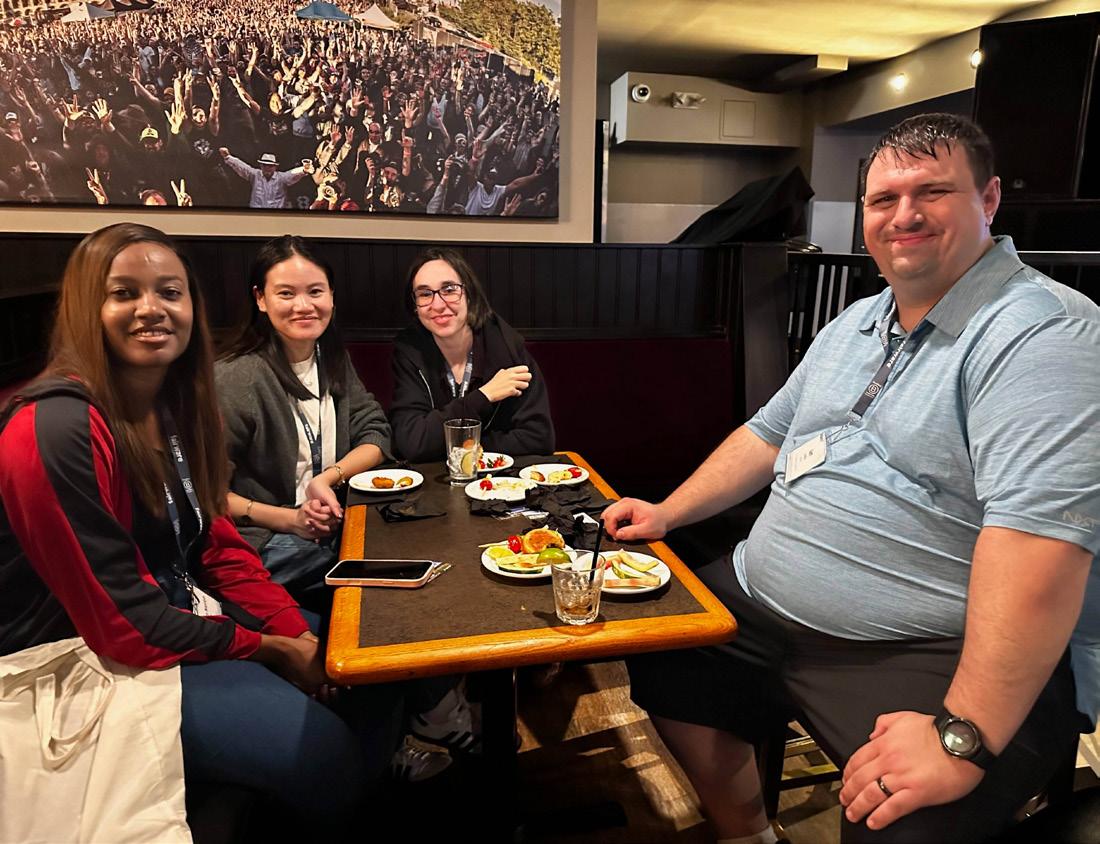
Students and professionals mingled at the Sticky Wicket, Vancouver Island’s biggest pub, to foster new and old connections over drinks and appetizers. Thank you to this event’s Gold Sponsor Parsons and everyone who participated in the Future Transportation Leaders Fund 50/50 draw!
Networking Lunch + Exhibitor Passport Raffle
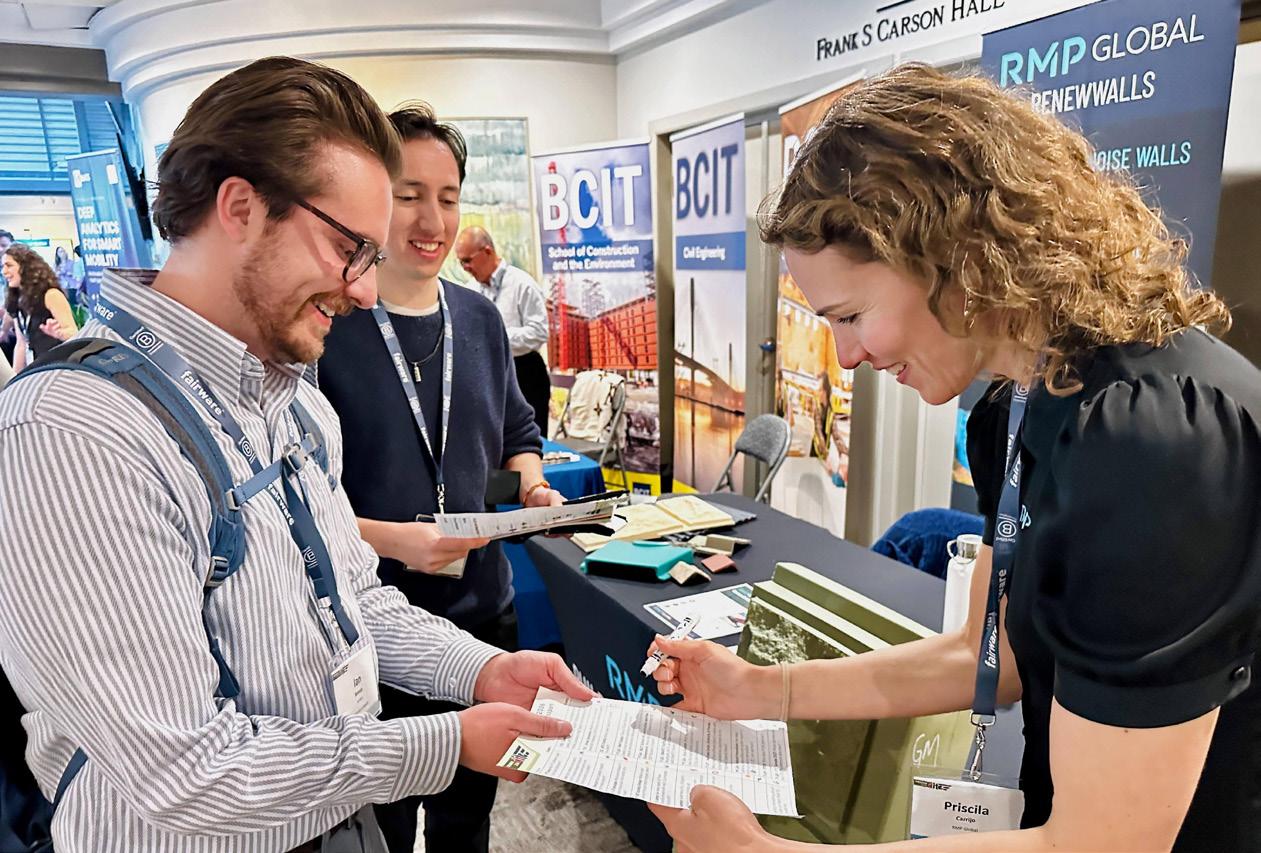
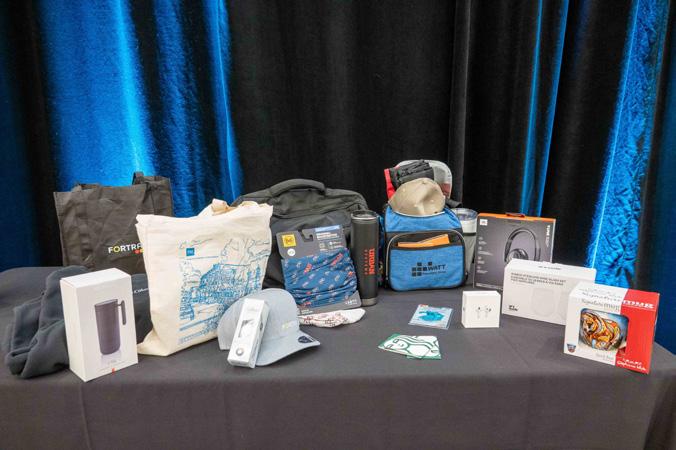
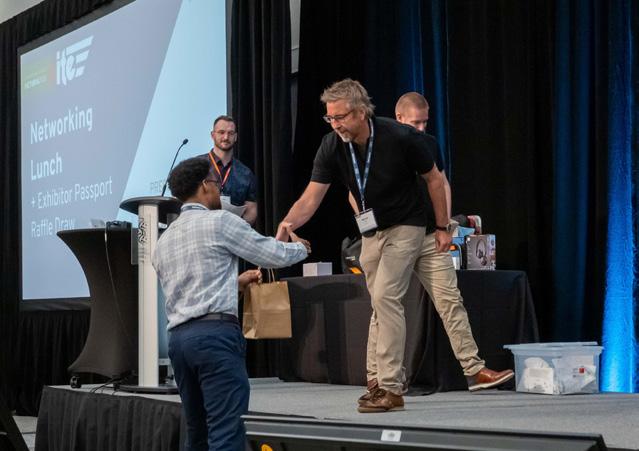
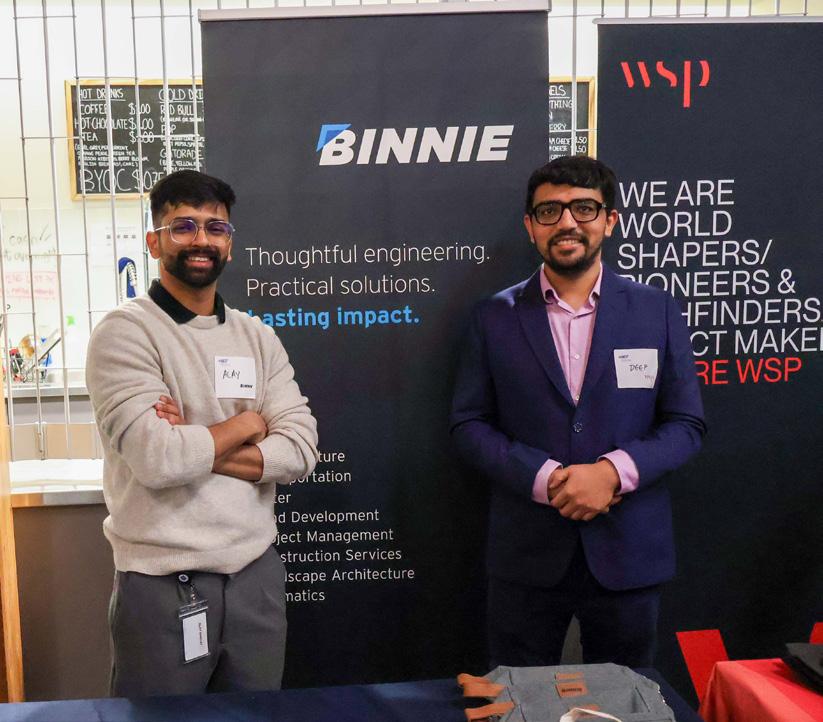
Tuesday lunch gave attendees a chance to network and explore Victoria or enjoy lunch on site. Those who stayed heard a total of thirteen raffle prize winners announced from over 250 participants! Congratulations to everyone who won prizes donated by exhibitors. Thank you to everyone who filled out an Exhibitor Passport, and a special thank you to Gold Sponsor Binnie for presenting this event!
Wednesday Awards Luncheon
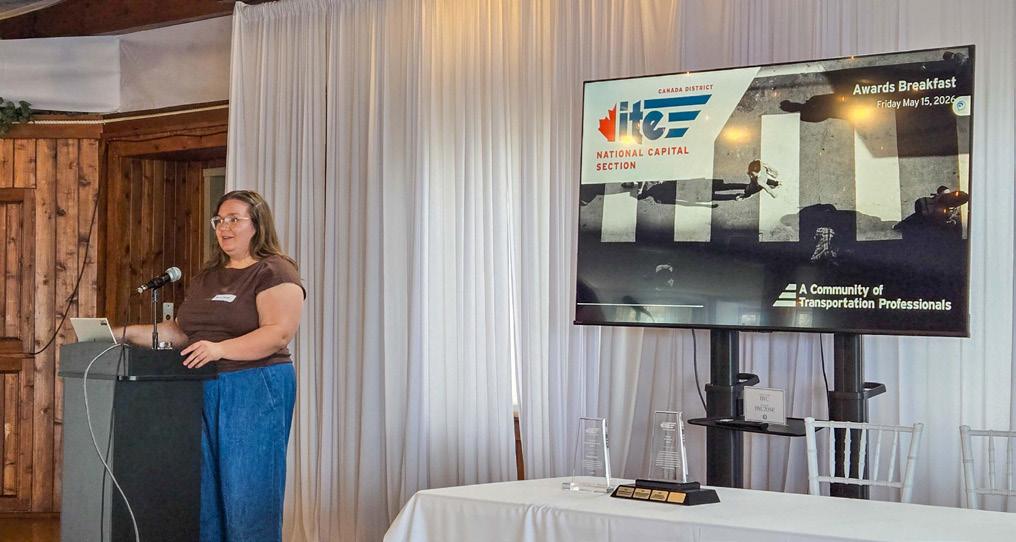
At the 2026 Excellence in Transportation Awards and Scholarships Luncheon presented by HDR we honoured the brightest individuals in the transportation community. ITE Canada District & Future Transportation Leaders Fund Award and Scholarship winners were presented by Joanna Kervin (Vice Chair of Future Transportation Leaders Fund), Irini Akhnoukh (ITE Canada President) and Julia Salvini (ITE Canada District Director). Meet the recipients in the feature starting on page 7.
PHOTO ALBUM
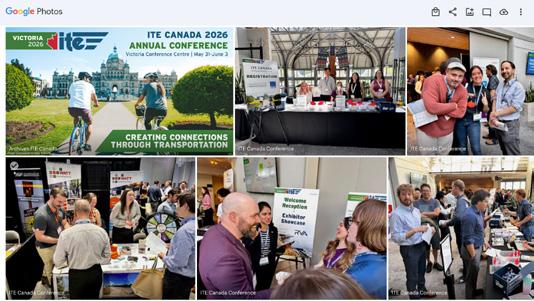
Check out the Victoria 2026 photo album for many more highlights and add your own memories.
Thanks to everyone who already shared photos!
Banquet Dinner
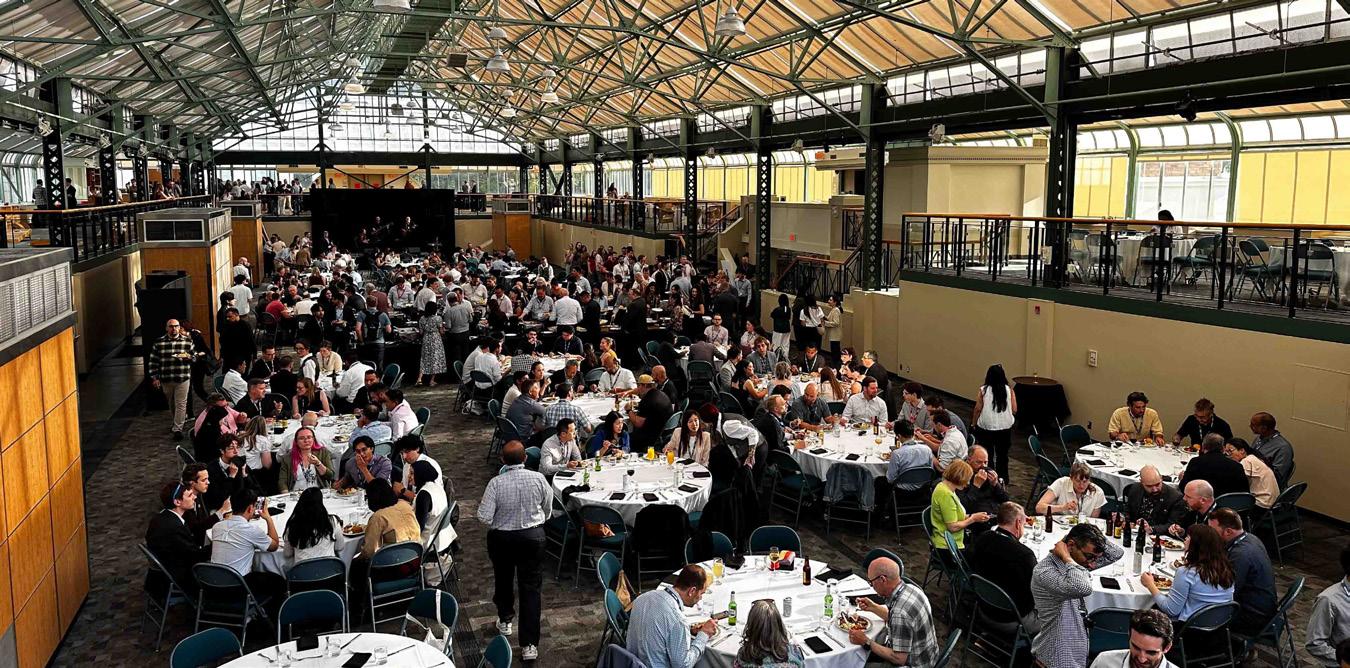
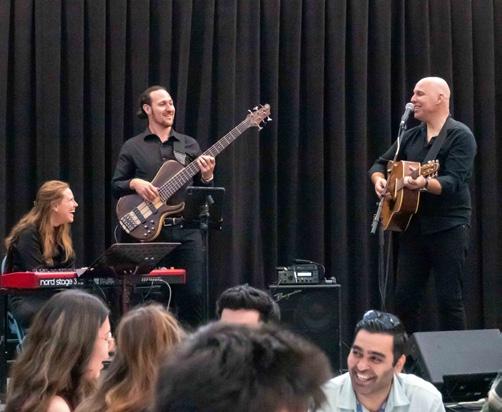
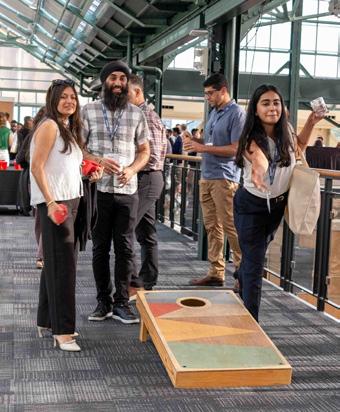
Hosted in the historic Crystal Garden in Victoria, this year’s annual banquet was a lively event where attendees enjoyed a delicious buffet dinner, backyard games, a live band, and two rounds of trivia. We would like to give a special thanks to Gold Sponsor Associated Engineering for presenting this event and donating the trivia prizes.
“The games on the second level were so fun! I liked how big the space was so there was options for activities, group discussion, socializing...”
OPEN ALBUM
TECHNICAL PROGRAM
Our largest ever stand-alone conference also saw our the biggest technical program. We brought together 200 speakers to share their experience, ideas, and lessons learned through a varied program featuring presentations, panels, workshops, posters, and other innovative sessions. In Victoria, we piloted a new 1-hour block schedule to provide opportunities for more technical content and allow for more bio breaks.
“This year’s technical program was the best I’ve seenwell done!”
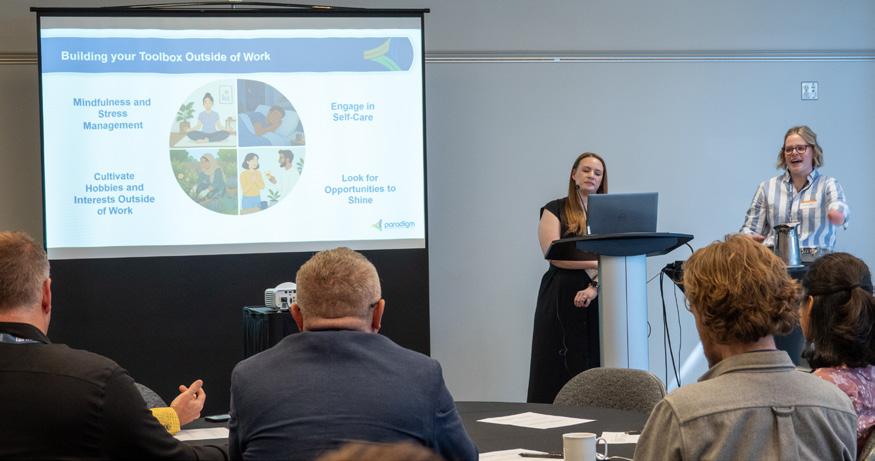
The program included 36 traditional sessions covering a broad range of transportation topics in a typical technical presentation format plus 23 interactive format sessions such as:
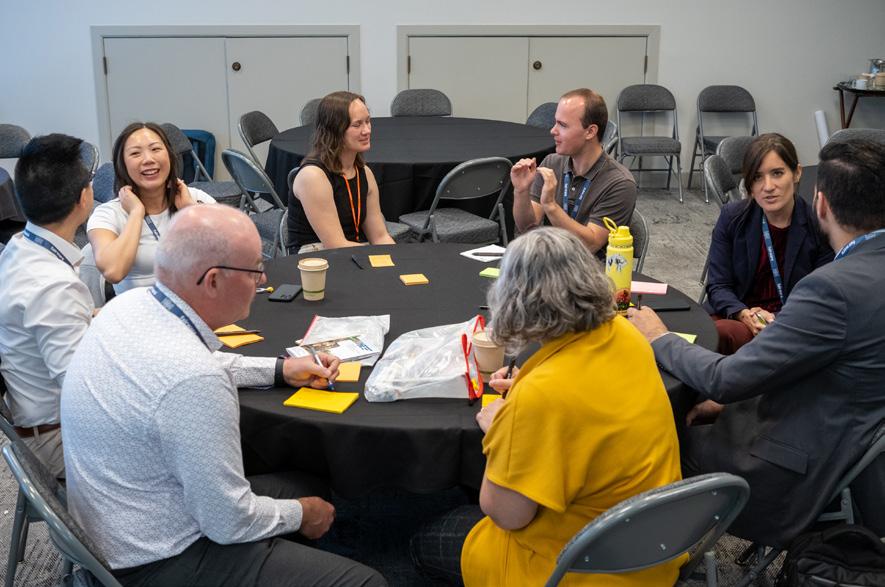
• Hands-on workshops with participant exercises
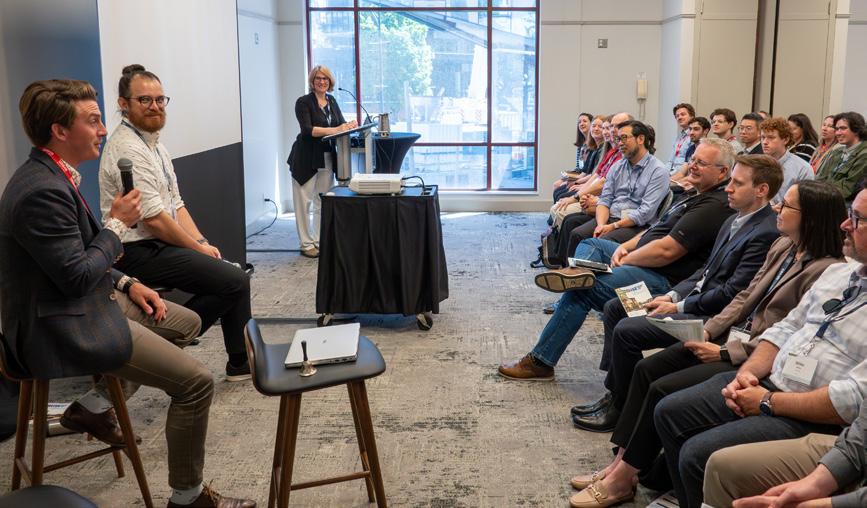
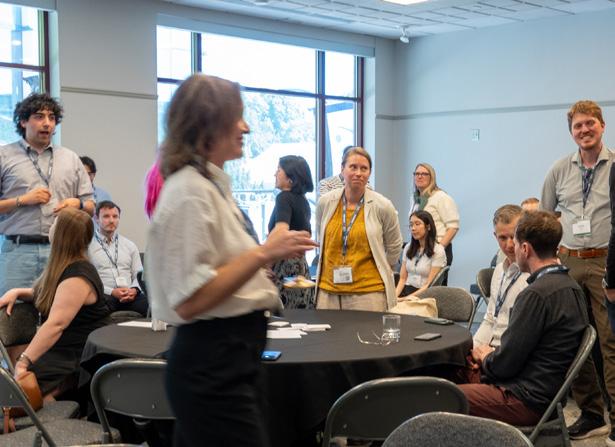
• Audience participation game shows, interactive presentations, world cafes, and conversation circles combining creative knowledge sharing with audience input
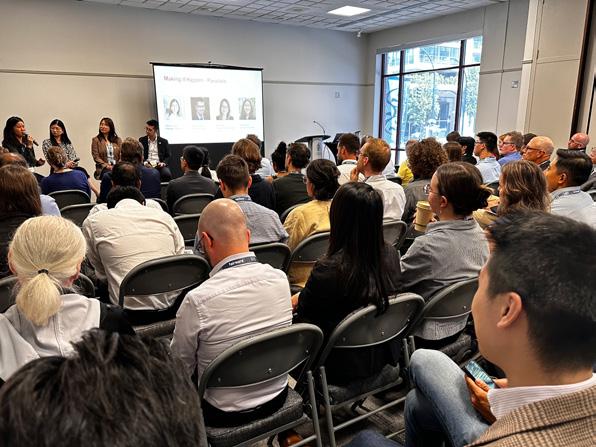
• Discussion panels highlighting key topics in the industry from technical content to workforce issues
Alongside the plethora of curated and submitted technical content, our top sponsors hosted and led interactive Thought Leader Sessions to spark conversation and highlight their expertise on notable and emerging issues in the industry:
• WATT Consulting Group – Understanding each other to create great communities: A speed networking approach to bringing transportation professionals together
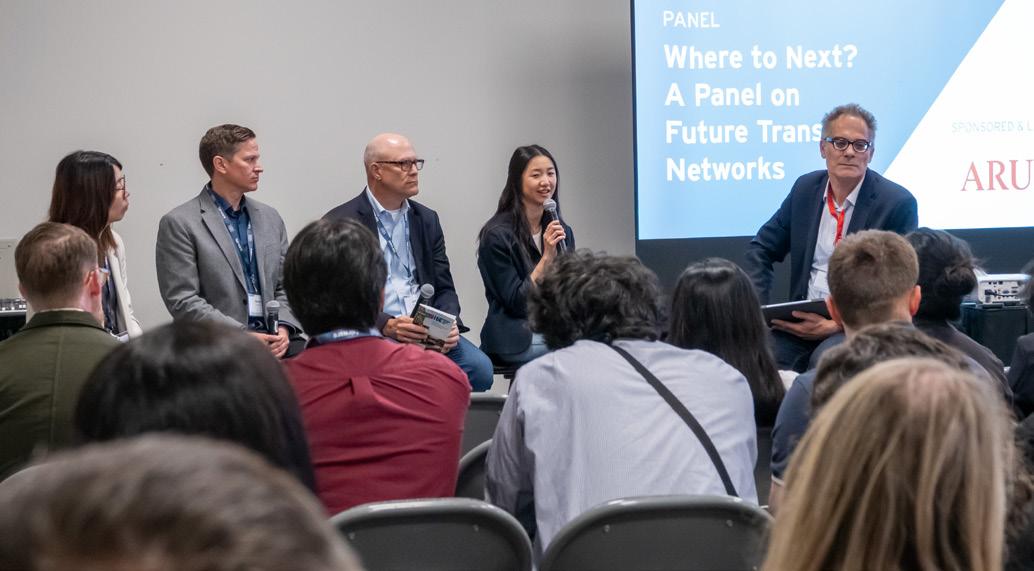
• ARUP – Where to Next? A Panel on Future Transit Networks
• Bunt & Associates – Reimagining the Island Corridor Interactive Presentation: Exploring Active and Alternative Transportation Opportunities to Meet Current Mobility Needs
• Stantec – A Panel on Resiliency in Design
PRESENTATIONS
Presentations are available for registered attendees to download through the schedule on the event app, accessible from a web browser at pheedloop.com/itecanada2026. If the presentation you’re looking for isn’t uploaded, contact info@itecanada.org
• EXP – Beyond the Buzz: What AI can (and can’t) do for transportation planning and engineering
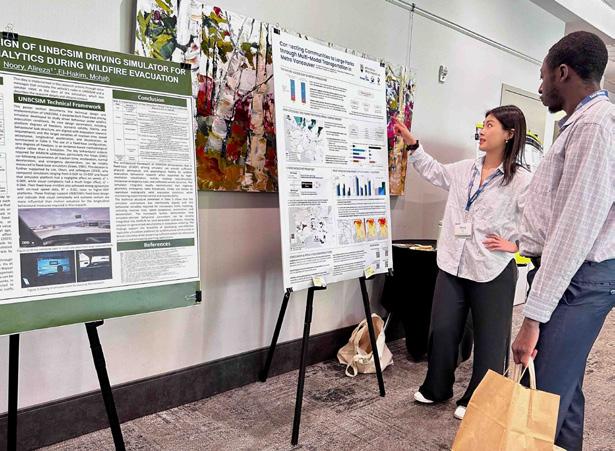
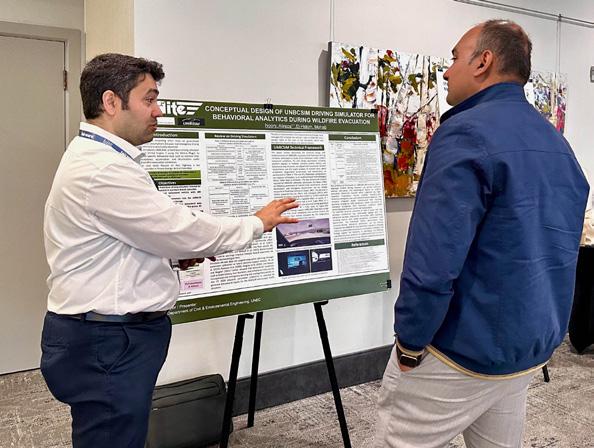
The conference also featured a poster session on Tuesday with 14 presenters who shared their research and ideas through discussions with attendees during breaks and posters available for attendee perusal throughout the day.
See the full list of sessions, presentations, and speakers on the conference website or in the print program here. Thank you to all presenters for sharing your knowledge, time, and experience!
Technical Tours
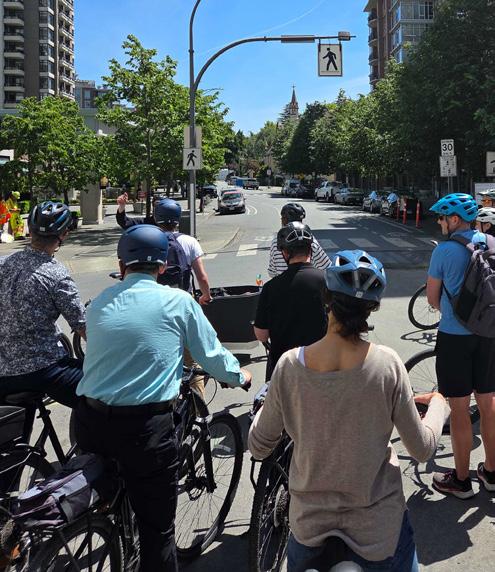
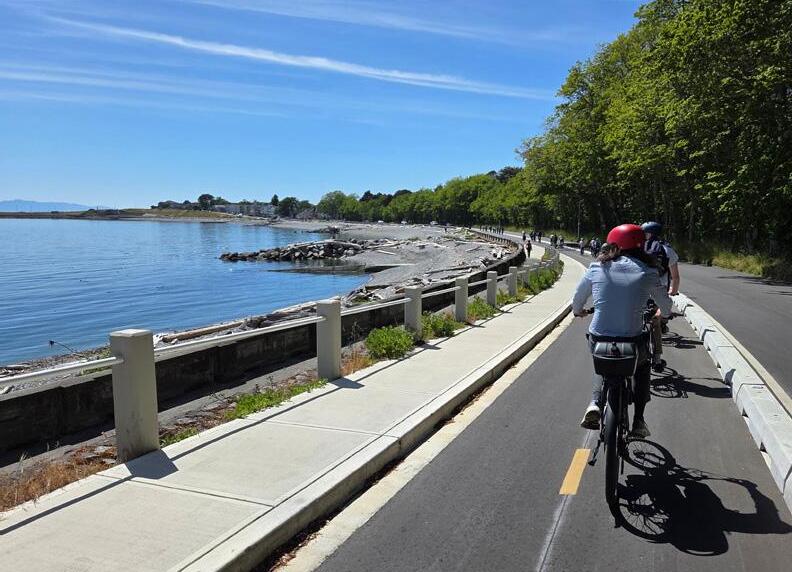
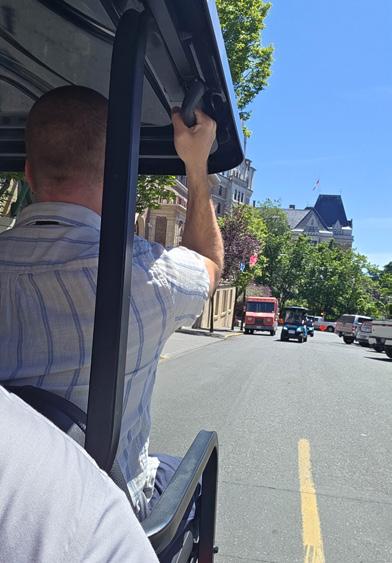
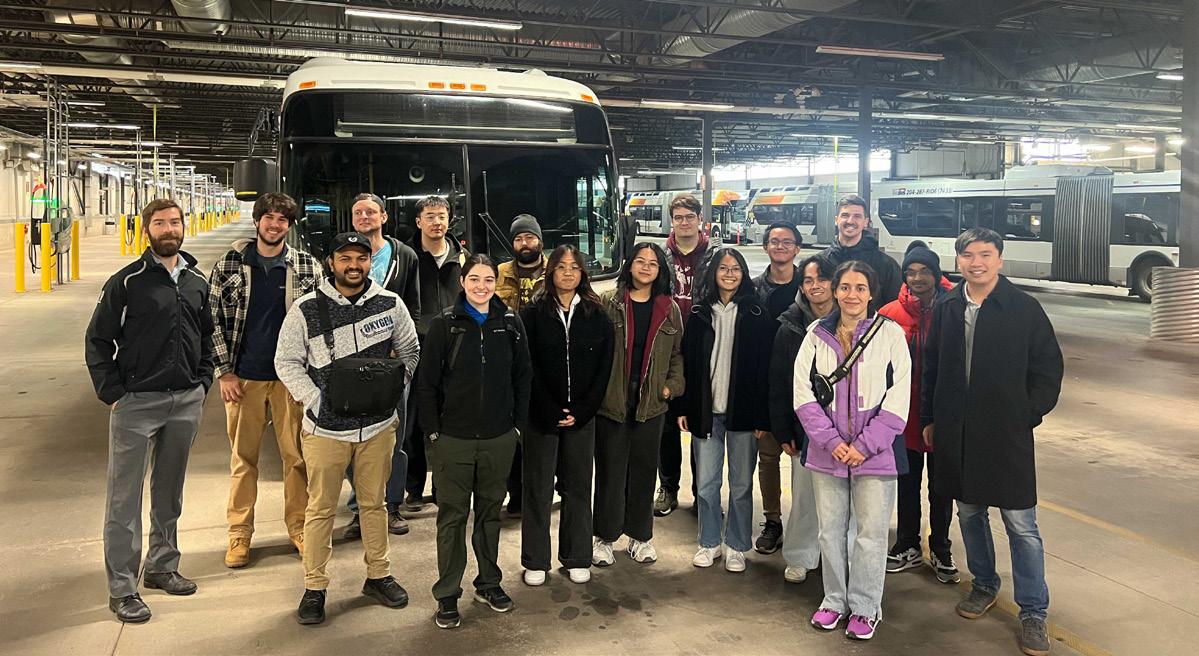
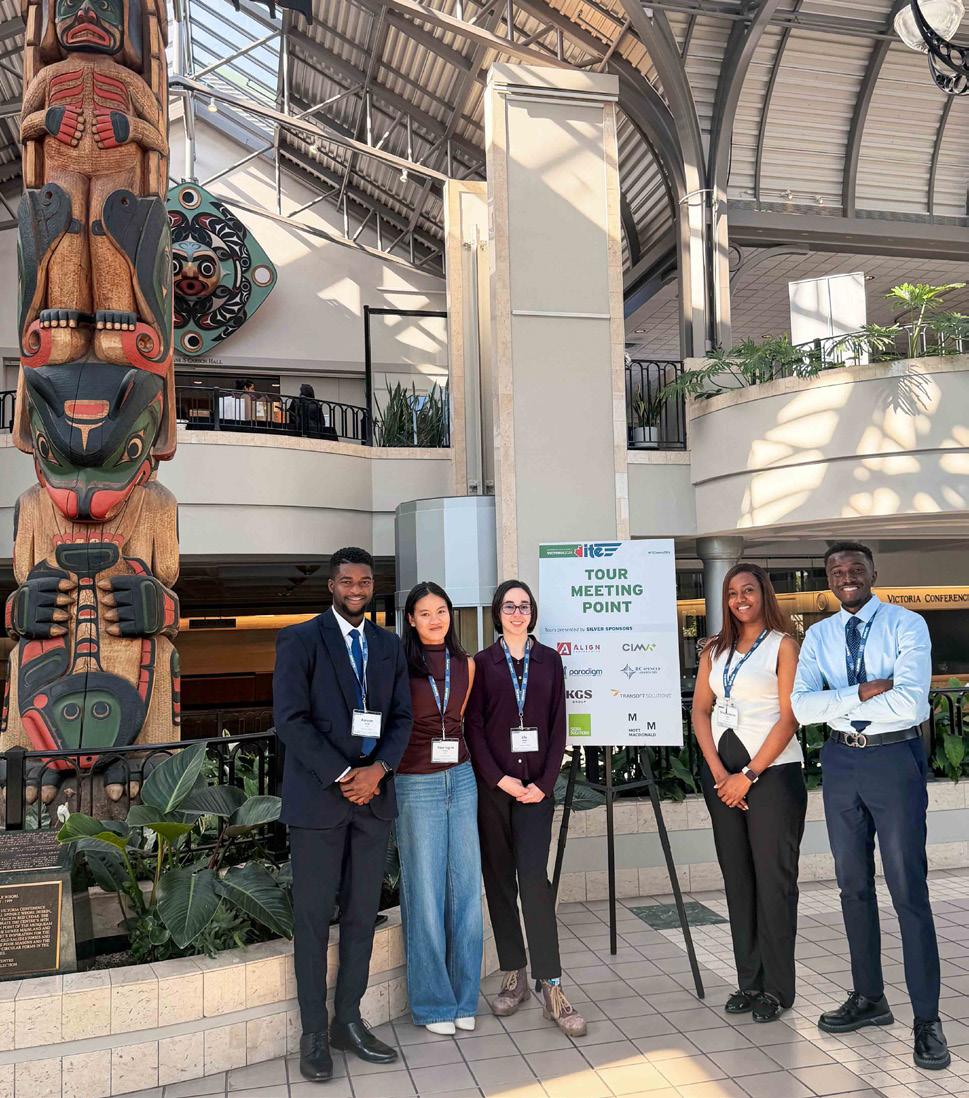
Our technical tours never fail to be a popular attraction for conference delegates. This year, attendees had the opportunity to experience 10 technical tours highlighting Victoria’s transit and shared mobility systems, active transportation facilities, traffic calming infrastructure, and placemaking public spaces by e-bike, transit bus, cycling, walking, and even golf cart
Thank you to all of the tour leaders, coordinators, transit operators, and volunteers. We would also like to thank all of the Silver Sponsors for presenting the conference Technical Tours: Paradigm Transportation Solutions Ltd, RC Spencer, SIDRA Solutions, Transoft Solutions, CIMA+, Align Engineering, KGS Group, Mott Macdonald, and CTS.
JEFF HAGAN BORG CHAN
IAN LINDLEY
JEFF HAGAN
SPONSORS
Thank you to these generous industry leading partners for facilitating knowledge sharing and community building at ITE Canada 2026.
DIAMOND
PLATINUM
SILVER
BRONZE
EXHIBITORS
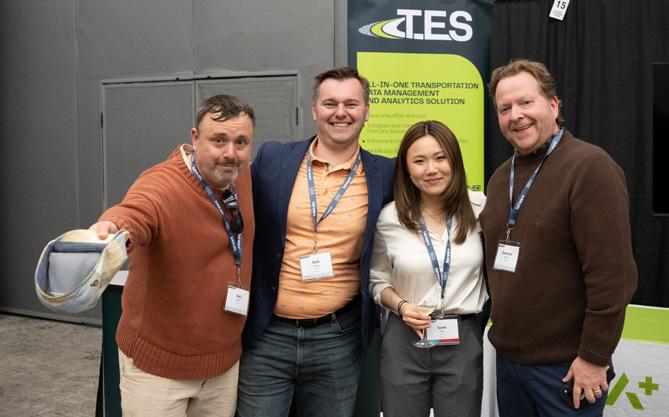
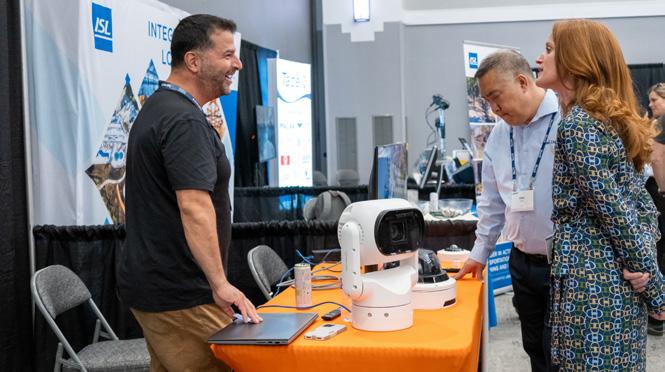
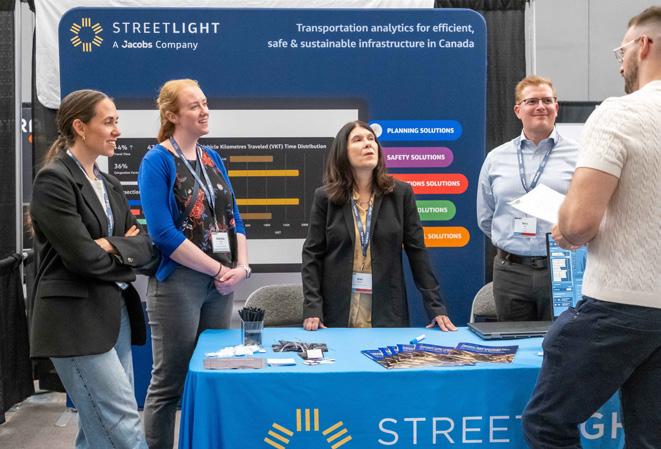
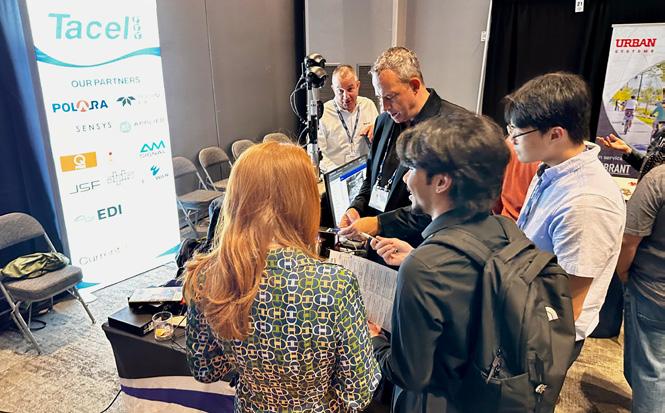
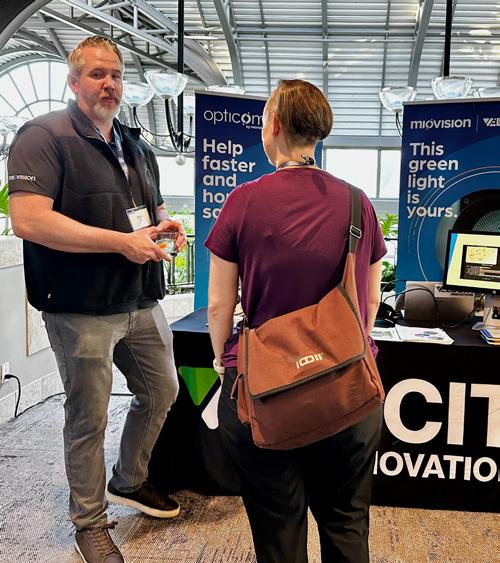
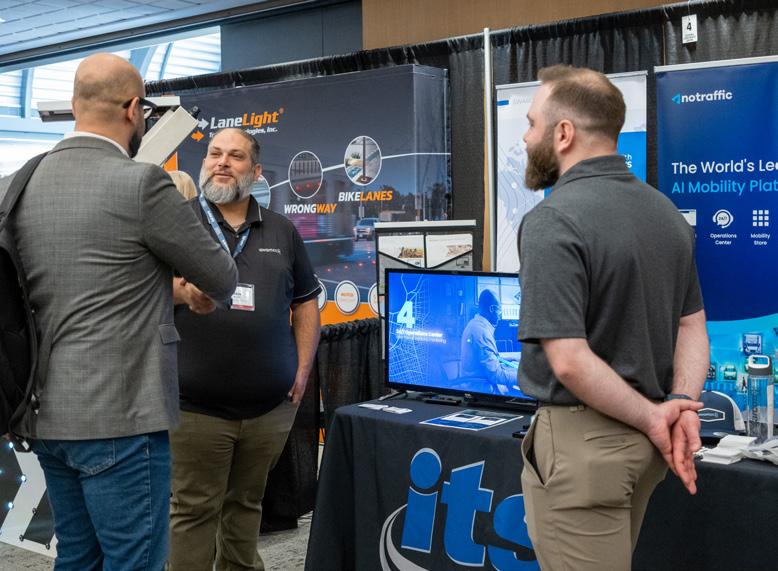
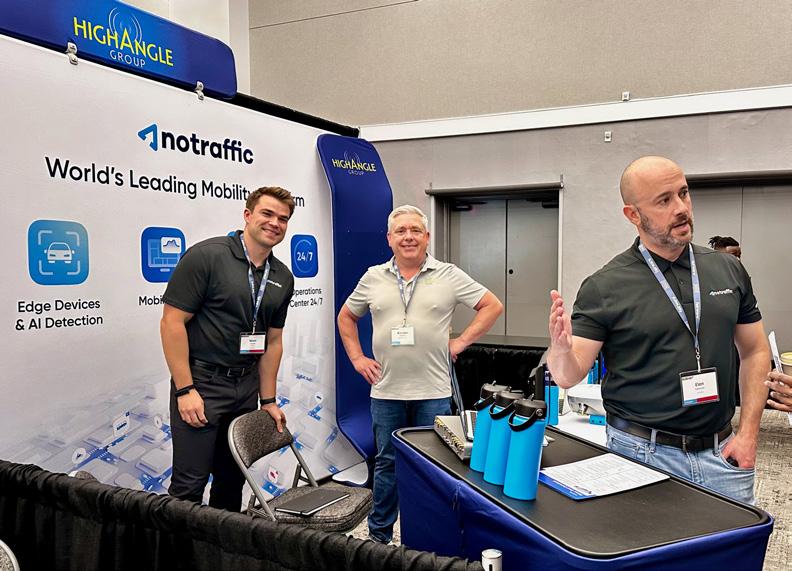
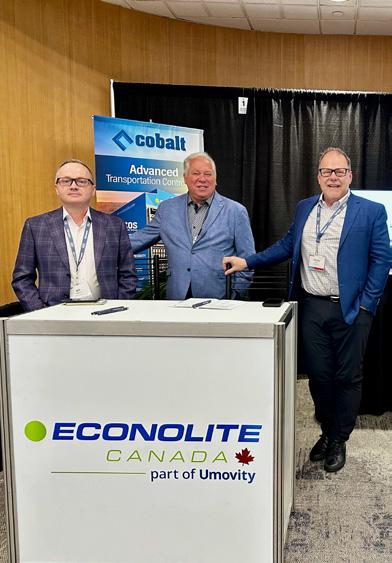
A special acknowledgment goes out to the 2026 Conference exhibitors who showcased their expertise and contributed to the success of our conference trade show. Thank you to each member of the teams from this year’s exhibiting companies
for displaying and teaching attendees about the many products, services, and innovations making waves in the transportation industry right from the source!
CONFERENCE TEAM RECOGNITION
Thank you to our many dedicated volunteers for your incredible efforts in planning an outstanding event and to your employers and families for supporting and enabling your efforts.
The annual conference is only possible through the hard work and dedication of many individuals who have devoted countless hours to allow this event to take place. Committee members spend months in advance planning every small detail, and the volunteers bring all the work together by keeping the show running on the ground. We would like to extend our gratitude with a huge thank you to the Victoria 2026 team and every individual that contributed to its success, as well as the employers who support you!
Local Arrangements Committee (LAC)
• Nadine King (Chair), WATT Consulting Group
• Steve Martin, WATT Consulting Group
• Hana Stoer, Bunt and Associates
• Nick Armstrong, City of Victoria
• Andy Kading, City of Victoria
• Bruce Beames, Stantec
• Kenneth Bulahan, JFS Technologies
• Dan Casey, Urban Systems
• Irini Akhnoukh, ITE Canada + City of Calgary
• Evonne Winchiu Donaher, ITE Canada
• Sara Belmore, ITE Canada
National Technical Program Committee (NTPC)
• Amy Do (Chair), Parsons
• Breanna Jackson (Vice-Chair), Associated Engineering
• Garrett Donaher, viaris engineering
• Erica Bayley, Paradigm Transportation Solutions
• Omar Shams, City of Hamilton
• Ken Wimble, WSP
Associate Members & Abstract Reviewers
• Paula Sawicki, Mosaic Mobility Group
• Xiaobin Wang, WSP
• Dan Ross, HDR
• Alaleh Adib, Arcadis
• Haniyeh Ghomi, City of Toronto
• Adam Howell, Robinson Consultants
• Adam St. Amant, City of Lethbridge
• Carolyn Sherstone, WSP
• Chris Skelton, City of Edmonton
• Erin Felker, City of Calgary
• Ethan Hill, City of Calgary
• Haniyeh Ghomi, City of Toronto
• Ken Wimble, WSP
• Reza Aminghafouri, City of Guelph
Technical Tour Leads
• Brian Patterson, Urban Systems
• Dylan Passmore, Street Matters
• Genevieve Tokgoz, Capital Regional District
• Amir Hassanpour, Capital Regional District
• Tim Hewett, City of Victoria
• Andy Kading, City of Victoria
• Simon Button, BC Transit
• James Wadsworth, BC Transit
• Grant Ngieng, ISL Engineering
• Troy McKay, District of Saanich
• Aaron Dixon, City of Victoria
• Mike van der Laan, City of Victoria
• Tim Hewett, City of Victoria
• Joaquin Karakas, City of Victoria
• Alannah Rodgers, University of Victoria
• Matt Sallee, Urban Systems
• Stephanie Williams, City of Victoria
• Kara Martin, Eco-Counter
• Jay Douillard, Capital Regional District
• Nick Armstrong, City of Victoria
Conference Volunteers
• Sophie Renard, Bunt & Associates
• Kenny Qim, Binnie
• Joey Ting, TransLink
• Sijia Jin, Bunt & Associates
• Angie Weddell, City of Vancouver
• Arzeena Timpa, BC MoTT
• Kyle Ciurka, BC MoTT
• Jatin Jain, Associated Engineering
• Yulia Liem, Bunt & Associates
• Erica Mason, City of Vancouver
• Kritika Saini, AECOM
• Olivia Stephenson, City of Coquitlam
• Jaclyn Currie, Bunt & Associates
• Roderick Trueggelmann, University of Victoria
• Abdi Idle, District of Saanich
• Ella Hlus, AECOM
• Cathy Yeung, University of Victoria
• Anoop Randhawa, University of British Columbia
• Robyn Hendry, University of Victoria
Organizing Committee
• Co-Chair: Aislinn Dressler
• Co-Chair: Mikayla Isted
• Sponsorship Lead: Cathy Yeung
• Indigenous Lead: Julia Tay
• Media Lead: Mackenzie Clarke
• Logistics Lead: Oliver Kerr
• Treasurer: Robyn Jutras
Participating Universities
McMaster University, University of Alberta, University of British Columbia (UBC), University of Calgary, University of Manitoba, University of Northern British Columbia (UNBC), University of Toronto, University of Victoria, University of Waterloo, Western University, Drexel University, Laval University, Seneca College
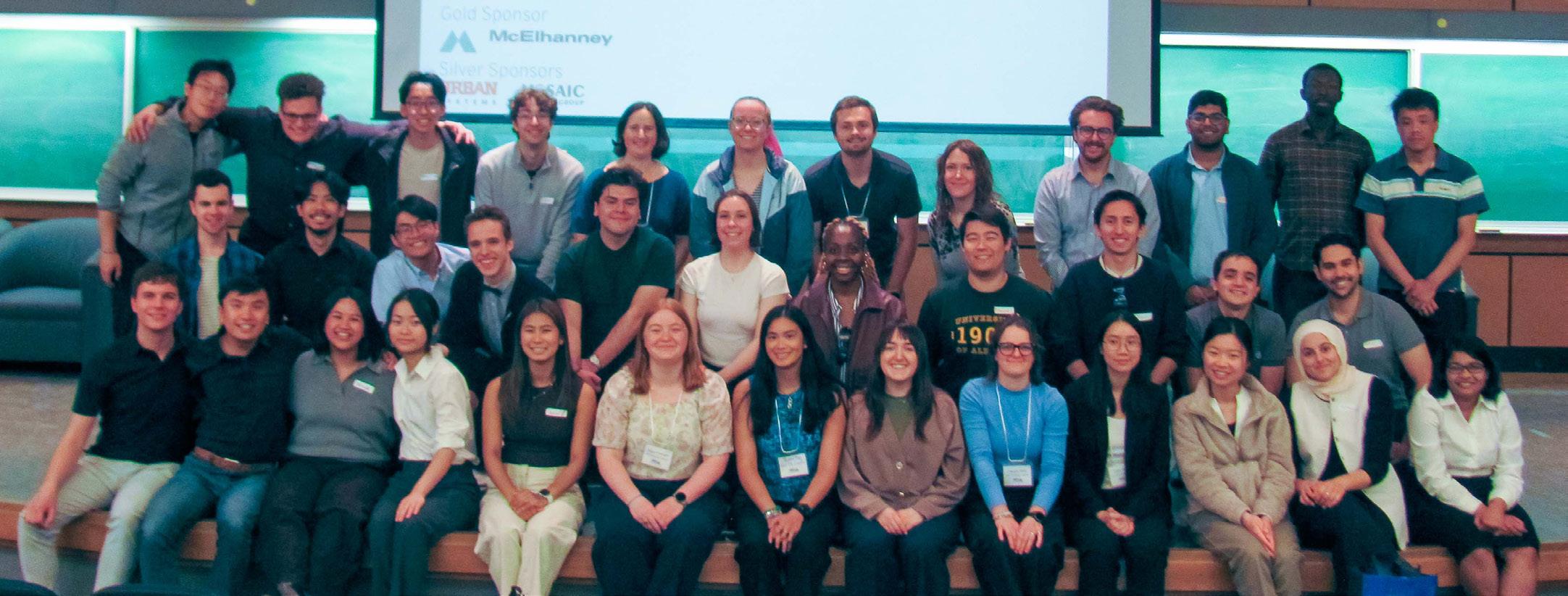
On May 30th and 31st, the University of Victoria ITE Student Chapter welcomed over 40 student leaders from across Canada for the ITE Canada Student Leadership Summit. This year the summit focused on two important themes: reconciliation and sustainability.
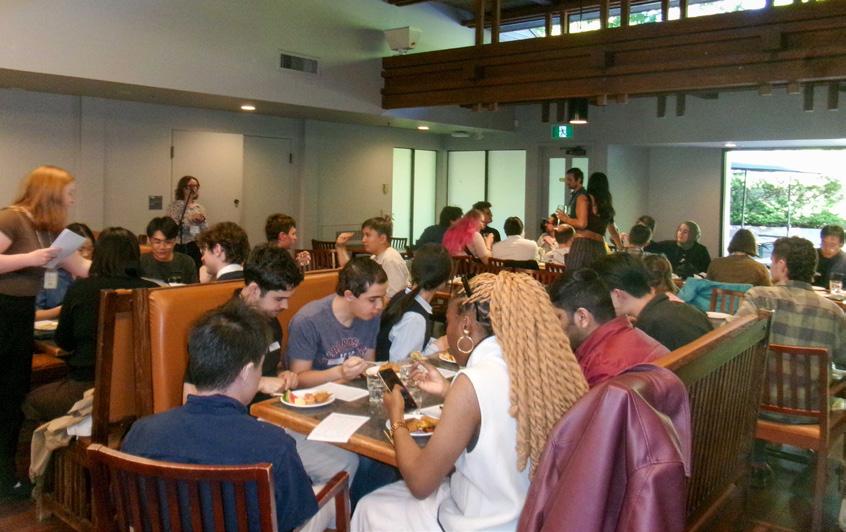
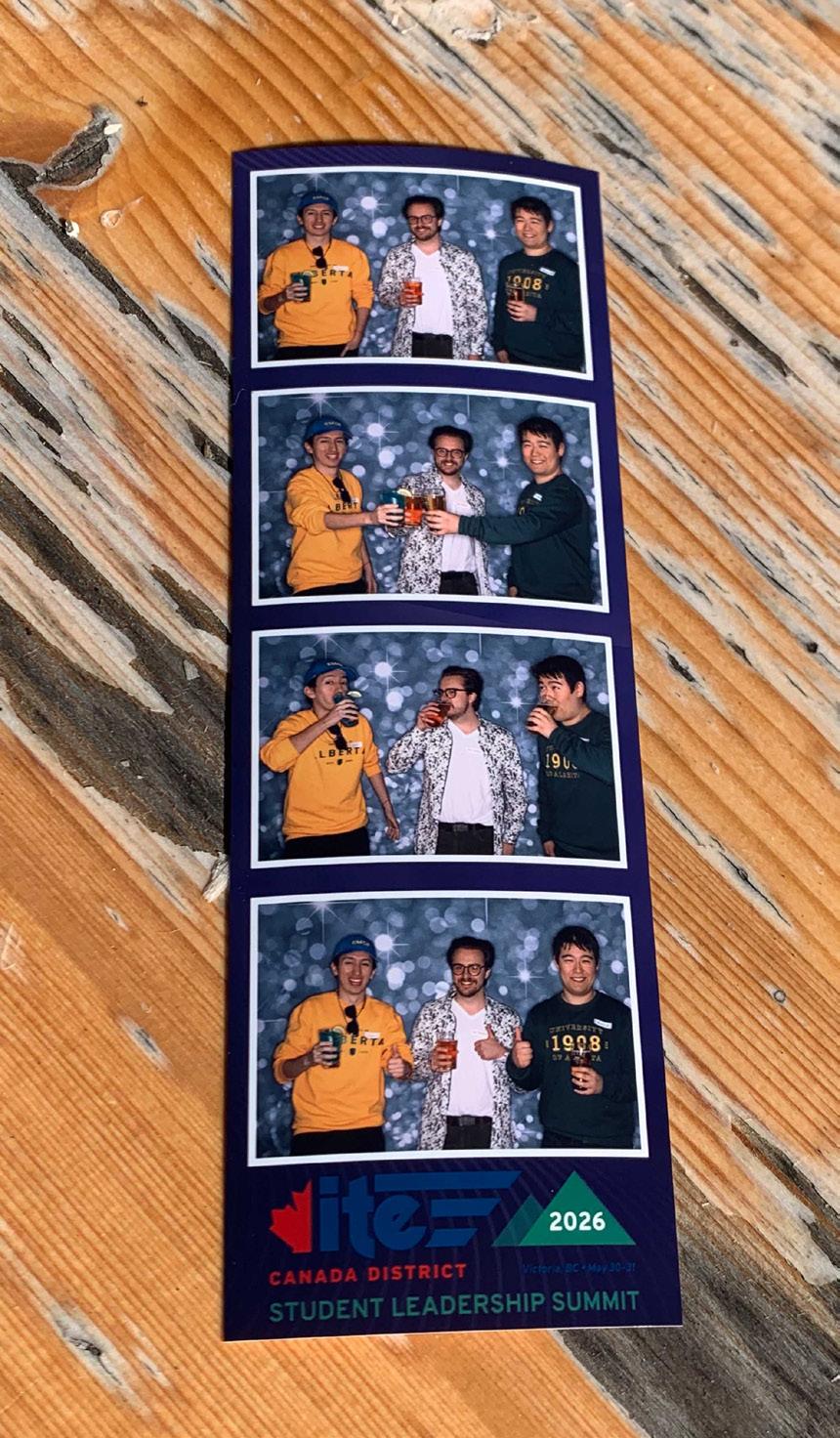
The event kicked off on May 30th with a social featuring bingo, transportation trivia, and a photobooth. Students enjoyed food and got to meet with other students from across Canada while attempting to correctly answer Victoria transportationthemed trivia.
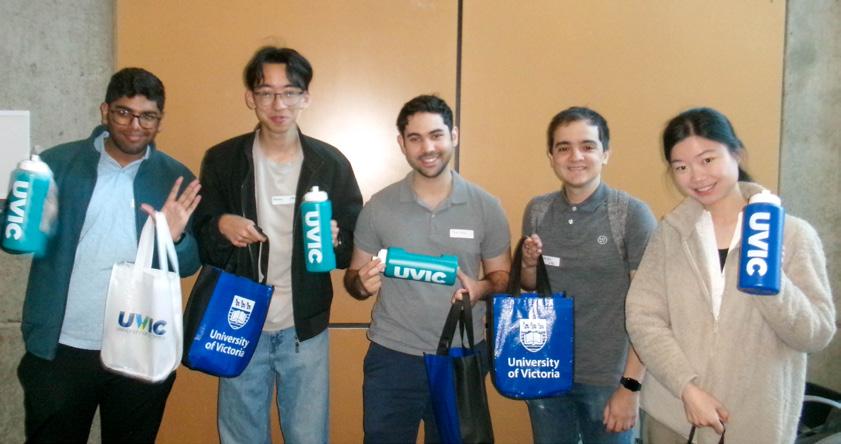
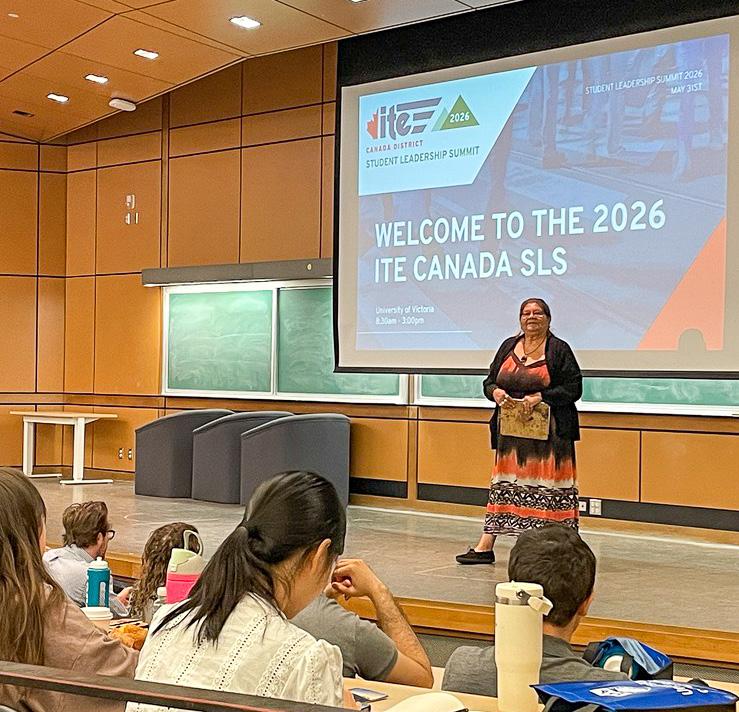
The second day of the summit, May 31st, focused on connecting leadership to reconciliation and sustainability. Students arrived in the morning for breakfast and to receive their swag bags, which included snacks, stickers, a notebook for SLS and annual conference notetaking, a water bottle, and an SLS postcard. The event then began with an Indigenous welcome from Songhees Elder Terri Barnhard, in accordance with Lekwungen protocol. Following the welcome, Khal Joyce and Robin Brooks
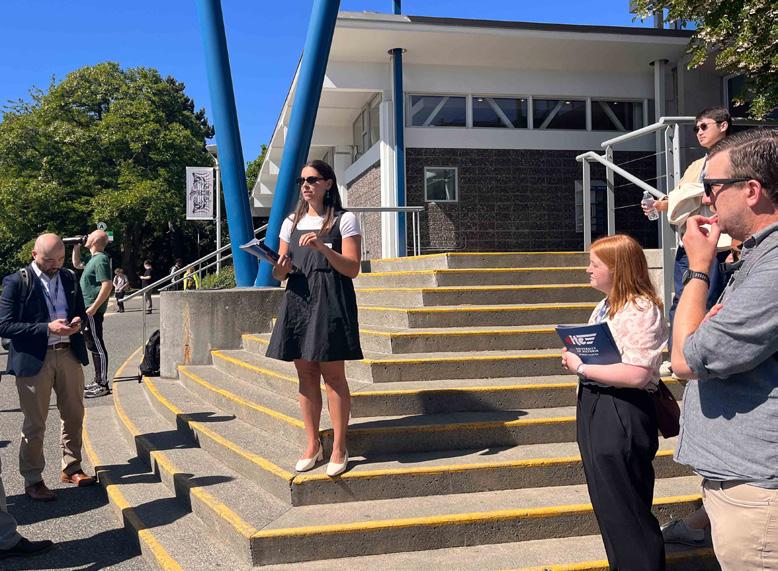
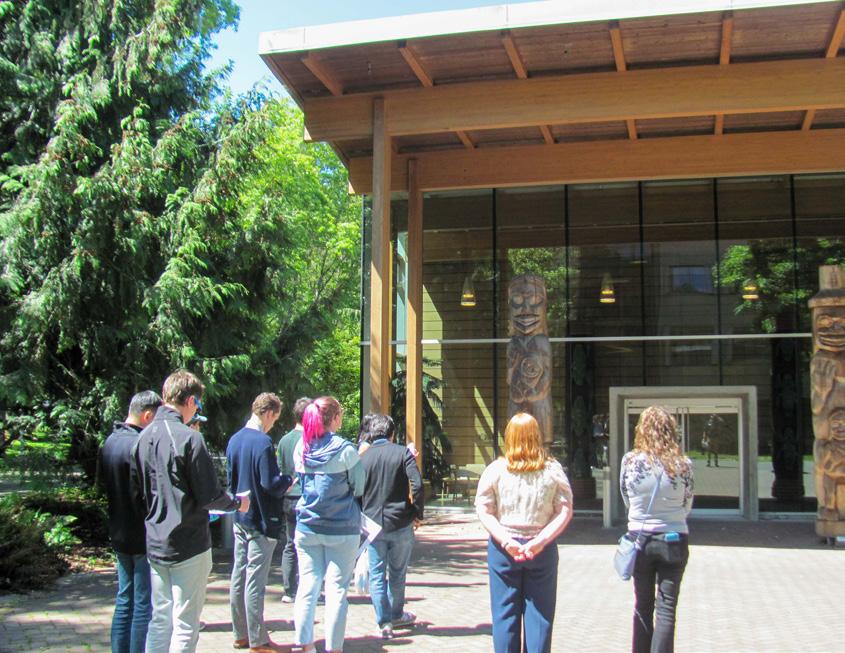
from ISL Engineering led a session on sustainability in engineering. Their interactive talk focused on how a holistic view of transportation is needed for sustainability and safety. Following this talk, Kear Porttris of Porttris Consulting Group led a workshop on territory acknowledgments that helped participants understand their importance and craft their own acknowledgments. This talk concluded the morning sessions and participants enjoyed lunch. During lunch, an optional tour was led of the Indigenous artwork on campus which gave participants a better view of the UVic campus and an opportunity to connect how reconciliation can be advanced through intentional artwork.
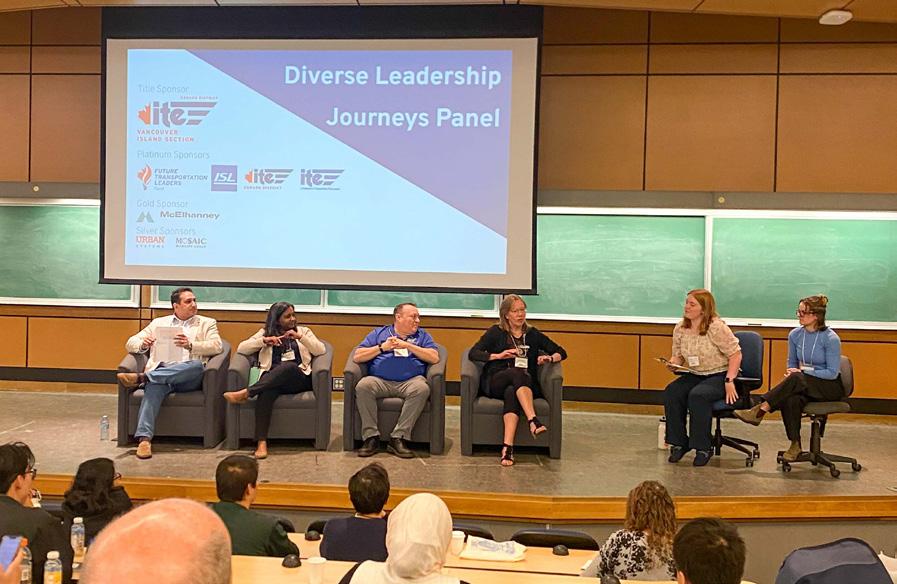
Following the lunch break, two rapid fire career journey-focused talks were led by Bruce Breames from Stantec and Karalee Bloch from Manitoba Department of Transportation and Infrastructure. After these talks a panel was hosted focusing on diversity in leadership featuring Julia Salvini, Pedram Izadpanah, Gordon Meth, and Neelam
Dorman, four ITE Canada and ITE International Executives. This panel included questions about their leadership journeys as well as how they incorporated sustainability and reconciliation in their personal and professional lives. To keep the conversation going after the panel, a snacks and speed networking session was held in the lobby to give an opportunity for students to network with the professionals in attendance.
Overall, the 2026 ITE Canada Student Leadership Summit was a success! Students had the opportunity to connect with each other and with professionals, and learn more about how sustainability and reconciliation can be incorporated into their future work as transportation professionals. This event was made possible by the generous support of all of our sponsors, the Department of Civil Engineering at the University of Victoria, and the hard work of the UVic ITE Student Chapter Executive team, in particular Aislinn Dressler and Mikayla Isted, co-chairs.
Sponsors
Beyond Engineering and Enforcement
Why Traffic Safety Culture May Be the Missing Piece to Achieve Vision Zero
By Tyler Golly & Ryan Martinson, Martinson Golly and Adam St. Amant, City of Lethbridge
Across North America and around the world, transportation agencies have made remarkable progress in improving road safety. Safer vehicle technologies, better roadway design, high visibility and automated enforcement, and skills training have contributed to significant reductions in traffic fatalities over the past several decades. Yet despite these advances, communities continue to struggle with the same high-risk behaviours: speeding, distracted driving, aggressive driving, and impaired driving.
The persistence of these behaviours presents an important challenge for transportation professionals. If people understand the risks and if communities continue investing in engineering, education, and enforcement, why do unsafe behaviours remain so prevalent? The
answer may lie in a factor that has historically received less attention than infrastructure, policy, or enforcement: culture.
Increasingly, researchers and practitioners are recognizing that traffic safety outcomes are shaped not only by road design and regulations, but also by the beliefs, values, attitudes, and social norms that influence how people behave. These shared influences are collectively referred to as traffic safety culture.
For communities pursuing Vision Zero and implementing the Safe System Approach, understanding and transforming traffic safety culture may represent the next frontier in road safety. This was the task we took on to expand the City of Lethbridge’s Transportation Safety Plan’s focus by better understanding traffic safety culture and its effects on road safety.
What Is Traffic Safety Culture?
Traffic safety culture refers to the shared beliefs, values, attitudes, and norms that influence transportation behaviours and safetyrelated decisions. While traditional safety programs often focus on attempting to change behaviours, traffic safety culture asks a deeper question: why do people engage in those behaviours in the first place?
Why do many drivers routinely exceed posted speed limits despite acknowledging that speeding is dangerous? Why do some communities embrace traffic calming while others resist it? Why do certain risky behaviours become normalized even when they contribute to serious injuries and fatalities?
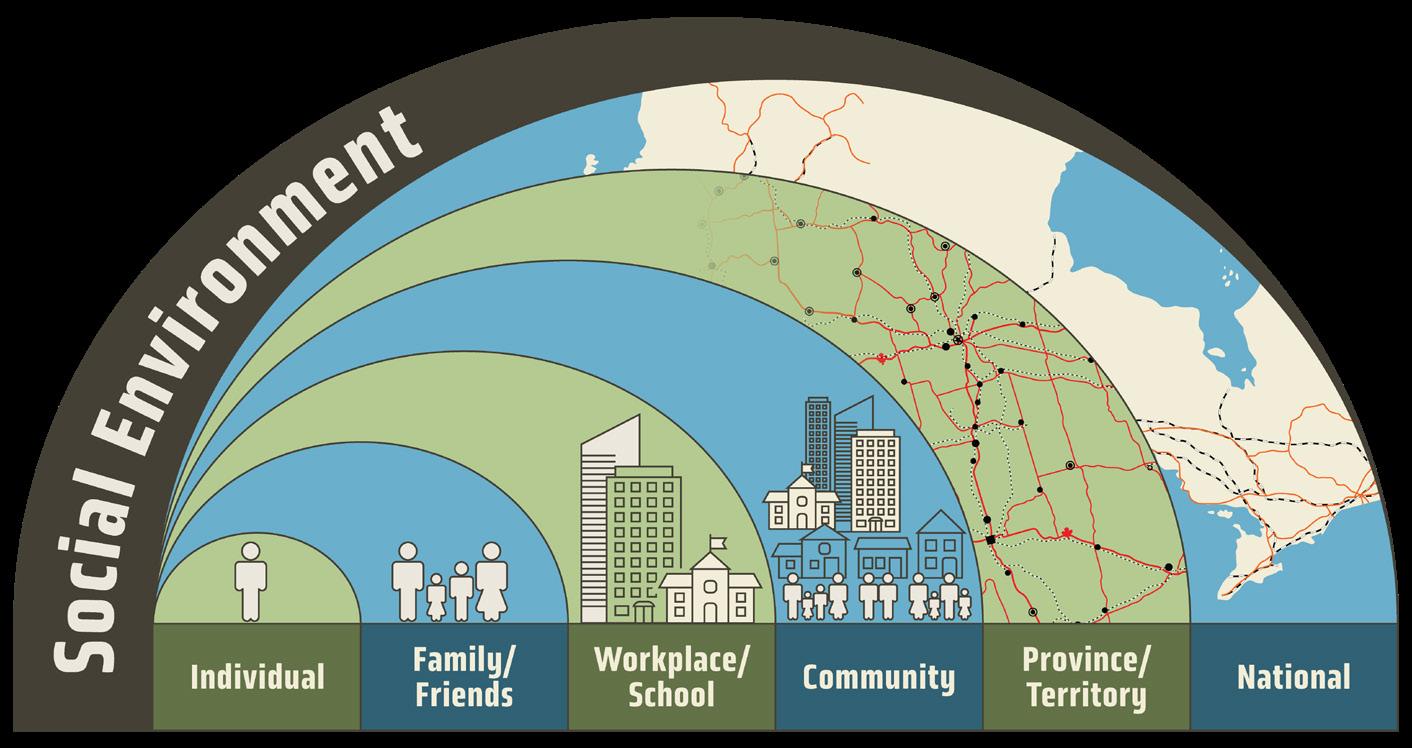
The answers are often found within the social environments people inhabit, which can be described by the social ecological model (see Figure 1). Family members, friends, peers, schools, workplaces, community organizations, media, and institutions all contribute to shaping how individuals perceive risk and responsibility.
Over time, these influences create expectations about what behaviours are acceptable, normal, and socially rewarded.
Just as workplace safety culture influences employee behaviours, traffic safety culture influences road user behaviours. Each social group a person is a member of will have its own culture and these collective subcultures shape a person’s values and beliefs.
The implication is profound. If communities want to create lasting behavioural change, they must address not only the behaviours themselves, but also the cultural conditions that support them.
TRAFFIC SAFETY CULTURE in one sentence
Traffic safety culture is the shared system of beliefs, values, attitudes, and social norms that influences how people behave on roads and how organizations make decisions about transportation safety.1
1 From: Ward, N. J., Otto, J., & Finley, K. (2019) Traffic safety culture: A primer for traffic safety practitioners
2 Derived from: National Academies for Sciences, Engineering, and Medicine (2018) A strategic approach to transforming traffic safety culture to reduce deaths and injuries
FIGURE 1. Social Ecological Model 2
Beyond the Individual: A Systems Perspective
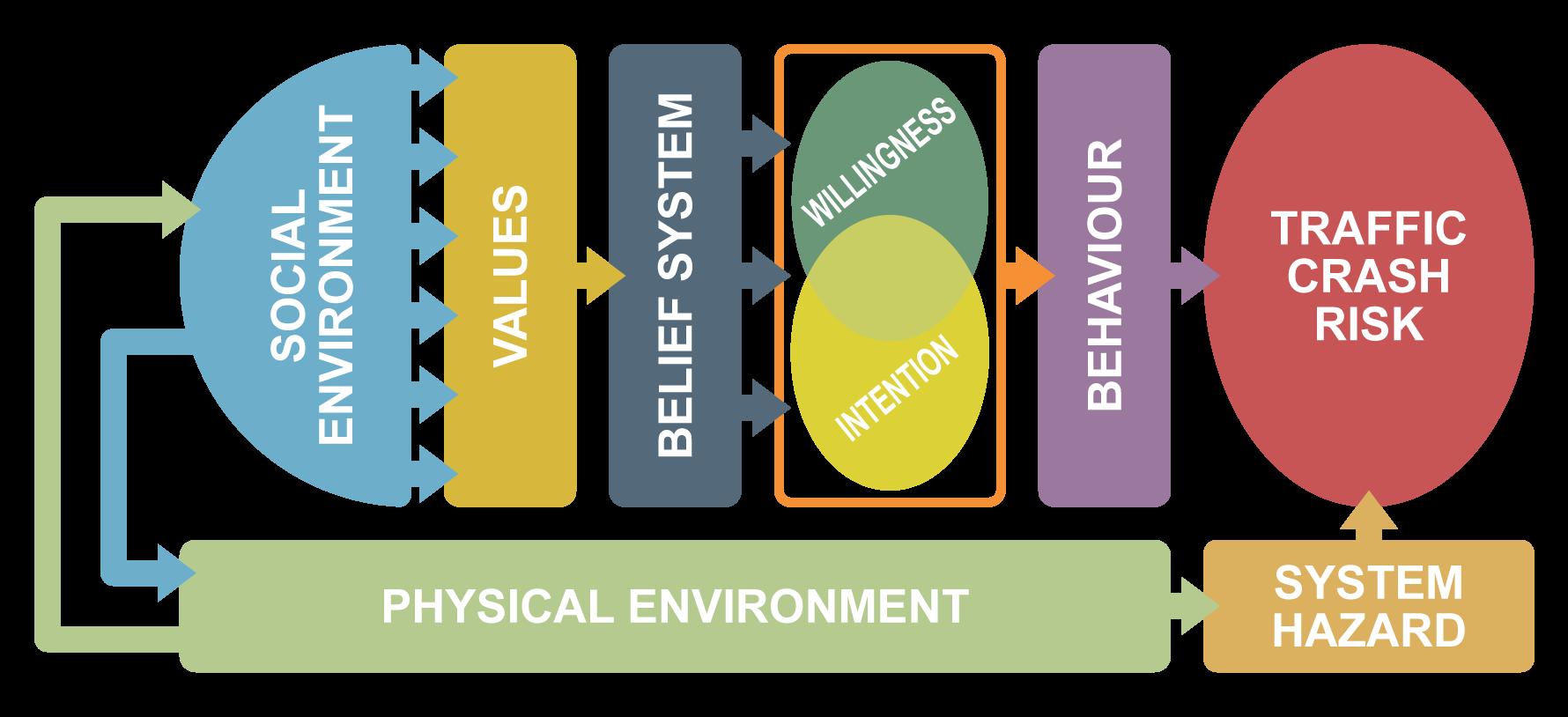
One of the most significant contributions of traffic safety culture research is its recognition that behaviours do not occur in isolation. Road user decisions emerge from the interaction between social environments and physical environments.
• The social environment includes families, schools, workplaces, communities, advocacy groups, professional organizations, and broader societal influences. These social groups shape values, beliefs, and expectations.
• The physical environment includes streets, intersections, vehicles, land use patterns, transportation networks, and technologies. These physical components shape opportunities and constraints, and the relationships people have. At the same time, the values and beliefs of a community that are created from the
social environment can shape how the physical environment is designed and operated.
Together, these forces influence behavioural intentions and ultimately affect traffic crash risk (see Figure 2).
This perspective aligns closely with the Safe System Approach, which recognizes that people will make mistakes and that transportation systems must be designed to accommodate human limitations. However, traffic safety culture extends the conversation further by exploring why certain behaviours become normalized and how those norms can be transformed over time. Rather than viewing crashes solely as failures of individual responsibility, traffic safety culture examines the broader social conditions that contribute to crash risk.
3 Derived from: National Academies for Sciences, Engineering, and Medicine (2018) A strategic approach to transforming traffic safety culture to reduce deaths and injuries; Kumfer, W., LaJeunesse, S., Heiny, S., West, A., Weisenfeld, J., Otto, J., Ward, N., Dively, K., Hanson, B., McAndrews, C., Lavrenz, S., Kash, G., & Brown, C. T. (2024). Traffic safety culture research roadmap; Toward Zero Deaths Steering Committee (2014) Toward zero deaths: a national strategy on highway safety
FIGURE 2 . Integrated Traffic Safety Culture Model 3
The Critical Role of Human Development
One of the most compelling insights from behavioural science is that values and beliefs are not formed overnight. They develop gradually throughout childhood and adolescence.
Early childhood is a period of foundational learning. Children observe the behaviours of parents, guardians, teachers, and other trusted adults. They learn what is acceptable and expected through modelling and reinforcement.4
During middle childhood, children begin interacting with broader social groups and developing greater independence. Experiences while walking, cycling, and travelling through their communities help shape perceptions of safety and mobility.5
Adolescence may be the most important developmental stage for traffic safety culture. This period is characterized by identity formation, increasing independence, and strong peer influence. Young people actively evaluate social norms and develop beliefs that often remain relatively stable into adulthood.6
For transportation professionals, this finding has significant implications.
If communities hope to create long-term cultural transformation, adolescence may represent one of the most important opportunities for intervention. Programs that reinforce positive social norms, challenge misconceptions, develop transportation skills, and provide meaningful leadership opportunities can influence beliefs before they become deeply entrenched.
By adulthood, changing values becomes considerably more difficult. Habits are established. Norms are internalized. Behavioural patterns become automatic.
This does not mean adults cannot change. Rather, it means interventions become most effective when they align with existing values and leverage environmental design to support safer choices. 7
WHY ADOLESENCE MATTERS
Research suggests adolescence is the critical period for long-term value formation. During this stage, peer influence, identity development, and social norms strongly shape beliefs that often persist into adulthood.
For traffic safety practitioners, this means youth-focused interventions can have benefits that extend decades into the future.
4 Kahneman, D. (2011) Thinking, fast and slow; Knafo-Noam, A., Daniel, E., & Benish-Weisman, M. (2024) The development of values in middle childhood: Five maturation criteria
5 Knafo-Noam, A., Daniel, E., & Benish-Weisman, M. (2024) The development of values in middle childhood: Five maturation criteria; Cialdini, R. B. (2006). Influence: The psychology of persuasion.
6 Heath, C. & Heath, D. (2010) Switch: How to change things when change is hard; Ariely, D. (2008) Predictably irrational: The hidden forces that shape our decisions; Cialdini, R. B. (2006) Influence: The psychology of persuasion.
7 Duhigg, C. (2012). The power of habit: Why we do what we do in life and business; Thaler, R. H. & Sunstein, C. R. (2008) Nudge: Improving decisions about health, wealth, and happiness.
The Communications Challenge
For many years, public agencies have relied heavily on education and awareness campaigns to improve traffic safety, and in many cases fear-based campaigns. While these efforts can increase awareness, evidence suggests they are often insufficient to create lasting behavioural change on their own.
Based on our experience, several factors contribute to this challenge:
1. Communications campaigns require sustained investment over long periods. Government agencies often face competing priorities, making it difficult to maintain messaging consistently over decades.
2. Generational turnover continuously introduces new audiences. Even successful campaigns must continually adapt and reinvest to reach emerging cohorts.
3. Today’s fragmented media environment makes broad audience reach increasingly difficult and expensive.
4. Perhaps most importantly, awareness does not automatically translate into action.
Our research into behavioural science and the culture-related data we collected in support of the City of Lethbridge’s Traffic Safety Culture Transformation Framework demonstrated that people frequently act contrary to their stated knowledge and intentions. Knowing that speeding is dangerous does not necessarily prevent someone from speeding.
This reality led our team to conclude that communications should not serve as the primary mechanism for cultural transformation. Instead, communications are most effective when they support other interventions. Communications can be used to explain infrastructure changes, reinforce social norms, address myths, highlight successful initiatives, and help communities understand why safety investments are being made.
But communications campaigns alone are unlikely to transform culture. As one participant involved in the development of the City of Lethbridge’s Framework observed, “You can’t message your way out of this.”
WHAT RESEARCH SAYS ABOUT COMMUNICATIONS
Communications campaigns are most effective when they support broader interventions rather than operate as standalone solutions. The source of the message also matters, with grass roots and non-governmental organizations being stronger sources of communications as compared to governments. Successful long-term behaviour change typically combines communications with engineering, enforcement, policy, and community engagement.
What Actually Creates Cultural Transformation?
If communications alone are insufficient, what strategies show the greatest promise?
Our findings suggest that successful traffic safety culture transformation requires a coordinated approach that combines leadership, design, social engagement, and accountability. The City of Lethbridge’s Traffic Safety Culture Transformation Framework organizes these actions into four complementary focus areas.
STRONG LEADERSHIP
• Cultural transformation requires visible leadership from governments, schools, employers, community organizations, and advocacy groups.
• Leaders help establish expectations, challenge assumptions, create dialogue, and maintain focus over long periods.
• Importantly, leadership must extend beyond political cycles and organizational priorities. Lasting cultural transformation often requires partnerships that can sustain efforts across generations.
VISIBLE PHYSICAL CHANGES
• Physical environments communicate powerful messages about expected behaviour and can be used to support safer mobility and behaviour choices.
• Road designs that naturally encourage appropriate speeds, separated facilities for vulnerable users, and streets designed around human safety rather than vehicle throughput can influence behaviour without requiring constant conscious decision-making.
• Research consistently demonstrates that infrastructure, including vehicle technologies, can make safe behaviours intuitive and unsafe behaviours more difficult.
ACTIVATIONS AND IMMERSIVE EXPERIENCES
• People learn through experience and doing so with others.
• School programs, community events, experiential learning opportunities, tactical urbanism projects, and other immersive activities can help residents experience safer transportation environments firsthand.
• These experiences often help bridge the gap between abstract safety concepts and everyday lived experience, and can build confidence with independent mobility, particularly for children and youth.
CLEAR AND STRONG DETERRENTS
• Enforcement remains an important component of traffic safety culture and requires support through laws.
• Visible, consistent, and probable enforcement helps reinforce social expectations and communicates that unsafe behaviours have consequences.
• When paired with supportive infrastructure and community engagement, enforcement can strengthen cultural norms rather than simply punish violations.
Lessons for Vision Zero Communities
Perhaps the most important lesson from the development of the City of Lethbridge’s Traffic Safety Culture Transformation Framework is that cultural transformation is not a campaign. It is not a one-year initiative. It is not a marketing strategy.
Cultural transformation is a long-term process that unfolds over years and often decades.
Communities seeking transformational change must think beyond short-term behavioural interventions and consider how values, beliefs, and norms develop across generations. This requires patience. It requires sustained partnerships. It requires investment in children and youth, not just current drivers. And it requires transportation professionals to broaden their perspective beyond
The Four Pillars of TRAFFIC SAFETY CULTURE TRANSFORMATION
Strong Leadership
Build champions and long-term partnerships
Visible Physical Changes
Design environments that make safe choices intuitive
Activations & Immersive Experiences
Create opportunities for people to experience safer systems
Clear & Strong Deterrents
Reinforce expectations through credible enforcement
infrastructure and operations to include behavioural science, community development, education, and public health.
The good news is that culture can transform and behaviours can change. Public attitudes toward impaired driving have shifted dramatically over the past several decades. Seatbelt use has become normalized. Smoking in public spaces has become increasingly unacceptable. These transformations demonstrate that societal norms are not fixed.
Traffic safety culture can evolve as well. The challenge is recognizing that lasting change comes not from telling people what to do, but
from creating environments, experiences, relationships, and expectations that make safe behaviours the natural and automatic choice.
If you are interested in more information on traffic safety culture, we encourage you to read the City of Lethbridge Traffic Safety Culture Transformation Framework (in English or French) and to reach out. We’d be happy to talk.
Funding for the Lethbridge Traffic Safety Culture Transformation Framework was made possible in part through Transport Canada’s Enhanced Road Safety Transfer Payment Program (ERSTPP).
AUTHORS
Tyler Golly, M.Sc., P.Eng., IntPE(Canada), RSP1 is a co-owner of Martinson Golly Ltd. He works on road safety and sustainable mobility projects across the country.
Ryan Martinson, M.Eng., PEng., RSP1 is a co-owner of Martinson Golly Ltd. He specializes in incorporating human-centred and systems thinking concepts into projects.
Adam St. Amant, P.Eng., PTOE is the Traffic Engineer for the City of Lethbridge. The team at the City of Lethbridge are actively working to improve safety with infrastructure- and culture-related actions.
Trucks vs Bikes
By Vanessa Skelton, GHD and Tom Baumgartner, Align Engineering
In an urban environment, delivery trucks and sometimes even larger commercial vehicles need enough room to manoeuvre, which typically means wider roads and generous turning radii at intersections. But if we always design for the largest vehicle, our pedestrian crossings grow right along with it, turning a simple stroll into an extra-long workout session and increasing the risk to pedestrians. We try to accommodate many types of vehicles in our intersection designs, but sometimes there’s an unavoidable trade-off: you can’t optimize every corner for turning radii and keep peoplefriendly streets on the straight and narrow.
Truck access matters. Deliveries keep businesses running and products on our shelves—because “shop local” is much harder when the shelves are empty. At the same time, a street that only works for trucks is not a street that works for people. Building vibrant, livable communities means designing roads, bike lanes, and public spaces so that they serve residents and workers as well as they serve freight—treating all of these as one connected design problem rather than separate ones.
Land use often dictates the types of vehicles that need to circulate on a given street. Industrial areas typically require reliable truck access, but the people who work there may also want to cycle or walk to the job. When employment lands sit close to residential neighbourhoods, workers gain more travel choices but that same proximity tends to put trucks and cyclists on the same roads more often, raising the odds of conflict at intersections.
For today’s road designers, land use is often an inherited constraint rather than a fresh choice. Many cities were laid out around railroads, waterways, and horse-and-buggy travel long
before anyone was planning for truck turning radii or protected bike lanes. Fitting modern travel needs—trucks, bikes, pedestrians, and everything in between—into that older street grid is where a lot of the real design ingenuity has to happen.
People-centered travel is the lifeblood of the community, so let’s not spill it. A recurring question for transportation professionals is whether to compromise or to separate: can trucks and cyclists share the same corridor safely, or is it better to route them onto different streets altogether? In one Ottawa example, the city kept delivery truck access on a commercial main street corridor and routed cyclists onto the parallel street instead, using protected cycle tracks separated from the roadway with a raised buffer area.
Intersection design usually comes down to trade-offs and, even with the best intentions, many projects see accommodation for vehicles prioritized over active transportation facilities when difficult decisions need to be made. In one urban commercial district, the City wanted to improve pedestrian safety by adding curb extensions but the stores and restaurants relied on truck deliveries that needed access. With the space that was available, there was simply no way to allow two trucks to turn without encroaching in opposing lanes so the curb extension idea was dropped.
Another project told a similar story: an industrial area sat within a residential neighbourhood in a small town. Cycling lanes were to be added to the main street as well as curb extensions to improve sightline visibility at the minor road stop. However, a truck movement visualization study showed that the trucks used the entire 22-metre intersection throat area to turn so the curb extensions were
flattened and the cycle track left at-grade. Different projects, same underlying trade-off: when there is not enough room for everyone, decisions need to be made on which vehicles to prioritize and which mode is considered more tolerant of the risk.
Leckie Active Transportation Corridor Case Study
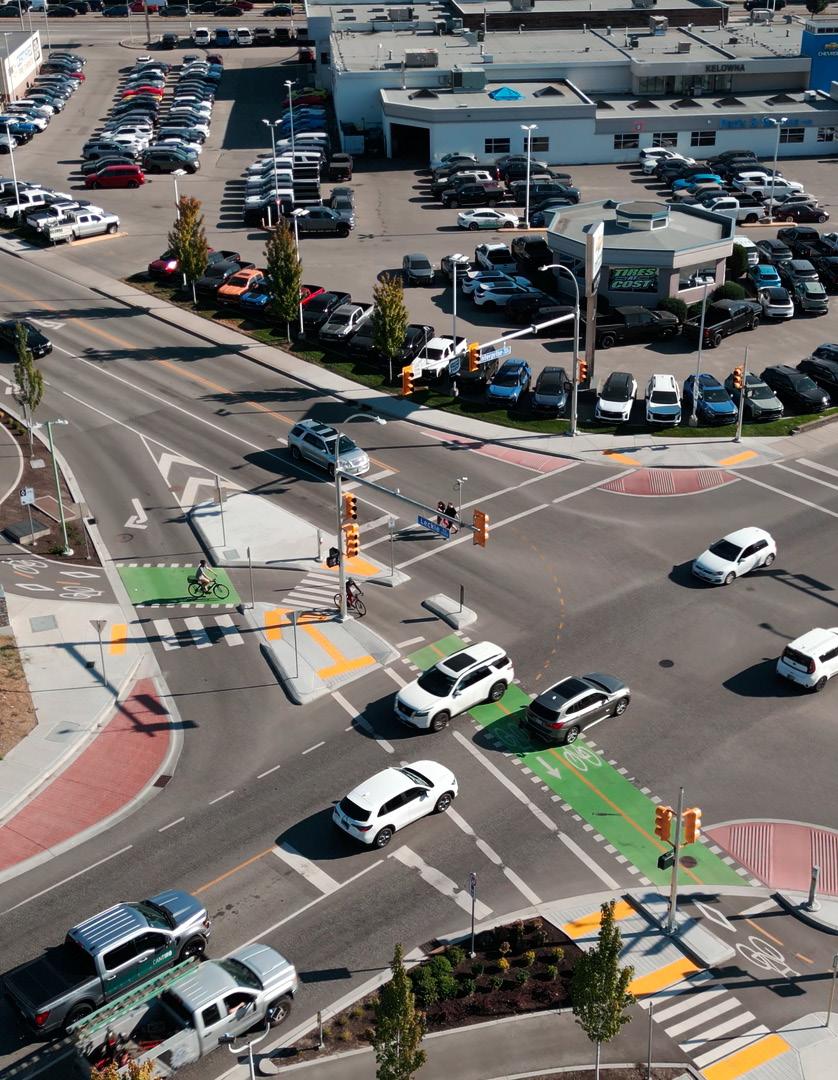
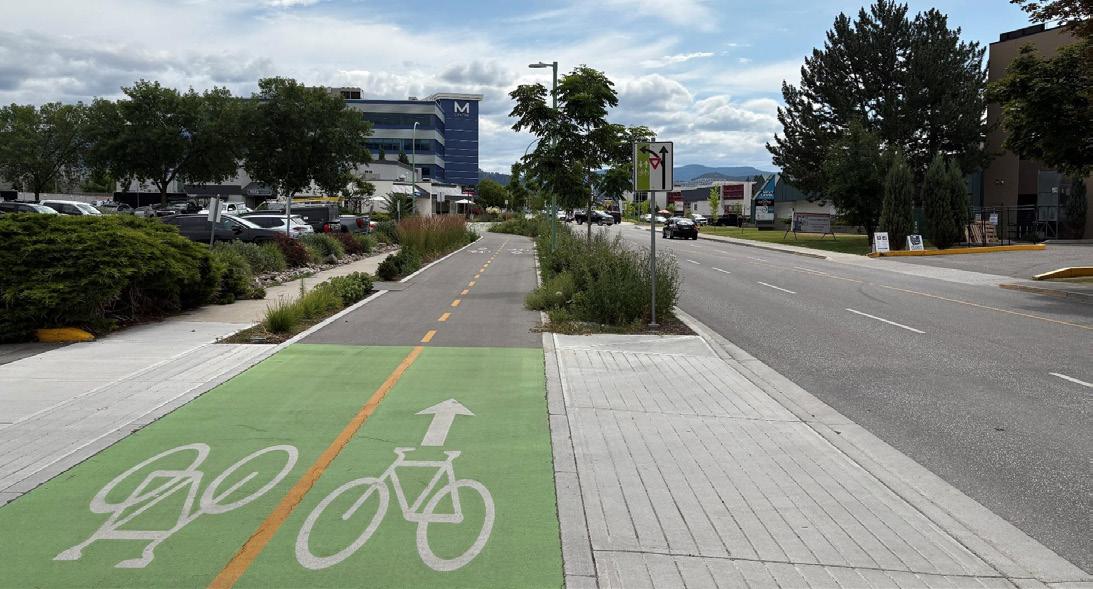
Step into the Leckie Active Transportation Corridor (ATC). This road facility project provides a protected bi-directional bike lane and separated sidewalk along the north side of Leckie Road, an arterial road in Kelowna, BC. It connects an active transportation gap in the
Building Better Communities
network between the Okanagan Rail Trail and Mission Creek Greenway across provincial Highway 97. The adjacent commercial and industrial land uses, many of which are car dealerships, require a design approach that prioritizes the efficient movement of large trucks. In apparent opposition stands the approaches for safe accommodation of active modes, presenting a unique challenge.
The active transportation component of the facility provides a boulevard-separated bi-directional bike lane that is separated from an adjacent sidewalk by boulevard where space permits and beveled curb where constrained. To accommodate turning truck traffic over the ATC, a variety of design components were implemented.
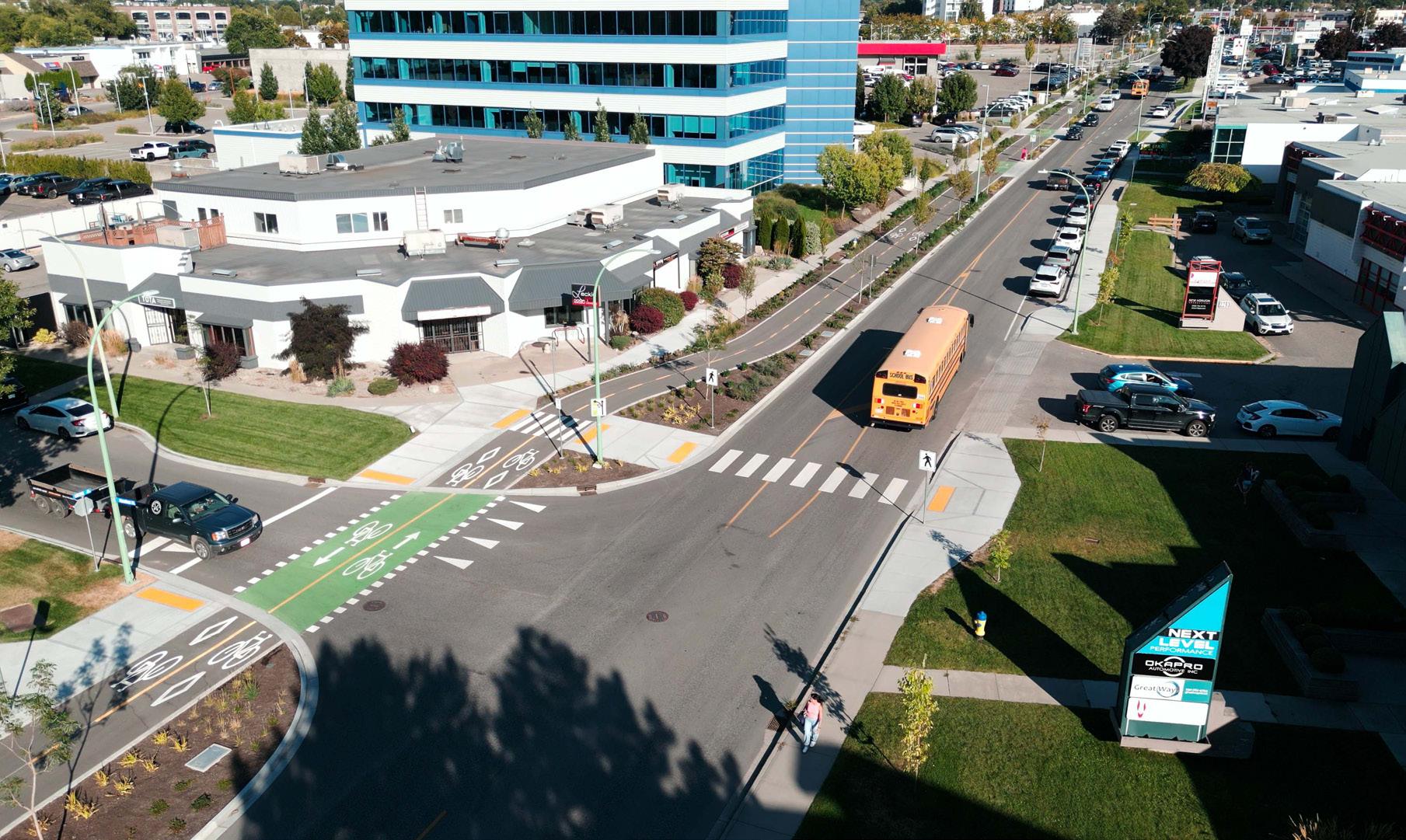
At the unsignalized Hunter Road location where there are turning 53’ WB-20 articulated trucks maneuvering in and out, a bend-out design of the bike path with a raised crossing, green bicycle conflict markings, and curb extensions were used. The bend-out design improves visibility to crossing pedestrians and bicyclists. These narrowed the Hunter Road pedestrian crossing width from 20 metres to 9 metres and added a 10-metre bike crossing.
www.aligneng.ca
A left-turn lane on Leckie Road to Hunter Road was provided to allow turning traffic to focus on the ATC crossing without the pressures of holding up traffic behind them. Coupled with a pedestrian crossing that was added to Leckie Road on the east leg of the Hunter Road intersection, this created potential for a raised refuge in the crosswalk. However, since the turning paths of the WB-20 articulated trucks are so large, a median refuge would be an obstruction. The curb-to-curb crossing widths were however reduced from 14 metres to 10 metres.
FIGURE 1. Leckie ATC connects the Okanagan Rail Trail to the Mission Creek Greenway AT facilities
FIGURE 2. Leckie ATC Separated Bi-Directional Bike Path with Adjacent Sidewalk at Hunter Road
CITY OF KELOWNA
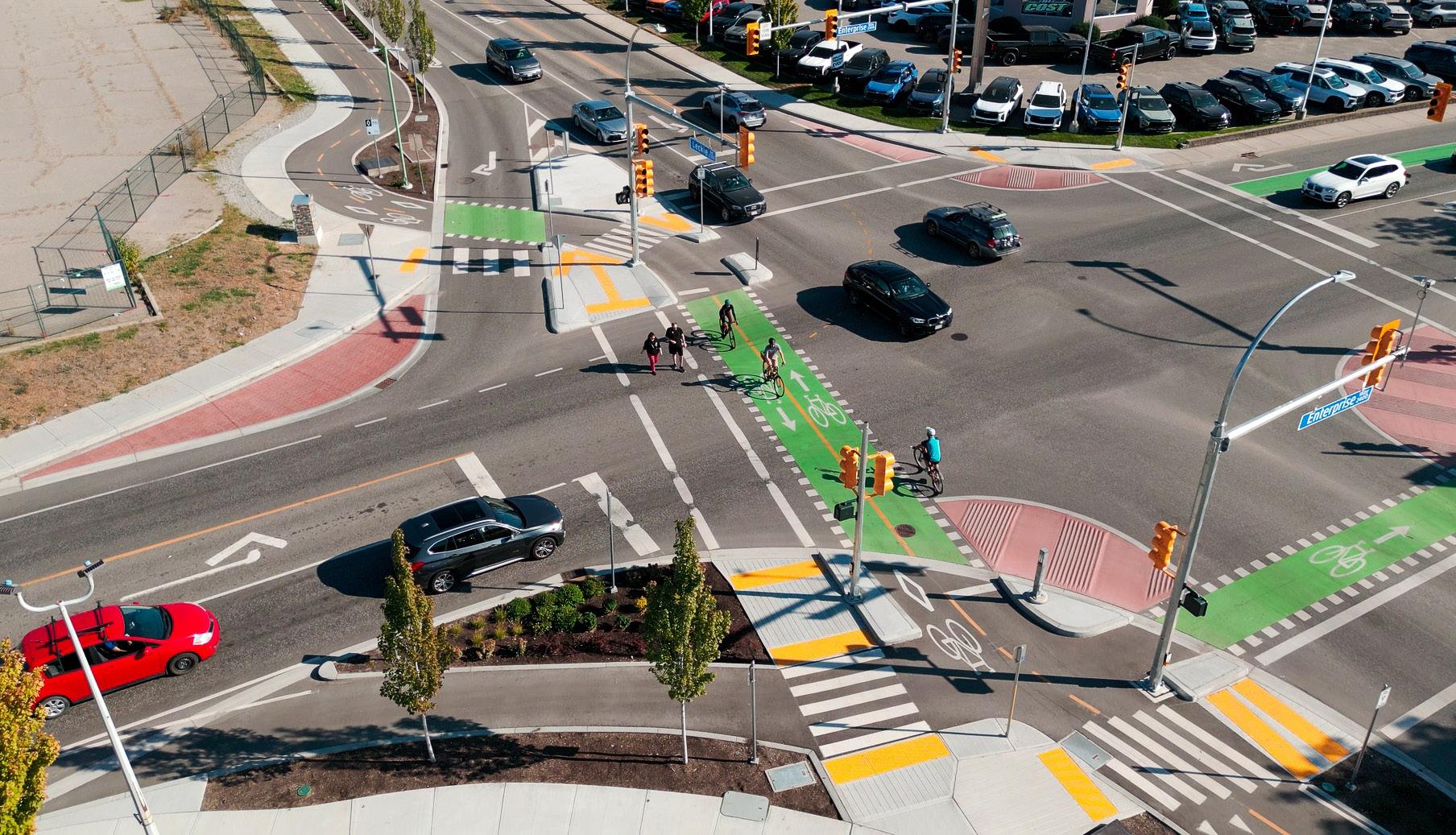
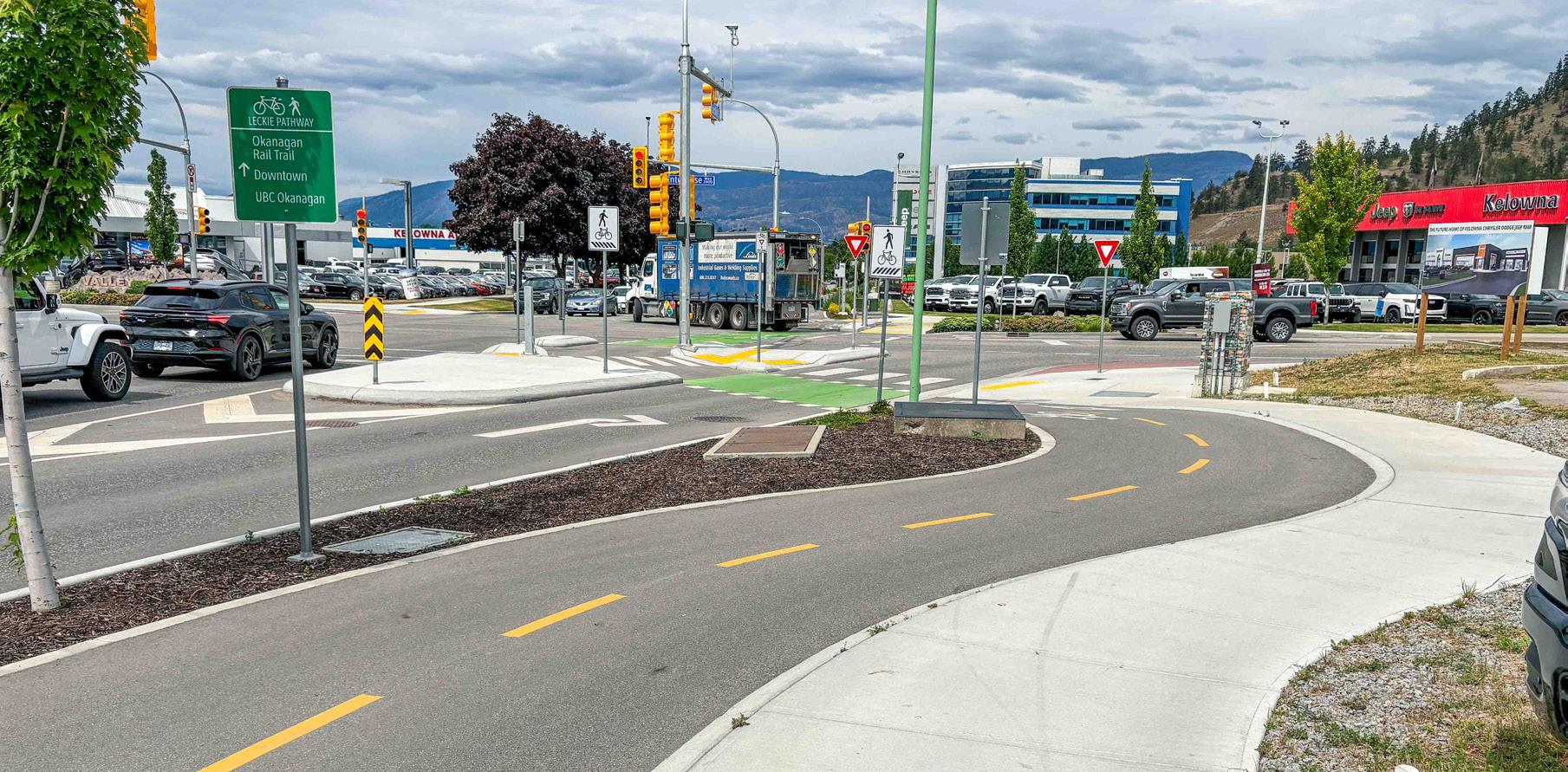
At signalized intersections, conflicts between the vulnerable road users and motor vehicles are separated through space with protected intersection designs and through time with protected signal phasings. The Enterprise Way intersection uses a protected intersection format with a channelized right-turn lane to reduce the crossing width of the active
transportation facilities and separate users in space. This creates a crossride for the cycling facility. The City of Kelowna has a bylaw permitting crossrides under the authority of the BC Motor Vehicle Act Section 124 which permits local municipal authorities to establish specific cycling crossing rules.
FIGURE 3. Leckie ATC @ Enterprise Way provides a protected intersection design with protected signal phasings
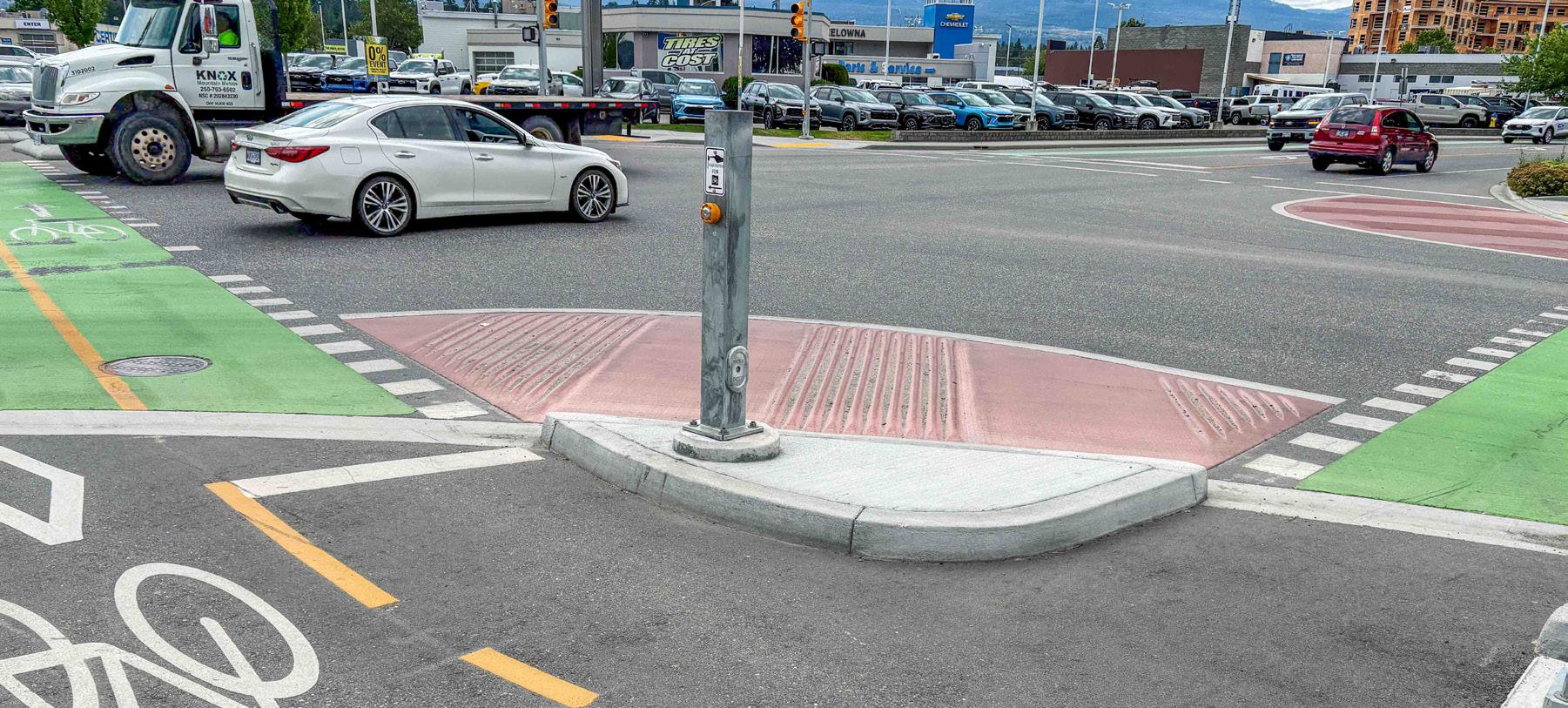
FIGURE 4. Channelization island reduces north & east leg crossing distances for pedestrians and bicyclists
CITY OF KELOWNA
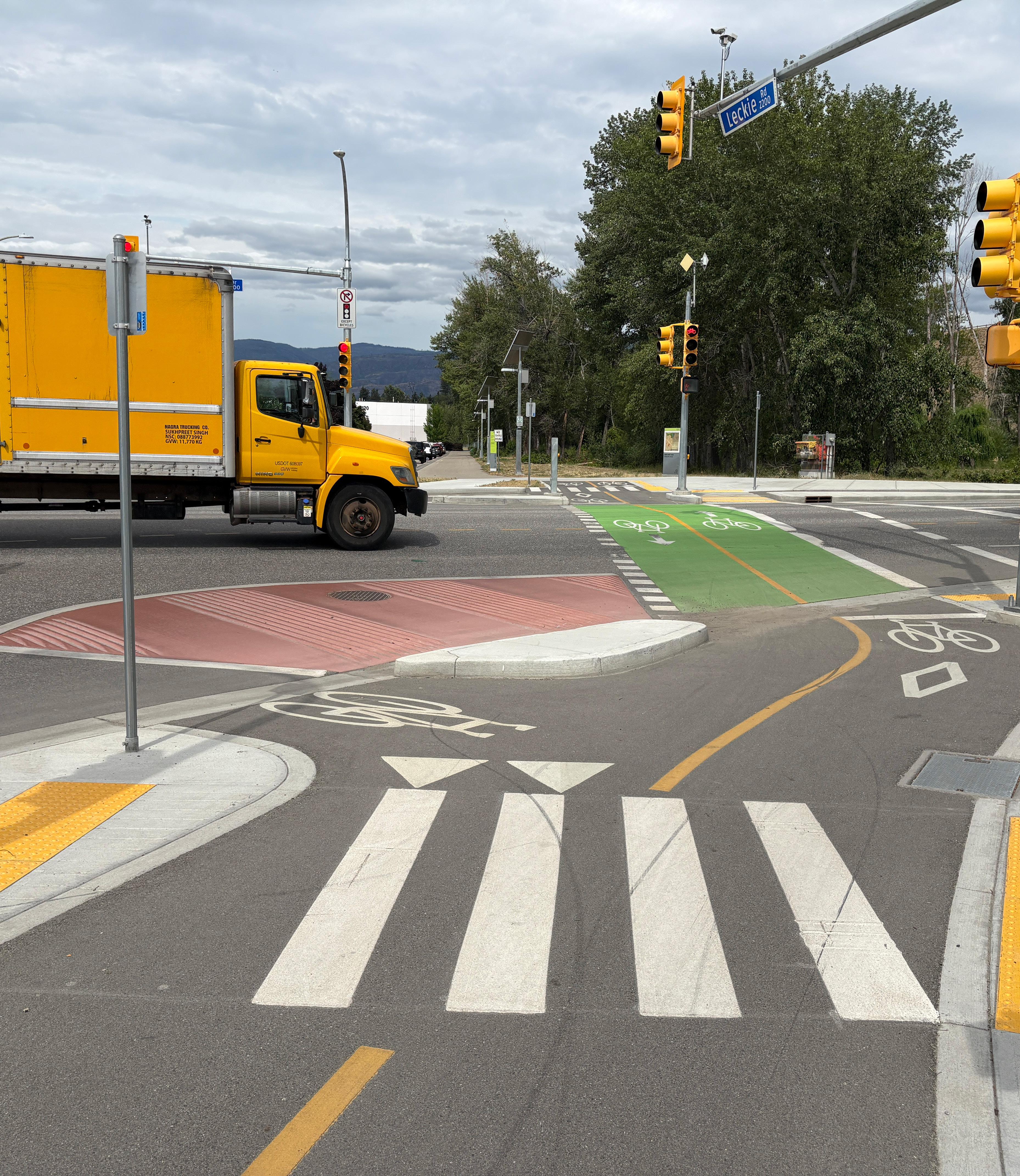
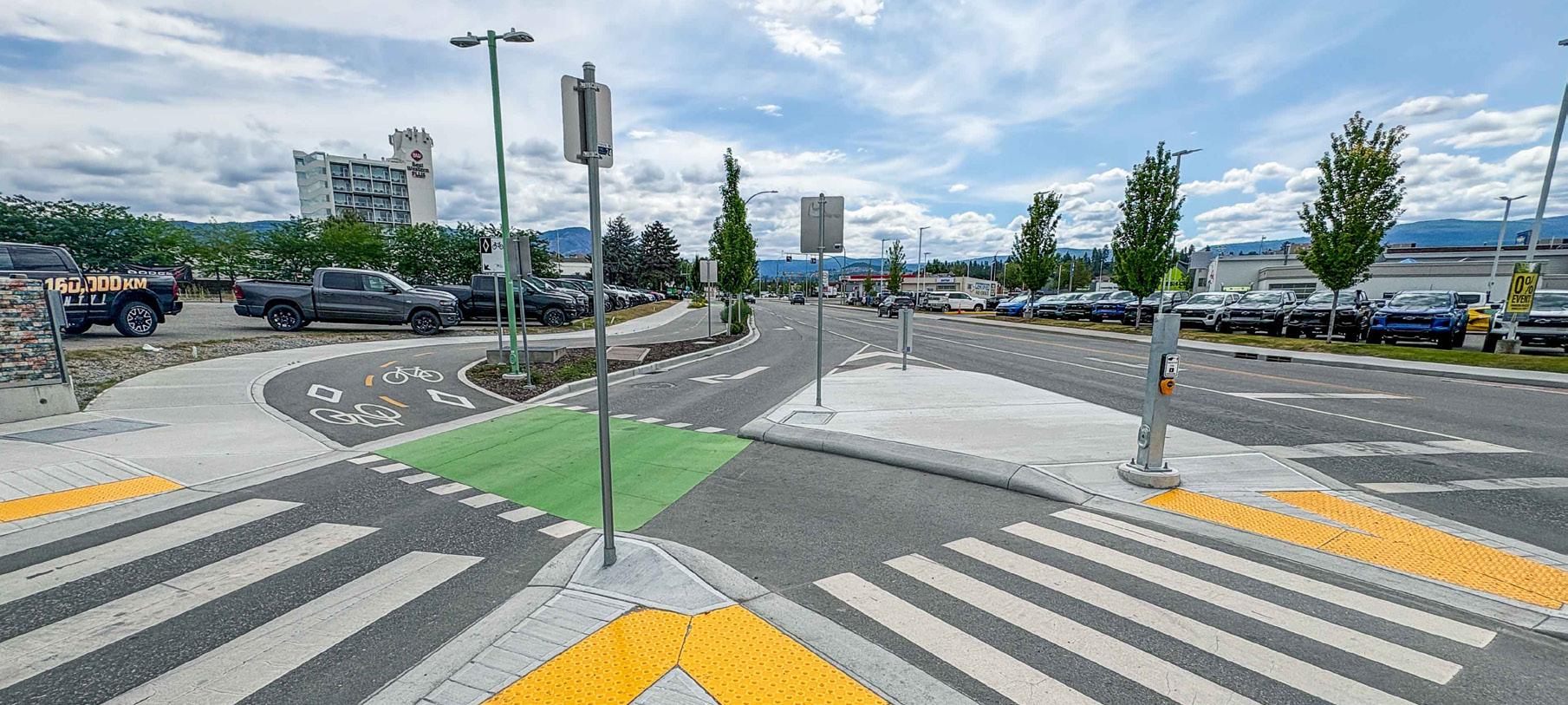
For the active transportation crossing of the channelized right-turn lane, the bike path has no direct alignment from the signalized crossings to the channel and has a reverse curve on the westbound approach. This manages bike speeds approaching the crossing. A smart right-turn channel was used to manage the speeds and sightlines for approaching motor vehicles. The smart right-
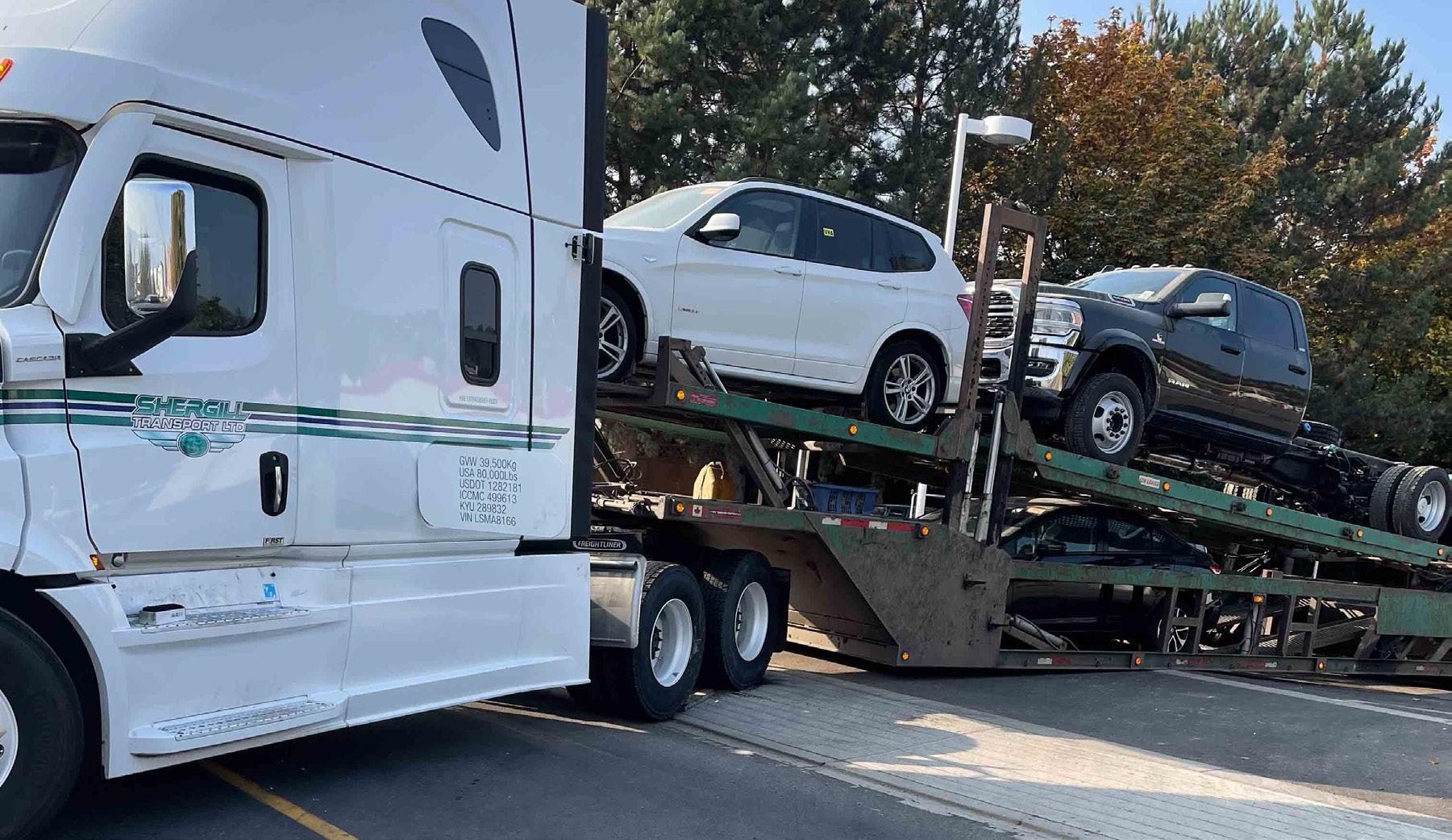
turn channel is complete with a truck apron to accommodate the large vehicles while reducing motor vehicle turning speeds over a northbound bike lane. The smart right channel reduced turning speeds from 21 km/h to 15 km/h. A raised active transportation crossing was considered for the channel, but not pursued due to low ground clearance of car carrier truck trailers.
FIGURE 5. Mountable apron on exit of smart right-turn channel accommodates large trucks turns & improves sightlines to northbound cyclists
FIGURE 6. Reverse curve on bike path slows bikes approaching channelized right-turn crossing
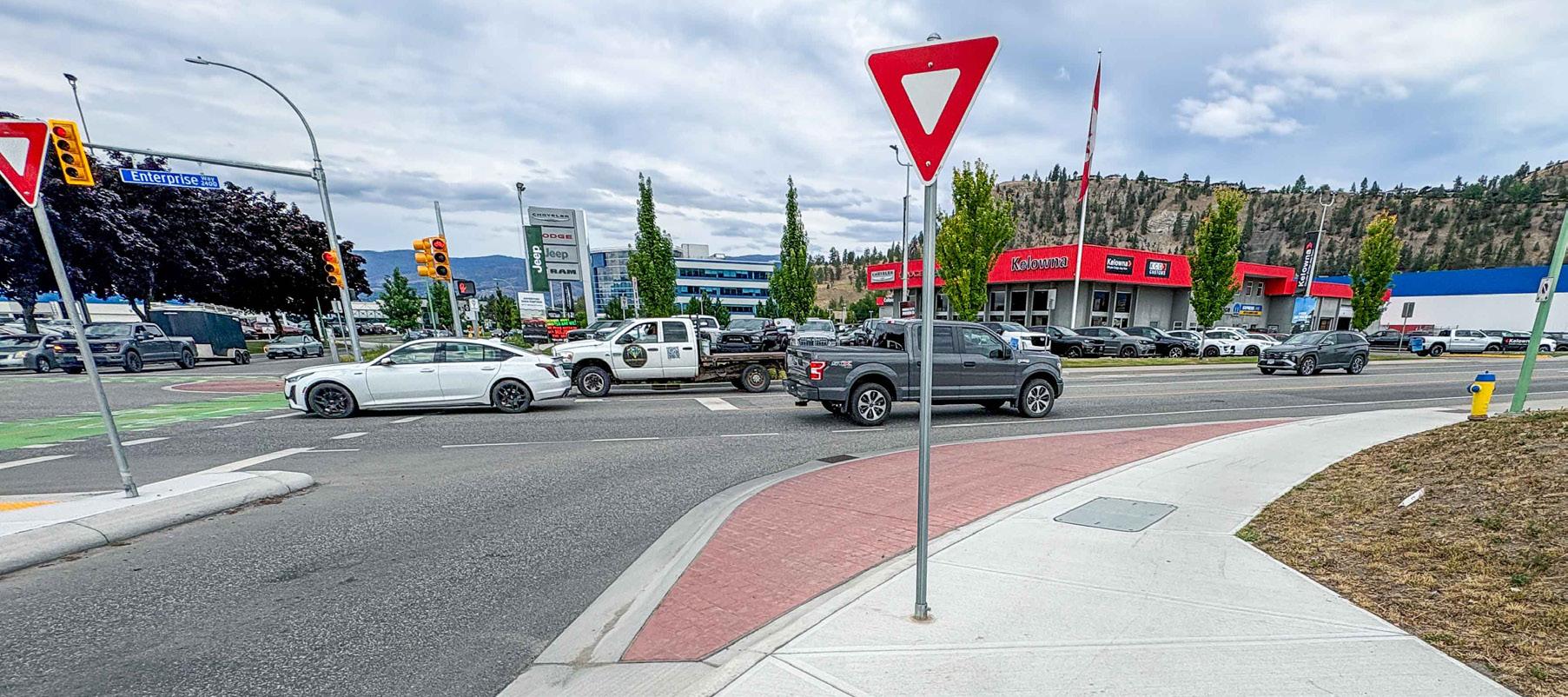
The corner treatments in the intersections use corner mountable ripple strips as per City of Ottawa Protected Intersection Design Guide details. These create tighter turning radii for safer passenger vehicle turning speeds while accommodating articulated trucks. The design item was a test pilot for the City of Kelowna
with support from the Insurance company of British Columbia (ICBC). A solid white line was added to the edge to highlight for motorcycle riders.
The Leckie ATC shows that trucks and bikes can share a corridor without either mode losing
FIGURE 7. Low ground clearance of car carrier trailers
FIGURE 8. Corner mountable ripple strip
out entirely—but it also shows how much deliberate work that takes. Nearly every decision along the corridor, from the bend-out crossing at Hunter Road to the smart right-turn channel at Enterprise Way, was a negotiated compromise between turning radii and crossing distances, drawing on a wealth of design resources (see below) and case studies that were used for this design. Provincial and municipal rules played their part too: the BC Motor Vehicle Act and City of Kelowna Traffic Bylaw made tools like crossrides possible here, even though they are not permitted throughout Canada. The corridor uses a variety of other methods to accommodate other truck movements depending on the constraints at each location. So, can we manage some corners for turning radii and still keep our streets people-friendly? Leckie suggests yes— but it takes deliberate design, the right regulatory tools, and a budget to match. This particular street may not be built for trucks and bikes alone, but building it for both took real, sustained effort from a host of design professionals.
LEARN MORE in this City of Kelowna Leckie Active Transportation Corridor video.
DESIGN RESOURCES
• BC Active Transportation Design Guide
• BC Supplement to TAC Geometric Design Guide
• TAC Geometric Design Guide for Canadian Roads
• TAC Pedestrian Crossing Control Guide
• TAC Manual of Traffic Control Devices for Canadian Roads
• NACTO Urban Bikeway Design Guide
• City of Ottawa Protected Intersection Design Guide
AUTHORS
Vanessa Skelton, P.Eng a GHD Associate, is a project manager and the lead for the Transportation Planning and Traffic Engineering group in Canada. With over 30 years of experience in the transportation industry, she completes safety studies and provides recommendations to municipalities for identified safety concerns. She manages design projects and traffic studies for many municipalities ranging from rural communities to large cities.
Tom Baumgartner, MSc., P.Eng., RSP1 is a Senior Transportation Engineer and Principal with Align Engineering Ltd. in Kelowna, BC, with over 18 years of experience helping municipalities develop safe, efficient, and cost-effective transportation systems. His expertise includes transportation planning, road safety, active transportation design, transit facility design, traffic calming, development impact assessments, transportation policy, and traffic management.
Education: Diploma of Engineering, Saint Mary’s University, 1996. Bachelor of Engineering, Technical University of Nova Scotia, 1999
First transportation job: Summer work term, Streetwise Transportation Engineering with David McCusker
City of residence and hometown: Halifax, Nova Scotia
Hobbies: Biking, hiking, snorkelling, hanging out at the beach with family and friends, motorbiking, ATVing, gardening. Just being outside.
What roles have you taken on as a member of ITE:
• Served every position on the executive of the Atlantic Provinces Section including multiple terms as Director
• ITE Canada Appointee to TAC Committees
• Various task forces and working groups with ITE Canada
• Part of Local Arrangements Committees for conferences hosted in Atlantic Region
• Current Secretary of ITE Canada
ITE INVOLVEMENT
When did you first attend an ITE event?
The first ITE event I attended was the Atlantic Provinces Section spring session in Charlottetown, PE in 1997. This was also my first time presenting at an ITE event which was on a Benefit-Cost analysis project I was working on with David McCusker. After that I attended the ITE International Conference in Toronto in 1998 with my father. I continued to get more involved with ITE and have attended many conferences and events since then.
What do you value most about your ITE membership?
ITE has provided opportunity to meet many other members from across the country. The ITE community creates a connected group with a shared goal of improving our transportation network for all users. The longer you are involved, the more connections are created providing
opportunity to share ideas and see how others are working to solve our transportation challenges across the country. This helps us all adapt and solve new challenges in an increasingly complex and integrated transportation network.
GETTING TO KNOW YOU
What attracted you to the transportation profession?
I was exposed to transportation very early. I used to travel along on site visits with my father and hear about traffic signs that needed to be changed, hear about complex interchanges and freeways during family vacations and visit his office and see project designs. When it was time to think of my future, I was not sure what I wanted to do. I enjoy seeing things get built and solving challenges. While engineering seemed fine, I was also interested in Accounting; I like when there is a proven solution and everything balances out.
Essentially a flip of a coin and I enrolled in Engineering.
What is your favourite mode of transportation?
Driving a car is always fun, except when stuck in traffic, as I love to be moving. Riding a bike is a great mental escape, just keep peddling, and a better way to see more when visiting an area. Getting on a motorbike also brings out the freedom of the road, or off road away from traffic and into the trails.
PROFESSIONAL ACHIEVEMENTS & PERSPECTIVES
How would you describe your job to someone you just met at a party?
That is always a tough one that I struggle with. I work on a variety of interesting projects. I might ask if they are familiar with a certain street. If they are I can say that I worked on analysis and design of that street.
Then I start getting a list all the intersections I should be looking at to fix traffic problems. I love talking transportation, but at a party, its time to change the subject.
Tell us about a project that you’re particularly proud to have worked on
I am involved in many projects, so it is difficult to pick just one. I am always proud to see projects operate and turn out as expected after working on the analysis, planning and design for long periods on some of the larger projects. One of these projects include the North Park Street corridor in Halifax where oddly configured multi phased signalized intersections were converted to roundabouts. The former signalized intersection required a wide cross section to accommodate vehicle queues, with the roundabouts, a five-lane street was converted to a two-lane street creating space for other features and improved active transportation facilities.
Although the larger projects are great, sometimes it is the smaller projects that I am
more excited to see completed. For example, when working on an intersection realignment, sometimes small modifications can be completed which show improved safety and operation for users. Projects don’t have to be large and high profile to make a difference.
What is one aspect of your work that you particularly enjoy?
I enjoy workshops and project brainstorm sessions. It is always exciting to test ideas and work with others to hear additional thoughts. These thoughts and ideas are like puzzle pieces and can be combined in different ways to generate new solutions and combine to contribute to a better understanding and project outcome. Sometimes public meetings can be fun too; satisfying when they are done, and they generate many good stories.
If you could change one thing about the transportation practice, what would it be?
There are too many projects that try to do everything. A project may initiate with a goal to solve an identified problem and then additional tasks and items are included that take the focus away from the primary objective. The pursuit of perfection that every project has to solve everything can result in nothing being implemented. While planning for the future, we need to focus on what is needed and can be implemented now while protecting opportunity for future features.
As you reflect on your career, do you have any lessons learned or challenges that you would like to share with emerging transportation professionals?
Remote working has slowed learning and progression of new graduates entering the profession. While many tasks can be performed remotely and online, the learning and knowledge transfer, really seeing the thought process to solving problems is best learned by working alongside senior transportation professionals. Take the opportunity to work together with your mentor or team when you can. Take each project and learn, never stop learning.
Aislinn Dressler
Employment: Incoming Masters of Applied Sciences in Transportation Engineering graduate student at UBC
Education: University of Victoria, Bachelor of Engineering in Civil Engineering, 2026
First transportation job: University of Waterloo Rising Star Research Fellow with Dr Chris Bachmann focusing on applying virtual reality to micromobility research
Hometown: Fernie, BC
City of Residence: Vancouver, BC
Hobbies: Cycling, reading, walking, pickleball
What roles have you taken on as a member of ITE:
• President of UVic ITE Student Chapter
• Co-chair of 2026 ITE Canada SLSCo-Chair of the 2025 ITE Canada Student Leadership Summit
ITE INVOLVEMENT
When did you first attend an ITE event?
My first ITE event I attended was the Annual Conference in Hamilton in 2024. I was working as a research student with Dr. Chris Bachmann at the University of Waterloo, and he encouraged me to attend the conference with the Waterloo delegates to learn more about the transportation field. It was an incredible experience and inspired me to work towards a career in transportation.
Tell us about your involvement with ITE
My primary involvement with ITE has been my role as the UVic ITE Student Chapter President from March 2025 until July 2026. As President I worked with my executive team to revitalize the club and foster a transportation community on and off campus. This included running lunch and learns, workshops,
competitions, and outreach sessions which engaged over 100 university and K-12 students.
What do you value most about your ITE membership?
I value the community that comes with the membership. I have met and connected with so many incredible professionals and students from across Canada at the conferences.
GETTING TO KNOW YOU
What attracted you to the transportation profession?
I wanted to work in a field where I could make a positive impact on the day to day lives
of people in my community. Transportation impacts all of us, and many of those impacts are results of decisions made by professions in the field. While there are other fields I considered, I like the complexity of transportation problem solving and as an avid walker and cyclist, getting to work on projects that improve the safety of my own active trips is a definite plus. I want to use my passion and skillset to help make transportation a safe, sustainable, and accessible feature of a city rather than a threat to peoples’ safety, including my own
What is your favourite mode of transportation?
My favourite mode of cycling!
EARLY CAREER & PERSPECTIVES
Tell us about a project, course, co-op, or early work experience are you’re particularly proud of.
One project I am proud of is my group’s capstone project at the University of Victoria. For the project, we worked with Bunt and Associates to analyze 5 local intersections for safety and efficiency. We used the results to propose retrofits to address issues along the corridor in a phased approach.
What is one aspect of transportation work or study that you’ve enjoyed the most so far?
I really enjoy how multidisciplinary transportation work tends to be. Getting to work in teams with people who have technical and non-technical backgrounds makes the work really interesting. I particularly like getting to receive community feedback to inform designs, which is relatively common for many urban transportation projects.
What advice would you give to students or recent graduates who are just getting involved in ITE or the transportation profession?
My biggest piece of advice is to find what specific part(s) of transportation interests you and connect with professionals and students who work on projects related to your interest! As someone who wants to work in active transportation, connecting with professionals who work in the field has really helped me understand what my future career can look like.
News from CARSP
CARSP/ITE Canada Partnership Agreement
CARSP and ITE Canada are currently discussing an extension of the partnership agreement following the completion of its initial 2-year term. The partnership has supported several joint initiatives for members, including conference sessions, webinars, and student activities.
CARSP/ACIP Conference 2026
• The CARSP/ACIP Conference 2026, co-hosted with Parachute, was successfully held from June 14–17, 2026, in Halifax, Nova Scotia. The conference theme was “Connecting Paths: Advancing Road Safety for All.”
• The conference welcomed approximately 180 delegates and featured 18 technical sessions, including 56 oral presentations and four poster presentations, as well as four panel discussions, two keynote presentations, and one workshop.
• The complete conference schedule and presentation abstracts are available on the conference website
• Thank you to all speakers, sponsors, exhibitors, volunteers, reviewers, partners, and attendees who contributed to the success of the conference.
• Conference photos are available here
• Slide decks that presenters agreed to share are currently available to conference delegates through the PheedLoop Go app. Six months after the conference, these slide decks will be posted in the Proceedings section of the CARSP website.
• The conference also recognized several award recipients. The Student Poster Competition winners were Homa Naeini (first place), Lauren Martinelli (second place), and Christopher Du (third place). The Student Paper Competition winners were Omotunde Adeniran (first place) and Lucas Petropoulos (second place). Denae Dorge received the Mavis Johnson Traffic Safety Award, and Philippe Brodeur-Ouimet received the Dr. Charles H. Miller Award. The Mid-Career Trailblazer Awards were presented to Dr. Karim El-Basyouny and Dr. Linda Rothman, while the Lifetime Achievement Awards were presented to Maxime Brault and Brenda Suggett.
• The next CARSP conference, co-hosted with Transoft Solutions, will be held in Vancouver, British Columbia, from May 30 to June 2, 2027. Further details will be shared when available.
Publications and Resources
• Canadian Road Safety News Digest: A monthly compilation of road safety news from across Canada. The May issue is now available. The most recent issue is available to CARSP members, while previous issues are publicly accessible. Read the News Digests here.
• CARSP Safety Network Newsletter (SNN): The spring issue is now available to the public. Read the newsletter here.
• Road Safety Information Resources: Updated information on key road safety topics, including links to relevant resources, is available here.
Outreach, workshops, and training opportunities
• Monthly CARSP webinars on Road Safety Topics – Learn more here
• Many past webinars on various road safety topics, free to the public, posted here
Upcoming CARSP Webinar
Registration is free for CARSP members and $50 for non-members.
• The Effect of Road Design on Collisions
Ű August 20, 2026
Ű Registration link
Actions for ITE Canada Members
• Join our mailing list – updates on the CARSP Conference, webinars, release of publications, etc.
• Consider joining CARSP! Membership is $125/year. Multi-year discounts and group rates available.
• Spread the word about CARSP to your networks.
Building Knowledge, Connections, and Momentum Across Canada
ITE Southern Alberta continued an active spring and early summer with technical learning, national recognition, and opportunities to experience transportation projects firsthand. From discussions on human factors and roadway safety to connecting with colleagues from across Canada in Victoria and touring Calgary’s newest active transportation infrastructure, members continued to engage, learn, and build connections across the profession.
May Luncheon - Human Factors and Traffic Engineering
In May, ITE Southern Alberta welcomed Jason Kumagai of -30- Forensic Engineering for a luncheon exploring the relationship between Human Factors and Traffic Engineering. The presentation examined how perception,
workload, and decision-making influence user behaviour and transportation safety, highlighting why collisions can still occur even when infrastructure meets established design standards.
Through case studies and practical examples, attendees explored how behavioural insights can be combined with engineering analysis to identify risks and support Safe System and Vision Zero objectives. The session generated thoughtful discussion and reinforced the importance of understanding how people actually experience and respond to transportation systems
June - ITE Canada Annual Conference
Many Southern Alberta members travelled to Victoria, British Columbia, in June for the 2026 ITE Canada Annual Conference.
The conference also provided an opportunity to celebrate several outstanding Southern Alberta
achievements. Congratulations to Teresa Akl, recipient of the 2026 ITE Canada Master’s Transportation Scholarship in honour of John Vardon, and Ryan Vanderputten, recipient of ITE Canada’s Recognition of Service Award for his years of dedicated leadership and service to the District. We also extend our sincere appreciation to the conference organizers, volunteers, presenters, sponsors, and ITE Canada leadership for delivering another exceptional national conference.
June - Downtown Calgary Bike Tour
The season concluded with the ITE Southern Alberta Downtown Calgary Bike Tour, which quickly sold out and demonstrated the strong interest in hands-on technical learning opportunities. Led by David Kowel of Urban Systems, participants visited several recent and ongoing active transportation projects, including 15 Avenue SW, 8 Street SW, Eau Claire, and the Ramsay-Inglewood Public Realm Improvements.
With presentations from project professionals at each stop, attendees had the opportunity to move beyond plans and drawings to experience completed infrastructure firsthand while discussing design decisions, project challenges, and lessons learned. The tour highlighted the value of connecting planning, design, and construction through real-world observation and discussion
Looking Ahead
As we move into the second half of 2026, ITE Southern Alberta is excited to host a Trivia Night (Hosted by their very own Publicity Coordinator), Luncheons and Student Speed Mentoring!
EVENTS
In May, Trevor Demerse presented a well attended webinar on the BC Pedestrian Hybrid Signal, located at the University of British Columbia at West 16th Avenue and Binning Road. This engaging presentation touched on reasoning for developing this new signal operation, as well as how two years of monitoring resulted in quantified safety improvements compared to the pre-existing ‘special crosswalk’ (actuated amber beacons). Thank you Trevor for the in-depth presentation!
ITE CANADA ANNUAL CONFERENCE
The section was represented at the 2026 conference in Victoria by Trevor Demerse, Section President, and Eric Seto, Section Secretary, who enjoyed learning about emerging transportation practices as well as receiving updates on ITE Canada’s latest efforts and initiatives. The Section would also like to congratulate the UBC ITE Student Chapter who became the 2026 ITE Canada District Traffic Bowl Champions - congratulations to Sambhav Goyal, Bradley Carver, Victress Philemon, and Kelly Zhang! Shout out also to the BCIT ITE Student Chapter, established this academic year, who also participated in the Traffic Bowl and represented on the trade show floor.
In May, ITE Atlantic hosted its annual Spring Technical Session in Halifax, Nova Scotia, marking the Section’s first event in the city since last year’s national conference. The session kicked off with a social gathering at The Pint Public House the evening before, providing an excellent opportunity for both longtime and new ITE Atlantic members to connect and network.
The following day, attendees came together for an agenda full of engaging presentations covering a wide range of transportation topics, from a presentation on Canada’s first displaced left-turn intersection in Prince Edward Island, to an update on Halifax Regional Municipality’s Integrated Mobility Plan. The event also featured an insightful panel discussion led by some of Atlantic Canada’s leading transportation modelling professionals.
A special thank you to all the presenters and panelists whose expertise and enthusiasm helped make the Spring Technical Session a tremendous success!
This May, ITE Saskatchewan hosted our annual Spring Session in Regine. THis event brought together over 50 attendees to hear six presentations, a mini-workshop focused on maximizing impacts with limited budgets, and opportunities to network with professionals from across the province. Presentation topics included:
• An update on the 11th Avenue Revitalization Project by the City of Regina including design features and unique construction staging limitations on this pedestrian and transit oriented street.
• An introduction and demonstration of PedApp by the City of Regina developed, with engagement from CNIB, to enhance safe crossing opportunities at signalized intersections for folks with vision impairments.
• The presentation of the Ministry of Highways Systemic Highway Intersection Safety Strategy, the methodology used to conduct a network screening, and a quick-build toolbox.
• An update on LINK: Saskatoon’s Bus Rapid Transit project including routing, station design, placemaking, and multi-modal considerations at key corridors.
• Closing the loop on the Highway 16 Restricted Crossing U-Turn post-construction following a presentation in 2019 on the In-Service Road Safety Review that originally identified this innovative intersection as a viable mitigation measure.
• And ‘Buses Come and Buses Go: Changes in local accessibility during long-term transit closures’, an updated presentation by our Student Presentation Competition Winner, Jessica Lam, featuring the latest findings from her analysis.
ITE Canada Annual Conference
The section was represented at the 2026 conference in Victoria by Ellen McLaughlin, Section President, Christine Heintz, Section Vice President, and Majid Abedi, Student Chapter Liaison, who valued the opportunity to learn about transportation best practices and participate in roundtables furthering the development of local ITE events at the Section and Chapter levels. They were joined by Jessica Lam, University of Saskatoon, who received the Student Presentation Competition Award for her work on the subjective well-being of transit users during long-term service disruptions.
This Spring, ITE Manitoba continued our 2026 luncheon series with presentations by Steve Wood from the City of Winnipeg in April and Meagan Klassen from CAA Manitoba in May. Steve provided an update on the City’s Leading Pedestrian Interval (LPI) program which gives pedestrians a head start when crossing the street at high-volume intersections. Meagan shared valuable insights into speeding and aggressive driving in Manitoba, highlighting key trends and challenges across the province.
In June, many members of ITE Manitoba and the University of Manitoba Student Chapter travelled to Victoria for the 2026 ITE Canada Annual Conference. We had an absolute blast! With more than 600 attendees, beautiful weather, and an outstanding technical and social program, the conference was a great reminder of why we do what we do and the importance of connecting with colleagues from across the country. Special shout out to both the Local Arrangements Committee (LAC) and Evonne Winchiu Donaher for their hard work in making the conference such a tremendous success.
This Summer, ITE Manitoba will continue our events with a tour of cycling infrastructure in Winnipeg. Stay tuned for more on this in the Fall edition of our Transportation Talk!
2026 ITE Canada Annual Conference
In June, several members of the ITE Southwestern Ontario Section and Executive travelled to Victoria to attend the 2026 ITE Canada Annual Conference. We were also proud to have two of our student chapters (the University of Waterloo Student Chapter and the University of Windsor Student Chapter) participate in the 2026 ITE Canada District Traffic Bowl.
We would also like to recognize our own Paul Sawicki, who received the Distinguished Service Award in recognition of her outstanding contributions to the transportation profession and ITE Canada.
Congratulations as well to the ITE University of Waterloo Student Chapter for winning the Outstanding Student Chapter Award for the third consecutive year!
Upcoming Plans/Events
The Section has been busy planning a number of events for Fall 2026, including a potential bike ride in late August (location to be determined), a tour of transportation initiatives in Waterloo and St. Jacobs in late September, a mixer and transportation trivia night in London in early October, a joint one-day miniconference in Oakville with the Toronto and Hamilton Sections in late October, and our Annual General Meeting in London in midNovember.
For more information on our upcoming events, please follow the ITE Southwestern Ontario Section on Linkedin.
2028 ITE Canada Annual Conference
Although 2028 is still two years away, we are excited to welcome transportation students and professionals from across Canada to our region as the 2028 ITE Canada Annual Conference will be coming to London, Ontario! This will mark the first time the Annual Conference has been held in London and the third time ITE Southwestern Ontario Section has hosted, following conferences in Windsor in 1994 and the Waterloo Region in 2014.
Area X.O. Webinar
In late April, the National Capital section hosted our first webinar of the year about the Area X.O site in the Ottawa region, operated by Invest Ottawa. Pavlo Serhiienko and Susanne Cork detailed their exciting work related to the innovation and testing of connected and autonomous vehicle solutions using their drive-test facility, which is the most advanced communication test infrastructures in the world.
Lifetime Achievement Breakfast
In May, our section hosted the 2026 Lifetime Achievement Award Breakfast at the Britannia Yacht Club, which is a beautiful facility located along the Ottawa River. We were honored to present the Ata. Khan Lifetime Achievement award to Bassam Hamwi, who has continuously contributed to the advancement of the profession by serving on numerous technical committees and received a number of excellence awards in planning and design. The 2026 Project of the Year Award was presented to the Ottawa River Transit On-Demand Pilot Service project by the City of Pembroke. The City and Left Turn Right Turn Ltd. conducted a presentation on how they successfully developed a
right-sized solution for their City and how ongoing communication strategies have made the project an early success. Thank you to all who attended.
2026 ITE Conference
The National Capital’s technical representative, Romaine Morrison, attended this year’s ITE conference in Victoria, BC. Romaine thoroughly enjoyed learning about career development, mental health in transportation, new frameworks for complete streets, mergers and acquisitions in the industry, and evolving transportation design at the technical sessions.
It has been an exciting and busy last few months in the Quebec Section!
Events
This May, in partnership with the Société de Transport de Montréal (STM, Montreal Transit Corporation), we hosted a training on bus blind spots. Held at the Bellechasse Transport Centre, STM’s newest garage, the event gave participants the opportunity to engage with bus drivers and learn about bus blind spots, as well as how to navigate and safely design for them. Other challenges drivers face daily were also explored. It was a great way to raise awareness of bus safety and see these challenges firsthand. Thank you to the STM for hosting us and partnering with us for this great event!
This season, the Quebec Section has also been gearing up for many upcoming events. A webinar on how to better protect vulnerable road users at signal-controlled intersections within the Quebec context is planned for this July. A panel and networking event on entrepreneurship in transportation is also planned for this Fall. We hope to see you there!
ITE Canada Annual Conference
The section was represented at the 2026 conference in Victoria by Antoine Gerson, VicePresident and Section Director, who thoroughly enjoyed connecting and learning from his peers across the country. A special shoutout to Antoine, who also co-presented a great technical session titled: Scaling Infrastructure for Small Communities.
ROAD SAFETY for Canadian Practitioners Online Training
The Road Safety For Canadian Practitioners online training program, presented by TAC & ITE Canada, allows you to tailor your learning to your specific professional development needs Five courses are offered:
Foundations of Road Safety
Measuring Safety
Human Factors and Road Safety
Solving Safety Problems
Implementing Road Safety Programs
Comprehensive & tailored professional development
FORMAT
Courses are delivered through TAC’s Online Training Centre as self-paced, on-demand modules that include recorded lectures, case studies, exercises, supplemental reading lists & quizzes
DURATION
Lectures in each course range from 3-6 hours. In total, the five courses offer 24 hours of learning. Modules are accessible for 6 months after payment.
PURCHASE
The five modules can be purchased individually or as discounted bundles. Find complete course details and prices at tac-atc.ca.
More Information: tac-atc ca/en/knowledge-centre/training-courses/#roadsafety
University of Victoria
STUDENT CHAPTER NEWS
The UVic Chapter has had an exciting few months! We hosted the ITE Canada Student Leadership Summit at the university, which brought together over 40 students and professors from other chapters across Canada to discuss the role of sustainability and reconciliation in leadership. If you are interested in learning more about the SLS, check out the article written by our chairs.
Our club has slowed down for the summer after SLS and is focused on planning activities for the upcoming fall semester.
University of Toronto
UT-ITE has been busy setting up our goals and schedule for the upcoming 2026-27 academic year. Having attended this year’s annual conference in Victoria, we have identified high-potential areas for growth, particularly through diversification of our outreach. Having completed our annual elections, our new executive team is excited for this new year.
Beyond this, UT-ITE is proud to have been invited to participate in the annual sandbox competition taking place this summer in Detroit with ITE International. Our chapter will be travelling to attend the conference; we are wishing them the best of luck!
UT-ITE remains eager to deepen its unique position as a community to learn about transportation, share our passion, facilitate advanced educational seminars, and connect students to industry professionals through fun and thought-provoking events at the heart of Canada’s largest urban region!
STUDENT CHAPTER NEWS
University of British Columbia
STUDENT CHAPTER NEWS
This spring semester has been very dynamic for the UBC ITE Student Chapter, highlighting both professional engagement as well as community outreach.
The Student Chapter has organized 9 Lunch and Learns (L&L) with companies across the Lower Mainland of BC. During this L&L’s, professional engineers and technicians provided valuable insights and project experience to our undergraduates and graduate members. As we progressed through
these L&L to February, we have reached our climax of the academic year, featuring our annual Industry Night. With our greatest appreciation to our sponsoring companies, we were able to feature 14 different institutions and companies. Both students members and industry representatives have had a great night exchanging experiences, chit-chats, and amazing catering to their stomachs.
Moving beyond the Student Chapter and the industry, we have also reached out to McMath
Secondary School for a collaborative outreach.
Our chapter’s executives were able to introduce students to transportation engineering through a series of activities, interactive lectures, and was closed off with a competitive and remarkable elevator pitch faceoff by the McMath students.
To end off the year, our chapter proudly participated in the ITE Canada Conference in Victoria, where our graduate speakers and representatives participated in respective research seminars, and we celebrated a third consecutive victory at the Traffic Bowl! We will be moving onto the 2026 Joint ITE International and Great Lakes District Annual Meeting and Exhibition in Detroit in just a few weeks time and best of luck to our team!
We will be moving forward in the summer to transition to the new academic year, with fresh members and executive members.
University of Alberta
STUDENT CHAPTER NEWS
ITEUA has had an exciting summer season! We sent four members to attend the ITE Canada conference in Victoria, BC, and each member had an excellent time attending the Student Leadership Summit (thanks to UVic for hosting), listening to research seminars, looking at posters, and networking with transportation professionals. We also made multiple new connections with other student chapters, and we look forward to connecting with them in the future.
Additionally, ITEUA participated in the Traffic Bowl, winning our preliminary round before finishing second overall after a hard-fought battle with UBC and McMaster. Congratulations to UBC for their victory, and we wish them the best of luck at the Joint ITE International Conference in Detroit! Lastly, ITEUA would like to thank all the organizers and ITE Canada for their hard work and dedication to making the conference a very memorable experience. We are already looking forward to the next conference!
University of Calgary
STUDENT CHAPTER NEWS
The last few months have been busy for UCITE! We had a strong delegation attend the annual ITE Canada Conference in Victoria including undergraduates, graduate students, a post-doctoral researcher, and our faculty advisor. Several students presented their work, while others attended the Student Leadership Summit, hosted by the University of Victoria Student Chapter. The UCITE also bravely competed in a difficult round of the Traffic Bowl against UBC and Waterloo. A huge thank you to ITE Canada, SAITE, and the Schulich School Activities Fund for their funding support for our Traffic Bowl Team!
In Calgary, UCITE continued hosting our popular Transportation Industry Talks series. Zahra Tavakoli, a transportation planner at HDR, presented on career development. We also had a speaker from U of C’s Centre for Career & Personal Development run a “How to Network” workshop with our members in preparation for the summer conference season. Finally, we hosted a transportation social night where members had the chance to catch up over food and drinks and play board games.
Things will be quieter for UCITE over the summer, with one planned Transportation Industry Talk in July and an outdoor social event in August. Behind the scenes, the UCITE team will be preparing for a busy fall semester with more events and the election of a new executive committee. We are also eagerly looking forward to helping out with the 2027 ITE Canada and ITE International conference which will be held in Calgary!
University of Manitoba
Over the last year UMITE worked to build and expand the Transportation community through several initiatives, from educational Lunch & Learns to social events like our Pumpkin Painting Night. This year we aimed to offer more opportunities for students to experience the industry first hand which we were able to accomplish through technical events like a Syncro Tutorial and a tour of Winnipeg Transit’s Fort Rouge Garage. Beyond this we also worked to connect students to the broader community through outreach events at elementary schools in Winnipeg.
Throughout the semester, our chapter also hosted numerous samosa sales, which helped bring students together while supporting our club initiatives and future events. In addition to our fundraising efforts, we organized a bowling networking night in collaboration with the ITE Manitoba section that welcomed both students and professionals, providing a fun and relaxed setting to connect, build relationships, and strengthen our transportation community beyond the classroom.
One of our biggest highlights of this year was our technical trip to Tokyo, Japan. It was an unforgettable and meaningful learning experience that gave students the opportunity to explore one of the world’s most advanced transportation systems firsthand while connecting with professionals and experiencing a new culture together. During the trip our delegation were given technical tours and
lectures from the Tokyu Corporation, Tokyo Metro, Busta Shinjuku, Yurikamome Inc. and Prof. Oguchi of the University of Tokyo. Each of these meetings provided members with valuable insights into each group’s respective specialty, from railway operation to property development and land use. This trip would not have happened without these professionals and organizations so we give our deep appreciation for the opportunity.
Beyond our technical trip, members also made unforgettable memories and built lasting friendships at the ITE Canada Conference in Victoria, BC. The conference began with the Student Leadership Summit, where five of our students had the opportunity to network with professionals, discuss important topics such as sustainability and reconciliation, and gain valuable insight into becoming stronger leaders in transportation. We are very thankful to ITE Canada for the guidance, knowledge, and opportunities provided throughout the conference. We are especially grateful for the opportunity to participate in the Traffic Bowl, which allowed our delegates to apply their knowledge, collaborate as a team, and proudly represent our student chapter.
McMaster University
ITE McMaster was proud to send a delegation of 8 members of our executive team to this year’s ITE Canada Conference in Victoria, British Columbia.
Delegates had the opportunity to expand their professional networks, connect with other student chapters, view company exhibits, attend insightful panels and seminars, and experience Victoria’s vibrant urban landscape. Special acknowledgement also goes to our Traffic Bowl team for their excellent performance, making it to the final round in this year’s competition!
ITE McMaster extends its gratitude to the organisers and attendees of this year’s ITE Student Leadership Summit and Conference for their part in making a truly memorable event. We also acknowledge:
• Daniel Chan
• Talia Halwani
• Dominic Mothe
• Matthew Lech
• Olivia Wiper
• Andrew Savalgio
• Kalena Scheifele
• Sadia Chowdhury
For proudly representing our student chapter.
We are in the midst of our preparations for the 2026/27 school year and can’t wait to continue connecting with the ITE community in the fall
University of Windsor
It has been an exciting season for the University of Windsor ITE Student Chapter!
From May 31 to June 3, our members had the privilege of attending the ITE Canada 2026 Annual Conference in Victoria, BC, joining students and professionals from across the country for an enriching and inspiring experience. From engaging technical sessions to valuable networking opportunities, the conference gave our members a platform to learn from industry leaders and explore emerging ideas shaping the future of transportation. A particular highlight was our first-ever participation in the Traffic Bowl, a proud and memorable milestone in our
chapter’s history. Our team rose to the challenge and represented the University of Windsor with enthusiasm and determination. Beyond the competition, our members connected with distinguished professionals, including representatives from the ITE Southwestern Ontario Section and fellow ITE student chapters from across Canada, reinforcing the spirit of collaboration and community that makes the ITE network so valuable.
Closer to home, the chapter also took part in the University of Windsor Summer Open House, where our members welcomed prospective students and guided them through our
transportation laboratories. It was a wonderful opportunity to showcase the exciting work happening within our program and inspire the next generation of transportation engineers and planners.
As the summer progresses, the chapter has more to look forward to. Two Transportation Industry Talks are planned, continuing our commitment to bridging the gap between academia and industry. We will also be hosting a chapter handover event, marking the transition to our incoming executive team as the current session draws to a close.
We are grateful for the support of ITE Canada and all who contributed to making this a landmark summer for our chapter, and we look forward to building on this momentum in the fall.
University of Waterloo
STUDENT CHAPTER NEWS
This spring has been a busy and exciting one for ITE UW! The major highlight was our chapter’s participation in the 2026 ITE Canada Annual Conference in Victoria, BC, where members attended the Annual Conference and Student Leadership Summit. We connected with students and professionals from across Canada, and represented Waterloo in the Traffic Bowl against the University of Calgary and the University of British Columbia. The conference was another proud milestone for the chapter, as ITE UW received the 2026 ITE Canada Outstanding Student Chapter Award. This marks the third consecutive year that Waterloo has earned this national recognition, and we are incredibly proud of the members, executive team, faculty supporters, and sponsors who helped make it possible.
Back in Waterloo, we kicked off the spring term with a collaboration with the UW GeoGuessr Club through a Campus GeoGuessr event. We continued our Transportation Talks series with Michael Sone from Metrolinx, who spoke about
transit planning, infrastructure, and career pathways. We also welcomed Aaron Blata from RC Spencer Associates Inc., who shared insights on transportation engineering, traffic operations, road safety, and consulting careers. In June, we hosted a Transit Clip Compilation Competition, where general members submitted transportation-related video clips for a chapter compilation.
Looking ahead, ITE UW has more events planned for the rest of the term, including a Transportation Talk with Sangave Gunajothy and Jason Small from WSP in Canada, as well as another Transportation Talk with Jacob Terry of Dillon Consulting. More socials and events are also on the way as we continue building our chapter community. Thank you to all of our members, executive team, sponsors, and supporters for making this term possible. We are proud of everything ITE UW has accomplished so far and look forward to continuing the momentum into the upcoming Fall term!
Mohawk College
ITE Mohawk College is excited to share two upcoming planning-focused events for Transportation and Urban Planning students. These events will provide valuable opportunities to deepen students’ understanding of the planning process while expanding their professional networks.
With the recent opening of Confederation GO Station in the Stoney Creek area of east Hamilton, ITE Mohawk College will host an event that brings together Transportation students and professionals from the City of Hamilton’s Active Transportation and Transit Planning divisions. The event will explore the planning and implementation processes behind major transportation projects and examine how transit investments help connect communities both within Hamilton and across the region.
We would like to extend a special thank you to the staff at Hamilton Street Railway (HSR) for their support and for taking the time to share their expertise with our students. Following the event, a social gathering will provide an opportunity for students from different academic years to connect and exchange experiences.
Looking ahead to the 2026–27 academic year, ITE Mohawk College is planning several initiatives designed to connect students in Civil Engineering, Transportation Engineering, and Urban Planning. These events will focus on the role of transportation planning in shaping urban environments, supporting sustainable growth, and creating more connected and livable communities for people of all ages.
Calgary Edmonton Vancouver Victoria Kelowna
New Members
Welcome to these new Canadian members who joined ITE between April and June 2026. We look forward to connecting with you and supporting your professional learning and growth in our community of transportation professionals!
Adesina Adelusi, City of Calgary, Alberta, Calgary, AB
Patrick Akl, University of Calgary, Calgary, AB
Heider Al Mashalah, McMaster University, Hamilton, ON
Safwan Al Shabakji, Concordia University, SaintLaurent, QC
Shania Almeida, City of Edmonton, Edmonton, AB
Matthew Anderson, City Of Ottawa, ON, Transportation Services Department, Ottawa, ON
Steve Anderson, City of Guelph, Guelph, ON
Leen Arafeh, University of Waterloo, Waterloo, ON
Asm Ashraffi, Saskatchewan Ministry Of Highways And Infrastructure, Regina, SK
Othman Benamrane, City Of Ottawa, ON, Transportation Services Department, Ottawa, ON
Kate Berry, City of Guelph, Dundas, ON
Karson Blank, City Of Ottawa, ON, Transportation Services Department, Ottawa, ON
Connor Bomhower, City Of Ottawa, ON, Transportation Services Department, Ottawa, ON
Matthew Brown, City of Courtenay, Courtenay, BC
Justin Chin, City Of Toronto, Toronto, ON
Sameer Choudhary, Ryerson University, Toronto, ON
Hameed Dagher, McElhanney Ltd, Calgary, AB
Nasim Deljouyi, University of Manitoba, Winnipeg, MB
Michael Dworczak, MDT Urban Traffic Engineers Ltd, St Catharines, ON
Jason Ebarvia, York University, Mississauga, ON
Shahrdad Esmaeili, University of Calgary, Calgary, AB
Emely Estevez, Western University, Stoney Creek, ON
Natalie Fan, City Of Toronto, Toronto, ON
Simon Fortier, City of Victoria, BC, Victoria, BC
Liraz Fridman, City of Guelph, Guelph, ON
Luke Garrod, City Of Coquitlam, Coquitlam, BC
Gretchen Ge, University of Calgary, Calgary, AB
Skyler Goudswaard, Parsons, Toronto, ON
Leng Ha, City Of Ottawa, ON, Transportation Services Department, Ottawa, ON
SK MD Ihsanul Haque, IUT, Chattogram,
Kierra Harper, Crozier Consulting, Toronto, ON
Mariam Harran, University of Calgary, Calgary, AB
Robyn Hendry, University of Victoria, Victoria, BC
Jamal Herron, University of Victoria, Victoria, BC
Ella Hlus, AECOM, Burnaby, BC
Michael Hollander, University of Toronto, Thornhill, ON
Nancy Hui, City of Guelph, Guelph, ON
Paul Hutchison, City of Guelph, Guelph, ON
Muhammad Iqbal, University of Waterloo, Mississauga, ON
Rick Janega, Bedford, NS
Darrell Jones, City of Guelph, Burlington, ON
Mitchell Jones, Paradigm Transportation Solutions, Toronto, ON
Jennifer Juste, City of Guelph, Guelph, ON
Chavi Karunagoda, University of Waterloo, Waterloo, ON
Yasser Kashwaa, McMaster University, Hamilton, ON
Jamie Kauri, University of Waterloo, Toronto, ON
Geoffrey Keyworth, Regional Municipality of Waterloo-Transp. Div., Kitchener, ON
Azam Khan, Dalhousie University, Halifax, NS
Fatin Khan, Dalhousie University, Halifax, NS
Monjur Khan, IUT, Gazipur,
Samuel King, Etobicoke, ON
Jonathan Ko, City of Calgary, Alberta, Calgary, AB
Negar Komeilian, McMaster University, Hamilton, ON
Mara Kowal, McGill University, Burnaby, BC
Kymen Kwan, City Of Ottawa, ON, Transportation Services Department, Ottawa, ON
Jessica Lam, University of Saskatchewan, Saskatoon, SK
Susan Lee, Regional Municipality of York, Newmarket, ON
Qiren Li, City of Calgary, Alberta, Calgary, AB
Peishen Liang, City of Victoria, BC, Victoria, BC
Kenny Ling, Metrolinx, Richmond Hill, ON
Marli Lopez Sanchez, City of Victoria, BC, Victoria, BC
Ryan Lotocki, Winnipeg, MB
Zehua Lu, Richmond, BC
Aidan Mackenie, British Columbia Institute of Technology, Richmond, BC
Gerard Marrinier, Government of Alberta, Edmonton, AB
Luca Masci-Zuliani, University of Waterloo, Scarborough, ON
Mojtaba Mehrzad, University of Calgary, Calgary, AB
Kedi Mei, Kelowna, BC
Sam Merat, University of Waterloo, Waterloo, ON
Anya Mikes, Victoria, BC
Mahdis Moghadasi, Ottawa, ON
Dorsa Moghaddaszadeh, York University, Newmarket, ON
Bashir Mohamed, City Of Ottawa, ON, Transportation Services Department, Ottawa, ON
Osama Mosameh, City of Saskatoon, Saskatoon, SK
Michael Ng, City Of Toronto, Toronto, ON
Hoang Bao Nguyen, Ryerson University, Hannon, ON
Sabhago Oad, Lac La Biche County, Lac La Biche, AB
Oluwadara Oluyemi, University of Manitoba, Winnipeg, MB
Jieun Park, University of Calgary, Calgary, AB
Jason Pires, City Of Toronto, Toronto, ON
Kieran Quan, Bunt & Associates, Victoria, BC
Hendrikus Rolleman, BA Group, Kitchener, ON
Emilia Ryl, Town of Sylvan Lake, Sylvan Lake, AB
Mojdeh Sharafi, Cycling Nova Scotia, Halifax, NS
Kyle Shaw, City of Courtenay, Courtenay, BC
Maddi Smith, Saskatchewan Ministry Of Highways And Infrastructure, Regina, SK
Olivia Stephenson, City Of Coquitlam, Coquitlam, BC
Nancy Sun, Regional Municipality of York, Newmarket, ON
Thomas Tam, University of Waterloo, Waterloo, ON
Imre Tot, City of Guelph, Guelph, ON
Roderick Trueggelmann, University of Victoria, Victoria, BC
Md Abrar Tushan, IUT, Gazipur,
A. Neil Valsangkar, Victoria, BC
Isabella Vescio, McMaster University, Welland, ON
Brennan Walker, City of Guelph, Guelph, ON
Brett Wallace, Government of Prince Edward Island, Charlottetown, PE
Meghan Whitehead, City Of Ottawa, ON, Transportation Services Department, Ottawa, ON
Eric Yuan, University of British Columbia, Kelowna, BC
Gwen Zhang, City of Guelph, Guelph, ON
Kenter Zhang, Regional Municipality of York, Newmarket, ON
Linda Zhao, Stantec, Burnaby, BC
Yichun Zhao, University of Ottawa, Ottawa, ON
ITE Canada Executive Committee
President .............. Irini Akhnoukh, M.Eng., P.Eng., PTOE president@itecanada.org
Vice President .......... Destiny Piper, P.Eng. vicepresident@itecanada.org
Toronto Metropolitan University Bilal Farooq Vacant tmu@itecanada.org bilal.farooq@torontomu.ca
University of Alberta Tony Z. Qiu Ian Borody ualberta@itecanada.org zhijunqiu@ualberta.ca
University of British Columbia .............. Tarek Sayed ........................... Kelly Jiaqi Zhang & Norman Tsang ubc@itecanada.org tsayed@civil.ubc.ca
University of Calgary Jacob Lamb Amin Ashena ucalgary@itecanada.org Jacob.lamb@ucalgary.ca
University of Manitoba Giuseppe Grande Darin Ng umanitoba@itecanada.org Giuseppe.Grande@umanitoba.ca
University of New Brunswick ............... Trevor Hanson ........................ Daniel Higdon unb@itecanada.org thanson@unb.ca
University of Regina ....................... Ben Lichtenwald ....................... Sania Sami uregina@itecanada.org Ben.Lichtenwald@uregina.ca
University of Saskatchewan Vacant Vacant usask@itecanada.org usask@itecanada.org
University of Toronto Eric Miller Andres Valencia Rodrigues utoronto@itecanada.org eric.miller@utoronto.ca
University of Victoria ...................... Laura Minet ........................... Aislinn Dressler uvic@itecanada.org lauraminet@uvic.ca
University of Waterloo ..................... Chris Bachmann ....................... Shrinidhi Elangovanneela & uwaterloo@itecanada.org chris.bachmann@uwaterloo.ca William Duy-Anh Pham
University of Windsor ...................... Hanna Maoh .......................... Ochuko Keren Eyeta uwindsor@itecanada.org Hanna.Maoh@uwindsor.ca
Western University
Mohamed Zaki Hussein Michael Mariano & Ahmed Elnawawy westernu@itecanada.org m.zaki@uwo.ca
York University
Mehdi Nourinejad
Won Mo (Tony) Jeoung yorku@itecanada.org mehdi.nourinejad@lassonde.yorku.ca