EXHIBITOR PASSPORT
1 - CONNECT & LEARN
> Pick up an Exhibitor Passport from the Registration Desk
> Visit exhibitors to discover transportation trivia
> Collect stamps on your Exhibitor Passport at participating booths
2 - SUBMIT YOUR PASSPORT
> Enter your completed passport for a chance to win one of 13 amazing prizes donated by exhibitors including gift cards, AirPods, and more
> Submit your passport by TUESDAY at 12:00 PM (noon) to the Registration Desk
3 - RAFFLE PRIZE DRAW
> Prize draws will take place in the Plenary Hall at lunch on Tuesday
> Winners will be contacted if they are not present
> Prizes must be claimed at the Registration Desk by Wednesday at noon
SUNDAY, MAY 31
Afternoon & Evening
1:30 – 8:00 REGISTRATION DESK OPEN
> Victoria Conference Centre, Level Two Atrium (upstairs)
2:00 – 5:00 Tour 1 BIKE - Greater Victoria’s Island Platform Bus Stops
2:30 – 5:00 Tour 2 E-BIKE - Exploring Greater Victoria’s Regional Trails
5:30 – 6:00 FIRST TIMERS’ RECEPTION
> Trade Show (Carson Hall, Salon A + Atrium) - Victoria Conference Centre, Level Two
6:00 – 8:00 WELCOME RECEPTION & EXHIBITOR SHOWCASE
> Trade Show (Carson Hall, Salon A + Atrium) - Victoria Conference Centre, Level Two
Meet our exhibitors, reconnect with old friends, and make some new connections at our conference opening cocktail reception.
Food & beverage: Light appetizers and bar available. One drink ticket included with Full Conference registrations.
Attire: Business casual Sponsored by:
MONDAY, JUNE 1 Morning
6:30 – 7:30 MORNING RUN > Meet at Victoria Conference Centre entrance, 720 Douglas Street
Join colleagues from across Canada for a 5 km run to start your day
7:30 – 8:30 BREAKFAST > Trade Show (Carson Salon A) & Plenary Hall (Salon B/C)
Served in trade show & hallway outside Langford. Seating in Plenary Hall.
8:30 – 9:30 KICKOFF KEYNOTE
Regional Transportation Planning in Greater Victoria
> Plenary Hall - Victoria Conference Centre, Level Two (Carson Salon B/C)
Sponsor: Registration Desk open 7:30 AM – 5:00 PM (closed at lunch)
> Victoria Conference Centre, Level Two Atrium
Trade Show open 7:30 AM – 5:00 PM
> Victoria Conference Centre, Level Two Atrium + Carson Hall, Salon A Registration presented by: Diamond Sponsor:
• Territorial Welcome: Florence Dick of the Ləkʷəŋən People, known today as the Esquimalt and Songhees Nations
• ITE Canada President: Irini Akhnoukh, City of Calgary
9:30 – 10:00
Jeremy Caradonna, City of Victoria & Capital Regional District
10:00 - 10:20 Reimagining Victoria’s Streets: Aligning Mobility, Policy, and Public Realm Goals
Dan Casey, Urban Systems; Fred Billingham, City of Victoria
10:20 - 10:40 Green Infrastructure vs. Accessible Public Realm
Sponsor: 1C Scaling Infrastructure for Small Communities Sponsor:
SNAP INTO ACTION: Planning and Designing Safe, Healthy, and Active School Neighbourhoods
Gina Fung, Urban Systems; Molly Barkowsky, TransLink
• Conference Chair & Diamond Sponsor: Nadine King, WATT Consulting Group
Dylan Passmore, Street Matters Building Safer, Healthier School Journeys: Lessons from School Travel Planning on Vancouver Island
Jamie Hilland & Sarah Rebitt, Urban Systems; Matthew Brown, City of Courtenay
10:40 - 11:00 Rethinking the Rightof-Way - A Research Cluster on the Move to Transform Your Street
Dale Bracewell, Mobility Foresight; Esther Zipori & Keun Park, UBC
City of Burnaby School Streets Initiative
Po Sun & Sam Tomkins, City of Burnaby
Active Transportation on the Edge: Practical Solutions for the Juan de Fuca Electoral Area
Kieran Quan & Tyler Thomson, Bunt & Associates
Advancing Active Transportation in Christina Lake
Breanna Jackson, Associated Engineering
In this interactive game show style format presentation, we intertwine lived experience and practice, to reveal some of the reasons behind why some of these design details matter, and offer some suggestions on how to move beyond our current practices. While the session has an emphasis on visual impairments, we explore our collective influence on universal design for all ages and abilities within our built environment.
Connecting Canada's Edges: Lessons from Remote Trail Networks
Amélie Cossé & Antoine Gerson, Momentum Transport
Session Leads: Peter Truch, Global Independent Consultant; Tommy Leung, Canadian National Institute for the Blind
Kamloops Truck Route Study
Cameron Noonan, Urban Systems
Jasper Transit - a case study
Erin Toop, Toop Consulting Ltd
Developing a Systems Dynamic Model to Evaluate Shared Micromobility Scenarios for Vancouver Region
Diana Sanabria-Barboza, University of British Columbia
Join an informal conversation about networking and career development to help you build skills you can use throughout the conference. Topics may include: approaching professional conversations, following up with professionals met at an event, and coming up an attention grabbing sentence you can use when introducing yourself.
Session Lead: Kate Whitfield, Take Consulting
11:15 – 12:15 2A Collaborative Context: Lessons in Shared Urban Design 2B Whoa There! Safety Through Traffic Calming
Sponsor: 2C Vehicle Access to Key Destinations
11:15 - 11:35 Building Community Through Collaboration: The Strathcona Back Streets Project
Becky Redford, City of Edmonton; Curtis Flack, Al-Terra
11:35 - 11:55 Balancing Progress and Place: A Case Study on Public Consultation and Urban Design in Mississauga
Erik Nevland, City of Mississauga
11:55 - 12:15 A Tale of Two Stations
12:15 – 1:30
Sponsor: 2D
INTERACTIVE - Who Killed Main Street? A Transportation Murder Mystery 2E PANEL - From Lived Experience to Design Decisions: A Collaborative Model
Community Driven Neighbourhood Road Safety -Small street changes, big community impact
Sonali Hingorani, City Of Richmond
Enhancing Safety and Preserving Neighbourhood Liveability in City of Burnaby
Caitlyn Quach, Bunt & Associates; Guangnan Feng, City of Burnaby
Innovative Parking and Loading Solutions for Space-Constrained Urban Developments
Debang Chen, LEA Consulting
Groundside Improvements: Relieving Curbside Congestion
John Grieve, TYLin Canada
Hailey Steiger-Tang, City of Victoria
Gary Mundy & Tyson Bolduc, GEC Architecture Foot Off the GasSpeed Limit Reductions in Victoria
From Data to Dialogue: Integrating Analysis and Engagement in Vancouver Parks Parking Strategy
Leanne Buck, Uplift Engagement Communications Inc.; Roxana Sorkhi, Bunt & Associates
“Who Killed Main Street?” is an interactive workshop that invites participants to investigate the decline of a typical main street through a transportation lens. Working in groups, participants identify “suspects” and unpack their needs, motivations, and conflicts. Shifting from blame to vision, teams then co-design a thriving main street, making trade-offs and setting priorities. The session emphasizes values-based decisionmaking and challenges participants to think beyond design toward creating vibrant, inclusive streets.
Session Leads: Amélie Cossé, Momentum Transport Consultancy; Mitchell Reardon, Happy Cities
How can transportation projects move beyond consultation to embed accessibility into everyday design and delivery decisions? This panel shares how lived experience is shaping real time choices on a regional trail project, including separation, surfaces, grades, lighting, and crossings. Panelists will discuss how trade offs are managed and how teams stay aligned across partners and disciplines. Participants will leave with practical process lessons and a concise checklist for inclusive active transportation projects.
Moderator: Alesha Hayes, Capital Regional District (CRD)
Panelists: Katherine McCann, CRD; Colin Davis, McElhanney; Tanelle Bolt, RAD Recreation Adapted Society; Adam Krupper, BC Ministry of Transportation and Transit
2E DEBATE - Truck vs Bike: Compromises in Design
11:45 – 12:15 > Colwood Room
Inspired by CBC’s The Debaters, two transportation professionals will debate: “Be it resolved that intersections should always be designed to accommodate trucks at the expense of active travel infrastructure.” This debate will be full of facts and opinion and include the “firing line” element with questions related to design scenarios before the audience votes on who wins the design challenge. Which side will you be on?
Moderator: Vanessa Skelton, GHD
Debaters: Matt Zilinski, Urban Systems; Fraser Mah, City of Nanaimo
LUNCH + ITE ADDRESS
> Plenary Hall (Carson Hall - Salon B/C)
Gordon Meth, President of ITE International, will join us to share news and updates from the wider ITE community.
Sponsored by:
Food & Beverage: Buffet lunch served in the trade show and hallway outside of Langford Room for on-site consumption in the Plenary Hall (or Sidney Room and View Royal Room for those seeking quieter spaces for their meal).
MONDAY, JUNE 1 Afternoon
1:30 - 2:30 3A Community Engagement
3B Safety at Many Levels
Sponsor:
1:30 - 1:50 Enhancing Community Safety: A Successful Collaboration with Squamish Nation
Gursimran Gill, Squamish Nation; Raheem Dilgir, EXP; Vivian Law, Translink
1:50 - 2:10 Edmonton's 132 Avenue: A Return to its Residential Roots
Building a Traffic Safety Culture Transformation Framework for Municipalities
Tyler Golly, Martinson Golly Ltd.
3C Multi-Modal Design
Sponsor:
3D INTERACTIVEReverse Mentoring: Bridging Generational Gaps to Foster Inclusive and Resilient Transportation Systems 3E PANEL - Making It Happen: Realizing
Ian Roth, Urban Systems
Jen Rutledge, City of Edmonton Seymour Street TwoWay Traffic Conversion Feasibility Study
2:10 - 2:30 Turning Input into Impact: Translating Engagement Outcomes into Transportation Planning
Stephanie Magnanelli, TYLin
Sharing is Caring: Insights from Cumberland's Shared Street Network
Nadine King, WATT Consulting Group
Supporting Active Modes at Signalized Intersections in Calgary
Denise Burke & Jennifer Miller, City of Calgary
Leckie Active Transportation Corridor: Making conflicting design approaches work
Derek Corning & Kamil Rogowski, City of Kelowna; Tom Baumgartner, Align Engineering Ltd.
St Vital Bridge Project - Speed Reduction to enhance the Experience for all users
Gwen Coolidge, Stantec Consulting
Reverse mentoring, where younger professionals mentor senior staff, helps bridge generational divides and fosters an inclusive, adaptable culture within the transportation industry. Drawing from nearly a year of experience at Parsons, the approach has improved digital literacy, boosted engagement and retention among younger employees, and strengthened organizational performance. The session will offer practical steps for implementing reverse mentoring programs, such as pairing participants, setting objectives, and measuring outcomes. Communication, empathy, and active listening are key to success. An interactive workshop will enable sharing of experiences and actionable strategies to enhance collaboration and resilience across generations and disciplines.
Session Lead: Karolina Karcz, Parsons
Transit agencies across Canada are investing in new bus and rail infrastructure to provide frequent, regionally integrated services that serve more people and communities. Effective project planning requires consideration of technical, economic, environmental, and social outcomes across all phases of the project lifecycle. It also requires a structured approach through development phases to achieve outcomes and alignment across many interest holders.
This panel of planners and engineers will explore their role in stewarding projects from concept to reality, considering planning, development, and decision-making. This session will highlight the role of collaboration, coordination, and technical stewardship throughout the transit project lifecycle.
Panelists: Cai Lin Yang, Metrolinx; Kevin Yeung, Arup; Kit Chiu, CPCS; Vivienne Li, TransLink
MONDAY, JUNE 1
2:30 – 3:00 EXHIBITOR SHOWCASE & BREAK > Carson Salon A + Atrium
3:00 – 5:00 TRAFFIC BOWL
> Plenary Hall (Carson Hall - Salon B/C)
Come cheer on your alma mater at this annual Jeopardy-style competition featuring ITE Canada Student Chapter teams from across the country
Bar available.
One drink ticket (not valid for doubles) included with Full Conference + Monday One Day registrations.
6:00 – 7:30 STREET HOCKEY CLASSIC
> Ship Point Park parking lot - 950 Wharf St (Waterfront)
Come enjoy the ITE Canada East vs. West street hockey matchup! Everyone is welcome to join this fun game and bring home the bragging rights for your team.
This event is weather dependent.
Food & Beverage: None provided but food truck vendors may be on site with options available for purchase.
7:30 – 10:00 STUDENT MIXER
> The Sticky Wicket (Studio 919, downstairs) - 919 Douglas St
Mix and mingle with students and professionals at Vancouver Island’s biggest pub.
Food & Beverage: Bar available and light appetizers will be served.
Entry and one drink ticket (not valid for doubles) included with Full Conference + Monday One Day registrations.
Participating Teams
• British Columbia Institute of Technology (BCIT)
• McMaster University
• University of British Columbia
• University of Alberta
• University of Calgary
• University of Manitoba
• University of Toronto
• University of Victoria
• University of Waterloo
• University of Windsor
• Western University
Location: This event will take place in the parking lot at 950 Wharf Street on the Victoria Waterfront, an 8-minute walk from the conference centre.
Walking Shuttle: A group will depart from the Victoria Conference Centre Douglas Street entrance at 5:45 PM to walk to Street Hockey together.
Attire: Appropriate footwear (sneakers) is recommended for players; all other equipment provided. Jerseys welcome.
Scan QR code for map
The Future Transportation Leaders Fund will be selling 50/50 tickets for $2 each (10 for $20). Cash or e-transfer to futureleadersfund@itecanada.org accepted. Draw will take place at 9:00 PM. Must be present to win.
Location: Studio 919 is downstairs (basement level) of The Sticky Wicket, just 5 minutes north of the Conference Centre. The main pub and rooftop patio will also be open to the public and accessible for conference attendees.
Attire: Casual
Scan QR code for map
Sponsored by:
POSTERS
Posters will be set up all day Tuesday in the hallway outside of Langford Room. Presenters will be in attendance during the second half of breakfast (8:00 – 8:30 AM) and the two 30-minute breaks (9:30 – 10:00 AM and 3:30 – 4:00 PM).
Shared EV Charging Hub Sizing in MURBs: A Bargaining Framework under Grid Constraints
Mohammed Abuhadrous, University of Calgary
A Systems Perspective of Pedestrian Safety At Signalized Intersections
Teresa Akl, University of Calgary
A Comprehensive Optimization Framework for Transit Network Design and Operations
Vahed Barzegari Bafghi, York University
The Comprehensive 7 E’s Approach to School Commute Planning and Engagement
Swapnika Chander, Capital Regional District
An AI-driven Agent-based Travel Demand Forecasting Model and Its Application for British Columbia
Mahmudur Fatmi, University of British Columbia Okanagan
How can transportation agencies use conflict data to assess and manage intersection safety?
Sambhav Goyal, University of British Columbia
Analyzing the Impacts of Electric Vehicle Incentive Scenarios Using an Integrated Urban Model
Md Shahadat Hossain, University of British Columbia Okanagan
Predicting Pedestrian Violation Intentions Using a Multi-Task Spatiotemporal and Contextual Learning Framework
Mohamed Hussein, McMaster University
A Framework for Planning and Optimization of Fire Response Networks
Ghazaleh Mohseni, Interactive-OR Lab
A Latent Class Analysis of Comfort, Safety, and Accessibility Perceptions on Shared-Use Paths
Edward Munroe, University of Alberta
Real-time intersection crash risk forecasting using computer-visionbased traffic conflict analytics
Depeng Niu, University of British Columbia
Conceptual Design Of UNBCSIM Driving Simulator For Behavioral Analytics During Wildfire Evacuation
Alireza Noory, University of Northern British Columbia
Temporal Transferability of an Activity-Based Model Accommodating Evolving Behavioral Dynamics
Bijoy Saha, University of British Columbia Okanagan
Real-Time Detection, Prediction, and Mitigation of Bus Bunching and Gapping Using GTFS Data
Mohammadali Yousefzadeh, York University
Connecting Communities to Parks through Multi-Modal Transportation in Metro Vancouver
Yiyang Wang, University of British Columbia
TUESDAY, JUNE 3 Morning
6:30 – 7:30 MORNING RUN > Meet at Conference Centre entrance, 720 Douglas Street
Join colleagues from across Canada for a 5 km run to start your day
7:30 – 8:30 BREAKFAST > Trade Show & Plenary Hall (Carson Hall - Salon A/B/C)
Served in trade show & hallway outside Langford Room. Seating in Plenary Hall.
Sponsor:
Registration Desk open 7:30 AM – 5:00 PM (closed at lunch)
> Victoria Conference Centre, Level Two Atrium
Trade Show open 7:30 AM – 4:00 PM
> Victoria Conference Centre, Level Two Atrium + Carson Salon A Registration presented by:
POSTER PRESENTATIONS > Level Two hallway outside Langford Room
Presenters available during break. See list of posters on page 15.
8:30 – 9:30 4A Traffic Demand Management Sponsor: 4B Design Resilience 4C Automated Speed Enforcement 4D Thought Leader Session (SPONSOR-LED INTERACTIVE WORKSHOP) Sponsored & led by: 4E PANEL - Mergers and Acquisitions
8:30 – 8:50 Parking Reform: Increasing Mobility Choices Through New Development
Adam Cseke, City of Kelowna; Dale Bracewell, Mobility Foresight
8:50 – 9:10 Modernizing Off-Street Parking Regulations for a Mid-Size City: Nanaimo, BC
Dan Casey, Urban Systems; Fraser Mah, City of Nanaimo
Pleasantview a vibrant, resilient community for all seasons
Becky Redford, City of Edmonton; Curtis Flack, Al-Terra
Downsview Major Complete Sponge Street Network: A target-based public-private collaboration
Caitlin Lee, City of Toronto; Jesse Zuker, Northcrest Developments
9:10 – 9:30
Quantifying Safety Margins In Changing Conditions: A Reliability-Based Approach for Highway Design
Gabriel Lanzaro, University of British Columbia
Analyzing the LongTerm and Growing Effectiveness of Guelph's Automated Speed Enforcement
Reza Aminghafouri, City of Guelph
Public Perception and Equity Concerns in Automated Speed Enforcement: A Survey-Based Analysis
Erik Nevland, City of Mississauga
Understanding each other to create great communities: A speed networking approach to bringing transportation professionals together
Evaluating FixedPoint and Point-toPoint Automated Speed Enforcement Systems Using Virtual Reality
Peter Park & Ahmad Mohammadi & Jowel
Akkeh, York University
Transportation planners and engineers often have a shared vision: to create great communities with lots of mobility choice. But, at times, our shared vision can create roadblocks for each other, often due to differences in approach. Beyond differences in approach though, there are many other factors that can lead to these roadblocks, which impact the ability to implement projects and systematic change within a community. This session will lead participants through an interview matrix, which is a similar to a series of short “speed networking” conversations to [a] identify and unpack these roadblocks and challenges, [b] discuss the learning and training opportunities that could help alleviate them , and [c] discuss how our practice on a day-to-day basis could overcome these barriers as we continue to work together to deliver great communities. This workshop will provide an opportunity to learn more about each other’s area of work; the different approaches we take and why; and the challenges (and roadblocks) we encounter as transportation professionals. Through the speed networking interviews, you will have an opportunity to meet and network with individuals from across the profession and country.
Session Leads: Tania Wegwitz & Kristen Machina, WATT Consulting Group
The session will begin with short presentations to establish some common language and themes around mergers and acquisitions (M&A) in the Canadian consulting sector. Story telling will be used to give context to the different forms that M&A processes can take. Sometimes a firm is acquired by another firm and the operations become one. Other times, a firm is acquired and its structure and brand remain in place but under the umbrella of the new organization.
But how are M&A processes initiated? What happens when one firm is interested in another? How much is a firm worth? What does the actual process include?
Using a ‘choose your own adventure’ approach to the session, the audience will decide where the conversation heads. For instance, what is it like to be told that your firm has been acquired? and what typically happens next?
Panelists: Jonathan Chai, HDR; Luc Milling, CBV; Kate Whitfield, Take Consulting Ltd
9:30 – 10:00
TUESDAY, JUNE 3 Morning
10:00 – 11:00 5A Complexities of Urban Design
Sponsor: 5B Macro Innovations
10:00 - 10:20 Art and engineering: a multi-disciplinary approach to balancing multi-modality
Kelsey Carriere, City of Toronto Developing Multimodal Mobility Travel Patterns for Urban Areas Using Automated Travel Diaries
Elisabeth HofbauerSpitzer, LEA
10:20 - 10:40 Movement and Place: A Framework for More People-Centered Streets
Glen Chua, City of Coquitlam; Steven Florko, KGS Group
10:40 - 11:00 Mobility in the Middle: Navigating Compromise in Urban Transportation Design
Kristen Myers, City of Calgary
Understanding Network Resilience through Critical Link Analysis in Canadian and U.S. Highway Systems
Anson Lau, CPCS Transcom Limited
From Reactive to Proactive: A Systematic AHPBased Methodology for Guelph High-Risk Network Analysis
Reza Aminghafouri, City of Guelph
5C Equity in Transit
Sponsor:
5D ROUNDTABLESBurnout & Mental Health in Transportation: Building Resilience & Fostering Community Sponsor: 5E Thought Leader Session
Improving Accessibility with an On-Board Announcement for Bus Stops next to Cycling Infrastructure
Kyle Dow, TransLink
52 Street E BRT Functional Planning Study, Calgary, Alberta
Aasha Williams-Blanco, Stantec Consulting Ltd.
Creating Access for Everyone: Using Data-Driven Insight to Advance Transit Equity in Metro Vancouver
Eric Fox, TransLink
Transportation professionals operate in a uniquely demanding environment— where public scrutiny, policy changes, and media attention can intensify workplace stress. This session explores the mental health challenges faced by transportation professionals, with a focus on recognizing, managing, and preventing burnout. Structured as a hybrid of presentation and facilitated discussion circles, the session will examine the toll of navigating multitiered pressures and high-stakes decision-making. Participants will engage with practical strategies for stress management, work-life balance, and building a personal and organizational toolbox for resilience. Special attention will be given to identifying burnout in team members and fostering a supportive culture that prioritizes mental well-being. This session aims to empower professionals with insights and tools to sustain their passion and performance in a field that shapes how communities move and thrive.
Session Leads: Erica Bayley & Heather Hector, Paradigm Transportation Solutions Limited
Where to Next? A Panel on Future Transit Networks
Cities across Canada are emerging from an intense period of transit infrastructure delivery and navigating a complex recovery from the pandemic. As travel patterns shift and investment priorities evolve, the pressing question becomes: Where to next? Join us for a panel on the future of transit network planning. We’ll explore how regions are identifying the next generation of transit corridors, balancing changing travel patterns, supporting growth and development, and funding and governance considerations. Hear perspectives on what motivates planners and decision makers in their thinking of the transit network of tomorrow
Moderator: Daniel Haufschild Arup
Panelists: Winnie Zhuang, Arup; Jeff Casello, University of Waterloo; Liming Sun, City of Calgary; Kevin Sturgeon, BC Transit
We shape a better world.
TUESDAY, JUNE 3 Morning
11:00 – 11:15 EXHIBITOR SHOWCASE & BREAK > Carson Hall, Salon A + Atrium
Last chance to stamp your Exhibitor Passport before the raffle prize draw!
11:15 - 11:35 A Framework for Developing Ottawa's Complete Streets Network
Kimberley Hunton, Robinson Consultants Inc.
11:35 - 11:55 Integrating Transportation & Land Use: City of Nanaimo's Woodgrove Complete Communities Framework
Jamie Rose, City of Nanaimo; Kyle Brandstaetter & Raymond
Smart Skies, Smarter Cities: How Drones and AI Drive Urban Mobility
Maryka Jolicoeur & Renée Pellerin, Artelia Group
Using Floating Car Data & AI to Improve Signal Operations and Reduce Congestion in Toronto
Amir Ghods, SMATS Traffic Solutions
Plugged-in Planning - Public Charging in the Age of EVs
Mariam Bello, City of Calgary
Burnaby Public Electric Vehicle Charging Strategy
Kathy Ho, City of Burnaby
PRESENTATION + ROUNDTABLES - Peer Review Best Practice: Taking Notes!
Two professional engineers—with many years of experience on both sides of the public-private divide—team up for an interactive session on how to make the peer review process less stressful and more productive. Drawing from professional guidelines and industry experience, they’ll share what helps feedback land clearly, fairly, and in a neutral professional tone. This session is geared toward anyone who writes, reviews, or signs off on technical reports or studies—consultants, municipal reviewers, and educators alike. We’ll look at the main types of peer review, break down the phases of the review process, and talk honestly about what makes feedback helpful instead of frustrating. And because learning works best when you put things into practice and have fun, every participant will receive a note pad to write down practice responses to real life examples. Expect a few laughs and friendly debates about wording that can turn critique into collaboration.
Session Leads: Margaret Briegmann, BA Group; Paula Sawicki, Mosaic Mobility Group
Reimagining
the Island Corridor: Exploring Active and Alternative Transportation Opportunities to Meet Current Mobility Needs
The Vancouver Island Rail Corridor, formerly known as the Esquimalt & Nanaimo Railway (E&N Railway), has not been used for train services since 2014. How might this 289 km-long corridor be reimagined to better serve the communities it connects through active transportation and alternative transportation solutions? How could it be reimagined in today’s sustainable mobility landscape?
Join us for an interactive presentation exploring the corridor’s context and future potential. Participants will get a first look at emerging ideas and opportunities and help shape them through discussion focused on enhancing connectivity, function, and community value along this unique regional corridor. This session will uncover key insights from a comprehensive study and look towards next steps in realizing a better Island Corridor for the future.
Session Leads: Yulia Liem, Tyler
Thomson & Kieran Quan, Bunt & Associates; Brent Edwards, Snaw-NawAs Nanoose First Nation
TUESDAY, JUNE 3 Afternoon
12:15 – 1:15 NETWORKING LUNCH + Exhibitor Passport Prize Draw
> Plenary Hall (Carson Hall - Salon B/C)
Listen for your name to be called at the Exhibitor Passport Raffle Prize Draw in the Plenary Hall or take your lunch to go and explore downtown Victoria.
Self-guided maps are available at the Registration Desk.
1:15 – 2:15 7A Inclusive Urban Roads
1:15 – 1:35 Inclusive Streets in Edmonton's Inner City: Boyle Street and McCauley Neighbourhood Renewal
Laura Grynas, City of Edmonton
1:35 – 1:55 From Data to Daily Needs: A Practical Approach to Measuring Active Transportation Access in Nanaimo
Jamie Rose & Ross Campbell, City of Nanaimo
1:55 – 2:15 Edmonton Downtown Pedestrian Network Assessment
Beyond Temporary: Delivering a Permanent Active Transportation Detour
Amir Hassanpour, Capital Regional District; Colin Davis, McElhanney
Using inclusive design for connectivity & accessibility in a unique & challenging neighbourhood
Ann Stephenson & Scott Etzel, Associated Engineering
Bryan Whited & Pablo Orozco, City of Edmonton Highway 1 - 264th Street Interchange
Project Construction Staging
Ava Li & Jonathan Ho, Kiewit Engineering Group Canada
Kelowna’s Transportation Accessibility Strategy
Tessa Williams, Urban Systems
Food & beverage: A grab & go lunch will be served in the trade show (Carson Hall, Salon A) and hallway outside of Langford Room for either on-site or off-site consumption.
Lunch can be enjoyed in the Plenary Hall, Sidney Room and View Royal Room or your meal can be packed to take away (boxes provided).
Leader
2:15 – 2:30 EXHIBITOR
Designing for Everyone: Inclusive Transportation Planning/ Engineering in Practice
Matea Ceric, LEA Consulting Ltd.
Maze Gate Removal - Enhancing Accessibility in Coquitlam
Olivia Stephenson, City of Coquitlam
Multi-modal Intersection Design: Engineering meets Urban Design
Join staff from ISL Engineering and the City of Victoria for a workshop to explore the nuances of complex intersection design using examples from the City. The team will walk through the balance between multimodal user needs, safety outcomes, performance metrics, and urban design objectives, leading with a short presentation highlighting innovative approaches to consider and examples of complex intersections redesigned through the implementation of the City’s All Ages and Abilities cycling network. Participants will lean into these innovative design approaches in small groups, debating how they can best support the needs of all users.
Session Leads: Ian McKinnon, Brad Ormiston, Roy Symons, Khal Joyce & Scott MacDonald, ISL Engineering; Tim Hewett, Ross Kenny & Toby Lewis, City of Victoria
The COVID-19 pandemic fundamentally changed how we work (i.e., accelerating the adoption of hybrid models, reshaping communication norms, and redefining team dynamics). The pandemic also disrupted education and early career development, leaving many with limited in-person training and mentorship experience. With many teams working in different locations, a management approach that emphasizes remote collaboration, clear communication, and trust is required. This panel will explore how geographic separation and new models of work and office arrangements have shaped how we lead, mentor, and maintain accountability across teams and build culture. Topics covered will include leadership style and strategies, onboarding practices, mentorship techniques, and tools to streamline workflows and foster team cohesion, and the realities of hybrid work.
Moderator: Tim Kooistra, EXP
Panelists: Aaron Blata, RC Spencer
Associates Inc.; Hannah McBride, Halifax Regional Municipality; Matthew Brown, City of Courtenay; Stephanie Pham, BA Consulting Group Ltd.
TUESDAY, JUNE 3 Afternoon
2:30 – 3:30 8A Navigating Complexity 8B Signals Optimized!
Sponsor: 8C Transit Improvements
Sponsor: 8D WORKSHOPEducation: the Strategy to Inspire Public Engagement and Change Behaviours
2:30 - 2:50 A Tale of Three Signals: Creating Community Connections across the TransCanada Highway
Trevor Demerse, BC Ministry of Transportation and Transit
2:50 - 3:10 Gastown Public Spaces Pilot
Cycle-level multiobjective traffic signal optimization using Deep Reinforcement Learning
Deorishabh Sahu, University of British Columbia
Improving Driver
Compliance with Bus Lane Design
Benjamin Corbett, City of Vancouver; Shawn Fu, University of British Columbia
Education is a powerful strategy in public engagement that can inspire participation and change behaviours. Let’s break it down through peer brainstorming and discussion activities that explore what really matters to the public and how targeted education throughout a project’s life cycle can inspire people to “help shape the plan” and “change behaviours to advance the plan.”
Resiliency in Design
Matthew Austin & Matthew Chan, Parsons Innovative Traffic Signal Design for Urban LRT system using VissimEconolite Integration
Alaleh Adib, Arcadis
3:10 - 3:30 One-Way Traffic Pilot Conversion at Canada Place: Enhancing Safety for Cruise, Bus, and Pedestrians
Billy Dong, City of Vancouver
Burnaby Town Centre Arterial Corridors: Optimization and Signal Clearance Interval Review
Eric Tam, City of Burnaby; Mark Merlo, McElhanney
All Systems Go: How Winnipeg Changed its Entire Transit Network Overnight
Adam Budowski, Winnipeg Transit
City of Burnaby Bus Shelter ProgramAdvancing Green Goals Through Low-Cost Transit Infrastructure
Keera Wang, City of Burnaby; Zach Crippen, R.F. Binnie & Associates
3:30 – 4:00 EXHIBITOR SHOWCASE & BREAK > Carson Hall, Salon A + Atrium
Last chance to connect with exhibitors! The trade show will close after this break.
POSTER PRESENTATIONS > Level Two hallway outside of Langford Room
This is your last chance to meet the poster presenters. Posters will be taken down after final sessions on Tuesday.
The outcomes of this workshop will greatly benefit from collaboration, particularly by bringing together representatives from both the public and private sectors.
Session Lead: Leanne Buck, Uplift Engagement Communications Inc.
Come join us to hear a panel discussion on how resiliency in design is changing the way we look at infrastructure. We’ll discuss some of the challenges our projects face and what we should all be considering as we look to plan, design and build a more resilient future. We will discuss evolving strategies and tools for creating adaptable, long-lasting solutions that respond effectively to change, uncertainty, and disruption.
Moderator: David Thatcher, Stantec
Panelists: Leanne Garand, Stantec; Sarah Gaib, BC Ministry of Transportation and Transit; Armita Banerjee, TransLink
TUESDAY, JUNE 3
4:00 – 5:00
9A Data Driving Decisions
Sponsor: 9B Traffic Strategies for Modern Cities
4:00 - 4:20 How to decide?
Growing a pathway bikeway network the right way in Calgary
Emily Woitas & Jen Malzer, City of Calgary
4:20 - 4:40 Smart Connected Mobility System: Victoria's Journey to Safer, Sustainable Streets
Toby Lewis, City of Victoria
4:40 - 5:00 Coquitlam’s
Guildford Way Sets a New Standard for Arterials Designed for Everyone
Maria Albitar, City of Coquitlam; Roy Symons, ISL Engineering
6:00 – 10:00 BANQUET
Two Major Cities Connected by Only Five Bridges - What Happens When You Must Close One?
Juan Lavin, Parsons
Haldimand Traffic Management Strategy
Sameem Raheemi, R.J. Burnside & Associates Limited
Beyond Predict & Provide: Squamish's Transportation Master Plan & the Future of Small-Town Mobility
Brent McMurtry, District of Squamish; Scott MacDonald, ISL Engineering
9C Transit Priorities
Sponsor:
City of Burnaby Bus Speed and Reliability Program - Canada Way Corridor Study
Julian Cheung, City of Burnaby; Matthew Chan, Parsons
A Practical Approach to Transit Modelling using Synchro: A Bus Rapid Transit Case Study
Punya Arora, McElhanney; Vivienne Li, TransLink
Toronto RapidTO: Accelerating Transit Priority to Strengthen Links Ahead of the 2026 FIFA World Cup
Allan Abrogena, City of Toronto; Rita Hu, Parsons
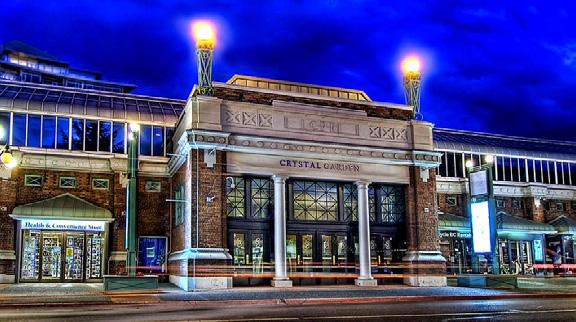
> Crystal Garden - 713 Douglas Street (across the street from Victoria Conference Centre)
Join us at this historic crystal conservatory—once a grand indoor swimming pool—for the ITE Canada Annual Banquet. Enjoy dinner, live music, trivia, and backyard games in one of the most beautiful and unique event venues in Western Canada.
Food & Beverage: Buffet dinner. Bar available.
Entry & one drink ticket included with Full Conference + Tuesday One Day registrations and purchased banquet tickets.
9D WORKSHOPAdvancing Consistency and Understanding in the Application of TWSIs in BC
This interactive workshop explores real world applications of how tactile walking surface indicators (TWSIs) can improve safe and barrier-free travel for people with sight loss. Drawing on recent and on-going studies, Dylan Passmore and Brian Patterson will review current practice, terminology, and emerging guidance for detectable warning surfaces, tactile direction indicators, choice point indicators, and tactile warning delineators. Participants will then discuss with attendees ideas for applying these concepts to real-world design scenarios.
Session Leads: Brian Patterson, Urban Systems; Dylan Passmore, Street Matters
9E Thought Leader Session (SPONSOR-LED INTERACTIVE PRESENTATION)
Sponsored & led by:
Beyond the Buzz: What AI can (and can’t) do for transportation planning and engineering
From rebranded algorithmic software to new office assistants, the use of artificial intelligence (AI) tools is becoming increasingly common practice in the transportation profession. This interactive session explores the growing use of AI tools in transportation planning, engineering, and data analysis. Rather than focusing on buzzwords and hype, the discussion centres on where these tools genuinely add value, and where overreliance introduces risk. Through a live audience exercise and real-time demonstrations, participants will see how identical prompts can produce different outputs, highlighting issues of accuracy, variability, and professional accountability. The session emphasizes responsible, human-in-the-loop use of AI within engineering and planning practice.
Session Leads: Mounira Sayour & Martin Brosnan, EXP
Banquet Schedule
6:00 PM Doors open 6:00 - 6:30 PM Reception 6:30 - 8:30 PM Buffet Dinner (with band)
8:00 PM Trivia Round 1 9:00 PM Trivia Round 2 10:00 PM Doors Close
Attire: Business casual
Sponsored by:
Photo
WEDNESDAY, JUNE 4 Morning
6:30 – 7:30 MORNING RUN > Meet at Conference Centre entrance, 720 Douglas Street
Join colleagues from across Canada for a 5 km run to start your day
7:30 – 8:30 BREAKFAST > Plenary Hall (Carson Hall - Salon B/C) + Hallway outside Langford
Served in hallway outside Langford Room. Seating in Plenary Hall.
8:30 – 9:30 10A Parking and Curb Use
10B Birds Eye View of AT topics
10C Perspectives on Vision Zero
Sponsor:
Registration Desk open 7:30 AM – 2:00 PM (closed at lunch)
> Victoria Conference Centre, Level Two Atrium
Limited luggage check services will be offered until 2:00 PM Registration presented by:
Sponsor:
10D INTERACTIVE - Practical Applications of Multiple Account Evaluation and Project Selection
10F INTERACTIVE - Enhancing Design Expectations: BC’s Updated Active Transportation Design Guide
LOCATION > Saanich Room > Oak Bay Room > Esquimalt Room > Sidney Room > Plenary Hall (Carson Hall - Salon C)
8:30 - 8:50 Implementation Success Factors - City of North Vancouver’s Curb Access and Parking Plan
Blair Underhill & Douglas Adams, City of North Vancouver
8:50 - 9:10 One Size Doesn't Fit All:
Creating Metro Van's Parking Management Guidelines for a Changing Region
Peter Lipscombe, TransLink
9:10 - 9:30 Curbside Management in Burnaby: A Framework for Connecting Communities Through Smarter Curb Use
John Turecki, Step One Mobility Planning and Engineering; Kathy Ho & Luke Kenny, City of Burnaby
Victoria Region Travel Trends: Surveys Show Progress Toward Community Goals
Todd Litman, Victoria Transport Policy Institute
Predictive Insights from Urban Speed Limit Reductions: Data-Driven Strategies for Vision Zero
Amir Ghods, SMATS Traffic Solutions; Ward Vanlaar, Traffic Injury Research Foundation
Shaping Metro Vancouver through the Local Government Funding Programs
Steven Wong, TransLink
Advancing Bike Share Planning and Operations in Toronto
Stephen Tam, Mott MacDonald
Making Sure Everyone Gets Home Safely: Kelowna's Progress with Vision Zero and Safe Mobility
Raheem Dilgir, EXP
Working Towards Vision Zero through Signal Timing Adjustments with the City of Toronto
Ameneh Dialameh, City of Toronto; Matheos Tsiaras, Parsons
9:30 – 9:45 BREAK > Refreshments served in the hallway outside Langford Room
Transportation planning today demands a balance between technical rigor and policy objectives. Multiple Account Evaluation (MAE) and structured project selection frameworks have emerged as essential tools for achieving this balance, ensuring decisions reflect economic, environmental, social, and operational priorities. This will be an interactive workshop explores how Multiple Account Evaluation (MAE) and structured project selection frameworks can be applied in practice to support transparent, evidencebased transportation decision-making. Moving beyond theory, the session draws on real-world experience to demonstrate how practitioners can integrate multidisciplinary inputs from planning, engineering and stakeholder considerations into a cohesive evaluation approach. Through a combination of case studies, hands-on exercises, and facilitated discussions, participants will examine how to align technical analysis with community values, policy objectives, and long-term mobility goals. The workshop will have a brief presentation with facilitated interactive exercises and discussions. Attendees will gain actionable tools and strategies to design and implement evaluation frameworks that lead to more consistent, equitable, and defensible investment decisions.
Session Leads: Stephen Oliver, GHD; Kate Whitfield, Take Consulting Ltd
Join us for a sneak-peak into the forthcoming Second Edition of the BC Active Transportation Planning and Design Guide.
In this session, you get to choose your own learning adventure! After a general overview of the Guide’s update, participants will be invited to join one of six tables. Each table will have a different focus. Each table will feature a 10-minute presentation followed by 5-minutes of Q&A, then participants will jump to a new table with a new topic. Participants will get to visit several topic tables – the ones that interest them the most!
Participants will come away with a strong introduction to the most significant updates to the upcoming Guide. They will understand how the Guide is raising the bar on design expectations across the Province. And, how the Guide promotes the building of accessible and high-comfort active transportation facilities that are safe and comfortable at all times of day, year-round, in communities across B.C.
Session Leads: Adam Krupper, BC Ministry of Transportation and Transit; Brian Patterson, Urban Systems
WEDNESDAY, JUNE 4 Morning
9:45 – 10:45 11A Burnaby Bikes!
Sponsor: 11B Tools for Transportation Professionals
LOCATION > Saanich Room
9:45 - 10:05 Reimagining Cycling in Burnaby Through Rapid Implementation
Marcus Chan & Po Sun, City of Burnaby
Oak Bay Room
Can an LLM beat UBC at Traffic Bowl? The Applications of Large Language Models in Transportation
Tarek Ghoul, University of British Columbia
11C
Evolving
Design 11D INTERACTIVE - Applying a Traffic Safety Culture Framework in Your Community
10:05 - 10:25 Toolbox TalkBuilding a Better Southeast Bikeway in Burnaby
Luke Kenny & Sam Tomkins, City of Burnaby; Patrick Zerr, McElhanney
10:25 - 10:45 An Innovative AllAges-and-Abilities Cycling Connection from Vancouver to SFU
Marcus Chan & Po Sun, City of Burnaby; Roy Symons, ISL Engineering
GIS 101 for Transportation Professionals
Victor Ngo, WATT Consulting Group
Esquimalt Room
The evolution of cycling design on Toronto’s Waterfront
Christina Johansson, WSP; Katya Zappitelli, Waterfront Toronto
Sidney Room
This interactive session invites participants to explore how a Traffic Safety Culture Transformation Framework can be applied within their own municipal contexts. Through guided exercises, attendees will reflect on their community’s traffic safety challenges, identify social and physical
Looking Past the Dashboard: Storytelling with Data for Transportation Professionals
Dan Lu & Tavia Chow, GFT Canada
Sussex and King
Edward Functional Design - Balancing Priorities on Ottawa’s Confederation Boulevard
Adam Howell, Robinson Consultants Inc.
Transportation Planning Considerations in Transit-Oriented, CarLight Communities
Christephen Cheng, Bunt & Associates
10:45 – 11:00 BREAK > Refreshments served in the hallway outside Langford
THANK YOU TO CONFERENCE PRESENTERS
We extend a special thank you to all conference speakers, presenters, session leaders, and panelists for your contibutions to an outstanding conference!
Speakers’ gifts are small-batch and proudly handmade by Vancouver Islandbased companies, featuring local artist Capri Sadler.
Support the Next Generation of Transportation Leaders
The Future Transportation Leaders Fund (the Foundation) supports students and early-career professionals through an expanded program of scholarships, awards, and other forms of financial assistance. Established in 2024, the Foundation provides a charitable framework through tax-deductible donations that invest in the next generation of transportation professionals.
11:00 - 11:20 Engineering a Walkable Ganges: Community-Driven Crosswalk Design on Salt Spring Island
Steve Martin, WATT Consulting Group
11:20 - 11:40 Designing Walkable Communities: Integrating Connectivity, Parking Strategy, and Green Space
Mavjot Kaur & Stephen Oliver, GHD
11:40 - 12:00 Crosswalks and Chill: An Overview of the City of Victoria's Crosswalk and Traffic Calming Programs
Aaron Dixon, City of Victoria
Branding Active Transportation: Connecting Kitchener Through Wayfinding and a "Whole-Route" Approach
Liz Christensen, City of Kitchener
Bike By Numbers: City of Victoria Wayfinding Pilot
Andy Kading, City of Victoria
Planning with Data
12:00 – 1:30
Smart Trails: Inspiring the Next Level of Design to Enhance the Trail User Experience
Shawn Smith, WSP Canada
Every Stop Counts: Uncovering Cost Recovery Insights for O'ahu's TheBus
Freddy Thomas, Stantec
Connecting People, Connecting Places: Exploring Future Transit Options in a Small Municipality
Arman Matti, Parsons
Staying on Schedule: Using Performance Analytics to Plan Transit Improvements
Niraj Sunuwar, Urban Systems
ITE Canada & Future Transportation Leaders Fund
EXCELLENCE IN TRANSPORTATION AWARDS LUNCHEON
> Plenary Hall (Carson Hall - Salon B/C)
Food & Beverage: A plated lunch will be served in the Plenary Hall.
Sponsored by:
12D INTERACTIVEShaping our Future through Public Feedback and Reflecting on Past Experiences 12E INTERACTIVE - Lessons Learned in Road Safety from 20 Years of Expert Witness Cases
Close out your conference with a dynamic and interactive session on public engagement processes and the conversations we have with the public. The session will open with a presentation on the City of Edmonton’s Neighbourhood Renewal Program where you will learn about how public engagement is the driving force behind creating transportation solutions for connected, invested and proud communities. We will then transition into a game show where WSP will walk through ghosts of engagement past where we reflect on tough conversations we’ve aced (or decidedly not) and workshop how technical experts at engagement events can improve how we communicate with attendees.
Session Leads: Becky Redford & Jen Rutledge, City of Edmonton; Carolyn Sherstone, WSP Canada
In road safety, achieving zero fatalities and serious injuries involves learning from these incidents. Other than road safety audits and reviews, there is another source of information that has been underexplored to date: case law. When fatalities or serious injuries happen, legal action is sometimes taken by one of the victims or their families, against the road authority. Road safety experts are often retained to provide opinions or testimony. The objectives of this interactive session:
1) Share with the audience the types of incidents and issues for which legal action is most often taken.
2) Provide examples of the types of questions that the court seeks opinions on.
3) Discuss the types of cases where safety performance and standards may have been at odds, and how we dealt with these dilemmas.
4) Highlight examples where the outcomes of the case law should be fed back into the design standards and guidelines, design process, laws and policies.
Session Leads: John Morrall, Canadian Highways Institute; Raheem Dilgir, TranSafe Consulting Ltd.
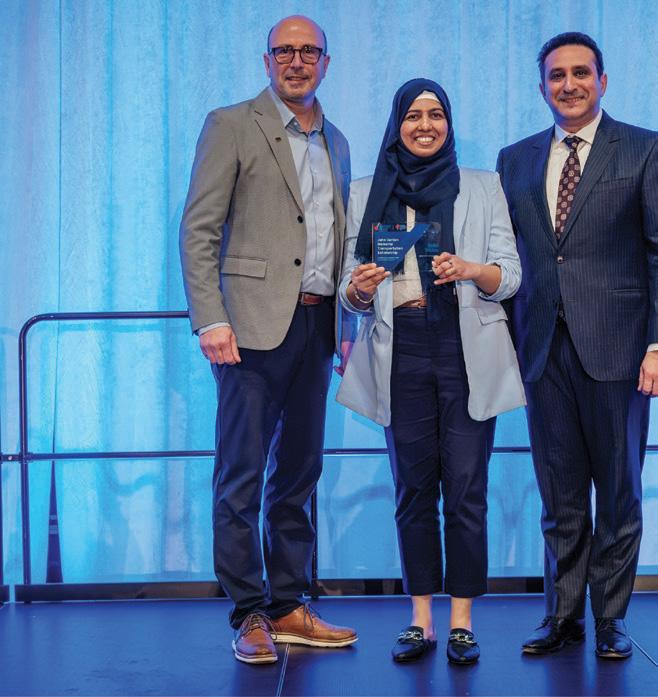
Honouring the brightest within our community of transportation professionals, ITE Canada District & the Future Transportation Leaders Fund will recognize the 2026 Award and Scholarship winners at the conference-closing Wednesday luncheon.
See award winners on page 38.
Please return lanyards and pick up any luggage check items by 2 p.m. Please return your