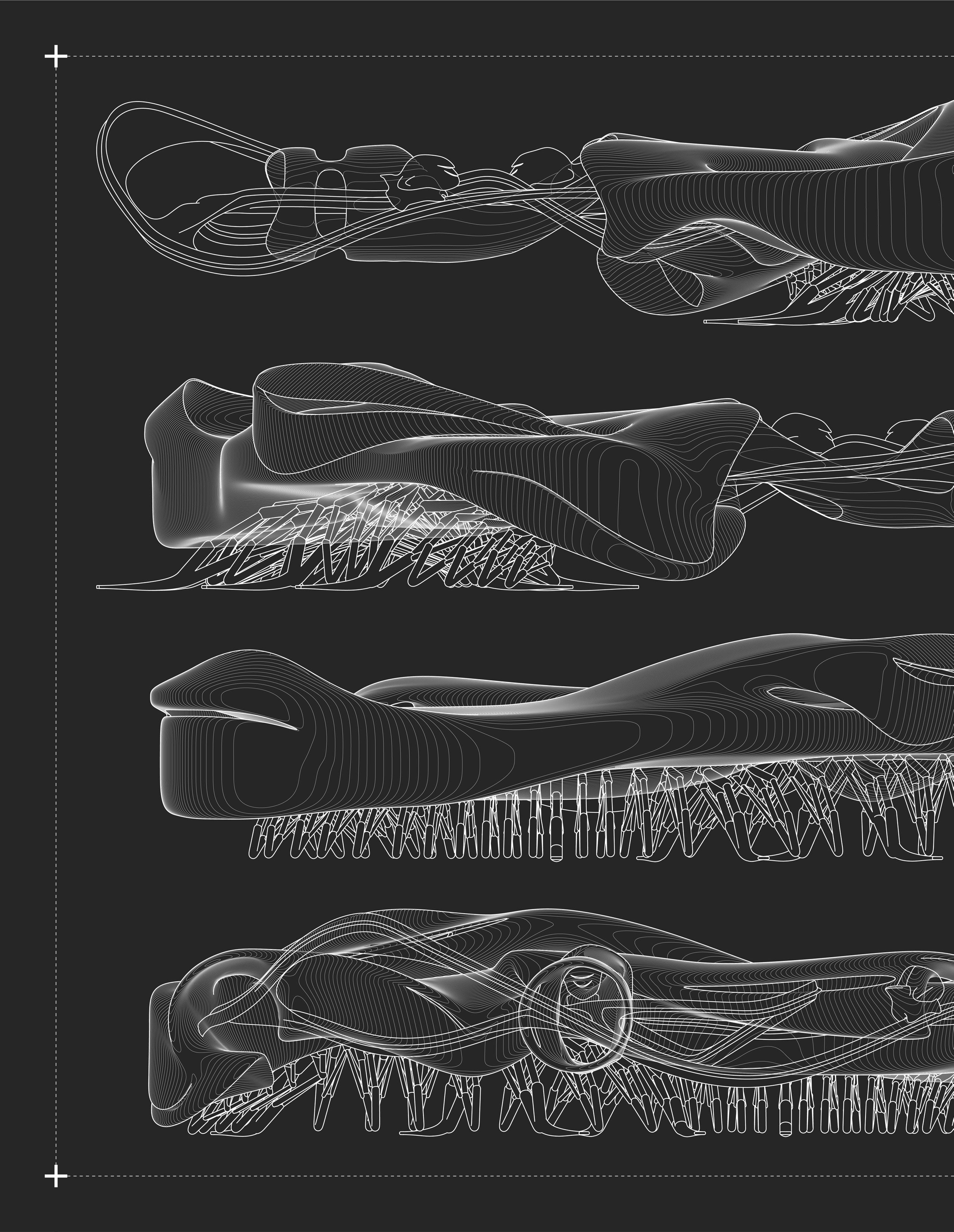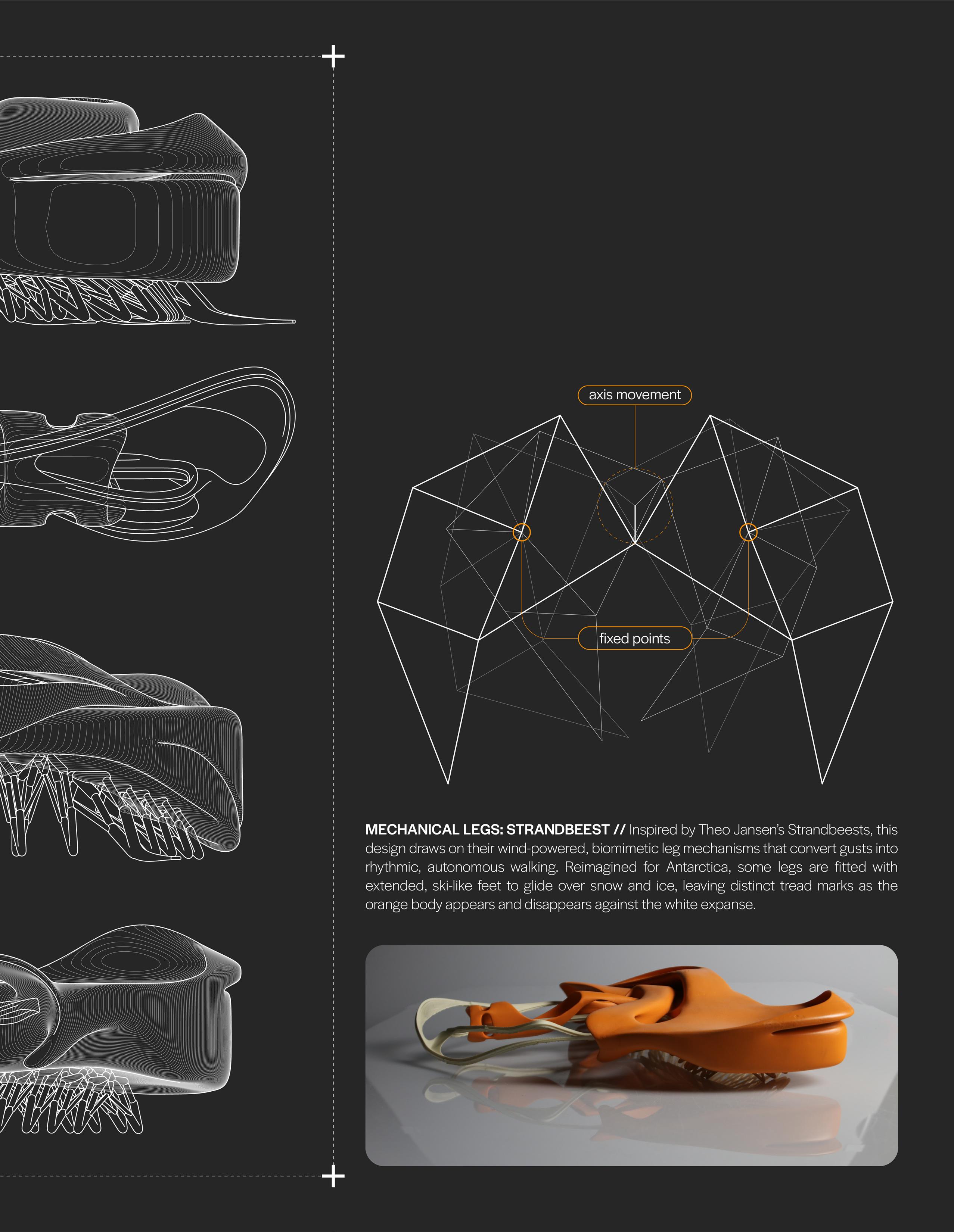





The MCMURDO DRY VALLEYS, Antarctica’s ethereal expanse, unfold as a surreal canvas of extremes. Embraced by frigid stillness, these ice-free realms stand as an arid testament to desolation, where jagged peaks pierce a vast, otherworldly silence. Absence reigns, yielding a landscape untouched by the softening hand of glaciers. Salty aquifers, like hidden veins, pulse beneath the surface, while hyper-saline lakes shimmer, captivating in their defiance of conventional life. Amidst this stark poetry, scientists unravel the secrets of tenacious microbial life, casting the Dry Valleys not just as an earthly enigma but a cosmic prologue to the mysteries of existence beyond our planet.
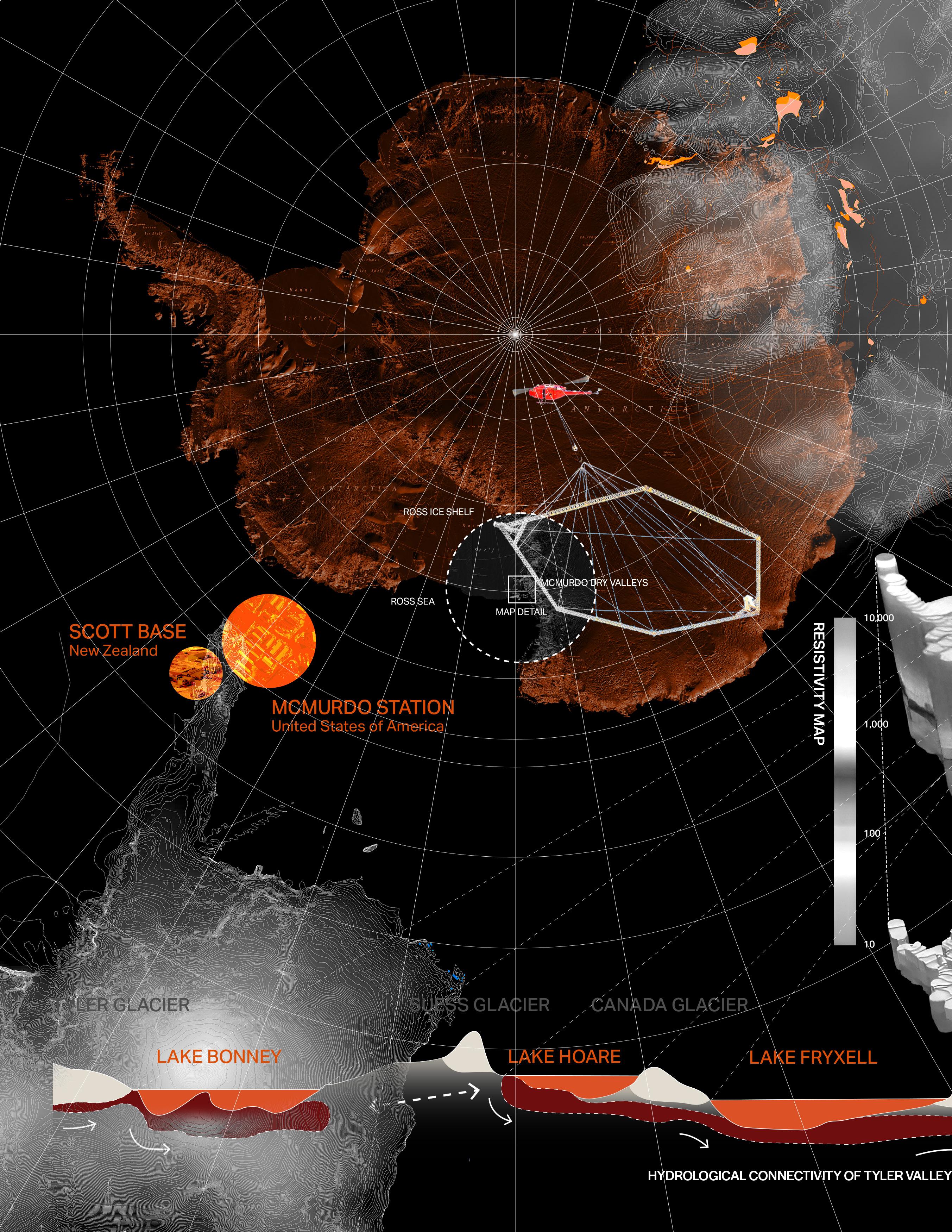
The scientists discovered extensive interconnected aquifers of unfrozen brines beneath glaciers, lakes, and permanently frozen soils in Antarctica’s McMurdo Dry Valleys. Stretching at least 7.5 miles inland from the coast, these brines may result from the freezing or evaporation of a vast ancient lake or older ocean deposits. This revelation demonstrates, for the first time, the interconnected nature of the Dry Valleys’ lakes, challenging the prior belief in their isolation. This connectivity between lakes and aquifers plays a crucial role in sustaining ecosystems during drastic climate changes, such as lake dry-down events. Additionally, these findings challenge assumptions about the absence of liquid water in parts of ice sheets below the pressure melting point.
Deep underground salty aquifers in Antarctica can impact ice shelf movement and the Southern Ocean’s meridional overturning circulation (MOC). If these aquifers interact with ice shelves, the introduction of highly saline water could influence the ice shelf’s stability and movement. Altered ocean salinity, resulting from aquifer interactions, may also affect the MOC, influencing ocean currents and heat distribution. This complex interplay underscores the potential connections between subsurface processes, ice shelf dynamics, and the broader circulation patterns in the Southern Ocean. Understanding these interactions is crucial for predicting the implications of Antarctica’s hydrological processes on ice shelves and ocean circulation.
the area of solely on through the moves over current. After the signatures second, allowing combination thereof.
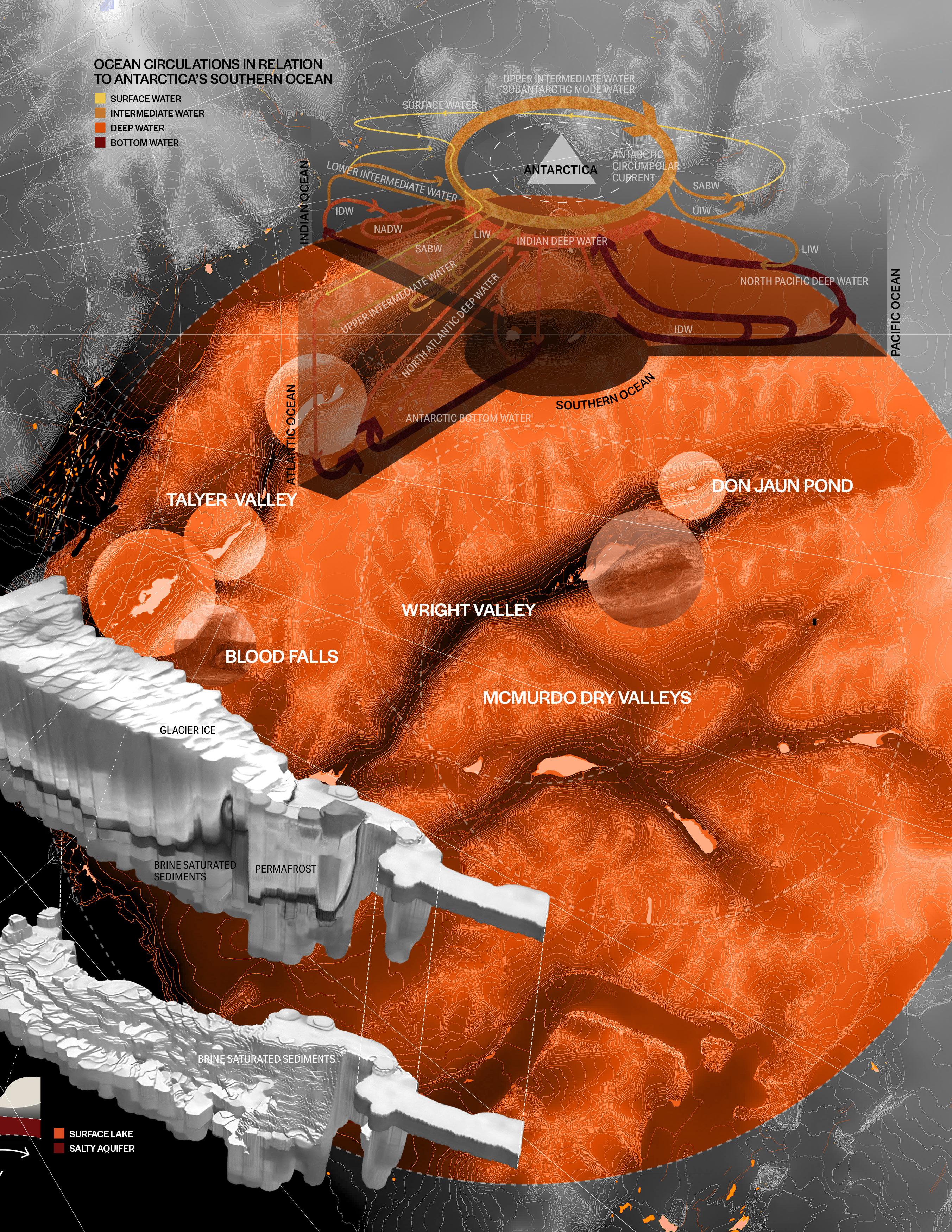
The discovery deep salty aquifers seemingly begins to explain the continued presence of some of the saltiest bodies on earth in Antarctica, Don Juan Pond and Lake Vanda. Don Juan Pond, ten times saltier than seawater, remains liquid in the polar winter and Lake Vanda, a layered lake adjacent to Don Juan Pond, holds brine at its base, 3.5 times saltier than the ocean. Despite speculations about a groundwater connection since the 1960s, recent airborne and groundbased surveys reveal hidden liquid below the surface. While not a certain confirmation, these findings suggest a more intricate Antarctic groundwater system than previously believed.
As much as this research pertains to unearthing the mysteries of Antarctica on this world, researchers see the potential of the McMurdo Dry Valleys as a possible analog for Mars. Perhaps salty groundwater once provided an unlikely bastion for life in the harsh environment of the Red Planet, too.
This airborne transient electromagnetic survey generated regional-scale resistivity data that reveals two extensive subsurface brine systems in the McMurdo Dry Valleys and overall permafrost extent. For instance, the hypersaline bottom waters of Lake Bonney, seen in the 3D Resistivity Model, exhibit a resistivity of 0.13–0.12 Ωm, and the AEM returned a resistivity value of 0.42 Ωm, indicating the presence of brine in sediments at subsurface temperatures down to -68°F, still suitable for microbial life. Data suggesting deep brine underneath lower Taylor Glacier is helps explain the presence of Blood Falls, a singular area of iron-rich brine escaping from the glacier and host to an active microbial ecosystem.