







5 Greetings from the Board Chair and Executive Director
7 Welcome from Festival Director
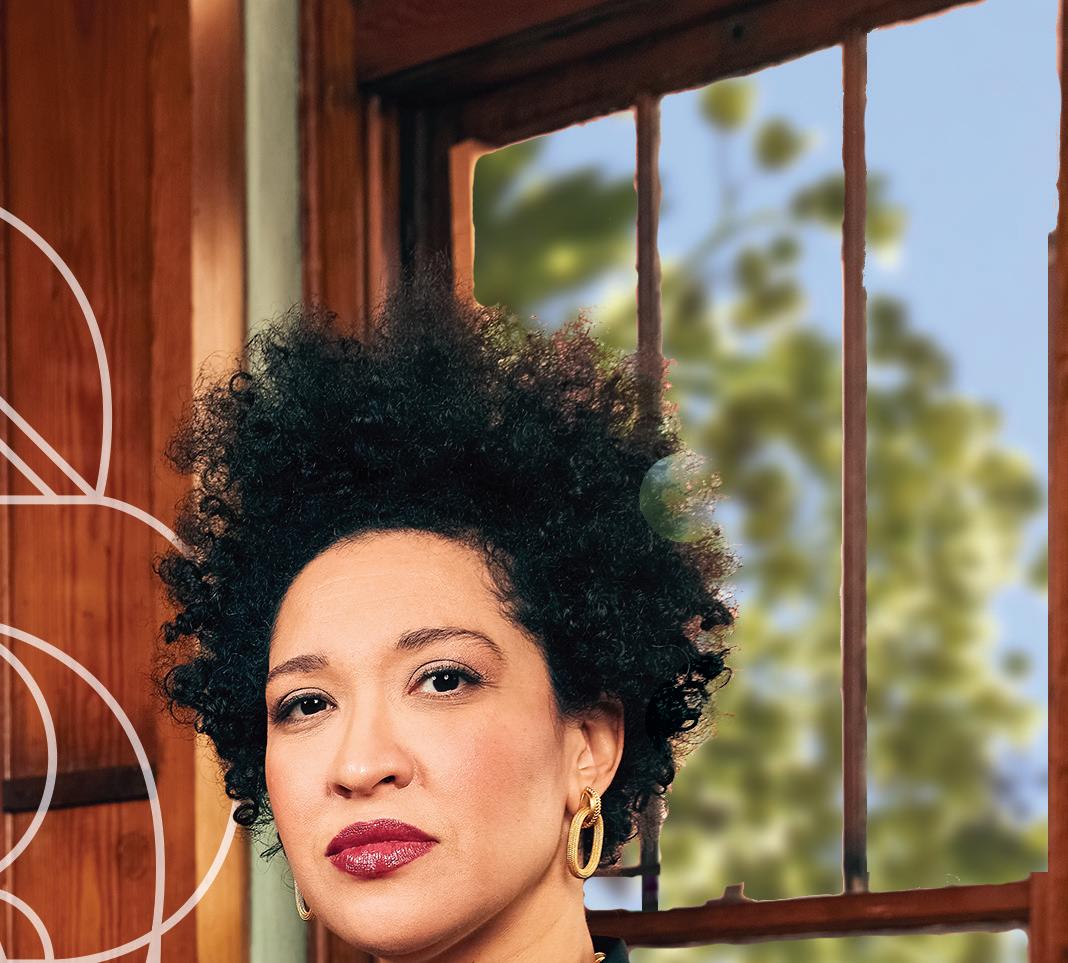
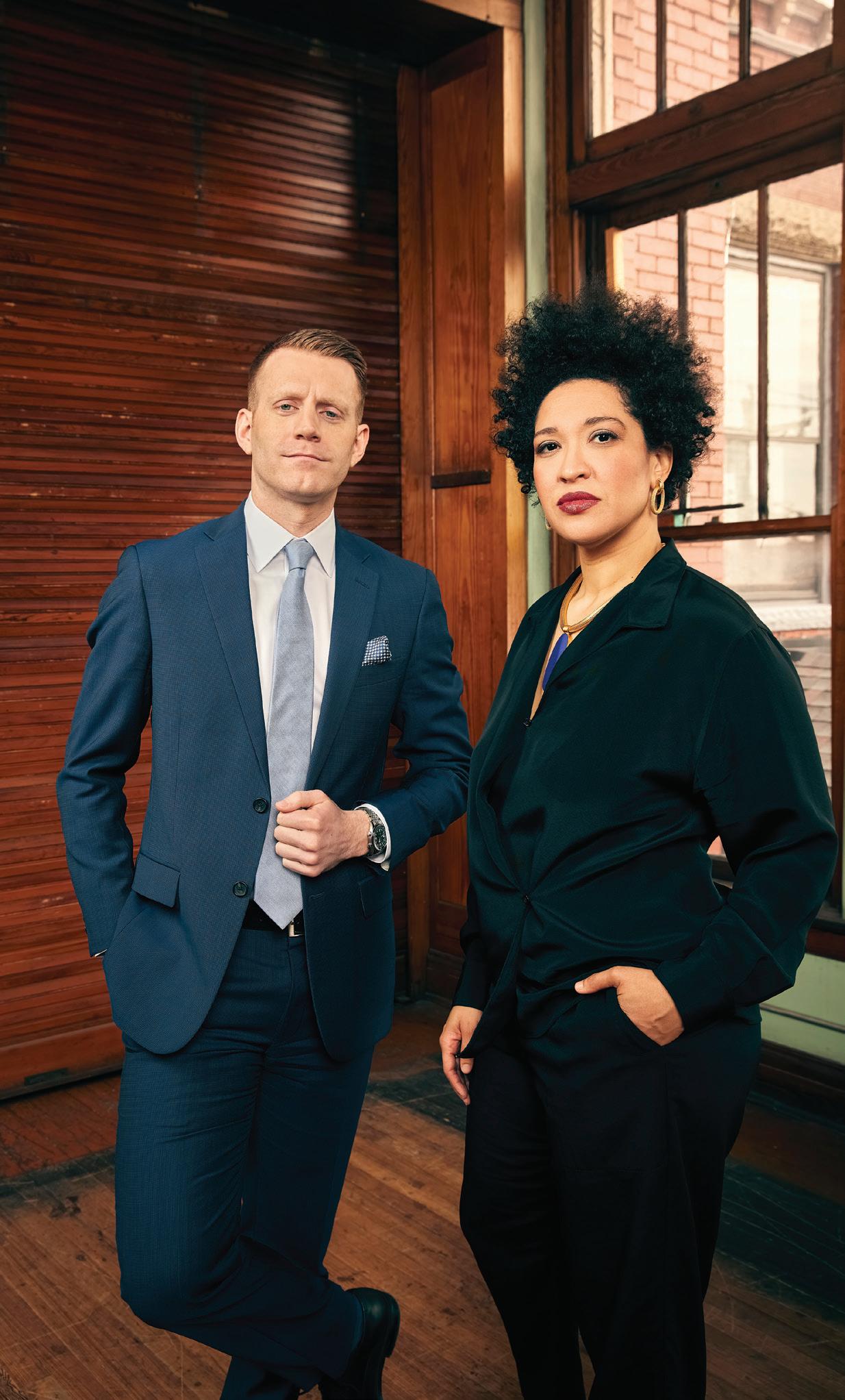
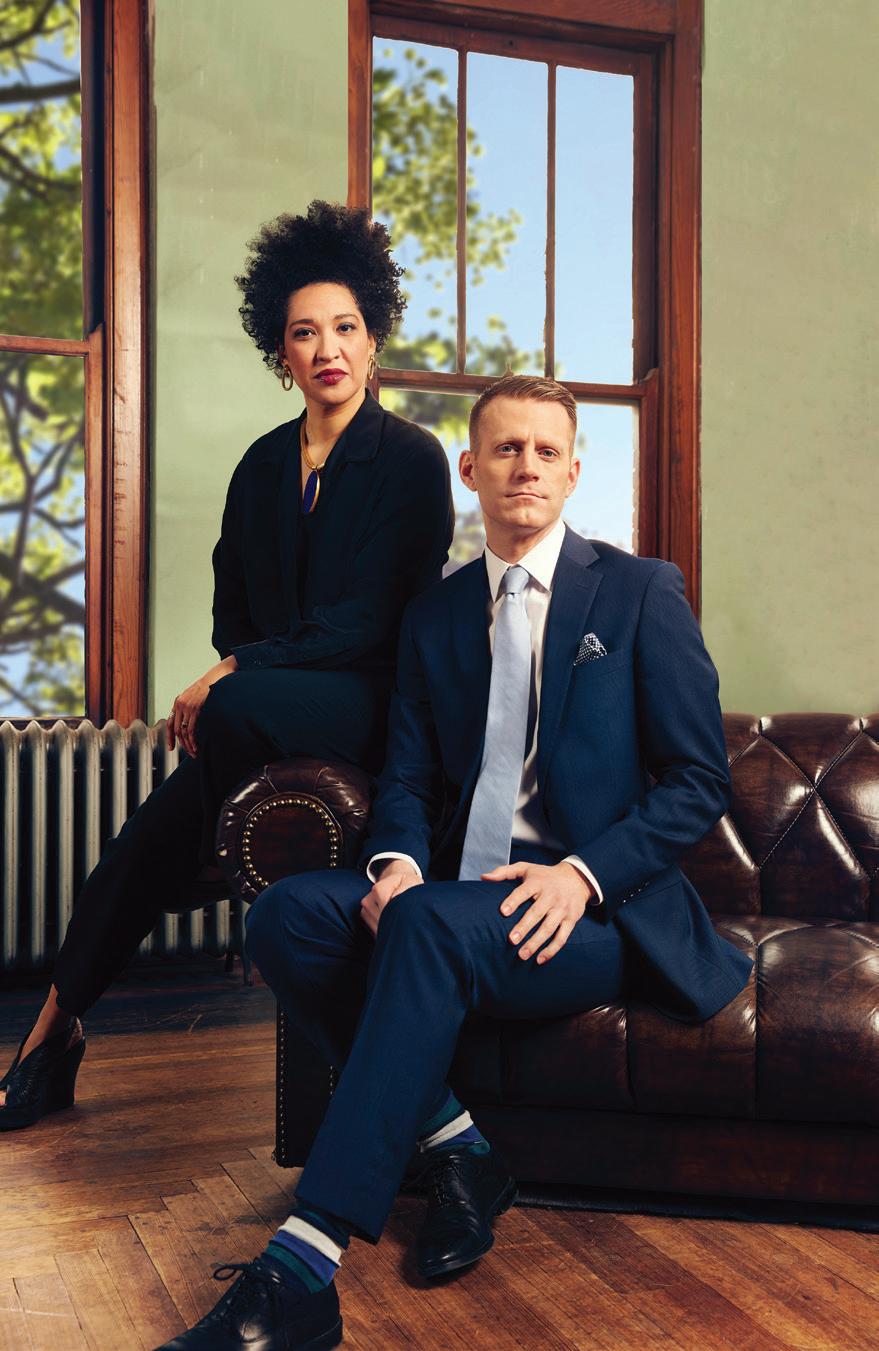
Julia Bullock and Director of Choruses Matthew Swanson
9 Festival Feature: Listening First: How Julia Bullock Finds — and Gives — Voice
11 Spotlight: The Black Composer and the Question of American Musical Nationalism
13 Poet’s Corner: Langston Hughes and Capturing the Deferred American Dream
15 Education Spotlight: Connecting with the Next Generation of Singers
18 Inside the Chorus: Q&A: Why Do You Sing with the May Festival Family of Choruses?
ARTISTS
20 Julia Bullock, 2026 Festival Director and Matthew Swanson, Director of Choruses
23 May Festival Chorus and Chorus Leadership
26 May Festival Youth Chorus, Jason Alexander Holmes, Director
28 Cincinnati Boychoir
30 Cincinnati Ballet Second Company
31 Classical Roots Community Choir, Jason Alexander Holmes, Resident Conductor 32 Soloists and Conductors
39 Cincinnati Symphony Orchestra CONCERTS
40 AN ECLECTIC OPENING NIGHT | May 15
52 THE WATER’S JOURNEY | May 16
58 ON LOVE AND LUST | May 21
66 PORGY AND BESS: FESTIVAL FINALE | May 23
DEPARTMENTS
75 Cincinnati Musical Festival Association
76 Thank You to Our Donors
79 We Applaud Our Festival Passholders
80 Administration
ON THE COVER: 2026 Festival Director
Julia Bullock and Director of Choruses
Matthew Swanson. (Credit: Devyn Glista)
CINCINNATI MAY FESTIVAL
Music Hall
Geraldine V. Chavez Center for the Choral Arts 1241 Elm Street Cincinnati, OH 45202
Administrative Offices: 513.621.1919 contact@mayfestival.com
Box Office 513.381.3300 contact@mayfestival.com
Group Sales 513.864.0196 contact@mayfestival.com
TTY/TDD
Use TTY/TDD Relay Service 7-1-1 mayfestival.com MAY FESTIVAL PROGRAM BOOK STAFF:
Managing Editor Tyler Secor
Senior Editor/Layout Teri McKibben
Assistant Editor Gabriela Godinez Feregrino
CINCINNATI MAGAZINE:
Advertising and Publishing Partners for Fanfare Magazine
Publisher Ivy Bayer
Production Director & IT Systems Administrator Vu Luong
Advertising Designer Sophie Kallis
Account Representatives
Laura Bowling, Maggie Wint Goecke, Chris Ohmer, Julie Poyer, Sarah Riesenberger
Operations Director Missy Beiting
Business Coordinator Meredith Carroll
Advertising and Business Offices Atrium 2 — 221 E. 4th Street, Suite 130 Cincinnati, OH 45202 | 513.421.4300
Subscriptions: 1.866.660.6247 | cincinnatimagazine.com



Discovering the voice that connects us all at the 2026 May Festival. Experience the inspiration of the May Festival by exploring our calendar of events. For a complete list of events, please visit mayfestival.com/calendar or scan the QR code at right.

TUE MAY 12
10:30 AM MAY FESTIVAL YOUNG PEOPLE’S CONCERT | WE ALL SHINE: HEROES OF THE HARLEM RENAISSANCE for CPS students, Springer Auditorium
FRI MAY 15
5 PM DÎNER EN FLEUR with a performance by Cincinnati Jazz Academy
7:30 PM AN ECLECTIC OPENING NIGHT
Pre-concert 6:15 PM Performance in the Foyer by Kings High School Choir
Pre-concert 6:30 PM Conversation in Corbett Tower with Jason Alexander Holmes
SAT MAY 16
5:30 PM MAY FESTIVAL FAMILY LOUNGE SPECIAL EVENT in Wilks Studio
7:30 PM THE WATER’S JOURNEY
Pre-concert 6 PM Performance in Springer Auditorium by the May Festival Youth Chorus and Cincinnati Boychoir
Pre-concert 6:30 PM Conversation in Corbett Tower by Matthew Swanson and CSO Music Director Cristian Măcelaru
Pre-concert 6:30 PM Performance in the Foyer by Meridian 8 from the School for Creative and Performing Arts
SUN MAY 17
3:00 PM A DREAM DEFERRED: LANGSTON HUGHES IN SONG at Memorial Hall
Post-concert Talk back with Festival Director Julia Bullock
TUE MAY 19
7:30 PM VOCAL ARTS ENSEMBLE: ROSSINI’S PETITE MESSE SOLENNELLE at Christ Church Cathedral
THU MAY 21
7:30 PM ON LOVE AND LUST
Pre-concert 6:30 PM Performance in the Foyer by the Greater Cincinnati Chapter of the American Orff-Schulwerk Association
Pre-concert 6:30 PM Conversation in Corbett Tower with Jason Alexander Holmes and CB2 Director Yoshihisa Arai
SAT MAY 23
7:30 PM PORGY AND BESS: FESTIVAL FINALE
Pre-concert 6:15 PM Performance in the Foyer by The Loretta C. Manggrum Chorale
Pre-concert 6:30 PM Conversation in Corbett Tower with Jason Alexander Holmes, Dr. Kristi Swift and Dr. Tammy Kernodle

Dear Friends,
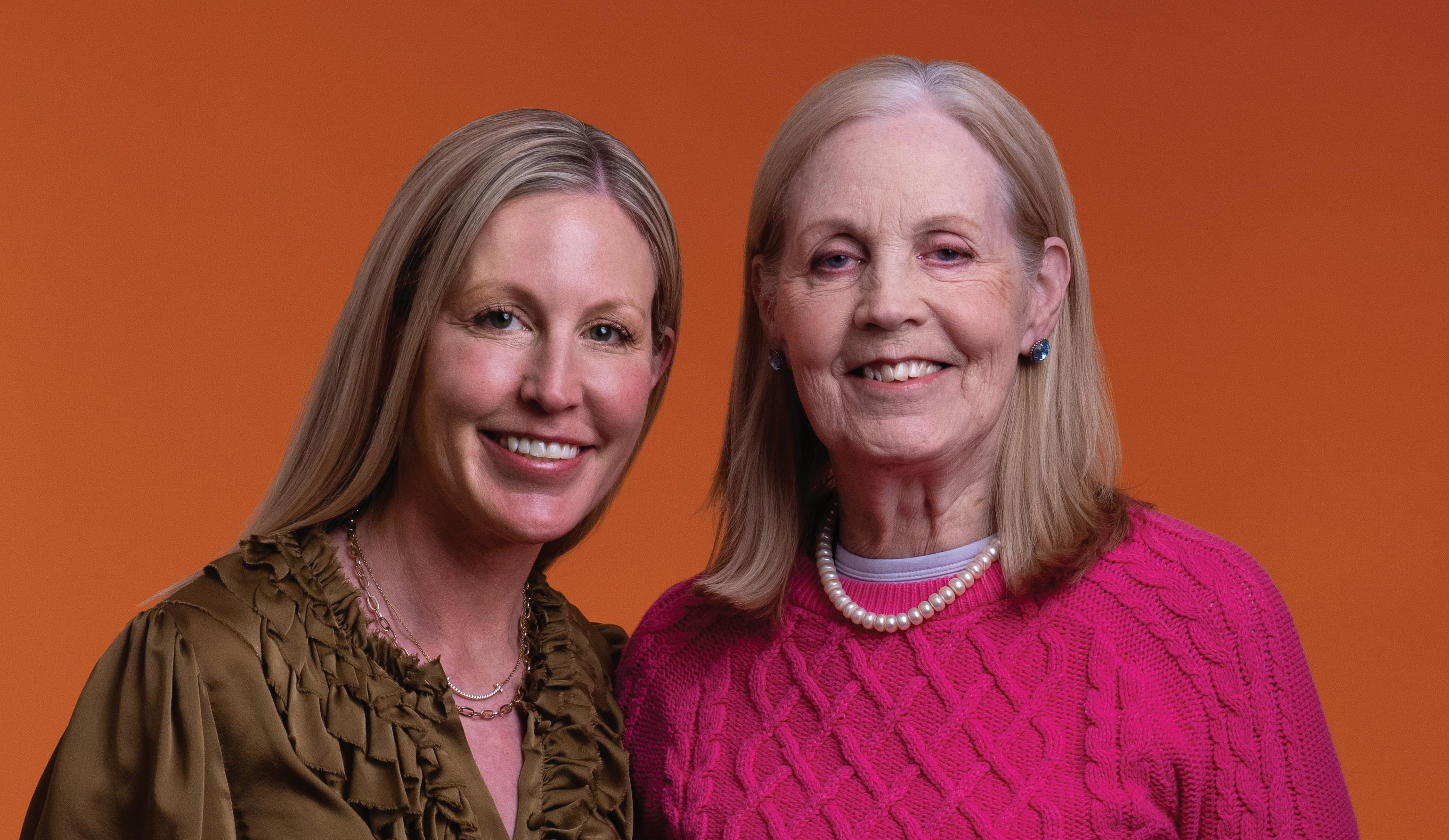
On behalf of the entire May Festival organization, we are delighted to welcome you to the 2026 May Festival!
This year’s Festival brings an even greater sense of “festivality” — an expanded slate of events, vibrant collaborations and a renewed spirit of community that infuses every moment of the Festival experience. From our four Music Hall performances to additional special events and gatherings, we invite you to join us for all the May Festival has to offer. See page 3 of this program book and our website for the complete list of events at this year’s May Festival.
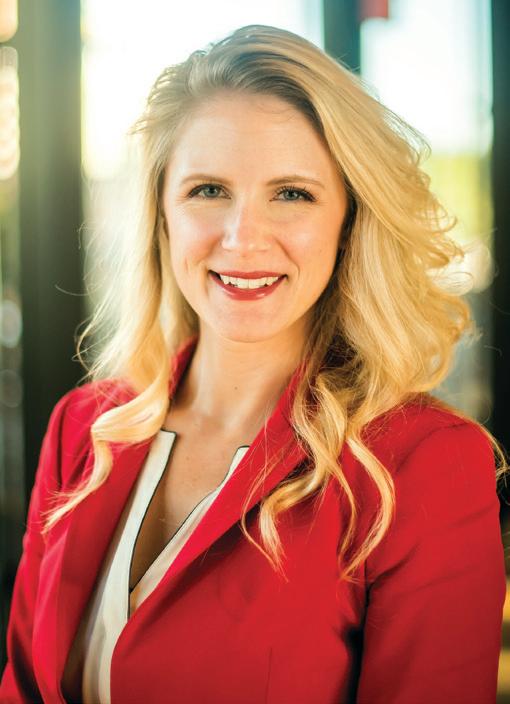
Julianne Akins Smith
We are profoundly grateful for the visionary artistic leadership of our 2026 Festival Director Julia Bullock, whose creativity and curiosity have shaped a season grounded in collaboration, reflection and expansive musical storytelling. Julia’s curation of the Festival experience began with her own inspiration of our rich history and traditions. Her approach honors our legacy while also bringing fresh artistic and experiential perspective.
Alongside Julia, our Director of Choruses Matthew Swanson continues to inspire and guide our choral community with exceptional artistry, bringing together hundreds of voices across the May Festival family of choruses — not just for the two weeks of Music Hall performances, but for the entire 2025–26 season. His work ensures that our choruses remain artistically vibrant and at the heart of all that we do.
To our extraordinary choruses: thank you for the dedication, passion and countless hours you contribute to bringing these programs to life. To our
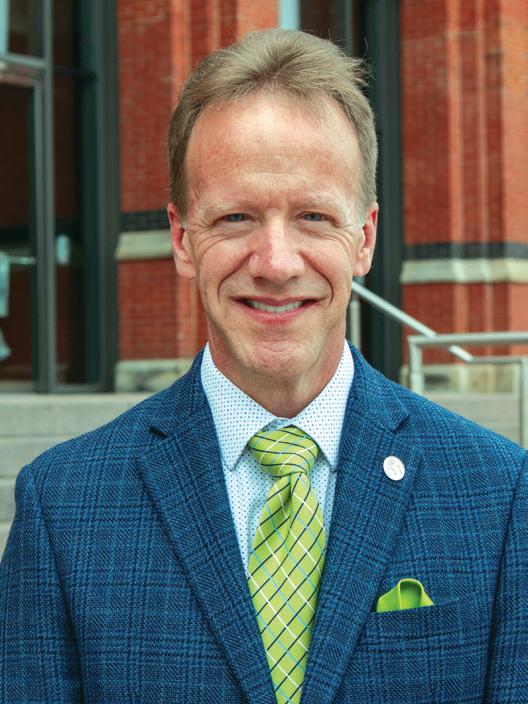
Board of Directors: your steadfast leadership and vision sustain this institution year after year. To our audiences and donors: your enthusiasm, generosity and belief in the power of music that unites us through the human voice.
As you take your seat for this year’s performances, we invite you to fully immerse yourself in the artistry, community and joy that is the 2026 May Festival. We are grateful that you are here.
Let the Festival begin!
With warm appreciation,
Julianne Akins Smith Executive Director
Dr. Michael Curran Board Chair














A proud sponsor of the musical arts

























It is with gratitude that we welcome you to the 2026 May Festival, an enduring celebration of one of the oldest choral traditions in the Western Hemisphere. This year embodies the ethos of collaboration and community that are central to the Festival. All of our concerts and events have been carefully curated to honor, expand and reimagine the May Festival’s history. May Festival 2026 o ers a wide range of musical experiences — there is something for everyone. From the collision of history and sound in An Eclectic Opening Night to the marine metaphors in The Water’s Journey, the poetic intimacy of A Dream Deferred: Langston Hughes in Song, the captivating integration of music and dance in On Love and Lust, and the community of singers in the reimagined Porgy and Bess: Festival Finale, these programs highlight the Festival’s roots and its commitment to an expansive repertoire. A featured performance by Cincinnati’s Vocal Arts Ensemble and a special concert for more than a thousand third graders from Cincinnati Public Schools are an exciting expansion of our Festival o erings this season.
To our dedicated performers in the choruses and Orchestra: thank you. Your preparation and passion bring this Festival to life year after year. Your collective voices are the heart of each performance and make the May Festival so meaningful.
To our audiences — returning friends and first-time visitors — thank you for being here. Your presence fuels our commitment to creating musical experiences that resonate, inspire and allow us to discover the voice that connects us all.
To our donors, whose support ensures that the May Festival continues to thrive as a cornerstone of our region’s cultural community, we are grateful.
And to our Board of Directors, whose vision and stewardship sustain this beloved institution, we extend our deepest appreciation.
As we embark on this Festival together, let’s honor Cincinnati’s rich heritage while embracing new artistic voices and perspectives. We invite you to listen generously, join us in dialogue, create space for reflection and allow the music to connect us across time, tradition and community.
With great joy,
Julia Bullock 2026 Festival Director Matthew Swanson Director of Choruses























































































































































































































































BY CASEY WELDON
Julia Bullock answers the telephone, already mid-thought.
She’s at her home in Munich, Germany, where it’s early evening. We’re talking about choral archives and Langston Hughes and the architecture of a Mass concert, when another voice enters the room.
“Well, I — hello,” she says, shifting tone instantly. “My 2-year-old just walked in. I’m just finishing this interview, darling.”
There’s no irritation in the Grammy-winning soprano’s voice. No theatrical whisper. Just warmth. Then she folds seamlessly back to the conversation, parsing the political tensions surrounding the Gershwins’ Porgy and Bess.
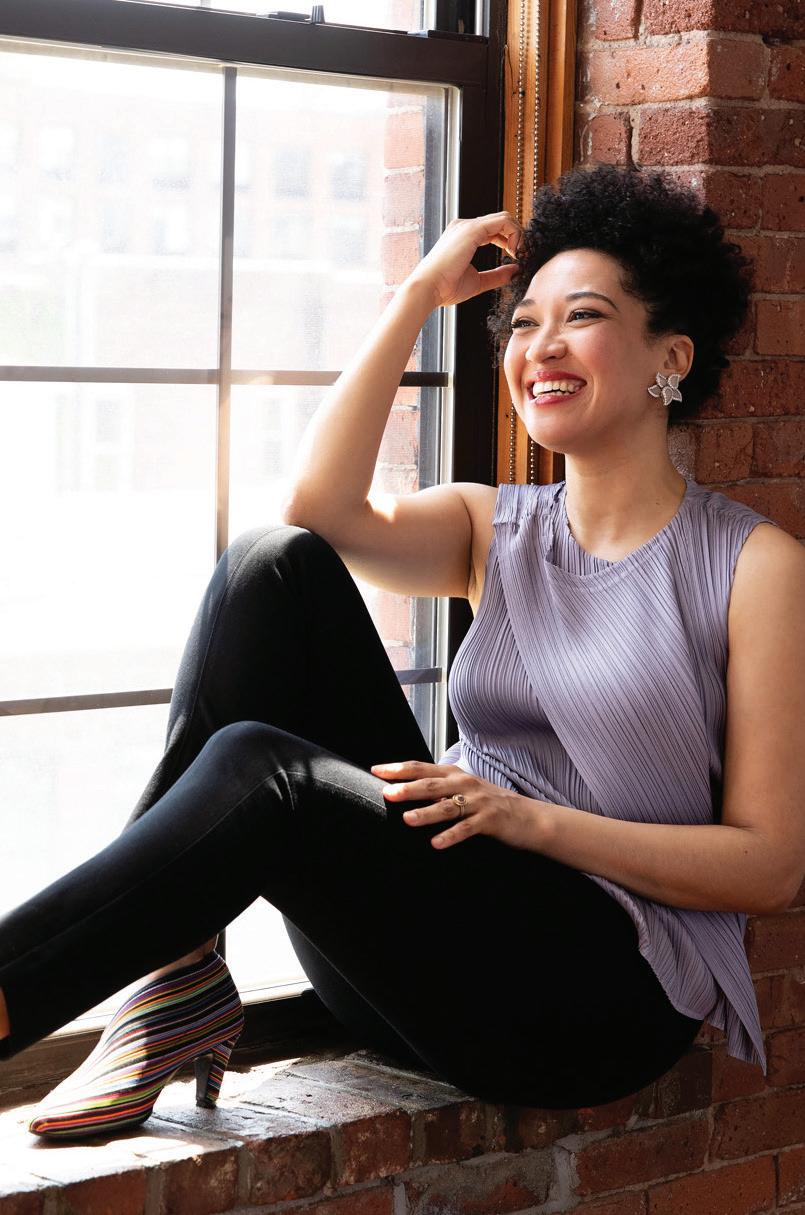
If you’ve followed Bullock’s career, you recognize that pivot. It’s the same quality that allows her to move from George Frideric Handel to John Adams, from Samuel Barber to Billy Taylor, from recital stage to opera house to museum gallery. She is almost always in transit — landing from a delayed flight, packing for another, rehearsing in one country while programming in another.
But what makes Bullock singular isn’t just range. It’s attention.
Listening is her primary instrument.
“The first thing I asked for was resources,” she says. “I need context. I need history.”
She’s speaking about her role as Festival Director of the 2026 Cincinnati May Festival. But that philosophy predates it. Whether she’s building History’s Persistent Voice at the Metropolitan Museum of Art or performing Girls of the Golden West at San Francisco Opera, she begins by asking what came before her.
When the May Festival first approached her about the role, Bullock happened to be in town with her husband, conductor
Christian Reif, who was leading the Festival’s resident orchestra, the Cincinnati Symphony Orchestra, that week. The couple’s lives are frequently intertwined — his baton and her voice crossing cities and seasons. They met as students at Juilliard; now they navigate international careers with a young child.
“That week we walked around the building,” she recalls of walking around Music Hall, the May Festival’s home since 1878. “They shared some of the history of the building, some of the history of the Festival, and we talked about possibilities.”
Matthew Swanson, Director of Choruses for the May Festival, remembers what followed.
“When we approached Julia, the first thing she did was ask us for more information,” he says. “Repertoire history. The history of the Festival. Of Music Hall. Of singing in Cincinnati. Of the Orchestra.
“She absolutely devoured that material.”
Bullock resists the idea of arriving anywhere with a pre-packaged vision.
“I didn’t want to come in and say, ‘Oh, I’ve got this great idea’ that’s totally out of context,” she says. “It’s not about sharing my individual voice in that instance. It’s about finding multiple places of resonance after I feel informed.”
“I only feel overwhelmed,” she adds, “if I don’t have the resources to start homing in on recurring themes. I then decide if those themes coincide and resonate with my own preoccupations.”
That search for resonance — for buried or underamplified voices — has defined Bullock’s work for more than a decade. With the Met Museum project she created, History’s Persistent Voice, she braided songs developed by enslaved people with new works by Black women composers. For her Perle Noire concert, she reframed Joséphine Baker through newly commissioned texts and choreography.
For her reimagining of John Adams’ El Niño oratorio about the biblical nativity, Bullock amplified the voices of the women and Latin American poets that Adams used to tell a story often flattened into pageantry. The CSO presented that version of the production, Nativity Reconsidered, in 2023, featuring Bullock’s vocals and musical selections with the musical arrangement — shorter and with a smaller roster of performers — by her husband.
Again and again, she returns to the same principle.
“I don’t feel that there’s any reason to obscure elements of history that make us uncomfortable,” Bullock says. “If something is tense or complicated, that’s actually where the work is.”
When she discovered that 2026 would mark 70 years since the May Festival first invited Black performers — Leontyne Price and William Warfield singing excerpts from Porgy and Bess — Bullock chose to respond by including selections from the work on closing night and singing Bess herself.
“I was like, ‘OK. That’s meaningful,’” she says. “That’s a place to respond.”
Her decision is dialogic.
“I think the piece gave Black artists a space to be heard in multidimensionality,” Bullock says. “At the same time, the Gershwins profited greatly from the voices and musical expressions they drew from. There’s tension there.”
She doesn’t try to smooth it over.
Swanson describes Bullock as “extremely inspiring and curious — intellectually curious — in the way that she assembles programming.” What stands out, he says, is how she listens.
“The minute she throws out an idea, she’s open to what lives next to it,” Swanson adds.
Bullock confirmed that ever-present push and pull.
“If I throw out a piece, someone might suggest something in response,” she says. “And either we go with it, or I’ll say, ‘Actually, no, I don’t like this.’ Or, ‘That’s not quite the message I want to get across.’ Or musically, ‘it’s not something I’m interested in sharing — so let’s find something else.’”
Even in chaotic moments, that clarity holds. After arriving home near midnight from a late flight, Bullock woke early for a call with composer Carlos Simon to talk about a selection for the May Festival.
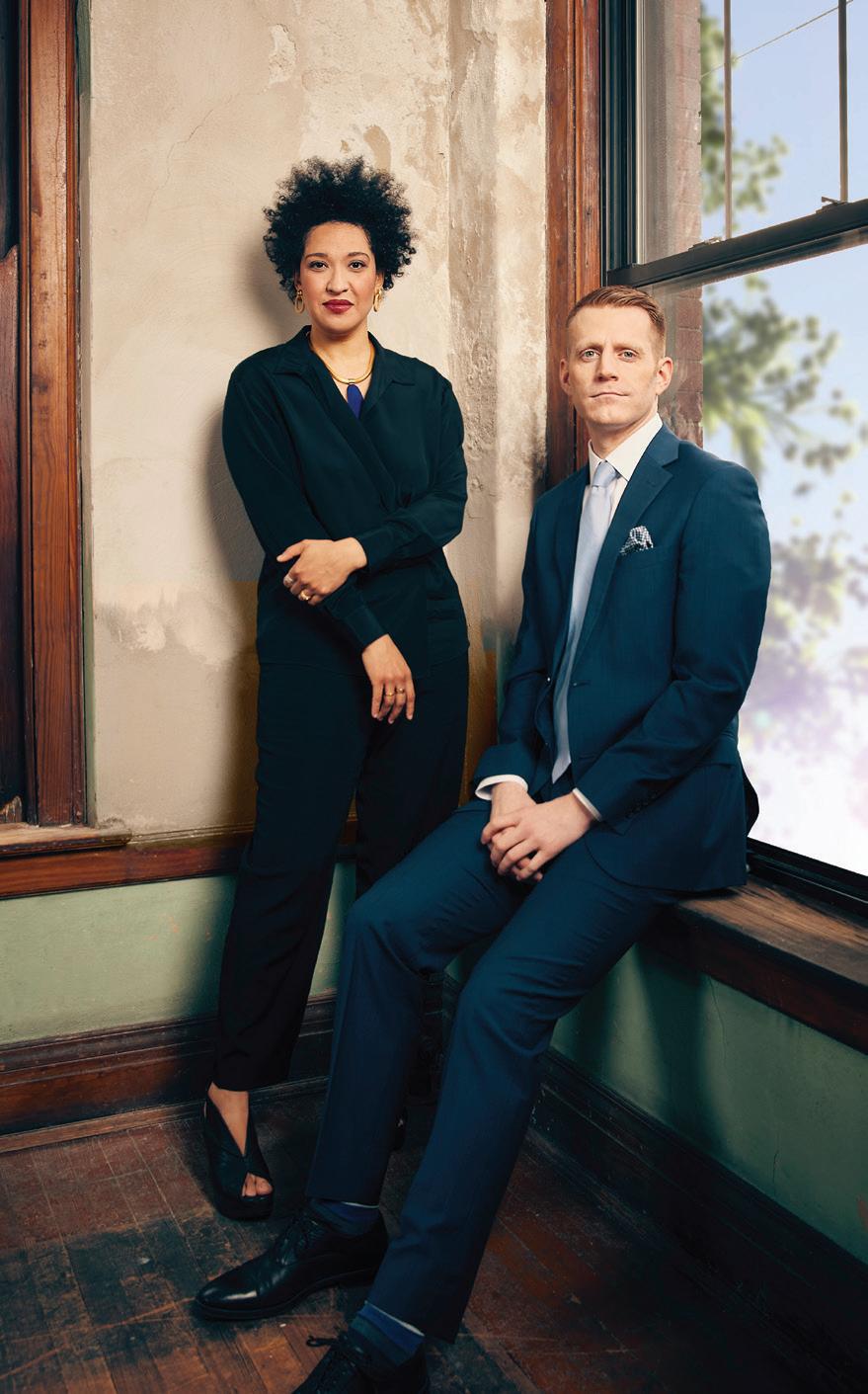
“I was throwing everything in and out of a suitcase,” she says, laughing throughout the recollection. “They’re on speaker. And I’m like, ‘Let’s talk very seriously about the organization of this Eclectic Mass.’”
This is her life: Airports and archives, rehearsal rooms and research threads, children wandering into interviews while she’s debating liturgical structure. Always on the move. Always mid-conversation.
Balancing performance and direction doesn’t exhaust Bullock, she insists. It energizes her.
“When I’m in a state of having to perform and also think about production,” she says, “I just get into a rhythm of generosity. The energy I need just continues to be refilled, because the people around me are totally available, totally committed.”
Late in our conversation, Bullock circled back to something more personal.
“I didn’t go into this thinking, ‘I’m going to program this many Black composers,’” she says. “But it’s something that has preoccupied my life — because I’ve been forced to be preoccupied with it since I was born.”
Back at home in Germany, the room has quieted. Reif is likely preparing for his own rehearsals. Another trip looms. Another stage.
Bullock’s voice — speaking, not singing — remains steady, thoughtful, alert.
Listening first. Then answering.
And always asking who else deserves to be heard. n
BY DR. TAMMY L. KERNODLE
“The future music of this country must be founded upon what we called Negro melodies. This must be the real foundation of any serious and original school of composition to be developed in the United States. … These beautiful and varied themes are the product of the soil. They are American. … These are the folk songs of America, and your composers must turn to them.” —Antonín Dvořák
Black culture and Black composers have been central to the formation and evolution of an American sound. Although the discussion of an American nationalistic sound or school of composition predated 1892, a certain urgency developed with the arrival of Antonín Dvořák. After the composer made the assertions above during an interview with The New York Herald, an ongoing rhetorical — and musical — debate ensued. Much of the musical debate was directed at Dvořák’s Symphony No. 9, From the New World, which modeled, more directly, how the folk spiritual — the ritualized sacred songs of enslaved Africans — could be reimagined through the structure and form of the late Romantic-era symphony.
The Second New England School, a collective of composers that included Amy Beach, Edward MacDowell, George Chadwick, Horatio Parker and Arthur Foote, was among the first to challenge Dvořák’s assertions. What is less discussed in the existing historiography is the emergence of another collective of composers who built on Dvořák’s ideas, centering Black music, and thus the Black
composer, in this conversation. Commonly referred to as the “Manhattan School” were composers Will Marion Cook, Harry T. Burleigh, Bob Cole, James Weldon Johnson, J. Rosamond Johnson, James Reese Europe and Scot Joplin, who contributed to the formulation of a nationalistic sound that reflected a separation from pan-European traditions. They believed that the question of an American aesthetic was directly tied to a Black intellectual tradition that advanced a larger civil rights and social justice agenda. At a time when racial inferiority served as an impetus for public policy that disenfranchised Black citizens and sanctioned the use of racialized violence to ensure “law and order,” these Black composers and others emerged as part of a Black intelligentsia that shaped the political and social landscape of America.
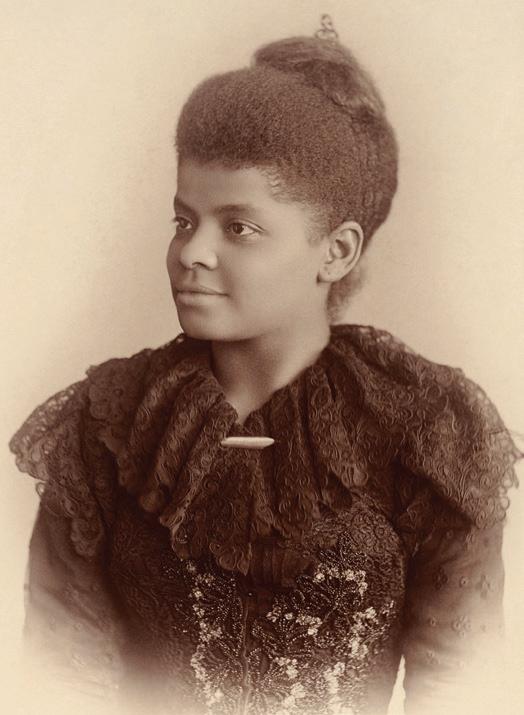
Much like public intellectuals such as Booker T. Washington, W. E. B. Du Bois, Anna Julia Cooper and Ida B. Wells, who advanced strategies of racial uplift through books, oratory, education and cultural labor, Black composers and concert artists used music as a means of challenging the prevailing
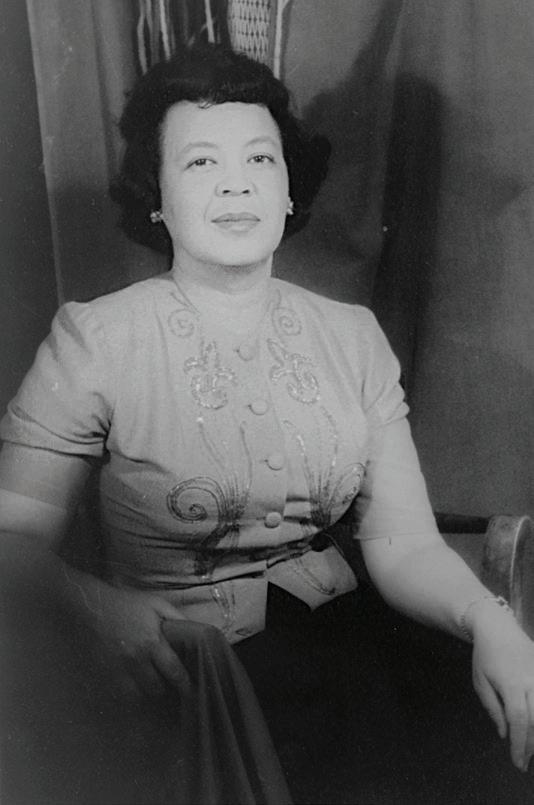
misrepresentations of Blackness. The Black Composer spoke through notes, rhythms and prose that evolved out of the Black American experience. Reimagined forms of these idioms not only shaped the notion of an American sound aesthetic but also fostered transnational, interracial cultural dialogue.
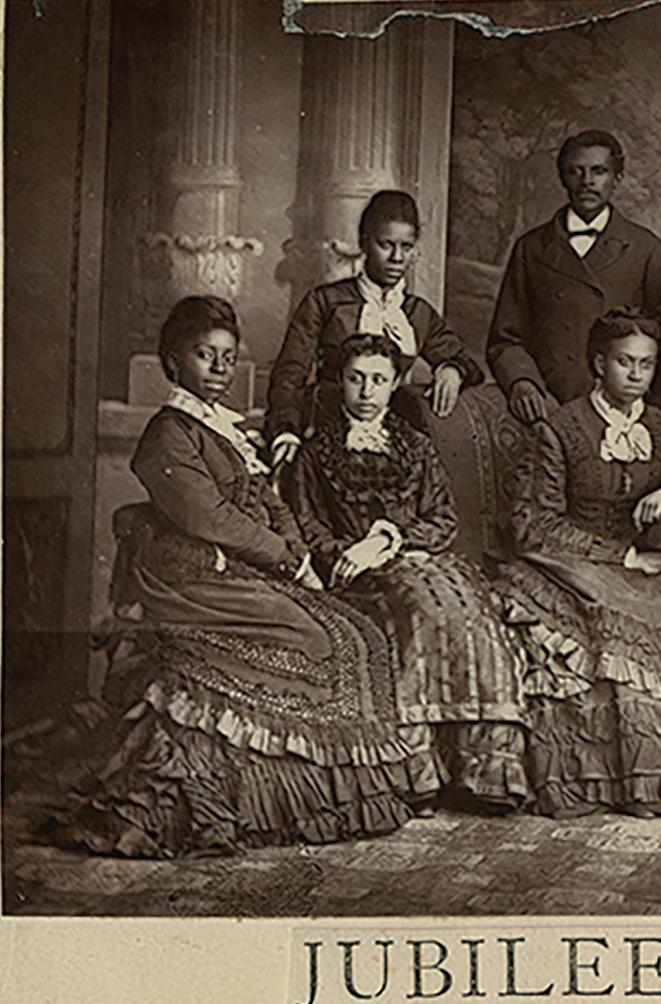
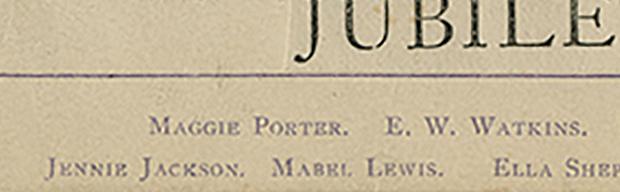
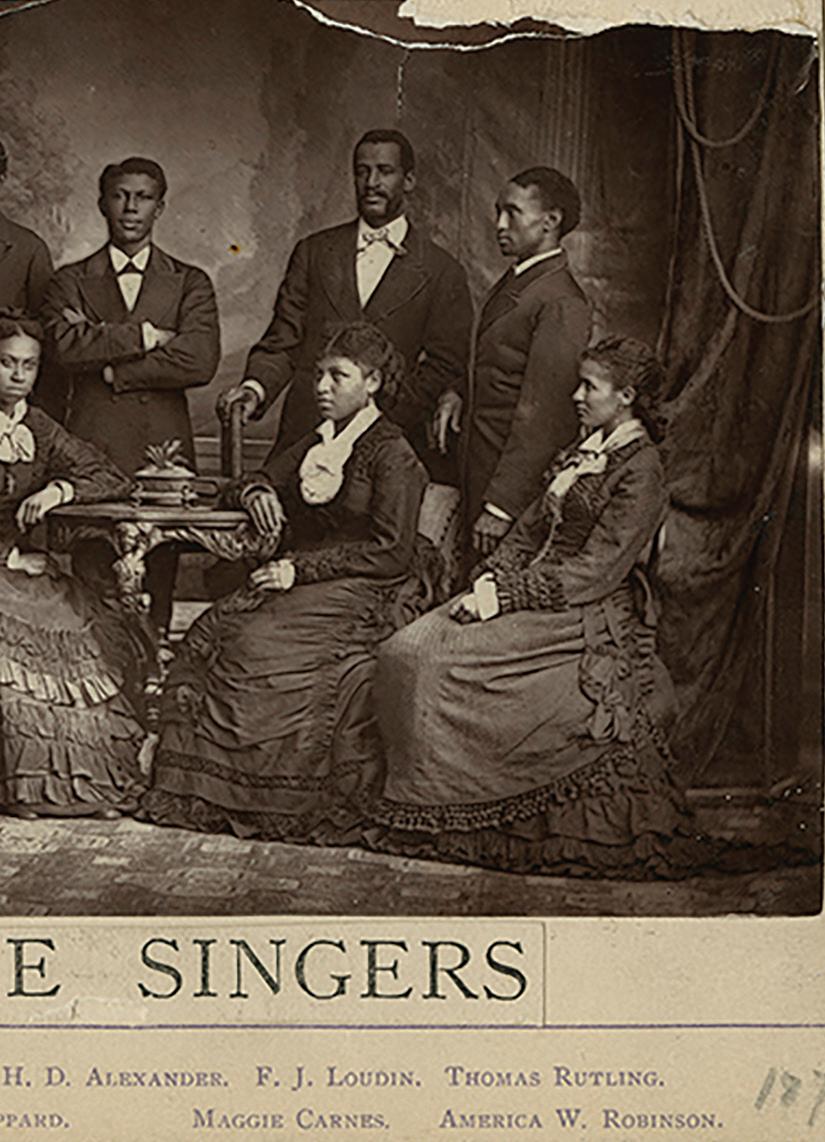
This dialogue did not begin in the 1890s with Dvořák and the Manhattan School, however. It extends back to the music of early 19th-century composers Francis Johnson, James Hemmingway and Justin Holland, and it entered another era in 1871, when the Fisk Jubilee Singers launched the first of several successful tours that laid the groundwork for spirituals to become the defining sound and language of Black identity and Black classical music.
The compositional voices heard throughout this year’s May Festival reflect different historical epochs, compositional approaches and generational identities, and illuminate the diverse cultural ecosystems that have shaped the sonic identity of the Black Composer. All have been key not only to the evolution of the American sound but also foreground to the progression of the Black classical aesthetic.
Any discussion about American musical nationalism must acknowledge the existence of a separate Black classical aesthetic. In doing so, we concede that while there have been moments in America’s cultural history in which the music of a particular Black composer or generation of composers has been championed by the prevailing classical music industry, for the most part, the Black Composer’s voice has been muted within major American concert halls. The Black Composer’s
voice has instead resonated the loudest in spaces that cultivated the development and progression of a Black Intellectual tradition — Black colleges, Black intellectual salons, Black churches and grassroots, community-based conservatories. As a result, the Black Composer’s voice, like that of many American composers, has been denied the opportunity to converse with and challenge the supremacy of the pan-European canon in the concert hall. Therefore, the Black classical aesthetic still isn’t fully understood within the historical and sonic context of American classical music.
While this conversation limits its discussion of the Black classical aesthetic to the creative and intellectual work of the Black Composer, it should be noted that this idiom has also been shaped by the performances of Black concert artists, the interpretive skills of Black conductors, and the patronage of educators and impresarios. All of these forms of cultural labor demonstrate how Black creatives expanded the context of the Western European concert tradition through the performance and interpretation of canonical works that emphasize the Western European aesthetic or the production of works reflecting mastery of classical music conventions, often using idioms that may or may not refer to Black identity, cultural practices, or lived experiences.
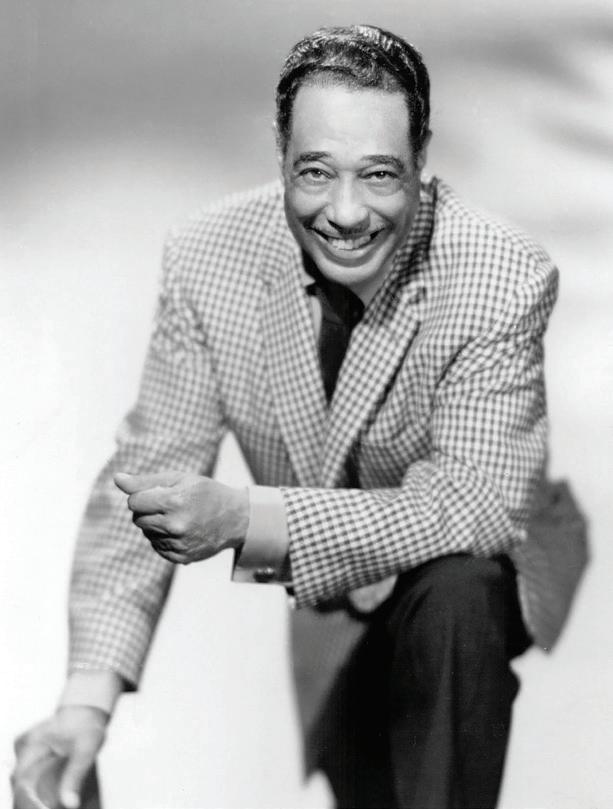
The compositional voices featured during this year’s Festival also reflect the ideological intentions of the Black classical aesthetic through works by non-Black and non-American composers. The pairing of Margaret Bonds, William Grant Still, Duke Ellington and Carlos Simon with George Gershwin, J.S. Bach, Alexander von Zemlinsky and
others demonstrates how the resonant power of Black expressive culture — and the undercurrent of resilience, resistance and perseverance that pervades it — has circumvented the boundaries of race, geography and class distinction. Collectively, their compositions illuminate how Black folksong,
POET’S CORNER
dance and poetic idioms that evolved out of the lived Black experience have served as exemplars of America’s cultural heritage. n
The author, Dr. Tammy L. Kernodle, is University Distinguished Professor and the Park Creative Arts Professor of Music at Miami University.
by gabriela godinez feregrino
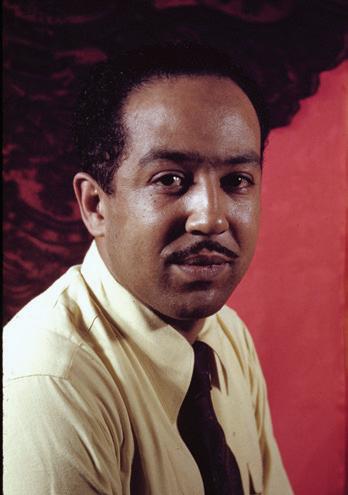
Langston Hughes, who was born in the Jim Crow South, in Joplin, Missouri, on February 1, 1901, spent the majority of his childhood in Lawrence, Kansas, and other places in the midwest, eventually settling with his mother and stepfather in Cleveland, Ohio. There, his mother ensured he was surrounded by literature and performance, taking him to libraries and plays whenever possible.
Hughes wrote his first published poem, “The Negro Speaks of Rivers,” shortly after graduating from high school and while traveling to Mexico to visit his father. But, at his father’s insistence that he pursue a “practical” career, he entered the Columbia University School of Mines, Engineering and Chemistry. He maintained good grades, but a lack of passion for the coursework, combined with the racial hostility he encountered on campus, caused him to leave Columbia after only a year.
But Hughes was already in New York City, and Harlem was alive with artistic and cultural energy. Supporting himself through a series of odd jobs, he devoted himself to writing and continued to refine his craft. His work drew deeply from the historical roots and enduring resilience of Black identity. His first poetry collection, The Weary Blues, stood out for its incorporation of jazz and blues rhythms, capturing the everyday experiences of Black Americans with striking honesty. Hughes wrote deliberately for a broad audience, favoring accessible language and rejecting the expectation that Black writers conform to white literary standards. He instead embraced Black culture and vernacular, an approach that made his work both
politically powerful and culturally invaluable. His writing reflects the full spectrum of Black American life, from joy and humor to hardship and injustice. One of his most celebrated poems, “Harlem,” poses the haunting question, “What happens to a dream deferred?” [“A Dream Deferred: Langston Hughes in Song” is the title of Festival Director Julia Bullock’s May 17 performance]. It discusses dreams as something alive and describes their neglect as something that could decay or rot. This poem is not only about personal disappointment but also reflects the collective frustration of Black Americans, for whom systemic inequality delayed or halted the pursuit of happiness and human rights. Hughes never says this explicitly in the poem, nor does he ever answer the first question posed. Instead, Hughes invites readers into a conversation and encourages them to answer the questions themselves.
In addition to poetry, Hughes wrote essays, plays, novels and short stories throughout his career. He traveled extensively, returning to Mexico and visiting France, Spain and parts of Africa. These experiences broadened his perspective, enriched his writing and deepened his commitment to both racial equality and workers’ rights. During the 1930s and 1940s, he became increasingly engaged in social and political issues.
Langston Hughes died on May 22, 1967, in New York City. He left behind a vast and enduring body of work that remains sharply relevant today. He is remembered as a pioneering voice who captured the spirit of his time while helping to shape the future of American literature. His exploration of identity, resilience and the enduring power of dreams transcends time and generations. n For more about Hughes, text PROGRAM to 513.845.3024 or visit mayfestival.com/DigitalProgram.
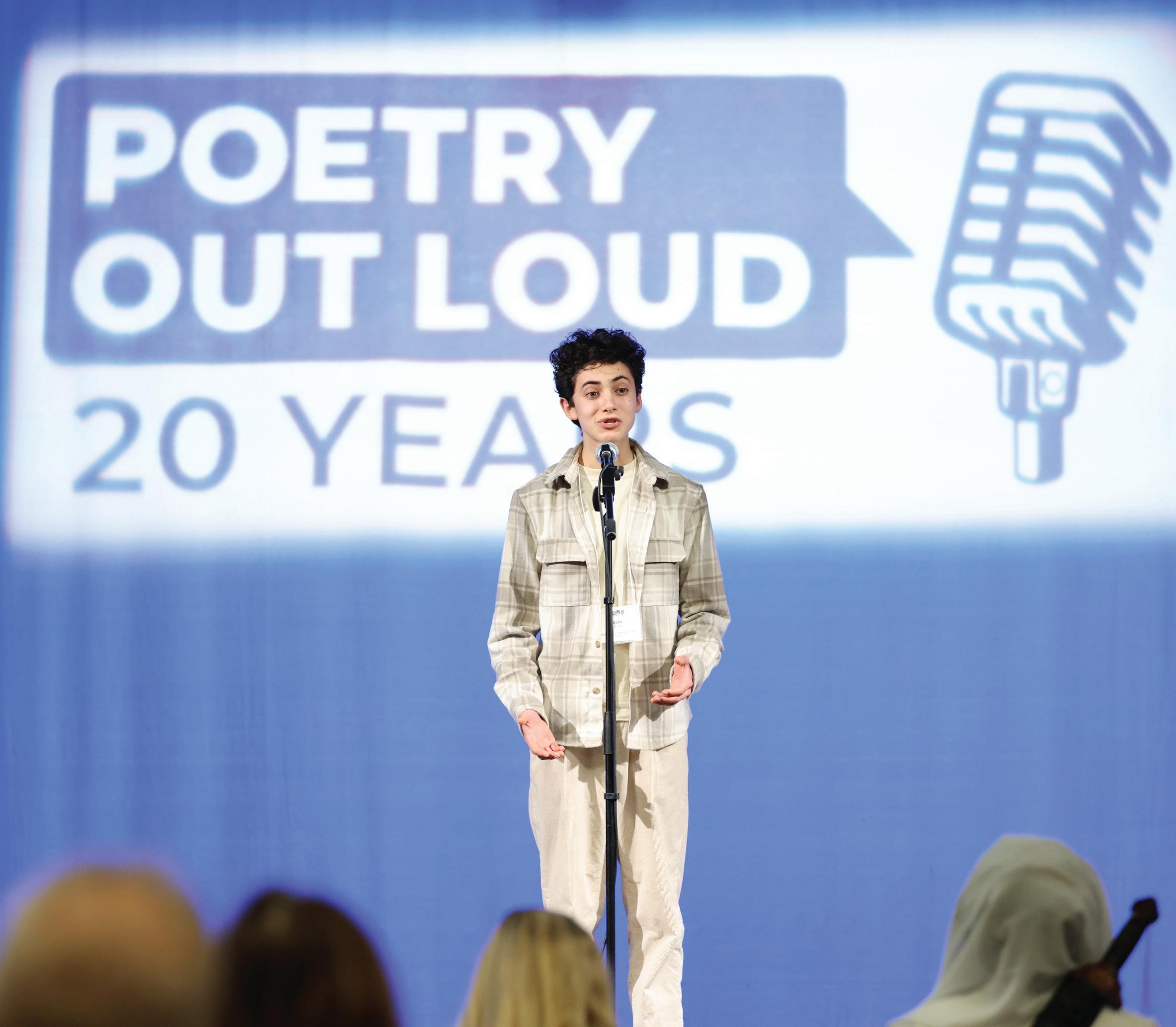
Program Spotlight: POETRY OUT LOUD
Investing state and federal dollars, the Ohio Arts Council funds and supports quality arts experiences for all Ohioans to strengthen communities culturally, educationally, and economically.
Learn more about our grant programs and resources, find your next arts experience, or connect: OAC.OHIO.GOV.
by david lyman
For most of us, “May Festival” is a name that conjures up images of balmy spring evenings, choral extravaganzas and a Music Hall packed with oh-so-elegant audience members. These aren’t run-of-the-mill performances, mind you. On the contrary, each one is a musical gem, the sort of thing that befits a tradition-rich Festival that dates back more than 150 years.
Those are glorious, even romantic images. But in reality, the May Festival umbrella stretches far beyond that handful of performances we see each spring.
Often overlooked in the grandeur of those spring performances are the May Festival’s youth programs. They may not have the high profile of the Festival performances, but the youth programs are every bit as important to the May Festival’s future.
“The May Festival has been educating since the very beginning in 1873,” says Edy Dreith, the Festival’s Education Manager. “That first year, [Charles] Aiken had a 500- or 600-member youth chorus on the stage,” she says, referring to the Cincinnati Public Schools’ Superintendent of Music whose bust is displayed in the second-floor lobby of Music Hall.
In the Festival’s early days, the involvement of young singers was an outgrowth of a remarkably robust music program in the public schools.
“It’s a different world today,” says Dreith. “Today, music education is becoming more exclusive. The music programs you and I may have enjoyed as fifth graders just aren’t there anymore.”
The import of that hasn’t been lost on the May Festival’s leaders. If kids aren’t learning an appreciation for music when they’re young, where will future audiences come from? And what does that mean for the future of the May Festival?
“The bottom line is ‘what do we need to do to survive,’” says Jason Alexander Holmes, Associate Director of Choruses and May Festival Youth Chorus Director. “The answer is clear. We need to engage with our communities.”
So, in 2022, the May Festival MiNiS were born.
“Getting kids to come to Music Hall was much too daunting,” says Dreith. “So we went to them. This is a mobile program.”
They started with libraries. Much like a storytime program, Dreith or another performer would “just kind of sing. I don’t have to take drums or buckets. It is literally just me or another singer. We don’t need instruments. As I tell the kids, we are the instruments.”
If that sounds basic to you, that’s the point. The goal is to provide an entry point into the world of singing with other people.
“We provide a no-judgment zone,” says Dreith. “It’s always in a public space of some sort — a museum, a community center, a children’s hospital. The cool surprise has been sitting with these people who would probably much rather do anything else other than sing.”
In just four years, the program — geared for ages 0–12 — has grown to include a pair of school systems, as well. Last year, May Festival MiNiS interacted with more than 9,500 young people. And this year?
Special thanks to these corporate and individual sponsors whose generosity and support honors the tradition, community and artistic excellence at the heart of the May Festival. Thank you for allowing us to present inspiring and uniting experiences at the highest artistic level that welcome ever-growing audiences!
2026 Festival Director Julia Bullock: A Friend of the May Festival
Director of Choruses Matthew Swanson: Sherry and Mark Holcomb
2026 Premier Partner: Carol and Scott Kosarko
2026 May Festival Presenting Sponsor: Fort Washington Investment Advisors
2026 May Festival Season Sponsor: Chavez Properties
On Love and Lust: Drs. Manisha Patel and Michael Curran
Festival Finale – Porgy and Bess: John and Susan Tew
Cristian Mӑcelaru: Carol and Scott Kosarko
Matthew Swanson: Chris and Beth Canarie
Julia Bullock, soprano: Barbara Ann Feldmann
Jason Alexander Holmes, preacher: Bryan Hafertepe and Graham Hunter
Sara Coudin, contralto: David and Elaine Billmire
Nicholas Phan, tenor: Ronald C. Lamping
Alfred Walker, bass-baritone: Christy and Terry Horan
May Festival Floral Sponsor: Chris and Beth Canarie
Pre-Concert Conversations: Drs. William Hurford and Lesley Gilbertson
Pre-Concert Performance of the Cincinnati Boychoir and May Festival Youth Chorus: Cincinnati Boychoir Board of Directors
Lobby Festivities Sponsor: Stanley H. Ragle
“Honey, the sky is the limit,” says Dreith. Meanwhile, Holmes has been busy growing the May Festival Youth Chorus. Since coming to Cincinnati as Director of the Cincinnati Boychoir in 2019, he has built a formidable reputation as a leader in local music education.
“If a teacher invites me to their school, I try never to say no,” says Holmes, noting that in the previous two months, he had visited 10 schools. “I think it’s always helpful for a teacher to have another ear in the room.”
On the one hand, it’s an act of goodwill. On the other, it’s another way of spreading the word about the May Festival. And of the Youth Chorus.
“I’m not there to recruit,” says Holmes. “But if a student is looking for an added musical experience, I have one to offer.”
That’s precisely the opportunity Runako Muvirimi was looking for.
A 17-year-old senior at The Summit Country Day School, he is in his second season with the MFYC.
“I’ve never really been a part of a choir outside of school before,” he says. “But my choir director at Summit said I should think about joining the Youth Chorus — they needed more tenors.”
His favorite experience so far?
Cincinnati. It’s just been an amazing opportunity. And we get free voice lessons, too.”
Definitely a bonus.
Poplar Cagnon, a 16-year-old junior at Campbell County High School, was unsure if there would be other kids from Kentucky participating, but that didn’t stop her. “My dad and I had read about the chorus and saw that they did cool things, like rehearsing at Music Hall and singing with the Cincinnati Pops, so I definitely had to audition,” she says.
Now in her second year, she’s still wowed by the quality of the group.
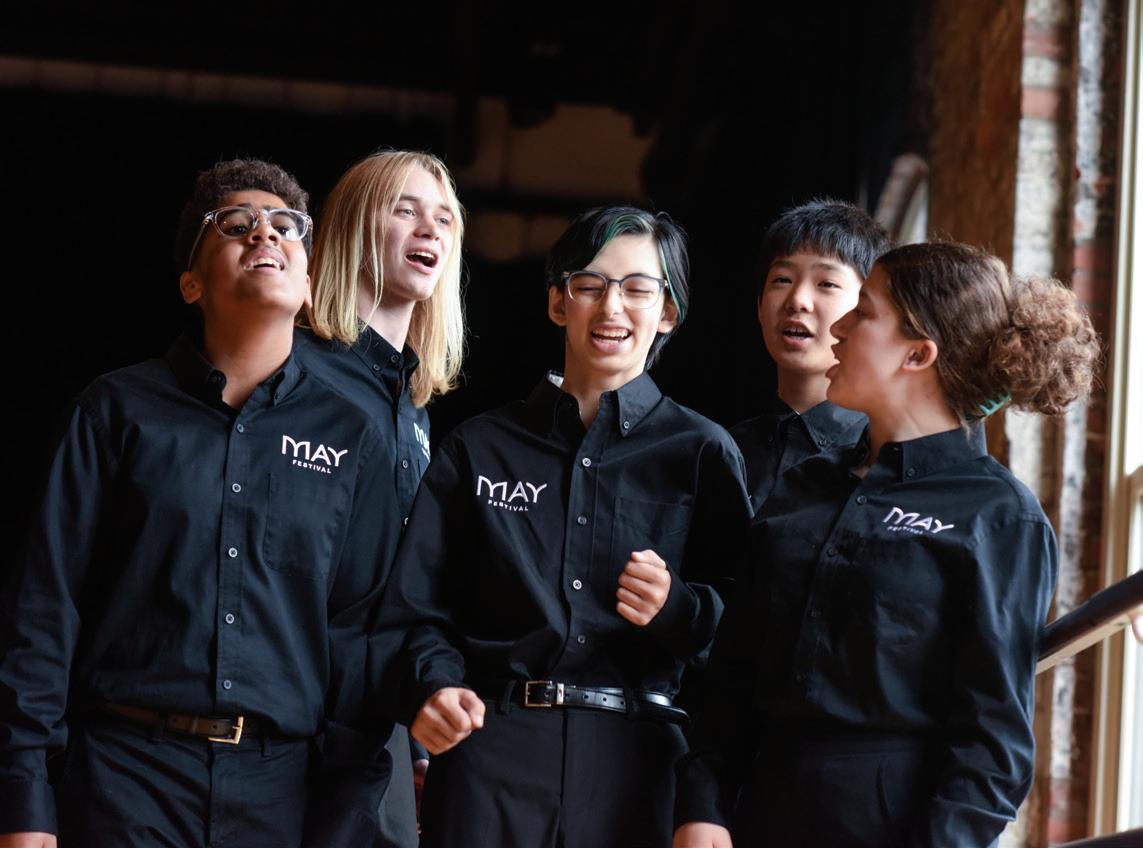
Like many of his fellow choristers, it’s the Holiday Pops concerts.
“It’s one thing to perform with a group of other singers,” he says. “But it’s a whole different ball game when you add the orchestra. Whoa! It’s incredible.”
When Cameron Carnahan joined the MFYC four years ago, his biggest surprise was the dearth of male singers.
“It was crazy,” says the 18-year-old Little Miami High School senior. “There were only four or five guys in the chorus when I joined. It’s a lot bigger now.” (For the record, the MFYC has 55 members today.)
“I’ve been singing pretty much forever,” says Cameron. “But being part of the May Festival Youth Chorus is one of the major highlights of my life. I’m friends with people I never would have met if I didn’t sing here, people from all over Greater
“I didn’t know it was going to be such an advanced choir,” says Poplar. “Everybody was really, really good. Everyone knows how to sight read, so we pick up the music really quickly. It all feels so professional.”
And singing for Holmes has been especially rewarding.
“He’s so charismatic. He’s always giving us energy.”
Aside from the compliment, Holmes takes special pleasure in enthusiasm like Poplar’s.
“That sort of passion really is important,” says Holmes. “Yes, we’re making it a preprofessional experience. But it’s important to me that the joy of singing remains. In the end, the only reason someone sings in a community chorus is because they want to. I try never to lose sight of that. It’s really important I know you’re here because you love it.” n
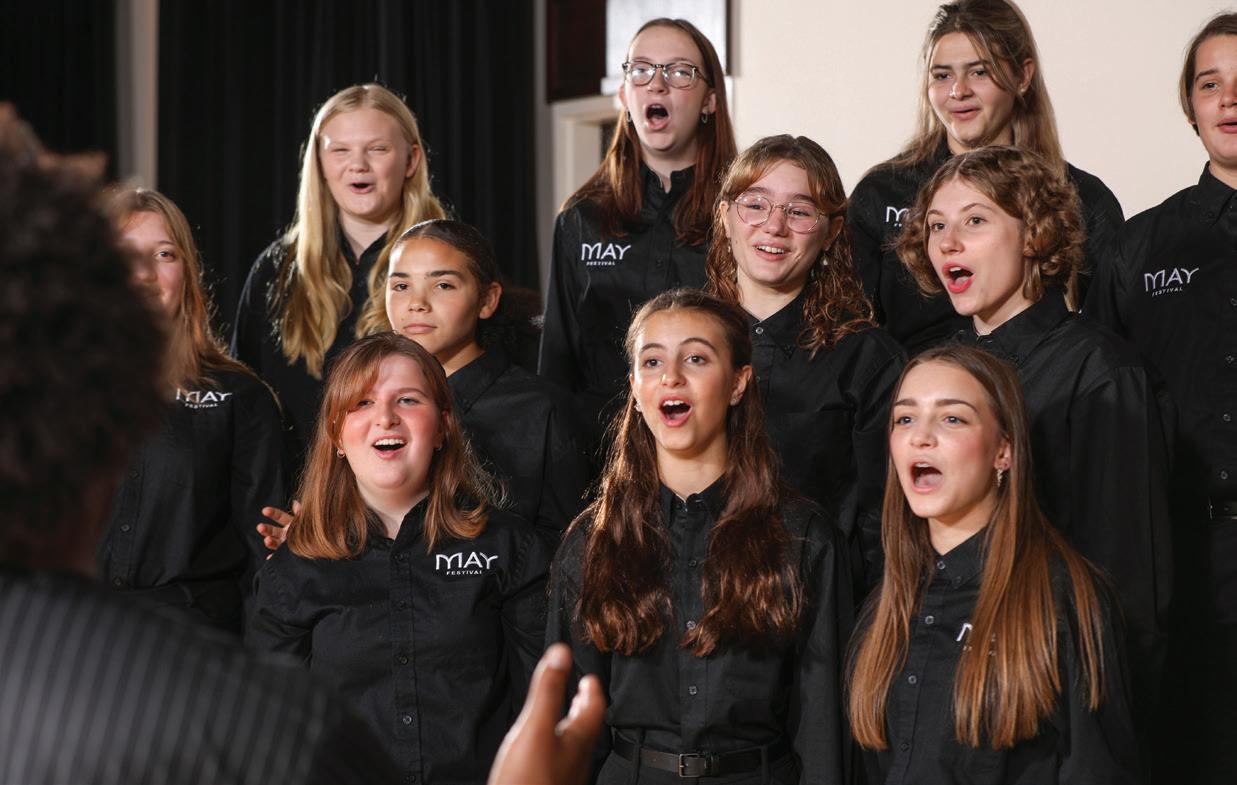
From “building confidence” to “looking for a challenge” and “community,” read how May Festival Chorus and May Festival Youth Chorus members answered the question, “Why do you sing in the May Festival family of choruses?”
May Festival Youth Chorus
Molly Harris: I sing in the May Festival Youth Chorus because it provides amazing singing opportunities and helps build confidence.
Meg Powers: Because I want to learn and improve and meet other people who enjoy performing.
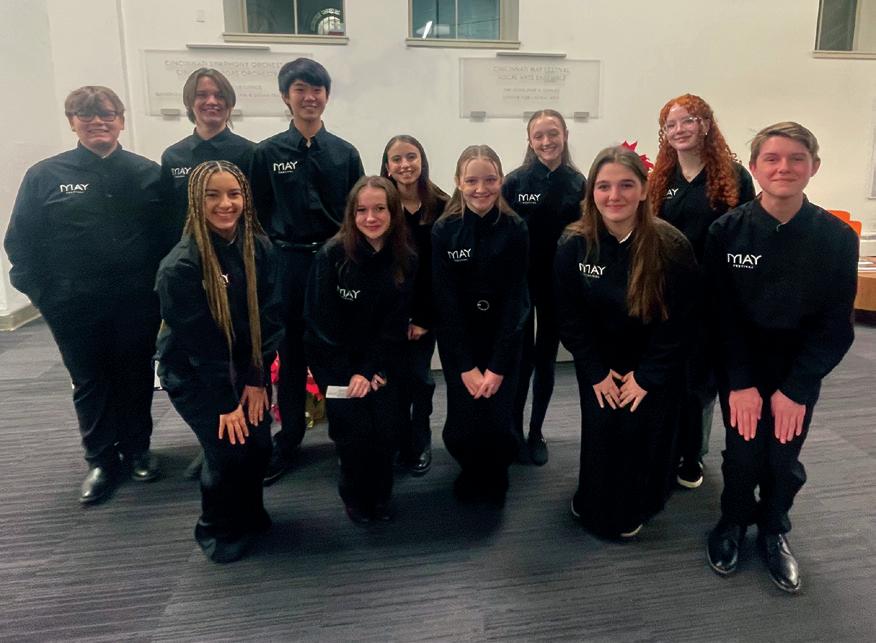
Mason Jones: I joined because my grandmother was in the May Festival Chorus two years before I joined and I loved watching the big chorus sing on stage for the May Festival. When I learned about the Youth Chorus and that they sing on stage for the May Festival, I decided I wanted to sing up there with my grandma, and here I am.
Alijah Frost: The reason I sang for the May Festival was because I wanted to gain a greater skill set, and musical knowledge, so when I went to musically inclined events I would not be confused. But now I would say I sing in the May Festival for friendship, connection and a place where my voice would be heard, and no one would judge it.
Charlotte Vieson: I sing in the May Festival Youth Chorus because I love being able to share my passion for choral music with other people from the community. I enjoy being able to meet and sing with people from all across the greater Cincinnati area.
Sophia Clever: I sing in the May Festival Youth chorus because it gives me the opportunity to
continue my choral singing in high school. It has been the best decision I have ever made!
Ella Jane Martin: I sing for my choir because it helps me learn different types of music than I would on my own, spread my voice, grow my musicianship and work with a team of voices.
Arianna Pence: I sing in the chorus because it gives me professional experience in performance and allows me to improve in my confidence. I have grown to be more confident in my voice and comfortable with sharing it with others.
Oliver Wagner: I sing in the May Festival family of choruses, because I can. May Festival is a very high-level choral organization, and I am lucky to be able to sing in it. The people are absolutely amazing in every way, and rehearsal is one of the few things that keeps me balanced from stress.
Alyssa Schwartz: I sing in the May Festival Youth Chorus because it helps to foster my dream of being a music Educator. I also make lots of friends and contribute to a community not found in any other art form.
Genevieve Stevenson: I joined the May Festival Youth Chorus because of the amazing people and performances I knew it had, but throughout the year my opinion of it has only improved! It’s hard to sum up everything I love about the May Festival in a few words, but I need to mention the extremely fun song choices, talented and funny people, the attention to detail in every song, how organized everything is, and the way musicianship is very actively encouraged (through the May Festival Voice Lesson Program and the in-rehearsal music theory class).
Thanh-Tam (Tammy) Dao: The Youth Chorus has a wonderful sense of community that still holds up to professional standards. We are one big group of hardworking singers that can always put our best foot forward, but we are also one big group of people that can goof off and have fun.
Tuula Hicks: I sing in the May Festival because it’s a place where I can enjoy singing while having supportive people around me. :)
Owen Meyers: I sing in the May Festival family of choruses to learn and apply the invaluable musical knowledge I’ve received from them. Each time I sing with the May Festival Youth Chorus I learn a new skill or technique; this rich community is what keeps me singing with our choral family.
May Festival Chorus
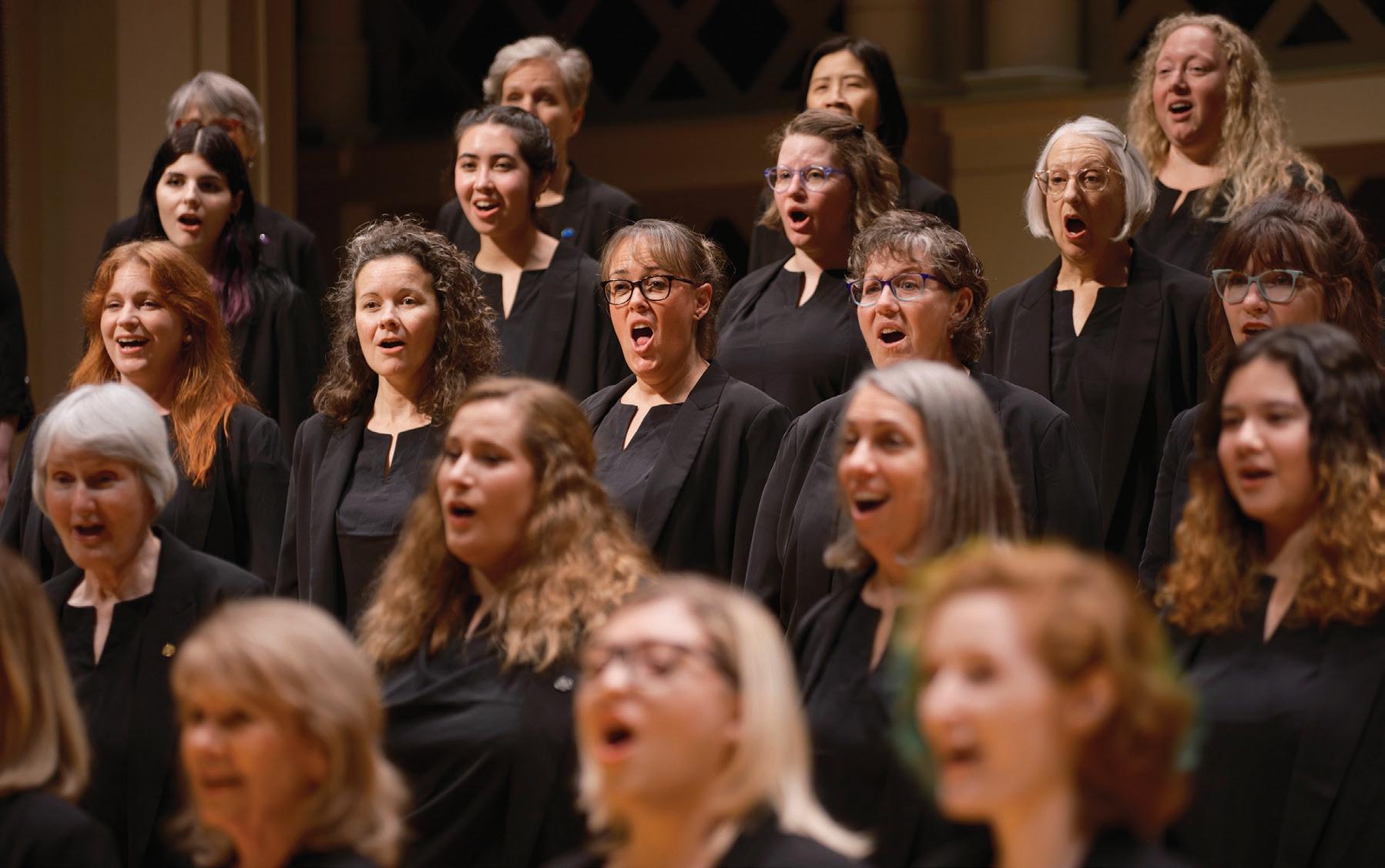
Meg Lawson: There’s nothing like singing excellent music with other incredible performers — the thrill of nailing a difficult section, the beauty of a delicate chord, the glory of a triumphant finale. May Festival is more than a choir; it is an experience and a community.
Robin Wiley: I am honored to sing with such a professional group of singers and directors. Singing on stage with the CSO is the greatest joy imaginable for a choral singer.
Kathy Dietrich: I enjoy singing great music, in a great hall, with a great orchestra and great fellow singers. It is a mentally challenging and extremely rewarding experience!
Scott Lincoln: Once we learn our parts and how to sing them together to express the music, we are flying — just like a flock of birds riding the invisible wind!
Amy Perry: I sing to fulfill my musical being and to be a part of a long-standing Cincinnati tradition.
Ann Schwentker: From the Yale Glee Club to the Vienna Jeunesse Choir to the Penn Chorale, choral music has been my joy for decades, but I have never sung with a group so serious and talented until I joined MFC. It is incredible to be able to learn from and sing for Matthew Swanson, I am so very lucky.
Ronny Beck: For me, there’s nothing better than listening to beautiful, artistic and emotive choral harmonies … except for joining in the singing of the music with the May Festival Chorus. Every time we rehearse and/or perform together, I am immediately reminded of how fortunate I am to be a part of such a talented group of lovely people.
Mark Weaver: I enjoy singing with the May Festival Chorus as a way to be a part of people performing with excellence.
Troy Welker: As a new member of the May Festival Chorus, I was welcomed so warmly by staff and chorus members alike before I ever sang a note. And once my first rehearsal started and that first note was sung … I knew that this is where I belong. I continue to be awed by the positivity and support of the May Festival Chorus and the beauty of talented, diverse voices joining together to make music.
Christy Roediger: Singing with the MFC is a huge honor, challenges me musically and I love being part of the May Festival community. Executing music at such a high level is simply a blast!
Jennifer Blair: I sing to feel connected by an unbroken thread to the thousands of singers who have experienced the joy of performing the finest works of choral music on this storied stage.
David Dugan: I appreciate great choral music, and, when retirement allowed me to audition for the MFC in 2022, I tried out and was accepted! Great group of people of all ages and backgrounds with one common love.
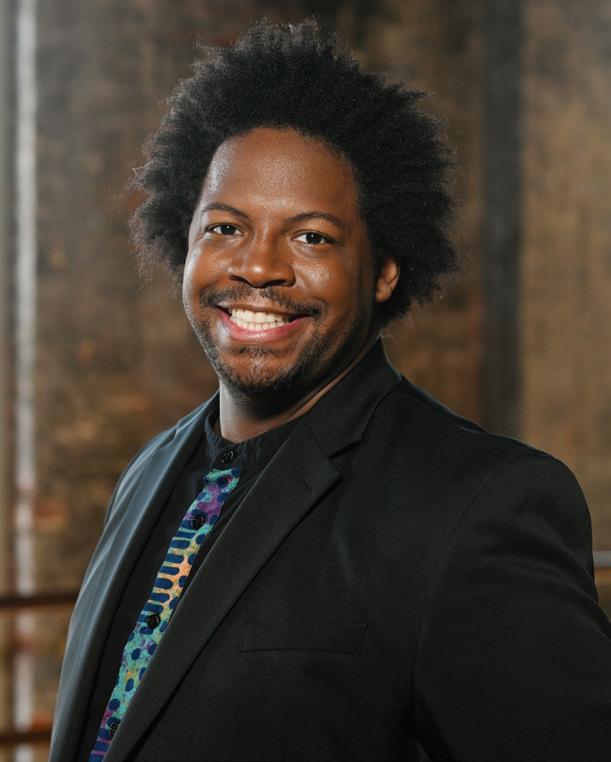
Matthew Swanson
Grammy-winning American classical singer Julia Bullock combines versatile artistry with a probing intellect and commanding stage presence. As well as headlining productions and concerts at preeminent arts institutions around the world, she has held positions as artist-inresidence of New York’s Metropolitan Museum of Art, London’s Guildhall School of Music and Drama, Berkeley’s Cal Performances and the San Francisco Symphony. A prominent voice of social consciousness and activism, she is “a singer of enveloping tone, startlingly mature presence and unusually sophisticated insight into culture, society and history” (The New York Times). Bullock’s operatic career spans repertoire from the Baroque canon to contemporary works written expressly for her voice. This season, she premieres Matthew Aucoin’s Song of the Reappeared with the commissioning Chicago Symphony Orchestra, premieres a new Tania León commission on a U.S. solo recital tour, curates the Cincinnati May Festival, joins the Deutsches Symphonie-Orchester Berlin for Gershwin and Bonds, and reprises two signature projects at Australia’s Adelaide Festival. Recent operatic highlights include headlining John Adams’ Antony and Cleopatra and El Niño at the Metropolitan Opera, as well as creating important new roles in Terence Blanchard’s Fire Shut Up in My Bones, Michel van der Aa’s Upload and Theory of Flames, and Adams’ Girls of the Golden West. In concert, Bullock has performed with ensembles including the Los Angeles and New York philharmonics; the Baltimore, Boston, London, NHK and San Francisco symphonies; the Deutsches Symphonie-Orchester Berlin; and London’s Philharmonia Orchestra and Orchestra

2026 Festival Director Sponsor: A Friend of the May Festival
Director of Choruses Sponsor: Sherry & Mark Holcomb
of the Age of Enlightenment. Past solo highlights include tours with the American Modern Opera Company, of which she is a founding core member; the American, British, Belgian and Russian premieres of Zauberland (Schumann’s Dichterliebe juxtaposed with original songs by Bernard Foccroulle and Martin Crimp); and recitals at New York’s Carnegie Hall, Los Angeles’ Disney Hall, Philadelphia’s Kimmel Center, Boston’s Celebrity Series, Washington’s Kennedy Center and London’s Wigmore Hall.
Bullock has developed and launched three signature projects, all flourishing nationally and beyond. Her multimedia ensemble program, History’s Persistent Voice, addresses the transatlantic slave trade through songs by people enslaved in the U.S. and through visual art, poetry and new music by B/black female composers. Devised with her husband, Christian Reif, El Niño: Nativity Reconsidered is a chamber orchestral arrangement of Adams’ El Niño that amplifies the voices of women and Latin American poets. Perle Noire: Meditations for Joséphine, created with Tyshawn Sorey, Claudia Rankine, Michael Schumacher and Peter Sellars, reexamines the life and legacy of Joséphine Baker. Recorded with Reif and the Philharmonia Orchestra for Nonesuch, Bullock’s solo album debut, Walking in the Dark, won the 2024 Grammy Award for Best Classical Solo Vocal, as well as Opus Klassik and Edison Klassiek awards. Her discography also includes Grammy-nominated recordings of Adams’ Doctor Atomic and Bernstein’s West Side Story, while other honors include the Sphinx Medal of Excellence, Lincoln Center’s Martin E. Segal Award and first prize at the Naumburg International Vocal Competition. juliabullock.com

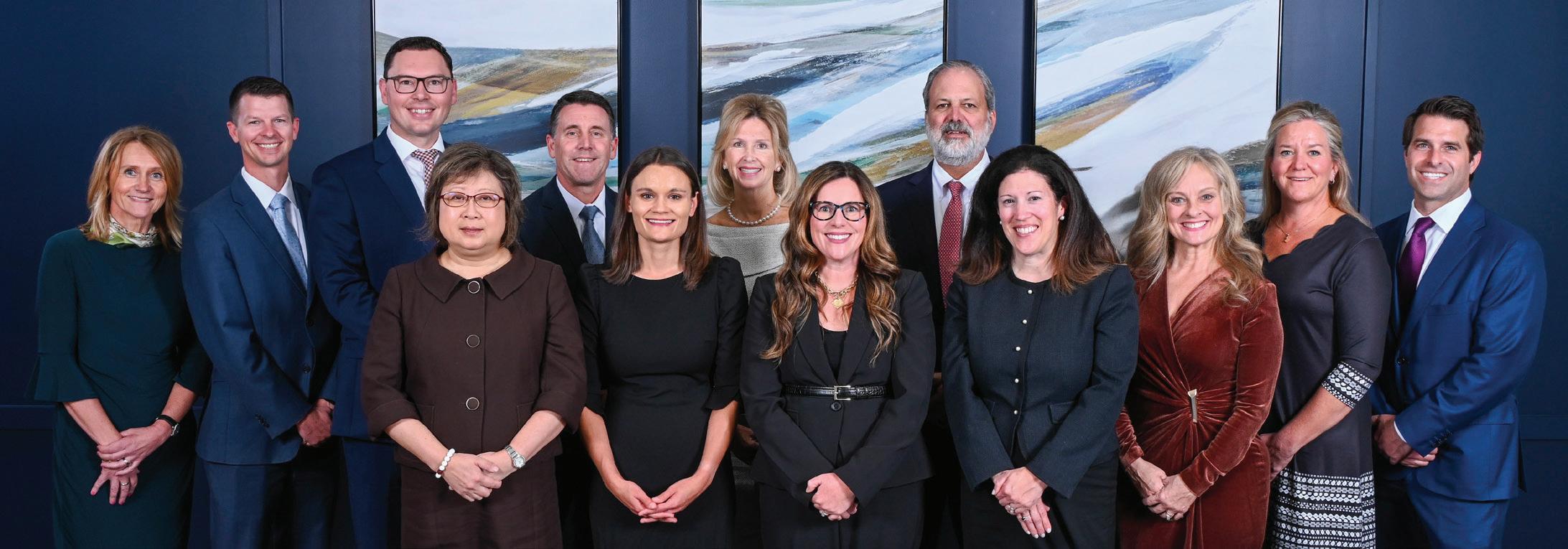
Matthew Swanson is Director of Choruses for the Cincinnati May Festival, a cornerstone of the Cincinnati arts community since its founding in 1873. He is the artistic head of the May Festival’s choral ensembles — the May Festival Chorus, May Festival Chamber Choir, May Festival Youth Chorus and Cincinnati Boychoir — and collaborates with the annually appointed Festival Director to craft programming for the May Festival. He conducts and prepares the May Festival Chorus — the core artistic element of the Cincinnati May Festival and the official Chorus of the Cincinnati Symphony Orchestra and Cincinnati Pops — for their performances at historic Music Hall and beyond. As Director of Choruses, he also leads the May Festival Conducting Fellowship, a collaboration of the May Festival and the Choral Studies Program at the University of Cincinnati College-Conservatory of Music.
In the 2025–26 season, Swanson prepared the Chorus for performances of Rachmaninoff’s The Bells with the CSO and conductor Matthias Pintscher and for performances of Handel’s Messiah with the CSO and Music Director Cristian Măcelaru. He has also prepared the Chorus for their featured appearances at the 2026 May Festival. Previously, Matthew Swanson was the Associate Director of Choruses, Youth Chorus Director and Director of Special Projects for the May Festival. In these roles, he instituted an annual Youth Chorus commissioning project, the presentation of community choral concerts during the May Festival, a program of free professional voice instruction for Chorus and Youth Chorus members, free in-school choral clinics for area middle and high schools, and the Youth Chorus Enrichment Program. In addition, he expanded institutional support for the Youth Chorus, which is fully cost-free for members, and led the creation of a strategic alliance of the May Festival and the Cincinnati Boychoir.
His portfolio of special projects at the May Festival has included staged productions of Leonard Bernstein’s MASS (2018) and Candide (2022) and the formation of the May Festival Community Chorus. In celebration of the May Festival’s 150th
anniversary season in 2023, he led “25 for 25: A New Time for Choral Music,” the May Festival’s wideranging community commissioning project.
Beyond the May Festival, Swanson was previously affiliated with the Mostly Mozart Festival as an assistant conductor, production consultant, programmer and presenter, and his curatorial work has been presented by the Swedish Radio Choir and the Swedish Chamber Orchestra.
As an educator, Swanson previously taught on the faculties of CCM and Xavier University. He is frequently engaged as a host and presenter of lectures, concerts and broadcasts in Cincinnati, New York and elsewhere.
A native of southeast Iowa, Swanson was educated at the University of Notre Dame (BA), CCM (MM, DMA) and King’s College, Cambridge (MMus). He held the May Festival Conducting Fellowship in 2015. Prior to his fellowship appointment, he began singing with the May Festival Chorus in 2012 and worked in the CSO and May Festival box office from 2014 to 2015. mayfestival.com/MatthewSwanson

The May Festival Chorus is endowed by the Betsy & Alex C. Young Chair
MATTHEW SWANSON, Director of Choruses
Sponsored by Sherry & Mark Holcomb
Jason Alexander Holmes, Associate Director of Choruses & Youth Chorus Director
Heather MacPhail, Accompanist
Maxwell Trombley, Choral Conducting Fellow
Jennelle John-Lewis, Chorus Operations Manager
Kathleen Moran, Chorus Librarian
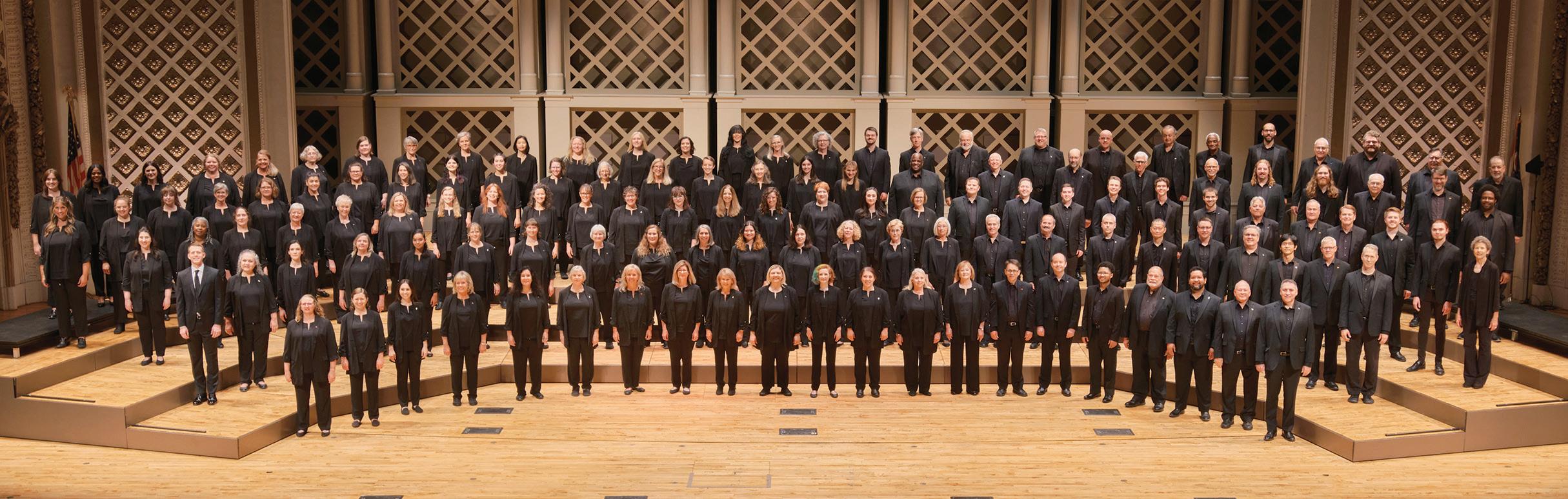
The May Festival Chorus has earned national and international acclaim for its musicality
and command of repertoire. Consisting of 145 avocational singers who collectively devote more than 45,000 hours in rehearsals and performances annually, the Chorus is the core artistic element of the Cincinnati May Festival and the o cial chorus of the Cincinnati Symphony Orchestra and Cincinnati Pops. The premier choral ensemble in Cincinnati, the May Festival Chorus has garnered national and international attention through numerous PBS broadcasts and award-winning recordings, many in collaboration with the CSO
THE MAY FESTIVAL CHORUS The May Festival Chorus is endowed by the Betsy & Alex C. Young Chair
Caitlin Ahmann-Miller, 3*
Hannah Bachmann, 3
Tracy Bailey, 25*
Cassandra Bailey-Langjahr, 2*
Avery Bargassé, 8*
Mark Barnes, 9
Deborah Barnett, 2*
Jim Baxter, 35
Ronny Beck, 1
Emily Benoit, 2
Mariah Berryman, 2*
Nathan Bettenhausen, 5*
Kenny Bierschenk, 9
Jennifer Blair, 3
Laurel Boisclair Ellsworth, 21
David Bower, 5*
Andrew L. Bowers, 10
Scott Brody, 11
Douglas J. Bruestle, 15
Dawn Bruestle, 21*
Sage Bushstone, 2
Christopher Canarie, 32*
Miriam Cantwell, 2
Timothy Carnahan, 2
Sophia Choi, 1*
Renee Cifuentes, 9
Emily Cotten, 2*
Julie Cowger, 1
Rachel Curran, 2
Char Daston, 1
Steven L. Dauterman, 44*
Grace Devoid, 2*
Kathy Dietrich, 12*
Jennifer Dobson, 9
Bethany Dorsel, 2*
David Dugan, 4
Donna Dunlap, 3
Douglas Easterling, 11*
Sarah Fall, 4
Jonathan Fissel, 1*
Lindsey Fitch, 12
Benjamin Flanders, 3*
Joy France, 1
Steve France, 21*
Amanda Gast, 5
Ella Giesler, 2
Anita Marie Greer, 37*
Bella Gullia, 3
Peter Guthrie, 1
Melissa Haas, 8
Emma Hage, 2
Sally Vickery Harper, 55
Mary Wynn Haupt, 24*
Carolyn Hill, 15
Caleb Hixon, 1*
Grace Ho, 2
Mark Hockenberry, 5*
Jason Alexander Holmes, 2*
Kim P. Icsman, 29*
Spence B. Ingerson, 36
Karolyn L. Johnsen, 54
Lauren Kerber, 1
Alexandra Kesman, 11
Erin Kie er, 2
Jenifer Klostermeier, 7
Andrew Kneer, 2
Fansheng Kong, 5
Takuya Konishi, 5
Lisa Koressel, 26
Judith C. LaChance, 48*
Hilary Landwehr, 37*
Julie Laskey, 22
Jim Laskey, 16
Emma Lawrence, 2*
Megan Lawson, 11*
Kevin Leahy, 8*
Matthew Leonard, 4*
Jennifer Leone, 3*
Scott Lincoln, 2*
Robert Lomax, 8
Katherine Loomis, 6
Alexx Lujan, 2
Julia Marchese, 5
Noelle Marousis, 2*
David Martin, 1
John McKibben, 8
Teri McKibben, 18
Andrew Miller, 5*
Jennifer Moak, 12*
James Murray, 2
H Scott Nesbitt, 16*
Scott C. Osgood, 24
Alison Peeno, 7
Amy M. Perry, 14
Caitlin Powell, 1
James V. Racster, 44
Hugh J. Ralston, 1
Regina Rancourt, 1*
Jason Ramler, 24
Audrey Ray, 5
Kristi C. Reed, 15
Suzette Reid, 1
Brian Reilly, 5*
Larry Reiring, 17*
Beth Roberts, 20*
Christy Roediger, 4
Lily Rollison, 1
Hannah Schafer Reese, 3
Julia H. Schieve, 31
Ann Schwentker, 7
Karen Scott-Vosseberg, 9
Molly Scruta, 7
Adam Shoa , 13
Emily Stevenson, 1
Katherine Sullivan, 3
Nikki Tayidi, 2*
Katie Tesmond, 3
Maxwell Trombley, 1*
Joshua Wallace, 19
Mark Weaver, 20
Megan Weaver, 13*
Troy Welker, 1
Gary Wendt, 20
Paul Wessendarp, 6
Stephen West, 5
Robin Rae Wiley, 4
Patricia Wilkens, 5*
Nathaniel Wilkens, 2*
Rosie Wilkinson, 4
Lynnsey Williams, 1
Carson Woolums, 1
Evan Young, 2
Meg Zeller, 2
Olivia Zimmerman, 3
Numbers behind chorus members’ names signify their years of service. Those celebrating anniversaries of five-year increments are honored with lapel pins they proudly wear with their May Festival uniforms.
*Member of the May Festival Chamber Choir
and Pops. Most recently, a live recording of Robert Nathaniel Dett’s The Ordering of Moses featuring then-Music Director James Conlon — who was named Music Director Laureate upon his retirement in 2016, following an unprecedented 37-year-tenure with the Festival — conducting the Chorus and CSO at Carnegie Hall was released to critical acclaim in 2016 on Bridge Records, and, in 2017, the Chorus re-released its popular a cappella holiday recording Christmas with the May Festival Chorus on the Fanfare Cincinnati label. The Chorus is also featured on several Pops recordings, which have sold more than 10 million copies worldwide. mayfestival.com/chorus
MATTHEW SWANSON, Director of Choruses
Turn to p. 21 for a biography of Director of Choruses Matthew Swanson.
JASON ALEXANDER HOLMES
Associate Director of Choruses and May Festival Youth Chorus Director
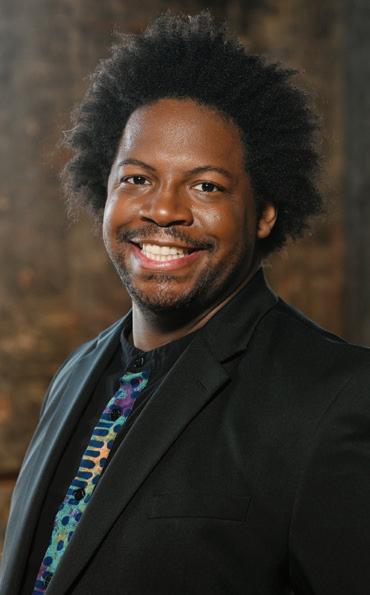
Jason Alexander Holmes is a music educator and performer from Ridgeway, Virginia and serves as the Associate Director of Choruses for the Cincinnati May Festival and Resident Conductor of the CSO’s Classical Roots Community Choir. Before coming to Cincinnati, he was director of educational programming at the Boston Children’s Chorus. Prior to his time in Boston, Holmes taught music at the elementary and secondary levels in Rochester, New York. He also led the University of Rochester Gospel Choir and the Eastman Young Children’s Chorus. Holmes holds degrees from the Eastman School of Music and Ithaca College.
Choirs under Holmes’ direction are consistently praised for their energetic, unified tone and engaging performances. He is known for innovative programming that celebrates the cultural context while encouraging singers and audiences alike to stretch their awareness by living in many different musical worlds. Pedagogically, Holmes is committed to implementing culturally responsive practices in music education. He has given workshops
and taught sessions on this topic at professional development seminars, schools and conferences. At the core of Holmes’ teaching and performing is the belief that we are all expressive and musical beings who deserve to witness and participate regularly in moments of truth and beauty.
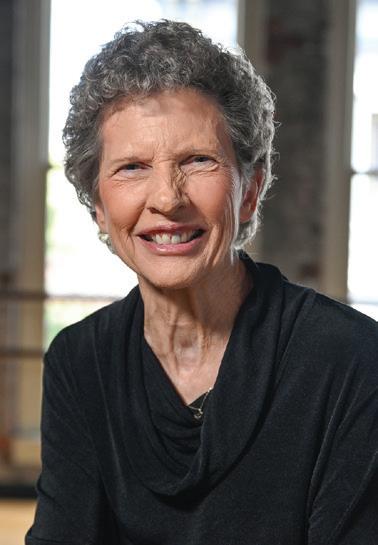
Heather MacPhail has been the accompanist for the May Festival Chorus since 1990. She is a frequent keyboardist with the Cincinnati Symphony Orchestra, performing on all keyboard instruments. Since 1997, she has been staff accompanist at Miami University, where she supervises and coaches students in accompanying, teaches organ, and performs with faculty and guest artists. MacPhail has performed as piano soloist with area ensembles and in recital on local concert series. Heather MacPhail is organist/director of music ministries at Westwood First Presbyterian Church in Cincinnati and maintains a private teaching studio for piano and organ. She holds a Master of Music degree in accompanying and a Bachelor of Music degree in piano performance from the University of Cincinnati CollegeConservatory of Music.
May Festival Choral Conducting Fellow
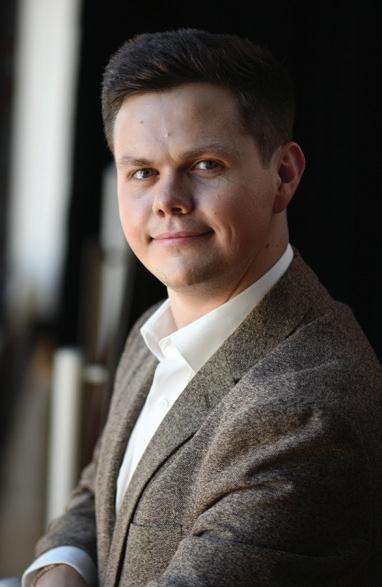
Maxwell Trombley is a Doctor of Musical Arts candidate in Choral Conducting at the University of Cincinnati College-Conservatory of Music, where he studies with Dr. Joe Miller and Dr. Brett Scott. He began his graduate studies at the Frost School of Music at the University of Miami and later transferred with Dr. Amanda Quist to Western Michigan University, where he earned a Master of Music degree in choral conducting. Trombley also holds a Bachelor of Music Education degree from Eastern Michigan University.
Before beginning graduate study, Trombley taught secondary choral music in Michigan public schools for four years. He also served the Michigan School Vocal Music Association by coordinating state-level honors choirs and solo and ensemble events.
The May Festival is grateful to Ginger Warner for her generous support of the Choral Conducting Fellowship. In its 13th year, the May Festival Choral Conducting Fellowship provides rising conductors with transformative opportunities to work collaboratively with high caliber inductry leaders.
JOE MILLER
Music Director, Cincinnati Vocal Arts Ensemble
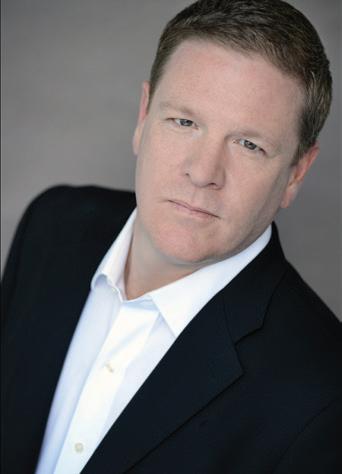
In a major new chapter, renowned choral conductor Joe Miller launched his inaugural season as Music Director of the Cincinnati Vocal Arts Ensemble with the 2025–26 season. A former member of the group during his graduate studies at the University of Cincinnati College-Conservatory of Music, he returns now as artistic leader, bringing with him a bold and imaginative vision for the ensemble’s future.
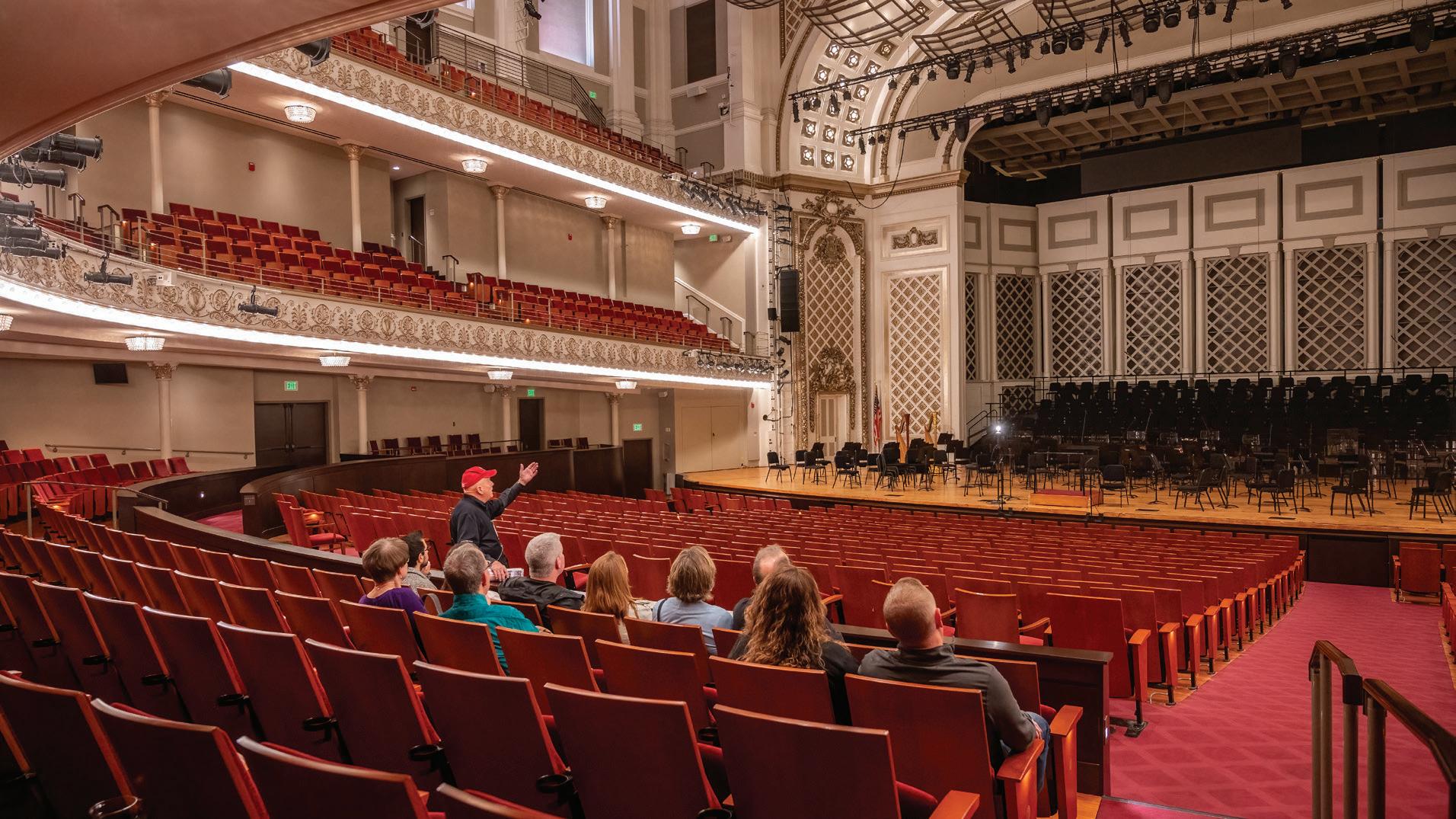
His first season with VAE featured innovative programming and a renewed commitment to excellence, community engagement and creative collaborations.
Continuing his role as director of the Philadelphia Symphonic Choir, Miller collaborated once again with conductor Yannick Nézet-Séguin and The Philadelphia Orchestra in a series of major works. In December 2025, he led the Symphonic Choir in performances of Handel’s Messiah at the Kimmel Center’s Marian Anderson Hall. In March 2026, Miller prepared the chorus for Mahler’s monumental Symphony No. 2, Resurrection, under Nézet-Séguin’s baton. These performances — given March 6–8 at the Kimmel Center and culminating in a special appearance at Carnegie Hall on March 10 — featured acclaimed soloists Ying Fang and Joyce DiDonato. He also returned to the Kimmel Center stage later in the season to prepare the Symphonic Choir for performances of Mozart’s Requiem, conducted by the distinguished Dame Jane Glover.
At CCM, engagements included performances of Mozart’s Requiem, Howells’ Requiem, James MacMillan’s Seven Last Words from the Cross with Samuel Barber’s Adagio for Strings, and a residency with composer Jennifer Higdon.
Visit vaecinci.com for the latest VAE artistic roster and season announcements.
JASON ALEXANDER HOLMES, Director
David Kirkendall, Accompanist and Assistant Director
Lisa Peters, Musicianship Instructor
Jennelle John-Lewis, Chorus Operations Manager
Kathleen Moran, Chorus Librarian
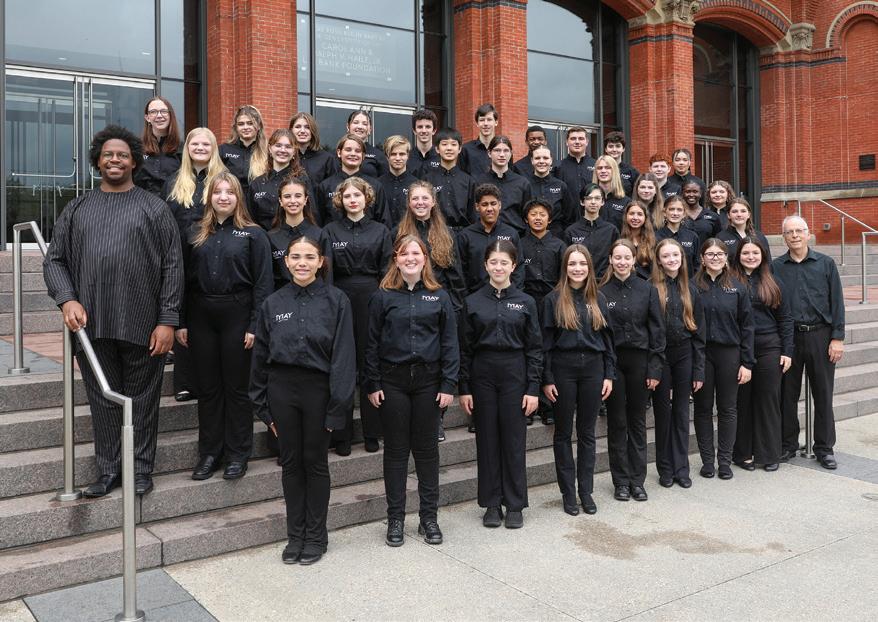
The May Festival Youth Chorus connects, inspires and educates young people through the study and performance of choral music. Since its founding in 1987, the Youth Chorus has appeared annually at the May Festival to perform choralorchestral works with the May Festival Chorus, the Cincinnati Symphony Orchestra and internationally renowned conductors and soloists. In addition, the Youth Chorus presents its own concert series and collaborates with cultural institutions and organizations throughout greater Cincinnati.
Highlights of the Youth Chorus experience include a broad range of repertoire; annual commissions and world premieres; free professional voice instruction; access to free and discounted tickets to the May Festival, CSO and Pops concerts; frequent concert appearances with the CSO and Pops at Music Hall; and a community of enthusiastic and skilled peer musicians from across the Tri-State. Notably, the Youth Chorus is tuitionfree; acceptance is based solely on ability.
The May Festival Youth Chorus is generously supported by the BAI Foundation.
Additional ongoing support provided by the following:



DAVID KIRKENDALL, Accompanist and Assistant Director
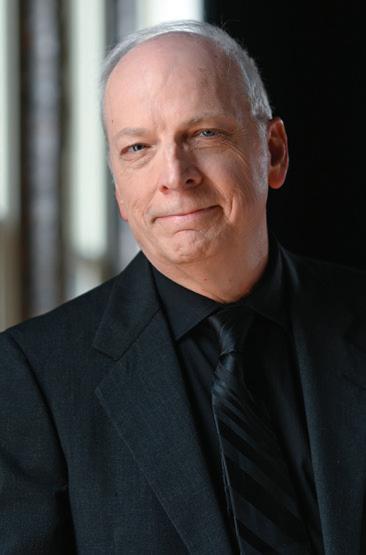
David Kirkendall served as choral director at Princeton High School in Cincinnati from 1980 to 2013. He has been assistant director and accompanist for the May Festival Youth Chorus since 2006 and has also served as accompanist for the Cincinnati Vocal Arts Ensemble since 2017.
Kirkendall completed his undergraduate degree, as well as a master’s degree in Choral Conducting, at the University of Cincinnati College-Conservatory of Music. He attended the Choral Conducting Institute at the Aspen Music Festival and has also completed studies for the Doctor of Musical Arts degree in choral conducting at the University of Illinois. He provided continuo realizations for the Roger Dean edition of the Vivaldi Gloria and has an SSA arrangement published with Alfred Music.
John Hauck Foundation Scholarship
The May Festival Youth Chorus is pleased to award the John Hauck Foundation Scholarship to Tammy Dao. The scholarship annually supports graduating Youth Chorus members who plan to study music, or the arts more broadly, at the university level.
The Youth Chorus is pleased to honor Genevieve Howard with the James Bagwell Award. Named for Dr. James Bagwell, conductor of the Youth Chorus 1997–2018, the award honors a singer who demonstrates musical curiosity, a strong record of academic achievement and exemplary commitment to the Youth Chorus.
The Youth Chorus is also pleased to award the Enrichment Scholarship, available to all members who attend enrichment events and concerts outside of MFYC rehearsals, enroll in the MFYC voice lesson program, audition for solo opportunities and finish the year with an examplary attendance record. The recipient of this year’s Enrichment Scholarship will be announced at a later date.
Seth Barry, Oak Hills High School
Preston Borchardt, Highlands High School
Hope Bowden, Clark Montessori High School
Anna Burkhart, Turpin High School
Poplar Cagnon, Campbell County High School
Lila Campton, Princeton City Middle School
Rocco Cardossi, Indian Hill High School
Cameron Carnahan, Little Miami High School
Romeo Ciolino, Walnut Hills High School
Sophia Clever, Saint Ursula
Claire Cohen, Walnut Hills High School
Thanh-Tam Dao, Walnut Hills High School
Alexander Deitzel, Spencer Center
Lucy Dixon, Madeira High School
Ryann Freudenberg, Ignite Institute
Alijah Frost, Wyoming High School
Katherine Gieson, Saint Ursula Academy
Molly Harris, Lebanon High School
Tuula Hicks, Walnut Hills
Mary Hollon, Simon Kenton/Ignite (Design College)
Zipporah Horn, Mt. Auburn Academy
Genevieve Howard, Newport Central Catholic
Leona Hunter, Lloyd Memorial High School
Naomi Jackson, Sycamore high school
Diana Jiradamkerng, Villa Madonna Academy
Mason Jones, Williamsburg Schools
Seava Sierra King, Villa Madonna Academy
Preston Koeninger, Newport Central Catholic High School
Claire Kruckeberg, Ursuline Academy
Nick Kruckeberg, St. Francis de Sales Lebanon
Talula Lane, Covington Latin School
Arpad Augustin Lallement, Indian Hill High School
Zachary Li, St. Xavier High School
Ruby Logsdon, Villa Madonna Academy
Grace Manning, SCPA
Ella Martin, Saint Therese
Owen Meyers, Saint Therese, Southgate, KY
Claire Miller, Roger Bacon High School
Runako Muvirimi, The Summit Country Day School
Arianna Pence, Seton High School
Kelsey Pettigrew, Greater Ohio Virtual School
Meg Powers, Villa Madonna Academy
Pearl Ramstetter, Makers Academy and homeschool
Alyssa Schwartz, Woodland Middle School
Nathan Share, SCPA
Jenavieve Southcombe, SCPA
Genevieve Stevenson, Anderson High School
Charlotte Vieson, Batavia Middle School
Oliver Wagner, Sycamore High School
Eden Walker, SCPA
Daniel Winhusen, The Summit Country Day
Maggie Zink, Scott High School
Financial support beyond ticket sales ensures that the May Festival can...
• Present inspiring & vibrant Festivals at the highest artistic level
• Reach ever-growing & new audiences – locally & nationally

Invite the entire Cincinnati community to sing through collaborative engagement events year-round
Offer widespread community participation in the May Festival Chorus & Youth Chorus, 100% cost-free
Provide free voice lessons to May Festival Chorus & Youth
Impact children in schools, hospitals & throughout the community with growing MiNiS education offerings




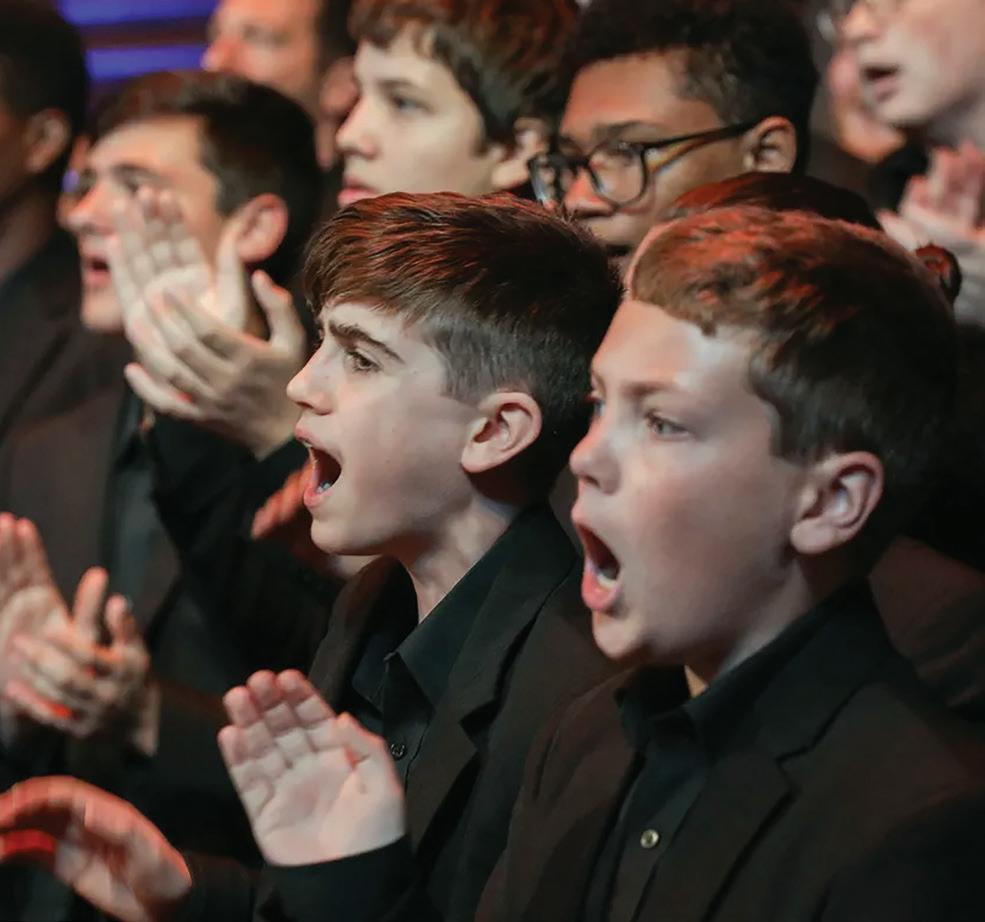
Celebrating 60 years, the Cincinnati Boychoir is a tuition-free choir for male-identifying youth of all musical abilities across the Greater Cincinnati Region. Boys from grades 3 through 12 rehearse weekly throughout the year to learn musicianship and leadership while building community across age-bands. The Boychoir thanks Lisa Peters for her service as Director in advance of her retirement this June. Next season, under the strategic alliance with the May Festival, the Cincinnati Boychoir will welcome a new Director. The boys will present an array of performances, including fall and spring showcase performances, collaborations with the May Festival family of choruses, working with Director of Choruses Matthew Swanson, Associate Director of Choruses Jason Alexander Holmes and VAE Music Director Joe Miller. The 2026–27 season will conclude with the annual Ambassadors tour.
LISA PETERS, director
Andrew Miller, associate director
Patrick Apfelbeck, chorus manager
Michael Patterson, accompanist
Therese Sutula, accompanist
LISA PETERS, director
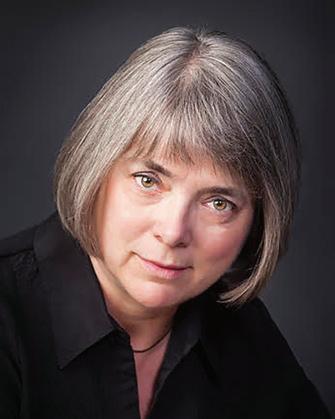
Lisa Peters is a graduate of the Ithaca College School of Music in Ithaca, New York, where she received a Bachelor of Music Education degree with an emphasis in choral and vocal music. In addition, she holds a master’s degree in education with music emphasis from Xavier University. Peters taught high school choir in the Cincinnati area for 30 years, finishing her career at the nationally ranked Walnut Hills High School. Since her retirement from high school teaching, Peters has stayed active as
a local music educator and choral conductor. She held the position of adjunct choral director at Mount St. Joseph University and has taught voice privately for the Mount St. Joseph Music Academy and the Northern Kentucky University preparatory department. She also held the position of children’s chorusmaster for Cincinnati Opera for a number of seasons. Peters has sung with numerous groups in Cincinnati, including the Cincinnati Opera chorus, Cincinnati Camerata and the Christ Church Cathedral Choir. Peters is currently director of choirs at St. Barnabas Episcopal Church and associate director of the Cincinnati Choral Society, where she also sings alto and is a member of its board of directors. Peters has been on the artistic sta of the Cincinnati Boychoir for a number of years and was named director starting with the 2024–25 season.
ANDREW MILLER, associate director
Andrew Miller is a doctoral student in choral conducting at the University of Cincinnati CollegeConservatory of Music under the direction of Dr. Joe Miller and Dr. Brett Scott. There, Miller conducts Juncta Juvant, previously the UC Men’s Chorus, and assists with all other CCM choruses.
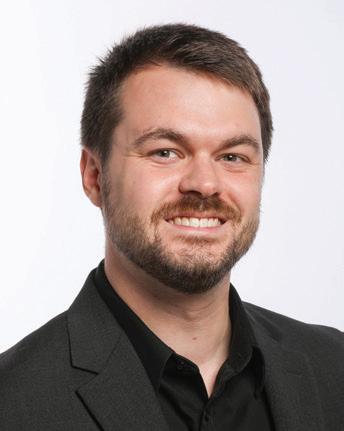
Miller has performed with the May Festival Chorus and Vocal Arts Ensemble since 2022 and served as May Festival Conducting Fellow in 2024–25.
Miller has been the Director of Music at St. Timothy’s Episcopal Church since 2023. Previously, Miller was Director of Choirs at Covington Catholic High School, where he began a thriving class guitar program and led his singers on a tour to Carnegie Hall.
A native of Lexington, Kentucky, Miller holds degrees from the University of Kentucky and the University of Louisville, where he conducted the Singing Cardsmen as a master’s degree student. In 2019, Miller presented an eclectic Requiem Mass as his master’s degree conducting recital, featuring a commission from Louisvillebased composer Blake Wilson. Miller maintains an active schedule as a performer and clinician in the Cincinnati area, furthering his central purpose of providing equal access to a quality music education for all students, regardless of background or previous training.

CINCINNATI BALLET
SECOND COMPANY — CB2
Cincinnati Ballet’s Second Company — CB2 — consists of up-and-coming dancers who have been invited to train with Cincinnati Ballet for up to two years. CB2 dancers train and perform alongside Main Company artists and perform principal and soloist roles in Cincinnati Ballet’s annual Family Series. These young, talented dancers also perform in community performances and events throughout the region.
In recent years, CB2 alumni have been regularly invited to join Cincinnati Ballet’s Main Company. Many CB2 dancers have also transitioned to careers with professional companies around the world, including Alberta Ballet, American Ballet Theater, Alvin Ailey, Bayerisches Staatsballet, Dance Theater of Harlem, Kansas City Ballet, Pennsylvania Ballet, Royal New Zealand Ballet, Smuin Ballet and West Australian Ballet. cballet.org/cb2
YOSHIHISA ARAI, Choreographer
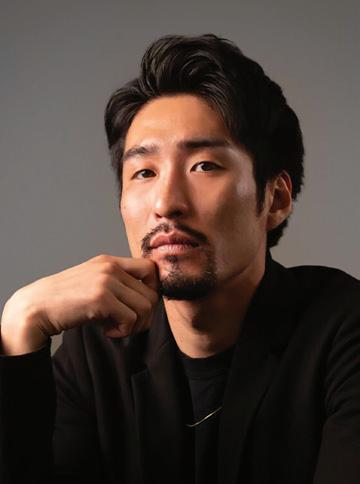
Yoshihisa Arai began his ballet training at the International Ballet Academy in Japan before he was accepted to The Royal Ballet School in London in 2005. While he was a student at The Royal Ballet School, Arai performed in works by Sir David Bintley, Sir Frederick Ashton and Sir Kenneth MacMillan with The Royal Ballet at Covent Garden, and he was a finalist of the Prix de Lausanne in 2007.
After graduating with honors and receiving the Achievement Award in 2008, Arai joined Northern Ballet in Leeds, U.K. under the direction of David Nixon CBE and ballet mistress Yoko Ichino. He began his professional career performing in many original ballets by David Nixon around the U.K. and in opera houses in Far East Asia. In 2011, Arai transferred his career to the United States and joined Tulsa Ballet, where he performed works by William Forsythe, Jiří Kylián Douglas Lee and Edwaard Liang
The following year, Arai joined The Joffrey Ballet Chicago under the leadership of Ashley Wheater MBE, where he gained innumerable experiences and the responsibility to perform countless principal and corps roles in world-renowned
classical, contemporary and original works by exceptional choreographers including Gerald Arpino, George Balanchine, Val Caniparoli, Alexander Ekman, Lar Lubovitch, Cathy Marston, Wayne McGregor, John Neumeier, Annabelle Lopez Ochoa, Krzysztof Pastor, Justin Peck, Yuri Possokhov, Jerome Robbins, Liam Scarlett, Stanton Welch and Christopher Wheeldon OBE.
As a choreographer himself, Arai created several successful new works for The Joffrey Ballet, such as Boléro, Élégie and Afternoon Watch, which premiered at The Lyric Opera and Auditorium Theater in Chicago. He has also choreographed a new Appalachian Spring for The Joffrey Ballet Studio Company in collaboration with the Illinois Philharmonic Chamber Orchestra.
In 2023, Arai choreographed and directed his first mini chamber opera, Cåraboo: A Chamber Opera, composed by James M. Stephenson and librettist Matt Boresi and performed by International Chamber Artists. Arai has been invited to create a world premiere in collaboration with Christopher Wheeldon, the Berlin-based composer, designer and Tony Award-winning choreographer, and Alondra de la Parra, founder and conductor of Mexico’s Festival PAAX GNP. In 2024, Arai also created a world premiere interpretation of Boléro for Colorado Ballet’s Masterworks Series.
After a triumphant career as a professional ballet dancer and choreographer around the world, Arai joined Cincinnati Ballet as a rehearsal director of Cincinnati Ballet and director of Second Company–CB2 in 2023. Since then, Arai has staged Prelude in collaboration with the Cincinnati Symphony Youth Orchestra and Poetry in Motion for CB2, choreographed Don Giovanni and La traviata with Cincinnati Opera in 2024 and created Sonata for Cincinnati Ballet’s Kaplan New Works series in 2025. cballet.org
CINCINNATI BALLET
SECOND COMPANY — CB2
Charlie Baldwin
Ciaran Barlow
Lev Cornwall
Ethan Guthrie
Camilla Howard
Miharu Kikuchi
Zander Magolnick
Ezra McPhie
Piper Panek
Roxy Slavin
Stella Stulik
Antonio Villegas
COMPANY DANCER
Nick Motley, Apprentice
MAY 23 | PORGY AND BESS: FESTIVAL FINALE
CINCINNATI SYMPHONY ORCHESTRA
CLASSICAL ROOTS COMMUNITY CHOIR
JASON ALEXANDER HOLMES, Resident Conductor
Turn to p. 24 for a biography of Jason Alexander Holmes.
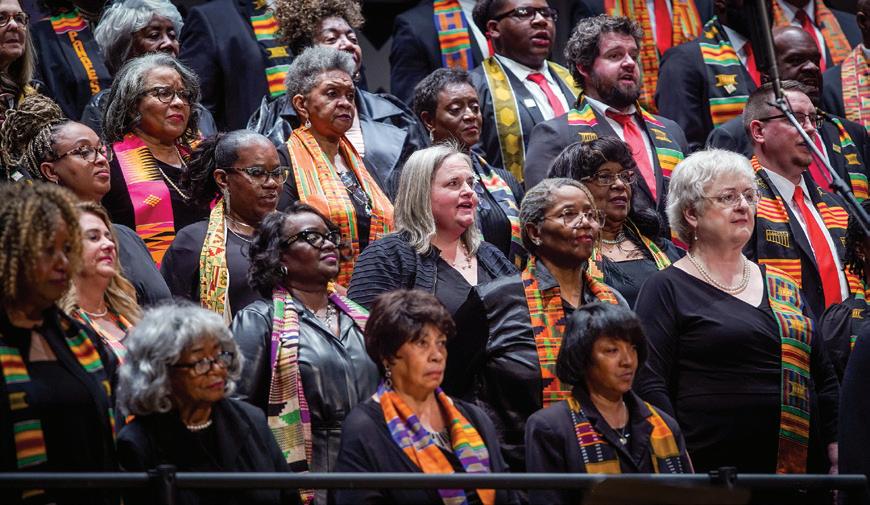
Classical Roots Community Choir. For more than two decades, Classical Roots has been a Cincinnati community staple, and what started as a small concert series in 2001 has grown into a diverse community of music lovers, united in celebration of the rich legacy of African American music and the African American experience. At its center is the


all-volunteer Classical Roots Community Choir, led by Resident Conductor Jason Alexander Holmes and made up of singers from more than 50 churches who perform in concerts and other collaborations throughout the year.
Community Choir Leaders this season are Jason Alexander Holmes, Resident Conductor; Vee Gibson, Classical Roots Coordinator; Geneva Woode, Quinn Chapel AME Church; Ron Logan, GMWA Cincinnati Chapter, Lincoln Heights Missionary Baptist Church; David Fowler, Church of the Resurrection Catholic Church; Marcellene Winfrey, Allen Temple AME Church; Adrian Cunningham, New Jerusalem Baptist Church; and Stephen Felton Music, LLC.
CLASSICAL ROOTS COMMUNITY CHOIR MEMBERS
Nakia Black
Yvonne Brantley
Amy Clair Boucher-Castro
Robyn Davis
Stephen Felton
David Fowler
Marqueta Freeman
Joy Gazaway
Natalie Hayes
Dawann Jackson Sr.
Jeremy Jimmar
Margaret O’Leary
Gloria J. Parker-Martin J. Rolland
Sherry Scott
Mildred I. Stallworth
Muriel Suttles
Brady Williamson
Rita Winters
Cheryl Woods
15
15
CRISTIAN MĂCELARU, conductor
CRISTIAN MĂCELARU, conductor Music Director, Cincinnati Symphony Orchestra
Music Director, Cincinnati Symphony Orchestra
Louise Dieterle Nippert & Louis Nippert Chair Grammy-winning conductor Cristian
Louise Dieterle Nippert & Louis Nippert Chair
Grammy-winning conductor Cristian
Măcelaru is Music Director of the Cincinnati Symphony Orchestra, Music Director of the Orchestre National de France, Artistic Director of the George Enescu International Festival and Competition, Artistic Director and Principal Conductor of the Interlochen Center for the Arts’ World Youth Symphony Orchestra, Music Director and Conductor of the Cabrillo Festival of Contemporary Music and Distinguished Visiting Artist at The Shepherd School of Music at Rice University. He also serves as Artistic Partner of the WDR Sinfonieorchester in Cologne, where he was Chief Conductor from the 2019–20 through 2024–25 seasons.
Măcelaru is Music Director of the Cincinnati Symphony Orchestra, Music Director of the Orchestre National de France, Artistic Director of the George Enescu International Festival and Competition, Artistic Director and Principal Conductor of the Interlochen Center for the Arts’ World Youth Symphony Orchestra, Music Director and Conductor of the Cabrillo Festival of Contemporary Music and Distinguished Visiting Artist at The Shepherd School of Music at Rice University. He also serves as Artistic Partner of the WDR Sinfonieorchester in Cologne, where he was Chief Conductor from the 2019–20 through 2024–25 seasons.
Măcelaru’s 2025–26 guest engagements include debuts with the Münchner Philharmoniker and Orchestra dell’Accademia Nazionale di Santa Cecilia, as well as returns with Tonhalle-Orchester Zürich, Czech Philharmonic, Leipzig Gewandhaus Orchestra, Philharmonia Orchestra and San Francisco Symphony.
Măcelaru’s 2025–26 guest engagements include debuts with the Münchner Philharmoniker and Orchestra dell’Accademia Nazionale di Santa Cecilia, as well as returns with Tonhalle-Orchester Zürich, Czech Philharmonic, Leipzig Gewandhaus Orchestra, Philharmonia Orchestra and San Francisco Symphony.
Măcelaru’s previous seasons include European engagements with the London Philharmonic Orchestra, NDR Elbphilharmonie, Concertgebouworkest, Symphonieorchester des Bayerischen Rundfunks, Budapest Festival Orchestra and Wiener Symphoniker. In North America, he has led the New York Philharmonic, Philadelphia Orchestra, Los Angeles Philharmonic, Chicago Symphony Orchestra, Boston Symphony Orchestra and The Cleveland Orchestra. He is equally at home as a conductor of opera, with career highlights including productions of Don Giovanni with the Houston Grand Opera and Madama Butterfly with Opera Naţională București.
Măcelaru’s previous seasons include European engagements with the London Philharmonic Orchestra, NDR Elbphilharmonie, Concertgebouworkest, Symphonieorchester des Bayerischen Rundfunks, Budapest Festival Orchestra and Wiener Symphoniker. In North America, he has led the New York Philharmonic, Philadelphia Orchestra, Los Angeles Philharmonic, Chicago Symphony Orchestra, Boston Symphony Orchestra and The Cleveland Orchestra. He is equally at home as a conductor of opera, with career highlights including productions of Don Giovanni with the Houston Grand Opera and Madama Butterfly with Opera Naţională București.
In 2020, Măcelaru received a Grammy Award for conducting the Decca Classics recording of Wynton Marsalis’ Violin Concerto with Nicola Benedetti and The Philadelphia Orchestra. His highly anticipated recording of George Enescu’s complete symphonic works with the Orchestre
National de France was released in April 2024 on Deutsche Grammophon. September 2025 marked the release of Măcelaru’s and the Orchestre National de France’s Ravel Paris 2025 album on the naïve label, featuring the symphonic works of Maurice Ravel in celebration of the 150th anniversary of the composer’s birth.
National de France was released in April 2024 on Deutsche Grammophon. September 2025 marked the release of Măcelaru’s and the Orchestre National de France’s Ravel Paris 2025 album on the naïve label, featuring the symphonic works of Maurice Ravel in celebration of the 150th anniversary of the composer’s birth.
JULIA BULLOCK, soprano
JULIA BULLOCK, soprano
Turn to p. 20 for a biography of soprano and Festival Director Julia Bullock.
Turn to p. 20 for a biography of soprano and Festival Director Julia Bullock.
In 2020, Măcelaru received a Grammy Award for conducting the Decca Classics recording of Wynton Marsalis’ Violin Concerto with Nicola Benedetti and The Philadelphia Orchestra. His highly anticipated recording of George Enescu’s complete symphonic works with the Orchestre
HAROUNA, baritone
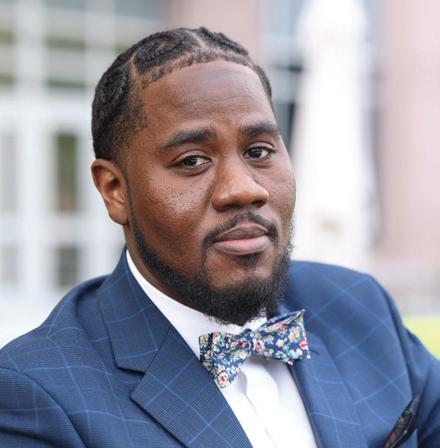
Sankara Harouna’s musical journey began in the traditional arts of West African culture, music and drumming, and has expanded to performances across the United States in repertoire spanning opera, jazz, gospel and concert works.
Sankara Harouna’s musical journey began in the traditional arts of West African culture, music and drumming, and has expanded to performances across the United States in repertoire spanning opera, jazz, gospel and concert works.
This season, Harouna continues as a member of the Patrick G. and Shirley W. Ryan Opera Center at the Lyric Opera of Chicago. He covers Silvio in Pagliacci, covers Sharpless and sings the Registrar in Madama Butterfly, and covers the First Soldier while singing the Cappadocian in Salome. He closes the season with the Grant Park Music Festival for Fauré’s Requiem.
This season, Harouna continues as a member of the Patrick G. and Shirley W. Ryan Opera Center at the Lyric Opera of Chicago. He covers Silvio in Pagliacci, covers Sharpless and sings the Registrar in Madama Butterfly, and covers the First Soldier while singing the Cappadocian in Salome. He closes the season with the Grant Park Music Festival for Fauré’s Requiem.
In the 2024–25 season, he performed Marullo in Rigoletto, and he covered Reverend in Blue, Marcello in La bohème and Paul in The Listeners. He also made his Opera Theatre of Saint Louis debut as Milton in This House and appeared with the Grant Park Music Festival in Margaret Bonds’ Credo.
In the 2024–25 season, he performed Marullo in Rigoletto, and he covered Reverend in Blue, Marcello in La bohème and Paul in The Listeners. He also made his Opera Theatre of Saint Louis debut as Milton in This House and appeared with the Grant Park Music Festival in Margaret Bonds’ Credo.
A Chicago native, Harouna made his Lyric Opera of Chicago debut in the 2023–24 season, double cast as Benny “Kid” Paret and Benny Jr. in Terence Blanchard’s Champion. That season, he joined Portland Opera as a resident artist, appearing in Le nozze di Figaro (Antonio) and The Snowy Day (Daddy), and sang Angelotti in Tosca with Dayton Opera.
A Chicago native, Harouna made his Lyric Opera of Chicago debut in the 2023–24 season, double cast as Benny “Kid” Paret and Benny Jr. in Terence Blanchard’s Champion. That season, he joined Portland Opera as a resident artist, appearing in Le nozze di Figaro (Antonio) and The Snowy Day (Daddy), and sang Angelotti in Tosca with Dayton Opera.
His previous engagements include performances with Atlanta Opera, Dayton Opera, Kentucky Opera, Cincinnati Opera and Des Moines Metro Opera. Harouna is a recipient of a Career Development Grant from the William Matheus Sullivan Musical Foundation and holds a Bachelor of Arts degree in vocal performance from Kentucky State University. imgartists.com/roster/sankara-harouna
His previous engagements include performances with Atlanta Opera, Dayton Opera, Kentucky Opera, Cincinnati Opera and Des Moines Metro Opera. Harouna is a recipient of a Career Development Grant from the William Matheus Sullivan Musical Foundation and holds a Bachelor of Arts degree in vocal performance from Kentucky State University. imgartists.com/roster/sankara-harouna
NORMAN GARRETT, baritone
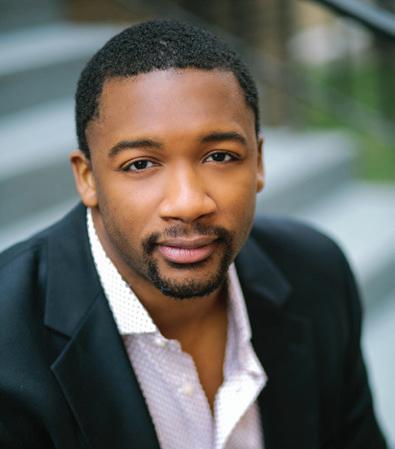
American baritone
Norman Garrett enjoys a varied and exciting career. In the 2025–26 season, he sings the title role in Verdi’s Macbeth with Boston Lyric Opera, Scarpia in Tosca with Des Moines Metro Opera, Jim in Porgy and Bess at the Metropolitan Opera, Crown in Porgy and Bess with Lyric Opera Kansas City and the Marquis de la Force in Dialogues of the Carmelites with New Orleans Opera. In concert, he sings Carlisle Floyd’s Pilgrimage with the Louisiana Philharmonic Orchestra and Martinů’s Epic of Gilgamesh with Bard SummerScape.
In the 2024–25 season, Garrett returned to Washington National Opera as Crown in Porgy and Bess and Lyric Opera of Chicago as The Reverend in Blue, and he debuted the role of Macbeth with Opera Orlando and Abdul in Omar in concert with Quad City Symphony. Additional concert appearances included Beethoven’s Symphony No. 9 with the Phoenix Symphony and joining composer Terence Blanchard for highlights from Blanchard’s Fire Shut Up in My Bones at Purdue University and with the Krannert Center in Urbana, Illinois.
Norman Garrett has made many important symphonic appearances, including Carmina Burana with the LA Philharmonic at the Hollywood Bowl, the Toronto Symphony and the Orchestra of St. Luke’s at Carnegie Hall; a Gershwin program conducted by Cristian Măcelaru and The Philadelphia Orchestra; a concert of American music with The Cleveland Orchestra; Beethoven’s Symphony No. 9 with the National Philharmonic; Vaughan Williams’ Fantasia on Christmas Carols with The Philadelphia Orchestra; Messiah with the National Arts Centre Orchestra in Ottawa; and Belshazzar’s Feast with Phoenix Symphony.
Garrett is a former winner of the George London Foundation Competition and has received top prizes in more than a dozen international vocal competitions. He is a graduate of the University of Cincinnati College-Conservatory of Music, Texas Tech University and the Academy of Vocal Arts, where he was a resident artist. imgartists.com/ roster/norman-garrett
JASON ALEXANDER HOLMES, Preacher
Turn to p. 24 for a biography of Jason Alexander Holmes.
CARLOS SIMON, organist/composer
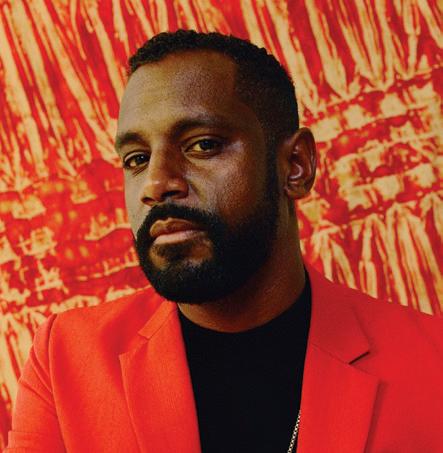
“My dad, he always gets on me. He wants me to be a preacher, but I always tell him, ‘Music is my pulpit. That’s where I preach,’” Carlos Simon reflected for The Washington Post. Having grown up in Atlanta, with a long lineage of preachers and connections to gospel music to inspire him, the Grammy-nominated composer has written music that ranges from concert pieces for large and small ensembles to film scores with influences of jazz, gospel and neo-Romanticism.
Simon is the current composer-in-residence for the John F. Kennedy Center for the Performing Arts and frequently writes for the National Symphony Orchestra and Washington National Opera. Simon also holds the position of inaugural composer chair of the Boston Symphony Orchestra, the first in the institution’s 143-year history. He begins his tenure as composer-in-residence for the Concertgebouw with the 2026–27 season.
A highlight of the 2025–26 season is the world premiere of Simon’s Double Concerto for Violin and Cello, featuring Hilary Hahn and Seth Parker Woods, which was premiered by the National Symphony Orchestra and St. Louis Symphony Orchestra and will be performed by further cocommissioners in future seasons. Other world premieres include Lamentations for String Orchestra (commissioned by New World Symphony/Miami City Ballet), a symphonic soundtrack to The Unspoken Elegance of Stillness (directed by Simon Frederick), plus works for the Boston Symphony Chamber Players and Augustin Hadelich, commissioned by the Boston Symphony Orchestra.
Previously, Simon has been commissioned by the likes of the LA Philharmonic, San Diego Symphony Orchestra, Washington National Opera (in collaboration with Mo Willems), New York Philharmonic and Bravo! Vail, Minnesota Orchestra, American Ballet Theatre, Detroit Symphony Orchestra, Jacksonville Symphony Orchestra, Cincinnati Symphony Orchestra, Carnegie Hall for the National Youth Orchestra of the USA, and BBC Symphony Orchestra for the Last Night of the Proms. In addition to his composition work, Simon frequently curates concert programs that often highlight his own music as well as that of close collaborators.
2024 saw the release of Simon’s first full-length orchestral album, Four Symphonic Works. Other recent recordings include Together, brea(d)th and the Grammy-nominated Requiem for the Enslaved (all on Decca).
Acting as music director and keyboardist for Grammy Award winner Jennifer Holliday, Simon has performed with the Boston Pops, Jackson Symphony and St. Louis Symphony. He has also toured internationally with Grammy-nominated soul artist Angie Stone and performed throughout Europe, Africa and Asia.
Simon earned his doctoral degree at the University of Michigan, where he studied with Michael Daugherty and Evan Chambers. He has also received degrees from Georgia State University and Morehouse College. He is an honorary member of Phi Mu Alpha Sinfonia music fraternity and a member of the National Association of Negro Musicians, Society of Composers International and Pi Kappa Lambda music honor society. He has been a member of the music faculty at Spelman College and Morehouse College in Atlanta and now serves as associate professor at Georgetown University. Simon was also a recipient of the 2021 Sphinx Medal of Excellence, the highest honor bestowed by the Sphinx Organization to recognize extraordinary
classical Black and Latinx musicians, and he was named a Sundance/Time Warner Composer Fellow for his work for film and moving image. carlossimonmusic.com
MAY 16 | THE WATER’S JOURNEY
CRISTIAN MĂCELARU, conductor
Music Director, Cincinnati Symphony Orchestra
Louise Dieterle Nippert & Louis Nippert Chair Turn to p. 32 for a biography of conductor Cristian Măcelaru.
TAMARA WILSON, soprano
Grammy Awardwinning soprano Tamara Wilson continues to garner international recognition for her interpretations of Verdi, Mozart, Strauss and Wagner and is the recipient of the prestigious Richard Tucker Award. Other recent honors include an Olivier Award nomination and grand prize in the annual Francisco Viñas Competition held at the Gran Teatre del Liceu in Barcelona. 2025–26 season highlights include a debut with Festival d’Aix-en-Provence in Die Frau ohne Schatten and a return to Opéra national de Paris for new productions of Die Walküre and Siegfried. On the concert stage, she makes debut appearances with Staatstheater Darmstadt (War Requiem), Houston Symphony (Tristan und Isolde) and NHK Symphony Orchestra in Tokyo (selections from Götterdämmerung), and she returns to The Cleveland Orchestra (War Requiem).
Operatic career highlights include appearances on the stages of the world’s leading opera houses for Die Walküre, Turandot, Lohengrin, Tosca, Ernani, Tristan und Isolde, Fidelio, Ariadne auf Naxos, Otello, Un ballo in maschera, Don Carlo, Don Carlos, Aida, Il trovatore, Macbeth, Elektra, La forza del destino, Die Fledermaus, Die Frau ohne Schatten, Die Feen, I due Foscari, Falstaff, Un giorno di regno, Simon Boccanegra, Idomeneo, Le nozze di Figaro, Don Giovanni, Il corsaro, La clemenza di Tito and Norma Wilson enjoys frequent collaborations with the world’s foremost conductors, and her orchestral highlights include Verdi’s Messa da Requiem, Beethoven’s Symphony No. 9, Mahler’s Symphony No. 8, Bruckner’s Te Deum, Bach’s St. Matthew Passion, Mendelssohn’s Symphony No. 2 and Bernstein’s Symphony No. 3, with the Cleveland Orchestra, Chicago Symphony Orchestra, New
York Philharmonic, Los Angeles Philharmonic, Royal Concertgebouw Orchestra, BBC Proms, Netherlands Radio Orchestra, National Symphony Orchestra, Milwaukee Symphony Orchestra, Cincinnati Symphony Orchestra, BBC National Orchestra of Wales, Rotterdam Philharmonic and Swedish Radio Symphony Orchestra, among others. In recital Wilson frequently partners with Warren Jones and has given recitals at Oper Frankfurt, Source Song Festival, Performance Santa Fe and Cleveland Art Song Festival, and she recorded a duet orchestral concert with Russell Braun at the Canadian Opera Company. A champion of new music, Wilson commissioned and recorded Tiffany’s Spellbook by Evan L. Snyder (Lexicon Classics). Additional recordings include Die Frau ohne Schatten conducted by Sebastian Weigle (Oehms Classics). opus3artists.com/artists/ tamara-wilson
NORMAN GARRETT, baritone
Turn to p. 33 for a biography of baritone Norman Garrett.
MAY 21 | ON LOVE AND LUST
MATTHEW SWANSON, conductor
Turn to p. 21 for a biography of conductor and Director of Choruses Matthew Swanson.
VICTORIA OKAFOR, soprano
Victoria Okafor is steadily making a name for herself in the world of musical theater and opera. She recently made her New York City debut with MasterVoices as Alesha in their semi-staged version of Scott Davenport Richards’ Blind Injustice at Lincoln Center. Other highlights include being named a Kurt Weill/Lotte Lenya Artist by the Kurt Weill Foundation and playing the role of Kate Mullins in The Marriott Theatre’s production of Titanic
A lover of new music, Okafor has originated a number of roles in workshops and on the stage, including Alesha in Blind Injustice, Wilhelmina in Gregory Spears’ Castor and Patience, Nyomi in William Menefield’s Fierce, Persephone in Kevin Day’s Lalovavi and Laura in Kevin Puts’ The Hours. Okafor revisited the role of Laura when she covered Kelli O’Hara in the concert version of The Hours with The Philadelphia Orchestra under conductor Yannick Nézet-Séguin.
She has sung with companies all over the country, such as Washington National Opera, Lyric Opera of Chicago, Cincinnati Opera, Opera Birmingham and Opera Columbus. Her 2024 season included reprising Alesha in Blind Injustice with PEAK Performances at Montclair State University, a production of Beautiful: The Carole King Musical at Covington’s The Carnegie and a guest appearance with the Cincinnati Pops. Okafor returned to The Carnegie with local duo Queen City Cabaret for concerts showcasing her mastery of the American Songbook.
She was awarded the second prize of the Lotte Lenya Competition in 2021, and was a 2025 quarterfinalist of the American Traditions Vocal Competition and a 2020 encouragement award winner in the Kentucky District for the Metropolitan National Council Competition.
Okafor is a native of the D.C./Maryland area and a graduate of Shenandoah Conservatory and the University of Cincinnati College-Conservatory of Music, with bachelor’s and master’s degrees in voice performance and an artist diploma in opera performance.
Okafor is a huge classic film fan and hosts a song series titled “Songs from Old Movie Musicals that Are Stuck in My Head” on Instagram. victoriaokafor.com
SARA COUDEN, contralto
Contralto Sara Couden is a premier interpreter of operatic, orchestral, chamber and song repertoire. Her 2025–26 season includes a debut with Detroit Opera as Rita in Poul Ruders’ The Handmaid’s Tale, a debut with the Houston Symphony in selections from La vida breve, a role and house debut as Ježibaba (Rusalka) with Pacific Northwest Opera, Die Hexe/ Die Mutter (Hänsel und Gretel) with Lakes Area Music Festival and appearances with the St. Louis Symphony, Kansas City Symphony and Tucson Symphony as the alto soloist in Handel’s Messiah.
Couden’s latest triumphs include her San Francisco Opera debut as Rita (The Handmaid’s Tale), a return to the Metropolitan Opera to cover Mrs. Sedley (Peter Grimes), her debut appearance in recital at the Manchester Music Festival and a role debut as Baba the Turk (The Rake’s Progress) with Lakes Area Music Festival, as well as debuts with The Philadelphia Orchestra as
Mother/Chinese Cup/Dragon Fly (L’enfant et les sortilèges), the Cincinnati May Festival as the alto soloist in Julia Perry’s Stabat Mater, the Seattle Symphony in Handel’s Messiah and the California Symphony in songs by Mahler Couden also recently released her debut solo album featuring the complete vocal works of Artur Schnabel, on the Steinway & Sons label.
Highlights from previous seasons include Couden’s debut with the Metropolitan Opera as Tetka (Jenufa) and Albine (Thaïs), as well as returns to Carnegie Hall as the alto soloist in Karl Jenkins’ Stabat Mater and to the Met to cover Erste Magd (Elektra) and Marta and Pantalis (Mefistofele). She also made role debuts as Ottavia (L’incoronazione di Poppea) and Nurse in Dukas’ Ariane et Barbe-bleue with West Edge Opera, Juno (Semele) and Marquise de Berkenfeld (La fille du régiment) with St. Petersburg Opera, Israelitish Man (Judas Maccabaeus) with Philharmonia Baroque, Ormindo (Ermelinda) with Ars Minerva, Dejanira (Hercules) at the Staunton Music Festival and Testo in Stradella’s La Susanna with Heartbeat Opera and Opera Lafayette. saracouden.net
NICHOLAS PHAN, tenor
Nicholas Phan is a Grammy Awardwinning lyric tenor, curator and educator, celebrated for his expressive artistry and versatility across a repertoire spanning nearly 500 years. Described by The Boston Globe as “one of the world’s most remarkable singers,” he has earned international recognition for his captivating stage presence, keen intelligence and natural musicianship. In 2010, he co-founded Art Song Chicago to promote art song and vocal chamber music and serves as its artistic director.
Phan won the 2025 Grammy Award for Best Opera Recording for his recording of Kaija Saariaho’s Adriana Mater with Esa-Pekka Salonen and the San Francisco Symphony. His album, A Change is Gonna Come, was nominated for the 2025 Grammy Award for Best Classical Solo Vocal Album. His previous albums, Stranger: Works for Tenor by Nico Muhly, Clairières and Gods and Monsters, were nominated for the same award in 2023, 2020 and 2017. He is the first singer of Asian descent to be nominated in the history of the Best Classical Solo Vocal Album category.
Sought after as a curator and programmer, in addition to his work as artistic director of Art Song Chicago, Phan is the host and creator of BACH 52, a web series examining the music of Johann Sebastian Bach. He has created programs for broadcast on WFMT and WQXR and has also served as guest curator for projects with the Philadelphia Chamber Music Society, Bravo! Vail Music Festival, San Francisco Opera Center and San Francisco Performances, where he served as the vocal artist-in-residence from 2014 to 2018. Phan’s programs often examine themes of identity, highlight unfairly underrepresented voices from history and strive to underline the relevance of music from all periods to the currents of the present day. nicholas-phan.com
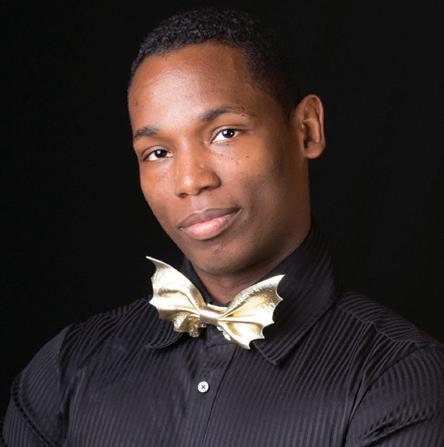
Born in Guadeloupe, Yannis François began his career as a dancer with Lena Blou. He entered the ÉcoleAtelier Rudra Béjart in Lausanne and later became a member of the Béjart Ballet. Maurice Béjart encouraged him to fully explore a singing career parallel to the ballet. He earned his master’s degree in classical singing at the Conservatoire de Lausanne.
Among his projects are Telemann’s Emma und Eginhard at the Boston Early Music Festival and in Magdeburg, Coralbo in Handel’s Floridante at the Bayreuth Baroque Festival, as well as Nick Shadow in The Rake’s Progress at the NOF Fribourg in 2027.
In 2024–25, he sang Shams in Sky in a Small Cage (a new work by Rolf Hind) for the Mahogany Opera at the Barbican in London. In Copenhagen, he was the baritone soloist in Honegger’s La danse des morts and Knecht in Hindemith’s Sancta Susanna at the Opéra National de Lorraine in Nancy. He also revived L’incoronazione di Poppea at the Nederlandse Reisopera and toured in concert with Le Banquet Céleste and Cappella Mediterranea.
On the opera stage, he has also sung Curio in Giulio Cesare, Peter Quince in Britten’s A Midsummer Night’s Dream, Sasha in Shostakovich’s Moscow Cheryomushki, Melisso in Handel’s Alcina, Isacius in Telemann’s Richardus Primus, Seneca in L’incoronazione di Poppea and Plutone in Monteverdi’s Orfeo, title role in Peter Maxwell Davies’ Eight Songs for a Mad King, Sorceress in Dido and Aeneas and Le chef des matelots in Marais’ Alcione.
His concert appearances include Gershwin’s Blue Monday with the Orchestre de Picardie, Mozart’s Requiem with Orchestre de Chambre de Paris and Orchestre Philharmonique Radio France at Philharmonie de Paris under the baton of Barbara Hannigan, a recital with Barbara Hannigan at the Salle Gaveau, Paris, concerts with the Geneva Chamber Orchestra and Geneva Camerata, Kymi Sinfonietta, La morte vinta with Les Traversées Baroques, baritone solo in a Vivaldi project at Fribourg Opera and Mercurio in L’incoronazione di Poppea with Le Banquet Céleste and with Cappella Mediterranea. He also sings the bass solo part in several oratorios such as Bach’s B Minor Mass and St. John Passion and Schumann’s Das paradies und die péri yannisfrancois.com
MAY 23 | PORGY AND BESS: FESTIVAL FINALE
ANTHONY PARNTHER, conductor
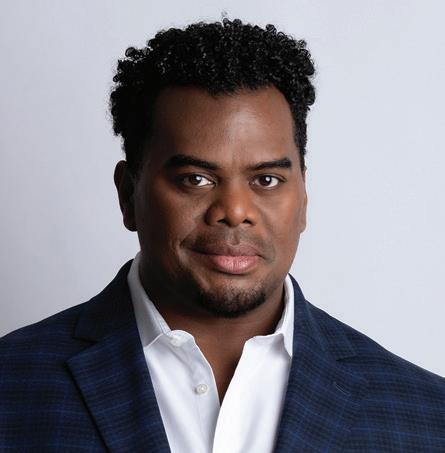
Anthony Parnther is in his seventh season as Music Director of California’s San Bernardino Symphony Orchestra. His 2025–26 highlights include the New York Philharmonic’s seasonopening gala, New Year’s Eve celebrations with The Philadelphia Orchestra, a world premiere with the Royal Scottish National Orchestra and residencies at Canada’s Calgary Philharmonic and the Cleveland Institute of Music.
A master of multiple genres, Parnther has conducted many of the world’s preeminent artists, who range from Joshua Bell and Jessye Norman to Rihanna and John Legend, as well as many major ensembles. These include the orchestras of Atlanta, Baltimore, Chicago, Cleveland, Detroit, Los Angeles, New York, Pittsburgh, San Francisco, Seattle, St. Louis, Sydney and Vancouver; the National Symphony and Royal Scottish National Orchestra; Chineke! orchestra, with which he made his debut at London’s BBC Proms; and Gateway Festival Orchestra, at concerts including the orchestra’s sold-out Carnegie Hall debut.
Dedicated to amplifying underrepresented voices, Parnther has reconstructed and performed orchestral works by Margaret Bonds, Duke Ellington, Zenobia Powell Perry, Florence Price, William Grant Still and Samuel Coleridge-Taylor. As well as leading LA Opera’s world premiere of Tamar-kali’s oratorio We Hold These Truths and revivals of Anthony Davis’ opera The Central Park
Five at Long Beach and Detroit Operas, Parnther has also premiered and recorded works by Jon Batiste, Kris Bowers, Chanda Dancy, Adolphus Hailstork, Marian Harrison, Philip Herbert, Daniel Kidane, Gary Powell Nash, James Newton, Perry, Price, Taylor, George Walker, Errollyn Wallen, James Wilson and John Wineglass.
As one of today’s foremost film conductors, Parnther helms recording sessions for many of the world’s top international feature films and television series, working in close collaboration with some of the most decorated media composers on the scoring stages of Los Angeles, San Francisco, Nashville, Budapest, Glasgow and London. Recent projects include Avatar: The Way of Water, Black Panther: Wakanda Forever, Encanto, Transformers: Rise of the Beasts, Nope, Creed III, Diary of a Wimpy Kid: Rodrick Rules, Sinners, Tenet, American Dad!, Turning Red, Star Wars: The Mandalorian, Star Wars: The Book of Boba Fett, League of Legends and the Oscar- and Grammy-winning Oppenheimer soundtrack. anthonyparnther.com
JULIA BULLOCK, soprano
Turn to p. 20 for a biography of soprano and Festival Director Julia Bullock.
ALFRED WALKER, bass-baritone
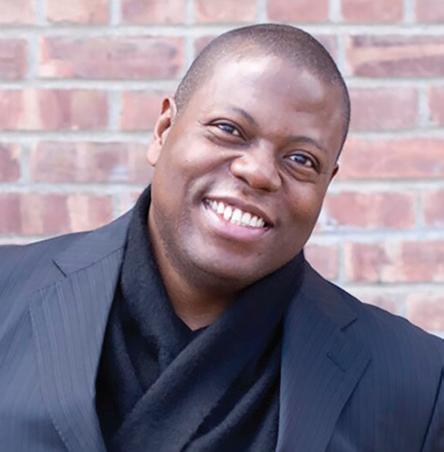
In the 2025–26 season Alfred Walker returns to Lyric Opera of Chicago for Creonte in Medea and to the Metropolitan Opera for Porgy in Porgy and Bess. He also sings Scarpia in Tosca with Glyndebourne Opera and Florentine Opera, Vater in Hänsel und Gretel with Grand Teton Music Festival, and Jochanaan in Salome with Cincinnati Opera. Last season, he joined Lyric Opera as Don Fernando in Fidelio, the Metropolitan Opera for further performances of Enobarbus in Adams’ Antony and Cleopatra, New Orleans Opera for the High Priest of Dagon in Samson et Dalila, Bard Summerscape for the King in Smetana’s Dalibor and the Man in a Helmet in Julietta, The Philadelphia Orchestra for Verdi’s Requiem and the Cologne Philharmonie for Porgy in the suite from Porgy and Bess. He recently sang Enobarbus in the European premiere of John Adams’ Antony and Cleopatra with Gran Teatre del Liceu after giving the world premiere with San Francisco Opera, Orest in Elektra with Dallas Opera, Frère Laurent in Roméo
et Juliette and Rambaldo in La rondine with the Metropolitan Opera. Other recent performances include Lyric Opera as Vater in Hänsel und Gretel, the Metropolitan Opera as Masetto in Don Giovanni, Detroit Opera for Amonasro in Aida and a return to Bard Summerscape for the title role in Saint-Saëns’ Henry VIII. He also sang Rachmanino ’s The Bells with the LA Philharmonic and joined the Boston Philharmonic for Beethoven’s Symphony No. 9.
The bass-baritone recently triumphed as the title role in Der fliegende Holländer at Theater Basel and returned to the company for his first performances of both Amfortas in Parsifal and Amonasro in Aida. An equally versatile concert artist, Walker has sung Beethoven’s Symphony No. 9 and Verdi’s Requiem with the Atlanta Symphony Orchestra, as well as the Vancouver Symphony Orchestra, Stuttgarter Philharmoniker, Utah Symphony, Phoenix Symphony and Louisiana Philharmonic, and at the Sun Valley Music Festival. He has joined the Boston Symphony Orchestra for Rossini’s Stabat Mater as well as previously for Porgy in Porgy and Bess in performances conducted by Bramwell Tovey at Tanglewood and in Boston, the Grant Park Music Festival for Shostakovich’s The Execution of Stepan Razin and Elgar’s The Kingdom, the Handel and Haydn Society for Mozart’s Requiem,
American Symphony Orchestra for Mahler’s Kindertotenlieder and Rückert-Lieder, and the Los Angeles Philharmonic, Sydney Symphony and Toronto Symphony Orchestra for Porgy in concert performances of Porgy and Bess. His recording credits include another collaboration with Semyon Bychkov and the WDR Sinfonie Orchester Köln for Orest in Elektra on the Hybrid label, as well as performances on Plácido Domingo’s CD of Verdi tenor arias for Deutsche Grammophon.
A graduate of Dillard University, Loyola University and the Metropolitan Opera Lindemann Young Artist Program, the New Orleans native is the recipient of awards from the George London Foundation, Palm Beach Opera Competition, Houston Opera Studio’s Eleanor McCollum Competition and the Sullivan Foundation career grant. schmidtvocalarts.org/vocal-artist-network/ alfred-walker



FIRST VIOLINS
Stefani Matsuo
Concertmaster
Anna Sinton Taft Chair
Felicity James
Associate Concertmaster
Tom & Dee Stegman Chair
Philip Marten
First Assistant Concertmaster
James M. Ewell Chair++
Eric Bates
Second Assistant Concertmaster
Serge Shababian Chair
Kathryn Woolley
Nicholas Tsimaras–
Peter G. Courlas Chair++
Anna Reider
Dianne & J. David Rosenberg Chair
Mauricio Aguiar§
Anne G. & Robert W. Dorsey Chair
Minyoung Baik‡
Jo Ann & Paul Ward Chair
James Braid
Marc Bohlke Chair given by Katrin & Manfred Bohlke
Rebecca Kruger Fryxell
Clifford J. Goosmann & Andrea M. Wilson Chair
Elizabeth Furuta
Gerald Itzkoff
Jean Ten Have Chair
Joseph Ohkubo
Luo-Jia Wu
Jonathan Yi
SECOND VIOLINS
Gabriel Pegis
Principal
Al Levinson Chair
Yang Liu*
Harold B. & Betty Justice Chair
Scott Mozlin**
Henry Meyer Chair
Kun Dong
Charles Gausmann Chair++
Cheryl Benedict
Evin Blomberg§
Sheila and Christopher Cole Chair
Rose Brown
Rachel Charbel
Ida Ringling North Chair
Chika Kinderman
Charles Morey
Hyesun Park
Michael Rau
Stacey Woolley
Brenda & Ralph Taylor Chair++
VIOLAS
Christian Colberg
Principal
Louise D. & Louis Nippert Chair
Gabriel Napoli*
Grace M. Allen Chair
Julian Wilkison**
Rebecca Barnes§
Christopher Fischer
Stephen Fryxell
Melinda & Irwin Simon Chair
Caterina Longhi
Denisse Rodriguez-Rivera
Dan Wang
Joanne Wojtowicz
Cristian Măcelaru Music Director
Louise Dieterle Nippert & Louis Nippert Chair
John Morris Russell Cincinnati Pops Conductor
Louise Dieterle Nippert & Louis Nippert Chair
Matthias Pintscher CSO Creative Partner
Damon Gupton Pops Principal Guest Conductor
Louis Langrée Music Director Laureate
Alex Amsel Assistant Conductor
Ashley and Barbara Ford Chair
Duo Shen Assistant Conductor
Ashley and Barbara Ford Chair
Ilya Finkelshteyn
Principal
Irene & John J. Emery Chair
Lachezar Kostov*
Ona Hixson Dater Chair
[OPEN]
Karl & Roberta Schlachter
Family Chair
Drew Dansby§
Daniel Kaler
Peter G. Courlas–
Nicholas Tsimaras Chair++
Nicholas Mariscal
Marvin Kolodzik & Linda S. Gallaher
Chair for Cello
Hiro Matsuo
Laura Kimble McLellan Chair++
Alan Rafferty
Ruth F. Rosevear Chair
Tianlu (Jerry) Xu
BASSES
Owen Lee
Principal
Mary Alice Heekin Burke Chair++
Luis Celis*
Thomas Vanden Eynden Chair
Stephen Jones**
Trish & Rick Bryan Chair
Boris Astafiev§
Michael Martin
Gerald Torres
Rick Vizachero
HARP
Gillian Benet Sella
Principal
Cynthia & Frank Stewart Chair
FLUTES
Randolph Bowman
Principal
Charles Frederic Goss Chair
Henrik Heide*
Carol J. Schroeder Chair
Haley Bangs
Jane & David Ellis Chair
PICCOLO
Rebecca Pancner
Patricia Gross Linnemann Chair
OBOES
Dwight Parry
Principal
Josephine I. & David J. Joseph, Jr.
Chair
[OPEN]*
Stephen P. McKean Chair
Emily Beare
ENGLISH HORN
Christopher Philpotts
Principal
Alberta & Dr. Maurice Marsh Chair++
CLARINETS
Christopher Pell
Principal
Emma Margaret & Irving D.
Goldman Chair
Joseph Morris*
Associate Principal and E-flat Clarinet
Robert E. & Fay Boeh Chair++
Ixi Chen
Vicky & Rick Reynolds Chair in honor of William A. Friedlander
BASS CLARINET
Ronald Aufmann
BASSOONS
Christopher Sales
Principal
Emalee Schavel Chair++
Martin Garcia*
Christy & Terry Horan Family Chair
Hugh Michie
CONTRABASSOON
Jennifer Monroe
HORNS
Elizabeth Freimuth‡
Principal
David Alexander†
Acting Principal
Mary M. & Charles F. Yeiser Chair
David Smith†
Acting Associate Principal
Ellen A. & Richard C. Berghamer Chair [OPEN]**
Sweeney Family Chair in memory of Donald C. Sweeney
Lisa Conway
Susanne & Philip O. Geier, Jr. Chair
Duane Dugger
Mary & Joseph S. Stern, Jr. Chair
Charles Bell
Donald & Margaret Robinson Chair
TRUMPETS
Anthony Limoncelli
Principal
Rawson Chair
[OPEN]
Jackie & Roy Sweeney
Family Chair
Alexander Pride†
Otto M. Budig Family
Foundation Chair++
Christopher Kiradjieff
David C. Reed, MD Chair
TROMBONES
Cristian Ganicenco
Principal, in memoriam
Dorothy & John Hermanies
Chair
Joseph Rodriguez**
Second/Assistant Principal Trombone
Sallie Robinson Wadsworth & Randolph L. Wadsworth Jr. Chair
BASS TROMBONE
Noah Roper
TUBA
Christopher Olka
Principal
Ashley & Barbara Ford Chair
TIMPANI
Patrick Schleker
Principal
Matthew & Peg Woodside Chair
Joseph Bricker*
Morleen & Jack Rouse Chair
PERCUSSION
David Fishlock
Principal
Susan S. & William A. Friedlander Chair
Michael Culligan*
Joseph Bricker
Morleen & Jack Rouse Chair
Marc Wolfley+
KEYBOARDS
Michael Chertock
James P. Thornton Chair
Julie Spangler+
James P. Thornton Chair
LIBRARIANS
Christina Eaton
Principal Librarian
Lois Klein Jolson Chair
Elizabeth Dunning
Associate Principal Librarian
Cara Benner
Assistant Librarian
Citlalmina Hernandez
Orchestra Library Intern
STAGE MANAGERS
Brian P. Schott
Phillip T. Sheridan
Daniel Schultz
Mike Ingram
Andrew Sheridan
§ Begins the alphabetical listing of players who participate in a system of rotated seating within the string section.
* Associate Principal
** Assistant Principal
† One-year appointment
‡ Leave of absence
+ Cincinnati Pops rhythm section
++ CSO endowment only
FRI MAY 15, 7:30 PM | Music Hall
Cristian Măcelaru conductor
Julia Bullock soprano
Sankara Harouna baritone
Norman Garrett baritone
Jason Alexander Holmes Preacher
Carlos Simon organ
May Festival Chorus Matthew Swanson, director
The May Festival Chorus is endowed by the Betsy & Alex C. Young Chair Cincinnati Symphony Orchestra Cristian Măcelaru, Music Director
Anton Bruckner Psalm 150 (1824–1896)
Alexander Zemlinsky
Zemlinsky: Selections from Symphonische Gesänge (1871–1942) (“Symphonic Songs”), Op. 20, and Bonds: Songs
Margaret Bonds
Zemlinsky: Lied aus Dixieland (“Song from Dixieland”) (1913–1972), arr. Norpoth
Bonds: To a Brown Girl Dead
Zemlinsky: Totes braunes Mädel (“To a Brown Girl Dead”)
Zemlinsky: Übler Bursche (“Bad Boy”)
Bonds: Poème d’automne
Bonds: Winter Moon
Bonds: April Rain Song
Zemlinsky: Erkenntnis (“Disillusion”)
Zemlinsky: Afrikanischer Tanz (“African Dance”)
Bonds: The Negro Speaks of Rivers
Special thanks to these generous sponsors who bring the May Festival to life!
The 2026 Festival Director Julia Bullock is sponsored by A Friend of the May Festival.
Tonight’s concert will last approximately 120 minutes, including intermission.
The Director of Choruses Matthew Swanson is sponsored by Sherry and Mark Holcomb
The 2026 Premier Partner sponsor is Carol and Scott Kosarko.
The 2026 May Festival is presented by Fort Washington Investment Advisors
The 2026 May Festival is sponsored by Chavez Properties
The appearance of the Cincinnati Symphony Orchestra is generously supported by the Louise Dieterle Nippert Musical Arts Fund of the Greenacres Foundation
The appearance of conductor Cristian Măcelaru is made possible by Premier Partner sponsor Carol and Scott Kosarko.
The appearance of Julia Bullock, soprano soloist, is sponsored by Barbara Ann Feldmann
The appearance of Jason Alexander Holmes as Preacher is sponsored by Bryan Hafertepe and Graham Hunter.
The May Festival Floral Sponsor is Chris and Beth Canarie
Tonight’s pre-concert conversation is sponsored by Drs. William Hurford and Lesley Gilbertson.
WGUC is the Media Partner for these concerts. This concert will air on 90.9 WGUC on October 4, 2026, followed by 30 days of streaming at mayfestival.com/replay.
Steinway Pianos, courtesy of Willis Music, is the official piano of the May Festival.
Carlos Simon Eclectic Mass (b. 1986)
Simon: Good News Mass I. “Introit”
Palestrina: Missa Assumpta est Maria 1a. Kyrie 1
Giovanni Pierluigi da Palestrina: Missa Assumpta est Maria 1c. Kyrie 2
Palestrina
J.S. Bach: Cantata No. 191, Gloria in excelsis Deo (1525–1594)
Johann Sebastian Bach
I. Chorus: “Gloria in excelsis Deo”
III. Chorus: “Sicut erat in principio”
Simon: Good News Mass, VI. “Meditation of Grace” (1685–1750)
Margaret Bonds
George Frideric Handel
Simon: Good News Mass, VII. “Prayer of Thanksgiving”
Simon Good News Mass, XII. “Affirmation of Faith”
Bonds: Credo, V. “I Believe in the Prince of Peace”
Bonds: Credo, VI. “I Believe in Liberty”
Bonds: Credo, VII. “I Believe in Patience”
Simon: Good News Mass, X. “Meditation of Faith” (1685–1759)
Simon: Good News Mass, XI. “Cry Holy”
Simon: Sanctus
Simon: Good News Mass, XV. “The Greatest of These…”
Simon: Good News Mass, XVI. “God’s Love”
Handel, arr. Mounsey: Soulful Hallelujah
Learning about singing and how to sing. A new email newsletter focusing on:
Hearing great choral music in Cincinnati.
Finding opportunities to sing around town.
Sign up at mayfestival.com to receive emails from us. We’ll send you Local & Vocal!
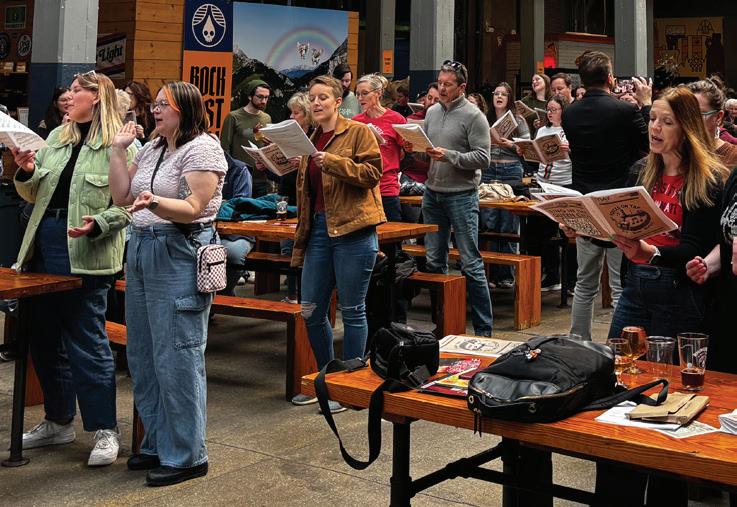
THANK YOU.
The May Festival gratefully acknowledges all of the pre-concert performers and ensembles dedicated to bringing music to the cultural and historical heart of Cincinnati. You’re why this is the City that Sings!
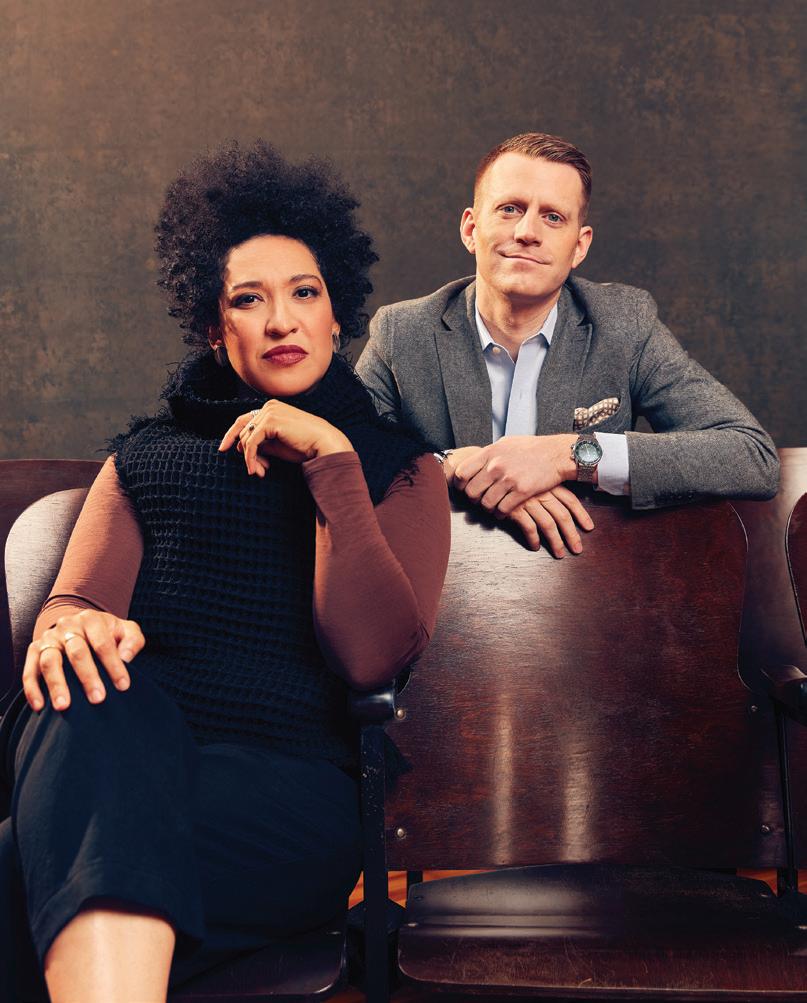
In the initial seasons of the May Festival, concerts often featured complete symphonies (with and without chorus), a selection of arias by a single soloist (or several soloists), oratorios and excerpted choral anthems, and instrumental concertos. “The early May Festival concerts were varied displays of musical scale and genre,” notes Director of Choruses Matthew Swanson. The spirit of those eclectic programs inspired the opening concert of the 2026 season. The concert begins with a fanfare-like choral anthem, followed by a set of orchestrated art songs. The concert concludes with an “eclectic Mass,” an assembled collection of sacred choral works that spans five centuries.
Bruckner’s Psalm 150 was intended for a festival much like our own — a large choral and orchestral festival in May, though in late 19th-century Vienna. While it is a May Festival “debut” for the psalm, the work calls to mind the Festival’s distinctly Germanic and Austrian roots.
The set of solo songs is principally based on the work of poet and writer Langston Hughes, a contemporary of composers Margaret Bonds and Alexander Zemlinsky. “The first song of Hughes that Bonds set to music was the poem ‘The Negro Speaks of Rivers,’” recalls 2026 Festival Director Julia Bullock. “When Bonds first read the poem, it changed her life, because she recognized herself and a new-found calling in Hughes’ writing.” This first composition led to a close collaborative relationship between Bonds and Hughes that continued for years. “They memorialized and supported each other’s work,” states Bullock.
Across the Atlantic Ocean, Zemlinsky was able to read poetry by Hughes and other writers of the Harlem Renaissance via German translation in the 1929 anthology Afrika singt: eine Auslese neuer Afro-Amerikanischer Lyrik (“Africa Sings: A Selection of New African American Poetry”). “I thought it would be a really interesting way to hear these poems,” Bullock remarks. “An immediate response to these texts so clearly impacted these composers, even though they were separated by a literal and metaphorical ocean.”
“A robust and vibrant set of musical conversations will take place at this concert,” states Swanson. Much as Hughes, Bonds and Zemlinsky were in real-time exchanges with each other, the Eclectic Mass brings composers across centuries into dialogue within the form of the Mass Ordinary. Our eclectic Mass includes music from the height of the Renaissance, the essence of the Baroque period and the heart of the 20th century. These varied traditions are knit together by the music of guest composer Carlos Simon and its accompanying spoken-word message of universality. As a sacred ritual and an artistic form, the Mass has been a mainstay of the vocal repertoire since before the advent of Western music notation. It’s remarkable how many ways people have utilized this form to express themselves.
The concert experience doesn’t end with the final note! These questions are offered to enrich your experience and encourage conversation.
•In the settings of the poetry by Langston Hughes and his peers, how do words and music combine to deepen the emotional impact of each other?
•What connections do you hear between historical works and contemporary works? How do they speak to one another across time?
•What does sacred sound like to you and what might it sound like to others?
Anton Bruckner: Psalm 150
Born: September 4, 1824, Ansfelden, Upper Austria
Died: October 11, 1896, Vienna, Austria
Work Composed: 1892
Premiere: November 13, 1892 in Vienna, William Gericke conducting
Instrumentation: SATB chorus, soprano soloist, 2 flutes, 2 oboes, 2 clarinets, 2 bassoons, 4 horns, 3 trumpets, 3 trombones, tuba, timpani, strings
Duration: approx. 9 minutes
Anton Bruckner first came to Vienna in 1867 as organist to the Imperial Court, when his reputation was founded entirely on his sacred choral compositions and his surpassing ability at the keyboard. Although his attention turned primarily to the symphony in the years that followed, his duties at court kept him in constant contact with sacred music, and his works for the church are among the most significant of any 19th-century composer. He wrote six Masses, a Te Deum, a Magnificat and almost three dozen smaller works, including settings of five Psalms. The last of the Psalm settings, that for Psalm 150, was written at the same time as the unfinished Ninth Symphony and was Bruckner’s next-to-last completed work. It was originally intended for a music festival of the Allgemeiner Deutscher Musikverein in Vienna in 1892, but the festival was canceled and the first performance was given by the Vienna Philharmonic. Bruckner’s Psalm 150 is compact in musical design and stirring in its heartfelt praise of God. It opens with a jubilant proclamation of “Hallelujah!” by chorus and full orchestra, a refrain that recurs throughout the piece both to mark the important structural junctures and to maintain the exultant mood of the beginning. The next section (Lobet den Herrn — “Praise God”), full of joyful music-making, leads to a quieter episode (Alles, was Odem hat — “Let everything that hath breath”) with prominent
parts for solo violin and soprano. The Hallelujah refrain returns before an extended, complex fugue begins, again using the text Alles, was Odem hat. One final time, Hallelujah is brought back as a coda to this majestic proclamation of Bruckner’s deep religious faith.
—©Dr. Richard E. Rodda
Alexander Zemlinsky: Symphonische Gesänge (“Symphonic Songs”), Op. 20
Born: October 14, 1871, Vienna, Austria
Died: March 15, 1942, Larchmont, New York
Work Composed: 1929
Premiere: April 8, 1935 in Brno, Czechoslovakia, Heinrich Jalowetz conducting
Instrumentation: (with Margaret Bonds songs) soprano and baritone soloists, 2 flutes (incl. alto flute), piccolo, 3 oboes (incl. English horn), 3 clarinets (incl. E-flat clarinet, bass clarinet), 3 bassoons (incl. contrabassoon), 3 horns, 3 trumpets, 3 trombones, tuba, timpani, bass drum, crash cymbals, glockenspiel, high hat, jazz drums, rute, snare drum, suspended cymbals, tam-tam, tambour de Basque, triangle, vibraphone, wood drum, harp, piano, celeste, strings
Duration: approx. 22 minutes (with Margaret Bonds songs)
The music of Alexander Zemlinsky synthesized the dominant strains of musical life in his native Vienna at the beginning of the 20th century. A protégé of Brahms (who persuaded his publisher, Fritz Simrock, to issue the score of the Piano Trio, Op. 3, of the 25-year-old composer) and a composition student of the brothers Robert and Johann Fuchs at the Vienna Conservatory, Zemlinsky integrated the ripe chromaticism and expansive expression of late Romanticism into his musical speech before trying out some of the avant-garde techniques of Arnold Schoenberg (who married Zemlinsky’s sister, Mathilde, in 1901). Zemlinsky remained more

conservative than his brother-in-law, however, and he never eschewed traditional tonality with the serialists’ dedicated diligence. Like Mahler, Zemlinsky made his living as a conductor, in Prague and in Berlin, composing as his duties allowed. When the Nazi takeover in 1933 forced him back to Austria, he hoped to devote himself to composition, but the increasingly tense political situation — Zemlinsky had some Jewish blood — allowed him to complete only his final string quartet, write a few songs and draft the opera Der König Kandaules (“King Candaules,” after André Gide). By the time of the Nazi Anschluss, in 1938, Zemlinsky was ill and incapable of creative work. He fled first to Prague and then made his way to the United States when hostilities erupted the following year. His death, in Larchmont, New York on March 15, 1942, drew little notice. He remained in eclipse until the late 1970s, when British radio stations and a few German opera houses sponsored revivals of his music. Many of his works, including several of the operas, have since become available in recordings and scattered performances, and Zemlinsky’s full stature is finally being recognized by the musical world.
Zemlinsky composed his Symphonische Gesänge in 1929, choosing as his texts German translations of seven poems published that year by Viennese journalist and translator Anna Nussbaum, in a collection of works by several Black writers of the “Harlem Renaissance” titled Afrika singt (“Africa Sings”).
American popular culture pervaded Europe in the 1920s — Gershwin musicals sold out in London; Joséphine Baker was the hottest ticket in Paris; classical composers from Ravel to Shostakovich incorporated jazz elements into their works; American recordings filled European shops and played endlessly on radio stations; the Charleston, Black Bottom, Shimmy and Foxtrot created a dance craze — and the appearance of Afrika singt created a sensation. Its poems provided the basis of both popular songs and classical works, many by Jewish composers, who not only found creative inspiration in jazz, but also recognized a parallel in the prejudice against Blacks in America to their own situation, in the years when the virulently anti-Semitic Nazi Party was becoming a force in the unsettled politics of the Weimar Republic.
Zemlinsky wrote his Symphonische Gesänge in the manner of a classical song cycle, with seven varied movements expressing the nature of these deeply disturbing poems while eschewing any reference to popular American musical idioms. “Zemlinsky does not yield to the temptation of approximating to the
text as a colorist and musical exotic,” wrote German musicologist Wulf Konold. “Precisely because he keeps at a distance from a world that is foreign to him, the composition gains credibility, aiming not at the folkloric surface but at the basic air of suffering.”
—©Dr. Richard E. Rodda
Born: March 3, 1913, Chicago, Illinois
Died: April 26, 1972, Los Angeles, California
Instrumentation: (with Zemlinsky’s Symphonic Songs; Norpoth arr.), soprano and baritone soloists, 2 flutes (incl. alto flute), piccolo, 3 oboes (incl. English horn), 3 clarinets (incl. E-flat clarinet, bass clarinet), 3 bassoons (incl. contrabassoon), 3 horns, 3 trumpets, 3 trombones, tuba, timpani, bass drum, crash cymbals, glockenspiel, high hat, jazz drums, rute, snare drum, suspended cymbals, tam-tam, tambour de Basque, triangle, vibraphone, wood drum, harp, piano, celeste, strings
Duration: approx. 22 minutes (with Zemlinsky’s Symphonic Songs)
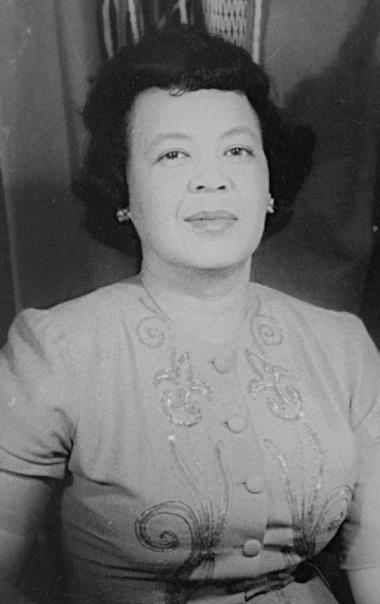
Margaret Bonds
In 1971, composer/pianist Margaret Allison Bonds participated in one of the few interviews conducted during her lifetime. In contextualizing her life and music within the larger genealogy of composers and concert artists that framed the Black classical aesthetic, she asserted, “I realized, very young, that I was the link … between Negro composers of the past. … You see my mother was friends with all of them. So, I realized that I was the link between these older people and the contemporaries.”
Indeed, by 1971, Bonds had proven to be part of the vanguard of composer/artists that advanced new sounds and approaches within the post-World War II concert hall. Born in Chicago in 1913, Margaret Bonds exemplified Black exceptionalism and excellence. Groomed in an environment that teemed with creativity, self-actualization and civic consciousness, Bonds emerged as a gifted and acclaimed pianist. As her compositional voice emerged, it bore the hallmarks of Chicago’s soundscape — blues, jazz, gospel.
Bonds emerged as a key cultural and musical voice as the Black Renaissance Movement in Harlem and Chicago transitioned into the midcentury Black Civil Rights Movement. Where other Black composers wrestled with modern compositional approaches like atonality and
serialism, Bonds continued to draw from Black music idioms such as gospel and jazz, establishing them as emblems of a Black post-modern aesthetic that shifted away from the musical language of Romanticism that permeated the music of New Negro-era composers. Her art songs and largescale choral works advanced the poetic voices of Countee Cullen and Langston Hughes, as articulators of a new and radical form of Black consciousness that would correlate with the burgeoning wave of activism that permeated the last half of the 20th century.
While Bonds did not restrict her cultural and intellectual labor to the classical realm, it is that portion of her catalog that has been preserved both in score and performance more than any other. But it should be noted that, like many of her contemporaries, Bonds endured the bias of the publishing industry throughout her career, so many of her works remained unpublished at the time of her death in 1972. Despite these professional obstacles, many of her compositions circulated, in manuscript form, among performers. It was within this shadow culture, and a cultural infrastructure of churches, grassroots music organizations, Black colleges and a circle of musicians, that Margaret Bonds’ music thrived and became part of a “secondary canon” that was cultivated by Black and white concert artists for decades.
Art songs form a considerable part of Bonds’ catalog, and, through her settings of the poetry of Black writers, they reflect her desire to illuminate the historical and cultural significance of Black folk and their expressive culture. The songs featured in this concert exemplify Bonds’ engagement with the literary vanguard of the Harlem Renaissance and the eclecticism of her professional experiences.
Bonds found substantial work writing pop songs, producing jazz arrangements and writing for theatre productions throughout her career. The eclecticism of sound that framed these different professional settings provided some of the primary emblems that mark Bonds’ compositional voice — beautiful melodies, sensitive settings of poetry, rich and colorful harmonic settings, and complex rhythmic patterns. “April Rain Song” is an example of the popular songs Bonds composed. Until recently, this was a lesser-known facet of her catalog.
“To a Brown Girl Dead” is a solemn setting of Countee Cullen’s poem that marks the death of an unnamed Black girl. The melancholy nature of the work is established by a sequence of steady,
half-note chords. As the song grows, the harmonies become more colorful and expansive, underscoring Cullen’s elegy for one whose beauty is unrecognized until death.
The remaining songs reflect Bonds’ continuous engagement with the poetry of close friend and collaborator Langston Hughes. Considered the leading voice of the Harlem Renaissance literati, Hughes was key to the development and progression of Bonds’ racial consciousness during her difficult years at Northwestern University. As one of the few Black students enrolled at the institution in the 1930s, Bonds faced overt discrimination:
I was in this prejudiced university, this terribly prejudiced place. … I came in contact with this wonderful poem, “The Negro Speaks of Rivers,” and I’m sure it helped my feelings of security. … And if I had any misgivings, which I would have to have — here you are in a setup where the restaurants won’t serve you and you’re going to college, you’re sacrificing, trying to get through school — and I know that poem helped save me.
Bonds finally met Hughes in 1936 and soon afterward set “The Negro Speaks of Rivers” to music. Although Bonds originally wrote the song for solo voice and piano, she later set it for mixed voices. The poetry surveys historical bodies of water adjacent to spaces inhabited by Black people. It moves from the Euphrates in Asia Minor to the Congo in central Africa, the Nile in Egypt and the Mississippi in the U.S. As with many of Bonds art songs, the melody and accompaniment move in divergent ways. The work opens with the river motive, which is articulated through a steady string of notes in the low register. This motive returns throughout the song, but only momentarily, before developing into a variant representing the different attributes of each river.
Songs of the Season is a cycle of four art songs commissioned by tenor Lawrence Watson in 1955. Two of the songs, “Poème d’automne” and “Winter Moon,” were written in the 1930s, with the remaining being added in 1955. As the title states, each song reflects the ethos and attributes of each season. “Poème d’automne” and “Winter Moon” are written in minor keys. Bonds’ lyrical melodies are set against blues-tinged accompaniments.
—©Tammy L. Kernodle, University Distinguished Professor and the Park Creative Arts Professor of Music at Miami University
Note: Quotations from Helen Walker-Hill, From Spirituals to Symphonies: African American Women Composers and Their Music (University of Illinois Press, 2007).
Eclectic Mass
(with music by Carlos Simon, Giovanni Pierluigi da Palestrina, Johann Sebastian Bach, Margaret Bonds and George Frideric Handel)
Eclectic Mass Instrumentation: SATB chorus, baritone soloist, narrator, 2 flutes, piccolo, 2 oboes, English horn, 2 clarinets, bass clarinet, 2 bassoons, contrabassoon, 4 horns, 3 trumpets, 3 trombones, tuba, timpani, bass drum, bell tree, chimes, China cymbal, congas, cowbell, crash cymbals, crotales, egg shaker, glockenspiel, marimba, mark tree, shaker, snare drum, splash cymbal, suspended cymbals, tam-tam, tambour de Basque, temple blocks, tom-toms, vibraphone, wood block, xylophone, drum set, electric bass, electric guitar, harp, piano, harpsichord, electric organ, strings Duration: approx. 56 minutes
The Mass is the most important service in the Roman rite, a ritual designed to commemorate, through the celebration of the Eucharist, the Last Supper of Jesus with his disciples (Luke 22:14–20). The word “Mass” is derived from its final words, “Ite, missa est” (“Go forth, it is ended”). The history and development of the Mass began with the early Christians of the Roman Empire, and its structure, components and rituals have changed throughout the centuries with interventions and codifications by various Catholic councils.
By the 7th century, the Mass had developed an intricate liturgy of chants, prayers and readings, which, over time, were organized in a framework of parts. The Mass has two large divisions: the proper of the Mass (includes texts that vary) and the ordinary of the Mass (includes texts that remain the same from Mass to Mass). Each of these divisions is further divided into sung and spoken parts.
As far as historians can tell, music has been part of the Mass from its inception. In fact, the opening pages of almost any book on Western music history would feature a long passage on the Mass. The early Catholic Church, with its power, wealth and status, provided a vast treasure of writings about music, music practices and music scores that survives to today, thereby creating historical documentation that is more complete than any other musical practice from before the Renaissance (15th–16th centuries).
The sung parts of the ordinary have become the primary focus of musical settings of the Mass. The sung ordinary of the Mass has five sections: Kyrie, Gloria, Credo, Sanctus and Agnus Dei (the benediction, or Ite missa est, is often included as part of the official ordinary, but, by the 1400s, composers largely ignored this section).
The Renaissance era saw an explosion in composers writing for the ordinary of the Mass. During this era, so many new settings of the Mass were composed that, at the Council of Trent in 1562, the practice of how Masses were composed was a topic of discussion. Setting the ordinary of the Mass to music waned after the Renaissance, as composers turned to other large-scale forms of expression.
The May Festival’s performance of their own Eclectic Mass uses the ordinary of the Mass as a framework. Each of the five parts of the Mass is represented, but instead of the music being from a single composer, the Eclectic Mass pulls together works from a variety of sources and centuries. The principal material is from Carlos Simon’s Good News Mass, which was written in 2025. After the introit, the sonic world of the late-Renaissance composer Giovanni Pierluigi da Palestrina (1525–1594) is heard, followed by the 1700s and Johann Sebastian Bach and the mid-20th-century American sound world of Margaret Bonds. The Eclectic Mass fragments the idea of the Mass ordinary and then reassembles it using compositional voices that span centuries, continents and cultures.
Giovanni Pierluigi da Palestrina
Born: between February 3, 1525 and February 2, 1526, Palestrina, Papal States
Died: February 2, 1594, Rome, Papal States
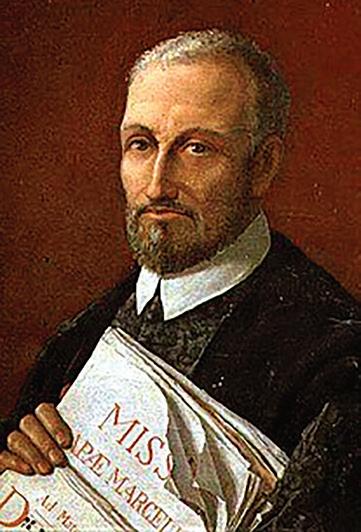
Giovanni Pierluigi da Palestrina
Palestrina’s compositions defined the style of his time, and this style is principally based on his 105 Mass settings. Within Western music history, Palestrina’s style was the first to be deliberately preserved, taught and mimicked in later ages, including in 1725, when Johann Joseph Fux wrote his influential counterpoint book Gradus ad Parnassum (“Steps to Parnassum”) to teach composers the style of Palestrina, or the stile antico (“old style”). (Fux’s counterpoint exercises can still be found in modern music theory textbooks
and is the subject of semester-long courses in undergraduate and graduate training at music conservatories.)
Palestrina received his music education in Rome. He was appointed maestro di cappella of the Cappella Giulia at St. Peter’s Basilica by Pope Julius III in 1551. He was forced to leave that post in 1555 because of an order by Pope Paul IV, who decreed that all papal choristers should be clerical. Since Palestrina was a layman (he had married early and had four children), he could not continue as a papal chorister. But Palestrina returned to the Cappella Giulia under a new papacy in 1571 and remained there until his death.
Palestrina composed hundreds of works, including 105 Masses, more than 300 motets, 140 madrigals and much, much more, but it is his sacred music for which he came to be the almost legendary figure he is today.
During Palestrina’s lifetime, the debate within the Church was how the florid polyphonic lines of the music made the text hard to understand. His style, however, focused on text clarity with simpler melodies that almost resemble plainchant. Palestrina’s melodies are often composed of long lines with rhythmic variety and move by
stepwise motion. He often abandons imitation and counterpoint for a homophonic texture (all voices singing in the same rhythm), allowing the text to be more easily understood.
Johann Sebastian Bach
Born: March 21, 1685, Eisenach, Germany
Died: July 28, 1750, Leipzig, Germany
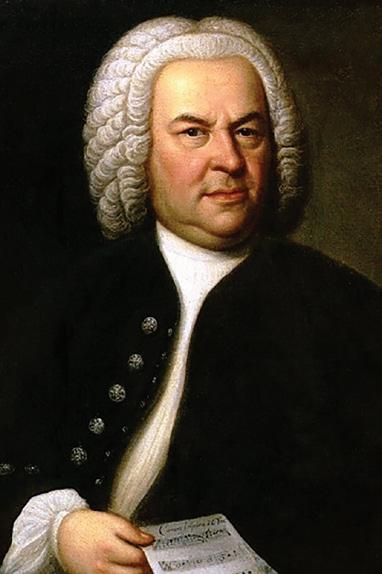
Johann Sebastian Bach was a prolific composer of the late Baroque period. He spent much of his adult life in service to the Lutheran church, and he was highly dedicated to German sacred music, having written more than 200 church cantatas, the St. Matthew Passion and St. John Passion, and numerous organ and keyboard works for church services.
The Gloria in Excelsis Deo, BWV 191, cantata began as a partial setting of the ordinary of the Mass. In 1733, Bach composed the Kyrie–Gloria Mass in B Minor, which included a Kyrie in three movements and a Gloria in nine movements. He wrote the work after the death of Augustus the
June 18 & 20 Studio Sessions
June 25 & July 1
July 9 & 11

July 28 & 30, August 1
Carmen
July 25, 29 & 31, August 2


TICKETS FROM $21



Strong (the Elector of Saxony) and dedicated it to the new sovereign, Frederick Augustus II. Bach sent the composition to Augustus II with the hopes that he might be appointed a court title, despite the compositional issue at hand: how a Lutheran church musician would appeal to a Catholic sovereign. Bach’s solution was to use the Kyrie and Gloria sections of the ordinary of the Mass, which the Lutherans and Catholics shared. Bach did receive an appointment to the Dresden court, but not until 1736. He used the Kyrie–Gloria Mass in B Minor again in 1748 as part of the now-iconic Mass in B Minor (BWV 232).
Bach wrote the Cantata BWV 191 in Leipzig for inclusion in a Christmas Day service. It is the only cantata within Bach’s oeuvre with a Latin text. The chorales are also unusually (for his cantatas) scored for a five-part choir that includes two soprano parts. The first movement of this cantata is almost identical to the first Gloria movement in the Kyrie–Gloria Mass in B Minor. The third movement, “Sicut erat in principio,” Bach developed from the “Cum sancto” movement of the Kyrie–Gloria Mass in B Minor.
For a deeper discussion of Bonds and her life, please see p. 45.
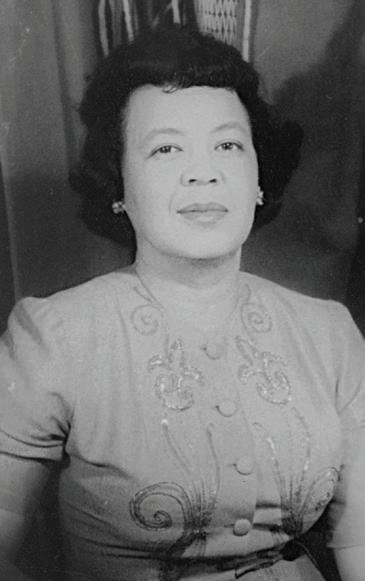
W. E. B. Du Bois’ (1868–1963) Credo, which was first published in 1904 and revised in 1919–20, serves as the text to Margaret Bonds’ Credo. Within the framework of the ordinary of the Mass, the Credo is the setting of the Nicene or Apostles’ Creed. A Creed (from the Latin “Credo,” meaning “I believe”) is described in the Catechism as a “sign of recognition and communion between believers … a summary of the principal truths of the faith.” In John Michael Cooper’s book Margaret Bonds: The Montgomery Variations and Du Bois Credo, Du Bois’ Credo is said to be “a series of short, discrete, but topically and circumstantially related professions of belief — statements that, typically for manifestos, outline and justify a program for sweeping societal reform.”
Du Bois was a prominent leader of the Niagara Movement, founded in 1905 to oppose racial segregation and disenfranchisement while seeking equal rights. In 1909, Du Bois was also one of
the founders of the National Association for the Advancement of Colored People (NAACP) . His prolific writings were aimed at the subjects of equality, racism and discrimination.
Of Du Bois’ Credo, Cooper writes:
The text of Credo was widely read, republished, and circulated for years to come, emerging as one of the most iconic texts of the Civil Rights movement before Martin Luther King, Jr.’s “I Have a Dream” speech. The text is a masterpiece of the strategy of dual-perspective: its verbiage of racial harmony and scriptural images of children in green pastures beside still waters — language designed to convince skeptical Whites that Du Bois was committed to a racial harmony founded in the Judeo-Christian institutions that they professed to adhere to — is nested in a fierce pride in Black lineage and self, condemnation of war, and (most importantly) the overarching thesis that racial equality and justice were not things that were granted by humans (let alone White society), but rather were divinely ordained. The text begins by proclaiming belief in God, and then proceeds to characterize God in each of its nine articles — so that the closing exhortation for “patience” emerges as an exhortation to perseverance in God’s divine mandate for racial equality.
Du Bois’ Credo opens Darkwater: Voices from Within the Veil, his 1920 autobiography that also contained essays, spirituals and poems. Darkwater is where Bonds read the Credo, but when she read it is unknown. Bonds completed the piano and vocal version of Credo by August of 1965, and, in October of that year, she wrote to Langston Hughes: “I live so much under the guidance of the Divine, I know there had to be a reason for me to set those words, so in time, something good will happen with ‘Credo,’ and sometimes in my own mind I hear it.”
The piano and vocal version premiered in Washington D.C. on March 12, 1967, with Bonds at the piano and choral director Frederick Wilkerson. Bonds writes about this concert in a letter to Langston Hughes on November 23, 1966: “The W. E. B. Dubois [sic] ‘Credo’ will be the star. It’s a very serious piece in the American idiom. It has some lines that are controversial — but I’m sure every line contained its Universal Truth — and with my Universal Language — Music — the Public will hear.”
Bonds began work on the orchestral version of Credo on January 12, 1966, which was to be performed at a concert in New York alongside some of her other chorus and orchestra music, including The Ballad of the Brown King. But this


















performance never came to be. The orchestra and chorus version of Bonds’ Credo was premiered in San Francisco by Albert McNeil and his McNeil Jubilee Singers. This was the last performance of the Credo in Bonds’ lifetime.
Bonds dedicated her Credo to the “memory of Abbie Mitchell and Langston Hughes.” Abbie Mitchell was a German, Jewish and African American soprano and close friend and collaborator of Bonds’ who also performed the role of Clara at the premiere of the Gershwins’ Porgy and Bess. Bonds’ Credo would remain unpublished until 2020. The first complete performance of the piano and vocal version since the composer’s death was given in February 2022 by Conspirare, conducted by Craig Hella Johnson.
One year after Bonds’ death, on April 29, 1973, Albert McNeil mounted a performance of her Credo by the Compton Civic Symphony Orchestra and the Los Angles Jubilee Singers (Hans Lample, director). Shirley Graham Du Bois, W. E. B. Du Bois’ widow, attended this performance and reported it was “one of the most moving moments of [her] life.” She described Bonds’ Credo as “a work of art that is eternal — that will live as long as people love each other and really believe in brotherhood.”
—©Tyler M. Secor
About Carlos Simon’s Good News Mass
Born: 1986, Washington, D.C.
Work Composed: 2022–2025
Premiere: April 2025 Gustavo Dudamel conducting the Los Angeles Philharmonic
A metaphysical miracle critical Mass materially pressed of human flesh God breath and star dust Hallowed be...
—poetry from Good News Mass (2025) by Marc Bamuthi Joseph
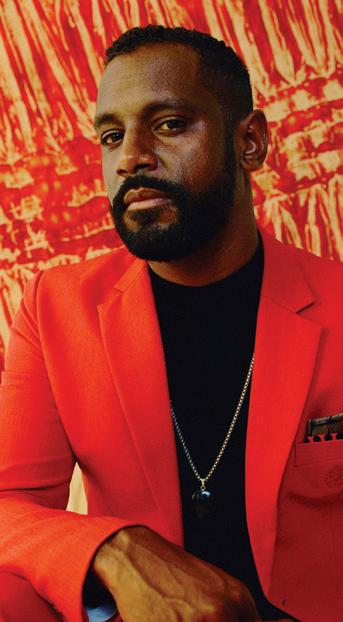
“God is here!” These three words resound as both proclamation and invitation in Carlos Simon’s Good News Mass, a groundbreaking orchestral composition with choir, soloists and spoken word artist that merges gospel fervor with the liturgical structure of the Catholic Mass. With libretto by Courtney Ware and poetry by spoken word artist Marc Bamuthi Joseph, this work navigates the deep waters of human experience — loss, thanksgiving,
joy and hope — asking us to reflect on the divine presence in life’s struggles and triumphs. Infused with the rich traditions of African American spirituality, Good News Mass elevates the sounds of praise, storytelling and supplication into a transcendent musical experience.
Simon, a multi-genre composer shaped by his Pentecostal upbringing and Western-style conservatory training, creates a dialogue between his gospel music heritage and the traditions of the Black Catholic community. Drawing from his gospel roots, he joins a lineage of African American composers who have reimagined the Mass form, from Mary Lou Williams and Florence B. Price to contemporary artists like Kim Harris, M. Roger Holland, Robert Ray and Damien Sneed. In Good News Mass, Simon not only honors this legacy but also pushes it further, blending sacred traditions with multi-genre ingenuity to craft a Mass of, and for, our time.
As Simon explains, Good News Mass “explores the ups and downs of being human and finding God in the midst of it all. What does it mean to question the existence of God? Where is God during our seasons of loss? How is God experienced in times of joy and hope?” The composition is both deeply personal and universally resonant, offering listeners a liturgical journey of introspection and celebration.
Simon’s hallmark ability to weave together diverse musical idioms shines through, combining gospel harmonic syntax, choral grandeur, spoken wordsmithing and orchestral brilliance. Moreover, a unique feature of Good News Mass is its emphasis on orature, that is, the oral literatures central to Black religiosity. Joseph’s poetry recalls the West African griot tradition, enriching the performance’s narrative depth.
The multi-genre soloists, spoken word artist, and choir infuse the performance with the textures of traditionally versatile “Black church” worship: Hammond B3 organ, congregational singing, gospel choir antiphony and altar-call zeal, all underscored by Simon’s orchestral mastery.
Commissioned by the Los Angeles Philharmonic, National Symphony Orchestra, Sphinx Symphony Orchestra and Boston Symphony Orchestra, Good News Mass stands as a testament to the vitality of Black sacred music in contemporary classical spaces. Simon’s work not only affirms the divine in our midst but also reminds us that music itself can be a vessel of healing, hope and love.
—Alisha Lola Jones
Turn to p. 33 for a biography of Carlos Simon.
Cristian Măcelaru conductor
Tamara Wilson soprano
Norman Garrett baritone
SAT MAY 16, 7:30 PM | Music Hall
May Festival Chorus Matthew Swanson, director
The May Festival Chorus is endowed by the Betsy & Alex C. Young Chair
Cincinnati Symphony Orchestra Cristian Măcelaru, Music Director
Duke Ellington
The River Suite (1899–1974)
orch. Collier
Spring
Meander
Giggling Rapids
Lake Vortex Falls
Twin Cities
Riba
Ralph Vaughan Williams Symphony No. 1, A Sea Symphony (1872–1958)
A Song for All Seas, All Ships
On the Beach at Night, Alone (Scherzo) The Waves
The Explorers
Special thanks to these generous sponsors who bring the May Festival to life!
The 2026 Festival Director Julia Bullock is sponsored by A Friend of the May Festival
Tonight’s concert will last approximately 120 minutes, including intermission.
The Director of Choruses Matthew Swanson is sponsored by Sherry and Mark Holcomb
The 2026 Premier Partner sponsor is Carol and Scott Kosarko
The 2026 May Festival is presented by Fort Washington Investment Advisors
The 2026 May Festival is sponsored by Chavez Properties.
The appearance of the Cincinnati Symphony Orchestra is generously supported by the Louise Dieterle Nippert Musical Arts Fund of the Greenacres Foundation
The appearance of conductor Cristian Măcelaru is made possible by Premier Partner sponsor Carol and Scott Kosarko
The May Festival Floral Sponsor is Chris and Beth Canarie
Tonight’s pre-concert conversation is sponsored by Drs. William Hurford and Lesley Gilbertson
Tonight’s pre-concert performance featuring the May Festival Youth Chorus and the Cincinnati Boychoir is sponsored by the Cincinnati Boychoir Board of Directors.
WGUC is the Media Partner for these concerts. This concert will air on 90.9 WGUC on October 11, 2026, followed by 30 days of streaming at mayfestival.com/replay.
Steinway Pianos, courtesy of Willis Music, is the official piano of the May Festival.
ABOUT THE PROGRAM with Julia Bullock, 2026 Festival Director & Matthew Swanson, Director of Choruses
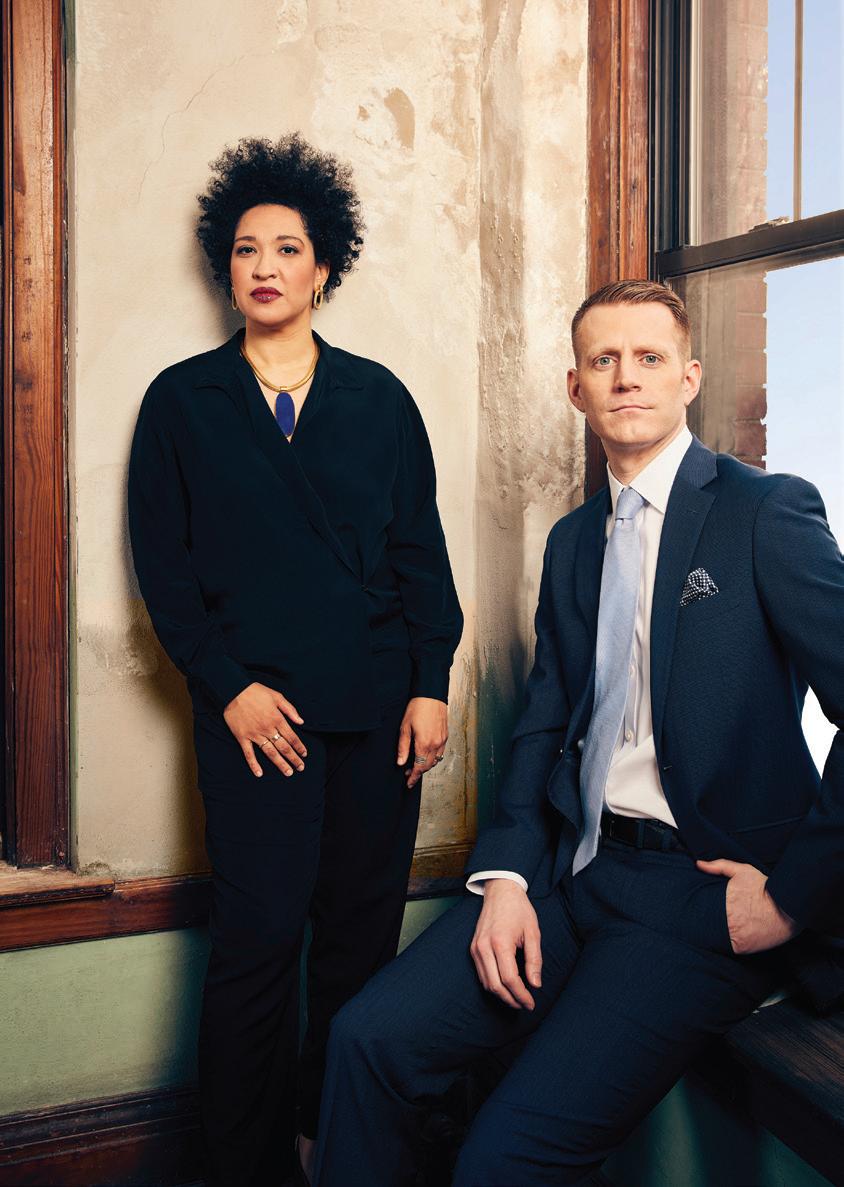
“Cincinnati is a city etched by water,” remarks 2026 Festival Director Julia Bullock.
The Ohio River has always been a natural boundary for the city and was the nation’s formidable natural barrier between the states that enslaved human beings in the South and the emancipated states in the North. “The Ohio River drew people here. It impacted who came to the city, who chose to stay and how the city developed,” states Bullock. “It was a gateway to freedom, the possibility of a different life and a new way for many.” The water became a symbol of eternal change and movement, and Cincinnati was the city that welcomed them.
Water’s multifaceted properties have fascinated artists from all disciplines. Water is often used as a metaphor for humanity’s collective and individual life journeys. In the May Festival, which has a large symphonic chorus and a large orchestra, Ralph Vaughan Williams’ A Sea Symphony is the first choice to explore these themes around “A Water’s Journey.”
“A Sea Symphony is one of the great choral symphonies,” states Director of Choruses Matthew Swanson. Unlike other choral and orchestra collaborations in the repertoire, Vaughan Williams has either the chorus or soloists singing almost the entire time. “It is truly a ‘sung symphony,’” Swanson says. For Vaughan Williams’ first symphony, what text did he choose? The text “is the absolutely incredible poetry by Walt Whitman,” an awed Swanson observes. “The poetry feels as fresh and contemporary today as it did in the pre-Civil War era. Much like Duke Ellington, Whitman is also speaking two languages or telling two stories at one time. There is a story about ships, water, ocean, flags and captains, etc. But more than that, the poetry is about journeying. It is about seeking — about searching and going into the unknown. The text is about the humanity that unites us all — the ideas that transcend boundaries of nationality or even, in a way, identity.”
What to pair with A Sea Symphony? Bullock thought back to the opening concert that featured the texts of Langston Hughes. “What I loved is that Langston Hughes was a seaman himself, and being on the ocean became one of the most profound and defining experiences of his life. It allowed him to explore the world, gave him an opportunity to no longer feel locked in by any environment. The freedom and liberation that he felt was a turning point in his life, and it influenced how he wrote.”
Duke Ellington, too, faced a watershed moment when he wrote The River “By 1970, Ellington’s philosophical and compositional perspective was becoming more informed by a spiritual consciousness that no doubt reflected awareness of his own mortality,” writes Dr. Tammy L. Kernodle in her program note about the work. “Thus, the narrative of The River became for Ellington
a spiritual metaphor for life, death and anticipated rebirth in heaven.”
“Water has a range of power from the immense and volatile to the gentle and soothing,” reflects Bullock. “Water can be as much healing and cleansing as it can be
damaging and frightening. We need water to live, but too much will harm us. It is within all of us. These are the ideas that Ellington, Whitman and Vaughan Williams are touching upon in their works.”
The concert experience doesn’t end with the final note! These questions are offered to enrich your experience and encourage conversation.
•How does the use of Walt Whitman’s poetry alongside Vaughan Williams’ A Sea Symphony shape your sense of the ocean as both a physical and spiritual force?
•As the program unfolds, do you experience the journey of water as something external, internal or both?
•The pieces on this concert are all metaphors between water and life. How did these pieces speak to you about your current life moments?
Duke Ellington: The River Suite
Born: April 29, 1899, Washington, D.C.
Died: May 24, 1974, New York, New York
Work Composed: 1970
Premiere: (“Seven Dances” version) June 25, 1970, Lincoln Center’s New York State Theater
Instrumentation: 2 flutes (incl. piccolo), 2 oboes (incl. English horn), 2 clarinets, 2 bassoons, 4 horns, 3 trumpets, 3 trombones, tuba, timpani, bass drum, claves, glockenspiel, maracas, snare drum, suspended cymbals, xylophone, harp, piano, strings
Duration: approx. 30 minutes
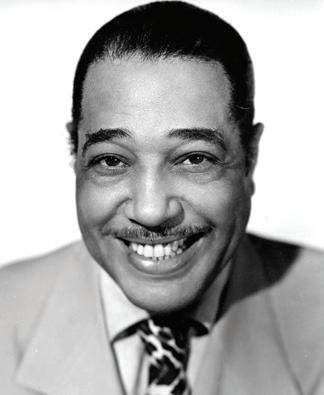
As a composer, bandleader and pianist, Duke Ellington was unparalleled. Throughout his five-decade career, he charted his own musical course, rejecting social trends and popular culture conventions. He refused to compromise even in the face of waning popularity and shifting tastes. His music was not just riffs, rhythms and ideas that streamed from his mind and piano into the instruments of his celebrated orchestra; it reflected his strong racial consciousness and resistance to the marginalization of Black intellectuality. It exemplified how he used music as a vehicle to advance social change. Ellington was a product of ecosystems imbued with social consciousness — cultural and intellectual labor purposed for an imagined world where social justice and civil rights were fully realized.
While much of Ellington’s musical legacy has been framed around popular songs such as “Take the A Train,” “Mood Indigo” and “It Don’t Mean a Thing (If It Ain’t Got that Swing),” it is his suites,
ballets and Sacred Concerts that extended that legacy beyond the realms of jazz history. Through the jazz suite, a multi-movement programmatic work, Ellington expanded the context of what constituted the American orchestral idiom during the second half of the 20th century. Much like the symphonic poem in classical music, the jazz suite has served as the musical canvas through which specific cultural narratives or ideas could be conveyed. The genesis of the idiom is often traced to the early compositions of Duke Ellington, which blended symphonic approaches with traditional jazz band instrumentation. (It should be noted, however, that Mary Lou Williams’ Zodiac Suite [1945] provides the earliest evidence of the jazz suite realized through the medium of the symphonic orchestra.) The River reflects how Ellington’s ideas followed this precedent — combining the musical possibilities of the symphony orchestra and the jazz big band.
In 1970, Lucia Chase, co-director of the American Ballet Theater, approached Ellington about writing a piece in honor of the company’s 30th anniversary. The commission resulted in the coupling of two of the most creative minds of the 20th century — Ellington and choreographer Alvin Ailey. The two would have a long and varied collaborative history, which first began in 1963 when Ailey choreographed a series of dances to Ellington’s My People. In that instance, Ellington had a fully realized score when Ailey began his work. But with The River, Ellington’s process was more disjointed, which delayed Ailey from fully creating dances for all of the movements. When the work debuted June 25, 1970, it was titled Seven Dances from a Work in Progress entitled “The River.”
Duke Ellington wrote extensively about The River in his Music is My Mistress memoir. To read his description, in its entirety, text PROGRAM to 513.845.3024 or visit mayfestival.com/DigitalProgram
Extant scores revealed that Ellington initially intended the work to have 12 movements. But in time, the eight movements featured in this May Festival concert became the standard version. Orchestration was done by Canadian composer Ron Collier, who worked with Ellington throughout this latter stage of his career.
As with many of his multi-movement works, Ellington wrote an extensive program outlining the themes and concepts he wished to portray musically. Scholars have posited that ideas for the work pre-dated the American Ballet Theatre commission. According to Ellington’s son, Mercer, jazz historian Stanley Dance had suggested to the composer sometime before 1970 the idea of writing a large-scale work centered on a water theme.
On the surface, the narrative of the work focuses on the development of a river from its beginnings as a stream through various stages of evolution before it returns to the sea. Each stage of development is depicted through specific melodic and rhythmic ideas. However, by 1970, Ellington’s philosophical and compositional perspective was becoming more informed by a spiritual consciousness that no doubt reflected awareness of his own mortality. Thus, the narrative of The River became for Ellington a spiritual metaphor for life, death and anticipated rebirth in heaven.
The first movement, “Spring” is described as representing a newborn baby, who in his cradle is “spouting, spinning, wiggling, gurgling, squirming, squealing, making faces, reaching for his nipple or bottle, turning, tossing and tinkling all over the place.” This movement is slow and expressive, beginning with the horn introducing a motive that invokes the swirling of water. The pastoral nature of the scene is further painted with the entrance of the oboe and strings. As this motive develops, it takes on a Middle Eastern or North African flavor.
“Meander” represents the movement of the child from the safety of the cradle where, Ellington noted, he is “undecided whether to go back to the cradle or pursue his quest in the wake of the big bubble.
For more information about this program, as well as texts and translations, please text PROGRAM to 513.845.3024* or visit mayfestival.com/DigitalProgram
There he is, rolling around from one side to the other on the floor up and down, back and forth, until he sees the door, the kitchen door, and looks out into that big backyard.” Ellington represents the aimless wandering through a blues-tinged motive that bears the hallmarks of his style — growling horns, bombastic crescendos and call-and-response across sections of instruments. The indirect course of the water (child) and each bend in its path is reflected in various tempo changes that move from long, sustained lyrical passages, to swinging rhythms, to a fast, bluesy waltz. The movement ends with a flute cadenza that embodies the untamed nature of the developing stream.
The third movement, “Giggling Rapids” begins with a syncopated piano introduction that grows into motivic interplay between the horns, woodwinds and glockenspiel. This motive grows in intensity before the call and response shifts to the strings and horns. Note how the strings’ motive mimics the swirling of water. Ellington described “Lake” as “beautiful and serene … in all its beauty, God-made and untouched, until people come — people who are God-made and terribly touched by the beauty of the lake.”
The exotic melody heard in the first movement returns. But this time Ellington explores the full tonal possibilities of this motive, establishing aspects of its identity that were not heard in the first movement. The serenity of this movement is disrupted by the intensity of “Vortex” and “Falls.” Both represented Ellington’s interpretation of how one must navigate the hazards of life and fight to regain the serenity once experienced.
In the narrative description of The River included in his memoir Music is My Mistress, Ellington envisioned the “Twin Cities” to represent the fully formed identity of the river. This movement marks the final stage of transformation and anticipates its return to the Mother, the sea. The final movement, “Riba,” is a reminder of the musical alchemy that defined the uniqueness of the Ellington sound. Here, he reimagines the symphony orchestra as an extension of his iconic dance orchestra through the execution of driving rhythms, blues-tinged riffs, and punctuated phrases with an improvisatory feel.
—©Tammy L. Kernodle, University Distinguished Professor and the Park Creative Arts Professor of Music at Miami University
Ralph Vaughan Williams: Symphony No. 1, A Sea Symphony
Born: October 12, 1872, Gloucestershire, England
Died: August 26, 1958, London, England
Work Composed: 1903–1909
Premiere: October 12, 1910 in Leeds, conducted by the composer
Instrumentation: SATB chorus, soprano and baritone soloists, 3 flutes (incl. piccolo), 2 oboes, English horn, 2 clarinets, bass clarinet, E-flat clarinet, 2 bassoons, contrabassoon, 4 horns, 3 trumpets, 3 trombones, tuba, timpani, bass drum, crash cymbals, snare drum, suspended cymbals, triangle, 2 harps, organ, strings
Duration: approx. 65 minutes
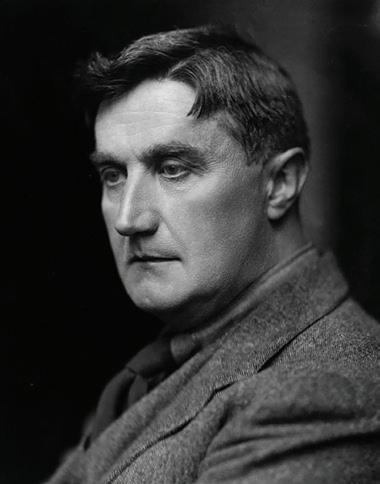
While Ralph Vaughan Williams was an undergraduate at Cambridge in the 1890s, he was introduced to the poetry of Walt Whitman by his fellow student Bertrand Russell. Whitman’s verses were enjoying a considerable vogue in England at that time, and Vaughan Williams was not immune to the lure of the American poet’s daring topics and experimental poetic structures, nor to his themes of mysticism, human dignity, love and freedom. The budding composer acquired several editions of Leaves of Grass, including one small selection that he carried around in his pocket.
As early as 1903 — the year in which English composer Frederick Delius brought out his Whitman-based Sea Drift — Vaughan Williams was considering a work for chorus and orchestra using the words of the American writer. As the basis of this proposed work, tentatively titled “Songs of the Sea,” he chose passages from Leaves of Grass that philosophically likened an ocean voyage to the individual’s journey of life. Both the topic and its musical realization were imposing artistic challenges for Vaughan Williams, who, at age 31, had written only some songs, chamber pieces and small works for orchestra. He sketched a few preliminary ideas for the new work, but he did not feel that his technique had developed sufficiently to make a success of it and was unable to bring the piece to completion.
A year later, Vaughan Williams turned his attention to another Whitman poem, “Whispers of Heavenly Death,” and set a passage from it as “A Song for Chorus and Orchestra” titled Toward the Unknown Region. The work was presented at
the 1907 Leeds Festival with enough success to encourage him to return to his earlier and larger Whitman piece, by then re-christened “Ocean Symphony.”
Things did not go smoothly. The music went through much rejection and rewriting; at one stage he scrapped an entire movement. He consulted friends for their advice, particularly seeking recommendations for a teacher who could help him expand his musical language to encompass the large task he had set for himself. He decided that his music was “lumpy and stodgy ... and that a little French polish would be of use,” so his first thought was to study in Paris with the distinguished composer and pedagogue Vincent d’Indy. The eminent music writer M.D. Calvocoressi, however, advised him to seek out a young composer (three years younger than Vaughan Williams, in fact) who was little known in England at the time but, Calvocoressi was convinced, full of the brightest promise — Maurice Ravel. Calvocoressi arranged the introductions and invitations, and Vaughan Williams left for France early in 1908 for three months of study with Ravel.
Vaughan Williams recounted his initial meeting with Ravel:
He was much puzzled at our first interview. When I had shown him some of my work he said that for my first lessons I had better “écrire un petit menuet dans le style de Mozart.” I saw at once that it was time to act promptly, so I said in my best French, “Look here, I have given up my time, my work, my friends and my career to come here and learn from you, and I am not going to write a petit menuet dans le style de Mozart.” After that, we became great friends and I learned much from him.
Vaughan Williams worked intensely in Paris, meeting with Ravel four or five times a week and benefiting greatly from the lessons. “The man is exactly what I was looking for,” he wrote to Calvocoressi. “I practice chiefly orchestration with him. ... He showed me how to orchestrate in points of colour rather than in lines.” Ravel was pleased with his student (“a pupil of whom I am proud,” he boasted), and their mutual respect grew into friendship. Ravel visited Vaughan Williams at his home in Cheyne Walk, London, during spring 1909, and enjoyed himself immensely. In his note of thanks to Adeline, the English composer’s wife, Ravel wrote, “Here I am ... a Parisian, home-sick for London. I have never before really missed another country.”
Ravel’s influence on his British colleague was entirely beneficial. Not only did the overseas study strengthen Vaughan Williams’ compositional technique, but, even more significantly, it bolstered his self-confidence so that he was able to resume work with enthusiasm on the languishing Whitman piece. Charles Villiers Stanford, Vaughan Williams’ teacher at the Royal College of Music and an exemplar among Victorian composers, arranged to have the composition, finally called A Sea Symphony, performed at the 1910 Leeds Festival. The score was finished just in time for rehearsals (though Ralph continued to tinker with it for the next 14 years) and the composer conducted. The panoramic new work, one of the most important contributions in years to the revered English choral tradition, was a rousing success at its premiere and was the first composition to carry Vaughan Williams’ name to a wide public.
The four movements of A Sea Symphony approximate the traditional symphonic structure, though the form of each is, perforce, adapted to the requirements of Whitman’s poems. In his study of the composer’s symphonies, Hugh Ottaway wrote, “In Vaughan Williams’ selection, only the words of the scherzo are descriptive; the remainder view the sea as a symbol of human endeavor or a challenge to the mind and spirit. The tone is optimistic and Whitman’s emphasis on the brotherhood of man and the unity of being comes through clearly.” More than simply a musical seascape, this symphony concerns itself with some of the basic questions of existence that Whitman voiced with such force and grandeur. “In the Sea Symphony,” noted Vaughan Williams’ biographer James Day, “the sea itself is a symbol — of the innermost self that man can and must discover and explore, just as he explores the sea.”
The sung word dominates the symphony from beginning to end, with the orchestra playing an accompanimental role throughout. (The work is among the most demanding in the choral repertory.) The emphasis on singing arose from Vaughan Williams’ inclination toward the human voice, which, the composer wrote in his book National Music (1934), “is the oldest musical instrument and through the ages it remains what it was, unchanged; the most primitive and at the same time the most modern, because it is the most intimate form of human expression.” A Sea Symphony occupied Vaughan Williams for nearly six years. It shows evidence of many of the musical influences that played upon his thoughts as a young
composer — Parry, Elgar, Stanford, Ravel, Purcell — and does not maintain throughout its large whole an equal inspiration. (Other than the operas, this is his longest work.) “Yet in the end,” concluded music critic Cecil Gray, “after tremendous efforts and an almost heroic tenacity, there emerges ... a real and lovable personality, unassuming, modest and almost apologetic.” With A Sea Symphony, one of music’s greatest 20th-century masters was first revealed in all his genius.
The forms of the individual movements of A Sea Symphony are indebted to the poetic structures and moods of Whitman’s words. There are traces in the opening movement (A Song for All Seas, All Ships) of traditional sonata form in the return and development of themes, but it is the text that gives shape and character to the music. A motif is presented in the opening measures that recurs later in the symphony as a means of unifying the work’s structure: the harmonic progression occurring with the words “Behold the sea” (B-flat minor to D major).
The baritone soloist and semi-chorus are entrusted with the slow second movement, On the Beach at Night, Alone. It is a three-part form (A–B–A) whose outer sections are solemn and almost mysterious, while the central portion (commencing with “A vast similitude”) is more animated in character. The harmonies that begin the first and third sections recall the “Behold the sea” progression from the opening movement.
The Scherzo (The Waves), the most pictorial movement in the symphony, begins with a variation of the “Behold” harmonies. The bracing rhythms, the inclusion of two sea shanties as melodic material (“The Golden Vanity” and “The Bold Princess Royal”) and the sweeping glissandos in the harp lend this music an invigorating nautical air. The central episode (“Where the great vessel sailing”) is a broad hymn tune in the tradition of the grand English processional.
In the finale (The Explorers), Vaughan Williams posed for himself the formidable task of setting not only a poem longer than the rest of the symphony’s texts combined, but one in which Whitman, noted Hugh Ottaway, “is at his most giddily metaphysical.” The success of the movement comes not from its form — which episodically follows the structure of the text — but rather from the composer’s melodic gift, harmonic boldness, orchestral ingenuity and complete sincerity of expression. It is a fitting conclusion to this grand musical voyage.
—©Dr. Richard E. Rodda
THU MAY 21, 7:30 PM | Music Hall
Matthew Swanson conductor
Victoria Okafor soprano
Sara Couden contralto
Nicholas Phan tenor
Yannis François bass-baritone
May Festival Chorus & May Festival Chamber Choir Matthew Swanson, director
The May Festival Chorus is endowed by the Betsy & Alex C. Young Chair
Cincinnati Ballet Second Company
Yoshihisa Arai choreographer
Alex C. Young
Cincinnati Symphony Orchestra Cristian Măcelaru, Music Director
Igor Stravinsky Les noces (“The Wedding”) (1882–1971) PART I
Scene 1: At the Bride’s House — Scene 2: At the Bridegroom’s House — Scene 3: The Bride’s Departure — PART II
Scene 4: The Wedding Feast
Carl Orff
Catulli Carmina (“The Songs of Catullus”) (1895–1982) Prologue
The Play: Act I Act II Act III Epilogue
Special thanks to these generous sponsors who bring the May Festival to life!
The 2026 Festival Director Julia Bullock is sponsored by A Friend of the May Festival.
The Director of Choruses Matthew Swanson is sponsored by Sherry and Mark Holcomb
The 2026 Premier Partner sponsor is Carol and Scott Kosarko
The 2026 May Festival is presented by Fort Washington Investment Advisors
The 2026 May Festival is sponsored by Chavez Properties
Tonight’s concert is sponsored by Drs. Manisha Patel and Michael Curran.
Tonight’s concert will last approximately 90 minutes, including intermission.
The appearance of the Cincinnati Symphony Orchestra is generously supported by the Louise Dieterle Nippert Musical Arts Fund of the Greenacres Foundation
The appearance of conductor Matthew Swanson is sponsored by Chris and Beth Canarie.
The appearance of soloist Sara Coudin is sponsored by David and Elaine Billmire
The appearance of soloist Nicholas Phan is sponsored by Ronald C. Lamping
The May Festival Floral Sponsor is Chris and Beth Canarie
Tonight’s pre-concert conversation is sponsored by Drs. William Hurford and Lesley Gilbertson
WGUC is the Media Partner for these concerts. This concert will air on 90.9 WGUC on October 18, 2026, followed by 30 days of streaming at mayfestival.com/replay.
Steinway Pianos, courtesy of Willis Music, is the official piano of the May Festival.
ABOUT THE PROGRAM with Julia Bullock, 2026 Festival Director & Matthew Swanson, Director of Choruses
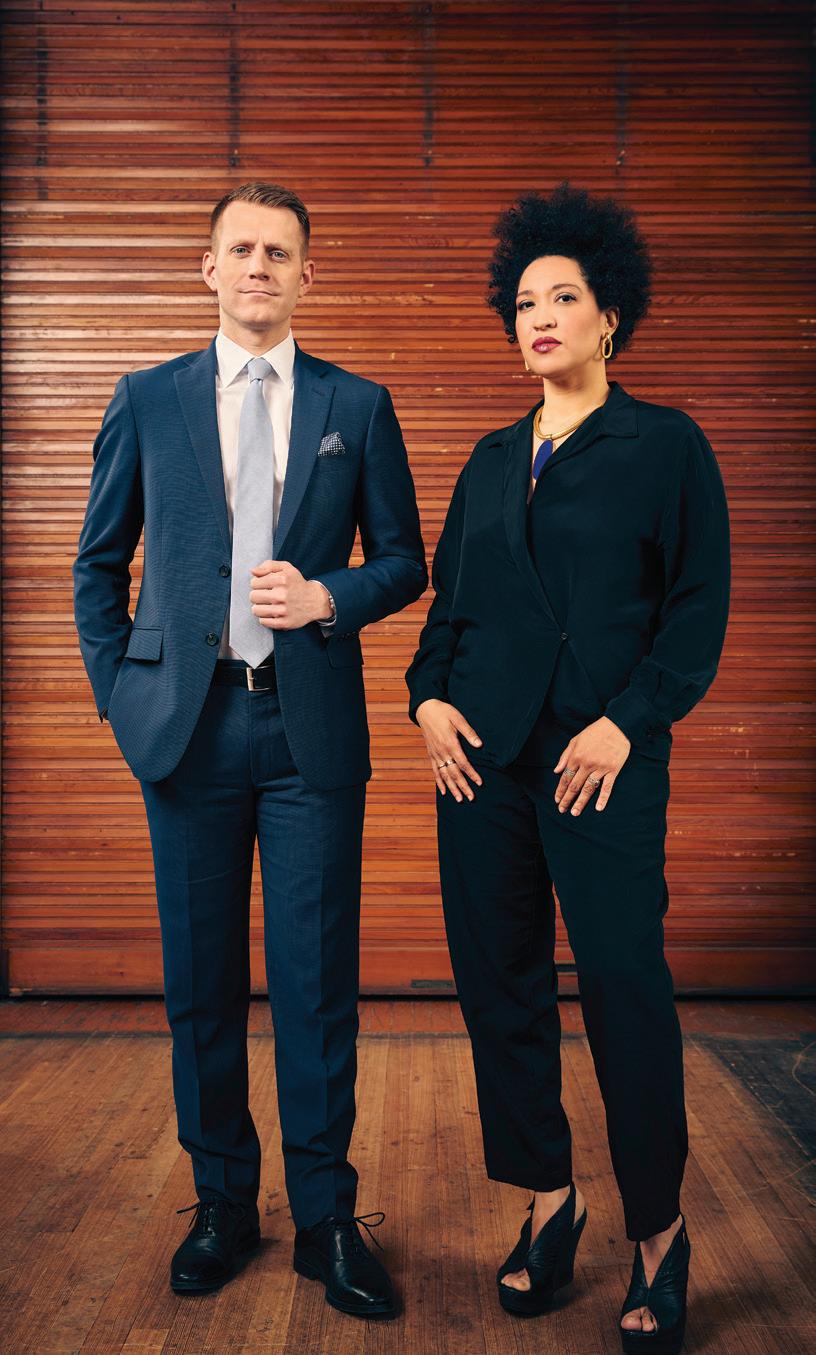
“Just thinking of it in my memory gives me goosebumps,” 2026 Festival Director Julia Bullock muses as she remembers the first time she heard Igor Stravinsky’s Les noces
She was in a small Siberian town in Russia listening to a relatively small choral ensemble. What astounded Bullock was the singing. “It was not about how ‘pretty’ it sounded, or ‘how perfectly in balance’ the vocalism was. It was just about tossing out human utterances and uproar in their almost primal form. There are only a few pieces in the world that struck me in that way at first listen.”
Director of Choruses Matthew Swanson had a slightly different entry point to Les noces. The work had been performed at the University of Cincinnati College-Conservatory of Music the year before he enrolled there. “It was still in the air, people were still talking about it,” recalls Swanson. So, he got the score and studied it, and he found Les noces to be the “most intriguing and fascinating piece of art that I have ever come across.”
What makes Les noces so intriguing? Swanson found that “Stravinsky was saying more than he could encapsulate in one point of view. Les noces has more viewpoints, more messages and more identities as a piece than can be summed up by one single idea. The work does so many things at one time. There is a juxtaposition between sounds that are struck and words that are sung, between two surfaces colliding and air moving. There is an elemental and fundamental opposition concerning this dynamic.” Stravinsky himself seemed to understand this conflict, as he “stripped out all the other instruments that he could have considered for the piece, leaving only the cleanest possible division between these two opposing forces. Then comes 23 minutes of finding ways to constantly join them in seemingly endless combinations. It is amazing to me.”
And this is just the music. The text to Les noces depicts a wedding. While there are obvious differences between a 19th-century Russian wedding and a modern American wedding, there are more similarities than one might think. “The piece starts with the bride, her bridesmaids and her mother, getting her hair done and talking about getting her hair done,” states Swanson. The piece ends with The Wedding Feast in an “absolute cacophony of sound.”
Carl Orff’s Catulli Carmina is “the perfect pairing to Les noces,” affirms Bullock. “It has that operatic-scale energy, sweeping melodies for which Orff is famous and a text unlike anything else in the repertoire. It is very bold.”
The text is from the poet Gaius Valerius Catullus, who lived in ancient Rome from 84–54 B.C. Orff set the texts as a scenic cantata or, to use Swanson’s words, “a play within a play.” Although the texts are from an age very distant from our own, he notes, “they remind us that human
beings have not changed that much at all.”
In the Catullus texts, there are scenes of heartbreak, lust, love, hatred and infidelity written in a way that reflects the real lived experiences of Catullus and his peers.
“We, as an audience in the year 2026, get to talk to Catullus through Carl Orff,”
explains Swanson. “I find it somehow reassuring that great artists of our civilization have been talking about the same topics and ideas that we do, today. So, to bring that art to life and give voice and body to it is quite thrilling to me.”
The concert experience doesn’t end with the final note! These questions are offered to enrich your experience and encourage conversation.
•Do these pieces portray love in a celebratory or painful way, or even in a more complex way?
•How does that evolve across the program, and do these portrayals still feel relevant?
•In what ways do the music and movement together express themes and emotions that words alone might not fully capture?
Igor Stravinsky: Les noces (“The Wedding”)
Born: June 17, 1882, Oranienbaum, Russia
Died: April 6, 1971, New York, New York
Work Composed: 1914–1923
Premiere: June 13, 1923 in Paris, Ernest Ansermet conducting
Instrumentation: SATB chorus; soprano, alto, tenor baritone soloists; timpani, bass drum, chime, crotales, crash cymbals, field drum, snare drums, suspended cymbals, tambours de Basque, tenor drum, triangle, xylophone, 4 pianos
Duration: approx. 24 minutes
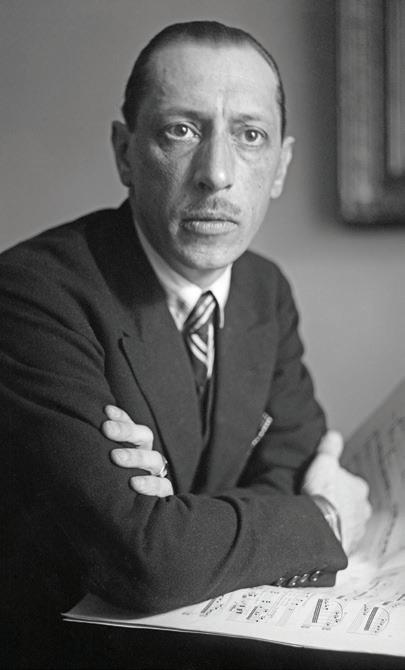
Stravinsky started working on what would become Les noces the year after the premiere of The Rite of Spring. The piece went through multiple versions and did not reach its definitive form until nine years later. No other piece by Stravinsky had such a protracted and complex compositional history, but, then, the task that the composer had set for himself also was unusually complex.
Stravinsky wanted to represent a traditional Russian village wedding as an ancient religious ritual, which followed an extremely elaborate scenario. The series of events started with the initial visit of the matchmaker, followed by the formal agreement between the parties, the betrothal, the procession, the preparation of the bride, the actual wedding (known as venchániye or “crowning”) and the subsequent revelry. These various stages make up what is known as the svádebnaya igrá (“wedding
play”). Stravinsky made a detailed study of each of these rites as documented by ethnographers and then created his own sequence based on what he had discovered.
The biggest problem Stravinsky encountered during the process of composition had to do with the instrumental accompaniment. He first began to score the work for large orchestra but soon rejected that possibility as impractical. He then thought of a smaller ensemble that included the cimbalom, the Hungarian hammered dulcimer he had used in a number of his works in the 1910s; this idea, too, was abandoned. It was not until 1921 — seven years after starting work on the project — that he hit upon the unique combination of four pianos with a large percussion battery, a combination that gave the work its unique sound. Having found his solution, he completed the work by 1923 and had it premiered in Paris, under the direction of Ernest Ansermet (1883–1969), on June 13 of that year. After the flop of the opera Mavra the year before, the great success of Les noces went a long way toward reconfirming Stravinsky’s reputation as one of the leading composers of his time.
Les noces opens with the preparation of the bride — all the earlier stages of the “wedding play” are omitted. The four scenes take us from there to the groom’s house and then to the wedding procession, followed by the post-nuptial feast. Significantly, the actual priestly benediction and the “I do” part are omitted; instead, the focus — except at the very end — is on family and friends, that is, the participation of the community. Particularly important are the laments, which were a crucial part of the wedding play. The bride sings a lament as she is led away to a foreign place, far from her
parents, where she will have to join her husband’s family — and be a servant to that family. The bride’s mother sings her own lament about the departure of her beloved daughter. Other focal points during the celebration include the prayers to the Virgin Mary and to the saints, asking them to bless the union of the two young people — and the lyrical songs that use rich natural imagery to portray the love of Nastasia and Khvetis. Although Stravinsky introduces a wide range of textual motifs and musical characters, the score possesses a remarkable degree of stylistic unity. The four scenes are played without pause and the ostinatos [“obstinately” repeated harmonic and rhythmic patterns] continue relentlessly throughout the work. The roles of the bride, the groom and the parents are not assigned to individual singers; the same soloists may impersonate different characters at different times.
Stravinsky’s disciple, the conductor Robert Craft (1923–2015), observed that (except for the ending) there is only a single bar in the entire work in which the voices are silent. The singing is almost continuous, and yet the contribution of the instrumental ensemble is immense. This is, paradoxically, never more obvious than during the episode when all the instruments pause for the unaccompanied duet of two male soloists, both singing the words of the groom who asks his parents for their blessing. Here, and throughout the work, the singing is mostly syllabic, that is, there is only one note sung to each syllable of the text. At a tempo that is usually quite fast, this means that the words go by rather quickly — again with one major exception. The mother’s lament derives its gripping effect from its long-held notes and the expressive “bending” of the pitches. Another memorable moment is the song about the swan in the sea, with its lyrical inflections signaling a shift, in the last section of the work, away from the public world and into the private sphere into which the newlyweds are soon to retreat. The song of the bridegroom at the very end celebrates marital bliss like few other works in the modern era (or any era, for that matter).
—©Peter Laki
Carl Orff: Catulli Carmina (“The Songs of Catullus”)
Born: July 10, 1895, Munich, Germany
Died: March 29, 1982, Munich
Work Composed: 1940–1943
Premiere: November 6, 1943, at the Leipzig City Theater in a double bill with Carmina Burana, production by Tatiana Gsovsky and Hans Nydeken-Gebhard, scenography by Max Elter; Paul Schmitz conducting Instrumentation: SATB chorus, soprano and tenor soloists, timpani, bass drum, crash cymbals, 2 glockenspiel, litofono, maracas, metallofono (vibraphone without motor), small cymbals, suspended cymbals, tam-tam, tenor xylophone, triangle, wood block, xylophone
Duration: approx. 36 minutes
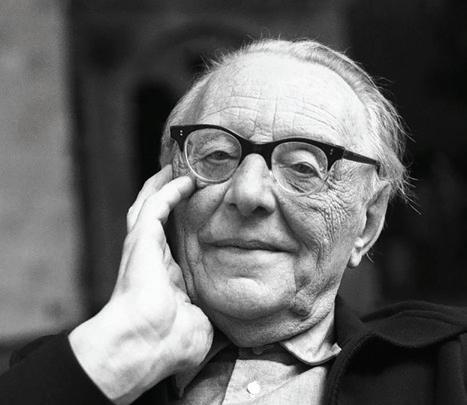
Carl Orff established his international reputation in 1937 with Carmina Burana, based on 13th-century texts written by an amorphous band known as “Goliards,” wandering scholars and ecclesiastics who were often esteemed teachers and recipients of courtly patronage. Their poems, in a heady mixture of Latin, old German and old French, gave a vivid, earthy portrait of Medieval life, attacking the defects of the Church, satirizing contemporary manners and morals, criticizing the omnipotence of money, and praising the sensual joys of food, drink and physical love.
For more information about this program, as well as texts and translations, please text PROGRAM to 513.845.3024* or visit mayfestival.com/DigitalProgram
Orff encountered these lusty lyrics for the first time in the 1930s and was immediately struck by their theatrical potential. Like Aaron Copland and Virgil Thomson in the United States, Orff at that time was searching for a simpler, more direct musical expression that could immediately affect listeners. Orff’s view, however, was more Teutonically philosophical than that of the Americans, who were seeking a music for the common man, one related to everyday life. Orff sought to create a musical idiom that would serve as a means of drawing listeners away from their daily experiences and closer to the realization of oneness with the universe. In the words of the composer’s biographer Andreas Liess, “Orff’s spiritual form is molded by the superimposition of a high intellect on a primitive creative instinct,” thus establishing a tension between the rational (intellect) and the irrational (instinct).
To portray the connection between the physical and spiritual spheres, Orff turned to the theater.









Year after year, ever since its founding, the May Festival presents the greatest choral music ever written. You may play a part in this unique tradition and help to ensure our mission — for the next 150 years — by including the May Festival in your estate plans. Supporters and friends who have made a gift to the May Festival through their estate plans are eligible to join The Festival Society. If you are already a member, we thank you; if not, we hope you’ll consider taking this step. You will assure that the May Festival continues to maintain its reputation for excellence as the “Best Classical Music Festival in the U.S. and Canada” (BBC Music Magazine, May 2021–2025).
Anonymous (3)

Mr. and Mrs. Oliver Baily
Debbie Barton

Ms. Henrietta Barlag
David and Elaine Billmire
Alec Brockmeier
Caroline H. Davidson
Barbara Ann Feldmann
H. Jane Gavin
Mary and Jack Gimpel
Margaret E. Hagar
Mr. and Mrs. Cornelius W. Hauck
Christy and Terry Horan
Carol and Scott Kosarko
Mr. and Mrs. Lawrence H. Kyte, Jr.

Susan Laffoon
Jim and Julie Laskey
Thomas and Adele Lippert
Mr. and Mrs. Jack W. McKee
Anne M. Pohl
Ellen Rieveschl
Bill and Lee Steenken
Mr. Barry H. Steinberg
Nancy Steman

Brett Stover

Steven Sunderman
Christine Wands
Rosanne Wetzel
Rev. Anne Warrington Wilson
Jeannine and John C. Winkelmann, MD
For more information about including the May Festival in your estate plans, please contact Kathryn Zajac Albertson at kalbertson@mayfestival.com. If you have already remembered the May Festival with a planned gift, please let us know so we can recognize you as you wish.


is sitting in the shade today because SOMEONE planted a tree a long time ago. —Warren Buffett





His theater, however, was hardly the conventional one. Or ’s modern vision stripped away not only the Romantic musical language of 19th-century opera, but also eliminated its elaborate stagecraft, costumes and scenery, reducing it to its essential elements. Or ’s reform even went so far as to question the validity of any works written before 1935, even his own, to express the state of modern man, and he told his publisher to destroy all of his music that “unfortunately” had been printed. The first piece that embodied Or ’s new outlook was Carmina Burana
The e ect of Or ’s theatricality is rooted in the monumental simplicity of the musical style by which he sought to depict the primitive, instinctive side of mankind. “The simpler and more reduced to essentials a statement is, the more immediate and profound its e ect,” he maintained. It is precisely through this imposed simplicity that Or attempted to draw listeners to their instinctual awareness of “oneness with the universe.” Whether he succeeded as philosopher is debatable. Hanspeter Krellmann wrote in the New Grove Dictionary of Music and Musicians:
The four aspects of Or ’s musical theater [tragedy of archetypes, visionary embodiment of metaphysical ideas, bizarre fantasy, and physical exuberance] are usually intertwined; and it is apparent from the works that Or ’s main concern is not with the exposition of human nature in tragedy, nor with whimsical fancy, nor with the statement of supernatural truths, nor with joyous exultation. His intention seems to be to create a spectacle.
Following the triumph of the premiere of Carmina Burana in Frankfurt in 1937, Or received frequent o ers to compose a theatrical sequel to it that would fill out an evening-length double bill. “After many rejected plans,” he recalled, “I had an idea to return to Catullus’ poems,” which he had discovered in the 1930s as part of his study of Latin and Medieval sources for their musical potential. “Catullus remained dear to my heart,” he continued, and, in 1940, he conceived the Catulli Carmina, Ludi Scaenici — “Songs of Catullus, Stage Games,” a scenic cantata. He chose 12 of the Roman poet’s verses, scored them for chorus, soprano, tenor, four pianos and percussion, and placed them in a dramatic setting based on the poet’s own documented won-and-lost love and his accounts of solitary longing and intimate encounters.
Catulli Carmina opens with a Praelusio (“Prelude”) for chorus and orchestra, set to Or ’s
own Latin text, in which young lovers ardently and graphically proclaim that their love will be eternal. Their youthful naivete is cut o by mocking from a group of old men: “Forever! Forever! Forever! How ridiculous, utter folly. Listen to the songs of Catullus.” Three succinct acts (7–8 minutes) of a play follow, scored entirely for voices without instrumental accompaniment and based on Catullus’ love a air, with the tenor soloist representing the poet and the soprano his beloved Lesbia. The chorus comments during the play in the manner of classical Greek theater, and dancers on stage portray the characters as the tale unfolds. Mirroring the formal symmetry and philosophical progression of Carmina Burana, in which the powerful chorus Fortuna Imperatrix Mundi (“Fortune, Empress of the World”) stands as a gateway into and out of the Medieval world, so Catulli Carmina closes with a brief reprise of the music, sentiment and orchestral accompaniment of the Praelusio: Young men and women: “Forever, forever, I am yours.” Old men: “Ah, me!” Or titled this moralistic coda to Catulli Carmina an Exodium — a comic addendum to a tragic drama. With Carmina Burana (1937) evoking the Medieval world and Catulli Carmina (1943) harking back to ancient Rome, Or completed his trilogy of “scenic cantatas” in 1951 with Trionfo di Afrodite (“The Triumph of Aphrodite”), set to poetry of Catullus (in Latin) and Sappho and Euripides (in Greek). This closing work of the trilogy (collectively titled Trionfi) was based on an ancient wedding ceremony but titled with the Italian Renaissance term Trionfo, referring to the allegorical masked court processions that celebrated virtue’s triumph over the forces of darkness.
—©Dr. Richard E. Rodda
Following are act and scene descriptions for Catulli Carmina:
PRAELUSIO
Young men and women, couples, are cavorting together, observed by a group of old men.
The theatrical play begins.
Catullus leans on a column.
I. Catullus: Poem No. 85
Lesbia enters. Catullus and Lesbia stand together.
II. Catullus: Poem No. 5
Catullus and Lesbia sit by a column.
III. Catullus: Poem No. 51
Catullus falls asleep in Lesbia’s lap. Lesbia leaves Catullus sleeping.
Lesbia dances in a tavern before her admirers. Meanwhile Catullus awakens.
Caelius enters, and Catullus despairs.
IV: Catullus: Poem No. 58
V. Catullus: Poem No. 70
Old men applaud.
Night. Catullus is asleep in the street in front of Lesbia’s house. In a dream, he sees through the transparent walls of the house to watch himself lying on the couch passionately embracing Lesbia.
VI: Catullus: Poem No. 109
Lesbia caresses him lovingly.
Love Scene
Catullus wakes from his dream. He realizes that it is Caelius with Lesbia, in his place. The walls of the house become opaque; Catullus is in darkness and despairs.
VII: Catullus: Poem No. 73
Old men applaud.
Morning. Catullus leans on a pillar.
VIII: Catullus: Poem No. 85
Ipsitilla, a beautiful young woman, appears at a window. Enflamed with passion, Catullus writes her a letter.
IX: Catullus: Poem No. 32
Ameana, an old prostitute, assails Catullus.
X: Catullus: Poem No. 41
Catullus pushes Ameana away.
Searching among the strolling lovers and courtesans, Catullus looks only for Lesbia.
XI: Catullus: Poem No. 8
Among the lovers, Catullus staggers and topples to the ground.
Caelius and Lesbia enter. Lesbia sees Catullus and cries out to him.
Catullus cries out to her but pushes her away.
Catullus leans on a column.
XII: Catullus: Poems Nos. 87 and 75
Lesbia flees into the house in despair.
The theatrical play is over.
EXODIUM
[in Roman theater, a comic conclusion following a tragedy]
The young men and women take no heed of what they have seen and are aroused anew to mutual ardor.
Gaius Valerius Catullus (84–54 B.C.) embarked on a successful poetic career in ancient Rome during a period of great artistic and cultural flourishing, when a stretch of relative peace between devastating civil wars allowed Rome’s elite to occupy their leisure time in pursuit of literary achievement. Catullus belonged to a cadre of Roman poets known as the “neoterics,” who rejected the sweeping monumentality of epic in favor of crafting refined, polished and elegant works of smaller scope. One hundred and sixteen of Catullus’ poems survive, showcasing in their broad variety of subject matter and complex lyric meters his exceptional versatility as a poet, literary critic and humanist invested in exploring the depths and boundaries of human emotion. His poetry includes a breathtaking range of style and register: within his surviving corpus, one can find highly learned and sophisticated adaptations of ancient Greek models, cheeky takedowns of social adversaries (featuring bold accusations of thievery, appalling lack of hygiene or dreadful writing skills), and earnest articulations of grief for lost loved ones. For all the erudition, charm and elevated wit that can be found within his writings, there is also a fair amount of what modern audiences might deem shocking or obscene. While a virtuoso of Latin poetics in every respect, Catullus is perhaps best known for his cycle of love poems featuring “Lesbia,” a pseudonym derived from the Greek poet Sappho’s home island of Lesbos. Catullus’ poems for and about Lesbia paint a picture of passion, obsession, jealousy, betrayal and heartbreak. His amatory poetic persona, selfstyled “Catullus” and therefore difficult to separate entirely from the author himself, grapples mightily with the conflicting emotions arising from this fraught love affair: “I hate and I love,” he declares in Poem 85 (odi et amo). “Why, you ask? I don’t know. But I feel it happening and I am tormented.” This tumultuous relationship with Lesbia is the subject of 25 poems, ranging in tone from saccharine to savage, offering Catullus (and his reader) the opportunity to explore how love and lust meet, and clash, at the intersection of anguish and pleasure. Scholars have long suspected that behind the pseudonym Lesbia existed a real woman called Clodia, a respectable Roman citizen whose elite civic status, along with the fact that she was married to a man who was very much not Catullus, would
have made her affair with the poet particularly scandalous. Others propose that Lesbia should be taken as a high-class courtesan, as is often the case with pseudonymous women in Roman erotic poetry; even a non-adulterous relationship with a sex-laborer could be scandalous in ancient Rome if it drew a citizen man’s focus away from more masculine pursuits like politics and war. Given that the Rome of Catullus’ floruit was entering the final decades of its republic — an era of relatively free literary expression without official censorship or punishments for ruffling political or personal feathers — Catullus was entirely free to explore the pleasures and pains of this forbidden love affair, even in poems that would be circulated and openly discussed among Rome’s literate elite.
When things are going well with Lesbia, Catullus showers her with praise and affection, as in Poem 5, in which he encourages her to bestow thousands of kisses upon him and to ignore petty, judgmental gossip: Vivamus, mea Lesbia, atque amemus / rumoresque senum severiorum / omnes unius aestimemus assis! (“Let us live, my Lesbia, and let us love, and let us consider the rumors of pretentious old men to be worth hardly a penny!”). To fully capture the depths of his obsession, Catullus turns in Poem 51 to the words of Sappho, adapting into Latin some of the Greek poetess’ most famous lines: “That man sitting beside you seems to me to be equal to a god, even (if it isn’t sacrilege to say) to surpass the gods, who gazes at you and hears you laughing sweetly, which rips all my senses from me, wretched … ”. This poem is an extraordinary feat of translation, adaptation and innovation, as Catullus skillfully weaves the words and themes of Sappho’s ancient Greek into a Latinate version of the Sapphic stanza. Catullus even adds his own original stanza after Sappho’s words conclude, punctuating the poem with a stern address to himself: otium, Catulle, tibi molestum est (“leisure gets you into trouble, Catullus”).
When things are going poorly with Lesbia, however, Catullus stoops quickly to vicious invective, determined to punish her alleged infidelities. He rebukes himself, in Poem 8, for continuing to pine for her after she has rejected him (“Miserable Catullus, stop being a fool, and accept that what you know has been lost is gone”), before berating Lesbia with reminders that no one will ever love her as he did. In the depths of jealous rage,
he accuses Lesbia of sleeping with 300 men (Poem 11) and of prostituting herself in Rome’s back alleys (Poem 58). There are numerous such places throughout his corpus where he articulates overt and unapologetic misogyny, a substrate of the poetic persona’s demeanor that appears to be activated, in particular, by the sting of romantic rejection.
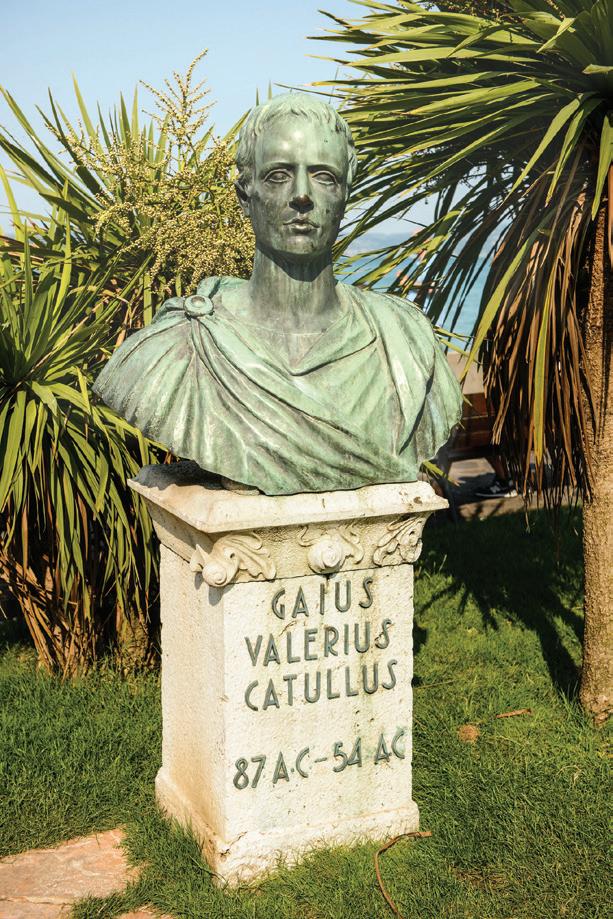
Lesbia is not the only one of Catullus’ lovers immortalized in his poetry. He wrote poems for other women, including a rather bawdy proposition to a woman called Ipsitilla (Poem 32), and a short cycle for a young man called Juventius, who seems to have inspired in Catullus much the same passions (and some of the same vitriol) as Lesbia. The question of Catullus’ sexuality, or what the modern world might define as “sexual orientation,” is entangled with complicated Roman cultural norms that identified active (versus passive) sexual activity as appropriate for elite men, regardless of whether the object of their lust was a man or a woman.
Catullus died young, around the age of 30, leaving behind a rich poetic legacy inspiring centuries of scholarship, creative adaptation and enthusiastic reception on a global scale. His observations on life, love and loss, whether flippant and crude or earnest and eloquent, offer plentiful insight into the meaningful connections between the ancient Roman world and our own: Catullus’ poetics model what it means to love deeply, to feel intensely and to lay those passionate emotions bare, for better or worse, in the pursuit of artistic achievement.
—©Dr. Caitlin Hines, Assistant Professor, Department of Classics, University of Cincinnati
PORGY AND BESS: FESTIVAL FINALE
SAT MAY 23, 7:30 PM | Music Hall
Anthony Parnther conductor
Julia Bullock soprano
Alfred Walker bass-baritone
May Festival Chorus Matthew Swanson, director
The May Festival Chorus is endowed by the Betsy & Alex C. Young Chair
Alex C. Young
Members of the Classical Roots Community Choir Jason Alexander Holmes, resident conductor
May Festival Youth Chorus Jason Alexander Holmes, director
Cincinnati Symphony Orchestra Cristian Măcelaru, Music Director
The Gershwins®’ PORGY AND BESS® (excerpts)* by George Gershwin, DuBose and Dorothy Heyward, and Ira Gershwin
Introduction
Jasbo Brown Blues Summertime
A Woman is a Sometime Thing Oh Little Stars
Gone, Gone, Gone My Man’s Gone Now Leavin’ for the Promise’ Lan’ It Take a Long Pull to Get There I Got Plenty o’ Nuttin’
The Buzzard Song
’Lo, Bess, Goin’ to the Picnic Bess, You is My Woman Now
Special thanks to these generous sponsors who bring the May Festival to life!
The 2026 Festival Director Julia Bullock is sponsored by A Friend of the May Festival
Tonight’s concert will last approximately 115 minutes, including intermission.
The Director of Choruses Matthew Swanson is sponsored by Sherry and Mark Holcomb
The 2026 Premier Partner sponsor is Carol and Scott Kosarko
The 2026 May Festival is presented by Fort Washington Investment Advisors
The 2026 May Festival is sponsored by Chavez Properties
Tonight’s concert is sponsored by John and Susan Tew
The appearance of the Cincinnati Symphony Orchestra is generously supported by the Louise Dieterle Nippert
Musical Arts Fund of the Greenacres Foundation
The appearance of Julia Bullock as soprano is sponsored by Barbara Ann Feldmann
The appearance of soloist Alfred Walker is sponsored by Christy and Terry Horan
The May Festival Floral Sponsor is Chris and Beth Canarie
Tonight’s pre-concert conversation is sponsored by Drs. William Hurford and Lesley Gilbertson
WGUC is the Media Partner for these concerts. This concert will air on 90.9 WGUC on October 25, 2026, followed by 30 days of streaming at mayfestival.com/replay.
Steinway Pianos, courtesy of Willis Music, is the official piano of the May Festival.
Oh, I Can’t Sit Down I Ain’t Got No Shame It Ain’t Necessarily So Lemme Go
I Wants to Stay Here / I Loves You, Porgy There’s a Boat Dat’s Leavin’ Soon for New York Catfish Row Interlude Porgy Comin’ Home Bess, Oh, Where’s My Bess? Oh, Lawd, I’m On My Way
William Grant Still Plain-Chant for America (1895–1978)
Poet: Katherine Garrison Chapin
Stephen Paulus Prayers and Remembrances (1949–2014) V. In Beauty It Walks VI. Eternity
Leonard Bernstein “Make Our Garden Grow,” Finale from Act 2 of Candide (1918–1990)
Encore: George Frideric Handel “Hallelujah” from Messiah (1685–1759)
*PORGY AND BESS is presented by arrangement with Concord Theatricals on behalf of Tams-Witmark LLC. www.concordtheatricals.com
The worldwide copyrights in the music of George and Ira Gershwin® for this presentation are licensed by the Gershwin Family.
GERSHWIN is a registered trademark and service mark of Gershwin Enterprises. PORGY AND BESS is a registered trademark and service mark of Porgy and Bess Enterprises.
The videotaping or making of electronic or other audio and/or visual recordings of this production and distributing recordings or streams in any medium, including the internet, is strictly prohibited, a violation of the author(s)’s rights and actionable under United States copyright law. For more information, please visit www.concordtheatricals.com/resources/protecting-artists.
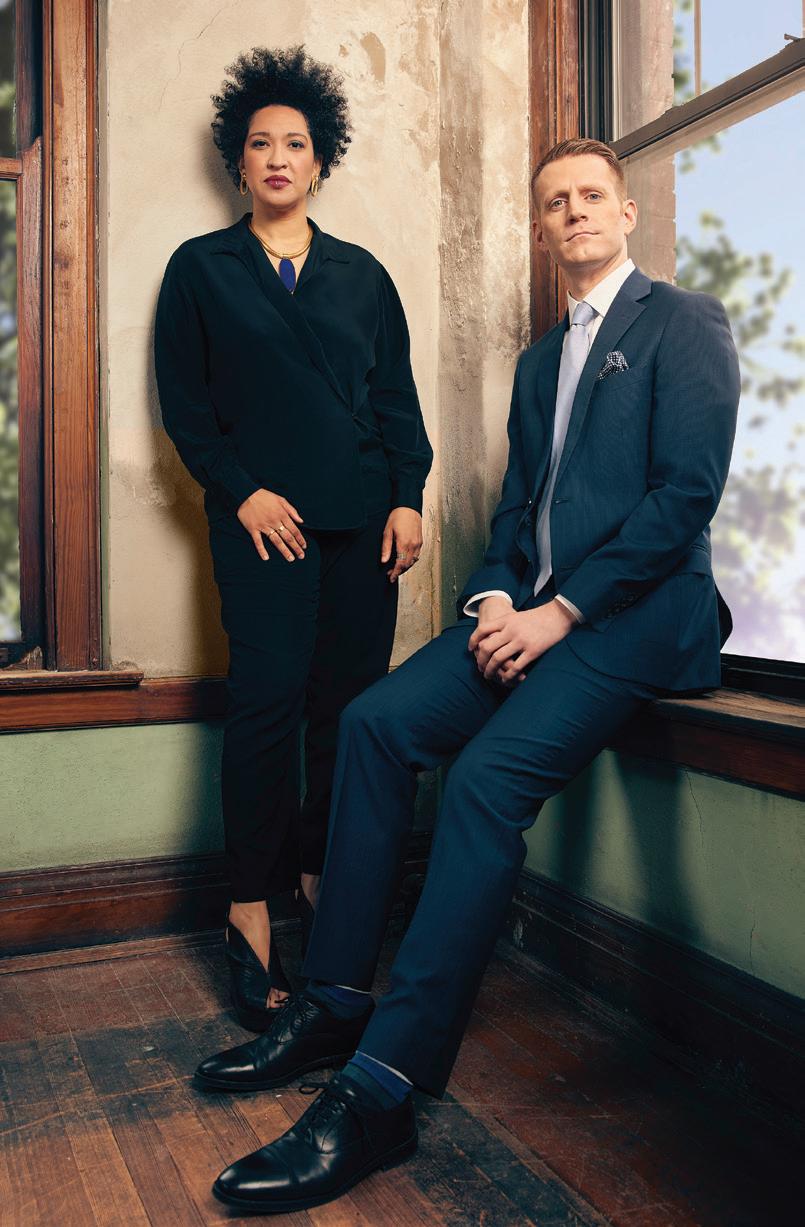
When Julia Bullock accepted the invitation to be the 2026 Festival Director, she asked for as many resources as the May Festival could give her: books, concert history, repertoire history, artists who had sung at the Festival, information about the city, etc. Bullock wanted to understand the May Festival, its history and its people.
Within these pages was the May 11, 1956, performance of selections from the Gershwins’ Porgy and Bess, sung by soprano Leontyne Price and baritone William Warfield. “This was the first time Black/African American soloists took to the stage at the May Festival,” recounts Bullock. “In 2026, the 70th anniversary of this historic moment, I thought we should bring Porgy and Bess back to the stage, but in a slightly different way.”
Bullock has curated selections from the opera for this year’s May Festival. The selections include iconic arias like “Summertime,” “I Got Plenty o’ Nuttin’” and “It Ain’t Necessarily So,” as well as the choral sections that allow the full May Festival family of choruses to gather together and share in extended community moments.
“One of the questions we wanted to consider for this Festival,” describes Bullock, “is how we want to address the current realities of the United States of America, which struggles so much to acknowledge its own history. We learn about our history, but because the culture and the geographical area of America are so wide-ranging, each one of us can be oblivious to a part of America’s history. This gap in our knowledge base (and stories) can lead to dismissals of each other’s humanity and become a barrier. Does this prevent us from acknowledging other human beings, and honoring the diversity of our experiences? Even if they are shared?”
In many ways, the May Festival is uniquely positioned to offer expressions of human experience. Choral singing is at the heart of the Festival. “All of these individual voices come together to express with one unified thought and intention,” reflects Bullock. “It’s a shared state of consciousness, where we are held responsible to and for each other — it is a profound act.”
The work of the Festival Director and Director of Choruses, then, is to create a unified and thoughtful connection between that profound act of choral singing and the creations of individual composers.
William Grant Still’s Plain-Chant for America is one such piece. “It is a piece with words by Katherine Garrison Chapin that hit you immediately,” states Bullock. “You will hear it one time, you’ll never forget it, and you’ll want to return to hear it again and again.” Director of Choruses Matthew Swanson adds, “It is both a historical artifact and a very present commentary. Ultimately, the piece is quite hopeful and quite optimistic, and it speaks of possibility.”
The concert experience doesn’t end with the final note! These questions are offered to enrich your experience and encourage conversation.
•How does this presentation of Porgy and Bess shape your understanding of its characters, themes and legacy?
•How do the different composers on this program express the ideas of resilience and community?
•What does it mean to end the Festival by singing together?
•How does that shared experience change your role as an audience member?
Born: September 26, 1898, New York, New York
Died: July 11, 1937, Los Angeles, California
Work Composed: 1934–35
Premiere: October 10, 1935 at the Alvin Theatre, New York City
Instrumentation: SATB chorus, vocal soloists, 2 flutes (incl. piccolo), 2 oboes (incl. English horn), 3 clarinets, bass clarinet, 2 alto saxophones, tenor saxophone, bassoon, 3 horns, 3 trumpets, 2 trombones, tuba, timpani, African drums, bass drum, crash cymbals, drum set, glockenspiel, sandpaper, snare drum, suspended cymbals, tom-tom, train whistle, wood block, xylophone, banjo, pianos, strings
Duration: approx. 55 minutes
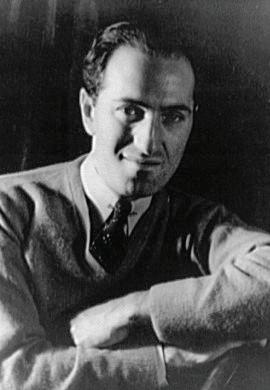
George Gershwin first encountered DuBose Heyward’s 1925 novella Porgy in 1926 while entrenched in rehearsals for his latest musical. According to Heyward’s wife, Dorothy (who adapted the novella into a successful play in 1927), Gershwin began reading late in the evening and, by the early morning, had drafted a letter appealing to the author about an operatic collaboration. In this telling, Gershwin acted on impulse, but opera had likely been on his mind since at least his first attempt, 1922’s poorly received Blue Monday Blues. And, in 1924, the Metropolitan Opera’s Otto Kahn had approached him about writing a “jazz opera” (Gershwin was third in line after Irving Berlin and Jerome Kern declined). Not until nine years after reading Porgy did Gershwin’s Porgy and Bess premiere, in October 1935 at the Alvin Theatre (now Neil Simon Theatre) on Broadway, a showcase for the Heywards and Gershwin’s brother, Ira, that lasted until early 1936. The opera’s plot revolves around the title characters Porgy and Bess, Gullah-speaking residents of Catfish Row, a tenement district in
Charleston, South Carolina. After a brief orchestral overture and one of the opera’s most famous numbers (the lullaby “Summertime”), a gambling scuffle results in Crown (Bess’ partner) murdering Robbins. Crown flees, leaving Bess to find refuge with the disabled beggar, Porgy, for whom she develops feelings. Bess becomes caught between these two men and local vice-peddler Sportin’ Life, who tempts her to go to New York with him in Crown’s absence. Soon, a storm brings the deaths of more residents and Crown’s return. This transpires while lawmen investigate Robbins’ death, briefly jailing Porgy for obstruction. Bess succumbs to Sportin’ Life’s pressure while Porgy is gone, and the opera ends with Porgy leaving to find Bess in New York. [Ed. For a synopsis of the complete opera, please visit metopera.org/discover/synopses/ porgy-and-bess.]
Critics have noted that Heyward’s novella is elliptical, a broken series of snapshots, but the operatic format alleviates disjunction through musical continuity. Heyward included lyrics to sung spiritual interludes in the original novella, asserting their necessity to understanding the characters’ worldviews, which was possibly a point of appeal for Gershwin. In Gershwin’s hands, the interludes became many of the opera’s best-known numbers, and he followed grand operatic convention by incorporating their melodies and rhythms into the opera’s fabric, outlining the drama with song quotes and limited leitmotifs. The opening overture’s rhythmic propulsion, for example, reappears during fights and the melodramatic storm scene. It further combines with fragments of “I Got Plenty o’ Nuttin’” for the finale and “I’m On My Way” as Porgy leaves to rescue Bess from New York (and Sportin’ Life), suggesting associations with action and self-assertion.
Perhaps Dorothy Heyward’s anecdote of Gershwin’s late-night epiphany belies assumptions about Gershwin’s compositional activity and his rigor, with the volume of music he composed during his relatively short life suggesting he worked
with uninhibited ease. But when asked, Gershwin modestly claimed that he labored over even small musical phrases as he crafted the music for hundreds of songs, and, having lacked earlier formal training in composition, he had approached Nadia Boulanger and Maurice Ravel for lessons (both declined, allegedly anxious of ruining his talent). This image of Gershwin more accurately comports with his conscientious effort on Porgy and Bess. It is his largest-scale work and followed a string of concert-oriented pieces written over the previous decade since Rhapsody in Blue in 1924.
While the commercial failure of Blue Monday Blues may have compelled Gershwin to tentativeness and slow work, he also seems to have understood the gravity of the project. He insisted that the opera be performed by a Black cast for authenticity, which precluded the Metropolitan Opera performing the work as it did not have any Black singers in its roster. Gershwin’s wish has been widely honored, establishing a precedent of social and civil rights actions around the opera’s performances. Artistically, in conversations with Heyward, Gershwin assured that he would begin writing the music only when he was technically prepared. He studied Richard Wagner’s Die Meistersinger and Georges Bizet’s Carmen as models, and he had also seen Alban Berg’s Wozzeck in 1931, an opera bearing grim affinities with details of Porgy and Bess. By 1933, George, Ira and Heyward had signed a production contract; George began composing in 1934, and he completed orchestration of the project in early 1935 (the latter was a craft he embraced after early critiques about delegating the task for Rhapsody in Blue).
Within the repertoire, Porgy and Bess stands alongside warhorses in annual performance frequency and incorporates their conventions. It trades in elements that popularized late-19th-century Italian verismo operas from Giacomo Puccini and Giuseppe Verdi, where roughness and grit, emotional struggles and daily experiences shine. As an opera incorporating syncopated rhythms and jazz idioms, it follows Scott Joplin’s Treemonisha (1911), Harry Lawrence Freeman’s Voodoo (1913) and Franke Harling’s A Light from St. Agnes (1925), among others. Perhaps unsurprisingly, given Gershwin’s stylistic range, Porgy and Bess resists generic pigeonholing. Though often staged by opera companies today, its premiere on Broadway followed trial performances in Boston, a trajectory more typical of musical comedy than grand opera.
The opera’s legacy draws partly from Gershwin’s knack for tunes, which he leveraged in different ways. Composer-theorist David Schiff has described Gershwin’s technique in large-format works as “tunes into themes,” where seeds of melodic snippets are nurtured and sequenced together, as in Rhapsody in Blue or An American in Paris Using his business intuition, Gershwin established the Gershwin Publishing Company to sell the opera’s music, and many of its songs sold well as standalone sheet music. The most famous numbers from Porgy and Bess are mainstays for musicians Miles Davis recorded a full album of Gil Evans arrangements in 1959, and Billie Holiday and Nina Simone performed and recorded “I Loves You Porgy.” Duke Ellington — who alleged Gershwin’s opera was inauthentic — even recorded a rendition of “Summertime” on his 1961 album, Piano in the Foreground, that is evocative, ascetic and caustic. In concert, performances of Porgy and Bess showcase these and other of the opera’s most striking musical selections, speaking to the opera’s lasting power and its composer’s prodigious craft.
—©Jacques Dupuis
William Grant Still: Plain-Chant for America
Born: May 11, 1895, Woodville, Mississippi
Died: December 3, 1978, Los Angeles, California
Work Composed: 1941
Premiere: (baritone and orchestra) October 23, 1941, Carnegie Hall, John Barbirolli conducting the New York Philharmonic with Wilbur Evans, baritone; (chorus and orchestra) April 1968, New Orleans Philharmonic Symphony Orchestra and the Dillard University Chorus Instrumentation: SATB chorus, 3 flutes (incl. piccolo), 2 oboes, English horn, 2 clarinets, bass clarinet, 2 bassoons, 4 horns, 3 trumpets, 3 trombones, tuba, timpani, bass drum, crash cymbals, snare drum, suspended cymbals, triangle, harp, strings Duration: approx. 9 minutes
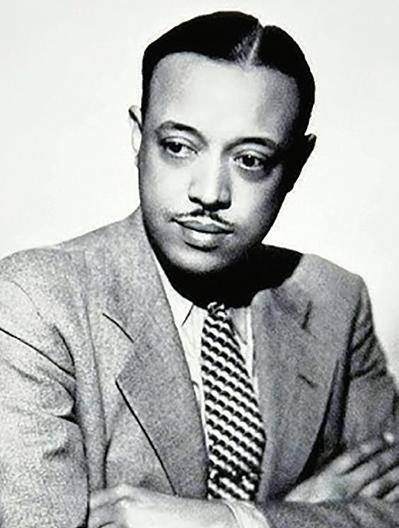
William Grant Still
In 1941, it was becoming clear to most Americans that another world war was developing in Europe. Although America had yet to enter the conflict, the rise and spread of Nazism and fascism, coupled with growing militarism in Japan, posed a considerable threat to democracy. It was under this specter of impending war that William Grant Still wrote the composition, Plain-Chant
for America. Earlier that year, the composer was commissioned by conductor John Barbirolli to write a piece for the centennial season of the New York Philharmonic. Initially, Still wrote a suite for the occasion but decided that something that rose to the poignancy of the occasion and the political moment was warranted.
Still was no stranger to the type of racism and xenophobia that underscored the rise of fascism in Europe. As a Black man born and raised in the Jim Crow South in 1895, he knew firsthand how racial hostilities and fears escalated to violence. He experienced the brutality associated with the First World War. In 1918, Still joined approximately 2.3 million Black men who enlisted to fight in World War I. He served in the Navy as both a musician and mess attendant. Like many of the other Black men who hoped that their display of patriotism and willingness to fight for democracy would initiate social change in America, Still was shocked by the violent backlash that came instead. In 1919, as he settled into a musical life in Harlem working for bluesman and musical entrepreneur W.C. Handy, Still watched as bloody race riots swept through Black communities. Although Still had emerged as the leader of a vanguard of Black composers and concert artists that propelled the Black Renaissance movement in the two decades since the Red Summer, little had changed socially and economically for Black folks in America.
This no doubt was on the mind of William Grant Still in 1941. His wife, Verna Arvey, recounted in The New York Times in 1941 how Still awoke one morning with Katherine Garrison Chapin’s poem “Plain-Chant for America” fresh in his mind. “It was then (in the summer of 1941) one of the most timely, inspiring and thought-provoking documents that had come to the composer’s attention.”
Published in 1939, “Plain-Chant for America,” part of a collection of poems and ballads of the same name, prophetically spoke of the potential dismantling of democracy and the continued spread of totalitarianism if Americans continued to be apathetic to and uninformed about the changing political environment. Chapin, who was commonly known as Mrs. Francis Bittle, was the wife of the Attorney General of the United States. She characterized her inspiration for the poem as follows:
An American poem had been germinating in my mind for a long time, but the final circumstance that thrust it into being was the fact that I had spent a few days in the company
of some persons who were sympathetic with the Fascists, whose talk showed me vividly the gap between totalitarianism and the American democracy in which I believed. The emotion of the poem began there.
William Grant Still’s setting of Chapin’s poem was not the first time the composer looked to her words to underscore the narrative of brotherhood and unity that he attempted to promote through his music. A year earlier, the two collaborated on one of his most moving and provocative works, And They Lynched Him on a Tree. The work depicted the mob violence that subsequently led to the lynching of a Black man. But Plain-Chant for America would prove to be a different work in both poetic and musical tone.
First scored for soloist and piano and for baritone and orchestra, from the beginning, Plain-Chant for America strikes both a majestic and patriotic tone. An opening fanfare-like motive played by the horn soon gives way to motivic interplay between strings, horn and other brass instruments. Still gradually builds emotional tension, with musical language that conjures images of the approaching danger of tyranny. This tension is only resolved when the chorus enters with the opening line, “For the dream unfinished out of which we came. We stand together. While our Hemisphere darkens and our nations flame.”
What follows are episodic moments separating the various stanzas of poetry that remind us of how masterful Still was in writing lush harmonies and rhapsodic melodies that exploited the musical colors of the orchestra. His music provides a strong and dramatic setting for Chapin’s words.
Plain-Chant for America, for baritone and orchestra, debuted at Carnegie Hall on October 23, 1941, and was highly acclaimed by critics. The social and musical significance of Still’s composition grew as America entered World War II following the bombing of Pearl Harbor in December 1941, and it continued to be performed by orchestras and choruses throughout the war years.
In the late 1960s, another generation was awakened to the poignancy and importance of its message. It was then, in the midst of the chaos, violence and social unrest of that era in America, that Still rescored the work for chorus and orchestra. This version was premiered by the New Orleans Philharmonic Symphony Orchestra and the Dillard University Chorus 12 days after the assassination of Dr. Martin Luther King, Jr. Its message that “if freedom fails, we’ll fight for more
freedom” paralleled the rallying cry of activists who propelled social movements that shaped America’s social identity during the last three decades of the 20th century.
Today’s performance of this work is a reminder that the current political and social climate is not so different from the one that ignited Chapin’s prophetic vision and literary voice. Most importantly, William Grant Still’s Plain-Chant for America calls for us to move beyond the apathy and aloofness that pervade our current times and consider the fragility of democracy and freedom.
Plain-Chant for America remains one of Still’s most well-known and performed choral works. But most important is its larger legacy of advocating for social consciousness, civil rights and social change in America’s concert halls.
—©Tammy L. Kernodle, University Distinguished Professor and the Park Creative Arts Professor of Music at Miami University
Note: Quotations from Verna Arvey, “New Chapin-Still Collaboration” New York Times; September 14, 1941.
Born: August 24, 1949, Summit, New Jersey
Died: October 19, 2014, Arden Hills, Minnesota Work Composed: 2011
Premiere: September 11, 2011, Tucson, Arizona, Tucson Chamber Artists and Tucson Symphony Orchestra, Eric Holtan conducting
Instrumentation: SATB chorus, flute, oboe, 2 clarinets, 2 bassoons, 2 horns, 2 trumpets, 2 trombones, timpani, bass drum, bell tree, glockenspiel, suspended cymbals, tam-tam, tom-toms, harp, strings Duration: approx. 9 minutes
Following is an introduction to Prayers and Remembrances shared by composer Stephen Paulus before the work’s premiere performance on September 11, 2011:
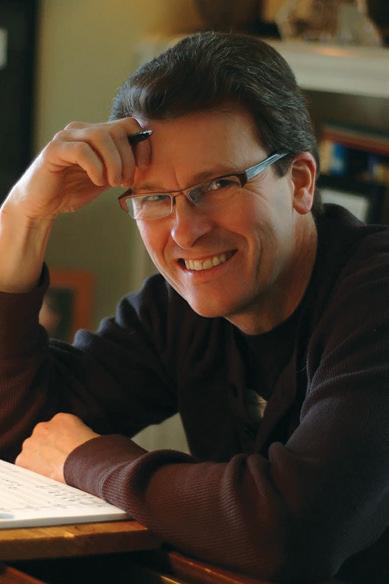
Prayers and Remembrances (2011) was commissioned for the 10th anniversary of the 9/11 tragedy by True Concord Voices & Orchestra [then Tucson Chamber Artists], Eric Holtan, music director, and Mrs. Dorothy Vanek, in loving memory of her husband, Robert Vanek, and in memory of friends of the Vaneks from United and American Airlines who were lost on September 11, 2001.
The idea for Prayers and Remembrances began with Eric Holtan. He approached me a few years back with a vision of writing a commemorative work for chorus and orchestra. We had several discussions and emails, especially about the text, and eventually, with the commission in place, I was ready to begin.
My concern was to write a work that would not only honor the 9/11 tragedy and all those who perished, but also one that would address the memories, the grieving and the recovery for anyone dealing with a circumstance in which loved ones had perished. Early on, Eric and I decided we wanted to create a work that would be spiritual but not necessarily religious. The goal was to find a combination of poems that were both secular and sacred — from poets who addressed grief, recovery and a spiritual focus in life — that would highlight common beliefs across distinct religious traditions. I ended up with a healthy mix of poets from different cultures, centuries and faiths.
The orchestra is approximately the size of the Mozart Requiem (since that was to be the companion work on the concert), with the addition of flute, oboe, horns, harp and percussion. My approach was to use the orchestra to adorn and emphasize the text. I consider the words such an important part to a piece like this, and my intention, as always, was to make sure the choir could be heard without being overwhelmed by the orchestra.
Throughout the work I have been conscious of trying to bring melodic and harmonic ideas to the fore that would suggest hope, light and a future. To me, this seems to be the hardest thing to accept in any tragedy, whether it involves one person or thousands. So there are sometimes bright, colorful harmonies or melodies in both the orchestra and the chorus: this is not a work meant to wallow in self-pity or dwell in tragedy. I am hopeful that the sounds and words meld, going at least some distance towards repair and healing.
I am so grateful to True Concord Voices & Orchestra and their wonderful director, Eric Holtan, for asking me to create a work for the 10th anniversary of the 9/11 tragedy. I hope this piece will have reason to be performed in other situations. And I am especially grateful to Dorothy Vanek for her generosity in commissioning the work. Without patrons and wonderful performers, composers would simply be artists working alone, like a tree falling in the forest when no one is around to hear it. —Stephen Paulus
Leonard Bernstein: “Make Our Garden Grow,”
Finale from Act 2 of Candide
Born: August 25, 1918, Lawrence, Massachusetts
Died: October 14, 1990, New York, New York
Work Composed: 1953–1956
Premiere: Operetta premiered: Martin Beck Theater, New York City, December 1, 1956
Instrumentation: SATB chorus; soprano, tenor, baritone soloists; 2 flutes, oboe, 2 clarinets (incl. bass clarinet), bassoon, 2 horns, 2 trumpets, 2 trombones, tuba, timpani, bass drum, chimes, crash cymbals, glockenspiel, suspended cymbals, harp, piano, strings
Duration: approx. 4 minutes
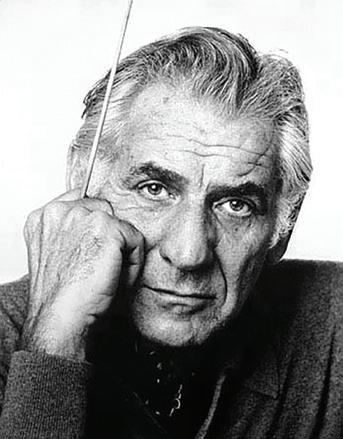
Leonard Bernstein’s scores for musical theater span his mature compositional career, though his most familiar today are likely those from the 1950s, including the irreverent Candide. He began work on Candide with playwright and screenwriter Lillian Hellman in 1953, after she originally presented the idea years earlier, and they worked first with John Latouche then Richard Wilbur for the project’s lyrics. (Bernstein and Dorothy Parker also wrote lyrics, and Stephen Sondheim later helped revise.) By Bernstein’s standards, it was a commercial flop. Its original 1956 version ran previews in Boston and premiered on Broadway on December 1, 1956, at the Martin Beck Theater, but lasted only 74 performances, closing by February. Yet today, opera and musical theater companies regularly perform the work (including nearly 350 times during the Bernstein centennial); its overture is a mainstay curtain raiser; and select numbers like “Glitter and Be Gay” are popular showpieces for singers. In the choral repertoire, the finale, “Make Our Garden Grow,” has become a favorite for its affirmational, aspirational message and Americanist sound.
The play tells the story of utopia-minded Candide, an illegitimate naïf living in his Westphalian uncle’s estate, where he fawns over the perfect Cunegonde. Family intrigues expel
Candide from the castle, and he is conscripted into a rival army. He subsequently travels the globe, repeatedly encountering his mentor, Pangloss, and a cast of other Westphalians. The satire, after Voltaire’s 1759 novella, ridicules muddled, egocentric Aristotelian inductive reasoning that presumes personal observations represent laws of the cosmos: what you see holds universal truth. Candide airs this in mocking declarations that the characters’ world — the only one they know — is “the best of all possible worlds.”
Once his “hero” journey has granted him the wisdom to recognize her imperfections, Candide reunites with Cunegonde. He sings “Nothing More than This,” in which he comes to terms with his flawed, naïve idealization of her. We learn they purchase a farm and life continues in a more realistic way, foil to the operetta’s prior utopianism. The chorus assembles for “Universal Good,” a sober precis on Candide’s realization: “Life is neither good nor bad. Life is life, and all we know.” Candide and Cunegonde exchange affirmations that their love can be genuine and mature, then Candide proposes marriage and flutes, clarinets and bassoons enter with the opening notes of “Make Our Garden Grow.”
The opening woodwind phrase of “Make Our Garden Grow” conveys simultaneous optimism in its high-arching opening interval and realism in the following two-note descent. After the short introduction, Candide invites Cunegonde to a more honest self-actualization and delivers a textual refrain that calls her (and us) to embrace the virtue of self-sufficiency through work. Cunegonde responds in kind, taking up Candide’s melody and sentiments, pointing the way forward to a better future. Bernstein set these respective strains in keys that are equally distant from the key of the third and final section sung by full chorus. When the full ensemble joins in this centralized key, it symbolically reinforces the lead characters’ exhortation with now-unified voice, finishing on a final, triumphant chord.
—©Jacques Dupuis























OUR SINCERE APPRECIATION TO THE FOLLOWING FOUNDATIONS AND CORPORATIONS FOR THEIR GENEROUS SUPPORT
Louise Dieterle Nippert Musical Arts Fund ArtsWave
Ohio Arts Council
The Carol Ann & Ralph V. Haile, Jr. Foundation
BAI Foundation
Eleanora CU Alms Trust
The Procter & Gamble Company
The Wohlgemuth Herschede Foundation
Ft. Washington Investment Advisors
Chavez Properties
Anonymous
Ladislas & Vilma Segoe Family Foundation
Louise Taft Semple Foundation
Cincinnati International Wine Festival
Bank of America Charitable Foundation
Hixson Architecture Engineering Interiors
Northern Cincinnati Foundation
PNC Bank Foundation
HORAN Capital Advisors
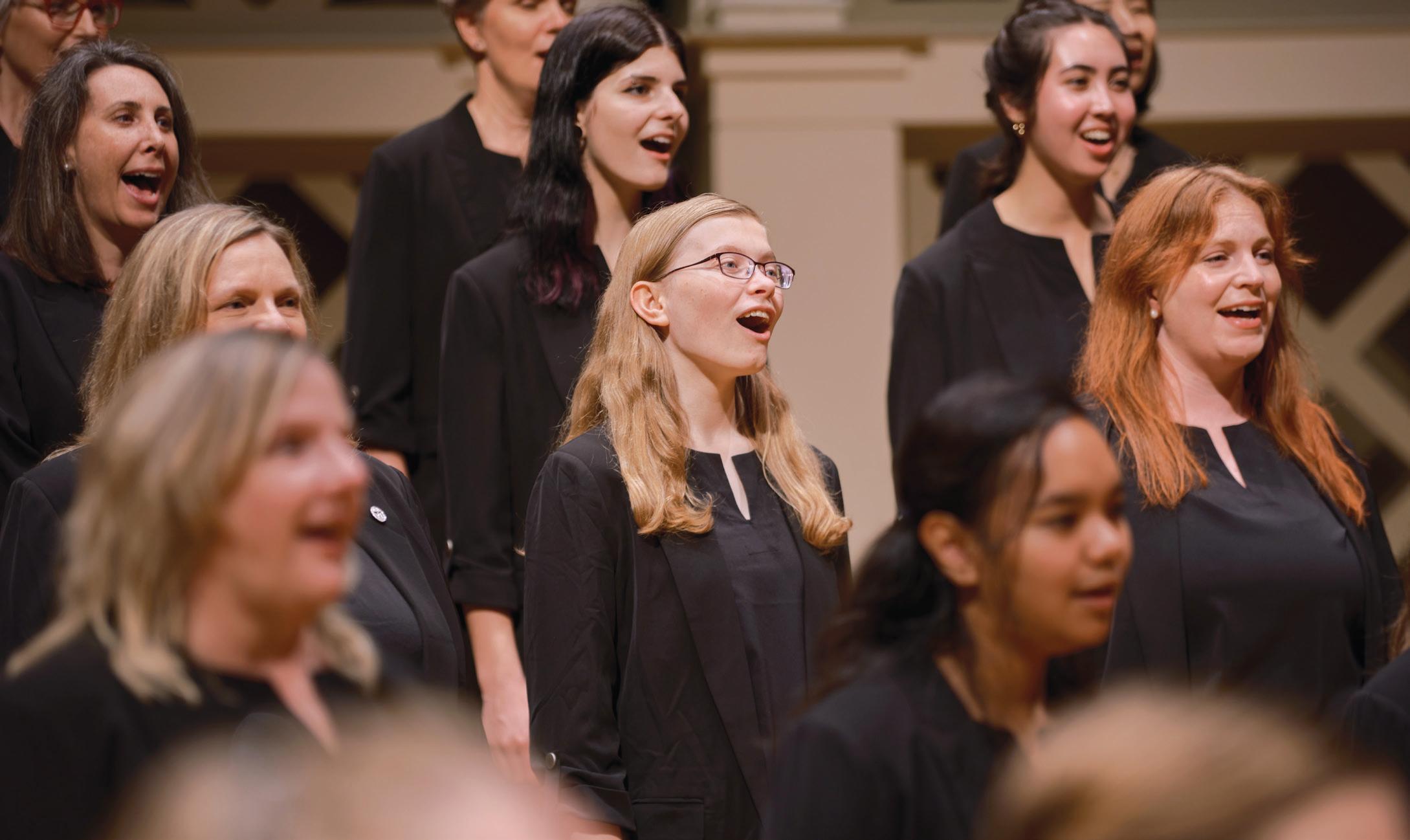
O cers
Dr. Michael Curran, Chair
Eric Combs, Vice-Chair
René McPhedran, Treasurer
Teresa Ernst, Secretary
Christy Horan, Immediate Past Chair
Directors
Drew Abbott
Patricia Borger
David Boyles
William Henry Caldwell
Chris Canarie
Barbara Ann Feldmann
Cristina Ferrari
Lesley Gilbertson
Bryan Hafertepe
J. Mark Holcomb
William Hurford
Anthony Lazzeri
Robert K. Lomax
Andrew Nordquist
Manisha Patel
Kathleen Rambo
Earl Rivers
Katy Sheehan
Eileen Stanisic
Joseph Stephens
Directors Emeriti
Susan S. La oon
Geraldine B. Warner
Honorary Directors
Steven Monder
Robert Porco
Advisory Committee (Past Chairs)
Rhoda A. Brooks
Melanie M. Chavez
Eric Combs
Nancy He ner Donovan
Kelly J. Downing
Gregory L. Ebel
Jerold A. Fink
J. Mark Holcomb
Christy Horan
Susan S. La oon
Sherie Lynch Marek
Charles S. Mechem
Thomas L. Neyer, Jr.
Charles Powers
Carole Tyler Rigaud
J. Shane Starkey
Robert E. Stautberg
Timothy E. Stautberg
Gust Totlis
Ronald H. Yocum
MISSION We exist to engage, energize and connect our community with the highest quality performances of great choral music.
VISION We are the most exciting force in the choral world. We are a leader and catalyst in the production, presentation and promotion of choral activities in our region and around the globe.
VALUES We believe in fostering choral music of the highest artistic standards; preserving the history, enhancing the present and embracing the future of choral music; cultivating diverse audiences, choirs and singers who are passionate about choral music; operating in a financially sound manner.
The May Festival acknowledges the following Partner Companies, Foundations and their employees who generously participate in the Annual ArtsWave Community Campaign at the $100,000+ level. Your support helps make our community vibrant and connects people all across our region through the arts. Thank you! (includes in-kind support)
$2 million+ P&G
$1 million to $1,999,999 Fifth Third Bank and Fifth Third Foundation
$500,000 to $999,999
GE Aerospace
$250,000 to 499,999
The Cincinnati Insurance Companies
The H.B., E.W. and F.R. Luther Charitable Foundation, Fifth Third Bank, N.A., Trustee Western & Southern Financial Group
$100,000–$249,999 altafiber
Cincinnati Children’s Hospital Medical Center
Cincinnati Reds
Dinsmore & Shohl LLP
The E.W. Scripps Company and Scripps Howard Foundation
The Enquirer | Cincinnati.com
Great American Insurance Group
Greater Cincinnati Foundation
The Kroger Co.
Messer Construction Co.
PNC
THANK YOU to the following donors for advancing the mission and vision of the May Festival through meaningful financial support.
This list represents donations of $50 or more in annual giving received between January 1, 2024 and March 5, 2026. Gifts received after this date will be recognized digitally and in future listings. To request a change to your listing, please contact Kathryn Zajac Albertson, Executive Coordinator, at kalbertson@mayfestival.com.
STAGE LEVEL
Gifts of $50,000 and above Eleanora C.U. Alms Trust, Fifth Third Bank, Trustee ArtsWave
The Carol Ann and Ralph V. Haile, Jr. Foundation
Louise Dieterle Nippert Musical Arts Fund of the Greenacres Foundation Ohio Arts Council
The Procter & Gamble Company
Ginger Warner
PREMIER CHORUS LEVEL
Gifts of $20,000–$49,999
BAI Foundation
Barbara Ann Feldmann
Christy and Terry Horan
Sherry and Mark Holcomb
The Wohlgemuth Herschede Foundation
Carol and Scott Kosarko
CHORUS LEVEL
Gifts of $10,000–$19,999
Anonymous
Ms. Henrietta Barlag
Chris and Beth Canarie
Melanie Chavez
Babs and Tom Ferrell
Ft. Washington Investment Advisors
Linda Mueller
Drs. Manisha Patel and Michael Curran
Joan Cochran Rieveschl
Irwin and Melinda Simon
John and Susan Tew
ENSEMBLE LEVEL
Gifts of $5,000–$9,999
Robert A. Atterton
John G. Avril Family Fund
David and Elaine Billmire
Trish and Rick Bryan
C.O. Harrison Elementary School
Connico, Bryan Hafertepe and Graham Hunter
Mr. William J. Hyde
The Ladislas and Vilma Segoe Family Foundation
Susan J. Lauf
Lois and Mel Nizny, MD
Rozy Park and Chris Dendy
Kathy and Craig Rambo
Elizabeth Warner and Laurent Huguenin
CHORALE LEVEL
Gifts of $2.500–$4,999
Dr. Rob and Ashley Altenau Family
Bank of America Charitable Foundation
Milt and Berdie Blersch
The Boeing Company
The Board of Directors of the Cincinnati Boychoir
Cincinnati International Wine Festival
Eric and Jane Combs
Diana T. Dwight
Ann Ellison
Mr. and Mrs. Robert Ernst
Mr. and Mrs. Ed Hafertepe
Drs. William Hurford and Lesley Gilbertson
Linda Busken and Andrew MacAoidh Jergens
Mrs. Karolyn L. Johnsen
Susan Laffoon
Ronald C. Lamping
Laskey Charitable Fund
Carmie Maloney
David and Vicky Motch
Poul D. and JoAnne Pedersen
Mr. and Mrs. Slobodan Stanisic
Margaret K. Valentine
SOLOIST LEVEL
Gifts of $1,000–$2,499
Anonymous
Julianne Akins Smith and Patrick Smith
Jeff and Keiko Alexander
Ms. Patricia Borger
Mark and Marie Boyle
Dr. William Henry Caldwell
Connico
Nancy and Steve Donovan
Ashley and Barbara Ford
H. Jane Gavin
Edward J. Givens
Drew Gores and George Warrington
Karen and David Huelsman
Lara Hughes
Mr. and Mrs. Thomas Klinedinst III
Mr. Anthony and Dr. Kimberly Lazzeri
Whitney and Phillip Long
David L. Martin
Ms. René McPhedran
Mrs. Thomas L. Neyer
Northern Cincinnati Foundation
Mr. Stanley H. Ragle
Ellen Rieveschl
Beth Roberts
Dianne and J. David Rosenberg Fund of Greater Cincinnati Foundation
Dr. and Mrs. G. James Sammarco
The Schieve Family
Schlachter Family Fund of Greater Cincinnati Foundation
Katherine and Tim Stautberg
Bill and Lee Steenken
Steven R. Sunderman and Mark C. Adams
Dr. Matthew Swanson
Nydia C. Tranter
Jane A. Walker
Rosanne Wetzel
Joe White
Shelby O. Wood
Barry Zaslow
DUO LEVEL
Gifts of $500–$999
Anonymous
Julian Autrey Song Foundation
Gerard and Susan Baillely
Fred Berger
Neil K. Bortz
Mr. David R. Boyles and Mr. David Castillo
Rhoda and John Brooks
William L. Budde, Ph.D.
Dr. Mark Carney and Mrs. Janet Greer-Carney
Michael Cioffi and Rachael Rowe
Bryan Corbett
Mark Dauner
Steven and Donna Dauterman
Mr. and Mrs. Thomas J. Davis
Edy and David Dreith
Dale and Kathy Elifrits
GE Foundation
Michele M. Giuliani
Charles and Barbara Glueck
Bryan Hafertepe and Graham Hunter
Margaret E. Hagar
Carl and Barbara Harcourt
Hixson Architecture
Engineering Interiors
Mike and MaryBeth Hockenberry
Rick and Louise Hughes
Spence Ingerson
Kathleen B. and Michael C. Krug Fund of Greater Cincinnati Foundation
Ms. Carol Louise Kruse
Calvin and Pat Linnemann
Thomas J. and Adele G. Lippert Family Fund of Greater Cincinnati Foundation
Sherie Lynch Marek
Dr. Janet McDaniel
Robert and Heather McGrath
Mr. and Mrs. Fred Moore
Alice Perlman
Joseph A. and Susan E. Pichler Fund of Greater Cincinnati Foundation
Irene and Daniel P. Randolph Family
James P. Schubert
Bob and Rachel Tucker
Katherine Wen and Ben Li
Rev. Anne Warrington Wilson
Sylvia and Peter Winik
Robert and Judy Wilson
TRIO LEVEL
Gifts of $300–$499
Karen Schulman-Bear
Helene Sullivan Bentley
David Brashear
Mary Beth Hamburger
Heritage Universalist Unitarian Church
Paul and Mary Jenks
Randy and Jan Johnson
Mr. and Mrs. Robert Lomax
Catherine McGraw
Carol J. Schroeder
Saira Shahani
Dr. Edward B. Silberstein and Jacqueline M. Mack
Alice Skirtz
Mr. and Mrs. Richard F. Stradling
Rodney and Mary Stucky
Karen Wiltsie
Jeff and Kelly Woodward
QUARTET LEVEL
Gifts of $100–$299
Anonymous (11)
Jane and Francis Acquaviva
Drs. Frank and Mary Albers
Tracy and Dale Bailey
Bobbie Bell and Jose Zamora
Laurie J. Boisclair
Pete and Melanie Boylan
Rev. James A. Bramlage
Marsha and Alan Brody
Mr. Scott Brody
Donald and Kathleen Field Burns
Thomas and Sondra Copanas
Phillip Crabtree
Dr. John A. Deaver
Stephen and Cynthia DeHoff
Mr. and Mrs. William O. DeWitt, Jr.
Anthony J. Dicello
Robert DiMartino and Drew Abbott
Ms. Jennifer Drydyk
Ren and Cristina Egbert
Barbara Erskine
Sterling Finkbine
Steve and Joy France
Dr. Charles E. Frank, Ph.D. and Ms. Jan Goldstein
Rear Admiral Alan M. Gemmil
Shelley and Steven Goldstein
Karl and Connie Graham
Sam and Marlene Guttman
Charles and Melissa Haas
Drew and Martha Hadley
Mrs. Irving Harris
Alice and John Hehman
Mr. and Mrs. Robert Heidenreich
Daniel J. Hoffheimer
Jason Alexander Holmes
Dr. and Mrs. Nelson Horseman
Jeanine Jason
Robert and Janet Jones
Robert and Anne Judd
Dr. James Kaya and Ms. Debra Grauel
Diana and Tim Kilfoil
Jerry N. Kirby, M.D.
The Kroger Company
Mr. and Mrs. Lawrence H. Kyte, Jr.
Russell Lascelles and Janet Schultz
Ms. Megan Lawson
Kevin Leahy and Joyce Steiner
Mitchel and Carol Livingston
Carole Lonneman
Kay M. Luccasen
Ms. Sally A. Lund
Matt Matson
Scott and Linda May
Mr. Randolph McAusland
Mrs. Gloria A. Metz
David Mill
Marilyn and Gary Mitchner
Mr. and Mrs. Scott Nesbitt
Oluseyi Omolayo
M. P. Wiggins
Stephen Phillips
Brian T. Reilly
Carole and Edwin Rigaud
Dr. Richard S. Sarason and Anne S. Arenstein
Mr. and Mrs. William Sciannamblo
Ms. Barbara Seiver
Elizabeth A. Snyder
Carol and Harry Sparks
Mr. and Mrs. Richard R. Sprigg
Mr. Roger O. Stafford
Marian P. Stapleton
Ellen and Laurence Stillpass
Mary Ann and Bill Taylor
David and Christine Thornbury
Total Quality Logistics
Ms. Beth Troendly
Mr. and Mrs. Frederick D. Warren
Dean and Mary Watkins
Mark and Jennifer Weaver
M. Wesley Johnson and Mark R. Wert
Jim and George Ann Wesner
Stephen and Amy Whitlatch
Robin Wiley
Mr. Steven Wilkinson
John M. Yacher
SHAREHOLDER LEVEL
Gifts of $50–$99
Anonymous (4)
Rhonda Burkhart
Sharon Butler
Jan Conversano Besl and James Besl
Randy Cook
Rachel Curran
Lynn and Jim Denton
Judith Eilert
Mr. and Mrs. Walter C. Frank
Robert and Christine Graeter
Angela Granlund
Doug Ignatius and Bruce Preston
Mr. Joel Konzen
Katherine Miller
Mr. Terry Parsons
Anne M. Pohl
Robert Radon and Lawrence Cline
Bav and Nedi
Terry and Burr Robinson
Dennis and Helen Sullivan
Jonquil Thoms
Danielle Turner

The May Festival is grateful to the following donors whose endowed gifts provide important underwriting of the Festival and Chorus each year.
Robert A. Atterton
Joan P. and Oliver L. Baily Fund
Mr. and Mrs. LeRoy R. Brooks
Dr. and Mrs. Morton Harshman
Dr. Thomas Lesher
Mr. and Mrs. S. Charles Straus
Mary and Joe Stern

The May Festival is grateful to the following donors whose contributions to the Music Makers of Tomorrow Fund ensure that students will be able to attend the May Festival at no charge—every concert, every year.
Anonymous (2)
Nate and Greta Bachhuber
Mrs. Maxine Berkman
Milt and Berdie Blersch
Chris and Beth Canarie
Ms. Lisa Collins
Mark Dauner
Michael D. and Carolyn Camillo Eagen
Ann Ellison
Mr. Frank Espohl
Shelley and Steven Goldstein
Karl and Connie Graham
Kristina Groth
Dr. Jack and Barbara Hahn
Mary Beth Hamburger
Ms. Jane F. Hansley
Carl and Barbara Harcourt
Mr. and Mrs. Robert R. Heidenreich
Ms. Margaret A. Hilvert
Emily and Barry Hindin
Christy and Terry Horan
Robert Jenkins
Paul and Mary Jenks
Mrs. Karolyn L. Johnsen
Mary Judge in honor of Madeline Judge
Mr. and Mrs. Christopher Kanney
Ian and Nicholette Kasman in memory of Madi Kasman
Mr. and Mrs. John Klahm
Kathleen B. and Michael C. Krug
Susan La oon
Janet and Gary Langhorst
Dr. and Mrs. John Maier
Kathy and Brad Mank
David L. Martin
Leslie and Russ Metheney
David Mill
Lois and Mel Nizny, MD
James Norton
Poul D. and JoAnne Pedersen
PNC Bank Foundation
Anne M. Pohl
The Family of Marie F. Martin
Kathy and Craig Rambo
Brian T. Reilly
Ellen Rieveschl
Carole and Edwin Rigaud
The Schieve Family
Ms. Barbara Seiver
John M. Shepherd
Alice Skirtz
Steven R. Sunderman and Mark C. Adams
HORAN Capital Advisors
Nydia C. Tranter
Ernest and Helen Waits
Jane A. Walker
Robin and Larry Wiley
Charles A. Wilkinson
John M. Yacher
Barry Zaslow
With community at the very heart of the May Festival’s legacy — past, present and future — we are deeply honored to receive the following gifts made in tribute to the work, friendship and legacies of living individuals or loved ones.
May 2025–April 2026.
In memory of James Milton Akins
Julianne Akins Smith and Patrick Smith
Robert and Jan Jones
Scott and Linda May
The May Festival Sta
Matthew Swanson
Jonquil Thoms
Robert and Rachel Tucker
Sylvia and Peter Winik
In memory of Dr. Norita D. Aplain
Mr. Stanley H. Ragle
In memory of August Bruening Anonymous
In memory of R. Robert von Brüning
Karen and David Huelsman
In honor of Mary G. Budde
William L. Budde, Ph.D.
In honor of Julia Bullock
Julian Autrey Song Foundation
In honor of Barbara Ann Feldmann
Berdie Blersch
In memory of Laura Perkins Fidler
Sam and Marlene Guttman
Rick and Debby Smith
In memory of Thomas J. Frey
Barry Zaslow
In memory of David Fuller
Mrs. Gloria A. Metz
In memory of Mary Gimpel
Sherie Lynch Marek
Mary Ann and Bill Taylor
Ginger Warner
In memory of Madi Kasman
Ian and Nicholette Kasman
In memory of Mike Krug
Kathleen B. and Michael C. Krug Fund
In honor of Robert Porco
Katherine and Tim Stautberg
In honor of the May Festival Artistic and Administrative Sta
Members of the May Festival Chorus
In memory of Kathleen Walton
Schubert
James P. Schubert
In honor of Steven Sunderman
Nancy and Steve Donovan
Rosemary and Mark Schlachter
Katherine and Tim Stautberg
In honor of Matthew Swanson
Mark and Marie Boyle
THE WATER’S JOURNEY SAT MAY 16
Twin Lakes at Montgomery ON LOVE AND LUST THU MAY 21
Sabrina Bothwell & Friends
PORGY & BESS, SAT MAY 23
Tanya Brown Friends & Family
Interested in how to bring a group? Call or email us: 513.744.3252 or wmarshall@ cincinnatisymphony.org







Welcome and thank you to every audience member for supporting the unique community tradition and artistic masterpiece that is the May Festival. We celebrate especially our loyal Festival Passholders (formerly known as subscribers) for their dedication and commitment to welcome ever-growing audiences to experience the magic of the May Festival!
List as of April 6, 2026 including former subscribers and full Festival Passholders
If your name is inadvertently missing or listed incorrectly, please email contact@mayfestival.com
Michael Battersby
David and M. Elaine Billmire
Donald and Kathleen Burns
Debbie Bogenschutz
Steven and Shelley Goldstein
James and Sally Harper
Ronald C. Lamping
Susan Laffoon
Adele Lippert
Sally Lund
Stan Ragle
Richard and Kathleen Wayman
25–49 YEARS
Khosrow and Julie Alamin
Christine Adams
Henrietta Barlag
Avi Bear and Karen Schulman-Bear
Douglas and Susan Bierer
Debbie Bogenschutz
John and Rhoda Brooks
Frederick and Trish Bryan
Thomas and Dorothy Burdin
Christopher and Beth Canarie
The Castellini Foundation
George Colombel
Cincinnati Financial Corporation
Michael Cioffi and Rachael Rowe
Mel Cohen
Louis Dauner and Geraldine Wu
Steven and Donna Dauterman
Stephen and Nancy Donovan
Harold Eberenz
John Ellmore
Daniel Epstein
Barbara Feldmann
Thomas and Barbara Ferrell
Edward Givens
Karl and Constance Graham
Anita Marie Greer and William Gatian
Jack and Barbara Hahn
Robert and Martha Highsmith
William and Joan Hill
Michael Hirsch
Emily Hodges and Charles Spencer
Randy and Jan Johnson
Robert and Julia Jolson
Kathleen Krug
Carol Kruse
William Klykylo and Dorothyann Feldis
Carol and Scott Kosarko
Walter Langsam
Jonathan and Nancy Lippincott
W. Burton and Roselyn Lloyd
Sally Lund
Brad and Kathy Mank
Carl Marquette
Judith Martin
Randolph McAusland
Nancy McNeal
Lon Mendelsohn
Donald and Judy Mills
Gary and Marilyn Mitchner
David and Virginia Motch
Christine Neyer
Tamar Oestreich
Cora Ogle
Poul D and JoAnne Pedersen
Jason and Carol Ramler
G. James and Ruthann Sammarco
Lee and Martha Schimberg
Carol Schroeder
Irwin and Melinda Simon
Alice Skirtz
Jeffrey Slattery
Jean Snyder
Richard and Gail Stradling
Timothy and Katherine Stautberg
William and Lee Steenken
Brett Stover
Samuel and Dottie Stover
James Thompson
Geraldine and David Warner
Frederick and Jo Anne Warren
Shelby Wood
Linda Ziegler
10–24 YEARS
Paule Asch
Jeffrey Berry and Agnes Nicholas
Milt and Berdie Blersch
Christine Boehr
Neil Bortz
Don and Judy Brown
Melanie Chavez
Eric and Jane Combs
Melissa Cox
Lynne & Elizabeth Curtiss
Harry and April Davidow
William and Dorothy Dean
Stephen and Cynthia DeHoff
John and Joanne Earls
C. and Kathy Elifrits
Joseph Farrell
Jerome and Robin Galvin
H. Drewry Gores and George Warrington
Thomas and Carolyn Griffin
Carl and Barbara Harcourt
Marcia Hartsock
John and Alice Hehman
Phillip and Barbara Hester
Terry and Christy Horan
David and Karen Huelsman
Ivan Ivanov and Elena Ivanova
Dale and Roxanne Johnson
David and Charlotte Kirkendall
Jack and Svetlana Klette
Thomas Klinedinst III and Lori Klinedinst
Kathryn Lang
James and Barbara Lambert
Susan Lauf
Alfonso and Mary Lopez
John and Mary Lund
David Martin
Norma Miller
Nancy Neff
Paul Neumann
Elizabeth Osterburg
Manisha Patel and Michael Curran
Justin and Lauren Peter
Priscilla Prouty
Joyce Rimlinger
Gale Roberts
Joseph Schwering and Diana Fleming
Diana Stoppiello
Rodney and Mary Stucky
Robert and Marcia Togneri
Mark and Jennifer Weaver
Karen Webb
Charles Wilkinson
James and Ronna Willis
John and Jeannine Winkelmann
John Yacher
The May Festival, Cincinnati Symphony Orchestra and Vocal Arts Ensemble operate under an administrative shared services agreement. By the consolidation of resources and expertise, this cooperative management e ort benefits all organizations.
MAY FESTIVAL
Julianne Akins Smith Executive Director
Edy Dreith Education Manager
Jason Alexander Holmes
Associate Director of Choruses & Youth Chorus Director
Jennelle John-Lewis Chorus Operations Manager
Madelyn Low
May Festival Intern
Kathleen Moran Chorus Librarian
Ben Rosenfield Director of Marketing
Matthew Swanson Director of Choruses
Kathryn Zajac Albertson Executive Coordinator
SENIOR MANAGEMENT
TEAM
Robert McGrath President & CEO
Harold Brown
The Honorable Nathaniel R. Jones Chief Inclusion O cer
John Clapp Chief Orchestra & Production O cer
Felecia Tchen Kanney Chief Marketing & Communications O cer
Mary McFadden Lawson Chief Philanthropy O cer
Gregory Lee Chief Financial O cer
Anthony Paggett
Chief Artistic O cer
Kyle Wynk-Sivashankar Chief People O cer
EXECUTIVE OFFICE
Shannon Faith Executive Assistant to the President & CEO
ARTISTIC PLANNING
Julia Gaines
Artist Liaison
Theresa Lansberry
Manager of Artistic Planning & Artist Servicing
Shuta Maeno
Manager of Artistic Planning & Assistant to the Music Director
FINANCE, IT & DATA SERVICES
Julian Cann Accounting Clerk
Leia Chan Finance Intern
Kathleen Curry Data Entry Clerk
Elizabeth Engwall Accounting Manager
Matt Grady Accounting Manager
Sharon Grayton Data Services Manager
Marijane Klug Sta Accountant
Shannon May Sta Accountant
Kristina Pfei er Director of Finance
Judy Simpson Director of Finance
Tara Williams
Data Services Manager
HUMAN RESOURCES & PAYROLL
Megan Inderbitzin-Tsai Director of Payroll Services
Monica Lange Payroll & Human Resources
Assistant
Natalia Lerzundi Human Resources Manager
COMMUNICATIONS & DIGITAL MEDIA
Charlie Balcom
Social Media Manager
Leon Barton
Website Manager
Hannah Boettcher
Marketing Intern
KC Commander Director of Digital Content & Innovation
Maria Cordes
Video Editor
Jon Dellinger Growth Marketing Manager
Drew Dolan
Box O ce Manager
Kaitlyn Driesen
Digital Media & Label Services Manager
Jensen Fitch Publicity Manager
Gabriela Godinez Feregrino Publications Manager
Daniel Lees Assistant Box O ce Manager
Michelle Lewandowski Director of Marketing
Tina Marshall Director of Ticketing & Audience Services
Wendy Marshall Group Sales Manager
Madelyn McArthur Audience Engagement Manager
Nyla Nawab Communications Intern
Amber Ostaszewski Director of Audience Engagement
Devon Pine Subscription Marketing Manager
Discover more about the many artists and music that have been featured throughout the May Festival’s rich legacy by visiting mayfestival.com/about/history.
Tyler Secor Director of Communications & Content Development
Alexis Shambley
Audience Development
Marketing Manager
Lee Snow
Digital Content Technology Manager
Elise Wells
Digital Content Intern
Patron Services
Representatives
Hannah Blanchette, Lead
Jacob Forte, Lead
Grace Mattina, Lead
Marian Mayen, Lead
Gregory Patterson, Lead
Charlie Aurand
Andy Demczuk
Craig Doolin
Abby Dreith
Ebony Jackson
Scott Molnar
Kathleen Riemenschneider
Mekhi Tyree
PRODUCTION
Laura Bordner Adams Director of Operations
Shawnta Hunter
Production Intern
Alex Magg
Production Manager
Isabella Prater
Production Coordinator
Brenda Tullos Director of Orchestra Personnel
for the May Festival Chorus & Youth Chorus
SUMMER 2026





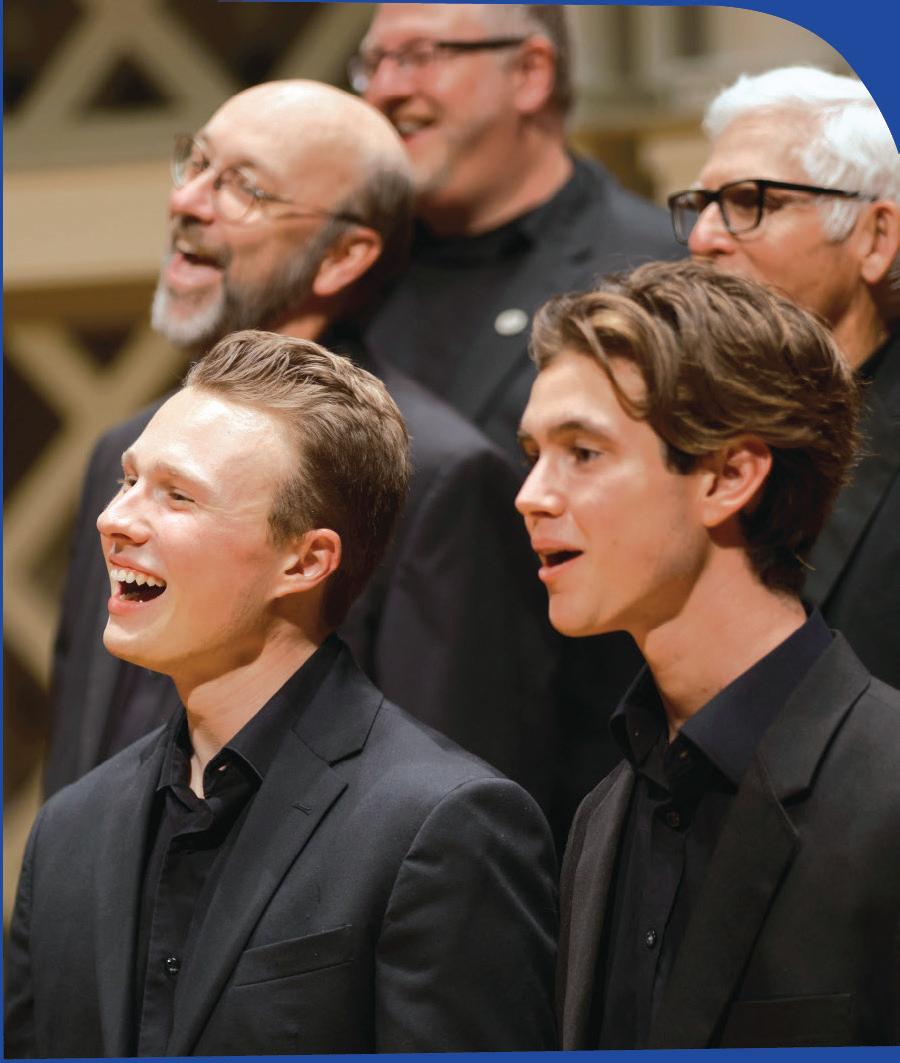
There are no costs associated with singing in May Festival Choruses, such as dues or fees for participation.
The May Festival provides uniforms, parking, voice lessons, and musical scores to all singers at no charge.
Plus, singers receive FREE or discounted tickets to CSO and May Festival performances!