Many leaders have played sports at some point in their lives; many still do so for recreation and wellbeing. Many of us remember a special coach from our youth who instilled life lessons beyond athletic excellence. They challenged us to be the best we could be by continually improving. They pulled us together as a team, where the success of each depended on the success of all—and vice versa. They may have challenged us or expressed disappointment when they knew we did not play our best.
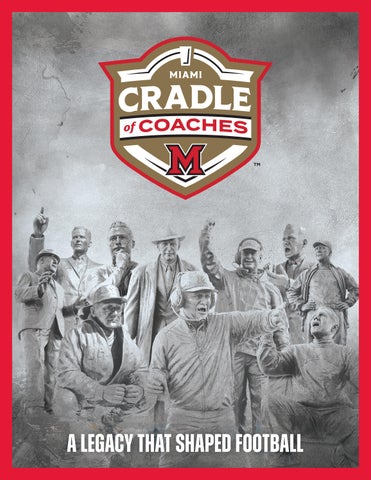
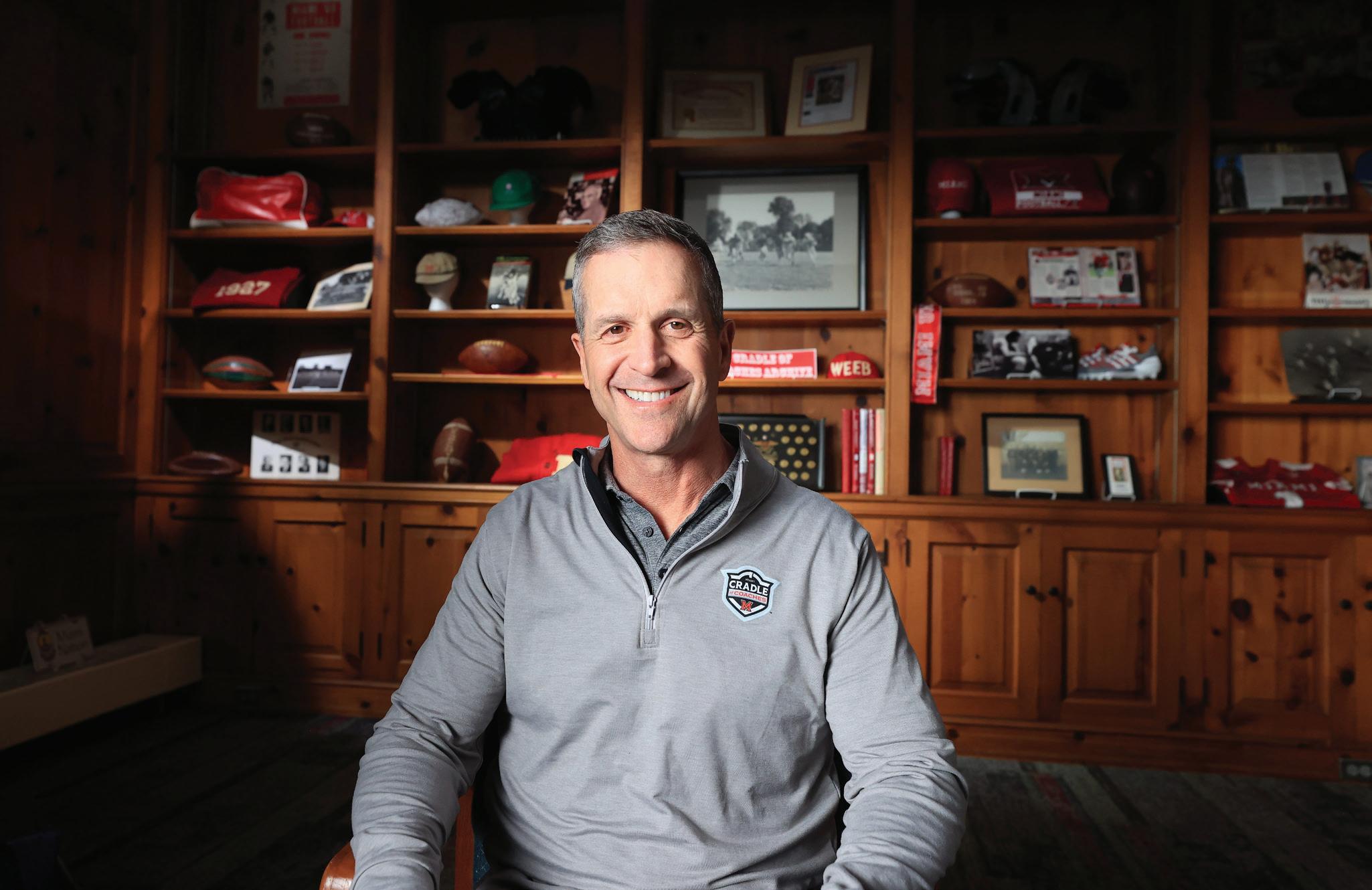
Their lessons provided a playbook for our future in the business world that was better than many self-help books on leadership. The greatest examples are the people who are part of Miami University’s Cradle of Coaches.
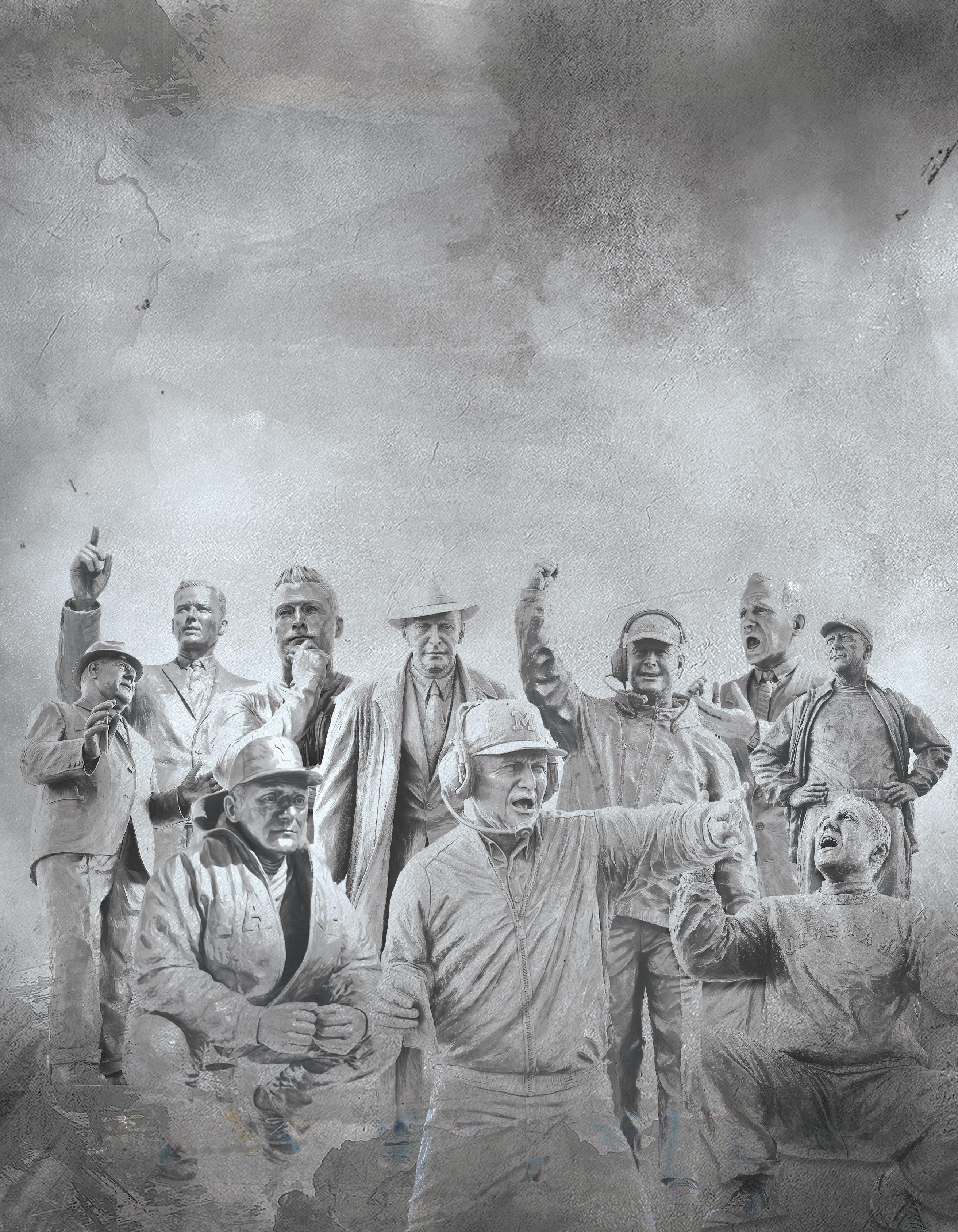
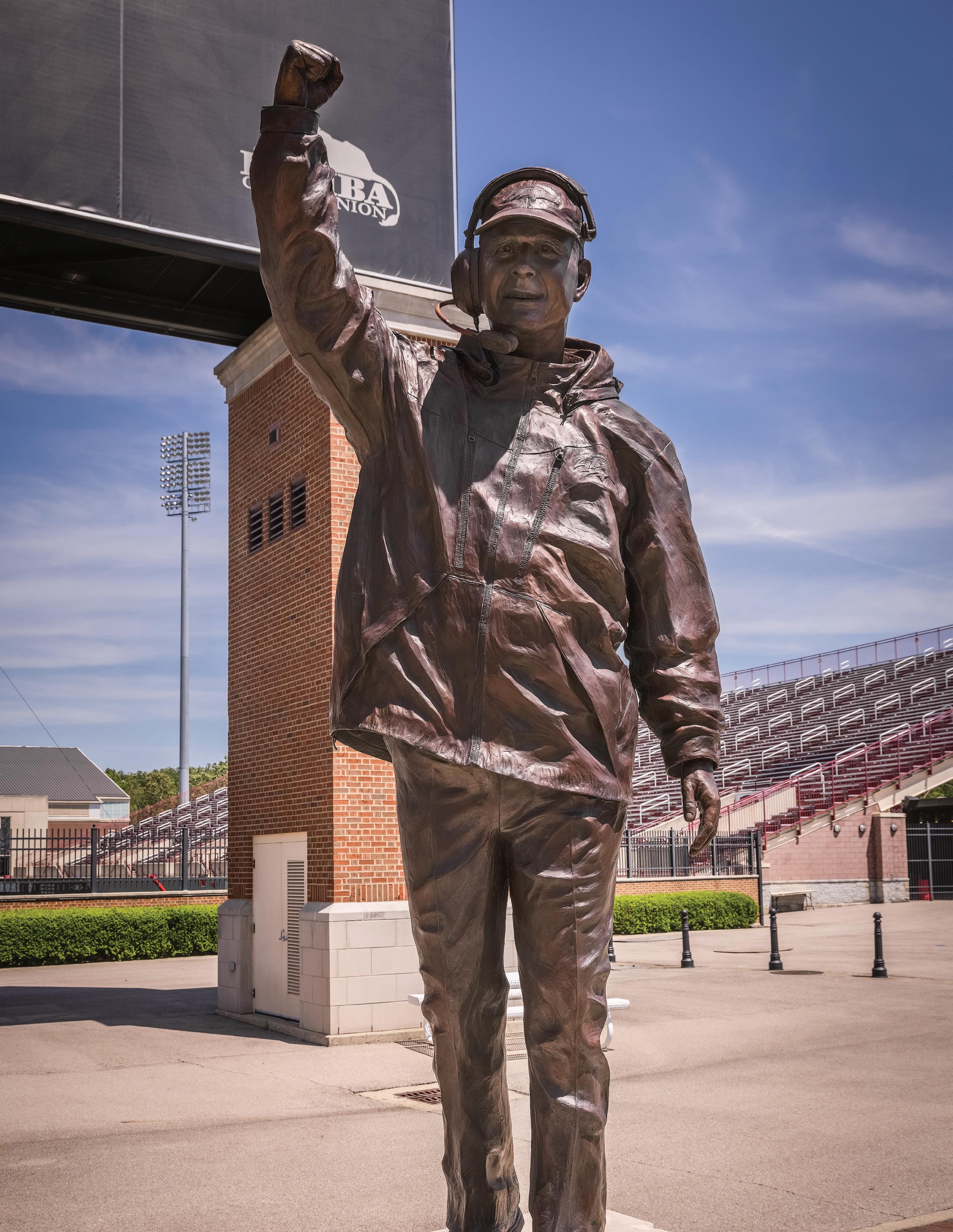
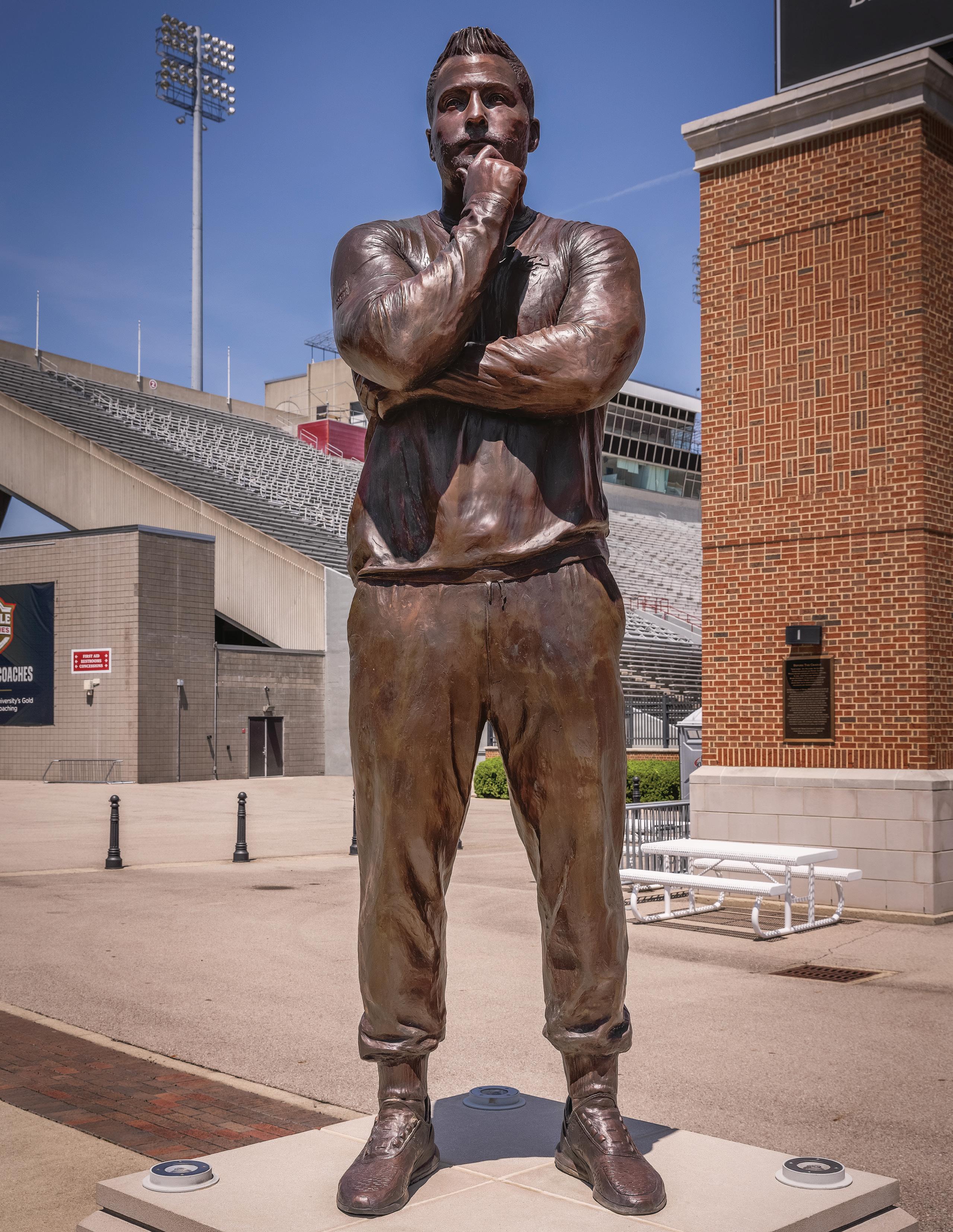
Miami is known for developing and launching coaches into careers. When I take a morning run at Yager Stadium, I visit the statues of coaches past and present, including Super Bowl champions and other well-known collegiate winners. As I reflect on their leadership beyond their winning records, I learn valuable lessons for my own career, which in turn inform my leadership journey. I have never met most of them, but I often reflect on their excellence, their lives, and the leadership lessons they provide me.
The stories collected in this book illustrate why Miami earned its reputation as the Cradle of Coaches. They highlight leaders such as Earl Blaik, the servant leader; Paul Brown, the innovator; Carm Cozza, the mentor; Weeb Ewbank, the builder; and Ara Parseghian, the stabilizer, who I became close to and collaborated with on the fight against Niemann-Pick. Each of these legendary coaches established a distinct leadership model that continues to inspire us today.
Learning the stories of the coaches in the cradle and incorporating their examples into our own leadership journeys can accelerate our growth and deepen our impact. Their legacies remind us that leadership is not simply about winning; it is about developing others, serving a purpose greater than ourselves, and leaving a lasting mark on those we lead.
Love, Honor, and Legacy,
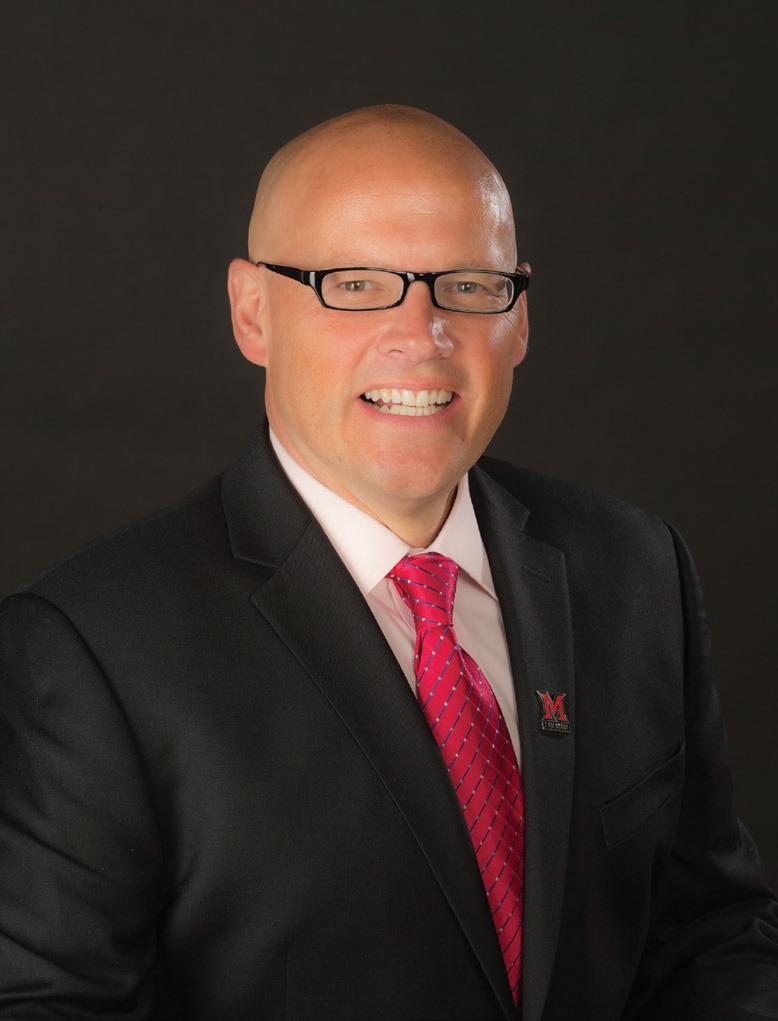
Gregory P. Crawford MIAMI UNIVERSITY PRESIDENT
Alecia
Devyn
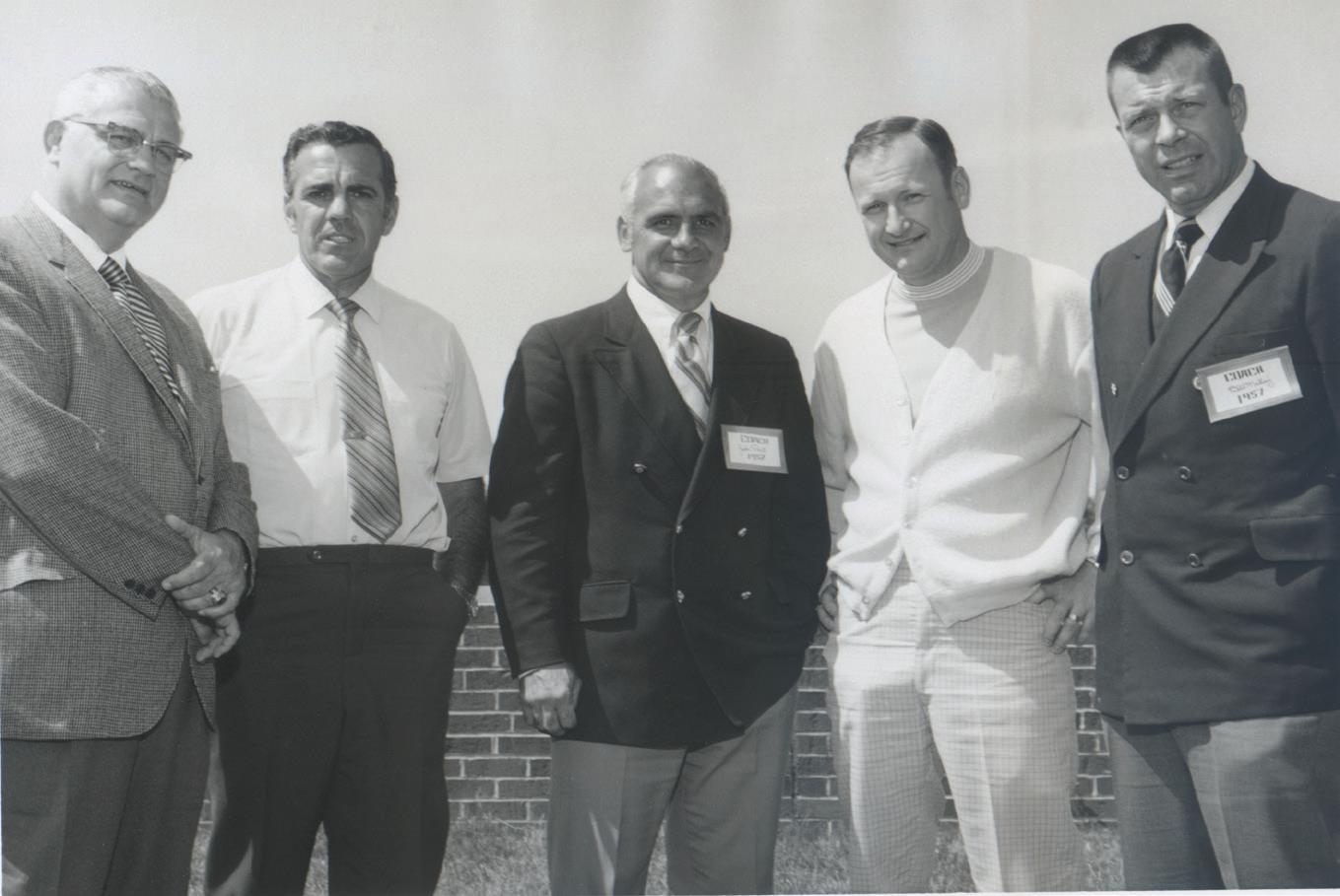
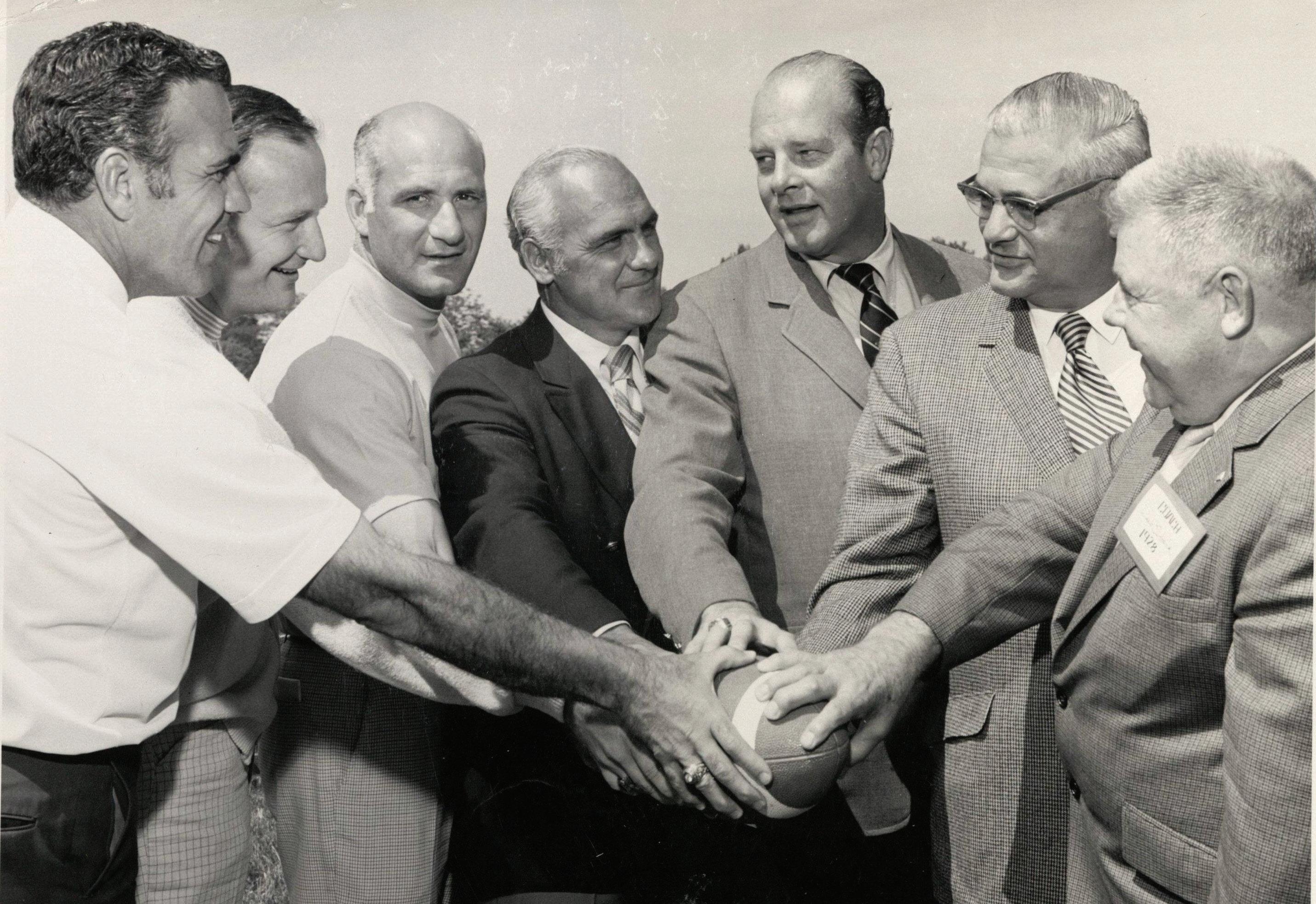
FORMER MIAMI FOOTBALL COACHES (FROM LEFT) WOODY HAYES, ARA PARSEGHIAN, JOHN PONT, BO SCHEMBECHLER, AND BILL MALLORY POSE TOGETHER IN OXFORD IN 1970.
A Tradition of Athletic Excellence at Miami
The Cradle of Coaches continues to develop today’s exceptional men’s and women’s sports teams.
BY JACQUELINE JOHNSON
Established through the 1795 Northwest Ordinance and chartered in 1809, Miami University is the second oldest institution of higher education in the Northwest Territory. Historically dubbed the “Yale of the West,” Miami is today recognized as a Public Ivy. The university shares its name with the Miami Tribe, and their enduring partnership brings tribal students to Oxford and serves as a national model for collaboration with Indigenous Nations. Miami’s modern dedication to education and student life includes its storied athletics tradition,
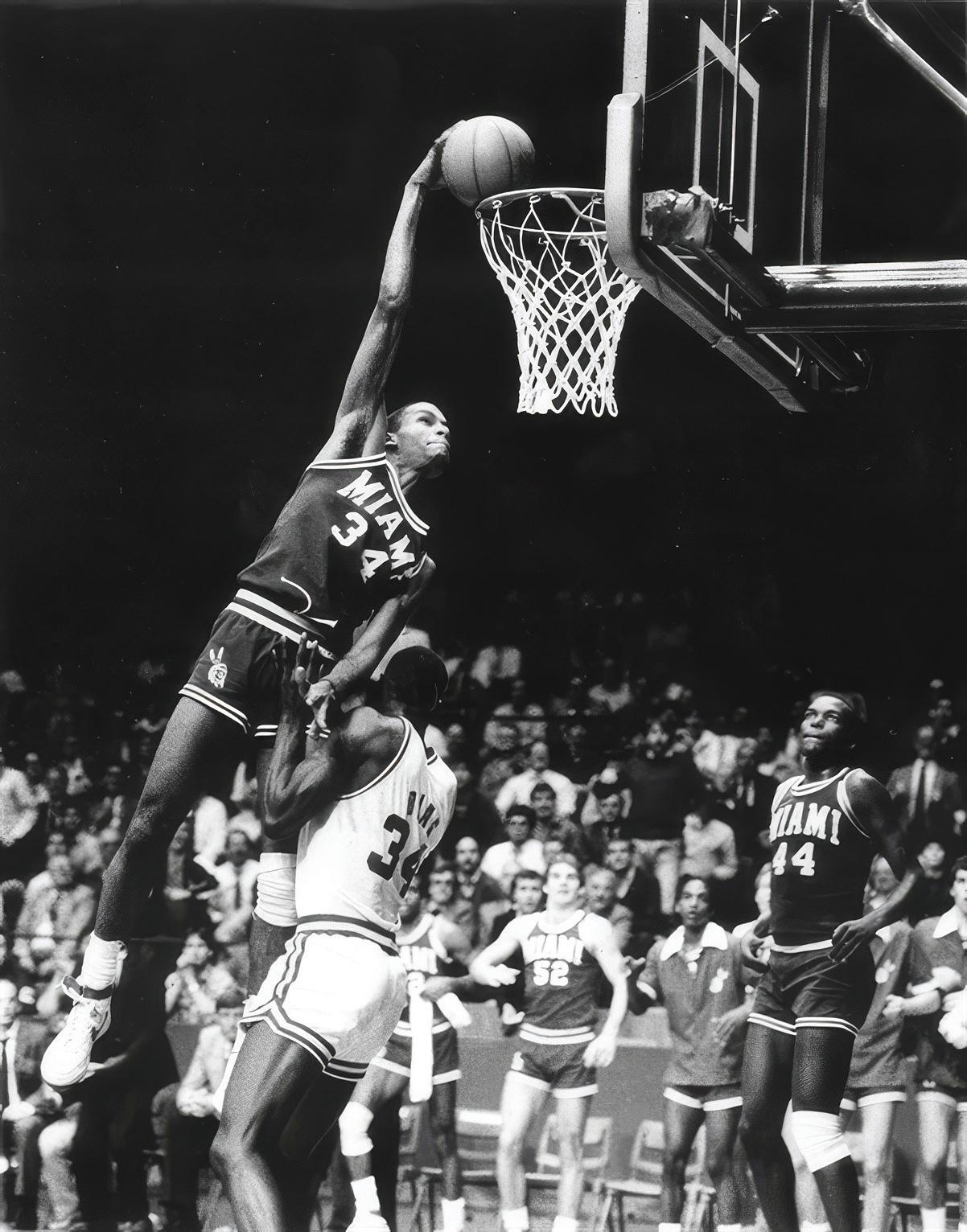
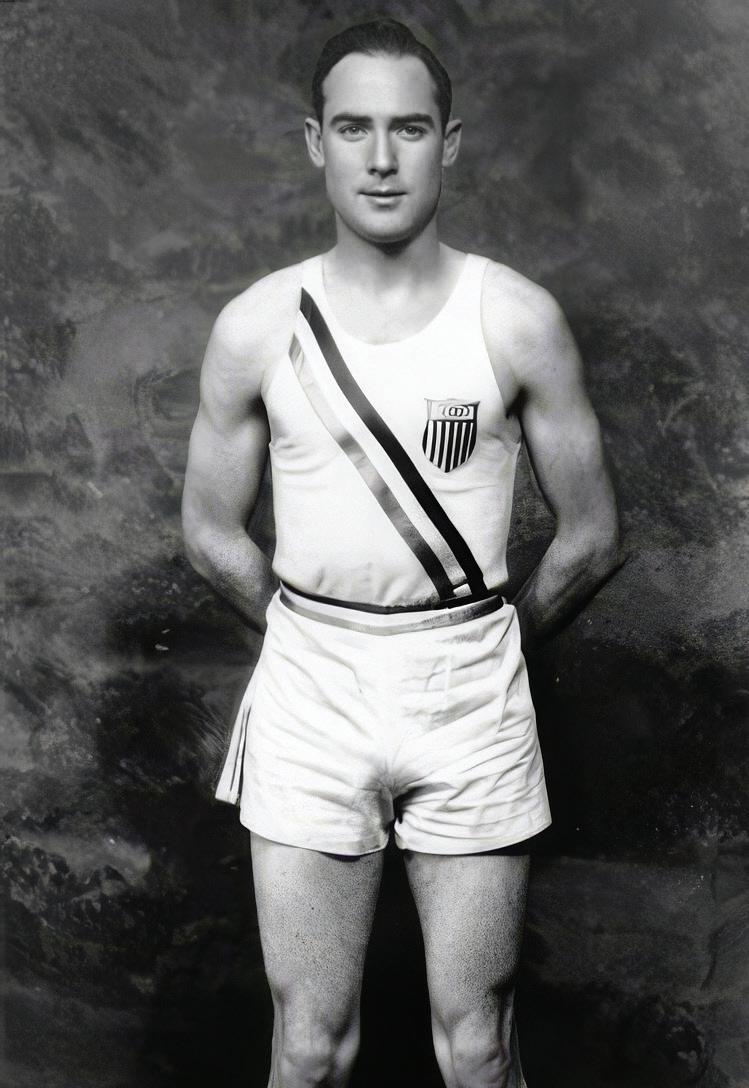
producing legendary athletes such as sprinter Jim Gordon, who competed in the 1932 Olympic Summer Games; swimmer Bill Mulliken, 1960 Olympic gold medalist; and long distance runner Bob Schul, Olympic gold medalist in 1964. More recent Miami athletes include NBA stars Wayne Embry, Ron Harper, Wally Szczerbiak, and Super Bowl champion Ben Roethlisberger.
The first mention of physical sports did not appear in the Miami catalog until 21 years after its founding. The 1830 catalog mentioned provisions
TRACK STAR JIM GORDON RAN IN THE 1932 OLYMPICS IN LOS ANGELES, WHILE RON HARPER WON BACKTO-BACK MAC PLAYER OF THE YEAR AWARDS BEFORE CAPTURING FIVE NBA CHAMPIONSHIPS.
for “healthy exercise,” and several years later the school added “extensive Gymnastics apparatus.” By the 1860s, baseball had become the favorite student sport, prompting the creation of campus clubs.
Intercollegiate sports took off in 1888 when President Ethelbert Warfield introduced football. On December 8, Miami played the University of Cincinnati to a 0-0 tie, inaugurating one of the nation’s oldest college rivalries. Although a lack of success on the field caused Miami football to fade by 1902, the program was revived by Frederic “Cap” Stone, who advocated for organized men’s and women’s sports. By his departure in 1912, he had firmly re-established Miami’s athletic programs.
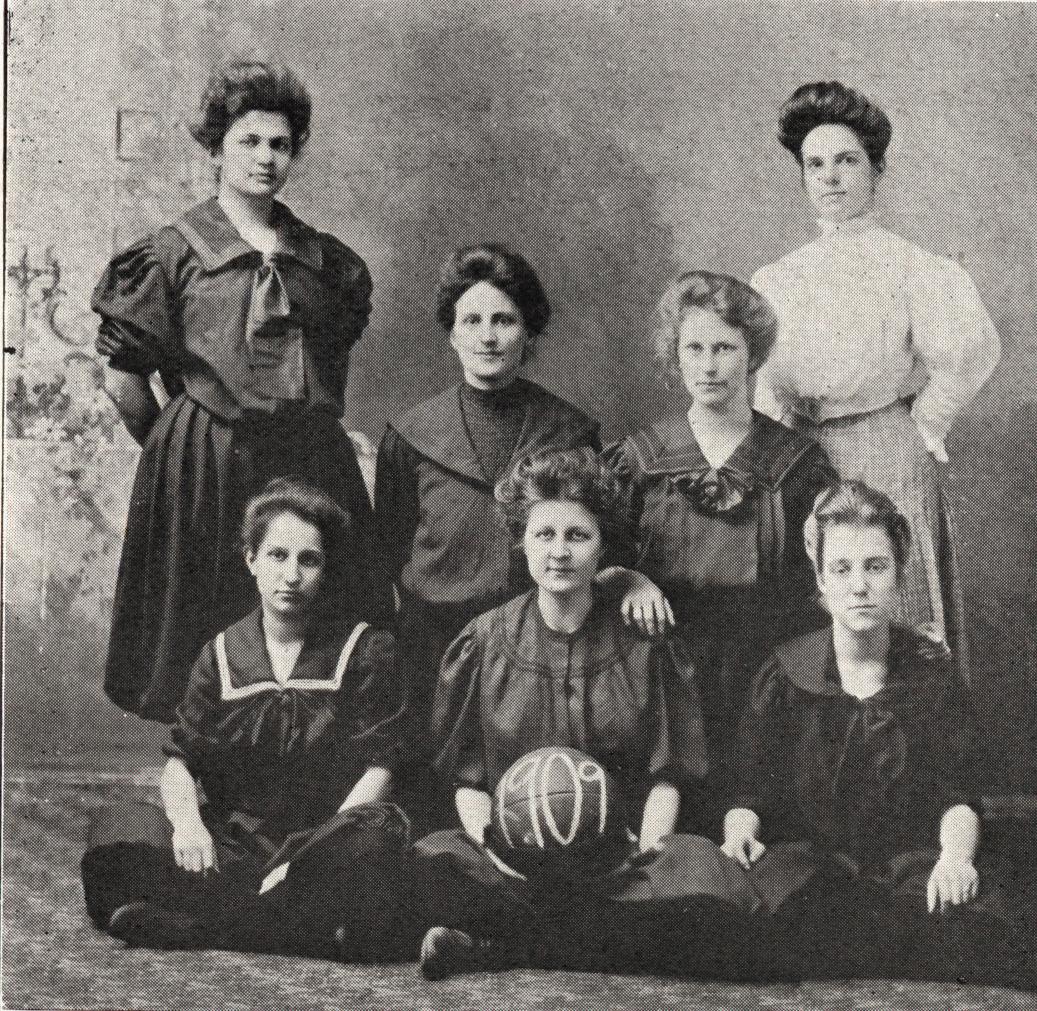
Miami University first admitted women in 1887, graduating 16 female students by 1900. The Physical Education Department formed a women’s basketball team in 1902, and the women’s athletic program was formalized with the hiring of physical education instructor Margaret E. Phillips. Miami established a dedicated women’s physical education program by 1934 alongside the Girls “M” Association and the Miami Women’s Athletic Association, founded in 1937. Women participated in intramural sports such as basketball, hockey, tennis, and baseball.
Women’s athletics officially integrated into Miami’s varsity intercollegiate program during the 1974–75 season.
Miami’s excellent sports reputation is grounded in the quality of both its coaching and its athletes. Bob Kurz, Miami’s Sports Information Director from 1958 to 1965, coined the phrase “Cradle of Coaches,” a nickname that’s proven as enduring as the legends of its members. Earl “Red” Blaik, Paul Brown, Carm Cozza, Paul Dietzel, Weeb Ewbank, John Harbaugh, Sean McVay, Ara Parseghian, John Pont, and Bo Schembechler are among the Cradle’s most illustrious products. Other famous football coaches include Woody Hayes, who epitomized football excellence at Ohio State; Sid Gillman, who helped revolutionize professional football; and Bill Mallory, who coached some of Miami’s most successful teams as well as Colorado and Indiana.
In 1914–15, Miami University introduced a formal academic program to prepare students for professional coaching and sports administration. Students were taught to approach coaching from an academic perspective, learning how to analyze plays, design playbooks, and develop leadership skills. Due to their popularity, the courses expanded in the 1920s, marking the first step toward Miami becoming the Cradle of Coaches.
The first member of the Cradle to win national fame was Blaik, who played football in Oxford through 1919 and went on to coach at Dartmouth
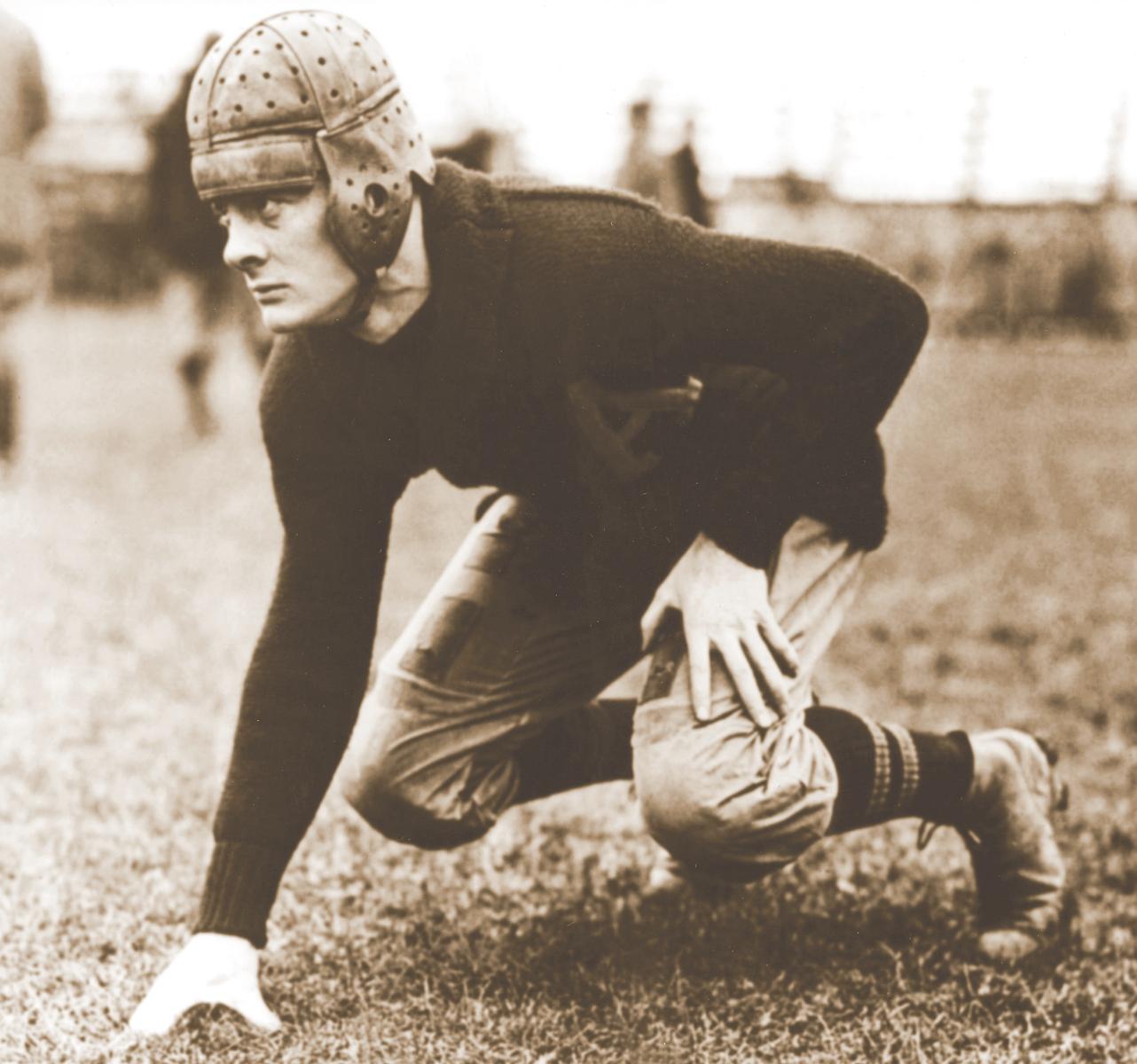
College and the U.S. Military Academy. He coached three Heisman Trophy winners, six undefeated teams, and three national championship teams at Army. Twenty of his assistants went on to coaching careers, the most famous being Vince Lombardi.
Paul Brown initially dreamed of a law career but caught the coaching bug early after playing football at Miami in the 1920s. He proved to be one of football’s greatest innovators, pioneering extensive use of playbooks, classroom techniques, and game film study. He was successful as a high school (Massillon), college (Ohio State), and professional football (Cleveland Browns and Cincinnati Bengals) coach.
Miami athletics today continue their charge to graduate athletes and prepare them for success via 19 varsity sports. In 2026, men’s basketball had a historic undefeated season of 31-0 and women’s basketball won the Mid-American Conference championship; both participated in the NCAA Basketball Tournament. Miami had the MAC’s top men’s athletics program and top women’s athletics program in 2025–26, sweeping the Reese Trophy (men) and the Jacoby Trophy (women) for the second consecutive year—the first time any MAC school has accomplished the feat.
MIAMI WOMEN BASKETBALL PLAYERS IN 1909.
The Meaning Behind the Cradle of Coaches
How a turn of phrase in 1959 became Miami University’s calling card in the sports world.
BY JOHN FOX
In 1959, Miami University’s young Sports Information Director, Bob Kurz, coined the term Cradle of Coaches to describe the school’s unusual knack of producing some of the biggest names in college and professional football. That fall, Miami graduates and former teammates Paul Dietzel and Ara Parseghian were head coaches of top-ranked LSU and second-ranked Northwestern, respectively, while grads Paul Brown and Weeb Ewbank led the NFL’s two best teams, the Cleveland Browns and the Baltimore Colts.
Miami’s head coach that season was John Pont, a grad who had played for head coaches Woody Hayes
and Parseghian in Oxford. He’d taken the Miami job in 1956 when Parseghian left for Northwestern.
Earl “Red” Blaik, yet another Miami grad, had retired the year before after 18 years as head coach at the U.S. Military Academy, where he led Army to three straight national championships in the 1940s and coached three Heisman Trophy winners. Hayes, Miami’s former coach (though not a Miami graduate), was making headlines over in Columbus after leading Ohio State to national championships in 1954 and 1957.
Kurz graduated from Miami in 1958 and just a year later, as young people do, was trying to make
A REUNION OF MIAMI LEGENDS IN 1970 INCLUDED (FROM LEFT) ARA PARSEGHIAN, BO SCHEMBECHLER, CARM COZZA, JOHN PONT, CLIVE RUSH, WOODY HAYES, AND WEEB EWBANK.
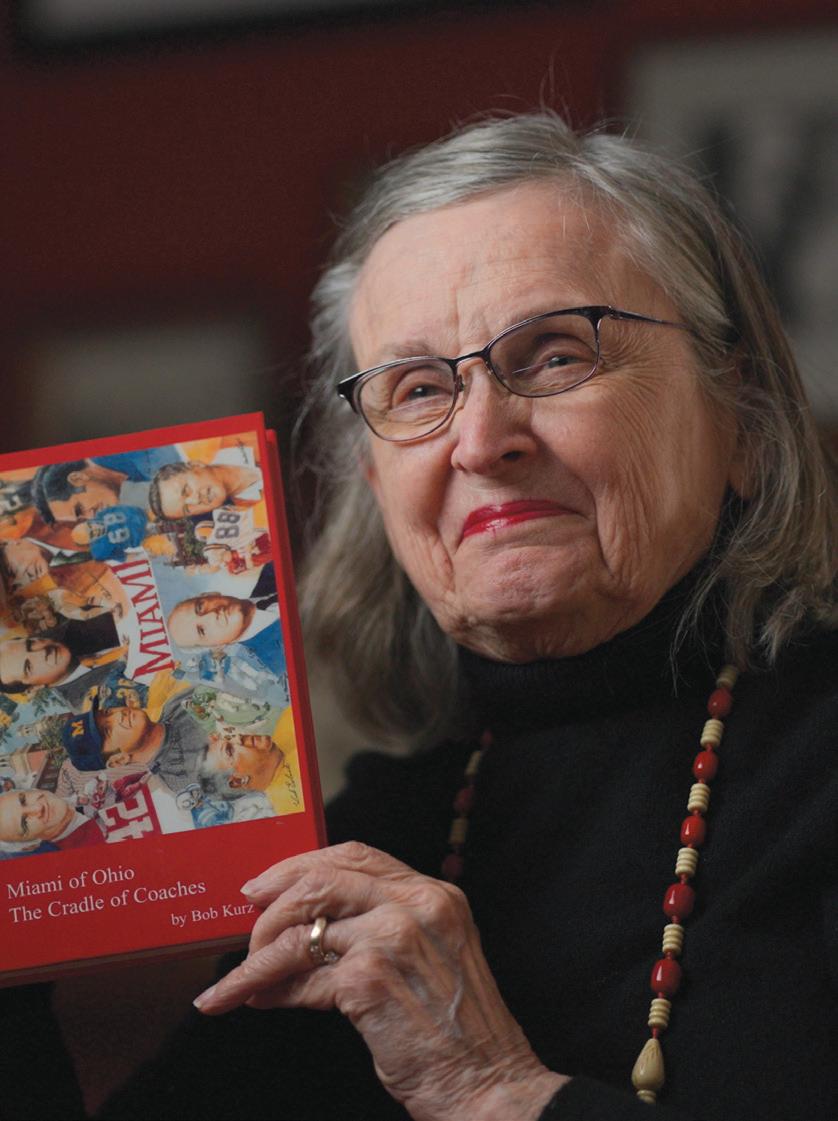
a name for himself and his university. His Cradle of Coaches concept caught on and eventually shined attention on all seven coaches mentioned above, as well as coaches representing almost every men’s and women’s sport at Miami. Kurz would later write the official story of Miami’s coaching prowess when he published Miami of Ohio: The Cradle of Coaches in 1983.
Kurz contended that part of the reason Miami produced great coaches was the university’s unusual four-year course in athletic coaching and physical education, which Ewbank and others took. And the Miami connections ran deep among graduates and coaches to create a web of accomplished leaders.
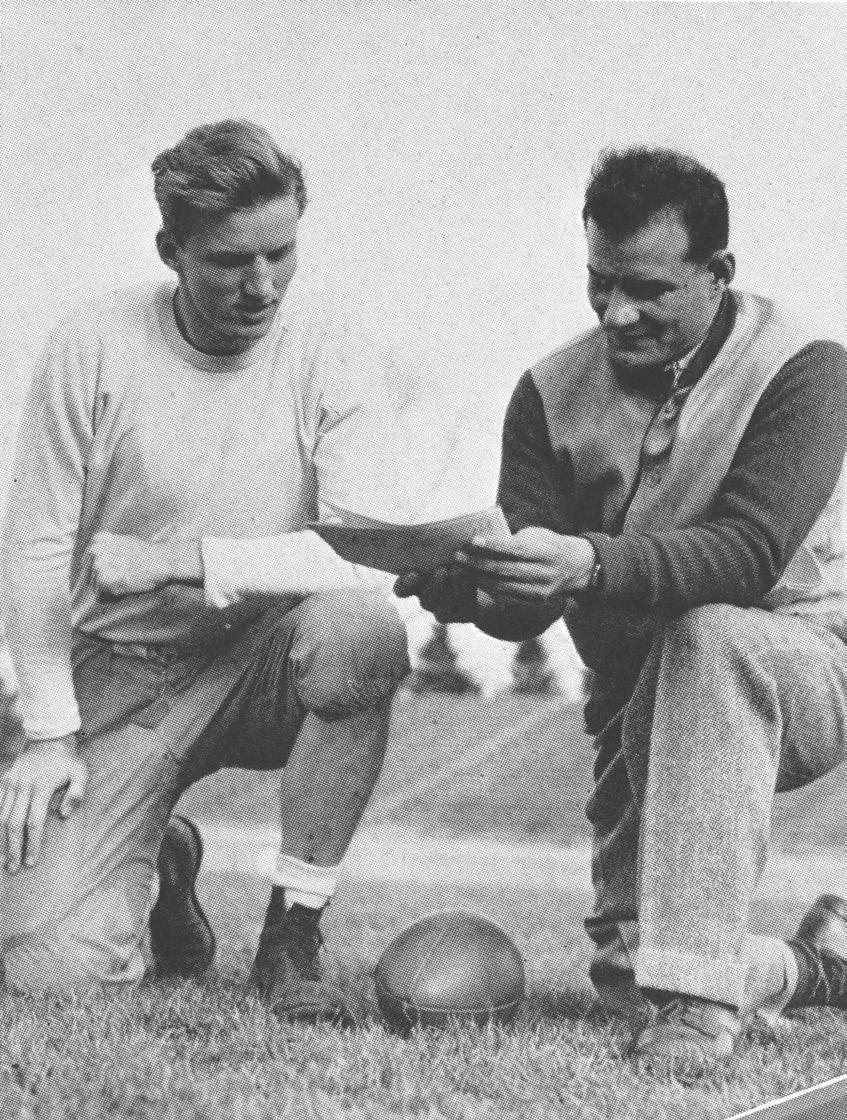
Sid Gillman came to Miami in 1942 as an assistant and was head coach 1944–47, mentoring Dietzel, Parseghian, and Bo Schembechler. He later served as Blaik’s assistant at Army before hiring Dietzel as an assistant coach under him at the University of Cincinnati.
Gillman’s groundbreaking passing offensive would flourish in the AFL and the NFL, where he served as head coach for 17 seasons. His coaching tree includes practically every NFL head coach of note in the past 50 years—from Miami grads and Super Bowl winners John Harbaugh and Sean McVay to legendary names like Bill Walsh, Chuck Noll, John Madden, and Andy Reid.
Over time, Miami began formally recognizing the most accomplished coaches through a Cradle of Coaches selection process. Kurz, Ewbank, Pont, and
MIAMI HEAD COACH
SID GILLMAN AND STAR
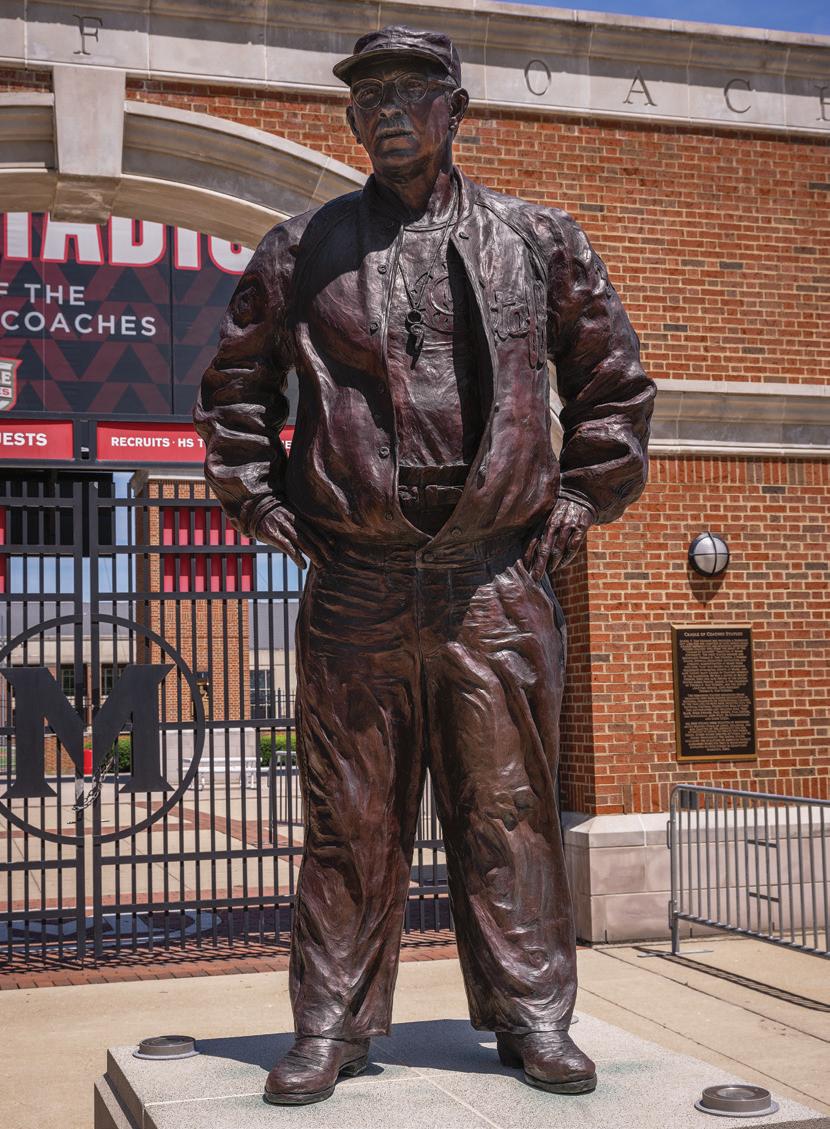
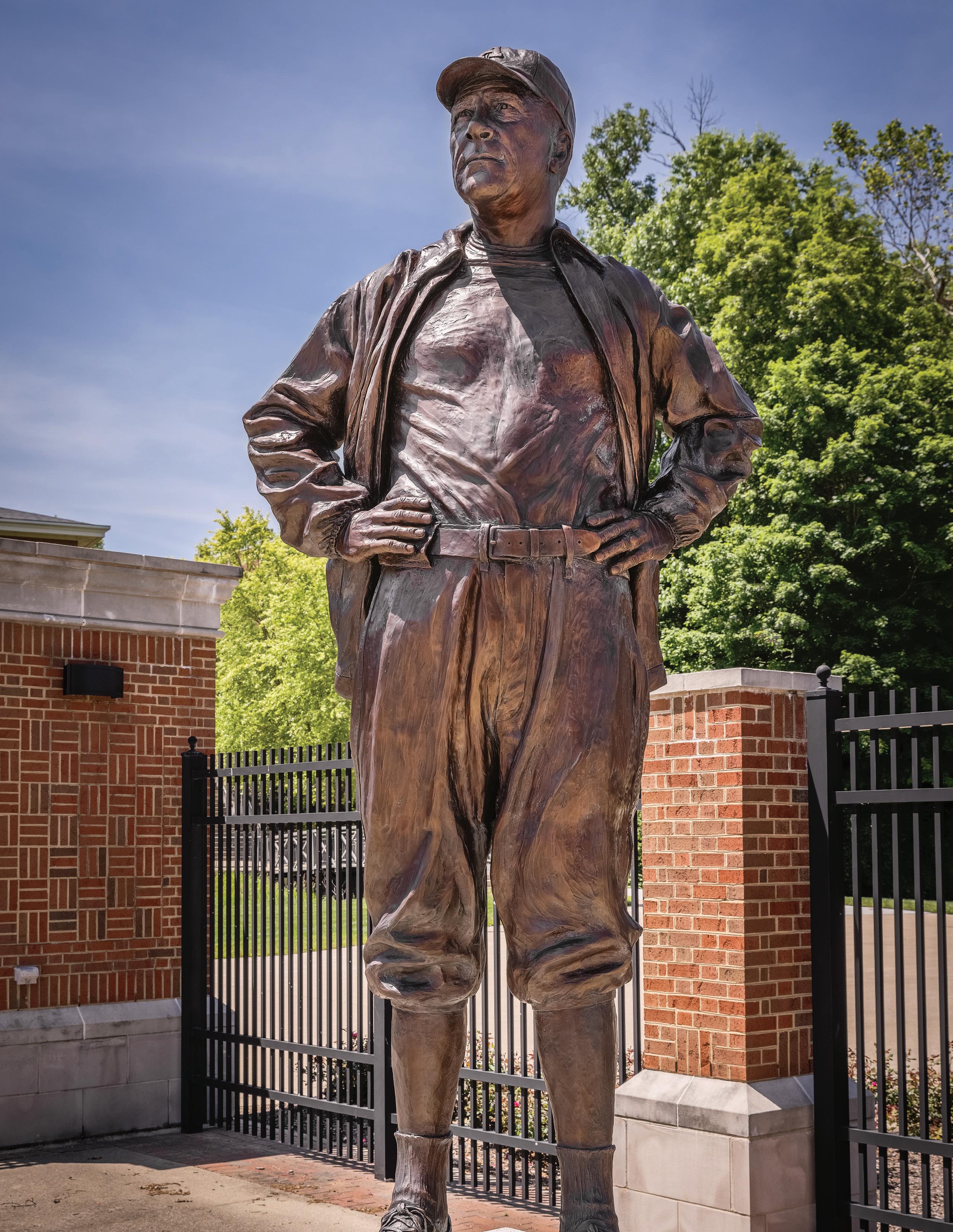
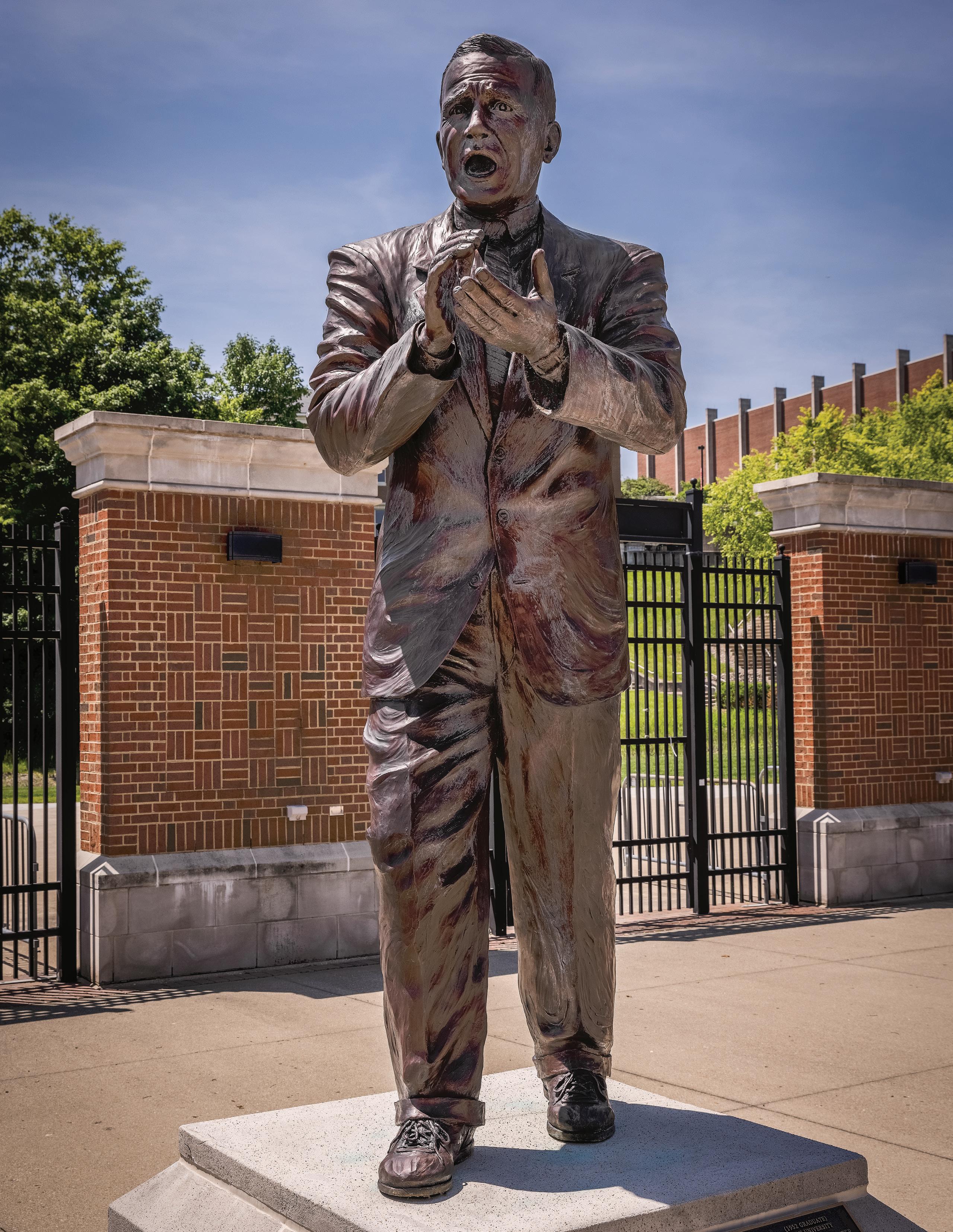
PLAYER PAUL DIETZEL IN 1947 (CENTER ABOVE); MARIAN KURZ WITH HER HUSBAND BOB’S BOOK; AND THE STATUE OF THOMAS P. VAN VOORHIS AT YAGER STADIUM.
long-time college coach Bill Narduzzi were the first inductees into the Cradle of Coaches Association in 1992. Miami basketball’s Dick Shrider (1996) was the next non-football coach inducted after Kurz, and tennis coach Leann Davidge was the first woman inducted (2001). See the full Cradle of Coaches honor roll on page 48.
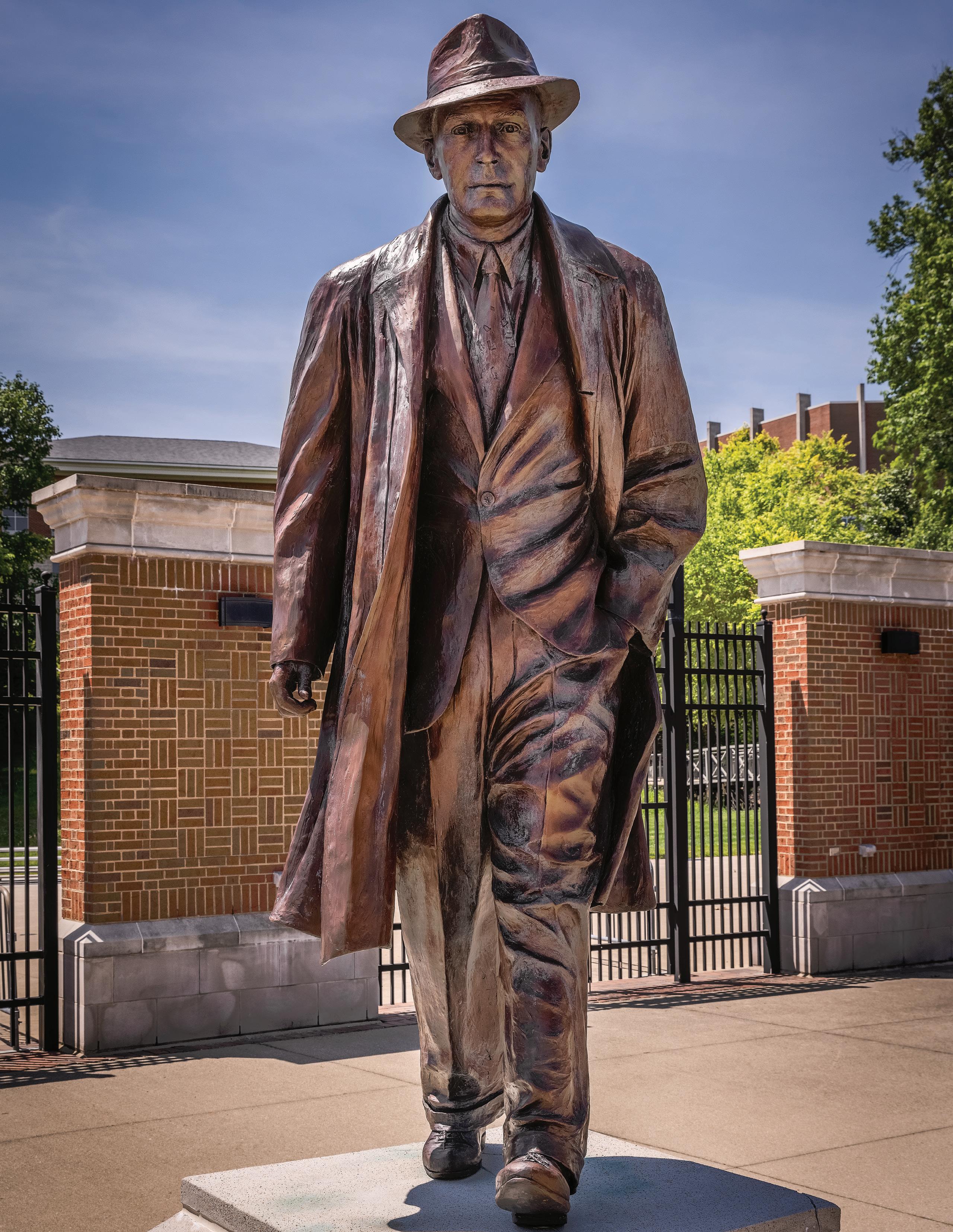
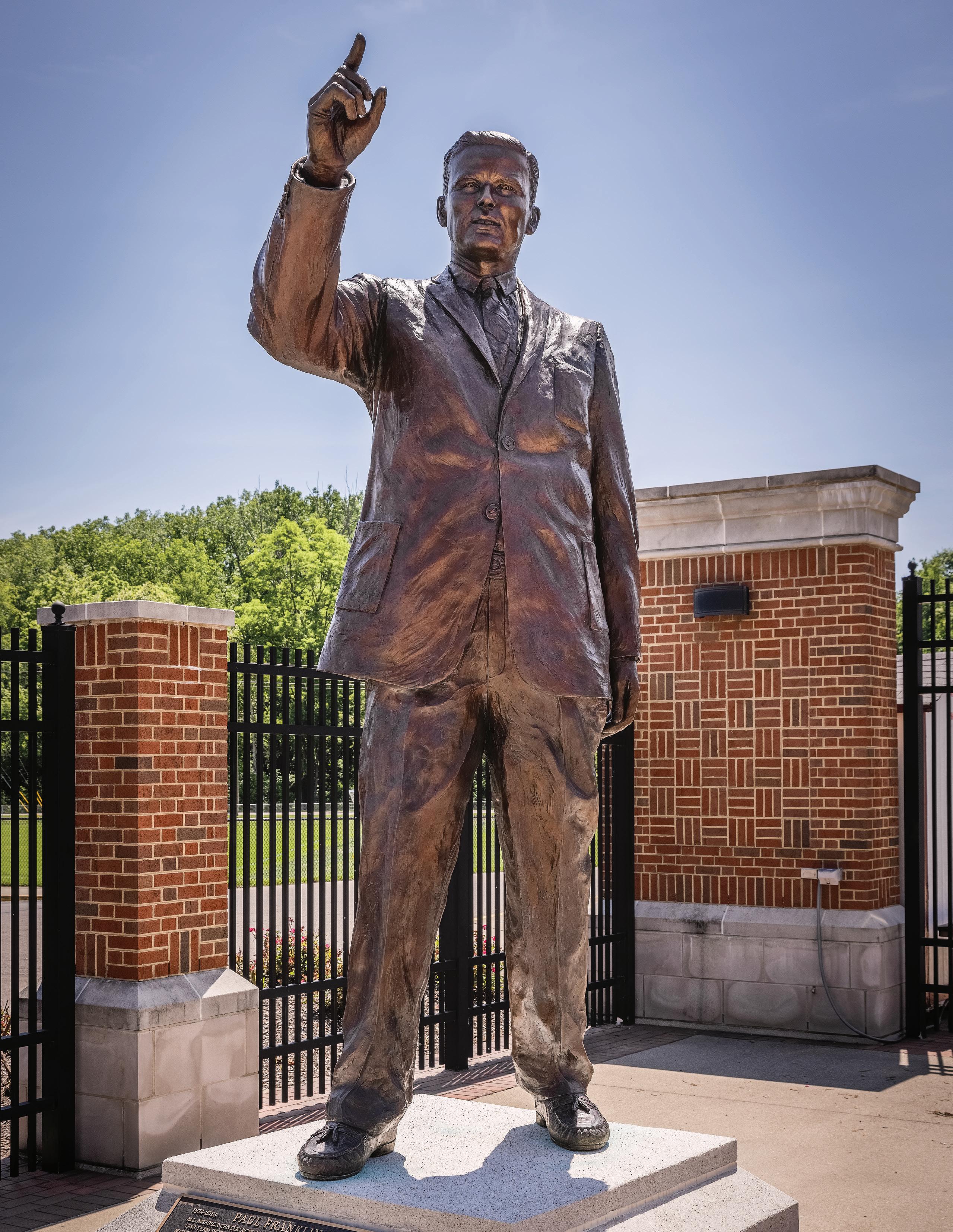
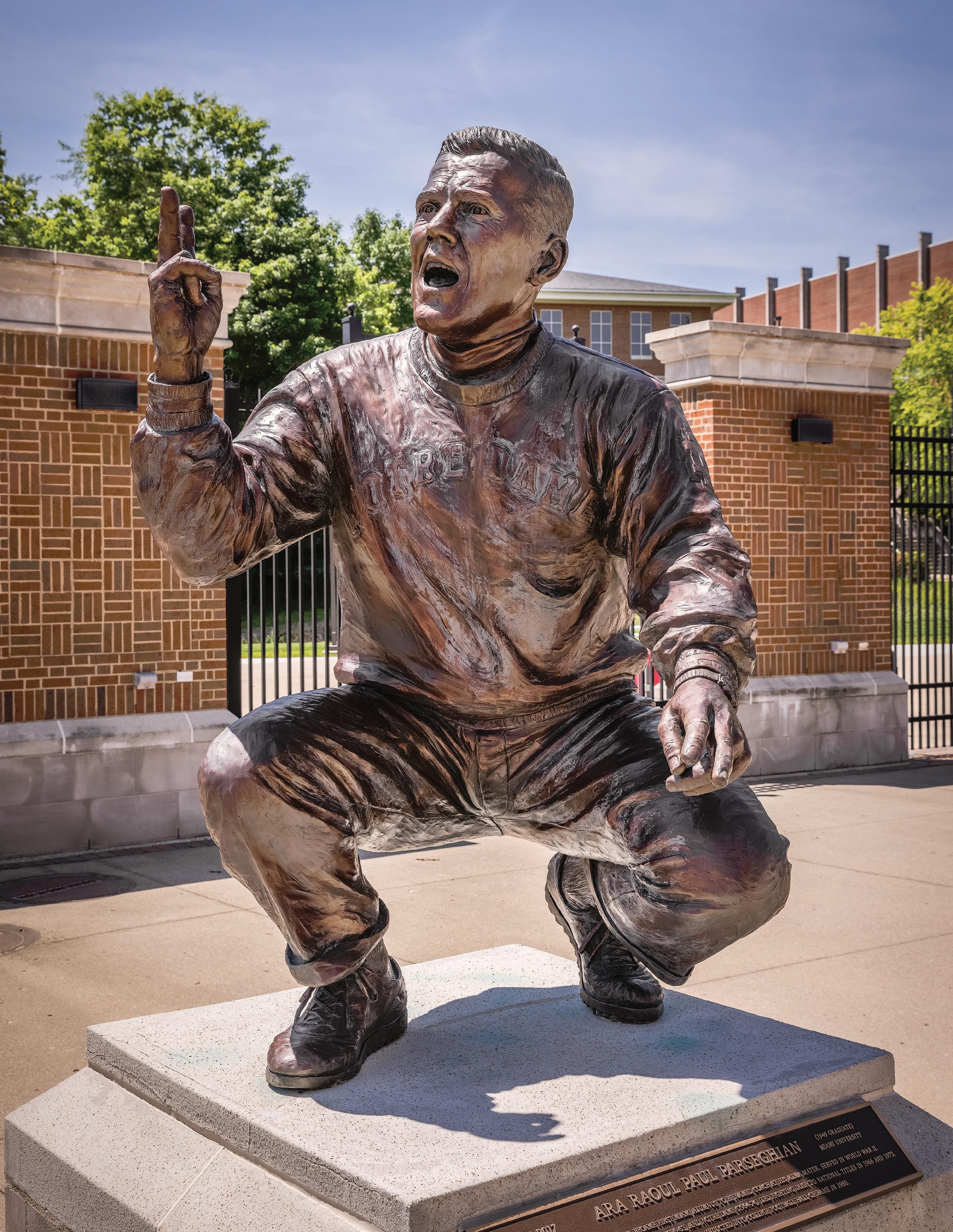
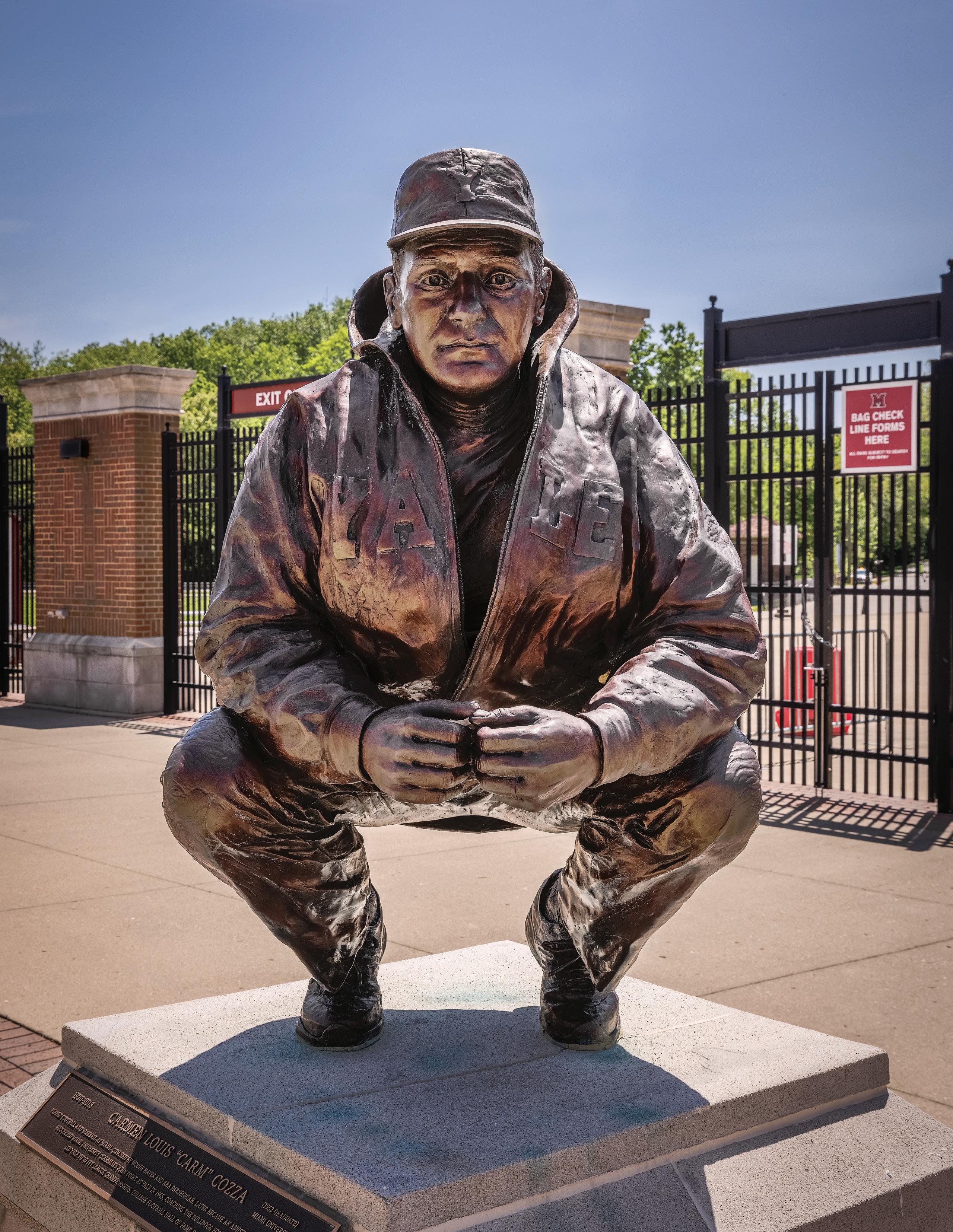
Kurz and his wife Marian, who graduated from Miami with him in 1958, provided a gift to the university in 2004 to construct the Cradle of Coaches Plaza on the south side of Yager Stadium. The concept was to dedicate bronze statues representing those who had graduated from Miami and later coached a championship team in college or professional football.
The statues themselves were funded by the family of Thomas P. Van Voorhis, a Miami grad who served as intramural director, coach, physical education instructor, and athletic administrator at the university from 1921 to 1956. He taught many of the Cradle members when they were students.
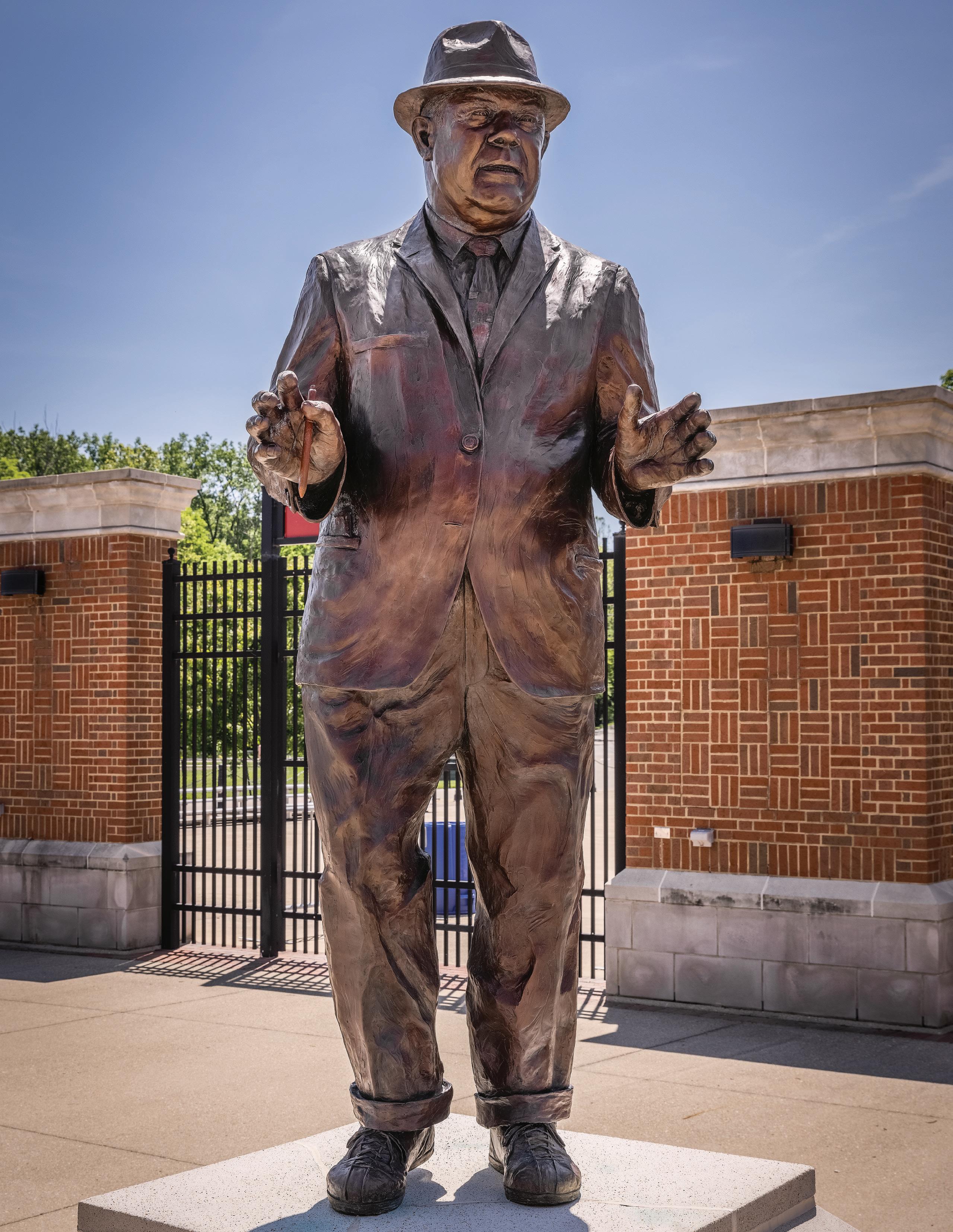
The eight original statues depicted Earl “Red” Blaik, Paul Brown, Carm Cozza, Paul Dietzel, Weeb Ewbank, Ara Parseghian, John Pont, and Bo Schembechler, with a statue of “legendary teacher, sportsman and friend” Van Voorhis greeting visitors to the plaza. Statues of John Harbaugh and Sean McVay have been added in recent years.
There is room for more statues in the plaza. Who will be the next Miami University graduate to coach a championship team?
EARL “RED” BLAIK
GRADUATED FROM MIAMI: 1918
CHAMPIONSHIPS: Army national championships in 1944, 1945, and 1946.
COACHING HIGHLIGHTS: Led Army to six undefeated seasons in 18 years as head coach. Elected to the College Football Hall of Fame.
As the U.S. entered World War I in 1917, Earl “Red”
Blaik was one of many young American men anxious to serve his country. Aftering graduating from Miami University in 1918, he was admitted to the U.S. Military Academy in order to become an Army officer and set out to basically redo his college education. He also continued playing football after lettering three times at Miami and would be named All-American in 1919.
Blaik graduated early from West Point in 1920, after WWI had ended, and was commissioned in the U.S. Calvary. He returned to civilian life in Dayton, Ohio, until being lured into assistant coach roles by his former Miami coach and several Army teammates. He eventually served as head coach at Dartmouth for seven years and at West Point for 18 years and is revered as one of the game’s greatest early leaders.
“Red Blaik is probably the most significant coach in the College Football Hall of Fame,” says Denis Crawford, the Hall of Fame’s historian. “He was not only a military officer, who we respect a great deal in our military exhibit, but he led Dartmouth and Army to arguably their greatest successes. The reason why he’s so important to us is that, along with General Douglas MacArthur and legendary journalist Grantland Rice, Blaik formed the College Football Hall of Fame back in the late 1940s and helped us open it up in 1951.”
Blaik led Dartmouth from 1934 to 1940, grabbing a Top 10 national ranking in 1937. He finished with a 45-15-4 record before being lured back to West Point.
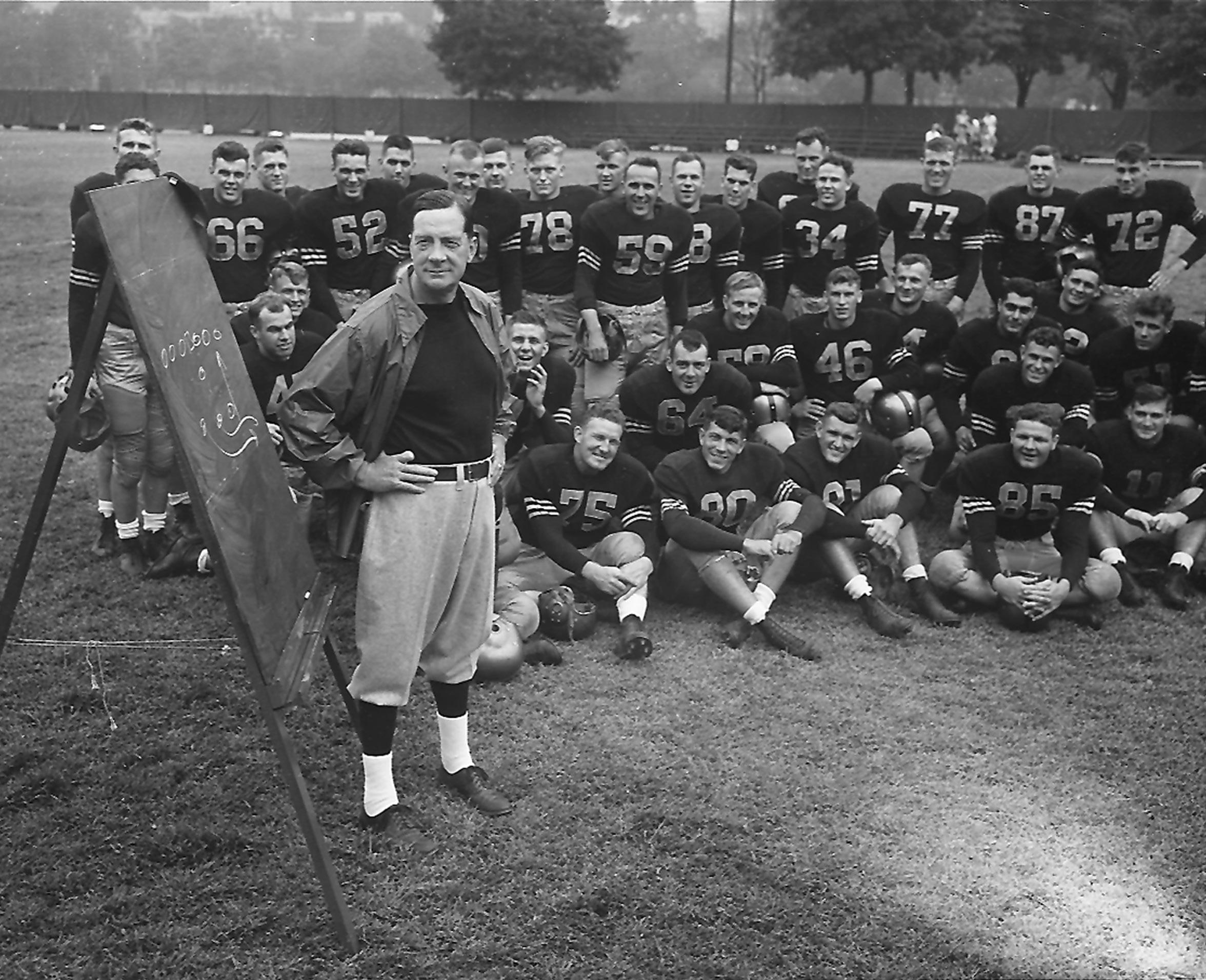
Army’s team finished with one win in 1940, but Blaik’s arrival the following year turned the Academy’s fortunes around 180 degrees. He compiled a 121-32-10 record from 1941 to 1958, winning three straight national championships in 1944, 1945, and 1946. He coached three Heisman Trophy winners— Doc Blanchard (1945), Glenn Davis (1946), and Pete Dawkins (1958)—and 12 future College Hall of Famers.
Blaik was selected twice as national coach of the year and led Army to six undefeated campaigns and a school-record 32-game unbeaten string (1944–47), which included a 25-game winning streak. His Dartmouth teams also enjoyed a 21-game winning streak. He finished his coaching career with the most wins in Army history, a mark that stands today.
MacArthur, who served as superintendent of West Point when Blaik first arrived in 1918, said of his friend’s leadership on the gridiron, “His value to the Academy goes far beyond his skill as football coach. The men who pass through his hands or cross his path learn all over again that our Army became the greatest in the world because it operated on the understanding that once committed to battle it continued to fight until victory was achieved.”
Neal Putnam, who played football at Miami University under Ara Parseghian and John Pont and later was head coach at Lafayette College, recalls being told to study Blaik if he wanted
to learn coaching. “Everything I ever heard about Coach Blaik was true,” says Putnam, who met with Blaik at West Point and observed practices. “He was a phenomenal innovator and an excellent technician. Everything was done precisely, as the military would want. He was a man you had to respect just by shaking his hand. He had that kind of charisma.”
After his coaching career ended, Blaik wrote a memoir, You Have to Pay the Price, with sportswriter Tim Cohane. “What oozes through the pages is the discipline that marked Blaik’s life, the commitment that it took to play football, and the toughness of those involved,” reads the Amazon review. “Unlike so many today, he didn’t worship at the almighty shrine of winning at any cost.”
In retiremnent, Blaik wrote a twice-weekly syndicated newspaper column and donated the proceeds to establish graduate scholarships for football players, administered by the National Football Foundation. He was presented with the National
Football Foundation Gold Medal Award in 1966 and the Presidential Medal of Freedom in 1986. Army’s home field is named Blaik Field at Michie Stadium.
Blaik was elected to the College Football Hall of Fame in 1964, the Miami University Athletics Hall of Fame in 1969, and the U.S. Military Academy Hall of Fame in 2004.
EARL “RED” BLAIK WAS AN ALL-AMERICAN AT ARMY IN 1919 (OPPOSITE PAGE) AND RETURNED TO COACH THE BLACK KNIGHTS FOR 18 YEARS.
“He was a man you had to respect just by shaking his hand. He had that kind of charisma.”
EWBANK
GRADUATED FROM MIAMI: 1928
CHAMPIONSHIPS:
Baltimore NFL titles in 1958 and 1959 and New York Super Bowl title in 1969.
COACHING HIGHLIGHTS:
Served as assistant coach under Paul Brown on the Cleveland Browns, then was head coach of the NFL Baltimore Colts and New York Jets. Elected to the Pro Football Hall of Fame.
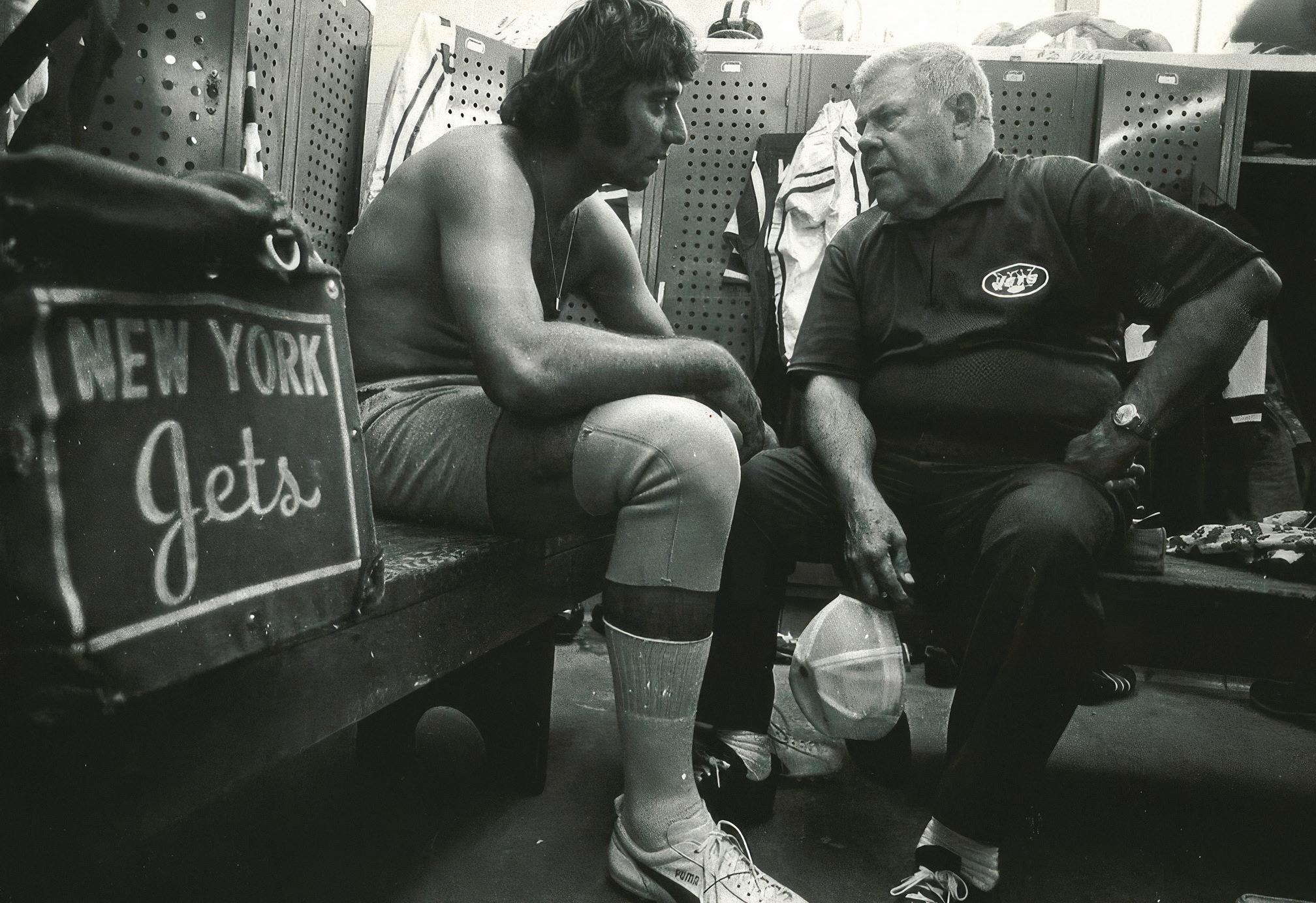
Joe Namath had just popped a bite of a muffin in his mouth when he felt the thunderclap behind him. Weeb Ewbank, brandishing the morning newspaper like a Medieval sword, was livid. How, he demanded, could Namath have given the Baltimore Colts a gift like this?
“When Coach was pissed at him for one reason or another, he’d call him Joseph,” recalls John Schmitt, starting center for the 1969 Super Bowl champions New York Jets. “So, he said, ‘Joseph, did you say that? Did you say that?’ ” The night before, Namath had spoken at the local Touchdown Club in Miami, and annoyed by a heckler boasting that the 19-point favorite Colts were going to
annihilate the Jets, “guaranteed” the upset.
Namath took another bite of his muffin and nonchalantly replied, “But we are going to win, Coach.” It was the kind of confidence Ewbank loved in his players, and especially in Namath—the unconventional long-haired, actress-dating, media-darling quarterback with the rocket arm. “They’re going to put that up on a wall, Joe,” Ewbank replied, cooling down to his typical avuncular self. “They’re going to come out and want to kill us.”
But they didn’t, and to this day the Jets’ 16-7 win in what became known as Super Bowl III ranks among the biggest upsets in sports history. For Ewbank, it was one of the three pro football championship teams he coached and came at the expense of the franchise he led to victory in what’s still known as the Greatest Game Ever
Played. That 1958 Colts win over the New York Giants in sudden death overtime is largely credited with the beginning of America’s love affair with the National Football League. The Colts would repeat as NFL champs in 1959, again defeating the Giants.
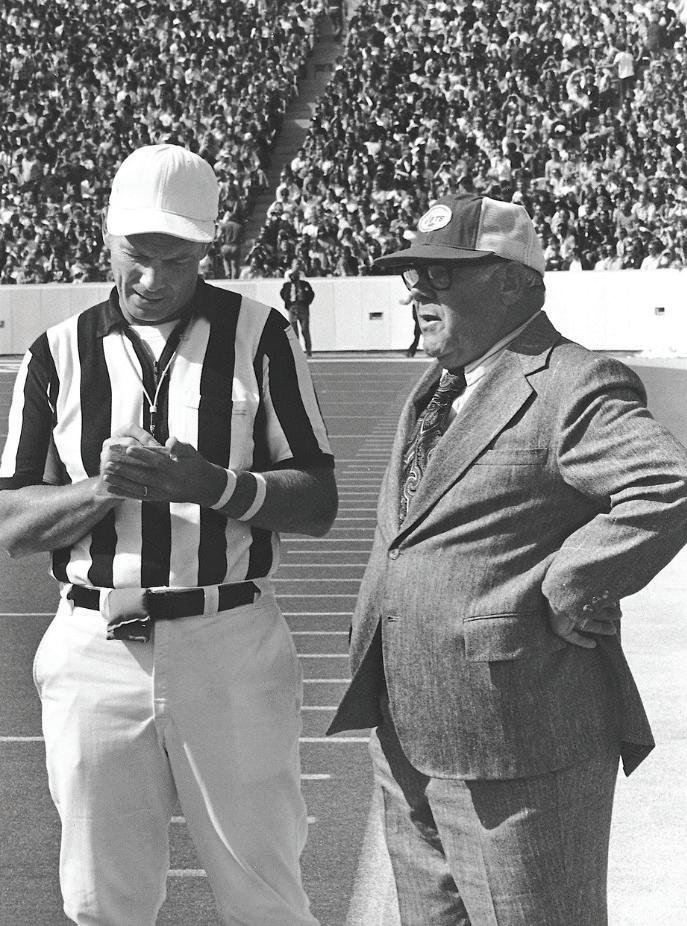
After leading the Colts from 1954 to 1962, Ewbank coached the Jets from 1963 to 1973. His overall AFL/NFL coaching record was 130-129-7.
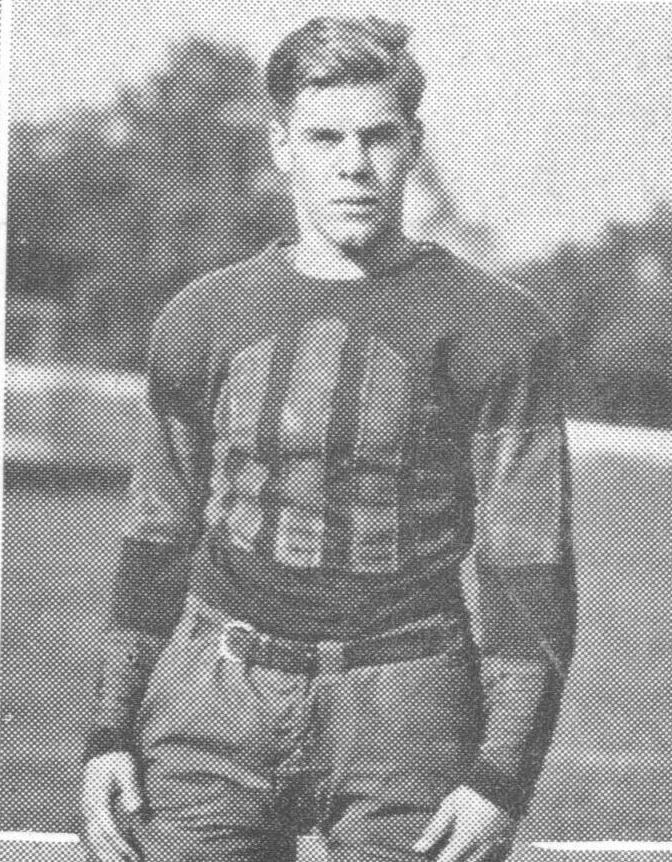
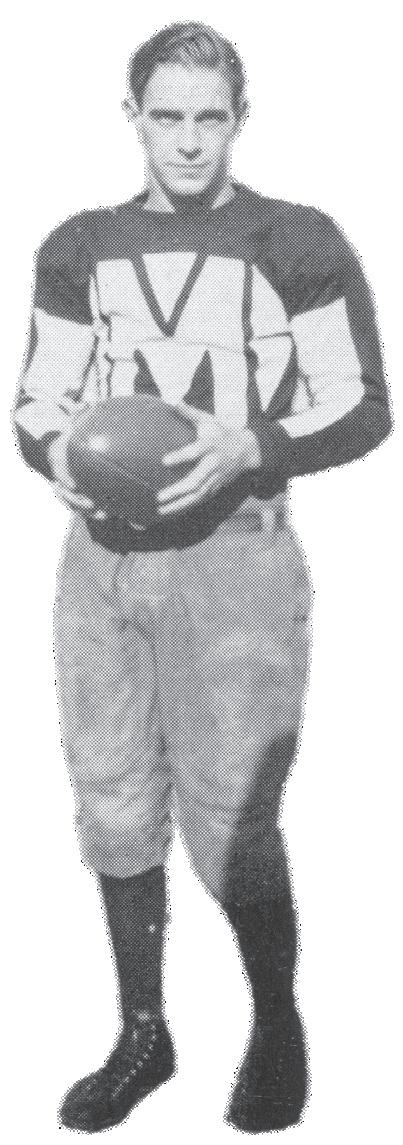
Ewbank was born for the gridiron, crossing the state line from his Richmond, Indiana, home to play quarterback for Miami University in 1924–27. He was a three-sport athlete, despite his 5-foot-7 frame, boxing out on the basketball court and patrolling center field on the diamond. When he graduated, he traded his cleats for a whistle and at age 21 launched his 45-year career pacing the sidelines: 14 years as a high school coach, three years coaching at the Great Lakes Naval Station under Paul Brown during World War II, three years in college, and finally the professional ranks as Brown’s assistant with the Cleveland Browns. Nine years later, he’d be an NFL champion.
WEEB EWBANK PLAYED THREE SPORTS AT MIAMI, INCLUDING QUARTERBACK ON THE FOOTBALL TEAM. AS A COACH HE HAD A SPECIAL BOND WITH HIS PLAYERS, INCLUDING JOE NAMATH (OPPOSITE PAGE).
partiers to stay out of trouble. Ewbank’s solution was to revert to a training camp regimen to rebuild stamina and then leave it to the players themselves to manage their free time. And the players did, agreeing to a to self-imposed a curfew that, if broken, would cost $1,000 for each infraction.
Ewbank retired to Oxford and lived the rest of his life just minutes from campus. “I remember go-
“He had the fewest rules of any coach. He treated the players like men, and that’s why the guys liked playing for him.”
“He had the fewest rules of any coach,” says Frank Ramos, who served as the Jets public relations director for 39 years. “He treated the players like men, and that’s why the guys liked playing for him.”
When Ewbank took the Jets to Miami a full 10 days before Super Bowl III and told the players to bring their wives and kids, the press derided the decision, marveling how he could trust his team of
ing to Homecoming with him and the Miami fans just swarmed him,” Ramos says. He was one of the last people to see Ewbank alive. The Jets were playing the now-Indianapolis Colts in November 1998, so he picked up Ewbank and they drove to Indy and enjoyed the game together. Ewbank died two days later at age 91.
Ewbank was elected to the Pro Football Hall of Fame in 1978. He was inducted into the Miami University Athletics Hall of Fame in 1969, the Indiana Football Hall of Fame in 1974, and the New York Jets Ring of Honor in 2010.
PAUL BROWN
GRADUATED FROM MIAMI: 1930
CHAMPIONSHIPS:
Ohio State national championship in 1942, Cleveland NFL titles in 1950, 1954, and 1955.
COACHING HIGHLIGHTS:
Coached Ohio State for three years, then co-founded and led the Cleveland Browns into the NFL in 1950 and co-founded and led the Cincinnati Bengals into the AFL/NFL in 1968. Elected to the Pro Football Hall of Fame.
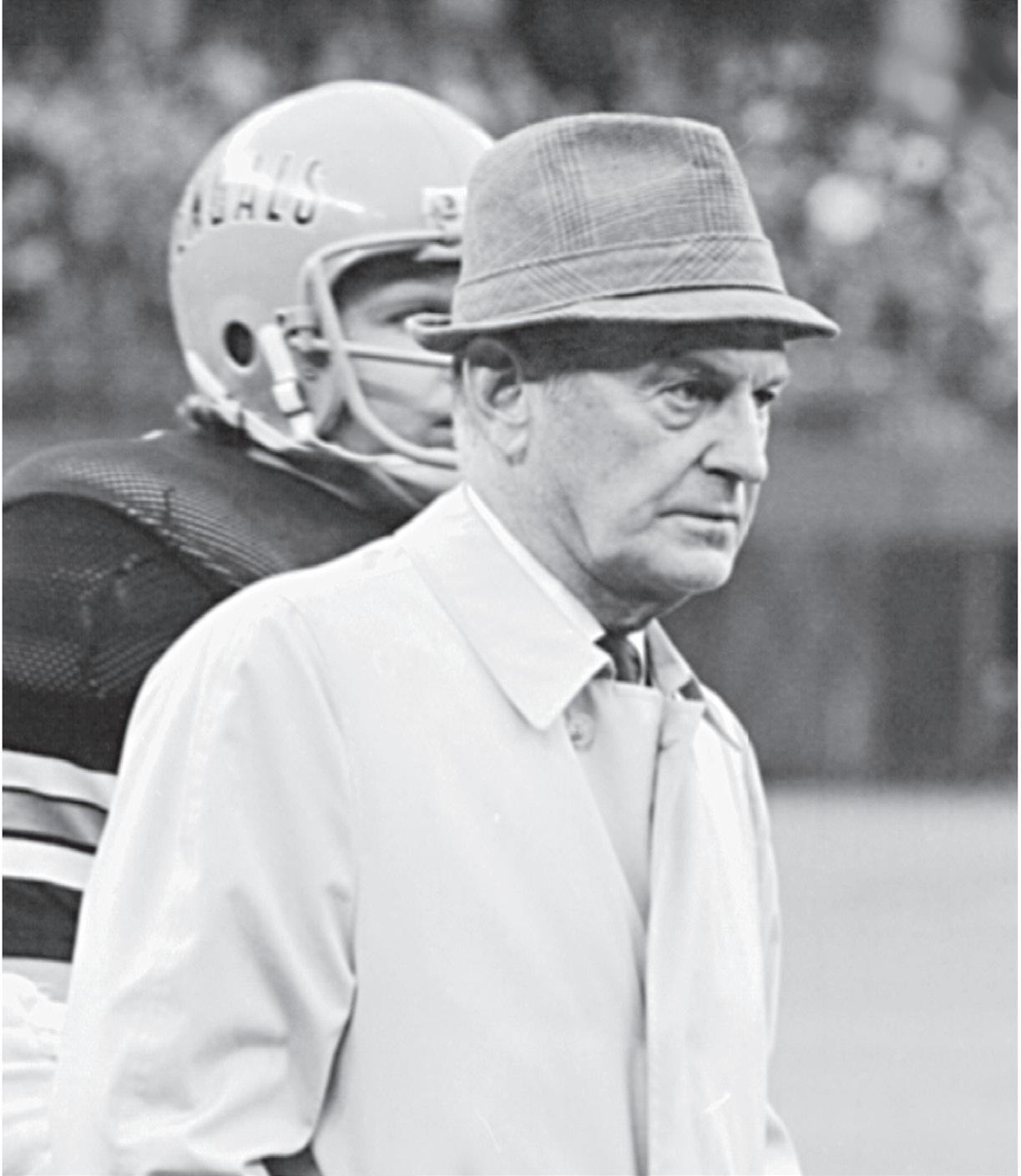
Paul Brown didn’t invent football, he just improved it. He didn’t invent the Cradle of Coaches, but, as surely as Joe Burrow throws strikes to Ja’Marr Chase, his hand rocks it. Brown’s prolific coaching tree has written—and continues to write—the history of both the Cradle and the National Football League. Carm Cozza, Weeb Ewbank, John Harbaugh, Sean McVay, Ara Parseghian, John Pont, and Bo Schembechler all have statues on the Yager Stadium Plaza thanks to The Old Man himself.
“Everything he did as a coach, everybody is still basically doing the same thing 50 years later,” says Bill Belichick, winner of six Super Bowls. “I think of him as the father of professional football.”
Brown studied to be a teacher, but, with the Depression in full swing when he graduated from Miami in 1930, the former starting quarterback, punter, and kicker dove right into coaching, taking a position at a Maryland prep school. Over the following 50 years, he won six consecutive Ohio high school state championships in Massillon and a national title for Ohio State, brought three NFL titles to Cleveland, and founded the Cincinnati Bengals. He is credited with establishing the first NFL playbook, calling plays from the sidelines, using film to prepare for the next opponent, and making the game safer by introducing facemasks.
And preparing. Brown was a detail man. “He taught us how to stand in the huddle,” recalls Bob Trumpy, Hall of Fame tight end who played 10 seasons with the Bengals. “He told us how to break the huddle. He didn’t want us to look like an expansion team. He wanted us to look like the world champion Browns.”
Brown practices were legendary. He demanded undivided attention and believed no one could focus for three hours. So, depending on who you talk to, practices lasted 50 minutes or one hour
and 15 minutes. Either way, they were short and organized. “He’d start with a little vignette about how to live and then he’d turn it over to our assistant coaches,” recalls Bob Johnson, the Bengals’ first-ever draft selection who played center for 12 seasons. “Everything was planned and explained to us before we went out on the field.”
Ken Anderson was thunderstruck when the Bengals drafted him in the third round in 1971. So was the entire NFL. “What chance does a kid from little Augustana College have to make it in the NFL?” he still wonders. Anderson went on to claim the starting role in his second year, playing 16 seasons for the Bengals and leading them to their first Super Bowl.
“If I’d gone to another team, I probably would have been cut in training camp. But [Brown] gave me a chance to learn his system. Otherwise, I probably would have ended up coaching high school football and teaching math.”
But, he remembers, his 265-pound playing weight was down to 215 and, when two defensive linemen plowed into him, “they rolled me back like you wouldn’t believe.” But Brown took care of him, paying him the equivalent of what he would have made for a full year at the adhesive company. “Pretty good for just four weeks,” he says, laughing.
Brown could be blunt, stern, and autocratic, though he also had a softer side. Trumpy remembers sweating out his first training camp, hearing door knocks down the hall and knowing another player was about to be sent packing. He was still standing, but his wife was seven months pregnant and he was torn: Should he take his chances and stay in camp or
“I think of him as the father of professional football.”
Johnson, too, vividly remembers the day his phone with an urgent plea from Brown. Johnson had retired the year before—the last original Bengal to do so—and bought an adhesive company. “I need you back to snap for punter Pat McInally,” the coach said. Johnson had been injured, and there were just four games left in the season. “I knew I could still snap,” he says. “It’s not rocket science.” He couldn’t say no.
quit and return to Los Angeles?
He decided to take his dilemma to Brown, a move everyone thought was crazy. “And he said to me, Young man, you call your wife and tell her to get to Cincinnati immediately and we’ll find a doctor for her,” Trumpy says. His football future and a later broadcasting career were sealed. Brown even sprang for her plane ticket.
PAUL BROWN FOUND HIS LOVE FOR FOOTBALL AT MIAMI BEFORE FOUNDING THE CLEVELAND BROWNS AND CINCINNATI BENGALS. HIS SON MIKE (ABOVE) OWNS THE BENGALS TODAY.
PAUL
DIETZEL
GRADUATED FROM MIAMI: 1948
CHAMPIONSHIPS:
LSU national championship in 1958.
COACHING HIGHLIGHTS:
Had a 26-year college coaching career, including head coach at LSU, Army, and South Carolina.
Paul Dietzel was an Ohio guy through and through when he arrived in Baton Rouge, Louisiana, in 1955 as the youngest head coach in LSU history, just 30 years old. But he embraced the southern culture and recruited well across the state, bringing in an amazing freshman class that would eventually win the national championship in 1958.
“He wasn’t a Louisiana guy, but he really took to the culture,” says Warren Rabb, the star quarterback on Dietzel’s early teams after graduating from Baton Rouge High School. “He came down here and said, I want you guys to be my guys. I’m not going to recruit outside of the state. I want you to be a dream come true for your family.
”
Dietzel’s big recruiting class included Billy Cannon, who would win the Heisman Tropy in 1959 and enjoy a long AFL/NFL career, along with Johnny Robinson and Rabb. After losing records his first two seasons, LSU’s fortunes turned around, culminating in the national championship, two SEC titles (1958 and 1961), and three Top 5 finishes in the AP poll. Dietzel was named Coach of the Year in 1958.
Cannon’s years with Dietzel remain legendary across college football. In an era when most players played both offense and defense, Dietzel created three distinct units that would take the field: the White team, the first unit that played both ways; the Gold squad (renamed the Go Team), who spelled them on offense; and the Chinese Bandits, who played in certain defensive situations. The players loved that more of them could get involved in every game.
The magical 1958 season started with wins over Rice, Alabama, Hardin-Simmons, Miami (Florida), Kentucky, and Florida, which vaulted LSU to #1 in the polls for the first time in school history. A close win over Mississippi State and a blowout over Tulane sent the Tigers to the Sugar Bowl against Clemson, and their 7-0 win clinched the national championship.
LSU began 1959 ranked #1 in Cannon’s and
Rabb’s senior years. Cannon’s jaw-dropping punt return against #3 Ole Miss on Halloween Night resulted in a 7-3 win and clinched his Heisman Trophy. He would be stopped on a late two-point conversion the next week at Tennessee, leading to a 14-13 loss that snapped LSU’s 19-game winning streak.
Dietzel made a difficult decision after the 1962 season to leave Baton Rouge for the head coach position at the U.S. Military Academy, becoming the first Army coach who wasn’t an Academy graduate. He coached at West Point through 1965, then served as head coach at South Carolina from 1966 to 1974,
PAUL DIETZEL PLAYED BOTH OFFENSE AND DEFENSE AT MIAMI FOR COACH SID GILLMAN.
leading the Gamecocks to their only ACC championship. His overall head coaching record was 109-95-5.
Dietzel would take administrative positions after coaching, serving as Athletic Director at South Carolina, Indiana, and LSU. He also was Commissioner of the Ohio Valley Conference and President of the American Football Coaches Association. He was elected to the Miami University Athletics Hall of Fame in 1971 and the LSU Hall of Fame in 2010.
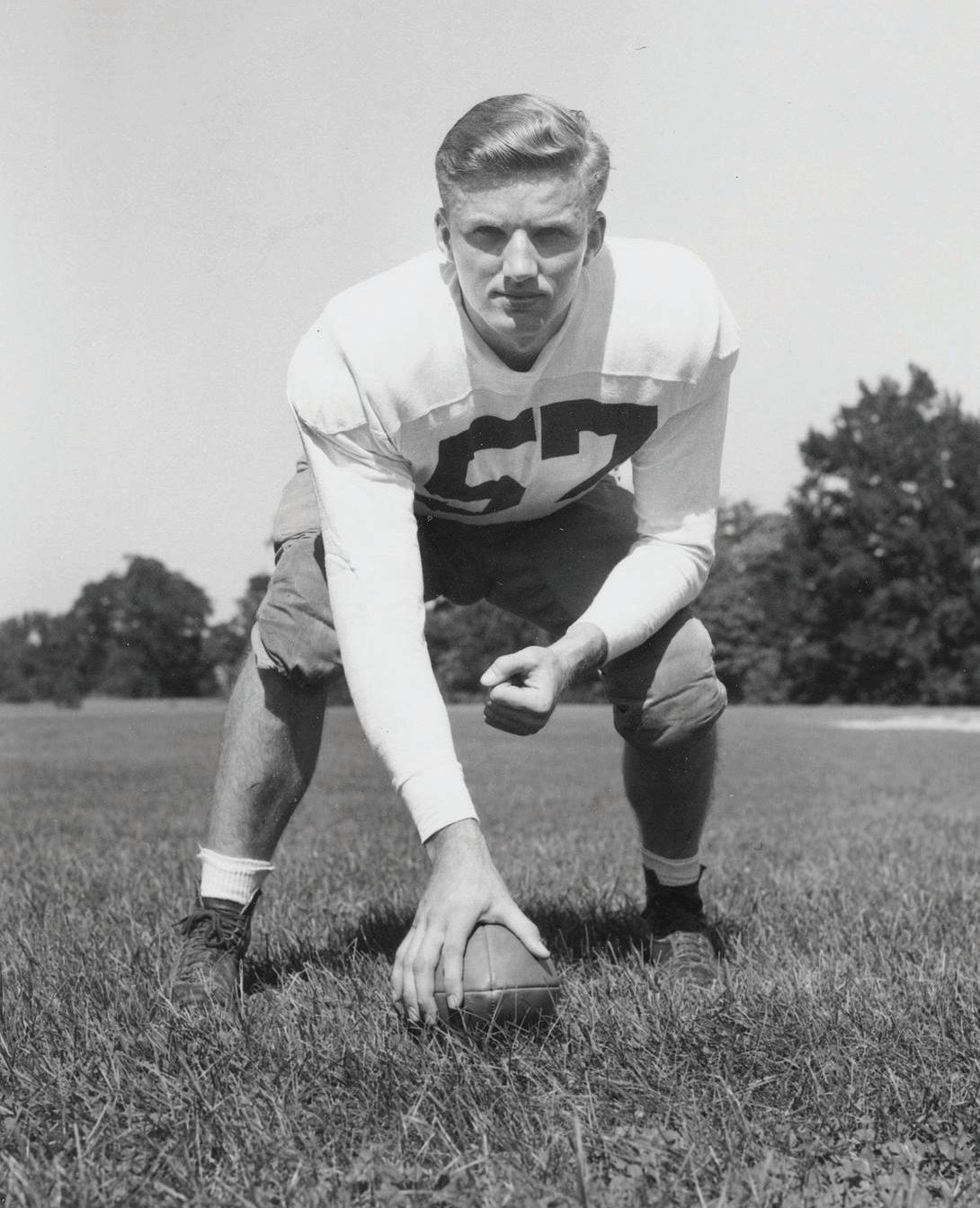
Born in Fremont, Ohio, and raised in Mansfield, Dietzel attended Miami University after enlisting in the Army Air Corps during World War II. He played center on offense and linebacker on defense for head coach Sid Gillman, and in his senior season Miami went undefeated and beat Texas Tech in the Sun Bowl.
After graduating, Dietzel followed Gillman to Army as assistant coaches under Earl “Red” Blaik and then to the University of Cincinnati when Gillman was named head coach there. Dietzel also coached at Kentucky under Bear Bryant and returned to Army before taking the LSU job.
“Paul and Athletic Director Jim Corbett, who hired him, changed the culture of LSU football,” says
Higgins, Shreveport-Bossier Journal sportswriter whose father was LSU’s Sports Medicine Director under Dietzel. “First of all, Paul was straight out of Hollywood casting with blond hair, a great smile, a good-looking guy. Tall and striking. He and Jim crisscrossed Louisiana to build interest in the football program, going to county fairs and everywhere.”
For a few magical years in the late 1950s, the state of Louisiana called the coach from Ohio one of their own. “Coach Dietzel was a great recruiter, let me tell you,” says Rabb. “He could talk. And lots
“Paul was straight out of Hollywood casting with blond hair, a great smile, a goodlooking guy.”
of times when he’d come to my house to recruit me, he’d talk to my mom and daddy. And my momma loved him.”
Ron
DIETZEL WAS HIRED AS LSU’S YOUNGEST-EVER HEAD COACH AND WON THE SCHOOL’S FIRST NATIONAL TITLE.
ARA PARSEGHIAN
GRADUATED FROM MIAMI: 1949
CHAMPIONSHIPS:
Notre Dame national championships in 1966 and 1973.
COACHING HIGHLIGHTS:
Assistant coach at Miami under Woody Hayes and was Miami head coach 1951–1955, followed by head coach at Northwestern and Notre Dame. Elected to the College Football Hall of Fame.
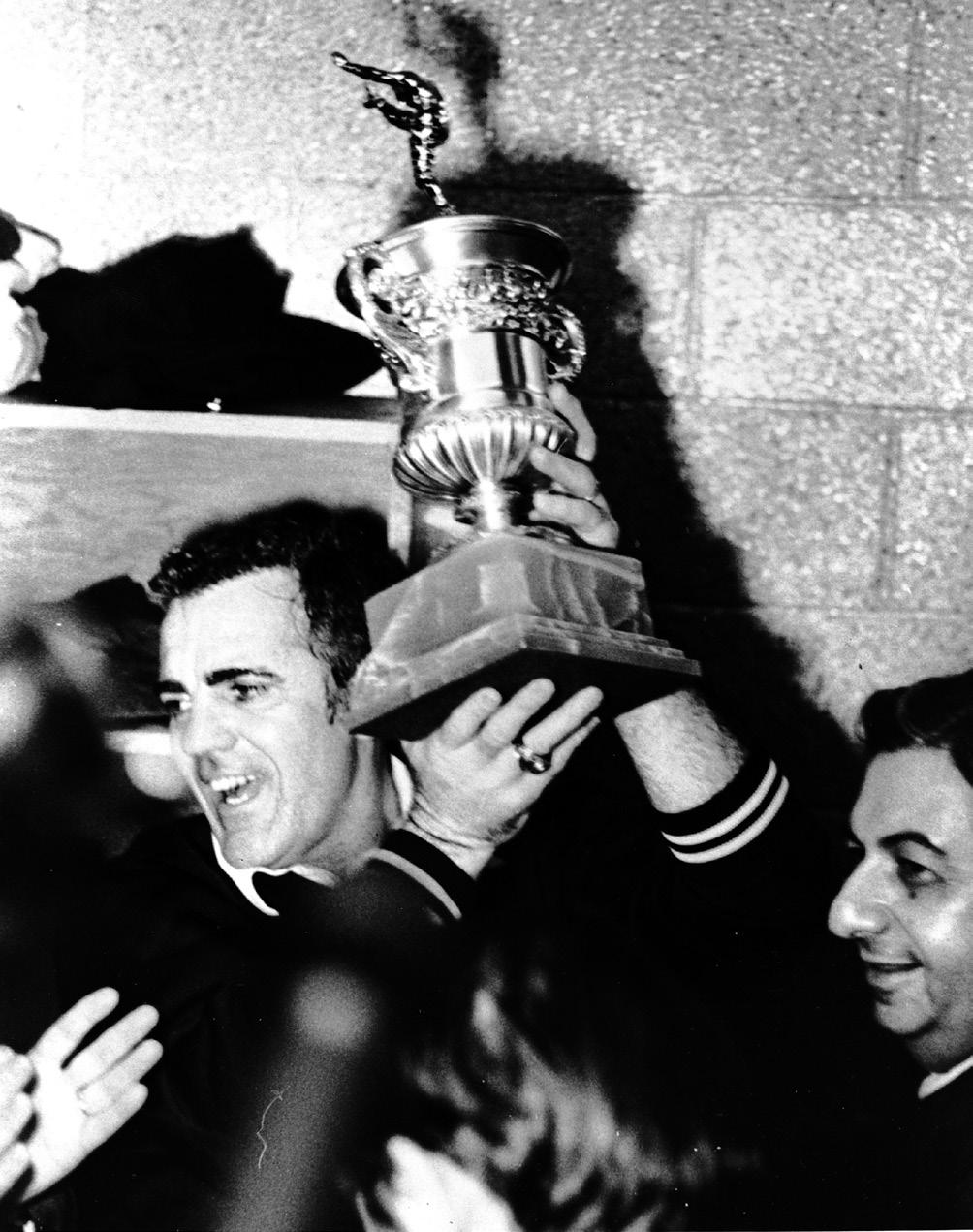
As the last few seconds of the Game of Century ticked away, Ara Parseghian looked up at the scoreboard and shook his head. The 1966 game against Michigan State was tied at 10-10, which unfairly is the first thing many think of when they ponder the legacy of Notre Dame’s celebrated coach. The epic defensive struggle watched on TV by 33 million people ended with Notre Dame running the ball four times rather than trying to get into field goal range for the win.
It’s a classic “what if” story with no answer except for one fact: While the battle might have ended in a tie, Notre Dame won the war, selected at the end of the season by both the AP sportswriters and the UPI coaches as college football’s 1966 champion.
“I kept thinking, Where’s the pass?” recalls Rocky Bleier, Notre Dame’s halfback that day and a future NFL star. “We’re trying to win this game, and we’re running the ball and, as a player, I’m going Jesus!”
Parseghian would coach the Irish for 11 seasons, winning a second national championship in 1973 and 170 games overall as a college coach. It all started in Oxford when, in 1950, Coach Woody Hayes called on Miami grad Parseghian, then just 27 years old, to return to lead the freshman team. The next year, after Hayes left for Ohio State, Parseghian was in charge as head coach. He won MAC titles in 1954 and 1955 before Northwestern University called him with an offer to become a Big Ten coach.
“In my view, he saved Northwestern football,” says Mark Hubbard, a retired Taft Broadcasting vice president who helped set up the original College Football Hall of Fame north of Cincinnati. Hubbard became a close personal friend of Parseghian, writing his biography in 2024. Parseghian took a perennial doormat team and transformed it into a contender, even briefly earning a #1 ranking in the polls after beating both Notre Dame and Ohio State.
“He was a movie star in a football body,” says Frank Pomarico, starting left guard for the Irish from 1971 to 1973. “He looked for players with faith—not religious faith, but faith in themselves. We all believed in him.”
Bleier, who came to campus as a freshman in
Parseghian’s first year at Notre Dame, remembers his coach’s strategy as “pragmatic and methodical” but also designed to put players on edge. He didn’t want even a hint of complacency or cockiness, Bleier says. “Every day of practice leading up to the game, he’d find good things to say about our opponent,” he says, laughing. “By the time Friday came, I didn’t know whether we could beat them.” They almost always did.
Pomarico remembers Parseghian’s “fist story.” Coach, he says, wanted the players to believe in the team as a family, so he’d clench his fist and note how strong and powerful it was. Then he’d loosen his grip and remind players that limp hands lose games. The message: Stay together, play together, stay clenched.
Parseghian himself was an outstanding athlete, playing for Paul Brown and the Cleveland Browns just after his service in the Navy during World War II. A hip injury cut that playing career short, opening the door for the fateful phone call from Hayes that brought him back to Miami.
find out he was on the team until his photo appeared in the local Akron newspaper. “I always wonder what would have happened to Ara and to his life and the history of football and all the good things he did if that hadn’t happened,” says Hubbard.
And that tie with Michigan State? To Hubbard, it was one of the most important college games in history—and not because of the controversial end. It elevated the college game to the national consciousness and fit into the growing civil rights movement
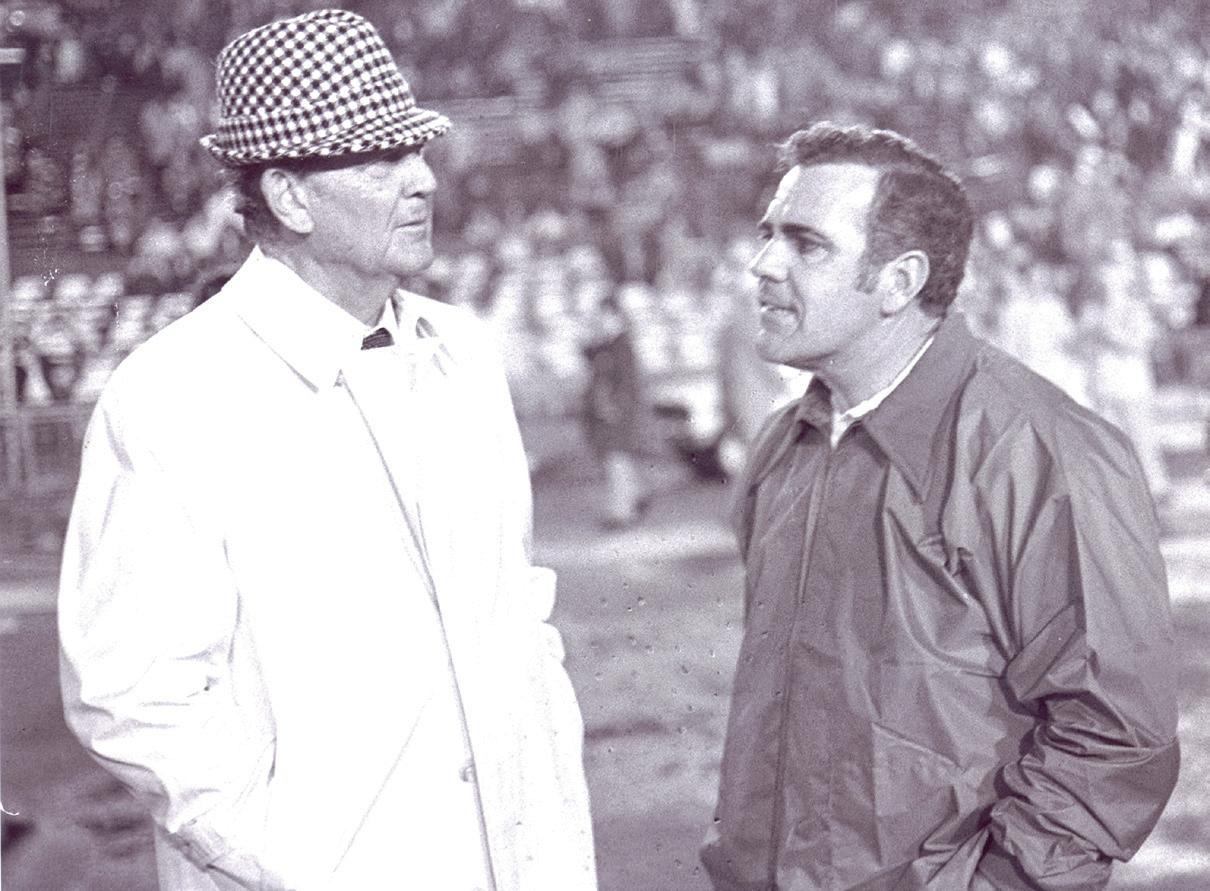
ARA PARSEGHIAN WENT TOE-TO-TOE WITH THE COLLEGE GAME’S BEST COACHES, INCLUDING BEAR BRYANT (OPPOSITE PAGE), AND WON TWO NATIONAL TITLES AT NOTRE DAME.
“He was a movie star in a football body. He looked for players with faith in themselves. We all believed in him.”
Parseghian’s mother hadn’t wanted him to play high school football, notes Hubbard, but his brother forged her signature on a permission slip. She didn’t
of the 1960s. Parseghian had deliberately worked to integrate his team, as had Michigan State coach Duffy Daugherty. With millions tuned in on TV, many American sports fans saw skilled Black athletes like Alan Page and Bubba Smith for the first time.
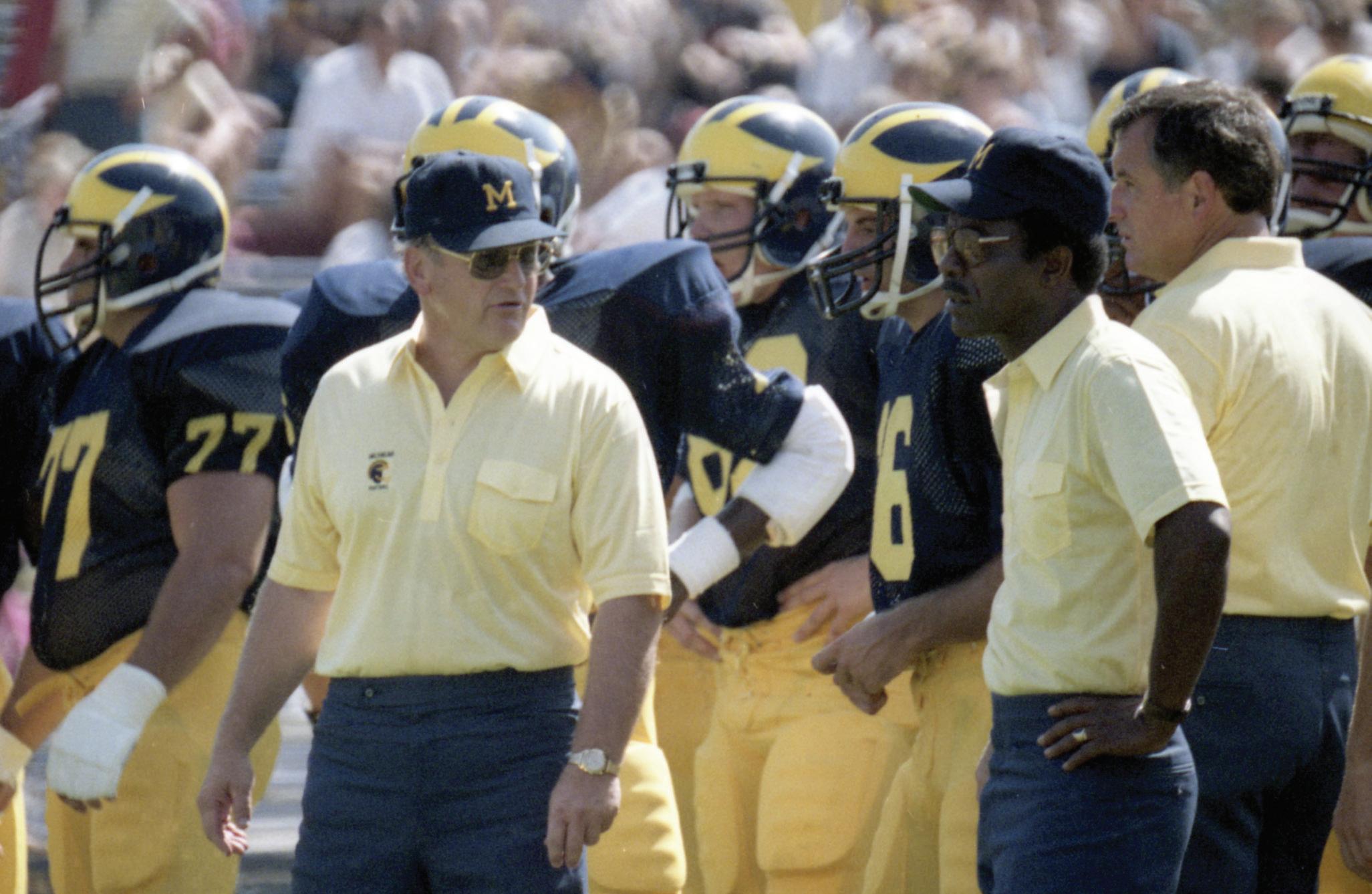
BO SCHEMBECHLER
GRADUATED FROM MIAMI: 1951
CHAMPIONSHIPS:
Led Michigan to 13 Big Ten titles.
COACHING HIGHLIGHTS: Assistant coach at Northwestern and Ohio State, followed by head coach at Miami and Michigan. Elected to the College Football Hall of Fame.
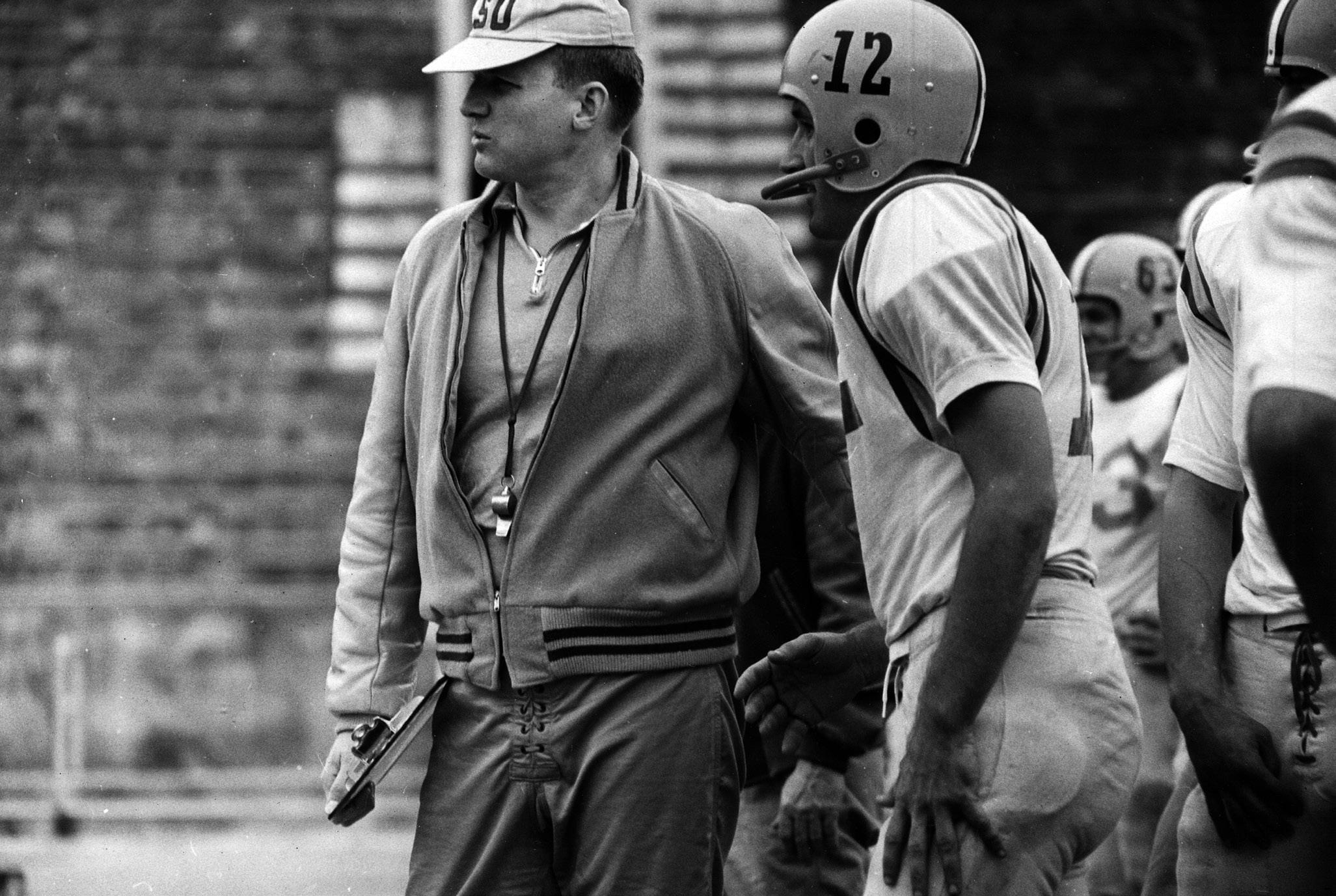
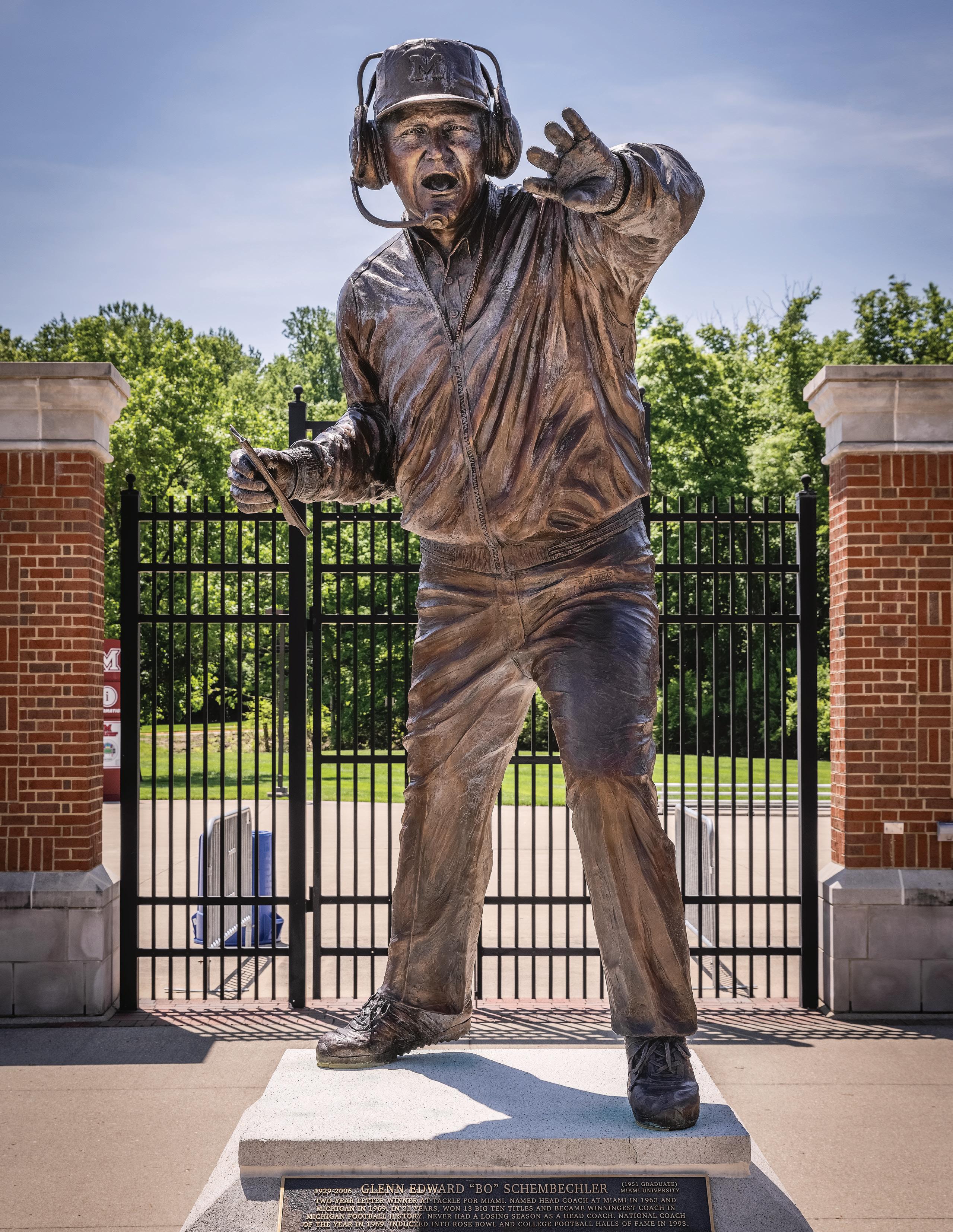
College football fans who are familiar with the famous Ten Year War between Michigan and Ohio State from 1969 to 1978 always assumed the head coaches were mortal enemies. In fact, Glenn E. “Bo” Schembechler, who started as Michigan coach in 1969, and Wayne “Woody” Hayes, who ended his Ohio State coaching career after the 1978 season, had been close friends since meeting at Miami University.
Schembechler grew up in Barberton, Ohio, with two sisters, one of whom couldn’t pronounce “brother” and instead called him “bobo” and “bo.” The nickname stuck before he enrolled at Miami in 1947 to play offensive tackle under head coach Sid Gillman and, starting in 1949, Hayes. Miami won the 1950 Mid-American Conference title in Schembechler’s senior season, after which Hayes
was named head coach at Ohio State.
Schembechler started his coaching career as a Graduate Assistant for Hayes in 1951, followed by assistant positions under Ara Parseghian at Northwestern and again at Ohio State. When his one-time teammate John Pont, then Miami’s head coach, left Oxford for Yale University in 1962, Schembechler was hired as head coach at his alma mater. He would compile a 40-17-3 record in six years at Miami, winning two MAC championships, before being hired at the University of Michigan.
He spent 21 seasons at Michigan, won or shared 13 Big Ten titles, and made 10 Rose Bowl appearances. He was named National Coach of the Year in 1969, his first season, after the Wolverines upset unbeaten defending national champion Ohio State. Schembechler went 5-4-1 in the Ten Year War against Hayes and ended his coaching career in 1989 with a record of 234-65-8. When he retired,
his 234 wins were the fifth most in Division I history. His son, Glenn E. “Shemy” Schembechler, graduated from Miami as well and coached at Michigan under his father before spending 20-plus years as an NFL scout. “I tell everybody that my dad probably would not have enjoyed the career he had if not for Miami and Woody Hayes, who instilled that coaching fire in him that made my dad say, This is what I want to do for the rest of my life,” says Shemy. “Woody really cared about him and trusted him to follow him to Ohio State and to get his master’s degree there.”
Paul Schudel played for Schembechler at Miami before serving as a Graduate Assistant in 1966–67, then working as an assistant at Michigan from 1975 to 1984. He’d be head coach at Ball State from 1985 to 1994 and win two MAC titles. “If you were explaining the Cradle of Coaches to someone, they would think, Oh, that’s probably like Michigan or Texas or Penn State, some big school like that. But no, all of those greats came from this little school in Oxford, Ohio. They just were always exceeding expectations. And I think that’s a good way to live well.”
Schudel says the life lessons Schembechler taught were centered on doing things the right way. “He emphasized working hard, not being selfish, and supporting the guy next to you. Trust him to do his job and do your own for the team. I coached the same techniques and the same things. The fundamental lesson was just do what’s right.”
Schembechler later served as Athletic Director
at Michigan and President of the Detroit Tigers and did television work covering Michigan and the Big Ten. He was inducted into the College Football Hall of Fame in 1993, the University of Michigan Hall of Honor in 1992, and the Miami University Athletics Hall of Fame in 1972.
Jon Falk was a student equipment manager at Miami under Schembechler, who would hire him to join him later at Michigan. He’d run the university’s
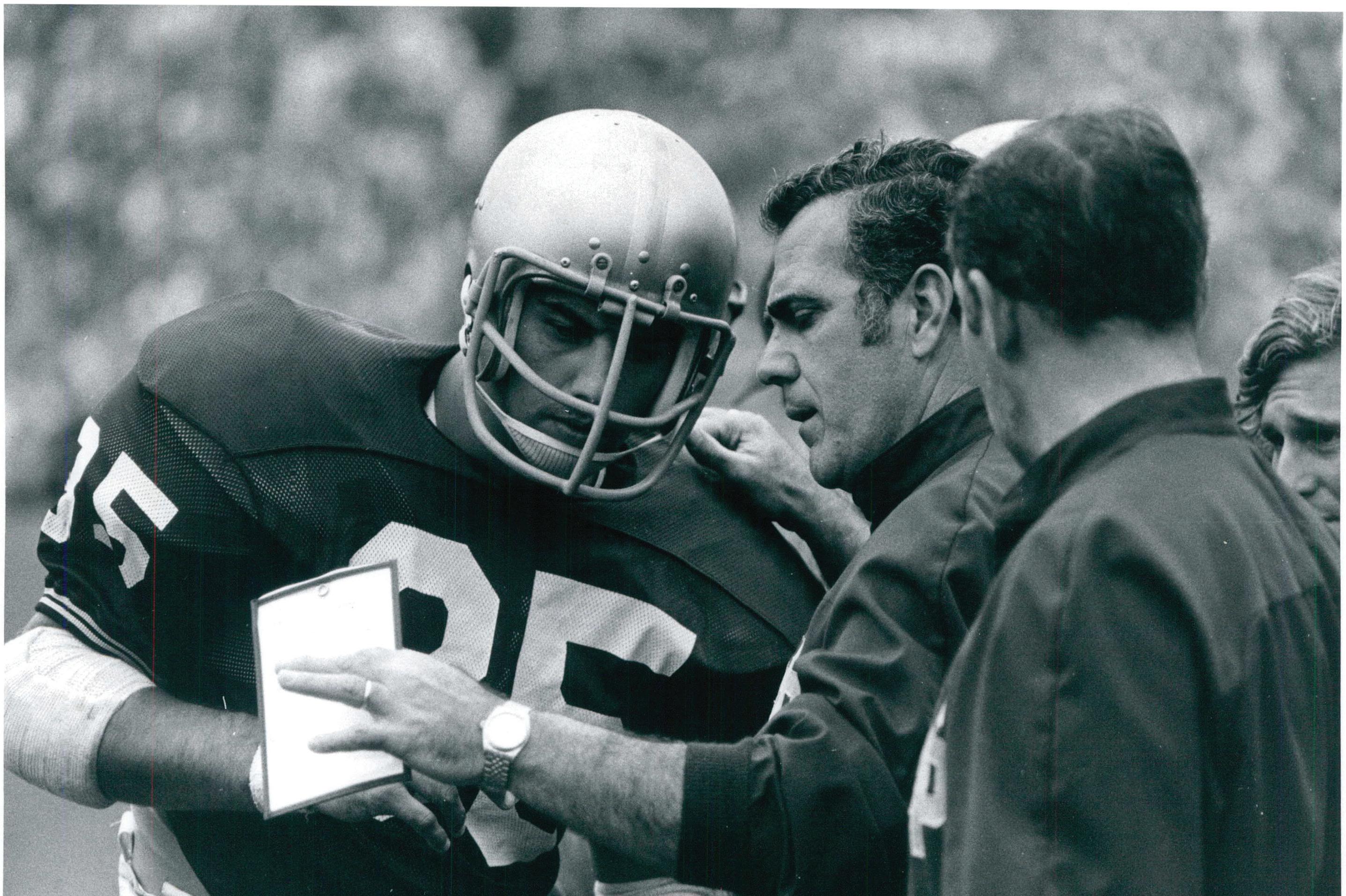
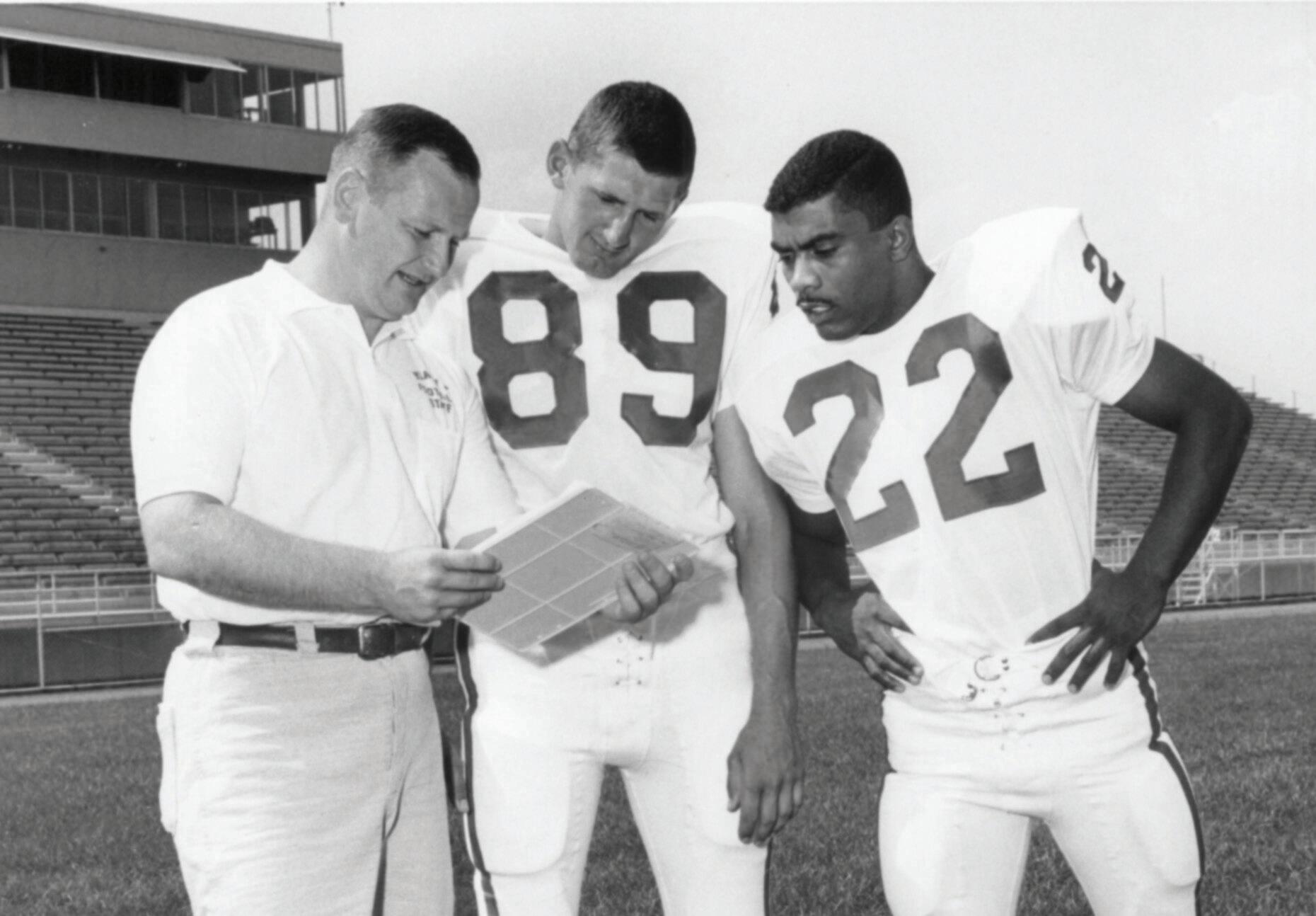
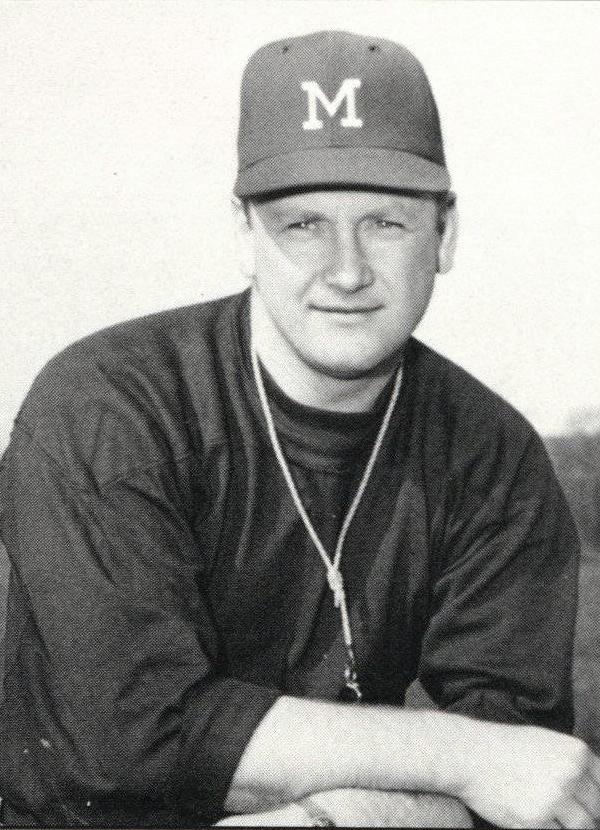
BO SCHEMBECHLER WAS HEAD COACH AT MIAMI FOR SIX YEARS (ABOVE LEFT) BEFORE COACHING AT MICHIGAN FOR 21 YEARS.
“He emphasized working hard, not being selfish, and supporting the guy next to you.”
football equipment staff for 40 years (1974–2013). Falk recalls showing up for his first day of work in Ann Arbor and getting grilled by his new boss. “I walked into Bo’s office and the first thing he said is, So what do you know about Michigan? And I said, Well, sir, I know that Bo Schembechler is the football coach, I know that Michigan and Ohio State play every year for the Big Ten championship, and I know that everybody in Ohio hates Michigan. And he laughed. And he said, Well, you pretty much summed it up.”
JOHN PONT
GRADUATED FROM MIAMI: 1952
CHAMPIONSHIPS:
Led Indiana to the 1967 Big Ten title.
COACHING HIGHLIGHTS:
Head coach at Miami 1956–1962, followed by head coach at Yale, Indiana, Northwestern, and Mount St. Joseph.
John Pont simply couldn’t leave football.
While likely most remembered as the first—and up until this past season the only—Indiana University coach to take his team to the Rose Bowl, his pigskin past ran through Canada, Chicago, the Ivy League, Japan, a Cincinnati area high school, and a small Catholic college on the banks of the Ohio River. But his career began at Miami University, first as the starting fullback and then as a coach.
“He was a giant of a man,” jokes Joe Galat, who played under Pont from 1959 to 1961. “A legend from Day 1. He was the mastermind of the wide-open offense. A true innovator.”
Pont, the first Miami player to have his number retired, scored the initial touchdown in the 1951 Salad Bowl win over Arizona State that capped a 9-1 season, Woody Hayes’ last before heading off to coach Ohio State. Pont’s three-year stats as a fullback are impressive: 27 touchdowns, 2,390 rushing yards, 874 kickoff return
yards, and all-Mid-American Conference all three varsity years.
Pont tried his hand in professional football as a member of the Toronto Balmy Beach Beachers and excelled, winning the Ontario Rugby Football Union’s most valuable player award. But the U.S. and, perhaps more importantly, Miami called him home. He would serve as assistant coach in Oxford under Ara Parseghian.
Neil Putnam fondly remembers Pont as his freshman coach in 1954 who stopped him from quitting the team. Putnam was Miami’s top fullback when, just before the season’s opening game, Pont slotted him to play linebacker. Putnam was incensed and jumped in his car to head home. Pont followed in his own car and pulled up alongside him. “Where you going, Red?” he recalls Pont saying. “And I tell him, ‘I’m going home because no cares about me here.’ ”
After Pont explained the varsity didn’t need fullbacks but did need linebackers, it became obvious to Putnam that his coach had his best interests in mind. He turned around and became a
four-year letterman, winning three MAC titles that include the undefeated 1955 season and anchoring Miami’s most dominant defense ever.
Putnam recalls a coach who was always focused on the game, even as bench players would take turns teasing him with an elbow to the ribs. “He always had his cleats on,” says Putnam, who would later have an 18-year career as a college coach. “One hundred percent there all the time.”
Pont started his head coaching career at Miami in 1956 after Parseghian left and compiled a 43-22-2 record in six seasons before moving to Yale University for two seasons. He then coached at Indiana, where he led the Hoosiers to a co-Big Ten title in 1967 and the school’s first Rose Bowl. Indiana lost to #1 USC, finishing 9-2 and firmly within the Top 10 in multiple polls, and Pont was named Walter Camp Coach of the Year.
year tenure there, the team won multiple X-League championships.
“He loved it,” recalls John Pont, his grandfather’s namesake and current football coach at Oberlin College. “Grandma, not so much. He probably retired a few times, and then they’d sweeten the pot so he’d come back. Finally, though, she said, ‘Enough.’ ”
The younger Pont, a 2007 Miami graduate, recalls as a teenager watching Japanese football films with his grandfather over the Christmas holidays. He absorbed some X’s and O’s knowledge critical to football tactics, but more than that he learned the essence of coaching young men. “He’s guiding me
“He was a giant of a man. A legend from Day 1. A true innovator.”
Pont went on to coach Northwestern and serve as Athletic Director there before returning home to southwestern Ohio, later coaching Hamilton High School and being the inaugural head coach for Mount St. Joseph College. Half a world away, Japan was experimenting with American football, and Pont, at age 65, was recruited by a former grand sumo champion to help create a semi-pro league and coach the Gakusei Engokai Rocbulls. Over his nine-
through my experience,” he says. “Coaches connect beyond just the transactional experience. It isn’t just about wins.”
His grandfather changed lives by connecting with his players on a deeper level, Pont says, and that’s what he tries to do. “I can feel the back of his hand on my neck,” he says. “A little weight back there isn’t a bad thing.”
JOHN PONT WAS THE FIRST MIAMI FOOTBALL PLAYER TO HAVE HIS NUMBER RETIRED AND WENT ON TO COACH AT HIS ALMA MATER (OPPOSITE PAGE), INDIANA (ABOVE), AND EVEN IN JAPAN.
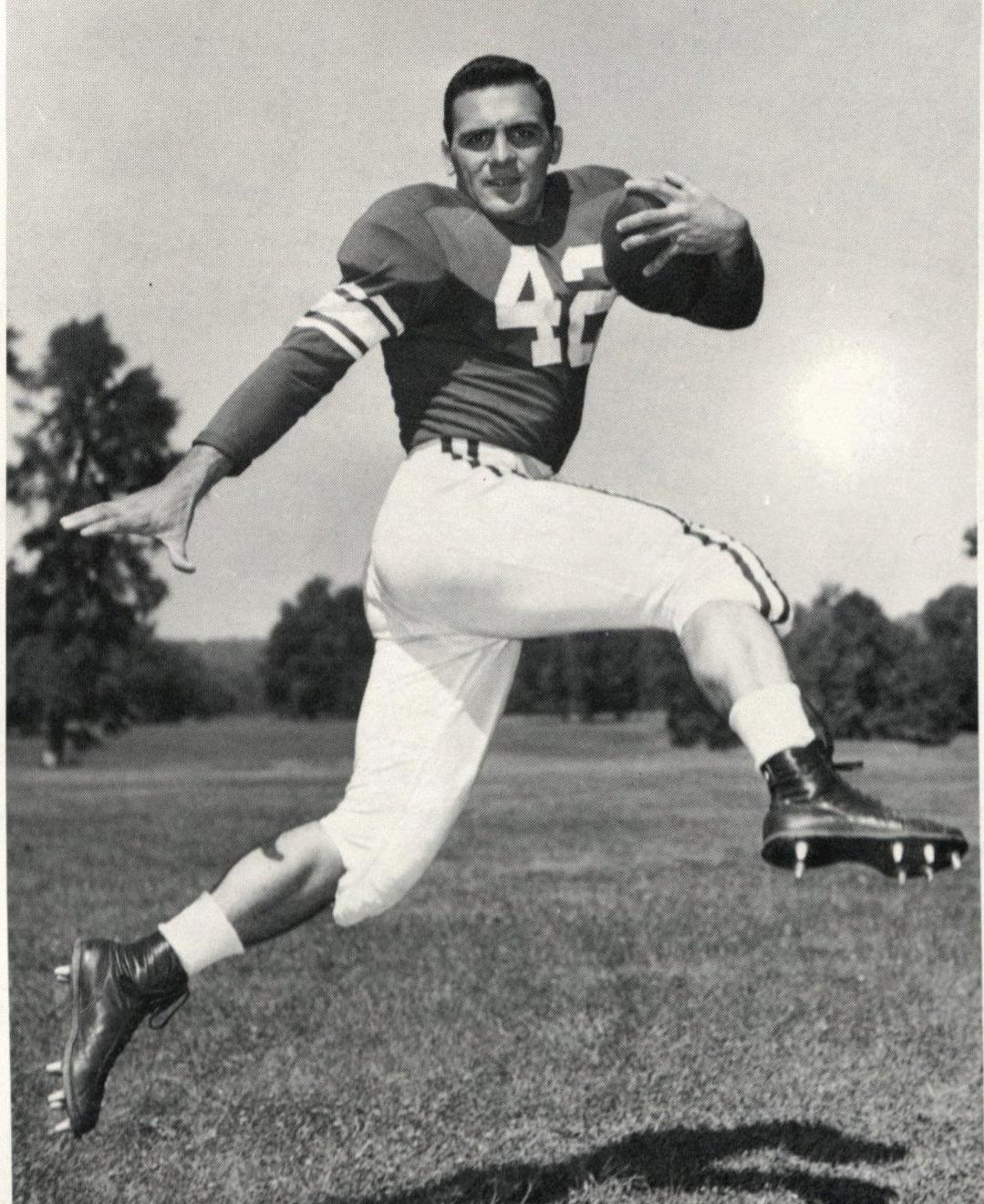
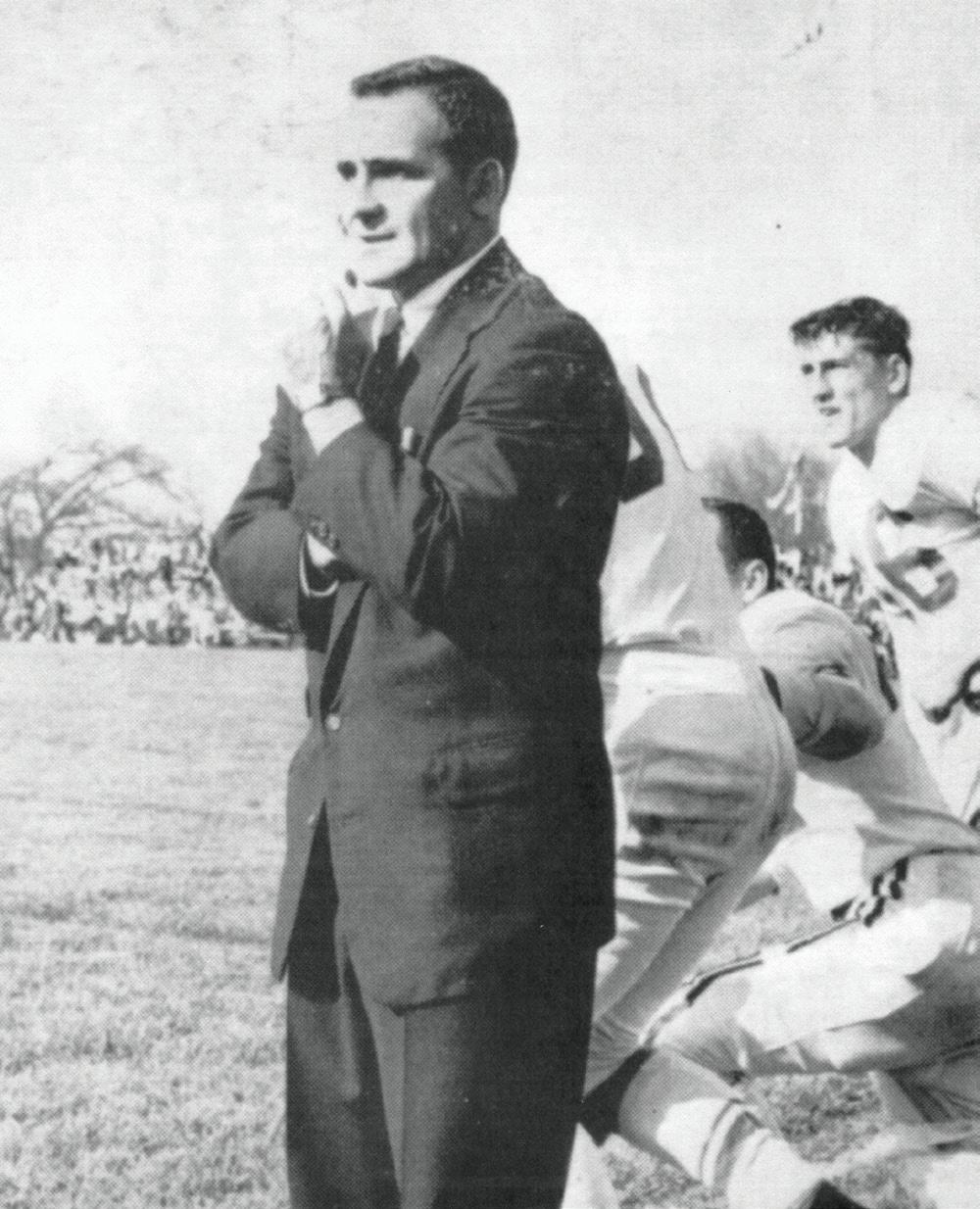
CARM COZZA
GRADUATED FROM MIAMI: 1952
CHAMPIONSHIPS:
Led Yale to 10 Ivy League titles.
COACHING HIGHLIGHTS: Assistant coach at Miami 1956–1962, then head coach at Yale for 32 seasons. Elected to the College Football Hall of Fame.
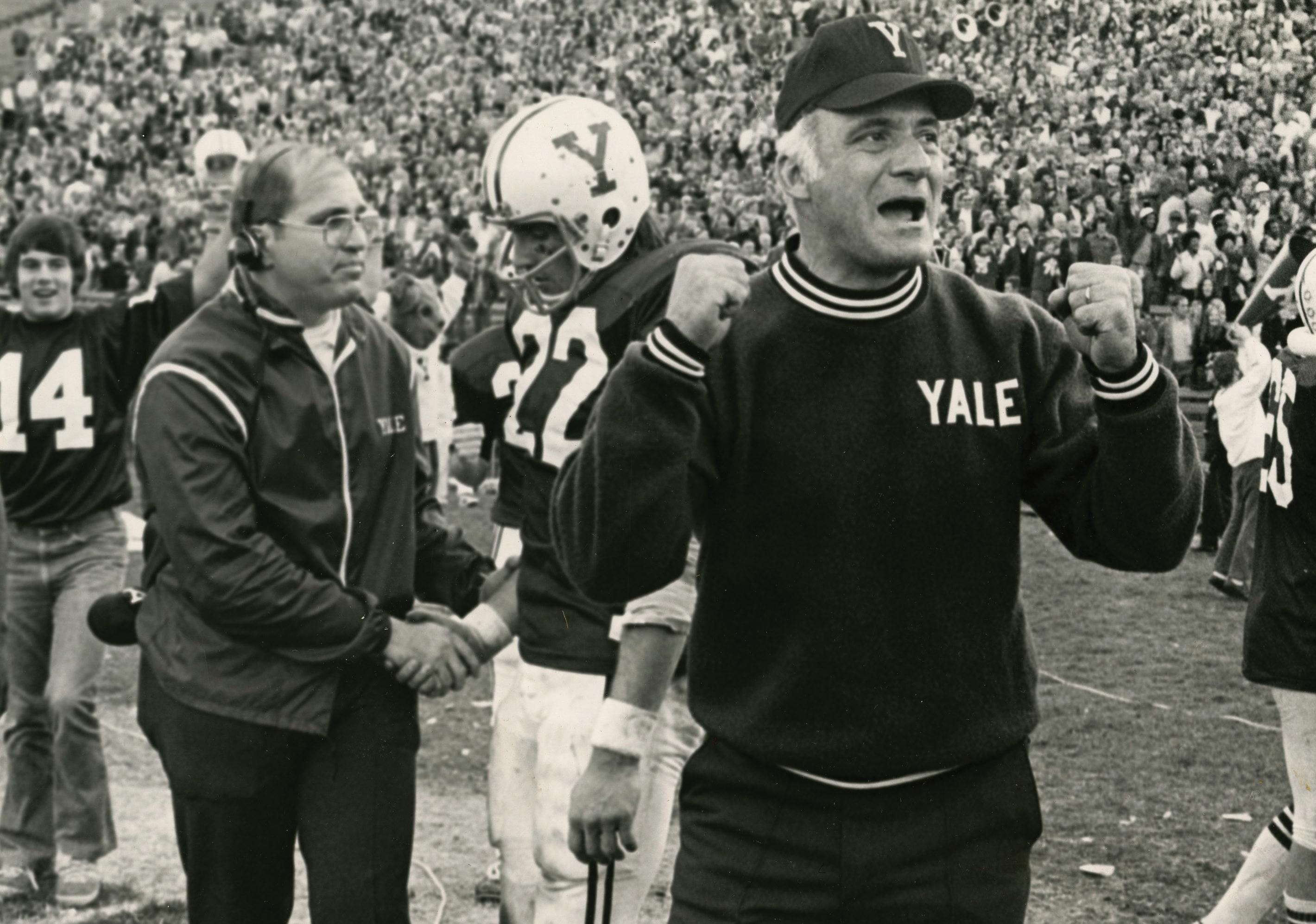
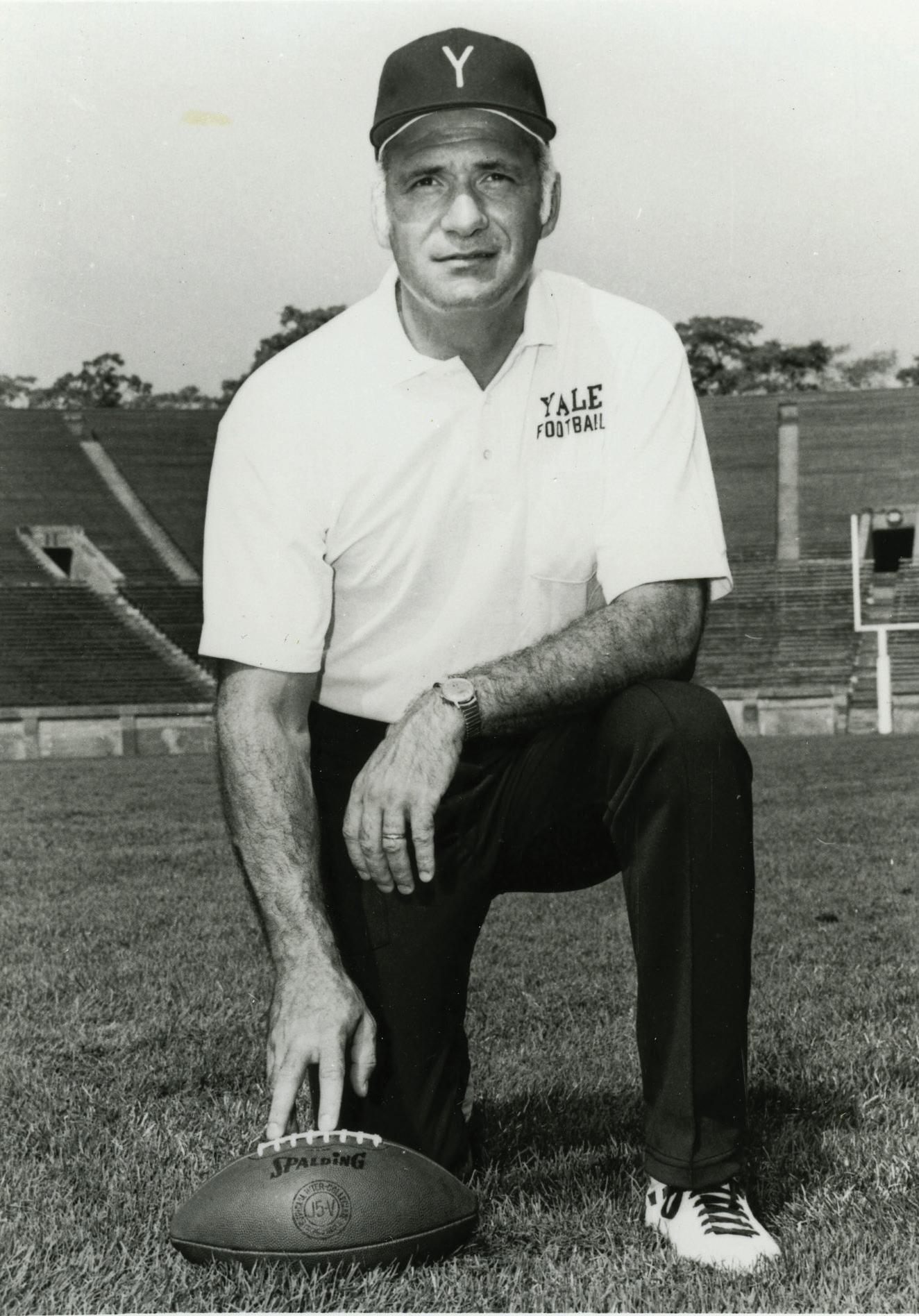
Carmen “Carm” Cozza always called Miami University’s campus the most beautiful place on Earth, even during his three decades coaching at Yale University. His grandson, Mark Powell, head football coach at the University of New Haven, not far from Yale, recalls asking Cozza about his presence among Miami’s Cradle of Coaches. “He said, They’re my best friends. It was a people thing. Coaching is a very tight-knit community. There’s no other profession like it.”
Cozza was contemporaries with three other Cradle of Coaches members, playing quarterback for Miami head coaches Woody Hayes and Ara Parseghian alongside teammates John Pont and
Bo Schembechler. Miami won the Mid-American Conference title in 1950 and finished 7-3 in 1951, Cozza’s senior year. He was also an accomplished pitcher and outfielder on Miami’s baseball squad and played in the Cleveland Indians and Chicago White Sox minor league systems after graduating.
When Pont replaced Parseghian as Miami’s head coach in 1956, Cozza joined his staff as assistant coach. Cozza followed him to Yale when Pont was named head coach in 1963. And when Pont departed for Indiana in 1965, Cozza became Yale’s head coach—a position he kept for the next 30 years. He led the Bulldogs to 10 Ivy League championships and an overall record of 179-119-5.
Cozza coached 35 Yale All-Americans, 121 First Team All-Ivy winners, and five Rhodes Scholars, while having 21 of his players
drafted by the NFL. One of them, Rich Diana, M.D., drafted by the Miami Dolphins in 1982, says Cozza was more of a mentor than coach to most of his players.
“He taught us to behave in a certain manner and showed us what loyalty is,” says Diana. “And we reciprocated with loyalty to him. It was a great way to transition from being a high school kid to being a young man. He taught us a lot about behavior, how to win, and dedication.”
His teammate, Patrick Ruwe, M.D., who would later serve as President of the Yale Football Association, agrees that Cozza was a true teacher at the university. “One of his favorite lines was he coached more doctors and lawyers than any coach in America,” says Ruwe. “And
he truly he cared about that. But I tell you what he cared most about was winning football games. We won three Ivy League titles in my four years at Yale.”
Yale won outright Ivy League titles under Cozza in 1967, 1968, 1977, 1979, and 1980 and tied for first in 1969, 1974, 1976, 1981, and 1989. One of the most famous games during his tenure was against Harvard in 1968, when the Crimson stormed back late to force a 29-29 tie and leave Yale and Harvard as co-champs. Cozza’s team that year featured future NFL players Calvin Hill and Brian Dowling.
Cozza served as special assistant to Yale’s Atheletic Director after retiring in 1996 and spent more than a decade as a radio analyst for Yale football. He was inducted into the College Football Hall of Fame in 2002, and his plaque notes that his basic values of “hard work, fair play, loyalty and compassion define his legacy.” He was selected for the Miami University Athletics Hall of Fame in 1970 and the Yale University Hall of Fame in 2009.
When Cozza died in 2018, then-University President Peter Salovey said, “Carm is a Yale legend. Across four decades, students loved to play for him, and he remained in their lives long after they graduated. He embodied the unique values of the Ivy League approach to athletics; his players were always students first.”
Powell says he thinks about his grandfather every day and displays his memior, True Blue: The Carm Cozza Story, in his office. “That’s the first thing I see every day in my office, and I try to live by his example. He used to say you can’t treat players like chess pieces and move them around a board and expect them to play hard for you.”
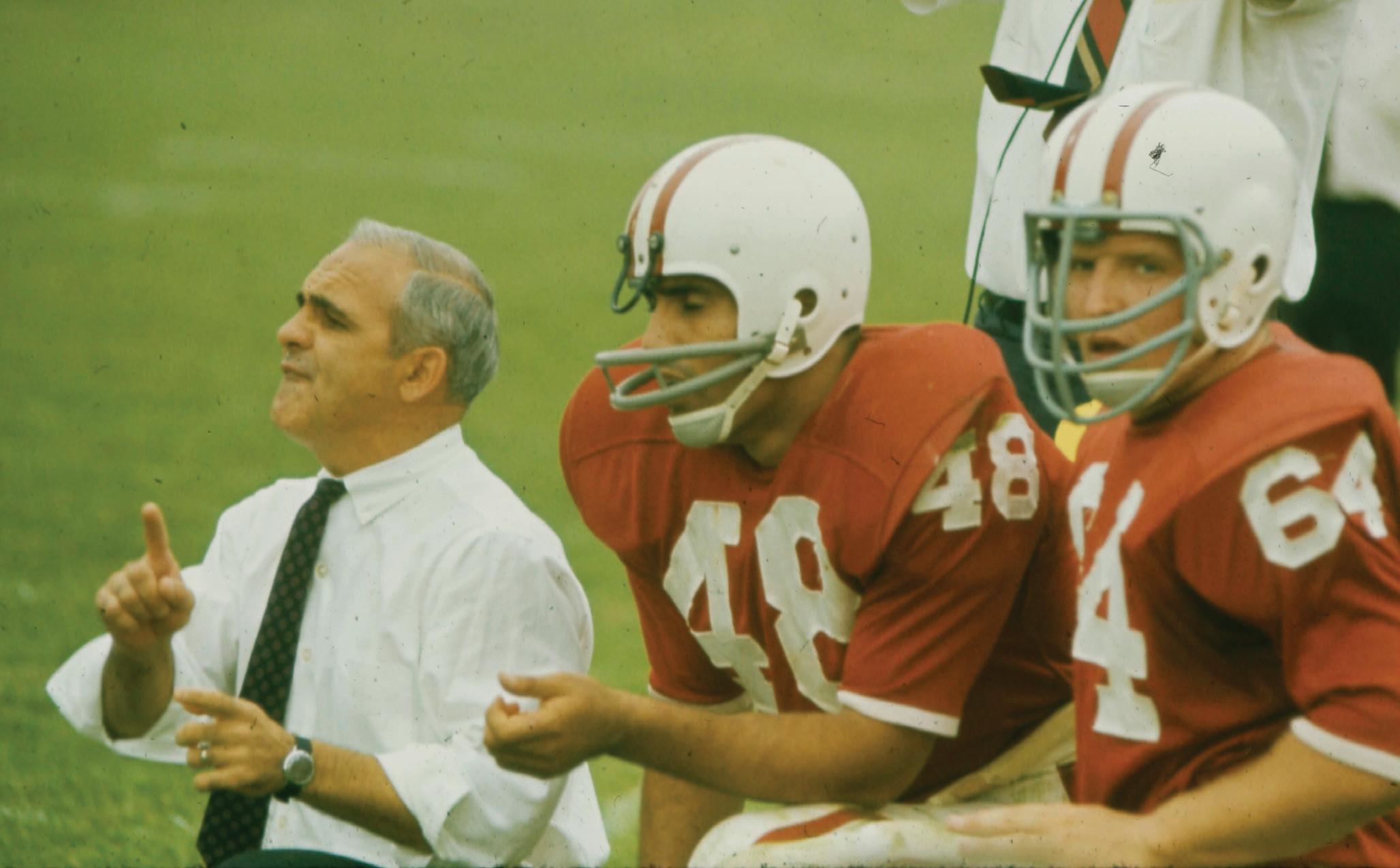
CARM COZZA WAS
HEAD
COACH AT YALE UNIVERSITY FOR 32 YEARS AFTER COACHING UNDER JOHN PONT AT MIAMI AND AT YALE.
Ruwe recalls his coach as a humble Midwestern guy who was highly competitive and wanted to win, but always wanted to win the right way. “It’s a funny story that Coach Cozza grew up with four sisters and then had three daughters. He used to say even their dog was female. But he had 2,000 Sons of Eli at Yale. I always figured that if you grow up with a father, that’s your hero and you’re a lucky man. But all of us players had two heroes in our life.”
“He embodied the unique values of the Ivy League approach to athletics; his players were always students first.”
JOHN HARBAUGH
GRADUATED FROM MIAMI: 1984
CHAMPIONSHIPS:
Baltimore Super Bowl title in 2013.
COACHING HIGHLIGHTS:
Assistant coach at Western Michigan, Pittsburgh, Cincinnati, and Indiana; assistant coach with Philadelphia Eagles; head coach of Baltimore Ravens 2008–2025 and now New York Giants.
There is perhaps no greater sibling rivalry, at least on the gridiron, than the Harbaugh brothers. But it’s John, current coach of the New York Giants, who has the ring, the second of three Super Bowl-winning coaches who cut their teeth on Miami University’s campus. When his Baltimore Ravens edged the Jim Harbaugh-coached San Francisco 49ers in Super Bowl XLVII, John’s statue joined the exclusive village of the Cradle of Coaches.
“It’s like I hadn’t really done anything,” says Harbaugh, recalling his induction ceremony. “And I think of all my teammates who probably think it’s pretty weird and stupid because, you know, I wasn’t a very good player.”
But Harbaugh wasn’t being enshrined because of his career as a
Miami defensive back in the mid-1980s. And given his well-known humility, he looked upon his Super Bowl championship as a title won by the team, not him.
His NFL coaching credentials are beyond question. As the Ravens head coach for 18 seasons, Harbaugh amassed 193 wins and six division titles and coached in four AFC championship games. He’s been in the NFL since 1998 and, before that, spent 14 years as a college coach. But it all started at Miami, where he says he learned the importance of resiliency.
“When things are tough and you think you’re not playing as much as you think you should, you just get through it and on to the next thing,” he says. “You lean on your pals, and they become your best friends for life.”
One of his friends and college roommates, Ralph Williams, tells the story of taking a group of high school football players to
Indiana University when Harbaugh was an assistant coach. “None of them was being recruited,” he recalls. But Harbaugh, he says, treated them like top prospects and spoke to them about the importance of getting good grades and being good men. “The smiles on their faces,” Williams recalls. “And every one of those kids who went on that trip is successful in life today.”
Chuck Pagano remembers the look Harbaugh gave him when he got “the call” from the Indianapolis Colts. The day before, a chance at the Super Bowl had slipped away when the Ravens lost a heartbreaker to the New England Patriots in the AFC championship game. “I told him I’d call them back but I’m not interested,” says Pagano, then the Ravens’ defensive coordinator, “and [Harbaugh] says, ‘You gotta talk to them. There are only 32 of these in the world.’ ”
JOHN HARBAUGH, A DEFENSIVE BACK AT MIAMI, IS ENTERING HIS 19TH SEASON AS AN NFL HEAD COACH.
Pagano would serve as Indianapolis head coach for six seasons.
Zach Orr’s playing career ended after the standout Ravens linebacker was diagnosed with a congenital spine deformity. Harbaugh, he says, was one of the first to call. “He wasn’t worried about football,” he says. “He just wanted to know how I was doing. And he tells me to take some time but he’d love me to come back here and coach.”
Orr did just that, spending eight years with Harbaugh, the last as defensive coordinator. He’s now the Seattle Seahawks’ inside linebackers coach. “It probably saved my life,” he says. “No telling where my mental space would be now if I hadn’t been able to start my second career right away.”
Harbaugh thinks back to his days as a Miami political science major when he took, as an elective, a coaching class from the school’s baseball coach, primarily to better understand the career his father, Jack Harbaugh, had built. As it turned out, the class changed his life. “I really began to think maybe I would follow my dad’s footsteps and become a coach,” he says, followed by a quick philosophical twist worthy of a political scientist. “Life is best understood in reverse. You live it going forward, but it’s understood going backward.”
Players readily acknowledge Harbaugh’s football expertise, but what they really seem to treasure are his lessons in morality, responsibility, commitment,
“Life is best understood in reverse. You live it going forward, but it’s understood going backward.”
and work ethic. “I describe John’s style as ‘servanthood,’ a man of faith who cares deeply about people,” says Pagano. “And he’s consistent. The same dude, same laugh, same smile no matter what.”
SEAN MCVAY
GRADUATED FROM MIAMI: 2008
CHAMPIONSHIPS:
Los Angeles Super Bowl title in 2022.
COACHING HIGHLIGHTS:
Assistant coach with Tampa Bay Buccaneers and Washington Redskins, followed by head coach of Los Angeles Rams from 2017 to present.
Sean McVay says he was almost destined to attend Miami University and become a football coach, given his family legacy. His grandfather, John McVay Sr., played football at Miami and worked his way up the coaching ranks to serve as head coach of the New York Giants. He followed that with 17 years as an executive for the San Francisco 49ers, winning five Super Bowls. Sean’s uncle, John McVay Jr., also played football at Miami, while his father Tim played at Indiana University.
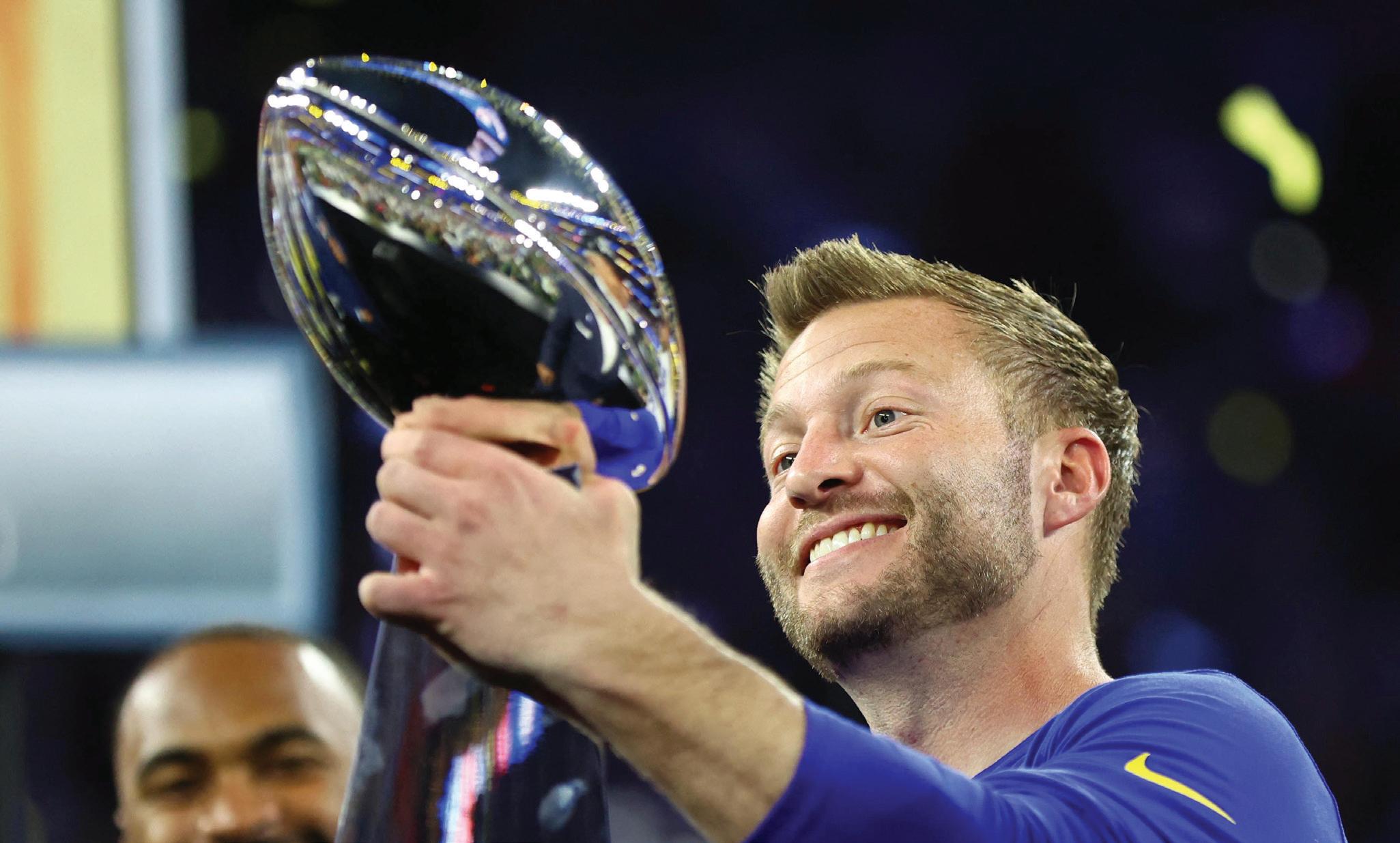
McVay played wide receiver at Miami from 2005 to 2008, earning the team’s Scholar-Athlete Award in 2007. He began his coaching career with the Tampa Bay Buccaneers and served as offensive coordinator for Washington before the Los Angeles Rams hired him as head coach in 2017, making him the youngest in NFL history at age 30. He then became the youngest NFL head coach to win a Super Bowl.
“I knew I always wanted to be involved in football in some form or fashion,” says McVay. “I have so much respect for what this game has given my family. You don’t realize how many things you subconsciously pick up on until you’re really able to reflect back on how formative those early years were in regards to how we do things here with the Rams.”
McVay’s influence on the NFL is two-fold: 10 of his assistants have gone on to serve as head coaches in the NFL or college, and a number of NFL teams started hiring young, offensive-minded head coaches.
Bengals head coach Zac Taylor recalls being hired by McVay in Los Angeles, where he worked for two years before taking the head coach job in Cincinnati. “He told me I had 48 hours to give him a decision, then called me back an hour later and said, What’s your decision? He’s got a lot of energy and a lot of conviction in what he’s doing. And when you hear the belief and the confidence in his voice, you want to be a part of what he’s building.”
McVay has built a juggernaut with the Rams, making the Super Bowl in his second season (losing to New England) and winning the championship in his fifth year. His teams have won four NFC West titles and made the playoffs in seven of his nine seasons. Star players like Aaron Donald and Andrew Whitworth benefitted from his coaching prowess in multiple ways.
“Sean changed my life for the better,” says Donald. “I love him more as a person than a coach. Everything changed when he came to the Rams. We could tell how smart he was when it came to the X’s and O’s of the game, but he knew how to bring the best out of out of his players. You want to win for him and not disappoint him.”
Whitworth has several connections to the Cradle of Coaches besides McVay, having played 10 years for the Bengals and learning about Paul Brown after graduating from LSU and hearing of Paul Dietzel. “I worked with multiple assistants at the Rams—wide receiver coaches, coordinators, quarterback coaches, defensive coordinators—who are now head coaches in the NFL, so Sean’s circle has spread. He’s created his own Cradle of Coaches across the league and almost created his own legacy.”
O’Connell (Minnesota Vikings). Current college head coaches from McVay’s coaching tree are Jedd Fisch (University of Washington) and Scott Frost (University of Central Florida).
McVay recalls getting to know head coach Bill Walsh while his grandfather worked in the 49ers front office and hearing stories about Paul Brown, under whom Walsh coached during the Bengals’ first eight seasons. It was yet another connection back to Miami.
“The foundation of what Coach Walsh learned under Coach Brown are the principles of how we operate here in L.A.,” he says. “I think we can make it complex as coaches, unnecessarily. You look at the overall athleticism of the guys who are are playing
SEAN MCVAY IS THE YOUNGEST HEAD COACH TO EVER WIN A SUPER BOWL.
“When you hear the belief and the confidence in his voice, you want to be a part of what he’s building.”
Besides Taylor, other current NFL coaches who worked under McVay include Liam Coen (Jacksonville Jaguars), Matt LaFleur (Green Bay Packers), Mike LaFleur (Arizona Cardinals), and Kevin
today, but they still need the same foundational principles in terms of tackling, blocking, staying connected, avoiding penalties, taking care of the football, and making sure you’re doing things that are in alignment with winning football. Those things have been tried and true, and they’ll never change.”
Other Members of Miami’s Cradle of Coaches Association
WALTER ALSTON
A multi-sport athlete at Miami, he managed the Brooklyn and Los Angeles Dodgers to World Series titles in 1955, 1959, 1963, and 1965.
JERRY ANGELO
A three-year football star for Miami, he was a college assistant coach for eight years, an NFL assistant coach, and finally General Manager of the Chicago Bears.
BILL ARNSPARGER
After assistant coach stints under Woody Hayes at Miami and Ohio State, he coached with Don Shula at the University of Kentucky and then for Shula with the Baltimore Colts.
RANDY AYERS
Began his basketball coaching career as a graduate assistant at Miami, then served as an assistant coach at Army and Ohio State before eight years as Buckeyes head coach.
PEGGY BRADLEYDOPPES
Named Miami’s third head women’s volleyball coach in 1979, she led the program to its first two Mid-American Conference championships and the 1981 NCAA tournament.
JOHN BRICKELS
Coached high school football, basketball, and track in Ohio and West Virginia, then became head basketball coach at Miami and served as Athletic Director 1950–1964.
STEVE CADY
Head coach of Miami’s ice hockey team for nine
seasons, including its first seven years as a varsity program (1978–85), and was men’s soccer coach 1978–1980.
RICHARD CERONIE
Head coach of Miami’s women’s cross country and track and field for 24 years, launching the cross country program in 1984.
CAROL CLARK JOHNSON
The Miami graduate was a member of the Ladies Professional Golf Association for more than 40 years.
JOE CODIANO
The Miami graduate coached high school football, track, baseball, and wrestling. Inducted into the Indiana Football Hall of Fame in 1980.
CHARLIE COLES
After playing basketball for Miami, he coached high school basketball and later served as head coach at Central Michigan University and Miami.
CAROLYN CONDIT
Led the Miami volleyball program for 40 years, retiring as the winningest coach in Miami athletics history across all sports.
RODGER CROMER
Served as head coach of Miami men’s golf 1965–2001, leading the team to 11 Mid-American Conference titles, including six straight 1987–1992.
DICK CRUM
After serving five years as an assistant, he became Miami’s head football coach in 1974 and won three MAC titles and two bowl championships. His
University, he coached Miami to a 14-5 record in 1949 and 1950. He then spent 28 years as head coach at Ohio State University, where he won five national championships.
DARRELL HEDRIC
first Miami team went 100-1 and ranked #10 in the final polls.
GEORGE DALES
The Miami graduate coached Western Michigan University’s men’s track and cross country teams to NCAA cross country championships in 1964 and 1965.
LEANN DAVIDGE
Coached Miami’s women’s tennis 1979–1985, winning four straight MAC titles. She was the first woman in Miami’s Athletics Hall of Fame.
JACK FAULKNER
The Miami graduate spent 20 years in the AFL/NFL as head coach of the Denver Broncos as well as assistant coach with the Chargers, Vikings, Saints, and Rams.
GEORGE GWOZDECKY
Head coach of Miami hockey 1989–1994, leading Miami to its first Central Collegiate Hockey Association title and first NCAA Tournament appearances.
DANNY HALL
The Miami graduate won two MAC titles as head baseball coach at Kent State University and then took over at Georgia Tech for 32 seasons.
JERRY HANLON
The Miami graduate coached high school football in Cleveland before assistant coaching at the University of Dayton, Miami, and Michigan.
WOODY HAYES
After three seasons as head football coach at his alma mater, Denison
BOB KAPPES
As a player he helped Miami win its first MAC championship in 1948 and then coached high school football before coaching Ohio University.
DON KNODEL
The Miami graduate returned to Oxford as the basketball program’s first full-time assistant coach in 1960, then became head coach in 1970. He’s the winningest basketball coach in school history.
FRITZ HEISLER
Began his coaching career as an assistant at Massillon High School under Paul Brown and followed him to Ohio State in 1941 and a 30-year tenure with the Cleveland Browns.
ELAINE HIEBER
As Assistant Athletic Director, she helped establish seven women’s varsity sports at Miami and served as head coach for four of them 1974–1976. She later worked in athletic administration at Iowa State University for 23 years.
TERRY HOEPPNER
He spent 19 seasons with Miami’s football program, the longest tenure of any coach in program history, and was head coach 1999–2004.
RON HUNTER
The Miami basketball star has coached college basketball for 32 years, currently at Tulane University. He is the all-time winningest coach at both IUPUI and Georgia State.
DAVE JENNINGS
Led Miami’s women’s swimming and diving program for 31 seasons, winning 16 MAC titles.
LOU KACZMAREK
A football star at Miami, he was head football, basketball, track, and/or wresting coach at nine different high schools in Ohio as well as Hanover College.
A standout at Miami in basketball and baseball, he coached high school basketball in Ohio before coaching at Miami and Vanderbilt.
MEL KNOWLTON
Earned varsity letters at Miami in baseball and basketball, then coached under Paul Brown in Massillon before coaching Alliance High School football 1946–1969.
VICKI KORN
Originator of the nation’s first collegiate senior-level synchronized skating program, she won 15 national championships in 25 years at Miami.
BOBBY KRAMIG
Joined Miami in 1983 as head coach of the men’s soccer team and later helped launch the women’s program, amassing a combined 356 victories during his 34-year tenure.
BOB KURZ
The former Miami Sports Information Director wrote the book Miami of Ohio: The Cradle of Coaches, which originated the nickname. He and his wife, Marian, provided a gift to construct the Cradle of Coaches Plaza at Yager Stadium.
PACO LABRADOR
Served as assistant volleyball coach at Miami before becoming head coach at Wittenberg University and the U.S. Naval Academy.
DONA LAYMAN
A three-sport athlete at Miami, she coached Miami volleyball, women’s basketball, and softball and then was head softball coach at Valley View High School for 35 years.
JASON LINDSEY
The Miami graduate coached or co-coached boys and girls cross country and track for more than 30 years at Lakota and Lakota East high schools, winning two state championships.
JACK LLEWELLYN
The Miami graduate enjoyed a 25-year career as head football and baseball coach at Bay High School, twice earning Coach of the Year in the Cleveland area.
PHIL LUMPKIN
Following a standout playing career at Miami and in the NBA, he spent 25 years coaching high school basketball in Seattle and won five state titles.
BILL MALLORY
Head coach at Miami 1969–1973, with an 11-0 record in his final season. He then led the University of Colorado and Indiana University and was twice named Big Ten Coach of the Year.
DENNY MARCIN
The Miami graduate became one of the NFL’s top defensive line coaches, working with the New York Giants and Pro-Bowler Michael Strahan.
RON MASANEK
A wrestler at Miami, he led Fairfield High School wrestling for 48 years and ranked fourth in Ohio high school history in match wins.
THAD MATTA
Served two seasons on the Miami men’s basketball staff before becoming head coach at Butler University, Xavier University, and Ohio State.
MARVIN MCCOLLUM
The Miami graduate is one of Ohio’s legendary high school boys basketball coaches, compiling a 485-143 record without a single losing season.
CLARENCE “MICKEY”
MCDADE
The Miami graduate served in World War II and then began his basketball coaching career at Franklin High School 1952–1962, winning eight league titles.
JOHN MCVAY SR.
The Miami graduate served as assistant football coach at Michigan State and head coach at the University of Dayton before becoming head coach of the New York Giants and General Manager of the San Francisco 49ers.
BUD MIDDAUGH
Miami’s head baseball coach 1968–1979, he compiled a 359-173 record over 12 seasons and a school-record .673 winning percentage.
MARVIN MOOREHEAD
The Miami graduate had a record of 115-23-3 as Upper Arlington High School’s football coach 1955–1969, winning three state championships.
NICK MOUROUZIS
After quarterbacking Miami to MAC titles in 1957 and 1958, he coached at Northwestern University, Indiana University, Ball State, Ohio University, and DePauw University.
BILL NARDUZZI
Played at Miami for Ara Parseghian and John Pont and went on to a 25-year college coaching career at Pittsburgh, Brown, Yale, Miami (Florida), Kentucky, Youngstown State, and Columbia.
RON NIEKAMP
The Miami graduate led the University of Findlay basketball program for 26 seasons and won the Division II national championship in 2008–09.
JOE NOVAK
Served a combined 22 seasons as an assistant football coach at Miami, University of Illinois, Northern Illinois University, and Indiana University.
ROB PATRICK
The Miami graduate was head volleyball coach at the University of Tennessee for 21 seasons, leaving as the program’s all-time wins leader.
HAL PAUL
The Miami graduate served as a high school football coach for 22 years, from Steubenville to Findlay to Van Buren.
SEAN PAYTON
Began his coaching career as an offensive assistant at San Diego State, then was Miami’s offensive coordinator in 1994–95. He was head coach of the New Orleans Saints, winning the Super Bowl in 2009, and currently coaches the Denver Broncos.
SANDY PEARSALL
She spent six seasons (1992–98) leading Miami’s softball program before launching the University of Louisville’s program and coaching for 19 seasons.
ERNIE PLANK
Earned three letters as a Miami defensive tackle and coached high school football for five years before coaching at Miami, Yale, Indiana, and Northwestern.
IÑAKO PUZO
Recently completed his 16th year as head field hockey coach at Miami, which won its ninth consecutive MAC title and advanced to the NCAA Tournament Elite 8 for the first time.
GARY QUISNO
The Miami graduate served 36 seasons as head football coach at Danbury, Oak Harbor, Perkins, and Margaretta (Ohio) high schools.
SUE RAMSEY
Led the Ashland University women’s basketball program for 20 seasons, highlighted by the NCAA Division II national championship in 2012–13.
RAYMOND RAY
Served as Miami’s first swimming coach 1952–1974, leading the team to three MAC championships and coaching five All-Americans.
GEORGE RIDER
Associated with Miami for 39 years as a coach and athletic administrator, coaching five sports with a combined record of 317-96-5.
WILLIAM ROHR
He coached Miami men’s basketball 1951–1957, winning four MAC championships and making three NCAA Tournament appearances.
JIM ROSE
The Miami graduate began his long high school basketball coaching career at his alma mater, Oxford McGuffey.
FRANK SHANDS
Played football, boxed, and ran track at Miami and went on to coach football, basketball, and track at DePorres, Purcell, Princeton, and Winton Woods high schools.
DICK SHRIDER
Head men’s basketball coach at Miami 1957–1966, winning four MAC championships, then was Miami Athletic Director 1964–1988.
TRACY SMITH
Began his head coaching career at Miami-Middletown, reviving its baseball program in 1991–92, then led Miami’s baseball program to eight consecutive 30-win seasons.
TODD SPOHN
Began his coaching career in 1986 following a standout diving career at Miami, guiding the RedHawks men’s and women’s diving programs for two decades.
DAN STIMSON
Coached track and cross country at Miami for nine seasons followed by 28 years at William & Mary College.
STEPHEN R. STROME
The Miami graduate was Miami’s men’s tennis coach 1969–1979, winning seven MAC championships. He later coached at LSU, Duke, and Army.
WENDY SWENEY
The Miami star coached Miami to five straight MAC tennis titles 1985–1989, producing 29 MAC champions.
JIM TRESSEL
Assistant coach at Miami for two seasons before serving as head coach at Youngstown State 1986–2000, winning four national titles. He then coached Ohio State for 10 years, taking the national title in 2002.
RICH VOIERS
The Miami track star led the program to four MAC titles in the 1950s, then served as head basketball coach at Bay High School (Ohio) for 31 seasons.
RANDY WALKER
The Miami graduate served as Miami’s head football coach for nine seasons (1990–98), closing his tenure with five consecutive winning seasons, including a 10-1 record in his final year.
PAM WETTIG
Miami’s first full-time women’s basketball coach in 1975, she also coached softball and was Assistant Athletics Director.
RANDALL WHITEHEAD
Lettered three times at Miami, then coached high school wrestling in Massachusetts for 30 years. Inducted into the Massachusetts Wrestling Coaches Hall of Fame.
RON ZOOK
Defensive back on Miami’s 1973–75 teams that went 34-1-1, he served as assistant coach for four NFL teams and was head coach at the University of Florida and University of Illinois.
Miami Uniforms Are Back in Black
Black and gold join red and white in Miami’s unique Cradle of Coaches designs across men’s and women’s varsity sports.
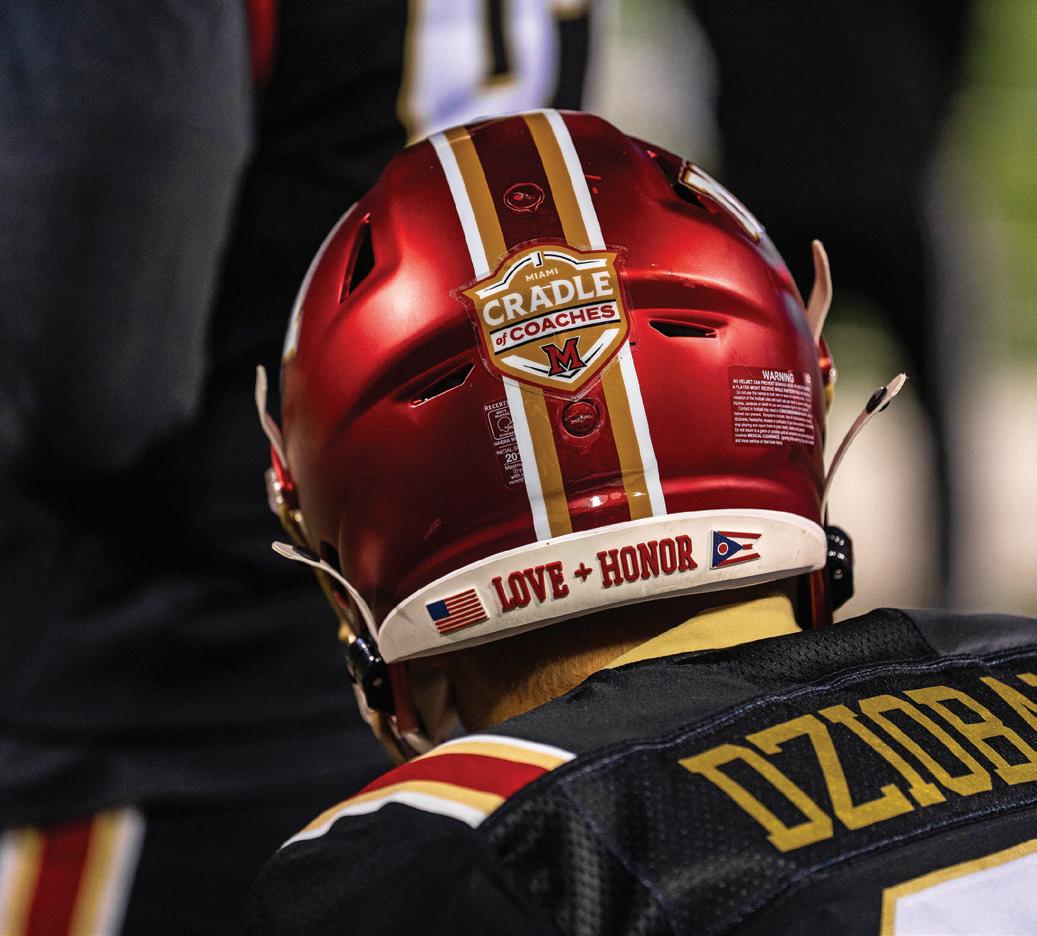
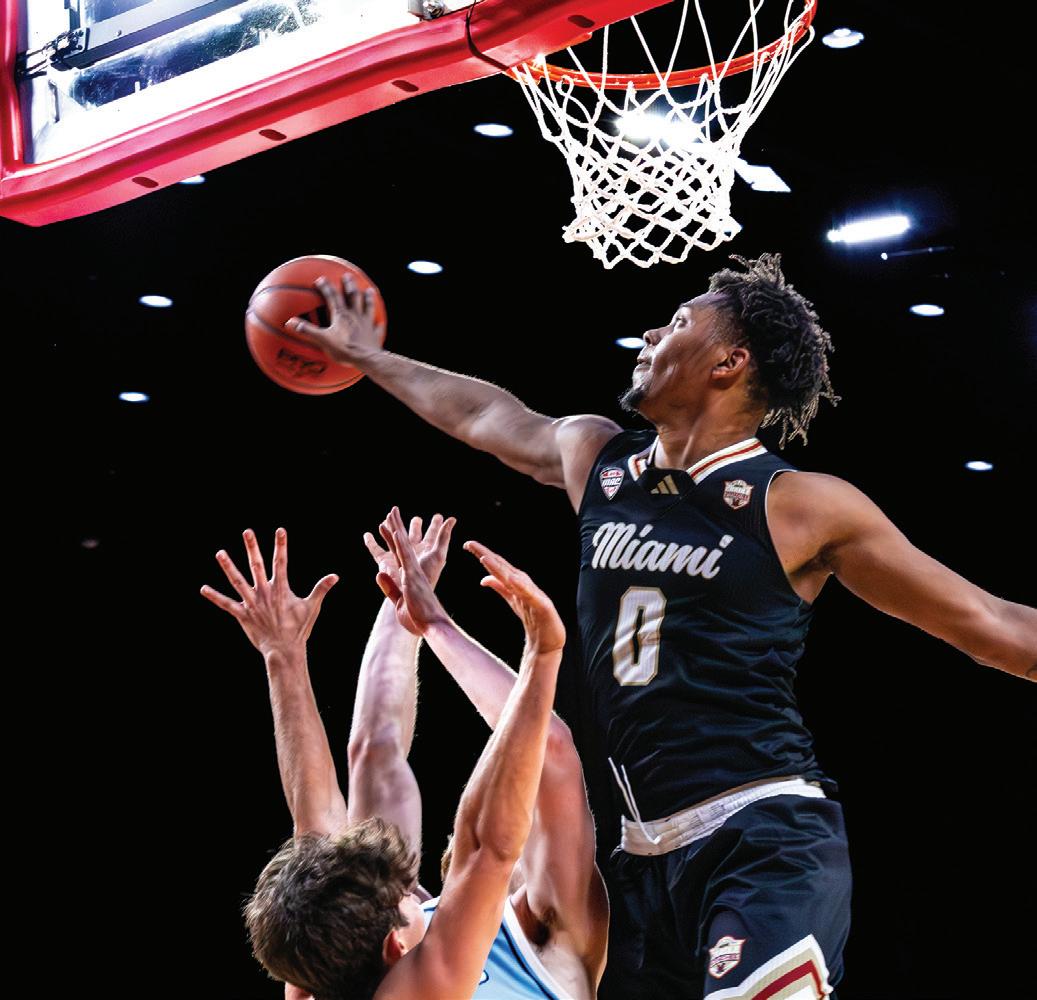
Miami University’s varsity sports are paying homage to the Cradle of Coaches with a series of special uniforms featuring black and gold in addition to the school’s traditional colors of red and white. The new look debuted with the football team last season and will continue to roll out across men’s and women’s sports in the 2026-27 school year and beyond.
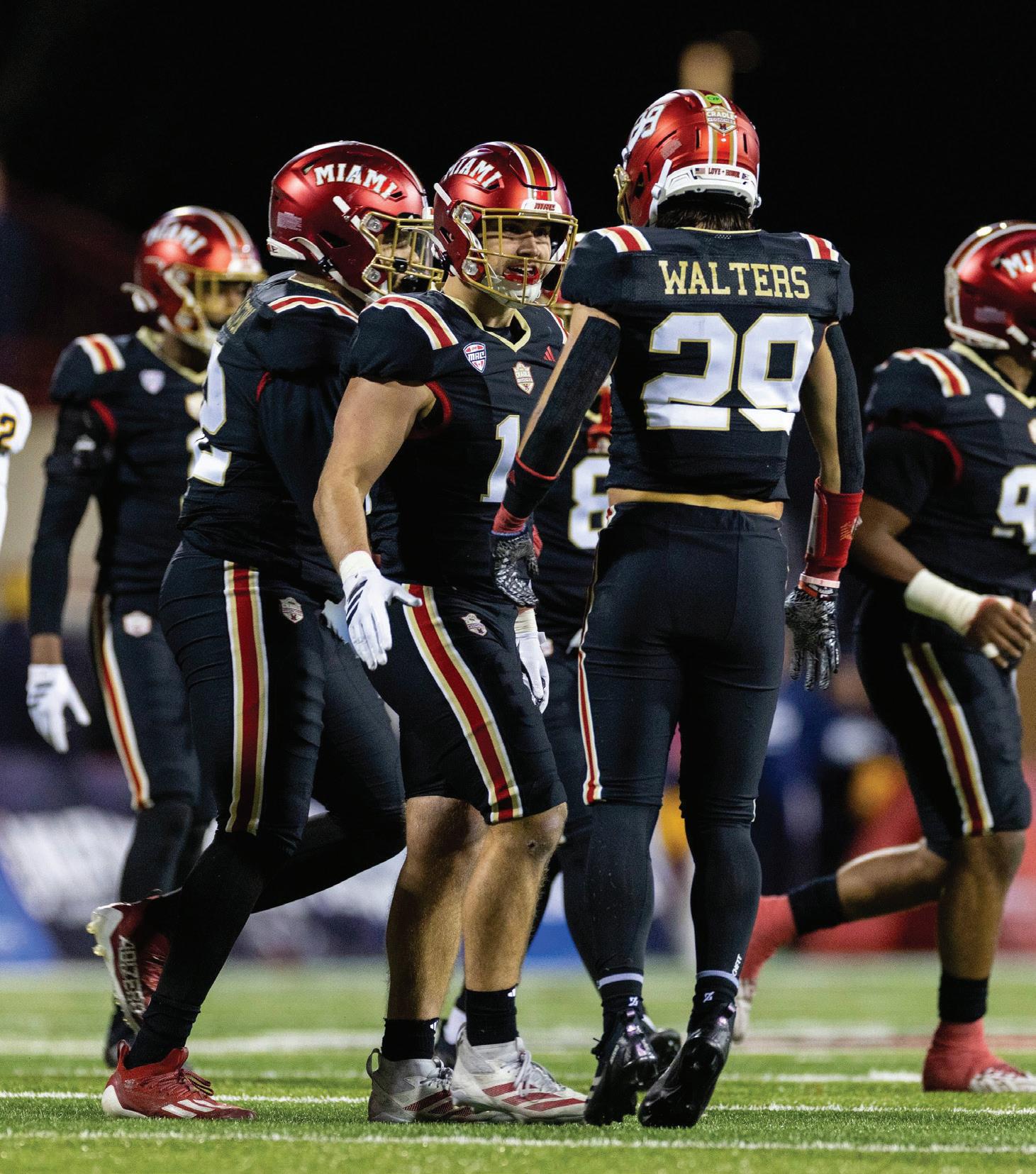
Under the “Gold Standard of Coaching” campaign, Miami introduced the Cradle of Coaches uniform design on November 12, 2025, when the RedHawks hosted the University of Toledo at Yager Stadium in a nationally televised MAC battle on ESPN. Fans were encouraged to wear black and create a “black out” atmosphere in the stands.
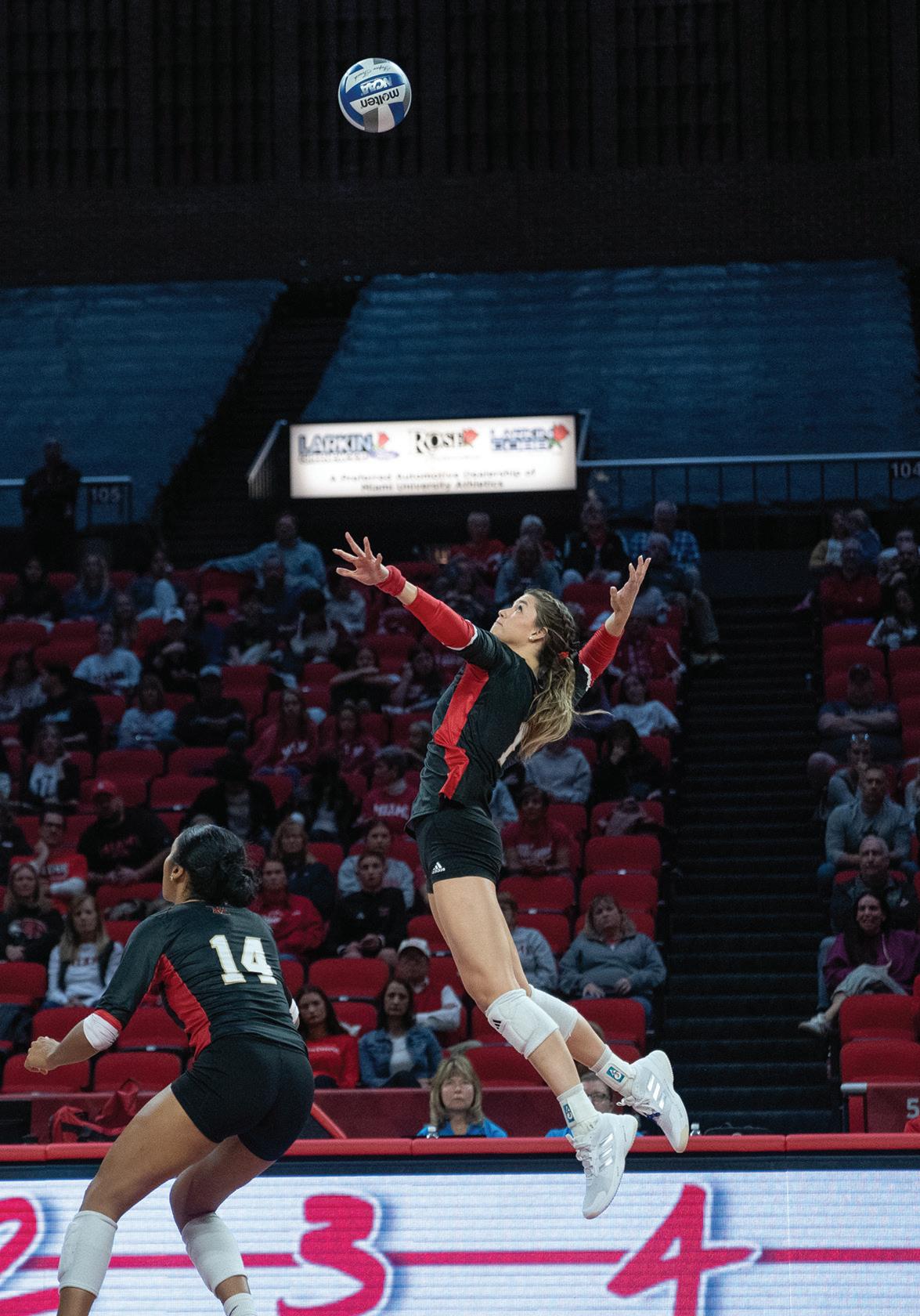
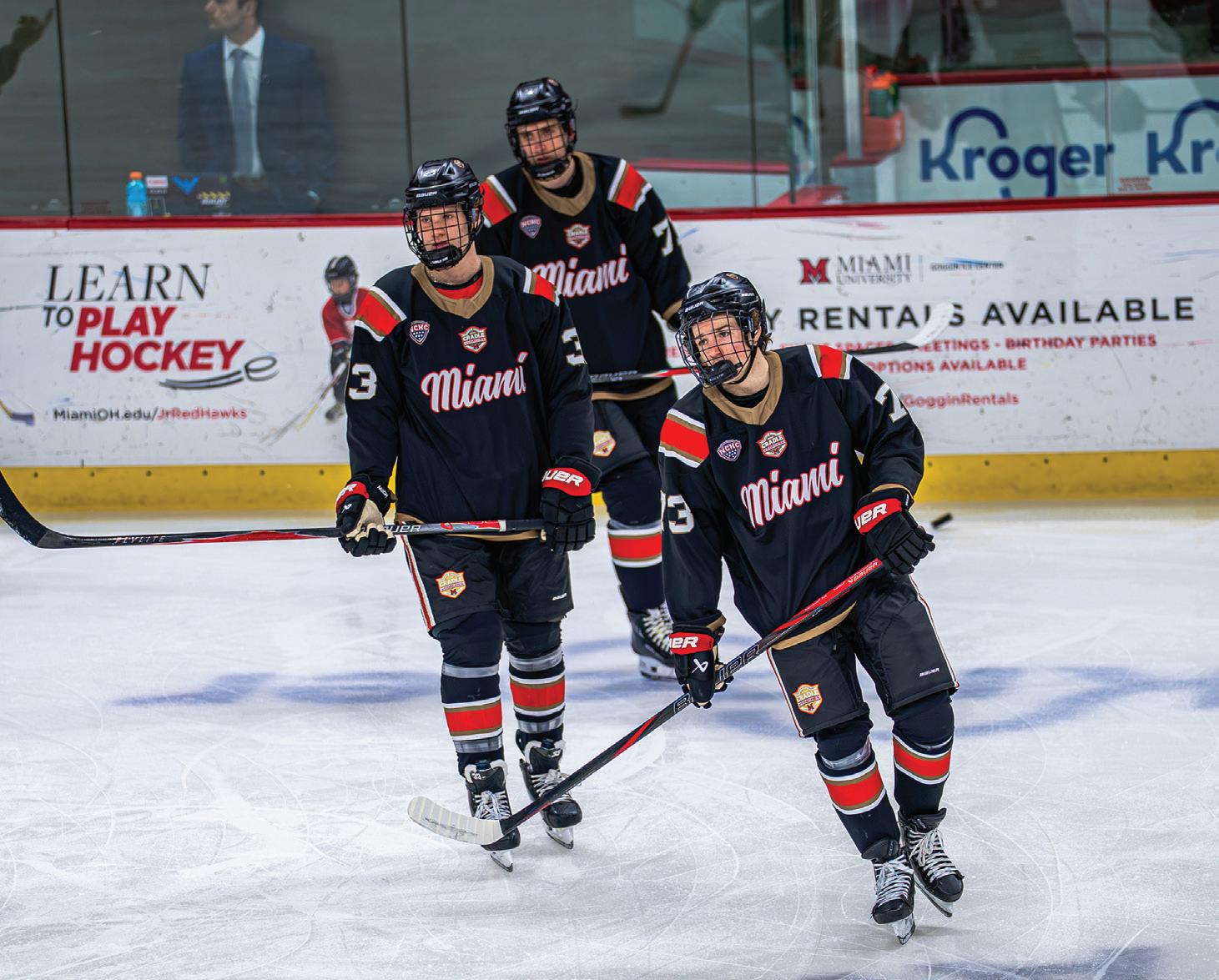
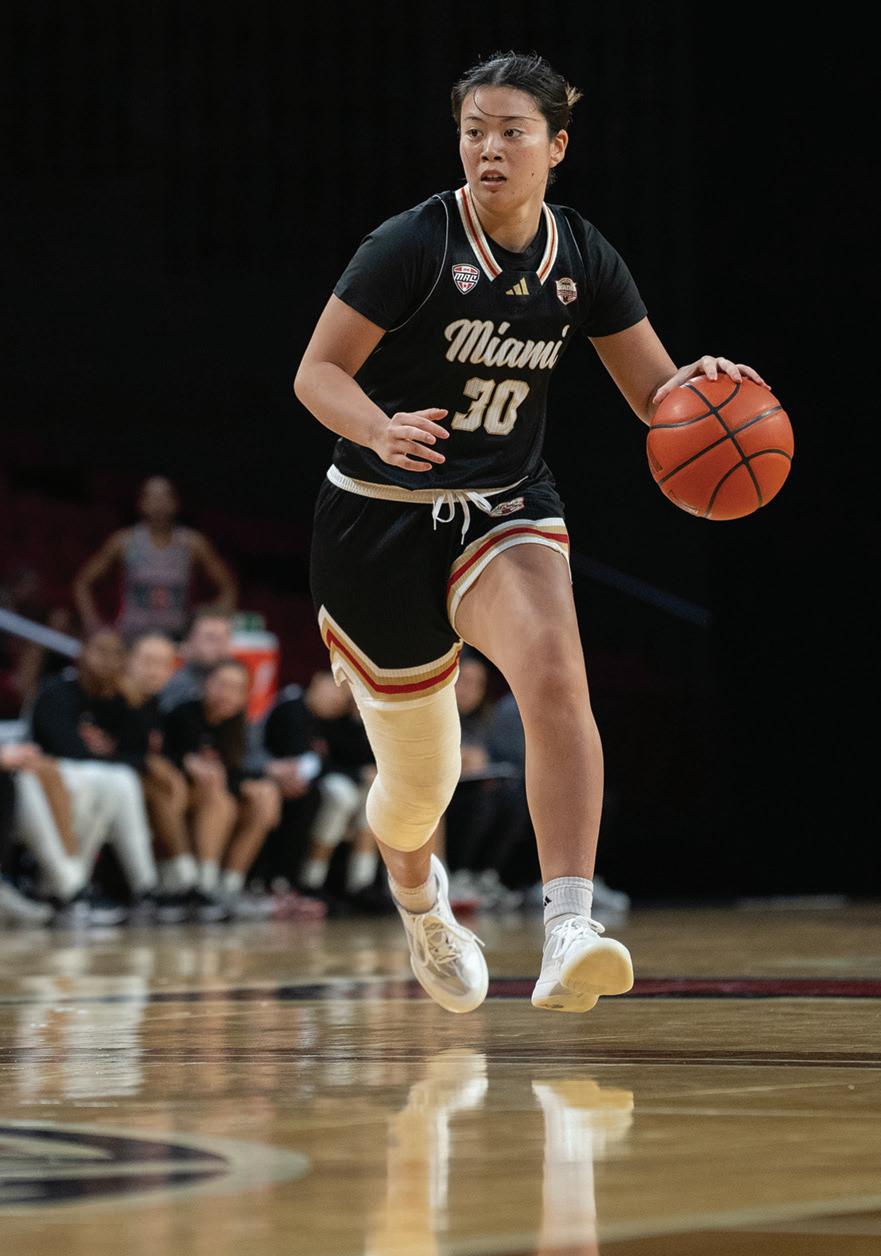
Within a few weeks after the football game, versions of the Cradle of Coaches uniform design were unveiled in men’s and women’s basketball, volleyball, and ice hockey. Baseball and softball followed in the spring. All uniforms feature the Miami Cradle of Coaches shield patch.
Gold is being used in the uniforms to represent excellence and achievement and is a nod to Miami’s reputation as the “gold standard” of coaching. Black represents the strength, history, and tradition of the university’s athletic programs, and it embraces the popularity of black uniforms among the current generation of student-athletes.
The new football uniform takes cues from past eras. The arched Miami on last year’s helmet reflected previous Miami athletics uniforms, utilizing a retro slab serif text. The gold face mask color honored the Baltimore Ravens’ alternate uniforms; Cradle of Coaches member John Harbaugh finished his 18th year coaching the Ravens last fall. The stripes on shoulders, pants, and helmet were inspird by vintage Miami uniforms from the 1970s and ’80s.
Miami football will wear the Cradle of Coaches uniforms this season on October 3, when Bowling Green visits Yager Stadium. Versions of the uniforms are scheduled to be worn for the first time this school year in women’s soccer and field hockey and eventually will be incorporated into all varsity sports.
In announcing the “Cradle of Coaches: Gold Standard Campaign” in 2025, the university said, “It’s not simply a tribute. It is a promise that the spirit of coaching excellence lives on at Miami University ... woven into the jersey, shouted from the stands, and carried forward in the will of every student who believes that leadership is not only taught, but lived.”