ad re
B
ra c
y
’s
S ou t h e r n G e
Na
y Na
Ea ts
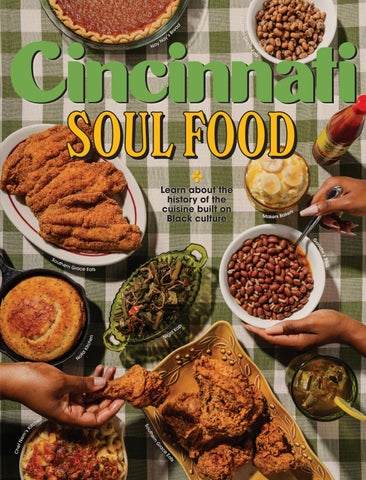
Learn about the history of the cuisine built on Black culture
er s Maker s Bak
G oo die
G ra c e E a t s
Ni g
ht
ol
ia
Kit
ch
en
er n
BQ
u th
’s B
So
’s em
n
er n G
fN
he
uth ra
ce
Che
itc
So
K
N
p Ka
Ea ts
I N PA R T N E R S H I P W I T H M O N A D E R M AT O L O G Y
Mona Dermatology Expands, Opening Second Location In MA Mona Dermatology is bringing its whole-patient approach to a new market with the opening of a concierge-style office in Wellesley, Massachusetts— featuring seven treatment rooms and a facial/IV bar.
I N PA R T N E R S H I P W I T H M O N A D E R M AT O L O G Y
The Same Mission, a New Address Since Dr. Mona S. Foad founded the practice in 2007, Mona Dermatology has grown from a single Cincinnati office into a ten-provider team built around one idea: medical and cosmetic dermatology work best when they’re treated as one discipline, not two. That philosophy now has a second home. Mona Dermatology is opening an office in Wellesley, Massachusetts, extending the practice’s whole-patient model beyond Ohio for the first time. With family ties in the Boston area, Dr. Mona felt that this would be a natural place for expansion where her vision of treating the whole dermatology patient would be further realized.
What’s New in Wellesley The Wellesley office brings a new model to the New England market. The practice will have a concierge dermatology model built around flexibility and personalized care. While the Cincinnati office will still continue to accept both insurance and self-pay options for medical patients, the concierge-only model in Wellesley will allow providers to offer even more options at medical appointments. A facial/IV bar extends that same philosophy into wellness, giving patients a space to combine skin health with hydration and recovery treatments in a single visit. Dr. Mona has selected Nurse Practitioner Katharine Perry to be the first provider at the Wellesley location and
monadermatology.com
has been training her on-site at the Cincinnati practice. “I have been receiving direct and comprehensive oneon-one training with Dr. Mona over the last six months, who has guided and enabled me to hone my craft in the cosmetic space and sharpen my diagnostic abilities in medical dermatology visits,” Katharine shares. Before joining Mona Dermatology, she spent several years working in the dermatology specialty, both as a medical provider and as a nurse. As with the Cincinnati flagship, design was treated as part of the care experience rather than an afterthought— the goal in Wellesley is the same one that shaped the Kenwood office design: a space that feels calming rather than clinical, so patients look forward to walking through the door instead of dreading it.
True to Their Roots Wherever the practice puts down roots, the commitment doesn’t change: whole-patient care, medically, surgically, and cosmetically, all under one roof. The Wellesley office will continue that standard for a new community, giving patients access to the same integrated model that’s defined Mona Dermatology in Cincinnati since 2007. Mona Dermatology’s Wellesley office is set to open winter 2026. If you or someone you know is looking for cosmetic or medical dermatology near Boston, join the email list at monadermatology.com/wellesley to be the first to know when scheduling opens!
N O V E M B E R 2 0 2 6 C I N C I N N AT I M A G A Z I N E . C O M 1
PREMIUM COLLECTIONS FOR E VERY SPACE EXPLORE OUR ALL NEW COLLECTIONS INDOOR FURNISHINGS & DINING | HOME THEATER SEATING | HOME OFFICE & MORE
WATSONS. COM
Guaranteed Lowest Prices in the USA
2721 E. SHARON RD | EVENDALE, OH 45241 | 513.326.1100 7100 HOUSTON RD | FLORENCE, KY 41042 | 859.371.9929
F E AT U R E S N OV E M B E R 2 026
P.
34
A FAMILY AFFAIR BLACK-AND-WHITE PORTRAITS OF CANDICE HOLLOWAY’S FAMILY MEMBERS ADORN THE WALLS AT HER OTR RESTAURANT SOUL SECRETS.
SOUL FOOD The cuisine that fuels Black American culture has deep roots inside and outside of the United States. Strap in for a tasty history lesson.
THIS LAND IS YOUR LAND, THIS LAND IS MY LAND P. 48
From California to the New York island and Cincinnati in between, America’s public lands are in crisis.
DRINKING US DRY? P. 52
Local organizations and citizens work to protect the Great Miami River aquifer from the enormous water and energy needs of data centers. BY CEDRIC ROSE
BY CARRIE BLACKMORE
PH OTO G R A PH BY C ATHERINE G R AC E
N O V E M B E R 2 0 2 6 C I N C I N N AT I M A G A Z I N E . C O M 5
BUY YOUR TICKETS TODAY!
CINCINNATIMAGAZINE.COM/FALL_SAVOR
CINCINNATI MAGAZINE PRESENTS
November 4–6 | 6–9:30 p.m.
HARD RO C CASINO K
Our lavish four-night dinner series returns to celebrate the ȥʁʹɷʰ˘ ʁɅ Ʌȉɫɫे Ȳ ʦʹʟȲ ʰʁ ॆʦȉˑʁʟʰɏȲȬȉʰȲ Ʌʁʟ ʰɏɔʦ ʹɷɔ̍ʹȲ ȬɔɷɔɷɆ experience and enjoy a one-of-a-kind meal in a fun and festive atmosphere. Limited tickets available.
PRESENTING SPONSORS
SPONSORS
BENEFITTING
D E PA R T M E N T S N OV E M B E R 2 026
ON OUR SITE
22
FOOD NEWS
14 / LETTER FROM THE EDITOR
FRONTLINES
18 / SPEAK EASY
The state of jazz in Cincinnati
18 / MUSIC
The host of Cincy’s hottest new podcast
17 / DISPATCH
Mike Wade drops new trumpet jazz
20 / STYLE COUNSEL Brandon Brown’s punkinspired streetwear
22 / STOREFRONT Miamiville’s inclusive, woman-owned art gallery
24 / ON THE MARKET A lumber depot turned family home
DINE
66 / OFF THE MENU The rise, fall, and rebirth of Taste of Belgium
70 / BAR BITES Elevated bar food at Vintage on Race, downtown
70 / TABLESIDE Tom Gregory discusses 75 years of Montgomery Inn
72 / REVISIT A New England–inspired sports bar reopens
CITY NEWS
Decoding our civic DNA, from history to politics to personalities.
72 / FIELD NOTES Cultural cooking at Sweetgum Manor
26 / DR. KNOW Your QC questions answered
74 / DINING GUIDE Greater Cincinnati restaurants: A selective list
COLUMNS
30 / WELCOME TO MIDDLEHOOD
ON THE COVER
Connecting with family over kitschy vintage BY JUDI KETTELER
80 / OBSCURA
photograph by HAILEY BOLLINGER food styling by BRITTANY DEXTER AND STEFANIE HADIWIDJAJA
HOME + LIFE
Tracking what’s new in local real estate, artisans, and storefronts.
A mighty organ at Music Hall
70
BY CLAIRE LEFTON
SPORTS
FOLLOW US Cincinnati Magazine
@Cincinnatimagazine
8 C I N C I N N AT I M A G A Z I N E . C O M N O V E M B E R 2 0 2 6
@cincinnatimagazine
Insight and analysis on the Bengals and FC Cincinnati.
PH OTO G R A PHS BY ( TO P) H AT SU E / (B OT TO M) A N D R E W D O EN C H
14 / CONTRIBUTORS
Extra servings of our outstanding dining coverage.
Luxe LIFT
SM
I NDIVIDUALLY FOCUSED
SM
BEFORE
AFTER
BEFORE
AFTER
BEFORE
AFTER
BEFORE
AFTER
ATI MAG NN A CI
NE ZI
I NT ERNAT I ONA LLY REN OWNED,
CIN
Look your absolute best at any age! TOP DOC TOR 2012–202 6
*Results may vary
Specialized in: LuxeLiftSM (Deep Plane Face, Midface, and Deep Neck Lift) | LuxeEyesSM (Lower eyelid lift with Fat Transfer) | VolumeliftSM (Fat transfer), Brow lift | Lip lift | Blepharoplasty (Eyelid lift)
...and more!
Alexander Donath, MD, FACS Double Board Certified Facial Plastic Surgeon JOIN US ON SOCIAL MEDIA
drdonath.com 513-891-LIFT (5438) 7763 Montgomery Road (One block west of Nordstrom)
11.26 PROMOTION
Registration ends November 23
SPECIAL ADVERTISING SECTIONS
BONUS FOR SUBSCRIBERS
2026 CHALLENGE
Cincinnati 300
cincinnatigives.org
Meet the most powerful CEOs in dozens of industries and business categories in Cincinnati in this highly selective biographical database of the men and women who keep our region moving forward.
BONUS FOR SUBSCRIBERS
Join us on November 30 The Cincinnati Gives Challenge is a friendly fund-raising competition where local charities compete to raise the most money with the top teams winning cash prizes from Cincinnati Magazine.
1 0 C I N C I N N AT I M A G A Z I N E . C O M N O V E M B E R 2 0 2 6
Montgomery Official Community & Business Guide Discover what’s new and notable about Montgomery, including where to eat, shop, and play.
YOU DESERVE
the best
T . 1 94 1 ES
ting celebra
85 years
just minutes from downtown Cincinnati
Carolynn and Craig Reis, owners
CUSTOM DESIGN SERVICES AVAILABLE
859.441.2378 • BestFurnitureGaller y.com • 1123 S. Ft. Thomas Ave. • For t Thomas, KY MONDAY, TUESDAY, THURSDAY, FRIDAY 10AM-6PM | WEDNESDAY by appointment only | SATURDAY 10AM-5PM SUNDAY closed to be with family Some items shown in ad are for example only and may not be available for purchase
N OV E M B E R 2 026
EDITOR-IN-CHIEF John Fox
DIRECTOR OF BUSINESS DEVELOPMENT Tony Frank
DIRECTOR OF EDITORIAL OPERATIONS
SENIOR ACCOUNT MANAGERS
Amanda Boyd Walters SENIOR EDITOR
SENIOR MANAGER, SPONSORSHIP SALES
Chris Ohmer
ASSOCIATE EDITOR
SENIOR OUTSIDE ACCOUNT REPRESENTATIVE
DIGITAL EDITOR
Claire Lefton LEAD DIGITAL STRATEGIST
Laura Bowling ACCOUNT REPRESENTATIVE
Sarah Riesenberger VICE PRESIDENT OF EVENTS AND SPONSORSHIP SALES
Brianna Connock Wayman
Tasha Stapleton
CONTRIBUTING EDITORS Carrie Blackmore,
EVENTS ASSISTANT
Jay Gilbert, Lisa Murtha, Laurie Pike, John Stowell, Linda Vaccariello, Jenny Wohlfarth EDITORIAL INTERNS Kathryn Hippe,
Peyton Ann Hodge, Alessandro Sosa, Nicholas Tenhundfeld SENIOR ART DIRECTOR Emi Villavicencio ART DIRECTORS Jessica Dunham, Stef Hadiwidjaja ADVERTISING DESIGNER Matthew Spoleti MARKETING DESIGNER Mikayla Dixon PRODUCTION DIRECTOR & IT SYSTEMS ADMINISTRATOR
Vu Luong CONTRIBUTING ARTISTS Lance Adkins,
ʼ˙ ˬˢ˨ ˢ˥ ˦ˢˠ˘ˢˡ˘ ˬˢ˨ ˟ˢ˩˘ ˜˦ ˦˧˥˨˚˚˟˜ˡ˚ ˪˜˧˛ ˠ˘ˡ˧˔˟ ˛˘˔˟˧˛ ˜˦˦˨˘˦ʟ ʿ˜ˡ˗ˡ˘˥ ʶ˘ˡ˧˘˥ ˢ˙ ʻˢˣ˘ ˢ˙˙˘˥˦ ˘˫ˣ˘˥˧ʟ ˖ˢˠˣ˔˦˦˜ˢˡ˔˧˘ ˖˔˥˘ ˙ˢ˥ ˖˛˜˟˗˥˘ˡʟ ˔˗ˢ˟˘˦˖˘ˡ˧˦ʟ ˔ˡ˗ ˔˗˨˟˧˦Ϟ˙˥ˢˠ ˗˜˔˚ˡˢ˦˜˦ ˧˛˥ˢ˨˚˛ ˥˘˖ˢ˩˘˥ˬʡ
Maggie Wint Goecke, Joe Hoffecker, Julie Poyer
Aiesha D. Little Emma Balcom
#2 Ä#% 3 ) 3# ! 2$ 3 !#23 &#% n
PUBLISHER Ivy Bayer
DESIGN DIRECTOR Brittany Dexter
Hailey Bollinger, Andrew Doench, Devyn Glista, Catherine Grace, HATSUE, Chris von Holle, Jeremy Kramer, Ryan Kurtz, Lars Leetaru, Marlene Rounds, Jonny Ruzzo, Dola Sun
Charlie Jaeb
BUSINESS
OPERATIONS DIRECTOR Missy Beiting BUSINESS COORDINATOR Meredith Carroll
CIRCULATION
AUDIENCE DEVELOPMENT DIRECTOR Geralyn Wilson CIRCULATION MANAGER Riley Meyers
EDITORIAL/ADVERTISING OFFICES
221 E. Fourth St., Suite 130 Cincinnati, OH 45202 (513) 421-4300 E-MAIL cmletters@cincinnatimagazine.com WEB cincinnatimagazine.com
SUBSCRIPTIONS
1-866-660-6247 E-MAIL
Cincinnati_Service@hourmediagroup.com
PUBLISHED BY CINCINNATI MEDIA, LLC CEO Stefan Wanczyk PRESIDENT John Balardo
BEST MAGAZINE IN OHIO 2008-2012, 2016-2017, 2020-2022 Ohio Excellence in Journalism Awards
BEST MONTHLY IN OHIO
2021, 2023, 2025 Ohio Society of Professional Journalists Awards
ʶ˟˔˥˜˧ˬʡ ˆ˨ˣˣˢ˥˧ʡ ʴ ˣ˔˧˛ ˙ˢ˥˪˔˥˗ʡ
SUBSCRIBE TODAY!
ʶ˔˟˟ ʨʤʦʠʨʦʩʠʧʩʪʦ ˧ˢ˗˔ˬʡ
ʿ˜ˡ˗ˡ˘˥ʶ˘ˡ˧˘˥ˢ˙ʻˢˣ˘ʡˢ˥˚
1 2 C I N C I N N AT I M A G A Z I N E . C O M N O V E M B E R 2 0 2 6
PLEASE RECYCLE THIS MAGAZINE
Scan the QR codes to book your class! PURE BARRE WEST CHESTER 9037 Union Centre Blvd. West Chester, OH 45069 (513) 204-9644
Photography by Jenny Walters
PURE BARRE OAKLEY 3083 Madison Rd. Cincinnati, OH 45209 (513) 321-5800
L E T T E R F R O M T H E E D I TO R N OV E M B E R 2 026
T
CONTRIBUTORS
KENNEDY DUDLEY
T H E H U M A N M I N D I S C R A Z Y FA S C I N AT I N G , E S P EC I A L LY M E M O RY. W H Y D O W E recall tiny episodes from our childhood, many of them negative, more easily than years and decades of daily routines and accomplishments? I’m not talking about truly life-altering events, which of course live on in our heads, but seemingly innocuous details that revisit us again and again. Here’s one of mine: I’m about 10 years old and having dinner at a school friend’s house. His mom serves a green vegetable I’ve never seen in my life. It kind of looks like a little tree or cactus on my plate, and I watch my friend and his parents eat the artichoke and try to copy them, but I just can’t. I still recall my embarrassment at not knowing what to do and not eating what was a regular dish in their house. My friend’s mom didn’t judge or criticize me. The memory is all my own inner feelings, still resonant 50 years later. The brief memory resurfaced as I read through this month’s “Soul Food” (page 34), Senior Editor Aiesha D. Little’s and her writers’ loving ode to specific dishes from their lives. It’s said that taste and smell trigger clearer emotions than sight or sound can, so maybe that’s why memories around food are so strong. And why food can carry so many cultural and relationship meanings across time. I love Little’s recall in her opening essay of family interactions around food, from greatgrandparents and grandparents to mother, aunts, and cousins. Her memory of “my mother and her sisters cackling over childhood stories in the kitchen around bowls of black-eyed peas on New Year’s Day” strikes me as both personal and universal. I think (and hope) most of us have fond memories of laughs and joy around the family dinner table on a big holiday or a random Sunday night, cherishing the emotions more than the actual food we shared. And yet her New Year’s Day memory references a specific dish and moment that carries meaning across generations and migrations, something unique to her and to some of you. Food does more than feed us. It nourishes our body, soul, and memory.
J O H N F OX
EDITOR-IN-CHIEF
1 4 C I N C I N N AT I M A G A Z I N E . C O M N O V E M B E R 2 0 2 6
ILLUSTR ATIO N BY L A R S LEE TA RU
“It’s hard not to feel how bittersweet some of these origins are, simply because they’re rooted in tragedy,” says contributing writer Kennedy Dudley of some of America’s favorite soul foods. In this month’s cover feature (page 34), Dudley researches the cuisine’s historical and cultural roots, because growing up eating dishes that traveled between countries “is a testament to centuries of people who loved each other enough for [them] to be passed all the way down to me.”
CEDRIC ROSE As a librarian and self-proclaimed “tree-hugger,” Cedric Rose is passionate about science-based stories. Naturally, he wanted to learn more about the impacts a planned data center in Trenton could have on the aquifer beneath it. In “Drinking Us Dry?” (page 52), Rose talks with those fighting to keep the Great Miami Buried Valley Aquifer clean and safe for 2.3 million people who rely on it for their drinking water.
QU LAN Illustrator and graphic designer QU Lan has a passion for environmental awareness and often works with natural landscapes in her art. In her illustration for “This Land Is Your Land, This Land Is My Land” (page 48), Lan captures the beauty of America’s natural landscape while emphasizing that we cannot take it for granted. “The scene should leave the viewer with a slight sense of unease—the feeling that this beauty is precious and vulnerable.”
Serving Our Community Our programs include a free-choice Market and Boutique offering weekly access to groceries, clothing, diapers, and feminine care products; on-site medical and dental care through HealthSource of Ohio; and pediatric occupational therapy through our partnership with Grow Together Therapy. We equip families with the tools to build long-term stability, improve well-being, and move from crisis to independence with dignity.
More than the Numbers The numbers tell an important story. Each year, Impacting Tomorrow serves more than 200,000 people and distributes more than $11.3 million in food. But our true impact is about so much more than numbers. It’s the relief on a parent's face when saving money on groceries makes it possible to purchase a car and get to work reliably.
It’s the confidence of a young woman who now attends school regularly because her family doesn’t have to choose between paying rent and purchasing feminine care products. It’s a family gaining access to essential resources and clothing plus healthcare and dental care in one place, reducing financial pressure today, while gaining stability for tomorrow. Together, we are restoring dignity, reducing barriers and helping families build stronger futures.
JOIN US IN HELPING FAMILIES BUILD A BETTER TOMORROW.
Donate.
Serve.
Share.
Your gift brings hope and tangible help to families in need.
Volunteer with us and make a hands-on impact in your community.
Help spread our story and mission to reach more hearts and homes.
Join Us Today: impactingtomorrow.com
Timeless Designs FOR EVERYDAY LUXURY
FROM THE NATION'S TOP BRANDS
S H O P
O U R
C U R R E N T
S A L E
A T
W A T S O N S
.COM
Guaranteed Lowest Prices in the USA 2 7 2 1 E A S T S H A R O N R D | E V E N DA L E , O H 4 5 24 1 | 5 1 3 . 3 2 6 .1 1 0 0 7 1 0 0 H O U S TO N R D | F LO R E N C E , K Y 4 1 0 4 2 | 8 5 9 . 3 7 1 . 9 9 2 9
PHOTO GR APHS COURTE SY (BRENT G ALL AHER) VANE SSA KEETON / (C ANDANCE OKUWOBI) DYL AN FIRLIE / (MYLE S ELLINGTON T WIT T Y ) FR ANK D. YOUNG / (SCHWART Z POINT ) R SCOT T JAME S / STO CK . ADOBE .COM
SEX AND THE CINCY P. 18
URBAN STREETWEAR P. 20
NEW ART GALLERY P. 22
WAREHOUSE-TURNED-HOME P. 24
FOR THE LOVE OF JAZZ
From world-renowned clubs to rising young musicians, Cincinnati’s jazz scene is hitting its stride. CEDRIC ROSE
T
HE QUEEN CITY’S JAZZ SCENE IS
hot right now. Young Cincinnati-trained musicians, including trumpeter Myles Ellington Twitty and 16-year-old bassist Cadence Okuwobi, are playing with prestigious performers and programs nationally. And earlier this year, DownBeat named Caffè Vivace one of the best jazz clubs in the world. It doesn’t hurt that the region boasts several great music schools, including the UC College-Conservatory of Music’s Jazz Studies program, and that Cincinnati is a short, affordable flight from New York, says Vivace co-owner and saxophonist Brent Gallaher. But what really makes Cincinnati’s scene sing is a community of jazz lovers and places to play, because “you learn on the bandstand,” he adds. While Cincinnati’s jazz history runs deep, Gallaher’s model pairs a bar/café with a jazz-performance nonprofit. The latter enables him to bring hundreds of acts to its 12-by16-foot stage and intimate lounge. But Vivace’s success is also down to its ultra-dedicated staff, the nonprofit’s board, and support from the larger Cincinnati CONTINUED ON P. 18
CO L L AG E BY O L G A K H A L E T S K AYA
N O V E M B E R 2 0 2 6 C I N C I N N AT I M A G A Z I N E . C O M 1 7
DISPATCH
MUSIC
JAZZ DROP
Get your hands on local jazz trumpeter Mike Wade’s new album, Reality II, at Memorial Hall November 9 during Giants of Jazz at the Memo, where Wade will perform a tribute to “Godfather of Go-Go” Chuck Brown. memorialhallotr.com 1 8 C I N C I N N AT I M A G A Z I N E . C O M N O V E M B E R 2 0 2 6
SPEAK EASY
DATING DEEP DIVE X In the years since departing the religious community she grew up in, Lolli Nicodemus has moved into Cincinnati proper, stepped into the world of dating and relationships, and started a podcast to document it all. Sex and the Cincy kicked off in February 2025, and today it garners about 4,000 listeners an episode, where she discusses everything from first-date disasters to deep dives on love and heartbreak. Where have you found community since leaving your religious upbringing? As I was exiting that community, I met my boyfriend of five years and jumped from that relationship with my parents to a relationship with him. That was my first step into associating with “worldly people,” or people on the outside. So I was learning how to date, and dating was scary, because they say people on the outside are meant to hurt you. Finding community is really about going into spaces where you feel your most confident and comfortable and even curious, and you’re gonna meet those people. Why is it important to have this platform to talk openly about dating? I want people to feel like they’re not
alone because dating can be really rough, but I also want to bring back the fun in dating and not just make it a chore. When I’m able to open up and say the struggles I’m having, I don’t leave it at the struggle. I always try to have a solution or a fun anecdote to the issues that we’re facing in dating. How do you approach the podcast? This is a podcast for everyone who dates and everyone who experiences relationships. It’s been really cool to build this feeling where we record in a room with no cameras. Let’s have a bottle of wine. Come in your sweatpants, and we’ll just talk like friends. What other goals do you have for your brand? I would love to build a little network of relationship-esque podcasts. I also wrote a book about my upbringing and coming out of purity culture that’s going to go through my upbringing. I want to be that big sister, that voice for the people whose voices were silenced for so many years, because I will never be quiet about these things again. —EMMA BALCOM
READ A LONGER INTERVIEW WITH LOLLI AT CINCINNATIMAGAZINE. COM. PHOTOGRAPHS BY TK FREELANCER
PHOTOGRAPHS COURTESY (MIKE WADE) MEMORIAL HALL / (LOLLI NICODEMUS) LOLLI NICODEMUS / ICON BY STEF HADIWIDJAJA
arts community, which, Gallagher sets her cover low to keep young people says, “understands that smaller involved and interested.“A lot of younger performance spaces need a little help.” people are coming to check out the venue That creates a synergistic energy where and staying for the jazz,” she notes. “you have people who want to hear you While small clubs are the hothouses where young players bloom, a slew of play and want you to succeed, and that stages and organizations regularly proenvironment is conducive for success,” he notes. “It’s the way jazz was from the vide settings across town where jazz start, the way it was intended.” musicians can create, collaborate, and “Cincinnati is really finding its sound,” be heard. Alice Frazier of nonprofit It’s agrees jazz bassist Justin Dawson. “I feel Commonly Jazz says her goal is to “get jazz out of the club and into community, like that’s the biggest thing. The players here could play with anybody anywhere.” to create meaningful connections, and Dawson curates the Liberty transform uncommon spacJazz Lab in the lounge at Northes.” Other groups and series side’s Liberty Exhibition Hall. also take jazz beyond the club. The weekly Monday night sesThere’s the Cincinnati Consion is a veritable who’s who of temporary Jazz Orchestra, Jam at Liberty Jazz 10 to 25 of Cincinnati’s working chaired by CCM professor Lab The 8:30 p.m. set musicians, drawing upwards of and jazz pianist Phil DeGreg. is followed by an open 80 jazz heads, he says. Dawson The group regularly performs jam that often runs himself plays all over town. He at Avondale’s First Unitarian until after midnight. notes that there are more places Church’s Jazz@First series, and opportunities for musicians to exMt. Lookout’s The Redmoor, and fills press themselves, and he often sees older the air above Fountain Square and Washmusicians taking younger players under ington Park with America’s most original their wing, connecting them with gigs. music. And then there are the watering holes that moonlight as jazz holes: JuniHe notes that Cincinnati’s jazz scene, post-COVID, has benefitted from more per’s, The Härth Room, Nostalgia Wine people moving here, and “the gigging & Jazz Lounge, The Greenwich, Ghost Baby, and The Bar at Palm Court. economy has gotten better in terms of more gigs. There’s more people that will Why is jazz so hot in Cincinnati right now? Youth. Opportunity. Improvisation. pay to see music.” Zarleen Watts used to fall asleep Because there are stages being shared by musicians young and old, emerging and on the piano bench of her father, jazz famous. And because there are club ownmusician and restaurateur Ed Moss, at ers and musicians like Gallaher, “who Schwartz’s Point, the Over-the-Rhine are just crazy enough to do this,” he says. club she inherited from him. “You’d be They’re not in it for the money. They’re surprised at the age difference,” she says here for the music. of Schwartz’s diverse audiences. Watts
VOT E !
New Restaurant
Live Music Venue
Brunch
Festival
Cocktail Bar
Neighborhood
Coffeehouse
Happy Hour
Dessert Spot
Hidden Gem
Boutique
Fitness Studio
Local Brand
Spa
Art Gallery
+ More
*CATEGORIES TO BE DETERMINED. FOR EXAMPLE ONLY.
CI NCI N NAT I M AGA ZI N E.C OM
Readers’ Choice Nov. 2–20
STYLE COUNSEL
SHIRT: SUGAR FLOWER (EMBELLISHED BY BRANDON) PANTS: WRANGLER (EMBELLISHED BY BRANDON) JACKET: CASABLANCA VINTAGE HAT: CAMBRIAN WOOLEN MILLS SUNGLASSES: PLATO’S CLOSET JEWELRY & BELT: THRIFTED, FASHION NOVA BOOTS: ASOS
Brandon Brown OCCUPATION: Community engagement coordinator at Women Helping Women STYLE: Punk-inspired urban streetwear What is one staple everyone should have in their closet? I don’t think people look at Western boots as being very versatile, but they really are. You can pair them with anything, even a suit. What are your style inspirations? I’d say the Spike Lee film Do the Right Thing is literally what made me love fashion. And then, as a young person, I was heavily into the stylings of Lenny Kravitz and Slash, so I did a lot of rocker looks as well. Where do you like to shop? I’m more of a thrifter because I like to put my looks together on my own, and I also feel like I find more statement pieces at the thrift store than I would find online. There’s a little vintage store over here in Northside that I like to frequent, Casablanca Vintage. I get a lot of military style jackets from there. What are your thrifting tips? Think outside the box and don’t buy things that you would typically wear. I think the goal is to push yourself and not show up as you do every day. So, if you just take one look out of the week and you push yourself in a color that you usually wouldn’t wear, that’ll get you into it. What does fashion mean to you? Fashion means a lot to me because it’s the way that I broke out of my shell. As a younger person, I was unsure of who I was, and fashion propelled me into the spotlight to figure that out. I think that a lot of times we’re all struggling with finding some type of inner peace, and a lot of times you can find that through actually getting dressed. They always say, “If you look good, you’ll feel good,” and I do go by that motto. — P E Y T O N A N N H O D G E
2 0 C I N C I N N AT I M A G A Z I N E . C O M N O V E M B E R 2 0 2 6
PH OTO G R A PH BY D E V Y N G LI S TA
. ! /#*( E*-" Þ £ æ©ËÃ ɌËÚ¤
D
IND¶RlRSNQX D
./ -/ ! / *( $) 8668 /* ) /# 4 ' *! *( ./$ 1$*' ) ) 0. /#-*0"# 0 /$*)D "$1$)" 4*0)" + *+' /# &)*2' " ) .0++*-/ /* 0$' # '/#4 - ' /$*).#$+. ) .# + /# $- *2) !0/0- .E 0- "-*0) - &$)" -" - /N. ' (* 'D ) ( $) #*)*- *! * N. (*/# -D - / . . ! .+ . $) . #**'. /# / *!! - /- 0( J$)!*-( $)/ -1 )/$*) ) +- 1 )/$*) . -1$ . !* 0. *) 0 /$*)D 0) -./ ) $)"D ) .0++*-/E / # 1 -4 #$' 2# / # '/#4 - ' /$*).#$+. '**& '$& D #*2 /* - !*- /# (. '1 . ) # */# -D ) #*2 /* .0++*-/ !-$ ) . $) ) D .* /# 4 ) --4 2# / /# 4 ' -) $)/* /# $- #*( .D .* $ ' $- ' .D ) *((0)$/$ .E *" /# -D 2 ) - # (*- 4*0)" + *+' D ./- )"/# ) *((0)$/$ .D ) (*1 '*. - /* '$! !- !-*( 1$*' ) ) 0. !*- ''E
* *-- $. &)*2) -*0) /# 2*-' !*- #$. <6J+'0.J4 - . '' - . +' 4 -D -* ./ -D 3 0/$1 D ) '' *! ( ( ) " -E y æɇ Þ×¬æ ©¬Þ êÄ× Ú ½½ ½ Þê ÞÞɇ 9Ë ÚÚ¬ © õü Ä Þ Ú æ êÚ Äɪæ© ©¬½ ©ËË öËêÄ Þ Ë£ Ëà Þæ¬ õ¬Ë½ Ä Ɍ . * ) #$. ! ($'4 ( /* / -(. 2$/# #$. 3+ -$ ) D # ) #$. 2$! D '$D 2 )/ /* ).0- /# / )* #$' "- 2 0+ . # $ ɱ! '$)" '*) D !- $ ) .# ( E
*! ./0 )/. - +*-/ ! '$)" (*#*+ !0' *0/ /# $- !0/0- !/ - $1$)" . -1$ . /#-*0"# -" - /N. '
VFDQ WR OHDUQ PRUH RU GRQDWH
ʱÞ £ æ©Ëà £ËêÄ æ¬ËÄ ʱÞ £ æ©Ëà £ËêÄ ] £ æ +Ëà %ËêÄ æ¬ËÄ 9Ë cËÚÚ ] £ æ +Ëà %ËêÄ æ¬ËÄ
s© Ä Ãü ©Ëà ö ÞÄɺæ Þ £ Ɉ C Ú¤ Ú æɺÞ V½ à à £ ½ Þ £ ɍ ɫʁ@ ס × ãɸÛʁSº ʁZãç Áã
STOREFRONT
ART IN RESIDENCE A NEW WOMAN-OWNED GALLERY AIMS TO BREAK DOWN ART INDUSTRY STEREOTYPES AND WELCOME NEW COLLECTORS. — M I C H E L L E M A S T R O
A new kind of art gallery is now open in Miamiville, where every piece is a one-of-a-kind. But more than just a collection of pretty things, the gallery represents a departure from art industry gatekeeping, say the owners. Lauren Kelp and Leslie Westendorf (pictured left, respectively) want to challenge the notion that original art is a luxury item. Prices range from $100 to $10,000. “We believe great art belongs everywhere, not just in major cities, not just in wealthy neighborhoods, not just on white walls behind velvet ropes, but in the everyday spaces we call home,” says Westendorf. For many would-be art collectors, the biggest stumbling block to entry is walking through an art gallery door. It can feel intimidating, especially if you’re a first-time art buyer or have no formal background in the arts. Kelp says this often: “People will spend weeks researching a sofa. They’ll watch a hundred videos about paint colors. Then they walk into a gallery and feel like they need a credential to be there, and we’re here to tell you that’s just not true.” To help address those fears, Kelp and Westendorf opened Midnight Gallery in a private residence built in 1904. No stereotypical stark white gallery walls here, no stuffy atmosphere. Instead, spaces were intentionally designed to feel like home, complete with fireplaces, a living room, and a dining room—settings that instantly resonate with people. Here, the con-
versations are not “Should you invest in this piece of art?” but more along the lines of “How does it make you feel?” “Lauren and I say this so often: We are serious about our art business, but we aren’t serious people. Don’t buy the art to match your sofa, buy it because you can’t possibly live without it,” Westendorf says. The gallery represents nearly 30 contemporary artists from all over the world, most of whom are women, many either emerging or mid-career artists. “We love this because we get to be part of the artist’s journey in defining who they are in terms of their art and career,” says Kelp. “Some
collections are merely experiments—a glimpse into their studio at a specific moment in time, truly one-of-a-kind pieces that will never be replicated,” Westendorf adds. Admittedly, the women struggle with the word “contemporary” because the art they curate is not stark or sterile—it’s vibrant, unique in material, subject matter, or color, and approachable. “We started in a living room. We’re still that personal,” Kelp says.
MIDNIGHT GALLERY, 363 CENTER ST., MIAMIVILLE, HELLO@MIDNIGHTARTGALLERY.COM, MIDNIGHTARTGALLERY.COM
Admission to the Midnight Gallery is currently by appointment only, but Kelp and Westendorf aim to soon make walk-in hours available Wednesday through Friday. GOOD TO KNOW
2 2 C I N C I N N AT I M A G A Z I N E . C O M N O V E M B E R 2 0 2 6
PH OTO G R A PHS BY H AT S U E
Design . Build . Remodel
& Grea t
Togeth
er
ՄԔԏԒՅڑԙԔԐ՞ԙԐԎԎ RockIslandRealty.com ƋɆǸ˷ڑɆ̇ɒɤڑʅ̇ͅڑǸ ڑž__ڑŽ̇ʹɤ
ople e P
mes Ho
ROCK ISLAND
nging Grea B ri t
A Passion for Marrying Architectural Interest with Modern Amenities
Ŷ̇ͅɒڑƋ̻̇˷ͣ̇̇ͅڑʅڑIʧ˷Ɇʧ˷˷Ǹʹʧڑ Ŷȿ˓ʧɆڑžǸɒʧ̇ڑ֡ڑÅ˷ͣʹʧʹʹʧ̇˷ͣڑ ʹʔǸʹͣڑʔǸ̻ɤڑ̇ͅڑɆʧʹζ
ON THE MARKET
ADDRESS: 1659 COOPER ST., NORTHSIDE LISTING PRICE: $1,390,000
WAREHOUSE LIVING
I
A FORMER LUMBER DEPOT IN NORTHSIDE IS NOW A COZY FAMILY HOME WITH TIMELESS FINISHES. — J E A N A H A R R I S
field famously wrote, “Whatever is worth doing at all, is worth doing well.” A pair of preservation-minded homeowners channeled this sentiment into an unconventional restoration. The former Pierson Lumber Co. warehouse was commercially zoned and vacant, but they envisioned a large family home within its walls. The couple worked with Drawing Dept to create a cohesive layout, while also embracing a connection to the outdoors. 1659 Cooper St. sits on a nearly half-acre lot, with generous garden space. Though the home is just shy of 5,000 square feet, it’s effortlessly livable, with five large bedrooms, three full bathrooms, and two half baths. The aesthetic leans industrial but is softened by a warm color palette. 2 4 C I N C I N N AT I M A G A Z I N E . C O M N O V E M B E R 2 0 2 6
PHOTOGRAPHS COURTESY THOMAS CASTEEL OF 360 TOUR DESIGNS
IN THE 1700S, THE FOURTH EARL OF CHESTER-
Trends have no place here. Instead, the couple’s design compass pointed in the direction of timelessness, leading them to select high-quality materials that would last a lifetime. These finishes also honor the legacy of the building, feeling as appropriate now as they would have when Pierson opened its doors in 1850. Unlacquered brass hardware and lighting, exposed brick, wide plank oak floors, robust beams, and salvaged finds blend beautifully throughout the snug interior. “The original wood ceiling rafters and post and beam construction is not something that can be replicated on any reasonable budget today,” says listing agent John Payne. Wherever possible, existing items were repurposed. The building’s old steam piping transformed into railings and fence posts. Interior doors were constructed from the loading dock doors. The kitchen floor tiles are antique Parefeuille terra-cotta (created in Provence more than a century ago). Brass lighting throughout adds a splash of nautical history, as many fixtures are salvaged ship lights. The property offers the best of both worlds, because it possesses the charm of old-world craftsmanship with none of the headaches. From HVAC to plumbing to windows and more, everything inside is new. A home with this much heart is proof of a job well done.
Invest in your landscape... It’s guaranteed to grow!™ Complete landscaping services Pollinator garden and meadow experts
513.271.2332 wimberglandscaping.com
N O V E M B E R 2 0 2 6 C I N C I N N AT I M A G A Z I N E . C O M 2 5
Dr. Know is Jay Gilbert, radio personality and advertising prankster. Submit your questions about the city’s peculiarities at drknow@cincinnati magazine.com
DR. KNOW
world’s first and only museum dedicated to “vents.” That’s how ventriloquists have traditionally referred to themselves. (Try saying “quists” without moving your lips, and you’ll understand the choice. The job is tough enough.) And what is a haven? A place of shelter, safety, community. This is precisely what Vent Haven has come to mean for professionals and for the fans who love them. The museum features hundreds of dummies going back to the 1800s, plus posters, recordings, and more. Visits are by appointment only (venthaven.org). And in case you were looking elsewhere, don’t worry: Numerous websites are lovingly dedicated to dryer vents.
Q+ A
On I-71/75 in Kentucky there’s a car dealership with a tall tower at Exit 188. It shows three levels, with three cars. How do they get them up there? I think I see a rear elevator, but it’s not big enough to back the cars into. Are they pulled up vertically? They’re pretty heavy, aren’t they? —UP, UP, AND AWEIGH DEAR AWEIGH:
Why is the ventriloquism museum in Ft. Mitchell, Vent Haven, called that? It sounds like a place that’s a home for dryer vents. I guess the word “vent” is related to “ventriloquist,” but the name still seems clumsy. Their website doesn’t explain. Can you? —SPEAK UP, DUMMY
DEAR DUMMY:
In the 1930s, ventriloquism was so popular that Edgar Bergen and his famous dummy performed weekly on network radio. Let that sink in: ventriloquism on radio. In Ft. Mitchell, W.S. Berger had already spent more than 20 years collecting ventriloquist memorabilia and dummies (a term of affection and respect) in his home. He eventually built out his property to make more room, and that turned into the
2 6 C I N C I N N AT I M A G A Z I N E . C O M N O V E M B E R 2 0 2 6
Imagine several sweating workmen dragging four thick ropes on pulleys (One, two, three, PULL!) vertically hoisting a luxury vehicle. At the top, the car tilts to a horizontal position. The exhausted workmen now turn their attention to the next vehicle, then the next. This is precisely how it isn’t done. Here’s the real story: The tower’s three platforms begin at the bottom, pancaked atop one another. A car is driven up a small ramp to the first platform, which is raised to the top of the tower (not with ropes). The next car drives onto the second platform, which goes up underneath the first. And so on. No pulleys are harmed. Do not attempt. The Jeff Wyler Automotive Family recently purchased this former Infiniti dealership along with two adjacent properties and is currently rehabbing and developing the area in conjunction with the city ILLUSTR ATIO N S BY L A R S LEE TA RU
of Ft. Wright. The new dealership is not yet named; the Doctor strongly discourages calling it “Plummet Mercedes.”
In Ft. Mitchell on Dixie Highway at Beechwood Road there’s no place to pull over and read the large plaque that’s there. I drive past it every day but don’t see a place to stop. Was there a battle there or something? Can you park on a side street and walk over to read it? —PARK ’N’ READ DEAR READ:
First, let us acknowledge the Doctor’s very first all-Northern Kentucky column. Ft. Mitchell, y’all! Secondly, the Doctor sometimes hears from people who say to themselves, “I am far too important a person to waste my valuable time on this question. But I know who’s not!” The plaque honors Eli M. Bruce, a wealthy Kentucky native who in 1861 had to choose sides when the Civil War began. He chose the Confederacy and become a Congressman in Kentucky’s briefly successful Confederate government. So you may wonder why this plaque hasn’t been yanked down by a team of horses and set on fire. That’s because Mr. Bruce responded to the Confederacy’s defeat by donating hundreds of thousands of dollars to destitute Southern soldiers and their families. He advertised his offers of lodging, education, medical supplies, etc. in newspapers throughout the country. He was highly regarded by all Kentuckians. So now that you don’t have to stop on Dixie Highway and read the plaque, you can instead do a U-turn and visit Bruce’s grave at the nearby Highland Cemetery. Plenty of parking; no excuse this time.
(0!0x 0« ב ٳ א
JANUARY 5 - 10, 2027 Aronoff Center CincinnatiArts.org • 513.621.ARTS
N O V E M B E R 2 0 2 6 C I N C I N N AT I M A G A Z I N E . C O M 2 7
I N PA R T N E R S H I P W I T H H A R D R O C K C A S I N O C I N C I N N AT I
Immerse Yourself Hard Rock Casino Cincinnati Turns Events into Immersive Experiences ϔ ǡ ǡ planning more memorable.
I N PA R T N E R S H I P W I T H H A R D R O C K C A S I N O C I N C I N N AT I
H
ϐ Ǥ Its event space offers more than 50,000 square feet that you ǯ Ǥ ǡ ǯ ϐ ϐ wide variety of sizes and needs. Hard Rock Casino Cincinnati recently added a collection ǡ Ǥ ǡ Ǧ ǡ ϐ ǡ Ǧ Ǧ Ǥ Planners can choose to incorporate a themed experience into their event to make a more memorable experience for attend Ǥ Dz ǯ
ǡdz ǡ Ǥ Dz ǡ ǡ Ǧ ǡ ǯ Ǥdz As a full-service destination, each event includes dedicated event professionals, an in-house audiovisual team, customiz ǡ ǡ ǡ the Cincinnati skyline. That level of hospitality and support is what makes the Hard Rock more than just rental space. Guests ǯ ǡ Ǧ ǡ ǡ ǡ Ǧ ǡ Ǥ ϐ destination experience makes the Hard Rock Casino Cincinnati stand out as a premium event venue.
Ready to book your next event? Visit hardrockcasinocincinnati.com or e-mail banquetsales@hrccincinnati.com for more information. N O V E M B E R 2 0 2 6 C I N C I N N AT I M A G A Z I N E . C O M 2 9
WE LCO ME TO MIDDLEHOOD BY JUDI KETTELER
Our Big Small Day
COME FOR THE KITSCHY VINTAGE-STORE VIBES, STAY FOR THE STORIES WITH EVERY PURCHASE.
F
FOR AT LEAST 25 YEARS, MY SISTERS AND I HAVE SPENT THE SATURDAY AFTER THANKSGIVing scouring the vintage and the curious in historic downtowns like Lebanon, Milford, Waynesville, and Bellevue. We can’t get enough of thrift stores and musty antique malls, though a dreamy-smelling boutique is always nice, too. There’s always lunch, followed by an afternoon coffee and treat break. We shop small and have big fun, searching for the treasures that scream our name.
Nancy likes to buy jewelry, candles, and pastel floral blouses. Laura can’t get enough of worn denim pieces and scrappy, chippy things she turns into something amazing for her historic cottage in Dayton, Kentucky. I’m always on the hunt for a great jumpsuit or a 3 0 C I N C I N N AT I M A G A Z I N E . C O M N O V E M B E R 2 0 2 6
colorful piece of kitsch for my home office. My niece, Rachel (Laura’s daughter), usually comes along and brings her own daughter, now 7 and already learning the art of the hunt. When my 16-year-old daughter, Georgia, graces us with her presence, she can spot a Brandy Melville shirt among a pile of random shit like a golden eagle locking onto a rabbit a mile away. Aunts, cousins, sisters-in-law, and my daughter’s friends have sometimes joined. My mom used to come, but at 91 the walking is too much for her now. No matter who’s there, it’s not unconceivable that one of us laughs so hard we pee ourselves a little. In fact, we can’t go 15 minutes without someone needing a bathroom break. We use the bathroom before sitting down to lunch, after the plates are cleared, after paying the check, before leaving the restaurant, before afternoon coffee, after afternoon coffee, and of course before driving home. Some years, we buy all the things. Other years, there’s barely a vintage ornament between us. But it’s never not fun. I was still single and living in my Oakley apartment when we started the Saturdayafter-Thanksgiving tradition. None of us can remember the exact year. 2000? 2001? Either way, I was in my late 20s and my favorite stores were Express, Banana Republic, J. Crew, and Pottery Barn. I had a closet full of beige, charcoal gray, and baby blue and a living room awash with silver picture frames and chunky botanical candles. I was a sophisticated mall girl through and through. At the same time, I’d grown up learning to love a yard sale. I’d go with my dad every September to our neighborhood’s community sale, and we’d walk from our house with great expectations for what glorious junk a nickel would buy. My best treasure was a purple beaded necklace— one of those plastic ones where the beads pop into place, meaning I could also make it into a bracelet or anklet. My dad thought he was really something the year he found a pair of salad tongs, proudly presenting them to my mom. Look how easy it will be to serve salad now! I’m not sure she was as enthralled as he was. In 1996, when it came time to find housewares for my first apartment in Oxford, where I attended Miami University ILLUSTR ATIO N BY D O L A SU N
Spark Change. Spread Joy.
Join over 400 women who are boldly funding local nonprofits to make our region thrive. What do you get in return? Generosity, community, knowledge, strength, friendship, and yes, joy.
SCAN TO JOIN TODAY!
Impact 100 pools donations from members to fund life-changing grants. Be part of a quietly powerful movement–and discover the joy of doing good. Learn more at www.impact100.org
WELCOME TO MIDDLEHOOD for grad school, I turned to Saturday morning garage sales. An entire set of plates and bowls for $5! A bag of mismatched utensils for $3! Pans, skillets, casserole dishes, an iron even: 50 cents here, 50 cents there. Starting my new life with other people’s stuff didn’t bother me in the least. BY THE TIME AMERICAN EXPRESS branded Small Business Saturday in 2010, we’d been at it for a decade. After my son was born in July 2008, I recall pushing his stroller through narrow aisles and nursing him on a quiet bench, ready to offer a “mind your own business” look to anyone who scowled. In either 2011 or 2012, my mom brought my dad along because he couldn’t be left alone for the day. Dementia had already scrambled his brain. At one point, he wanted to buy a cup of coffee but was so confused about how his wallet worked that he yelled, “I don’t have any money!” At the time, we may have cried, but 13 years since
his passing we can’t talk about it without laughing. Oh, Dad. Is there a big rummage sale in the sky, with 10-cent gadgets? I hope. We seem to like Lebanon the best, especially because we can stop by The Peddler’s Mall first. There was a year when we tried Metamora, Indiana. No shade, but it wasn’t our scene. We once drove down to La Grange, Kentucky. Cute, especially with the train running down the middle of the street, but too far. More recently, we checked out the shops in OTR. Gorgeous, but far too hip for gals with $7 price points. The rules of the day are simple. One, if you see a glass-hen-on-a-nest dish, you have to say “rooster.” (We had one in shades of dark amber growing up and have discovered they are weirdly ubiquitous.) And two, we have to take a picture at some point so that my millennial niece can hashtag it, because it didn’t happen if there’s no photo. In all the years, we’ve never once con-
3 2 C I N C I N N AT I M A G A Z I N E . C O M N O V E M B E R 2 0 2 6
sidered going to an outlet mall or a bricky expanse like Rookwood, where all the brands live in sweet retail harmony. We’re not against these places in any way. I always think there’s a degree of hidden privilege inside people’s loud and public railing against Big Retail. Heaven help you if you wind up stuck in the corner at a party with someone in a bespoke suit who has sworn off all big box retailers and online giants and wants to tell you about it. They start with Amazon, and by the time they make it to Zara you’re toast. A to Z indeed, from absolutely annoying to “zero stars/ would not recommend.” But shopping small is a vibe, especially the junky places. The thing about items once owned by someone else is that they beg to tell you their stories. They plead with you to ask them questions. Were they much-loved but outgrown? Were they shoved into a closet and forgotten? Were they a gift from an in-law and only displayed on the mantel once a year during
PH OTO G R A PH BY J O N ATH A N W I LLI S
the annual torturous visit? Could they not fit around someone’s broad shoulders, bony ribs, or bunioned feet? Were they the go-to Little Black Dress until worn to a funeral? Were they bought for a significant other who promptly dumped the purchaser? Did they belong to someone’s hipster/goth/ Jackie-O/boho/preppy/artsy/outdoorsy phase, released into the wind but never forgotten? Were they dropped off in a box at the donation center by the oldest son, who took care of everything until the end? To buy used means you’re participating in the story economy in a way you can’t do at The Gap. In this economy, new stories mingle with the old stories, cozy as a glass-hen-on-a-nest candy dish. LATELY, I’VE BEEN EMBRACING SHOPping small and thrifting throughout the year and not waiting until one pre-determined day. In fact, this year, I’ve prioritized buying clothing, accessories, and housewares secondhand, trying to keep a
foot solidly inside that story economy versus mindlessly grabbing a sweater in every color at Old Navy. When I put on the flowy maxi dress from Valley Thrift, the peach and white high-top Nikes from Plato’s Closet, and the jade Bakelite earrings from the Burlington Antique Show, I have the feeling of participating in something bigger than a purchase. My daughter has become a thrifting queen in her own right. When the two of us went to Phoenix for spring break, thrifting was at the top on our to-do list. We found a huge Goodwill one evening, and as the sun set pink over the desert we grabbed piles of things and tried them on in front of terrible mirrors. We asked each other: Is this me? What do you think? Can I make this happen? (My daughter has no problem being brutally honest with me.) I found a billowy terra cotta and white sundress that makes me think of that sunset, that trip, and that
laughter every time I wear it. I certainly have my limits of what I won’t buy used: underwear, socks, bathing suits, pajamas, anything with a straw. But I did insist on trying to source some drinking glasses from my favorite St. Vincent de Paul when we were running low. “Let me just grab some at Walmart,” my husband said. I saw fear in his eyes after the look I shot him. Is she going to cancel our Costco membership and make us use old newspapers for toilet paper? He needn’t have worried. I know better than to come between a man and his Costco. My crew will be at it again this month. On my list is macrame decor. I found a sage green wall hanging a few years ago and I’ve decided it needs a friend. And of course, I will never not be searching for the perfect jumpsuit. Something in patchwork perhaps. I’ve been feeling the 1990s lately. What are you looking for? Feel free to join us. We’ll be the group of women in line for the bathroom.
FEEL GOOD ABOUT FEELING GOOD
& ' (
* + $,- % # , "$ - . - - - / /, % , % - / 0 , % , , #/$ , , % ,$ + , - 1, /" $/, 2 + 2 3 + - % 3 % 3! 4 - - , 2 , 2 # + +!
PH OTO G R A PH BY J O N ATH A N W I LLI S
') (*
!" #$ % ! $#
N O V E M B E R 2 0 2 6 C I N C I N N AT I M A G A Z I N E . C O M 3 3
The cuisine that fuels Black American culture has deep roots inside and outside of the United States. Strap in for a tasty history lesson.
p. 34 → SOUL FOOD
Aiesha D. Little
Mildred Fallen Tiffany Luckey
Kennedy Dudley
P H O T O G R A P H BY H A I L E Y B O L L I N G E R
SOUL FOOD ← P. 35
SOUL
I KNOW YOU GOT
Soul food transcends its tragic origins, building joy and family connection. —AIESHA D. LITTLE
T
here are times in history when a type of cuisine is so much more than simply sustenance, when, in fact, the weight of a culture can be carried on its back. Built from a singular devastation with long-lasting and farreaching effects—chattel slavery—soul food is the history of Black America on a plate. It’s the weekly scraps the enslaved in New Orleans brought to Congo Square on Sundays to fuel themselves and share joy with those around them. It’s the Gullah Geechee of South Carolina and their direct connection to West African traditions through the cultivation of rice dishes. It’s the recipes and remembrances brought north through the Great Migration. It’s Victor Hugo Green’s The Negro Motorist Green Book, which guided Black Americans to safe places to eat across hostile territory for 30-plus years. Soul food is adaptation,
p. 36 → SOUL FOOD
resistance, defiance, innovation. It’s proof that Black people can’t be stopped by the limited imaginations of others. Making a way out of no way until a better way presents itself is a way of being for African Americans; the way of being. Of course,
hands took them and made magic—I was reminded of my own family’s culinary ways: my great grandmother making ice cream for me and the other little ones by hand with nothing but a chilled bowl, a dash of salt, and sweetened condensed milk,
ters cackling over childhood stories in the kitchen around bowls of black-eyed peas on New Year’s Day, secretly hoping for better days ahead. Because all soul food is Southern, but not all Southern food is soul food, the direct descendants of the
These stories are a love letter to those who created the dishes we treasure, their offspring who held the recipes and passed them on over the years, and those who keep these traditions alive in their families today.
that determination also shows up in our foodways and culinary traditions. In wanting to trace the “lineage” of each of the dishes referenced in this package—digging into where ingredients came from, when they came into contact with Black people and how those
the same way she did for my grandfather when he was a child; my grandmother’s buttery, extra creamy macaroni and cheese, and how my cousin studiously learned how to replicate it so that family members could still taste it long after she was gone; my mother and her sis-
tragedy that birthed it are the only true keepers of the cuisine. These stories are a love letter to those who created the dishes we treasure, their offspring who held the recipes and passed them on over the years, and those who keep these traditions alive in their families today.
Soul Secrets
Fried Chicken
Fried chicken has more history packed into a drumstick than almost any other soul food staple. It sits at a crossroads of African culinary tradition, Southern cooking, slavery, entrepreneurship, and migration. The repeated origin story of this popular soul food dish pairs Scottish immigrants’ technique of frying chicken in fat with West African cooks’ expertise in frying and seasoning food. But here’s the messier truth: Enslaved African and African American cooks developed and passed down the techniques that turned frying chicken into the dish we now recognize. Chicken carried economic weight, as enslaved people were sometimes permitted to raise and sell poultry—one of the few paths to any independent income under slavery. After emancipation, Black women built the skill into a business. Following the Civil War, they sold fried
chicken, biscuits, and pies to travelers at railroad stops, handing plates through open windows to hungry passengers. The plates of food were portable, precooked, and could be eaten with your hands, perfectly suited for a trip. This resourcefulness was solidified during Jim Crow and the Great Migration, when Black families packing for the road couldn’t count on being served at restaurants along the way; fried chicken became the reliable meal to bring. The same dish that helped Black folks sustain a living has also been twisted into an unfortunate racial stereotype, and the caricature persists as an insult today. But its deeper legacy is one of ingenuity and free enterprise. Around Cincinnati, get a taste of hand-breaded, crispy fried chicken at Soul Secrets or a goldenfried wing dinner at Emma’s All In One Occasions.
Soul Secrets, 1434 Vine St., Over-the-Rhine, (513) 721-7685, soulsecretscincy.com; Emma’s All In One Occasions, 3122 Harrison Ave., Westwood, (513) 481-2200, emmasallinone.com P H O T O G R A P H BY C A T H E R I N E G R AC E
SOUL FOOD ← P. 37
BANANA PUDDING At Thanksgiving, birthdays, holidays, and even funerals, you’ll find banana pudding on the dessert table, a sweet treat to top off a meal. Though the English trifle—what’s known as the earliest version of banana pudding—started making the rounds in America in the 1800s (Good Housekeeping published a recipe for it in 1888), it wasn’t until after World War II that it became a staple in African American households. Black home cooks in the South latched on to the dish and
made it a must-have dessert when bananas became widely available. When Nabisco printed a recipe for it on boxes of Nilla Wafers, the recipe got a new ingredient and the tradition was set. The Great Migration brought the new version of the dessert to the North and West Coast when nearly 6 million African Americans moved from southern states over a five-decade period beginning in the 1920s. They brought family recipes along with them, including banana pudding.
The majority of the recipes were passed down through generations, from one family cook to the next.“It’s one of those iconic dishes that we know will be on the table every year for special occasions and holidays,” says Crystal Marie, owner of Magnificent Morsels Kitchen.“It feels great to know that these things get to live on differently and other people get to experience them in a new way.” Though every family recipe may feature a different twist, the base of the dessert consists of bananas, pudding mix, vanilla wafers, and a whipped topping. Get it locally at Magnificent Morsels Kitchen and Makers Bakers Co.
Magnificent Morsels Kitchen, 3253 Jefferson Ave., Corryville, (513) 221-0042, themmkitchen. com; Makers Bakers Co., 1801 Race St. Over-the-Rhine, (513) 807-9748, makersbakersco.com
If you’re planning a family gathering or party and you don’t want to cook, let these caterers come to the rescue. —AIESHA D. LITTLE
p. 38 → SOUL FOOD
PAITYN’S PLACE SOUL FOOD CATERING AND CUISINE
SOUTHERN GRACE EATS
238-9306, paitynsplace.com
southerngraceeats.com
Earlier this year, Canita Alexander crossed a decade in the catering business, bringing soul food to private and corporate events alike. (513)
Owned by Chef Nickey Nicole Stevenson, Southern Grace brings Southern classics like fried chicken, cornbread, and collard greens directly to your event. (513) 537-6709,
I L L U S T R A T I O N BY S A R A H W I S E B Y / P H O T O G R A P H C O U R T E S Y PA I T Y N ’ S P L A C E S O U L F O O D
Shrimp and Grits
In the culinary world, shrimp and grits have had a remarkable glow-up. Long before the dish became a brunch favorite, it was born of necessity in the Lowcountry marshes of coastal South Carolina and Georgia. For the Gullah Geechee, grits from food rations and shrimp pulled fresh from local waters made for a practical, sustaining breakfast. And grits themselves carry an even deeper history: the Muscogee people were grinding dried corn into hominy starting back in the 16th century. In a way, this broader Atlantic story has a connection to the Queen City. In the late 19th century, former Cincinnati Enquirer writer Lafcadio Hearn became fascinated with documenting coastal Creole cooking. Hearn—a Greek and Irish man who had violated Ohio’s miscegenation law by marrying Mattie Foley, a formerly enslaved woman—later settled in New Orleans, where his 1885 cookbook La Cuisine Creole captured the ways African, Indigenous, and European techniques converged around whatever the local land and water provided. Hearn carried that same documentarian eye to Martinique, cataloging the island’s own seafood-and-grain traditions in Two Years in the French West Indies. His accounts of African-rooted cooking elevated food born of necessity and acknowledged how it took shape independently up and down the Atlantic coast. Shrimp and grits remained a regional gem until 1982, when chef Bill Neal put a version on the menu at his Chapel Hill, North Carolina, restaurant. The New York Times published his recipe in 1985, which helped the dish gain favor outside of its Lowcountry roots. Locally, quite a few brunch spots offer indulgent versions of this dish. Try them at 6’ N The Mornin’ or French Toast Heaven.
6’N the Mornin’
SAN JEANETTA’S TABLE
If your party’s too large to snag at table at this Kenwood restaurant, Owners Dion and Tiffany Metts will deliver all the fixins to you. (513) 394-6426, sanjeanettastable.com
P H O T O G R A P H BY C H R I S V O N H O L L E
6’N The Mornin’, 50 E. RiverCenter Blvd., Ste. 20, Covington, (859) 581-6686, 6nthemornin.com; French Toast Heaven, 4633 Montgomery Rd., Norwood, (513) 795-6473, frenchtoast heaven.com
EDDIE’S SOUTHERN STYLE BBQ & CATERING
SCOTT’S HOMESTYLE COOKING & CATERING
THE REVOLUTION OF SOUL
eddiesbarbque.com
(513) 825-5272, scottshomestyle cooking.com
revolution-of-soul.replit.app
Take any event from average to extraordinary with one of Eddie’s customized on-site pig roasts. (859) 525-0771,
Specializing in charcoal-grilled barbecue, Scott’s meats are all glazed in a signature sauce made from a family recipe.
This caterer puts a gourmet twist of soul food staples, including steak kabobs, nine-layer mac and cheese, and honey-jerk glazed lamb. (513) 439-9852,
SOUL FOOD ← P. 39
These spots will have you queueing up for some ’cue. —AIESHA D. LITTLE
JUST Q’IN
OLLIE’S TROLLEY
5903 Hamilton Ave., College Hill, (513) 496-1453, justqin.com
1607 Central Ave., West End, (513) 381-6100
ALABAMA QUE
GOODIES BBQ
The signature dishes at this College Hill restaurant (including brisket, ribs, and pork sandwiches) are slide-off-the-bone tender.
Owner Dwan Ward specializes in turkey tips, selling 1,500 to 2,000 pounds a week, which makes up about 60 percent of his business. 2733 Short Vine St., Corryville, (513) 376-8781, alabamaque. com
MIDWEST BEST BBQ & CREAMERY
While burgers and fries are the primary focus (hello, Ollie Burger!), the smoked pork rib and turkey tip dinners have a special place in our hearts.
This restaurant offers Kansas City–style ’cue with handrubbed meats like beef brisket and oxtails that are smoked in-house. 7440 Hamilton Ave., Mt. Healthy, (513) 264-1631, goodiesbarbeque. com
JUST COOKIN BBQ
Here, the juicy jumbo chicken wings are slow smoked then flash-fried, a smokehouse technique like no other. 669
Ms. Monica cranks out dishes like baby back ribs smothered in sauces at this down-home Bond Hill restaurant. 1144 California
Justice Ct., Loveland, (513) 965-9000, midwestbestbbq.com
Ave., Bond Hill, (513) 641-3663, justcookinbbq.com
Just q’in
POTATO SALAD There are only two dishes that will cause instant consternation at any Black family gathering if they’re cooked by the wrong person. One is mac and cheese, and the other is potato salad. (The wrong answer to the question “Who made the potato salad?” can send a chill through the air.) For a dish over which very persnickety feelings are bound to arise, it’s surprising that its history has German, not African, roots. When waves of German immigrants came to the United States in the 1860s, they brought the potato-forward recipe with them, according to food historian Adrian Miller, author of Soul Food: The Surprising Story of an American Cuisine, One Plate at a Time, which won the James Beard Foundation Book Award for Reference and Scholarship in 2014. In the South, Germans mostly worked as merchants, craftsmen, and tradesmen during the Civil War, go-betweeners who moved fluidly from the white Confederate to enslaved populations and back. Because of the mass production of mayonnaise in the 1920s and 1930s, potato salad eventually lost its vinegar and bacon fat and picked up mayo as its base. Today, nearly every Black family has its own version of the dish and receiving a well-guarded recipe from an elder is like being crowned Miss America, solidifying your place in the familial culinary hierarchy. One thing’s for certain, though: Raisins anywhere near your ingredient list will bring shame you’ll never recover from. Check out Ollie’s Trolley and Alabama Que for excellent versions of this creamy, tangy concoction. Ollie’s Trolley, 1607 Central Ave., West End, (513) 381-6100; Alabama Que, 2733 Short Vine St., Corryville, (513) 376-8781, alabamaque.com
p. 40 → SOUL FOOD
P H O T O G R A P H BY C A T H E R I N E G R A C E / I L L U S T R A T I O N BY S A R A H W I S E B Y
Sweet Potato
Order candied yams from a soul food menu and there’s a good chance what arrives at the table is made with sweet potatoes. Here’s why: Yams are not a native crop to the United States, but the sweet potato is. The hardy orange potato reached colonial Virginia around 1648, decades after Columbus carried the crop to Europe from Central and South America, where it had been cultivated for centuries. Displacement, adaptation, and culinary ingenuity connect this tuber to Black American foodways. For many enslaved Africans brought to the American South, yams were a staple, particularly in West African diets. True yams, however, did not thrive in American soil, so cooks turned to the sweet potato as the closest substitute. In the process, the crop took on some of the cultural meaning and affection associated with yams. That history helps explain why many Black families still call sweet potatoes “yams,” even though they are different plants entirely. And this crop provided more than food security. As agricultural consultant Jeremy Peaches explains on the Gravy podcast, the sweet potato’s hardiness helped Black farmers sustain a living year-round. To this day, cooks maximize the culinary uses of this inexpensive root vegetable, transforming it into caramelized pieces baked in brown sugar, butter, and cinnamon until glossy and syrupy; sweet potato cornbread enriched with mashed sweet potato for moisture and gentle sweetness; and, most famously, sweet potato pie, a dessert many soul food lovers prefer over pumpkin pie at any holiday table. If you’ve got a hankering for some sweet decadence in the way of a side dish, Chef Nem’s got it covered. Check out Nay Nay’s at Findlay Market for a traditional pie. Chef Nem Kitchen, 3305 Reading Rd., Avondale, (513) 602-8082, chefnemkitchen.com; Nay Nay’s Bread, 1801 Race St., Over-theRhine, (513) 720-5843
nay nay’s bread
P H O T O G R A P H BY H A I L E Y B O L L I N G E R
SOUL FOOD ← P. 41
COLLARD GREENS
the night kap
America’s reverence around collards often gets flattened into a simple origin story, but the history is more layered. Collards are sometimes mistakenly described as a food first cultivated during slavery. The plant itself dates back thousands of years to Eurasia and belongs to the same Brassica family as kale and cabbage. Culinary historian Michael Twitty notes in his blog, Afroculinaria, that the “first documentation available thus far” linking Southern Blacks with collards appears in 1781, when Continental Army Captain William Feltman traveled through Hanover County, Virginia, and observed that “The Negroes here raise great quantities of snaps and collerds [sic] they have no cabbages here.” Enslaved people turned limited rations into year-round sustenance by growing collard patches of their own. Low and slow cooking with lard and fat meat tempered bitterness and stretched flavor through the pot. What began as survival endures as celebration on Sunday tables, at church gatherings, during holidays, and for some, a health remedy. (Grandmothers have been pouring broth from collards—also known as “pot liquor”—into baby bottles to quiet colic or soothe upset stomachs for generations.) That kind of care is why in Black kitchens greens are rarely just a side dish. Restaurants all over the city serve them, including Richie’s Chicken & Soul, and you can even get them as late night eats at The Night Kap. The Night Kap, 4301 Whetsel Ave., Madisonville, (513) 8884001, thenightkap.net; Richie’s Chicken & Soul, multiple locations, richieschickenandsoul.com
FRIED OKRA
p. 42 → SOUL FOOD
Did you know that the word “okra” comes from several West African languages to describe the tall, hearty plant? In Nigeria’s Igbo language, it’s called “ k r ” and in Ghanaian languages, it’s “nkruma.” To this day, okra is still used as a thickening agent for African soups and stews (that’s why it’s used in modern-day gumbo), but the history of its existence in the United States is the direct result of the Transatlantic Slave Trade. The lore goes that enslaved Africans carried okra seeds with them in their hair across the Atlantic, where the plant thrived in the humid southern climate, but there’s simply no way to prove the veracity of this claim.“I don’t always do my due diligence in telling the truth of the story because I think it’s such a romantic story,” says Cassandra L. Jones, associate professor of Africana Studies at the University of Cincinnati, who co-created the school’s African Diaspora Foodways & Health course.“This is not, in fact, true, but it’s a story that we I L L U S T R A T I O N BY S A R A H W I S E B Y
chef nem kitchen
love to tell because it gives us some agency, right? It’s a way for us to remember a piece of the place that we were ripped away from.” The act of frying okra is also tied to the West African and Congolese traditions of deep-frying vegetables in palm oil, another inherited way of preparing foods with a deep history that has lasted centuries. Want a good version locally? You’ll find it at Southern Grace Eats and Mama Jo’s Soul Eatery. Southern Grace Eats, 3751 Montgomery Rd., Norwood, (513) 818-8182, southerngraceeats.com; Mama Jo’s Soul Eatery, 2132 Losantiville Ave., Silverton, (513) 376-6109
Macaroni and Cheese Let’s get it straight: Thomas Jefferson did not invent mac and cheese. This popular claim doesn’t hold up, since pasta baked with cheese was already centuries old in Europe and quite popular in France by the time Jefferson arrived there in 1784. America’s real story with mac and cheese belongs to James Hemings, the enslaved chef Jefferson brought with him to Paris who studied French cooking for three years. Hemings returned to Monticello with a refined grasp of French technique, including “macaroni pie,” a dish made by cooking pasta in milk and water, layering it with butter and cheese, and then baking it. It was a favorite of Jefferson’s and, soon after, became a common dish at other early American political dinners. As pasta and cheese grew cheaper and industrial food production expanded, the dish made its way from elite tables to everyday American kitchens. But it was Black cooks, particularly Black women, who transformed it after emancipation into something more than just a European import. They rebuilt the recipe as a baked casserole, adding an egg custard base for structure, swapping in sharp cheddar for its bolder flavor and lower cost, and turning to shelf-stable options like evaporated milk for richness that would hold. Layered and baked to a golden crust, the dish became a fixture for everything from Sunday dinners to reunions, one of the most fiercely defended dishes in African American cuisine. So who serves the best mac and cheese in the Queen City? That’s up for debate. But start with Chef Nem Kitchen, Mz. Jade’s Soul Food, and Good Thangz Cookin. Chef Nem Kitchen, 3305 Reading Rd., Avondale, (513) 602-8082, chefnemkitchen.com; Mz Jade’s Soul Food, 11119 Reading Rd., Sharonville, (513) 386-7770, facebook.com/ mzjades; Good Thangz Cookin, 102 Mill St., Lockland, (513) 979-4101, goodthangzcookin.com
P H O T O G R A P H S BY H A I L E Y B O L L I N G E R
SOUL FOOD ← P. 43
miss mary’s
Butter Pecan Ice Cream
Nearly every national ice cream brand makes a version of butter pecan ice cream today, but this wide availability masks origins rooted in resourcefulness. Ask Black elders about their favorite ice cream flavor, and a significant chunk of them will say “butter pecan.” Why? Internet lore that gained traction in recent years says it’s because African Americans across various swaths of the South during the Jim Crow era weren’t allowed to buy va-
nilla ice cream. While the unwillingness of whites to serve Black customers in ice cream parlors was very real in that time period, the popularity of butter pecan isn’t tied to it. Folded into a concoction of brown butter and sweet cream churned and chilled to a velvety smooth finish, the rich, hearty nut became the focal point of flavor thanks to an enslaved gardener named Antoine. In the 1840s, he grafted more than 100 pecan trees at a Louisiana plantation, making it possible for farmers across the South to copy his method and kicking off commercial production of the nut. Over time, the pecan became a favorite of African Americans in the region, added to a number of dishes, including the frozen dessert we know today. Locally, you’ll find butter pecan ice cream at Miss Mary’s Homemade Ice Cream or you can pick up a pint of Creamalicious’s Thick As Thieves Pecan Pie at your neighborhood Target, Walmart, or Meijer.
Miss Mary’s, (513) 599-9106, facebook.com/missmaryspremiumicecreamandicees; Creamalicious, socreamalicious.co
p. 44 → SOUL FOOD
P H O T O G R A P H BY H A I L E Y B O L L I N G E R
CORNBREAD goodies bbq
Indigenous populations grew maize and ground it into a mealy substance long before America was America. That cornmeal has made many dishes over time—like the Choctaw’s Bvnaha (similar to a tamale without the meat), the Navajo’s Tóshchíín (blue corn mush), and several tribes’ versions of corn fritters—but nothing caught on culturally across palates quite like cornbread. Early European settlers learned the technique of grinding maize, mixing it with salt and water, and baking it over an open pit from Native peoples in the 17th century, when the hot climate of the South proved to be inhospitable to their favored foreign wheat grains. European traders introduced maize to West African countries through the Transatlantic Slave Trade
RED BEANS AND RICE For hundreds of years, red beans and rice has been a New Orleans staple, and like lots of dishes from the Crescent City, it’s beloved throughout the United States. The dish’s long history originates from a fusion of culinary traditions and cultures. Rice was introduced to the Americas in the 16th century in the early stages of the Transatlantic Slave Trade, and slow-cooked legumes (including beans) were already widely used in many African dishes. When Haitians arrived in New Orleans in the 17th century after fleeing the country during the Haitian Revolution, they brought their own version, inspired by their beans and rice dish back home, diri kole ak pwa wouj.
This Haitian influence added epis, a seasoning base made of herbs, peppers, and garlic. While red beans and rice could be eaten any day of the week, it was traditionally eaten on Mondays, which were considered “wash days.” The low-maintenance dish was easily thrown together with leftover meat from Sunday dinner and left to stew on the stove while chores were done. Because of its nutrient-heavy beans, the rich dish can be quite dense in calories. (There’s a reason Sir Mix-a-Lot says “red beans and rice didn’t miss her” in his 1992 opus to the bum, “Baby Got Back.”) Grab a version of red beans and rice at Just Cookin’ BBQ and Goodies BBQ.
before those enslaved in the United States made cornbread a cornerstone of soul food cuisine. An unleavened pone or hot water cornbread could be carried into the fields and eaten without utensils for sustenance under grueling work conditions. High-heat hearth cooking has deeprooted African traditions that evolved in African American foodways, including the use of cast-iron skillets during slavery, Jim Crow, and the Great Migration. Over time, cornbread was relegated to a side item but the ingenuity and resourcefulness of Black women cooks haven’t been forgotten. Grab your standard moist square as a side at Richie’s or try an elevated version in a miniature castiron skillet that’s worth its own course at Nolia Kitchen.
Nolia Kitchen, 1405 Clay St., Over-the-Rhine, (513) 3843597, noliakitchen.com; Richie’s Chicken & Soul, multiple locations, (513) 832-8347, richieschickenandsoul.com
nolia kitchen
Just Cookin’ BBQ, 1144 California Ave., Bond Hill, (513) 641-3663, justcookinbbq.com; Goodies BBQ, 7440 Hamilton Ave., Mt. Healthy, (513) 264-1631, goodiesbarbeque.com P H O T O G R A P H S BY ( L E F T ) H A I L E Y B O L L I N G E R / ( R I G H T ) C A T H E R I N E G R A C E
SOUL FOOD ← P. 45
Find these food trucks and trailers around town and grab some grub. —AIESHA D. LITTLE
SMOKED PULLED PORK FRIES
BTS has lots of mouth-watering dishes but you’ll want to swim in these smoky shreds of pork, French fries, jalapeños, BBQ sauce, and creamy cheddar cheese. Best Thing Smokin’, (513) 638-9990, thebestthing smokin.com
FRIED WHITING
BLACK-EYED PEAS Indigenous to West Africa, the cowpea—a.k.a. the black-eyed pea—isn’t actually a pea at all; it’s a bean. Known for its nutrient-dense texture, these legumes were originally used as livestock feed before becoming part of the litany of throwaway foods that sustained the enslaved. Lore has it that during the Civil War, soldiers turned their noses up at the idea of eating “field peas,” but they became an economic boon for the South later in the war and in the years after emancipation. Every January 1, many African American households across the country start off New Year’s Day with a steaming pot of black-eyed peas, a tradition that’s tied to good luck and prosperity in the coming year. “Over time, this New Year’s Day tradition has taken on various forms,” food historian Adrian Miller wrote in Garden & Gun in 2020. “In the Carolinas, particularly in the areas strongly influenced by Geechee and Gullah culture, rice is cooked along with black-eyed peas or red field peas so that the lucky dish becomes hoppin’ John.” (Traditionally made with pork or smoked turkey thighs, hoppin’ John originated in the Lowcountry of South Carolina, and is one of the state’s most well-known dishes.) If you don’t boil up a batch yourself, make sure you snag some from Millie’s Place or Southern Grace Eats. Millie’s Place, 5923 Madison Rd., Madisonville, (513) 527-4075; Southern Grace Eats, 3751 Montgomery Rd., Norwood, (513) 818-8182, southerngrace eats.com
p. 46 → SOUL FOOD
I L L U S T R A T I O N BY S A R A H W I S E B Y
Chef Darah Anderson makes creative egg rolls (such as salmon spinach and Philly cheesesteak) but on “Soul Food Sundays” at the Colerain Food Court, the fried whiting meal is the way to go. Sumn Good, facebook.com/sumn. good.2025
SHRIMP AND GRITS
This dish is a spicy one made with sautéed Cajun shrimp with peppers and onions on top of fluffy cheese grits. A Lil Taste of Soul, (513) 440-7426, facebook. com/aliltasteofsoul
LEMON PEPPER WINGS
When Katch closed its North-
side brick-and-mortar last year, owner Lauryn Stewart went back to her food truck business, tooling around town serving up dishes like this spicy game day special. Katch the Kitchen, (513) 873-6866, instagram.com/ katchthekitchen
GREENS WITH TURKEY
“Soul Food Sundays” at the Colerain Food Court is the place to be and Glam’s salty collards with juicy turkey bits is the side of choice. Glam Kitchen, (513) 578-7450, insta gram.com/glam_kitchen_llc
SOUL ROLL
After a decade as a caterer, Canita Alexander launched her food truck earlier this year, offering comfort food, including the Soul Roll, a deep-fried egg roll stuffed with soul food favorites. Paityn’s Place on the Go, instagram.com/paityns placecatering
Check streetfoodfinder.com for where to find these businesses.
sumn good
mz. jade’s soul food
Fried Catfish Long before it became a staple at Friday fish fries and Sunday dinners, catfish was a matter of survival. Fish held a central place in West African cuisines, and enslaved Africans
carried sophisticated fishing and fish-cooking knowledge with them across the Atlantic. In the American South, that knowledge met opportunity: rivers, creeks,
and ponds offered catfish and other freshwater fish that enslaved people could catch without owning land or livestock, a crucial way to stretch the small rations enslavers
provided. Native to North American waterways, the fish’s taste and texture mirrored species already familiar from West Africa, making it an easy substitution for cooks who wanted to preserve some sense of home. Cornmeal, a contribution from Indigenous communities, turned that resourcefulness into a delicious technique. Rather than simple fried fish, cooks covered catfish in seasoned cornmeal and fried it until golden and crisp, a preparation that became the South’s defining method. From there, the dish grew into something communal. Because catfish could be caught, prepared, and cooked in large batches so easily, fish fries became one of the rare gatherings where enslaved communities could come together. This tradition carried into church functions, family reunions, fundraisers, and other celebrations long after emancipation. The Great Migration carried it even further, as fried fish— oftentimes paired with spaghetti—became closely tied to Black communities from Mississippi to Midwestern cities like Chicago and Detroit. What began as a way to supplement scarce rations became a dish built as much for fellowship and community as for the table. Around town, you can find authentic fried catfish at Mz. Jade’s Soul Food and Pluto’s Café.
Mz. Jade’s Soul Food, 11119 Reading Rd., Sharonville, (513) 386-7770, facebook.com/mzjades; Pluto’s Café, 1817 W. Galbraith Rd., North College Hill, (513) 817-7142, plutoscafe.com P H O T O G R A P H S BY C A T H E R I N E G R AC E
SOUL FOOD ← P. 47
By Carrie Blackmore
Illustration by QU Lan
and L is I s h T
Your Land,
From California to the New York island and Cincinnati in between,
America’s public lands are in crisis.
P H OTO G R A P H S BY J O N AT H A N W I L L I S
M A R C H 2 0 2 2 C I N C I N N AT I M A G A Z I N E . C O M 4 9
B
ryan Wolf was 25 years old and admittedly directionless in life when he agreed to hike the Appalachian Trail with his best friend Joe White in 2006. Eager for an adventure, they packed their backpacks and traveled from Cincinnati to the northern trailhead in Maine, where they began walking 2,175 miles toward Georgia. “It took a mere 10 days to decide to go home,” says Wolf, describing a rough start. They called their families from the first trail town and relayed their plans to quit. In the morning light, though, they awoke with an urge to give it another shot, without any pressure to finish—and 170 days later they completed the trail. “It wasn’t easy, of course,” Wolf says. “We’d nurse injuries. I’d call home for an advance from work. We found ourselves crying and then laughing and then crying again on the miles that seemed to never end.” Their lives were forever changed, Wolf says. White fell in love on the trail with Wolf’s cousin Emily, who joined for part of their trip. The two got engaged within months of returning, and the hiking duo became a trio, exploring other parts of America’s vast wilderness together. That hike also turned them into small business owners. In 2010, the trio began leasing a retail space in downtown Milford after cold-calling a bunch of vendors and maxing out 13 credit cards, naming the shop Roads Rivers and Trails. It’s still going strong today and employs 20 people. “The funny thing about the trail is that
you’ll probably never find what you’re looking for, but you’ll find everything else,” says Wolf. “I didn’t expect to find patience, perseverance, and confidence, but those qualities would be the biggest takeaways from the endeavor.” It’s troubling, then, Wolf says, to be spending so much time lately defending the significance of these life-changing experiences and the public land where Americans often have them. Every six months for the past two years, he’s hosted a Public Lands Town Hall at the store to discuss what we can do about an evolving list of threats to public lands. Topics at September’s meeting range from federal budget cuts at agencies like the U.S. Forest Service and National Park Service, talk of closures of research centers, and censorship of science and history. They also discuss the federal government’s rescission of the Roadless Rule, which could remove national designation for roadless areas across the country, mostly areas out west but also parts of Kentucky’s Red River Gorge and Indiana’s Hoosier National Forest. On the agenda, too, are proposed revisions to the Endangered Species Act and
the Clean Water Act that critics say could dismantle key protections and recent expansion of leases for oil and gas exploration and logging on public lands, including parts of Alaska but also within Ohio’s only national forest. “It feels like death by a thousand cuts,” Wolf says.
P
resident Trump and his administration have worked quickly in his second term to reposition American priorities and spending, increasing funding for the military, border security, and immigration enforcement while cutting what he’s called “futile, ineffective programs in a bloated Washington, D.C., bureaucracy.” The idea is to fuel new private-sector investments via tax reforms, deregulation, and a renewed focus on American innovation. Within his first few months back in office, Trump began setting that course with dozens of executive orders, including many that involved public lands: “Unleashing Prosperity through Deregulation” (E.O. 14192), “Immediate Expansion of American Timber Production” (E.O. 14225), and “Immediate Measures to Increase American
The Great Outdoors Bryan Wolf (opposite page, on the left) and Joe White had a lifealtering experience on the Appalachian Trail in 2006, which eventually led them to open Roads Rivers and Trails in Milford. They host regular town hall meetings at the shop (left) to discuss how to protect public lands from development and deregulation.
Threats to public lands are nothing new, of Colorado, New York, or Washington Mineral Production” (E.O. 14241), among others. With Congressional approval, says Ohio State University Assistant Pro- state. “With the ability to roam, you learn Trump’s discretionary budget for fiscal fessor Gabe Karns, a wildlife ecologist and how to quiet yourself,” says the Milford year 2026 increased military spending by ecolab land manager who’s worked for the resident, who organizes the Roads Rivers 13 percent while cutting nearly 23 percent School of Environment and Natural Re- and Trails meetings with Wolf. “Things in funding in the government’s nonmilitary sources and studied Ohio’s ecosystems for slow down the longer you stay, and you’re programs and offices, including many that 15 years. “We’ve actually seen just about all it. Just you out there.” manage America’s 640 million acres of fed- of this before,” he says, “though maybe not Lindley’s love for the outdoors spawned eral public lands—about one-third of the all at once or to this degree or intensity.” from Sunday afternoons fishing with his country’s land mass. He trusts that the value of these lands— Grandpa Bill on Lake Mattoon in central IlThe budget request for fiscal year 2027 to human well-being, the health of the linois. The routine forged a strong bond beproposes an even greater increase in mili- planet, and the American economy—will tween them and sparked Lindley’s appreciatary spending, another 44 tion for natural places. When his son was around 3, Lindpercent, to $1.5 trillion, “We know that parks have ley taught him to fish and, a while cutting deeper into few years later, he taught his nonmilitary budgets and historically been a bipartisan daughter. With the kids now staffing and eliminating issue, but we’re going to need funding for some programs in high school and college, entirely, including the Forthe family continues to fish some legislative leadership from est and Rangeland Research and hunt together. both sides of the aisle right now.” program within the Forest Away from the trappings of modern society, like techService. The agency began nology and traffic, Lindley a major reorganization after last year’s budget cuts, when staffing ultimately safeguard them from destruc- says the land challenges him in inimitable dropped from 33,680 full-time equivalents tion, but he worries that the drain of re- ways, recharges his batteries, and provides in 2025 to 30,210 in 2026. The 2027 budget sources, left unchallenged, could lead to time to contemplate life. “People don’t request proposes cutting FTEs to 11,787, a quick destruction of some public lands and think of that land as theirs, but it truly is 65 percent decrease in two years. the slow decline of others. their property,” he says. “It’s so wonderful Fiscal year 2027 officially began on Oc“What happens when something con- and unique, and we have a lot of it.” tober 1, but, at press time, Congress and stant and stable gets worse and worse Trump had yet to finalize the budget. An- through time?” Karns asks,“Then you shine mericans’ collective ownership ticipating an impasse, the parties passed a flashlight back on it in 10 or 20 years and of federal public land is equivaa short-term funding bill in September say, See how pitiful that thing is? We should lent to roughly 22 states of to keep the federal government operating get rid of it.” Ohio. Alaska alone contains more than 222 through December 11 at Fiscal Year 2026 Dustin Lindley doesn’t want to see that million acres, with the remainder spread funding levels. That action was intended happen on a single acre of the public lands across the country, as diverse as Cuyahoga to avoid another government shutdown he’s come to love, whether it’s deep in the Valley near Cleveland to the Florida Everlike last year, which became the longest foothills of Appalachia, in Ohio’s Wayne glades. Smaller plots of public land dot the in history. National Forest, or someplace in the wilds C O N T I N U E D O N PA G E 5 8
A
P H OTO G R A P H S BY J O N AT H A N W I L L I S
Data centers arrive in the region with enormous water and energy needs, while local organizations and citizens work to protect our aquifer.
illustration by
by
JESSICA DUNHAM
CEDRIC ROSE 53
C
oncerns over groundwater have surfaced in many Ohioans’ minds with “forever chemicals” turning up in private wells and fracking waste bubbling out of the ground in some parts of the state. Now a construction boom in data centers, which often use large amounts of water for cooling as they consume gigawatts of power in service of AI, is adding to worries about this vital but invisible resource. Bordering Middletown just west of the Great Miami River, Trenton is ground zero in groundwater concerns. The town of 13,000 sits atop the Great Miami Buried Valley Aquifer, which stretches from north of Dayton to the Ohio River in western Hamilton County and holds as much as 1.5 trillion gallons of fresh water. In places it’s miles wide and hundreds of feet deep. One data center is currently under construction in Trenton, with another on the way. Prologis, the world’s largest real estate and warehouse owner, is building a nearly 900,000-square-foot facility for Amazon Web Services, while Amazon itself has proposed a $5 billion, 18-building campus just
54
outside of Trenton on 600 acres the city was attempting to annex. “We’ve been told stories that the data centers are going to need two million gallons of water a day,” says Trenton resident Barry Blankenship, who helps run the Woodsdale and Trenton Environmental Resistance (or W.A.T.E.R.) group opposing the new centers. “Water is very important to us, since a lot of people around here still farm and have actual ground wells where they get their drinking water,” says Blankenship. “A couple of them already had to re-drill wells prior to the data center industry coming in, because other industrial users dropped the aquifer’s water level down to where their original wells became obsolete. What really puzzled us at first about the data centers was, Why Trenton? It’s because we sit right on top of that aquifer.” Data centers are being built all across the U.S. to store and process vast amounts of data, thanks to exploding AI and cloud computing demand. They bring new construction and permanent jobs to farmland in small communities, but their huge energy and water consumption often strain
local resources. With groundwater supplies nationally and globally in decline, even as studies show southwest Ohio’s major aquifer is holding relatively steady, it’s a good time to discuss whether water is a right or a privilege for residents and businesses. Given that we all depend on groundwater, how do you balance growth and basic need? How do you manage a renewable resource so that short-term gain doesn’t destroy long-term viability? The aquifer—an essential source of drinking water for 2.3 million people in southwest Ohio and the sole water source for many cities, including Dayton—must surely have ironclad protections, right? Think again. It turns out there’s much we still don’t know about that vast and ancient reservoir beneath our feet. THE GREAT MIAMI BURIED VALLEY AQUIFER is indeed great. Millions of years ago, the ancient Teays River system carved valleys into the bedrock. Mile-thick glaciers flattened much of Ohio during a later series of
P H O T O G R A P H C O U R T E S Y A N D R E W H I G L E Y/ U C M A R K E T I N G + B R A N D / M A P I L L U S T R A T I O N B Y J E S S I C A D U N H A M
ice ages, burying and filling those valleys with silt, gravel, boulders, and sand. Rainwater and runoff from surface rivers and streams seeps continuously through that material and collects in permeable underground pockets and trenches. “Across the region, we have what we call losing streams,” says Tim McLelland, manager of the Hamilton to New Baltimore Groundwater Consortium, a publicprivate partnership charged with protecting the aquifer. “During high water events, like if there’s a lot of precipitation in the area, rainfall starts filling up the aquifer and can push up into the Great Miami River and its tributaries. It’s a constant fluctuation of water resources.” One such losing stream, Paddy’s Run, crosses the former Fernald uranium enrichment facility, from which radioactive material leached into the ground, requiring extensive and costly cleanup. And there’s the problem: The aquifer’s connection to the surface is both its source of renewal and its Achilles heel. Downward percolating surface water makes it susceptible to contamination from spills, agriculture, industry, and all sorts of human activity. There are pockets of legacy pollution throughout the aquifer, but also a network of monitoring wells, what McLelland calls “our early warning network for potential risks and contaminants,” that the Groundwater Consortium samples regularly. On average, surface water follows gravity by traveling about 12 inches a year depending on the density of underground soil. The glacial fill that naturally filters water ranges in consistency from boulders to golf ball– and pea-sized gravel to sand and silt. One of the best layers for pumping water has a wet, sandy consistency, says McLelland, “similar to if you’re at the beach with your kid making a sandcastle.” Wells in some parts of the aquifer can pump up to 3,000 gallons per minute. And in many areas, like Hamilton, the drinking water is of such superior quality that it regularly wins gold medals in tasting competitions and is considered some of the best in the world. If your region benefits from a massive, naturally filtering reservoir from
GO WITH THE FLOW PROFESSOR REZA SOLTANIAN (OPPOSITE PAGE) DIRECTS A UNIVERSITY OF CINCINNATI MONITORING PROJECT AT THE GREAT MIAMI BURIED VALLEY AQUIFER, WHICH HOLDS 1.5 TRILLION GALLONS OF FRESH WATER UNDER THE GREAT MIAMI RIVER AND ITS TRIBUTARIES.
which award-winning water can be sipped and bottled au naturale, you likely want to keep it that way. So the Groundwater Consortium co-chairs river cleanups and stream-bank stabilization projects to prevent runoff from adversely affecting the aquifer’s health. For example, McLelland participates in table-top exercises with companies who operate in sensitive areas, including pipeline operator Mid-Valley Oil, to plan emergency responses should a spill happen near an active well. If wells aren’t quickly cut off near a spill, their pumping action could reciprocally draw harmful materials down into the aquifer. “The crude oil pipeline was one of those situations where I felt like working with the pipeline company we were true collaborating partners,” says McLelland. “Of course, they’re looking at us from the standpoint of we’re just this little
area and they have a pipeline running from Longview, Texas, all the way up to Michigan. It passes through a lot of different watersheds.” The Groundwater Consortium is not a regulatory organization, but members monitor, educate, and do what they can to protect the aquifer’s physical makeup. “The only time you can actually see groundwater is if you’re near one of the open gravel pits in our area,” McLelland says. Sand and gravel operations along the Great Miami River mine the aquifer’s naturally filtering sand and gravel with suction dredges, sometimes all the way down to the bedrock. “The reality is that sand and gravel is rebuilding I-75 and I-275 and supplying construction projects all over the tri-state area,” he says. “These are obviously a necessary part of our economy. We don’t want C O N T I N U E D O N P A G E 6 2
Bellefontaine
Troy
Springfield
Dayton
Trenton
Hamilton
Cincinnati
GREAT MIAMI BURIED VALLEY AQUIFER
55
I N PA R T N E R S H I P W I T H AT E G R I T Y
Ategrity Specialty Insurance Company, carrier of the Heartland, is proud to sponsor Cincinnati Magazine’s Discover Local Spotlight and champion the small businesses that power Cincinnati and the Midwest. Reach out to your agent for an Ategrity insurance quote for your business and let us protect what you’re building!
PRESENTED BY
5 6 C I N C I N N AT I M A G A Z I N E . C O M N O V E M B E R 2 0 2 6
I N PA R T N E R S H I P W I T H AT E G R I T Y
D RES S STO R E
RUNNING SPECIALTY STORE
BAKERY
The Queen’s Lace
Fleet Feet
A dress boutique focused on mothers-of-the-bride / groom.
Cincinnati’s local running specialty store since ’01.
320b W. Benson St., Reading https://thequeenslace.com
Breadsmith
9525 Kenwood Rd., Blue Ash https://fleetfeetcincy.com
Breadsmith produces artisan, preservative-free bread from scratch, daily. 3500 Michigan Ave., Hyde Park 315 Fairfield Ave., Bellevue https://www.breadsmith.com/cincinnati/
S EN I O R LIVIN G
CHI L DCARE
St. Theresa Village Senior Living
Mini Miracles Learning Center
Brew House
Providing safe, quality low-income housing and affordable resident services for seniors in need.
Where every child is a miracle worth nurturing.
A friendly neighborhood bar with good burgers.
1832 E. Seymour Ave., Cincinnati, OH 45237 Minimiracles710@yahoo.com
1047 E. McMillan St., Cincinnati, OH 45206 https://www.brewhouse.com/
6783 Siebern Ave., Cincinnati, OH 45236 https://www.mercyhousing.org/southeast/
BAR/RESTAURANT
F LOW ER SH O P
Emerald La Fleur Premium floral studio for weddings, events, gi's
THIS COULD BE YOUR BUSINESS.
6852 Main St., Cincinnati, OH 45244 https://emeraldlafleur.com
YO U R BU S I N ESS CATEGO RY
Your Business Name Here Doing whatever it is that you do best! 123 Business St., YourAwesomeBusiness.com
SPOTLIGHT YOUR BUSINESS. SIGN UP TODAY! To advertise:
SCAN HERE!
advertise@cincinnatimagazine.com N O VME O MNB TE H R 2 0 X2 6 X C I N C I N N AT I M A G A Z I N E . C O M 5 7
THIS LAND IS MY LAND CONTINUED FROM PAGE 51
map, containing landmarks or structures with historic or cultural significance, like a Civil War battlefield or the childhood home of President William Howard Taft, preserved as a museum in Mt. Auburn. Today’s total acreage is a fraction of the 1.8 billion acres once in the public domain and held in trust for the benefit of the general public. Any discussion about their creation must first recognize some cruel beginnings, says Karns. “When teaching about public lands, eventually I will get excited about what they entail, the opportunity they hold, and the resources they harbor,” he says. “But you can’t gloss over the darker parts of history.”
tory compiled by the Public Lands Foundation. The other colonies followed New York’s lead, and by 1802 all territory west of the colonies from the Appalachian Mountains to the Mississippi River became public domain lands. Subsequent decades saw the U.S. claim all the lands westward to the Pacific Ocean through the Louisiana Purchase, Mexican Cession, and Gadsden Purchase from Mexico, bringing the public domain lands to a height of almost 2 billion acres. Next came a series of actions by Congress to disperse two-thirds of those lands to individuals, corporations, and states. Ohio, for instance, became the first state created out of the public domain in 1803, and millions of acres were distributed in the West to encourage settlement and development. An era of conservation swept across the country at the turn of the 20th century, championed by President Theodore Roosevelt, who created the U.S. Forest Service in 1905 and passed the Antiquities Act of 1908 to give presidents the executive authority to declare historic landmarks,
“WE ALL NEED TO JUST BE MORE ENGAGED,” SAYS BRYAN WOLF. “IF YOU’RE NOT PARTICIPATING, THEN YOU’RE JUST GOING TO BE DISAPPOINTED BY THE RESULTS.” Before 1492, when settlers, speculators, miners, and others began to arrive on the North American continent, an estimated 10 million Indigenous people called these lands home. Newcomers, backed by European governments and then their successor, the United States, took the land from the Native peoples, and historic accounts portray various forms of violence—from distributing blankets used by smallpox patients to Native communities to governments paying monetary bounties for each Native person killed. Historians estimate that by 1900 the Native American population had fallen below 300,000. The federal government began adding land to the public domain in 1781, when New York agreed to surrender its claim to unsettled territory extending westward to the Mississippi River, according to a his-
prehistoric structures, and other objects of significance as national monuments on public land. Roosevelt himself created 18, including the Grand Canyon in Arizona and Devil’s Tower in Wyoming. He’s also responsible for creating five national parks, 55 national bird sanctuaries and wildlife refuges, and 150 national forests. More protections were added for some of America’s wildest public lands in 1964 with the passage of the Wilderness Act, which safeguarded more than 100 million acres from roads, motorized vehicles, and activities like logging and mining. President Nixon signed the Endangered Species Act into law in 1974 to prohibit harming or killing species threatened with extinction. Some endangered species, including the Indiana bat, call southeast Ohio’s Wayne National Forest home. The more time
5 8 C I N C I N N AT I M A G A Z I N E . C O M N O V E M B E R 2 0 2 6
Lindley spent there the more devoted he became to conservation. That interest— and the desire to meet other enthusiasts— led him to join the nonprofit organization Backcountry Hunters & Anglers, which formed out west but today has chapters in every U.S. state and several in Canada. Its mission is to enhance access to hunting and fishing for all people, Lindley says, and protect habitats that support healthy fisheries and territory for waterfowl and other game. “We rely on clean water and clean air and clean land and view it as absolutely necessary to continue the traditions of hunting and fishing in this country,” says Lindley, who’s volunteered to chair the Ohio BHA chapter for five years. The organization’s national membership is split nearly equally politically, Lindley says, with about one-third identifying as Republican, one-third as Democrat, and one-third as Libertarian. “So we can’t get political,” he says, “but these are the actions of our elected officials.” BACKCOUNTRY HUNTERS & ANGLERS opposes many actions by the Trump administration, including its proposed revisions to the Clean Water Act, which critics fear would remove protections from thousands of miles of ephemeral streams and acres upon acres of wetlands. These habitats, when healthy, support biodiversity and have been proven to act as natural filters, cleaning water and helping to retain it to prevent flooding. After receiving 220,000 public comments on the revisions, some in favor and others arguing against a narrower definition of “waters of the United States” and other points, the U.S. Environmental Protection Agency issued a supplemental explanation of the revisions in September and allowed another 30 days for public comment. The EPA is expected to adopt a final rule at some point next year. Lindley says he’s particularly concerned with the expansion of oil and gas leases in Wayne National Forest for hydraulic fracturing. More commonly known as fracking, the process typically involves injecting water, sand, and/or chemicals into a well to break up underground bedrock and free up oil or natural gas reserves for energy production. The U.S. Bureau of Land Management began
I N PA R T N E R S H I P W I T H G R E AT E R C I N C I N N AT I F O U N D AT I O N
TURNING GENEROSITY INTO LASTING IMPACT What does it mean to create a charitable legacy?
For Greater Cincinnati Foundation (GCF) fund-
holder Bob Coughlin, creating a charitable legacy means using his time, experience, and resources to make a meaningful difference in the communities he loves. Throughout his life, he has approached philanthropy much as he approached business: stay curious, make a plan, focus your efforts, and take action. “Getting to the place where we can give back is a success motivator,” he said. “I want to have an impact while I’m here and get joy from helping others in my communities.” That outlook grew from many influences: parents who encouraged him to raise his hand and get involved, a com-
Coughlin started and scaled Paycor, the Cincinnati-based payroll and human resource service and tech, into a thriving business with 2,000 employees before retiring in 2019. He also founded The Flying Pig Marathon, a nationally recognized local event that has raised more than $18 million for 300 charities. Coughlin’s life experiences have shaped how he approaches philanthropy. Rather than trying to solve every challenge, he focuses on creating impact where he can make the biggest difference. “You have to focus,” he says. “You can’t solve world hunger, but you can help solve hunger in your community.” Choosing to work with a financial advisor and philanthropic partner can help you gain that focus. Coughlin chose GCF, the region’s community foundation. GCF works alongside individuals and families, often across generations, helping them define the impact they want to make and the legacy they hope to build. Whether supporting a cause today or planning for the future, GCF manages the complexities of charitable giving so donors can focus on what matters most: making a difference. “GCF has a lot of options. You could donate stocks. You could create a donor advised fund,” Coughlin explains. “They understand tax advantages, they really know the community, and there’s a high level of personal service.” That combination of flexibility, local knowledge, and personalized philanthropic guidance makes a meaningful difference. Since 1963, GCF has helped thousands of generous people invest more than $2.06 billion into community partnerships and transformative projects that strengthen our region and beyond. What could your generosity make possible? Start creating your charitable legacy today at gcfdn.org.
munity that supported the growth of his business, personal experiences that developed his empathy, and an understanding that time is finite. “My parents both died pretty young. You don’t get to be here forever. I also had two disabled sisters, so I developed empathy early,” he says. Together, those experiences helped him move from giving generously to giving with greater intention. N O V E M B E R 2 0 2 6 C I N C I N N AT I M A G A Z I N E . C O M 5 9
THIS LAND IS MY LAND leasing 40 parcels totaling 2,777 acres of the Wayne National Forest on September 15 for more than $11 million and has identified another 40,000 acres with leasing potential. The Trump administration has also identified 80 percent of Wayne National Forest as suitable for logging, part of the U.S. Department of Agriculture’s goal to ramp up American timber production by 25 percent. Portions of Daniel Boone National Forest in Red River Gorge and Hoosier National Forest also have acreage earmarked for potential logging. As with many of these topics, it’s not as simple as something being good or being bad, Karns says, and must be analyzed on a site-to-site basis. “I actually hold very strong feelings that Ohio’s Wayne National Forest would be far better off with more logging,” he says, explaining that the wildlife living in mature forests in the region are doing relatively well compared to species that need a young forest as habitat. Logging can achieve a better balance and prevent wildfires, he says, and with the right combination of experts the federal government could decide where logging makes the most sense. But that collaboration isn’t guaranteed, and he worries about who will be informing the federal decisions. “One thing this current administration has made very clear is that good science on climate change is not wanted,” says Karns, calling climate change “an X factor” that must be considered. “You can never quite predict with perfect clarity how climate change is going to influence different events, but you can appreciate that, because of changes through time, it probably will.” TRUMP’S ATTITUDE TOWARD SCIENCE and history are among Crystal Davis’s biggest concerns as senior Midwest regional director for the National Parks Conservation Association, a nonprofit formed in 1919 to advocate for America’s public lands. NPCA is one of several plaintiffs in an ongoing lawsuit filed against the Trump administration related to what NPCA sees as censorship of history and science. The lawsuit stems from Executive Order 14253, “Restoring Truth and Sanity to American History,” which, among other directives, sought to “ensure that all public monuments, memorials, statues, mark-
ers, or similar properties . . . do not contain descriptions, depictions, or other content that inappropriately disparage Americans past or living (including persons living in colonial times), and instead focus on the greatness of the achievements and progress of the American people.” The order led to changes in signage at various National Park Service properties, including the removal of panels at George Washington’s House in Philadelphia that told the story of Washington’s slaves. “If you look across the map at these national parks and monuments, they tell a story of all of our past, complex but honest,” says Davis. She says she’s unaware of any altered signs in Ohio or Indiana in her region, but says “it is literally a Carmen San Diego hunt to figure out what is happening.” Parks continue to experience record tourism and face a $24 billion backlog in deferred maintenance—including an estimated $120 million at Cuyahoga National Park, $71 million at Mammoth Cave National Park, and $45 million at Indiana Dunes National Park— all while staffing has been reduced by 25 percent since 2025, says Davis. “We know that parks have historically been a bipartisan issue, and we’re going to need some legislative leadership from both sides of the aisle right now,” she says. John May has felt the absence of his federal counterparts in Red River Gorge, where he serves as chief of Wolfe County Search and Rescue. The volunteer organization, which May has been part of since its formation in 2003, has made approximately 1,600 rescues in the Clifty Wilderness popular with hikers, campers, and climbers. All four of his point people at the U.S. Forest Service are gone, says May, including a longtime director he heard had retired. The Forest Service had been working on a campsite system in parts of the gorge deteriorating by overuse, but May has no idea what might be happening at this point. There are rumors employees at the three district offices may be moved out of state. “There’s been so much change,” says May. “I really don’t even know who to call there anymore if we need something.” It’s frustrating, he says, as he sees the area get busier and busier, with people leaving garbage, cutting down trees, and etching in the sandstone. “If you drive
6 0 C I N C I N N AT I M A G A Z I N E . C O M N O V E M B E R 2 0 2 6
down there any weekend, it’s pretty apparent that it’s super crowded,” he says. News stories about federal layoffs, increased logging, and the Roadless Rule recission get people in his community talking on social media, May says, but he thinks a lot of his neighbors are unsure what to believe. He does know that, if it came down to it, any proposal to develop public lands in the gorge would be met with fierce opposition. “Not just from locals,” he says, “People come from all over to visit the area, so I’m sure people will not be at all happy.” The Forest Service declined three separate requests for an interview to discuss changes on their public lands. Back in Milford at the Public Lands Town Hall, Wolf reminds participants that Americans spoke loudly when Utah Senator Mike Lee tried to sell off millions of acres of public lands in his home state a couple of years ago and came together to squash the effort. In a similar fashion, citizen groups are fighting plans to allow iron ore development in the Boundary Waters of Minnesota as well as reduce the Bears Ears National Monument, culturally significant tribal lands in Utah, by 91 percent. These and other actions are expected to be hashed out in court for years to come. “We all need to just be more engaged,” says Wolf. “If you’re not participating, then you’re just going to be disappointed by the results.” Karns has spent a lot of time with politicians, serving as a volunteer member of legislative committees with various nonprofits through the years, and he suggests that anyone wanting to share an opinion— no matter what it is—have a conversation with elected officials at all levels. Face to face is best, he says, followed by a phone call and a letter. Email is better than nothing. “Tell them a personal story,” says Karns, like Wolf’s life-altering experience on the Appalachian Trail or Lindley’s experiences fishing with his grandfather and then his kids. “I know it doesn’t feel that way sometimes, but they’re all people. We’ll continue debating and pushing and pulling around the same topics, maybe with a few new actors. It’s a long game. We’re taking some quick rapid hits right now, but thankfully conservation is core to human well-being.”
Hope and Support Through Life’s Challenges. Pressley Ridge provides hope and support for youth, individuals and families in Southwestern Ohio through treatment foster care, in-home and community-based mental health and family preservation services.
pressleyridge.org
DRINKING US DRY? CONTINUED FROM PAGE 55
to stop the sand and gravel mining, but we’re trying to work together.” On the whole, he says, regional businesses are cooperative because they too understand the importance of natural resources. “They get how important drinking water is for our whole region,” says McLelland. “We don’t see data centers as being that different from any other business wanting to expand their well field. Or some other industry like Molson Coors.” The brewing company’s Trenton location is world-renowned for its freshwater stewardship and is a Groundwater Consor-
down depending on usage.” Data gathered at the observatory is used to model the aquifer’s shape and how water and other substances move through it. It was recently selected as a testbed for the U.S. Department of Energy’s Genesis Mission, which aims to accelerate scientific discovery through artificial intelligence. “I tell my students we need to call groundwater the silent victim, because people don’t see it when it’s contaminated,” says Soltanian. “If you dump something in the Ohio River, it creates a huge plume as it moves downstream. People see it. With groundwater, if there is a contamination issue it’s not really observable, and that geologic complexity really scares people. Even right now with all our advanced technologies, when you have a contaminant leak, you have to do a lot of site investigation to understand how far the contaminant moved and how to remediate it.” While scientists study the aquifer’s
“WE KNOW MORE ABOUT THE SKY AND ASTRONOMY AND WHAT STARS LOOK LIKE THAN HOW TO REMEDIATE A CONTAMINATED AQUIFER SITE,” SAYS UC PROFESSOR REZA SOLTANIAN. tium partner. Data centers need to partner in a way that’s going to not impact other water users, including homeowners, he says. ALONG THE GREAT MIAMI RIVER IN Crosby Township stands a tower that looks like a space station planted itself in the silt. This is the University of Cincinnati’s Theis-Nash Environmental Monitoring and Modeling Site (TEMMS), which studies how the aquifer and surface water interact and how they each process and transport chemicals, nutrient runoff, and other pollutants. The project is directed by UC Professor of Subsurface Energy and Hydrogeology Reza Soltanian, who, growing up in Iran, learned firsthand what water shortages look like. Part of the reason he got into studying groundwater, he says, is that “there wasn’t much water where I grew up. The government could close your water
processes down to a molecular level, another organization uses that information to see the bigger picture and inform waterpolicy decisions. The Miami Conservancy District (MCD) was created as a regional flood control agency in response to the Great Dayton Flood of 1913 that killed 360 people and led to the nation’s first regional flood control system. MCD’s mandate has expanded to include water stewardship, including its Aquifer Preservation Subdistrict. They operate 101 water observation wells in the 3,630-square-mile Great Miami watershed, 60 of which are in the aquifer system itself. “The aquifer has very little protection,” says Sarah Hippensteel Hall, MCD’s manager of communications, outreach, and stewardship. “There are some state regulations, but they’re pretty conservative.” Having grown up enjoying water
6 2 C I N C I N N AT I M A G A Z I N E . C O M N O V E M B E R 2 0 2 6
sports, Hall is an impassioned advocate for how every aspect of life relates to water. Today she sits on the board of the Ohio River Basin Alliance, a 17-state organization that advocates for water issues, and actively pursues federal investment in the Ohio River Basin, which includes the Great Miami watershed and its aquifer. Before data centers started making headlines, MCD had already embarked on a study to see what would happen if the aquifer’s water was exported to other regions. This region currently does not have an agreement akin to the Great Lakes Compact, which stipulates that Texas, for example, can’t come to the Great Lakes and start sucking them dry. Interest in recommending similar protections here, as well as developing sustainable management practices, prompted the MCD study. “We’re developing a ‘water budget’ for the Great Miami watershed,” says Hall, “so that if a layer of protection needs to be added, we can go to our communities and say, Hey, if you want to protect your aquifer properly, here’s what you’re going to need to do. And then here come the data centers.” The study has not been completed, but a recent short-term study commissioned by the Ohio Chamber of Commerce suggests that there’s plenty of water—at least in the near future—to support industrial growth, though it points to bottlenecks in wastewater infrastructure and energy production. That report, which projects out only to 2030, says of the CincinnatiDayton region that even if energy demands multiply tenfold “forecasted cooling demand remains small relative to the region’s broader water uses, especially power generation,” and that southwest Ohio’s “large groundwater resources provide meaningful supply headroom.” Hall points out that federal regulations have had crucial impacts on the aquifer’s health, starting with the Clean Water Act in 1972. “We absolutely would not be where we are today without that act,” she says. “We would not be here drinking clean water if we did not have those regulations.” But federal groundwater protections have recently been eroded, notably by the U.S. Environmental Protection Agency’s 2025 rule redefining protections for the “Waters of the United States” as extend-
ing only to bodies connected by a “direct, navigable surface connection.” Italics are mine. That new distinction overlooks so many important parts of any healthy watershed and fails to recognize a host of subtle hydrological connections. Like the Groundwater Consortium, MCD does not differentiate data centers from any other industrial water user. The bottom line, says Hall, is “large water users are not exempt from complying with state and federal law. But the funny thing about data centers is that, from what we understand, they use water for cooling, which then gets discharged almost immediately back into the ground. They’re not sending it away. And if they follow current state and federal requirements and use best practices and regulatory requirements for proper discharge, then it’s replenishing back to our aquifer. We don’t want it discharged out to surface water so it can flow downstream.” TO BETTER UNDERSTAND THE POTENtial impacts on water customers if the aquifer gets stretched thin by increased use, I reach out to Bruce Whitteberry, superintendent of the water quality and treatment division at Greater Cincinnati Water Works (GCWW). He says concerns voiced by groups like W.A.T.E.R. are questions that should be asked during the design and approval process at whatever stage is appropriate. One concern many Ohioans share is that data centers tapping their groundwater might raise home water bills. “It’s a hard question to give a blanket answer to,” says Whitteberry. “Additional customers can actually lower the rates of customers in some situations. For instance, GCWW is a larger utility and we have a plentiful supply of water when you look at both of our sources together.” The utility draws most of its water from the Ohio River and just 12 percent from the Great Miami Buried Valley Aquifer. “We have some benefit of scale so that homeowners do not have to pay as high rates because the cost is spread out over many customers,” he says. “If you have a smaller utility, when a large customer comes in and requires significant upgrades to the water utility to be able to supply that facil-
ity and if the facility is not the one paying for those, or if they just pass the costs on to the customer, that could be an issue.” Plans for the Prologis data center call for its wastewater to be discharged into Trenton’s municipal sewer system. Citing a pending presentation by its Board of Commissioners, Butler Water & Sewer declined to comment on whether infrastructure upgrades were planned to meet this additional projected demand. What regulations are in place regarding tapping the aquifer? “You don’t actually need a permit to withdraw the water itself,” says Whitteberry. Large capacity water users do need to register with Ohio Department of Natural Resources and report the amount of withdrawal, he says, “but the way the water law is in Ohio, there is no state requirement, although there may be some specific local requirements to drill and install wells. If it’s shown that you adversely impact another water user, though, that’s when you run into legal issues on the quantity side.” The good news is that the Great Miami Buried Valley Aquifer has held relatively steady over the past two decades, says Hall, but that doesn’t mean we should lapse into complacency regarding an essential resource. “We’re asking increasingly sophisticated questions,” she says. “The next generation of questions isn’t simply ‘Where is the groundwater?’ It’s what happens under increased withdrawals? What happens during severe drought? What happens with multiple withdrawals in the same area?” Taking and returning water can change the aquifer’s composition locally, says UC’s Soltanian. “If you’re injecting it back, typically you are injecting more oxidized water into a reducing environment,” he says, meaning an environment low in oxygen, “which does release naturally occurring arsenic in some part of the aquifer. But I’m sure when these facilities are in place there will be some type of monitoring to look at arsenic, trace metal mobility, and things like that.” With regard to “forever chemicals,” he says, “they’re not widely distributed. Most of the time it’s localized, and that’s because it goes through sorption into what we call high-organic matter material.” When Soltanian and his colleagues
sample for contaminants at the UC observatory site, he says, PFAS “is below the detection limit. For now, I think, things don’t look that bad. Sometimes there’s nitrate, your fertilizer. Sometimes there is E. coli. And the road salt is also a problem.” Soltanian says his ultimate goal for the UC project is to be able to make predictions about the aquifer’s future health and warning signs, though, he says, “the problem is you want to predict something that you cannot see.” AI might provide a lens into this vast and fluid underground system, but Soltanian also worries that not enough students are entering the geosciences to meet this ongoing challenge. Despite all our technological leaps and bounds, he also tells his students, “we know more about what stars look like than how to remediate a contaminated site.” If there’s something a bit circular—like the water cycle itself—in gathering data to protect an aquifer being tapped to cool a data center storing and disseminating data, there’s also something a little ironic about data companies asking local government leaders to sign nondisclosure agreements regarding their projected water use so the public doesn’t find out. Whitteberry remains circumspect about the overall relationship. “I’m a fan of anything that gives us more information about the aquifer, because the more information we have, the better we can utilize it and the better we can protect it,” he says. “We drive cars and we use products that are made in factories, and all of those construction processes have environmental impacts. We have to strike that balance of taking advantage of the data technology while not allowing it to consume or damage our resources.” Blankenship and his W.A.T.E.R. group recently won the right to have Trenton residents decide if the city will allow future data centers to build in their community. The Ohio Supreme Court ruled in their favor September 1 over a dispute about petition signatures they collected to amend the city charter to ban new data centers over 25 megawatts (the Prologis facility will be 250 megawatts). Trenton voters will see the amendment question on their November 3 ballot.
N O V E M B E R 2 0 2 6 C I N C I N N AT I M A G A Z I N E . C O M 6 3
D NE VINTAGE EATS DOWNTOWN P. 70
TAVERN TASTES IN MT. ADAMS P. 72
CHEF SERIES AT SWEETGUM P. 72
PH OTO G R A PH BY C ATHERINE G R AC E
TOB GOES BACK TO BASICS P. 66
THERE’S THE RUB Tavern on the Hill’s chicken wings are available smothered in various sauces and with several dry rub versions, including the warm, earthy Turkish blend.
N O V E M B E R 2 0 2 6 C I N C I N N AT I M A G A Z I N E . C O M 6 5
L
OFF THE MENU
BATTER UP JEAN-FRANÇOIS FLECHET ISN’T GIVING UP ON REBUILDING HIS WAFFLEFOCUSED RESTAURANT BRAND. —RODNEY WILSON
WHEN TASTE OF BELGIUM SHUTTERED its flagship Over-the-Rhine location in September 2025—its eighth closure in a year—then filed for bankruptcy protection a few months later, it was only natural to wonder what the hell happened. Diners who had grown accustomed to the restaurant’s dense, cake-like waffles were left scratching their heads. To understand how we got to a point where only a handful of locations—Norwood, The Banks, and the original stall in Findlay Market—remain to churn out hearty main courses, decadent sides, and a revered beer selection, we have to go back to the beginning. Specifically, to the man who established Cincinnati’s preeminent waffle haven, founder and “chief waffle officer,” Jean-François Flechet. A native of Wallonia, Belgium, Flechet made his way to the U.S. in the late 1990s to pursue a third economics master’s degree at the University of Pennsylvania before eventually moving to Covington to work in statistical applications for Nielsen, the global research firm. At the same time, he tried to launch a hot-food vending machine endeavor that ultimately didn’t work out but led him to another idea. “I was missing the waffle that I grew up with back home,” he recalls. “I felt like that’s something that would be fun to get people to try, so I brought back a 120-pound cast iron waffle maker from Belgium.” His first attempt at making and selling waffles was at the popular California music festival Coachella in 2007. Then he partnered with produce seller Bryan Madison, making and selling waffles at his Findlay 6 6 C I N C I N N AT I M A G A Z I N E . C O M N O V E M B E R 2 0 2 6
PH OTO G R A PH BY J O N ATH A N W I LLI S
Market stand. After a few weeks, Madison told him there was a problem. “ ‘My produce business is full of people eating waffles,’ ” Flechet recalls him saying. “That’s when I realized that maybe I’m on to something.” He moved his operation to a dedicated space in the market’s main building and the rest, as they say, is history. Initially, he had no intention of getting into the restaurant business. With people lining up to buy his waffles, he created a plan with a friend, then began making and selling waffles to coffee shops and restaurants with resounding success. “It was really funny to see how it was welcomed by the community,” he says. “They kind of embraced me.” He officially joined Cincinnati’s culinary scene with the opening of the Overthe-Rhine flagship in 2011. He’s quick to point out that he and his team didn’t really know what they were doing, building their operation on the fly. “We were kind of clueless, but we were very willing,” he says. As they figured things out, the Taste of Belgium team opened more locations and centralized much of the operations at a main commissary. Flechet was pursuing an aggressive growth strategy when the pandemic hit, which complicated things but ultimately presented opportunity: Taste of Belgium signed short-term leases on recently closed restaurants to provide takeout and delivery orders. Cincinnatiarea communities proved very welcoming, leading to the decision to convert the temporary operations into full-service restaurants at what he calls “the absolute worst time in the industry.” This is where the downward turn starts to take shape. As a well-traveled economist, Flechet notes that while other countries subsidized employment to encourage people to stay in jobs during the crisis, the U.S. took a different approach.“We’re competing with the unemployment office at the exact same time that everybody wants to work for Uber and DoorDash, so all of a sudden, the restaurant industry is no longer the most flexible employer,” he recalls. “It just totally rocked our world.” In CONTINUED ON P. 69 THE WAFFLE MAN After several closures and filing for bankruptcy protection, Jean-François Flechet (left in middle row) is ready to reclaim the energy from Taste of Belgium’s beginnings. “What started the business was the waffle,” he says, “and what will save the business is the waffle.” Patrick Bowling (bottom right), most recently of Le Bar à Boeuf, developed the Jacques menu.
P H O T O G R A P H SB BY YJ OC AN TAHT EH RA INN W E IGLRLAI SC E
N O V E M B E R 2 0 2 6 C I N C I N N AT I M A G A Z I N E . C O M 6 7
OFF THE MENU
total, Taste of Belgium rotated its entire 500-person staff three times in 2021. While the restaurant industry was generally transformed for the worse by the pandemic, the timing, coinciding with Taste of Belgium’s moves to double its presence, was especially devastating. Flechet notes some internal issues impacted operations and lists a number of factors—including remote work, a shift to online ordering, and drink and diet changes spurred by GLP-1 medications and sober living—that further contributed to an environment no longer supportive of large-scale restaurant expansions. He did what he had to do to save the brand, shuttering locations (including the flagship OTR spot, a heartbreaking turn) and ultimately filing for bankruptcy protection to restructure.“I always tell my team if we don’t die, we can rebuild,” he says. Flechet is cautiously optimistic about the path forward as he pivots to catering and downscaled menus in the remaining restaurants. He’s also seeking to grow the wholesale side and is excited to be listed on the online marketplace Goldbelly. In late September, he announced the Norwood location would add a night service: Jacques, an elevated dinner-focused modern brasserie with a new menu, wine list, and cocktails. Growth isn’t currently part of the path forward for the business, which is instead focused on maintaining the two remaining full-service locations. If there are new locations in Taste of Belgium’s future, Flechet predicts they’d be a smaller, tighter concept. Despite everything, he remains hopeful, noting that Cincinnati’s restaurant industry is resilient. He appreciates the national attention the local dining scene has enjoyed recently but also speaks cautiously, noting that, ultimately, customers will determine the failure or success of their favorite eateries. “It’s still a lot of headwinds,” he says. “I encourage people to go and patronize their local restaurants.”
[ hed OVER ]
[ body OVER ] 1 2 3 4 5 6 7 8 9 10 11 12 13 14 15 16 17 18 19 20 21 22 23 24 25 26 27 28 29 30 31 32 33 34 35 36 37 38 39 40 41
Taste of Belgium, 3825 Edwards Rd., Norwood, (513) 396-5800; 16 W. Freedom Way, downtown, (513) 396-5800; 1801 Race St., Over-the-Rhine, (513) 396-5800, tasteofbelgium.com
N O V E M B E R 2 0 2 6 C I N C I N N AT I M A G A Z I N E . C O M 6 9
TABLESIDE WITH...
TOM GREGORY
BAR BITES
THE MONTGOMERY INN PARTner talks about 75 years of family culinary history. What does this anniversary mean to you? It’s pride. I’m really proud of what my parents started. I love the place. I’m 74, and people ask me when I’m going to retire, and this is it. How has the restaurant grown and changed over the years? In 1951, Montgomery was just starting to develop, and our menu then had beers and shots and burgers, doubledeckers, and chili soup.
NIGHT BITES VINTAGE ON RACE FEELS LIKE A DANCE CLUB. THIS ISN’T SURPRISING, GIVEN THAT THE sports bar is managed by the same people behind Baru (R.I.P.). VoR has a similar restaurantmeets-nightclub energy to its high-end sushi bar counterpart. Glide past the raised platform under the giant TV screens to the rows of small tables lining the main dining area, and prepare yourself for some elevated bar food. Start your meal with the whipped feta. It’s a light appetizer of creamy feta served with toasted naan, sriracha honey, and herbs that will fill you up but not enough to stop you from trying some of the menu’s heavier entrées. The Cincy Cheeze Steak pays homage to the Philly cheesesteak with its shaved rib eye, sweet onions, and poblano peppers, but there’s a twist. Instead of the more traditional provolone or white American cheese you’d find on the sandwich in the City of Brotherly Love, this one is made with Cheez Whiz. If you’re a cheesesteak purist, this may not be for you, but it’s a fun update to a well-known favorite. (You can also grab an egg roll version with sliced rib eye, onions, peppers, and queso.) If that’s too heavy, we suggest the taco plates. There are three combinations to choose from—steak, cotija, and chimichurri; chicken, tinga, cotija, and Vintage on Race, jalapeño; and shrimp, avocado, and mango pico—all served on soft flour 500 Race St., downtortillas. Wash it all down with one of the bar’s signature cocktails, and town, (513) 345-2111, vintageonrace.com you might be ready to cut a rug instead of watch a game. — A I E S H A D . L I T T L E 7 0 C I N C I N N AT I M A G A Z I N E . C O M N O V E M B E R 2 0 2 6
No ribs? It’s a great story about how the ribs got started. In the late ’50s, [my parents and their friend] would go a barbecue place downtown on Saturday night and have dinner. One night, Dad said [to my mom], “Do you think you could come up with something like this?” She said, “Well, I’ll try.” So she tried several versions and finally one Saturday night comes up and some of Dad’s cronies are at the bar. It’s about 8 o’clock, and she brings about 10 racks of ribs up, and that was it. They all loved them. Do you have special plans for the anniversary? We will probably plan something last minute. I’ve got a lot of [my mom’s] recipes that we used to make 40 years ago for lunch specials. We may play around with making that stuff for the 75th anniversary. There’s a lot of options. This is going to be fun. — C L A I R E L E F T O N Montgomery Inn, 9440 Montgomery Rd., Montgomery, (513) 791-3482, montgomeryinn.com Read a longer interview with Tom at cincinnatimagazine.com
PH OTO G R A PH BY A N D R E W D O E N C H / ILLU S TR ATI O N BY J O N N Y RU Z ZO
The essential guide to living your best life here. The city’s most respected and award-winning magazine, highlighting the region’s most interesting people, cultural issues, food, arts, fashion, and history.
@CINCINNATIMAGAZINE
SUBSCRIBE NOW! CINCINNATIMAGAZINE.COM
REVISIT
HILL YEAH
Embrace your inner Masshole at a sports bar that’s perfected the classics. FTER CLOSING IN 2019, MT. ADAMS’S TAVERN on the Hill reopened in June as a New England–inspired bar and restaurant. Every inch of the walls is covered in memorabilia, athletic equipment, and newspapers celebrating teams near and far. TVs play all the big games, so once you’re settled among the vintage Bengals pennants, order a beer or themed cocktail. Try the Big Red Sangria (spiced rum, vin rouge, orange bitters, triple sec, and orange juice) or the Extra Inning (vanilla vodka, coffee liqueur, cold brew, and simple syrup) as a sweet pick-me-up. The Tavern has also perfected sports bar favorites. Fun flavors and spices with different signature blends grace everything from the housemade Dugout Chips to the pizza crust. The wing selection is split between dry rubs and sauces like the Sultan’s Gold rub (curry, cumin, coriander, paprika, and garlic) or the Buffalo Wet—a classic so buttery and balanced that it can make a believer out of a buffalo sauce hater. If you’re in a cheesy mood, look no further than The Green Monsta Pizza (garlic oil, spinach, black olives, mushrooms, and mozzarella) for a rich and garlic-y experience to share with your fellow fans.
A
—CLAIRE LEFTON Tavern on the Hill, 1111 St. Gregory St., Mt. Adams, (513) 241-4455, mtadamstavern.com
FIELD NOTES
CHEF’S CHOICE
Sweetgum Manor fosters connection through cultural cooking. —BRIANNA CONNOCK WAY M A N
North Avondale social sanctuary Sweetgum Manor offers everything from sound baths to berry picking to cooking classes, and this winter a new Chef Series is being added to the list. The Chef Series will feature intimate chef-led dinners that celebrate culinary diversity and explore the traditions behind a selected cuisine. “Our goal is to create a unique experience in Cincinnati,” says Abby Allen, founder of Sweetgum, which opened in the former home of the late physician and public health trailblazer O’dell Owens, M.D., in 2024. “[We’re] bringing chefs and guests together for immersive, culturally rooted dining.” A variety of culinary traditions will be featured during the series, dictated by the chef du jour. Allen is working to Sweetgum Manor, bring in Food Network host Carla Hall—as seen on Top Chef and The Chew, among 3849 Washington many others, and author of Carla Bakes: Sweet, Savory, and From the Heart—to Ave., North Avondale, sweetgummanor.com help launch the initiative.
7 2 C I N C I N N AT I M A G A Z I N E . C O M N O V E M B E R 2 0 2 6
PH OTO G R A PH BY C ATHERINE G R AC E / ILLU S TR ATI O N BY EMI VILL AVICENCIO
WHERE TO EAT NOW
DINING GUIDE CINCINNATI MAGAZINE’S
dining guide is compiled by our editors as a service to our readers. The magazine accepts no advertising or other consideration in exchange for a restaurant listing. The editors may add or delete restaurants based on their judgment. Because of space limitations, all
CRITIC’S PICKS EMBERS The menu here is built for celebration: poshly priced steak and sushi selections are meant to suit every special occasion. Appetizers are both classic (shrimp cocktail) and Asian-inspired (rotisserie chicken spring rolls); fashionable ingredients are name-checked (micro-greens and truffles); a prominent sushi section (nigiri, sashimi, and rolls) precedes a list of archetypal salads; Kobe beef on sushi rolls sidles up to steaks of prime; non-steak entrées (Chilean sea bass or Dover sole with haricots verts and almondine) make for highstyle alternative selections. Talk about a party. 8170 Montgomery Rd., Madeira, (513) 9848090, embersrestaurant.com. Dinner seven days. MCC, DS. $$$$
GREYHOUND TAVERN Back in the streetcar days, this roughly 100-yearold roadhouse was at the end of the Dixie Highway line, where the cars turned around to head north. The place was called the Dixie Tea Room then, and they served ice cream. The fried chicken came along in the 1930s, and they’re still dishing it up today. Families and regulars alike pile in on Mondays and Tuesdays for the fried chicken special. While the juicy (never greasy) chicken with its lightly seasoned, crisp coating is the star, the side dishes—homemade biscuits, coleslaw, green beans, mashed potatoes, and gravy—will make you ask for seconds. Call ahead no matter what night you choose: There’s bound to be a crowd. Not in the mood for chicken? Choose from steaks, seafood, sandwiches, and comfort food options that include meatloaf and a Kentucky Hot Brown. Or just try the onion rings. You’ll wonder where onions that big come from.
HAND OFF
After six years on the market, City View Tavern has new owners. Retired attorney and author Randy Freking and his business partner, Clinton Collins, purchased the 151-year-old Mt. Adams bar in early September. And best of all? Tequila’s back on the menu! (Take that, Charles Manson.)
2500 Dixie Highway, Ft. Mitchell, (859) 331-3767, greyhoundtavern.com. Breakfast Mon–Sat, lunch an0d dinner seven days, brunch Sun. MCC, DS. $$$
IVORY HOUSE The menu here generally doesn’t reinvent dishes
7 4 C I N C I N N AT I M A G A Z I N E . C O M N O V E M B E R 2 0 2 6
of the guide’s restaurants may not be included. Many restaurants have changing seasonal menus; dishes listed here are examples of the type of cuisine available and may not be on the menu when you visit. To update listings, e-mail: cmletters@cincinnati magazine.com
or introduce outlandish flavors, but simply pays attention to enough little things to make the results unusually good. All steaks are premium and hand-selected, the star player being the Japanese A5 Wagyu. The Ultimate Surf & Turf is a date night favorite with a 34-ounce Angus Tomahawk, four shrimp, four scallops and two lobster tails. Bluefin tuna steak is complemented by cilantro lime rice, a vegetable medley, chimichurri, and a soy ginger vinaigrette. The Tomahawk Pork Chop, an Ivory House specialty, is served with a cherry BBQ glaze and grilled cornbread. The cocktails are ones you’ve probably seen before, but everything—from the Death Valley Farm Old Fashioned to the Best West Lemon Drop—has an extra dash of liveliness from a house-made element, like the rosemary syrup. 2998 Harrison Ave., Westwood, (513) 3890175, ivoryhousecincy.com. Dinner seven days, brunch Sun. MCC. DC. $$$$
THE SCHOOLHOUSE RESTAURANT An old flag stands in one corner and pictures of Abe Lincoln and the first George W. hang on the wall of this Civil War–era schoolhouse. The daily menu of familiar Midwestern comfort fare is written on the original chalkboard. Once you order from a woman who bears an uncanny resemblance to your high school lunch lady, the elevated lazy Susan in the center of the table begins to fill up with individual bowls and baskets of cornbread, slaw, salad, mashed potatoes, chicken gravy, and vegetables. The deal here is quantity. More mashed potatoes with your fried chicken? More cornbread with your baked ham? You don’t even have to raise your hand. 8031 Glendale-Milford Rd., Camp Dennison, (513) 831-5753, theschoolhousecincinnati.com. Lunch Thurs, Fri & Sun, dinner Thurs–Sun. MCC, DS. $$
SOUL SECRETS You no longer need an event to celebrate with a fish fry. At Candice Holloway’s restaurant, Soul Secrets, fried chicken and fish are always on the menu. Servers wearing T-shirts that read “my ancestors sent me” introduce guests to a trim menu full of the best soul food. You can’t go wrong with the fried fish platters. The whiting is good, but the catfish is divine. The cornmeal breading is so per-
KEY: No checks unless specified. AE American Express, DC Diners Club DS Discover, MC MasterCard, V Visa MCC Major credit cards: AE, MC, V $ = Under $15 $$$ = Up to $49 $$ = Up to $30 $$$$ = $50 and up Top 10
= Named a Best Restaurant March 2026.
fectly seasoned you won’t need salt, and the light crunch it adds doesn’t hide the star of the show. So soft it’s nearly fluffy, the catfish melts in your mouth. Each catfish platter delivers two enormous pieces of fish along with two sides and a cornbread muffin that may be the best in Cincinnati. This is the kind of meal you take home with you—not just in your heart but in a box—because chances are low you’ll conquer all the fish and sides in one go. 1434 Vine St., Over-the-Rhine, (513) 721-7685, soulsecretscincy.com. Breakfast Wed–Sat, lunch and dinner Wed–Sun. MCC. $$
SUGAR N’ SPICE This Paddock Hills diner, with other locations in Over-the-Rhine and Blue Ash, has been dishing up wispy-thin pancakes and football-sized omelettes to Cincinnatians since the 1940s. Breakfast and lunch offerings mix old-hat classics like corned beef hash and basic burgers with funky iterations that draw on ethnic ingredients such as chorizo. Get here early if you don’t want to stand in line. 4381 Reading Rd., Paddock Hills, (513) 2423521; 1203 Sycamore St., Over-the-Rhine, (513) 762-0390; 10275 Summit Pkwy., Blue Ash, (513) 447-6453, eatsugarnspice.com. Breakfast and lunch seven days. MCC. $
TRIO Trio is nothing if not a crowd-pleaser. Whether you’re in the mood for a Mediterranean-style pizza or filet mignon (with a baked potato and compound herb butter), the menu is broad enough to offer something for everyone. It may lack a cohesive point of view, but with the number of regulars who come in seven nights a week, variety is Trio’s ace in the hole. A simple Margherita pizza with Roma tomatoes, basil, Parmesan, and mozzarella delivered a fine balance of crunchy crust, soft cheese, and sweet, roasted tomatoes. Paired with a glass of pinot noir, it made a perfect light meal. The service is friendly enough for a casual neighborhood joint but comes with white tablecloth attentiveness and knowledge. Combine that with the consistency in the kitchen, and Trio is a safe bet. 7565 Kenwood Rd., Kenwood, (513) 984-1905, triobistro.com. Lunch and dinner seven days. MCC, DC. $$$$
THE WILDFLOWER CAFÉ Wildflower Café is not the sort of place that tries ICON BY ALESSANDRO SOSA
to wow anyone with feats of inventiveness. Its formula is simple but satisfying: meat and produce sourced from Sakura Farms and Dogwood Farm, a menu that continuously changes with available ingredients, a nice selection of wine and beer, and well-made, homey food. The small, focused menu has a classic American quality (salads, steaks, burgers) with enough surprises to keep things interesting. Many of the dishes are designed with open spaces to be filled with whatever is available in the kitchen that day, an advantage of an unfussy style. You don’t go to Wildflower expecting a certain kind of perfection; you accept that your favorite dish from last time might be made differently tonight, or no longer available. Like the farmhouse –style space that Wildflower occupies, the imperfections are part of the charm.
ORIENTAL WOK
207 E. Main St., Mason, (513) 492-7514, wildflowermason.com. Dinner Mon–Sat. MCC. $$$$
317 Buttermilk Pke., Ft. Mitchell, (859) 331-3000; 2444 Madison Rd., Hyde Park, (513) 871-6888, orientalwok. com. Lunch Mon–Sat (Ft. Mitchell), lunch Tues–Sat (Hyde Park), dinner seven days (Ft. Mitchell), dinner Tues–Sun (Hyde Park). MCC. $$
BEE’S BARBEQUE
You’ll want to get to Bee’s early if you want to avoid the line of friendly regulars. The restaurant’s smoker churns out a variety of meats—including brisket, pulled pork, spare ribs, turkey breast, and two kinds of sausage—so it’s easy to see why they keep coming back. If you enjoy the spicy grease that oozes out of a good chorizo, you’ll love the Cincinnati Hot Link, which tastes like the delicious love child of a chorizo and a hot mett. Word to the wise: Bee’s opens at 11 a.m. and closes when they run out of meat. 5910 Chandler St., Madisonville, (513) 561-2337. Lunch and dinner Tues–Sat; 1403 Vine St., Over-the-Rhine, (513) 721-2337, beesbarbecue.com. Lunch and dinner Tues–Sun. MCC. $$
ELI’S BBQ
Elias Leisring started building his pulled pork reputation under canopies at Findlay Market and Fountain Square in 2011. Leisring’s proper little ’cue shack along the river serves up ribs that are speaking-in-tongues good, some of the zazziest jalapeño cheese grits north of the MasonDixon line, and browned mashed potatoes that would make any short-order cook diner-proud. The small no-frills restaurant—packed cheek-by-jowl most nights—feels like it’s been there a lifetime, with customers dropping vinyl on the turntable, dogs romping in the side yard, and picnic tables crowded with diners. The hooch is bring-your-own, and the barbecue is bona fide. 3313 Riverside Dr., East End, (513) 533-1957; 133 West Elder St., Over-the-Rhine, (513) 533-1957, ext. 2, elisbarbeque.com. Lunch and dinner seven days. MCC. $
KNOTTY PINE ON THE BAYOU
The Pine serves some of the best Louisiana home-style food you’ll find this far north of New Orleans. Taste the fried catfish filets with their peppery crust, or the garlic sauteed shrimp with smoky greens on the side, and you’ll understand why it’s called soul food. Between March and June, it’s crawfish season. Get them boiled and heaped high on a platter or in a superb crawfish etouffee. But the rockin’ gumbo—a thick, murky brew of andouille sausage, chicken, and vegetables—serves the best roundhouse punch all year round. As soon as you inhale the bouquet and take that first bite, you realize why Cajun-style food is considered a high art form and a serious pleasure. And you’ll start planning your return trip. 6302 Licking Pke., Cold Spring, (859) 781-2200, theknottypineonthebayou.com. Dinner Tues–Sun. MCC, DS. $$
AMERASIA
When Mike and Helen Wong opened Oriental Wok in 1977, the couple wanted to recreate the glamor and refinement of the Hong Kong-Cantonese cuisine they knew. Today, locals and expats alike enjoy authentic Chinese and Chinese-American dishes in dining rooms reminiscent of Beijing. Beyond the elephant tusk entryway and fish ponds and fountains is the warmth and hospitality of the Wong family, service on par with the finest establishments, and very, very good food. Best are the fresh fish: salmon, grouper and a rotating white fish steamed, grilled or fried in a wok, needing little more than the ginger-scallion sauce that accompanies them. Oriental Wok is the tri-state’s longest-running family-owned Chinese restaurant for a reason.
UNCLE YIP’S
Long before sushi somehow un-disgusted itself to the Western World, China had houses of dim sum. Uncle Yip’s valiantly upholds that tradition in Evendale. This is a traditional dim sum house with all manner of exotic dumplings, including shark fin or beef tripe with ginger and onion. As for the seafood part of the restaurant’s full name, Uncle Yip has most everything the sea has to offer. The menu has more than 160 items, so you’ll find a range of favorites, from moo goo gai pan to rock salt frog legs. 10736 Reading Rd., Evendale, (513) 733-8484, uncleyips.com. Lunch and dinner seven days. MCC. $$
ABIGAIL STREET
Most people who’ve eaten at Abigail Street have favorite dishes that they order every visit: the Moroccan spiced broccoli, for example, or the mussels charmoula, with its perfect balance of saffron, creaminess, and tomatoey acidity. Many of the new items on the menu have the same perfected feeling as these classics. Working within a loose framework of Middle Eastern, Eastern Mediterranean, and North African flavors, Abigail Street has never fallen into a routine that would sap its energy. Offerings like the housemade hummus and pita with rotating toppings daily from local farmers are takes on old favorites. The restaurant is always watching for what works and what will truly satisfy, ready to sacrifice the superficially interesting in favor of the essential. Top 10
1214 Vine St., Over-the-Rhine, (513) 421-4040, abigailstreet.com. Dinner Tues–Sun. MCC, DS. $$
BOCA
With its grand staircase, chandelier, and floorto-ceiling draperies, Boca has an atmosphere of grandeur and refinement. There is a sense of drama not only in the decor but in everything it serves. In some dishes, there is a painterly sense of contrast and surprise, like the maple tuile served with the maple mascarpone cheesecake. In others, there is a dramatic suspense, like the whole egg yolk quivering in the center of the beef tartare waiting to be broken. While staying mostly grounded in the fundamentals of Italian and French cuisine, Boca has an air of international sophistication that sets its food apart with extraordinary creativity and flair. Top 10
114 E. Sixth St., downtown, (513) 542-2022, bocacincinnati.com. Dinner Tues–Sat. MCC, DS. $$$
A sense of energetic fun defines this tiny Chinese spot with a robust beer list. The glossy paper menu depicts Master Chef Rich Chu as a “Kung Food” master fighting the evil fast-food villain with dishes like “fly rice,” “Brocco-Lee,” and “Big Bird’s Nest.” Freshness rules. Potstickers, dumplings, and wontons are hand shaped. The Dragon’s Breath wontons will invade your dreams. Seasoned ground pork, onion, and cilantro meatballs are wrapped in egg dough, wok simmered, and topped with thick, spicy red pepper sauce and fresh cilantro. Noodles are clearly Chef Chu’s specialty, with zonxon (a tangle of thin noodles, finely chopped pork, and mushrooms cloaked in spicy dark sauce and crowned with peanuts and cilantro) and Matt Chu’s Special (shaved rice noodles, fried chicken, and seasonal vegetables in gingery white sauce) topping the menu’s flavor charts.
BOUQUET RESTAURANT
521 Madison Ave., Covington, (859) 261-6121, kungfood. online. Lunch and dinner Mon–Fri, dinner Sat. MCC. $
519 Main St., Covington, (859) 491-7777, bouquetbistro. com. Dinner Tues–Sat. MCC, DS. $$$
Normally diners aren’t pleased when a restaurant runs out of something. At Bouquet, though, surprise changes to the menu are simply a sign of integrity. The restaurant is serious about using seasonal ingredients, and if the figs have run out or there is no more chicken from a local farm, so be it. The flavors at Bouquet are about doing justice to what’s available. Preparations are unfussy, complexity coming from within the vegetables and proteins themselves. The Holland Farms salad—with mixed greens, sea island red peas, watermelon radish, feta, compressed strawberries, applewood smoked and bacon—is drenched in a green goddess dressing. This determination to make something delicious out of what’s on hand, to embrace limitations, gives the food at Bouquet a rustic, soulful quality.
CHÉ
This spot draws on authentic Argentine recipes, including the empanadas. Choose from a dozen different crispy, perfectly cinched dough pockets, with fillings ranging from traditional (a mixture of cumin-spiced beef, hard-boiled egg, and olives) to experimental (mushrooms, feta, green onion, and mozzarella). There are also seven different dipping sauces to choose from, but you need not stray from the house chimichurri. 1342 Walnut St., Over-the-Rhine; 3009 O’Bryon St., O’Bryonville, (513) 345-8838, checincinnati.com. Dinner seven days, brunch Sat & Sun. MCC, DC. $$
THE GOVERNOR
This Milford restaurant playfully elevates diner classics. Sandwiches get an inventive twist here. The Governor Tso’s chicken sandwich—a crispy, gluten-free fried chicken breast glazed with a General Tso’s–inspired sauce, topped with apricot slaw and served on a toasted brioche bun—is a gigantic, happy mess of a sandwich, but the sweet glaze faintly evokes the namesake “General” while letting the sublimely fried chicken lead the charge. Order a side of bowling alley fries and make sure you try the red dip. (You’ll thank us later.) 231 Main St., Milford, (513) 239-8298, governordiner. com. Breakfast, lunch, and dinner Mon–Sun. Breakfast and lunch Sun. Brunch seven days. MCC. $$
MAPLEWOOD KITCHEN
At Maplewood, you order at the counter, then find a table, and a server will deliver what you’ve selected. There’s no cohesive cuisine, rather, the menu takes its cue from all corners of the globe: chilaquiles, guajillo bowls with chicken are all represented, along with the satisfying Maplewood hash with goetta and local mushrooms. Brunch is available all day so try the light lemon ricotta pancakes or the shakshuka. 525 Race St., downtown, (513) 421-2100, maplewoodkitchenandbar.com. Breakfast and lunch seven days. MCC. $$
MARIGOLD
To understand what this restaurant offers, you must first learn what it does not. It isn’t a replacement for your favorite Indian take-out or an Irish pub repainted with the Union Jack. This is the fusion of Anglo and Indian cuisines that grew from multicultural neighborhoods, where immigrants from colonized nations served meals that appealed to all of their new neighbors. The English curry is more sweet than spicy. Try the butter chicken (a mellow reflection of tikka masala with tender, cubed chicken) or the roasted vegetable korma made with seasonal vegetables. If you aren’t feeling terribly adventurous, don’t worry. The Marigold burger is a blend of tenderloin, rib-eye, and striploin dolled up with Welsh rarebit (imagine a very thick, very cheesy roux), and served on a housemade brioche bun. 60 W. Fifth St., downtown, (513) 996-0210, marigoldcincy.com. Dinner seven days. MCC. $$$
MELT REVIVAL
In this Northside sandwich joint, the restaurant’s name pretty much dictates what you should get. Diners have their choice of sandwiches, including the vegetarian cheesesteak—seitan (a meat substitute) topped with roasted onions, peppers, and provolone—and The Gobbler, turkey burger served with curried aioli, red cabbage slaw, pickled red onions, and arugula. For those who require meat in their meals, try the verde chicken flatbread: juicy pieces of chicken intermingle with pesto, zucchini, and provolone. Not sure you’ll want a whole sandwich? Try a half-sandwich with a half-salad or half-soup order—a popular selection with the lunch crowd. 4100 Hamilton Ave., Northside, (513) 818-8951, meltrevival.com. Breakfast, lunch, and dinner Tues—Sat, brunch Sun. MCC. $
METROPOLE
Metropole has been remarkably stable since it opened in 2012. Even when chefs have left, the restaurant has kept popular dishes on the menu and maintained a certain vibe, a balance between sophistication and rusticity. Its vegetarian fare contains many of its most inventive and delightful creations. Showcasing housemade pastas, house-cured meats, and more, the menu honors the region’s ingredients for fun and whimsical meals rooted in careful execution of
N O V E M B E R 2 0 2 6 C I N C I N N AT I M A G A Z I N E . C O M 7 5
deep and satisfying flavors.
ing on all the influences that have contributed to the cuisine of the Big Easy—from West African to French to Japanese to Haitian. The menu changes seasonally, with almost a complete overhaul each time. If classic New Orleans dishes do show up on the menu, they’re likely to get delightfully unexpected touches. It’s exquisitely prepared food served in a funky, laid-back atmosphere.
609 Walnut St., downtown, (513) 578-6660, metropoleonwalnut.com. Breakfast Mon–Fri, dinner seven days, brunch Sat & Sun. MCC. $$$
1405 Clay St., Over-the-Rhine, (513) 384-3597, noliakitchen.com. Dinner Tues–Sat. MCC,DC. $$$
WHERE TO EAT NOW
Top 10
MITA’S
It’s fitting that Chef/Owner Jose Salazar named this restaurant after his grandmother because there is something deeply homey about the food at Mita’s. With a focus on Spanish and Latin-American tapas, it always feels, in the best possible way, like elevated home cooking. Its sophistication is modestly concealed. The flavors are bold and direct, like the spicy freshness of the ceviche de camarones with poached gulf shrimp, watermelon, cucumber, red onions, watermelon leche de tigre, buttermilk, and cilantro. The tacos de cordero, which come in pairs, are made with braised lamb, corn salsa, black garlic crema, cotija cheese, and cilantro, and are served on housemade corn tortillas. But what mainly comes through is the warm-hearted affection a grandmother might have put into a meal for a beloved grandson. It’s the kind of big hug everyone needs from time to time. 501 Race St., downtown, (513) 421-6482, mitas.co. Dinner Mon–Sat. MCC. $$$ Top 10
NOLIA KITCHEN
Chef/Owner Jeffery Harris, a New Orleans native, prepares the cuisine of his beloved city with sophistication and flair, draw-
PENNYFLOWER BISTRO & BAR While Pennyflower Bistro & Bar celebrates Fountain Square’s past life as an open-air market with its name, the restaurant offers farmto-table goodness with its menu. Chef/Owner Jacob Benavides and his team butcher proteins in-house, make sauces from scratch, and even shred their own hash browns, but also work with local businesses to source bread (Sixteen Bricks), gin (Northern Row Distillery), and microgreens (Fort Thomas Microgreens). These and other details are showcased in dishes like the carbonara croquettes, the sweet house pickles on the hot Nashville chicken sandwich, and the Amish chicken pressade. But some of the best parts of the menu hide at the end of the meal, like the “deconstructed” s’mores dessert featuring Italian meringue, vanilla bean ice cream, chocolate ganache, graham racker crumbs, and dates. 701 Broadway St., downtown, (513) 904-4149, pennyflowerbistro.com. Lunch Mon–Fri, dinner seven days. MCC. $$$
SACRED BEAST Sacred Beast advertises itself as a kind of upscale diner, but the real gems are the oddball dishes
2,776
61.1K
that don’t quite fit the diner mold. The menu can be disorienting in its eclecticism: Parisian-style gnocchi is next to fries with lobster gravy, and a king salmon is next to a diner breakfast and deviled eggs. Winners are scattered throughout the menu in every category. On the cocktail list, the New Fashioned, which features Ritual Zero Proof whiskey, demerara, and Tabasco sauce, is oddly satisfying. The service is good, and there is some flair about the place—including vintage touches, from the facsimile reel-to-reel audio system to the mostly classic cocktails—even within its rather chilly industrial design. In short, go for the unique grub; stay for the elegant, shareable twists on classic snacks. 1437 Vine St., Over-the-Rhine, (513) 213-2864, sacredbeastdiner.com. Breakfast, lunch and dinner Wed–Sun. MCC, DS. $ Top 10
SALAZAR
Chef Jose Salazar’s namesake restaurant returned to the culinary landscape in new digs (right across the street from Mita’s) with a fresh menu full of style. There are classics from the old venue, but Salazar’s vision for this new, larger space features fresh, joyful ambition you can see, smell, and taste. Much of the food’s vibrance is due to the emphasis on seasonality. However, The Little Fried Oyster Slider is a microcosm of the Salazar experience as a whole. It’s inventive, colorful, and surprisingly playful. Everything is made with love and obsessive attention to detail, from the housemade brioche bun to the artfully arranged greens that bloom just so around the sandwich’s periphery. Little, polishing touches to the menu, like loose leaf tea from Churchill’s, underline the reborn Salazar’s investment in honing a unique, but entirely comfortable, dining experience.
SPOT SWAP
Argentinian street food restaurant Ché recently moved back to its original location at 3009 O’Bryon St. in O’Bryonville to make room for the construction of a second location of Argentinian steakhouse Butcher and Barrel at 2038 Madison Rd. Ignite Entertainment originally opened Ché in the same spot in 2021.
1,459
FOLLOW US @CINCINNATIMAGAZINE
7 6 C I N C I N N AT I M A G A Z I N E . C O M N O V E M B E R 2 0 2 6
ICON BY ALESSANDRO SOSA
101 W. Fifth St., downtown, (513) 345-1500, salazarcincinnati.com. Dinner Mon–Sat. MCC. $$$
SUDOVA
Sarah Dworak packed a lot into her latest venture. She began introducing fresh takes on eastern European cuisine to the dining scene via the nowdefunct Wodka Bar, and while everyone loved its pierogi window, Dworak wanted to offer more. Sudova gives her the literal space to spread her wings with far more seating and a built-out kitchen. Recipes for the halushki (caramelized cabbage and onion, brown butter, and Linnea’s spaetzle), holubtsi (stuffed cabbage rolls and tomato sauce), and rye varenyky (potato, sauerkraut, caramelized onion, and dill sour cream) come straight from Dworak’s baba and they are the jewels in the restaurant’s crown. Most small plates arrive dressed in herbs from Dark Wood Farm and culinary flower petals, deepening the illusion that you’ve stopped for dinner at some grandmother’s cottage deep in the woods, and she’s just picked something fresh from the garden. You should feel grateful that you don’t have to go over the hills and through the woods to get it. Top 10
22 W. Court St., downtown, (513) 407-7974, sudovaoncourt.com. Dinner Tues–Sat. MCC. $$$
TASTE OF BELGIUM
Jean-François Flechet’s waffle haven grew from a back counter of Madison’s grocery at Findlay Market to several fullservice sit-down spots. There’s more on the menu than the authentic Belgian treat, though it would be a crime to miss the waffle and chicken: a dense, yeasty waffle topped with a succulent buttermilk fried chicken breast (covered in panko breadcrumbs), Frank’s hot sauce, and maple syrup. There are also frites, of course, and Brussels sprouts—served with pancetta and sherry vinaigrette—plus a gem of a Bolognese. And let’s not forget the beer. Six rotating taps offer some of the best seasonal and traditional Belgians brews, not to mention those made in town. 16 W. Freedom Way, downtown, (513) 396-5800, and
other locations, authenticwaffle.com. Breakfast and lunch seven days, dinner Tues–Sun, brunch Sat & Sun. MCC, DS. $$
WILDWEED
Before it opened as a restaurant, Wildweed developed a loyal fan base through the hundreds of pasta pop-ups that Chefs David and Lydia Jackman held around the city. Even today, it retains some of the freewheeling quality from its pop-up era with a palpable sense of restlessness in the food. Part of the menu changes from week to week, based on what’s available in the woods and from local farms. What makes Wildweed a place to return is its sense of adventure. This place is always pushing itself to try something different. Top 10
1301 Walnut St., Over-the-Rhine, (513) 246-4274, wildweed-restaurant.com. Dinner Tues–Sat. MCC. $$
934 Hatch St., Mt. Adams, (513) 621-5822, lucabistro. com. Breakfast and lunch Wed–Sun, dinner Tues–Sat. MCC. $$
BRIJ MOHAN
COLETTE
At this “mostly French” restaurant, which occupies the former Zula space across from Washington Park, Chef Danny Combs has built a more laid-back home for his focused, pristine cooking. While there is classic bistro fare, like steak frites, on the concentrated menu, there are also less familiar but equally classic French dishes, like Icelandic Cod (caviar beurre blanc and wilted spinach on a toasted brioche) and the raviole du Dauphiné (comté with ricotta and brown butter). One can turn to the extensive drink menu (also “mostly French”) to find a wine or cocktail to go with any dish on offer. Like Zula, Colette would function just fine as a wine and cocktail bar, though we can’t imagine coming to a place this good and not eating something. Top 10
claiming its specials to passersby, fits into its Mt. Adams environs so perfectly that it’s hard to imagine Hatch Street without it. That, combined with warm service, timeless French fare, and relaxed joie de vivre makes this a true neighborhood establishment. Chef Frédéric Maniet grew up in the south of France and has done an excellent job transporting his native cuisine to a quiet corner of Cincinnati. These are the dishes that culinary Francophiles often crave, prepared in a straightforward, time-honored way. The short rib beef bourguignon is a cozy entrée that’s served over mashed potatoes with French baby carrots. It’s a warm, gentle reminder that French food can be convivial and affordable.
Order at the counter the way you might at a fast food joint, except the shakes come in mango and there’s no supersizing your mint lassi. The saag, full of cream in most northern Indian restaurants, is as intensely flavored as collard greens in the Deep South—real Punjabi soul food. Tarka dal is spectacular here, the black lentils smoky from charred tomatoes and onions, and the pani puri, hollow fried shells into which you spoon a peppery cold broth, burst with tart cool crunch. Follow the spice with soothing ras malai, freshly made cheese simmered in thick almond-flavored milk, cooled and sprinkled with crushed pistachios. 11259 Reading Rd., Sharonville, (513) 769-4549, brijmohancincinnati.com. Lunch and dinner Tues–Sun. MC, V, DC, AMEX. $
A TAVOLA
1400 Race St., Over-the-Rhine, (513) 381-1018, coletteotr.com. Dinner Tues–Sat. MCC, DC. $$
LUCA BISTRO
This unabashedly French restaurant, with its French posters, bright red outer paneling, and chalkboard menu pro-
In 2011, Jared Wayne opened A Tavola Pizza with two friends just as OTR was blowing up. A Ferrara pizza oven was ordered from Italy; Wayne, a skilled woodworker, built custom tables; and the menu was fleshed in with trendy crowd-pleasers like charcuterie and craft cocktails. Fast-
ine gaz Ma ati inn c Cin
HUNGRY FOR MORE? ox
Inb
Visit cincinnatimagazine.com/newsletters to subscribe to our newsletter!
N O V E M B E R 2 0 2 6 C I N C I N N AT I M A G A Z I N E . C O M 7 7
WHERE TO EAT NOW
forward a decade. The OTR outpost is closed but the second location is still going strong in the ’burbs: A Tavola Madeira capitalizes on the menu from the Vine Street location, including the fresh and zesty artichoke pizza on a Neapolitan crust; gooey mozzarella-filled arancini, or risotto fritters; and the zucchini mozzarella. Wash down your small plates with a glass of crisp and grassy A Tavola Chianti or an ice-cold Pizza Lager (made in collaboration with Northern Row). 7022 Miami Ave., Madeira, (513) 272-0192, atavolapizza.com. Lunch and dinner seven days. V, DC, MS, AMEX. $$
CARMELO’S Every great Italian eatery needs its classic entrées, and this restaurant delivers. The 101-Layer Lasagna actually looks like it has 101 layers of pasta, cheese, and sauce. The shareable meatball appetizer—which consists of two enormous veal, pork, and beef meatballs that crumble with a little elbow grease—is the solution for diners craving a protein with their pasta. The oxtail ragu, with rich gravylike osso buco ragu, incorporates subtle tomato and robust seasoning with the dish’s shredded meat and Parmesan. Portions are large, and the staff is ready to stow your leftovers the minute you raise the white flag. Remember, there’s no shame in surrender. 434 Madison Ave., Covington, (859) 287-4700, eatatcarmelos.com. Dinner seven days. MCC. $$
NICOLA’S
PIE TAKEOVER
In an effort to enhance the customer experience, Pizza Time opens inside of Rhinegeist Brewery’s taproom in Over-the-Rhine this fall. The pizza joint will offer specialty pizzas, salads, and sides from a 450-foot standalone stall.
Chef/Restaurateur Cristian Pietoso carries on the legacy of his father, Nicola, who turned over the reins of the restaurant he opened in 1996. Any establishment paying this level of attention to detail—from the aged balsamic and lavender honey on the Italian cheese board to the staff’s wine knowledge—is going to put out special meals. Order an old favorite, by all means, but make sure you try something new, too. 1420 Sycamore St., Pendleton, (513) 721-6200, nicolasotr.com. Dinner Mon–Sat. MCC, DS. $$$
PADRINO Billed as “Italian comfort food,” this sister restaurant to 20 Brix offers the classics (like lasagna and chicken carbonara) plus hoagies and meatball sliders, an impressive wine list, seasonal martinis, and a decadent signature appetizer—garlic knots, doughy buns smothered in olive oil and garlic. Best of all, the pizza sauce is made in-house, comprised of roasted tomatoes and basil so gardenfresh that one can’t help but wonder: If this is real pizza, what have we been eating all these years? 111 Main St., Milford, (513) 965-0100; 14 N. Grand Ave. Ft Thomas, (859) 957-4082, padrinoitalian.com. Lunch and dinner seven days. MCC, DS. $$
PRIMAVISTA Besides offering the old-world flavors of Italy, Primavista also serves up a specialty no other restaurant can match: a bird’s eye view of Cincinnati from the west side. The kitchen is equally comfortable with northern and southern regional specialties. Among the classics, nothing is more restorative than the pasta e fagioli, a hearty soup of cannellini, ditali pasta, and bacon. Most of the pastas are cooked just a degree more mellow than al dente so that they soak up the fragrant tomato basil or satiny cream sauces. On the desserts side, you’ll be hard-pressed to decide between the housemade tiramisu or bread pudding with caramel sauce, Marsala wine–soaked raisins, and cream. 810 Matson Pl., Price Hill, (513) 251-6467, pvista.com. Dinner Wed–Sun. MCC, DS. $$$ Top 10
SOTTO
There are certain books and movies that you can read or watch over and over. Eating at Sotto is a similar experience: familiar, but so profound and satisfying that there is no
7 8 C I N C I N N AT I M A G A Z I N E . C O M N O V E M B E R 2 0 2 6
reason to ever stop. Unlike other restaurants, where the techniques are often elaborate and unfamiliar, the magic at Sotto happens right in front of you, using ordinary elements and methods. When you taste the results, though, you realize that some mysterious transmutation has taken place. The wood-fired branzino with broccolini, matched with the warm, smoky taste of the Calabrian pepper, offers a flavor that you could go on eating forever. From the texture of the chicken liver mousse to the citrusy lemon aioli on the tartare di fassone, most of the food has some added element of soulfulness. 118 E. Sixth St., downtown, (513) 822-5154, sottocincinnati.com. Lunch Mon–Fri, dinner seven days. MCC, DS. $$$$
ANDO You don’t go just anywhere to dine on uni sashimi (sea urchin) or tanshio (thinly sliced charcoalgrilled beef tongue). And when it’s on the menu, don’t overlook the buttery amberjack collar marinated in a Japanese citrus infused soy sauce and grilled over charcoal. Noodles are also well represented, with udon, soba, or ramen options available. Owners Ken and Keiko Ando always have something new, be it kamo negi maki (grilled duck breast stuffed with organic green onions) or one of their pastries (which rotate weekly), delicacies that you’ll be hard-pressed to find in anywhere else, so don’t forget to check out the specials. 11255 Reed Hartman Hwy., Blue Ash, (513) 9540041, andojapaneserestaurant.com. Dinner Tues–Sat. MCC, DS. $$$
bowl of heaven. 512 Madison Ave., Covington, (859) 291-1484, riversidekoreanrestaurant.com. Dinner Tues– Sun. MCC, DS. $$
ANDY’S MEDITERRANEAN GRILLE In this lively joint with a burnished summer lodge interior of wood and stone, even the food is unrestrained: rough-cut chunks of charbroiled beef tenderloin, big slices of onion and green pepper turned sweet and wet in the heat, skewers of marinated and charbroiled chicken perched on rice too generous for its plate. 906 Nassau St., Walnut Hills, (513) 281-9791, andyskabob.com. Lunch Mon–Sat, dinner seven days. MCC. $$$
FILLO This modern Greek restaurant has a menu composed of mezedes, the small, shareable plates that serve as the binder to a great Greek meal. Take the saganaki, for example. True to Greek tradition, Fillo’s version is served without a tableside flambé. But what the dish lacks in spectacle, it makes up for in spectacular flavor. The layering of ingredients and flavors defines Fillo’s most filling entrée: moussaka. The classic dish appears on several local Mediterranean menus, but for pure comfort, Fillo’s combination of eggplant, potato, tomato-y beef ragu sauce, and béchamel can’t be beat. 1505 Race St., Over-the-Rhine, (513) 873-1995, fillomoderngreek.com. Dinner Wed–Sun. MCC. $$
KIKI Your best bet here is to share plates or simply order too much. Start with the edamame and the chicken karaage. The selection of sauces (from tare to ponzu to chili oil) makes each dish better. And, of course, the ramen is the main reason for visiting. The shio features pork belly and teamarinated soft-boiled egg, but the kimchi subs in tofu and its namesake cabbage for the meat. Be sure to try something from the sushi bar which offers nigiri, sashimi, and roll options. 358 Ludlow Ave., Clifton, (513) 706-8902, kikicincinnati.com. Lunch and dinner Tues–Sat. MCC. $$
KYOTO Owner Jason Shi seems to know everybody’s name as he chats up diners, guiding them through the extensive sushi and sashimi menu. Four young sushi chefs, all part of Shi’s family, work at light speed behind the bar, a choreography backlit by rows of gleaming liquor bottles. Dinner proceeds with glorious chaos as a feisty Carla Tortelli–like server delivers one dish after another—combination of crab, fish, shrimp, scallop, and vegetable tempuras, a volcanic tower of chopped fatty tuna hidden inside overlapping layers of thin avocado slices, crispy chicken katsu with a mayo sauce,, and delicate slices of a samurai roll—all between shots of chilled sake. 12082 Montgomery Rd., Symmes Twp., (513) 583-8897, kyotousa.m988.com. Lunch and dinner seven days. MCC, DS. $$
RIVERSIDE KOREAN RESTAURANT Come for the jham bong—a seafood soup with flour noodles in a spicy broth with pork, shrimp, squid, mussels, and vegetables. Revered for its medicinal properties, the dinner-sized soup will leave your eyes glistening and your brow beaded with sweat. It’s a detox for your overindulgence, rejuvenation for when you’re feeling under the weather. Expect crowds on weekends. Expect too, that dozens of them have come for dolsot bibimbap, the hot stone pots filled with layers of rice, vegetables, meat or tofu, egg, and chili paste. Characterized by its electric color and addictive flavors, Riverside Korean’s version is a captivating
Top 10
PHOENICIAN TAVERNA
No matter how much restraint you go in with, meals at Phoenician Taverna quickly become feasts. There is just too much that’s good, and everything is meant to be shared. With fresh pita bread continuously arriving from the ovens, and a table of quickly multiplying meze (hummus, falafel, muhammara), there is a warmth and depth to the cooking that envelops you. With such traditional cuisine, you may think there isn’t much left to discover beyond simply executed classics prepared according to time-tested methods. But there are always new discoveries, like the tabbouleh with the hummus, mixed with a touch of harissa, or the smoky baba ghanoush spooned onto falafel. Phoenician Taverna keeps taking these classics a little further. 7944 Mason Montgomery Rd., Mason, (513) 770-0027, phoeniciantaverna.com. Dinner Tues–Sun. MCC. $$
MAZUNTE Mazunte runs a culinary full-court press, switching up specials to keep both regulars and staff engaged. Pork tamales arrive swaddled in a banana leaf, the shredded pork filling steeped in a sauce fiery with guajillo and ancho chilies yet foiled by the calming sweetness of raisins. The fried fish tacos are finished with a citrusy red and white cabbage slaw that complements the accompanying mangohabañero salsa. With this level of authentic yet fastpaced execution, a slightly greasy pozole can be easily forgiven. Don’t miss the Mexican Coke, the margaritas, or the non-alcoholic horchata. 5207 Madison Rd., Madisonville, (513) 7850000, mazuntetacos.com. Lunch and dinner seven days. MCC. $
TAQUERIA MERCADO On a Saturday night, Taqueria Mercado is a lively fiesta, with seemingly half of the local Hispanic community guzzling margaritas and cervezas or carrying out sacks of burritos and carnitas tacos—pork tenderized by a long simmer, its edges frizzled and crispy. The Mercado’s strip mall interior, splashed with a large, colorful mural, is equally energetic: the bustling semi-open kitchen; a busy counter that ICON BY ALESSANDRO SOSA
handles a constant stream of take-out orders; a clamorous, convivial chatter in Spanish and English. Try camarones a la plancha, 12 chubby grilled shrimp tangled with grilled onions (be sure to specify if you like your onions well done). The starchiness of the rice absorbs the caramelized onion juice, offset by the crunch of lettuce, buttery slices of avocado, and the cool-hot pico de gallo. A shrimp quesadilla and a potent margarita is worth the drive alone.
311 Delta Ave., Columbia-Tusculum, (513) 321-5454, jeffruby.com/precinct. Dinner seven days. MCC. $$$$
Second St., Loveland, (513) 583-8325, teakotr.com. Lunch and dinner Tues–Sun. MCC. $$
TONY’S
PHO LANG THANG
He is a captivating presence, Tony Ricci. Best known for his 30 years in fine dining—including the Jeff Ruby empire while managing the venerable Precinct—Ricci has built a life in the hospitality industry. Much of Tony’s menu is right out of a steakhouse playbook: tiger shrimp and king crab legs from the raw bar; Greek and Caesar salads; sides of creamed spinach, mac-and-cheese, asparagus, and sautéed mushrooms; toppings of roasted garlic or Gorgonzola butters to accompany your center cut of filet mignon. There are boutique touches, though, that make it stand out—a garlic herb aioli with the calamari, steak tartare torch-kissed and topped with a poached egg, a superb rack of lamb with balsamic and lemon gastrique and served with traditional ratatouille.
6507 Dixie Hwy., Fairfield, (513) 942-4943; 100 E. Eighth St., downtown, (513) 381-0678, taqueriamercado. com. Breakfast, lunch and dinner seven days. MCC, DS. $
JEFF RUBY’S
Filled most nights with local scenesters and power brokers (and those who think they are), everything in this urban steakhouse is generous—from the portions to the expert service. Waiters deliver two-fisted martinis and mounds of greens dressed in thin vinaigrettes or thick, creamy emulsions. An occasional salmon or sea bass appears, and there’s a small but decent assortment of land fare. But most customers are there for the slabs of beef (dry aged USDA prime). The best of these is Jeff Ruby’s Cowboy, 22 ounces of 70-day dry-aged bone-in rib eye. This is steak tailor-made for movers and shakers.
12110 Montgomery Rd., Symmes Township, (513) 6778669, tonysofcincinnati.com. Dinner seven days. MCC, DS. $$$$
TEAK SUSHI & THAI
Owner Chanaka De Lanerolle has said that he decided to bring back Teak’s take on Thai food because of the renewed vibrancy in Over-the-Rhine, which he compared to the energy he felt in Mt. Adams during his time there. But for all of the hype around the restaurant’s re-emergence on the scene, it’s probably best to consider it a reimagining rather than a reopening. While long-time favorites show up on the menu, prepared by many of the same kitchen staff members from Mt. Adams, some adaptations have been made to better meet expectations of modern diners. Letting go of preconceived notions about Teak will serve you well. With a two-sided, standalone sushi menu and a wide variety of main plates ranging from small bites to signature dishes, you have plenty of room to craft your own dining experience.
505 Vine St., downtown, (513) 784-1200, jeffruby.com. Dinner seven days. MCC, DC. $$$$
THE PRECINCT
Part of the appeal of the Ruby restaurants is their ability to deliver deep, comfort-food satisfaction. And the steaks. The meat is tender with a rich mineral flavor, and the signature seasoning provided a nice crunch, not to mention blazing heat. The supporting cast is strong—the basket of warm Sixteen Bricks bread with a mushroom truffle butter, the addictive baked macaroni and cheese, the creamy garlic mashed potatoes, the crisp-tender asparagus with a fresh herb vinaigrette—and dinner ends on a sweet note with a piece of Ruby family recipe cheesecake, a lovely slice of restraint.
1200 Race St., Over-the-Rhine, (513) 421-8325 ; 110 S.
6WDWHPHQW RI 2ZQHUVKLS 0DQDJHPHQW DQG &LUFXODWLRQ 5HTXHVWHU 3XEOLFDWLRQV 2QO\ 2. Publication Number
CINCINNATI MAGAZINE 4. Issue Frequency
3. Filing Date
113 2 6 0
09/30/2025 6. Annual Subscription Price
5. Number of Issues Published Annually
1828 Race St., Over-the-Rhine, (513) 376-9177, pholangthang.com. Lunch and dinner seven days. MCC, DS, DC. $$
CINCINNATI MAGAZINE, (ISSN 0746-8 210), November 2026, Volume 60, Number 2. Published monthly ($19.95 for 12 issues annually) at 221 E. Fourth St., Ste. 130, Cincinnati, OH 45202. (513) 421-4300. Copyright © 2026 by Cincinnati Magazine LLC, a subsidiary of Hour Media Group, 5750 New King Dr., Ste. 100, Troy, MI 48098. All rights reserved. No part of this magazine may be reproduced or reprinted without permission. Unsolicited manuscripts, photographs, and artwork should be accompanied by SASE for return. The magazine cannot be held responsible for loss. For subscription orders, address changes or renewals, write to CINCINNATI MAGAZINE, 1965 E. Avis Dr., Madison Heights, MI 48071, or call 1-866-660-6247. Periodicals postage paid at Cincinnati, Ohio, and additional mailing offices. Postmaster: Please send forms 3579 to CINCINNATI MAGAZINE, 1965 E. Avis Dr., Madison Heights, MI 48071. If the Postal Service alerts us that your magazine is undeliverable, we have no further obligation unless we receive a corrected address within one year.
20,842
b. Legitimate Paid copies ) In-County Paid/Requested Mail Subscriptions stated on PS Form 3541. and/or Requested (Include direct written request from recipient, telemarketing, and Internet Distribution (By (2) requests from recipient, paid subscriptions including nominal rate mail and outside subscriptions, employer requests, advertiser’s proof copies, and exchange the mail) copies.) Sales Through Dealers, and Carriers, Street Vendors, Counter Sales, and (3) Other Paid or Requested Distribution Outside USPS Requested Copies Distributed by Other Mail Classes Throug the USPS (4) (e.g., First-Class Mail)
United States Postal Service
1. Publication Title
Owners Duy and Bao Nguyen and David Le have created a greatest hits playlist of Vietnamese cuisine: elegant, brothy pho made from poultry, beef, or vegan stocks poured over rice noodles and adrift with slices of onions, meats, or vegetables (the vegan pho chay is by far the most flavorful); fresh julienned vegetables, crunchy sprouts, and herbs served over vermicelli rice noodles (again, the vegan version, bun chay, is the standout); and bánh mì. Be sure to end with a cup of Vietnamese coffee.
MONTHLY 12 $24.00 7. Complete Mailing Address of Known Office of Publication (Not printer) (Street, city, county, state, and Contact Person Addr 1: 5750 NEW KING DR GERALYN WILSON Addr 2: STE 100 Telephone City, State ZIP: TROY, MI 48098-2696 248-691-1800 x187 8. Complete Mailing Address of Headquarters or General Business Office of Publisher (Not Printer) Addr 1: 5750 NEW KING DR Addr 2: STE 100 City, State ZIP: TROY, MI 48098-2696 9. Full Names and Complete Mailing Addresses of Publisher, Editor and Managing Editor (do not leave blank) Publisher (Name and complete mailing address) Name: IVY BAYER Addr 1: Atrium Two - 221 E 4th Street, Suite 130 Addr 2: City, State ZIP: CINCINNATI, OH 45202 Editor (Name and complete mailing address) Name: JOHN FOX Addr 1: Atrium Two - 221 E 4th Street, Suite 130 Addr 2: City, State ZIP: CINCINNATI, OH 45202 Managing Editor (Name and complete mailing address) Name: Addr 1: Addr 2: City, State ZIP:
c. Total Paid and or Requested Circulation (Sum of 15b (1), (2), (3), and (4))
21,505
0
0
309
300
0
0
21,151
21,805
6,367
5,158
Outside County Nonrequested Copies Stated on PS Form 3541 (Include sample copies, requests induced by a premium, bulk sales and requests including association requests, names obtained from business directories, lists and other sources) In-County Nonrequested Copies Stated on PS Form 3541 (Include sample copies, requests induced by a premium, bulk sales and requests including (2) association requests, names obtained from business directories, lists and other sources) Nonrequested Copies Distributed Throug the USPS by Other Classes of (3) Mail (e.g.First-Class Mail, nonrequestor copies mailed in excess of 10% limit mailed at Standard Mail or Package Services rates) Nonrequested Copies Distributed Outside the Mail (include pickup stands, (4) tradeshows, showrooms and other sources) (1)
d. Non-requested Distribution (By mail and outside the mail)
f. Total Distribution (Sum of 15c and e)
0 300
0
0
6,667
5,458
27,818
27,263
e. Total Nonrequested Distribution [Sum of 15d (1), (2), (3) and (4)]
10.Owner (Do not leave blank. If the publication is owned by a corporation, give the name and address of the corporation immediately followed by the names and addresses of all stockholders owning or holding 1 percent or more of the total amount of stock. If not owned by a corporation, give the names and addresses of the individual owners. If owned by a partnership or other unincorporated firm, give its name and address as well as those of each individual owner. If the publication is published by a nonprofit organization, give its name and address.) Full Name Complete Mailing Address JOHN BALARDO 5750 NEW KING DR STE 100, TROY,MI 48098-2696 STEFAN WANCZYK 5750 NEW KING DR STE 100, TROY,MI 48098-2696
0 300
849
737
h. Total (Sum of 15f and g)
28,667
28,000
i. Percent Paid and/or Requested Circulation (15c divided by 15f times 100)
76.9%
80.0%
g. Copies not Distributed (See Instructions to Publishers #4, (page #3))
If you are claiming electronic copies, go to to line 16 on page 3. If you are not claiming electronic copies, skip to line 17 on page 3. 11. Known Bondholders, Mortgagees, and Other Security Holders Owning or Holding 1 Percent or More of Total Amount of Bonds, Mortgages, or Other Securities. If none, check box. X None Complete Mailing Address 5750 NEW KING DR STE 100, TROY,MI 48098-2696
Full Name STEFAN WANCZYK
16. Electronic Copy Circulation
12. Tax Status (For completion by nonprofit organizations authorized to mail at nonprofit rates) (Check one) The purpose, function, and nonprofit status of this organization and the exempt status for federal income tax purposes: x Has Not changed During Preceding 12 Months Has Changed During Preceding 12 Months (Publisher must submit explanation of change with this statement below) PS Form 5, July 2014
13. Publication Title
14. Issue Date for Circulation Data Below
CINCINNATI MAGAZINE
10/01/2026 Average No. Copies No. Copies of Each Issue During Single Issue Preceding 12 Publised Nearest Months to Filing Date
28,667
Ivy Bayer
20,842
a. Requested and Paid Electronic Copies b. Total Requested and Paid Print Copies (Line 15c) + Requested/Paid Electronic Copies (Line 16a) c. Total Requested Copy Distribution (Line 15f) + Requested/Paid Electronic Copies (Line 16a) d. Percent Paid and/or Requested Circulation (Both Print & Electronic Copies) (16b divided by 16c X 100) X
15. Extent and Nature of Circulation
a. Total Number of Copies (Net press run) Outside County Paid/Requested Mail Subscriptions stated on PS Form 3541. (Include direct written request from recipient, telemarketing, and Internet (1) requests from recipient, paid subscriptions including nominal rate subscriptions, employer requests, advertiser’s proof copies, and exchange b Legitimate Paid i )
No. Copies of Single Issue Average No. Copies Publised Nearest to Each Issue During Filing Date Preceding 12 Months 10/1/2026
28,000
0
0
21,151
21,805
0
0 76.9%
80.0%
I certify that 50% of all my distributed copies (electronic and print) are legitimate requests or paid copies.
17. Publication of Statement of Ownership for a Requester Publication is required and will be printed in the 2026 issue of this publication.
November Month
Year
Title
18. Signature
Ivy Bayer
Publisher
Date: 9/30/2026
Editor, Publisher, Business Manager, or Owner
21,505
I certify that all information furnished on this form is true and complete. I understand that anyone who furnishes false or misleading information on this form or who omits material or information requested on the form may be subject to criminal sanctions (including fines and imprisonment) and/or civil sanctions (including civil penalties).
N O V E M B E R 2 0 2 6 C I N C I N N AT I M A G A Z I N E . C O M 7 9
CINCY OBSCURA
Mighty Fine Organ MOVIES TODAY HAVE DOLBY ATMOS BLASTING YOU TO THE BACK WALL WITH EVERY HANS
Zimmer “BWAAAAAAAAHHHH,” but early silent films required live accompaniment. Enter: The Mighty Wurlitzer. Cincinnati’s finest movie palace, the Albee Theatre, had this theater organ built by the homegrown Wurlitzer company in 1927. In addition to the typical pipes, this behemoth is connected to multiple percussion instruments or “toys” and can produce sound effects like train whistles, fire sirens, and horse hooves. When talkies started gaining prominence in the 1930s, theater organs became irrelevant and for decades the Wurlitzer got passed around town before ending up in storage. It was saved in 2007 when Ronald F. Wehmeier decided to restore and install the instrument for Music Hall’s renovated ballroom. The extensive pipe and toy systems were built into a series of temperature-controlled rooms, and the Wurlitzer was finally ready to play again in 2009. Concerts and silent film screenings are regularly held for those curious to hear the unique instrument in action. — C L A I R E L E F T O N 8 0 C I N C I N N AT I M A G A Z I N E . C O M N O V E M B E R 2 0 2 6
PHOTOGRAPH COURTESY FRIENDS OF MUSIC HALL
NOVEMBER 9–15, 2026
$11 PIZZA SPECIALS EAT PIZZA. EARN POINTS. WIN PRIZES. DOWNLOAD THE APP FOR PARTICIPATING RESTAURANTS AND EVENT INFORMATION.
CINCINNATIPIZZAWEEK.COM
# CINCYPIZZAWEEK
Miami Made Meet the leaders whose foundation in excellence started at Miami University.
Sharon Bannister ’88 Major General (Retired), U.S. Air Force
How did your undergraduate studies shape your path to senior leadership in the Air Force? Though I knew my career path would be in medicine, I valued my College of Arts and Science education. The track gave me the academic knowledge while honing my interpersonal skills and thirst for lifelong learning necessary to thrive in our global society. How has your Miami foundation shaped the way you serve, lead, and inspire others? At Miami, I knew how blessed I was to have attended one of our nation’s most prestigious Universities. Miami’s virtues of Love and Honor shaped who I was becoming. Miami’s mission of empowering students and faculty to be engaged citizens with integrity and compassion, guided me toward my “why” and ultimately shaped how I led and developed Airmen throughout my 31-year Air Force career. How did the College of Arts and Science prepare you for your career? My education taught me to write, process complex data, and to think. I could branch out beyond chemistry and learn about the arts, philosophy, and sociology. I didn’t graduate as a chemist, I graduated as a wellrounded, well-educated, thoughtful adult.
Miami University: We make leaders. MiamiOH.edu/MiamiMade