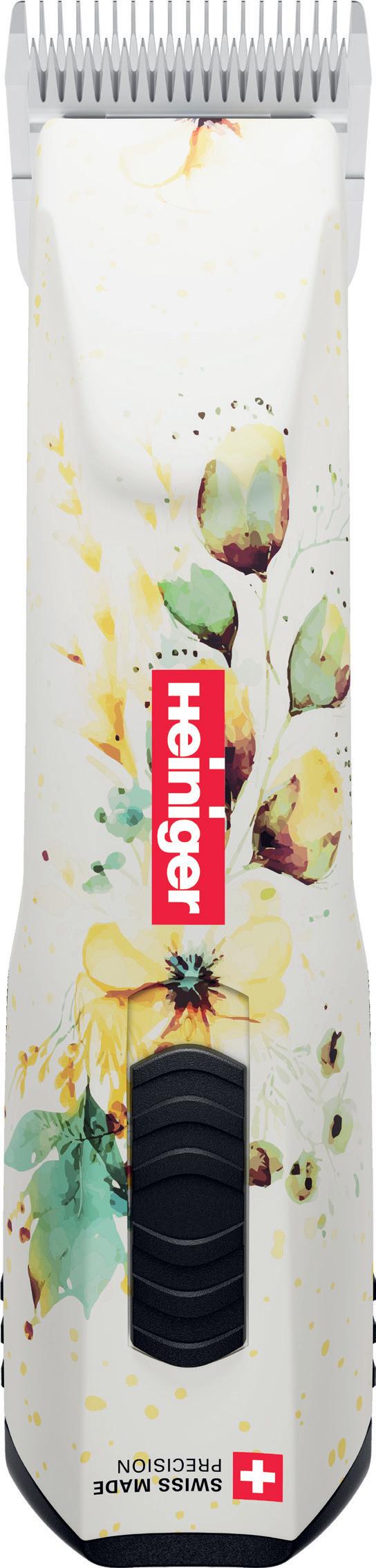
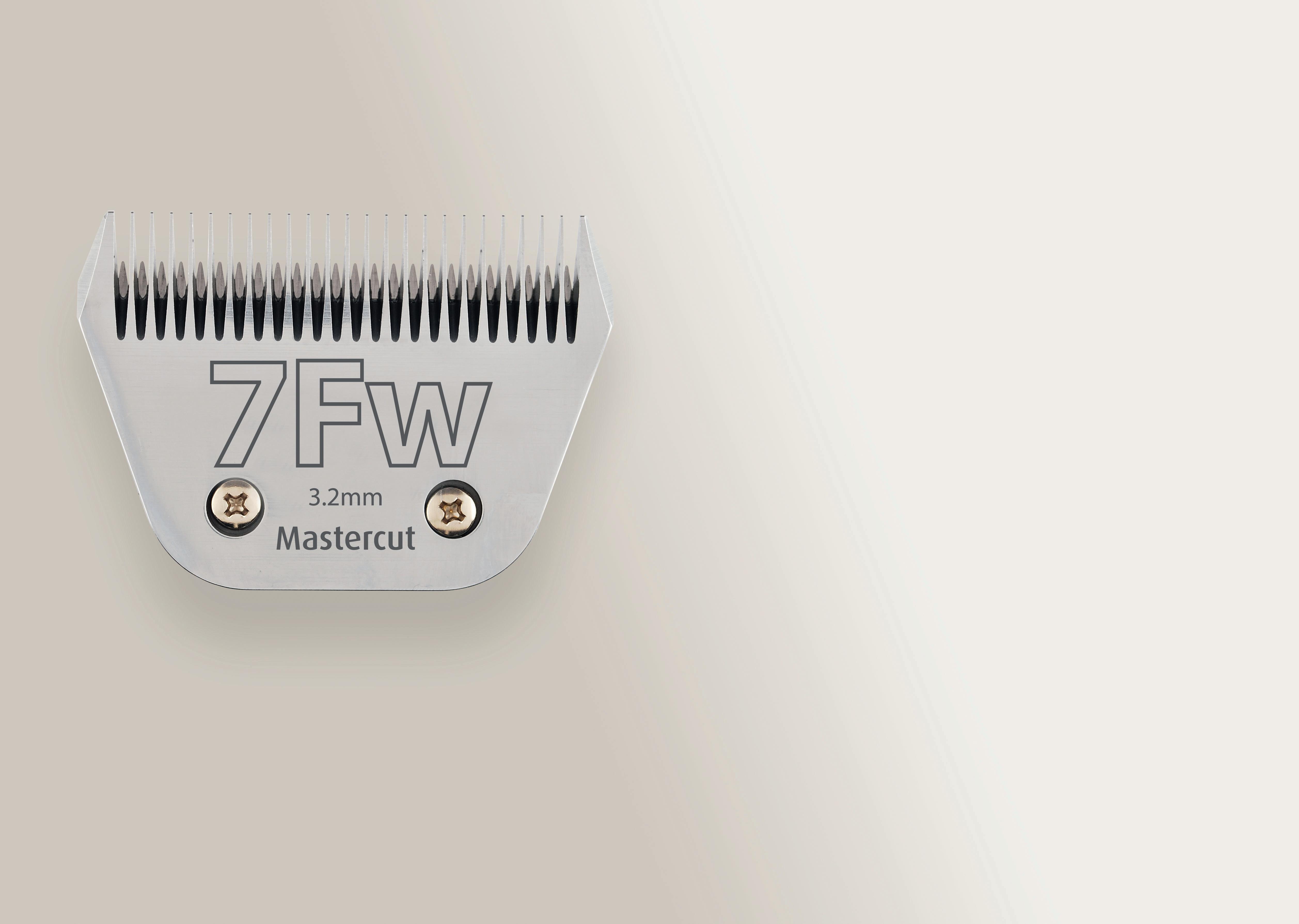
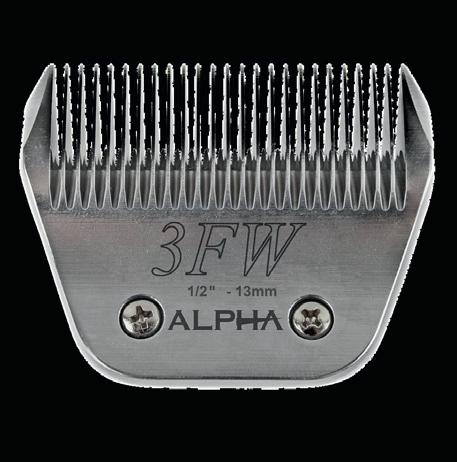
Designed to meet the real-world demands of busy groomers, Mastercut’s Superwides deliver 25% more cutting width - making light work of any clipping job. These blades aren’t just an upgrade, they’re the smarter way to groom.

Designed to meet the real-world demands of busy groomers, Mastercut’s Superwides deliver 25% more cutting width - making light work of any clipping job. These blades aren’t just an upgrade, they’re the smarter way to groom.
Editor
Tom Woollin tom@tgmpublishing.co.uk
Commercial Director
Mike Smith mike@tgmpublishing.co.uk 01795 509110
Design and Production
Grant Waters grant@cimltd.co.uk
James Taylor james@cimltd.co.uk
Credit Facilities Manager
Gwen Lee creditcontrol@cimltd.co.uk 01795 509103
Digital & Web Developer
Xhulio Bishtaja digital@cimltd.co.uk
Marketing Manager Lucas Payne lucas@cimltd.co.uk
Social Media Manager
Lily Lawson socials@cimltd.co.uk
Director Tom Woollin
Managing Director John Denning
© 2026 Cogent Multimedia Limited, 1st Floor, Saphir House, 5 Jubilee Way, Faversham, Kent, ME13 8GD. No part of this magazine may be reproduced or stored in a retrieval system or transmitted in any form – electronic, mechanical or physical – without express prior permission and written consent of the publisher. Contributions are invited and when not accepted will be returned only if accompanied by a fully stamped and addressed envelope. Manuscripts should be type written. No responsibility can be taken for drawings, photographs or literary contributions during transmission or in the editor’s hands. In the absence of an agreement the copyright of all contributions, literary, photographic or artistic, belongs to Cogent Multimedia Limited. The publisher accepts no responsibility in respect of advertisements appearing in the magazine and the opinions expressed do not necessarily represent the views of the Publisher. The Publisher cannot accept liability for any loss arising from the late appearance or non publication of any advertisement.



As we move into the busy summer season, this issue of Total Grooming Magazine is all about balance — between innovation and fundamentals, compassion and professionalism, and growth and sustainability in your business.
Our cover story introduces an exciting product launch from Pet Head, showcasing how innovation continues to shape the products we use every day, with a fresh take on coat care that blends performance, practicality and sustainability.
We also explore how technology is transforming the grooming landscape. From smarter booking systems to integrated payments and communication tools, our in-depth feature looks at how digital solutions are helping groomers protect their time, reduce no-shows and build more resilient businesses in an increasingly demanding market.
This month, we shine a spotlight on true industry dedication in our Groomers of the Month, celebrating Heidi Anderton and her family-run business — a powerful example of how passion, education and legacy can shape the future of grooming.









We also tackle some of the more challenging but essential aspects of the profession. Katie Gwilt’s thought-provoking piece on feline grooming reminds us that sometimes the most skilled decision is knowing when to stop, reinforcing that welfare must always come first. Meanwhile, Rachel Bean encourages us to reassess our first aid knowledge, highlighting the importance of staying current in a world where misinformation is increasingly common.

01932 566696 www.companyofanimals.com

And with warmer weather arriving, our feature on flea and pest management offers practical advice on maintaining hygiene, protecting your salon, and navigating sensitive client conversations with confidence.
Whether you’re refining your skills, growing your business, or simply looking for inspiration, we hope this issue supports you every step of the way.
Enjoy the issue.
Tom Woollin Editorial Director
A family legacy in grooming excellence, as Heidi Anderton and Absolutely Animals celebrate decades of success, education and industry leadership.
13 Technology
How connected booking, payment and communication systems are helping groomers save time, reduce no-shows and build stronger, more profitable salons.
Pet Head’s new Hair Mists range brings microbiome-friendly deodorising and innovative spray technology to everyday coat care.
26 Rachel Bean
Why up-to-date first aid knowledge matters more than confidence, and how outdated advice could put dogs at risk.
Practical salon strategies for managing fleas, protecting your workspace and handling sensitive client conversations professionally.
36 Katie’s Cat Column
Why knowing when to stop is essential in feline grooming, and how respecting limits leads to safer, more successful outcomes.
Quality is now the single biggest factor driving pet product purchases in the UK, with trust and knowledgeable service close behind, according to a major new survey commissioned by Johnson’s Veterinary Products.
The Pet Owner Survey Report 2026, the second in a series tracking the habits and attitudes of UK pet owners, found that 49% of respondents cited quality as the leading influence on their purchasing decisions, with cost on 45%. Trust also proved to be an important factor at 39%, highlighting the importance pet owners place on buying from sources they have confidence in.
For Johnson’s, which has manufactured pet healthcare products since 1921, the findings reinforce a long-held belief: that pet owners are best served when quality, affordable products are backed by knowledgeable, personal advice. It is a combination that independent pet retailers are uniquely placed to provide.
Paul Gwynn, Chairman of Johnson’s Veterinary Products, said: “Our job is to make products that work. The independent pet shop’s job is to put those products into the hands of customers who trust them. This survey tells us that pet owners value both: they want quality products that offer value for money, and they want to buy them from people who understand their pets.
“Two-thirds of pet owners told us that independent pet shops are important
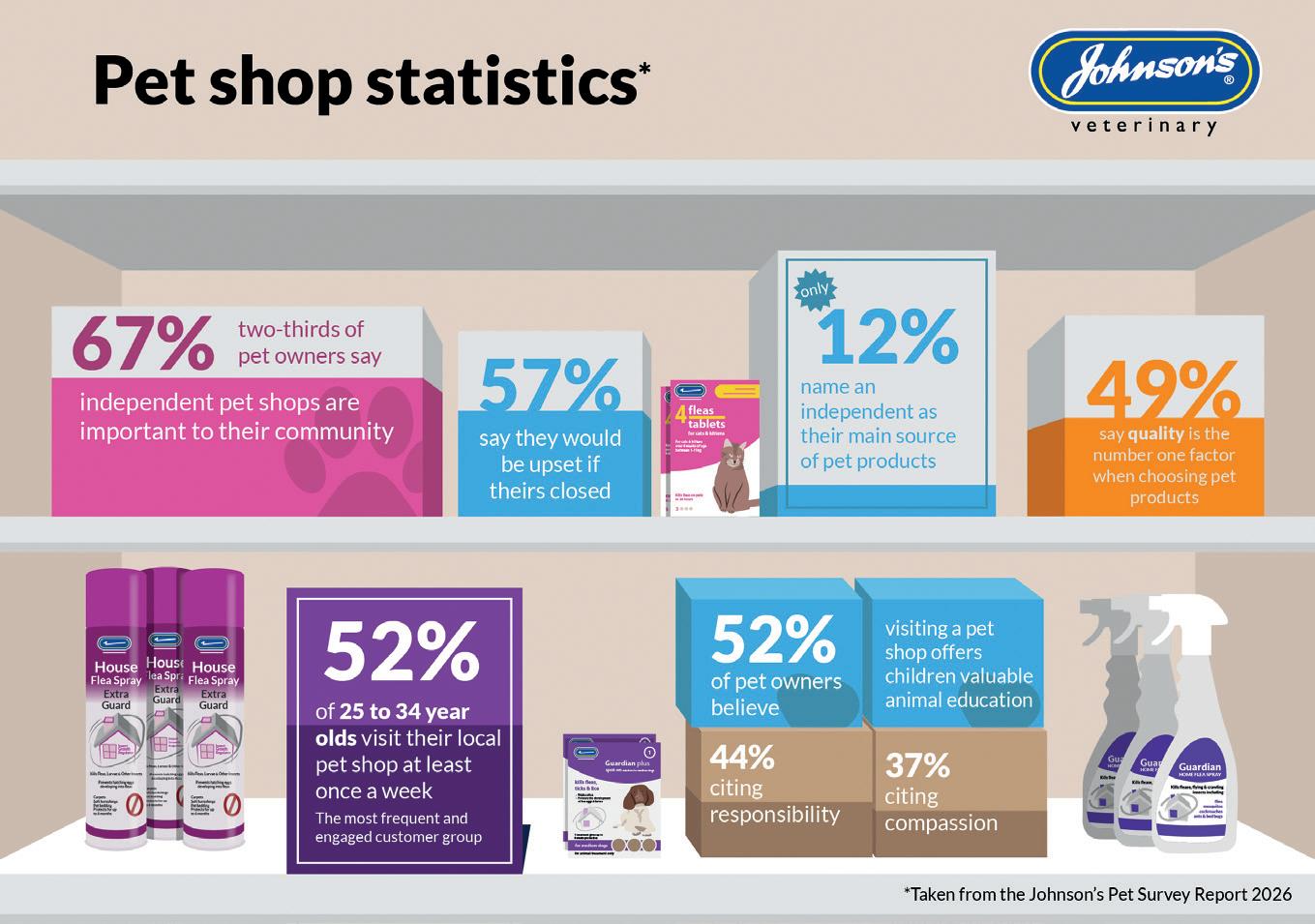
to their community. Nearly six in ten would pay slightly more at a local shop to support the high street. That kind of loyalty is not something you can manufacture. It is earned through knowledgeable service, good advice, and being there when a customer needs help.
“We produce this research for the benefit of the whole trade. The better we understand what drives pet owners, the better we can support the retailers who serve them. That has always been what Johnson’s is about.”
The survey of UK pet owners, conducted by Censuswide in February 2026, also found that 71% always or often read product packaging before treating their pet, confirming the value of clear labelling and staff who able to offer advice about products.
The 25 to 34 age group emerged as the most engaged customers of independent pet shops, with 52% visiting at least once a week. They also expressed the strongest emotional connection to their local shop, with 70% saying they would be upset if it
closed. However, this generation is also feeling the pressure of the cost of living, with 55% having switched products for affordability in the past year, underscoring the importance of stocking ranges that offer genuine value.
The emotional bond between owners and their pets remains strong, with 58% saying they care more about their pet’s wellbeing than their own, consistent with 59% recorded in the last report, published in 2023. More than half (52%) believe that visiting a pet shop offers children valuable animal education, and 44% say it teaches responsibility.
Meanwhile, 54% of 25 to 34 year olds now regularly turn to social media or AI tools for pet information, presenting an opportunity for retailers who develop their digital presence alongside their instore experience and knowhow.
The full Pet Owner Survey Report 2026 is available from Johnson’s Veterinary Products. For further information or to request a copy, contact info@johnsons-vet.com
Now in force in England, meaning all cats and dogs must have a microchip fitted - with owners facing a £500 fine if their pet is recovered and found not to have the technology.
Following the introduction of the new legislation, I’m getting in touch with comments from Jessica Burleigh, Brand Ambassador at pet grooming supplier
Christies Direct on how it’s important for pet owners not to overlook the importance of microchipping.
This is as regular grooming appointments can significantly alter a pet’s appearance and make them harder to identify if they go missing.
Jessica: “From a dog groomer’s perspective, a pet’s visual appearance alone should never be relied upon for identification. Grooming can dramatically alter the way a dog looks in a relatively short space of time.
“Different grooming methods can significantly change:
• Coat length and colour visibility
• Facial shape and expression
• Ear appearance
• Overall body shape
• Breed recognition
• Distinctive markings that may be hidden beneath longer coats
“For example, a breed-standard groom on a Kerry Blue Terrier compared
to a closely clipped or shaved groom can make the same dog appear completely different to the untrained eye.
“Likewise, traditional hand-stripping methods versus clipped styles on suitable breeds can substantially alter a dog’s appearance and characteristics.
“With the growing popularity of crossbreeds and ‘teddy-style’ grooms,
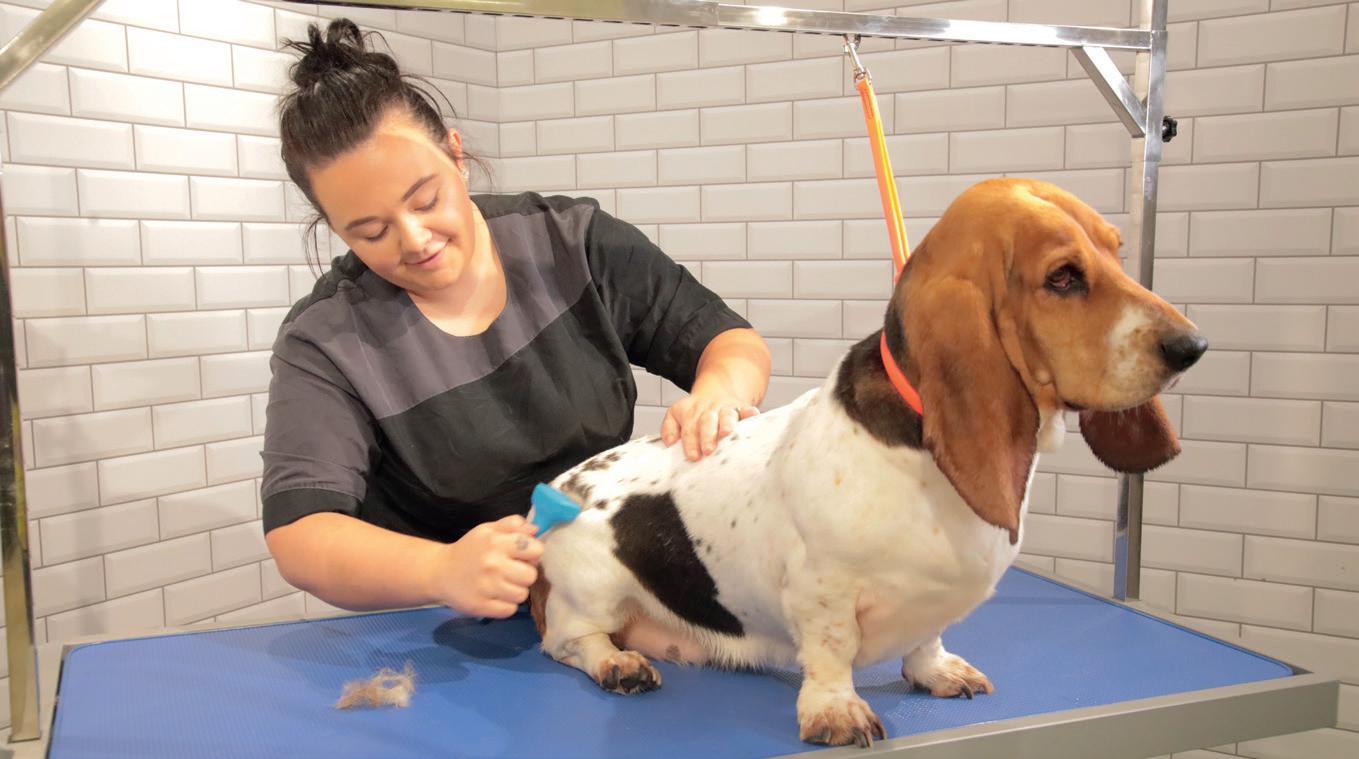
many dogs can look visually different depending on the grooming methods required for their coat type - sometimes within as little as a four-to-six-week timeframe.
“As groomers, we regularly see firsthand just how transformative grooming can be. That’s why it’s so important for all dog owners to:
• Ensure their dog is legally microchipped
• Keep contact details up to date on the microchip database
• Check chip information after moving house or changing phone numbers
• View microchipping as a permanent and reliable form of identification, regardless of changes in coat or appearance
“As pet professionals, we should always encourage clients to follow responsible pet ownership laws in order to provide pets with a safe, happy and healthy life.”

With more than three decades in the grooming industry, Heidi Anderton has built Absolutely Animals into a family-run centre of excellence. From competition success to world-class training, her journey reflects passion, resilience, and a commitment to raising standards—now shared with the next generation working by her side.
Heidi Anderton LCGI ICMG, founder of Absolutely Animals in London, has dedicated over 30 years to the grooming industry, building a business that is as much about family as it is about excellence. She opened the salon in 1995 with support from The Prince’s Youth Business Trust, marking the beginning of a journey that would see her become a respected competitor, educator, and industry leader.
Before establishing her salon, Heidi worked from home, gradually building a large and loyal client base. It was her vet who encouraged her to take the next step and open a dedicated grooming premises—a decision that proved pivotal. At the time, Heidi had one child, Christine, and would later welcome her sons, Perry and Callum. Today, all three of her children play integral roles in the business, making Absolutely Animals a true family enterprise.
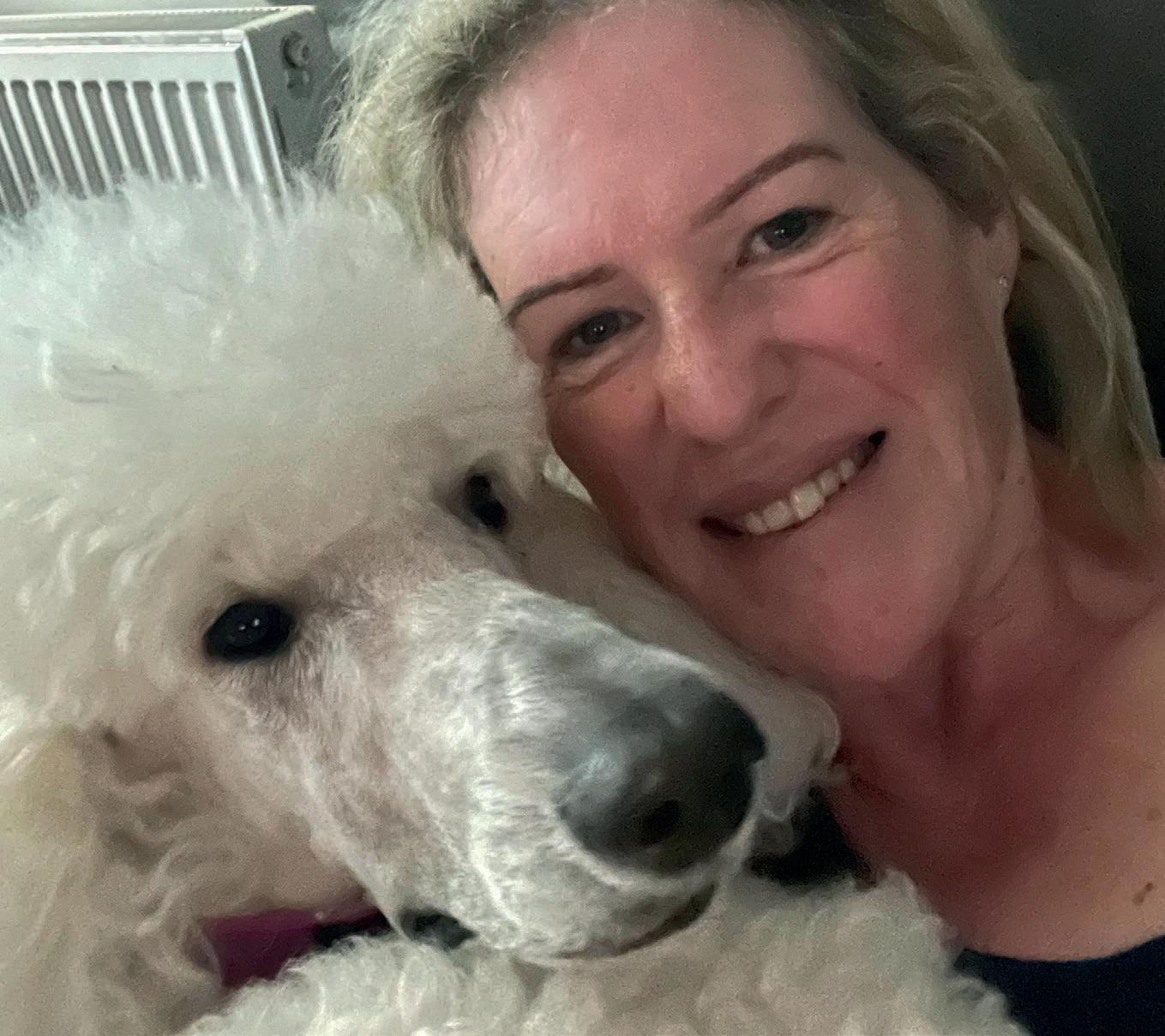
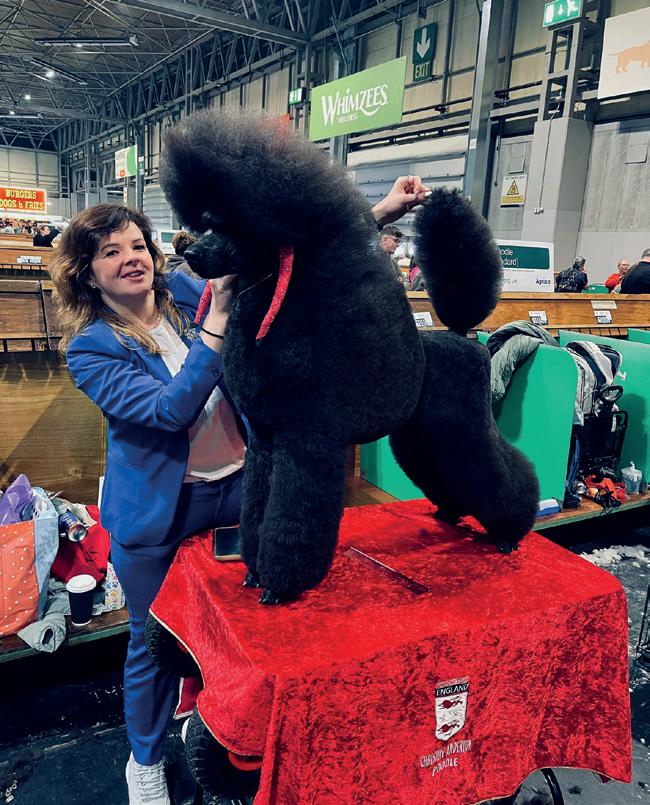
Christine was the first to follow in her mother’s footsteps, joining the salon full-time at just 16 after leaving school. Through determination and talent, she has established herself as both an accomplished competitive groomer and a highly respected tutor. Her achievements include being selected twice for Groom Team England and successfully competing at Crufts with her poodle, where she earned two secondplace awards—an impressive testament to her skill and dedication.
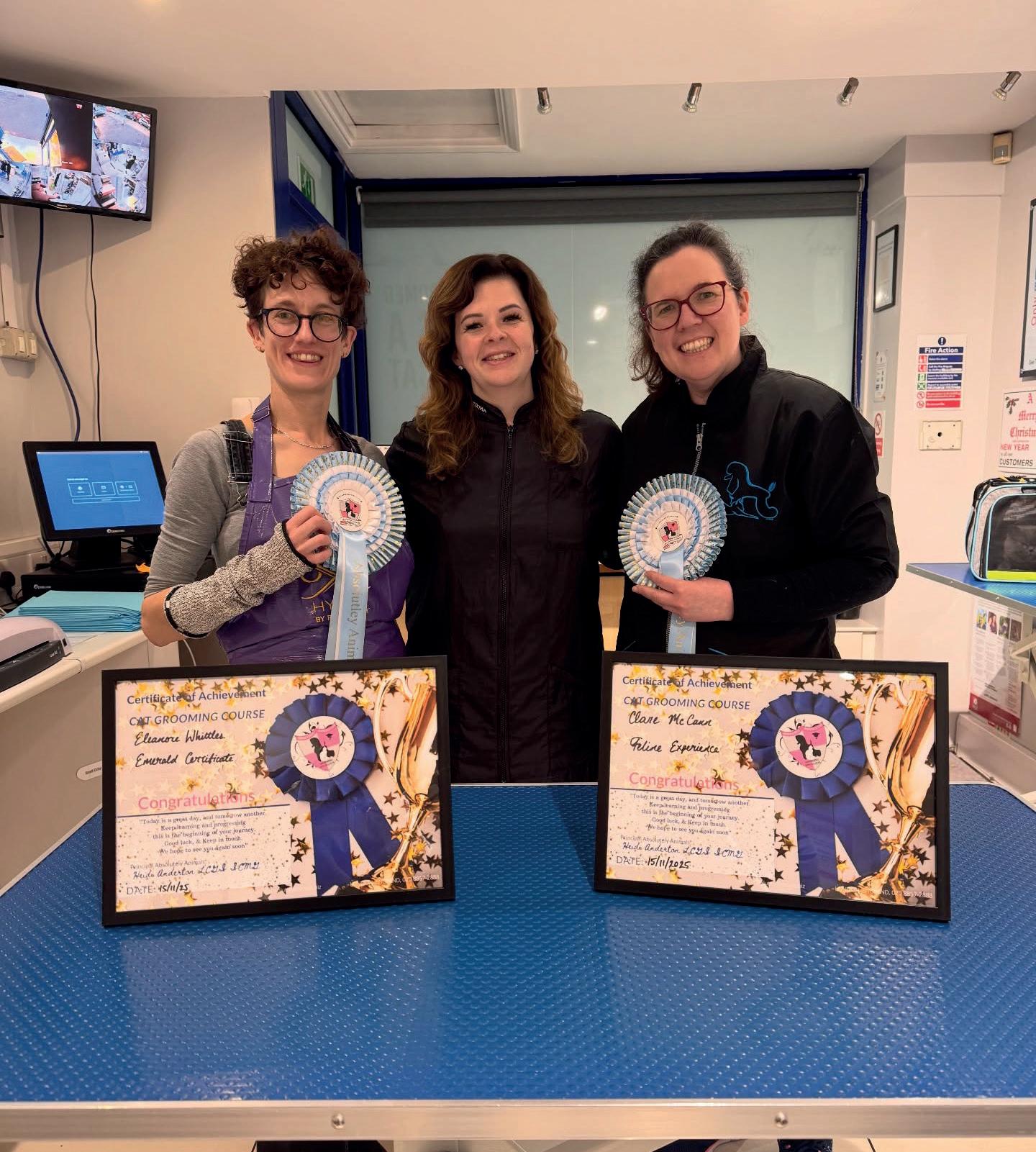
As the business evolved, one of its most significant developments was the introduction of a dedicated cat grooming salon and training school. Offering iPET qualifications—the only UK-recognised cat grooming qualifications within the National Qualifications Framework—this
expansion has positioned Absolutely Animals at the forefront of feline grooming education. Christine now leads this side of the business, combining her passion for cats with her teaching expertise. The salon now grooms around 50 cats each week and attracts students from across the globe, with consistently outstanding feedback.
Callum, Heidi’s youngest son, joined the industry after leaving college at 20. Since then, he has worked tirelessly to develop his skills, achieving his Level 3 qualification in dog grooming alongside a teaching award. He has also made a name for himself on the competition circuit, both in the UK and internationally, and has secured a place
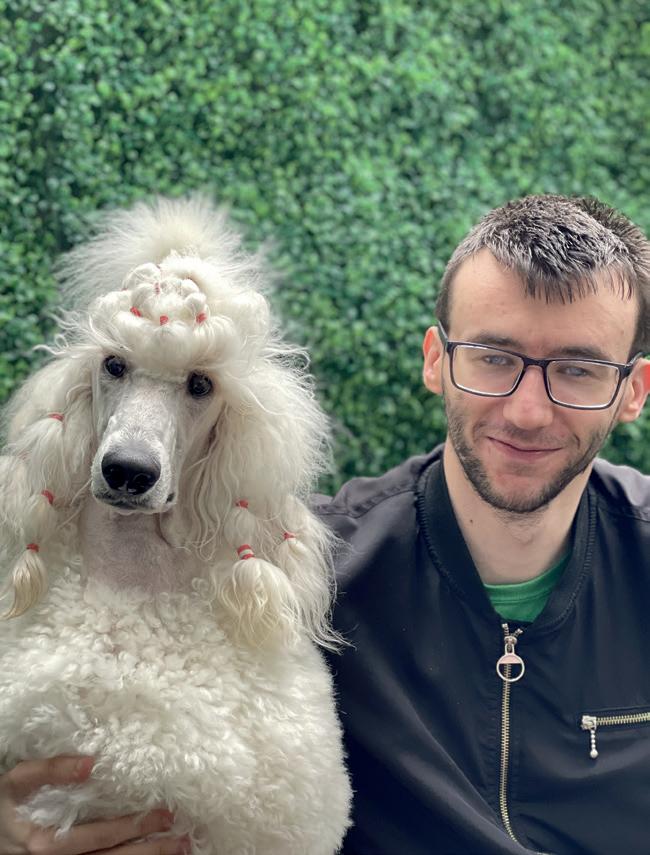
in the prestigious poodle champion class. Known for his friendly and outgoing personality, Callum has built strong connections within the grooming community and plays an important role in managing the dog grooming school. While Perry is not a groomer, his contribution is equally vital. He manages the business’s website, supports clients and students throughout their journey, and oversees the financial operations. His work behind the scenes ensures the smooth running of the business and helps drive its continued growth and modernisation. Like the rest of the family, Perry shares a genuine love of animals, making his role all the more meaningful.
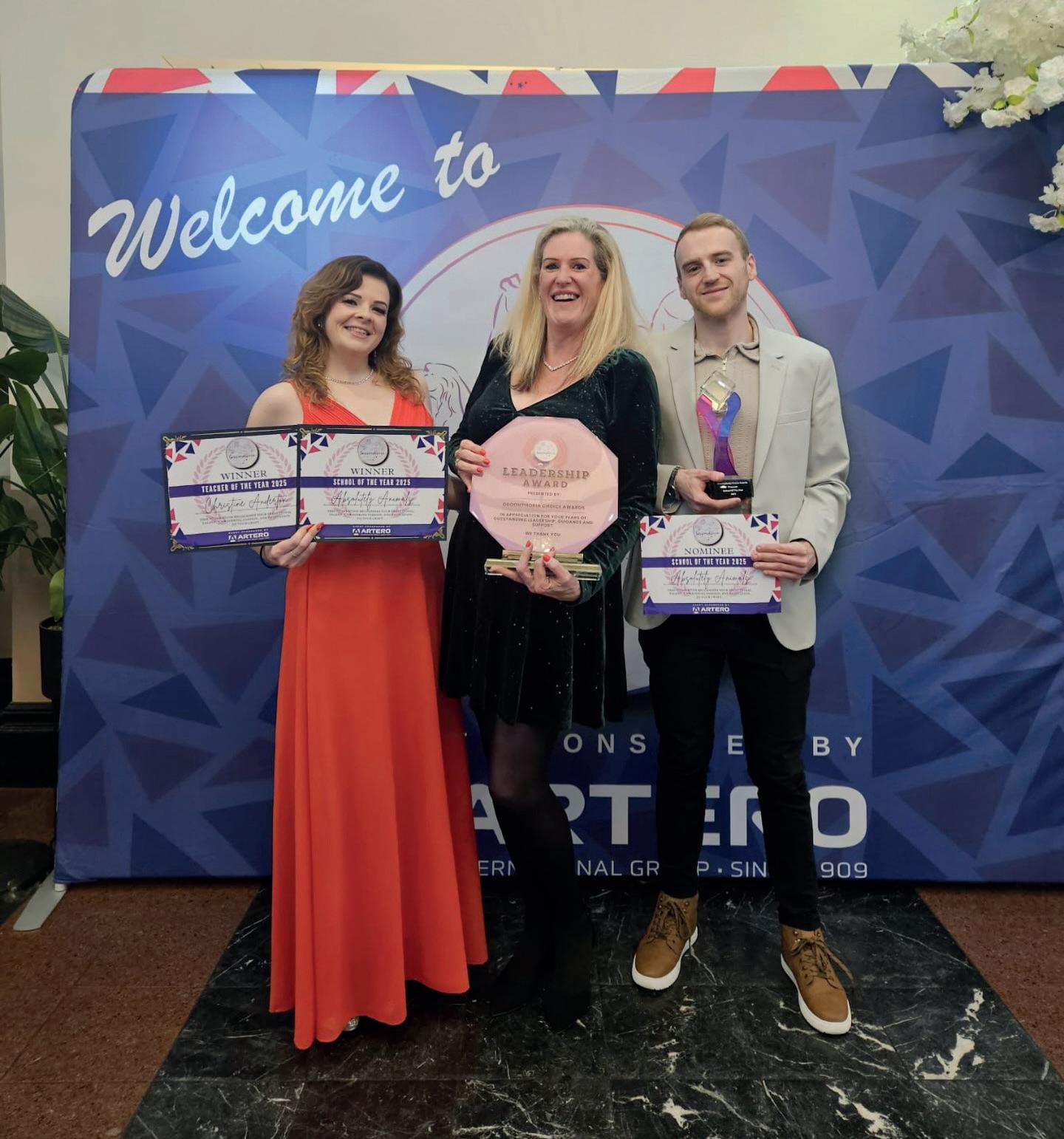
Recognition for Heidi and her team’s hard work has come both from clients and the wider industry. At the Groomphoria Awards in November 2025, Heidi received a leadership award, while Absolutely Animals was named Grooming School of the Year. Christine was also honoured with the Teacher of the Year award, highlighting the strength of the next generation within the business.
For Heidi, the greatest reward is seeing how far the business—and her family—have come. She hopes their journey will inspire others to pursue a career in grooming with confidence and determination. At Absolutely Animals, the focus remains on providing a supportive, hands-on learning environment where students can build their skills, gain real industry experience, and develop fulfilling careers doing what they love.
www.absolutelyanimals.biz
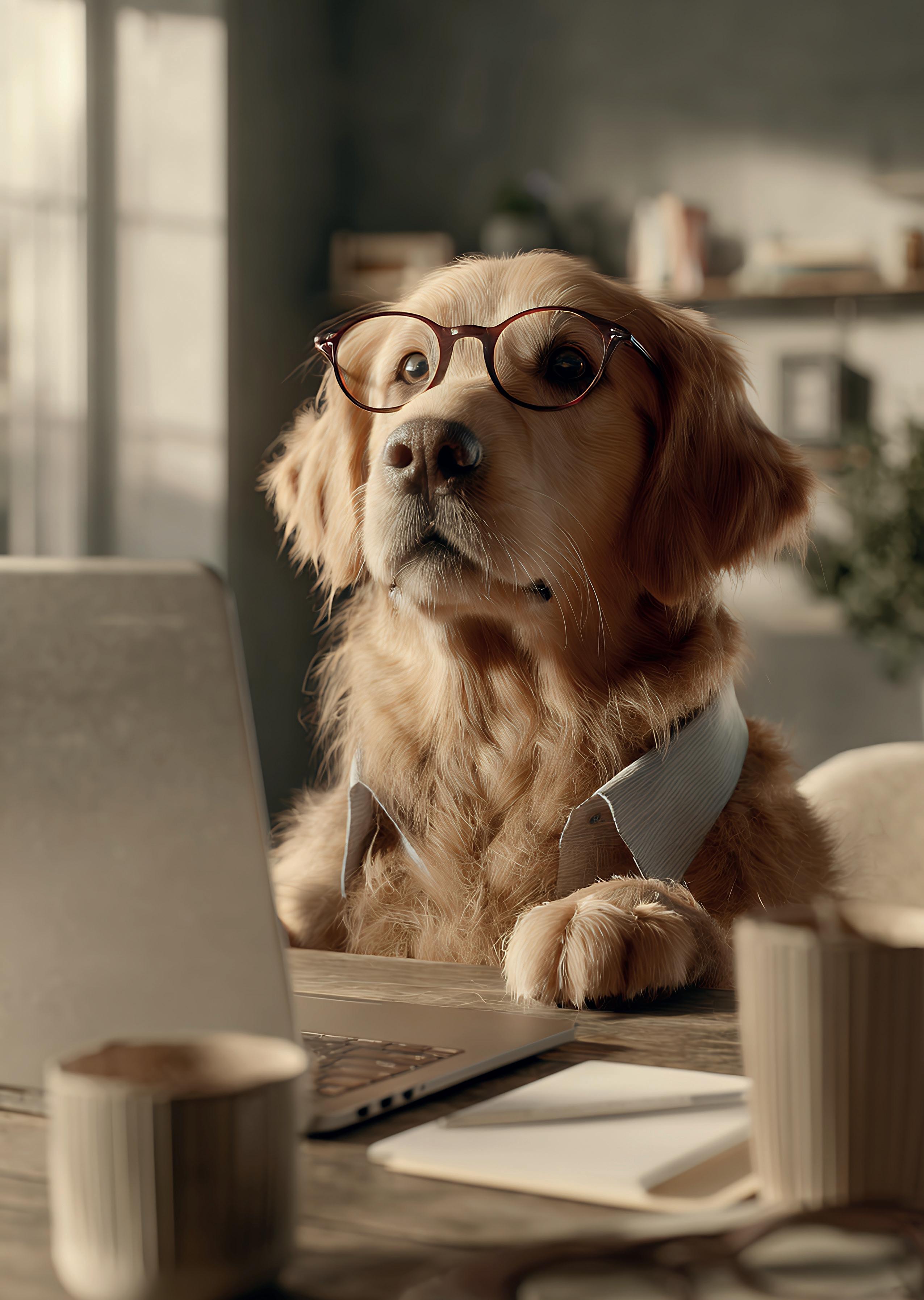
Technology is reshaping the grooming industry, offering smarter ways to save time, increase revenue and elevate client experience. From automation to data insights, embracing the right tools can transform daily operations. Here are five essential ways groomers can use technology to streamline workflows, boost efficiency and drive sustainable business growth.
Digital booking platforms remove the back-and-forth of phone calls and messages, allowing clients to schedule appointments 24/7. This not only saves time but reduces no-shows with automated reminders. Groomers can manage their calendars more effectively, fill gaps quickly and create a smoother, more professional customer experience.
A CRM system helps track client details, pet histories, preferences and past services. This allows groomers to personalise appointments, recommend relevant treatments and build stronger relationships. Over time, this level of service encourages loyalty, repeat bookings and higher lifetime customer value.
Modern point-of-sale systems streamline transactions, track sales and manage inventory in real time. Offering contactless and mobile payment options improves convenience for clients, while integrated reporting tools give groomers clear visibility on revenue, best-selling services and product performance— helping inform smarter business decisions.
Platforms like Instagram and Facebook are powerful tools for showcasing work, attracting new clients and building a brand. Scheduling tools and analytics help groomers post consistently and understand what content performs best. Paid ads and targeted promotions
can further increase visibility and drive bookings in quieter periods.
From automated appointment reminders to stock management and staff scheduling, technology can significantly reduce admin time. Groomers can focus more on delivering quality services while software handles repetitive tasks. This improved efficiency not only saves time but directly impacts profitability by maximising productivity and minimising errors.
By integrating these technologies, groomers can create a more efficient, profitable and future-ready business without compromising on care or creativity.
From booking systems to payment platforms, technology is reshaping how grooming salons operate, communicate and grow. As client expectations evolve and costs rise, digital tools are no longer optional. This feature explores how connected systems are helping groomers save time, protect income and build more resilient, future-ready businesses.
Technology has become one of the defining forces behind the modern grooming salon. What was once a largely hands-on, paper-driven industry is now increasingly shaped by digital systems that streamline bookings, manage finances and strengthen client relationships. For many groomers, adopting technology isn’t about staying ahead of trends, it’s about staying afloat in a more demanding, fastpaced environment.
From my perspective, the shift has been less about individual tools and more about how everything now connects. Booking systems talk to payment platforms, which link to accounting software, while marketing and communication channels sit alongside them. It’s this ecosystem approach that is transforming how salons operate day to day.
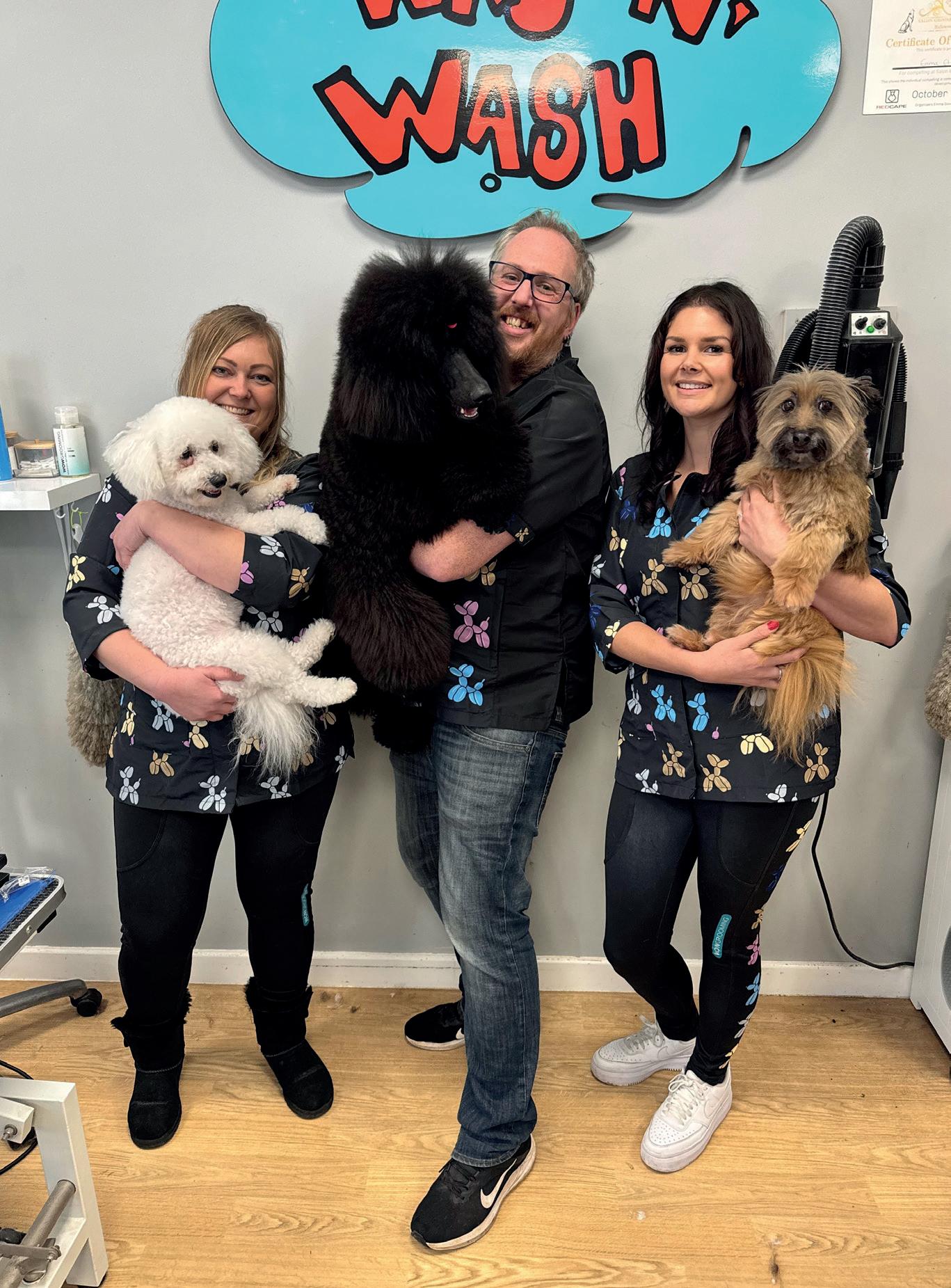
James Worman-Blackburn, business owner of JP Pet Co Ltd, has seen that transformation firsthand. “Technology plays a big part in the day-to-day running of my salon,” James Worman-Blackburn says. “We’ve upgraded from pen and paper to online booking systems, we have a POS till system connected to my accountancy software and online shop, and we use cameras and lighting for social media. Without all these things, it would make everything so much harder.”
That sense of everything being connected is a recurring theme. For many salon owners, technology is no longer a series of separate tools but a support system that fills in the gaps where time and resources are limited. It’s about removing friction, reducing admin, and allowing groomers to focus on the work that matters most.
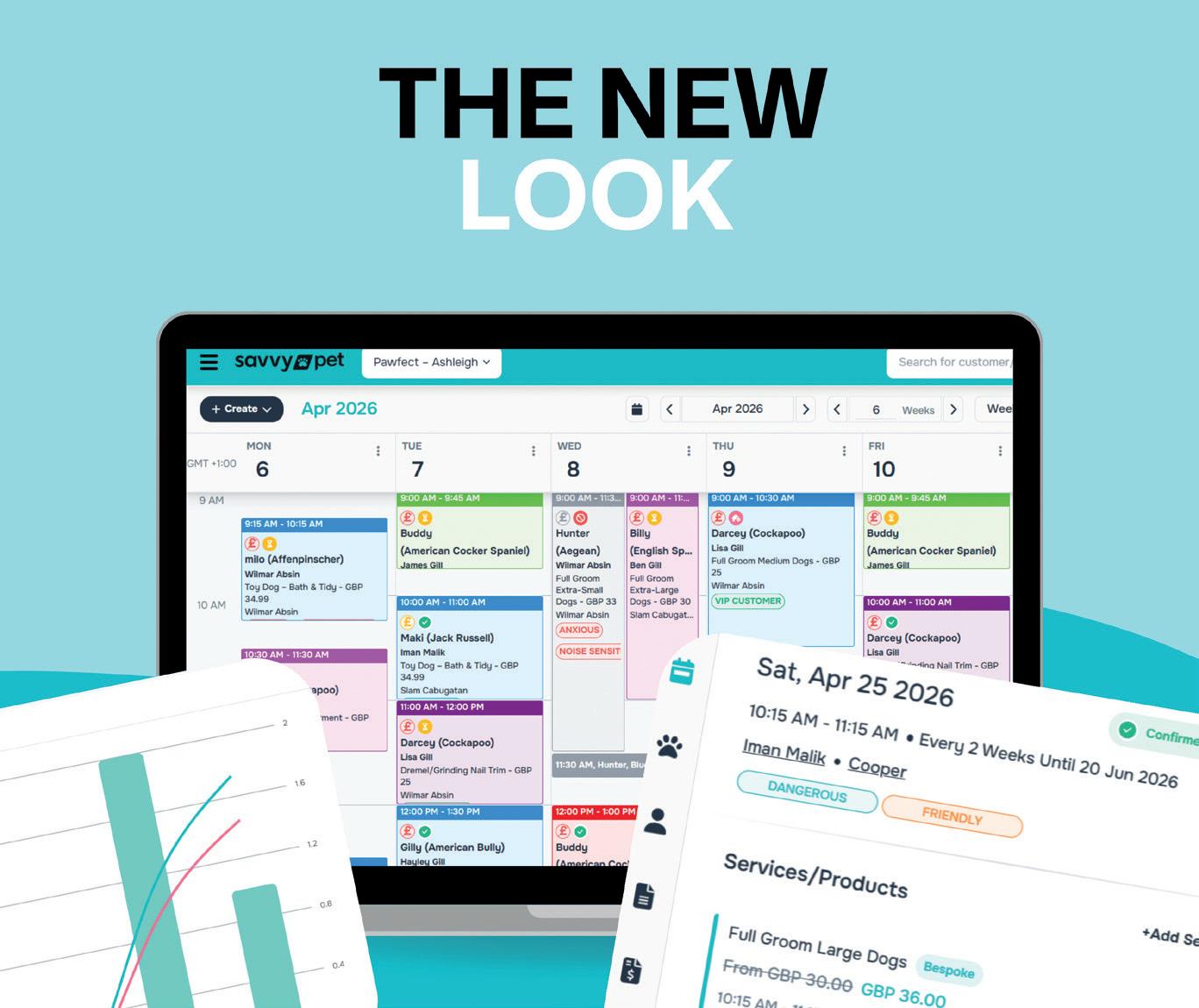
One of the most immediate and noticeable changes has come through booking systems. Digital scheduling has fundamentally altered how salons manage their diaries, interact with clients and reduce missed appointments. What used to rely on phone calls and manual tracking is now largely automated.
James highlights just how impactful this shift has been. “Online booking systems have really helped us in the salon,” James says. “They’ve reduced no-shows because they send reminder texts and emails. Everyone’s lives are on their phones now, so they can’t get away with forgetting. It also means customers can book outside of opening hours, which helps keep the diary full.”
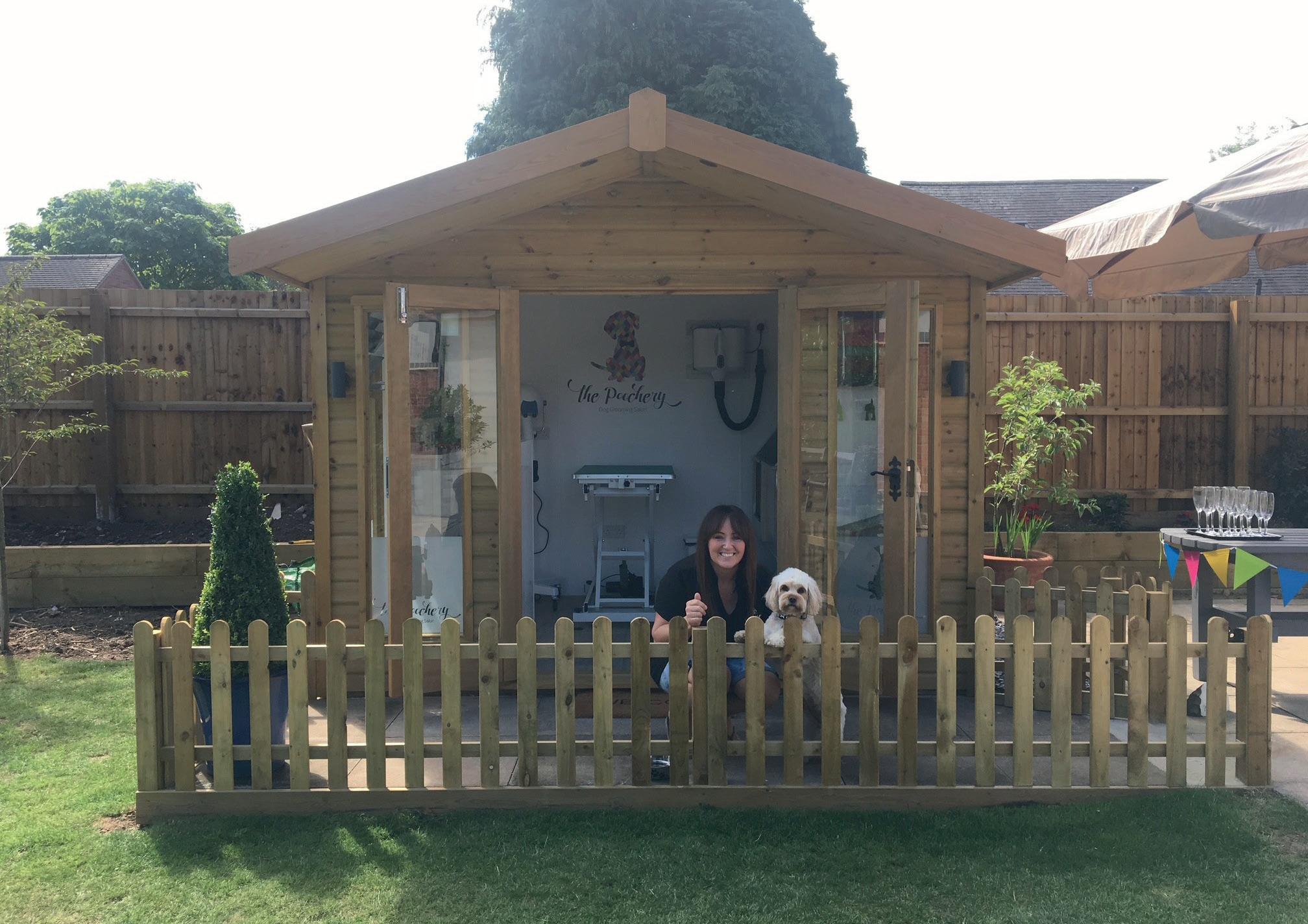
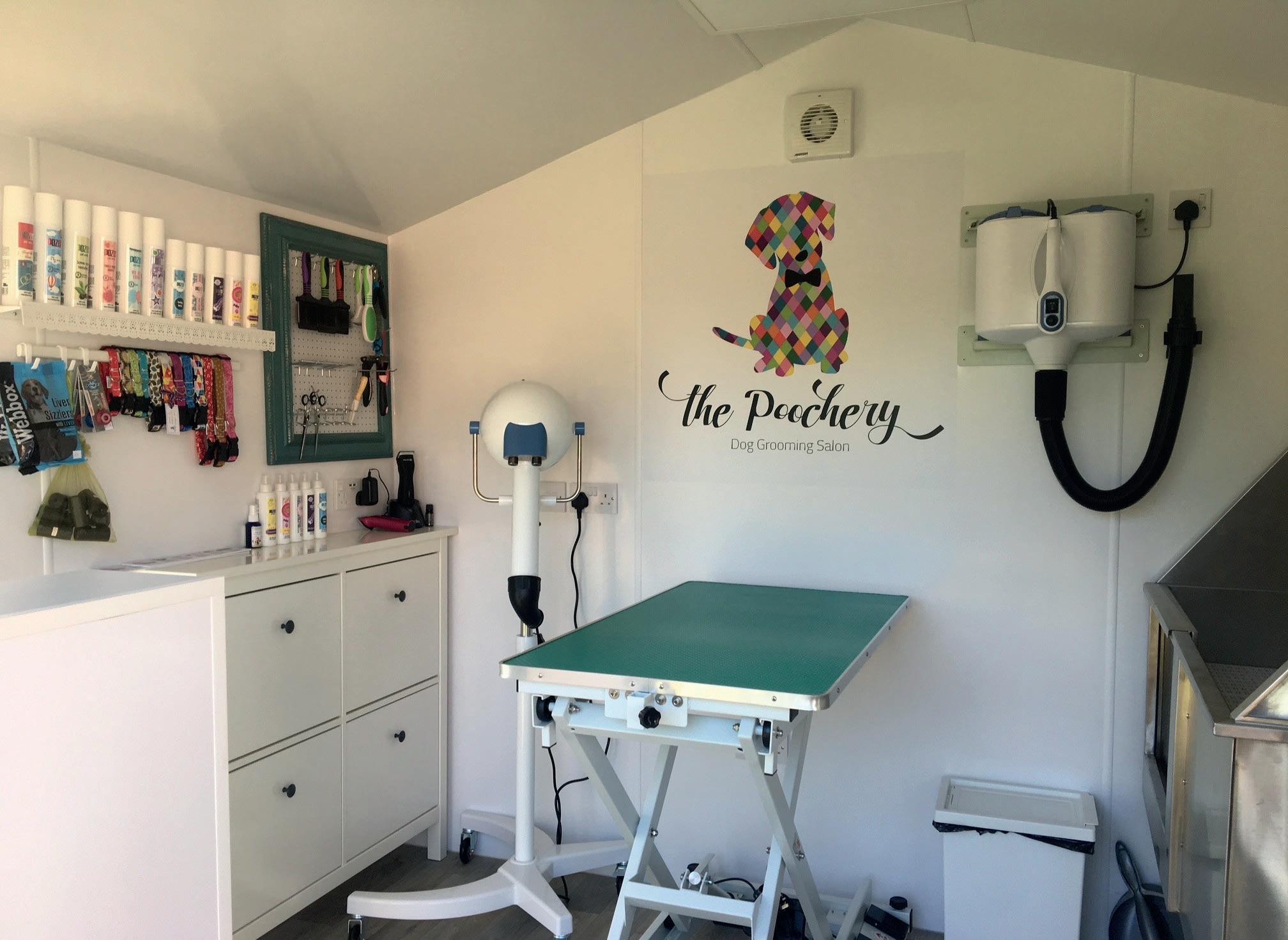
Cassandra Stephens, owner of The Poochery Dog, echoes that experience, particularly when it comes to communication. “Technology has made daily operations much smoother, from managing appointments and sending birthday greetings to storing pet records and tracking grooming history,”
Cassandra Stephens says. “It saves time and keeps everything you need to hand.”
For Cassandra, automated communication plays a crucial role in setting expectations. “Automated text reminders have really helped cut down on no-shows,” Cassandra says. “They also make it easy for owners to confirm or reschedule without needing to call, and the messages include my terms and conditions so clients know where they stand.”
This shift reflects a broader change in customer behaviour. Clients now expect convenience, speed and flexibility. Booking an appointment needs to be as easy as ordering online or booking a table, and salons that meet those expectations are better positioned to maintain consistent revenue.
Lisa Gill, Co-Founder of Savvy Pet, sees this shift as one of the biggest pressures facing the industry. “The biggest challenges we hear from groomers all come down to time and money,” Lisa Gill says. “No-shows and last-minute cancellations are a huge issue, and customer expectations have changed. People want to book online, get quick responses and manage everything from their phone.”
From her perspective, technology has to work harder to meet those demands
without adding complexity. “With the relaunch of Savvy Pet, we’ve focused on making systems simple and easy to use,” Lisa says. “Automated reminders and messaging tools help reduce missed appointments and keep communication clear without adding more work.”
Beyond bookings and communication, payment technology has become another critical area of change. The way salons take and manage money is now closely tied to their overall efficiency and financial stability.
James points to his POS and accounting integration as one of the most valuable tools in his business. “Our POS system keeps track of what we’ve taken and connects to our accountancy system, so it saves me manually entering figures,” James says. “Knowing what money is going into my bank and when really helps with cash flow.”
That visibility is key, particularly in an industry where margins can be tight and costs unpredictable. Faster payment processing and clearer financial tracking allow salon owners to plan more effectively and avoid unexpected shortfalls.
Cassandra has also seen a shift in how clients prefer to pay. “Contactless and mobile payments have made transactions quicker and more reliable,” Cassandra says. “Taking deposits has reduced last-minute cancellations and protected revenue. Physical cash is almost non-existent now.”
For Tom Holt, CMO of Lopay, these changes are part of a wider financial challenge facing groomers. “The grooming industry is battling rising overheads and the constant challenge of managing cash flow,” Tom Holt says. “Many groomers are losing a significant
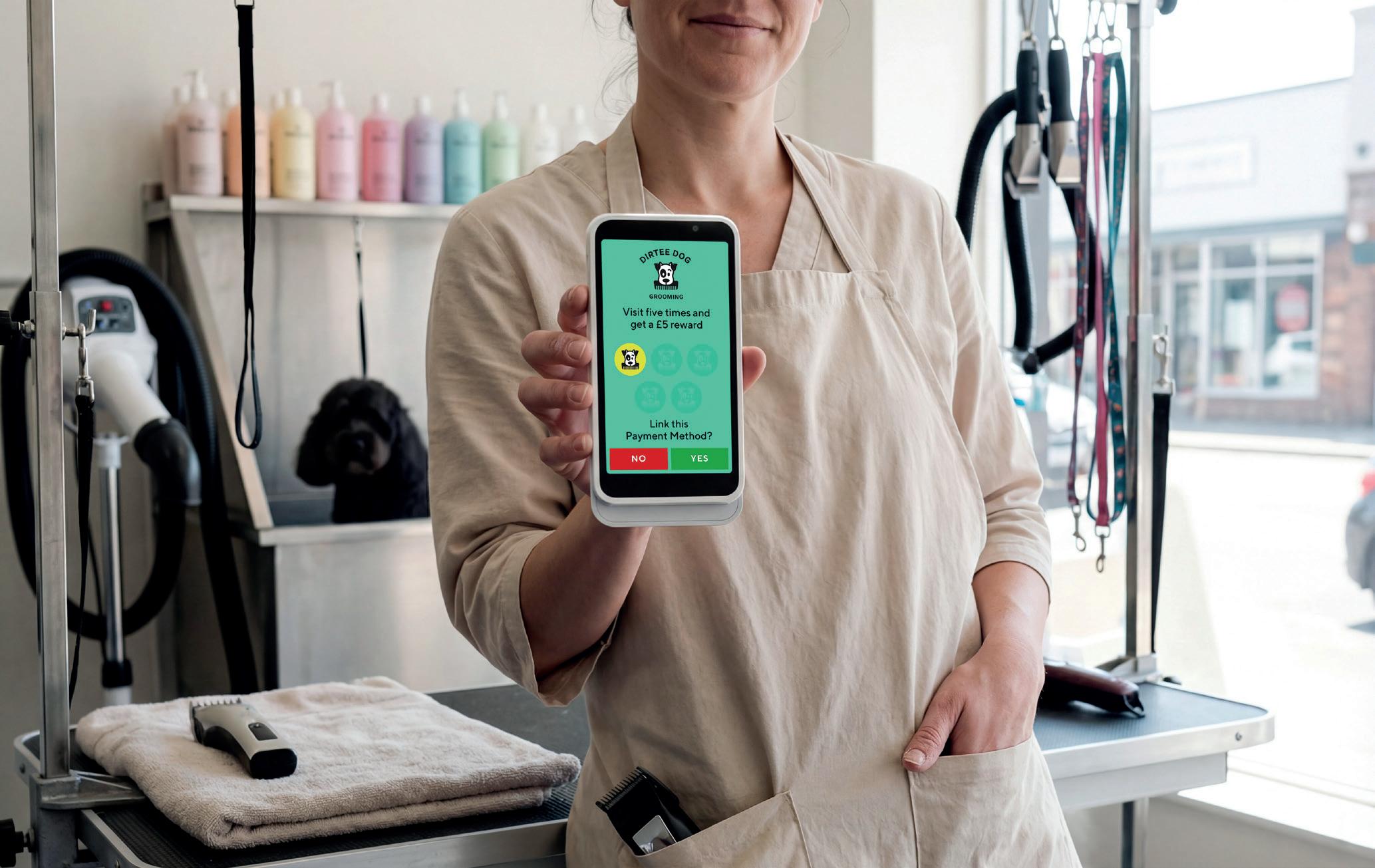
chunk of their earnings to high payment processing fees.”
From his perspective, the right technology can directly improve profitability. “We drastically cut card processing fees so groomers keep more of what they earn,” Tom says. “We also provide instant payouts, meaning money from a morning groom is available immediately to cover costs that same day.”
That immediacy can make a tangible difference to how a business operates, particularly for smaller salons or mobile groomers who need to manage expenses closely. It also highlights how payment systems are no longer just transactional tools but strategic assets.
Another area where technology is making a measurable impact is in protecting salon income from no-shows and cancellations. While reminders play an important role, the introduction of deposits, prepayments and card-on-file systems has added a layer of financial security that was previously difficult to enforce.
Tom emphasises the psychological impact of these tools. “Once a client has paid a deposit, their commitment to the appointment increases significantly and no-shows practically disappear,” Tom says. “It shifts the financial risk away from
the groomer and ensures their time is respected.”
Lisa sees a similar pattern through Savvy Pet’s payment features. “Deposits and card on file make a massive difference,” Lisa says. “If someone cancels last minute or doesn’t show, your business is still protected. It’s about valuing your time and making income more predictable.”
From a salon owner’s perspective, this shift is less about being strict and more about creating a sustainable business model. Time is a finite resource, and
every missed appointment represents lost income that cannot be recovered.
Alongside these financial and operational benefits, technology is also shaping how salons approach growth. Rather than simply increasing workload, many tools are designed to help businesses maximise the value of their existing time and client base.
Lisa points to smarter booking and communication features as a key driver of revenue. “Profitability isn’t about doing more hours, it’s about making the most of the time you already have,” she says.
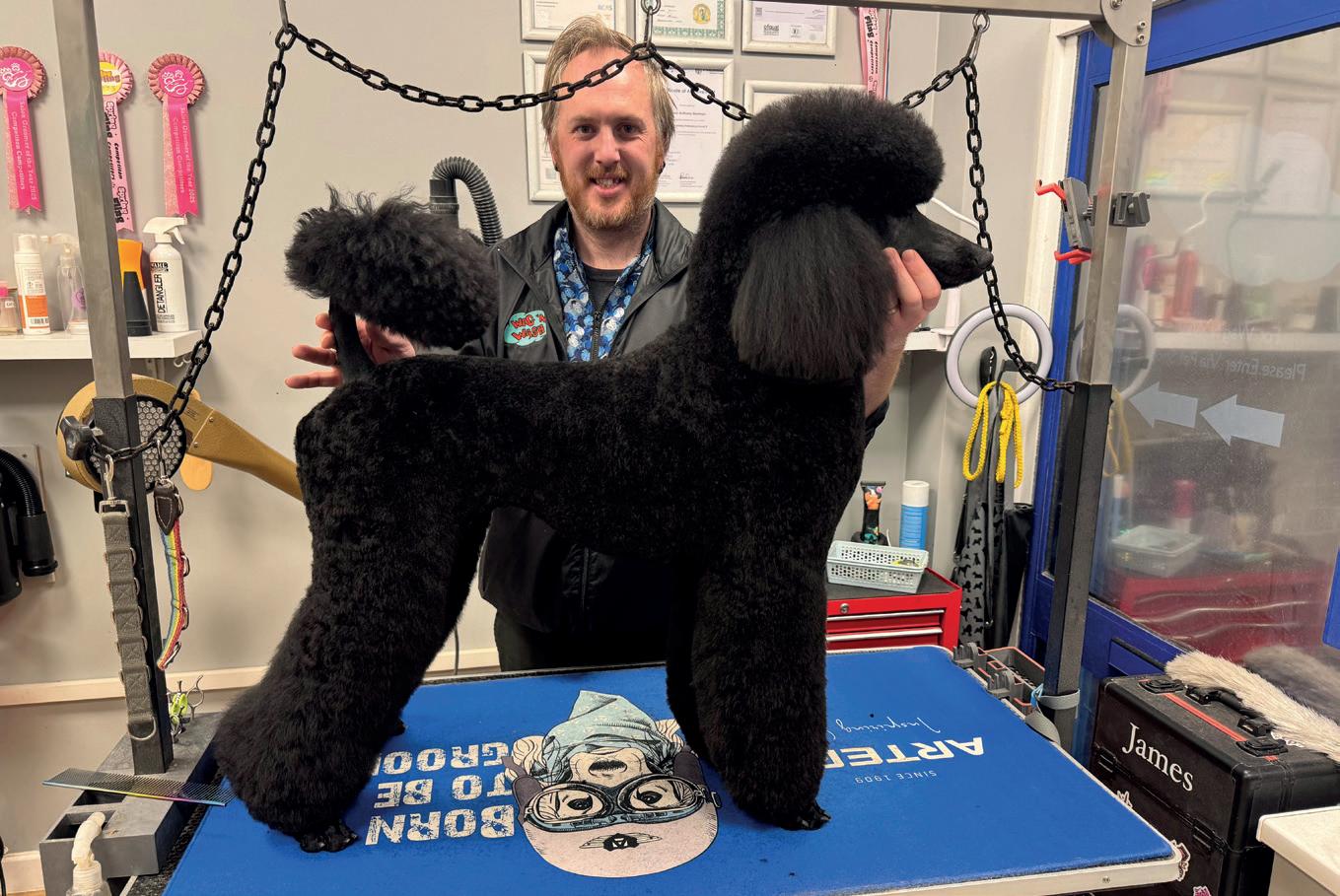

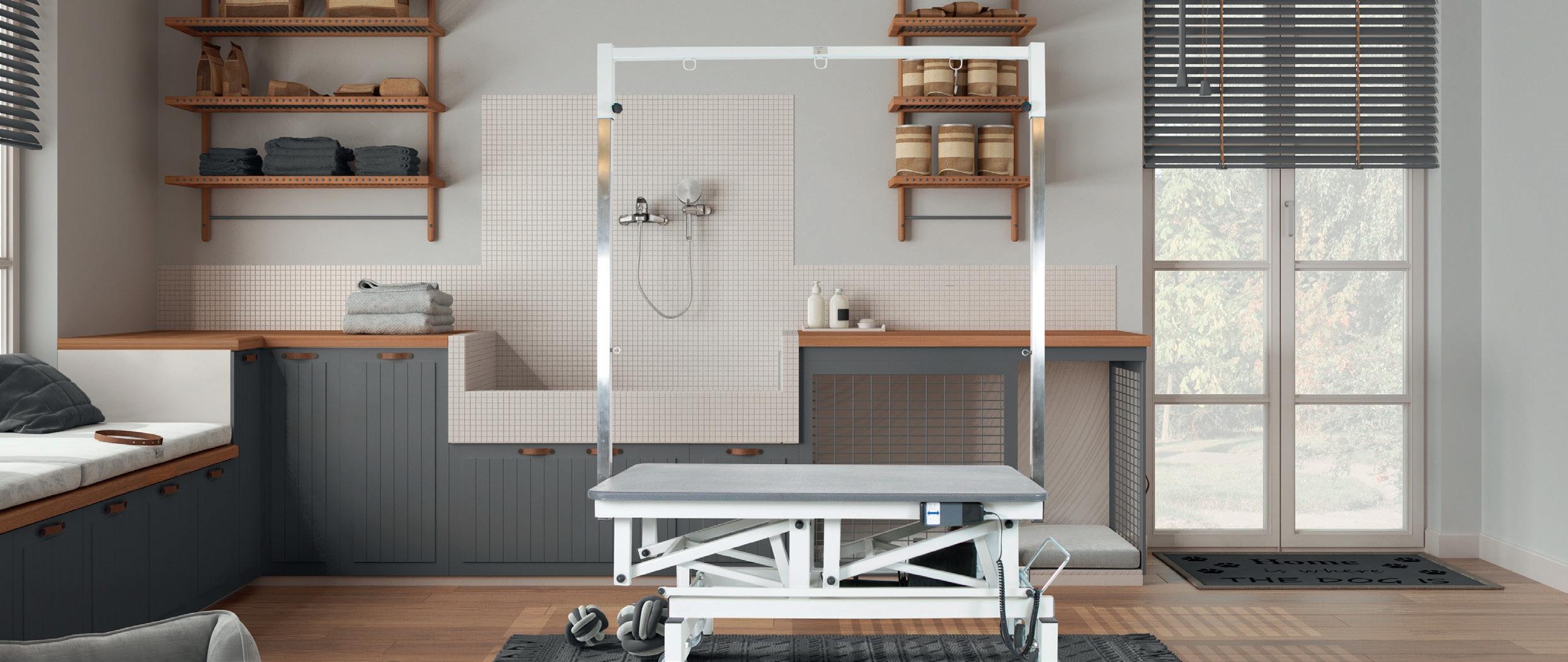
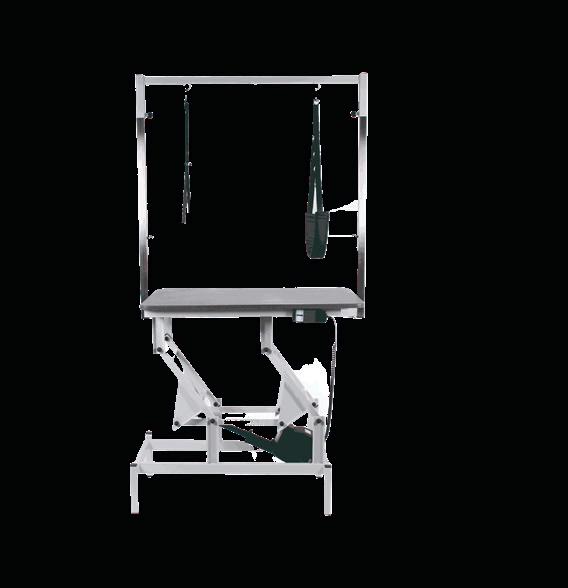
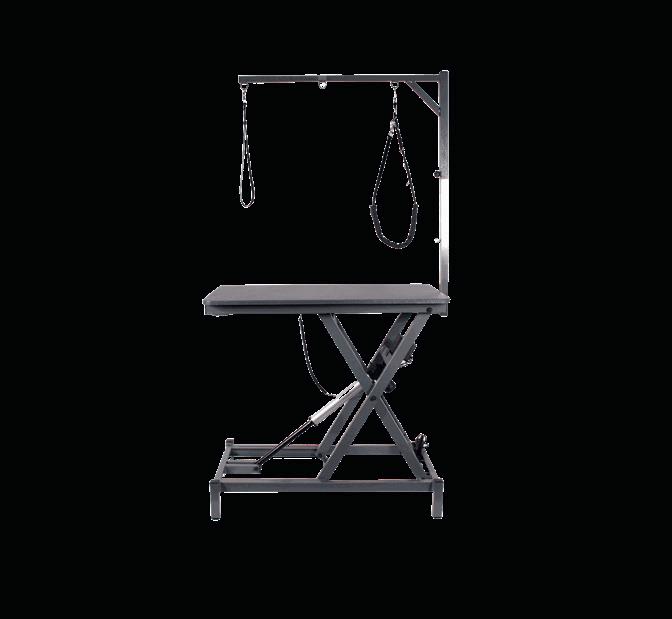
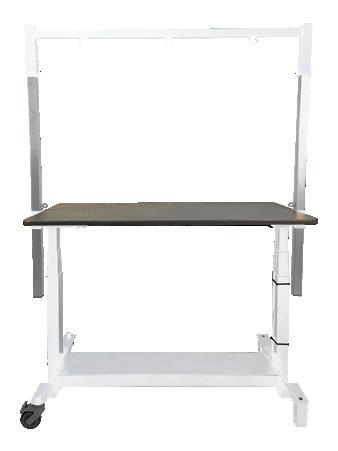
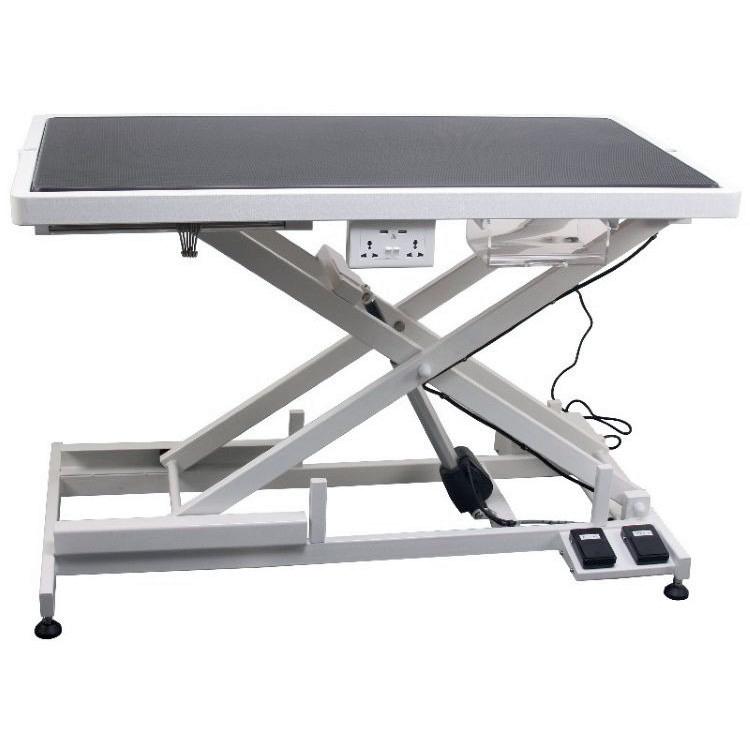
Having visited the Factory to see these tables being built, we were blown away with the build quality, attention to detail and quality of the materials and process used. These are extremely high quality, “high end” tables which are suitable for those who want their equipment to last many many years. Colleges, professional groomers and Vets will benefit from years of trouble free operation and reliability, a real worthwhile investment.
“Features like send-to-all messaging mean last-minute cancellations can be filled in minutes, which makes a huge difference to the bottom line.”
Tom also highlights the role of loyalty and customer behaviour. “Our card-linked loyalty product helps turn occasional clients into regular customers,” he says. “Salons can reward behaviours that actually grow revenue, like booking on a regular schedule or upgrading services.”
This move towards encouraging repeat business reflects a broader trend across service industries. Retention is often more valuable than acquisition, and technology is making it easier to build those long-term relationships.
At the same time, not every piece of technology delivers the desired results. As salons adopt more tools, there is a growing awareness of the need to simplify rather than complicate workflows.
James experienced this firsthand when experimenting with additional communication channels. “We tried using WhatsApp, but it didn’t really work,” James says. “There were too
many ways for customers to contact us across different platforms, and it became confusing to manage.”
Cassandra has taken a more streamlined approach. “I considered using a more complex grooming management platform, but it would have been too time-consuming for a oneperson salon,” she says. “I use a simpler app, and it’s much more effective for my environment.”
These experiences underline an important point: technology should support the business, not overwhelm it. The most effective systems are often those that integrate smoothly into daily routines without adding unnecessary layers of complexity.
Looking ahead, the future of grooming technology appears to be centred on further integration and automation. The goal is to create systems that quietly handle tasks in the background, allowing salon owners to focus on delivering highquality grooming services.
Tom predicts a move towards fully connected platforms. “We’re going to see a major shift towards frictionless business management, where payment,
booking and loyalty all work together seamlessly,” he says. “Subscription and membership models will also become more common, giving salons more predictable income.”
Lisa agrees that simplicity and integration will define the next phase. “We’re seeing everything come together in one place, with booking, messaging and payments working seamlessly,” she says. “Smarter automation will help take work off your plate and improve the client experience without adding complexity.”
For salon owners like James and Cassandra, that future is already beginning to take shape. The tools they use today are laying the groundwork for more efficient, resilient and profitable businesses.
Ultimately, technology in grooming is no longer about adopting the latest trend. It’s about building a system that works for the way you run your business, supports your clients’ expectations and protects your time and income. As the industry continues to evolve, those who embrace the right tools in the right way will be best placed to thrive.


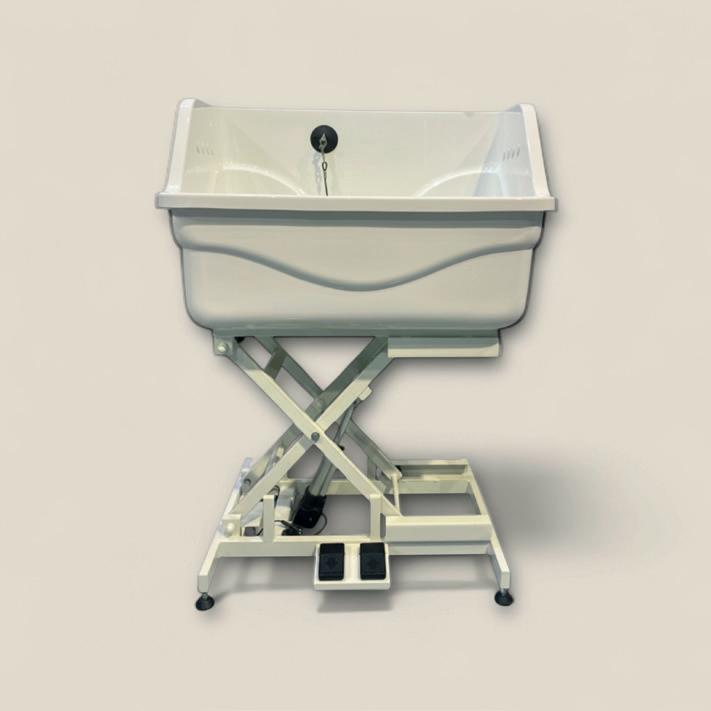
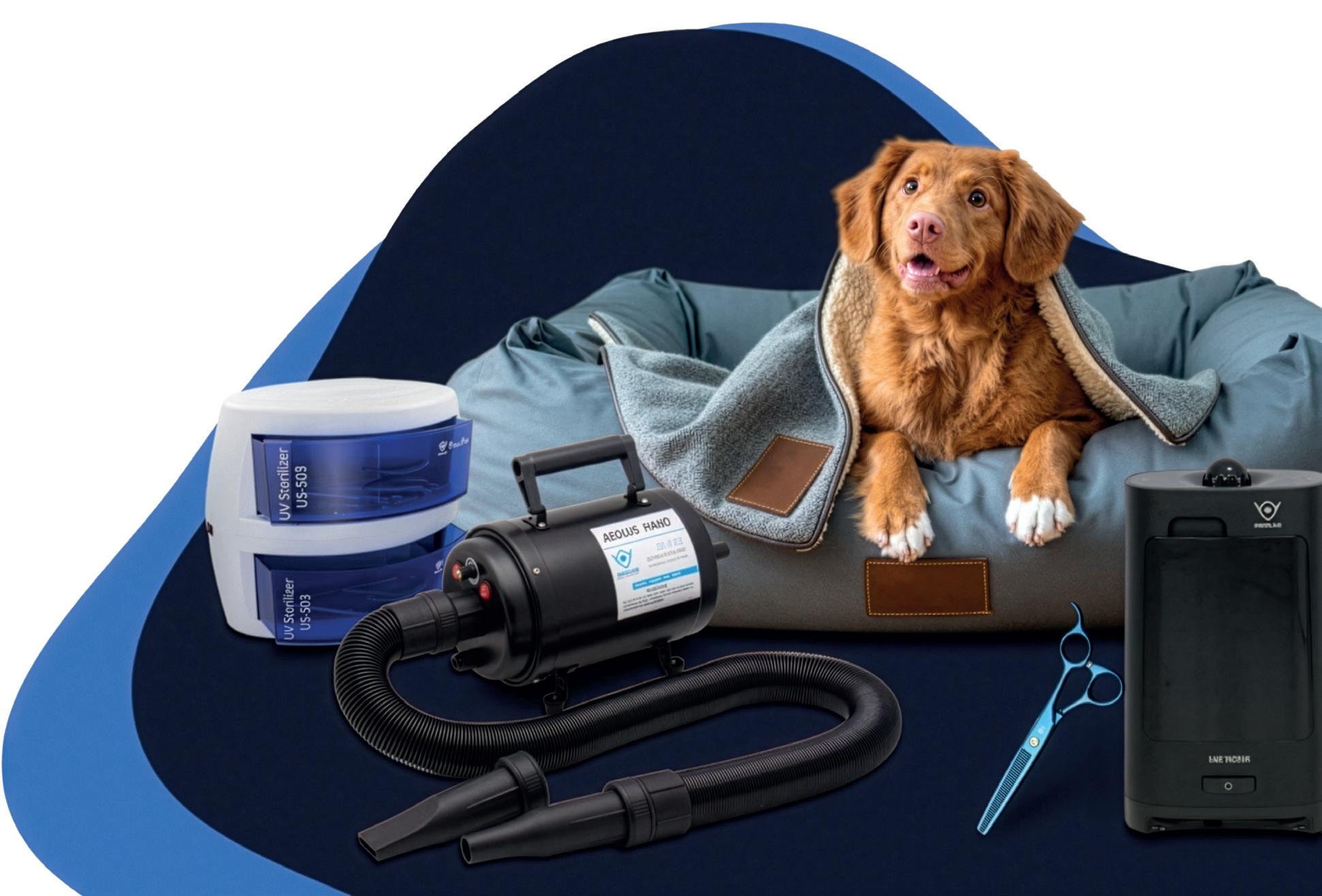
Available in three sizes and a chose of colours
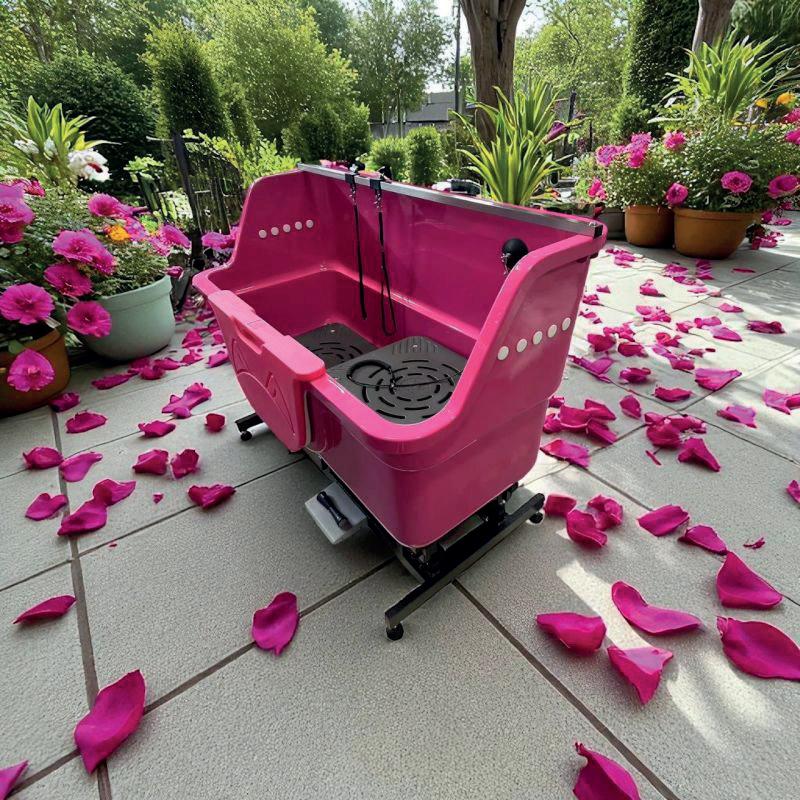
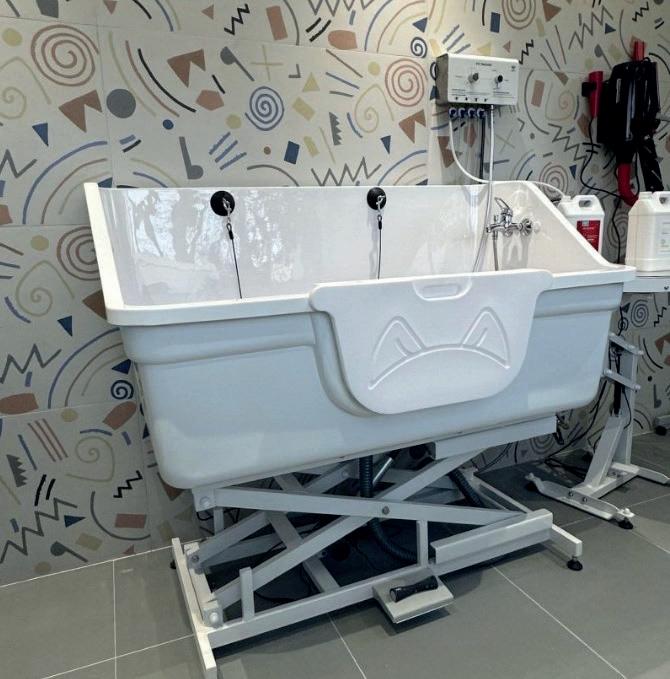
Aeolus leaders in quality grooming products Tables, Baths, Dryers and much more!
Instant freshness with premium fragrances and innovative spray technology
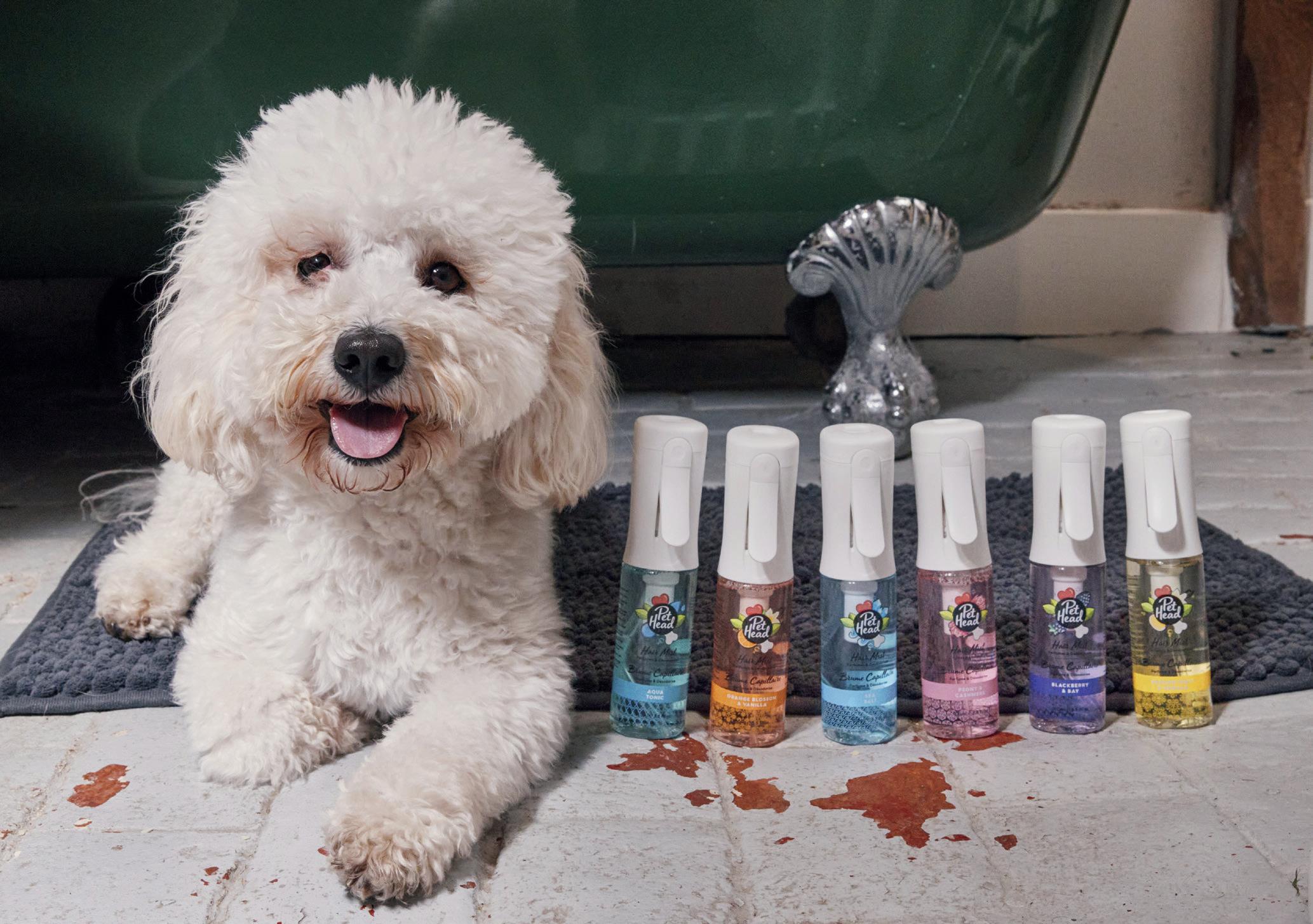
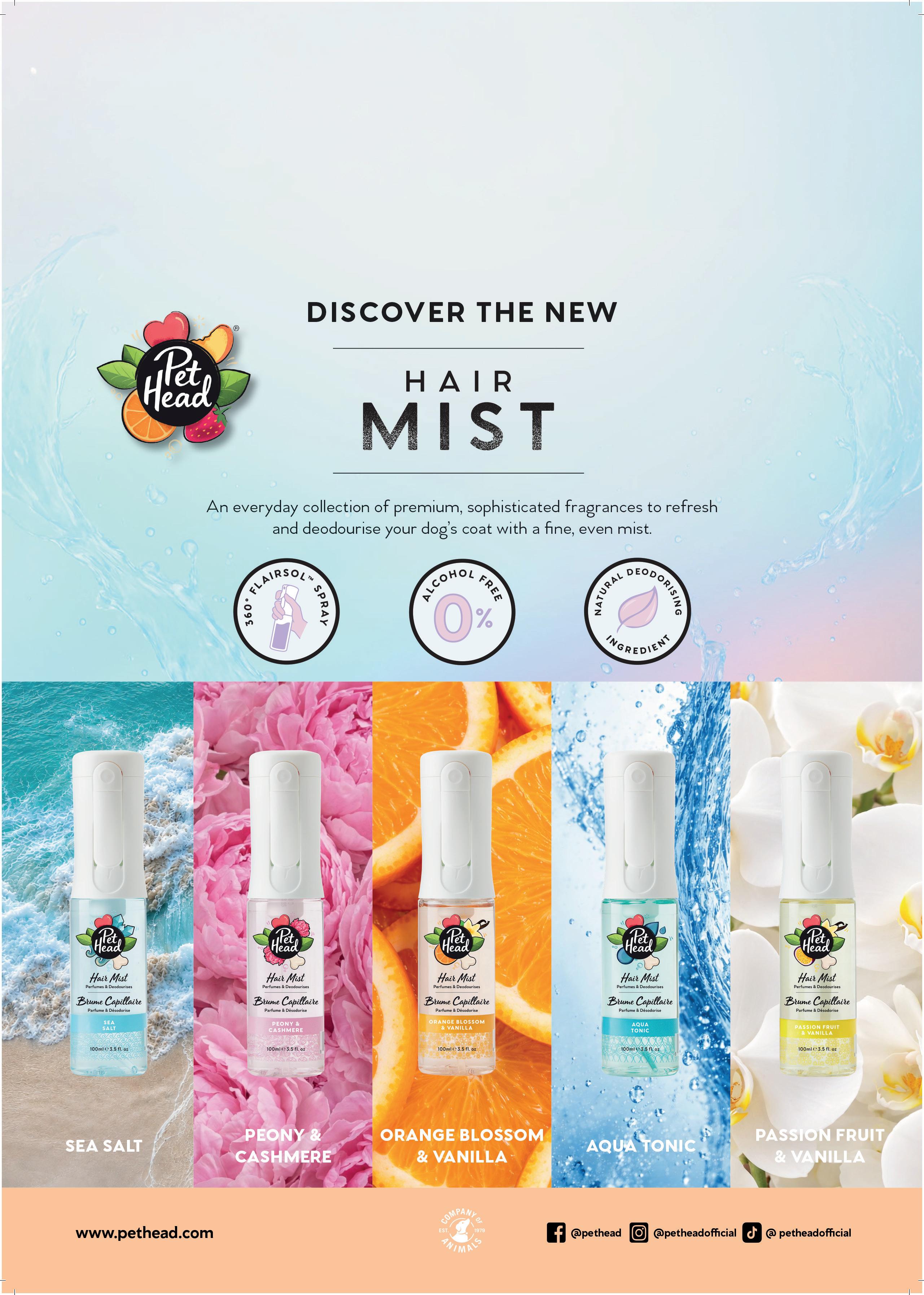
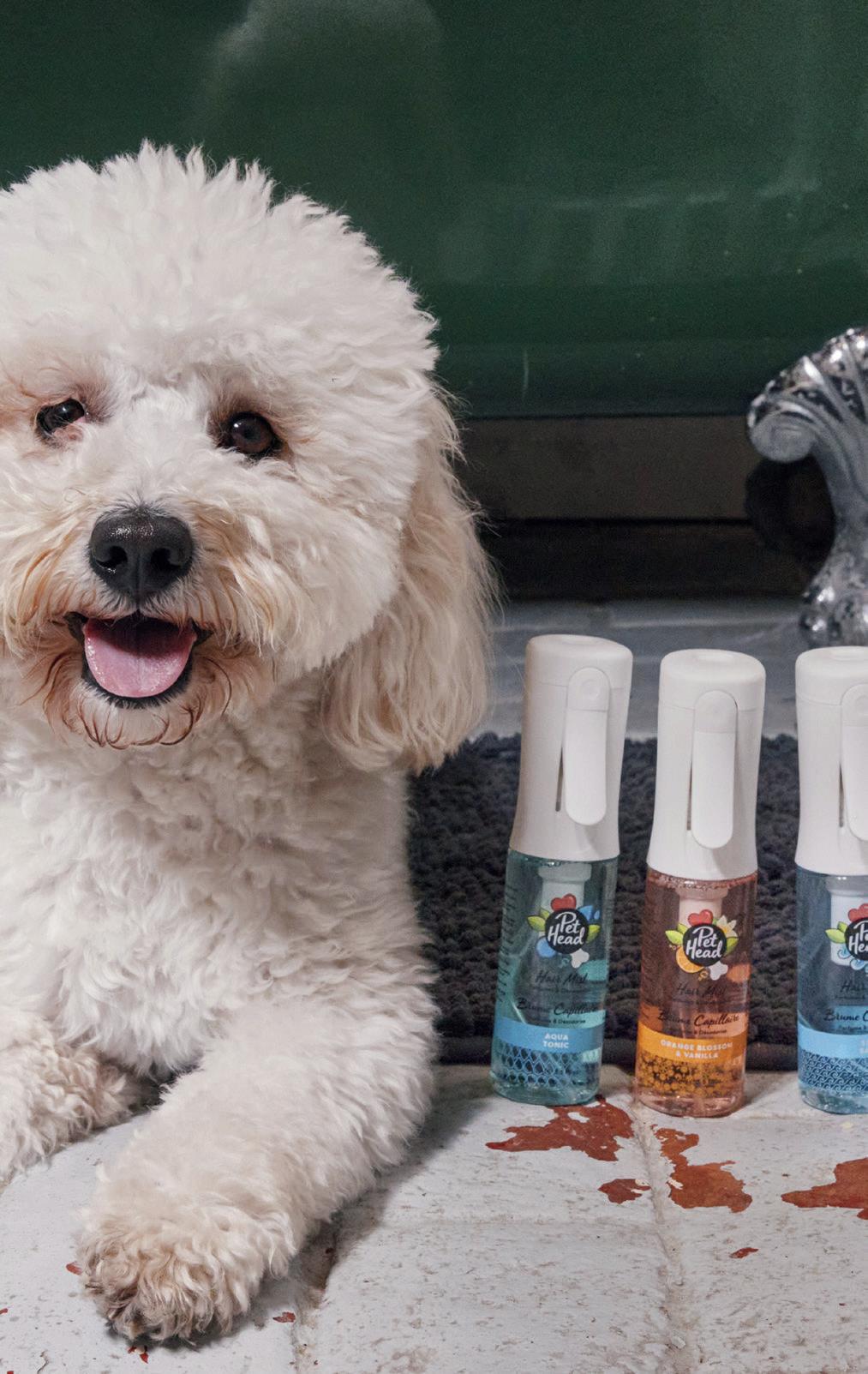
Pet Head is launching a new collection of Hair Mists, a range of deodorising coat sprays designed to keep dogs smelling fresh between washes. Combining premium fragrances, advanced deodorising technology and the patented Flairosol spray system, the collection offers an effortless, on-the-go solution for pet parents who want to refresh their dogs between washes or have them smelling great as part of their lifestyle.
Dogs explore the world through their bodies - rolling, digging and running means their coats quickly collect dirt, bacteria and unwanted odours. The Pet
Head Hair Mists address this directly, neutralising odours and leaving the coat lightly fragranced and refreshed in seconds.
Unlike traditional dog colognes that mask smells with fragrance alone, the Hair Mists use Saccharomyces ferment, a natural deodorising ingredient that breaks down odour-causing molecules while supporting the balance of beneficial bacteria on the skin. This microbiome-friendly formulation targets unwanted odours at the source, while remaining gentle on sensitive skin.
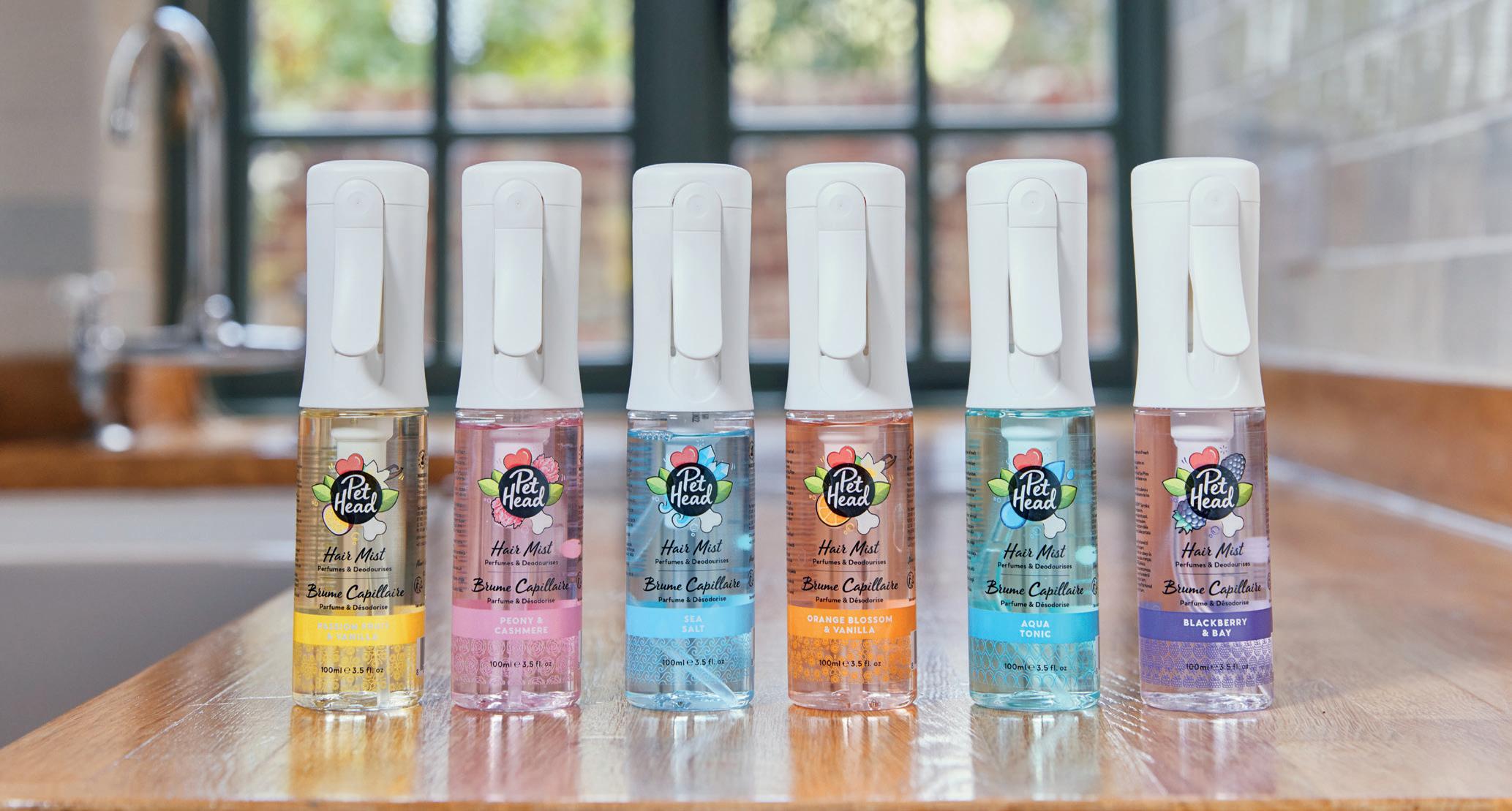
The range launches with six sophisticated scents. From fruity to feminine, masculine or neutral, there is a fragrance for everyone: Black Berry & Bay, Vanilla & Passion Fruit, Orange Blossom & Vanilla, Sea Salt, Aqua Tonic and Peony & Cashmere. Each fragrance is designed to be long-lasting yet subtle, respecting a dog’s sensitive nose while keeping coats noticeably fresh.
At the heart of the collection is Flairosol, a patented dispensing system that produces a continuous ultra-fine mist,
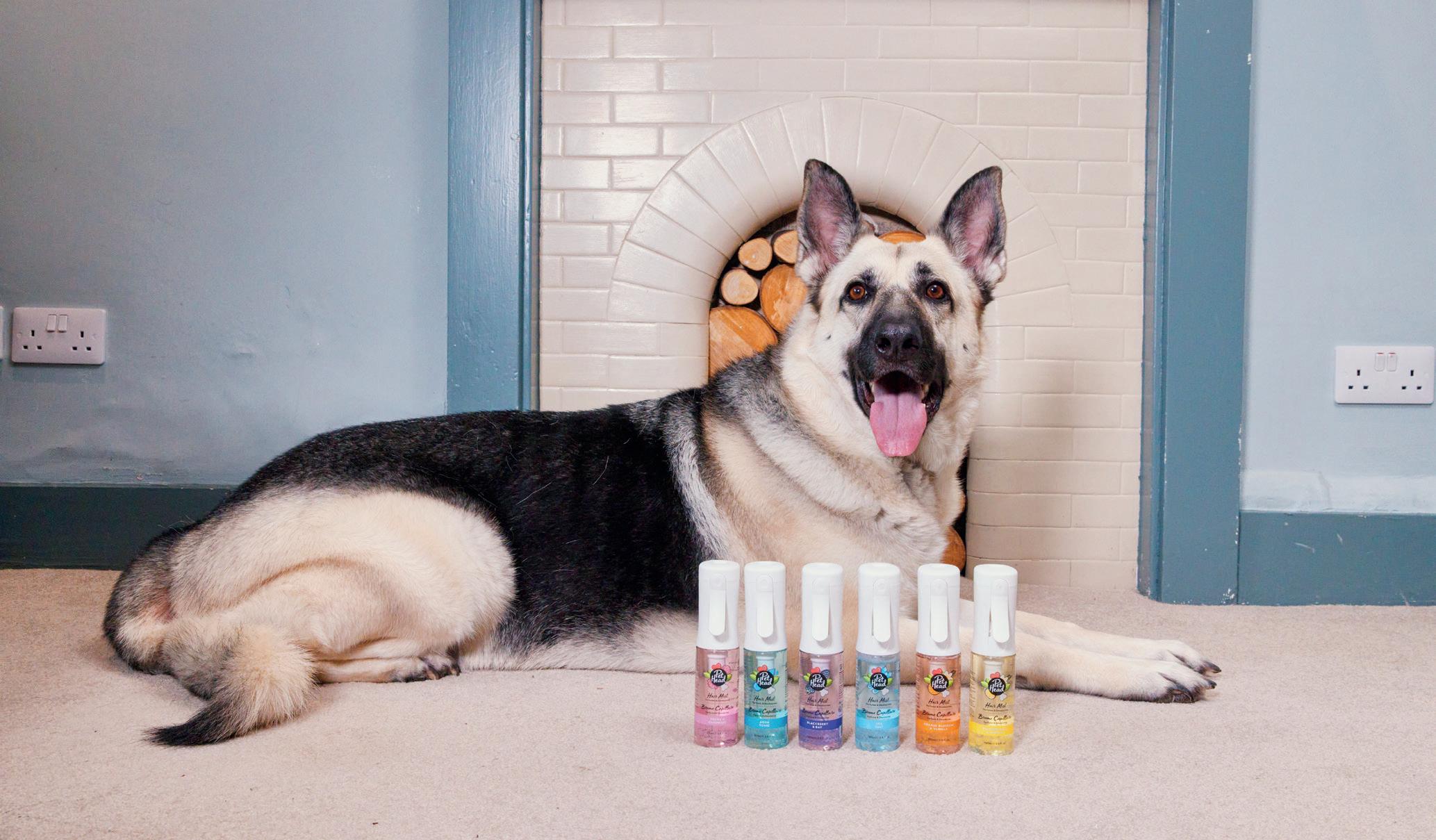
refreshing the coat without wetting it. The system delivers even, lightweight coverage without repeated pumping or heavy application. The ergonomic design and continuous spray action reduce hand strain, making it ideal for frequent use, with consistent output and minimal effort required.
The Flairosol pump also addresses sustainability. The refillable bottle and reusable pump make it a more environmentally considered alternative
to traditional aerosol sprays, and the 360° spray function means the bottle works in any position.
Each Hair Mist is packaged in a sleek 100ml bottle, sized for home use or on the go. After a walk, before a social occasion, or whenever a quick refresh is needed. The formula is water-based and alcohol-free, making it gentle enough for regular use on all coat types. Crucially, the Flairosol system delivers a fine aerosol-quality finish without the use of
propellants — making it a safer choice for pets, owners and the environment alike.
Pet Head is part of Company of Animals, founded by world-renowned animal psychologist Dr Roger Mugford. For more details about the Pet Head Hair Mists collection, contact orders@wearecoa.com.
www.companyofanimals.com
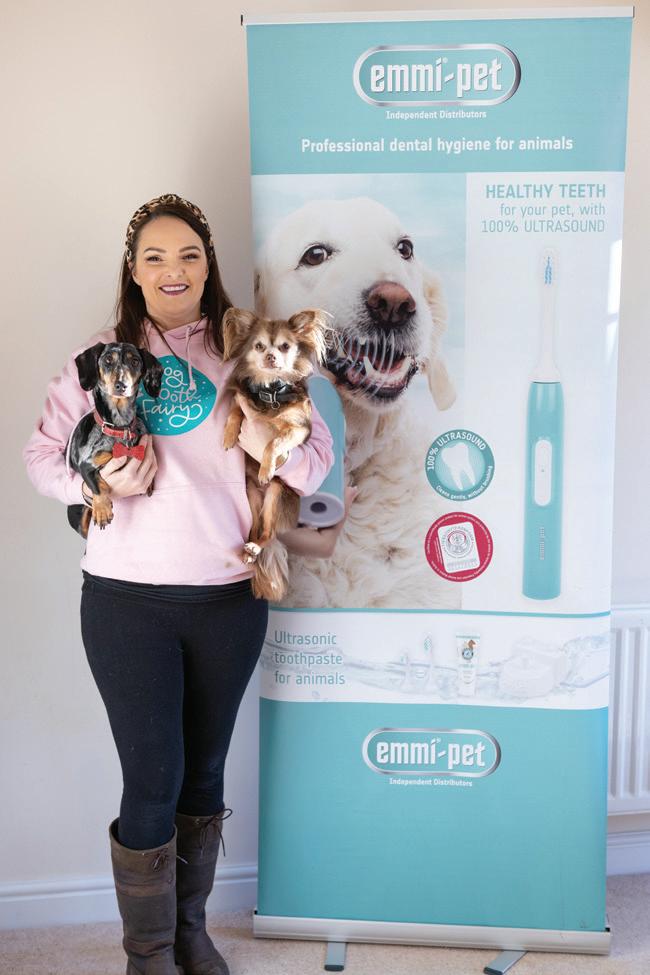
The emmi-PET NEO is the latest advancement in ultrasonic dental care for dogs, designed to make oral hygiene easier, gentler, and more effective than ever before. Built with upgraded technology and user-friendly features, the NEO is a valuable addition for groomers and pet owners.
The NEO was exclusively revealed at Crufts in March this year and has been hugely successful, receiving incredible feedback since its launch. I was honoured to be working on the emmi-PET stand again this year with the incredible emmi-PET team, demonstrating the new technology first-hand.
Unlike traditional toothbrushes that rely on scrubbing and vibration, the emmi-PET NEO uses 100% ultrasound technology to clean teeth silently and without movement. This means there is no buzzing noise or harsh brushing sensation, making it ideal for nervous, elderly, or sensitive dogs that may struggle with standard dental routines. The ultrasonic waves create millions of microbubbles that helps loosen plaque and food debris deep around the gumline and between the teeth.
One of the biggest improvements over previous emmi-PET models is the
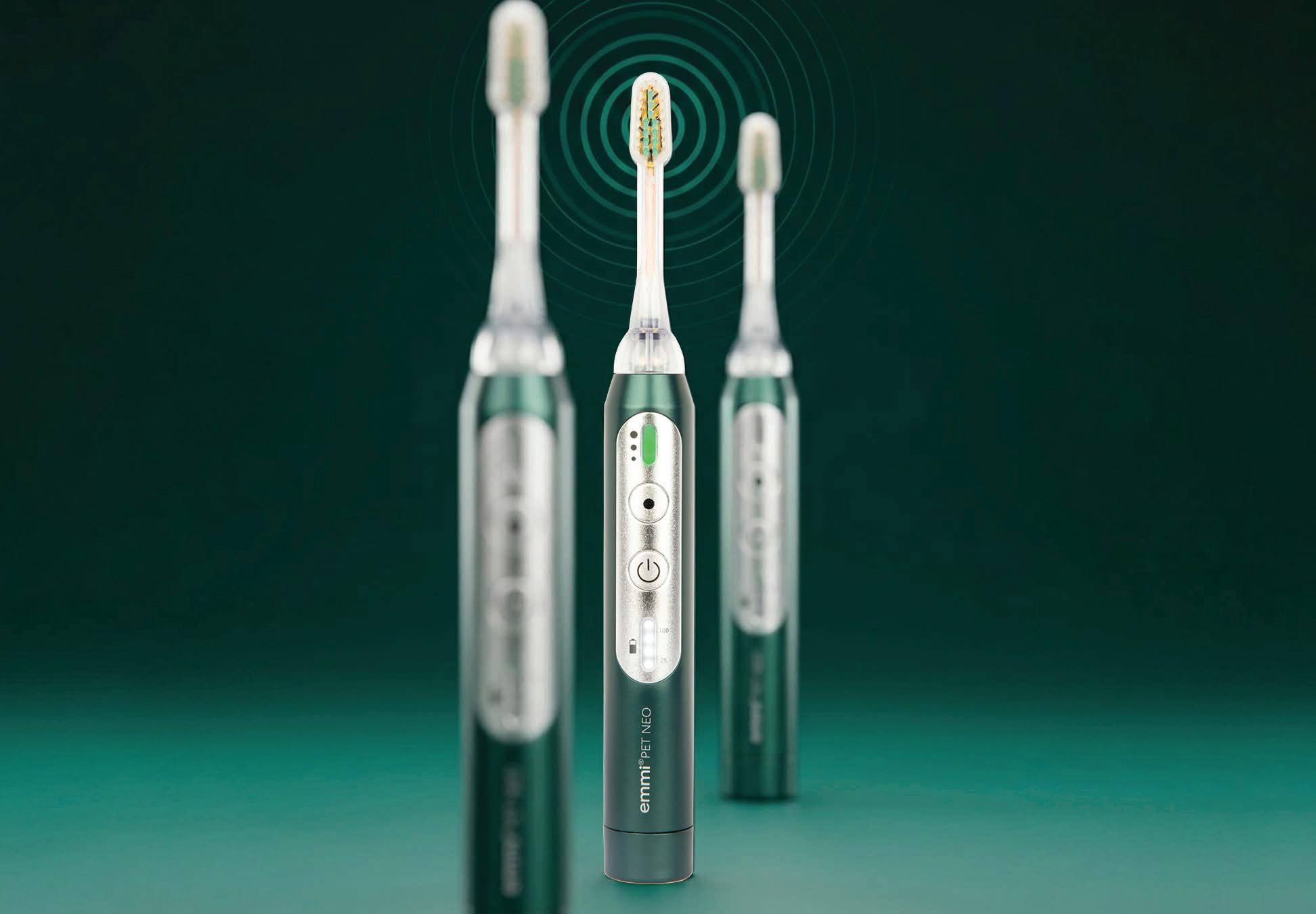
introduction of three cleaning modes — gentle, medium, and intense — allowing the treatment to be tailored to each individual dog and their dental needs. The new 4-pin technology delivers more pulses to the piezo chip, enabling a more intense clean and faster results.
The NEO also includes a smart memory function, which remembers the last setting used, making repeat treatments faster and more convenient for busy grooming salons. Additional upgrades include USB charging, improved battery life of up to 14 days, a battery indicator display, and enhanced ultrasonic performance.
For dog groomers, the emmi-PET NEO offers an excellent opportunity to introduce a premium dental service within the salon environment. More pet owners are becoming aware of the importance of dental health, and groomers can support this by offering gentle maintenance cleaning to help
support dental health and reduce plaque build-up between professional cleanings. The stress-free nature of the NEO means many dogs tolerate it far better than conventional brushing methods, helping to create a calmer and more positive salon experience.
Regular use of the emmi-PET NEO may help reduce plaque build-up, freshen breath, support healthier gums, and improve overall oral hygiene. While it is not a replacement for professional veterinary dental treatment where required, it is an excellent preventative tool that helps maintain cleaner teeth and healthier mouths between appointments.
The NEO is available through the website, including business starter packages for groomers with full training. Whether you already use emmi-PET and are looking to upgrade to the NEO, or are just starting out, you can find all the information at www.dogtoothfairy.co.uk.

International

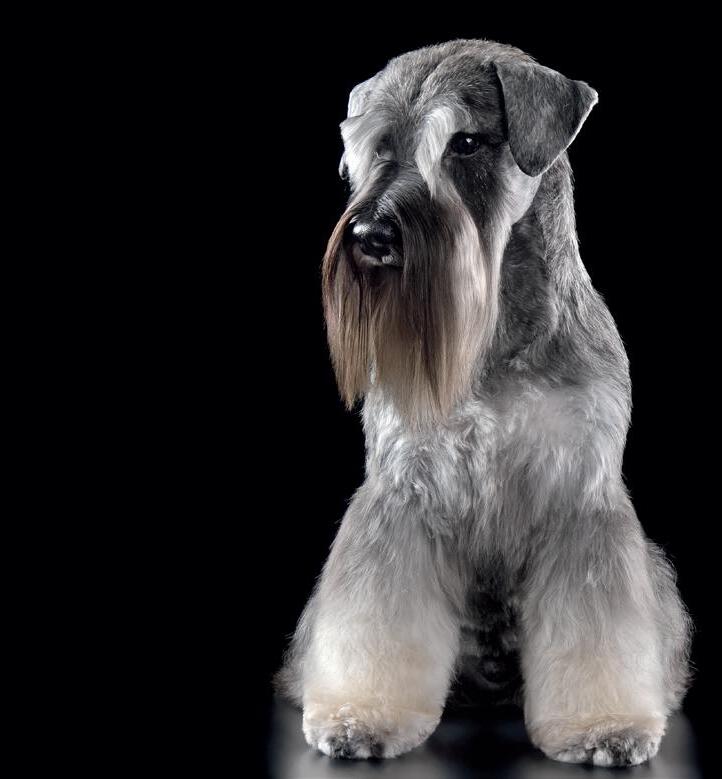
This month, Rachel Bean challenges groomers to rethink first aid confidence, urging a refresh of outdated skills and caution around social media misinformation. With a focus on responsibility, training and rising heat risks in the salon, she highlights how early action and up-to-date knowledge can make all the difference in an emergency.
If there is one thing I have learnt over the years, it is that when it comes to first aid, confidence can be a dangerous thing if it is not backed up by the right training.
As many of you will know, I spend a lot of my time teaching canine first aid, both here in the UK and increasingly around the world, and I absolutely love working with groomers. You are handson, practical, and often the first people to spot when something is not quite right with a dog. That puts you in a really powerful position, but also a huge position of responsibility.
April is National Pet First Aid Awareness Month, which makes it the perfect time to have a bit of a reset when it comes to our skills. Ask yourself honestly, when was the last time you updated your training? Because just like grooming techniques, first aid guidance does change. What we were taught years ago is not always considered best practice now.
That is one of the reasons I was so passionate about writing the iPET Network Canine First Aid Qualification. I wanted there to be a regulated, Ofqualrecognised course out there specifically for pet professionals, something that gives you confidence that what you are learning is current, evidence-based and properly quality assured.
I am also very excited to be speaking at the Pet Pro Expo 2026 next year, which is shaping up to be a brilliant event for anyone serious about investing in their business and their knowledge. If you are coming along, please do come and say hello, I always love meeting fellow professionals in person.
Alongside teaching, I have recently been working as a locum at Manchester
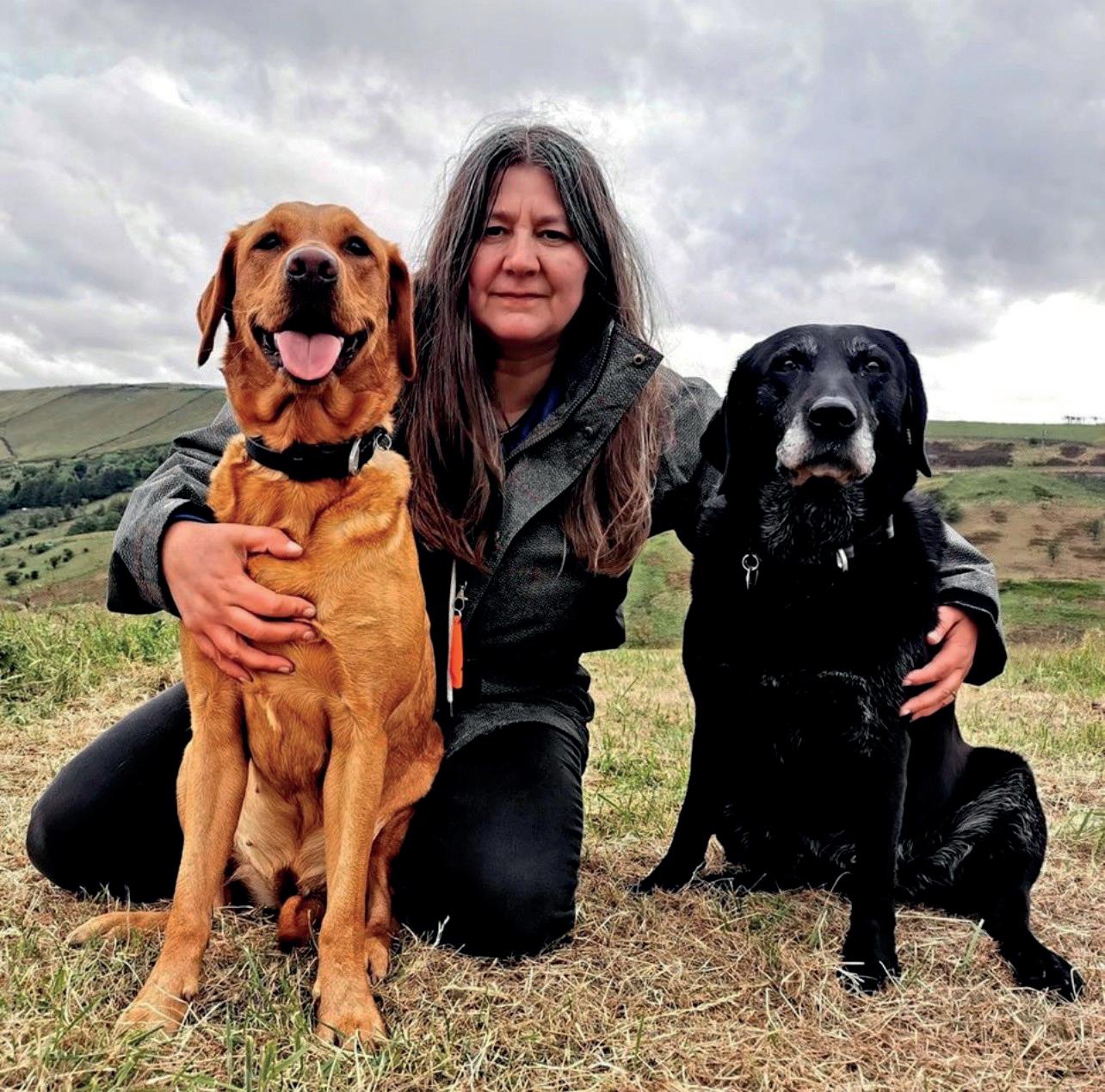
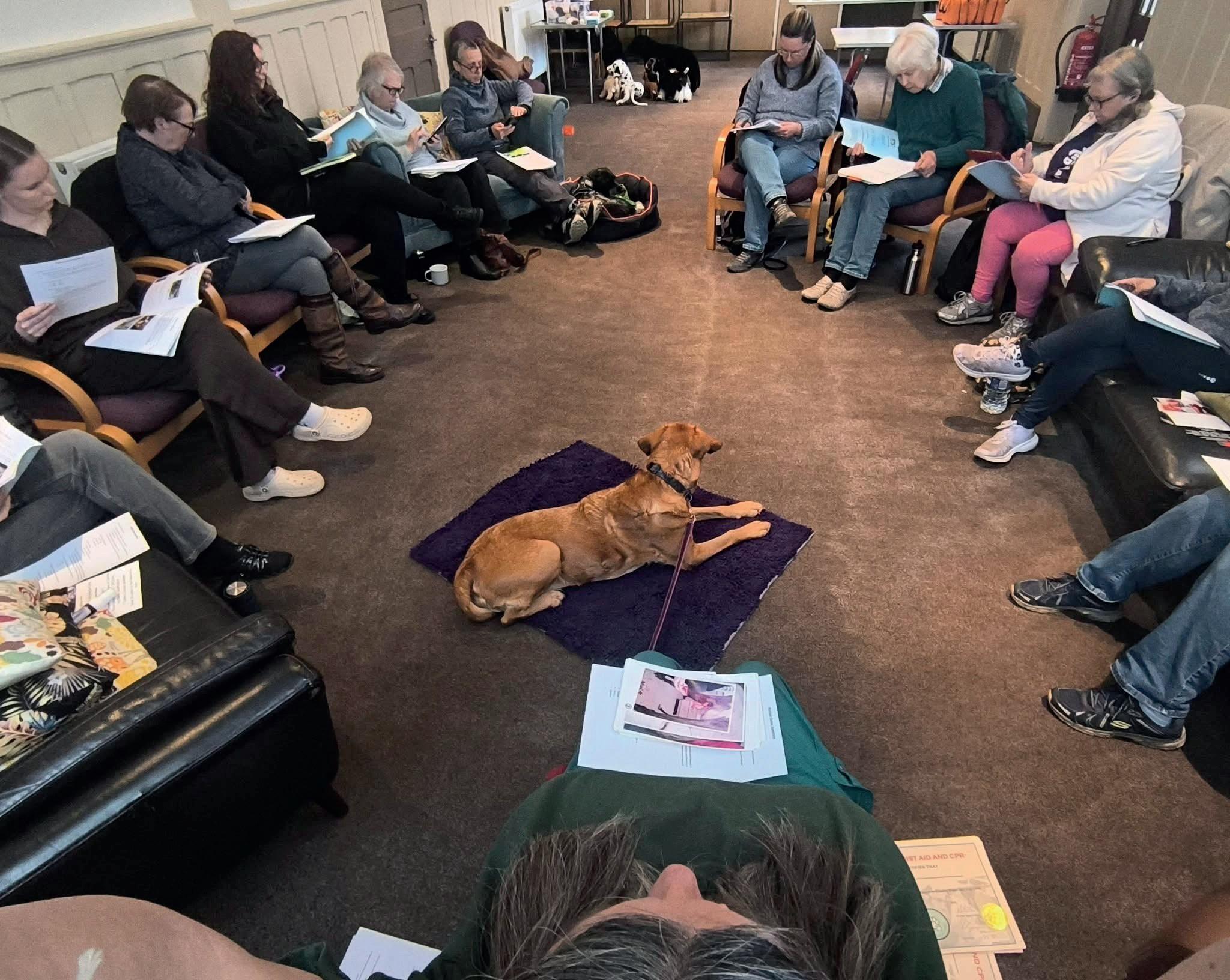
and Cheshire Dogs and Cats Home, which has been incredibly rewarding and, as you can imagine, a real reminder that no two days (or dogs) are ever the same. It also reinforces why solid first aid knowledge is so important across all areas of the industry.
One thing that has been worrying me more and more lately, though, is the rise of social media “first aid advice”. I am sure you have all seen it, quick videos, bold claims, and people speaking with absolute certainty about what to do in an emergency.
The problem is, a lot of it is wrong.
I regularly come across posts with huge followings sharing outdated or completely incorrect advice. It might be well-meaning, but in a real-life emergency, that kind of misinformation can cost a dog its life. Algorithms reward confidence and popularity, not qualifications or accuracy.
As professionals, we have to hold ourselves to a higher standard. If you are giving advice, whether that is to a client
in the salon or online, there is a duty of care that comes with that. And if you are unsure, it is always better to say “I do not know, but I will find out” than to guess.
For groomers especially, this is so important because you are often dealing with dogs in a controlled but potentially stressful environment. Add in equipment, heat, noise and handling, and you have a situation where small issues can escalate quickly if not recognised early.
Which brings me to a seasonal tip that is particularly relevant right now.
As the weather starts to warm up, we see an increase in heat-related problems, and grooming environments can contribute to that more than people realise. High-velocity dryers, warm rooms, nervous dogs, it all adds up.
Early signs of heatstroke can be subtle, excessive panting, drooling, restlessness or a dog that just does not seem quite right. If you notice these signs, stop the groom immediately.
Move the dog somewhere cool and wet the whole dog with cold water
and place in front of a fan, you need to establish evaporative cooling.
Also learn about Heat Stress and how it can quickly develop into life threatening Heatstroke.
Heatstroke is one of those conditions where early intervention really does save lives.
At the end of the day, first aid is not about replacing your vet, it is about buying time and giving that dog the best possible chance until veterinary care is available.
So this month, take a little time to refresh your knowledge, question what you see online, and make sure the advice you are following, and sharing, is coming from the right place.
Your clients trust you with their dogs every single day. Making sure you are prepared for the unexpected is one of the most important parts of that trust.
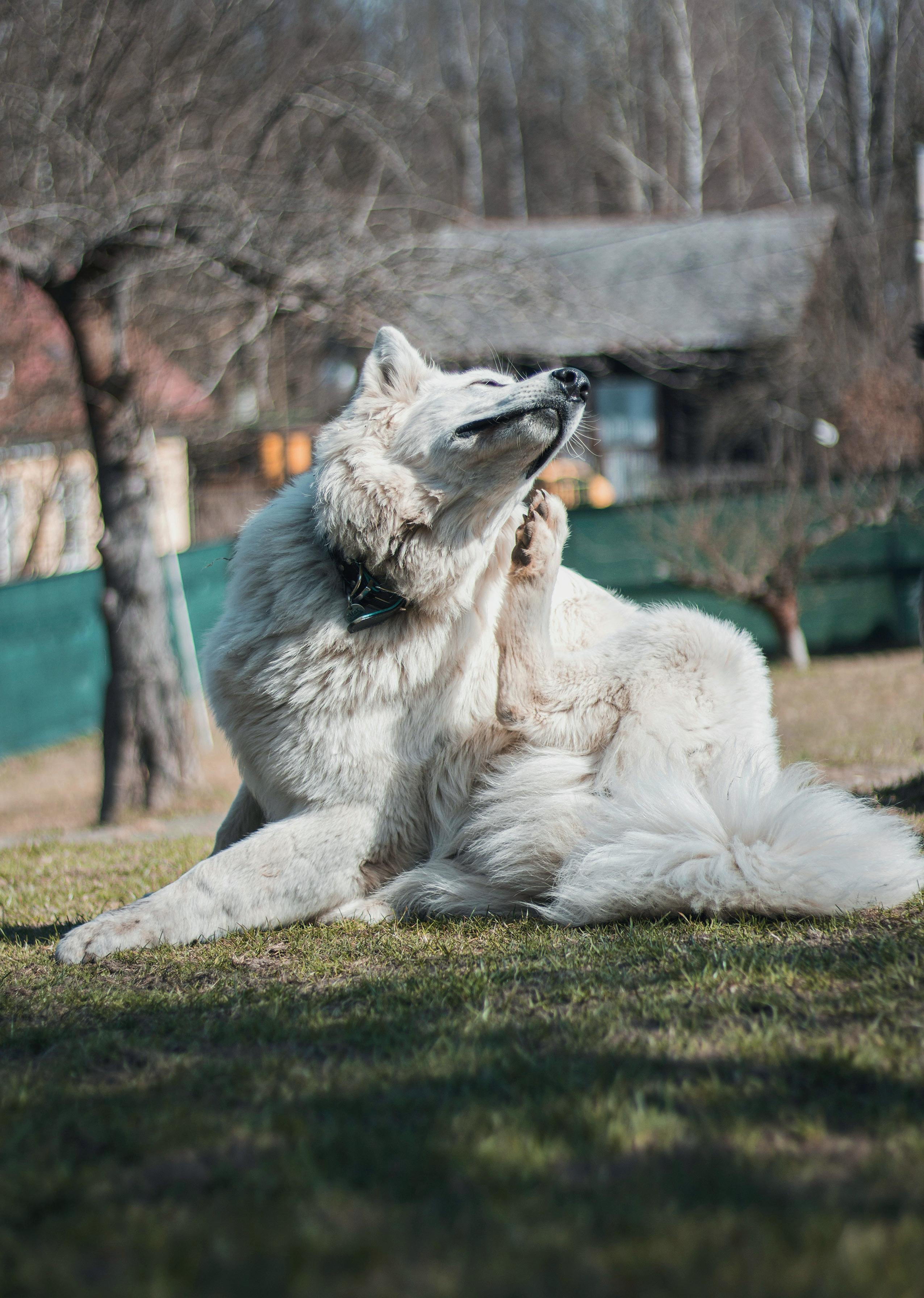
Fleas and pests remain a persistent challenge in the grooming environment, requiring vigilance, professionalism, and clear protocols. From prevention to client communication, groomers play a crucial role in managing infestations safely and effectively. Here, we explore five essential approaches every grooming professional should adopt when dealing with fleas and pests in the salon.
Every grooming business should have a well-defined flea and pest policy in place. This includes outlining what happens if an infestation is discovered mid-groom, any additional charges, and whether treatment will proceed. Clear policies protect both the business and the client relationship, ensuring expectations are managed before problems arise. Displaying or communicating this policy upfront helps avoid awkward conversations later.
When fleas or pests are identified, quick action is essential. Isolating the affected pet, limiting its movement within the salon, and using designated equipment can prevent cross-contamination. Groomers often schedule infested pets at the end of the day or in specific time slots. This proactive containment approach reduces the risk of spreading pests to other animals or throughout the workspace.
Specialised flea shampoos, finetoothed combs, and thorough bathing techniques are key tools in a groomer’s arsenal. While groomers do not replace veterinary treatment, they can significantly reduce the flea burden on a pet. Attention to detail—especially around ears, tail, and underbelly— ensures a more effective outcome and immediate relief for the animal.
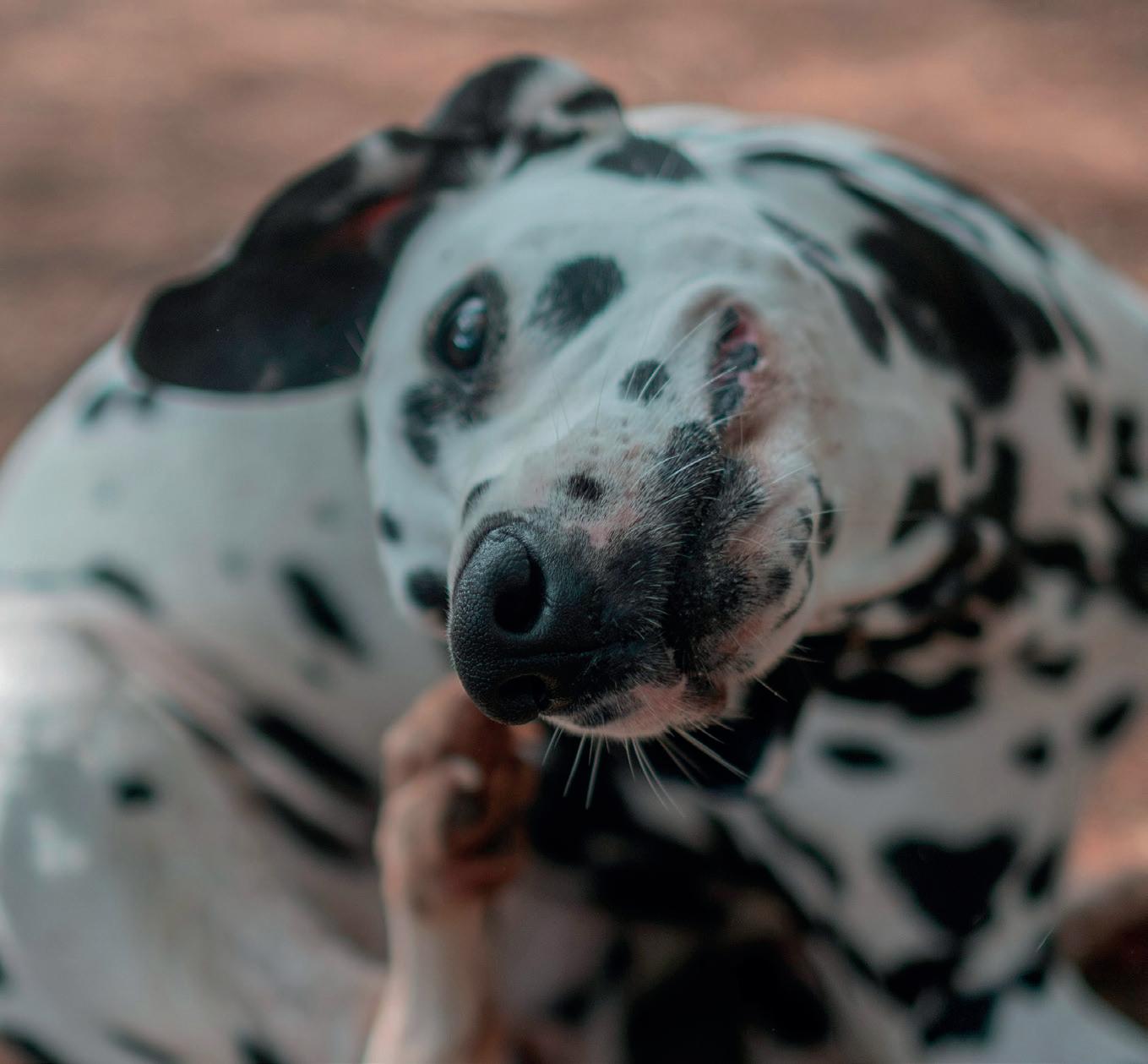
A strong hygiene routine is critical in pest control. After handling an infested pet, all tools, surfaces, and areas must be thoroughly cleaned and disinfected. This includes washing towels at high temperatures and vacuuming floors and furniture. Many salons also use preventative sprays or treatments to maintain a pest-free environment, reinforcing their professional standards.
Perhaps the most important role
groomers play is educating pet owners. Explaining that fleas are an environmental issue—not just a grooming one—helps clients understand the need for home treatment and ongoing prevention. Offering guidance on vet-approved treatments and maintaining a calm, non-judgemental tone encourages trust and long-term client compliance.
By combining clear protocols, practical skills, and strong communication, groomers can confidently manage fleas and pests while maintaining a safe, professional salon environment.
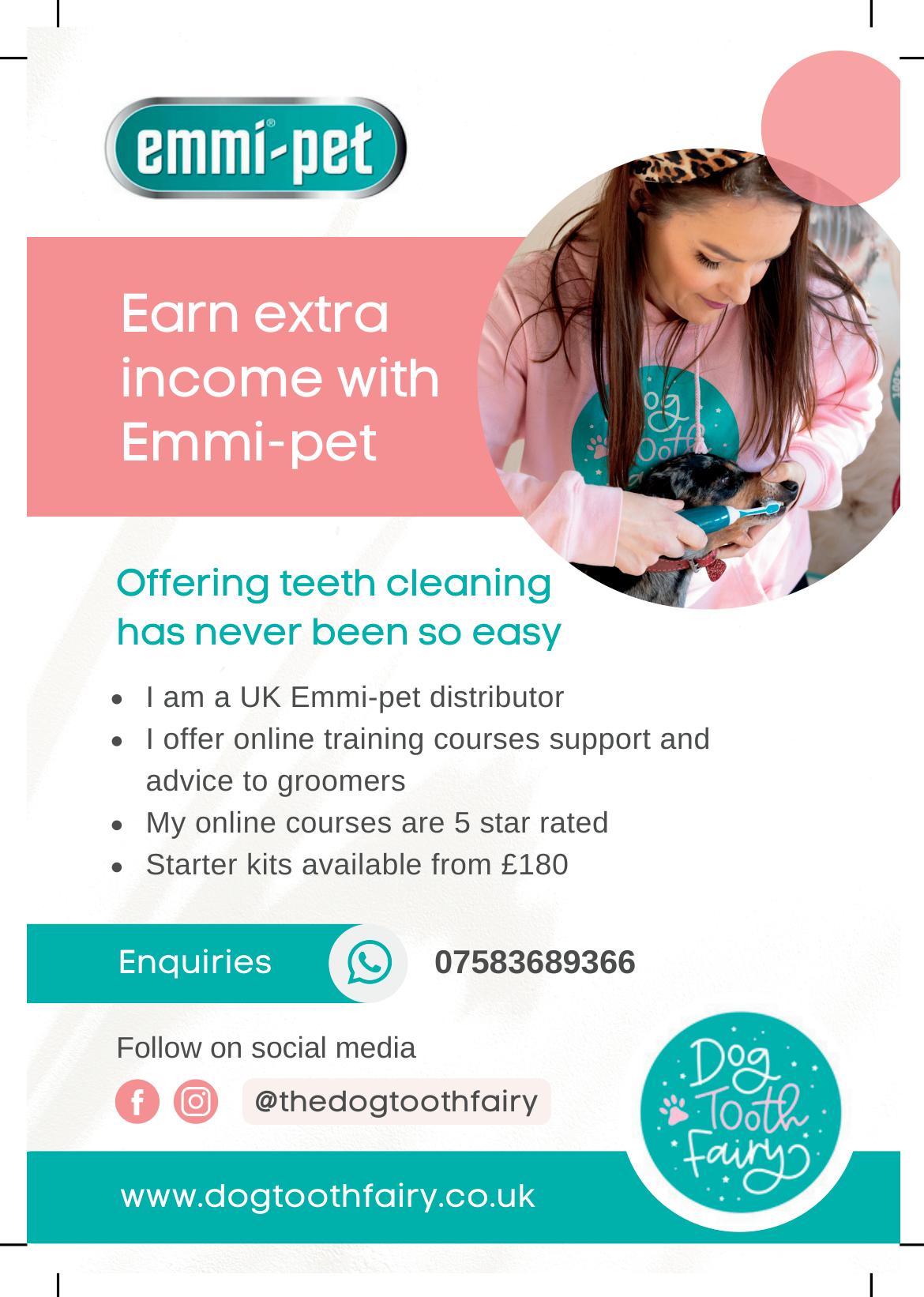









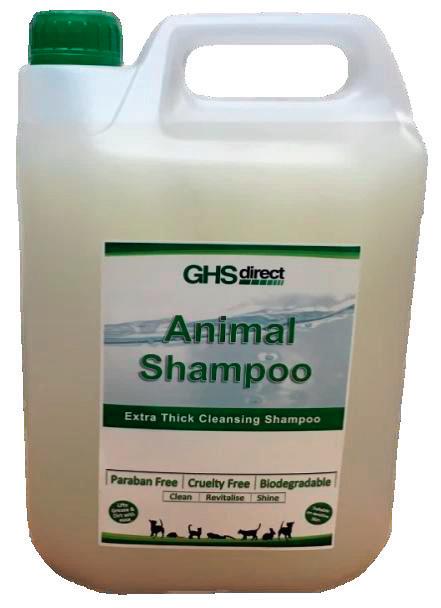

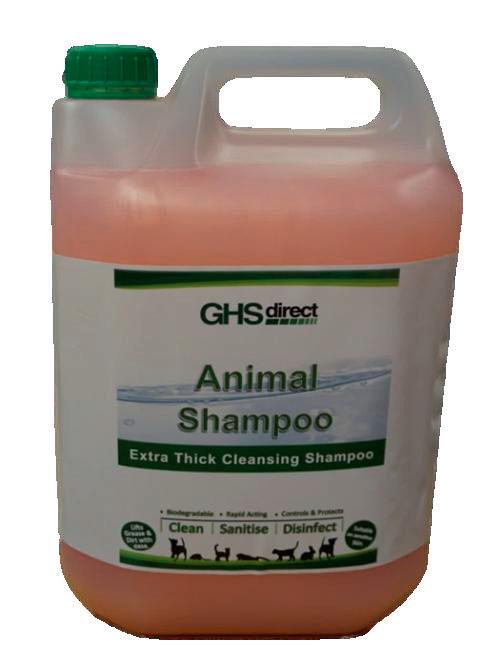

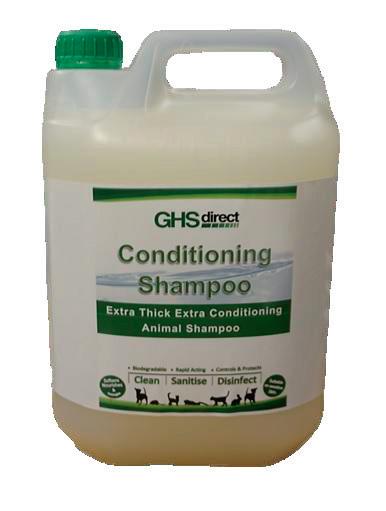
















Fleas remain one of the most common yet disruptive challenges in the grooming salon. From protecting hygiene standards to navigating sensitive client conversations, professional groomers must balance practical action with education. Industry voices share how clear protocols, communication, and prevention can keep infestations under control.
Fleas and other parasites are an inevitable part of working with animals, but how a grooming salon responds can make the difference between a minor inconvenience and a full-scale disruption. For many professionals, the presence of fleas is not just a hygiene concern but a business one, affecting scheduling, client relationships and salon reputation.
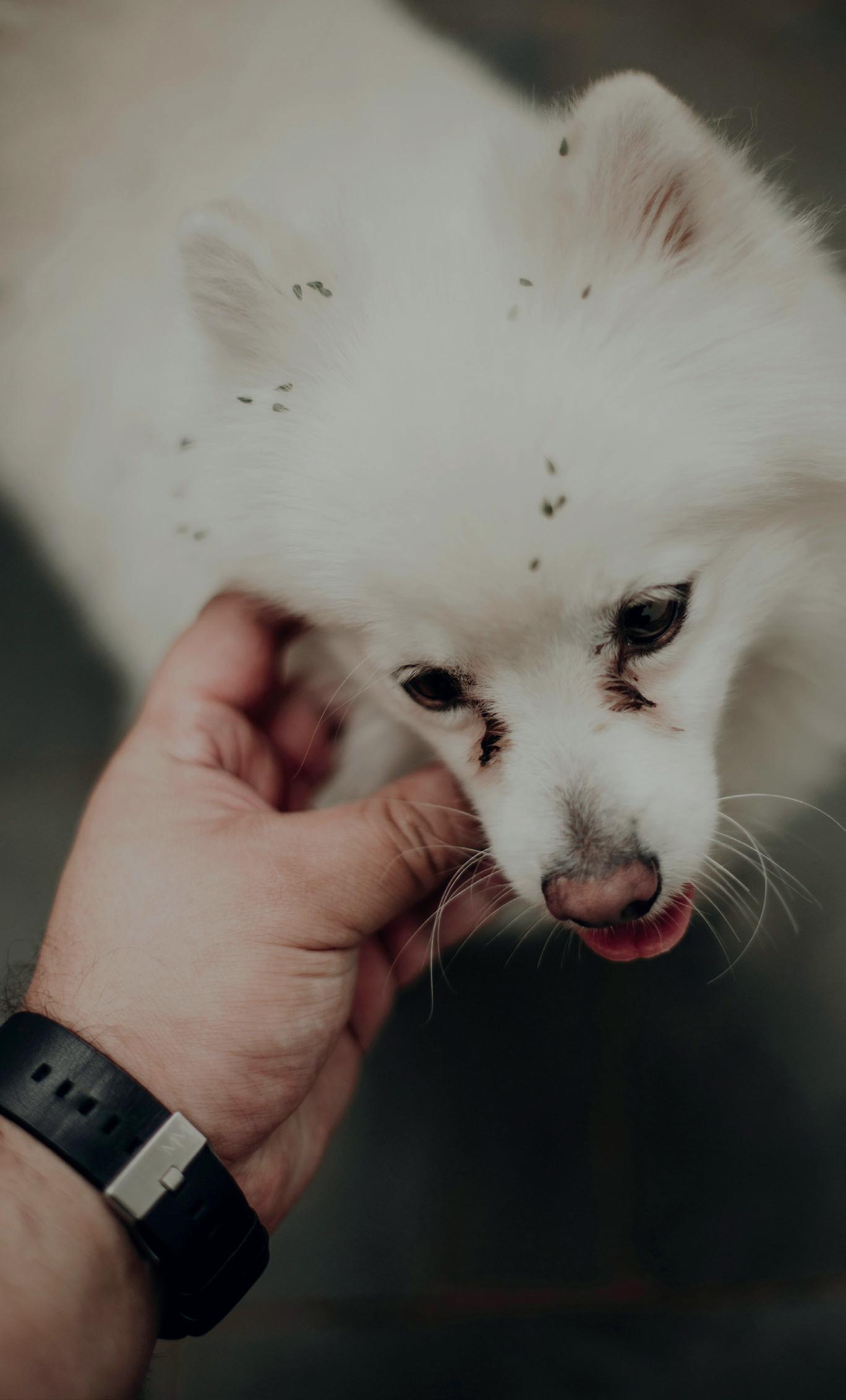
Establishing a clear protocol is often the first line of defence. Louisa Tandy LCGI GMG of Louisa’s Grooming Salon takes a firm but practical approach.
“When a dog is booked in to the salon and the owner mentions fleas then I will not book the dog in until they have treated the dog,” she explains. This preventative step helps reduce the risk of infestation entering the salon environment in the first place.
However, as Louisa points out, not every case is identified in advance. “If the owner is not aware and the dog has already been accepted into the salon
Love pets? (Of course you do.) Imagine a job where wagging tails and happy purrs are part of the everyday. At Pets Grooming, we’re on a mission to keep the nation’s pets looking fabulous – and we need awesome people like you.
With hundreds of Groom Rooms, you’ll join a supportive team that hypes your talent and celebrates what makes you you.
Whether you’re starting out or already a styling pro, we have opportunities from Assistant Stylist to Head Stylist.
• Confidence-boosting training
• A team that genuinely has your back
• Generous holiday
• Your birthday off (cake encouraged)
• Enhanced pension
• Lovely colleague discount for your own furry friends
Scan the QR code to explore roles near you and take a step toward a career filled with character.
Come meet us on 31st May 2026 at the Warwickshire Event Centre, Leamington Spa. We can’t wait to meet you!

I will still groom the dog but inform the owner of the extra charge.” This balance between maintaining workflow and protecting the salon highlights the importance of flexibility within a structured policy.
Denise Westbrook, salon owner of Dee for Dogs, also emphasises the importance of early detection. “All dogs that come into the salon are health checked before any work is started,” she says. This initial assessment allows groomers to identify flea dirt or signs of infestation before beginning the groom, reducing the risk of spreading parasites throughout the workspace.
When fleas are identified, swift action is critical. Denise describes her immediate response: “If flea dirt is seen then the dog is bathed straight away with a herbal flea shampoo using what I call the ring of death system.” This method,
applying a ring of neat shampoo around the neck on a dry dog, helps prevent fleas from migrating to the head during bathing.
For more severe cases, both groomers agree that escalation is necessary. Denise notes, “If a bad infestation then the dog will be sent home and the owner advised to visit the vets for treatment.”
Louisa takes a similarly firm stance with repeat issues, explaining that “dogs that come in with large amounts of fleas regularly are not rebooked again until the owner manages to get on top of it.” These policies reinforce the groomer’s role not only as a service provider but as a guardian of animal welfare and salon standards.
Communication with pet owners is another key aspect, and one that requires sensitivity. Denise observes that reactions can vary widely. “We
feel that some customers get very embarrassed with the mention of fleas, other customers are fully aware and do not seem bothered.” This range of responses means groomers must adapt their communication style while still delivering clear, factual advice.
Education plays a central role here.
Denise explains, “Although as groomers we are educated on parasites many owners maybe haven’t noticed or do not know the signs to look for, and therefore it is up to us as professionals to advise the customer.” By framing the conversation as supportive rather than critical, groomers can help owners understand the importance of treatment without creating discomfort or defensiveness.
Louisa also highlights the importance of transparency when it comes to additional charges. Informing clients
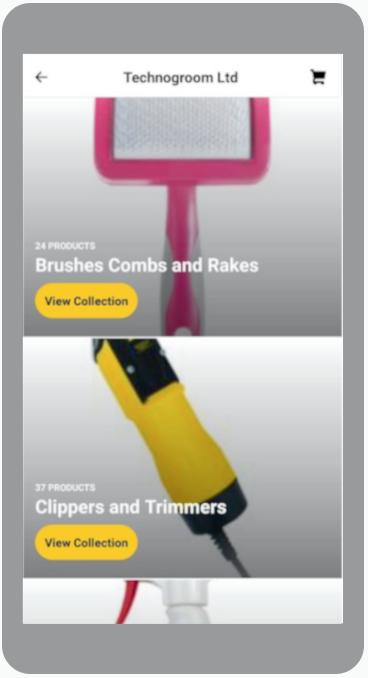
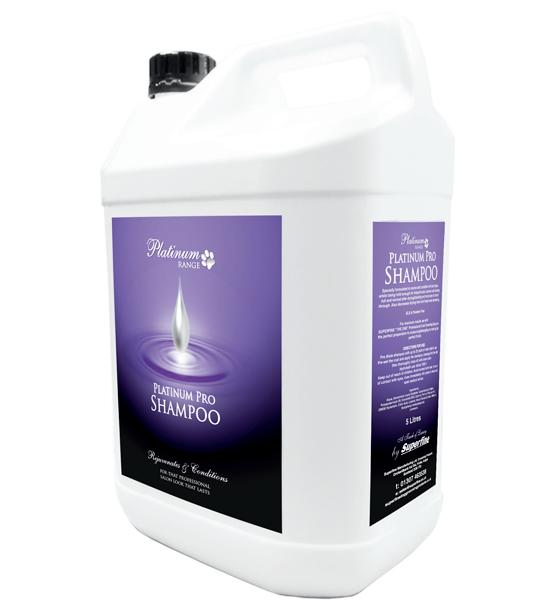
Catering to the professional groomer we have a wide range of products, offers and services focused on you.

promptly, often by phone if fleas are discovered after drop-off, ensures there are no surprises and reinforces the professional nature of the service. Clear communication around policies and pricing helps build trust, even in potentially awkward situations.
Beyond immediate treatment, maintaining a pest-free salon requires consistent preventative measures. Louisa explains that her team acts quickly once fleas are identified: “As soon as the dog has been diagnosed with having fleas we spray round with a pest control product and bathe the dog in a flea shampoo.” Regular salon treatments and ensuring that their own dogs are protected with flea products further reduce risk.
Denise outlines a similarly thorough cleaning routine. “All areas are daily vacuumed and disinfected, all equipment and restraints are fully sanitised after each dog, towels are usually washed at 60C.” These practices reflect the level of diligence required to prevent fleas from establishing themselves in a busy grooming environment.
In cases of heavy infestation, additional precautions may be necessary. Denise notes that contaminated materials may need to be disposed of entirely, saying, “If a heavy infestation then we would put the towel in a sealed bag and dispose of it.” While this may increase operational costs, it is often a necessary step to protect the wider salon environment.
Prevention, however, is always preferable to reaction. Routine health checks are a cornerstone of this approach. Denise advises groomers to “health check as soon as the dog comes into your salon,” ideally in front of the owner. This not only helps identify parasites early but also provides an opportunity to discuss any issues openly and professionally.
Having a clearly defined flea policy is equally important. Denise recommends that salons “have a flea infestation policy in place, and add an additional charge for flea products and sanitising the areas.” This ensures consistency in how cases are handled and helps manage client expectations from the outset.
Louisa echoes the importance of consistency, particularly when dealing with recurring issues. By setting firm boundaries around rebooking and treatment, her salon reinforces the
message that parasite control is a shared responsibility between groomer and owner.
Ultimately, managing fleas in the salon environment comes down to a combination of vigilance, communication and clear procedures. Groomers are uniquely positioned to spot early signs of infestation and guide owners towards appropriate treatment, but they must also protect their own workspace and schedule.
As Denise points out, dealing with fleas can sometimes impact the wider
day’s workflow, with the potential need to reschedule appointments if a deep clean is required. This highlights the broader operational impact of parasites and the importance of being prepared for disruption.
For grooming professionals, fleas may be a routine challenge, but they are one that demands a professional, proactive response. With robust protocols, open communication and a commitment to hygiene, salons can minimise risk while maintaining high standards of care for every dog that comes through the door.
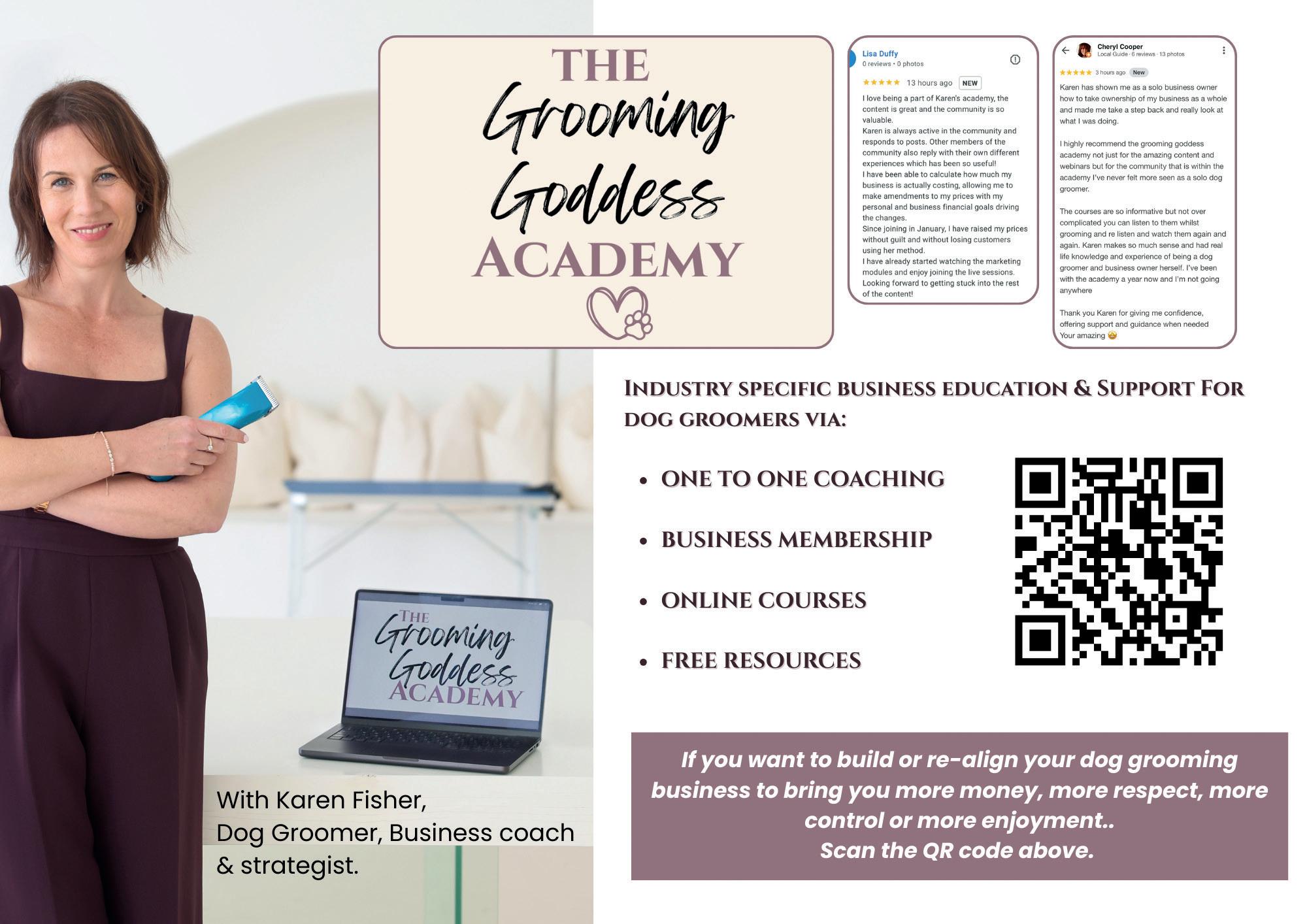
Join the new community designed specifically for groomers who want practical business guidance without intimidating corporate jargon.
Weekly coaching & support
Marketing & social media gui dan ce
Business growth strategi es
Community
S upport from grooming industry specialists
Scan to join the club!
When good cat grooming means saying no, professionals must recognise that compassion sometimes involves stopping. Katie Gwilt explores how respecting feline limits protects welfare, builds trust, and leads to safer, successful long term grooming outcomes. She explains why restraint, pressure, and rushing can harm cats, and how patience improves results.
Welcome to another month of cat musings. This time we explore something uncomfortable: saying no during grooming. As professionals, we often default to helping, fixing, and completing every task. Yet with cats, finishing everything is not always the kindest outcome, and recognising that matters greatly for welfare and safety alike.
Many cats arrive with matted coats, overgrown claws, or hidden health concerns. These are welfare issues, not cosmetic ones, and can create pressure to resolve everything quickly. Owners may feel anxious, guilty, or desperate for solutions, which adds further urgency to the appointment and makes it harder to pause or stop. Cats, however, do not share human urgency. They respond to how safe they feel in each moment. Early signs of discomfort are often subtle: a shift in weight, tightened posture, tail flicking, ears turning, or attempts to move away. These signals matter and deserve attention before behaviour escalates further.
If these cues are missed, some cats escalate, while others freeze. Stillness can be misread as compliance, yet it reflects coping, not consent. A cat enduring handling is working hard internally, and that effort has limits. Continuing despite this increases stress, risks defensive reactions, and can damage trust between cat and handler.
Short term success may hide long term consequences. Cats pushed beyond their threshold can become fearful of grooming, resistant to handling, or reactive at home. Future sessions then begin with heightened anxiety, making
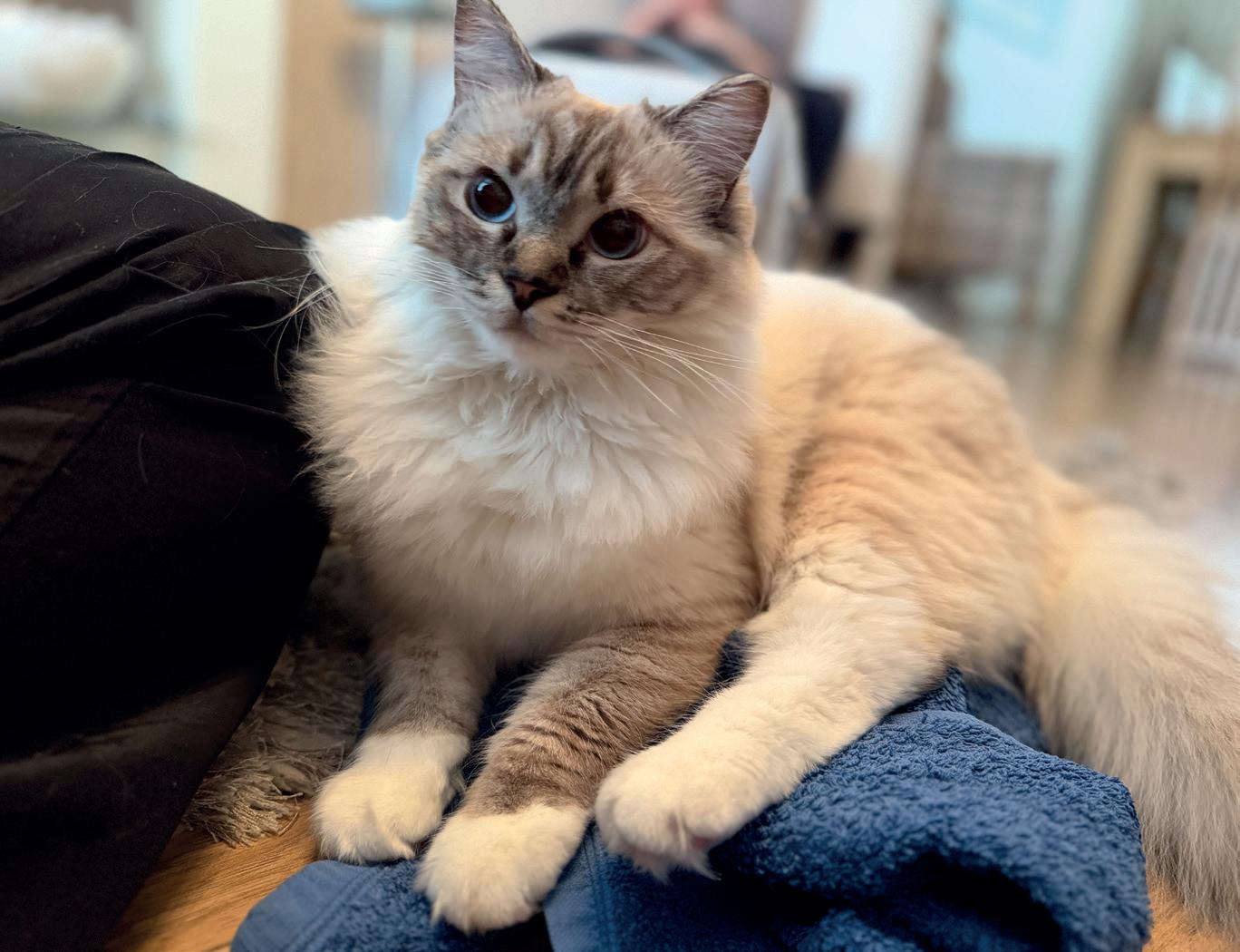
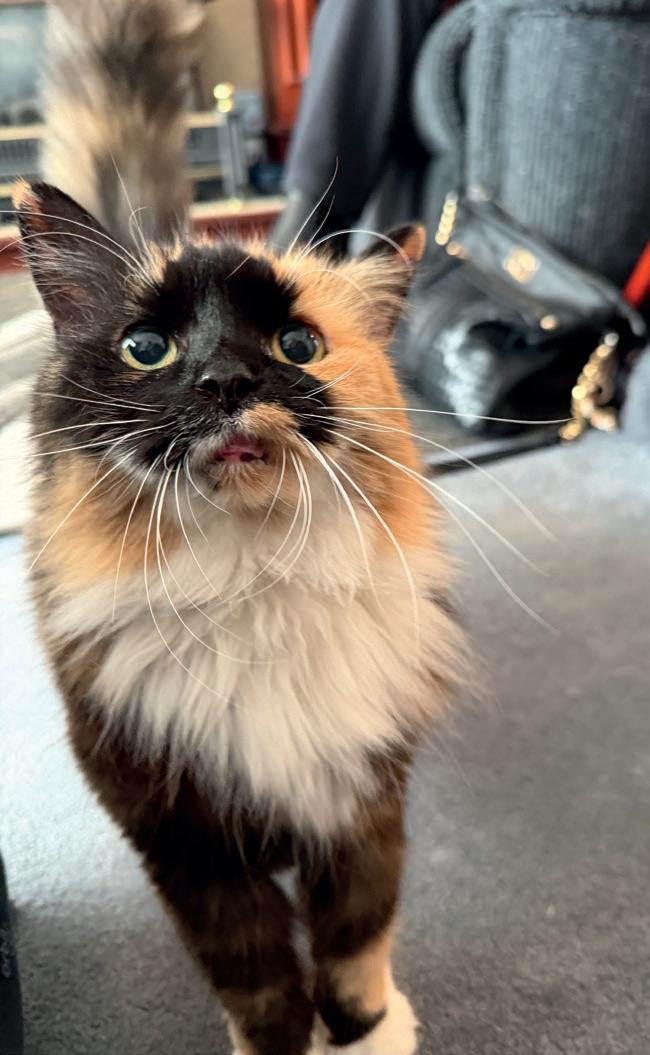
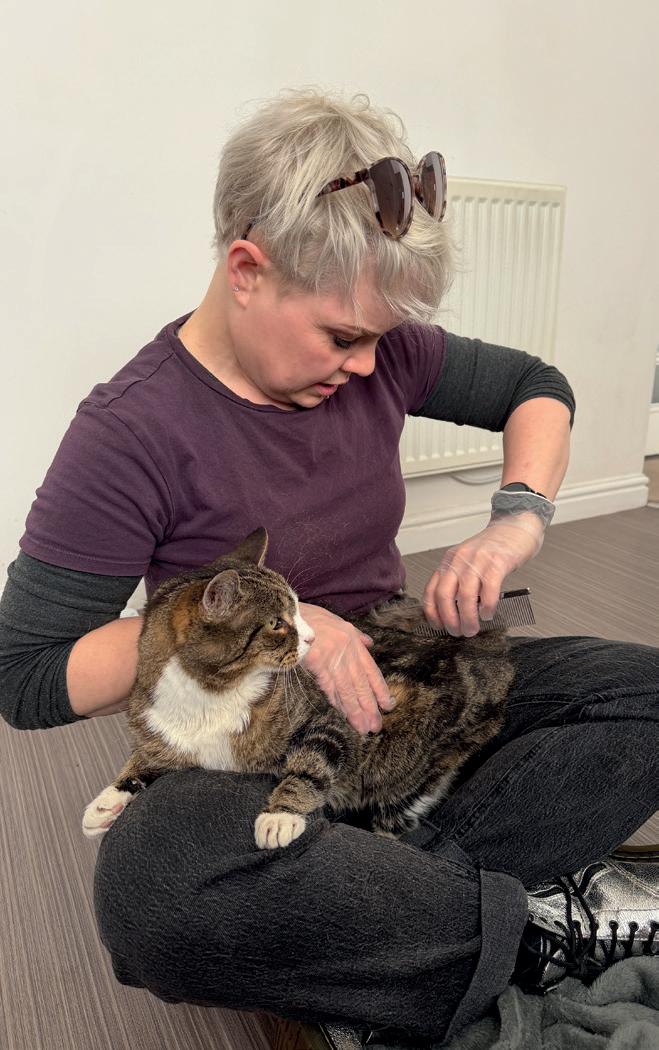
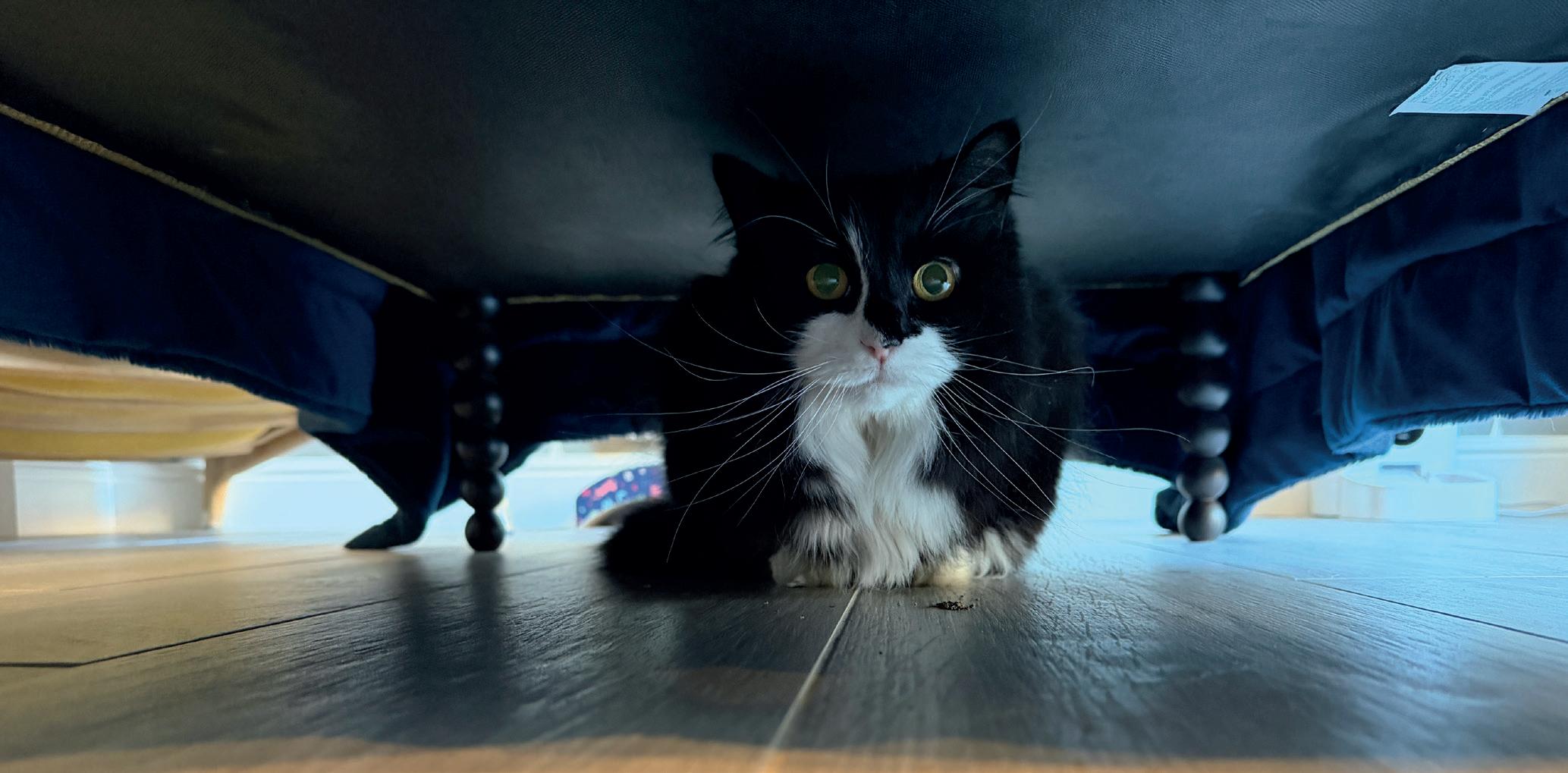
each visit harder. What seemed efficient once can create ongoing behavioural challenges for everyone involved.
Redefining success is essential. A perfect finish or fully completed groom is not always the goal. Sometimes success means removing only the most restrictive mats, trimming claws safely, or stopping before overwhelm occurs. Building trust so the next session is easier can be far more valuable than forcing completion today.
Professional boundaries support welfare. Saying no may involve ending a stressful groom, recommending shorter
sessions, or referring to a veterinary setting when sedation is appropriate. Honest conversations with owners are part of ethical practice, even when they feel difficult or uncomfortable in the moment for everyone involved in care decisions.
Most owners ultimately prioritise their cat’s wellbeing. They may need guidance to understand that grooming should not be forced through. This places groomers in an educational role, helping clients recognise stress signals, realistic outcomes, and the value of gradual, respectful handling over rushed results
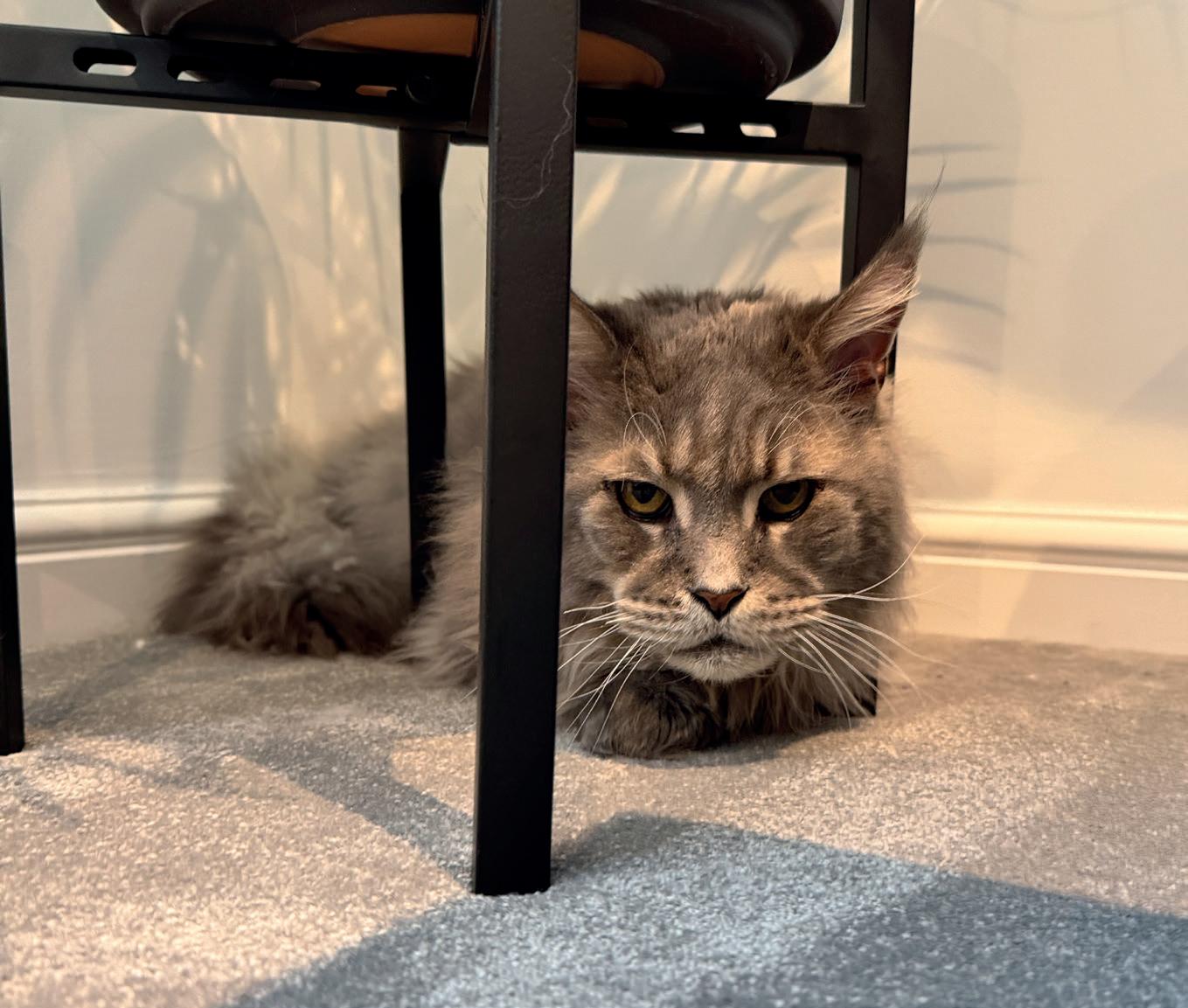
that ignore the cat’s experience entirely. Working with the cat, rather than against them, changes everything. Respecting limits allows the nervous system to settle, reduces escalation, and builds positive associations over time. Grooming becomes safer, more predictable, and sustainable for both cat and professional, improving outcomes without unnecessary force or distress during handling and care routines. Saying no can feel counterintuitive in a helping profession, yet it is often the most skilled choice. Pausing, stepping back, or ending early protects welfare and preserves trust. Good grooming is defined not by quantity achieved, but by how the cat experiences each interaction throughout the session and beyond it.
Recognising when to stop requires observation. Signs include repeated attempts to escape, escalating tension, defensive behaviours, or shutdown. Physical indicators such as dilated pupils, rigid posture, or rapid breathing also signal stress. Longer sessions, multiple procedures, or compromised health can further reduce tolerance and increase risk during grooming work sessions.
Stopping early is not failure; it safeguards welfare and supports future success. A shorter, calmer experience today helps create better handling tomorrow. Knowing when enough is enough reflects true professionalism, compassion, and respect for the cat’s emotional and physical limits in every grooming situation we encounter as dedicated feline professionals.

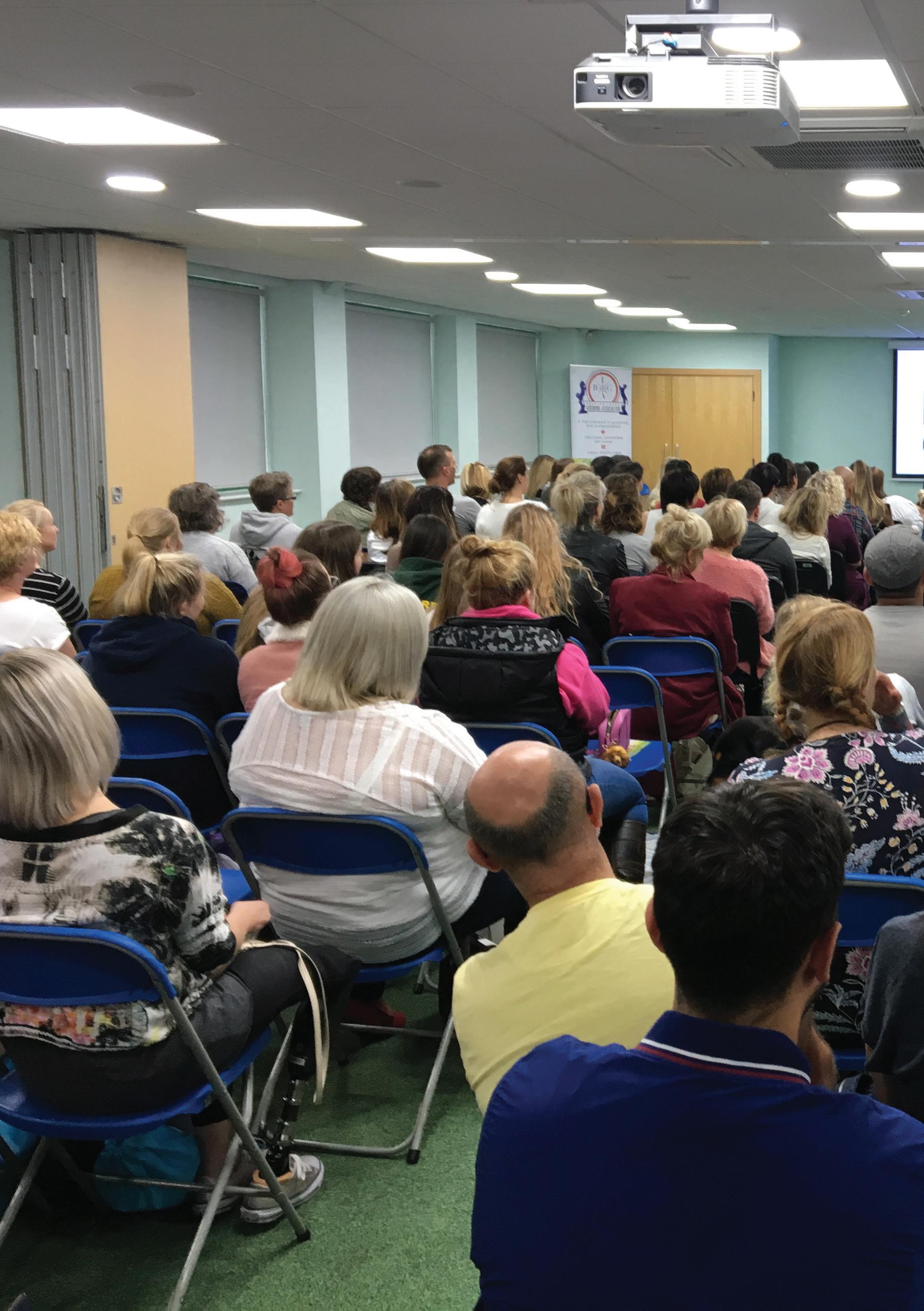
The Kennel Club Building
Stoneleigh Park, Stoneleigh, CV8 2LZ Sunday 6th September 2026 Free Entry & Parking Over 65 Trade Stands Major Brands & Suppliers New Product Launches Business Services
Thank you to our sponsors
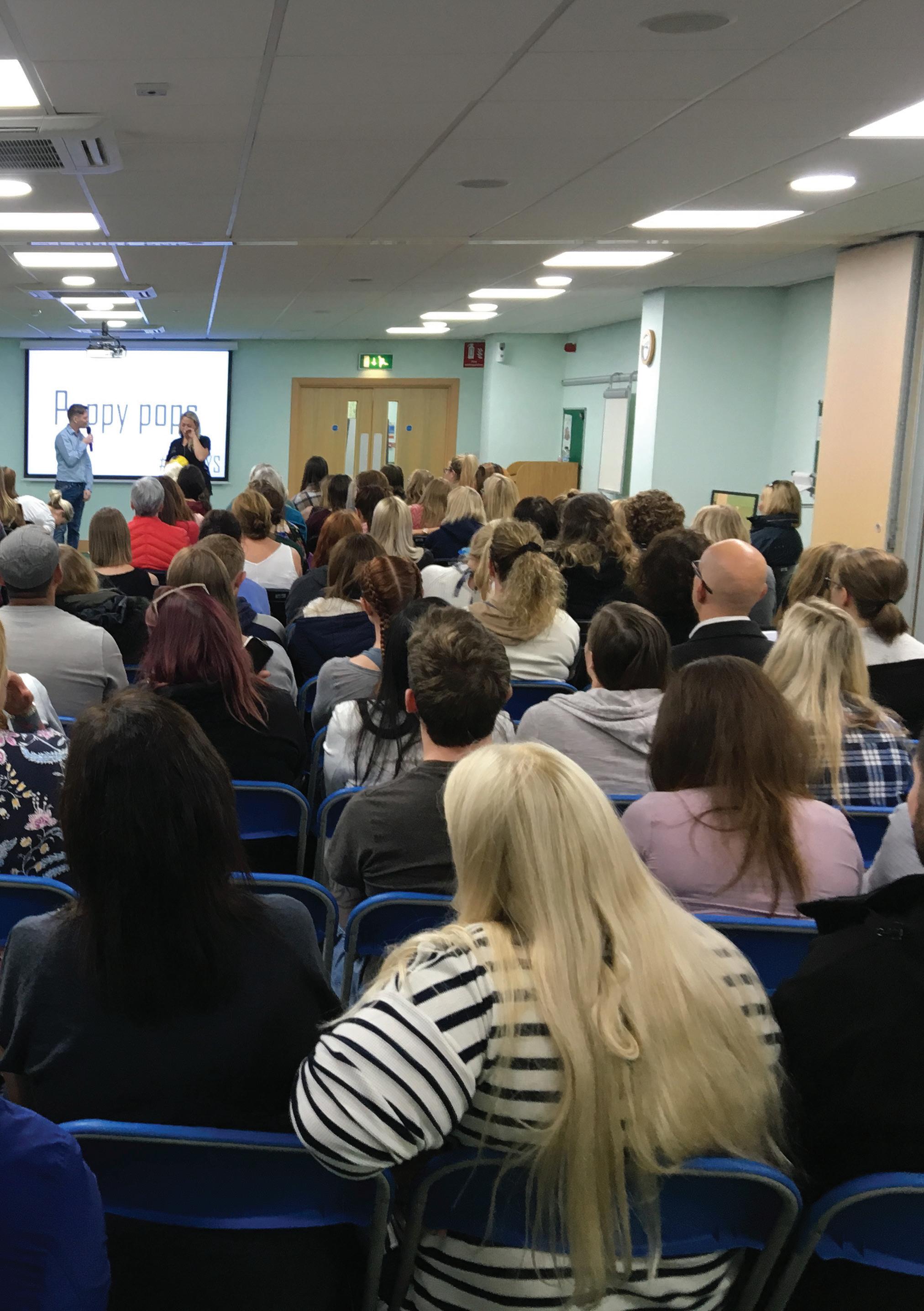
Event Sponsor
Platinum Sponsor
Silver Sponsor

Seminar Sponsor