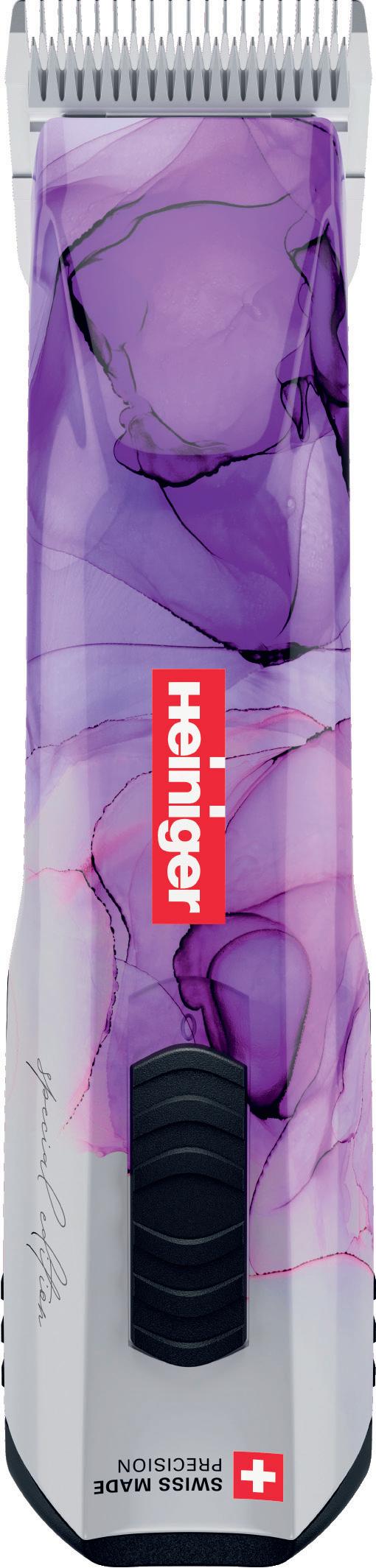




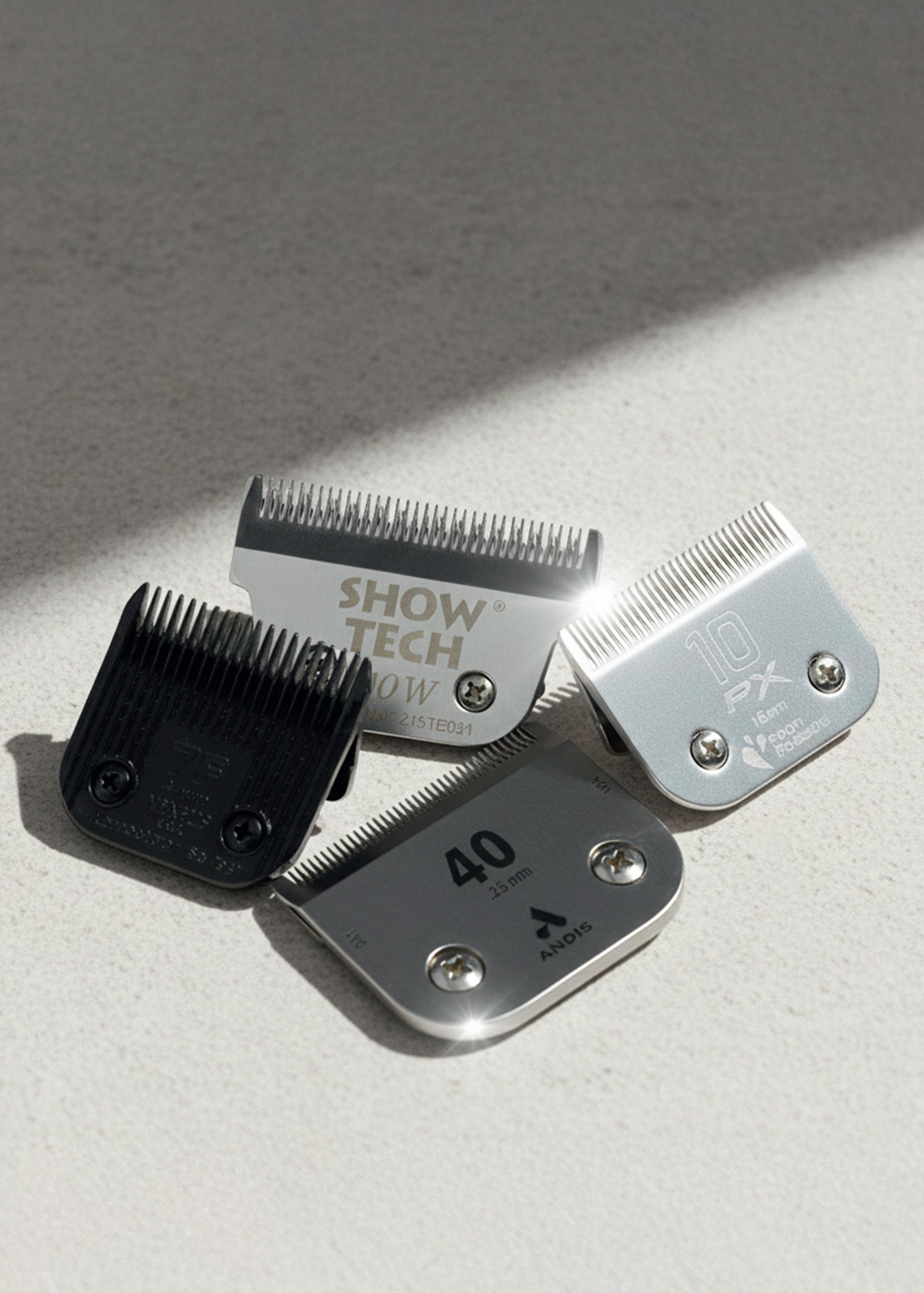
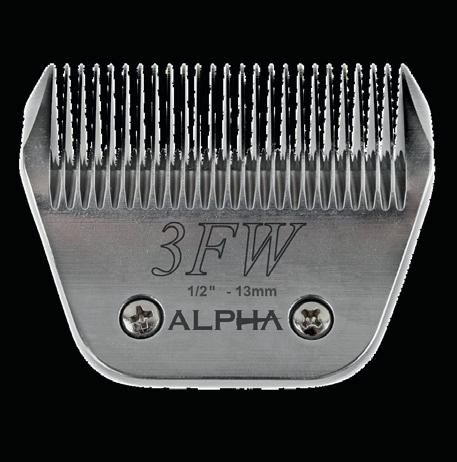
Designed to meet the real-world demands of busy groomers, Mastercut’s Superwides deliver 25% more cutting width - making light work of any clipping job. These blades aren’t just an upgrade, they’re the smarter way to groom.
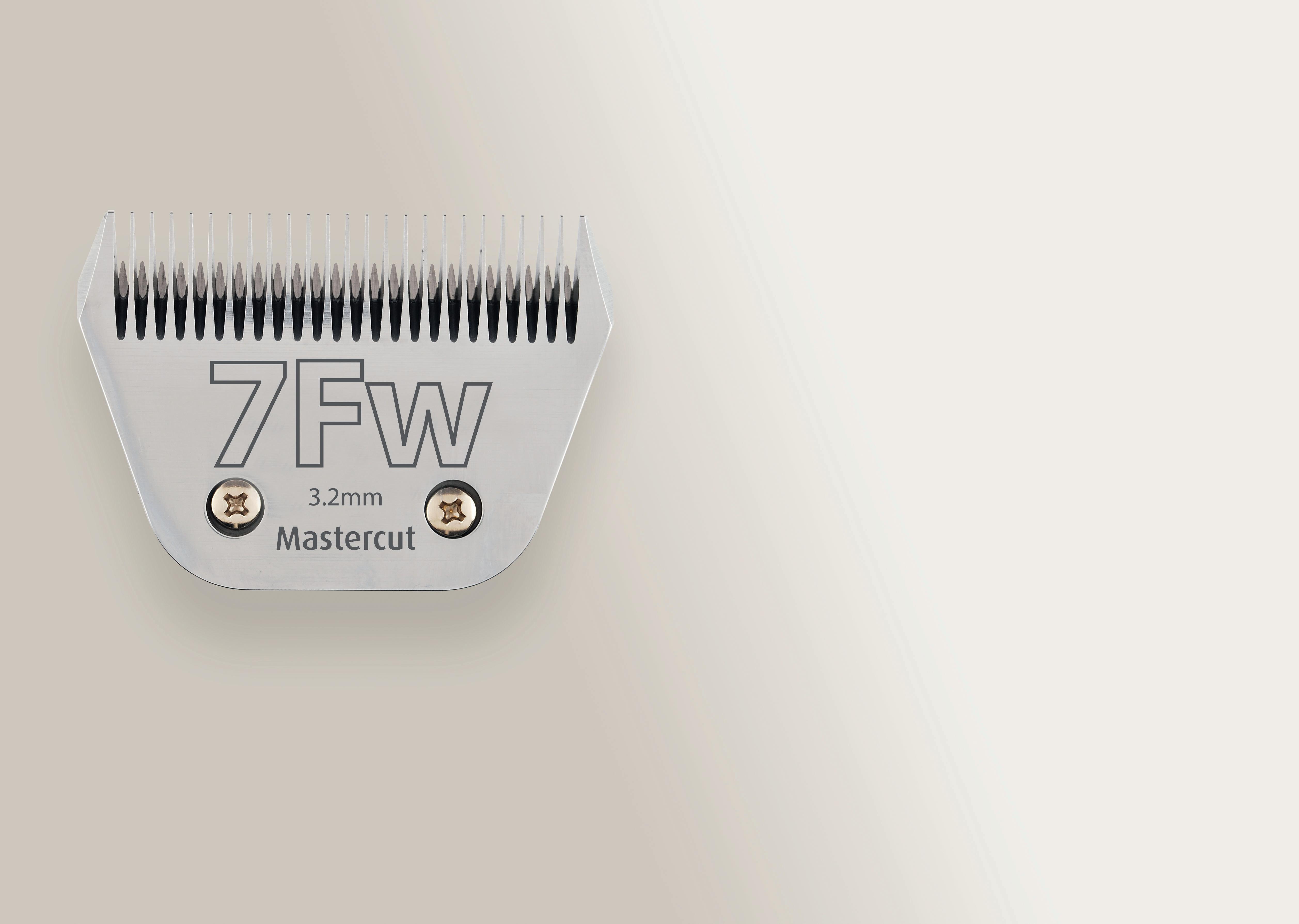
Designed to meet the real-world demands of busy groomers, Mastercut’s Superwides deliver 25% more cutting width - making light work of any clipping job. These blades aren’t just an upgrade, they’re the smarter way to groom.
Editor
Tom Woollin tom@tgmpublishing.co.uk
Commercial Director
Mike Smith mike@tgmpublishing.co.uk 01795 509110
Design and Production
Grant Waters grant@cimltd.co.uk
James Taylor james@cimltd.co.uk
Credit Facilities Manager
Gwen Lee creditcontrol@cimltd.co.uk 01795 509103
Digital & Web Developer
Xhulio Bishtaja digital@cimltd.co.uk
Marketing Manager
Lucas Payne lucas@cimltd.co.uk
Social Media Manager
Lily Lawson socials@cimltd.co.uk
Director Tom Woollin
Managing Director John Denning © 2026 Cogent Multimedia Limited, 1st Floor, Saphir House, 5 Jubilee Way, Faversham, Kent, ME13 8GD. No part of this magazine may be reproduced or stored in a retrieval system or transmitted in any form – electronic, mechanical or physical – without express prior permission and written consent of the publisher. Contributions are invited and when not accepted will be returned only if accompanied by a fully stamped and addressed envelope. Manuscripts should be type written. No responsibility can be taken for drawings, photographs or literary contributions during transmission or in the editor’s hands. In the absence of an agreement the copyright of all contributions, literary, photographic or artistic, belongs to Cogent Multimedia Limited. The publisher accepts no responsibility in respect of advertisements appearing in the magazine and the opinions expressed do not necessarily represent the views of the Publisher. The Publisher cannot accept liability for any loss arising from the late appearance or non publication of any advertisement.


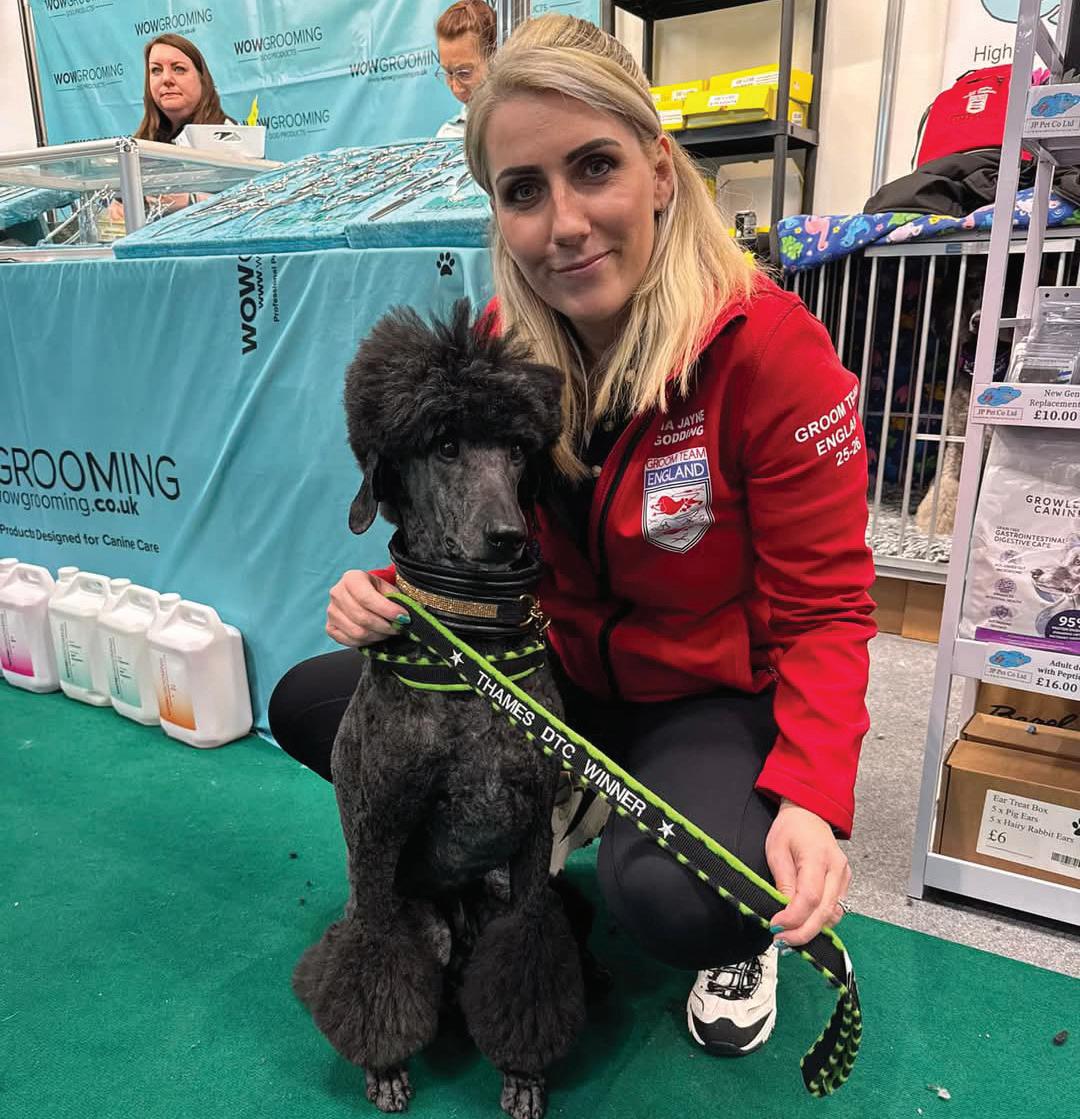

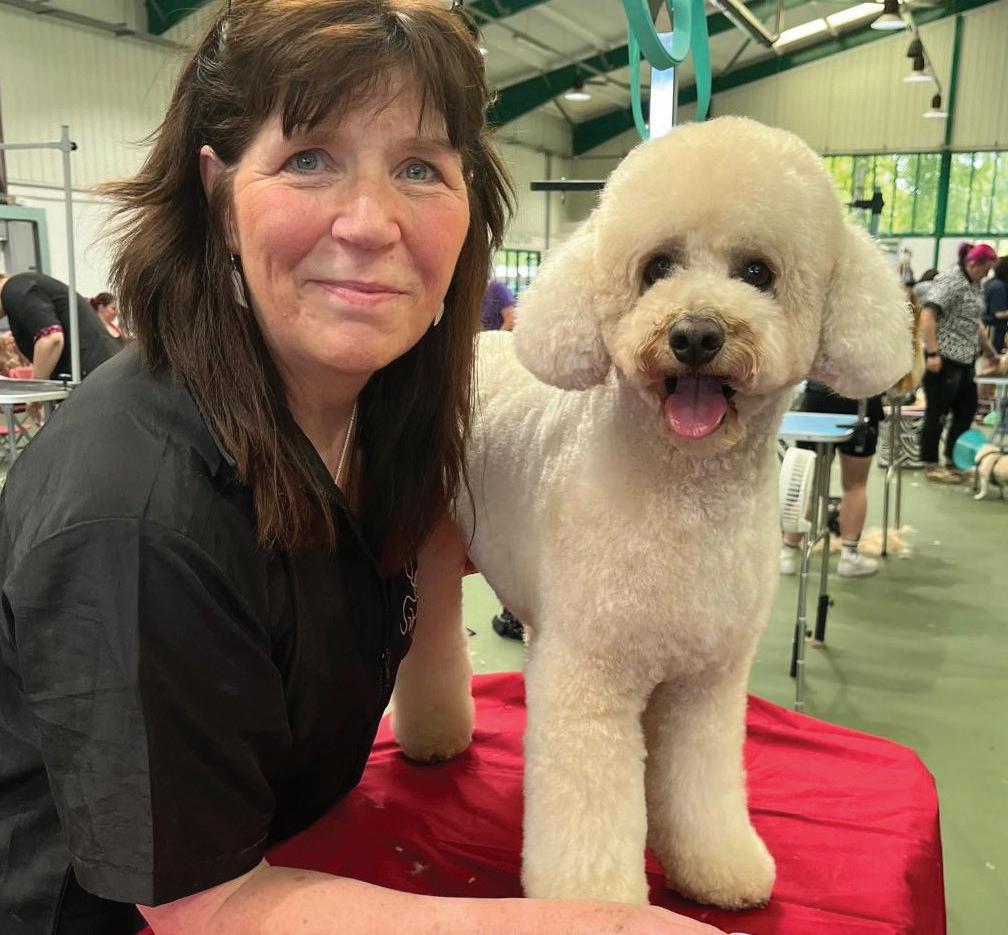
As we step into January, this issue of Total Grooming is all about fresh perspectives, professional growth and putting welfare at the heart of everything we do. We begin the year by celebrating excellence within our community, with Groomer of the Month Lia Godding sharing her inspiring journey, achievements and insights into the future of our industry.
Education and wellbeing take centre stage with an in-depth look at canine dental care, highlighting the vital role groomers play in early detection and long-term oral health. We also turn our focus to creativity, exploring how modern creative grooming has evolved into a respected, welfare-led service that can elevate both artistry and business.
Finally, with 2026 being dubbed “the year of the cat”, feline expert Katie Gwilt guides us through understanding cat clients and expanding into cat grooming with confidence and care. Here’s to a motivated, informed and inspired start to the year.




Tom Woollin Editorial Director

Celebrating Groom Team England captain Lia Godding’s career, achievements, advice.
Essential canine dental care: signs, prevention, routines groomers should know.
Modern creative grooming: welfare-led trends, pricing, education, subtle colour services.
Year of the cat: training, welfare, expanding feline grooming services.
Anew UK study has measured the significant health and economic benefits of routine parasite prevention in dogs and cats.
It found that current prevention methods potentially protect pets from over 5.5 million infections a year and as a result, save UK households around £53 million in veterinary costs, rising to £95.2 million with optimal coverage.
The study, published in Parasites and Vectors and conducted by experts from Kreavet, the University of Nottingham, ESCCAP and ESCCAP UK & Ireland, is the first national model to calculate both the scale of infections avoided and the financial value of preventive parasite control to pet owners.
Using data on treatment usage, parasite prevalence and associated costs, the authors modelled infection outcomes across current and “optimal compliance” scenarios. In the optimal scenario, the number of prevented infections could increase by 70.6%, reaching 9.3m annually.
The analysis assessed the impact of
routine control measures against fleas, ticks, roundworms, and lungworms in companion animals.
The research found that, annually, parasite prevention avoided over 2.3 million flea infestations and more than 2 million tick infestations in UK dogs and cats.
Flea prevention alone was found to save households around £32.2 million each year through avoided veterinary treatments and home decontamination costs.
Professor Hany Elsheikha, Head of ESCCAP UK & Ireland, said:
“This study provides the first national quantification of how many infections and infestations routine parasite control prevents in UK pets each year. Our modelling shows that preventive treatments make an important contribution to animal health, public health and household finances.
“By improving our understanding of the effects of parasite control on pet health, we can prevent more infections
every year, reducing the risks for animals and families and the pressures on veterinary services.”
The authors noted that parasite incidents are increasing, with expanding tick and lungworm populations and reports of flea activity in UK homes becoming more frequent.
They also highlighted that inconsistent owner compliance remains a barrier to parasite control.
Professor Elsheikha added:
“While our study highlights substantial health and economic benefits of preventive parasite control, it’s crucial that we continue to undertake research that helps the veterinary and pet communities understand how preventive care protects not only pets, but the people around them. At the same time, ongoing work is needed to better understand environmental pathways and to promote the sustainable, risk-based use of parasiticides.”
Meet the New Hero of 2026 in Your Grooming Business…

You might think I’m about to tell you the hero is me—that this is where I convince you to join The Grooming Goddess Academy…
Nope.
Grab a mirror, my friend, because the hero of your business in 2026 is YOU!
Only one person relies on your business for a wage. Only one person deals with your customers, juggles bookings, and cleans the plughole after that Labrador de-shed. And that person is you.
I often ask groomers: If you could design your dream boss, what would they do for you? Probably the uncomfortable stuff—sorting pricing, enforcing T&Cs, having awkward conversations about no-show fees, taking your phone off you at 8pm so you’re not tempted to reply to clients. Someone who could swoop in and handle the things that drain you most.
Because running a business that doesn’t exhaust you can feel like a fulltime job in itself. After a long salon day,
you rarely have the emotional or physical energy to sit down and fix the things that frustrate you.
So if you ended 2025 feeling overwhelmed, lost, or stuck… I want to introduce you to the dream boss who can turn things around for 2026. You.
Here are three shifts to get you started:
1. Protect your time like a CEO.
You likely already know how many days or hours you want to work in 2026. But grooming is only part of your workload— you also do laundry, cleaning, admin, accounts, marketing and social media. Your dream boss sets boundaries. They build admin time into the week and understand that “full time” isn’t five full grooming days. At least half a day must be dog-free so you can work on the business, not just in it.
2. Progress comes from peeling back, not piling on. Many groomers add spa packages
because they’re short of money… yet they’re already fully booked. That’s not solving the problem—it’s a plaster. You need strong core prices and confidence in the basics. Perfect those first; let extras be profit boosters, not compensation for undercharging.
3. Stay in your own lane.
Your dream boss doesn’t doom-scroll other groomers’ feeds. They measure success by turnover, free time and personal goals—not follower counts. The only people you must impress? The ones walking into your salon with their dogs.
Groomers—YOU are the hero of your business this year.
Create the path. Walk the path. Set the standard.
Be the dream boss your 2026 self deserves—and look after your staff (yes… that means you!).
www.thegroominggoddessacademy.com
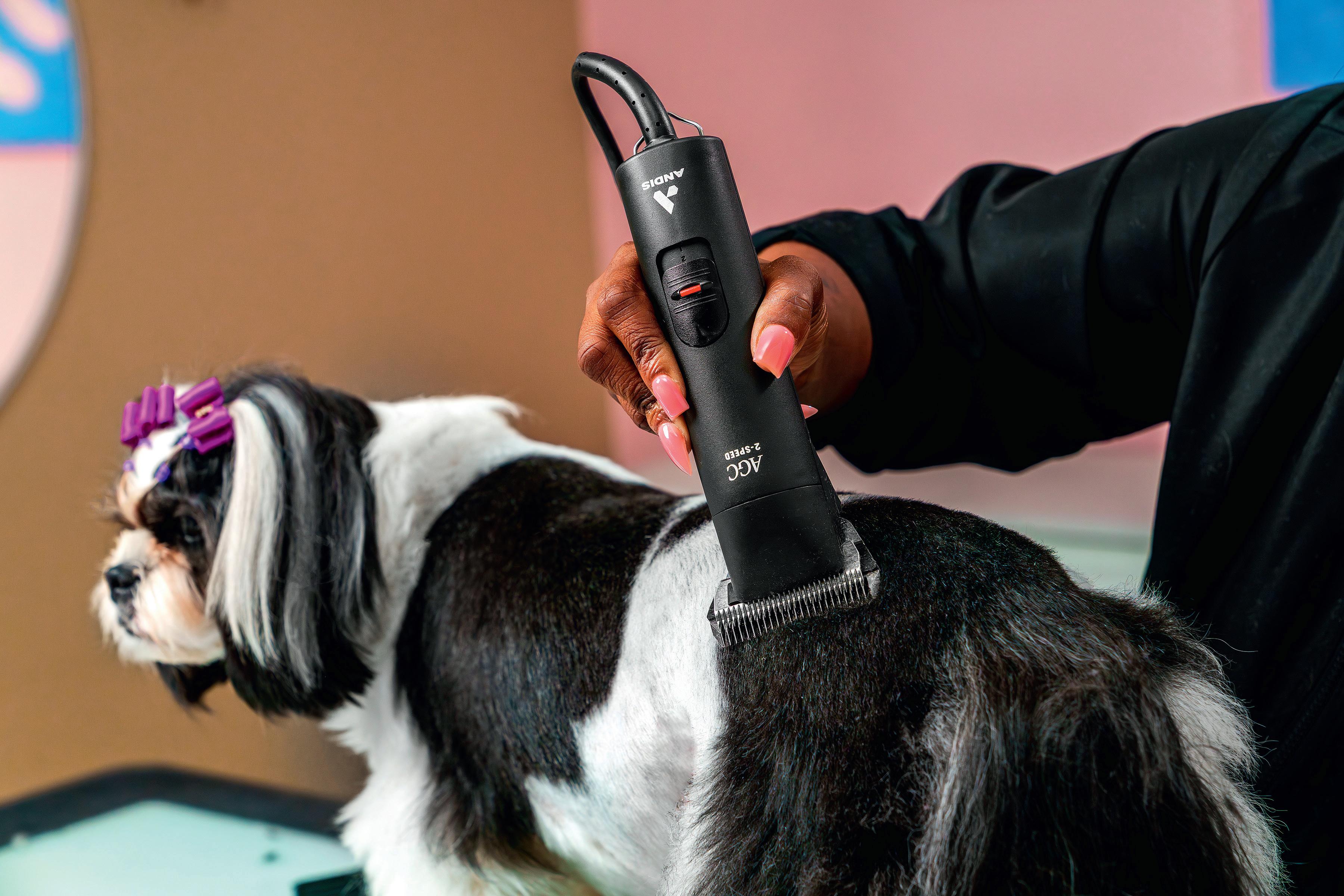


Meet the first blade engineered with magnetic force technology. No friction. No heat spikes. Just smooth, reliable grooming that keeps pets comfortable and professionals productive. Upgrade to M-Force®—the future of grooming. Discover M-Force® Blades at Andis.
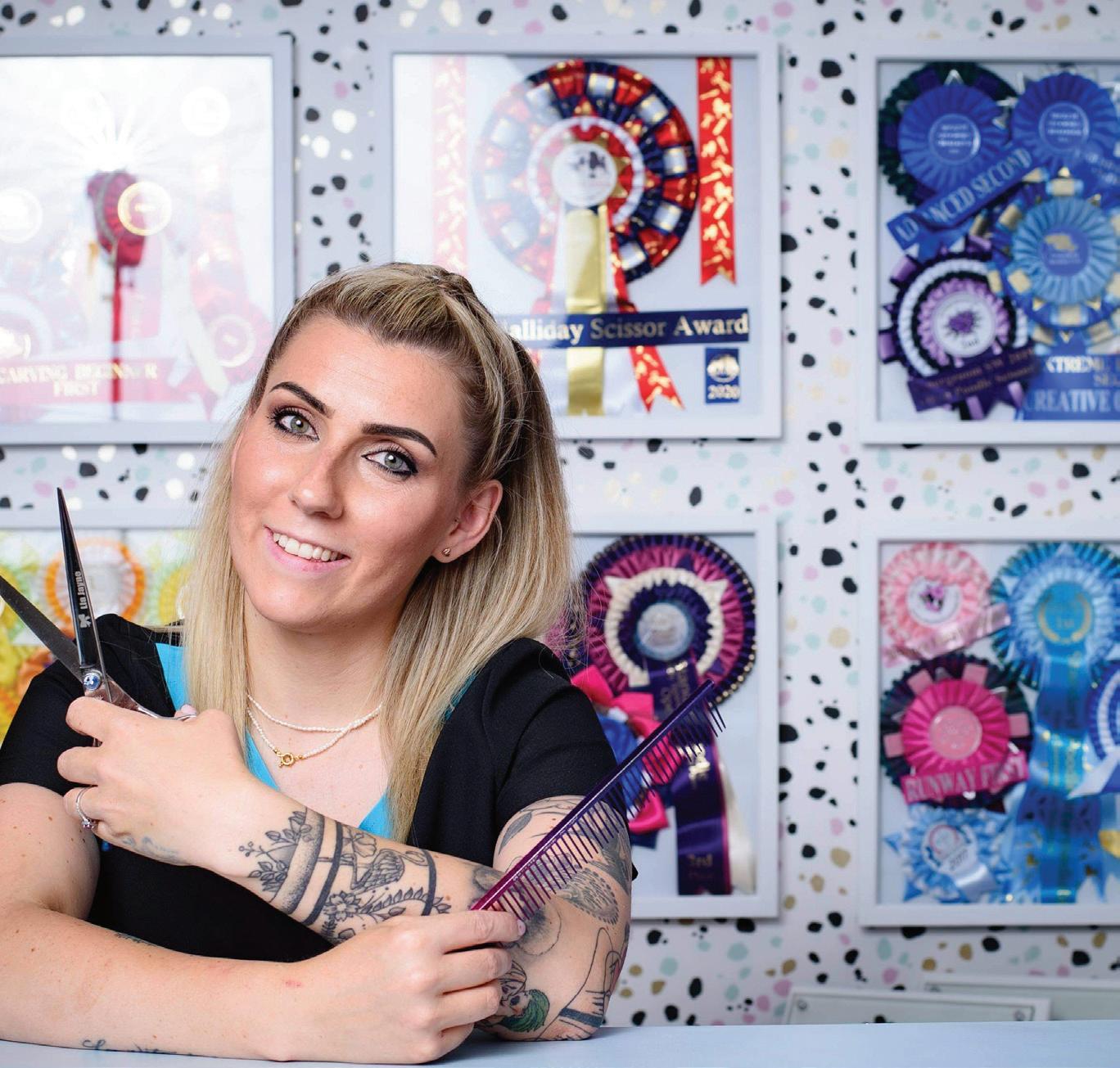
From kennel hand to Groom Team England captain, Lia Godding’s journey through the grooming world has been one of hard work, resilience, and passion. Now running Barking Beautiful from her home-based salon, Lia shares her story, achievements, and advice for the next generation of groomers.
How did you first get started in grooming, and what inspired you to choose this as your career path?
I was originally a hairdressing apprentice and just didn’t enjoy it. I knew I wanted to work with animals, but I wasn’t sure which area of the industry to go into. I’d worked as a kennel hand from the age of 13, which gave me some experience, but the turning point came when I saw a job advertised for a bathing assistant in a dog grooming salon. I applied, got the job, and quickly realised how much I loved it. From bathing assistant, I trained as a groomer, and my passion for the craft just grew and grew.
Have you had any standout mentors along the way?
I’ve had quite a few. My first big mentor was Heidi Anderton, who I trained with for my Level 3 qualification. She also introduced me to the world of grooming competitions, which opened up a whole new side of the industry. Later, Julie Lalou Simpson became
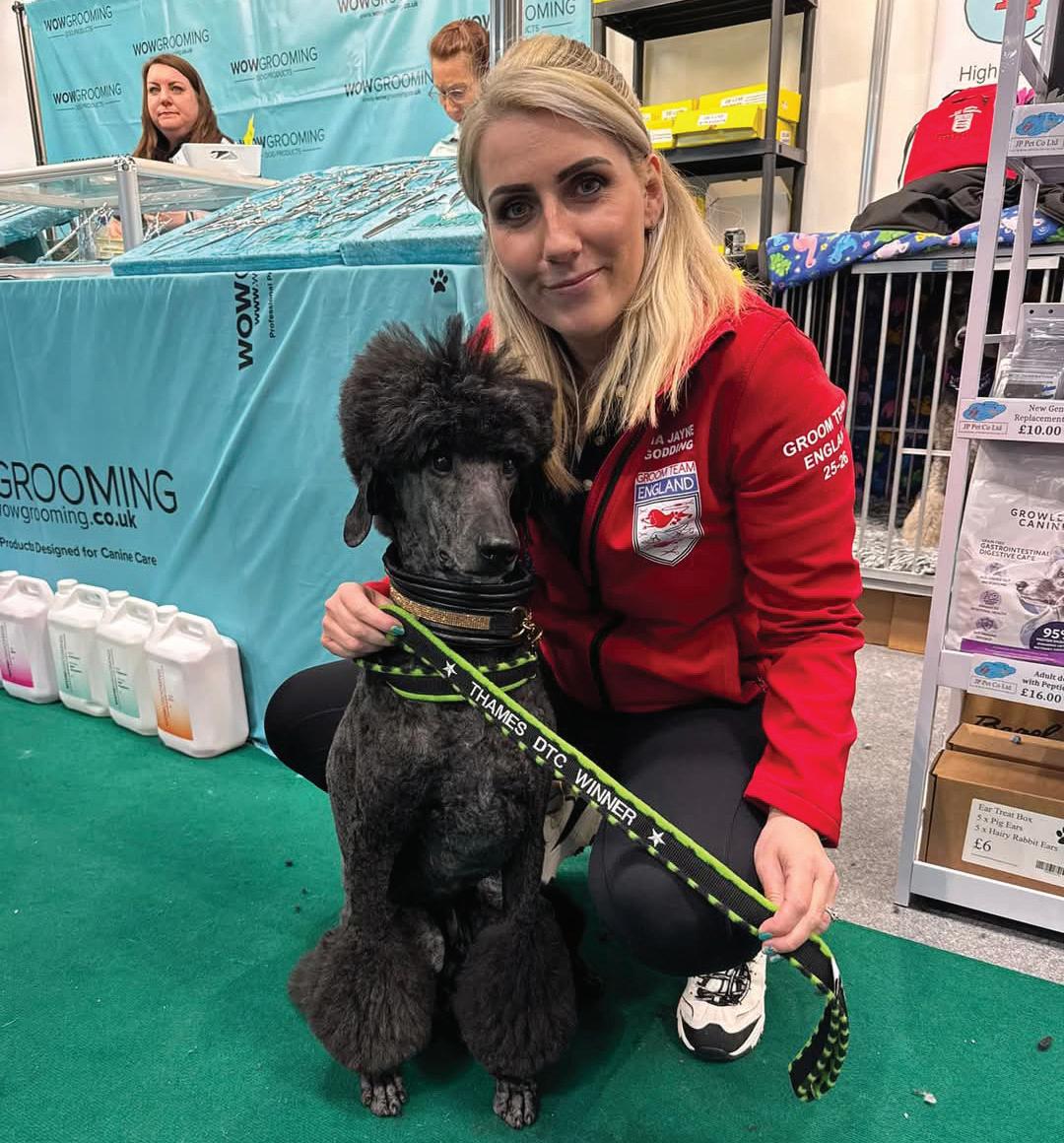
another huge influence. She supported me in competitions—sometimes even lending me dogs to work with—and her guidance has been invaluable. Along the way, I’ve taken inspiration from so many other groomers too.
Can you walk us through how you run your business day to day—what makes your salon or service unique in the way it operates?
I used to own a large salon in South Ascot, but I sold it nearly three years ago. The stress and physical strain, particularly on my back, made it unsustainable. Now I run a smaller salon attached to my
home, which has been life-changing. I focus on one-to-one grooming, which makes a big difference for dogs that are nervous or reactive. By working in a calm, personalised environment, I can help them relax and enjoy their grooming experience, which is really important to me.
What have been some of the biggest achievements in your grooming career or business?
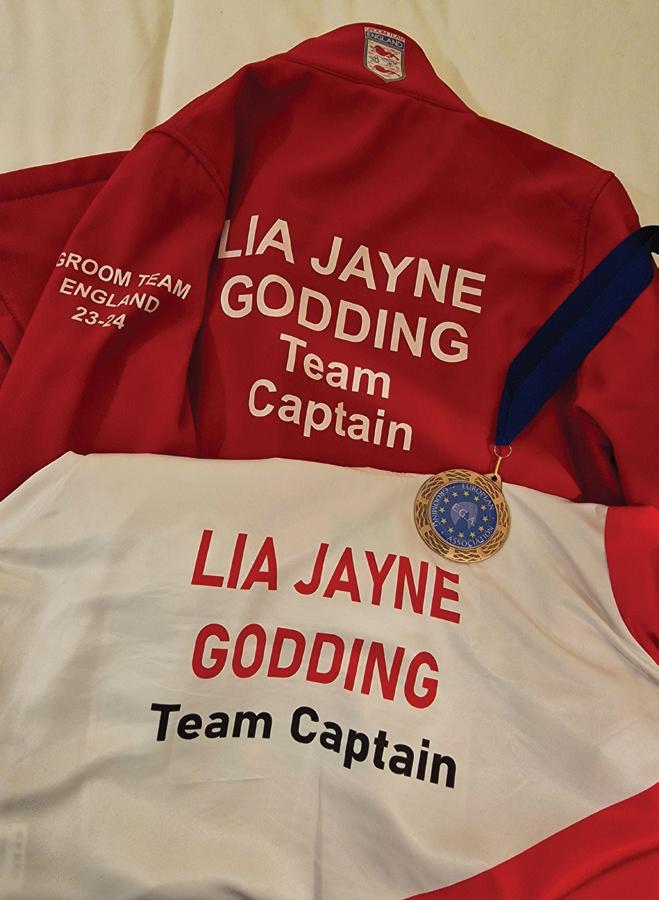
Becoming Groom Team England captain has definitely been the highlight so far. It’s such an honour to be trusted with that role, and competing at the World Championships is an experience I’ll never
forget—I can’t wait to do it all again in 2026.
I’ve also judged for the YKC at Discover Dogs, won multiple awards in grooming competitions, and was proud to win the Liz Paul Award for Up-andComing Groomer of the Year. On top of that, I’ve had opportunities to work on photoshoots and TV ads, preparing dogs for the camera, which is something I absolutely love.
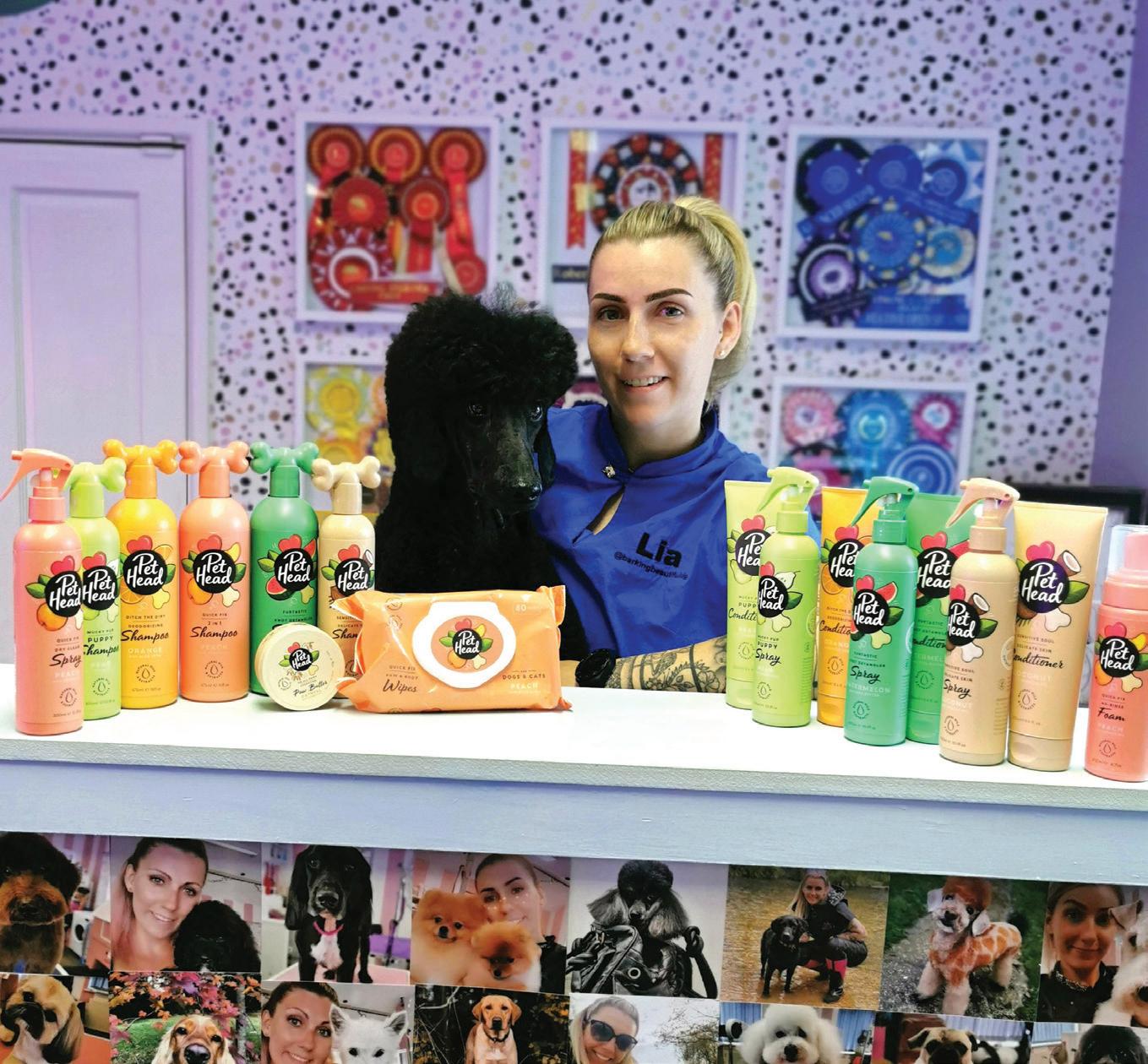
I’m currently an ambassador for WOW Grooming and Top to Tail Clothing, and in the past I’ve represented Pet Teezer too. Every one of these achievements means so much to me—it’s proof that hard work and dedication really do pay off.
What do you love most about being a pet groomer, and what keeps you passionate about the work?
It’s the transformations that keep me inspired—the moment an owner sees their dog after a groom and their face lights up. I also love the bonds I build with both the dogs and their owners. Grooming can be a solitary job at times, but those connections mean it never truly feels lonely.
What tips or lessons would you share with aspiring groomers to help them build both their skills and confidence?
Never stop learning. Go to seminars and workshops—they’re designed to boost your skills and confidence. Competitions are another great way to improve. You get constructive feedback from judges, which helps you refine your technique.
I competed for nearly two years before I even placed, but I didn’t give up. I worked hard, attended one-to-one training with groomers I admired, and kept pushing myself. The key is to take the feedback, work on it, and come back stronger.
Where do you see the grooming industry heading in the next few years, and how do you plan to evolve your business or skills alongside it?
I’d really like to see the industry
become regulated. We work with live animals and sharp tools, and too often people underestimate how serious that responsibility is. It’s not just about cutting hair—you need to understand anatomy, behaviour, and safety. Some of the horror stories I’ve seen are heartbreaking, and
they highlight how vital proper training is. As for myself, I’ll continue focusing on one-to-one grooming, especially for dogs that have had bad experiences. My goal is to rebuild their trust and help them enjoy grooming again.
@barkingbeautifuldg
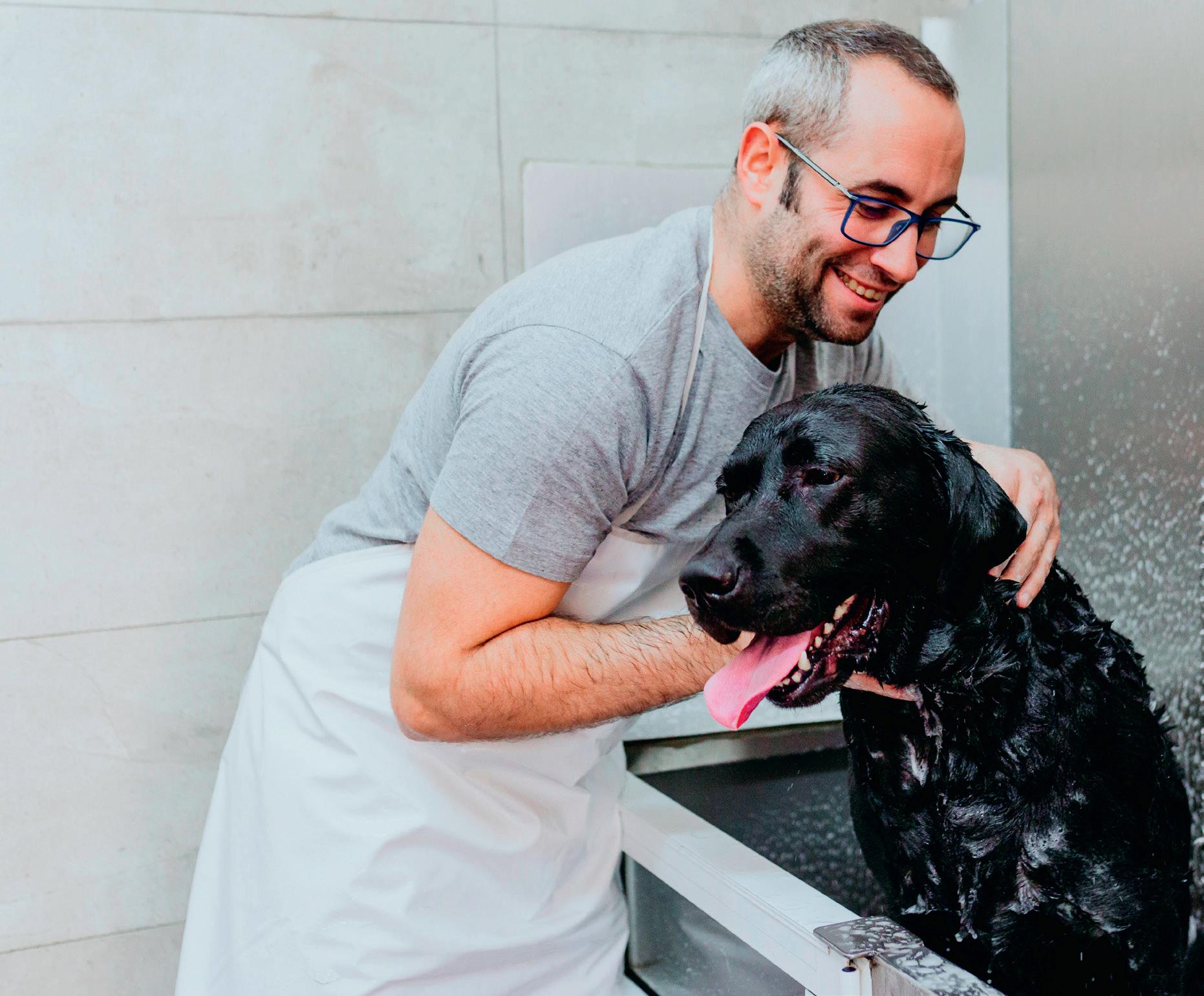

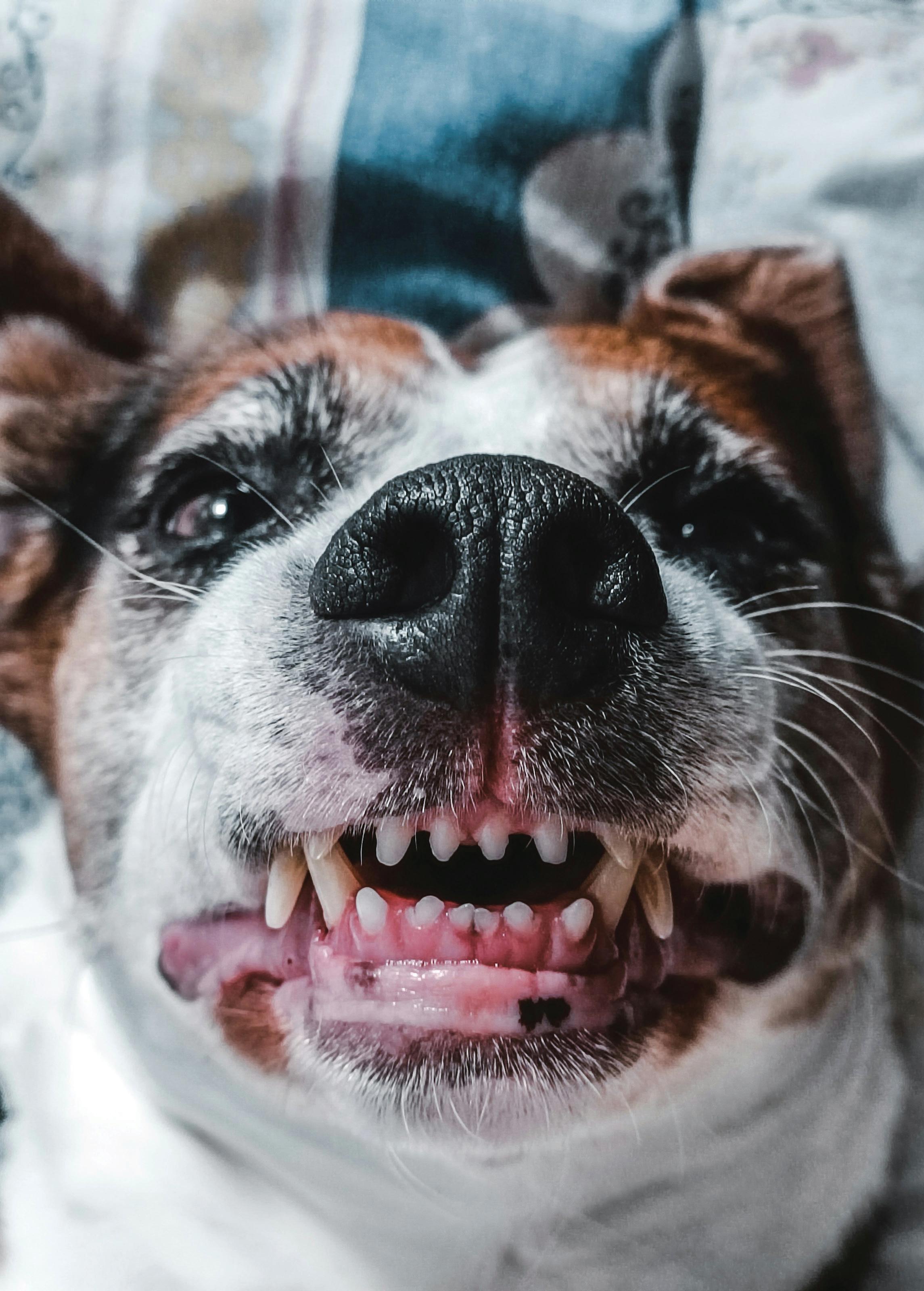
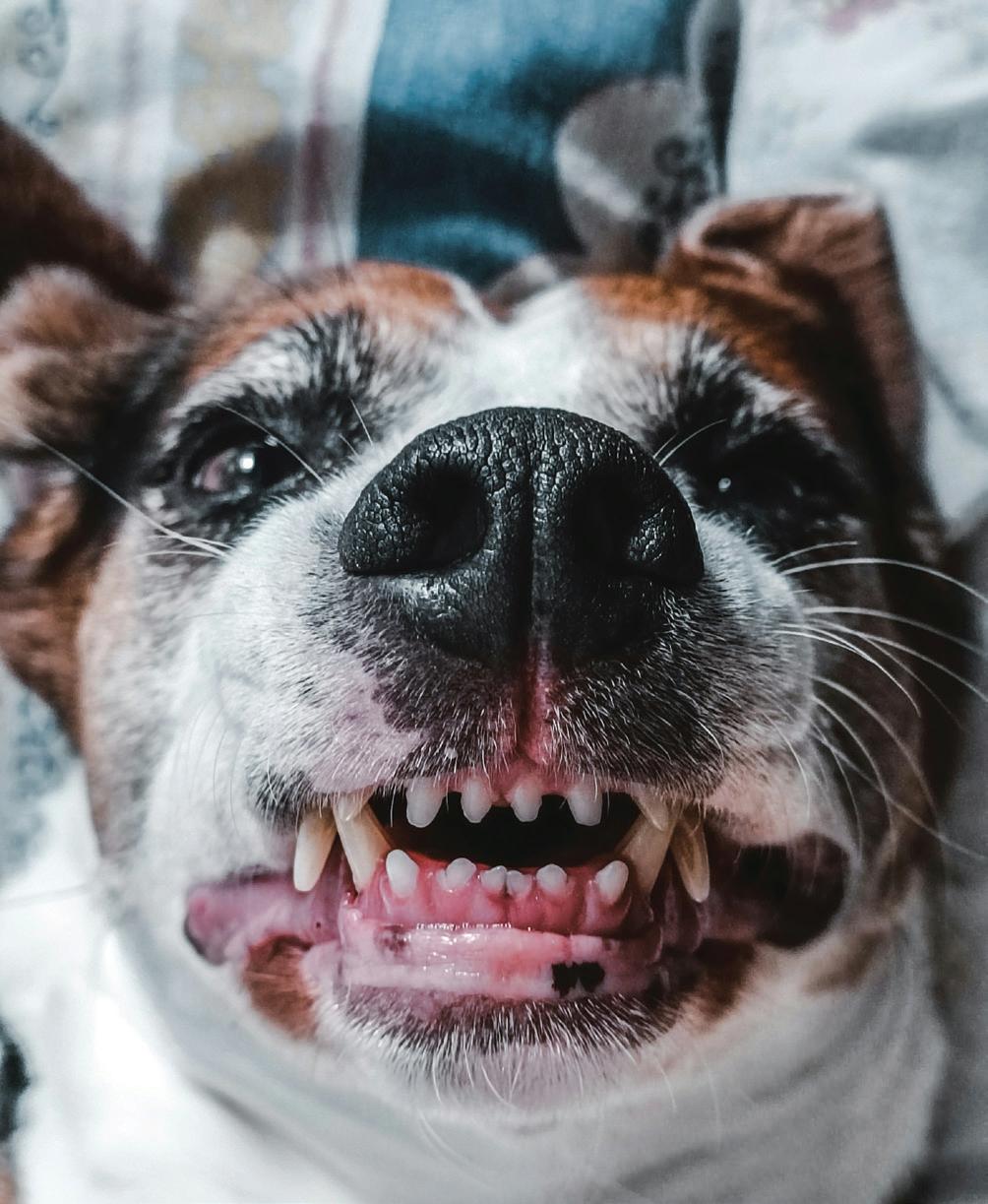
Good dental care starts long before tartar appears, and groomers are often the first professionals to notice early changes in a dog’s mouth. These five essentials help owners understand what really matters, how to build healthy habits, and how to prevent problems before they become painful — or costly.
As groomers, we see dogs more frequently than vets — which makes us perfectly placed to spot early signs of dental trouble. A quick inspection of the gums, tongue and teeth during each appointment helps identify redness, tartar, swelling or broken teeth before they escalate.
Many owners believe dental disease appears suddenly, when in reality it develops gradually. Bad breath, yellow staining along the gumline and inflamed gums are all early warnings. Taking a moment to point these out helps owners understand what they’re missing at home and encourages timely action.
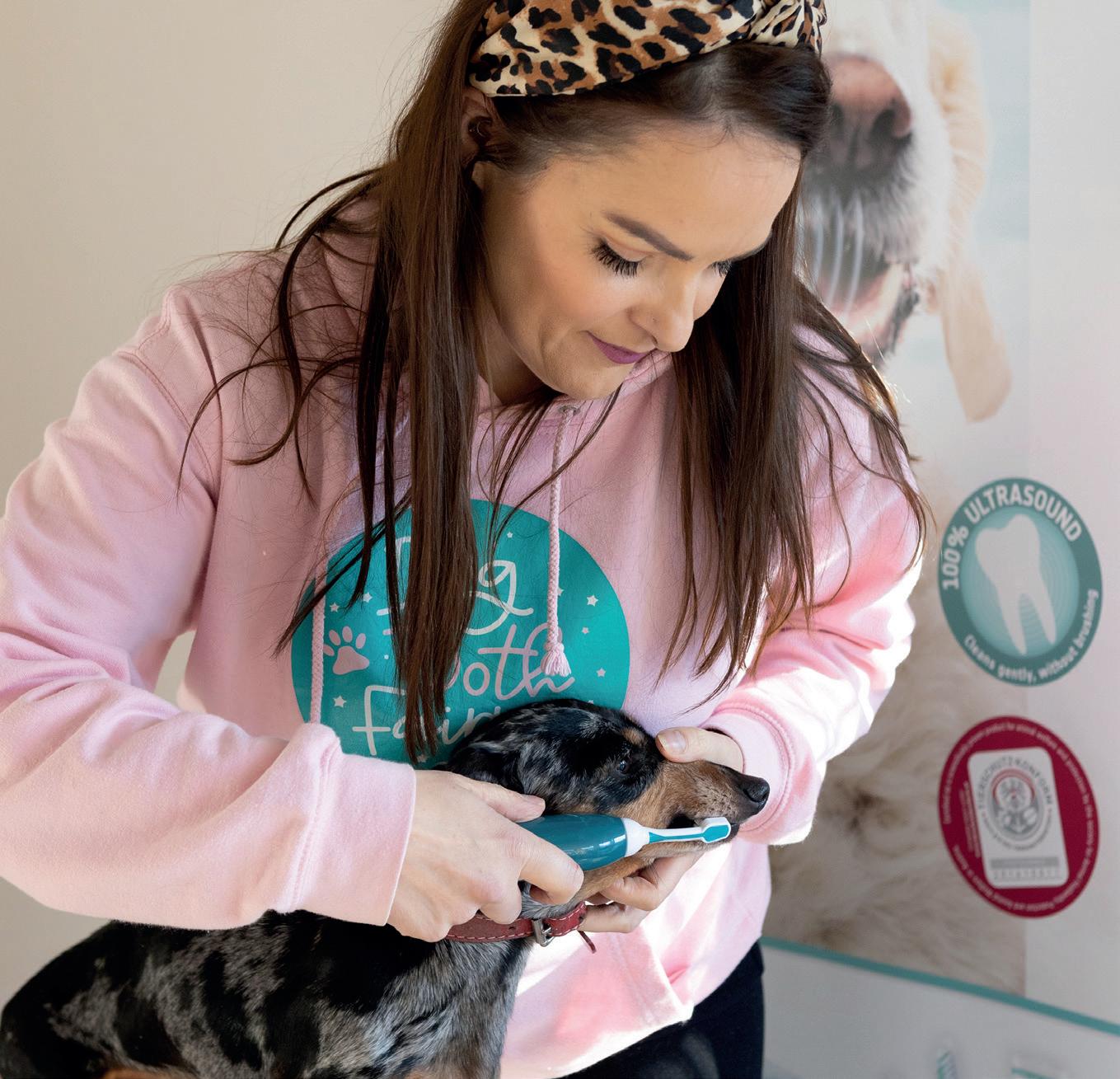
Brushing remains the gold standard, but owners often don’t know where to start. Advising them to begin slowly, use dogfriendly paste and keep sessions short builds confidence. For reluctant dogs, enzymatic gels, dental wipes or ultrasonic brushing can provide meaningful support while habits form.
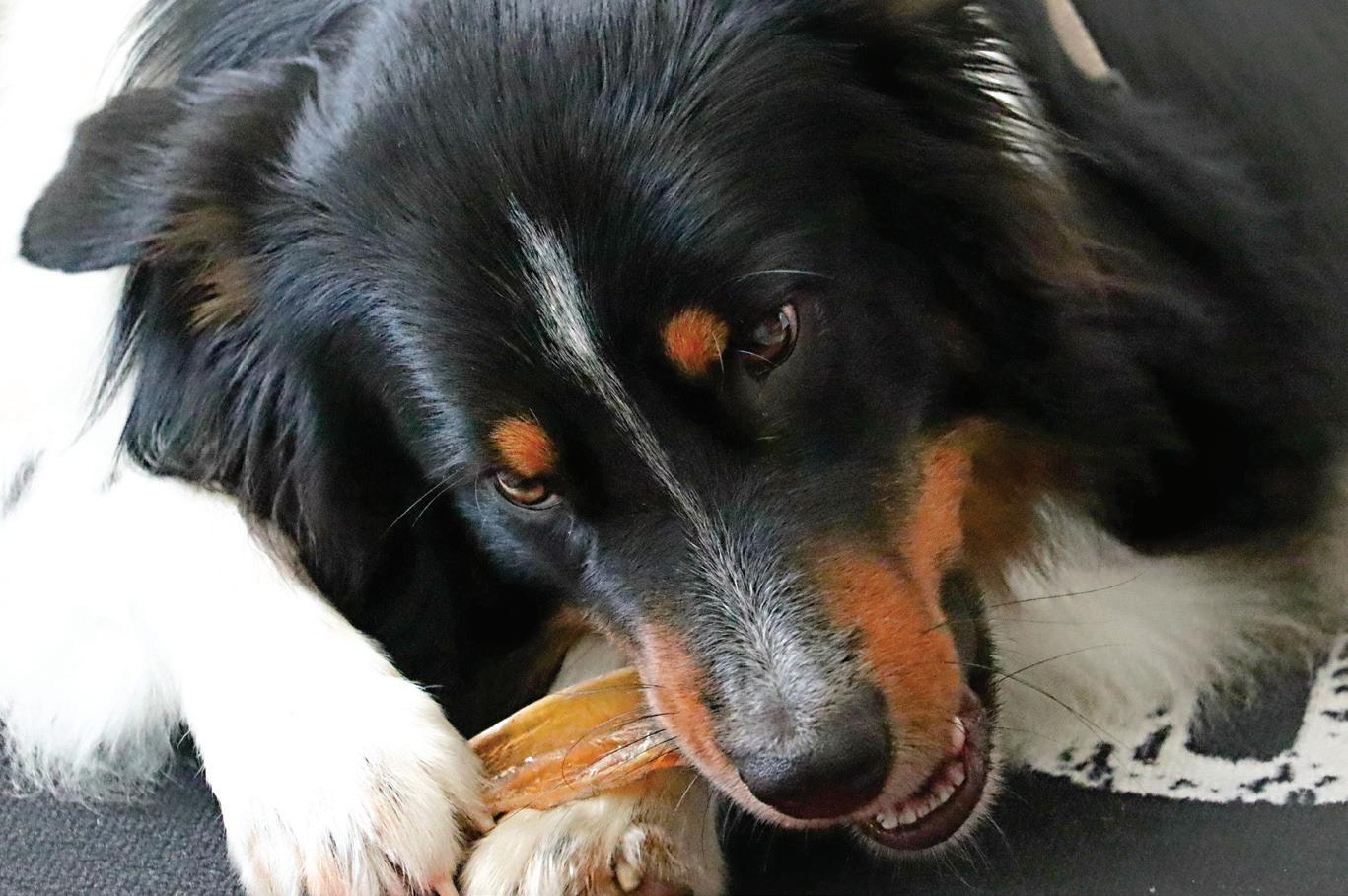
Not all chews are created equal. Natural chews like rabbit ears, fish skins or rubber dental toys can help reduce plaque through gentle abrasion. Guiding owners away from overly hard chews or processed treats helps protect teeth while still supporting healthy chewing behaviour.
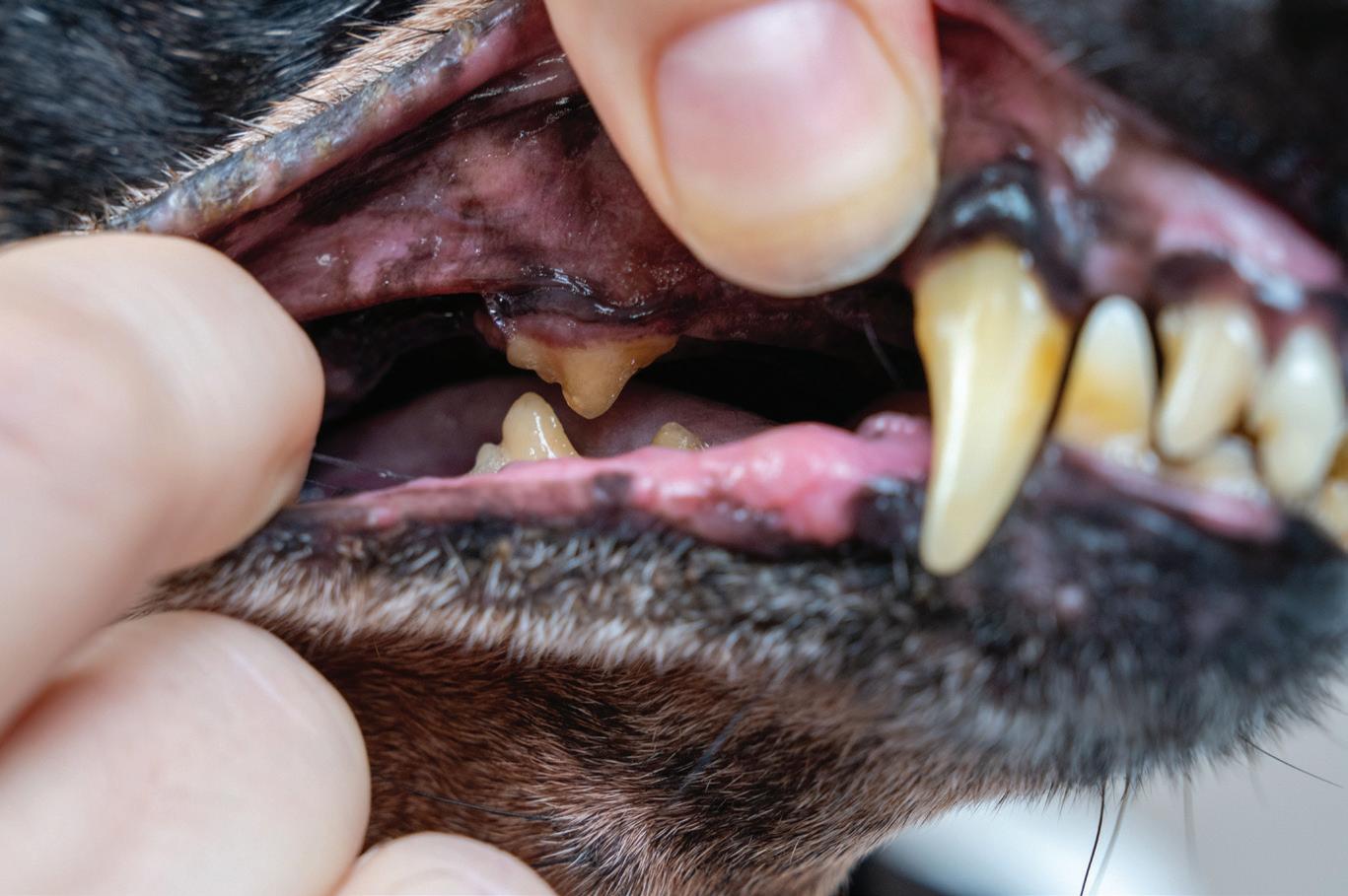
Groomers can highlight concerns, but some dental issues require veterinary attention. Loose teeth, bleeding gums, heavy tartar or suspected pain should
always be referred to a vet. Clear communication ensures dogs receive appropriate care and reinforces the groomer’s role as a trusted professional partner.
Canine dental health is often overlooked until problems escalate, yet early intervention can dramatically improve a dog’s comfort, wellbeing and longevity. We speak to leading professionals about the signs owners should watch for, the routines that truly make a difference, and the misconceptions that continue to put dogs at risk.
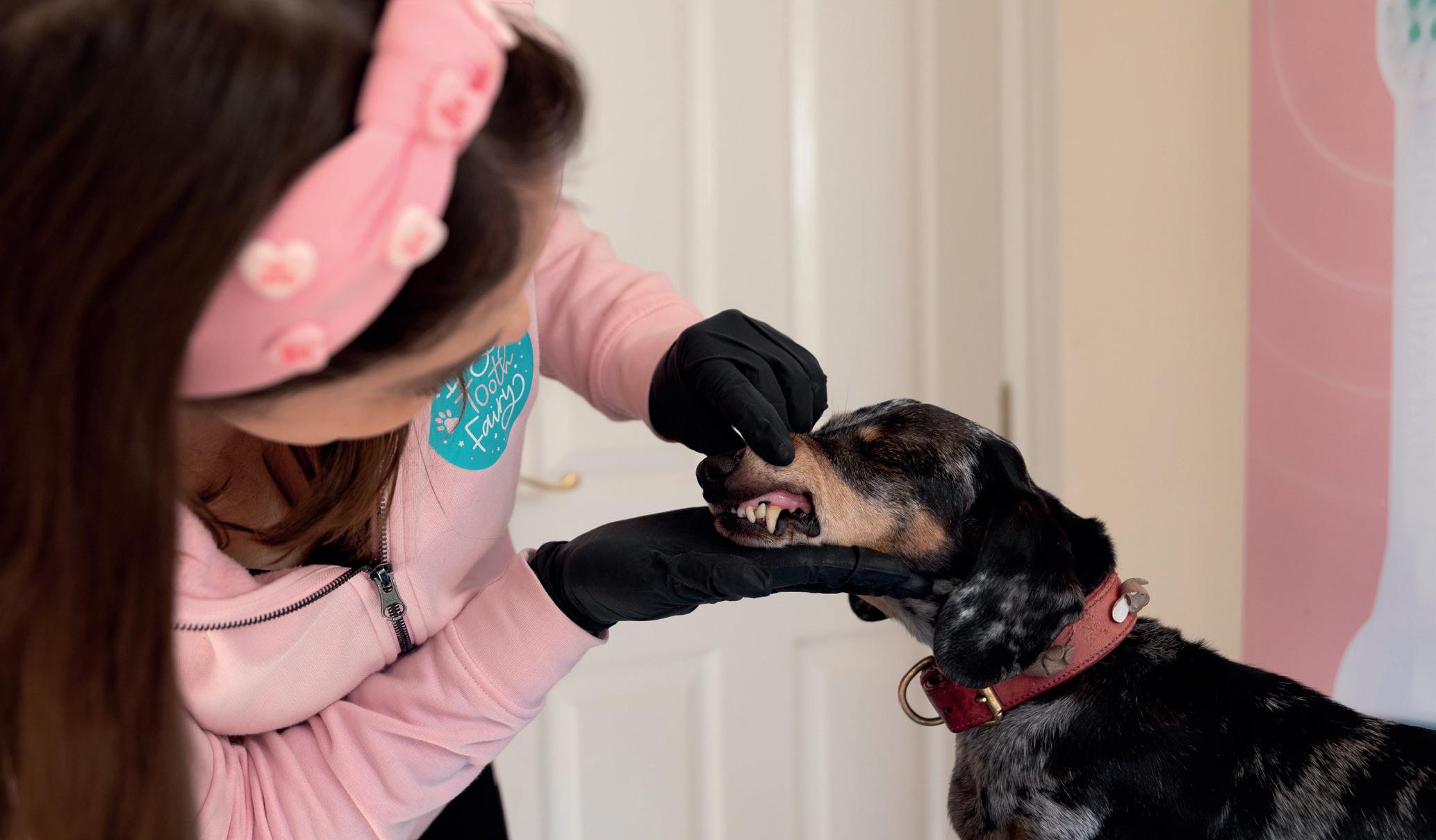
Dental disease is one of the most common health issues in dogs, yet it remains one of the most preventable. Groomers are uniquely placed to spot early signs of trouble, and with regular home care, most dogs can avoid the progression to painful, irreversible disease. Understanding what to look for is the first step in improving canine oral health.
According to Anastasia Waugh, bad breath, plaque and tartar are the most frequent issues. She explains: “The most common dental health problems we tend to see in our dogs are bad breath, plaque and tartar… If plaque and tartar is left untreated it progresses on to periodontal disease which is irreversible.” These early changes are
often subtle, but Anastasia recommends weekly checks for pink gums and clean white teeth, warning owners to inspect the entire mouth and note any bleeding, inflammation or yellowing. Her message is clear: catching issues early prevents long-term damage that may later require veterinary intervention.
Rachel Bean RVN also highlights the visible build-up of tartar as one of the earliest indicators. She notes: “Most common issues are a build of tartar. This is the brown hard layer on the teeth which can in time erode the gum edge causing pain and infections.” She emphasises that owners can spot this problem long before their dog shows discomfort, simply by monitoring the gum line. Together, both professionals
reinforce that prevention begins with awareness; small changes noticed early can spare a dog considerable pain.
While spotting the signs is vital, managing dental health over a dog’s lifetime is equally important, and the right cleaning schedule will vary. Anastasia explains that factors such as breed, age and diet all influence how frequently dogs should receive professional cleanings. “Typically smaller breed dogs are affected… also dogs with breed specific dental confirmation issues such as overcrowded teeth, underbites, over-bites and brachycephalic breeds.” She adds that older dogs, those with health conditions such as diabetes or autoimmune issues, and those fed manufactured diets may be at greater
risk. She recommends four- to six-weekly ultrasonic cleanings for dogs with good oral health, increasing to weekly sessions for dogs with existing tartar.
Joanne Angus agrees that dental vulnerability varies widely and stresses the influence of diet and behaviour. “Diet totally has an impact on the teeth, a soft food diet does not assist in the natural cleaning of the teeth… Toy breeds, sighthounds and brachycephalic breeds are more prone to dental problems as are more senior dogs.” She also points out that a dog’s natural chewing habits significantly influence plaque build-up, as those who do not regularly chew may require more active dental care. The consensus is clear: there is no universal schedule, but most dogs need far more routine maintenance than they currently receive.
When it comes to at-home dental care, Anastasia champions a simple but consistent approach. She recommends weekly oral checks, a diet that promotes natural chewing, and brushing with an ultrasonic toothbrush such as the Emmi-pet. For owners on a budget, she notes that “a manual brush and enzymic paste could be used instead,” alongside supportive products such as seaweed powders and enzymatic gels.
Rachel also encourages straightforward routines: “Offering safe chews that give the dog a good chewing workout are good but you can’t beat actually cleaning the teeth with a dog toothbrush and dog paste.” She suggests bicarbonate of soda on damp cotton wool as an effective, low-cost method of plaque removal, highlighting that good dental care doesn’t need to be complicated or expensive.
Joanne echoes the importance of daily, manageable habits. She explains: “A mixed diet of different textures and natural chews… are all good for the teeth. An enzymatic paste applied daily can help massively in the prevention of plaque build up. Ultrasound teeth cleaning genuinely does make a difference.” Her advice underscores the key theme: consistency is far more important than complexity.
All three professionals identify persistent misconceptions that undermine canine dental health. Anastasia often hears owners assume dogs’ teeth will “self clean,” while Rachel notes the belief that everyday eating
naturally maintains oral hygiene. Joanne adds that many owners think bad breath is normal or that chewing alone will keep teeth healthy. These misunderstandings, she warns, “can lead to periodontal disease, invasive expensive veterinary treatment… and reduced quality of life.”
Ultimately, the message from all contributors is unanimous: canine dental care is an essential part of responsible ownership. With early checks, realistic at-home routines and appropriate professional support, dogs can enjoy healthier mouths and happier lives.

The dog grooming industry is rapidly evolving as pet ownership and welfare standards rise. iPET Network, a multi-award-winning Awarding Organisation, is leading this change by transforming grooming education and empowering passionate professionals to become tutors, assessors, and mentors who shape the next generation of skilled, welfare-focused groomers.
Teaching is not just a career move; it’s a legacy. By becoming a tutor with iPET Network, experienced groomers have the opportunity to shape the future of animal care, raise industry standards, and inspire learners who share a love for dogs and a commitment to their wellbeing. iPET Network’s qualifications are designed by groomers, for groomers, ensuring training is both practically relevant and deeply rooted in animal welfare. This learner-centric, hands-on approach has set a new benchmark in education where real skills, confidence, and compassion are the outcomes of every qualification.
One of the key reasons grooming professionals choose to become an iPET Network Approved Centre is the unrivalled support. From approval guidance and structured onboarding training to frequent Director catch-up meetings and quarterly training events, tutors receive ongoing mentorship and access to innovative teaching resources. Unlike traditional awarding bodies, iPET Network champions flexibility, industry collaboration, and inclusivity, ensuring tutors can deliver courses in a way that reflects their expertise, passion, and teaching style.
Now is the perfect time to take the leap into teaching. Pet owners are more informed than ever, demanding professional grooming services delivered by trained experts. As a tutor, you won’t just be teaching skills—you will be shaping ethical professionals who prioritise canine comfort, behaviour understanding, and breed-specific grooming techniques. With Ofqualregulated qualifications and recognition
from industry bodies, iPET Network provides the credibility and structure you need to thrive as an educator.
Teaching offers more than career diversification and financial opportunity; it offers purpose. Many tutors say the most rewarding moment is watching a learner transform from nervous beginner to confident stylist, securing their dream job or launching their own business. That transformation starts with you.
If you’re an experienced groomer
ready to grow your impact, share your expertise, and lead the industry forward, now is your moment. With iPET Network, you won’t just be delivering qualifications, you’ll be part of a movement raising standards, celebrating welfare, and inspiring a future generation of dog grooming professionals. Your journey from groomer to educator starts here. Be the inspiration. Be the future. Be iPET Network. www.ipetnetwork.co.uk








In a rapidly advancing industry, even experienced groomers recognise that ongoing education is essential. Four Paws Groom School, an approved iPET Network centre, empowers professionals to elevate their skills, confidence, and credibility by offering Ofqual-recognised Fast Track qualifications, helping groomers meet rising standards and client expectations.
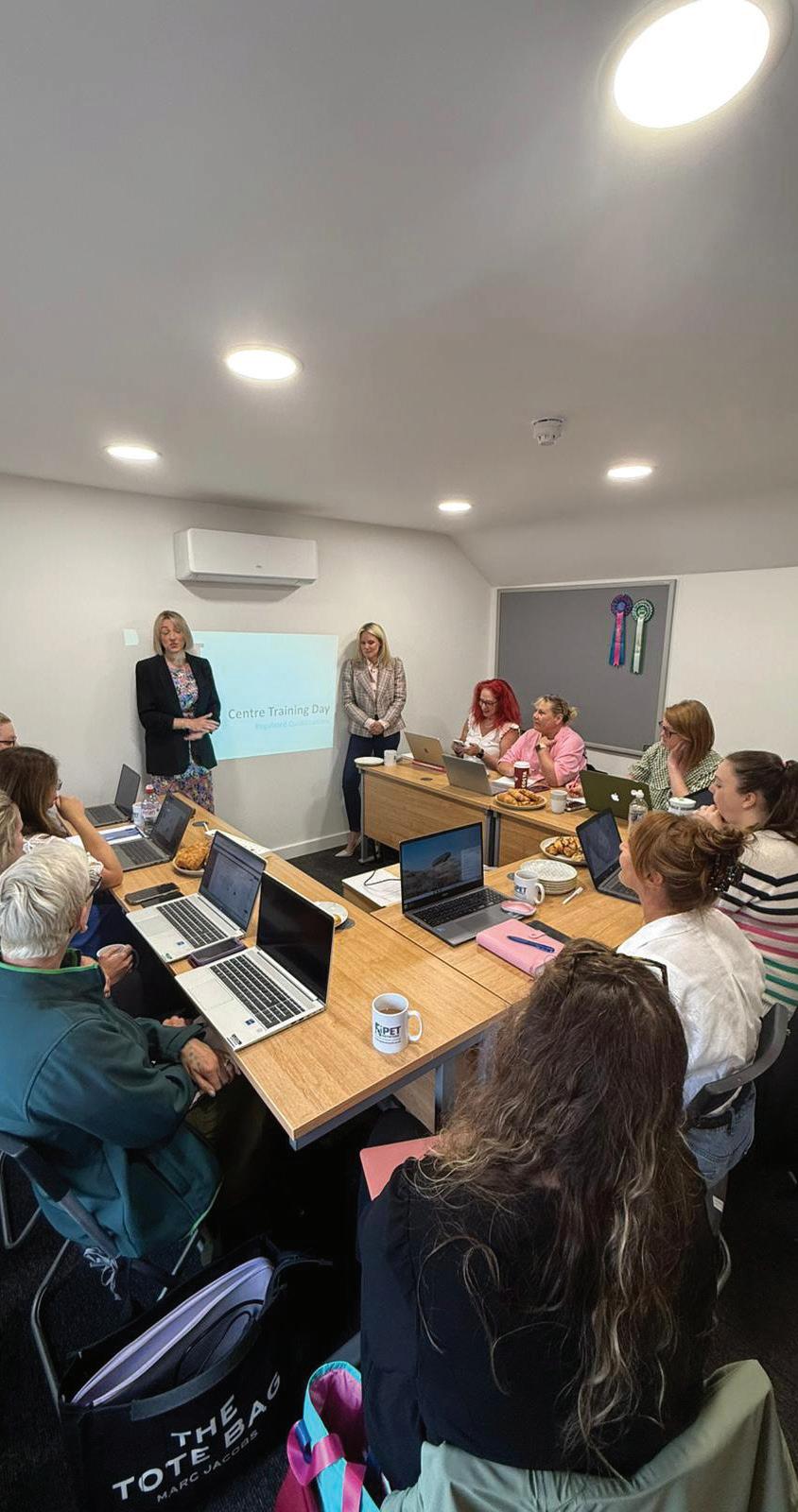
For many established groomers, the passion that started their career is still there, but the industry around them has changed. Clients are asking more questions, welfare regulations are tightening, and commercial and breedspecific techniques and canine behaviour understanding are becoming ever more important. Four Paws Groom School is at the forefront of this change, offering a pathway for experienced groomers to formalise their expertise, boost their reputation, and future-proof their business.
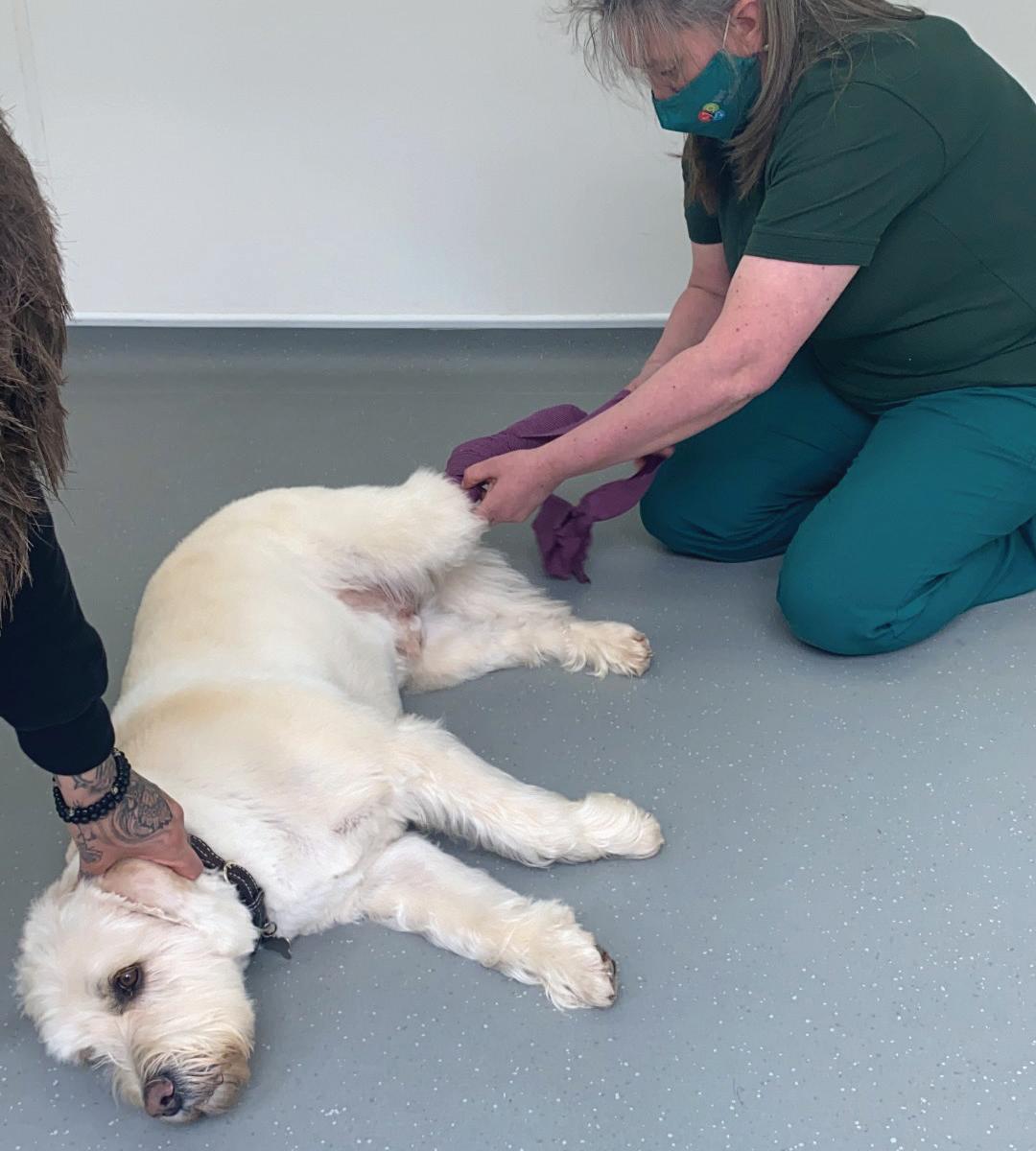
Four Paws Groom School offers the delivery of the iPET Network Level 3 Diploma in Dog Grooming and Salon Management via the Fast Track route, specifically tailored to recognise prior learning and hands-on experience. The qualification includes face-to-face
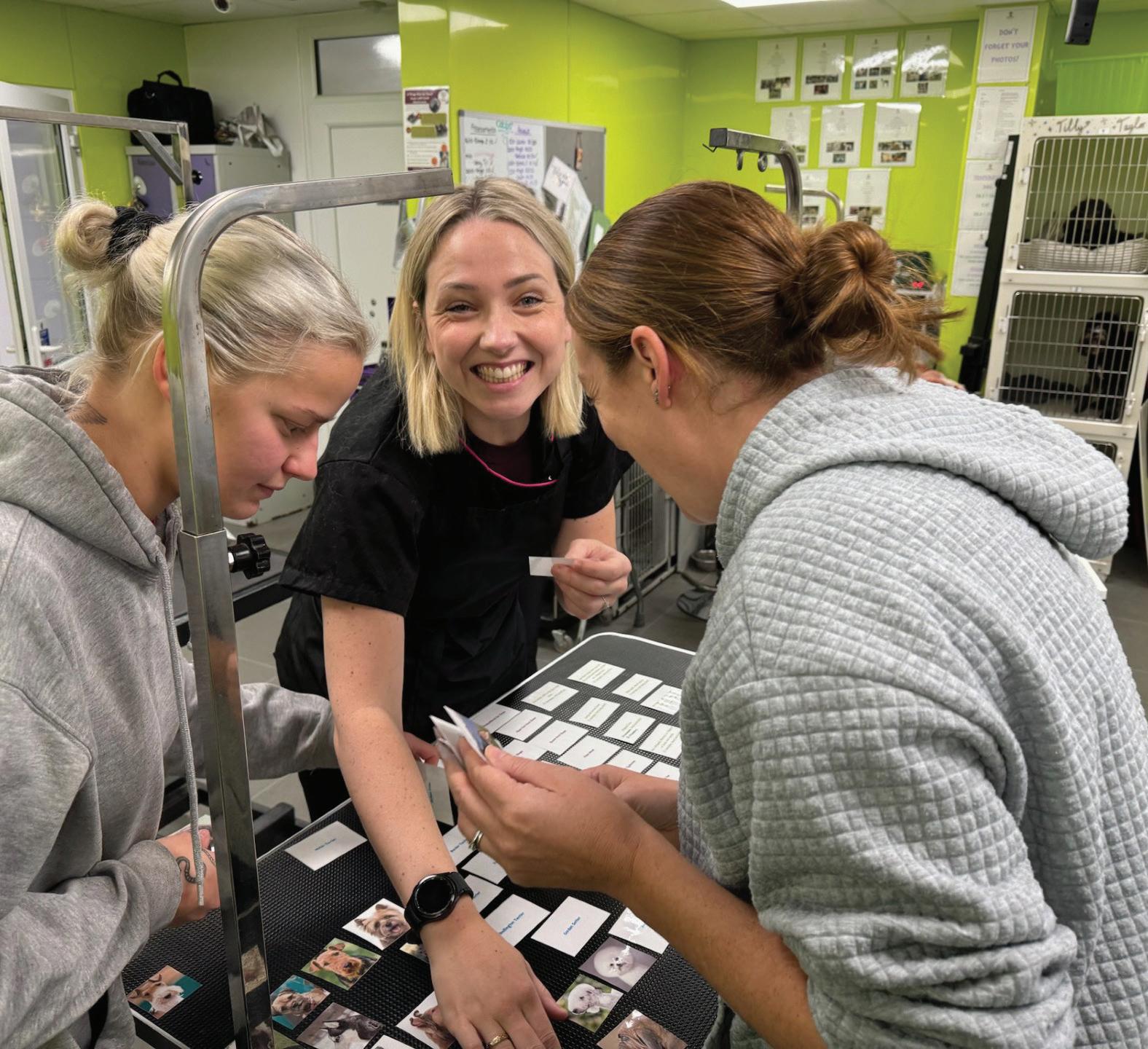
canine first aid training and regular remote theory sessions. This approach not only rewards professional skill but enhances it, opening doors to advanced opportunities such as becoming a tutor, assessor, or salon owner.
Continuing education is not about proving what you already know—it’s about discovering what’s next. From workshops in Asian Fusion styling and hand-stripping techniques to canine oral hygiene, first aid, and behaviour seminars, Four Paws Groom School is committed to raising industry standards through continuous improvement and inspiration.
Achieving a regulated qualification doesn’t just elevate your skillset—it elevates your brand. Qualified groomers stand out in an increasingly competitive market, gain trust from clients who demand the highest welfare standards,
and often enjoy higher earning potential. More importantly, they become ambassadors of excellence within the industry.
At Four Paws Groom School, learning is not a finish line—it’s a lifelong journey driven by passion, innovation, and community. Groomers who step through the doors don’t just gain a certificate; they gain a renewed sense of purpose. If you’re an experienced groomer proud of your craft but hungry for more recognition, more confidence, and more opportunity, now is the time to take the next step. Reignite your passion, refine your expertise, and lead the industry forward.
Four Paws Groom School isn’t just where groomers learn—it’s where true professionals evolve.
www.fourpawsgroomschool.co.uk


by Greg Crisp, President Double K Industries
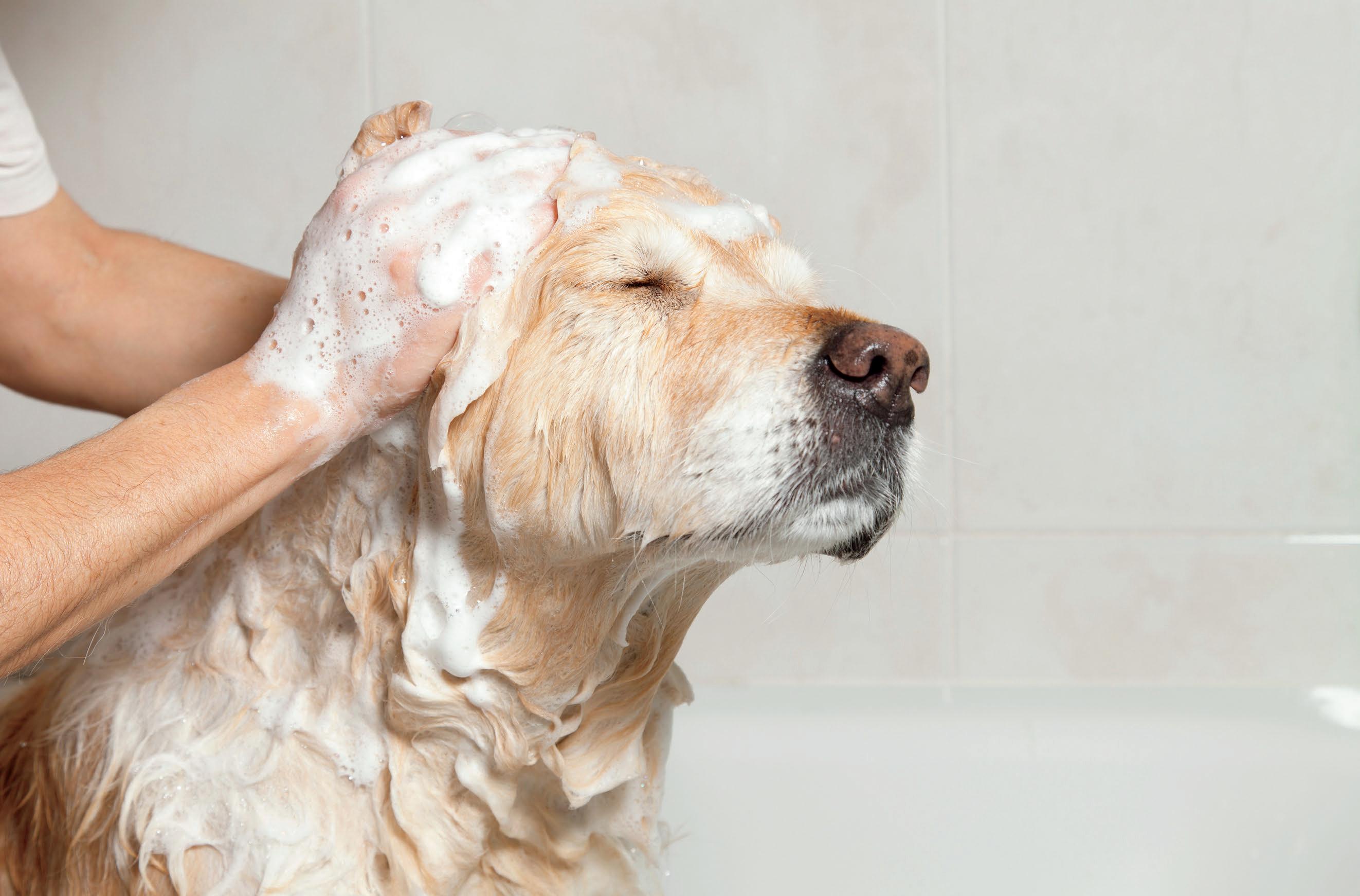
Bathing of course is essential to the grooming process and accordingly to a groomer’s success. There are many opportunities to employ simple techniques to ensure effective, efficient and safe bathing.
Water composition/quality is a frequently overlooked determinant of successful bathing. Hard water or water with high levels of metals or certain minerals impedes lathering and the removal of dirt and debris from coats and skin. Minerals and/or metals can be deposited on the coats and skin during bathing resulting in an unwanted buildup of material on the animal’s skin and coat. This can also cause the coat to appear dull and be less manageable. Heavy metals in water can also be toxic over time for both animals and bathers.
These problems are easily resolved by conditioning or filtering water for bathing. While there are numerous categories of water filtration systems, two primary types are practical for groomers. Mechanical/absorption filtration systems which employ charcoal filter, and reverse osmosis systems are both effective. A mechanical system should be at least two stages with a prefilter in front of a charcoal filter. Fibrous prefilters are less expensive and capture larger particles and prevent the more expensive secondary charcoal filters, which are engineered to capture smaller particles, from getting contaminated and rendered ineffective prematurely.
Reverse osmosis systems are more complicated and expensive but require filter changes less frequently. They are also generally larger even though some mechanical systems are quite large. Bathing with filtered/conditioned water will allow all shampoos to function more effectively, reduce the need for second baths and result in greater efficiency and grooming quality.
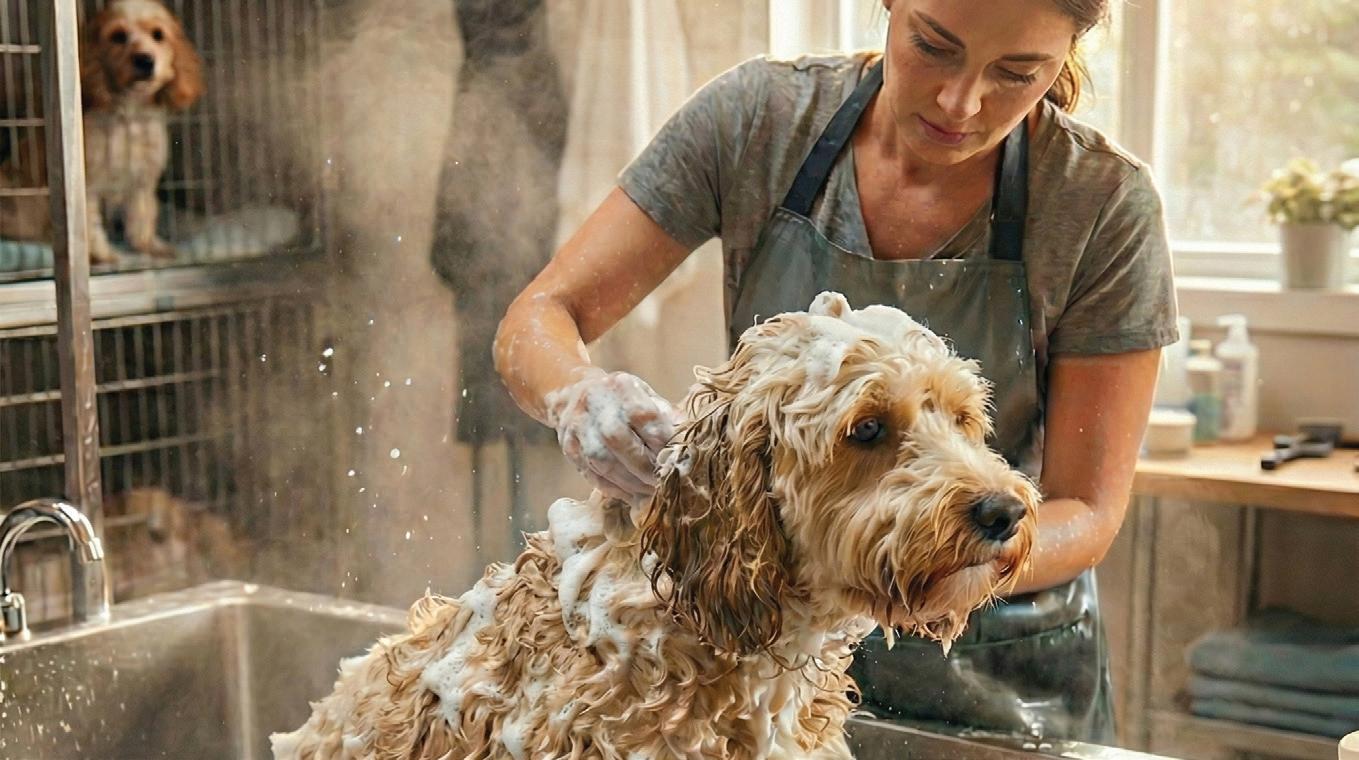
Shampoo dilution and application are also important issues. Unless a groomer is using a bathing system, virtually all shampoos should be diluted for efficiency and value. Dilution is best achieved by adding shampoo to water in a sterile dilution container. Putting the shampoo in the container first results in dynamic tension binding the shampoo to the bottom of the container slowing the dilution process. Dilution ratios for each shampoo product will of course differ but the object is to use as much shampoo as necessary yet as little as possible to reduce cost.
Diluted shampoo sprayed or poured from the back of the head down a wet dog’s back to the tail should flow down the sides without excess product running down the tub drain. Undiluted shampoo applied to the animal takes longer to dilute and spread, longer to work in and longer to rinse as well.
There is some controversy over the value of lather. Lather is very helpful in that it lifts excess oils and dirt from coats to the surface to be rinsed away. Absent sufficient lather, such oils and dirt tend to remain sequestered in the coat preventing thorough cleaning. Well formulated shampoos provide rich effective lather that simultaneously rinses easily.
Grooming areas are microbe rich environments. Cross-contamination onto and between animals can be minimized with simple procedures/ precautions. Cleaning and sterilizing the entire grooming area regularly is important. Shampoo dilution containers should be sterilized between filling cycles and care should be taken to not allow contamination between filling cycles to prevent cross-contamination of pathogens.
Shampoo selection of course is critical. There is no perfect shampoo for every bathing application. It is important to try to find shampoo products that provide the best intrinsic value. The pet shampoo manufacturing business is largely unregulated. Accordingly, it is not uncommon to see advertising claims not supported by fact. If the manufacturer claims concentration ratios of up to 50 or 100 to 1, test the product at the claimed ratios for functionality. If the product diluted to its advertised ratio behaves like water, it might be time to reconsider its cost-effectiveness. Not every shampoo manufacturer will have the best product in every category. It can be wise to search for the best everyday shampoo as well as the best specialty products even if it means using products from several different manufacturers.



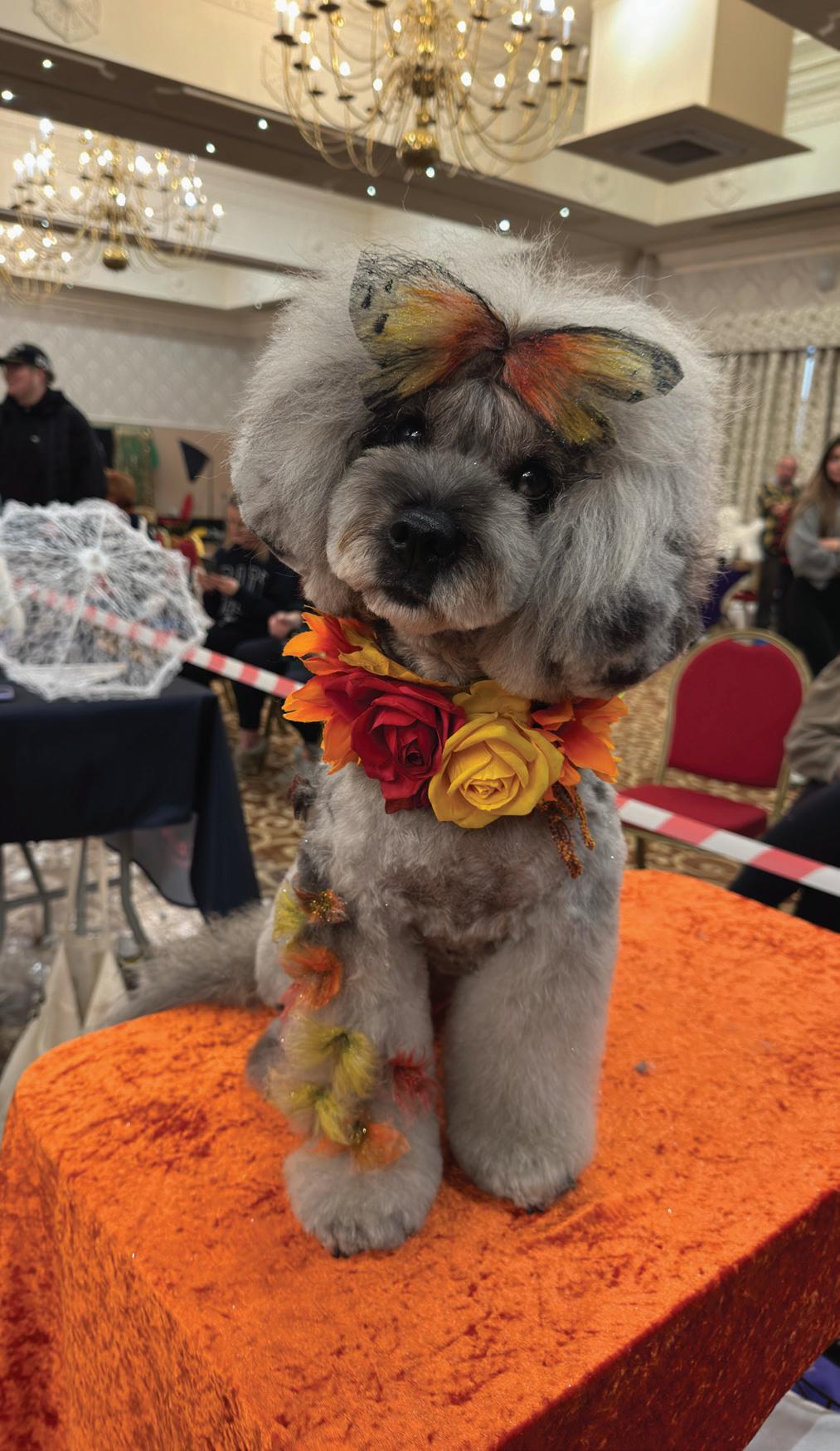
Creative grooming has evolved from novelty to respected art form, offering groomers new ways to express skill, elevate services, and meet changing client expectations. With welfare, education, and thoughtful pricing at its core, creative grooming is reshaping modern salons — one subtle splash of colour at a time.
Creative grooming has long divided opinion, but within the professional grooming industry it is increasingly recognised as a legitimate discipline that blends artistry, technical skill, and a deep understanding of canine welfare. What was once viewed as eccentric or controversial is now finding its place as a premium, client-led service — when practised responsibly and ethically.
At its heart, creative grooming is about enhancement, not excess. As salon owners respond to evolving pet parent expectations, creative elements are being integrated in more subtle, thoughtful ways that prioritise the dog’s comfort while allowing groomers to showcase individuality and expertise.
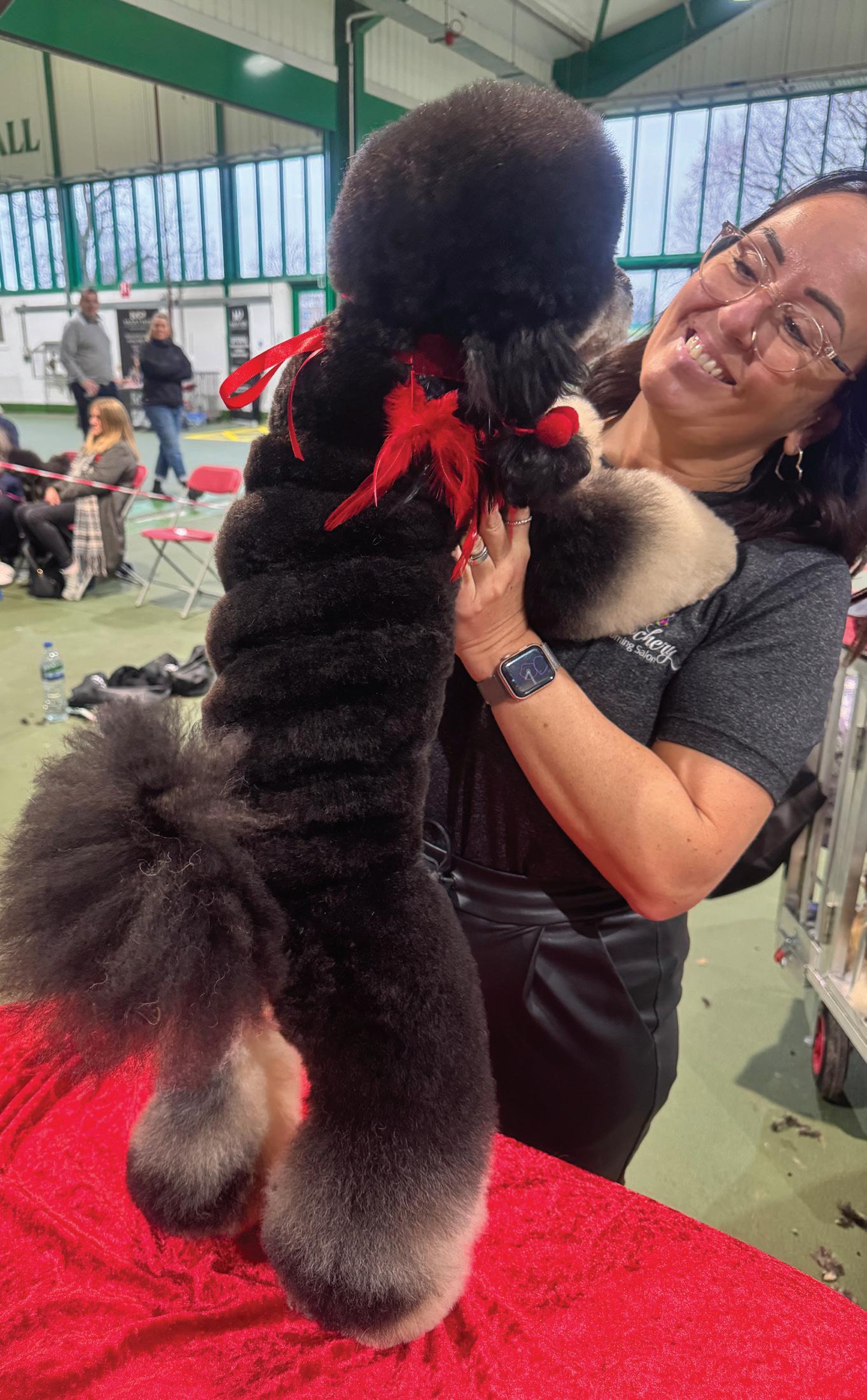
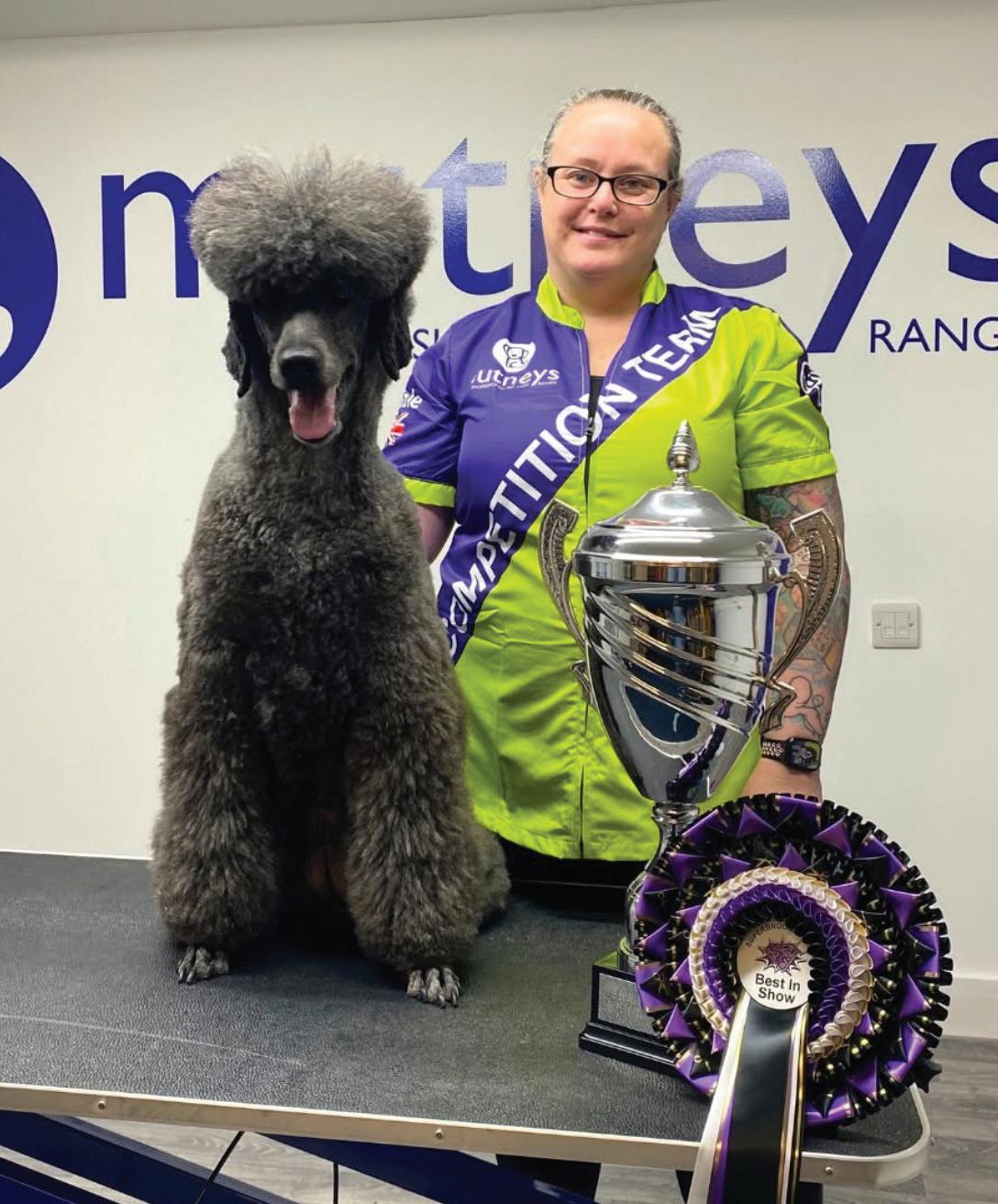
Two salon owners at the forefront of this movement are Amie Gale, owner of K9 Cleaner’s Pet Grooming in Keynes, and Cassandra Stephens, owner of The Poochery, established in 2018. Both bring valuable perspectives on how creative grooming has developed, where it is heading, and how salons can incorporate it safely and profitably.
Creative grooming is far from a modern invention. As Amie explains, its roots can be traced back to the mid-20th century. “One of the earliest well-documented examples dates back to 1952, when actress and singer Doris Day appeared on the cover of Collier’s magazine with her multi-coloured poodles, coloured using food dye,” she says.
The cultural shifts of the 1960s and 1970s played a significant role in shaping creative grooming’s identity. During an era defined by freedom of expression, bold fashion, and experimental hair colour, pets naturally became part of


that visual culture. As Amie notes, “This cultural shift naturally extended to pets, and creative grooming became increasingly visible and popular.”
What began as novelty styling slowly evolved into a recognised art form. A pivotal moment came in 1980 when Jerry Schinberg introduced the first creative grooming competition at the AllAmerican Grooming Show in the United States. This formal recognition helped establish creative grooming within the professional industry, paving the way for education, competition, and standards of excellence.
By the late 1990s and early 2000s, creative grooming began to spread beyond the US, reaching the UK and Europe through magazines, videos, and groomers travelling internationally.
“At this stage, exposure was largely through American grooming magazines, videos, and niche publications,” Amie explains. “This expansion led to the development of education programmes, demonstrations, seminars, and eventually competitive classes.”
Today, creative grooming has a much stronger global presence, supported by improved education, pet-safe products, and welfare-focused guidelines. While it can still be controversial among the general public, social media has


played a significant role in bringing creative grooming into the spotlight and helping it gain wider understanding and acceptance.
Modern creative grooming looks very different from the bold, full-body transformations that once dominated competitions. According to Cassandra, current trends reflect a move towards balance, practicality, and lifestyle-led grooming. “As a salon owner, I’ve seen creative dog grooming evolve from a niche service into a meaningful part of modern grooming culture,” she says. “With social media, today’s pet parents are more invested than ever in how their dogs look and feel, and that shift is driving creative trends that balance individuality, practicality, and wellness.”
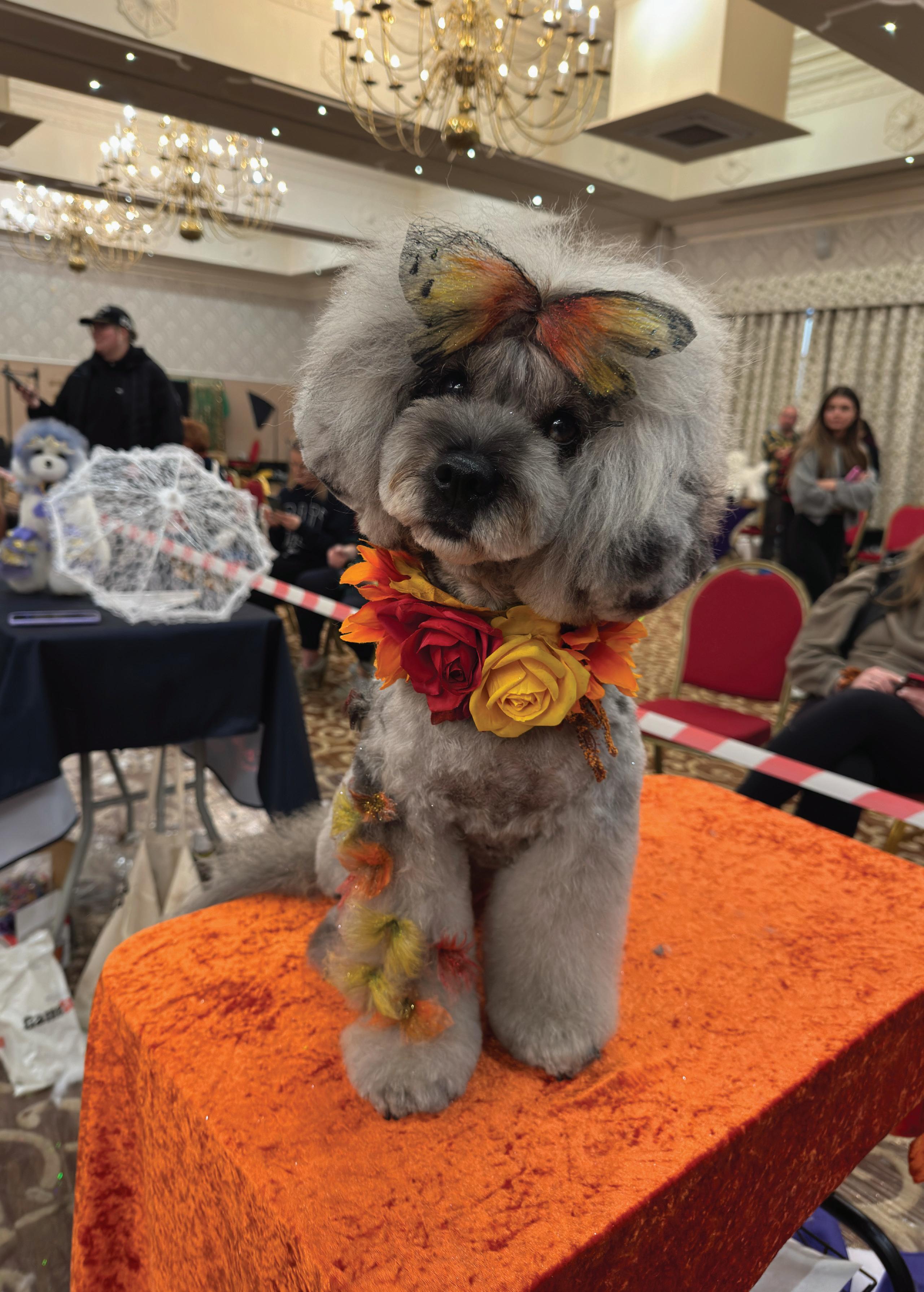
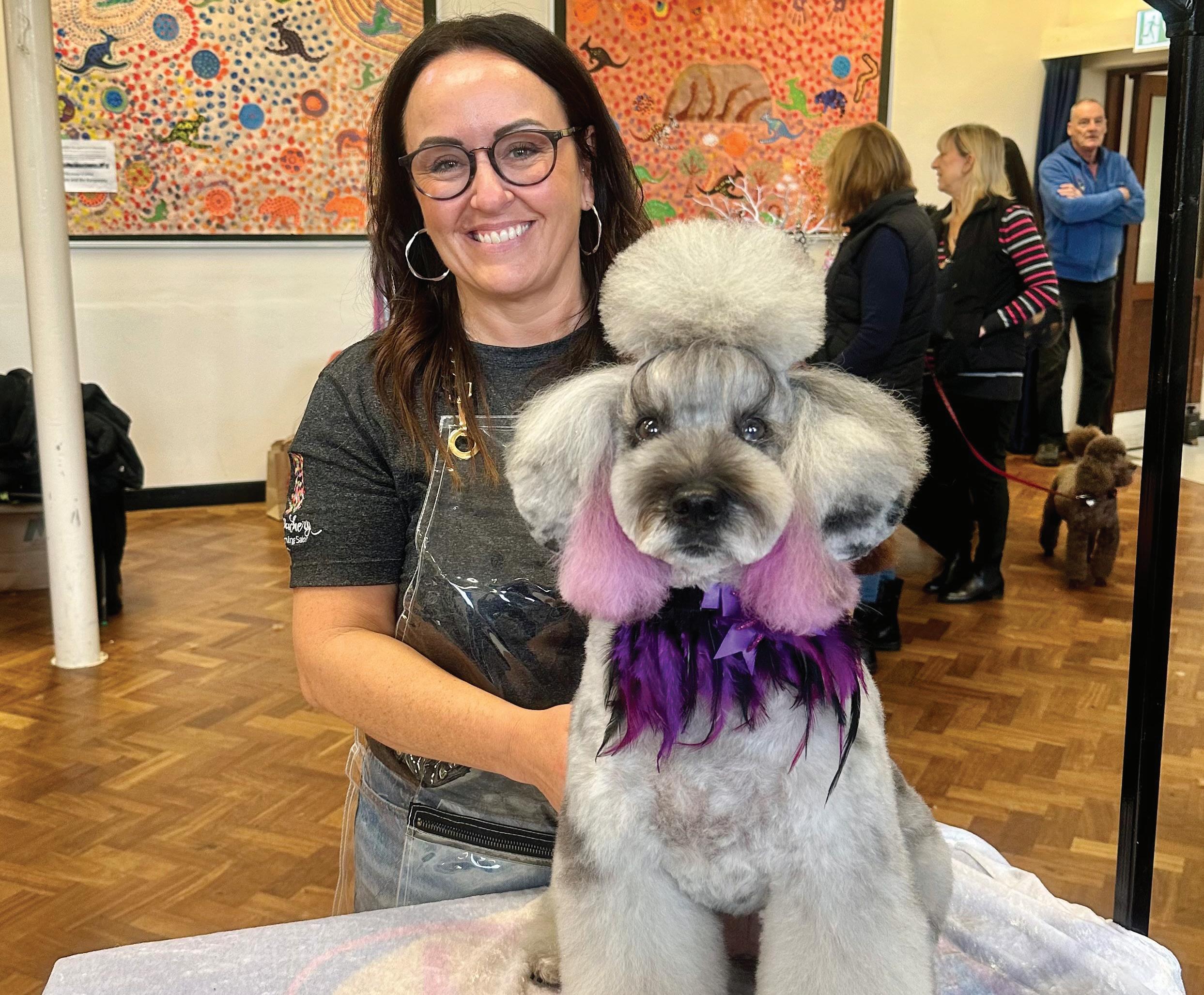
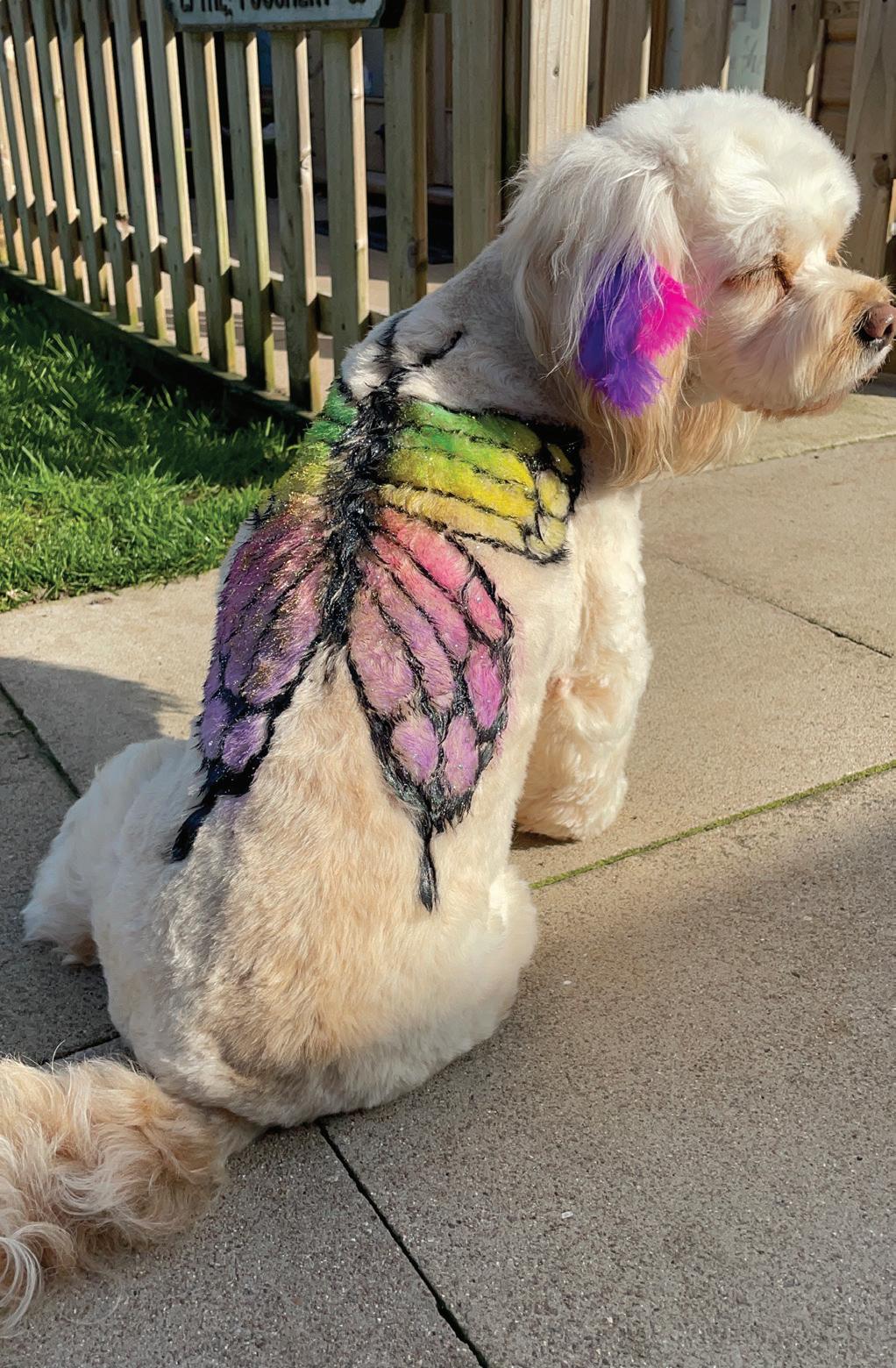
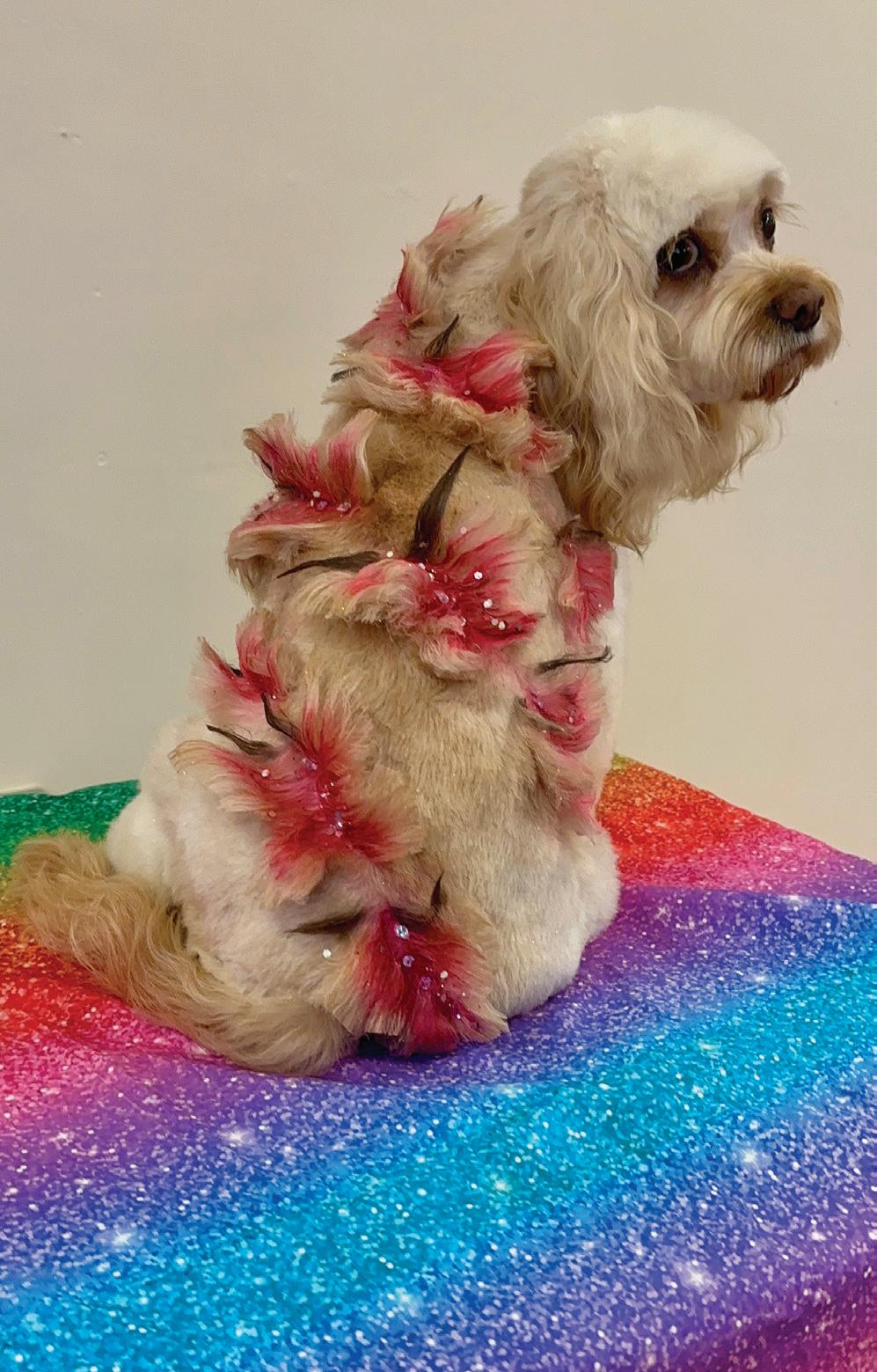
One of the strongest trends is subtle creative colour. Rather than dramatic makeovers, many clients opt for soft accent colours on ears, tails, or feet, or hidden ‘peekaboo’ details. Seasonal and celebration-based colouring has
also grown in popularity, alongside carving patterns into the coat for clients who view grooming as part of their dog’s lifestyle rather than an occasional necessity.
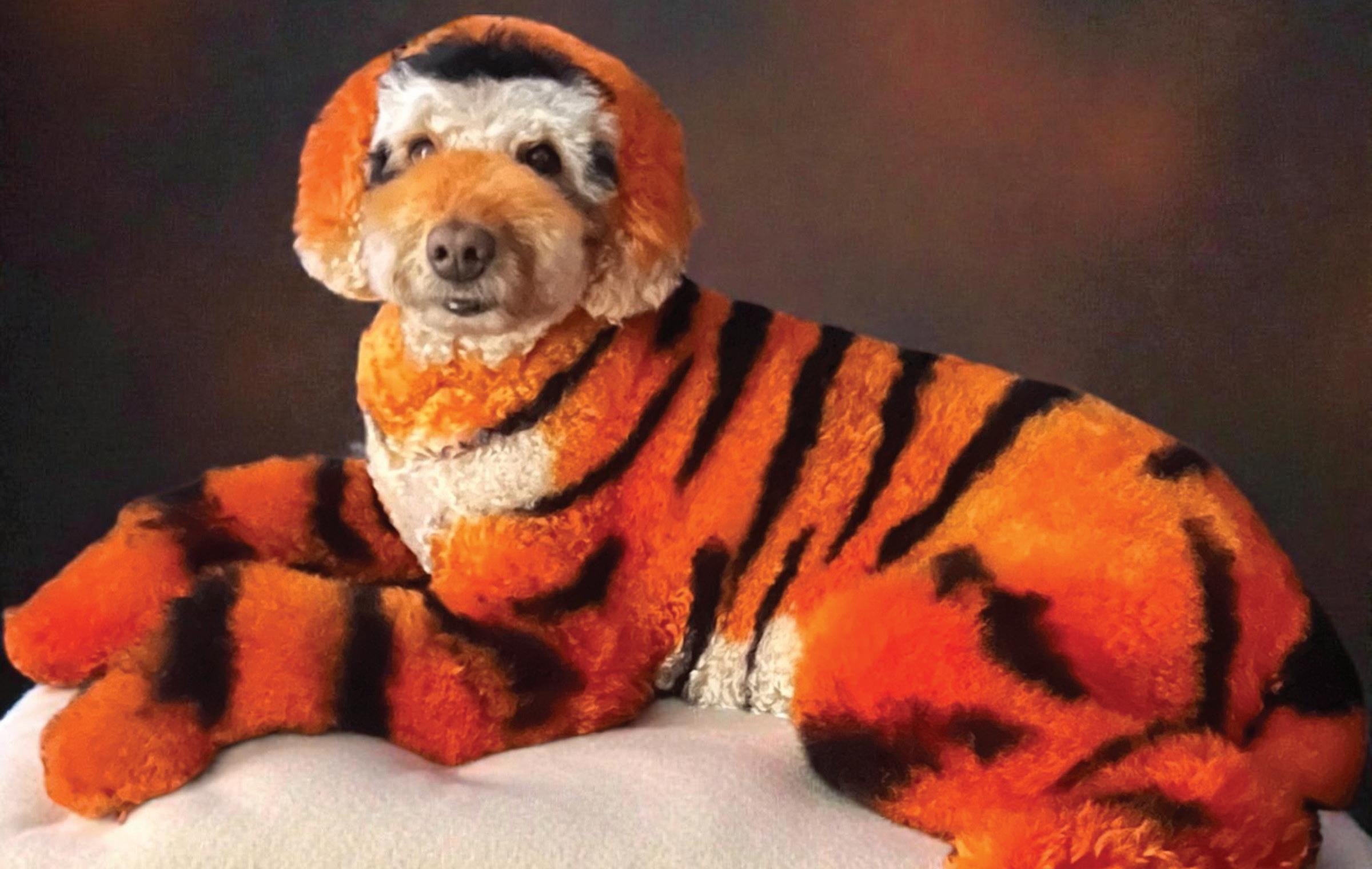
Amie highlights animal-inspired prints such as leopard and tiger patterns as another popular option. “These designs are relatively simple to execute and can be easily incorporated as a premium add-on service,” she explains. “They offer a striking yet controlled way to introduce creative grooming while maintaining balance, symmetry, and coat integrity.” These designs appeal particularly to clients who want something eye-catching but still tasteful and manageable.
Asian Fusion and teddy bear styling also continue to gain momentum within salons. Cassandra explains that these styles, with their rounded faces, plush silhouettes, and detailed scissoring, photograph beautifully and encourage more consistent maintenance schedules.
From a business perspective, this benefits both the dog and the salon, reinforcing regular grooming routines while elevating the finished look. Luxury finishing touches such as feathers, foil extensions, and gems further enhance the experience, adding perceived value without significantly increasing grooming time.
For groomers interested in introducing creative grooming into their salons, both contributors stress the importance of starting small. Amie suggests ear and tail colouring as an ideal entry point. “These areas are perfect for subtle creative touches that enhance a groom without overwhelming the overall look,” she says.
Temporary colour options such as pet-safe chalks are well suited to clients who want a short-term or trial design, while colour-depositing shampoos offer soft pastel tones that fade gradually. As confidence and demand grow, salons can progress to semi-permanent and permanent dyes, allowing for more


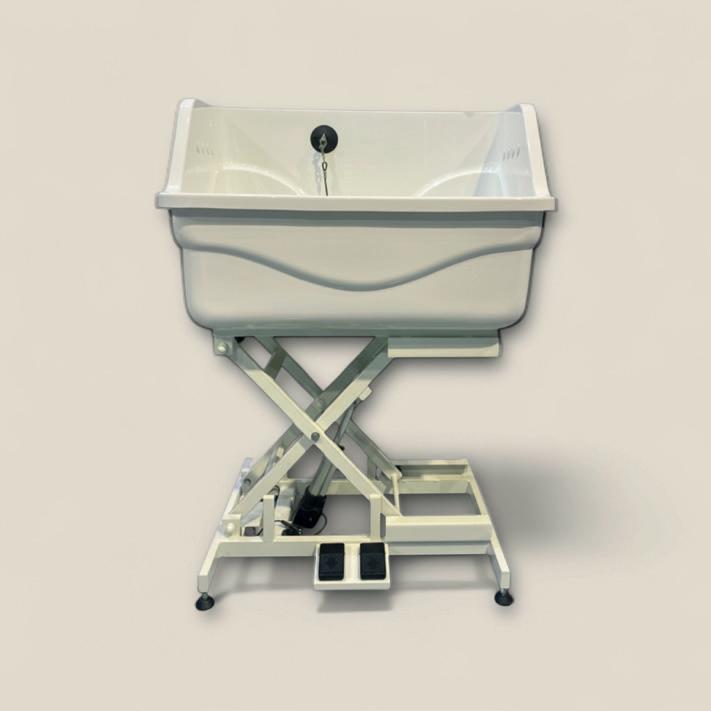
Available in three sizes and a chose of colours
Aeolus leaders in quality grooming products Tables, Baths, Dryers and much more!
detailed and longer-lasting designs.
Despite its growing popularity, creative dog grooming is not currently regulated, meaning there is no formal legal standard governing its practice. This places even greater responsibility on groomers to pursue education and uphold welfare standards.
“Offering creative grooming safely and ethically requires training and a strong commitment to animal welfare,” Cassandra explains. “Creative styles often involve advanced techniques, extended handling, and sometimes the use of pet-safe dyes or embellishments, all of which demand skill, knowledge, and care.”
Understanding skin sensitivities, coat types, and canine stress signals is essential to ensure creative techniques do not compromise a dog’s wellbeing. Both contributors emphasise the importance of using only pet-safe, nontoxic products formulated specifically for animals, alongside patch testing and correct application techniques.
Amie highlights the value of reputable education pathways, including
certified creative grooming courses, workshops and seminars at grooming shows, mentorship programmes, and association-led training aligned with recognised welfare standards. While regulation may be limited, responsible creative grooming relies on education, correct product use, and a solid understanding of canine anatomy, coat care, and skin health.
Pricing creative grooming correctly is another crucial consideration. Creative services should always be positioned as premium add-ons, reflecting the time, materials, and expertise involved. “When discussing pricing, it’s important to recognise that costs vary greatly from one business to another,” Amie says. “There is no set price rule, and pricing must ensure your business remains profitable.”
Cassandra describes pricing as a balancing act. “Time is the biggest cost driver,” she explains, noting that creative grooming appointments often take significantly longer than standard grooms. Many salons adopt tiered pricing based on complexity,
allowing clients to choose from subtle accent colours through to full creative makeovers. Package deals, memberships, and limited-edition seasonal offerings can also encourage repeat business and create excitement.
Expanding into creative grooming requires thoughtful operational planning. Cassandra advises salons to invest in training and start with select stylists who show aptitude and interest, gradually expanding services as demand grows. Scheduling adjustments, safety protocols, and clear client communication are essential to ensure creative grooming integrates smoothly into salon workflows.
Creative grooming is no longer about shock value or excess. When practised responsibly, it represents craftsmanship, creativity, and care — offering groomers an opportunity to express artistry while strengthening client relationships and elevating their business. As Amie and Cassandra both demonstrate, the future of creative grooming lies in subtlety, education, and an unwavering commitment to canine welfare.

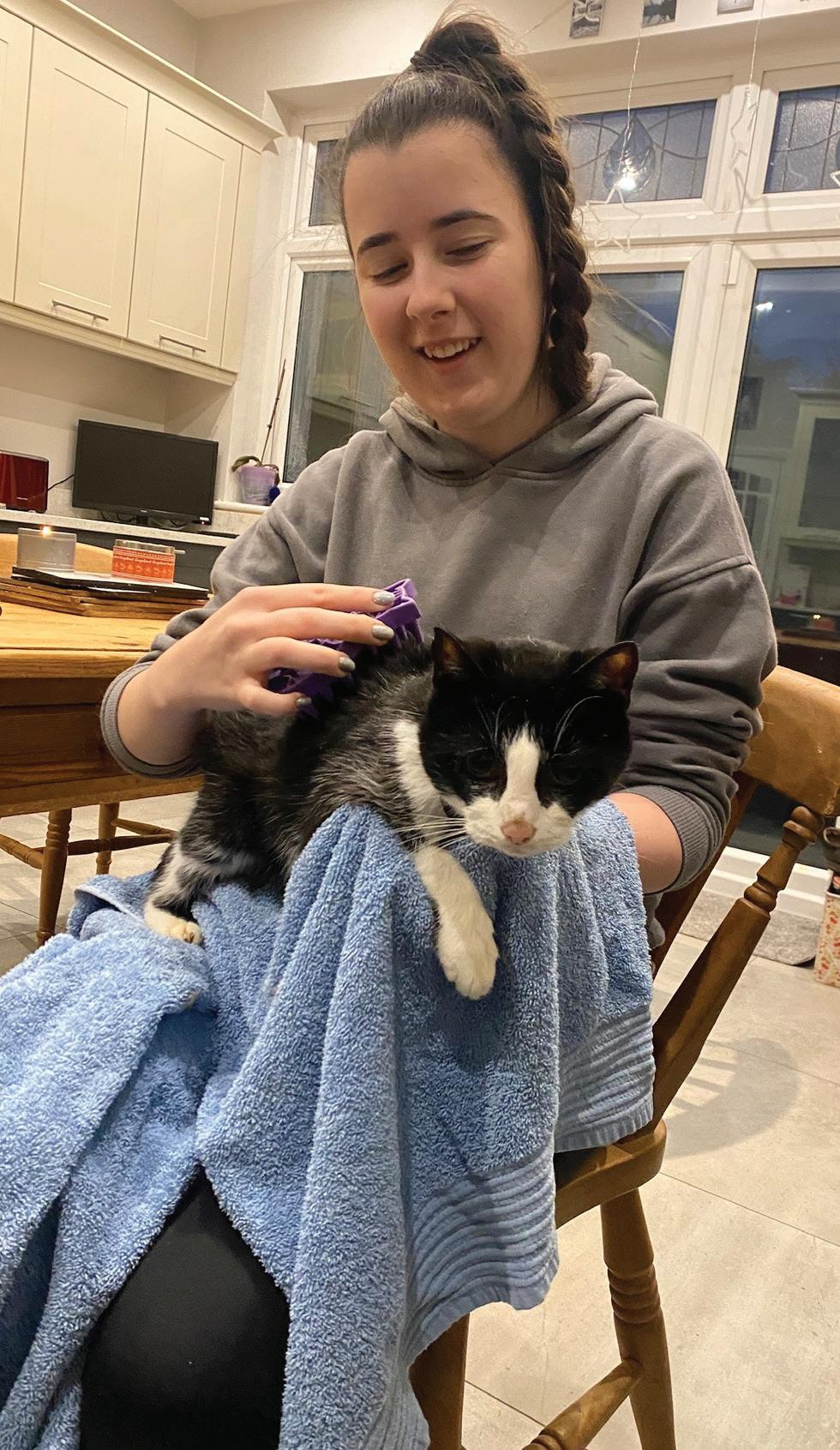
Cat grooming expert Katie Gwilt, founder of The Kat Lady®, explores why 2026 is set to be the year of the cat. In this month’s article, she explains why specialist feline training matters, how groomers can expand their services, and what to expect from her new welfare-led cat grooming courses.
Welcome to January’s catfocused column, where we are looking at adding cat grooming to your offerings for 2026. There are now several different courses available, which is a huge improvement on the three I had to choose from when I trained back in 2020. There are also more locations around the UK rather than just the South East, making it far easier for people to access the training they need.
Specialist training is essential, as cats are not small dogs and have completely different behaviour, personalities and handling needs. They require specific study, have different nutritional needs and body language, and even their skin pH varies—meaning many dog products simply aren’t suitable. Cat-specific ranges are always the best place to start rather than products marketed for both dogs and cats.
Reports vary, but the UK has around 13.5 million pet dogs owned by roughly 36% of households, compared with about 12.5 million cats in 29% of households. Some surveys even show cat ownership overtaking dogs for the first time, with many calling 2026 “the year of the cat”. Now think about how many dogspecialist businesses you see compared with cat-focused ones. The discrepancy is huge. Just consider the business you may be missing by excluding cats from your services.
My new course launching in January 2026 is aimed at complete beginners,
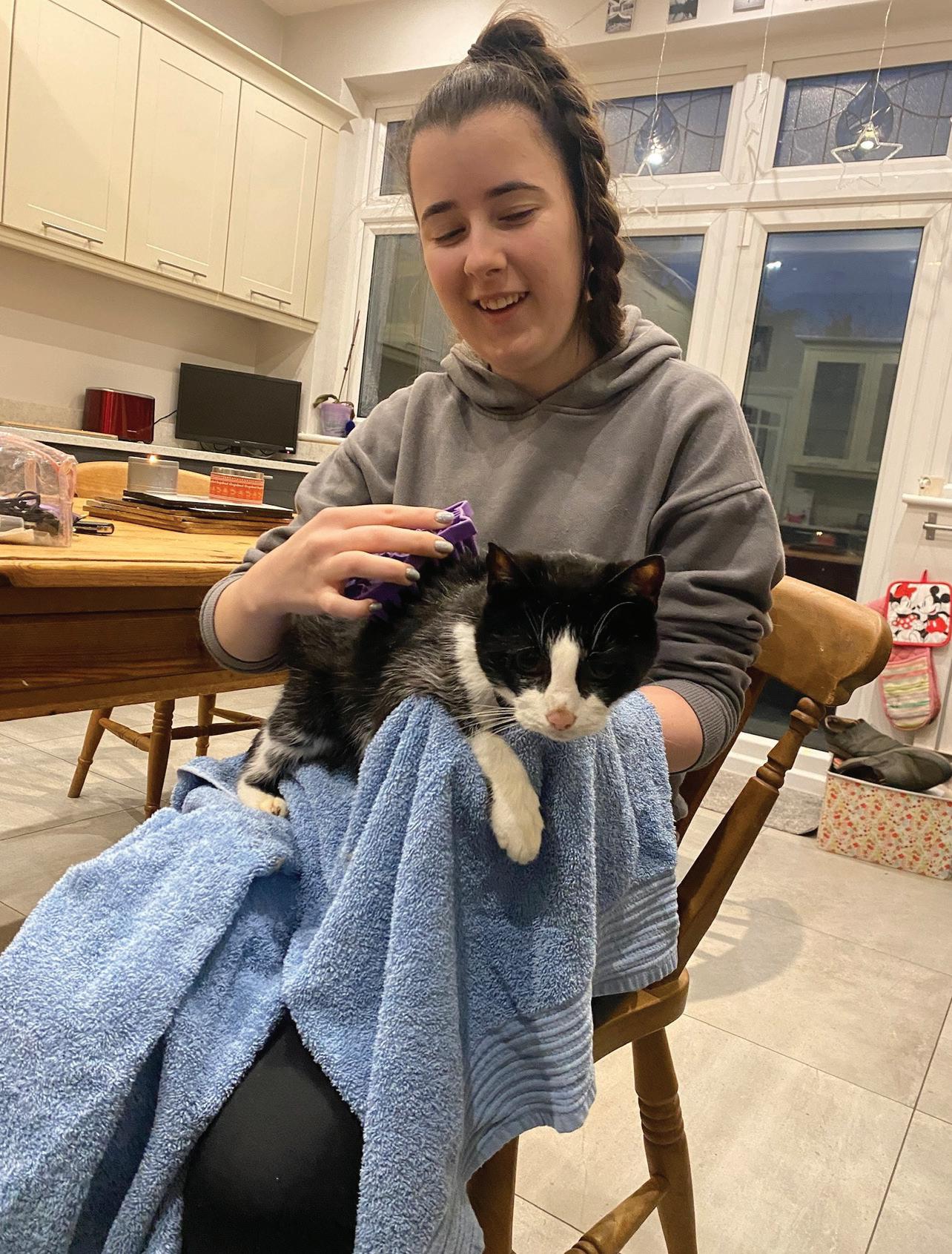
pet groomers and other professionals looking to add cat grooming to their portfolio. It strongly focuses on welfare, behaviour, learning to read a cat and catspecific handling techniques. Created entirely from scratch for cats, it covers the practical grooming skills as well as setting up and running a cat-focused business,
feline first aid and much more.
There is a 5-day practical version, which I teach on mobile visits with my clients around the North West in their homes, or in your salon if travel is possible. For those new to grooming or wanting more hands-on experience, there is also a 20-day version. Both
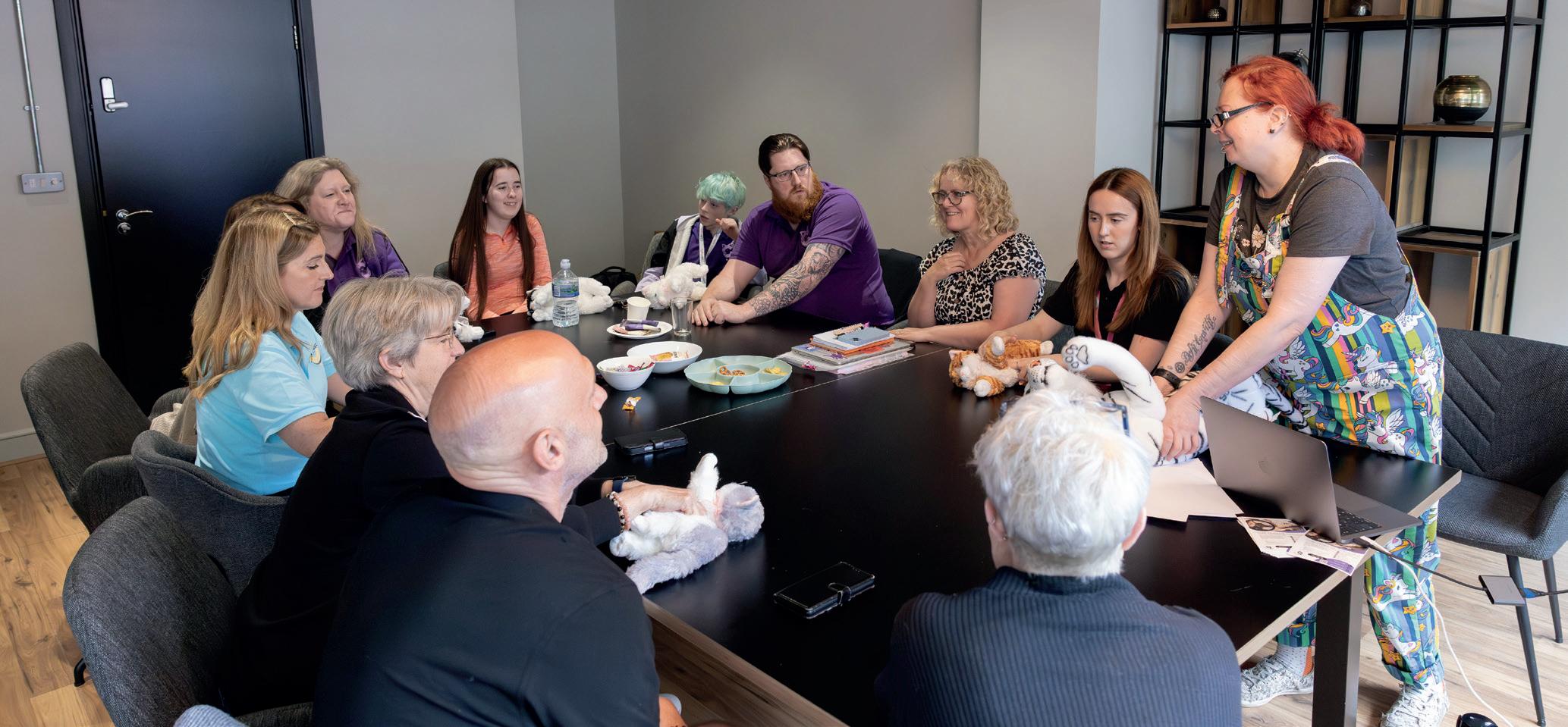
options include the same online modules and a dedicated feline first aid course.
I have always enjoyed teaching and have taught cat grooming on behalf of another organisation. They offer a great course, but I wanted something more authentic to me, reflecting my ethos of welfare-first and allowing for mobile as well as salon-based learning. Although I do have access to a salon and planned to use it more, 99% of our clients still want a mobile service in their own home. Cats are generally not good travellers; it’s not natural for them to be taken places in the car. Many get extremely anxious in a carrier, let alone travelling to a new environment filled with unfamiliar animal and human scents before the grooming has even begun.
I have successfully taught my current second groomer and previous students while working mobile, so why not continue the model? It isn’t for everyone, but it’s a great alternative for those wanting something flexible and truly designed around cats, rather than expecting cats to adapt to us (as anyone who has met a cat knows, this rarely works!). It’s all about providing different course types so people can choose what suits them and their clients. Just look at the fantastic work The Holistic Grooming Academy is doing for dogs alongside other major organisations.
There are so many stereotypes about
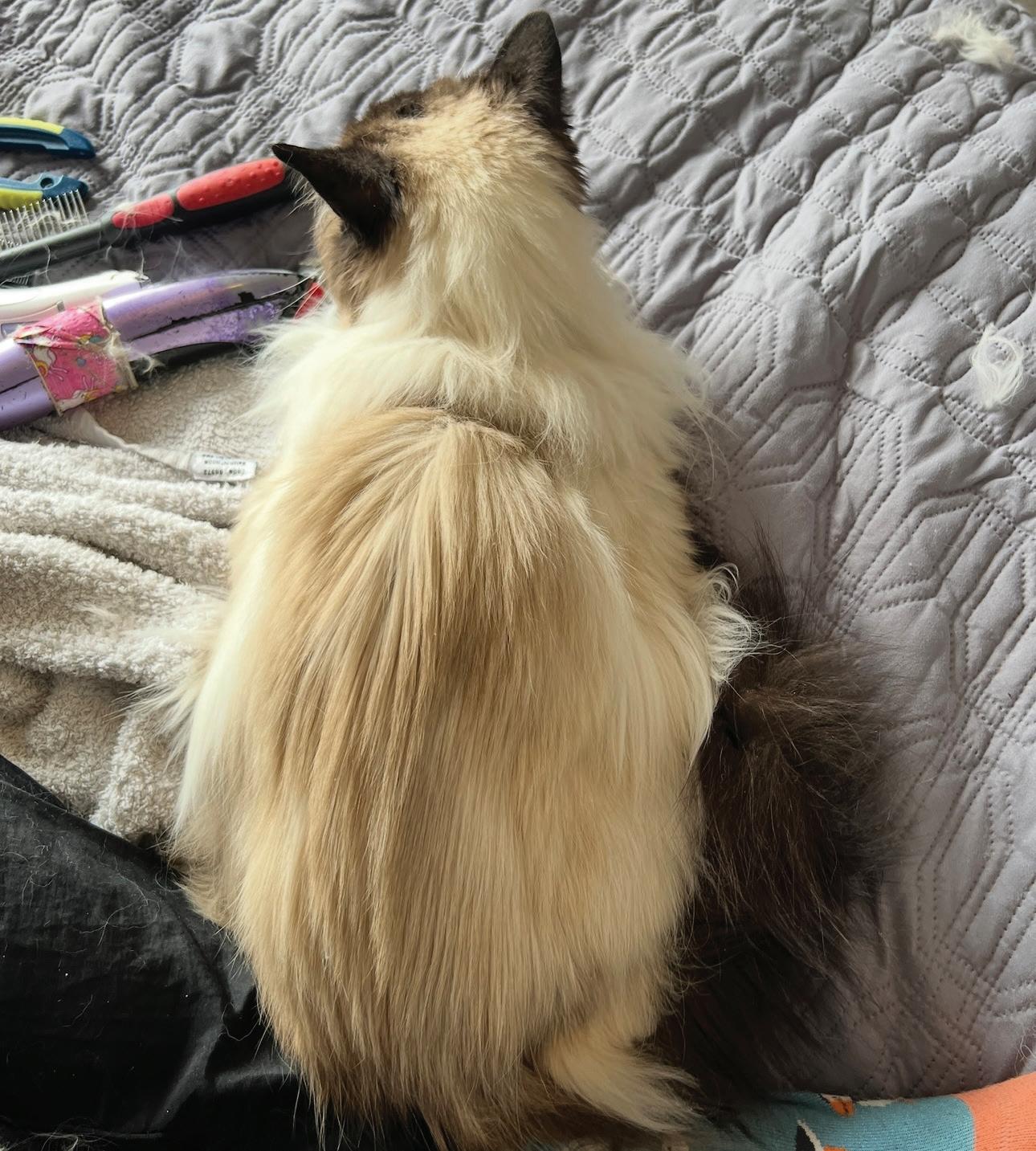
cats—aloof, aggressive, grudge-holding, independent, low-maintenance—which simply aren’t true. I want to keep educating as many people as possible about the joy of spending time with cats and how understanding them better allows their personalities to shine. Studies show cats can form even more secure attachments with humans than
dogs when trust is involved. Campaigns such as Cats Deserve More are finally helping to challenge outdated beliefs.
For more information on cats, our ethos and our course, visit www.thekatlady.co.uk or email meow@thekatlady.co.uk.