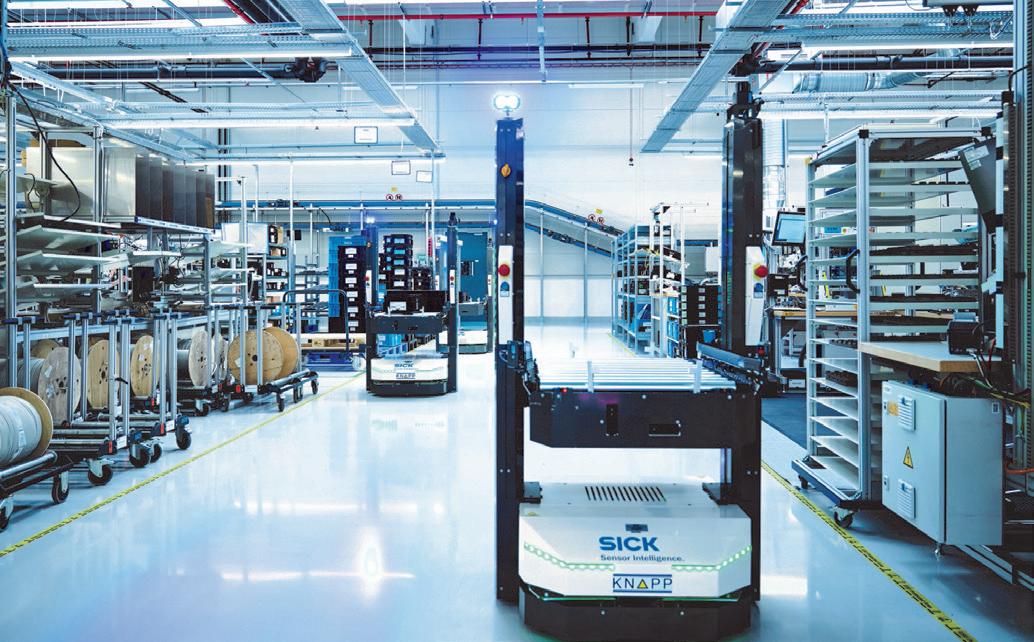
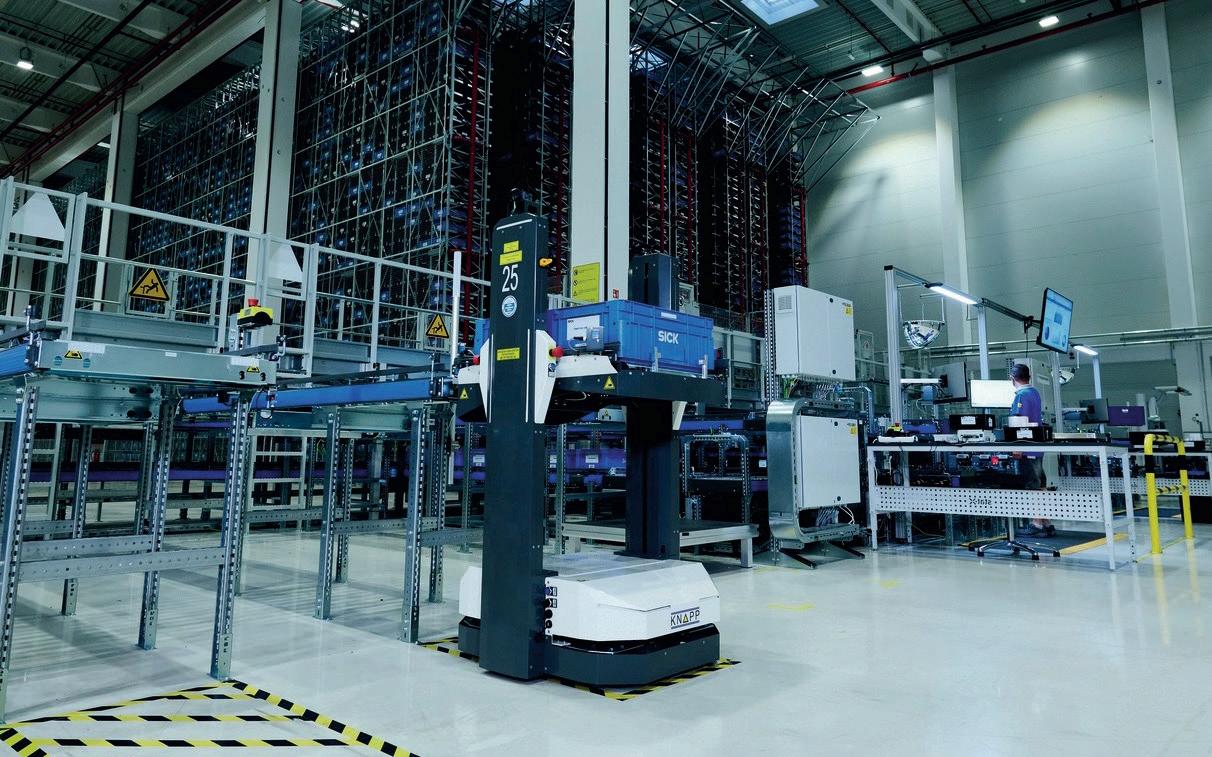
Welcome to the July issue of MEPCA magazine. At the heart of this issue is our Facilities Management (FM) focus. FM concerns are common across all industries, not just manufacturing, but the pressures currently facing the sector make FM ever more important. Indeed, factors such as maintenance, HVAC, safety, cleaning & hygiene, security and waste management are all vital to operational performance. And yet, as demonstrated in Tork’s article on hygiene p.28-29, their importance is often overlooked. Elsewhere in this issue, I report on a recent Engineering Intelligence panel discussion held at The Royal Academy of Engineering in honour of Women in Engineering Day (p.14); KNAPP provides a taster of the August issue’s focus on Warehouse Automation with a piece on automation logic (p.38); we share thought leadership from Make UK, AEMT and GAMBICA; and our Manufacturing Champion for July is a success story for UK SME engineering and STEM education (p.13).
LiftEx, takes the cover this month. Turn to page 16 to learn more about this year’s edition of the LEEA’s flagship event. You’ll find details of other upcoming events, along with reviews of those you may have missed, in our regular events section.
I have to say I’ve gained a new level of respect for event organisers from planning my wedding. By the time you read this, I will be married, and a year older, too. I shall return in the August edition with a major life milestone achieved, that bit older, and wiser (as the theory goes). In the meantime, I hope you enjoy this issue.
Oliver Batt, Editor
@Mepca-magazine
To subscribe to MEPCA visit our website www.mepca.com or scan the QR code.
ELEMENT SIX AND ORBRAY ACCELERATE WSC™ FOR VOLUME PRODUCTION
Element Six (E6) and Orbray, both leaders in advanced materials, have announced the next phase of their partnership, building on a joint vision to deliver wafer-scale single crystal diamond (WSC™) for next-generation applications.
The companies have successfully established a reproducible process for 3-inch WSC™ diamond, representing a significant step change in size, uniformity and manufacturability compared to conventional single crystal (SC) diamond materials. Development of larger 4-inch substrates is underway.
In parallel, 2-inch wafers optimised for epitaxial applications are nearing finalisation, while 2-inch wafer diamonds for thermal bonding applications are being prepared for volume production at E6’s world-class chemical vapour deposition (CVD) facility in Gresham, Oregon.
Since establishing the partnership, E6 and Orbray’s efforts have focused on advancing wafer size alongside manufacturing maturity, aiming to accelerate broader adoption of WSC™ diamond across 6G wireless components, power and RF electronics, sensing, thermal management and quantum technologies. Together, these developments represent a transition from R&D to scalable implementation.
“Our partnership with Orbray was built on shared strengths in innovation, quality and technical expertise,” said Siobhán Duffy, CEO of Element Six. “The progress we are making together shows how those core competencies translate into tangible delivery, as we move closer to pioneering wafer-scale single crystal diamond at the quality and volumes our industrial customers need.”
orbray.com/en/ e6.com/en/
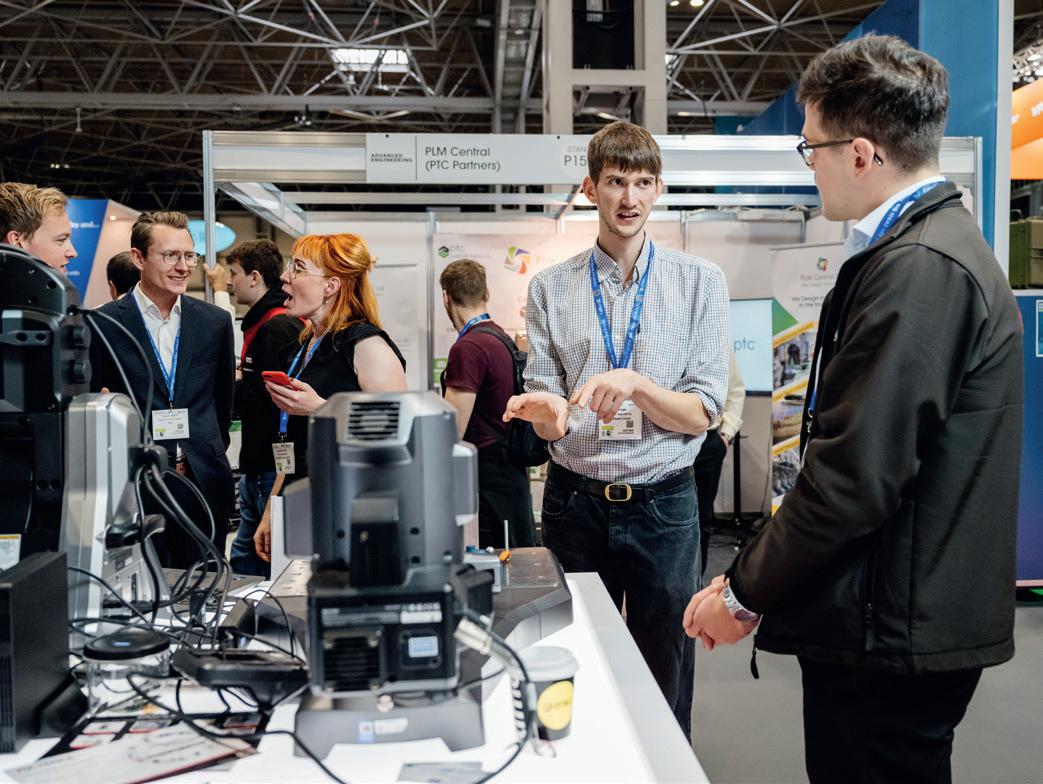
PTC UNVEILS A WAVE OF PRODUCT INNOVATIONS TO BOOST UK MANUFACTURERS
PTC has launched its latest wave of product innovations to help manufacturers move faster, build smarter products and unlock more value from their data.
Unveiled at the recent PTC NEXT™ Chicago event, the solutions include two new cross-portfolio products, a new AI platform, 12 new AI agents, 10 new integrations, and major updates to every product in the digital transformation specialist’s portfolio, further advancing its Intelligent Product Lifecycle vision.
When product data is fragmented, the effects are felt across businesses, with products slower to market, quality suffering, complexity and costs increasing and regulatory compliance requiring more effort than it should.
“Every innovation we launched at PTC NEXT has been designed to help our customers move faster, improve access to product data, and accelerate their transformations with the Intelligent Product Lifecycle,” said Neil Barua, CEO of PTC.
New solutions, such as the PTC Orbit™ AI-first, cloudnative solution, connects data from PLM, ERP, CRM, IoT, EAM, and FSM systems into a single, unified asset record and applies AI to maintain data quality and make asset information and insights accessible across the enterprise.
PTC’s Jetstream™ cloud-native solution solves the longstanding challenge of collaboration across product data by enabling internal and external teams to easily share, review and capture traceable feedback, all while staying integrated with PLM, ALM, and CAD and powered by AI.
The London-based company also previewed its new AI platform, which, along with AI agents and assistants embedded across its portfolio, extends the value of product data across the enterprise.
ptc.com/en/products
TWENTY YEARS OF GROWING TOGETHER
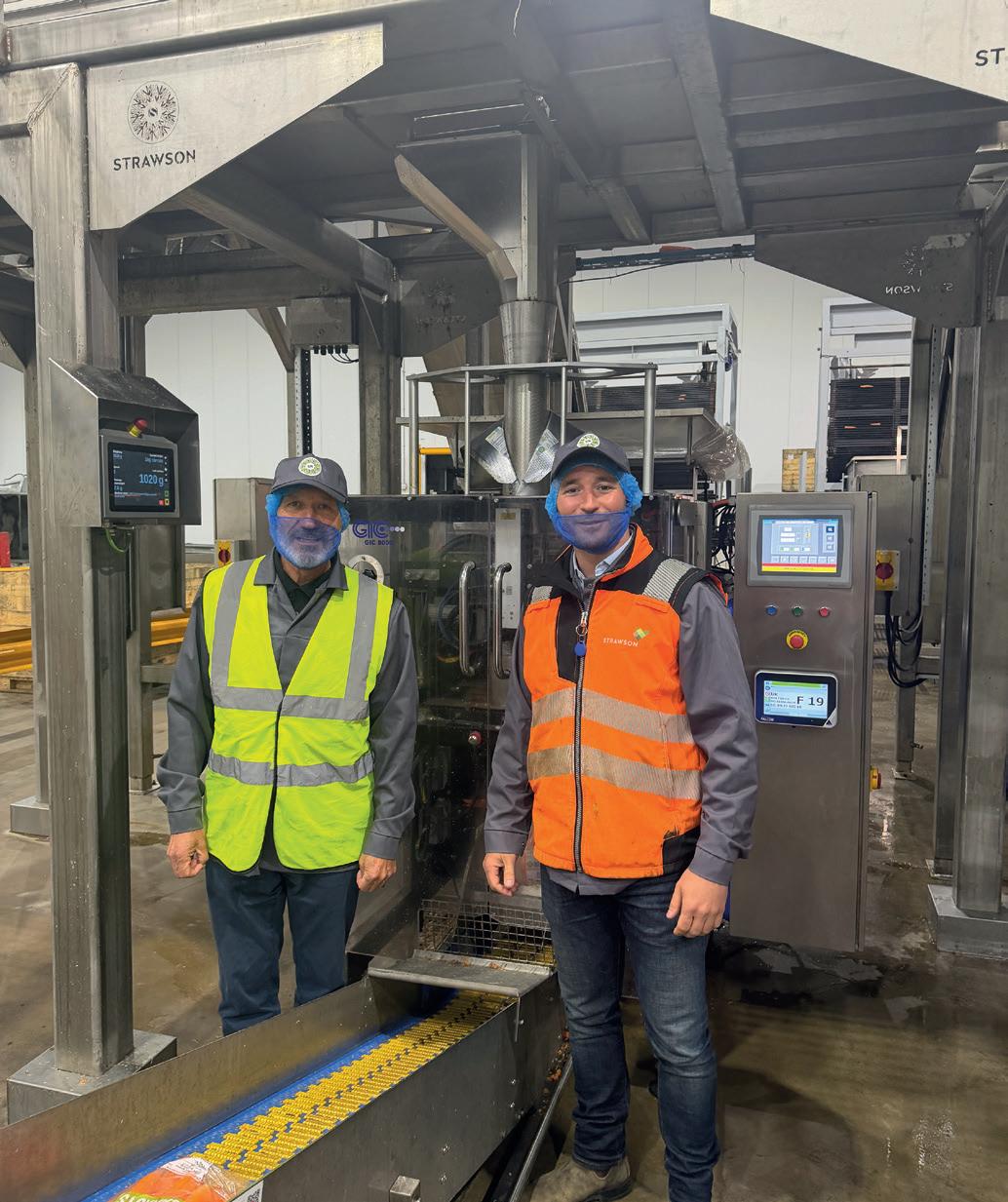
Vertical form fill and seal packaging machinery manufacturer, GIC, and one of the country’s leading suppliers of fresh produce, Strawson, cerebrate 20 years of working together.
Like many successful fresh produce suppliers, the Strawson business has grown out of a family farm, which is still active today, growing potatoes, carrots, parsnips and arable crops across more than 16,000 acres in Suffolk, Norfolk, Nottinghamshire, Leicestershire and Lincolnshire.
The family firm ventured into contract packing for retail customers in 2002, and after four years, needed to improve its end-of-line packaging machinery, which is when Strawson first encountered GIC.
“Back then, it was Jake Rice who was overseeing engineering,” says Andy Beal, GIC’s managing director. “We met at a trade show and got talking, after which he invited me over to the factory to look at how they were packing and to suggest improvements. We installed our first machine into Strawson, two VFB2000 machines, a couple of months later.”
Since then, Strawson has grown significantly and today supplies potatoes, parsnips and carrots to major retailers and food producers. The business has always remained focused on its core values, though, says Harry Strawson, joint managing director: “Strawson has changed a lot in the last 20 years, and in particular, in the last five years. We’ve seen significant growth in demand, and as a result, we have had to invest in technology, automation, and our team, while all the time staying true to our original family culture. We’ve grown on the back of being reliable, delivering a high-quality product and sticking to our values.
“As a business that works across multiple different areas – farming, transport, and factory – we have decided to partner with individual suppliers in each area. We’re putting high volume through fewer people and working collectively with them, rather than going out to tender every time. This means we’re not wasting people’s time, and we don’t have lots of different kit and spares from different suppliers.
“GIC have got a really good product, good people, and they’re local, which makes them the ideal company to partner with for our end-of-line bagging and packing.”
Today, Strawson operates 14 GIC vertical form fill and seal packaging machines: two intermittent machines on four lines and single GIC 8000 continuous motion machines on six other lines. The latest GIC 8000s were installed in
August 2025 ahead of a bumper Christmas period.
The GIC8000 is a high-speed continuous-motion servo VFFS machine ideal for producing a wide range of pack formats with bag widths up to 400mm. Strawson is currently running its GIC8000s at 75 bags per minute, but they can reach 80 packs per minute if required, which futureproofs them in anticipation of further growth.
Like Strawson, GIC has also grown considerably in the last 20 years. In fact, it was in 2006 that current directors, Andy Beal and Luke Murphy, completed an MBO, buying the company from its previous owner. Since then, the company has relocated to its current home, grown to employ 30 people, introduced several new VFFS machines, joined the Rockwell Automation OEM partner programme and more than doubled its turnover.
www.gic.uk.net strawsons.com
L-R Andy Beal and Harry Strawson
WHY UPGRADING A MOTOR IS NOT ENOUGH
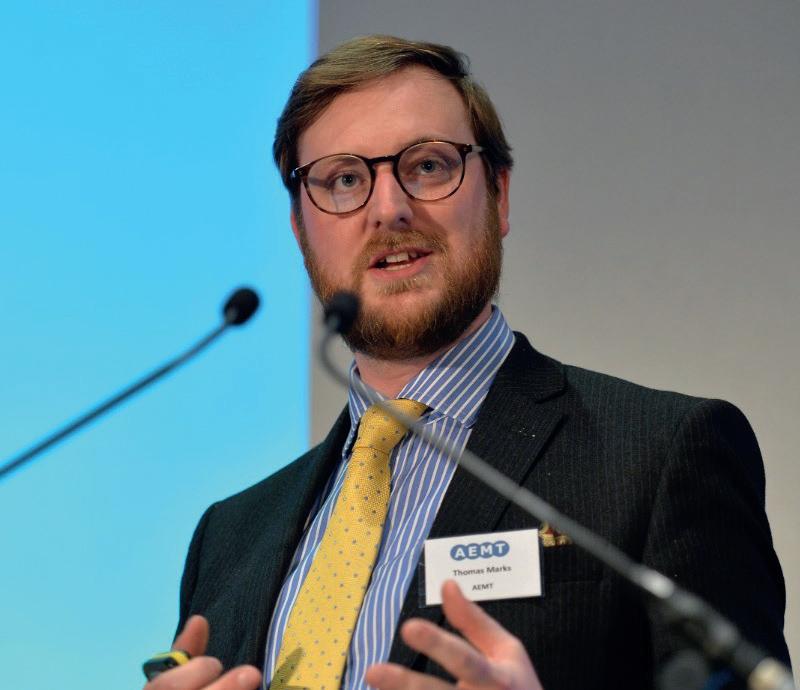
While motor efficiency standards are important, focusing on motors alone won’t fix inefficient systems, as Thomas Marks, Director General at the AEMT, explains here.
When industrial operators look to improve efficiency, the default response is often straightforward: replace older motors with newer, higher-rated models. An ageing IE2 motor is swapped for an IE4 equivalent, compliance is achieved and the project is considered complete.
But according to experts consulted during the UK Government’s Post-Implementation Review of the Ecodesign Regulations for electric motors and variable speed drives (VSDs), that approach frequently misses the biggest opportunity for savings.
The issue is not that motor efficiency standards are ineffective. The regulations have successfully removed many low-efficiency motors from the market, delivering meaningful gains across industry. The problem is that too many organisations focus on the motor alone, rather than the wider system in which it operates.
As Johnathan McNamee of Hayley 24/7 observed during the review, moving from “IE2 to IE3, or three to four, can be a little bit blinkered. Sometimes people don’t look at the whole system enough.”
That wider system often contains far greater inefficiencies than the motor itself. Poorly aligned drivetrains, inefficient gearboxes, oversized motors, worn transmission components, or pumps operating against throttled valves can all consume significantly more energy than operators realise.
Fraser Lynch of Westin Drives recalled one quarry installation where a new inverter and energy-efficient motor had been fitted, only for engineers to discover the pump was being restricted by a partially closed manual valve. Simply opening the valve delivered greater savings than the new equipment installation itself.
The lesson is clear: system efficiency determines energy consumption, not the nameplate rating on a motor alone.
There is also a structural issue behind many sub-optimal decisions. In many businesses, engineering teams are responsible for replacing failed equipment, but energy costs sit elsewhere within the organisation. Procurement decisions are therefore often driven by upfront capital cost rather than lifetime operating efficiency.
As Andy Patten of ADC Electricals remarked during the review, engineering departments are typically focused on “how much the unit costs,” because the energy bill does not come from their budget.
This disconnect can prevent businesses from making investments that would deliver strong long-term returns.
For many sites, the biggest opportunities now lie beyond incremental motor efficiency gains. Variable speed drives remain one of the most effective upgrades, particularly on pumps and fans operating at constant speed with mechanically restricted output. Matching motor speed to actual demand can dramatically reduce energy consumption and deliver rapid payback.
Right-sizing is another overlooked opportunity. Oversized motors running far below their rated load often operate inefficiently, while gearboxes, belts, couplings and bearings can introduce substantial losses that receive little attention during replacement projects.
The most effective approach is therefore not simply replacing a motor, but reassessing the entire system. Before ordering a like-for-like replacement, operators should ask whether the equipment is correctly sized, whether a VSD could improve performance, and whether enough operational data has been gathered to understand how the system really behaves.
Those questions cost nothing to ask; the answers could unlock far greater savings than the most efficient motor on the market.
theaemt.com
AI’S HEALTH & SAFETY POTENTIAL
Artificial intelligence is rapidly reshaping global manufacturing, redefining what productivity, efficiency and competitiveness look like. Here, Chris Newson, Environment, Health & Safety Director, Make UK, looks at the potential of AI in health, safety and wellbeing.
The majority of manufacturers believe AI represents a net gain for the UK economy. The Shape of British Industry1 report found that 78% of respondents think rapid and widespread AI adoption will increase Britain’s global competitiveness, while only 22% believe it will burden industry with more costs.
This optimism stands out. It suggests that industry leaders see AI not simply as a tool, but as a strategic necessity, which is critical for competing with global manufacturing businesses which are already investing aggressively in automation, advanced analytics and digital factories. Importantly, this confidence persists even though many businesses are still early in their AI journey. Manufacturers appear to accept that initial investment may be high, but the longer term gains (productivity, efficiency, quality and innovation) are too significant ignore.
Manufacturers were equally clear about the benefits they expect from AI. The dominant advantage, selected by 65%, is increased productivity, an area where the UK lags behind its international competitors.
One overlooked area of increasing AI uptake is health & safety, where the promise of significant productivity gains arises from being able to manage health and safety across an entire organisation in one integrated platform.
The need to manage health, safety and wellbeing across organisations is becoming increasingly important. There is clear evidence that managing these effectively and across an organisation from top to bottom is just as crucial to boosting productivity as any other business investment.
There are six key areas where AI can aid health, safety and wellbeing: risk assessments, incident reporting, fire and electrical safety, construction, training and competency, and PPE detection. AI tools offer real-time information, audit trails, automated reminders and professional reporting, all of which can be managed across multiple sites via a single account using a phone or tablet. AI can also integrate regular legislation updates and fast guidance on what is required with either template or customisable forms.
However, as with many other aspects of business change, the introduction of radical change into any business process will require careful management and involve buy
in from the whole workforce. For example, using AI to involve PPE detection and camera-based monitoring will need to be done in a way that doesn’t make employees fearful that ‘big brother’ is watching and reassures them its for their safety.
The way to avoid this, like any other business process, is to ensure there is buy in across the business from top to bottom and that all processes are managed and monitored effectively. The benefits from AI in managing health, safety and wellbeing both as a contributor to boosting productivity, business performance and for maintaining a safe and healthy workforce are becoming clear. makeuk.org
Nikesh Mistry, Sector Head, Industrial Automation & Test and Measurement at GAMBICA, draws parallels between industry approaches to automation and the World Cup.
The 2026 FIFA World Cup has kicked off in North America, with 48 sides walking out for the largest tournament the competition has staged. 104 matches and a new round of 32 to survive before the football even gets serious. In every dugout sits a manager facing the oldest question in the game: Who do you pick to start?
The temptation is always the same. Pick the famous names, the player whose shirt sells in the club shop. But the managers still standing in July tend to share a quieter discipline. They pick form over reputation; the player who has done the job week in, week out, over the one who merely looks the part.
Run a factory for long enough and you recognise that exact dilemma. Right now, many would be tempted to sign a galactico. The manufacturing “galactico” is technology adopted for its reputation rather than its record. It is the robot cell installed where an operator was doing perfectly well, the sensor bolted onto every asset whether anyone reads the data or not, and, increasingly, the AI deployed less because a problem demanded it than because the board asked what the AI strategy was.
A good manager does not field eleven strikers. Automation earns its place when it removes a genuine bottleneck, lifts a safety risk off a person, or holds a tolerance no operator could repeat. Automating for the sake of it is the equivalent of shoehorning a marquee signing into a position they cannot play.
So how do you tell form from reputation? Quality of data. Whether it is collecting your own data from around the plant or utilising industry wide market statistics like ours at GAMBICA to understand your market position and where to focus on the coming months. The key is to ground investment in evidence rather than fashion. The same discipline governs AI: predictive maintenance on a critical asset repays its fee many times over, while a dashboard nobody opens simply to tick the technology box is a sixty-million-pound striker on the bench. The requirement comes first.
There is a sustainability lesson in the same logic. A manager builds a squad to last seven matches, not one. The variable speed drive or soft starter is the unglamorous defensive midfielder of this story, quietly trimming energy off a motor every shift.
The trophy never goes to the most expensive squad; it goes to the most coherent one. Pick proven performers, automate the bottleneck that is actually costing you, and use AI only where it earns its shirt.
gambica.org.uk
MANUFACTURING CHAMPION OF THE MONTH
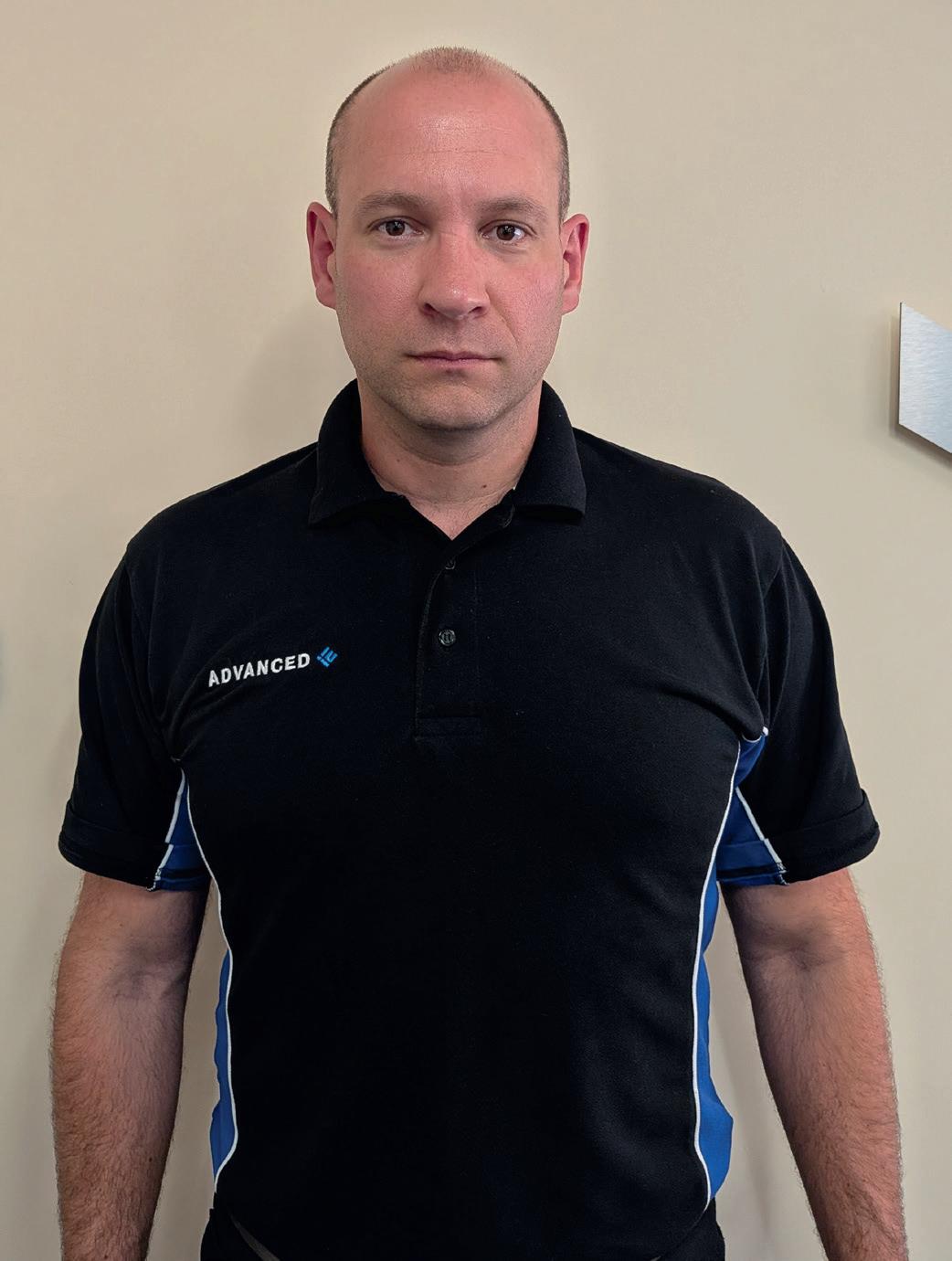
MEPCA are delighted to introduce Philip Silver, MD of Advanced Industrial Engineering (AIE), as our July Manufacturing Champion. Talking with our editor, Philip discusses the founding of AIE, how instrumental his school experience was in fanning his passion for engineering, and shares axioms that have helped drive the company’s success.
AIE is a Mechanical and Automation system designer, manufacturer and integrator founded in 2015. The company’s first base of operations was founder Philip Silver’s kitchen table. Today, the company has 22 staff and its customers include the likes of BMW, JRL and Tesla.
Philip recalls fondly the long days and nights establishing AIE while still working four days a week as a manufacturing engineer. “I was at work in Birmingham for seven o’clock Monday to Thursday, but I’d already woken up at three thirty and done a few hours designing because I loved it.” During this period, he was averaging three hours sleep a night, yet didn’t feel drained due to his passion for the work.
While Philip’s father and grandfather were both engineers and played their part in nurturing this interest, he owes much to the encouragement he received at Ashby School, Leicestershire, under the tutelage of an inspiring engineering teacher, “a towering man with hands like shovels” who excelled at explaining how things worked in engaging way. The department’s engineering suite was also kitted-out with key machines needed to provide pupils with hands-on experience – a suite AIE recently added to by donating a set of bespoke lifters.
Philip has retained strong links with the school and has taken on four Ashby School alumni with a fifth starting in September as a degree apprentice. He is a firm believer in apprenticeships as a route into industry and sees AIE’s formalised apprenticeship pathway as integral to the company’s growth. Philip has also talked at the school to help overcome outdated ideas of the industry and install a passion for engineering in the next generation.
One thing he sees as lacking in current engineering education is experience with manufacturing machines. While many of the candidates Philip has interviewed have heard of milling machines and lathes, few have a practical understanding of them. He maintains that it’s invaluable for designers to have an understanding of manufacturing in practice: “It makes them into much better mechanical designers because they know the limitations of the machines.”
What advice does he have for firms currently at the “kitchen table” phase? Firstly, and something Philip has in
abundance: have a passion for the work you do. Secondly, he insisted that looking after your people is paramount to success and this attitude should extend to your supply chain. “It’s not about the cheapest”, he insists. “When you need a bearing and it’s ten o’clock at night” for an order that goes out the next day, it will be the “one-man band” you’ve built a strong relationship with that will deliver. Finally, do one thing every single day to benefit the company. “It doesn’t matter how small it is, just one little thing to keep the momentum going.” This was vital to founding AIE and has seen it go from strength-to-strength since.
advanced-ie.co.uk
Philip Silver, Managing Director of Advanced Industrial Engineering (AIE).
DIVERSITY, INCLUSION AND RETENTION
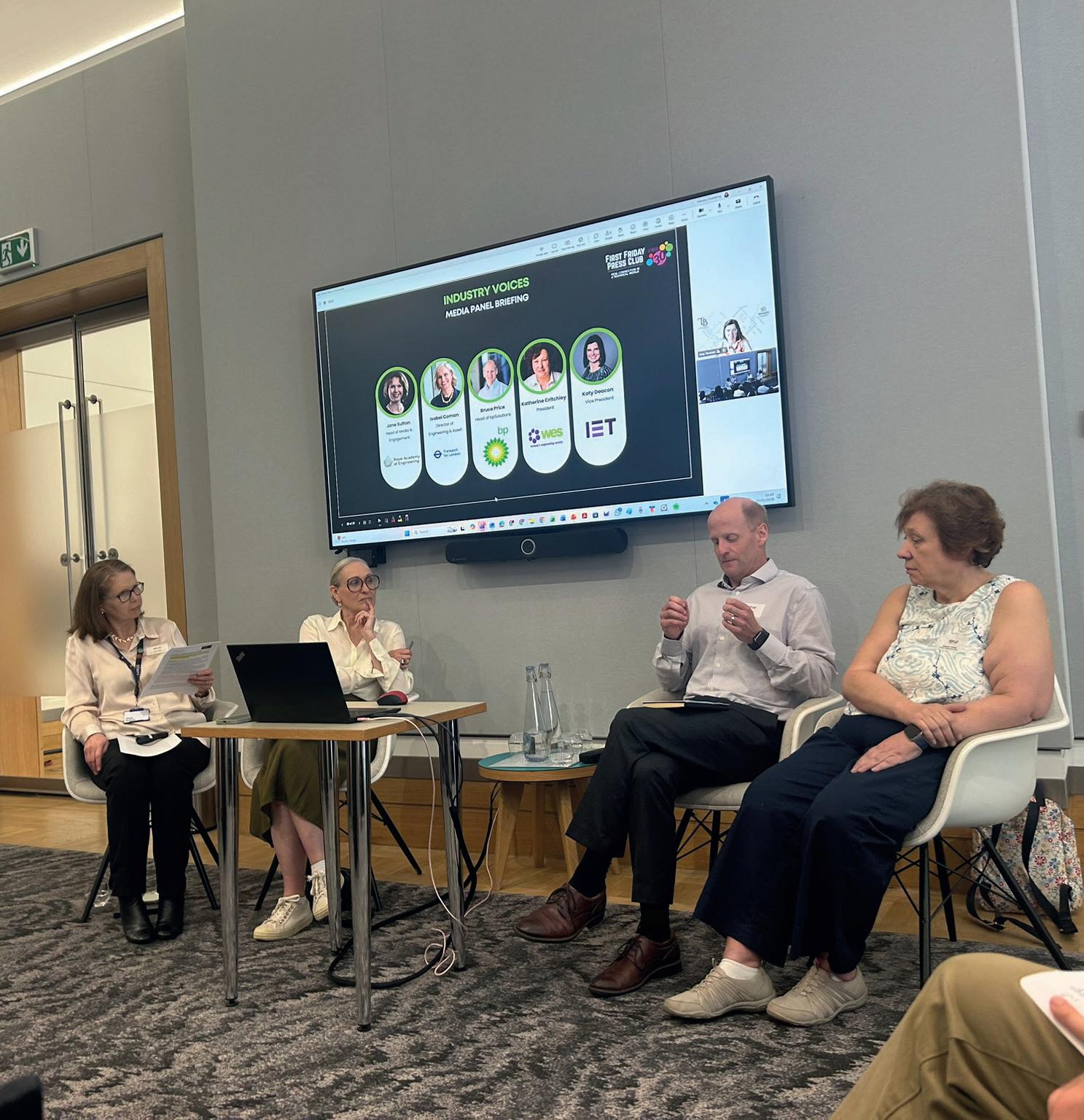
Ahead of International Women in Engineering Day, the Royal Academy of Engineering held an insightful panel discussion on the theme of Engineering Intelligence and the role of diversity, featuring industry leaders from Transport for London, pb Solutions, the Institute of Engineering & Technology, and the Women’s Engineering Society.
The Royal Academy of Engineering, founded as the Fellowship of Engineering in 1976, celebrated its 50th anniversary this June, closely coinciding with the 12th International Women in Engineering Day (INWED), presenting an opportunity to reflect on its progress in inclusivity.
Jane Sutton, the Royal Academy of Engineering’s Head of Media and Engagement, chaired the panel. In her introduction, she pointed out that the first 130 fellows of the academy were all white men, but 13 per cent are now women. “Since 2021, 50 per cent of our newly elected fellows have come from backgrounds previously underrepresented,” she continued.
Academy Fellow and Director of Engineering and Asset Strategy at Transport for London, Isabel Coman, explained that solving the challenges TfL faces daily requires technical expertise, creativity and collaboration. “The solutions to technical challenges are not always technical solutions,” she said. Today’s challenges require a range of disciplines, skills and diverse ideas, as encapsulated in this year’s INWED theme: Engineering Intelligence.
Katherine Critchley, President of the Women’s Engineering Society (WES), the organisation behind INWED, defined the theme as “the intelligence that we use to make good engineering decisions” and highlighted that despite considerable progress WES’s goal of having 30 per cent of women in engineering by 2030 was still a way off (currently 16 per cent).
Joining the discussion remotely was Katy Deacon, Vice President at the Institute of Engineering & Technology (IET), which specialises in inclusive engineering design. Adding another dimension to the discussion, she explained that while 24 per cent of the population is classed as disabled, only 14 per cent of engineers are. She illustrated the common barriers disabled workers face by her reasons for joining remotely: there were no hotels in the area able to accommodate her wheelchair.
The panel went on to discuss the continued lack of women at management and board level in the industry, with the conversation evolving to cover matters of visibility and representation. As Katy Deacon put it: “If you can see yourself represented, you can see yourself in that position.” That’s why the IET is so committed to promoting
disabled role models. The Top 50 Women in Engineering (WE50) was also noted for its importance in increasing this visibility.
Drawing on his experience of managing 2000 operational experts, Bruce Price, Head of bp Solutions, argued that allyship means taking action to change the status quo and nurture inclusivity. Good intentions are not enough, he insisted. Isabel Coman also championed direct action, such as supporting women with their applications for Academy Fellowship; not because they lack the ability, but because they are less likely to have the confidence to apply.
One particularly resonant idea from the panel discussion is that inclusivity affects everyone and isn’t the realm of one demographic. As demonstrated by engineers like Katy Deacon, who became disabled during her career, embedding inclusivity in industry also means retaining skilled operatives, whatever life throws at them.
wes.org.uk/inwed
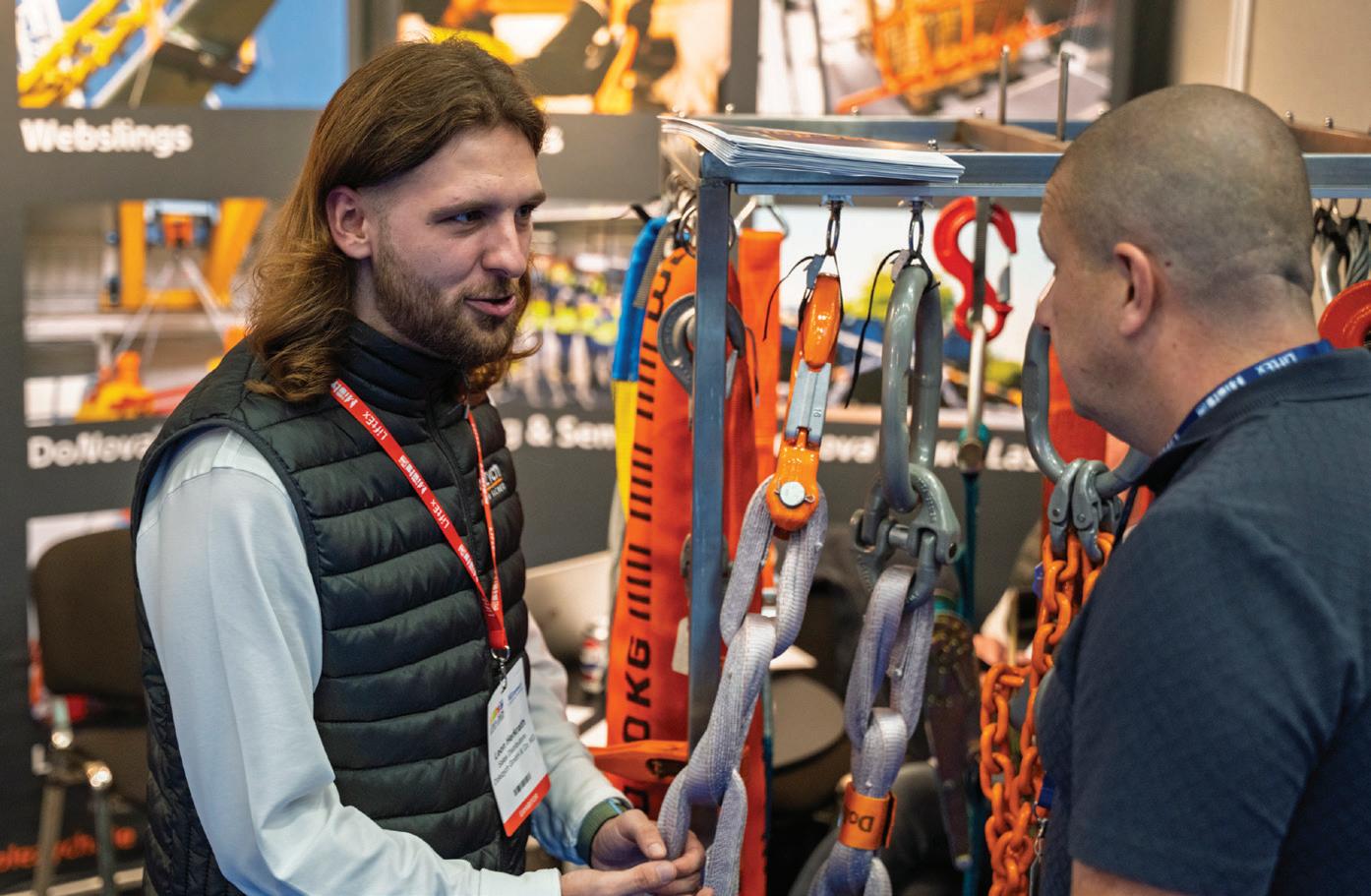
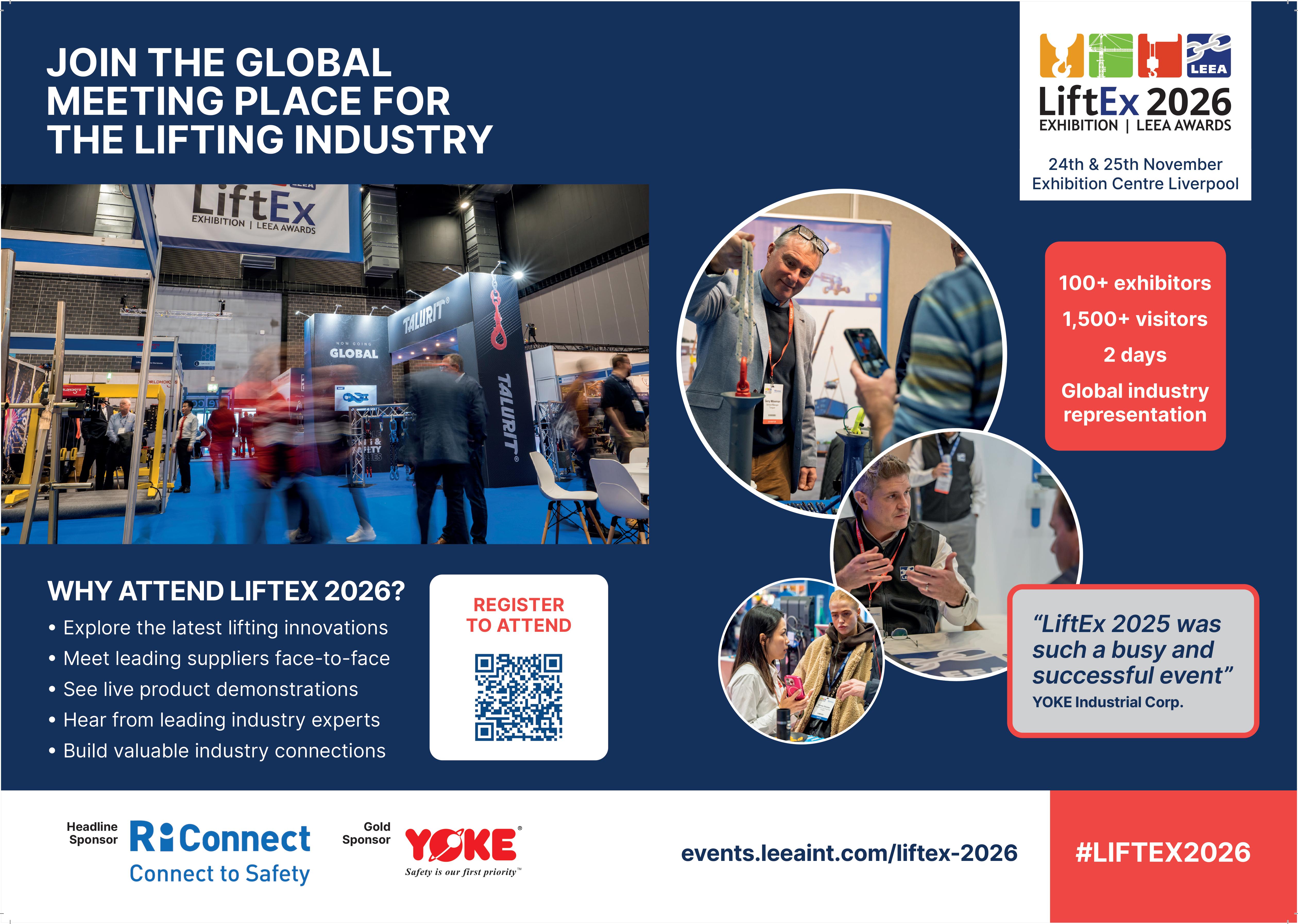
JOIN THE LIFTING INDUSTRY FOR LIFTEX
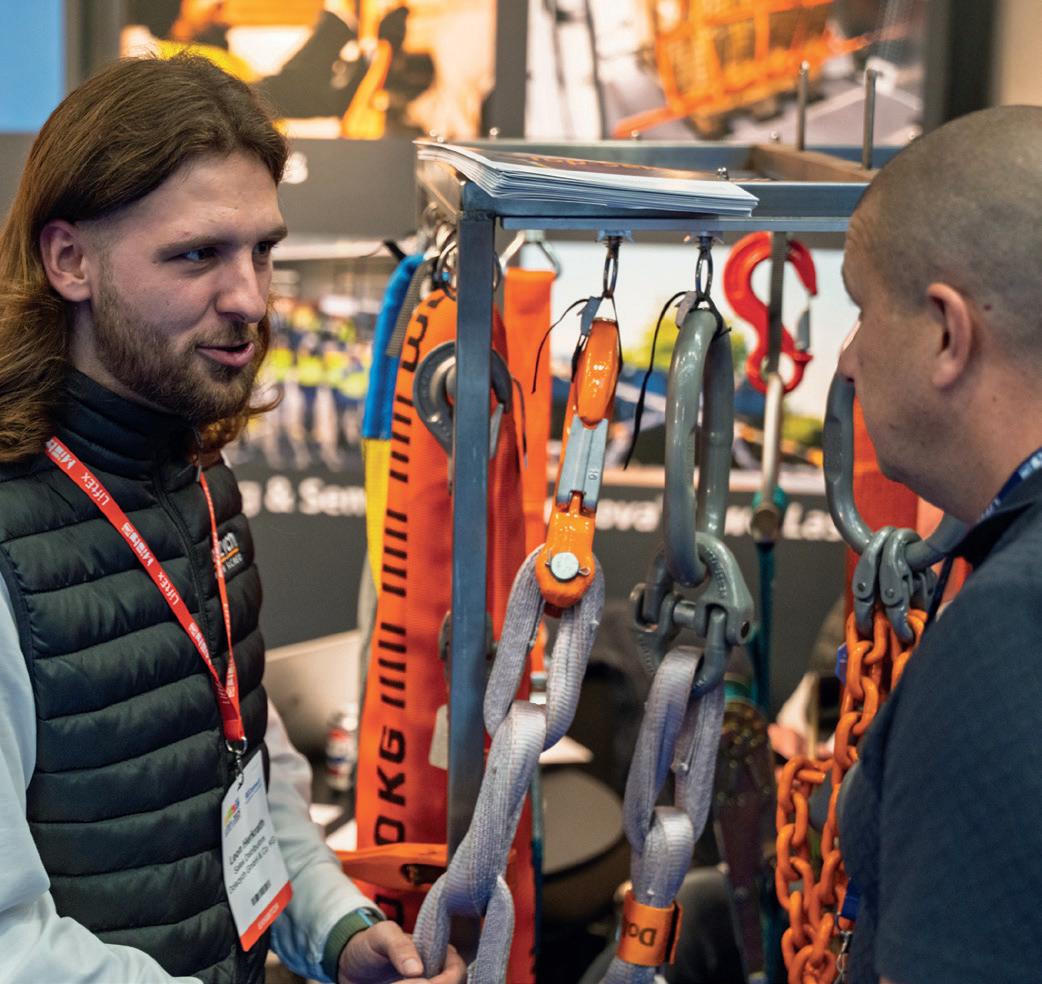
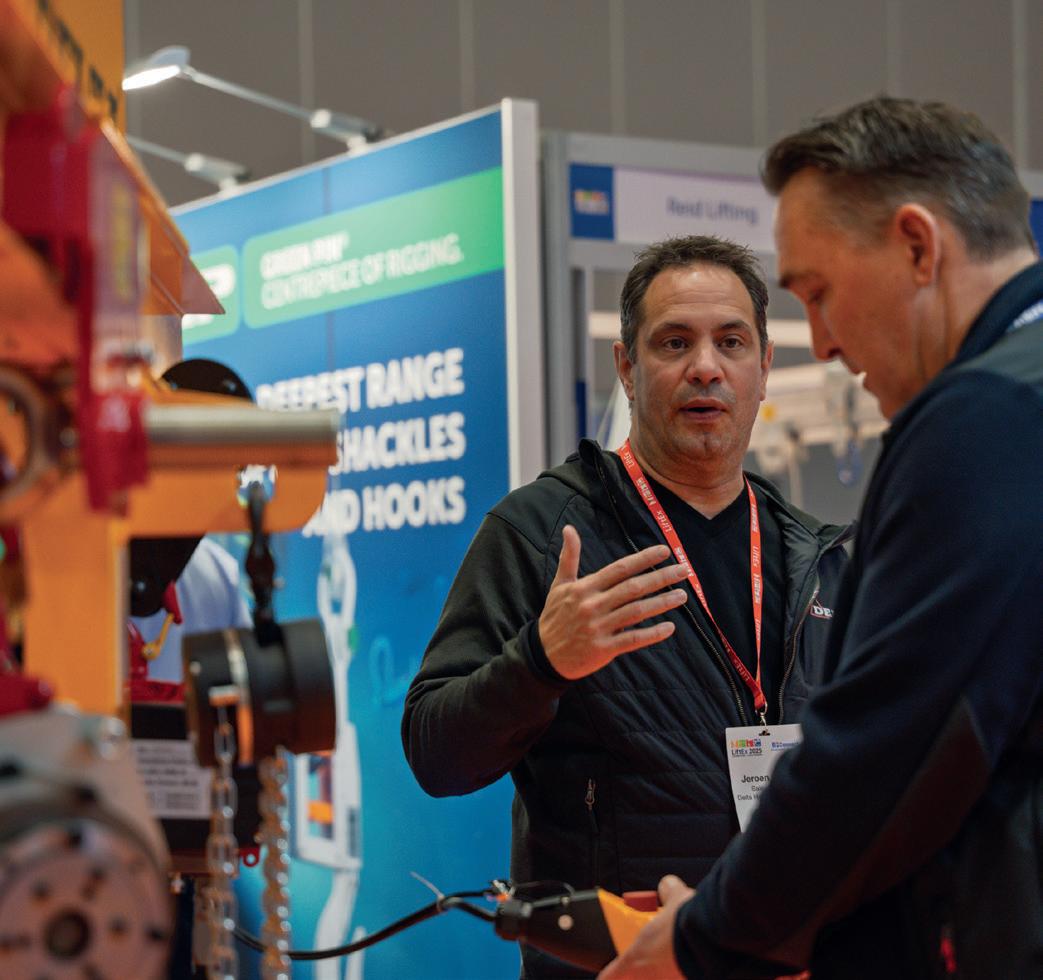
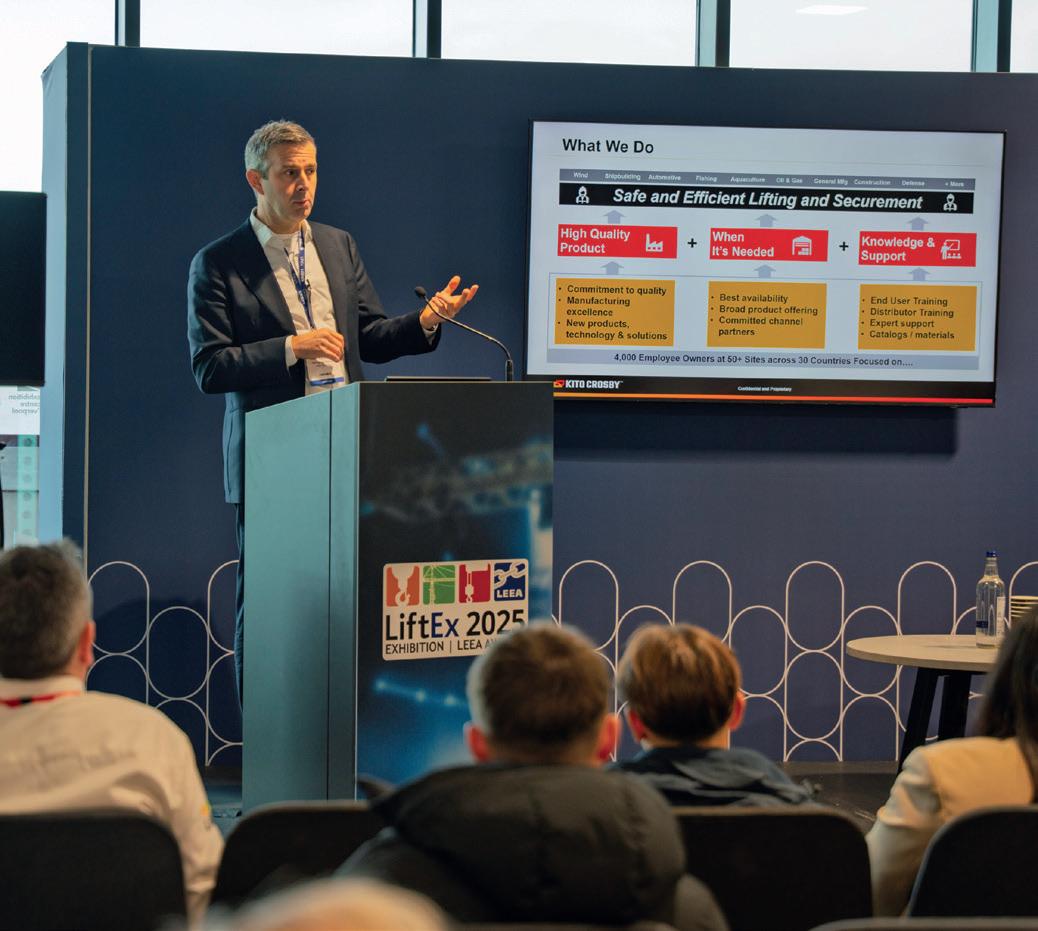
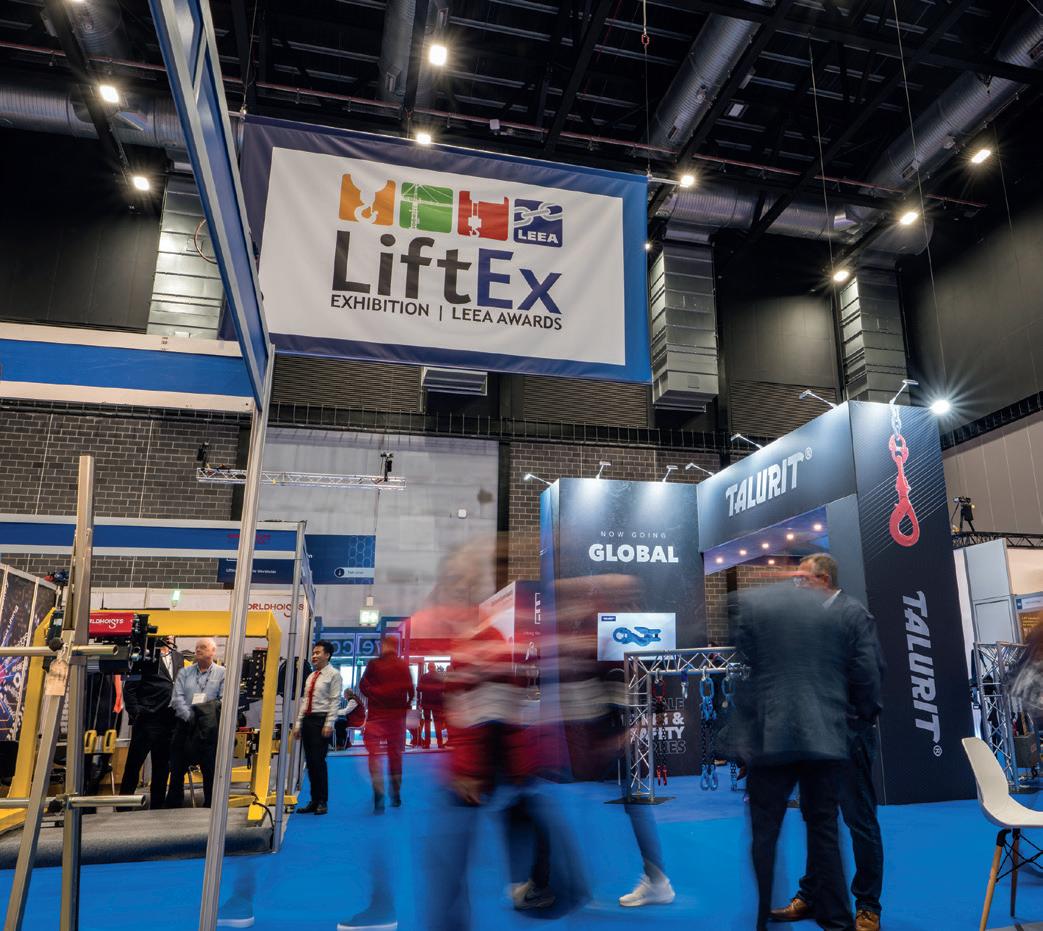
Preparations continue for another outstanding Lifting Industry experience in Liverpool as LiftEx 2026 is set to take place at the Exhibition Centre on 24-25 November 2026 for two unmissable days of innovation and industry insight. Discover here what attendees can expect from this year’s event and why it’s invaluable for the manufacturing and engineering sectors.
This was the venue for last year’s record-breaking show and LiftEx 2026 will build on this success by attracting industry professionals from across the globe and a range of sectors – including manufacturing and engineering – who want to discover cutting-edge lifting solutions, connect with leading suppliers and advance safety and best practice in lifting operations. With so many of the industry’s leading brands and companies attending in addition to the most influential, established and emerging talent from the industry, the event generates considerable interest from the media.
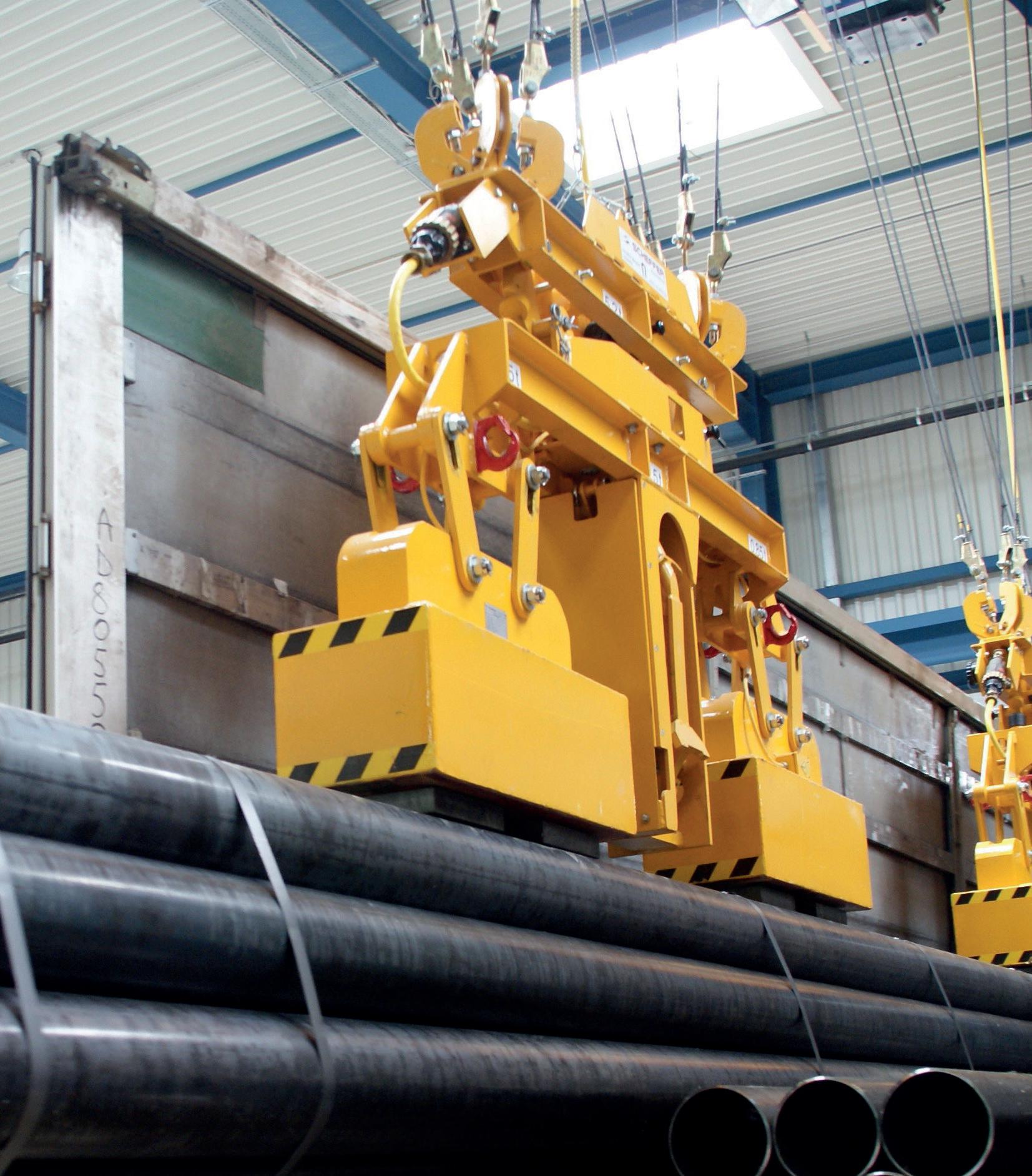
This flagship event of the Lifting Equipment Engineers Association (LEEA) is particularly essential for the manufacturing sector. Plants and factories use a wide variety of cranes, hoists, platforms, cradles and their associated chains, ropes, slings and other tackle to lift goods during production and lineside support. Many manufacturing operations may be surprised to discover just how much lifting equipment they actually own.
While production equipment is fairly obvious, the use of material handling equipment has increased in yards and warehouses, partly in a bid to reduce musculoskeletal and repetitive strain injuries. Often there is also rarely used equipment to do with building maintenance. And as industrial change sees buildings repurposed, many facilities contain lifting gear that is redundant, until someone unexpectedly tries to use it. And now there are technology-led solutions taking the industry into an ever more efficient and safer future.
This all needs to be considered by the management of these operations, as do procedures to ensure that those using lifting equipment have been trained and understand how it should be used, and what tasks it is safe or not to use it for. Minimised downtime through reliable equipment and services is the key to manufacturing efficiency, but when it comes to any lifting operation, safety is paramount. Staff should be trained to spot and report any defects every time they use equipment. Firms also need procedures for routine servicing and for
periodic ‘thorough examination’ and inspection. While older equipment may, when properly maintained, have an almost indefinite life, a lot of new gear has a surprisingly short design life.
ONE-STOP SHOP FOR THE LIFTING INDUSTRY
A visit to LiftEx opens the door to a one-stop shop for all the latest updates in lifting equipment, services and training. It provides unparalleled networking opportunities with peers from industries including construction, oil and gas, ports and maritime, offshore, automotive, utilities, entertainment in addition to manufacturing and engineering. A key event will be this year’s LEEA Awards on the evening 24 November 2026, which will be a spectacular celebration of excellence across the global lifting industry at a soon-to-be announced Liverpool venue.
The show floor at the Exhibition Centre Liverpool will be a diverse and extensive array of lifting and height safety equipment and innovations to improve productivity, efficiency and safety. These will include lifting and materials handling equipment, engineering and manufacturing services, chains, ropes, slings, rigging accessories, height safety equipment and services, load monitoring equipment, IT solutions, test machinery and lifting and safety training.
Among the many leading lifting names exhibiting will be Aberdeen Web, Bekaert, coreRFID, Dynamic Load Monitoring UK, Elevation Training & Development, Green Pin (Royal Van Beest), Hird, Irugasa Remote Control Systems, JCM Load Monitoring, LIFTKET UK, Modulift UK, Niko Crane Systems, Onix, pewag UK, Rope and Sling Specialists, Safehold, Tensology and Worlifts. Visit the event’s website to find details about these and many more LiftEx exhibitors.
One of the best ways manufacturing and production operations can mitigate risk of accidents and inefficiency is to ensure that when procuring lifting equipment or supporting services, they look for the LEEA logo, which
will be well represented at LiftEx. This shows that the equipment or service provider is an association member and has therefore undergone a rigorous assessment to uphold LEEA’s ‘gold standard’ and provide customers with the assurance of excellence.
A company procuring equipment or services for intended use from a LEEA member is assured of peace of mind. This is a vital consideration at a time of rising numbers of vendors and intermediaries from around the globe that are not necessarily in a position to give reliable advice on the suitability or provenance of the goods they are offering.
LEEA will have its usual prominent stand at LiftEx for visitors to meet and engage with the Association’s team for lifting advice, to learn about training and to hear about the many benefits of becoming a LEEA member. There will also be a special spotlight on LEEA members exhibiting and the popular LEEA Member Showcase stage will make its return.
LAST FEW STANDS REMAINING
With just a few stands remaining, now is the time for those wishing to exhibit to book the opportunity to demonstrate their products or services in front of end users of lifting and height safety equipment. There is also the chance for companies to showcase their brand by becoming a sponsor. The Headline Sponsor for LiftEx 2026 is RiConnect, Inc. The company offers powerful software known as RiConnect, designed to streamline equipment management and ensure regulatory compliance and traceability. The year’s Gold Sponsor is YOKE Industrial, which has over 40 years of experience in manufacturing lifting fittings.
Registration for free entry to LiftEx 2026 is now open. For details and updates, visit the website below, where those wishing to exhibit can also book the last remaining stands. events.leeaint.com/liftex-2026
Eliminate the risk of production line stoppages
No more lost parts
If your inventory data is even 2% wrong, every decision you make carries risk.
Risk that could cost you thousands of dollars every day
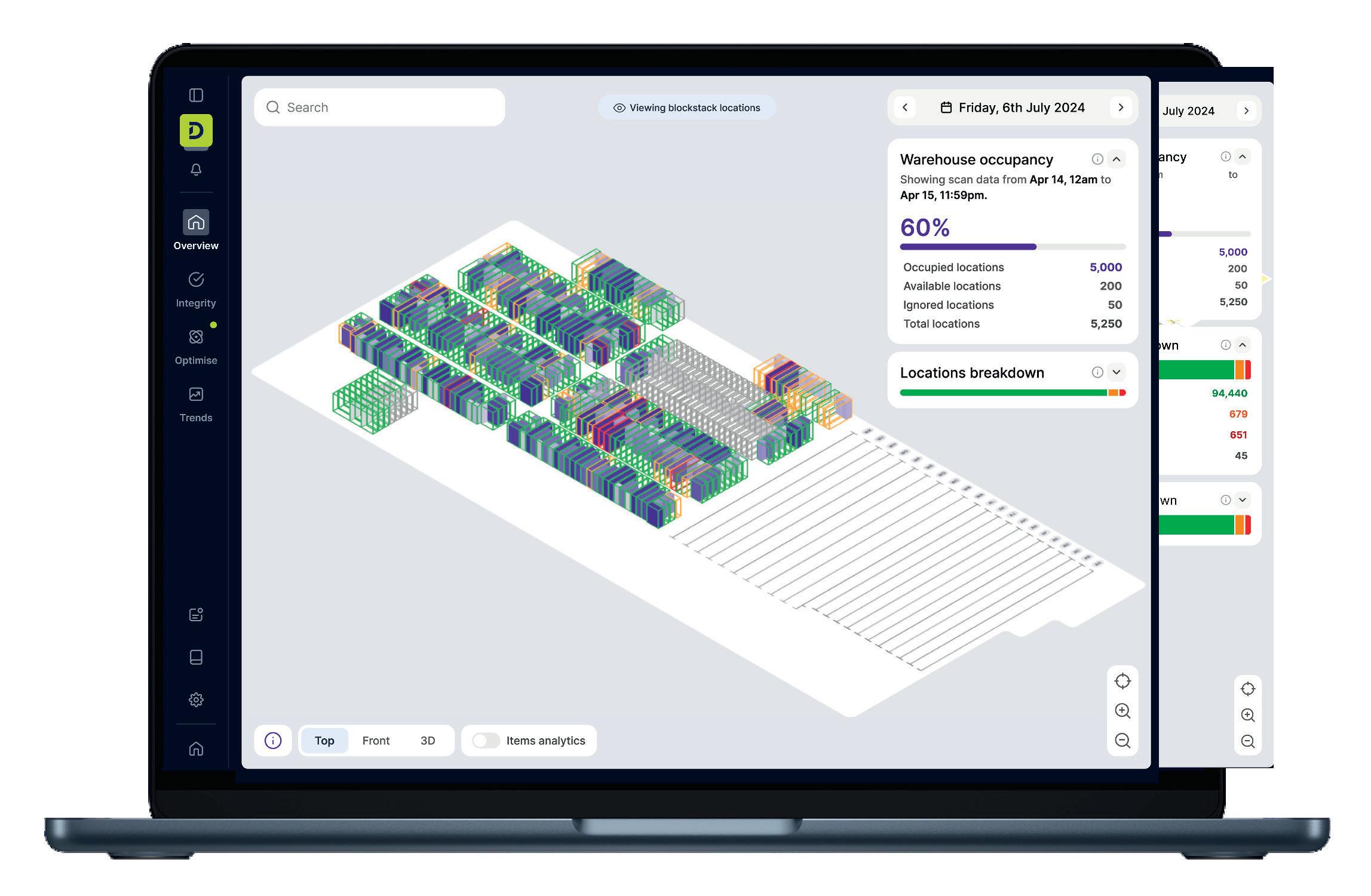
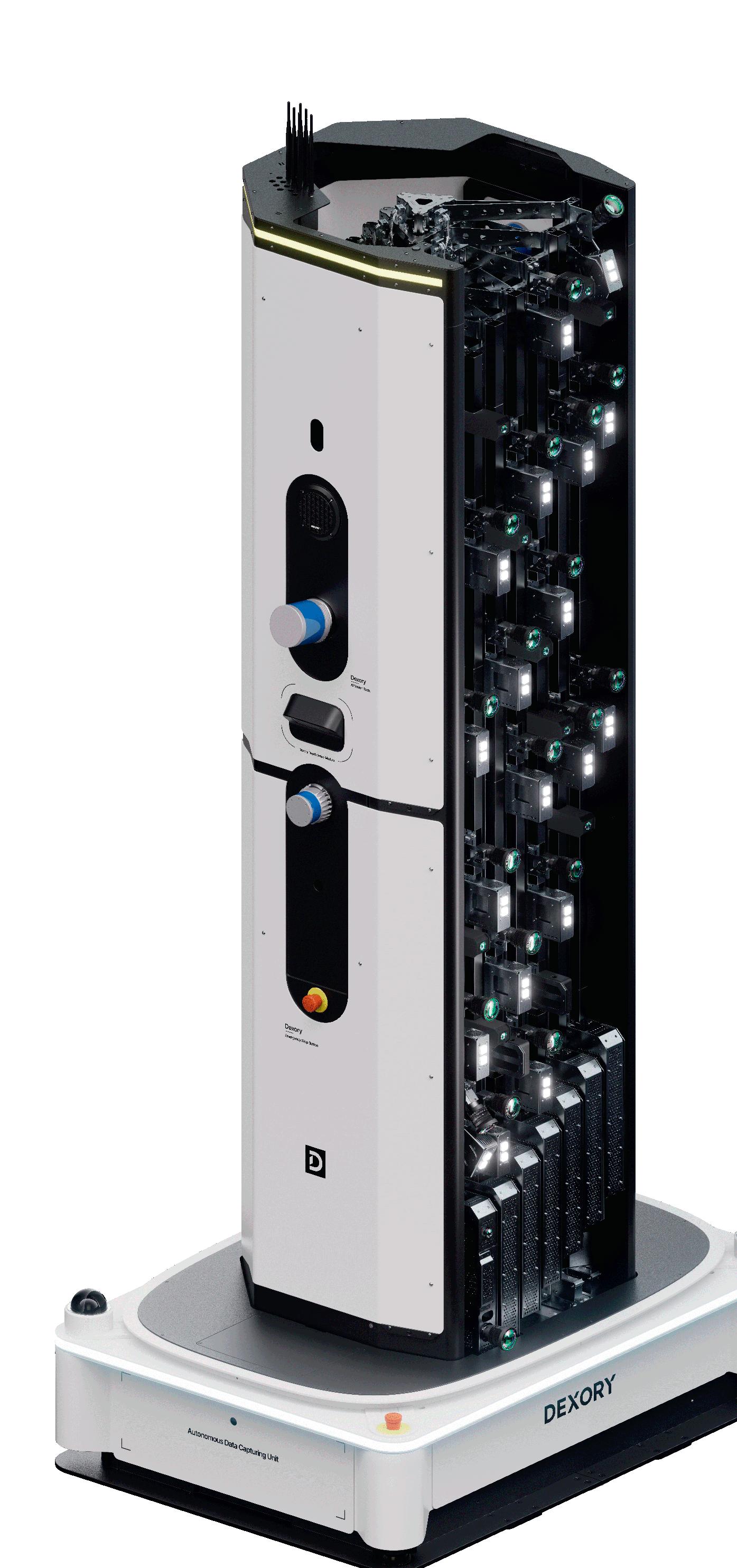
Dexory scans your entire warehouse autonomously, giving you the live, 99.9%+ accurate picture you need to avoid losing parts and keep your production lines running.
You’ll know where all of your parts are all of the time, with realtime visibility and AI driven insights to optimise your warehouse performance.
It’s visibility but also control, clarity, and confidence, delivered in real time.
FOCUS ON: FACILITIES MANAGEMENT
Image courtesy of Samsic UK
FACILITIES MANAGEMENT
FACING DOWN THE PRESSURES OF UK FM
The latest SFG20 report on the state of UK Facilities Management shows an industry under pressure and in need of the confidence to adapt. In the following Q&A, John Norris, Commercial Director at Samsic UK, addresses today’s Facilities Management challenges and explains the opportunities that new technology will provide.
Running an industrial facility effectively can be a daunting juggling act for facilities managers.
On the surface, each juggling ball appears to be a disparate discipline – asset maintenance, security, hygiene, utilities management – and yet they are interdependent, with the overall productivity of a facility reliant on the smooth, consistent upkeep of all. Many of the commercial and technological pressures faced by UK industry are also common to FM, adding new challenges to this juggling act.
The State of Facilities Management 2026 Report by SFG201, a survey of 188 FM professionals, offers an insight into the sector’s most pressing challenges. Among those noted is a lack of confidence in the industry’s readiness for AI, and the concerns of FM teams around compliance changes, particularly as The Building Safety Act enforces stricter accountability. For example, the report revealed that nearly half (46%) of FM teams are not confident in meeting compliance.
To better understand these pressures and what can be done to alleviate them, MEPCA sought out the expertise of John Norris, Commercial Director at Samsic UK, a leading national provider of FM services.
FM IS FALLING BEHIND OTHER INDUSTRIES IN DIGITAL TRANSFORMATION AND THE EMBRACING OF SMART TECHNOLOGIES. WHAT COMMON FACTORS ARE CONTRIBUTING TO THIS TECHNOLOGY LAG?
The reason why facilities management (FM) is lagging behind other industries in the adoption of AI and smart technologies stems from cultural, structural and commercial barriers.
On the culture side, there is anxiety, fear and scepticism. Concerns include questions like: will it take my job? Am I allowed to use AI? What’s the policy? Will it really work? What cybersecurity risks are we opening ourselves up to? These all lead to a push-back in adoption.
Then there’s also a lack of workforce training that likely fuels this mindset. Companies might well have an AI policy, but they don’t always have a training policy on how to use AI tools effectively. This means people don’t know
how to prompt the tools or chatbots, leading them to stick to traditional ways and means of facilities management. AI tools only work as well as the foundations on which they are deployed. This means, if the AI is pulling from inconsistent data sources, it will likely give incorrect outcomes. Fragmented spreadsheets, systems and portals mean there is not one single source of truth, leading to confusion for AI tools. And then, from a commercial perspective, there are high costs to adoption, which makes organisations more cautious about investing.
WHAT ARE THE MAIN FACETS OF PREDICTIVE FACILITIES MANAGEMENT, AND HOW IS IT TRANSFORMING THE MAINTENANCE AND CLEANING REGIMES OF INDUSTRIAL FACILITIES?
Predictive facilities management is based on data-driven decision making. It relies on accurate data that anticipates needs, rather than reacting to them.
To achieve this, from a cleaning or maintenance perspective, you need occupancy sensors, digital dosing sensors, and cobots in areas you want to have sight of; for example, washrooms, offices, high-hygiene zones. These
John Norris, Commercial Director at Samsic UK
sensors then provide ongoing sets of data – be that over a week, month, or year – and then this goes on to help with dynamic, demand-based cleaning. Clients who adopt this cleaning model can adjust their cleaning schedules accordingly, for example, by having one cleaner on Monday, two on Tuesday, etc.
Going further, AI-driven contract cleaning can trigger interventions automatically and enable better automation. For instance, sensors can trigger cobots to clean areas needing attention, without human intervention. Ultimately, predictive FM means cleaning becomes value-based, rather than volume-based. It’s not based on number of hours or people employed, but rather whether the building is clean.
WHY DO COMPANIES STRUGGLE TO ACHIEVE CONSISTENCY IN GOVERNING FM ACROSS MULTIPLE SITES AND HOW CAN AI HELP?
Facilities leaders responsible for multi-site office estates face a variety of pressures. These often come from fragmented visibility, delayed reporting and the persistent risk that a minor issue in one building escalates into a board-level conversation.
At a single-site level, cleaning performance is relatively straightforward to oversee. A facilities manager maintains oversight directly, and issues can be addressed quickly and informally. As portfolios expand, reporting habits and supervision models often diverge, weakening central oversight. This is where the ‘visibility gap’ begins and information silos start occurring. Each location sees its own performance, and central teams see a filtered version of reporting.
When inconsistencies surface, the instinctive response may be to increase supervision, such as increase audits, add more supervisors and tighten governance. In practice, this can be an expensive and inefficient fix.
A data-led approach changes this mindset. Sensordriven monitoring, structured digital reporting and AIsupported analytics do not replace onsite supervisors.
FACILITIES MANAGEMENT
They provide continuous, portfolio-wide visibility across all sites, allowing central teams to compare performance consistently rather than relying on isolated reports.
When implemented correctly, data-led oversight provides predictability and stability. It allows central FM teams to see comparable data across sites and regions, and identifies emerging trends before complaints formalise and surface absenteeism risks (i.e., the biological contamination of shared surfaces) or usage spikes before standards visibly decline.
WHAT ADVICE CAN YOU OFFER FM TEAMS STRUGGLING WITH COMPLIANCE?
Firstly, I would say strengthen data integrity before deploying AI tools for facilities management, because if you give rubbish data to the AI, it will churn out rubbish reports and suggestions. Attached to this, invest in your staff’s digital literacy so they can interpret data correctly and ensure that whatever they are using AI tools to interrogate; they are then equipped to connect that back to compliance.
Secondly, prioritise governance over shiny features offered by an AI tool. The objective is not to digitalise cleaning, but to maintain portfolio-level consistency. Tools should be evaluated based on their ability to improve oversight and therefore compliance.
And thirdly, provide clear escalation pathways and dataaligned decision rights. If central teams can see issues, but lack the contractual or operational leverage to act, consistency can’t improve. Clarity around who has the authority to intervene when performance declines can, therefore, be key to achieving compliance.
MEPCA would like to thank John Norris for offering invaluable advice for keeping those critical components of effective FM moving in tandem. For more information, please visit Samsic UK’s website.
samsic.uk
1. sfg20.co.uk/e-guide/state-of-fm-2026
ADVANCING AUTOMATED MATERIAL FLOW
A recent collaboration between Nidec Drives and Invar offers a clear illustration of how tailored intralogistics engineering can resolve operational constraints while supporting long-term strategic objectives.
The evolution of modern manufacturing increasingly depends on the integration of intelligent intralogistics systems capable of supporting efficiency, scalability and sustainability. As industrial organisations transition toward Industry 5.0, the alignment of human-centric production with advanced automation presents both opportunity and complexity.
Nidec Drives, based in Newtown, Mid Wales, has established a legacy spanning more than five decades in motor control technology. As the largest employer in Newtown, the organisation has consistently advanced its manufacturing capabilities, maintaining a strong emphasis on automation, lean principles and environmental responsibility. However, continued expansion of its UK
manufacturing facility introduced new operational challenges, particularly in the manual handling and movement of materials across multiple buildings and levels.
Historically, the transportation of raw materials within the site relied on manual processes involving forklift trucks and operator-led movement across three floors. While functional, this approach became increasingly resource-intensive and inefficient as production volumes grew and the site became more complex, Inter-building coordination imposed constraints that limited throughput and created production bottlenecks. In response, Nidec Drives undertook a structured operational review using value stream mapping to identify inefficiencies and define a scalable solution.
The outcome was a strategic decision to implement an automated conveyor and lift system capable of delivering materials precisely where and when required. This approach aligned closely with the organisation’s commitment to Just-in-Time (JIT) principles and continuous improvement. However, the successful delivery of such a system depended on identifying a partner capable of translating these operational philosophies into a technically robust and adaptable intralogistics solution.
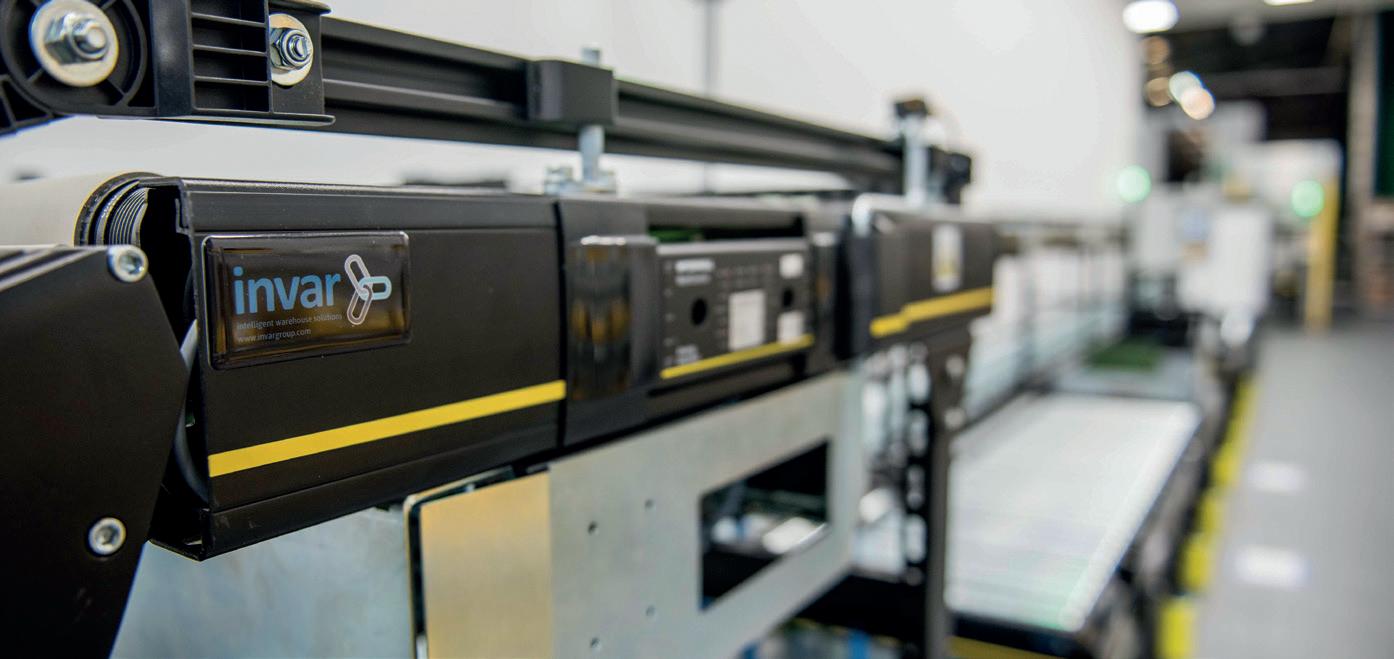
Invar, recognised for its expertise in bespoke warehouse automation and intralogistics engineering, delivered the project. Its capacity to design turnkey systems tailored to specific operational requirements positioned it as a strong partner for this complex undertaking. Importantly, Invar demonstrated an understanding of lean manufacturing environments, ensuring that the proposed solution would not only address existing inefficiencies, but also support ongoing optimisation.
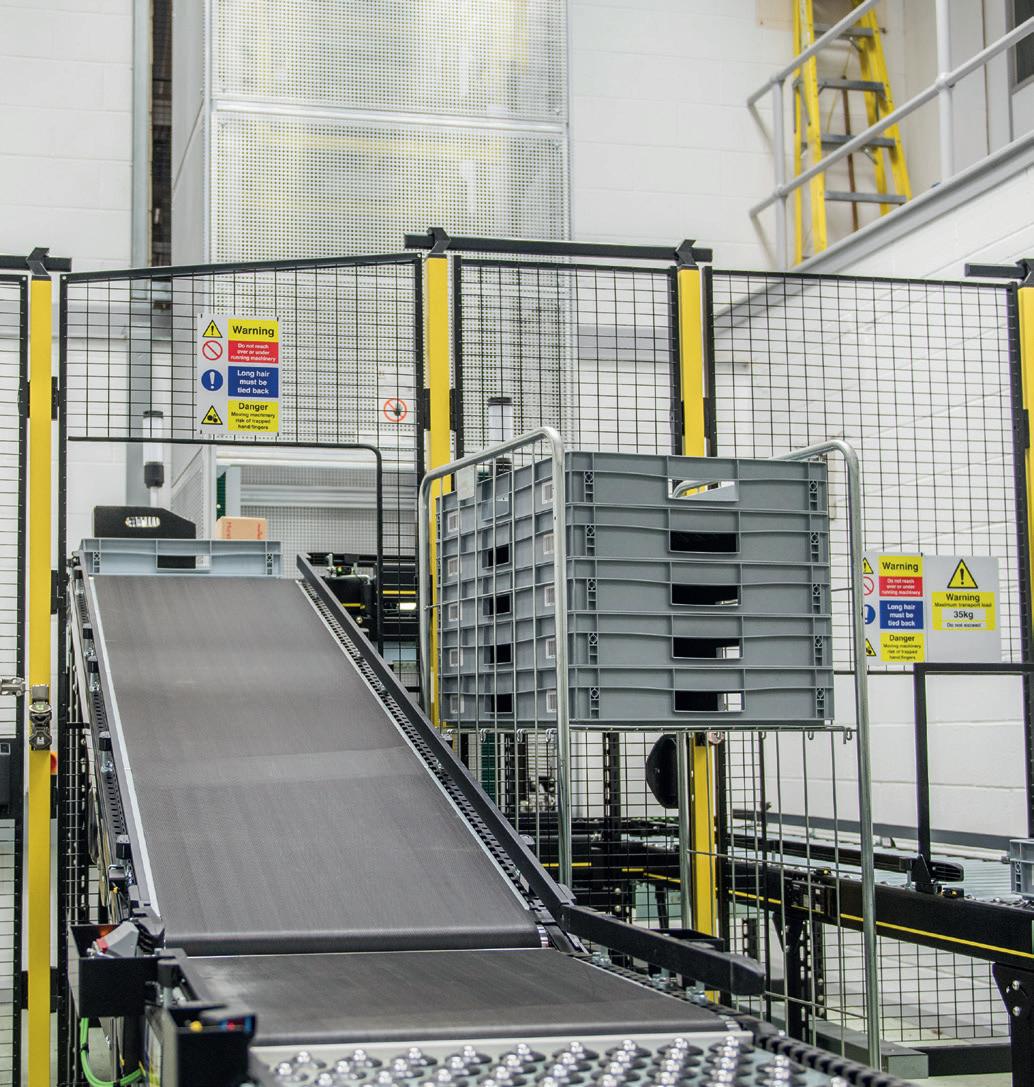
The resulting system comprises approximately three hundred metres of powered tote conveyor, integrated with three vertical lifts distributed across the manufacturing campus. Designed to operate across multiple buildings and levels, the system enables seamless material flow between warehouse, stores and assembly areas. Operators initiate the process by scanning a tote’s licence plate number and selecting its destination via human-machine interface (HMI) terminals located at infeed stations. Materials move through the conveyor system and vertical lifts to the appropriate workstation.
A key feature of the system lies in its demand-driven operation. Unlike continuously running conveyors, it stops between loads, significantly reducing energy consumption and mechanical wear. This operational model supports both sustainability objectives and cost efficiency, contributing to a projected return on investment within a brief time. Such functionality reflects a growing emphasis within the sector on energy-aware automation and resource optimisation.
Central to the system’s performance is the integration of Nidec Drives’ own Control Techniques variable speed drives. In keeping with the organisation’s philosophy of using its own technologies within its facilities, these components form the backbone of motion control across the conveyor and lift infrastructure. Invar’s vendor-neutral approach ensured that the selection of components was based on performance and suitability, resulting in a cohesive system that leverages advanced drive technology.
Control Techniques Unidrive units power the vertical lifts, which provide precise motor control, high stability, and integrated safety features. Additional modules complement the drives by enhancing input/output capability and enable accurate positional feedback through encoder integration. This configuration ensures reliable lift operation while maintaining high safety standards through continuous verification of positional data.
For conveyor movement, Digitax HD M750 servo drives control the drum motors and inclined sections. Their compact form factor and high-power density make them particularly well-suited to dynamic conveyor applications
FACILITIES MANAGEMENT
requiring responsive and efficient control. Integration with industrial communication networks further supports realtime system coordination and diagnostics.
The implementation also incorporates motion control modules that simplify programming and enable rapid configuration of repetitive tasks. This approach reduces engineering overhead while facilitating adaptability, allowing the system to evolve alongside future operational requirements. Complementary hardware, including keypad interfaces and energy-efficient induction motors, further enhances usability and performance, ensuring a balanced combination of precision, reliability and maintainability.
The impact has been immediate: measurable reduction in manual handling requirements, internal coordination streamlined and production bottlenecks alleviated. Moreover, the system has contributed to improved working conditions by reducing the physical demands placed on personnel, aligning with broader trends toward safer and more ergonomic manufacturing environments.
Beyond immediate operational gains, the project establishes a foundation for continued innovation. Nidec Drives is actively exploring the potential integration of Autonomous Mobile Robots (AMRs) to complement the fixed conveyor infrastructure. Such technologies offer additional flexibility by enabling dynamic routing and decentralised material handling, further enhancing responsiveness within the production environment.
As manufacturing environments continue to evolve, the integration of intelligent material handling systems will remain central to operational success. The Nidec Drives installation demonstrates how carefully engineered intralogistics solutions, delivered through close collaboration, can unlock efficiency improvements, support workforce wellbeing and position organisations for the next phase of industrial advancement.
drivesfromnidec.com
FACILITIES MANAGEMENT
DATA‑DRIVEN FACILITY MANAGEMENT
Manufacturers across multiple industries are under growing pressure to operate smarter, reliably and more cost-efficiently. Discover here how data-led insights can drive operational excellence in facilities management, optimising energy usage, and protecting assets and people.
Facility Management or Operational Excellence is now a major focus, with specialist teams being tasked with improving productivity, reducing energy consumption, and strengthening resilience across multiple areas. As factories become more connected and complex, the ability to understand what is happening within critical building systems in real-time has become the foundation of modern operational excellence.
FROM REACTIVE TO PREDICTIVE
At the centre of this shift is a move from reactive maintenance to predictive, insight led decision making.
Traditionally, facility management teams have heavily relied on manual checks, scheduled servicing and siloed systems. Although these methods keep operations running, they often miss the early warning signs of equipment degradation, energy waste or environmental drift. The result is unplanned downtime and higher operational costs.
Data analytics is transforming this landscape. By capturing and analysing performance data from a wide range of systems, including power, HVAC, safety equipment and other facility assets like stored energy, manufacturers can identify anomalies long before they escalate. This not only improves reliability but also enables the new Operational Excellence teams to prioritise urgent or impactful actions based on real risk and operational importance.
STORED ENERGY MANAGEMENT
One area where this evolution is particularly visible is the management of stored energy, such as a forklift battery fleet.
These assets are mission-critical, yet historically difficult to monitor with any level of precision. Modern analytics services, such as Pulse360TM Data Analytics from Philadelphia Scientific, are changing this dynamic. By providing continuous visibility into battery condition, performance developments and environmental conditions, Pulse360 helps facility teams shift from periodic testing to continuous assurance. The service’s insights support predictive maintenance, extend asset life and reduce the chance of costly power failures that can halt production.
Energy efficiency is another major driver. In today’s volatile world, rising energy costs driven by uncontrollable external factors and ever-tightening sustainability targets from the EEC are forcing manufacturers to scrutinise every kilowatt. Smart building systems that integrate a range of sensors that record performance metrics allow facilities to optimise HVAC usage and reduce overall consumption and costs. When combined with usable analytics, these smart systems become useful tools for identifying inefficiencies and enabling teams to act upon concrete insights.
WORKPLACE SAFETY
Real-time monitoring of various KPIs such as temperature, humidity, air quality and equipment status helps to maintain safe working environments whilst keeping compliant with any regulatory or legal standards. Predictive insights enable teams to address hazards proactively rather than reactively.
The future belongs to companies that harness data to anticipate problems, optimise performance and operate sustainably. Proactive data services and solutions like Pulse360 demonstrate how targeted analytics, coupled with a proactive approach, can achieve new levels of reliability and productivity, turning facility management into a competitive advantage rather than a cost centre.
phlsci.com
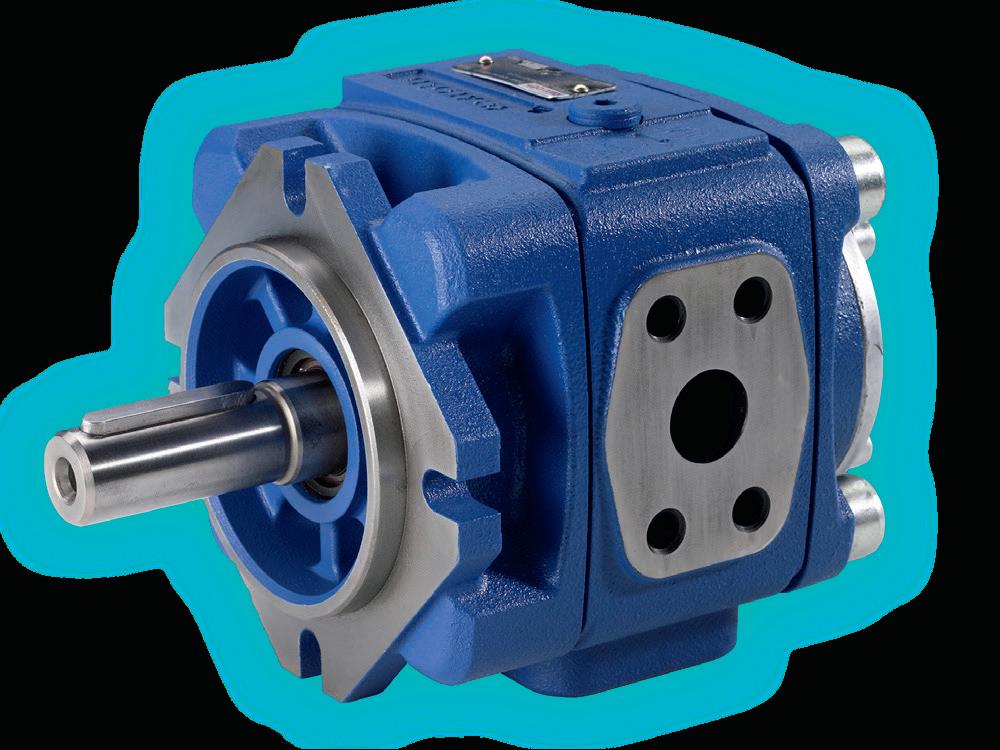
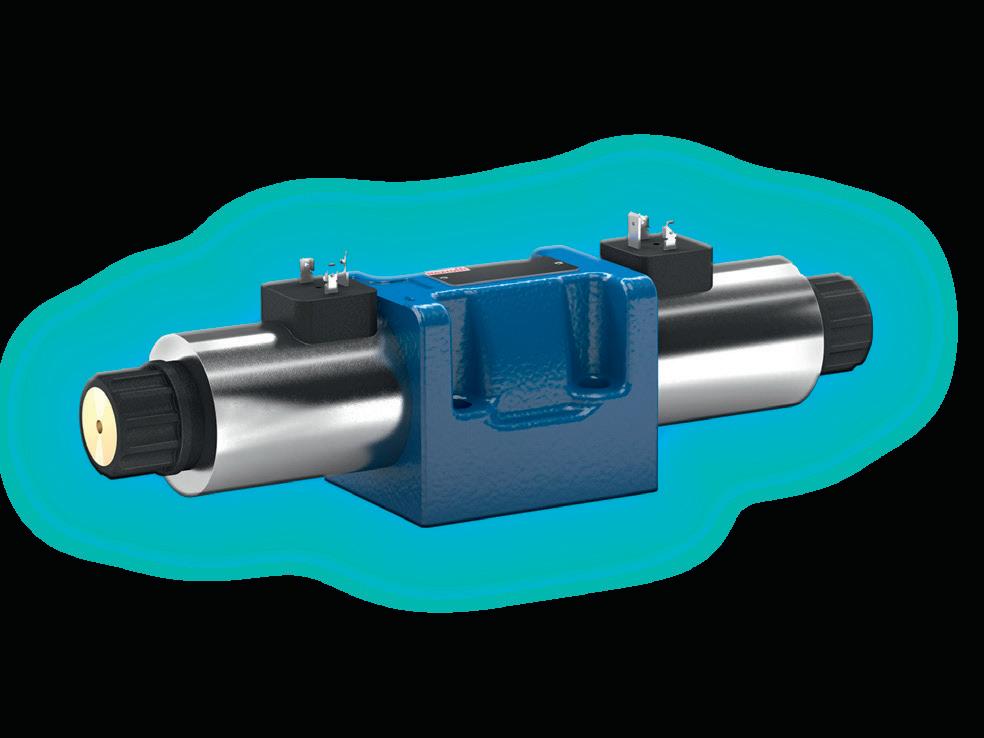
RIDE THE WAVE OF INNOVATION AND POWER
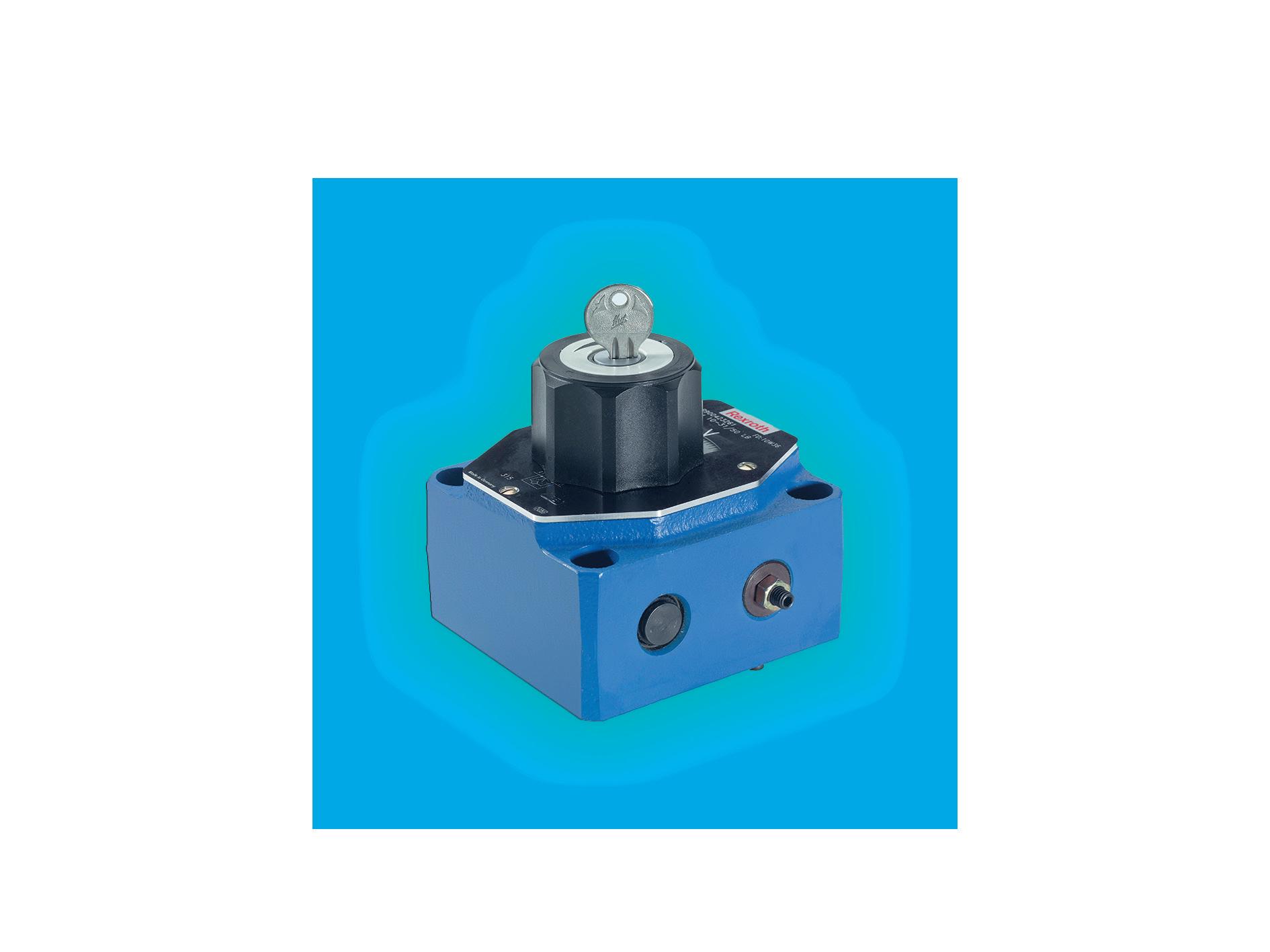
With Bosch Rexroth’s Hydraulic Legends Series
It Begins at the Core
FACILITIES MANAGEMENT
WHY WEARABLE TECH IS THE FUTURE
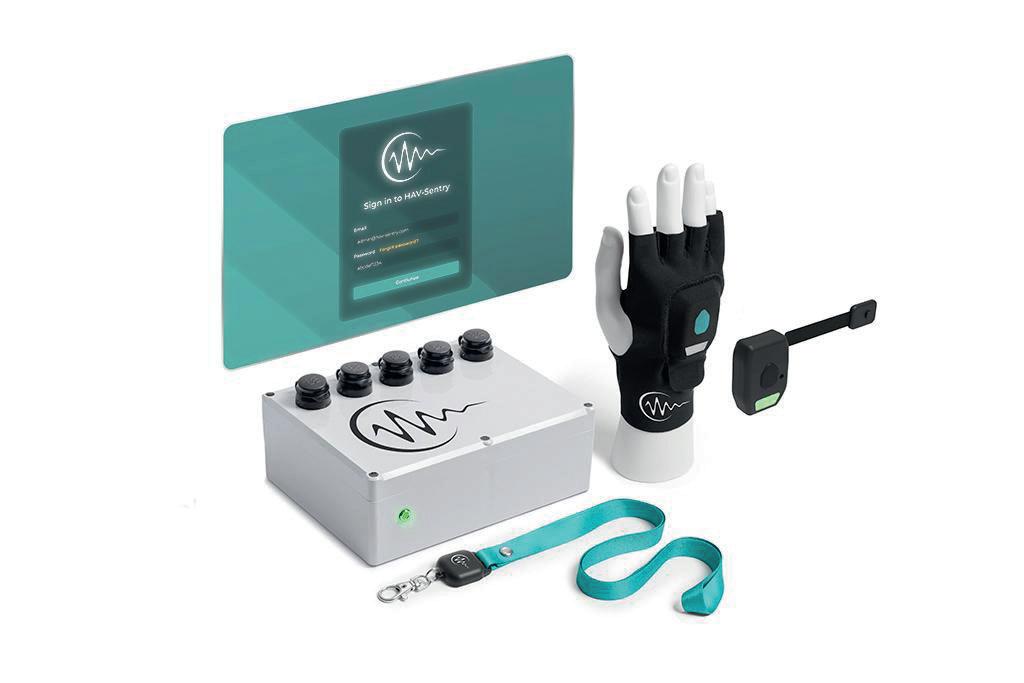
In this Q&A, Stephanie Henley, Worker Safety Advocate at Exactaform, discusses why vibration exposure is attracting greater attention, how wearable technology is transforming risk management, and why real-time exposure data is set to play a central role in the future of occupational health and safety.
For many manufacturers, managing hand-arm vibration exposure has traditionally relied on estimates, manual calculations and manufacturer data. While these approaches have helped organisations meet compliance requirements, they often only provide a partial picture of the risks workers face on the shop floor. As manufacturing becomes increasingly data-driven, expectations around workforce safety are evolving alongside it.
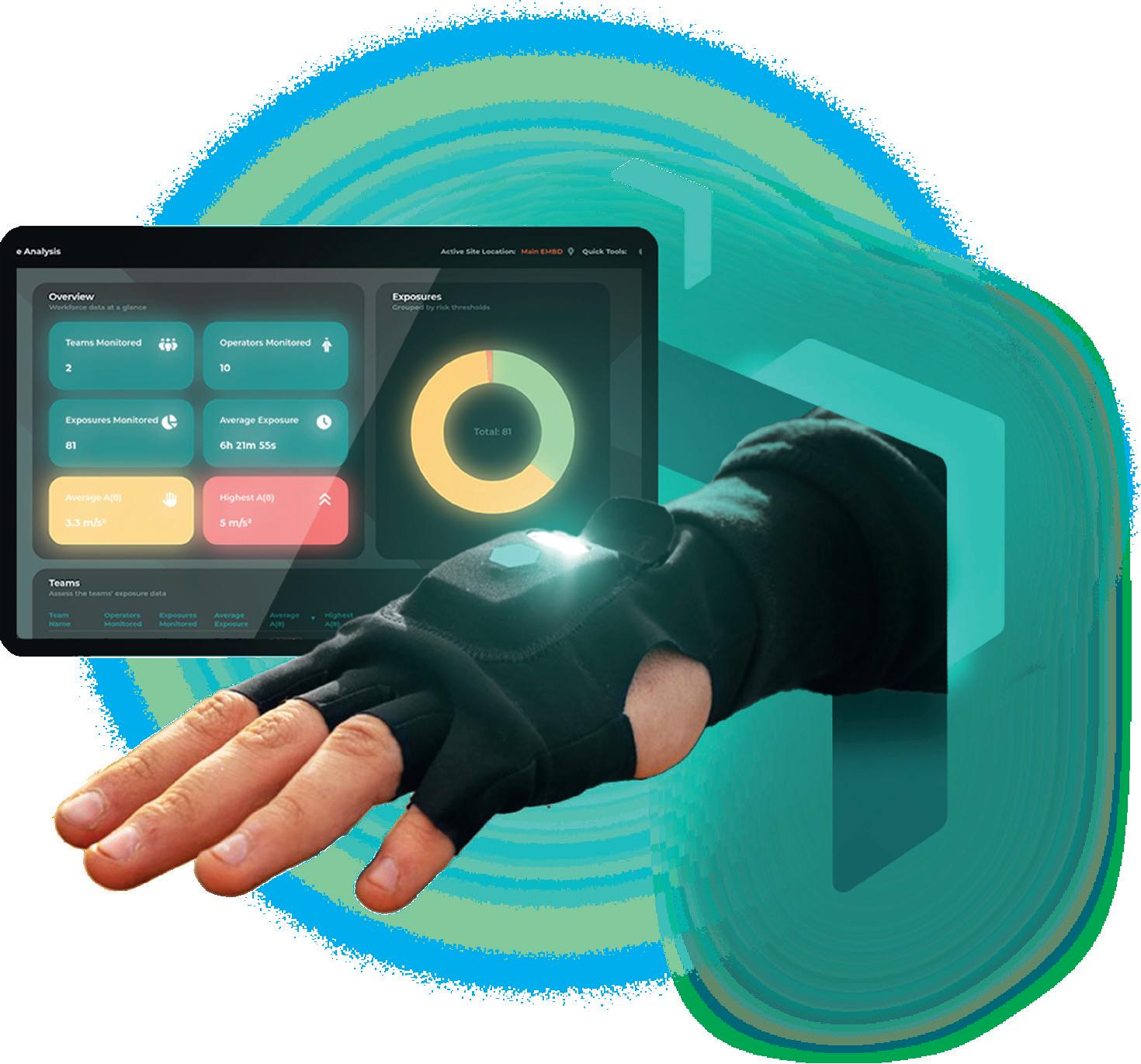
Wearable technologies are now giving organisations the ability to monitor vibration exposure in real-time, providing a more accurate understanding of risk and enabling earlier intervention before long-term health conditions such as Hand-Arm Vibration Syndrome (HAVS) develop.
WHY IS VIBRATION EXPOSURE BECOMING A BIGGER FOCUS FOR MANUFACTURERS AND SAFETY TEAMS TODAY?
Vibration exposure is increasingly on the radar of manufacturers because it affects worker health, process efficiency, equipment performance and compliance outcomes.
In the UK, hand-arm vibration is already a wellestablished occupational health risk under the Control of Vibration at Work Regulations. In the US, however, it has historically been under-managed compared to hazards such as noise, chemicals, machine guarding or manual handling. Even so, there is growing recognition of long-latency injuries such as HAVS. As a measurable and preventable contributor to chronic injury, vibration risk is becoming harder to ignore. Safety teams also have better guidance and tools to manage exposure before symptoms appear.
WHY ARE TRADITIONAL APPROACHES TO VIBRATION MONITORING NO LONGER ENOUGH IN MODERN MANUFACTURING ENVIRONMENTS?
Modern manufacturing environments are more data-driven and exposure-intensive than they were a decade ago. Traditional approaches often lack the accuracy, timeliness, scalability and defensibility needed to manage vibration as a real occupational health risk.
As facilities become more connected and safety programmes become more data-driven, companies are looking for automated exposure monitoring rather than relying solely on assumptions and manual calculations.
WHY CAN VIBRATION EXPOSURE VARY SIGNIFICANTLY BETWEEN OPERATORS USING THE SAME TOOL?
HAVS risk depends on how the tool is used. The way a worker holds the tool, how tightly they grip and how much pressure they apply all contribute to how quickly they approach the daily Exposure Action Value and Exposure Limit Value, known as EAV and ELV. Two workers may start the day with identical equipment, yet accumulate very different vibration exposures. That is why modern HAVS programmes increasingly focus on measuring each worker’s exposure rather than assuming that everyone using the same tool receives the same level of vibration.
WHAT MAKES WEARABLE TECHNOLOGY SUCH AN EFFECTIVE SOLUTION FOR VIBRATION EXPOSURE MONITORING?
Wearable technology addresses the biggest limitations of traditional approaches. Instead of calculating exposure from manufacturer data and estimated usage times,
wearables capture what is actually happening to each worker throughout the day.
That level of visibility helps companies reduce HAVS risk, improve worker protection, optimise safety programmes and make decisions based on objective data rather than assumptions.
HOW DOES REAL-TIME MONITORING CHANGE THE WAY ORGANISATIONS APPROACH HAVS PREVENTION AND WORKER SAFETY?
Real-time monitoring changes HAVS prevention by shifting it from a reactive, compliancefocused approach to a proactive riskmanagement approach. Traditionally, companies often discover vibration problems after symptoms appear, during annual assessments or following an occupational health referral. Real-time monitoring allows them to identify and address risks earlier; it transforms HAVS prevention from a retrospective assessment of what happened into a real-time strategy for preventing harmful exposure from occurring in the first place.
over the next decade, much like noise dosimetry, gas detection, machine monitoring and other technologies that have evolved from specialist tools into everyday operational practices.
HOW CAN WEARABLE TECHNOLOGY SUPPORT THE HIERARCHY OF CONTROLS IN PRACTICE?
In both UK and US safety practice, the hierarchy of controls provides a useful framework for reducing risk: elimination, substitution, engineering controls, administrative controls and PPE.
In the UK, this aligns with the Control of Vibration at Work Regulations and Health and Safety Executive guidance, which require employers to assess vibration risk and reduce exposure wherever reasonably practicable. Wearable monitoring supports this by giving safety teams accurate, worker-specific exposure data rather than relying only on estimated exposure times or manufacturer values.
In the US, the same principle applies through the OSHA Hierarchy of Controls. Wearable technology is often viewed as a monitoring tool, but its real value is that it helps organisations identify hazards, prioritise interventions and verify whether controls are working in practice.
At each level of the hierarchy, exposure data makes decision-making stronger. It can help manufacturers identify tasks that could be eliminated, compare lowervibration alternatives, validate engineering controls, improve administrative controls and reduce overreliance on PPE. This results in a more proactive, data-driven safety programme focused on preventing HAVS and other vibration-related injuries before they occur.
DO YOU SEE WEARABLE MONITORING BECOMING STANDARD PRACTICE ACROSS MANUFACTURING AND INDUSTRIAL ENVIRONMENTS IN THE FUTURE?
Yes, I believe wearable monitoring will become a standard
Several trends are driving this shift. Firstly, wearable technology is becoming more affordable, smaller, less intrusive and easier to deploy at scale. It is also becoming better integrated with Health and Safety programmes and wider operational systems. As costs continue to fall and capabilities improve, wearable technology becomes more attractive for organisations seeking both safety and operational benefits.
Secondly, manufacturers are moving towards datadriven operations. Worker exposure data is a natural extension of this trend. As connected-worker and Industry 4.0 initiatives expand, it becomes increasingly difficult to justify managing critical occupational health risks through estimates when accurate data is available.
In addition, safety expectations are evolving and occupational health risks require better visibility. Many occupational illnesses develop gradually over years rather than appearing immediately after a single incident, including HAVS, repetitive strain injuries, noise-induced hearing loss and fatigue-related risks. Wearable monitoring provides the continuous visibility needed to identify and manage these cumulative exposures before they become long-term health problems.
Most importantly, manufacturers are discovering that wearable monitoring delivers value beyond safety. It can help organisations improve productivity, optimise tooling decisions, support maintenance programmes, validate process improvements and allocate resources more effectively, all while protecting worker health.
When a technology improves both operational performance and workforce wellbeing, adoption tends to accelerate.
exactaform.com/hav-sentry
THE ROLE OF FM IN COMPANY PERFORMANCE
Tork, a brand of Essity — a global, leading hygiene and health company — explains why facilities management should be viewed as a strategic contributor to productivity, safety and workforce wellbeing in manufacturing and engineering environments.
In manufacturing and engineering, operational performance is often measured through output, downtime, energy efficiency and quality control. Despite often being overlooked, the everyday standard of facilities management continually influences workforce productivity.
Encompassing washrooms and welfare spaces to hygiene provision and cleaning routines, the condition of a site’s shared facilities has a direct impact on how employees interact with their working environments and daily tasks. In high-pressure industrial environments, small details matter. Clean, intuitive and well-stocked facilities help people move efficiently through their shifts, maintain hygiene standards and feel respected by their employer.
Evidenced by Tork’s 2025 Insight Survey1, when facilities are neglected, it can directly impact productivity and employee performance. The survey found that 52% of people take action after a poor washroom experience, impacting business revenue and reputation. It also revealed that 16% of respondents have avoided using the washroom at a workplace despite needing to, often resulting in discomfort and reduced performance. For manufacturing and engineering businesses, where many employees are site-based and cannot work remotely, this
makes effective facilities management a critical part of operational resilience.
FACILITIES MANAGEMENT AND PRODUCTIVITY
Industrial businesses invest heavily in process improvement, automation and streamlining operations, and facilities management processes should be considered part of the same productivity system. If washrooms are poorly stocked and cleaning is reactive or consumables run out during busy shifts, employees lose time and facilities teams face unnecessary callouts.
Well-designed and efficient hygiene systems can help reduce these disruptions and should be considered as levers of productivity. High-capacity dispensers that require less frequent refilling, hygiene containers that limit consumption and easy-to-refill systems support smoother routines and reduce restocking time. For facilities teams managing large or complex sites, these practical improvements can make a measurable difference to daily efficiency.
This is particularly important in manufacturing environments where shift patterns, hygiene requirements and production schedules place constant demands on
shared spaces. A reliable facilities management strategy helps ensure that hygiene provision keeps pace with the needs of the workforce.
SUPPORTING HEALTH, SAFETY AND ATTENDANCE
Facilities management also plays an important role in health and safety. Good hand hygiene helps reduce the spread of illness, supporting attendance and helping businesses maintain stable staffing levels. In industrial settings, where absences can put unnecessary pressure on schedules and increase overtime costs, this is a key operational consideration.
Clean, well-maintained facilities can also help reduce avoidable risks such as slips trips and falls, which consistently tops the Health & Safety Executive’s (HSE’s) non-fatal injuries in the workplace statistics. Overflowing bins, littered paper towels or poorly serviced washrooms can create hazards, particularly in environments where moisture, movement and heavy equipment are already part of the working landscape. Effective hygiene systems that minimise waste and are simple to maintain can therefore support both safety and compliance.
In the 2025 Tork Insight Survey, some employees reported leaving jobs because of poor washroom conditions. While facilities may not always be seen as a main retention issue, they influence how people feel at work. Negative washroom experiences can make people feel less valued, whereas clean, functional environments
FACILITIES MANAGEMENT
that support comfortable access to hygiene demonstrate that employers take wellbeing seriously.
STRATEGIC FACILITIES MANAGEMENT
The role of facilities management is changing. In manufacturing and engineering, keeping buildings operational is no longer enough. Companies must also create environments that support productivity, safety, compliance, sustainability and workforce satisfaction.
For senior leaders, this means looking again at the spaces and systems that employees use every day. Washrooms, hygiene stations and welfare facilities are rarely considered in productivity reviews, but they influence how smoothly a site runs and how people feel while working there.
In competitive industrial markets, performance gains are often found in overlooked areas and marginal improvement can reap significant rewards, facilities management being an example. By investing in smart, sustainable hygiene systems and maintaining consistently high standards, manufacturers can reduce disruption, support employee wellbeing and strengthen their operational performance.
For more information on Tork’s hygiene and sustainable washroom solutions, visit:
torkglobal.com/gb/en
1. The 2025 Tork Insight Survey was conducted with 11,500 respondents across the UK and European countries.
Clean efficiently Save time
Better hygiene for better business torkglobal.com/gb/en or tork.ie
FACILITIES MANAGEMENT
BALANCING SAFETY AND SUSTAINABILITY
Safety and sustainability are both increasingly key, and often inseparable, components of modern corporate strategy, but the relationship between the two can be volatile.
Here, Adam Pope, Head of Safety Marketing, Dräger Safety UK, discusses how safety and sustainability should interact as part of modern, progressive business agendas.
When it comes to the role of safety in building resilient and sustainable businesses, the relationship between the two functions plays a core role: protecting workers from harm, fostering psychological safety and ensuring safety in the supply chain. Indeed, health and safety professionals will be familiar with the overlap between the two in aspects such as the procurement of safety equipment, total cost of ownership and ensuring sustainability throughout the safety supply chain.
COMPETING FOR RESOURCES?
However, we live in an increasingly volatile and uncertain world where the relationship between safety and sustainability is often tested, and the two can find themselves competing for resources and for attention at Board level.
In the Dräger Safety and Health at Work report 20231, sustainability was cited as one of the most likely issues to be competing with safety as a business priority, with nearly half, 47 per cent, of those who took part in the research citing this as the most likely function to be competing with safety.
However, more encouragingly, a majority of participants taking part in the research (62 per cent) believe that sustainability positively impacts safety and that the two can comfortably co-exist. Meanwhile, less than one in ten (eight per cent) thought that the sustainability agenda negatively impacts safety and believe that the two cannot co-exist.
SAFETY FIRST
Sustainability is increasingly becoming a key consideration in safety procurement, particularly in government tenders, where suppliers of safety equipment are frequently required to demonstrate and evidence their work towards net zero goals.
However, it is important, in the urgency to demonstrate the sustainability and provenance of safety equipment, that the primary focus remains on keeping people safe and preserving life. For example, as UK manufacturers of breathing apparatus, Dräger is producing safety equipment such as self-contained breathing apparatus
for firefighters at its facility in Blyth, Northumberland. These devices must tolerate extreme temperatures, and when it comes to certain high-performance components, such as flame-resistant polymers or specialist elastomers, more sustainable alternatives are not yet available without jeopardising performance.
So, while as a business, Dräger is fully committed to reducing its environmental impact throughout the company, we cannot risk compromising the key role, i.e. safety, of our equipment, and, in such scenarios, the quality of products and safeguarding life must take priority.
TOTAL COST OF OWNERSHIP
The subject of quality leads to the topic of total cost of ownership, which is increasingly important when acquiring safety equipment, and the impact of which should not be underestimated in the context of sustainability. Clearly, the quality of equipment can vary, but buying the cheapest isn’t necessarily the most cost-effective in the long run and certainly is often not best for the environment. When it comes to consumable parts, such as sensors or batteries, there can be significant differences in the lifespan of these
Adam Pope, Head of Safety Marketing, Draeger Safety UK
FACILITIES MANAGEMENT
parts, and the frequency with which they may need to be replaced can make the difference between good and poor value in the long term, and hence adherence to corporate sustainability.
In addition, the frequency of replacing parts has further environmental considerations. These include the increased waste and landfill implications and higher transport emissions related to logistics and servicing.
The circular economy aims, in essence, to extend the lifecycle of products, and safety manufacturers like Dräger are playing their part by committing to meet requirements (wherever practicable) for sharing, leasing, reusing, repairing, refurbishing, and recycling materials and products, to extend the product lifespan for as long as possible. As part of this process, the option to rent equipment that is not used regularly provides a more sustainable route to procurement of safety devices in certain circumstances. This is because the equipment is re-used, reducing environmental impact by minimising waste, conserving resources, and promoting efficient use of equipment.
In a similar vein, Dräger encourages customers to regularly service safety equipment to extend its lifespan. While ensuring that tests are undertaken in line with the manufacturer’s guidelines is clearly an essential element of the standard operating procedures for any equipment, undertaking regular maintenance and calibration can also prolong the life of the equipment and reduce the replacement interval, thus further supporting the circular economy.
WORKFORCE ATTITUDES TO SUSTAINABILITY
When it comes to workforce perceptions, one of the more concerning findings from our more recent research for the Dräger Safety and Health at Work Report 2025 indicated a notable difference in generational attitudes towards corporate approaches to safety and sustainability.
Specifically, the research suggested the rise of ‘Gen C’, our term for a cynical generation in the workplace, where younger workers have a high expectation that businesses will own responsibility and take their environmental promises seriously.
The independent research for our annual report also shows that six out of 10 workers believe that their employer is engaged in ‘greenwashing’ to some extent, suggesting this is an important consideration for the safety sector as the issue moves up the corporate agenda. Such behaviour by businesses risks undermining trust in genuine sustainability efforts (and other efforts around issues such as safety) and can damage the broader employeremployee relationship, which in turn can threaten a preventive and holistic safety culture in the long-term.
The research makes clear that younger generations expect businesses to take their responsibilities seriously and to be sincere in the delivery of their pledges, whether in relation to safety or the environment. It will be important for companies to ensure that genuine commitments to issues such as safety and sustainability are an integral part of the corporate strategy in 2026, with transparency and open communication at the heart of such policies.
Regardless of generational perceptions and the global instability and volatility that currently exists, it’s important that the relationship between safety and sustainability operates in partnership. Ultimately, their shared objective is to protect people today, without compromising our collective future wellbeing. When safety professionals and sustainability leaders work together, we have a better chance of balancing the long-term sustainability of our planet with the task of keeping our workplaces safe.
Manufacturers are under growing pressure to reduce energy consumption and improve sustainability across their facilities. One of the most overlooked opportunities lies not in building systems, but in the machines themselves, explains motion technology specialist Rollon.
Within facility energy efficiency, lighting, HVAC, compressed air systems and building management technology are important considerations. But legacy hydraulic systems are another significant source of energy waste on the production floor.
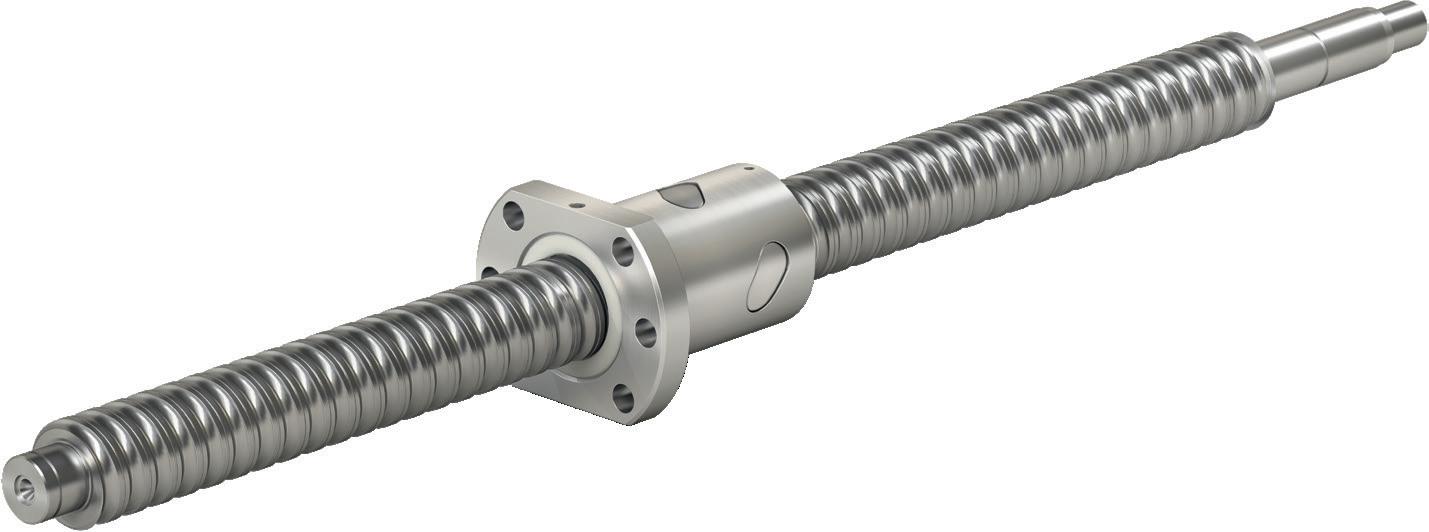
Hydraulic cylinders are a familiar fixture in manufacturing facilities, used to drive linear motion in press tools, clamping systems, lifts and a wide range of production machinery. They are reliable, compact and capable of generating considerable force. But they carry a fundamental inefficiency: they consume energy continuously.
A hydraulic power unit must maintain constant pressure in the system at all times. The pump runs whether a cylinder is actuating a load or sitting idle between cycles. In a busy facility with multiple hydraulic axes running across multiple shifts, the continuous energy draw adds up to a substantial and largely unnecessary operational cost.
A CLEANER, QUIETER ALTERNATIVE
cleaner and safer working environment.
Electric systems are also significantly quieter than their hydraulic counterparts, reducing ambient noise levels on the production floor and contributing to improved workplace conditions.
The migration from hydraulic to electric actuation has been underway in sectors such as machine tools and injection moulding for several decades, driven initially by the need for greater precision and controllability. The facility management case for making the switch is equally compelling.
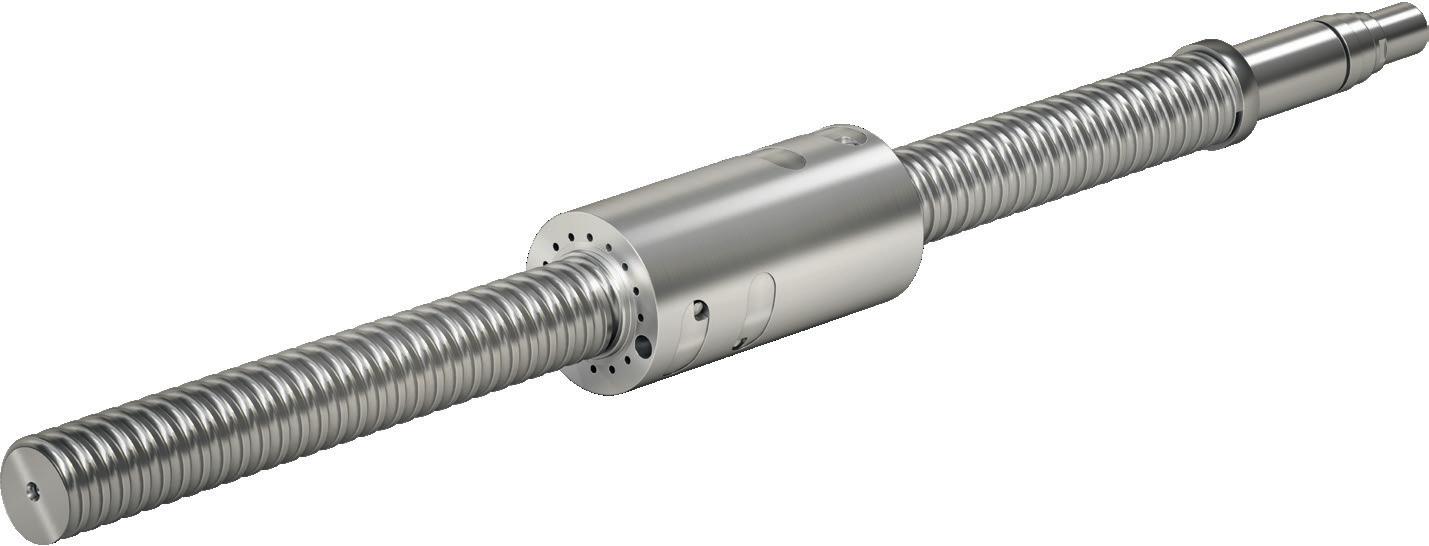
Ball screw-based electric actuation consumes energy only when moving a load. When holding a position or sitting between cycles, energy consumption drops to near zero. Across a full production shift, that difference in energy profile translates directly into reduced electricity consumption and lower operational costs without any change to production output.
The environmental benefits extend beyond energy. Hydraulic systems carry an inherent contamination risk. Hydraulic fluid leaks are a routine maintenance concern, and even a minor leak can contaminate equipment, flooring, personnel and end product. Fluid disposal at scheduled maintenance intervals creates an ongoing waste management obligation. Switching to electric actuation removes both risks entirely, contributing to a
Lee Cheshire, Country Manager UK & Ireland, Rollon, explains: “We are seeing growing interest for replacing hydraulic actuation with electric alternatives. The energy savings are consistent and measurable, the maintenance burden is lower, and the environmental case is clear. For manufacturers looking to improve facility performance, the production floor is a good place to start.”
“The decision to replace hydraulic systems is not always straightforward. Hydraulics remain the right choice where forces are extremely high, where long strokes are required, or where shock loading is a routine condition. But for a significant proportion of manufacturing applications, ball screw-based electric actuation can match or exceed the performance of hydraulics while delivering measurable improvements in energy efficiency, cleanliness, noise and maintenance overhead.”
For facilities managers and maintenance teams looking beyond building systems for the next efficiency gain, the production floor could be the next logical step.
rollon.com
Rollon Shuton-Ipiranga ball screwsbox
FACILITIES MANAGEMENT
DIGITAL WORKERS FOR MAINTENANCE TEAMS
Ultimo, an IFS company and the first enterprise asset management (EAM) provider to deliver agentic AI in production, announces the availability of a team of digital workers designed to embed intelligence directly into the workflows of industrial maintenance teams.
The announcement marks the next step in Ultimo’s Intelligent Asset Management platform, which launched its first digital worker for HSE incident reporting in July 2025. With this expansion, core roles in a maintenance organisation from planner and technician to safety manager, have a digital worker embedded in their daily workflow.
Each digital worker is purpose-built for the demands of industrial maintenance; intelligence developed with operational teams and familiar with EAM data structures, maintenance workflows, and safety protocols. This council of workers represents the next step in what Ultimo calls Intelligent Asset Management. Here, AI amplifies human expertise where judgment matters, and operates autonomously where scale, speed, or safety demands it.
The case for action is straightforward. Ultimo’s Maintenance Trend Report1 found that 63 percent of industrial organisations are struggling with an aging workforce, and the volume of data generated by modern asset operations has long exceeded what any maintenance team can process manually. The digital workers address these pressures.
The HSE digital worker directly supports compliance, embedding safety protocols and incident reporting into daily workflows so that regulatory obligations are met consistently, not reactively. On the cost side, time savings compound quickly: automating high-volume tasks such as daily stand-up reporting, work preparation and maintenance planning frees skilled professionals for the complex, judgment-intensive work that drives real operational value. For industrial organisations, the question is not whether AI will change maintenance operations, but whether they move now or spend the next few years catching up.
“With AI, all relevant information is automatically summarised and combined, saving each team lead 30–60 minutes daily during the start of the day and matching our own analysis by more than 95%,” explains Stefan van Bussel, Teamlead Technical Services, Berkvens Doorsystems.”
“By intelligently combining data from different sources, new insights emerge, enabling teams to set better priorities, identify structural issues, and carry out more
“The companies pulling ahead aren’t maintaining assets better, they’re rethinking what’s possible when AI is built into the core of how enterprise assets are managed,” says Steven Elsham, CEO of Ultimo. “Ultimo was the first EAM vendor to bring agentic AI to industrial maintenance, and these three digital workers build on that foundation. Every core role in a maintenance organization now has intelligence embedded in its workflow.”
Digital workers are designed for human control and oversight: agents manage non-disruptive actions autonomously, while higher-risk decisions trigger human intervention, with comprehensive telemetry ensuring visibility and accountability. Ultimo’s agentic offering is EAM and computerised maintenance management system (CMMS) agnostic, and additional capabilities, including autonomous work preparation and shift log analysis, are planned for Summer 2026.
ultimo.com
1. ultimo.com/ultimo-trend-report
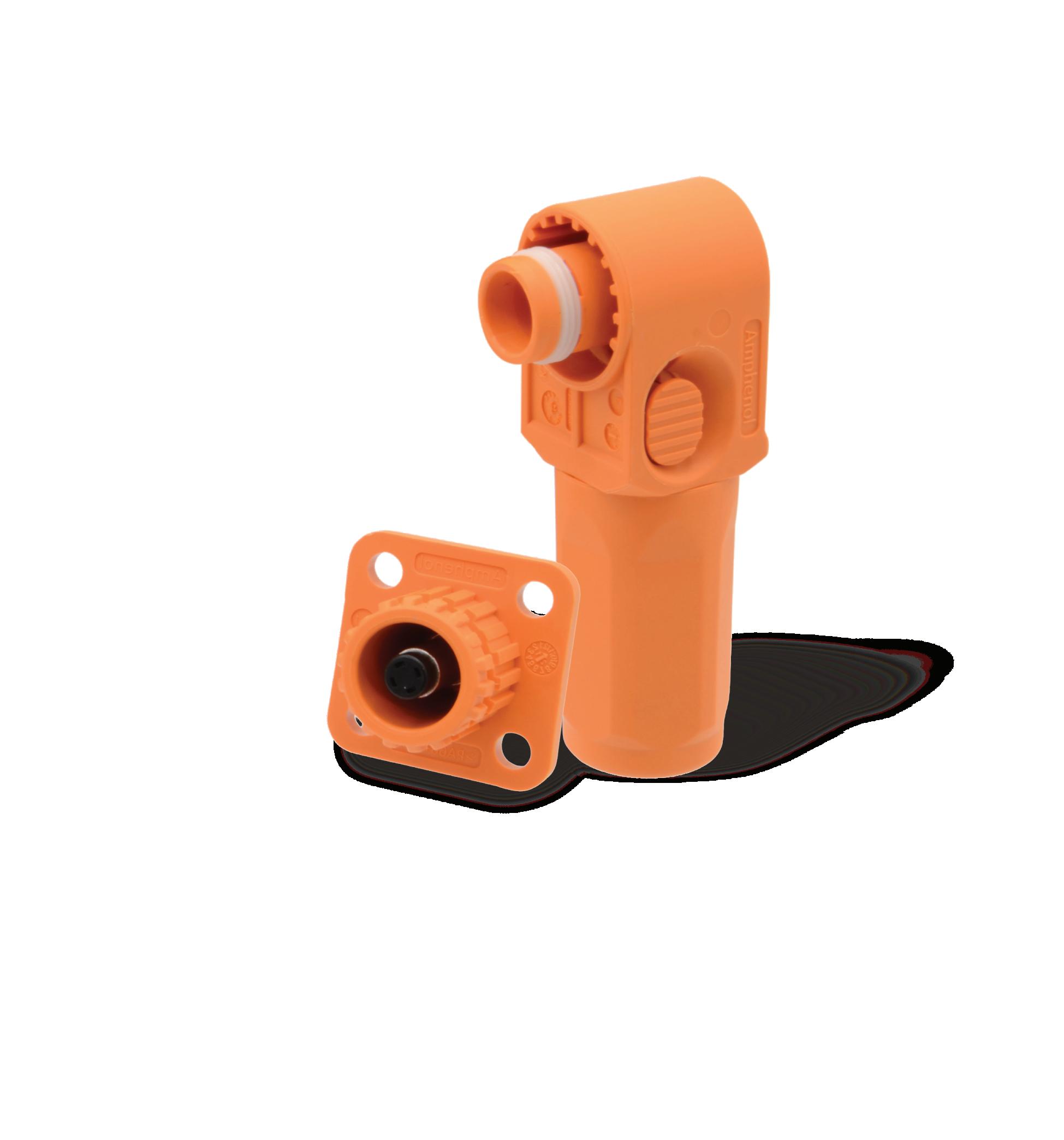
SurLok Plus® Compression Lugs
DESIGNED TO MEET THE NEEDS OF HIGH-VOLTAGE POWER APPLICATIONS
R4 RADSOK® technology for high conductivity, low insertion force, and reliable contact stability
Available in 1000V DC and 1500V DC versions current ratings from 50A–500A
Quick-lock, press-to-release design for fast, tool-free mating and unmating
Touch-proof construction with optional HVIL and EMI shielding for enhanced safety
WHY ENERGY IS ALL ABOUT THE DATA
As energy costs apply pressure and sustainability targets become increasingly demanding, manufacturers face a common challenge: how do you identify energy savings with confidence? For Shane Kennedy, Environmental and Sustainability Lead at C&C Group’s Bulmers facility in Clonmel, Ireland, the answer’s simple: start with the data.
C&C Group, owner of brands including Bulmers, Magners, Tennent’s and Matthew Clark, operates a large manufacturing site with significant energy demands. Like many industrial facilities, the site already had an energy management system in place. However, when Shane joined the business, he quickly recognised a familiar problem.
“I came in here and I noticed there was a lot of quick, easy wins just from an initial view of the site. But the problem that they had was poor metering.”
For organisations pursuing energy efficiency projects, accurate measurement is critical. Whether the objective is reducing operational costs, securing grant funding or delivering carbon reduction targets, improvements must be supported by evidence.
“If I go in for a project, I always want grants. But all of these need measurement and verification.”
To support this process, Bulmers deployed Tinytag Energy Loggers across a variety of projects throughout the site. The portable loggers are used to monitor significant energy users, including compressors, lighting systems and EV charging infrastructure, providing detailed insight into actual energy consumption.
One particularly valuable application involved the site’s compressed air system.
Compressed air is often one of the largest energy consumers within a manufacturing facility. By installing Tinytag Energy Loggers directly onto compressors, Shane was able to compare measured performance against data
recorded by the site’s existing energy management system.
The results revealed something unexpected.
“I can use your loggers against what I’m recording on my energy management system. If it’s within one percent, that’s fine. But I’ve actually found that the power factor on one of my compressors was completely off and I was able to find that out from your loggers.”
The discrepancy led to further investigation and ultimately uncovered inaccuracies within existing metering equipment. Armed with reliable data, the team could take corrective action and establish an accurate baseline for future improvement projects.
That baseline is now being used to assess the performance of newly installed high-efficiency compressors, helping verify that expected savings are actually being delivered.
For Shane, this is where monitoring delivers its greatest value.
“You can’t ask why without data. That’s energy; it’s all about the data.”
Used by energy managers, facilities teams and sustainability professionals worldwide, Tinytag Energy Loggers provide the independent measurement needed to identify inefficiencies, validate savings and support informed decision-making. In an era of rising energy costs and increasing sustainability expectations, accurate data is no longer a luxury, it’s essential.
geminidataloggers.com/energy-efficiency
Turn energy costs into actionable insight.
Gain clear visibility of where, when and how energy is being used, so inefficiencies can be identified and addressed with confidence.
Build a data-driven case for efficiency improvements.
Establish accurate energy baselines to justify investment, validate change and support funding or grant applications.
Reduce waste without disrupting operations.
Monitor energy consumption non-intrusively across processes and infrastructure, without interfering with production or uptime.
Move to evidence-based decisions and control.
Replace guesswork with reliable data that supports smarter operational decisions and longterm efficiency planning.
WAREHOUSE AUTOMATION
SICK AUTOMATES ITS PRODUCTION LOGISTICS
Leading sensor manufacturer SICK has expanded production capacity and streamlined intralogistics at its factory in Hungary with automation from KNAPP.
SICK recently expanded its plant in Kunsziget, where 800 of its 10,000 employees work. To handle increasing order volumes, the company added three new halls – one for goods-in, one for small parts storage and picking and a fourth manufacturing hall.
In partnership with KNAPP, the company has automated its production logistics with a fleet of automated mobile robots (AMRs), an automated small parts warehouse, goods-to-person picking stations and SAP® EWM software. The end-to-end automation solution enables just-in-time deliveries to the production areas, optimises material flows and maximises transparency for stock management.
EFFICIENT INTERNAL TRANSPORT
KNAPP supplied 27 of its Open Shuttle AMRs to form the backbone of the plant’s internal transport. They connect the new warehouse directly with the manufacturing halls by dropping off containers at 30 flow racks in the production area and taking the finished parts back for storage. The just-in-time solution means SICK can minimise stock levels while maximising the availability of parts.
The Open Shuttles do not rely on physical infrastructure for their navigation. Instead, the technology provides a dynamic solution, with KNAPP’s KiSoft Fleet Control System (FCS) enabling reconfiguration of the layout and processes of the AMRs with just a few clicks of a mouse. The intelligent Open Shuttles undertake path planning, as well as obstacle detection and avoidance to ensure safety. The solution uses swarm intelligence to evenly distribute tasks among the AMRs and optimise their routes.
AUTOMATED WAREHOUSE
The automated small parts warehouse, which supplies all the production areas from a central point, features a stacker crane that serves four aisles and 28 levels. Unfinished and part-finished goods are stored in three different types of container within the 52,000 storage locations. Directly connected to the automated store are two of KNAPP’s ergonomically designed Pick-it-Easy workstations, which enable efficient goods-to-person picking, guided by screens. The solution allows SICK to store and retrieve goods, supply parts to production just in time and optimise use of space, all fully automatically.
SEAMLESS CONTROL
The decentralised SAP® EWM solution serves as a warehouse management system (WMS) and warehouse control system (WCS). The SAP® EWM MFS (Material Flow System) by KNAPP controls the automation directly, orchestrating all the movements in the warehouse without any external middleware or additional control levels.
SCALABLE SOLUTION
The entire logistics system and SAP® EWM landscape at the Kunsziget factory have been designed to allow the addition of further manufacturing halls in the future, enabling SICK to expand production rapidly and efficiently when required.
knapp.com
dimensions risetonew
Our Open Shuttle range of autonomous mobile robots includes models for handling containers, trays, cartons and pallets. AMRs provide an efficient, safe and dynamic transport solution, with rapid implementation and layout changes at the click of a mouse.
HEALTH & SAFETY
SUPPORT FOR CARERS IN ENGINEERING
Introducing Foothold, a charity dedicated to supporting engineers and their families. During Carers Week 2026, Foothold is recognising how vital carers are and sharing the ways to support them. This year’s theme, ‘Building Carer Friendly Communities’, is about creating spaces where carers are understood, supported and empowered to thrive.
Every day, around 63 million people worldwide care for someone close to them1. In the UK, there are 5.8 million unpaid carers, over half of whom are also juggling care with paid work2
Many people don’t recognise themselves in those numbers. They’re just doing what needs to be done. Caring responsibilities might begin with helping a parent after an illness, supporting a partner through a difficult time, or looking after a child with additional needs. It becomes part of everyday life, alongside work, study and everything else.
If you’re caring for someone, or think you might be, asking for support can feel like a big step. But it can also be the first step towards making things feel more manageable.
ARE YOU ELIGIBLE FOR CARERS SUPPORT FROM?
If you or the person you care for has worked or trained in engineering or technology, Foothold can offer you free wellbeing support and legal advice. And if you or the person you care for has ever been an IET member, you may be eligible for financial support from Foothold. Even if you’re not currently working as an engineer, you may still be eligible if your work or study is linked to the sector.
ADVICE, INFORMATION AND FINANCIAL SUPPORT
Foothold has a long history of supporting carers in the engineering community. It knows that everyone’s situation is different, so it can offer a range of support, including advice and guidance tailored to your situation and financial assistance (eligibility criteria apply).
Whether or not you qualify for Foothold’s financial support, you can get legal advice via its free app. This includes information on managing someone else’s affairs or getting power of attorney.
CARING FOR YOURSELF
Caring can bring physical, emotional and psychological challenges, and it’s important to have support in place for yourself too. When you’re focused on someone else’s
needs, it’s easy to overlook your own. But you can’t pour from an empty cup.
Eligible carers can apply for counselling grants from Foothold, so you have someone to talk to when it matters most. Foothold can also offer respite or holiday grants to give you a break to rest and recharge. All carers get free access to our Wellbeing Hub. It contains expert advice and tools on managing your physical and mental health, including cognitive behavioural therapy modules.
FOOTHOLD IS HERE WHEN YOU NEED IT
If you’d like to apply for carers support from Foothold, fill in the application form to get started. Foothold’s work is powered by donations from the engineering community. If you’d like to support engineers with care needs or caring responsibilities, find out how you can help here:
myfoothold.org/get-involved/donate
1. carersworldwide.org
2. carersuk.org
PROCESS CONTROL
POWERING RELIABILITY IN RAIL PERFORMANCE
Discover here how an engineering alignment between Titan Enterprises and Grinsty Rail delivered the continuity of flow measurement needed for reliable rail performance.
The long-standing partnership between Titan Enterprises and Grinsty Rail demonstrates how reliability, continuity of supply and collaborative engineering can support the performance and longevity of critical rail infrastructure. By integrating Titan’s FT2 turbine flowmeters into its vehicle-mounted rail deicing systems, Grinsty Rail has maintained precise fluid control, operational reliability, and the ability to refurbish and extend the life of its equipment without costly redesigns.
Rolling stock operators face the challenge of modernising systems while maintaining reliability over asset lifecycles that often span several decades. Components embedded within these systems must not only perform accurately, but also remain available and consistent throughout the system’s operational life. This requirement is particularly important for Grinsty Rail’s deicing systems, which are mounted beneath rail vehicles and exposed to vibration, extreme temperatures and harsh environmental conditions.
To meet these demands, Grinsty Rail selected Titan’s FT2 radial turbine flowmeter technology. The flowmeters provide accurate measurement of de-icing fluids as they are distributed across the rail network, ensuring effective treatment of tracks during winter operations. Titan’s commitment to design stability and long-term product availability gives Grinsty Rail confidence that components specified today will continue to be supported in the future, reducing risks associated with obsolescence and redesign.
The FT2 flowmeter offers flexibility through multiple flow ranges, robust sapphire bearings, chemically resistant construction and traceable calibration. These features make it well suited to demanding rail applications where dependable performance is essential.
The partnership also proved valuable when Grinsty Rail began transitioning to environmentally friendly biodegradable de-icing fluids. Unlike traditional clear fluids, the new formulations were green, opaque and more viscous, creating challenges for existing optical sensing technology.
Working closely together, Titan recommended implementing its OG2 oval gear technology, which is better suited to higher-viscosity fluids and maintains measurement accuracy regardless of fluid optical clarity. This approach not only resolved the light attenuation
issue, but also delivered stable, repeatable flow measurement under the more demanding rheological conditions of the new environmentally compliant fluid. As a result, Grinsty Rail was able to upgrade its fluid chemistry without compromising system performance.
As Grinsty Rail’s de-icing systems enter refurbishment programmes designed to extend their service life, continuity of supply remains a critical advantage. Titan’s flowmeter products continue to integrate seamlessly into both legacy and upgraded systems, helping accelerate refurbishment projects while minimising operational disruption.
The collaboration has delivered several long-term benefits, including reliable performance in demanding environments, system stability across multiple vehicle platforms, reduced total cost of ownership and more efficient refurbishment programmes. Ultimately, the case study highlights how strong supplier relationships, engineering alignment and long-term product continuity can help rolling stock operators balance innovation with stability, ensuring dependable performance throughout extended asset lifecycles.
flowmeters.co.uk
Improve workplace safety with a personal noise dosimeter that anyone can use.
The TSI OmniWear Noise™ Personal Dosimeter is designed to bring professional-grade noise monitoring to a wider range of industries and users.
▪ Lightweight, rugged design
▪ Intuitive mobile app
▪ Multi-device monitoring
▪ Seamless data reporting is
For more information on the TSI OmniWear Noise™ Dosimeter please visit: tsi.com/omniwear
The UK’s leading training for acoustics professionals
The IOA Diploma in Acoustics and Noise Control is a flexible way to get into the acoustics profession, with remote learning options that fit around your life.
You’ll cover the essentials, core acoustics principles, lab methods, and your own project, then pick two specialist modules in areas such as Building Acoustics, Electroacoustics, Environmental Noise or Noise & Vibration Control.
You can study at UK centres or online, wherever suits you, and keep a good work–life balance along the way.
With over 50 years of experience, the Institute of Acoustics also connects you to a global network, events, and ongoing CPD. Find out more at: www.ioa.org.uk/education-training
Institute of Acoustics, Silbury Court, 406 Silbury Boulevard, Milton Keynes MK9 2AF
INJECTION MOULDING
OPTIMISING PLASTIC INJECTION MOULDING
The tool trial process is vital for the repeatability and on-going success of plastic injection moulding production, ensuring ROI on mould tool investment. Process optimisation in plastic injection moulding is therefore crucial. But what does it involve?
Pentagon Plastics Group explains.
To help understand why process optimisation in plastic injection moulding is so important, here is a simplified version of what takes place during the trial process.
First, the tool is mounted into the required press size; this will vary dependent on the tonnage pressure required to hold the tool closed. The thermoplastic material of choice is then injected into the tool. This starts with a small amount, not enough to fill the cavities (approx. 50%), with the holding phase set to 0 pressure. The volume of plastic is then increased, shot by shot, while the operator examines the pattern of fill and, in the case of multiimpression tools, checks that all impressions fill evenly.
During this process, the speed and pressure of the 1st phase fill will be broadly established, driven by the visual aspects of the moulding(s). When the part(s) are 95% full, the holding phase is introduced to pack the part out fully. Once the part looks full, a weight check is completed. This involves gradually increasing the holding pressure and time while recording the weight of the product.
At the point where the weight no longer increases the gate “freeze time” is established to prevent more material being introduced into the cavity. If the parts aren’t fully packed at this point during the trial, modifications will need to be made to increase the gate and/or feed to allow more material to enter before freezing off; if they are fully
packed out, then further optimisation takes place.
First, the cooling time is reduced until just before the parts are sufficiently solidified to eject without distortion; it is then gradually increased back to the shortest time, allowing good parts to be ejected with a safety cushion.
Finally, the ejection speeds, pressures and the number of strokes are refined, with the aim being to eject the parts in the most efficient manner and achieving the best quality at the shortest cycle time. The parts produced will then be released to quality control for First Article Inspection Reports (FAIRS).
As this demonstrates, process optimisation can be labour intensive to complete effectively, even when it is a simple open/shut mould tool, particularly when processing some of the more challenging thermoplastic materials.
Pentagon Plastics Group recommends that the process takes place while the Toolroom are on hand to support, and that the Toomaker is involved, as their insight on how the tool is constructed can be enormously beneficial to the optimisation phase.
This structured optimisation process ensures a plastic injection mould tool is fully optimised before mass production, reducing risks of future tool repair and production delays.
pentagonplastics.co.uk
WHEN INVENTORY IMPACTS PRODUCTION
Inventory issues in manufacturing rarely stop at the warehouse. When stock data is disconnected from production, small inaccuracies can quickly turn into material shortages, delayed work orders, missed delivery dates and unreliable financial data. But how can manufacturers identify when their inventory system is at fault?
8 SIGNS THAT A MANUFACTURER’S INVENTORY SYSTEM IS HOLDING BACK PRODUCTION
1. Production stops even though materials appear to be in stock. The system may show stock on hand, but not account for reservations, quality holds, wrong locations, scrap, or materials already allocated to other jobs.
2. Production planning still happens in spreadsheets. If planners, buyers, warehouse staff, and sales teams all use separate files, your inventory data is not connected to production reality.
3. Purchasing is always reacting to shortages. Buyers should be able to see what materials will be needed for upcoming work orders, not just what is already below the reorder point.
4. BOM changes create confusion. If bills of materials are outdated or managed separately, purchasing may order old components, production may use the wrong parts and costing may become unreliable.
5. Sales promises delivery dates production cannot meet. If sales cannot see material availability, production load and supplier lead times, promised dates may be based on hope rather than capacity.
6. Shop floor updates arrive too late. When material consumption, scrap, finished goods and work order progress are recorded hours or days later, the system is never current enough to trust.
7. Product costs are unreliable. Material costs alone do not show the true cost of production. Labor, machine time, subcontracting, overhead, scrap and rework also need to be included.
8. The system tells you what you have, but not what you can make. Manufacturers need answers to production questions: what can be made, what is missing, which jobs are at risk and what needs to be purchased next.
HOW ERP SOFTWARE SOLVES THESE PROBLEMS
Manufacturing ERP software like MRPeasy is built around the full manufacturing operation, not just the warehouse. It helps manufacturers to more effectively manage inventory
and calculate material requirement. It also enables manufacturers to plan work orders around all variables and provides better visibility for purchasing. By aligning sales and production, delivery promises are based on real availability and capacity.
ERP software records shop floor activity, material consumption, scrap and finished goods more accurately, while supporting lot and serial traceability, quality checks and recall control. By providing a comprehensive assessment of production costs, it also enables realistic product costing. Finaly, it also provides management one connected view of inventory, purchasing, production, sales and finance.
In short, manufacturers need to know not only what is in stock, but what they can make, when they can make it, what materials are missing, and what production will actually cost. That is why manufacturers looking to improve production efficiency should look beyond standalone inventory management software and choose manufacturing ERP software instead.
SCHEDULING AND SEASONALITY
By adopting a more connected, digitalised approach to scheduling, SME manufacturers stand to be more resilient to the pressures of seasonal peaks and shifting customer demands, explains industrial software developer Epicor.
For small and mid-sized manufacturers, balancing production schedules with customer demand is getting harder. They still experience seasonal peaks, but these are combined with supply chain disruption, labour shortages, economic uncertainty and changing customer expectations. Demand can shift quickly in this context, making agility essential for protecting margins and maintaining customer service.
Yet many SME manufacturers still rely on spreadsheets or disconnected systems for production planning. While familiar, these tools often lack the visibility and flexibility needed to respond effectively when conditions change. And seasonality affects almost every manufacturing sector. Food and beverage producers face holiday-driven demand spikes; construction suppliers are influenced by weather and project schedules; while promotional periods and peak shopping seasons up the pressure for retail-focused manufacturers.
The challenge is to first forecast this demand. Manufacturers must then ensure they have the right materials, labour, machine capacity and inventory available to meet it. Unexpected demand increases can quickly create bottlenecks, resulting in overtime costs, expedited freight and missed delivery commitments. Overestimating demand can lead to excess inventory, underused resources and unnecessary carrying costs.
For SMEs operating with tighter margins, these issues can significantly affect profitability.
Traditional scheduling methods often create visibility gaps across the business: production teams may not have current inventory data, purchasing teams may be unaware of changing priorities, and sales teams may commit to delivery dates without a clear view of capacity.
A more connected approach links planning, inventory, procurement and production in a single operational view. With real-time visibility, manufacturers can identify bottlenecks earlier, assess alternative scenarios and adjust schedules quickly as demand changes. This is especially valuable during seasonal peaks, when fast decisions can determine whether customer demand is met or missed. Better scheduling can improve on-time delivery, increase resource utilisation, reduce work-in-progress inventory and lower overtime and freight costs. Most importantly, it gives manufacturers greater confidence when managing uncertainty.
Epicor helps manufacturers manage fluctuating demand by bringing ERP, Advanced Planning and Scheduling (APS), Material Requirements Planning (MRP) and production management together within a single platform.
APS enables realistic schedules based on machine availability, labour capacity, material constraints and production priorities. MRP helps align purchasing with production requirements, reducing the risk of material shortages and excess inventory. Epicor also provides realtime visibility across production, inventory, customer orders and supplier activity, helping teams work from the same information and respond quickly to disruption.
Seasonality and fluctuating demand are realities for most manufacturers. However, by moving beyond manual planning and adopting connected systems, SME manufacturers can improve scheduling accuracy, optimise resources and respond more effectively to market shifts. With integrated planning, scheduling, inventory management and operational visibility, Epicor helps turn scheduling from a reactive task into a strategic advantage.
epicor.com
EVENTS
CHEMUK: THE HEART OF THE CHEMICALS INDUSTRY
CHEMUK 2026 brought together the chemicals, process engineering and formulated product sectors at the NEC Birmingham on May 20 and 21, welcoming thousands of professionals from across the UK and international supply chains. This year’s show put regulation, resilience and innovation at the heart of the UK chemicals industry.
Across two packed days, CHEMUK 2026 spotlighted the technologies, policies and partnerships shaping the future of UK chemicals. With senior representatives from Defra and the Health and Safety Executive taking to the stage alongside global manufacturers, trade bodies and technical specialists, this year’s event placed regulatory policy and industrial strategy firmly at the centre of discussion.
With more than 600 exhibitors and over 150 speakers and panellists across five dedicated show zones, this year’s edition delivered one of the event’s most comprehensive conference programmes to date.
A defining theme was navigating regulatory change and challenges. Sessions led by Hibiscus’s Andrew Bedford examined dangerous goods safety advisers (DGSA) compliance and best practice in dangerous goods handling and transport, while the Chemical Hazards Communication Society discussed the importance of accurate classification and effective hazard communication, and the key changes proposed to the CLP regulations. These topics remain critical as companies work to keep products moving safely and legally through increasingly complex UK and international supply chains.
Per- and polyfluoroalkyl substances (PFAS) were another major focus, with Dr Martyn Shenton of Blue Frog Scientific discussing UK regulation, Environment Agency thresholds and the Defra PFAS Plan. The subject gained further weight during the UK Government Briefing, where Defra
Minister Emma Hardy MP set out a more proportionate and internationally aligned approach to chemicals regulation, including plans to use EU decisions as the starting point for UK REACH where appropriate.
Industry resilience and competitiveness also ran through the programme. Tim Doggett of the Chemical Business Association delivered the State of the Nation keynote and contributed to sessions on sector recognition and the changing global order’s impact on chemical supply chains. Meanwhile, UK-ASCM explored growth, investment and sustainable supply chains, reflecting the urgent need to strengthen UK capability and attract long-term investment.
Sustainability and decarbonisation were equally prominent. The British Adhesives and Sealants Association’s (BASA) Lorna Williams discussed adhesives, sealants, digitisation and electrification, while other panel discussions examined financing net-zero capital projects and carbon performance, product carbon footprints, clean energy and bio-based materials. For an industry under pressure to cut emissions without compromising performance or productivity, these sessions showed how commercial and environmental priorities are becoming increasingly connected.
CHEMUK 2027 will take place on 19 and 20 May. Companies already planning to exhibit at the UK’s largest gathering of chemicals experts can register their interest by visiting the show’s website.
chemicalukexpo.com
4 & 5 November 2026, NEC Birmingham Co-Located with:
300+ exhibitors 15,000+ attendees across 2 co-located shows
100+ speakers 30+ seminars across 4 Theatres
“The show has always been really good in the past. We get lots of interest from high-level decision makers who are looking for new products, new services, and find it’s a great way to generate leads”
Dave Hargest, Siemach Machinery Ltd.
The leading event that brings the entire metals supply chain together with the worlds of engineering, manufacturing & construction. Already exhibiting: Supported
EVENTS
THE HEALTH & SAFETY EVENT 2026
The Health & Safety Event 2026 returned to the NEC Birmingham from 28-30 April as part of the wider Safety & Security Event Series, bringing together thousands of professionals for three days of learning, networking, innovation and industry discussion.
As one of the leading gatherings for the sector, this year’s event reflected the continued growth and evolution of the health and safety industry, with record-breaking attendance, packed conference theatres and high engagement across the show floor. Across the wider Safety & Security Event Series, more than 58,000 professionals attended the co-located events, exploring the latest technologies, services and solutions from over 1,200 exhibitors.
The Health & Safety Event itself welcomed more than 14,000 visitors and featured over 400 exhibitors, alongside an extensive education programme made up of 150 sessions and 162 speakers. More than half of all attendees took part in conference sessions across the event, highlighting the industry’s appetite for knowledge-sharing, collaboration and professional development.
Throughout the three-day event, attendees had the opportunity to connect with leading manufacturers, suppliers and service providers from across the health and safety sector. From PPE and occupational health solutions to risk management technology, training services and workplace wellbeing initiatives, the exhibition floor showcased the breadth of innovation currently shaping the industry.
This year’s conference programme focused heavily on the people, behaviours and cultural factors shaping health and safety today. One of the most popular sessions of the event was Gen Z at Work: Rethinking Risk, Supervision and Safety for a New Generation, presented by Lauren Mistry and chaired by Shaun Lundy. The session drew
almost 200 attendees and explored how organisations can better support and protect younger workers entering the workforce.
Other standout sessions included Bruce Daisley’s discussion on building stronger safety cultures through behaviour and habit, as well as sessions covering lone and hybrid worker responsibilities and the upcoming ISO 14001 and ISO 9001 updates. These sessions reflected the wider conversations taking place across the industry around evolving workplace expectations, leadership and the future of organisational responsibility.
Several key themes emerged across the three days. Conversations around safety culture, leadership and human behaviour continued to dominate, with many attendees looking beyond compliance-led approaches towards creating environments where health and safety are embedded into everyday practice. People-first approaches also remained a major focus, with strong engagement around mental health, wellbeing and the changing expectations of modern workforces.
Beyond the conference programme, the event provided a valuable opportunity for professionals from across the sector to reconnect, share experiences and discover new ideas shaping the future of health and safety.
Following another successful edition, anticipation is already building for 2027, with organisers promising continued growth, innovation and opportunities for collaboration across the industry.
healthandsafetyevent.com
MACH DELIVERS AN IMPRESSIVE SHOWCASE
MACH 2026, the UK’s national event for inspiring, innovating and connecting manufacturing, continued the strong momentum generated by the 2024 exhibition, with 26,000 attending the show again. This generated a terrific atmosphere at the show, with attendees taking advantage of the fantastic opportunity to network and explore all the great features on offer.
Held at the NEC Birmingham in April, the exhibition once again featured an impressive display of new machinery and advanced manufacturing technologies under one roof. Over 500 exhibitors showcased cutting-edge solutions, live demonstrations and new product launches, creating an exciting and forward-looking environment for manufacturers and engineers seeking to invest in new technologies.
The show provided attendees with valuable opportunities to explore the benefits of adopting new technologies, alongside practical guidance on improving productivity, increasing efficiency and reducing operational costs. This was particularly relevant considering the difficult trading conditions faced by the UK manufacturing sector.
Additionally, the CPD-accredited seminars provided attendees with practical insights into emerging technologies, evolving market trends and strategic approaches that can strengthen competitiveness and unlock new growth opportunities.
James Selka, CEO of the MTA, said: “Our core focus was to ensure this year’s show was designed to guide and support manufacturers in navigating challenges such as rising operational costs, skills shortages, supply chain disruption and geopolitical uncertainty. I believe we achieved that, and more, with 26,000 attendees seeking ways to remain competitive in the current challenging and uncertain environment in which we operate.”
SHOW HIGHLIGHTS
The first day of MACH saw Mission Community, in partnership with the MTA, launch a new industry guide aimed at helping armed forces leavers transition into careers within the manufacturing sector.
Headline sponsor Lloyds welcomed senior representatives from HMRC for a guided tour of the exhibition. The visit highlighted the scale, innovation and industry significance of the event, whilst providing an opportunity for meaningful discussions around manufacturing, investment and future collaboration.
The MTA team was honoured to welcome His Royal Highness The Duke of Edinburgh to the show, where he
toured the exhibition and met exhibitors. His presence further emphasised the importance of the manufacturing and engineering sectors across the UK.
On the final day of MACH, the MTA was pleased to host the Minister of State for Skills, The Rt Hon Baroness Smith of Malvern, and the Shadow Minister for Business and Trade, Dame Harriett Baldwin, for a guided tour of the exhibition. Their visit reinforced the show’s importance in showcasing opportunities to support manufacturers in addressing key challenges, including skills shortages and rising operational costs.
MACH 2028 takes place from 3–7 April 2028 at the NEC Birmingham. For more information, please visit: machexhibition.com
WHY TESTING MATTERS IN AI & AUTOMATION
The latest Engineering Integrity Society’s Instrumentation, Analysis & Testing Exhibition underlined a simple truth: in an era of electrification, lightweighting and new materials, getting tooling, testing, measurement and inspection right has never been more critical.
From battery fires to structural failures, recent incidents have shown that “materials testing is more important now than it ever was,” argued Brian Lever from ZwickRoell in his session on The Future of Materials Testing: AI, Automation & Sustainable Innovation. Yet the UK still lags behind other leading nations in automation; recent Make UK and International Federation of Robotics data suggest the UK has only around 100–112 industrial robots per 10,000 manufacturing workers, placing it roughly 24th in the global robot density rankings. For a sector under pressure to deliver safer, lighter and more sustainable vehicles, this gap is no longer sustainable.
Automation and AI offer a route forward. As Lever highlighted, automated test systems can run continuously with minimal operator input and, in some laboratories, have boosted throughput “from around 30,000 specimens per year per operator to as many as 170,000 per year using robotics”, while also improving repeatability and accuracy. AI and machine learning are increasingly being used to flag subtle anomalies that humans may miss and to help predict fatigue behaviour and long-term material performance.
However, these technologies are not a silver bullet. Cost, skills and trust in new technology remain real barriers, alongside fears that automation could displace skilled engineers.
“One of the biggest things our members are grappling with is the rise of AI and how we adopt it,” says Jamie Shenton, director of the Engineering Integrity Society (EIS). “It is critical that we take the knowledge of the engineers who came before us and use it to embrace AI, using the tools available, but not trusting them unequivocally.”
This need to blend hard won engineering experience with new digital tools is central to the way Advanced Engineering and EIS collaborate. “We are so interestingly linked because, like the exhibition here today at Silverstone, both of us bring vendors and suppliers together with the people who need them – we fill a similar space and complement each other,” Shenton explains.
This year, EIS will return to Advanced Engineering with a dedicated pavilion, bringing together leading suppliers in instrumentation, testing, durability and analysis. For
engineers working across tooling, machining, surface treatments and finishing, the pavilion will be the place to discover practical solutions, benchmark best practice and connect with the expertise needed to navigate the next era of testing and inspection.
Learn more about Advanced Engineering: bit.ly/3PWAWx1
Co-located with:
The only UK event connecting you with all industrial ecosystems
9,000+ engineering professionals
200+ speakers
Register Now
Association partners
400+ suppliers
6 free CPD accredited forums
"Great to discover solutions we didn’t even know existed. Visiting gave us new ideas we can take forward and direct access to the people behind them.
Jack Farrar, Automotive Engineer, JLR
packaging automation
With an expansive standard product range, and the ability to create fully custom solutions from scratch, Parvalux geared electric motors are the first choice for many manufacturers of packaging automation systems such as void-filling systems, shrink wrapping machines, on-demand packaging systems, and case sealing machines.
Visit www.parvalux.com/packaging-automation or scan the QR code to find out more.