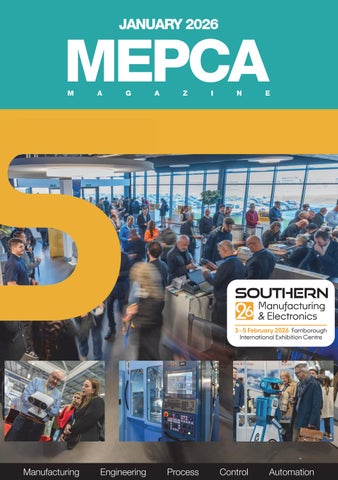
JANUARY 2026
Manufacturing
Engineering
Process
Control
Automation
P12 - In a MEPCA first, our editor interviews Tim Carroll, Vice President of Digital Business at DigiKey, the leading global electronics components distributor.
— PA R T O F A B B N AV I G ATE A DV I SO RY S ER V I CE S
ONLINE RELIABILITY NAVIGATOR TOOL Discover your score today
TEST YOUR SYSTEM
Downtime costs more than lost hours. It erodes trust, safety and profitability. Use our free online Reliability Navigator to receive a personalized report with clear insights and actions to help you move from firefighting to future-proofing. 1
2
3
4
5
1
— R E L I A B I L I T Y N AV I G ATO R
MAINTENANCE PRACTICES
1
2
3
4
5
Is there a digital twin (virtual replica of system) in place? Isreal-world there a digital twin (virtual
Do you track the �nancial impact downtime? Do youassociated track thewith financial impact
What are your top three causes of unplanned What are outages? your top three causes
You answered: in but place? Yes, we could do more with it You answered: Good you've taken the �rst step. Yes, it is an important tool for us
You answered: Yes, track everything related to the impact of Youwe answered: downtime No, and have no plans to
You answered: Poor of foresight, Lack of expertise You planning/lack answered: in-house, Lack of Poor diagnosis ofexpertise issues from external maintenance partner Unplanned outages often come from hidden system weaknesses. ABB’scome reliability Unplanned outages often fromstudies hidden pinpoint root causes and prioritize the right system weaknesses. ABB's reliability studies actions to avoid costly interruptions. pinpoint root causes and prioritize the right actions to avoid costly interruptions.
but could be improved. Unplanned maintenance costs far more than Is your current maintenance scheduled interventions. ABB helps you shift the strategy primarily reactive, balance by turning unpredictable repairs into planned actionsor thatpredictive? save time and budget. proactive You answered:
A good maintenance strategy is key to getting on the front foot, reducing downtime and improving overall system performance.
assets are in operation?
You answered: Yes, are multiple critical assets (or categories Youthere answered: ofYes, assets) critical importance thereof are multiple critical assets (or categories of assets) of critical importance Having multiple critical assets naturally heightens Advisory services from ABB will help you properly the risk of potential problems. understand the areas of your electrical systems that are services critical tofrom maintaining improving Advisory ABB willuptime, help you properly reliability and safety, and ensuring optimal understand the areas of your electrical systems effciency throughout. that are critical to maintaining uptime, improving Having multiple critical assets naturally heightens reliability and safety, and ensuring optimal the risk ofthroughout. potential problems. e�ciency
condition monitoring?
You answered: 76% 100% You-answered:
0% - 25%% Your answer indicates that you have a mature Continuous condition monitoring of provides early understanding of the importance condition warning of system stress before it becomes failure. monitoring. ABB’s advanced tools help you keep assets healthy and operations running smoothly.provides early Continuous condition monitoring warning of system stress before it becomes failure. Your answer indicates your provision for continually ABB's advanced tools helpofyou keep assets healthy monitoring the condition your critical assets is and operations running smoothly. open to improvement.
DON’T JUST MAINTAIN. OUTPERFORM WITH ADVANCED SERVICES.
Unplanned downtime and poor power quality cost businesses over €150 billion every year. With ABB Advanced Services, you can move from reactive to predictive reliability. 24/7 asset condition monitoring helps reduce operations and maintenance costs, detect issues early, and keep your systems performing at their best.
Key benefits Savings Up to
40%
CONTACT US
Productivity
Safety
70%
60%
Up to
lower operational maintenance costs and reduced total cost of ownership.
of potential failures detected in early stages.
Up to
reduction in preventive maintenance, limiting operator exposure.
Services to meet your needs
SWICOM – Ekip UP+ – CMES – ABB Asset Manager – Asset Manager for Transformers – Energy Manager
5
You understanding answered: Your of the bene�ts that can be % gained from planning maintenance tasks is mature,
maintenance strategies, helping you move towards proactive and predictive initiatives that You answered: extend asset life and reduce downtime. We don’t have a maintenance strategy
What % of your assets are currently under kind of condition Whatany % of your assets are monitoring? currently under any kind of
4
You answered: unplanned? 58%
of the above IsA mixture your current maintenance strategy primarily reactive, like proactive ABB helps organizations yours withor longterm service agreements and customised predictive?
Do you know how many critical assets are operation? Doinyou know how many critical
3
— R E L I A B I L I T Y N AV I G ATO R
DOWNTIMES AND FAILURES
What % of your maintenance tasks are planned unplanned? What % of versus your maintenance
tasks are planned versus
— R E L I A B I L I T Y N AV I G ATO R
ASSET BASE & MONITORING
2
ABB helps organizations like yours with longterm service agreements and customised maintenance strategies, helping you move towards proactive and predictive initiatives that extend asset life and reduce downtime.
replica of real-world system)
A digital twin, in the form of a single line drawing, gives you a live mirror of your system, enabling better decision-making and scenario How confident are you in your planning. ABB advocates for the design and maintenance, and for deployment of digitalrepair twin solutions reliability. operations (MRO) spare parts
associated with downtime?
ABB help quantify these impacts and put strategies Good - every minute of downtime has a cost. in place to protect your profitability.
ABB help quantify these impacts and put strategies in place to protect your pro�tability.
of unplanned outages?
1
2
3
4
5
— R E L I A B I L I T Y N AV I G ATO R
WORKFORCE AND EXPERTISE
availability?
How con�dent are you in You answered: your maintenance, Very confident – we rarelyrepair struggle with availability of spare parts and operations (MRO) spare Without critical spare parts on hand, small faults parts availability?
can lead to major outages. ABB helps organizations like yours plan spare parts You answered: strategies that minimize downtime risks. Fairly con�dent – we occasionally struggle with availability but in general our experience is good
ABB Service experts work alongside you to: Solve complex operational challenges.
Achieve your commercial and strategic goals.
Your answer indicates you understand the importance of spare parts availability, perhaps from �rst hand experience?
Preventive, condition-based, and can lead to major outages. ABB helps organizations like yours plan spare parts strategies that minimize predictive maintenance services downtime risks. is used to maximize equipment performance, reliability, and safety. Without critical spare parts on hand, small faults
Maximize asset performance.
Accelerate your transition to a net zero carbon future.
How many certi�ed reliability engineers and/or How many certified reliability maintenance planners are in your engineers and/or maintenance team?
planners are in your team?
You Youanswered: answered: 100% 100% ABB has a global footprint and over 140 years’ Skilled reliability engineers are vital to optimizing experience in providing both expertise and training system performance. to strengthen in-house capabilities and support your teams. ABB has a global footprint and over 140 years' Skilled reliability engineers are vital to optimizing experience in providing both expertise and training performance. tosystem strengthen in-house capabilities and support your teams.
Are suppliers, and their products, evaluated for their reliability Are suppliers, and their attributes impact? products, evaluated for their
reliability attributes impact?
You answered: Yes, it’s an important metric when choosing a Youand answered: supplier Not sure ABB helps assesstracking and benchmark Good that you're this. Notsupplier all suppliers performance tostandards ensure your chain meet the same forsupply reliability. supports uptime goals. ABB helps assess and benchmark supplier performance to ensure your supply chain supports uptime goals.
Howoften often maintenance How areare maintenance reviews reviews (e.g.frequency, strategy,scheduling, frequency, (e.g. strategy, scheduling, effectiveness) e�ectiveness) conducted? conducted?
You answered: You On ananswered: ad-hoc basis Not sure Regular maintenance ensure small ABB offers structuredreviews review programs that issues keep don't into major your escalate systems aligned withrisks. best practice.
Global 24/7 repair & emergency support for ABB equipment.
Fast, reliable repairs for ABB and legacy products.
Rely on the best troubleshooting experts, fast and most competent response to outages.
Comprehensive on-site and workshop services for low & medium-voltage equipment.
ABB o�ers structured review programs that keep your systems aligned with best practice.
Discover how ABB Advanced Services can help you achieve predictive reliability.
SCAN AND COMPLETE ONLINE
ENGINEERED TO OUTRUN
EDITOR’S NOTE Editor Oliver Batt oliver@cimltd.co.uk Publication Manager James Burke jb@mepca.com 01795 509105 Account Manager Jim Bearden jim@mepca.com 01795 509105 Design & Production Grant Waters grant@cimltd.co.uk James Taylor james@cimltd.co.uk Administration Manager Natalie Woollin admin@cimltd.co.uk 01795 509103 Credit Facilities Manager Gwen Lee creditcontrol@cimltd.co.uk 01795 509103 Head of Digital Xhulio Bishtaja digital@cimltd.co.uk Marketing Manager Lucas Payne lucas@cimltd.co.uk Director Tom Woollin tom@cimltd.co.uk Managing Director John Denning © 2025 Cogent Multimedia Limited, 1st Floor, Saphir House, 5 Jubilee Way, Faversham, Kent, ME13 8GD. No part of this magazine may be reproduced or stored in a retrieval system or transmitted in any form – electronic, mechanical or physical – without express prior permission and written consent of the publisher. Contributions are invited and when not accepted will be returned only if accompanied by a fully stamped and addressed envelope. Manuscripts should be typewritten. No responsibility can be taken for drawings, photographs or literary contributions during transmission or in the editor’s hands. In the absence of an agreement the copyright of all contributions, literary, photographic or artistic, belongs to Cogent Multimedia Limited. The publisher accepts no responsibility in respect of advertisements appearing in the magazine and the opinions expressed do not necessarily represent the views of the publisher. The publisher cannot accept liability for any loss arising from the late appearance or nonpublication of any advertisement.
6
www.mepca.com
14
JANUARY 2026
H
appy New Year and a warm welcome to the January issue of MEPCA magazine. Every day is a school day, as they say, and this certainly rang true for me last year as I completed my first full publication year as editor of MEPCA magazine. Indeed, I continue to be astonished by the extent of knowledge held within the industry. 2025 was characterised by economic uncertainty, with persistent inflation squeezing profit margins, but the UK manufacturing industry showed its resilience, rising to 11th in global manufacturing output. As we stride into 2026, the economic circumstances look unlikely to change dramatically, but there is plenty to be optimistic about, not least because the sector finally received the cogent industrial strategy that it deserved. The events season fires up for another year, beginning with Southern Manufacturing & Electronics, the subject of this month’s cover story. On page 14, discover what attendees can expect from the 28th edition of the show. Central to this issue is a focus on Maintenance, in which we cover those crucial but often overlooked aspects of running industrial facilities, beginning with an interview with Matt Gellie of Karcher about the growing trend of equipment rental (page 18). As you’ll discover, the magazine has been subject to a format renovation, with readability and a cleaner aesthetic being prime drivers behind it. Other than a fresh-look, what else do we have in store for you in 2026? The plan is more of everything: more exclusives, more shows & events, more case studies and thought leadership pieces, and a broader range of topics. We will continue to celebrate leading figures and unsung heroes from across the industry in our regular Manufacturing Champion feature (page 8). Enjoy this issue as you embark on a new and prosperous year. Oliver Batt, Editor @Mepca-magazine
To subscribe to MEPCA visit our website www.mepca.com or scan the QR code.
CONTENTS Industry Partners:
FEATURES 8 MANUFACTURING CHAMPION 9 SOLUTIONS FOCUS 10 INDUSTRY NEWS 11 OPINION 12 EDITOR’S CHOICE
18
14 COVER STORY 38 DIGITISATION 40 POWER & ENERGY 42 EVENTS 46 COMING UP
24
40
www.mepca.com
7
MANUFACTURING CHAMPION
MANUFACTURING CHAMPION OF THE MONTH MEPCA is delighted to celebrate Biplab Sah as the first Manufacturing Champion of 2026. Biplab is a digital transformation specialist at the forefront of the global Smart Factory revolution. Here, he discusses bridging the gap between IT and OT, and advancing digital projects beyond POC.
A
fter completing his Master’s degree in Computer Applications, Biplab began private tutoring at schools and colleges before he joined Hitachi to work on Smart Cities. Due to how novel it was at that time, people began reaching out and inviting him to talk on the subject. This led him to speaking at events and writing articles and white papers. Following Hitachi, Biplab worked on Smart Homes at Honeywell and branched out into consulting work. This furnished him with an understanding of how digitalisation works across different industries, equipping him to helm digital transformation in Smart Factories and supply chains. “I enable manufacturers through technology,” he summarised. The challenge of bridging information technology (IT) and operational technology (OT) is something Biplab is familiar with: “Even going back to my Hitachi days, wherein they were claiming then that they have 110 years of experience doing IT and OT because they were big in robotics.” In his experience, part of the problem is that IT teams and OT have distinct ways of working and it is difficult to reconcile the two. For IT people, he suggested, it was important that they “understand a domain, the context, the history” in order to address OT. While for those in OT, “there is a skill set of gradation or upskilling needed” to prepare them for changes in the OT world, which won’t remain static. Another challenge here is retaining OT knowledge and experience in a company. Biplab believes that knowledge transfer is critical, but to date documenting this knowledge has been poor. As a solution, he advocates a technical shadowing process between old and new staff. He admitted that this was a difficult idea to sell to plant operators focused on reducing FTEs (Full-Time Equivalents), but he insists that it proves more economical in the long run; that there are “certain short-term incentives and there are long-term intensives,” and that investing in people pays off in long-term progress. According to the World Economic Forum, over 70% of digital transformation projects fail after reaching pilot or POC stage. What makes it so difficult to take that extra step? “A POC succeeds,” he offered, “because you work on
8
www.mepca.com
some sample data or historical data and then you do a lot of work on making that right. But then when it comes down to real life, it comes with way more complexities, way more interconnections, way more dependencies.” Using the Indian graduate level entrance exams as an analogy, Biplab added, “Getting to a score of 670 or 680 is quite achievable, but getting beyond 700 is tough. As you go along, it gets tougher and tougher and tougher. That is like doing a POC and productionising it […] you reach 670, 680, but getting to 700 is something you need to spend, maybe, 10 times the time.” As a closing remark, he offered advice to manufacturers: “We have been through industrial transformation. There is no way that we can move from industry two to industry five. We have to take steps of the journey and go from industry two to three to four and then five,” he explained, asserting that it’s not about machinery or software, but rather people and process tools. Moreover, he warned, there is an inclination to begin with a new tool or solution, but the emphasis, he insisted, should be on the challenge; “The starting point should be, okay, this is the problem I’m struggling with. What are the approaches? Then what is the recommended approach? And then what’s the tool to solve it?”
SOLUTIONS FOCUS
J
JLR BOOSTS FACTORY SAFETY WITH DRONE-BASED INSPECTION PILOT
LR is trialling drone technology at its Electric Propulsion Manufacturing Centre (EPMC) in Wolverhampton, dramatically reducing machinery and site inspection time by up to 95%. The pilot is an important step forward in operational efficiency and employee safety, aligning with JLR’s vision for its factories of the future. The Elios 3 drone by Flyability reaches high and confined spaces, allowing maintenance teams to inspect equipment safely from the factory floor, eliminating the need for elevated platforms and reducing risk. Operated via tablet, the drone delivers a live 3D map to identify and troubleshoot issues. The drone uses Light Detection and Ranging (LiDAR) sensors to send out laser light pulses which bounce back to the drone when it hits an object. By timing how long the pulses take to return, it calculates distances to create detailed 3D maps of the surrounding environment. Following successful trials at EPMC, the next phase will take place at JLR’s Logistics Operations Centre (LOC) in Solihull – a vast warehouse space equivalent to thirteen football pitches (approx. 91,800m²). Here, the drone will be equipped with barcode scanners to automate inventory
checks, replacing manual processes and enabling faster, more accurate stock updates. flyability.com/elios-3
www.mepca.com
9
INDUSTRY NEWS
AKONA WELCOMES STUDENTS FOR HANDS-ON ENGINEERING INSIGHT
L
eading material processing and handling solutions group Akona Process Solutions has welcomed a group of T Level Engineering students from Preston College for a behindthe-scenes visit to its Darwen manufacturing facility, showcasing real-world engineering careers and inspiring the next generation of manufacturing talent. The visit took place on 3 December 2025 and involved 16 students and four college staff members spending two hours on site, meeting engineers from across the business and learning how different roles contribute to the design, build, and long-term support of engineered solutions. During the session, Akona engineers shared their personal career journeys, explained their current roles within the company and demonstrated how engineering disciplines work together across the lifecycle of a project. For many students, it was their first experience in an engineering company, providing a practical context for their studies. Students highlighted the scale of the facility and the variety of engineering roles available as particularly eye-opening, with several commenting that they were not previously aware of the breadth of opportunities within the sector.
The visit is part of a broader collaboration between engineering and manufacturing employers and further education colleges across Lancashire, organised by Charlotte Ayrton of Discover Engineering, to support T Level pathways and inspire young people to consider careers in engineering. Further student visits are already being planned for early next year, with Akona keen to continue supporting similar initiatives where operationally possible. akonasolutions.com
JOBMATE REPORTS STRONG INDUSTRY UPTAKE
F
ollowing the introduction of its cloud-based Planner tool for the field service sector, software developer jobmate is reporting a strong and positive response from SMEs, engineers, and service providers looking to modernise the way they schedule and manage work. jobmate Planner, launched earlier this year, is designed to help smaller businesses and field operatives address common industry challenges such as last-minute cancellations, emergency call-outs, skills and certification matching, and the need for real-time visibility across teams. “Reinforcing the features announced at its launch,” says Chris Dalton, jobmate CEO and co-founder, “Planner continues to distinguish itself through its drag-and-drop simplicity, making job allocation and reallocation fast and effortless.” Moreover, explains Chris, the app ensures that operatives with the appropriate skills and certifications are deployed to the correct tasks, while also helping users confirm parts availability, supplier status, or customer asset information. Service providers working in fast-moving environments, such as the transport and logistics sector, including tail-lift maintenance and vehicle safety inspections, have says jobmate, already adopted the platform to reduce downtime, eliminate scheduling conflicts, and keep clients updated with accurate information.
10
www.mepca.com
Planner is provided as part of jobmate pro, the company’s comprehensive management suite tailored for field service operations. jobmate Pro equips businesses with tools such as digital timesheets, automated certification-expiry alerts, and inventory oversight—helping teams stay compliant, productive, and better connected. Reflecting on the industry’s response, Chris Dalton adds: “The feedback since launch has been very encouraging. SMEs and contractors tell us Planner is reducing pressure on scheduling teams while giving field operatives the realtime clarity they need to do their best work.” jobmate.cloud
OPINION
2026: A YEAR TO GO FURTHER WITH DIGITAL Jessica Armitage, Programme Manager, Made Smarter Yorkshire and Humber, explains why it is imperative that manufacturers embrace digital technologies.
F
or many manufacturers, 2025 was a test of resilience. Costs rose, supply chains were unpredictable, and skills gaps made it harder to keep up with demand. These pressures reminded us of a simple truth: to stay competitive, manufacturers need more than efficient production. They need a digital mindset, a digital culture and digital tools that help them work smarter, plan better and grow with confidence. As we move into 2026, there is a noticeable shift in tone. The UK Government’s Modern Industrial Strategy sets a long-term direction for growth and innovation, and shows a clear commitment to backing industry and supporting digital transformation. For Yorkshire and the Humber, that commitment is particularly strong. The region is referenced more than two dozen times, more than any other part of England, reflecting its importance over the next decade, especially in the sectors identified as having the most potential for growth: advanced manufacturing, clean energy, digital and technology, life sciences, creative industries and defence. These strengths already exist across our region, which means local firms are well placed to take advantage of the opportunities ahead. With Made Smarter funding confirmed for another year, manufacturers now have a clear route forward and practical support to move from talking about digital change to making it happen. Made Smarter offers expert advice, digital strategy consultancy, leadership development, digital skills training and match-funded technology grants. Our goal is to help manufacturers adopt technology in ways that improve productivity, reduce waste, strengthen resilience and create higher-value jobs. Since launching in 2021, Made Smarter Yorkshire and Humber has engaged with almost 1,200 manufacturers, created nearly 700 digital roadmaps, and provided technical project support to more than 250 businesses. Close to 150 companies have taken part in leadership and skills programmes, including 37 that have hosted a digital intern. The programme has also seen 100 manufacturers apply for capital grants to support technology projects. These grants, worth £1.3m, combined with a further £2.4m of private investment, have unlocked a total of £3.7m in digital transformation activity across the region. Together, these investments are forecast to create new jobs, upskill the existing workforce, contribute to the
growth of the region and support progress towards net zero. The results are already visible across the region. At Horsforth Brewery, a digital roadmap helped the team replace its manual canning line with automated technology that removed labour bottlenecks, improved consistency and lifted output by 150%. The upgrade has given the brewery the capacity and confidence to grow its customer base across Yorkshire. At Visual Systems Healthcare, digital transformation meant replacing paper-based workflows with integrated systems. Automation cut manual data entry by 75% and reduced production lead times by 20%, improving planning and customer service and supporting major new NHS and private sector contracts. With a national strategy supporting industry and Made Smarter support in place for another year here and in other regions, manufacturers do not have to take this step alone. As 2026 begins, the question is not whether digital transformation is needed; it is how soon businesses choose to start. Now is the moment to adopt new tools, grow capability and build a stronger future for manufacturing across Yorkshire and the Humber. madesmarter.uk
www.mepca.com
11
EDITOR’S CHOICE
A HOME FOR GLOBAL INNOVATION In a MEPCA first, our editor interviews Tim Carroll, Vice President of Digital Business at DigiKey, the leading global electronics components distributor. Here he discusses the importance of providing a platform for NPI, adopting a proactive approach to tariffs, and how being customer focused is a strategic advantage.
Tim Carroll, Vice President of Digital Business, DigiKey
F
ounded in a small town in Minnesota in 1972, DigiKey began as a humble mail-order company aimed at electronic hobbyists, before later expanding into the wider, commercial electronics market. In the 90s, DigiKey embraced e-commerce, and it didn’t look back. By 2013, DigiKey had become one of the five largest electronics distributors in the world. Arguably part of DigiKey’s continued success can be attributed to its commitment to New Product Introduction (NPI). Speaking with MEPCA’s editor during a recent trip to the UK, Tim Carroll reflected on how DigiKey’s company culture had made it a trusted go-to for NPIs. “We’re very customer-centric,” he proudly explained, “So, a lot of our employees are engineers. Even our company founder, Dr. Ron Stordahl, is an engineer, and [company President] Dave Doherty’s an electrical engineer. So, I think at their core, there’s just a curiosity about NPI. And it’s less of a business decision […] it’s almost motivated by innovation rather than motivated by the financials.” From a business perspective, Tim explained, an NPI is long term strategy that he views in 3-year cycles,
12
www.mepca.com
where sales are slow initially, then it ramps up as that NPI transitions to full production; “We look at it as an investment in future year growth for the company, and making sure that we’re fuelling that interest in innovation.” People trust DigiKey’s website, treating it as a reliable source for product information. Tim described DigiKey’s platform as both a shopping and research site, and it’s a culture that DigiKey is happy to lean into. Due to the prevalence of vapourware or demoware (products that are advertised but aren’t actually available yet), customers can be suspicious of NPIs; however, when they see them stocked on DigiKey’s website, they are more inclined to trust it. While it used to be the case that DigiKey’s product specialists would try and predict the market and only buy certain line items, about 3 years ago they began purchasing small volumes of everything and letting their customers decide. If the NPI does well, they increase volumes; if it doesn’t take off, they return it to the supplier. This customer-centric approach to NPIs “gives every product a chance, and that’s important,” he concluded.
EDITOR’S CHOICE
In 2025, DigiKey added over 80 stocking suppliers and circa 500 market place suppliers, demonstrating a continued commitment to this strategy. 2025 was, however, a challenging year for electronics distribution in general, with many businesses impacted by the volatility of the tariffs. Had the situation stabilised? Tim managed to approach the subject good humouredly, though tariffs had become an added dayto-day challenge for DigiKey. He described the tariffs as disruptive and asymmetrical, applied differently across different countries, different markets, different products, etc., becoming ever complex dependent on the supply chains. The company has long since embraced digitalisation, but volatile tariffs break its automations and predictive pricing models. Moreover, as many of DigiKey’s customers place orders via API connection, those connections also break, making it more difficult to provide the service its customers have come to expect: “We’ve heard from customers they just want transparency. They want to be able to come to our website, understand which products have tariffs and at what rates.” The irony being that while they’d automated these processes to save skilled staff time, those very people are now being pulled away to help figure out the tariffs. “Our best problem solvers are working on, essentially, a tax problem,” he said, incredulously. “We’ve got a 10-person team that just works on this. They work with our industry on lobbying, they work with our tax partners, they work with the federal government, they work with our other supplier partners to just try to have the best information we can.” DigiKey has approached the challenge of tariffs with an engineering mindset. While it remains a fluid problem, Tim detailed the two main facets to their current solution. Firstly, they operate foreign trade zone (FTZ), a separate area of their warehouse designated by US Customs
Department as being outside of customs territory. “The product in the FTZ gets treated as if it’s not imported yet […] we don’t know what tariff [applies] until we actually go and sell the product,” he explained. The benefit from a cash standpoint is that there’s no initial layout for the tariff, and then if that product sells to, say, Europe or Asia, the tariff isn’t applied. Secondly, if DigiKey can’t get the product into the FTZ – and there are restrictions around what can reside there – it leverages the duty drawback scheme, recouping tariffs from products proven to go to non-US customers. Any money gained gets re-invested in products. When asked about the DigiKey Standard – the company’s private-labelled brand of products – Tim stressed that it was a minor part of the business, born during Covid, when it was impossible to source certain items due to supply chain disruption. Rather than accepting this, DigiKey bridged the gap with its own range of essential tools and components. In April of 2025, this portfolio of products was given a full release. Did the company intend to grow the range? “I don’t think it’ll ever be big,” Tim said, “We don’t want to compete with our manufacturing partners. The only products we sell in DigiKey Standard, we don’t have a source for; it’s more filling the gaps, really.” Summing up what led to the DigiKey Standard range, Tim said, “We don’t want projects to stop on the workbench because you can’t get access to something you need.” While DigiKey has outgrown its small-town roots, it has managed to retain the mindset and culture of a smaller, specialist distributor. This, coupled with a culture of engineering curiosity, has led DigiKey to be regarded by engineers and manufacturers as not simply a source of components, but also a trusted partner in innovation. digikey.co.uk
www.mepca.com
13
COVER STORY
START THE YEAR RIGHT WITH SM&E 2026 Visitor registration is now open for Southern Manufacturing & Electronics 2026, the South of England’s leading annual event for engineering and electronics professionals. Read on for what attendees and exhibitors can expect from this year’s event as it celebrates 28 years of British engineering excellence.
T
aking place from 3–5 February 2026 at Farnborough International Exhibition Centre, the Southern Manufacturing & Electronics 2026 is the first major gathering in the sector’s calendar and marks its 28th year as a cornerstone of the UK’s engineering and electronics community. Much loved for its heritage and uniquely British character, Southern Manufacturing & Electronics continues to attract engineers, designers, manufacturers and innovators from across the country. This strong domestic appeal is complemented by a welcoming approach to international exhibitors and visitors, offering them the chance to build sovereign UK supply chains while forging valuable global partnerships at the very start of the year. Southern Manufacturing & Electronics is home to the largest electronics-focused show floor in the UK, bringing
14
www.mepca.com
together the full spectrum of the electronics supply chain under one roof. From components, PCBs and semiconductors to test and measurement, design services and cutting-edge production equipment, the event offers an unrivalled showcase of the latest technologies and solutions. It is the go-to meeting place for engineers, designers and procurement professionals looking to source new suppliers, discover innovations and connect with leading industry experts. Now under the ownership of Easyfairs, one of the world’s top 20 event organisers, Southern Manufacturing & Electronics will retain the traditional elements that visitors value while benefitting from Easyfairs’ cutting-edge technology and industry expertise. Easyfairs’ extensive network across the engineering and manufacturing sectors will bring fresh industry insights, new connections
COVER STORY
Southern Manufacturing & Electronics has been the beating heart of the UK’s engineering calendar for nearly three decades, Simon Farnfield, Event Director, Easyfairs UK & Global. and curated content to the 2026 edition, ensuring that visitors get the best possible experience and maximum value for their time away from the workplace. Demand from exhibitors for the 2026 edition is exceptionally strong. Southern Manufacturing & Electronics is already approaching full capacity, with just a handful of stands still available. Exhibitors are securing their places at record pace, reflecting the event’s status as the UK’s leading marketplace for manufacturing and electronics innovation, and underlining its role as a barometer for the health and confidence of the wider sector. Attendees and exhibitors will benefit from Easyfairs’ advanced digital tools, including the event app and smart badge technology. These intuitive solutions allow participants to connect, collect and exchange information seamlessly throughout the event, making every conversation count and maximising return on time and investment. With a simple tap of a badge, visitors can gather technical information, product details and contact data from exhibitors, while exhibitors can capture highquality leads and follow up efficiently after the show. The 2026 edition will also feature a range of popular attractions and new highlights designed to inform, inspire and engage visitors across all three days. Back by popular demand, the Global Electronics Association will once again run their high-profile soldering competition, challenging skilled technicians to demonstrate their precision, speed and workmanship under pressure. New for 2026, the Association is also introducing a Wire Harness Competition on their stand, providing another opportunity for visitors to test their skills, benchmark against peers and watch best practice in action. This new feature is expected to be a major crowdpuller and a focal point on the show floor. Education and knowledge sharing remain at the heart of Southern Manufacturing & Electronics. Two dedicated seminar theatres – one focused on Manufacturing and
the other on Electronics – will host a full programme of CPD-accredited sessions across all three days of the event. The agenda will explore practical strategies to help manufacturers streamline production, strengthen digital capabilities and unlock new opportunities for growth in a fast-changing industrial landscape. Attendees will hear from industry experts on how digital tools and systems can be integrated to boost efficiency, enhance productivity and position their businesses for long-term success. Sessions will cover themes such as automation and robotics, Industry 4.0 implementation, supply chain resilience, design for manufacture, sustainability, and the practical steps SMEs can take to modernise their operations without disrupting day-to-day output. With CPD accreditation, the seminar programme offers visitors a valuable opportunity to update their knowledge, earn professional learning hours and bring actionable insights back to their organisations. “Southern Manufacturing & Electronics has been the beating heart of the UK’s engineering calendar for nearly three decades,” said Simon Farnfield, Event Director at Easyfairs UK & Global. “It is a show with a proud heritage and loyal following, and under Easyfairs’ ownership we are committed to preserving what people love about it while introducing smart, intuitive tools that will help visitors and exhibitors get even more value from their time onsite. We can’t wait to welcome the community back to Farnborough in February.” With its unique blend of comprehensive supply chain coverage, live demonstrations, hands-on competitions and expert-led learning, Southern Manufacturing & Electronics 2026 offers an ideal opportunity for engineering and electronics professionals to start their year with fresh ideas, new contacts and practical solutions. Free visitor registration for Southern Manufacturing & Electronics 2026 is now live. southern-manufacturing-electronics.com
www.mepca.com
15
FOCUS ON: MAINTENANCE
Image courtesy of ABB Electrification Services
MAINTENANCE
KEEPING INDUSTRY CLEANING As well as being an economic advantage, hiring or leasing cleaning equipment is a strategy for mitigating downtime. In an exclusive interview with Matt Gellie, Head of Rental at Kärcher, MEPCA learns how flexibility in equipment procurement can empower industrial hygiene and cleaning.
K
ärcher is a leading manufacturer of cleaning equipment, headquartered in Winnenden, Baden-Württemberg. Many of our readers will be familiar with the company, if not by name, then by the striking yellow of its trusted cleaning products, which form the backbone of many industrial hygiene and cleaning regimes. Our editor Oliver Batt recently had the opportunity
18
www.mepca.com
to speak with Matt Gellie, Head of Rental at Kärcher, to discuss the growing trend of equipment hire and leasing. Matt explained that Kärcher Hire was originally called Clean Sweep, which Kärcher purchased in 2015, and Kärcher saw a growth in the rental market at the time. “Since then,” he said, “we’ve been seeing double digit growth year on year.” It is now worth over £9 million, and this is an upwards trend.
MAINTENANCE Kärcher Hire has seen machine rental grow in markets that weren’t traditionally strong. Whereas this would be expected in facilities management, with its emphasis on contractual arrangements, there is now a growth in councils, public services, and in manufacturing and industrial sectors. “People don’t purchase photocopiers, cars, or any cash equipment anymore. It’s all coming down to rental […] Being able to rent a machine where you’ve got fixed costs – you know it’s going to cost you X amount a month for the period you take that machine – helps them to balance their books. And I think that’s given people peace of mind and why rental has become a lot more popular.” Expanding on the reasons driving this trend, Matt said that flexibility was a major factor, something which Kärcher excels at. Taking the company’s long-term and shortterm rentals (from 2 days up to 5 years) as an example, should a business have a refurbishment that changes its requirements during the agreement, rather than being stuck with a now unsuitable machine, a business can change the model or increase the equipment they have, enabling greater adaptability. Flexibility in technology and contract are just one dimension of this, however, and Kärcher is also committed to the mantra, “Always keep you cleaning,” by guaranteeing an engineer within 24 hours should a machine fail, and a replacement machine within 48 hours if required. When asked whether there was relation between the cost and perceived complexity of a machine and the likelihood of a business renting rather purchasing it, Matt explained that, while they see rental across all sizes and complexity of machines, there was certainly growing trend with robotics and larger road sweepers. When it comes to the former, in addition to cost management, a further benefit is always having the most up-to-date technology: if there’s an upgrade, customers are able swap what they have for the newest technology. R&D is a big part of the company’s culture. While Matt isn’t involved in that side of the business, which is undertaken in Germany, he provided an insight into Kärcher’s current R&D drivers, which include battery powered machines for greater flexibility, and, of course, robotics. Thanks to advances in Kärcher’s supporting software platform, its KIRA robotics products are becoming ever more sophisticated and increasingly autonomous, able to communicate and harmonise with other robotic systems, giving priority to, say, picking machines, or other crucial operational systems, which are more paramount for maintaining productivity. What’s more, Matt noted, “the machines also go into their own docking station as well. So, they’re able to fill, empty and charge themselves, making it fully autonomous rather than co-botic.” As a caveat to this, he added that human oversight was still important, but most of the process can be automated. Safety is crucial in any industrial cleaning application, but particularly with automated and robotic technology. Addressing the topic, Matt explained that the KIRA robotics products have been independently certified for
People don’t purchase photocopiers, cars, or any cash equipment anymore. It’s all coming down to rental. Matt Gellie, Head of Rental at Kärcher
safe use, even in public (IEC 63327) and have cliff detection technology; “because of the lidar sensors the machine has got, it’s able to detect any drop.” Further Illustrating how a provider such as Kärcher’s can help mitigate production downtime, Matt recalled a realworld scenario that befell one of their customers: “There was an instance last year where there was flash flooding at a large factory in Manchester overnight and they needed to get equipment very quickly. We got a call early in the morning. We then had to react to get the scrubber dryers on site to be able to clear up from this flood so that production was able to continue” […] “I think we had the call at about seven o’clock in the morning, and we’d got multiple machines on the site by half-past 9.” For manufacturers considering renting cleaning equipment, Matt insisted that there isn’t a universal solution, with site layouts and technological requirements varying greatly between even comparable manufacturers. He recommended that manufacturers find a provider that they can work closely with, which will get equipment to them quickly, and understand the site and what the business needs. karcherhire.co.uk
www.mepca.com
19
MAINTENANCE
IMPROVE MAINTENANCE STRATEGIES WITH OT For industrial operators, reducing equipment failures and avoiding costly unplanned downtime remain central to any maintenance strategy. Achieving the right balance of performance, risk and long-term cost can be supported by modern operational technologies (OT).
A
s technology has advanced, barriers to adopting OT have fallen significantly. Many solutions are now affordable, practical to implement and capable of delivering a clear return on investment. This enables organisations, especially small and medium-sized, to begin their shift from reactive to proactive maintenance with minimal complexity and low initial outlay. However, a major challenge for maintenance teams is understanding the wide range of available technologies and selecting the most suitable tools for their organisation.
MOVING FROM REACTIVE TO CONDITIONBASED MAINTENANCE Before embracing predictive strategies, plants must ensure the fundamentals are in place. This includes standardising equipment parameters, implementing consistent cleaning and lubrication routines, and applying precision maintenance practices to ensure correct installation and adjustment. The move into predictive and data-driven maintenance strategies will then be more successful. Condition monitoring is a key enabler for early fault detection. It not only helps prevent major equipment failures, but also allows maintenance tasks to be scheduled ‘on condition’, reducing unnecessary interventions, saving spare parts, and freeing skilled labour. Vibration sensors – whether portable, fixed, or wireless – are among the most widely used tools. The cost of these has fallen sharply, allowing more facilities to monitor asset health continuously. The 2024 Performance in Focus1 maintenance engineering report from RS and the IMechE found that 48 per cent of surveyed organisations use vibration monitoring, while 38 per cent use thermography. Thermal imaging cameras now integrate easily with smartphones, and help detect hotspots in electrical systems and machinery, offering another low-cost way to identify emerging issues.
EXPLORING THE INDUSTRIAL INTERNET OF THINGS (IIOT) Plants beginning their Industrial Internet of Things (IIoT) journey can start small with low-cost sensors that track
20
www.mepca.com
parameters such as temperature, pressure, or vibration. Retrofit sensors enable older equipment to be monitored and connected with minimal investment, often supported by programmable logic controllers. For organisations aiming for predictive maintenance, subscription-based platforms and cloud analytics provide affordable decision-support tools. Energy monitoring technologies are also increasing in adoption as companies strive to reduce consumption and operational costs. Technologies like robotics and augmented reality (AR) are also becoming more accessible. Simple robotic systems or cobots can automate repetitive inspection or cleaning tasks, freeing engineers to focus on higher-value work. AR-enabled mobile tools or wearable devices help guide technicians through complex procedures. This can be a great aid at times of skills shortages, which was another issue highlighted in the Performance in Focus report. While maintenance remains a critical factor in plant performance, success comes from starting small, leveraging scalable technologies, investing in staff development and partnering with trusted service providers. With clear KPIs and data-driven decisionmaking, organisations can significantly enhance equipment reliability and operational efficiency. Further information about RS’ maintenance solutions can be found on its website. uk.rs-online.com/web/ 1. uk.rs-online.com/web/content/m/imeche-report
EW
N
PBC15 Bayonet quick locking Screw clamp connection technology 3 Power + PE + 2 Signal, IP67 Shieldable
www.binder-connector.co.uk
MAINTENANCE
THE COST OF DELAYING MODERNISATION Modernisation deferrals save money short-term, but can seed long-term risk. As Oswald Deuchar, Global Head of Modernisation Program, ABB Motion Services, explains here, putting off modernisation exposes industries to the true cost of disruption.
I
n every production environment, the threat of unplanned downtime is always in the background. When assets fail unexpectedly, productivity, profitability and reputation all take a hit, often simultaneously. A recent global study1 commissioned by ABB and conducted by Sapio Research shows just how expensive those stoppages have become. For the 3,600 senior decision makers surveyed, the average cost of unplanned downtime now reaches $169,889 per hour, with some organisations reporting hourly losses above half a million dollars. Those numbers reveal that for many industry players, the most expensive events in their business are the ones they cannot predict or fail to properly prepare for. Modernisation is the process of upgrading obsolete or inefficient equipment with modern components and new technologies to improve performance, energy efficiency,
22
www.mepca.com
reliability and functionality. Yet despite wide recognition of the issue of unplanned downtime, the research also found that only 55% of companies have a proactive modernisation strategy for their motors, drives, and other critical equipment. That shortfall suggests a structural blind spot in how downtime is quantified and integrated into financial planning.
THE HIDDEN ECONOMICS OF LOST HOURS Unplanned outages represent more than the direct cost of repairs. For continuous or high‑output industries, every halted minute results in a chain reaction of wasted raw material, missed delivery schedules, under-utilized labour, and lost customer trust. Recovery is rarely instant or complete. The real challenge is that downtime often remains
MAINTENANCE undervalued in investment business cases. Many companies still model their modernisation decisions around up‑front CapEx rather than potential hours saved. This results in budgets that look efficient on paper, but actually expose the business to disproportionate risk in practice. The findings show this clearly. While 82% of respondents said downtime is “always” or “often” considered in CapEx plans, nearly one in six still “rarely” include it. For them, every modernisation deferral is effectively a gamble. The cost per hour places that gamble into perspective. At a median of nearly $170,000 across all sectors, even a single incident can outweigh the perceived savings of a run-to-failure approach.
THE MODERNISATION GAP The reasons that so many organisations accept that risk vary, but most trace back to how modernisation is framed within corporate decision making. For many operators, modernisation is synonymous with wholesale replacement. That perception artificially inflates both perceived cost and downtime during installation. In reality, modernisation encompasses a variety of actions: staged upgrades, targeted retrofits, software updates, and control integrations designed to extend the active life of installed equipment. While two‑thirds of respondents have completed some form of modernisation within the past two years, several reported that they act only when failure forces their hand. For these companies, downtime is an ad-hoc maintenance cost. That mindset can be extremely expensive, especially when taking into account the health of not just individual machines, but entire fleets. The lesson here is simple: modernisation is about financial resilience, not just better technology.
FROM RISK MITIGATION TO COMPETITIVE ADVANTAGE
production line with a downtime cost of $150,000 an hour suffers four unexpected outages per year, each lasting three hours, the annualised impact exceeds $1.8 million. Over a five-year period, that single risk costs far more than modernisation ever would. Such calculations rarely make it to the boardroom in a digestible and actionable form. ABB’s research indicates that organisations most confident in explaining modernisation ROI to decision-makers are also those with the strongest life-cycle management frameworks in place. Translating reliability metrics into financial language — expected uptime, avoided loss, future‑proof asset value — helps to elevate maintenance discussions to strategic board review. Once downtime is treated with the same weight as safety measures or net profit margin, the argument for modernisation becomes clear.
For forward‑looking industrial leaders, modernisation is now a strategic defence. The ability to plan upgrades around production schedules, rather than crises, delivers measurable advantages such as stable outputs and predictable OpEx. It also strengthens investor confidence. When the reliability of an asset is documented via digital monitoring and proactive life-cycle management, organisations can back up claims of lower operational risk in ESG disclosures and financing negotiations. Increasingly, plant managers and CFOs alike recognize that resilience is a return on investment, not a cost centre. ABB’s customer data shows that timing is everything. When modernisation projects are coordinated during planned stops and supported by expert partners, payback periods often compress dramatically because the value of avoided downtime accumulates from day one.
Unplanned shutdowns will never disappear entirely, but their frequency and financial impact are far from unavoidable. The path to resilience begins with accurate measurement: audit current disruption costs, quantify risk exposure, and integrate those figures into every investment proposal in a way that compels industrial leaders to act. Modernisation is the operational equivalent of risk insurance. With a structured life‑cycle approach grounded in data and proactive planning, industries can be confident in their own preparedness and efficiency. At $170,000 an hour, downtime is the real expense. The question isn’t what modernisation costs, but what waiting is worth.
REFRAMING THE OPPORTUNITY COST
abb.com/global/en
The difference between planned and unplanned downtime can appear subtle on a spreadsheet, but make all the difference on the factory floor. For instance, if a
1. new.abb.com/news/detail/129763/industrial-downtime-costs-up-to-500000-per-
AUDIT DOWNTIME, NOT JUST ASSETS
hour-and-can-happen-every-week
www.mepca.com
23
MAINTENANCE
A HERO OF MODERN MAINTENANCE As businesses strive towards smarter, more connected operations, efforts to leverage advanced analytics for predictive maintenance are easily undermined by incorrectly configured networks, as demonstrated in the following case study from Brainboxes.
D
igital technologies are rapidly evolving and reshaping nearly every area of modern operations. As organisations rely on advanced tools, a reliable network becomes essential before deploying AI, machine learning, or digital twins. Even the most advanced analytics can’t deliver meaningful insights without a dependable connection. Ensuring enough ports are in the right places keeps devices connected while minimising potential points of failure. This is a detail that often gets overlooked in the race toward digital transformation. In modern warehouses, automated conveyer systems rely on a growing number of sensors to keep production running smoothly. These sensors communicate between conveyor control units, scanners, and a central monitoring system. One distribution centre successfully deployed reliable Brainboxes network switches to connect its systems. Initially, new devices were easily added by daisy-chaining 4-8 port switches. While effective at first, the team found that this approach wasn’t as scalable as other options. Over time, it created a fragmented and increasingly fragile network. Managing connectivity became a constant challenge, and troubleshooting network issues consumed far more time than anticipated. The team aimed to gain predictive insights into conveyer health, equipment performance, and product flow. However, the physical network became a limiting factor. Switches were scattered along the conveyors, “dead spots” appeared where ports were maxed out, and there was no room for adding additional sensors. Any single switch failure could take multiple devices offline, making reliable predictive maintenance nearly impossible. The distribution centre addressed the problem by replacing the small switches with a single Brainboxes Hero Ethernet 16 Port switch on each conveyor line. This created an organized, robust, and scalable network. The higher port count eliminated the daisy-chain complexity while providing room for future sensors or upgrades without a network redesign. The rugged, industrial design of Brainboxes’ Hero Ethernet switches allows them to operate reliably in harsh conditions, whilst the integrated mounting options reduce cable clutter and potential points of failure. With the physical network configured, and less time
24
www.mepca.com
spent on fixing network issues, the team can now focus on collecting accurate data and turning it into actionable, predictive insights; streamlining conveyor operations to improve sorting, routing, product tracking and enhancing productivity. Modern maintenance relies on data from every part of a facility, but collecting quality data starts with a strong physical network. Brainboxes industrial 16-port Hero Ethernet switches provide the connectivity and resilience necessary before AI or machine learning ever come into play. Predictive maintenance begins not just with software, but with the dependable connectivity of Brainboxes Hero Ethernet switches, designed to deliver data exactly where it’s needed. brainboxes.com
MAINTENANCE
GET AHEAD IN MAINTENANCE With rising energy costs, ageing equipment and increased production demands, manufacturers are under constant pressure to keep their operations running at peak performance. Preventive maintenance is no longer optional. It is essential. Learn how a free LOCTITE Line Survey from Henkel can help companies get ahead of maintenance challenges.
A
LOCTITE Line Survey provides a comprehensive review of your production environment and identifies where improvements in bonding, sealing and threadlocking can enhance machine reliability and safety. Henkel’s application engineers visit your site to assess production and maintenance practices, focusing on areas such as assembly line efficiency, equipment reliability and consumable usage. The outcome is a detailed audit of your operation with clear recommendations for cost savings and process improvements. Typical results include extended component life, fewer breakdowns and more consistent process quality. As Gavin Jackson, Applications Engineering Manager at Henkel, explains, “We are dedicated to providing solutions that help our customers save costs and improve quality. We understand that manufacturers face a multitude of challenges and our team is committed to working closely with them to address their specific needs and deliver tailored solutions.”
HANDS-ON MAINTENANCE WORKSHOPS Following a Line Survey, customers can take part in a LOCTITE Maintenance Workshop, designed to share best practice across core areas such as bonding, sealing, gasketing and threadlocking. These sessions are held on-site and can be adapted for maintenance engineers, production managers or design teams. Participants are encouraged to bring their own parts and challenges for live demonstrations, allowing Henkel experts to recommend specific LOCTITE products and equipment. The training combines technical guides, case studies and real-world examples to ensure every participant leaves with practical and applicable knowledge. The benefits are immediate. Manufacturers gain improved machinery uptime, reduced waste and simplified maintenance routines, all supported by LOCTITE’s proven adhesive technologies.
adhesive and sealant solutions can help lower energy consumption and extend the life of critical assets. Many LOCTITE formulations are non-hazardous and compliant with modern health and safety regulations, reducing the need for COSHH assessments and simplifying internal processes. This rounded approach, which brings together expert advice, tailored training and sustainable product choices, ensures manufacturers can meet operational and environmental targets without compromise.
BOOK A FREE LINE SURVEY
SUPPORTING SUSTAINABLE MAINTENANCE
To support manufacturers as they plan for the year ahead, Henkel is offering manufacturers the opportunity to book a free LOCTITE Line Survey, followed by a tailored Maintenance Workshop. It is a straightforward and effective way to identify opportunities for efficiency, reliability and cost reduction. In an industry where every hour of uptime counts, small improvements can deliver significant long-term benefits. LOCTITE’s maintenance services give manufacturers the insight, training and technology to keep their production lines running stronger for longer. Request a survey here:
LOCTITE Services are also designed with sustainability and safety in mind. By reducing mechanical wear and leakages,
next.henkel-adhesives.com/uk/en/services.html
26
www.mepca.com
MAINTENANCE
MORE RELIABLE AND RESILIENT OPERATIONS Traditional reactive and time-based approaches to electrification equipment maintenance are becoming increasingly outmoded in the digital age. ABB’s Lee Todd, Head of Energy & Carbon for ABB Electrification Services explains how new approaches to equipment maintenance can provide greater resilience and equipment lifetime.
E
verything ultimately comes back to reliability. You can have the most efficient machines, and the most productive processes, but if those machines and processes – as well as the electrification infrastructure underpinning them – are not running, then all that technology and ingenuity counts for nothing. Similarly, if keeping those processes running requires vast amounts of resources and close human supervision to ensure that processes are optimised and running as they should, then that is inherently inefficient. Then there’s the cost of downtime itself. Halting a chemical, pharmaceutical or other industrial process due
28
www.mepca.com
to sudden electrical failure means an immediate loss in revenues. However, the cost of downtime is never just output lost multiplied by time. If deadlines slip or orders are left unfulfilled then there may be commercial penalties incurred as well as reputational costs. The time spent by maintenance engineers diagnosing issues, or finding, purchasing, fitting and testing replacement parts and equipment can also very quickly add up. There may be other potential penalties to consider; if an equipment failure causes a fire or a leak of a hazardous substance then this may incur environmental penalties, and require additional time to inspect and remedy before
MAINTENANCE production can resume. The cost of a serious cybersecurity breach is almost incalculable, but this too can be a knockon effect of an outage to critical electrification systems.
WHERE REACTIVE MAINTENANCE FALLS SHORT Without wishing to scaremonger, the point here is that the stakes are high. Modern electrification systems are incredibly complex, and the effects of a seemingly minor fault in one component or system can manifest elsewhere in the same system or in other related systems. With a purely reactive approach, even a highly experienced maintenance engineer or plant operations manager may have little or no prior warning that critical electrical components are about to fail, putting system reliability and uptime at risk. The first sign of an impending problem may be a tripped circuit breaker, but this in isolation reveals next to nothing about the underlying cause as to why it tripped. Reclosing the breaker may allow production to resume in the immediate term. But it won’t fix the underlying cause, and may trigger a more serious and more widespread outage next time. This highlights the intrinsic problems associated with traditional electrical maintenance strategies. Routine equipment inspections are typically conducted at periodic intervals, typically accompanied by the prescriptive replacement of equipment or individual components according to a specified timetable. This regime assumes a mean time between failure for components that is consistent and predictable. However, the real world does not always work to a pre-arranged schedule. Failure rates of devices can vary wildly depending on the environment in which the equipment operates, as well as how wellmaintained it is throughout its lifetime; both of which directly impact system reliability. Reflecting the increasing scale and sophistication of modern plant operations, the limits of time-based and reactive maintenance schedules are amplified further as electrical systems become larger and more complex. The wider trend towards digitalisation offers helpful solutions in simplifying the monitoring of equipment. However, digitalisation itself also creates additional challenges, among them the need for constant uptime and reliable performance across interconnected systems. Indeed, equipment monitoring systems must perform without interruption to avoid the risk of losing precious insights collected from instrumentation and control systems about process and plant performance.
HAVING TO DO MORE WITH LESS In common with many engineering-led industry sectors, an increasing skills shortage is making it harder to identify and retain suitably skilled personnel. Tens of thousands of veteran electrical systems experts are retiring, taking with them decades of practical experience and deep knowledge of highly specialised electrical systems found in factories, power plants and other industrial facilities. This pool of expertise is leaving the industry faster than it’s being replaced, leaving employers across many industries struggling to fill a yawning talent gap. Without this
Lee Todd, Head of Energy & Carbon for ABB Electrification Services
Time-based maintenance strategies cannot guarantee that a particular part will not fail before its allotted time. in-depth knowledge of complex electrical systems and their interactions with wider plant operations, a younger generation of newly-qualified can struggle with the challenges of optimising and maintaining legacy electrical systems that may have been originally specified and installed before they were born. In-house engineering and maintenance staff can also struggle with the rapid pace of electrification technology. Components, working practices and regulations are constantly evolving, with the result that specialist knowledge about complex systems can become quickly outdated. This is notably with the case with traditional reactive maintenance that’s heavily reliant on scheduled manual inspections. Staff often rely on their ‘gut instinct’ – honed with years or decades of practical experience and training – to make an accurate diagnosis and prescribe the most effective course of action. And if an unscheduled outage does occur at any time, the costs of lost production can mount quickly while locating a suitably qualified
www.mepca.com
29
MAINTENANCE
expert to attend site, delaying recovery and compromising reliability. Time-based maintenance strategies cannot guarantee that a particular part will not fail before its allotted time. Equally, they can be an expensive and sometimes ineffective use of company resources. Replacing an aging component that is still in perfectly usable condition, regardless of its stated working life, is a form of waste. It is costly in terms of resources and human capital, tying up operations and maintenance staff on an unneeded swapout while consigning a fully functioning part to landfill, months or years before its allotted time. Furthermore, scheduled maintenance often brings productivity to a standstill for hours or days, biting into revenues and profitability that most businesses can ill afford. If certain maintenance activities could, with the benefit of hindsight, have been postponed or scaled back, then this could potentially free up resources without affecting operational integrity. Of course, having the hindsight to know exactly what maintenance tasks are required at any given time was in the past easier said than done and almost impossible using conventional reactive and time-based approaches. Today, adopting a proactive approach to reliability and maintenance of electrical equipment is now within the reach and resources of any organisation, of any size, anywhere in the world.
PREDICTIVE AND PROACTIVE STRATEGIES Digitalisation, when deployed intelligently, can provide that hindsight. Real-time condition monitoring, combined with advances in trend analysis, and new developments in non-invasive diagnostics and maintenance, can detect
30
www.mepca.com
the warning signs of failures long before they develop into faults. This changing operational landscape opens up new possibilities for industrial organisations to take a more holistic view of plant operations. ABB’s suite of electrification reliability solutions, provided through ABB Navigate, helps to guide organisations in the transition from reactive to proactive and predictive maintenance, laying the pathway for smarter, more resilient, more reliable operations, underpinned by data-driven decisionmaking. Through a consultative approach, ABB enables organisations to optimise the maintenance and management of complex electrical systems. With the provision of technical expertise and advisory services, this consultative approach frees up businesses to look at reliability, not just as an objective in itself, but also through the wider lens of profitability, ROI, resource and asset management, and net zero ambitions. The first step towards a more resilient operation is to take ABB’s Reliability Assessment Survey. This takes just a few minutes, and involves answering some simple questions about your organisation, operations, and maintenance strategies. The survey will then instantly provide a bespoke report analysing the resilience of operations, highlighting what your organisation is doing right, and any gaps that may require attention, as well as next steps in how they can be addressed. For more information and to take the survey, visit: abb.com
Invertek Drives 2025 E4 MEPCA 3.04 A4.indd 1
11/12/2025 09:11:06
MAINTENANCE
ANALOGUE SENSORS IN THE DIGITAL ERA Analogue sensors remain favoured among maintenance engineers, but as condition monitoring becomes more sophisticated, they risk becoming incompatible with the latest technologies. Rather than absorb the cost of replacing them, the smarter approach is to retrofit. STEGO explains more.
F
or many maintenance engineers, analogue sensors remain the backbone to reliable measurement in industrial plants. Devices using 4 to 20 mA and 0 to 20 mA signals are valued for their simplicity, robustness and long service life. However, as digitalisation and data driven condition monitoring advance, these legacy sensors often fall outside modern automation systems. Fully replacing them is rarely practical due to cost, time and limited necessity. Maintenance teams instead need an effective way to connect proven analogue technology with today’s digital requirements. This is where STEGO’s new IOC 074 IO-Link Converter becomes relevant. Designed for retrofits and maintenance upgrades, the device enables existing analogue sensors to communicate digitally without requiring replacement. For facilities taking incremental steps towards smarter automation, following a philosophy of evolution rather than revolution, the converter provides an effective middle ground. A major strength of the IOC 074 is its ability to digitalise up to three analogue channels simultaneously, making it the first converter of its kind. With many machines still using multiple analogue inputs packed tightly into control enclosures, this offers clear gains in wiring efficiency and cost per channel. Its compact size, at 14 millimetres in diameter and 63 millimetres long, allows it to fit easily alongside existing sensor setups, even in confined spaces. The IOC 074 features a stainless-steel housing rated to IP65, IP66 and IP67, ensuring full protection against dust, water jets and brief submersion. This makes it suitable
32
www.mepca.com
for industrial areas exposed to moisture, cleaning processes, splashing water or temporary flooding, all of which are common challenges in modern production and maintenance environments. Installation requires no specialist tools, with standard M12 connectors and a supplied pipe clip enabling quick and straightforward mounting. Configuration is fully software based through IO-Link tools such as LR-Device. Users can define measurement ranges for temperature, pressure or other parameters without manual scaling or the need for additional hardware. The converter manages automatic signal processing and supplies ready to use digital values directly to the control system. For maintenance teams, this simplifies commissioning, reduces calibration errors and improves data consistency. Digitising analogue signals also supports predictive maintenance, clearer diagnostics and quicker fault identification. With greater visibility of sensor behaviour including drift, failure trends and out of range conditions, teams can act proactively, reduce unplanned downtime and extend equipment lifespan. As digital transformation continues to shape maintenance strategies, retrofit solutions such as the IOC 074 offer a practical and cost-effective way forward. Facilities can enhance their proven analogue technology while gaining improved diagnostics, greater process transparency and better operational efficiency, creating a maintenance approach that is ready for the future and aligned with the principles of Industry 4.0. stego-group.com
ANALOGUE BECOMES DIGITAL IOC 074 IO-LINK CONVERTER STEGO’s IOC 074 brings analogue sensors into the digital age by converting up to three 4–20 mA signals into the IO-Link protocol. It’s the ideal solution for retrofitting legacy systems and enabling modern, forward-compatible automation infrastructures.
www.stego-group.com
MAINTENANCE
HOW HYGIENIC DESIGN DRIVES EFFICIENCY Clearing up common misconceptions, Holger Schmidt, Global Industry Manager Food & Beverage, Mettler-Toledo Product Inspection, examines the fundamental impact hygienic design has on maintenance and operational performance.
H
ygienic design is often seen through the lens of compliance, but its role extends far beyond passing an audit. For manufacturers in the food, beverage and pharmaceutical sectors, it supports daily operational performance, cost control and sustainability goals. Equipment designed with hygiene in mind is not just about protecting public health; it is essential for efficiency and long-term resilience. With production costs rising and environmental
34
www.mepca.com
expectations becoming more stringent, businesses are focusing on reducing waste, energy use and downtime. Hygienic design plays a key role in achieving these objectives by making cleaning processes faster, more predictable and less resource-intensive.
THE REAL COST OF POOR DESIGN The biggest impact of poor equipment design is felt in ongoing inefficiencies rather than rare incidents. Extended
MAINTENANCE cleaning cycles consume water, energy and chemicals, driving up operating costs and adding to environmental impact. Every additional minute spent on cleaning is time not spent producing, which lowers throughput and affects delivery schedules. Equipment that requires complex dismantling or features inaccessible surfaces adds unnecessary labour and increases the risk of human error during sanitation. These factors combine to create recurring costs that affect profitability and sustainability over time.
WHY HYGIENIC DESIGN MATTERS Hygienic design focuses on making cleaning faster, easier and more reliable by eliminating features that trap residue or complicate sanitation. The objective is simple: equipment should be cleaned thoroughly, repeatedly and in less time, without introducing new risks. This starts with structural design. Surfaces should be smooth and rounded to prevent product build-up, while open frames and sloped profiles allow water to drain freely. Fully welded or sealed joints remove gaps where bacteria could accumulate, reducing the likelihood of contamination. Material choice is equally important. Components must comply with legal food-contact standards and resist corrosion under high-pressure cleaning conditions. Electrical enclosures should be sealed and positioned above splash zones, and cabling routed to avoid areas that are difficult to reach. These details not only protect sensitive components but also simplify maintenance and reduce downtime. These features deliver measurable benefits: shorter cleaning cycles, reduced water and chemical consumption and lower labour costs. For facilities managing multiple SKUs, quicker changeovers increase flexibility without adding extra production lines. At the same time, resource savings support sustainability initiatives, helping businesses reduce environmental impact and meet regulatory and corporate targets. The same principles apply to inspection systems such as checkweighers, metal detectors and x-ray machines. Positioned near unpackaged goods or between hygiene zones, these systems must be designed for thorough, efficient cleaning. If they cannot be sanitised effectively, they increase the risk of contamination across the production line.
COMPLIANCE: THE STARTING POINT, NOT THE GOAL Regulations provide essential guidance but meeting them does not automatically create efficient operations. Bodies such as the United States Food and Drug Administration (FDA), the European Hygienic Engineering and Design Group (EHEDG) and the Global Food Safety Initiative (GFSI) set requirements for cleanability, ingress protection and material compatibility. These frameworks help reduce risk, but the greatest value comes when design goes beyond compliance to enable faster, more consistent cleaning and improved operational performance.
INVESTMENT THAT DELIVERS LONG-TERM VALUE Hygienic design is sometimes perceived as an added cost, but its return on investment is significant. Reduced downtime, fewer maintenance issues and lower cleaning resource requirements quickly offset any initial outlay. Over time, these savings become substantial. Systems that incorporate hygienic design principles help manufacturers reduce risk and improve resilience. They make it easier to maintain product integrity, meet regulatory expectations and deliver consistent results. This creates confidence for both the business and its customers.
CHOOSING EQUIPMENT WITH HYGIENE IN MIND Not all equipment marketed as washdown-ready offers true hygienic performance. Ingress Protection ratings confirm resistance to water and dust but do not guarantee cleanability. When selecting inspection systems, manufacturers should ask practical questions. Can the system be cleaned thoroughly and quickly? Are all parts accessible without specialist tools? Does the design actively support sanitation protocols rather than simply withstand them? When equipment is designed for hygiene from the outset, the benefits extend far beyond compliance. Manufacturers gain the ability to produce more efficiently, meet safety expectations and reduce operational costs in a competitive, margin-sensitive market. For more information about the design principles that underpin hygienically engineered product inspection systems, download the eGuide from Mettler-Toledo: mt.com/hygienicdesigneguide-pr
www.mepca.com
35
MAINTENANCE
DERIVING VALUE FROM DATA LED MAINTENANCE In the era of smart manufacturing, a reactive maintenance approach of only fixing something when it breaks is not fit for purpose. Discover here how a proactive, data driven approach maintenance can solve issues before they threaten efficiency, with insights from Atlas Copco.
U
nplanned downtime, energy and material wastage and inefficient use of labour all undermine manufacturing efficiency and profitability. Preventative and predictive maintenance strategies are now critical to detecting error trends early, before a production line becomes compromised. Smart factories have access to data that traditional factories do not. By combining predictive maintenance with technology, manufacturers can make better informed decisions towards the goal of defect-free production. Not only is this critical to the protection of major capital investment but also provides risk mitigation of production processes. The transformation from condition-based maintenance (CBM) to data-driven maintenance marks a significant shift, driven by advancements in IIoT (Industrial Internet of Things), AI and ‘big data’ analytics. According to research by Forbes Technology Council1 condition-based maintenance powered by real-time data can reduce downtime up to 45% and increase labour productivity by 5% to 20%. The integration of cloud computing and AI is accelerating, with real-time analytics and machine learning becoming essential for operational efficiency, cost savings and competitive advantage. A scheduled programme of maintenance and strategic upgrades, therefore, plays a crucial role in building operational resilience in an increasingly volatile manufacturing landscape. In regulated industries especially, proactively updated software ensures ongoing compliance with standards, thereby avoiding financial penalties, shutdowns, or reputational damage. Atlas Copco is deploying machine learning across its range of Smart Integrated Assembly solutions, including predictive maintenance. To help achieve this, it launched a pioneering application called ALTURE (ALTernate FutURE), designed to enable manufacturers to extract value from their data, reduce costs, improve efficiency and boost productivity. As digitalisation reshapes the maintenance landscape, supply chain strategic partners like Atlas Copco are leading the way in upskilling and providing integrated
36
www.mepca.com
service solutions. Predictive maintenance relies on understanding real-time data and interpreting complex analytics to anticipate and prevent failures, requiring new skill sets across all levels of technical staff. This approach not only keeps equipment running but also empowers maintenance teams to adapt, innovate and drive operational excellence. Digital transformation in maintenance, through cloudbased systems, predictive analytics and autonomous maintenance, requires a workforce skilled in digital tools, data interpretation and problem-solving. Ultimately, the transition from a reactive approach to a preventative and predictive culture around maintenance is not just a technical upgrade, but a strategic shift. It demands commitment, training and data-driven decisionmaking. Download Atlas Copco’s free e-book for key takeaways and best practices in predictive maintenance. bit.ly/4a3EUeW 1. forbes.com/councils/forbestechcouncil/2025/05/16/how-iiot-and-big-data-aretransforming-equipment-maintenance/
MAINTENANCE
PROACTIVE ASSET MANAGEMENT Managing a manufacturing facility in 2025 presents unique challenges, but by tackling them, businesses can take advantage of growth opportunities.
T
he most recent Manufacturing Outlook report from MAKE UK found that 70% of manufacturers reported costs have already increased by up to a fifth over the last year as a result of skills and labour shortages, geopolitical issues, and Net Zero targets. Each of these issues can be addressed through optimisation, deploying new technologies and assets, or introducing new data analytics to unlock improvements in existing facilities. However, it can be tricky for in-house operational managers to take time out to learn about new technologies and bring the fresh perspective that is often required when optimising a plant. This is where external service support brings value. An industrial service provider will bring extensive knowledge of industrial automation systems, as well as experience from a broad range of industries and processes. In turn, they can redefine maintenance strategies for a manufacturing facility, delivering continuous value over time as equipment and systems become increasingly complex. For example, UK manufacturers can significantly reduce downtime and related costs through conditionbased maintenance without adding strain to the existing workforce.
MANUFACTURING IS POISED FOR GROWTH Despite the challenges presented, the Manufacturing Outlook report also indicates increasing business confidence since 2021. This is also reflected by the UK Government’s comprehensive 10-year plan, Invest 2035, to promote investment in a number of key growth driving sectors. One of these is advanced manufacturing and, with the final industrial strategy due for publication this Spring, the sector is poised for growth. The government is now encouraging manufacturers to explore the latest technology, electrification, and renewables. However, this represents a new challenge for maintenance teams whose number one priority is to keep operations running.
SERVICES FOR ALL Manufacturing is a very broad umbrella; no two operations, maintenance strategies, or digital transformation journeys look the same. Single production facilities, food and beverage plants, and pharmaceutical manufacturers will all operate very differently, but share the goal of reducing downtime while extending asset lifespan. Unplanned
downtime is a significant financial and reputational risk for every manufacturer large or small. Service plans address this by providing access to both expertise and digital capabilities from a trusted partner in a single package, enabling reduced downtime through proactive data insights, and adding condition-based monitoring without additional strain for maintenance teams.
SUSTAINABILITY-AS-A-SERVICE Another challenge is the pressure to improve sustainability and meet Net Zero targets. Solutions include introducing onsite renewable energy sources and transitioning hard-to-decarbonise applications, but these bring new challenges for manufacturers. Identifying energy waste through intelligent monitoring solutions and extending asset lifespan is a quick win for manufacturers to save on costs and also removes the carbon emissions associated with a full overhaul. By leveraging service expertise, manufacturers can improve sustainability capabilities of existing resources, laying the foundation for future sustainability initiatives like microgrids. UK manufactures eager to reach the next level of efficiency, resiliency and sustainability should explore proactive electrical asset management, quickly unlocking benefits from exclusive access to expert teams, 24/7 remote monitoring and alarming, faster response rates, and a personalised digital experience which includes visibility of their asset condition and life-cycle status. se.com 1. makeuk.org/insights/reports/manufacturing-outlook-2024-q4
www.mepca.com
37
DIGITISATION
7 PRODUCTION PLANNING KPIS FOR SMBS For small and mid-sized manufacturers, production planning is where daily operational efficiency meets long-term business strategy. Here are 7 core KPIs every manufacturing SME should consider tracking. 1. CAPACITY UTILISATION This metric measures how much of your maximum production capacity is actually being used. Actual output ÷ Maximum possible output) × 10 The KPI helps to identify both idle capacity and when operations are stretched too thin.
2. PRODUCTION AND CUSTOMER LEAD TIME Production Lead Time is how long it takes to complete a product once production begins; while Customer Lead Time covers the entire order lifecycle, from order receipt to delivery. Production lead time = End date of production – Start date of production Customer lead time = Delivery date – Order placement date Shorter lead times support accurate quoting and better customer relationships.
3. STOCKOUT RATE This KPI tracks how often production or shipments are delayed due to missing materials. (Number of stockout events ÷ Total orders or production runs) × 100 A high stockout rate signals procurement, forecasting, or supplier reliability issues.
4. COST PER UNIT This reflects the total cost to produce one unit, including materials, labour and overhead. Total manufacturing cost ÷ Units produced It’s essential for pricing decisions and margin management.
5. SCRAP AND REWORK COST This captures the cost of wasted materials and labour spent correcting defects. Scrap cost = Quantity of scrapped units × Cost per unit (up to scrap point) Rework cost = Quantity of reworked units × Cost of rework per unit Total scrap and rework cost = Cost of scrapped units + Cost of reworked units Scrap and rework directly erode profitability and often point to equipment, training, or process design issues.
38
www.mepca.com
6. FIRST PASS YIELD (FPY) The percentage of units that meet quality requirements the first time. (Units passing inspection on first attempt ÷ Total units) × 100 Higher FPY means less waste, faster throughput and lower cost per unit.
7. ON-TIME DELIVERY RATE (OTD) The percentage of orders delivered on schedule. (Orders delivered on time ÷ Total orders) × 100 For SMBs, reliability is often a major competitive advantage; strong OTD performance helps build trust and repeat business.
SIMPLIFYING KPI TRACKING WITH MANUFACTURING SOFTWARE Tracking these KPIs manually with spreadsheets is timeconsuming and prone to error. Modern production planning software automates data collection, provides real-time visibility, and supports better decision-making. MRPeasy, for example, offers built-in KPI dashboards along with production scheduling, inventory control and purchasing tools. It also integrates with Microsoft Power BI for advanced reporting. For growing manufacturers, adopting an integrated system is one of the most cost-effective ways to improve operational control, support scaling and maintain consistent delivery performance. Find more production planning KPIs with examples on MRPeasy’s website. mrpeasy.com/blog/production-planning-kpis/
DIGITISATION
DIGITAL STRATEGIES FOR EXCELLENCE Prompted by recent research that reveals a divide between manufacturing performance and expectation, Epicor Software examines the barriers to operational excellence and shares the digital strategies that will help close the executive satisfaction gap and boost efficiency.
M
anufacturing leaders are at a pivotal point in their digital transformation. As complexity and competition grow, smart manufacturing technologies such as cloud data, AI and automation are now essential for operational excellence. Recent research highlights strong progress and ongoing challenges as manufacturers work to close the gap between current performance and executive expectations.
THE EXECUTIVE SATISFACTION GAP Manufacturers meet performance targets about 75% of the time, focusing on metrics like equipment effectiveness and production costs. Yet only 51% of executives are highly satisfied with these results. This suggests that current metrics may not fully capture value or that expectations are shifting faster than measurement frameworks. Transparency remains an issue, with nearly a third of respondents unsure about executive satisfaction.
TECHNOLOGY AS A CATALYST To address these gaps, manufacturers are investing in Industry 4.0 solutions, cloud platforms and AI. These technologies deliver real-time data, predictive analytics and actionable insights. Machine learning is used to detect patterns, predict equipment failures and optimise processes, reducing downtime and boosting efficiency. Automation is widespread, with 85% of companies partially automated and just 6% reporting no automation. Applications include production, data collection, assembly, quality inspection, inventory management, and material handling.
CYBERSECURITY AND CONNECTIVITY Connecting operational technology (OT) networks to the internet enables advanced analytics and remote monitoring but introduces cybersecurity risks. While 86% of manufacturers have connected their OT networks, only 62% have added extra security measures. Data privacy and intellectual property concerns remain significant barriers to wider cloud adoption.
CLOUD AND AI ADOPTION Cloud computing and AI are transforming manufacturing.
40
www.mepca.com
Of organisations streaming production data to the cloud, 88% use AI or machine learning for analysis. Efficiency, productivity, and process optimisation are the main drivers. Cloud platforms offer scalability, real-time access, and collaboration, but migration requires careful planning around security, integration and skills.
RECOMMENDATIONS FOR SUCCESS To maximise smart manufacturing investments, organisations should: • Integrate automation, networking, cloud and AI into unified strategies • Implement robust, manufacturing-specific cybersecurity frameworks • Align technology initiatives with business outcomes and executive priorities • Build internal expertise in data analytics and cloud operations • Partner with solution providers focused on continuous improvement Smart manufacturing technologies offer unprecedented opportunities to bridge the gap between performance and expectations. By adopting holistic strategies and focusing on business impact, manufacturers can achieve operational excellence and thrive in a competitive global marketplace. For more information, read the full eBook via Epicor’s website. epicor.com
POWER & ENERGY
HYDROGEN FUEL CELLS POWER BMW’S FLEET Hydrogen fuel cells developed by Intelligent Energy, one of the world’s leading fuel cell manufacturers, are at the core of a new fleet of 130 Automated Guided Vehicles (AGVs) commissioned by BMW for its advanced vehicle assembly plant in Leipzig, Germany.
T
he German plant is BMW’s test bed for pioneering manufacturing automation and employs AGVs extensively in intralogistics; the movement of materials and components throughout the
factory. Developed in collaboration with Austrian autonomous vehicle specialist DS Automotion, the new AGVs are the first to be designed from the ground up around Intelligent Energy’s proprietary IE-POWER™ fuel cell system. The deployment follows a successful three-year trial in which battery-powered AGVs retrofitted with Intelligent Energy fuel cells showed greater reliability, efficiency and environmental performance. Powered by green hydrogen, the AGVs operated for longer than their battery predecessors, and their ability to refuel in seconds eliminated lengthy charging stops. With minimal downtime, the hydrogen AGVs offered greater operational flexibility, allowing BMW to reduce the total fleet size by 20%. This was achieved while still delivering zero-emission performance, supporting BMW’s efforts to cut downtime and strengthen its sustainability strategy. Fifty of the new AGVs have been delivered to Leipzig and are already in use. The remaining units will enter service within the next six months. “The three-year trial with BMW is the most comprehensive case study yet for our hydrogen fuel cells in an AGV application and the results speak for themselves,” said David Fields, Head of IE-POWER Stationary and Standby Power Solutions at Intelligent Energy.
“Fuel cells are well suited to material handling and intralogistics, where uptime and reliability are critical. BMW’s decision to adopt a purpose-built hydrogen fleet powered by our systems at one of the world’s most advanced car plants is a strong endorsement of their efficiency, reliability and performance.” All Intelligent Energy’s UK-developed fuel cells feature a patented air-cooling system that delivers class-leading energy density in a compact, lightweight package. Its IE-POWER™ fuel cells can also be found in forklifts, access platforms and other warehousing and material handling machinery. Built in 2005, and backed by €5 billion of investment, BMW Leipzig is one of the world’s most advanced car production plants. The plant employs 6,800 people and produces about 1,300 cars each day. Dr. Stefan Fenchel, Project Lead Sustainability, BMW Group Plant Leipzig, said: “The fuel cell AGVs proved their value during the trial, particularly in overcoming the recharging downtime that limits battery systems. By removing this constraint, we now have a more flexible fleet that we have been able to reduce in size by 20 per cent – a clear gain in efficiency. “This new fleet of hydrogen AGVs marks another step in BMW’s commitment to zero-emission manufacturing technologies and supports our goal of setting the benchmark for sustainable intralogistics.” intelligent-energy.com
www.mepca.com
41
EVENTS
HANNOVER MESSE 2026 Coming this April, HANNOVER MESSE 2026 launches with a new thematic structure, improved visitor guidance and expanded networking formats. Discover a host of reasons to attend this year’s event, including the latest in industrial robotics and software, and a new area dedicated to defence.
A
utomation and digitalisation form the core of HANNOVER MESSE this year, with exhibitors from around the world presenting innovations for the manufacturing industry. A major new feature is the Defence Production Area, designed to strengthen Europe’s security and defence industry through advanced production technologies. Artificial intelligence remains a defining theme. As AI reshapes industrial processes and business models, it will appear across every hall and on nearly all major exhibitor stands. Companies including AWS, Microsoft, SAP, Schneider Electric, Siemens, Beckhoff, Festo, Phoenix Contact, Rittal, Schaeffler, and others will highlight practical AI-driven solutions for competitive, efficient and intelligent production. “Automation and digitalisation are moving closer together physically and in content,” says Hubertus von Monschaw of Deutsche Messe AG. The redesigned hall structure reflects the convergence of software and hardware, from AI-powered robots to data-driven manufacturing and digital supply chains. Automation at HANNOVER MESSE spans sensor systems, industrial communication, embedded solutions, electric drives, and motion control; key pillars of Industry 4.0. A new addition is production technology for the defence sector.
DEFENCE PRODUCTION AREA Growing defence demands require scalable, flexible and reliable industrial production. The new Defence Production Area will showcase suppliers offering innovative technologies for defence, security and resilience. Developed in cooperation with DSEI Germany, the platform demonstrates how modern production tools meet stringent security-related requirements.
INDUSTRIAL ROBOTICS Visitors will experience the latest robotics trends: AI-based perception systems, autonomous mobile manipulators and humanoid robots. Their strength lies in adaptability: they can operate within human-designed environments, enabling automation without major infrastructure changes. While specialised industrial robots will continue to dominate high-precision sectors like automotive and electronics, significant software advances are expected, including improved digital twins, simulation tools and virtual commissioning.
42
www.mepca.com
INDUSTRIAL SOFTWARE Modern industrial software connects machines, people, and processes into intelligent systems. From production planning and control to data analytics and digital twins, software enables resource efficiency, flexible response and competitive strength. Paired with AI, edge computing, and IIoT, it drives sustainability and innovation. Exhibitors include SAP, PSI, Inform, soffico, cybus, Aegis, and Microsoft.
DIGITAL RESILIENCE & CONNECTIVITY Cybersecurity will gain heightened emphasis, with leading providers presenting solutions for secure clouds, OT protection, zero-trust architectures, and AI-based threat detection. The 5G & Industrial Wireless Arena—Europe’s largest industrial wireless platform—will highlight 5G, 6G and NB-IoT technologies, with exhibitors such as Siemens, Huawei, Ericsson, and InterX. HANNOVER MESSE remains the world’s leading trade fair for industrial technology, featuring 4,000 exhibitors across automation, digitalisation, energy infrastructure, and research. The 2026 partner country is Brazil. hannovermesse.de/en/
HANNOVER MESSE 2026
THINK TECH FORWARD The global meeting place for industrial transformation where innovative technology and responsibility converge to shape the future of manufacturing. 20 – 24 April 2026 Hannover, Germany hannovermesse.com
EVENTS
RECORD ENGAGEMENT AT COMPOSITES ZONE Over 9,000 engineering and manufacturing professionals came together at the NEC, Birmingham, for the 16th edition of Advanced Engineering. The newly revitalised Composites Zone stood out as one of the successes of this year’s show, solidifying the event’s position in the composite industry.
T
his year, Advanced Engineering’s partnership with Composites UK strengthened, whose increased involvement helped to revamp the Composites Zone for 2025. Day one also featured a well-attended session delivered by Dr David Bailey, CEO of Composites UK, announcing that the sector has now broken through the £14 billion revenue barrier and employs more than 52,000 high-value workers in the UK. “We believe this is the best place for our members to do composites business in the UK,” said David. “We’re very excited to have brought 18 companies to exhibit with us at the Advanced Engineering show and, in fact, it’s been hard to speak to our members at the show because they’ve all been busy doing business. It’s been an excellent show.” The Composites Networking Lounge, sponsored by PRF Composites, also returned in its upgraded 2025 format, hosting steady streams of meetings, introductions and impromptu technical discussions, bringing together suppliers, engineers and OEMs across the supply chain. PRF’s presence also carried through to the demonstrations, with visitors able to see its advanced prepreg system in action, including the rapid 4-minute RP570 heated press cycle, the 5-minute fire-retardant RP570 FR, and the RP570 FR paired with its REEPREG recycled carbon prepreg nonwoven. “We’ve been run off our feet this year, especially having been really active in the Composite Networking Lounge, hosting networking sessions, meet-the-speaker events and
44
www.mepca.com
live demonstrations,” said Hannah Khusainova, marketing director at PRF Composite Materials. “We’ve actually been hot pressing live on the show floor, I think it might be the first time composite processing has been done live at Advanced Engineering. The response has been incredible.” 2025 also saw the introduction of the Composites Village, a dedicated area spotlighting start-ups and smaller businesses, giving early-stage companies a platform to showcase their technologies. “From Advanced Engineering this year, I saw more progress in the supply chain for bio-derived and sustainable materials, as well as continued advancements in additive manufacturing,” added Stephen Brown at Scott Bader. “Those would be my three big takeaways from the show, along with the fact that you don’t need to sacrifice performance to achieve sustainability. That’s a key message I hope people left with.” Commercial activity across the Composites Zone remained strong throughout the event too, including a deal took place on the show floor with Zünd, a long-standing supplier to sectors such as aerospace, motorsport, renewable energy and defence. Advanced Engineering 2026 is returning to the NEC on 4 and 5 November, and for the first time it will be co-located with UK Metals Expo, providing more opportunities for cross-sector collaboration and networking. advancedengineeringuk.com
COMING UP IN THE FEBRUARY ISSUE BUSINESS OPERATIONS Also featured in the February issue: ADDITIVE MANUFACTURING IMAGING & VISION PUMPS & PUMPING SYSTEMS MANUFACTURING CHAMPION INDUSTRY NEWS EXPERT OPINIONS Events covered in the February issue:
WWW.MEPCA.COM
24th & 25th November Exhibition Centre Liverpool Headline Sponsor
THE GLOBAL EVENT FOR THE LIFTING INDUSTRY BACK IN LIVERPOOL FOR 2026! Secure your stand now Space already limited See here for floorplan
“ “ Silver Sponsor
We have had a fantastic show this year, the feedback from everybody has been very positive!!” pewag UK Group
LiftEx 2025 was such a busy and successful event” YOKE Industrial Corp.
#LIFTEX2026
251201_SYPYP_MEPCA_UK.indd 1
11/23/25 6:13 PM