OCTOBER 2026
THE LEADING PROFESSIONAL JOURNAL FOR HOTELIERS
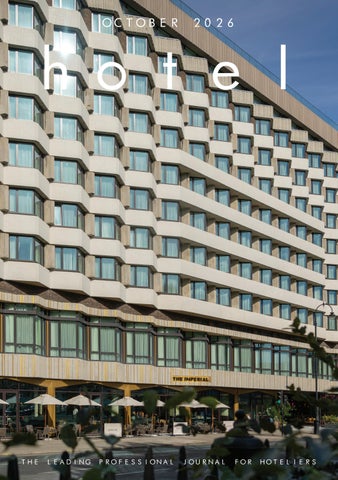
Image courtesy of The Imperial, Bloomsbury. Taken of Arcus, rooftop restaurant and bar
Apply
Now
www.hotelmagazineawards.co.uk/apply
Find Your One-Stop Shop for Hotel Room Products at
www.outofeden.co.uk
THE GUEST EXPERIENCE CURATORS
Introducing La Bottega Collective
labottegacollective.com
A multidisciplinary collective of excellences: La Bottega, Vanity
hoteliers to developers and designers, to transform the guest
Group, Palatino, Beltrami, White Privé, and Colosseo.
journey into memorable experiences.
With over four decades of integrated expertise across beauty,
Because excellence is never an accident.
textiles, OS&E and design-driven consulting, La Bottega Collective partners with the world’s most discerning hospitality clients, from
EDITOR’S NOTE
OCTOBER 2026 W
elcome to the October issue of Hotel Magazine, where we explore how hotels can create experiences that guests want to seek out – not simply places they need to stay. Wellness is at the heart of this month’s issue, and it’s clear that the conversation has moved far beyond the traditional hotel spa. Our Essential 5 explores five new approaches to wellness programming, from more personalised experiences to innovative ways of integrating wellbeing throughout the guest journey. Meanwhile, our main Spa, Wellness & Amenities feature looks to the world’s leading spas for inspiration, asking what hotels can learn from those that have mastered the art of helping guests slow down, switch off and feel genuinely cared for. As wellness increasingly becomes part of the core hospitality proposition, there are valuable lessons in how these spaces create a sense of place, ritual and service. We also turn our attention to marketing and the challenge of keeping hotels relevant 365 days a year. Seasonal peaks will always play an important role, but how can hotels create compelling reasons to visit during the quieter months? We speak to industry experts about the strategies, campaigns and experiences that can help properties generate demand yearround – and ensure there is always a reason to book. Elsewhere, we look at an increasingly interesting revenue opportunity: gift cards. No longer simply a last-minute present or a way to sell a future room night, hotels are beginning to think of gift cards as a gateway into a much broader world of experience retail. Our thought leadership piece explores how properties can package and sell everything from dining and spa treatments to overnight stays and unique experiences, while building relationships with guests who may not otherwise have walked through their doors. Our regular features take us from London to Panama. This month’s Hotel of the Month is The Standard London, a property that has brought a distinctive sense of personality and creativity to King’s Cross. In Hotels Around the World, we travel to La Coralina Island House in Panama, while our Venue Profile puts the spotlight on The Londoner and its Hotel Manager, Michael Cheung. Across all of these stories runs a common thread: the evolving role of the hotel. Whether through wellness, marketing, retail or experience, today’s most successful properties are finding new ways to give guests a reason to engage, return and remember. I hope you enjoy the issue.
Jade Evans, Editor-in-Chief © 2026 Cogent Multimedia Limited, 1st Floor, Saphir House, 5 Jubilee Way, Faversham, Kent, ME13 8GD. No part of this magazine may be reproduced or stored in a retrieval system or transmitted in any form – electronic, mechanical or physical – without express prior permission and written consent of the publisher. Contributions are invited and when not accepted will be returned only if accompanied by a fully stamped and addressed envelope. Manuscripts should be type written. No responsibility can be taken for drawings, photographs or literary contributions during transmission or in the editor’s hands. In the absence of an agreement the copyright of all contributions, literary, photographic or artistic, belongs to Cogent Multimedia Limited. The publisher accepts no responsibility in respect of advertisements appearing in the magazine and the opinions expressed do not necessarily represent the views of the Publisher. The Publisher cannot accept liability for any loss arising from the late appearance or non publication of any advertisement.
10
www.thehotelmagazine.co.uk
CONTENTS
14 Cover Story
We showcase the new era that has just unfolded in the heart of Bloomsbury. With 357 carefully curated rooms in Central London, all-day dining and a rooftop bar overlooking the city, The Imperial features on this month’s cover.
14
38
22 Spa and Wellness
As wellness moves from hotel amenity to core hospitality proposition, we share what the wider hotel industry can learn from some of the UK’s leading hotel spas.
60 Hotel of the Month
This October, we spotlight The Standard, London as our Hotel of the Month, exploring how this iconic Brutalist landmark has been transformed into one of the capital’s most distinctive hotel destinations.
22
62 In the Hot Seat
We put Tamara Lohan, former cofounder of boutique brand Mr & Mrs Smith and Global Brand Leader for Luxury at the Hyatt Hotels, in the Hot Seat to discuss her leadership, career and vision for one of the most successful hotel groups.
96 Interview
60
62
Editor-in-Chief
Administration Manager
Head of Business Development
Design and Production
Jade Evans jevans@thehotelmagazine.co.uk
Jazmine Davis jazmine@thehotelmagazine.co.uk Tel: 01795 509 105
Account Manager Harrison Hume hh@cimltd.co.uk Tel: 01795 509 105
Marketing Manager Lucas Payne lucas@cimltd.co.uk
Natalie Woollin admin@cimltd.co.uk
Grant Waters grant@cimltd.co.uk
James Taylor james@cimltd.co.uk
Head of Digital
Xhulio Bishtaja digital@cimltd.co.uk
Social Media Manager
We speak with Simon Numphud, Managing Director at AA Media and delve into some of the insights from AA’s consumer sentiment survey and what they mean for UK hotels.
Credit Facilities Manager Gwen Lee creditcontrol@cimltd.co.uk Tel: 01795 509 103
Director
Declan Wale declan@thehotelmagazine.co.uk Tel: 01795 509 112 Tom Woollin tom@cimltd.co.uk
Managing Director John Denning
Lily Lawson socials@cimltd.co.uk
www.thehotelmagazine.co.uk
11
COVER STORY
The Imperial, Bloomsbury 61-66 Russell Square
W
ith more than 120 years of history behind it, The Imperial, Bloomsbury is entering a new chapter. Following a once-in-a-generation refurbishment, the Bloomsbury landmark has been reimagined for a new generation while retaining the bold architectural character that has defined its place in London for decades. For General Manager Remus Obertelli, who brings more than 15 years of hospitality management experience to Imperial London Hotels, the reopening represents more than the return of a hotel. It is an opportunity to recognise The Imperial, Bloomsbury as an important part of London’s evolving story while creating a contemporary destination that feels relevant today. The original building opened in 1905, designed by Charles Fitzroy Doll, and was known for its ornate turrets, terracotta statues, marble-and-granite public spaces, winter garden and Turkish Baths. Its replacement in the 1960s embraced the modernist spirit of the era, looking firmly towards the future. That architecture remains the anchor of The Imperial,
14
www.thehotelmagazine.co.uk
Bloomsbury today. Rather than looking to disguise its modernist identity, the refurbishment embraces it, drawing on the creative energy of the writers, thinkers, painters and reformers who shaped the cultural voice of the period.
Building a team for a new chapter
Remus joined The Imperial, Bloomsbury unusually early in the opening process, arriving before the main build was underway but before the hotel had entered day-today operation. His role involved working closely with the project team to identify the smaller details and operational refinements that can make a significant difference to the guest experience. “It was about working closely with the project team to make the smaller tweaks that add up to a real difference for guests, while watching the hotel and the operation come to life side by side,” he said. The opening also required the team to adapt as the project evolved, refining how the hotel would position itself in the market and communicate its story to guests.
COVER STORY
Recruitment was another key priority, with Remus focused on building a team capable of delivering the guest experience the hotel has set out to achieve. The experience has reinforced the importance of being able to work across every part of a hotel simultaneously – from leading teams and refining operations to shaping the guest journey. For fellow hotel leaders, Remus believes commercial performance and guest experience should never be viewed as competing priorities. Instead, the guest should remain at the centre of every commercial decision. “After all, a great guest experience drives reputation, loyalty, direct bookings and ultimately revenue,” he said.
level designed for cinema nights. The strategy is ultimately about giving the hotel a renewed relevance: preserving what makes The Imperial, Bloomsbury distinctive while creating compelling reasons for a new generation of guests to visit, stay and return.
Hospitality with a human connection
For Remus, delivering a strong guest experience begins long before a guest arrives. During the renovation, the team spent considerable time defining and refining the guest journey, using a detailed understanding of its guest profiles to identify what visitors value, where potential pain points
Reimagining a Bloomsbury landmark
The reopening marks a significant milestone for Imperial London Hotels, with the refurbishment carefully balancing heritage with a distinctly contemporary identity. The interiors take their cues from mid-century modern design, celebrating the hallmarks of a building that was once considered controversial while preserving the striking exterior that has made The Imperial, Bloomsbury a landmark. Bold shapes, patterns and geometric forms reflect the expressive spirit of the period, while original details uncovered during the renovation have helped shape the new design. Among the discoveries were burnt orange glass tiles on the mezzanine floor, which directly influenced the warm tones used throughout the hotel. Distinctive wood panelling, sculptural lighting, terrazzo and tactile textures sit alongside soft silhouettes of midcentury furniture, creating a guest experience that feels rooted in the building’s past without becoming nostalgic. The Imperial, Bloomsbury now comprises 357 guest rooms and suites, including Bay Rooms featuring the hotel’s distinctive geometric windows, Hideaway suites with private terraces and outdoor bathtubs, and The Nest – one of the hotel’s largest suites, complete with a mezzanine
Remus Obert elli www.thehotelmagazine.co.uk
15
COVER STORY
exist and where the hotel could create points of difference. That thinking has influenced everything from the checkin process to breakfast service - but technology is only one part of the equation. The hotel has consciously recruited for roles designed to bring the guest experience to life, ensuring that service can be adapted around individual guests rather than delivered as a one-size-fits-all model. Technology is used to provide insight and data that can help the team anticipate needs and recognise preferences, but the emphasis remains firmly on human connection. The aim is for guests to feel genuinely looked after rather than simply accommodated, with personalisation delivered through tailored interactions, thoughtful details and small moments of recognition. It is an approach that builds on the philosophy that has been central to Imperial London Hotels since its founders opened their first hotel in 1837, while giving it a distinctive expression at The Imperial, Bloomsbury.
Creating a new destination for London
A central part of the hotel’s new proposition is its ambition to become more than a place to stay. The renovation has introduced a collection of spaces designed to bring guests and the local community together, supported by a programme of cultural, music and wellbeing experiences. At the centre of this is Arcus, Bloomsbury’s first and only rooftop bar and restaurant. Occupying more than 320 square metres on the hotel’s tenth floor, the new destination combines modernist design with panoramic views across London. Inspired by the sky above it, Arcus offers cocktails and seasonal small plates, with the ambition of becoming a destination in its own right – whether for post-work drinks, pre-theatre cocktails or simply taking in the city from above. Elsewhere, The Edit Bar & Lounge and The Bell Room and Terrace provide additional spaces for guests to gather, while an all-day dining concept adds further choice
16
www.thehotelmagazine.co.uk
throughout the day. The ground floor is also home to Bancone Russell Square, operated by a third party, bringing an established restaurant concept into the hotel and attracting its own audience to the property. Alongside food and beverage, the hotel offers a gym and Wellness Terrace, supporting its wider focus on wellbeing. Together, these spaces form an important part of the hotel’s commercial strategy. They are not simply additional revenue streams, but help establish The Imperial, Bloomsbury as a genuine third space within Bloomsbury – somewhere Londoners can meet, eat, drink, experience culture and pause from the pace of the city.
In the future
For The Imperial, Bloomsbury, the reopening is the beginning rather than the end of the story. The ambition is to establish the hotel as a destination that can honour its history while continuing to evolve. Its cultural programming will play an important role, with conversations with cultural figures, listening sessions and movement, sound and breath rituals designed to amplify the hotel’s place within London’s cultural landscape. For Remus, the key to the next stage is continuing to listen and adapt. The past year has demonstrated the value of collaboration – between the hotel team, contractors, designers and project team – and of remaining open to refining the operation as the hotel develops. The ultimate ambition is clear: to make The Imperial, Bloomsbury a project that the industry is talking about and, more importantly, a destination that people genuinely want to experience. With its distinctive architecture, renewed interiors, ambitious food and beverage programme and focus on culture and human connection, The Imperial, Bloomsbury is looking to write the next chapter of its 120-year story – this time with its eyes firmly on the future. imperialhotels.co.uk
Handcrafted in London since 1986.
We love working with designers, procurement companies, fabric houses, hotels, and other places of distinction, helping them bring exceptional spaces to life with bespoke lampshades crafted to complement and enhance every interior. For a free & confidential quotation contact our friendly team on 0208 4590367
Tringhams.co.uk
Spa, Wellness & Amenities
www.thehotelmagazine.co.uk
19
SPA, WELLNESS & AMENITIES
Venice Head Spa We explore the evolution of the multisensory treatment.
I
n today’s wellness landscape, where the line between ritual and technology is increasingly subtle, Venice Head Spa emerges: the multifunctional massage table by LEMI that redefines the treatment experience. Not just a working tool, but a true multisensory station designed for the most exclusive spas, able to combine refined aesthetics, functionality, and ergonomics. Its strength lies in versatility: three functions – massage, manicure/pedicure, and Japanese Head Spa – coexist in a single station. This approach allows spas and beauty centres to optimise space without compromising on excellence, turning every treatment into a moment of complete care. At the heart of the project is the retractable wash basin, an exclusive feature inspired by the Japanese Head Spa tradition. Thanks to a delicate and continuous water arch, the treatment is elevated into a ritual: the head is gently caressed by a steady flow that stimulates circulation, relaxes the muscles, and guides the mind into a state of deep balance. Adding to this is the pipeless pedicure tub,
20
www.thehotelmagazine.co.uk
SPA, WELLNESS & AMENITIES
designed to ensure impeccable hygiene and maximum comfort, transforming every gesture into a moment of total care. Comfort is guaranteed by a memory foam mattress developed by LEMI, antibacterial and fire-resistant, with a removable horseshoe headrest. Every adjustment – height, backrest, and leg rest – is fully electric, allowing the therapist to adapt the position to the millimeter and work in complete ergonomics. Smart functions, such as the memory setting for the ideal hair-wash position or the END function that automatically returns the table to its resting position, further simplify the operator’s work. Yet technical innovation does not exclude aesthetic elegance. Venice Head Spa is also a design piece: compact, refined lines, premium materials, and complete customisation options make it a valuable furnishing for the most exclusive spas. The range of eco-sustainable
VITA upholstery and FSC-certified wood finishes with refined metallic inserts represent the perfect synthesis of sustainability, style, and functionality. In Venice Head Spa, technology, ergonomics, and Italian craftsmanship coexist. Every detail is conceived to turn treatment into a sensory narrative, where aesthetics, functionality, and ritual merge into an unprecedented experience. Not just a work tool, but a manifesto of intent: an invitation to rediscover the value of time, slowness, and deep care of body and mind. With this creation, LEMI reaffirms its leadership in the sector, once again proving how innovation and tradition can come together to rewrite the codes of wellness. Venice Head Spa is not only the future of treatment, it is the promise of a new art of care. www.lemi.it www.thehotelmagazine.co.uk
21
SPA, WELLNESS & AMENITIES
Lessons in Wellbeing The finest spas have mastered the art of creating environments where guests slow down, switch off and feel genuinely cared for. As wellness moves from hotel amenity to core hospitality proposition, we look at what the wider hotel industry can learn from their approach.
Grantley Hall
T
he UK’s leading spas have turned slowing down into an art form. From thoughtful design and sensory experiences to highly personalised treatments and genuinely attentive service, the best wellness destinations understand that creating a sense of calm is about far more than offering a treatment menu. As wellness becomes an increasingly important part of the hotel proposition, there is much the wider industry can learn from the spa sector’s approach to creating spaces where guests can pause, disconnect and feel truly cared for. When it comes to the biggest shifts in consumer expectations around spa and wellness, Lesley Bacon, Spa & Wellness Director at Good Spa Guide, revealed that one of the most prominent changes is a move towards personalisation over choice. “Treatment menus are becoming shorter, with more time given to consultation so the experience can reflect what the guest actually needs,
22
www.thehotelmagazine.co.uk
rather than simply selecting from a long list of options. The best spas are also moving this consultation to the prearrival stage, giving therapists valuable insight before the guest even arrives. This means the conversation begins with understanding, rather than starting from zero,” Lesley added. Space is also becoming a premium rather than a “niceto-have”, in Lesley’s opinion. Leading spas understand that guests are willing to pay more when they know there will be room to relax and dwell afterwards, whether that is a lounger, relaxation room or quiet space. “The experience should not end when the treatment does,” Lesley added. Lesley revealed that she’s also seeing the spa experience blur the boundaries between indoors and outdoors and said, “Hotels can make better use of their grounds by incorporating plants and flowers grown on site, encouraging guests to walk or sit outside, and providing
SPA, WELLNESS & AMENITIES
Grantley Hall blankets or shelter so changing weather does not immediately bring everyone back indoors.” Finally, Lesley explained that wellness and indulgence can sit comfortably side by side. Spa menus are broadening rather than becoming exclusively ‘healthy’, with more interesting non-alcoholic drinks and nutritious dishes alongside the indulgent, celebratory food guests also want. “It doesn’t have to be a choice between the two; the best experiences offer both thoughtfully,” she said. The Good Spa Guide Awards celebrate the very best in the UK spa industry. Looking at the spas and experiences that stand out in the awards, we asked Lesley what qualities or trends she thinks the wider hotel industry should be paying closest attention to right now, to which she said, “The standout spas tend to have a clear and specific identity. “They don’t try to be all things to all guests, but instead focus on a particular proposition, understanding what they offer, why they offer it and who it is designed for.” Lesley believes that clarity should be evident from the moment a guest discovers the spa, with the website and booking journey setting clear expectations about what the experience will actually involve. Another important trend in Lesley’s opinion is the ability to explain the ‘why’, not just the ‘what’. Whether it is contrast therapy, thermal experiences, a sound bath, meditation or a breathing ritual, the best spas explain the purpose behind each element and the benefit it is intended to deliver. “This helps establish the spa as an expert guests can trust,” said Lesley. She acknowledges how we are also seeing a shift towards value rather than simply ‘deals’. Guests are not necessarily looking for the cheapest experience; increasingly, they want to feel that they are making a worthwhile investment in their health and wellbeing. “Ultimately, spas don’t need to do everything. The strongest operators focus
on the things they know they can deliver exceptionally well, ensuring the whole team is trained to provide that experience consistently,” Lesley concluded. Louise Molloy, Director of Spa at Park Hyatt London River Thames recognises that leading spas are highly intentional about every aspect of the guest journey. From the moment a guest arrives, the goal is to create a seamless transition away from the demands of everyday life and into a space where they can truly relax and reconnect with themselves. “Hotels can learn from this by looking beyond individual touchpoints and focusing on the emotional journey of the guest. Small moments such as a warm welcome, intuitive wayfinding, uncluttered spaces, and a slower, more thoughtful pace of service can all contribute to a greater sense of calm,” said Louise. Delving into the spa environment itself – from design and sensory details to lighting, sound and scent – Louise sees that these elements are “absolutely fundamental”. She said, “In a leading spa, every sensory element is carefully considered because our surroundings have a powerful impact on how we feel. Lighting, acoustics, scent, temperature, textures, and even the flow between spaces all influence whether a guest feels energised, relaxed, or overwhelmed.” Hotels often focus on visual aesthetics but sometimes overlook the sensory experience as a whole. Noise management, scent consistency, lighting transitions throughout the day, and creating quiet spaces away from technology can make a significant difference. Louise recognises that guests are increasingly seeking refuge from constant stimulation, so designing environments that help them disconnect is becoming more important than ever. Wellness today is no longer confined to the spa. Guests increasingly view wellbeing as something that should be woven throughout their entire stay. This means integrating wellness into every aspect of the guest journey, from www.thehotelmagazine.co.uk
23
SPA, WELLNESS & AMENITIES
Grantley Hall nutritious dining options and quality sleep experiences to movement opportunities, mindfulness offerings, and spaces designed to reduce stress. Louise said, “It is also about recognising that wellbeing looks different for every guest. For some, it may be a fitness class or recovery treatment, for others, it may simply be having quiet time, meaningful human connection, or uninterrupted rest. “The most successful hotels will be those that integrate wellbeing into their culture and operations, creating experiences that support guests physically, mentally, and emotionally rather than treating wellness as a standalone facility.” At The Mandrake’s DAMU, the team has intentionally created an environment that feels distinctly separate from the world outside. From the architecture and sensory environment to sound, nature, storytelling and science, every element is designed to help guests slow down and become fully present. The entire experience is centred around rejuvenation and realignment. The commissioned soundscape flows throughout the Spa, from reception and treatment rooms to the Tranquillity Room and Mud Cave. Rather than traditional spa music, it has been created to influence the atmosphere and gently encourage the mind and body to slow down. The Tranquillity Room, with its botanical indoor garden, provides another space to pause, reflect and release. Nathalie Dubreu, DAMU Spa Manager, said, “Storytelling is also important. “The Mud Cave, for example, draws on ancient Mesopotamian healing traditions, while the Origin Pool combines water, low-frequency vibrations, sound, chromotherapy and visual projection to create an immersive sensory experience. We also share the stories
24
www.thehotelmagazine.co.uk
behind our products and rituals, connecting ancient traditions with new science and technology. “This creates a deeper connection between guest and experience. Rather than simply receiving a treatment, guests understand its purpose and journey, allowing them to become more engaged and present.” At DAMU, personalisation begins before the treatment. Nathalie said, “From the moment a guest arrives, we want them to feel they are stepping into a journey thoughtfully created for them. The welcome, atmosphere, storytelling and introduction to each ritual all contribute to this. “It is about understanding the individual guest: listening to what they need that day, paying attention to how they are feeling and allowing the experience to adapt. Personalisation is not simply choosing a treatment from a menu; it is creating a genuine sense of being seen, understood and cared for. Sometimes that means remembering preferences, noticing how a guest is responding, knowing when they want conversation and when they need space.” This is where the idea of oneness becomes important. Every part of the experience should feel connected – Natalie recognises that the welcome should lead naturally into the treatment, which connects with the environment and storytelling. “When these elements align, the guest experiences one complete journey rather than a collection of separate services.” The same philosophy can extend beyond the treatment room and across the wider hotel experience, from arrival and the room environment to food and beverage, sleep and wellness activities. When these touchpoints are connected and informed by an understanding of the individual, Natalie sees that the experience becomes much more meaningful.
SPA, WELLNESS & AMENITIES As wellness becomes increasingly central to the hotel experience, the industry is moving beyond the traditional treatment-led model towards a more holistic approach. “I think wellness is evolving beyond the idea of booking an individual treatment – a massage, facial or therapy – and towards creating a wider wellness ritual,” said Natalie. “A ritual gives meaning and intention to the experience, helping guests transition away from the outside world and become fully present.” At DAMU, the treatment is viewed as just one part of that wider journey. “Whether a guest comes for a massage, facial or technology-led treatment such as BBL, Moxi or Dermapen, we want the moments before, during and after to contribute to their overall sense of wellbeing,” Natalie explained. “Even highly results-driven treatments can create opportunities to slow down, breathe, reconnect with the senses and feel genuinely cared for.” This means considering every element of the experience, from the welcome and atmosphere to aromatherapy, sound, touch, relaxation spaces and rituals that help guests transition into and out of their treatment. As wellness increasingly converges with aesthetics, longevity and technology, Natalie believes hotels should also consider how different elements can work together. “It is about considering the whole person – mind, body and spirit – rather than treating each aspect of wellbeing separately.” Ultimately, the lesson for hotels is that there is no one-size-fits-all formula. “Technology can deliver remarkable results, but human connection, environment and moments of relaxation are what can transform an individual treatment into a truly complete journey.” At Firefly Spa at Silverlake Estate (part of Habitat First
Group), the team’s starting point was to ensure that every guest would feel a slower pace and a deeper sense of calm from the moment they arrive. With the 10-acre Firefly Lake and woodland on one side and the pool on the other, the Firefly Spa has been designed to connect to its natural surroundings. Unlike many spas that involve total darkness, Firefly’s facilities, including the treatment pods, cold plunge and sauna all look out onto the calm stillness of the water and the team has embraced the natural medicinal properties of the nature reserve and has integrated on-site botanicals, such as gorse, into the ESPA treatments. Guests increasingly look for much more than a treatment menu. Wellness has become about balance, restoration and creating experiences that support both physical and mental wellbeing. For some, wellness is about movement and fitness; for others, it is about relaxation, recovery, sleep, mindfulness or spending time outdoors. Red Paxton, CEO of Habitat First Group, explained, “Firefly responds to that by offering multiple ways to engage with wellbeing. Guests can relax with therapeutic treatments, thermal experiences and a spot of lunch at the lakeside Firefly Restaurant or they can seek out active relaxation through wild lake swimming, paddleboarding or kayaking, or even combine the two.” Specialist spas are increasingly demonstrating that personalised, restorative wellness is about far more than treatments and facilities – and hotels can take a similar approach by weaving wellbeing throughout the entire guest journey. “One of the biggest lessons is that wellness should be considered throughout the entire guest experience rather than confined to a spa menu or gym facility,” explained Red. “Guests increasingly value experiences that help them feel better during and after their stay, and that
www.thehotelmagazine.co.uk
25
SPA, WELLNESS & AMENITIES doesn’t necessarily require extensive wellness facilities.” Instead, hotels can create a sense of wellbeing through thoughtful design, access to nature, opportunities for movement, healthier dining and genuinely attentive service. “When wellness is embedded into every touchpoint, from arrival to dining and leisure activities, it feels natural rather than transactional,” Red said. Crucially, this also means continuing to evolve the offering rather than standing still. “It is also important to keep inventing. We are continually adding to the offerings at Firefly and are looking forward to bringing even more in the coming months, including gong baths, triathlon weekends, wellness residentials and a lakeside gym.” The team at Grantley Hall also ensures that a guest’s spa experience begins long before they enter the spa itself. Victoria Rickett, Director of Spa & Wellness at Grantley Hall, revealed that at the point of booking, the team asks thoughtful questions to understand who is visiting, why they are coming and what their individual preferences are, so the experience can be tailored from the outset. To make things even more personal, Victoria said, “We also look at what we have learned from previous visits and no detail is considered insignificant, whether it’s a preferred room temperature or favourite therapist. Luxury is increasingly about personalisation and making the experience feel effortless, and our guests regularly tell us that attention to detail is one of the reasons they return time and again.” Recognising that personalisation is paramount, at Grantley Hall they have a dedicated Guest Experience Team overseeing every stage of the journey. The hotel also has an internal initiative called ‘Grantley Love’, which encourages every member of the team to share small details they learn about a guest through natural conversation, allowing them to create thoughtful moments during a guest’s stay. “For example, we know the preferred treatment playlists of some of our regular guests and have them queued up ahead of their appointment – it’s often these small, highly personal touches that can make somebody feel genuinely known and cared for,” added Victoria. At Grantley Hall, the changing expectations around wellness are influencing the guest journey far beyond the spa itself. “We’re noticing that guests are far more wellness-focused than they were even a few years ago,” said Victoria. “While previously a hotel stay might have meant stepping away from usual routines and eating habits for a few days of indulgence, now many guests want us to help them maintain those routines while they are away.” This applies to both exercise and nutrition, with more guests looking to maintain specific regimes throughout their stay. “We recognise that wellness should be considered at every touch point for these guests, rather than confined to the spa.” That means taking a personalised approach to the details of a stay – for one Peloton enthusiast, Grantley Hall arranged for a bike to be waiting in her suite alongside a wellness hamper containing electrolytes, BCAAs and protein shakes, as well as a yoga mat. “While we have a fully equipped, state-of-the-art gym, some guests prefer the privacy of their own suite or a private studio.” That same understanding of individuality is central
26
www.thehotelmagazine.co.uk
to creating a spa environment guests want to return to. “One of the biggest lessons we have learned is that wellness means something different to everybody,” Victoria explained. For some, that might mean meditation and solitude; for others, access to technology such as VO2 testing, underwater treadmills, cryotherapy, EMS or BATAK. “For others, wellness is simply having uninterrupted time with friends or family away from the pressures of everyday life.” With guests increasingly talking about feeling burnt out by constant connectivity, even switching off a phone can become part of the experience. “Where hotels can go wrong is assuming wellness automatically means salads, detoxes and treatments when, in reality, it is about listening carefully to what each guest needs to feel restored, creating the right environment for that to happen and, wherever possible, exceeding their expectations.” Gleddoch Golf & Spa Resort’s recent spa investment demonstrates that today’s guests are looking for experiences that help them properly disconnect and create a sense of escapism from the moment they arrive. Tim Rumney, BWH Hotels GB CEO, explained: “The growth of thermal and contrast experiences, outdoor wellness and spaces that connect guests with nature is particularly interesting.” The outdoor sauna at Gleddoch is a great example and one of the largest of its kind in the UK. “It combines aromatic heat with an outdoor hydrotherapy pool, cold plunge, ice bath and barrel drench shower, tapping into the growing appetite for temperature-led wellness while overlooking sweeping views across the Clyde Estuary and Scottish landscape.” For independent hotels, Tim sees that there is a real opportunity here. “They don’t necessarily need to replicate the scale of a large destination spa; the key is understanding what is unique about the property and using that to create an experience guests cannot get elsewhere.
VISIT US ON STAND 1230
ELEVATING EVERY TOUCHPOINT Sustainable & Responsible Luxury Bathrobes & Towelling www.bcsoftwear.com | enquiries@bcsoftwear.com |
@bcsoftwear
SPA, WELLNESS & AMENITIES “We are seeing wellness become more of a reason to choose a hotel in the first place. Creating experiences guests remember, talk about and want to return to.” James Anderson, General Manager at Gleddoch Golf & Spa Resort, WorldHotels Distinctive, commented: “We have seen a strong response from guests since the Imperia Spa reopened, particularly the opportunity to combine a city or business trip with some genuine time to switch off. Just a 30-minute drive from Glasgow, we are seeing more guests choosing Gleddoch as a place to decompress before heading home, rather than simply treating wellness as an add-on to their stay. “What has also been encouraging is how much guests are engaging with the experience as a whole, moving between thermal experiences, outdoor spaces, treatments and relaxation areas rather than simply using one facility. The feedback has reinforced that the setting is just as important: being able to step outside, take in the Clyde views and simply switch off creates a real sense of escape. “Ultimately, guests are looking for somewhere that allows them to slow down and leave feeling genuinely restored. Working with BWH Hotels GB has allowed us to tailor that experience around our guests, while staying true to what makes Gleddoch so special.” For The Landmark London’s Spa Manager, Hida Shuleta, the recent refurbishment was an opportunity to create more than simply a visually impressive wellness space. “I envisioned creating more than just a beautiful spa, and thought comfort, calm and personalised wellbeing should be a priority,” she explained. The result is a concept designed around giving guests the freedom to experience the spa in a way that feels genuinely restorative to them, recognising that relaxation and wellbeing can mean something different to every individual. That philosophy extends beyond the spa itself and into the wider guest journey. “I wanted wellness to be part of the whole guest journey, not just a visit to the spa,” said Hida. Alongside the spa’s enhanced facilities and treatments, The Landmark London has introduced personalised in-room wellness experiences, including a spa minibar, yoga video sessions, Theraboot and LED mask treatments. For Hida, this demonstrates how hotels can make wellness more flexible and accessible by introducing considered touchpoints throughout the stay, rather than confining it to a dedicated facility. Ultimately, however, she believes it is the people who make the greatest difference. “The team plays a huge part in how a guest feels,” she said, with expertise, training and genuine care enabling therapists to understand individual needs and personalise the experience. “Beautiful facilities are important, but it’s often how you make someone feel that they remember most.” For Corinthia London, the decision to relaunch its spa concept after 15 years reflects the fundamental shift in how guests now approach wellness. “Wellness has changed enormously over the past 15 years,” said Spa Director Aysun Mut. “Guests are not simply looking for a treatment; they are looking for expertise, emotional reset, physical recovery, better sleep, stress reduction and a deeper sense of balance.” The relaunch of Biome was therefore an opportunity to move beyond the traditional spa model and create what Aysun described as “a complete wellbeing
28
www.thehotelmagazine.co.uk
ecosystem”, combining expert-led treatments, considered rituals and an environment designed to support both stillness and transformation. “Today’s guests want wellness to feel meaningful rather than prescriptive,” she added. “They want high levels of personalisation, credible practitioners, sensory escape and visible results, but they also want the experience to feel intuitive, nurturing and deeply human.” That holistic approach also offers valuable lessons for hotels looking to create more restorative experiences throughout the guest journey. “The best spas and wellbeing spaces are designed to orchestrate a complete physical and sensory journey,” said Aysun, with every detail – from arrival and treatment through to relaxation and reflection – carefully considered to encourage guests to slow down. Natural materials, ambient lighting, fragrance, soundscapes, biophilic design and acoustic zoning can all help create a sense of escape, while discreet technology can support personalised wellness preferences, sleep and treatment recommendations. Crucially, however, Aysun believes restoration is as much about service as design: “The most restorative experiences are guided intuitively rather than intrusively, with teams anticipating needs quietly and allowing guests the space to switch off.” For hotels, she said, the message is clear: “Restoration should not begin and end in the treatment room; it should be felt in the welcome, the bedroom, the bathroom, the food and beverage experience, and the way teams quietly choreograph the guest’s time.” Ultimately, the lessons from the UK’s leading spas extend far beyond the treatment room. The most successful wellness experiences are built around understanding the individual, creating space to slow down and ensuring every touchpoint feels intentional, from arrival and design to dining, sleep and service. As guests increasingly seek meaningful ways to disconnect and restore, hotels have an opportunity to make wellbeing part of the fabric of the stay – not simply an amenity, but a philosophy that shapes how guests feel from the moment they arrive to the moment they leave.
T H E N E W A M E N I T I E S C O L L EC T I O N www.connockengland.co.uk/pages/amenities
SPA, WELLNESS & AMENITIES – ESSENTIAL 5
32
www.thehotelmagazine.co.uk
SPA, WELLNESS & AMENITIES – ESSENTIAL 5
Five New Approaches Wellness is no longer confined to the spa. As travellers increasingly look to hotels to support how they feel, sleep, move and switch off, operators are rethinking wellness programming as a wider part of the guest experience. From highly personalised itineraries to experiences designed around connection and recovery, here are five approaches gaining momentum. Make sleep a stay in itself
Sleep is becoming one of the most compelling wellness propositions for hotels, with programming designed to help guests rest rather than simply offering a comfortable bed. Sleep-focused stays can include pre-bed treatments, guided meditation, breathwork, sleep-enhancing menus, pillow menus and technology-free wind-down rituals. The opportunity extends beyond the bedroom, too. Hotels can consider how lighting, temperature, sound, evening F&B and even the timing of activities contribute to better rest. By treating sleep as a complete guest journey, rather than a room feature, hotels can create a distinctive wellness proposition that requires relatively little physical infrastructure.
Take wellness outdoors
Wellness programming is increasingly stepping outside the spa and gym, with hotels making greater use of gardens, grounds and surrounding landscapes. Outdoor yoga, guided walks, cold-water experiences, forest bathing, running clubs and nature-based mindfulness sessions can all provide guests with a different route into wellbeing. For hotels, this approach also offers an opportunity to turn their location into an asset. A countryside property can build programming around hiking and nature, while an urban hotel might offer sunrise runs, park workouts or walking tours. The key is to make the destination part of the wellness experience.
Personalise the programme, not just the treatment
The next stage of hotel wellness is moving away from onesize-fits-all programming towards experiences shaped around individual needs and intentions. Rather than simply asking whether a guest wants a massage, hotels can build a broader picture of what they want from their stay – whether that is better sleep, stress reduction, fitness, recovery or simply time to switch off.
This can translate into tailored schedules combining treatments, movement, nutrition and relaxation. Technology and guest data can support this personalisation, but the human element remains crucial. A thoughtful conversation with a therapist, concierge or wellness professional can be just as valuable as a digital questionnaire.
Programme for recovery, not just relaxation
Wellness is increasingly about helping guests feel physically and mentally restored. This is creating opportunities for hotels to develop recovery-led programming incorporating everything from mobility and stretching to cold and heat therapies, breathwork, meditation and post-exercise treatments. The trend is particularly relevant to active travellers, but recovery can be positioned much more broadly. Guests arriving after a long journey, demanding work schedule or busy sightseeing itinerary may value experiences designed to reset the body and mind. Recovery therefore becomes a practical part of the stay, rather than an indulgence reserved for spa days.
Make wellness social
Wellness has traditionally been associated with quiet, solitary experiences, but hotels are beginning to recognise the value of connection. Group wellness experiences can bring guests together through communal yoga, running clubs, sound baths, workshops, wellness talks and healthy cooking sessions. This approach reflects a broader understanding of wellbeing: feeling connected can be just as important as relaxation or physical health. For hotels, social wellness also creates opportunities to build community, encourage longer engagement with the property and give guests experiences they are more likely to remember.
www.thehotelmagazine.co.uk
33
Hospitality Technology at the
Step into the future of hospitality with an innovative technology ecosystem for PMS, POS, Golf, Spa & Club
When guest expectations rise, your technology should keep up. The Agilysys ecosystem unifies data, intelligence, and workflows across your entire hospitality operation with the power of AI to anticipate, respond, and personalise every guest moment in real time.
Interested? Snap to get started!
EMEASales@agilysys.com www.agilysys.com
SPA, WELLNESS & AMENITIES
The Details That Define Luxury From tactile details to bespoke design, La Bottega Collective explores how a fully curated ecosystem of products, materials and sensory touchpoints can transform the guest journey, creating distinctive hotel experiences that are designed to be felt, remembered and connected to a property’s sense of place.
T
he most memorable hotel stays are often defined by atmosphere, detail and an immediate sense of connection from the moment a guest arrives. Creating a truly immersive stay means giving guests a tactile connection to their surroundings – from the first touch of the bed linen and the fragrance in the bathroom, to the objects placed throughout the room and the textiles experience by the pool. Each individual detail contributes to the overall identity of the property and, when considered collectively, creates
36
www.thehotelmagazine.co.uk
an experience that feels intentional and distinctive. Delivering this kind of guest experience requires hotels to move beyond procurement-led thinking towards a more design led approach every touchpoint, enlisting the support of intentional curators, not just suppliers. La Bottega Collective enables this shift for some of the world’s most renowned hospitality names, including Four Seasons and Aman Resorts through a unique, multidisciplinary approach. Bringing together specialist expertise La Bottega Collective includes La Bottega and
SPA, WELLNESS & AMENITIES
Vanity Group for beauty essentials, Palatino for OS&E and bespoke accessories, Beltrami for luxury bed and bath linens, and White Privé for merchandising. Together, these pillars allow La Bottega Collective to consider the whole guest experience, creating meaningful connections between product, design, storytelling and a true sense of place. At the heart of this approach is Palatino, specialising in bespoke OS&E and design solutions for luxury hospitality. Combining craftsmanship with forward-thinking innovation, Palatino transforms everyday hotel touchpoints into considered objects and experiences that that balance design with operational excellence. Its distinction lies in the ability to tell stories through objects and tactile experiences, beginning with the story a hotel wants to tell and, most importantly, how it wants its guests to feel. This philosophy can be seen through Palatino’s work with Bvlgari Hotels & Resorts. From F&B packaging crafted in signature paper stocks to bespoke OS&E and gifting, every element is designed to reflect the visual language and luxury positioning of the brand. Palatino has also helped curate the hotel’s pet programme, demonstrating how considered design can extend beyond traditional room accessories to create a more personal experience, where even a guests’ pet becomes part of the journey, rather than an afterthought. For younger travellers, the same philosophy transforms children’s amenities into opportunities for discovery and storytelling. At Badrutt’s Palace in St Mortiz, young guest travellers will discover beautifully curated recipe books, combining child-friendly recipes, playful activities and vibrant illustrations, designed to be enjoyed during their stay and treasured afterwards. The same thinking is also reflected in Palatino’s work with The Ritz-Carlton on its global Ritz Kids programme, including the creation of Leo,
the Ritz Kids mascot. Designed to build a meaningful connection with younger travellers, the programme goes far beyond the conventions of a traditional children’s amenity. Beyond in room accessories, the strength of La Bottega Collective lies in its ability to consider a property in its entirety. How the La Bottega Collective ecosystem comes together across the guest journey can be seen at Villa Franca, Positano. Hand-crafted Beltrami linens establish the tone for the stay, while in the bathroom, a bespoke Villa Franca beauty essentials collection by La Bottega, blends bright grapefruit with earthy vetiver reflecting the natural beauty of the property’s surroundings. Throughout the room, Palatino designed pieces provide thoughtful finishing touches, while White Privé textiles carry the experience beyond the bedroom and out to the pool. Each element has its own purpose, but together they create a considered expression of the hotel. Nothing exists simply for function; every object contributes to the property’s story and how it is experienced throughout the guest journey. The future of luxury hospitality is moving beyond individual products towards a fully curated ecosystem of guest touchpoints. While guests may not consciously notice every individual detail, they do recognise when an experience has been carefully and thoughtfully curated. While personalisation in hospitality is often expressed through service, its physical expression can be just as powerful. The materials, objects, textures and sensory details that surround a guest all contribute to how a property is experienced and, ultimately, remembered. These aspects of the guest journey work in harmony to create thoughtfully designed environments, drawing on the ecosystem of La Bottega Collective. labottegacollective.com www.thehotelmagazine.co.uk
37
SPA, WELLNESS & AMENITIES
Making Amenities Memorable Amanda Connock, founder of Connock England, discusses the brand’s fragrance heritage, its new hotel amenities collection and why scent, sustainability and thoughtful design can turn everyday toiletries into a memorable part of the guest experience.
For readers discovering Connock England for the first time, could you introduce the brand and its story – what inspired its creation, and what principles have shaped its approach to luxury fragrance, bath and body products?
Connock England is a British fragrance and beauty brand built on deep-rooted industry knowledge. My family has been at the heart of the global fragrance and cosmetic ingredients world for more than 50 years through A & E Connock, supplying leading beauty and fragrance houses around the world. That heritage, together with decades of formulation expertise and long-standing supplier relationships, shapes the way we approach everything we create. Fragrance has always been central to Connock, but equally important is what sits behind it: ingredient quality,
38
www.thehotelmagazine.co.uk
formulation and provenance. Our relationships let us work close to source, giving us real visibility over quality and traceability. A more direct supply chain also means we can invest where it matters most – fragrance, ingredients and formulation – while offering genuine value to our partners. Our products are made and manufactured in the UK, and we source locally wherever it makes sense to. Ultimately, we want everything we create to feel considered and pleasurable to use.
You are now launching a new amenities collection for the hotel sector. What was the thinking behind the collection, and how have you translated the wider Connock England brand into an offering designed specifically for hotels and their guests?
SPA, WELLNESS & AMENITIES amber and vetiver. The formulations behind them matter just as much: Kukui Oil, Shea Butter and Macadamia Oil; English Borage Oil, Aloe Vera and Vitamin E; Sweet Almond and Rosehip Oils. Our sourcing and formulation heritage means we think as much about how a product performs and feels as about how it smells. We’ve also designed around the practical realities of hospitality. Bottles are made from 100% recycled Prevented Ocean Plastic and are refillable, with 5 litre refills available – designed to be refilled, not replaced. Properties can choose black or white pumps or disc-top caps, and single, double or triple wall brackets in a choice of finishes.
Beyond simply providing toiletries, what opportunity do you see for hotels in using amenities as a way to strengthen their brand identity and create a more memorable experience for guests?
We wanted to take everything that matters to Connock – fragrance, ingredient quality, formulation expertise, presentation – and translate it properly for hospitality. Working closely with hospitality teams gave us a clear picture of the balance hotels need. The experience has to feel memorable for the guest, while behind the scenes the collection needs to be practical and straightforward for housekeeping and operations teams to manage every day. That thinking runs through the whole collection: three fragrance choices – Kukui, Verdant and Pelago – each available in 300ml refillable, recyclable bottles with 5 litre refill options, plus a range of presentation choices so properties have flexibility both aesthetically and operationally. Most importantly, we wanted something that feels recognisably Connock: distinctive fragrance and formulation, the best ingredients, and real attention to detail.
What sets the new Connock England amenities collection apart from other products available to hotels today – whether that is the fragrances, formulations, presentation, sustainability credentials or the overall guest experience it is designed to create?
For me, it’s how those elements come together rather than any one of them in isolation. The three fragrances are intentionally different in character, so hotels can choose an atmosphere that fits their property. Kukui is warm and refined, with bergamot, jasmine, gardenia, sandalwood, amber and soft vanilla. Verdant is fresh and green, combining peppermint and eucalyptus with fig, geranium, rose, sandalwood and amber. Pelago is radiant and citrus-led, bringing together orange, bergamot and lemon with rosemary, neroli, petitgrain,
Scent is one of the most powerful tools a hotel has for shaping how a space feels, almost instantly, and it has a strong pull on memory. So amenities can do far more than fulfil a practical function in the bathroom. We see fragrance as another layer of a property’s identity. A hotel might choose one fragrance and use it consistently so it becomes part of its signature, or build a layered fragrance journey across different areas. That’s the thinking behind our Scent Mapping service. We work with a property on how different spaces should feel – restorative in a spa, warm and inviting in bedrooms, distinctive enough in an arrival space to leave a first impression. The fragrances can also extend beyond core bathroom amenities into reed diffusers, candles, room and linen mists and scented ceramics, so a property can build a cohesive sensory identity across the guest journey.
Looking ahead, what do you hope Connock can bring to hotel properties and their guests, and why is now the right time for hotels to consider a more considered approach to their in-room amenities?
We’d like Connock to be seen as a fragrance and amenities partner, not simply a product supplier. Hotels are increasingly thoughtful about every touchpoint of the guest journey, and amenities sit at an interesting intersection of experience, design, sustainability and operational practicality. Guests notice the details – something that smells good, feels good to use, and fits the wider environment it sits in. We’ve already seen properties choose us because the collection lets them shape the guest experience on their own terms, rather than take whatever a generic supplier hands them. Those details still have to work commercially and operationally, though, which is why refillable formats and flexible presentation sit alongside the fragrance and formulation work, not apart from it. Ultimately, we want to bring hotels a collection that combines strong fragrance and formulation expertise with the flexibility to choose an amenities experience that fits their property and their guests. connockengland.co.uk www.thehotelmagazine.co.uk
39
WELLNESS LUXURY LIVING
INTRODUCING THE SAND STONE COLLECTION Step into a warm, refined aesthetic that blends Italian design with cutting-edge innovation to redefine the most exclusive wellness spaces.
Call +44 20 3907 5000 (UK) or visit technogym.com
Discover Sand Stone
SPA, WELLNESS & AMENITIES
Protecting Luxury Standards Miele reveal why commercial equipment matters in spa and wellness settings.
T
he modern spa experience is built on the details. From the softness of a freshly laundered robe to the sparkle of a wine glass in a spa lounge, guests notice every touchpoint. In a highly competitive hospitality market, maintaining consistently high standards is essential, not only for guest satisfaction but also for protecting reputation. Luxury guests expect more, and they notice the details. Research shows that 40% of hotel guests are likely to leave a review after a positive experience, while 48% will do the same following a negative one. When expectations are high, consistency becomes critical. Behind the scenes, commercial laundry and dishwashing systems play a vital role in delivering the quality, presentation and hygiene guests expect from a premium spa and wellness environment.
The Challenge of Spa Laundry
Spa laundry accumulates quickly. Towels, robes, treatment
linens and uniforms move through the laundry cycle constantly, creating significant demands on equipment and staff. At the same time, these textiles require specialist care. Massage oils and skincare products can be difficult to remove without affecting fabric quality. Commercial laundry systems are designed for these demanding environments. Specialist programmes effectively remove stubborn residue while helping to protect delicate fibres. Equipment tested for up to 30,000 cycles provides the durability required for busy hospitality operations, supporting consistent performance over many years of use. The result is efficient processing of high volumes of laundry without compromising the quality of premium textiles.
Delivering Comfort Through Textile Care
For spa guests, comfort begins the moment they pick up a towel or slip into a robe.
42
www.thehotelmagazine.co.uk
SPA, WELLNESS & AMENITIES
Textiles that feel rough, worn or poorly presented can undermine an otherwise exceptional experience. Guests expect freshness and softness, and those expectations are closely linked to perception of quality. Tailored wash cycles and professional detergents help preserve the feel and scent of premium textiles, ensuring that towels, robes and linens continue to feel luxurious after repeated use. Specialist laundry systems provide the care needed to maintain textile quality service after service. Consistently soft towels and fresh robes contribute significantly to the overall guest experience and help reinforce a premium impression.
Presentation Matters Beyond the Treatment Room
The role of hospitality within spa settings continues to grow. Many modern spas now incorporate lounges and dining spaces, creating additional opportunities to impress guests. Whether serving herbal teas and refreshments or full dining experiences, spotless crockery and sparkling glassware reinforce a high standard. Even minor imperfections can be noticeable in luxury surroundings. Commercial dishwashing technology delivers the consistency front-of-house teams rely upon. Freshwater systems, which change water between wash stages, support high-quality cleaning results while eliminating stubborn residues. Combined with high-temperature washing processes, they ensure glassware and crockery emerge impeccably clean and ready for service. Attention to detail in these guest-facing areas supports the seamless experience spa visitors expect.
Hygiene Without Compromise
Hygiene remains one of the most important priorities in any spa or wellness environment. Mud masks, massage oils and other treatment products
can create demanding wash loads that require specialist programmes to achieve both cleanliness and hygiene objectives. Professional disinfection programmes reach the temperatures required to eliminate harmful bacteria, protecting guests while safeguarding reputation. In an environment where trust is essential, maintaining rigorous hygiene standards provides reassurance for both visitors and staff.
Sustainability and Operational Efficiency
Alongside guest experience, sustainability remains a major focus for hospitality operators. Today’s spas are looking for ways to reduce energy and water consumption without impacting service quality. Modern laundry systems combine energyefficient operation with reduced water usage and quieter performance, helping facilities create a more sustainable operation behind the scenes. For many operators, sustainability and luxury are no longer separate considerations. Guests expect both.
Reliable Support Behind the Scenes
Maintaining exceptional standards depends not only on equipment performance, but also on ongoing support. Digital monitoring platforms now provide real-time updates and operational insights, while preventative maintenance and access to specialist engineers help minimise machine downtime and support business continuity. Ultimately, the guest experience is shaped by countless details. From soft towels and flawless glassware to hygiene assurance and sustainable operations, professional laundry and dishwashing systems help create the consistency that luxury hospitality depends on. miele.co.uk www.thehotelmagazine.co.uk
43
SPA, WELLNESS & AMENITIES
Wellness, Woven Into Every Stay TEMPLESPA explores how hotels can extend wellbeing beyond the treatment room, creating thoughtful, sensory touchpoints that help guests relax, reconnect and feel cared for throughout their stay.
W
ellness is no longer confined to the treatment room. Today’s guests are looking for experiences that make them feel cared for from the moment they arrive until long after they leave. At TEMPLESPA, every touchpoint is thoughtfully designed to transform an ordinary stay into a complete wellness journey. It begins with an aromatic welcome. Our signature Mediterranean-inspired fragrances create an immediate sense of place and calm. Candles and diffusers are carefully selected to influence mood through scent, whether creating a feeling of peace and relaxation with our KEEP
44
www.thehotelmagazine.co.uk
THE PEACE Relaxing Aromatic Diffuser and SIESTA FOREVER Relaxing Aromatic Candle or bringing energy and joy with LIVE WELL Invigorating Aromatic Diffuser and THE GOOD LIFE Invigorating Aromatic Candle. These considered sensory touches help set the tone for the experience ahead. The journey continues into the spa with our awardwinning treatments, combining science-led skincare with purposeful rituals to deliver visible results while restoring mind, body and soul. Every treatment has been thoughtfully developed so there is something for every
SPA, WELLNESS & AMENITIES
guest, whether they are looking for a deeply relaxing massage, a results-driven facial or simply a quick but restorative leg and foot treatment. Consistency is at the heart of the TEMPLESPA treatment experience. Our treatments open and close with signature rituals, creating a familiar sense of care wherever a guest experiences TEMPLESPA. Our dedicated spa trainers work closely with therapists, providing extensive training and sharing our treatment philosophy to help ensure every guest receives an exceptional experience. There is a selection of treatments, meaning there is something for everyone. To name a few, ALL ABOUT THE GLOW, Glow & Radiance Facial is a skin-transforming facial that turns up the glow with instant and visible results, thanks to intelligent active ingredients boosted by vitamin C and a glycolic acid complex, combined with skin-lifting massage techniques. Another treatment to mention is DRIFT AWAY Relaxing Aromatherapy Massage, a deeply relaxing top-to-toe massage with a dreamy blend of Mediterranean essential oils, guaranteed to have your guests drifting away. And wellness doesn’t stop when the guest leaves the spa. Throughout their stay, thoughtful moments of wellbeing can become part of the wider guest experience. Turndown treats create a small but meaningful invitation to pause and relax before sleep, an unexpected touch that makes guests feel cared for. SLEEP WELL is a carefully selected Turndown to promote a good night’s sleep. It includes REPOSE Relaxing Night Cream, AAAHHH! Instant Cooling
Balm, QUIETUDE Chill Out & Sleep Well Mist, ALL TALK Moisturising Lip Balm and DRIFT AWAY Relaxing Bathing & Massage Oil. Spa at the Bar offers a completely different way to discover skincare, turning product exploration into an immersive and social experience. Guests can enjoy a delicious cocktail while discovering and sampling one of our bestselling products, creating a memorable moment that brings wellness into a more relaxed and unexpected setting. In the guest room, beautifully curated amenities transform everyday routines into luxurious rituals, while in-room wellness gives guests the freedom to slow down, unwind and create their own “spa wherever you are” moment. Together, these touchpoints create a seamless sensory journey that flows throughout the entire stay. Backed by over 25 years of skincare innovation, TEMPLESPA brings together cutting-edge science and Mediterranean botanicals to deliver exceptional products, memorable treatments and meaningful wellbeing experiences, TEMPLESPA is Science with Soul. Because wellness isn’t a single treatment or product. It’s a feeling that flows through every stage of the guest journey. At TEMPLESPA, we help our spa partners weave selfcare into every stage of the guest experience turning every stay into an opportunity to relax, reconnect and live life beautifully. templespa.com www.thehotelmagazine.co.uk
45
SPA, WELLNESS & AMENITIES
The Scent of Luxury The team at Molton Brown explores how fragrance can create a distinctive sense of place, deepen the guest experience and leave a lasting impression long after check-out.
L
uxury hospitality is no longer defined solely by beautiful spaces, exceptional service and fine dining, but by the lasting feelings and memories it creates for guests. Today, the most memorable hotels create emotional connections, offering experiences that remain with guests beyond their stay. As travellers seek authentic, immersive experiences, hotels are finding new ways to convey a sense of place and express luxury through every aspect of the guest experience. Scent offers a powerful way to enhance an experience and create lasting memories. Its remarkable ability to evoke emotion and memory can transport us to a particular moment or destination, shaping atmosphere and creating a strong sense of place. A familiar scent can leave a lasting impression, becoming intrinsically linked to the experiences and emotions we associate with it. For hoteliers, this creates an opportunity to build experiences that linger long after check-out. A curated scent experience can become part of a property’s identity, reinforcing its character and creating a lasting association with the destination. Whether inspired by a vibrant city,
46
www.thehotelmagazine.co.uk
SPA, WELLNESS & AMENITIES
coastal escape or secluded countryside retreat, scent can transform a stay into an immersive experience. As leaders of positive luxury since 1971, Molton Brown has spent more than five decades crafting distinctive fragrances inspired by ingredients, cultures and destinations from around the world. Working with world-renowned master and next-generation perfumers, the brand’s fragrance heritage is rooted in creativity, craftsmanship and storytelling. Mark Johnson, Global President at Molton Brown commented, “We’re seeing scent become a much more considered part of the hotel experience, moving beyond simply creating a pleasant environment to becoming part of a property’s identity. When thoughtfully integrated alongside lighting, music and the wider sensory experience, scent can create a distinctive sense of place. Ultimately, it’s not just about what a hotel smells like, but what guests remember it by.” This expertise translates naturally into luxury hospitality. Through its six curated Scent Experiences, Revive, Invigorate, Radiant, Serene, Enliven and Heritage, Molton Brown enables hotels to create cohesive sensory experiences that reflect their individual character. Today’s travellers also expect visible commitments to quality, sustainability and responsible luxury. Refillable amenities, reduced single-use plastics and beautifully designed dispensing solutions demonstrate care for guests and the environment, while intuitive solutions help hotels maintain consistency and efficiency. From the Signature Dispenser and Chrome Dispenser to the innovative Ecosystem Dispenser, Molton Brown’s dispensing programme combines elegant design with practical functionality. Engineered for Efficiency, the Ecosystem Dispenser simplifies installation, streamlines
replenishment and optimises performance. Ultimately, it is the thoughtful details, from signature fragrance and luxurious amenities to intuitive design, that can transform a stay and leave a lasting impression. For more information, please visit moltonbrown.co.uk/store/hotel-amenities/
www.thehotelmagazine.co.uk
47
SPA, WELLNESS & AMENITIES
Gifting That Lasts Why wellbeing rituals are the festive opportunity hotels can’t afford to miss.
T
he festive season asks a great deal of everyone. Guests arrive at your spa carrying an exhaustion that builds through the final months of the year: the accumulation of commitments, deadlines, late nights and the relentless pace of a season that is supposed to feel joyful. For hotel spas, this is one of the most significant windows of the calendar. How it is used, and what it communicates about a property’s relationship with guest wellbeing has never mattered more. Something has shifted in how people think about giving. The most considered gifts this season are those that tell a story beyond the unwrapping. Guests arriving at your spa are increasingly looking for something that will make the person who receives it feel better, not just on Christmas
48
www.thehotelmagazine.co.uk
morning, but in the weeks that follow. There is a growing understanding, felt across the hospitality industry, that the purpose of a gift is to give someone something they will actually return to. A ritual. A moment of care they might not have chosen for themselves. For hotel spas, this shift represents a real opportunity. When a guest leaves a treatment room feeling restored, the gift they purchase on the way out carries that feeling with them. It becomes a continuation of the experience rather than a separate transaction. The connection between treatment and retail, when it is handled well, feels natural to the guest and valuable to the spa. This is the thinking behind the Aromatherapy Associates Flourish Into a New Year festive collection for 2026. Rather
SPA, WELLNESS & AMENITIES
than building a range around occasion or price point, the collection is structured around wellbeing need. Each gift set is designed to address a specific state: sleep, energy, calm or recovery. A guest who has just experienced a Deep Relax treatment can take home a Gift of Sleep, built around the same Vetivert, Camomile and Sandalwood blend that their therapist used. A guest who mentioned fatigue in their consultation might leave with a Gift of Energy, anchored in the Revive Morning blend of Grapefruit, Juniper Berry and Rosemary. The Gift of Wellbeing brings three blends together, offering a full wellbeing wardrobe for the person who carries different needs through different parts of their day. Structuring a collection this way changes the nature of the conversation between therapist and guest. When a range is organised by need rather than product type, the recommendation becomes an act of care. It reflects a genuine understanding of what the guest came in for, and what they might benefit from taking home. That kind of purposeful retail is what separates a memorable guest experience from a transactional one. The collection has also been designed with the moment of gifting in mind. Each box is brought to life with handdrawn gold foil illustrations showcasing the key ingredients within. Colour-matched inner trays, revealed through a delicate floral cut-out, make the unwrapping as considered as the gift itself. For hotel spas where every detail of
the environment is intentional, packaging of this quality communicates something important: that the product has been crafted with the same level of care as the space surrounding it. At the heart of every gift set are Aromatherapy Associates blends, each 100% natural, ethically sourced and hand-crafted in their London laboratory over more than four decades of expertise. These are not products formulated for occasion. They are blends designed to work, to be returned to, and to become part of the daily rituals that help people feel balanced and restored over time. Used with intention, a gift from this collection has the potential to outlast the season entirely. For hotel spa directors thinking carefully about how to approach the festive retail window, the most valuable shift is perhaps a conceptual one. A gift chosen to support someone’s sleep, restore their energy or help them manage the particular pressures of this time of year carries real meaning. Presented well, recommended with knowledge, and connected clearly to the treatments your guests have already experienced, it becomes part of the reason they return to you. The festive season will pass. The rituals it inspires don’t have to. The Aromatherapy Associates Flourish Into a New Year collection is available now. Contact spanewbusiness@ aromatherapyassociates.com to learn more. www.thehotelmagazine.co.uk
49
SPA, WELLNESS & AMENITIES
Treat Wellness Like Rooms Wellness has become core hotel inventory. So why are we still selling it like an add-on? By Simon Bullingham, CEO of Journey.
W
ellness has moved a long way from the days when a spa was simply another hotel amenity. For many luxury properties, it now shapes the proposition and increasingly influences the booking decision itself, as industry research shows that the experiences available at a hotel are becoming part of what drives guests to choose the property in the first place. Hotels have invested in better facilities, wider treatment menus and more ambitious wellness programmes, but the way they think about selling and managing those
50
www.thehotelmagazine.co.uk
experiences hasn’t always caught up. Rooms are treated as inventory, while wellness is still too often treated as a service. Accommodation is priced, distributed and measured with precision, yet spa treatments, classes and other wellness experiences can still be buried in menus, leaving guests to call, make separate bookings or navigate a fragmented journey that sits apart from the rest of their stay. The opportunity sits within a much bigger shift in travel. McKinsey and Skift estimate that travellers spend
SPA, WELLNESS & AMENITIES
$1.1–$1.3 trillion on experiences each year, with almost half of experience bookings still made offline. For hotels, this highlights the opportunity to make experiences easier to discover and book digitally – bringing wellness and other services into the same seamless journey as the room itself. And if wellness is increasingly influencing where guests choose to stay, it needs to be managed with the same commercial and operational discipline hotels already apply to their rooms.
Hotels need to think more like retailers
Retailers understand that if you want people to buy something, it needs to be easy to find, understand and purchase. Hotels already do this well with rooms, giving guests clear choices, live availability and a straightforward booking journey. But that same approach doesn’t always extend to wellness. A treatment might be listed without showing when it’s available, a spa day might still require a phone call, or a package might sit in a completely separate booking journey, even though the guest sees it as part of the same stay. Thinking more like an ecommerce business changes that. It means looking at how wellness inventory is presented, how experiences are packaged and promoted, how easy they are to book, and how different parts of the stay can be
brought together in one seamless journey. But putting wellness online is only part of the answer. The operation behind it needs to be able to deliver what the guest has bought, too.
Why wellness is still sold like an add-on
Part of the challenge is structural. Hotels have traditionally built their commercial and operational systems around the room, with the PMS acting as the backbone for managing accommodation. But as the role of experiences grows, wellness and other ancillary services need to be managed with the same level of structure and visibility. An Experience Management System (EMS) provides that operational backbone for experiences, enabling hotels to manage, market and sell wellness as part of the guest journey from the outset, rather than introducing it only after the room has been booked. That model reflects a time when spa and wellness played a smaller role in the hotel proposition. Guest behaviour is changing, though. Journey’s own data shows that guests are willing to spend on wellness when it is easy to find and book, with spa treatments and facility passes among the most popular extras added to room bookings. Even the language hotels use can reinforce the idea that wellness comes second. Treatments, classes and spa access are often described as “extras” or “add-ons”, despite www.thehotelmagazine.co.uk
51
SPA, WELLNESS & AMENITIES
being a key part of the reason some guests choose to stay. For someone booking a wellness break, the treatment programme can be just as important as the bedroom – while a hotel’s wellness offering can also be the factor that sets it apart when a guest is choosing between properties. Retailers would rarely leave a product that helped draw a customer to the store until the final stages of checkout. Hotels should consider wellness in the same way, thinking carefully about where it appears in the discovery and booking journey and whether guests can secure the experiences that helped persuade them to choose the property. This also calls for a broader view of performance. Measuring wellness solely as ancillary revenue after the room has been sold can understate its wider commercial contribution. Skift research in 2026 suggests travellers are increasingly researching experiences first, then choosing a destination, flights and finally accommodation. With 43% saying experiences are the most important part of a trip, hotels need to understand how wellness can influence demand, support the booking decision and drive greater value across the guest relationship.
Wellness deserves its own commercial lens
Hotels have become sophisticated at measuring room performance, and wellness should be viewed with the same commercial focus. Metrics such as utilisation, conversion, attach rate and total guest spend can help hotels understand the role wellness plays in the wider performance of the property. Looking at which experiences are bought together, when demand is strongest and where capacity is going unused can also reveal opportunities to improve performance. That creates a much more useful picture than simply asking whether the spa is busy. A full treatment diary doesn’t necessarily mean pricing or the mix of treatments is right, while quieter periods could present opportunities to package, promote or sell experiences differently.
52
www.thehotelmagazine.co.uk
It also means bringing more teams into the conversation. Spa teams may be responsible for delivering the experience, but revenue, ecommerce and marketing all have a role to play in how wellness is positioned, priced and sold.
The technology needs to catch up with the experience
As wellness takes on a greater commercial role, the technology supporting it needs to give teams a clearer view of the people, spaces and resources behind every booking. In many hotels, that information still sits across separate systems, with spa diaries, guest data and payments managed in different places. A more connected approach gives operators a clearer, real-time view of staff, treatment rooms, facilities and other resources, while linking into the systems already used across the property. This makes the day-to-day running of wellness simpler and gives teams a better picture of how it is performing commercially. It also helps bridge the gap between what the guest is promised and what the hotel can actually deliver. If wellness is being actively sold as part of the stay, the booking journey needs to reflect what the property can genuinely offer. Hotels have invested heavily in making wellness a reason to choose their property, but the systems and structures supporting it have often remained room-focused. One of Journey’s partners, Gisborough Hall, is taking a different approach, appointing an ex-Revenue Director as Spa Director to bring greater commercial focus to the operation. As wellness plays a bigger role in both the booking decision and the value of the stay, hotels need the infrastructure to match - with technology taking on much of the operational heavy lifting and giving teams the tools to manage wellness with the same commercial focus and discipline as rooms. journey.travel
Instant, Secure and Structured Communication for Hospitality Teams Keep your operations running smoothly with instant and secure communication across all departments. No more lost guest requests, mismanaged shift changes, or staff chasing updates - just one place to keep your entire team in sync.
One Centralized Place for Team Communication Mobile-First & Instant Adoption Quick Updates for Front Desk & Management Keep Work Messages Out of Personal Apps Secure & Compliant Messaging Full Access Control & Staff Offboarding One-Way Announcements & Alerts Task Assignments & Follow-Ups
Book a demo zenzap.co/hotel-magazine
SPA, WELLNESS & AMENITIES
The Night Nobody Owns Why hotels need to take rest more seriously, as told by the team at Silentnight Contract.
S
leep is the one part of a hotel stay that every guest has and the one they judge most honestly. A lobby can be forgotten. A slow check-in is usually forgiven. Whether a guest slept well is remembered, and increasingly it is written down. Most properties already understand this. Sleep has moved up the agenda across the sector, and operators are investing in it seriously, from acoustic design and temperature control to the beds themselves. What has not kept pace is how that investment is organised. Rest is the outcome a hotel sells, and in most buildings, it is looked after by six different people who never discuss it with each other.
56
www.thehotelmagazine.co.uk
Consider a fairly ordinary night. The room runs warm because of where the limits were set on the guest controls. A door on the corridor is heavier than it needs to be. The curtains were chosen for a scheme several years ago and have never quite closed. The mattress went in during the last refurbishment and has been turned faithfully by housekeeping ever since. Every one of those people did the job they were given, and did it well. The guest still did not sleep, and four days later there is a three-star review that mentions all of it. That is rarely a failure of care. More often it is a question of ownership. Rest is the outcome without an owner
SPA, WELLNESS & AMENITIES
Rest may be the only thing a hotel is obliged to deliver that has no name against it on the org chart. The responsibility divides naturally, and sensibly, across the building. The bed sits in the capital budget, specified during a refurbishment and then left to do its work. Blackout, acoustic separation and the position of the bed against the party wall are settled by a designer, often years before a guest lies down in the room. Air temperature belongs to engineering. Linen, mattress rotation and protector changes belong to housekeeping. Noise, whether from other guests or from deliveries at six, sits with front of house. Each of those is a well-run function. Between them, though, they produce a single outcome that none of them is measured on. It is worth comparing that with anything else a property tracks. Revenue has a director and a daily number. Cleanliness has a head of housekeeping and an inspection score. Food safety has a named person and a legal duty. Rest is shared across all of them and held by none. Why the complaint arrives too late There is a good reason this has persisted for as long as it has. Rest fails silently. A cold breakfast produces a complaint at the table, while somebody can still put it right. A slow check-in produces a queue the duty manager can see from the office. Hospitality is exceptionally good at recovering these, because the guest is standing in front of you and the fix is inexpensive. A difficult night produces nothing at all. The guest is awake at two in the morning, and very few people ring
reception to say the mattress is uncomfortable. They sleep poorly, form a quiet view of the hotel, and check out politely. The feedback surfaces days later on a platform where it can only be replied to, by which point it has become part of how the next guest chooses. That delay is what keeps rest off the operational radar. Nothing reaches the daily report. It arrives in the review score months afterwards, mixed in with everything else, and by the time anyone traces it back the refurbishment budget has usually been committed to something more visible. What the reviews are already saying Operators who want to understand this in their own building can do so in an afternoon, and it is worth doing first-hand rather than taking a supplier’s word for it. Take the last couple of hundred reviews and pull out every one that mentions the night rather than the service: the bed, noise, light, temperature, the pillows, the room next door. Then separate them into two groups. The first covers things that could have been fixed during the stay had anyone known, such as a faulty thermostat or a humming fridge. The second covers what was already built into the room before the guest arrived. A mattress at the end of its working life. A corridor with no acoustic break. A curtain that has never fully closed. The second group is the more revealing one. Those reviews were unavoidable on the night. The decision behind each was taken months or years earlier by somebody working to a different brief, and often to a budget line that rewarded spending less. That is structural rather than personal, which is also why it responds well to www.thehotelmagazine.co.uk
57
SPA, WELLNESS & AMENITIES being addressed. Most properties are surprised by the size of that second group, and more surprised by how it clusters. Sleep comments gather by floor, by room type, and above all by the age of the bed. The bed as an asset, not a purchase Of everything on that list, the bed is the element an operator has the most direct control over, and the one most often specified on purchase price alone. That is understandable. Purchase price is the figure on the schedule and the figure procurement is measured against. The number that shapes the life of the room, though, is how the bed performs in year four and year six, under a different guest every night, turned by a housekeeper working at pace on a busy floor. Construction answers that question rather than price. Silentnight Contract has been making mattresses for more than eighty years and fitting them into hotels for decades, and the pattern in the rooms we return to is consistent. Beds do not wear evenly. They soften on the side nearest the door, where most solo guests get in, and at the shoulder and the hip. A mattress built on individually pocketed springs, Mirapocket® in our case, holds its shape in those places for longer than a lighter build does. For the
58
www.thehotelmagazine.co.uk
guest, that means the same support in year five as in year one. For the operator, it means a longer run before a room begins costing review points, a cost that appears on no schedule but is paid every month. Specified on purchase price, a bed can become a fiveyear problem in exchange for a one-off saving. Specified on how long it holds its shape, it gives back part of the night. What taking rest seriously looks like The encouraging part is that most of what follows costs very little, and a growing number of operators are already doing some of it. Give rest an owner. One person, senior enough to talk to procurement and to the designer, accountable for whether guests sleep well. In most properties that is an existing director adding it to their remit, with a standing line in the monthly review. Spend a night in your own rooms. An inspection at eleven in the morning with the lights on tells you very little about two in the morning. A standard room on a low floor near the lift, midweek at full occupancy, with the alarm off, tells you a great deal. The teams who do this come down the next morning with a list, and it is rarely the list they expected. Read the night out of the review data every month,
SPA, WELLNESS & AMENITIES
using the split above, and put the second group in front of whoever holds the capital budget. It is the most reliable way that group ever gets funded. Write rest into the refurbishment brief as a performance requirement rather than a product schedule. The brief can say what the room needs to achieve at two in the morning, and let the specification follow from that. Ask suppliers a different question. Cost is the easy one. More useful is what the bed looks like in year five, what its wear pattern is, what the warranty genuinely covers, and what happens when a mattress needs replacing in a live property with the room out of service. The honest limits The bed is one element of the night and nobody should pretend it is all of them. A Georgian townhouse on a main road has a problem no mattress will solve. Older buildings carry sound through the structure in ways that are expensive to address and sometimes impossible without significant work. Guests arrive with their own insomnia and their own jet lag. The useful way to think about it is that the bed is the foundation, and the room around it either supports that or works against it. Giving rest an owner does not make every problem solvable. What it does is put one person in front
of the whole night, deciding where the money goes, rather than six people each doing their part well while nobody sees the night the guest actually had. Where this is heading Guest expectation on sleep has moved further in the last five years than in the twenty before it. People track their own sleep, arrive with a view on temperature and light, and are far more specific in reviews than they used to be. A three-star review that mentions the bed is now often a paragraph explaining precisely what was wrong with it. That specificity works in both directions. It makes the shortfalls harder to hide, and it makes the properties getting this right considerably easier to find. A hotel that can say with confidence that its guests sleep well has something concrete to offer in a market where many of the other differentiators have been competed away. The properties that pull ahead here will not be the ones with the most sleep technology in the room. They will be the ones where somebody has been given the night to look after, and has been given the authority to act on what they find. It is a modest change to make, and guests tend to notice long before they can explain why. silentnight.co.uk
www.thehotelmagazine.co.uk
59
HOTEL OF THE MONTH
A New Standard Housed in a striking Brutalist landmark, The Standard, London has transformed a former civic building into a vibrant destination where design, dining, culture and entertainment come together. This October, we take a closer look at the venue as our Hotel of the Month.
60
www.thehotelmagazine.co.uk
O
HOTEL OF THE MONTH
ccupying the former Camden Town Hall Annex in King’s Cross, The Standard, London is a hotel that has made a virtue of its setting, combining a distinctly 1970s Brutalist structure with the playful, designled identity for which The Standard brand is known. Meticulously restored, the building became the brand’s first hotel outside the United States, bringing a new energy to a neighbourhood already established as one of London’s most dynamic destinations. The 266-room property spans everything from Standard King Interior Rooms through to expansive terraced suites, with the latter offering one of the hotel’s most memorable features: outdoor bathtubs with views towards the imposing façade of St Pancras Station. The approach to accommodation is deliberately eclectic, balancing the character of the original building with The Standard’s irreverent, contemporary aesthetic. Public spaces are central to the hotel’s proposition. On the ground floor, Double Standard operates as both a street-facing bar and restaurant, blending American diner classics with British pub favourites. It provides a deliberately informal entry point to the property, while next door The Library Lounge offers a quieter environment, with its collection of books paying homage to the building’s former civic use. Music and culture are similarly embedded into the operation. Sounds Studio, located alongside The Library Lounge, provides a dedicated home for live radio shows and podcasts, extending the hotel’s role beyond accommodation and into London’s wider creative scene. It is an approach that reflects The Standard’s longstanding ambition to operate as a social and cultural hub rather than
simply a place for guests to stay. Food and beverage is particularly prominent across the property. Isla offers a seasonal menu designed to be approachable and contemporary, supported by a refreshed wine and cocktail list. At the other end of the scale, Decimo occupies the hotel’s 10th floor, where Chef Paola Arenas’ live-fire cooking takes centre stage. The restaurant is reached via The Standard’s distinctive exterior red pill lift and, once upstairs, diners are rewarded with 360-degree views across London. The rooftop provides another layer to the hotel’s F&B and leisure offer, operating as a seasonal destination for drinks, food and music. During the summer months, it becomes a natural extension of the hotel’s social spaces, reinforcing the property’s ability to attract both residents and the local community. For hoteliers, The Standard, London offers a useful example of how a hotel can create a compelling proposition by treating the building, its neighbourhood and its public spaces as integral parts of the guest experience. Rather than separating accommodation, food and beverage, culture and entertainment into distinct offers, the property brings them together under one recognisable identity. The result is a hotel that feels rooted in its location while remaining unmistakably The Standard. From a Brutalist civic building given a new lease of life to a rooftop designed around the rhythms of summer, its success lies in creating multiple reasons to visit – whether staying overnight, meeting for a drink, listening to a broadcast, dining around a fire or simply taking in the London skyline. @thestandardlondon
www.thehotelmagazine.co.uk
61
In the Hot Seat
Tamara Lohan From co-founding Mr & Mrs Smith to leading luxury for Hyatt, Tamara Lohan has spent her career understanding what makes a hotel truly memorable. As Park Hyatt enters its next phase of growth, she reveals why the future of luxury is more emotional, more personal and, increasingly, more human. 62
www.thehotelmagazine.co.uk
INTERVIEW
T
amara Lohan has always been obsessed with hotels. Long before building a career in luxury hospitality, she was the guest poring over where to stay, searching for the properties that somehow managed to get everything right. Not all of them did. “James and I kissed a lot of frogs,” she recalled, remembering the disastrous weekends spent in hotels that looked wonderful in photographs but failed to deliver in reality. That frustration ultimately helped inspire the creation of Mr & Mrs Smith, the boutique hotel brand and travel platform she co-founded with her husband James. The idea was simple: identify the hotels they genuinely wanted to stay in and be honest about what made them special. Often, it wasn’t the obvious things. “Sometimes it was extraordinary design or a brilliant restaurant. Quite often it was something much harder to photograph: the atmosphere, the way you were looked after, how the lighting made you feel, the sense that somebody had thought about the experience from the guest’s point of view.” That instinct has remained central to Tamara’s understanding of luxury. Her fascination with design, architecture, food, travel and culture has been shaped by the way hotels bring all of those worlds together – but she believes a hotel ultimately has to work as an experience. “You sleep in it, eat in it, shower in it, ask people for things, get lost in it. You experience every decision somebody has made,” she said. Building Smith gave Tamara the opportunity to experience thousands of hotels through that lens. Her move to Hyatt has provided a different perspective: understanding what it takes to create and protect that same quality of experience across a global luxury brand. And after all those years, she admitted she is “probably even more obsessive about the details”. The key, she believes, is making those details feel effortless. “The best luxury feels deeply considered, but never overworked. You sense the care without seeing the machinery behind it.” That philosophy is increasingly relevant as the definition
of luxury evolves. For today’s most sophisticated travellers, simply surrounding guests with expensive materials, elaborate design or recognisable status symbols is no longer enough. “Luxury has become much more emotional,” said Tamara. “The more sophisticated the traveller, the harder they are to impress with expense alone.” Instead, the most valuable elements are often those that cannot simply be purchased: time, privacy, discovery and genuine expertise. It might be someone remembering something a guest mentioned in passing, or providing access to a person or place that reveals a destination in a completely different way. “Ultimately, luxury is about how a hotel makes you feel.” That might sound simple, but creating that feeling requires extraordinary attention to detail. Architecture, materials, food, lighting, scent, the bed and the welcome all contribute, yet the guest shouldn’t feel as though they are mentally ticking off a checklist. “They should simply feel that they’re somewhere very special and can relax into it.” For Tamara, this represents a significant shift from the more visible expressions of luxury that dominated 10 or 15 years ago. Today’s discerning travellers tend to have a quieter confidence. They want exceptional quality and beauty, but also “soul, meaning and a connection to where they are”. Authenticity has become critical, too. “They can spot something manufactured a mile away,” she said. It is this understanding of modern luxury that Tamara is bringing to Park Hyatt, a brand traditionally associated with understated, highly personalised hospitality. “There’s a confidence to Park Hyatt that I really love, and I want us to build on it,” she said. At its best, the brand combines calm, beautiful architecture, exceptional food and wine, and “a very human style of service”. The opportunity now is to make more of the knowledge already embedded within its hotels. “Park Hyatt has incredible connoisseurship within its hotels, and luxury becomes much more interesting when www.thehotelmagazine.co.uk
63
INTERVIEW you give guests access to that knowledge.” That could mean introducing a guest to an artist whose studio is usually closed, discovering a remarkable bottle from a tiny producer or gaining access to a private collection. Sometimes, it could simply mean knowing the right person in a city who happens to be brilliant at what they do. “That’s the role I’d love Park Hyatt to play. A cultured insider who can open doors to the rare, the fascinating and occasionally the inaccessible, without making a great performance of it.” As the brand considers its next chapter, Tamara is also drawn to the meaning of its name. “Even the word ‘Park’ is interesting to me,” she said. A great park offers beauty, space and escape, while also changing according to its surroundings – an idea she sees as particularly rich for a global brand. Crucially, she wants Park Hyatt to have confidence in its own taste. “Luxury can become terribly well behaved,” she said. The hotels that stay with people, she believes, are those with a distinct point of view: a brilliant piece of art, an unexpected book beside the bed, a restaurant worth crossing the city for or a team member who sends you somewhere you would never have discovered yourself. “Park Hyatt should feel cultured, warm and deeply comfortable, with curiosity and pleasure running through it. And occasionally, I’d like it to make you smile.” That sense of personality will be increasingly important as Park Hyatt expands its global footprint, with openings including Riviera Maya, Phu Quoc, Mexico City and Vancouver. For Tamara, the answer to maintaining consistency across such different markets is not making every property look or feel the same. “Consistency in luxury is about the quality of the experience, rather than making every hotel look or feel the same.” Guests should be able to trust certain fundamentals wherever they are in the world: the quality of the room and bed, the food and wine, the materials and, above all, the service. Beyond those foundations, each hotel should have the freedom to belong completely to its destination. “Park Hyatt Mexico City should feel like Mexico City. Park Hyatt Phu Quoc should give you an experience you could only have in Vietnam.” That philosophy will be particularly tested at Park Hyatt Riviera Maya, the brand’s first all-inclusive property. Tamara sees the concept as an opportunity to reconsider all-inclusive hospitality through a luxury lens. “At its best, all-inclusive can create an incredible sense of freedom. The transactions disappear. You’re not signing a bill every time you order a drink or wondering what is and isn’t included. You can relax into the experience.” But that freedom, she stressed, depends on generosity. Food and wine need to be exceptional; experiences must feel considered, and guests need choice and spontaneity rather than a sense that their consumption is being managed. Technology will also play a role in the future of luxury, although Tamara is clear about where she believes its value lies. “I’m genuinely excited about what AI can do in luxury
64
hospitality, particularly behind the scenes.” The technology could help hotels make better use of the small signals that have always underpinned great service: remembering how a guest takes their coffee, that they prefer a firmer pillow or that they are travelling with their daughter rather than for work. AI could potentially allow that understanding to travel with the guest from one stay to the next. But Tamara is equally interested in what technology can take away from hotel teams. The industry generates huge amounts of repetitive administration, and if AI can reduce that burden, colleagues have more time to observe, engage and actually talk to guests. “Because the magic still happens between people.” That human judgement remains impossible to replicate completely. A guest who wants conversation and recommendations requires a very different response from someone arriving after a 12-hour flight who simply wants their room key. “A great hotel colleague can read that,” said Tamara. Her ambition, therefore, is not for technology to make hospitality less human, but the opposite: “I’d like the intelligence to become more sophisticated while the experience becomes more human.” Ultimately, Tamara’s ambition for Park Hyatt is perhaps best summed up like this: “I’d love people to fall in love with Park Hyatt.” For her, that kind of emotional connection is what turns a hotel into something more than a place to stay. It means remembering how a property made you feel, having a favourite hotel, recalling a particular member of the team, wanting to return to a restaurant or requesting the same room on a future visit. “In five years’ time, I want Park Hyatt to be a brand people actively seek out, wherever they’re travelling, because they trust our taste, they love how our hotels make them feel and they’re excited to discover what we’ll do next.” www.thehotelmagazine.co.uk
MARKETING
Always in Season With seasonal peaks becoming harder to rely on, hotels are rethinking how they generate demand throughout the year. Industry experts share their strategies for creating compelling reasons to book, visit and return during every season.
F
or hotels, the challenge of filling rooms has never simply been about attracting guests; it is about giving them a reason to visit at the right time. While peak periods will always play an important role in driving occupancy and revenue, the quieter months present an equally significant opportunity for hotels willing to think beyond traditional seasonal demand. As guest expectations evolve and competition for attention intensifies, successful hotel marketing is increasingly about creating relevance rather than waiting for demand to arrive. A winter escape, a spring wellness break, a summer experience or an autumn culinary offering can each provide a compelling reason to book, helping hotels build a stronger proposition across the entire year. At Beaverbrook, Rebecca Inchley, Marketing Manager, explained, “We see seasonality as an opportunity to tell a different story about the hotel, rather than simply a challenge to overcome. “The starting point is understanding what is inherently
66
www.thehotelmagazine.co.uk
special about a particular time of year and then building experiences, content and communications around that.” For Beaverbrook, the quieter months can actually be some of the most compelling times to visit. Autumn might be about the changing landscape, fireside moments and a sense of retreat; winter can be positioned around food, culture, wellbeing and time together; while spring and early summer naturally lend themselves to the gardens, countryside and the opportunity to experience a very different side of the English countryside. Rebecca explained that the key is to give guests a positive reason to come now, rather than communicating that it is a quieter period. “We focus on creating a sense of discovery – something happening at Beaverbrook that feels particularly relevant to that moment in the year.” For Beaverbrook Town House in Chelsea, the approach is slightly different. There, the seasonal proposition is much more connected to London itself – what is happening culturally, gastronomically and creatively in the city – so
MARKETING
the hotel becomes part of a seasonal London experience rather than simply a place to stay. When it comes to the importance of creating experiences that are genuinely rooted in the season, rather than simply using seasonal messaging to promote an existing hotel offering, the team at Beaverbrook feel it is “absolutely fundamental”. Rebecca notes that guests are increasingly sophisticated and can tell the difference between something that has been genuinely created for a season and an existing offering that has simply been given a seasonal name. Rebecca believes that the strongest seasonal campaigns start with the experience itself. “The marketing then becomes much more powerful because there is something authentic to talk about, photograph, share and create anticipation around,” she added. A great example at Beaverbrook is its Balloons in Bloom outdoor dining campaign. The experience invites guests to dine in the Surrey Hills beneath beautiful, floral-inspired balloons, designed to melt into the surrounding landscape. It is a celebration of the beauty of the Great British summer, brought to life through an immersive setting, while guests enjoy its exquisite Japanese menu. “What makes it particularly effective is that the season isn’t simply part of the messaging – it is fundamental to the experience itself. The landscape, the floral design, the outdoor setting and the menu all come together to create something that feels unique to summer at Beaverbrook. “It also demonstrates the value of creating experiences that are inherently visual and shareable. “Balloons in Bloom gives us beautiful content, a strong PR story and social media opportunities, but most importantly, it gives guests a memorable experience they cannot replicate in quite the same way elsewhere. “For us, that is the distinction: the season should influence what the guest actually experiences, not just what the campaign looks like,” finished Rebecca.
At Hyatt Hotels in the UK, the team takes an always-on approach to marketing, ensuring it is continuously reaching its target audiences throughout the year. London benefits from strong year-round demand, so Rosie Bagley, Director of Marketing Communications, Hyatt UK, said, “Our focus is on adapting our messaging to different markets, seasons and guest needs, while making sure our hotels remain visible and front of mind.” The Hyatt UK team creates an annual calendar highlighting key dates, celebrations and major city events, such as Wimbledon and the Chelsea Flower Show. “This helps us identify where demand may come from at different times of the year and ensure our messaging is relevant,” said Rosie. For example, February is an important travel month for the Chinese market, so the team focuses on showcasing London and the Hyatt hotels to this audience within the right booking window. We asked Rosie, beyond simply discounting rooms, what kinds of experiences, packages or partnerships hotels can develop to give guests a compelling reason to visit during quieter periods. She sees that the opportunities are endless, but rather than relying solely on room discounts, her team focuses on maximising value through brandaligned partnerships and unique, property-led experiences. Rosie said, “For example, at our luxury property Great Scotland Yard Hotel, this could include a themed afternoon tea inspired by the hotel’s history, storytellingled tours, river cruises, spa experiences or partnerships with local attractions. These experiences give guests an additional reason to visit during quieter periods, while also showcasing the personality of the hotel and the destination. “We do not simply sell beds; we sell experiences. The aim is to take a 360-degree approach and ensure every part of the stay feels thoughtful, distinctive and memorable.” Similarly, Jenny Caldecourt, Group Head of Marketing at Exclusive Collection, said, “At Pennyhill Park, it’s incredibly www.thehotelmagazine.co.uk
67
MARKETING
important that each season has its own distinct personality. Guests are increasingly looking for experiences that reflect the time of year, so rather than offering the same stay yearround, we tailor our experiences to mark the seasons as they unfold.” The hotel’s food and beverage offering is a great example of this. Dining in Latymer provides a special gastronomic experience at any time of year, homing in on outstanding ingredients such as local game and Orkney scallops, which are sustainably hand-dived for when weather conditions allow. Jenny explained that one of the biggest lessons she’s learned is that guests’ priorities change with the seasons, and the weather often plays a significant role in shaping what they’re looking for from a break. “People increasingly want a stay that feels truly seasonal and that draws on local heritage, artisans and makers, so our packages and experiences are designed to lean into that.” Similarly to Hyatt UK, the Exclusive Collection team also keeps an eye on what’s happening in the local area and how that influences travel decisions. “Events such as Royal Ascot present a fantastic opportunity to create memorable experiences beyond simply offering accommodation,” said Jenny. “Whether that’s dressing the hotel to reflect the occasion, creating themed food and beverage experiences or adding entertainment, we’re focused on helping guests immerse themselves in the wider event.” When it comes to how to approach marketing to different audiences throughout the year, while ensuring the messaging feels relevant rather than simply relying on discounts or price-led promotions, Jenny revealed, “Everything we do is guided by our core promise: Indulge in the best, feel at your best, realise your potential. While the emphasis and reason to visit may shift depending on who we’re speaking to and when, that brand message remains consistent throughout the year.”
68
www.thehotelmagazine.co.uk
The Exclusive Collection hotels appeal to a broad range of audiences, from leisure guests and spa visitors to corporate clients, wedding couples and local diners. Jenny revealed that the challenge is ensuring they are sharing the right message, with the right audience, at the right time, while staying true to their overarching brand positioning. Importantly, Jenny and her team never view their audiences in isolation. A spa day guest may also be a corporate decision-maker responsible for booking events, or someone planning a special celebration. Likewise, a leisure guest could become a wedding client in the future. “Being part of Exclusive Collection allows us to connect guests with a wider range of experiences across our collection, helping them discover new reasons to travel, celebrate and reconnect throughout the year. That’s why we focus on communicating the full breadth of the Pennyhill Park experience rather than placing people into single categories. “We create relevance through seasonal experiences and tapping into the emotional reasons for travel, rather than solely discounting.” Guests are increasingly looking for something memorable and meaningful, so the Exclusive Collection marketing focuses on showcasing seasonal moments, exceptional dining and wellness experiences that connect with their needs. This very much aligns with the brand’s promise to guests, which draws down into every hotel in the collection – ‘Eat well, sleep well, do you well. Take a breath from the everyday in beautiful surroundings.’ “By highlighting value through experience rather than price, we’re able to maintain the premium positioning of the brand while ensuring our messaging remains engaging and relevant. As a result, we have seen growth in shoulderseason visits, supporting more evenly distributed demand throughout the year,” Jenny added. For hotels looking to build a 365-day marketing strategy and turn quieter periods into opportunities to create
See us at
Excel, London 25 - 26 November
10 year warranty
Stand J65
More than 70 designs
Easy maintenance
100% waterproof
Ease of installation
Transform your bathroom into an everyday spa experience Create your own bespoke designer look, with chic Kinewall decorative bathroom wall panels Whether you are adding a shower or renovating your whole bathroom Kinewall is easy to install, and with over 70 designs to choose from, you can create the perfect bathroom whatever your style. What’s more, the Kinedo team works with you; from site visits, installation training, technical assistance and first-class aftercare.
kinedo.co.uk/kinewall
Minimal preparation needed
Easy to cut
Lightweight & durable
MARKETING demand and generate revenue, Jenny’s advice is to embrace agility and understand the different demand drivers within your business, whilst staying true to your brand promise. No hotel can rely on a single market segment throughout the year, so it’s important to identify the levers available to you and know when to activate them. Jenny said, “It’s also important not to see quieter periods as a problem, but as an opportunity.” Guests are often looking for different experiences at different times of year, so the key is to build compelling reasons to visit that go beyond simply lowering rates. “By creating experiences that embrace the season, responding to trends and local events, and understanding what motivates your guests at different moments throughout the year, you can generate demand in a way that supports both revenue and long-term brand value.” Clockwork Marketing has spent over 30 years helping hotels understand what drives bookings. Drawing on the experience of the brand’s marketing, search, content and account management teams, one thing remains clear: creating year-round demand is rarely about simply lowering the price. Mark Durber, SEO & Business Marketing Manager at Clockwork Marketing, explained that creating year-round demand is “rarely about simply lowering the price”. When hotels encounter quieter periods, the natural response can be to introduce another offer or discount, but price alone rarely gives somebody a compelling reason to travel. “Good marketing starts by understanding what is driving demand at different times of the year and finding ways to make the hotel relevant to those motivations,” said Mark. Hotels already have one of their most valuable marketing resources at their fingertips in the form of guest data. Mark recognises that when this is used thoughtfully, it can help them understand who their guests are, what interests them and when they might be ready to return. “Rather than sending everyone the same January offer, hotels can use that insight to speak to previous spa guests about a wellness escape, diners about a seasonal food event or couples about a quiet midweek break,” he added. Knowing your audiences is central to creating demand throughout the year. It is tempting to focus on reaching as many people as possible, but relevance will almost always beat volume. Mark explained that the most effective marketing is about understanding what a particular guest is interested in and presenting them with a reason to stay that feels genuinely relevant to them. Seasonal marketing starts with something genuine – something that gives guests a reason to travel rather than simply another reason to book a room. “That could be a food weekend with a local producer, a wellness event, walking routes from the hotel door or a partnership with a nearby attraction. The important thing is to market the experience, not simply the availability,” added Mark. As the way guests research trips evolves, Mark believes that hotels need to make their reasons to stay much easier to discover. Travellers are increasingly asking Google and AI platforms detailed questions about where to enjoy a peaceful winter break, where to stay for great walking or which hotels are close to a particular experience. “Useful, well-structured content that explains what a hotel offers, where it is and what guests can genuinely experience
70
www.thehotelmagazine.co.uk
gives both travellers and search platforms a much stronger reason to choose it,” he finished. Ultimately, creating demand 365 days a year is about shifting the focus from filling rooms to giving guests a compelling reason to visit. Whether through seasonal experiences, local partnerships, targeted marketing or a deeper understanding of guest motivations, the hotels leading the way are finding ways to make every period feel distinctive. By embracing quieter months as opportunities rather than challenges, hotels can build more meaningful guest relationships, strengthen their brand and create a more consistent flow of demand throughout the year.
MARKETING
Screen Pilot’s Route to Recommendation How to unlock hotel growth in the age of AI.
T
he world of hotel marketing has shifted beneath our feet, and far too many operators are still playing by an outdated rulebook. While marketeers obsess over basic Generative Engine Optimisation (GEO), they are missing the broader picture: in the age of artificial intelligence, a completely new guest journey has taken hold. Everything from paid media allocation to website architecture is being reshaped. A seismic shift has occurred and the funnel has evolved: LLMs are now doing the research on people’s behalf, presenting a shortlist based on their exact needs. The pace of change is staggering. Between 30 and 40% of travellers already use AI tools to plan their itineraries, a figure that surges to roughly 55% among Gen Z and Millennials, and 68% for frequent travellers. As these figures continue to grow, getting onto that shortlist must be a priority for every commercial leader. Winning in this landscape begins with what we call the Route to Recommendation, an in-depth product-market
72
www.thehotelmagazine.co.uk
fit exercise that uses Data, Physical Experience and Brand to reframe your digital strategy and answers a set of key questions: What do your guests care about? What specifically are they looking for? Most importantly, which factors influence where they choose to book? To capture these high-intent guests, broad keyword bidding no longer works. You must prove your hotel is the precise answer to those specific desires.
Leverage your data
Screen Pilot has built a proprietary tool to analyse tens of thousands of AI search queries. Combining the analysis of the data that informs LLM recommendations, including guest reviews, social signals, competitor context and AI query patterns, it’s now possible to build a picture of what your hotel should be known and recommended for.
MARKETING
Live the guest experience
Hoteliers should walk the physical path of the guest with a recommendation mindset. Conducting walk-throughs of your property will help identify where you excel, what your guests are interested in, and what they might be including in their prompts. Whether it’s a fantastic F&B offering, family-friendly facilities, or the most luxurious spa, these are the nuances and specific details that make you the perfect fit - and more likely to be recommended, rather than simply considered.
Craft a compelling story
As we attract people deciding where to spend their hardearned time and money, emotion matters in travel. Humans and LLMs alike respond to a compelling story, clearly told. Because booking a stay is an intensely personal investment, your brand narrative must go far beyond listing amenities. It requires weaving authentic, emotionally-resonant stories around what travellers truly care about, while bridging any proof gaps that might create hesitation. When a property communicates its identity with distinct warmth and clarity, it creates the emotional pull that sways a guest’s final decision while giving AI search algorithms a rich, trusted narrative to index.
Mastering the Recommendation Funnel
Where these three circles overlap is your Recommendation Thesis - the singular, authentic positioning that defines your hotel’s sweet spot. But this isn’t just a theoretical framework. It’s the essence around which you should reframe your digital strategy and the key to driving significant incremental growth in bookings. Moving guests smoothly through the new funnel can be a marketing minefield, but there are tactics designed to help - and focussing on three key areas: technical improvements, social proof and conversion, will bring your
Recommendation Thesis to life. Firstly, technical tactics like traditional GEO feed the AI-driven Consideration and Recommendation stages. By translating your Recommendation Thesis into structured Schema code, recommendation-specific on-page copy, tailored metadata and aligned third-party listings, you ensure machine algorithms can easily parse, verify and select your hotel for that coveted shortlist. Second, social proof tactics power the human Validation stage. Social media is no longer just a passive engagement tool - it is your ultimate validation engine. When a guest investigates an AI recommendation, your Instagram, TikTok, YouTube and CRM review streams must instantly confirm the exact attributes that earned you the recommendation in the first place. Finally, conversion tactics capture the resulting demand through conversion-focused advertising, precise paid search and Google Maps ads, Meta remarketing, and a frictionless booking journey. As these tactics demonstrate, integration is key. Every channel must work together in support of the Recommendation Thesis. This budget season, leadership teams need to ensure funding is being directed towards winning in LLM search and capturing the demand it creates. Screen Pilot are working with clients to balance traditional paid media activity with AI visibility. Their Digital Brand Experience (DBX) approach brings social, paid media and the conversion journey together under the Recommendation Thesis - ensuring clients are not only considered by LLMs, but recommended, and ultimately booked. For forwardthinking operators, this shift is not a threat - it is the single greatest opportunity to capture market share in 2027 and beyond. screenpilot.com www.thehotelmagazine.co.uk
73
INDUSTRY EVENT
Independent Hotel Show 2026 Shaping the future of independent hospitality.
T
he Independent Hotel Show, in partnership with James Hallam Insurance Brokers, returns to Olympia on 5-6 October, bringing together the people, ideas and suppliers influencing the future of the UK’s luxury, boutique and independent hotel sector. This year’s theme, ‘Shaping Tomorrow’, will explore how independent hotels can respond to technological change, evolving guest expectations and new commercial pressures while protecting the individuality, creativity and human connection that distinguish the sector. The theme will run throughout the show’s seminar programme, design features and wider visitor experience. Across two days, hotel owners, general managers, designers and senior decision-makers will be able to discover new products and services, hear from leading operators and industry experts, and connect with peers facing many of the same opportunities and challenges.
74
www.thehotelmagazine.co.uk
Practical insight for independent hoteliers
Content will take place across three stages: the Hotel Business Stage, in partnership with eviivo and designed by Merav Bustan Design; the Innovation Stage in partnership with Agilysys, Airwave and Aphy designed by Obradov Studio; and the Social Business Space, in partnership with Zennio and designed by Design Command. The programme will begin on the Hotel Business Stage with Davin Reid-Montanaro of Agility Research presenting ‘Booking later, spending bigger: Inside the luxury traveller’. Drawing on research among UK luxury consumers, the session will examine why some affluent travellers are booking later while remaining prepared to spend more, how their priorities are changing and what those shifts mean for independent hotels. Reid-Montanaro says independent properties are particularly well placed to respond: “What excites me most
INDUSTRY EVENT
is the opportunity to use better data and technology not to replace the human element, but to strengthen it: helping hoteliers understand their guests more deeply, anticipate changing expectations and create experiences that feel unique and not standardised.” Commercial performance will be another major focus. ‘What’s the secret ingredient to profitable F&B?’ will examine how hotels can build stronger food and beverage businesses at a time of continued pressure on staffing and margins. Simon Elliott, Founder and Director of Profit Hound, argues that the answer lies in “great people delivering amazing hospitality, relentless focus on improvement and innovation, regimented processes and data to tie it all together”. The session will encourage operators to reconsider their products, processes and working practices to create firmer commercial foundations. Other Hotel Business Stage discussions will explore the factors driving UK and European hotel performance, how hotels can turn guest arrivals into additional revenue, the business case for connected hotels and whether the industry is prepared for the introduction of tourist taxes. The programme will also look beyond immediate operational pressures to consider the long-term ambitions of independent business owners. In the Power Hour ‘What’s it all for? Turning your hotel into your future’, Financial Planner Rachel Toseland will discuss how owners can make their business support the lifestyle they want, including planning for changing family commitments and retirement. “As business owners, we spend so much time buried in our business, it can feel impossible to zoom out and get that clear view of where we’re heading,” she says. “Attendees will leave with clear, simple steps to start planning their financial future in a way that doesn’t feel daunting or overwhelming.”
From AI hype to practical action
Artificial intelligence will be examined from several perspectives, reflecting its growing influence on hotel discovery, bookings, operations and workforce skills. On the Innovation Stage, ‘The next visitor to your site might not be a human’ will consider how AI assistants and agents are beginning to research destinations, compare properties and interpret hotel websites on behalf of travellers. Alessandra Leoni, Head of Hospitality at Focus on Hospitality, says the question for hoteliers is no longer simply how they should use AI, but how it will alter the way guests discover and choose their properties. “We’ll explore what that means for independent hotels, from websites and booking journeys to data, integrations, content and the underlying technology infrastructure,” she explains. “Most importantly, we’ll look at what hoteliers should be thinking about now so they can take advantage of this shift rather than simply react to it later.” Judi Blakeburn, Advisor to Watergate Bay Hotel, says tests involving AI agents and real hotel websites have already revealed practical barriers, including cookie banners, pop-ups and overly complicated journeys. These are often the same obstacles that frustrate human visitors. “A lot of being agent-ready turns out to be housekeeping we should be doing anyway,” she says. “The part I’m most interested in is the gap between being found by an agent and being bookable by one.” The second day will open on the Hotel Business Stage with ‘Bots and beds: How far should hospitality automate?’. Moderated by Alex Burgess of eviivo, the session will move beyond predictions to examine where automation is already saving or generating money, where implementations have failed to deliver and how operators can identify tasks that no longer need to be completed www.thehotelmagazine.co.uk
75
trusted by world
renowned hoteliers
Design, delivery, installation, recycling. We put it all to bed. Experience sleep perfection with our handcrafted solutions, tailored for every setting. From expert consultation to seamless installation, we redefine hospitality comfort. Our SATRA-accredited lab rigorously tests every product, surpassing industry standards BS7177 source 5 (medium hazard) for fire safety and BS EN 1725:2023 for durability.
contract the UK’s most trusted sleep brand
|
made in the UK
|
Carbon Neutral+
+44 (0) 1282 811 795 | contracts@silentnight.co.uk | silentnight.co.uk/hospitality |
|
zero to landfill silentnightcontract
INDUSTRY EVENT
manually. “Just because you can automate something, does it mean you should?” Burgess asks. “We’ll be discussing how to strike the right balance between the human touch and automated efficiency.” ‘The new skills stack for the future of hospitality’, moderated by Wouter Geerts of Abode Worldwide, will consider what AI literacy means for hotel employees, how jobs may change and what effective AI leadership looks like.
Designing hotels with lasting value
Design remains central to the Independent Hotel Show, both in its content programme and the spaces created throughout Olympia London. Sessions will explore hotels that move beyond traditional boundaries, the role of sound, scent and other senses in shaping a stay, accessible design and the growing connection between interiors and physical or emotional wellbeing. ‘Designed to feel good: Putting wellbeing at the heart of hotels’ will examine how thoughtful environments can support both guests and hotel teams. ‘From refurbishment to return: Designing for longterm value’ will bring together different perspectives on investment, asking how owners, operators, designers and marketers can create projects that deliver value well beyond their launch. Lesley Annison, Development Project Manager at RBH Hospitality, will draw on projects including the refurbishment and repositioning of The Met Hotel Leeds. The renovation took inspiration from the building’s industrial and Victorian heritage while transforming it into a contemporary lifestyle destination. “What excites us most about the future of independent hotels is the opportunity to develop spaces that differ from branded properties,” she says. “The hotel now has its own
78
www.thehotelmagazine.co.uk
personality, which tells the story of the property but also has everything that we need to continually evolve to meet the needs of tomorrow’s traveller.” Elsewhere at the show, TUNTU will design the Members Suite, providing an inviting environment for independent hoteliers to meet, work and continue conversations away from the exhibition floor.
Marketing, people and responsible business
Independent hotels possess stories and personalities that larger, standardised brands can struggle to replicate, but translating those strengths into bookings is not always straightforward. In ‘From double taps to dream stays: How boutique hotels can win on social media’, Alison Battisby, Founder of Avocado Social, will explore how hotels can connect engagement to revenue. The session will look at shortform video, storytelling and user-generated content, with an emphasis on showing what a stay feels like rather than simply what a room looks like. “Independent and boutique hotels don’t need big-chain budgets to compete,” Battisby says. “Personality and storytelling are things smaller properties naturally have over larger groups.” People and workplace culture will receive equal attention. The Social Business Space will host sessions including ‘The equipped manager: Building confidence around mental health’, presented by Hospitality Action, and ‘The happy team advantage: Empowering managers, empowering teams’. Sustainability will be approached as an operational priority rather than a standalone initiative. Josh Chadwick, General Manager of The Tawny, will join ‘Making sustainability second nature’ to discuss the importance of staff training and giving teams the tools and confidence to
INDUSTRY EVENT make more responsible decisions in their everyday roles. “Sustainability needs to become part of everyday hotel operations, rather than something that sits separately from the business,” he says. “Independent hotels can test new ideas, respond quickly and innovate without some of the layers and constraints that can come with larger corporate structures.”
The show has also partnered with charities Hospitality Action and Furnishing Futures for 2026. The Independent Hotel Show team will be raising money by taking part in ‘Walk it your Way’ during the event for Hospitality Action, while Furnishing Futures will be designing a bespoke bedroom for the show, with items for sale to raise money for the charity.
Products and partners for every part of your hotel
Celebrating independent excellence
Across the exhibition floor, visitors will be able to meet suppliers covering the complete hotel experience, from interiors, furniture, beds, linen and lighting to technology, guest amenities, food and drink, staffing and professional services. Design-led exhibitors include Coach House, Cotswold Company, Greenhome Furnishing, Kate Cledwyn Designs, Lumenform, Spark & Bell Lighting, Stoneglow Candles, Tringhams Luxury Lampshades and Wayfair Professional. Hotel bedroom and bathroom suppliers will include Harrison Spinks Beds, Sealy, BC Softwear, Christy, Richard Haworth, Mint Linen, The Fine Cotton Company, ADA Cosmetics and Groupe GM. Technology and operational solutions will be represented by businesses including Agilysys, Access Hospitality, eviivo, Mews, Maestro PMS, SiteMinder, For-Sight CRM, Duve, HiJiffy, hotelkit, RoomPriceGenie, Workforce.com and Zennio. Elsewhere, exhibitors including CRU Kafe, Shibui Tea, Bottleproof Cocktails, NIO Cocktails, Hawkridge Distillers and House of Sarunds will showcase products for hotel food and beverage operations.
The winners of the Independent Hotel Show Awards 2026, in partnership with Preferred Hotels & Resorts, will be revealed from on 5 October. For the first time, Independent Hotel of the Year has been divided into Over 50 Rooms and Under 50 Rooms categories, reflecting the breadth of the market and allowing properties to be recognised alongside hotels of a similar scale. Another Place, The Lake; Horwood House; The Grand, York; The Newman; and The Tempus are shortlisted in the Over 50 Rooms category. Calcot & Spa; Cromlix; Foxhill Manor; The Cavendish at Baslow; and The Royal Crescent Hotel & Spa will compete for the Under 50 Rooms award. The Hotel Rising Star finalists are Isaac Arikawe of Grantley Hall, Nicole Johnson and Sandia Scott of The Newman, and Sophie Morgan of Morgans Hotel. Hotel Design of the Year will recognise projects at Calcot Manor & Spa, Cromlix, Miiro Templeton Garden Hotel, Penmaenuchaf and The Old Bell Hotel. The Independent Hotel Show takes place on 5-6 October 2026 at Olympia London. Registration is free for members of the hotel and hospitality industry at independenthotelshow.co.uk.
www.thehotelmagazine.co.uk
79
SUSTAINABILITY
What 15 Years of Partnership and Purpose Looks Like Belu explores how hotels can turn an everyday essential into a force for good, using water to drive positive change for people, communities and the planet.
F
or Belu, water has always been about more than what is in the bottle. Since we were founded in 2002, our ambition has been simple: to use business as a force for good, creating positive change for people and the planet through the choices we make every day. Our purpose, ‘to change the way the world sees water’ guides everything we do. From the products we create and the packaging we use, to the way we work with our collective and communities, we are constantly looking for ways to make a positive difference. Our work is aligned with the UN Sustainable Development Goals, with a
80
www.thehotelmagazine.co.uk
particular focus on Goal 6, clean water and sanitation, Goal 12, responsible consumption and production, and Goal 13, climate action. One of the most important milestones on our journey came in 2011, when we began our partnership with WaterAid, the world’s largest international water charity. From the beginning, we committed to investing 100% of our net profits with WaterAid. It means they can support communities facing the greatest challenges and respond quickly when circumstances change. In May 2024, for example, WaterAid used unrestricted funding to provide
SUSTAINABILITY
WaterAid/Sophie Harris-Taylor
clean drinking water to communities affected by Cyclone Remal and flooding in Patuakhali district, Bangladesh. Fifteen years on, our partnership has become something we are incredibly proud of. Together with our Belu collective, we have given £6.5 million to WaterAid, which could help more than 435,000 people gain access to clean water. Behind every one of those numbers is a person, a family and a community with the potential to build a healthier and more hopeful future. One of those people is Margaret, a mother of four from Ntchisi District in Malawi. Margaret has delivered all of her children at Chinguluwe Health Centre, a facility serving almost 26,000 people and seeing more than 250 patients each day. Previously, the health centre faced severe water shortages. Staff, patients and the surrounding community relied on a single borehole with an inconsistent water supply. This made practicing everyday good hygiene and infection prevention extremely difficult, particularly for women giving birth. Working with the community and local partners, WaterAid helped install a solar-powered water supply system, providing a consistent source of clean water across the health centre, including in the delivery rooms. For Margaret, the difference is significant for her, and for her children: “Imagine how it would feel to have to carry water on your head when you are very heavily pregnant and you’re tired [...] But now..., there is a tap in the delivery room. So, nobody had to draw me water from anywhere.” “If I’m here with my child and my child is sick, I know that I can go to the tap and give my child a drink. So, it’s not that much of a worry. If I were to bring my children to the
hospital now, I don’t worry about access to water.” It is stories like Margaret’s that remind us why our partnership with WaterAid matters. They show what is possible when purpose is built into the way a business operates, and when businesses, customers and communities work together, something bigger can be achieved For the hospitality industry, water is at the heart of everyday life. It is served to guests, used in kitchens, restaurants, bedrooms, laundry and across hotel operations. This gives hotels an exciting opportunity to rethink how they value water and the difference their choices can make. Looking ahead to the next 15 years, that opportunity is only becoming even more important. As climate change is intensifying pressure on water resources, millions of people around the world still lack access to clean water, decent toilets and good hygiene. Our purpose is to change the way the world sees water. By 2030, we will continue to invest 100% of our net profits with WaterAid, while investing in nature-based solutions and taking action across our own environmental impact. But we cannot do this alone. Every hotel that chooses Belu becomes part of something bigger. By serving Belu, you can offer your guests great water while helping communities around the world access something we believe everyone should have: clean water. Fifteen years has shown us the power of serving with purpose. Now, we are looking forward to the next chapter and inviting more hotels to join us. belu.org www.thehotelmagazine.co.uk
81
GUEST EXPERIENCE
The Ultimate in-room Sanctuary Lavazza shares how it is redefining first-class hospitality.
I
n luxury hospitality, true distinction is rarely about grand gestures alone; it is defined by the quality of intimate, private moments. A guest may be welcomed by an architectural atrium, curated fine dining, and intuitive concierge service, yet their lasting emotional connection to a property often forms behind closed doors. Within the privacy of a suite, every object, texture, and ritual undergoes quiet scrutiny. For decades, the in-room coffee experience has remained an unconsidered element within the luxury suite. While five-star hotels invest heavily in bespoke linens, marble bathrooms, and rare spirits for the mini-bar, the coffee setup has too often remained a functional compromise. In today’s experience-led market, treating in-room coffee as a secondary amenity creates a noticeable disconnect in the guest journey.
The Evolution of Guest Expectations: Elevating the Private Ritual Modern hotel guests bring sophisticated beverage
82
www.thehotelmagazine.co.uk
standards directly from their daily routines into their accommodation choices. Data from the Allegra Project Café UK 2026 report reveals that over 63% of UK consumers drink coffee on a daily basis, making high-quality extraction an essential fixture of modern life rather than an occasional luxury. When a guest wakes up in a premier suite, their morning espresso is not merely a functional caffeine hit; it is the foundational ritual of their day. Elevating this moment from routine preparation to an artisanal experience requires treating the in-room beverage station as a design-led credenza. The ritual must deliver aesthetic harmony, bespoke tactile presentation, and barista-grade coffee without demanding complex technical effort from the guest.
Case Study: Claridge’s — The Gold Standard of In-Room Curation A benchmark execution of the in-room sanctuary is found at London’s iconic Art Deco landmark, Claridge’s in
GUEST EXPERIENCE
Mayfair. Rather than treating in-room coffee as a utility, the hotel has integrated the morning serve directly into its celebrated design heritage. Featuring Lavazza’s A Modo Mio capsule system, Claridge’s transforms the suite beverage station into an elegant focal point: • Design Integration with SMEG: The setup pairs highperformance capsule machines in partnership with SMEG alongside Claridge’s signature aesthetic. Soft curves, premium metallic finishes, and curated porcelain ensure each element complements the room’s interior architecture rather than disrupting it. • Bespoke Presentation & Packaging: Custom-designed presentation boxes display a curated selection of A Modo Mio capsules, introducing guests to distinct roast profiles ranging from intense, chocolate-forward blends to lighter, aromatic coffees. • An Effortless, Artisanal Ritual: By combining intuitive, single-touch extraction with premium Italian coffee blends, guests achieve an authentic espresso or lungo effortlessly in the comfort of their dressing gown. This seamless alignment of iconic Italian equipment design and exceptional coffee ensures that the first five minutes of a guest’s morning mirror the elegance of the wider property.
• Sensory Storytelling: Accompany the capsule collection with concise, beautifully printed tasting cards detailing roast profiles and tasting notes, inviting guests to engage with the craft behind each cup.
The Commercial Return of Subtle Luxury
Upgrading in-room coffee delivers tangible commercial advantages for luxury hoteliers. A carefully considered private coffee ritual increases guest satisfaction scores, drives repeat suite bookings, and reinforces room rate premiums. It also sets the tone for subsequent food and beverage spend across on-site restaurants and lounges. By matching exceptional coffee quality with bespoke design theatre, forward-thinking hotels can turn the quietest in-room moment into an enduring hallmark of first-class hospitality. For more information on how Lavazza’s coffee portfolio can work for your business, contact uk.salesorders@ lavazza.com or visit www.lavazza.co.uk/en/contact-us.
Designing the First-Class In-Room Experience
For luxury hoteliers seeking to elevate their private sanctuary spaces, success relies on three foundational elements: • Aesthetic Cohesion: Select equipment and serving vessels that match the interior design narrative. Sleek lines, tactile materials, and fine bone china transform a countertop into an elegant hospitality bar. • Curated Profile Variety: Provide a structured menu of roast styles. Offering distinct options—from an intense, velvet-crema Italian dark roast to a smooth, sweet medium roast—ensures varied international guest preferences are effortlessly met. www.thehotelmagazine.co.uk
83
COMPLIANCE
Activity is Not Assurance The team at Vantify share a data-Led look at compliance.
H
ospitality portfolios generate thousands of compliance actions a year. Most get logged, actioned, and closed. But the data reveals a harder truth: closing an action is not the same as controlling a risk. An action can be marked complete without verification, without evidence, and without confirmation that the fix has held. That gap, between activity and proof, is where exposure hides. Vantify’s Annual Compliance Report 2026 analysed a full year of structured data across 1000s of live assessments covering fire, water, asbestos and operational risk. The findings challenge how many organisations define compliance assurance. Below is an extract from the report.
What the data shows at a glance
Across UK portfolios, the data points to persistent everyday risk alongside growing workflow inefficiency. • Everyday hazards such as slips and trips remain frequent and preventable, often driving the long tail of claims and reputational impact. • Fire safety continues to generate high volumes of remedial actions, particularly around fire doors and compartmentation integrity. • Legionella compliance remains operationally demanding, with risk more often created by inconsistent implementation and incomplete evidence than by control gaps. • Security and antisocial behaviour increasingly appear as safety risks, not ‘just security issues’, creating secondary risk exposures. • Operationally, the pattern is intent vs delivery: assessments and actions are created, but closure, evidence and investment decisions can lag, leaving some hidden exposures. The opportunity is to move from ‘compliance activity’ to ‘compliance assurance’. The most mature organisations move from periodic, document-led compliance to continuous visibility and evidence-backed closure. A hazard is controlled only when actions are completed, verified and evidenced at scale. Across all 12 trends, three actions consistently reduce risk and cost: 1. Strengthen closure discipline (priority-based, escalation, evidence required to close). 2. Target repeat recurring risks (a small subset of sites
84
www.thehotelmagazine.co.uk
often generates disproportionate risk). 3. Connecting compliance to operations and supplier assurance – when compliance, operations and supplier assurance are connected, risk stops ‘hiding’ between systems and control happens before work starts, not after something goes wrong. The full report sets out all 12 trends in detail, with underlying data, regional patterns and the specific actions that move each risk from activity to assurance. Read the full report here: vantify.com/vantifycompliance-report-2026/
The best hotel experiences don’t happen by accident. They happen when everything behind the scenes works together. Vantify connects compliance, facilities management, health & safety, supply chains, and training into one ecosystem – so insight becomes action and nothing falls through the cracks.
CLIENTS REPORT:
23
%
average time saved
73
%
improved team productivity
77
%
greater compliance confidence
Compliance. Connected. Visit vantify.com
TECHNOLOGY
Rethinking Technology After more than 40 years in hospitality, William Gorol has witnessed technology transform the industry. Here, the Founder & Managing Director of triSaaS explains why better-connected systems and stronger support are essential to its future. Why does hospitality need a different approach to technology?
After more than 40 years in hospitality, I’ve seen a huge amount of change, but one thing has remained frustratingly consistent: technology hasn’t always kept pace with the needs of the industry. Having worked extensively across hospitality and procurement technology, including founding Procure Wizard, which was sold in 2018, I’ve seen these challenges first-hand. Hospitality was still dealing with unreliable systems, operational disruption, poor customer support and legacy platforms that simply weren’t designed with the future in mind. That’s why I founded triSaaS. We knew hospitality and procurement technology could be better, so we reinvented it.
What should good technology actually do for a hotel? Technology should reduce headaches, not create them. Too often, businesses have multiple systems that don’t communicate properly, leaving teams to fill the gaps with spreadsheets, emails and manual processes. That create administration, increases the risk of errors and ultimately, takes people away from running the operation. Good technology should do the opposite. It should remove complexity, connect the different parts of a business and give people clear visibility of what’s happening, so they can spend less time firefighting and more time running their operation.
Why is integration becoming so important?
Because the real value comes when technology works as an ecosystem rather than a collection of separate tools. When compliance, people, scheduling and procurement are connected, operators can see the bigger picture. They can keep teams accountable, identify inefficiencies, make smarter purchasing decisions and understand where costs are going. That’s the thinking behind Purchase Warrior, our procurement platform built specifically for hospitality. By connecting suppliers, purchasing, pricing and spend data, it gives operators greater visibility and control, helping them make better decisions, reduce administration and improve margins. Ultimately, technology should deliver a
86
www.thehotelmagazine.co.uk
measurable return.
What happens when technology goes wrong?
This is something I feel very strongly about. You can have a great product, but without a great team behind it, you don’t have a great technology partner. Our customer success and support team is one of the things I’m most proud of at triSaaS. In hospitality, when technology goes wrong, it can quickly become an operational problem. That’s why, when our customers call, we answer in under 60 seconds. And our support doesn’t stop once the system goes live. We believe in training for life, giving customers and their teams ongoing access to the knowledge and support they need as their businesses evolve. For me, it’s simple: a great team behind a great product makes all the difference.
So, what does the future of hospitality technology look like?
It should be simpler, more connected and much more focused on outcomes. Ultimately, technology should reduce administration, remove operational chaos and help businesses improve their margins. It should work hard in the background, giving hospitality teams the control, visibility and support they need to perform better today, while being ready for whatever comes next. trisaas.com
HOTELS AROUND THE WORLD
Redefining Luxury La Coralina Island House, Panama
O
n Panama’s Caribbean coast, La Coralina Island House offers a very different interpretation of luxury. Located on Isla Colón in the Bocas del Toro archipelago, the retreat feels wonderfully remote, despite being just a 45-minute direct flight from Panama City or San José, Costa Rica. For co-founder and Managing Director Ariel Barrionuevo, its appeal lies in the rare sense of authenticity that still defines the destination. “We fell in love with what I would call its barefoot luxury,” he said. “There is an authenticity here that is becoming increasingly rare.” Ariel’s connection with Bocas del Toro began long before La Coralina opened. He and his wife had visited the archipelago for years, eventually creating Casa Coralina Private Estate, their own Balinese-inspired retreat overlooking Paunch Beach. It was while living there that the idea for La Coralina emerged. “What if we could share this feeling with others?” Ariel recalled asking. The result was deliberately different from a conventional luxury hotel. Rather than creating a highly choreographed experience, the aim was to make guests feel as though they had arrived at an exceptional private
beach house – somewhere that immediately feels like home. “We wanted to create the feeling of arriving at a beautiful beach house where the hardest part is simply getting there,” said Ariel. “Once you arrive, everything else should feel effortless.” That philosophy is reflected throughout the property, where the rainforest and Caribbean Sea become as much a part of the guest experience as the architecture and service. Birds provide the morning soundtrack, waves accompany guests into the evening, and the tropical landscape creates an environment where the pace naturally slows. For Ariel, this connection with nature also has a deeply personal origin. He noticed that every time he visited Bocas del Toro, he slept exceptionally well. “I would fall into a deep, restorative sleep unlike anywhere else,” he said. “I always returned home feeling genuinely renewed.” That experience became one of the inspirations behind La Coralina, and helped shape his belief that luxury is not necessarily defined by what surrounds a guest, but by how they feel when they leave. It is a philosophy that marks a significant evolution in
88 www.thehotelmagazine.co.uk
HOTELS AROUND THE WORLD
5,413 miles from Hotel HQ
Ariel’s own career. Before moving to Panama, he spent more than two decades in urban luxury hospitality, working with brands including Sofitel and Faena in Buenos Aires. Those years taught him the importance of precision, detail and memorable service, but eventually he wanted to explore a different expression of hospitality. “I wasn’t looking to leave luxury hospitality behind; I was looking to redefine what luxury meant to me,” he said. Today, that definition is less concerned with excess and more with emotional impact. “Here, luxury is measured less by excess and more by how people feel,” he explained. “Where silence has value, nature becomes part of the experience, and hospitality is expressed through genuine care rather than formality.” That approach is particularly relevant to the property’s wellness proposition. As hotels increasingly incorporate spas, treatments and wellness programmes, Ariel believes the industry needs to look beyond the traditional definition of wellness. “For many years, the hospitality industry understood wellness as a collection of treatments – a spa, a massage menu, perhaps a yoga class,” he said. “Those elements are still valuable, but they no longer define a wellness destination.” Instead, he believes the most successful wellness experiences should influence every stage of the guest journey, from sleep and food to architecture, service and the relationship with nature. “People don’t simply want to return home relaxed; they want to return home different,” added Ariel. “More rested, more present, more connected to themselves and to the people around them.” For La Coralina, that means bringing together the rainforest, the sea, holistic programming, nourishing cuisine and the warmth of its team to create an environment conducive to genuine reconnection. Yet Ariel is keen to stress that the principles can be applied anywhere – including in the UK. “We are fortunate to have the Caribbean, tropical rainforest and year-round warm weather,” he explained. “But I don’t believe wellbeing depends on geography; it depends on intention.” For British hotels, that could mean creating spaces for stillness, introducing thoughtful architecture, focusing on healthier food, developing meaningful rituals or simply
allowing guests to experience a slower pace. “Sustainable wellness isn’t about helping people escape their lives for a few days,” Ariel said. “It’s about helping them return to those lives feeling more conscious, more balanced and more themselves.” The same sense of intention applies to sustainability. Through Coral Nation, La Coralina supports conservation initiatives and works to connect guests with organisations including Mother of Corals, which is focused on restoring and protecting coral reefs. For Ariel, sustainability should not be regarded as an additional expense, particularly when many meaningful changes can simultaneously improve efficiency and the guest experience. “Many of the most meaningful initiatives require more commitment than capital,” he said, pointing to reducing food waste, eliminating unnecessary plastics, supporting local producers and training teams to operate more efficiently. Crucially, he believes hotels have an opportunity to extend their environmental impact beyond their own operations by educating and inspiring guests. “Perhaps the greatest contribution a hotel can make is not only reducing its own footprint but also inspiring thousands of others to rethink theirs,” he said. So, what would Ariel hope a UK hotelier might take away after spending a week observing La Coralina? Perhaps surprisingly, it isn’t a particular service, amenity or operational trick. Instead, it is the value of time. “I believe that one of the greatest luxuries today is time,” he said. “Our guests travel not simply to see a new destination, but to reclaim something that has become increasingly scarce in modern life: the time to rest, to reconnect, to reflect, and simply to be.” That belief influences even the smallest decisions at La Coralina. Sometimes the answer is another experience or amenity; sometimes it is simply a quieter garden, a slower breakfast or a meaningful conversation. Ultimately, Ariel believes the future of luxury hospitality lies not in continually giving guests more, but in helping them rediscover what modern life so often takes away. “The future of luxury hospitality is not about giving people more,” he finished. “It’s about giving them back what they value most: their time, their presence, and the opportunity to reconnect with themselves and with others.” www.thehotelmagazine.co.uk
89
VENUE PROFILE
Inside The Londoner Michael Cheung, General Manager at The Londoner, discusses the hotel’s distinctive ‘vertical city’ concept, the evolving expectations of luxury travellers and the importance of empowering people to deliver genuinely personal experiences.
The Londoner has established a distinctive identity in the heart of the West End. What sets the hotel apart?
The Londoner offers an intimate, boutique-style experience at a scale most boutique hotels can’t match. Our location in Leicester Square places us at the cultural and entertainment heart of London, yet guests enter a sanctuary that feels exclusive and connected to the city. Our design, art collection, restaurants and bars, The Retreat and social spaces create a true “vertical city” experience. Guests can enjoy everything from dining and entertainment to wellness without leaving the building. But what really differentiates us is our people. Luxury today is less about grandeur and more about meaningful, personalised experiences. Our colleagues are empowered to understand each guest and create moments that feel authentic rather than scripted. We also encourage our teams to act as ambassadors for London, from recommending hidden gems to tailoring experiences around a guest’s interests. The Londoner is not simply a hotel in London; it is a gateway to experiencing
90
www.thehotelmagazine.co.uk
VENUE PROFILE
the city at its best.
With so many restaurants, bars, entertainment spaces and facilities under one roof, how do you maintain consistency? It requires tremendous collaboration across every department. While each venue has its own identity and guest profile, they are connected by a shared commitment to exceptional service, attention to detail and a humble approach to hospitality. Training is fundamental. We invest heavily in training, communication and leadership development so every colleague understands both their departmental standards and the wider vision of the hotel. We also listen closely to guests and employees. Maintaining quality in a complex environment isn’t about rigid processes alone; it’s about creating a culture where everyone takes ownership of the guest experience.
What are today’s guests looking for, and how has your approach evolved?
Today’s luxury traveller is seeking personalisation, authenticity, wellbeing and flexibility. They want memorable experiences, but they also want them to feel natural and effortless. We’ve responded with a more intuitive style of service. Rather than simply meeting requests, we aim to anticipate needs and tailor experiences, whether through The Retreat, our cultural partnerships, our restaurants and bars or a seamless business stay. Technology supports this, but never replaces human interaction. Guests appreciate convenience, but they still remember the warmth of a welcome, recognition from a colleague or a thoughtful gesture. Most importantly, they remember how they felt when they left.
What have you learned about leadership from running such a complex property?
The biggest challenge is balancing operational complexity with consistency. Guests experience The Londoner as one connected journey, so every touchpoint needs to work in harmony. Leadership has reinforced the importance of visibility, communication and trust. No leader can manage a property of this scale alone. Success comes from building strong teams, empowering colleagues and creating an environment where people feel supported and accountable. I’ve also learned that employee and guest experience are inseparable. When colleagues feel respected, heard and recognised, they deliver better service. Seeing team members develop their careers and take on greater responsibility is one of our proudest achievements.
What opportunities do you see for The Londoner over the next five years?
The opportunity is to build on our first five years while continuing to innovate. We see potential to further personalise the guest experience, strengthen our position as a lifestyle and entertainment destination, and deepen our connection with international visitors and the local London community. What excites me most is our people. Buildings and facilities are important, but it is the talent, passion and creativity of our colleagues that will define our next chapter. The next five years aren’t simply about growth; they’re about creating experiences guests remember and careers employees are proud to build. That combination will ensure The Londoner continues to thrive. thelondoner.com www.thehotelmagazine.co.uk
91
INTERVIEW
Hospitality often says, “People are our greatest asset”. Do you think the industry really treats them that way and why? Not consistently, no. And I don’t think it is because anyone means it dishonestly. People are the actual product in a hotel, and service matters at least as much as the building. I would argue more, in an age where everything looks the same. The reason we don’t act on it is simpler and less sinister than hypocrisy. We cannot put a number on it. Hospitality is run largely by finance: owners, asset managers, investment committees. That is not a criticism, it is how the industry is structured. But finance decides on what appreciates visibly. A renovation appreciates, and so does a new spa, and both can be photographed and put in a report. Investment in people does not show up that way. There is no line on a balance sheet that says our team got better this year. So, the building wins the argument every time, because it is the only one that can prove itself in the language the room is speaking. Meanwhile the cost of the alternative is enormous and almost entirely invisible. Hospitality has the highest turnover of any sector in the UK, losing around half its workforce a year against a national average closer to a third, and more than a third of the people in this industry have been in their role for less than twelve months. Every departure carries a real cost in recruitment, in training, in lost productivity, and a further cost in service while someone new learns the property. None of it ever appears as a single figure, because it sits scattered across a dozen budget headings where it looks like nothing.
Dieg o Rend
a
Concierge and guest relations teams are handling volumes of email that would have been unimaginable ten years ago, and a large share of it is repetitive: confirming a transfer, answering the same question about breakfast times, chasing a restaurant that has not replied. AI handles that well already. It is a tool, and it matters for what it frees people to do rather than for what it replaces. Most of the rest is a configuration problem. Hotels already own systems holding everything worth knowing about a returning guest, and almost none of it reaches the person standing in front of them, either because the integration was never finished or because nobody was trained to use it properly. That is not a question for some future technology. It is this year’s budget and somebody’s decision. Resolving it hands a team hours back every day, and those hours go straight into the only part of the job no machine can do, which is noticing what a particular guest needs and adjusting to it. Used well, technology does not shrink the human role in hospitality. It restores it.
People First
Has there been a shift in how hospitality professionals are treated due to the rise in technology?
Hospitality has long called its people its greatest asset, but does the industry truly value them that way? We spoke to LQA’s Director of Training, Diego Renda who argues that operators must rethink how they invest in, train and develop their teams – not simply as a competitive advantage, but as an opportunity to build stronger, more resilient businesses.
Yes, but only halfway, and the half we have not done is the more interesting one. Technology has taken some genuinely menial work away, and that is real progress. It has also created a new kind of work that nobody planned for. A receptionist now moves between half a dozen systems in a single shift, most of which do not speak to each other, and becomes the connective tissue between them: entering the same information twice, reconciling two versions of the same booking, working around a configuration nobody has revisited since it was installed. We took some manual work away, handed back a different kind, and called it modernisation. The clearest opportunity right now is correspondence.
92
www.thehotelmagazine.co.uk
INTERVIEW
Why is it so important for hospitality businesses to invest in their people now?
Because the market is saturated. Products of every shape and size, at every price point, in every city. Demand is strong at the moment, so the pressure is not visible, but demand is not permanent. There will be a stabilisation and there will be a downturn, and when it comes there will be too many hotels and too much choice for all of them to survive on product alone. At that point the question stops being what did you build and becomes why would anyone come back. The only durable answer is the people. That is arriving at exactly the moment the industry says it cannot find anyone. We describe the talent shortage as though it were weather. It is not. Fewer young people want to build a career here, and the reasons are not mysterious: the pay, the hours, the assumption that missing Christmas every year is the natural price of admission. Previous generations accepted that as inevitable. This one does not, and I don’t think they are wrong to refuse it. So, the answer to the shortage and the answer to saturation turn out to be the same answer. Attract the right people rather than the available ones. Deliver on what was promised at the interview. Train them properly and give them the tools to succeed rather than the tools to cope. Do that and the industry ends up with a workforce skilled where it actually matters, which is the only version of this business that thrives rather than endures.
What do people miss when they see people as a cost instead of an investment?
They miss that cost and investment are not just accounting terms. They are two different instincts, and each one shapes everything downstream. Treated as a cost, the
instinct is always to reduce: fewer hours, fewer people, less training. Treated as an investment, the instinct becomes to build. Real training rather than a script. The autonomy to use judgement instead of following procedure. Recognition for the ones who do it well, publicly, rather than in a performance review nobody reads. They also miss that this is not a spending question but a sequencing one. Judgement and recognition come first, and consistency, loyalty and performance follow from them. Bought directly, through more oversight and tighter control, consistency arrives as compliance instead, and guests can always tell the difference between compliance and the real thing.
How does investing in people help hospitality businesses perform better?
Nobody chooses a hotel for the chandelier in the lobby. If the building were the point we would sell tickets and call it a museum. A hotel is a living thing, and what makes it live is the people inside it, guests and staff alike. The person who brings breakfast can put a guest completely at ease or quietly ruin their morning, and no amount of design spend changes which one happens. Said out loud, the current arrangement is quite strange. We sell life changing experiences at a very high price point and then ask overworked and undertrained people to deliver them. Marketing writes the promise. Delivery sits with someone on their fourth consecutive shift who was given a two hour induction. That distance between the promise and the delivery is where guests actually form their opinion of a brand, and it is almost never where the money goes.
www.thehotelmagazine.co.uk
93
INTERVIEW
Closing it pays. Guests who feel well looked after spend more while they are there and they come back. In a market where the products have converged, that is the only differentiator left that cannot be copied. The hiring tells a different story though. Brands spend enormously on positioning, on saying who they are, and then recruit almost entirely on experience: years in the role, previous employer, technical competence. Whether someone is the kind of person a guest wants in front of them barely enters the conversation. That is why at LQA we have been trying to shift how the industry thinks about training. Not as a cost to tick off or a compliance exercise before an audit, but as the way a service culture actually gets built, one person at a time.
If you could change one thing about how hospitality values its people, what would it be?
The relationship between a hotel and the people who work in it. I would make it a real one. Good managers know who is exceptional at what, but it is rare to see that understanding shape where someone goes next. Hospitality has an advantage almost no other industry can match: the range of roles is extraordinary, and there is a place here for almost every skill set and temperament. Someone can build a serious career on talent alone, which is rarer than we admit. We are not nearly good enough at connecting those things. Progression still tends to follow vacancies and tenure rather than attitude and aptitude. Instead, we should understand what someone is genuinely good at, what motivates them and what drains them, then build their career around that rather than around a gap on the
94
www.thehotelmagazine.co.uk
org chart. That is a large part of what we are building towards at LQA with myLQA: putting quality in the hands of the people who actually create it.
What do you think the most successful hoteliers will do differently over the next few years?
They will redesign roles rather than trim them. The question stops being how to do more with less and becomes what people should actually be doing. That is a more demanding question, and it produces a better job at the end of it, which is what makes someone stay. They will also close the distance between what the brand promises and what the operation delivers. Most brands articulate who they are beautifully. Far fewer have built the training and the operational infrastructure to make it true at the front desk at 11pm on a hard day. That distance is where trust is won or lost, and it is increasingly the work I find myself doing with hotels and brands directly: not assessing whether they meet a standard, but helping them operationalise the promise itself. None of this waits on new technology or a change in the market. It is available now, to anyone prepared to do it, which is the most optimistic thing I can say about this industry and also the most demanding.
How is LQA valuing hospitality professionals?
By working at the level of the person rather than the position. What we have built, we have built for the people in this industry rather than for the properties they work in. That runs from our Star Employees recognition, which
INTERVIEW names individuals rather than hotels, through to building an Academy in Lisbon. How we train matters as much as the fact that we train. We teach the why, not the what. Anyone can hand over a standard and ask for it to be followed, which produces compliance, and guests can always feel the difference between compliance and care. Someone who understands why something matters can handle the situation nobody wrote a standard for, and those are most of the situations that count. Live Coaching exists for that gap. What someone is taught in induction, if they get one, and what the job asks of them in their first month on the floor are two very different things, and most programmes never meet people at the second. Ours goes to them, in the work, while it is happening, delivered by people who have run those departments themselves. Everyone doing this work at LQA came up through hospitality operations, which is less a credential than the point itself: this industry produces expertise serious enough to build a company on. This year we launched the Sirius Awards, the first recognition of its kind to celebrate individual hospitality professionals rather than hotels or brands. That distinction matters more than it sounds. The industry has no shortage of awards for properties, and every one of them is collected by someone who did not make the bed, carry the tray, or notice that a guest was having a hard week. Sirius exists to say it was this person, in this moment. lqagroup.com
www.thehotelmagazine.co.uk
95
INTERVIEW
The AA’s latest consumer research suggests that UK leisure travel is holding up strongly, with more people choosing shorter, more frequent breaks closer to home. What does this tell us about the current mindset of the UK traveller, and what are the biggest opportunities this creates for hotels?
I don’t think people are travelling less, they’re travelling differently. What really stands out to me is the move towards shorter, more frequent breaks, with people making more of their leisure time throughout the year. We’re fortunate in the UK to have such a huge variety of destinations on our doorstep, and I think consumers are increasingly recognising that. More than a third of Britons are planning more UK leisure trips this year, and 43% are choosing UK destinations over overseas holidays, which is a pretty compelling signal. For hotels, that means there’s a real chance to be part of that choice, not just by offering a room, but by giving people a reason to choose the destination and making the stay feel worthwhile.
Value for money remains a major consideration for travellers, but the research also suggests people are prepared to spend more on memorable experiences. How can hotels strike the right balance between demonstrating value and giving guests a reason to spend more?
Making the Most of Home The staycation is evolving, with consumers seeking shorter, more frequent and experienceled breaks across the UK. Simon Numphud, Managing Director, AA Media, reveals what this shift means for hotels and how properties can turn their location into a compelling part of the guest experience.
For me, value has never simply meant being the cheapest option. It’s about whether a guest comes away feeling their stay was genuinely worth what they paid. That might be a great breakfast, a warm welcome, a room that feels really cared for, or those little touches that make you think, ‘That was really good.’ Those are the things people remember. That’s particularly important now, because guests are thinking more carefully about where they spend their money. If a hotel delivers an experience that feels worth it, people are much more likely to come back and to recommend it to others. And I think that links closely to the shift we’re seeing towards experience-led hospitality. Guests increasingly want more than simply a great place to stay, they want something that feels distinctive, personal and connected to the destination.
96
Simon N um phud
www.thehotelmagazine.co.uk
That’s where independent hotels have a particular opportunity. Local character, personality and authenticity are incredibly difficult to replicate, and I think they can be a real point of difference. Hotels are responding by investing in everything from food and drink to wellness and more unique guest experiences. Of course, these can create additional revenue, but more importantly, they reflect what guests are looking for: memorable experiences that give them a reason to come back.
Almost half of those surveyed for the UK Leisure Travel 2026 Survey say they want to explore more of the UK. As The AA look at promoting discovery in the UK, how can hotels better leverage their location and the experiences on their doorstep to turn a stay into a wider destination experience? I’ve always thought the best hotels do more than provide somewhere to sleep. They give you a real sense of the place you’re visiting. That might be recommending a great local pub, pointing a guest towards a good walk or somewhere they wouldn’t necessarily find themselves, or working with local businesses to create something a little more
INTERVIEW memorable. For me, that local knowledge is a real competitive advantage. A hotel can be the starting point for discovering a destination, rather than just a base for the night.
With coastal, countryside and regional destinations proving particularly attractive, do you think the staycation opportunity is evolving beyond the traditional idea of a ‘UK holiday’? And what should hotels be doing to capture demand for these shorter breaks?
What stands out to me is that we’ve moved beyond the traditional idea of the staycation. For many people, this is no longer a fallback option, it’s a conscious choice to explore more of Britain. And what’s particularly encouraging is the breadth of that opportunity. It isn’t just the obvious coastal destinations; there’s growing interest in places across the North of England, Scotland and regional areas that perhaps haven’t always had the same profile. That plays to the strengths of the UK. There is an enormous variety of experiences here, and I think the hotels that really understand what makes their particular location special will be the ones that stand out.
Trust and quality remain important when consumers choose where to stay, with official ratings and reviews playing a significant role. In an increasingly crowded hotel market, how important is independent recognition in helping properties stand out and give consumers confidence?
where to stay. A guest is making a decision based largely on what they believe the experience is going to be like, so reassurance matters. The fact that 92% of people surveyed considered official ratings, user reviews or both before booking tells you just how important that reassurance has become. For me, recognition only really matters if it reflects the quality of the operation behind it. When it does, it gives consumers confidence and gives good hotels a way to stand out in an increasingly crowded market.
Looking more broadly at the hotel landscape, what do you think are the biggest challenges and opportunities facing UK hotels over the next 12–18 months – and where do you see the businesses that will perform best differentiating themselves?
I think the next 12 to 18 months will be about getting the fundamentals right while being open to change. People will continue to be one of the biggest challenges for the sector. Attracting and retaining great people, building a strong culture and continuing to deliver excellent service while costs are under pressure will be critical. For me, investing in people isn’t optional, it’s central to great hospitality. At the same time, I’m genuinely excited by what technology and AI can do. I don’t see technology replacing hospitality; I see it helping teams spend more time doing the things that guests actually value. Ultimately, I think the businesses that will perform best are those that stay true to what makes them good at hospitality, while still being willing to evolve.
Trust is absolutely fundamental when someone is deciding
www.thehotelmagazine.co.uk
97
GIFT CARDS
Beyond the Voucher We delve into how gift cards can turn hotels into experience retailers.
H
otels have long sold gift cards as a way to generate revenue, but the opportunity is evolving. From spa treatments and chef-led dinners to overnight stays and one-off experiences, hotels are increasingly packaging their wider proposition into products that can be bought, gifted and experienced. The humble hotel gift card is undergoing something of a transformation. Once a relatively straightforward way of giving someone a monetary amount to spend on a stay, meal or treatment, vouchers are increasingly becoming something more sophisticated: a retail platform for the hotel experience itself. For hotel operators, this represents an important shift. Rather than simply selling £50, £100 or £250 of future spending, properties can package and market the things that make them distinctive – turning bedrooms, restaurants, spas and leisure facilities into individual products that can be bought by someone who may not even be planning to stay. In an increasingly competitive hospitality market, it is an opportunity to think about the hotel not just as a place to book, but as a collection of experiences to discover. There is an obvious appeal to the traditional monetary voucher. It gives the recipient flexibility and the hotel flexibility in how that value is ultimately redeemed. But there is a reason experiential gifting continues to grow
98
www.thehotelmagazine.co.uk
in popularity. A specific experience gives the purchaser something tangible to buy and the recipient something tangible to look forward to. “£100 to spend at the hotel” is functional. “Afternoon tea for two”, “a 90-minute spa treatment”, “dinner for two with a bottle of wine” or “a one-night escape including breakfast” is a proposition. For hotels, the latter can also provide greater control over the customer journey. Experiences can be carefully designed around the hotel’s most profitable or strategically important outlets, helping to introduce guests to areas of the property they may not otherwise have visited. It also gives hotels the opportunity to create packages that combine multiple revenue streams – perhaps pairing a treatment with lunch, or a bedroom with dinner and breakfast – increasing the overall value of the purchase while presenting it as a single, easily understood product. The most interesting opportunity lies in thinking beyond the traditional gift-card menu. A hotel may have a restaurant, bar, spa, afternoon tea, cookery school, golf course, wellness programme, rooftop, pool or cultural events programme, all of which can potentially become retail propositions in their own right. This can be particularly powerful for hotels whose appeal extends beyond the overnight guest. A local resident may have little reason to book a bedroom but could be an ideal
GIFT CARDS
customer for Sunday lunch, a spa day or a cocktail-making experience. It also helps hotels compete for a share of consumers’ wider leisure and entertainment spending. The competition is no longer necessarily another hotel; it could be a restaurant, spa, theatre, experience provider or destination attraction. By packaging its offer effectively, a hotel can position itself as an experience destination in its own right. There is, of course, a strong revenue argument behind this shift - experience-led gifting gives hotels another way to monetise assets that may otherwise have capacity at certain times of day or year. A spa treatment can help drive weekday demand; a restaurant package can support quieter dining periods; a midweek overnight experience can stimulate occupancy outside traditional peaks. It can also generate revenue before the guest ever arrives. Unlike a conventional booking, where the hotel is competing for a customer’s attention at the point, they are ready to travel, gifting brings the transaction forward. And there is potentially further value at redemption. Guests rarely experience a hotel in isolation from the product they have purchased. A £150 dinner experience can become cocktails, additional courses or treatments; a spa-day voucher can lead to lunch; an overnight stay can result in additional F&B spend. The gift therefore becomes an entry point rather than the end of the commercial relationship. There is another benefit: acquisition. The person buying the experience may already know and love the hotel, but the recipient may not. A gift can therefore introduce a completely new customer to the property without the hotel having had to acquire them through traditional marketing channels. That makes the experience itself a crucial part of the hotel’s marketing strategy. A recipient who has an exceptional first experience may return independently, recommend the property to friends or choose it for their next celebration. A spa guest could become a regular treatment customer; a restaurant guest could become a diner; a one-night stay could become the start of a longer
relationship. For this reason, hotels should consider what happens after the voucher is redeemed. With appropriate consent and data practices, the experience can become the first step in a broader customer journey rather than a one-off transaction. The challenge for hotels is that simply putting every available service online does not create a successful retail proposition. The experiences need to feel desirable, distinctive and easy to understand. Strong photography, compelling descriptions, clear pricing and simple purchasing are essential. So too is thinking carefully about the occasions around which people buy. Christmas might drive the largest volume, but birthdays, anniversaries, Valentine’s Day, Mother’s Day, Father’s Day, weddings and corporate rewards all create opportunities throughout the year. Hotels can also use limited-edition and seasonal experiences to create urgency: a summer rooftop package, a festive afternoon tea, a Valentine’s tasting menu or a wellness retreat tied to a particular season. In this sense, hotels can borrow from the principles of retail – constantly refreshing the proposition, creating reasons to purchase and making the product easy to discover. The future of hotel gifting is therefore arguably less about the gift card itself and more about what sits behind it. The technology may facilitate the transaction, but the real opportunity is to rethink what a hotel can sell. A bedroom is only one product. The restaurant is another. So is the spa, the cocktail bar, the Sunday lunch, the cooking class, the wellness retreat and the special event. The hotels that make the most of gifting will be those that recognise these experiences as products in their own right – and build a retail strategy around them. The result is a more flexible commercial model in which hotels are not simply selling nights, but reasons to visit. And in a market where consumers increasingly value experiences over possessions, that could prove to be one of hospitality’s most valuable retail opportunities. www.thehotelmagazine.co.uk
99
RECRUITMENT
Recruiting for the Luxury Mindset In luxury hospitality, the strongest candidates are not always the ones with the most impressive CVs. Human One Global explores the qualities that define the “luxury mindset” – from emotional intelligence and discretion to cultural awareness, resilience and a natural instinct for exceptional service.
W
hat sets someone apart in luxury hospitality? It’s something we consider every day in recruitment, and experience has taught us that the answer isn’t always obvious from a CV. Of course, experience matters. If somebody has spent several years working within a respected five-star hotel or luxury brand, they will understand the standards and expectations that come with that environment. But over the years, we have also met candidates with exceptional CVs who, when you meet them, don’t necessarily have the natural qualities you are looking for. Equally, you meet people whose experience may be less obvious on paper, but who immediately understand what great service is about. That is what we think of as the “luxury mindset”. Luxury hospitality has changed considerably. For many
100
www.thehotelmagazine.co.uk
guests, luxury today isn’t necessarily about formality or being surrounded by the most expensive things. Increasingly, it is about how personal and effortless an experience feels. Often, the things a guest remembers are quite small: somebody remembering their name or preference, noticing they need something before they ask, or simply recognising when they would rather be left alone. That requires a very particular type of person, and recruiting those qualities means looking beyond someone’s previous employers and job titles. We can establish fairly quickly from a CV whether somebody has the technical experience to do a role. The more interesting part of an interview is understanding how they operate. We spend a lot of time talking to candidates about real situations they have encountered, particularly
RECRUITMENT
when something hasn’t gone to plan. If someone tells you about a difficult guest interaction, for example, the outcome is important, but so is everything that happened before it. Did they really listen to the guest? Did they understand what was upsetting them? Did they take responsibility for finding a solution? How did they involve the rest of the team? You learn a great deal about someone’s emotional intelligence through those conversations without ever needing to ask them directly whether they have it. Discretion is another good example. It is absolutely fundamental within luxury hospitality and even more so when recruiting for private households, family offices or positions involving high-profile individuals. But discretion is difficult to assess from a CV. Sometimes you see it during the interview itself. The way somebody talks about a previous employer or guest can tell you a lot. There is a significant difference between explaining a challenging situation professionally and sharing details that were never really theirs to share. For us, discretion is as much about judgement and understanding boundaries as it is about confidentiality. Cultural awareness has also become increasingly important. Luxury hospitality is incredibly international, both in terms of the people working within it and the guests they look after. You may be dealing with several different cultures and nationalities in the space of one shift, and being able to adapt your approach matters. That doesn’t mean expecting somebody to understand every culture or tradition. It is more about curiosity and awareness. The best people don’t make assumptions. They recognise that the way one guest wants to communicate or be looked after may be completely different from the next. Then there is resilience. Luxury service should feel effortless from the guest’s perspective, but anyone who has worked in hospitality knows there can be a huge amount happening behind the scenes. Last-minute requests, busy services, changing priorities and high expectations are all
part of the job. We look for people who can remain composed when that happens, but also people who understand how to work as part of a team. Resilience shouldn’t mean simply putting up with pressure. It is about being able to adapt, prioritise and continue delivering a great experience when circumstances change. Perhaps the hardest thing to recruit for, though, is genuine service instinct. We see it in the smallest things. Someone who notices what a guest needs before they have to ask, remembers a preference from a previous stay or instinctively knows when a guest wants conversation and when they would rather have privacy. Those things can sound insignificant on paper, but in luxury hospitality they make an enormous difference. Technical skills can be developed and brand standards can be taught. That natural awareness of other people is much harder to train. This doesn’t mean we should disregard experience. Far from it. But the industry can sometimes become too focused on whether somebody has worked for the “right” brands. If we recruit purely by CV, we risk overlooking people who have exactly the qualities luxury hospitality needs. Ultimately, recruiting for the luxury mindset is about understanding the person behind the experience. It takes better conversations, good behavioural interviewing and sometimes a willingness to look beyond the obvious candidate. Because when guests think about truly exceptional service, they rarely remember whether somebody followed every step of a process perfectly. They remember the person who understood what they needed, often before they had to ask. And perhaps that is the real luxury mindset: understanding people and having the judgement and instinct to make exceptional service feel effortless. humanone.global www.thehotelmagazine.co.uk
101
TRAINING
Bringing the magic to luxury hospitality Rachel Dias Cohen, Director of Training Programmes at Impact London, explains how honesty, role-play and a deeply human approach can transform the way hospitality teams communicate, lead and connect with guests. You didn’t start in training. You came through hotel marketing and earlier work teaching English. How did that path lead you to Impact London?
Teaching had always been on the cards for me. My mother is a retired language and literature teacher, and I followed in her footsteps, teaching ESL to toddlers and adults at a language school in Brazil. After my bachelor’s, I worked in digital marketing for a magazine in Brazil before moving into hotel marketing in London. I also had experience in hotel F&B, having worked as a casual waitress during my gap year in the UK, where I was mentored by inspiring leaders at Corbin & King. That combination primed me for a career where teaching skills and a hospitality mindset are indispensable. Like so many people in London hospitality, I was also trained by John Baker. Little did I know I would end up working with him. I set out to make him my first freelance marketing client; instead, the training work persuaded me to leave marketing behind.
Your own story crosses the Atlantic, bringing you from Brazil to England. How does that personal journey show up in how you train people?
There is a lot about the Brazilian ‘spirit’ that can be adopted in hospitality to create genuinely positive and memorable interactions. Brazilians have a ‘lightness’ to how they live and face challenges. We can be creative, fun and sometimes a little goofy. Those characteristics come in handy on difficult, long days and with demanding guests. I remember that joie de vivre helping me enjoy working double-shift functions: polishing hundreds of glasses, serving and clearing dozens of plates, dealing with drunk guests and a scorching hot kitchen. If I can bring a little of that Brazilian seasoning to help new talent see that hospitality can be a rewarding and fun career, and help established professionals rediscover their love for the job, then I have ‘won’. Colleagues from other cultures helped me become
102
www.thehotelmagazine.co.uk
TRAINING
more direct — not a common Brazilian trait. And it was the English who taught me how to say almost anything I needed to say while still remaining elegant. Those exchanges made me more aware, forgiving and empathetic — essential skills in a multicultural environment.
John describes your sessions as relaxed and highly participative rather than corporate. What do you personally protect and value?
Being direct and honest with my feedback is what I value and protect the most. When I am trusted with training guest-facing teams or managers, I have a responsibility to drive change in mindset, communication and behaviour. I cannot do that if I am only telling people what they want to hear. Evolution lies in uncomfortable truths, and sometimes in painful transformation. I owe part of who I am today to people who were truthful with me. They respected me enough to tell me where I was wrong and what I needed to do to get better. I aim to bring that level of truth to the table.
Role-play is central to how Impact trains. How do you make it work without turning the session into theatre?
Without a doubt, this is the hardest skill to ‘master’ in my training journey. It is not easy to go from presenting ideas to playing a demanding guest, a drunk diner or a challenging employee realistically. What helps is that I have always been good at observation. I am naturally introspective and shy, so I had endless opportunities to watch people and notice how they behave and communicate. I close my eyes, put myself in the mood of the role-play, and then improvise as I go. This is where attendees retain the most value and
technique. So crying on cue, or being deliberately rude, has become part of my training arsenal.
You now design and deliver management programmes as well as guest-facing workshops. How does your early career support you when training managers?
When I first started in hospitality, I was exposed to a wide range of management styles as an agency casual in fine dining. I watched harsh, disconnected managers get superficial obedience, then lose respect the moment they left the room. I watched people-pleasing managers struggle to get things done and command a room. They had the friendship of their teams, but not genuine respect. In the middle of that spectrum, I met exceptional managers and F&B directors who had a balanced measure of assertiveness and genuine kindness. Their yes meant yes and their no meant no. They commanded the room from a place of respect and had the support of their teams, while knowing when to step in and be hands-on with commitment and humility. Balance is everything. When I train managers, I speak as someone who has been managed by many styles. My aim is to help people-pleasers become more assertive, and support managers who struggle to communicate so they can be assertive while still delivering the message with genuine kindness. Training workshops have a terrible reputation for being boring and generic. What we deliver is the opposite. In the era of AI, Impact is going more human than ever. We do not train individuals to all speak the same way. We train them to read people closely and fine-tune each interaction in pursuit of positive emotion and earned trust. impactlondon.com www.thehotelmagazine.co.uk
103
TECHNOLOGY
Beyond the Review MARA Solutions co-founder Maximilian Lüders on how AI is transforming guest feedback from a reputation management task into a powerful tool for smarter hotel decisions, stronger operations and greater guest satisfaction. When founding MARA, what gap did you originally set out to solve?
The original idea behind MARA came from a simple observation: public reviews contain an enormous amount of knowledge, and almost nobody was using it properly. Hotels were spending hours every week writing responses and getting very little back beyond a score. Reviews were treated as a checkbox: respond, report, move on. But guests were telling hotels what to fix. So, the first gap was straightforward: help hotels write better responses, faster. Responding is the entry point. The real value is understanding feedback and making decisions with it. Today, MARA is a guest intelligence platform that helps hoteliers act on the feedback they receive, without the heavy lifting of uncovering the insights within it.
Hotels collect vast amounts of guest feedback, but how can hoteliers turn reviews into actionable insights that improve operations, service, and guest satisfaction?
The problem is rarely a lack of data. The difficulty is understanding what is actually relevant. Knowing that “rooms” scored badly gets you nowhere. Knowing selfcheck-in machines that don’t work cost you 0.13 stars is the game changer. Guests may constantly complain about slow check-in, but those reviews barely sit below the property’s average. A smaller number mention noise between rooms, but sit far below average. The second issue is mentioned less but costs more. It becomes even more precise when you connect reviews to reservation data. You are no longer looking at “noise complaints”; you are looking at room 106. That is a maintenance decision someone can act on this week, or evidence a GM can use to justify an investment to an owner.
How can hotels use AI while maintaining an authentic brand voice, and where does the human touch remain essential?
AI should not mean every hotel suddenly sounds the same. With MARA, a hotel builds its Brand Voice from how it already communicates – including tone, greetings and terminology, automatically informed by previous communication. Smart Snippets then capture what is specific to that property, such as the standard response to
104
www.thehotelmagazine.co.uk
a loud room facing the street. Brand Voice controls how you sound. Smart Snippets control what your property needs guests to know. What AI takes away is repetitive work, not judgement.
What do you think will be the biggest opportunity for AI within hotel reputation management and guest intelligence in the future, and how can hoteliers take advantage of it? Guests will increasingly ask AI assistants and search tools where to stay. That changes what reputation management means. It is no longer simply “reply to your reviews”. Managing your reputation means being found and recommended in AI search. We are testing this with our AI Visibility Tracker, which shows how often AI assistants recommend a hotel. What hoteliers should do now is closer to SEO than people might expect. Keep OTA, Google and review profiles consistent. Build pages for searches you should win, such as “dog-friendly hotel in Rome”. Keep managing reviews, because that is where trustworthy quality signals live. A website can claim a rich breakfast buffet. Reviews tell AI whether it was any good. The gap between what you claim and what guests experience is about to become machine-readable. You cannot SEO your way around a bad breakfast. mara-solutions.com
WHEN WATER BECOMES AN ACTIVE INGREDIENT. At the heart of iSPA is the patent-pending Mineralized Complex™ – a unique fusion of magnesium and zinc that transforms water into an active, skin-revitalising ingredient.
Scan for a Sample
ADA Cosmetics is part of the Pink Planet Group sales.uk@ada-cosmetics.com | ada-cosmetics.com
INDUSTRY EVENT
It’s Back NoVacancy London returns to ExCeL London on 24–25 February 2027, bringing together the people, ideas and solutions shaping the future of hotels and the wider accommodation sector.
F
ollowing its London launch in early this year, NoVacancy is building towards a bigger second edition, creating a meeting place for hotel owners, operators, management companies, consultants, designers and suppliers. What makes NoVacancy London different is its breadth. Running a successful accommodation business increasingly means bringing together decisions that once sat in separate departments. Technology affects the guest experience. Design influences revenue. Sustainability impacts cost and reputation. People strategy affects service delivery. NoVacancy is designed around that reality, bringing these conversations together under one roof. Across two days, visitors can discover new products and suppliers, hear from leading figures from across the sector and connect with peers facing many of the same opportunities and challenges. The 2027 conference programme will feature more than 150 industry speakers across 5 conference theatres and 10 content tracks. Topics will span hotel technology and AI, revenue and distribution, marketing, leadership, people and culture, design and wellness, sustainability and the changing expectations of tomorrow’s guest. Alongside the conference, the exhibition will showcase products and services from across the hospitality ecosystem, giving visitors the opportunity to compare solutions, discover new ideas and have meaningful conversations with suppliers. And 2027 marks another important step for NoVacancy in Europe. On 14-15 September 2027, NoVacancy Barcelona will make its debut, extending the community into continental Europe and creating a new meeting place for the Spanish and Southern European hotel and accommodation industry. Together, London and Barcelona reflect NoVacancy’s ambition to build a European platform connecting accommodation
“One of the few opportunities bringing an industry together through collective topics, discussion and showcases. It was managed really well, impressed.” VP Customer Engagement, ACCOR, EMEA
106
www.thehotelmagazine.co.uk
leaders with the people, ideas and solutions shaping the future of the sector. With six months still to go, there is plenty more to be announced, with new speakers, exhibitors, partners, features and networking opportunities joining the London edition. NoVacancy London | 24–25 February 2027 | ExCeL London www.terrapinn.com/ exhibition/novacancylondon/index.stm
No guest left behind As an integrated marketing agency, we use our DBX™ methodology to align creative, technology, and performance, transforming fragmented digital journeys into measurable increases in direct revenue growth.
Find out more at screenpilot.com
INSIGHT
Beyond FamilyFriendly As family and multigenerational travel evolves, hotels are rethinking what it means to be family-friendly. We look at how Millennium Hotels and Resorts is responding with MyMillennium Kids, creating more immersive, experience-led stays designed to engage every generation.
F
amily travel is entering an exciting new era. As families increasingly embrace holidays as an opportunity to spend quality time together away from the demands of daily life, the way they travel and what they expect from hotels is changing too. The continued growth of family and multigenerational travel is creating new opportunities for the hospitality industry. Parents, children, and grandparents may share the same journey, but each generation brings different interests and expectations. For hotels, this means moving beyond traditional family-friendly amenities to create more immersive, experience-led stays that give every generation something to enjoy. Children are playing a growing role in shaping family travel and influencing holiday plans. Increasingly, hotels are considering how younger guests experience a stay, transforming the property from simply somewhere families return to after exploring a destination, into part of the holiday itself. This thinking underpins MyMillennium Kids, Millennium Hotels and Resorts’ new dedicated children’s initiative within its MyMillennium loyalty ecosystem. Designed for young travellers aged five to 10, the programme gives children their own journey across participating hotels, beginning with an Adventure Passport that grows with every stay. “MyMillennium Kids marks an important evolution of our global loyalty programme, extending recognition and rewards beyond the primary member to include the whole family,” said Carolyn Wishnowski, Vice President, Global Branding, Marketing and Loyalty, Millennium Hotels and Resorts. “By giving young guests their own programme journey and benefits, we are creating a more inclusive MyMillennium experience that delivers greater value for families across repeat stays and destinations.” Launched in participating Asia Pacific properties in August, with Europe and the United States planned for 2027, MyMillennium Kids allows young explorers to collect hotel-exclusive stickers, embark on Side Missions and discover Mini Magical Surprises throughout their stay.
108
www.thehotelmagazine.co.uk
These experiences range from surprise notes from programme mascot Muriel the Cow to creative activities and playful challenges around the hotel. As children collect stickers in their Adventure Passport, they can unlock milestone rewards including a kids’ dessert, Muriel plush toy, a room upgrade on their next stay and MyMillennium Kids merchandise. For Millennium Hotels and Resorts, this reflects a broader approach to family hospitality, creating meaningful touchpoints for younger guests while enriching the experience for the family. As multigenerational travel continues to grow, the opportunity for hotels extends beyond simply accommodating families. By designing experiences around how different generations travel, discover and connect, hotels can become an integral part of the family journey. millenniumhotels.com
E L E VA T I N G H O S P I T A L I T Y E XC E L L E N C E
HUMAN ONE GLOBAL EXCEPTIONAL TALENT, PERFECTLY PL ACED GLOBAL TALENT AC Q UISITION SOLU TIONS C ONNECTING GLOBAL TALENT WITH LOND ON, THE MIDDLE E AST & BEYOND
+ 4 4 (0) 20 8129 5555 HELLO @HUMANONE.GLOBAL HUMANONE.GLOBAL
GUEST EXPERIENCE
Crafting Experiences Coffee is no longer simply a guest amenity – it is an increasingly important part of the hotel experience, with the quality of the cup shaping perceptions of the wider operation. As bean-to-cup coffee continues to rise, so too do guest expectations, with research showing that most consumers can distinguish between good and poor-quality coffee. Douwe Egberts explores the opportunity with its versatile Espresso Dark beans, designed to deliver a premium cup across a range of coffee styles.
B
ean coffee remains one of the fastest-growing segments and is expected to become the largest coffee format in OOH by 2029, increasing its share of total coffee volume from 33% to 39%1. This is why we launched Douwe Egberts Espresso Dark Beans this year, consisting of Arabica beans as well as high-quality Robusta. With its long roasting time and blend composition, Espresso Dark delivers a medium-dark profile that is well balanced with subtle spiced notes and an intense, sophisticated flavour. Designed for maximum versatility, it allows hotel operators to consistently serve a range of coffees, from full-bodied espressos to velvety cappuccinos, from a trusted brand. Our recent consumer research found that a staggering 90%2 of consumers say they can distinguish between a standard/poor coffee and a good quality coffee. Furthermore, brand recognition is becoming more critical, with research revealing that showing consumers the origin and brand of the coffee bean increases overall venue trust for 65%3 of consumers. Leveraging a recognised name like Douwe Egberts, which is backed by over 270 years of coffee-crafting heritage, allows hotel operators to instantly reassure those quality-conscious consumers of the premium standard of their brew. The Douwe Egberts Espresso Dark beans are available to order now and are suitable for use in all commercial and domestic bean-to-cup systems, as well as espresso machines, French presses, Chemex, and filter coffee makers. jacobsdouweegberts.com Source: Euromonitor Foodservice Coffee Market Size Forecast (2023 – 2027) 96% of respondents who have had coffee in an out-of-home workplace, leisure centre or health setting in the last four weeks answered ‘Always’, ‘Often’, ‘Sometimes’ or ‘Rarely’ to the question ‘Even if you don’t actively choose the coffee bean, how often, if ever, do you think you can distinguish between a standard/poor coffee and a good quality coffee?” 3 65% of respondents who have had coffee in an out-of-home workplace, leisure centre or health setting in the last four weeks answered ‘Always’, ‘Often’, ‘Sometimes’ or ‘Rarely’ to the question ‘How much, if at all, does/ would knowing the source or brand of the coffee bean increase or decrease your trust in the out-of-home vendor’s overall quality?’ 1
2
110
www.thehotelmagazine.co.uk
68% of UK consumers say they would trade up to freshly ground bean coffee*
ELEVATE YOUR COFFEE MENU
TODAY
2_DE Dark Beans Hotel advert.indd 1
NEW
*Versus instant coffee. Mortar Research (n=2,000), July 2026, commissioned by JDE Peet’s UK & Ireland.
DELIVER A PREMIUM COFFEE EXPERIENCE, EVERY TIME
02/09/2026 13:21
LUXURY STARTS WITH THE RIGHT LINEN
Unparalleled Quality for Exceptional Stays BEDROOMS | DINING | BATHROOMS
Find out how we can transform your guests’ experience
01442 843769 | tradelinens.co.uk | sales@tradelinens.co.uk
Hotel Magazine Awards
www.hotelmagazineawards.co.uk
113
HOTEL MAGAZINE AWARDS
A New Chapter The Hotel Magazine Awards return on Wednesday 14th April 2027, with a prestigious new venue, two new award categories and another unforgettable evening celebrating the people, teams and businesses shaping the UK hotel industry.
T
he countdown to the Hotel Magazine Awards 2027 is officially underway, and we are delighted to announce an exciting new chapter for the event. On Wednesday 14th April, the industry will come together at the prestigious Royal Lancaster London for an evening dedicated to recognising the very best in UK hospitality. Set against the backdrop of Hyde Park, The Royal Lancaster London is renowned for its elegant surroundings and impressive event spaces. Having taken home the coveted Hotel of the Year award last year, the venue is a fitting setting for an evening that celebrates excellence, innovation and achievement across the hotel sector. Its combination of classic sophistication and contemporary style perfectly complements the spirit of the Hotel Magazine Awards. The 2027 awards will once again recognise the people, properties and businesses making a difference across hospitality, with 12 categories spanning the breadth of the industry. This year also sees the introduction of two brand-new accolades: Hotel Team of the Year, celebrating the people working together behind the scenes to deliver outstanding hospitality, and the Lifetime Achievement Award, recognising an individual whose contribution has left a lasting mark on the industry.
114
www.thehotelmagazine.co.uk
The full line-up will also include The Environment Award, Marketing Innovation Award, Best Spa and Wellness Venue, Hotel of the Year, Hotel Bar of the Year, Hotel Restaurant of the Year, Inclusive Employer Award, Unsung Hero, Technology Award and Hotelier of the Year. But the Hotel Magazine Awards are about much more than trophies. The evening is designed as a genuine celebration of the industry, bringing together hoteliers, suppliers, brands and hospitality professionals for an evening of great food, entertainment and connection. Guests can look forward to an exceptional gala dinner, an exclusive cocktail menu created especially for the occasion and unlimited complimentary drinks throughout the evening. With the support of an outstanding line-up of industry-leading brands, the 2027 event promises to be an opportunity to recognise success, celebrate the people behind it and enjoy a well-deserved night together. With a new home, new categories and plenty to celebrate, the Hotel Magazine Awards 2027 is shaping up to be an unmissable date in the hospitality calendar. Applications remain open via hotelmagazineawards. co.uk and will close at the beginning of February. We look forward to celebrating with you on 14th April!
HOTEL MAGAZINE AWARDS 2027
Meet the Sponsor Miele Professional is proud to sponsor the Unsung Hero Award at the 2027 Hotel Magazine Awards, celebrating the people whose dedication and hard work are vital to delivering exceptional hospitality. Sam Dale, Marketing Manager GB & Ireland, Miele Professional, explains why recognising the industry’s behind-thescenes heroes aligns so closely with the brand’s commitment to quality, partnership and continuous improvement. Tell us about Miele and what sets you apart within the hotel sector?
For more than 125 years, Miele has built its reputation on quality, innovation and reliability. Guided by our “Immer Besser” – Forever Better – philosophy, Miele Professional partners with hotels, restaurants and leisure facilities across the UK, providing premium commercial laundry and dishwashing solutions. What sets us apart is our 360PRO approach. We don’t just supply machines – we deliver a complete solution, combining consultancy, equipment, consumables, digital connectivity and expert service support. This holistic approach helps operators improve efficiency, maintain exceptional hygiene standards and focus on delivering outstanding guest experiences.
What inspired your decision to sponsor the 2027 Hotel Magazine Awards, and how does this align with your brand’s values and vision? Hospitality is powered by people, and we’re proud to sponsor the Unsung Hero Award because it recognises those whose dedication often goes unseen but is essential to delivering exceptional guest experiences. The award reflects our own values of quality, reliability and continuous improvement. As a long-term partner to the hospitality industry, we’re committed to supporting the people behind successful operations as much as the businesses themselves.
How does supporting industry recognition impact your brand and the wider sector?
Recognising excellence encourages innovation, raises standards and highlights the importance of the people who keep the hospitality industry moving. For Miele Professional, it’s also an opportunity to reinforce our commitment to the sector, not just as a supplier, but as a trusted partner helping businesses overcome operational challenges through innovative, sustainable solutions.
116
www.thehotelmagazine.co.uk
Sam Dale Why do you think events like the Hotel Magazine Awards matter in today’s hospitality landscape?
The hospitality industry continues to evolve, with growing expectations around guest experience, sustainability and operational efficiency. Events like the Hotel Magazine Awards provide an important opportunity to celebrate achievement, share best practice and recognise the individuals and businesses driving the industry forward. They also remind us that great hospitality is built on teamwork and dedication. Celebrating those contributions inspires excellence across the sector and helps ensure hospitality continues to thrive. miele.co.uk
HOTEL MAGAZINE AWARDS 2027
Meet the Sponsor As the Gifting Partner of the 2027 Hotel Magazine Awards, TRYBE is backing the people and properties shaping the future of hospitality. Co-Founder Ricky Daniels explains how the platform is helping hotels transform spa and leisure operations, and why celebrating industry excellence matters more than ever.
Tell us about your brand and what sets you apart within the hotel sector?
TRYBE is the only cloud-native spa, leisure and activity platform built for hospitality, by people who’ve actually run these operations. Every feature is designed from the ground up to solve the real operational and guestexperience problems hoteliers face day to day. That focus means faster implementation, real flexibility, and technology that adapts to how spas run, rather than forcing your team to adapt to it. The results speak for themselves: properties moving to TRYBE save an average of 22 days a year on admin and see revenue grow by 83% on average. We’re not just another ancillary booking tool, we’re a genuine operating partner for the hotel sector.
What inspired your decision to sponsor the 2027 Hotel Magazine Awards, and how does this align with your brand’s values and vision?
Sponsoring the Hotel Magazine Awards felt like a natural extension of what we stand for: championing the people and properties pushing hospitality forward. We built TRYBE to enhance the guest experience, and the Awards celebrate exactly that, the operators, teams, and innovators raising the bar across the sector. Supporting the Hotel Magazine Awards is a way of putting our name behind the industry’s ambition, not just our own.
How does supporting industry recognition impact your brand and the wider sector?
For us, it strengthens our credibility as a genuine industry partner rather than just a vendor, we’re visible in the rooms where hospitality’s best work gets celebrated. For the sector, events like this validate the hard work of teams who don’t always get recognised, and they give the wider industry a shared benchmark for excellence to aspire to.
Why do you think events like the Hotel Magazine Awards matter in today’s hospitality landscape?
Hospitality is being reshaped fast, by technology, changing guest expectations, and new operating pressures. Events like this matter because they pause that pace to celebrate
Ricky Dan iels
“Hospitality is being reshaped fast, by technology.” the people and ideas actually driving progress, and they give the industry a moment to connect, benchmark, and be inspired by what’s possible. In a landscape moving this quickly, that recognition is what keeps momentum and morale high. try.be www.thehotelmagazine.co.uk
117
BUSINESS
The Key to Unlocking Hospitality’s Growth UKHospitality Chief Executive Allen Simpson calls on hotels and the wider hospitality sector to keep the pressure on Government, arguing that a reduction in VAT to 10% is essential to drive investment, growth and a more competitive future for the industry.
I
hope most hotels – from big chains to boutiques – are familiar by now with the #VATsTheProblem campaign. The petition https://www.vatstheproblem.co.uk/ launched alongside it is now well past the 330,000 mark, but we simply must keep up the momentum by getting as many people as possible to sign it. Hotels of all sizes will benefit if we’re able to encourage the Government to cut hospitality VAT from the current 20% to a level that would be a catalyst for growth – 10%. And so will the wider hospitality sector, which chef and pub operator Tom Kerridge highlighted when he launched the campaign in the summer with an open letter to our industry: “We know that the key to unleashing hospitality’s potential to grow and thrive into the future comes through a VAT cut. We’re making sure Government knows that too, and we need your help.” As well as UKHospitality, the British Beer and Pub Association, the British Institute of Innkeeping and CODE Hospitality are all backing #VATsTheProblem, saying 10% VAT is fair for hospitality. Because at 20% the UK is at a serious disadvantage compared to Europe, where VAT is typically between 8% and 12%. So, all you hotel operators, please encourage your guests, staff, suppliers, family and friends – they’re all eligible – to put their names to the petition. And to help you spread the word, just add this link https://www.vatstheproblem.co.uk/ to your emails, socials and website, and make use of our campaign toolkit and online shop to download free campaign collateral. The shop https://vatstheproblem.myshopify.com/ currently features tent cards; beer mats; cards to put down with receipts, place on reception areas or in rooms; and posters for both front of house and staff rooms. We know that the Government’s listening, but we can’t let up in our efforts to turn listening into the sort of action that will mean fair taxation for hotels, and which gives them the confidence to start investing in growth once more. Allen Simpson Chief Executive UKHospitality
118
www.thehotelmagazine.co.uk
Allen Simps
on
‘‘Hotels of all sizes will benefit if we’re able to encourage the Government to cut hospitality VAT.’’
BUSINESS
Better Together Why coming together matters more than ever, as told by Jane Pendlebury, CEO of HOSPA.
O
ctober always has a slightly serious feel in hospitality. The summer season has passed and the festive period is approaching. And many businesses are already looking even further beyond Christmas to the year ahead. It’s a moment for taking stock, but also for making decisions. That’s why industry gatherings matter. Time away from the business isn’t always easy to justify. Hotels are busy and teams are stretched. There’s rarely a perfect moment to step out of the day-to-day. Yet the busier the industry becomes, the more important it is to make space for perspective. Without it, we risk solving the same problems in isolation, when we could be learning from others facing similar pressures. This is very much the thinking behind HOSPACE, HOSPA’s annual conference, which returns on the 12th of next month. The event has always existed to bring hospitality professionals together for practical discussion around the issues shaping the sector. This year, that feels especially important. The challenges facing hotels aren’t small. Cost pressures remain stubborn. Technology is changing quickly. Guest expectations continue to move. Commercial teams are being asked to find growth in a more complex market, often while protecting already tight margins. None of those issues sits neatly within one department. A revenue decision affects operations. A technology investment affects the guest journey. A finance challenge can influence everything from staffing to long-term planning. That’s why conversation across disciplines is so valuable. HOSPACE brings together senior professionals from across hospitality’s commercial and operational functions, but the real benefit comes from the overlap between those areas. The most useful answers often come from hearing how someone outside your immediate role sees the same problem. This year’s programme will look at many of the issues currently occupying boardrooms and management meetings. There will be discussion around commercial performance, smarter use of technology and the need to drive profitability without losing sight of people or service. More than abstract themes, these are the everyday questions hotels are working through as they plan for 2027. There’s also value in hearing directly from industry leaders. At a good conference, the point isn’t simply to listen to someone speak from a stage. It’s to test your own
120
www.thehotelmagazine.co.uk
thinking against theirs. Sometimes a session confirms what you already suspected, while sometimes it challenges a comfortable assumption. Often, the most useful insight is a practical idea that can be taken back to the business and applied quickly. The same is true of networking. It’s a word that can sound transactional, but in hospitality it’s usually something much more human. It’s the chance conversation over coffee, the introduction to someone who’s dealt with a similar issue, or, a common experience, that the reassurance your challenges aren’t yours alone. Our industry is built on relationships, and those relationships need time to develop. HOSPACE also provides an opportunity to celebrate the people moving hospitality forward. The gala dinner and awards that follow the conference are an important part of that. Recognition matters, particularly in a sector where so much of the best work happens behind the scenes. Taking time to acknowledge excellence isn’t a distraction from the commercial realities of hospitality, it helps build the confidence the industry needs. For me, the strength of HOSPACE has always been its practicality. It’s not about stepping away from reality, but about engaging with it more clearly. The aim is for people
BUSINESS
to leave with sharper questions and useful contacts as well as ideas that can make a difference once they’re back at their desks. As we head towards the end of the year, hospitality has plenty to think about. The businesses that perform best will be those that stay curious and keep learning from the wider industry around them. And that’s why coming together matters. Not because anyone has all the answers, but because we’re much more likely to find them when we are in the same room. If you’re interested in attending HOSPACE 2026, which, as ever, is at the excellent Royal Lancaster London, then you can book tickets and find the latest speaker lineup via www.hospace.org. Jane Pendlebury is CEO of HOSPA, the Hospitality Professionals Association. For more information on HOSPA and its offering, please visit www.hospa.org.
Jane Pendl
ebury
www.thehotelmagazine.co.uk
121
TECHNOLOGY
Pre-Arrival Retail Hanga Founder and CEO Nathaniel Milner explains how pre-arrival retail can help hotels personalise the guest experience, unlock new revenue and stay relevant as travellers increasingly expect their preferences to follow them. For readers discovering Hanga for the first time, what is the platform and what problem does it solve?
Hanga is a pre-arrival retail platform that allows hotel guests to choose what they want waiting for them when they arrive. From stocking the fridge around dietary preferences to having toiletries, wellness or beauty products ready, guests can personalise their stay before they even travel. For hotels, Hanga removes the guesswork from hospitality. No two guests have the same preferences, and hotels cannot realistically cater to everyone. Hanga allows them to offer greater choice without the additional procurement, storage, logistics and waste.
Why do you see pre-arrival retail as such a significant opportunity for hotels?
Research shows that three-quarters of UK consumers who had booked a summer holiday planned to buy new items before travelling, yet hotels currently participate in very little of that spending. Wellness is a good example of changing expectations. It doesn’t necessarily mean a spa treatment; for many travellers, it is simply maintaining their routine, whether that means electrolytes after a flight, protein bars, vitamins, supplements or beauty and personal care products. Guests have more choice than ever about where they spend, so if a hotel doesn’t offer what they need, they can easily buy elsewhere. Hanga gives hotels a way to offer greater choice at familiar retail prices while participating in that spend.
How does Hanga create both a better guest experience and an additional revenue opportunity?
Hanga allows hotels to become part of the guest’s preparation for their trip, rather than that relationship beginning when they arrive. Guests know what can be waiting for them, instead of buying and travelling with products just in case. There is also a clear commercial opportunity. Hanga shares revenue with the hotel, allowing it to participate in pre-travel spending that would otherwise go elsewhere, including spending increasingly moving to thirdparty delivery apps. Rather than being bypassed by
122
www.thehotelmagazine.co.uk
those transactions, the hotel remains part of the guest experience and benefits from the revenue.
What does the Hanga experience look like from the guest’s perspective?
Hanga is live today and can be downloaded from the App Store and Google Play, while guests can also discover it through their hotel’s pre-arrival communications. They choose their destination and shop for their trip in advance, with Hanga built around where you are going rather than where you are now. Core sections include wellness, beauty and personal care, minibar, travel essentials and gifts. If a guest cannot find something they want, they can message us and we will do our best to add it to the inventory. Everything is delivered directly to the hotel ready for arrival, so guests can enjoy the welcome they have chosen for themselves. hangaapp.com
Your rooms are smarter than you think.
Verdant’s AI-powered smart thermostats constantly scan for movement and body heat and automatically adjust temperature the moment a room is empty. No manual overrides. No wasted energy. Just intelligent control that works around the clock.
Scan to book a demo today!
Advanced occupancy detection
Seamless PMS integration Cloud based dashboard to monitor any property, anywhere *
verdant.copeland.com
Proven results 18% average savings on utility bills
*Estimated energy savings reflect an average 18% reduction in energy costs compared to traditional thermostats without occupancy-based setbacks. Actual results may vary.