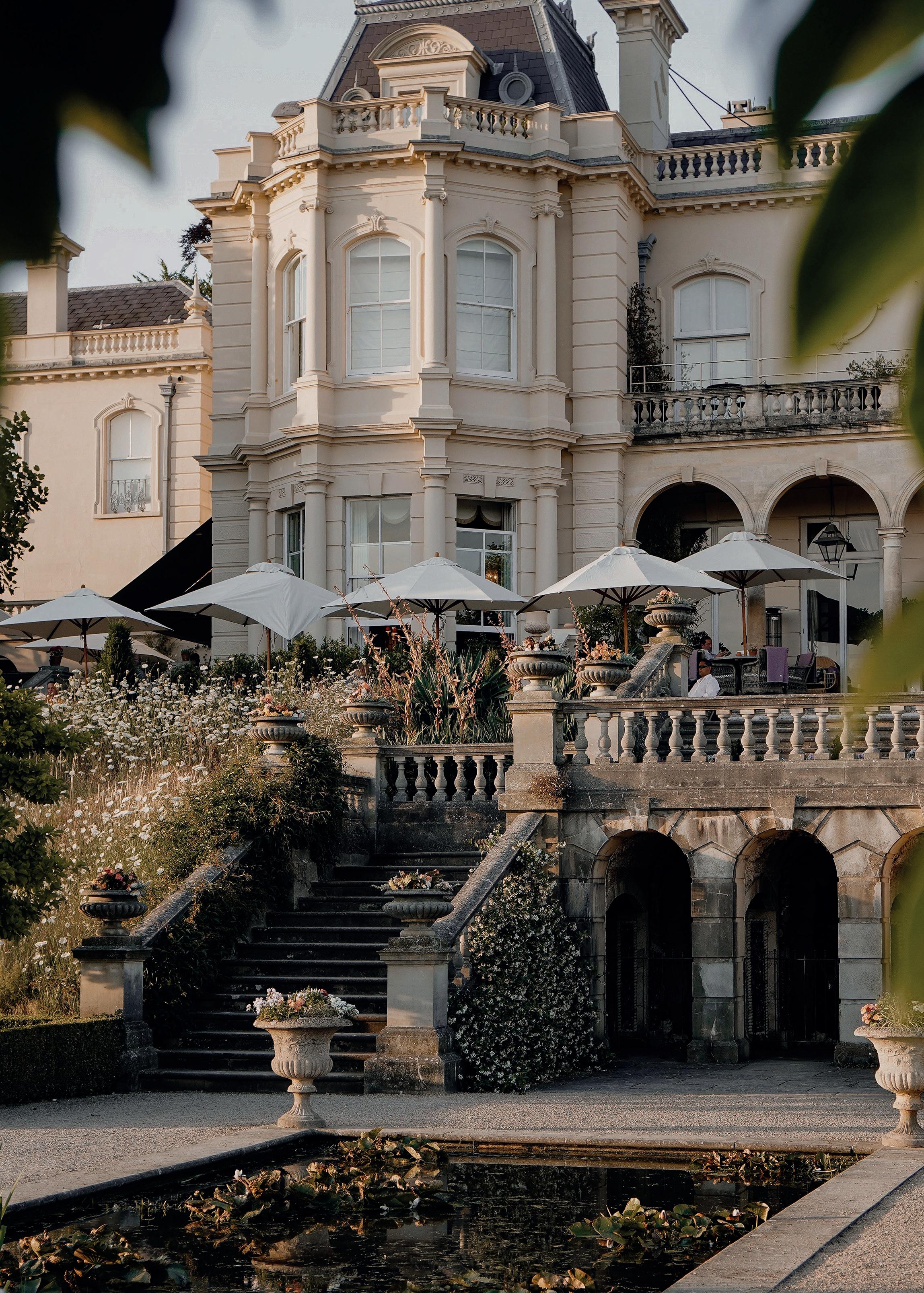
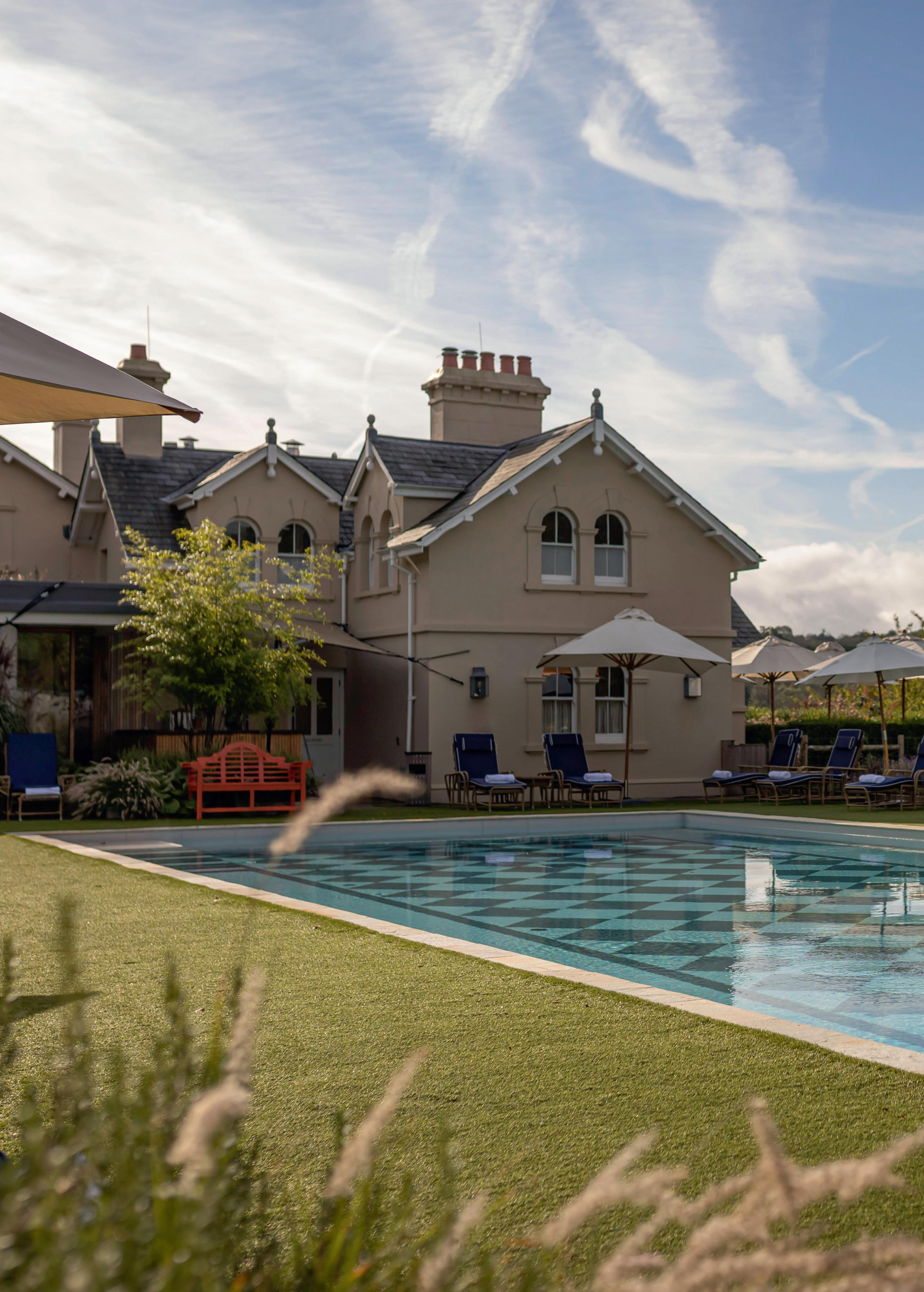
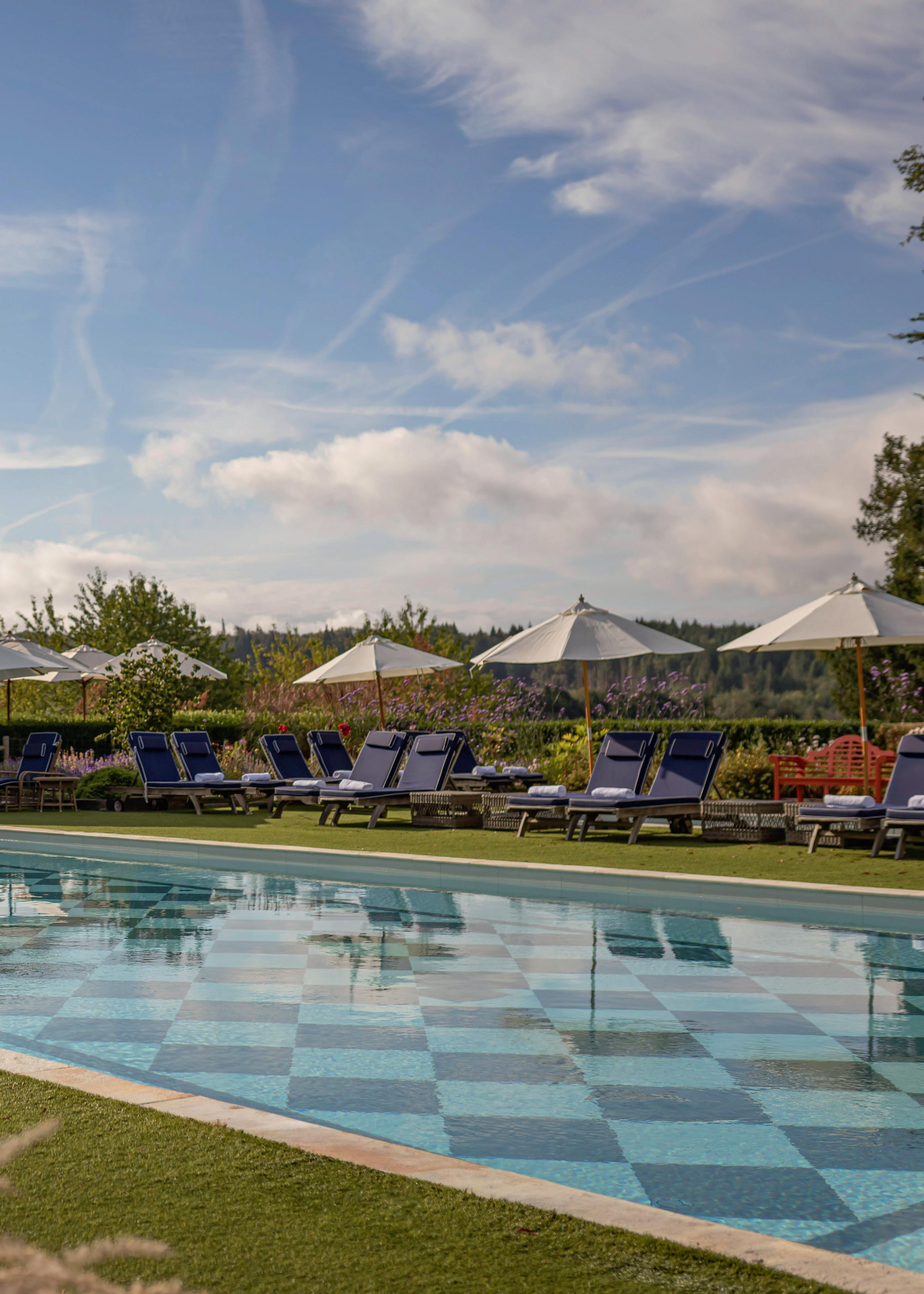
Image courtesy of Beaverbrook


June always feels like a turning point. The industry shifts gear, terraces come into their own, and the pace of innovation, already relentless, seems to accelerate just as guests’ expectations reach their seasonal peak. In this issue, we’ve focused on the areas where that momentum is most visible: food and drink, wellness, and the evolving spaces that shape the guest experience.
At the heart of the magazine is our main feature on the growing role of AI in hotel kitchens. Far from being a distant concept, technology is now actively reshaping how menus are designed, how waste is reduced, and how margins are protected. What emerges is not a story of replacement, but of refinement - where data and creativity work side by side to deliver smarter, more sustainable F&B operations. It’s a theme that’s echoed across the section, from our conversations with leading chefs to our restaurant profiles, including Hutong and Kerridge’s at Corinthia London, both of which continue to set the standard for destination dining within hotels.
That interplay between personalisation and performance continues in our Spa, Wellness & Amenities section. Here, we explore the rise of hyper-personalised wellness, an area moving rapidly beyond trend status into expectation. From pre-arrival data capture to AI-driven recommendations and post-stay engagement, hotels are finding new ways to create spa journeys that feel both bespoke and seamless. Alongside this, contributions from industry voices and Technogym offer practical insights into how these concepts are being implemented on the ground.

As we move outdoors, the focus shifts to another critical question: how to ensure hotel spaces remain dynamic long after their initial design moment. Our feature on outdoor areas looks at how properties can keep these environments fresh, relevant, and commercially effective, while Grantley Hall provides a compelling case study in getting it right.
Elsewhere in the issue, we celebrate excellence through our Hotel Magazine Awards, with a showcase of this year’s winners and exclusive interviews that reveal what sets them apart. We also sit down with key figures shaping the industry - from Henrik Muehle in our Hot Seat to Sopwell House taking the spotlight as our Hotel of the Month.
Taken together, this issue reflects an industry that is not standing still. Whether through technology, design, or service, hotels are continually finding new ways to evolve.
Enjoy the issue.

EDITOR-IN-CHIEF
Jade Evans
jevans@thehotelmagazine.co.uk
HEAD OF BUSINESS DEVELOPMENT
Jazmine Davis jazmine@thehotelmagazine.co.uk Tel: 01795 509 105
ACCOUNT MANAGER
Harrison Hume hh@cimltd.co.uk Tel: 01795 509 105
MARKETING MANAGER
Lucas Payne lucas@cimltd.co.uk
ADMINISTRATION MANAGER
Natalie Woollin admin@cimltd.co.uk
DESIGN AND PRODUCTION
Grant Waters grant@cimltd.co.uk
James Taylor james@cimltd.co.uk
HEAD OF DIGITAL
Xhulio Bishtaja digital@cimltd.co.uk
SOCIAL MEDIA MANAGER
Lily Lawson socials@cimltd.co.uk
15 HOTEL MAGAZINE AWARDS
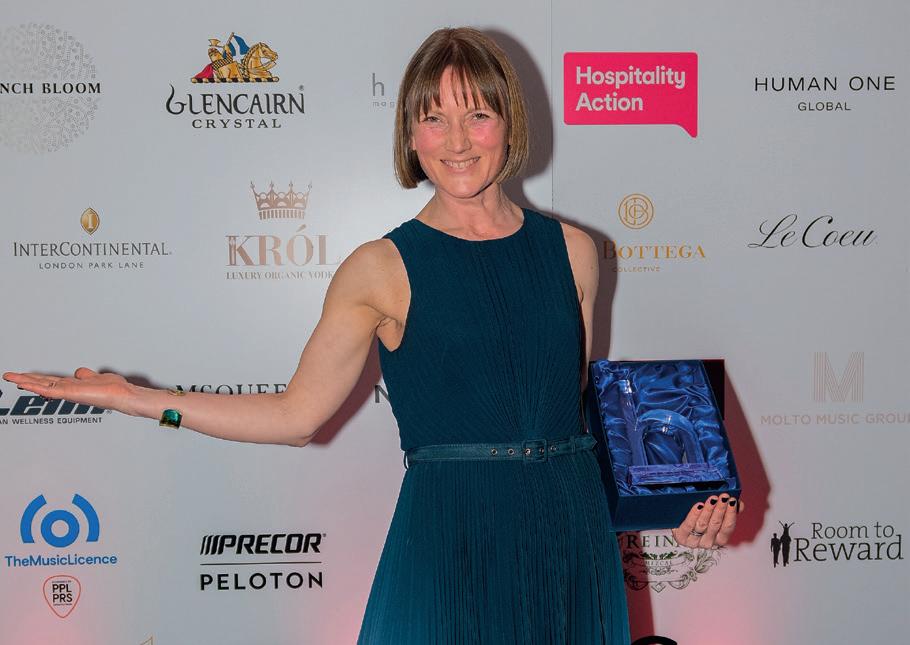
Reflecting on the incredible 2026 HMA winners, we share some post-event interview from those who scooped a trophy.
25 FOOD & DRINK
Exploring how tech is transforming hotel F&B operations, we look into using AI in hotel kitchens and how it encourages smarter menus, less waste and better margins.
58 HOTEL OF THE MONTH
Showcased in all its glory is Sopwell House which stands proud as June’s Hotel of the Month.
60 IN THE HOT SEAT
Not to be missed this month, Flemings’ own Henrik Muehle takes to the Hot Seat.
65 SPA, WELLNESS & AMENITIES
Focusing on hyper-personalised wellness, we lean on experts who share how hotels can use guest data to curate spa journeys.
90 OUTDOOR SPACES
We share tips on how to ensure your hotel’s outdoor spaces don’t become stagnant and remain appealing.
CREDIT FACILITIES MANAGER
Gwen Lee
creditcontrol@cimltd.co.uk
Tel: 01795 509 103
DIRECTOR
Declan Wale
declan@thehotelmagazine.co.uk
Tel: 01795 509 112
Tom Woollin
tom@cimltd.co.uk
MANAGING DIRECTOR
John Denning


Iconic Hotels & Resorts announces that Andrew Stembridge, Executive Director, will be leaving the business (late May 2026.)
Andrew joined the group in 2003 and has played an instrumental role in building one of the UK’s most respected luxury hotel collections. Earlier this year, the business marked a significant milestone with the introduction of Iconic Hotels & Resorts, evolving from Iconic Luxury Hotels to reflect the group’s continued growth and ambition as a broader portfolio of distinctive properties across the UK and beyond.
Recognised as one of the leading figures in the UK hospitality industry, including being named Hotelier of the Year, Andrew also led the business to significant industry recognition, including the HAMA Europe Asset Management Achievement Award for The Mayfair Townhouse. Throughout his career with the group, he has been an exceptional steward of some of Britain’s most loved hotels, combining commercial discipline with a deep respect for place, people and heritage.
Andrew Stembridge, Executive Director, Iconic Hotels & Resorts: “It has been the privilege of a lifetime to work
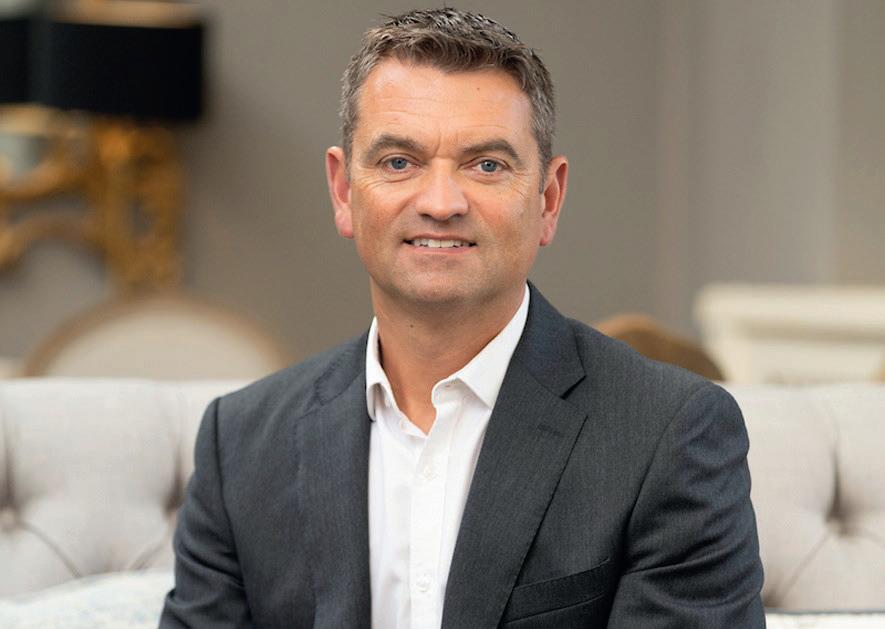
with so many exceptional people across this collection. I am enormously proud of what we have built together and of the character, quality and ambition that defines these hotels. I leave the business at an exciting moment and I look forward to seeing Iconic Hotels & Resorts go from strength to strength.”
Hospitality group, edyn, whose portfolio includes Locke and Cove by Locke, has announced three senior hires. The appointments span key areas of the business: people, property development and technology, supporting edyn’s commitment to sustainable growth across Europe.
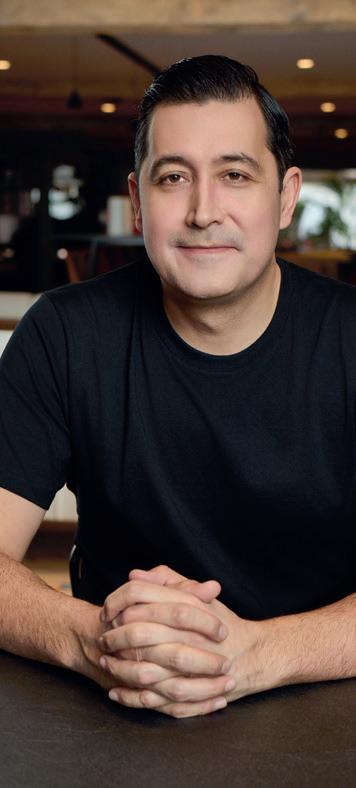
Dan Merchant joins the C-Suite to lead people strategy, bringing invaluable experience from his previous role as Chief People Officer atFreehand Hotels and Generator. Dan will guide talent, culture, organisational development strategies, along with key HR operations across the business. His appointment reinforces edyn’s continued focus on building a strong company culture as it scales further into Europe.
Joining as VP of Development & Design, Dominique Florian, who previously held leadership and senior roles at Freehand Hotels, Generator and JLL, will oversee hospitality projects from early concept through to delivery, aligning with edyn’s commercial and operational ambitions. His role includes shaping the company’s broader property development strategy, with particular focus on continued European expansion, following the recent opening of Locke Copenhagen and the upcoming launch of Locke London Canary Wharf in May.
The final appointment in this round of leadership hires is Darrell Spencer, who joins as VP of IT, bringing extensive experience across hospitality and lifestyle sectors to edyn. In his role, Darrell will oversee technology strategy,

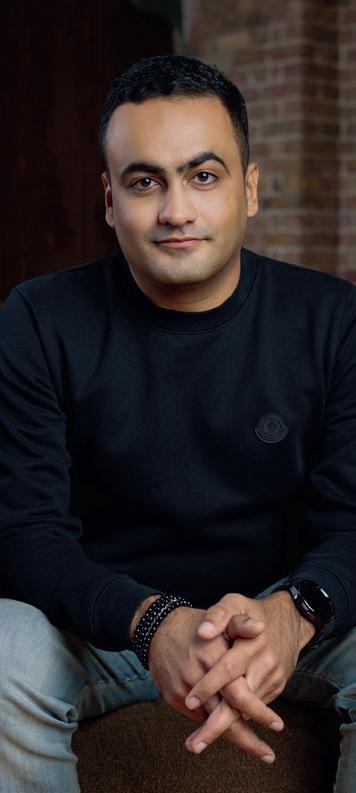
infrastructure, and cybersecurity across the property portfolio. Darrell previously held senior roles, including Global IT Director at Generator & Freehand and CTO at Village Hotels.
Alastair Thomann, CEO of edyn, commented: “These appointments are a major milestone for edyn. We have ambitious plans for our brands and portfolio of properties across Locke and Cove by Locke. Dominique, Darrell and Dan bring unparalleled expertise, knowledge and experience to build for the future as we continue to expand and evolve. This news is just the beginning, with more to announce in the coming months.”

As an integrated marketing agency, we use our DBX™ methodology to align creative, technology, and performance, transforming fragmented digital journeys into measurable increases in direct revenue growth.
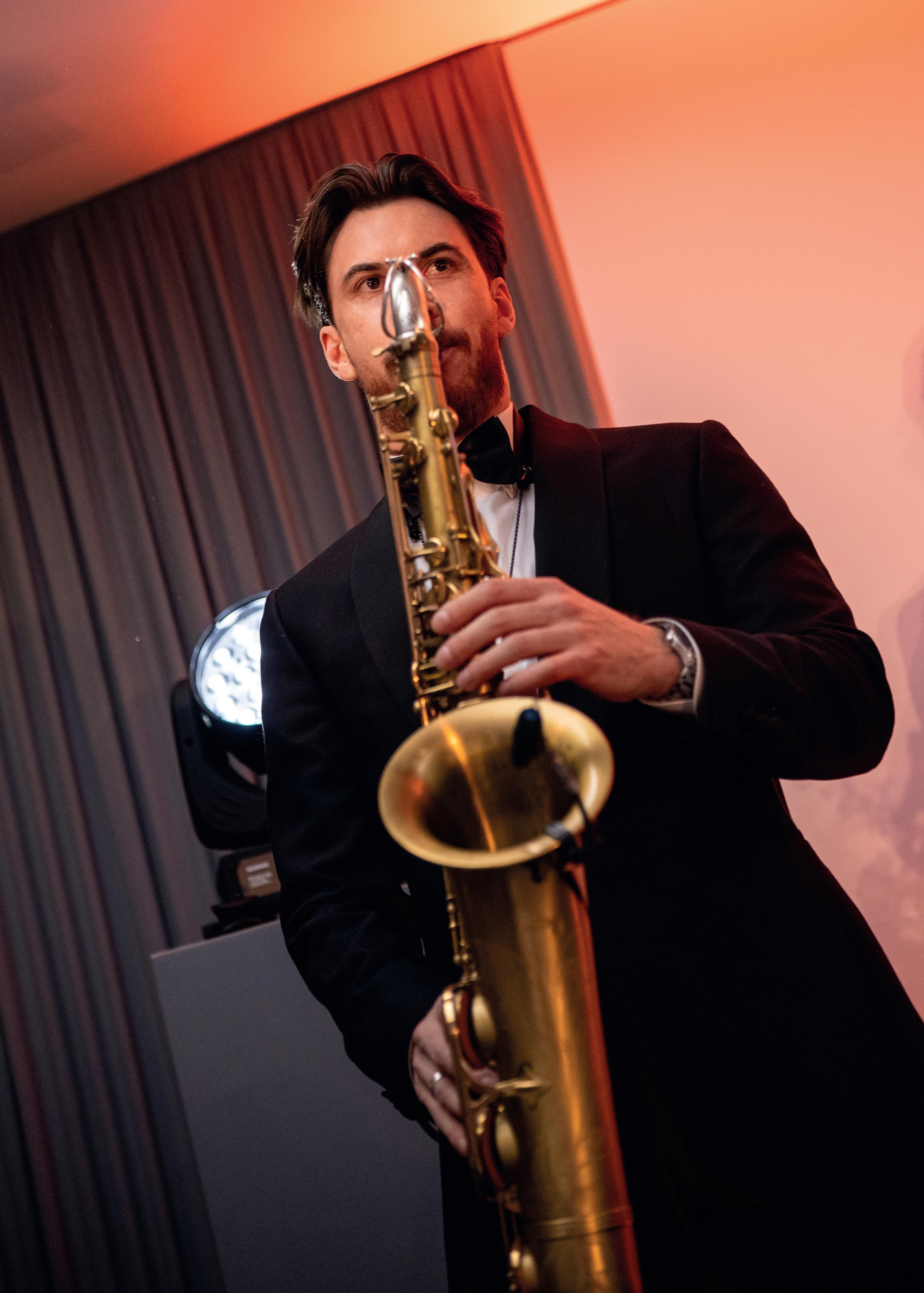
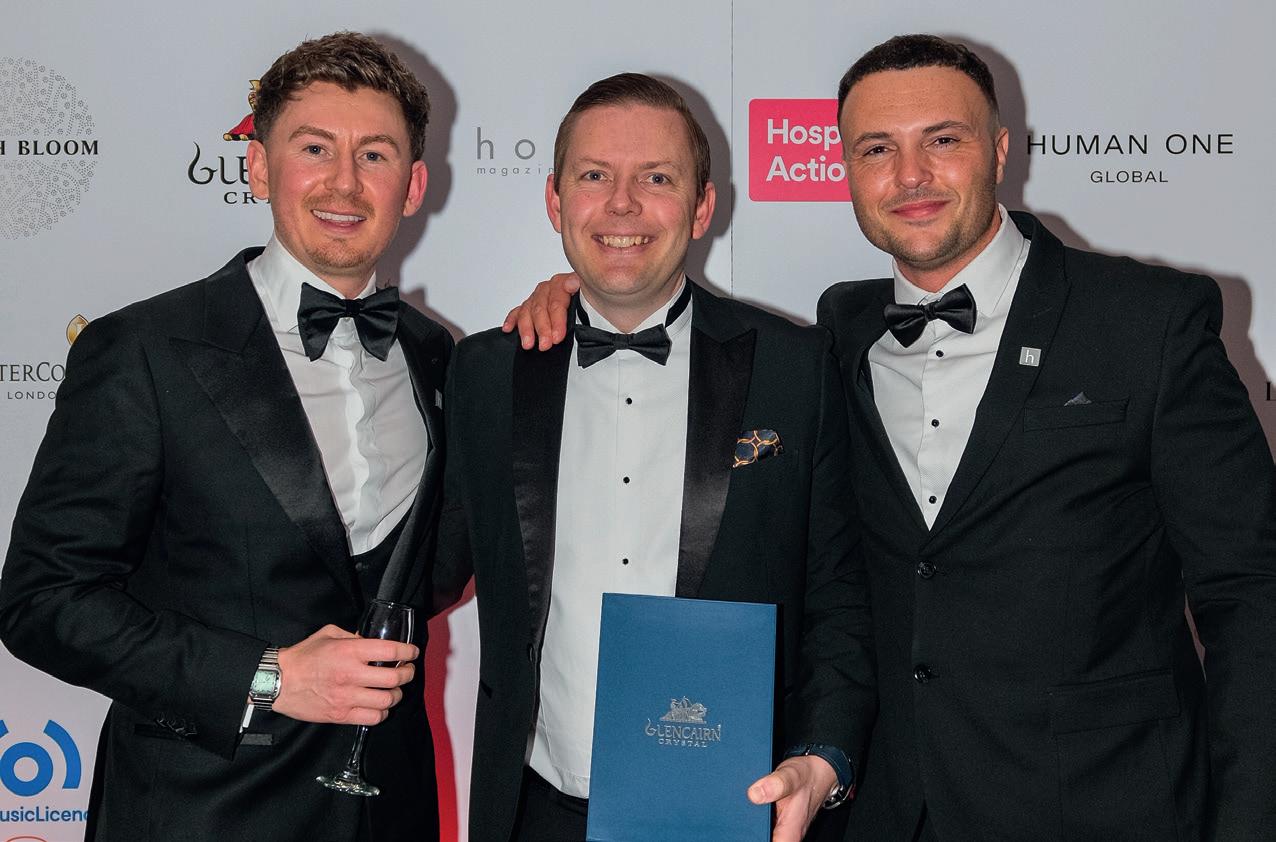
A huge congratulations to all of our exceptional 2026 Hotel Magazine Award winners!
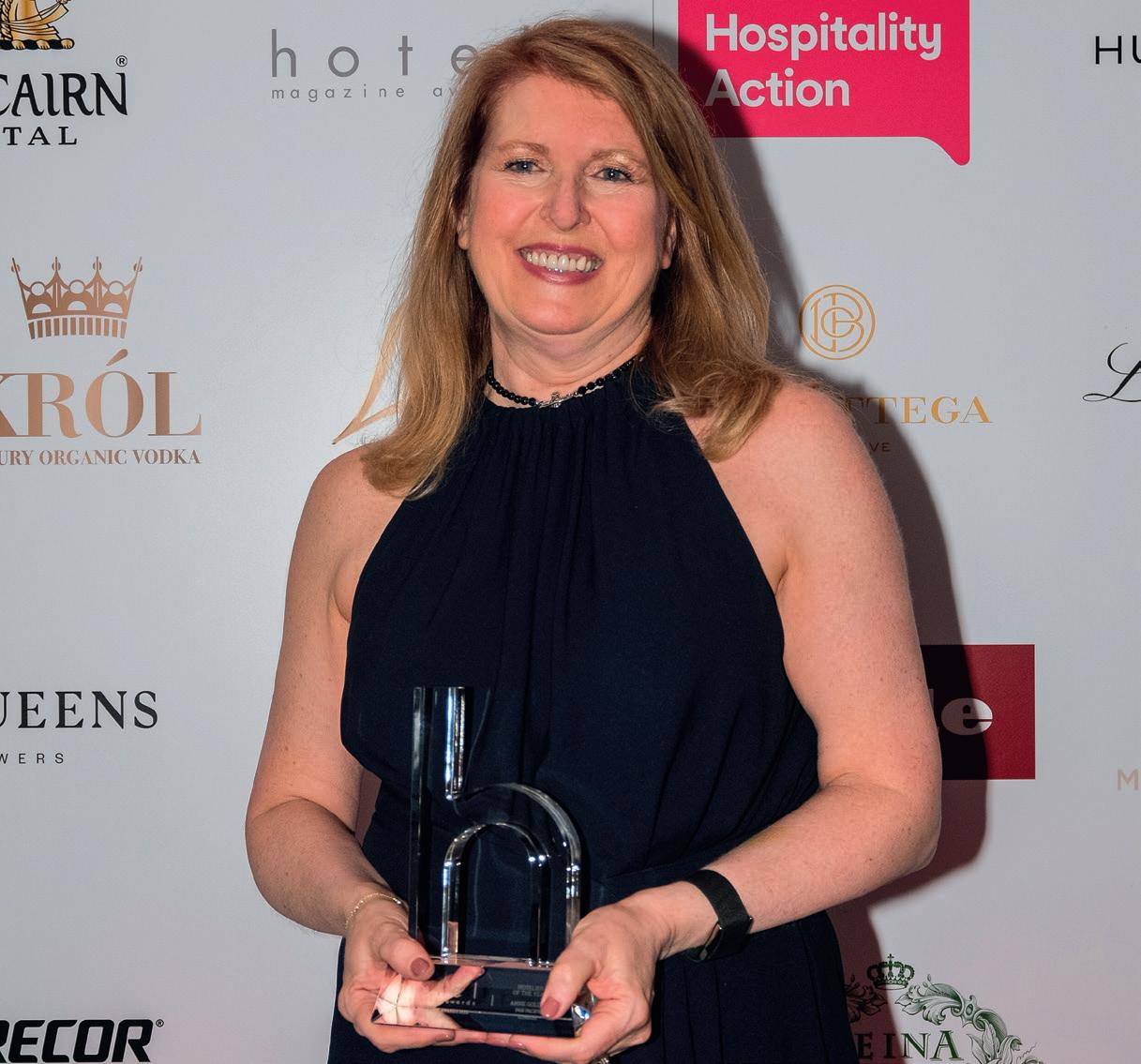
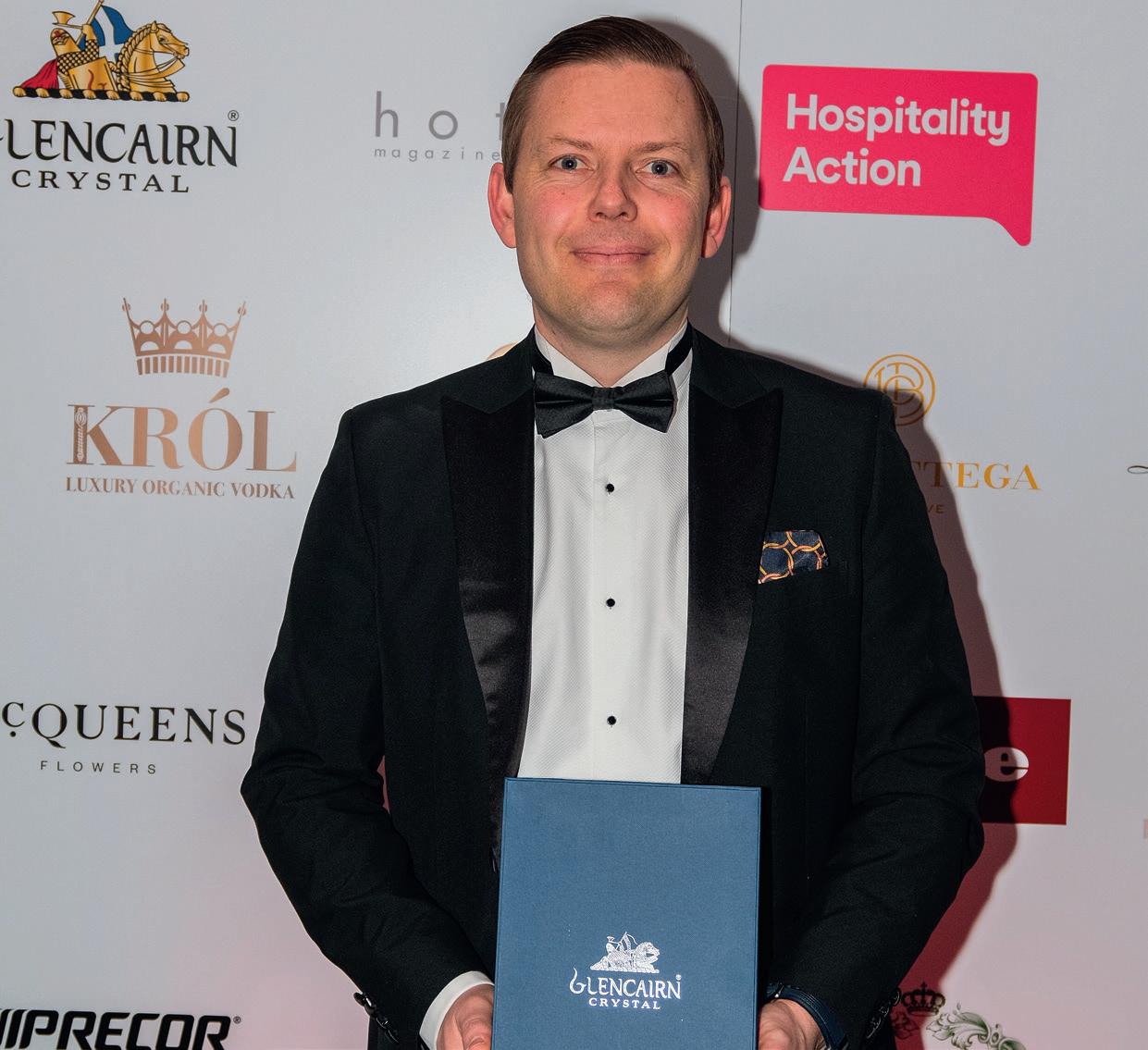
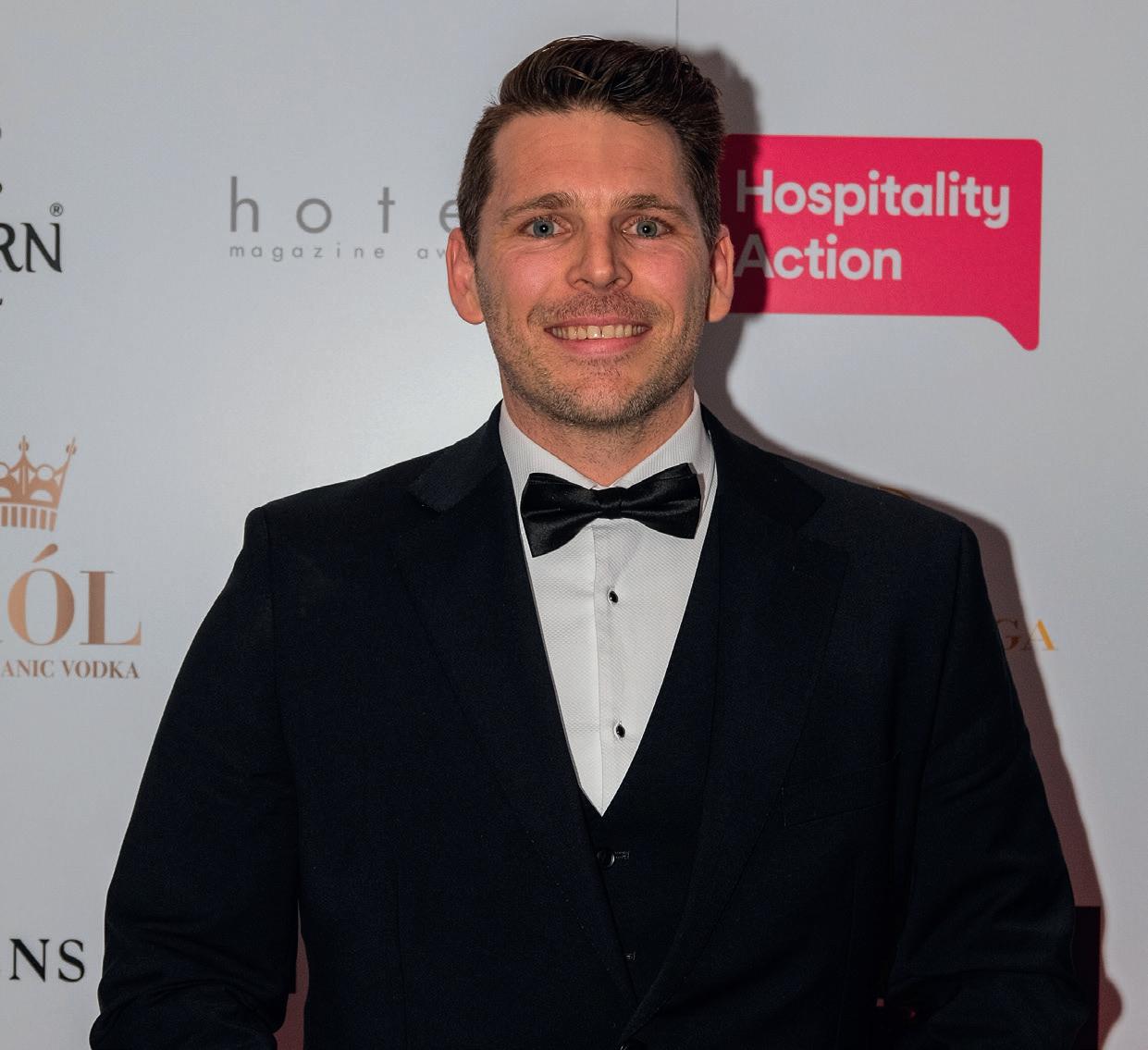
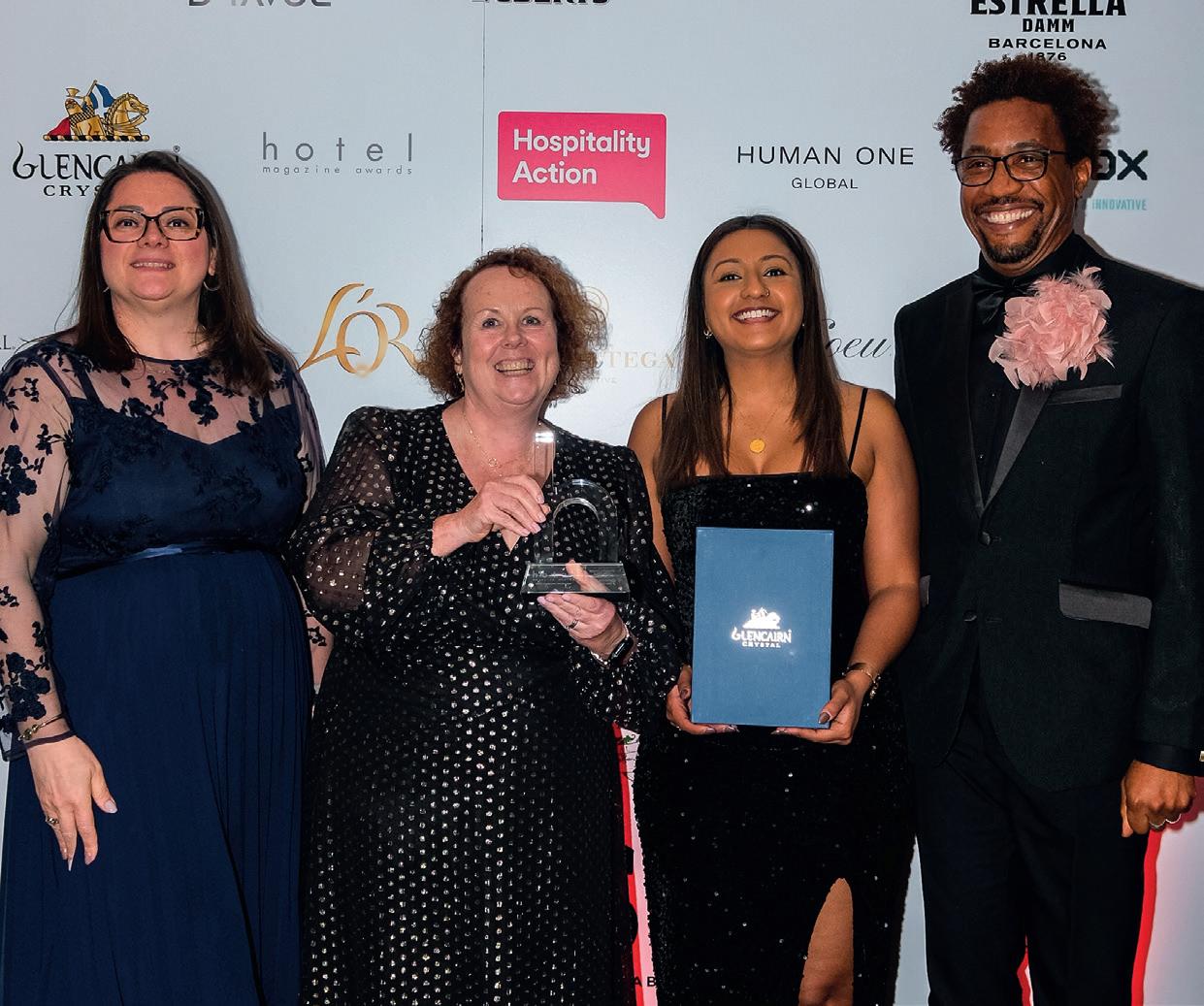
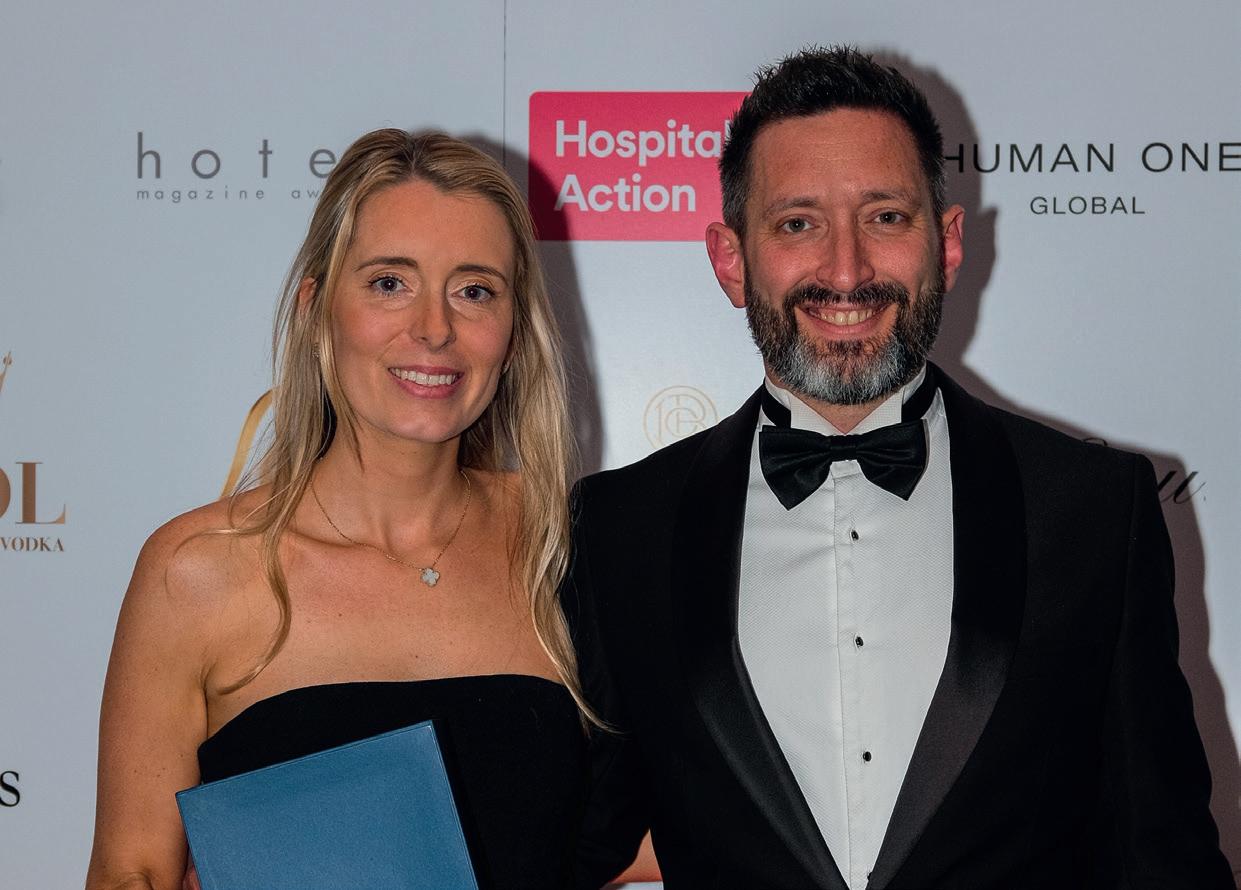
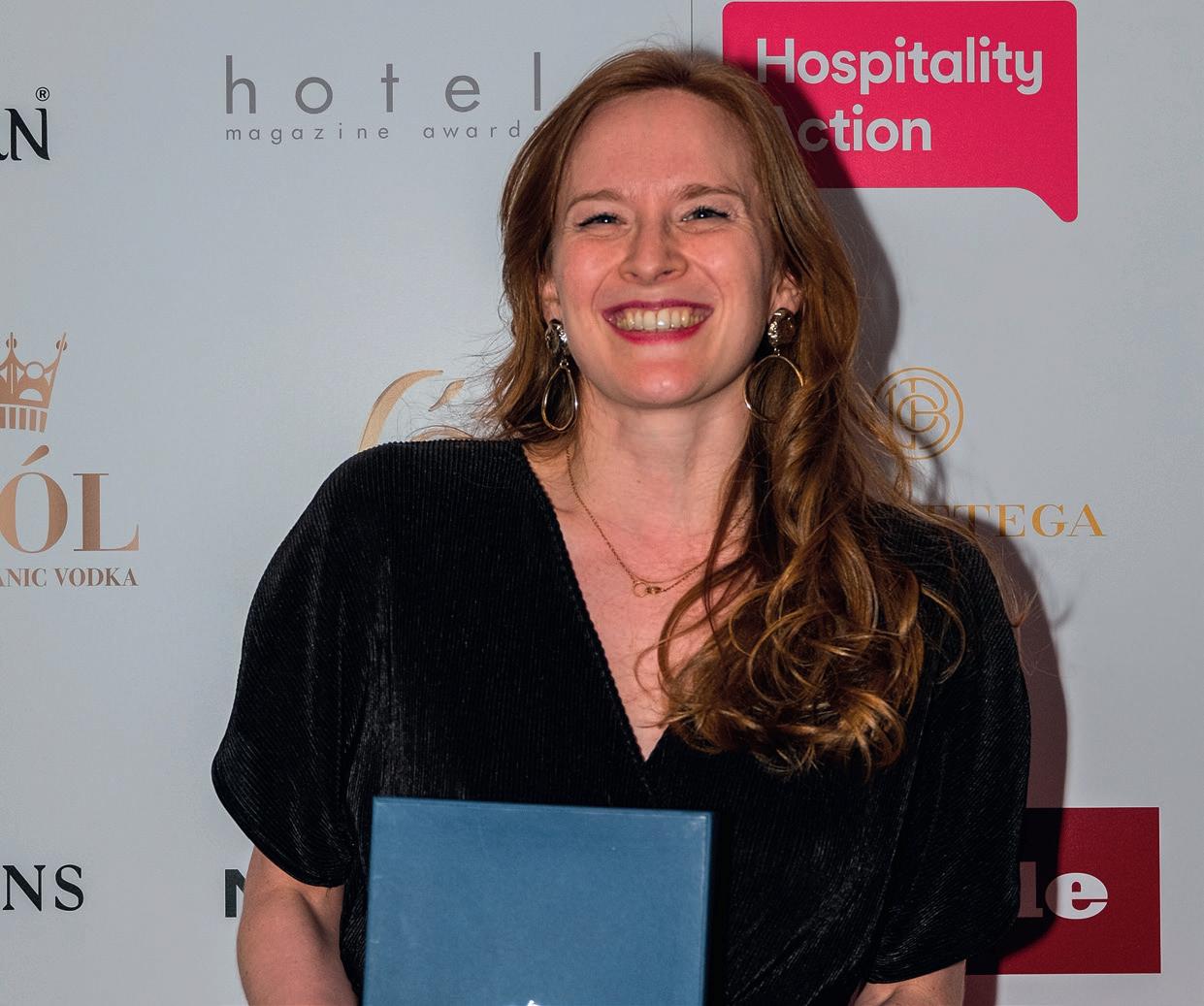
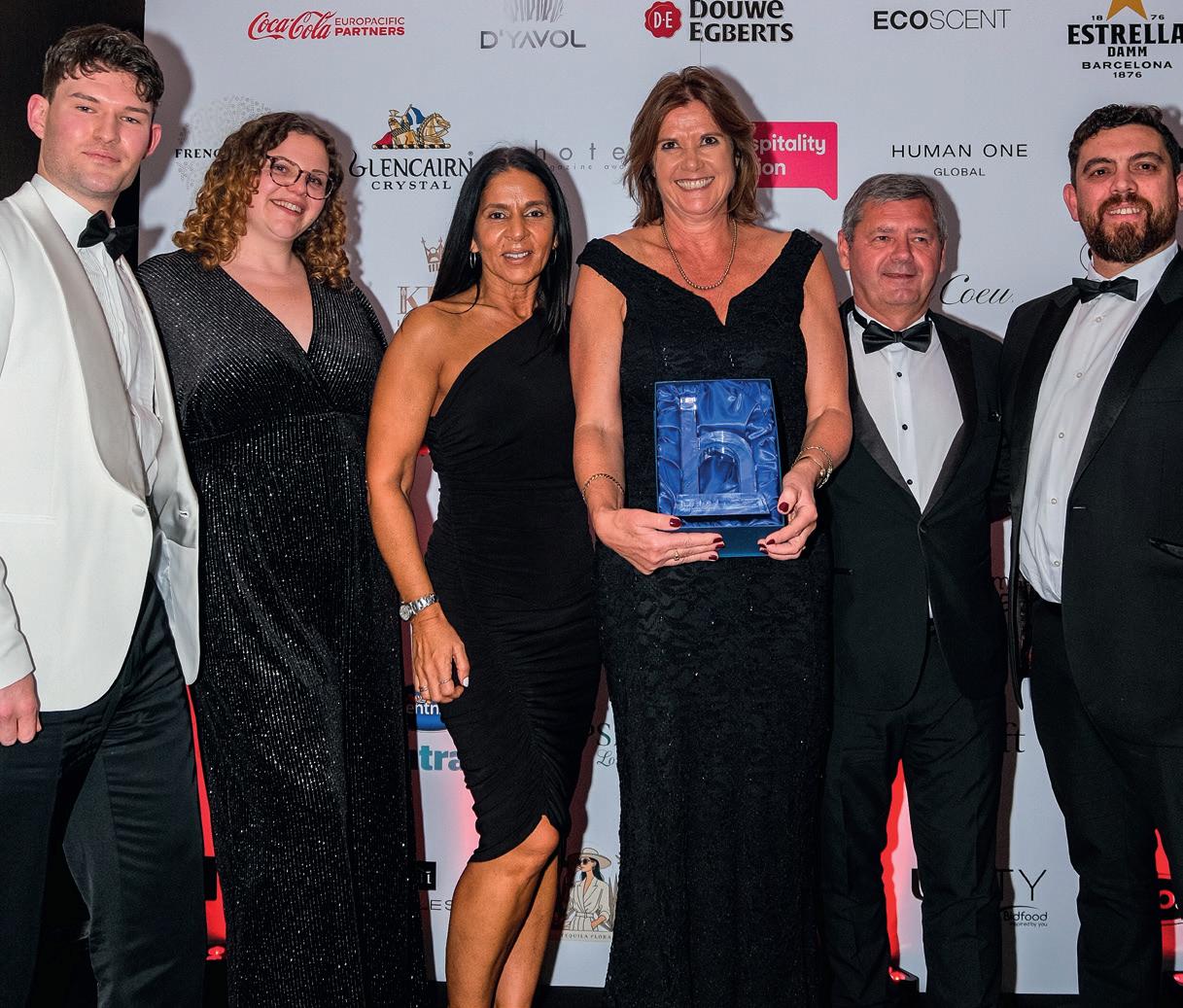
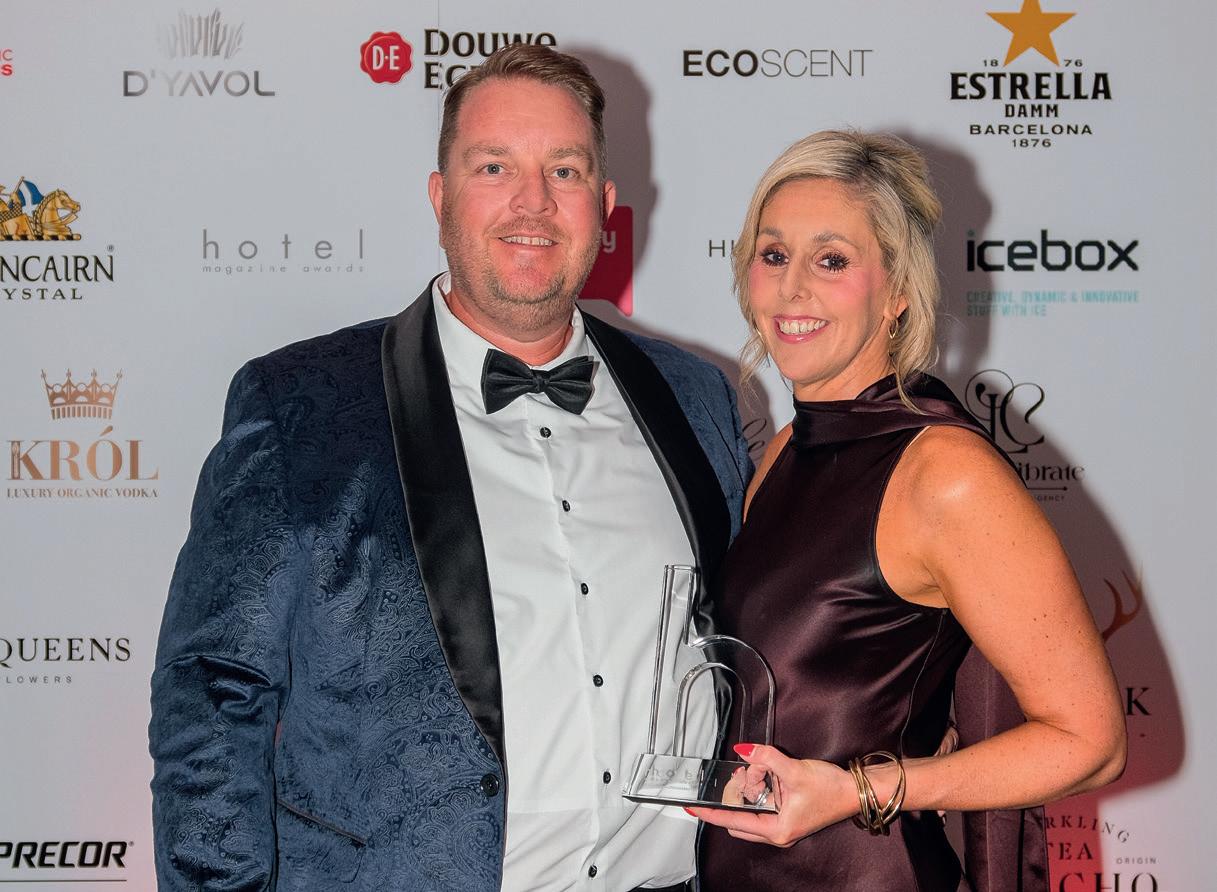
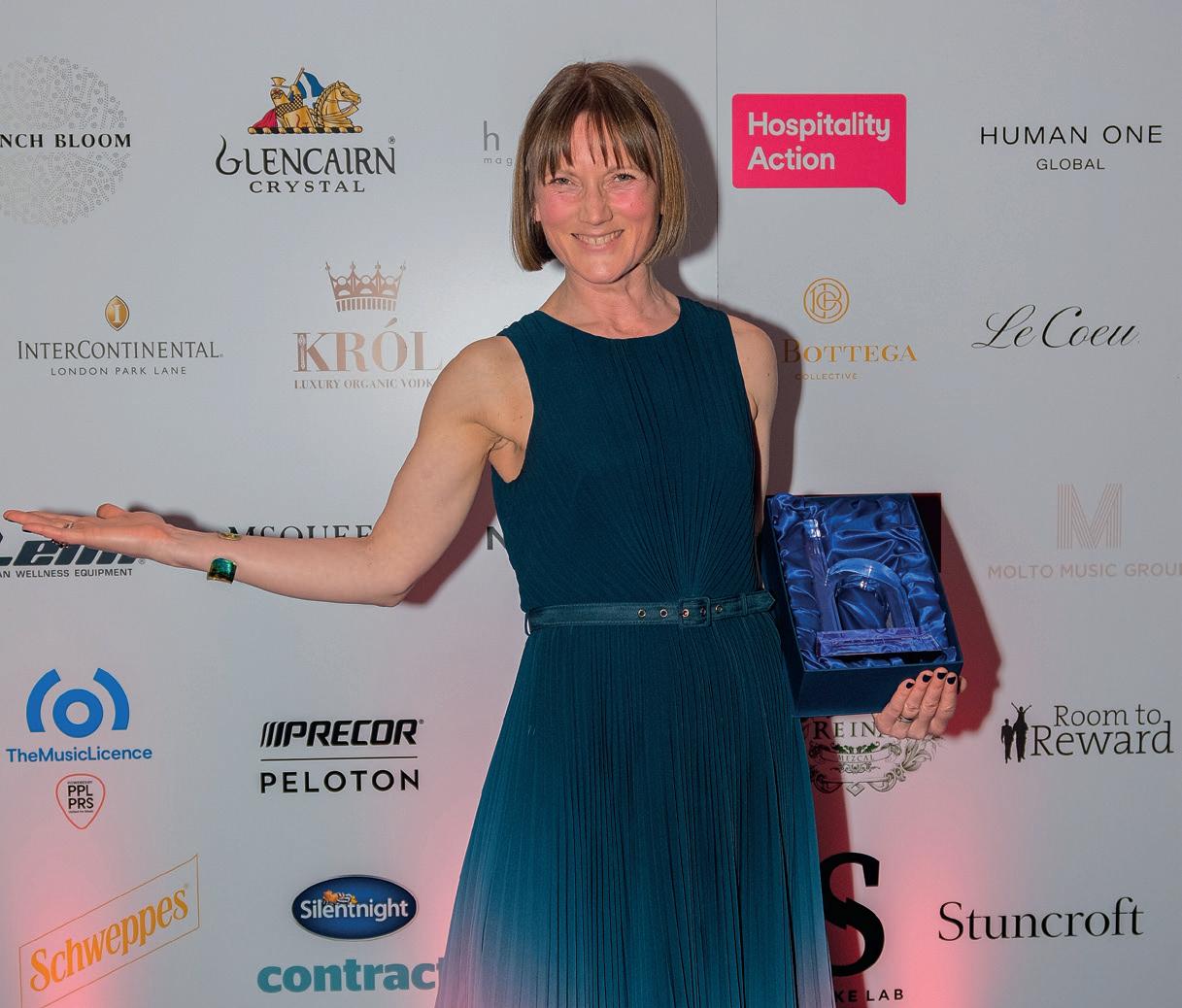
Fresh from securing the Technology Award at this year’s Hotel Magazine Awards, Barons Eden is proving that true innovation in hospitality lies in the seamless blend of intuitive tech and exceptional service. We caught up with Head of IT Steve Budden to explore the thinking behind the win.
Winning at this year’s Hotel Magazine Awards is a major achievement - what do you think set your property apart from the competition?
It’s how well everything joins up. In hospitality, it’s usually the small details that guests remember, but those only land if the whole experience feels smooth from start to finish. There’s been a real focus across the business on getting that balance right. Our service is genuinely high quality in beautiful properties, but it never feels forced, and the technology supports it in a way that’s there when you need it and out of the way when you don’t. That’s not always easy to get right.
Awards often reflect past performance - how are you planning to build on this momentum moving forward?
Exactly, awards are a snapshot of what has already been achieved. The real focus now is on how we evolve. From an IT perspective, that means continuing to modernise our platforms, improve integration across systems, and make better use of data to anticipate guest needs. It’s less about big, flashy changes and more about continuous, meaningful improvements that both guests and colleagues can feel day to day.
The hospitality industry is evolving rapidly, what trends do you see shaping the future, and how are you positioning yourselves to stay ahead?
We’re seeing a few clear trends: rising expectations for seamless digital experiences, a stronger emphasis on personalisation, and an increasing need for operational efficiencies. Alongside that, sustainability and transparency are becoming non-negotiable. And all of this is happening alongside our ambitious expansion plans to grow our property portfolio.
In a luxury setting, technology should never feel transactional or over-engineered. It needs to be intuitive and invisible. Our focus is on building a flexible, scalable technology landscape that allows us to adapt quickly, whether that’s introducing new guest-facing capabilities, using data more intelligently, or automating processes with AI. Ultimately, it’s about enhancing what happens behind the scenes, giving our teams better insights and more time to focus on the human side of hospitality, where the experience really comes to life.
What would you say to anyone thinking of applying next year?
Take the time to really understand what defines your experience and be honest about it. In this space, it’s not about trying to do everything, it’s about doing the right things exceptionally well and being able to show how that translates into a consistent guest experience.
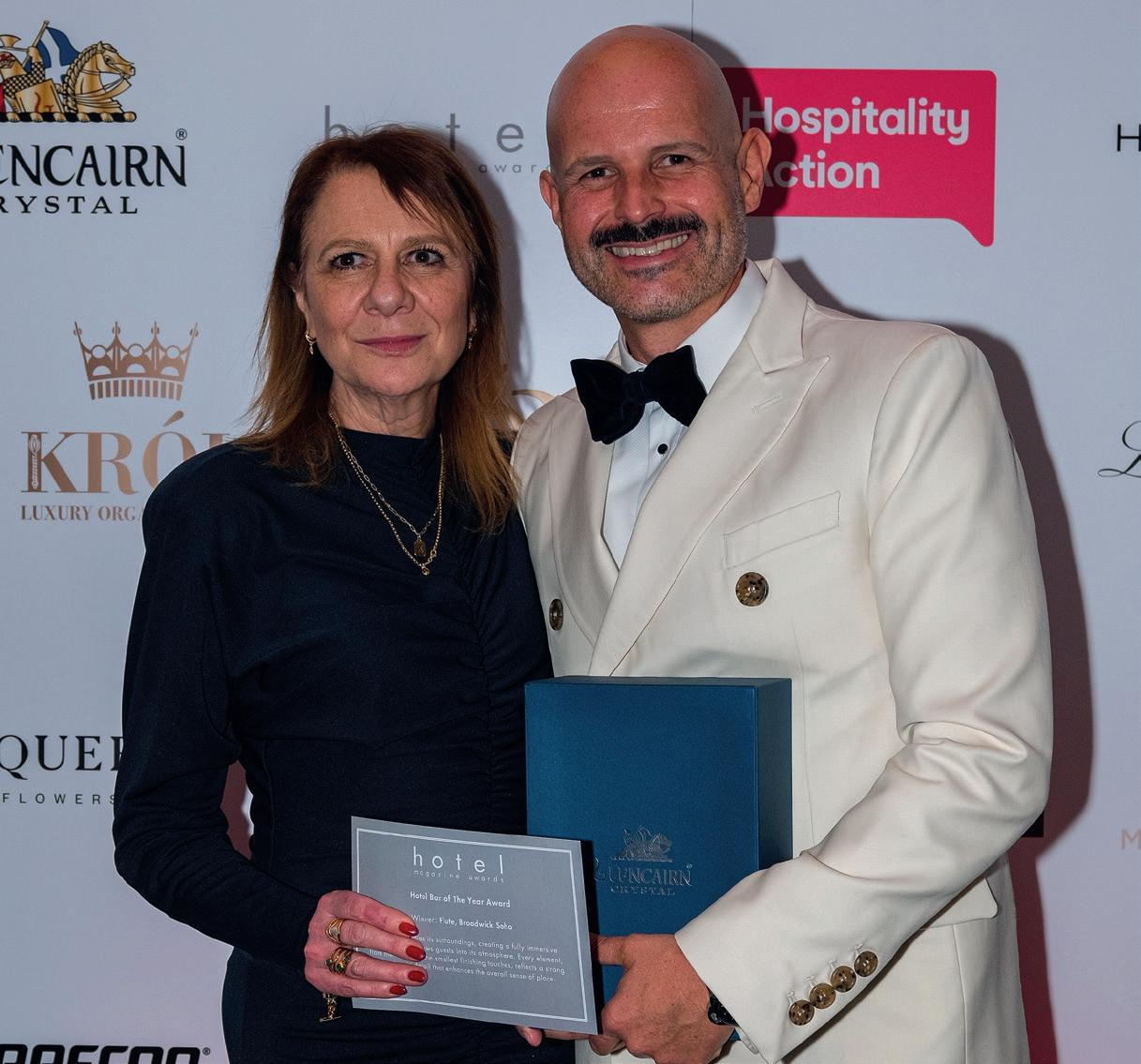
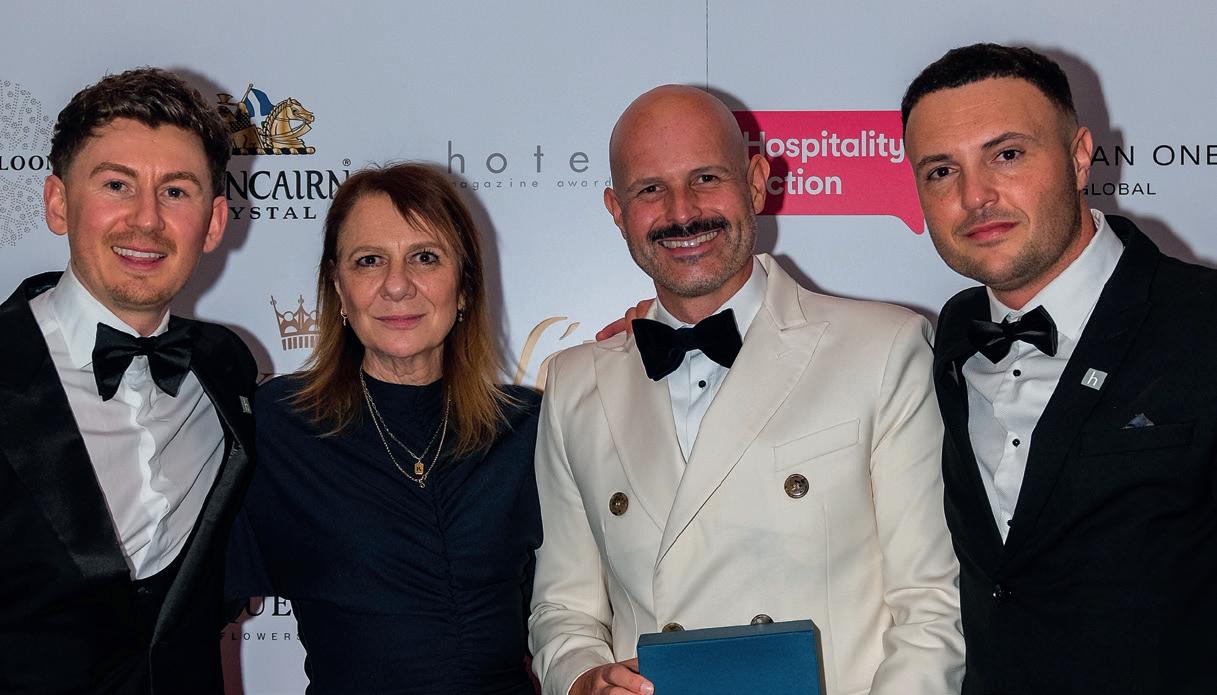
Following the win at the Hotel Magazine Awards 2026, Flute at Broadwick Soho has cemented its place as one of the capital’s most compelling hotel bar destinations. Executive Director Joshua Gardner reflects on what set the venue apart and how the team plans to build on this momentum while staying true to its distinctive identity.
Winning at this year’s Hotel Magazine Awards is huge – what do you think set your property apart from the competition?
Winning Best Hotel Bar for Flute comes down to its unique personality. The space is visually striking, but it is not just about design. It is the combination of considered interiors, a confident cocktail offer, and a strong atmosphere. We have invested heavily in programming, with DJs and a cultural rhythm that gives the bar energy and relevance beyond a typical hotel setting. Just as important is the consistency of the team. The service is attentive without being overbearing, and we have built a loyal base of regulars who give the space its character. That balance between style, substance, and community is what set Flute apart.
What does it mean to you, personally, to have scooped the win?
On a personal level, it is very rewarding. There is a huge amount of strong competition in this category, so to be recognised in that context means a lot. It reflects the work of a very talented team who have been focused on getting the details right while also creating something that feels current and distinctive. It is a proud moment, but also one that reinforces that we are on the right track.
Awards often reflect past performance – how are you planning to build on this momentum moving forward?
In terms of what comes next, the focus is simple. We stay true to what makes Broadwick Soho work. That means continuing to deliver a high standard across the board, while also keeping things fresh through programming and partnerships. We pay close attention to our guests
and how they use the space, and we evolve accordingly. There is no interest in becoming formulaic. The goal is to keep the energy, keep the relevance, and continue to build something that people want to return to and feels welcoming to everyone.
The hospitality industry is evolving rapidly, what trends do you see shaping the future, and how are you positioning yourselves to stay ahead?
Looking more broadly at the industry, there is a clear shift towards experience led hospitality. Guests are less interested in traditional markers of luxury and more interested in places that feel culturally engaged and specific. There is also a growing expectation for versatility, spaces that can move from day to night and appeal to different audiences without losing identity. We are positioning ourselves around that by focusing on programming, atmosphere, and quality of product.
For independent and boutique hotels, success isn’t about volume alone. It’s about attracting the right guests in the right way - where brand and marketing work together to drive meaningful growth while preserving the character that makes a stay special.
For independent and boutique hotels, growth isn’t just about more bookings.
It is about the right bookings. The right guests. The right pace. The kind of growth that supports the business without changing the feeling that guests love in the first place.
That balance matters.
A hotel can have a strong brand and still need clear, measurable results. The two are not in conflict. In fact, they work best together. Brand helps people understand what makes a hotel special. Marketing helps the right people find it, trust it and book it.
The skill lies in bringing both together with care.
Your first welcome starts online
First impressions have always mattered in hospitality. But the first impression no longer happens at the hotel
entrance. It happens in a Google result. A paid advert. A social post. An AI-generated answer. A listing on a phone screen. Your website.
You would not want a guest to arrive to peeling paint, unclear signage or a reception area that feels uncared for.
Your online presence needs the same care as your physical welcome.
For many hoteliers, this creates a challenge. How do you talk about your hotel authentically online? How do you become more visible online without sounding generic? How do you grow bookings without becoming too salesled?
The answer starts with clarity.
Brand creates the feeling. Marketing helps guests discover it. Brand and results are often talked about as if they are separate.
Brand is seen as emotional. Results are seen as practical.
But in hotel marketing, they need each other.
Your brand shapes how guests feel about your hotel. It sets the tone, the promise and the lasting impression you want to leave. Your marketing makes sure that feeling reaches the right people at the right time. When both work together, the guest journey feels natural. When they do not, people notice the gap.
One useful way to look at hotel marketing is to treat it as a digital version of the reception experience.
At Clockwork Marketing, we often think about this in three simple stages: promise, proof and path.
Your promise is the feeling you create before someone clicks. It comes through your words, images, tone and the small details guests see online.
A search result or advert should sound like your hotel. Not like generic marketing copy.
For a peaceful country house hotel, the language should feel calm. For a food-led hotel, the dining experience should feel tempting. For a coastal hotel, the setting should be front and centre.
Once a guest reaches your website, they look for reassurance.
They want to know the experience is real. This comes from clear room descriptions, thoughtful photography, useful information, sample menus, guest reviews and a consistent tone.
Big claims are rarely as powerful as honest detail. Guests trust what feels considered.
The final stage is the journey.
Can guests find what they need? Can they check availability easily? Can they call, enquire or book without confusion?
The path should feel simple and unforced. Good
marketing does not pressure people. It gives them confidence to take the next step.
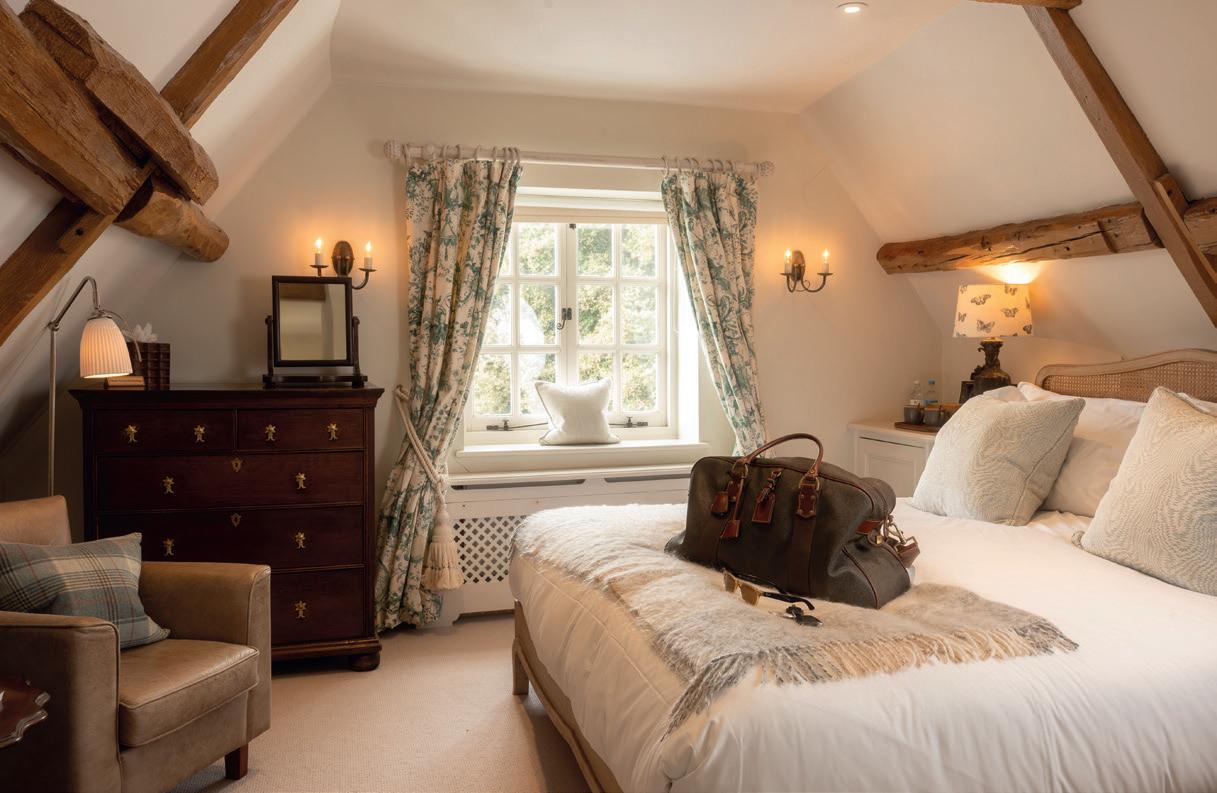
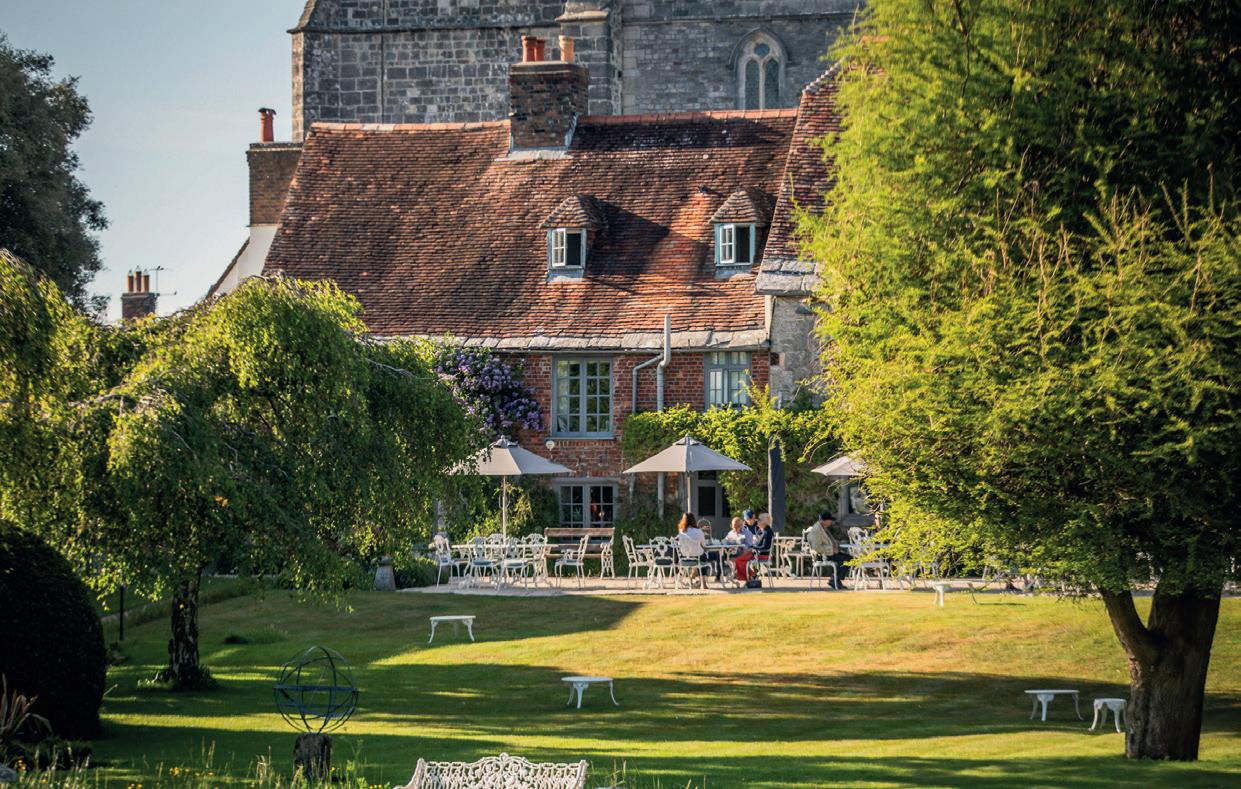
This balance has been important in our work with The Priory Wareham in Dorset.
The Priory is a charming, food-focused hotel with a loyal guest base. Many guests return year after year, some several times in one season. For them, growth matters, but not at the expense of the hotel’s values.
Katie Hart, Marketing and Brand Manager at The Priory explained, “For us, the challenge is always about growth without noise. We want to be more visible, but without compromising on how the hotel feels. Everything online needs to reflect the experience guests actually have once they arrive.”
That is the heart of sustainable hotel marketing.
Marketing should not sit apart from the guest experience. It should be part of it. The tone, imagery, information and booking journey should all feel connected to the stay itself.
You do not have to choose between brand or bookings.
Write search listings and adverts in the same voice as your website. Treat Google and AI results as the start of the guest journey. Make your content easy to find without stripping away its personality. Use real detail instead of empty claims. Measure what matters, especially when bookings happen by phone or email. Keep your message consistent across every channel.
When your marketing reflects the reality of the stay, it stops feeling like marketing.
It becomes part of the welcome.
Clockwork Marketing works with independent and boutique hotels across the UK, helping hospitality businesses grow bookings for a brighter future.
www.clock-work.co.uk
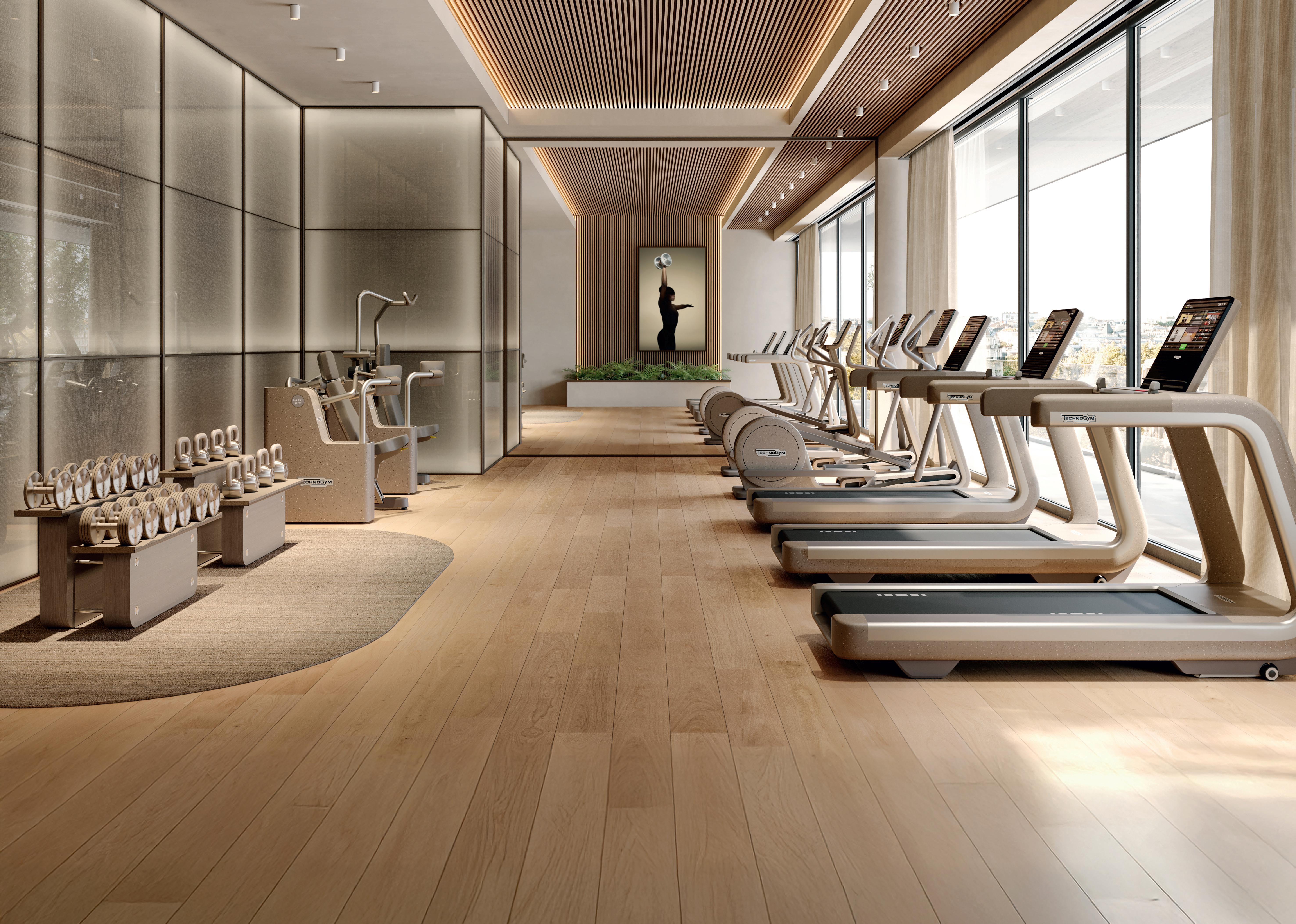
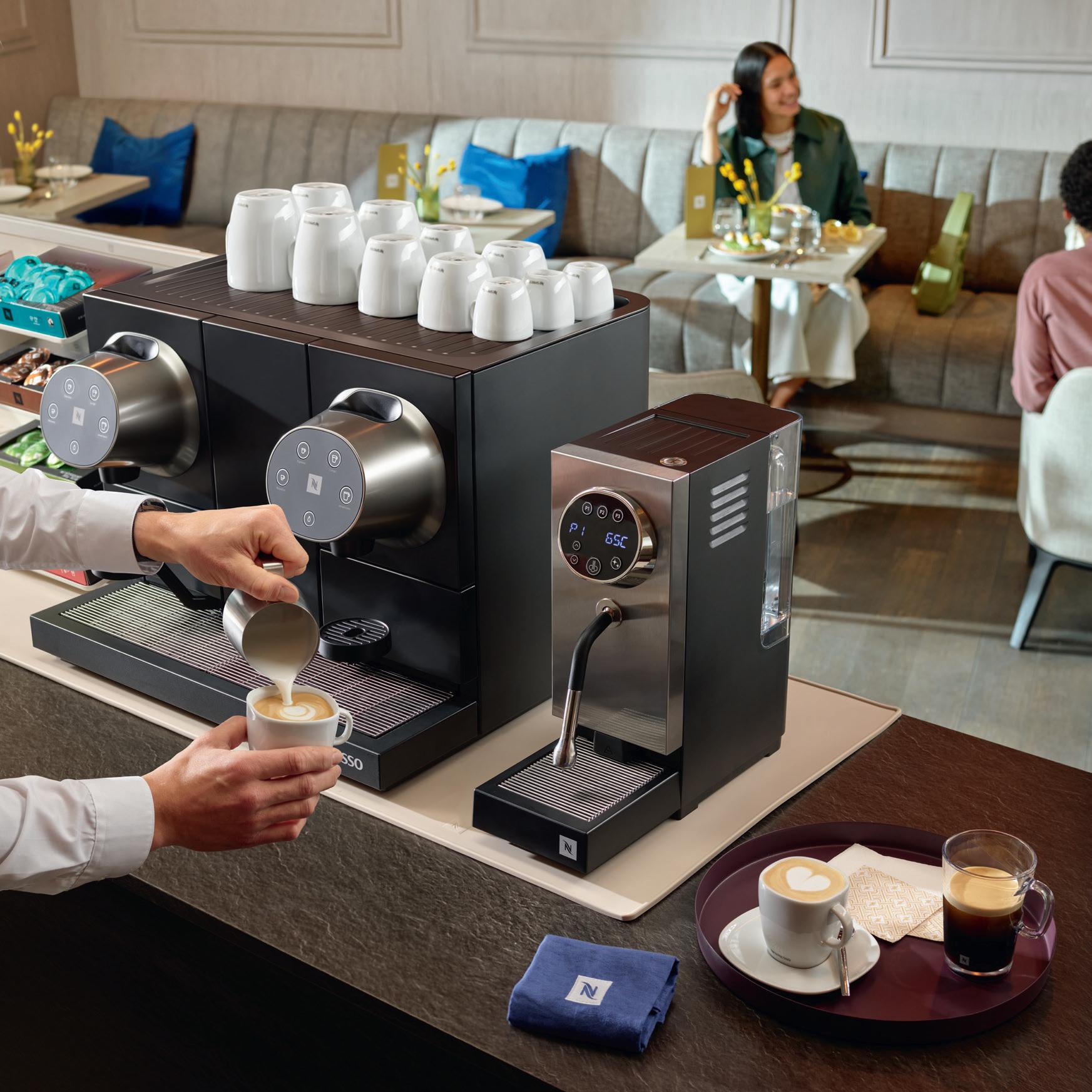
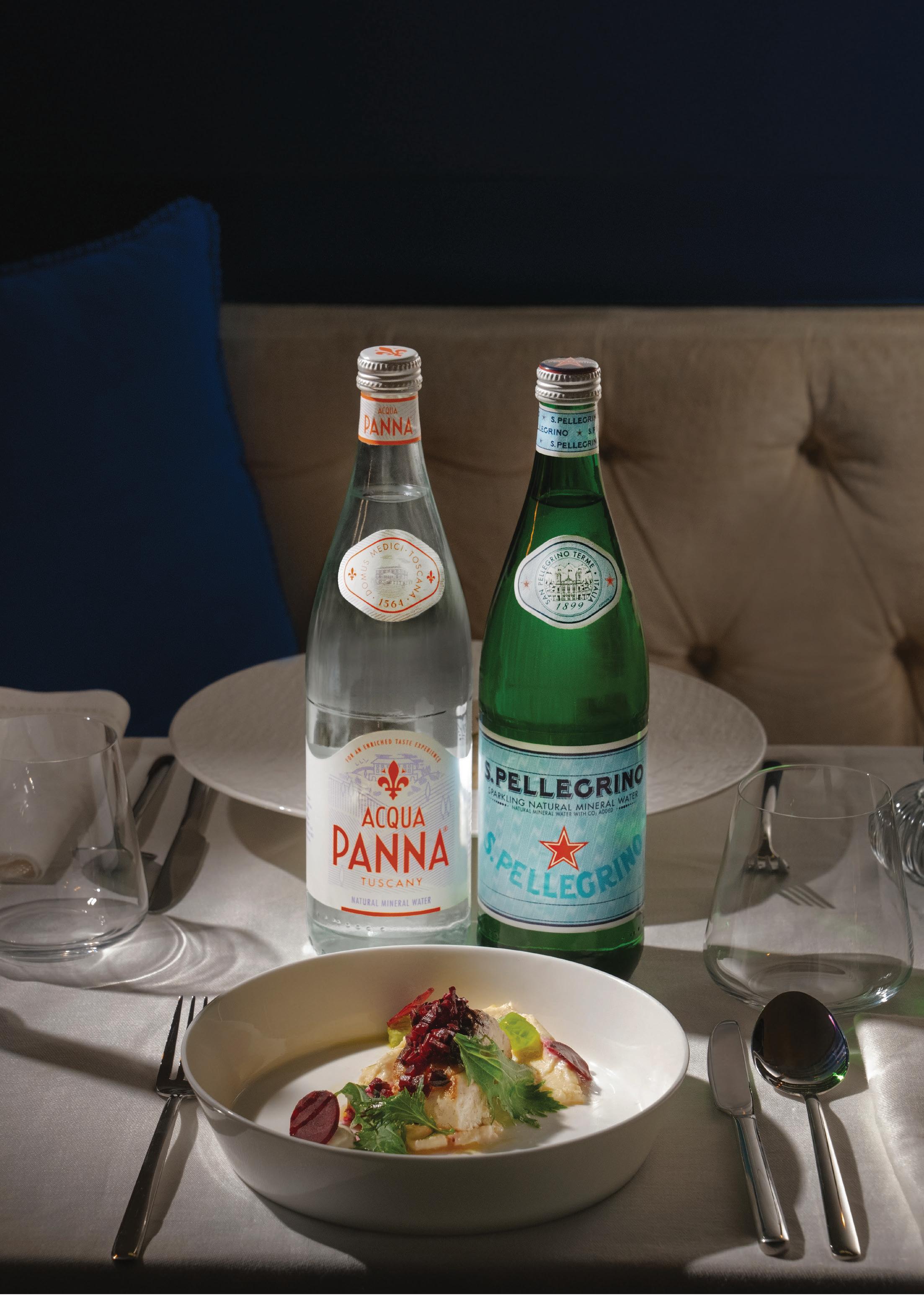
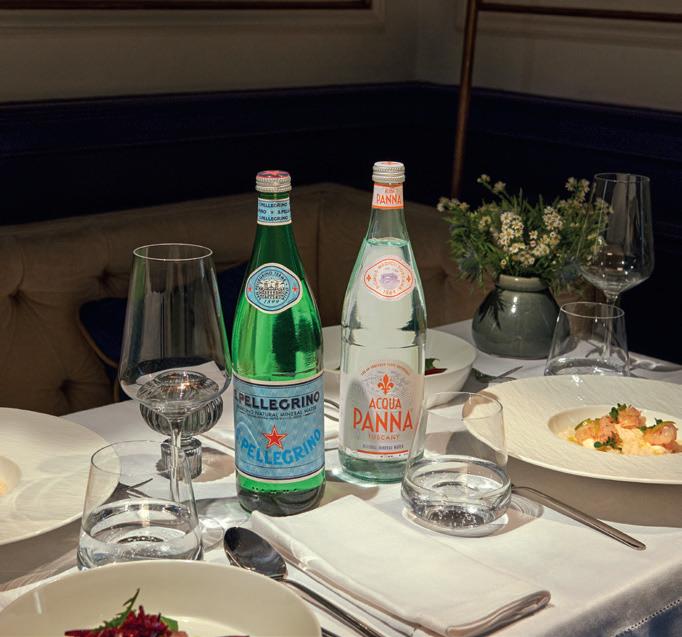
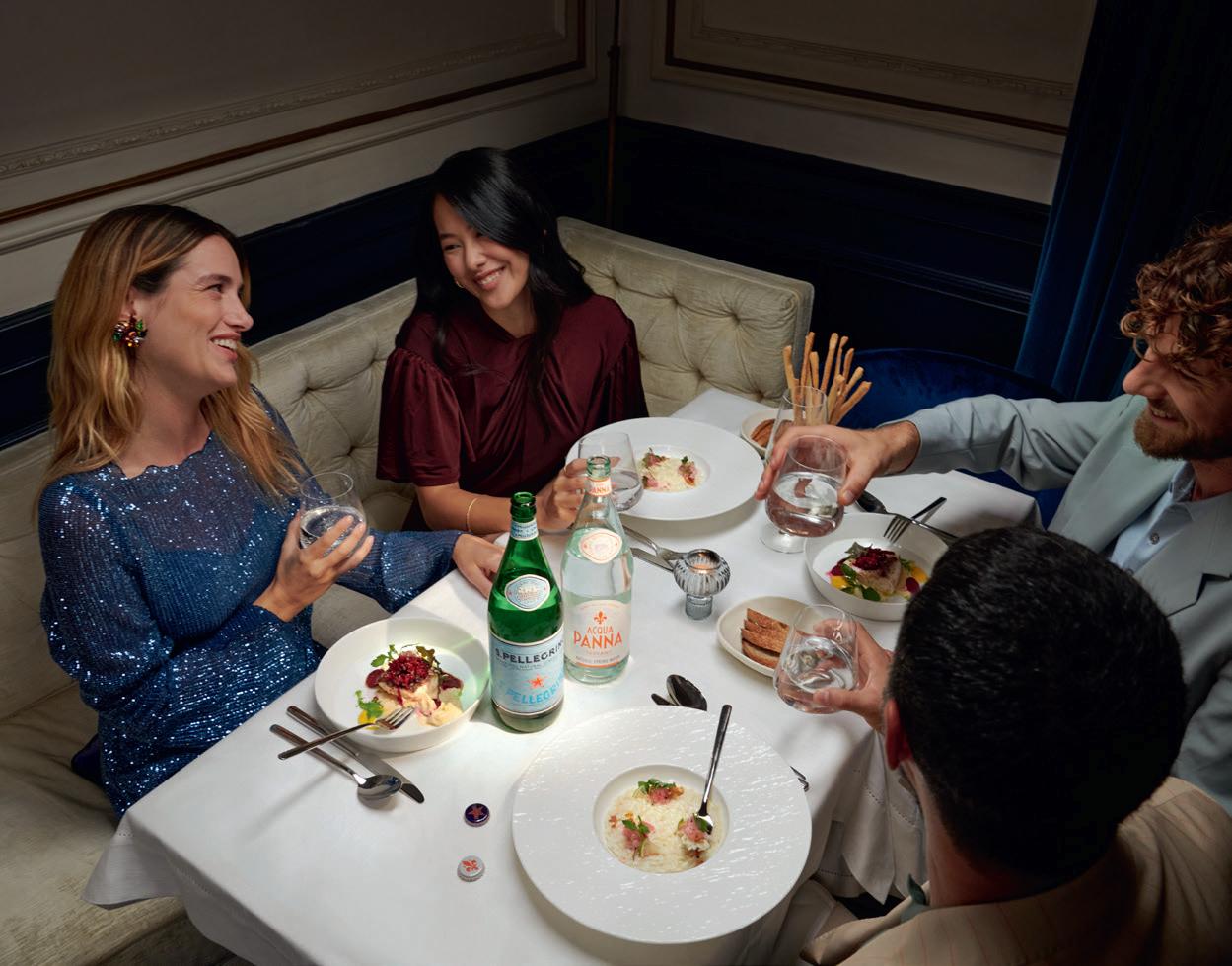
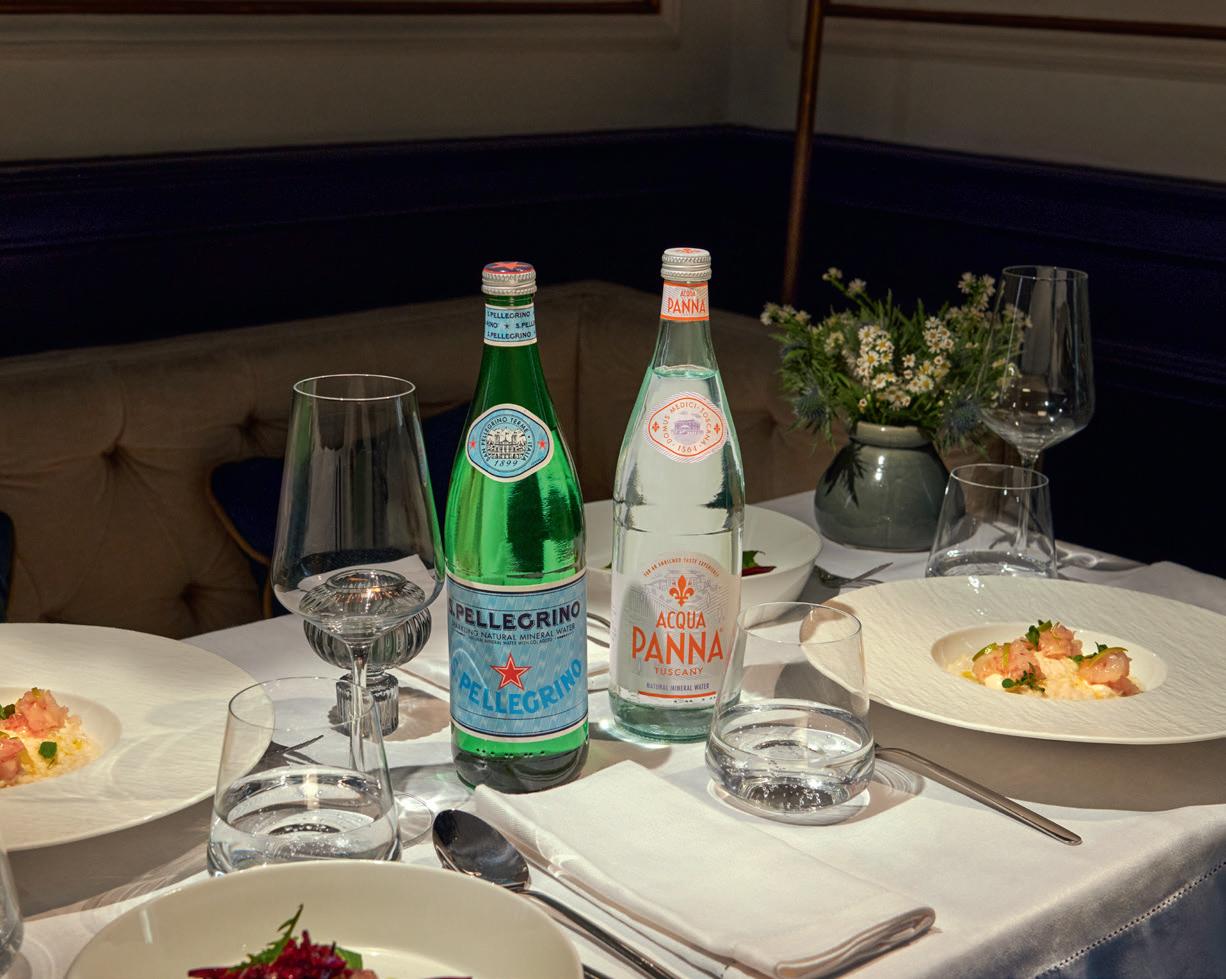
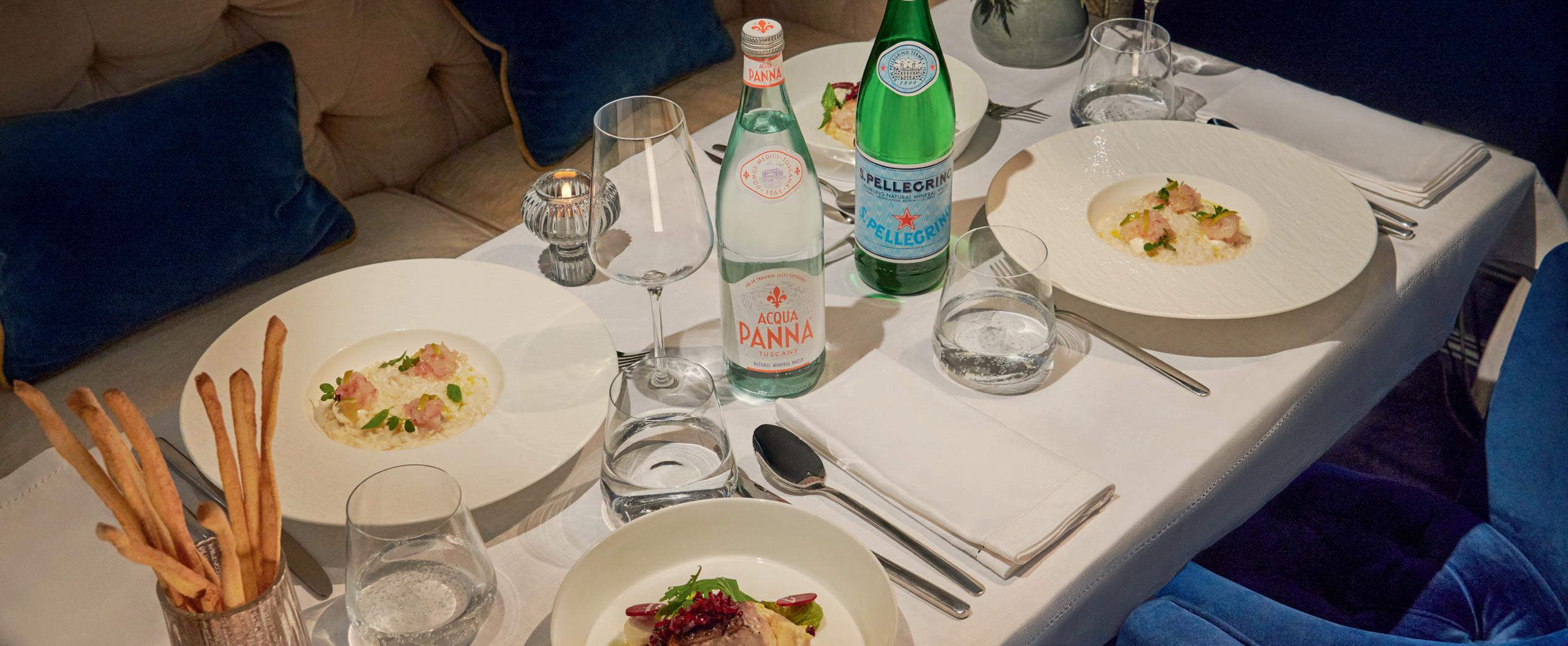
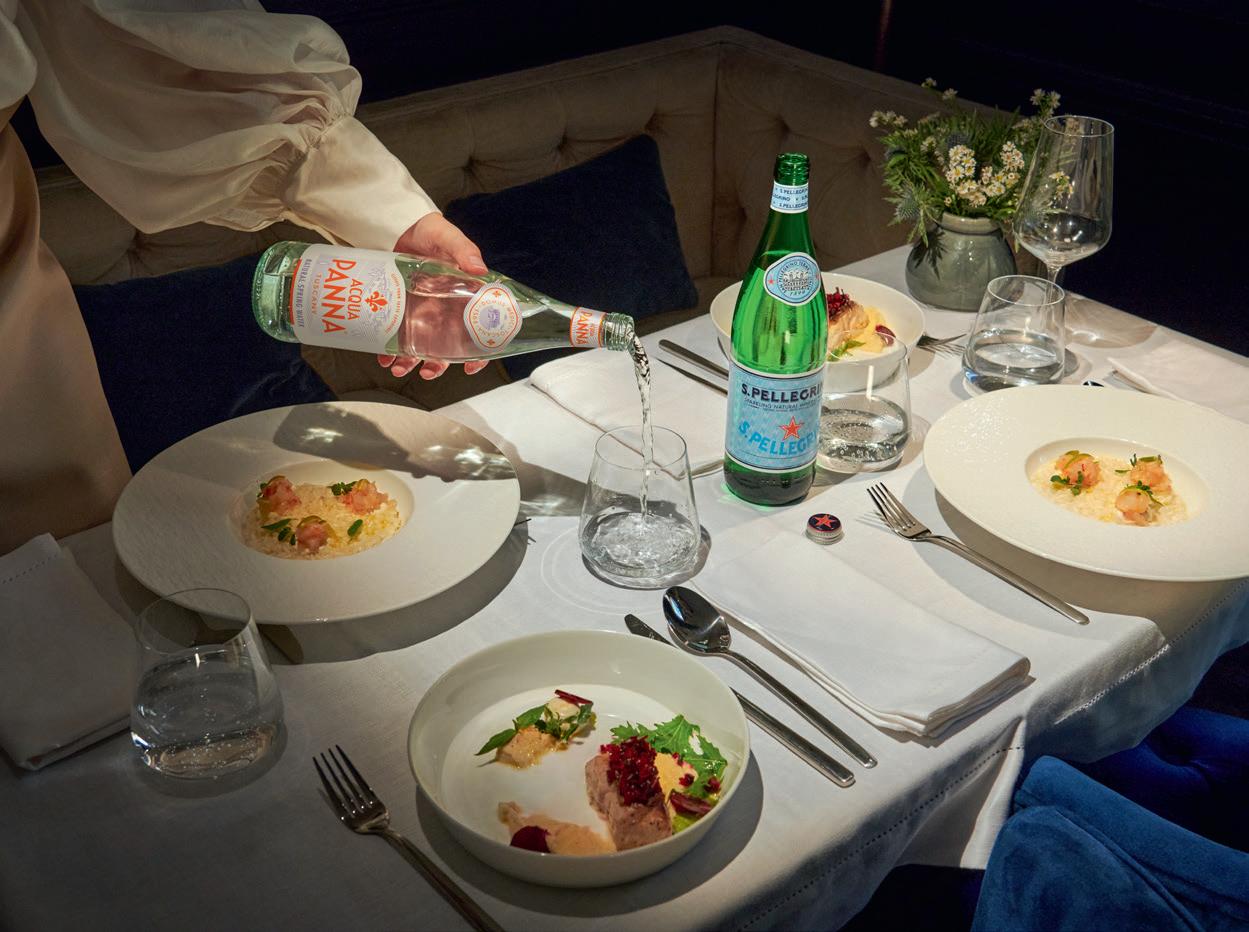
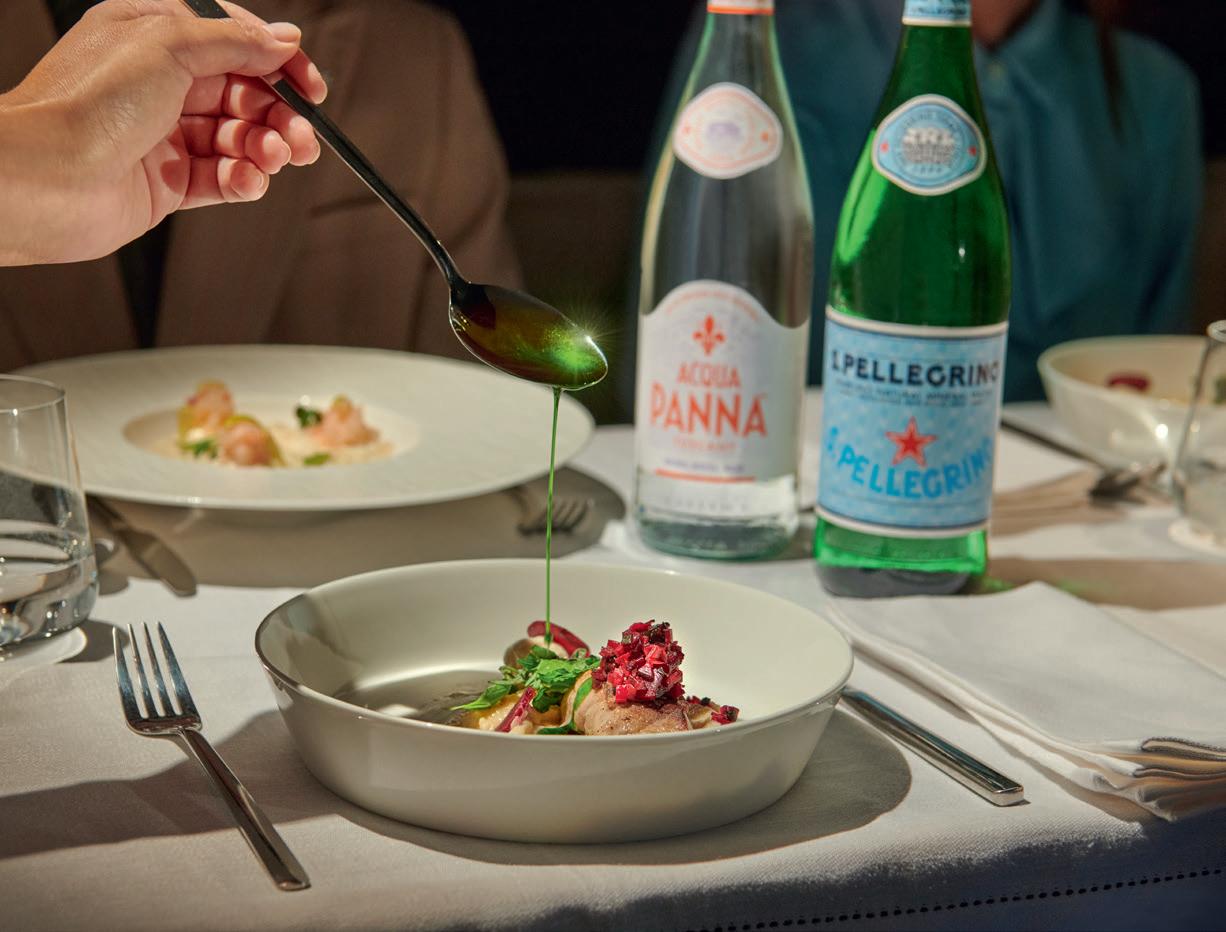
As icons of fine dining and timeless Italian elegance, here are five ways S.Pellegrino and Acqua Panna showcase their rich brand heritage - proving why they remain the perfect partners for exceptional food and drink experiences across the world.
1
A LEGACY ROOTED IN TUSCANY AND LOMBARDY
For over a century, S.Pellegrino and Acqua Panna have represented the essence of Italian craftsmanship and refinement. Originating from the natural springs of San Pellegrino Terme in Lombardy and the hills of Tuscany respectively, both brands are steeped in history, offering authenticity that elevates every dining table. Their heritage brings a sense of place, tradition, and prestige that guests instantly recognise.
3A SYMBOL OF GLOBAL GASTRONOMY
From Michelin-starred restaurants to luxury hotels and world-renowned culinary events, S.Pellegrino and Acqua Panna have become synonymous with premium hospitality. Their presence signals excellence, making them trusted by chefs, sommeliers, and restaurateurs who understand that every detail contributes to the guest experience.
2
THE PERFECT BALANCE OF SPARKLING AND STILL
Every great meal deserves the right water pairing. S.Pellegrino delivers fine, elegant bubbles and balanced minerality that cleanse the palate and complement rich flavours, while Acqua Panna offers smoothness and softness that enhance delicate dishes and fine wines. Together, they create harmony across the full dining journey - from starter to dessert.
4
DESIGN THAT ELEVATES THE TABLESCAPE Luxury is often found in the details, and both brands bring unmistakable visual sophistication to the table. The iconic green glass bottle of S.Pellegrino and the elegant style of Acqua Panna enhance presentation effortlessly. Their design reflects timeless class, ensuring they complement not just the cuisine, but the experience itself.
5HERITAGE THAT CREATES EMOTIONAL CONNECTION
Guests remember how an experience made them feel. Serving S.Pellegrino and Acqua Panna communicates care, quality, and attention to detail. Their long-standing heritage reassures guests that they are part of something exceptional - transforming a simple meal into a memorable occasion where food, drink, and storytelling come together beautifully.
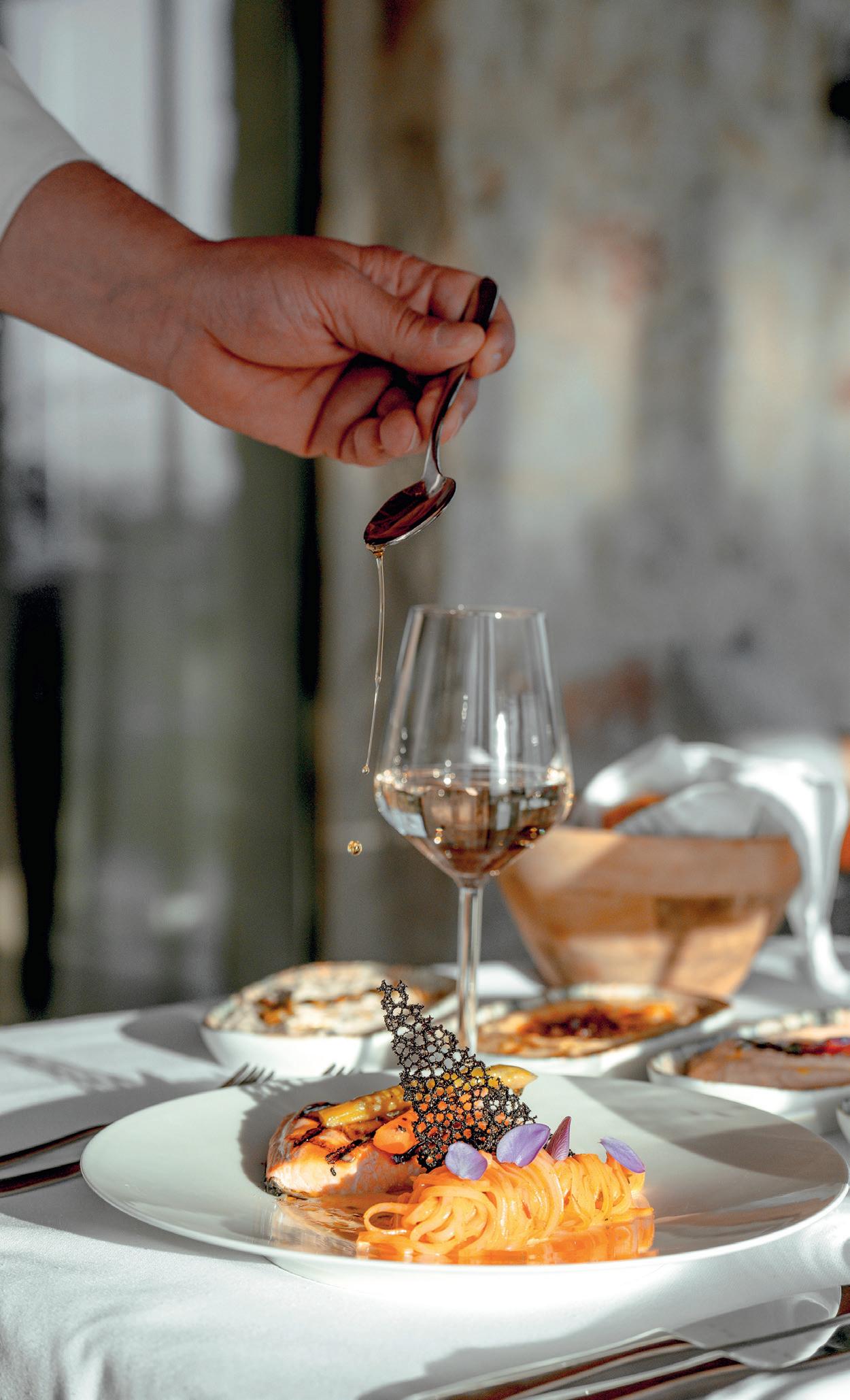
From predictive ordering to carbon-scored menus, artificial intelligence is quietly transforming hotel kitchens. But while the technology promises sharper margins and less waste, leading chefs insist its true value lies in supporting - not supplantingculinary craft.
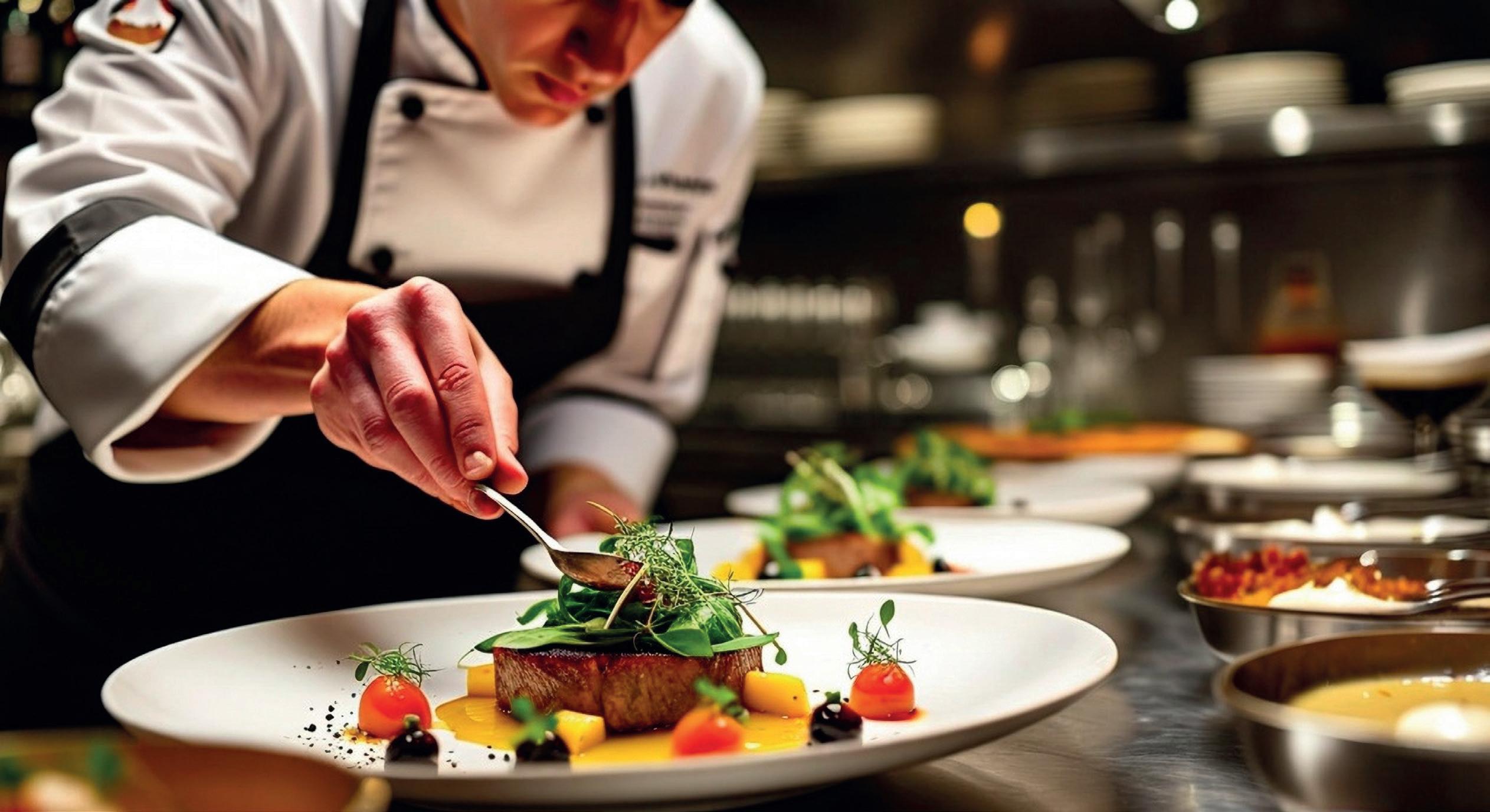
Artificial intelligence has become one of hospitality’s most talked-about disruptors, but in hotel kitchens its influence is unfolding in a more measured, pragmatic way. Rather than replacing chefs or revolutionising creativity overnight, AI is embedding itself into the operational backbone of food and beverage (F&B) departmentsrefining forecasting, tightening inventory control, and offering new ways to think about sustainability and profitability.
For many hoteliers, the shift is less about futuristic automation and more about solving longstanding inefficiencies. Food waste, fluctuating demand, labour pressures and rising costs have always challenged kitchen operations. AI, increasingly, is being positioned as the connective tissue that can bring clarity to these moving parts.
Yet, as this technology gains traction, a consistent theme emerges among industry leaders: AI works best when it augments human expertise, not when it attempts to replace it.
The most immediate and tangible impact of AI in hotel kitchens is being felt in forecasting and stock management. These are areas where even small improvements can yield significant financial and environmental returns.
Kasun Jayasooriya, Head Chef at Sopwell House, sees this as the current frontier. “At the moment, I think AI is starting to have the biggest impact around forecasting and stock control rather than direct cooking or menu creation,” he explained. “It helps kitchens plan more precisely and reduces unnecessary ordering, which is very important in maintaining balance and minimising waste.”
Traditionally, forecasting demand has relied heavily on historical data, intuition, and experience. While seasoned chefs and F&B managers develop a strong sense of patterns, weekend peaks, seasonal shifts, event-driven surges, these judgments are still vulnerable to external variables such as weather, travel trends or last-minute booking changes.
AI systems can process vast datasets in real time, incorporating variables that would be impossible to track manually. The result is a more dynamic and responsive
approach to purchasing and production.
For kitchens operating on tight margins, this precision is transformative. Over-ordering leads to waste; underordering risks disappointing guests and losing revenue. AI narrows that gap and beyond cost control, AI is also addressing a less visible but equally pressing issue: the administrative burden placed on chefs.
“The biggest benefit is that AI tools can save a lot of time for chefs,” Kasun noted. “These days, chefs often spend too much time on administrative work, but with the right systems, this can be reduced.”
Inventory tracking, supplier coordination, compliance documentation and reporting can consume hours of a chef’s day - time that would otherwise be spent mentoring teams, refining dishes or ensuring consistency on the pass; a benefit to all involved.
By automating routine processes, AI allows chefs to return their focus to the craft itself. “This gives chefs more freedom to be present in the kitchen,” he added, “focusing on the food, the team, and consistency in every dish.”
This rebalancing of time is emerging as one of AI’s most understated benefits. In an industry where labour shortages and burnout are ongoing concerns, tools that streamline workflows without diminishing standards are particularly valuable.
Menu planning is often alluded to as the next horizon for AI, with systems capable of analysing consumer trends, ingredient costs, and even social media sentiment to suggest dishes or optimise pricing. But, with this being said, many chefs remain cautious about handing over too much creative control.
“In terms of menu planning, I still believe this comes from the chef’s experience, seasonality, and respect for ingredients,” said Kasun. “Data can support decisions, but it should not take away from this philosophy.”
This sentiment is echoed at The Savoy, where Food & Beverage Director Nicolas Schell acknowledges AI’s analytical power while maintaining a clear boundary around its role. “AI is most impactful where it can integrate multiple factors and translate them into practical advice,” he explained. “In menu design, for example, it can analyse micro and macro trends, climate factors, elements of price positioning and even support optimisation of mise-enplace.”
Although, its use remains selective. “We don’t currently use AI systematically,” Nicolas said, “rather it is applied on an ad hoc basis to support specific analysis or decisionmaking.”
The distinction is important. Rather than dictating menus, AI is being used to provide an additional layer of insight, helping chefs and F&B leaders make more informed choices without diluting their culinary identity.
If forecasting and efficiency represent AI’s operational strengths, sustainability is where its impact becomes most visible to guests. At The Savoy, technology is playing a key role in translating environmental commitments into measurable action. “We are seeing value from specialised monitoring tools such as Klimato,” Nicolas noted. Introduced in 2024, the system assesses the carbon footprint of dishes and assigns a sustainability score to menu items.
This kind of transparency reflects a broader shift in guest

expectations. Diners are increasingly interested not just in what they eat, but in how it is sourced and produced - AI enables hotels to quantify and communicate these factors in a credible way.
At the same time, tools like Orbisk are tackling one of hospitality’s most persistent challenges: food waste. “In January 2024, we introduced Orbisk, an AI food waste monitoring system which helps to identify, track and reduce food waste,” Nicolas explained. The results have been significant, contributing to “a 30% waste reduction year-on-year.”
Such systems use image recognition and data analysis to record what is being discarded, when, and why. Over time, patterns emerge - overproduction of certain dishes, inefficient prep processes, or misaligned portion sizesallowing kitchens to make targeted adjustments.
Combined with initiatives such as recycling kitchen oil into renewable energy and transitioning to digital ticketing systems, these technologies are helping hotels align operational efficiency with environmental responsibility.
The payoff is not only ecological but reputational. These efforts contributed to The Savoy achieving Green Key UK Certification in 2024, underlining how sustainability and technology are becoming increasingly intertwined. Despite these advances, both chefs emphasise that technology must remain in service of a broader culinary
philosophy. At Sopwell House, this philosophy is rooted in discipline and respect for ingredients. “Food waste is something we take very seriously,” Kasun said. “While we are not currently using specific AI tools, we follow a disciplined approach in the kitchen, using ingredients carefully and respectfully.”
In this context, AI is seen as a natural extension of existing practices rather than a radical departure. “Any technology that helps improve forecasting and reduce excess would naturally support this way of working,” he added.
At The Savoy, the approach is similarly grounded in strong sourcing principles. Partnerships with producers and a commitment to seasonal, local ingredients remain central to menu development.
“AI could integrate seasonality, guests’ profiles, financials, climate conditions, and even geopolitical factors,” Nicolas explained. “However, our philosophy remains firmly rooted in using local, seasonal produce sourced from responsible suppliers.”
This alignment between technology and tradition is critical. Without it, there is a risk that AI-driven optimisation could lead to homogenised menus or a loss of culinary authenticity. One of the most debated questions around AI in hospitality is whether it enhances or diminishes creativity, and for both Kasun and Nicolas, the
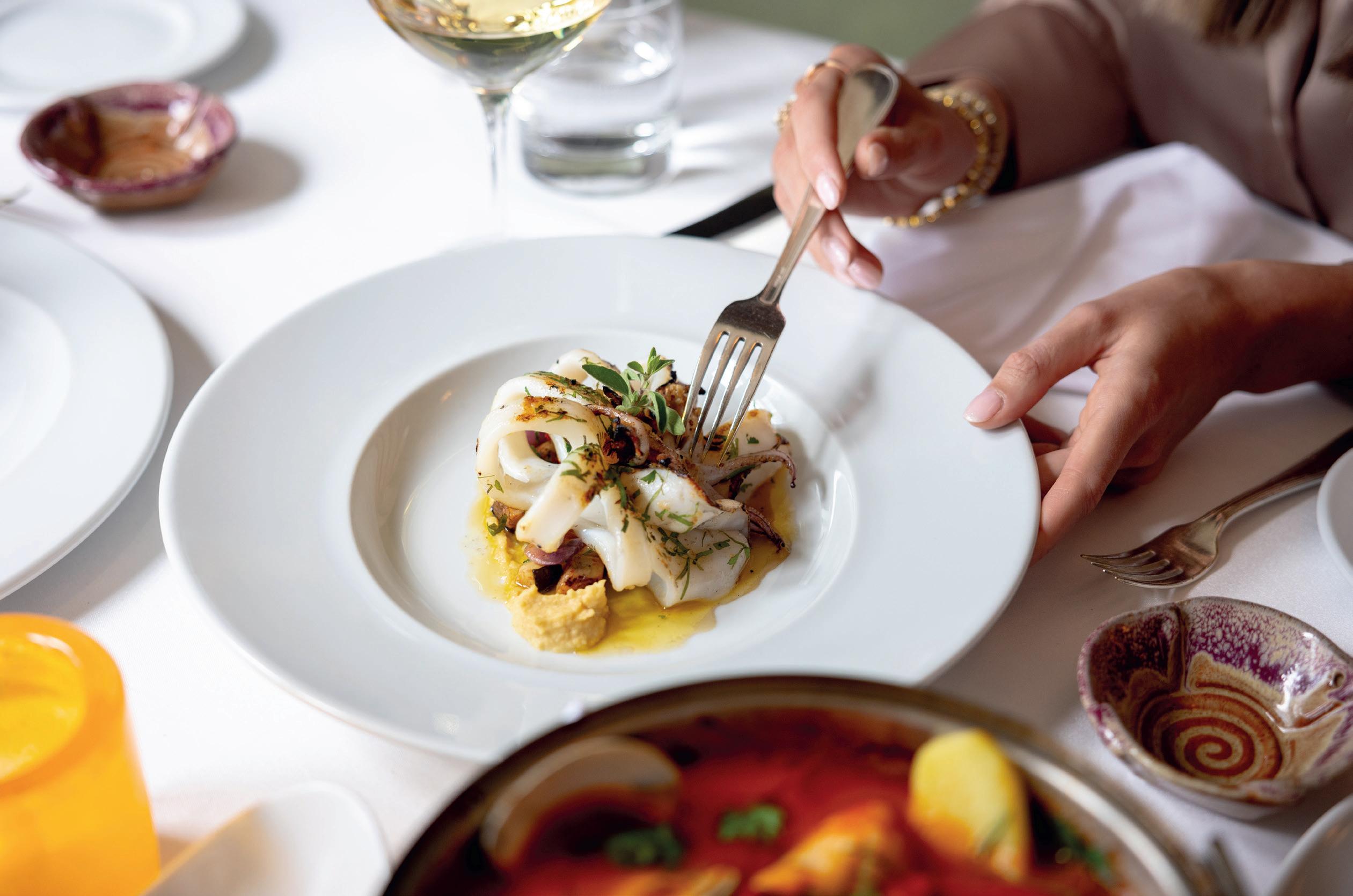
answer lies in how the technology is used.
“From a chef’s perspective, AI should support creativity, not replace it,” Kasun said. “Cooking is about intuition, craftsmanship, and attention to detail.”
Nicolas agreed, warning that over-reliance could lead to standardisation. “I don’t believe that any AI can replace human flair and creativity,” he said. “At its best, it acts as a tool to enhance and inform creative thinking, rather than dictate it.”
In practice, this means using AI to handle the analytical heavy lifting - costings, demand forecasting, sustainability metrics - while leaving the sensory and emotional aspects of cooking firmly in human hands.
The dining experience, after all, is not just about efficiency. It is about storytelling, memory and connection; elements that remain beyond the reach of algorithms.
Looking ahead, both experts anticipate a steady expansion of AI’s role in kitchen operations, particularly in planning and workflow optimisation.
“I believe AI will become more present in areas such as ordering, forecasting, and kitchen organisation,” Kasun said. “It will help kitchens run more smoothly, while allowing chefs to focus on what truly matters.”
Nicolas similarly sees AI evolving into a strategic tool. “I anticipate AI becoming an increasingly valuable tool for
planning and analysis, providing an additional ‘point of view’ that will help teams to anticipate trends and refine decision-making.”
Crucially, neither expects AI to replace human judgment. Instead, it will act as a complementary force, enhancing visibility, reducing uncertainty, and enabling more agile responses to a rapidly changing market.
As AI continues to embed itself in hotel kitchens, its success will ultimately depend on balance. Used well, it offers a powerful means of addressing some of the industry’s most pressing challenges: reducing waste, improving margins, and delivering more sustainable operations. It can free chefs from administrative burdens, sharpen decision-making, and provide new insights into guest behaviour.
But its value is not in replacing the human element - it is in reinforcing it. The most effective kitchens of the future are unlikely to be fully automated or data-driven. Instead, they will be places where technology and craftsmanship coexist: where AI handles complexity behind the scenes, allowing chefs to focus on creativity, quality and experience.
In that sense, the rise of AI in hotel F&B is not a story of disruption, but of refinement. A smarter kitchen, yes… but one that still beats at a very human heart.
At one of London’s most storied hotels, Executive Chef Graham Squire is quietly redefining what modern British luxury tastes like - honouring heritage while embracing creativity, seasonality and a touch of daring.
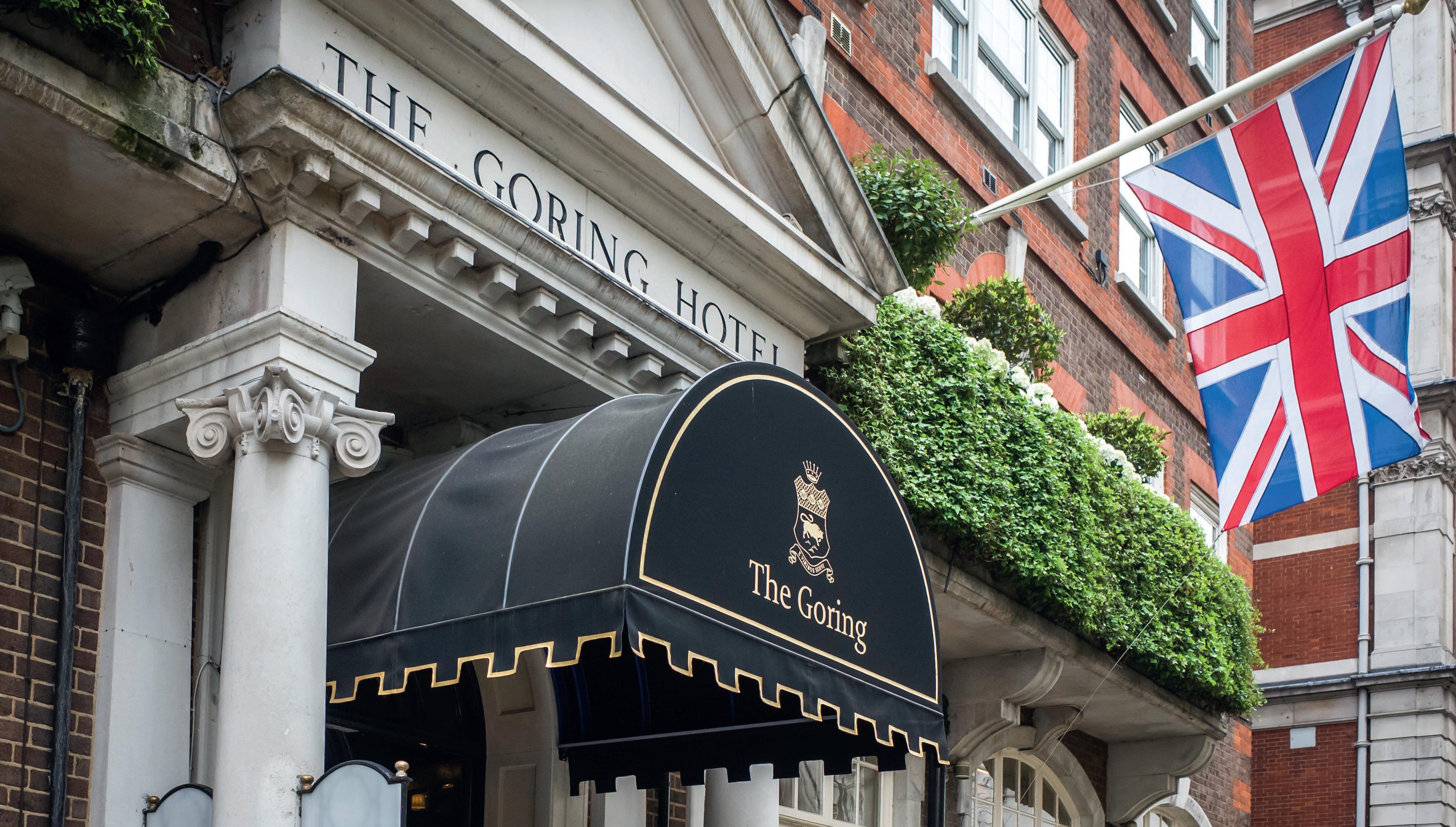
Graham Squire’s culinary journey reads like a masterclass in refined British gastronomy. Having honed his craft in the Michelinstarred kitchens of Claridge’s and Le Manoir aux Quat’Saisons, Squire developed not only technical precision but also a deep respect for produceled cooking. Today, as Executive Chef at The Goring’s Dining Room, he brings that experience to bear in a setting synonymous with timeless elegance and tradition. Since taking the helm in 2019, Squire has continued to build on The Dining Room’s already formidable reputation. The restaurant has held its Michelin star consistently since 2016 and boasts three AA Rosettes, alongside a Forbes Five-Star Rating maintained into 2025. Further recognition, from the Michelin Guide to Condé Nast Traveller and The Independent, cements its place among London’s most celebrated dining destinations. Yet for Squire, accolades are secondary to the guest experience.
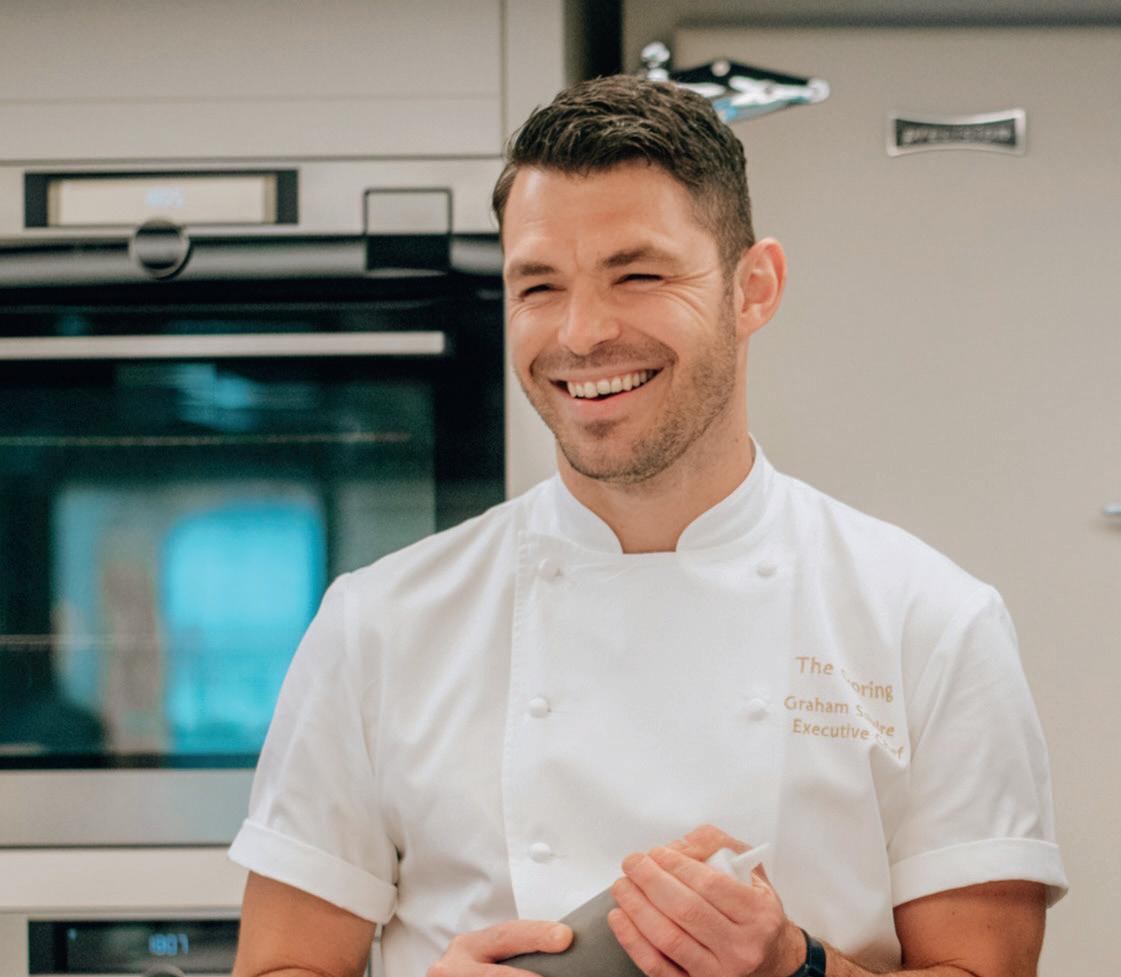
“The most important thing for us is to give our guests an unforgettable experience,” he explained. “We want them to feel comfortable, relaxed, and to enjoy a few culinary surprises.”
That philosophy underpins his approach to balancing The Goring’s deep-rooted British identity with the expectations of modern diners. While the hotel is unapologetically traditional, Graham is not afraid to reinterpret classics or introduce unexpected elements. “We are very British at The Goring, however we are not scared to re-invent the classics as well as be risky at times,” he says. “Tradition can come from how a dish is served as much as the dish itself.”
At the heart of his cooking is a commitment to exceptional British produce. Seasonality is the starting point for every new dish, guiding both flavour combinations and creative direction. “The best place to start is what’s in season,” Graham noted. “Then it’s about what I like to eat with it, what flavours work well, and what
the team enjoys. If you create something you genuinely want to eat, the guest will feel that.”
This instinctive, collaborative approach is evident across his menu, particularly in his signature dishes. The Goring Drumkilbo, for instance, is a nod to history - originally created in the 1930s in honour of the late Queen Mother. Squire’s version elevates the classic with Portland crab, lobster and caviar, paired with an impeccably English brown crab crumpet. It is both a tribute and a refinement, encapsulating his ability to honour legacy while enhancing it.
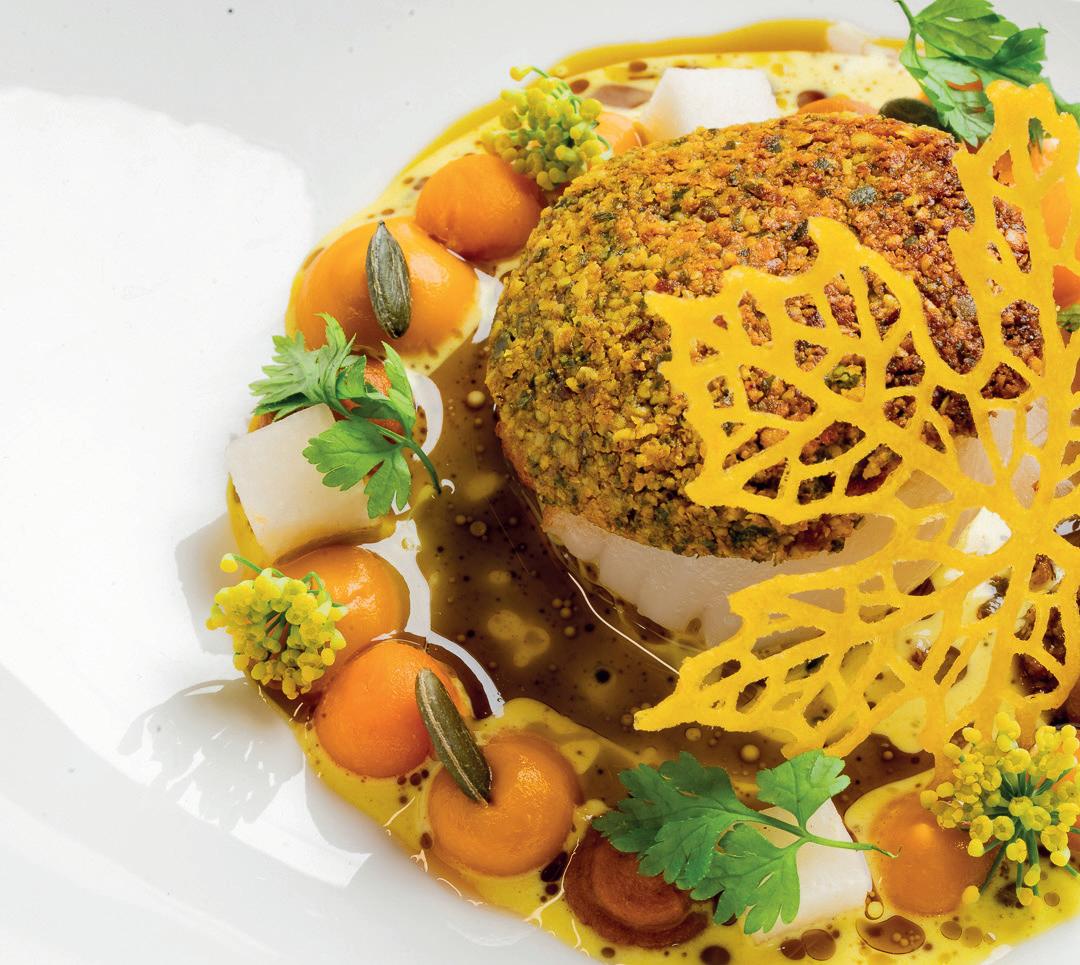
Elsewhere, the Autumn Scallop celebrates the fleeting beauty of the season. Orkney scallops are paired with a delicate whey sauce, pumpkin and warming vadouvan spice, creating a dish that balances sweetness, spice and texture. It reflects Squire’s sensitivity to ingredients at their peak, allowing them to shine without unnecessary embellishment.
Perhaps most illustrative of his process is the Welsh lamb dish - a deeply personal creation born from a simple conversation about comfort food. “We were talking about how I like suet pudding,” he recalled. “So, I created a lighter version of a lamb suet pudding to go with lamb that had just come into season, alongside beautiful sand-grown carrots.” The result is a dish that combines nostalgia with refinement, featuring roast lamb loin, sweetbread and a balsamic and onion suet dumpling.
Attention to detail extends beyond flavour. Graham and his team dry-age their meat to maximise both taste and texture, demonstrating a commitment to craftsmanship at
every stage. It’s a reminder that excellence in the kitchen often lies in the unseen processes as much as the final presentation.
Despite his impressive résumé, including previous roles as Head Chef at Michelin-starred Trinity and The Lickford Inn, Graham remains grounded in a simple ethos: hospitality comes first. “We are here to make people happy through food,” he said. “If you treat guests as you want to be treated, that’s the perfect starting point.”
In an industry that often chases novelty, Graham Squire’s approach feels both reassuring and quietly progressive. By anchoring his cooking in British tradition while allowing room for evolution, he ensures that The Goring’s Dining Room remains not only relevant, but exceptional.
@thegoring
Graham’s signature dishes:
The Goring Drumkilbo - created in the late 1930’s in honour of the late queen, a beautiful Portland crab salad with lobster, caviar and an impeccably English brown crab meat crumpet.
The autumn scallop - Orkney scallop with whey sauce, all things pumpkin and vadouvan spice, showcasing the best of autumn and the sweetness of squash pairing with the delicate scallop.
Welsh lamb - sand carrot puree, roast lamb loin and lamb sweetbread, balsamic and onion suet dumpling.
Bohemia, Jersey: A Benchmark for Destination Dining in the British Isles.
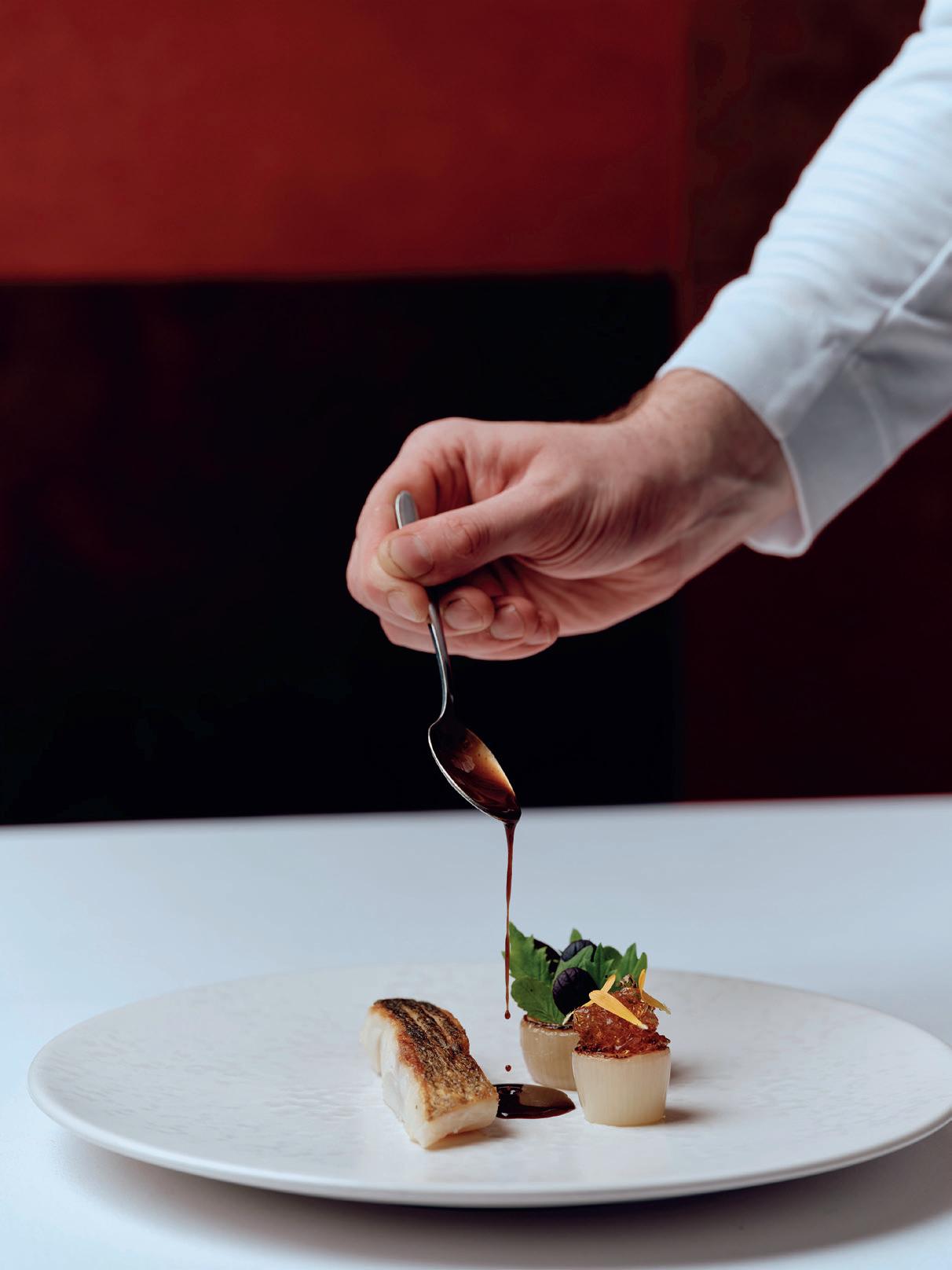
As the hospitality industry looks ahead to the summer trading period, Jersey continues to strengthen its position as a high-value culinary destination. With more annual sunshine hours than any other part of the UK and a compact,
easily navigable landscape, the island offers operators a compelling case study in how food-led tourism can elevate regional appeal.
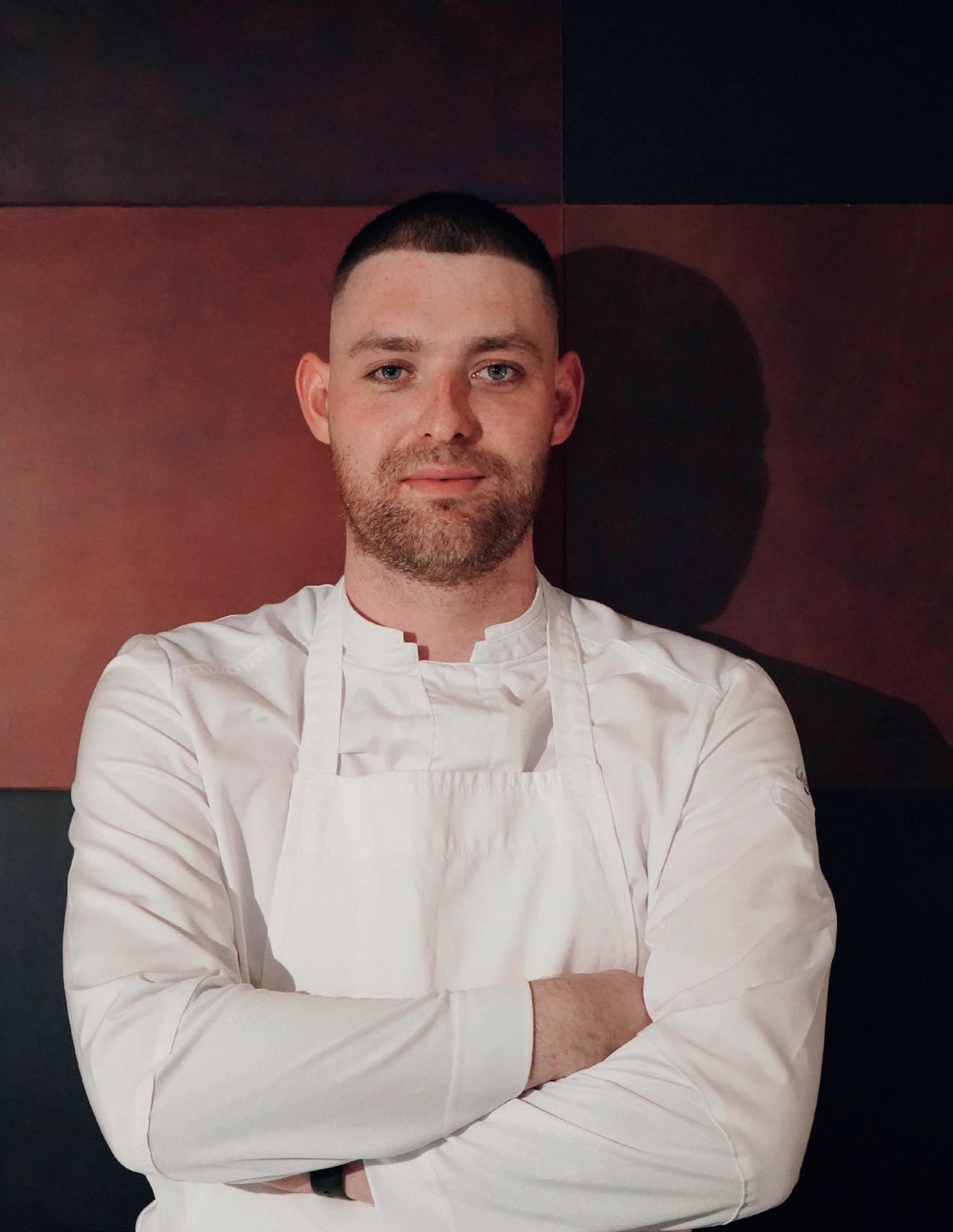
At the centre of this proposition is Bohemia, the island’s only Michelin-starred restaurant, located within The Club
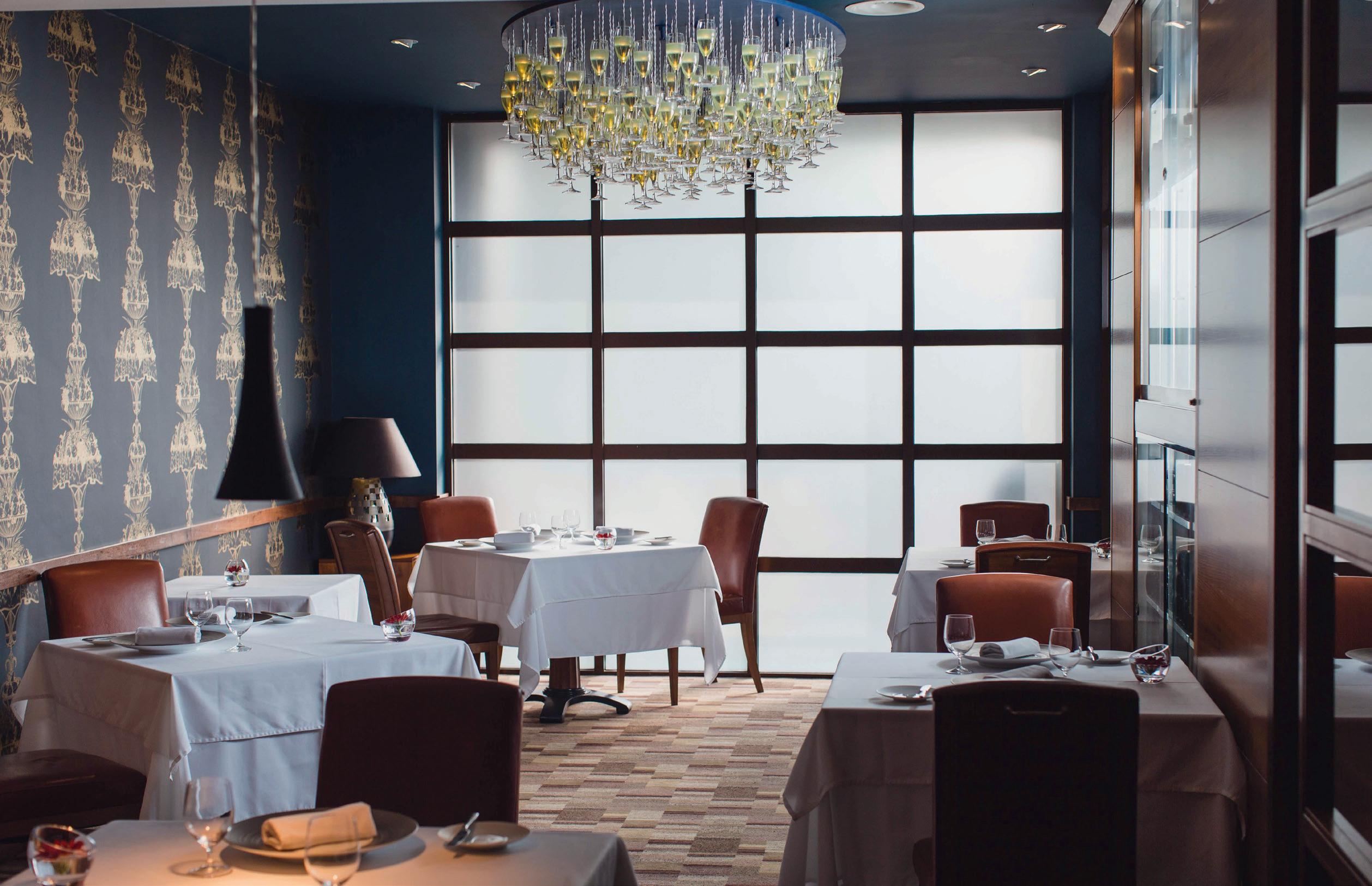
Hotel & Spa. The restaurant has recently gained further industry attention following Head Chef Tom Earnshaw being named Michelin Guide’s 2026 Young Chef of the Year, a significant accolade that underscores both individual talent and the strength of the wider operation.
Tom’s leadership marks a clear evolution in Bohemia’s positioning. His menus demonstrate a confident balance between technical precision and creative expression, underpinned by a strong sense of place. Drawing on over a decade of experience in leading UK kitchens, alongside international influences from Japan, North Africa and the Mediterranean, his approach reflects a broader industry shift towards globally informed yet locally grounded cuisine.
For hospitality professionals, Bohemia’s model offers several points of interest. The kitchen places a strong emphasis on hyper-local sourcing - from Jersey Royal potatoes and local oysters to dairy products that are intrinsic to the island’s identity - while intelligently integrating premium British and international ingredients. This layered sourcing strategy allows the restaurant to maintain both authenticity and aspirational appeal. Menu structuring is equally deliberate, with tiered offerings that cater to a range of guest expectations while maintaining a consistent level of culinary ambition. Dishes highlight both provenance and technique, pairing
ingredients such as Herdwick lamb, Loire Valley asparagus and Kagoshima A5 Wagyu with nuanced, often unexpected flavour combinations. This reflects a growing trend within fine dining towards storytelling through ingredient sourcing and dish composition.
Beyond the restaurant, the integration with The Club Hotel & Spa reinforces the commercial advantage of a cohesive food-led proposition within a boutique hotel setting. The property’s accommodation offering, featuring high-spec finishes and a strong design identity, complements the dining experience, encouraging longer stays and higher overall guest spend.
From an industry perspective, Bohemia illustrates how a single, high-performing restaurant can act as a destination driver, elevating both property performance and regional reputation. Tom’s recent Michelin recognition not only enhances the restaurant’s profile but also contributes to Jersey’s positioning as a serious contender in the UK’s competitive culinary landscape.
For hoteliers and operators seeking to refine their own food and beverage strategies, the Bohemia model highlights the value of clear culinary leadership, strong supplier relationships and the ability to translate local identity into a premium, internationally relevant guest experience. www.bohemiajersey.com
The rise of revenue-led F&B: how to enhance every guest touchpoint with mobile ordering.
For years, hotel F&B has lived in the shadow of rooms revenue -viewed as an amenity or a brand enhancer, but rarely taking centre stage in commercial strategy. But this mindset is rapidly changing.
As hoteliers navigate a landscape defined by rising costs, labour constraints, and slowing ADR growth, the industry is turning its attention to F&B - not as a complementary service, but as a powerful revenue driver.
At IRIS, we’re seeing this shift play out globally. Hotels are recognising that every guest interaction is an opportunity to drive both satisfaction and F&B spend - from coffees in the lobby and poolside cocktails, to lunch on the terrace and late-night room service.
Yet many of these moments remain under-optimised, often due to operational friction or outdated service models.
So, what are the most effective ways to increase F&B performance without adding any extra burden to your teams?
One of the biggest barriers to F&B revenue is friction. Long wait times, limited service coverage, busy staff, or unclear menus can all deter guests from ordering altogether. Every abandoned order is lost revenue and, in many cases, it’s entirely avoidable.
Today’s guests are accustomed to seamless, on-demand experiences in almost every aspect of their lives. Whether ordering food, booking a taxi, or shopping online, convenience is no longer a differentiator, it’s an expectation. Hospitality is now catching up.
Mobile ordering has emerged as a powerful solution to this challenge,
transforming the way guests interact with F&B services. By enabling guests to browse menus, customise orders, and pay directly from their own device, hotels can remove many of the traditional pain points associated with ordering.
The results are compelling. Across IRIS-powered properties, we consistently see a significant uplift in both order volume and average transaction value following the introduction of mobile ordering.
When guests can order anytime, anywhere, without waiting or needing staff intervention, they are far more likely to engage.
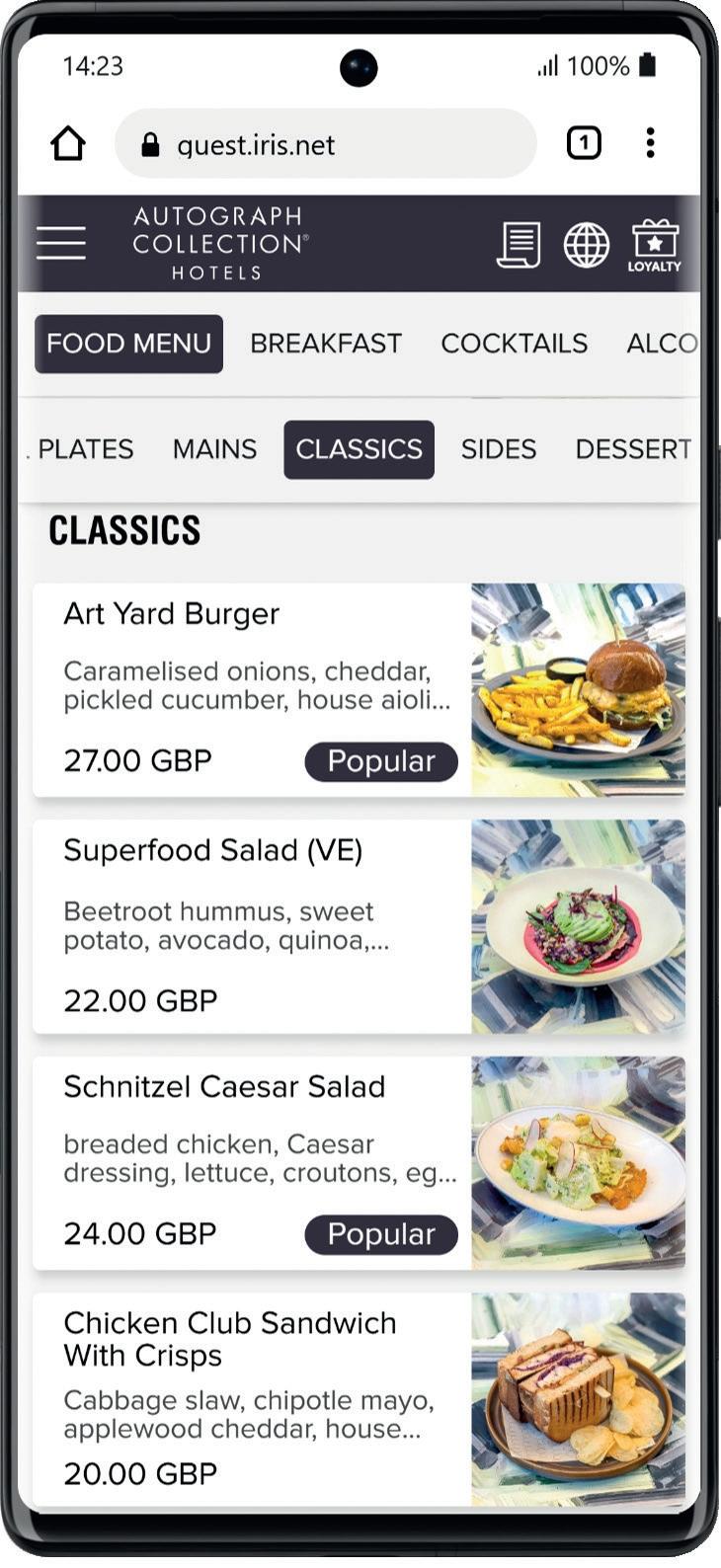
Digital ordering does more than streamline the process, it fundamentally changes how menus function.
In a traditional setting, menus are static. In a digital environment, they become dynamic, responsive, and revenue-generating.
Features such as high-quality imagery, dietary filters, and multilanguage support help guests make faster, more confident decisions.
Additionally, we’ve seen firsthand how promotions and intelligent upsells, such as suggesting a drink pairing or highlighting a popular add-on, can deliver meaningful increases in guest spend. These are incremental gains that add up quickly, particularly across highvolume environments.
In today’s labour market, operational efficiency is just as critical as revenue growth.
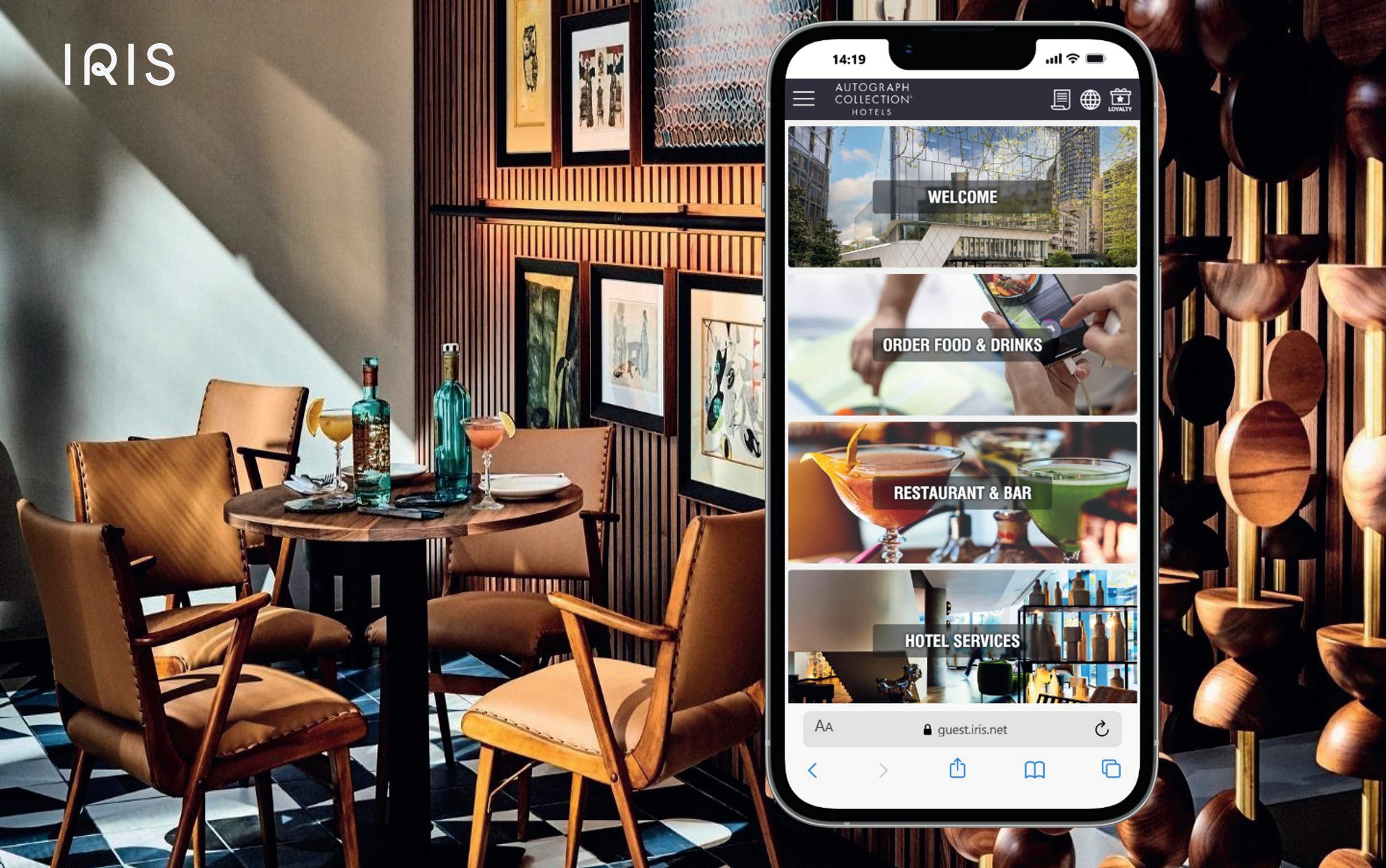
Mobile ordering enables hotels to do more with less by guests to self-serve. Orders are placed accurately, sent directly to the kitchen via POS integration, and fulfilled with greater speed and consistency.
This not only reduces the risk of errors and delays but also alleviates pressure on front-of-house teams. Crucially, it allows staff to focus on delivering higher-value, personalised service.
At IRIS, we view this as a win-win: improved operational performance alongside enhanced guest experience.
In many hotels, large areas of the property - such as pool decks, spas, lobbies, and meeting spaces - remain underutilised from a revenue perspective. These spaces often lack dedicated staff or operate with inconsistent service, limiting their commercial potential. Mobile ordering changes this dynamic entirely.
By enabling guests to order from anywhere on the property, hotels can effectively turn every space into a revenue-generating zone. A guest relaxing by the pool, attending a conference, or working in the lobby can all access the same seamless ordering experience, without the need for additional staffing.
This not only drives incremental revenue but also enhances the overall guest experience, creating a sense of ease and continuity throughout the stay.
Hoteliers must move away from viewing F&B as a support function and start recognising it as a strategic driver of growth. This means rethinking menus, service models, and guest journeys through a commercial lens, while still maintaining the core principles of hospitality.
The good news is that deployment does not need to be complex. Many properties begin with a single outlet (such as room service or tableside ordering) and expand from there as they see results.
As the industry continues to evolve, the role of F&B will only become more central to overall performance.
Hotels that succeed will be those that recognise the value of every guest touchpoint and invest in making each one as seamless and compelling as possible.
At IRIS, we believe the future of F&B lies in empowering both guests and operators - combining intuitive technology with thoughtful service design to unlock new levels of efficiency, satisfaction, and profitability.
Because ultimately, when you make it easy for guests to engage, they do more than just order.
They spend.
To learn more about IRIS or arrange a free consultation, please visit www.iris.net/demo
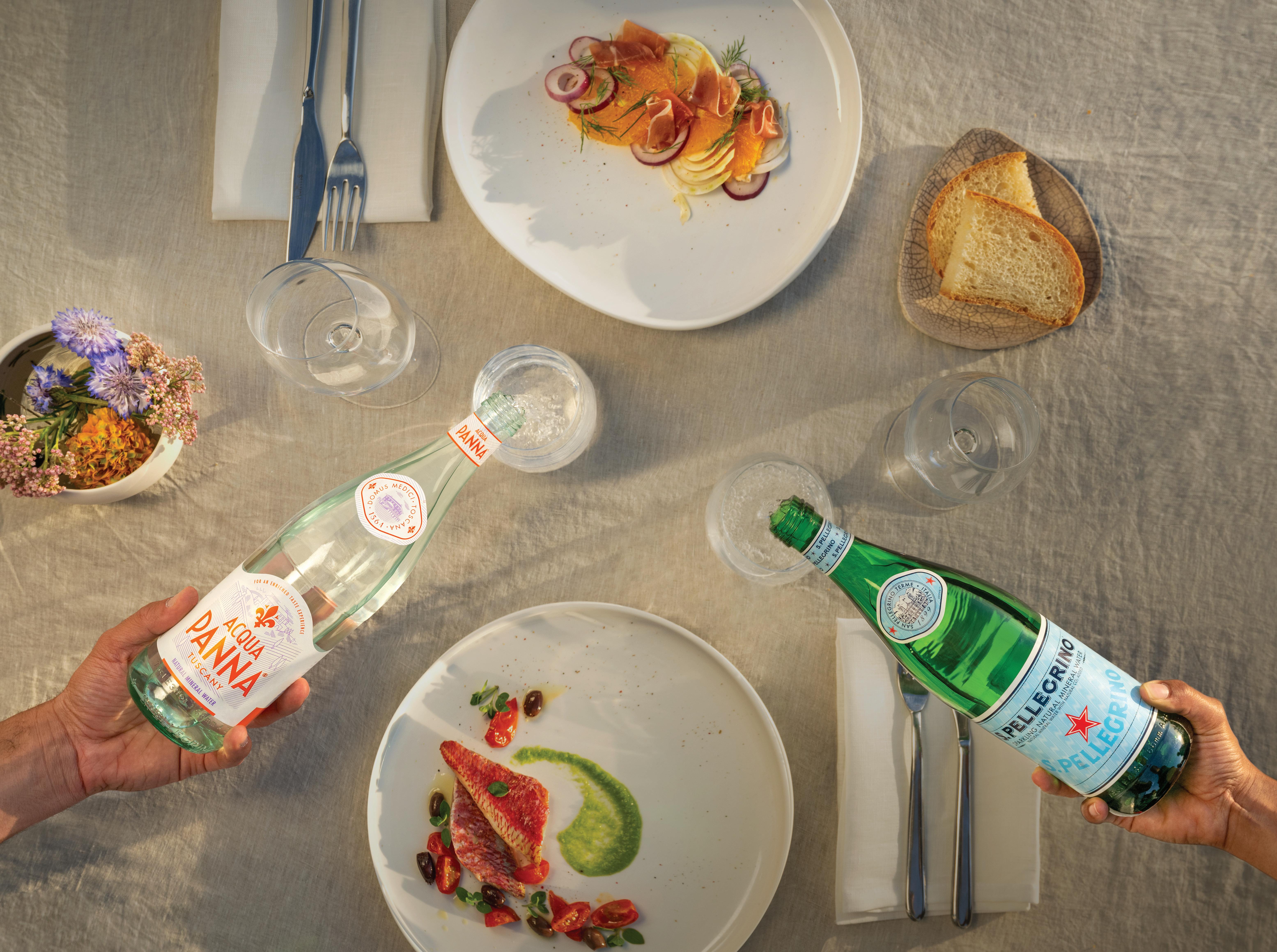
How S.Pellegrino and Acqua Panna are elevating food and drinks hospitality.
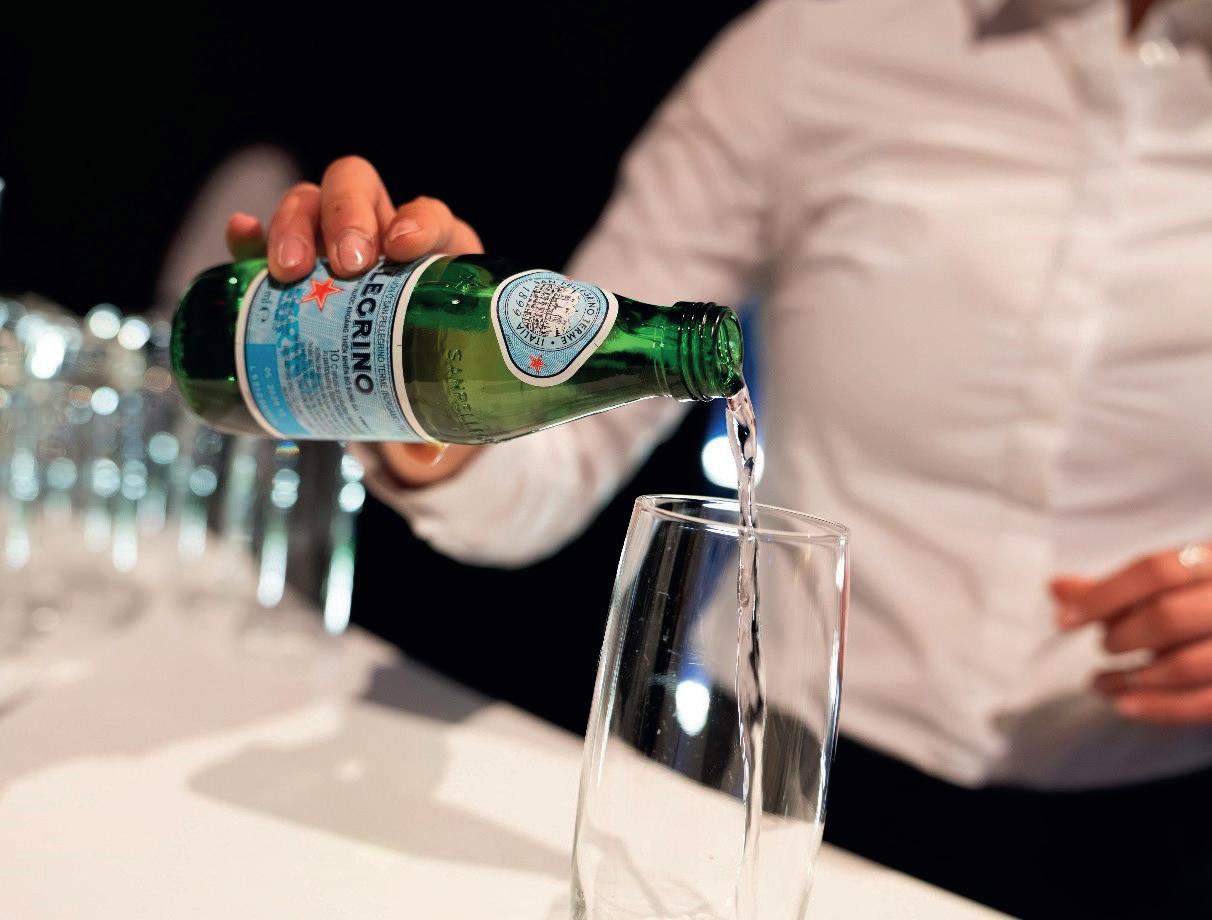
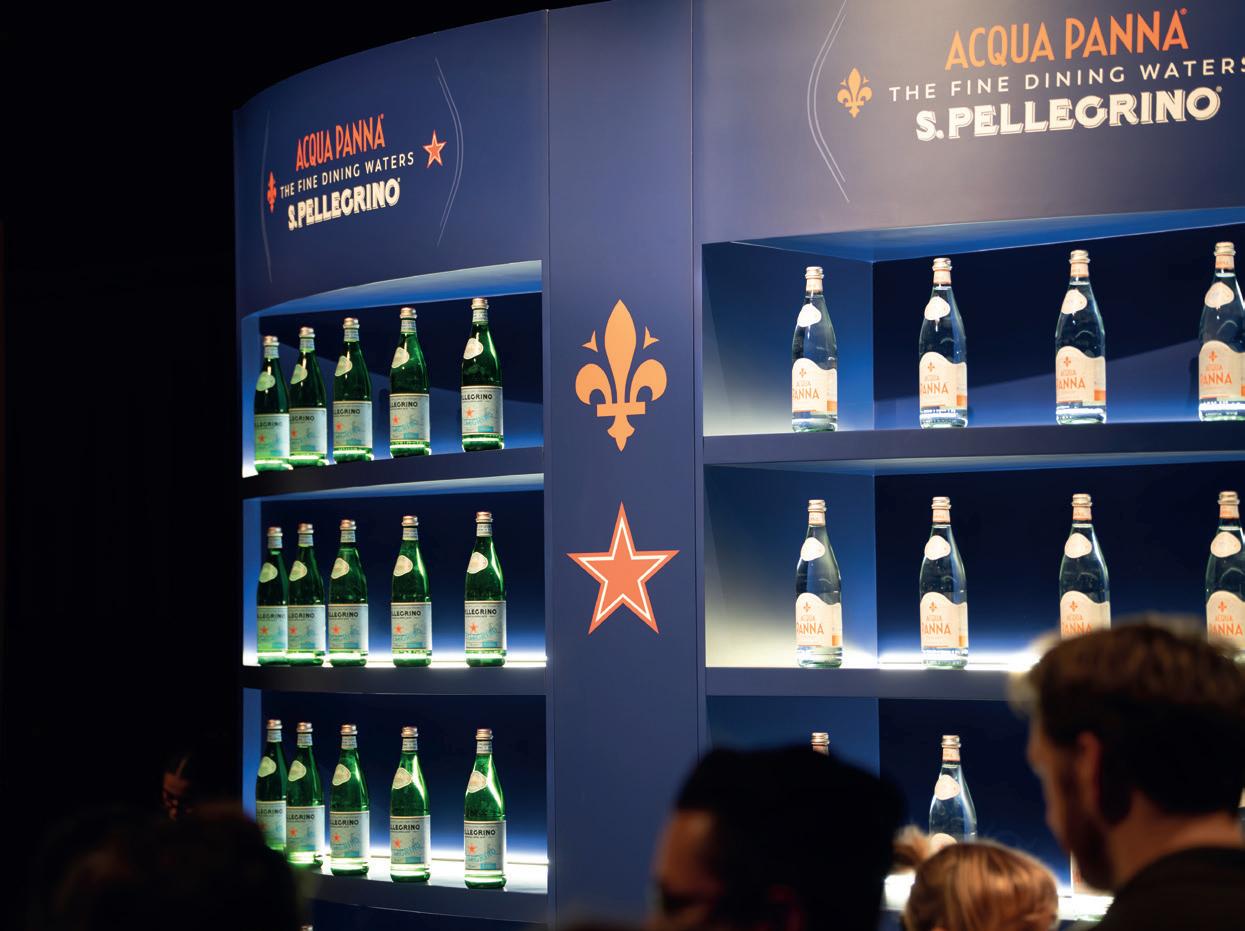
In modern hospitality, excellence is no longer defined solely by what appears on the plate. It is increasingly shaped by the full guest experience - where food, drinks, service, storytelling, and atmosphere come together to create something cohesive, refined, and memorable. Within this evolving landscape, S.Pellegrino and Acqua Panna have become defining forces, consistently supporting the world’s most influential hospitality platforms and elevating standards across both gastronomy and drinks culture. Through their partnerships with the Michelin Guide, Obsession and The World’s 50 Best, the two iconic water brands are helping to shape a more connected, more sophisticated vision of hospitality. Long associated with fine dining, S.Pellegrino and Acqua Panna have moved far beyond their role as premium table waters. Today, they are recognised as essential contributors to the hospitality experience - trusted by chefs, sommeliers, and bartenders for their ability to complement, balance, and elevate flavour. Their
involvement in leading global events reflects a deeper commitment: not just supporting excellence, but actively helping redefine it.
The Michelin Guide Awards remain one of the most prestigious celebrations in global gastronomy, recognising restaurants and chefs who set the highest standards of creativity, precision, and consistency. As partners of the 2026 Michelin Guide Awards in Dublin, S.Pellegrino and Acqua Panna reinforced their position at the heart of culinary excellence.
Present at the awards ceremony, S.Pellegrino and Acqua Panna enhanced the guest experience through carefully curated water pairings designed to complement Michelinlevel cuisine. Guests experienced how S.Pellegrino’s vibrant effervescence and Acqua Panna’s smooth, still elegance could elevate premium ingredients such as caviar,
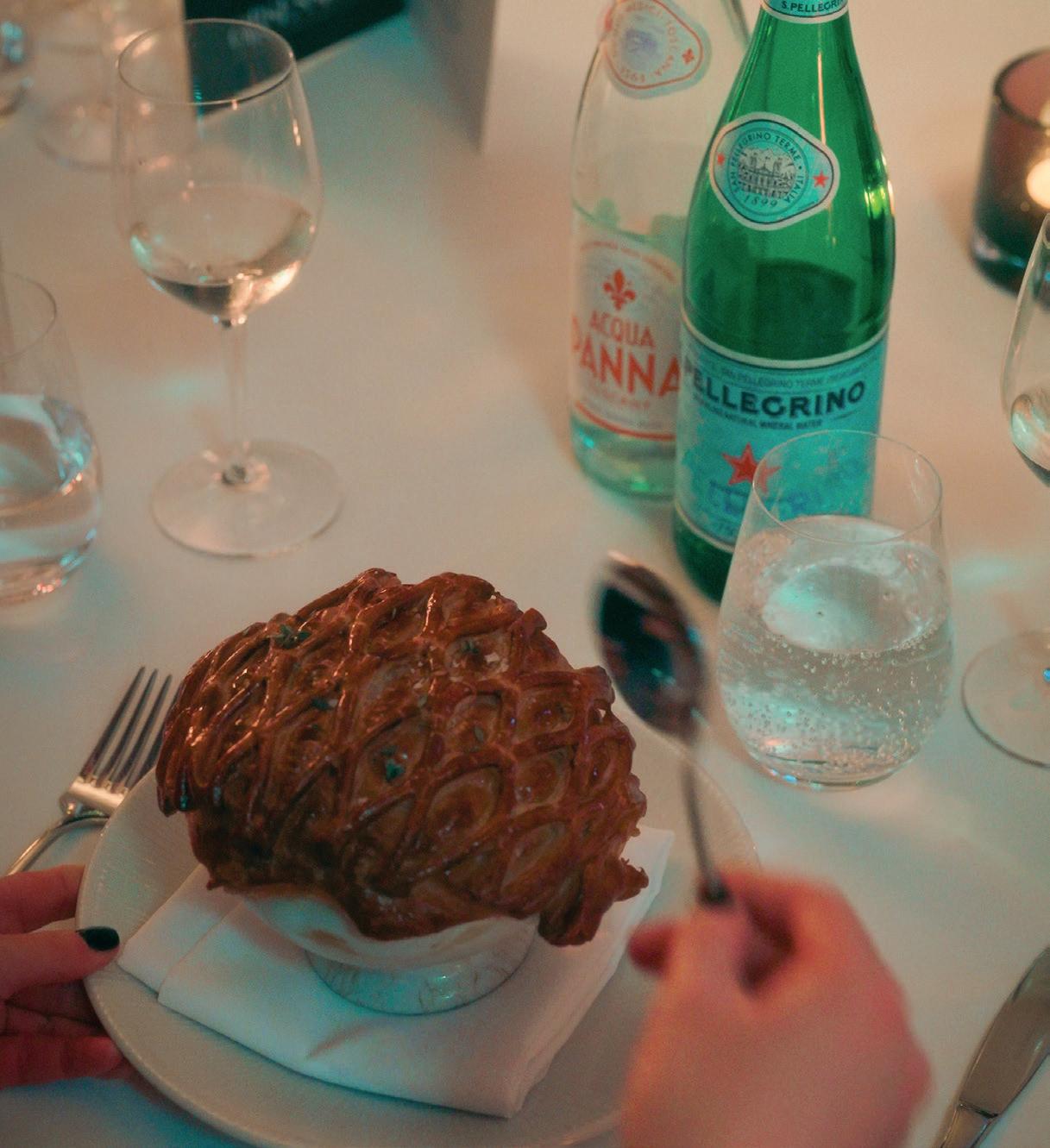
Parmigiano Reggiano, and dark chocolate. These pairings highlighted an often-overlooked truth: water plays a fundamental role in shaping flavour perception and refining the overall dining experience.
By integrating seamlessly into the Michelin journey, the brands demonstrated that drinks are not secondary to food, but an essential part of its expression. Their presence helped elevate the entire sensory experience, reinforcing water’s place within fine dining culture.
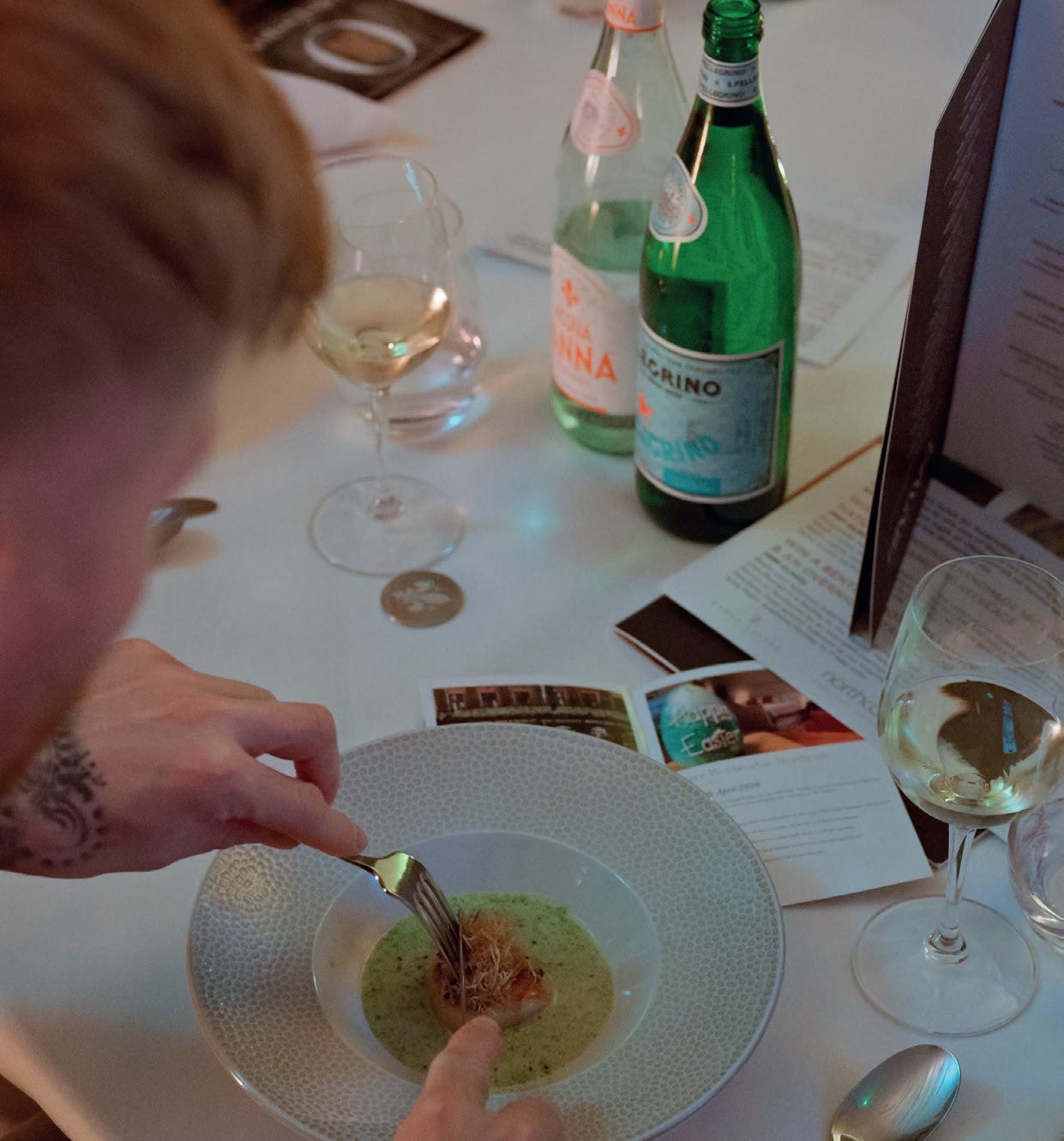
Obsession at Northcote is one of the UK’s most iconic fine dining festivals, known for bringing together some of the world’s most talented chefs for a multi-night celebration of creativity and innovation. The 2026 edition once again showcased the very best of global gastronomy, with 20 world-class chefs - holding a combined 27 Michelin stars - each presenting unique menus that reflected their individual culinary identity.
Across 17 nights, guests experienced an ever-changing expression of fine dining, where each service offered a new interpretation of excellence. Within this environment, S.Pellegrino and Acqua Panna played a crucial, integrated role. Present throughout every stage of the guest journey, the brands supported not only the service of food, but the orchestration of the entire dining experience. From the restaurant bar to the final course, they ensured consistency, balance, and refinement across every touchpoint.
The waters enhanced pairings, softened transitions between courses, and elevated the rhythm of each menu.
In doing so, they demonstrated that true hospitality excellence is built through collaboration - between chefs, service teams, and beverage partners working in harmony.
S.Pellegrino’s partnership with The World’s 50 Best reflects its commitment to elevating hospitality beyond fine dining alone. The platform not only honours the world’s best restaurants, but also celebrates bars, bartenders, sommeliers, and drinks professionals who are redefining global beverage culture.
Through initiatives such as The World’s 50 Best Bars, the brands continue to support the innovation in cocktails, spirits, wine, and service, giving visibility to a fast-evolving drinks industry that is now central to modern hospitality.
By supporting 50 Best, S.Pellegrino reinforces the idea that food and drinks are inseparable elements of the same experience. Restaurants and bars are no longer viewed in isolation; instead, they form part of a unified hospitality ecosystem where chefs and bartenders inspire and influence one another.
From Michelin-starred celebrations in Dublin to immersive culinary showcases at Obsession and the global influence of The World’s 50 Best, S.Pellegrino and Acqua Panna continue to define what it means to support modern hospitality. Their role extends beyond presence or sponsorship; they actively contribute to shaping the standards, experiences, and expectations of the food and drink industry.
The team at Oatly share tips on how hotels can tap into the ever-present ‘matcha mania’.
There is no doubt that Matcha is the drink of the moment. The vibrant Japanese tea-based beverage has boomed in popularity over the past year and it’s not showing signs of slowing.
In fact, according to the Financial Times, British matcha revenue hit around £46 million in 2025, more than doubling year-on-year, with sales forecast to continue growing through the next decade.
For hotels, matcha’s rise presents a timely opportunity. As guest expectations shift toward drinks that balance wellness, indulgence and visual appeal, matcha offers a simple way to refresh menus across multiple settings.
A Gateway Flavour Matcha’s popularity is no longer just about novelty. In Oatly’s Future of Taste report, we highlighted that matcha represents a wider shift in global beverage culture. One driven by curiosity, cross cultural exchange and changing attitudes to health and enjoyment. What began as “matcha mania” has opened the door to a broader appetite for East and Southeast Asian flavours, with ingredients such as hojicha, ube and pandan increasingly influencing Western menus.
In this evolving landscape, matcha’s future lies in adaptability. Consumers are still drawn to its heritage, colour and perceived benefits, but they are less interested in rigid ceremony. Instead, they want drinks that feel intuitive and flexible - something that can be iced, flavoured, personalised or enjoyed as part of an everyday routine.
For hotels, this shift is significant. Matcha no longer needs to be positioned as a specialist offering; it can sit comfortably alongside coffee classics, juices and smoothies, appealing to a wide spectrum of guests.
Despite its growing popularity, matcha can still present challenges operationally. Traditional preparation methods require time, training and consistency which is difficult to maintain in high volume hospitality environments. Making matcha accessible is therefore crucial to scaling it across hospitality spaces. Ready to use or ready to drink formats allow teams to deliver consistent quality quickly,
removing complexity without compromising flavour. This approach makes it easier to introduce matcha beyond the café counter and into breakfast service, lounges, bars and even in room dining.
Accessibility also encourages experimentation. When preparation is simple, teams are more likely to explore matcha’s potential across different menus and settings, rather than treating it as a niche add on.

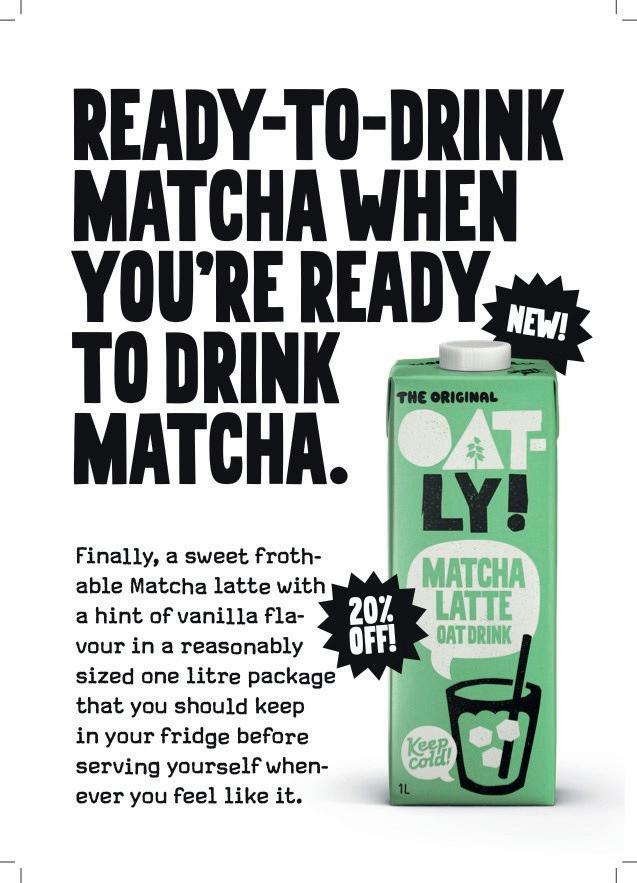
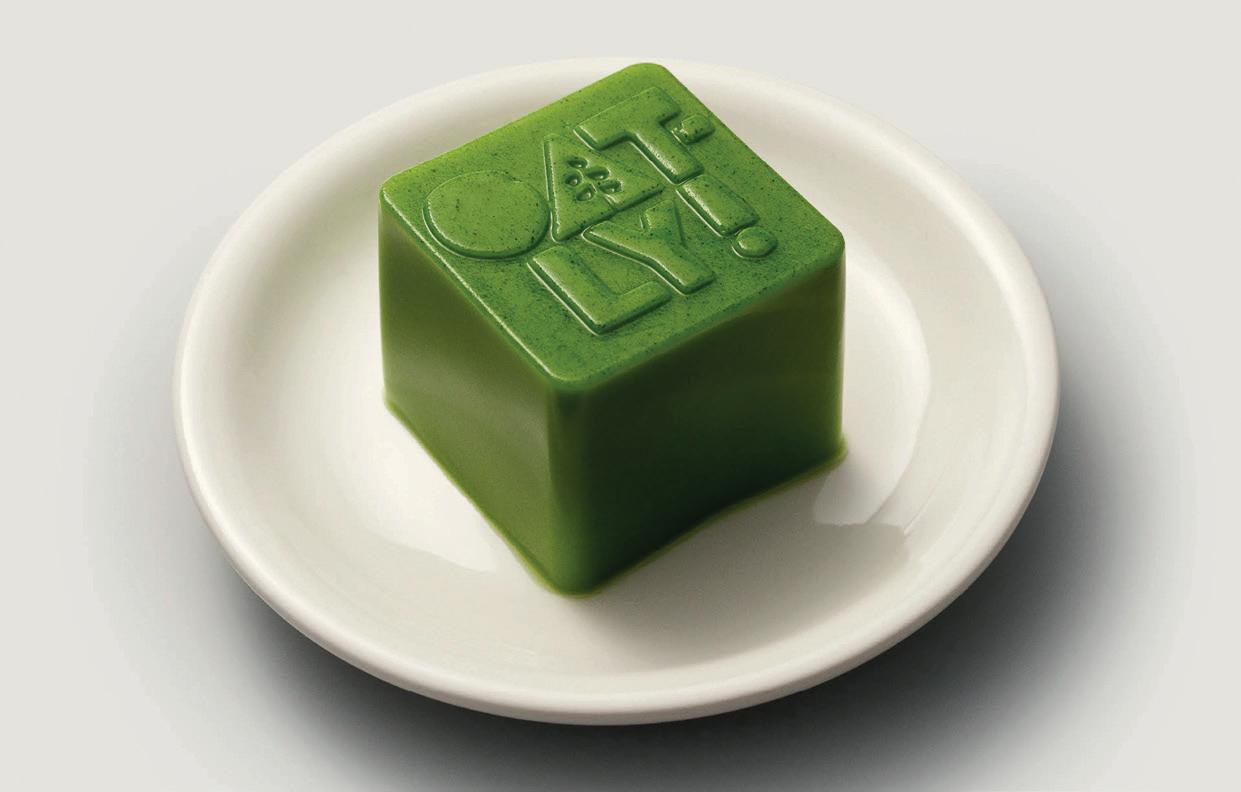
Oatly Matcha Latte Oat Drink was developed with this new reality in mind. Made with finely ground matcha and blended with Oatly’s smooth oat base, it delivers a gently sweet green tea flavour with a hint of vanilla - all in a fully plant based, dairy free format.
Designed to be served hot or cold, frothed or poured over ice, it offers hotels flexibility without added training or equipment. It also lowers the barrier for guests who may be curious about matcha but unsure where to begin, providing a familiar, approachable entry point.
In a post matcha mania world, this balance is essential. As the Future of Taste report highlights, today’s drink choices are increasingly shaped by a desire for conscious indulgence - experiences that feel good without feeling restrictive. Matcha, when presented accessibly, delivers exactly that.
Matcha’s real strength lies in its versatility. Hotels are uniquely positioned to maximise this, using a single ingredient across multiple touchpoints.
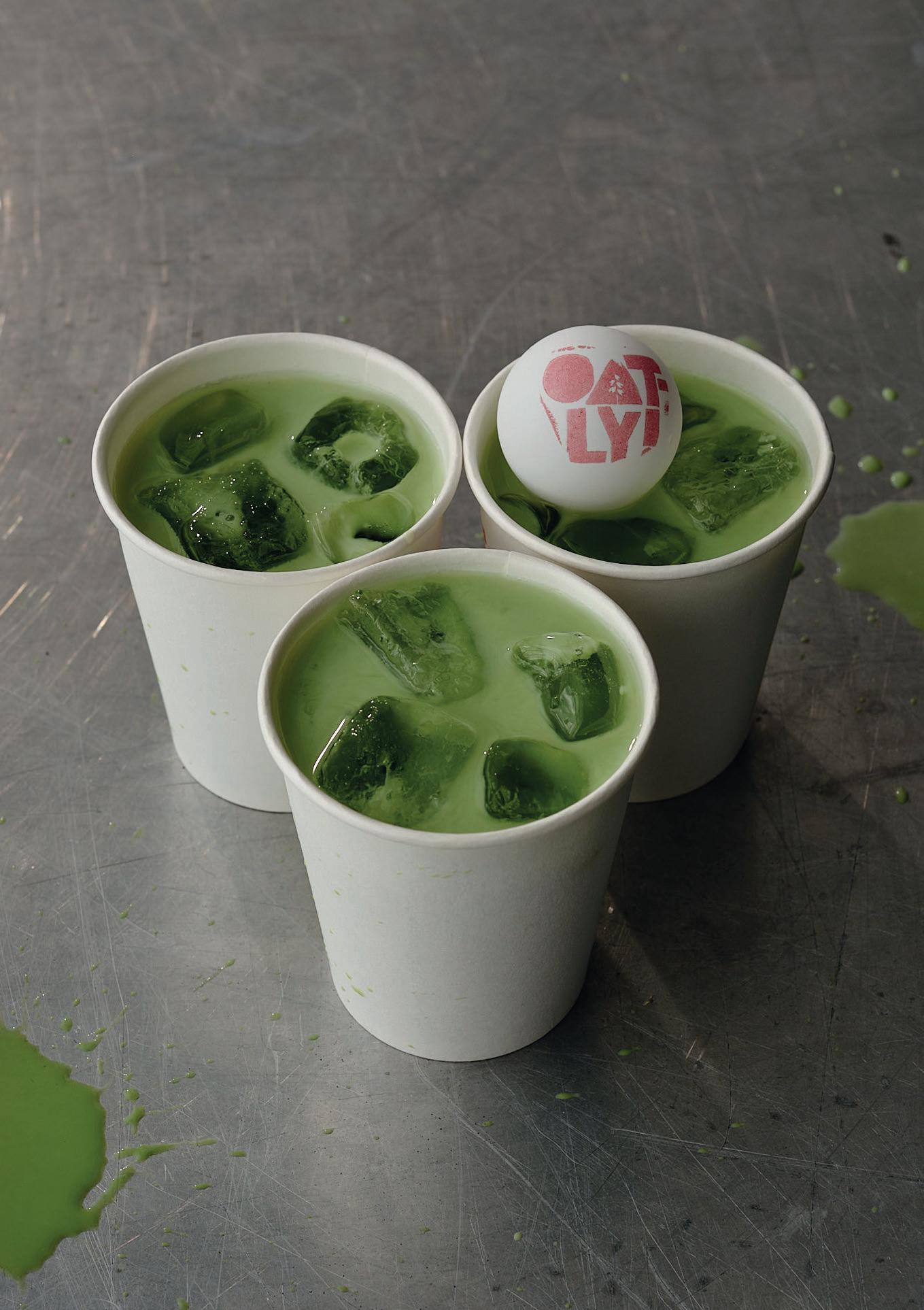
In the morning, matcha offers a lighter alternative to coffee - particularly appealing to guests moderating caffeine intake. By day, iced matcha drinks and lattes add colour and interest to café menus and photograph beautifully for social sharing. In the evening, matcha can be reimagined as part of a premium non alcoholic serve or as an unexpected twist in cocktails, aligning with growing interest in moderation.
This flexibility allows hotels to refresh menus without constant reinvention, while maintaining a strong through line of flavour and identity.
Personalisation continues to define modern drink culture, and matcha lends itself naturally to this. Different sweetness
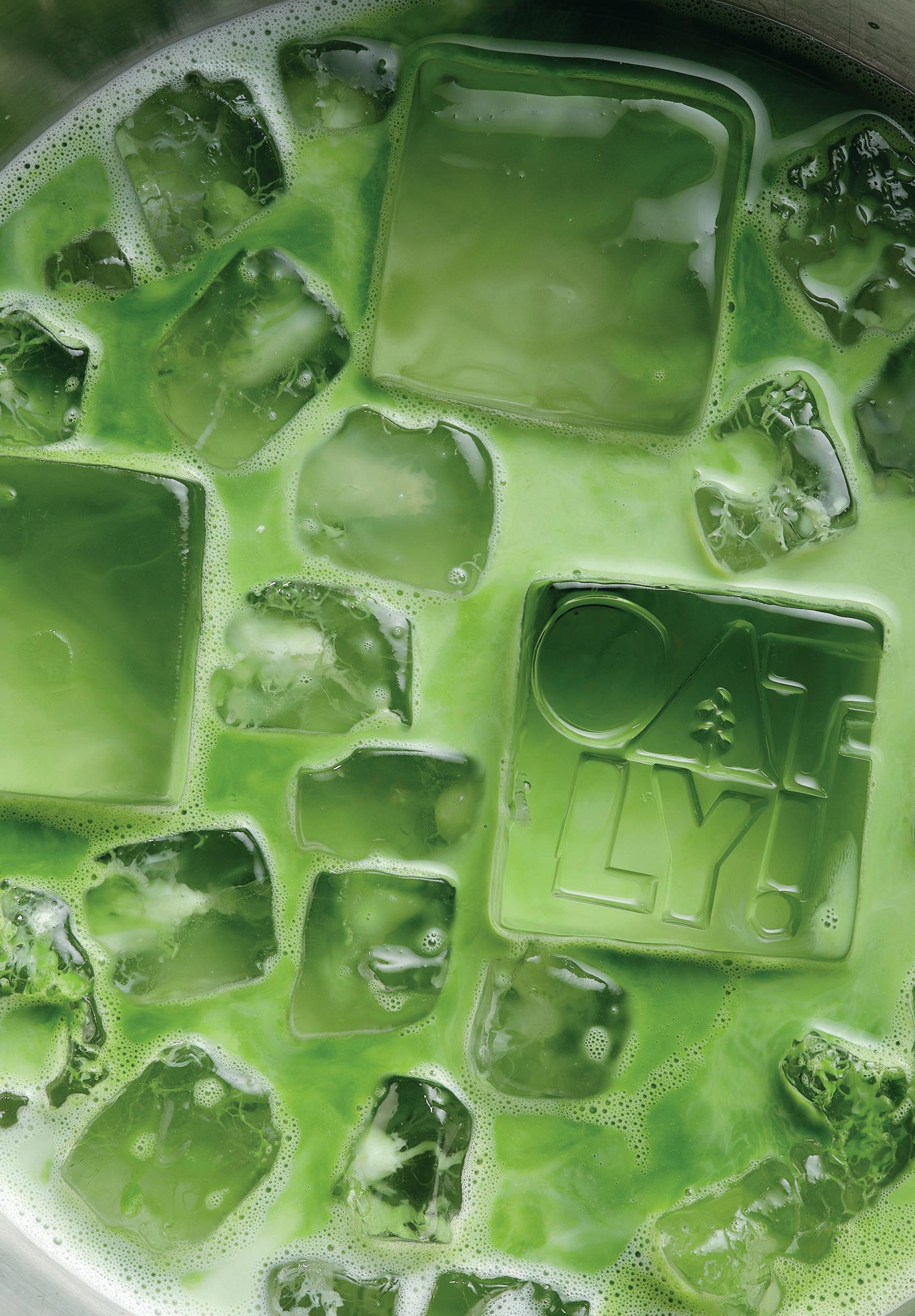
levels, flavour infusions or seasonal additions allow guests to shape their own experience.
For hotels, this adds perceived value while reinforcing attention to detail. A short menu explainer or staff led recommendation can help demystify matcha for newcomers, while still appealing to more knowledgeable drinkers.
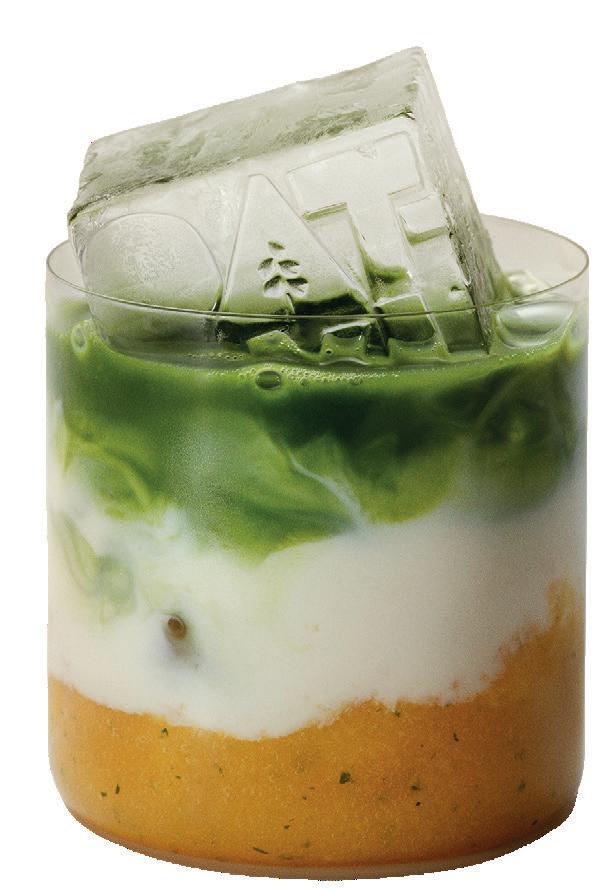
Matcha’s future is not about replacing coffee or chasing fleeting trends. It’s carving out a permanent place on menus as a drink that reflects how tastes are changing - globally connected, visually engaging and adaptable to different moods and moments. By making matcha accessible - for both teams and guests - hotels can tap into its growth while staying ahead of where beverage culture is heading.
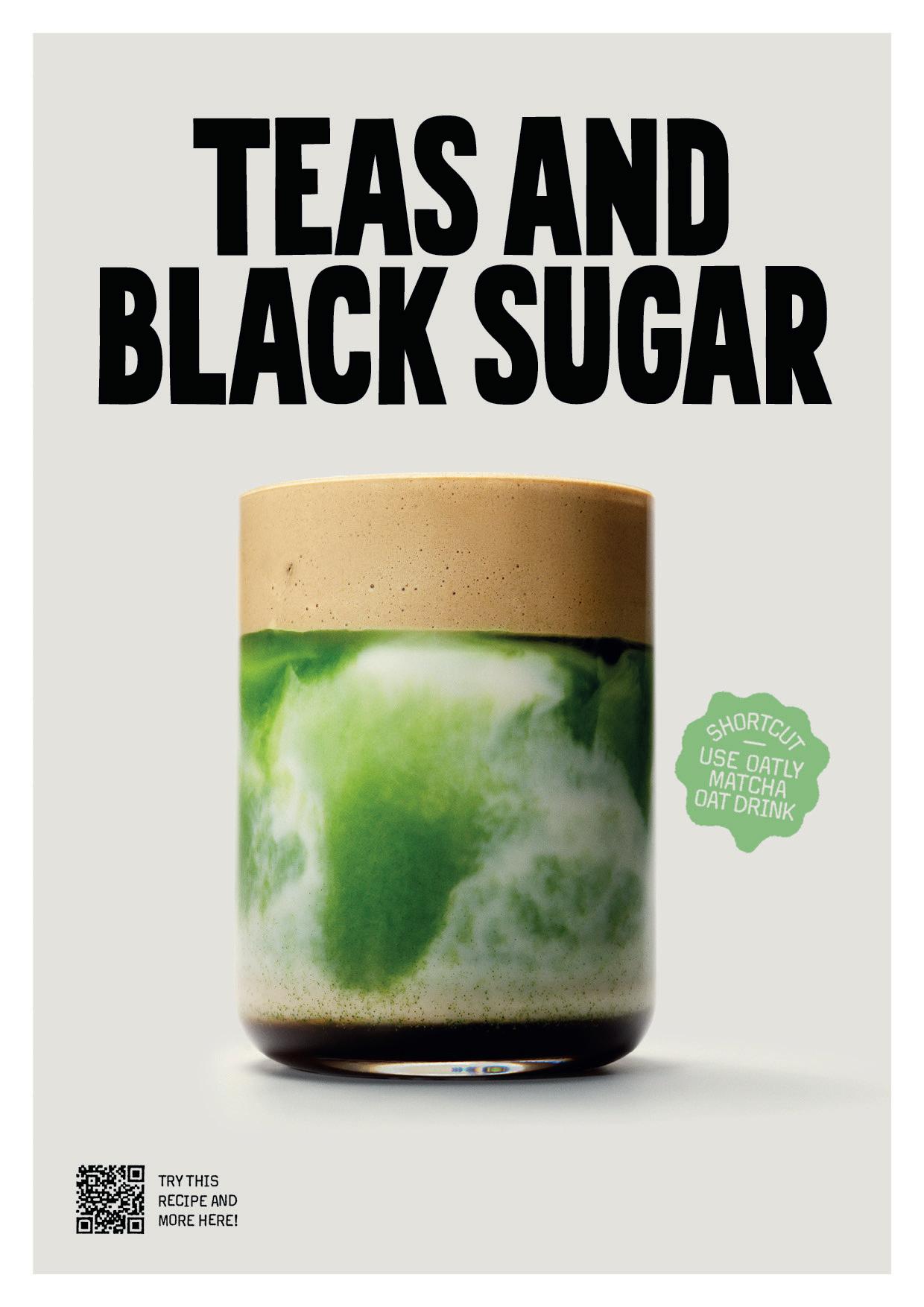
Check out our favourite matcha recipes and more here…

Mezcal, Reimagined for Modern Luxury: A Commercial Opportunity for UK Hospitality.
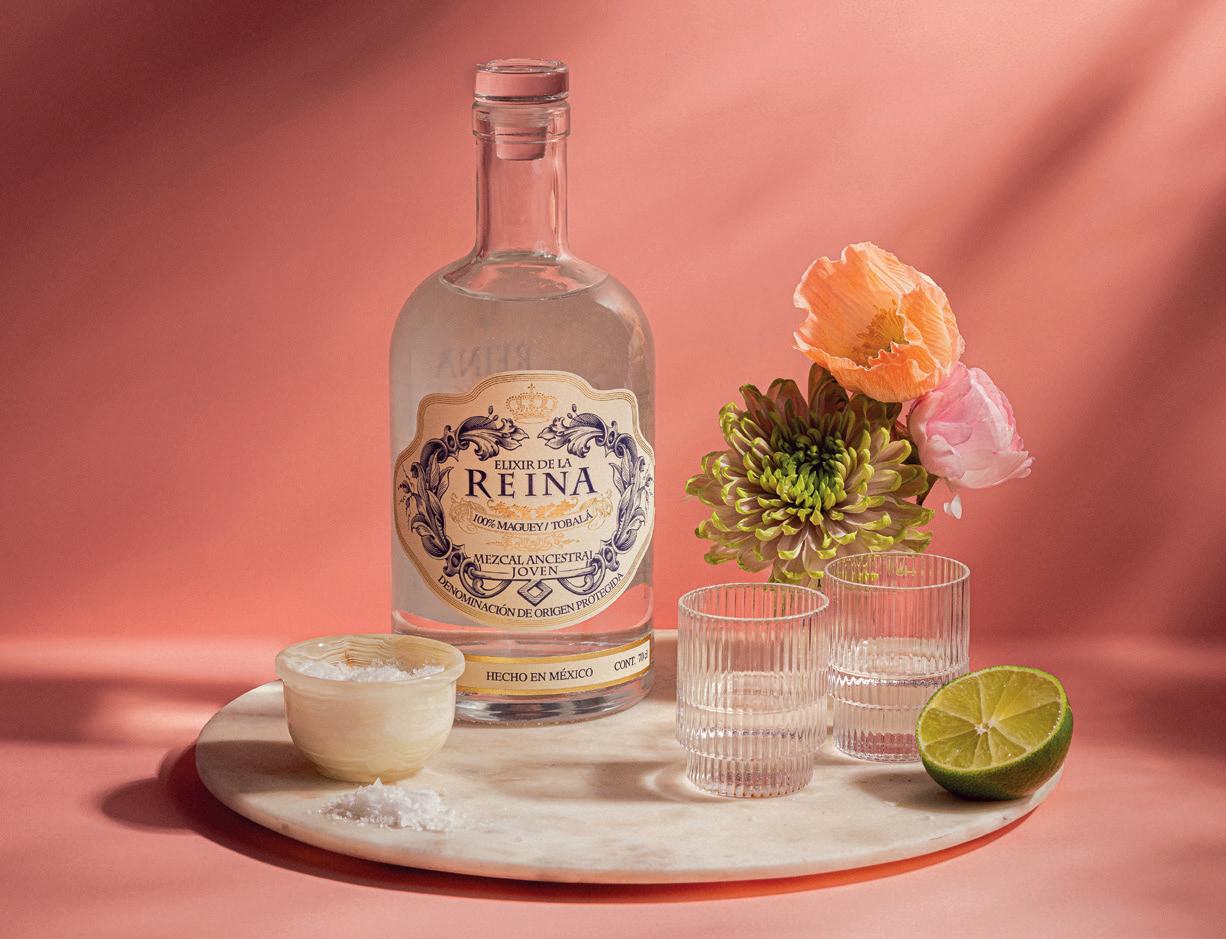
Agave is now outperforming every major spirits category in the UK on value growth, with +6.2% growth in 2025 and a further +6.1% forecast for 2026, clear evidence of a category gaining real commercial momentum. Within this, mezcal is emerging as a standout premium segment, offering depth, authenticity and a more elevated drinking experience.
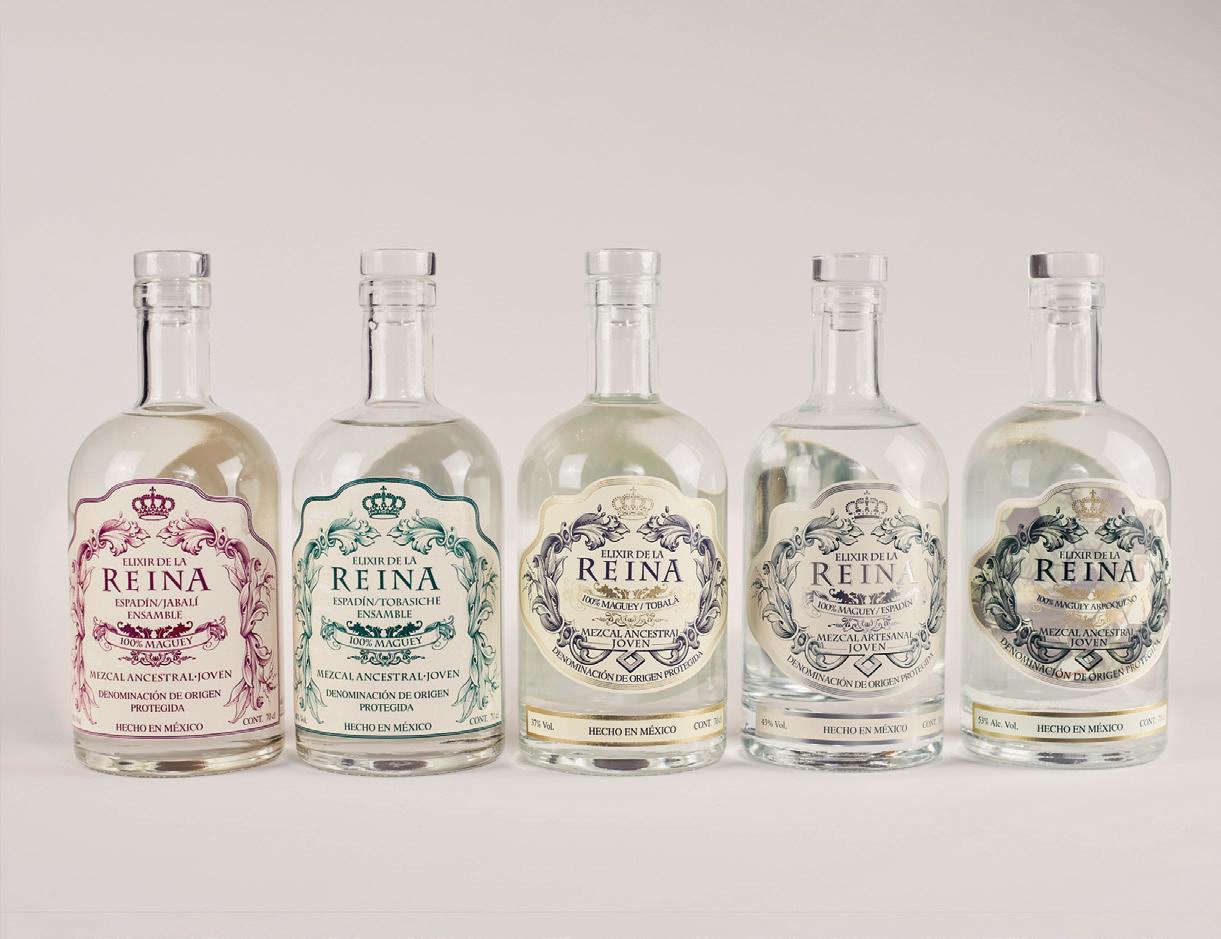
Reinforcing this momentum, Mezcal Reina’s Ensamble Espadín Tobasiche has just been awarded Gold and named Mezcal of the Year 2026 at the London Spirits Competition, firmly establishing the brand among the finest mezcals now emerging in the UK market.
Against this backdrop, Mezcal Reina, a female-founded and female-led mezcal house, enters the UK market with a proposition that unites authentic Mexican provenance, sustainability-led production, and a commercially versatile portfolio designed for modern hospitality.
For UK hospitality operators, this presents a timely opportunity to introduce a category that delivers premium margin potential and meaningful differentiation.
Founded by Mexican-born entrepreneurs Susana Franyutti and Monica Torroella, Mezcal Reina bridges generations of traditional mezcal craftsmanship with the expectations

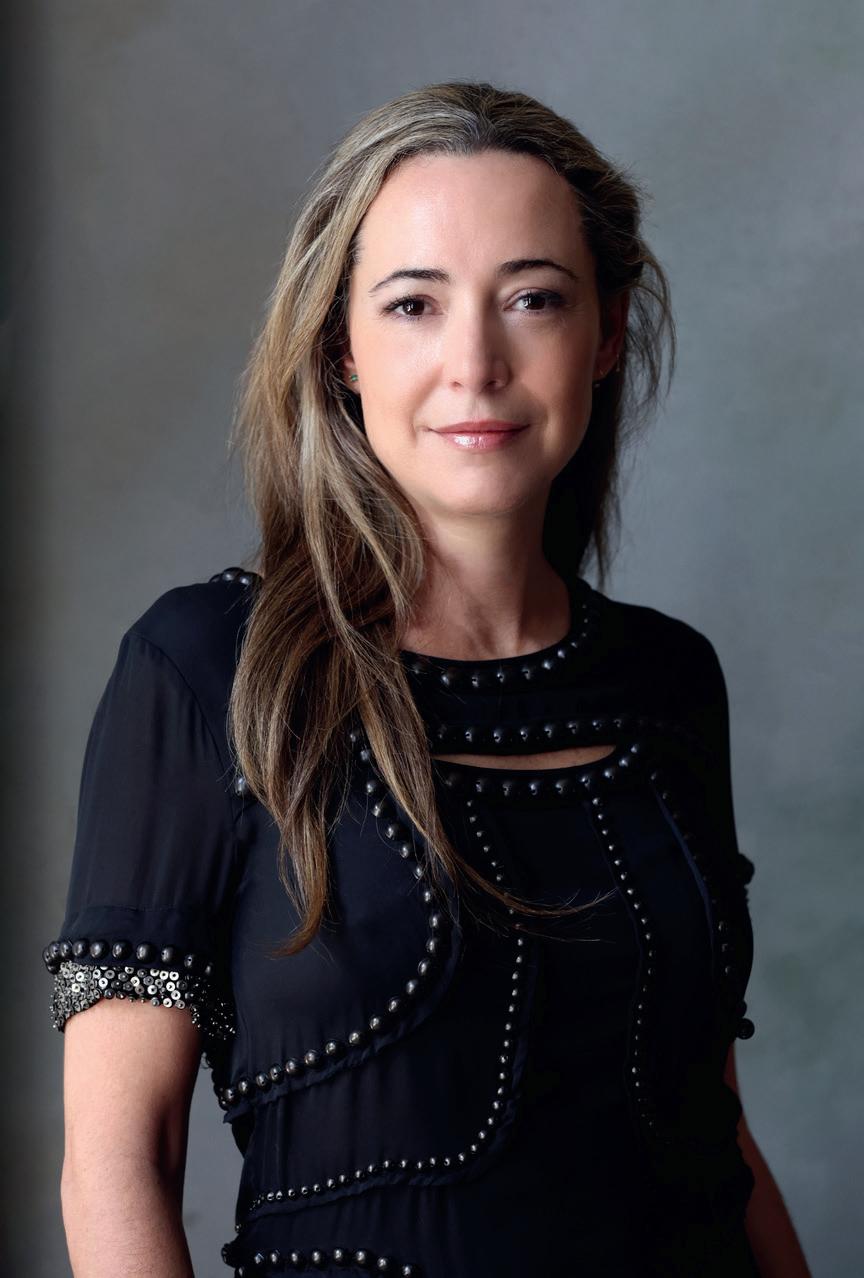
of today’s premium consumer. Having lived in the UK for over two decades, the founders bring a dual perspective combining cultural authenticity with a clear understanding of the modern hospitality landscape.
Each expression is crafted in Oaxaca by fourth- and fifth-generation maestros mezcaleros using time-honoured artisanal and ancestral techniques. Mature agaves are slowly roasted in underground pits, naturally fermented, and distilled with precision to preserve depth, complexity and a true sense of place. The result is a portfolio that delivers authentic provenance, credible craft and a refined luxury sipping experience, qualities that resonate with discerning guests and premium venues.
Increasingly, premium spirits are judged not only by quality, but by the values behind them. Mezcal Reina places sustainability at the core of its ethos, working to regenerate agave ecosystems and support the communities that sustain this craft.
By prioritising seed-grown agaves and traditional milpa-style agriculture, the brand promotes biodiversity, protects long-term supply and supports rural livelihoods across Oaxaca. For hospitality operators, this becomes a
meaningful point of differentiation, aligning with guest expectations around transparency, authenticity and responsible consumption, while supporting premium pricing.
Mezcal Reina is designed not only to tell a compelling story, but to work effectively across a range of hospitality environments.
The portfolio supports luxury sipping, elevated mixology and curated tasting experiences, enabling operators to introduce mezcal in a way that feels both accessible and distinctive. The flagship Espadín, crafted using artisanal methods, offers versatility and approachability, making it equally suited to premium cocktails and refined sipping serves. Its quality has recently been recognised with a gold medal at the Global Tequila & Mezcal Masters 2026, reinforcing its credentials as a leading expression within the category.
Alongside this, the range includes expressions produced using ancestral methods, including the Ensamble Espadín Tobasiche, Tobalá and Arroqueño. These ancestral mezcals, handcrafted and distilled in clay, offer greater depth, texture and terroir expression. This craftsmanship has been consistently recognised at the highest level.
Importantly, the range has been curated to offer both versatility and depth across a range of serve styles and occasions. The Tobasiche and Tobalá provide accessible entry points into ancestral mezcal, while the Arroqueño sits at the more limited, collectible end of the spectrum, allowing operators to build a considered offering across different price points and guest occasions.
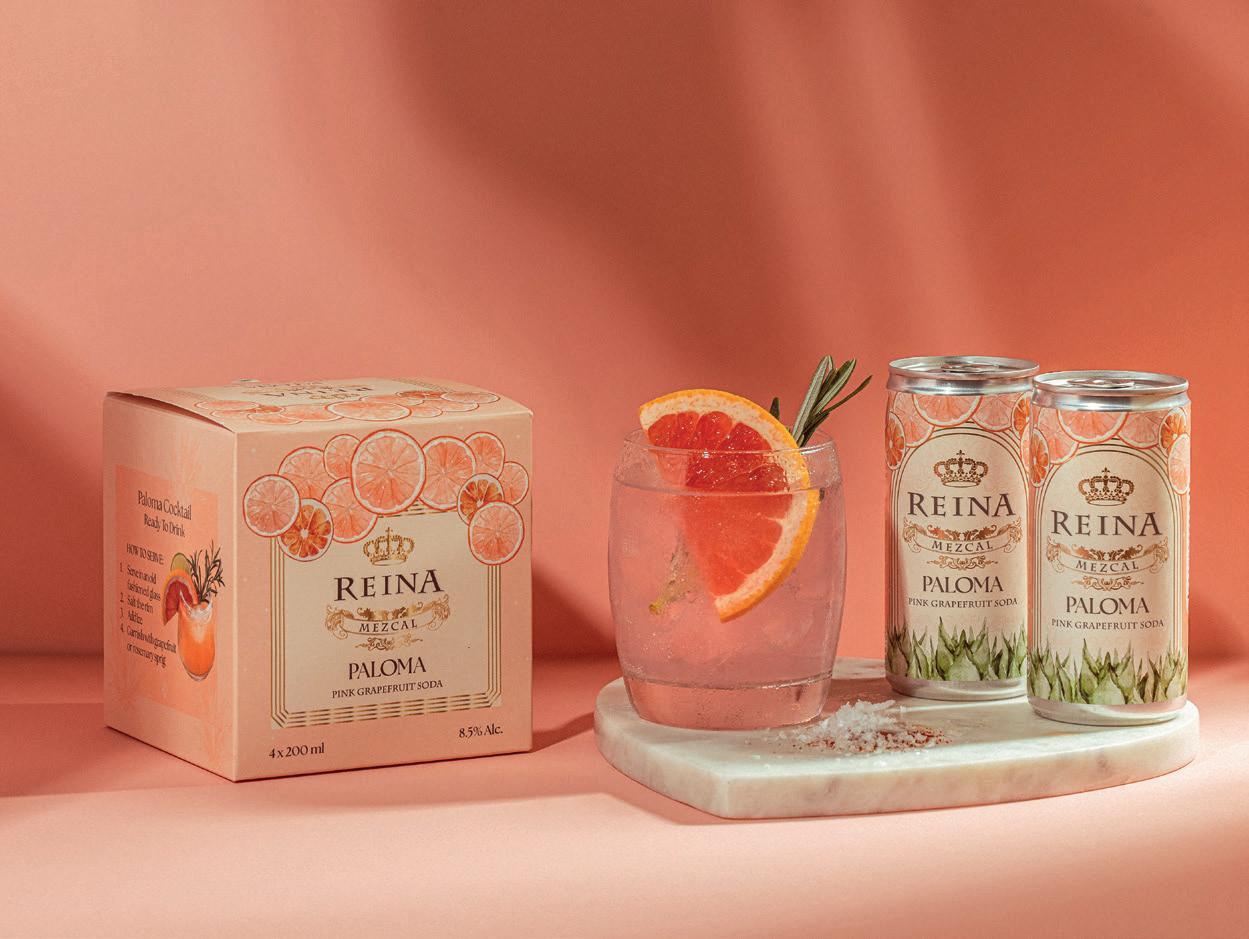
The brand also addresses a key operational need with its ready-to-drink range, delivering premium experiences without added complexity. The recently launched Mezcal Reina Paloma, crafted from 100% Espadín agave, offers
a bar-quality cocktail in a convenient format, combining light smoky character with fresh grapefruit and lime for a refined serve.
Serves such as the Paloma and Margarita are now firmly established in the UK market, providing a familiar foundation that mezcal can elevate into more premium propositions. Building on this momentum, a second expression, the Mezcal Reina Mezcalita, launches in May, expanding the range into a two SKU RTD portfolio designed for versatility across multiple occasions.
From in-room minibars and terrace service to events and high-footfall environments, this format unlocks incremental revenue opportunities while maintaining brand integrity. With RTDs continuing to outperform many traditional alcohol categories, it offers a compelling route to growth aligned with both consumer demand and operational efficiency.
While mezcal’s global momentum continues to build, the UK market remains relatively underdeveloped, creating a clear opportunity for early adopters to establish leadership within the category.
By integrating Mezcal Reina, operators can enhance premium positioning, introduce a category with strong growth credentials and deliver a more engaging, story-led guest experience, while unlocking new revenue streams across both traditional and ready-to-drink formats.
Already available through specialist partners including Master of Malt, Mezcal Reina is gaining traction among those seeking to elevate their drinks programmes with credibility and impact.
For hospitality groups, buyers and operators interested in listing opportunities or collaborations, please contact:
Susana Franyutti Co-Founder & CEO, Mezcal Reina susana@mezcalreina.com
Jon Hargreaves of Franke Coffee Systems UK&I explains how premium, consistent, and innovative coffee programmes are helping hotels elevate satisfaction, and strengthen their overall F&B offering.
How are hotels rethinking their coffee menus to meet rising expectations from guests?
Hotel guests today are far savvier when it comes to coffee and the overall beverage experience. Many people now start each day with premium coffee at home or from a specialty café around the corner – and these expectations don’t disappear when staying in a hotel.
To keep up with guest expectations, hotels are actively rethinking, reshaping, and diversifying their beverage menus. It means opting for high-quality beans and barista-grade foam, alongside the customisable ‘must-haves’: plant-based alternatives, syrup flavours, matcha, and chai (to name a few from a long, growing list!).
In what ways can a premium coffee programme influence guest satisfaction, dwell time, and overall food and beverage perception?
Hotel operators are rapidly acknowledging the truth about coffee: it may be ‘just’ a drink, but it’s often the small detail guests remember most. Even after a perfect stay, from the staff service to the evening meals, a disappointing final coffee at breakfast can influence lasting impressions (and in turn, impact guest reviews and feedback scores). On the other hand, consistently great coffee reinforces perceptions of quality and care. It encourages guests to stay longer in lounges, bars and breakfast areas, leading to increased repeat purchases, and perhaps even repeat stays. Bringing coffee up to a high standard reflects positively on the wider food and beverage offering, elevates the overall guest experience, and helps strengthen brand image –three key advantages for success in today’s competitive hospitality landscape.
How can hotels balance artisan-level coffee with operational efficiency across different service areas?
Consistency is one of the hotel sector’s biggest challenges, especially without trained baristas employed at every site or on each shift. This is where automatic coffee machines
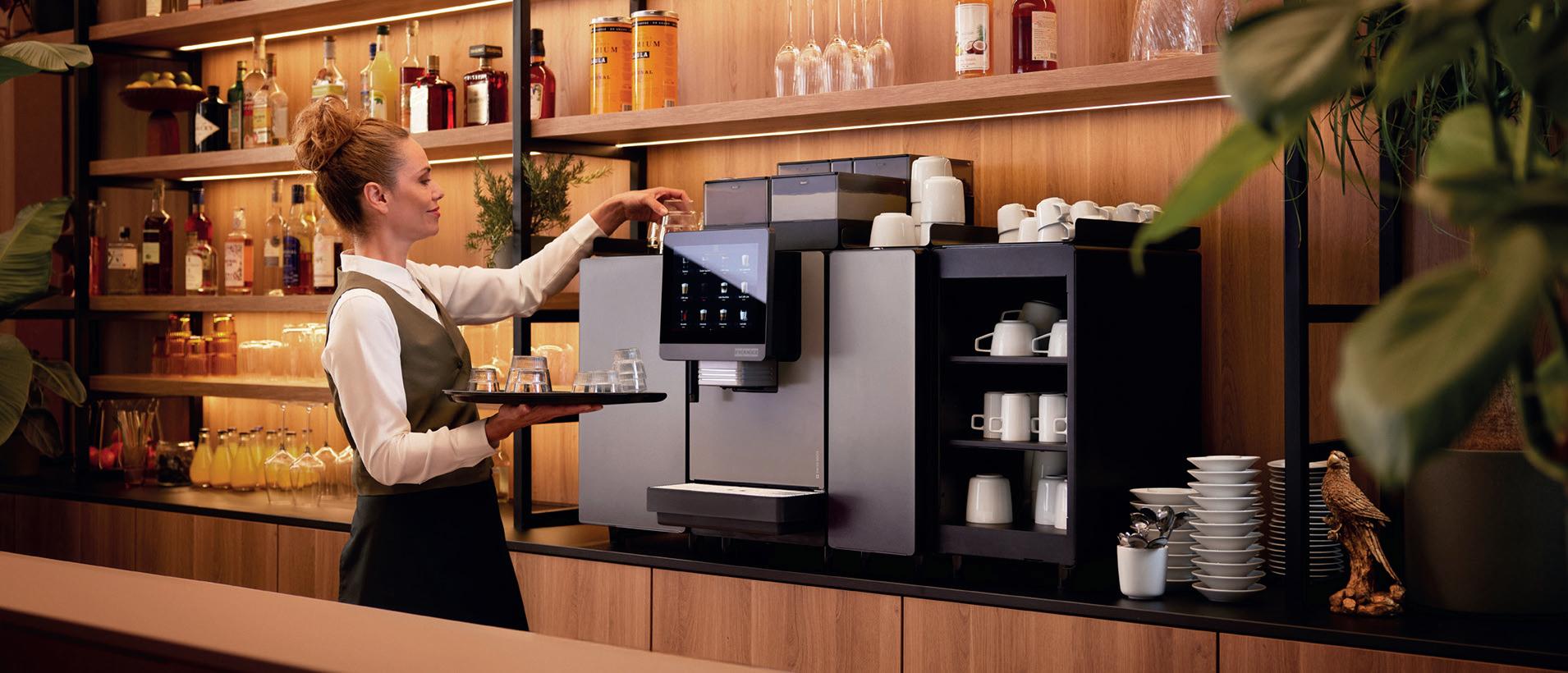
come in, featuring the latest innovation in pre-set recipes, coffee extraction technology, and automated milk systems and steam wands. These high-capacity machine solutions make it easy to achieve consistent, high-quality drinks across breakfast, lobby, bar and self-serve areas – within seconds, at the press of a button.
Franke recently introduced its New A Line range - how does this innovation support hotels in elevating their offering while adapting to evolving trends?
The new range is redefining what automated coffee systems can deliver. Technologies like FoamMaster ensure barista-grade foam texture in every milk-based drink, while iQFlow™ guarantees stable taste and flavour profiles. The intuitive touchscreen interface makes the equipment equally effective when placed behind the bar or in self-serve environments – think espresso martinis at night, followed by busy breakfast sessions.
The New A Line is also supported by modular add-ons, each carefully designed to meet trends spanning alternative milks, syrup and flavours, and hot chocolate and matcha powders. After all, it’s no longer about offering coffee on the menu – but using quality beverages to deliver a memorable experience at every guest touchpoint.
Email Jonathan.Hargreaves@franke.com to learn more.
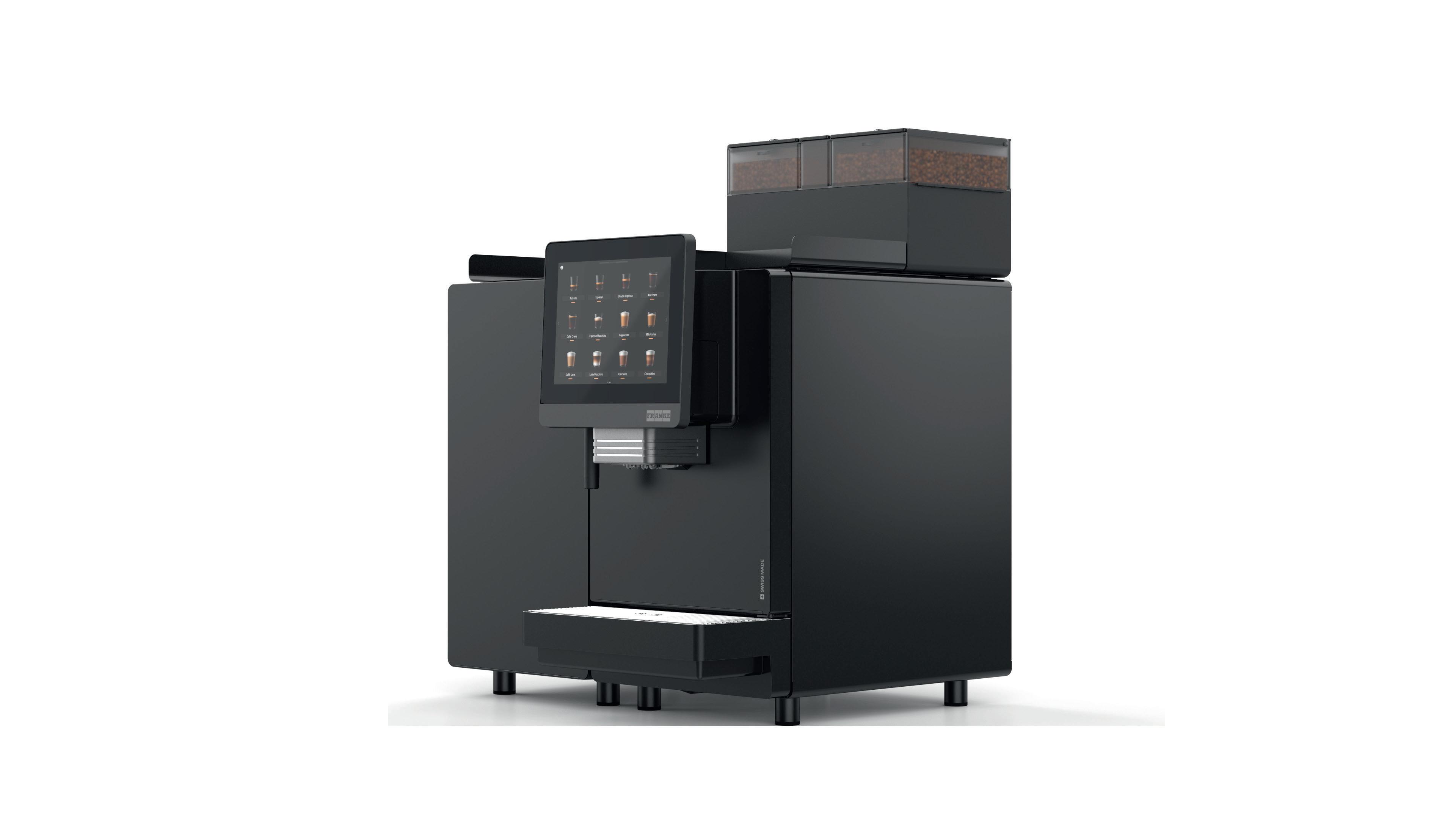
The New A Line introduces features like the New FoamMaster, designed to improve in-cup quality and consistency by delivering the optimal milk temperature and highest foam quality for every milk-based beverage. It’s all about the moment




Why hotel bars are rethinking glass care and wine storage, as told by Ela Hedges, Business Development Manager at Miele Professional.
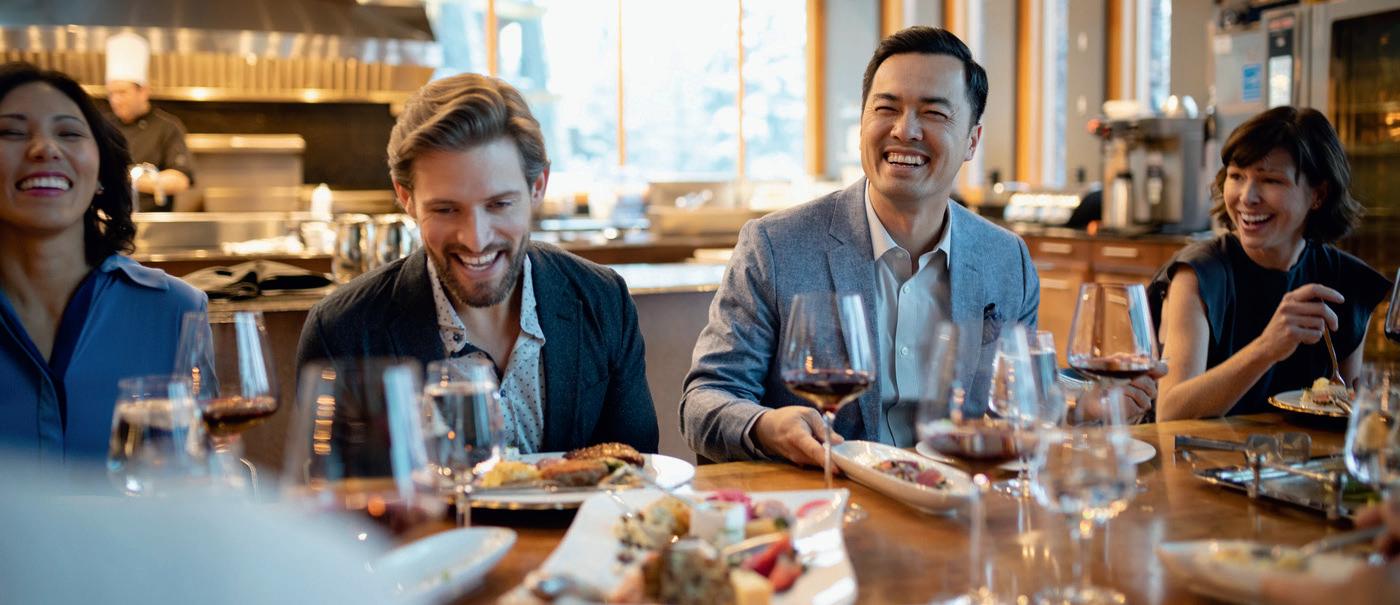
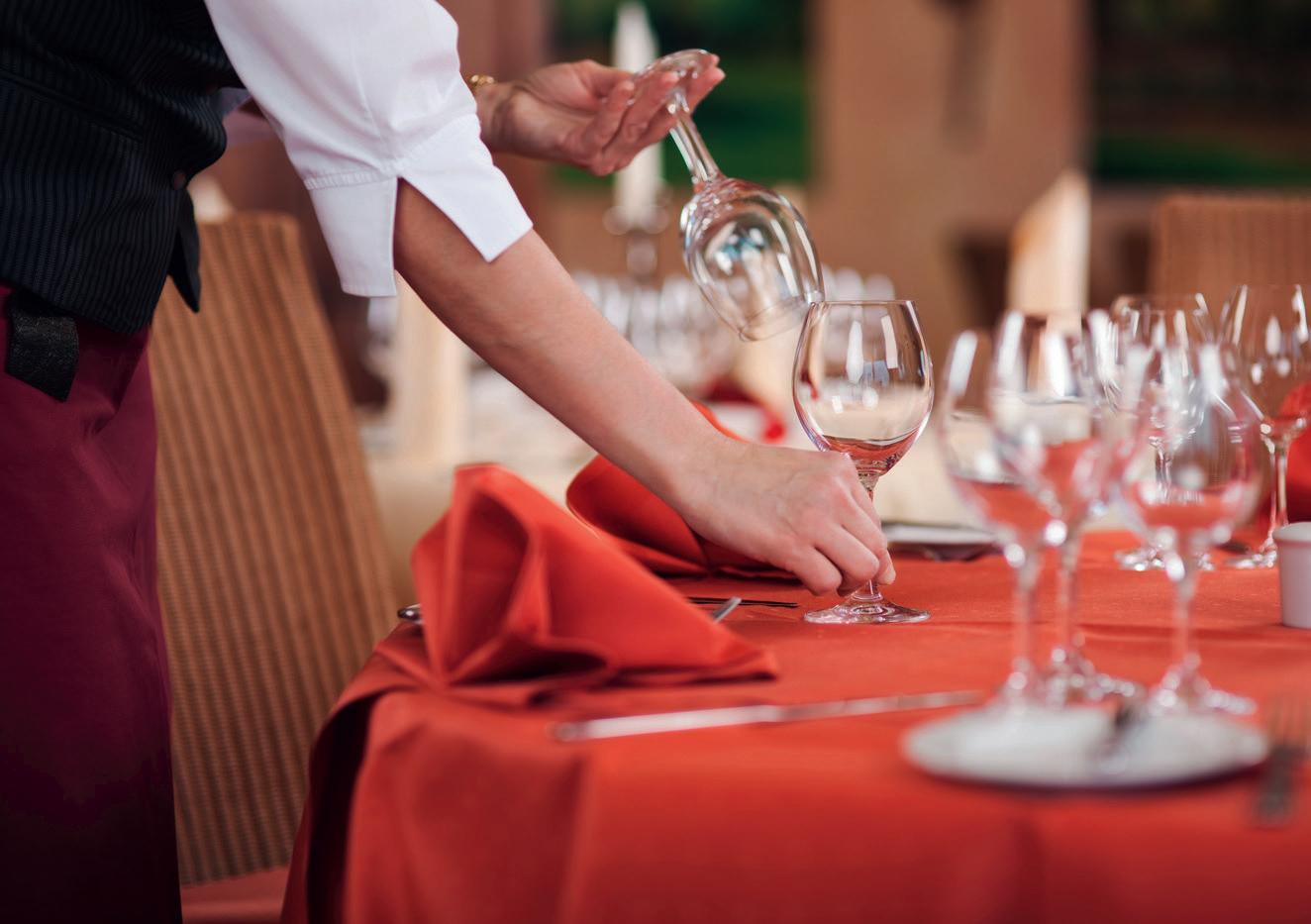
Hotel bars and restaurants play a growing role in shaping how guests perceive their stay. Whether it’s a welcome drink on arrival, a pre-dinner cocktail or a late-night glass of wine, these moments often leave a lasting impression, and one that should be positive. While certain aesthetics such as menus and interior design absolutely play their part, the foundations of a smooth, confident service are built behind the bar, well out of guests’ sight. In busy hotels, where bars can potentially serve residents, conference visitors, walk-ins and even guests all in the same day, consistency must be there throughout. Clean glassware and correctly stored drinks might seem like the basics, but they actually have a direct influence on pace of your service, the confidence of your staff and the overall guest experience.
care
Unlike standalone bars and venues, hotel bars very rarely operate in isolation. A single property may run multiple service areas, whether that be lobby lounges and cocktail bars or even restaurants and room service, all drawing on the same glassware. And during peak periods, especially in the evening, the pressure on back-bar systems can start to show.
Handwashing and polishing still exist in some hotel operations, but these approaches rely heavily on time. Cloth quality, surface cleanliness and human fatigue all introduce variables.
This has led more hotels to reassess their dishwashing technology. Freshwater commercial dishwashers offer a dependable alternative, particularly where hygiene and repeatability are most needed. By using clean water for
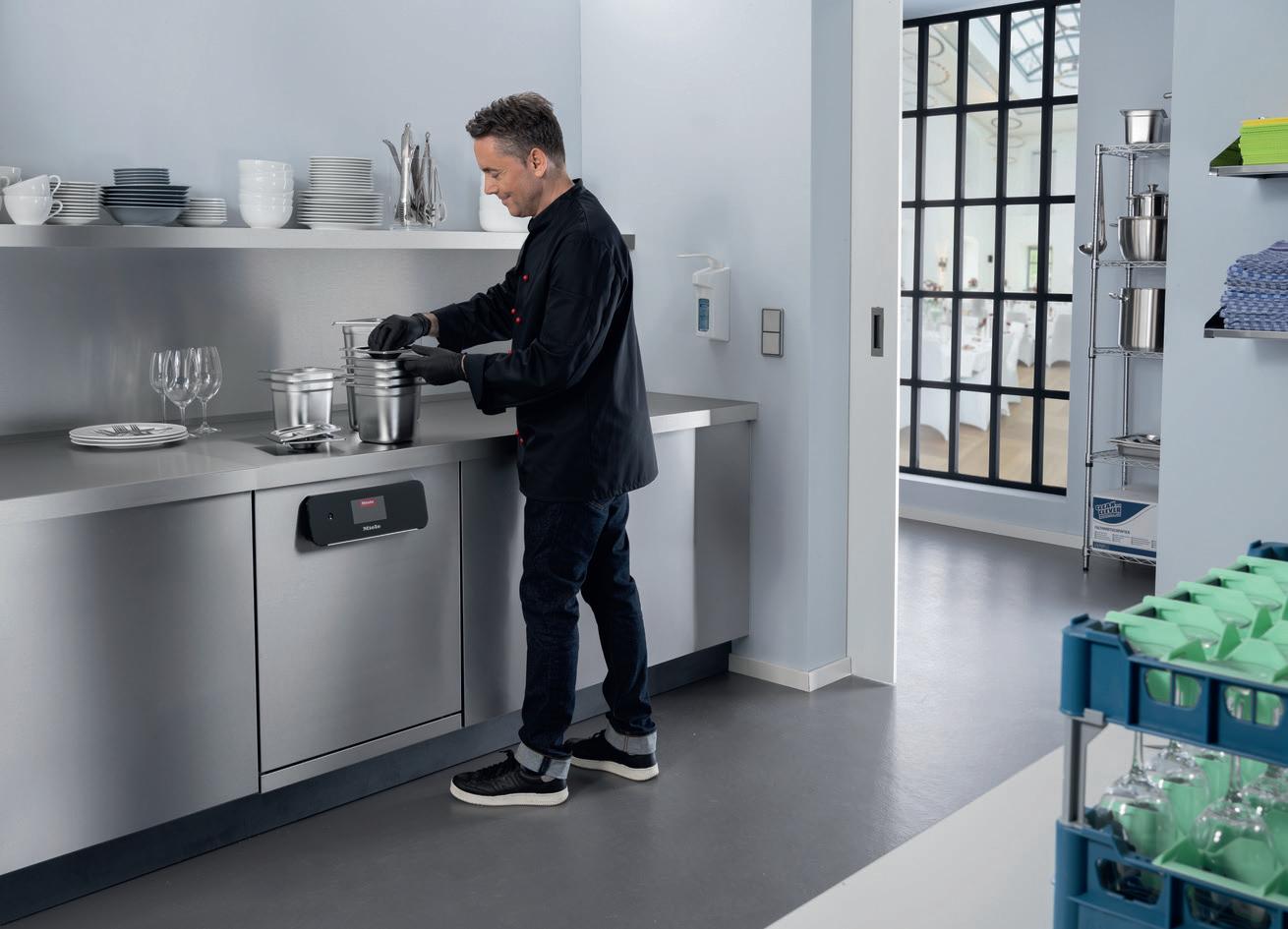
every wash cycle and flushing it completely before the next load, freshwater systems remove the risk of debris or odours carrying over. For hotels running continuous cycles across long service windows, that reassurance matters.
Miele Professional’s freshwater dishwashers, for example, are designed for demanding environments where speed and reliability are essential. Short cycles allow glassware to return to service quickly, while consistent wash results reduce the need for manual intervention behind the bar. The result is a calmer workflow, even when demand spikes unexpectedly.
Hotel guests may not consciously inspect every glass, but they notice when something feels off. Lingering odours, fingerprints or lipstick traces undermine an otherwise polished experience, particularly in premium settings. For wine and cocktails, where aroma and presentation are part of the appeal, the condition of the glass mustbe inseparable from the drink itself.
Standardising glass care through commercial dishwashing also helps hotels manage staffing challenges. Seasonal teams, agency staff and rotating roles are common across hospitality. So having equipment that delivers consistent outcomes regardless of who is operating it helps maintain standards across shifts, protecting brand reputation without placing additional strain on managers.
Alongside glassware, drinks storage has become another area of focus for hotel operators. Wine, in particular, demands stability. Temperature fluctuations, exposure to light and vibration can all affect flavour, structure and aroma, turning a carefully chosen bottle into a missed opportunity.
Hotel bars and restaurants often carry diverse wine selections, serving everything from sparkling wines to premium reds. This variety requires flexibility. Modern wine conditioning units now offer multiple temperature
zones within a single footprint, allowing different styles to be stored appropriately without compromise.
The Miele MasterCool wine conditioning unit is one example of how design supports practicality. With three independent temperature zones, flexible shelving and subtle interior lighting, it allows staff to access bottles easily without disturbing storage conditions. This ensures that a wine opened during afternoon service tastes exactly as intended later that evening.
Behind the bar decisions have a noticeable impact during high pressure periods, especially on the bar team. When staff trust that glassware is ready to use and that drinks are stored correctly, service flows more smoothly. There’s less hesitation, fewer last minute checks and greater confidence across the team.
In hotel environments, this reliability is especially valuable. Bars often operate alongside restaurant service, events and room service, all competing for attention and resources. Equipment that removes uncertainty helps staff focus on guests rather than firefighting operational issues.
Investment in back bar infrastructure rarely grabs headlines, but it quietly reinforces every guest touchpoint. Clean glassware supports presentation. Correctly stored wine protects quality. Together, they help ensure that hotel bars and restaurants deliver the same standard on a quiet weekday afternoon as they do on a fully booked Friday night.
For hotels aiming to offer memorable stays, these details matter. Guests may never see what happens behind the bar, but they feel the difference when service runs seamlessly and every drink arrives exactly as it should.
Discover how Miele Professional’s commercial dishwashing and wine storage solutions can support hotel bar and restaurant operations at https://www.miele. co.uk/p/hotels-guesthouses-4113.htm
With 79% of hotel guests expecting tea and coffee facilities as standard, rising to 85% in premium properties¹, in-room coffee isn’t a nice touch. It’s a baseline. But expectations and reality don’t always align. Only 25% of adults currently rate hotel coffee as good quality² — a significant gap between what guests hope for and what they actually find. The good news? Closing it is simpler than you might think.
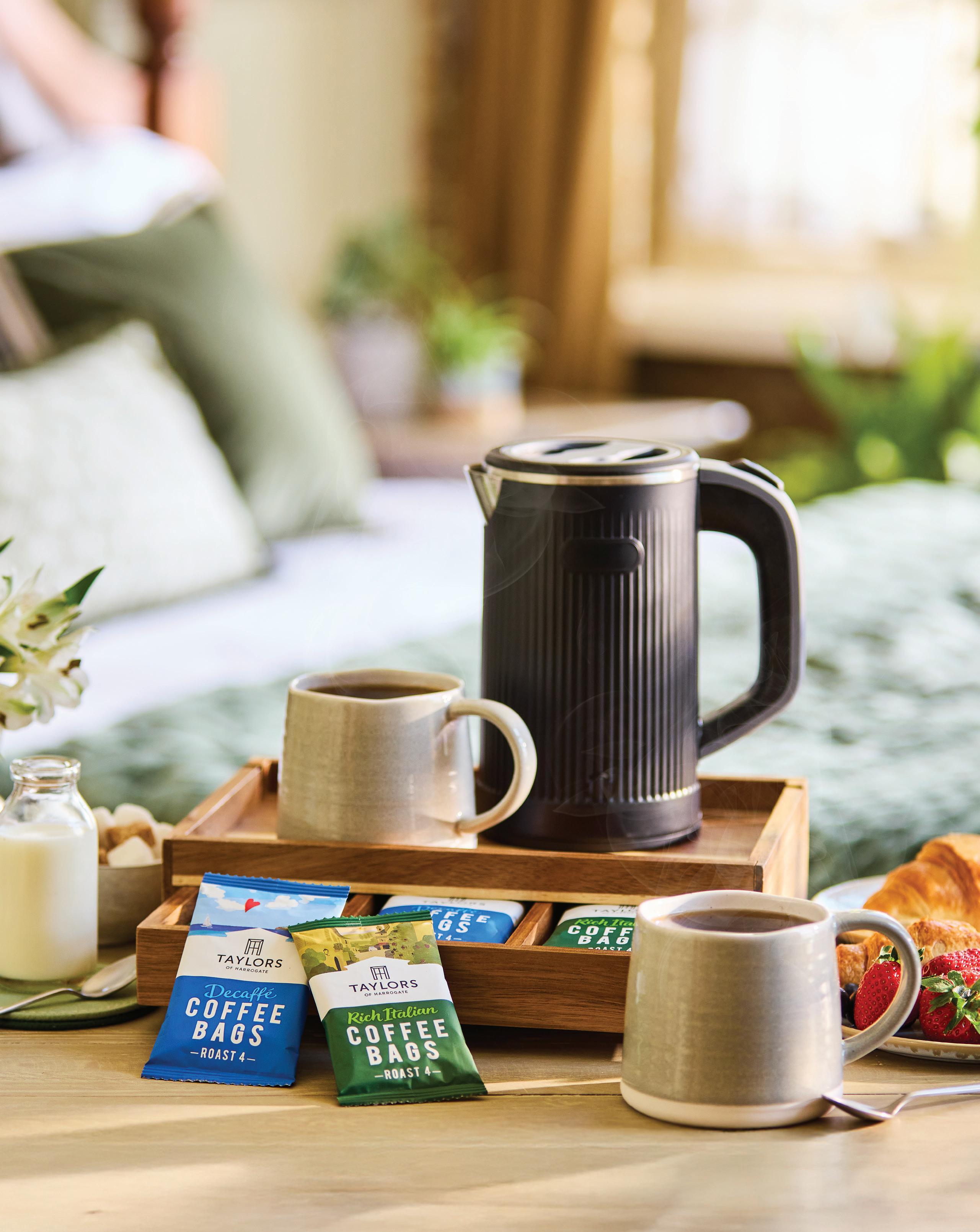
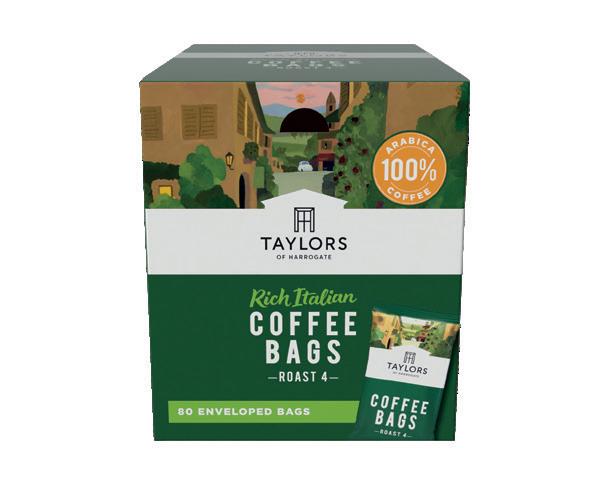
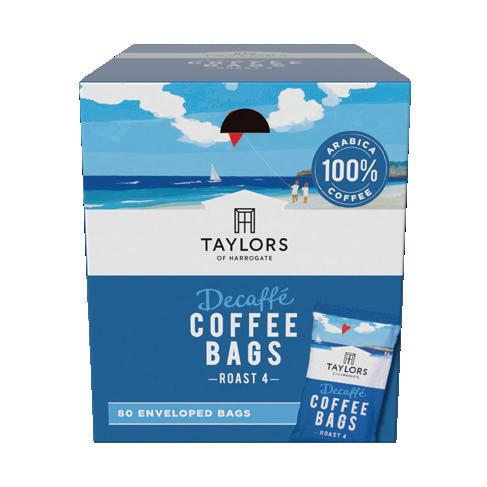
Taylors of Harrogate Coffee Bags, the UK’s No.1 Coffee Bags brand³, make it easy to serve and is something guests will genuinely enjoy. Each bag is packed with 100% Arabica coffee, sourced with care and roasted to deliver the best possible flavour in every cup. Guests brew them in minutes with nothing more than a kettle, mug and spoon. No machines, no training, nothing to maintain. Just delicious coffee, made in 5 simple steps.
The moments that shape a guest’s stay are often smaller than you’d expect.
In-room, a quality coffee can set the tone for an entire visit. Taylors Rich Italian Coffee Bags offer a full-bodied, aromatic cup that guests will actually look forward to. A straightforward upgrade with a real impact on satisfaction, reviews and return visits.
At breakfast, expectations tend to be at their highest. Upgrading to Taylors Coffee Bags is the kind of detail guests notice and remember when they’re deciding where to book next.
In conference and event spaces, Taylors Coffee Bags deliver quality without complexity. Quick to prepare, easy to serve, no equipment required. Great coffee, ready when it’s needed.
The Five Simple Steps:
1. Drop your bag in a mug
2. Fill your mug with boiled water
3. Swirl the bag around
4. Give it four minutes to brew
5. Take out the bag and enjoy
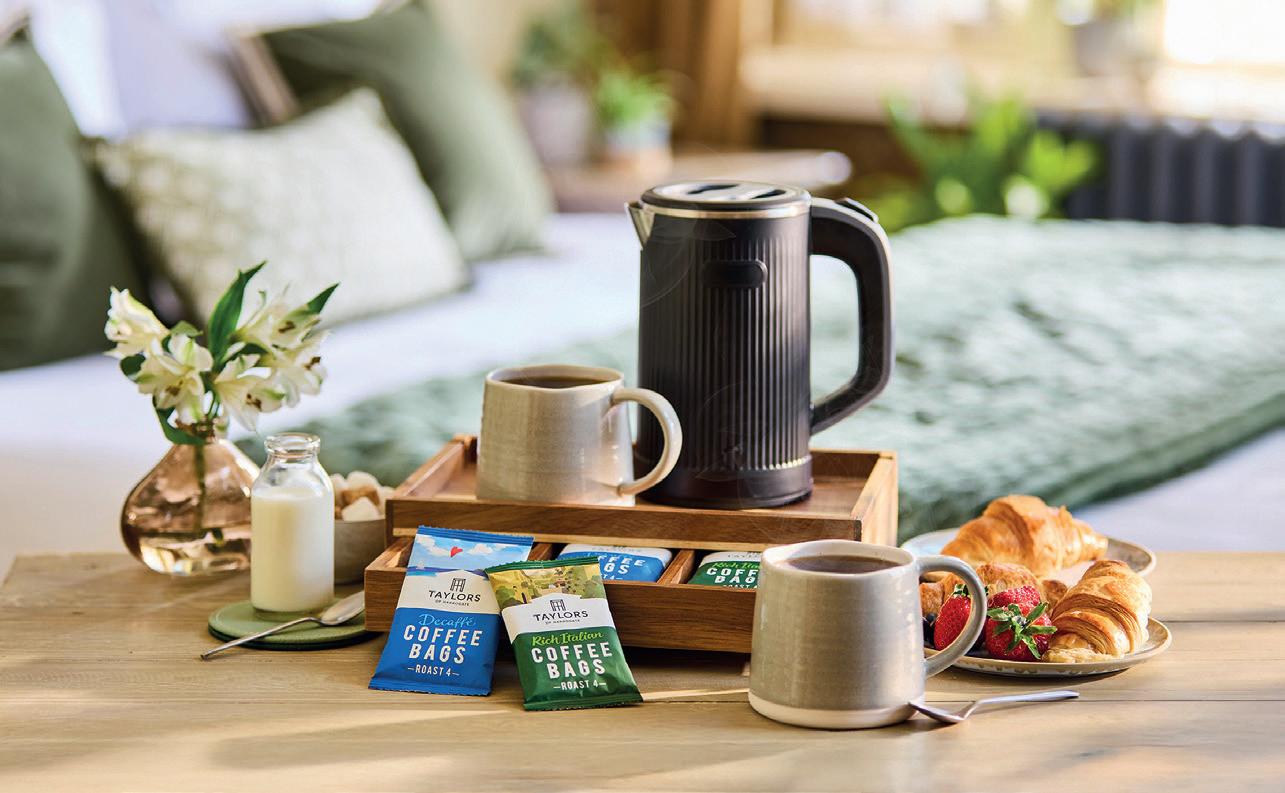
Northcote Hotel has served Taylors Coffee Bags in-room for some time now. Managing Director Craig Bancroft says it simply: “I buy them at home now because of Northcote. The taste is smooth, rich and round.” When one of the UK’s leading hoteliers makes Taylors his personal choice, it tells you something about what’s in the cup.
Taylors Rich Italian is the full-bodied, aromatic everyday essential. Taylors Decaffé delivers the same smooth, rounded quality without the caffeine. Both are individually wrapped for freshness. With 87% of hotel guests willing to pay more for premium options during their stay¹, the appetite is there.
Give
See it for yourself. Scan to request your free samples of Taylors Rich Italian and Taylors Decaffé Coffee Bags and find out why hotels across the UK are making the switch.
Scan the QR code
¹ SiteMinder’s Changing Traveller Report, 2025
² taylorsoutofhome.co.uk/sectors/hotels
³ IRI Sales Value, 2025
Premium roast and ground coffee, brewed in a bag.
Try them today
Sean Larsen, Co-Founder of Labl.it, explains how digital food labelling is helping hotel F&B teams streamline compliance, reduce risk, and improve both efficiency and guest confidence in an increasingly regulated landscape.
For readers who may not yet be familiar with Labl.it, can you explain what your system does and the role it plays within the food and beverage space?
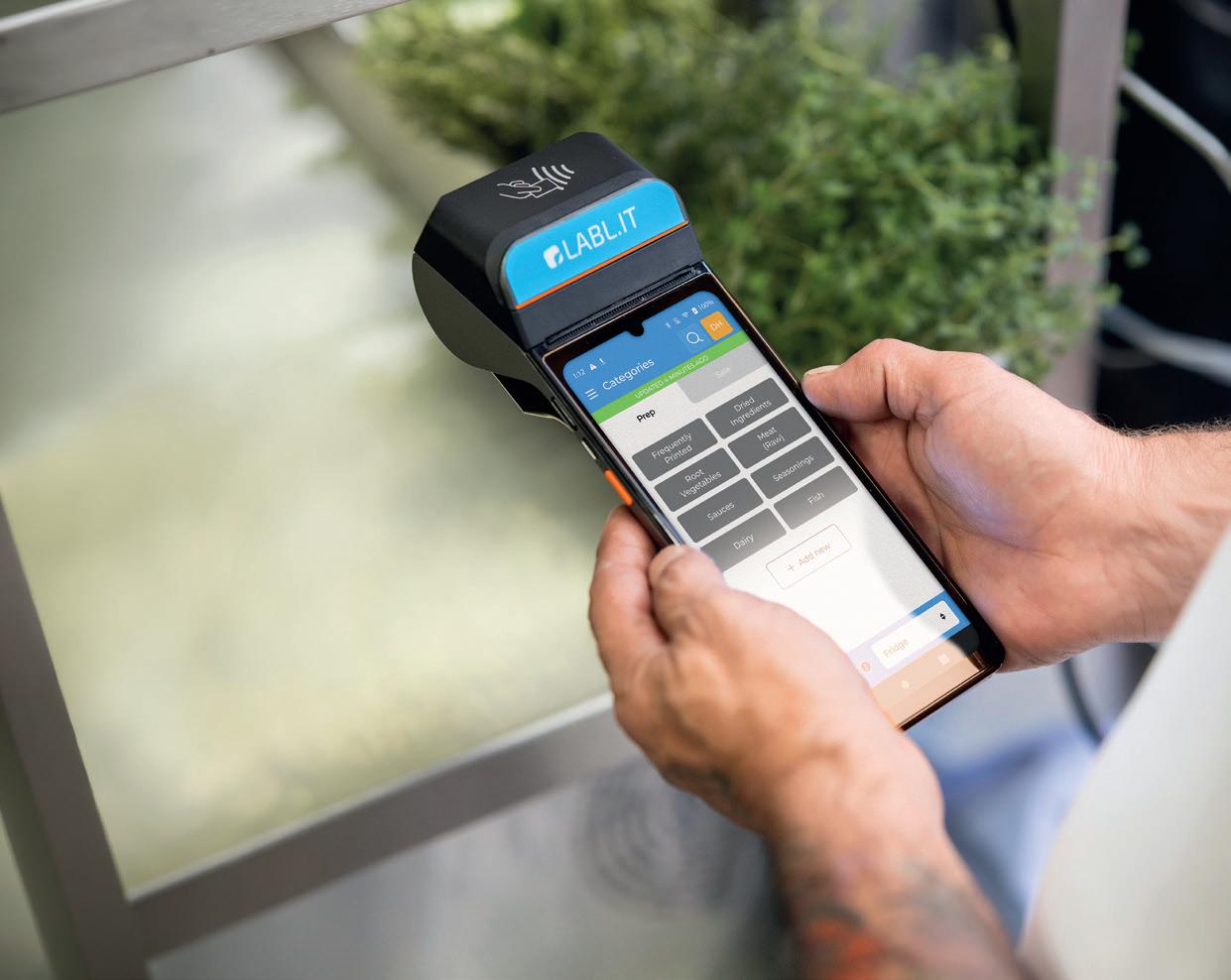
Labl.it is the UK’s leading all-in-one food labelling system for commercial kitchens. Already trusted by some of the biggest names in hotel F&B, including Hilton, Sofitel, Novotel, Holiday Inn, Exclusive Collection, Harbour Hotels, Accor, Aurora Group, and more, our system replaces handwritten food labels with a fast, reliable digital solution built around intuitive handheld hardware and cloud-based software, covering everything from prep dates and use-by information to the allergen data every commercial kitchen is legally required to produce.
We were founded in 2021 by former restaurateurs who had lived the daily frustration of compliant kitchen labelling first-hand. The pen-and-paper approach is slow, errorprone, and critically, it poses real food safety risks to consumers with allergies. We set out to solve that problem properly, and the result is a system that any kitchen team member can operate from day one, with no training required. Labels print in three clicks, in seconds.
Today, Labl.it is trusted by over 3,000 food businesses across the UK - from independent cafés and awardwinning restaurant groups through to care homes, contract caterers, and hotel kitchens. The role we play is simple: we help kitchens move faster, stay compliant, and trust every label.
What are the biggest compliance challenges currently facing hotel F&B departments, and how does Labl.it help address these issues?
Hotel F&B operations face a particularly complex compliance landscape. You have high-volume, multioutlet kitchens: restaurants, room service, banqueting, grab-and-go, all running simultaneously, often with large and frequently changing teams. Every item of prepped food must be accurately labelled with preparation date,
use-by information, and full allergen data. Getting that consistently right across an entire hotel operation, every single service, every single day, is genuinely challenging.
The biggest risks we see are around allergen accuracy and consistency. Since Natasha’s Law came into force, prepacked-for-direct-sale food must carry a full ingredients list with allergens clearly emphasised. For hotel kitchens producing grab-and-go items, sandwiches, buffet food, or packaged amenities, the compliance burden is significant, and the stakes are high. Errors aren’t just an EHO concern; they’re a guest safety issue.
Labl.it addresses this directly. Our system provides EHO and Natasha’s Law compliant label formats, with the ability to add allergen data with the legally required bolding and underlining, alongside prep dates, use-by times, and batch numbers. Centralised management means head chefs or F&B managers can control the product database
across all outlets, with user permission controls to ensure consistency. The result is that compliance becomes built into the workflow rather than dependent on individual staff knowledge - which matters enormously in an industry with high staff turnover.
Transparency and traceability are becoming increasingly important to consumers - how does Labl.it support hotels in meeting these expectations?
Consumer expectations around food information have shifted significantly, and rightly so. Guests today, particularly those managing allergies or dietary requirements, want to know exactly what is in their food. For hotels, which serve an incredibly diverse range of guests, the ability to provide clear, accurate food information is no longer a differentiator; it’s a baseline expectation.
Labl.it supports this in a tangible way. Every label produced through our system carries verified, consistent allergen and ingredient information drawn from a centralised product database. There’s no ambiguity, no reliance on a team member recalling what went into a dish - the data is accurate and traceable back to the original product record.
Our TempLog® add-ons take this a step further, and importantly, they do it differently to what’s already on the market. Many temperature monitoring solutions are expensive, complex to implement, and require significant setup time. TempLog® accessories are a fraction of the cost of comparable solutions, significantly more robust hardware built for the realities of a busy kitchen environment, and simple to set up with just a few taps. Hotel kitchens can record temperature checks alongside labelling activity within a single connected system, creating a comprehensive digital compliance record that supports full EHO audit-readiness - without the price tag or complexity that has made other solutions a hard sell for F&B teams.
In a competitive hospitality landscape, how can leveraging your solution enhance a hotel’s guest experience and drive revenue within F&B operations?
The connection between back-of-house compliance and front-of-house experience is more direct than people often realise. When kitchen teams spend less time on labelling admin, and our customers report time saving of up to 75%, that time is freed up for what actually drives guest experience: quality of preparation, consistency of execution, and the ability to handle volume without dropping standards.
For hotels with grab-and-go offerings, retail food operations, or packaged guest amenities, clear and professional labelling also has a direct impact on guest confidence and revenue. Guests are more likely to purchase packaged food when allergen and ingredient information is clearly displayed. A label that looks professional, accurate, and trustworthy is a small but meaningful part of how guests perceive a hotel’s food offer. There’s also a direct cost saving case. Labl.it’s improved date management capabilities, as well as the expiry and
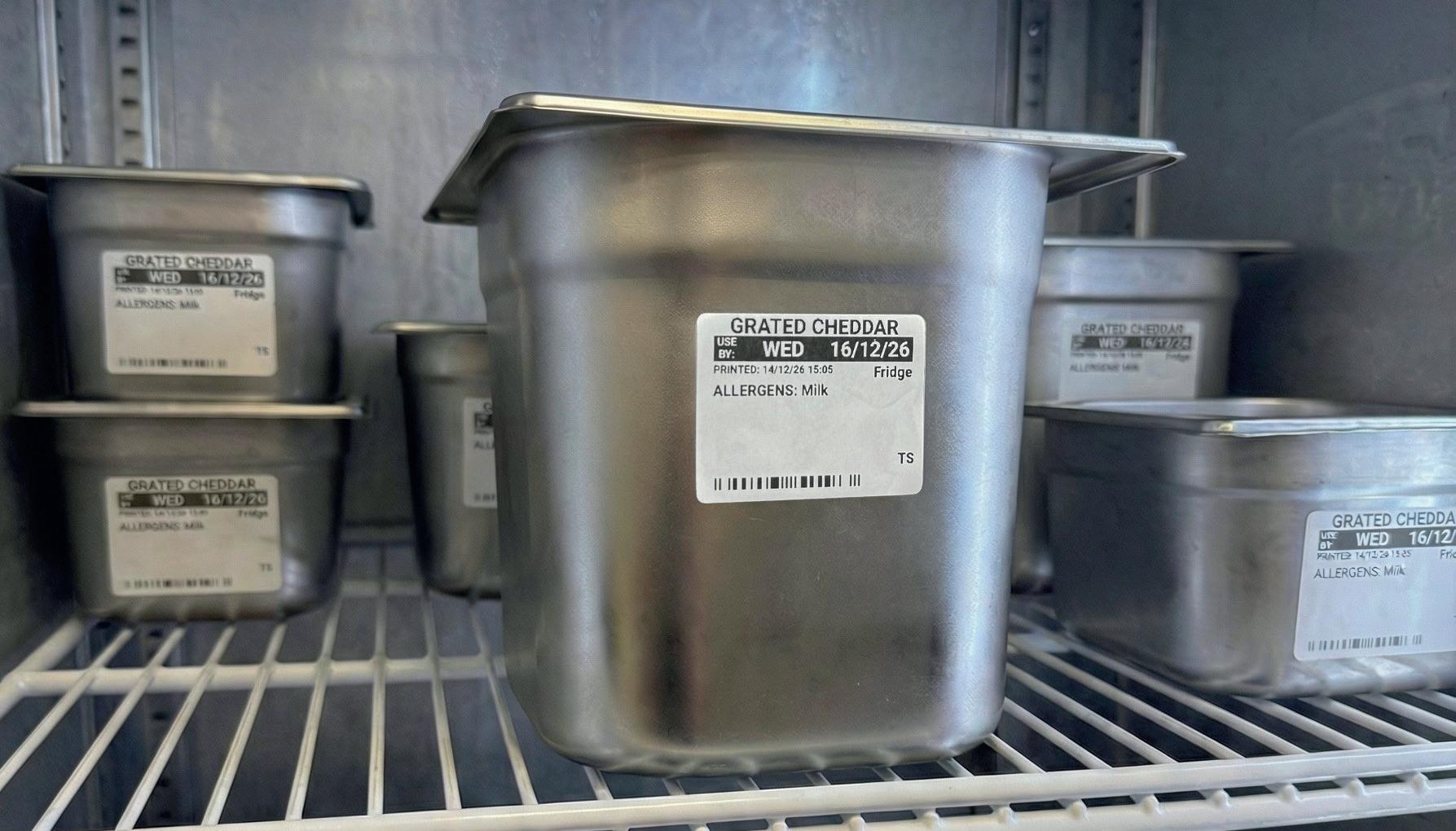
wastage report features help kitchens reduce food waste, one of the hospitality sector’s most significant cost challenges. For a busy hotel kitchen, better stock rotation translates directly to reduced wastage and improved margins.
Looking ahead, what trends do you see shaping the future of food and drink in hotels, and how is Labl.it positioning itself to support these developments?
A few themes stand out to us. The first is the continued tightening of food safety regulation and scrutiny. Natasha’s Law was a significant step, but the direction of traveltoward greater transparency, digital record-keeping, and demonstrable compliance - is clear. Hotels that invest now in digital compliance infrastructure will be better positioned as expectations and requirements continue to evolve.
The second is the growing demand for integrated, connected kitchen management. Hotels are increasingly looking for systems that talk to each other, that reduce the number of disconnected processes and paper-based records their teams have to manage. That is precisely the direction Labl.it is heading. Over the next three years, we are evolving from a labelling solution into a fully integrated back-of-house food safety and compliance system. Our upcoming TempLog® temperature monitoring accessories are the first step in that journey, enabling kitchens to manage labelling and temperature recording within a single connected platform.
The third trend, and one we feel strongly about, is sustainability. Food waste remains one of hospitality’s most pressing environmental challenges. As hotels face increasing scrutiny - from guests, from ESG reporting requirements, and from their own sustainability commitments - tools that demonstrably reduce waste and support responsible kitchen management will become more important. Labl.it helps on both fronts: in-app features that help to cut and manage waste, and our partnership with Ecologi, planting 19 trees for every tree’s worth of paper used in label production.
The ambition for Labl.it is to become the definitive compliance system for commercial kitchens across the UK, and hotel F&B is a sector we’re particularly excited to grow within.
labl.it

In an industry where consistency, safety, and guest trust are paramount, ingredient sourcing decisions carry significant weight. For UK hotel kitchens, eggs are a staple that underpin everything from breakfast service to pastry menus. Yet, not all eggs offer the same assurances. Insights from leading hospitality professionals and hygiene experts highlight why British Lion eggs continue to set the benchmark - particularly at a time when concerns are growing around imported alternatives.
At the operational level, chefs value simplicity and certainty. Mark Aldred, Chef at Padstow Harbour Hotel, explained that using British Lion eggs removes a layer of complexity in the kitchen. “They’re vaccinated and fully traceable, so we’re happy using them in things like mayo or soft eggs without worrying - we know we’re covered on safety,” he said. This assurance is critical in busy hotel environments, where teams must consistently deliver highquality dishes under pressure.
Consistency is another key advantage. According to Mark, British Lion eggs provide reliable performance
across a wide range of dishes. “Good yolk colour, fresh, and consistent, so our dishes turn out the same every timewhether it’s scrambled eggs at breakfast or a custard for dessert.” For hotels, where guest expectations hinge on repeatable quality, this uniformity is essential.
While diners may not always notice the Lion mark, its impact is felt behind the scenes. “Guests might not see it, but it still matters,” Mark noted. “Using British Lion eggs means we know we’re working with a safe, high-quality product. That confidence comes through in the food and in how we talk about our sourcing if guests ask.” In an era where provenance and transparency are increasingly important to consumers, this confidence feeds directly into trust and brand reputation.
Beyond quality and safety, British Lion eggs also support growing demands for ethical sourcing. Mark highlighted the importance of traceability and welfare standards: “They come from farms that follow clear standards, and we can trace them back if needed. That’s important for us, and something guests are asking about more and more.” For hotel operators, being able to demonstrate

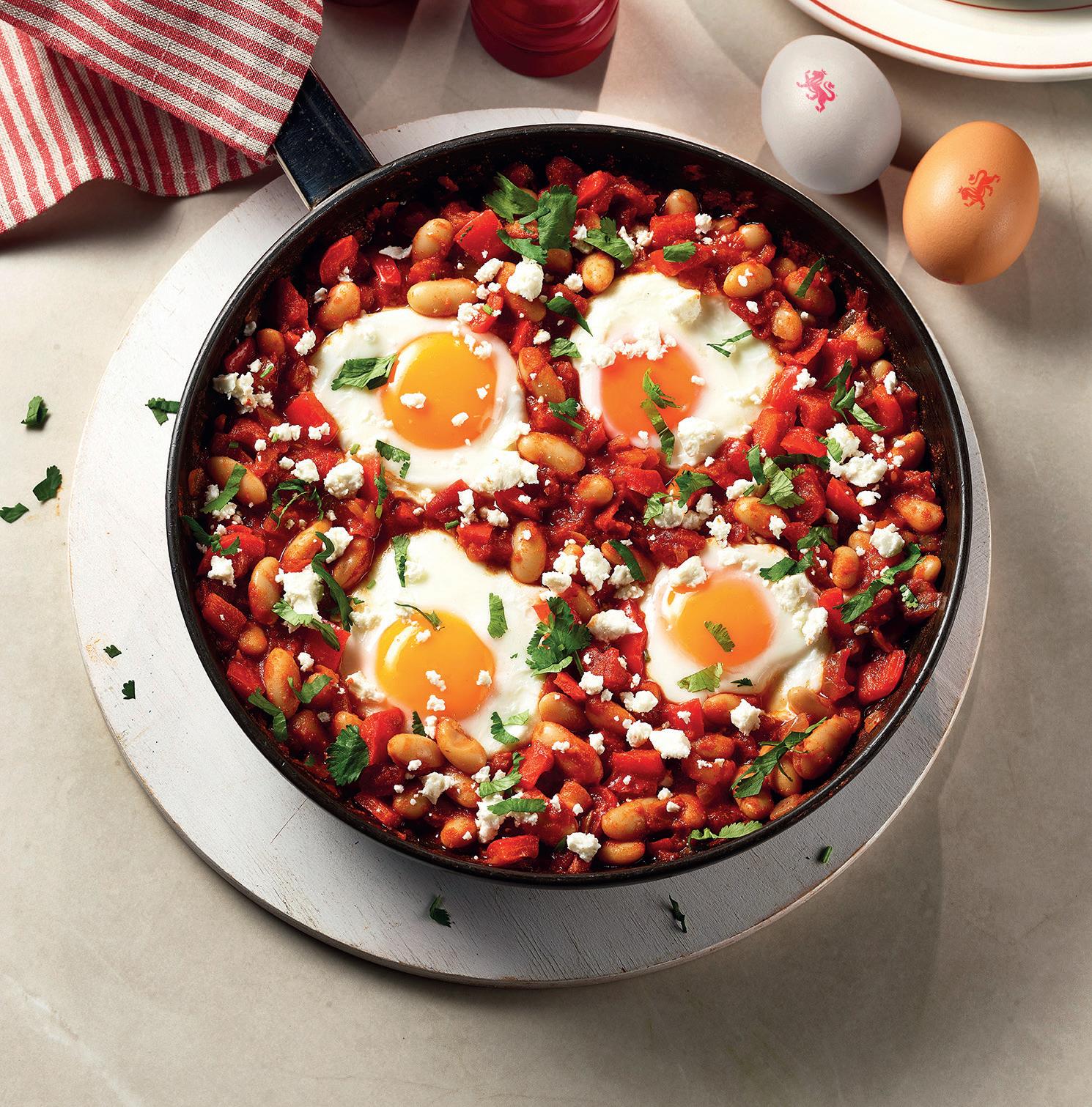
responsible sourcing is no longer a ‘nice to have’, but a core expectation.
However, recent industry developments have raised concerns about the potential risks of switching away from British Lion eggs. Lisa Ackerley, known as The Hygiene Doctor, warns that the rise in imported eggs - some of which may not meet UK safety standards - poses a significant threat to both businesses and public health.
“I am extremely concerned that hotels and food service operators may not be aware of the significant risk to their business and customers if they switch,” she said. British Lion eggs, produced under stringent UK standards and aligned with Food Standards Agency advice, can be safely served runny or even raw, including to vulnerable groups. “No other country has the same standards,” Lisa emphasised. “If a business switches to imported eggs, they could be putting their customers at risk unless they take additional control measures.”
Those additional measures are not insignificant. Eggs from non-Lion sources must be thoroughly cooked to eliminate potential Salmonella risk, which has direct implications for menu design. Dishes featuring soft yolks or raw egg components - such as hollandaise, mayonnaise, or certain desserts - may need to be removed or adapted, potentially limiting culinary creativity and guest experience.
Compounding the issue are reported gaps in border inspections and testing. Lisa pointed out that these shortcomings mean contaminated eggs could enter the supply chain undetected. “Quite frankly, we are on the back foot - an outbreak of Salmonella could be the first we hear about batches of eggs contaminated with Salmonella coming into the country.” For high-volume hospitality operations, the risk increases proportionally with the
number of imported eggs used, making robust sourcing decisions even more critical.
From a compliance perspective, the implications are serious. Businesses opting for imported eggs must update their food safety management systems to demonstrate how they are mitigating Salmonella risks. They are also legally obliged to avoid serving raw or runny eggs unless they can guarantee safety, a requirement that may not always be practical in fast-paced kitchen environments.
Lisa also raised concerns about procurement decisions driven primarily by cost pressures. “In this time of economic difficulty, it is very tempting to buy cheaper ingredients, but I urge businesses not to cut costs with eggs,” she advised. The potential consequences extend far beyond immediate savings. A drop in Food Hygiene Rating, enforcement action from Environmental Health Officers, and exposure to criminal or civil proceedings are all real risks if safety is compromised.
Perhaps most damaging of all is the reputational impact. A food safety incident can erode customer trust overnight, with long-term financial repercussions that far outweigh any short-term cost savings. “The fines could be high, but reputational damage can cause an even greater financial burden,” Lisa warned.
For hotel operators navigating the balance between cost efficiency and excellence, the message is clear.
British Lion eggs offer not just quality and consistency, but a comprehensive framework of safety, traceability, and assurance that protects both guests and businesses. In a sector where reputation is everything, they remain a reliable foundation for delivering food with confidence.
egginfo.co.uk
Set within the luxurious surroundings of Corinthia London, Kerridge’s Bar & Grill has become one of the capital’s defining modern British dining destinations. Combining Michelin-starred chef Tom Kerridge’s signature comfort-food philosophy with refined technique and exceptional produce, the restaurant continues to win over London diners with elevated classics, warm hospitality and a commitment to consistency.
Inside the grand surroundings of Corinthia London, Kerridge’s Bar & Grill has firmly established itself as one of London’s standout dining destinations. Since opening in 2018, the restaurant has brought Michelin-starred chef Tom Kerridge’s celebrated approach to modern British cuisine to the heart of the city, pairing exceptional produce with relaxed luxury and warm, welcoming hospitality.
The first London restaurant from Tom Kerridge, the concept reflects everything that has made the chef one of the UK’s most recognisable culinary names: elevated comfort food, bold flavours and an unwavering commitment to quality. Together with Head Chef Tom Childs, the kitchen has created a menu that honours classic British dishes and traditional cooking techniques, while subtly refining them through contemporary flair and meticulous attention to detail.
At its core, Kerridge’s Bar & Grill is a celebration of British dining culture - familiar dishes executed with precision, confidence and creativity. Signature plates include the restaurant’s famous fish and chips, widely regarded as among the very best in the country and a dish that perfectly encapsulates the restaurant’s philosophy: nostalgic comfort elevated to Michelin-level standards.
For Tom Childs, maintaining relevance in one of the world’s most competitive dining scenes means balancing innovation with consistency.
“We are always looking at what’s next,” he explained. “I’m constantly eating out, keeping an eye on emerging chefs, new trends, different markets and untapped ideas - all while staying true to our British roots and the Kerridge’s DNA.”
That curiosity, he said, is essential in London’s fast-
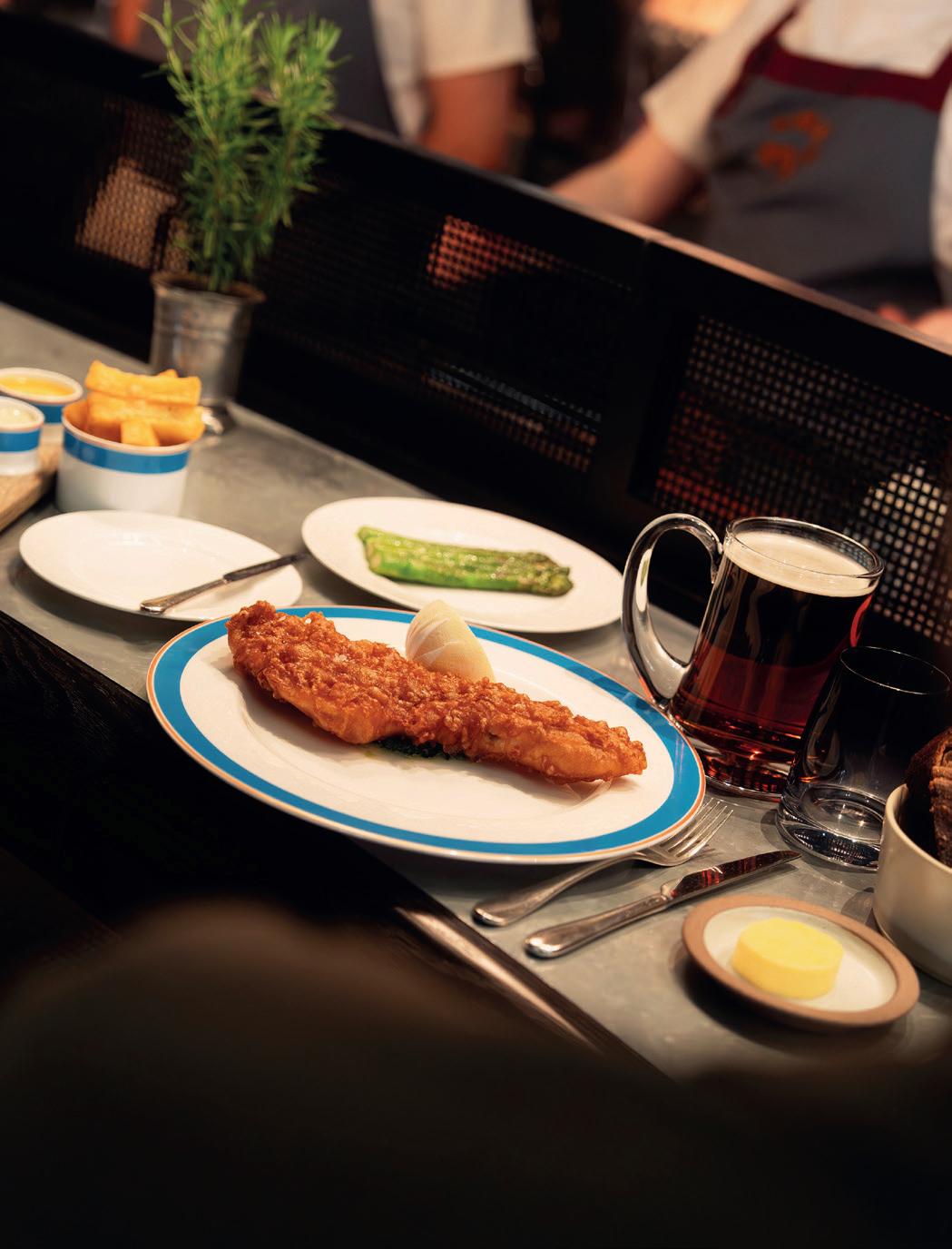
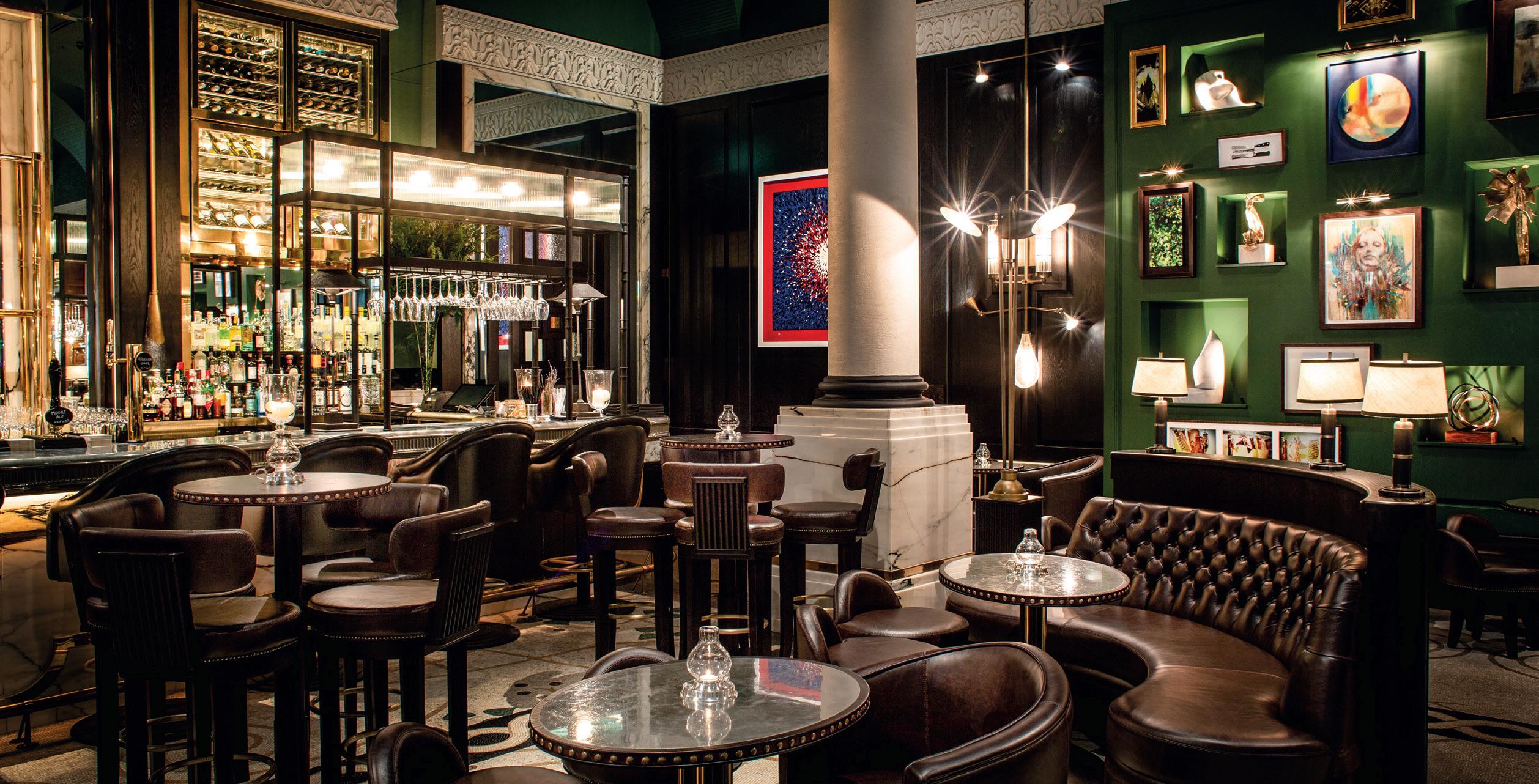
moving culinary landscape. “As Tom Kerridge has said before, London is and always will be competitive. To evolve, we have to continue surprising and inspiring our guests, while remaining consistent. People want to know that whenever they come to Kerridge’s Bar & Grill, it’s going to be great every single time, and that’s something we’re incredibly proud of.”
The restaurant’s concept is rooted in accessibility as much as excellence. Rather than reinventing British cuisine beyond recognition, the team focuses on enhancing dishes diners already know and love.
“Modern British food that everyone recognises, but elevated to a level people perhaps wouldn’t expect - that’s what we’re about,” said Head Chef, Tom. “Take our sticky toffee pudding, for example. We serve it with a Kraken rum sauce and pair it with a very unique coffee ice cream.”
The detail behind even the smallest elements of a dish is what sets the experience apart. “Coffee ice cream can often be very dark and overpowering,” he continued. “Instead of grinding the beans, we lightly infuse whole coffee beans into the cream, which creates something much lighter and more fragrant. It’s those subtle differences that make the dishes memorable.”
This thoughtful approach to flavour and technique runs throughout the menu, where premium seasonal produce takes centre stage. Whether guests are visiting for a relaxed lunch, a celebratory dinner or cocktails in the elegant bar, the experience is designed to feel simultaneously refined and approachable - a reflection of both the restaurant’s luxury hotel setting and Kerridge’s famously down-to-earth style.
Nearly a decade after opening, Kerridge’s Bar & Grill continues to thrive by staying true to its identity while
embracing the energy and evolution of London’s dining scene. In a city defined by constant reinvention, its enduring appeal lies in delivering something timeless: expertly executed British food, genuine hospitality and a sense of occasion that keeps guests returning time and again.
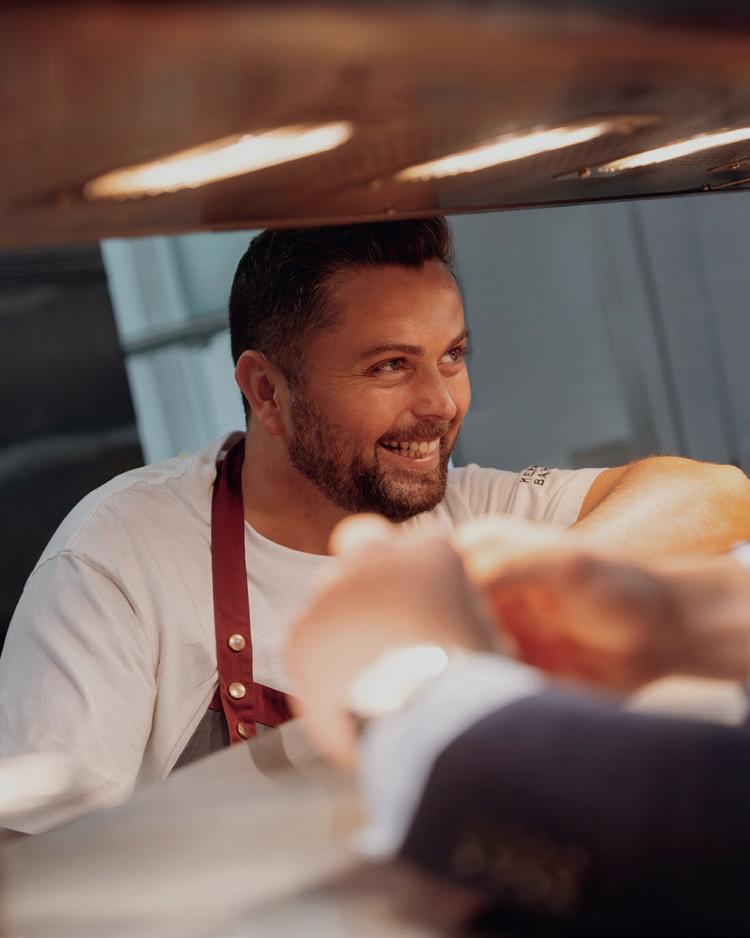
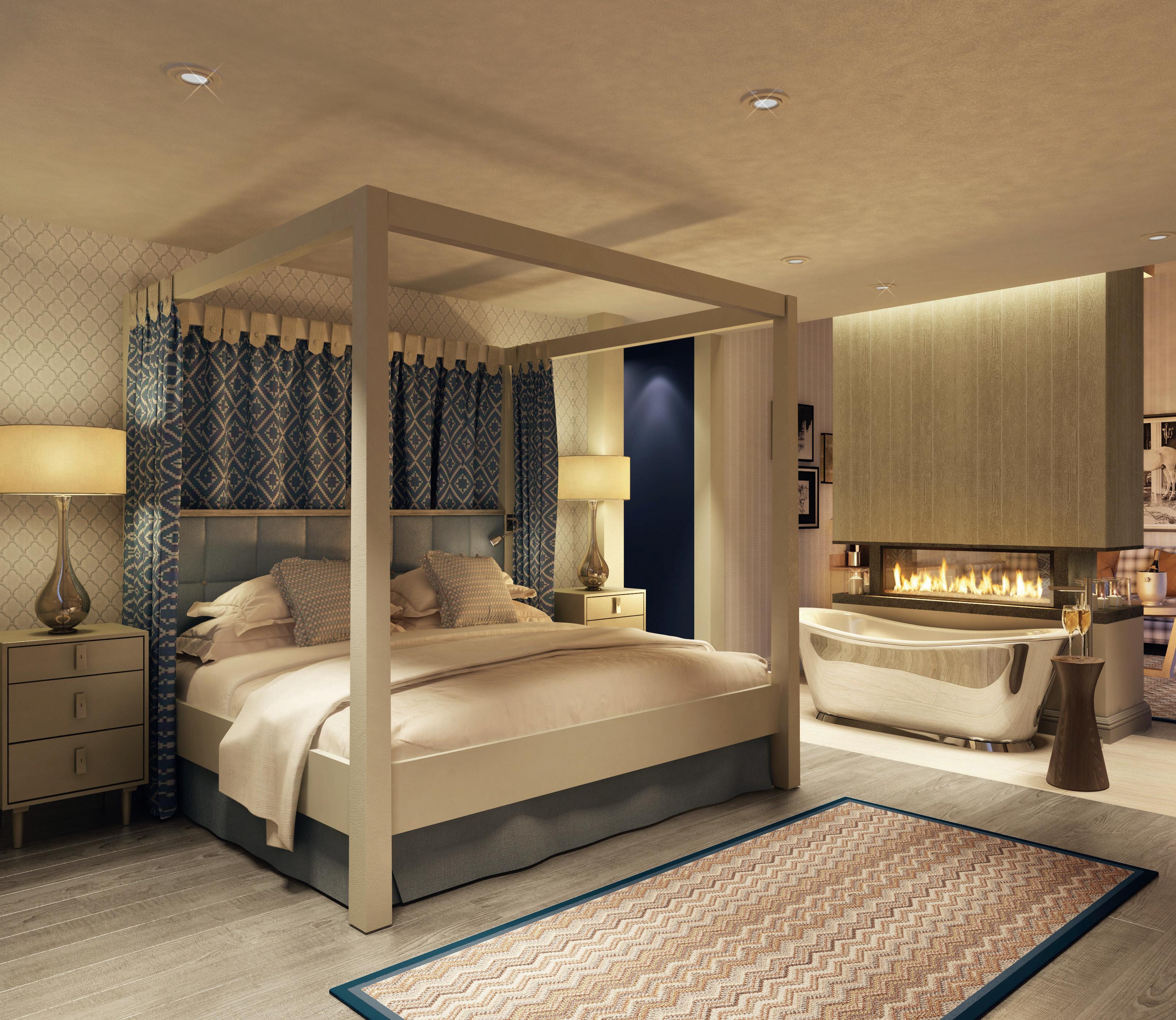
Blending Georgian heritage with cutting-edge wellness and flexible hospitality, Sopwell House has emerged as a quietly powerful force in the UK’s country house hotel scene and this June features as Hotel of the Month.
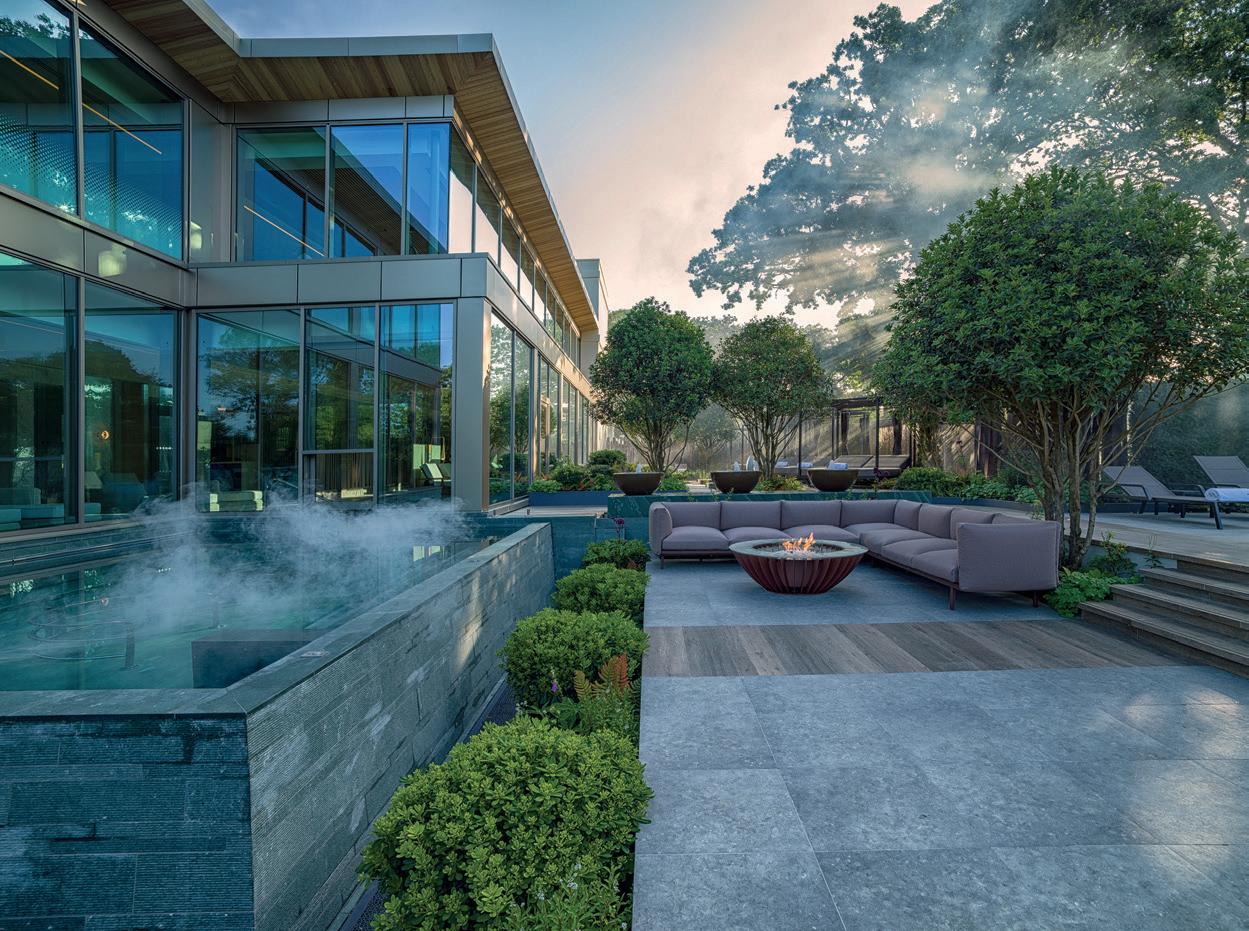
Set within 12 acres of Hertfordshire countryside, Sopwell House has quietly established itself as one of the UK’s most compelling country house hotels, balancing heritage, wellness, and contemporary hospitality with notable precision. Originally a Georgian country residence dating back to the 18th century, the property has evolved into a 126-bedroom luxury hotel while retaining its sense of historic character and domestic warmth. This “home from home” positioning is central to Sopwell House’s identity: rather than leaning solely on grandeur, it delivers a layered guest experience that feels both refined and relaxed. What differentiates Sopwell House in a crowded luxury market is its ability to operate across multiple guest profiles without diluting its brand. Leisure travellers, spaseekers, corporate groups and celebratory events are all catered for within a cohesive offering. With 15 meeting rooms, large-scale event capacity and expansive grounds, the hotel is as much a business and social hub as it is a retreat.
Yet it avoids the impersonal feel often associated with multi-functional venues. Family ownership by the Bejerano family plays a key role here, underpinning a service ethos that prioritises familiarity and flexibility.
Accommodation at Sopwell House reflects a deliberate blend of classic country aesthetics and contemporary design. Rooms and suites feature modern finishes, while maintaining the warmth expected of a traditional estate hotel.
The standout offering lies in the Mews Suites - 16 selfcontained, design-forward spaces set within landscaped gardens. These suites introduce a more residential, almost boutique-living concept, complete with private courtyards and outdoor spa features. This hybrid model, hotel service with private accommodation, positions Sopwell House strongly against both luxury hotels and high-end serviced apartments.
Wellness is arguably the hotel’s most defining differentiator. The Cottonmill Spa, a purpose-built, multilevel facility, has become a key driver of destination appeal
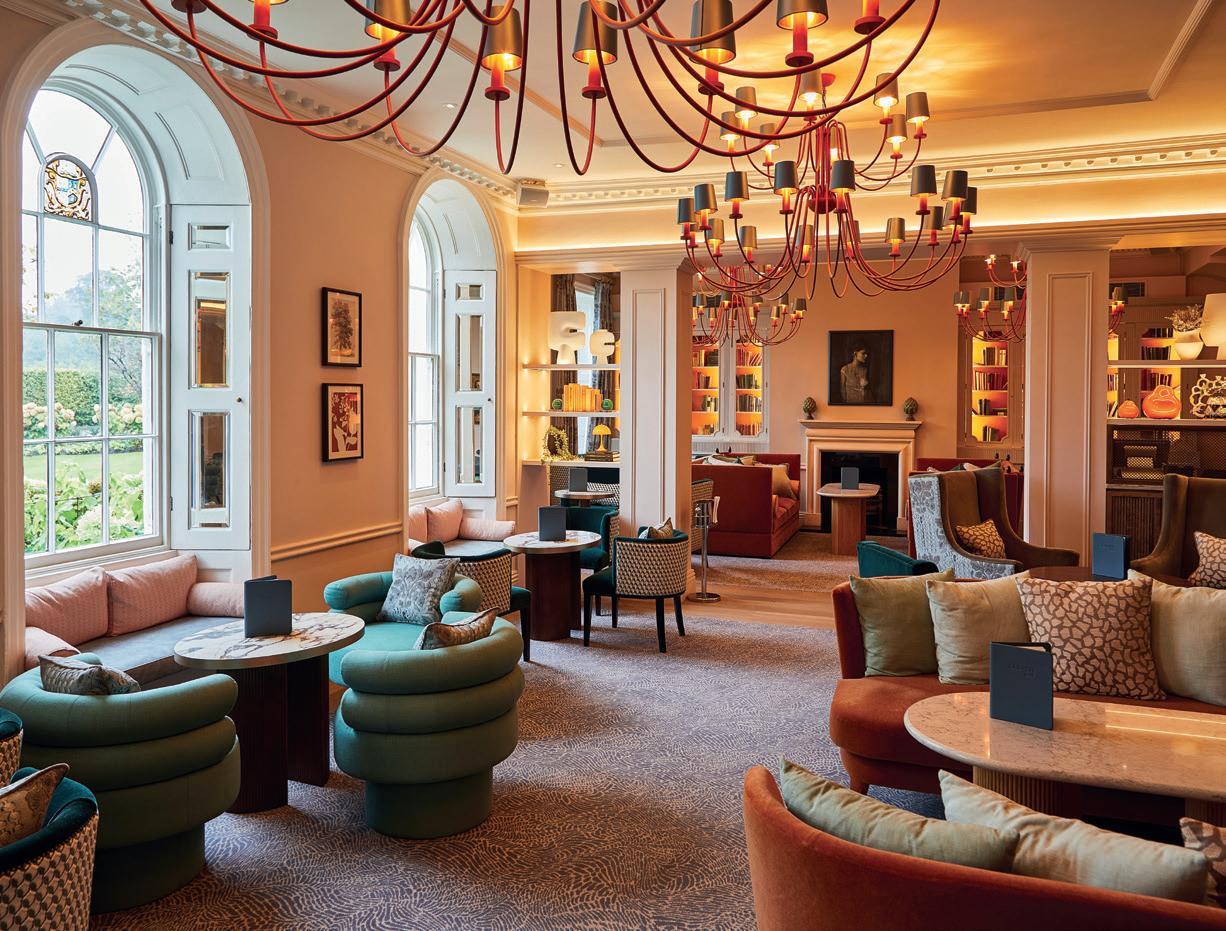
since its expansion in 2019.
The spa experience is tiered, with The Club at Cottonmill offering an elevated, members-style environment featuring hydrotherapy pools, thermal experiences and outdoor relaxation spaces. Reviews consistently highlight the spa as the property’s “trump card,” with its scale and variety setting it apart from typical country house offerings.
This dual-access model, standard and premium, enables the hotel to cater to both casual spa guests and high-value wellness travellers, maximising both accessibility and revenue potential.
Dining at Sopwell House reinforces its multi-dimensional appeal. The Brasserie delivers approachable, all-day British dining, while Omboo introduces a more contemporary, Asian-inspired concept with sharing plates and bold flavours.
This contrast allows the hotel to satisfy diverse guest expectations without overextending its culinary identity. The addition of modern bar and lounge spaces further supports its positioning as a social destination, equally suited to day visitors, overnight guests and local clientele.
Location is another key strength. Positioned less than 20 miles from London, Sopwell House offers a genuine countryside escape without the friction of long travel times. This accessibility has helped it carve out a niche as a go-to short-break and weekend retreat, particularly for urban professionals seeking high-quality downtime.
Sopwell House succeeds by blending three distinct pillars; heritage, wellness and versatility, into a single, cohesive proposition. Its ability to operate simultaneously as a spa destination, event venue and leisure retreat, while maintaining a strong sense of identity, is what truly sets it apart.
For industry professionals, it offers a compelling case study in modern country house evolution: one that respects its past, invests in experiential amenities, and adapts intelligently to the expectations of today’s luxury traveller.
@sopwellhouse
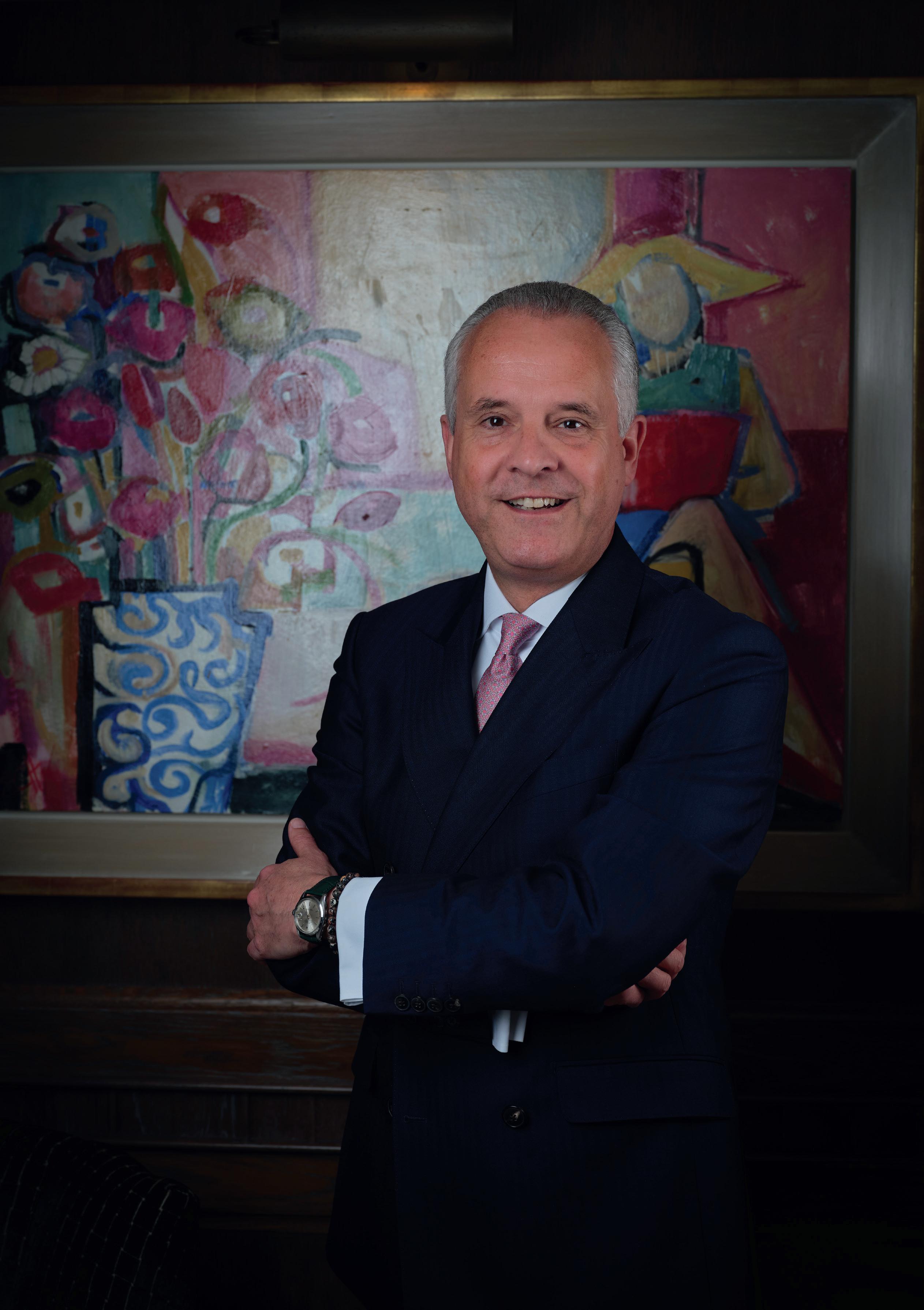
Henrik Muehle, Managing Director of Flemings Mayfair, discusses accountability, consistency and the realities of modern hospitality leadership - as well as why discipline, authenticity and community responsibility remain at the heart of everything he does.
At the helm of Flemings Mayfair, one of London’s most distinguished luxury hotels, Henrik Muehle is a hotelier who values discipline, clarity and consistency above all else. As Managing Director, his leadership style is direct and uncompromising, shaped by decades in hospitality and a belief that great hotels are built not on gimmicks, but on delivering the basics exceptionally well - every single day.
Unlike many industry leaders who found their way into hospitality by chance, Henrik said there was never another path for him. “There was no alternative path. I started in hospitality and stayed in it,” he explained. “What has kept me in this industry is its clarity and accountability. You either deliver or you don’t, and the results are always visible. There is nowhere to hide.”
That sense of accountability became embedded in his leadership philosophy early in his career, after recognising that guests never experience a hotel in isolated departments. Instead, every interaction contributes to one seamless impression. “Guests don’t experience a hotel in parts. They experience one thing,” Henrik said. “Something goes wrong in one area and the impact shows up somewhere else. That’s when it becomes clear there are no silos from a guest point of view.”
It was a lesson that fundamentally changed the way he approached operations and management. “You stop managing departments and start managing the outcome,” he added. “If the experience breaks anywhere, it all breaks. That stays with you.”
Today, Henrik sees his role at Flemings Mayfair as being far more about direction than micromanagement. His focus is on maintaining standards, preserving the hotel’s identity and ensuring consistency across every touchpoint. “Control and direction. That’s it,” he said. “I’m not there to get involved in everything, I’m there to make sure everything is done properly and stays consistent. The key is clarity and if you’re not clear on what the hotel is, it drifts. That’s what I don’t allow.”
In an industry often driven by trends and reinvention, Henrik remains steadfastly focused on operational excellence. For him, hospitality is compelling because of its immediacy and transparency. “It’s a results business,” he explained. “Immediate. You make a decision and you see the consequence straight away - good or bad. That level of accountability is rare, it forces focus and there’s no room for excuses.”
Looking ahead, Henrik’s vision for both Flemings and the wider business is rooted in simplicity and authenticity. Alongside Flemings, the group’s sister property, Down Hall Hotel, plays a central role in that strategy through its twoacre eco-friendly kitchen garden, which supplies produce to both Flemings and Ormer Mayfair.
“No distractions and no unnecessary reinvention,” Henrik said. “Flemings is about doing the basics properly and doing them every day; consistency is the strategy.”
He believes this direct connection between production and plate keeps the operation grounded and transparent for guests. “The two-acre eco-friendly kitchen garden is not a concept, it’s production,” he explained. “It feeds Flemings and it feeds Ormer Mayfair. That removes anything artificial from the operation. It keeps it real. Guests see that immediately.”
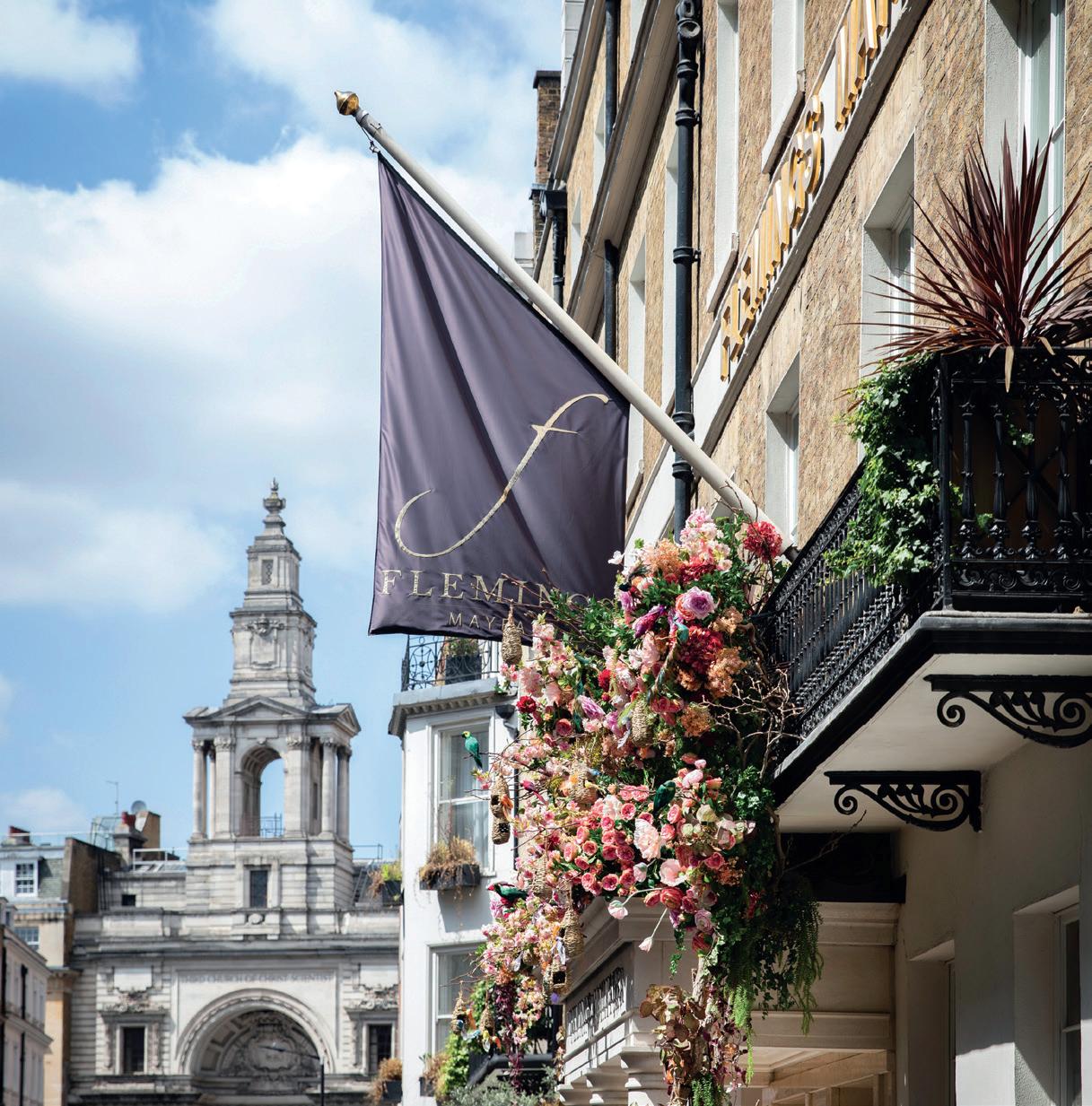
For Henrik, the future is about scaling that disciplined approach without losing its integrity. “Keep building hotels that are stable, disciplined and commercially strong,” he said. “What hasn’t been done yet is scaling that approach further without compromising it. That’s the focus.”
Beyond hotel operations, Henrik is also deeply committed to charitable and community initiatives across London. His approach to philanthropy mirrors the same practical, results-oriented mindset that defines his leadership style. “It’s responsibility,” he said. “If you run a hotel in London, you’re part of the city, you don’t sit outside of it.”
His charitable work focuses particularly on homelessness, food insecurity and creating opportunities for those often excluded from them. Flemings’ partnership with Charity Begins at Home sees chefs at Ormer Mayfair prepare more than 60 hot meals every week for vulnerable people across the capital.
“We are proud and committed to supporting local communities and those less fortunate,” Henrik said. “That isn’t branding, it’s how we operate.”
The hotel also holds the Positive Luxury Butterfly Mark accreditation, recognising its work across sustainability, sourcing, waste reduction and people practices. But for Henrik, recognition alone is never the goal. “What matters is what sits behind it,” he said. “Standards, not statements.”
Another initiative close to his heart is the CEO Sleepout, which raises awareness and funds for homelessness charities by having business leaders spend a night sleeping rough. Henrik has participated for five consecutive years and raised more than £120,000 to date.
“It’s not symbolic,” he said. “It’s a reminder of what the issue actually looks like on the cold concrete ground.”
Ultimately, whether inside the hotel or beyond its walls, Henrik believes the same principles must always apply. “If you expect discipline inside the hotel,” he concluded, “it has to exist outside it as well.”
We caught up with Philippe Kronberg after his recent appointment as General Manager of Mandarin Oriental Hyde Park, London & AVP Operations on leading Mandarin Oriental Hyde Park, London into its next chapter along with how he plans on navigating such an extensive portfolio.
With more than three decades of international luxury hospitality experience spanning Europe, Asia, the Middle East and Australia, Philippe Kronberg, this January, stepped into one of the industry’s most prestigious roles as General Manager of Mandarin Oriental Hyde Park, London and Area Vice President Operations across key European properties.
Officially appointed in at the beginning of the year, Philippe’s remit extends beyond the landmark London hotel to include oversight of Mandarin Oriental Mayfair, Mandarin Oriental Paris, Mandarin Oriental Lutetia and Mandarin Oriental Conservatorium.
The appointment marks a pivotal moment for the luxury hospitality group as it continues to strengthen its European footprint, and Kronberg says the opportunity arrives at an exciting stage both for the company and for his own career.
“I joined Mandarin Oriental at a very exciting time because the company is growing very, very fast,” he said. “To be able to lead such an iconic hotel in London is a privilege. The property is almost 125 years old, it’s incredibly well established, and both Londoners and international guests know the building and the brand very well.”
Located between Hyde Park and Knightsbridge’s luxury shopping district, the hotel remains one of the capital’s most recognisable luxury destinations. For Philippe, the focus now is on preserving that legacy while continuing to evolve the guest experience.
“Mandarin Oriental is synonymous with luxury and legendary service,” he said. “What excites me most is being able to continue elevating standards and building on the hotel’s rich heritage while continuing to innovate.”
Philippe joins the group from Shangri-La, where he most recently served as Resort General Manager in Muscat, Oman, overseeing a multi-property beachfront destination comprising more than 640 rooms. His career has also included senior leadership positions across Sydney, Turkey, China, Thailand and Brisbane, alongside wider operational oversight across Australasia.
That international experience, he said, has fundamentally shaped his understanding of luxury hospitality. “I’ve worked
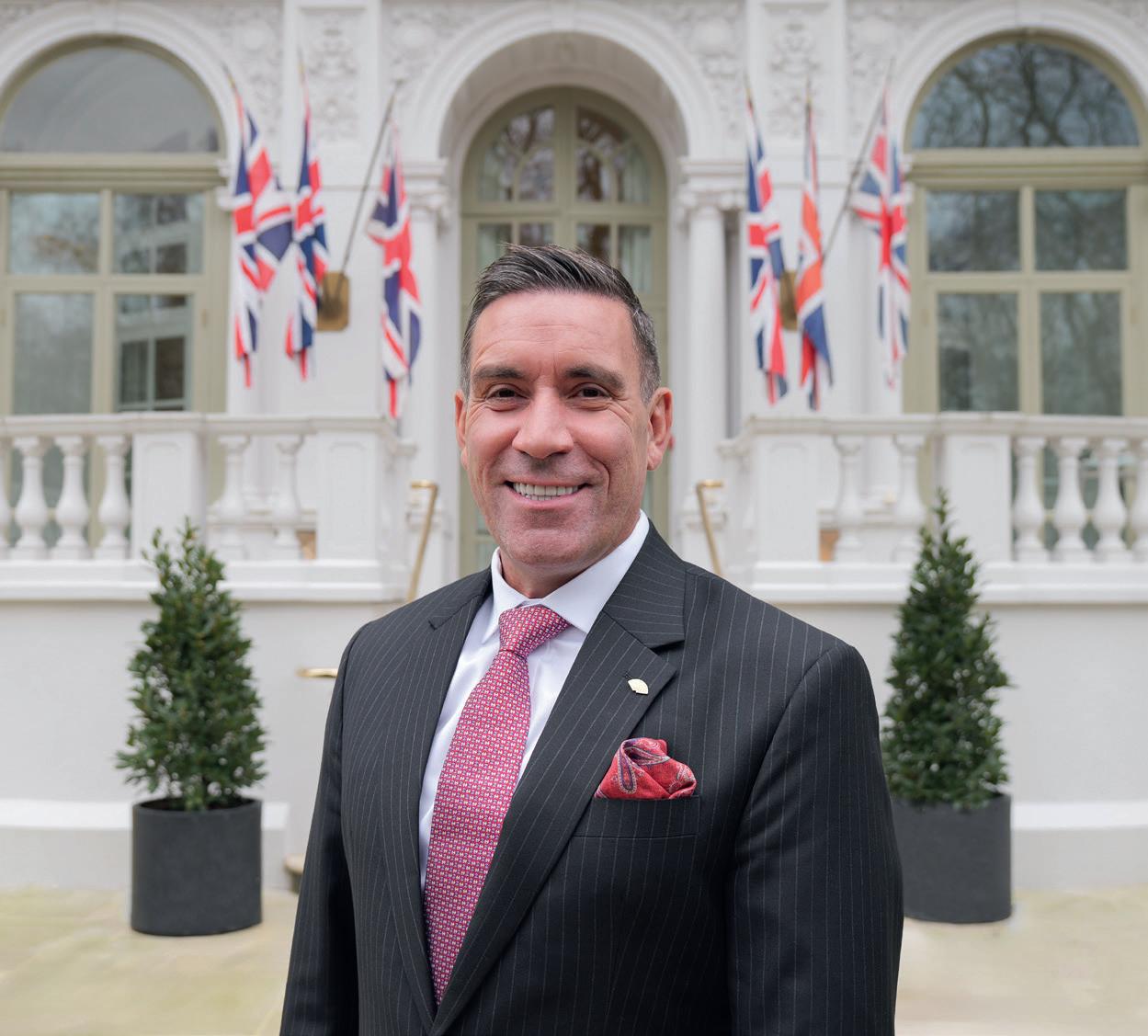
in nine different countries, and that experience allows you to understand people better and adapt to different cultures,” he explained. “Luxury is not one-size-fits-all. Every guest arrives with different expectations depending on where they come from, their age group and the type of experience they’re looking for.”
He points to the contrast between older luxury travellers seeking highly personal interaction and younger guests prioritising seamless connectivity and independence. “You might have one guest who wants to spend time speaking with the concierge about restaurants and local experiences, while another guest wants perfect Wi-Fi, privacy and to stay connected from their room. Understanding those differences is incredibly important.”
Among the destinations he has worked in, Japan remains especially influential in shaping his hospitality philosophy. “Japan is probably at the top for me because of the extraordinary attention to detail,” he said. “The standards
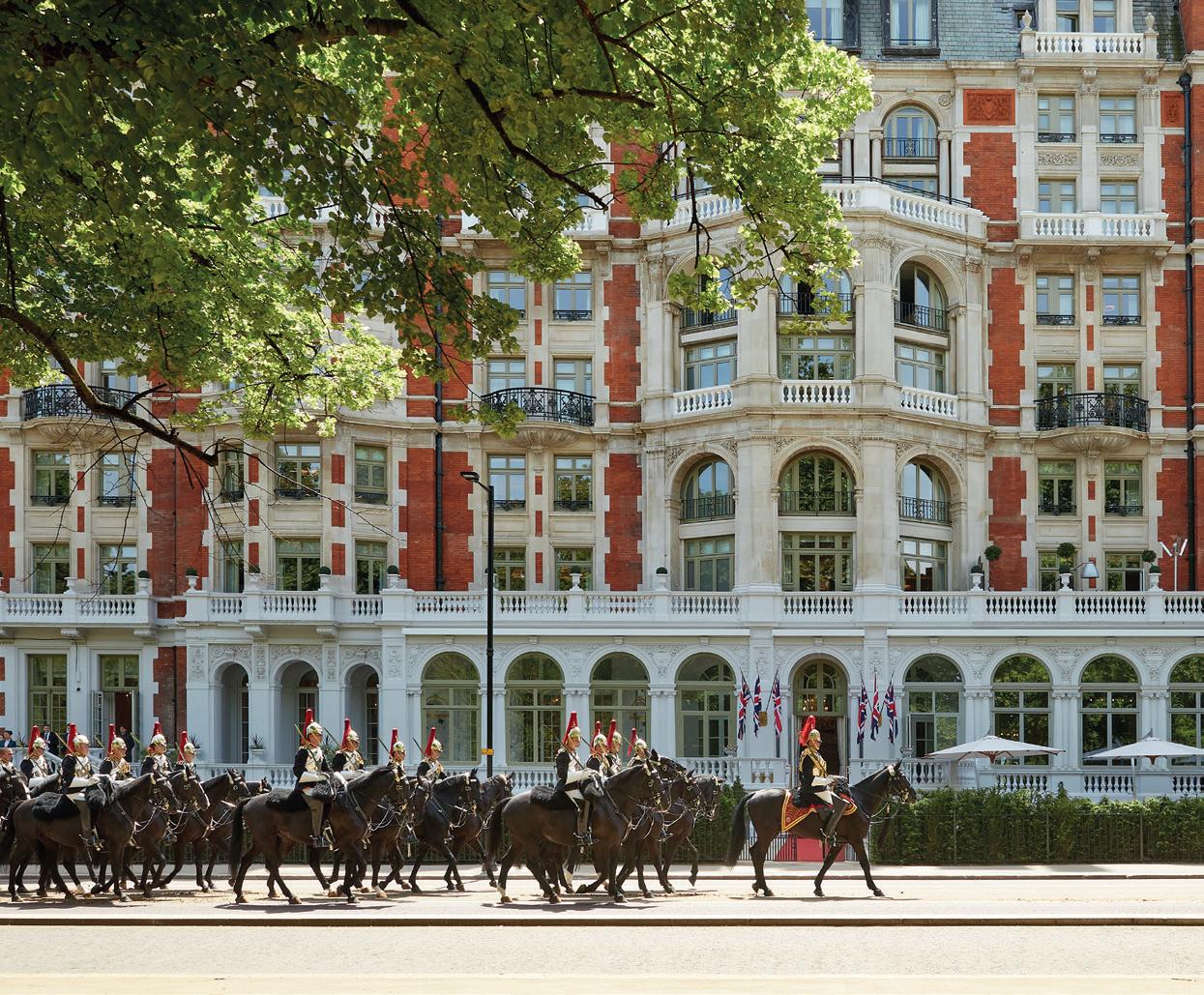
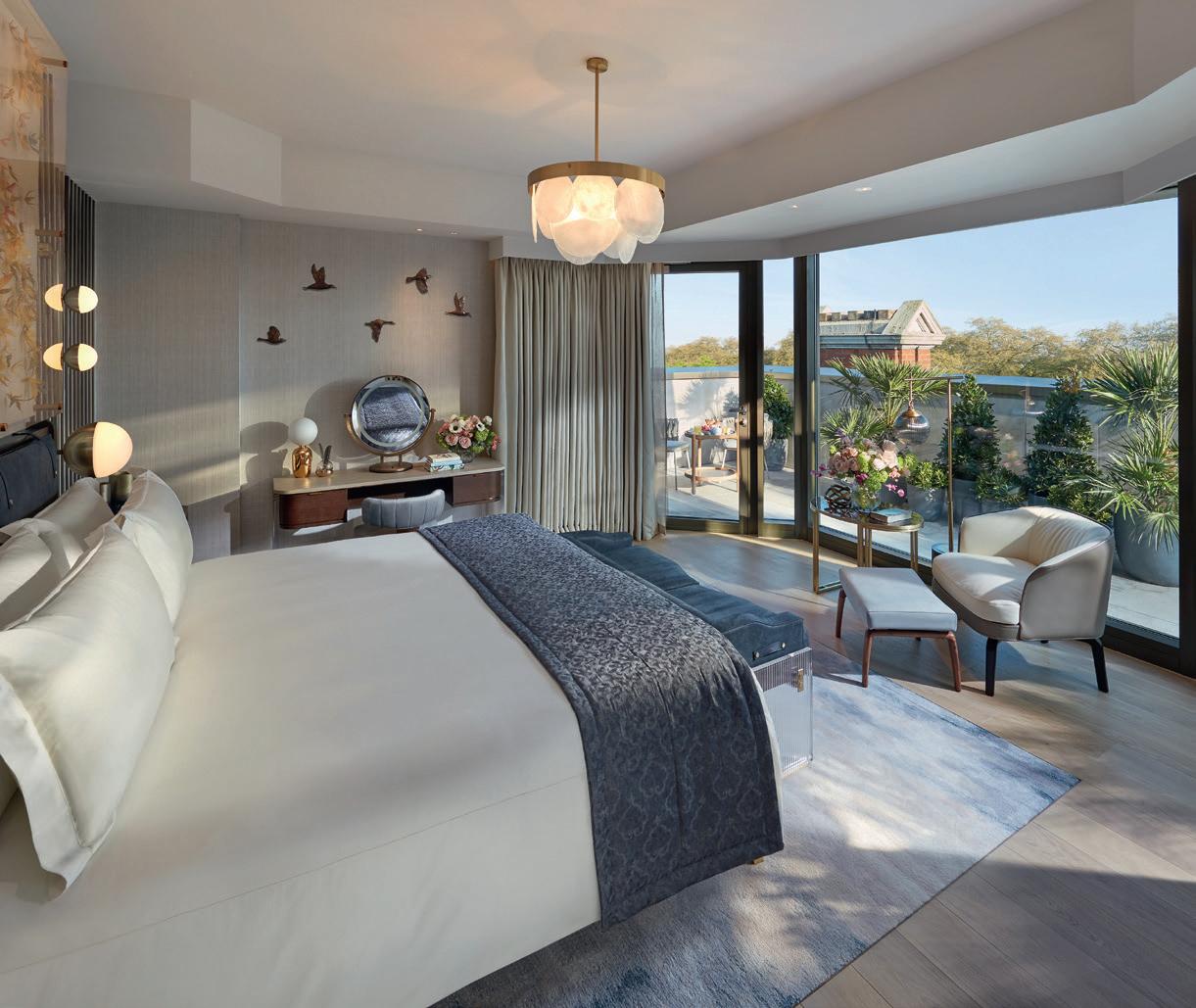
of service delivery are incredibly high - whether it’s presentation, packaging or guest interaction.”
At the same time, he describes his experience in the Middle East as transformative. “Living and working there was a huge eye-opener culturally. It helped me understand the importance of relationships, family dynamics and different expectations of luxury hospitality.”
In his expanded regional role, Philippe will divide his time across five European properties, something he says relies heavily on empowering experienced local teams.
“The only way to manage across multiple hotels is by having very strong, established teams already in place,” he said. “My role is to provide direction, strategy and standards, but ultimately success comes from the people on the ground.”
He repeatedly returned to the importance of teamwork and collaboration across all departments. “Without the team, there’s not much I can do,” he said. “Every department -housekeeping, engineering, culinary, front office, people and culture - everyone has a piece of the puzzle.”
As guest expectations continue to evolve, Philippe believes luxury hospitality is increasingly defined by experiences rather than simply physical product. “For luxury hotels like Mandarin Oriental, beautiful rooms and comfort are already expected,” he said. “Guests assume there will be exceptional design, comfort and technology. That’s a given - what really matters now is creating personalised experiences.”
That could mean anything from arranging exclusive shopping experiences in Knightsbridge to curating bespoke wellness programmes or securing unique cultural access in cities such as Paris and Amsterdam.
“It’s about understanding why guests are travelling and creating something memorable around that,” he explained. “That’s where modern luxury really lives now.”
Philippe also places strong emphasis on visibility and leadership culture within the hotel itself. Rather than
remaining behind the scenes, he says he prioritises being present throughout the property every day.
“I lead by example,” he said. “I spend time with the doormen in the morning, speak with security teams, reception colleagues and restaurant staff. I also speak directly with guests during breakfast to understand their experience firsthand.”
He added that maintaining approachability is essential to creating a cohesive service culture. “I eat in the staff canteen most of the time because I want to stay connected with the team,” he said. “Hospitality only works when departments work seamlessly together.”
Looking ahead, Philippe believes Mandarin Oriental’s continued growth in Europe will be driven not only by service excellence but also by the uniqueness of its historic properties.
“These buildings all have stories,” he said. “Guests are not simply staying in a room - they’re becoming part of the history and identity of that city.”
He cited the heritage of Mandarin Oriental Hyde Park, London, alongside landmark properties in Paris and Amsterdam, as central to the group’s appeal for modern luxury travellers increasingly seeking authenticity and emotional connection.
Philippe also sees multi-generational travel as one of the defining shifts shaping the future of hospitality. “We’re seeing more families travelling together across generations, so it’s very important for us to cater to everyone,” he said. “That requires training, cultural sensitivity and diverse teams who can relate to guests from different backgrounds and age groups.”
For Philippe, diversity within hotel teams is ultimately a strength that improves guest connection and service delivery.
“Our teams are very diverse in terms of age and cultural background,” he said. “That diversity helps us connect more naturally with our guests, and that’s incredibly valuable in luxury hospitality.”
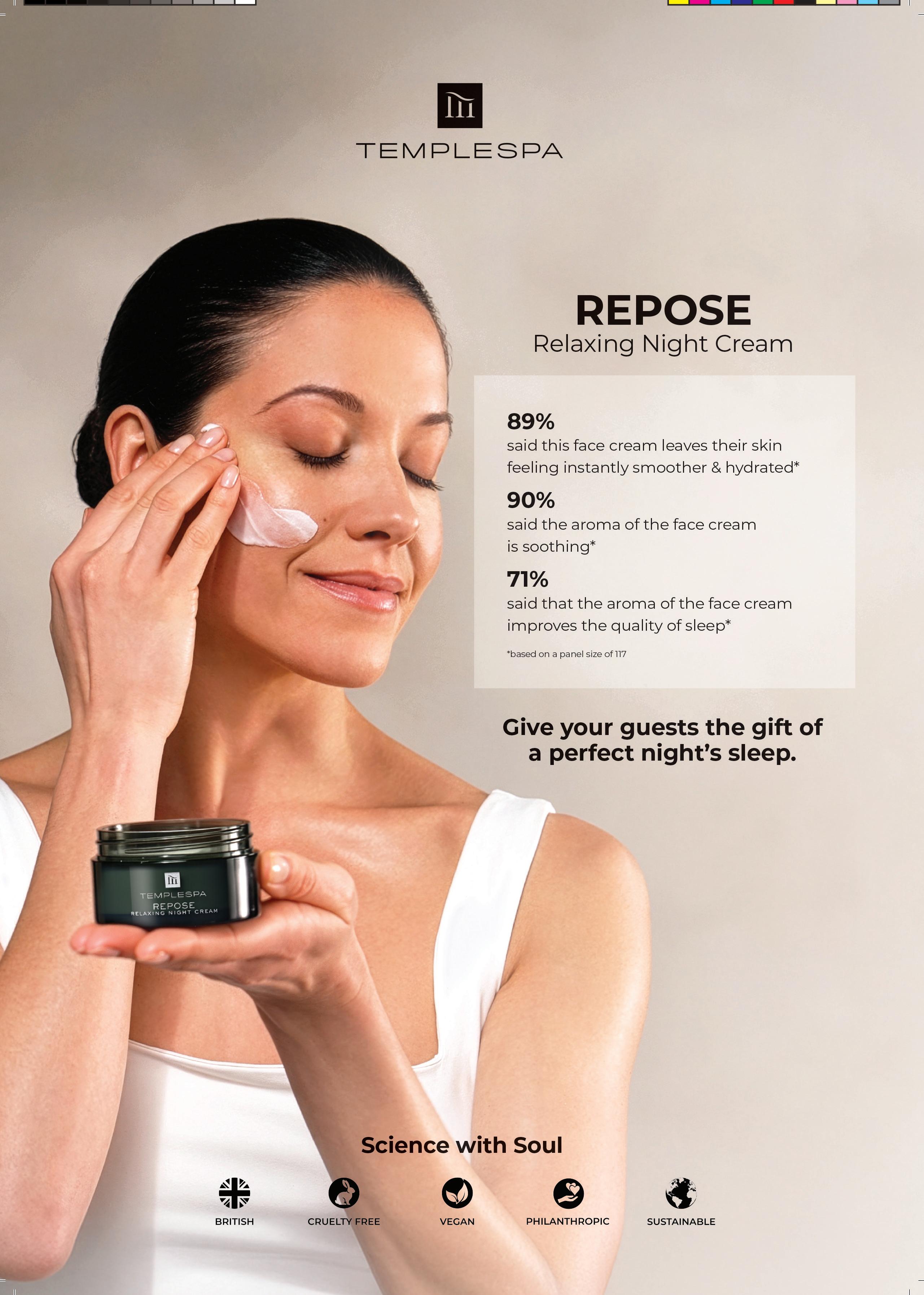
As hotels harness pre-arrival insights, AI-driven recommendations and post-stay continuity, we explore how the spa is evolving into a responsive, living ecosystem - one that blends technology with intuition to create wellness journeys that feel both intelligent and intensely personal.
The spa of today is no longer a standalone amenity, it is becoming something far more sophisticated: a responsive ecosystem that learns, adapts, and evolves around each individual guest.
At the centre of this shift is hyper-personalisation - a model that moves beyond preferences and into prediction, beyond service delivery and into relationship-building. Powered by pre-arrival data, AI-driven insights, and continuous feedback loops, the modern wellness journey is increasingly shaped before a guest arrives, refined in real time, and extended long after they leave.
Yet, as the industry accelerates towards more intelligent systems, one truth remains constant: wellness is, and always will be, deeply human. For many operators, the most important moment in the guest journey now happens before check-in. Pre-arrival surveys, consultations, and digital touchpoints are no longer just logistical, they are foundational to the entire wellness experience.
At Culloden Estate & Spa, this philosophy is built around direct human connection - Niamh Rice, Spa Manager explained, “We prioritise understanding each guest’s individual wellness needs before they even arrive through a personalised pre-arrival call. This conversation allows us to build a meaningful connection while gaining insight into the purpose of their stay - whether it’s relaxation, recovery, celebration, or a focused wellness retreat.”
This emphasis on intention over information is key. Rather than simply gathering data points, the goal is to understand what the guest wants to feel, achieve, or change.
Niamh continued: “By taking the time to listen, we can thoughtfully recommend tailored spa treatments and wellness experiences that align with their goals and preferences. This proactive approach ensures that from the moment guests arrive, their journey feels seamless,
intentional, and uniquely curated to them.”
Across the industry, similar approaches are emerging, though often supported by increasingly sophisticated data capture. At 7Pines Resort Ibiza, Spa Manager, Cristina Grau, highlighted how profiling is evolving, “We are continuously evolving our approach to personalised wellness, with a strong focus on deepening our understanding of each guest before arrival. By refining our use of pre-arrival touchpoints and guest profiling, we are able to gather more meaningful insights into individual lifestyles, preferences, and wellness goals.”
Crucially, this insight is not static. Cristina added,“This evolving approach allows us to begin shaping the guest journey in advance, creating a more intuitive and seamless experience from the moment they arrive.”
At The Landmark London, Spa Manager, Hida Shuleta, pointed to the operational discipline behind this process and said, “We have a dedicated central reservations team

who proactively engage with guests before arrival, assisting with spa enquiries and bookings. In addition, a pre-arrival email is sent 48 hours in advance to capture preferences and wellness goals.”
For Hida, the result is clear - “This allows us to tailor the spa journey ahead of time, ensuring guests arrive to a seamless, personalised experience that feels thoughtfully curated.”
But even as data becomes richer, some leaders are keen to emphasise that it is only the starting point. At Minos Palace Resort, Vasiliki Mamidaki, Business Development Director of Bluegr Hotels & Resorts, (which includes Minos Palace Resort), Vasiliki reframes the idea of profiling entirely and said, “At Nao, personalisation begins long before arrival… Yet for us, this is not a profile to follow, it is the beginning of a relationship.”
She continued, “The real depth unfolds during the first in-person consultation, where we move beyond the data to connect with the individual as a whole - their energy, mindset, and what they are truly seeking.”
This dual approach; data-led but human-driven, is quickly becoming the gold standard. If pre-arrival strategies are becoming more sophisticated, the real challenge lies in what happens next: turning insight into action. For many hotels, this is where gaps still exist. As Uli Pillau, CEO and Founder of Apaleo, explained, “Prearrival surveys already contain valuable wellness intent, but in most hotels, that information sits passively in a guest profile.” The solution, he suggested, lies in AI orchestration, “With Apaleo Copilot and an agentic AI approach, that input can be turned into something useful before the guest even arrives.”
This goes far beyond basic automation. Uli described a
system where data actively drives operations, “If a guest indicates an interest in relaxation, low-impact activities, or sleep support, Copilot could surface those preferences to the front desk, prompt the spa team to recommend an appropriate treatment, notify housekeeping to prepare a quieter room setup, or trigger a personalised pre-arrival message.”
The implication is profound: personalisation is no longer confined to the spa, instead, it becomes embedded across the entire hotel ecosystem.
Joe Watkins, Head of AI and Data at Journey, the hospitality industry’s first unified Hospitality Performance Platform expanded on this idea and highlighted a shift in mindset:
“Wellness recommendations will move beyond simple prompts and into the realm of contextual stewardship. The aim is no longer to sell a treatment, but to recognise the moment and respond with something meaningfully relevant.”
This means understanding not just who the guest is, but what they need at a specific moment in time. He continued, “A guest arriving after travel might be guided toward restoration. Another, enjoying an active countryside escape, might be offered recovery or quiet time designed to rebalance the day.” However, despite these technological advances, there is strong consensus that AI should remain firmly in the background.
Cristina is clear and said, “AI and data-driven tools are becoming increasingly valuable in identifying patterns, predicting guest preferences, and enhancing personalisation at scale. However, in wellness, particularly in a luxury setting, the human connection remains essential.”
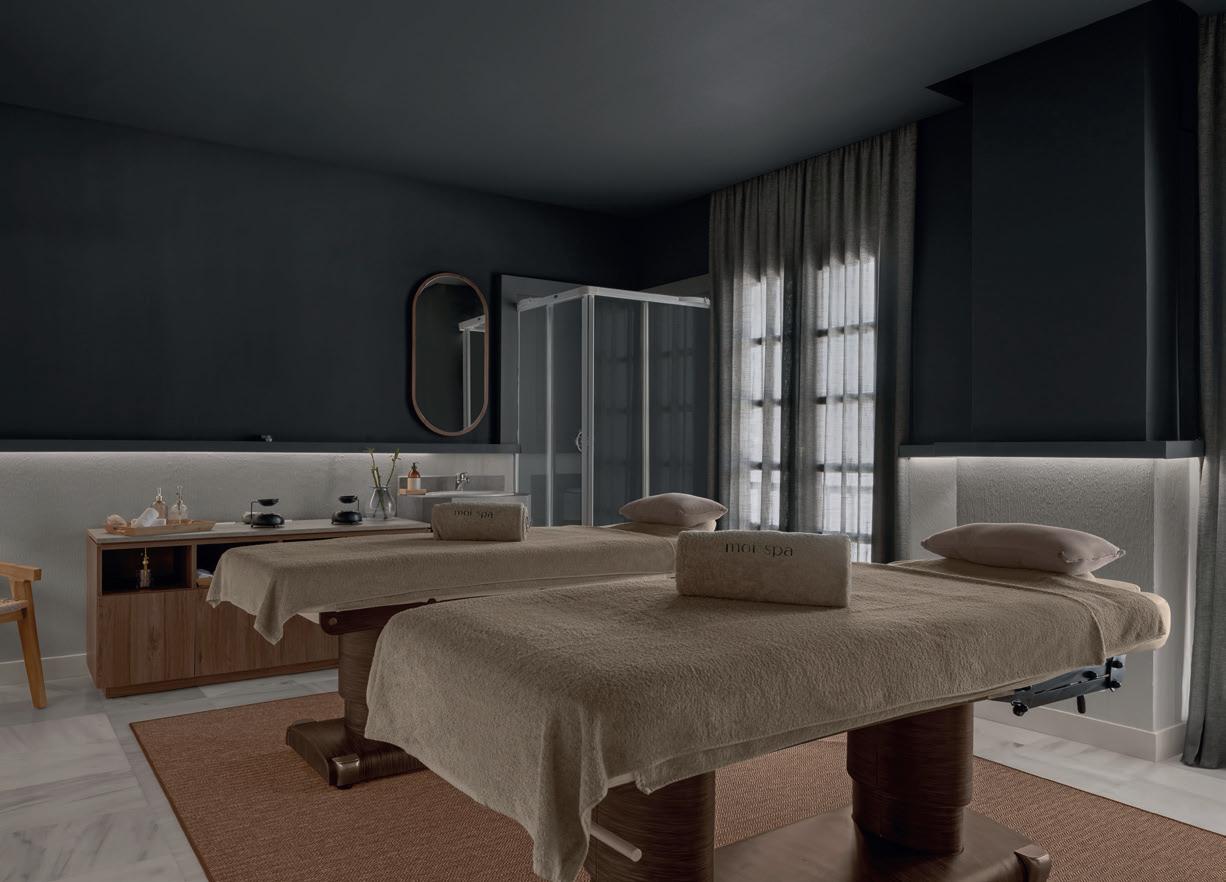

Niamh echoed this sentiment, “Technology should enhance, not replace, the human touch that is so essential in wellness.”
And Hida reinforces the same balance, “While these technologies can shape and refine the guest journey, they act as a support rather than a replacement. The human connection remains essential - our therapists’ ability to listen and their genuine sense of care is what truly defines the experience.”
While pre-arrival insight sets the tone, the real magic of hyper-personalisation happens during the stay. Increasingly, spa journeys are being designed as fluid, responsive experiences that are capable of evolving in real time.
At Culloden Estate & Spa, this adaptability is built into treatment delivery. Niamh explained,
“If a guest has indicated during booking or pre-arrival that they are experiencing stress, poor sleep, or muscle tension, therapists can tailor pressure, techniques, and products during the treatment itself.”
She added, “For guests staying multiple nights, data from earlier treatments can inform the next step in their journey… it’s about using data not in a clinical way, but as a tool to anticipate needs and create a spa journey that feels intuitive.”
At 7Pines Resort Ibiza, real-time feedback is central to the model. Cristina said, “Feedback collected after treatments or daily check-ins allows us to continuously refine the experience. For example, we may adjust pressure levels, treatment focus, or therapy types based on evolving needs.”
She gave a clear example, “If a guest reports improved sleep but ongoing muscular tension, their programme can shift from general relaxation to more targeted recovery and regeneration therapies.”
Technology is also playing a role in deepening this responsiveness. Cristina highlighted the introduction of advanced diagnostics, “We have introduced the Technogym Checkup system… These insights enable us to design highly personalised training programmes aligned with each guest’s goals.”
But personalisation is not always high-tech. At Kimpton Blythswood Square, Melissa Gibson, Head of Spa, described a more intuitive approach, “Our therapists place strong emphasis on a deeper, verbal consultation at the start of each session. This allows us to go beyond standard profiling and truly understand each guest’s physical, emotional, and lifestyle needs.”
This is supported by structured yet flexible guest journeys. She added, “Guests are offered a curated journey card of four pathways - Invigorate, Relax, Recover, or Detox - which guides them through the thermal experience in a specific sequence.”
Melissa said, “This structured pathway ensures they gain the maximum benefits… while still feeling tailored to their individual goals.”
At Nao, the philosophy becomes even more fluid. Vasiliki explained, “We continuously observe how each guest responds - physically, mentally, and emotionally - allowing us to refine and evolve their journey as it unfolds.”
She emphasised, rather than following a fixed plan, the experience becomes a living one, responsive, holistic, and aligned with the guest’s progression.” Hyperpersonalisation is also expanding beyond the treatment room, shaping environments, amenities, and sensory experiences.
At METT Marbella Estepona, Irene Carrillo - Marketing & PR Manager, described how even aromatherapy is tailored, “Different essential oils are selected depending on the guest’s needs, lavender for relaxation and sleep, rosemary or juniper for stimulation and focus, or citrus for revitalisation.”
She added, “This allows us to adapt each treatment at a sensory level, creating a more meaningful and effective wellness journey.”
Meanwhile, Melissa highlighted how wellness extends into the guest room, “We encourage guests to take advantage of the complimentary Stay Well offering… including LED masks, Theraguns and Theraboots, as well as items such as mouth tape to enhance sleeping.”
At Carden Park, Emma Pridding, Spa Director, takes a broader environmental approach,
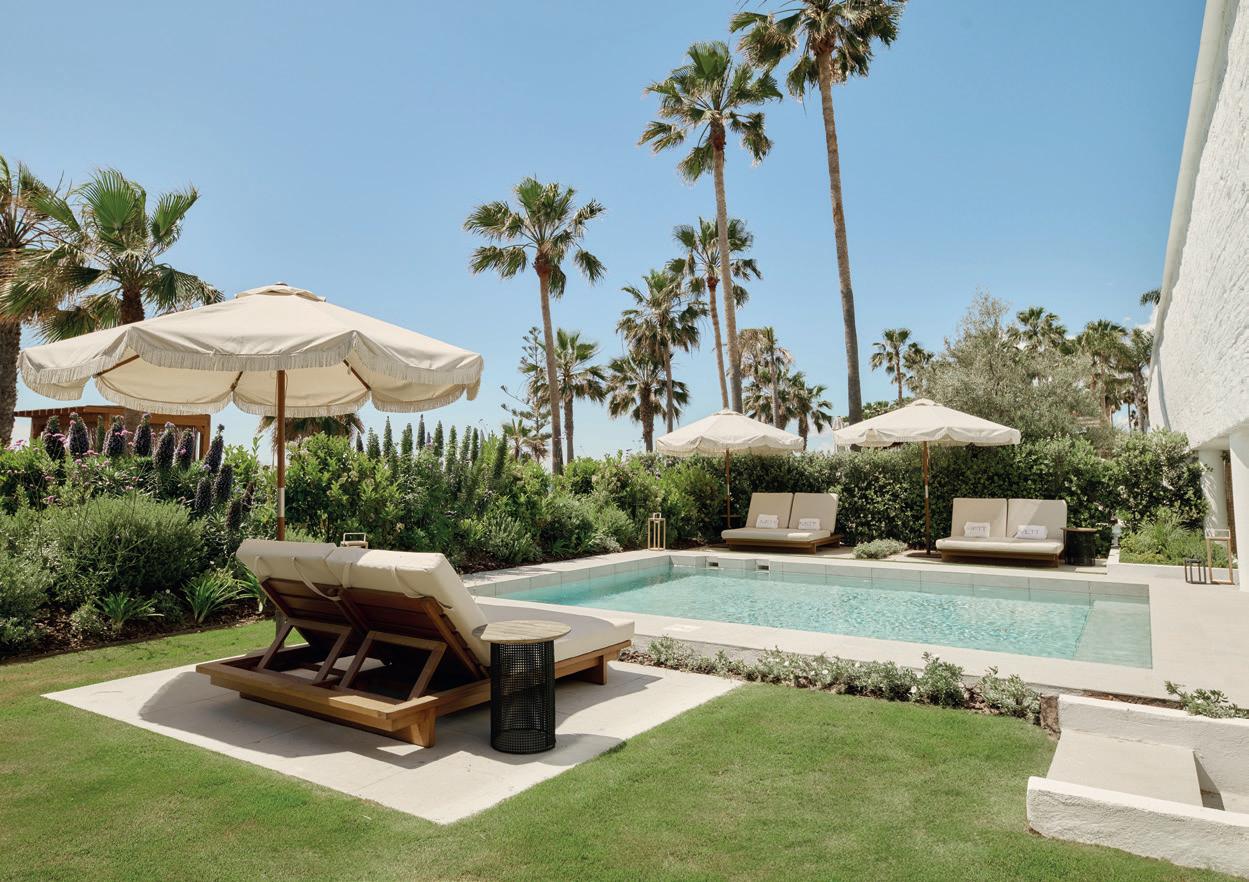
“Outdoor spa spaces only remain truly compelling when they are treated as living, evolving environments rather than static facilities.”
She explained how this is achieved, “We intentionally layer different sensory elements throughout the space… The atmosphere shifts throughout the day, particularly during our Afterglow DJ experiences.” And crucially, the experience is continually refreshed -
“We also evolve the way guests use the garden through curated experiences such as twilight spa sessions and female-only spa days.”
For Emma, the goal is balance, “Preserving calm and wellbeing while continuously introducing new ways to experience the environment, so every visit feels familiar yet distinctly different.”
Perhaps the most powerful application of guest data lies in what happens after the stay. As Cristina put it, “The end of a stay should never feel like the end of the wellness journey.”
At 7Pines Resort Ibiza, this philosophy is embedded into post-stay engagement,
“We provide guests with personalised post-stay recommendations, including tailored fitness routines, mindfulness practices, and health guidance they can integrate into daily life.”
She added, “Digital follow-ups… help maintain continuity and reinforce the relationship beyond the physical stay.”
Hida highlighted a similar approach, “Encouraging guests to share feedback post-visit helps refine our offering. We also remain connected through our newsletter, sharing wellbeing insights and exclusive offers.”
At Four Seasons Astir Palace Athens, Stella Arvanitakou, Senior Director of the Spa frames continuity as an emotional strategy, “Post-stay continuity transforms wellness into an ongoing dialogue… This sustained resonance strengthens emotional loyalty.”
Technology is critical in enabling this continuity as Uli explained, “Too often, treatment history disappears after check-out… With AI, hotels can carry that context forward, so the next stay builds on what the guest has already shown.” This allows for deeper, more meaningful
relationships, “Wellness stops being a one-off spa booking and becomes part of a longer relationship with the guest.”
At METT Marbella Estepona, this relationship extends into lifestyle. Irene explained, “Guests receive personalised guidance and simple rituals they can integrate into their daily lives… ensuring the feeling of balance and renewal becomes part of a continued lifestyle.”
Ultimately, hyper-personalisation is not about data, it is about how data makes people feel and the most successful wellness experiences create a sense of belonging. Irene captured this shift and said, “A truly meaningful wellness experience is not defined only by treatments, but by how a guest feels throughout the entire journey.”
She added, “Guests don’t feel like visitors; they begin to identify with a lifestyle of wellbeing.” This emotional connection is echoed across the industry - Joe describes AI’s role in achieving it, “The value of AI is not simply in automation, but in its ability to translate fragmented information into a unified sense of care.”
And across Kerzner’s portfolio, Rosemary Read Larsen, Vice President Wellness & Longevity at Kerzner (Home to One&Only, SIRO and Rare Finds), explained that the balance is clear,
“We strive to provide a high-tech but high-touch service… technology provides the intelligence, but our people create the connection.”
Hyper-personalised wellness is redefining what luxury means in hospitality - it is no longer about choice, but about relevance. Not about abundance, but about alignment. The future spa experience will not ask guests to decide what they need - it will understand it, anticipate it, and deliver it intuitively.
But as this feature makes clear, the winning formula is not technology alone, instead it is the seamless integration of data, design, and human empathy, or, as Vasiliki so succinctly put it,
“The journey becomes intuitive and deeply personal… something that unfolds, guided by intention and shaped entirely around the individual.” And in that unfolding lies the true promise of hyper-personalised wellness.

A multidisciplinary collective of excellences: La Bottega, Vanity Group, Palatino, Beltrami, White Privé, and Colosseo.
With over four decades of integrated expertise across beauty, textiles, OS&E and design-driven consulting, La Bottega Collective partners with the world’s most discerning hospitality clients, from
hoteliers to developers and designers, to transform the guest journey into memorable experiences.
Because excellence is never an accident.
Why hospitality’s next frontier is epidermal, as told by Naomi Rheinberger, Director, Global Communications and Marketing Activations at La Bottega Collective.
There was a time when hospitality trends were defined by thread count and rainfall showerheads. Then came scent marketing, spa menus that read like poetry, and pillow menus that required their own concierge. Now, the spotlight has shifted again. This time, it is personal. Incredibly personal.
Skin is hospitality’s next frontier.
Not skin as vanity. Skin as barrier, as intelligence, as the body’s largest organ negotiating climate, stress, travel, and time zones on our behalf. For an industry built on care, comfort, and curated experience, it was only a matter of time before the conversation moved from how a space looks and smells to how it actually supports the guest’s skin health.
The modern traveller is no longer seduced by fragrance alone. In fact, some are actively avoiding it. They read ingredient lists. They understand inflammation. They know that a long haul flight is best followed with a five step skincare routine and two litres of water instead of two (maybe three) glasses of wine.
This is where efficacy enters the chat.
In March 2026, La Bottega introduced a landmark partnership with Dr. Barbara Sturm, translating her clinically driven, anti-inflammatory philosophy into hospitality for the first time.
Known globally for her medical approach to skincare, Dr. Sturm’s belief that inflammation is at the root of most skin concerns has shaped a collection that is entirely fragrance free, highly efficacious, and designed to calm and support the skin barrier
This is not about removing scent for the sake of minimalism. It is a paradigm shift in redefining what care means in a guest bathroom, and how to cater for the savviest of wellness led guests.
The collection, developed exclusively with La Bottega, sets a never experienced before benchmark for hotel essentials. No parabens, no PEGs, no silicones, no aggressive ingredients. Just formulations rooted in medical expertise, adapted for hospitality. In other words, skin first, spectacle second.
For hotels, this marks a shift from amenity as accessory to amenity as active contributor to wellbeing. When a guest steps out of the shower, their skin should feel balanced, not stripped. Supported, not overwhelmed.

But skin intelligence does not stop at formulation. It extends to fabric.
Enter Beltrami and its pioneering Autentica Fibra di Legno® (translating loosely to authentic wood fibre). This material innovation brings a new dimension to how textiles interact with the body. Autentica Fibra di Legno is derived from cellulose, resulting in a fabric that is breathable, exceptionally soft, and naturally thermo regulating.
So, why does this matter?
Because what touches the skin matters.
Towels, bathrobes, bed linens. These are not decorative afterthoughts. They are second skin. Materials that respect the body’s temperature, reduce friction, allow breathability, and contribute directly to comfort and recovery. For spa hotels, wellness resorts, and urban sanctuaries alike, material intelligence is becoming as critical as design language.
In the same way that guests now expect menus to cater to dietary intolerances, they are beginning to expect

environments that acknowledge skin sensitivity. This is not niche. It is a reflection of rising awareness around allergies, dermatitis, and the cumulative impact of environmental stressors.
Brands like Ground Wellbeing have long championed topical application as a gateway to measurable wellness results. Their approach to product and rituals focusses on the therapeutic power of what is absorbed through the skin, bridging spa ritual with genuine physiological benefit. It is a reminder that the skin is not merely a surface. It is an interface.
For hospitality leaders, the opportunity is clear. Skin centric thinking allows hotels to elevate the guest journey without excess. It is not about more. It wellness curation.
At La Bottega Collective, we often speak about curating guest experience with elegance over extravagance. Skin embodies that philosophy perfectly. A fragrance-free formulation that calms inflammation. A towel woven from advanced cellulose fibres. A spa oil designed to support lymphatic flow. These are refined interventions. Subtle, yes. But powerful.
There is also a commercial logic. As wellness tourism continues to rise, properties that demonstrate tangible commitment to health will differentiate themselves. Guests may not articulate it immediately, but they feel the difference when their skin is not reacting, when their sleep is deeper, when their body feels considered.
And let us be honest. In a world saturated with sensory overload, sometimes restraint can be refreshing.
The future of in-room wellness is unlikely to belong to a single philosophy. Fragrance-free, clinically driven formulations designed to respect the skin barrier will increasingly sit alongside carefully curated signature scents that define a property’s identity. Both approaches have a place in hospitality when guided by intention and guest wellbeing.
What is clear, however, is that skin is not a passing phase. It is hospitality’s most intimate touchpoint, and perhaps one of the most powerful.
It is time for hotels to put their skin in the game.
labottegacollective.com
Brocket Hall elevates wellness offering with Technogym partnership.
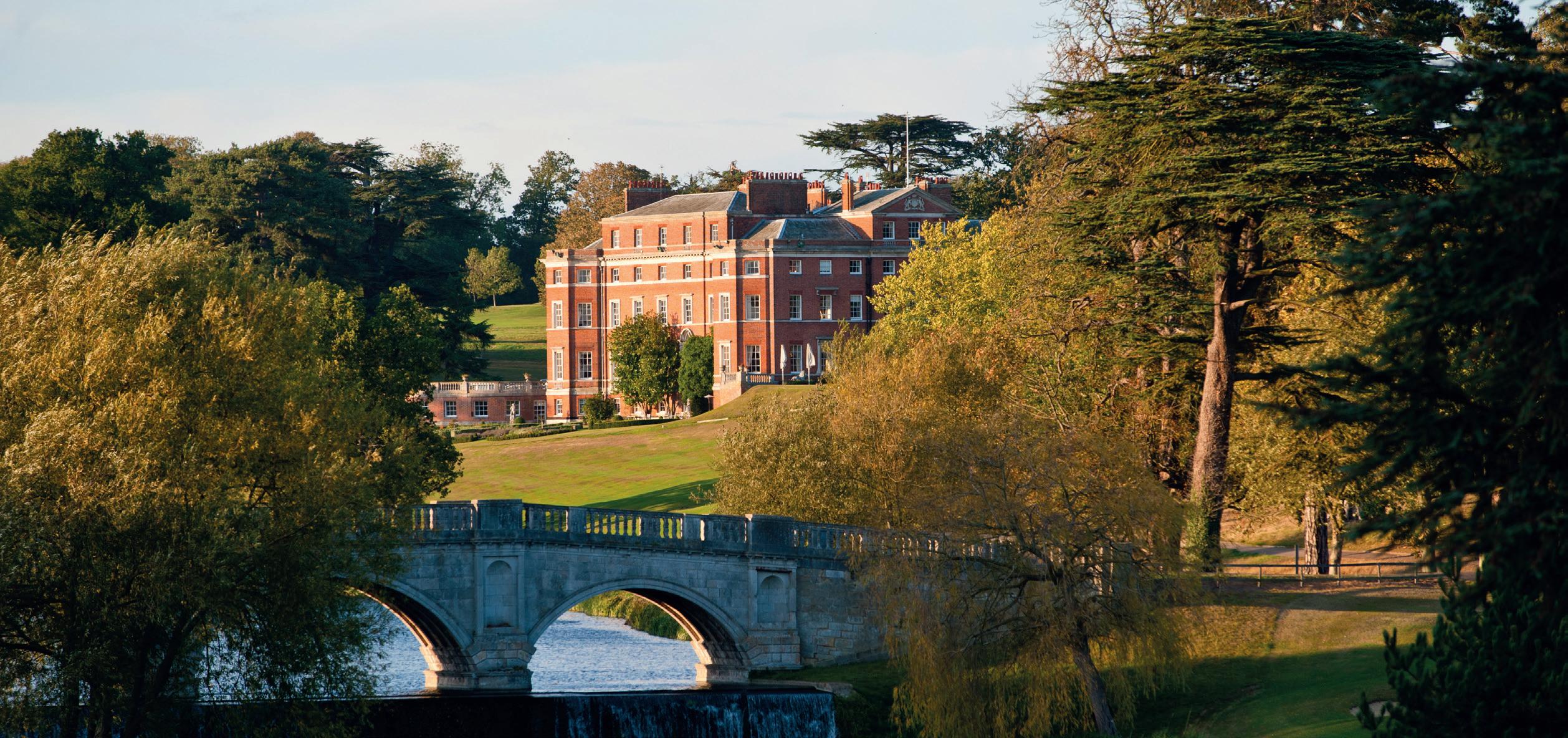
In an era where luxury hospitality is increasingly defined by its wellness credentials, Brocket Hall has taken a decisive step forward with the launch of its new Technogym Centre, an ambitious collaboration with Technogym that signals a broader shift in how premium estates are approaching health, fitness and lifestyle integration.
Set within the historic Hertfordshire parkland, Brocket Hall has long been recognised for its blend of heritage, exclusivity and modern service. Yet the unveiling of the Technogym Centre in April 2026 marks more than just an enhancement of facilities; it reflects a strategic evolution. By aligning itself with a globally respected leader in fitness and wellness, the estate is positioning itself at the forefront of a growing movement that sees wellbeing as central, not
supplementary, to the luxury guest experience.
At the heart of the new offering is a fully integrated, technology-driven approach to fitness. The Technogym Centre introduces a connected ecosystem that goes beyond traditional gym environments, combining stateof-the-art equipment with intelligent training systems and digital services. This enables a highly personalised experience, allowing members and guests to move seamlessly between in-person workouts and remote training, whether at home or on the move.
This level of connectivity is increasingly becoming a benchmark in high-end hospitality, where guests expect continuity in their wellness routines regardless of location. Through the Technogym App, users gain access to tailored programmes, performance tracking and an extensive
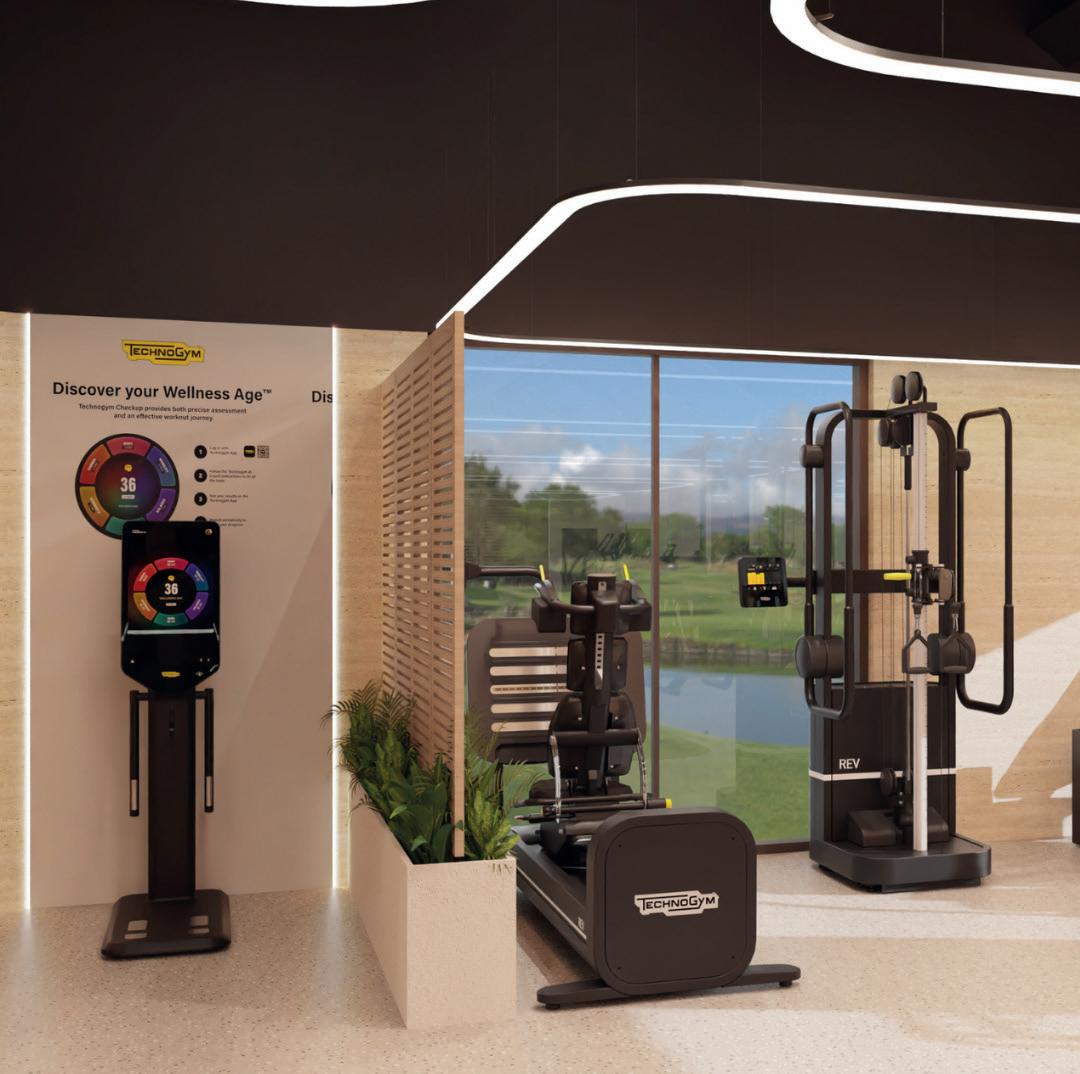
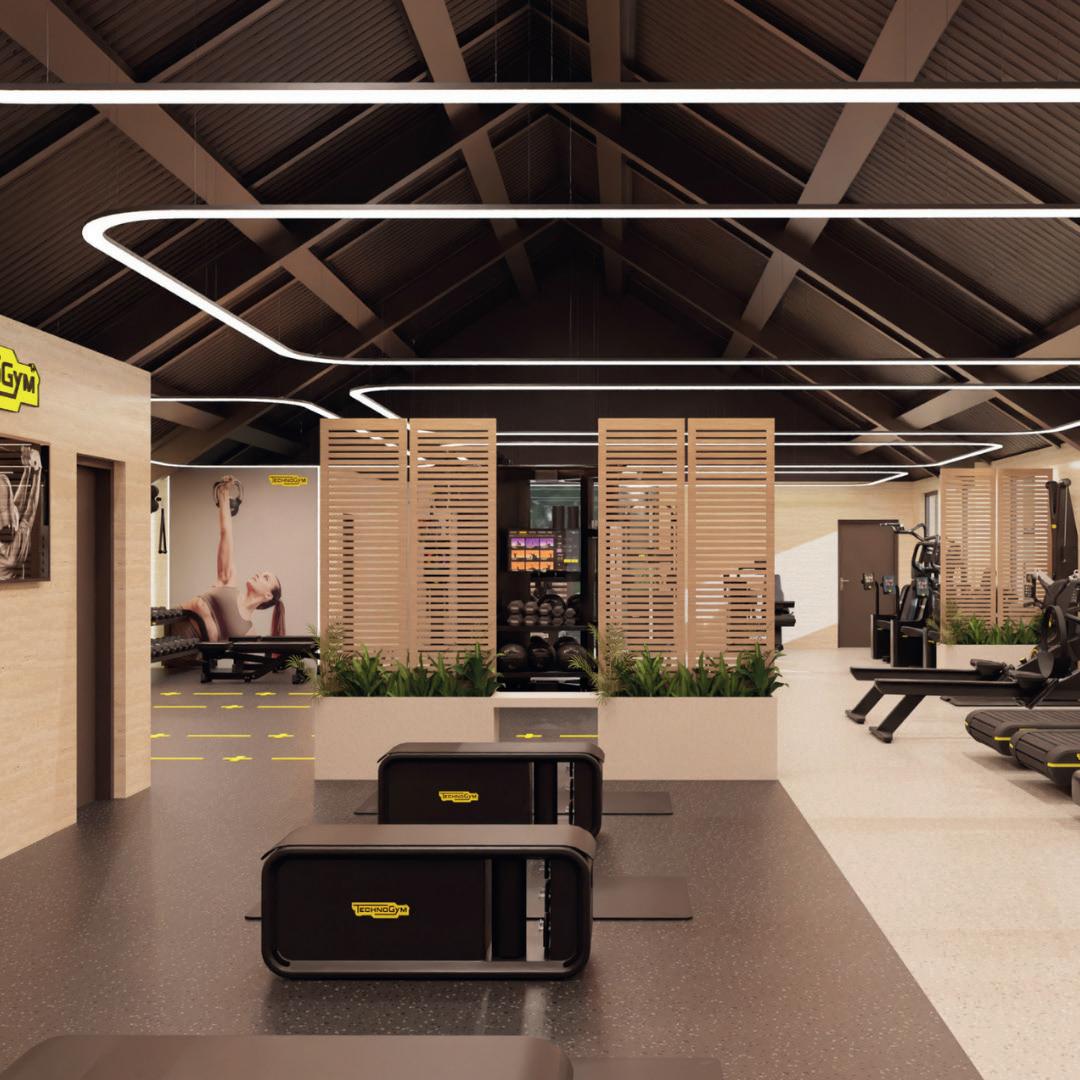
library of on-demand workouts, extending the value of the facility far beyond its physical walls.
Physically, the centre has been designed to match the aesthetic and experiential standards of the estate itself. Premium interiors, aligned with Brocket Hall’s refined identity, create an environment that feels less like a conventional gym and more like a curated wellness space. Alongside the main fitness floor, a dedicated group exercise studio hosts a diverse schedule of instructor-led classes, ranging from strength and conditioning to yoga and Pilates. This breadth ensures the facility caters not only to performance-driven users but also to those seeking balance, recovery and holistic wellbeing.
What distinguishes this partnership further is the integration of advanced performance and assessment tools. Members benefit from innovations such as AI-driven wellness diagnostics, which evaluate key metrics and provide a “Wellness Age” benchmark - offering a tangible, personalised starting point for improvement. Strength training is enhanced through data-led systems that optimise efficiency and outcomes, while high-performance cardio equipment delivers immersive, feedback-rich workouts tailored to individual goals.
For Brocket Hall, the Technogym Centre is not a standalone development but part of a wider, carefully considered investment strategy. Over the past year, the estate has expanded its offering through a series of highprofile partnerships and upgrades, particularly within its golf and performance facilities. This holistic approachbringing together sport, fitness, hospitality and wellbeing - reflects a broader ambition to create a multi-dimensional lifestyle destination.
General Manager Lee Williams noted, the focus has been on “quality, innovation and long-term excellence,”
with partnerships playing a crucial role in delivering standout experiences. The collaboration with Technogym exemplifies this philosophy, leveraging external expertise to elevate the in-house offering and ensure it meets global best-in-class standards.
From an industry perspective, this move underscores a significant trend. Luxury hotels and private estates are increasingly recognising that wellness is no longer limited to spa treatments or relaxation spaces. Instead, it encompasses a comprehensive ecosystem that includes fitness, mental wellbeing, recovery, nutrition and digital engagement. Guests are not just seeking indulgence, they are looking for environments that support their long-term health goals.
The Brocket Hall-Technogym partnership serves as a compelling case study. It demonstrates how heritage properties can successfully integrate cutting-edge technology without compromising their identity, and how collaborations with global brands can unlock new levels of service and differentiation.
Ultimately, the Technogym Centre reinforces Brocket Hall’s position as a forward-thinking destination - one that understands the evolving expectations of modern luxury consumers. By placing wellness at the core of its offering and investing in both physical and digital innovation, the estate is not only enhancing its appeal but also setting a new benchmark for spa, wellness and amenities within the hospitality sector.
As the lines between leisure, lifestyle and longevity continue to blur, initiatives like this are likely to become the standard rather than the exception. For now, Brocket Hall stands ahead of the curve, offering a glimpse into the future of integrated wellness in luxury hospitality.
Redefining the guest experience with TEMPLESPA.
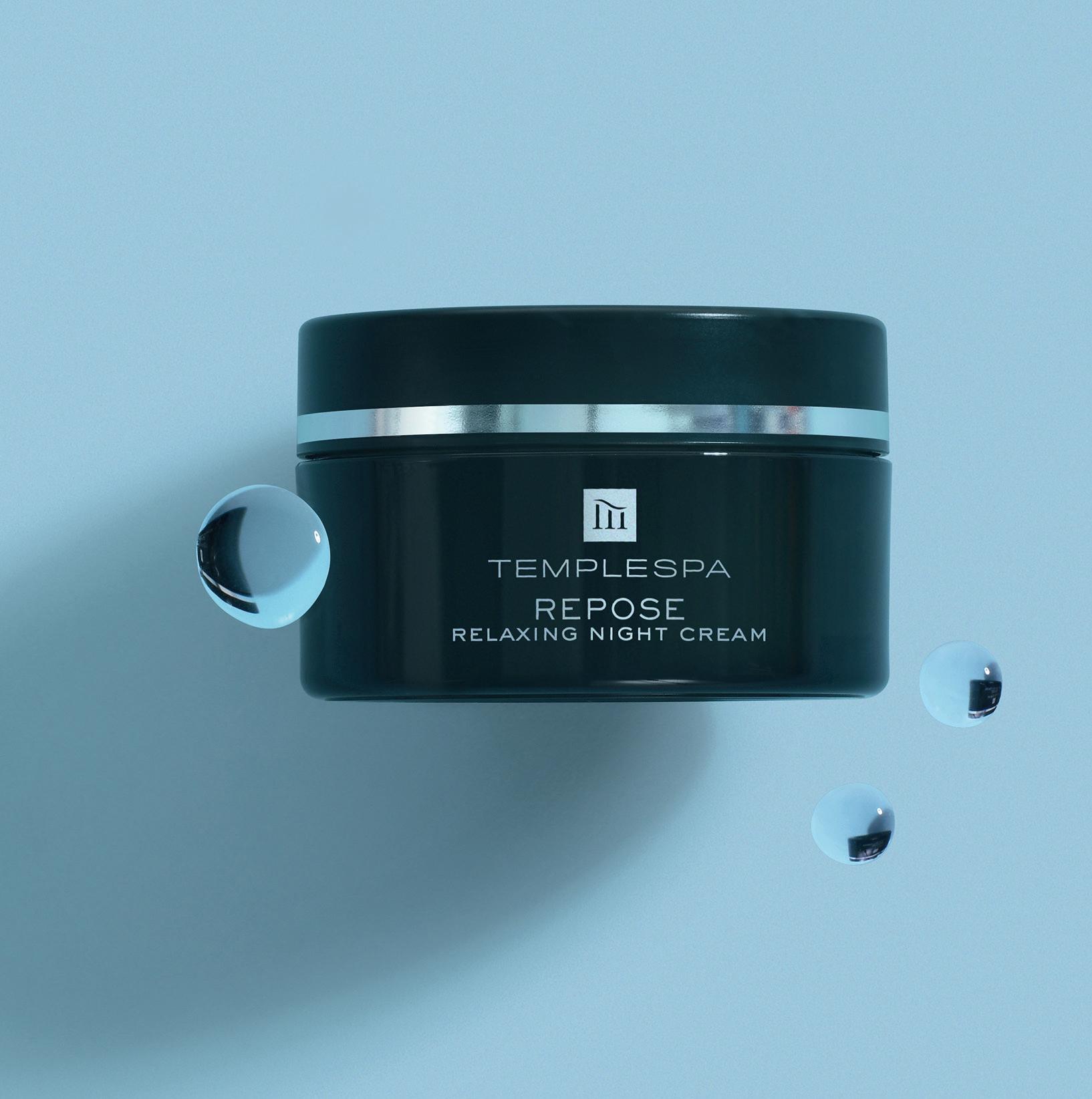
In today’s hospitality landscape, guest experience is defined by how a stay makes people feel. The most memorable hotels create moments of calm, comfort and connection that guests remember long after checkout. Wellness is no longer confined to the spa. It now shapes every touchpoint of the guest journey. This is where TEMPLESPA brings something different. Blending advanced skincare innovation with the restorative power of the Mediterranean, TEMPLESPA creates experiences that nurture both skin and soul. Built on more than 25 years of formulation expertise, the brand combines cutting-edge science with botanicals, vitamins and active ingredients to deliver visible results alongside emotional wellbeing.
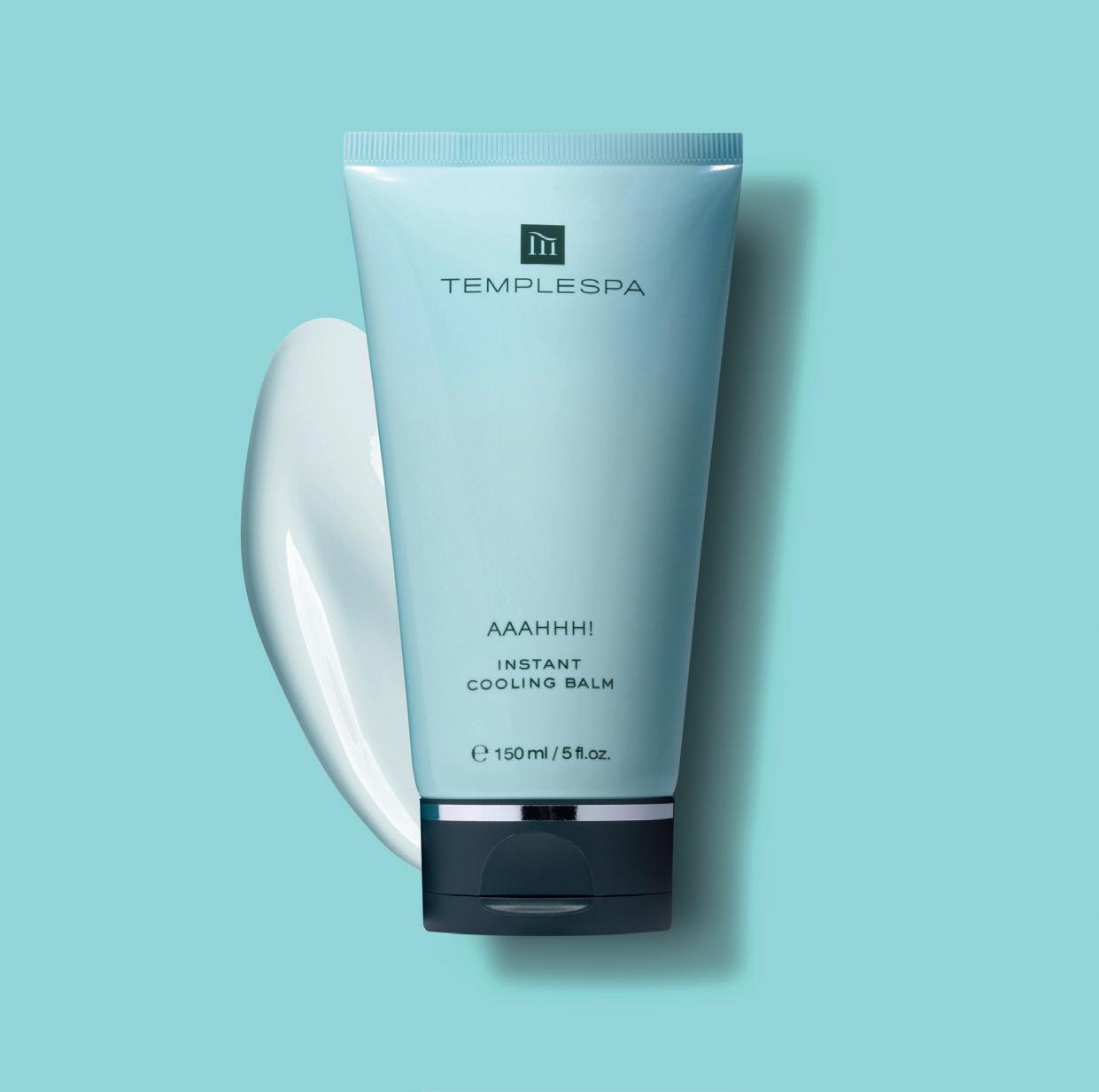
This is Science with Soul.
More than a skincare brand, TEMPLESPA is built around the idea of creating a spa wherever you are. From hotel suites and treatment rooms to bars and shared spaces, every experience is designed to awaken the senses and help guests truly switch off.
At the heart of the experience are five hero products that transform everyday moments into meaningful wellbeing rituals.
REPOSE
Described as “a good night’s sleep in a jar”, REPOSE has
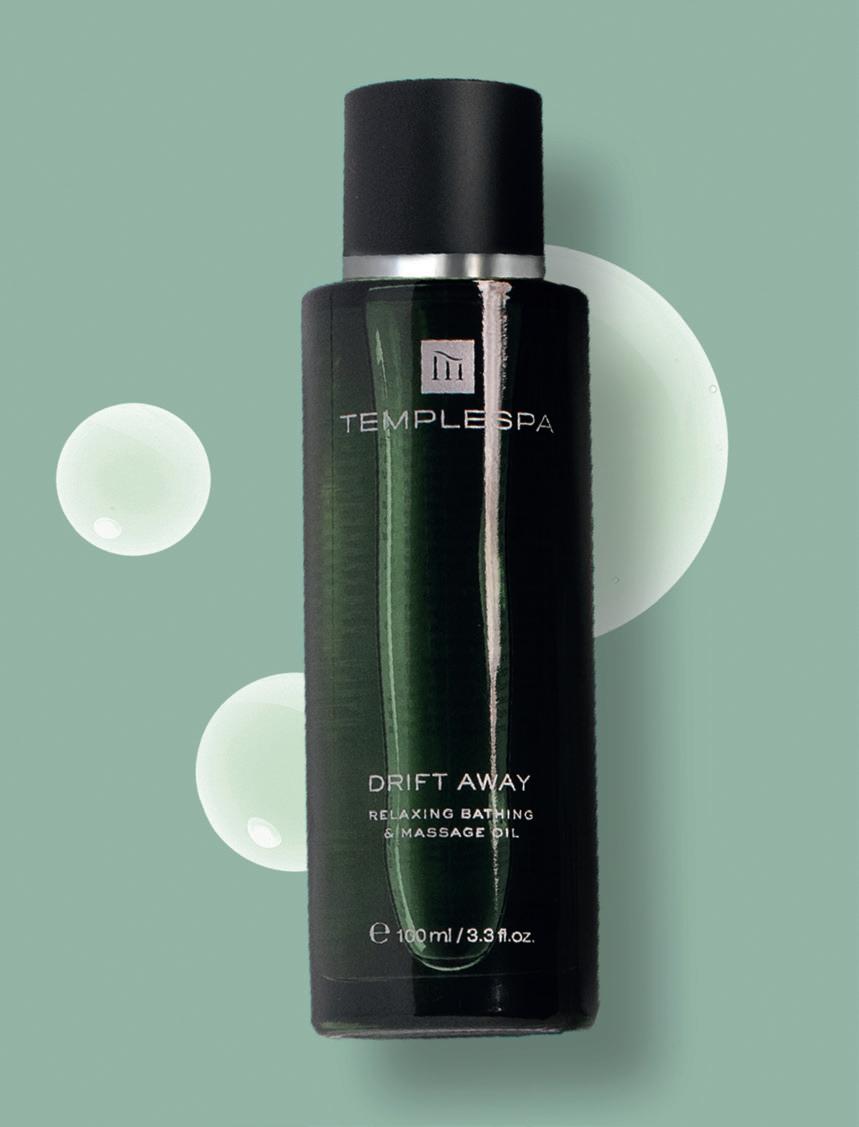
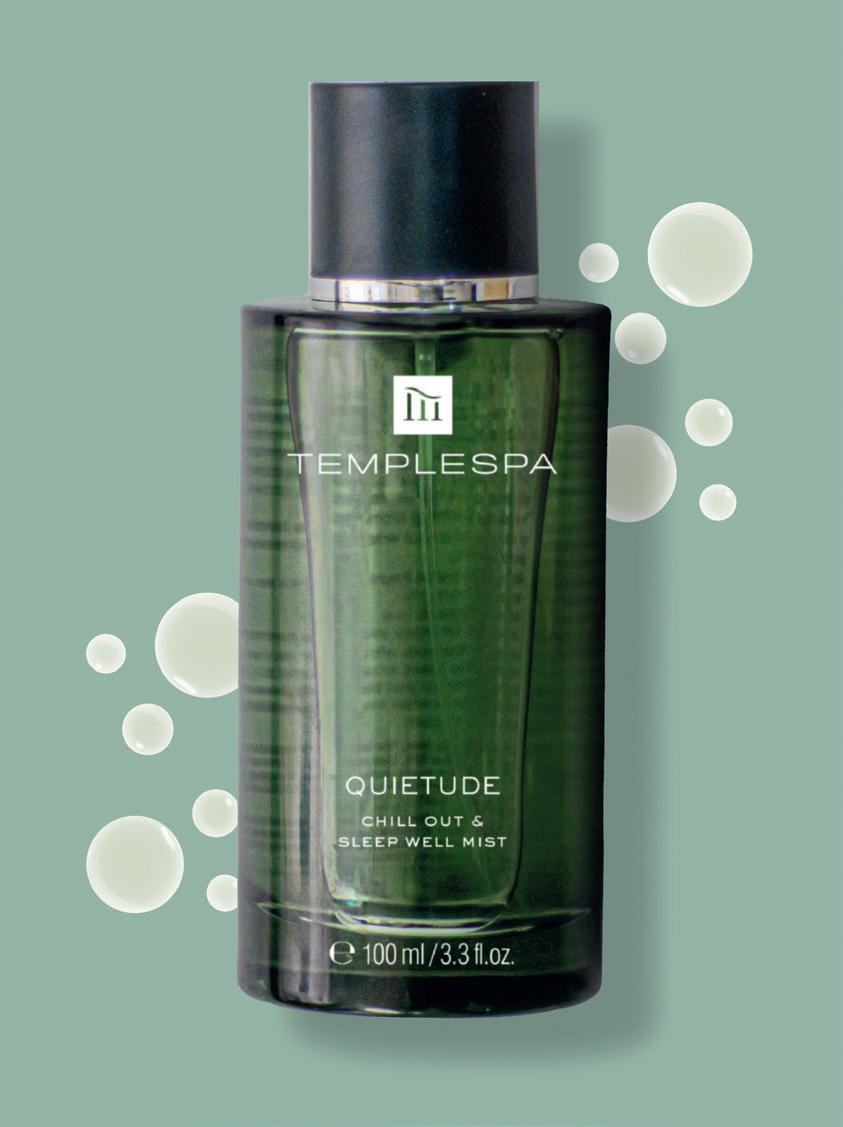
become the bestselling sleep ritual at TEMPLESPA. This comforting balm helps guests unwind at the end of a busy day, creating a calming bedtime experience that encourages deep, restorative sleep.
AAAHHH!
Used in the opening ritual of every TEMPLESPA treatment, AAAHHH! instantly cools, revives and refreshes tired muscles and travel-weary legs. Enriched with Mediterranean botanicals and five fermented minerals including magnesium, zinc and iron, it delivers that immediate sense of relief guests can both feel and remember.
DRIFT AWAY is a deeply relaxing aromatherapy oil designed to ease tension and quiet the mind. Blending patchouli, lavender, geranium, frankincense and chamomile with nourishing plant oils, it creates a moment of stillness whether used in treatments or as part of an in-room wellness ritual.
Designed to instantly transform the atmosphere of a space, QUIETUDE is a calming body and room fragrance layered with cedarwood, lavender, vetiver and frankincense. It allows hotels to extend the spa experience beyond the treatment room and into suites, wellness areas and evening rituals.
Ambience plays a powerful role in how guests feel, and KEEP THE PEACE helps create an immediate sense of calm. With soothing notes of lavender, geranium, chamomile and patchouli, this aromatic diffuser transforms bedrooms and shared spaces into peaceful retreats.
The approach at TEMPLESPA goes far beyond traditional spa offerings. The focus is on creating experiences that surprise, delight and connect with guests in memorable ways.
Spa at the Bar reimagines the guest journey through spainspired cocktails paired with TEMPLESPA products. Playful, immersive and unexpected, it blends indulgence with wellbeing while creating a strong talking point for guests.
The Spa Pantry extends the sensory experience further through edible aromatherapy and curated treats inspired by ingredients found within TEMPLESPA formulations. Designed to complement treatments, it creates a more holistic approach to wellbeing that guests can taste as well as feel.
Spa’rties and Masterclasses offer interactive experiences that bring guests together through wellbeing, skincare and self-care education. Fully supported for in-house teams, these events help drive engagement while naturally encouraging retail discovery.
For hotel owners and spa managers, differentiation lies in the details. In an increasingly competitive market, thoughtful wellbeing experiences can transform how guests connect with a property.
TEMPLESPA offers more than products. It offers a complete sensory ecosystem designed to elevate every stage of the guest journey. From a calming bedside balm to a signature room fragrance, each touchpoint becomes an opportunity to create emotional connection, comfort and lasting memory.
In a hospitality landscape increasingly shaped by wellbeing and experience, TEMPLESPA helps transform a stay into something guests genuinely feel.
A spa, wherever they are.
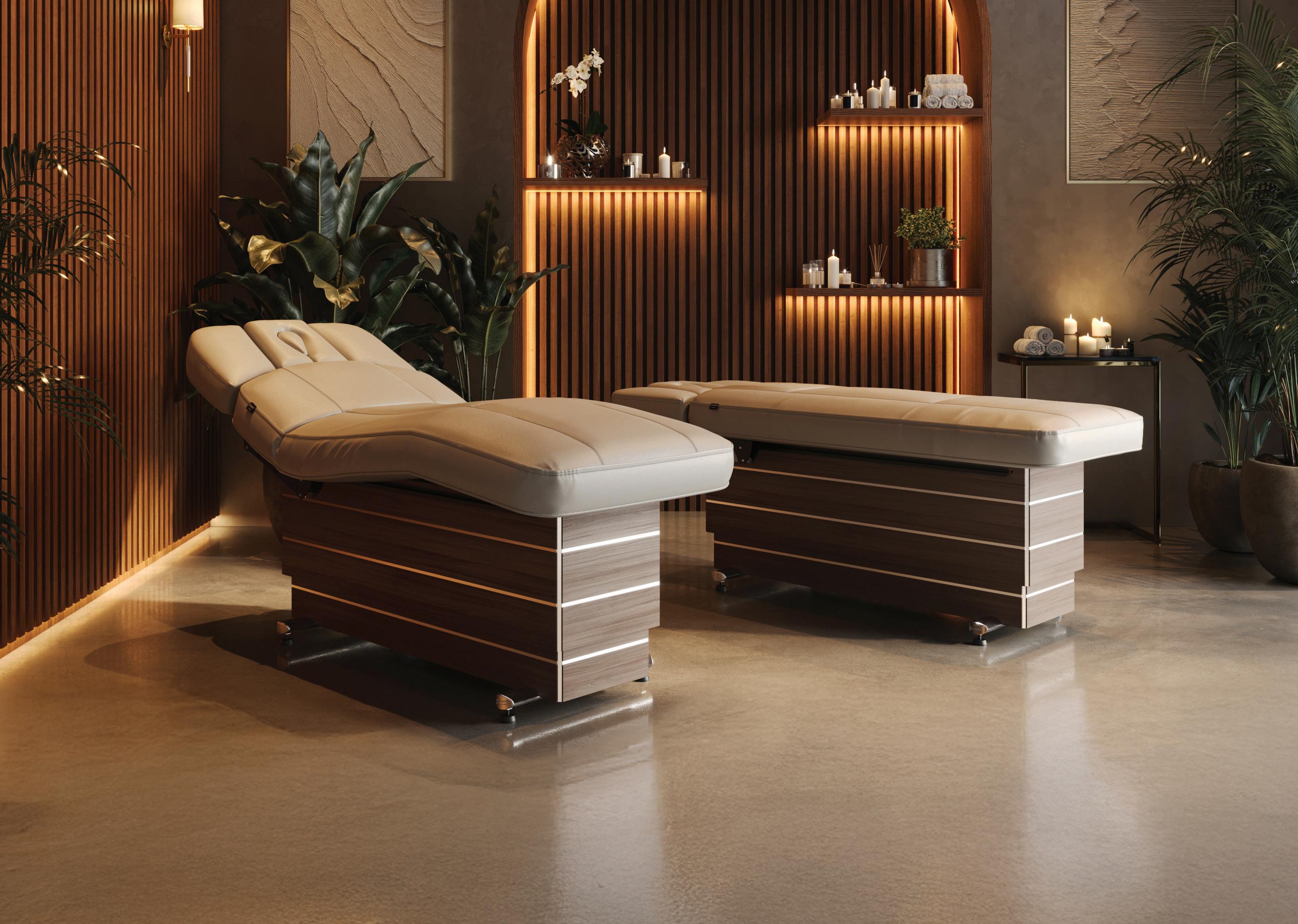

As wellness becomes increasingly embedded across the guest journey, the hotel room is emerging as a vital sanctuary for rest, ritual and self-care. La Bottega Collective is redefining hospitality wellness with immersive, design-led experiences that seamlessly connect amenities, comfort and wellbeing at every touchpoint.
Wellness has traditionally been rooted in the spa, however the in-room environment has become a vital wellness touchpoint - offering privacy, convenience, and the opportunity to unwind on one’s own terms. Wellness has evolved into a seamless, multi-sensory journey woven through every touchpoint within a hotel. From check-in to check-out, every interaction should be intentionally designed to evoke balance, comfort, and care - an approach made possible through La Bottega Collective’s portfolio of brands, including La Bottega, Vanity Group, Palatino, Beltrami, and White Privé.
Thoughtfully curated amenities are no longer just functional; they are an extension of the hotel’s wellness philosophy, shaping first impressions and reinforcing brand identity throughout the stay. Through La Bottega
Collective’s Beauty Essentials pillar, led by La Bottega and Vanity Group, they are redefining what in-room wellness can look like. By curating elevated, design-led amenities and experiences, this pillar ensures that wellbeing is seamlessly integrated into the guest room, transforming it into a personalised space for relaxation and self-care.
For example at Laceby Manor, this approach is brought to life through in-room amenities by Vanity Group, featuring VOYA’s Invigorating range. This creates a seamless transition from room to spa, where guests can continue their wellness journey with VOYA’s signature treatments. By aligning the in-room and spa offering, the experience feels cohesive and immersive. However, guest expectations now go even further - wellness is no longer confined to the spa or the brand, but should be thoughtfully integrated into every stage of the stay.
La Bottega Collective leads the way in this by creating
further innovations such as Perricone MD TV - an in-room facial channel offering guided, step-by-step treatments using curated products. This bespoke channel is exclusive to Perricone MD partners, offering guests a distinctive and engaging way to connect with the brand. Similarly, art’otel introduced an exclusive in-room hair styling channel in collaboration with Australian haircare brand KEVIN.MURPHY, made possible through their amenity partnership. These kinds of personalised, in-room activations elevate the experience, positioning the guests’ room as a private wellness sanctuary.
More recently, La Bottega announced its partnership with Dr. Barbara Sturm to launch a fragrance-free hotel essentials designed for the modern wellness-conscious traveller seeking purity and performance. The formulations mirror the brand’s medical roots while being adapted for the hospitality environment, a pioneering move that positions wellness and skin health at the forefront of the guest experience.
Beyond products and treatments, wellness is also deeply rooted in touch and comfort. Beltrami, La Bottega Collective’s textile house, exemplifies this through its exceptional linens. By being the creators of Autentica di Legno - a natural fibre derived from birch wood -Beltrami elevates the sensory quality of sleep and relaxation. Featured in leading destinations such as The Arts Club
London and Corinthia London, these textiles highlight the critical role comfort plays in overall wellbeing, particularly for frequent travellers.
Wellness is also brought to life through Palatino, La Bottega Collective’s OS&E pillar. Everyday objects are reimagined as thoughtful design pieces, showing how small details can enhance a guest’s comfort and enjoyment. Palatino has showcased this with its work at the Carlton Cannes Beach Club, where bespoke-designed accessories - from umbrellas to beach bags - extend the hotel experience beyond its interiors. Paired with a custom amenity line by La Bottega, the result is a cohesive, story-driven environment that connects design, place, and wellbeing. This an example of La Bottega Collectives 360 degree approach curating hotels from design, textiles, accessories and amenity products.
As guest expectations evolve, it’s clear that wellness can no longer exist as a standalone offering. It is a holistic, immersive experience - and increasingly, the foundation of modern hospitality. In response, La Bottega Collective positions wellness not as a single destination within a hotel, but as a priority embedded throughout every stage of the guest journey.
Discover www.labottegacollective.com
The team at Silentnight reveal why rest is now central to your wellness strategy.
The modern hotel guest has changed. Increasingly health-conscious and time-poor, they are no longer satisfied by a comfortable pillow and a blackout blind. They arrive with expectations shaped by a growing awareness of sleep’s role in physical and mental wellbeing, and they leave reviews that reflect exactly how well those expectations were met.
For hoteliers, this shift is both a challenge and a commercial opportunity. Sleep tourism - the trend of guests actively choosing properties based on the quality of R&R they promise - is accelerating. And at its core is a simple truth: guests who sleep well come back.
Wellness is evolving — and sleep is leading the way
Wellness has long been a cornerstone of the premium hotel experience. Spas, fitness facilities and mindful dining have all had their moment. But rest is emerging as the next frontier, and arguably the most democratic one. Not every guest books a massage or visits the gym. Every guest sleeps.
Forward-thinking operators are responding accordingly. Investing in circadian lighting, acoustic design and temperature control, and treating the sleep environment with the same care as any other guest-facing touchpoint. The bed, however, remains the foundation. No amount of ambient design compensates for a mattress that fails to deliver.
Guest reviews consistently reveal that mattress quality is one of the most frequently cited factors in a stay. The link between sleep satisfaction and loyalty is well established: a well-rested guest is more likely to return, more likely to recommend, and more forgiving of minor operational shortfalls elsewhere.
This is why hotel bed specifications deserve serious commercial consideration. Hospitality-grade mattresses must balance genuine comfort with the durability demands of high occupancy, fire safety compliance and housekeeping efficiency. Silentnight Contract, partnering with hotels across the UK and Europe for decades, designs specifically for these requirements - combining scientifically tested comfort layers with reinforced construction and sustainable materials.
Investing in sleep is only half the equation. Communicating it is the other. Guests cannot value what they cannot see, and a hotel that has invested in its sleep environment should say so, in pre-arrival messaging, in-room collateral and across digital channels.
“Sleep is no longer the backdrop to a hotel stay - it’s the reason for it. We’re seeing operators across the UK invest seriously in their sleep environments, and the results speak for themselves: better reviews, stronger loyalty and guests who return.” says Martin Snelson, Marketing Manager at Silentnight.
Treat rest as a pillar of your wellness offering, back it with the right investment, and tell that story with confidence. The guests who sleep well will make sure others know it.

Rested, refreshed, revitalised. What do you expect from a hotel stay?
Wellness in hotels doesn’t always have to mean spas, treatment rooms, and pools. Sometimes it’s the simple act of closing a hotel bedroom door to the outside world and slipping into a luxury robe and some cosy slippers. Maybe it’s having time to curl up with a good book while the aroma of a freshly brewed speciality coffee or herbal tea fills the hotel bedroom. Or perhaps it’s relaxing into a deep bubble-filled bath with a glass of something sparkling. Wellness is taking the time to look after the mind and body.
For over 33 years, Out of Eden has built a UK-wide customer base of over 20,000, supplying an always growing range of more than 2,000 hotel room products to make guests feel special, valued, and excited to book their next stay. From luxury toiletries and refreshments, including artisan and regional treats from independent producers, to top quality bedding carefully designed and tested to stimulate the ultimate in sleep hygiene.
Sleep retreats might be booming, but hotels only need to introduce a few added extras to help guests achieve the very best night’s sleep. Think eye masks, ear plugs, and sleep sprays for a pillow menu with a wellness slant after indulging your skin with UK-made luxury creams rich in essential oils like musky black pepper, star anise,
and cumin to evoke dreams of exotic lands. A hint of Koh Samui in Kensington?
If you’re keen to know more, try some samples, and find wellness products to spoil your guests, Out of Eden’s dedication to providing the very best personal customer service to hoteliers is being further strengthened in 2026. In response to customer demand for more ‘in-person’ service, the UK’s largest specialist hotel supplier has appointed six new Regional Sales Representatives covering London, the Southwest, the Midlands, the Northwest, the Northeast, and Scotland.
Wilson Digby, the new Sales Representative for London and the Southeast is relishing the opportunity to visit the capital’s best hotels to showcase Out of Eden’s products. He said: “We have a number of longstanding customers in the Greater London area who now have a dedicated person ‘on the ground’ to reacquaint them with our new and improved product range or chat about how we can help meet more of their needs. I’m excited to visit some stunning places and see how many other boxes we can be ticking for hoteliers when it comes to providing the optimum guest experience.”
For more information on Out of Eden, visit www.outofeden.co.uk or call 01768 372939. Samples of products can be provided by our Sales Representatives on hotel visits.
Ken Millar, General Manager of W Edinburgh, explains how thoughtful technology, from personalised guest profiling to seamless digital services, is helping the hotel deliver effortless luxury while keeping genuine human connection at the heart of every stay.
As GM, how would you describe the guest experience you’re aiming to create at W Edinburgh?
Luxury that feels welcoming and personal rather than formal. We focus on the small details: recognising guests, anticipating preferences and creating moments that feel thoughtful rather than staged. The aim is that guests feel genuinely welcomed and relaxed from arrival through to departure.
How do you decide which technologies truly enhance the guest experience, rather than becoming tech for tech’s sake?
Technology must simplify the stay or help our teams deliver better service. If it removes friction or improves how quickly we can respond to guests, it adds value. But hospitality will always depend on people, so technology should enhance service rather than replace it.
Can you share an example of technology that has improved guest satisfaction or the overall flow of the stay at W Edinburgh?
HotSauce technology has allowed us to take away any disruption to guests by knowing when the room is ready to be serviced. It adds efficiencies to our Style team saving time and resources.
We also have digital services across mobile keys to digital in room dining systems. While these technologies are available to guests, they don’t replace the human touch. It’s all about optimising both to create a seamless guest experience.
How does technology support your team while keeping the human touch central?
Technology helps us build a clearer picture of our guests before they even arrive. Our welcome team researches preferences and updates guest profiles so rooms and amenities can be personalised in advance, allowing our
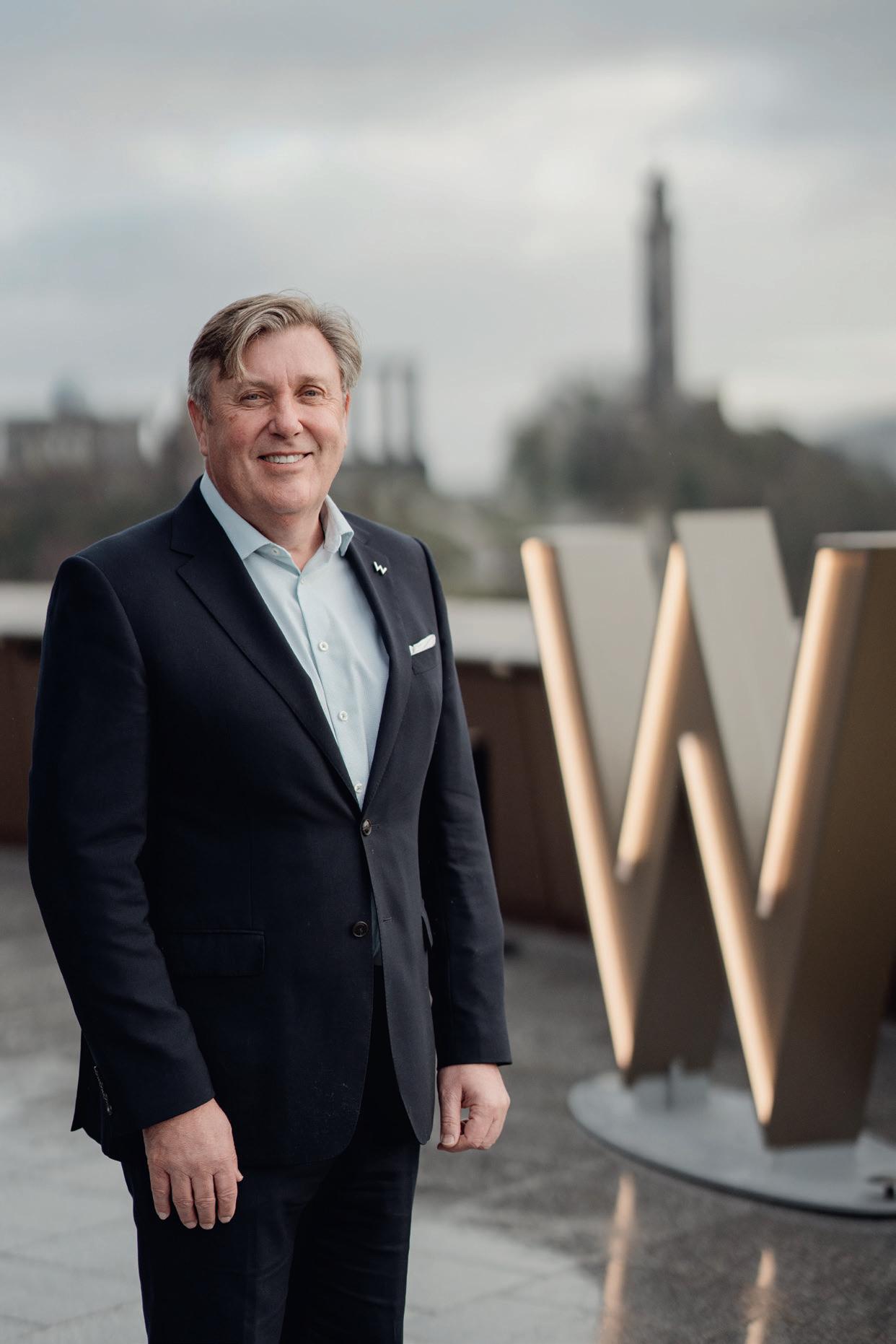
“Our Marriott Bonvoy app is a key digital touch point for our guests.”
teams to focus on creating meaningful interactions, rather than administration when guests are on property.
Recently, for example, we discovered guests had married at W Bali and recreated elements of that experience in their room at W Edinburgh on arrival - a small but meaningful gesture made possible through guest profile insight.
The technology available to us helps capture guest preferences adding efficiencies which are carefully considered during pre-arrival meetings. This allows the team to genuinely personalise each guest’s stay to make it memorable.
How do digital touchpoints reflect W’s personality and connection to Edinburgh?
Our Marriott Bonvoy app is a key digital touch point for our guests. Their preferences are recorded and they have a direct line to our team allowing immediate responses.
Our W Insiders add the W personality while utilising our digital technology – for personalised itineraries ahead of a guest’s stay, restaurant recommendations, it’s about utilising the digital tools while adding the human knowledge and local insights which make it individual for each guest.
Looking ahead, what will matter most in shaping standout luxury hotel experiencesand how is W Edinburgh responding?
Luxury guests increasingly expect both efficiency and genuine connection. Technology will continue to evolve, but the hotels that stand out will use it to anticipate guest needs while maintaining personal interaction, ensuring experiences feel effortless yet still genuinely human.
For example, utlising our technology we can allow insuite personalised check-ins providing an additional level of service for our guests which can be accompanied by refreshments and enhancements and allow another level of privacy.
What matters most is ultimately knowing our guests. I think as international travel continues to grow, being able to check guests in while liaising in their own language adds a level of comfort and familiarity to make their stay unique and special. Knowing the key markets inside out, hiring talent who support those markets and utilising technology will allow us to do this making guests feel immediately comfortable.
Clubclass Options offers hotels a cost-effective way to customise staff uniforms using ready-to-wear designs enhanced with personalised trims and details - delivering brand consistency, flexibility, and fast turnaround without compromising on fit or quality. With no minimum order quantities, the brand also supports sustainability by helping reduce overproduction and unnecessary waste.
When guests walk through the doors of a hotel their first impressions are shaped not only by the architecture and interior but also by the people who greet them. At the heart of this welcome is the hotel uniform, a subtle yet powerful extension of its brand identity.
Stuncroft are providers of ready to wear, made to measure and personalised uniforms for the Hospitality industry.
Clubclass Options offers a smart, flexible way for hotels to elevate their uniform styling while maintaining consistency, quality, and efficiency.
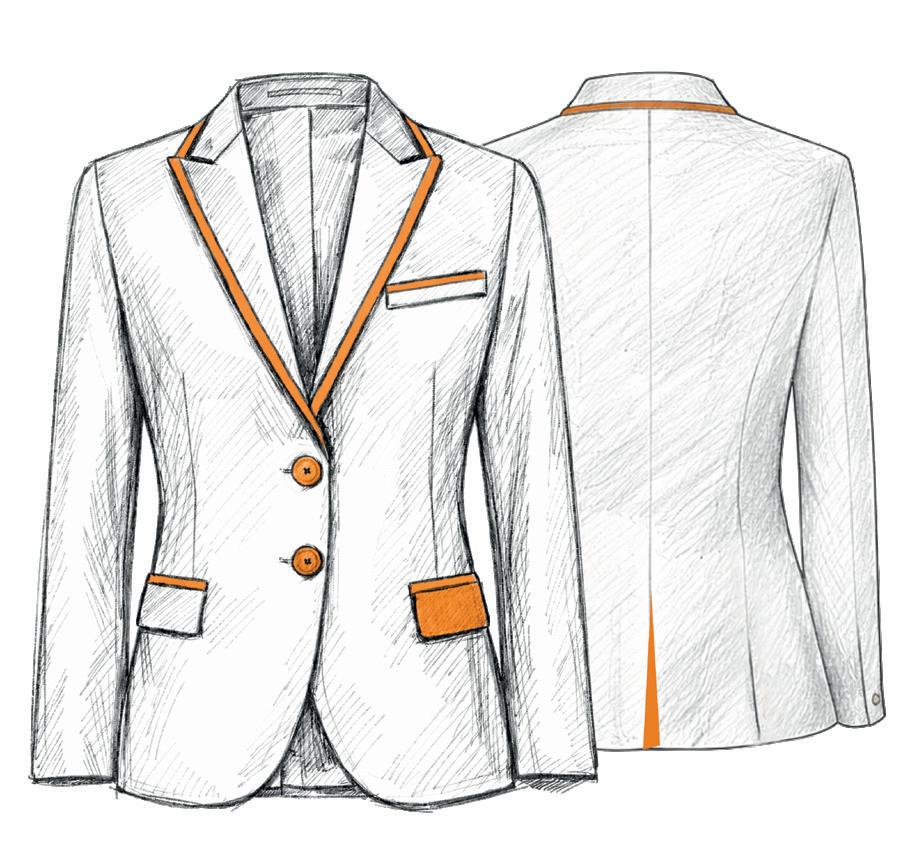
At the heart of Clubclass Options is a simple yet powerful concept: select an existing style from the Clubclass ready to wear collections and then add trim or buttons to the garment to reflect your hotel brand identity.
Rather than developing tailored uniforms from scratch which can be costly and time consuming, hotels can select from a range of expertly crafted, stock-supported garments and enhance them with carefully chosen trims and buttons. This approach ensures a polished, cohesive look while allowing for subtle but impactful customization.
Managing Director Micheal Turner explained, “Starting with a proven base design, such as our ready to wear Clubclass Collections, you can personalise key details to reflect your individual style, selecting alternative trims and buttons to elevate and refine the overall look.
The beauty of selecting an existing style from the one
of our 4 Collections is that it allows your team to choose a fit they are comfortable with, with all options readily available in a wide range of lengths and sizes.
It’s this balance of structure and creativity that makes the service particularly appealing to the hospitality sector, where both style and practicality are essential.
One of the key advantages of Clubclass Options is that personalisation does not come at the expense of fit, availability, or lead times. All bespoke adjustments are carried out in-house by an experienced Yorkshire-based team, ensuring exceptional attention to detail and consistent quality control.
Because the process builds on existing designs, production remains efficient, allowing hotels to benefit from customised garments without lengthy delays.
Flexibility is another major benefit. With no minimum order quantities, hotels can order exactly what they need - whether outfitting a large team or updating a smaller department. This makes it an ideal solution for businesses of all sizes, as well as for those needing to respond quickly to seasonal staffing changes or rebranding initiatives.
To find out how you can begin creating your own tailored look, visit the Clubclass Options page or contact the team directly:
Website: https://clubclasscorporatewear.co.uk/clubclassoptions
Email: nikki.mckinley@stuncroft.co.uk
Telephone: +44 (0)7551 621279
From seasonal activations and immersive wellness experiences to adaptable design and year-round programming, we look into how hotels are rethinking how outdoor spaces can evolve beyond static terraces into living extensions of the guest journey.
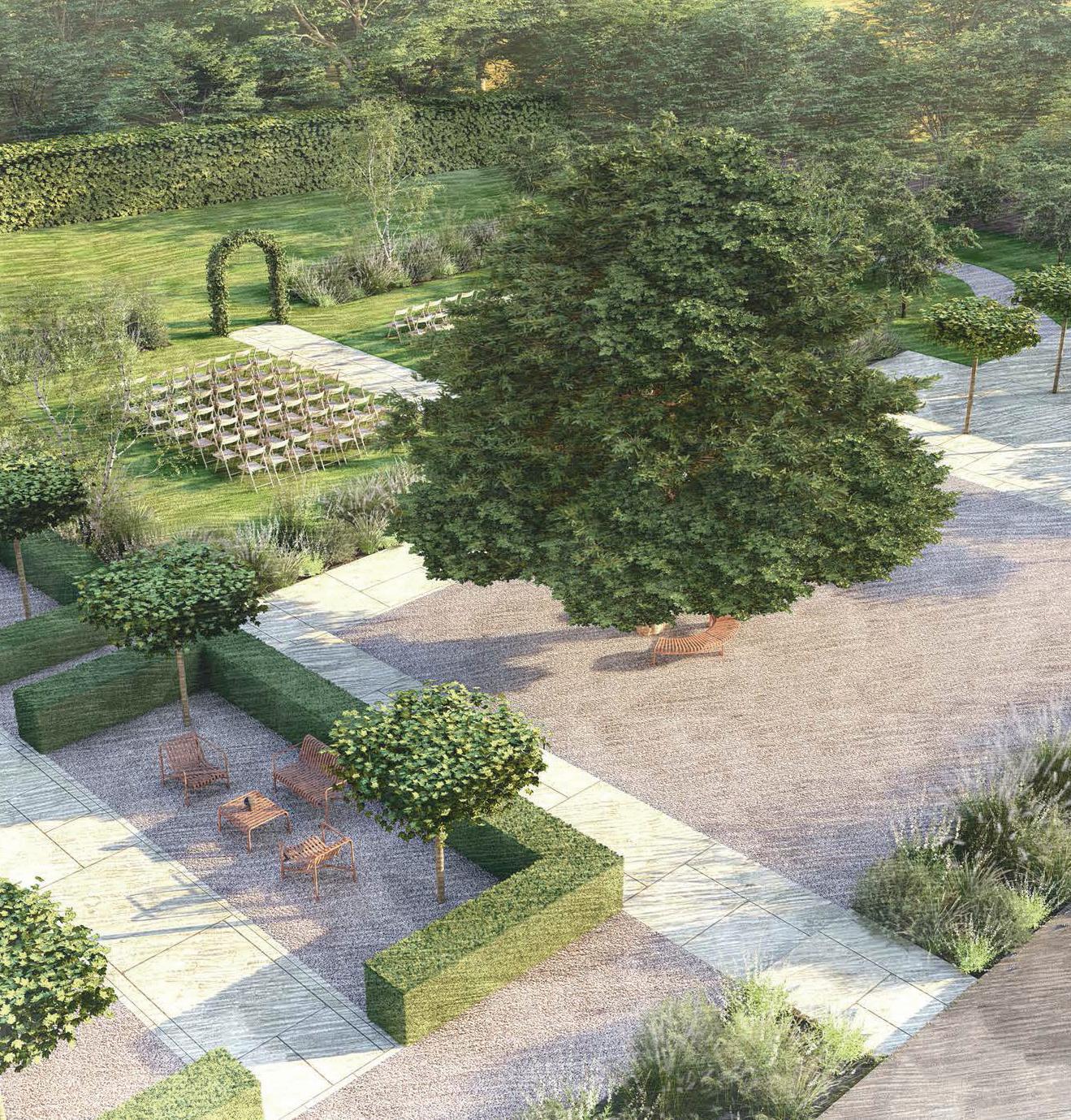
Outdoor spaces have become some of hospitality’s most commercially valuable assets. Once viewed largely as seasonal addons or pleasant aesthetic features, terraces, courtyards, gardens and rooftops are now expected to work much harder: generating revenue, shaping guest perception, driving footfall and delivering memorable experiences that cannot easily be replicated indoors.
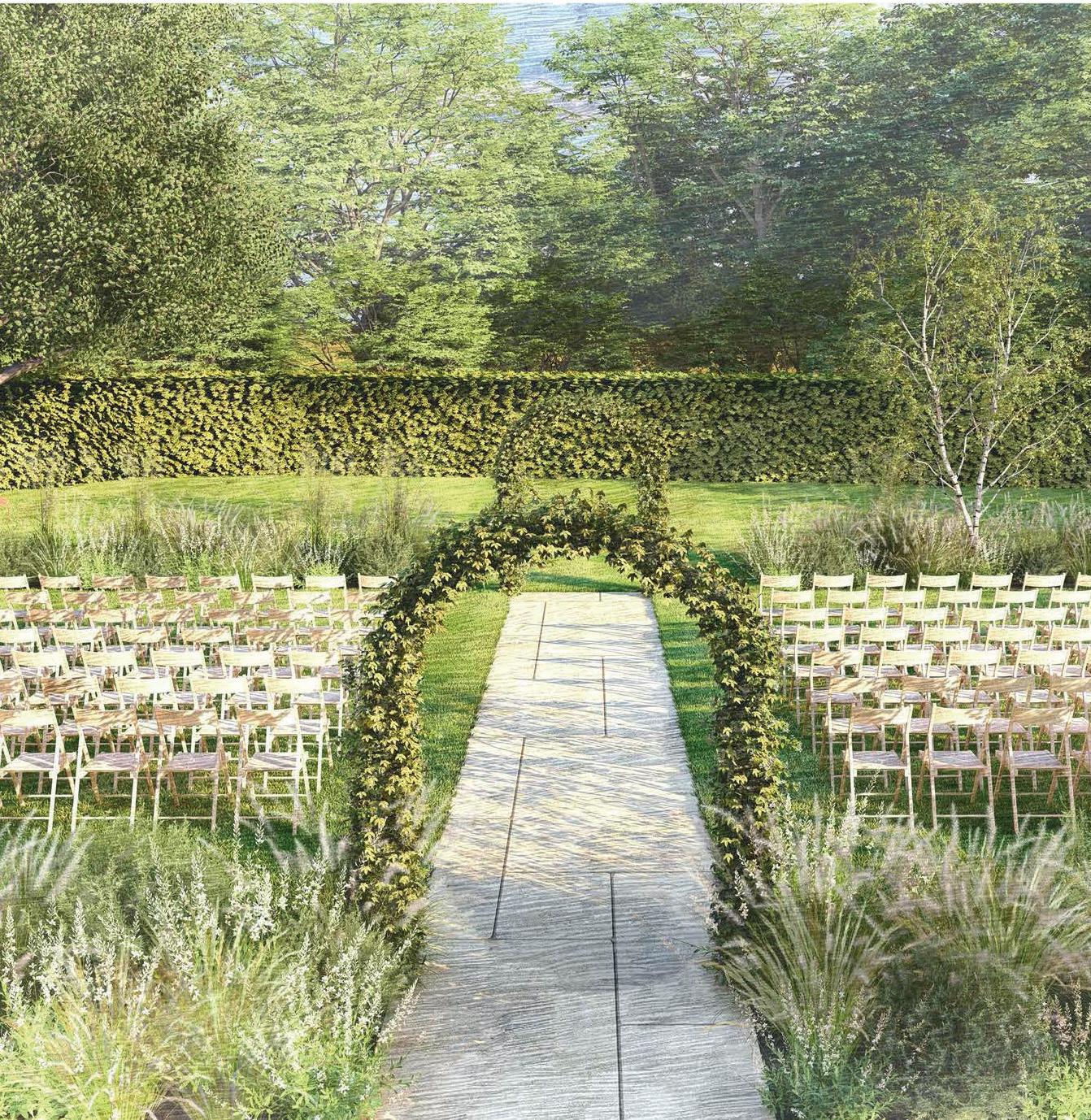
But with expectations growing, there is also increasing pressure on operators to ensure these areas do not become stale. A beautiful terrace that never changes, an underprogrammed garden or a rooftop with little reason for repeat visits can quickly lose its appeal. Today’s guests are seeking experiences that feel immersive, seasonal, shareable and constantly evolving.
Across the sector, hotels are responding with increasingly creative approaches, blending flexible
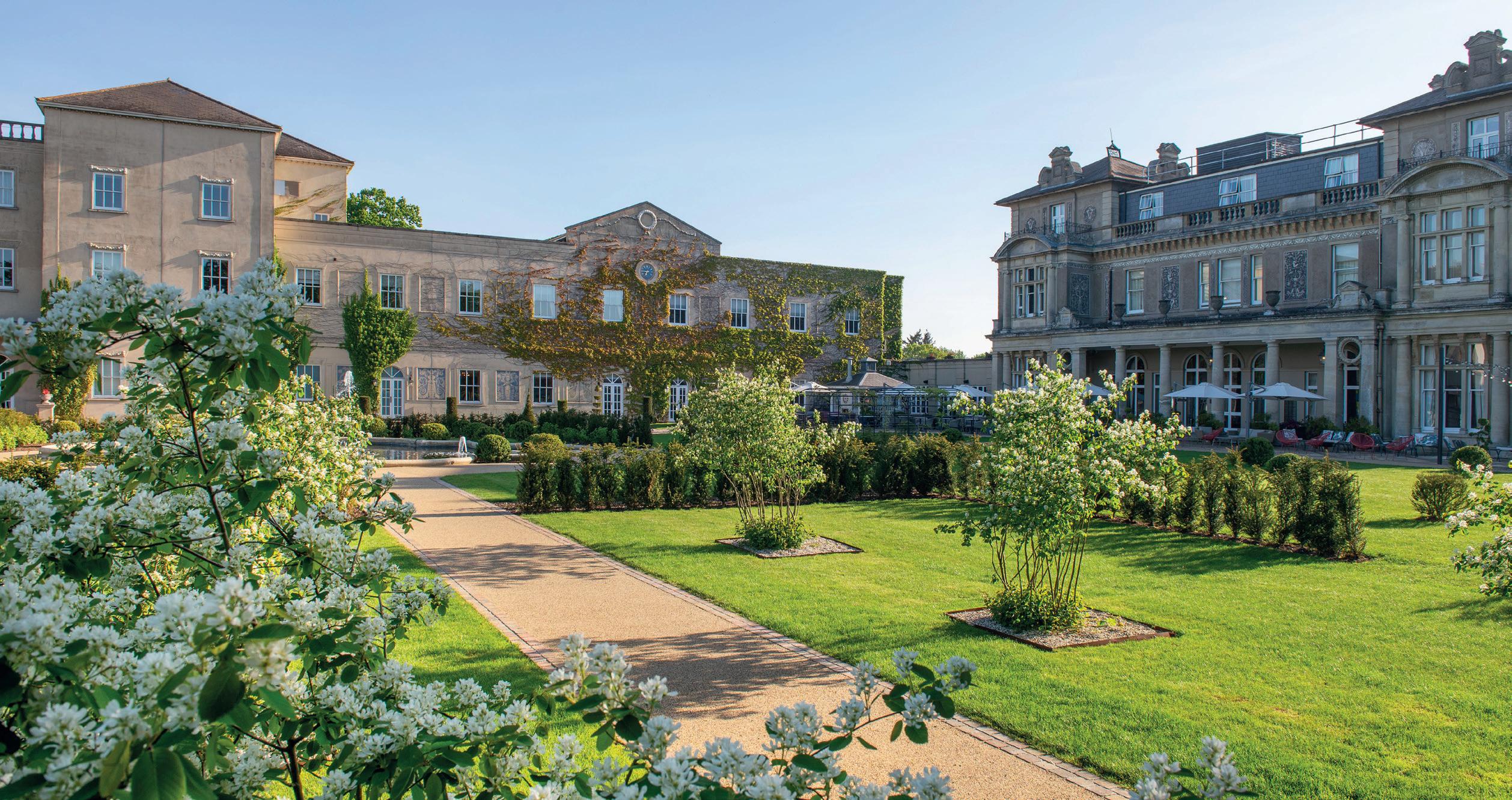
design, thoughtful landscaping, wellness programming, experiential dining and strategic partnerships to keep outdoor spaces alive throughout the year.
For Pedro Paulo, F&B Manager at Ham Yard Hotel, the key is to view outdoor areas not as standalone spaces, but as active extensions of the overall guest journey.
“Outdoor spaces are living parts of the guest journey,” he explained. “It’s a constant evolution as we refresh layouts and menus regularly, aligning with seasonal ingredients and weather patterns.”
That philosophy has shaped a series of adaptive activations across the property. During winter, the hotel introduced an enclosed conservatory area within its courtyard, complete with heaters and blankets, transforming what could have been underused space into a destination in its own right. Meanwhile, the rooftop has hosted a rotating series of seasonal concepts designed to attract both residents and local guests.
“This year we had ‘The Fire Garden’ which was a great success,” said Pedro. “We’re looking forward to the summer where we extend our outdoor seating and add beautiful flower baskets and our Oyster Cart to the terrace.”
The growing emphasis on seasonality is a recurring theme across the industry. Hotels are increasingly recognising that outdoor areas cannot rely solely on good weather to drive engagement. Instead, operators are building year-round strategies that allow spaces to evolve according to the calendar.
At Down Hall, this approach starts with landscaping. “Firstly, we have a planting plan which spans the entire year to ensure the outdoor spaces are looking at their best,” explained General Manager Linden Beattie. “Seasonality
plays a huge role in our planning, from outdoor dining concepts in spring and summer to festive experiences such as Halloween alfresco cinema with fire pits and hot water bottles in October.”
That attention to year-round visual change is increasingly important as guests become more attuned to experiential hospitality. Operators are discovering that even relatively small updates - refreshed planting schemes, evolving décor, limited-time menus or temporary structures - can dramatically alter the feel of a space and encourage repeat visits.
At The Montague on the Gardens, seasonal reinvention has become central to the hotel’s outdoor strategy. “We keep our outdoor spaces feeling fresh and relevant through a seasonal rotation of themed pop ups, ensuring they are continually refreshed and giving guests a reason to return throughout the year rather than experiencing a static offering,” said Managing Director Dirk Crokaert.
The hotel’s winter Ski Lodge and fondue-themed Winter Lodge have become standout examples of how immersive concepts can transform outdoor spaces during traditionally quieter months.
“Similarly, our Beach Bar has successfully created a setting where London feels reminiscent of the Caribbean,” Dirk added. “Live programming including jazz evenings in the gardens and open-air theatre performances brings energy and cultural relevance to the spaces.”
The ability to create distinct identities for different seasons is proving especially valuable in urban environments where outdoor square footage is limited and competition for guest attention is intense.
Increasingly, hotels are also recognising that flexibility
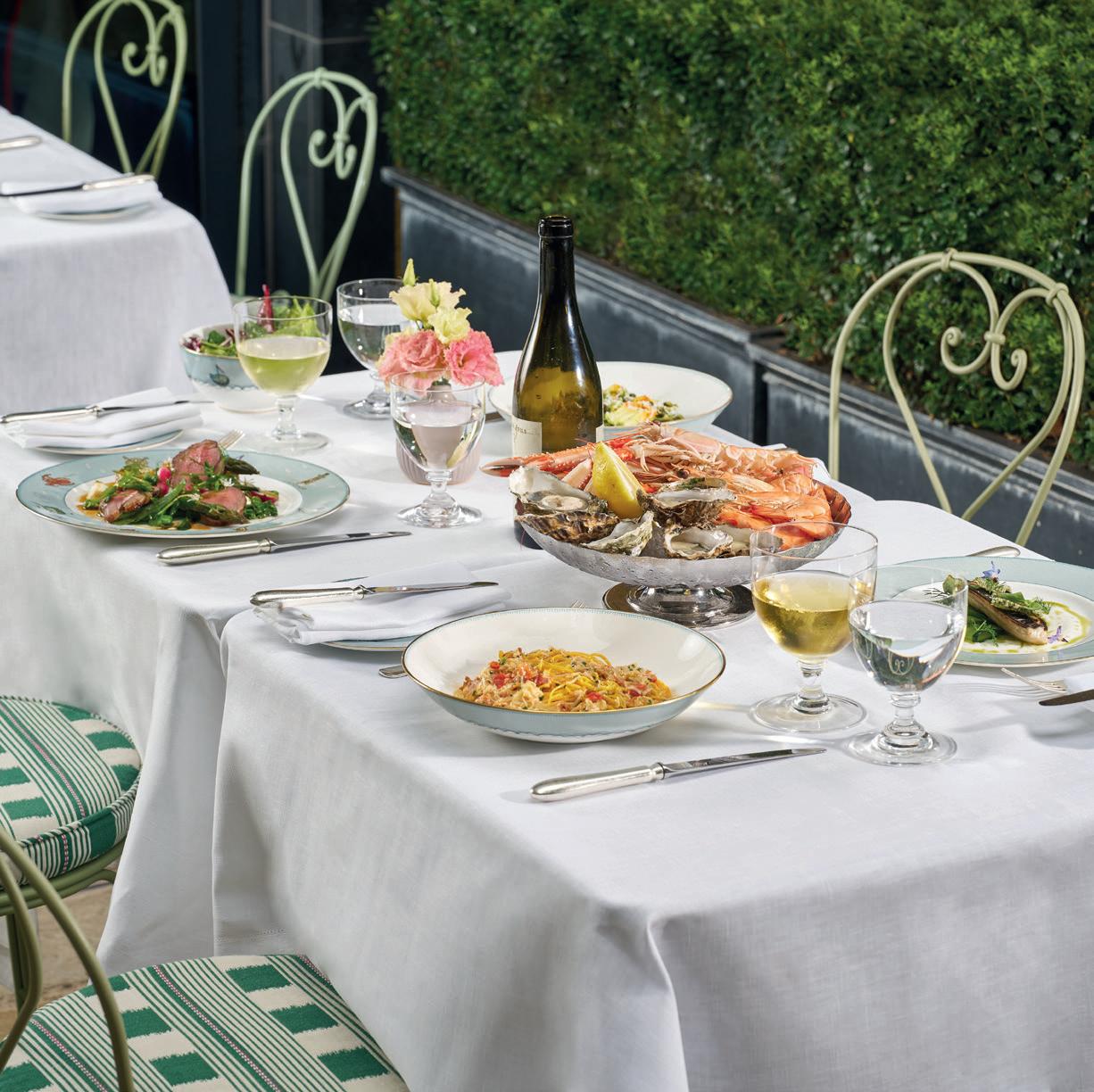
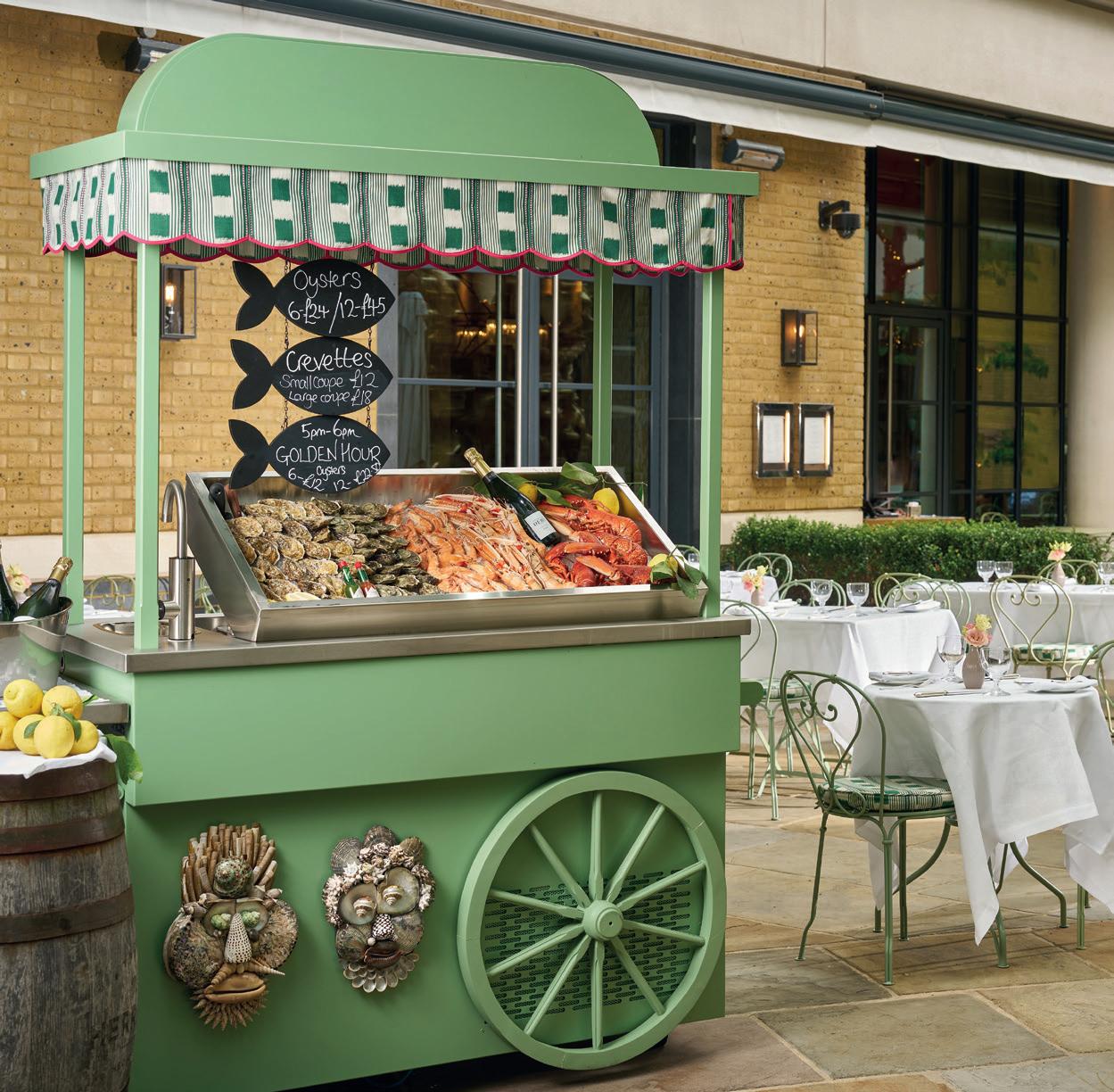
in physical design is just as important as creative programming. Weather unpredictability remains one of the sector’s biggest operational challenges, particularly in the UK, where outdoor hospitality can be heavily impacted by sudden seasonal shifts.
“The biggest challenge is typically weather unpredictability,” said Pedro. “Conditions can change quickly, so we’ve had to invest in solutions that allow us to pivot, including heating and cover for our courtyard.”
Dirk echoed the importance of weatherproof adaptability, “Flexible, weather-proof design is equally important, with retractable roofs and windows allowing our terraces to deliver an inside-outside experience and remain operational, comfortable and inviting across all seasons.”
These kinds of investments are increasingly viewed not simply as guest comforts but as revenue-protection tools. Covered terraces, retractable roofs, outdoor heating and adaptable furniture layouts allow hotels to maximise utilisation regardless of weather conditions while extending trading periods throughout the year.
The commercial potential of adaptable outdoor spaces has also led operators to rethink how underused areas can be repurposed. At Down Hall, one particularly successful example is The Woodland Table - an outdoor dining concept located within the hotel’s walled kitchen garden.
“We utilised a corner of our kitchen garden which was being used for storage and converted it into an enchanting and unique space which combines dining, theatre and sustainability in one experience,” said Linden.
The project demonstrates how outdoor concepts increasingly blend storytelling with sustainability. “Not only did it make the most of a corner of the kitchen garden which was being underutilised, the tables, benches, the bark on the floor and even the structure itself were all
created using trees from within the estate which had to be felled due to their age.”
The desire for authenticity and connection to nature is influencing outdoor design strategies across luxury hospitality. Guests are increasingly seeking experiences that feel rooted in place, whether through estate-grown produce, native planting, outdoor wellness or immersive dining concepts.
At Glenapp Castle, the landscape itself forms a central part of the guest experience. “Here at Glenapp Castle, we ensure our outdoor spaces remain vibrant and constantly evolving by regularly rotating floral displays in line with the seasons,” explained Managing Director Jill Chalmers.
“We plant a variety of flowers and greenery throughout the year, introducing new colours, textures and scents to keep the landscape feeling fresh.”
The property’s outdoor programming extends far beyond traditional garden experiences. “Wellness is an integral part of our outdoor offering, with activities such as foraging, guided walks and the introduction of weighted walks, where guests can incorporate light fitness into their time outdoors while deepening their connection with nature,” said Jill. “Our outdoor wellness programming also includes yoga in the gardens and forest bathing.”
Wellness-driven outdoor concepts have become one of hospitality’s fastest-growing areas of investment. Hotels are increasingly using gardens, rooftops and green spaces to host fitness classes, meditation sessions, recovery experiences and nature-led retreats.
At Ham Yard Hotel, rooftop wellness partnerships have delivered particularly strong engagement - “Last summer we joined forces with Equinox and offered a new series of Pilates and yoga classes which sold out,” said Pedro.
These collaborations are helping hotels broaden
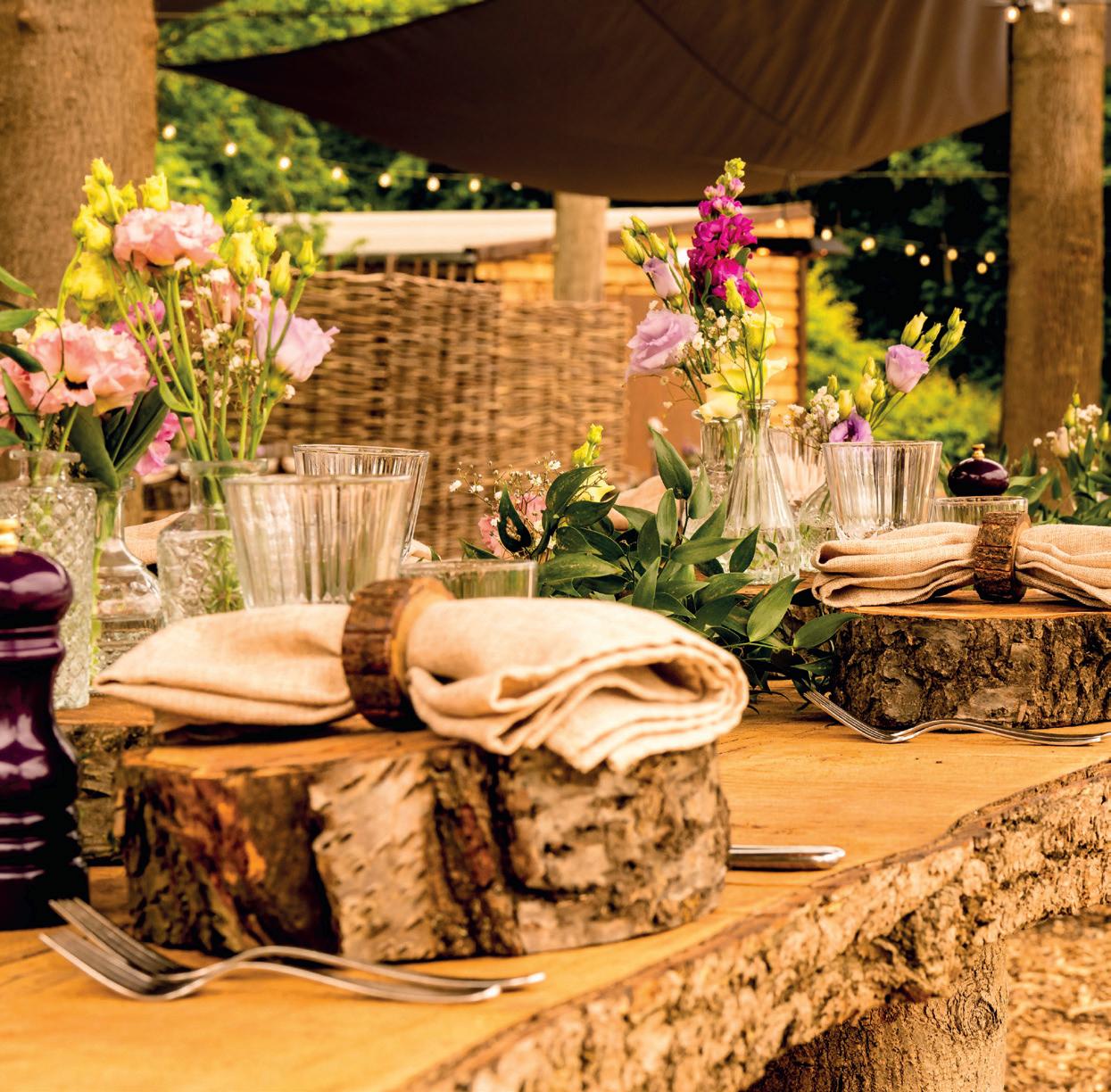
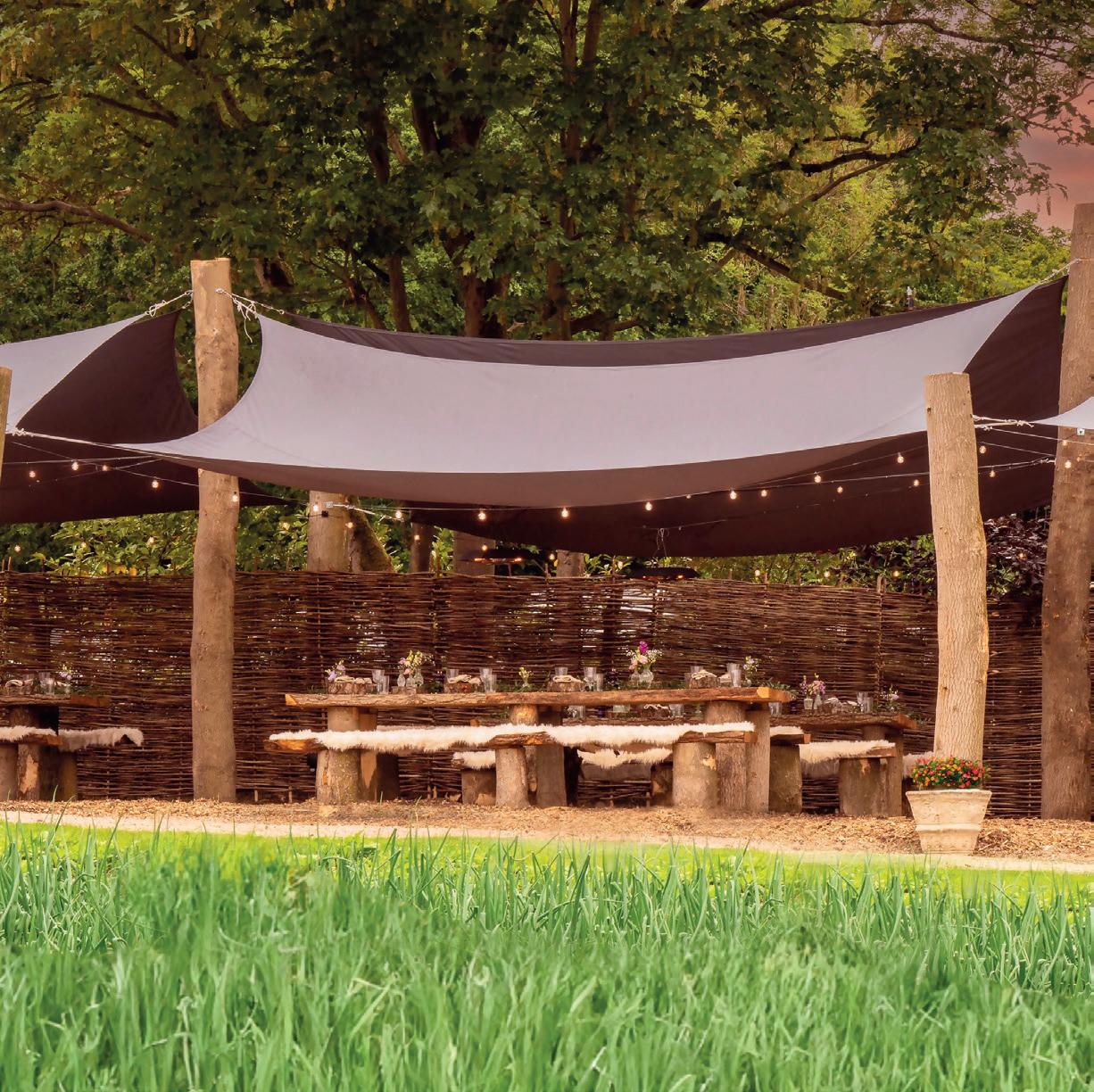
the appeal of their outdoor spaces beyond traditional dining and drinking occasions, while also attracting local audiences who may later convert into overnight guests.
Guest behaviour and feedback are also playing a growing role in shaping how outdoor areas evolve. “Guest experience plays a central role in shaping how our outdoor areas evolve,” Pedro explained. “We gather feedback through guest comments, team observations and reviews. Our staff are trained to pick up on subtle cues: how long guests stay, what they order, where they prefer to sit.”
This observational approach has led to highly tailored activations, Pedro added, “During Wimbledon we always had requests to show the tennis, so we designed our whole courtyard around it for the two weeks of Wimbledon, installing a big screen and curating a special Wimbledoninspired cocktail menu and afternoon tea.”
Hotels are increasingly recognising that outdoor spaces can become powerful cultural touchpoints when aligned with seasonal events and local moments. Temporary activations tied to sporting events, festivals or cultural calendars provide opportunities to refresh offerings while generating publicity and social engagement.
At Down Hall, flexibility is also key to maintaining relevance across multiple market segments. “Charles Garden is one of our most exciting recent investments and an example of how outdoor spaces can evolve to meet multiple market demands,” said Linden.
The refurbished venue has been designed to accommodate weddings, private celebrations and corporate events, reflecting the growing expectation that outdoor areas should serve multiple commercial functions.
“What makes Charles Garden unique is its adaptability,” Linden explained. “It can provide an elegant alfresco ceremony space, a vibrant setting for drinks receptions,
or a distinctive backdrop for networking events, product launches and summer parties.”
This multi-use approach is becoming increasingly important as hoteliers look to maximise return on investment from outdoor square footage. Flexible layouts, modular furniture and mobile service stations allow hotels to transition quickly between dayparts and event formats.
Nick Anastasiou, Director of Gorilla Carts & Kiosks, believes flexibility is central to unlocking the commercial potential of outdoor hospitality. “A well-designed outdoor space doesn’t just look stunning; it is also highly practical, providing multi-functional areas that can unleash the true potential of hotel gardens, patios and terraces,” he said.
The operational flexibility of outdoor service infrastructure is becoming increasingly important as hotels seek to create more adaptable guest experiences.
“This means that, whilst in the morning, the space can be used for breakfast buffets, by night, outdoor areas can be switched to live cooking spaces for barbecues and alfresco dining, even after sunset,” Nick explained. “Creating such a space enhances customer experience, encouraging them to linger a little longer and increasing F&B sales.”
Hotels are also investing more heavily in movable kiosks, bars and catering stations that can be adapted according to events and occupancy levels. “For venues looking for mobile options, the new Flexi Serve Kiosk is a versatile unit that can be tailored for every occasion,” said Nick. “The adaptability of this unit does not stop there, with additional options including hot and chilled plates, induction units and optional heat lamps that can be arranged to suit a hotel’s individual needs.”
Alongside flexibility, comfort remains one of the defining factors in ensuring outdoor areas continue to perform consistently throughout the year. According to Mark
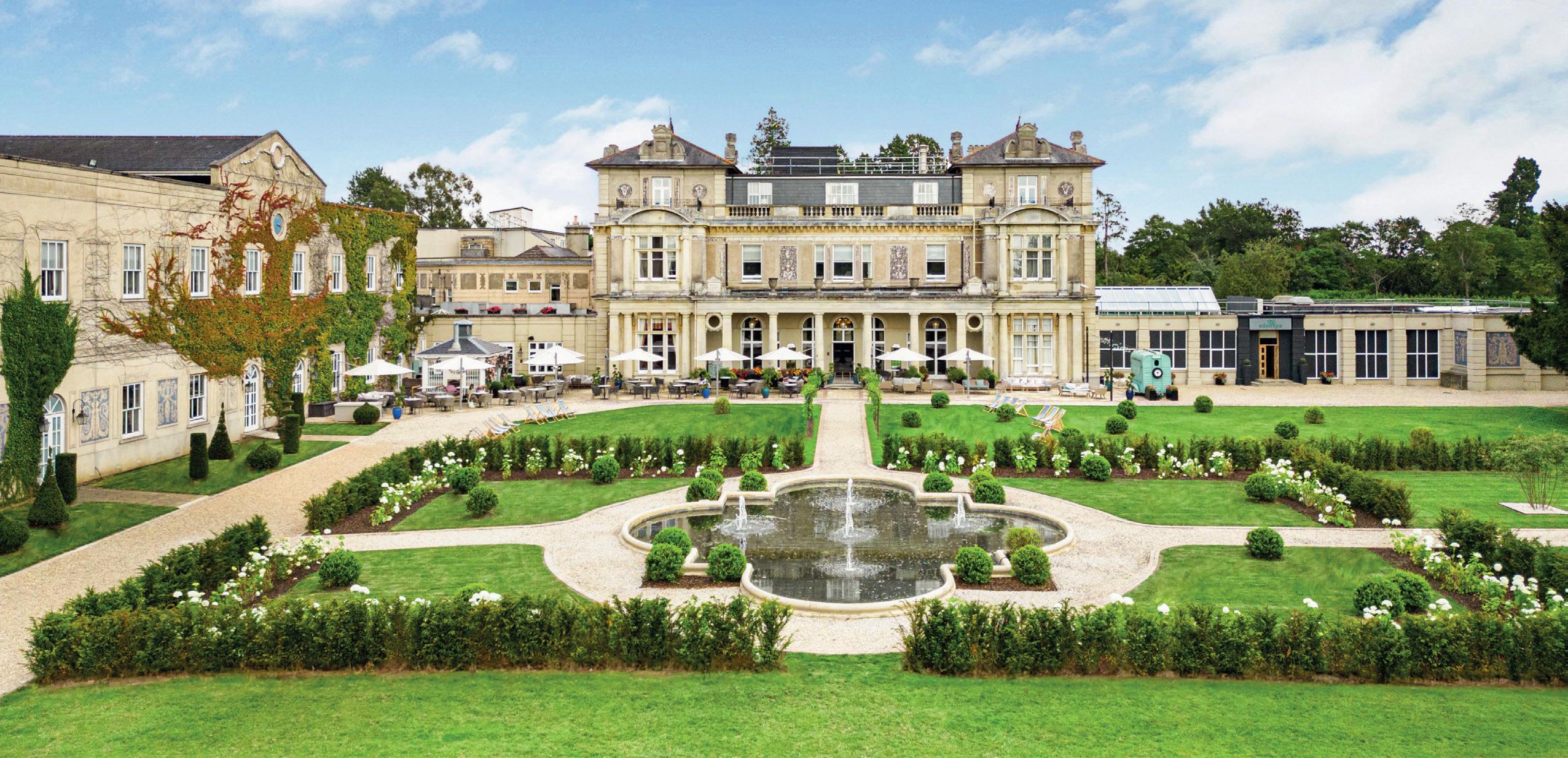
Conron, Group Head of Customer Communications at Nisbets UK, successful outdoor spaces increasingly depend on operational details that enhance guest comfort across changing conditions.
“The appeal of alfresco dining means outdoor spaces are now being used nearly all year round,” he said. “As long as it is dry, guests will be tempted by the prospect of sitting outside, but to make this even more enticing, it is vital that hotels create flexible spaces that are equipped to suit any season.”
Heating, shade and soft furnishings are all becoming essential components rather than optional extras. “In the winter, the Bolero Wall Mounted Patio Heater is a subtle way of keeping outdoor spaces warm,” Mark explained. “To maximise the appeal of outdoor spaces, operators should also drape blankets over furniture. This not only makes spaces look and feel cosier but also provides an additional layer for guests on chilly evenings.”
Summer adaptability is equally important - “When the summer sunshine finally does arrive, parasols are vital for providing shade, helping to keep customers cool and comfortable,” said Mark.
For many hoteliers, the challenge is no longer simply how to create attractive outdoor spaces, but how to ensure they remain commercially viable while continuously evolving. At Glenapp Castle, maintaining dynamic outdoor experiences requires careful operational planning.
“One of the key challenges lies in maintaining a dynamic and engaging outdoor environment while operating a busy hotel with guests consistently on-site,” said Jill. “Minimising disruption is essential, so we invest in quiet, batteryoperated equipment and robotic technology to maintain the grounds with minimal noise.” This operational subtlety is becoming increasingly important as luxury hospitality
shifts towards more immersive and tranquillity-led guest experiences.
At the same time, outdoor areas are increasingly expected to support wider sustainability narratives. Estateled dining, homegrown produce, biodiversity initiatives and low-impact landscaping are all becoming part of the storytelling that surrounds outdoor hospitality.
Down Hall’s investments in woodland management, beehives and estate-grown produce are designed not only to enhance guest experience but also to strengthen authenticity.
“We’ve invested in our kitchen garden, woodland management, beehives and estate-led experiences to create spaces that feel authentic to Down Hall,” said Linden.
At Glenapp Castle, the wider natural setting also forms a key part of the guest proposition. “Glenapp Castle is set in the transitional area of the Galloway and South Ayrshire Biosphere Reserve, a UNESCO-designated region known for its world-class environment,” said Jill. “This remarkable landscape adds a unique layer to every experience, offering guests the chance to connect deeply with both nature and the estate’s rich heritage.”
Ultimately, the most successful outdoor spaces are those that avoid standing still. Whether through rotating seasonal concepts, immersive wellness experiences, responsive guest programming or flexible design, hotels are increasingly recognising that outdoor hospitality requires continual reinvention.
For operators willing to outdoor spaces as living, evolving environments rather than static backdrops, the opportunities are significant and in a hospitality landscape where experiences increasingly define loyalty, that ability to continually surprise and re-engage guests may prove more valuable than ever.
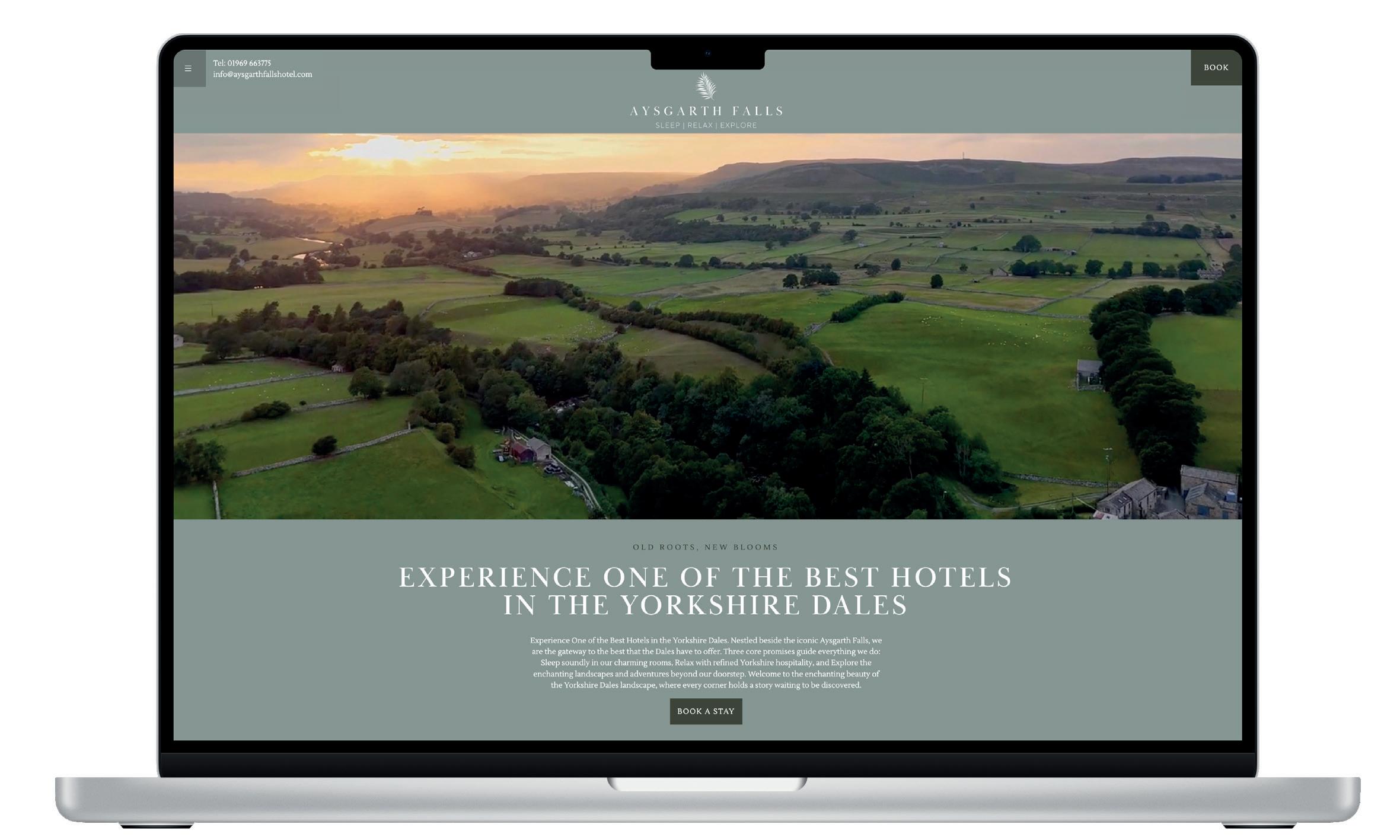
At Grantley Hall, Interior and Ambience Manager Marek Jurczyk is rethinking outdoor spaces as sensory journeys, where scent, sound, comfort and subtle design interventions work together to shape how guests feel, not just what they see.
At Grantley Hall, the outdoors are more than an extension of the property, they are carefully orchestrated experiences designed to shape how guests feel. For Marek Jurczyk, Interior and Ambience Manager, the concept of “emotional architecture” sits at the heart of this approach, transforming terraces, courtyards and gardens into spaces that resonate far beyond their visual appeal.
“For me, emotional architecture in outdoor hospitality is about how a space makes you feel, not just how it looks,” he explained. “It’s about creating somewhere guests can immediately relax, feel comfortable, and naturally want to spend time.”
This philosophy is grounded in the senses. Marek described how sound, texture and spatial flow are layered to create immersive environments. In the Norton Courtyard, for instance, design decisions are led by atmosphere rather than aesthetics alone. “Positioned beside the River Skell, the space integrates its natural surroundings, so the landscape becomes part of the overall experience,” he said. “The glass roof provides shelter without losing the openness of being outdoors, while generous, comfortable seating encourages guests to stay longer.”
Here, subtle sensory cues do the heavy lifting: the quiet, continuous sound of water, softened planting schemes, and the interplay between enclosure and openness. “All of that comes together to create a space that just feels good to be in - somewhere people can properly relax and switch off.”
That emotional journey begins long before guests reach the courtyard. From the moment of arrival, Marek considers how each element contributes to a gradual shift in mindset. “From the moment a guest arrives at the hotel, a combination of sensory and spatial design elements works together to create an emotional journey, not just a physical arrival,” he said.
Scent plays a particularly powerful role. “One of the most
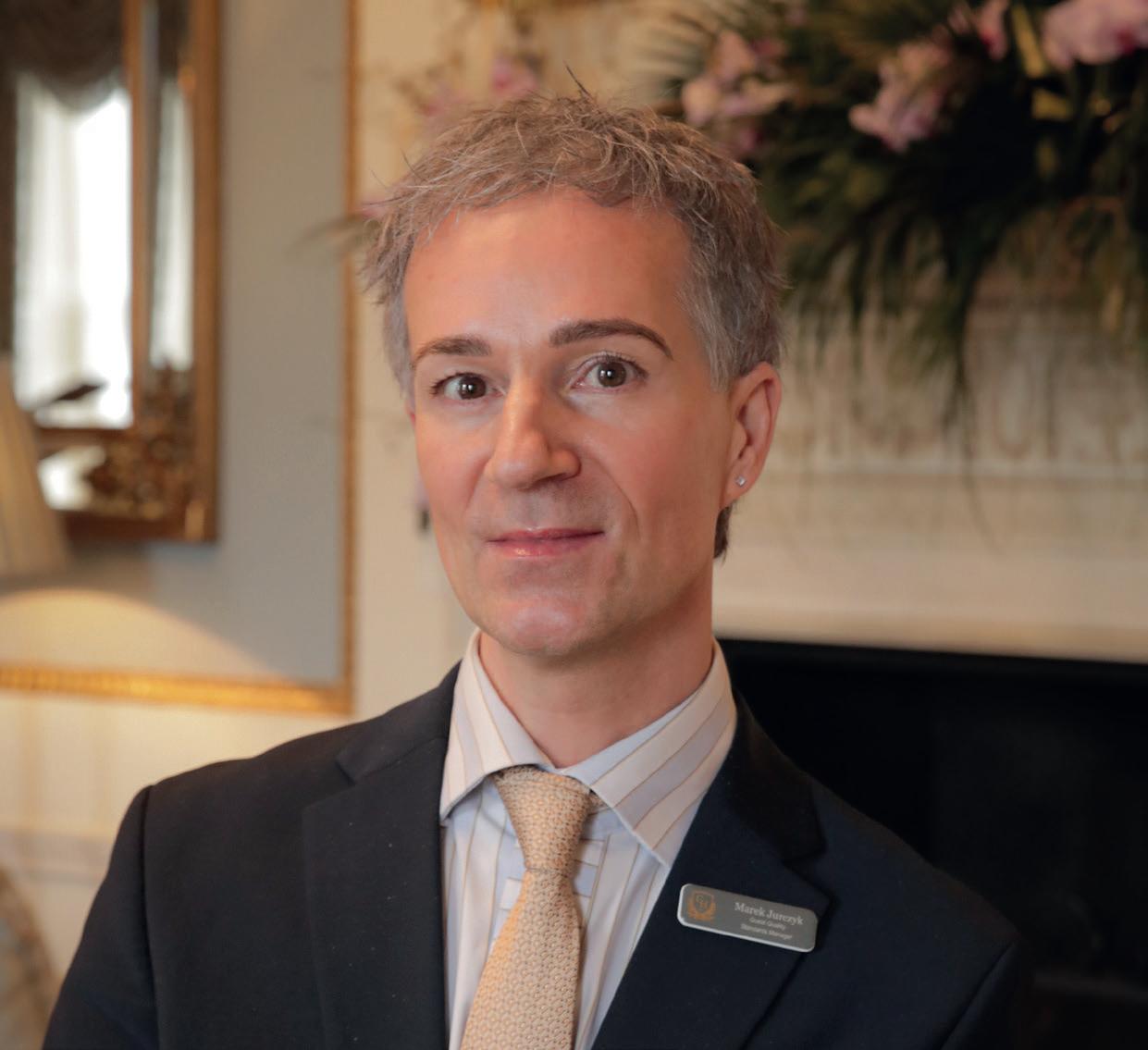
powerful tools we use at Grantley Hall is scent, particularly our signature fragrance, White Paper Wood, which guests notice as soon as they arrive. Scent is closely tied to memory and emotion, so it instantly creates a feeling of warmth and familiarity.” This sensory thread continues throughout the property, creating a cohesive and lasting impression that extends even beyond departure.
Equally important is the sequencing of space. “The gates, the trees, and the planting all work together to create a sense of transition - you’re leaving the outside world behind and stepping into something more considered and immersive,” he explained. “That shift helps build anticipation and sets the tone from the very start.”
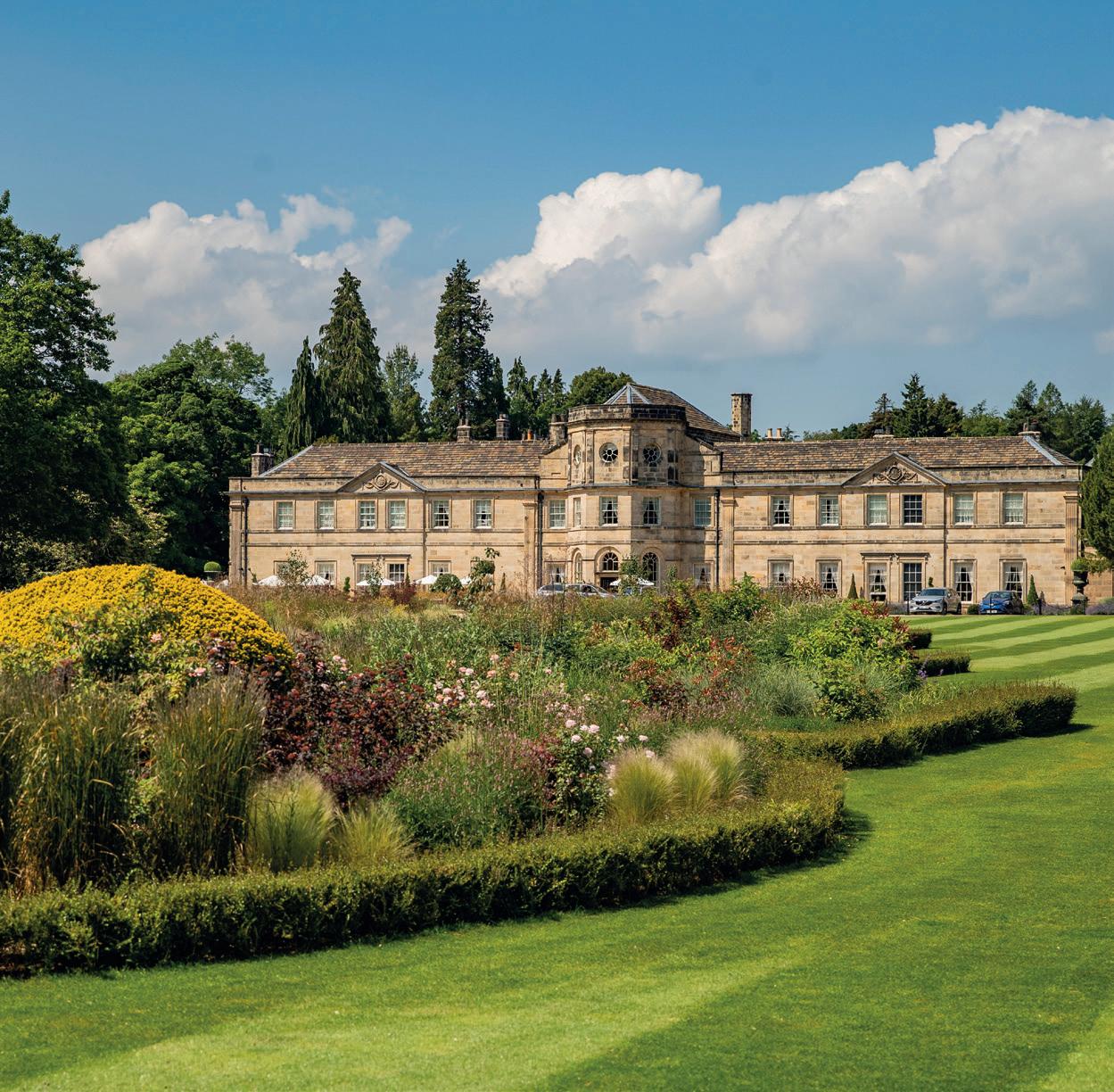
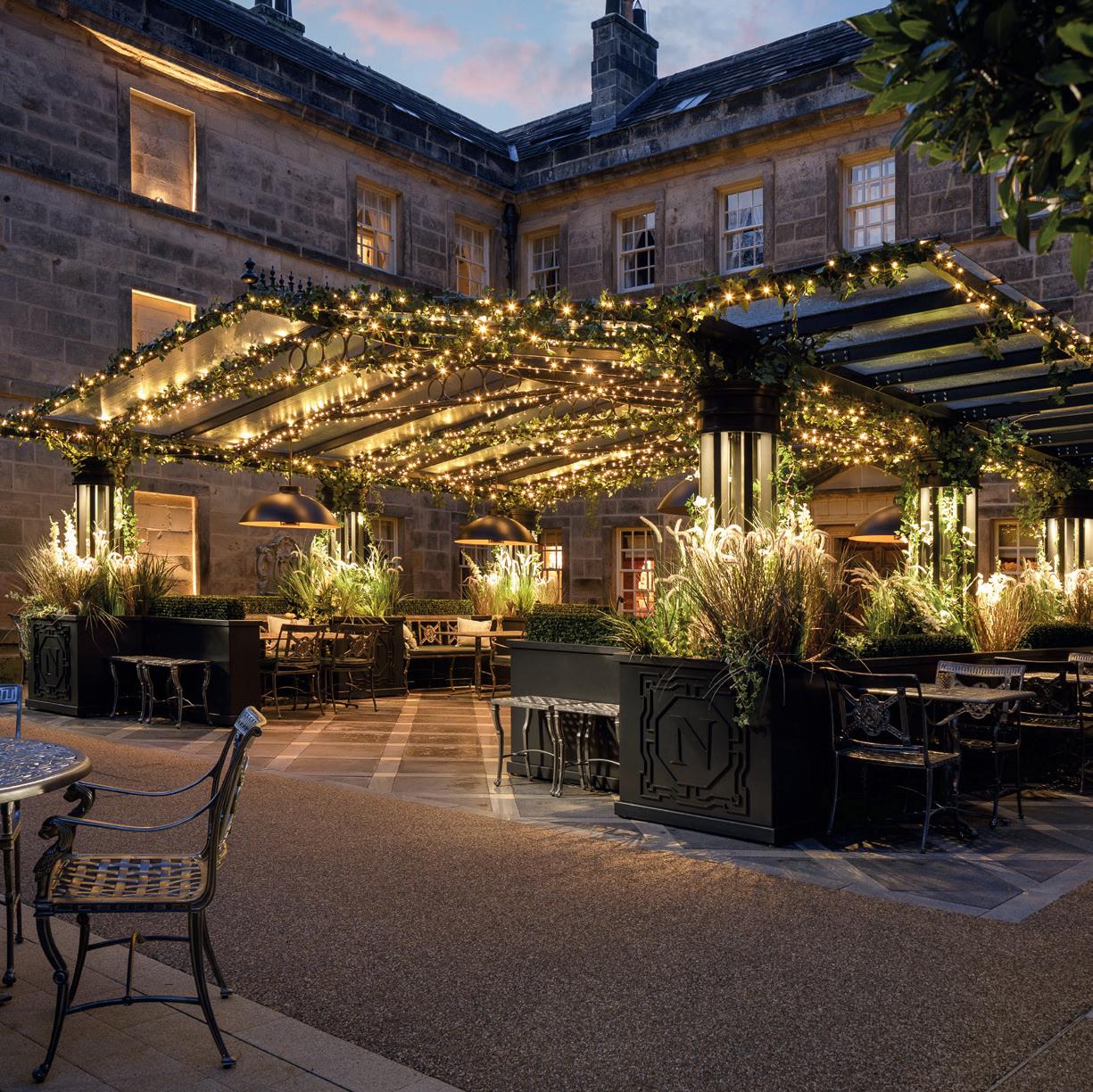
Across the estate, Marek balances contrast and cohesion by designing distinct emotional zones that still feel interconnected. “You want guests to be able to move between different moods, from a lively terrace to a quieter, more reflective garden, without it ever feeling disconnected,” he said.
Consistency is key to achieving this. Materials, such as locally sourced wood with a uniform finish, create a visual and tactile thread, while lighting establishes continuity through a shared colour temperature that subtly evolves throughout the day. Within this framework, each space is free to develop its own character. “The terraces are more open and social, designed for energy and interaction,” he noted. “The gardens, especially the Japanese Garden, are much calmer… The paths are intentionally meandering, often following the river, so people naturally slow down.”
This connection to the natural landscape is reinforced by close collaboration with the estate team. “Their deep understanding of the surroundings - from centuries-old trees to the river and the estate’s 1680 architectureensures the landscape feels both authentic and timeless.”
Designing for emotion in the British climate, however, introduces an additional layer of complexity. Comfort becomes fundamental to sustaining the intended atmosphere year-round. “In the UK, it’s hard to fully relax if you’re physically uncomfortable, so comfort becomes the starting point,” Marek said.
Thermal layering is central to this strategy, with underbench heating, flame features and far-infrared heaters creating discreet pockets of warmth. Tactility also plays a role. “Lambswool throws, cushions, and softer fabrics immediately make a space feel more inviting, almost like being tucked in.” These physical comforts are complemented by experiential touches, from warm food
and drink to ambient lighting and fireplaces that reinforce a sense of refuge even on grey days.
“Spaces like The Orchard are designed to feel more like a relaxed lounge,” he added, “somewhere familiar and comfortable, with things like bookshelves and fresh flowers adding to that.” The goal is consistency; ensuring that, regardless of the weather, the emotional impact remains intact.
Sometimes, it is the smallest interventions that leave the deepest impression. Reflecting on a recent design decision, Marek recalled how a simple change in table styling shifted guest perception. “Previously, each space had its own style of table plant pot… it felt efficient but somewhat clinical, lacking a deeper emotional connection.”
Introducing a single new element - a medium-sized glass urn - transformed the experience. “Straight away, it felt different. The material was lighter and more reflective, and it complemented the gardens rather than competing with them.” The response was immediate and telling. “People started asking about them and where they could buy them. That’s when it clicked that a small, thoughtful change can completely shift how a space is experienced, and more importantly, how it’s remembered.”
For Marek, the lesson is clear: emotional architecture is never static. “It reinforced the importance of staying curious and not settling, even when something is already working,” he said. “Every season brings something new… you must stay open to that, keep testing, keep questioning, and keep pushing things a little further.”
At Grantley Hall, that mindset ensures outdoor spaces are not just seen, but felt -designed not simply as settings, but as experiences that linger long after guests leave.
@grantleyhall_


From Food and Beverage to Head Housekeeper at The Athenaeum Club, Charlotte Shaw shares how cross-department experience, people-first leadership, and a passion for raising the profile of housekeeping are shaping a more collaborative and respected future for the profession.
Could you share your journey to becoming Head of Housekeeping, and key experiences that shaped your leadership style?
From an early stage, I recognised that a career in hospitality was the right path for me. While I did not initially have a specific department in mind, I was certain of the industry and remained open to the opportunities it could offer. I began my career in Food and Beverage while studying at college and university, gaining experience across a range of settings including pubs, restaurants, hotels, and both restaurant service and events.
After graduating from The Edge Hotel School with a degree in Hotel Management, I secured my first role in London within Reception. From there, I progressed steadily, ultimately achieving the position of Hotel Manager at a four-star property. Following this, I felt ready to take on a new challenge.
This led me to housekeeping, where my experience across Food and Beverage and Front of House was recognised as highly transferable and valuable to the team. At the beginning of 2020, the industry faced unprecedented change, requiring rapid adaptation across all departments. During this time, I found housekeeping to be the most rewarding area of my career.
Working closely with a diverse team, I valued the opportunity to support individuals from a variety of backgrounds and language abilities, helping to build their confidence and encourage pride in their work. Enabling team members to see their roles from a new perspective and recognise their contribution was particularly fulfilling.
Drawing on my experience across three departments, I have been able to foster stronger collaboration between teams, promote mutual understanding, and contribute to more streamlined and effective service delivery.
Being part of the London and Southeast UKHA committee has also created a whole new depth to the
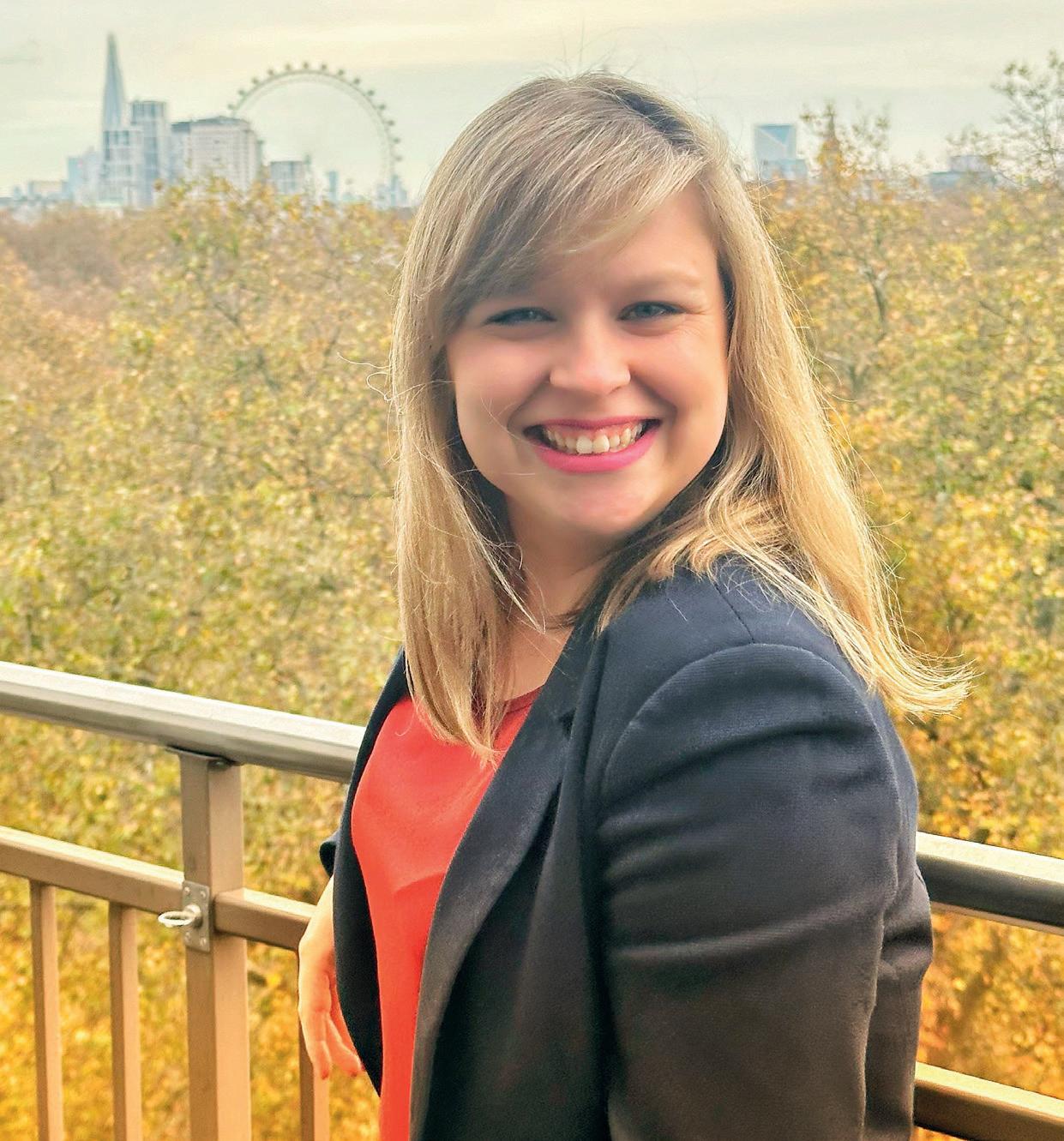
industry and the amazing professionals that we have within hospitality.
What are some lesser-known tips or efficiencies you’ve discovered that maintain high standards while keeping your team motivated?
Demonstrating a genuine interest in team members, both


professionally and personally, is key to effective leadership. Taking the time to understand each individual’s strengths and development areas enables you to utilise their skills in a way that enhances overall service delivery.
By creating tailored opportunities and assigning responsibilities that allow individuals to excel, you foster confidence, engagement, and a stronger sense of purpose. This, in turn, encourages continuous improvement and a shared commitment to achieving high standards.
How has technology changed housekeeping in recent years? Are there any tools you now consider indispensable?
Technology is continuously evolving, with computers and mobile devices regularly introducing new systems and programmes that enhance operational efficiency. While change can sometimes present challenges, guiding the team through new technologies in a structured and supportive way - encouraging curiosity, open discussion, and hands-on exploration - can significantly improve engagement.
As confidence grows, team members begin to recognise the practical benefits of these advancements, particularly the ability to access real-time updates. This not only reduces errors but also improves overall efficiency and turnaround times.
Furthermore, technology facilitates stronger collaboration by connecting like-minded professionals, making it easier to seek advice, share insights, and ask questions. Knowledge-sharing is essential, and fostering an environment where information is openly exchanged supports both individual development and collective success.
What advice would you offer someone aspiring to a long-term career in hotel housekeeping or hospitality management?
Maintain an open mind and seek an organisation that aligns with your values and long-term vision, and that is committed to supporting your development throughout
your career. Embrace mistakes as valuable learning opportunities - they often provide the greatest insight and can lead to unexpected growth.
With ongoing staffing challenges and shifting guest expectations, what strategies have you found effective in maintaining service quality and team morale?
Actively listening to team members and creating a safe environment in which they feel confident to share their perspectives is essential. Involving them in decisionmaking and organisational change fosters a sense of ownership and accountability. It is equally important to provide transparent feedback, both positive and constructive, so individuals understand their impact and areas for development.
When challenges arise, encouraging open discussion around what happened and how similar situations can be prevented or mitigated in the future promotes learning and continuous improvement.
By cultivating an inclusive environment where employees feel valued and recognise that their contributions make a meaningful impact on the business, you encourage curiosity, engagement, and advocacy - motivating them to recommend the organisation to others.
What would you like to see evolve in hotel housekeeping over the next 1–3 years?
I would like to see a continued shift in how housekeeping is perceived across the industry. Housekeeping is not simply a job; it is a profession that requires passion, resilience, and a strong team ethos. It offers a wide range of transferable skills and valuable learning opportunities that can be applied across the wider hospitality sector.
While recognition of hospitality as a long-term career is steadily increasing, housekeeping would benefit from greater visibility and acknowledgment of its contribution. Elevating the profile of the department will be key to attracting, developing, and retaining talent, and to ensuring it continues to grow alongside the industry.
Hospitality has always been shaped by the world around it. Weather, politics, economics, consumer confidence, transport and technology all influence how, when and where people travel. Sometimes those forces create immediate shifts. More often, they create a patchwork of behaviours that operators must read carefully.
That is certainly the case this summer.
There has been plenty of discussion around whether uncertainty overseas is creating another “staycation boom” for the UK. The reality is more nuanced. While domestic leisure demand is strengthening in certain parts of the market, hotels more exposed to inbound or airport-linked business are seeing a more mixed picture.
The appeal of a UK break is easy to understand. When overseas travel feels more expensive or uncertain, a domestic stay feels easier and more predictable. For families in particular, a UK hotel may seem costly compared with some European alternatives, but once flights, transfers, insurance, airport parking and other costs are included, the value equation begins to change.
That is coming through most clearly in leisure-led destinations. Coastal hotels, countryside retreats, spa properties, golf resorts and experience-led destinations are especially well placed. Operators are reporting stronger forward bookings, increased demand from couples taking shorter premium breaks and interest from guests who may previously have travelled overseas.
The Headland in Cornwall, for example, reported March and April bookings up 15%, with some guests switching to a Cornish break after overseas plans involving Dubai were disrupted. Grantley Hall has also seen shorter lead times, increased length of stay and guests changing or cancelling international plans in favour of staying closer to home. The Belfry has reported rising demand for spa, golf and family breaks, with bookings for three nights or more increasing in recent weeks.
However, it would be a mistake to call this a universal uplift. Some internationally exposed hotels are feeling the opposite effect. Properties reliant on long-haul inbound
markets, tour groups or airport-adjacent business are seeing softer demand in some areas. In London, the picture is similarly mixed, with some softening from long-haul markets offset by steadier domestic demand and increased European travel.

One of the clearest themes is not just where people are booking, but how they are booking. Lead times are shortening. Guests are taking longer to commit, comparing options and booking closer to arrival. At Rudding Park, for instance, more than half of transient room nights for the first seven days of April over the Easter holidays were booked within the two weeks prior. That points to caution and a need for reassurance.
This doesn’t mean hotels need to rewrite cancellation policies across the board. But flexibility has become a more important part of the booking decision. Guests want clear terms and confidence that, if circumstances change, they will be treated fairly. When interest exists but confidence is wobbling, transparent communication can make a real commercial difference.
There’s also a wider value point. People still want to travel. They still want experiences and quality time away. But many are being more considered in how they spend. That places greater pressure on hotels to explain why a stay is worth the investment. Packages, dining, spa, golf, family activities and local partnerships all have a role to play in helping guests feel they’re choosing more than just a room.
For domestic leisure destinations, the opportunity is real. The challenge is converting demand within a shorter
booking window while maintaining rate integrity and communicating value clearly. For internationally exposed hotels, the priority may be different: diversifying source markets, protecting group business and staying alert to shifts in inbound demand.
What this moment reinforces is that agility remains one of hospitality’s most important commercial qualities.
The market can change quickly, and operators need the systems, data and confidence to respond. Revenue strategy, marketing, distribution and operations cannot sit in silos when guest behaviour is shifting this rapidly.
There’s cautious optimism to be found, particularly for strong UK leisure destinations. But this isn’t a blanket boom. It’s an uneven and behaviour-led shift, shaped by international uncertainty, cost sensitivity and perhaps a renewed appreciation for what the UK can offer.
For hoteliers, the task is to read those signals carefully. The winners this summer will be those who understand not only that guests are looking closer to home, but why they’re doing so - and what they need to feel confident enough to book.
Jane Pendlebury is CEO of HOSPA – the Hospitality Professionals Association. For more information on HOSPA and its offering, please visit www.hospa.org.
Kate Nicholls highlights the overwhelming public and industry backlash to the proposed levy, as new analysis from Oxford Economics, backed by voices including Mel Stride, Robert Jenrick and Hilton, warns it could cost billions in GDP, slash tourism spending and put 33,000 jobs at risk across the UK hospitality sector.
The reaction to our Stop the Holiday Tax campaign has been remarkable.
As I write, a staggering 22,000 letters have been sent to MPs, while there have been more than 100,000 visits to our dedicated campaign page https://stoptheholidaytax.uk
A big thank you, then, to everyone who’s written to their MP and clicked that link.
Support for the campaign has also come from opposition parties, with both the Conservatives and Reform saying they’re committed to opposing the tax.
Tory Shadow Chancellor Mel Stride and Reform’s Robert Jenrick have both made visits to member businesses – to Butlin’s in Bognor and a Haven Parks site in Lincolnshire respectively – to learn about the effects of the tax.
And what a devastating impact it would be for hotels and the wider sector, according to a recent Oxford Economics report commissioned by UKHospitality.
Its analysis reveals that the Government’s proposed holiday tax would shrink GDP, cause thousands of jobs losses and see the Treasury lose hundreds of millions in tax revenue, laying bare the shattering effect it would have on holidaymakers, businesses and the economy in England.
Assuming the impact of a 5% levy is fully realised by 2030, Oxford Economics predicts a reduction in GDP of £2.2bn, a £1.6bn tax increase for holidaymakers, £688m in reduced tax receipts to the Treasury, and a £101m loss in direct investment from hotels and other hospitality and tourism businesses.
The report goes on to forecast a £1.8bn reduction in tourism spending, 11.9m fewer nights spent in accommodation and 33,000 job losses.
All terrible outcomes, and which are completely at odds with the Government’s own ambition to increase inbound tourism to reach 50m international visitors by 2030.
Simon Vincent CBE, President, Europe, Middle East and
Africa, Hilton puts it perfectly: “The Oxford Economics research is clear that a proposed holiday tax, on top of already high VAT, will impact British families staying in the UK and make the country less competitive as a destination.
“Tourism thrives when government and industry work together. The focus should be on growing visitor numbers and enabling hospitality to play its full role in supporting jobs, investment, and economic growth.”
It’s vital we keep up the pressure. Hoteliers, please encourage your guests to write to their MPs; and in case you haven’t already, we’d ask you to get writing to your own MP, too.
Because holidays are for relaxing, not taxing.
The full Oxford Economics report can be accessed here https://www.ukhospitality.org.uk/wp-content/ uploads/2026/03/Oxford-Economics-holiday-taxeconomic-modelling-report.pdf
Kate Nicholls, Chair, UKHospitality
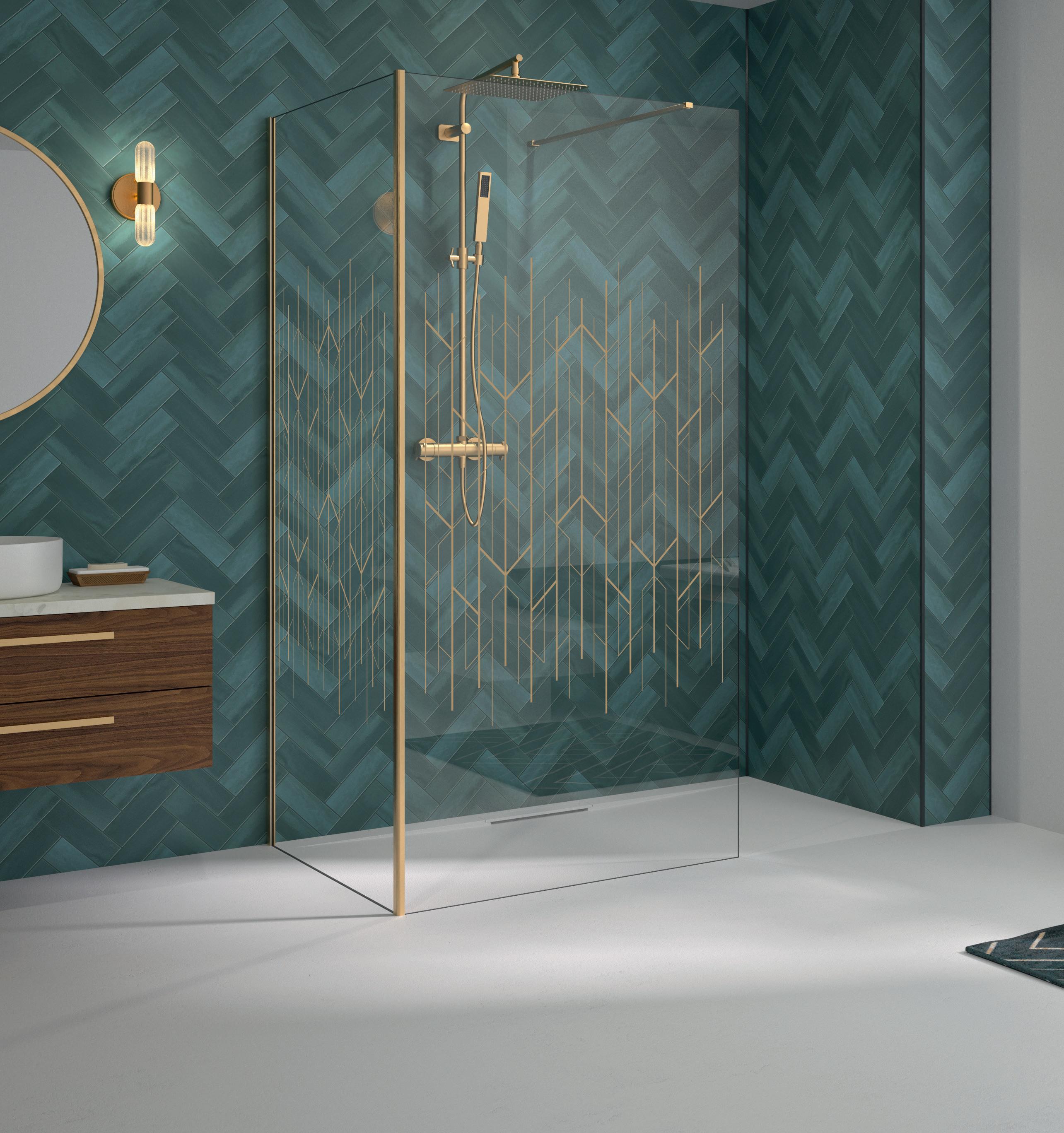













While the 2026 FIFA World Cup will be staged across North America, its ripple effects will reach UK shores, reshaping hotel demand, guest behaviour and operational planning. From late-night screenings to upgraded communal spaces, British hotels have a clear opportunity to turn a global sporting moment into commercial gain, if they prepare ahead.
The upcoming 2026 FIFA World Cup, hosted across the United States, Canada and Mexico, is set to be the largest tournament in the competition’s history. While the UK is not a host nation, the event will still have a notable impact on British hotels - presenting both opportunities and operational challenges.
One of the most immediate effects will be shifts in travel patterns. With matches taking place across multiple time zones, UK-based football fans may opt to travel abroad for the experience, potentially reducing inbound leisure demand during peak match periods. However, this may be offset by domestic “stay-and-watch” behaviour, where guests choose hotels offering premium viewing experiences, particularly in urban centres such as London, Manchester and Glasgow.
Hotels can capitalise on this by enhancing communal viewing areas. Bars, lounges and conference rooms can be repositioned as match-day hubs, driving incremental food and beverage revenue. Packages that combine overnight stays with match screenings, themed menus and extended bar hours are likely to appeal to both domestic guests and international visitors transiting through the UK.
Leading hotel supplier Hotel Buyer is already seeing hotels making such preparations. Jon Shepherd of Hotel Buyer told us, “We are seeing demand for additional ice machines, outdoor furniture and additional folding beds leading the way, as well as stocking up on the usual glassware and toiletries ahead of the World Cup in June”.
Operationally, hotels will need to adapt to irregular peak times. Late-night and early-morning kick-offs - due to time differences - could place pressure on staffing, particularly in food service and front-of-house roles. Forward planning around rotas, security and licensing will be essential, especially for properties expecting high footfall during key fixtures.
There is also a broader branding opportunity. Hotels that align themselves with the excitement of the tournament - through décor, promotions or partnerships - can strengthen guest engagement and differentiate
themselves in a competitive market. Even small touches, such as international breakfast options or football-themed welcome amenities, can enhance the guest experience.
In summary, while the 2026 World Cup will take place thousands of miles away, its influence will be felt across the UK hospitality sector. Hotels that proactively adapt, both operationally and commercially, stand to benefit from a global event that continues to unite audiences worldwide.
Hotel Buyer is currently running a finance lease promotion on any equipment purchases, where hotels can receive equipment now and not pay anything until the goals start flying in in the knock out stages in July.
hotel-buyer-store.co.uk


The Work Uniform Company share how modern uniform programmes are less about garments and more about how hotels operate, present themselves, and support their teams.
Balancing affordability with quality
Affordability and quality are often framed as a tradeoff, but in practice they support each other. Well-made garments are usually the more economical choice over time: a reception blazer that keeps its shape and colour through daily wear will outlast cheaper versions that need replacing twice a year. Our focus is on making that durability accessible, especially for hotels without large procurement budgets. By removing barriers like minimum orders and offering straightforward delivery, quality becomes a realistic option rather than a luxury.
Helping hoteliers choose the right style
We always begin with the guest experience rather than the garment itself. Different properties tell different stories, and uniforms should reflect that from the moment a guest arrives. The key questions are about first impressions and function: what message should the team convey, and what will they actually be doing in the clothing? Roles varyfrom front desk to restaurant floor to spa - so comfort, movement and practicality are essential. A uniform needs to look polished at the end of a long shift, not just the start. With options spanning tailored suiting to smart-casual styles, the aim is to create a cohesive look that aligns with the brand while working for the people wearing it.
Same-day
Speed and flexibility are where we’ve made the biggest operational impact. Hotels don’t work on long lead timesstaff join at short notice, garments need replacing quickly, and new properties often face tight launch deadlines. Traditional ordering models can’t keep up. Holding stock and offering rapid dispatch allows hotels to respond immediately rather than plan months ahead. For multi-site groups, it means individuals can be equipped as needed without bulk ordering or storage concerns. What seems like a logistical detail reshapes how uniforms are managed, making the process responsive instead of rigid.
Personalisation plays a larger role than many expect. A
well-fitted, clearly branded uniform can influence both staff confidence and guest perception. When employees feel well-presented, it often shows in how they carry themselves. For guests, clear branding removes uncertainty and reinforces professionalism. Managing embroidery inhouse ensures consistent quality and faster turnaround, with greater control over details and the ability to correct issues before dispatch. This is especially valuable for groups with multiple branding elements, where consistency matters.
Reliable supplier partnerships come down to consistency, availability and service. For hoteliers, the real test isn’t just upfront price, but how a supplier performs day to day. Key considerations include turnaround times for replacements, stock availability, minimum order requirements, and how branding is handled. The most useful questions are practical ones about how the supplier operates in real situations. Ultimately, the right partner should adapt to the needs of the hotel, not the other way around.
workuniformcompany.co.uk/collections/hospitalityuniforms

Experience superior performance from day one with the Benchmark range of commercial washers and dryers – Engineered for maximum efficiency and unmatched quality. Designed with you in mind for effortless operation with impressive OneFingerTouch door technology and a wide variety of programmes for every use – all whilst delivering significant energy and cost savings. It Pays Off. Learn more about the Benchmark models at www.miele.co.uk/pro/benchmark