






June arrives with the trade stepping into one of its most exciting periods of the year. As the summer season gathers pace and a packed calendar of live sport brings energy back into venues, operators are presented with a wealth of opportunities to engage customers, drive footfall and boost spend. From creating standout matchday experiences to making the most of longer, lighter days, the months ahead offer real potential for businesses that can balance creativity with efficiency, while continuing to navigate ongoing financial pressures.
In this issue, our main spotlight turns to beer – a category that remains central to the on-trade experience and one that comes into its own during a summer of sport. Whether it’s premium lager, craft innovation or sessionable serves designed for allday occasions, beer continues to evolve alongside changing consumer tastes. We explore how operators can make the most of the category during major sporting events, from creating compelling matchday experiences and promotions to ensuring range, quality and speed of service work hand in hand to drive sales.

We also dive into one of the fastest-growing opportunities for pubs and bars in our big Bar Snacks feature. Food offerings are becoming increasingly important in shaping the modern venue experience, with consumers placing greater value on quality, convenience and variety when choosing where to spend their time. From elevated sharing plates and premium snacking options to menus tailored around social occasions and longer dwell times, we examine the trends driving demand, and how operators can refine their food offer to better meet guest expectations while also boosting revenue.
Finally, our Business Report takes a closer look at the ongoing challenges facing the hospitality sector. Rising costs, changing consumer habits and continued economic uncertainty mean many businesses are still operating under immense pressure. Through expert advice and industry insight, we explore practical ways operators can stay afloat, identify efficiencies and manage costs effectively, while also highlighting the support available from charities and organisations dedicated to helping hospitality professionals through difficult times.
Alongside these features, you’ll find all the latest news, insights and inspiration from across the industry, helping you stay informed and ahead of the curve as the busy summer period begins.
Enjoy!


EDITOR-IN-CHIEF
Eleasha Pritchard ep@cimltd.co.uk
PUBLICATION MANAGER
Manjeet Griffiths manjeet@cimltd.co.uk Tel 01795 509109
HEAD OF BUSINESS DEVELOPMENT
Jazmine Davis jazmine@cimltd.co.uk
8 HOSPITALITY HEROES
Laura Simonelli, Head of Bar Operations and Development at Dishoom, shares her journey from architecture to crafting one of the UK’s most distinctive bar programmes, blending creativity, storytelling and bold Indian flavours to redefine modern hospitality.
11 BAR MAGAZINE AWARDS
We share an exclusive interview with host Aidy Smith, who brought star power to the Bar Magazine Awards. Alongside Aidy’s insights, the BMA pages also spotlight more of this year’s award winners!
We explore how venues can leverage a diverse beer offering – from draught and low-and-no to world lagers and craft – to attract customers, keep them longer and increase spending during the sports season.
44
Master Sommeliers Xavier Rousset and Gearoid Devaney discuss how The Black Book has become a celebrated Soho destination, blending exceptional wines, expertly crafted cocktails, and a relaxed late-night atmosphere.
47 BUSINESS REPORT
We reveal the main pressures facing the hospitality industry, outlining strategies operators can use to succeed in a challenging market.
56 NEW CREATIONS
Vallis Sgouromallis, Director of Bars at Juls London, highlights the Aguacate cocktail from the new No.11 Bar – a guacamoleflavoured gimlet-style drink.
61 BAR SNACKS
Discover how bar snacks are evolving from a simple accompaniment into a strategic tool for boosting revenue and enhancing the customer experience.
72 HOSPITALITY AROUND THE WORLD
We sit down with Alex Francis, co-founder of De Vie in Paris, to explore how he is redefining cocktail culture through a flavourdriven, seasonal, and sustainable drinks programme.
ACCOUNT MANAGER
Harrison Hume hh@cimltd.co.uk
HEAD OF DIGITAL
Xhulio Bishtaja digital@cimltd.co.uk
CREDIT FACILITIES MANAGER
Gwen Lee
creditcontrol@cimltd.co.uk
MARKETING MANAGER
Lucas Payne lucas@cimltd.co.uk
SOCIAL MEDIA MANAGER
Lily Lawson socials@cimltd.co.uk
DESIGN & PRODUCTION
James Taylor
Grant Waters
DIRECTOR
Tom Woollin
MANAGING DIRECTOR
John Denning
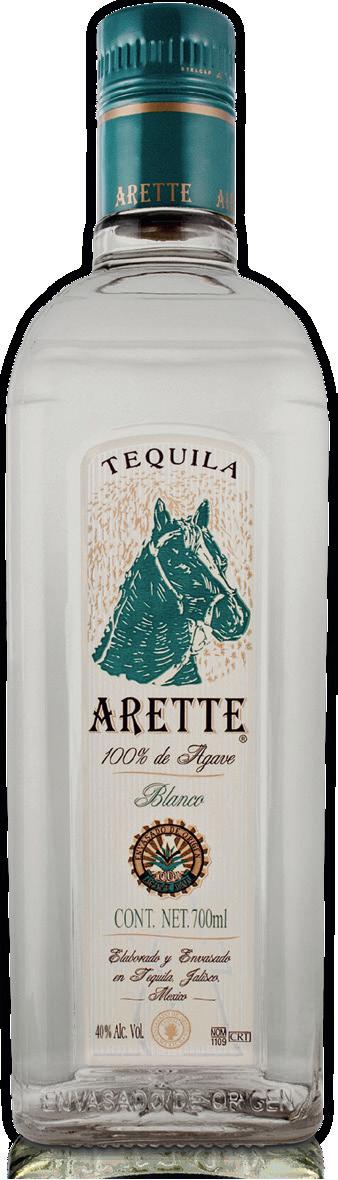
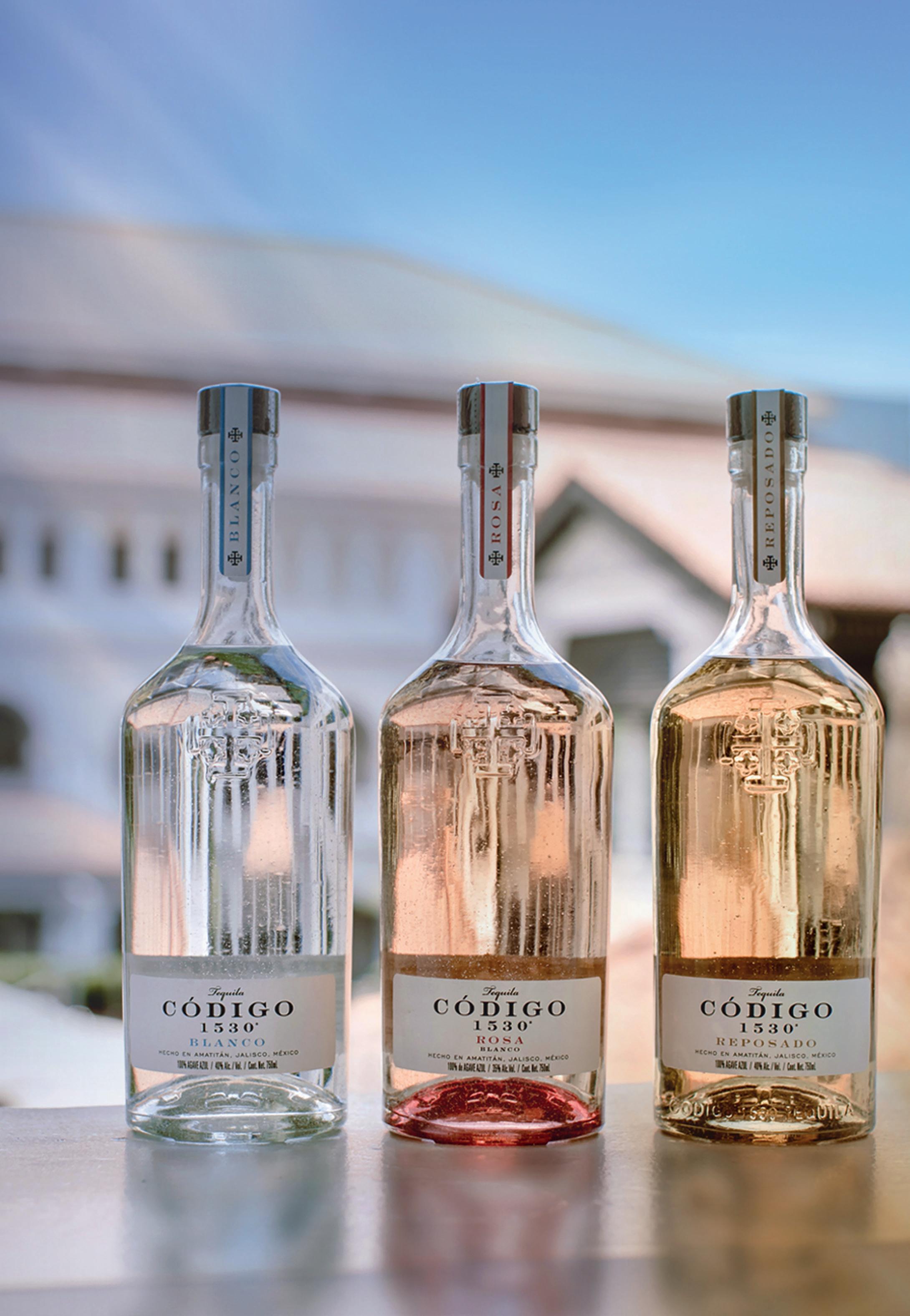
Mangrove has been appointed as UK distributor for the fifth-generation, family-run tequila Arette, bringing the exquisite liquid to the UK’s everincreasing number of agave lovers.
Named after the Olympic show-jumping horse, Arette is steeped in the legacy of the Orendain family and pulls from the rich landscape of the namesake town, Tequila, in the heart of the Jalisco. The family’s El Llano Distillery is one of the oldest in the region, pulling mineral water from the nearby volcanic springs and using blue weber agave from their very own local farm.
The Clasico Blanco Tequila is twice distilled using 100% agave,
38% ABV, with no additives. The unique treatment of the agave gives the resulting liquid creamy aromas, with classic vegetal notes on the palate and hints of blossom.
For a silver tequila, it’s bursting with character and for this reason has garnered a stellar reputation with the great and the good of the UK on-trade. Sip it neat or use it to elevate Palomas and Margaritas with the true taste of Mexican tequila.
C&C Group plc has announced that it is bringing together two of the UK on trade’s most respected businesses, Matthew Clark and Bibendum, to form a single, integrated route to market proposition: Matthew Clark Bibendum (MCB).
The move brings together the scale, service and value that Matthew Clark is renowned for with Bibendum’s industry leading wine expertise, leadership and premium portfolio, creating a significantly enhanced offer for customers across the UK hospitality sector.
This integration reflects C&C Group’s continued investment in strengthening its wine business, ensuring it is fit for the future, agile and well positioned to support customers operating in an evolving and highly competitive market.
The result is a streamlined, customer centric offer designed to help hospitality businesses drive profitable growth, navigate changing consumer trends, and unlock new opportunities.
continue to be served through the separate route to market propositions until the summer, when the MCB proposition will be fully implemented.
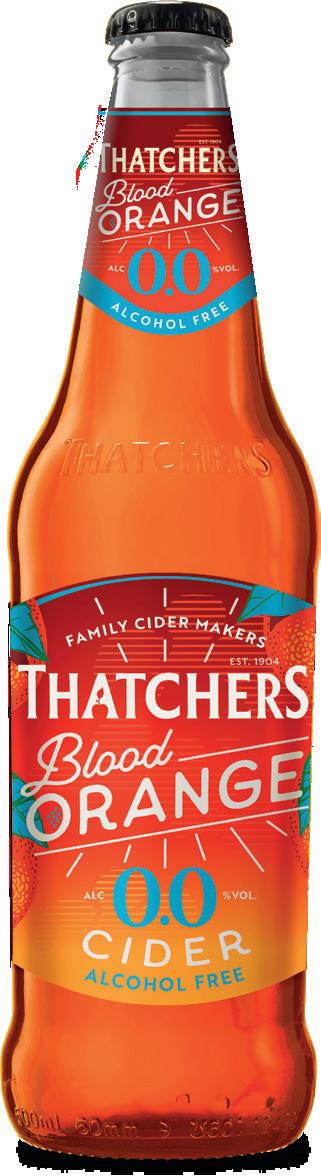
The UK’s No.1 cider maker, Thatchers, is shaking up summer in a big way with the launch of its brand new Blood Orange 0.0% cider; a bold, juicy, alcohol-free drink that refuses to compromise on taste.
Set to be the drink of the season, this vibrant new addition is bursting with zingy blood orange flavour and crafted from the sweetest dessert apples. It’s refreshing, mouthwatering and made for those long sunny days, all without a drop of alcohol.
Fans of Thatchers’ best-selling Blood Orange cider are in for a treat. The new 0.0% version stays incredibly true to the original, delivering that same juicy hit and citrusy kick that drinkers know and love.
Family cider makers, Thatchers have worked tirelessly to keep the recipe as close as possible to the classic, meaning cider lovers
can expect the same delicious flavour, just without the alcohol.
With more people embracing “zebra striping”, a term used to describe alternating alcoholic drinks with alcohol-free options as a way to enjoy the moment and remember it the next day, Thatchers Blood Orange 0.0% will prove a hit with cider lovers of all ages.
A simple switch up that’s changing the way people socialise, drinkers can keep the good times flowing for longer, staying refreshed and waking up feeling just as good as the night before.
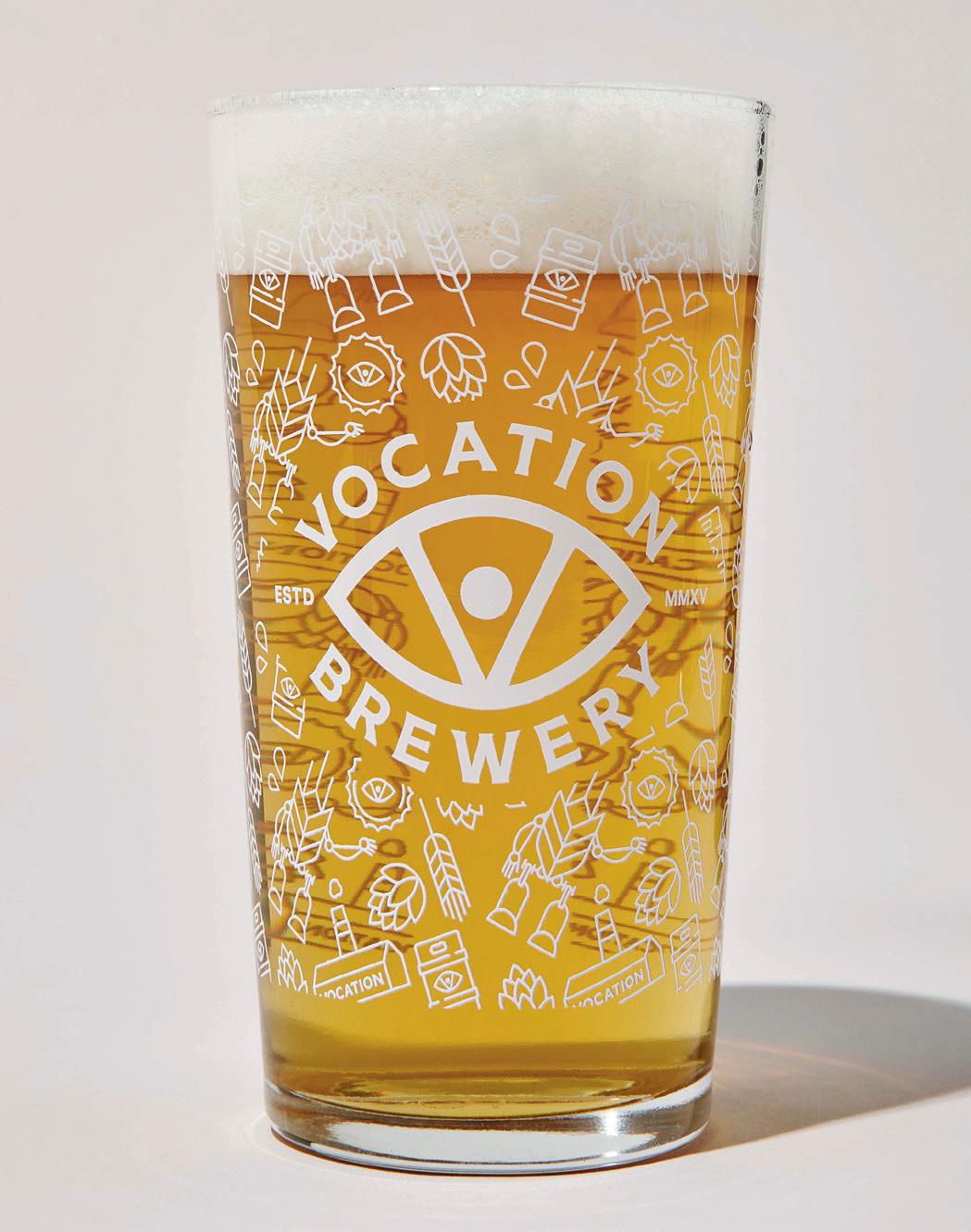
Yorkshire-based independent brewer Vocation Brewery is helping pubs and bars make the most of the summer trading season with a new range of bold and flavourful beers. Available on draught in keg format, the new beers are crafted to help venues differentiate their offer and drive trade-up.
Rolling out from May and throughout the summer months, the lineup spans a mix of refreshing, sessionable styles and more expressive, hop-forward beers – giving operators the flexibility to cater to a wide range of tastes and occasions.
Available in 30L kegs, the new range spans a broad mix of styles suited to summer occasions and key trading opportunities.
EXPRESSIVE & HOP-FORWARD
Available now, these beers are designed to drive trade-up by offering bold, flavour-forward options for drinkers looking to explore beyond more familiar styles:
• The Surrealist (5.5% ABV Belgian Witbier): A fresh, Belgianstyle witbier with a soft, gently rounded body. It offers bright citrus from orange peel alongside coriander, layered with grapefruit, lime and subtle herbal hop character. Fermented with classic Belgian yeast for delicate clove and bubblegum nuances, it finishes crisp, light and refreshing.
• Dry Humour (6% ABV Brut IPA): A bright, bone-dry Brut IPA with a crisp, sparkling finish and a sharp gooseberry twist. Nelson Sauvin, Hallertau Blanc and Citra hops bring white wine character, citrus and soft tropical notes, while fresh gooseberry adds a vibrant summer zing.
• Tiger Trail (5.5% ABV India Pale Lager): A bright India Pale Lager with a clean, crisp malt base that lets the hops shine. Fermented with classic lager yeast, it stays sharp and refreshing, while a dry hop of Mosaic, El Dorado and Citra delivers bold mango, pineapple and citrus character, with a clean, balanced finish.
• The Lure (6% ABV NEIPA): A hazy New England IPA built on a pale malt base, delivering gentle bready honey notes and a smooth, creamy mouthfeel. Mosaic, Citra and Galaxy hops bring waves of tropical fruit and a subtle resinous edge, balanced by bright grapefruit and zesty lime.
Available from June, these easy-drinking styles balance lower ABV with vibrant hop character, making them well suited to extended social occasions:
• Mini Monster (3% ABV Table Beer): Soft, hazy table beer bursting with tropical flavour. Light and creamy with gentle malt sweetness, bright citrus notes of grapefruit and lemon, and a juicy explosion of passionfruit, pineapple, peach and lychee. Smooth, low bitterness, easy-drinking, and packed with vibrant fruit character.
• Hop Giant (4% ABV Hazy Pale Ale): A bright, hazy pale ale built on a light extra pale malt base with wheat and oats for a smooth, creamy feel. Krush leads with juicy citrus and tropical fruit, Bru-1 adds bold stone fruit and passionfruit, while Motueka lifts the profile with fresh lime zest and ripe pineapple. Balanced and refreshing with a gentle haze and clean finish.
Rolling out from June through to August, these limited-edition releases are timed to coincide with the 2026 Football World Cup (Extra Time) and International Beer Day (Kiwi Horizon & Kobo Bloom):
• Extra Time (4.8% ABV Extra Pale Ale): Bright, modern hops deliver juicy pineapple and fresh tropical fruit, while Idaho 7 hops bring soft apricot and stone fruit sweetness. Elani hops add zesty orange, tangerine and lime with hints of guava and white peach. Soft bitterness and crisp citrus lead to a crisp, refreshing and hard-working finish.
• Kiwi Horizon (4.3% Extra Pale Ale): A hazy New Zealand Extra Pale bursting with vibrant hop character. Nectaron delivers lush passionfruit and ripe peach, Riwaka brings intense lime zest and citrus oils, and Motueka lifts everything with bright lemon-lime freshness. Soft and pillowy on the palate, it rolls into waves of tropical fruit before finishing with a crisp grapefruit snap.
• Kobo Bloom (5.8% Sake Yeast IPA): An ultra pale ale fermented with sake yeast, offering a crisp finish of apple, pear and delicate hints of anise. Bursting with El Dorado, Calypso and Nelson Sauvin hops, it layers sweet pineapple, juicy watermelon and crushed green grape. Rice and chit malt lend a clean, bright palate and a surprisingly soft, silken mouthfeel.
These new summer beers are available to pubs and bars nationwide direct from Vocation Brewery and via selected regional and national wholesalers, and will also feature across the brewery’s own Vocation & Co. bars in Manchester, Halifax, Sheffield and Hebden Bridge.
FROM AN UNEXPECTED BEGINNING IN ARCHITECTURE TO SHAPING ONE OF THE UK’S MOST DISTINCTIVE BAR PROGRAMMES, LAURA SIMONELLI, HEAD OF BAR OPERATIONS AND DEVELOPMENT AT DISHOOM, REFLECTS ON HER CAREER JOURNEY SO FAR AND HOW CREATIVITY, STORYTELLING AND BOLD INDIAN FLAVOURS COME TOGETHER TO REDEFINE THE MODERN HOSPITALITY EXPERIENCE.
CAN YOU WALK US THROUGH YOUR JOURNEY INTO HOSPITALITY AND WHAT FIRST DREW YOU TO THE BAR WORLD?
I actually started as an architect. I picked up bar work purely to survive financially while I was finding my footing in design. But, very quickly, I realised I had it backwards; in architecture, I was designing spaces for people, but I was isolated at a desk. Behind the bar, I was in the living space. I fell in love with the vibe – the energy, the chaos, the laughter. Most of all, I fell in love with the people. My colleagues became a second family, and the guests became my audience. Every day feels like a live show. You have a stage, a script that changes minute by minute, and an audience that comes to have a good time. Architecture taught me precision, but the bar taught me connection. I never looked back.
WHAT DOES YOUR ROLE AS HEAD OF BAR DEVELOPMENT AND OPENINGS INVOLVE ON A DAY-TO-DAY BASIS?
My role lives at the intersection of three things: creativity, people and logistics. First, developing new drinks – that’s the R&D side. I’m constantly testing flavour profiles, sourcing ingredients, and building menus that tell a story.
Second, training the team – once the drinks are locked, I have to translate that vision to the bartenders. That means hands-on sessions, teaching technique, and building confidence.
Finally, planning new openings. I’m involved in everything from bar layout and workflow efficiency to ordering the right glassware, scheduling build-outs, and making sure opening night runs without a disaster. Day-to-day, I could be tasting syrups in the morning, running a training drill at lunch, and reviewing floor plans with a contractor by the afternoon. It’s chaotic, but I love it.
First, freedom to play. We’re not locked into rigid cocktail canon. We experiment, we improvise, we trust our palates. Second, celebrating bold Indian flavours. We work with spices that genuinely blow your mind – cardamom, black pepper, rose, saffron, mango, chai. These aren’t garnishes, they’re the main event. Third, radical inclusivity. Dishoom is incredibly diverse, and the challenge is making everyone happy. That means the old aunty who wants a nostalgic taste of Bombay, the cool young Londoner chasing functional, low-ABV or adaptogenic drinks, and the cocktail bar enthusiast with a thirsty, sophisticated palate. We don’t pick one guest. We build a menu that welcomes them all.
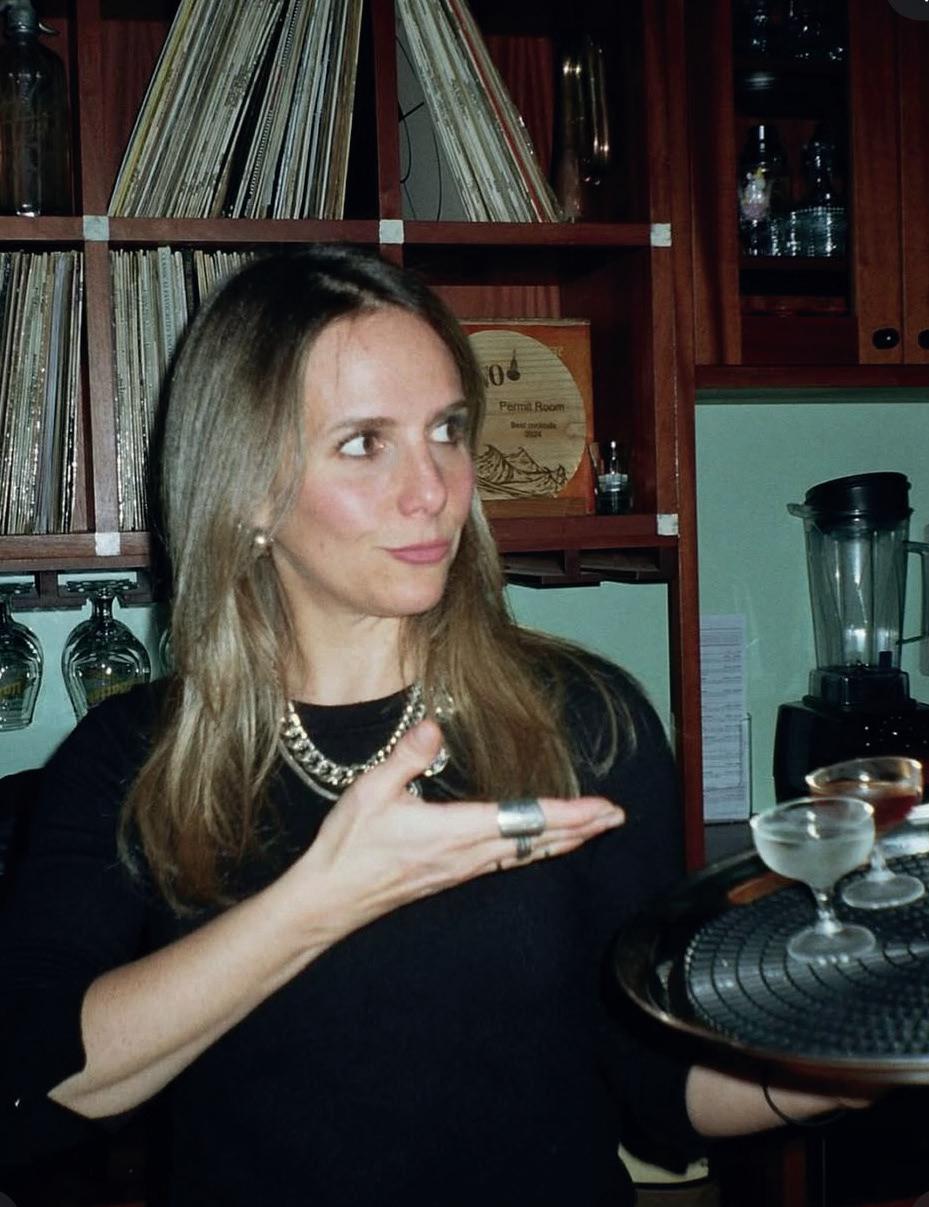
HOW DO YOU ENSURE THE DRINKS MENU ALIGNS WITH DISHOOM’S BROADER BRAND STORY AND DINING EXPERIENCE?
Research, research, research! Each cocktail has its own individual story which relates to Bombay Cafe culture, meaning trips to India are frequent amongst our development and creative team. We’re constantly exploring the stories of Bombay and ways we can develop our drinks and menu.
WHAT ROLE DO COCKTAILS PLAY IN ENHANCING THE OVERALL GUEST JOURNEY IN YOUR VENUES?
In a restaurant where guests are required to often wait in a
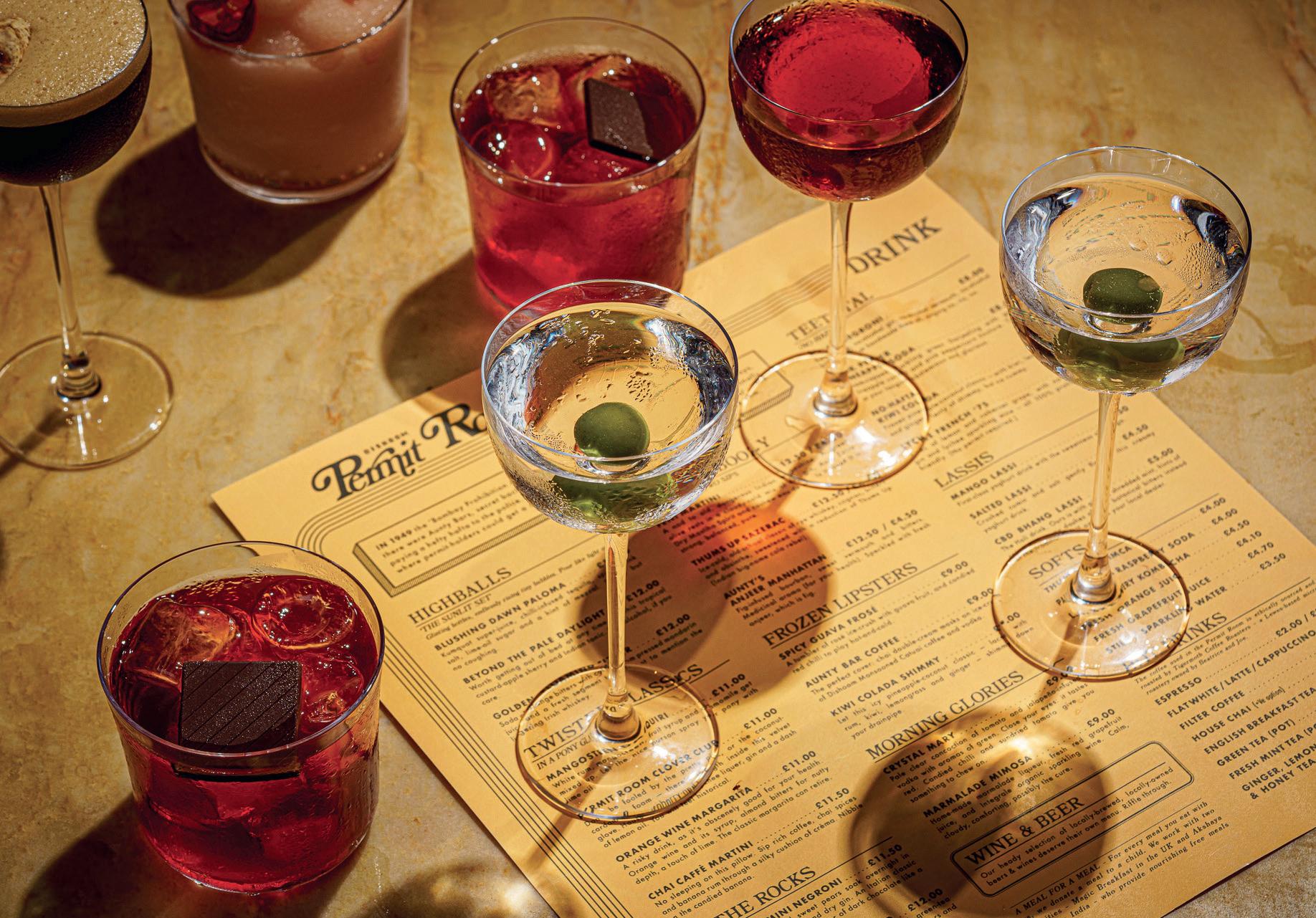
We don’t pick one guest. We build a menu that welcomes them all.
queue or at a table, it plays a very important role. We are also open from 8am for breakfast, and all the drinks are available from early – coffee is also one of our main focuses!
HOW HAS GUEST BEHAVIOUR AROUND DRINKING – MODERATION AND WELLNESS TRENDS – INFLUENCED YOUR MENU DEVELOPMENT?
All of the above have had an influence. We recently launched our new Functional Drinks Menu, with an aim to create something that could elevate both vitality and mood. This was a relatively new avenue for us, but an exciting one that the whole Dishoom team had fun creating and developing.
HOW DO YOU SEE THE ROLE OF BARS EVOLVING WITHIN RESTAURANTS OVER THE NEXT FEW YEARS?
We need to keep studying, experimenting and staying curious.
It’s important to keep evolving and following trends. However, it’s also important to stay true to your roots. Whether this be the stories of the drinks or the flavours.
LOOKING AHEAD, WHAT ARE YOU MOST EXCITED ABOUT – EITHER PERSONALLY OR FOR THE FUTURE OF DISHOOM’S BAR PROGRAMME?
With a new opening ahead (Leeds), we’re looking for more people to grow and develop new, and looking at ways to improve our world. Inside Dishoom, we’re big on building people up and developing their skills. For example, we’ll be hosting our annual Daru Masters programme again shortly, calling upon the magicians of the bar and the secret alchemists across Dishoom to show us what they’ve got, with an opportunity to have their cocktail placed on the Dishoom menu as a special.
@honest_drinks




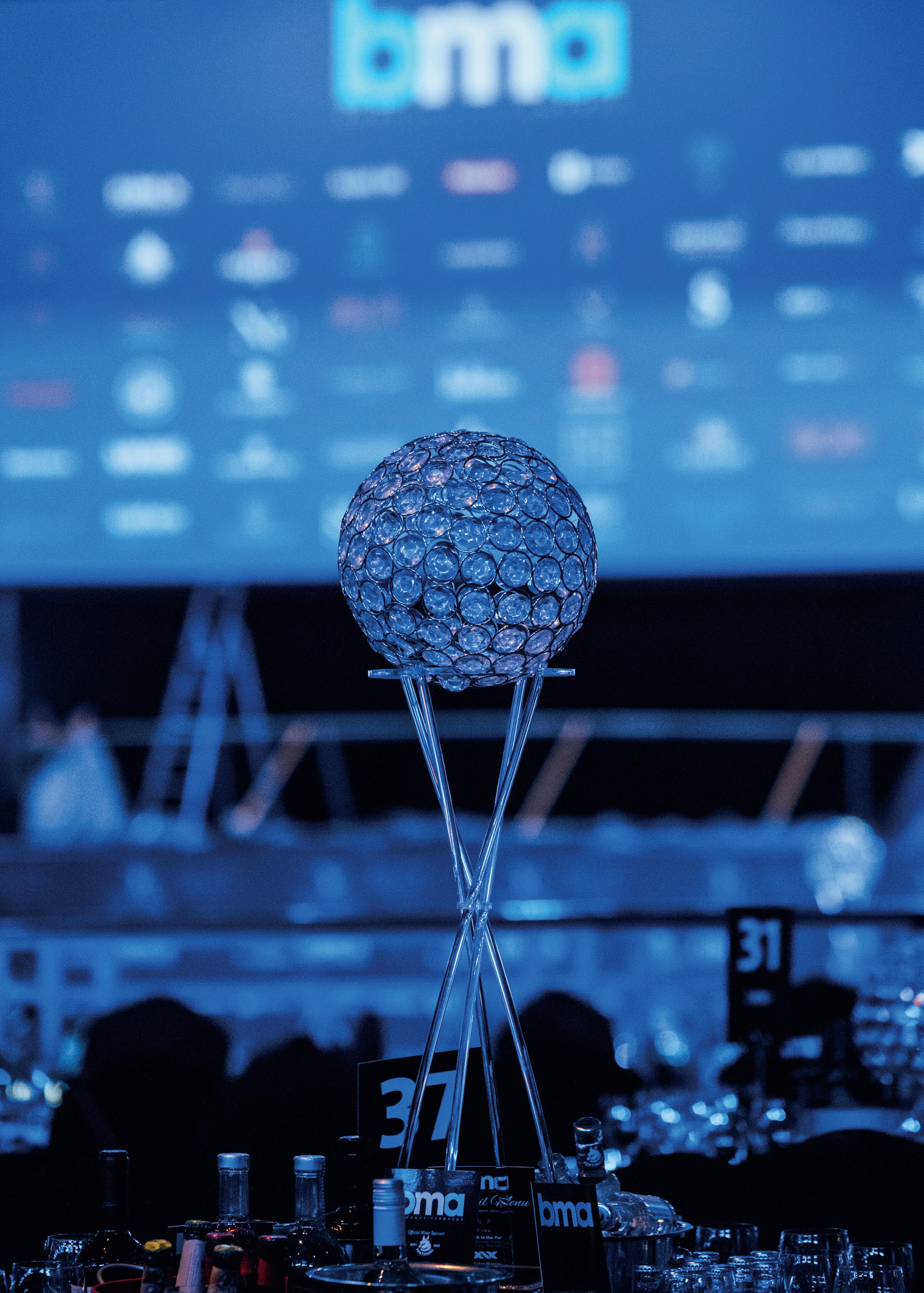
AIDY SMITH BROUGHT STAR QUALITY TO THIS YEAR’S BAR MAGAZINE AWARDS, SETTING THE TONE FOR A NIGHT THAT CELEBRATED NOT JUST EXCELLENCE IN DRINKS, BUT THE VOICES RESHAPING THE INDUSTRY’S FUTURE. IN THIS INTERVIEW, HE REFLECTS ON HOW LIVING WITH TOURETTE SYNDROME AND ADHD HAS SHAPED HIS JOURNEY THROUGH THE INDUSTRY, AND WHY NEURODIVERGENT THINKERS ARE DRIVING SOME OF THE MOST EXCITING INNOVATIONS WITHIN THE DRINKS’ WORLD TODAY.
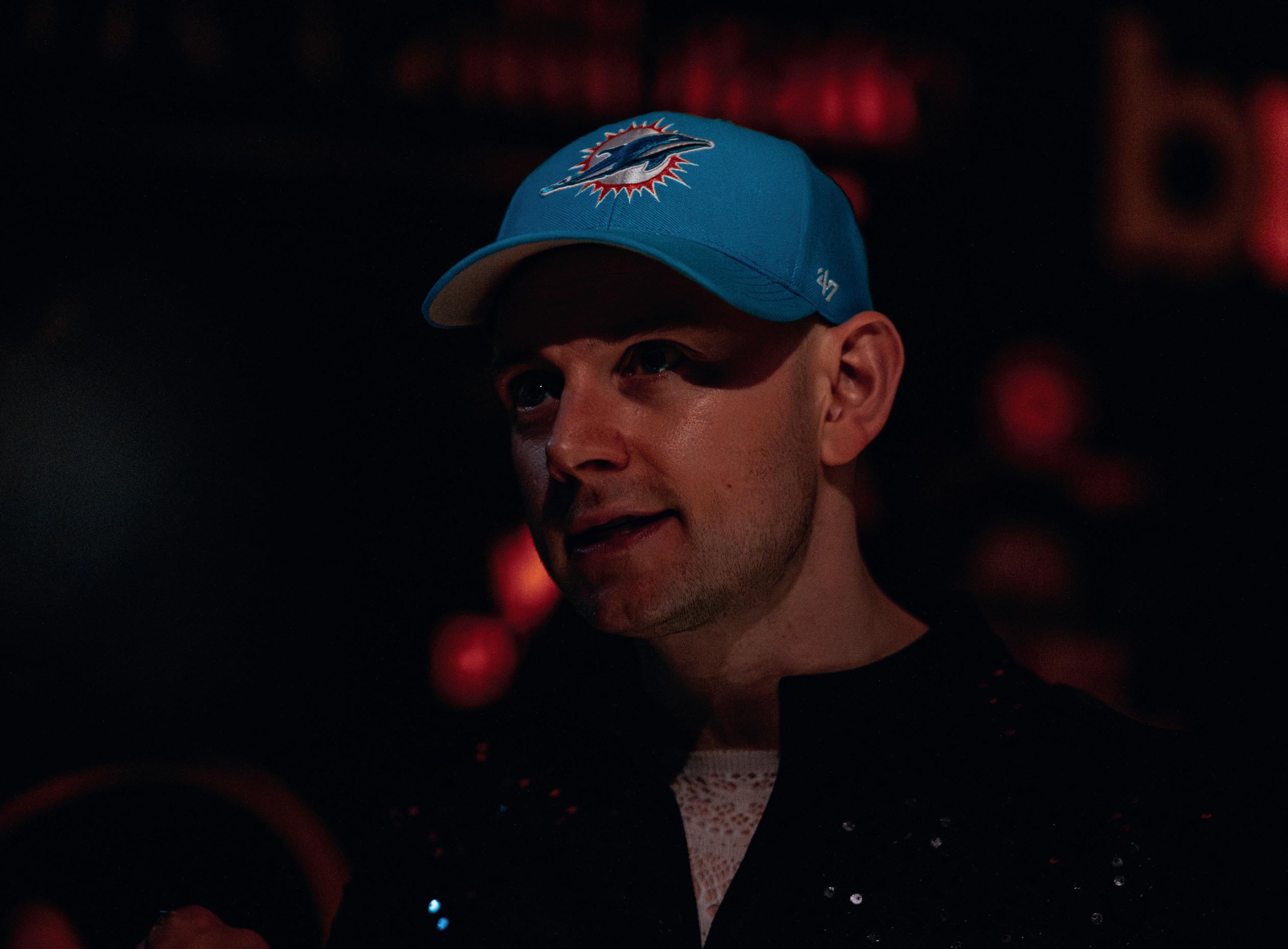
YOU’VE SPOKEN OPENLY ABOUT LIVING WITH TOURETTE SYNDROME AND ADHD. HOW DID THOSE EXPERIENCES SHAPE YOUR ENTRY INTO THE DRINKS’ WORLD?
Honestly? In two completely opposite directions at once. In terms of acceptance, it made things harder. I started my journey
into wine and spirits journalism about twelve years ago and it was an incredibly traditional space. I’m gay, I have Tourette’s and ADHD, and I can be rather forward. So, suffice to say, I didn’t exactly fit the mould. There was a real air of judgement, a sense that certain doors simply weren’t for people like me. I still think I carry some of that with me today.
But here’s the other side of that coin; everything I’ve built, including The Three Drinkers TV series, DRINKLUSIVE, and everything else in between, has been fuelled by that same experience. My neurodivergence gave me a drive to prove people wrong, a relentless energy to push through and show everyone just what is possible. What others might see as a disadvantage has been, quietly and consistently, my biggest advantage.
DO YOU THINK NEURODIVERGENT THINKERS BRING SOMETHING UNIQUE TO FLAVOUR, STORYTELLING OR DRINKS COMMUNICATION?
One hundred per cent, and I say that without any hesitation. People who are neurodivergent don’t view the world the same way as neurotypical people, and let’s be clear: the world is still largely built for neurotypical people. That means neurodivergent people are constantly having to think outside the box just to navigate everyday life. That’s exhausting, yes. But it also means that when we turn that energy towards something we’re genuinely passionate about, the results can be extraordinary. In the drinks world specifically, that translates into completely fresh perspectives on flavour, on storytelling, on communication. We’re not reaching for the same well-worn wine vocabulary or the usual narrative frameworks. We’re building new ones, sometimes wild ones. That’s an asset, not a liability, and any brand or publication that hasn’t cottoned on to that yet is leaving real creative power on the table.
DO YOU FEEL THE DRINKS WORLD IS BECOMING MORE OPEN TO NEURODIVERGENT VOICES?
We are moving in the right direction, slowly. But there is still a long way to go, and I think it’s important to be honest about that rather than just celebrating the progress. One of the biggest ongoing issues is gatekeeping. There are still too many people receiving information and resources who simply don’t pass them on to the communities that need them most. Awareness without action isn’t inclusion in my mind.
And then there’s the wider picture. The current political climate in America is having a very real knock-on effect here in the UK. DE&I initiatives are genuinely struggling to secure funding right now, and that matters enormously for neurodivergent professionals who depend on those structures for support and visibility.
THROUGH DRINKLUSIVE, YOU’VE WORKED TO WIDEN ACCESS TO THE DRINKS’ MEDIA WORLD. WHAT GAPS WERE YOU TRYING TO FILL, AND WHAT KIND OF SUPPORT DO NEURODIVERGENT DRINKS PROFESSIONALS NEED MOST?
The drinks’ world, and this is even truer of the wine world, is still largely filled with similar people. And there’s a direct link between that homogeneity and the fact that our industry is declining, because communities who don’t see people who look, live or love like them don’t feel welcome, and so they don’t engage. That’s not just a social problem when you get to the heart of it; it’s also a commercial one, and, speaking candidly, if we don’t change that, we’re only going to continue to see a decline.
DRINKLUSIVE was built to do two things. First, to bring genuinely unique talent into this industry, because that has a ripple effect: when people from underrepresented communities
The drinks world has a real opportunity to be a place where difference isn’t just tolerated, but genuinely celebrated.
see themselves reflected, others follow. Second, to give those people something concrete: the education, the connections and the opportunities they’d otherwise struggle to access. We’re talking WSET qualifications, mentoring, and real publishing credits in national and international outlets. Not just a warm welcome and a pat on the back, but an actual ladder to reach real and meaningful opportunities that will affect their future in a tangible way.
ARE THERE VOICES IN THE DRINKS WORLD RIGHT NOW WHO YOU THINK ARE PUSHING THIS CONVERSATION FORWARD?
There are some brilliant ones. Ahsoka Wallace is a force to be reckoned with. I have watched them flourish over the last few years to embrace their neurodivergence with a fierce determination, and work tirelessly to help others understand what it’s like to walk in our shoes. Queena Wong is doing fantastic work at getting more female talent into the world of wine, and Ben Branson continues to challenge what the drinks industry can look like. He is yet another example of the countless neurodivergent entrepreneurs who are changing the very foundation of the industry.
Then there are the people who aren’t front facing but are pushing the boundaries of support internally. People like Julie Pender at Pernod Ricard, Julie Shepherd and Jordan Casewell at Decanter and Javiera Moller (previously Concha y Toro, now Heineken). Individuals like James Simpson at Pol Roger, Jancis Robinson and Tara Thomas at Jancis Robinson, and Michelle Brampton at WSET, and of course the team at the Gerard Basset Foundation who have changed the very foundation of what representation looks like through their grant support programme.
We need more of them, but the ones we have are genuinely moving things forward.
FINALLY, IF THE DRINKS INDUSTRY COULD TAKE ONE LESSON FROM NEURODIVERGENT THINKERS, WHAT WOULD IT BE?
We are stronger together. That’s it, really. For every wall I’ve come up against, every door that didn’t open, the answer has always been the same: find your people, build your community, and pull each other through. The drinks world has a real opportunity to be a place where difference isn’t just tolerated, but genuinely celebrated. We’re not quite there yet. But we’re getting there. I think it will be really telling over the next 10 or so years which companies really take off due to innovation in the drinks space, and if the people leading them are in fact neurodivergent.
IG: @sypped aidysmith.com
LUCIA MASSEY, CO-FOUNDER OF DOÑA, REFLECTS ON WINNING THE EQUITY, DIVERSITY AND INCLUSION AWARD, THE JOURNEY BEHIND THE BAR’S SUCCESS, AND WHAT’S NEXT FOR THE TEAM AS THEY STAY TRUE TO THEIR ETHOS.
WHAT DOES WINNING THIS AWARD MEAN TO THE TEAM, AND HOW DOES IT INSPIRE YOUR NEXT GOALS?
It is always lovely to be recognised for something that you have put a lot of heart and soul into. Receiving an award from the BMAs was a real high point for us as a team.
CAN YOU SHARE A DEFINING MOMENT OR EXPERIENCE THAT LED THE TEAM TO WHERE YOU ARE TODAY AND CONTRIBUTED TO THIS RECOGNITION?
There are too many things for one single event to stand out. Doña is a sum of its parts; every party and event that has taken place in the space, and every drink sold brought us to where we are today and played a part in being recognised for what we do.
HOW DO YOU STRIVE TO MAKE A MEANINGFUL IMPACT IN YOUR FIELD?
We try, at all times, to maintain our integrity and our core values. We strive to honour what we set out to do, and believe that our little corner of the world is better for holding on to true values.
WHAT ADVICE WOULD YOU GIVE TO ASPIRING VENUES LOOKING TO ACHIEVE SIMILAR SUCCESS?
Have an idea of what makes you you and stick to it, and don’t be seduced by the mainstream!
WHAT’S NEXT FOR DOÑA IN TERMS OF YOUR FUTURE GOALS?
We are excited to be working on a pop-up project this summer with Battersea Arts Centre, and are looking forward to our Salsa Summer Fridays!
@bardonalondon bardonalondon.com
We try, at all times, to maintain our integrity and our core values.
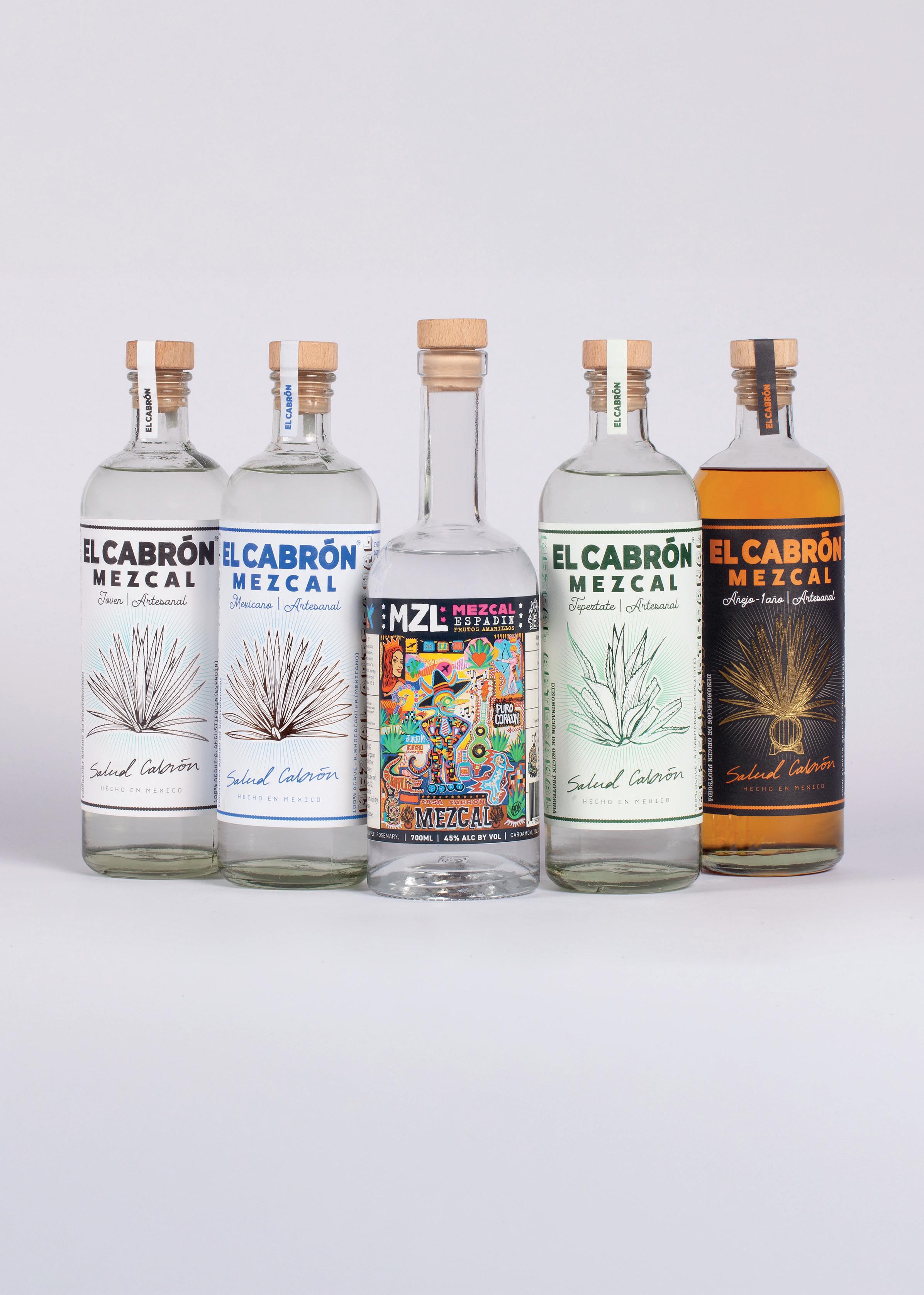
FROM VERSATILE ESPADÍN TO RARE TEPEZTATE, EL CABRÓN MEZCALES SHOWCASE THE DEPTH AND DIVERSITY OF AGAVE THROUGH FOUR CAREFULLY CRAFTED EXPRESSIONS DESIGNED TO BRING FLAVOUR, AUTHENTICITY AND FLEXIBILITY TO THE MODERN BACK BAR.
Everything starts with the agave. Variety, terroir and maturity define the flavour. Casa Cabrón Destilería, producer of El Cabrón mezcals, has built a range of four distinct and carefully curated agave expressions, each delivering a different profile, purpose and price point for the back bar.
The same careful processes. Different plants. Completely different results. All expressions follow traditional production: pit-roasted piñas (the hearts of the agaves), open wild yeast, fermentation, copper pot distillation. These steps aren’t romantic extras but what creates mezcal’s flavour chemistry.
Where it stands apart is precision. Casa Cabrón refines every step of the process with modern techniques to support the traditional mezcal producing methods.
First, the agave selection is hand chosen by our maestro. Fermentation is monitored by his watching and listening. Double (sometimes triple) distillation is carefully refined through extensive tasting. No shortcuts. No compromises. The result: a balanced ABV and flavour profiles that best present the agave essence in the bottle.
Agave Angustifolia | 8–10 years | 42% ABV
This is the anchor mezcal. El Cabrón’s espadin is choosen for maturity – up to 10 years old- to attain more flavour and higher sugar content from the plant. Bright, citrus fruit-forward, and built for service.
Expect tangerine, plum, and pineapple up front, with a lift of lemongrass and an herbal finish. Perfect for cocktails — plays well with citrus, holds structure in stirred drinks, and doesn’t overpower.
For bars: high versatility, strong margins, easy upsell from tequila.
Agave Rhodacantha | 12–15 years | 46% ABV
Casa Cabrón harvests wild Mexicano agaves at 12-15 years to ensure more flavour density.
Nose leans into tamarind, grapefruit, and floral sweetness. On the palate: quince, sharp citrus, and a structured, spiced finish. The higher ABV carries flavour further and hits with more weight.
For bars: ideal step-up pour. Great for guests who want to explore wild agave offerings.
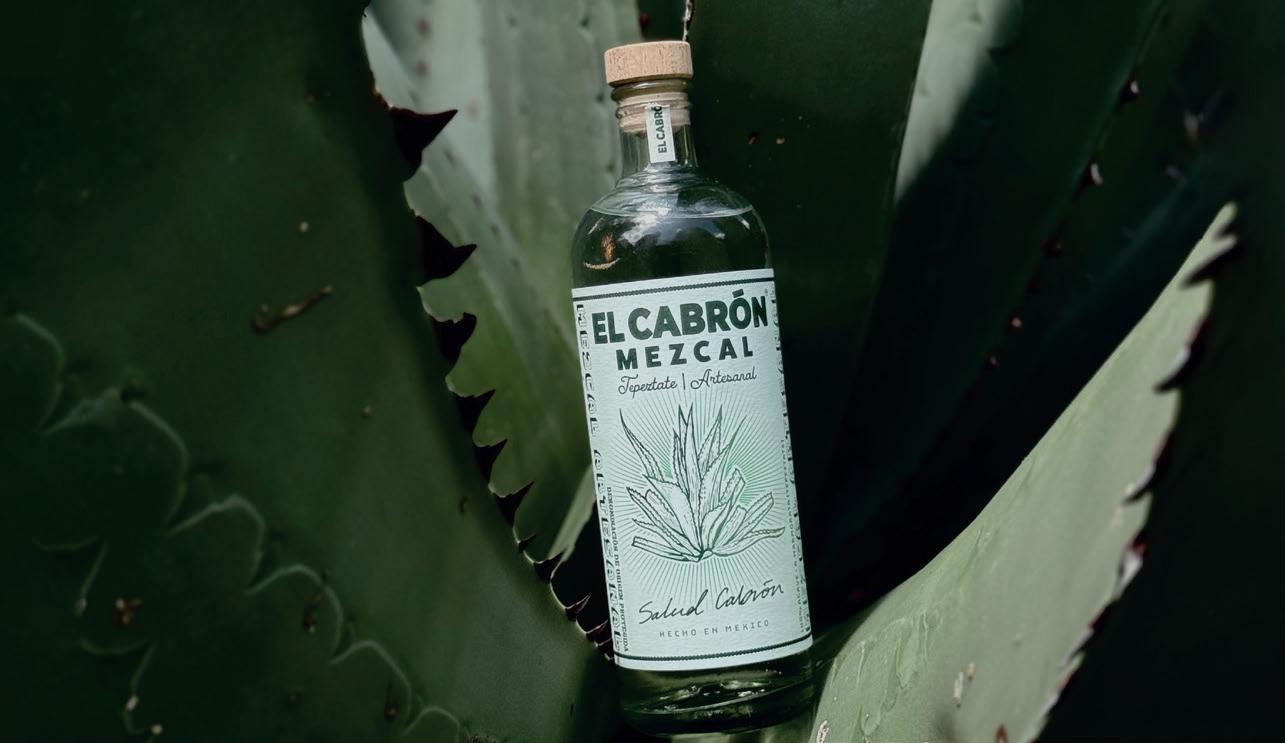
EL CABRÓN TEPEZTATE — THE ELDER STATESMAN
Agave Marmorata | 25–30 years | 46% ABV
Tepeztate takes an astonishing 25-30 years to reach full maturity. Found in the mountains only accessible by foot and donkey, the piñas can weigh up to 120 kgs. Wild and rare- this is where mezcal becomes a conversation.
Profile is complex with green fruits, rosemary, ginger, florals, and a slightly lactic edge with a long mineral finish.
For bars: premium list, sipping focus, and storytelling. This is your credibility pour.
EL CABRÓN ESPADÍN AÑEJO — THE ELEGANT BRIDGE
Agave Angustifolia + 1 year in American whisky oak | 43% ABV
Casa Cabrón uses the same mature espadin agave, transformed through oak.
Guava, maple, star fruit, anise, dark chocolate. It drinks closer to aged whisky or rum while keeping mezcal character.
For bars: El Cabrón añejo works as a digestif and a sub for bourbon cocktails. Perfect for easing whisky drinkers into mezcal.
For bar operators, the full range of El Cabrón mezcals deliver a complete mezcal programme, from well pour to top shelf without gaps, overlap, or confusion.
casacabrondestileria.com @casacabrondestileria
MODERN INNOVATION INTERSECTS WITH TRADITION METHODS, EL CABRÓN MEZCALS OFFERS FOUR PREMIUM EXPRESSIONS FOR THOSE WHO DEMAND THE BEST IN CLASS AND CAN TASTE THE DIFFERENCE IN THE DETAILS.
AND SURPRISING,
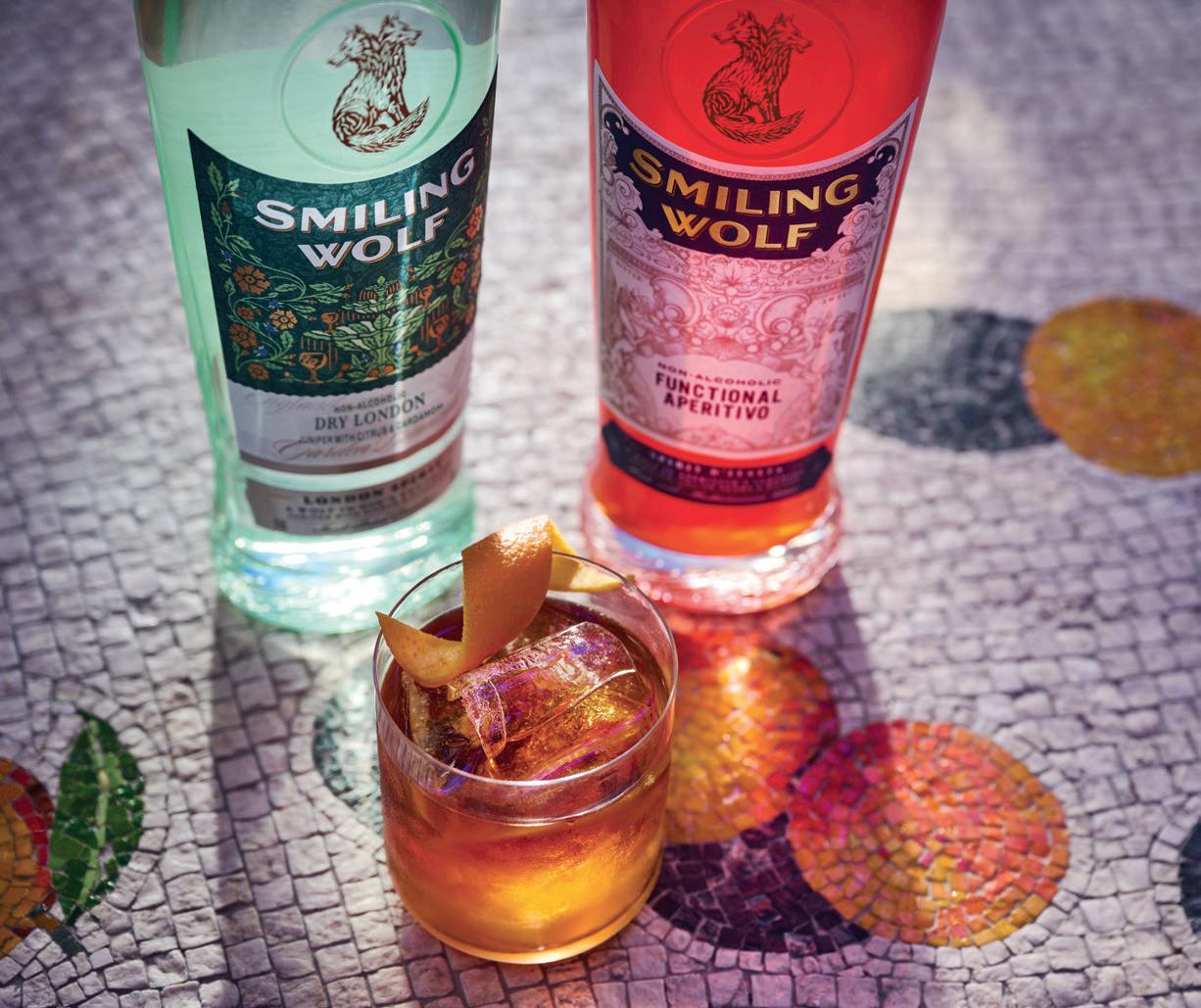
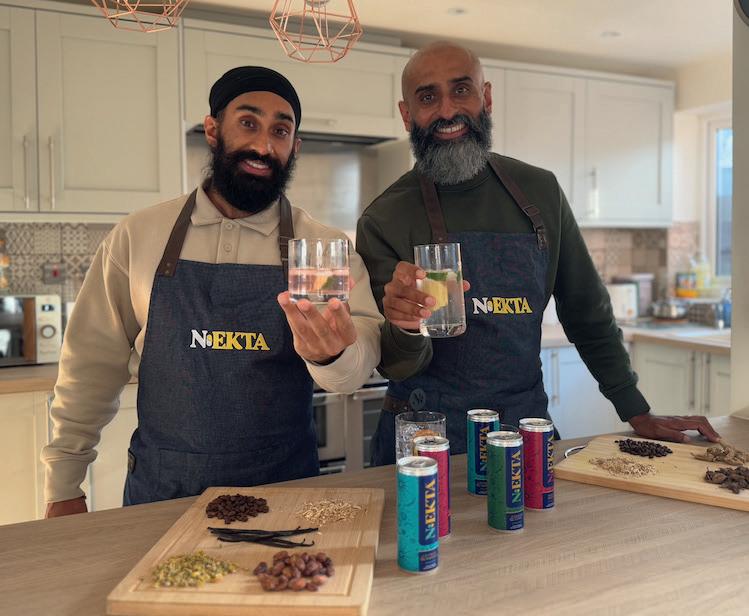
LAURA WILLOUGHBY, FOUNDER OF CLUB SODA, ON HOW FUNCTIONAL DRINKS ARE RESHAPING THE PUB AND BAR EXPERIENCE - FROM RISING DEMAND FOR WELLBEINGLED DRINKS TO THE REAL COMMERCIAL OPPORTUNITY FOR OPERATORS WILLING TO RETHINK WHAT AN “EVENING DRINK” CAN BE.
FUNCTIONAL DRINKS WITH ADAPTOGENS AND NOOTROPICS ARE GAINING REAL DEMAND AMONGST DRINKERS. WHAT’S THE REAL OPPORTUNITY FOR PUBS AND BARS HERE?
The opportunity is bigger than a trend, it’s about meeting a clear consumer need. Our research shows that 79% of UK adults are open to drinks that support wellbeing, rising to over 90% for younger drinkers.
What’s interesting is why people are choosing them. The top need states are relaxation, better sleep and stress reduction, which puts functional drinks right into the evening occasion, traditionally dominated by alcohol – which itself is one of the most popular functional ingredients! It offers a drink with a feeling or experience.
For pubs and bars, that’s a real opportunity. These drinks aren’t just alcohol alternatives, they’re adding a new reason to visit. They can sit alongside alcohol, not replace it, and help venues keep people in the space for longer, especially those moderating or switching between drinks. Done well, they also drive value. People are willing to pay for drinks that feel purposeful, crafted and a bit different.
FROM A BARTENDER’S PERSPECTIVE, HOW CAN OPERATORS INCORPORATE ADAPTOGENIC AND NOOTROPIC INGREDIENTS INTO COCKTAILS AND MENUS?
The key is to treat them like any other flavour-led ingredient first, function second.
Bartenders don’t need to reinvent everything. Start with pre-made functional spirits or bases (adaptogen-led aperitifs, nootropic blends); functional modifiers like tinctures, drops or cordials; and ingredients like matcha, cacao, mushrooms and botanicals that already have a place in drinks
Then, build from familiar serves: a spritz with a functional base, a highball with a nootropic mixer, or a short serve using a functional spirit alternative, for example.
The important thing is balance and experience. Texture, bitterness, aroma, length – these matter just as much as any claimed benefit. And don’t overcomplicate it. One or two wellexecuted serves will outperform a long, confusing menu. You can find great examples at The Alchemist – where they have a functional cocktail menu designed for experience - just like all their other drinks.
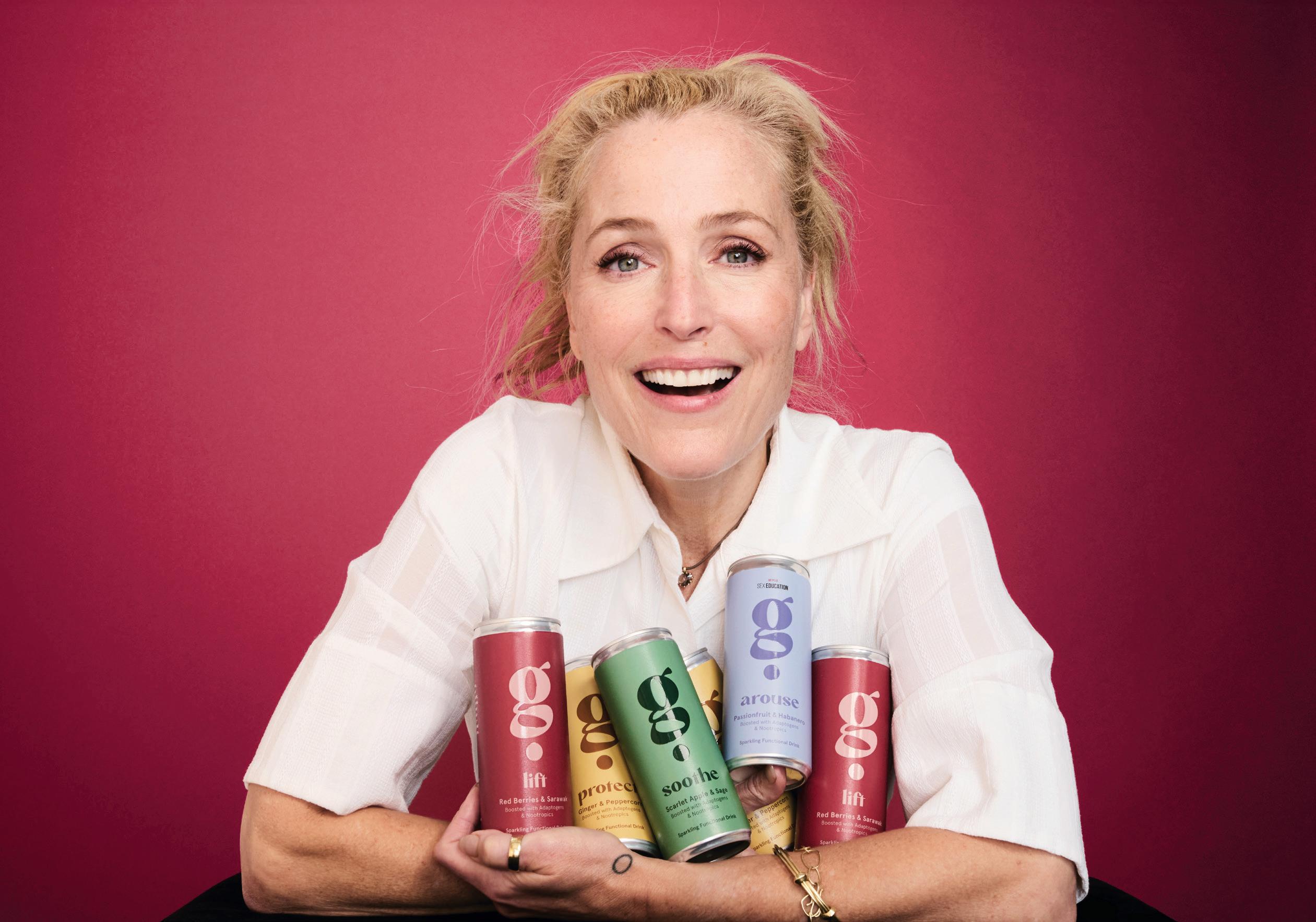
These drinks aren’t just alcohol alternatives, they’re adding a new reason to visit.
THERE’S A LOT OF MARKETING AROUND FUNCTIONAL BENEFITS – WHAT SHOULD BAR OWNERS BE MINDFUL OF WHEN COMMUNICATING THESE TO CUSTOMERS?
There’s strong consumer interest, but low confidence in understanding ingredients. That means people are curious, but also want to know more. Drinks in this space can’t make health claims unless they have scientific data to back it up.
So…
• Do list the key ingredients - people who are interested will know them and make a decision based on this.
• Focus on how the drink makes you feel - no one wants medical language on a cocktail menu anyway!
• Use simple, accessible language rather than technical terms
• Train staff to explain ingredients confidently, but lightly
• First and foremost, position these drinks as thoughtfully crafted drinks with excellent ingredients.
FOR VENUES NEW TO THE CATEGORY, WHAT ARE THE MOST PRACTICAL FIRST STEPS TO INTRODUCE FUNCTIONAL COCKTAILS –INGREDIENTS, STAFF TRAINING OR CUSTOMER EDUCATION?
A mix of all three – start small and get it right with a couple of functional drinks – a spirit, beer and maybe a wine with added benefits. Find brands that will work with you on getting it right on your menu, who will also train your staff. The UK is home to brands at the forefront of this category. Most of all, make sure your staff are confident talking about them. If they believe in them, customers will too.
And finally, treat them with the same respect as any other drink – glassware, garnish, storytelling, all of it matters.
@laurawilloughby
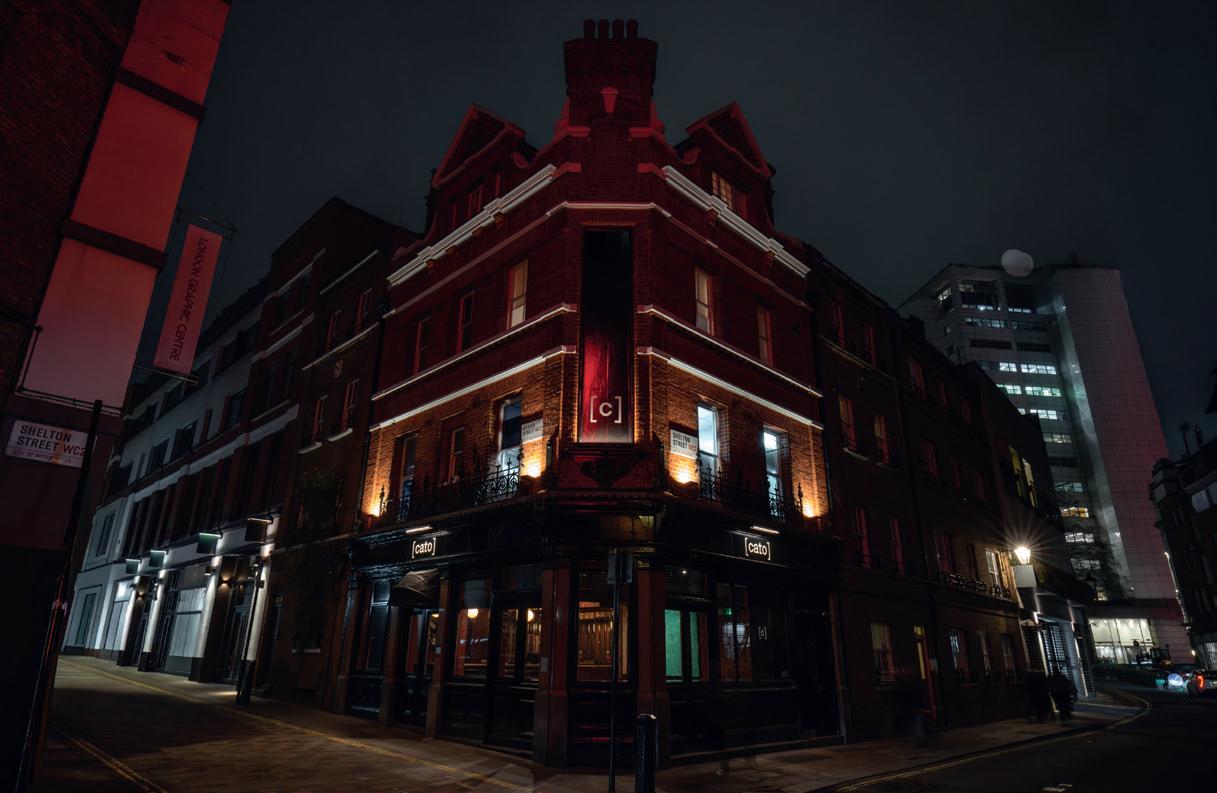
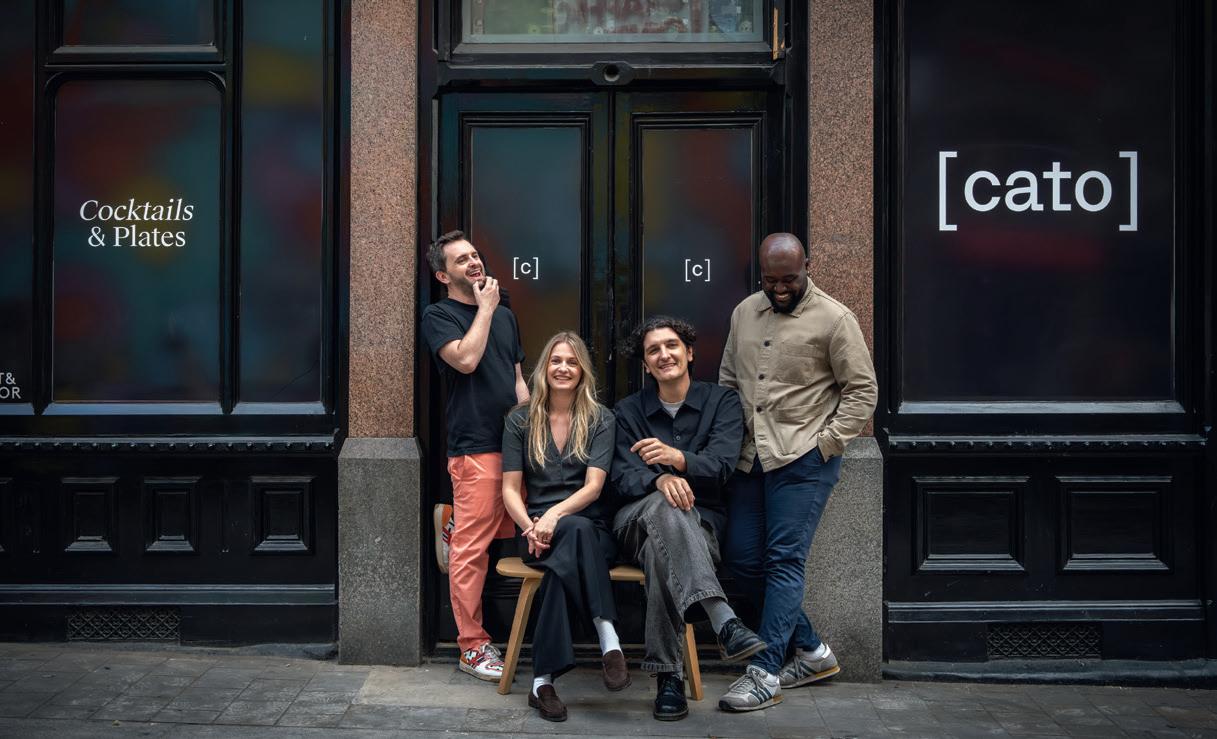
AT CATO, CO-FOUNDER ANGELOS BAFAS IS RETHINKING WHAT A COCKTAIL MENU CAN BE – USING SYNESTHESIA-INSPIRED IDEAS TO TURN COLOUR INTO FLAVOUR, AND STRIPPING DRINKS BACK TO THEIR PUREST EXPRESSION. HE EXPLAINS HOW THE VENUE’S MINIMALIST APPROACH, FROM NAMING TO PRESENTATION, IS DESIGNED TO MAKE EACH COCKTAIL INSTANTLY READABLE YET DEEPLY CONSIDERED, WHILE CHAMPIONING UK-SOURCED INGREDIENTS THROUGHOUT.
THE MENU IS INSPIRED BY SYNESTHESIA, WHERE SENSES OVERLAP. HOW DID YOU TRANSLATE THE RELATIONSHIP BETWEEN COLOUR AND FLAVOUR INTO THE CREATIVE PROCESS FOR DEVELOPING EACH COCKTAIL? Colour and flavour have always been two inextricably connected elements in the creative process of my menus. As humans, we
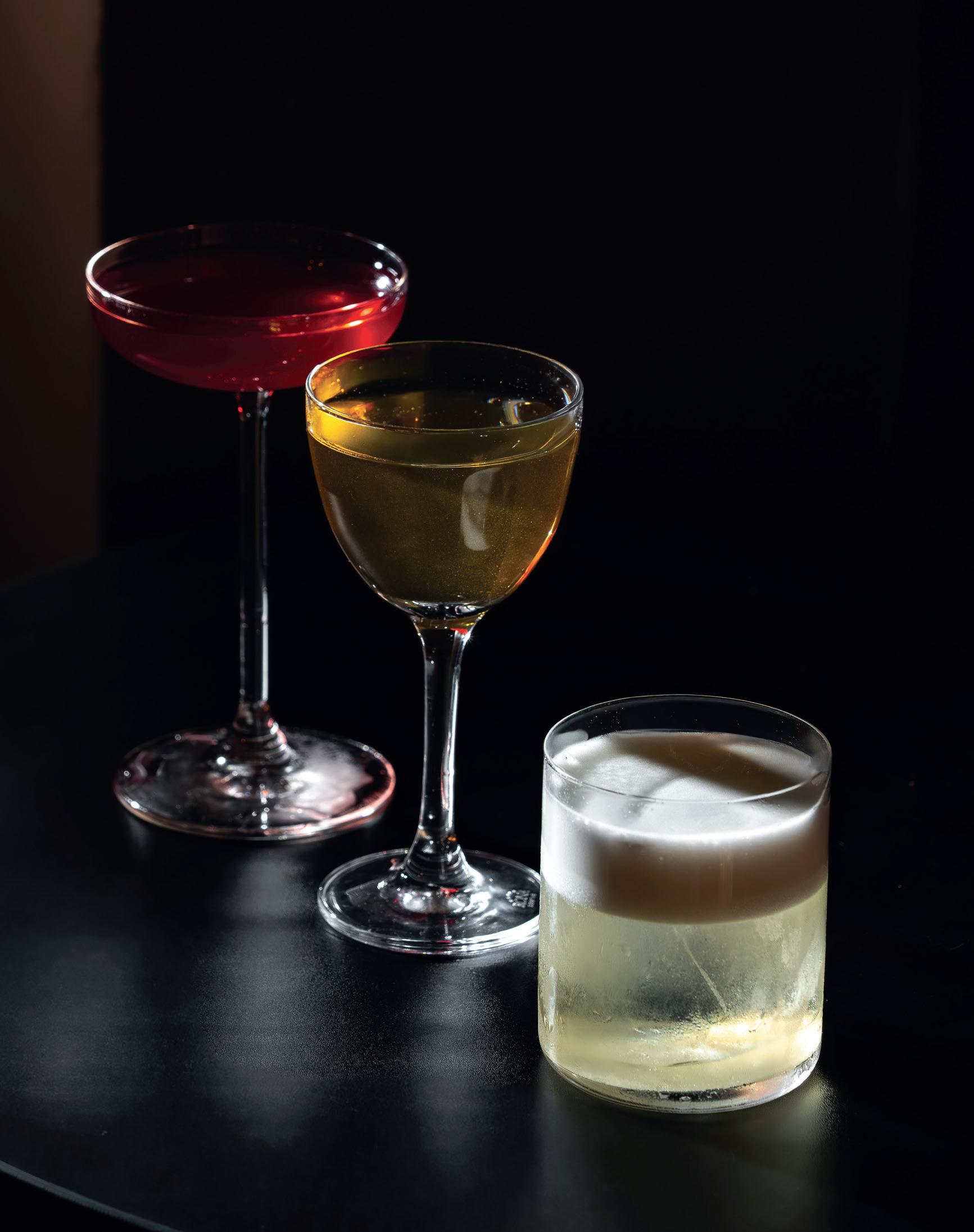
have always linked certain colours with certain experiences or flavours, no matter if we have synesthesia or not. For example, the colour green is often associated with something fresh or herbal. So, for us, although we have put a lot of thought and research into our menus, we wanted to deliver something that is also approachable and inspires familiarity to our guests.
EACH DRINK IS NAMED AFTER ITS TWO DEFINING INGREDIENTS. WHAT WAS THE REASONING BEHIND THIS MINIMALIST NAMING APPROACH, AND HOW DOES IT INFLUENCE HOW GUESTS EXPERIENCE OR INTERPRET THE DRINKS?
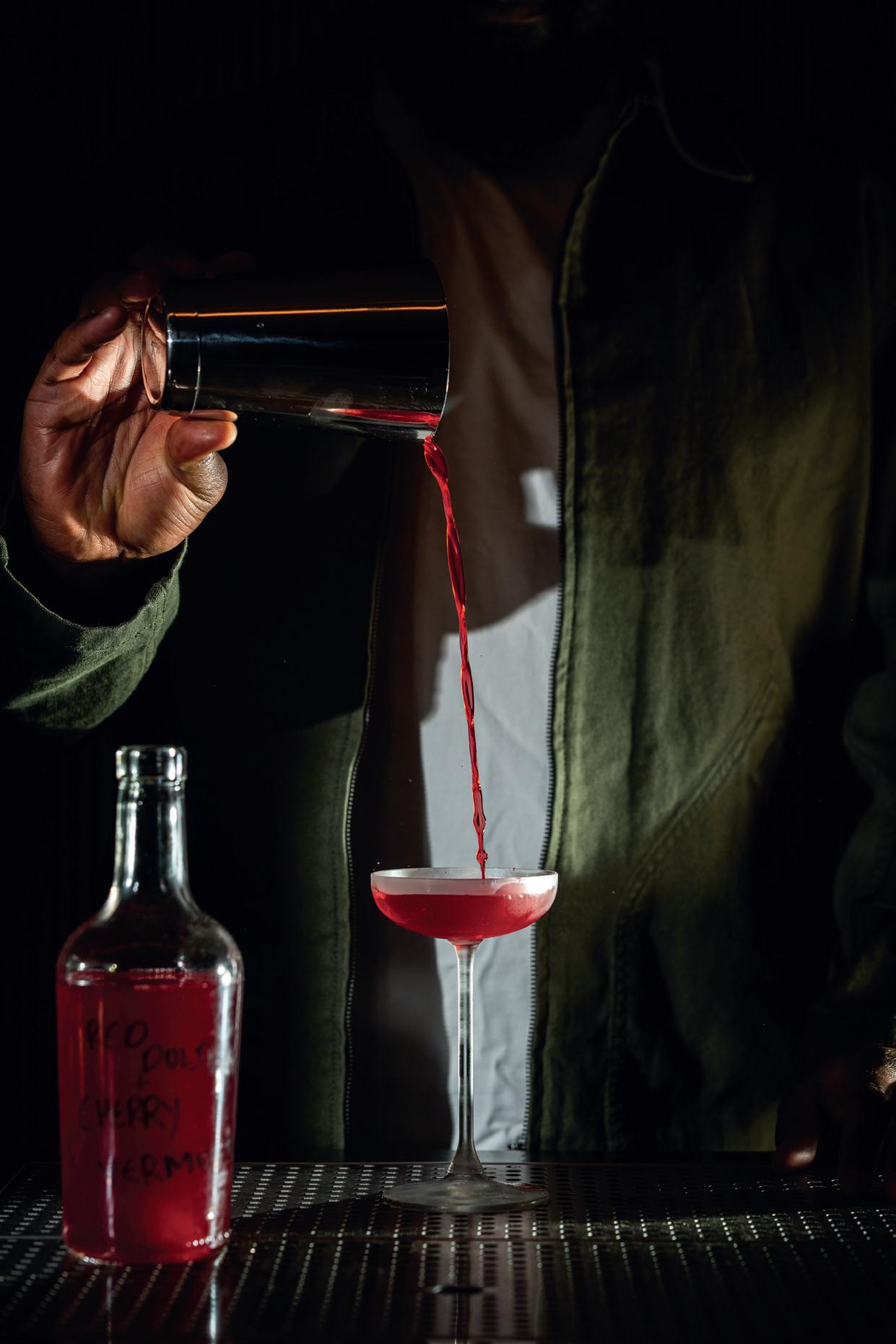
Our motto is that if it is written on the menu you need to be able to find it (or its flavour) in the glass. We have been developing all the drinks with that in mind, meaning that hero ingredients will be prominent in the drink. Hence, the names of the drinks come after the two main ingredients that define its flavour, aroma or texture, and also share the same colour hue.
IT IS CLEAR THAT THE MENU BALANCES SIMPLICITY WITH COMPLEXITY. HOW DID YOU DECIDE HOW MUCH TECHNIQUE OR LAYERING TO HIDE BEHIND THAT MINIMALIST PRESENTATION?
Although we live in the social media era, at cato we still believe that, when it comes to drinks, it is what is in the glass that matters. For us, minimalism is not a trend, but more a means of communication. This way, we can pass to our guests a
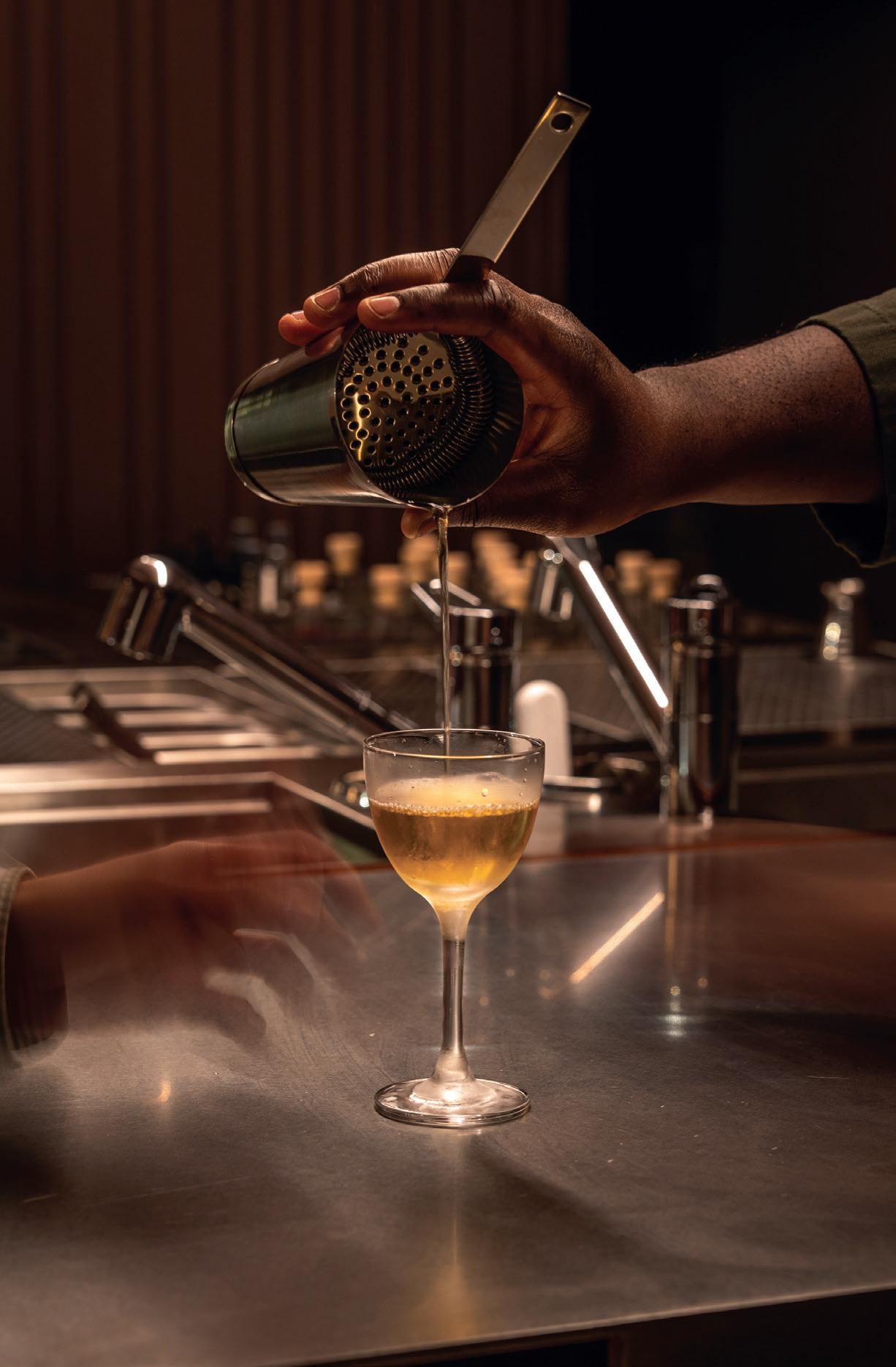
clear message about the depth of flavour and also the story of the ingredient itself, without using extra fancy vessels or overcomplicated ways of serving.
ALL INGREDIENTS ARE SOURCED FROM PRODUCERS AND DISTILLERIES ACROSS THE UNITED KINGDOM. HOW DID THIS COMMITMENT TO BRITISH SOURCING SHAPE OR CHALLENGE THE DEVELOPMENT OF COCKTAILS INSPIRED BY GLOBAL FLAVOUR COMBINATIONS; HOW IMPORTANT DO YOU BELIEVE THIS ASPECT OF LOCALITY IS FOR GUESTS?
Provenance has lately been a price increasing factor. The team at cato has a love for local ingredients and small producers. Our mission, in a way, is to inspire people of every calibre to support local farmers, producers and distillers by showing that there is actually a way to replicate all the well know “exotic” flavours or familiar drinks with the right use of wild, local, or independently produced ingredients and spirits. Also, at the end of the day, sourcing local and buying small can be much cheaper.
@catocoventgarden
COYA RESTAURANT & BAR HAS UNVEILED THE SPIRITS OF PERU: MADRE TIERRA, A NEW STORYTELLING-LED COCKTAIL PROGRAMME DEBUTING AT COYA MAYFAIR AND COYA CITY AT THE BEGINNING OF THE YEAR. THE 16-DRINK MENU JOURNEYS THROUGH PERU’S COAST, ANDES AND AMAZON, BLENDING BOLD REGIONAL FLAVOURS WITH COYA’S SIGNATURE PISCO CRAFT.
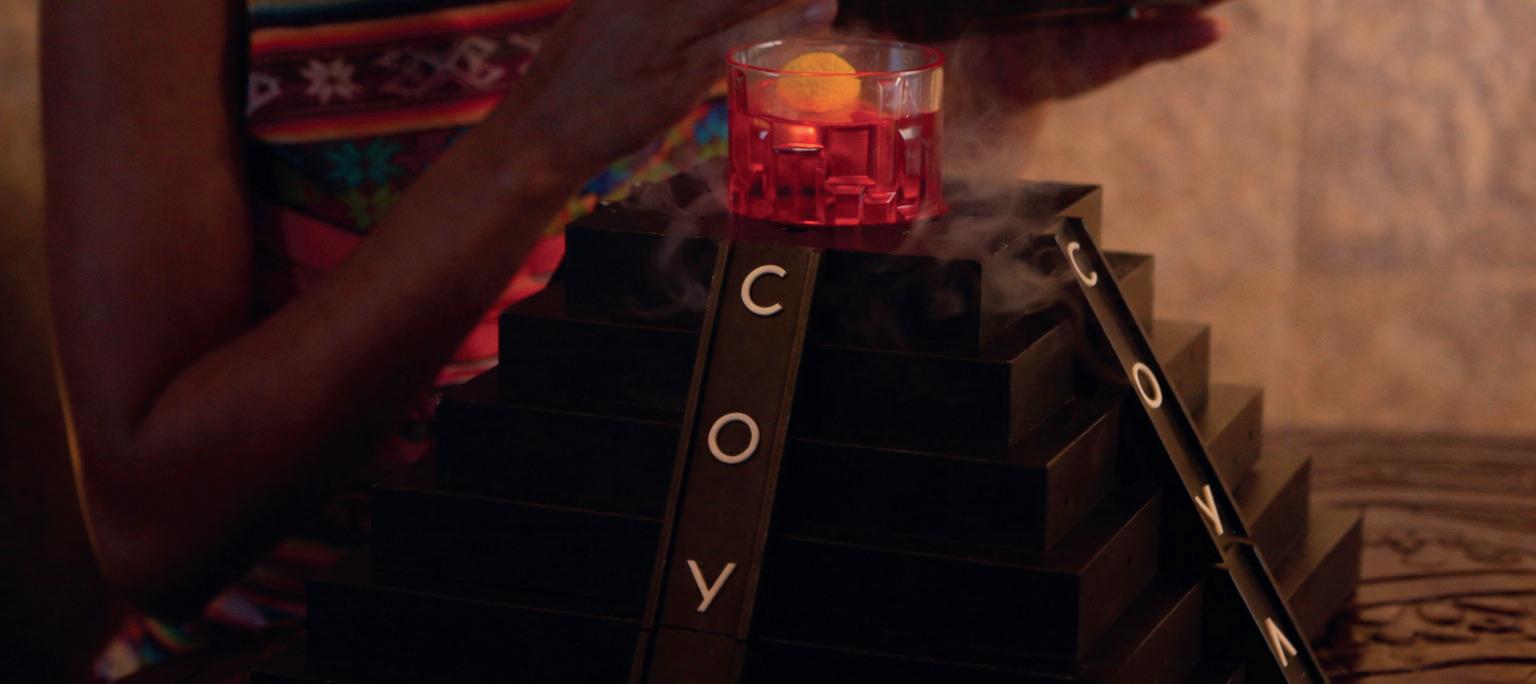
COYA Restaurant & Bar has launched a new global bar programme, The Spirits of Peru, opening with its first edition Madre Tierra at COYA Mayfair and COYA City.
The sixteen-strong list is built around Peru’s three principal geographies - the Pacific coast, the Andean highlands and the Amazon and framed through a narrative device: Camila de Quilla, a fictional explorer whose journal entries shape the menu’s structure.
The coastal section, La Costa, opens the menu with sour and umami-led serves including La Mar, Agua de Chifa and Donna Luisa. La Sierra moves into spicier, spirit-forward territory with Arcoíris, La Rueda, Divino and Earl of Agave. The list closes with La Selva, an Amazon-inspired chapter featuring Tesoro del Campo, Coco y Choclo and Hay-Agua-Ska, leaning on herbal and fruit-led profiles.
The full programme comprises twelve alcoholic cocktails and four non-alcoholic serves, with COYA’s house-made pisco infusions remaining central to the offer. COYA City carries three
additional exclusives: Las Brisas, Ume Samui and Sandia Picosa.
The menu has been developed by Head of Mixology Grégoire Schnerb and Global Bar Manager Sany Bacsi, following a period of research and travel across Peru.
“Each cocktail on The Spirits of Peru: Madre Tierra is a chapter of a journey through Peru,” said Bacsi. “From the brightness of the coast to the stillness of the Andes and the vibrancy of the Amazon, we wanted to translate not just flavours, but emotions, memories, and a sense of place. This menu is an invitation to explore Peru through the senses, while staying true to the soul of the Pisco Bar and COYA’s heritage.”
The Spirits of Peru is positioned as an annual series, with future editions set to revisit Peru through new ingredients and creative directions while remaining tied to the Pisco Bar’s identity.
@coyamayfair
@coyacity
coyarestaurant.com/coya-mayfair/en/pisco-bar

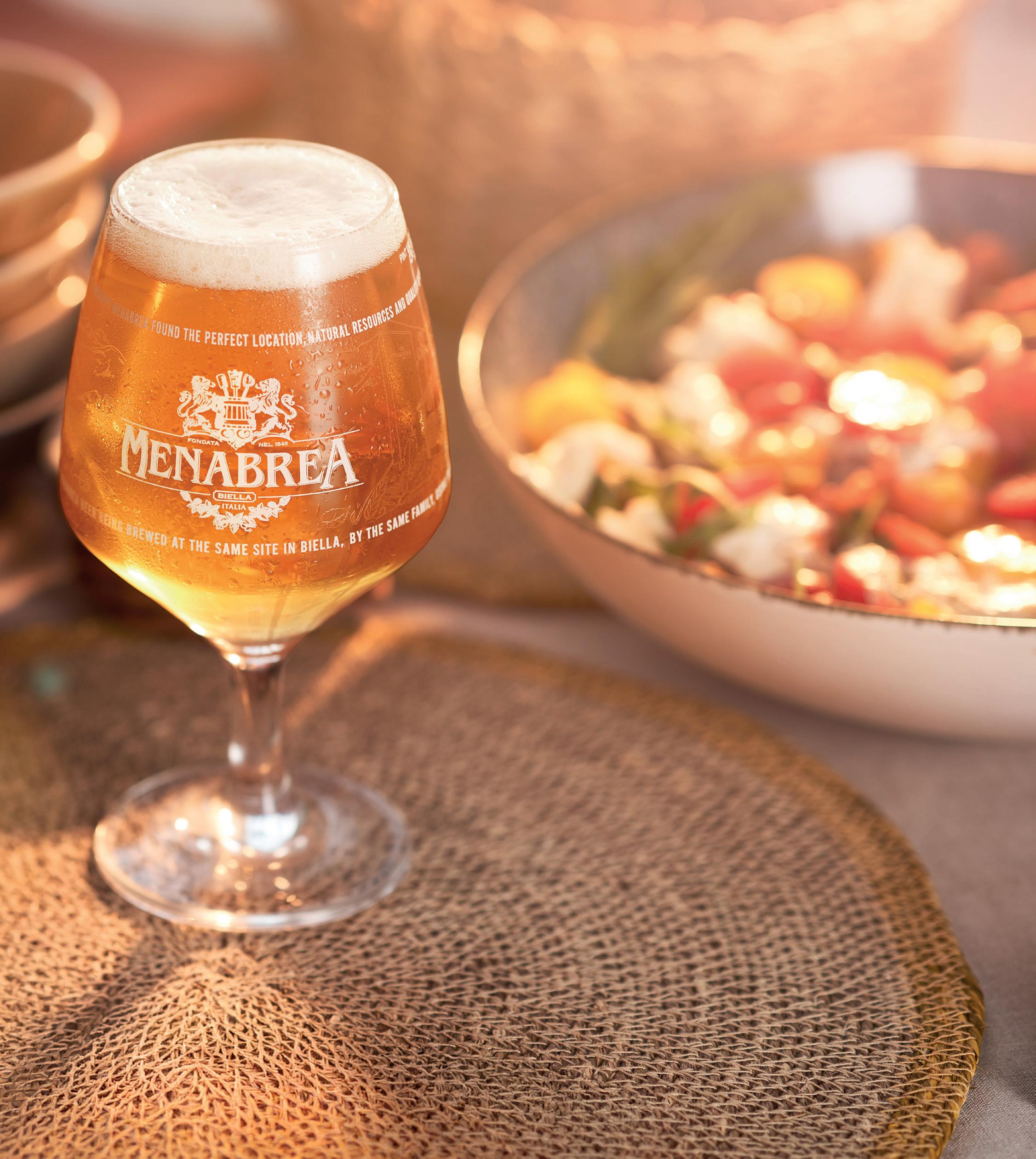
FROM DRAUGHT AND LOW-AND-NO TO WORLD LAGERS AND CRAFT, WE EXPLORE HOW VENUES CAN USE BEER TO DRIVE FOOTFALL, INCREASE DWELL TIME AND BOOST SPEND THROUGHOUT THE SEASON OF SPORT.
1
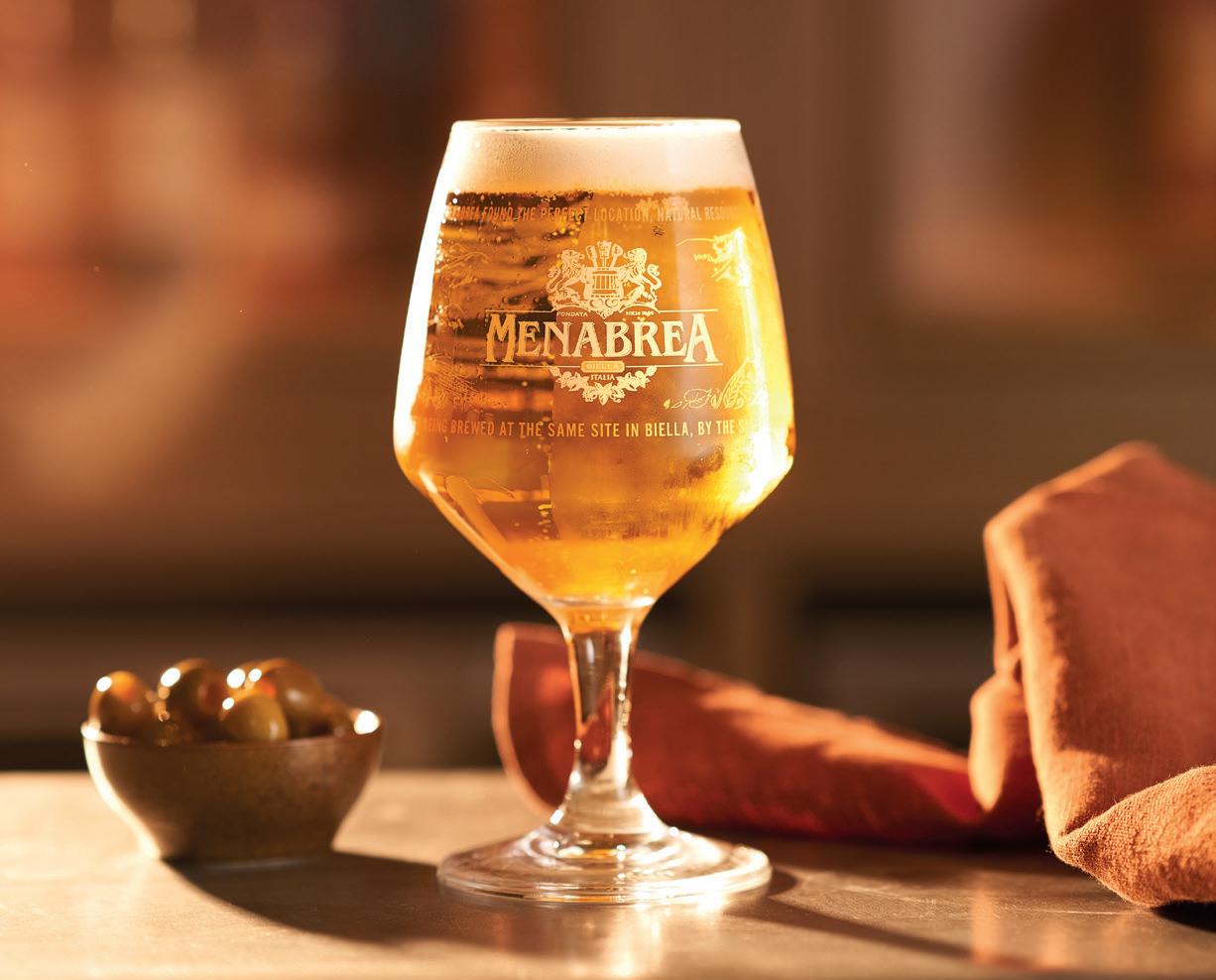
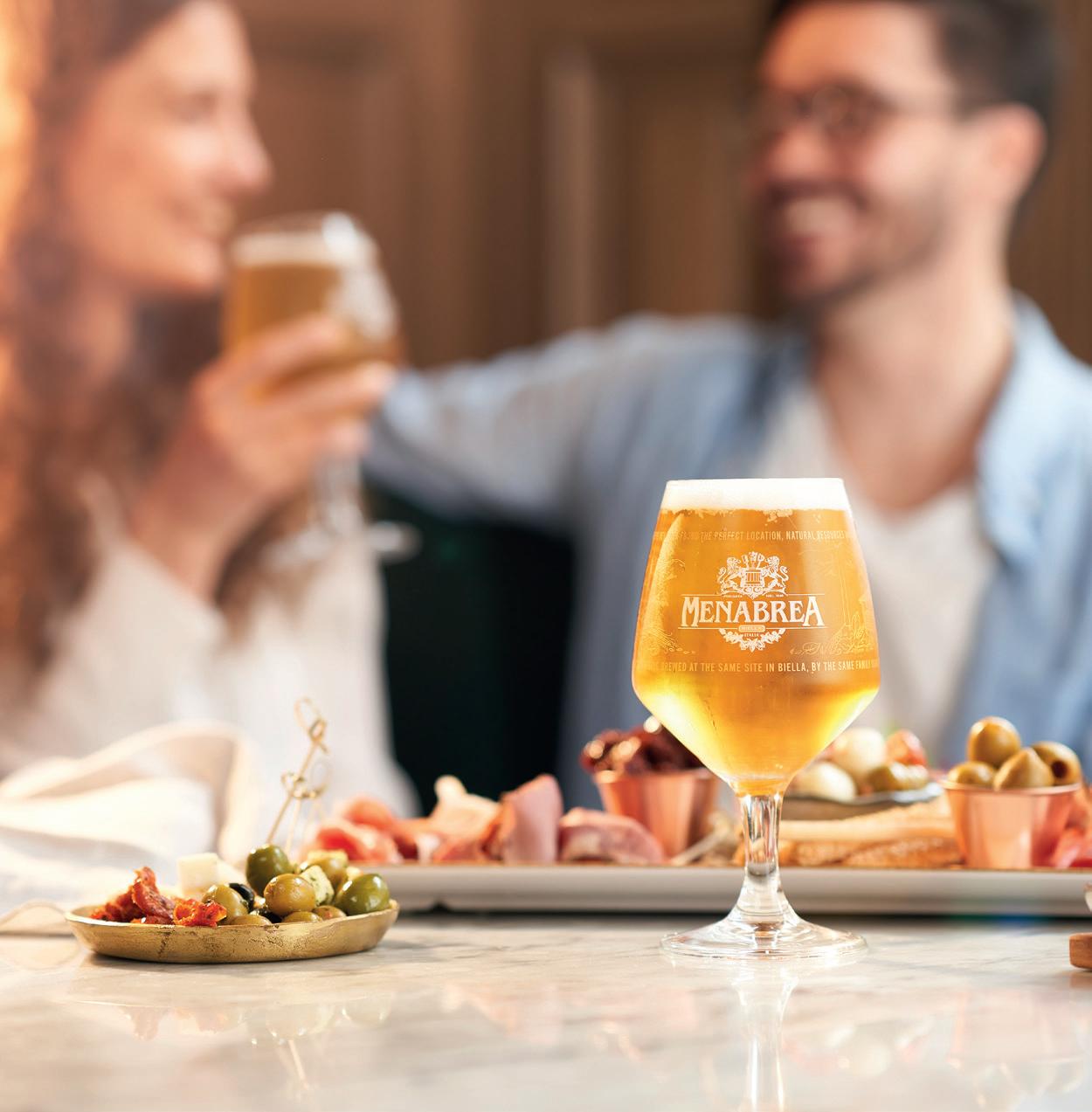
The World Cup is sure to be the headline act in what’s shaping up to be a monumental summer of sport. With late‑night fixtures and big‑screen moments ahead, having the right drinks range in place is essential. Varying kick‑off times create different occasions, and a well‑curated selection will help you capture maximum sales throughout the tournament. It will be no surprise to hear that beer and cider remain the most engaged match day categories. World lagers continue to be popular, with premium favourites like Menabrea delivering great quality and strong margin potential.
2
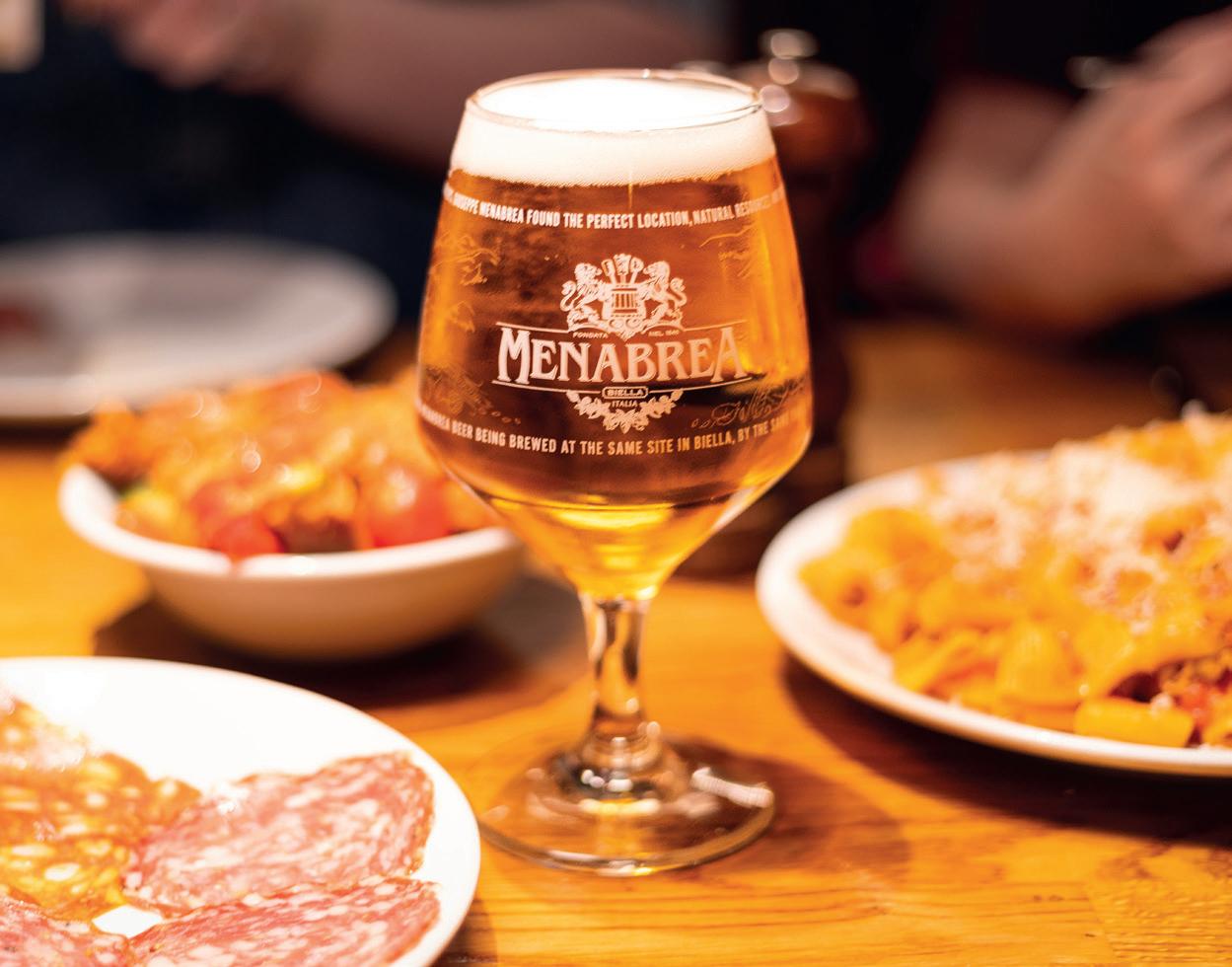
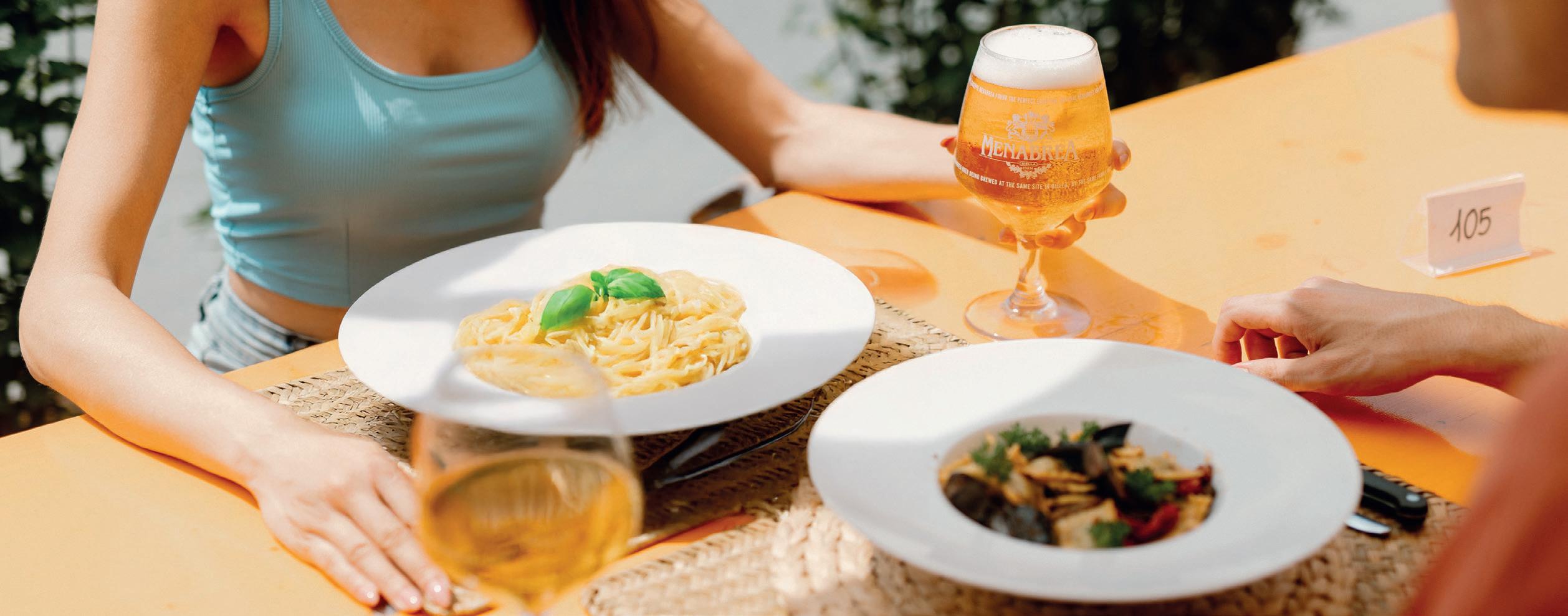
For venues that serve food, it’s worth thinking about how beer can play a part. Certain beer and ciders make a wonderful pairing to dishes and can provide a welcome change for those looking for something other than wine. Food and beer pairings can also be a fantastic way to show off your range and introduce consumers to something new. With its careful balance of flavours, Menabrea makes a great accompaniment to a range of dishes, allowing venues to play into more occasions when they stock the Italian alpine birra over other beer brands.
3
It’s been a busy few months for NPD with fruit led and citrus beers launching in time for summer. With consumers more open to flavour exploration and experimentation at this time of year, it’s worth incorporating a couple of fruit inspired options into your drinks list, for example a citrus inspired or cherry beer. This is particularly timely for sporting occasions with 52% of sports fans open to new flavours1
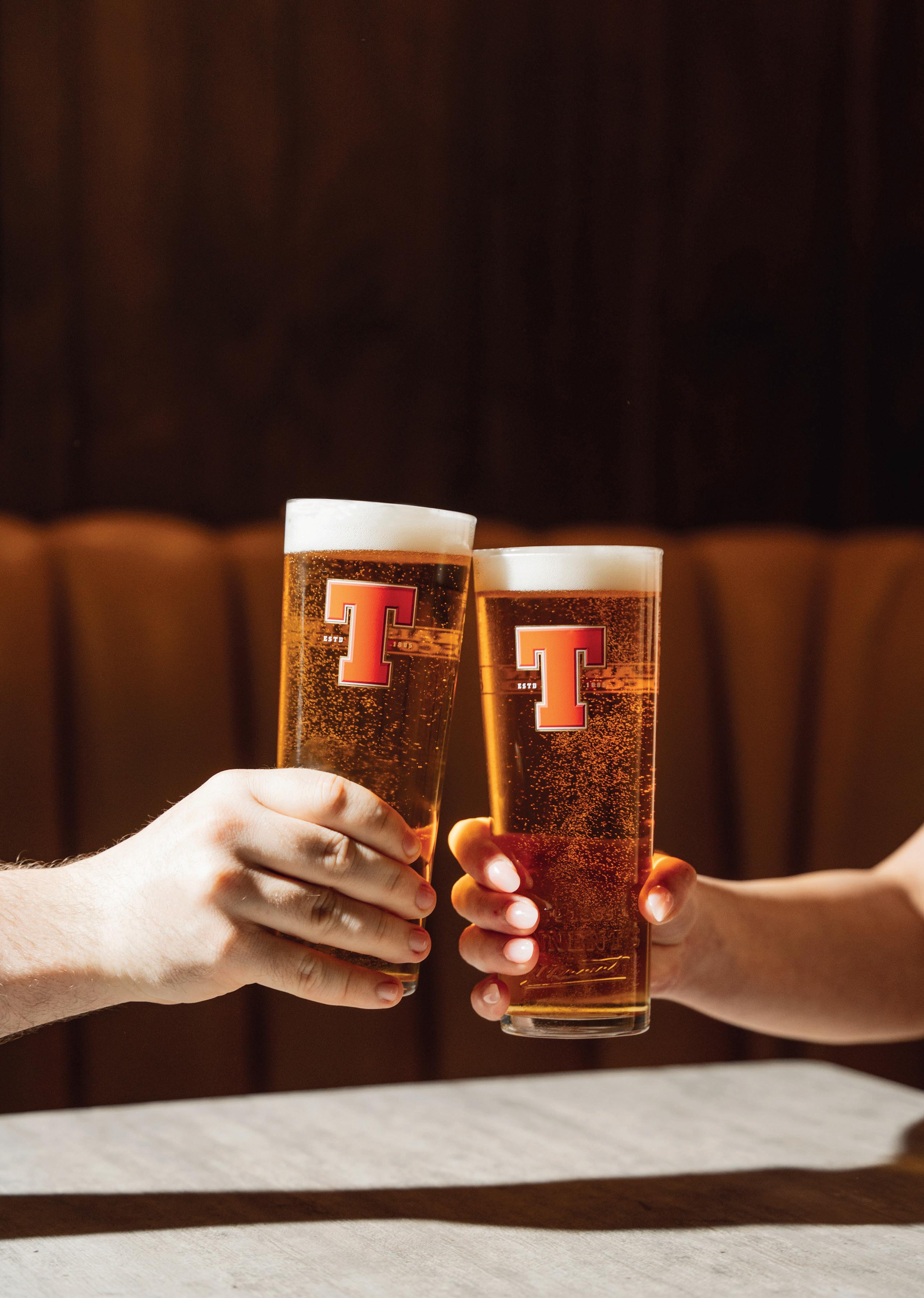
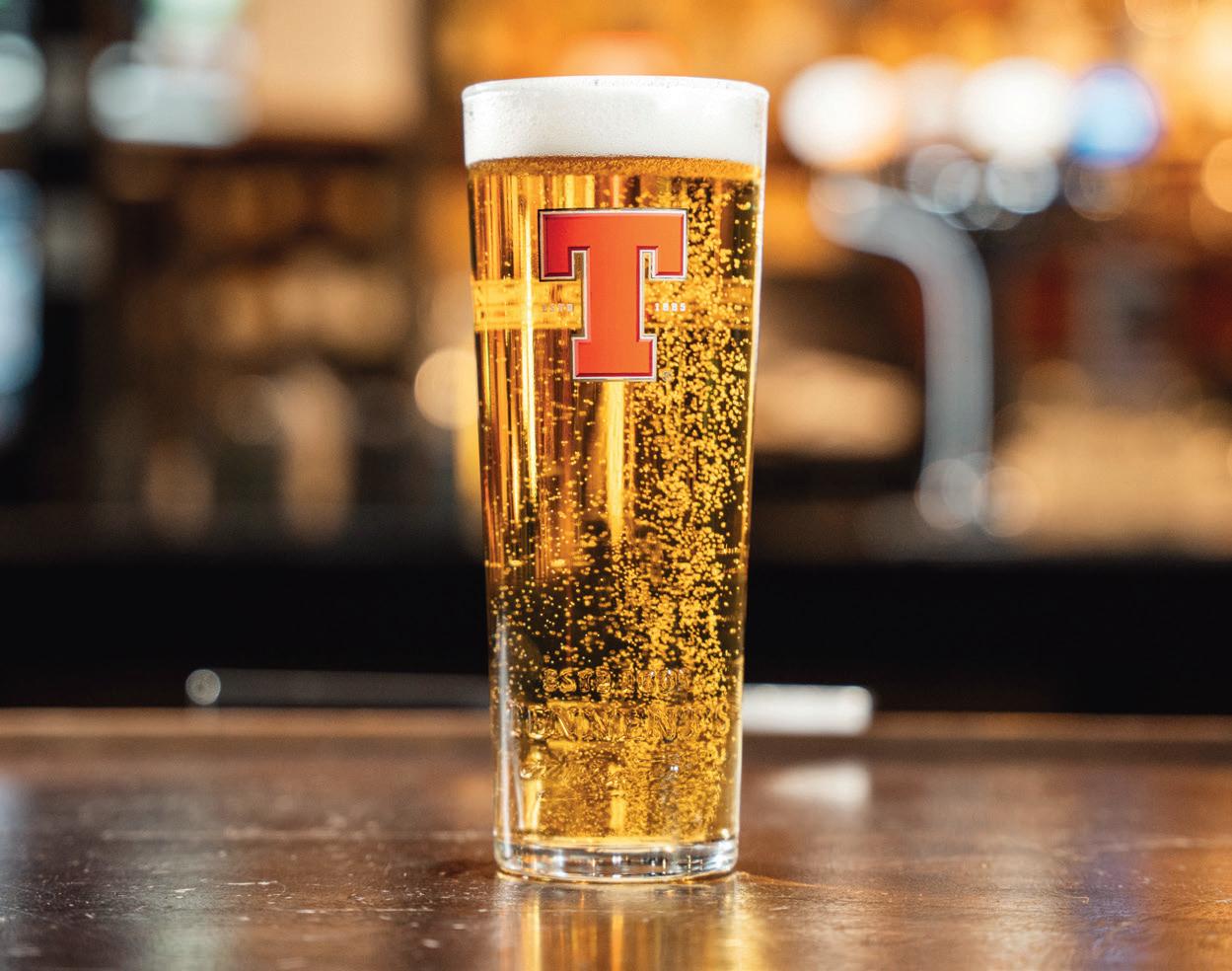
Sporting occasions like the World Cup can also influence consumers beer habits, often encouraging drinkers to try international brands relevant to teams participating in the tournament. National fixtures also create themed sales opportunities. With Scotland reaching the World Cup for the first time since 1998, venues in its home market can expect strong demand for Tennent’s Lager, the official sponsor of Scottish football.
4
No longer reserved for seasonal trends like ‘dry January’, no and low options are an essential offering and now contribute to over 16% of LAD volume in the fridge2. With almost 1 in 3 regular on trade visitors actively moderating3, getting your range right will be key to capturing spend this summer. Summer is a time for increased social occasions that often last longer and we would expect to see more people alternating between alcoholic and non alcoholic drinks. It’s also an important offering to get in place for match days with no and low beer sales up 38% during previous tournaments4. A visible and appealing low/no range will also help maintain dwell time without limiting spend.
5
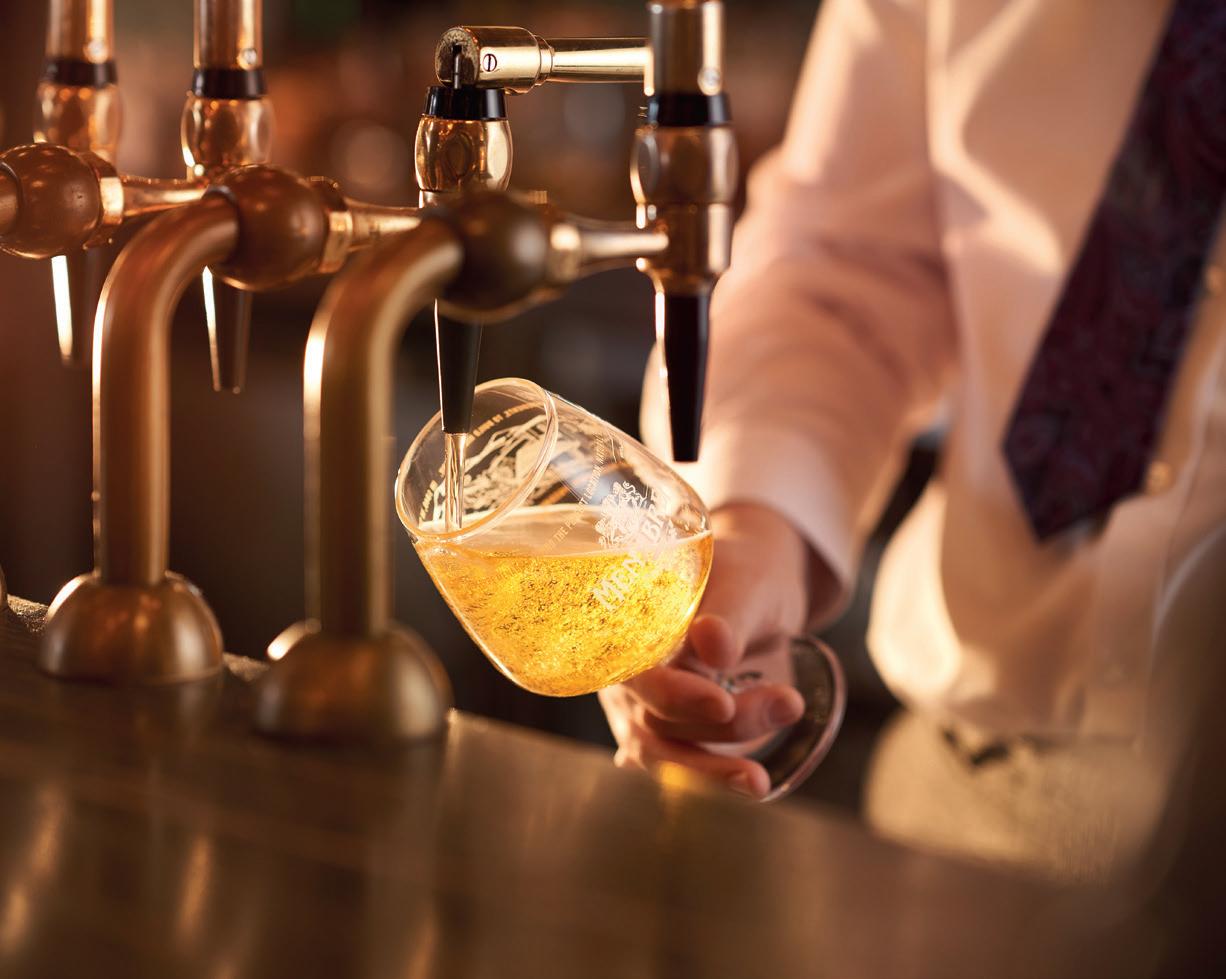
Summer is a busy time for the on trade and with a packed sporting calendar this year, getting your preparation right is going to be even more key to ensuring you can capitalise on this important trading time. Staffing, stock levels, seating, screens and sound are all good places to start alongside making sure you have the little details right like correct glassware and ensuring lines are well maintained. A well served pint, in the correct glass can help encourage consumers back to your venue over another even after the final whistle.
menabrea.co.uk
ELEANOR QUIGLEY, SENIOR BRAND MANAGER
FOR MENABREA, REVEALS WHY PREMIUM ITALIAN BEER IS BECOMING THE PERFECT PARTNER FOR SUMMER DINING, HELPING VENUES TURN FOOD-LED OCCASIONS INTO LONGER, MORE MEMORABLE SOCIAL EXPERIENCES.
As the days begin to get longer and temperatures slowly start to rise, anticipation for summer is brewing especially with this year’s line-up of sport bringing with it huge opportunities for venues up and down the country. But there’s also another part of the new season that is causing excitement for premium Italian beer brand Menabrea, and that’s the joy of summer dining.
Hailing from the Piedmont region in the north of Italy, Menabrea, which is one of the country’s oldest birras, knows a thing or two about the role good food and drink can bring to social moments. It is a real foodie’s beer, influenced by Italy’s rich culinary culture. A culture where food is central to entertainment between friends and family and is given the time to be properly enjoyed and savoured.
But it’s not just the enjoyment that food and drink play
together, it’s also the opportunity that they present to venues that Menabrea wants to share. Summer is traditionally a time for meeting up with friends and family more frequently and often over a longer period that regularly involves food. As a result, people are often looking for longer serve drinks that can be enjoyed over an extended period and stocking a beer that pairs well with food can help venues meet those needs, while playing into more occasions and even increasing dwell time.
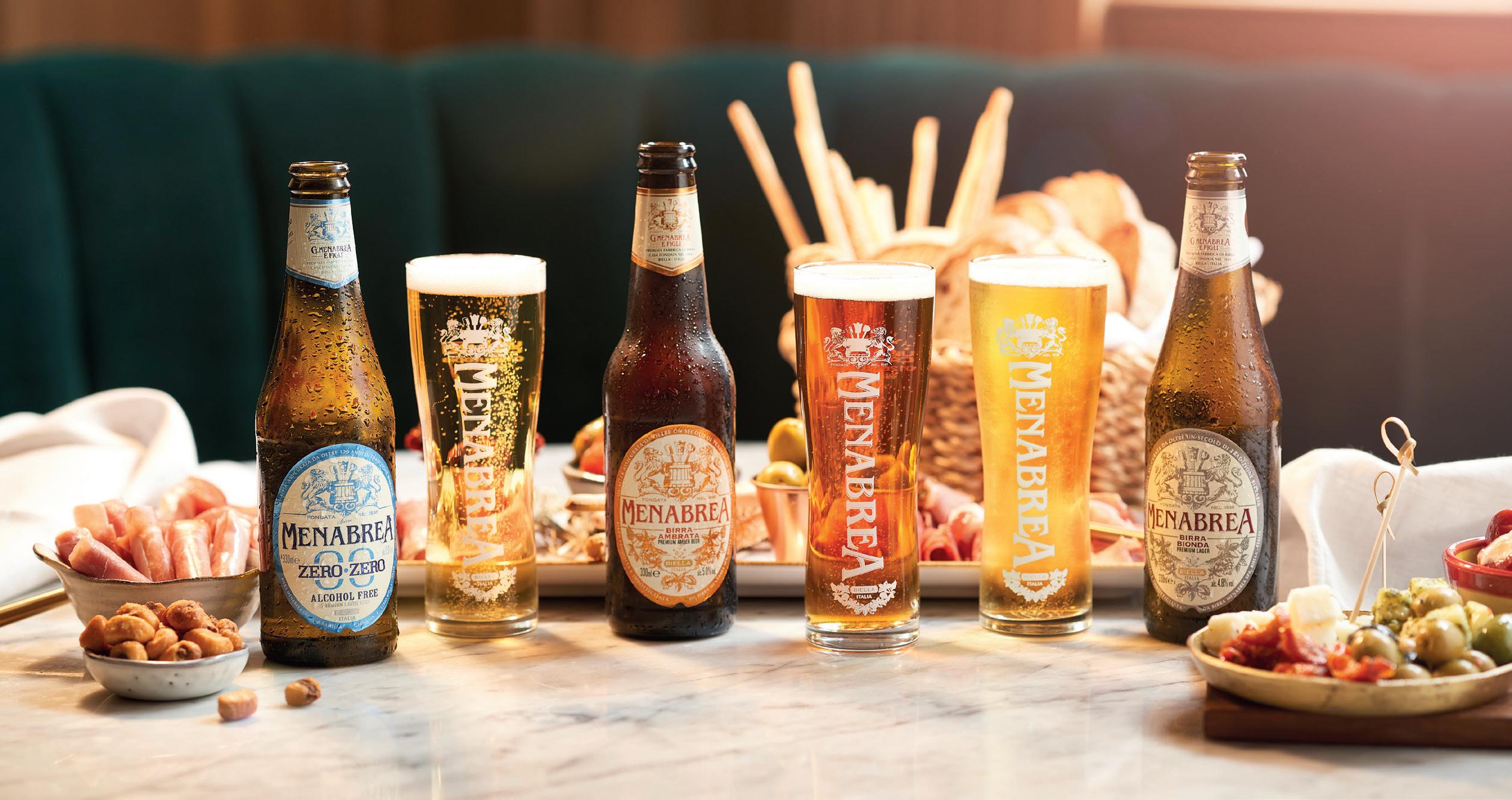
What sets Menabrea apart from other Italian lagers or sunshine beers, is its taste. This is a result of the high-quality ingredients used and careful balance of flavours that go into creating the premium range of beers. This includes Menabrea Bionda, a 4.8% ABV pale lager that offers a harmonious balance of hoppy
brightness and malty depth with citrus undertones, giving it the versatility to enhance a wide variety of dishes. This is available on draught and in 330ml bottles. Also included is Menabrea Zero Zero which has been brewed for times when you still want the refreshing taste of an Italian Apline beer but without the alcohol. Menabrea Zero Zero is a beautifully delicate yet full bodied golden beer. The last beer to complete the Menabrea range is Menabrea Ambrata, a 5.0% ABV amber beer, with an inviting nose of fine malted barley, subtle toasted walnut and fresh coffee beans. Both Zero Zero and Ambrata come in 330ml bottles.
Pairing drinks with food is such a powerful tool for operators to not only showcase their knowledge and food and drink offering but to add value to customers overall dining experience. This is especially true for summer socialising which often involves food. For many diners it can feel overwhelming choosing a drink so being able to inform and confidently guide customers can go a long way.
Beer tends not to be the first to mind when it comes to food pairing, but it makes a refreshing alternative and like wine, it’s varied flavour profiles and styles can match a variety of dishes making it an accessible option for elevating every day meals including both sweet and savoury.
Today’s consumers are increasingly seeking experiences and social connection, but at the same time affordability is still front of mind. Having a range of food-led beers, can appeal to such consumers, and are often seen as better value for money, delivering premium experiences at accessible price points. Diners can now enjoy a beer that complements their food, much like wine, but also have the flexibility to order different varieties to match different dishes in a more cost-effective way.
A beer like Menabrea is also a great way to tap into the emotive side of dining especially during the summer months
where consumers may have experienced a similar pairing on holiday. Being able to offer that same elevated taste and experience back home can be a great way to engage with your customers.
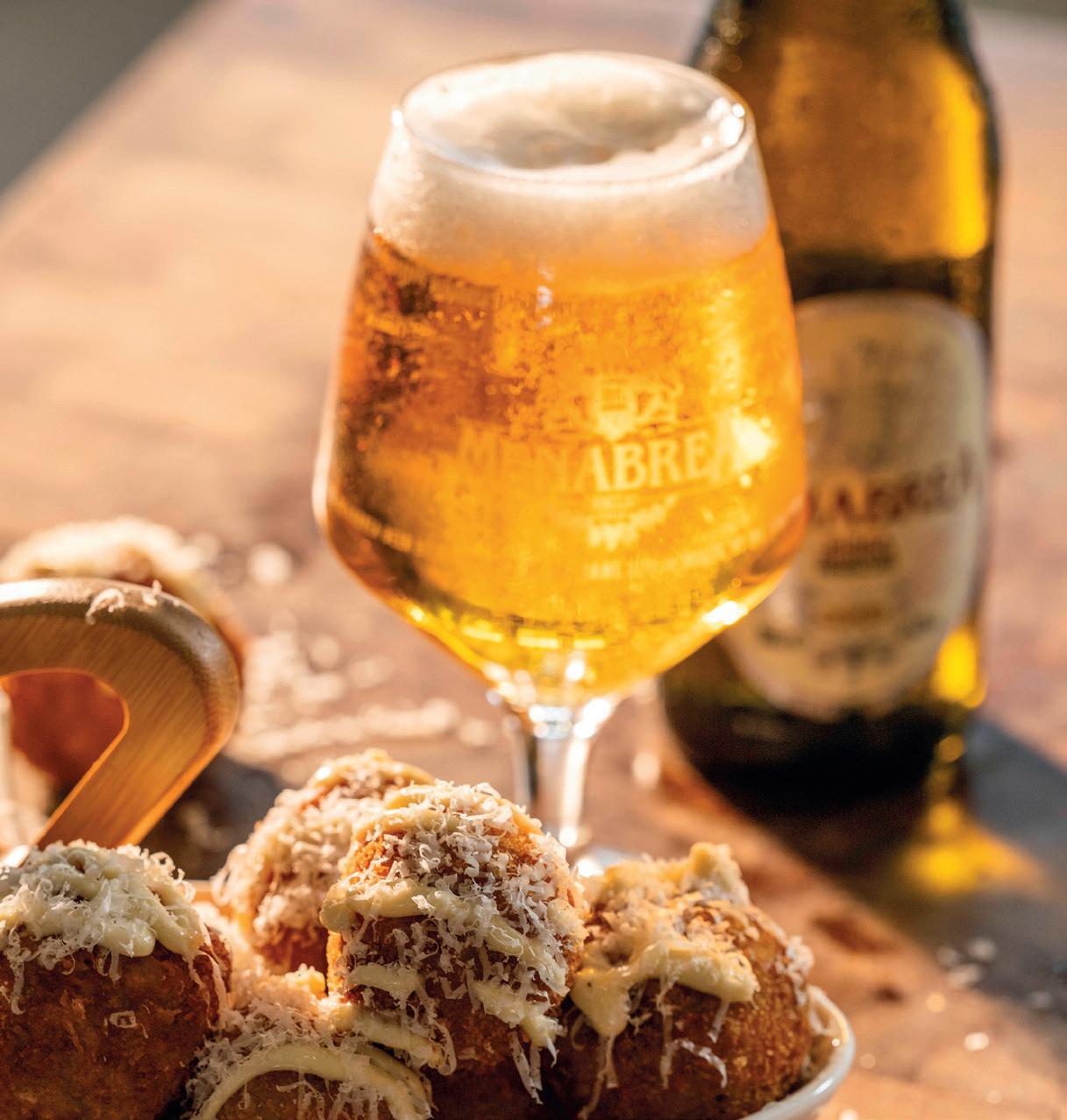
As with any food pairing, operators should follow the basics and look for common or contrasting flavours that can be used to create a balance. With its rich Italian heritage and complex yet balanced flavours, Menabrea Bionda pairs well with fried and crispy foods such as arancini or croquetas. Being from Northern Italy, it also pairs excellently with grilled and cured meats as well as herb and spice led plates. The balanced clean beer can take on big flavours and is a great palate refresher between courses making it ideal for this style of dining. The same can be said for Menabrea Zero Zero which offers the same great taste alongside food but without the alcohol. With its toasted malt and caramel notes offset with light bitterness, Ambrata works well with a range of dishes including braised and stewed meats, rice dishes as well as complementing a range of cheeses.
Food is a core focus for Menabrea, and we recently worked with renowned chef, James Martin on a range of dishes that perfectly matched Menabrea’s flavour profiles to help showcase the diversity of dishes that can be enjoyed with beer.
Over the coming months we will be building on our ‘Menabrea with Food’ activity in the on-trade, helping venues make the most of food-led opportunities through menu pairing, sampling, and premium POS that heroes Menabrea with food. We’re also offering new customers a free keg of Menabrea on install*. Saluti - here’s to a summer of great food and drink.
menabrea.co.uk
*Subject to availability.
WITH THE HELP OF CATEGORY EXPERTS, WE SHINE A SPOTLIGHT ON BEER AND EXPLORE HOW ONE OF THE ON-TRADE’S MOST IMPORTANT CATEGORIES IS EVOLVING. FROM PREMIUMISATION AND MODERATION TO FLAVOUR TRENDS AND EXPERIENCELED DRINKING, BREWERS REVEAL THE OPPORTUNITIES AND CHALLENGES SHAPING THE FUTURE OF EVERY PINT POURED.
Beer has always occupied a unique position within the on-trade. It is more than simply another drinks category: it is often the first order at the bar, the centrepiece of sporting occasions, and the product around which many pubs and bars continue to build their identity. For decades, beer has represented consistency and familiarity, with established brands dominating taps and fridges across the country.
Yet beneath this long-standing resilience, change is accelerating. Consumer behaviours are shifting, drinking habits are evolving and the expectations placed on venues have become more complex than ever before. Economic pressures continue to shape spending habits, moderation has moved firmly into the mainstream, and younger generations are approaching alcohol very differently from previous drinkers. At the same time, demand for premium experiences, flavour-led innovation and greater choice is transforming how beer is bought and consumed.
The category itself remains substantial. Beer continues to account for a significant share of on-trade sales and remains one of hospitality’s most important revenue drivers. But while its scale remains impressive, operators and brewers increasingly agree that success is no longer simply about volume. Instead, it is about understanding the occasions, experiences and motivations
behind every pint poured.
Joe Gosney, Channel Director National Customers, On Trade at Diageo, believes the category continues to demonstrate strength despite challenging conditions.
“As the largest category in the channel, beer continues to play a significant role in the on-trade, accounting for 53% of all sales1 and growing in value by +5% year-on-year1,” he says.
However, he notes that wider consumer behaviour is creating pressure.
“The key pressure point on category growth is visit frequency, with on-trade occasions down 12% year-on-year1, which naturally has a significant impact on beer as well as other categories.”
This decline in visits tells a broader story about consumer priorities. While people may be going out less often, they are becoming more selective about where they spend their time and money. The result is a guest who demands more from every visit and expects each experience to feel worthwhile.
“As a result, the focus on quality has never been greater,” Joe continues. “With consumers going out less often, there is a growing expectation that every pint and every experience delivers perfectly.”
That expectation is shaping the category in profound ways.
One of the clearest shifts within beer over recent years
has been the continued rise of premiumisation. Consumers increasingly appear willing to spend more on products that offer stronger credentials around provenance, flavour and authenticity.
Rather than simply choosing the cheapest or most familiar option, drinkers are seeking products that justify the spend and elevate the occasion.
Chris Mitchell, Marketing Manager at Vocation Brewery, says this shift is changing the nature of beer consumption itself.
“Beer remains one of the most important categories within the on-trade, but the market is evolving,” he says.
“While overall volumes are under pressure due to ongoing economic challenges and moderation trends, we’re still seeing strong opportunities for value growth through premiumisation.”
Importantly, Chris sees this as less about consumers abandoning beer and more about changing attitudes toward quality.
“Consumers are increasingly drinking less, but better –becoming more selective and willing to trade up for beers that feel worth the spend.”
That movement towards considered purchasing is reflected across several segments, but perhaps nowhere more clearly than world lager.
Premium imported brands continue to outperform broader market trends, driven partly by their ability to deliver a sense of escapism and identity.
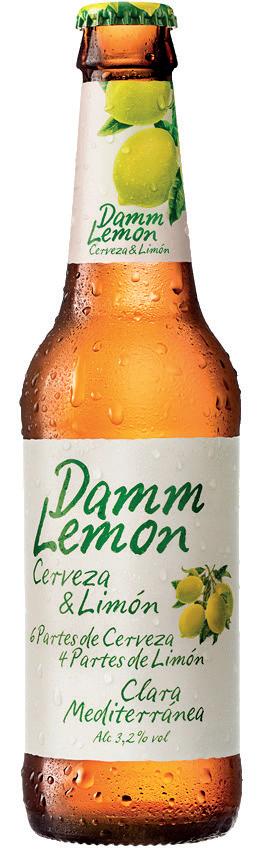
Russell Campbell, Head of On-Trade at Damm UK, says world beer continues to connect with consumers on an emotional level.
“World lagers are continuing to be popular with drinkers who want to know where their beer comes from and what story it tells,” he says.
Increasingly, consumers are buying into narratives as much as products. “Mediterranean lagers drive nostalgia for holidays spent abroad, sparking memories that form talking points alongside the brand heritage,” Russell adds.
This idea of storytelling has become increasingly important in a market where differentiation matters. Consumers are not only buying flavour; they are buying experiences, provenance and associations.
Chris sees world beer succeeding for similar reasons. “Premium and world lagers continue to perform strongly because they provide familiarity, reassurance and clear quality cues, while also offering a stronger sense of provenance and character in comparison to mainstream lagers,” he shares.
However, while premiumisation may be driving value growth, familiarity alone is no longer enough.
While
established brands continue to play a vital role, operators face growing pressure to avoid repetitive ranges that feel interchangeable.
John Price, Head of Marketing at Kingfisher Drinks, argues that too many bars continue to rely on a narrow group of established names.
“The beer category is indeed in decline by -3% in volume,” he says. “However, it is worth noting that this is being driven by the top 15 beer brands. Outside of these, the market is flat.”
For John, the issue is predictability. “All of this points to something that Kingfisher Drinks have been championing for years, that UK consumers are tired of being force-fed the same old brands they’ve been consuming for decades,” he explains.
Research appears to support the concern. John shares, “Our annual Boring Beer Index found that 71% of respondents were either ‘sometimes’ or ‘always’ bored of beer ranges they came across.”
Perhaps more concerning for operators is the potential impact on footfall. “Twenty per cent of respondents even said they would leave a venue and go elsewhere if they didn’t have a good beer range,” he adds.
These findings point toward a growing consumer expectation that venues should offer not only quality, but also, discovery.
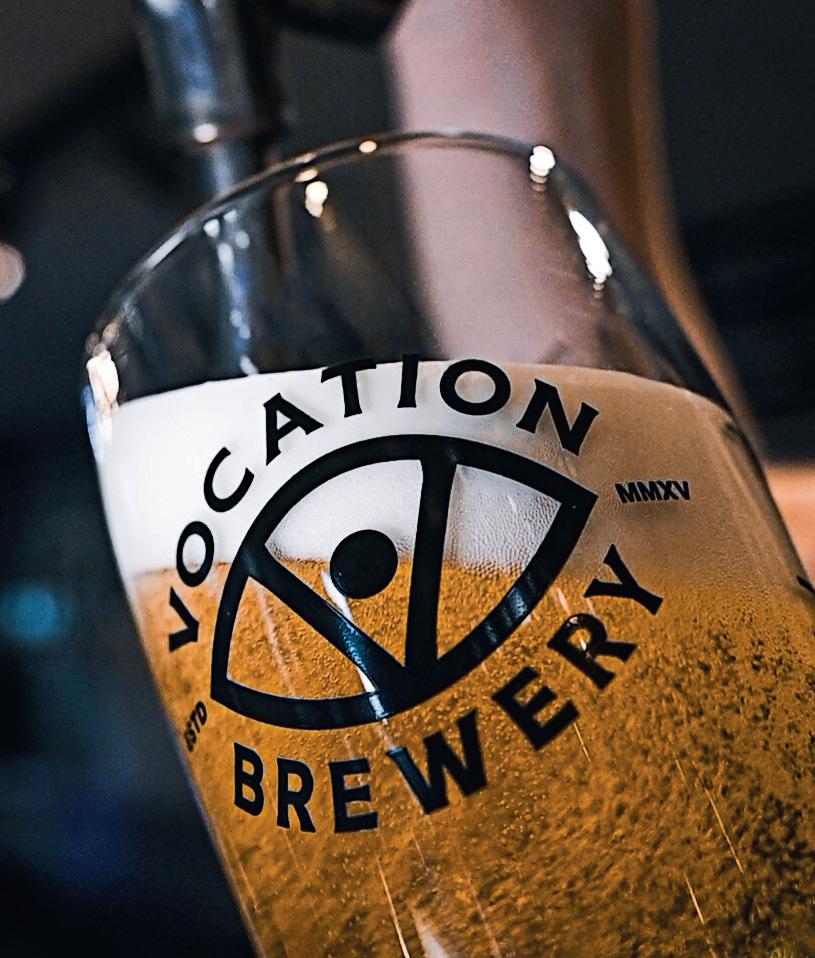
Chris believes craft continues to play a central role here. “At the same time, craft remains important in driving discovery, excitement and engagement within the on-trade.”
Rather than extreme flavour experimentation, he sees approachable styles leading demand.
“Sessionable and flavour-forward pale ales, IPAs and modern lagers are performing particularly well because they balance everyday drinkability with distinctiveness and flavour,” he says.
Beer drinkers, more than ever, appear unwilling to define
themselves by a single style or category. “Consumers want variety and choice depending on the occasion, rather than sticking rigidly to one style or brand,” Chris adds.
That emphasis on occasion may also help explain one of the category’s biggest shifts. Not long ago, reduced alcohol consumption sat on the fringes of drinking culture. Today, moderation is influencing decisions across every age group and occasion.
For younger consumers in particular, attitudes toward alcohol have changed dramatically.
Hannah Moore, Senior Customer Marketing Manager at BrewDog, says the scale of change is significant “More consumers are focusing on moderation or even abstention, with 43% reducing the alcohol content of the drinks they consume2,” she explains.
Hannah points to a substantial generational shift, sharing that “Almost 40% of 18-25s were not drinking alcohol at all vs 22% in 20193.”
Moderation, she says, is no longer niche behaviour. “3 in 4 of us are moderating our alcohol intake to some degree, and the number of people looking to moderate alcohol consumption is similar in size to the number who consume alcohol once a week (77%)4.”
Initially, many viewed moderation as a threat to traditional alcohol categories. Increasingly, however, brewers see it differently. Joe believes it is creating entirely new opportunities.
“No and low beer volumes are up +30% year-on-year5, demonstrating clear consumer demand for moderation options that deliver on authentic taste,” he says.
“Rather than replacing traditional beer, no and low is broadening the category’s appeal and helping operators cater to
a wider range of consumers,” he adds.
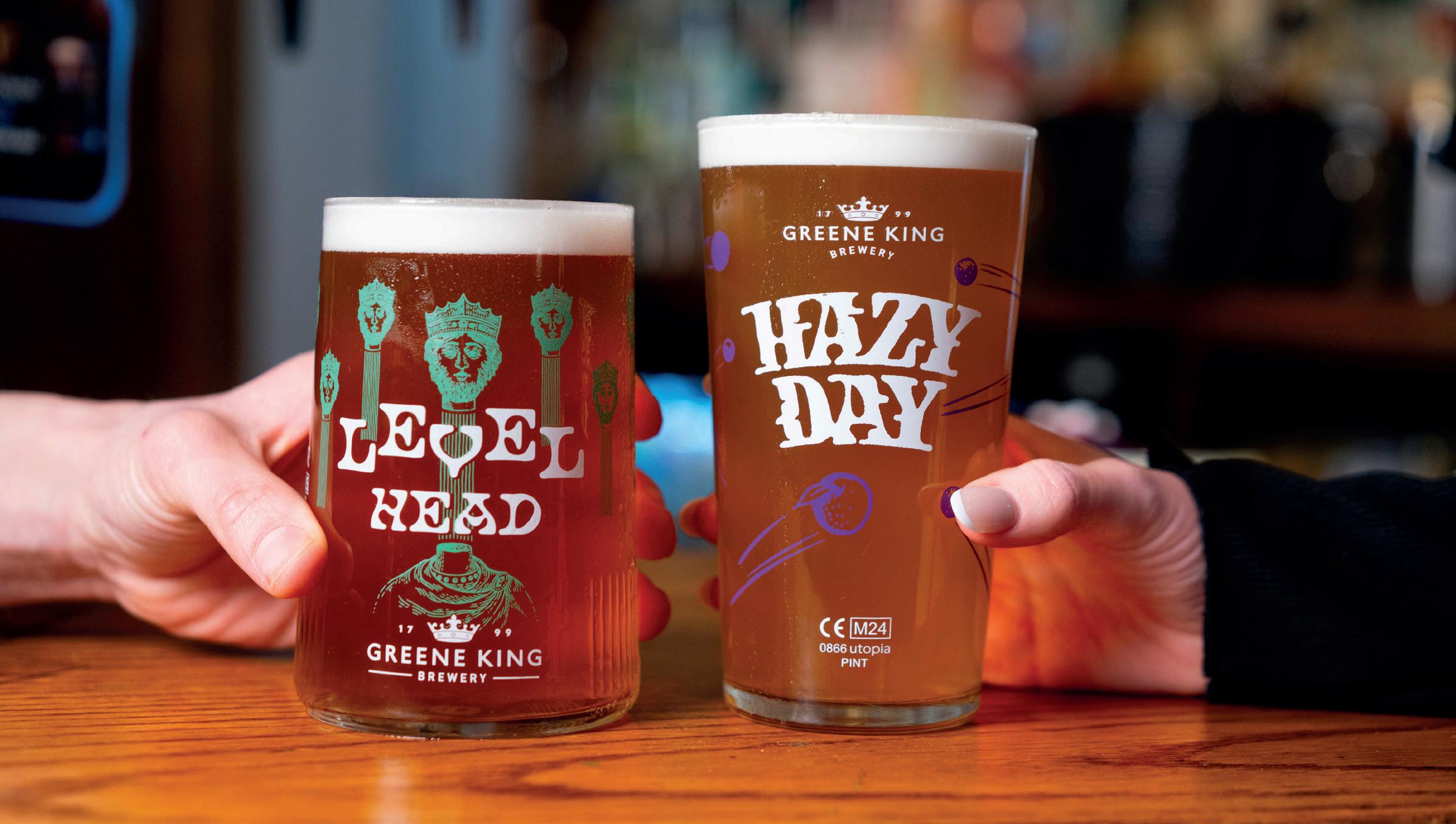
Claire Bates, Marketing Manager for Greene King’s Free Trade Team, shares this view.
“Moderation culture isn’t a threat to beer; it’s an opportunity to broaden it. Alcohol free beers allow consumers to remain part of the social rituals of the pub while making different lifestyle choices,” she explains.
The challenge now is ensuring no and low receives the same attention and visibility as full-strength products; consumers increasingly expect alcohol-free options to sit naturally alongside traditional offerings rather than feeling like an afterthought.
As moderation and premiumisation continue to shape behaviour, innovation remains critical to maintaining excitement within the category. But innovation today is no longer simply about novelty.
Chris believes brewers must avoid chasing gimmicks. “Beer risks appearing uninspiring if it stops evolving, while categories like spirits, RTDs and no/low continue to reinvent themselves.”
Instead, successful innovation combines excitement with accessibility. “The most effective innovation introduces something distinctive and flavour-forward while remaining grounded in quality, drinkability and clear consumer relevance,” Chris says.
Current flavour trends illustrate this balancing act, and Hannah shares how fruit-led beers are enjoying significant momentum.
She comments, “We’re seeing a lot of love for fruit-based beers right now and expect that will continue into the summer months as drinkers look for refreshing sessionable options.”
Similarly, Claire has identified demand for lighter styles too.
“One of the clearest trends highlighted in our latest beer insights is growing demand for beers that are lighter, more sessionable and flavour-led.
“These styles play an important role in recruiting new drinkers, encouraging exploration and broadening beer’s appeal without alienating existing customers,” she shares.
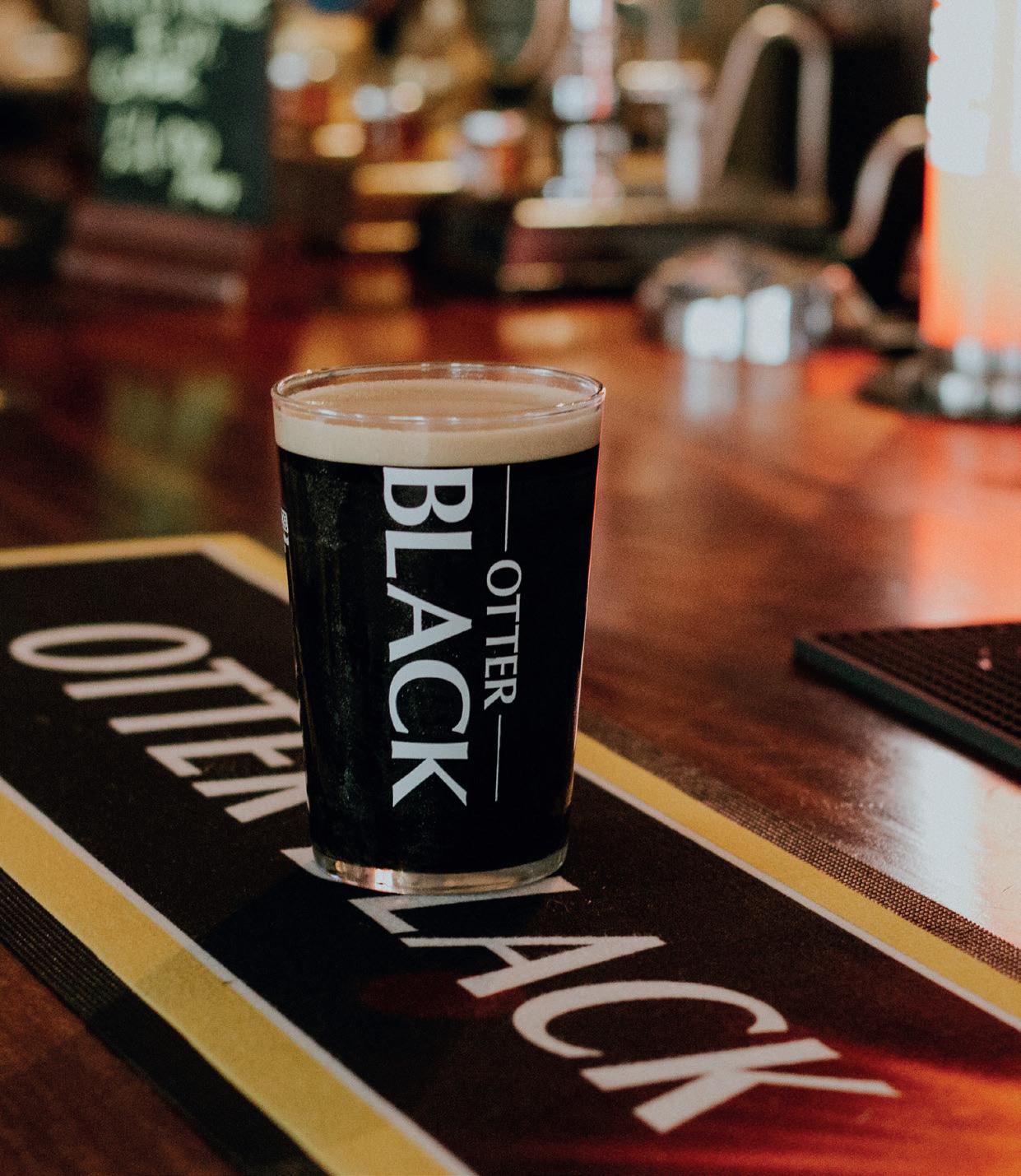
Elsewhere, stout continues its unexpected rise. Patrick McCaig, Managing Director at Otter Brewery, says social media has helped fuel renewed interest.
“This appeal increases when it comes to stout, which stands out for its rich flavour and ‘trending’ social media status. A popular choice for both men and women of all ages, this dark beer has seen a significant resurgence in recent years with 10.6% year-on-year growth in 2025,6” he shares.
Joe agrees, commenting on stouts increasing value in pubs and bars. “Stout is proving especially strong in the on-trade. Guinness continues to be a standout performer, particularly around occasions such as live sport, where consumers are looking for a quality serve and a drink that enhances the experience.
“As the Official Beer and Official Non-Alcoholic Beer Partner of the Premier League for the second year running, Guinness is supporting operators with match-ready POS kits, limited-edition glassware and activations designed to build excitement in venue and create that unique experience that can encourage people to visit,” he adds.
For operators, beer alone is increasingly only part of the equation; As visits become less frequent, creating memorable experiences has become essential.
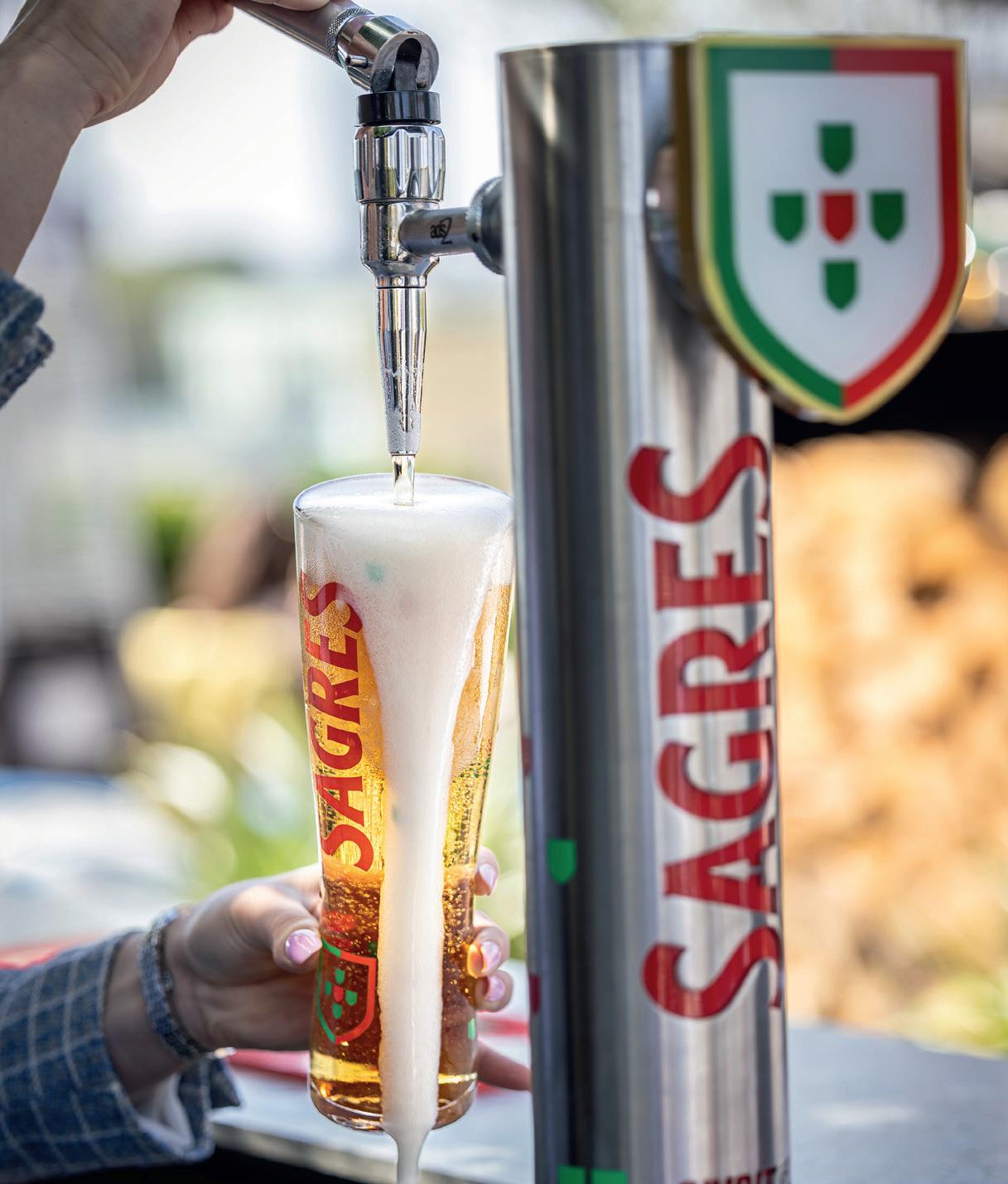
Joe sees live sport as a particularly powerful driver. “Live sport is a particularly strong driver of footfall and beer sales – outlets showing live sport were up to 11% busier during Premier League match days versus like-for-like outlets that did not. This shows the value of creating occasions that consumers feel they cannot replicate at home,” he comments.
Likewise, Hannah believes experiences increasingly differentiate venues.
“In a competitive environment such as the on-trade, creating memorable experiences is key to being successful,” she explains.
“That might be achieved through amazing hospitality, service and a welcoming atmosphere. Or it might be all those things plus an exciting and compelling drinks offer.”
Operators increasingly have opportunities to elevate beer through tastings, themed activations and partnerships. Chris believes venues should think beyond simple product transactions.
“Tastings, food pairings, tap takeovers, seasonal activations and knowledgeable staff recommendations can all help increase dwell time, encourage trade-up and create stronger customer loyalty.”
Ultimately, the beer category is diversifying. Consumers may be drinking differently, but beer’s role remains deeply embedded in social life.
As Claire concludes: “Success for beer will come from balance — respecting heritage while embracing change, supporting core volume while nurturing premium, sessionable and alcohol-free growth.”
For an industry built on tradition, adaptability may prove beer’s most important ingredient of all.
1. Nielsen (CGA On-Premise Measurement) to 21st March 2026
2. Vypr Consumer Research – July 2024
3. Bespoke Consumer Research – August 2024
4. Vypr Consumer insights, KAM research 2024
5. Nielsen (CGA On-Premise Measurement) to 21st March 2026
6. CGA by NIQ
RUSSELL CAMPBELL, HEAD OF ON-TRADE AT DAMM UK, DISCUSSES HOW ESTRELLA DAMM IS ADAPTING TO EVOLVING CONSUMER EXPECTATIONS IN THE BEER CATEGORY THROUGH PREMIUMISATION, MODERATION TRENDS AND THE GROWING DEMAND FOR ALCOHOL-FREE AND LIFESTYLE-LED DRINKING OPTIONS IN THE ON-TRADE.
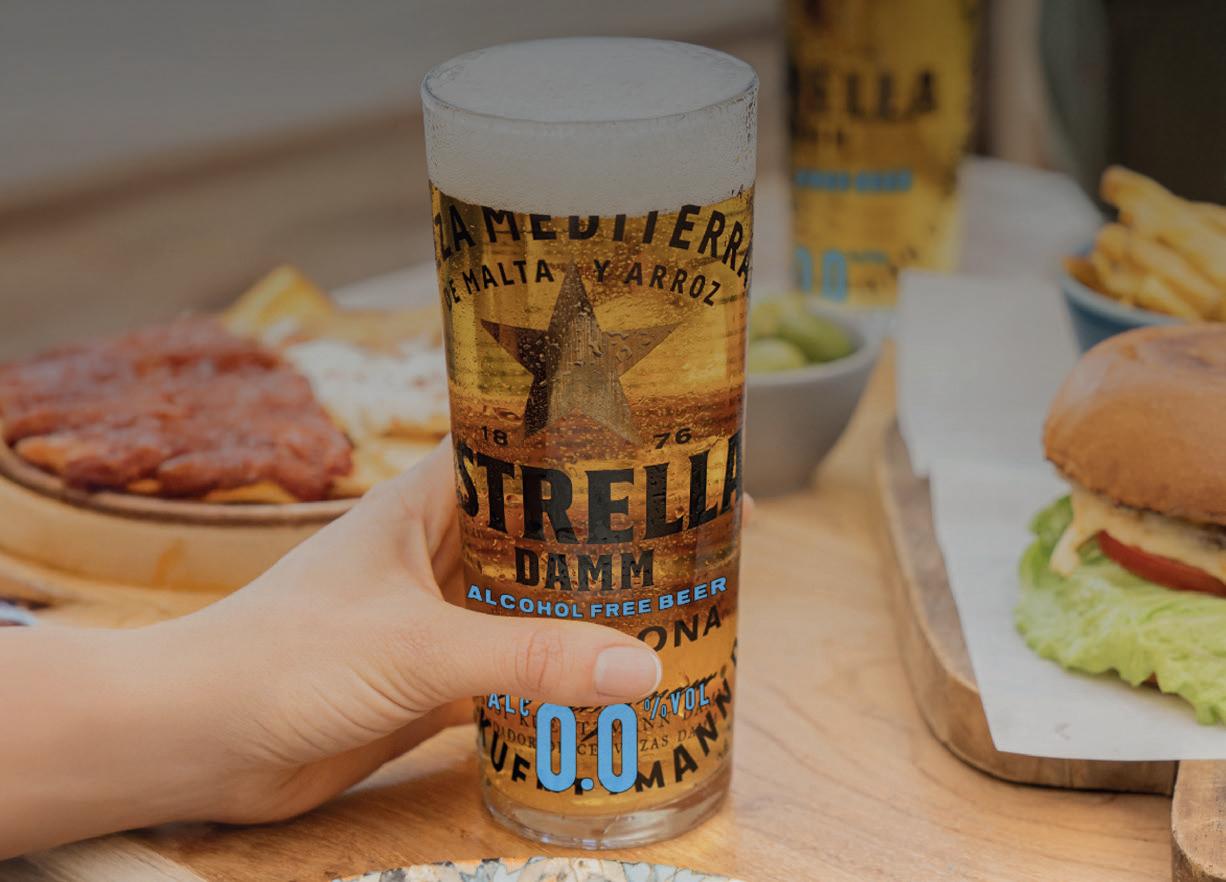
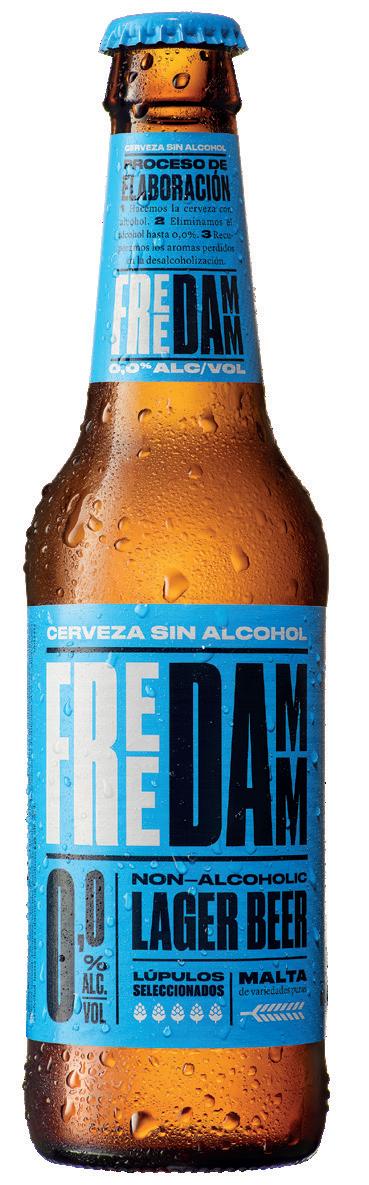
The sober-curious movement is solid, with more and more people opting to abstain or moderate from alcohol, driving the need for premium alcohol-free beers.
HOW IS DAMM UK RESPONDING TO CHANGING CONSUMER EXPECTATIONS WITHIN TODAY’S EVOLVING BEER CATEGORY?
Over the past year, Estrella Damm has outperformed the lager category, growing +27% in sales value1. This shows that consumers are continuing to trade up and choose premium quality beers when they go out.
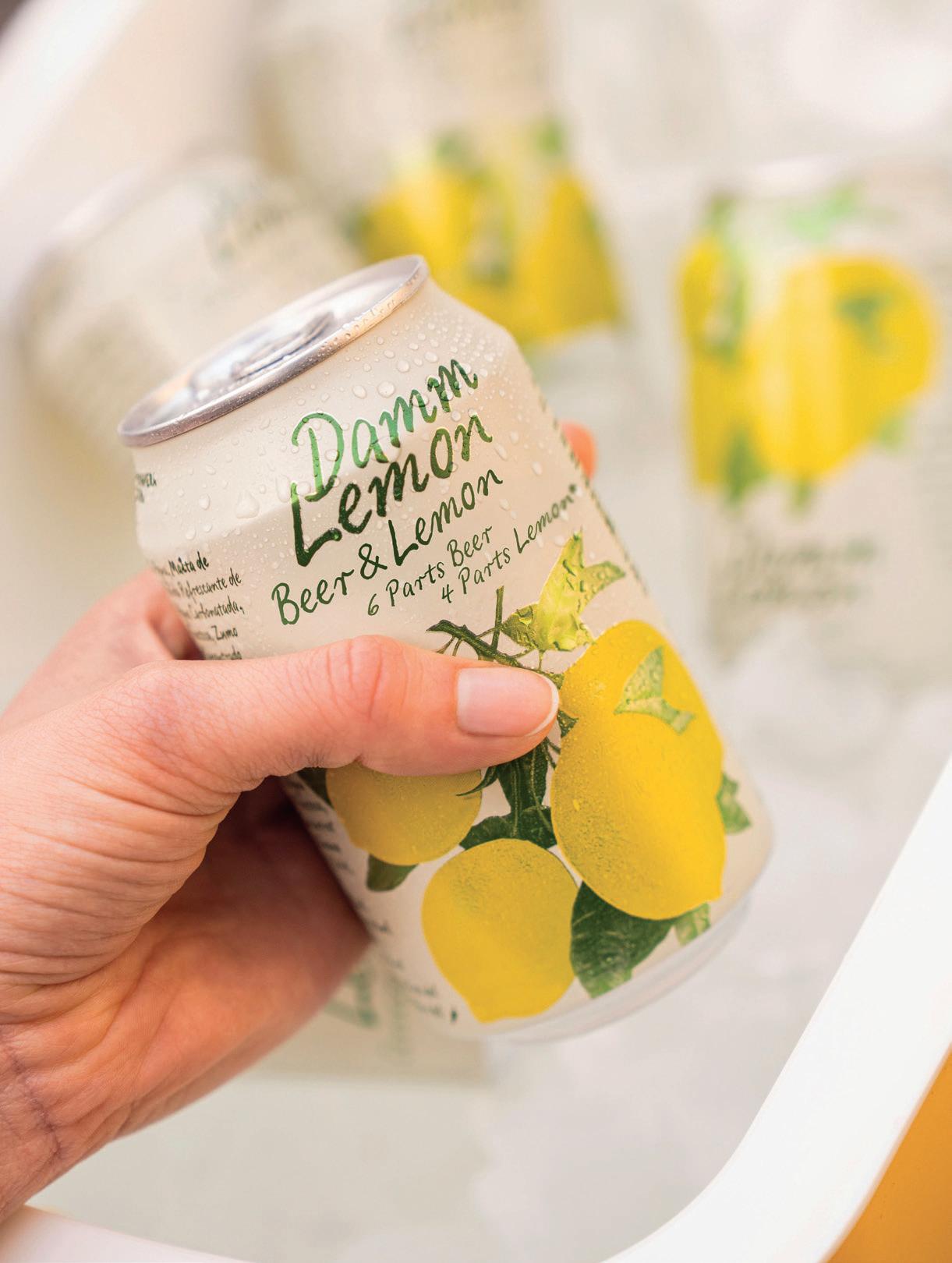
That said, with the rise in health-conscious consumers and current trends, in general younger generations are opting to drink less alcohol and choosing low or no alcohol products and beers when they drink, or even alternating drinks to moderate consumption. This is why Damm has increased Damm Lemon and Estrella Damm 0.0% availability on draught for visibility amongst these consumers.
The trend for each is set to continue with customers opting for lighter fruit beers for refreshment and lower ABV content. This
fruit category is no longer just seen as a summer choice, but a permanent lifestyle decision which operators should bear in mind. Likewise, the sober-curious movement is solid, with more and more people opting to abstain from alcohol, driving the need for premium alcohol-free beers and lagers.
Damm is continually looking to innovate and draw upon the decades of expertise in this area – with Damm having brewed no and low products in Spain for over 30 years.
WHAT MAKES ESTRELLA DAMM PARTICULARLY WELL POSITIONED TO MEET GROWING DEMAND FOR PREMIUM WORLD LAGER IN THE ON-TRADE?
Damm has the capacity to increase production at the Damm Eagle Brewery in Bedford to 2M HL, which means that it can brew more Estrella Damm and produce other Damm beers in the
wider portfolio locally in the UK.
And Damm is already meeting increased demand since it is one of the fastest growing lager suppliers, growing +20% in total lager sales volume across the on-trade over the past year1.
WHAT OPPORTUNITIES DOES DAMM UK SEE FOR OPERATORS LOOKING TO ELEVATE THEIR BEER OFFERING?
The breadth of beer options available is important to cater to customer tastes, whether that is fruit beer, alcohol-free options, world lager or anything else. Operators offering a good breadth of choice are maximising their customer potential.
Not only that but product knowledge and training is key to ensure that operators and bar staff can master the perfect pour and give customers the best possible experience.
HOW IS ESTRELLA DAMM HELPING PUBS AND BARS CREATE MORE MEANINGFUL DRINKING OCCASIONS BEYOND THE PINT ITSELF?
Through its campaigns, Damm helps customers identify with the brand beyond the pint and helps to create a sense of belonging through these. Drinkers can feel part of the wider Estrella Damm community through social media, adverts and other relatable elements of these campaigns.
Damm believes in supporting bar managers and servers to deepen their understanding of the quality of ingredients and
brewing process behind their premium beers, supporting trade-up and stronger customer loyalty.
The heritage and story behind a brand can form part of this conversation, with customers appreciating authenticity and quality conveyed through this storytelling.
LOOKING AHEAD, WHAT IS DAMM UK’S VISION FOR THE FUTURE OF PREMIUM BEER IN THE UK ON-TRADE?
Damm aims to grow Estrella Damm’s presence in the UK market and expand its portfolio in the on-trade. The goal is to double the size of Estrella Damm over the coming years to cement its position as a leading Spanish premium lager.
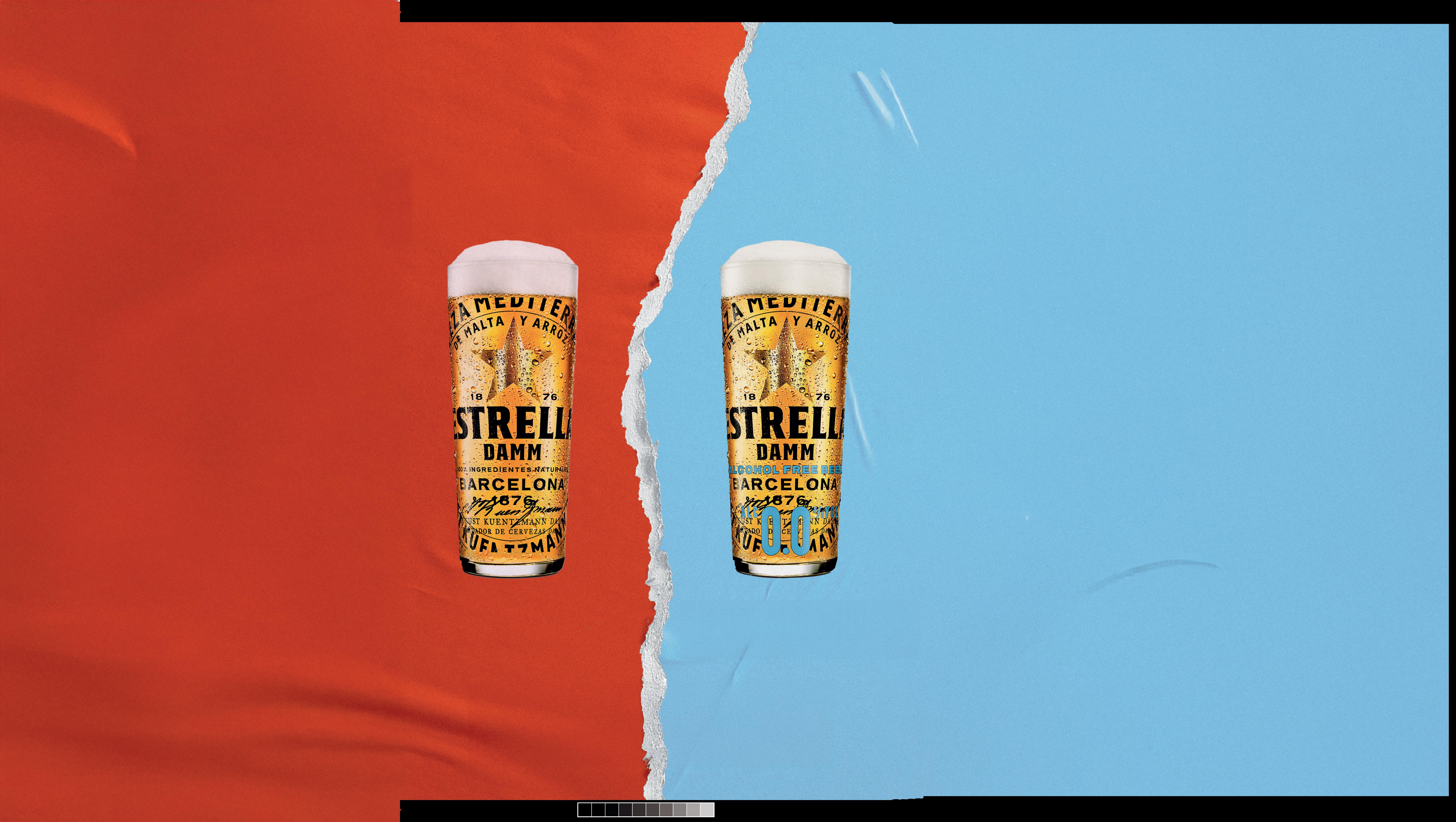
In the wider market, Damm believes that there will be more and more demand for alcohol-free beer varieties such as Estrella Damm 0.0% which give customers a premium alcohol-free product full of flavour yet supports lifestyle choices around moderation. Therefore, the demand will grow for alcohol-free premium beers in line with this, which will see operators curate more varied lists of non-alcoholic beers just like traditional beer menus.
estrelladamm.com

AS COST PRESSURES INTENSIFY ACROSS THE ON TRADE, INDEPENDENT OPERATORS ARE INCREASINGLY TURNING TO VALUE-LED PARTNERSHIPS SUCH AS GREENE KING’S FREE TRADE OFFER, SEEKING SUPPLIERS THAT PROVIDE NOT ONLY PRODUCTS BUT ALSO PRACTICAL SUPPORT, OPERATIONAL EXPERTISE AND COST-SAVING SOLUTIONS TO HELP PROTECT PROFITABILITY AND DRIVE LONG-TERM GROWTH.
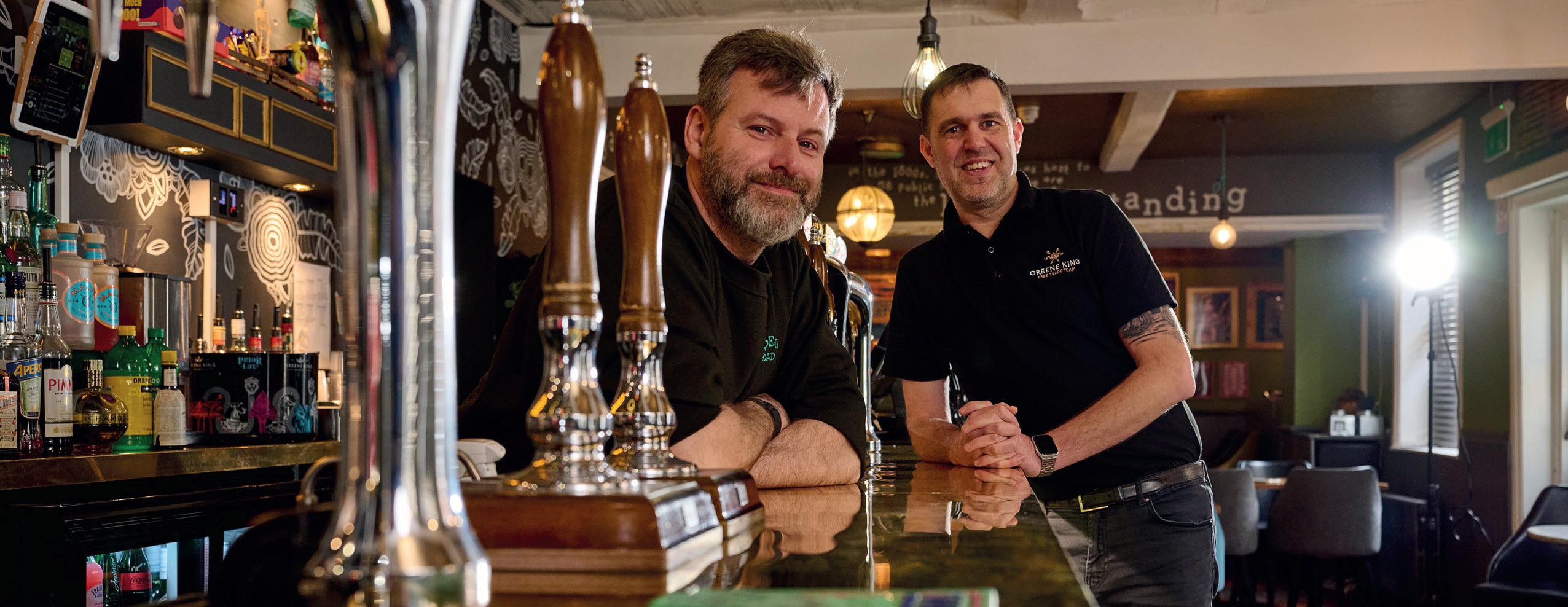
Margin pressure is nothing new for the on trade, but in today’s climate, it is more acute than ever. Rising costs across energy, labour and supply chains mean independent operators are under constant pressure to find new ways to protect profitability without compromising quality or customer experience.
Against this backdrop, the role of suppliers is evolving. It’s no longer enough to simply deliver product as operators are increasingly looking for partners who can actively support business performance.
Greene King’s free trade offer reflects this shift. Built to help independent venues reduce costs, improve operational efficiency, and drive growth, it combines a full drinks portfolio with nationwide delivery, dispense services and financial support into a single, integrated proposition.
Research among Greene King customers1 highlights where priorities now lie. Operators consistently rank services that reduce costs, improve quality, and increase sales as the most important factors when choosing a supplier, underlining the growing demand for added value beyond the bar.
One area gaining traction is access to commercial savings.
Greene King’s Value Hub, for example, connects operators with 16 partner organisations offering discounts across essential business services. At a time when every line of spend is under scrutiny, these kinds of benefits are becoming a key differentiator. Customers using the platform report average annual savings of more than £1,800, with some achieving significantly more2
Operational support also remains critical. From cellar management to dispense maintenance, reliable day-to-day service can have a direct impact on product quality, wastage and customer satisfaction. Greene King’s 97-strong broader free trade support team brings together more than 1,100 years of experience and provides support every day of the year.
For suppliers, the message is clear: success in today’s market means delivering a blend of commercial value, operational support and tested ideas.
For operators, the right partnership could be the difference between simply trying to survive or finding new ways to grow.




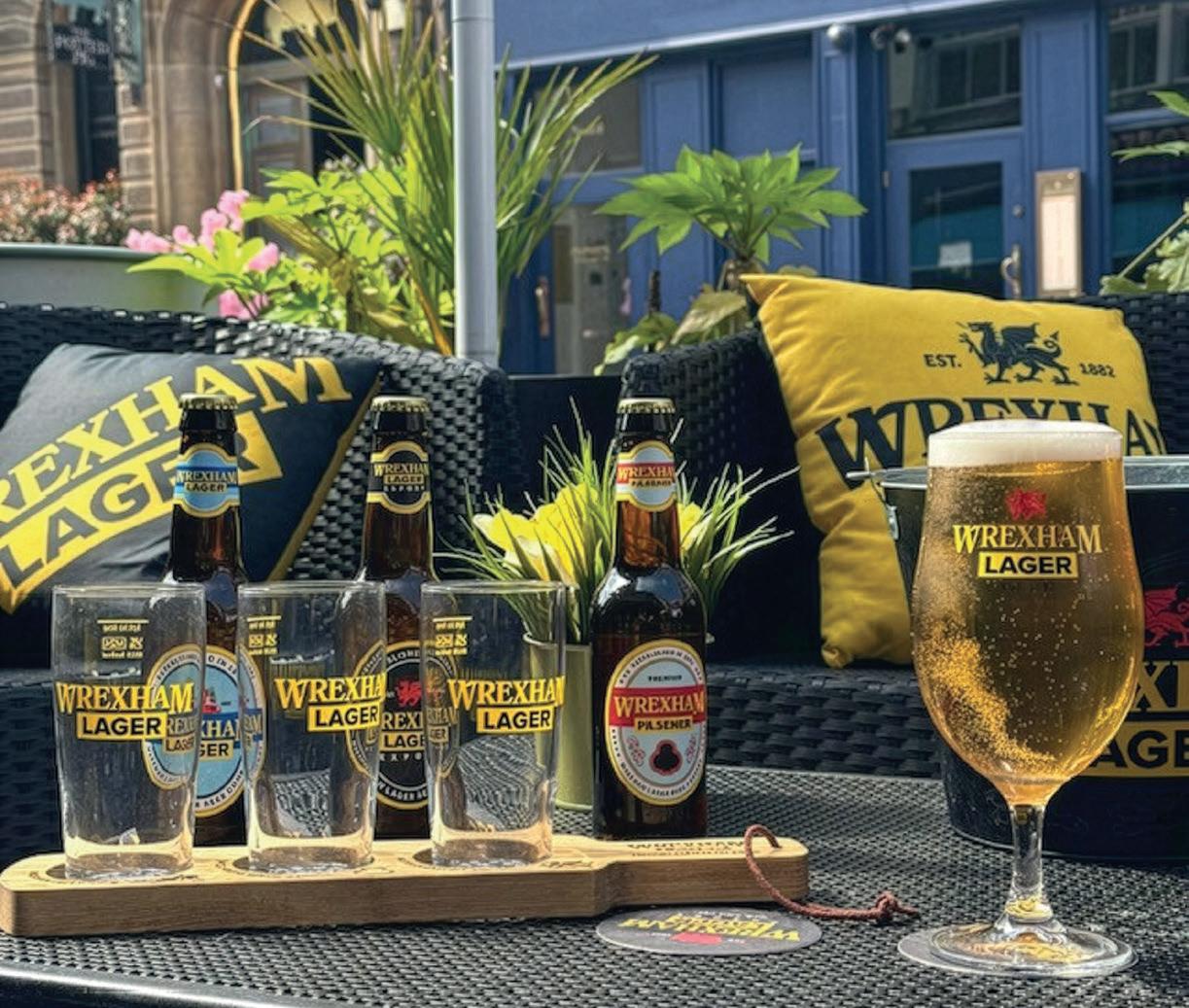
JON ROBERTS, CEO OF WREXHAM LAGER BEER COMPANY LTD, TAKES US INSIDE ONE OF BRITAIN’S MOST HISTORIC BREWERIES TO EXPLORE HOW A 140-YEAR-OLD LAGER BRAND IS STAYING RELEVANT, AWARD-WINNING, AND PROUDLY AUTHENTIC IN TODAY’S FAST-EVOLVING PUB AND BAR SCENE.
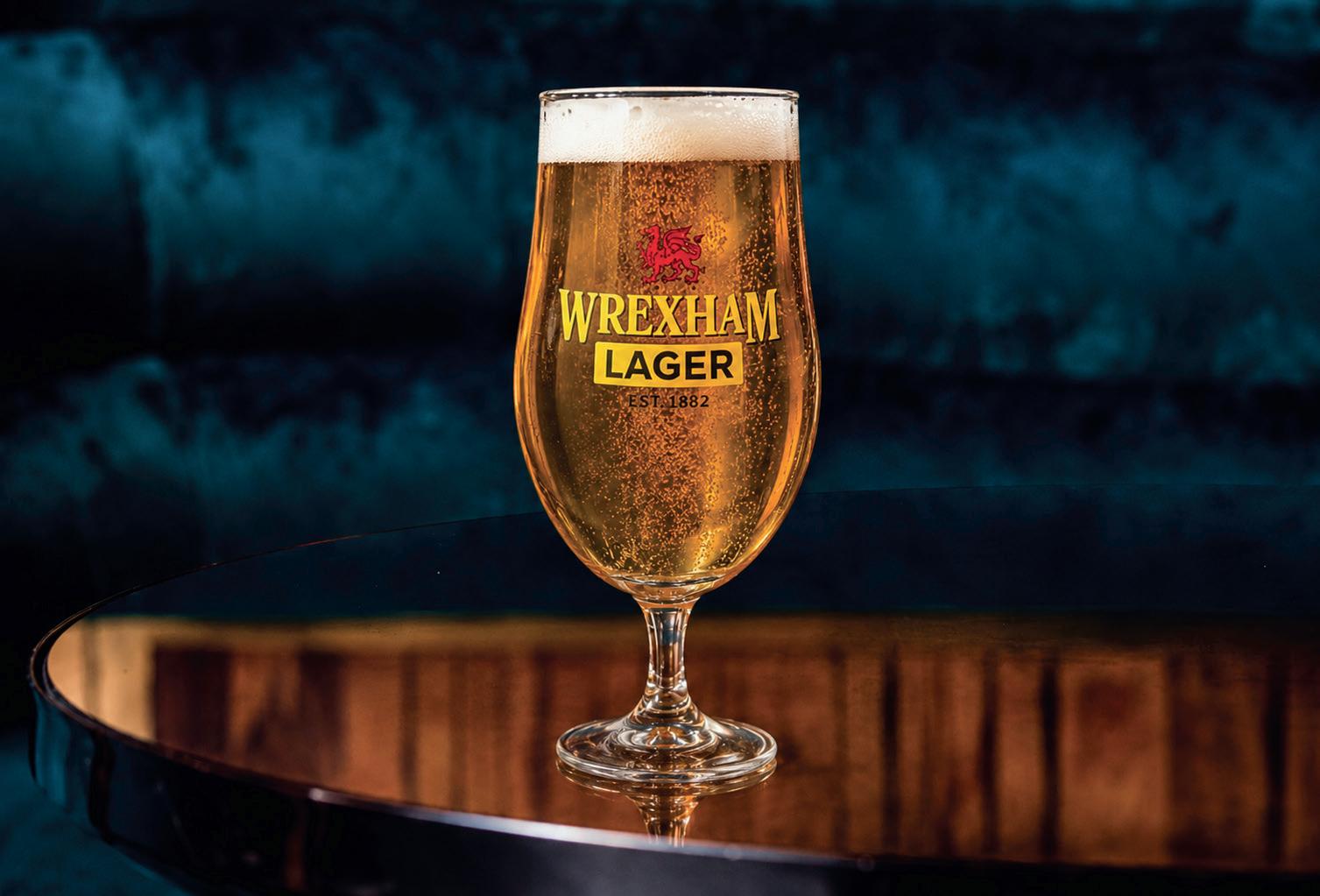
WREXHAM LAGER HAS ONE OF THE MOST STORIED HISTORIES IN BRITISH BREWING, DATING BACK TO 1881. HOW DOES THAT HERITAGE CONTINUE TO SHAPE THE WAY THE BRAND IS BREWED, POSITIONED AND ENJOYED TODAY IN MODERN PUBS AND BARS?
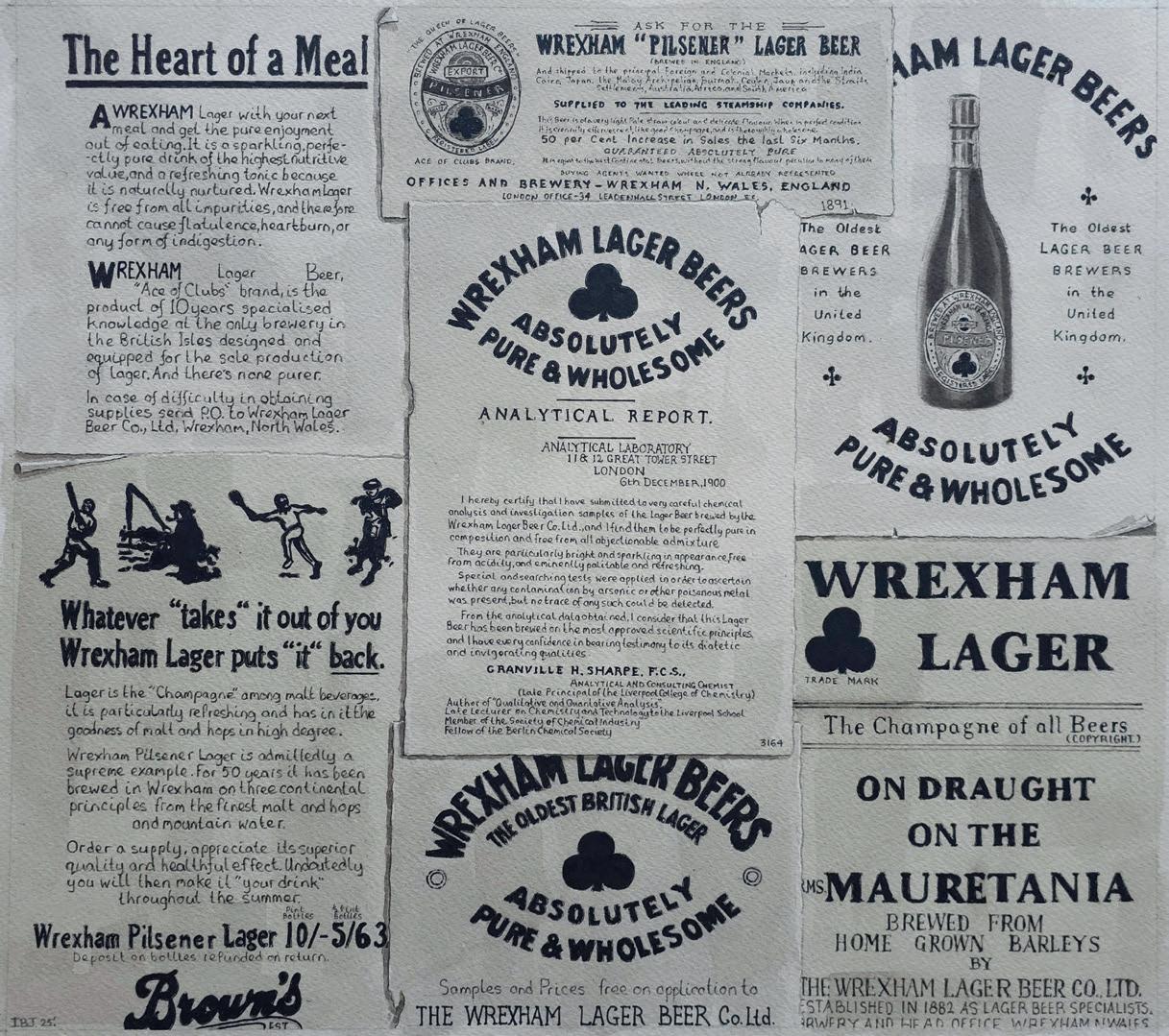
Three centuries of brewing knowledge, passed down from generation to generation in Wrexham, has shaped the way Wrexham Lager is brewed, and continues to shape the way we brew today. Wrexham Lager is the oldest lager brewery in the UK and one of the few breweries in the UK that still brew to German
Purity Laws, (Reinheitsgebot). We brew our three lagers using traditional methods, combined with modern technology, and cold condition our lagers for 6 weeks, ensuring quality is maintained. Today’s consumers are more discerning than ever, curious about what ingredients and chemicals are added to their food and drinks.
Wrexham Lager has won many gold awards across Europe and Asia, famously winning the ‘Best beer from the UK’ category. Quality is at the forefront of everything we produce. We believe in a perfect pint, with no lingering bitter aftertaste.
WREXHAM LAGER HAS A STRONG SENSE OF PLACE AND COMMUNITY, DEEPLY ROOTED IN ITS WELSH ORIGINS. WHY DO YOU THINK THAT LOCAL IDENTITY RESONATES SO STRONGLY WITH PUBS AND BARS LOOKING FOR BRANDS THAT CONNECT WITH THEIR CUSTOMERS?
More than ever consumers are looking for quality authentic brands, that can be sourced in the UK, with a great story behind them.
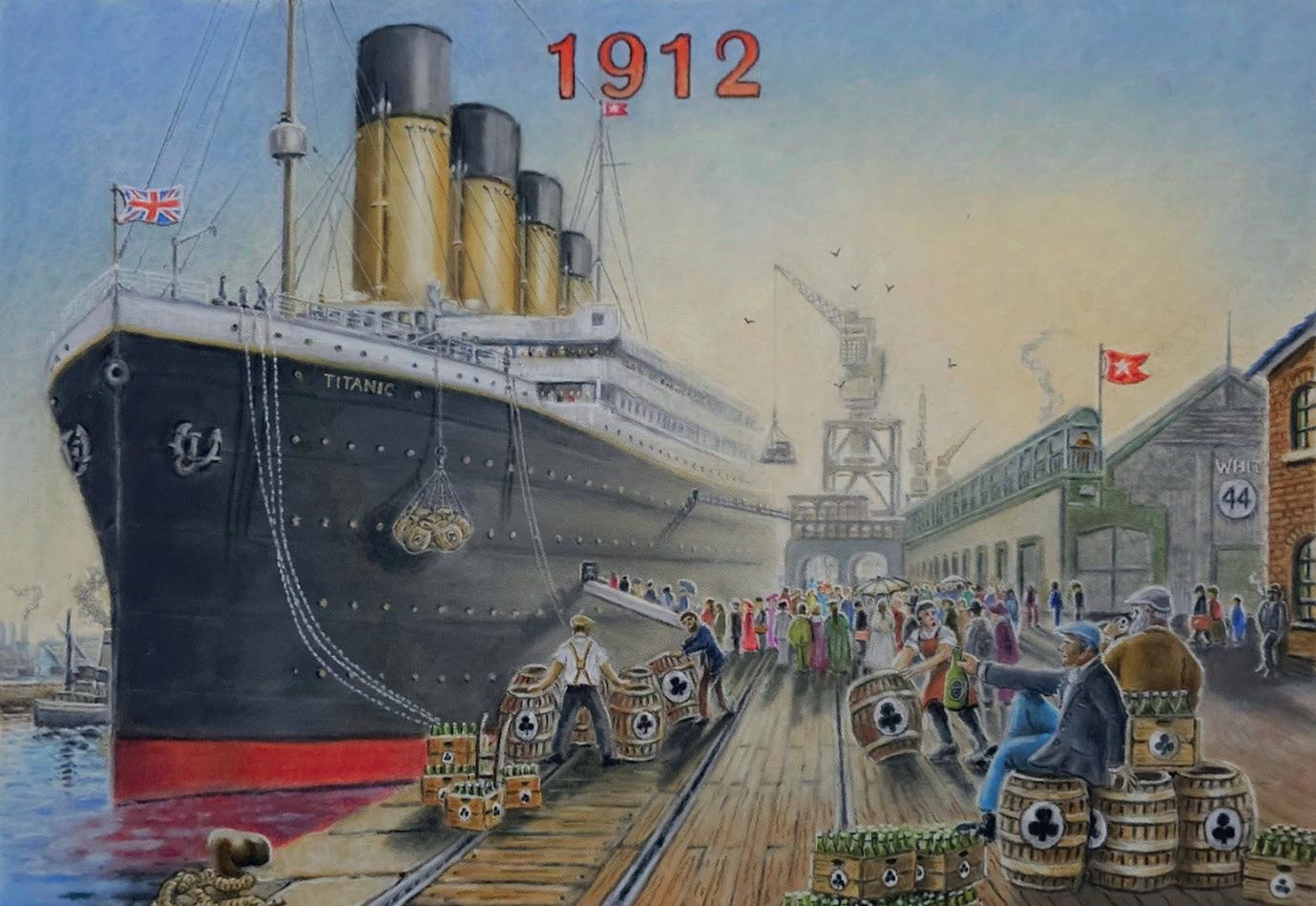
Established in 1882, Wrexham Lager has over 140 years’ worth of history, which continues to grow. The brewery has deep Welsh roots, but has travelled the world with the British Army, and the great cruise ships of the early 1900’s, most famously served on the ill-fated Titanic, under its previous ‘Ace of Clubs’ logo. Now more than ever, businesses and consumers are invested in supporting local businesses and looking to source locally produced quality food and drink.
FROM ITS HISTORIC EXPORT SUCCESS TO ITS RECENT RESURGENCE IN VISIBILITY, WREXHAM LAGER HAS ALWAYS BEEN A PUBLED BEER. WHAT MAKES IT SUCH A NATURAL FIT FOR TODAY’S BAR ENVIRONMENTS AND GUESTS, AND HOW DO YOU SEE ITS ROLE EVOLVING IN THE ON-TRADE MOVING FORWARD?
Wrexham Lager is a natural fit for today’s bar environments and guests, where consumers are keen to try something authentic. Across the UK there is a desire for locally sourced, and brewed, quality lagers.
Recent investment has enabled the brewery to grow its team, increasing its presence across Wales and looking to add new areas across the UK. There is a clear appetite from tourists coming to the UK to try ‘a pint of Wrexham’, due to the growing interest in all things Wrexham, because of the ‘Welcome to Wrexham’ documentary series, following the journey of its football club. However, Wrexham Lager very much stands on its own two feet at any bar, as an authentic, expertly brewed quality lager, brewed for 144 years!
WREXHAM LAGER IS OFTEN DESCRIBED AS A TRUE CLASSIC LAGER IN ITS OWN RIGHT. WHAT DEFINES THE BEER ITSELF IN TERMS OF TASTE PROFILE, AND WHAT DIFFERENTIATES/ MAKES IT STAND OUT FROM OTHER LAGERS?
It is authentically brewed using the finest quality lager malt, a blend of British and German hops, which gives it a good, clean, crisp mouthfeel, and a smooth, rounded palate. Wrexham Lagers are hugely versatile, because they are an equally appealing choice if you fancy a pint in your local, or are looking for a lager to complement a meal.
What underlines the quality of Wrexham Lager, as well as making it stand out from other lagers, is its heritage. We are incredibly lucky to have the old guard of brewers passing on valuable knowledge to the next generation of brewers here. Invaluable knowledge and skills, with no shortcuts, acquired over three centuries, passed down through the generations in Wrexham, are still guiding and shaping the current brewers, and the brewers of the future, at Wrexham Lager!
sales@wrexhamlager.co.uk
JORGE
TORRES, CHIEF MARKETING OFFICER, ICELANDIC GLACIAL, EXPLAINS HOW THE BRAND IS REDEFINING THE ROLE OF WATER IN HIGH-END HOSPITALITY – BRINGING PRECISION, SUSTAINABILITY AND CLARITY TO EVERY GLASS.
ICELANDIC GLACIAL HAS A STRONG SUSTAINABILITY STORY AT ITS CORE. CAN YOU TELL US ABOUT THE BRAND’S ORIGINS AND HOW SUSTAINABILITY INFLUENCES THE WAY YOUR WATER IS SOURCED, PRODUCED AND PACKAGED?
Icelandic Glacial comes from the Ölfus Spring in Iceland, a source formed over 5,000 years ago through volcanic filtration.
What makes the source so special is its natural integrity. The water is filtered slowly through layers of lava rock and is naturally replenished by rainfall and snowmelt. Each day, over 900,000 cubic metres of water naturally flows from the spring into the ocean. Icelandic Glacial bottles less than 0.1% of that flow, directly at source.
The spring is protected by a 128,000-acre exclusion zone of untouched lava fields, and our bottling facility is powered entirely by geothermal and hydroelectric energy.
The water moves from the underground spring into the bottling facility through a sealed system. It is bottled in a hands-free, highly controlled environment, and the first time Icelandic Glacial meets the open air is when the bottle is opened.
For us, sustainability is not a campaign. It is part of the way the brand was built: protect the source, preserve the water, and interfere as little as possible.
PREMIUM WATER IS BECOMING AN INCREASINGLY IMPORTANT PART OF THE ONTRADE EXPERIENCE. WHY DO YOU BELIEVE BARS AND PUBS SHOULD THINK MORE CAREFULLY ABOUT THE QUALITY OF WATER THEY OFFER GUESTS?
From my experience working in the world of mixology and fine dining environments, water is often underestimated.
In a serious bar, every detail is intentional. The spirits, the ice, the dilution, the glassware and the garnish are all carefully considered. Water should be treated with the same level of attention.
Water is not neutral. Depending on its mineral composition, it can either support a drink or interfere with it.
Icelandic Glacial has two qualities that are particularly relevant. It has a naturally low mineral content, which helps preserve flavour clarity and avoid distortion, and a natural alkalinity of around pH 8.4, which helps balance acidity across cocktails, wine, coffee and food.
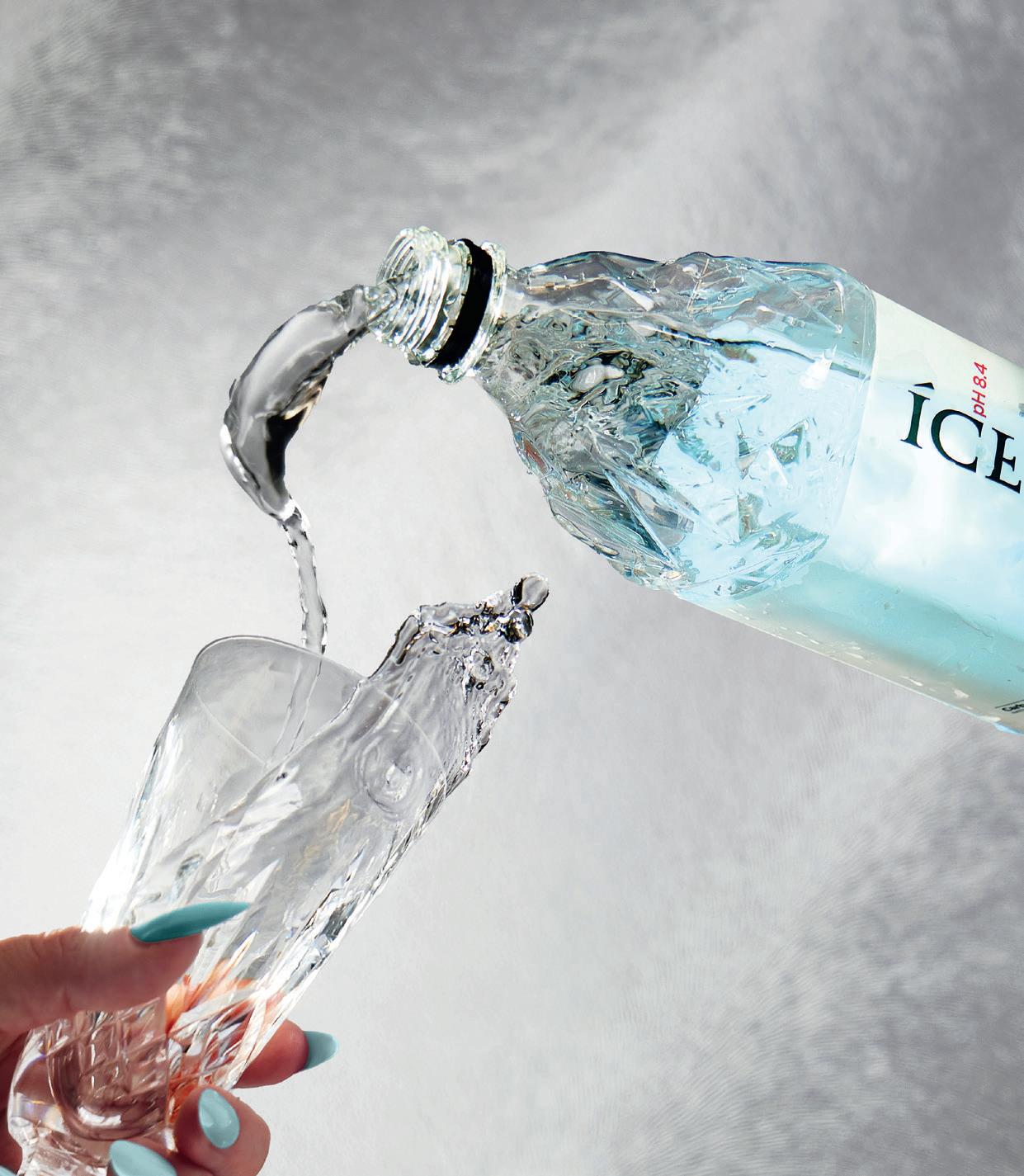
part of the structure of the experience.
HOW DOES ICELANDIC GLACIAL POSITION ITSELF WITHIN THE PREMIUM ON-TRADE SPACE, AND WHAT MAKES THE BRAND A STRONG FIT FOR HIGH-END BARS, RESTAURANTS AND HOSPITALITY VENUES?
Icelandic Glacial fits naturally in environments where precision, taste and restraint matter.
From a positioning standpoint, we are not trying to be everywhere. We belong in places where the experience is curated end to end and where small details make a difference. For bartenders and sommeliers, Icelandic Glacial offers a clear, balanced profile that works well as a palate reset and as a companion to complex flavours. It does not compete with the drink. It allows it to express itself more clearly.
We are seeing growing relevance in curated hospitality
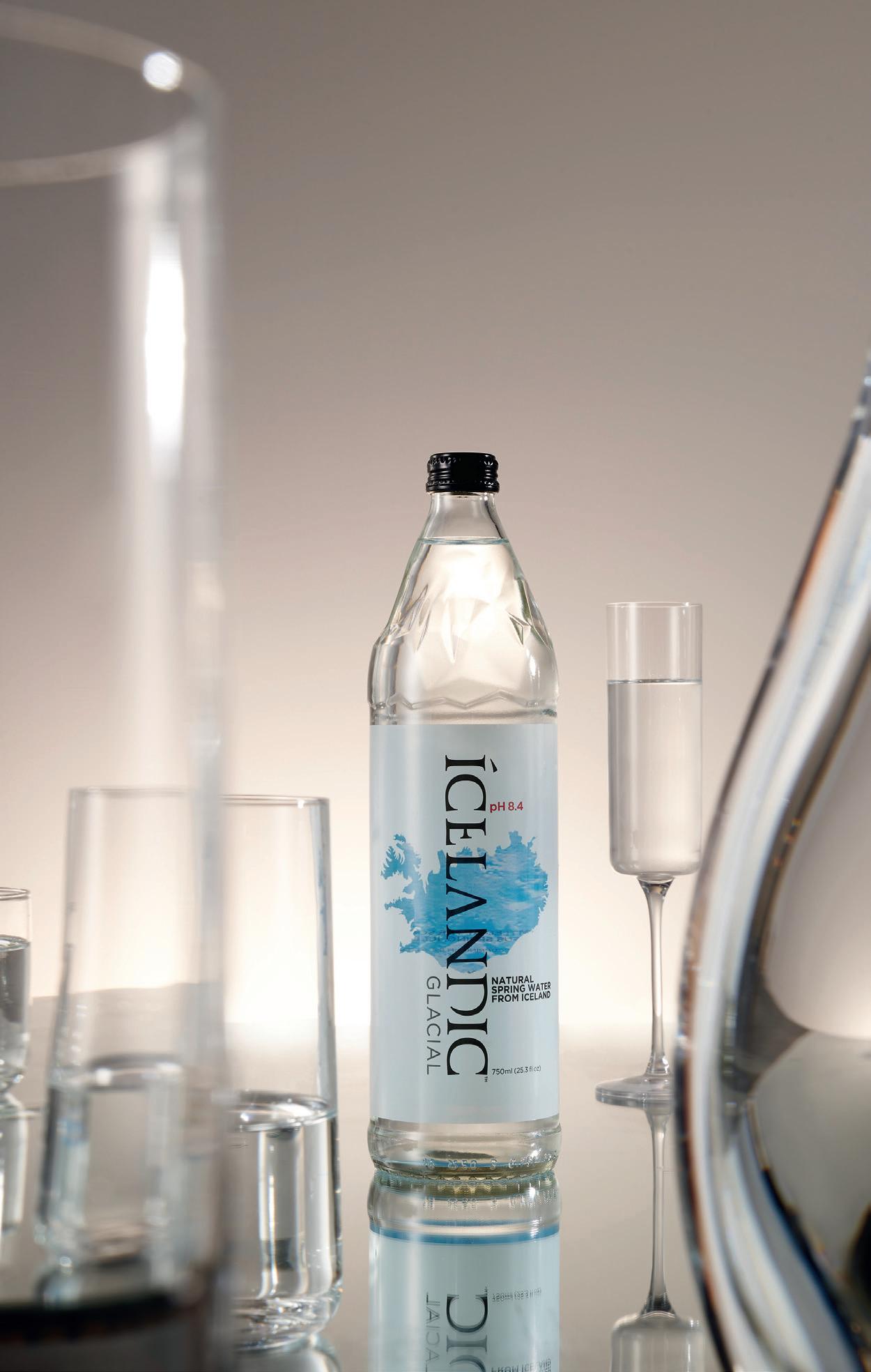
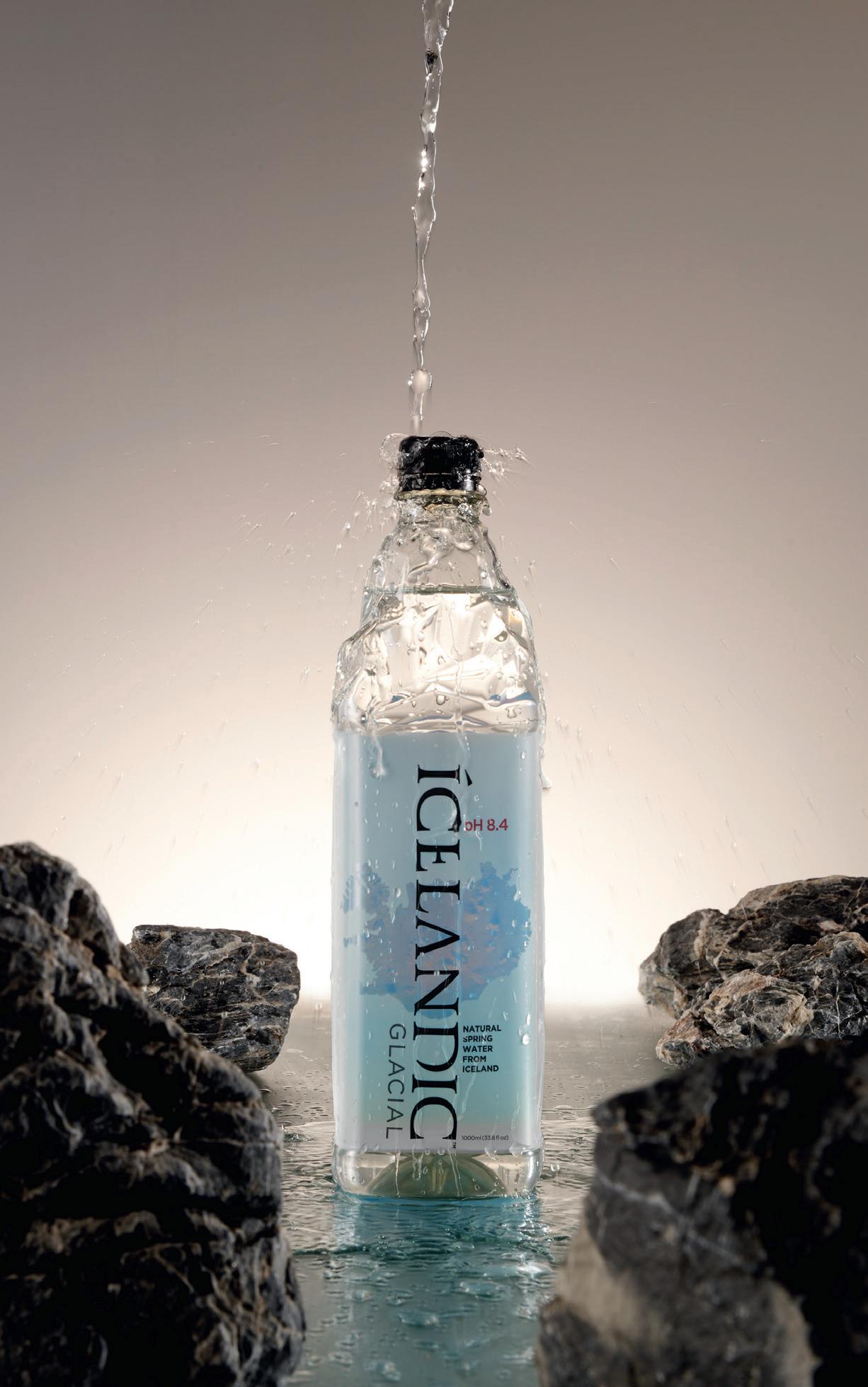
In mixology, water is the final ingredient. It should bring clarity, not distortion.
spaces, including private clubs, cigar lounges and cocktail-led environments. In Hong Kong, this includes venues such as The PIN and selected locations within the Rosewood ecosystem. And in the US, we are the official water partner of Cocktail Wars, an E! Entertainment production focused on mixology culture. Our water is present both as a companion to judges and as part of the craft itself, including ice created using Icelandic Glacial.
WHAT ROLE DO YOU SEE PREMIUM WATER PLAYING IN ELEVATING SERVE RITUALS, FOOD PAIRINGS AND THE OVERALL GUEST EXPERIENCE IN MODERN HOSPITALITY VENUES?
Premium water plays a subtle but important role in the overall
experience. It creates the reset between moments.
Between cocktails, between courses, alongside coffee or wine, it allows the guest to return to the next flavour with a cleaner palate.
From a pairing perspective, Icelandic Glacial’s low mineral profile helps avoid interference with delicate flavours, while its natural alkalinity can help balance more acidic profiles. In high-end venues, consistency matters. You cannot control every element of the experience and then treat water as an afterthought.
Some guests will ask about the source and the story. Most will simply feel the difference in how everything else tastes.
icelandicglacial.com
FOUNDED BY MASTER SOMMELIERS XAVIER ROUSSET AND GEAROID DEVANEY, THE BLACK BOOK HAS BECOME ONE OF SOHO’S MOST QUIETLY CELEBRATED DESTINATIONS - PAIRING EXCEPTIONAL WINES, EXPERTLY CRAFTED COCKTAILS AND A RELAXED, LATE-NIGHT ATMOSPHERE THAT KEEPS GUESTS COMING BACK.
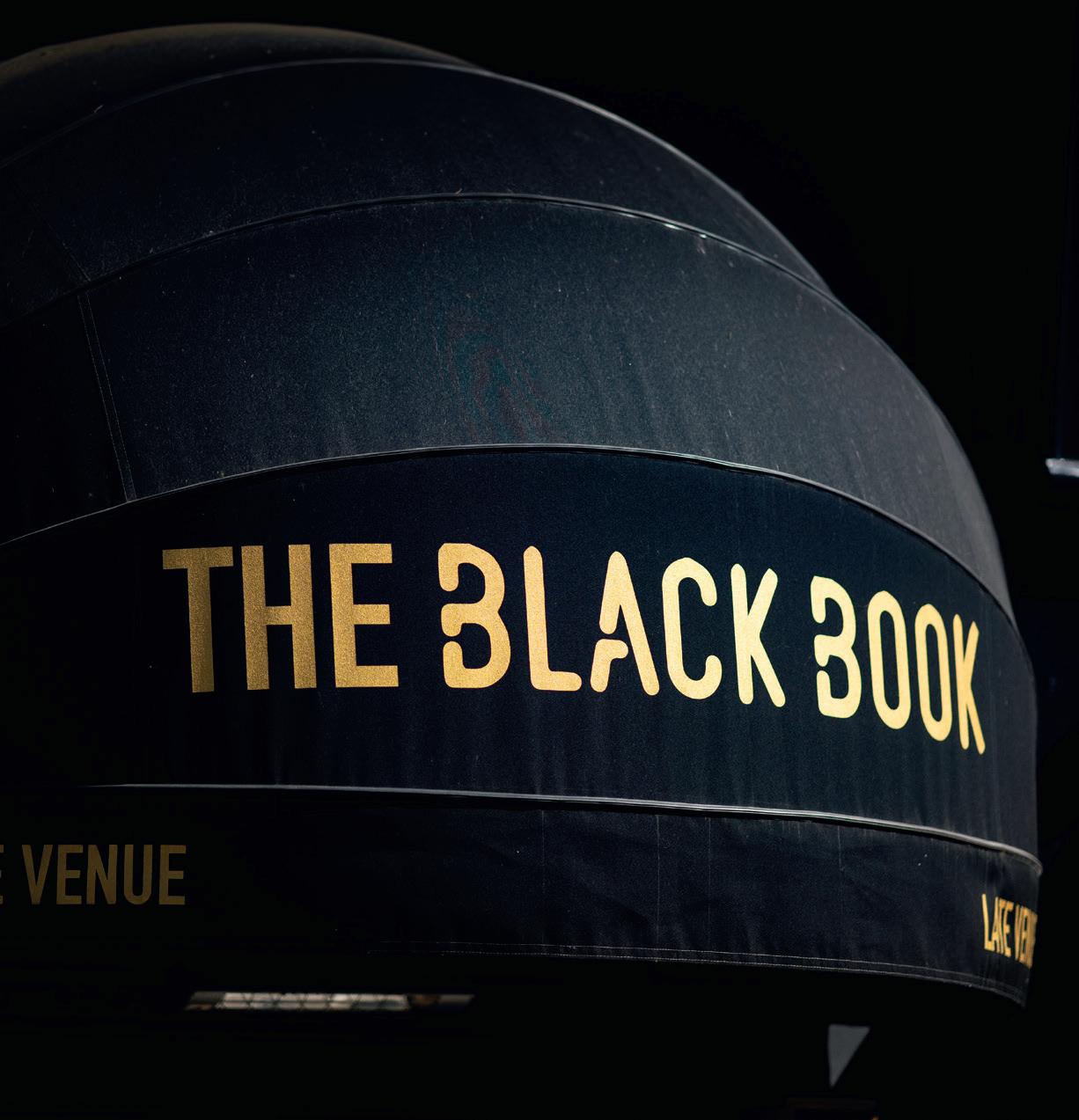
Since opening on Frith Street in 2020, The Black Book has made its mark on Soho’s drink scene – known for a great wine offering, expertly mixed cocktails and an atmosphere that welcomes both curious and seasoned drinkers. Founded by Master Sommeliers Gearoid Devaney and Xavier Rousset, the underground bar was created to make great bottles more approachable.
Alongside everyday favourites sit the venue’s handwritten “Black Book”, a rotating list of rare and sought-after bottles pulled from the cellar. Cocktails are equally considered, from smoky mezcal-based signatures to expertly made classics, including a Negroni served with an optional smoked finish.
The recent addition of a new food menu from executive chef Rob Weston makes it even easier for guests to settle in for the evening. Designed for sharing alongside drinks, the menu includes pea and mint arancini, king prawns with chilli and lime, steak with Black Book butter and frites, plus generous cheese and charcuterie boards.
Low-lit, relaxed and quietly confident, The Black Book brings together all the elements of an ideal venue: expertly crafted
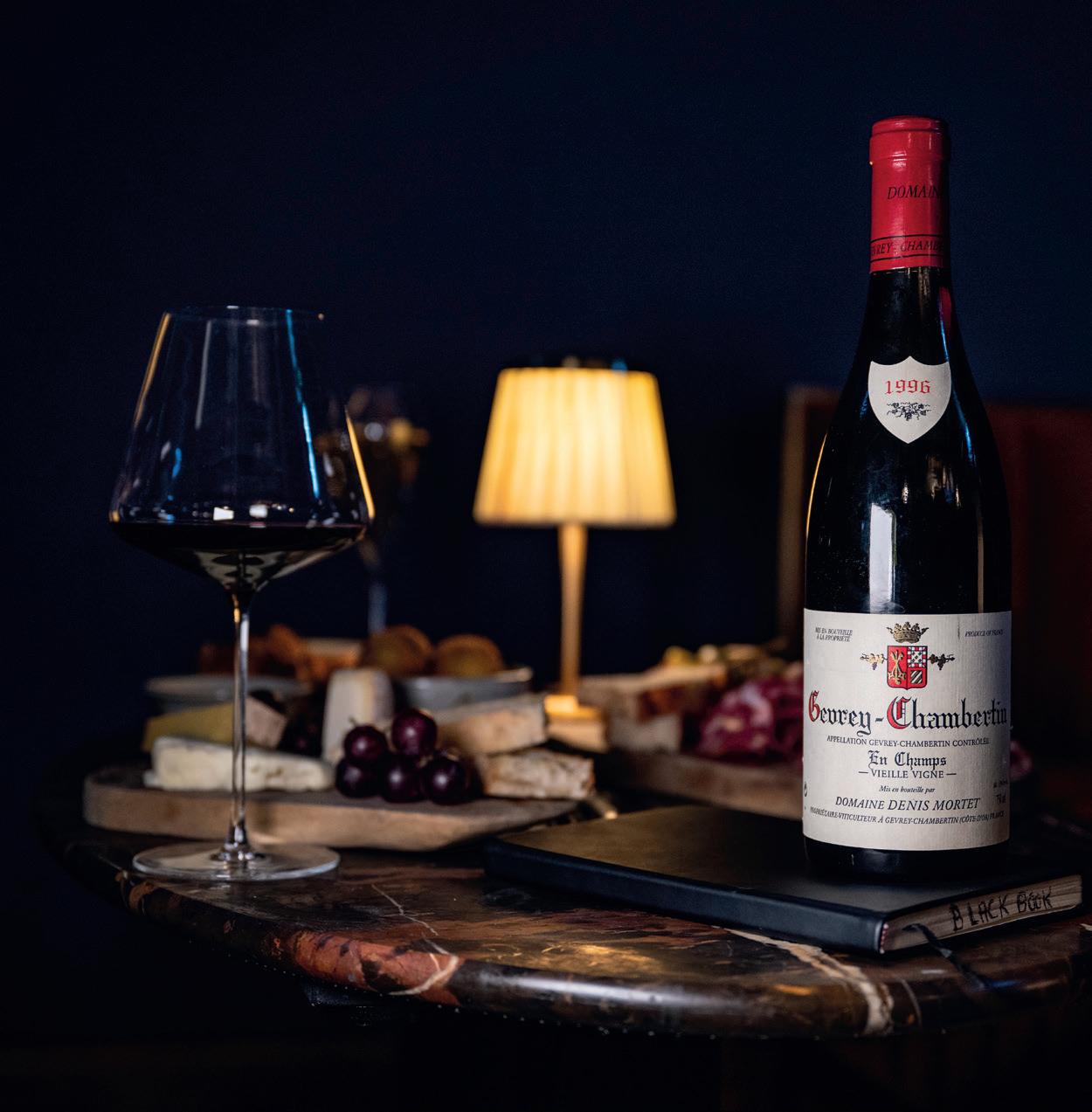
drinks, an intimate atmosphere, and a setting designed for guests to settle in and stay awhile. In this interview, Xavier and Gearoid tell us more about the thinking behind The Black Book, the details that shape its character, and what makes it a place guests return to time and time again…
WHAT INSPIRED YOU TO CREATE THE BLACK BOOK; WHAT’S THE STORY BEHIND THE VENUE?
Xavier: We wanted a place that felt like the late-night spots we loved working. Somewhere for people in the industry and wine lovers to have a proper drink, even after service. A relaxed bar with serious wine behind it.
AS MASTER SOMMELIERS, HOW DID YOUR BACKGROUNDS SHAPE THE VISION FOR THE VENUE?
Gearoid: Years on the floor teach you what guests actually want: great bottles, fair prices, and a room where you can talk. That shaped everything. No fuss, just quality.
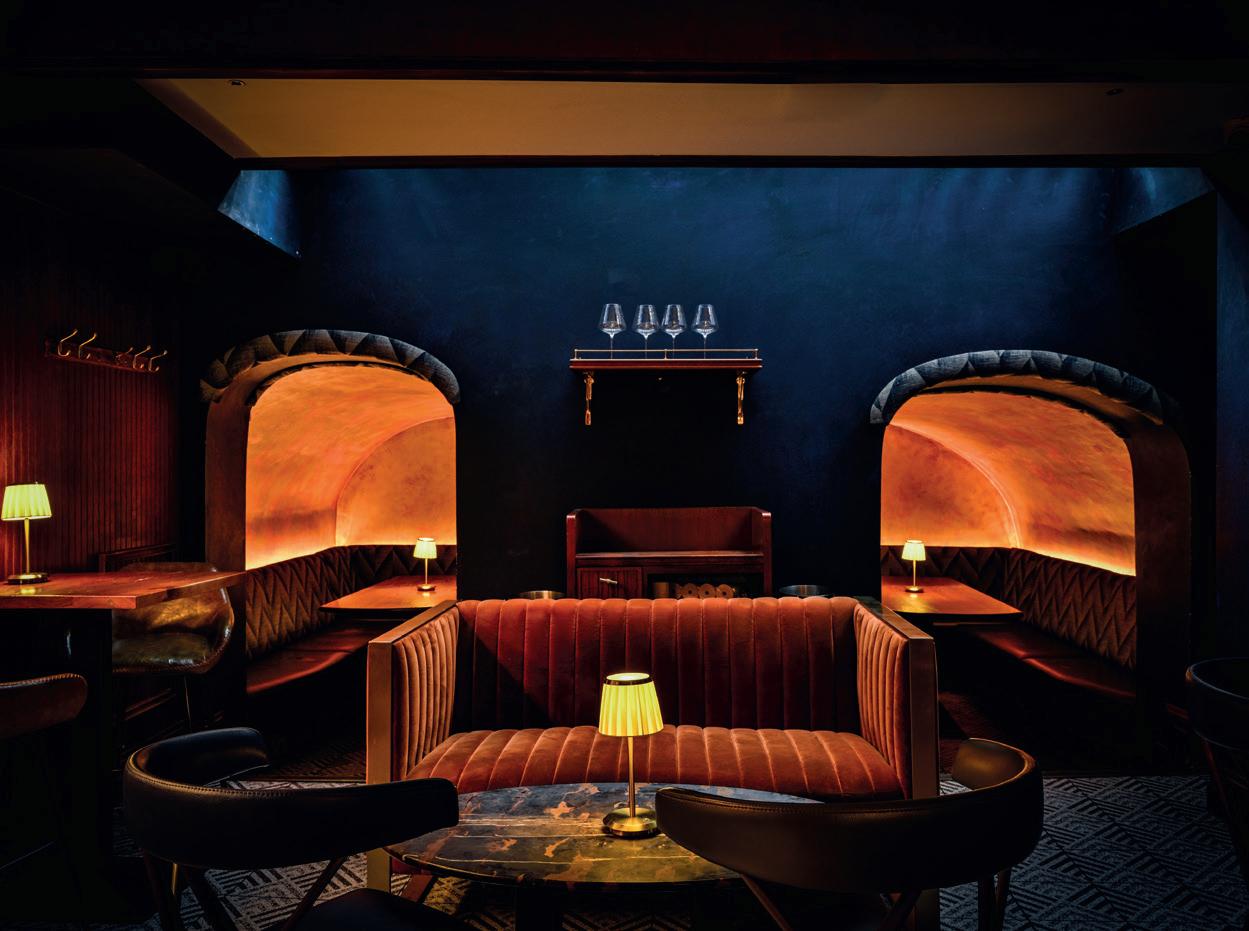
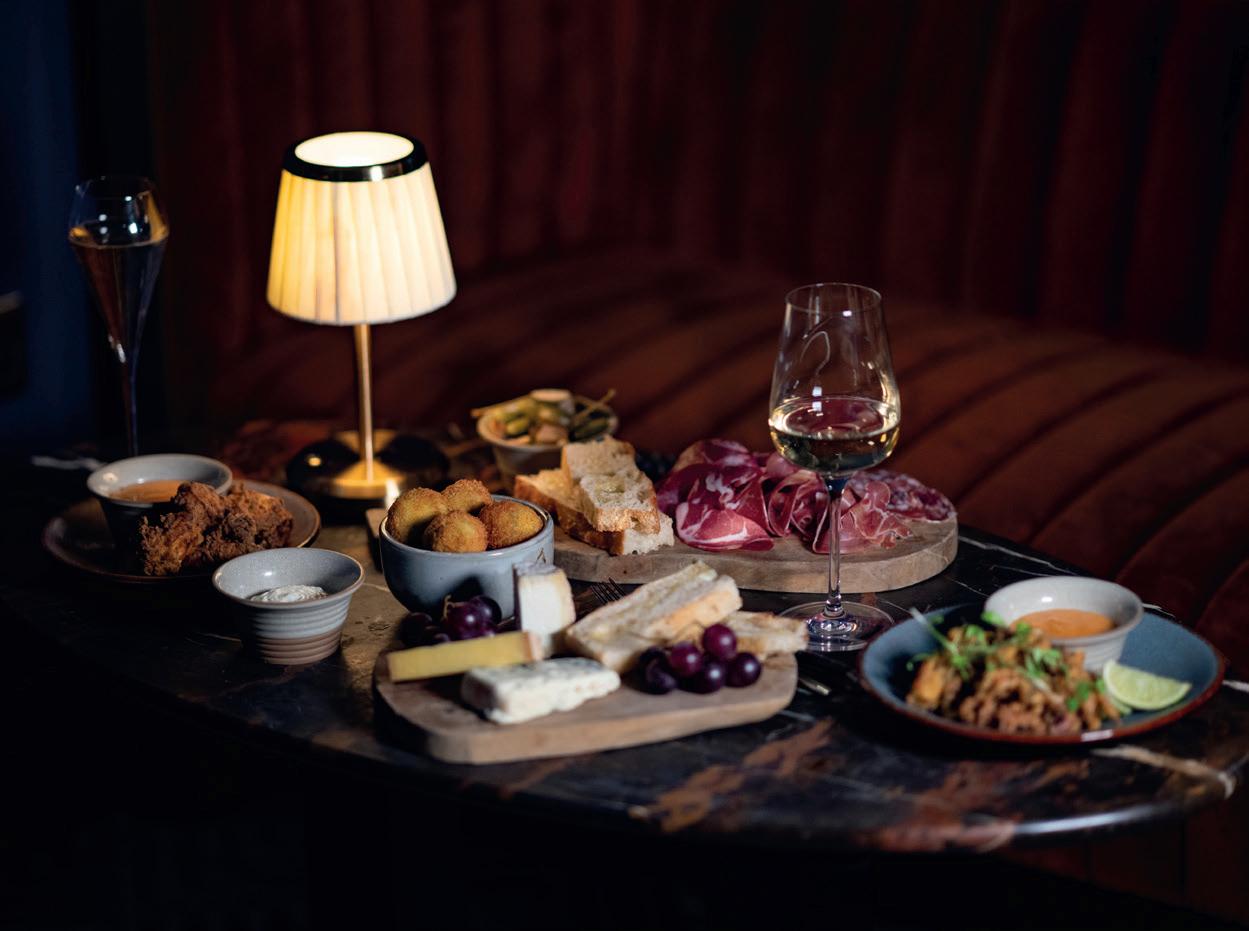
WHAT GAP DID YOU FEEL EXISTED IN LONDON’S WINE AND BAR SCENE THAT THE BLACK BOOK FILLS?
Gearoid: London had amazing wine lists, but not many places where you could drink them late, casually, and without ceremony. We wanted to bring that combination together.
THE HANDWRITTEN “BLACK BOOK” LIST IS A STANDOUT FEATURE; WHAT’S THE STORY BEHIND IT?
Xavier: We’ve always liked the black book at our friend and neighbour’s restaurant, 10 Greek Street, so we took the idea because it suited us. it has that old Soho feel of a discreet notebook where all the best contacts were kept. Handwritten felt right - informal, personal and always changing.
YOUR COCKTAIL LIST BLENDS CLASSICS WITH SIGNATURES; HOW DO YOU APPROACH INNOVATION WITHOUT LOSING FAMILIARITY?
Gearoid: We start with the classics and tweak gently. Nothing too clever for the sake of it.
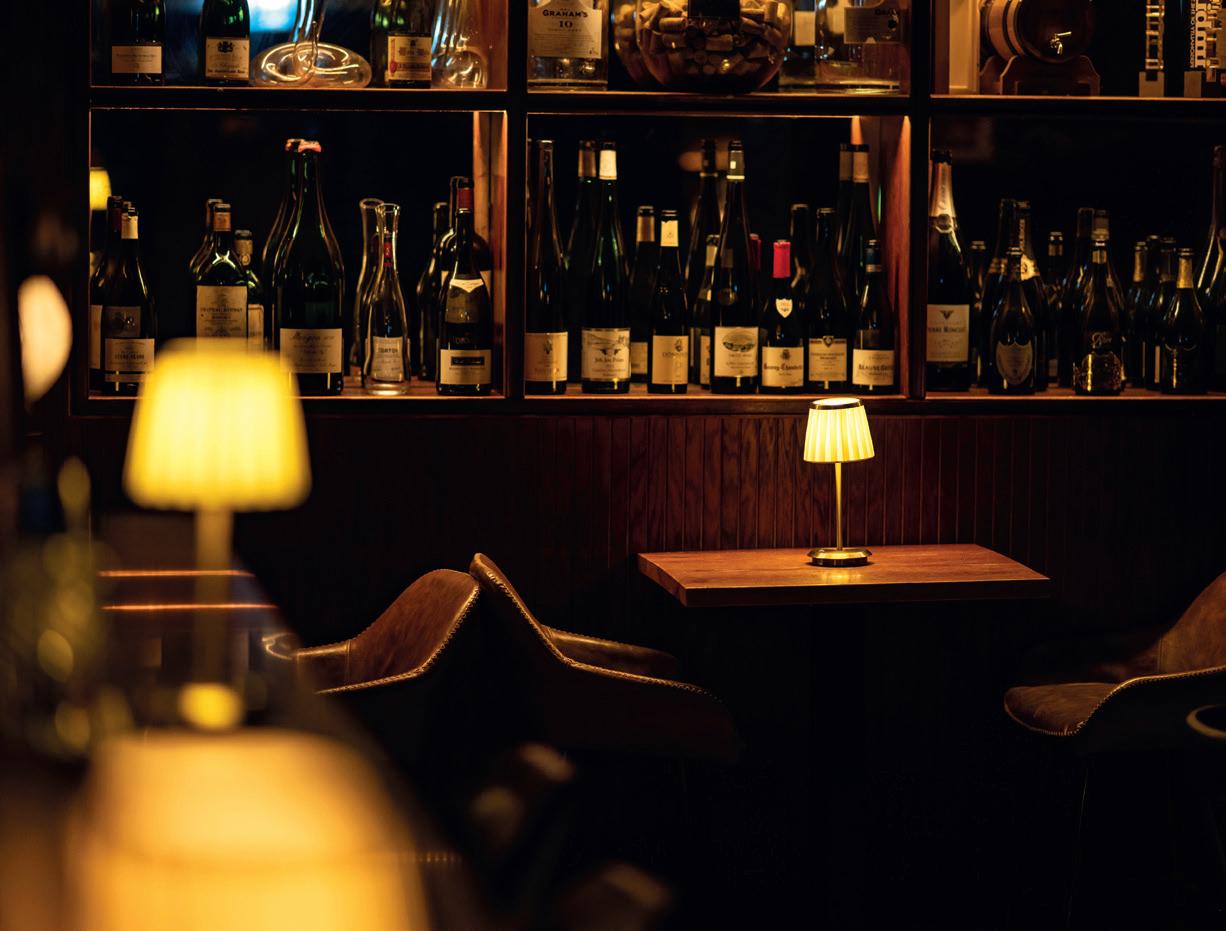
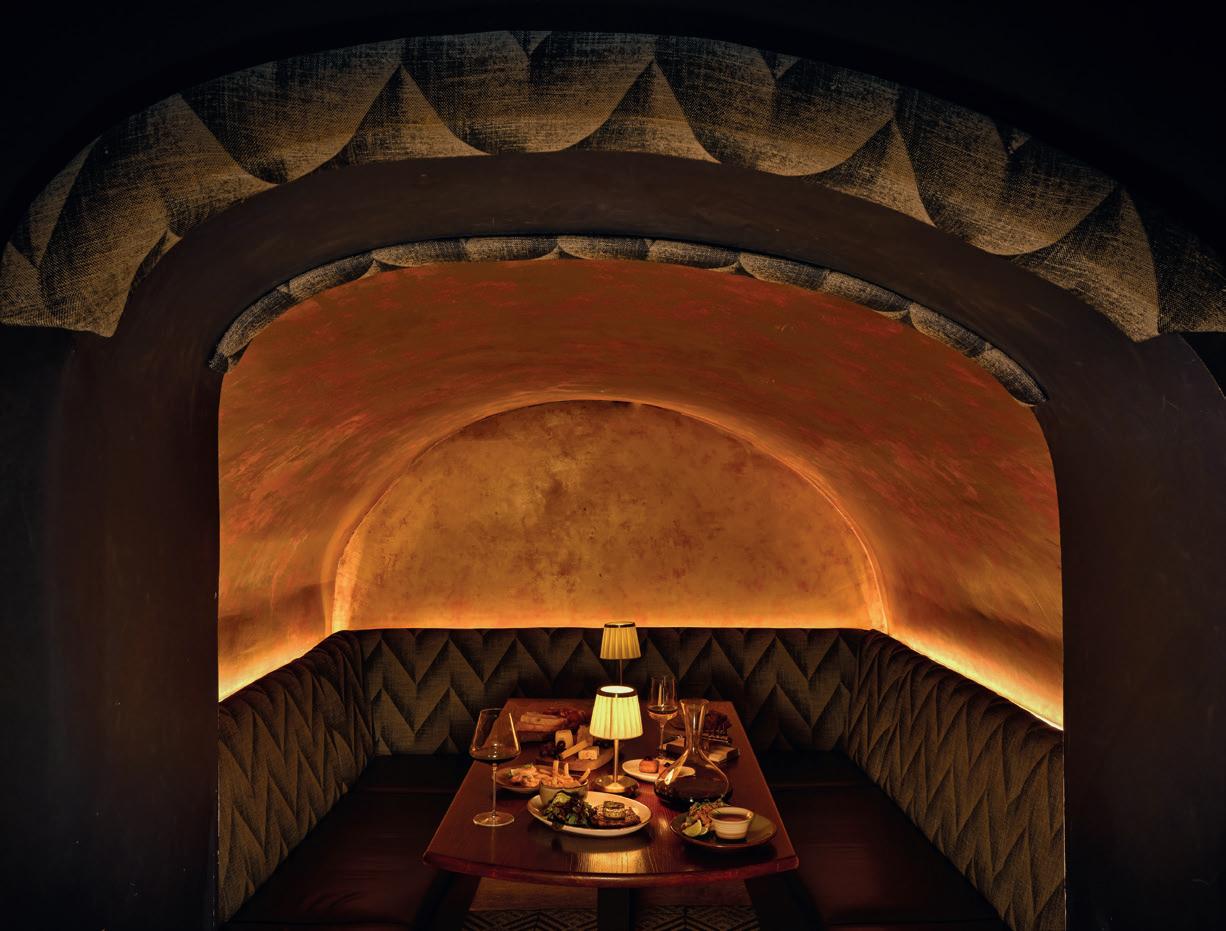
THE MENU LEANS INTO SHARING PLATES; HOW IMPORTANT IS THAT SOCIAL DINING ELEMENT TO THE EXPERIENCE?
Xavier: Very. Wine is social by nature, so the food should follow. Sharing plates keep the table relaxed and the conversation moving.
WHAT DO YOU THINK HAS BEEN THE KEY TO THE BLACK BOOK’S SUCCESS SINCE OPENING IN 2020?
Xavier: Consistency. Good wine, good people, and a room that feels welcoming every night.
HOW HAVE GUEST EXPECTATIONS AROUND WINE AND COCKTAILS EVOLVED IN RECENT YEARS?
Gearoid: People are more curious and more confident. They want discovery, but without pretension. Quality with approachability.
blackbooksoho.co.uk
@theblackbooksoho
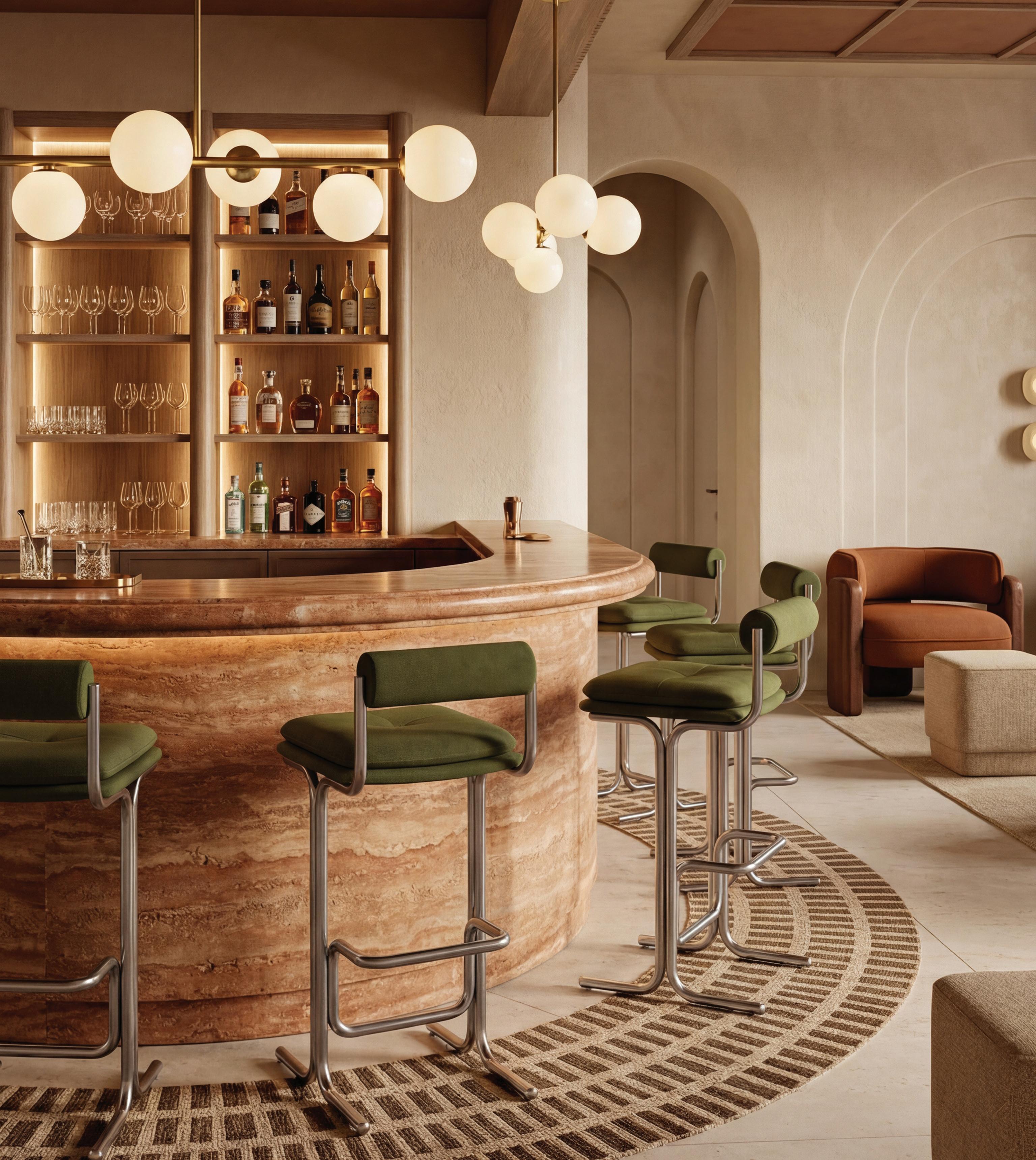


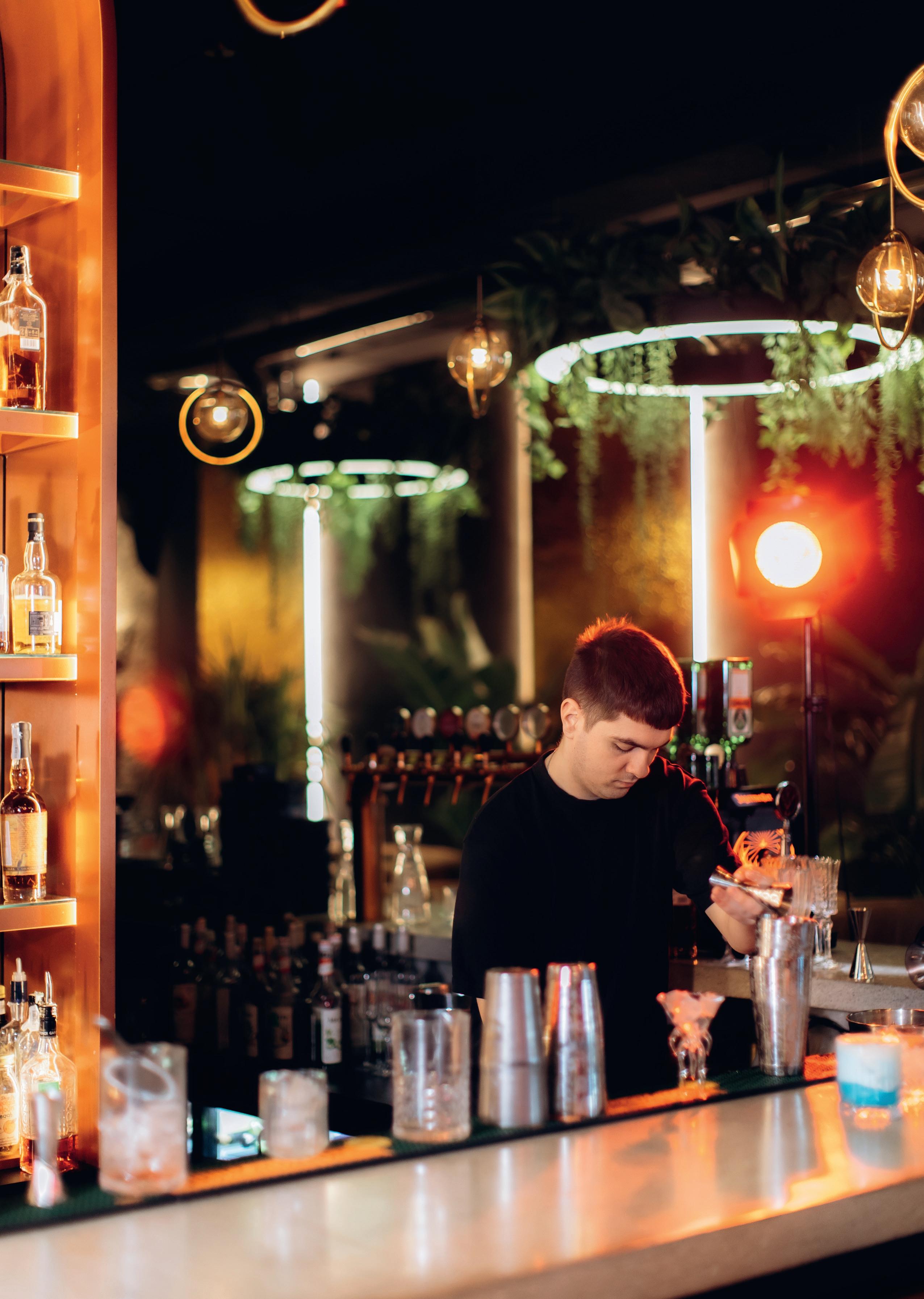
WE EXPLORE THE KEY PRESSURES SHAPING THE HOSPITALITY INDUSTRY AND HIGHLIGHT THE STRATEGIES OPERATORS CAN USE TO THRIVE IN AN INCREASINGLY CHALLENGING MARKET.
WE OUTLINE FIVE PRACTICAL WAYS OPERATORS CAN STREAMLINE DAY-TO-DAY OPERATIONS, IMPROVE EFFICIENCY AND PROTECT PROFITABILITY IN AN INCREASINGLY CHALLENGING TRADING ENVIRONMENT.
1
Digitising ordering and payments is one of the fastest ways for pubs and bars to improve operational efficiency. QR code menus, mobile ordering, and contactless payment systems reduce the reliance on staff to take orders manually, allowing teams to focus on service quality and guest engagement. This not only speeds up table turnover, but also reduces human error in busy periods. In addition, digital ordering systems can integrate directly with tills and kitchen displays, improving communication between front and back of house and creating a smoother, more consistent customer experience across the venue.
2
Effective stock management is critical to maintaining healthy margins in a high-cost environment. Modern inventory systems allow operators to track stock levels in real time, identify fast-moving products, and reduce wastage from over-ordering or spoilage. By linking stock data to sales performance, pubs and bars can better understand demand patterns and adjust purchasing accordingly. This also helps prevent stockouts of popular items, improving customer satisfaction. Ultimately, tighter stock control improves cash flow, reduces unnecessary spend, and ensures that every product behind the bar is working as efficiently as possible to generate revenue.
3
Labour costs remain one of the biggest challenges for hospitality businesses, making efficient scheduling essential. Datadriven workforce management tools can help managers align staffing levels with predicted demand, ensuring venues are not overstaffed during quiet periods or understaffed during peak times. This improves both cost control and customer experience. Cross-training employees across multiple roles also increases flexibility, allowing teams to adapt quickly to changing conditions. Better scheduling practices reduce staff burnout, improve retention, and ensure that the right people are in the right place at the right time to support smooth operations.
4 5
Centralising supplier management allows pubs and bars to reduce costs and improve purchasing consistency. By consolidating suppliers and negotiating group or bulk purchasing agreements, venues can benefit from better pricing and stronger commercial terms. Digital procurement systems also provide greater visibility over spending, making it easier to identify price fluctuations and eliminate unnecessary costs. This level of control is particularly valuable for multi-site operators looking to standardise operations. In addition, improved supplier oversight helps ensure product quality remains consistent, while reducing administrative time spent managing multiple supplier relationships across different categories.
Data-driven decision-making is becoming essential for modern hospitality operations. By analysing sales trends, peak trading hours and customer behaviour, pubs and bars can make more informed operational and commercial choices. For example, identifying high-margin products or underperforming menu items allows for more strategic pricing and promotions. Footfall and dwell-time data can also support better staffing and stock planning. With access to real-time dashboards, managers can respond quickly to changes in demand rather than relying on intuition alone. This leads to more efficient operations, improved profitability, and a stronger overall customer experience.
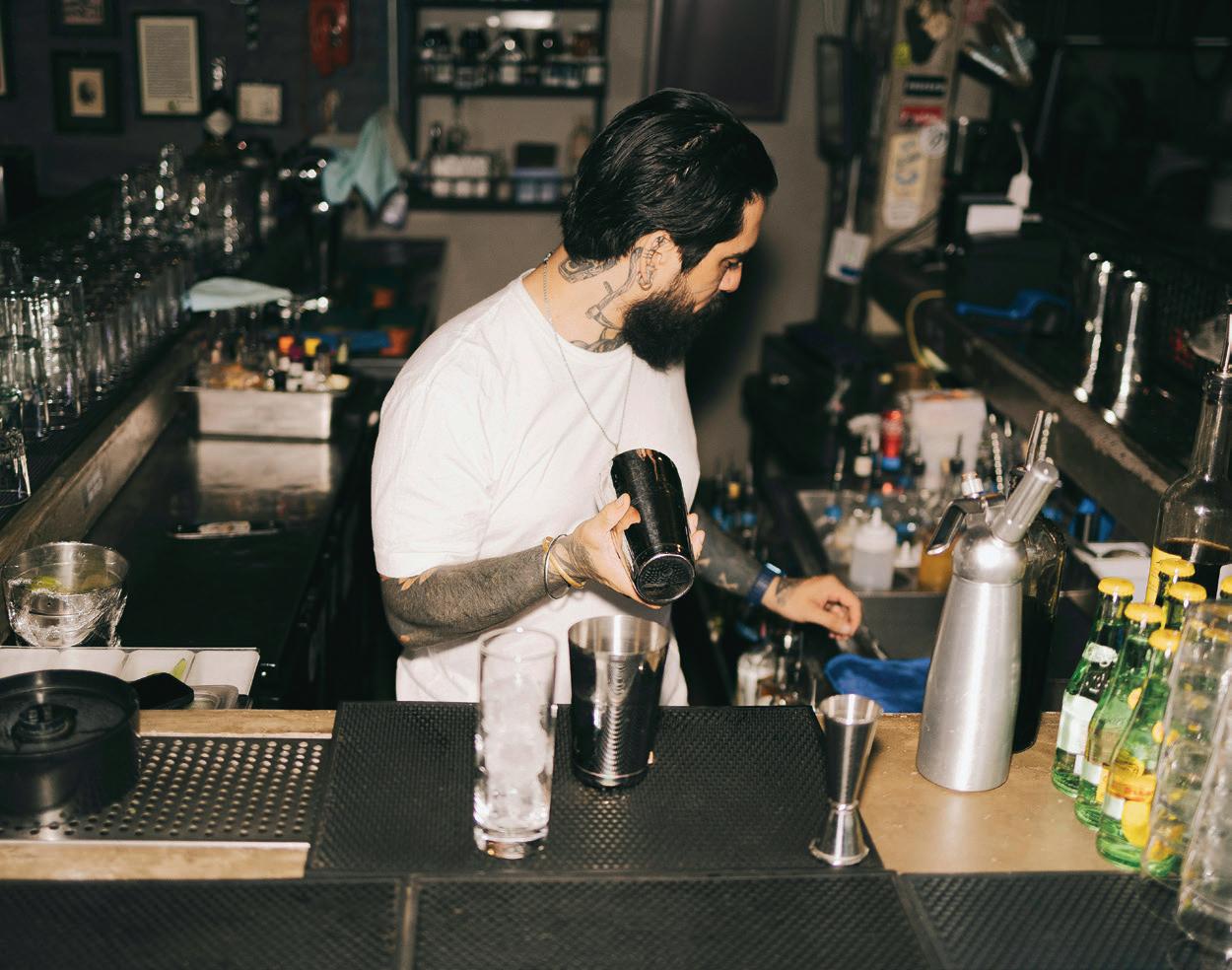
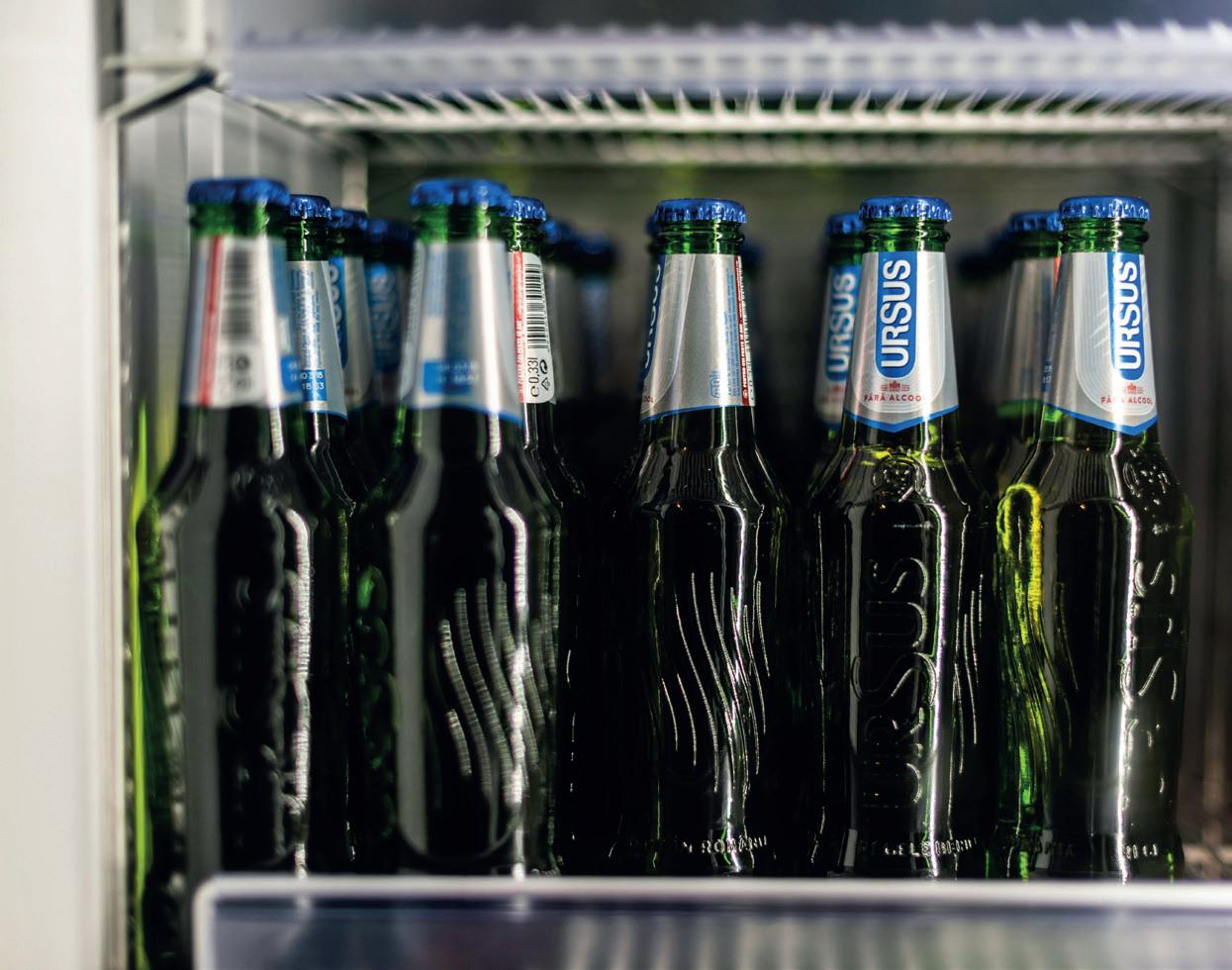
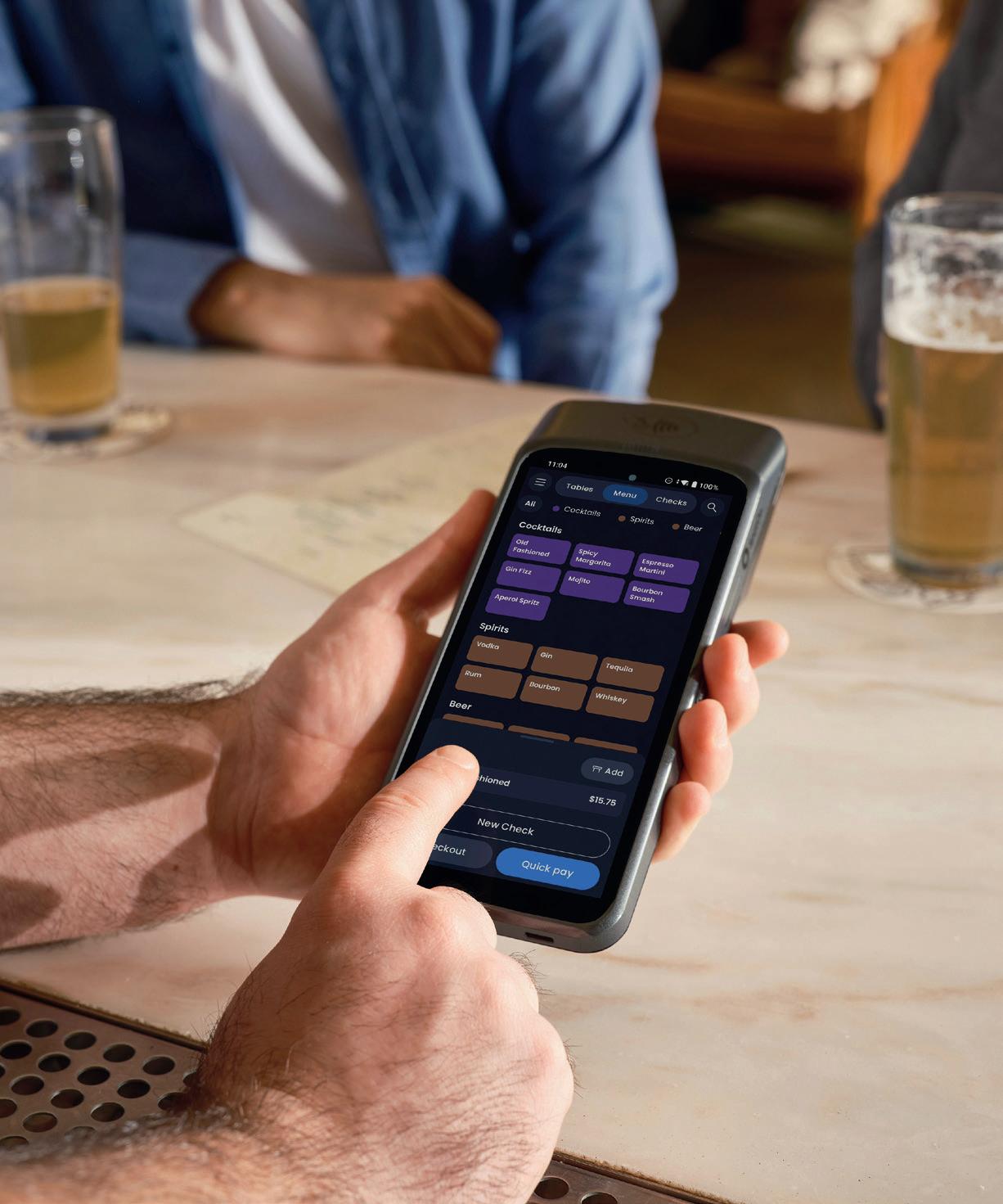
AS RISING COSTS CONTINUE TO SQUEEZE MARGINS AND INCREASE PRESSURE ACROSS HOSPITALITY, WE EXPLORE HOW PUBS AND BARS CAN NAVIGATE CHALLENGING TRADING CONDITIONS THROUGH SMARTER OPERATIONS, STRONGER TEAMS AND THE SUPPORT AVAILABLE ACROSS THE SECTOR.

Margins are tightening, labour costs are rising and confidence remains fragile. Across the UK hospitality sector, operators are navigating a period where every decision feels more consequential than ever. For pubs and bars already operating on slim margins, rising costs have shifted from a temporary challenge to a long-term reality.
But amid mounting pressure, industry leaders argue that survival isn’t simply about cutting costs. Instead, the focus is increasingly shifting towards smarter operations, stronger teams and making use of support systems many businesses still overlook.
Operational efficiency, staff wellbeing and industry-backed support are becoming central to keeping businesses resilient. In hospitality, efficiency has historically carried uncomfortable associations. Cutting labour, reducing service levels or stripping experiences back can feel like a race to the bottom. But according to Neil Burke, Director of Bigger Boat Hospitality, operational efficiency should mean something very different.
“For me, it’s about removing the things that get in the way. Assess every unnecessary internal obstacle that slows the team down. Efficiency isn’t about doing less; it’s more about making sure nothing is blocking your team from doing their jobs properly. When you clear those roadblocks, everyone can focus and the guest gets the best possible experience,” he explains.

That thinking is becoming increasingly important as operators attempt to protect margins without sacrificing standards.
When advising pubs under pressure, Neil argues operators should resist reactive decision-making and focus on identity.
“I’d advise them to start with interrogating their offering. Is that right? Is it clear? You need to understand what people are actually coming to you for and build everything around that.
He continues, “Once you know what your identity is, stay true to it. When financial pressure builds, the temptation is to start chasing things that aren’t really you. Operators should try to not lose sight of what makes them worth visiting in the first place. I’d also say, ensure you invest in marketing. Often it’s the first thing cut and that’s not right.”
For many businesses, efficiency increasingly means refining rather than reducing: tighter menus, clearer propositions, stronger team training and operational systems that remove friction.
Commercial pressures are not just being felt by operators. Staff across hospitality are experiencing rising financial strain and charities working within the sector say demand for support continues to rise sharply.
Chris Welham, CEO of the Licensed Trade Charity, says pressures have become widespread across every level of hospitality.
“The rising cost of living is continuing to place significant
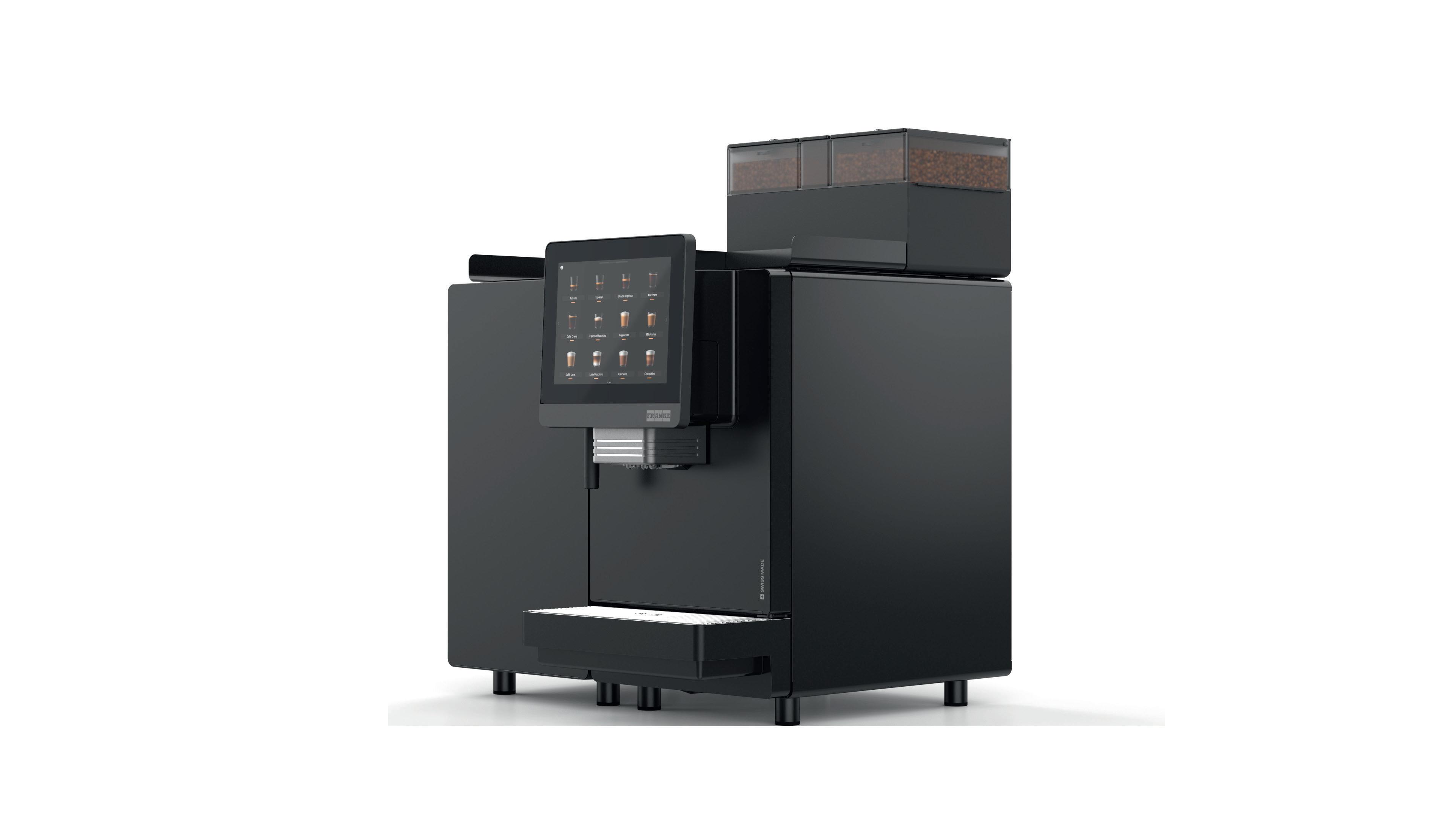
The New A Line’s intuitive touchscreen simplifies operation and maintenance – making it easier for staff to work efficiently, and for customers to enjoy great coffee with ease. It’s all about the moment




pressure on hospitality workers, many of whom are struggling with the reality of compensating for extended working hours with rising personal expenses,” he says. “We’re seeing more people struggling with everyday essentials such as rent, energy bills and food costs, often alongside wider financial instability.”
Sharing specific data which highlights the problem clearly, he continues, “Demand for financial support is proven to be increasing as in 2025 alone, the LTC (Licensed Trade Chairty) supported around 45,000 people across the sector, a 12.5%1 year-on-year increase, while calls to our helpline rose to over 6,000.
“We’re seeing people at all levels of the industry reaching out for help. A shift that underlines how widespread and sustained these pressures have become across the hospitality industry,” he adds.
The Drinks Trust reports similar trends, with financial insecurity now affecting workers across all levels of the trade. Nicky Burston, CEO of The Drinks Trust, comments, “The rising cost of living we’ve been experiencing over the past few years is placing unprecedented pressure on people working in the drinks and hospitality sectors.
She adds, “Many are experiencing acute financial insecurity, even when working full-time. We’re seeing a significant increase in applications for support from individuals who have never needed help before, including those in senior management roles.”
Hospitality has long battled wellbeing challenges, but charities say cost pressures are intensifying the issue.
Chris says the relationship between finances and mental health is impossible to ignore.
“Financial pressure doesn’t just affect someone’s ability to pay bills, it has a direct impact on mental health, confidence and overall wellbeing,” he emphasises.
“Our 2026 Wellbeing at Work Report in partnership with KAM revealed that financial challenges are the joint-second most common personal challenge faced by people in licensed hospitality all year round, with 22% of respondents reporting that they struggle with both finances and mental health2. That overlap is significant, and in a high-pressure, customer-facing environment, the impact can quickly escalate. We also see this reflected in helpline data, where financial concerns are often tied to wider issues such as anxiety, sleep disruption and work-related stress. It reinforces the need for a joined-up approach to help supporting financial wellbeing and mental health together, not in isolation,” he continues.
Nicky echoes that concern. “The link is extremely close,” she says. “Financial strain is now one of the primary drivers of poor mental health among hospitality professionals. When someone is struggling to pay bills, manage debt, or afford essentials, it affects every aspect of their wellbeing.”
For operators already battling recruitment and retention issues, these pressures increasingly become commercial challenges too.
While cost pressures may encourage businesses to reduce
Neil Burke
Efficiency isn’t about doing less; it’s more about making sure nothing is blocking your team from doing their jobs properly.




spending, there remains a strong argument for continued investment in staff.
Chris points to the cost of poor wellbeing itself. “The reality is that investing in people and maintaining commercial performance go hand in hand. Poor wellbeing carries a significant cost to operators.
“Our research shows that nearly half of all sick days are linked to poor mental health, contributing to an estimated £3062 million annual cost to the hospitality sector through absenteeism alone. Operators that invest in their people tend to see stronger retention, higher engagement and better overall performance. It’s often not about large new investments, but about embedding wellbeing into existing practices and making better use of the support already available,” he shares.
Neil makes a similar argument, emphasising the importance of ‘investing’ in teams.
“Don’t look for places to save, look for places to invest and grow. I know that sounds wrong, but the money you put into your team, space and product will come back. If you keep investing consistently and stay true to what you’re trying to build, the returns follow,” he states.
One challenge charities continue to face is awareness. Significant support exists, but many businesses and employees remain unaware of what is available.
Chris says simple signposting can make a meaningful difference.
“Better signposting of existing support is critical. Equipping line managers to recognise early warning signs is another highimpact, low-cost step,” he notes.
LTC currently offers a free Employee Assistance Programme for licensed hospitality businesses alongside financial education tools, wellbeing support and hardship grants.
The Drinks Trust also provides extensive industry support, including emergency financial assistance, wellbeing services and funded development opportunities.
“Many assume support is only for those in crisis, but much of what we offer is preventative, designed to help people before issues escalate,” Nicky promises.
The organisation’s Business Advisory Programme is also aimed specifically at operators looking to create stronger wellbeing strategies within their businesses.
As pressure continues across the sector, resilience increasingly appears linked to clarity, consistency and community.
Neil believes the operators who thrive will be those that continue to evolve. “The ones that make it will keep evolving and keep finding ways to excite people, don’t get complacent on any level. Staying front of mind is a constant effort and you have to keep earning it,” he explains.
“Beyond that, it comes down to really looking after your guests. Taking genuine ownership of the experience, caring about the details and making people know that they matter. The pubs that treat it as just a transaction will find it harder and harder,” Neil finishes.
Hospitality businesses may be facing unprecedented pressure, but the emerging message from operators and charities is clear: efficiency is no longer about simply doing more with less. It’s about removing obstacles, investing wisely and recognising that looking after people may ultimately become one of the sector’s strongest commercial advantages. 1.

VALLIS SGOUROMALLIS, DIRECTOR OF BARS AT JULS IBIZA, JULS LONDON AND HUMAIN RESTAURANT, SHARES A SPOTLIGHT SERVE FROM THE NEWLY OPENED NO.11 BAR, WHERE KITCHEN-LED CREATIVITY AND MEDITERRANEAN HOSPITALITY SHAPE AGUACATE - A GIMLET-STYLE COCKTAIL INSPIRED BY THE FRESH, SAVOURY FLAVOURS OF GUACAMOLE.
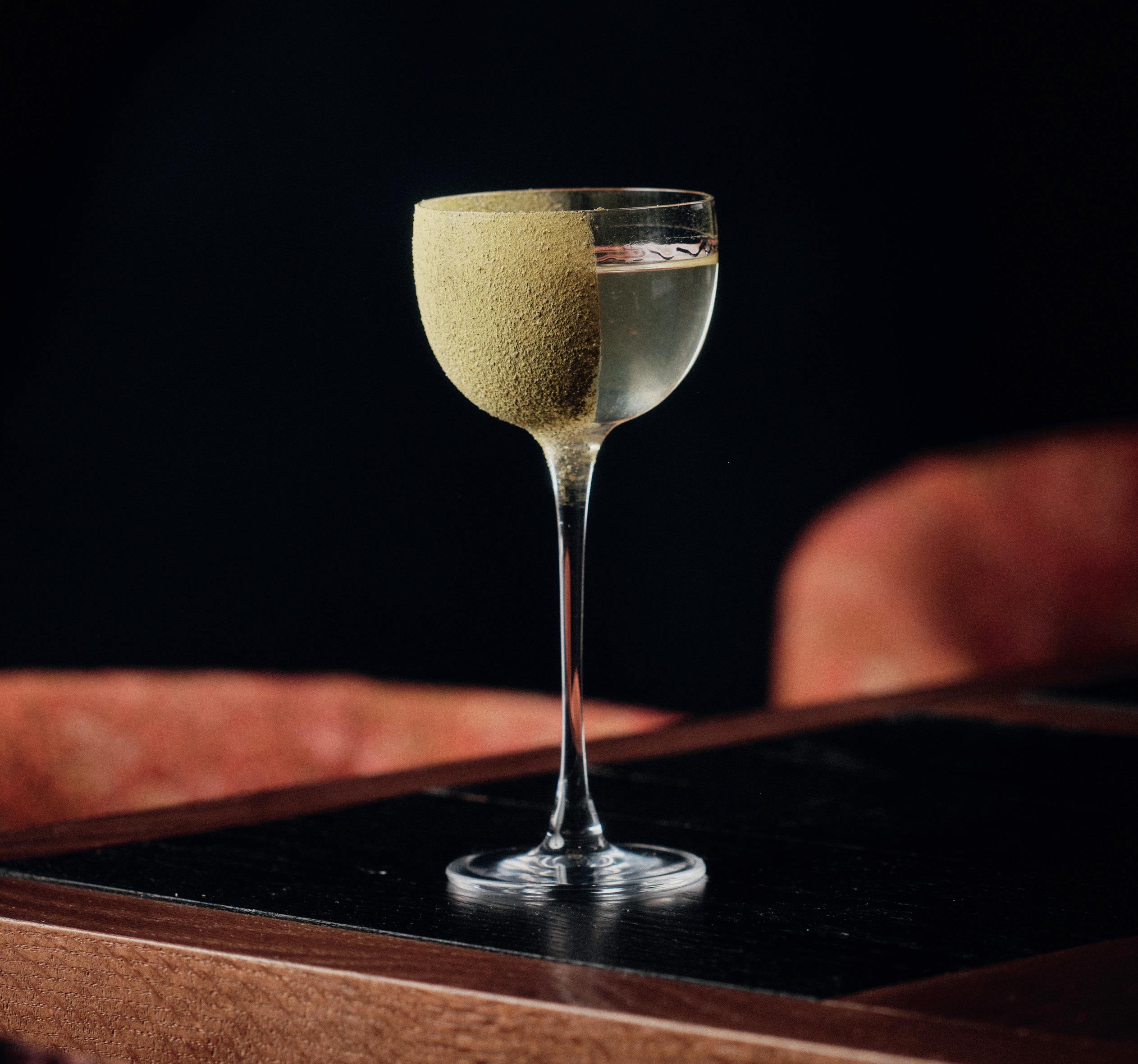
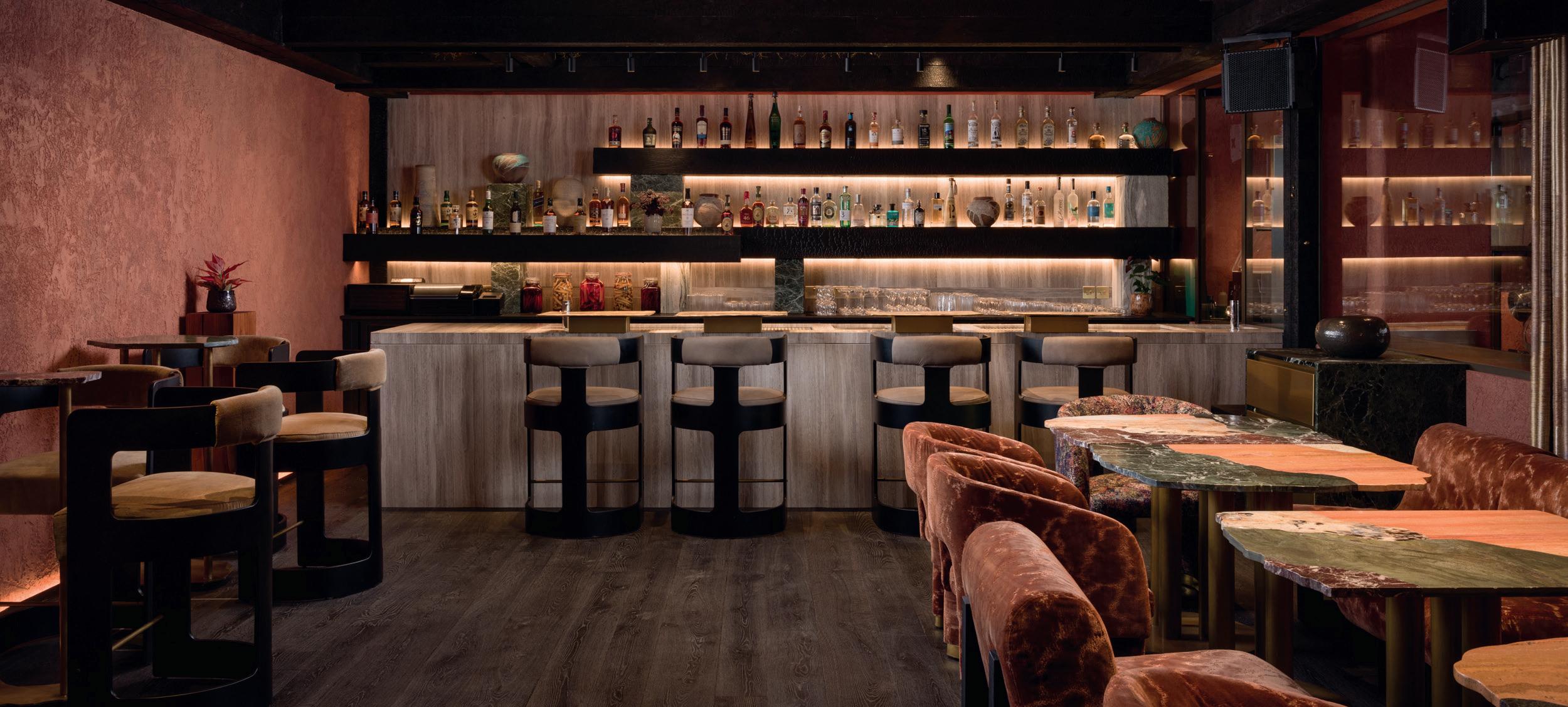
We chose gin for its botanical character, which pairs naturally with the profile of guacamole.
Now open beneath JUL’S in St James’s, No.11 Bar has quickly established itself as a late-night destination defined by its ingredient-led, kitchen-influenced approach to cocktails. Led by Bar Directors Vasilis Sgouromallis and Dimitris Karapanos alongside Bar Manager Leonardo Giacomello, the bar is rooted in the Mediterranean spirit of philoxenia – warm, generous hospitality – while offering a distinctive drinks programme shaped by savoury, culinary thinking and close collaboration with the kitchen above.
A standout expression of this philosophy is Aguacate, a spotlight serve that captures the essence of No.11’s creative direction. Inspired by the globally familiar flavours of guacamole and built on the structure of a classic gimlet, it reimagines a simple dish through a technical, flavour-led lens, transforming fresh, raw ingredients into a refined, expressive cocktail that sits at the intersection of cuisine and mixology.
“We chose to showcase one of our signature cocktails, Aguacate,” says Vasilis. “This drink is deeply connected to No. 11 and Juls overall, as it reflects the strong gastronomic influence behind our approach and the continuous inspiration we draw from the kitchen, an element that plays a fundamental role across a big part of our menu.
“In terms of style, it follows that of the classic gimlet. A citrus forward cocktail built on the balance between spirit, acidity, and subtle sweetness,” he adds.
The team explain that the idea behind the serve was to reinterpret something globally familiar, like guacamole. “While simple in concept, it relies heavily on the freshness and quality of its raw ingredients, as it is a cold preparation that requires no complex technique, only precision and respect for the product,” Vallis shares. “Since raw materials and freshness are at the core
of everything we do, we wanted to translate these flavours into a liquid form.”
Delving deeper into the intricacies behind the drink, Vallis reveals why gin was the perfect choice for Aguacate, saying “We chose gin for its botanical character, which pairs naturally with the profile of guacamole.”
The serve’s components were deconstructed and rebuilt through different stages. As Vallis reveals, “We distil the key ingredients at very low temperatures under vacuum, in order to preserve the freshness of the raw materials. Then, we dilute the distillate with tomato water.
“Finally, we finish the drink with an avocado salt at the rim of our glass to complete the flavour profile,” he adds.
“It’s a cocktail we believe is worth experiencing not only for its taste, but for how it challenges perception, by expanding the way we think about cocktails and highlighting the limitless potential of flavour in liquid form,” Vallis finishes.
INGREDIENTS:
Gin
Guacamole – coriander, lime, tomato, onion, garlic, chilli, paprika and avocado as a salt on the rim of the glass
METHOD:
Shake all ingredients and double strain into a Nick & Nora glass.
FROM BOLD SPICED RUM COCKTAILS TO PREMIUM MARGARITAS AND TROPICAL SPRITZES, RÉMY COINTREAU IS HELPING THE ON-TRADE UNLOCK SUMMER TRADING OPPORTUNITIES WITH FLAVOUR-LED SERVES DESIGNED FOR SPEED, CONSISTENCY AND STANDOUT APPEAL.
Rémy Cointreau is gearing up for summer 2026 with a portfolio of cocktail serves designed to help the on-trade maximise peak trading. With a focus on bold flavour, premium execution and operational simplicity, the spirits house is targeting key growth areas including spiced flavoured rum, margaritas and spritz serves.
SPICED RUM GAINS GROUND WITH YOUNGER DRINKERS
The UK is now the fastest-growing flavoured rum-based spirit market in Europe1 with the spiced segment now accounting for over 60% of total rum sales and projected to reach £580m by 20352. Interest in the category continues to grow and younger consumers are playing a key role in driving this momentum, with four in ten young adults drinking rum at least once a week3
Mount Gay is tapping into this momentum with the launch of Mount Gay Bajan Spiced. Drawing on its Barbadian heritage, the expression combines established rum-based credentials with a flavour profile designed for modern tastes.
Crafted using Mount Gay rum and 100% natural ingredients, the liquid is positioned to work across both simple serves and more elevated cocktails, giving operators flexibility across different occasions. Featuring notes of fresh orange peel and warm spice, alongside red grapefruit, locally sourced ginger and Mount Gay estate sugar, consumers can enjoy the full flavour experience in a bar setting.
“The demand for bolder, more distinctive flavours continues to grow,” says Nick Ganich, Marketing Director. “This creates a clear opportunity for the on-trade to refresh menus and drive engagement. With Mount Gay Bajan Spiced, we’re looking to bring new energy into the category.”
Leading the activation is the Spiced ‘N’ Stormy, a bold reinterpretation of a modern classic bringing together spice, zesty grapefruit a ginger kick.
Designed with speed and consistency in mind, it is well suited to high-volume environments including terraces, rooftop bars and all-day summer trading. The serve delivers a balance of familiarity and differentiation, offering operators an easy way to introduce something new without adding complexity behind the bar.
Alongside this, Mount Gay Silver continues to anchor classic
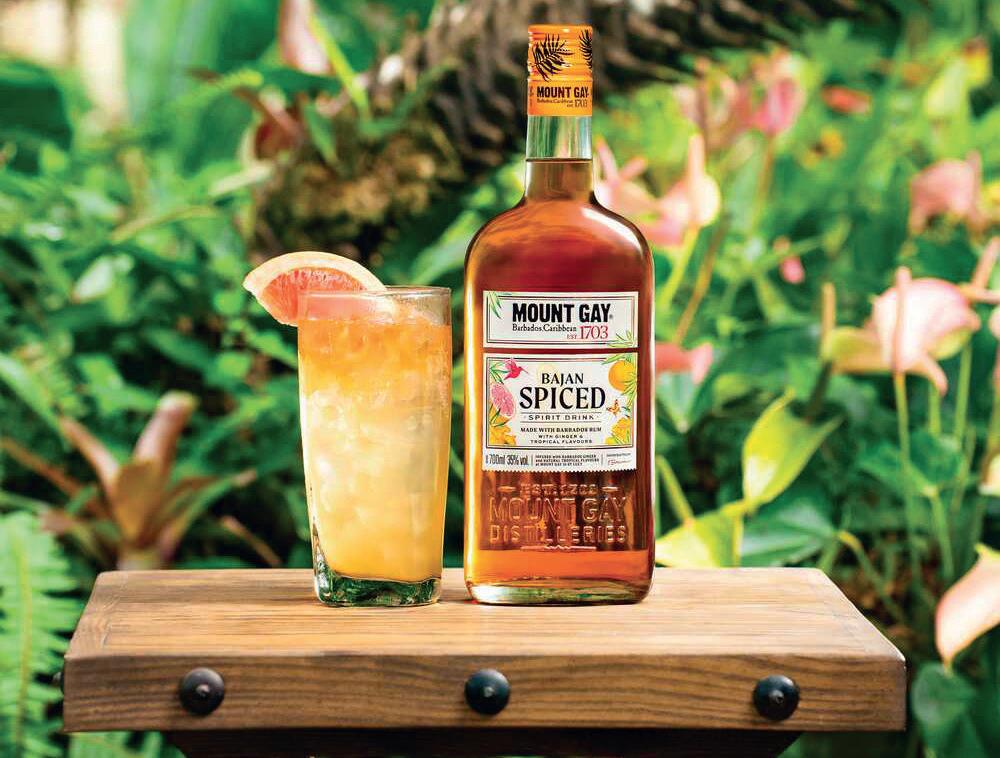
INGREDIENTS:
• 45ml Mount Gay Bajan Spiced
• 80ml Ginger Beer
• 15ml Fresh Grapefruit Juice
• Grapefruit wedge, to garnish
METHOD:
Fill a highball glass with plenty of ice. Pour in Mount Gay Bajan Spiced and grapefruit juice, and then, top with ginger beer. Stir gently, garnish with a fresh wedge of grapefruit and serve.
cocktail menus through serves such as the Mojito. It’s clean, crisp profile and global recognition make it a reliable option for venues focused on volume and consistency during peak periods.
The Margarita continues to perform strongly in the on-trade, with the cocktail continuing to be one of the most widely recognised and popular serves4
As the UK’s No 1 triple sec5, Cointreau sits at the heart of
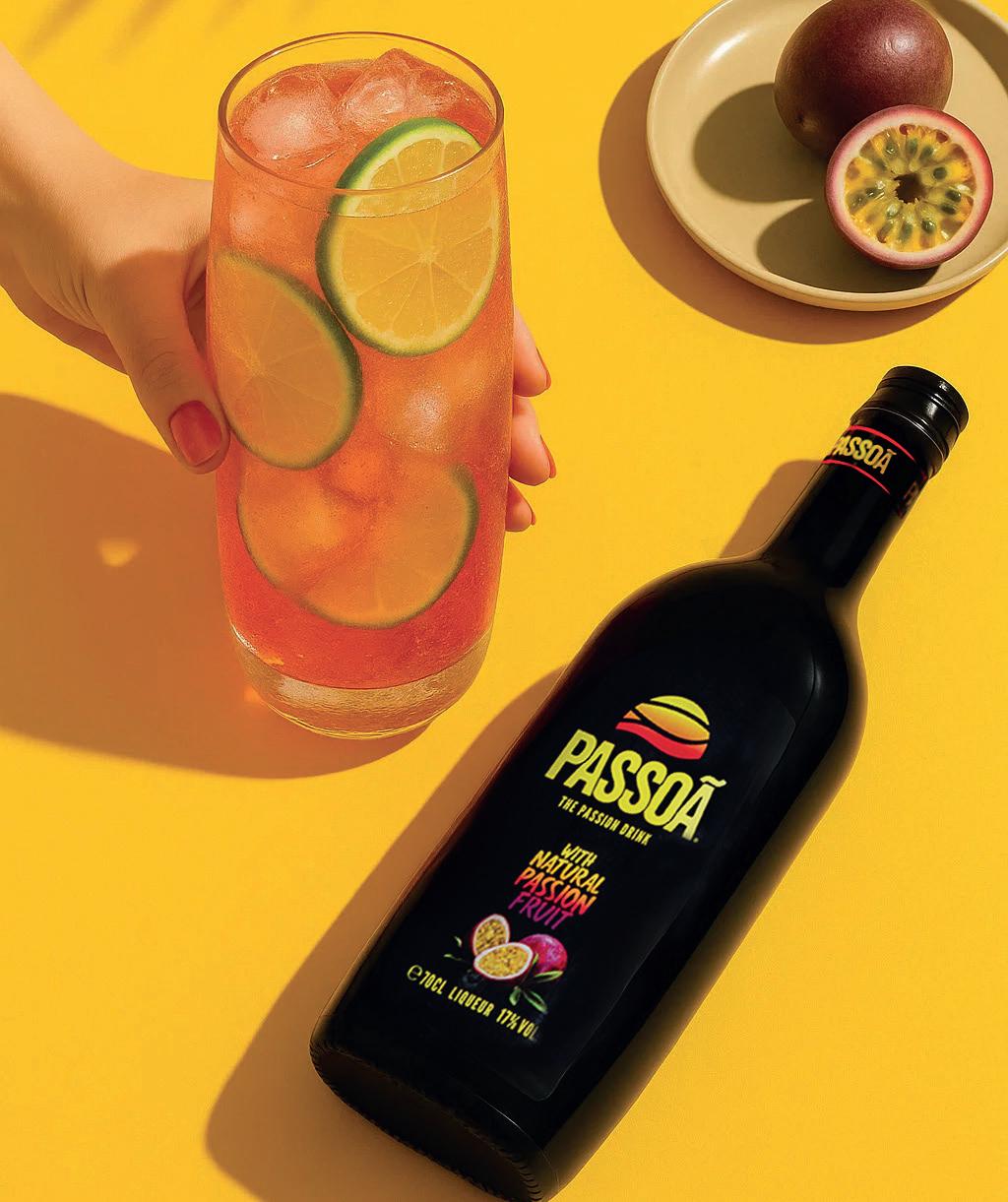
the serve, delivering the orange profile that brings structure and consistency to every variation. It was the only branded ingredient in the original Margarita, underlining its long-standing role in shaping the cocktail’s flavour. Margarita Sames, who created the cocktail in 1948, famously said “A Margarita without Cointreau is not worth its salt.”
For operators, this makes triple sec a critical decision point. Using Cointreau as the best example of a high-quality expression not only elevates the finished drink but ensures consistency across serves – particularly important in high-volume environments to drive incremental occasions.
Lighter serves continue to play an increasingly important role, particularly as daytime drinking occasions and moderation trends evolve.
Passoã is positioned to capitalise on this shift, with spritz-style serves designed for longer drinking occasions. The Passoã Spritz offers a bright, tropical profile suited to warm-weather trading with strong visual appeal for menu placement and social sharing.
For operators, spritz serves provide an accessible entry point for a wide range of consumers, helping to broaden appeal across dayparts and occasions.
Across its portfolio, Rémy Cointreau is focusing on giving operators a cohesive set of tools to build effective summer cocktail menus.
The strategy combines flavour-led innovation with established classics and easy-to-execute serves, allowing venues to balance
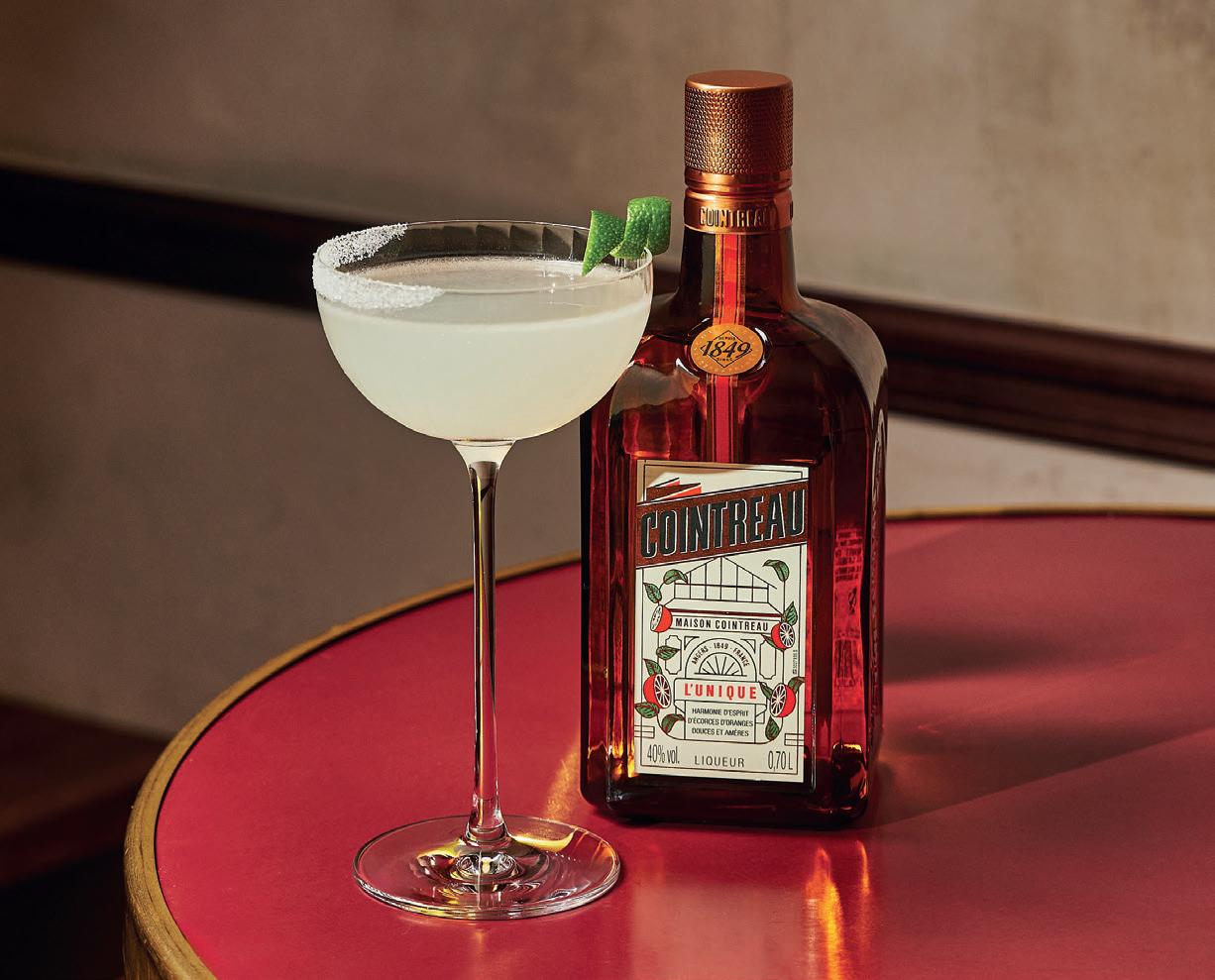
INGREDIENTS:
• 30ml Cointreau
• 50ml Blanco Tequila
• 20ml Fresh Lime Juice
METHOD:
Make a salt rim on your glass. Then, combine all ingredients in a shaker with ice. Shake vigorously until well chilled and strain into a Margarita glass. Garnish with a lime wheel and serve.
creativity with consistency. The emphasis is on drinks that can be delivered at pace while still supporting premium positioning.
For the on-trade, the opportunity lies in curating menus that encourage exploration without overcomplicating execution, using a mix of recognisable serves and new flavour experiences to drive both footfall and spend.
With strong demand across rum, margaritas and spritz serves, the category outlook for summer continues to be positive. By aligning with these trends and focusing on serves that are both appealing and operationally efficient, operators are well placed to capitalise on one of the busiest trading periods of the year.
Rémy Cointreau’s summer line-up reflects this approach, offering a flexible, premium portfolio designed to support venues across a range of formats and occasions to unlock the full potential of summer.
Available through all major wholesalers. For more information, contact your wholesale account manager today.
Please drink responsibly.


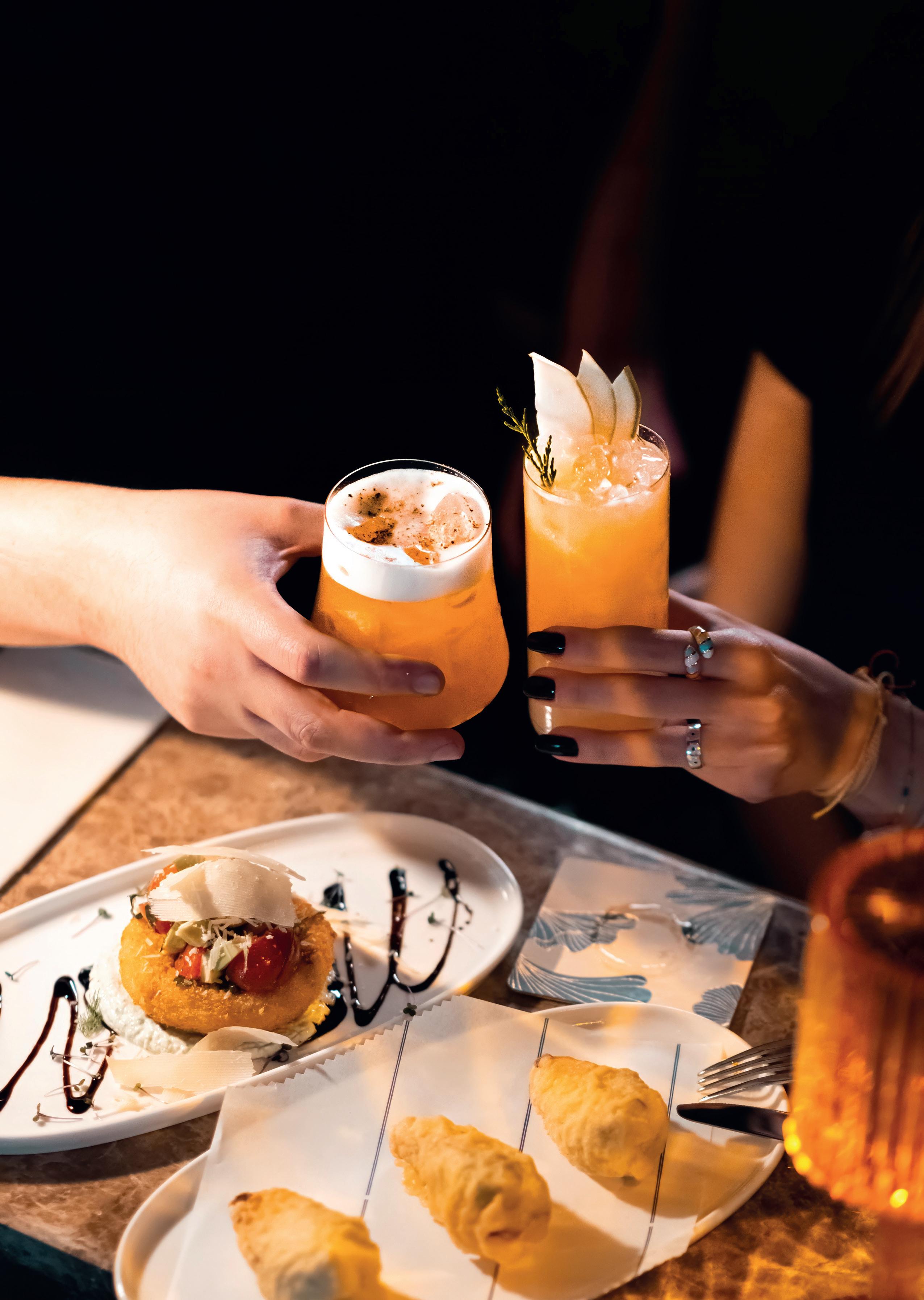
WE EXPLORE HOW BAR SNACKS ARE EVOLVING FROM A SIMPLE SIDE OFFERING INTO A STRATEGIC REVENUE DRIVER, HELPING VENUES ENHANCE THE CUSTOMER EXPERIENCE.
1
BAR SNACKS ARE NO LONGER AN AFTERTHOUGHT, THEY’RE A MAJOR DRIVER OF REVENUE. HERE ARE FIVE PRACTICAL WAYS TO BOOST FOOD SALES AND MAKE YOUR MENU WORK HARDER.
Bar snack menus perform best when they feel current and slightly unpredictable. Instead of relying on the same core items, rotate in trend-led dishes that spark interest - think £1 oysters on select nights, steak tartare specials, or crispy beef croquettes - alongside more familiar items like fries or nuts. The mix of comfort and “chef-driven” plates encourage trial. Customers are more likely to order when they feel the menu is evolving and they might miss something if they don’t try it now.
2
People spend more when food is designed for the table rather than the individual. Encourage sharing with items like mini beef sliders, loaded nachos, burrata boards or fried chicken buckets. Even high-end snacks like steak tartare can be positioned as shareable starters in a bar setting. The key is making food feel like part of the social experience, not a separate decision.
3
Linking food to drinks increases attachment and boosts average spend. For example, truffle fries pair naturally with cocktails, oysters with sparkling wine or martinis, and spicy Korean-style wings with lagers or IPA. Even simple prompts like “great with your pint” or “goes well with a Negroni” influence behaviour without pressure. Staff should weave this into conversation so food feels like an enhancement to the drink rather than an extra purchase.
4
Presentation is key. Glossy glazed posh hot dogs stacked with toppings, golden fries dusted with parmesan and truffle oil, or neatly plated steak tartare with egg yolk all create instant appetite cues. Where possible, let customers see or smell food being prepared – grilling, frying or plating in view of the bar area. Even a simple pass station can dramatically increase spontaneous ordering when guests are visually triggered.
5
Scarcity and timing are powerful motivators in bar environments. Create structured moments like late-night snack menus, happy hour bites, or weekend-only specials such as lobster rolls or seasonal croquettes. Even simple offers like “£1 oyster hour” work because they create a reason to order now rather than later. When food feels time-sensitive, it becomes part of the night’s rhythm rather than an optional add-on.
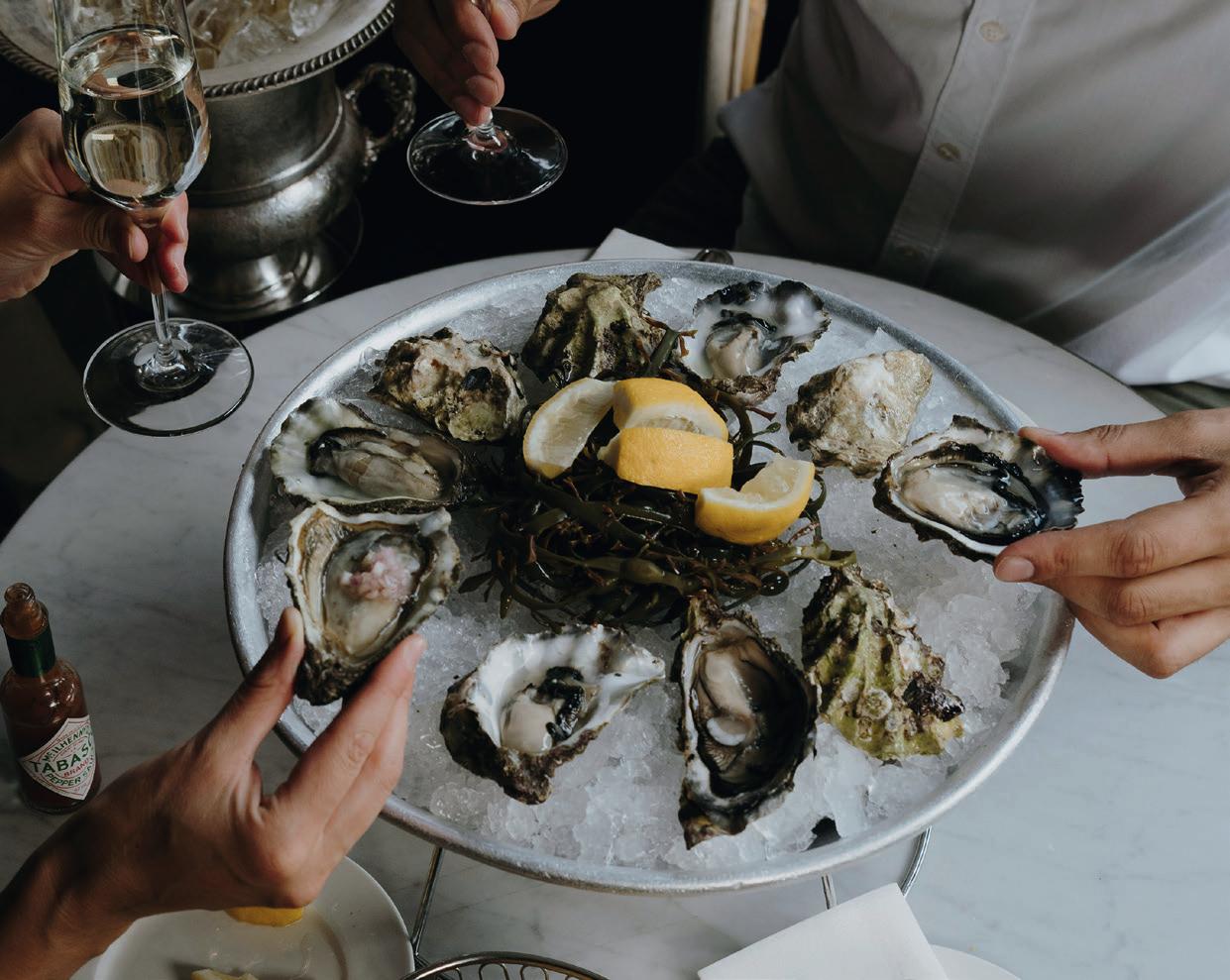
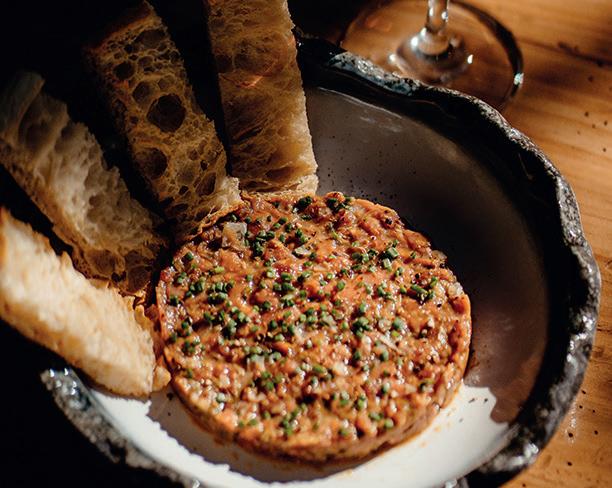
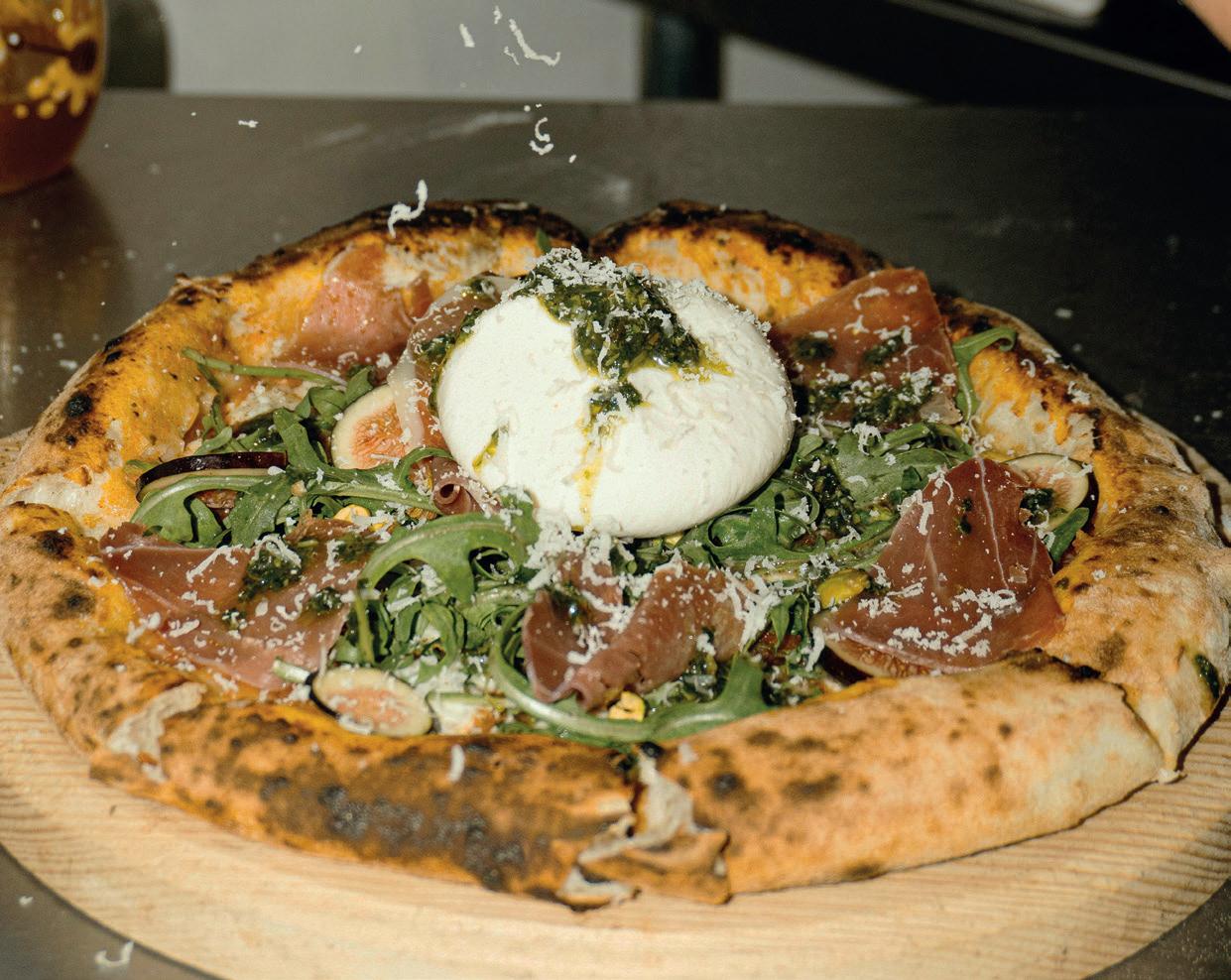
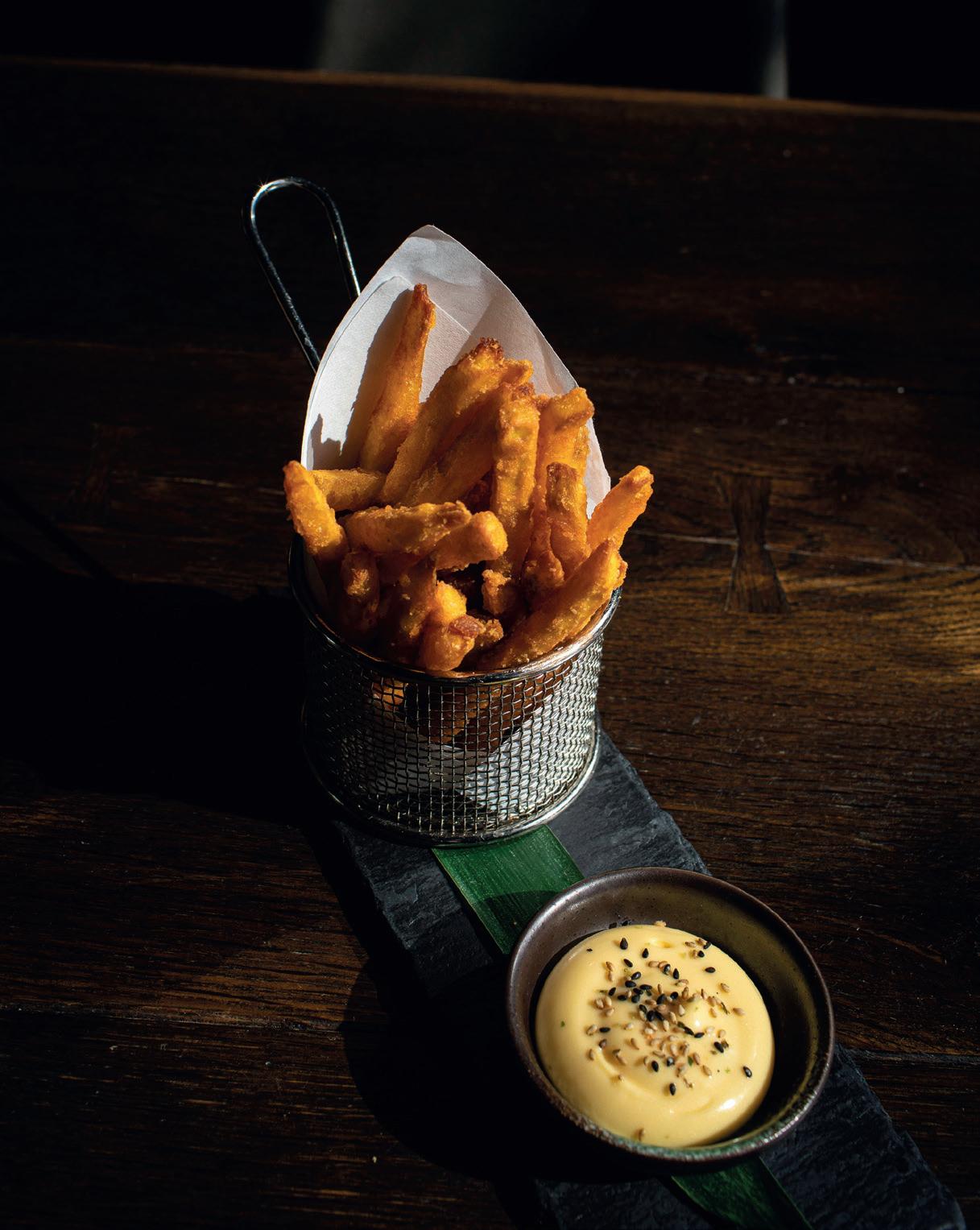
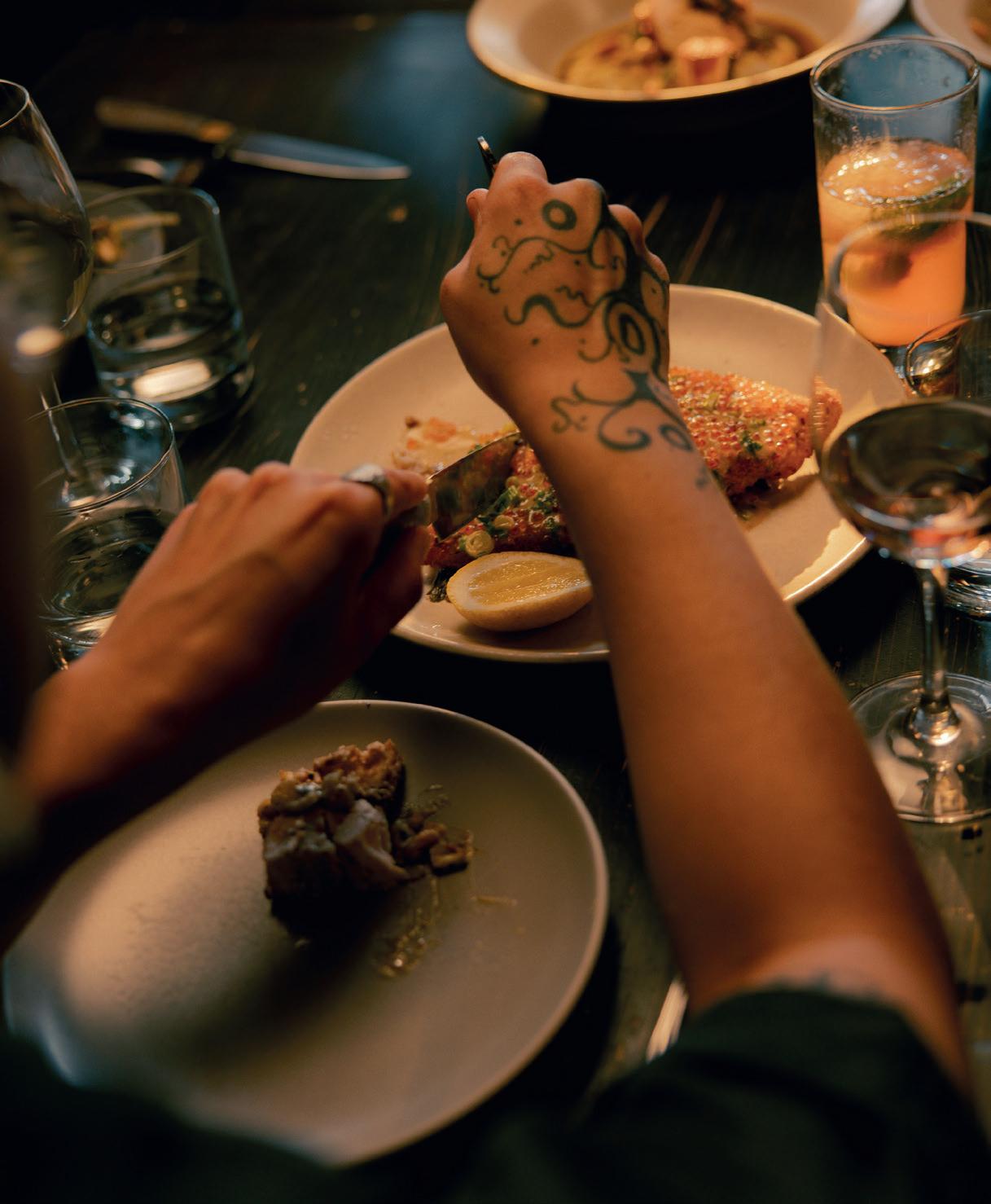
WITH THE HELP OF INDUSTRY EXPERTS, WE REVEAL HOW BAR SNACKS ARE EVOLVING FROM A SIMPLE SIDE OFFERING INTO A MAJOR REVENUE DRIVER AND A KEY PART OF THE CUSTOMER EXPERIENCE.
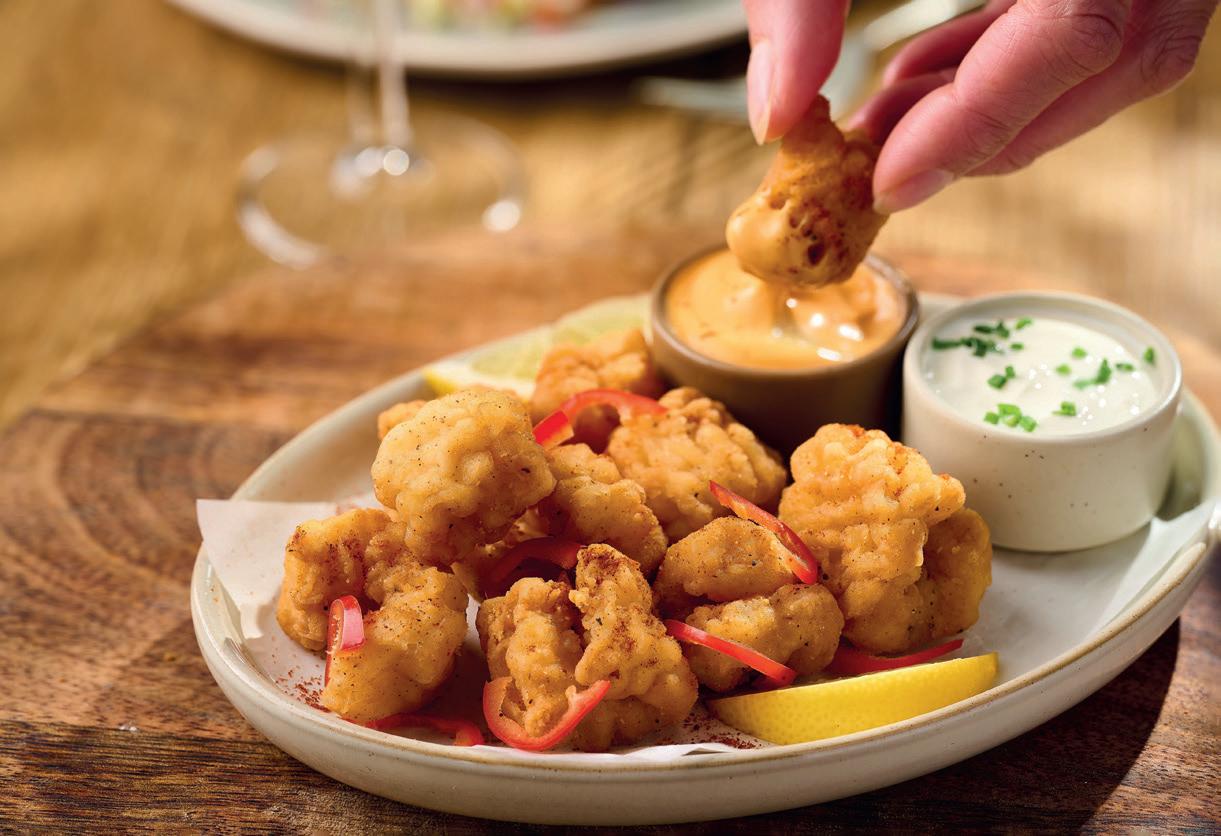
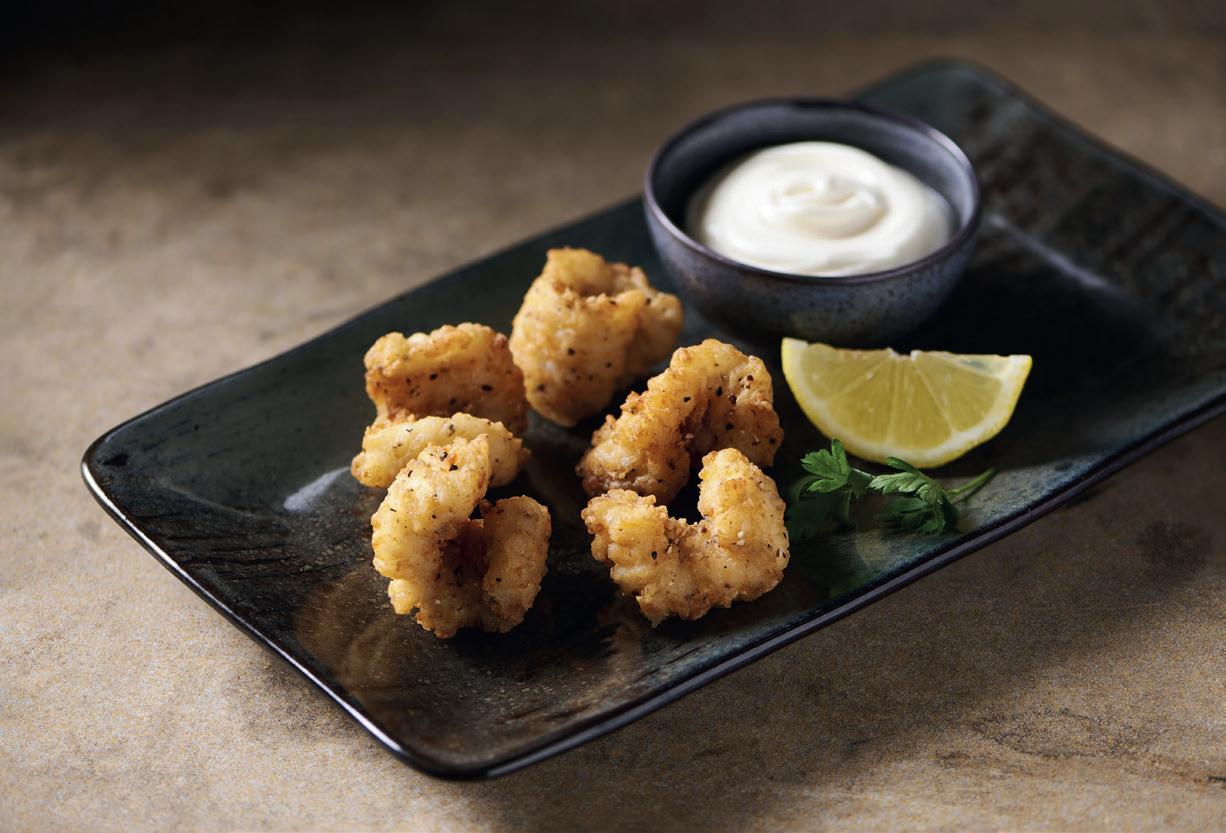
Bar snacks have long been considered a secondary concern in the hospitality sector – small bites that accompany drinks, often overlooked and underutilised. Today, however, the landscape is shifting. Snacks are no longer just an afterthought; they are becoming a crucial element of the overall customer experience and a significant revenue driver for pubs and bars. From premium nuts and gourmet crisps to elevated small plates, sharing boards, and locally sourced snacks, operators are rethinking how food can complement drinks, increase dwell time, and boost spend per head.
As consumers seek more memorable, quality-led experiences, bar snacks present a major opportunity for venues to differentiate
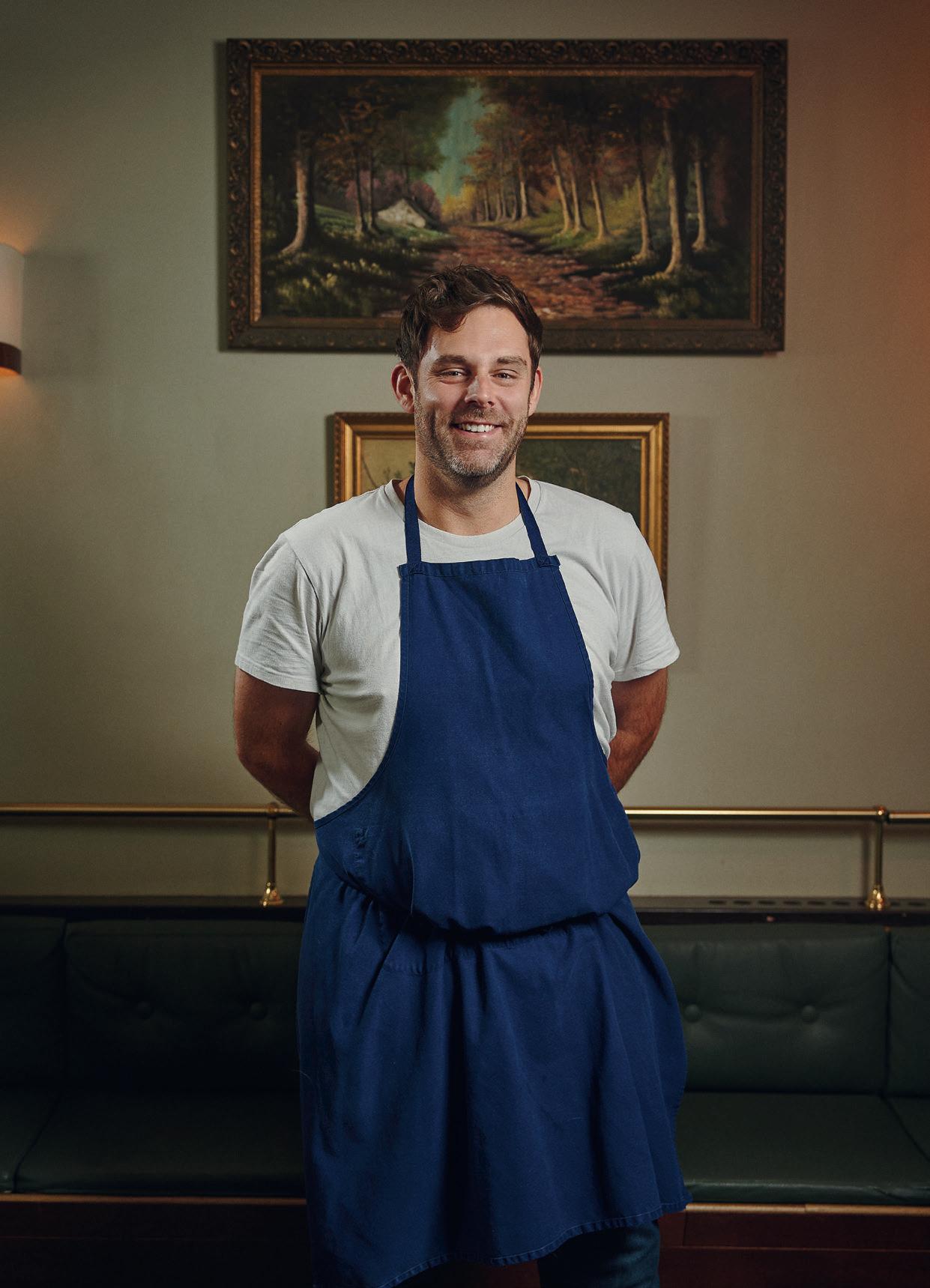
themselves, encourage incremental sales, and respond to growing demands for premiumisation, convenience, and variety. Insights from leading foodservice operators, snack suppliers, and renowned bars reveal a clear picture of the evolving bar snack market and the strategies operators are adopting to maximise its potential.
“Snacks are a brilliant opportunity to create an elevated valueled experience in pubs; however, consumers are looking for more than the traditional snack menu,” explains Imogen Hassard, Customer Marketing Manager for Pubs at Bidfood. Operators are discovering that food, when paired strategically with drinks, can transform the casual bar visit into a more immersive experience. Today’s consumers are savvy; they want choice and variety but
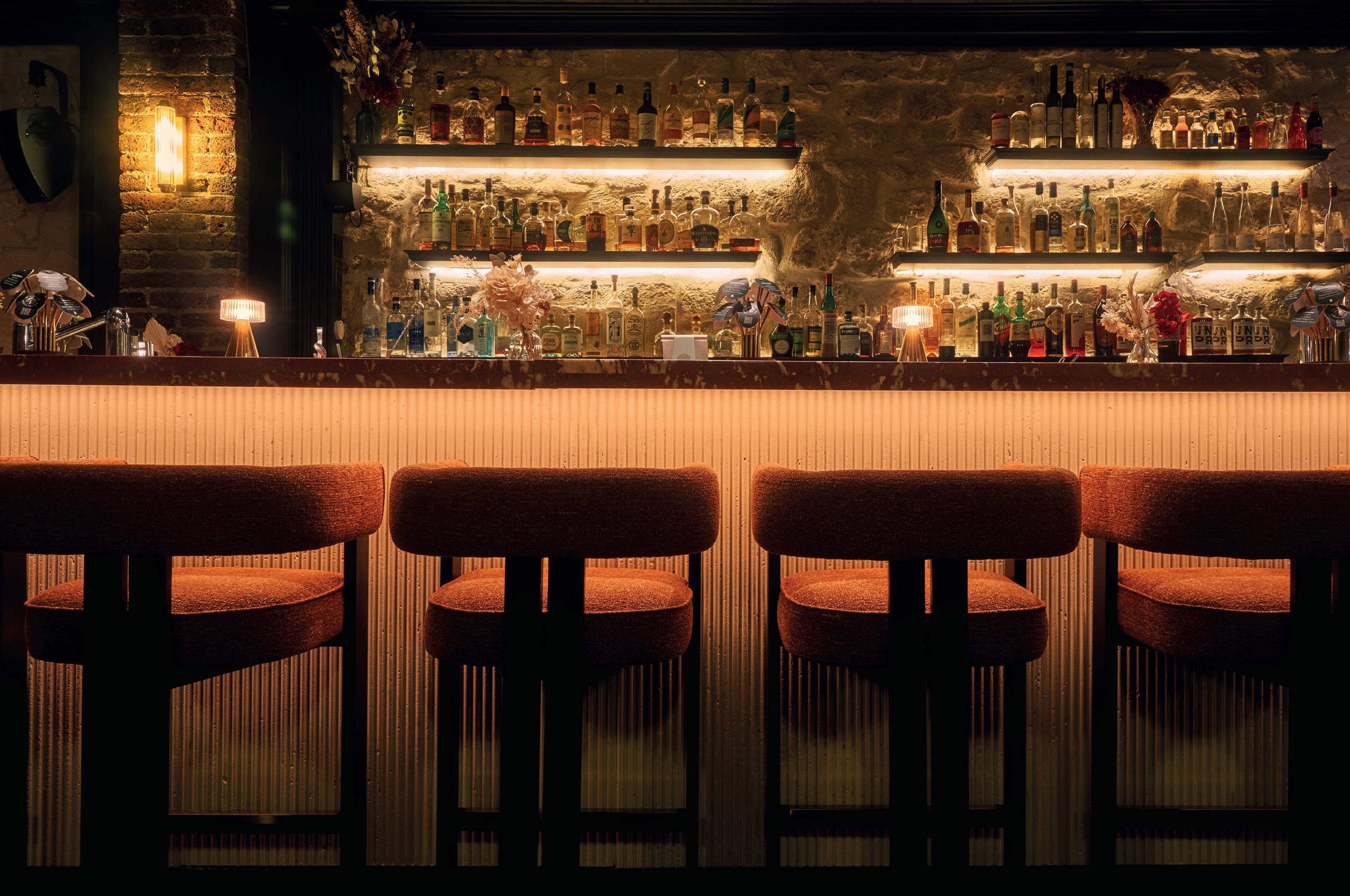
still welcome guidance when it comes to food and drink pairings.
“Bundle snacks with drinks deals to double your margin and, even better, upsell with cocktails,” Imogen advises.
Visual appeal plays a key role in elevating the snack offering.
“We eat and drink with our eyes, and one of the most common mistakes in bars is poor visibility of your offering. Customers who snack stay in bars 16 minutes longer and consume an average of 1.4 additional drinks when they have food to enjoy,” she notes. For bar operators, this is a clear incentive to invest in eye-catching presentation — whether that’s colourful platters, attractive packaging or strategically positioned displays.
Premiumisation is reshaping menus globally. Global flavours are gaining traction, with Korean, Malaysian, and South American cuisines leading the way. Korean cuisine, in particular, offers a breadth of sharable dishes that translate perfectly to the bar setting. Imogen points to options such as bulgogi — tender grilled meat flavoured with soy and garlic — or Jeon, savoury pancakes served with dipping sauces. “It’s an opportunity too good to resist, especially as 43% of consumers are willing to pay more to try Korean,” she highlights.
Similarly, there is growing consumer demand for satisfying, nutrient-dense options. Functional nuts, high-protein and fibre snacks, and innovative meat products are complementing the traditional offerings. “Consider moving beyond typical ‘grab and go’ options and include sharing boards and small plates on your menu. These formats encourage social and experience-led visits,
as well as group occasions and longer dwell times in your venue,” Imogen recommends.
Hyacinthe Lescoët, Co-founder of The Cambridge Public House and Co-owner of Little Red Door in Paris, notes that elevated bar snacks can represent a significant revenue stream. “Right now, it’s exactly where we want to be at around 17% of our sales,” he says, highlighting the potential for premium snacks to contribute meaningfully to overall turnover. For high-end cocktail bars, consumers expect snacks to be “just as creative and delicious as your drink offer.” Hyacinthe emphasises the importance of a signature “star” item, citing The Cambridge’s sausage roll as a hit that drives both sales and social sharing.
Laurie Howells, Head Bartender at Archive & Myth in London, agrees. “Guests expect more than just crisps and nuts now. Bar snacks are meant to feel considered, good quality, well-seasoned, and designed to work with the drinks,” she says. Sharing plates and small-format foods, she adds, “turn a drink into a longer moment. Guests settle in, order another round, maybe even a second dish because they’re grazing rather than just snacking. That extra time in the venue is where spend builds.”
The rise of sharing plates and smaller-format foods reflects changing consumer behaviour. Leigh Baker, Customer Proposition Director for Foodservice at Booker, emphasises that “GLP-1driven behaviour shifts are at the centre of dining out trends, bringing rapid changes to the way consumers order and consume food in bars and venues.” Smaller plates designed for sharing
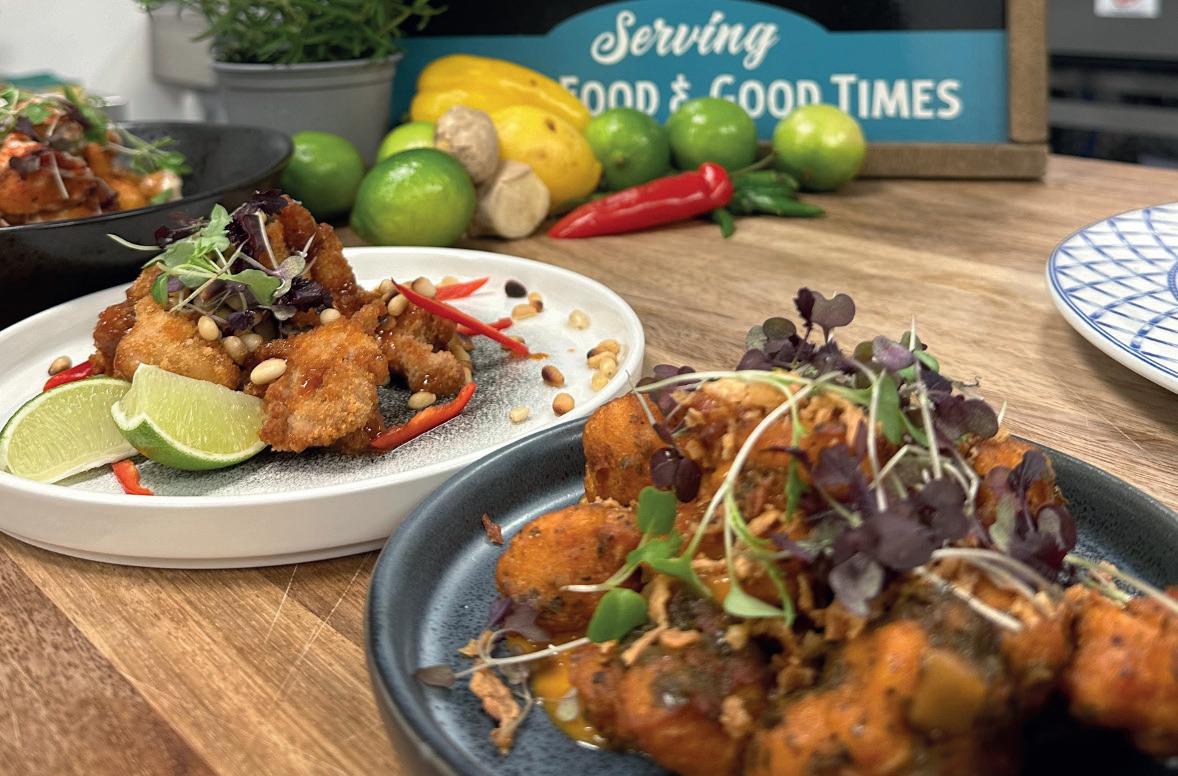
encourage variety and more flexible dining occasions.
Fish and seafood are particularly popular for sharing plates. Coated whitebait, salt and pepper squid, and hot and spicy squid can be served on stylish plates or ramekins with dips, offering filling and appealing snack options. Leigh explains, “Food that can be shared informally at the bar, the table, or outdoors can extend dwell times and bring additional drinks sales too.” These snacks are operationally efficient: high-margin, easy to prepare, and can be cooked straight from frozen in minutes.
For smaller venues, Leigh suggests focusing on versatile products that can be used across the menu. “Our teams can help chefs optimise their menus, bringing product diversity, choice and value, and make every purchase earn its place in the pantry.” Similarly, Hyacinthe highlights how creativity need not demand complex kitchen setups. “You just have to be smart about it. A lot can be done with a toaster, an induction and/or a blender. At The Cambridge, we don’t have any extraction and simply work with an oven and a blender. However, we are able to offer a nine-items bar snack menu which is complete, inclusive and delicious.”
Traditional bagged snacks remain an essential part of the bar snack mix. Stuart Graham, Head of Convenience and Impulse at KP Snacks, underscores their commercial importance: “Snacks represent an excellent commercial opportunity for pubs and bars, encouraging consumers to increase spend.” Visibility drives impulse sales, with 85% of consumers more likely to buy a
packet of crisps if prominently displayed. Familiar brands like KP Nuts, McCoy’s, and Tyrrells ensure customer trust while capitalising on premiumisation trends.
Premium products, such as Tyrrells hand-cooked crisps, enhance the sense of occasion. With 24% of consumers identifying premium snacks as key to a special visit and 38% purchasing snacks to share with friends or family, there is a clear opportunity to drive trade-up. “Available in a 40g pack, the bold and hearty new flavour is perfectly positioned to elevate customer experiences,” Stuart says.
Luca Manni, Corporate Bar Manager at Valenza Group in Florence, notes that “snacks should always be consistent with the bar’s drink offering…basic options alone are no longer enough; they need to be complemented with more refined offerings that enhance the overall experience.”
Similarly, serving snacks in storage jars or visually prominent displays can increase attention and sales. Deborah Bradfield, Sales and Marketing Manager at Cambrook Foods, shares, “Serving snacks from storage jars prominently displayed behind the bar is not only a good way of attracting attention to innovative products but also has the benefit of reducing packaging when compared to the more traditional individual snack packs.
“Having said that, there has also been a general move to use recyclable packaging but the challenge here is in the availability and ease of disposing of the packaging in the relevant recycling
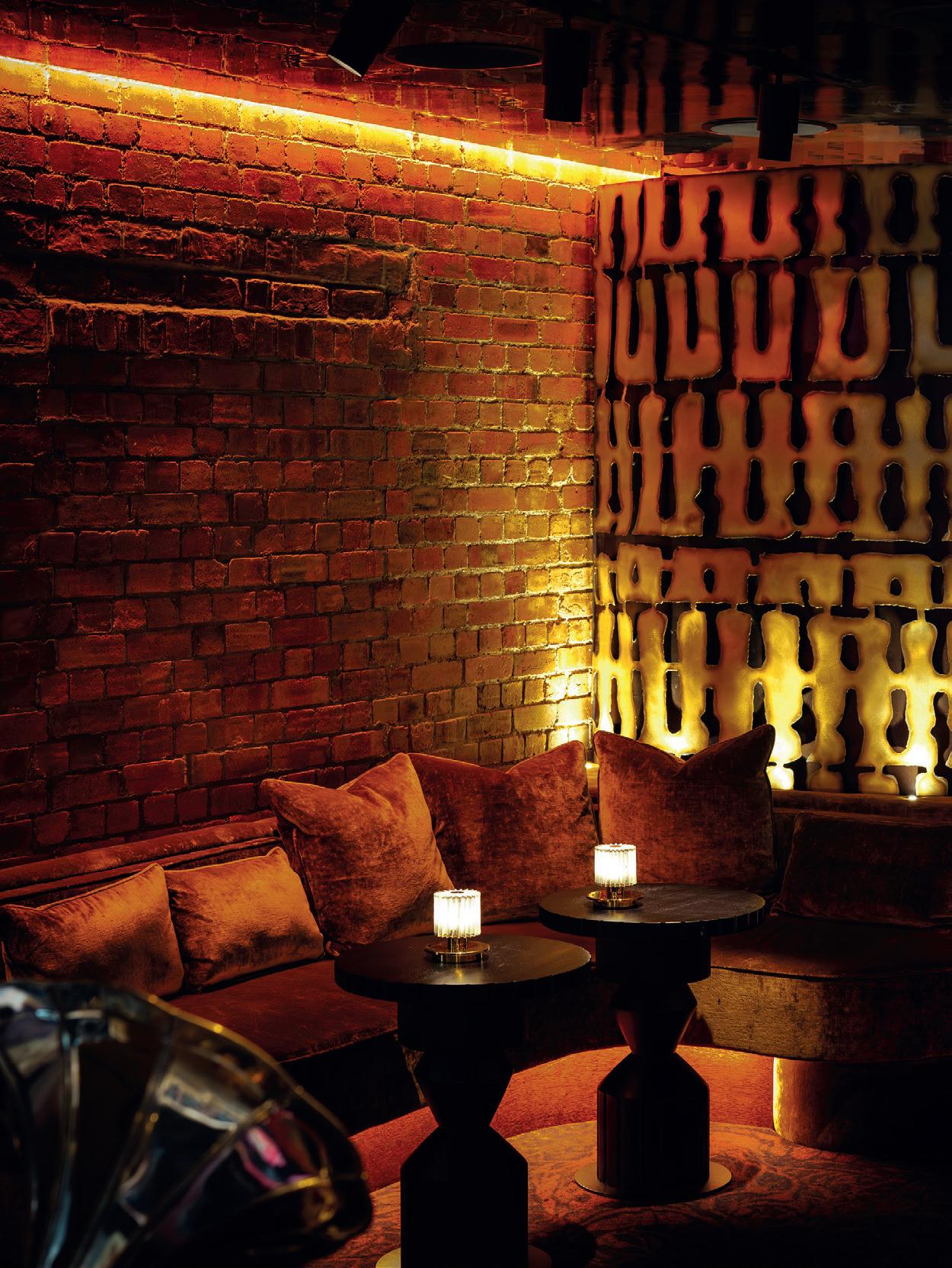
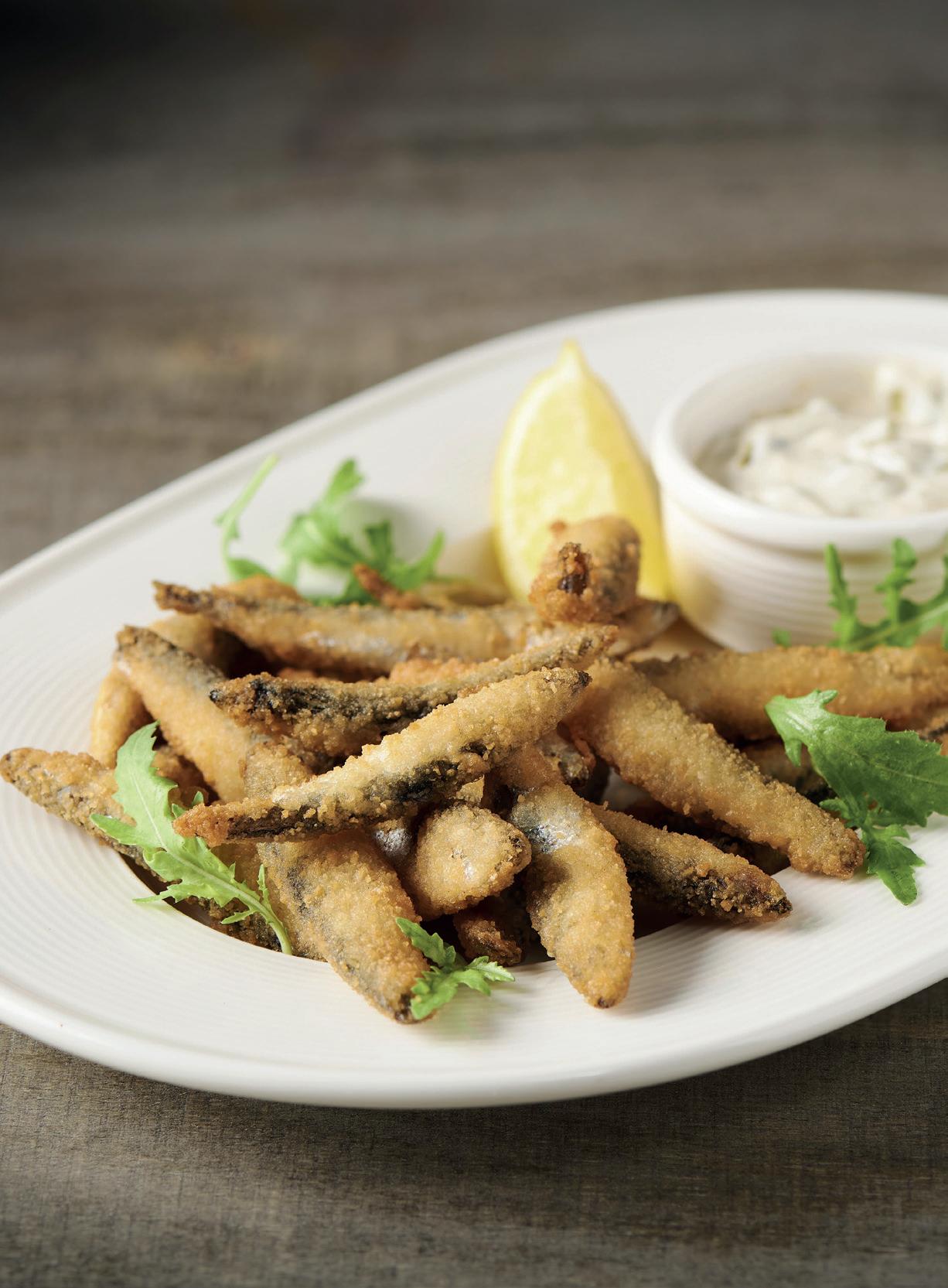
stream. The appeal to consumers of serving from bulk packs is in using less packaging in the first place,” she adds.
A recurring theme across operators is the benefit of pairing food with drinks. Imogen emphasises, “We shouldn’t underestimate the power of a bar snack and drink together. Another big, missed opportunity is failing to suggest the two as a pair.”
Laurie adds, “It’s about treating snacks the same way you treat drinks. Simple signposting or suggestive pairings go a long way. A salty or umami snack next to a martini, something spicy with a lager, or a richer bite alongside darker spirits.”
This strategy not only elevates the customer experience but drives incremental sales. Offering sharing platters, three-for-two deals, or handheld options for larger occasions encourages social and experiential engagement. “Innovation is the hot topic within foodservice, and that doesn’t just refer to the food and drink you’re serving, but the entire experience,” Imogen observes.
Across the industry, premiumisation is driving growth. Operators are enhancing traditional snacks with elevated flavours, textures, and presentations. Luca notes that “premium, wellselected products are driving growth: well-marinated olives, highquality almonds, carefully chosen chips.”
Laurie highlights that provenance, sustainability, and healthconscious choices are also increasingly important. “Guests don’t always actively ask about sustainability or health, but they do respond to it when it’s there, it adds to the feeling that the offer
is more considered and higher quality,” she notes.
Similarly, Hyacinthe stresses the importance of accessibility and inclusivity, recommending that snacks cater to dietary restrictions and remain appropriately priced to complement drink selections. “Size shouldn’t be too large, so it leaves room for drinks and keeps the energy up, but it is also very important to have shareable items,” he explains.
Bar snacks are no longer just an accompaniment to drinks; they are a key driver of commercial and experiential value. By combining premiumisation, global flavours, functional nutrition, and social dining formats, operators can elevate their snack offering to attract consumers, extend dwell time, and drive incremental sales.
From bagged snacks to elevated sharing boards, pubs and bars have a range of tools to cater to evolving consumer expectations. Operationally, the focus should be on visibility, versatility and thoughtful pairing with drinks to maximise revenue without complicating the kitchen.
Ultimately, the most successful venues will view bar snacks not as a marginal addition but as a strategic opportunity — an essential component of the overall pub and bar experience. With consumer expectations evolving rapidly, those that innovate, present snacks appealingly, and offer quality-driven variety will find snacks to be a major contributor to both commercial performance and customer satisfaction.
LABOUR CHALLENGES, EVOLVING GUEST DEMANDS AND SMARTER MENUS ARE RESHAPING HOSPITALITY. JON MORLEY, HEAD OF UK FOODSERVICE CHANNEL AT KELLOGG COMPANY, DISCUSSES THE TRENDS DRIVING CHANGE AND WHAT OPERATORS CAN EXPECT NEXT.
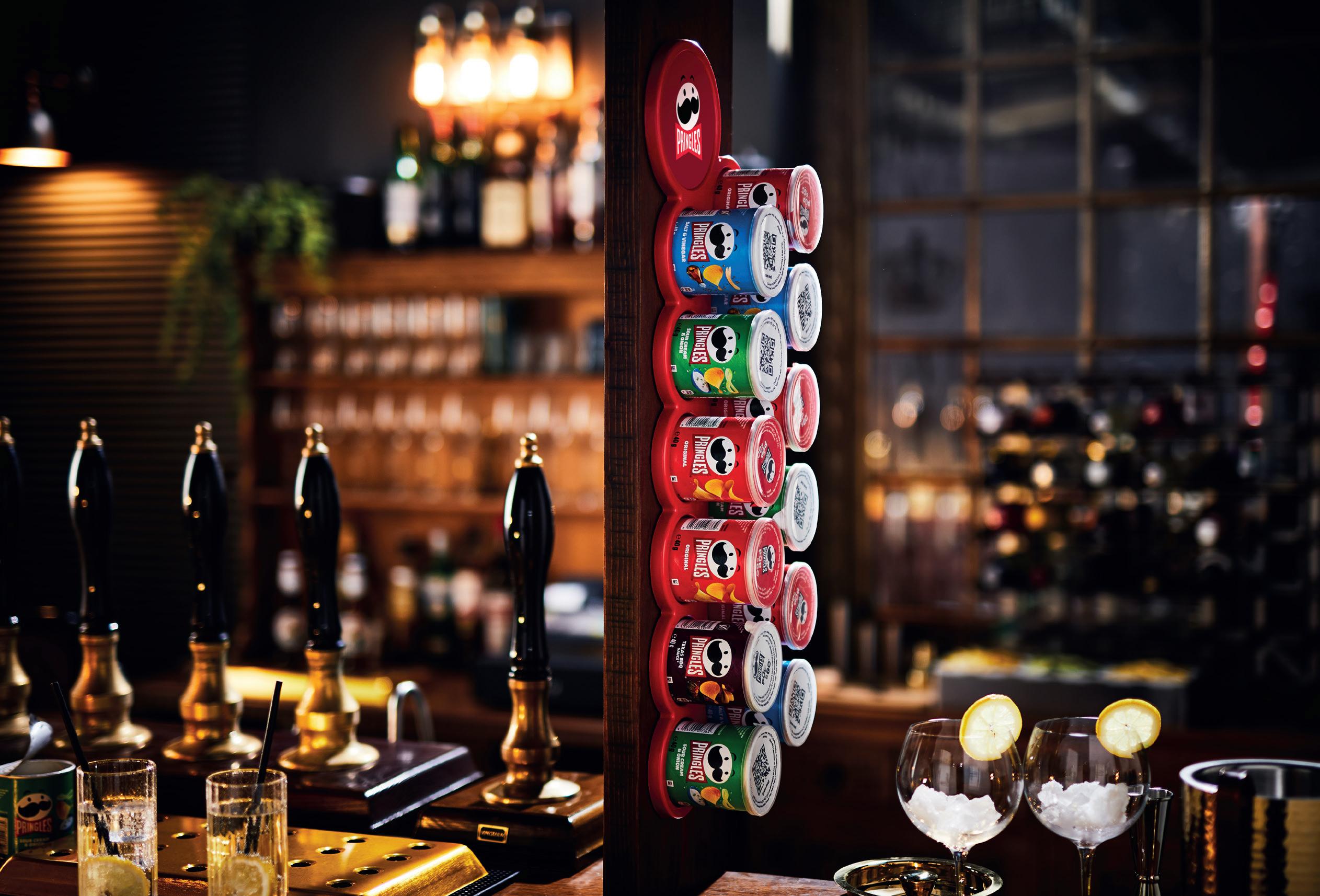
WHAT MAJOR SHIFTS DO YOU EXPECT TO SEE IN FOODSERVICE IN HOSPITALITY OVER THE NEXT 3–5 YEARS?
We’re already seeing menus get tighter, and that’s only going to continue. Fewer dishes, fewer ingredients, but each one working harder. At the same time, snacking and sharing will continue to grow, particularly around social occasions where food
complements the drink rather than dominates it. Another big shift is consistency. Guests expect the same experience whether they’re visiting one site or another, which puts pressure on operators to standardise without losing personality. And finally, premiumisation isn’t going away — but it has to feel earned. Quality, brand and format all need to justify the price.
We’ll continue to invest in innovation, but equally in insight and support — helping operators understand which occasions are growing and how to unlock them profitably.
HOW ARE GUEST EXPECTATIONS AROUND CONVENIENCE, HEALTH AND PREMIUMISATION SHAPING YOUR INNOVATION PIPELINE?
Guests are a lot more discerning than they used to be. Convenience is expected, but not at the expense of quality. Health means different things to different people, but transparency and portion control matter. And premiumisation is about cues — texture, flavour, format and brand story — rather than just cost.
So, when we look at innovation, we ask a simple question: does this help an operator serve something guests feel good about choosing, without adding complexity behind the bar or in the kitchen?
WHAT INNOVATIONS ARE YOU BRINGING THAT REDUCE PREP TIME OR WASTE?
That’s a huge focus for us. Labour remains the biggest constraint in hospitality, so products need to be intuitive and forgiving. We’re investing heavily in formats that have long shelf life, minimal prep and clear portioning.
Frozen and ambient solutions are playing a bigger role, as are products that can be used across multiple occasions rather than sitting on a menu for one purpose. Reducing waste isn’t just about sustainability — it’s about margin, and operators feel that every day.
HOW DO YOU SUPPORT CONSISTENCY ACROSS MULTI-SITE BAR GROUPS?
Consistency is where strong partnerships really matter. Multi-site operators need confidence that what works in one venue will
work in another, without constant retraining or adaptation. We support that through standardised specifications, reliable nationwide supply and practical tools that help teams execute consistently. It’s not just about the product itself — it’s about how it’s communicated to guests. The easier we make that, the more value we add.
WHAT SHOULD BAR OPERATORS EXPECT TO SEE FROM YOU IN THE NEXT 12–24 MONTHS?
They should expect us to stay very focused on licensed trade realities. More foodservice specific formats, more solutions designed around snacking and sharing, and more collaboration on how menus actually perform in real venues.
We’ll continue to invest in innovation, but equally in insight and support — helping operators understand which occasions are growing and how to unlock them profitably. It’s about being a partner, not just a supplier.
IF YOU COULD SOLVE ONE MAJOR PAIN POINT IN HOSPITALITY FOODSERVICE OVERNIGHT, WHAT WOULD IT BE?
Without hesitation, labour. If we can genuinely help operators do more with fewer people — without compromising guest experience — everything else becomes easier.
That’s why we focus so much on simplicity, consistency and flexible formats. If food can be easier to execute, easier to manage and easier to love, it takes some pressure off teams and lets operators focus on what they do best: hospitality.
kelloggs.co.uk
LEIGH BAKER, CUSTOMER PROPOSITION DIRECTOR, FOODSERVICE AT BOOKER, EXPLAINS HOW THE UK’S LEADING FOOD AND DRINK WHOLESALER IS HELPING BARS MAXIMISE ONE OF THE BIGGEST TRADING MOMENTS OF THE YEAR, THE WORLD CUP, WITH EXPERT SUPPORT, ON-TREND SOLUTIONS AND SCALABLE, CROWD-PLEASING MENUS.
HOW IS BOOKER SUPPORTING BAR OPERATORS IN PREPARING FOR MAJOR EVENTS LIKE THE WORLD CUP, PARTICULARLY WHEN IT COMES TO DELIVERING CROWDPLEASING FOOD OFFERINGS AT SCALE?
The World Cup is one of the single biggest trading windows of the year for the on-trade, and the operators who plan well will be the ones who do well. At Booker, we’re focused on making that planning as straightforward as possible, whether a venue needs a full shop ahead of the tournament or a quick top-up between matches. Our role is to combine quality ingredients, commercial insight and on-trend inspiration so bars can capitalise on the opportunity this summer of sport presents.
WHAT ARE THE KEY FOOD AND DRINK TRENDS OPERATORS SHOULD BE TAPPING INTO DURING HIGH-FOOTFALL EVENTS LIKE THE WORLD CUP TO STAND OUT FROM COMPETITORS?
Global street food is dominating matchday menus, and Greek cuisine in particular is having a moment. Its simplicity, fresh flavours and handheld format make it ideal for informal dining and high-volume service.
On the drinks side, spritz serves are a key trend, with Hugo, Limoncello and Sarti Rosa joining the classic Aperol as options that appeal to younger consumers gravitating towards fruitier, lower-ABV profiles. No- and low-alcohol options are also essential, with Dirty Sodas offering a fresh, customisable alternative to mocktails, alongside brands like Captain Morgan’s Spiced Gold 0.0% and Gordon’s alcohol-free gin.
SPEED AND CONSISTENCY ARE CRUCIAL ON MATCH DAYS—HOW DOES BOOKER HELP OPERATORS STREAMLINE THEIR KITCHENS WHILE MAINTAINING QUALITY ACROSS HIGHVOLUME SERVICE?
We know operators need consistency, versatility and speed of execution on match days, so keeping menus simple by focusing on streamlined dishes that can be produced en masse without compromising on quality or temperature is key. We have a large range of convenient and versatile items which can be cooked straight from frozen, further supporting fast-paced kitchens where flexibility and waste reduction are critical.
Our nationwide branch network is backed by more than 140 dedicated support managers and specialist foodservice teams who work directly with pub and bar customers ahead of major events. They help operators forecast demand, set par stock levels
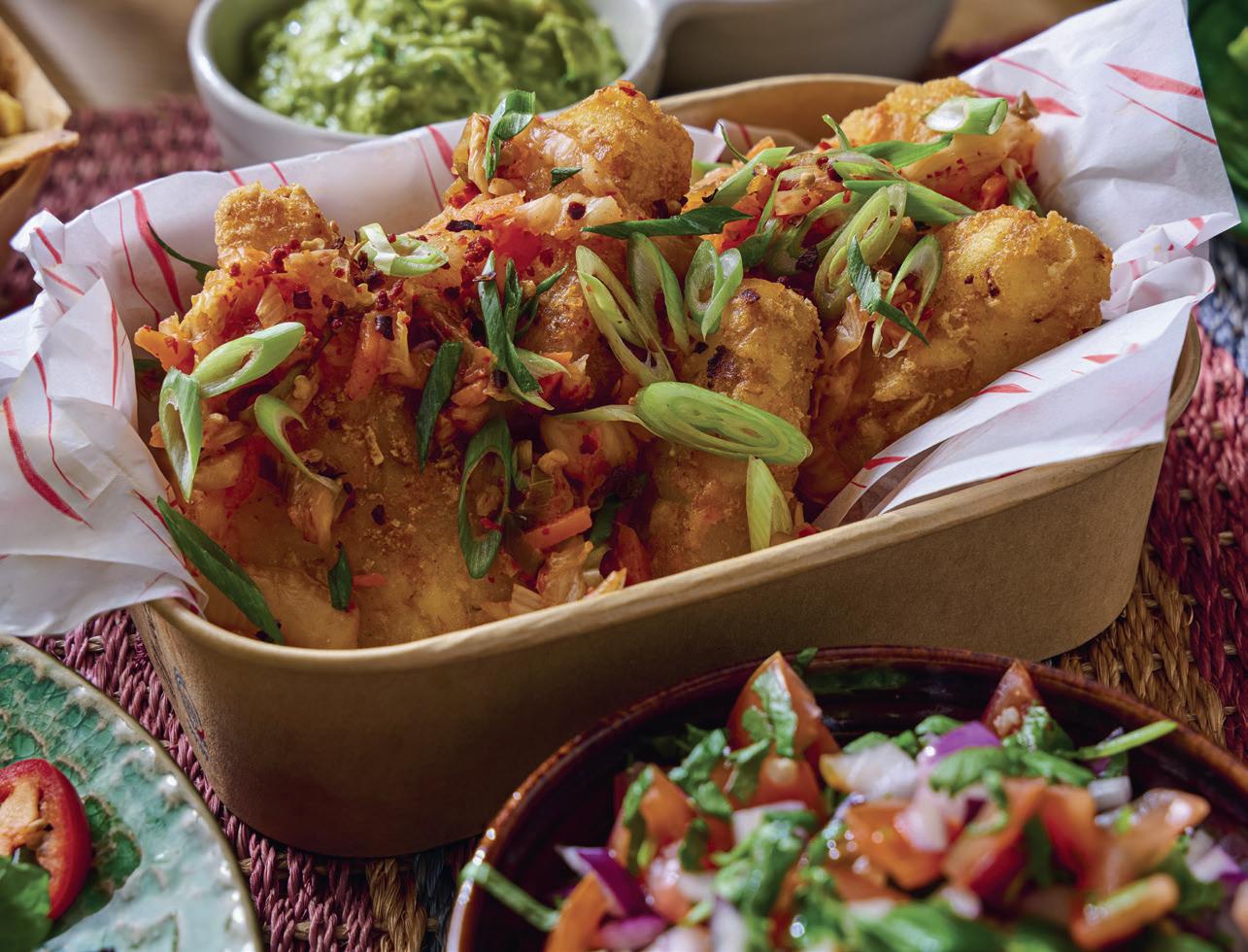
and build contingency into their ordering, so the risk of running out of key lines during peak trading is significantly reduced.
WITH GLOBAL FLAVOURS IN DEMAND DURING INTERNATIONAL TOURNAMENTS, HOW IS BOOKER HELPING VENUES INTRODUCE DIVERSE, ON-TREND FOOD OPTIONS WITHOUT ADDING COMPLEXITY TO THEIR OPERATIONS?
Sourcing on-trend lines from multiple suppliers adds time and complexity that most kitchens can’t afford during a tournament. Booker brings everything together in one place, so operators can build a globally inspired menu without the operational headache.
Our newly launched Food to Share range is designed for this moment. Curated around the rise of grazing, sharing boards and small plates, it includes standout dishes such as Truffle and Mozzarella Bites, Kimchi Hash Browns, Frickles, Pork and Nduja Meatballs and Nacho Cheese Triangles. The range is built to deliver on taste, texture and visual appeal, and works well for individual portions as it does for shared platters
Add in our catering-sized sauces, dressings and seasonings, and operators have everything they need to offer creative, contemporary menus without overhauling their kitchen set-up. The result is matchday food that feels considered, current and worth coming back for.
booker.co.uk
AT DE VIE IN PARIS, CO-FOUNDER ALEX FRANCIS IS REDEFINING COCKTAIL CULTURE THROUGH AN EVOLVING DRINKS PROGRAMME ROOTED IN FLAVOUR, SEASONALITY AND SUSTAINABILITY. FROM WHOLE-INGREDIENT THINKING TO IMMERSIVE STORYTELLING, HE SHARES HOW THE TEAM BALANCES INNOVATION, HOSPITALITY AND FRENCH DRINKING TRADITIONS, WHILE SHAPING A MORE THOUGHTFUL FUTURE FOR MODERN BARS.
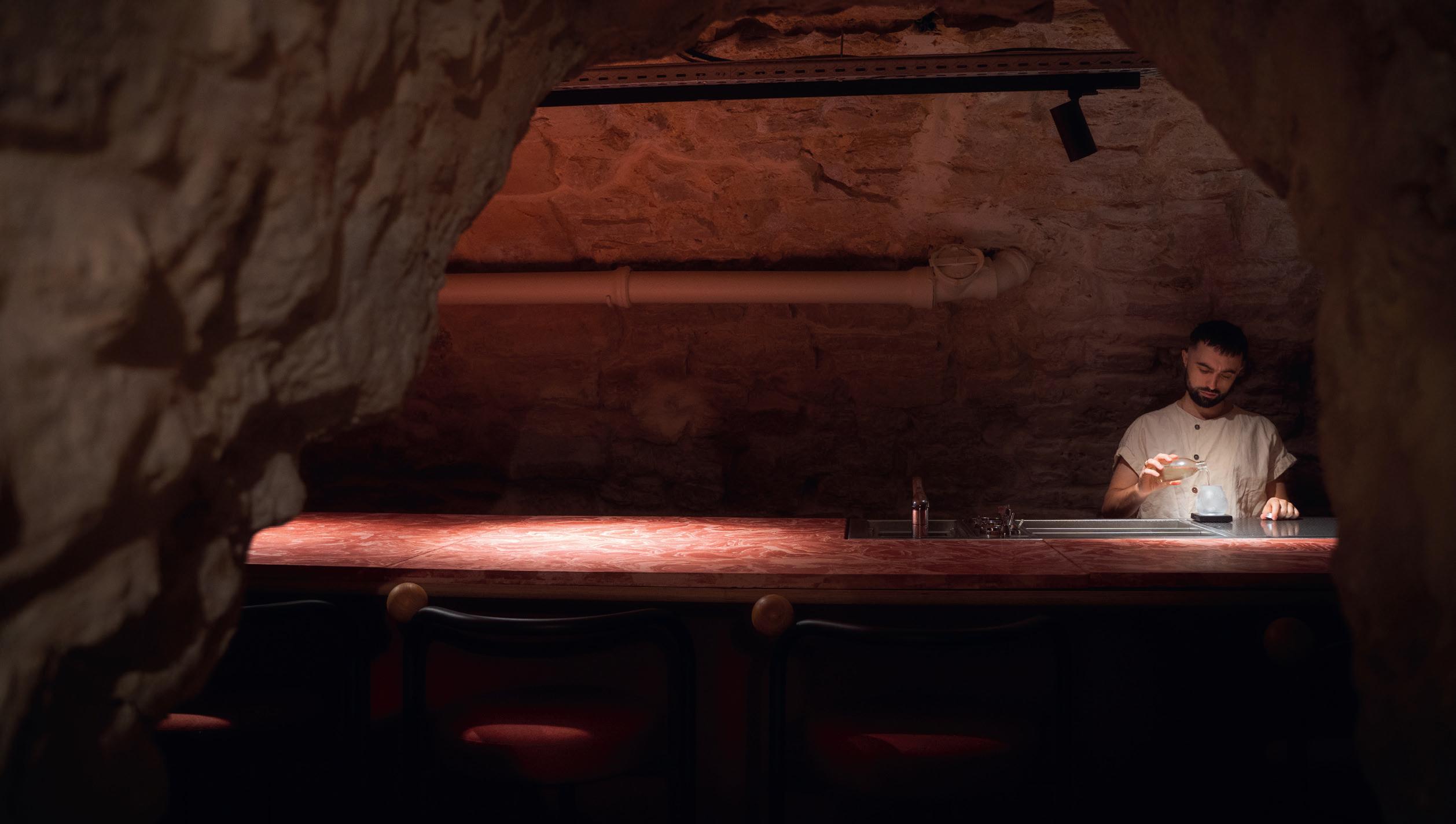
THE IDEA OF COCKTAILS IMPROVING OVER TIME IS CENTRAL TO YOUR PROGRAMME. HOW DO GUEST FEEDBACK, SEASONALITY AND EXPERIMENTATION INFLUENCE THE EVOLUTION OF A SERVE FROM ONE VERSION TO THE NEXT?
We see the menu as an ongoing conversation between ourselves, the guests and the producers. No drink or iteration has the same story; sometimes they change because they have to out of scarcity, other times because another drink changes on the menu and we want to find better balance, or simply because we want to change things up.
We’re always trying to find a natural balance between evolution and consistency, and so much of that comes from what feels exciting and relevant to everyone involved.
SUSTAINABILITY AND CIRCULARITY ARE BECOMING INCREASINGLY IMPORTANT IN MODERN BARS. HOW DOES DE VIE INCORPORATE “WHOLE INGREDIENT” THINKING INTO ITS COCKTAIL DEVELOPMENT PROCESS?
It’s very much an internal culture that we’ve cultivated in our work and collaborators over years, where circularity is a central practice in our day to day, however it’s rarely the first thought. Typically, we focus on maximising flavour, and see opportunities in what would otherwise be seen as waste. Often this comes in the form of preserving byproducts from principal processes; these processes of preservation then build up into a pantry of products that get fed back into the process of flavour creation, hopefully building flavour over time.
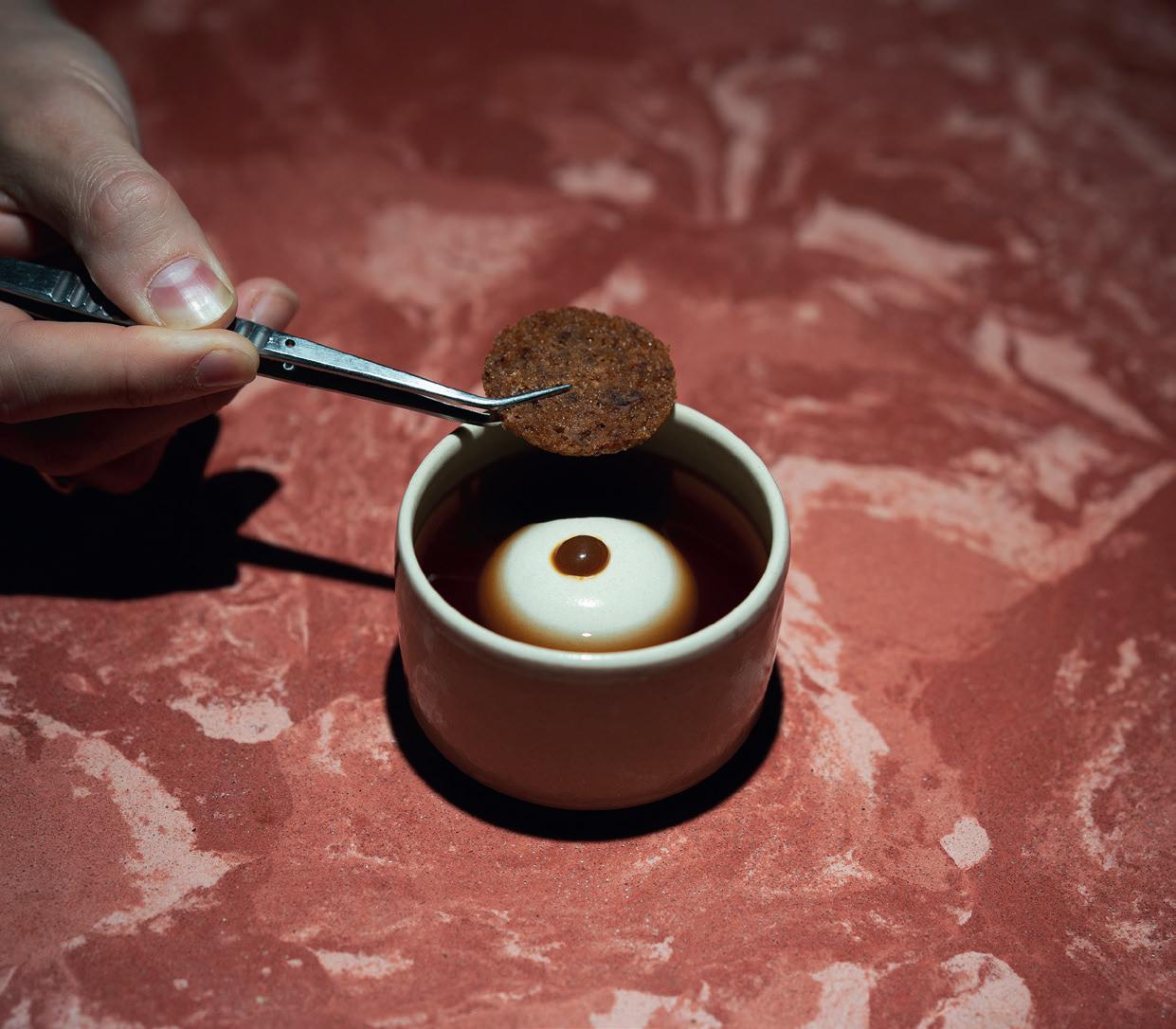
However, a key element is that we don’t just reuse waste in the production through this process of circularity, we encourage our team to make decisions that minimise consumption from the start.
CAN YOU SHARE AN EXAMPLE OF A HOUSEMADE INGREDIENT OR TECHNIQUE THAT ALLOWS YOU TO USE EVERY PART OF A FRUIT, HERB OR PRODUCE ITEM WITHIN THE BAR PROGRAMME?
A good example would be tomato. When we receive tomatoes, first, we separate the vines, which we can infuse into a high proof spirit such as cask strength Calvados or another fruit Eau de vie.
We then juice the tomatoes to produce a tomato water which we will often use in the bar and kitchen, sometimes fortifying it with white wine to create a more shelf stable ingredient. This will often have a very green tomato flavour that’s highly aromatic.
We’ll then take all the tomato solids left over from the tomato water and infuse these into a relatively neutral base spirit for several days to extract any remaining tomato flavours; the second flush here is more sensation driven than the previous aroma led tomato water.
Finally, we’ll take all the tomato pulp that’s left from the second infusion and we’ll dehydrate this pulp. Once dehydrated, it can either be used as a dried crisp for garnishing, or it can be powdered for garnishing and seasoning,
PARIS HAS A DEEPLY ESTABLISHED COCKTAIL CULTURE. HOW DOES DE VIE DISTINGUISH ITSELF WITHIN THE CITY’S BAR SCENE WHILE STILL REMAINING CONNECTED TO FRENCH DRINKING TRADITIONS/GUEST HABITS?
Parisians have a very different relationship to cocktail bars than comparable cities such as London or New York; it’s a far less common destination to Parisians looking to enjoy an evening. They’re seen as much more destination or special occasion venues rather than habitual spaces, and that’s exactly why we
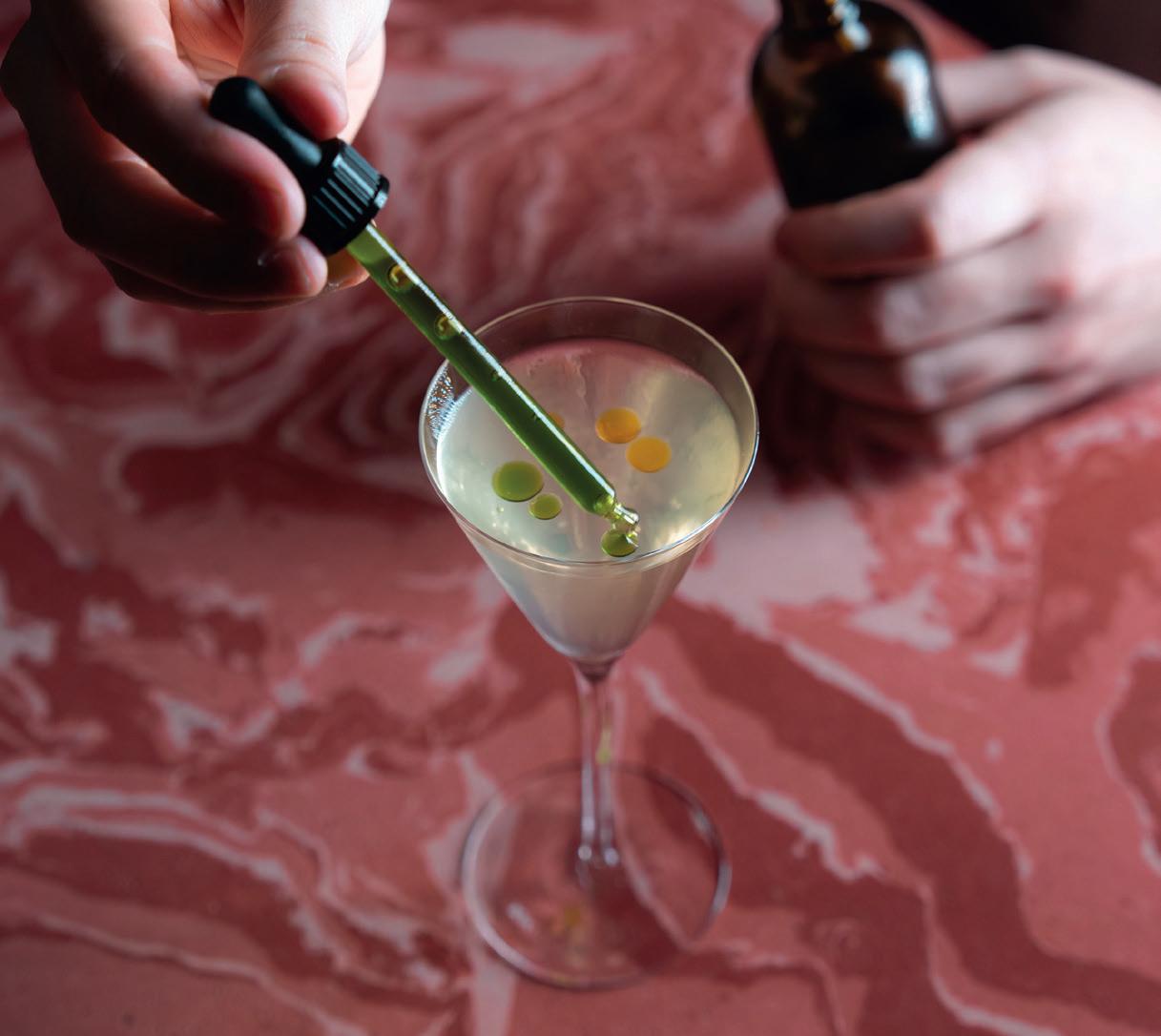
developed the Comptoir concept for De Vie alongside the Bar. Parisians live to dine and incorporating food into a drinks experience allows us to appeal to Parisians who we feel our drinks would resonate with, but who don’t necessarily venture into traditionally cocktail led venues.
HOW DO YOU TRAIN YOUR TEAM TO COMMUNICATE THE STORY BEHIND COCKTAILS WITHOUT OVERCOMPLICATING THE GUEST EXPERIENCE?
Firstly, we look for team members who are passionate about how we work and who we are, and at the same time are hosts first and foremost.
Of all the skills we value in De Vie, being a consummate host is first and foremost, because our bar offering is designed to be incredibly simple to execute in service; we focus less on drinks creation and production, and more on guest management and storytelling.
A big part of this is also about bringing the stories of our producers and spirits makers to life for the team, and so we regularly leave Paris to visit farms, distilleries and vineyards to help make the enthusiasm and passion of our team truly authentic, not a scripted marketing pitch.
LOOKING AHEAD, HOW DO YOU SEE DE VIE’S COCKTAIL PHILOSOPHY EVOLVING OVER THE NEXT FEW YEARS, PARTICULARLY AROUND SUSTAINABILITY AND SEASONAL DRINKING?
We’re always questioning whether our model is the right one for ourselves and our collaborators, trying to balance what is most exciting for guests, what is most rewarding for our team and what is most supportive for our partners.
I think, in an environment where guests are increasingly price conscious, bars and restaurants are experiencing labour shortages, and anyone producing alcoholic beverages will be feeling the squeeze with trends away from alcohol consumption,
@devie.bar