WidenerLaw
The many faces of a JD
■ Alan Levin: Director, Delaware Economic Development Office
■ Brian Tierney: Let Your Hook Always Be Cast


“Leading the Way” Campaign Update
Alumni Honor Roll Printer’s Proof
Beyond Traditional Law Practice: Alumni Success Stories


Widener University School of Law Magazine
CONTRIBUTING WRITERS:
Mary Allen, Ashley Barton, Erin Daly, Joe Dawson, Patricia Fox, Richard Herrmann, Alison Keeling, Todd Lineburger, Mary Marzolla, Rosemary Pall, Bob Power, Nancy Ravert Ward, Paige Richards
COPY EDITOR/PROOFREADER: James Kassees
PHOTOGRAPHY:
Mary Allen, Linda Ammons, Ashley Barton, Nathan Garrison, ToddLineburger, Deborah McCreery, Rosemary Pall, Nancy Ravert Ward
MAGAZINE ADVISORY BOARD:
Mary Allen, Linda Ammons, Ashley Barton, Paula Garrison, Susan Goldberg, Eileen Grena-Piretti, J. Patrick Kelly, Todd Lineburger, Deborah McCreery, Robyn Meadows, Keith Sealing, Constance Sweeney, Nancy Ravert Ward
Widener University School of Law Board of Overseers
Eugene D. McGurk, Jr., Esq. ’78, Chair
Dean Linda L. Ammons, JD, Ex Officio
Renae B. Axelrod, Esq. ’91
Steven P. Barsamian, Esq. ’75
The Honorable Raymond A. Batten ’79
Scott E. Blissman, Esq. ’97
C. Grainger Bowman, Esq., Vice Chair
John T. Carroll, III, Esq. ’81
Bonnie E. Copeland, Esq. ’09
Michael G. DeFino, Esq. ’75
The Honorable Susan C. Del Pesco ’75
Risa Vetri Ferman, Esq. ’92
Geoffrey Gamble, Esq.
Jacqueline G. Goodwin, EdD
President James T. Harris III, DEd, Ex Officio
Richard K. Herrmann, Esq.
The Honorable Randy J. Holland
Robert A. Honecker, Jr., Esq. ’81
Bret D. Keisling, Esq. ’05
Vice Dean J. Patrick Kelly, Ex Officio
Peter M. Mattoon, Esq.
James G. McGiffin, Jr., Esq., Ex Officio
Kathleen W. McNicholas, MD, JD ’06
Vice Dean Robyn L. Meadows, Ex Officio
Edward B. Micheletti, Esq. ’97
George K. Miller, Jr., Esq. ’81
Kathryn J. Peifer, Esq. ’02
Vivian L. Rapposelli, Esq. ’93
Scott W. Reid, Esq. ’02
Thomas L. Sager, Esq.
The Honorable Thomas G. Saylor
John F. Schmutz, Esq.
Bernard W. Smalley, Sr., Esq. ’80
Lee A. Solomon, Esq. ’78
Craig A. Styer, Esq. ’90
The Honorable Joseph T. Walsh
John A. Wetzel, Esq. ’75
Douglas M. Wolfberg, Esq. ’96
Widener University School of Law National Advisory Council
Marc R. Abrams, Esq. ’78
Michael J. Aiello, Esq. ’94
Howard K. Alperin, Esq. ’90
Joseph M. Asher, Esq. ’93
Miriam Benton Barish, Esq. ’93
Carl W. Battle, Esq. ’82
Kyle D. Bowser, Esq. ’91
Alexander Bratic
Michael A. Brown, Esq. ’91
Charlene D. Davis, Esq. ’84
Claire M. DeMatteis, Esq. ’92
Dr. Robert D. Gober, JD, ’79
Mitchell Gurwicz, Esq. ’95
N. Lynne Hughes, Esq. ’89
Brenda Alderman James, Esq. ’92
Jeffrey B. Killino, Esq. ’00
Wayne D. Kimmel, Esq. ’95
Alan B. Levin, Esq. ’80
Robert O. Lindefjeld, Esq. ’93
Kenneth J. Lopez, Esq. ’95
Harry Dillon Madonna, Esq. ’97
James J. Maron, Esq. ’85
Eugene D. McGurk, Jr., Esq. ’78
Patrick J. Murphy, Esq. ’99
John L. Reed, Esq. ’91
Cynthia R. Ryan, Esq. ’79
Leif R. Sigmond, Esq. ’90
Timothy J. Snyder, Esq. ’81
Douglas J. Steinhardt, Esq. ’94
Alice W. Strine, Esq. ’92
Leslee Silverman Tabas, Esq. ’79
James J. Veneruso, Esq. ’75
Richard P. Zaretsky, Esq. ’75


This symbol indicates additional information isavailable online. Type theURL into your browser or use your smart phone’s QR code reader. If you don’t have a QR code reader, you can get one at http://q-r.co.
WIDENER UNIVERSITY SCHOOL OF LAW Volume 19 Number 1 | SPRING 2012
What’s Law [School] Got To Do With It?
The value of a legal education and law degree go beyond the traditional paths of law firms and government service. Find out how some Widener Law alumni are putting their degrees to work.
From the Ground Up
The inaugural class of the Harrisburg campus started coursework before construction was completed and grass was grown. Don’t worry, they rolled out a “green carpet” when the Governor showed up!
A Delaware Lawyer in Chairman Schapiro’s “Court”
Professor Lawrence A. Hamermesh recalls his tenure as an attorney fellow under Mary L. Schapiro at the Securities and Exchange Commission in Washington. Learn how his Delaware-centric view informed his work onshareholder voting systems in the U.S. and more.


“In this issue of Widener Law magazine, we examine the breadth of success our alumni have achieved using their Widener Law degrees. ”
A message from
the dean
DEAR ALUMNIAND FRIENDS,
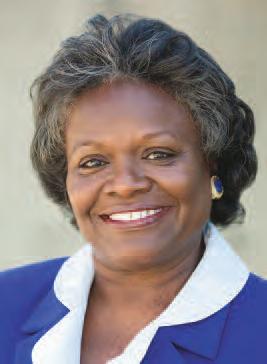
This spring, we celebrate the commencement of the Delaware Campus’s thirty-eighth class and the Harrisburg Campus’s twenty-first. As our newest graduates launch careers in our honorable profession, it is instructive to note the tremendous achievements of those who came before them. Indeed, this promising group of new lawyers joins a body of alumni that is as accomplished as it is diverse and whose training and abilities have taken them to the top of their fields, both in traditional law practice and far beyond. It is a point that should not be lost in the present economic climate, which has brought with it both constriction in the job market and questions about the value of a legal education.
In this issue of Widener Law magazine, we examine the breadth of success our alumni have achieved using their Widener Law degrees. While their professional goals and their means of pursuing them vary greatly, the origins of their legal thinking do not. Their knowledge and skills are informed by the expertise of accomplished faculty members like Larry Hamermesh, who in this magazine details his experiences as an SEC attorney fellow. We also hear from an incredibly motivated law student, Halak Mehta, whose summer 2011 global externship took her to the United Nations. In addition, this magazine offers a glimpse of the many, many scholarly and public service activities that occur on our campuses every year and of our faculty’s innovative and influential work. All of these things are made possible in part by the support of our alumni and friends. I urge you to look through the first proof of our honor roll, which is enclosed, and consider adding your name to those listed before our academic and fiscal year comes to an end in June.
This issue also celebrates the Harrisburg Campus’s inaugural class—the class of ’92. Like today’s graduates, they entered the legal profession in a time of great economic uncertainty. Buoyed by their abilities and training, they have accrued a remarkable record of collective success. We applaud them for the courage they displayed and for all that they have done since. We thank them for their inspiration and wish our newest graduates well.
LINDA L. AMMONS, JD ASSOCIATE PROVOSTAND DEAN
“The success of our law school is directly related to our contributions and is truly in our hands. ”
A message from the alumni board president
DEAR ALUMNIAND FRIENDS,
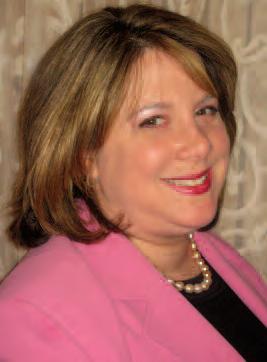
Although this winter was an easy one, it is always nice when spring arrives. Commencement is just around the corner for the class of 2012, and I look forward to welcoming these new members to our community.
They are fortunate in having you—our alumni and friends—as role models of professional success and conduct. As Alumni Association President, I urge you to be generous in lending them your time and advice. I know that it will be rewarding for all involved. You will be impressed by their potential; they will welcome your counsel and will benefit from your experience and accomplishments.
Your experience and accomplishments are impressive. At this year’s annual Philadelphia alumni event, we paid special tribute to many very distinguished alumni in the region; John Savoth ’85, the 2012 Chancellor of the Philadelphia Bar Association, was the guest of honor, and we recognized alumni recently elected or appointed to the bench in the region. It is really amazing to see how many Widener Law alumni are now members of the judiciary—more than 140 nationwide. In Harrisburg, we recently recognized Scott Cooper, President-Elect of the Pennsylvania Association for Justice. Like John, he now heads one of the Mid-Atlantic region’s largest professional organizations. The success of our alumni is a true testament not only to their abilities and character, but also to our alma mater and to the value of our degrees.
The Alumni Association board works hard to encourage our fellow alumni to become more involved in the law school and to participate in many ways. If you are not currently active, I urge you to reconnect with Widener. There are so many ways you can give of yourself—judging competitions and mentoring students are just a few of the invaluable services you could offer. Reaching out to the law school when you need to hire a new associate can provide the opportunity of a lifetime. Giving a gift to the Widener Law Fund has an immediate and lasting effect on the future of our law school and our profession.
The success of our law school is directly related to our contributions and is truly in our hands. I can assure you that your gifts of time and treasure make a tremendous difference, and that you will find them most rewarding.
Sincerely,
Renae B. Axelrod ’91 PRESIDENT, ALUMNI ASSOCIATION
EXECUTIVE COUNCIL
Renae B. Axelrod ’91
President
Damian S. Jackson ’96
Vice President
Anne M. Madonia ’94
Secretary
Steven P. Barsamian ’75
Immediate Past President
DIRECTORS
Hon. Raymond A. Batten ’79
Tanya C. Blissman ’97
Hon. Richard M. Cappelli ’81
John Cirrinicione ’07
Damiano P. del Pino ’11
Frank C. DePasquale, Jr. ’86
Christina M. Fisher ’08
Catherine N. Harrington ’88
W. Bruce Hemphill ’84
Emeka Igwe ’05
John F. Kennedy ’01
F. Kevin Lynch ’79
Cecilia M. McCormick ’91
Hon. Maria C. McLaughlin ’92
James F. Metka ’80
Arthur S. Novello ’86
Noelle Palazzo ’05
Hon. Paul P. Panepinto ’76
Charles W. Proctor III ’76
Stephen W. Ries ’07
Joseph J. Santarone ’85
Mitchell J. Shore ’81
Jennifer Stonerod ’05
Widener University School of Law Alumni Association
WHAT’S LAW [school] GOT TO DO WITH IT?
The value of a legal education in today’s economy.
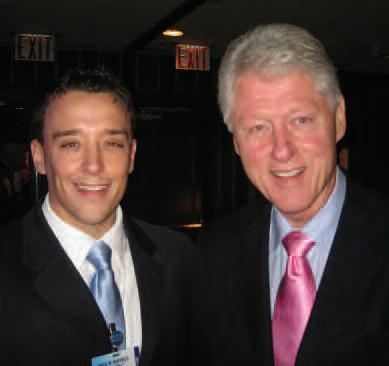
Aday in the life of Paul Ruffolo ’05 (Harrisburg) is multifaceted. In the morning, he could be negotiating and drafting international license agreements and business proposals on behalf of clients in the Netherlands or Aruba. In the afternoon, he could be working on online marketing strategies. In the evening, he could be packing a suitcase for a trip to Amsterdam. At one point, he was traveling back and forth to Europe every other month.
Mr. Ruffolo’s companies, the first of which he formed shortly after graduating from Widener Law, provide international networking services to a variety of leaders worldwide. He uses his legal education every day but has never practiced law. Among law school graduates, this makes him the exception rather than the rule.
That may be changing.
There is no denying thatlegal employment has undergone a fundamental shift. The Association for Legal Career Professionals (NALP) notes in its report on the class of 2010 that “the employment profile for this class marks the interruption of employment patterns for new law school graduates that have been undisturbed for decades.” With fewer law school graduates entering law practice in the traditional manner, questions have arisen about the value of a law degree.
Yet anyone paying close attention to law
“It’s amazing to be on a first-name basis with national and international leaders. And without my law degree, they never would have taken me seriously.”
Paul Ruffolo ’05
graduates knows that the traditional practice of law is only one of many career paths theypursue, whether immediately following graduation or later in life. As the legal profession and its hierarchies change, this divergence will likely continue, and law graduates will increasingly combine their legal education with other skills and training. Fortunately, thispath has been blazed already.
Consider the career of Stephanie Oscarson, MD, JD, LLM, RPH ’96 (Stephanie Tomasso when she studied at the Delaware campus). She earned a pharmacy degree from Philadelphia College of Pharmacy and Science (now University of the Sciences) and a medical degree from Jefferson
“I get information from thought leaders and package it into a compelling business case for my clients. That is a skill I learned in law school.”
Dr. Stephanie Oscarson ’96

Medical College before coming to Widener. At Widener, she completed her JD and went on to earn an LLM in Health Law. In her current role, Dr. Oscarson provides expertise in global thought leader research, backed by more than 25 years of experience in various segments ofthe healthcare system. Yet it was the critical thinking and communication skills she learned at Widener Law that she credits for setting her apart from other medical professionals.
“Critical thinking and analytical thinking were focused upon in law school more than in both medical school andpharmacy school,” Dr. Oscarson said. “Law school emphasized problem solving, integrating a tremendous amount of information, and being able to structure a persuasive argument based on the information acquired.”
“Law school demands that you be able to communicate your ideas well,” Dr. Oscarson continued. “The work that I do now puts me on the cutting edge of everything that’s a glimmer in some discovery scientist’s eye. I take these ideas, and by getting opinions from some of the best and brightest thought leaders around the world, I help elucidate the commercial opportunities and recommend ways of testing to result in a product that, at the end of the pipeline, may reach FDA approval. I get information from thought leaders and package it into a compelling business case for my clients. That is a skill I learned in law school—not medical school, not pharmacy school.”
For Paul Ruffolo, a JD was all he needed to access the major leagues of international business and networking. He works with and for luminaries including former President Bill Clinton, former Vice President Al Gore, SirRichard Branson, and General Wesley Clark.
“It’s amazing to be on a first-name basis with national and international leaders,” Ruffolo said. “And without my law degree, they never would have taken me seriously. Iwas only 26 when I started working with these people. My JD from Widener Law gave me instant credibility and
Courtland Hines MJ ’11 is not a lawyer, but he is on the vanguard of fast-moving change in legally related fields. As manager of Corporate Internal Audit at Johnson & Johnson, knowing the law—specifically the Foreign Corrupt Practice Act (FCPA)—is not enough. A remarkably fast-growing field, corporate compliance marries accounting, law, and business strategy in ways that were unheard of a generation ago. And it is essential at companies that, like Johnson & Johnson, face ongoing legislative and regulatory decisions concerning patents, taxes, civil justice liability, health care reform, and much more.
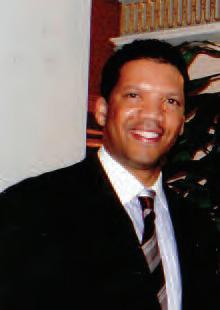
Although he had years of audit experience already, Mr. Hines needed additional training, not just to know the law, but to understand its nuances, complexities, and implications; he needed to think like a lawyer. He was drawn by the Master of Jurisprudence program’s “emphasis on Legal Methods and Analysis, which will ultimately make me a better writer and creative and analytical thinker.” “It also made me a little bit hungry to go back and get a JD,” he says.
the ability to network and negotiate at a high level. In fact, I meet many heads of state, both international and domestic, through my work representing clients at the Clinton Global Initiative.”
While every day is exciting, Ruffolo considers some accomplishments to be career highlights. They include negotiating a $3 million sponsorship of the William Jefferson Clinton Foundation on behalf of the Dutch Post Code Lottery, negotiating a $1 million sponsorship of the Clinton Global Initiative on behalf of Emergya Wind Technologies, securing a long-term employment contract on behalf of General Wesley Clark to act as an advisor to the Board of Directors of Emergya Wind Technologies, and negotiating and drafting the contract for former Vice President Al Gore’s involvement with Aruba’s government-sponsored event, Green Aruba.
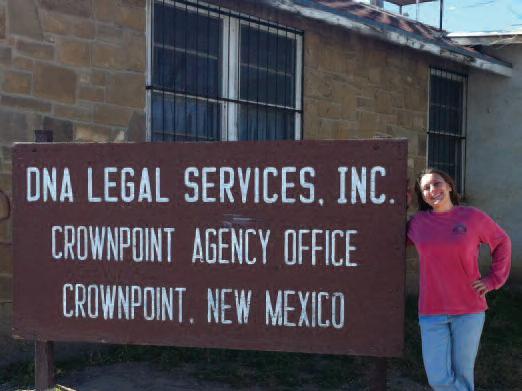
Toni Flora ’04 (Harrisburg) has consistently combined her advocacy skills with her legal training. Her position as an attorney for DNA People’s Legal Services in Crownpoint, Navajo Nation, in New Mexico, isonly the latest stop in a career dedicated to improving her world. DNA People’s Legal Services is a nonprofit legal aid organization working to protect civil rights, promote tribal sovereignty, and alleviate civil legal problems for people who live in poverty in the Southwestern United States.
DNA is an acronym for the Navajo phrase Dinébe’iiná Náhiiłna be Agha’diit’ahii, which means “attorneys who work for the economic revitalization of The People.”
LET YOUR HOOK
“It’s an amazing place with a really underserved population.”
“When I was first out of law school, I worked as an advocate for Clean Air Council in Philadelphia,” Flora said. “Then I worked for Dauphin County as a child support attorney (Title IV-D). I took some time off, went to work in the Pennsylvania House of Representatives, and worked for Mike Sturla, who was Democratic head of the Professional Licensure Committee at the time.
Toni Flora ’04
“I wound up on the Navajo Reservation after finishing my LLM. I had an internship with the Navajo Nation Department ofJustice, Natural Resources Unit, working on uranium mining issues. I was there for a month and immediately started looking for work on the Navajo reservation. It’s an amazing place with a really underserved population…. It’sremote. My office has no real physical address. The New Mexico State Land Office had to make one up.”
There’s no doubt that law school is an investment. In years. In money. In time taken away from the workforce. And there’s no doubt that the legal field, like virtually every other field, has been affected by the economic downturn of recent years. But as we look at the evolving economy and the increased need for intrinsic motivation and resourcefulness among professionals who can thrive in the global marketplace, it becomes clear that a legal education helps hone the skills needed for success.


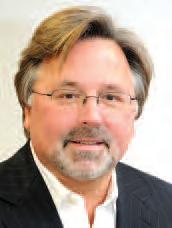
Brian Tierney ’87 uses his Widener Law degree to energize his entrepreneurial success.
Toni Flora at her office in Crownpoint, New Mexico
Brian Tierney sought intellectual challenges early at the prestigious Episcopal Academy and earned his bachelor’s degree in political science at Penn. He was accepted at the law schools at Pitt and Villanova, but decided to explore opportunities in the national political arena first.
Arriving in Washington, D.C., in the late 1970s, he accepted a position with the Republican National Committee and studied law at night. But following the birth of his first son, he and his family decided to return tothe Philadelphia area.
“I transferred to Widener Law in the spring of ’83. Mybrother Kevin had gone to Widener Law and loved it, so I attended night classes while working at my new job at the Small Business Administration.”
Tierney was enthralled. “I was blown away. Classes were challenging and stimulating, and the professors were every bit as good as anybody I ever had at Penn. I loved that I had full-time professors steeped in academia as well as adjuncts who were working in the real world.
“It was always my expectation to be an attorney, but I found I enjoyed doing public relations work at the Small Business Administration and for my own small firm. Still, Iwanted the security of having my law degree. My father worked for the Insurance Company of North America for 27 years and was laid off when I was about 11. For more than a year, he drove a cab, tended bar, and worked in a deli. It made me realize that the only real security you have is yourself and your own abilities. The law offered me that.”
By 1986, while still attending Widener as an extended division student, Tierney sold his first PR agency and joined Philadelphia marketing firm Lewis, Gilman & Kynett as president of their public relations division—all before the age of 30. Success after success followed.
Today, he is CEO of Brian Communications Group, which comprises Brian Public Relations as well as Realtime Media, a leader in digitally driven consumer acquisition and engagement. The firm has grown 300% in the last year with clients such as CNN, AOL, L’Oreal USA, Comcast, and The New York Times. Tierney’s resume reads like an entry in Who’s Who in Media and Communications, with positions as publisher of the Philadelphia Inquirer, CEO ofthe Philadelphia Daily News, and founder and head of Tierney Communications, a marketing agency whose client roster included Verizon, Marriott Hotels, the Walt Disney Company, and Deloitte Consulting. That agency had billings of $270 million when it was sold to Interpublic Group. What advice would Tierney offer to those currently in law school or considering it?
“…the only real security you have is yourself and your own abilities. The law offered me that.”
Brian Tierney ’87
“You might start out thinking life is going to be a very linear, step-by-step thing. But it’s really more like a series of swinging vines. If you find a vine that’s going in the right direction, and if you can learn something, move forward, and meet more people, grab it.
“If I were graduating from law school now, I’d be trying for legal jobs, and I’d be looking at how my law degree could be helpful in other careers: marketing, public relations, the business world.
“A lot of people spend a lot of time in life walking around the proverbial swimming pool and wondering, ‘Should I jump in here or jump in there? Should I go to three feet deep or four?’ I say, get in the pool. Get wet. Start swimming.”
“Life is short,” Tierney continued, “so make sure you’re doing things you find meaningful. Years ago, I was on a phone call when I absentmindedly picked up a book I had read in college and found a sheet of paper from an exercise we had done in my fraternity house at Penn. It was from a mock auction where everybody got $5,000 in pretend money, and you could bid among 30 categories, ranging from being on the cover of Sports Illustrated to being anastronaut, to being the first in your class to make a million dollars. I had bid all $5,000 and won on personal contentment. And finding that sheet of paper reminded me that that’s basically what I’ve been looking for all my life.
“That means taking the risks that come from being on my own but at the same time knowing that I’m my own man.”
Tierney sums it up with favorite quote from Ovid: “Letyour hook always be cast. When you least expect it, you may find a fish.”

PUTTING A LAW DEGREE TO USE
FOR BUSINESS
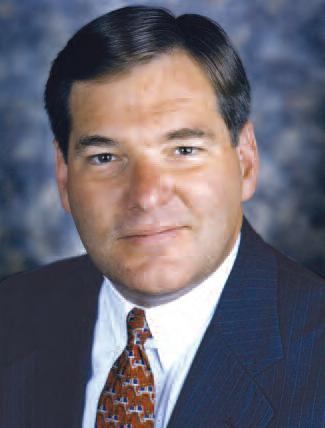
When Alan Levin became president of Happy Harry’s in 1986, the drug store chain his father founded in1962 comprised 17 stores. By the time it merged with Walgreens in 2006, the company had grown to 76 stores with 2,700 employees and sales just shy of half a billion dollars. Levin credits his law degree with helping him fuel that growth.
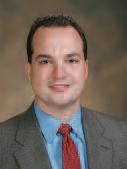
At the nexus of government and business, Delaware’s Director of Economic Development Alan Levin ’77 represents the First State’s interest in commerce and industry.

“It was always good to go into a contract negotiation and not tell people you were a lawyer. You could see how people played with you, or tried to. I also think that the logical thinking you learn, the deductive reasoning, helps you immensely. It’s something I use on a daily basis. From a reasoning point of view, I think you get more out of law school than you do out of other graduate degrees, because what you learn and how they teach it really helps you day in and day out.”
Today, Levin is Delaware’s Director of Economic Development, a position for which is he eminently qualified. Born and raised in the first state, the son of drugstore icon Harry “Happy Harry” Levin, he has a native understanding of what it takes to establish and expand a successful business there and firsthand experience doing so, having grown Happy Harry’s into the tenth-largest retail drugstore chain in the nation.
But it is his degree from Delaware Law School (now Widener Law) that helps him negotiate the intricacies of selling the benefits of Delaware from a variety of perspectives— legal, taxation, regulatory, and government accessibility.

“From a reasoning point of view, I think you get more out of law school than you do out of other graduate degrees, because what you learn and how they teach it really helps you day in and day out.”
Alan Levin ’77
Levin decided in elementary school that he was going to be an attorney. He envisioned himself as another Sam Benedict, a TV lawyer portrayed by Edmond O’Brien, whom Levin remembers as being an effective advocate for his clients. After studying political science at Tulane University, Levin worked for a year as a legislative aide to then-Senator Bill Roth. It was Roth who convinced Levin to choose Delaware Law School, so that Levincould maintain and grow the many connections he had already made in the state.
“After graduating, I took a job under Richard Gebelein in the Delaware Attorney General’s office, where I prosecuted cases in all the courts. When my father fell ill, I felt the responsibility to keep things going at the family business.”
“When my father returned after a year and a half, I realized I very much enjoyed what Iwas doing. We worked side by side for a while, until we had one too many father/son differences of opinion—not unusual for a family business,” Levin recounted with a smile.
“All I remember is one day I was there, and the next day I wasn’t. So I went back to my roots, to Senator Roth’s office, where I became his Executive Assistant and Counsel from 1984 to 1986.”
In his current role, Levin serves as a member of the governor’s cabinet and directs agroup of 41 people whose mission is to retain and attract businesses to the state. “When we came into office in 2009, it was probably the most difficult time in terms ofbusiness development outside of the Great Depression,” Levin recounts. “The good news is, in two years, we’ve been able to reduce the unemployment rate a full two and a half points, and great things are happening in Delaware—in financial services, in healthcare, and in manufacturing. We’re turning the lights back on.
“We’re focused on long-term jobs that will be here for 20 years or more, working with firms like Citibank, Amazon.com, and Johnson Controls to bring more opportunities to more Delawareans.”
What advice does Levin offer to those looking for a successful and happy life? “You need to do what you enjoy,” Levin stressed. “You only get one shot at life. Don’t just work for the money—do what you do because you enjoy it. You will have a far better life and be far more productive and happier. And what’s more important than that?”
Alan Levin does what he enjoys, and that is to make Delaware and its citizens more productive and more economically secure today and into the future.

groundUP
Widener Harrisburg’s earliest students remember building something great.
Irene Bizzoso ’92 says, “I was fortunate enough to work in the Dean’s Office, so I knew they were doing everything in their power to get the full accreditation as quickly as possible—which they did.”
As the students commenced their studies, workers putfinishing touches on the law building. “They were still drilling, hammering, laying down carpet,” says Christian Davis ’92. “So the teacher would be talking and every once in a while you’d hear this big power saw go off. I always thought that was funny.”
“At first we had no grass,” recalls Professor Palmer Lockard. “When Governor Casey came [to the first convocation], immediately before he got here trucks pulled up and unrolled a bunch of grass. I was kind of afraid they’d come back and take it back after convocation was over.”
The unusual and sometimes trying circumstances lent the campus a sense of solidarity in its first year.
Irene Bizzoso says, “I think it made us a stronger class, because we were the only group there. We had a very diverse group of people as first-year students. I was only out of school five years, but we had people who had finished their careers and come back tolaw school full-time.”
Professor G. Randy Lee recalls thatwhile one of his classes took its second-semester torts exam, “One of our evening division students, who was a single parent, had his childcare cancel minutes before he was supposed to leave. He didn’t know what to do, so he put his daughter in the car. She and I ended up hanging out together while he was taking the exam.”
Faculty support was imperative to the new students asthey established the law review, honor societies— everything, in short, that a functioning law school needs to equip its students for success. It was an incredibly rare opportunity, one that all involved were determined to use to its full advantage.
“There was a lot of respect between the faculty and students,” says Professor Michael Goldberg, now a member of the Delaware campus faculty. “Faculty were very student-oriented. We had to be. Over time, organizations like moot court or SBA or law review kind of run themselves. But for the first few years, they needed a lot of guidance and support.”





Christian Davis was selected for lawreview, where heserved as citation manager. He says, “There was no existing staff, or no playbook so to speak, on how to publish a law review. We had to create things as we went. We did have the advisement of the professors, andthey were invaluable.”
“They could not have done a better job picking folks who really cared about students, really loved teaching, and were committed to making the school a very special place,” adds Michael Gnibus ’92.
The feeling was mutual. Professor Lee recalls the character and qualifications of the first class with pride: “The thing that jumped out at me was that as a group, they were incredibly highly motivated and very entrepreneurial.”
Maybe it was the product of pent-up demand for legal education in the region or the challenge of undertaking something new. Maybe it was simply raw ambition. Whatever it was, the first Harrisburg cohort distinguished itself immediately. They jumped into the business of being law students with enthusiasm.
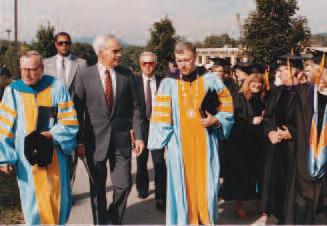
Widener Trustees Chairman F. Eugene Dixon Jr., Governor Robert Casey, and Widener Law President Bruce greet the Widener Harrisburg community at the first convocation.
“What I’ve heard other people say about experiences at law school…you hear stories of students being highly competitive, cutthroat, allthe experiences that aren’t fun in life. I have tosay that it was anything but that.”
Michael Gnibus ’92, Director Global Patent Operations at General Electric
“We had an explosion of student organizations when they hit campus,” says Professor Lee. “There was a very active Amnesty International chapter; they started a tradition of a faculty auction that raised tons of money. They actually auctioned one of my ties for $200, which was more than dinner with the dean went for. I think it disappointed [Dean] Anthony Santoro.”
The students’ abilities and enthusiasm, harnessed bythe equally enthusiastic faculty, served them well off campus too. They quickly distinguished themselves among their peers at other law schools. In 1992, Widener Harrisburg sent a moot court team to the ABA National Appellate Advocacy regional qualifier, where it prevailed, and then to the national championships. Harrisburg students would go on to qualify for nationals in three ofthe next four years.
Faculty guidance was no less critical as students looked to their professional futures. If the students of the class of ’92 were optimistic when they started law school, they had good reason to be. Employment among recent law graduates was strong, and legal employment nationwide remained near the industry’s high-water mark established in 1987. It had not dipped below 90% in years. Moreover, Widener Harrisburg’s new students were learning the law in the capital of one of the most populous states in the union—and were learning it from accomplished faculty with concrete ties to the region’s robust legal community. They could not have predicted that in 1992, the employment rate among recent law grads would fall more than 6% below its 1989 level. Nor could they have known that it would not return to form until 1999. What they did know was that their abilities and efforts, and
those of an extraordinarily dedicated faculty, had carried them this far. Theyhad no reason not to believe that with more hard work, the calculated risk they had taken would pay off. In this, the faculty once again provided invaluable support.
“We had an advantage in that the law school was known because of theDelaware branch,” says Vice Dean Gedid. “Delaware had success at that time in producing graduates who were good at litigation, and this meant that they were hired by small and medium-sized firms, district attorneys, and the like. From the beginning, several other faculty members and I became active in a wide variety of regional and national professional organizations. This got the word out about who we were. Also, our students participated in many internships and externships. As a result, employers and the government saw that they were competent and focused, and they wanted to practice law. This helped with hiring.”
“Students were aware,” recalls Professor Lee, “but their attitude was, ‘Why would we be stressed?’ For a lotof them, there was a real desire to prove how good they would become. There was a real drive to fulfill their potential.”
Fulfilling their potential took effort, resilience, and inventiveness. Here again, their willingness to take initiative, combined with the good counsel of the faculty, served the first class well.









“Widener gave me the background ingovernment with a lot of courses on Administrative Law,” says Christian Davis, now a partner with Weber Gallagher Simpson Stapleton Fires & Newby LLP. “Itwas a good segue intomy first job, which was Commonwealth Court Clerk for two years, and I ended up after that working for a private firm doing workers’ compensation.”
Their patience and persistence has paid off. The cohort of students entering Widener Harrisburg in 1989 includes the U.S. Attorney for the District of South Carolina and several Pennsylvania State Representatives (two currently sitting), aswell as successful entrepreneurs, corporate leaders, judges, clergy, and partners in law firms across the region and beyond. But nearly every one of them started on the ladder’s bottom rung, with only their education and fortitude to rely on. They offer advice to today’s law students who, like them, are entering the profession at a difficult time.
“Don’t be afraid to take any job,” says Daniel Minnis ’92, now a Regional Deputy Public Defender in Montana. “You don’t have to be at the top firm, because in this state or any rural state, there really are no top firms. Take as many methods or practical classes as you can.”
“I
have crossed paths with so many classmates across the commonwealth since I graduated, and since we were sucha tight-knit group,
I have still been able to keep connections.”
Regina
Foley ’92, Raynes McCarty
Irene Bizzoso is now Prothonotary at the Supreme Court of Pennsylvania. “Network with people, because my job came about by just a casual conversation,” she advises. “Try to get some experience. If clerkships are unavailable, do some unpaid internships. Do what you have to do to get some experience!”
Michael Gnibus says, “I always go back to a discussion that Randy Lee had in Torts class, where he challenged usnot to conform to the practice of law, but have the practice of law conform to us. I’ve never forgotten that.”
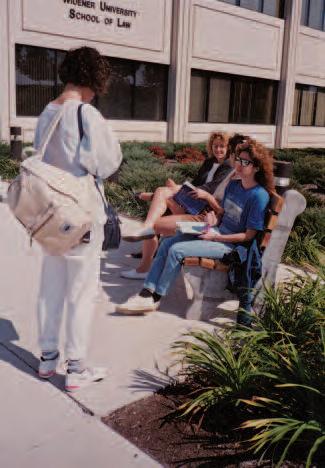
Students in the early years.
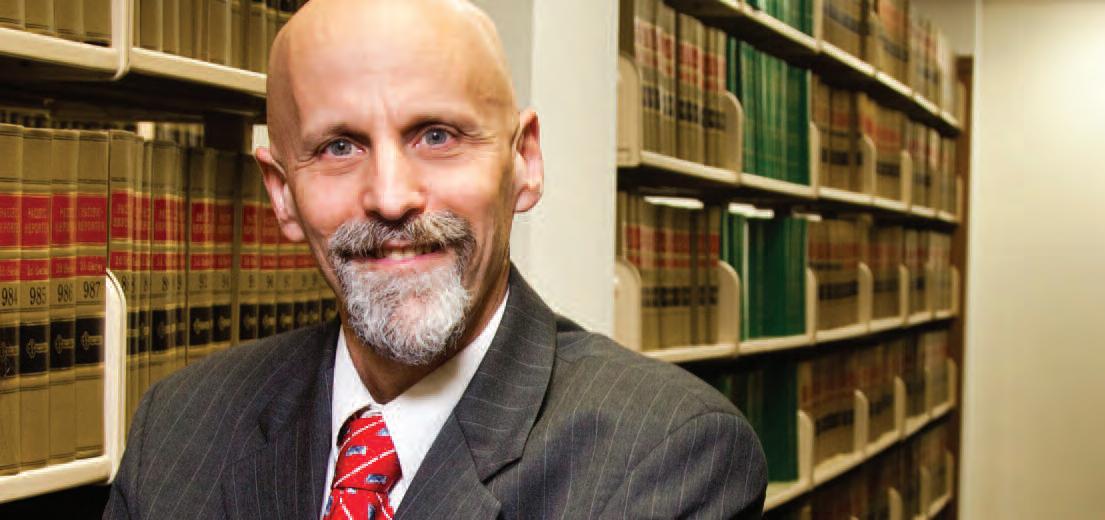
Lawrence A. Hamermesh
RUBY R. VALE PROFESSOROF CORPORATEAND BUSINESS LAW
Ijoined the Delaware Bar in 1976, and practiced with a large Wilmington law firm for 18 years before joining the Widener faculty. Since that time I’ve been privileged to serve on the Council of the Delaware State Bar Association’s Corporation Law Section, the group that evaluates and proposes amendments to the Delaware General Corporation Law. I deeply value my association with the Delaware Bar, and I like to think that my faculty colleagues and I have enriched the relationship between the Law School and the Delaware corporate bench and bar.
So from that very Delaware-centric perspective, and in the face of often and earnestly expressed concerns about the possibility that federal law might unduly intrude on and adversely affect the role of Delaware corporate law, it was a bit surprising at first to have received a call in the fall of 2009 from the chief counsel of the Division of Corporation Finance at the SEC, asking if I’d be interested in a temporary job at the SEC working on issues implicating state corporate law.
My surprise didn’t last long: the idea for the position quickly made a lot of sense. The Division of Corporation Finance is the arm of the SEC that deals with proxy voting, proxy contests, shareholder proposals, tender offers, and other matters of corporate governance within the SEC’s jurisdiction. There’s a very close relationship with state corporate law in these areas, and it was gratifying that the commission’s staff recognized the important role of state law. So, with appreciation for the flexibility and support from Dean Ammons and the law school, I signed on to an 18-month stint in Washington, from January 2010 through June 2011.
My work at the SEC focused mostly on two projects. One was what’s generally known as the proxy mechanics concept release, a top to bottom review of the way the U.S. system of shareholder voting works—or doesn’t work well. Among the many topics addressed in the concept release was the role of proxy advisory firms, who supply voting recommendations and often directly execute share voting on behalf of institutional investor
A Delaware Lawyer
clients who don’t want to hire their own staffs to evaluate the thousands of voting decisions each year that they’re essentially required to make. This is an increasingly important subject, as proxy voting advice significantly influences advisory shareholder votes on executive compensation (so-called “say on pay”), votes which became mandated last year by the Dodd-Frank financial reform legislation.
The more controversial initiative I worked on was what’s widely known as “proxy access”—the set of rules that would have required companies in very limited circumstances to include shareholder nominees for directors in the companies’ own proxy solicitation materials. I had already encountered the proxy access rules, as proposed by the commission in mid-2009, from a very different perspective. In a then unprecedented step, the Delaware bar association submitted a comment to the SEC opposing the rules as proposed. In that comment, which I helped prepare as a member of the governing council of the Corporation Law Section, the bar association was urging instead that the commission permit stockholders at individual companies to adopt proxy access bylaws authorized under the Delaware corporate statute. In essence, we were advocating an approach of choice at the individual company level—what became known as the “private ordering” approach— rather than the sort of mandatory minimum standards approach the commission had proposed.
So when I arrived at the commission, I had been actively supporting a policy position that was at odds with the proposal then being advanced by the commission. And when I was asked to work on the process of refining that proposal and crafting a finalrule, I had to give some thought to my role. Obviously, I was free to advocate within the commission for modifications to the proposal. Most importantly, though, I was there as a lawyer for thecommission. So I realized that my job was not to tell the commissioners what proxy access rules to adopt, but to give my best professional advice about the merits of the final rules, and how best to write those rules, particularly in the areas in which they interacted with state corporate law.
It was an interesting job and turned up a surprising number oflargely unexplored questions of state law: To what extent can state law limit the right to nominate directors? Can a charter provision, or bylaw adopted by the board, take away that right entirely? Can a bylaw deny the right to nominate candidates who don’t meet certain qualifications? Can it take away the right to nominate if certain information about the nominator or the
in Chairman Schapiro’s “Court”



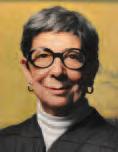
Inthe accompanying article, Professor Hamermesh describes amutually beneficial relationship between the lawschool and the Delaware corporate bench and bar. The law school is moving forward with aneffort to develop a similar symbiotic relationship with the Delaware bankruptcy bench and bar.
The newly established Helen S. Balick Chair in Business Bankruptcy Law honors Judge Balick’s pivotal role in the national development of business bankruptcy proceedings. The chair is intended to stimulate and coordinate constructive debate on issues germane to business bankruptcy law through publication of scholarly articles, print and web-based publications on business bankruptcy topics, and by promoting the teaching andtraining of students, judges, and practicing lawyers in the business bankruptcy field.

Portrait of Judge Helen S. Balick





“…I realized that my job was not to tell the Commissioners whatproxy access rules to adopt, but to give my best professional advice about the merits of the final rules, and how best to writethose rules, particularly in the areas in which they interacted with state corporate law.”
Professor Lawrence A. Hamermesh
nominee isn’t provided? It might be valid to nominate a candidate who doesn’t satisfy a bylaw qualification like owning stock (which can be bought after election but before being seated as a director), but is it valid to nominate a candidate who will never be able to satisfy some other valid bylaw qualification? And what qualifications could be valid, and what qualifications would unreasonably impair the stockholders’ ability to elect directors?
In the final proxy access rule (Rule 14a-11) adopted inAugust 2010, the commission rejected the private ordering approach, although the minimum standards adopted were really quite limited: to put any candidate inthe company’s proxy material, the nominating stockholder had to have owned 3% of the company’s stock for at least three years. Nevertheless, and even though Congress in the Dodd-Frank Act expressly gave the SEC the authority to adopt the proxy access rules, a suit was brought to invalidate those rules on the theory that the commission hadn’t adequately considered their costs and benefits. Last July, the D.C. Circuit agreed, finding the commission’s actions “arbitrary and capricious” and therefore invalid.
My reaction to that ruling, I admit, was motivated in part by my own personal investment in the rulemaking effort and my acquaintance with the other SEC staff members who worked incredibly hard, intelligently, and carefully on the rule release. But I’m also concerned about the impact of the D.C. Circuit’s decision on rulemaking in general. As I wrote last fall:
In concluding that the commission failed in its duty to evaluate the economic consequences of Rule 14a-11, the court engaged in a remarkable display of judicial activism. The court referred to one study indicating that Rule 14a-11 would have deleterious economic consequences, and acknowledged that the commission considered that study but found it unpersuasive in light of subsequent studies criticizing it. The court even acknowledged that the commission relied on two studies suggesting that proxy access would promote positive economic returns. Somehow,
however, the court determined that these two studies were “relatively unpersuasive.” That determination, critical to the entire ruling, was truly remarkable. Those studies may well be erroneous in one or more ways. But are courts now in the business of rendering unexplained and unreviewable evaluations of empirical studies? If the court made some analysis to determine that the two studies relied on by the commission were “relatively unpersuasive,” it certainly did not share that analysis with the public, nor did it articulate any institutional comparative advantage that gave its economic judgments priority over those of the commission. And it most certainly did not even cite the leading Supreme Court opinion (Chevron) on the question of the deference owed by courts to administrative agencies acting within the sphere of their delegated authority. ... This result may well appeal to ideological opponents of regulation, but not to those who believe that reasonable regulation of securities markets is essential to an economically efficient system of capital formation.
In short, I think the DC court decision seriously weakened the commission and maybe other administrative agencies as well.
Perhaps this experience with the DC Circuit is part of the larger set of political tugs and pulls that brought about perhaps the most curious experience I had in Washington. Last spring, as Congress was locked in a cliffhanging controversy about the federal budget, we were all told toprepare for a government shutdown. I left work on a Friday not certain when or even whether I’d be back in theoffice, or when or even if I’d get paid again. Conferring with outside parties was surreal: “this is what we can tell you today; you could get back to us next Monday, but if we’re not here, we won’t be able to give you any further guidance.” When I left on Friday, all I knew was that my Blackberry would vibrate sometime that weekend with further news.
Of course, a deal was cut late that night, and I finished my tour of duty a few months later. Despite the frustrations, I don’t regret a day of it.

Good Energy
John Savoth ’85
John Savoth ’85 is the 85th Chancellor of the Philadelphia Bar Association and the first Widener Law alumnus elected to the position. He practices personal injury law with Saltz Mongeluzzi Barrett & Bendesky.
What led you to where you are today?
After law school, I did a two-year clerkship with the late Pennsylvania Supreme Court Justice James McDermott, then went to work with Bill Keller, doing FELA work primarily. I worked for Kessler & Cohen for two years and was able to go out on my own in ’96. In 2003, Bill Fedullo [’76] and I started a partnership that lasted four years. Then Bob Mongeluzzi asked me to join the firm here. Since then I’ve gravitated to larger litigation…primarily construction. When I was practicing with Bill Keller, he taught me that the way you meet people is through the bar association. I started going to Law Week in the mid-80s. It broadened my perspective. I got more and more involved and took on leadership roles. I chaired the young lawyers section. In ’93 I got involved in policy matters at the association, and I enjoyed it. When I’d go, it would invigorate me. The same goes today; it provides me with good energy.
Tell us about your agenda for the Philadelphia Bar Association. First, in our Lawyer Referral and Information Service (LRIS) we have the Military Assistance Project (MAP). It started in 2003 when the troops were gearing up, particularly National Guard folks who hadn’t anticipated going away from their families and their homes for a year at a time. Alot of civil legal problems arose because of it. With—thankfully— our soldiers coming home from Iraq and Afghanistan, they will again be confronted with myriad issues related to their service or caused by their service that we as a bar association and as trained volunteers can hopefully help them with on a pro bono basis.
We have another ongoing program that’s very successful, called ACE [Advancing Civics Education], that’s teaching civics education in the school system in Philadelphia. Kids are better served by democracy if they know how it works. We’re moving that program forward, highlighting it, and getting involved in the elementary schools. We’ve formed a relationship with the National Constitution Center. I’ve met with David Eisner, the CEO, several times, and we’ve established a working relationship that both of us are very excited about. The Constitution Center is assisting us tremendously in expanding the ACE program.
Finally—this is brand-new—we’re going to have online attorney profiles. So if someone is looking for a lawyer, they can go to the website of the oldest bar association in the country and see a profile of an attorney who’s a member and perhaps consult with them.
What’s great about being a Philadelphia lawyer?
It goes all the way back to Andrew Hamilton in 1735 when he went up[to New York] and defended a printer, John Peter Zenger. After he won, the comment was “only a Philadelphia lawyer could have done that.” We are strong advocates on behalf of our clients; we are strong advocates in the transactional world; we’re creative, industrious. I’m not saying other cities and other bars don’t have similar [attributes]. All I know is I’m a Philadelphia lawyer, and we have this heritage, andI’m damn proud of it.
What’s your take on the current employment market for legal graduates?
It is very difficult. Anecdotally, there appears to be an upswing, however slight. Judicial clerkships are still there. That’s how I started my career. It’s an excellent way to gain experience. There’s the bar association; there’s a two-pronged benefit [to getting involved]—law grads are looking for jobs in a down market, and we have public interest firms and organizations that are in dire need of attorneys. Sometimes initially you need get yourself into the game.
What can the law school do to help our students?
Try to get students to participate more in our bar association activities, particularly our young lawyers division. I think they could benefit greatly from the real-world connection. I absolutely would love for any student that wants to come up to make sure and let me know they’re coming. I’ll try to make sure I’m available to see them and talk to them and answer questions.
Q&A
What do you do for fun?
I love music. I played guitar for 25 years, and I’m horrible—really bad to the point that I don’t really play anymore. Besides that I love to read fiction, literature. When I reread all these books I read as a younger man, with the additions of life’s experiences, it’s a different paradigm.
Tell us about your time at The Delaware Law School [now Widener Law]—are there fond memories associated with your time there?
Absolutely. I had a great experience. They really trained me well, particularly to be an advocate. I have a large network of Widener grads that I constantly rely upon for counsel and assistance.


BARROS, D. BENJAMIN, The Biology of Possession, 20 WIDENER L.J. 291 (2011).

BARNETT, LARRY D., The Place of Law: The Role and Limits of Law in Society (Transaction Publishers 2011).
CONNER, DANA HARRINGTON, Back to the Drawing Board: Barriers to Joint Decision-Making in Custody Cases Involving Intimate Partner Violence, 18 DUKE J. GENDER L. & POL’Y 223 (2011).
CULHANE, JOHN G., Concussions and Cigarettes, SLATE (Jul. 26, 2011, 1:19 p.m.), http://www.slate. com/id/2300103.
The NFL’s Next Big Headache, SLATE (Feb. 2, 2011, 4:27 p.m.), http://www.slate.com/id/ 2283618/.

DALY, ERIN, Human Dignity in the Roberts Court: A Story of Inchoate Institutions, Autonomous Individuals, and the Reluctant Recognition of a Right, 37 OHIO N.U. L. REV. 381 (2011).
& JAMES R. MAY, Constitutional Environmental Rights Worldwide, in PRINCIPLESOF CONSTITUTIONAL ENVIRONMENTAL LAW 329, ABA Section of Environment, Energy, and Resources (James R. May ed., Eli Press 2011).
DERNBACH, JOHN C., & Marianne Tyrrell, The “Cash for Clunkers” Program: A Sustainability Evaluation, 42 U. TOL. L. REV. 467 (2011).
Can the Battle Against Climate Change Become an Effective Social Movement?, 11 ETHICS SCI. & ENVTL. POL. 27 (2011).
Legal Education for Sustainability: A Report on U.S. Progress, 5 J. EDUC FOR SUSTAINABLE DEV. 225 (2011).
DIMINO, MICHAEL R. SR., Public Confidence and Judicial Campaigns, 56 WAYNE L. REV. 705 (2010).
Op-Ed., Perfectly Legal to Mandate the Purchase of Insurance, PHIL. INQ., Nov. 27, 2011, atD5.
Op-Ed., GPS Tracking and the Fourth Amendment, THE NEWS J. (Wilmington, DE), Nov. 7, 2011, at A13.
Op-Ed., Church Autonomy Versus Civil Rights, THE NEWS J. (Wilmington, DE), Oct. 3, 2011, at A13.
Op-Ed., The Constitution and Economic Policy, THE NEWS J. (Wilmington, DE), Sept. 12, 2011, at A13.
Op-Ed., What’s More Important Than Wise Judges? Wise Voters, THE NEWS J. (Wilmington, DE), June 30, 2011, at A8.
EVANS, TONYA M., Sampling, Looping and Mashing… Oh My! How Hip Hop Music is Scratching More Than the Surface of Copyright Law, 21 FORDHAM INTELL. PROP MEDIA & ENT. L.J. 843 (2011).
FAMILY, JILL E., Murky Immigration Law and the Challenges Facing Immigration Removal and Benefits Adjudication, 31 J. NAT’L ASS’N ADMIN L. JUDICIARY 45 (2011).
A Broader View of the U.S. Immigration Adjudication Problem, 25 J. IMMIGR. ASYLUM & NATIONALITY L. 245 (2011 U.K.).
GARFIELD, ALAN E., Op-Ed., Gerrymandering and the High Court, THE NEWS J. (Wilmington, DE),DEC 12, 2011, atA11.
GEDID, JOHN L., Pennsylvania’s 2008 Right to Know Law: Open Access at Last, 49 DUQ. L. REV. 459 (2011). Pennsylvania Constitutional Conventions, 82 PA.B.Q. 151 (2011).
An Introduction to the 2010 Model State Administrative Procedure Act, 20 WIDENER L.J. 697 (2011).

HAKES, RUSSELL A., & Stephen L. Sepinuck, Uniform Commercial Code Survey: Introduction, 66 BUS LAW.1079 (2011).
HEMINGWAY, ANNA P., How Students’ Gratitude for Feedback Can Identify the Right Attitude for Success: Disciplined Optimism, 19 PERSPECTIVES: TEACHING LEGAL RES. & WRITING 169 (2011).
HOLBROOK, JUSTIN
G., Veterans Courts and Criminal Responsibility: A Problem-Solving History and Approach to the Liminality of Combat Trauma, in TREATING YOUNG VETERANS: PROMOTING RESILIENCE THROUGH PRACTICEAND ADVOCACY 259 (Sydney Howe-Barksdale et al. eds., Springer Pub. Co. 2011).
HOWE-BARKSDALE, SYDNEY, Editor, TREATING YOUNG VETERANS: PROMOTING RESILIENCE THROUGH PRACTICEAND ADVOCACY (Diann Cameron Kelly, Sydney Howe-Barksdale, & David Gitelson eds., Springer Pub. Co. 2011).
et al., Epilogue: Meeting the Need and Respecting The Voice: Our Final Words, in TREATING YOUNG VETERANS: PROMOTING RESILIENCE THROUGH PRACTICEAND ADVOCACY 341 (Sydney Howe-Barksdale et al. eds., Springer Pub. Co. 2011).
KEARNEY, MARY KATE, Identifying Sperm and Egg Donors: Opening Pandora’s Box, 13 J.L. & FAM. STUD. 215 (2011).
LEE, G. RANDALL, Fred Zacharias and a Lawyer’s Attempt to be Guided by Justice: Flying with Harry Potter and Understanding How Lawyers Can Prosecute the People They Represent, 48 SAN DIEGO L. REV. 233 (2011).
MAY, JAMES R., Editor, PRINCIPLESOF CONSTITUTIONAL ENVIRONMENTAL LAW, ABA Section of Environment, Energy, and Resources (Eli Press 2011).
Introduction: The Intersection of Constitutional and Environmental Law, in PRINCIPLESOF CONSTITUTIONAL ENVIRONMENTAL LAW 1, ABA Section of Environment, Energy, and Resources (James R. May ed., Eli Press 2011).
The Political Question Doctrine, in PRINCIPLES OF CONSTITUTIONAL ENVIRONMENTAL LAW
217, ABASection of Environment, Energy, and Resources (James R. May ed., Eli Press 2011).
& William Romanowicz, Environmental Rights in State Constitutions, in PRINCIPLESOF CONSTITUTIONAL ENVIRONMENTAL LAW 305, ABA Section of Environment, Energy, and Resources (James R. May ed., Eli Press 2011).
MORINGIELLO,
JULIET M., A City in Distress: Harrisburg’s Financial Crisis, WIDENER SCH.L.MAG Spring 2011, at 5.
& MICHAEL HUSSEY, Op-Ed., Share Pain or Deal with Bankruptcy, PATRIOT NEWS (Harrisburg, PA), June 19, 2011, at C5.
OLIVER, WESLEY M., Ashcroft v. Al-Kidd and Material Witness Detentions, THE HUFFINGTON POST (Nov. 8, 2010, 10:28 am).
POLLARD, RANDLE, Who’s Going to Pick Up the Trash?—Using the Build America Bond Program to Help State and Local Governments’ Cash Deficits, 8 U. PITT. TAX REV 171 (2011).
POPE, THADDEUS MASON, & Lindsey E. Anderson, Voluntarily Stopping Eating and Drinking: A Legal Treatment Option at the End of Life, 17 WIDENER L. REV. 363 (2011).
Health Law and the Elderly: Managing Risk at the End of Life: An Introduction to the Symposium, 17 WIDENER L. REV., i(2011).
POWER, ROBERT C., Strategies and Techniques for Teaching Constitutional Law (Aspen 2011).
ROBINETTE, CHRISTOPHER J., 6 NEW APPLEMANON INSURANCE LAW LIBRARY EDITION (Christopher J. Robinette ed., LexisNexis 2011).
General Principles and Introductory Matters in Motor Vehicle Insurance Law, in 6NEW APPLEMANON INSURANCE LAW LIBRARY EDITION,Chapter 61 (LexisNexis 2011).
SMITH, ANDRE L., The Hidden Costs of Textualism: Does it Matter What Slaves Thought ‘Direct Tax’ Meant?
2 WIDENER J. L. ECON. & RACE 109 (2011).
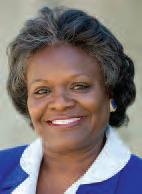
LINDA L. AMMONS was named one of the 100 most influential black attorneys in On Being a Black Lawyer magazine’s “The Power 100 Special Edition” in February. She was also honored by the Delaware State Bar Association with the Service to Children Award at the Christopher W. White Distinguished Access to Justice Award program in October for her role in advocating for tougher legislation in the wake of the Bradley case. In December, she met with members of the Taiwan Administrative Supreme Court, including the Chief Justice. Other engagements included serving as a guest speaker at Nativity Prep, a charter school headed by a Widener Law alumnus; at the University of Delaware’s Osher Lifelong Learning Institute; and at the law school’s Health Law Symposium, where she spoke about her investigative work for the Earl Bradley case. Governor Markell was the keynote speaker at this symposium and thanked Dean Ammons for her contributions to the state.
DIONNE E. ANTHON, PATRICIA FOX, ANN E. FRUTH, and ANNA P. HEMINGWAY participated in the Legal Writing Institute’s one-day workshops held at 13 locations throughout the United States. Professor Anthon presented “Getting Your Students toSay ‘Brilliant’ to Research Training and Quizzes” at the University of Miami School of Law; Professor Fruth presented “Effective Conferencing with Students” at George Mason University School of Law; and Anna Hemingway and Patricia Fox presented “It Takes Two to Tango: Coordinating the Teaching and Assessment of Research Skills with Law Librarians and Legal Methods Faculty” at Temple University School of Law.
SONIA BALDIA spoke about legal issues related to IP developed abroad and strategies to capture value from such IP assets at the DuPont–Widener Law Intellectual Property CLE program. She was an invited speaker at the annual Global Intellectual Property Convention in New Delhi, India, where her presentation focused on monetizing intellectual property assets in a global marketplace. She also presented her work-in-progress, “International Private Rule Making & Transnational IP Exchange,” at the 19th Annual CLE Conference of Feminist Law Professors in Philadelphia.
LARRY D. BARNETT taught a two-week course on law-relevant quantitative methods and research at the International Institute for the Sociology of Law in Oñati, Spain, in December. The course is part of a curriculum leading to a Master of Arts degree that is jointly awarded by the University of Milan (Italy) and the University of the Basque Country (Spain).
JOHN J. CAPOWSKI presented his paper, “The Uniform Provisions of Evidence: A Major Reform that Maintains China’s Judicial Traditions,” at China’s Third International Symposium on Evidence Law in Beijing.
JOHN G. CULHANE was the featured guest on NPR’s Radio Times with Marty Moss-Coane in January, discussing recent political and legal developments on the marriage equality issue. He spoke at the AALS Annual Meeting, participating in a panel discussion of the 40th anniversary of Title IX. Other presentations included the keynote address for Widener University’s Constitution Day. “Reconsidering Law and Policy Debates: A Public Health Perspective” at Thomas Jefferson University’s Health Policy Forum in December (podcast available); “Achieving Environmental Justice Through Compensation” at the American Public Health Association’s Annual Meeting in November; and “Duty to Report Abuse? Problems with the Delaware View of Duty and a Proposal for Reconsideration,” at the Widener Law Review Symposium “Bradley and Beyond.”
ERIN DALY was a featured speaker at Sovereign Challenge VIII, organized by the United States Military Special Operations Command, in Savannah, Georgia. She spoke to an audience of more than 100 military, defense, and diplomatic experts and attachés from around the world about “Reconciliation in Divided Societies.” She also chaired the AALS International Human Rights Section, organizing and moderating the panel at the Annual Meeting from a call for papers from “new voices” in human rights. Professor Daly has also been named to the Nominating Committee of the National Board for Common Cause.
JOHN C. DERNBACH spoke on the “Role of Law in Achieving Sustainable Development” at the 2012 Association of American Law Schools Annual Meeting in Washington, D.C.
JEAN MACCHIAROLI EGGEN was the moderator of the panel on “Health Law andProfessional Ethics and Liability” for thesymposium “Lessons from Tragedy: Legal,Professional, and Ethical Issues Raised by Bradley and Beyond” at Widener Delaware.
TONYA EVANS presented her paper, “Reverse Engineering Copyright: Sampling Patent to Remix Copyright,” at the Third Annual Intellectual Property Roundtable held at Catholic University. Professor Evans also moderated a panel titled “Technological Innovation in Practice and Education” at the Association of American Law Schools Annual Meeting in Washington, D.C., and presented at the Pennsylvania Bar Association’s Women in the Profession Annual Retreat.
JILL E. FAMILY participated in the drafting and passage of an important resolution on immigration policy at the most recent ABA Annual Meeting. The ABA House of Delegates adopted the resolution, which calls upon the Department of Justice to eliminate its regulatory “post-departure bar” on motions to reopen or to reconsider removal (deportation) proceedings. Professor Family also serves as an advisory board member ofthe ABA Commission on Immigration andas a council member of the Section of Administrative Law and Regulatory Practice.
STEPHEN E. FRIEDMAN spoke as part of a panel on exam taking that was given by the Philadelphia Diversity Law Group for 1L students at area law schools.
JOHN L. GEDID has given a number of presentations recently, including one to the Pennsylvania Bar Association Constitutional Review Commission about the law governing Pennsylvania Constitutional Conventions. Professor Gedid was also reappointed a commissioner to the National Conference of Commissioners on Uniform State Law by the Pennsylvania House of Representatives and
was reappointed Chair of the Pennsylvania Bar Association Statutory Law Committee.
MICHAEL J. GOLDBERG was quoted in the Daily Journal, a Los Angeles–area legal newspaper, in an October article about proposed Department of Labor disclosure rules.
RUSSELL A. HAKES, as a member of the UCC Committee of the Delaware State Bar Association’s Commercial Law Section, has been actively involved in preparing proposed legislation to amend Article 9 of the Uniform Commercial Code in response to amendments proposed by the Uniform Law Commission and the American Law Institute.
LAWRENCE A. HAMERMESH presented his paper, Who Let You Into the House?, on the subject of in-house corporate counsel, as part of a symposium at the University of Wisconsin Law School. He provided comments on papers about Delaware corporate law and “Delaware’s competition” at the Columbia Law School symposium, “The Delaware Court of Chancery: Change and Continuity.” Professor Hamermesh also presented “Stockholder Input into Corporate Governance—An Introductory Framework” at the Berle Conference at Seattle University Law School: “Corporate Governance in an Age of Increasing Complexity & Uncertainty: Theory & Ideals Meet Reality,” and gave a talk entitled “A Delaware Lawyer in Chairman Schapiro’s ‘Court,’” to the Haverford Lawyers’ Club of Delaware. With blog entries and an online symposium, Professors Hamermesh, ANN E. CONAWAY, and PAUL L. REGAN have revamped the web site of the Institute of Delaware Corporate and Business Law (www.delawarebuslaw.com), turning it into a significant resource for commentary on Delaware business law. Professor Hamermesh continues to provide
I N M EMORIAM
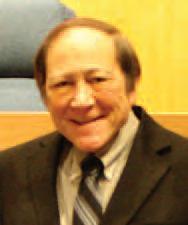

Gary D. Berg ’04
The Widener Law community extends heartfelt condolences to the family and friends of Gary Dennis Berg ’04, who passed away in 2011 following a two-year battle with cancer.
Mr. Berg capped a lifetime of service to others by joining the Veterans Law Clinic as a staff attorney in early 2008 and spending the next several years working with veterans who needed legal help with VA claims.
Before attending law school, Mr. Berg worked for many years as a special education teacher in northern Delaware. He is survived by his wife Maria, as well as two daughters, a son-in-law, two brothers, and two grandchildren.
expertcommentary for media, most recently in a Wall Street Journal story on a $285 million attorney’s fee award by the Delaware Court of Chancery in an extraordinary case involving a $2 billion judgment in a shareholder derivative suit. In the fall of 2011, Professor Hamermesh was appointed associate reporter for the Corporate Laws Committee of the ABA’s Business Law Section, which supervises revision of the Model Business Corporation Act. Following his return from the SEC last July, Professor Hamermesh was retained as special governmental employee (SGE) for the SEC’s Division of Corporation Finance to render advice on issues of state corporate law relating to administration of the federal securities laws. He testified as an expert
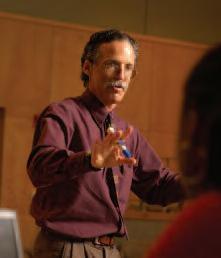
Epstein Receives Lindback Award
Associate Professor JULES
EPSTEIN received the 2011 Lindback Foundation Award for Distinguished Teaching, an honor bestowed annually on a member of the Widener University faculty. He was the first member of the university faculty who is based on the Delaware campus to receive the award.
witness on corporate governance before the Maryland Public Service Commission in proceedings on the application of Exelon Corporation to acquire Constellation Energy (owner of Baltimore Gas & Electric), and he has been representing the Delaware Court of Chancery and its five chancellors in litigation in the U.S. District Court for the District of Delaware, challenging the constitutionality of the Delaware statute permitting chancellors to act as arbitrators in commercial disputes.
at the Legal Writing Institute’s One-Day Workshop at Temple University.

LOUISE LARK HILL was interviewed by the Center Daily Times, State College, Pennsylvania, about the recusal of judges in the Penn State child sexual abuse matter. Professor Hill presented a paper at a symposium jointly sponsored by the University of Michigan and the ACTEC Foundation on “The Uniform Probate Code: Remaking of American Succession Law.” She also presented a one-hour CLE program on Confidentiality and Privilege for the National Law Foundation. Professor Hill was a panel member at a program on Delaware Legal Ethics, sponsored by Lorman Education Services, where she also delivered a one-hour presentation on Lawyer Communications. Additionally, Professor Hill presented a Continuing Legal Education program for PBI, which was a one-hour live national telecast on Confidentiality in the Electronic Age. Professor Hill was also asked to chair the Nominating Committee of the Professional Responsibility Section of the AALS, where she is a member of the Executive Committee.
SUSAN A. KING presented “Why Is This Student Different Than All Other Students? The Passover Seder as a Metaphor for Teaching to Different Learners” at the Third Biennial International Applied Storytelling Conference at the University of Denver’s Sturm College of Law. She also presented “Incorporating Formative Assessment in the Legal Writing Classroom”
ALISON DONAHUE KEHNER and MARY ANN ROBINSON conducted a presentation at the Teaching Methods session at the AALS 2012 Annual Meeting held in Washington, D.C. Their topic: “Teaching Professional Values Across the Curriculum: Engaging Student Learners in the Process of Becoming Lawyers.” Professors Kehner and Robinson presented filmed vignettes they created addressing core professionalism concepts, and demonstrated how to use them in discussing professionalism issues in the classroom or at other forums. They are available online: http://law.widener.edu/ Academics/ LegalMethods/Professionalism Videos.aspx.
JAMES R. MAY presented “The Future of Climate Litigation After AEP v. Connecticut” at the American Bar Association’s Fall Meeting in Indianapolis and “Are Environmental Regulations Worth It?” on the Delaware campus.
JULIET M. MORINGIELLO presented “Stern v. Marshall: Does it Have a Wide-Ranging and Practical Effect on All Future Bankruptcy Court Proceedings?” at the Eastern District of Pennsylvania Bankruptcy Conference Fall Program in Philadelphia.
DORETTA MASSARDO MCGINNIS spoke atthe Legal Writing Institute’s One-Day Workshop at Temple University, discussing the policy-drafting component recently incorporated into the Legal Methods III course.
LAURA K. RAY spoke to the Current Issues class at the Osher Lifelong Learning Institute, University of Delaware, about the Supreme Court’s 2011 October term and term limits for Supreme Court Justices. She was quoted in The News Journal on the likelihood of the Supreme Court granting a writ of certiorari in a case seeking to reinstate the opening
prayer at meetings of the Indian River School Board.
JUDITH L. RITTER served on a panel at a November symposium jointly sponsored by the University of Minnesota Law School, the Law and Inequality journal, and the ABA’s Death Penalty Representation Project. She gave a talk entitled “Jury Instructions for the Finding of Mitigation: Mills v. Maryland and Smith v. Spisak.”
CHRISTOPHER J. ROBINETTE presented “Automobile No-Fault in Malaysia: The Proper Relationship with Tort Liability” at the International Conference on Public Law held at the Universiti Teknologi MARA in Selangor, Malaysia. He also was a panelist onthe program “Twenty-First Century Tort Theories: A New Audit of Civil Recourse Theory” held at the Association of American Law Schools Annual Meeting in Washington, D.C.
MARY ANN ROBINSON was among the presenters at the 2011 Association of Legal Writing Directors’ Conference held at Pacific McGeorge School of Law in Sacramento, California. Her presentation, “Professionalism Illustrated on Film: A Platform for Discussion by Law Students & Lawyers,” demonstrated an effective way to foster a dynamic classroom discussion of professionalism issues and featured a collection of filmed vignettes, created by Professors Robinson and ALISON DONAHUE KEHNER, and related written teaching materials addressing some core professionalism concepts.
JEAN K. SBARGE presented at the Teaching Methods session at the AALS 2012 Annual Meeting held in Washington, D.C., in January. Focusing on classroom dynamics and management, assignments, and forums outside the classroom, her presentation highlighted one particular technique— “Professional at Work” cards. These cards
feature real-life professionalism dilemmas and offer students opportunities to be active learners by stepping into the shoes of someone facing the real-life professionalism problem.
ANDREW L. STRAUSS participated in the Temple Law School International Law Colloquium, serving as a commentator on a paper by Professor Claire Kelly of Brooklyn Law School entitled “New Conceptions of Governance and Legitimacy.” He gave a panel presentation entitled “The Future of the International Court of Justice at the George Mason University conference, “The 500th Anniversary Conference on the Universality of Human Rights.” He also gave a speech entitled “Nuremberg’s Legal Legacy” at Gratz College.
KATHLEEN M. TUREZYN conducted a mock law school class at Penn State University for the university’s Pre-Law Society and participated on a panel discussing “The Value of a Law Degree,” also at Penn State.
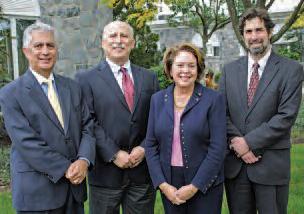
Four Faculty Appointed Distinguished Professors of Law
LOUISE LARK HILL, DAVID R. HODAS, and ALAN E. GARFIELD of the Delaware campus, and MICHAEL J. COZZILLIO of the Harrisburg campus, were appointed “Distinguished Professors of Law” by Dean Linda L. Ammons, who acted on the recommendations of their faculty peers.
Distinguished Professors Michael J. Cozzillio, David R. Hodas, Louise L. Hill, and Alan E. Garfield.


Professor Leonard Sosnov Honored by Art for Justice
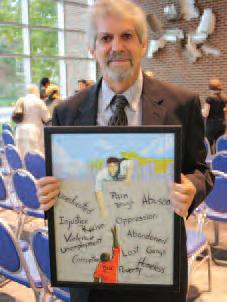
Art for Justice honored Professor LEONARD N. SOSNOV for his work representing individuals on behalf of Centurion Ministries, a Princeton, New Jersey–based nonprofit organization dedicated to freeing innocent people sentenced to life imprisonment or death. Professor Sosnov was presented with a painting on September 15 at a reception in the Widener University Art Gallery in Chester, Pennsylvania, which was hosting Artfor Justice’s 50th display of artwork created by prison inmates. In his 21 years of teaching criminal law, Sosnov’s work with Centurion Ministries has brought about the release of four inmates who had long maintained their innocence. Founded in 1997, Art for Justice supports inmate art and stimulates dialogue about finding humane, effective ways to improve the criminal justice and corrections systems. Professor Sosnov was presented with a painting titled The Wall: Lawyer. In it artist Daniel Gwynn depicts a lawyer reaching over a prison wall to make contact with an inmate.
Taking the Lead

$2,945,817 $3,925,826

Campaign Update
As of March 31, 2012
We wish to thank the following Widener Law leadership contributors— aswell as all of the individuals, corporations, and foundations who have shown their support this year—for their generous support. Together, we are moving steadily and successfully toward our goal.
RECENT LEADERSHIP GIFTSAND PLEDGES
Taishoff Family Foundation
Taishoff Advocacy, Technology, and Public Service Institute
Pennsylvania IOLTA Harrisburg Civil Law Clinic
State of Delaware
Helen S. Balick Chair in Business Bankruptcy Law
The Mutual Fire Foundation Inc.
The Franklin Homeowners Assurance Company Moot Courtroom & The Hon. James C. Crumlish Scholarship
Richard K. Herrmann, Chris Mourse, and Thomas Russo CCTI Technology Initiatives Fund
The Young Foundation H. Albert Young Fellowship in Constitutional Law
George K. Miller ’81 Widener Law Fund
Pachulski Stang Ziehl & Jones LLP
Helen S. Balick Chair in Business Bankruptcy Law
Young Conaway Stargatt Taylor LLP
Helen S. Balick Chair in Business Bankruptcy Law
Harriette S. and Charles L. Tabas Foundation
Leslee Silverman Tabas and Richard S. Tabas
COVEAR Community Awareness Project
Richards, Layton & Finger, P.A.
Helen S. Balick Chair in Business Bankruptcy Law & Delaware


Thanks to the generosity of our alumni and friends, 2011 was a year of substantial upgrades to our campuses. The Harrisburg Campus’s new legacy walkway, which stretches south from the law building, provides an opportunity for students, alumni, parents, and others to place permanent reminders of their loved ones and their connection to thelaw school. Inside the law building, newly renovated classroom space, administrative offices, and common areas provide fresh, modern spaces for work, study, and meeting.
In Delaware, a Welfare Foundation grant gave Polishook Hall an exterior facelift, including new doors and windows. The landscape was also improved through the generosity of Steven P. Barsamian ’75, who supported and consulted in the planting of flowers and shrubs throughout the center of campus. In the main law building, a reimagined Crown Court food service area resulted in a much more convenient gathering and informal dining area for students, faculty, and staff. Also adding convenience is a substantial new parking area in the space that until recently held aging tennis and basketball courts. New, improved courts are now located at the northeast end of campus.
We invite you to drop by and see how far our campuses have come in recent years and what the future holds.


Contact Ashley Barton at 717.541.3974 or anbarton@widener.edu for more information about how you can place a

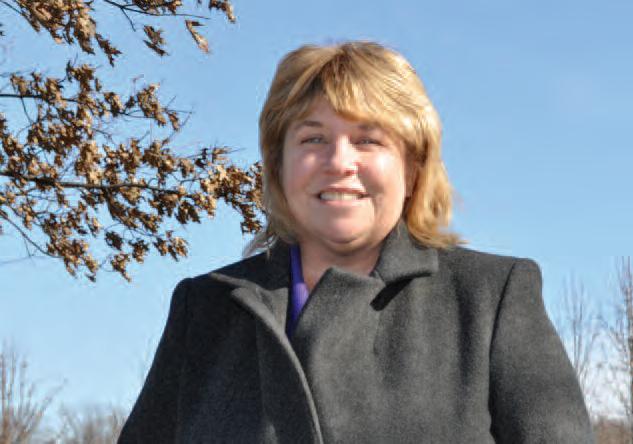
For Sandy Graeff, the Harrisburg campus has been a home away from home for 21 years. Now Special Programs Liaison, she has served as faculty secretary, worked with the Trial Advocacy Honor Society and the Student Bar Association, and been an integral part of every Widener Law Review since its launch in 1990.
Where Else


What brought you here?
My oldest son [Chris Fromm ’99] was always interested in law school. That made me pay attention. Also, my thought was always, “How do you give back to the community?” One way is through education; it’s the perfect way to combine everything.
How has the law school changed since you began working here?
I don’t know if it’s exactly changed. The students have always been enthusiastic. They continue to come back and give of themselves. Professors come here because they want to teach; they care for students, and they’re approachable. I’ve seen the most change through my positions; we have more outside programs, more CLE, more opportunities for alumni to come back, more ways for the school to open up to the community— we’ve had continual good change in that way. It’s been a good progression.
Where do you see the law school in five years? In ten?
Widener will still be a strong institution. “Presence” is the word that comes to mind time and time again. I see Widener continuing to have a strong presence…as a desirable law school with much to offer, the strong presence our students will continue to have within the law community while still in law school—through clinics, externships, jobs— and the impact our graduates will continue to make throughout the global community in their jobs, service, and participation in programs when they come back on campus, and through networking.
Tell us about your work with student organizations and the Widener Law Journal in particular.
I wonder how they [the students] balance it all, but they do and they do great. It’s been absolutely rewarding. It’s opened my eyes; the writing, research, eloquence in their speaking…. I see the commitment that the students bring. You get to meet so many wonderful students. You get choked up thinking about all the good things about them. I pray whenever they take the bar—I pray for every one of them. When the results come out, I look at every name. I like to look at pictures from events and see that they like to come back. I hear from them— itmakes you feel good. I’ve been teased for being the law review mom— I say I’m not old enough to be their mother.
Would You Want to Be?
I can’t think of any day I haven’t wanted to come to work. Maybe when my son was in Iraq and took an IED blast…. Widener’s been here through my husband’s cancer, his heart attack…. Students ask about my children, my grandchildren. It’s a family. The Veterans Law Clinic continues to provide legal assistance to my son from injuries sustained in Iraq. It was hard, but I had family here. A Moot Court student gave me a stuffed dog wearing camo and a yellow ribbon. Welaugh together, we cry together, we celebrate together. I rejoice inthe students’ each step…. I think graduation is one of the greatest ceremonies. I thank their parents for sharing—it’s been a privilege.
I can’t say I’ve ever been unhappy. I hope I’m here five years down the road. As long as I can keep giving back, I’ll stay. People ask why don’t I retire…why would I? Where else would you want to be?
You’ve been contributing financially for some time now. Why do you continue to give?
It was Michael Goldberg, in a letter [when he was Acting Dean], who made everyone feel that whatever you can give makes a difference. When leadership takes that personal touch—the deans here do that and always have—they make you feel that whatever contribution you make—time, abilities, financially—makes a difference. It may not be the amount I’d like to give, but if you give consistently, it doesn’t matter the amount—it makes a difference. I give to the Widener Law Fund and put it into the hands of people who know how it will be used best.
Is there anything in particular you hope your support will accomplish?
I want it to represent my belief in Widener itself. I want it to say that Isupport Widener not just because I work here, but because I see theeducation the students receive. I hope that my small contribution makes people see that they should give back to Widener, support Widener, and give our alumni as many opportunities as possible. If employers get [Widener Law alumni] in the door, they’ll see what it means to have a Widener grad working there. I continue because I believe there’s a need, and when you have a need you try to meet it. Any time you give to charity you look to see how it’s used; you weigh everything. Widener’s worth giving to. I wouldn’t do it if I didn’t believe in it.
Future Perfect
Richard Herrmann, Chris Mourse, and Tom Russo were fresh fromone of the world’s foremost showcases of emerging legal technology when they conceived of the Corporate Counsel Technology Institute (CCTI). Mr. Herrmann recalls that, finding themselves engrossed in discussion about Spencer Johnson’s motivational tract, Who Moved My Cheese?, “We decided that we would do something together at Widener besides teach the class, and we formed CCTI.”
“The class” is the popular “eDiscovery” course that is co-taught in various configurations by the three Delaware legal technology experts. Who Moved My Cheese? extols the virtues of adapting tochange.
Adapting to change is what motivates CCTI. The institute explores the law, emerging technologies, and the quickly accelerating rate at which they have become intertwined. It also provides corporate and legal professionals the knowledge and tools they need to navigate the fast-changing world of legal technology.
Housed at Widener Law, the institute gives students a significant advantage. They have access to the seminars and courses Herrmann, Mourse, and Russo present, and to their exceptional lineup of visiting experts. They are, in short, getting the same access and hands-on training provided to top legal professionals, corporate officers, and judges across the country.
“We actually worked with DuPont, talked them into starting their electronic discovery Widener Intern program,” says Mr. Russo. “We have brought in dozens of lawyers, judges, and well-known people throughout the United States as guest speakers.”
They’ve also worked closely with the National Judicial College (NJC) in Reno, Nevada, and in Delaware, where
Widener Law serves as the East Coast campus. Mr. Mourse says, “Iwent out there and taught. We did a nine-part series on eDiscovery in2009-2010. When that was complete, we took the DuPont Legal model and worked withDuPont to put on a 13-part webinar series. We’d broadcast, from Wilmington, Delaware, with Tom Sager’s legal team, all over the world.”
Adds Mr. Russo: “What we’re trying to do is bring together the three aspects that we convey to our classes and seminars: the legal perspective, which Richard represents; the corporate side, which Chris represents; and the technology piece, which I represent, having had alegal technology company here in Wilmington for the last 40 years.”
“We were the first school to have an electronic discovery course in the United States, and therefore the world, because they don’t really have electronic discovery anywhere else,” says Mr. Herrmann. “That was in 2004, before electronic discovery really took off.” Since then, Herrmann, Russo, and Mourse have worked hard to ensure the law school’s prominence in the field and to prepare its students for a future when eDiscovery and the complex legal technology that goes with it are the norm.

Richard Herrmann, Chris Mourse, and Tom Russo give legal technology at Widener a big boost.

“The Richard K. Herrmann Technology American Inn of Court was founded at Widener,” explains Mr. Mourse. “We work very hard to place students as externs at DuPont and, in addition, we’ve established a restricted fund at Widener with CCTI, which we use to hire student workers. We try to push the students into applying the theoretical knowledge that they gain in law school, and show them how business technology and the law work together in a practical sense.”
In 2011, they raised their level of commitment
“We were the first school to have an electronic discovery course in the United States, and therefore the world, because they don’t really have electronic discovery anywhere else.”
RICHARD HERRMANN— WIDENER LAW’S CORPORATE COUNSEL TECHNOLOGY
INSTITUTE

substantially, establishing, with a generous gift, the CCTI Technology Initiatives Fund. The fund will enable the law school—and its students—to pursue opportunities in emerging technology quickly and nimbly.
Associate Dean for Information Services and Technology Michael Slinger is particularly enthused. “The demand by our students and faculty for access to cutting-edge technology cannot be understated,” he notes. “Gifts such as these are tangible examples of how the alumni and friends of Widener Law can help us to achieve the margin of excellence we require in an increasingly competitive educational and legal environment.”
“We’re firm believers that you have to give back,” explains Mr. Herrmann. “People give back a number of different ways. Some give back in pro bono hours, and others give back serving on committees. All are very important. This is another way of giving back. Certainly those who have taken our classes and graduated from this school will be in a position at some point to give back as well.”
When they do, the legal world will have changed again.
The changes will be, in Herrmann’s words, “all-encompassing. Depositions, courtroom transcripts, and everything else will move to a video environment.” He adds, “The management of knowledge is going to be Google-like everywhere. We will no longer be remaking the wheel at every corporation and law firm.
“I think the form of education is going to change. I think we’re going to start seeing that professors are able to assign a particular case to the students so they read the briefs as part of the project, they see the argument from those briefs by streaming video from whatever court it was argued in, they discuss the briefs and the arguments, and then they read the opinion that was ultimately the basis for the briefs and arguments.
“Of course the textbooks will be different than they are now. They’ll be on their iPads. We’ve actually done a little bit of that, in our last electronic discovery class. We stopped using the book and started using the Internet and using TWEN to post their writing assignments.”
“When you teach the law,” says Mr. Herrmann, “things seem to stay very much the same; when you teach this area of the law, they change every single time we teach the class.”
The Unparalleled Unrestricted Gift
Few contributions to the law school have a more immediate impact than the Widener Law Fund gift. Why? Flexibility.
It’s about excellence and achieving it quickly—putting resources where they’re needed. From the time they are received, gifts to this critical, unrestricted fund addvalue toour students’ educational experience.
With more than a thousand contributors annually, the Widener Law Fund is the embodiment of what we can do en masse. Our law school is comparatively young, butour alumni and friends are many, and our collective efforts are powerful.
Gifts to the Widener Law Fund have increased every year for the past five years, and they have made a remarkable impact. Thank you. Your ongoing, increasing support will make the difference between where we are now and where we want to go as an institution.
Every gift improves the value of our students’ education; they are what move us from distinction to eminence. This year, please join us.
For more information, please contact: Peter Castagna, Assistant Director, Widener Law Fund, at302.477.2754 orpjcastagna@widener.edu; or Ashley Barton, Associate Director, Alumni Relations and Development, at 717.541.3974 or anbarton@widener.edu.

Richard K. Herrmann is a visiting professor at Widener Law, chairs the Corporate Counsel Technology Institute, and is a partner at Morris James LLP, where he handles many forms of complex litigation, including intellectual property, commercial, and technology. He can be reached at rherrmann@morrisjames.com.
Chris Mourse is Director of eDiscovery, Data Collections, Forensics and Analytics at doeLEGAL. He can be reached at cmourse@doelegal.com.
Thomas J. Russo is President and Chief Executive Officer of doeLEGAL. He can be reached at trusso@doelegal.com.
Headquartered in Wilmington, Delaware, doeLEGAL develops and implements cutting-edge applications and solutions for the corporate legal and law firm marketplace.
Access to Justice: Dean Linda L. Ammons and Kimberly E. Connolly Lawson ’00 Honored
The Delaware State Bar Association honored Widener Law Dean Linda L. Ammons and Kimberly E. Connolly Lawson, Esq. ’00 with Christopher W. White Distinguished Access to Justice Awards that recognized their contributions to public service.
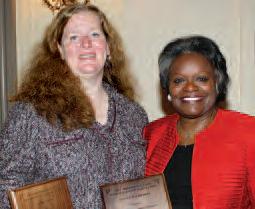
The awards breakfast was held at the Hotel du Pont in Wilmington, Delaware, on Tuesday, October 25, in conjunction with National Pro Bono Week.
Dean Ammons was honored in connection with the independent review she conducted at the request of Governor Jack Markell into the matter of Delaware pediatrician Dr. Earl Bradley, who was convicted of sexually abusing hundreds of hisyoung patients. The General Assembly unanimously passeda package of nine bills that encapsulated many of the recommendations contained in her 47-page report.
“I think it took her a significant amount of courage to ask the questions she needed to ask,” said James G. McGiffin Jr., Esq., president of the Delaware State Bar Association, in giving the award.
The Dean thanked the government for acting on the recommendations, rather than just reading the report and filing it away. “I was privileged to contribute to this great state and to our families and our children,” she said.
McGiffin presented Connolly Lawson, a 2000 cum laude graduate of the law school’s Delaware campus, with an achievement award. Connolly Lawson has volunteered with Delaware’s Office of the Child Advocate her entire legal career. “She is an absolute model and has been essential to many children in the state,” McGiffin said. She is a senior associate at Reed Smith in Wilmington, practicing in the area of commercial restructuring and bankruptcy.
The service awards are given in the name of the late Christopher W. White, a long-time attorney with the Community Legal Aid Society of Delaware, who was widely respected for his work on behalf of the poor, homeless, disabled, elderly, troubled, and downtrodden people of Delaware.
Two Alumni Join National Advisory Council
Cary L. Flitter ’81 and Samuel A. Landy ’85 bring their expertise to key advisory board.
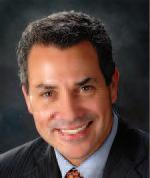
CARY L. FLITTER ’81 is an adjunct member of the law school’s Delaware faculty and winner of the 2011 alumnus of the year award. He is a partner at Flitter, Lorenz, PC, litigating a range of consumer law matters.In addition to teaching at Widener and other area law schools, Mr. Flitter has served as a guest lecturer at Harvard Law School, the University of Pennsylvania Law School, and others. He is a graduate of the National Institute for Trial Advocacy and a contributor to Pennsylvania Consumer Law (Bisel), Consumer Class Actions 5th Ed. by the National Consumer Law Center, and many additional publications. He has been an invited participant at a number of FTC events. Other recent activities include co-chairing of the Federal Courts committee of the Montgomery (County, Pennsylvania) Bar Association in 2011 and serving on the Board of the National Associates of Consumer Advocates.
SAMUEL A. LANDY ’85
has served as President of UMH Properties, Inc. from 1995 to the present. UMH Properties owns and operates manufactured home communities in Indiana, New Jersey, New York, Ohio, Pennsylvania, and Tennessee. Among other accomplishments, Mr. Landy created UMH Sales and Finance, Inc. a division that has sold well over 1,000 manufactured homes. Mr. Landy is a member of the New Jersey Bar and was admitted to practice before The United States Supreme Court in 1997. He is a director of Monmouth Real Estate Investment Corporation, Special Strides, and the Monmouth County Jewish Heritage Museum. He, his wife Laurie, and his three sons, Jeremy, Harry and Daniel, reside at Congress Hill Farm in New Jersey.
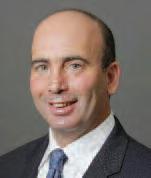
Kimberly E. Connolly Lawson, Esq. ’00, and Dean Linda L. Ammons at the 2011 Delaware State Bar Association Access to Justice Awards breakfast.

Pat McPherson ’95

What’s the word for “not guilty” in Hawaiian?*
R.
For Pat McPherson, the journey from Harrisburg to Honolulu started at Widener Law. His approach to his lifeand career can be summarized by one of his favorite maxims: “If you don’t have time to do it right the first time, when are you going to find the time to do it right the second time?”
And if you’re Pat McPherson, living in Hawaii is doing itright. On average, there are 276 sunny days in Honolulu. Temperatures range from the low 60s in January to around 80 degrees in July. Plumeria and bougainvillea perfume the air. You work for yourself, handling approximately 300 cases per year. Life is good.
McPherson graduated from Widener Law, Harrisburg campus, in 1995 and moved to Hawaii the next year. When you hear his voicemail begin with “Aloha,” you know you’re not in Harrisburg anymore. And when you consider that there is an annual average of 5,500 DUI arrests in Hawaii each year, it’s certain McPherson’s phone will be ringing with new clients daily.
For McPherson, it’s not just about representing clients who have made a mistake, it’s also about making a difference in their lives. “I ask clients: If you’re digging yourself into a hole, what’s the first thing you have to do to get out? Stop digging! The longer you dig, the more it costs you. So, we’ll get this problem solved, and then you’ll be able to move on with your life.”
McPherson credits the legal education he received atWidener Law for a large degree of his success. He’s

beennamed a Super Lawyer four years in a row and wasappointed by the governor of Hawaii to the ignition interlock task force. He frequently testifies before the state legislature regarding DUI laws and worked on revising the entire DUI statute for the state of Hawaii. He’s even represented cast members from the hit TV show Lost.
“Law school teaches you how to analyze a problem and come up with a solution,” McPherson said. “I liked Widener in particular because it was not stuffed white shirts and a box full of chocolates. It’s innovative, it’s diverse, and it’s a place where people think outside the box.”
McPherson is equally enthusiastic about Dean Linda Ammons. “I think she has a real vision. I had dinner with her when she visited Hawaii and was amazed by her energy and presence. In fact, I give money to Widener Law because I believe that the school is doing such greatthings, not because I feel obligated to. I think people who go to Widener Law get better value for their dollar than they would at any other school.”
“I’m one of the luckiest people I know,” McPherson said. “My dad worked for a little newspaper, my grandparents on both sides were poor, and now I have the biggest traffic practice in Hawaii. If you said, ‘I’m going to go to paradise,’ I’d say you’ll be living next door to me.”
*By the way, the Hawaiian word for “not guilty” is “hewa’ole.”
“Pat” McPherson ’95 Serves Up Legal Advocacy and Life Lessons at his Honolulu Practice.


Halak Mehta ’12
In the summer before my final year of law school, an externship atthe United Nations Development Programme (UNDP), Campaign to End Poverty 2015, allowed me to pursue my passion in law the way Ialways envisioned. The United Nations Millennium Campaign (UNMC) office is part of the UNDP, and its global mission is to end the vicious cycle of poverty.
In 2000, 189 world leaders signed the Millennium Declaration, which asserts that every individual has the right to dignity, freedom, equality, and a basic standard of living that includes freedom from hunger and violence, while encouraging tolerance and solidarity. The Millennium Development Goals (MDGs) originated from the Declaration.
Halak Mehta’s 2011 externship took her from the Harrisburg campus to the United Nations, where she put her skills toward the goal of eradicating extreme poverty and its symptoms.
There are eight MDGs: eradicating extreme poverty and hunger; achieving universal primary education; promoting gender equality and the empowerment of women; reducing child mortality; improving maternal health; combating HIV/AIDS, malaria, and other diseases; ensuring environmental sustainability; and developing a global partnership for development. They are written broadly, allowing individual countries to tailor their policies to meet their specific goals.
As an extern, I provided support in policy research and analysis focusing on the Japan MDG review summit, the Integrated Implementation Framework (IIF), and the South Korea Aid Effectiveness meeting. I participated in other MDG meetings and prepared reports on commitments, achievements, and gaps. Law school taught me to look ata problem and assess various components to find the best solution. At the UN, I used my analytical skills to solve problems for a particular region or community rather than for individuals/entities.

In addition, I prepared a proposal that assesses citizen monitoring of the MDGs and the implications it has on the Campaign to End Poverty 2015. Amartya Sen, an Indian economist, studied the underlying mechanisms of poverty and found that no major famine has occurred in a democracy allowing free expression. The UNMC office advocates for citizen monitoring of the MDGs, which allows citizens to hold governments to account for the delivery of basic services and more and better aid.
The citizen monitoring model works via four key actors: citizens, technology providers, government agencies, and media and advocacy groups. First, ordinary citizens (supported by civil society organizations) provide feedback about basic services like education, health, water and sanitation, and food security. Second, the feedback is channeled through mobile phones and computers with support from technology providers. Third, the feedback is reported to the appropriate government agencies and officials. Fourth, media and advocacy groups disseminate any negative findings on government action.
Citizen monitoring empowers the poorest individuals to act for themselves and their community and turn information into positive change. The program is being piloted in India, the Philippines, and countries in Africa. Ifresults in these countries are optimal, the UNMC office will be able to expand to other underdeveloped countries in the future.
Law school taught me to remain relentless, but working at the United Nations taught me that pursuing social justice can ensure positive change in the world.
Halak Mehta (left) with fellow global extern Adam Gibbons.
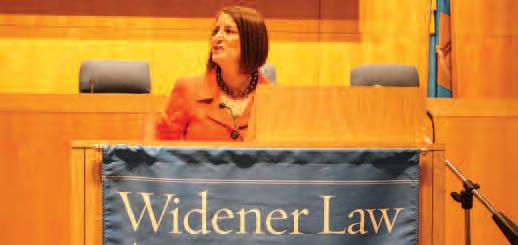
Annual Health Law Symposium Investigates Delaware Child Sexual Abuse Report
The Health Law Institute and the Widener Law Review presented “Lessons from Tragedy: Legal, Professional, and Ethical Issues Raised by Bradley and Beyond.” Delaware Governor Jack Markell helped open the conference, and Dean Linda L. Ammons presented her report, which was solicited by the governor, about the system that failed to prevent a Delaware pedophile pediatrician from victimizing so many children. The day included three panels and a roundtable discussion.
Montgomery County (Pennsylvania) District Attorney Risa Vetri Ferman ’92.
New Athletic Courts Provide Regulation Surfaces
Law & Government Institute Symposium Examines Prisoner Reentry
The School of Law and its Law & Government Institute presented a symposium that examined challenges facing offenders who are reentering their communities after incarceration. The Prisoner Reentry Summit, held on the Harrisburg campus, was organized by Pennsylvania Commonwealth Court Judge Emeritus Doris A. Smith-Ribner.
Pennsylvania Commonwealth Judge Emeritus Doris A. Smith-Ribner speaks.
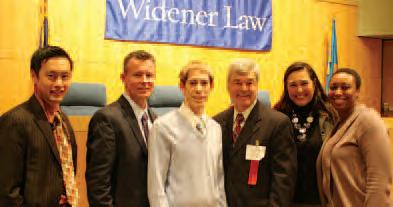
Health Care Compliance Boot Camp
Just before volleying with 1L Jason Rojas and shooting a few hoops with Professor Jim May, Dean Linda Ammons opened new Delaware campus tennis and basketball courts with a brief ribbon-cutting ceremony. The courts— previously located centrally on campus and more than a little outdated—were reconstructed on the rear campus parking lot, opening 70 new spaces at the center of campus and providing students, faculty, and staff a great fitness resource.
The law school offered an intensive one-day “boot camp” event to educate professionals about health care corporate regulatory compliance. The program surveyed core issues, including the Health Insurance Portability and Accountability Act or HIPAA, the Sarbanes-Oxley Act, the Stark and Anti-Kickback Acts, the Sherman Antitrust Act, nonprofit tax codes, and other matters.
From left: Christopher Chu, Stephen Rhoades, Esq., law student MicahAckerman, Senior Adjunct Professor Andrew Fichter, Executive Director of Institutes Eileen Grena-Piretti, and Adjunct Professor Samantha Wilson.
Environmental Law Symposium
The School of Law and its Environmental Law Center presented “The Delaware Coastal Zone Act at 40: Past, Present and Future.” The event focused on opportunities and challenges the legislation—the first comprehensive coastal land-use law in the world aimed at curbing industrial development within a coastal area—presents in modern times. The program featured a keynote address by Mike Castle, former Delaware governor and long-time congressman, a “town hall” meeting discussion moderated by Hon. Susan Del Pesco ’75, and more.
From left, Dean Linda L. Ammons, Mike Castle, and Professor James R. May.
Law Dean Linda L. Ammons and first-year student Jason Rojas shake hands after the court’s inaugural volley.
Law School Recognized by Society of Corporate Compliance & Ethics
The Society of Corporate Compliance & Ethics recognized Widener Law with an award for exceptional work in strengthening the compliance and ethics professions. Dean Linda L. Ammons accepted the honor at the society’s seventh annual International Compliance Awards Banquet in Las Vegas. It recognized the school for its work in developing programs that promote the professions of compliance and ethics. The society is a nonprofit organization dedicated to enhancing the role of compliance professionals and advancing corporate governance, compliance, and ethics on a global scale.
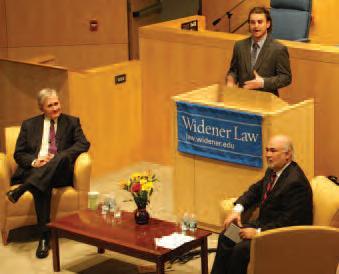
Former
Ambassador Thomas Graham Jr.
Addresses
International Law Society
The International Law Society welcomed former U.S. Ambassador Thomas Graham Jr. to the Delaware campus for a dialoguestyle event on disarmament. Ambassador Graham, one of the nation’s leading diplomatic authorities on nuclear nonproliferation, has advised every American president since Ronald Reagan on nuclear weapons issues. He spoke with Widener Law Adjunct Professor Jonathan Granoff.
International Law Society President Kevin Krauss, at podium, introduces former U.S. Ambassador Thomas Graham Jr., left, andAdjunct Professor Jonathan Granoff.
SALSA Investigates Modern-Day Slavery in Inaugural Program
The newly formed South Asian Law Student Association (SALSA) presented its inaugural program, featuring speaker Saju Mathew, on the Delaware campus. The event, “ModernDay Slavery: Human Trafficking and Bonded Labor,” was presented in partnership with the International Justice Mission and the South Asian Bar Association of Delaware. Mathew, based in Washington, D.C., is the director of operations, south Asia, for the human-rights agency International Justice Mission.
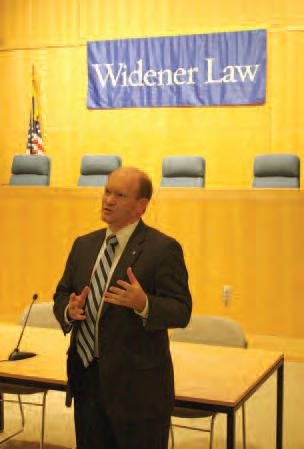
Senators Carper and Coons Stand In at Delaware Tax Institute
When the 2011 Delaware Tax Institute keynote speaker abruptly cancelled for medical reasons hours before she was scheduled to address more than 100 people at the Delaware Tax Institute program, the institute’s planning committee quickly arranged for two outstanding substitutes. U.S. Sens. Tom Carper and Chris Coons took turns helping to fill the hour discussing efforts to put the country on a more solid path toward fiscal responsibility. They provided insight into federal spending and taxes, the impact of healthcare, and the work of the debt-reduction “super committee.”
From left, Dean Linda L. Ammons, Saju Mathew, Esq., Emilie Ninan, Esq., and SALSA Vice President Prema Roddam.
From left: Tony Doyle, Assistant Dean for Education Services and Director of Graduate and International Legal Education; Dean Linda L. Ammons; and Eileen Grena-Piretti, Executive Director of Institutes.
Senator Chris Coons speaks at the 2011 Delaware Tax Institute.
Second Annual Patrick J. Murphy Lecture Tackles Leadership and Legal Education
Harrisburg campus alumnus, former U.S. congressman, and candidate for Pennsylvania attorney general Patrick Murphy ’99 returned to campus to give the second-annual lecture that bears his name. He spoke about leadership and the versatility of a law degree.
Law School Presents Judicial Candidate Debates
Widener Law partnered with Capitolwire to present two statewide judicial race debates on the Harrisburg campus in thefall. The race for Commonwealth Court judge featured Democrat Kathryn Boockvar and Republican Anne Covey ’84. Ms. Covey went on to win in the general election. The race for Superior Court judge featured Democrat David W. Wecht and Republican Vic Stabile. Both debates were televised on PCN and featured Professor John L. Gedid and Capitolwire journalist Peter DeCoursey as moderators.
Anne Covey ’84 (left) debates Kathryn Boockvar.
Five Named Wolcott Fellows
Five law students were named Josiah Oliver Wolcott Fellows for the 2011-12 academic year: EricJuray, Kyle Dunkle, Jeremy Riley, Traci Cosby, and Eric Sable. Wolcott Fellows serve as law clerks inthe Delaware Supreme Court. The prestigious positions provide unique opportunities for Widener Law students, who are chosen through a competitive application and interview process.
Relay for Life Sets Fundraising Record
Students, faculty, staff, and friends of the Harrisburg campus set a new fundraising record at the third annual Relay for Life, held Saturday, October 15, in the campus parking lot. The event, which involved more than 50 walkers, generated $19,211 for the American Cancer Society.
Law students Marisa Zizzi, Nicole Radziewicz, Maria Allegretto, Tara Horvath, and Jordan Spahr at the Relay for Life.
From left, Associate Professor Jill E. Family, Professor John L. Gedid, Law Dean Linda L. Ammons, Patrick Murphy ’99, and Associate Professor Wesley M. Oliver.
Widener Women’s Network, Philadelphia Chapter Winter Luncheon
The Philadelphia Chapter of the Widener Women’s Network gathered for its annual winter luncheon. A panel of three women spoke, each providing insight into their experiences working in variously sized law firm environments. Leslee Tabas ’79 reflected onher experience as a solo practitioner in Narberth; Maria Bermudez Harris ’07 of Martin Banks, Philadelphia, offered a large-firm perspective; and Miriam Barish ’92 spoke about her work in the midsize firm Anapol Schwartz in Philadelphia.
December Graduates Celebrate
Alumni Gather at Annual AALS Meeting
Dean Linda L. Ammons was pleased to launch Widener Law’s 2012 alumni events with a regional reception in Washington, D.C., at January’s American Association of Law Schools Annual Meeting. She was joined by 50 attendees, including numerous faculty as well as alumni from the region.
Professor Alison Donahue Kehner (left) and Kathryn Fettrow ’07.
December 2011 Harrisburg graduates gathered on campus to celebrate their achievement. Dean Linda L. Ammons offered her congratulations and wished them well in their future endeavors.
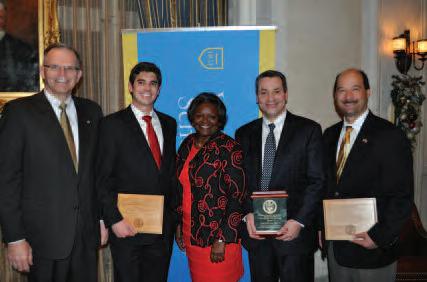
Alumni Honored for Accomplishments
The law school held its annual Alumni Awards Ceremony at the Union League of Philadelphia’s Founders Room. The awards recognize outstanding leadership, service, and achievement of its graduates. Cary L. Flitter ’81 (DE) received the Alumnus of the Year Award. Lawrence E. Tan ’07 (DE) received the Outstanding Service Award, and the Outstanding Recent Alumnus Award went to Brandon J. Pierce ’09 (HBG). The school has honored its distinguished alumni in this way since 1976.
Professor Oliver Hosts Bluegrass Reception
Well over 100 people filled Associate Professor Wesley M. Oliver’s Second Street home in Harrisburg when Professor Oliver hosted a studentalumni happy hour and live music event. The evening began with a two-hour networking social followed by a law school update by Vice Dean Robyn Meadows and live music by a bluegrass band.
Left to right: President James T. Harris, Brandon Pierce ’09, Dean Linda Ammons, Cary Flitter ’81, and Lawrence Tan ’07.
Left to right: Peggy Morningstar ’11, Hanan Boulos ’11, Dean Linda Ammons, and Angela Bertugli ’11.
Left to right: Maria Bermudez Harris ’07, Miriam Benton Barish ’92, and Leslee Silverman Tabas ’79.
1L Devin Pedone (right) of Connecticut and Dean of Students Keith Sealing enjoy the Bluegrass Event.
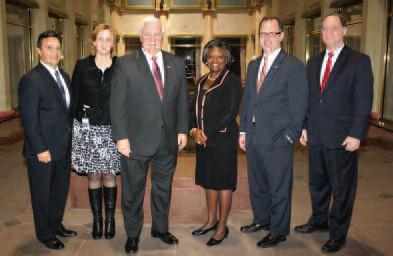
Widener Law Celebrates Corbett Administration Appointees
Widener Law celebrated the achievements of three alumni with a reception in the East Wing of the capitol building in Harrisburg, Pennsylvania. Michael F. Consedine ’94, E. Christopher Abruzzo ’92, and Annmarie Kaiser ’93 each assumed senior roles within the Corbett administration in 2011: Mr. Consedine as Insurance Commissioner for the Pennsylvania Insurance Department, Mr. Abruzzo as Governor Corbett’s Deputy Chief of Staff, and Ms. Kaiser as Secretary of Legislative Affairs for the Governor’s office. Governor Corbett joined more than 100 friends, faculty, staff, and alumni at the celebration.
Delaware Valley Alumni and Friends Golf Outing
Rolling Green Golf Club in Springfield, Pennsylvania, was the site of the law school’s 2011 Delaware Valley Alumni and Friends Golf Outing in October. Golf outing proceeds benefited the Widener University School of Law Scholarship Fund. The winning foursome was Frank DePasquale Jr. ’86, Thomas Kane, Thomas Pitucci, and Anthony Rosati. The second-place foursome was Jeffrey Hoyle ’84, William Fedullo ’76, John Brown ’84, and Gregory Sciolla ’75. Thomas Pitucci and Brian Steiner ’75 were the “closest to the pin” winners.
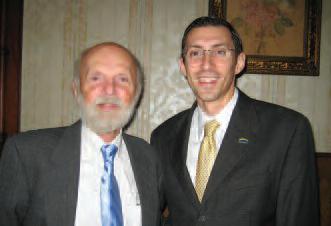
Delaware County Alumni Chapter Luncheon and CLE
The Delaware County Alumni Chapter, chaired by Jonathan Peri ’99, hosted a luncheon and CLE program at D’Ignazio’s Townehouse Restaurant in Media, Pennsylvania. The CLE portion of the program, “Character Evidence in Pennsylvania Criminal and Civil Cases,” was presented by Taishoff Professor of Law Thomas J. Reed.
Taishoff Professor Thomas Reed (left) and Jonathan Peri ’99.

Student Volunteers Reach Out to Alumni
Members of student organizations on both campuses volunteered their time to contact alumni on the law school’s behalf. Their task: update alumni on law school news, verify their contact information, and ask them for their support of the annual fund.
Second Annual Widener Law Fun Run/Walk
For the second year, the Widener Law Fun Run/Walk in Harrisburg drew a crowd that included students, alumni, family members, faculty, and staff. Widener Law Running Club President Brad Baird (3L) awarded T-shirts to the first-place female, male, and alumni finishers (pictured). This year, the Fun Run/Walk was followed by live music, pizza, and a pickup soccer game on the student organization field.
Marshall
Alumni Luncheon
Dean Linda L. Ammons hosted a luncheon at Marshall, Dennehey, Warner, Coleman & Goggin’s Harrisburg, Pennsylvania, office, which employs eight Widener Law alumni attorneys and one student as a clerk. The firm employs more than 70 Widener Law alumni around the country. The Dean shared campus news and updates with the attendees and discussed the law school’s current and future activities.
Left to right: E. Christopher Abruzzo ’92, Annmarie Kaiser ’93, Pennsylvania Gov. Tom Corbett, Dean Linda Ammons, Michael F. Consedine ’94, and Chief of Staff William F. Ward.
Left to right: Marlo Pagano Kelleher ’99, Sandra Morris ’99, Michael Daigle ’99, and David Berger ’11.
5k winners, left to right: student Katie Borer, first overall female finisher; Clinton Wagner, first overall finisher; and Mark Wieder ’11, first overall alumnus finisher and former President of the Widener Law (Harrisburg) Running Club.
Dennehey, Harrisburg
From left: Edwin Schwartz ’95, Dean Linda Ammons, and Widener Law student Jacob Sulzer.
Kathleen Long, President of the Harrisburg campus Women’s Law Caucus, makes a call.
Minority Alumni and Student Social
More than 60 students and alumni gathered at Dean Linda L. Ammons’ home for her annual Minority Student and Alumni Networking Social. Guests represented eight states and a number of countries, including India, Turkey, Haiti, Sudan, and Pakistan. They included students, practicing attorneys, members of the judiciary, and many others.
Widener Women’s Network, Harrisburg Chapter Luncheon
Smigel, Anderson & Sacks graciously hosted a luncheon for the Harrisburg Chapter of the Widener Women’s Network. After a greeting from Vice Dean Robyn Meadows and a warm welcome by LeRoy Smigel, three of the firm’s Widener Law alumnae—Susan Good ’04, Jessica Mercy ’07, and Heather Royer ’95—addressed attendees on their areas of expertise.
Alumni and Friends Enjoy Carmen

Happy Hour in Philadelphia
More than 40 alumni gathered at Chickie’s and Pete’s on Packer Avenue in South Philadelphia for happy hour. The event was hosted by the Alumni Association Board of Directors and provided an opportunity for all who attended to have fun, reconnect, and network.
Widener Law alumni and their guests joined Dean Linda Ammons for brunch at XIX, followed by an afternoon atthe opera to see Bizet’s Carmen at the Academy of Music in Philadelphia. Following the performance, the group was treated to a personal backstage tour and had the opportunity to meet cast members Rinat Shaham (Carmen) and David Pomeroy (Don José).
Alumni Celebrate Passing the Delaware State Bar Exam
Widener University School of Law held a reception for alumni who had passed the July 2011 Delaware State Bar Exam. Dean Linda L. Ammons addressed the group, commending their accomplishment and reminding them that they will always be part of the “Widener family.” Following the Dean’s remarks, Delaware Supreme Court Justice and Widener Law Adjunct Professor Randy J. Holland spoke, reminding the alumni that they were joining a small, elite group of attorneys.
Left to right: Students Lauren Epps 2L and Tiffany Coleman 2L, Dean Linda Ammons, Hon. George Overton ’86, and Hon. Calvin Scott ’89.
Left to right: Ericka Johnson ’07, Pamela Lee ’07, and Kelly Albanese ’07.
Delaware Bar Passers with Justice Randy J. Holland (front left) and Dean Linda L. Ammons.
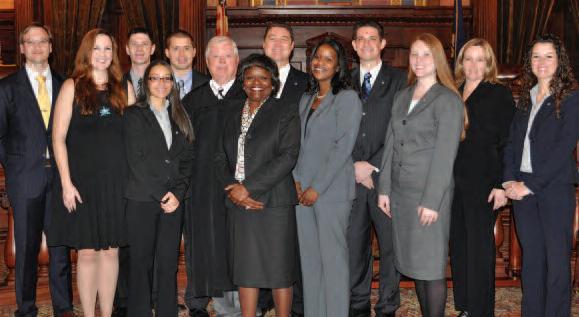
Harrisburg Alumni Gain Admission to Pennsylvania Bar
In a ceremony held in the Pennsylvania Supreme Courtroom, Widener Law alumni took the attorney oath, administered by Hon. Thomas Saylor, Supreme Court Justice and Widener Law Jurist in Residence, and were admitted to the Pennsylvania Bar. Professor Ann Fruth ’92 moved for admission to the bar. Justice Saylor and Dean Linda L. Ammons offered remarks and their congratulations.
Justice Thomas Saylor and Dean Linda Ammons with recently admitted alumni.
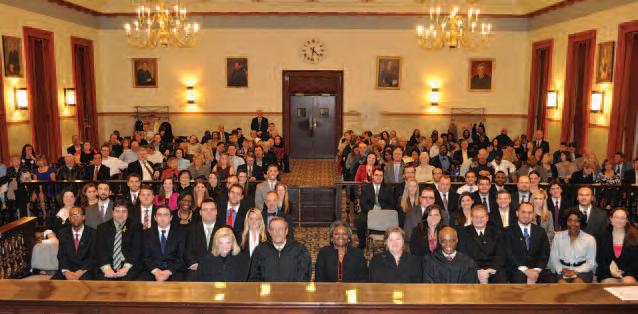
Alumni Join the Pennsylvania Bar in Private Ceremony
Recent graduates took the oath and became members of the Pennsylvania Bar atthe annual Honorable Charles P. Mirarchi, Jr. Pennsylvania Bar Induction Ceremony. The late Judge Mirarchi is responsible for the creation of this private ceremony. He believed it particularly meaningful for Widener Law graduates to gain admission with their friends and classmates.
Judge Margaret T. Murphy ’77 of the Philadelphia Court of Common Pleas Domestic Relations Division; Judge Paul P. Panepinto ’76 from the Philadelphia Court of Common Pleas Civil Trial Division; Dean Linda Ammons; Judge Pamela Pryor Dembe, President Judge of the Philadelphia Court of Common Pleas; Judge Joel S. Johnson ’91 of the Philadelphia Court of Common Pleas Family Division; and newly admitted members of the bar, their friends and their families.
Philadelphia Alumni Gather at Vie
More than 200 alumni and friends gathered at Vie, on North Broad Street, for the 2012 Philadelphia Alumni Reception. Honored guests included John Savoth ’85, Chancellor of the Philadelphia Bar Association, and a number of recently-elected alumni judges.
Pileggi Lecture
Presents
“Leave it to Delaware”
Widener Law hosted the 27th annual Francis G. Pileggi Distinguished Lecture in Law with a presentation by Jill E. Fisch, the Perry Golkin Professor of Law at University of Pennsylvania Law School. Professor Fisch, who co-directs Penn Law’s Institute for Law and Economics, is a nationally known scholar whose work focuses on the intersection of business and law. In her remarks, “Leave it to Delaware: Why Congress Should Stay Out of Corporate Governance,” Fisch asserted that supposed failures of Delaware law are overstated. She said governance positions in the Dodd-Frank Wall Street Reform and Consumer Protection Act demonstrate procedural deficiencies in federal regulation and, to the extent that cases challenge existing corporate law rules, state law is better positioned to respond.
Seated in front, from left, Associate Professor Paul L. Regan, Francis G.X. Pileggi ’86, 2011 Pileggi lecturer Jill E. Fisch, attorney Francis G. Pileggi, Law Dean Linda L. Ammons and the Rev. Anthony Pileggi. In back, from left, students Kyle F. Dunkle, Bruce A. Ciallella, Aaron H. Stulman, Eric M. Sable, Benjamin A. Leisawitz, Jeremy J. Riley, Phillip A. Giordano, Joseph M. Grieco, and Feliks Finkel.



’09 Sustainable Law Practice: Lead, Earn Respect, and Increase Your Organization’s Bottom Line
by Brandon J. Pierce, Esq.
Did the title pique your curiosity? If so, you are the type of leader who needs to read this article. You need to read it because you already intuitively understand why sustainability, and therefore, sustainable law practice, is important for our environment and makes business sense—or you have the desire to understand it. Many of us understand the theoretical concept that sustainability is a “good thing,” but don’t know how or where to find resources to put it into practice.
Just as the title implies, this article provides basic information and access to resources that demonstrate how organizations in the legal world (firms, government, law schools, bar associations, and others) can— and in many cases, do—lead the way by incorporating sustainability into their practices and cultures. This includes simple tasks done at the individual level, such as turning off lights when you leave your office, up to organizational-level programs or policies designed to minimize electricity and paper use. By showing this kind of leadership, your organization will earn the respect of the community, clients, and peers, and improve your organization’s financial well-being.
First, how do you define sustainability? Merriam-Webster defines the term as “of, relating to, or being a method of harvesting or using a resource so that the resource is not depleted or permanently damaged.”1 Dictionary.com defines sustainability as “the quality of not being harmful to the environment or depleting natural resources, and thereby supporting long-term ecological balance.”2 These are adequate definitions, and worth mentioning to give some baseline understanding of the concept. However, both definitions only capture part of what sustainability means in the context of sustainable law practice. Rather than try to refine the definition in theory, this article provides illustrative, practical thoughts, and tools to give leaders—particularly legal professionals—some fundamental knowledge and resources to implement or improve sustainable law practices in their organization.
Second, whether you are new to the idea of sustainable law practice or a sustainability guru, there is one leadership trait you must apply toevery project, including this one: common sense. Sustainable law practices are built on this age-old intuition, particularly at the individual level. For example, shut down your computer at the end of the day. Print a document only when absolutely necessary. Encourage your co-workers to do the same. Many sustainable law practices are this simple, inexpensive, and effective, and will save your organization money. As an illustration, using double-sided printing for drafts and
internal documents can significantly reduce paper use, which directly lowers your office supply costs. Additionally, putting your computer in sleep mode at the end of the day consumes up to 90% less energy than when the computer is on3, which saves money on electricity and translates into an increased bottom line.
Third, while common sense is a good starting place in your quest for law practice sustainability, leaders also understand the importance ofdeveloping other leaders. This means cultivating common sense ideas into pragmatic policies, programs, and benchmarks that can be refined, added to, and tailored by other leaders to fit their organization’s individual needs.
Specifically, initiatives such as the ABA-EPA Law Office Climate Challenge (Climate Challenge)4 are designed to promote sustainable law practices by engaging an organization’s leaders. This initiative was created in 2007 (and is currently set to run until 2013) by the American Bar Association (ABA) Section of Environment, Energy, and Resources (SEER)5 in cooperation with the U.S. Environmental Protection Agency (EPA), and is co-sponsored by the ABA Law Practice Management Section (LPM). The Climate Challenge is “designed to encourage law offices to take specific steps to conserve energy and resources, as well as reduce emissions of greenhouse gases—which cause global climate change—and other pollutants.”6 The Climate Challenge addresses physical sustainability issues through its four component programs, three of which are voluntary EPA partnership programs. Those model programs include: 1) adopting best practices for office paper management, such as using paper with recycled content and minimizing printing; 2) participating in EPA’s WasteWise program, which encourages organizations to reduce waste, thereby reducing energy consumption; 3) participating in EPA’s Green Power Partnership, in which organizations purchase a portion of their energy from renewable sources; and 4) participating in EPA’s ENERGY STAR program by purchasing ENERGY STAR–designated equipment and employing energy management policies. Organizations may choose to implement any, or all, of these components as part of their sustainable law practice program.
Furthermore, other such initiatives exist. Several state bar associations have created similar model sustainability programs, including Pennsylvania7, California8, and Massachusetts9. The Pennsylvania Bar Association’s Pennsylvania Lawyers United for Sustainability (PLUS) Program, for example, focuses on five areas: 1) energy savings;
2) paper management/reduction; 3) waste reduction and increased recycling; 4) transportation; and 5) sustainable purchasing.

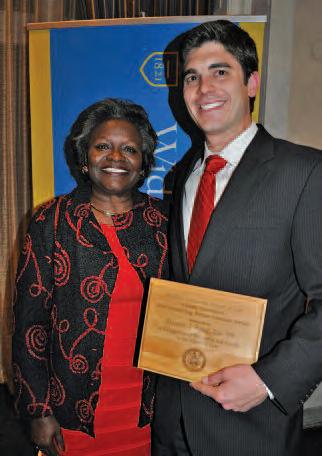
Your organization can also go beyond addressingmerely physical sustainability issues by incorporating the concept into every aspect ofyour organization’s culture. For example, John Carroll, a partner at Pepper Hamilton LLP’s Harrisburg, Pennsylvania, office and a member of the firm’s Sustainability, CleanTech and Climate Change Team, explained that Pepper Hamilton’s “Triple Bottom Line” encompasses economic, social, and environmental responsibility. Organizations that view sustainability as a thread to be woven into all aspects of their organizational culture will earn greater respect in their communities and be better positioned toachieve positive long-term growth in an increasingly competitive global marketplace. Further, clients and potential new hires increasingly consider an organization’s environmental impact and image when deciding on representation and employment.
In conclusion, sustainable law practice, or some variation of the term, is a concept you will begin to hear with greater regularity in the coming months and years as more leaders become familiar with—and ultimately embrace—these practices. The initiatives your organization implements may be as varied as the reasons for doing so, but at the end of the day, organizations that adopt sustainable law practices will receive greater respect, generate bottom-line growth, increase productivity and efficiency, and spur other leaders into action. In this line of business, we call that a “win-win” situation.
Mr. Pierce is the Editor-in-Chief for the Pennsylvania Bar Association Environmental & Energy Law Section Newsletter and the Judicial Law Clerk to the Honorable John W. Thompson, Jr. Previously, Mr. Pierce was a Fellow at the U.S. Army Peacekeeping & Stability Operations Institute (PKSOI) at the U.S. Army War College. He graduated cum laude from Widener Law and from Bucknell University.
Widener University School of Law isone of seven law schools nationally toearn Magna Cum Laude status from National Jurist and Pre-Law magazines for its sustainable practices. In 2011 Widener Harrisburg became the first law school to join the Pennsylvania BarAssociation’s Pennsylvania Lawyers United for Sustainability (PLUS) Program, an initiative that provides Pennsylvania attorneys and law firms the opportunity to demonstrate commitment to environmental sustainability.
1Merriam-Webster, “Sustainability,” http://www.merriam-webster.com/dictionary/sustainability. 2Dictionary.com, “Sustainability,” http://dictionary.reference.com/browse/sustainability.
3U.S. Department of Energy, Energy Savers, http://www.energysavers.gov/your_home/appliances/index.cfm/mytopic=10070.
4American Bar Association, ABA-EPA Law Office Climate Challenge, http://www.americanbar.org/groups/environment_energy_resources/projects_awards/aba_epa_law _office_climate_challenge.html.
5American Bar Association, Section of Environment, Energy, and Resources, http://www.americanbar.org/groups/environment_energy_resources.html.
6American Bar Association, Components of the Climate Challenge, http://www.americanbar.org/groups/environment_energy_resources/projects_awards/aba_epa_law _office_climate_challenge/components_of_the_challenge.html.
7Pennsylvania Bar Association, Pennsylvania Lawyers United for Sustainability (PLUS) Program, http://www.pabar.org/public/sections/envco/plusprogram.asp.
8State Bar of California, Voluntary State Bar of California Lawyers Eco-Pledge and Voluntary Law Office Sustainability Policy, http://environmental.calbar.ca.gov/EnvironmentalLaw/Sustainability.aspx.
9Massachusetts Bar Association, The MBA Lawyers Eco-Challenge, http://www.massbar.org/about-the-mba/initiatives/lawyers-eco-challenge.
10Pepper Hamilton, Sustainability, CleanTech and Climate Change Team, http://www.pepperlaw.com/PracticeArea_preview.aspx?PracticeAreaKey=64.
Brandon Pierce ’09 (Harrisburg) with Dean Linda Ammons after receiving the 2011 Outstanding Recent Alumnus Award.
ATTENTION ALUMNI
Class Notes invites alumni to write to the Office of Alumni Relations and Development with news of interest. If your name has not appeared recently in Class Notes, take a moment to share some news about yourself for an upcoming issue. If you wish, include a photograph with your information (digital 300 dpi or hard copy).
JOHN A. WETZEL, previously a partner with Swartz Campbell, is a founding partner of Wetzel Gagliardi & Fetter LLC in West Chester, Pennsylvania.
KEVIN P. MCCANN will assume the presidency of the New Jersey Bar Association in May 2012.
MICHAEL A. CIBIK of Cibik & Cataldo, PC, presented The Jagiellonian Law Society’s CLE seminar, “Understanding Consumer Bankruptcy.”
WILLIAM P. FEDULLO was elected Vice Chancellor of the Philadelphia Bar Association for 2012.
KENNETH R. GILBERG presented the CLE program, “Employers: The Perils of Misclassifying Employees as Independent Contractors,” at the offices of Flaster Greenberg in Philadelphia, Pennsylvania, where Mr. Gilberg practices.
HON. THOMAS F. LIOTTI recently published his book, The Secret Adoption Released by iUniverse, it details his discovery—just prior to his parents’ deaths—of his adoption and the path down which this discovery led him.
MITCHELL G. CRANE has announced his candidacy for the Democratic Party nomination for the office ofInsurance Commissioner of Delaware.
JOSEPH J. DiPRIMIO was named Director of the Child Support Enforcement Administration for theState of Maryland.
GREGORY R. JACOBS writes: “Despite trying to tell everyone I was semi-retired, I have become the General Counsel of The Equita Group; insurance companies in Dallas, Texas.”
JAMES F. KILCUR has been elected chairman of the board of trustees of DeSales University in Center Valley, Pennsylvania.
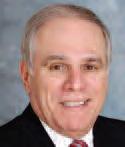
HON. SPIROS E. ANGELOS was sworn in as judge of the Court of Common Pleas ofDelaware County, Pennsylvania.
Send your Class Note to: Alumni Office
Widener University School of Law P.O. Box 7474
Wilmington, DE 19803-0474
Or email us at law.alumni@mail.widener.edu
ARTHUR F. SILVERBLATT was recently included in Strathmore’s “Who’s Who” registry for his outstanding contributions to and achievements in law.
HON. LEE A. SOLOMON has returned to his former position as a Camden County, New Jersey, Superior Court judge after serving as president of the New Jersey Board of Public Utilities under Governor Chris Christie since 2010.
THOMAS M. BROWN was appointed Superior Court Judge by the New Jersey State Senate.
BARBARA S. HUTCHEON has joined the Port Authority of New York and New Jersey’s Legal Department, where she will work in Governance, Finance, and Procurement.
BERNARD W. SMALLEY has joined the Tucker Law Group in Philadelphia as senior counsel.
JOHN T. CARROLL has been named co-chair of Cozen O’Connor’s bankruptcy, insolvency, and restructuring practice group in the firm’s Wilmington, Delaware, office.
KAREN L. CRAWFORD has been selected the 2012 Environmental Lawyer of the Year for Columbia, South Carolina, by Best Lawyers and has been listed in the Greater Columbia Business Monthly’s “Legal Elite” for her environmental practice.
ELWOOD T. EVELAND presented at the National Business Institute’s CLE Seminar on “Applying the Rules of Evidence: What Every Attorney Needs to Know.”
DAVID J. FERRY was appointed Memberat-Large to the Delaware State Bar Association Executive Committee.
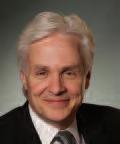
KENNETH M. ROTHWEILER has been elected President of thePennsylvania Association for Justice.
HON. ROBERT P. COLEMAN has been elected to a seat on the Philadelphia Common Pleas Court bench.
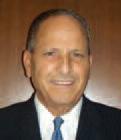
HENRY F. ACCHIONE has joined Obermayer Rebman Maxwell & Hippel LLP’s litigation department as ofcounsel in the firm’s Philadelphia, Pennsylvania, office.
ROBERT J. KRAPF was elected Assistant Secretary of the Delaware State Bar Association’s Executive Committee for2011-2012.
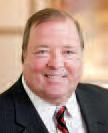
JOSEPH J. MCGRORY, JR. has been appointed Solicitor of Upper Merion Township, Pennsylvania.
DEAN S. NALBONE has joined the board of directors of SERV Centers of New Jersey. Mr. Nalbone is an attorney and partner in the law firm of Teich Groh in Trenton, where he practices real estate law.
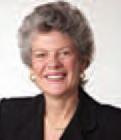
HON. ANNE E. COVEY has been elected to a seat on the Commonwealth Court of Pennsylvania.
DAVID L. BAUMBERGER presented at the National Business Institute’s CLE Seminar on “Applying the Rules of Evidence: What Every Attorney Needs to Know.”
HON. CAROLYN T. CARLUCCIO has become the first sitting judge to serve aspresident of the Montgomery County (Pennsylvania) Bar Association.
ELAINE M. ROSS has joined The Beasley Firm, LLC, in Philadelphia.

JOHN E. SAVOTH, Chancellor of the Philadelphia Bar Association and a Justinian Society member, was recently honored by the society at a luncheon held at the Union League of Philadelphia.
JOEL L. FRANK, managing partner of Lamb McErlane PC in West Chester, Pennsylvania, has been appointed to the Board ofDirectors of the Alex’s Lemonade Stand Foundation. The foundation raises funds in support of its vision: finding a cure for all childhood cancers.
KIM HOLLAENDER spoke on “Hydraulic ‘Fracking’—the Debate over Mining Marcellus Shale, Potential P&C Exposures, Environmental Impact and Other Unforeseen Risk” at the Reinsurance Association of America’s CLE Seminar, “Reinsurance Claims and Loss Management: Taking It to the NextLevel.”
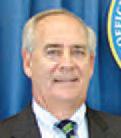
DAVID L. REBUCK was sworn in as the New Jersey Director of the Division of Gaming Enforcement, the casino regulatory agency within the Department of Law and Public Safety. Mr. Rebuck has served as acting director since his appointment in May.
ANN D. DUKE of the West Chester, Pennsylvania, firm Gawthrop Greenwood has been named Co-Chair of the Private Equity Group, a subgroup of the Greater Philadelphia Senior Executive Group (GPSEG).
GARY B. EIDELMAN was named to SmartCEO magazine’s list of Baltimore “Legal Elite.”
CHERYL L. GASTON, foundation board chair of the National Bar Association, Women Lawyers Division, Philadelphia Chapter, spoke at the American Bar Association’s Philadelphia community outreach program. The program, “The Real Estate Law You Wished You Learned in Law School—A Practitioner’s Course,” took place in September.
JOANNE PHILLIPS was admitted totheCounselors of Real Estate, an invitation-only organization for real estate professionals recognized for their excellence and knowledge.
HON. JOHN P. CAPUZZI was sworn in as a Judge on the Pennsylvania Court of Common Pleas, Delaware County.
1989
HARVEY B. DIKTER has been named Senior Vice President and Chief Operating Officer of First Coast Service Options (FCSO). He will retain his current responsibility as General Counsel.
1988 1987 1990 1992 1991
JOSH M. GREENBAUM hasbeen elected to Cozen O’Connor P.C.’s board of directors.
FREDERICK P. SANTARELLI of Elliott Greenleaf in Blue Bell, Pennsylvania, has been appointed to the Civil Procedural Rules Committee by the Supreme Court of Pennsylvania.
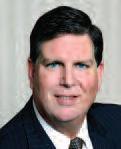
TIMOTHY R. LAWN has been named a fellow of the American College of Trial Lawyers.
FRANCIS X. WICKERSHAM co-led the team responsible for revising the summary of insurance laws for the 2012 edition of the Pennsylvania Insurance Law Digest, published by A.M. Best.
DARLENE M. BARIS has joined Wilmington Trust as a Vice President and Senior Fiduciary Advisor in the company’s Fiduciary Services Group.
KATHRYN A. MELONI is a member of the Greater Philadelphia chapter of the ALS Association’s board of overseers.
JAMES J. RUGGIERO was named a Five Star Wealth Manager for the third consecutive year by Philadelphia magazine.
LOURA A. SELFE KEEPERS has joined the practice of Margaret J. Kay, Ed.D. NCSP, in providing Independent Educational Evaluations (IEEs) for school-age students in the Lancaster, Pennsylvania, office of Independent Educational Evaluators of America, LLC.
STANLEY F. WERSE presented his play, Noir, at the 2011 New York Fringe Festival.
RENAE B. AXELROD was recently honored with the Phi Alpha Delta George Read Chapter’s Excellence in Law Award for outstanding contributions to the legal profession and to Widener Law in particular, where she serves as Alumni Association President.
THOMAS A. BOULDEN co-presented a workshop, “Orphans’ Court Litigation— Common Sense Issues and Some Solutions,” at the Pennsylvania Bar Institute’s 18th Annual Estate Law Institute meeting in Philadelphia.
JOAN P. DEPFER was named a shareholder of Marshall, Dennehey, Warner, Coleman and Goggin, where she practices in the firm’s Philadelphia office.
THOMAS E. GAY was a distinguished speaker at the National Business Institute’s CLE Seminar, “Handling Divorce Cases from Start to Finish.”
STEVEN D. URGO has joined White and Williams LLP as an associate in the firm’s Commercial Litigation Department in Philadelphia, Pennsylvania.

GEN. CRAIG E. BENNETT was selected to participate in the Chicago Council on Global Affairs Emerging Leader class. Brig. Gen. Bennett serves as Assistant Adjutant General, New Hampshire Army National Guard, with duties as the commander of all troops and units assigned. Brig. Gen. Bennett isin-house counsel for Recycled Energy Development, LLC.
BRIG.
IRENE M. BIZZOSO was elected Treasurer of the National Conference of Appellate Court Clerks at the organization’s annual meeting in Annapolis, Maryland.
REGINA FOLEY TATLONGHARI has been elected to the Philadelphia Bar Association’s Election Committee.
SCOTT B. COOPER, a partner with the Harrisburg-based law firm SchmidtKramer P.C., is president-elect of the Pennsylvania Association for Justice (formerly Pennsylvania Trial Lawyers Association) and will become its president in June 2012.
JOEL J. FELLER presented “Making the Defendant Your Expert” and “Preserving the Plaintiff’s Testimony,” at a CLE program hosted by Ross Feller Casey inPhiladelphia.
JOHN A. LIVINGOOD spoke about “The New Pennsylvania Fair Share Law” at the Vesper Club in December.
COL. CHARLES W. MITCHELL recently received his second Excellence Performance Award from the Central Intelligence Agency. Col. Mitchell has been a Special Agent in theCIA’s Investigations Division, Office of Inspector General, since retiring from the U.S. Army in September 2009.
PEGGY M. MORCOM has joined Reilly, Wolfson, Sheffey, Schrum and Lundberg, LLP, as an associate in the firm’s Lebanon, Pennsylvania, office.
RICHARD L. MORRIS, owner of 1-800-4-TRADEMARK, Inc. dba 4Trademark.com, has been recognized seven years in a row as a “Top Trademark Filer” by NameProtect®
ERIC S. SCHER has become a partner atWynn McGarry in King of Prussia, Pennsylvania.
HON. BENJAMIN C. TELSEY of the Superior Court of New Jersey has been appointed presiding judge of the Family Division in Vicinage XV, comprising Cumberland, Gloucester, and Salem counties.
MICHAEL J. TIERNEY was recently appointed to the Board of Trustees at Neumann University. He serves on the Strategic Instructional Planning and Trustee Committee. Mr. Tierney, partner at Dilworth Paxson LLP, was also recently appointed to the Pennsylvania Workforce Investment Board by Pennsylvania Governor Tom Corbett.
REBECCA L. WEST-ESTELL of the Law Office of Rebecca West-Estell completed the Ohio Bar Association’s Leadership Academy, which is designed to identify future leaders in the legal community and provide them with support and training.
MICHAEL F. CONSEDINE, Commissioner for the Commonwealth of Pennsylvania’s Insurance Department, has been appointed to serve on the panel that advises the Federal Insurance Office. Mr. Consedine is one of six state and District of Columbia insurance regulators to serve on the 15-member panel.

HON. CHRISTINE C. FIZZANO-CANNON was sworn in as a Judge of the Court of Common Pleas of Delaware County, Pennsylvania.
GINA R. FURIA RUBEL’s company, Furia Rubel, has been ranked among the Philadelphia Region’s Top 15 Public Relations Agencies by the Philadelphia Business Journal
EILEEN A. OAKES MUSKETT has joined Fox Rothschild LLP’s Atlantic City, New Jersey, office as a partner.

CHRISTEN A. PIONZIO has been appointed Solicitor forthe New Britain Borough (Pennsylvania) Zoning Hearing Board.
PATRICK C. REEDER has joined Stradley Ronon’s insurance practice group, practicing in the firm’s Washington, D.C., office. Mr. Reeder also co-presented, “Oops! Solving Regulatory Compliance Problems,” at the Pennsylvania Bar Institute’s 17th Annual Business Lawyers’ Institute in Philadelphia in November, with Pennsylvania Department of Insurance Deputy Commissioner Ron Gallagher.
SHAWN P. TUCKER presented at the National Bar Institute’s live seminar, “Practical Guide to Zoning and Land Use Law,” held in Dover and Wilmington, Delaware. Mr. Tucker is the partner in charge of the Drinker Biddle & Reath LLP Wilmington office.
JAMES L. ANNAS has been named Assistant FireChief of the Broken Arrow (Oklahoma) FireDepartment.
CATHERINE A. BOYLE has been selected to receive the YWCA Tribute to Women of Excellence 2012 Award. This award is presented to outstanding women who have made significant contributions to their communities and businesses.
BARBARA DARKES has been named co-chair of McNees Wallace & Nurick’s litigation practice.
PAMELA J. DEVINE has joined Gibley and McWilliams, PC, a litigation law firm with offices in Media, Pennsylvania, and Cherry Hill, New Jersey.
ANDREW W. DREMANN has been named a Principal at Post & Schell in Philadelphia.
BRIAN M. NIXON has been appointed Director of the Pennsylvania State Workers Insurance Fund (SWIF).
GINA A. PESARESI-JONES was named Regional Attorney for the Philadelphia Region for the Social Security Administration’s Office of Disability Adjudication and Review (ODAR).
DIANE M. RUBERTON was promoted to Chief Assistant Prosecutor of the Atlantic County Prosecutor Office in Mays Landing, New Jersey.
YVONNE TAKVORIAN SAVILLE has been named Vice President of the Delaware State Bar Association Executive Committee, New Castle County.
SCOTT K. SHEWELL joined Safe Harbour as Vice President for Community Relations and Development. As vice president, Mr. Shewell will oversee Safe Harbour’s fundraising, public relations, and marketing initiatives, as well as special events and government and community relations. Safe Harbour provides a continuum of housing services for the homeless of Cumberland County, Pennsylvania.
PATRICK C. BARRY recently completed a one-year term as President of the Rhode Island Association for Justice. He was also selected for inclusion on the 2010 and 2011 New England Super Lawyers lists and has earned an AV Peer Review Rating from Martindale-Hubbell. Mr. Barry recently rejoined his former law firm, Decof & Decof, PC, in Providence, Rhode Island, after three years at his own firm.
DANIEL R. BUSH of Lamb McErlane PC in West Chester, Pennsylvania, presented to a group of 30 law enforcement officers known as Chester County’s Serious Crash Assistance Team, who specialize in accident investigation and reconstruction.
AMY R. FULCO has been named Vice President, Compliance and Op Risk Manager, at Bank of America’s Charlotte, North Carolina, headquarters.

ANGELINE N. IOANNOU has joined Goldberg Segalla LLP’s Hartford office as special counsel.
SUZANNE M. BACHOVIN has been elected president ofthe Philadelphia Area Society for Health Care RiskManagement for the 2011-14 term.
MATTHEW J. CONNELL has joined Lamb McErlane in West Chester, Pennsylvania. Mr. Connell practices inthe areas of municipal liability and defense of civil rights and employment discrimination claims.
MARIA R. GRANAUDO GESTY has been named a partner in the Wilmington office of Pittsburgh-based firm Burns White.
ELIZABETH A. HYLAND has been named Operations and Evaluation Administrator of the City of Durham, North Carolina.
PAMELA S. MANDEVILLE has been named Chief Operations Officer & Legal Counsel at Triangle Technology Ventures, LLC, in Raleigh, North Carolina.
RYAN A. MARRONE has been named partner at Szaferman, Lakind, Blumstein & Blader, P.C., in Lawrenceville, New Jersey.
JENNIFER L. SCHWARTZ has joined Our Lady of Lourdes Health Care Services, Inc., in Camden, New Jersey, asGeneral Counsel. She has also been named to the New Jersey Law Journal’s “Forty Under 40 List.”
DANIEL A. TOADVINE has been appointed Director, General Claims, atNJM Insurance Group in West Trenton, New Jersey.
HEIDI G. VILLARI has joined Mattioni LTD as a shareholder in the firm’s Philadelphia, Pennsylvania, office. Ms. Villari represents business clients ina range of matters.
JUSTIN B. WINEBURGH has been recognized as a member of the 2011 Greater Philadelphia MS Leadership Class for his outstanding contributions tothe civic, business, and cultural betterment of the Greater Delaware Valley area.
MICHELLE H. BADOLATO was named to the New Jersey Law Journal’s “Forty Under 40 List.”
KRISTINE BUTLER has been appointed Chair of the Jefferson Medal Committee by the New Jersey Intellectual Property Law Association (NJIPLA). Ms. Butler will guide the committee through the process of selecting the recipient of the Jefferson Medal, which isawarded annually to a person who has made exceptional contributions to the field of patents, trademarks, and copyrights.
JEFFREY CAMPOLONGO has been appointed to the Philadelphia Bar Association election committee.
ANN MARIE EMMONS has joined the faculty of Southwest Georgia Technical College, where she teaches Paralegal Studies.
MARYANNE GARBER has joined a group of environmental, energy, and land use attorneys to form their own boutique firm, Land Air Water Legal Solutions LLC, in Berwyn, Pennsylvania.
CAREY S. LEROUX has joined TitleVest, a Manhattan-based provider of title insurance and related real estate services, as Managing Director of Business Development.
STEPHANIE V. SHREIBMAN has been named to the 2011 Pennsylvania Rising Stars list.
JILL M. DiSCIULLO has been nominated to serve as amember-at-large on theDelaware State Bar Association’s Executive Committee.
PATRICK J. MURPHY has been appointed by President Barack Obama to the United States Military Academy Board of Visitors. He was recently named to Lawyers on the Fast Track for 2011 by The Legal Intelligencer
ANDREW W. NORFLEET and FRANCIS J. LAFFERTY have opened Norfleet & Lafferty LLC, a new law firm in Lemoyne, Pennsylvania. They will focus on personal injury, workers’ compensation, Social Security disability, family, and criminal law.
JONATHAN E. PERI was elected vice president of the Delaware County (Pennsylvania) Bar Association’s board of directors in December.
KRISTOPHER T. STARR presented at the National Business Institute’s CLE Seminar on “Fundamentals of Elder Law.”
MAX B. WALTON, a partner at Connolly Bove Lodge & Hutz LLP, is now based in the firm’s new offices in Newark, Delaware.
JOHN A. ZURZOLA of Willig, Williams & Davidson in Philadelphia, Pennsylvania, has been elected to chair the East Norriton Township Board of Supervisors. He has also been appointed solicitor to the Montgomery County Treasurer.
KATHLEEN DeLACY has joined Reger Rizzo & Darnall LLP as an associate in the firm’s Wilmington, Delaware, office.
DR. JOANN M. LEAHY hasjoined Sacred Heart HealthCare System in Allentown, Pennsylvania, as a Radiation Oncologist.
LORENZA A. MANCINI-WOLHAR was named a shareholder at Marshall, Dennehey, Warner, Coleman & Goggin. She practices in the firm’s Wilmington, Delaware, office.
BRIAN L. NAGLE has been re-elected president of the Chester County (Pennsylvania) Bar Foundation.
REGINA M. PARKER has been re-appointed to both the Women in the Profession and the Minority Bar committees of the Pennsylvania Bar Association for 2011-12.
BRIAN N. ZULLI has joined Coldwell Banker Select Professionals in Lancaster, Pennsylvania, as In-House Counsel and President of Guardian Transfer, CBSP’s title company.
CRAIG M. CHERNOFF has joined Semanoff Ormsby Greenberg & Torchia, LLC, in Huntingdon Valley, Pennsylvania.
LISA L. COGGINS spoke at the National Business Institute’s CLE Seminar “Fundamentals of Elder Law.”
MATTHEW R. DiCLEMENTE presented at the Philadelphia Private Equity Chief Financial Officer Association’s Chapter Meeting on “What does it take to become a Registered Investment Advisor?”
MARIA C. MONTERO became the new Executive Director of the Pennsylvania Commission for Women and the Governor’s Advisory Commission on Latino Affairs.
MICHAEL J. NEEDLEMAN has joined Spector Gadon & Rosen’s Philadelphia office as an associate in its insurance defense and employment group.
STACIA A. RITTER was named the Pennsylvania Turnpike Commission’s Director of Government Affairs in September.
JENNIFER H. STOUDT was named partner at Schnader, Harrison, Segal & Lewis in Philadelphia, Pennsylvania.
MARC SCARINGI is running for the Republican nomination in the 2012 race for the U.S. Senate seat in Pennsylvania.
CHRISTOPHER J. TUCCI was named partner at Connell Foley and will be managing the firm’s Philadelphia and Marlton offices.
MICHAEL S. WASKIEWICZ joined Rogers Towers as a member of the firm’s Litigation Department in its Jacksonville, Florida, office.
LORI A. BREWINGTON has been recognized in the 2011 edition of Chambers USA: America’s Leading Lawyers for Business.
HERCULES W. GRIGOS has been named to the Super Lawyers 2011 Pennsylvania Rising Stars list.
JAMES H. McMACKIN III was named partner at Morris James LLP in Wilmington, Delaware.
ELIZABETH S. CAVALLARO was named a principal at Post & Schell. She practices in the firm’s Philadelphia office.
LESLEY R. CHILDERSPOTTS has joined the Bedford County (Pennsylvania) District Attorney’s office as First Assistant District Attorney.
KIMBERLY M. LARGE became a member of the law firm Mika Meyers Beckett & Jones PLC in Grand Rapids, Michigan. She practices civil litigation, with particular emphasis in the areas of employment, trademark, and environmental law.
MICHAEL W. MCDERMOTT has joined Berger Harris as a partner and director in the firm’s Wilmington, Delaware, office.
ANDREW W. GONSER presented at the National Business Institute’s CLE seminar “Handling Divorce Cases from Start to Finish.”
LORI E. HOOD SANDERS has left Drinker Biddle & Reath to join DuPont as Senior Counsel in the Environment Group. She and husband DANIEL G. SANDERS ’98 welcomed their second child, a daughter, Summer Elizabeth, in December 2010. Summer and big brother Trexler are doing well.
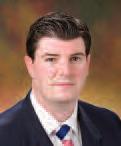
SEAN M. BRENNECKE has joined the Wilmington office of Klehr Harrison Harvey Branzburg as an associate inthe Litigation Department.
DESIREE A. BROUGHER has joined Reilly, Wolfson, Sheffey, Schrum & Lundberg, LLP, in Lebanon, Pennsylvania, as an associate. She was recently admitted to the Lebanon County Bar Association.
JIMMY C. CHONG and his wife welcomed a baby girl, Sarah Eunsuh Chong, on May 16, 2011. Jimmy practices through his own firm, The Chong Law Firm, which has offices in Philadelphia and Wilmington.
COLLEEN P. FRANKENFIELD was recently appointed President and CEO of Pleasant View Retirement Community in Manheim, Pennsylvania.
KATHLEEN A. MALOLES and JEANNA L. LAM ’06 are pleased to announce the opening of their new law firm L & M Law, LLC, in Center City, Philadelphia.
EVAN C. PAPPAS was honored as one ofCentral Penn Business Journal’s 2011 Forty Under 40 for his commitment to business growth, professional excellence, and the community.
CHANDRA M. ARKEMA has joined Parker McCay’s Bankruptcy and Foreclosure Group in Mount Laurel, New Jersey, as an associate.
STEPHANIE D’ABARNO has joined Thomas, Thomas & Hafer, LLP in the firm’s Pittsburgh, Pennsylvania, office.
MATTHEW P. D’EMILIO of Cooch and Taylor, P.A., presented “Drafting Documents to Address Issues Created by a Temporary Estate Tax” at the “New Era of Estate Planning” seminar in Wilmington, Delaware.
VALERIE L. FRANCKS has joined Brown Greer PLC’s Richmond, Virginia, office as Counsel.

VICKI L. GOODMANSHOEMAKER has joined the Delaware office of Whiteford, Taylor & Preston as an associate.
AUTUMN L. JOHNSON was featured in the article, “Whitsett Native Finds Her Niche in the Law,” published by Valley Independent on January 7, 2012.
JULIE A. LAVAN has been appointed Vice Chair of the Burlington County (New Jersey) Bar Association’s Civil Practice Section, Bench & Bar Committee.

DR. EVAN Y. LIU led the Feldman Shepherd Wohlgelernter Tanner Weinstock & Dodig LLP cycling team in the 21st Annual Bike MS: City to Shore Ride to help fight multiple sclerosis.
MELISSA L. MIGNOGNA has joined Capehart Scatchard as an associate in Mount Laurel, New Jersey. She was named a Rising Star for 2011 and 2012 by New Jersey Monthly magazine.
MARK A. RUSHNAK and Erica Vocco were married at the St. Henry’s Roman Catholic Church in Bayonne, New Jersey.
MATHEW L. SAMPSON has joined the Business Department of Steptoe & Johnson, PLLC, as an associate in the firm’s Meadville, Pennsylvania, office, focusing his practice on oil and gas law.
DOUGLAS V. BROWN has joined the Pittsburgh office of Morgan, Lewis & Bockius LLP as an associate.
REBECCA CANTOR and MARK WILLIAMS were married on June 4 in Bethlehem, Pennsylvania.
JOHN D. CIRRINICIONE has joined Parker McCay P.A. in Mount Laurel, New Jersey, as an associate in the firm’s Medical Malpractice Department.
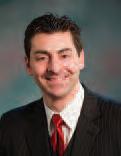

MARIA E. HARRIS has joined Martin Banks inPhiladelphia as an associate. She was a guest speaker for the Widener Women’s Network, Philadelphia chapter, annual winter luncheon.
DANA M. KLAYMAN has been elected to the Pennsylvania Association for Justice’s Board of Governors.
JAMES E. MOORE has joined Levine, Staller, Sklar, Chan, Brown & Donnelly, P.A., as an associate in the firm’s Cape May, New Jersey, office.
JEFFREY L. OSTER has obtained a full defense verdict in his first major jury trial. Mr. Oster is a general liability and coverage attorney with Wilson, Elser, Moskowitz, Edelman & Dicker LLP’s Philadelphia office.
ANGELA SINDACO has joined Post & Schell as an associate in the firm’s Philadelphia office.
SHANICE L. WILLIFORD has joined Post& Schell as an associate the firm’s Philadelphia office.
MICHAEL L. BILECI spoke at a CLE Seminar on Advanced Workers Compensation held by National Business Institute in Atlantic City, New Jersey.
BONNIE EGAN COPELAND has joined Cooch and Taylor’s Family Law Department as an associate in the firm’s Wilmington, Delaware, office.
ELLEN M. GOODMAN has joined the Community Associations Group of Stark & Stark as an associate in the firm’s Lawrenceville, New Jersey, office.
SARA L. MCGEEVER of Bennett & Associates in Wayne, Pennsylvania, organized a young professionals’ event at the Public House in Philadelphia.
COREY J. TIERNEY is administrator ofthe Warren County (New Jersey) Department of Land Preservation. Mr. Tierney previously worked as general counsel for the Land Conservancy of New Jersey.
JENNIFER A. BEROSH is now serving as a law clerk tothe Honorable Maurice B. Cohill, Jr., Senior District Judge for the United States District Court for the Western District of Pennsylvania.
LINDSEY A. BIERZONSKI published “10 Ways to Annoy Your Biggest Clients” in the Winter 2012 newsletter of the Pennsylvania Bar Association Commission on Women in the Profession.
ANDREA M. GUTTRIDGE has joined Rawle & Henderson’s Philadelphia officeas an associate.
COURTNEY A. JUSTICE-REINERTSEN has joined Lamb McErlane as an associate in the firm’s West Chester, Pennsylvania, office.
KRISTOPHER A. KACHLINE has joined Post & Schell as an associate in the firm’s Philadelphia, Pennsylvania, office.
ELIZABETH R. MARX spoke on Radio Smart Talk with Prof. John Dernbach. Their topic was the Environmental LawCenter’s 2011 white paper, “Next Generation Recycling and Waste Reduction: Building on the Success ofPennsylvania’s 1988 Legislation.”
MICHAEL R. MORANO has joined McElroy, Deutsch, Mulvaney & Carpenter, LLP, as an associate in the firm’s Morristown, New Jersey, office.
VALERIE A. DAVIS is a Senior Researcher and Lecturer at Martin Luther University Halle-Wittenberg, where she teaches Introduction to the Common Law System to German students.
DAVID B. DiDONATO has joined Potter Anderson & Corroon LLP as an associate in the firm’s Wilmington, Delaware, office.
JONATHAN W. JOHNSON of Johnson Legal Services in Myerstown, Pennsylvania, has been admitted to the Lebanon County (Pennsylvania) Bar Association.
COREY M. LAMOUREUX has joined Reilly, Wolfson, Sheffey, Schrum and Lundberg, LLP, in Lebanon, Pennsylvania, as an associate, and has been admitted to the Lebanon County (Pennsylvania) Bar Association.
AMANDA L. PERRY co-authored “Current State of the Law: What is a Stillbirth and When Can There Be Recovery?” which was published in theFall 2011 edition of Risk Management Quarterly.
I N M EMORIAM
ALAN B. SCHER ’76
RANDALL R. HAMILTON ’77
THERESA A. SKELLY ’78
MARIO J. D’ALFONSO ’79
WALTER W. SPEAKMAN ’79
ROBERT B. GOODYEAR ’82
JOSEPH J. MCGOVERN ’87
CLAIRE F. ROBINSON ’94
DAVID C. ANDERSEN ’96
EVE-MARIE NICHOLSON ’97
GARY D. BERG ’04
RACHEL A. RAMSAY ’07
SUPPORTTHE FUTURE!
CONTRIBUTETOSCHOLARSHIPSTHROUGHTHE WIDENER LAW FUND
Each year, countless students at Widener Law School are able to continue their education in part because of the generosity and support of our alumni.
To support scholarship through the Widener Law Fund, visit alumni.widener.edu/giving, or send a donation with the envelope enclosed in this issue ofWidener Law Magazine.


“I am grateful for the opportunity to continue my education and well aware that my ability to pursue a professional degree is based on the sacrifices that others made on my behalf and the financial contributions that many people have made to Widener Law.”

“Without my scholarship, I would not have been able to focus on my studies with a clear mind.”
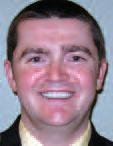
“I am very thankful for your gift of this scholarship. It is a huge help to my wife and me. Iam financing the cost of law school, and this scholarship will be a tremendous help to lighten the burden after graduation.”
For more information, please contact: Peter Castagna, Asst. Director, Widener Law Fund 302-477-2754
pjcastagna@widener.edu
Phillip McCarthy, 3L Extended Division, Harrisburg Campus
Aaron Stulman, 3L Wilmington Campus
Traci Cosby, 3L Wilmington Campus
School of Law