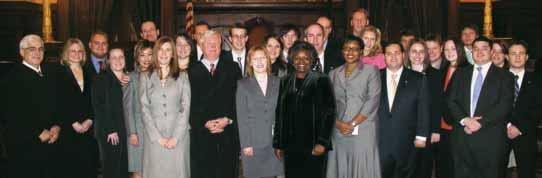
Widener University School of Law Board of Overseers
Eugene D. McGurk, Esq. ’78, Chairman of the Board
Dean Linda L. Ammons, J.D., Ex Officio Overseer
Steven P. Barsamian, Esq. ’75
The Honorable Raymond A. Batten ’79
C. Grainger Bowman, Esq.
The Honorable M. Jane Brady
The Honorable Peter John Daley II ’93
Michael G. DeFino, Esq. ’75
The Honorable Susan C. Del Pesco ’75
Geoffrey Gamble, Esq.
Vice Dean John L. Gedid, Ex Officio Overseer Harrisburg
Jacqueline G. Goodwin, EdD
The Honorable Philip A. Gruccio
Vice Dean J. Patrick Kelly, Ex Officio Overseer Delaware
President James T. Harris III, DEd, Ex Officio Overseer
Richard K. Herrmann, Esq.
The Honorable Randy J. Holland
Andrew McK. Jefferson, Esq. ’93
Peter M. Mattoon, Esq.
Kathleen W. McNicholas, MD, JD ’06
Edward B. Micheletti, Esq. ’97
George K. Miller, Jr., Esq. ’81
The Honorable Charles P. Mirarchi, Jr.
Kathryn J. Peifer, Esq. ’02
Joanne Phillips, Esq. ’87
Thomas L. Sager, Esq.
The Honorable Thomas G. Saylor
John F. Schmutz, Esq.
The Honorable Gregory M. Sleet
The Honorable Lee A. Solomon ’78
Allen M. Terrell, Jr., Esq., Ex Officio Overseer
The Honorable Joseph T. Walsh
John A. Wetzel, Esq. ’75
Douglas M. Wolfberg, Esq. ’96
Widener University School of Law National Advisory Council
Marc R. Abrams, Esq. ’78
Michael J. Aiello, Esq. ’94
Howard K. Alperin, Esq. ’90
Miriam Benton Barish, Esq. ’92
Kyle D. Bowser, Esq. ’91
Alexander Bratic
Michael A. Brown, Esq. ’91
Dr. Robert D. Gober ’79
Ronald P. Goldfaden, Esq. ’76
Mitchell Gurwicz, Esq. ’95
N. Lynne Hughes, Esq. ’89
Alan B. Levin, Esq. ’80
Kenneth J. Lopez, Esq. ’95
James J. Maron, Esq. ’85
Eugene D. McGurk, Jr., Esq. ’78
Franklin A. Miles, Esq.
U.S. Rep. Patrick J. Murphy ’99
Cynthia R. Ryan, Esq. ’79
Leif R. Sigmond, Esq. ’90
Timothy J. Snyder, Esq. ’81
Alice W. Strine, Esq. ’92
Leslee Silverman Tabas, Esq. ’79
CAPT Robert P. Taishoff, JAGC, USN ’89
James J. Veneruso, Esq. ’75
Richard P. Zaretsky, Esq. ’75
THE WIDENER LAW FAMILY
Helping
Widener University School of Law Magazine
Contributing Writers: Mary Allen, Ashley Barton, David Berger, Walter Derricotte, Tom Durso, Jules Epstein, Todd Lineburger, Rosemary Pall, Michael Slinger, Nancy Ravert-Ward, John Wetzel
Photography: Mary Allen, Ashley Barton, Walter Derricotte, Todd Lineburger, Deborah McCreery, Rosemary Pall, Nancy Ravert-Ward
Magazine Advisory Board: Mary Allen, Linda Ammons, Ashley Barton, Andy Fichter, Ann Fruth, Paula Garrison, John Gedid, Susan Goldberg, J. Patrick Kelly, Todd Lineburger, Deborah McCreery, John Nivala, Nancy Ravert-Ward, Constance Sweeney
On the Cover
The Widener Law family is a diverse collection of dedicated alumni, faculty, students, and friends. From top left: Timothy J. Snyder ‘81, Vera M. Holmes ’89, Benjamin Strauss ’90, Michael W. Horner ’96, CAPT Robert P. Taishoff, JAGC, USN, ‘89, Eugene D. McGurk, Jr. ’78, Alena C. Gfeller ’95, Mark R. Abrams ’78, Alice W. Strine ’92, Hon. Paul P. Panepinto ’76, Steven P. Barsamian ’75, Brenda A. James ‘92, Bernard W. Smalley, Sr. ’80, Miriam Benton Barish ’92, U.S. Rep. Patrick J. Murphy ’99, Hon. Susan C. Del Pesco ’75, Ronald P. Goldfaden ’76, Bonnie A. Hershberger ’08, Hon. John J. O’Grady ’77, Michael A. Brown ’91, Clint B. Allen ’01, Kyle D. Bowser ‘91, Gregory J. Palakow ’95, Leslee Silverman Tabas ’79, James A. Schmidt ’04, Tracey P. Rice ‘93, David R. Bronstein ’94, Min S. Suh ’95, Cynthia R. Ryan ’79, James J. Veneruso ‘75
Widener in the Public Square
“This spring’s edition of the alumni magazine is a celebration of the Widener Law family, broadly defined. The portraits on the cover create a beautiful mosaic. Just as no two faces are exactly alike, the stories of how and why these persons and thousands of others have come to Widener since the early 1970s also vary.”
A message from the dean
DEAR ALUMNI AND FRIENDS:
As this edition of the magazine goes to press, the days are finally getting longer and warmer, and I am mindful and grateful that another spring season has begun. I am a witness to the earth’s power of regeneration as I enjoy the daily palette of pastels piercing through the thawing ground and appearing almost effortlessly on the trees. The signs of spring are also a reminder that the end of the school year is upon us and another generation of lawyers has been created. At commencement, I always tell the graduates that they have become members of a proud, noble society of legally trained professionals and that they are forever connected to the Widener University School of Law family. Over the past three years I have gotten to know more and more about this community, which began in a YWCA and a church in Delaware, which now includes physical plants on acres that house two campuses in two states, and which has produced 12,000 alumni across the globe. This spring’s edition of the alumni magazine is a celebration of the Widener Law family, broadly defined. The portraits on the cover create a beautiful mosaic. Just as no two faces are exactly alike, the stories of how and why these persons and thousands of others have come to Widener since the early 1970s also vary. These photos create an interesting montage. Their lives and the stories of their support for the law school since their departures, through their time, talent, and treasure, contribute to the wonderful, striking history that is now known as Widener Law. These photos do not begin to exhaust the profiles of Widener alumni who are loyal to their alma mater or who are extraordinary lawyers and/or community leaders. To tell all of their stories would take volumes. In this issue we also recognize members of the extended family, those who may not have been educated here, but are also a part of our kinship because they have chosen to be identified with us. On the following pages, beyond the class notes, you will read vignettes on how generations of Widener alums are not only making contributions to the law school, this region, and the nation. You will discover that Widener alumni and faculty at any given time can be found in countries around the world, making a difference.
LINDA
L. AMMONS, JD ASSOCIATE PROVOST AND DEAN
A message from the alumni board president
“We should all use our talents as gifts to ensure the continued prosperity of a strong and successful Widener School of Law.”
DEAR ALUMNI AND FRIENDS: As you receive this issue of Widener Law, the Class of 2009 is preparing for its commencement exercises; its members are about to become our newest alumni. It is appropriate that we welcome not only the Class of 2009 but also all classes with hopes that our experience and guidance will help them through the challenges the practice of law presents. The drastic change in our economy brings entry-level positions into serious jeopardy, and the opportunities that existed a few months ago have diminished. We must reflect upon our legal practices for the future. We know of few other careers that present the opportunities and benefits of being a lawyer. In these economic times, our school needs our contributions more than ever. Not only has our overall financial mentality changed, the endowment of our university has been similarly affected. We must not forget that in addition to preparing and training young lawyers, law schools are non-profit organizations with limited resources. We must each continue our gifts and donations to Widener in every way we can. If your gift cannot be as large as you wish, there are countless other ways that you can contribute to our law school. The last issue of Widener Law focused on pro bono service as an integral part of an attorney’s life. We must all go above and beyond in pro bono service to our law school. Whether it is participating on a committee, giving a lecture, judging a competition, volunteering as a mentor, working with new graduates, or giving a job or internship to a student or recent alumna/us, your contribution is a gift that will allow us to continue to offer the highest quality legal education and keep our school at the top of the list. We should all use our talents as gifts to ensure the continued prosperity of a strong and successful Widener School of Law. Your support is vital to our success. The Alumni Association and Development Office continue to expand alumni functions into new areas. Consider hosting and/or organizing an event in your area. If an event is already in progress, please contact the Development Office to join the committee. Above all, make sure you attend. Our Career Development Office has established “Transitions,” a new mentor program for recent graduates. Connecting with other graduates is such a wonderful way to keep connected to your school and with those who practice in your region and specialty. Your school needs your participation in so many ways. Please be generous in your giving to your school! After several years, this issue is likely my last as your Alumni Association president. I have enjoyed your confidence and enthusiasm in supporting our school. I thank all of my fellow alumni for accepting my calls to participate and contribute. I feel an obligation to former dean Alfred Avins and to our school for the opportunity I was given and for the life I now enjoy as a lawyer. My hope is that you will do likewise and share your gifts with Widener. Thank you for the privilege of serving as your Alumni Association President!
STEVEN P. BARSAMIAN ‘75 PRESIDENT, ALUMNI BOARD
Alumni Association
WIDENER UNIVERSITY SCHOOL OF LAW
ALUMNI ASSOCIATION
EXECUTIVE COUNCIL
Steven P. Barsamian ‘75, President
Frank C. DePasquale Jr. ‘86, Vice President
Renae B. Axelrod ‘91, Secretary
DIRECTORS
Thomas R. Anapol ‘91
The Honorable Raymond A. Batten ‘79
Scott E. Blissman ‘97
Christopher Cabott ‘05
The Honorable Richard M. Cappelli ‘81
John Cirrinicione ‘07
Anna M. Darpino ‘06
Kenneth D. Federman ‘93
Catherine N. Harrington ‘88
W. Bruce Hemphill ‘84
Christopher A. Iacono ‘04
Damian S. Jackson ‘96
John F. Kennedy ‘01
F. Kevin Lynch ‘79
Anne M. Madonia ‘94
Lynn M. Martosella ‘92
Cecilia M. McCormick ‘91
Jeffrey W. McDonnell ‘94
David C. McFadden ‘96
Frank J. McGovern ‘95
Maria C. McLaughlin ‘92
James F. Metka ‘80
Noelle Palazzo ‘05
The Honorable Paul P. Panepinto ‘76
Jonathan E. Peri ‘99
Charles W. Proctor III ‘76
Larry S. Raiken ‘75
Joseph J. Santarone ‘85
Jennifer Stonerod ‘05
Karen Ann Ulmer ‘95
The Widener Presence: A Global Footprint
Widener Law alumni and faculty are engaged in significant work around the country—and world.
The School of Law’s vibrant presence and reputation in its four-state area are no surprise. The large number of hands-on experiences that are available, from externships to clinic work, immerses students in real-world activities well before they graduate. Alumni are firmly entrenched in Delaware, Pennsylvania, New Jersey, and Maryland.
However, the Law School’s influence extends well beyond our well-established footprint. Across the country and throughout the world, graduates and faculty members are taking their Widener Law education and applying it in meaningful ways. A sampling of these trailblazers and their activities follows.
KORAB SEJDIU ’04 | KOSOVO
As the legal advisor to the president of Kosovo, the world’s newest country, Korab Sejdiu has a lengthy to-do list. He has helped to establish the fledgling state’s Constitutional Court and its Communities Consultative Council, which gives minorities a place to voice their concerns, and has taken part at the Kosovo Donors’ Conference in Brussels. Among his direct work with the president has been escorting him to last year’s United Nations General Assembly session in New York and advising him on the case brought by Serbia to the International Court of Justice regarding Kosovo’s declaration of independence.
Sejdiu credits Widener’s experience-based curriculum with providing him the tools to take on such a challenge, and he says the school’s strength in corporate
law has been an asset as he helps Kosovo to develop commercial law enforcement mechanisms.
evelop says. “My ing in
“Everything we are doing is from scratch,” he says. “My experience at Widener and in the U.S. is coming in very handy in this country.”
THOMAS LINZEY ’95 | ECUADOR, NEPAL
Through his position with the Community Environmental Legal Defense Fund, Tom Linzey ’95 helped the Ecuadorian Constitutional Assembly draft a “rights of nature” section for the country’s new constitution. The provision, he says, recognizes that natural communities and ecosystems possess a right to exist and flourish; essentially it declares that ecosystems are not “property” under the law. Linzey and his colleagues are now drafting a statutory framework to implement the constitutional provision, and they are beginning to work with Nepalese constitutional framers.
“We created the Legal Defense Fund right out of law school,” Linzey, a graduate of the Harrisburg Campus, says. “It wouldn’t have been possible without Widener’s public interest law awards [through the Loan Repayment Assistance Program], which paid back part of my loans for three years. That enabled me to afford to do what we do. We now have eight employees scattered across the United States, and have served as special legal counsel to over a hundred municipalities.
nal nd ; agues plement nning to t of law school,” s, says. “It bl
INDIA NEPAL KAZAKHSTAN
“Widener was a very open, public interest-minded school. It made it easy to work with professors to explore some of what the Legal Defense Fund eventually became.”
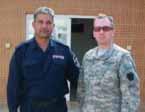
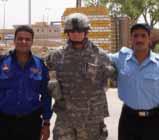
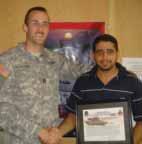
Accidents happen, whether in Wilmington, Harrisburg, or downtown Taji, Iraq. There, Frank McGovern ’95 serves as one of three judge advocates with the 56th Stryker Brigade Combat Team. In that capacity he deals with a range of legal
issues, including operational law, legal assistance, military justice, and administrative law. One of McGovern’s primary areas of responsibility is adjudicating claims—under the Foreign Claims Act, the U.S. military pays legitimate claims caused by its soldiers not involved in combat operations.
“We evaluate claims to verify that they are not fraudulent and have not been paid before,” he says. “If they are legitimate claims, we pay them when we can as specified under the act.”
In addition, McGovern deals with fiscal and contracting issues within the 56th, one of only seven Stryker Brigade Combat Teams in the entire Army. “You can only use certain pots of money for specific uses,” he explains, “so I advise as to what source of funds can be used for what purpose when needed.”
ABHISHEK SINGH ’07 | INDIA
With 50 lawyers and paralegals working under him and clients to serve in the United States and Europe, India-based Abhishek Singh ’07 has to be well versed
MAJ FRANK MCGOVERN ’95 | IRAQ
in issues of management, communications, and client relations. A Harrisburg graduate and the lead attorney for RR Donnelley’s legal services division, Singh oversees a group that provides legal services, such as due diligence, litigation support, contract review, and research, to large law firms and in-house legal departments at big corporations.
“My professors at Widener were obsessive about keeping my fundamental concepts crystal-clear,” he says. “Also, I truly enjoyed great relationships with many of them, and many of them continue to help me evolve as a lawyer. The true mentorship there makes Widener a truly special place.”
of a ‘case,’ and then walking it through the entire procedural stages. ITAP provided a solid foundation that has served me well for many years.”
For his service, COL Mitchell was awarded two Bronze Stars, the Iraqi Campaign Medal with two stars, the War on Terrorism Expeditionary Medal, and the Joint Meritorious Unit Award. Today he is chief of the Homeland Division for the Joint Chiefs of Staff at the Pentagon.
JOHN C. DERNBACH
DC
Deployed twice in support of Operation Iraqi Freedom, Army COL Charles W. Mitchell ’93 completed several high-level legal assignments. From July 2004 to June 2005, as the Inspector General to General George Casey, commander of the Multi-National Force, he inspected each of the more than two dozen detention facilities within Iraq to ensure compliance with the applicable laws of land warfare. From November 2006 to February 2008, under Lieutenant General Ray Odierno, COL Mitchell conducted four special investigations, including the allegations of improper killing of civilians by Blackwater contractors in Nisour Square, Baghdad, in September 2007.
Those duties involved collecting evidence, interviewing witnesses, and recreating events—while surrounded by combat operations. Difficult work, to be sure, and COL Mitchell believes his Widener education has helped see him through all of it.
“In addition to the classes in evidence and criminal law and procedure, I found the Intensive Trial Advocacy Program provided the best preparation for my current work,” he says. “ITAP required us to spend several days focusing on the facts
John Dernbach, Distinguished Professor of Law and Director of the Widener Center for Environmental Law and Climate Change, dips his toes into several international waters. His new book, Agenda for a Sustainable America, assesses the country’s international activities with respect to sustainability and offers recommendations for the next five to 10 years. Much of his scholarship is directed toward climate change, which has considerable international implications. For example, Professor Dernbach has advocated that the next climate change agreement—the one that follows the Kyoto protocol, which expires in 2012—should accomplish early and substantial greenhouse gas reductions. He also has traveled extensively, most recently to Kazakhstan, where he spoke with government officials, the press, and many citizens about sustainable development and climate change. Finally, Professor Dernbach teaches international law and international environmental law.
“In a smaller and more globalized world, more and more of our graduates will need the ability to move back and forth seamlessly from domestic law to international law in their own legal practice,” he says. “Faculty scholarship on these issues is an important service to the larger community, and students who are interested in these issues know that the law school has faculty with experience in them.”
COL CHARLES MITCHELL ’93 | IRAQ, WASHINGTON,
NETH BELGIU
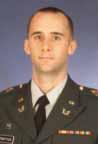
CAPT JOHN S. PONTIUS ’05 | GERMANY, IRAQ
After nine months with the Army’s 1st Armored Division in Tikrit, Iraq, where he was the northern Iraq chief of claims with the Judge Advocate General’s Corps, Harrisburg
graduate CAPT John Pontius now is the officer in charge of the Wiesbaden Tax Center, which serves a military community of more than 15,000 people in Germany. In Iraq, CAPT Pontius processed and adjudicated claims filed against the Army by local Iraqis for damages to personal and real property and to human life. At Wiesbaden, he oversees a tax center similar to the stateside Volunteer Income Tax Assistance program, providing federal and state tax return filing services to the military community free of charge.
“Widener prepared me well to practice law,” says CAPT Pontius, who was admitted through the Trial Acceptance Program. “Most faculty members took the time to meet with students after class to review new and complicated legal theories. There are many U.S. Army Judge Advocates from Widener Law School; in my Judge Advocate Officer Basic Course of 90, Widener was one of the better represented schools, with four alumni in addition to myself: Michael Weniger ’05, William Obringer ’05, David Jones ’05, and Heidi Stoltzfus ’05.”
LARRY D. BARNETT
Professor Larry Barnett’s international activities date back 30 years, when he traveled to the Netherlands as a Fulbright Scholar. While there he proposed and developed a new journal focusing on empirical research in social demography and on its policy implications, and he went on to edit the publication for several years afterward.
More recently Professor Barnett has presented papers in Berlin, Germany, and Milan, Italy, and this summer he will co-chair a session and present a paper at a scholarly conference in Spain.
“Cross-national and cross-disciplinary collaboration will almost certainly become more common over the next several decades, and to the extent that U.S. law school faculty members are involved now in this type of collaboration, their law schools and students will gain an advantage,” Professor Barnett says. He adds that the spread of the current financial crisis from the United States to many other countries is a vivid reminder of the importance of globally focused legal scholarship: “Because significant events in the financial system of one country can affect individuals, private-sector entities, and governments in other countries, research on the law of a country needs to consider the responses to that law elsewhere.”
KOSOVO
Widener in the Public Square
From elected office to appointed position, the Law School is well represented in governmental bodies
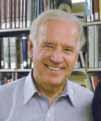
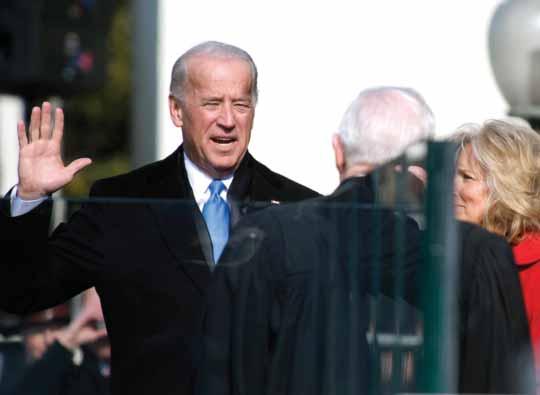
When Barack Obama tapped Joseph Biden to join his presidential ticket last summer, Delaware found itself in the national political spotlight.
When the Obama-Biden ticket emerged victorious, Widener Law stepped into a small corner of that spotlight, courtesy of the new vice president’s longtime status as an adjunct professor on the Delaware Campus, where he has taught a popular Saturdaymorning seminar on constitutional law.
“One of Sen. Biden’s main themes that he stressed was the importance of basing your arguments in principle, no matter what your position was,” student Vasili Michell, who took Biden’s class in the fall of 2007, told the Metro newspaper last August. “I think that was not only important coming from a law professor, but important for a vice presidential candidate as well.”
When Biden went from VP candidate to VP-elect, Widener Law celebrated—and predicted success to come.
“If he is as good a vice president as he is a faculty member here, then the nation is in good hands,” said Law School Dean Linda L. Ammons on election night. Discussing Vice President Biden’s future with the school, she added, “He will just be on leave here, and I hope to see him back.”
Biden is one of several Widener Law alumni, adjunct professors, and friends to hold elected or appointed office.
“The opportunities and experiences I had at Widener prepared me for success throughout my life,” he says. “The values taught at Widener reinforced those I learned growing up—service, honor, and family.”
The Law School’s multifaceted education—classroom instruction supplemented by hands-on internships and service opportunities— was pivotal for him.
“Whether it was through my classes, my work with the Philadelphia DA’s office, or providing legal advice at the Saint Francis of Assisi soup kitchen,” Congressman Murphy says, “Widener helped me become the person I am today.”
“If he is as good a vice president as he is a faculty member here, then the nation is in good hands,” said Law School Dean Linda L. Ammons on election night.
Patrick Murphy ’99, a graduate of the Law School’s Harrisburg Campus, recently was sworn in to his second term as a member of the United States House of Representatives from Pennsylvania’s 8th Congressional District. Widener, he says, has played a key role in his experiences as a paratrooper and JAG Corps attorney with the 82nd Airborne Division and in Congress.
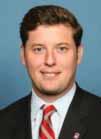
Widener’s influence in Washington includes participation at the municipal level. Michael A. Brown ’91, managing director of government affairs with Edwards Angell Palmer & Dodge, was elected to an at-large seat on the District of Columbia City Council last November.
“The role Widener played is a role I’m sure the school plays with many people, whether they’re elected to office or not,” Brown says. “Giving you an understanding of the legislative process, an understanding about why public service is so important.”
At the Law School, Brown did legislative work for then-Senator Biden and worked in one of the school’s clinics, assisting a
juvenile detention center. Widener’s educational advocacy of working off-campus was a significant influence.
“I grew up in a household and a family where public service was important,” he says. “Widener and my law school experience helped enhance those values. When you see problems somewhere, you don’t wait for someone else to solve them. You try to solve them yourself.”
to have your political radar on. On the legal side, law school helps you focus on problem solving as a legislator. Bringing the analytical tools law school helps develop is an asset.”
DePasquale credits the diversity of the Widener student body, especially in the evening division, for helping to prepare him for the varied issues he faces as a state legislator.
Eugene DePasquale ’02 was solving problems while still in law school. He worked for the city of York, PA, while raising a family and studying in the Harrisburg Campus’s evening division, a balancing act that proved useful after he was elected to the Pennsylvania House of Representatives from the 95th House District in 2006.
“In the life of a legislator, the hard part is figuring out the balance,” he says. “You have a lot of different duties: district work and legislative functions, and at the same time you have
“That collectively fostered a very interesting academic environment,” he says. “Everybody had different jobs and different experiences they brought. When you were debating things, people brought their real-life experiences to those classroom discussions.”
A sampling of other Widener Law graduates engaged in public life
• Donald McGahn ’94, commissioner, Federal Election Commission
• Rich Alloway ’02, member, Pennsylvania Senate
• Alan Levin ’80 , director, Delaware Economic Development Office
Family Law
Siblings, spouses, parents, and children have made Widener their home over generations
The first one hung out his own shingle.
The second one explored entrepreneurial ventures.
The third one pursued the big-firm route.
Three brothers, three Widener Law alumni, three different career paths.
One common legacy.
For the Tierney brothers, the Law School was the foundation for a trio of successful outcomes that continue to evolve.
Kevin Tierney started things off. After graduating in 1982, he opened his own practice, a venture that is still going strong.
Five years later Brian Tierney obtained his J.D., but instead of practicing law, he opted for an entrepreneurial path. The influential marketing communications firm he launched still bears his name, though he sold it some years ago. More recently, he assembled a group of investors to return The Philadelphia Inquirer and Daily News to local ownership, and today he serves as the publisher of those newspapers.
Michael Tierney’s turn came in 1993. He worked as a paralegal at Kevin’s firm while putting himself through Widener Law’s evening division. After earning his law degree, he clerked for a U.S. District Court judge, then joined Dilworth Paxson, where today he practices corporate law in the firm’s Philadelphia office.
“We all really loved it,” Michael says of his time at Widener. “We’re all doing different things, too, which is neat. We all took that education and did our own thing with it. Kevin started his own smaller law firm and has had it almost since he graduated. Brian never practiced full-time but used it as an asset in the businesses he started. I took the larger firm route.”
What drew Michael to the law were the complex concepts and intellectual stimulation. What drew him to Widener Law were the positive experiences his brothers had enjoyed there. From faculty to facilities, the Tierneys loved the school enough to recommend it to each other. That kind of commitment can be seen again and again in almost countless
Andrew Jefferson
families that have enriched the school through generations of study and contributions.
“Widener is building a very loyal alumni base,” says George Miller ’81, whose daughter Kristie is in her third year, and whose daughter Tara has enrolled for the Fall 2009 semester.
“I think it’s a great school. The alumni are very loyal, and your kids can get a great education.”
Miller, who is a member of the Law School’s Board of Overseers and is a generous contributor to the Widener Law Fund, cites the institution’s beginnings in order to explain the fierce loyalty its alumni have shown it.
“It started off as a school that wanted to give a certain group of students a chance to be attorneys,” he says, “and those students for the most part have excelled.”
Sometimes the benefits of a Widener Law education are so evident that prodding from the senior generation isn’t needed.
John Wetzel ’75, a member of the Board of Overseers and a generous annual contributor, tried to talk his son, Ian, out of law school. But after spending time in Africa and wanting to make a difference in alleviating poverty, Ian, at the time a pharmaceutical sales representative, was swayed by the advice of a family friend who teaches business and counseled him to
obtain an advanced degree. An open house and the school’s summer program in Kenya convinced him that Widener Law was the right choice.
Ian graduated from the Law School’s Harrisburg campus in 2008, and is working for an engineering firm while pursuing law jobs and waiting to take the New York bar. He hopes that building field experience now will enable him to do the development work he is passionate about in the future.
John Wetzel, a partner at Swartz Campbell, was a member of Widener Law’s first graduating class and is grateful to the school’s founding dean for giving him a chance. The experiences he and his son enjoyed point not only to the institution’s evolution over the years, but also to its commitment to training lawyers grounded in practical applications.
“I wouldn’t be doing what I’m doing if it weren’t for Alfred Avins,” John says. “I feel as if I have a debt I owe the school, and I’m trying to pay it back. The school has come a long way and done a lot of wonderful things for a lot of people.”
Of course, some familial relationships didn’t continue at Widener Law—they started there.
In 1993 Andrew McK. Jefferson was in his third year; Heather Doheny was a 1L. He was president of the Moot
The Tierney brothers
The Harrington family The Wetzel family
Court Honor Society; she was a member of the student government. Because their offices were in the same building, they got to know each other, and, following graduation, they married.
“We’re probably more loyal to the law school because of our relationship together,” says Heather Jefferson. “We’ve done a lot of giving to the law school, and that’s because it is a special place for us.”
The Jeffersons contribute to Widener through the Graham Foundation, and Andrew gives additionally through his service as a member of the Board of Overseers, while Heather formerly served on the alumni board. She does marketing and strategic planning for the Delaware Counsel Group; he is president and chief operating officer of Fort Hill Company, whose software tools are used by companies to facilitate corporate training. Their mutual support of the Law School is rooted in happy memories but also has very practical and aspirational reasons behind it.
“We both have a vested interest in making sure the Law School thrives and is competitive,” Heather says.
“It was definitely kind of an extended family,” recalls Scott Blissman ’97, who met his wife, Tanya ’97, when both were students on the Harrisburg Campus. “Not just the atmosphere of the school itself, but just going through the process of law school. The idea that you’re all in this together, you’re all going through this shared experience.”
The Blissmans were in the same section of the Class of 1997, so they enrolled in classes together, but it took a conversation struck up in the Sidebar Café to get the ball rolling. There were married four years after graduating. According to Scott, at least one other couple from that class got married, and he knows of other Widener Law marriages in the classes ahead of and behind him.
“You’re in such close quarters you can’t help but develop family-esque relationships with other people you’re going through the process with,” he says.
Family plays an additional role in Scott Blissman’s Widener Law experience: His grandfather provided considerable financial and emotional support during his time at Widener; after graduating Scott was deeply interested in honoring him. George Blissman was a long-time CPA, so his grandson established an annual scholarship given to a Widener Law student, preferably in Harrisburg, with an interest or background in taxation.
Tanya Blissman works today in the estates and trusts department at PNC Bank; Scott is of counsel at Reed Smith, where he
serves as a firm representative to the Law School, and sits on the alumni board.
“I know it sounds corny, but of the things I’ve been involved with after law school, the scholarship is the thing I’m most proud of,” he says. “My grandfather was a big influence on me, and I wanted that to be recognized. I hope he’s still looking down on me.”
Some families combine spousal and generational connections in creating a Widener Law legacy. Clark J. Harrington ’75 was a member of the first graduating class. His daughters Cathy Harrington ’88 and Meg Harrington ’93, along with their cousin Barbara Harrington ’92 and her husband, Stephen Hladik ’92, followed a generation later.
“I enjoy having the family connection to Widener,” Meg says. “So many things are impersonal these days. It’s nice to have that common bond and pride in our education.”
Those connections helped foster the Harringtons’ incredible legacy at Widener Law, of course, but first and foremost, beginning with Clark Harrington’s pioneering ways, it has been the quality of the education that has appealed most to the family, according to Cathy Harrington.
“[My father] attended the Delaware Law School and was proud of the school and the graduates it was producing,” she says. “The graduates were and are known to be excellent, well-respected, successful lawyers.”
Similarly, the Peruto family’s connection with Widener Law dates back to the beginning. When Perry de Marco Sr. ’75, son-in-law of the renowned Philadelphia defense attorney A. Charles Peruto Sr., was making his way through law school as a member of the first graduating class, Peruto assembled a group to help the school earn American Bar Association accreditation. Thus began an amazing and deep relationship between the family and the institution.
Peruto’s two sons, A. Charles “Chuck” Peruto Jr. ’79 and John M. Peruto ’86; John’s wife, Lori N. Peruto ’86; and grandchildren Perry de Marco Jr. ’02 and Lisa A. Peruto ’07 all hold Widener Law degrees and have pursued successful trial law careers.
“I had already been exposed to the strong alumni relationship Widener has to offer, and I wanted to be part of it,” Perry de Marco Jr. says. “Now it has blossomed into such a great institution with an ever-strengthening reputation for tough, straight-shooting lawyers.”
Alumna Profile
Susan C. Del Pesco
The Honorable Susan C. Del Pesco ’75 really didn’t need to do anything more to ensure her place as one of Widener Law’s most notable and laudable alumni. A lengthy, distinguished legal career that began with membership in the school’s first graduating class would have taken care of that.
She began her career as a civil litigation attorney and was the first woman president of the Delaware Bar. In 1988 she was named the first woman judge of the Delaware Superior Court, a position she held until retiring last summer. Judge Del Pesco was an active, committed jurist, participating in a project to build the state’s first drug treatment facility for incarcerated women, co-chairing the Supreme Court’s Gender Fairness Task Force, and working on several projects that serve the administration of justice, including implementation of the nation’s first litigation electronic filing system.
“In the early years I was very interested in seeing the Law School thrive. I wanted to contribute in any way I could,” Judge Del Pesco recalls. “The kinds of activities I got involved with included setting up the bar review class; that has operated now for 25 years. It seemed to me the Law School could fill an important niche, and it has. It’s become the only bar review program in Delaware.”
But that early involvement was only the beginning. For more than 20 years, she has sat on the school’s Board of Overseers, and for 15 years she has been an adjunct faculty member; in 2004 Judge Del Pesco began using her faculty compensation to establish a scholarship fund in her name. She also is a member of the Widener Women’s Network.
Judge Del Pesco praises Dean Linda Ammons for making great strides in connecting alumni with the Law School and for fostering an atmosphere of relevance and adaptability to changing times. Her passion for Widener Law has not waned in the least.
“My interest at this point is contributing to the continued significance of the institution in the community and doing something I find interesting and different,” she says.
Fulfilling that desire, today Judge Del Pesco teaches Legal Methods to Widener Law students, an experience she has found educational.
“I come to the job with a good, strong understanding of the law, but I’ve learned a great deal teaching the class,” she says. “Teaching something is just different than working with it, than interpreting legal cases and trying to understand the arguments that are being presented. It’s a different skill. I’ve come away from this with a greatly enhanced respect for academics. It’s a different kind of responsibility.”
Widener Law gave Susan Del Pesco more than just an education. Throughout her career it has offered her a place where she is welcome and to which she can contribute her considerable skills.
“The Law School has provided a community for me that’s different from the traditional bar and that is engaged with a different community, which is the students,” she says. “I would encourage alumni who want to try to do something different to stay connected with the law to consider some role with the Law School.”
G HELPING HANDS
The Widener Law family extends its support
iving takes many forms.
The most obvious, as described beginning on page 24, is through financial support. Monetary gifts allow Widener Law extraordinary flexibility and opportunity. From student scholarships to innovative faculty research to the valuable educational experiences in the school’s clinics and institutes, such generosity allows Widener to remain true to its legacy while exploring new realms.
But Law School Alumni give back in other meaningful ways too.
Marshall, Dennehey, Warner, Coleman & Goggin, for example, employs more than 50 Widener Law alumni. No other firm in the country has as many Widener graduates among its ranks.
“We have Widener graduates working at our offices throughout Pennsylvania and at our New Jersey and Delaware offices,” says Marshall Dennehey shareholder Joseph J. Santarone Jr. ’85, chair of the firm’s public entity and civil rights practice group.
“They’re a big part of the continued success of Marshall Dennehey.”
Alumni at firms and organizations with high concentrations of Widener graduates note that they seek out these attorneys not out of favoritism but talent. After all, who better to gauge the skill set of a Widener Law graduate but, well, a fellow grad?
The Harrisburg firm of Rhoads & Sinon has been hiring Widener alumni since its inception, beginning with Susan Schwab ’92, a member of the Harrisburg Campus’s first graduating class. As a member of the firm’s executive committee, Todd J. Shill ’93 has overseen the hiring of several Widener grads.
Facing page, from left: James Ellison ‘97 (Rhoads & Sinon), Dave Williams ‘88 (Marshall Dennehey), Angela Hudacko ‘07 (Rhoads & Sinon), Michael Winfield ’94 (Rhoads & Sinon), Robert F. Poppiti ‘07 (Young Conaway Stargatt & Taylor)
This page, from left: Jillian Petrosky ‘07 (Rhoads & Sinon), Michael R. Nestor ’95 (Young Conaway Stargatt & Taylor), James J. Watson ’03 (Marshall Dennehey), Matthew Wilson ‘96 (Marshall Dennehey), Richard Artell ’93 (Rhoads & Sinon), Edwin J. Harron ’95 (Young Conaway Stargatt & Taylor)
RECOGNIZING TALENT
While Widener Law’s 12,000-plus alumni can be found in all corners of the globe, certain firms and institutions are especially appreciative of their talents and experience. Of the nearly 3,500 firms and individual practices employing our alumni, the top six are:
• Marshall, Dennehey, Warner, Coleman & Goggin
• Fox Rothschild
• Cozen O’Connor
• Commonwealth of Pennsylvania
• State of New Jersey
• United States Justice Department
“We brought in a ton of Widener people, and we still do,” says Shill. “I love the school and I love the professors and I love the education, but the truth is these Widener students have come in and competed very favorably with graduates of other schools.”
According to Shill, the alumni he has hired were simply the best candidates. “They’ve worked out great here,” he says. “We’re hiring them even today—we have two more coming on this fall. I’m really supportive of my alma mater and pleased it continues to produce great students who go on to have great careers at our firm and elsewhere in the city.”
Firms are only a part of the story. The region’s various judicial systems are well-stocked with Widener Law graduates. From the Harrisburg public defender’s office to the Philadelphia district attorney’s office and countless agencies and institutions in between, courtrooms throughout the tri-state area and beyond have a distinctive Widener flavor.
According to Philadelphia Chief Assistant District Attorney Maria McLaughlin, the Law School’s emphasis on real-world learning and locations are major assets when it comes to using the law to put criminals behind bars.
“Grads from Widener have a good grasp of what is required to be a great prosecutor in the city,” she notes. “The Widener alumni are familiar with what goes on in Philadelphia—many have grown up in the city or surrounding suburbs—and that familiarity is quite helpful in prosecuting individuals.”
More than 30 alumni work in the Philadelphia DA’s office. McLaughlin, who heads the office’s Child Support Enforcement Unit, is so satisfied with their level of work that she even seeks out Widener students for unpaid positions.
“I have always had great experiences with all of the Widener alums I have hired, and I draw all of my interns from our Widener pool,” she says. “Our office is extremely competitive, so I always like to see a good percentage of our grads in the Philly DA’s office.”
Other alumni give back to their alma mater by working directly with current students. Ten years ago Alice Eakin, then the assistant dean for career development, launched a mentoring program that has since linked more than 1,200 Widener Law graduates with students. The program’s minimum requirement is a one-year commitment comprising three contacts, but according to LeoNora Ruffin, the current assistant dean for career development, many mentoring relationships have lasted much longer.
“Our idea for the mentoring program was always to keep it informal, believing that as relationships between mentors and protégés developed naturally they would have a higher probability of lasting into the future,” says Ruffin. “Over the years, we have found this to be the case.”
Alumni mentor Richard A. DiLiberto, Jr. ’86, a partner at Young Conaway Stargatt & Taylor, was the first in his family to attend law school. While the mentoring program was not established during his time at Widener, DiLiberto recalls with fondness the help he got from faculty members who shepherded him through those tough years.
“It is important to honor their service to Widener by continuing the tradition,” he says. DiLiberto and his mentees have found a variety of ways to get together. Sometimes it’s breakfast or lunch or a cup of coffee on campus; other times it’s a phone call or an e-mail exchange.
“They may ask for concrete suggestions about coursework or practice opportunities,” he says. “I try to provide encouragement and guidance to these young people who are at a daunting stage of their legal education and careers.”
Program officials stress to mentors and students that the emphasis should be on coaching, not simply future employment possibilities.
“We wanted to foster a sense of community, so we took pains to stress that both mentor and protégé have a role to play in the relationship and that they would absolutely get out of it what they put in,” Ruffin says. “Participation has been fabulous and is always a shining testament to how great our alumni are.”
Importantly, the mentoring program has shifted to adapt to changing trends within the legal industry. In its early days, mentors assisted students with basic issues—advice on taking examinations, for example, and preparing for classes. More recently, as employers and law schools have stressed the significance of professional development, Ruffin has asked mentors to reinforce Widener’s messaging on that issue.
“In this way, the mentoring program is developing beyond its initial network-building goal into a very practical, real-time, career resource tool,” she notes.
As with so many who feel an obligation to repay Widener Law for the educational experience that so well prepared them, DiLiberto says that through the mentoring program, he gets at least as much as he gives.
“The students I have mentored are bright, insightful, and appreciative of the opportunity,” DiLiberto says. “I am invigorated and inspired by their thirst for the law.”
Paving Our Way to Success
Widener Law is undertaking a unique landscaping project that will serve as a gathering area for students. The centerpiece of the project will be a fountain surrounded by brick pathways and flower beds.
You can be a part of this momentous construction project by purchasing an engraved 6”x 6” or 6” x 9” paver. Each paver can be engraved with a name and class year, family name, or message from you. Honor your friends or relatives with personalized engraved pavers. This is a wonderful way to commemorate a graduation or similar event.
There are a limited number of pavers that will be installed for this project, so please act now. Orders will be taken through June 30, 2009. A 6” x 6” paver costs $150; a 6” x 9” paver is $250. All gifts dedicated to this project are tax-deductible.
For more information or an order form, contact Walter L. Derricotte, assistant director of the Widener Law Fund, at 302.477.2754.
As with so many who feel an obligation to repay Widener Law for the educational experience that so well prepared them, DiLiberto says that through the mentoring program, he gets at least as much as he gives.
Faculty News
D. BENJAMIN BARROS presented “The Takings Law That Might Have Been” at the Property Works in Progress Conference, held at the University of Colorado at Boulder in June. He also presented “The Case for Model Laws of Property” and “Legal Questions for the Psychology of Home” at the Law & Society Conference, held in Montreal in June. As chair of the Property Section of the Association of American Law Schools, Professor Barros organized and moderated a session entitled “Hernando de Soto and Property in a Market Economy” at the association’s annual meeting.
JOHN J. CAPOWSKI presented “China’s Current Legal Process and their Draft Uniform Rules of Evidence” at the University of Technology Sydney, in Sydney, Australia, in July.
in January; the conference was sponsored by National Institute of Justice. Professor Epstein was granted tenure in Spring 2009.
TONYA EVANS-WALLS was appointed to chair the Community Outreach Committee for the Intellectual Property Law Section of the Pennsylvania Bar Association. She also received the Distinguished Service Award from the Community College of Philadelphia during its 10th Annual Law & Society Week.
JILL E. FAMILY became a member of the Immigration and Naturalization Committee of the Section of Administrative Law and Regulatory Practice of the American Bar Association.
KATHERINE
ANDREW L. STRAUSS
JOHN C. DERNBACH was a Public Affairs Program Speaker (on sustainable development and climate change) for the U.S. Department of State in Kazakhstan in July. Professor Dernbach presented “Achieving Early and Substantial Greenhouse Gas Reductions Under a Post-Kyoto Agreement” at the American Bar Association Standing Committee on Environmental Law’s annual spring conference in Baltimore in June and at the sixth annual Colloquium of IUCN Academy of Environmental Law in Mexico City in November; “Behavior and Climate Legislation” at the Behavior, Energy and Climate Change Conference in Sacramento, CA, in November; and “Law for Sustainability: The Growing Role of Legal Education” to the Natural Resources Law Section at the American Association of Law Schools’ annual meeting in San Diego in January. Also at the AALS meeting, he presented “Sustainability and Natural Resources: The Law, The Law Curriculum, and The Law School.” Professor Dernbach served on the panel Environmental Law and Property Rights at the Federalist Society’s National Lawyers Convention, held in Washington, DC, in November.
JULES EPSTEIN spoke about eyewitness identification to Indiana public defenders in Indianapolis and, at the invitation of the Pennsylvania Association of Criminal Defense Lawyers, provided training to Pennsylvania lawyers in legal and ethical issues in sexual assault prosecutions in Pittsburgh. He also spoke at the National Conference on Issues in Post-Conviction DNA Testing in Florida
IVA J. FERRELL , SUSAN A. KING , and MARY ANN ROBINSON attended the Delaware Valley Legal Writing Consortium’s semi-annual meeting at the University of Pennsylvania in November.
ANN E. FRUTH and AMANDA L. SMITH presented “Engaging, Entertaining, and Effective: Using Handheld Response Pads in the Legal Methods Classroom” at the Legal Writing Institute’s 2008 Biennial Conference in Indianapolis in July.
JOHN L. GEDID presented a CLE session, “Statutory and Regulatory Developments,” in September. He served as a juror in the Pennsylvania Bar Association’s statewide High School Mock Trial Competition and lectured in the Pennsylvania Legislature on the Pennsylvania Constitution in June. Professor Gedid was appointed chair of the PBA Statutory Law Committee for 2008-09, a member of the Statutory Law PBI CLE Planning Committee, a member of the PBA Task Force to Study Need for Pennsylvania Constitutional Convention, which is examining the need and method to be used for amending the Pennsylvania Constitution, and a member of the board of directors of the Commonwealth Court Historical Society. He was reappointed a Pennsylvania commissioner to the Uniform Law Commission by the Pennsylvania Legislature in January, and was also appointed chair of the Resolution Committee for Reorganization of the Dauphin County Court of Common Pleas.
LAWRENCE A. HAMERMESH spoke to the Wilmington chapter of Rotary International
JULES EPSTEIN
JILL E. FAMILY
JOHN L. GEDID
LAWRENCE A. HAMERMESH
MASON JONES
in November on the topic “Corporate Purpose: Public Good or Private Gain?” The same month, he presented “Rationalizing Appraisal Standards in Compulsory Buyouts” at Vanderbilt Law School. Professor Hamermesh spoke at the Dorsey & Whitney LLP Corporate Counsel Symposium XIX, Minneapolis, in November, on a panel entitled “Board Game: Playing for High Stakes in Corporate Governance.” He spoke on two panels (addressing recent developments in Delaware corporate law and officer and director liability) at a December program, sponsored by Skadden Arps, at the Harvard Club in New York. Also in December, Professor Hamermesh moderated a panel (with Justice Henry duPont Ridgely of the Delaware Supreme Court, Delaware Bank Commissioner Robert Glen, and Andrea Rocanelli, chief disciplinary counsel in the Delaware Office of Disciplinary Counsel) entitled “Trust Ethics in Delaware,” which addressed a hypothetical he prepared to illustrate ethical issues relating to trust law practice. Finally, that same month, he moderated a panel on shareholder litigation that was part of the International Corporate Governance Network’s 2008 mid-year meeting, held in Wilmington.
ANNA P. HEMINGWAY presented “Integrating Upper-Level Legal Methods Courses Offering Skill-Based Menu Options into the Law School Curriculum” at the Legal Education at the Crossroads Conference at the University of Washington School of Law in September.
MICHAEL J. HUSSEY presented “Using Deferred Compensation to Retain Key Employees; Section 409A Compliance” at the fifth annual Capital University Law School Financial Service Professionals Fall Symposium in October.
KATHERINE MASON JONES participated in the U.S. Army War College’s Third Annual Strategy Implementation Seminar in July at Carlisle Barracks. In November she appeared on radio station WITF’s Smart Talk to discuss the global economic crisis and the Obama administration.
KENNETH T. KRISTL was sworn into the Delaware Bar in December after passing the Summer 2008 bar exam and completing the bar’s clerkship requirements. He appeared on the “Legal Lessons” segment of WHYY’s Delaware Tonight news show to discuss lawsuits
by Sussex County, DE, and private individuals challenging the State of Delaware’s buffer requirements in the Pollution Control Strategy for the state’s inland bays.
G. RANDALL LEE received the Fidelis Award last summer from the Saint Thomas More Society of Central Pennsylvania. He also presented a CLE program, “A Man for All Seasons and a Lawyer’s Search for Integrity,” for the Pennsylvania Bar Institute in Pittsburgh, Philadelphia, and Mechanicsburg. The program, which intertwines Robert Bolt’s play about Saint Thomas More with the experiences of present-day lawyers, was also shown as a video CLE program in several Pennsylvania counties and is now available for CLE credit on the websites of four state bar associations. In November he was part of a three-hour PBI program entitled “Maxims, Monarchy, and Sir Thomas More,” and he was the program coordinator in December for three PBI ethics programs sponsored by the Professionalism Committee of the Pennsylvania Bar Association. Professor Lee presented “The Constitution and You” at the YMCA Youth in Government Conference at the Pennsylvania State Capitol last spring and “Quiet Justice: The Case for Jurors who Have a Hearing Loss” at the monthly meeting of the Central Pennsylvania Chapter of the Hearing Loss Association of America in September. He organized the annual Pennsylvania Lawyers Concerned for Lawyers (LCL) conference for the deans of students at Pennsylvania law schools.
Professor Lee was invited to serve as a representative to the Harrisburg Diocese’s Commission on Catholic Social Doctrine. On Election Day, he served as a poll watcher in Harrisburg. Again last year, the Lee family coordinated the annual assembly and distribution of the 300 holiday treat bags that the Harrisburg Campus distributes to people living in Harrisburg shelters at Christmas.
ROBERT J. LIPKIN welcomed two legal academics, Henry Chambers of the University of Richmond and Rebecca Zietlow of the University of Toledo, as contributors to his blog, Essentially Contested America. Professor Lipkin also continues to contribute to the blog Ratio Juris.
NICHOLAS A. MIRKAY organized the 2009 Delaware Tax Law Institute with
local tax practitioners. Widener Law co-sponsored the Institute along with the Delaware Chapter of the Society of Financial Service Professionals and the Wilmington Family Office. Professor Mirkay was granted tenure in Spring 2009.
JULIET M. MORINGIELLO presented “Revised Article 7: Bringing Documents of Title into the 21st Century” as a Pennsylvania Bar Institute tele-web seminar in May. She also taught a full-day course in electronic commerce, entitled “Law of Electronic Commerce,” at the 43rd Academy of American and International Law at the Center for American and International Law in Plano, TX, in June. Professor Moringiello was on the faculty of the academy, which holds a six-week program every summer for 80 foreign lawyers to teach them U.S law. Finally, she appeared on WITF-TV’s Smart Talk to discuss bankruptcy and possible changes to the bankruptcy law.
THOMAS J. REED was the lead presenter at the Pennsylvania Bar Institute’s Basic Veterans Law CLE in February. He was a panelist and a moderator at “Lincoln & the Law,” a celebration of the bicentennial of Abraham Lincoln’s birth, held at Widener Law School the same month. Also in February, Professor Reed spoke at the Central Delaware Civil War Round Table, where his topic was “Abraham Lincoln and the Simple Minded Soldier Boy—Civil Liberties in the Lincoln Administration.”
CHRISTOPHER J. ROBINETTE presented his draft The Prosser Notebook: Classroom as Biography and Intellectual History at Rutgers University-Camden in September.
ANDREW L. STRAUSS returned in the fall from a leave he spent teaching at Notre Dame Law School. In December he taught a short course on the evolution of global democracy at the European Peace University in Austria. On November 20 he was the luncheon speaker for the Rotary Club of Wilmington, to which he presented “Leadership, Economic Crisis and the Global Architecture: An International Law Professor’s Perspective.”
MICAH J. YARBROUGH presented “Reporting Bar Pass Rates to the ABA: The Nuts and Bolts of Standard 301-6” at the New York Area Academic Support Workshop at Brooklyn School of Law.
Faculty Publications 2008
AMMONS, LINDA L. Commentary, Session 1: Deciding to Become a Dean, 31 SEATTLE U. L. REV. 825 (2008).
BARNETT, LARRY D. The Regulation of Mutual Fund Boards of Directors: Financial Protection or Social Productivity? 16 J.L. & POL’Y 489 (2008).
Mutual Funds, Hedge Funds, and the Public-Private Dichotomy in a Macrosociological Framework for Law, Working Paper No. 34, Interuniversity Centre for Research on Sociology of Law, Information and Legal Institutions, University of Messina, Italy (2008). Available at http://www.cirsdig.it/indexeng.html.
CAPOWSKI, JOHN J. Civil and Criminal Evidence Codes, 61 ARK. L. REV. 218 (2008).
Evidence Codification and Transubstantive and Bifurcated Evidence Codes, 2 EVIDENCE SCI (Institute of Evidence Law and Forensic Science of China University of Political Science and Law) 216, 226 (2008).
CONAWAY, ANN E. Lessons to be Learned: How the Policy of Freedom to Contract in Delaware’s Alternative Entity Law Might Inform Delaware’s General Corporation Law, 33 DEL. J. CORP. L. 789 (2008).
The Multi-Facets of Good Faith in Delaware: A Mistake in the Duty of Good Faith and Fair Dealing; A Different Partnership Duty of Care; Agency Good Faith and Damages; Good Faith and Trust Law, 10 DEL. L. REV. 89 (2008).
CONNER, DANA HARRINGTON
Do No Harm: An Analysis of the Legal and Social Consequences of Child Visitation Determinations for Incarcerated Perpetrators of Extreme Acts of Violence Against Women, 17 COLUM. J. GENDER & L. 163 (2008).
DALY, ERIN Truth Skepticism: An Inquiry into the Value of Truth in Times of Transition, 2 INT’L J. OF TRANSITIONAL JUSTICE 23 (2008).
DERNBACH, JOHN C. Harnessing Individual Behavior to Address Climate Change: Options for Congress, 26 VA. ENVTL. L.J. 107 (2008). & THOMAS D. PETERSON, ET AL., Developing a Comprehensive Approach to Climate Change Policy in the United States: Integrating Levels of Government and Economic Sectors, 26 VA. ENVTL. L.J. 227 (2008).
FAMILY, JILL E. Threats to the Future of the Immigration Class Action, 27 WASH. U. J.L. & POL’Y 1 (2008).
FRIEDMAN, STEPHEN E. Protecting Consumers from Arbitration Provisions in Cyberspace, the FAA and E-SIGN Notwithstanding, 57 CATH. U. L. REV. 377 (2008).
GARFIELD, ALAN E. Editorial, After Two Centuries, our ‘Better Angels’ Finally Learn to Speak, THE NEWS J. (Wilmington DE), Nov. 11, 2008, at A11.
GOLDBERG, MICHAEL J. Chapters 12 & 13, in EMPLOYEE AND UNION MEMBER GUIDE TO LABOR LAW: A MANUAL FOR ATTORNEYS REPRESENTING THE LABOR MOVEMENT (Thomson-West 2008 revisions).
HAKES, RUSSELL A. et al., The Uniform Commercial Code Survey: Introduction, 63 BUS LAW. 1281 (2008).
HAMERMESH, LAWRENCE A. Introduction: The Delaware General Corporation Law for the 21st Century, 33 DEL. J. CORP. L. 611 (2008).
HODAS, DAVID R. & Albert Mumma, Designing a Global Post-Kyoto Climate Change Protocol That Advances Human Development, 20 GEO. INT’L ENVTL. L. REV. 619 (2008).
KELLY, J. PATRICK International Law and the Shrinking Space for Domestic Politics in Developing Countries in Law and Rights: Global Perspectives on Constitutionalism and Governance (Penelope E. Andrews and Susan Bacelli, eds.).
Naturalism in International Adjudication, Symposium: Public and Private Law in the Global Adjudication System, 18 DUKE J. COMP. & INT’L L. 395 (2008).
Editorial, Smart Rules Uphold System, SUNDAY NEWS J. (Wilmington DE), Nov. 2, 2008, at A31.
KRISTL, KENNETH Renewable Energy and Preemption: Lessons From Siting LNG Terminals, 23 NAT. RESOURCES & ENV’T 58, Winter 2009.
LIPKIN, ROBERT What’s Wrong With Judicial Supremacy? What’s Right About Judicial Review? 14 WIDENER L. REV. 1 (2008).
Op-Ed., Signing Statements Risk Abuse of Power, THE NEWS J. (Wilmington, DE), Sept. 14, 2008, at A23.
“The Obama Phenomenon: Deliberative Conversationalism and the Pursuit of Community Through Presidential Politics,:” THE JOURNAL OF LAW AND SOCIAL CHANGE (May 2009).
“Unconstitutional on its Face,” in ENCYCLOPEDIA OF THE SUPREME COURT OF THE UNITED STATES 91 (Gale 2008).
MAATMAN, MARY ELLEN Justice
Formation from Generation to Generation: Atticus Finch and the Stories Lawyers Tell Their Children, 14 LEGAL WRITING (Journal of the Legal Writing Institute) 207 (2008).
MAY, JAMES R. Of Happy Incidents, Climate, Federalism, and Preemption, 17 TEMP POL. & CIV. RTS. L. REV. 465 (2008).
Climate Change, Constitutional Consignment, and the Political Question Doctrine, Symposium: Global Climate Change: Integrating Environmental Justice into Policy, Regulation, and Litigation, 85 DENVER U. L. REV. 919 (2008).
MIRKAY, NICHOLAS A. & Patricia D. Beebe, Editorial, Going Hungry in Delaware, THE NEWS J. (Wilmington, DE), Sept. 28, 2008.
Return of ‘Charity Care’: The Evolving Debate Over Nonprofit Hospitals’ Tax-Exempt Status, FORUM (Widener Health Law Institute), Fall 2008, at 1.
MORINGIELLO, JULIET M. & WILLIAM L. REYNOLDS, Survey of the Law of Cyberspace: Electronic Contracting Cases 2007-2008, 64 BUS LAW. 199 (2008).
POPE, THADDEUS MASON & ELLEN WALDMAN Futility: The Limits of Mediation, 132 CHEST 888 (2008).
Multi-Institutional Hospital Ethics Committees: For Rural Hospitals, and Urban Ones Too, 8(4) AM. J. BIOETHICS 69 (2008).
DNAR as Default Status: Desirable in Principle, Difficult in Practice, 17 AM. J. CRITICAL CARE 404 (2008).
The Language of Living Wills, 178 CAN. MED ASSN. J. 1324 (2008).
Involuntary Passive Euthanasia in U.S. Courts: Reassessing the Judicial Treatment of Medical Futility Cases, 9 MARQ. ELDER’S ADVISOR 229 (2008).
RAY, LAURA K. Clerk and Justice: The Ties that Bind John Paul Stevens and Wiley B. Rutledge, 41 CONN. L. REV. 211 (2008).
The Style of a Skeptic: The Opinions of Chief Justice Roberts, 83 IND. L.J. 997 (2008).
ROBINETTE, CHRISTOPHER J. Crimtorts, Crimtorts Symposium, 17 WIDENER L.J. 705 (2008).
& JEFFREY O’CONNELL, A RECIPE FOR BALANCED TORT REFORM (Caroline Academic Press 2008).
Peace: A Public Purpose for Punitive Damages?, 2 CHARLESTON. L. REV. 327 (2008),
reprinted in PUNITIVE DAMAGES: A CRITICAL PERSPECTIVE
STRAUSS, ANDREW L. Parliamentary Politics and Global Governance, PKB.
Globalization and Representation: A Democratic Response to the Global Financial Crisis, PKB (December 2008).
Learning from the Global Trade Regime: A Proposal to Help Ameliorate Climate Change by Giving the International Court of Justice Universal Advisory Jurisdiction, C LIMATE L EGACY I NITIATIVE (a joint project of the University of Iowa and the University of Vermont law schools).
WIDENER UNIVERSITY SCHOOL OF LAW
SUMMER PROGRAM IN TUSCANY FOR ALUMNI AND FRIENDS
June 20–June 27, 2009
You are invited to join us this summer in Tuscany, Italy. Earn continuing legal education credit while attending sessions at Widener Law School’s summer institute.
Session I: Law & Justice
Session II: Law & Culture
Session III: Law & Politics
Session IV: Law & the Legal Profession
This exciting and educational excursion will occur over eight days, from June 20 through June 27. The cost of this adventure, as low as $2,950 per person*, will include 12 CLE credits, airfare, accommodations, most meals, and activities.
For more information, contact the Alumni Office at 302-477-2172.
* prices may vary
New Faculty
Michael Slinger is Widener Law’s new associate dean for information services and technology. He is also director of the Legal Information Center and a professor of law. Professor Slinger comes to Widener after 13 years as associate dean and director of the Law Library at Cleveland State University’s Cleveland-Marshall College of Law. He also previously served on the faculty at Suffolk University School of Law and the University of Notre Dame Law School Library.
WIDENER LAW: What led to your decision to come to Widener Law?
MICHAEL SLINGER: A number of factors led to my decision. First, I have the highest respect for Dean Linda Ammons. We worked together for 10 years at Cleveland-Marshall, and I have always admired her personally and professionally. I knew she would be an outstanding, forward-looking dean, and I also knew I would like to work under her leadership if the opportunity presented itself.
Secondly, after 13 years at ClevelandMarshall, I was open to a new experience. I was impressed by the people at Widener, especially those on the library staff, and felt we would work well together.
Thirdly, I see Widener Law School as an institution well situated to be a leader in many aspects of legal education. Our unique position as the only law school in the State of Delaware and the only law school in Pennsylvania’s state capital puts us in a position to do many exciting things. I wanted to be a part of what Widener is doing.
WL: What does your new role as associate dean entail?
MS: I wear many hats. I am responsible for the leadership of the Legal Information Centers at both Delaware and Harrisburg. I am charged with leading our efforts in the use of technology by the Law School, a role that will allow me to work closely with the University ITS Department and its CIO, Peter Shoudy. With the other associate and vice deans, I am a member of the dean’s administrative leadership team. I am also a member of the faculty. I teach
and do research and participate in faculty service and governance at the Law School.
WL: Why is the field of information services and technology important to the practice of law?
MS: Law has always been a profession based at its core on information and written laws and precedents. Legal research is a critical part of all legal practice, and, of course, one of the lifebloods of the school is the legal scholarship of the faculty. The famous dean of Harvard Law School, Christopher Columbus Langdell, once said that the law library is to the lawyer as the laboratory is to the scientist. So I have the honor of working in one of the most vitally important parts of the Law School.
Technology is, of course, now everywhere in life, and the Law School is no exception. When technology works well, it permits us to do things faster and more easily than we could ever do otherwise. It also permits investigational research and access to sources of information that would have previously been unavailable. Technology represents the present state of legal practice as well as the future.
WL: How has technology changed both the teaching and practice of law?
MS: Legal education has been changing rapidly due to the availability of technology. We communicate with our students much more regularly then we ever did before. Professors are becoming more and more aware of how to use technology to help students learn better. Distance learning presents the opportunity to spread the expertise of our faculty far beyond the physical walls of the Law School. A new generation of computer-literate students is prepared to learn in different ways than those of the past. It is an exciting time to be in the field.
In legal practice, a lot of the paperwork is now done without paper. Electronic filing of documents is very typical. E-mail is a key component of communication. Computer-assisted legal research systems make research a different experience than it was only a few years ago.
Trial Tips
Electronically Stored Information: A Primer for Litigators
By Jules Epstein
In less than a decade, judicial attitudes toward and the litigator’s reliance on electronically stored information (ESI) have changed dramatically. In 1999, judicial resistance to Web-page evidence that might have been “hacked” was so great as to exclude it outright; yet by 2007 its authenticity was deemed to be presumptively correct. The volume of data from electronic sources is so great that concern is now being expressed that discovery costs might limit access to the courts for many litigants. (See “The Big Data Dump,” The Economist, August 28, 2008.)
To ensure admissibility of ESI, the capable litigator must focus on five issues: investigation, discovery, authentication, hearsay concerns, and the issue of “original writings.”
Locating electronic evidence depends on several factors. If the investigator is a state official, her or his searches are cabined by Fourth Amendment strictures, while private actors are restricted by state privacy and electronic communications laws.
Once litigation has started, subpoena power and discovery tools come into play. Federal Rule of Civil Procedure 26(a) requires a party to disclose electronically stored information that the party may use to support its claims or defenses without awaiting a discovery request. The only limitations recognized are undue burden and cost.
Where the ESI is on the Internet, sophisticated search tools such as the “wayback machine” can be utilized. This program, available through the “Internet Archive” (http://www.archive.org/web/web.php), permits the user to see the content of a page on a particular date. Where the ESI is on a computer’s hard drive, forensic software can search for deleted e-mails, Web-browsing history, and cached HTML pages.
Often critical to a search of ESI are the discovery and interpretation of metadata. Essentially a hidden set of codes, metadata can reveal file dates (e.g., creation date, date of last data modification, date of last data access, and date of last metadata modification) and file permissions (e.g., who can read the data, who can write to it, who can run it). Where a computer shows no metadata, it may show that “anti-forensics” software has been used to delete or destroy data. A related set of data is “embedded information,” such as a blind-copy address in an e-mail.
Once obtained, ESI evidence must be “authenticated.” This may be done through a witness with knowledge who can identify the item(s); by establishing them as business records; by admission
or stipulation in civil proceedings; or by showing the information was generated by or with a process that produces reliable results.
Digital photographs are a case in point. Although easily subject to manipulation with readily available computer software programs, the image may be authenticated by the photographer or someone familiar with the scene depicted; and where the digital photo has been enhanced or is a converted image, testimony of an expert is an essential addition to explain the process used and the proven track record of generating reliable results.
The contents of the authenticated ESI will undoubtedly contain hearsay. This concern may be obviated by application of any number of hearsay exclusions or exemptions—the statement may be an admission of a party opponent; an excited utterance or present sense impression; a declaration of state of mind or one made for purposes of medical diagnosis or treatment; or a declaration against interest. Many ESI documents will be admissible as business records; others may be admissible as reports of government agencies.
After hearsay issues are resolved, the final evidentiary concern is the “original writings” requirement. Because the contents of the writing (e.g., the e-mail or Web page) are at issue, this rule requires production of an original. As duplicates are approved under the rule (Rule 1003, Fed.R.Evid.), however, this should rarely be a barrier to admission.
In sum, ESI offers a wealth of information. Its use depends on knowledgeable investigation and the recognition that introduction merely requires applying “old” rules of evidence to new forms of proof.
Jules Epstein is associate professor of law at Widener University School of Law, where he teaches Evidence and subjects in criminal law and procedure. Thanks are due to Adjunct Professor Richard Herrmann, who is Director of the Center for Law Practice Technology, a partner at Morris James in Wilmington, and a true expert in e-discovery, for his comments and assistance.
In recent months alumni and friends of Widener Law have shown their support for the school through significant donations, including the largest gift in the institution’s history.
Such generosity enhances the School of Law in countless ways. The capacity to fund more and better programming is manifested in a more favorable faculty to student ratio, more endowed programs, more top-quality faculty and scholarly research, more scholarships, and more library resources. Widener Law’s recent successes correlate directly with improvements in the depth and scope of our programming.
“We cherish each and every one of our supporters,” Dean Ammons said. “Those special alumni and friends who go above and beyond are worthy of additional recognition. They are truly transforming Widener Law into a unique institution whose graduates are contributing to their profession and their communities in ever-more significant ways.”
CAPT ROBERT TAISHOFF ’89 AND THE TAISHOFF FAMILY FOUNDATION
A generous $1.2 million gift from the Florida-based Taishoff Family Foundation—a charitable family foundation overseen by CAPT Robert Taishoff ’89—will help endow the newly renamed Taishoff Advocacy, Technology and Public Service Institute at
A Wellspring of Generosity
Widener Law alumni and friends step up with financial support
Widener Law. The Foundation is a major Law School benefactor, endowing the Taishoff Family Endowed Scholarship and providing substantial annual support for the Veterans Law Clinic. Expanding and reimagining the former Advocacy and Technology Institute, the Taishoff Institute will offer a range of programming. The Institute will maintain its core mission of helping students develop the knowledge and skills necessary to become competent, professionally responsible advocates. However, the Taishoff Foundation’s gift will allow for dramatic expansion and key new opportunities for Widener Law Students, funding new coursework and special training opportunities for those interested in advocacy-law careers and providing fellowships that offer financial assistance to students participating in Institute programming. It will continue the Foundation’s longstanding support for the Veterans Law Clinic and will create a named professorship, the Taishoff Professor of Law, awarded to Thomas J. Reed. The grant will further expand our resources by creating a visiting distinguished scholar position for an advocacy law specialist.
“We are grateful to CAPT Taishoff and his family’s foundation for this generous gift,” Dean Linda L. Ammons said. “Their support of Widener Law will strengthen our ability to educate the next generation of public advocates. Not only do our students benefit, but in the long run, society will as well.”
JACK SCHMUTZ
Before retiring, Jack Schmutz was senior vice president and general counsel for E.I. du Pont de Nemours and Company; in that capacity he came to know many Widener Law students, professors, and alumni. In 1988 he came to the School of Law as an overseer, later becoming a Widener University trustee as well. Mr. Schmutz recently contributed $100,000 to the Law School and the University, with the former receiving $50,000 to fund the new John F. Schmutz Corporate and Business Law Institute Fellowship Award.
“I continued to be involved with the Law School because of my friendship with many of the students and faculty,” Mr. Schmutz said, “and because of the positive impact of Widener Law School on the legal community in our area and its involvement with the Delaware judiciary.”
The first recipient, third-year student Kevin Gallagher, is assisting with major functions of the Institute of Delaware Corporate and Business Law.
ALEXANDER BRATIC
Alexander Bratic, who like Mr. Schmutz did not attend the Law School, has also become one of its staunchest supporters. The president of Franklin Homeowner’s Insurance, he was introduced to the School of Law by the company’s general counsel, G. Alan Bailey ’98, who had worked with a
Commonwealth Court judge to help steer it out of Chapter 11 bankruptcy. Looking to honor the judge’s memory, Bratic and the company set up The Honorable James C. Crumlish Memorial Scholarship. More recently, the firm strengthened its ties to the school by donating nearly $200,000 to endow the Edmund Dobrowolski Memorial Scholarship and Domestic Violence Research and Advocacy Fellowship.
“There’s a great emphasis on the practical application of law through the clinics and various opportunities for students to acquire practical legal training,” Mr. Bratic said. “Obviously there have been a lot of successful graduates over the years. You can tell by the number of distinguished alumni. I’m guessing the school is doing something right.”
ALICE STRINE ’92, GEORGE MILLER ’81, RONALD GOLDFADEN ’76, AND JOHN O’BRIEN ’76
As at any successful institution, the Law School’s leadership sets the tone, through both its generosity and its activism on the Law School’s behalf. Alice Strine ’92, the largest annual contributor to the Widener Law Fund, is an effective booster among fellow alumni. A former member of the Board of Overseers and current member of the National Advisory Council, Ms. Strine is active in other capacities as well, including executive searches, and in 2002 she was the recipient of the School of Law’s Outstanding Alumna of the Year Award. Likewise, Law School Overseer George Miller, Jr. ’81, in addition to contributing generously, has worked tirelessly to organize alumni giving in Atlantic County, NJ.
To the North, National Advisory Council member Ronald Goldfaden, himself a longtime and generous donor, has undertaken similar efforts.
It is a mark of the Widener Law alumni body’s character that other supporters are likewise supplementing their giving with calls on their colleagues and fellow alumni to join them. Class Agents and Firm Representatives have answered the call to organize their classmates and colleagues on
the Law School’s behalf. Others have taken it upon themselves. While John O’Brien ’76 is a generous contributor, he is going above and beyond by organizing other alumni in Delaware’s Kent and Sussex counties to show their support as well.
THE HELEN S. BALICK CHAIR IN BUSINESS BANKRUPTCY LAW
Officials at the School continue to seek greater donor support and particularly to involve local law firms and foundations, whose interests so often align with the Law School’s. For example, gifts and pledges from Pachulski Stang Ziehl & Jones; Young Conaway Stargatt & Taylor; Skadden Arps Slate Meagher & Flom; Richards Layton & Finger; Morris, Nichols, Arsht & Tunnell; and a number of generous individuals have moved the Law School closer to its goal of endowing a faculty chair in honor of one of Delaware’s most influential bankruptcy judges.
The Helen S. Balick Chair in Business Bankruptcy Law will honor Delaware’s first bankruptcy judge, whose tenure helped position Delaware as a center for corporate reorganization proceedings. In endowing a chair in her honor, Widener Law aims both
MAKE A LASTING MARK
to acknowledge Judge Balick’s impact on business bankruptcy adjudication and to afford it the scholarly attention it deserves by providing a forum appropriate for research, discourse, and instruction aimed specifically at this growing concentration within the field of corporate and business law.
THE LONGWOOD FOUNDATION
Thanks to a grant of $150,000 from the Longwood Foundation, the School of Law also has made significant inroads in its efforts to renovate, repurpose, and expand its clinical, library, and admissions facilities. This project has several important goals, including the consolidation and improvement of the space occupied by the five clinical programs located on the Delaware Campus, improvement of their visibility, and allowance for greater programmatic synergy and resource sharing. It also will accommodate the Legal Information Center’s administrative and research service needs by expanding and adjusting the space it occupies accordingly and relocate the Office of Admissions, providing it the quality of professional space necessary to aid in the recruitment of the most highly qualified candidates.
Rarely has there been more opportunity to make a long-term impact on future generations of Widener Law students. We continue to seek individual, corporate, and foundation partners to help us make progress on several important fronts.
Clinical Offices Renovation. Renovations to our newly consolidated clinic offices are nearing completion, but there remain naming opportunities for classrooms, offices, conference rooms, and other spaces. In joining us, you will help advance public interest law and those it benefits in a very meaningful way.
Helen S. Balick Chair in Business Bankruptcy Law. In endowing this faculty position, we further the Institute of Delaware Corporate and Business Law’s already significant interconnection with the local corporate bar and judiciary. Moreover, we honor one of Delaware’s most influential jurists, without whose work the state’s environment for corporate law would be much different.
Scholarships. As we continue to recruit academically superior law students, it is imperative that we reward excellence and, when possible, mitigate financial strain. By establishing an endowed or annually funded scholarship, you can render a tremendous service to a deserving law student.
If you would like to lend your or your firm’s name to one of these endeavors, or to honor someone by contributing in his or her name, please contact the Office of Alumni Relations & Development at 302.477.2172.
Making Charitable Gifts Directly from Your IRA
By John Wetzel
Recently Congress restored a tax-planning option that allows for individuals who have reached the age of 701/2 to make direct transfer of funds from their traditional or Roth Individual Retirement Account (IRA) to a charity of their choice. Under the restored option, the transfer is excluded from the donor’s income for the year of the transfer. This option was available in the tax years 2006 and 2007 only, but with the recent legislation, Congress extended this right to 2008 and 2009.
To some, the income tax exclusion from an IRA to a charity may not seem all that beneficial. This is because a donor always had the right to make a withdrawal from the IRA and claim a charitable income tax deduction. However, consider the following limitations of the old law when deciding whether to take advantage of the new law:
1. If you don’t itemize, you may not get the charitable deduction.
2. If you are in the highest tax bracket, the itemized deductions are phased out and you could get less than a 100% deduction for the charitable gift.
3. If you make significant gifts, the percentage limits on the charitable donation may limit the amount you can deduct in the year of the gift, meaning phantom income to the donor.
With the direct transfer from the IRA to the charity, all of the above issues are avoided.
In 2007 the Internal Revenue Service gave some clarity and guidance to taxpayers who made direct gifts from their IRAs to charities:
1. When a party makes a charitable pledge, that pledge may be satisfied via a direct transfer from an IRA account directly to the charity.
2. While Congress put a limit on such transfers of $100,000, a husband and wife can each give $100,000, for a total of $200,000. The only restriction is that the other spouse must have an IRA. If each spouse does not have an IRA, the limit remains at $100,000. It does not work like a joint gift.
3. If you inherited an IRA and you are 701/2, then you, too, can make a direct transfer to a charity and gain the benefits of the charitable IRA transfer exclusion.
This is intended only to make you aware of the benefits of making charitable gifts from an Individual Retirement Account. There are many other technical details that you are required to follow. You should see your tax advisor before coming to any final decisions about making a direct charitable gift.
John A. Wetzel ’75 practices in the areas of bankruptcy, wills, trusts, and estate planning and administration. He is a partner in Swartz Campbell’s West Chester, PA, office.
Alumni Awards Presented to Five
The School of Law handed out its 2008 alumni awards in September in the Ruby R. Vale Moot Courtroom on the Delaware Campus. The awards were presented by Steven P. Barsamian ‘75, president of the Widener Law Alumni Board. The awards and recipients were as follows:
• Alumna of the Year Award: Risa Vetri Ferman ‘92, the district attorney for Montgomery County, PA.
• Outstanding Service Awards: Sharon R. Lopez ‘93, Maria C. McLaughlin ‘92, and Gregory E. Sciolla ‘75. Ms. Lopez is a partner with the Lancaster, PA, firm of Deem, Farney & Lopez. Ms. McLaughlin is an assistant district attorney in Philadelphia, where she serves as chief of the child support enforcement division. Mr. Sciolla is a partner in the firm of Leonard, Sciolla, Hutchison, Leonard & Tinari, LLP.
• Outstanding Recent Alumna Award: Dana Vinograd Reynolds ‘06, an attorney with Richards Layton & Finger in Wilmington.
Widener Law Announces Three New Distinguished Professors
Dean Linda L. Ammons in December appointed three faculty members with the newly created title “distinguished professor of law.”
are distinguished professors of law, and their contributions enrich the high-quality education we provide at Widener Law.”
The title comes with a threeyear term. To be eligible for the honor, the recipients had to have achieved national recognition for scholarly research, been clearly identified by students or colleagues as outstanding teachers, and contributed significant public or professional service in accord with their academic discipline.
“These professors are outstanding teachers and respected scholars. It gives me great pleasure to recognize them in this way,” Dean Ammons said. “They truly
The honor was given to Professor Robert Justin Lipkin and Professor Andrew L. Strauss, who teach on Widener’s Delaware Campus, and Professor John C. Dernbach, who teaches on the Harrisburg Campus. They were among a pool recommended for the distinction by their faculty peers. The dean made the final selections.
Professors Lipkin, Strauss, and Dernbach are all widely quoted in the news media, their scholarly work is frequently cited in professional journals, and they have traveled the world to speak about their areas of study.
From left, Moshe Vinograd, Widener Law Dean Linda L. Ammons, Risa Vetri Ferman, Sharon R. Lopez, Maria C. McLaughlin, and Gregory E. Sciolla. Mr. Vinograd accepted an award on behalf of his daughter, Dana Vinograd Reynolds, who was unable to attend.
From left, Professors Lipkin and Strauss, Dean Ammons, and Professor Dernbach
Campus Events
THE FUTURE PRESIDENT CAMPAIGNS AT WIDENER
VISITING SCHOLAR PROGRAM
The Law School welcomed University of Connecticut Law Professor and New York Times DealBook writer Steven Davidoff to the Delaware Campus as a visiting scholar in October. Professor Davidoff’s visit was made possible by a generous gift from Wilmingtonbased law firm The Delaware Counsel Group LLP. The school also partnered with Corporation Service Company, which presented Davidoff’s formal talk, “The Failure of Private Equity” – delivered to attorneys in downtown Wilmington – over the Internet via live Web seminar. Vice Chancellor Leo E. Strine of the Delaware Court of Chancery joined Professor Davidoff at the event and contributed his comments to the presentation. Professor Davidoff’s research focuses on corporate governance, regulation of hedge funds, mergers and acquisitions, and securities regulation. He spent two days mixing with the Law School faculty and students, the legal community, and business leaders. He is the fourth visiting scholar the school has brought to Delaware.
Law Dean Linda L. Ammons chatted with Barack Obama on Widener’s main campus when the President was campaigning last fall.
THE FUTURE VICE PRESIDENT TEACHES AT WIDENER
Then-Vice President-Elect Joseph Biden continued to teach his constitutional law seminar last semester with Professor Bob Hayman (standing fourth from left), despite his other political obligations on behalf of thenPresident-Elect Barack Obama.
2008
ANNUAL FRANCIS G. PILEGGI DISTINGUISHED LECTURE
Eric L. Talley, a professor at the University of California Berkeley School of Law and a visiting professor at Harvard Law Scho ol, delivered the 2008 annual Francis G. Pileggi Distinguished Lecture in Law at the Hotel du Pont in Wilmington in October. Professor Talley’s lecture, “How Complexity Simplifies Corporate Law, Governance, and Incentives,” was presented by the Law School and the Delaware Journal of Corporate Law . The lecture series has attracted many renowned speakers in the area of corporate law since the first Pileggi lecture in 1986. The event is made possible by the generosity of Francis G. Pileggi, a founding attorney of P ileggi & Pileggi and father of Widener Law alumnus Francis G.X. Pileggi, who conceived of the idea through a desire to create a corporat e law forum for practitioners, judges, and academics. Following the breakfast, Professor Talley traveled to the Delaware Campus, wher e he addressed students, faculty, and staff members on the same topic.
Seated from left, Dean Linda L. Ammons, Professor Talley, Francis G. Pileggi, Ruby R. Vale Professor of Corporate Law Lawrence A. Hamermesh, and Professor Ann E. Conaway; standing from left, Delaware Journal of Corporate Law managing editors Joel D. Corriero and Craig J. Springer, the Rev. Anthony Pileggi, Delaware Campus Vice Dean Russell A. Hakes, Delaware Journal of Corporate Law Editor-in-Chief Kevin Gallagher, and Francis G.X. Pileggi ’86.
FOREIGN SERVICE OFFICER DISCUSSES FOREIGN POLICY AND AFRICA
Foreign Service officer Daniel Whitman of the U.S. State Department spoke about U.S. foreign policy and Africa in the Delaware Campus’s Ruby R. Vale Moot Courtroom in November. Mr. Whitman, a deputy director in the Office of Public Diplomacy and Public Affairs in the Bureau of African Affairs, has been with the State Department for more than 20 years. He speaks seven languages and has translated for retired Supreme Court Justice Sandra Day O’Connor, the late Chief Justice William H. Rehnquist, and the late French President Francois Mitterand, among others. He is the author of five books and 40 articles. Mr. Whitman’s visit to the Law School was presented by Widener Law and the Delaware chapter of People to People International, and was organized by Professor J. Patrick Kelly.
Top photo: Mr. Whitman of the U.S. State Department, right, with Professor Kelly
Mr. Whitman talks with students after his presentation in the Ruby R. Vale Moot Courtroom.
Campus Events
THIRD-YEAR STUDENT WINS INAUGURAL RESEARCH FELLOWSHIP
The Health Law Institute awarded its inaugural Health Law Institute Distinguished Research Fellowship to Dr. Oluyomi Faparusi Sr. of Belcamp, MD. Dr. Faparusi is a third-year law student who earned his medical degree in 1997 from the University of Ibadan in Nigeria. He earned a Ph.D. in public health from Johns Hopkins University in 2005 and is expected to graduate from Widener Law’s Delaware Campus in May.
Through the fellowship, which lasts until May, Dr. Faparusi is working 10 hours a week with Health Law Institute faculty members on their initiatives and research. To date, he has worked on the law of informed consent and on the feasibility of starting a journal devoted to health-law issues.
COURT INTERPRETER PROGRAM LAUDED BY STATE
An important Pennsylvania legal commission recognized Widener’s Legal Education Institute for the work it accomplished in launching the new Court Interpreter Program.
The Pennsylvania Interbranch Commission for Gender, Racial, and Ethnic Fairness recognized the school at a September meeting in Harrisburg. Pennsylvania Chief Justice Ronald D. Castille presented Dean Linda L. Ammons with an engraved gavel and base as he complimented the school on its ambitious new program.
From left, Peggy O’Neill, Legal Education Institute special projects coordinator; Pennsylvania Court of Common Pleas Judge Ida Chen, who recommended Widener for the award; Dean Linda L. Ammons; Chief Justice Castille; and Widener Assistant Dean Eileen Grena, who directs the Legal Education Institute.
TAIWAN DELEGATION VISITS CAMPUS
The Delaware Campus hosted a group from Taiwan in September. The delegation, comprising judges, attorneys, administrators, academics, and a graduate student, came to learn more about the state’s court system. Their day on campus included presentations from faculty, staff, and students on topics ranging from business litigation to mass torts to alternative dispute resolution.
Top: The visitors posed with Associate Dean Erin Daly and Professor Lawrence A. Hamermesh, who coordinated their visit to Widener.
Bottom left: Professor Jean M. Eggen gave a talk to the delegation on mass tort law in the United States.
Bottom right: Richard Herrmann, visiting professor and chair of the Technology Law Practice Technology Center, gave a demonstration of the electronic tools available in the campus Aquipt War Room.
WIDENER STUDENTS JOIN DELAWARE GOVERNOR-ELECT
When then-Governor-Elect Jack Markell held a press conference in early December to talk, in part, about the power of volunteerism, his team tapped Widener Law student Laura Haushalter to follow him at the podium. The third-year law student coordinates the Volunteer Income Tax Assistance program (VITA) on the Delaware Campus. Student Adam Ludman, who co-directs the program, also attended.
RAYNES MCCARTY DISTINGUISHED LECTURE
Timothy S. Jost, the Robert L. Willett Family Professor of Law at Washington and Lee University School of Law, delivered the 2008 Raynes McCarty Distinguished Lecture in Health Law in November. He first presented to members of the legal community at a Union League luncheon in Philadelphia. He gave a second address to the Law School community later that day in the Ruby R. Vale Moot Courtroom on the Delaware Campus. Professor Jost is one of the country’s leading academic experts on consumer health law. His lecture, “Health Care at Risk: A Critique of the Consumer-Driven Movement,” explored one of the most pressing legalpolicy issues of our time. The event was made possible through the generosity of the Raynes McCarty law firm, based in Philadelphia. Raynes McCarty attorneys represent the catastrophically injured in the courts and the legislature.
Seated from left, Widener Law Professor and Health Law Institute Director John G. Culhane, Professor Jost, and Dean Linda L. Ammons; standing from left, Widener Law Associate Professors Andrew J. Fichter and Susan L. Goldberg and Raynes McCarty attorneys Timothy Lawn, Eugene D. McGurk, Jr. (who is also a member of the Widener University Board of Trustees and chairman of the Law School Board of Overseers), Martin Brigham, Joseph Traub, Roy DeCaro, Jenimae Almquist, and Regina Foley
Alumni Events
DELAWARE STUDENT-MENTOR RECEPTION
The Career Development Office organized the 2008 mentor program kickoff reception for the Delaware Campus in October. Alumni mentors guide their first-year mentees in such subjects as legal education in general, networking, finding employment, and interviewing. The reception was held in the Barristers’ Club.
From left, Katrina Shea, Nicole Stanzione, Nazisha Haider, Kate Scholl, Linda Zhang, and Judge Chandlee Johnson Kuhn ’88
STUDENT-OVERSEERS RECEPTION
The Honorable Thomas G. Saylor, Justice of the Supreme Court of Pennsylvania, chats with students during the 1L-Overseers meet-and-greet reception in Harrisburg.
DELAWARE STATE BAR PASSERS RECEPTION
In November Widener University School of Law faculty and staff helped celebrate with alumni who had passed the July 2008 Delaware State Bar exam. Dean Linda Ammons and Delaware Supreme Court Justice Randy Holland addressed the group and commended the graduates on their distinguished achievements.
PENNSYLVANIA STATE BAR PASSERS CEREMONY
Twenty-six Harrisburg graduates were sworn into the Pennsylvania Bar in November in a private ceremony on the Harrisburg Campus presided over by Widener Law Board of Overseers member the Honorable Thomas G. Saylor, Justice of the Supreme Court of Pennsylvania, along with the Honorable Richard A. Lewis, adjunct professor and President Judge of the Dauphin County Court of Common Pleas.
DELAWARE COUNTY HAPPY HOUR
The Delaware County Alumni Chapter hosted a happy hour at Barnaby’s in Aston last July. The evening was very warm and humid, but that did not interfere with DelCo alumni getting together to catch up and network.
HARRISBURG GRADUATE RECEPTION
Dean of Students Ann Fruth ’92 (left) and Vice Dean John Gedid (right) congratulated December Widener-Harrisburg graduates at an intimate reception for grads and guests.
HARRISBURG STUDENT-ALUMNI MINORITY RECEPTION
Vice Dean John Gedid welcomed alumni and Keystone Bar Association members at Dean Linda Ammons’s minority studentalumni-KBA reception at the Crowne Plaza in Harrisburg.
WASHINGTON, DC ALUMNI RECEPTION
Alumnae enjoy a December reception in Washington, DC, after host Michael Brown ’91 spoke on the role of the media during the 2008 presidential campaign.
National Advisory Council members Kenneth Lopez ’95 and Michael Brown ’91 at the reception
Alumni Events
PHILADELPHIA HAPPY HOUR
More than 40 Philadelphia-area alumni gathered at the Field House in Philadelphia for a happy hour celebration that enabled them to catch up, network, and just unwind with fellow graduates. Class years represented ranged from the first graduating class of 1975 to our most recent 2008 graduates. Among the attendees was Patrick Murphy ’99 who recently won a second term in the U.S. House of Representatives.
MINORITY ALUMNI AND STUDENT RECEPTION
Dean Linda Ammons again opened her home for the Law School’s annual Minority Student and Alumni Networking Social, held late last August. More than 70 students and alumni, including members of the judiciary, attended, representing 14 countries and 13 states.
NEW LAWYERS JOIN THE PENNSYLVANIA BAR
In early December, 25 Widener Law graduates took the oath and became members of the Pennsylvania Bar at a ceremony that was held in Philadelphia City Hall. The 25 new attorneys heard remarks from U.S. District Judge C. Darnell Jones II of the Eastern District of Pennsylvania. Other jurists who attended included Judge Joel S. Johnson ’91 of the Philadelphia Court of Common Pleas Family Division, Judge Margaret Murphy ’77 of the Philadelphia Court of Common Pleas Domestic Relations Division, and Judge Esther Sylvester, president judge emeritus of the Court of Judicial Discipline.
WEST COAST ALUMNI RECEPTION
Christopher Fromm ’96 and Nathan Cohen ’02 were among the alumni networking during the West Coast Alumni Reception in San Diego in January.
HARRISBURG HAPPY HOUR
Gwen Hoover ’92, of the first Harrisburg graduating class, with members of the most recent graduating class, Niki Carter ’08 and Clarissa Freeman ’08
Bret Keisling ’05, Widener Law’s Sandy Graeff, and Evan Pappas ‘05 caught up at the fall alumni happy hour in Harrisburg.
WIDENER-HARRISBURG MENTOR RECEPTION
Mentor Seth Black ’06 and mentee Matt Werner 1L, extended division, met one another at the Widener-Harrisburg mentor reception in the fall.
Class Notes
1977
Steven G. Dubin, a sole practitioner specializing in adoption, was made an Angel in Adoption by the U.S. Congress in October 2007. Mr. Dubin was recognized for his 20-plus years in the field of adoption law.
Robert Guerra’s daughter Janine graduated from Saint Joseph’s University with an MBA in 2007 and Temple University Law School in May 2008. Mr. Guerra’s son Joseph is a student at Drexel University Law School.
1980
Stephen E. Simmons, of Rehoboth Beach, DE, who retired in 2004 as staff counsel for the Boy Scouts of America, was selected by the town commissioners, appointed by the Delaware governor, and confirmed by the state senate as an alderman for Dewey Beach, DE.
Robert A. Stewart has joined the law firm of Cureton Clark, P.C., Mount Laurel, NJ. Mr. Stewart will concentrate his practice on corporate, partnership, estate and trust, and tax law; estate planning and administration; employee benefits; and ERISA issues.
1981
Cary L. Flitter recently traveled to Portland, OR, to address attorneys from all over the United States at the National Consumer Law Center’s annual conference. Mr. Flitter is a senior lawyer, leader, and much soughtafter lecturer in the field of consumer advocacy and consumer law practice. He was asked to speak on “How to Run a Consumer Law Practice in Your Firm.”
Mr. Flitter also recently addressed a major conference of consumer law professors hosted by the Center for Consumer Law at the University of Houston. The event was attended by more than 60 professors from around the country. Mr. Flitter spoke on “Training law professors who will train the next generation of consumer lawyers.” Additionally, Mr. Flitter traveled to Buenos Aires to address law students from Argentina’s Universidad del Salvador on “Selected United States Consumer Protection Laws.”
Mr. Flitter is a founding partner of the firm Lundy Flitter Beldecos & Berger in Narberth, PA, where he specializes in representing consumers who have become victims of identity
theft, harassment from debt collectors, credit reporting problems, or finance fraud. In addition, he serves on the adjunct faculty at Widener University School of Law, where he teaches Consumer Law and Litigation, including Fair Debt Collection Practices and Identity Theft. Mr. Flitter resides in Blue Bell, PA.
Martin P. Manco has joined Goldberg, Manix & Muth as an associate in West Chester, PA. Mr. Manco will lead a new group focused on the special needs of early-stage and turnaround companies.
Mr. Manco has experience in biomedical fields, commercial real estate, oil and gas, construction, and construction materials. He was secretary, general counsel, chief financial officer, and chief executive for a number of early-stage and turnaround enterprises.
1982
Robert T. Szostak, a member of the Lansdale, PA, law firm of Rubin, Glickman, Steinberg and Gifford, spoke at a seminar in July 2008 entitled “The Brave New World of Medical Malpractice Litigation,” presented by the Pennsylvania Bar Institute. Mr. Szostak
specifically addressed how medical malpractice litigation has been reformed by the Pennsylvania legislature, the Supreme Court, and “the court of public opinion.” He concentrates his practice in the area of civil litigation and for 20 years has represented victims of catastrophic medical negligence. Mr. Szostak is among Pennsylvania’s “Super Lawyers” in the field of medical malpractice.
1983
Kim Fremont Fortunato is president of Operation Warm, Chadds Ford, PA, a nonprofit organization that distributes 140,000 new coats to elementary schoolaged children to prepare them for winter.
Robert J. Krapf, a director with the firm Richards, Layton & Finger, Wilmington, DE, was voted president-elect of the American College of Mortgage Attorneys (ACMA). Mr. Krapf will serve a one-year term as president-elect of the ACMA, a 34-year-old group of real estate lawyers from each state who seek to improve and reform laws that affect real estate transactions. He has also
been listed in the 2008 edition of Delaware “Super Lawyers.” Mr. Kraft’s practice focuses on a variety of transactional matters in the areas of real estate and land-use law.
Joseph W. Oxley has joined the firm of Scarinci Hollenbeck LLC, Lyndhurst, NJ, as a partner and will chair the firm’s newly created crisis management group, focusing on risk analysis, emergency preparedness, continuity of operation, public relations management, and internal fraud investigations. Mr. Oxley is the former sheriff of Monmouth County, NJ, president of the American Jail Association, and mayor of Middletown Township, NJ.
Pamela J. Scott, a partner in Saul Ewing LLP’s real estate department, was named to Delaware “Super Lawyers.” Super Lawyers recognizes outstanding lawyers who have attained a high degree of peer recognition and professional achievement. Only five percent of a state’s lawyers are named. Law & Politics performs the polling, research, and selection of Super Lawyers to identify lawyers from more than 70 practice areas who have distinguished
themselves among their peers for their legal work.
1984
Steven J. Eller, CPA, was selected as a member of the New York State Taxpayer Advisory Council, which was created as a forum for the exchange of information and ideas among the business community, tax professionals, and the Department of Taxation and Finance. Mr. Eller is a partner with Rosen Seymour Shapss Martin & Company LLP. He has more than 20 years of professional experience assisting individuals, businesses, and estates and trusts in planning for and complying with federal, state, and local regulations.
William A. Jacobs has joined the Wilmington, DE, office of Fox Rothschild LLP as an associate in the litigation group.
Barbara R. Paul, assistant district attorney in the Philadelphia DA’s office, works in the Appeals, Family Violence and Sexual Assault, Civil Litigation and Post-Conviction Relief Act Units. Ms. Paul was recently appointed to be the Specially Assigned Animal Cruelty Prosecutor.
ATTENTION, ALUMNI
Class Notes invites alumni to write to the Development/Alumni Office with news of interest. If your name has not appeared recently in Class Notes, take a moment to share some news about yourself for an upcoming issue. If you wish, include a photograph with your information (digital 300 dpi or hard copy).
Send your Class Note to: Alumni Office
Widener University School of Law P.O. Box 7474
Wilmington, DE 19803-0474
Or use our handy online form at http://www.law.widener.edu/alumni/submit_class_notes.shtml
1985
Casey Johnson has been elected to the board of the Union League of Philadelphia.
Christopher J. Pippett, a partner in the Chesterbrook, PA, office of Saul Ewing LLP, was named president of the board of Habitat for Humanity of Chester County. In his new role, Mr. Pippett will be directly involved in the strategic direction of the Chester County affiliate of Habitat for Humanity, whose primary objective is to eliminate poverty housing in the county by building low-income, owner-occupied housing, leading to more stable neighborhoods. Since 1989, Habitat volunteers have built 88 homes and refurbished an additional seven properties in Coatesville, Downingtown, Phoenixville, and West
Chester, PA. Mr. Pippett concentrates his practice of law in the areas of corporate, banking, and real estate law.
Kenneth A. Vercammen received the Municipal Court Practitioner of the Year Award at the Middlesex County Bar Association Annual Dinner. The event recognizes attorneys practicing in Middlesex County and adjacent municipalities who devote a significant portion of their law practices to their respective practice areas and exhibit one or more of the following: leadership in the candidate’s field of practice; significant, tangible contribution to the Bar; significant, tangible contribution to the community and/or charitable endeavors; a record promoting participation and involvement and collegiality within the association; and a reputation for personal and professional integrity.
Class Notes
1986
Theodore T. Kurlowicz, the Charles E. Drimal Professor of Estate Planning at the American College, was inducted into the Estate Planning Hall of Fame by the National Association of Estate Planners & Councils and was awarded the Distinguished Accredited Estate Planner Designation for 2008. Mr. Kurlowicz’s responsibilities at the College include the preparation of textbook materials and courses in estate planning as well as planning for business owners and professionals. He participated in the development of state insurance agent licensing examinations for numerous states, has authored and co-authored several books, and has appeared on several financial services television broadcasts, such as NBC Nightly News and segments on “Money Matters,” a financial planning feature on Nation’s Business Today He is an adjunct professor at Widener University, where he teaches in the Master of Science in Taxation program, and is a member of several professional organizations, including the Pennsylvania Bar Association.
1987
Joseph J. McGovern published The Lazarus Witness, an environmental thriller that is a sequel to his first novel,
The Kyoto Protocol. See www.lulu.com/content/2009291 for more information.
Vincent P. Sarubbi, with Archer & Greiner, P.C., Haddonfield, NJ, was recognized by his peers in the August 2008 issue of SJ Magazine for being a top attorney in his field of law.
1988
Photo (l-r): Mr. Ginsburg, Ms. Abraham, State Representative Marie Lederer, and Justice James J. Fitzgerald, III, vice president of the Philadelphia Flag Day Association
Jay H. Ginsburg, chairman of the board of directors of the Philadelphia Flag Day Association, presented District Attorney Lynne Abraham with the Marie Lederer Public Service Award. Ms. Abraham was honored for her public service on behalf of the people of Philadelphia as the city’s longest-serving district attorney.
In June 2007, Mr. Ginsburg received a citation from the Philadelphia City Council for his service as chairman of the Philadelphia Flag Day Association. He concentrates his practice on adoption and has an active practice in Philadelphia, Montgomery, Delaware, Bucks, and Chester counties, PA. For
almost 20 years he has represented hundreds of children and adults in child abuse proceedings, and has participated in thousands of hearings relating to abused and neglected children, termination of parental rights, and adoption.
Mark Minuti, a partner with Saul Ewing LLP, was named to Delaware “Super Lawyers.” Mr. Minuti, partner and co-chair of the bankruptcy and restructuring department, is listed in the Bankruptcy & Creditor/Debtor Rights list.
Larry D. Sullivan joined the firm of Ferry, Joseph & Pearce, P.A., Newark, DE, as of counsel. Mr. Sullivan concentrates his practice in the areas of estate planning, estate administration, elder law, business planning, incorporation, and Newark Alderman Court criminal defense.
1989
Daniel J. DeFranceschi, a director at Richards, Layton & Finger, P.A., Wilmington,
DE, was named in the Bankruptcy category in the 2008 edition of Chambers USA—America’s Leading Lawyers for Business. Mr. DeFranceschi works in the firm’s restructuring and bankruptcy group, where he represents debtors and creditors in all aspects of Chapter 11 cases.
Cheryl K. Nicolson has founded a new law firm, Nicolson Associates LLP, Media, PA, which practices in the areas of products liability, retail law, and school law (public and private schools).
Mark R. Weaver recently argued a high-profile case in the Ohio Supreme Court. The Toledo Blade called it “the most important public records case in the last 20 years.” Mr. Weaver, formerly the Deputy Attorney General of Ohio, practices with a Columbus firm and teaches media law at the Ohio State University’s Moritz College of Law.
1990
Peter L. Frattarelli, with Archer & Greiner, P.C., Haddonfield, NJ, was recognized by his peers in the August 2008 issue of SJ Magazine for being a top attorney in his field of law.
David B. Kline, a shareholder in the Conshohocken, PA, firm of Villari, Brandes & Kline, P.C., presented at the Spanish American Civic Association in Lancaster, PA, in September 2008, advising
local community members on a variety of legal topics, including landlord-tenant issues, preparation of civil complaints for district justice court filings, and petitions for minor’s compromise. Mr. Kline is a frequent lecturer and is the author of two legal publications, one of which, Emotional Injuries: Law and Practice, was published by WEST. He has been called the foremost authority in Pennsylvania on emotional distress-related issues by a highly respected state judge. Mr. Kline has also been published in the areas of limited tort law and first- and third-party badfaith insurance practices in Pennsylvania. A resident of Havertown, PA, he focuses his practice in the areas of motor vehicle negligence, premises liability, school law, and landlord-tenantrelated matters.
Benjamin Strauss, a partner in the Commercial Department of Pepper Hamilton LLP, was named president-elect of the Delaware State Bar Association (DSBA) for 2008-2009. Mr. Strauss practices in Pepper Hamilton’s Wilmington office and heads the firm’s Delaware corporate and Israeli practices. Mr. Strauss counsels private and publicly held companies on
mergers, acquisitions, and general corporate, securities, and business law matters. He has been actively involved in Delaware bar leadership for many years, and most recently served as vice president at-large of the DSBA.
1991
Joan M. Roediger, a partner with Obermayer Rebmann Maxwell & Hippel LLP, was named a Pennsylvania “Super Lawyer” for 2008. Ms. Roediger was also selected in 2007 and in 2005 as one of Super Lawyers Pennsylvania’s Rising Stars. She is a member of the firm’s business and finance department and healthcare practice group. Ms. Roediger has extensive experience in physician and healthcare practice management matters, physician employment contracting, co-ownership arrangements, practice sales, strategic planning, mergers, and network development, as well as hospital and managed-care contracting issues.
1992
Alfred J. Carlson, III, a partner with the firm of Martin, Banks, Pond, Lehocky & Wilson, spoke
at the Pennsylvania SelfInsured Association’s Annual Conference. Mr. Carlson has been a litigator of Pennsylvania workers’ compensation cases since 1992, lectures extensively on workers’ compensation matters, and has authored numerous articles on the subject. He also served as the legislative liaison for the Philadelphia Bar Association’s Workers’ Compensation Section.
Claire M. DeMatteis was appointed executive vice president and general counsel of St. Petersburg, FL-based Catalina Marketing Corp. Ms. DeMatteis brings more than 20 years of experience in governmental and regulatory affairs to Catalina. Most recently, she was a partner with Stradley Ronon Stevens & Young, LLP, serving as chair of the firm’s Government and Public Affairs Practice. Prior to Stradley, Ms. DeMatteis served as senior counsel to then-U.S. Senator Joe Biden, responsible for coordinating his public policy positions and activities. Ms. DeMatteis is responsible for managing all of Catalina’s corporate legal matters.
Theodore E. Lorenz, with Lundy Flitter Beldecos & Berger, P.C., was promoted from captain to major in the
U.S. Army Reserve, Judge Advocate Corps. Mr. Lorenz has served more than 16 years in the reserves. From May 2007 to January 2008, he was deployed in support of Operation Enduring Freedom and served with the 82nd Airborne Division in Afghanistan. Mr. Lorenz was the Command Judge Advocate at Kandahar Airfield, serving as the chief legal advisor to the commander of the airfield. He later served at Bagram Air Field as chief claims officer for all of Afghanistan. Mr. Lorenz’s practice focuses primarily on bringing actions on behalf of consumers under state and federal consumer protection laws on an individual and class basis. Such actions include violations of the Fair Debt Collection Practices Act and the Fair Credit Reporting Act. Mr. Lorenz is a Lower Merion Township School Board director. He lives in Penn Valley, PA.
1993
Colonel Chuck Mitchell was awarded the Bronze Star from General Ray Odierno, commander of the MultiNational Corps in Iraq, upon completion of a 15-month deployment to Baghdad with the III Armored Corps from Fort Hood, TX. This was Colonel Mitchell’s second tour in Iraq. He transferred to an assignment with the Joint Staff, Department of Defense, at the Pentagon in September.
Class Notes
Tracey P. Rice joined Armstrong World Industries, Inc., as a senior business attorney. Ms. Rice provides legal counsel on matters concerning floor products purchasing, as well as general company environmental, real estate, customs, and information technology matters. Ms. Rice resides in York, PA.
1994
Gina R. Rubel, the president and CEO of Furia Rubel Communications of Doylestown, PA, was elected chancellor of the Justinian Society of Philadelphia, a group for Italian-American lawyers, at its annual meeting at the Union League in Philadelphia.
1995
Frank R. Emmerich, Jr., a shareholder at Conrad O’Brien Gellman and Rohn, P.C., was named a 2008 Lawyer on the Fast Track by the Legal Intelligencer Mr. Emmerich’s practice focuses on the representation of large companies,
entrepreneurial businesses, and individual clients in complex cases involving catastrophic losses, engineering issues, class actions, unfair trade practices, intellectual property issues, and government investigations. In addition to his litigation practice, Mr. Emmerich is a member of Conrad O’Brien’s Executive Leadership Committee, which is responsible for the dayto-day operations of the firm.
Felicia A. Gojmerac joined Young Conaway Stargatt & Taylor, LLP, as marketing manager.
Edwin J. Harron, a partner with Young Conaway Stargatt & Taylor, was honored by the Wilmington, DE, firm for providing “exemplary pro bono legal service” to the community and the bar. Mr. Harron received the H. James Conaway Jr. Pro Bono Award, which also included a donation to charity, for his work for the Delaware Office of the Child Advocate as a Guardian Ad Litem.
Patrick Judge, Jr., a partner with Archer & Greiner, P.C., Haddonfield, NJ, was recognized by his peers in the August 2008 issue of SJ Magazine for being a top attorney in his field of law. Mr. Judge also was recognized as a 2008
“Super Lawyers” Rising Star in a special section of the August 2008 issue of New Jersey Monthly magazine. Recognized for his work in family law, Mr. Judge concentrates his practice in matrimonial matters.
Dimitri L. Karapelou was made a shareholder in the law firm Ciardi Ciardi & Astin, P.C., Philadelphia.
Gregory J. Palakow, a partner with Archer & Greiner, P.C., Princeton, NJ, was recognized by his peers in the August 2008 issue of SJ Magazine for being a top attorney in his field of law. Mr. Palakow also was recognized as a 2008 “Super Lawyers” Rising Star in a special section of the August 2008 issue of New Jersey Monthly magazine for his work in immigration law. The immediate past president of the Hunterdon County (NJ) Bar Association, he is chair of Archer & Greiner’s immigration practice group. Mr. Palakow represents and advises businesses regarding the ever-evolving area of immigration law and also serves clients’ commercial litigation and business counseling needs.
Timothy F. Rayne earned a master of laws in trial
advocacy from Temple University’s Beasley School of Law in May. The yearlong program provides practicing trial attorneys with the opportunity to hone their litigation skills.
1996
Charles A. Bruder, a member of the firm of Norris McLaughlin & Marcus, P.A., and co-chair of its executive compensation and employee benefits group, took part in a panel discussion concerning the duties and responsibilities of the fiduciaries of taxqualified retirement plans. The breakfast seminar, for accountants and tax professionals, was entitled “Fiduciary Oversight: A Process & Approach to Best Practices” and was held in January 2009. Mr. Bruder is a frequent lecturer in the area of employee benefits and previously published articles in The Exempt Organizations Tax Review and the New Jersey Law Journal. A resident of Lumberton, NJ, he concentrates his practice in the areas of employee benefits and executive compensation.
Linda M. Carmichael was one of three School of Law alumni panelists who participated in a Women’s
Law Caucus event, “Sexism in the Interviewing Process,” held in November 2008.
Louis R. Lessig, a senior associate with Brown & Connery, LLP, in Westmont, NJ, conducted a half-day seminar on behalf of TriState HRMA at the Marriott in Mount Laurel, NJ, in October. The seminar took an in-depth look at the new family leave law and its impact on other leave laws in New Jersey. Also, Mr. Lessig spoke at the Garden State Council - SHRM 17th Annual Conference and Exposition in Long Branch, NJ, in November. In addition to speaking on various labor and employment topics, he also published “Examining a Common Myth About the Workplace: Husband, Wife Don’t Always Split 12 Weeks of Leave” in the Family and Medical Leave Handbook (Thompson, September 2008). Mr. Lessig represents management clients within the labor and employment group at Brown & Connery.
John B. Zonarich, a partner in the Harrisburg, PA, law firm of Skarlatos & Zonarich LLP, was certified as a member of the Million Dollar Advocates Forum, recognized as one of the most prestigious groups of trial lawyers in the United
States. Membership is limited to trial attorneys who have won million-dollar or multimillion-dollar verdicts, awards, or settlements for their clients. The organization was created in 1993 to recognize excellence in legal advocacy. Less than 1 percent of U.S. attorneys (fewer than 3,000) are members. Mr. Zonarich handles personal injury litigation related to auto accidents, nursing home abuse and neglect, wrongful deaths, and other matters involving serious bodily injury. In addition, he handles civil litigation, commercial litigation, and employment law litigation in state and federal courts.
1998
Jeffrey M. McCormick joined the law firm of Thomas, Thomas & Hafer LLP, Harrisburg, PA. Mr. McCormick focuses his practice in the defense of general liability, civil and commercial litigation, and employment law claims.
John M. Olivo was named senior patent attorney for Armstrong Building Products, Armstrong World Industries, Inc.’s ceiling business. Since 2003, Mr. Olivo had been a patent attorney for Armstrong
To nominate a fellow graduate for a 2009 Widener Law Alumni Award, please visit http://law.widener.edu/Gateway/Alumni/AlumniAwards.aspx.
Building Products. He resides in Sinking Spring, PA.
1999
Taryn B. Kindred joined White and Williams LLP as an associate in the commercial litigation department and practices in the firm’s Philadelphia office. Ms. Kindred focuses on business insurance, representing insurers in various coverage disputes involving general liability, professional liability, and public entity policies.
Basil C. Kollias became a director of the firm Cooch and Taylor, Wilmington, DE.
Heather Mayer and her husband, Eric DeLizio, announced the birth of their first child, Doriana DeLizio.
Jonathan E. Peri was selected for inclusion among Pennsylvania “Super Lawyers” Rising Stars. Mr. Peri is vice president and general counsel at Neumann College, Aston, PA.
Kirsten A. Saweikis was appointed director of outpatient services and community health for the Hospital & Healthsystem Association of Pennsylvania (HAP), effective November 2008. Ms. Saweikis came to HAP from PinnacleHealth System, where she served as a clinical compliance analyst. From 2000 through 2008, she was a certified mediator for Neighborhood Dispute Settlement, and
she previously was a law clerk for the Pennsylvania Workers’ Compensation Appeal Board and for a Harrisburg law firm. Since 2001, Ms. Saweikis has served as an emergency medical technician for Community Lifeteam EMS. She resides in Fairview Township, York County, PA.
Kelly Hoover Thompson was appointed senior director of regulatory advocacy at the Hospital & Healthsystem Association of Pennsylvania (HAP). From 2006 through 2008, Ms. Thompson was a claims representative and attorney for Vertical Claims Management, Pittsburgh, and she has been a part-time paralegal instructor for the Keystone Technical Institute since June 2008. From 2001 through 2006, she served as senior attorney examiner and statewide mediation coordinator for the Pennsylvania Insurance Department’s Medicare Fund; during that period, she also was a paralegal instructor at the Academy of Medical Arts and Business. From 1999 through 2001, Ms. Thompson was assistant counsel for the state senate majority legal office. Ms. Thompson resides in Lower Swatara Township, Dauphin County, PA.
Class Notes
2000
Maggie M. Finkelstein of Stevens & Lee, Lancaster, PA, co-published “Ethics Training Needs to Emphasize Disclosure and Apology” in the HEC Forum (SpringerLink). The authors wrote about the need for educational ethics programs for medical schools and nursing schools to incorporate the concept of enhanced communication post-adverse event, or what is commonly termed “disclosure.” They contend that healthcare professionals have an ethical obligation to inform, and patients have a right to know. Ms. Finkelstein is a member of the American Health Lawyers Association and regularly publishes on loss control and risk management topics, including books, handbooks, and book chapters. She is the co-author of Sorry Works! Disclosure, Apology and Relationships Prevent Medical Malpractice Claims; Five-Star Customer Service: A Step-by-Step Guide for Physician Practices; 15 Policies and Procedures to Reduce Liability for Physician Practices; “Bariatric Surgery: A Comprehensive Bariatric Program Can Act to Reduce Liability Risks and to Promote Patient Safety”; “The New Universal Protocol: Can Adhesive
Labels Prevent Wrong Site Surgery and Reduce Liability Risks?”; and Minimizing Endoscopic Complications: Gastrointestinal Endoscopy Clinics of North America
2001
Clint B. Allen was recognized as a 2008 “Super Lawyers” Rising Star in a special section of the August 2008 issue of New Jersey Monthly magazine. Mr. Allen, of the law firm Archer & Greiner, P.C., in Haddonfield, NJ, was recognized for his work in land use/zoning law. He concentrates his practice in land use law, environmental permitting, and regulatory compliance in both New Jersey and Pennsylvania. Rising Stars are selected by the publishers of Law & Politics magazine, recognizing lawyers age 40 and younger, or who have been practicing for 10 years or less, for their high degree of peer recognition and professional achievement. New Jersey Monthly then publishes the results.
John D. Guynn and Nancy Jane Keosathit were married in Martha’s Vineyard in June 2008. Widener Law alumni classmates in attendance included Anastasia Filopoulos, T. Coley Howell, and William Veitch.
Patrick M. McKenna, senior associate with Gawthrop Greenwood, West Chester, PA, was elected secretary of Safe Harbor of Greater West Chester, an independent, nonprofit organization providing food, shelter, friendship, counseling, and recovery opportunities to homeless men and women in Chester County, PA. Mr. McKenna has served on Safe Harbor’s board of directors since January 2008. Safe Harbor’s permanent, year-round shelter opened its doors in December 1995. Designed to house 20 men and four women daily, the facility has a fully equipped kitchen and shower and laundry facilities for residents’ use. In its first full year of operation, the shelter served 146 men and 19 women in need of a place to sleep. Today Safe Harbor serves more than 200 residents annually using both volunteers and paid staff.
Chakaravarthi R. (Raj)
Srivatsan joined Bifferato Gentilotti LLC as an associate in its Wilmington, DE, office. Mr. Srivatsan’s practice focuses on the areas of corporate, commercial, and bankruptcy litigation.
Chad J. Toms joined Whiteford, Taylor & Preston LLC as counsel in the firm’s growing Wilmington, DE, office. Mr. Toms is a member
of the firm’s bankruptcy and business litigation sections.
2002
Rich L. Alloway III, a graduate of the Harrisburg Campus, was elected to the Pennsylvania State Senate in November by the voters of the 33rd Senatorial District and was sworn in in January. After receiving a bachelor’s degree in government at Shippensburg University, he spent five years as an aide to Senator Terry Punt, gaining valuable experience providing constituent services to the citizens of the 33rd District. In January 2004, he took office as a magisterial district judge after defeating a 12-year incumbent on both the Democratic and Republican tickets in 2003. Mr. Alloway was the previous owner of Madison Settlement Services in Chambersburg and shared a law office with Larry Meminger. He resides in Chambersburg, PA, with his wife, Shannon, and two miniature Dachsund Chihuahua dogs, Sassy and Figgy.
Lori A. Brewington was one of three School of Law alumni panelists who participated in a Women’s Law Caucus event, “Sexism in the Interviewing Process,” held in November.
Corey Field was elected vice president/president-elect of the Copyright Society of the USA at the organization’s annual meeting. Mr. Field is an associate in the litigation department and member
of the intellectual property group at Ballard Spahr Andrews & Ingersoll, LLP, Philadelphia.
2003
John P. DiBiasi was nominated and selected by New Jersey “Super Lawyers” 2008 as a Rising Star, an honor received from the legal profession in New Jersey.
Angela Halse published “Ancient Wisdom for Lawyers” in The Philadelphia Lawyer magazine.
Fred A. Nehr joined the law firm of Gibley & McWilliams P.C., Media, PA. Mr. Nehr’s expertise is in areas of wills, trusts and estates, and small business matters.
Christopher J. Strom joined the firm of Eckert Seamans Cherin and Mellott, LLC, Philadelphia, as an associate in the business division. Mr. Strom represents clients in both commercial and residential real estate purchases and financing. He also has experience advising clients in the creation of business entities, corporate reorganizations, joint ventures, and mergers and acquisitions.
Sandra M. Urban was sworn in as an assistant district attorney by Delaware County Court of Common Pleas Senior Judge Edward J. Zetusky, Jr., as her eight-year-old daughter, Savanna, held the Bible and District Attorney G. Michael Green looked on. Ms. Urban resides in Secane, PA.
2004
Karina A. Magakyan joined White & Williams as an associate in the subrogation/property department and practices exclusively in the field of insurance subrogation at the firm’s Philadelphia office.
2005
Paul R. Ruffolo is now a licensed insurance producer in the fields of property and casualty (auto, homeowners’, business, and commercial). Mr. Ruffolo is the founder and general partner of Ruffolo Associates LLP, an international business and networking agency, and is part of the Network Club. The Network Club is a professional business club for individuals who want to enhance their business or simply want to meet and expand their networks. It recently licensed its concept in Spain, Turkey, China, and Portugal; corporate headquarters is in the Netherlands.
Mont’e T. Squire, an associate with Young Conaway Stargatt & Taylor, was honored by the Wilmington, DE, firm for providing “exemplary pro bono legal service” to the community and the bar. Mr. Squire received the William F. Taylor Pro Bono Award, which also included a donation to charity, for his work as Guardian Ad Litem for the Child Advocate’s Office.
He also coaches the Howard High School mock trial team and is a student mentor through the DuPont/StreetLaw Diversity Pipeline Program.
2006
Jan L. Budman II and his wife welcomed their first child, son Brady, born July 19.
Chessa Huff is regulatory counsel for the Office of Regulatory Policy, Division of Information Disclosure, for the Food and Drug Administration in Silver Spring, MD.
Joshua T. McNamara was awarded first prize in the 2008 Nathan Burkan Memorial Competition at Widener University School of Law. Mr. McNamara’s paper was entitled “Novel Questions of Fair Use Raised By Open Source Software.”
Dr. Kathleen McNicholas accepted a new position as medical director for Performance Improvement and Surgical Utilization Management at Christiana Care Health System, providing support and medical direction to the development, implementation, and coordination of performance improvement and patient safety efforts.
2007
John D. Cirrinicione has joined the law firm of Leonard, Sciolla, Hutchison, Leonard & Tinari, LLP as an associate in the Philadelphia office. Mr. Cirrinicione’s practice is focused on civil litigation.
Leigh-Anne M. Raport was one of three School of Law alumni panelists who participated in the Women’s Law Caucus event “Sexism in the Interviewing Process,” held in November 2008.
Andrew C. Rimol joined the law firm of Parker McCay, Marlton, NJ, as an associate. Mr. Rimol concentrates his practice in the areas of personal injury, product liability, premise liability, and auto negligence. Prior to joining Parker McCay, he served as law clerk for the Hon. Evan H.C. Crook, in the Superior Court of New Jersey, Burlington County, Family Division.
Jarad L. Silverstein joined the law firm Parker McCay, Marlton, NJ, as an associate. Mr. Silverstein concentrates his practice in the area of medical malpractice. Prior to joining Parker McCay, he served as law clerk for the Hon. Karen L. Suter, J.S.C., in the Superior Court of New Jersey, Burlington County, Civil Division. Mr. Silverstein previously worked for the U.S. Securities & Exchange Commission in Philadelphia, within the Division of Enforcement, with a focus on
Class Notes
insider trading and compliance with Sarbanes-Oxley.
Charles B. Vincent joined Fish & Richardson P.C., in the firm’s Wilmington, DE, office as an associate in its litigation group. Mr. Vincent’s practice emphasizes business and corporate litigation, primarily in the Court of Chancery. Prior to joining Fish, he was a judicial law clerk to the Hon. Henry duPont Ridgely, Justice of the Delaware Supreme Court, and also served as a Wolcott Fellow for Vice Chancellor Donald F. Parsons, Jr., of the Delaware Court of Chancery.
2008
Gabriela Arce de Smith joined the Philadelphia office of Stradley Ronon Stevens & Young, LLP. As an associate in the litigation practice group, Ms. Arce de Smith focuses her practice on general litigation. Prior to law school, she worked in the Philadelphia area as the program manager of an after-school program and as case manager for an entity serving disadvantaged senior citizens.
Elise L. Bradley was sworn in as an assistant district attorney by Delaware County Court of Common Pleas Judge Kathrynann W. Durham ‘82, as her mother, Geraldine O’Keefe, held the Bible. Ms. Bradley resides in Bryn Mawr, PA.
Michael N. DeAngelo joined Dilworth Paxson LLP, Philadelphia, as an associate in its corporate department and banking and financial services group. Mr. DeAngelo, a resident of Sewell, NJ, focuses his practice on representing financial institutions in various consumer loan disputes involving the Truth in Lending Act, Real Estate Settlement Procedures Act, Fair Credit Reporting Act, Equal Credit Opportunity Act, and predatory lending violations.
Nicolas Lombo joined the Philadelphia office of Stradley Ronon Stevens & Young, LLP, as an associate in the investment management/ mutual funds practice group. Mr. Lombo assists investment companies, investment advisers, and broker-dealers on regulatory and compliance issues and provides advice for investment management clients in all aspects of legal representation.
Antonia M. Pfeffer joined the Philadelphia office of
Stradley Ronon Stevens & Young, LLP, as an associate in the litigation practice group. Ms. Pfeffer focuses her practice on general litigation. Prior to joining Stradley Ronon, she completed a judicial internship with the Hon. Berle M. Schiller of the U.S. District Court for the Eastern District of Pennsylvania. Ms. Pfeffer also served as a consumer protection agent for the Office of the Attorney
General of Pennsylvania, where she mediated consumer complaints and investigated business practices.
1975 Bohdan Tanchuk
1978 Charles F. Devine, Jr.
1981 Jeffery B. Fromm
1993 Brett Thomas (Genosky) Whiteside
1995 Paul Peterson
2007 Timothy A. Boulos
ALUMNUS RECEIVES DISTINGUISHED LECTURER AWARD
Widener Law’s Corporate Council Technology Institute presented its annual distinguished lecturer award to Wilmington attorney Kevin F. Brady ’82 in January.
Mr. Brady, a partner in the business law group at Connolly Bove Lodge & Hutz LLP, is a magna cum laude graduate of the Delaware Campus. He represents clients in a variety of areas including corporate litigation, commercial litigation, electronic discovery and records management, insurance litigation, and arbitration and mediation.
“Kevin has shown himself to be an outstanding member of the Delaware bar in his efforts to further education on legal issues related to technology locally, nationally, and internationally,” said Wilmington attorney Richard K. Herrmann. Mr. Herrmann directs the Corporate Council Technology Institute, which was established to become the major legal technology resource for the corporate law community. “We value his contributions and felt he richly deserved this recognition.”
The honor is intended to recognize in-house counsel attorneys, jurists, or other legal professionals who have been exemplary in their efforts to teach others about technology and the business of law. Mr. Brady was recognized before delivering the keynote address during a two-day, intensive course, Technology and the Law, at the Law School. He regularly guest-lectures at the school on the topic of electronic discovery and frequently writes on electronic discovery issues; he also has guest-lectured in China on litigation procedures.
RAISING THE BAR
We are pleased with the heights to which we have risen in recent years and are deeply grateful to those who made it possible. Yet our responsibilities to the students and communities we serve compel us to aim even higher.
It correlates directly with the investment in the institution by alumni. Your participation and financial support for the Widener Law Fund, with a gift large or small, are essential to our future. Please support the Widener Law Fund.
BY TELEPHONE: 302-477-2172
BY MAIL: Widener School of Law Office of Development/Alumni Relations