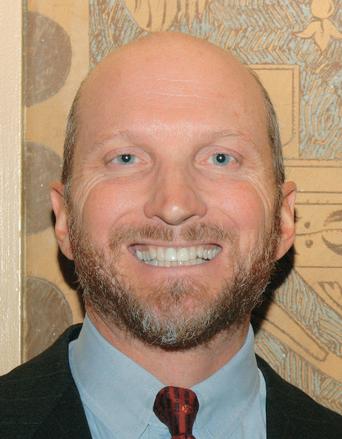
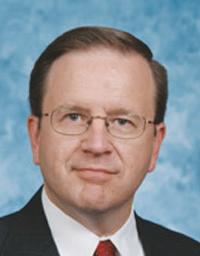
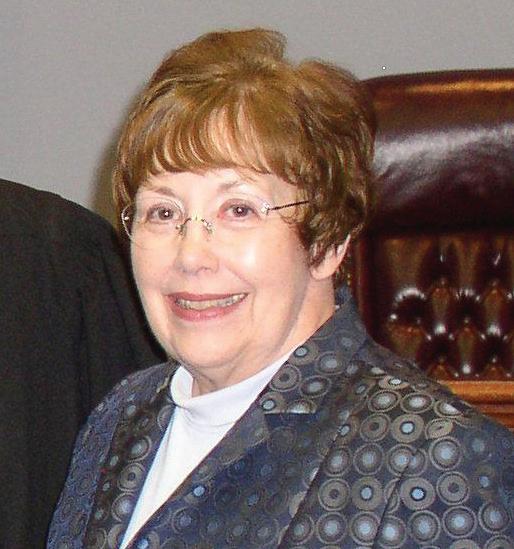
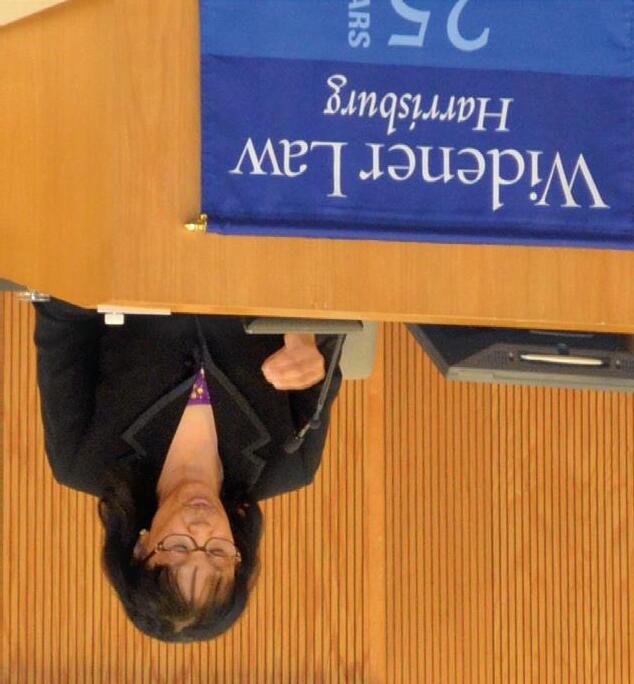
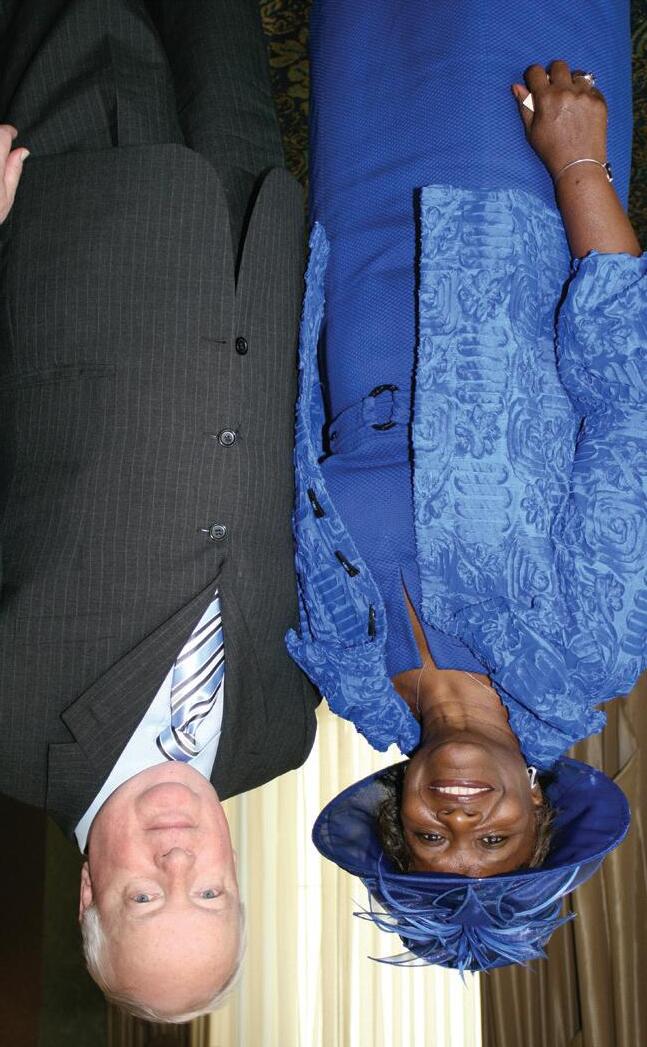
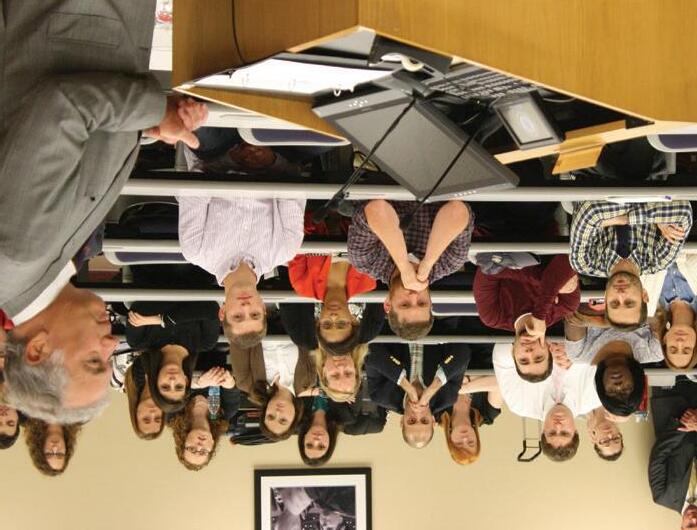
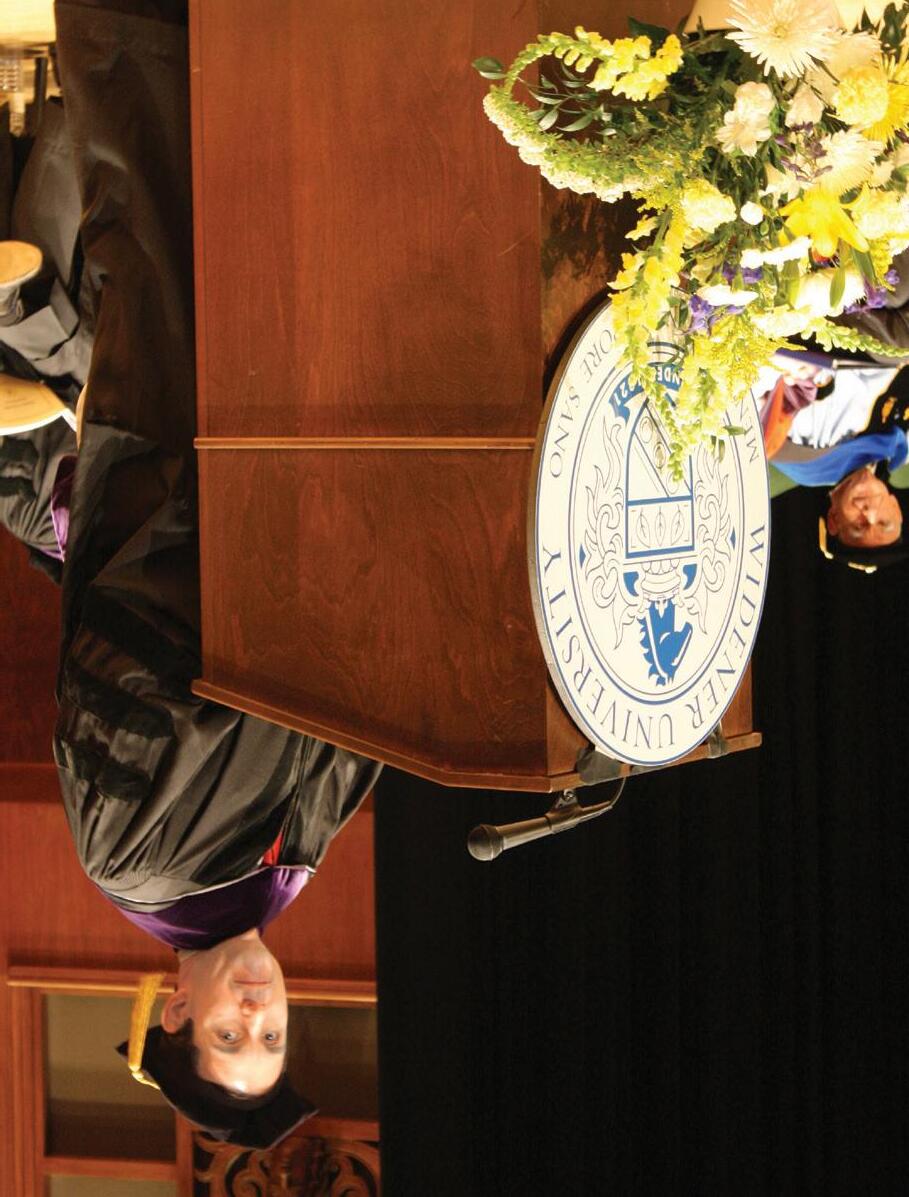
“We’re seeing what the constitutions of all of these countries are saying about the environment . . . and then we’re examining the extent to which the courts have been receptive to claims based on those constitutional provisions.” Jim May
saying about the environment, in what ways they protect it, and then we’re examining the extent to which the courts have been receptive to claims based on those constitutional provisions.”
Actually, courts have been very receptive. “We’re seeing cases in Argentina, Israel, India, Chile, and South Africa, in every part of the world, with different legal traditions, and different environmental challenges,” says Daly. “Courts have not been reluctant to accept the challenge of enforcing environmental rights, even though those judicial actions can have significant and serious political and economic consequences.”
Indeed, constitutional courts in all regions of the world have accepted the challenge of bringing these provisions to life. The cases involve a wide array of environmental settings—from
protecting forests against unlawful timber licenses, to illegal gold mining, to unregulated dumping of toxic materials, to pollution in the rivers of Argentina and the bays of the Philippines, to the distribution of water in the deserts of Israel and the townships of South Africa. In all of these cases, courts have engaged constitutional environmental provisions to gauge governmental responsibility for protecting the environment.
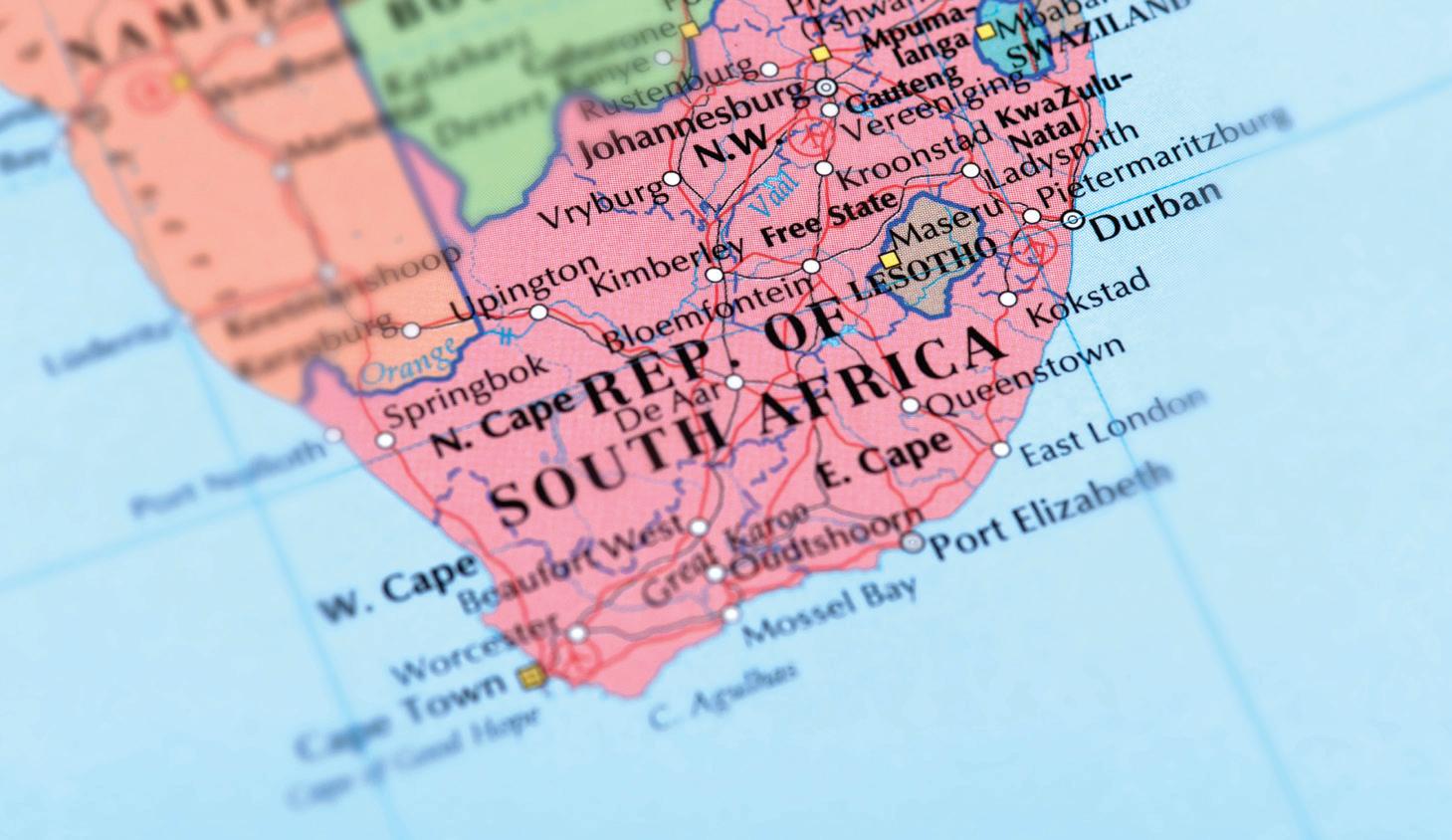
One of the most ambitious efforts to use a nation’s constitution to protect the environment is in South Africa. Their constitution creates a right to “an environment that is not harmful to health or well-being” and obligates the government to develop “reasonable legislative and other measures” that prevent pollution and ecological degradation, that promote conservation, and that commit the nation to “secure
ecologically sustainable development and use of natural resources while promoting justifiable economic and social development.” Despite the broad wording and the capacious guarantees articulated in this provision, courts in South Africa have yet to fully embrace it.
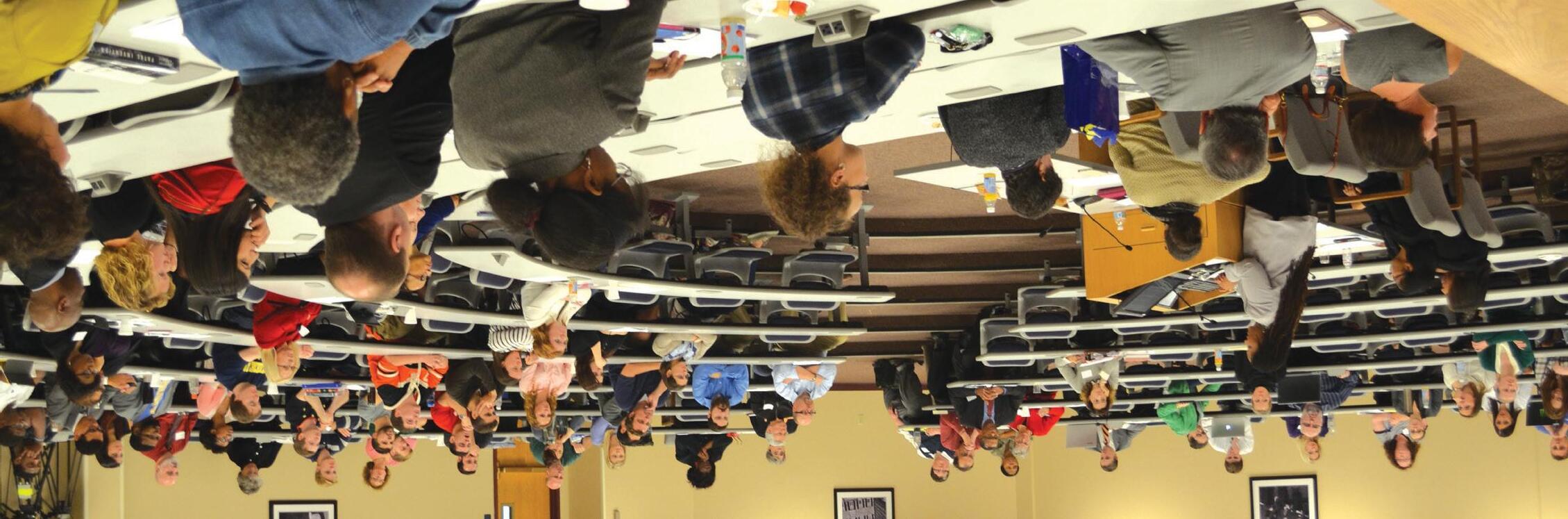
Students in Dean Daly’s and Professor May’s class are trying to change that. The class—the first practicum offered at the Law School—connects students with lawyers from three South African environmental and human rights organizations: the Centre for Environmental Rights in Cape Town, the Center for Applied Legal Studies at the University of Witwatersrand in Johannesburg, and the Legal Resources Center in Durban. These lawyers are relying on the students’ research to help them advance constitutional claims in current cases.
In one case, residents of a neighborhood near Durban are challenging the impacts of a major port expansion on the environment and on their human rights. Students in the class are working with the lawyers representing the residents to identify possible constitutional claims they could make and examining whether the planned expansion violates the constitutional guarantee of sustainable development. Other students are researching whether the constitutional provision could be used to compel the government to invest in compliance monitoring and enforcement of the nation’s environmental laws by the
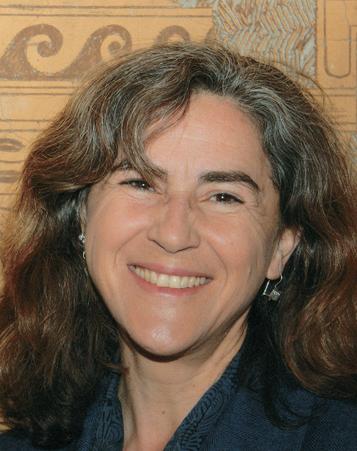
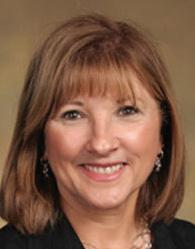
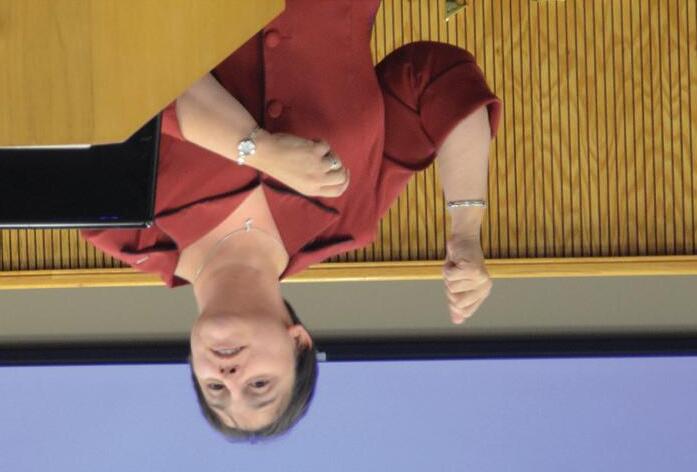
“Courts have not been reluctant to accept the challenge of enforcing environmental rights, even though those judicial actions can have significant and serious political and economic consequences.” Erin Daly
South African Department of Mineral Resources. Still others are examining whether the constitutional provision can be used to promote clean-up of abandoned mines.
These are just a few examples of the ways students are learning about environmental constitutionalism by working on live issues with lawyers across the globe. The students in the class are getting to know these South African lawyers through regular Skype conversations in the class and email contact on their own. Through this collaborative venture, the students and the South African lawyers are contributing to the full vindication of constitutional environmental rights in South Africa.
The results of the students’ work will be used by the attorneys in current and/or future cases. This work will be “incredibly useful,” says Melissa Fourie of the Centre for Environmental Rights. Fourie is working with 3L Chris Moore, who is one of the first researchers to investigate how the South African constitution’s protection for “well-being” can be used to improve environmental outcomes throughout the nation. There is “so little guidance on this issue. That’s why we’ve put the class on this,” smiles Fourie.
Not Science Fiction
Looking through a different lens, Associate Dean and Professor Andy Strauss examines how international law is necessary to manage environmental issues. He poses some interesting questions, such as, what if there was a way to spray a protective chemical into the stratosphere to filter the sun and cool the planet?
Actually, there is a way. And it’s not very difficult.
“This technique is called solar radiation management,” explains Strauss, a leading expert on geoengineering, which is the attempt to intentionally alter the earth’s climate to counteract the effects of climate change. Strauss is the author of the book, Climate Change Geoengineering: Philosophical Perspectives, Legal Issues, and Governance Frameworks
“There are about 75 different ideas for geoengineering that people talk about,” says Strauss. “But the main one right now is solar radiation management, which is to spray sulfur particles into the stratosphere. It is also the most controversial because it is technically feasible, and could have a huge impact on climate change.”
stratosphere for a long time,” explains Strauss. “The idea is that the sulfur would reflect the sun coming in, limit solar energy, and then the earth will heat up less quickly.”
The science is based on the effects of volcanic eruptions that spew large quantities of sulfur into the stratosphere. For example, following the eruption of Mount Pinatubo in 1992, the whole planet cooled by approximately one degree for a year or two.
While the science is intriguing, Strauss’s primary interest is in the international law aspect. “What does the governance look like if you’re going to do this? How do you get people to agree?” he asks.
Moore is up to the challenge. “I feel like a trailblazer,” he says.
“You can use hot air balloons or specially designed airplanes to spray fine sulfur particles so that they’ll stay up in the
These questions are relevant, because solar radiation management is viable. “A billionaire could do it on his or her own. A small country could do it,” asserts Strauss. “You can imagine an alliance of small island states, which are predicted to be under water in the next century, could get together and say,
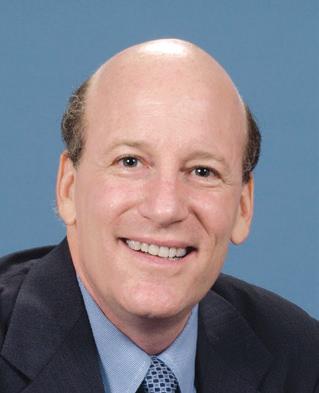
“The formative period of international law was based on nation states that were all sovereign. Now our problems become internationalized. The smoke you put up in the United States is not just about the climate in the United States. It’s about the global climate. So, we need a global system that’s adapted to the problems we have.” Andy Strauss
‘nobody is doing anything. We’re going under water. We’re going to sponsor solar radiation management.’ Who could tell them that they couldn’t? Who decides whether we do this and how can we set up a mechanism for making a decision that people will agree on? What if somebody just goes ahead and does it? How does the world respond?”
There are no easy answers. The truth is that the historical design of international law is not set up for scenarios like this one. “The formative period of international law was based on nation states that were all sovereign,” explains Strauss. “Now our problems become internationalized. The smoke you put up in the United States is not just about the climate in the United States. It’s about the global climate. So, we need a global system that’s adapted to the problems we have.”
For the record, Strauss does not believe that geoengineering is the answer. “The best solution is to stop putting carbon into the environment. The question is if we’re not able to do that politically then what do we do as a fall back? This is getting more and more discussion,” he says.
To that end, Strauss includes geoengineering as a topic in his climate change seminar. “Our obligation as teachers is to reflect what’s currently happening,” he says. “Increasingly, geoengineering is part of the discussion and debate that students need to learn about in terms of understanding the law.”
He also believes that law schools play a key role in helping address environmental issues. “When you’re talking about something like climate change, the fundamental constraint on taking effective action has been politics,” asserts Strauss. “But law schools all over the country are educating, in some ways, the most politically influential class, who will be the legislators and lobbyists of tomorrow. The hope is that when they really understand the details, the science, and the law, that they will break the logjam.”
The Legal Toolbox
Part of educating that next generation is offering practical experience. Widener Law Delaware’s Environmental and Natural Resources Clinic has been doing that for 25 years. Currently under the leadership of Director Ken Kristl, the clinic provides representation and
research for environmental groups, and citizens who are involved in environmental law cases. It has represented many clients, including the Sierra Club, Potomac Riverkeeper, and groups of citizens challenging development, such as the installation of a 279-megawatt power plant for a data center in Newark, Delaware.
At the same time, the clinic is heavily involved in research. Most recently, clinic faculty and students completed an influential project under a grant from the state of Delaware, in which they explored the legal options available in the state for adapting to rising sea levels. It is predicted that sea levels will rise anywhere from 1.8 to 6 feet by the end of the century. Estimates indicate that up to 11 percent of Delaware land mass could be under water by 2100. As this occurs, complex problems abound for businesses, home owners, and municipalities along the
“I have a fundamental belief that the law can and will adapt . . . I believe human nature and the skills of the generation that we are training now will rise to the challenge.” Ken Kristl
coast, as public and private interests may collide.
“This has been identified as a problem for Delaware, so what are the strategies? What are the legal tools you could use to adapt to rising sea levels?” asks Kristl.
As part of the grant, students researched and wrote first drafts of strategies that became Kristl’s resource as he wrote the report, Assessing the Legal Toolbox for Sea Level Rise Adaptation in Delaware, which was published last year.
Toxic Torts in a Nutshell
Government contractors operated burn pits to dispose of trash in Iraq and Afghanistan for long periods of time. Many believe that these burn pits released toxic chemicals into the environment causing military personnel to complain of headaches and respiratory problems as the result of exposure. Can a suit be brought against the government contractors due to the exposure? Or do the contractors, who claim that they are doing the work of the government, have a right to assert the same immunity that the federal government would have if it was being sued? This is just one of the hot button issues that Distinguished Professor Jean Eggen will explore in the upcoming 5th edition of her book, Toxic Torts in a Nutshell, to be published this summer.
For Kristl, the role of Widener Law Delaware and the clinic is meaningful. “From the perspective of a clinician, who continues to practice law, in addition to being a teacher, I see that we have an important role to play in fighting to make the environment better,” he asserts.
And despite grim predictions, Kristl remains hopeful. “I’m fundamentally optimistic that from a legal perspective, the options will become clearer. I think
we’ll choose the options that ultimately help us to adapt to the environmental changes that are going to take place. There are going to be changes. We’re going to have to adapt,” he says. “I have a fundamental belief that the law can and will adapt and that certainly the students I see coming through—who will be the lawyers of tomorrow—will confront these problems and find the best solution. I believe human nature and the skills of the generation that we are training now will rise to the challenge.”
In addition to working on the latest version of her book and introducing Widener Law Delaware students to the world of toxic torts, science, and the law, Eggen is also an active member of a Special Committee on Congressional Relations of the ABA’s section on environment, energy, and resources. “We’ve been working with Congress, as they try to modernize the Toxic Substances Control Act,” she explains. The role of the committee is to “answer substantive legal questions and to provide members of congress with a little more information on some really, really thorny issues.”
For her part, Eggen wrote a white paper on what it would mean if the Toxic Substances Control Act had a provision that said no one could bring a state tort action. She explains,
“That’s a huge issue in the Toxic Substances Control Act—whether to preempt private rights of action.”
As important legislative decisions are made and limits on substances and requirements are established, the role of this committee is a valuable one. “It’s a question of getting close to the policy makers and the legislators and being able to provide legal expertise to the people who are making the decisions— those who may not be familiar with what the issues are or how complicated they are,” Eggen explains. “They are often listening to a different group of people, to lobbyists or their constituencies. We’re trying to be impartial and provide that expertise for them.”
Cape Henlopen Lighthouse on the Delaware coastline.
Jean Eggen
Faculty News
Widener Law represented the largest contingent of faculty from any law school presenting at the Academy of Environmental Law annual conference in Tarragona, Spain. Attended by the leaders in environmental policy and climate change from around the world, the conference was sponsored by the International Union for the Conservation of Nature (IUCN), the oldest and largest global environmental network. Professors from both the Delaware and Harrisburg campuses attended, including Delaware Professors Erin Daly, David Hodas, and Jim May, and Harrisburg Distinguished Professor John Dernbach, and Visiting Scholar Don Brown. “We’re constantly getting invited to do these sorts of things and ultimately, that’s a testament to the grit and interests of the faculty,” says May.
Helen S. Balick, and introduced Professor Grohsgal as the first holder of the law school’s professorship in her name.
CHRISTINE D. ALLIE presented “Finding an Intangible Model Through Success: Are India and Brazil’s Non-arm’s Length Transfer Pricing Methods a Better Model for Developing Economies than the UN Model?” at Northeastern University School of Law, and also on a young scholars tax panel at the Southeastern Association of Law Schools conference. In addition, Allie gave presentations on Comptroller v. Wynne, a tax case that will be heard in the upcoming Supreme Court term, during Widener Law Delaware’s 2014 Supreme Court Preview Webinar and at the school’s First Monday: A Preview of the New Supreme Court Term at Young, Conaway, Stargatt & Taylor, LLP.
JOHN CULHANE wrote his first piece for the Philadelphia City Paper “What We’re Losing When We Lose Giovanni’s Room.” He also continued writing for Slate including the publications: “Bespoke Babies: Can A White Woman Sue a Sperm Bank for Receiving a Black Man’s ‘Product’?,” “What Today’s Gay Marriage Victory Means for the Rest of America,” “Pay Up, BP!,” and “In Pennsylvania, the State Can’t Bring Itself to Justify its Gay Marriage Ban.” At the AALS Annual Meeting in Washington, D.C., he presented “The Paradoxes of Civil Unions.” He was on two separate panels at the Lavender Law Conference in New York,
including a discussion on the coming out of professional athletes.
JEAN EGGEN served as a moderator for the “Asia” panel of the symposium on “Global Environmental Constitutionalism.”
JULES EPSTEIN participated as a lecturer in the first National Forensic College at Cardozo School of Law. He also taught a course on current topics in the law for the National Judicial College in New Orleans, LA. Professor Epstein led Widener Law Delaware’s 2014 Intensive Trial Advocacy Program [ITAP] with new course materials and new technology and gave the annual Pew Lecture at the Widener University main campus, with a presentation entitled “What’s Wrong With Forensics?”
BRUCE GROHSGAL presented at Widener Law Delaware’s 2014 Supreme Court Preview Webinar. He reflected on the case of Wellness International Network Limited v. Sharif in which the U.S. Supreme Court in its current term will consider the extent of, and limits on, the bankruptcy courts’ jurisdiction and authority. He spoke on that case again at the law school’s First Monday: A Preview of the New Supreme Court Term. Professor Grohsgal was the keynote speaker at The Institute of Delaware Corporate and Business Law’s “Bankruptcy: A Look Back & A Look Ahead,” an event that honored U.S. Bankruptcy Judge
LARRY HAMERMESH presented the 2014 Ben Beinart Memorial Lecture at the University of Cape Town, South Africa. He spoke, at the invitation of the Securities and Exchange Commission’s Investor Advisory Committee in Washington, D.C., on the subject of issuer adoption of fee-shifting bylaws for intra-corporate litigation. He participated in a panel discussion on the subject of indemnification and advancement of litigation expenses in limited liability companies at the American Bar Association Business Law Section’s 2014 LLC Institute in Arlington, Virginia. He also spoke on a panel on “Valuation Hot Topics in Dispute Settings,” as part of the 2014 Business Valuation Conference sponsored by the American Society of Appraisers and Chartered Business Valuators in Toronto, Canada.
LOUISE HILL was appointed by American Bar Association President William C. Hubbard to the Editorial Board of the ABA/BNA Lawyers’ Manual on Professional Conduct.
ALICIA KELLY presented “The Economics of Intergenerational Care” at the Law & Society Conference as part of the Law & Aging Collaborative Research Network. She also presented “Intergenerational Economies,” at the Family Law and Teachers Conference at the University of Minnesota School of Law.
JAMES R. MAY presented “Elonis v. U.S.: Overview and Implications,” at the law school’s First Monday: A Preview of the New Supreme Court Term. May presented “Constitutional Environmental Rights and Energy Exploration,” at Yale Law School. With Interim Dean Erin Daly, he presented “The Future of Environmental Constitutionalism in Advancing Energy for a Fair Society in a Safe Planet,” “Constitutionalism and Hydraulic Fracturing,” and “Global Environmental Constitutionalism Practicum” at the International Union for the Conservation of Nature Academy of Environmental Law, 12th Annual Colloquium, Universitat Rovira i Virgili, in Tarragona, Spain. He presented “Delaware Coastal Zone: Legal Dimensions,” at the Delaware Coastal Zone Act Celebration sponsored by the Delaware chapter of the Sierra Club. He presented “Federal Judicial Developments,” at the Annual Environmental Law Forum for the Pennsylvania Bar Institute. May presented “Equal Protection, Title IX, and Girls’ Right to Play,” at the Mid-Atlantic Feminist Law Conference and at Widener Law. He chaired the symposium, “Global Environmental Constitutionalism,” hosted by the Widener Law Review
LAURA RAY was awarded the Douglas E. Ray Excellence in Faculty Scholarship Award at the 2014 commencement. She also spoke about the cases on the Supreme Court’s docket for its 2014 term at the Osher Lifelong Learning Institute of the University of Delaware.
CONGRATULATIONS TO THE NEWLY-NAMED DISTINGUISHED PROFESSORS
John Culhane, Jean Eggen, Alicia Kelly, and Jim May.
JUDY RITTER and FRANCIS CATANIA gave a presentation entitled, “Growin’ Up: Human Development and Clinic Students,” at the American Association of Law Schools Conference on Clinical Legal Education, in Chicago, IL.
MICHAEL SLINGER was interviewed on the subject of his career as a law librarian as part of HeinOnline’s Series: “An Oral History of Law Librarianship.”
JEAN K. SBARGE presented, “The Read Shoes: Stepping into the Reader’s Shoes Through Video, Case Illustration, Drawing, and a Model,” at the 16th Biennial Conference of the Legal Writing Institute.
LEONARD SOSNOV gave presentations on mandatory minimum sentencing issues to the Philadelphia Bar Association Criminal Justice Section and to the Pennsylvania Public Defenders Association. He also filed
amicus curiae briefs on two sentencing issues in the Pennsylvania Supreme Court on behalf of the Pennsylvania Association of Criminal Defense Lawyers.
ANDREW STRAUSS chaired a panel on “Environmental Constitutionalism in Africa” at the Widener Law School Symposium on Global Environmental Constitutionalism. He also chaired the panel, “Climate Geoengineering Governance: The Role of International Law” at the Annual Meeting of the American Branch of the International Law Association.
VETERANS LAW CLINIC CELEBRATES VICTORIES
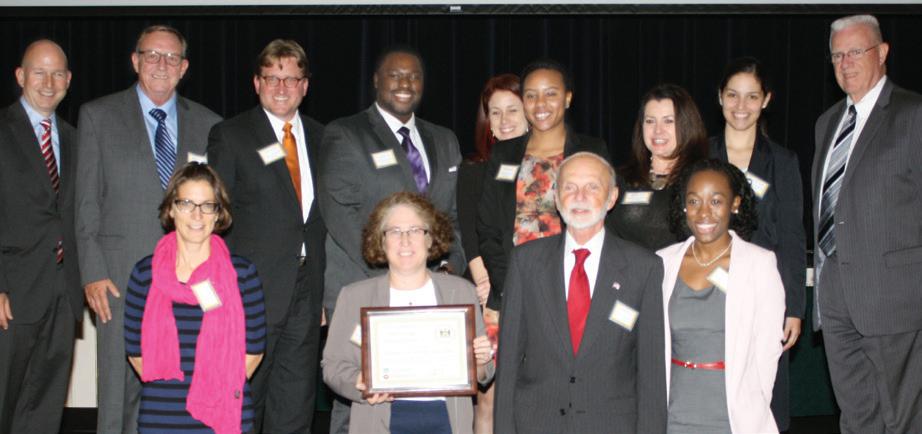
Almost five years in the making, our Veterans Law Clinic is celebrating a big win for one of its clients. The veteran, who was diagnosed with schizophrenia while serving in the Army in 1979, had long been denied benefits. The Veterans Law Clinic filed motions on his behalf and last spring he was rewarded with substantial monthly benefits, as well as retroactive benefits for the time his appeal was pending. In response to another motion filed by the Veterans Law Clinic, an even bigger victory occurred this fall when the client was awarded hundreds of thousands of dollars in retroactive benefits. Congratulations to everyone involved in the case, including Clinic Director Susan Saidel, clinic staff, and students, and Equal Justice Works AmeriCorps and Taishoff Legal Fellow, Liz Tarloski. The Clinic, was recently ranked as one of the “most innovative” clinics in the country by National Jurist, honored with a 2014 Delaware Governor’s Outstanding Volunteer Award for community service (pictured), and noted by the ABA as a model for veterans law clinics.
“It has been said that the true measure of a man is not by the estate that he creates, but rather he is to be judged upon the ledger of his unselfish contribution to the good of his fellow man. Our alumnus, Lee A. Solomon, is indeed rich upon such an accounting. He stands apart, having obtained success in the trilogy of profession, public service and personal achievement.”
High Vantage Point
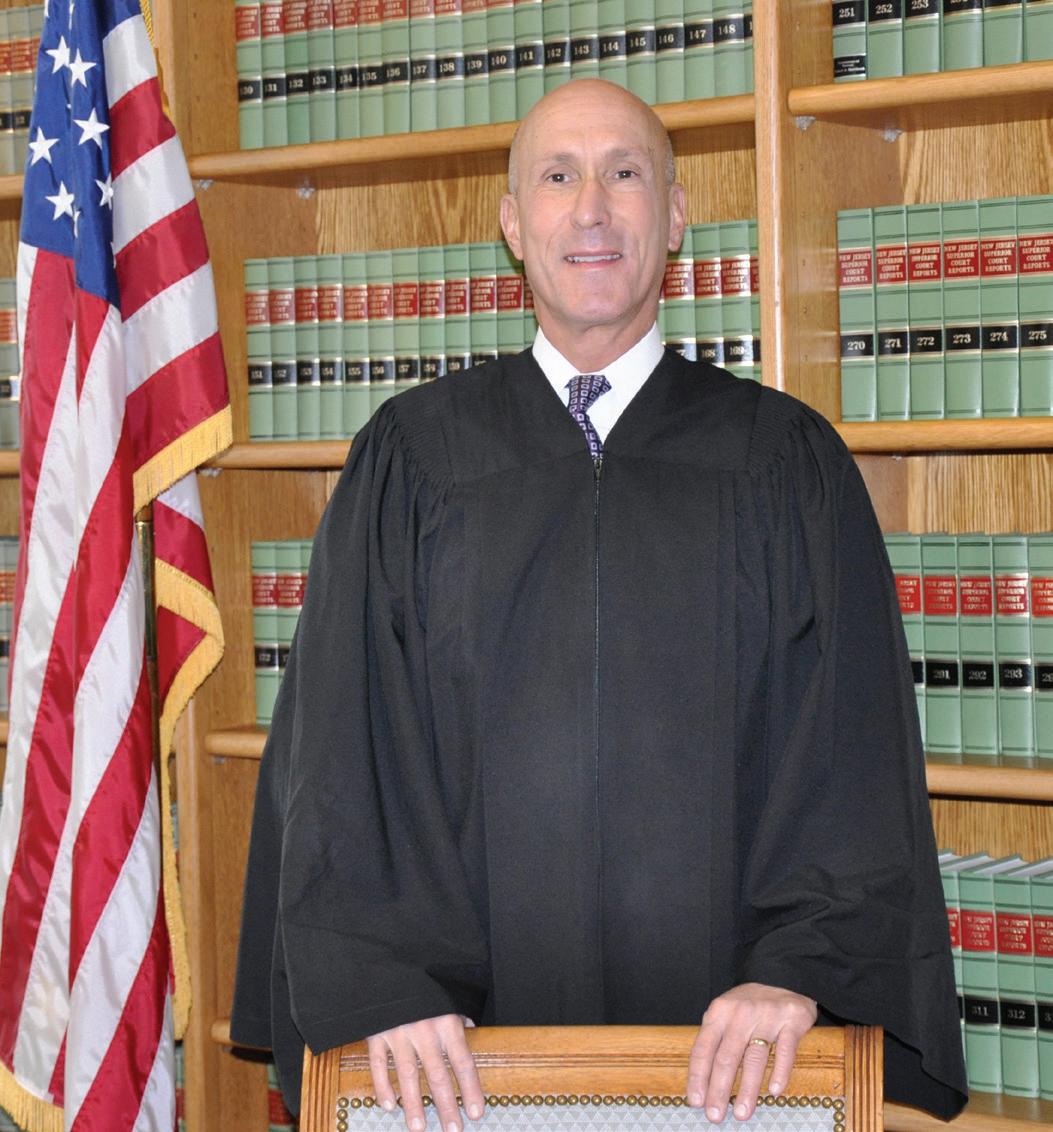
New Jersey Supreme Court Justice Lee Solomon ’78 reflects on the inspiration behind his journey from the classrooms at Widener Law Delaware to the halls of the New Jersey Supreme Court…and the lessons he learned along the way.
by Mary Lamb
For as long as he can remember, Lee Solomon ’78 has had an interest in public service. “I was always fascinated by it, even in high school and college,” he says. “In American history, the philosophy that there are some concepts worth fighting for—freedom being one of them—and that there was a group of people who founded this country and were willing to give up everything—their power, their wealth, their life—for that concept is so admirable. I’ve always had a lofty view of public service.”
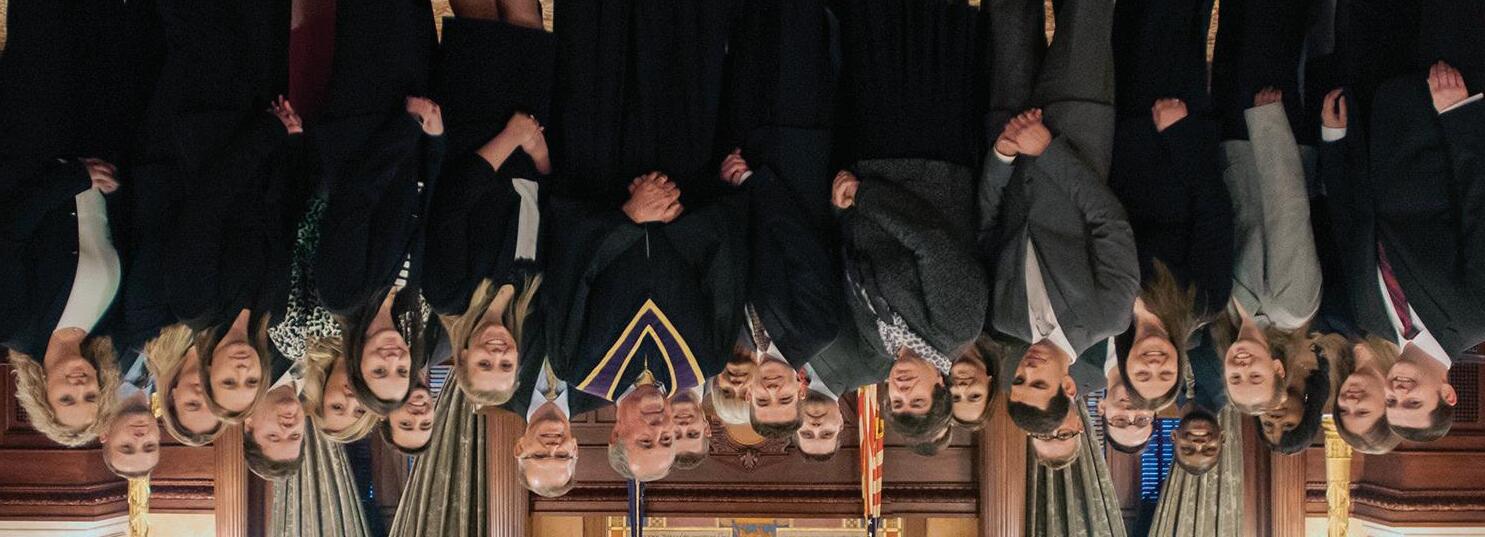
That vantage point has taken him to great heights. It inspired him throughout a career as a trial lawyer, into public service and politics, from town councilman, to state assemblyman, through six years as the Camden County Prosecutor, to federal prosecutor, Superior Court judge, and president of the New Jersey Board of Public Utilities. Recently, he reached a new peak when he was sworn in as a Supreme Court Justice for the state of New Jersey. Serving since a private swearing-in service in June, Solomon was honored at a public ceremony in October. In a room full of New Jersey’s most powerful citizens, Solomon was proudly surrounded by his wife Dianne, and their three children, Rachel, Eric, and Aaron as he was sworn in.
Despite his soaring accomplishments, Solomon insists his career has not been a straight ascent to the top. Along with success, there have been challenges, and he values both experiences equally. “Character is what happens when you’re tested,” he asserts.
His journey began at Widener Law Delaware, where Solomon learned that he possessed a natural skill set that would lend itself to trial advocacy. “I was very verbal. I was a good communicator, I wrote reasonably well and I worked hard,” he says. “I thought my ability to communicate would help me as a trial lawyer and I was somewhat more interested and fascinated by the criminal law and tort courses.”
Those skills and interests led him to his first job with a small litigation firm in Philadelphia, run by a talented trial lawyer named Tom Rutter, who would become both a boss and an invaluable mentor to the young Solomon. “Tom was a terrific trial lawyer, and I knew if I could just carry his bags and watch him work, it would be a great education—and it was,” says Solomon.
In addition to the practical aspects of trial law, Rutter also taught Solomon some life lessons that he has relied on throughout his career. “Tom taught me that success and failure are not always entirely dependent on what you do. You have to be able to accept defeat and learn from it,” explains Solomon. “Understand that it’s not always because of what you did. Defeat in a courtroom is very humbling. If you look at it as – ‘well I’m not good at what I do’—you’re done. You have to learn from it and accept the fact that one of the keys to winning a case is having a case that’s winnable. And then understand what it is about that case that can be successful and use that in the best way you can. In other words, you do everything you can to maximize your chance for success and that’s how
“In American history, the philosophy that there are some concepts worth fighting for—freedom being one of them—and that there was a group of people who founded this country and were willing to give up everything—their power, their wealth, their life—for that concept is so admirable. I’ve always had a lofty view of public service.”
Lee Solomon ’78
Gene McGurk ’78, Chairman of Widener Law Board of Overseers and Secretary of Widener University Board of Trustees.
In 2011, Lee Solomon and his wife generously established the Lee and Dianne Solomon Scholarship Fund. Created to benefit students who are active in pro bono programming at the school’s Public Interest Resource Center, the scholarship was inspired by a sense of gratitude to Widener Law Delaware. “I wanted to make a commitment to the school,” Lee Solomon says. “It was very good to me as a student. Without it, I couldn’t have arrived at any of the places I’ve been. It was my experience with some of the professors and their involvement and interest that caused me to want to learn about campaigns and get involved in politics. I just wanted to give back.”
Keep up with Widener Law Delaware faculty scholarship by subscribing to the Widener Law Legal Studies Research Paper Series from SSRN. This free email series delivers the latest articles by Widener Law faculty to your email inbox. Visit: ssrn.com/link/Widener-LEG.html to subscribe.
HAYMAN, ROBERT L., JR., Op-Ed., Remembering Justice Warren’s Surprising Legacy THE NEWS J. (Wilmington, DE), May 17, 2014, at A9.
you evaluate your performance. You have to know that you did everything you could. And if you do that, you’ll succeed. You’ll be fine.”
Solomon carried Rutter’s lessons forward when he opened his own firm in New Jersey and then more ambitiously entered the political arena. “Tom always taught me that you can level the playing field by being a skillful advocate,” Solomon relates. “If I was a good advocate, if I was well prepared, and I could present an issue well, I could be a success as a trial lawyer, and I could maybe be a success in government and politics as well, so I gave it a shot.” It was a good decision.
While he’d been involved in politics at the grassroots level in Philadelphia, Solomon’s political career really took flight when he moved to New Jersey. Ironically, a power outage played an integral role in his rise. He shares, “I bought a house in Haddon Heights, New Jersey, and we had a power outage on the block. A bunch of neighbors were outside milling around and I met a neighbor across the street who was a councilwoman. We were in the same party and when she learned I was interested, she helped get me involved locally. Within a relatively brief period of time, she decided not to run again, and I was running for her seat on council.” Soon enough, Solomon was a town councilman.
With a rare blend of intelligence, ambition, warmth, and, charisma, Solomon moved quickly, holding a variety of offices at the local and state level, ultimately serving in all three branches of government.
Through it all, there were ups and downs. “People forget that I ever lost a race. But I had plenty of defeats. I ran for Congress and did not win. It’s an important lesson. I believe that you can learn more from failure than from success. If you never taste defeat, you won’t be good at what you do. It really does teach you about yourself. It builds a quality of character.”
Of course, there has been plenty of success along the way. His appointment as a Supreme Court Justice for New Jersey shines as only the most recent achievement. “This is the pinnacle. I still pinch myself,” he says. “It’s fascinating.”
At Solomon’s prestigious October swearing-in ceremony, New Jersey’s Lieutenant Governor Kim Guadagno offered these words of praise: “Lee possesses the patience, open-mindedness, courtesy, tact, firmness, understanding, compassion, humility, and most importantly, common sense that will serve the people of New Jersey and this judiciary well.”
Inspired by this new role, Solomon says, “There are challenging issues. But, I’ve never been one to shrink from an argument. I’ve never been one who’s timid. I think I’ll fit in well within the debate. My hope is that I’ll fulfill the obligation that my oath creates. I’ll work very hard and exercise good judgment.”
While he embraces the exciting challenge ahead, he offers this advice to those just starting out in their careers. “Be prepared to start at the beginning, at the bottom rung. Learn the nuts and bolts. And keep in mind that you have to look for and seize opportunity. Make the most of it and then look for the next best one. Life is not a straight line. Work is not a straight line. Career is not a straight line.”
Looking back on his own fascinating journey from Widener Law Delaware to the New Jersey Supreme Court, Solomon remains a passionate advocate for public service. “I don’t think there is anything more noble than public service. I think there are so many talented people who have so much to offer in so many areas that other people will benefit from. It could be public interest law, or economics, or working for the government in a way that you find productive. It’s incredibly rewarding.”
CONNER, DANA HARRINGTON, Financial Freedom: Women, Money, and Domestic Abuse, 20 WM & MARY J. WOMEN & L. 339 (2014).
DALY, ERIN, The H. Albert Young Distinguished Lecture in Constitutional Law Constitutional Comparisons: Emerging Dignity Rights at Home and Abroad 20 WIDENER L. REV 199 (2014).
Transitional Justice in Iraq: Learning the Hard Way 47 ISR L. REV 63 (2014).
& James R. May, The Future We Want and Constitutionally Enshrined Procedural Rights in Environmental Matters, in GLOBAL ENVIRONMENTAL LAW AT A CROSSROADS, Chapter 3 (Robert V. Percival et al. eds., Edward Elgar Pub. 2014).
& James R. May, GLOBAL ENVIRONMENTAL CONSTITUTIONALISM (Cambridge 2014).
EGGEN, JEAN M., Being Small in a Supersized World: Tackling the Problem of Low-Level Exposures in Toxic Tort Actions, 44 ENVTL. L. REP. (Envtl. L. Inst.) 10630 (2014).
EPSTEIN, JULES, Eyewitnesses and Erroneous Convictions: An American Conundrum, in CONTROVERSIES IN INNOCENCE CASES IN AMERICA 41 (Sara Lucy Cooper ed., Ashgate Pub. Co. 2014).
Preferring the “Wise Man” to Science: The Failure of Courts and Non-Litigation Mechanisms to Demand Validity in Forensic Matching Testimony, 20 WIDENER L. REV. 81 (2014).
et al., Forensic Science(s) in the Courtroom: Symposium Transcript, 20 WIDENER L. REV 119 (2014).
FERRELL, IVA J. & Starla J. Williams, No At-Risk Student Left Behind: The Convergence of Academic Support Pedagogy and Experiential Education, 38 S. ILL. U. L.J. 375 (2014).
GARFIELD, ALAN E., Op-Ed., Can We Still Call Ourselves ‘We the People?’ SUNDAY NEWS J. (Wilmington, DE), Sept. 14, 2014, at A19.
Op-Ed., Is Contraception Mandate ‘No Big Deal?’ THE NEWS J. (Wilmington, DE), Jul. 1, 2014, at A8.
Op-Ed., Here’s Some Malarkey: Judges Are Umpires, THE NEWS J. (Wilmington, DE), May 19, 2014, at A9.
Op-Ed., Instead of Government Truth Police, a Wiser Course is Informed Citizenry, THE NEWS J. (Wilmington, DE), April 21, 2014, at A9.
Op-Ed., Making the Case for Contraception Over Religious Views THE NEWS J. (Wilmington, DE), Mar. 24, 2014, at A9.
HAMERMESH, LAWRENCE A., Director Nominations, 39 DEL J. CORP L. 117 (2014).
& Norman M. Monhait, A Delaware Response to Delaware’s Choice, 39 DEL. J. CORP. L. 71 (2014).
HODAS, DAVID R., State Initiatives, in GLOBAL CLIMATE CHANGE AND U.S. LAW, Chapter 10 at 303 (Michael Gerrard & Jody Freeman eds., ABA 2d ed. 2014).
Op-Ed., Constitution and the Environment: Federalism at Work THE NEWS J. (Wilmington, DE), Sep. 16, 2014, at A9.
KELLY, ALICIA BROKARS, Sharing Inequality, 2013 MICH. ST. L. REV. 967.
MAATMAN, MARY ELLEN, Lawyering in the Lion’s Mouth: The Story of S. D. Redmond and Pruitt v. State, 83 MISS. L.J. 459 (2014).
SLINGER, MICHAEL J., What the Actions of Abe Lincoln Continue to Teach Us Today, in TEACHING LEGAL HISTORY: COMPARATIVE PERSPECTIVES 53 (Robert M. Jarvis ed., Widley, Simmonds & Hill Pub. 2014).
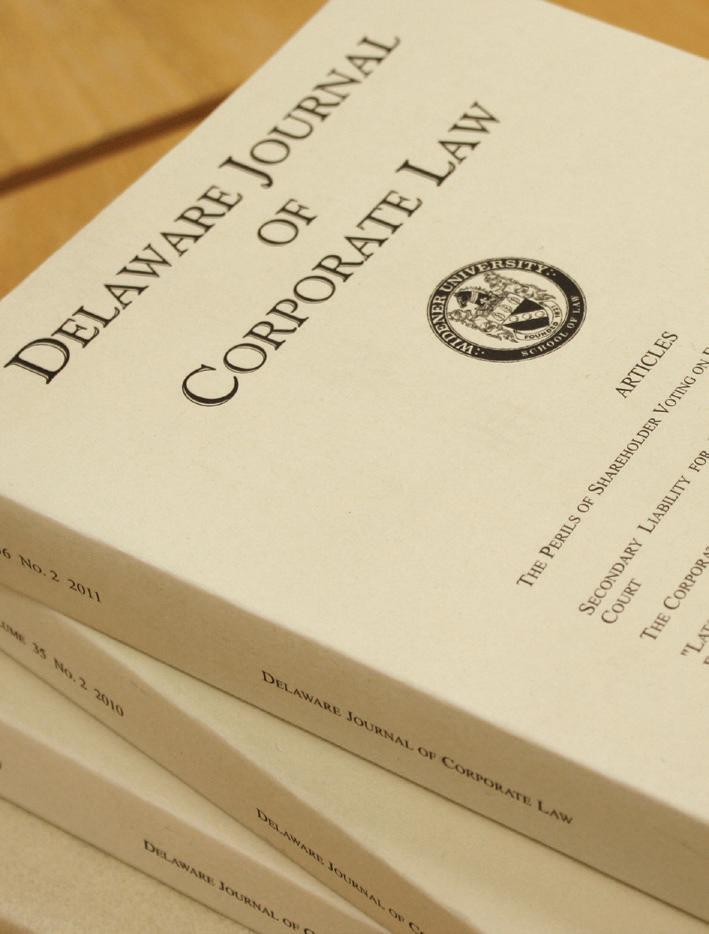
The Delaware Journal of Corporate Law recently took a distinguished top honor in a national ranking of law reviews. The Journal ranked first among studentedited journals that specialize in “corporations and associations” and in “commercial law,” based upon citations in federal and state court opinions over the last eight years.
Delaware Graduation
May 2 014
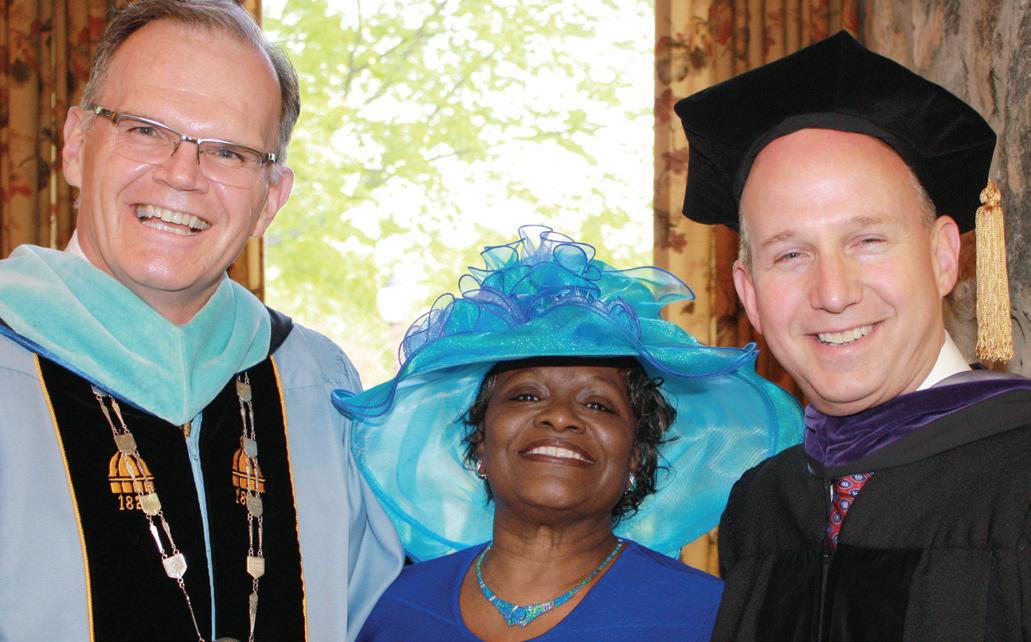
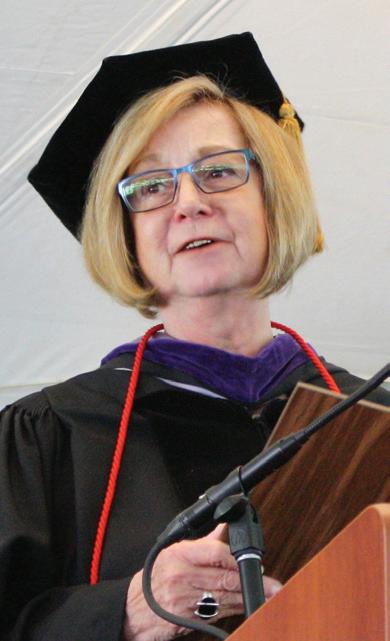
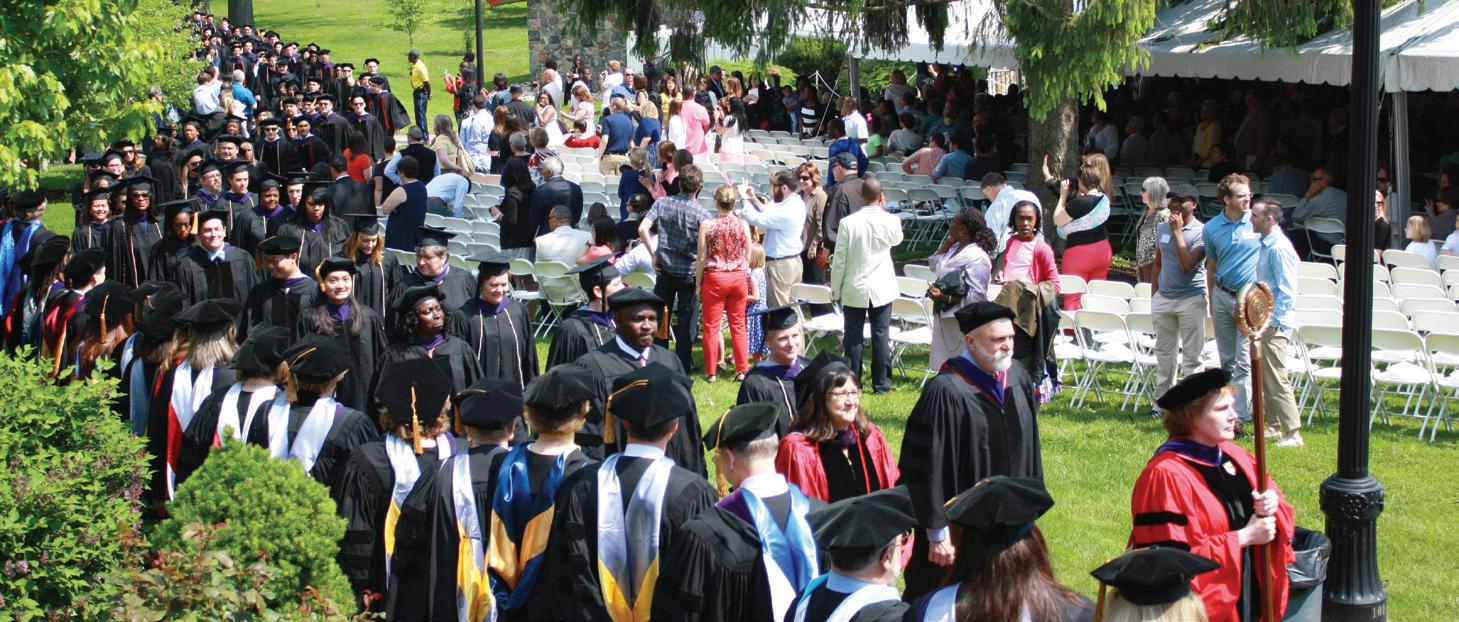
The Delaware campus celebrated the 2014 commencement on the lawn with Delaware
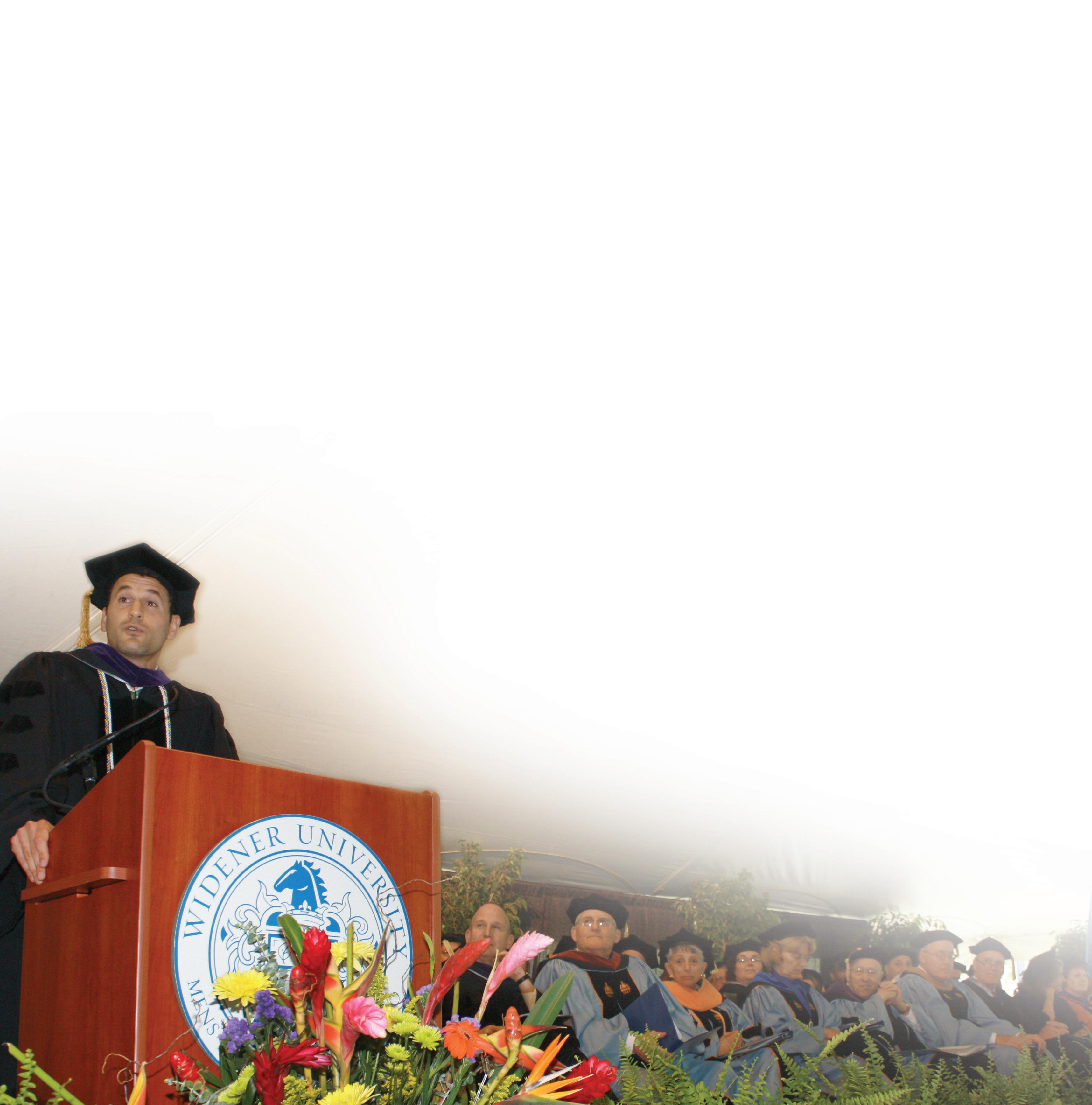
Governor Jack Markell as the commencement speaker. The class also heard from Dean Linda L. Ammons, valedictorian Jordan Strokoff and Widener University
President James T. Harris III.
Dean Ammons’ Retirement Party
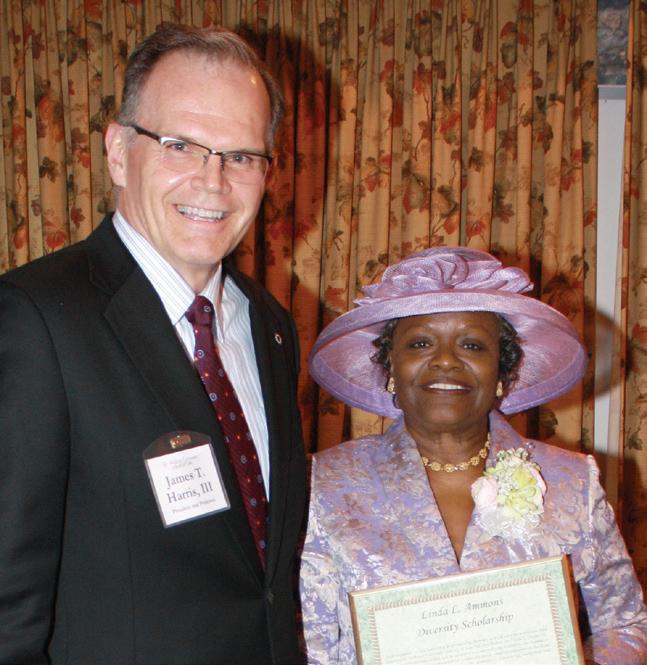
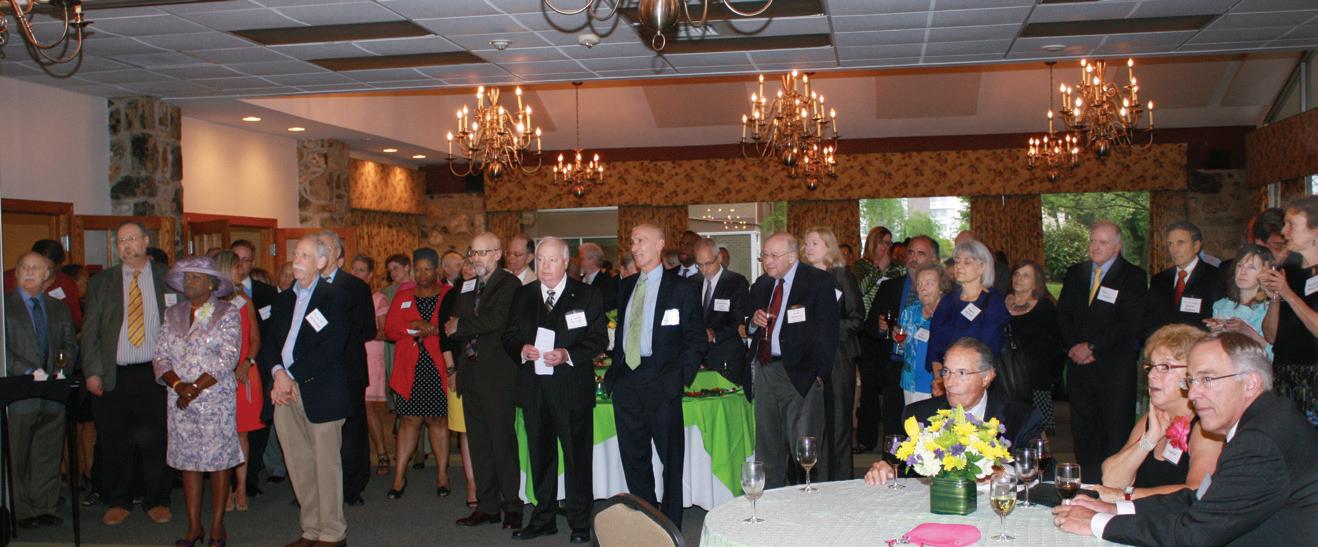
T he community bid farewell to Dean Linda L. Ammons with a retirement party at the end of the spring semester in the Barristers’ Club. Widener University President James T. Harris III announced the creation of the Linda L. Ammons Diversity Scholarship at the event. Ammons is currently serving as counsel to the president for legal education at Widener University for this academic year.
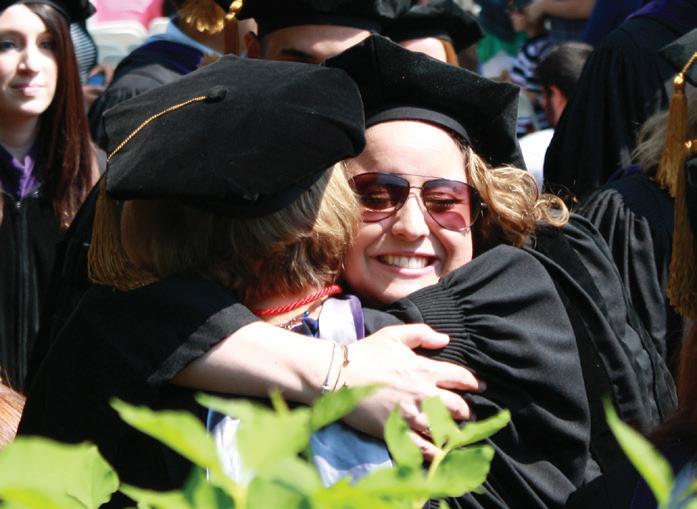
Graduate Victoria Sweeney gets a hug.
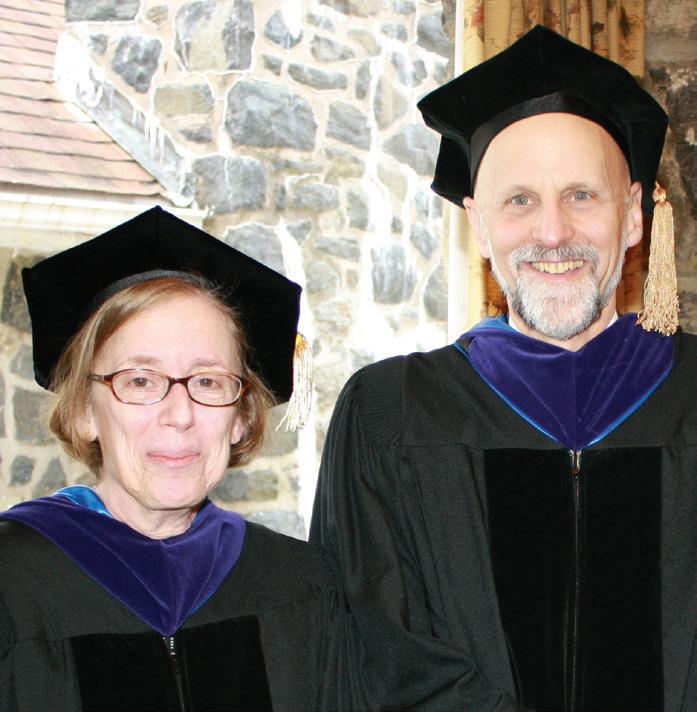
2014 recipients of the Douglas E. Ray Excellence in Faculty Scholarship Award: Professor Laura K. Ray and Ruby R. Vale Professor of Corporate and Business Law Lawrence A. Hamermesh.
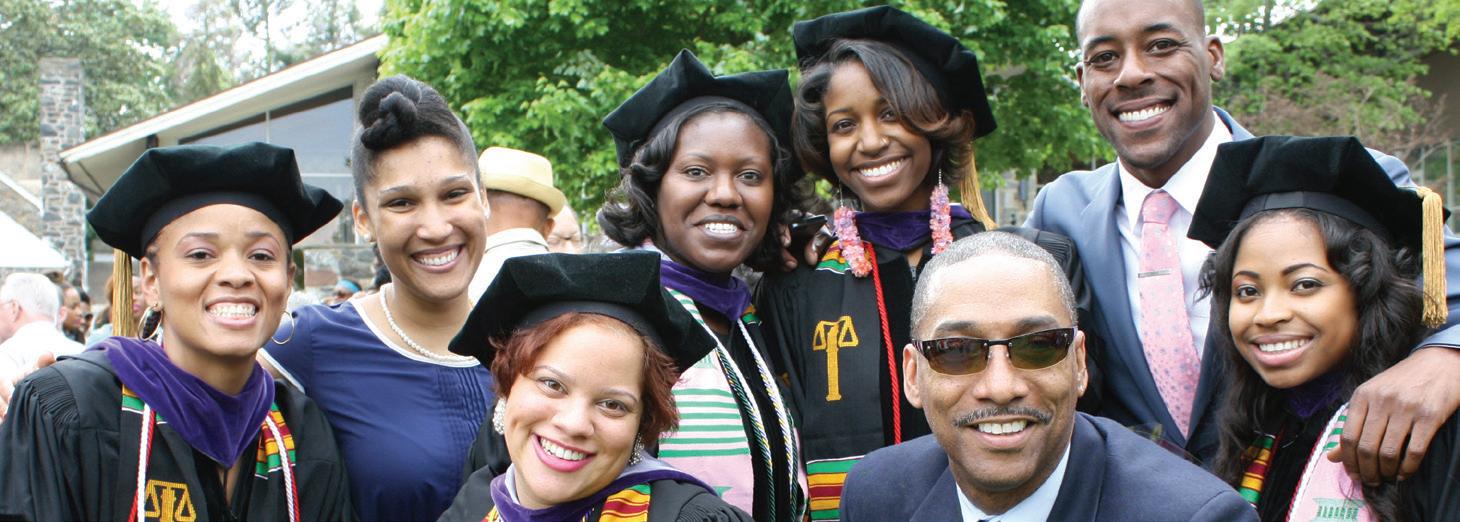
Graduates and friends celebrate. Below, clockwise from left: Deanna Watson ‘14, Jennifer Friend-Kelly ‘13, Candace Embry ‘14, Jeanine Howard ‘14, Roderick Thompson ‘13, Chantal Jones ‘14, former multicultural affairs officer Troy Riddle ‘08, and Jaclyn Crittenden ‘14.
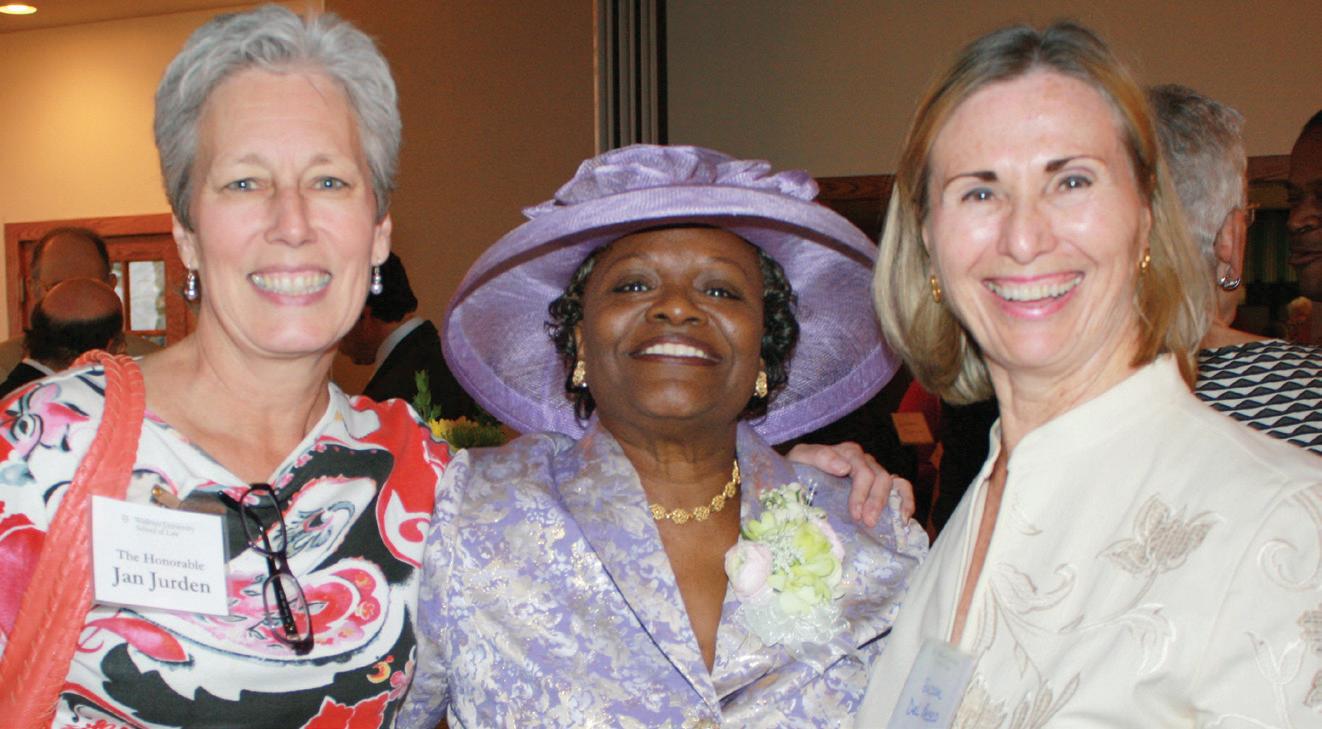
Above: President James T. Harris III with Dean Linda L. Ammons. Below, from left: Delaware Superior Court Judge Jan R. Jurden, Dean Linda L. Ammons, and retired Superior Court Judge Susan Del Pesco ’75.
Delaware
valedictorian Jordan Strokoff addresses his class.
Above, from left: President James T. Harris III poses with Dean Linda L. Ammons and Governor Jack Markell. Associate Professor Leslie A. Johnson accepts the Outstanding Faculty Award, decided by a vote of the graduating class.
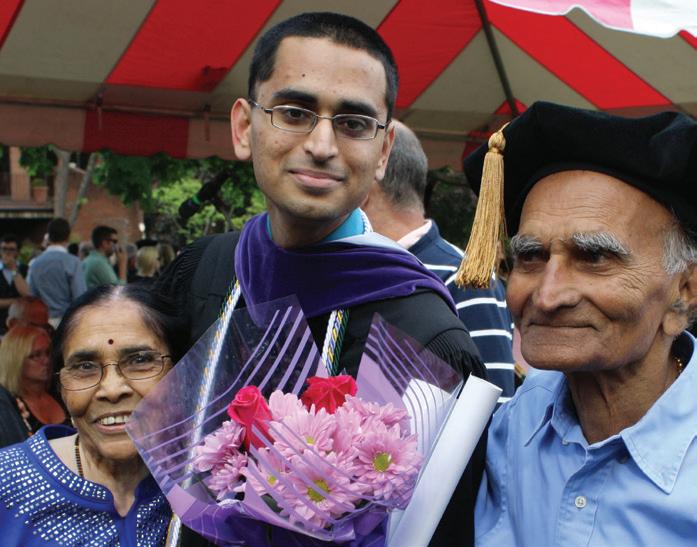
Graduate Jay Patel and family.
law.widener.edu/events
Alumni Sworn in to SCOTUS Bar
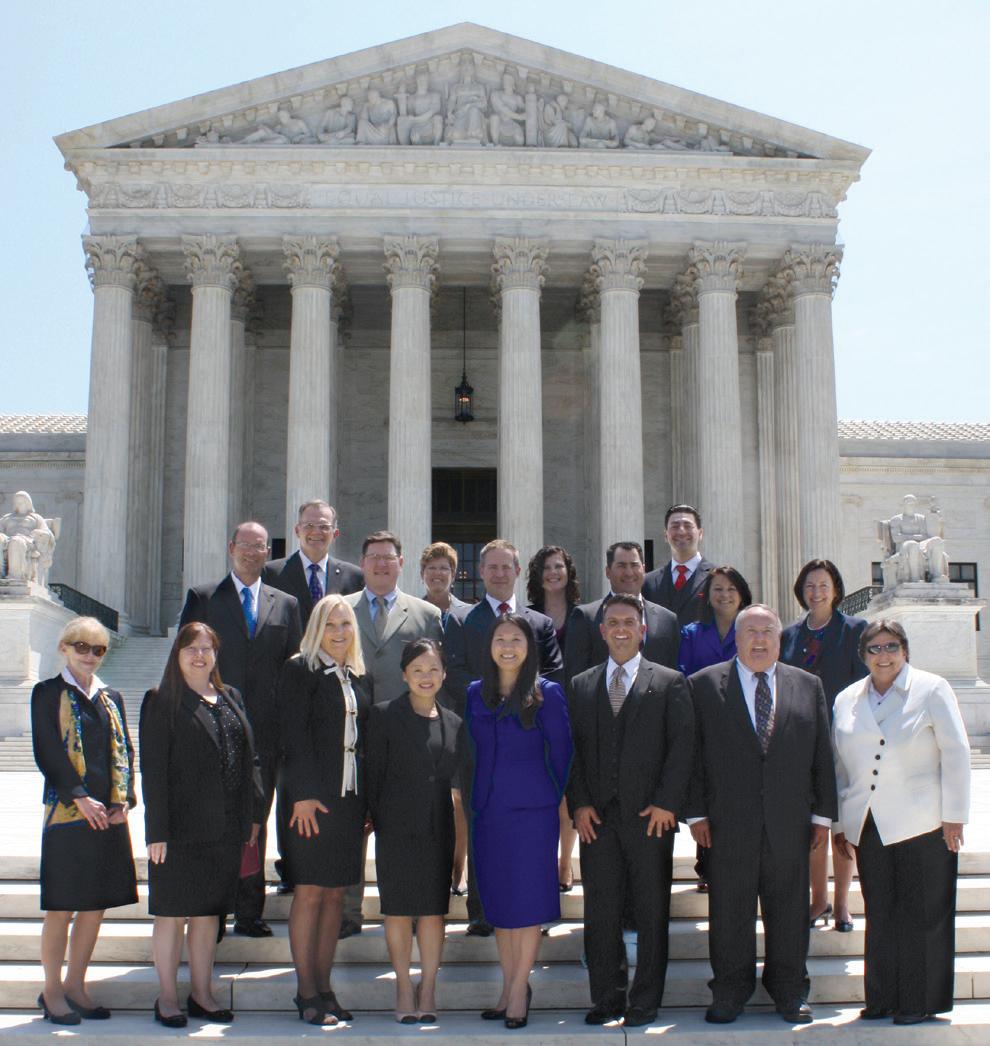
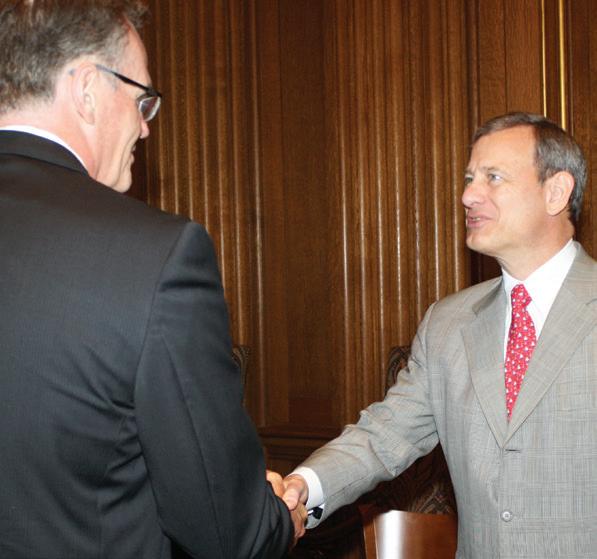
Widener Law Delaware alumni were admitted to the bar of the Supreme Court of the United States at a hearing in Washington, D.C. Cynthia Ryan ’79 stood before the nine justices of the Supreme Court and moved for the group’s admission. Chief Justice John G. Roberts Jr. and Justice Ruth Bader Ginsburg made personal visits to a Widener Law reception held at the court after the hearing. Admitted alumni include Jennifer D. Armstrong ’00, John D. Cirrinicione ’07, Lauren A. Pisapia Cirrinicione ’07, Michael D’Agostino ’06, Timothy W. Davenport ’01, Shelley Dugan ’87 JD and ’88 LL.M, Mary Jane E. Fitch ’96, Carol L. Gallagher ’95, Mary T. Hoang ’04, Kelley Huff ’07, Scott E. Maier ’98, James Metka ’80, Thomas A. Rothermel ’04 and Francesca Zeltmann ’03.
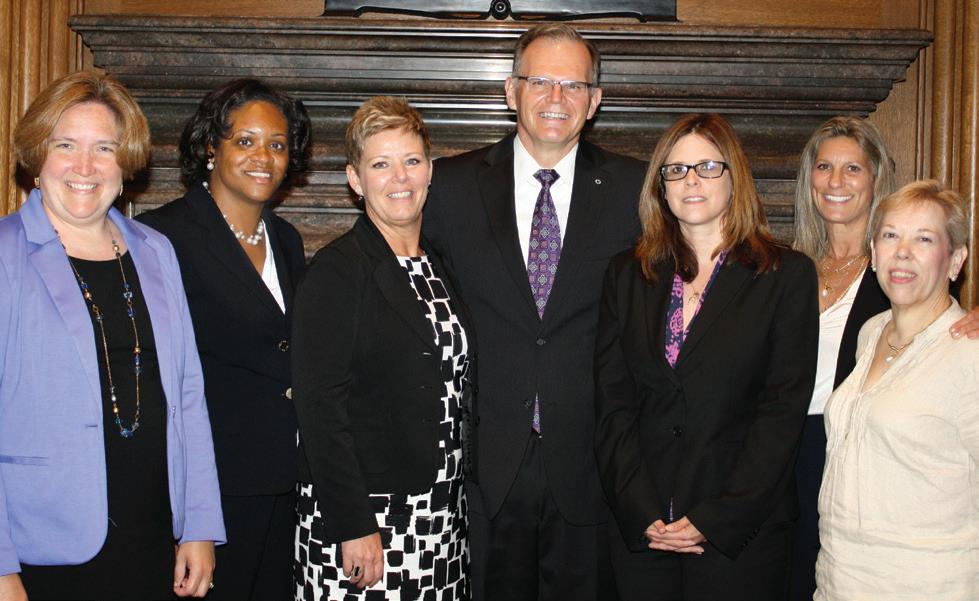
Above: Law school advancement staff with University President James T. Harris III, from left, Public Relations Officer Mary Allen, Harrisburg Director of Development Natasha Lewis, Director of Alumni Engagement Nancy Ravert Ward, Delaware Associate Director of Development Megan Cantalupo, Assistant Vice President of Development and Alumni Engagement Laurie Grant, and Donor Relations Coordinator Judy McLaughlin. Left: The Widener group of Supreme Court bar admittees includes 14 Delaware alumni.
Jurist Academy
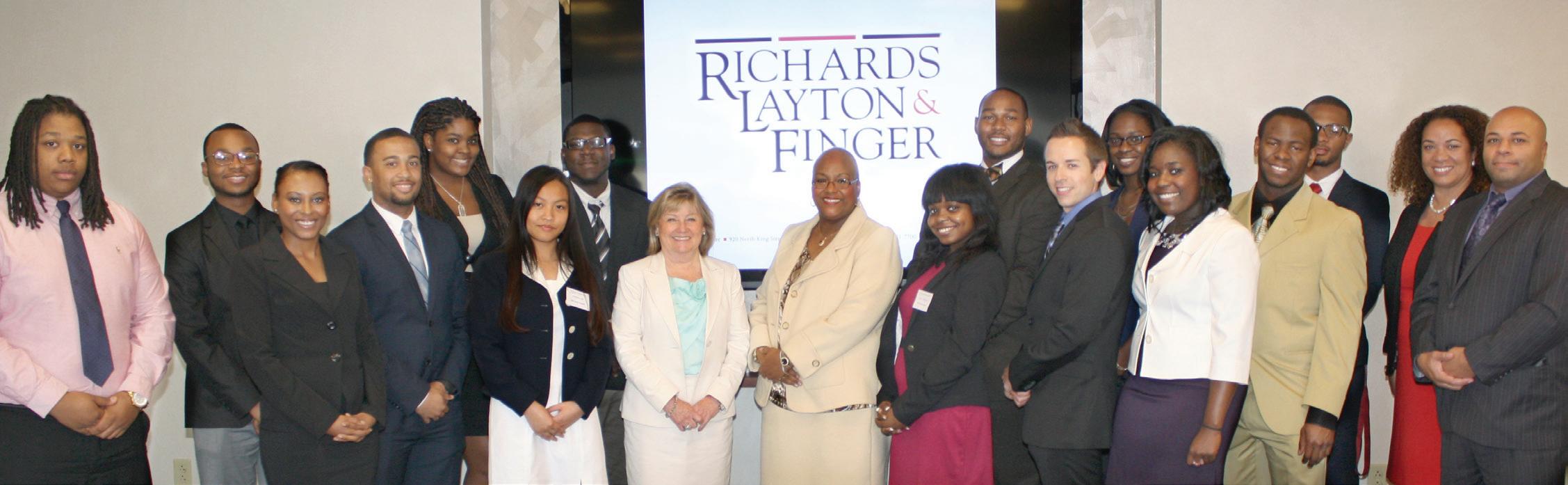
The Jurist Academy was held this summer, marking the seventh year of this diversity pipeline program. Coordinated by Assistant Professor of Legal Methods, Sydney HoweBarksdale, the program brought students from undergraduate programs in Pennsylvania, Delaware, Virginia, Alabama, and New York to Widener Law Delaware.
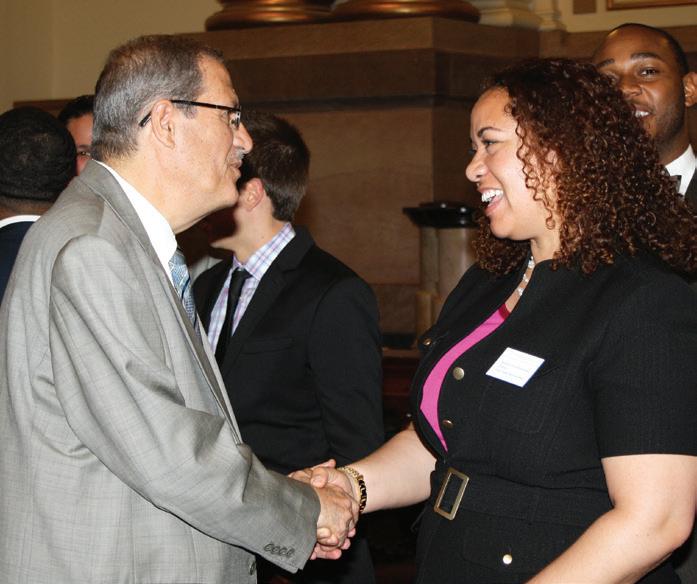
Dr. Sydney Howe-Barksdale thanks Judge Paul P. Panepinto ’76 for talking with the students during their visit to the Court of Common Pleas at Philadelphia City Hall.
Joanie Peet and attorney Doneene Damon, center, of Richards Layton & Finger hosted the Jurist Academy students for tours, lunch, and presentations by their firm.
Student Awards
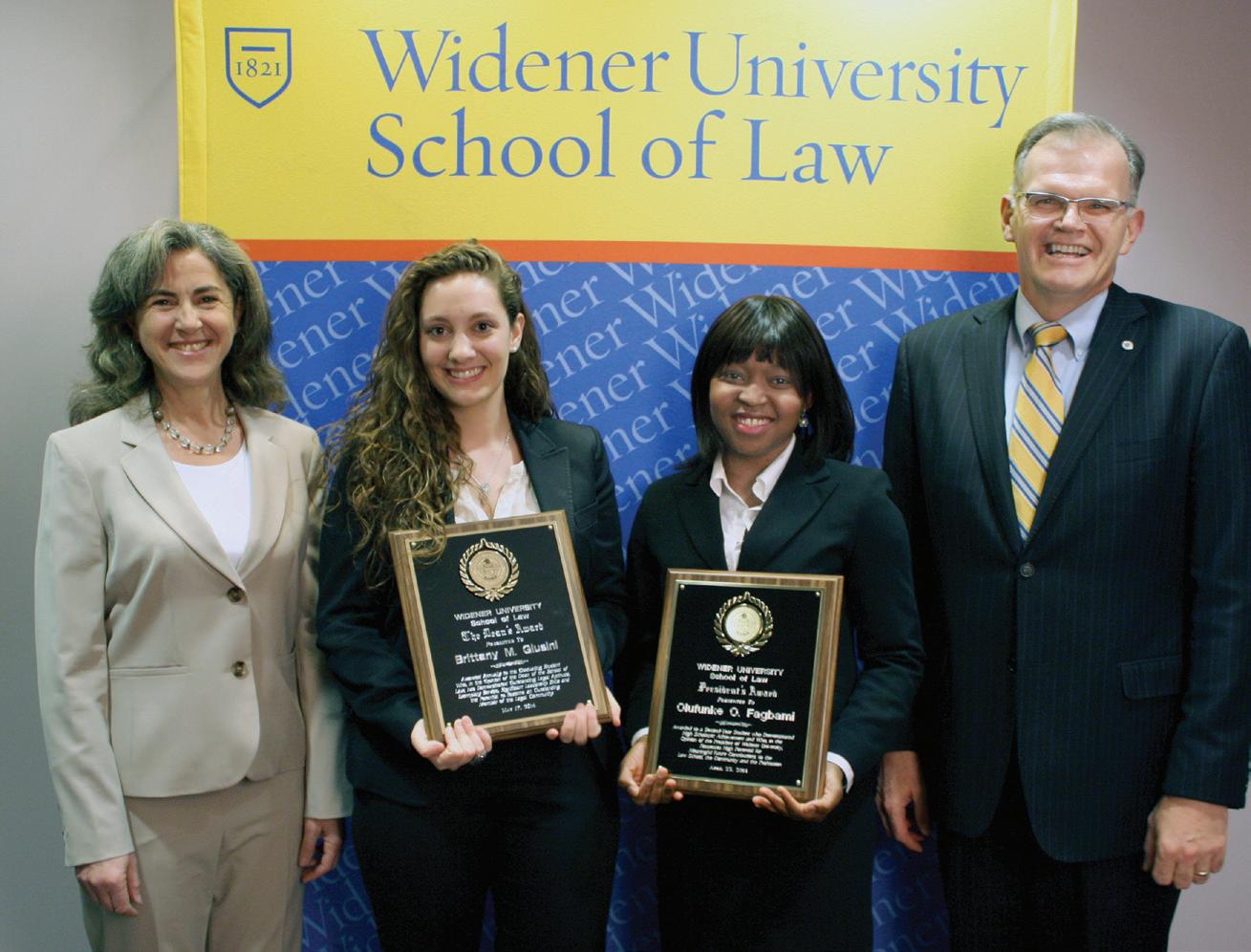
Student awards were presented in the spring on the Delaware campus. Widener University President James T. Harris III presented the President’s Award to Olufunke O. Fagbami. Interim Dean Erin Daly gave the Dean’s Award to student Brittany M. Giusini.
From left: Interim Dean Erin Daly, Brittany M. Giusini, Olufunke O. Fagbami, President James T. Harris III.
T he 2014-2015 Wolcott Fellows, from left, Megan McGovern, Michael Van Gorder, Olufunke Fagbami, William Burton, Andrew Berni, and Interim Dean Erin Daly.
Widener University President James T. Harris III greets Supreme Court Chief Justice John G. Roberts Jr.
Below:
law.widener.edu/events
Welcome to the Profession
T he incoming class was welcomed at a fall event in the Ruby R. Vale Moot Courtroom that featured several speakers and served to inspire students on their law school journey. Interim Dean Erin Daly, along with alumni John Cirrinicione ’07 and Kenneth Rothweiler ’81, welcomed students. Professor Arthur J. Schwartz, of Widener University’s Oskin Leadership Institute reminded them that lawyers are leaders.
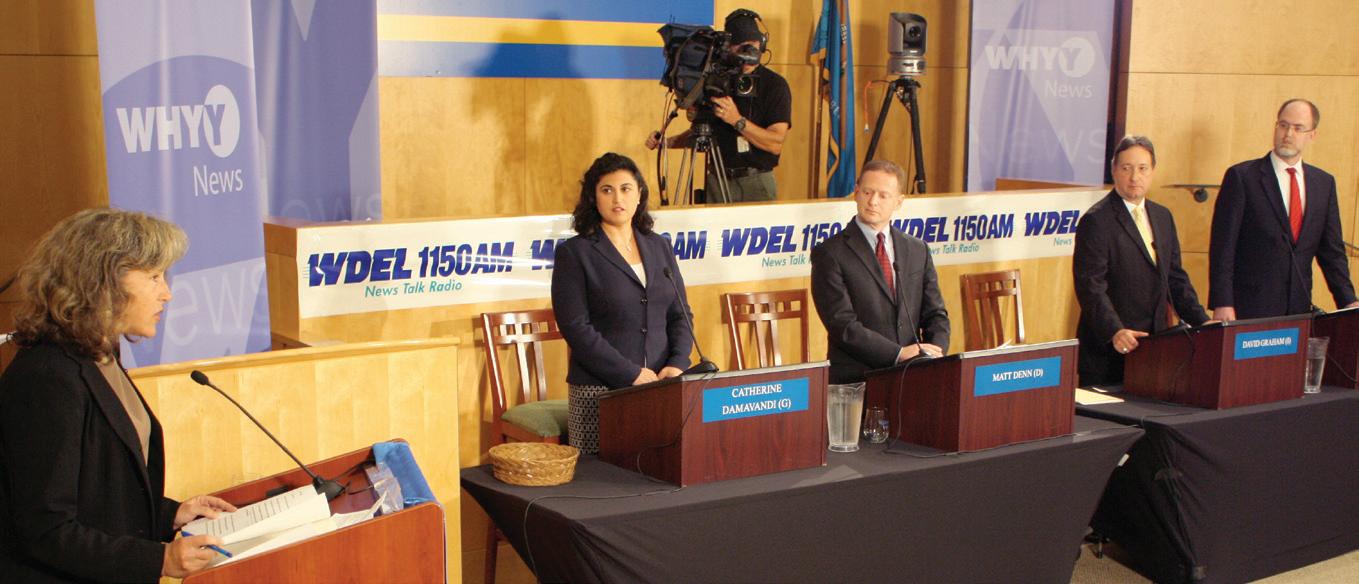
Widener Law Delaware hosted two debates this fall in key First State races. Interim Dean
Erin Daly, left, welcomes attorney general candidates Catherine Damavandi ’99, Matt Denn, David Graham, and Ted Kittila.
T he law school partnered with DuPont Legal to co-sponsor a day-long conference focusing on developments in intellectual property law and featuring presentations by the nation’s premier authorities on the topic.
elaware launched the Family Health Law and Policy Institute this fall. Codirected by Professors John G. Culhane, Alicia Kelly and Dana Harrington Conner, the Institute will focus on a myriad of issues, including child welfare, child abuse and neglect, juvenile justice, human rights, reproductive justice, lesbian, gay, bisexual, and transgender rights, and more.
The Institute offers a certificate program. Students will receive concentrated legal training, including field experience in areas relating to family law, health law, and the intersection of the two. In addition to specific coursework, students have a required experiential learning component involving the MedicalLegal Partnership, Delaware Civil Law Clinic, Veterans Law Clinic, or a qualifying externship.
At the start of the fall semester students mingled with Development & Alumni Engagement staff, Interim Dean Erin Daly and Associate Dean for Student Academic Affairs Susan Goldberg while enjoying pretzels and water ice at Geesey House.
AT he Career Development Office and Society of Recent Alumni presented a workshop entitled “My Place in the Practice” which helped students identify their niche in the practice of law.
From left: Thomas Sager, retired DuPont general counsel, partner with Ballard Spahr, and current member of Widener University’s Board of Trustees, Interim Dean Erin Daly, and Michael Walker, DuPont vice president and chief intellectual property counsel, and current member of the law school’s Board of Overseers.
At the welcome reception, clockwise from top left: AVP, Development and Alumni Engagement Laurie Grant and Alumni Association Vice President Charles Proctor III ’76; students gather and mingle; Leon A. Williams ’82 and Interim Dean Erin Daly.
Widener Law
D
lumni and students gathered for an informal networking opportunity in Wilmington, Delaware.
Director of Alumni Engagement Nancy Ravert Ward (on the right) catches up with alumni.
From Left: Zachary Dryden ’15 , John D. Cirrinicione ’07 and Lea Nora Ruffin, Assistant Dean, Career Development
D
law.widener.edu/events
Pileggi Lecture
T he annual Francis G. Pileggi Distinguished Lecture in Law featured Brian Cheffins, the S.J. Berwin Professor of Corporate Law at Cambridge University. He presented “Delaware and the Development of Corporate Governance.”
Tara
External
elaware Supreme Court Justice Randy J. Holland presided over a special swearing-in ceremony in which students took the oath for the limited practice of law. The students were admitted through their positions as interns with the Widener Delaware Civil Law Clinic, the Widener Environmental and Natural Resources Law Clinic, and through an externship with the Delaware Attorney General’s Office. Students included Daniel V. Cerone, Lauren D. Crump, Jennifer A. Fink, Kasi Gifford, Wilson A. Gualpa, Hayley J. Reese, Melanie A. Reynolds, Tyler J. Wilk, Moses Bates, Patrick Dearmey, Ada Husten, Andrew Schmidt, and Matthias C. Conaty.
Kenneth T.
Catherine
Erin
and
Christopher Parker
Widener Law Delaware faculty previewed the new Supreme Court term with the program “First Monday” held at the offices of Young Conaway Stargatt & Taylor, LLP in Wilmington. Presentations were offered by professors James R. May, Christine D. Allie and Mary Brigid McManamon, H. Albert Young Fellow in Constitutional Law David R. Hodas and Helen S. Balick Visiting Professor in Business Bankruptcy Law Bruce Grohsgal. Delaware Supreme Court Justice Randy J. Holland moderated.
From left: Delaware Supreme Court Justice Randy J. Holland; professor Mary Brigid McManamon; Interim Dean Erin Daly; Professor Christine D. Allie; H. Albert Young Fellow in Constitutional Law David R. Hodas; and Helen S. Balick Visiting Professor in Business Bankruptcy Law Bruce Grohsgal.
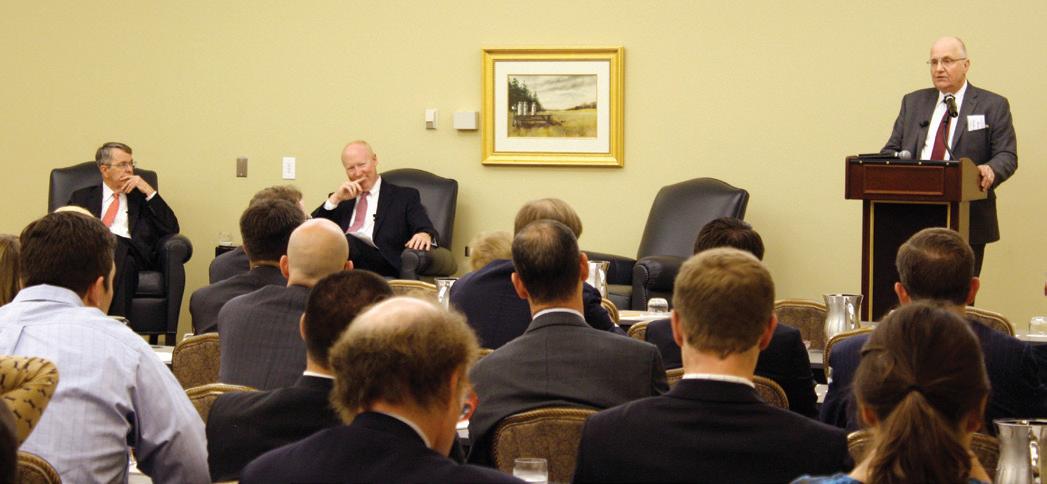
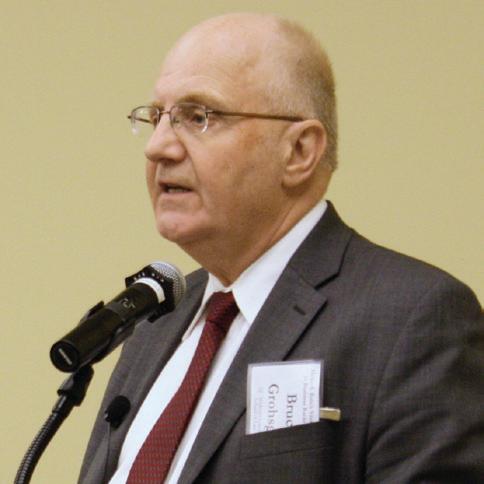
Widener Law Delaware celebrated the arrival of Helen S. Balick Visiting Professor in Business Bankruptcy Law Bruce Grohsgal (pictured right) with a CLE program titled, “Bankruptcy: A Look Back & A Look Ahead.”
DE Supreme Court Hears Oral Arguments
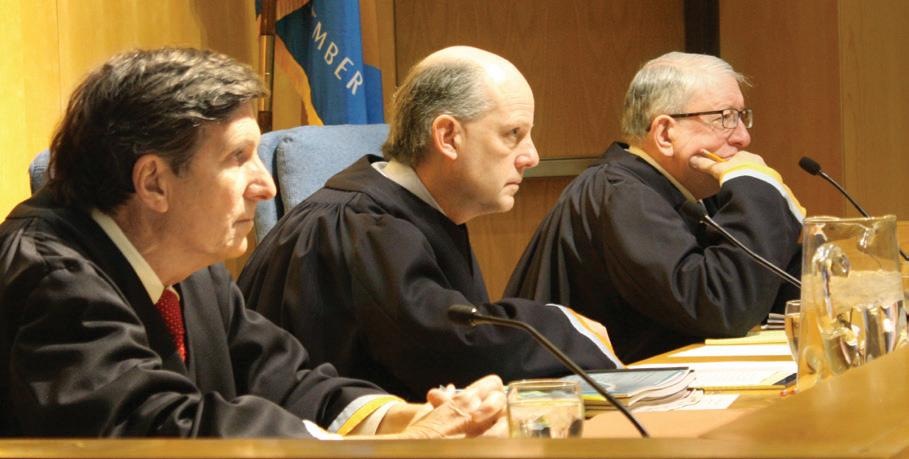
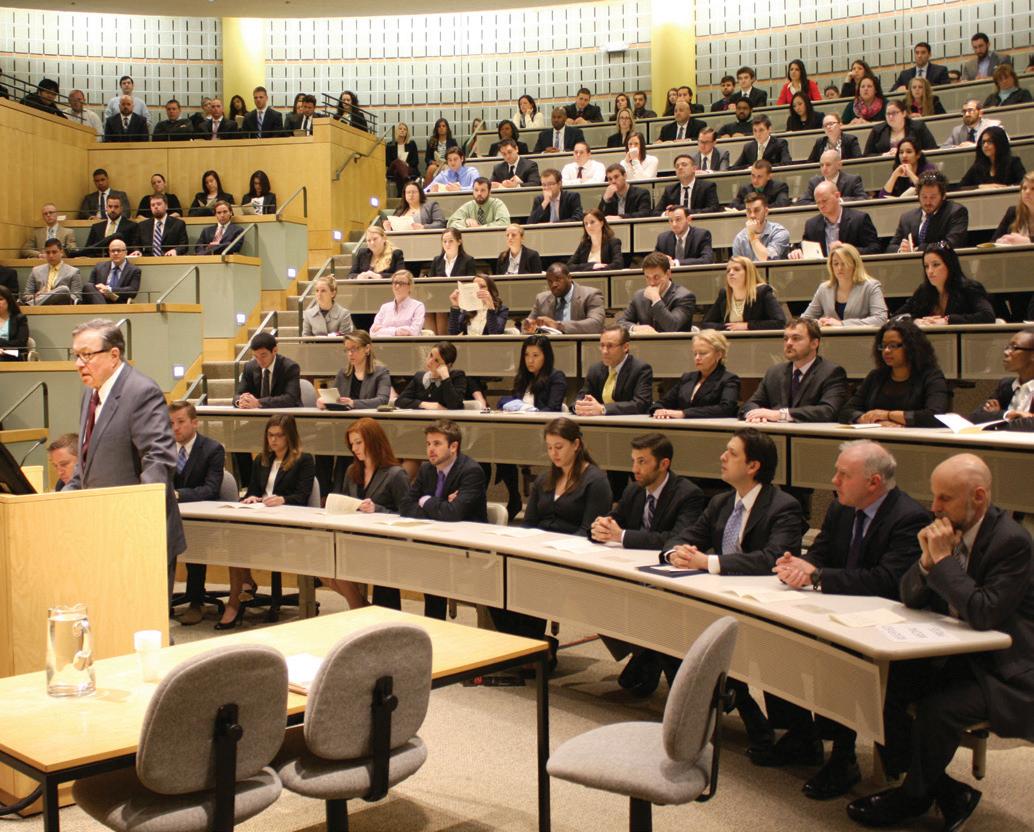
T he Delaware Supreme Court heard oral arguments on campus before a packed Ruby R. Vale Moot Courtroom. It was the eighth consecutive year the court convened at the school, and the first time newly sworn Chief Justice Leo E. Strine Jr. presided.
Congratulations to Delaware Supreme Court Justice Randy J. Holland, an adjunct faculty member and valued supporter of Widener Law Delaware, who received the 2014 Lewis F. Powell Jr. Award for Professionalism and Ethics from the American Inns of Court.
I nterim Dean Erin Daly, Justice Randy J. Holland, and president of the Delaware State Bar Association Yvonne Takvorian Saville ’95 (front row), commended graduates who passed the 2014 Delaware State Bar Exam at an on-campus reception.
Front row, from left: Associate Professor
Kristl, director of the Environmental and Natural Resources Law Clinic,
Kilian of the Delaware Civil Law Clinic, Delaware Supreme Court Justice Randy J. Holland, Interim Dean
Daly
attorney
of the Attorney General’s Office.
Professor Cheffins (front row, center) is joined by members of the Pileggi family, students, and faculty.
Left:
Pakrouh,
Managing Editor of the 20142015 Delaware Journal of Corporate Law. Right: Brian Cheffins, the S.J. Berwin Professor of Corporate Law at Cambridge University addressed a packed room at the Hotel du Pont.
From left: Justice Randy J. Holland, Chief Justice Leo E. Strine Jr., and Justice Jack B. Jacobs heard arguments.
Class Notes
A message from the alumni board president
In the spring issue of this magazine and in subsequent communications, we announced the Widener University Trustees’ application to the American Bar Association (ABA) for acquiescence in the separate accreditation of the Harrisburg campus as an independent law school. Each law school campus would then have independent budgetary and administrative structures, while continuing to operate under the auspices of Widener University. We anticipate the ABA’s response to this request no later than June of 2015. This publication, through its unique design, begins to reflect the growing independence of each campus. Pending a positive decision from the ABA, you will see “rebranding” of each law school reflected in future marketing, communications, websites, and even in the names of the institutions.
While separation will have minimal effect upon current students, academic programming, accreditation, or the relationship between Widener Law Delaware and Widener University, the transition does impact internal operations. Departments such as Development & Alumni Engagement, Admissions, Registrar, and others are working to unbraid duties, messaging and programming that have been shared for almost twenty-five years. During this transitional year, the Alumni Association and our alumni programs will continue to represent our graduates and to provide professional development activities, and networking opportunities.
This is an exciting time in the history of Widener Law. The separation provides each campus with great opportunities to develop and strengthen relationships within the legal community at large, with those alumni we know well, and those we look forward to reconnecting with. As alumni, our advocacy and support is crucial during this transition, we hope to count on your full involvement as we move forward.
Sincerely,
RENAE B. AXELROD ’91 PRESIDENT, ALUMNI ASSOCIATION
P.S. Mark your calendars for the annual Philadelphia Alumni Reception: March 26, 2015 at the Downtown Club. All graduates are welcome and encouraged to attend this fun night of networking and camaraderie in Philadelphia!
Tell us about your achievements. Send your class note (300 dpi photos welcome) to: Office of Development & Alumni Engagement Attn: Class Notes
Widener University School of Law 4601 Concord Pike Wilmington, DE 19803 Or e-mail: law_alumni@mail.widener.edu
1981
ABBIE G. FRIEDMAN has been elected as a new trustee to the Board of Directors of the National Museum of American Jewish History.
1983
JOSEPH J. MCGRORY, JR. Chairman of the Municipal Law Department of Hamburg, Rubin, Mullin, Maxwell and Lupin has been named to the Pennsylvania Super Lawyers list in the area of Land Use/Zoning.
1984
JAMES R. BURDETT counsel for Barnes & Thornburg LLP’s Washington, D.C. office was named a Rising Star by Washington D.C. Super Lawyers. Burdett was recognized for his work in intellectual property law.
FRANCIS J. LETO has been selected as the new CEO of Bryn Mawr Trust. Leto currently holds the position of president and COO of the bank, working in the wealth management division and serves as general counsel for the bank and corporation.
1987
SHELLY C. DUGAN and her wife became one of the first same-sex couples to marry in Delaware County, Pennsylvania.
THERESA E. LOSCALZO , co-managing partner for Schnader Harrison Segal & Lewis LLP’s Philadelphia, Pennsylvania office has been elected to the board of directors of The Forum of Executive Women.
1988
EDWARD SEGLIAS , shareholder and vice president for Cohen Seglias Pallas Greenhall & Furman PC was recently appointed president of the Racquet Club of Philadelphia.
1989
GERALD L. BOWEN, JR. , attorney for Gerald L. Bowen P.C. in Southampton, Pennsylvania has recently published a book about his special needs daughter, Grace, entitled Blessed by a Saint
1991
LISA A. DUDA partner in the Philadelphia office of Stradley Ronon has been appointed to the board of directors of Drueding Center, Holy Redeemer Health System’s transitional housing and comprehensive counseling program for homeless women and children.
DONALD E. SOUDERS, JR. , director for Unity Bank has been promoted to the Board of the Company Holding by Unity Bancorp, Inc. He is currently serving as a Partner at the law firm of Florio, Perrucci, Steinhardt & Fader, LLC.
1992
LISA A. SHEARMAN , attorney for Hamburg, Rubin, Mullin, Maxwell & Lupin recently presented at Pennsylvania Bar Institute’s seminar, “Act 95; The New POA Law.”
1993
REGINA SPAUSE MCGRAW has joined the health care practice group of Bond, Schoeneck & King PLLC in Syracuse, New York.
SARAH C. YERGER , partner in the Harrisburg, Pennsylvania office of Post & Schell PC, was awarded with the annual Lynette Norton Award by the Pennsylvania Bar Association Commission on Women in the Profession.
The following alumni were recognized on the “Best Lawyers in America” list of outstanding attorneys:
JOHN R. KANCILIA ’80, shareholder for GrayRobinson, P.A. in Melbourne, Florida.
TODD BERKEY ’85, partner for Edgar Snyder & Associates’ Pittsburgh, Pennsylvania office was recognized for Personal Injury Litigation, Product Liability Litigation, and Insurance Law categories.
ALFRED J. CARLSON ’92, partner for Martin Law firm based in Philadelphia, Pennsylvania.
JOHN P. DOGUM ’92, partner for Martin Law firm based in Philadelphia, Pennsylvania.
JOSEPH J. MCGRORY, JR., REGINA SPAUSE MCGRAW, ALFRED J. CARLSON, AND JOHN P. DOGUM
Class Notes
1994
MEGHAN A. ADAMS has joined the law firm of Morris James in Wilmington, Delaware as an associate in its Business Litigation Group. Her practice will focus on corporate and commercial litigation.
MARK T. BRAINARD has been named the fifth President of Delaware Technical Community College in Wilmington, Delaware.
GINA F. RUBEL , president and CEO for Furia Rubel Communications, Inc. has been recognized by the Philadelphia Business Journal as one of the region’s top corporate philanthropic givers. She also presented “What Lawyers Can and Should Do with Social Media” at the Pennsylvania Bar Institute’s 2014 Technology Institute.
1995
TIMOTHY F. RAYNE partner for MacElree Harvey, Ltd. in Chester County, Pennsylvania, has been recognized as one of the Top 100 lawyers in Pennsylvania by Super Lawyers.
YVONNE T. SAVILLE director for Weiss and Saville, PA in Wilmington, Delaware has started her term as president of the Delaware State Bar Association.
MIN S. SUH partner for Obermayer Rebmann Maxwell & Hippel LLP has been named to the Board of Directors of the Homeless Advocacy Project in Philadelphia, Pennsylvania.
1996
MICHAEL J. GARRY of Yardley Wealth Management LLC in Newtown, Pennsylvania has recently published his first book entitled Independent Financial Planning: Your Ultimate Guide to Finding and Choosing the Right Financial Planner
DAMON G. TYNER , J.S.C. has been appointed by Governor Chris Christie, with the advice and consent of the State Senate, to be a judge of the Superior Court of New Jersey. Judge Tyner is assigned to the Chancery Division - Family Part in Atlantic City, New Jersey.
1998
AARON T. MARSHALL , corporate counsel at Northrop Grumman in Lithicum, Maryland has been elected board president at The Hearing and Speech Agency.
1999
ANGELA M. FOWLER has been sworn in for her first term as commissioner of the Family Court of Delaware in the historic Courtroom 1 of the Kent County Courthouse.
2000
SUNNY MARIE SPARANO shareholder at the Roseland, New Jersey office of Marshall Dennehey Warner Coleman & Goggin, has been appointed a Regional Associate for the Northeast Region of the Women’s Construction Litigation Alliance (WCLA).
2001
PATRICK J. CALLAHAN , co-founder of Archer Group and CEO of CompassRed, Inc. in Wilmington, Delaware has participated in the New Castle County Chamber of Commerce Business Leaders Network panel.
2003
MATTHEW SLATER associate in the Philadelphia office of Willig, Williams & Davidson, has been certified as a specialist in the practice of workers compensation law by the Pennsylvania Bar Association Workers Compensation Law Section.
2005
FRANKLIN STROKOFF , personal injury lawyer for Rothenberg Law Firm LLP, has won $1.75 million verdict in Bergen County for car accident victims.
2007
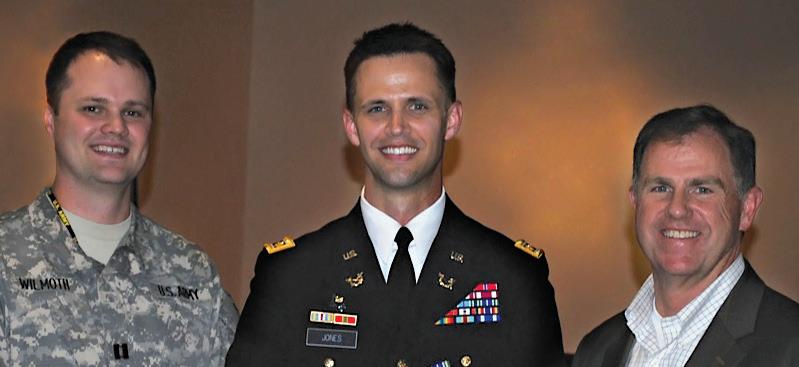
DAVID M. JONES , stationed at Aberdeen Proving Ground in Maryland, has been promoted to Major in the United States Army JAG Corps. Alumni Standing Strong at Aberdeen Proving Ground also include Bill Wrabley, ‘00, and Captain Dan Wilmoth, ‘09. Friends and coworkers of Major Jones were in attendance for the ceremony.”
2006
KENNETH LOPEZ has been appointed to the Board of Visitors for the University of Mary Washington in Fredericksburg, Virginia by the governor of Virginia.
1997
ARLENE M. BENTON has joined the Delaware law firm of Baird Mandalas Brockstedt as an equity partner. She focuses her practice on real estate, contracts, leases, and estate planning.
KRISTIN M. RUELL , authorization quality review specialist in the Pension Management Center at the Veterans Affairs, Philadelphia Regional Office became a national voice in the call for accountability at the Department of Veterans Affairs when she spoke before Congress about mismanagement at the center where she works.
SHANNA MCCANN has been appointed as the chair of the Young Lawyers Division of the New Jersey State Bar Association. Additionally, she has been appointed to serve a second term as a trustee from Salem County on the New Jersey State Bar Association’s Board of Trustees. Shanna also currently serves as vice-president of the Salem County Bar Association and has been selected as a Rising Star, by New Jersey Super Lawyers, for the third year in a row.
EVAN Y LIU of Feldman Shepherd Wohlgelernter Tanner Weinstock and Dodig LLP, has been named a Pennsylvania Super Lawyer Rising Star by Thomson Reuters in Philadelphia magazine.
ANTONIO D. MICHETTI has been named to the Pennsylvania Bar Association’s Bar Leadership Institute.
MARIA BERMUDEZ-HARRIS has been elected to serve as a Zone 1 delegate to the Pennsylvania Bar Association House of Delegates for a threeyear term.
JARAD L. SILVERSTEIN has been promoted to counsel at Parker McCay’s Mount Laurel, New Jersey office. Silverstein focuses his practice in the area of medical malpractice defense with additional experience in HIPAA litigation and premises liability.
2008
GABRIELA N. SMITH has recently opened a private law firm, The Gabriela Noemi Smith Law Firm, PLLC in the Dallas-Fort Worth area of Texas. Smith counsels start-ups, entrepreneurs, and small and medium size businesses in a broad range of business, litigation, and international matters.
GINA F. RUBEL, TIMOTHY F. RAYNE, ARLENE M. BENTON, AND SUNNY MARIE SPARANO
SHANNA MCCANN, DAN WILMOTH, DAVID JONES, BILL WRABLEY, AND JARAD L. SILVERSTEIN
Class Notes
DR. CAROLYN CARDALL NEWSOM ’12 shared many things in common with her fellow Widener Law 2012 graduates, but one trait set her apart: she was the only 71-year-old grandmother in her class. Newsom, who also holds a Ph.D. and an MBA, jokes that going back to law school “was like Jack LaLanne for the brain.” She explains, “Memorizing was a real chore the first year… by the third year, my brain was working a whole lot better. I found a new career and a new opportunity.” Today, at her own firm in Bucks County, PA, Newsom specializes in estate planning while championing efforts to promote and refine advanced care planning at St. Mary Medical Center.
2009
JOHN A. KIRK co-founder of MUNI Tech, LLC in Wilmington, Delaware has participated in the New Castle County Chamber of Commerce Business Leaders Network panel.
JEFF M. PORTER , manager at Sargent & Lundy, LLC’s Wilmington, Delaware office, has run for Delaware State Representative, District 12.
CRAIG J. SPRINGER has co-founded Andrews & Springer LLC, a new boutique law firm in Wilmington, Delaware specializing in securities fraud and corporate misconduct.
2010
ANDREW R. SILVERMAN has joined MacElree Harvey, Ltd. as an associate in the firm’s West Chester, Pennsylvania office. Mr. Silverman’s practice focuses on the representation of clients in connection with business, commercial, and other civil litigation matters.
RECONNECT:
VISIT OUR ONLINE COMMUNITY WEBSITE
lawalumni.widener.edu
We’d like to know where you are and what you’re doing.
2011
MATTHEW J. BILKER associate for Eckell, Sparks, Levy, Auerbach, Monte, Sloane, Matthews & Auslander, P.C’s Media, Pennsylvania office, has been named the newest member of the Marple Newtown School Board in Newtown Square, Pennsylvania.
I N M EMORIAM
JAMES F. CHELIUS JR. ’77
PAUL L. GRANT JR. ’84
PAUL I. GUEST JR ’79
KARA M. GUZZETTI ’07
JEFFRY B. HERMAN ’86
LAURENCE I. LEVINSON ’79
ALICE S. LUMPKIN ’93
MICHAEL F. MCHUGH ’96
SAMUEL B. MILLER ’81
TARA L. MILLER ’12
ROBERT MONTECALLO ’80
KATHRYN L. MYERS ’94
WILLIAM J. SIPIO ’91
REGINA E. SPENCE ’95
LOUIS F. SPINA ’98
2013
DANIEL E. DOLENTE published an article in The Legal Intelligencer titled, “Advice for Attorneys Starting Their First Real Law Firm Job.”
2014
JULIE A. HARAHUSH has been sworn in to practice law at a special ceremony before the Schuylkill County Court along with other county natives and Pennsylvania Bar Passers.
Honor Roll
THANK YOU FOR YOUR SUPPORT!
WIDENER LAW DELAWARE’S 2013-2014 HONOR ROLL OF DONORS
This listing recognizes gifts made between July 1, 2013 and June 30, 2014.
Our staff has made every effort to ensure that the honor roll is accurate and complete. If, however, you discover an error or omission, please contact Megan Cantalupo at mccantalupo@widener.edu.
INDIVIDUALS
Leadership Circle
$100,000+
Alexander^ & Ann Bratic
Cary ‘81^ & Nancy Flitter
Theodore ‘92 & Anne Peachey ‘92 Lorenz
Christopher & Caroline Bratic ‘11^ Mazza
George K. Miller Jr. ‘81* & Debra Miller
CAPT Robert Taishoff, JAGC, USN (Ret.) ‘89 & Laurie Taishoff
Jurists’ Society
$25,000 - $49,999
Richard* & Eileen Herrmann
Chancellors’ Club
$20,000 - $24,999
Richard & Leslee
Silverman ‘79^ Tabas
Ambassadors’ Club
$10,000 - $19,999
Carl Battle ‘82^
Joel ‘93 & Kim Feller
Eugene & Gloria Landy
Samuel ‘85^ & Laurie Landy
Hon. Alan Levin ‘80^ & Ellen Levin
James McEldrew III ‘82
Chris Mourse
Thomas Russo
Walter Strine Jr. & Alice
Washco ‘92^ Strine
John ‘75* & Donna Wetzel
Leon ‘82 & Judy Williams
Partners’ Club
$5,000 - $9,999
Michael ‘75+* & Valerie DeFino
Bruce ‘96 & Elizabeth Monroe
Thomas+ & Nancy Sager
Hon. Lee Solomon ‘78* & Dianne Solomon
Hon. Joseph Walsh ‘97H*~
Benefactors
$2,500 - $4,999
Dean Linda Ammons, JD*
Dale ‘90 & Barbara Trevisan ‘91 Ardizzone
Hon. Bernard Balick & Hon. Helen Balick
John Carroll III ‘81* & Barbara Carroll
Charles & Bonnie Eagan ‘09* Copeland
Walter & Jayne Garrison
Robert Gober DO ‘79^ & Karen Gober
George Kern V ‘96* & Evangeline Kern
Harry Dillon Madonna ‘97^
M. Jane Mahoney ‘76
Eugene McGurk Jr. ‘78+*^
Edward ‘97* & Melissa Micheletti
Hon. Paul Panepinto ‘76*
& Nancy Panepinto
Nancy Sarcione
Dean’s Council
$1,500 - $2,499
Robert ‘78 & Patricia Adochio
Thomas H. Bown II+ & Bonnie Bown
John & Cecilia ‘91 McCormick
The Montejo Family
Michael Newbold Jr. & Marion Rothbart ‘85
Newbold
Kathryn Peifer ‘02*
Christopher & Karen Ulmer ‘95 Pendergast
Charles Proctor III ‘76 & Maria Proctor
Thomas Reed & Emily Reed, PhD
Eileen Seaman ‘94
Kevin Shannon ‘92
P. Michael Walker*
Richard Jackson & Priscilla Pearson ‘90 Chatman
Hon. Ida Chen
Interim Co-Dean
Erin Daly*
Michael Marquardt & Claire DeMatteis ‘92^
Ronald Graham ‘91
Laurie Grant
Gary Gremminger ‘83
Robert Hayman Jr. & Alice Eakin
Harry & Louise Hill
F. Kevin Lynch ‘79
Kathleen McNicholas MD ‘06, ‘10M+*
John Pachkowski ‘88 & Mary Alice Peeling ‘91
Andrew Schaeffer ‘87
John+* & Eileen Schmutz
Louis ‘75 & Susanne Slawe
Timothy ‘81^ & Shirley Snyder
Donald+ & Joyce Walsh
Law School
Associates
$1,000 - $1,499
Steven Barsamian ‘75*
Hon. Raymond Batten ‘79*
& Mary Batten
Vincent Ciecka ‘75
Arthur Dent ‘86
Lawrence & Marion
Hamermesh
Hon. Randy Holland ‘01H*
Leslie Johnson ‘92
Patrick & Marcia Johnston
Sondra Margolies
Jeffrey Wack & Antonella Madonia ‘94
Richard Nelson & Roberta Mann
Roger Margolis ‘77
Aaron Marshall ‘98
Ashley Miller
John Mizel & Hon. Marianne O. Mizel ‘80
Frederick ‘80 & Denise Mogel
Joseph Montgomery ‘08
Stephen Negro ‘94
William Newman Jr. ‘88 & Patricia Newman
Century Club
$250 - $499
Ronald ‘85 & June Amarant
Andrew Appel ‘77
Jennifer Armstrong ‘00
Norman & Ann Ashworth
Robert & Barbara Komar ‘90 Ayars
G. Alan Bailey ‘78 & Denise Bailey, EdD
Martin ‘91 & MaryAnne Belisario
Mr. & Mrs. Kenneth Breen
David Brown
Stuart~ & Toni Young
Bench and Bar Club
$500 - $999
Renae Axelrod ‘91*
Harris Bock
John ‘80 & Margaret Campbell
Diana Clift ‘00M Cebrick
Joel Chernock ‘76
Thomas Del Pesco & Hon.
Susan Del Pesco ‘75*
Frank DePasquale Jr. ‘86
& Lisa DePasquale
Douglas ‘81 & Patricia
DiSandro
Stuart ‘05 & AnnaMaria Doctorovitz
John Dogum ‘92
Anthony Doyle
Jay ‘79 & Maria Edelstein
Thomas Briggs Jr. & Margaret England ‘02
Karen Fleming ‘80 Giusini Family
Michael & Anne Goldberg
Salvatore Guerriero ‘97
Mitchell ‘95^ & Diana Gurwicz
William ‘75 & Susan
Hagner
Hon. M. DeSales Haley ‘91
Richard ‘77 & Susan Handler
Lance Seidel & Catherine
Harrington ‘88
President James Harris
III+* & Mary Harris
Jeffrey Hoyle ‘84
Bruce ‘77 & Jodi Hudson
Leonard Insalaco ‘90
Mark & Joan ‘92 Kluger
Hon. Nathaniel Nichols & Cheryl Nichols
Arthur Novello ‘86 & Joanne Pizzuro
Steve ‘79 & Valerie
Parsons
Hon. Donald Parsons Jr. & Ethel Parsons
Stephen Ries ‘07
Hon. Raymond Rodriguez ‘98 & Antoinette Fiocco-Rodriguez
Melvyn Rothbard ‘03
Keith & Theresa Rothman
Mary Sabulsky ‘83
Joseph Santarone Jr. ‘85^ & Katherine Santarone
Philip Sarcione ‘80
Peter Schaeffer ‘96
Martin ‘85 & Laury Sendek
Mitchell ‘81 & Penny Shore
Charles Shurr ‘94
William Snell ‘01
James Rowe II & Min Suh ‘95+
Hon. Allan Tereshko & Heather Tereshko ‘01
David Thompson ‘01
Thomas ‘82 & Carolyn Badger ‘82 Uliase
Lt. Col. (Ret.) Donald Walsh ‘78 & Adrienne Walsh
Tricia Widdoss ‘98
Charles ‘95 & Janelle Williams
Serena Williams
Barry & Janet Wolper
Henry ‘77 & Gina Zerella
Theresa Brown-Edwards*
Carl Buck III ‘87 & Laurie Buck
Thomas Bullock ‘76
H. Joshua ‘05 & Noelle Palazzo ‘05 Burg
Louis Busico ‘88
Hon. John Capuzzi Sr. ‘88 & Sharon Capuzzi
Thomas Carluccio ‘85 & Hon. Carolyn Tornetta ‘85 Carluccio
Hon. William Carpenter Jr. ‘76 & Marilyn Carpenter
Francis Catania Jr. Ryan Cicoski ‘10
Francis Clifford ‘76
Todd Conner ‘91 & Dana Harrington Conner ‘92
Michael Cunningham Jr. ‘84 & Florence Cunningham
Michael Diamondstein ‘96 Edward ‘78 & Marianne DiDonato Hon. Michael A. Donio ‘78 & Annette Donio Torill Drury
Raimondo ‘89
Jules Epstein Kenneth Federman ‘93 William ‘76 & Shelli Fedullo Paula Garrison Vahan ‘78 & Danielle Tribuiani ‘92 Gureghian
Leibler & Carol Johnson ‘85 Haight
Photo by Petra Chesner Schlatter
Honor Roll
THANK YOU FOR YOUR SUPPORT!
WIDENER LAW HARRISBURG’S
2013-2014 HONOR ROLL OF DONORS
This listing recognizes gifts made between July 1, 2013 and June 30, 2014.
Our staff has made every effort to ensure that the honor roll is accurate and complete. If, however, you discover an error or omission, please contact Natasha Lewis at nclewis@widener.edu.
INDIVIDUALS
Jurists’ Society
$25,000 - $49,999
Cary ‘81^ & Nancy Flitter
Theodore ‘92 & Anne Peachey ‘92 Lorenz
Ambassadors’ Club
$10,000 - $19,999
Michael ‘94^ & Catherine Aiello
Douglas Wolfberg ‘96*
Benefactors
$2,500 - $4,999
Douglas ‘94^ & Trudy Steinhardt
Dean’s Council
$1,500 - $2,499
Ernest Baynard & Lindsey
Dickinson Baynard ‘00
Scott ‘97* & Tanya Blissman ‘97
James ‘96 & Gina Bohorad
Interim Co-Dean
Robyn Meadows* & Richard Meadows
Law School
Associates
$1,000 - $1,499
Dean Linda Ammons, JD*
Jonathan Bigley ‘95
Nicholas Stapp & Jill Family
John & Carol Gedid
George & Nancy Hassel
Timothy Lavin ‘13
Katharine Nelson
Bench and Bar Club
$500 - $999
C. Grainger* & Sandra Leanna Bowman
Robert Davis Jr.
John Dernbach
Hon. J. Michael Eakin ‘05H & Heidi Eakin
Patricia Fox
Robert Power
Karen Yarrish ‘92
Century Club
$250 - $499
Richard Burridge ‘93
Benjamin Del Vento Jr. ‘94 & Karen Del Vento
James & Cathleen Diehm
David Emili
Frank Emmerich Jr. ‘95 & Angela Corbo, PhD
Clarissa Freeman ‘08
C. Blair & Jeanne Marino ‘06 Gibson
Caryn Green ‘96
Clayton & Deborah Heaton
Randy & Brenda Lee
Juliet Moringiello
Patrick ‘99, ‘09H^ & Jennifer Murphy
Zachary ‘99 & Melissa Rubinich
Albert & Sally Nuttycombe ‘03 Rutherford
Gerald Strubinger Jr. ‘92 & Carolyn Strubinger
Robert Varano ‘95
Philip & Valerie Viglione
Douglas Welty ‘08
Starla Williams~
Donors
Lee & Joanne Alinsky
Kimberly Allen ‘07
Harold Anderson ‘96
Maria Anderson ‘14
Dionne Anthon
Elizabeth Arnold ‘94
Wilson Barnes III ‘98 & Kelly Barnes
D. Benjamin Barros
Lawrence Bartel ‘03
Matthew Brown ‘01
Sarah J. Brown ‘05
Carrie Buscarini ‘00
Kayla Butz ‘14
Brian ‘08 & Sylvia Cagle
Vincent ‘01* & Heather Champion
Ehsan Chowdhry ‘05
William Church ‘14
Ronald Cowell ‘94
Angela Coxe ‘06
Nicholas Dalessio ‘16
Barbara Darkes ‘95
Ronald Nagle & Nan Davenport ‘94
Angela Davis Pallozzi ‘08
Vincent DeLiberato Jr.
Michelle Diaz ‘16
Barbara Kern ‘97 Dietrich
Robert Dolbin
Matthew Domines ‘01
Sean & Karli Gouse ‘09
Dougherty
Matthew & Amanda Snoke ‘05 Dubbs
Leo Dunn ‘07
Paul ‘11 & Katelynn Edger
Janet Ekerovich ‘97
Lt. Col. William Erle ‘94
Jeremy Firestone
Elizabeth Flaherty ‘07
Camille Fundora ‘11
Diane Goltz
Bob & Sandra Graeff
Jason & Amy ‘04 Groff
Anthony ‘98 & Kirsten Kutler ‘11 Gulotta
Joseph Harmon ‘0
Paula Heider
Benedict Heinz ‘06
Stephen ‘92 & Barbara Harrington ‘92 Hladik
Dwight & Emily Long ‘92
Hoffman
Kevin Hoffman ‘08
Nora Hogan
Camille Howlett ‘14
Joseph & Gladys Howlett
Christian Hugel ‘93
Eileen Hurley ‘96
Randall Hurst ‘99
Michael & Julie Hussey
Christopher & Christina Huffman ‘07 Israel
Lindsay Janel ‘08
Christopher Jones ‘08
Hon. David Judy ‘94 & Karen Judy
Annmarie Kaiser ‘93
Kyvele Karpouzis
Thomas ‘92 & Pamela Kauffman
Bret Keisling ‘05*
Sean & Diana Esposito ‘09 Kelleher
Susan Kessock ‘96
Andrew & Kristy Anderson ‘11 Kirk
Capt. Kraig Kiehl & Renae Kluk Kiehl ‘08
Eric Kniskern ‘99 & Kevin Jones
Jonathan ‘07 & Alaina Schroeder ‘10 Koltash
Steven & Dorothy Koncar
Michael Krimmel ‘95 & Eugenia Krimmel, DEd
Matthew ‘08 & Allison Keffer ‘09 Krupp
Steve Kwon ‘08
Ian Lang ‘04
Natasha Lewis
Chunsheng Lu ‘03
Scott MacMullan ‘10
David ‘93 & Christine Mayernik
Frank Mazzeo ‘92 & Patricia Sutton-Mazzeo
Alicia McCommons ‘95
Thomas McQuillan ‘13
Eric Milby ‘97
Anne Miller
Eyad Mizian ‘08
Mark & Kathy Morrison
Robert Morrow Jr. ‘97 & Jennifer Morrow
Devon Myers ‘11
Kevin & Keli Knapp ‘06
Neary
Heather Troutman ‘02
Nicoletti
David & Laura Nixon
Katy Nixon ‘14
Michele O’Dowd ‘04
Anthony Perchiacca ‘14
Isidore & Susan Perchiacca
John Pietrzak ‘96 & Deborah Schwartz ‘93
Lawrence Rife IV ‘11
Lawrence Rife III & Patricia Rife
Christopher Robinette
Michelle Santos ‘14
Hon. Thomas Saylor Jr. ‘02H
Daniel Schuckers & Sara
LeCleire-Schuckers
Thomas ‘93 & Nina Scuderi
Steven Shearer ‘14
David Siegel ‘13
Justin Silberg ‘10
Gail Guida ‘93 Souders
James & Janice Staloski
Jason Staloski ‘14
Kelly Klimkiewicz ‘97
Swartz
C. Timothy & Patricia Tarr
Connor Tarr ‘14
Jessica Torres Santiago ‘16
Marianne Tyrrell ‘04
Peter ‘04 & Christine Vaughn
Jennifer Walker ‘05
Ian Wetzel ‘08
Geoffrey White ‘06
Thomas Williams ‘93
LaToya Winfield
Bellamy ‘05
Stuart Wolf ‘10
Robert & Ann ‘95 Yamulla
Jacqueline Zabresky ‘99
ORGANIZATIONS
Leadership Circle
$100,000 + Pennsylvania IOLTA
Jurists’ Society
$25,000 - $49,999
Flitter Lorenz, P.C.
Ambassadors’ Club
$10,000 - $19,999
Page, Wolfberg & Wirth, LLC
Partners’ Club
$5,000 - $9,999
Pennsylvania Bar Association
Benefactors
$2,500 - $4,999
Central Penn College
Florio, Perrucci, Steinhardt & Fader, L.L.C.
Law School
Associates
$1,000 - $1,499
Comcast Corporation
Wolters Kluwer
Law & Business
Bench and Bar Club
$500 - $999
Lightman Welby Stoltenberg & Caputo
Donors
James S. Bowman
American Inn of Court
MATCHING GIFTS
Penn National Insurance
The Hershey Company
Wells Fargo Community Support Campaign
UMH Properties, Inc.
Foundation
Northrup Grumman
Microsoft Corporation
McKesson Foundation, Inc.
J. P. Morgan Chase Matching Gift
Grants Program
IBM Matching
Glenmede Trust Company
GlaxoSmithKline
General Electric
Charitable Gift Fund
Fidelity Investments
Exxon Mobile Corporation
Bank of America
COMPANIES
MATCHING GIFT
Estate of Arthur Marton
Estate of June D. MacArtor
ESTATES & TRUSTS
Woodland Avenue Medical Center
Financial Group
Walsh & Nicholson
Law ceOffi
Vincent J. Giusini
USClaims Lifeline Funding, LLC
Trichon, Cammisa & Axelrod, P.C.
Stumar Investigations
Spear, eldGreenfi & Richman, P.C.
Seagull Legal Services
Richard A. Kennedy & Associates Elevator Consultants
MICHELLE SANTOS is now legal assistant at Silliker & Reinhold Law ces.Offi
ANDREW RACE is now an associate attorney at Kenneth M. Kitay & Associates.
KATY S. NIXON is law clerk at the York County Court of Common Pleas.
JENNIFER MERX is now an associate attorney at Buzgon Davis Law ces,Offi Lebanon, PA.
MATTHEW MCCOLGAN is now law clerk at Gekoski & Bogdanoff, PC, Philadelphia.
2014
JULIA SKINNER is now assistant district attorney at the Northumberland County District Attorney’s ce,Offi Sunbury, PA.
JOLEE VAN HORN is now an associate attorney at Gibbel Kraybill and Hess LLP, Lancaster, PA.
TARIN STAUFFER is serving as law clerk for The Honorable William T. Tully, Dauphin County Court of Common Pleas.
ROMA PATEL is now an associate attorney at Lynch Law ces.Offi
JOSHUA LIGHT is now assistant counsel at the PA Department of Transportation.
TIMOTHY J. LAVIN is now an associate attorney at Lewis Brisbois Bisgaard & Smith, LLP, New York, NY. He works for the General Liability Defense Group and is also part of the Appellate Practice Group.
DAVID HUMPHREYS is now an attorney at the Lackawanna County District Attorney’s ce.Offi
DINA KHMELNITSKY HOLLANDAISE is an associate attorney at Lance Brown Associates, LLC in Robbinsville, NJ.
BEAU HUCH is working on constituent relations at the NJ Legislative 10th District.
JOHN M. HART III is now controller’s solicitor at Lackawanna County; solo practitioner at the Law cesOffi of John M. Hart III; and per diem lawyer for O’Malley & Langan in Scranton, PA.
COURTNEY HAIR is now assistant district attorney at the Lebanon County District Attorney’s ce.Offi
ALICIA GLASSER is now legal counsel at Investors Bank.
NICHOLE GANNETT is now deputy attorney general for the Department of Justice in Sussex County, Delaware.
LUCAS CSOVELAK is now an assistant attorney at Weber Gallagher.
Congratulations to BRITTANY BERENATO on both her recent nuptials and her new position. She is now associate attorney at The Chartwell Law ces,Offi LLP, Moorestown, NJ.
2013
MEGAN HENRY is now an associate attorney at Goldfein & Joseph, P.C., York, PA.
15 class of the Pennsylvania Bar Association’s Bar Leadership Institute.
M. ELIZABETH BURTON of the Law cesOffi of Elizabeth Burton was named to the 2014-
RL Title and Escrow, Inc., Vienna, VA.
AMIR RAMINPOUR is now president at
ANTHONY BOWERS is now a tax appeals attorney at the Pennsylvania Treasury Department - Board of Finance and Revenue.
2011
JENNIFER D. SMITH has joined Marshall Dennehey Warner Coleman & Goggin as an associate in the Wilmington, Delaware ce.offi She focuses her practice in the area of toxic tort and product liability litigation, as well as general negligence litigation.
MAEVE SCANLON is now director of business and legal affairs at Flynt Management Group, LLC in Beverly Hills, CA.
KATHRYN PETERS is now an associate attorney at Goldberg Katzman, P.C.
JARON NALEWAK is now an associate attorney at Russell, Kraft & Gruber, LLP.
HALAK MEHTA has joined the Clutch Group as attorney, Litigation & Investigations.
LISA LONG is now legislative research analyst/legal counsel for the Environmental Resources and Energy Committee for the Republican Caucus in the PA House of Representatives.
Academy, Starla was an active and integral part of the Widener Law Harrisburg campus, as well as in her local community where she served on several boards advocating for racial equity in child welfare and diversity in the legal profession.
University School of Law community was extremely saddened by the sudden loss of Starla J. Williams, who passed away Nov. 14, 2014. As director of Multicultural Affairs, Pro Bono Activities and Externships and coordinator of the JURIST
Widener
REMEMBERING STARLA J. WILLIAMS The
MICHAEL CARUSO is now executive vice president/general counsel at Carbro Constructors Corporation. Congratulations to CHELSEY CROCKER on her recent nuptials. She is now Chelsey Jackman.
MARIA ANASTASOPOULOS has joined the rmfi of Bright & Sponder in Princeton, NJ.
2012
SHANE LANGAN is now assistant counsel at the ceOffi of General Counsel— Department of Public Welfare.
ROBERT KLINE is now working for James G. Dibbini & Associates, P.C., Yonkers, NY.
JAMES HOPPENJANS and his wife welcomed Claire Elaine on September 19, 2014. She joins big brother and sister, Charlie and Ella.
CAMILLE FUNDORA has joined Kope & Associates, LLC.
PAUL EDGER of MidPenn Legal Services, was named one of the “Top 10 Family Law Attorneys under 40” in PA by the National Academy of Family Law Attorneys.
MATTHEW A. SEMBACH has joined Kope & Associates, LLC. His practice is limited to criminal defense, expungements, and pardons.
DIANA C. SCHIMMEL of the Law ceOffi of Diana C. Schimmel has been chosen as “Lawyers on the Fast Track,” by The Legal Intelligencer
NICOLE SANTO married Peter Yochum on June 21, 2014 in Scranton, PA.
ELIZABETH MARX is now staff attorney at the Pennsylvania Utility Law Project.
ALINA H. EYET and MATTHEW EYET are now partners at Sandelands Eyet LLP, operating in New York and New Jersey.
KIM ALISON DE TOMBEUR is now manager, Legal & Compliance, at Michael Page.
Government Affairs at Miami Dade College.
JORGE CONFORME is now working with
2010
Lighten Up Harrisburg has funded a number of projects, including the replacement of the decorative lights on the historic Walnut Street Bridge and the purchase of nearly 80 streetlights and 26 photocells for an Allison Hill-area project.
5K Glow Run on behalf of Lighten Up Harrisburg, the community organization he founded in 2012 to address lighting needs through the city.
In June 2014, Matthew Krupp ’08 organized Harrisburg’s rstfi nighttime
LISA GAIER is now managing attorney at Law cesOffi of Lisa J. Gaier, LLC.
AMY L. DREIBELBIS has been promoted to the position of deputy prothonotary for the Supreme Court of Pennsylvania’s Middle District.
He is also the mayor of Middletown, PA.
JAMES H. CURRY III is now an associate attorney at Cipriani & Werner, P.C.
NICHOLE COLLINS has joined Shaffer & Engle Law ces,Offi LLC, Harrisburg, PA.
2009
AMY QUIMBY is now an attorney at Strickland & Amezola, APC., San Diego, CA.
MATTHEW KRUPP is now an attorney with the Governor’s ceOffi of General Counsel at the Pennsylvania Insurance Department and serves on the Board of Directors of the Historic Harrisburg Association.
2008
MATTHEW KRUPP ’08
The following alumni were chosen by the “Central Penn Business Journal” for the annual “Forty Under 40” list:
ABHISHEK SINGH is now a senior associate designated at Amarchand & Mangaldas & Suresh A Shroff & Co.
ANGELA SINDACO is now a regulatory analyst at Executive Health Resources.
D’Amico Anderson.
STEVEN RYAN is now an attorney at Frommer
General Law Division at the ceOffi of Chief Counsel, Pennsylvania Department of Transportation.
ANGELA RAINEY is now assistant counsel,
Estate Settlement Administrator at PNC.
JILLIAN GOLDEN is now vice president, Senior
2007
KELLY STEWART is now assistant counsel at the PennDOT ceOffi of Chief Counsel.
KATHLEEN HIGGINS is now an attorney at the Commonwealth of Pennsylvania — ceOffi of Open Records. 2006
KRISTEN B. HAMILTON of Amoul Tassino & Hamilton, LLC, was named to the 2014-15 class of the Pennsylvania Bar Association’s Bar Leadership Institute.
2005
JENNIFER E. WILL of the Law ceOffi of McNees Wallace & Nurick has been chosen as “Lawyers on the Fast Track,” by The Legal Intelligencer.
RICHARD A. WOLFE has become a partner at Galerman, Tabakin & Wolfe, LLP. He concentrates in the area of personal injury litigation.
KACEY C. WIEDT , shareholder for Marshall Dennehey’s Camp Hill, Pennsylvania ceoffi has been named assistant director for the Workers’ Compensation Department.
Best wishes,
Engagement at 717-541-3974 or nclewis@widener.edu.
The coming months will be full of transitions for the Widener community as we begin to make the necessary adjustments both internally and externally. The full support, advocacy and involvement of alumni, volunteers and the community are extremely important during this next milestone in our institution’s history. If you are interested in getting involved with the soon-to-be-created Harrisburg alumni association, please contact Natasha Lewis in the ceOffi of Development & Alumni
ZACHARY M. RUBINICH has joined Rawle & Henderson as a partner in the rm’sfi Philadelphia ce.offi He focuses his practice on the defense of insurance carriers, self-insured entities and thirdparty administrators against workers’ compensation claims in Pennsylvania.
KELLY HOOVER THOMPSON was appointed chief counsel to the Pennsylvania eHealth Partnership Authority in September 2014. She oversees the alignment and implementation of laws and policies related to the use of electronic health information exchange (eHIE) in Pennsylvania.
1999
RONALD J. REYBITZ has been promoted to assistant general counsel at PPL Corporation.
1996
DANIEL G. SNYDER has been appointed a Workers’ Compensation Judge in Luzerne County by the Pennsylvania Department of Labor and Industry, Workers’ Compensation ceOffi of Adjudication.
1994
FREDERICK T. DOMBO , partner in the Washington, D.C. ceoffi of Nossaman LLP, has been elected to the rm’sfi executive committee.
1992
Association President, it has been my pleasure to represent graduates of both campuses for the past vefi years, and I look forward to supporting the creation of the Harrisburg alumni association.
Harrisburg administration will soon begin communicating solely with Harrisburg alumni and will be creating a separate and distinct alumni association. As Alumni
In preparation for separation, each school has already started the exciting and positive journey to more clearly nedefi their individuality. For instance, you will notice that this very distinctive version of Widener Law magazine has a dual-cover format and internal copy that provides individual coverage to each campus with distinct articles and features covering campus cspecifi activities, alumni and faculty news, and highlights.
This strategic move will allow Harrisburg to capitalize on its unique academic, programmatic and geographic strengths. We anticipate a decision from the ABA prior to June 2015.
In communications from the Law School during the last few months, we announced the Widener University Trustees’ request to the American Bar Association (ABA) for independent accreditation of the Harrisburg campus, thereby creating a second law school under the auspices of Widener University.
EARD LUMNIA OF IDENERW AWL :ARRISBURGH
Attn: Class Notes Widener University School of Law 3737 Vartan Way Harrisburg, PA 17106 Or e-mail: law_alumni@mail.widener.edu A message from the alumni board president
ceOffi of Development & Alumni Engagement
Tell us about your achievements. Send your class note (300 dpi photos welcome) to:
ENAER B. XELRODA ’91
,RESIDENTP LUMNIA SSOCIATIONA
FREDERICK T. DOMBO ’92, DANIEL G. SNYDER ’94, KACEY C. WIEDT ’96, AND KELLY HOOVER THOMPSON ’99
JENNIFER E. WILL ’99
McNees Wallace & Nurick in Harrisburg, PA
AARON D. HOLLIS ’02
Blakinger Byler & Thomas in Lancaster, PA
AMY L. GROFF ’04
K&L Gates in Harrisburg, PA
Transcripts
Technological Trifecta: Using Videos, Playlists, and Facebook in Law School Classes to Reach Today’s Students, 40 UTGERSR OMPUTERC & .ECHT L.J. 1 (2014).
SMITH, AMANDA L. et al., A
Introduction, Perspectives in Mass Tort Litigation, 23 WIDENER L.J. 47 (2013).
Introduction, Perspectives in Mass Tort Litigation, Part II, 23 WIDENER L.J. 633 (2014).
NSURANCEI AWL (Fall 2014).
URRENTC RITICALC SSUESI NI
EWN PPLEMANA NO :NSURANCEI
Contributory Negligence and Joint and Several Liability, 73 M.D L. EVR. 701 (2014). & Jessica Smeriglio, The Optimal Resolution of Intra-Policy UM/UIM Stacking
Liability in Maryland Tort Cases: Time to End
ROBINETTE, CHRISTOPHER J. & Donald G. Gifford, Apportioning
Recent Decision in Law v. Siegel, BUS L. ODAYT (April 2014), http:// www.americanbar.org/publications/ blt/2014/04/keeping_current_ moringiello.html.
The Trustee Fought Law (with Equity) and Law Won: The U.S. Supreme Court’s
Goals and Governance in Municipal Bankruptcy 71 ASHW & EEL L. EVR 403 (2014).
Territorialism in the Not-So-New Frontier of Cyberspace 99 ORNELLC L. EVR 1415 (2014).
LEE, G. RANDALL, Can a Single Masterpiece Sustain a Lawyer’s Lifetime and Other Questions That Cross a Lawyer’s Way 2014 .ROFP AWL 89 (2014). MORINGIELLO, JULIET M. & William L. Reynolds, The New
Technological Trifecta: Using Videos, Playlists, and Facebook in Law School Classes to Reach Today’s Students, 40 UTGERSR OMPUTERC & .ECHT L.J. 1 (2014).
Immigration Law and Not Really Binding Rules, 47 U. ICHM J.L. EFORMR 1 (2013).
Document Dilemma Agency by Agency:
FAMILY, JILL E., Easing the Guidance
DIMINO, SR., MICHAEL R., It’s My Party and I’ll Do What I Want To: Political Parties, Unconstitutional Conditions, and the Freedom of Association, 12 IRSTF MENDA L. EVR 65 (2013).
CHOOLS OT(N USTJ TO )URVIVES (4th ed., Aspen Coursebook Series 2014).
DERNBACH, JOHN C., RITINGW SSAYE XAMSE TO UCCEEDS IN AWL
Technological Trifecta: Using Videos, Playlists, and Facebook in Law School Classes to Reach Today’s Students, 40 UTGERSR OMPUTERC & .ECHT L.J. 1 (2014).
ANTHON, DIONNE et al., A
Visit ssrn.com/ link/Widener-LEG.html to subscribe.
pose proudly. Back row, from left: Rebecca Bailey, Inder Deep Paul, Austin Strine, Mary Pellant, Nour Elbattah, and Andrew Hollin. In front: Ryan Gonder.
Newly elected student representatives
friends celebrated at the annual Dean’s Picnic this fall.
tudents, faculty, staff, family, and
SFrom left: Student Melissa Toaltoan, Judge P. Kevin Brobson, and student Bri Gaumer.
Judge P. Kevin Brobson ’95.
Pro Bono Service Provider Award to
With service training, an IOLTA board lunch, and coaching for student pro bono readiness, the events also included the presentation of the Commonwealth
ational Pro Bono Week was observed with “Go Pro Bono!” week on campus.
ecent graduates were sworn into the Pennsylvania Bar in the Pennsylvania Supreme Court courtroom within the State Capitol Building by good friend and
Students, faculty, and staff show off their law school spirit.
In conjunction with Widener University’s Homecoming, students, faculty, and staff displayed their pride by wearing blue and gold on Widener Law Spirit Day.
2014 Graduates Get Connected & Stay Involved
Keep up with Widener Law Harrisburg faculty scholarship by subscribing to the Widener Law Legal Studies Research Paper Series from SSRN. This free email series delivers the latest articles by Widener Law faculty to your email inbox.
Spirit Day
Top:
Middle: Second year law students
Landa Porter, Nicholas Marinelli, and Kayla Randall celebrate Spirit Day.
Bottom: Professors Jill Family, John C. Dernbach, Christopher Robinette, Michael Hussey, and David RaekerJordan proudly wear their Law & Government Institute t-shirts.
adjunct professor, Justice J. Michael Eakin.
organization’s role in
Executive
the forum featured two panel discussions, as well as remarks from Pennsylvania
of the Violence Against Women Act and focused on the impact of domestic violence on impoverished and minority women. Entitled “Why Rachel
of the 20th anniversary
T he 2014 Dean’s Diversity
Distress.” Coordinated by Professor Juliet M. Moringiello, the event included a presentation from Attorney David Unkovic and a keynote speech by General William Lynch, receiver for the city of Harrisburg.
Law Journal hosted a daylong conference, “Bankruptcy and Beyond: Solving the Problem of Municipal Financial
idener Law Harrisburg and its student-run Widener
Wgubernatorial
of the Law &
With welcome remarks, Professor
to present a primary debate held in the administration building.
he law school partnered with Pennsylvania Cable Network and the Pennsylvania Legislative Correspondents Association
Incoming law students Mark Bogush and Acacia Bellamy at the welcome reception.
Adam Santucci ’09 speaks to the incoming class.
T he incoming class was welcomed at a fall event featuring several speakers, who inspired students as they begin their law school journeys. Adam Santucci ’09 spoke and Judge Mary Hannah Leavitt of Pennsylvania’s Commonwealth Court, who currently serves as the visiting scholar in residence, delivered the rmation.affi
Welcome 1Ls
local artist Kelly McGee Curran, wife of Matthew J. Curran ’13.
renovated and renamed The Gallery, to ectrefl its newly-added function as a showcase for artwork. The Art Association of Harrisburg will supply the law school with rotating art exhibitions every three months. The inaugural installation features
he formal reception room in the administration building has been
Attorney’s ce,Offi and the Federal Public Defender’s ceOffi in Harrisburg.
The Jurist Academy program returned to the Widener Law Harrisburg campus this summer for its fourth year. The two-week law school immersion program is designed for undergraduate students, who come from backgrounds that are often underrepresented in the legal profession, and includes LSAT prep classes, mini law school courses, and practice exams. They visited with judges at the U.S. District Court for the Middle District of Pennsylvania, the U.S.
From left: Widener Law Journal members Mitchell Jones, Katherine Riggleman-Thomas, Katy Nixon and Camille Howlett.
Forum was held in observance
Weeps”
Rep. Patty Kim, Interim Dean Robyn L. Meadows and Widener Law Harrisburg
alumna Rhodia Thomas ’97, Executive Director, Mid Penn Legal Services.
Above: Tonya Lovelace, senior director, Women of Color Network addresses
attendees at the 2014 Dean’s Diversity Forum. Left: Alumna Rhodia Thomas ’97,
Director, Mid Penn Legal Services explains her
helping underprivileged women throughout Central Pennsylvania.
Above: Magistrate Judge Susan E. Schwab ’92 and Chief Magistrate Judge Martin C. Carlson, both of the U.S. District Court for the Middle District of Pennsylvania,
speak to students. Below: Students visited with Intelligence Specialist John Marsh, left, and Assistant U.S. Attorney Gordon A. D. Zubrod, right, at the U.S.
Attorney’s ceOffi for the Middle District of Pennsylvania.
Jill E. Family (left), director
Government Institute, opens the debate among
Democratic
candidates, from left, Katie McGinty, Tom Wolf, and Rep. Allyson Schwartz.
faculty and friends
lumni, students,
Ato a Widener Law reception after the hearing. Harrisburg alumnus Federal Maritime
Chief Justice John G. Roberts Jr. and Justice Ruth Bader Ginsburg made personal visits
the Bar of the Supreme Court of the United States at a hearing in Washington, D.C.
Todd D. Rothermel ’09, Ryan Stark ’07, and Karen C. Yarrish ’92 were admitted to
arrisburg alumni Lisa C. Katterman ’92, Michael Lettrich ’97, Robert Morrow ’97,
Holunteer Lawyers for the Arts, a new public service initiative designed to support the arts in central Pennsylvania, pairs income-eligible artists and organizations with pro bono attorneys who can assist with a wide array of legal needs. Providing valuable hands-on experience for students, and quality legal representation to struggling artists, the project is coordinated by Professor Juliet M. Moringiello and Associate Professor Michael J. Hussey in cooperation with the Dauphin County Bar Association.
Pennsylvania and Hunger Free PA. Legislators from both sides of the aisle played a full softball game in an effort to assist Pennsylvanians struggling with hunger.
this fall at the Second-
VGarvey Schubert Barer Professor of Law, and Professor Jill E. Family, director of the Law & Government Institute.
Washington School of Law
Schubert Barer Professor of Law, was the speaker at the Law & Government Institute’s eighth-annual John L. Gedid Lecture.
athryn A. Watts, the University of Washington School of Law Garvey
KWidener University President James T. Harris III gave the President’s Award to Richard Sgrignoli. Interim Dean Robyn Meadows gave the Dean’s Award to Camille Howlett.
Student awards were presented this spring on the Harrisburg campus.
From left: Interim Dean Robyn Meadows, Camille Howlett, Richard Sgrignoli
and President James T. Harris III.
Law & Government Institute students—(from left) Jordan Wartman, Patrick Parsons, Kayla Randall, Nick Dalessio, Landa Porter, and Doug Kozak—and
Institute Director Jill E. Family (center) volunteered
Annual Capitol All Stars Game, played at Metro Bank Park, ttingbenefi Feeding
From left: Carol Gedid, Professor Emeritus
John L. Gedid, Kathryn A. Watts, the University of
gathered in the Main Rotunda of Pennsylvania’s Capitol to celebrate the 15th anniversary of the Law & Government Institute at the 4th annual “Evening at the Capitol” reception.
Commissioner William Doyle ’00 gave the luncheon address.
Right: Federal Maritime Commissioner William Doyle ’00 was the guest speaker at the luncheon.
Below: Chief Justice John G. Roberts Jr., center, with the Widener Law contingent.
Mary Dishong-VanEtten, Metro Bank’s vice president and director of corporate security discusses security and fraud protection.
Speaker Mary Dishong-VanEtten, vice president and director of corporate security for the bank, addressed identity theft, recent data breaches, current fraud schemes, and best practices in information security.
ship with Metro Bank, presented an event for attorneys on fraud protection.
idener Law Harrisburg, in partner-
WUniversity President James T. Harris III announced the creation of the Linda L. Ammons Diversity Scholarship Award.
T he Harrisburg community bid farewell to Dean Linda L. Ammons with a retirement party at the Hilton in Harrisburg. Widener
U.S. District Judge John E. Jones III speaks about judicial independence.
U.S. District Judge John E. Jones III of the Middle District of Pennsylvania. At a presentation that was open to the public, Judge Jones discussed judicial independence. Jones authored the recent opinion in Whitewood v. Wolf, which struck down Pennsylvania’s ban on same-sex marriage.
deneri Law Harrisburg welcomed
Graduate Maria Anderson gets a hug of congratulations.
Valedictorian Camille Howlett and alumna Kathryn Peters ’12.
Auditor General Eugene A. DePasquale ’02
Graduates (from left) Katharine Costlow, Megan Caggianelli, and Joanne O’Brien.
Left: Dean Linda L. Ammons with Eugene D. McGurk ’78, chairman of the Board of Overseers and member of the Widener University Board of Trustees.
Right: Widener Law alumnus Patrick Murphy ’99 with Ammons.
Left: Interim Dean Robyn
L. Meadows (far left), and Associate Dean for Academic
Affairs D. Benjamin Barros
present Dean Linda L. Ammons with a print of the Harrisburg skyline.
I keep ripping mine on door handles!”
Judge Brobson shows his practical side when asked what he wishes he had known at the beginning of his term. “The sleeves!” he laughs. “I wish I had known that there are judicial robes without puffy sleeves.
“It’s an honor to be a judge and whether I can stay really depends on how well I do my job. We are here only because the people put us here. We are held to a higher standard and must live up to that every day.”
Judge Brobson is almost halfway through his ten-year term and will have to choose whether to stand for retention election in 2019. He says he loves being a judge. “I am always learning. Learning from the smart lawyers around me, learning from my colleagues on the bench, learning from the cases themselves,” he explains.
Judge Brobson is also proud of the ongoing expansion of the Commonwealth Court’s jurisdiction. In the 44 years of the court’s existence, its role and expertise has continually grown. Today, according to Judge Brobson, the court could handle even more, including jurisdiction over all tnonprofi matters, which would resolve some confusion among parties about where to le,fi appeals from private arbitration awards, and appeals from actions taken to enforce money judgments, such as lien proceedings and sheriffs’ sales.
lot of people who watch us on TV,” he says. “Government is a three-legged stool and this is a great way to let the public see a little more.”
Court and the airing of those arguments on the Pennsylvania Cable Network. He thinks the time will come for a discussion of whether hearings, trials and smaller panel appellate proceedings should also be televised. “There are a
Judge Brobson welcomes the introduction of cameras into the en banc proceedings of the Commonwealth
authoring a decision—to report the case, which he believes makes the court more accountable and allows parties the tbenefi of consistency.
cited as persuasive more frequently than before. Judge Brobson points out, too, that he is more likely—when
making them easier to nd.fi While the unreported opinions are not considered precedential, they are now
Judge Brobson lays out three areas that he is exploring during his term: the rules on unreported decisions, cameras in the courtroom, and expansion of the court’s jurisdiction. He is pleased that the Commonwealth Court has begun publishing all of its decisions—reported and unreported—on the www.pacourts.us website,
“The only way you are going to achieve your goals is to have goals. And the sooner you ask yourself ‘What do I want to do?’ and ‘Where do I want to be?’ the easier it is to make a plan.”
Judge Brobson says that sitting on the same court as his law practice mentor is a thrill, although he notes with a chuckle that they don’t agree as often as people might
“My interest was piqued immediately, and Hannah became a mentor to me.”
When he rstfi started at Buchanan Ingersoll in 1996, he was assigned to a complex insurance case that included multiple issues of state regulation and law. “Judge Leavitt introduced me to administrative law,” he says.
Judge Brobson speaks eloquently about a long-term friendship with fellow Commonwealth Court Judge Mary Hannah Leavitt, which began at Buchanan Ingersoll and continues to this day.
“What better place to hone these skills than on law review?”
He urges students to join law review, saying that it is perhaps the ultimate law school experience. “A law professor’s job is to teach you how to think like a lawyer, using writing and analysis as the primary tools,” he says.
‘Where do I want to be?’ the easier it is to make a plan.”
“The only way you are going to achieve your goals is to have goals,“ he relates. “And the sooner you ask yourself ‘What do I want to do?’ and
alumnus answers the call of public service
Widener Law
think. “But that’s why you don’t have a single judge in the appellate system,” he smiles. “We all bring different perspectives.” When he was running in the primary for the Commonwealth Court position in 2009, Judge Brobson recalls having some fun at a Pennsylvania Business Council panel featuring all ten candidates from both parties. “Are you a strict constructionist or a judicial activist?” they were asked. One by one down the row they each answered that they were strict constructionists until Judge Brobson, going last, said in jest, “Oh, no, I’m a judicial activist...just kidding!” He recalls that drawing a big laugh from the crowd. He speaks with conviction about his deepest-held belief that the elected legislators deserve to have their will honored. “It’s only when you really can’t tell what they meant or if what they meant is unconstitutional should we weigh in. My judicial philosophy is knowing my place and our court’s place in our government!”
Judge Brobson is well aware of the changed nature of the legal job market, saying that it is much harder for law students to get jobs today. He has hired most of his interns and clerks from Widener and advises them that they have to work smarter than ever to get ahead.
Ingersoll & Rooney, P.C. as a commercial litigator in their Harrisburg ce.offi
District of Pennsylvania, and later joined Buchanan
Kelly of the United States District Court for the Eastern
Widener Law Journal, clerked for Judge James McGirr
He would know. He served as a managing editor of the
Widener students up against the top students at any law school anytime, anywhere,” he says emphatically.
Judge Brobson graduated summa cum laude from Widener University School of Law, Harrisburg campus in 1995 and believes that Widener was the only thing that prepared him for his career. “I would put the top
“I would put the top Widener students up against the top students at any law school anytime, anywhere.”
“I don’t have a rstfi name anymore,” he says with a laugh. Shortly after taking the bench in 2010, he quietly mentioned to a meeting host that his rstfi initial wasn’t J. “She said, ‘The J is for Judge!’ I’m not sure I’ll ever really get used to that,” he laughs again.
udge P. Kevin Brobson ’95 of the Pennsylvania Commonwealth Court says he regrets only one thing about becoming a judge.
Jby Corinna Vecsey Wilson
singiRa
P. Kevin Brobson ’95
Judge
P. Kevin
Brobson
DAVID RAEKER-JORDAN gave a presentation entitled “Team-Based Learning 101” at the Legal Writing Institute Biennial Conference.
Section’s Task Force on Enactment of the Uniform Voidable Transactions Act.
JULIET MORINGIELLO spoke on municipal bankruptcy at a conference held at Campbell University School of Law, and at the Fordham Comparative Urban Law Conference held at the University of London. Professor Moringiello is chair of the Pennsylvania Bar Association’s Business Law
She also participated in a roundtable discussion of Women Law Deans at the AALS Hiring Conference.
ROBYN MEADOWS moderated a President’s Forum on Globalization and Higher Education, featuring the presidents of Elizabethtown College, Harrisburg University, Lebanon Valley College, and Susquehanna University.
Already Writing an Article” at the Legal Writing Institute Biennial Conference. She also moderated a panel on Widener Women Leading in the Workplace at the Dauphin County Bar Association’s CLE event.
ANNA HEMINGWAY presented “You Are
Professor Family also presented a paper at the Immigration Law Professors’ Workshop held at the University of California, Irvine School of Law.
JILL FAMILY gave a presentation on “Executive Power in Immigration Law at the Homeland Security Law Institute.”
MICHAEL DIMINO gave two presentations at the Southeast Association of Law Schools conference. The rstfi was on campaign nancefi and the second was on judicial independence.
draftsperson of the First-Year Report of the American Bar Association Task Force on Sustainable Development. Professor Dernbach spoke at a special session of the Pennsylvania Supreme Court honoring Justice Ronald D. Castille. He also ledfi an amicus brief with the Commonwealth Court in a matter involving issues related to the groundbreaking Robinson Township decision.
JOHN DERNBACH served as primary
Professor Capowski also is chair-elect of the American Association of Law Schools Evidence Section.
Capowski spoke at The Taslitz Galaxy, a conference at Howard Law School, celebrating the life and scholarship of the late Andrew Taslitz. Capowski was a part of an evidence panel and spoke on creating separate civil and criminal evidence codes.
School of Law in the spring. Professor
Association site evaluator and will be part of the team inspecting Howard University
JOHN CAPOWSKI is now an American Bar
BEN BARROS launched a new publication, the Journal of Law, Property, and Society for the Association of Law, Property, and Society. Professor Barros is immediate past president of ALPS, and is the founding editor of the Journal
Professor Anthon also is the founding executive managing editor of the Journal of Law, Property, and Society
Yourself: Designing a Legal Writing Course” at the Legal Writing Institute Biennial Conference held in Philadelphia.
DIONNE ANTHON and AMANDA SMITH gave a presentation titled “Judge For
Having devoted his professional life to environmental advocacy, Dernbach is concerned about the future of our planet, but encouraged by decisions like the Robinson Township case and optimistic that education and a push towards more sustainable development will prevail. “Fundamentally, the idea is not just to protect the environment, but to foster human quality of life, freedom and opportunity,” he says. “I believe that we are capable of seizing the opportunities of sustainability and recognizing and dealing with the risks and challenges we are facing.”
“Sustainable development isn’t about the environment OR the economy. It is about the environment AND the economy.”
He was the only one in the room who could help with this problem. The reality is that environmental law permeates almost every part of our lives. Having environmental skills and knowledge in your back pocket is a useful thing, even a necessary thing.”
in the room was a lot less hostile. By the end, there were really good questions. Two days later, they asked me to come back and speak again. That has been my experience time and again. The justice and ethical dimensions are so obvious. People get it if you give them a chance.”
About halfway through the presentation, my instinct was the energy
“I go around the world talking about climate change and justice and I’ve talked to really hostile crowds,” he says. “For instance, I was asked to brief the senior management of a Saudi Arabian oil company.
Brown is a formidable advocate for the ethics of climate change and speaks on the topic to both friendly and not-so-friendly audiences.
With 37 countries already participating, the project is rapidly gaining interest. The goal is to illuminate how countries justify their targets for reducing greenhouse gas emissions and to encourage governments to take justice and ethics more seriously.
To that end, Brown is conducting a global research project through Widener Law Harrisburg, in collaboration with the University of Auckland, to investigate how nations around the world have considered —or not considered—ethics and justice in their climate change policies.
“There are features of climate change that demand people see it as an ethical problem,” he explains. “One feature is that developed countries, such as the United States, are emitting the greenhouse gases, but the countries that are most at risk from these emissions, in places such as Africa and Southeast Asia, have done almost nothing to cause the problem. The vulnerable people can’t do anything to protect themselves. Their only hope is that the high-emitting countries will see that they not only have economic interests, but ethical duties as well.”
Attended by leaders in environmental policy and climate change from around the world, the conference was sponsored by the International Union for the Conservation of Nature (IUCN), the oldest and largest global environmental network. The Widener group included Distinguished Professor of Law John Dernbach and Visiting Scholar Don Brown. In addition, Jim May, Erin Daly, and David Hodas from the Delaware campus attended.
idener Law represented the largest contingent of faculty from any law school presenting at the Academy of Environmental Law annual conference in Tarragona, Spain.
he was a million miles away from the environmental law world. On his rstfi day of work, there was a meeting and the senior attorney says—‘there’s a gas station across the street from our building. Its storage tanks have leaked and the fuel has migrated under the street and around the foundation of our building. Does anyone here know anything about environmental law?’
state retirement boards. He guredfi
Don Brown, scholar in residence for sustainability ethics and law at Widener Law Harrisburg. For example, Brown points to the dwindling water supply in Southeast Asia, where the waters are glacier fed. “The glaciers are disappearing and hundreds of millions of people depend on those rivers for water supply,” he explains. Meanwhile, in small-island developing states, rising sea levels threaten to put salt water into the fresh water drinking supply. Brown began his career as an environmental lawyer and went on to gain experience at local, state, national, and international levels. While working at the United Nations, under the Clinton administration, Brown developed a unique vantage point on climate change.
mere inconveniences. They’re potentially catastrophic,” asserts
he effects of climate change on vulnerable nations are not
Dernbach offers this story as an example: “Some years ago, there was a fellow in my environmental law class who went off to work for one of the
“We give students tools to think about environmental problems and to engage constructively in environmental decision making. And we do this at a time when many students are still trying to gurefi out what their careers are going to be,” he says. “For those students who decide to pursue environmental careers, the skills that we provide become utterly foundational. Students who decide not to pursue environmental careers often ndfi that the knowledge and skills they get in these classes are still helpful to them.”
To that end, Dernbach believes that his role as an educator is an important part of solving the environmental issues of this generation and the next.
“after the decision came out, Professor Dernbach was able to incorporate it into our property class. It was encouraging as an environmental victory. But, I think it was also encouraging for everybody at the school to see one of our professors, who we deal with every day, actually make a huge difference. It’s very motivating.”
While the decision has been noted around the globe, its uenceinfl hit very close to home on the Widener Law Harrisburg campus. Austin Langon, a current 2nd year student relates,
It is about the environment AND the economy.”
“Sustainable development isn’t about the environment OR the economy.
This meshes well with Dernbach’s focus on sustainable development, which he says is a way of addressing environmental problems, while also achieving social and economic goals. “Decision makers often employ a exiverefl environment versus economy approach,” he says.
It’s important to note that the decision does not prohibit “fracking” or unconventional gas development. It does, however, provide a context for government, at all levels, to consider the potential adverse environmental repercussions of development.
On a broader scale, Dernbach explains, “three justices said that the state does not have the ability to take away from local governments their authority to protect people’s rights under the amendment. The environmental rights amendment is absolutely a limit on the power of government, and this is a suit against the government. The Robinson Township case has the potential to reframe the conversation we have about protecting the environment.”
“the court said that it is unconstitutional for the legislature to take away the power of local governments to decide where shale gas operations can take place,” says Dernbach. “So, the most immediate, practical impact of the decision is to let local governments decide where shale gas operations can take place.”
The Pennsylvania Supreme Court agreed. Relying, to a large degree, on Dernbach’s previously written analysis,
their quality of life was protected by local and state laws. But, Act 13 said that shale gas can be developed even in residential zoning districts. These people said that their quality of life and their property values were devalued by Act 13.”
Associate Dean and Professor Ben Barros
“In a very real sense, John’s scholarship provided the analytical framework for a landmark decision on environmental rights.”
So, in 2012, the Pennsylvania legislature decided to step into this controversial arena and revised the Oil and Gas Act to keep pace with the briskly developing marketplace. Known as “Act 13,” this
there is a wealth of interest in Marcellus Shale development in Pennsylvania.
In terms of the long-term environmental effects of unconventional gas development, “we don’t know,” says Dernbach. Meanwhile, the social implications must also be considered. “Shale gas can profoundly change communities
revision did many things to control and encourage shale gas development in the state of Pennsylvania. Some of them proved controversial. For example, Dernbach explains, “after Act 13, local governments were pre-empted from deciding where shale gas operations could take place. In fact, the legislature directed that shale gas operations could even take place in districts that were zoned at the local level as residential— the act is very explicit about that.”
On the other side of the issue, are the huge economic opportunities presented by this geological wellspring. “The economic tsbenefi are not small,” says Dernbach. From large, multinational gas companies, who can earn billions, to local farmers, who can earn millions,
Changes like this did not sit too well with citizen groups and municipal authorities in places like Robinson Township, Pennsylvania. The group sued the government in order to reclaim their decision-making power. “A lot of the citizen petitioners owned land with homes in Marcellus Shale areas,” explains Dernbach. “These homeowners believed that their property value was protected by local zoning. They also believed that by increasing the number of people, the level of economic activity, the need for police and social services, and the cost of housing. These are some of the “boom” problems,” explains Dernbach. “But there is also an inevitable “bust” in the cycle when the gas is mostly gone, and the revenue that accompanies it is diminished.”
Rich with radioactivity and salts, owfl back water is created during the drilling process, when massive amounts of water are pushed down into the deposit at very high speed. The water ultimately is pushed back up through the pipe and collected. This liquid which also contains some of what is called “fracking uid”fl must be collected and often transported for disposal.
The environmental effects of this type of unconventional gas development are widespread, from noise pollution near the drilling site, to potential groundwater contamination due to a leak in a pipe or the mishandling of ow“fl back water.”
The fracturing of the rocks, commonly referred to as “fracking,” is often the part of the process that attracts the most attention. However, it is only part of the equation. Dernbach explains, “fracking by itself is simply the use of explosives or high pressure water to fracture the rock. But shale gas extraction involves more than that—the drilling process, the use of uids,fl hydraulic fracturing, the enormous volumes of water, the way in which the water is handled, and the way in which the gas is recovered from two miles below the ground. All of those things together can contaminate ground water and have. When the gas industry says, ‘there’s not an example of fracking that has contaminated ground water,’ they’re using a narrow technical nition,defi not the popular understanding of hydraulic fracturing which refers to the entire process.”
(Photo by Lindsay Lazarski/ WHYY )
A drill worker, covered in shale mud and drill cuttings, seals off a well and cleans the blowout preventer at a Cabot Oil & Gas natural gas drill site in Kingsley, PA.
The next step, according to Dernbach, “uses a particular kind of technology that involves a lot of water, very high pressure, certain chemicals, and the use of explosives to fracture the rocks and extract the gas from the shale.”
are certain shale deposits that contain oil or gas, not in pools or reservoirs, but throughout the rock itself. You can’t take the oil or gas out of those rocks simply by drilling a vertical well and sucking it up like a straw.” Instead, developers rstfi drill vertically to the shale deposit, and then they drill horizontally through the shale.
“So, the most immediate, practical impact of the decision is to let local governments decide where shale gas operations can take place.”
Distinguished Professor John C. Dernbach
John C. Dernbach
“The people have a right to clean air, pure water, and to the preservation of the natural, scenic, historic and esthetic values of the environment. Pennsylvania’s public natural resources are the common property of all the people, including generations yet to come. As trustee of these resources, the Commonwealth shall conserve and maintain them for the tbenefi of all the people.”
Dernbach explains, “in traditional oil and gas drilling you ordinarily just drill a well straight down until you hit a pocket of oil and gas. In this new era of unconventional gas development, there
The process used to extract natural gas from Marcellus Shale is quite different from the conventional oil and gas drilling that has been occurring in Pennsylvania since the 1800s.
Grand economic opportunity and enormous development pressures have rapidly evolved. However, the potential environmental issues have proven to be equally compelling.
It all began in 2004, when it was discovered that natural gas could be commercially extracted from a giant geological formation, known as Marcellus Shale, which covers a cantsignifi portion of Pennsylvania. In fact, Pennsylvania may contain up to 10% of the available natural gas deposits in North America. Suddenly, it seemed that Pennsylvania was sitting on a lledgas-fi gold mine. “This entire boom and the billions of dollars spent, and all the people involved, happened very, very quickly,” explains Dernbach, who is also director of Widener Law Harrisburg’s Environmental Law Center.
lot of attention in Pennsylvania and nationally, and deservedly so. The case adds to John’s reputation as a leading scholar in the eld,fi and has the potential to have a large real-world impact on the environmental issues that motivate John’s scholarship.”
“In a very real sense, John’s scholarship provided the analytical framework for a landmark decision on environmental rights,” says associate dean and professor Ben Barros. “This case is getting a
Relying on Dernbach’s analysis, three justices (a plurality) invalidated part of the state’s shale oil and gas law for violating the environmental rights amendment. A fourth justice provided a majority for the court’s ruling that those parts of the law are unconstitutional, but on other legal grounds. Still, it was the rstfi time that the environmental rights amendment had ever been used, even by a plurality, to hold a statute unconstitutional. The decision has reinvigorated the amendment.
no one treated it as law,” he says. “So, my initial interest was in understanding its history and purpose. Then, I became interested in articulating the amendment in a manner that could be applied by the courts.” It worked.
“It had been so thoroughly buried by the courts that
When Dernbach was working at the Pennsylvania Department of Environmental Resources in the 1980s, he saw framed copies of the amendment everywhere. It intrigued him so much so that he decided to do research on the amendment when he began teaching at Widener in 1993.
“The people have a right to clean air, pure water, and to the preservation of the natural, scenic, historic and esthetic values of the environment. Pennsylvania’s public natural resources are the common property of all the people, including generations yet to come. As trustee of these resources, the Commonwealth shall conserve and maintain them for the tbenefi of all the people.”
The environmental rights amendment, known as Article 1, Section 27 of the Pennsylvania state constitution, states:
not only cited by the justices, they laid the groundwork for their decision.
by Mary Lamb
Dernbach’s “to-do list” became much busier following the plurality decision by the Pennsylvania Supreme Court that struck a blow against aggressive shale gas development, invigorated environmental rights activists, and shined a bright light on an oft-overlooked constitutional amendment. In fact, two articles and a book chapter that Dernbach had written on the environmental rights amendment to the Pennsylvania constitution were
Dernbach was grading seminar papers and exams on a frigid day last December, when the Supreme Court of Pennsylvania decided the case of Robinson Township v. Commonwealth of Pennsylvania. He recalls, “I remember thinking, ‘this is really interesting and important—but it doesn’t change my to-do list’.” He was mistaken.
istinguished Professor John
DRecently, the work of Distinguished Professor John Dernbach converged with shale gas development, the Pennsylvania state constitution, and the state Supreme Court to change environmental rights in Pennsylvania— a change that has echoed around the world.
the landscape near Kingsley, PA
Susquehanna County.
(Photo by Lindsay Lazarski/ WHYY )
For
conclude until December 31, 2014.
back to your alma mater as the campaign does not ciallyoffi
Taking the Lead ~The Campaign for Widener there is still time to give
P. S. If you have not participated in the historic efforts of the
SSISTANTA ICEV RESIDENTP FOR EVELOPMENTD & LUMNIA NGAGEMENTE
LAURIE J. GRANT
Best wishes to you and yours for a happy, healthy new year.
that together we can meet all of the challenges and opportunities that will undoubtedly unfold in the coming year.
we are thankful to all of you for your generous support. We are dentconfi
prepare to move forward. At Widener Law, we, too, pause to ectrefl and
As we anticipate the end of the calendar year, many of us pause to give thanks for our families and friends. It is a time to look back while we
S TURDAYA
in the champions of the campaign, those donors who wholeheartedly supported our efforts; in our faculty, those dedicated individuals educating the future lawyers of the world while defending justice outside the classroom; and most certainly in our alumni, whose achievements and professional accolades inspire future Widener Law graduates and their communities.
just how fortunate we are to have such an outstanding community of leaders. Widener Law leadership can be seen everywhere; it is ectedrefl
twenty new scholarships for law students, cantlysignifi enhance clinic opportunities, and improve and update our academic environments with renovations to both campuses. The campaign helped us to realize
to Taking the Lead ~ The Campaign for Widener, the University’s comprehensive campaign. Through your support we have been able to create more than
We are grateful to our alumni, faculty, staff and friends who contributed
We want to help you better engage with us, with each other, and with our current students.
your voice is more important than ever, and I welcome and encourage your feedback and suggestions for ways to improve communications.
will be seamless for our alumni. Throughout the separation process,
The last twelve months have been full of change at Widener University School of Law with the retirement of Dean Linda Ammons, the request to the ABA for Harrisburg’s separate accreditation, the search for two new deans, and the achievement of the Law School’s overall goal as part of Taking the Lead ~ The Campaign for Widener The ceoffi of Development & Alumni Engagement has been diligently working to make sure all transitions
DEAR ALUMNI & FRIENDS,
NTERIMI ,EAND IDENERW AWL ARRISBURGH
MEADOWS
ROBYN L.
Sincerely,
transition at your law school, and I am extremely grateful for your continued support of Widener Law Harrisburg.
I look forward to updating you throughout this time of
As an institution, we have been actively connecting students, alumni, and the surrounding community through many events this summer and fall. Our alumni have been busy in their professional and personal lives as you will read in Class Notes, as have our faculty, as seen in Faculty News and Faculty Publications.
Also included in this edition is a leprofi on one of our alumni, who is a leader in public service, Judge P. Kevin Brobson. His leprofi represents just one of the many graduates from Widener Law Harrisburg who have found a calling in public service in Pennsylvania and beyond.
Although the shared Environmental Law Center will no longer operate as one entity, as you will read, Harrisburg’s independent Environmental Law Center is carrying on in full force. Please see our feature story focusing on the work of Distinguished Professor of Law and Director of the Harrisburg Environmental Law Center John C. Dernbach.
As we await the cialoffi cationnotifi from the ABA regarding the university’s request for our separation from the Delaware campus, we are busy planning our future. We’ve already taken major steps toward becoming an independent law school, including launching a search for a new dean exclusive to Harrisburg. The unique design of this magazine ectingrefl Harrisburg autonomously is another step in the process. We hope you like it and ndfi the content meaningful. Your input is a very important and a key component in the separation process. We want to make sure that you are receiving information that is valuable to you both as alumni and as legal professionals.
This year Widener Law Harrisburg celebrates the 25th anniversary of the campus’ founding. Since our doors rstfi opened in 1989, we have had the distinction and honor of graduating more than 3,300 alumni. For some of you, the goal was always to become a lawyer, while others discovered a true passion for the law here. Some of you became the rstfi lawyer in your family. Regardless of where you started or how you found your way to Widener Law Harrisburg, we are honored to be the foundation of your legal training. And we are excited to celebrate 25 years of our achievements and yours, on Saturday, April 18, 2015. In the coming months, you will receive additional details about the celebration. I hope you will save the date and plan to join us.
EARD LUMNIA AND ,RIENDSF
Welcome remarks from the 2014 Evening at the Capitol event
“We are proud of the 25 years of public service that our students and alumni have provided to the region, and we look forward to continuing this commitment to community service for another 25, 30, or even 50 years into the future.”
Interim Dean Robyn Meadows
“Making a difference in Pennsylvania and beyond is a hallmark of John’s approach to both teaching and scholarship.”
P. Kevin Brobson ’95 makes his mark on the Pennsylvania Commonwealth Court.
Distinguished Professor John Dernbach’s work lays the foundation for a landmark environmental rights decision from the Pennsylvania Supreme Court.
Vijaysen Yellareddigari ’13
George R. Twardy ‘88
Mitchell J. Shore ’81
Zachary M. Rubinich ’99
Stephen W. Ries ’07
Karen Ulmer Pendergast ’95
Noelle Palazzo ’05
Arthur S. Novello ’86
Stephen J. Negro ’94
Joseph W. Montgomery ‘08
James F. Metka ’80
Hon. Maria C. McLaughlin ’92
Cecilia M. McCormick ’91
F. Kevin Lynch ’79
John F. Kennedy ’01
Catherine N. Harrington ’88
Salvatore R. Guerriero ’97
Liya Groysman ’14
Andrea Sasso Greco ’12
E. Douglas DiSandro ’81
Frank C. DePasquale, Jr. ’86
Hon. Richard M. Cappelli ’81
Tanya C. Blissman ’97
Immediate Past President
Steven P. Barsamian ’75
Secretary
Anne M. Madonia ’94
Vice President
Charles W. Proctor III ’76
President
Renae B. Axelrod ’91
Alumni Association
Richard P. Zaretsky ’75
James J. Veneruso ’75
Andrea Beth Tinianow ’97
Leslee Silverman Tabas ’79
Alice W. Strine ’92
Douglas J. Steinhardt ’94
Timothy J. Snyder ’81
Leif R. Sigmond Jr. ’90
John E. Savoth ’85
Joseph J. Santarone ’85
Cynthia R. Ryan ’79
John L. Reed ’91
Patrick J. Murphy ’99
Eugene D. McGurk Jr. ’78
Caroline B. Mazza, JD ’11
James J. Maron ’85
Harry Dillon Madonna ’97
Kenneth J. Lopez ’95
Robert O. Lindefjeld ’93
Hon. Alan B. Levin ’80, Emeritus
Samuel A. Landy ’85
Wayne D. Kimmel ’95
Jeffrey B. Killino ’00
Brenda Alderman James ’92
Mitchell Gurwicz ’95
Ronald P. Goldfaden ’76, Emeritus
Dr. Robert D. Gober, JD ’79
Christopher R. Fromm ’99
Cary L. Flitter ’81
Claire M. DeMatteis ’92
Charlene D. Davis ’84
Kyle D. Bowser ’91
Carl W. Battle ’82
Miriam Benton Barish ’92
Joseph M. Asher ’93
Howard K. Alperin ’90
Michael J. Aiello ’94
Marc R. Abrams ’78, Emeritus
National Advisory Council
Douglas M. Wolfberg ’96
John A. Wetzel ’75
P. Michael Walker
Craig A. Styer ’90
Hon. Lee A. Solomon ’78
Bernard W. Smalley Sr. ’80
John F. Schmutz
Scott W. Reid ’02
Kathryn J. Peifer ’02
Hon. Paul P. Panepinto ’76
George K. Miller Jr. ’81
Edward B. Micheletti ’97
Kathleen W. McNicholas, MD, JD ’06, LLM ’10
George W. Kern V ’96
D. Keisling ’05
Vincent L. Champion ’01
Theresa V. Brown-Edwards
Widener University School of
CONTRIBUTING WRITERS:
Mary Allen, Megan Cantalupo, John Dernbach, Patricia Fox, Mary Lamb, Natasha Lewis,