

1. Borges, Jorge Luis. “The Library of Babel” Collected Fictions (Translated by Andrew Hurley; Viking, 1998) ................................................ page 2
2. Burnside, John. “The Last Man to Speak Ubykh” London Review of Books (Vol. 24, No. 16; 2002) ....................................................................................... page 6
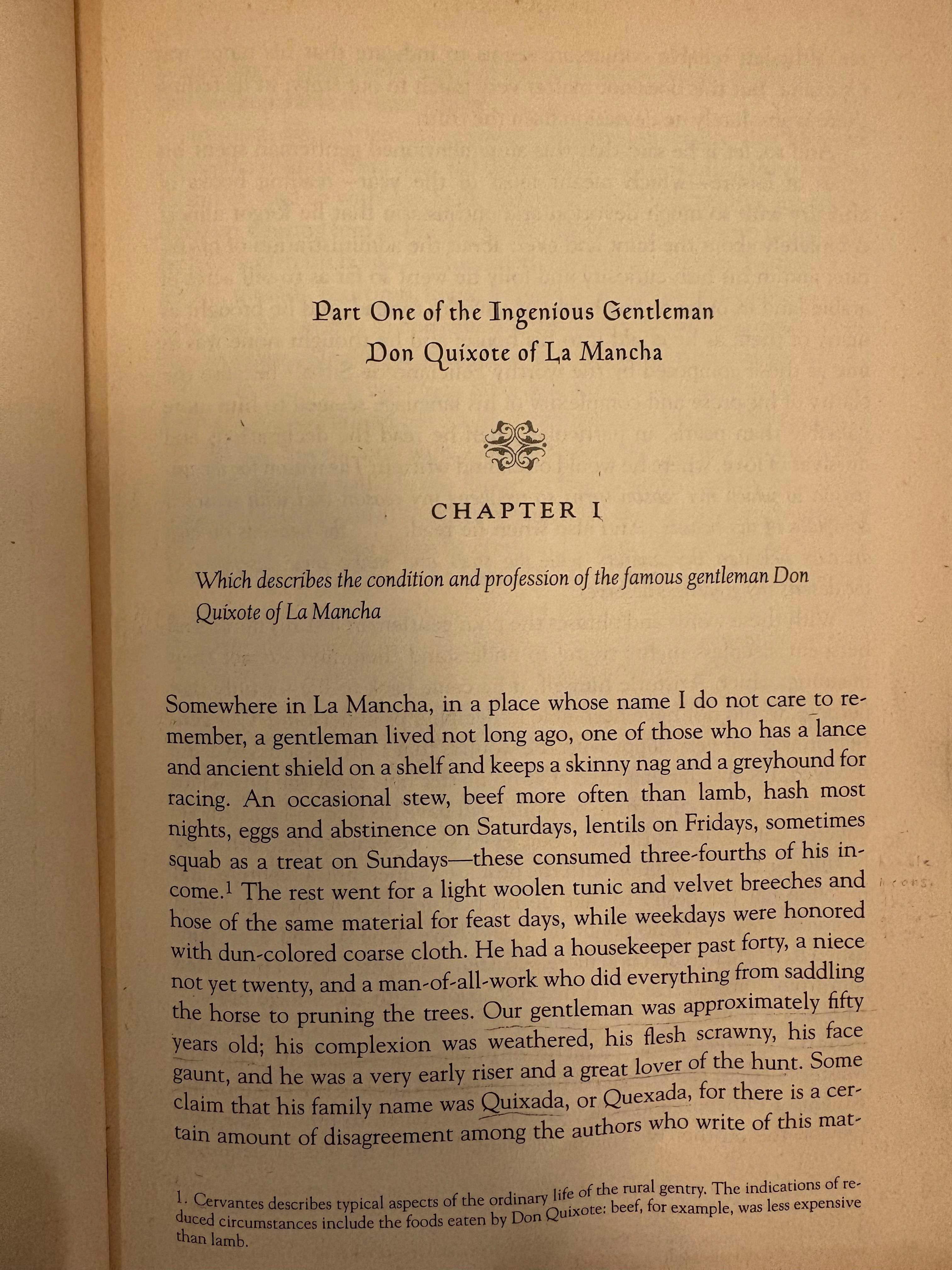
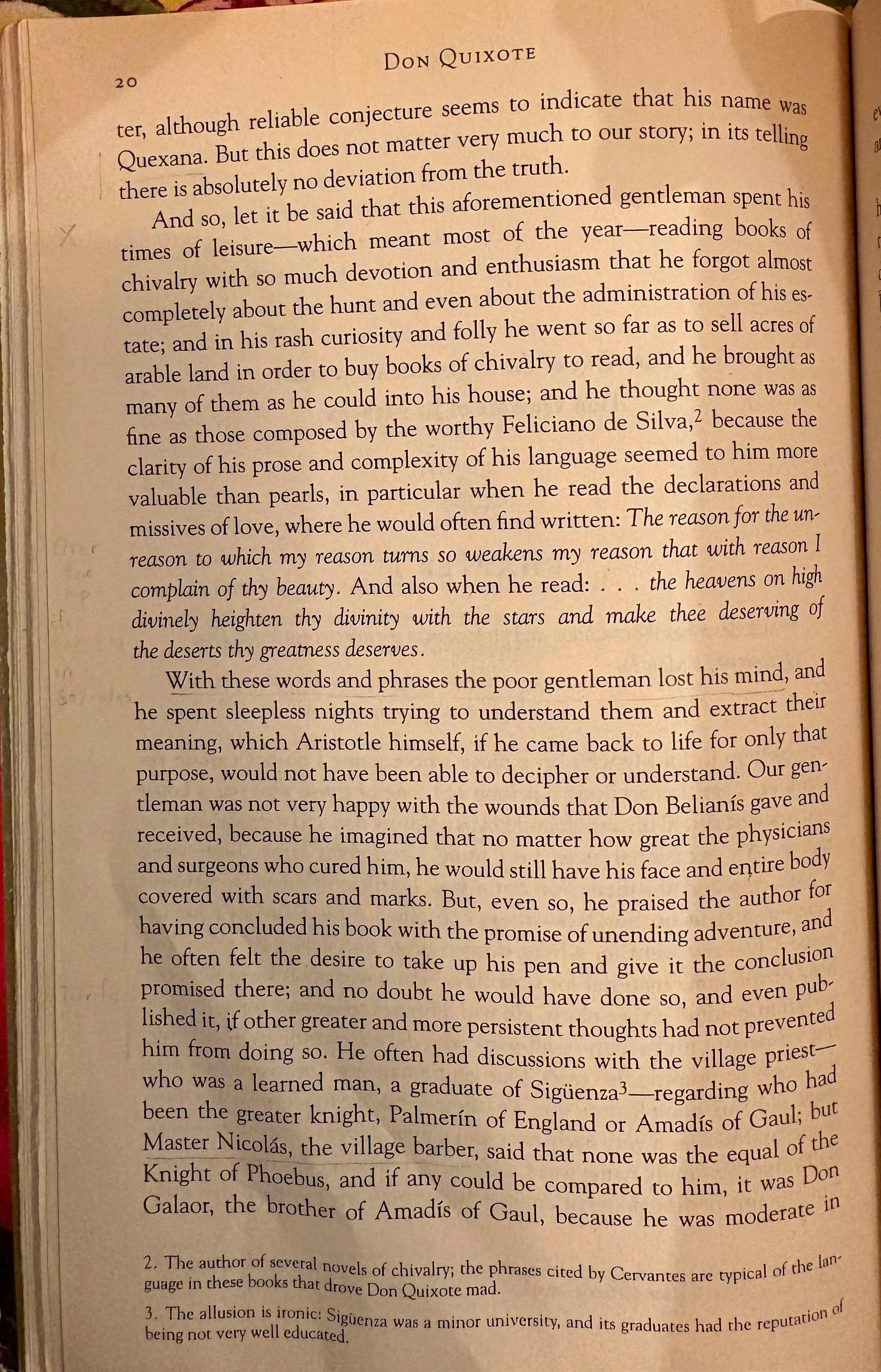
3. Cervantes, Miguel de. Don Quixote (Translated by Edith Grossman; HarperCollins, 2005) ................................................................................................................... page 7
4. Davies, Carys. Clear (Granta Books, 2024) ................... page 10
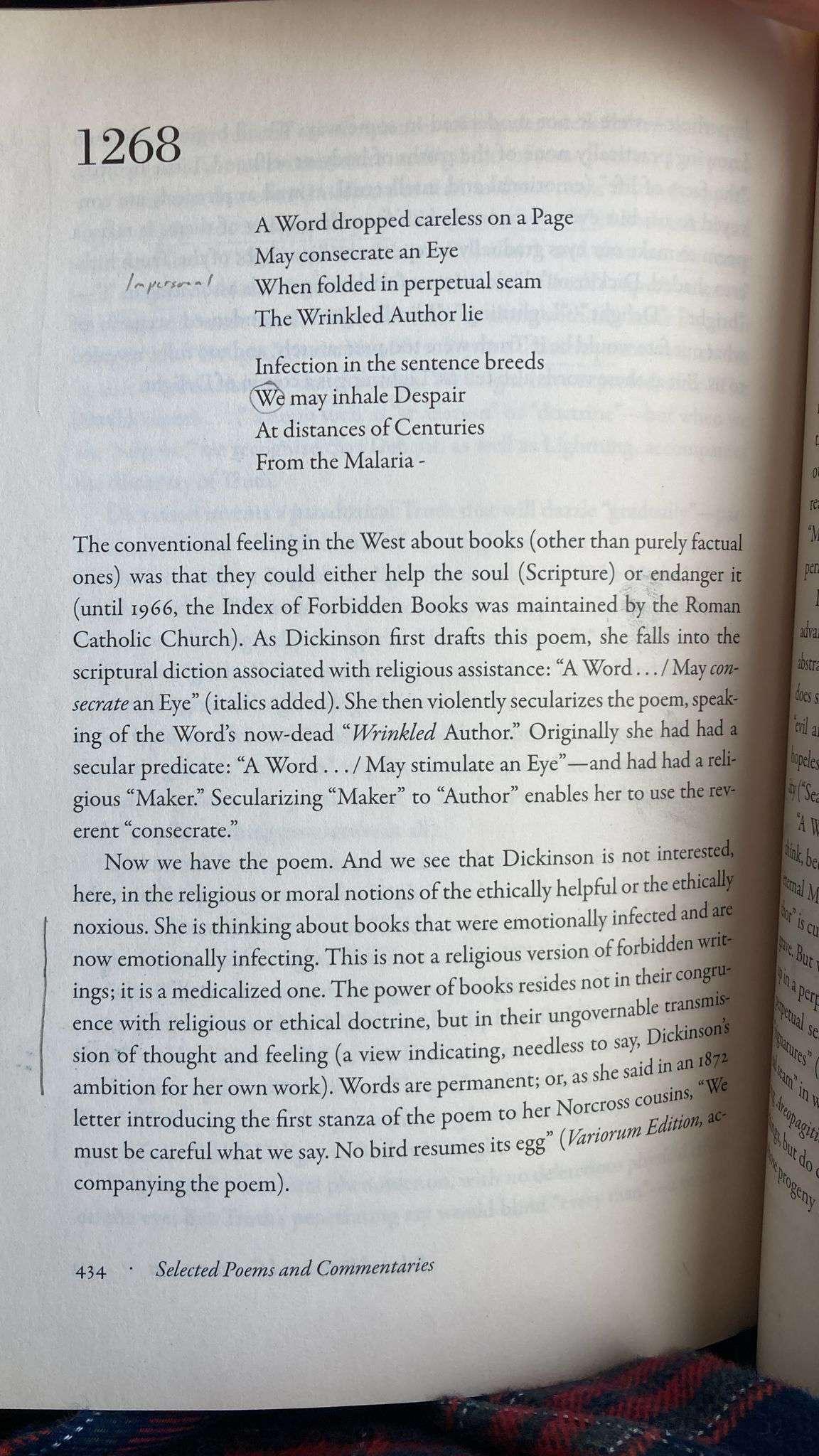
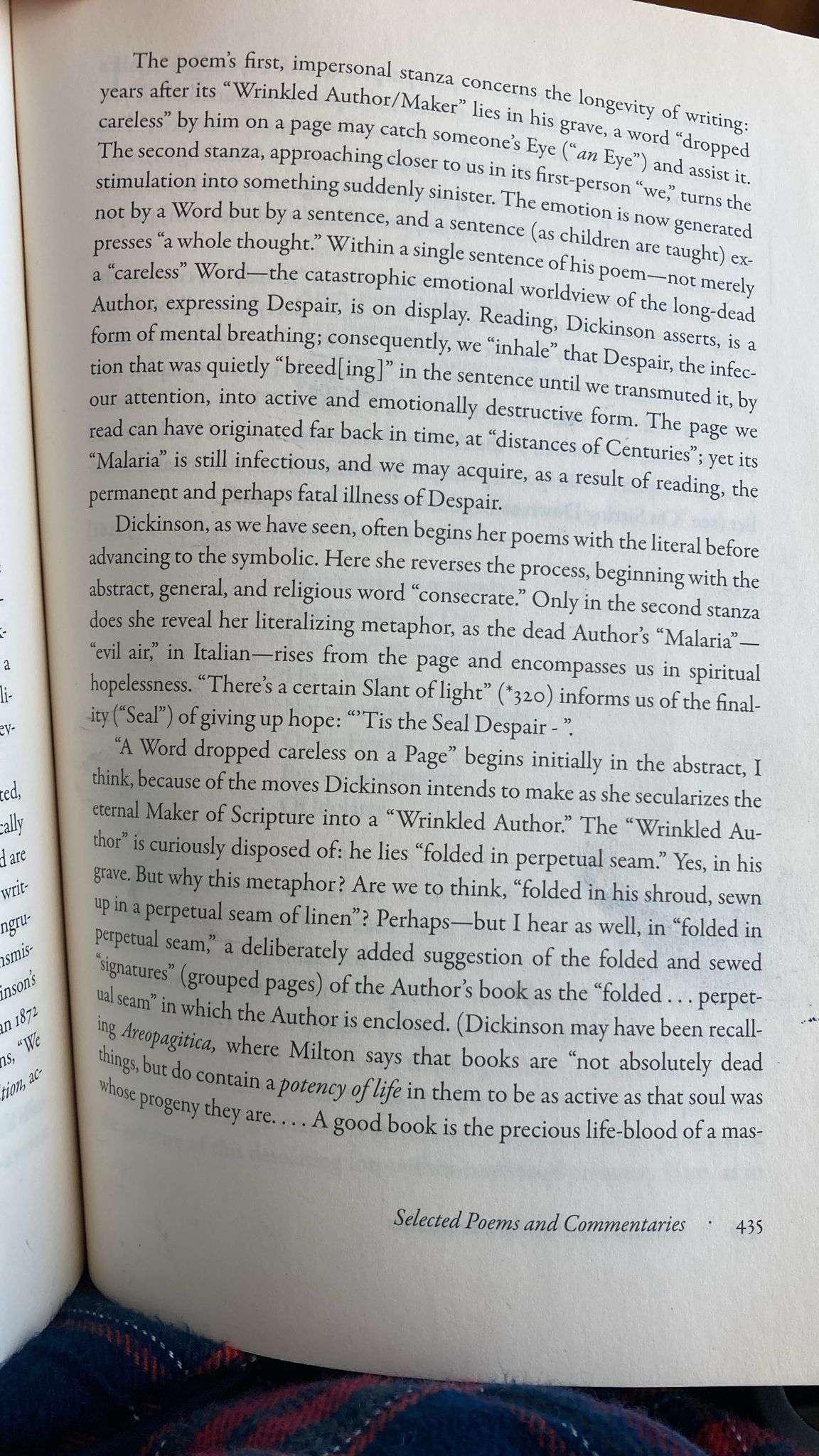
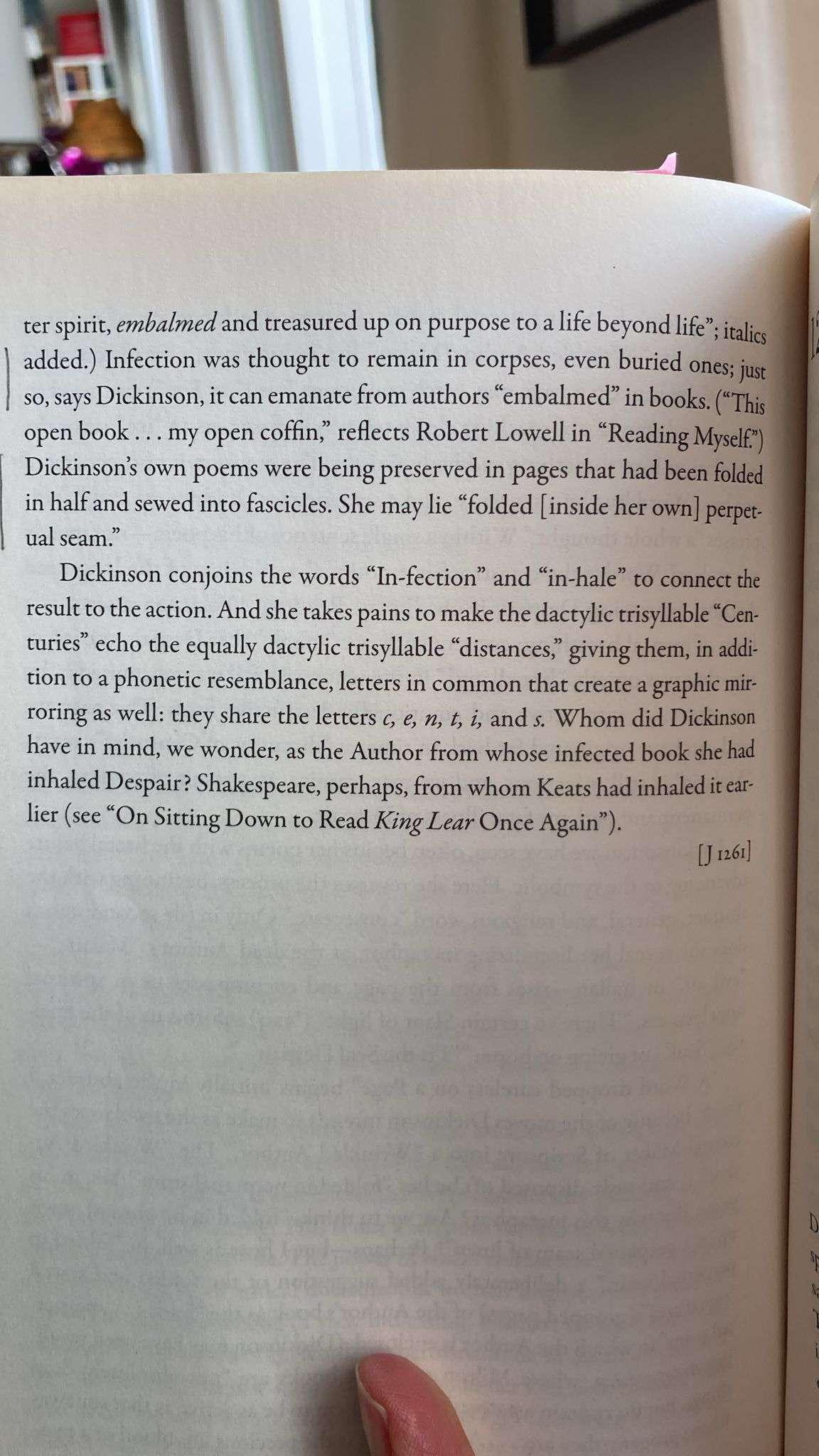
5. Dickinson, Emily. “A World Dropped Careless on a Page” Dickinson: Selected Poems and Commentaries (2012) ..................................................................... page 13
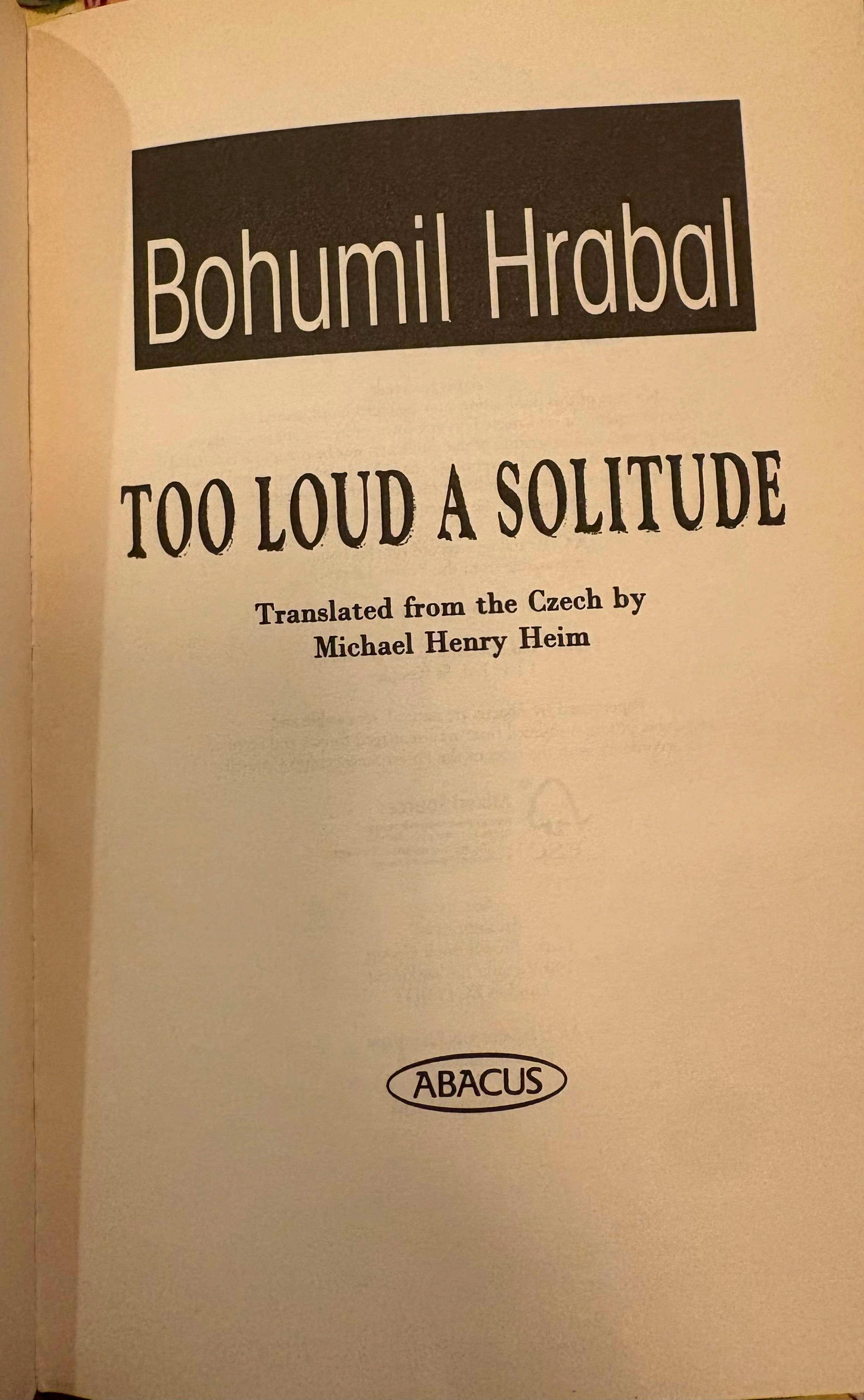
6. Hrabal, Bohumil. Too Loud a Solitude (Translated by Michael Henry Heim; Mariner Books, 1992) ..................................................................................................... page 16
7. Ulpian. “Commentary on Sabinus” Digest, Book 34………………….......s. .page 25
8. Isidore of Seville. Etymologies, Book VI (Excerpt: “Libraries”–“Canon Tables of the Gospels”) (Early 7th century CE; various modern editions)............................. page 26
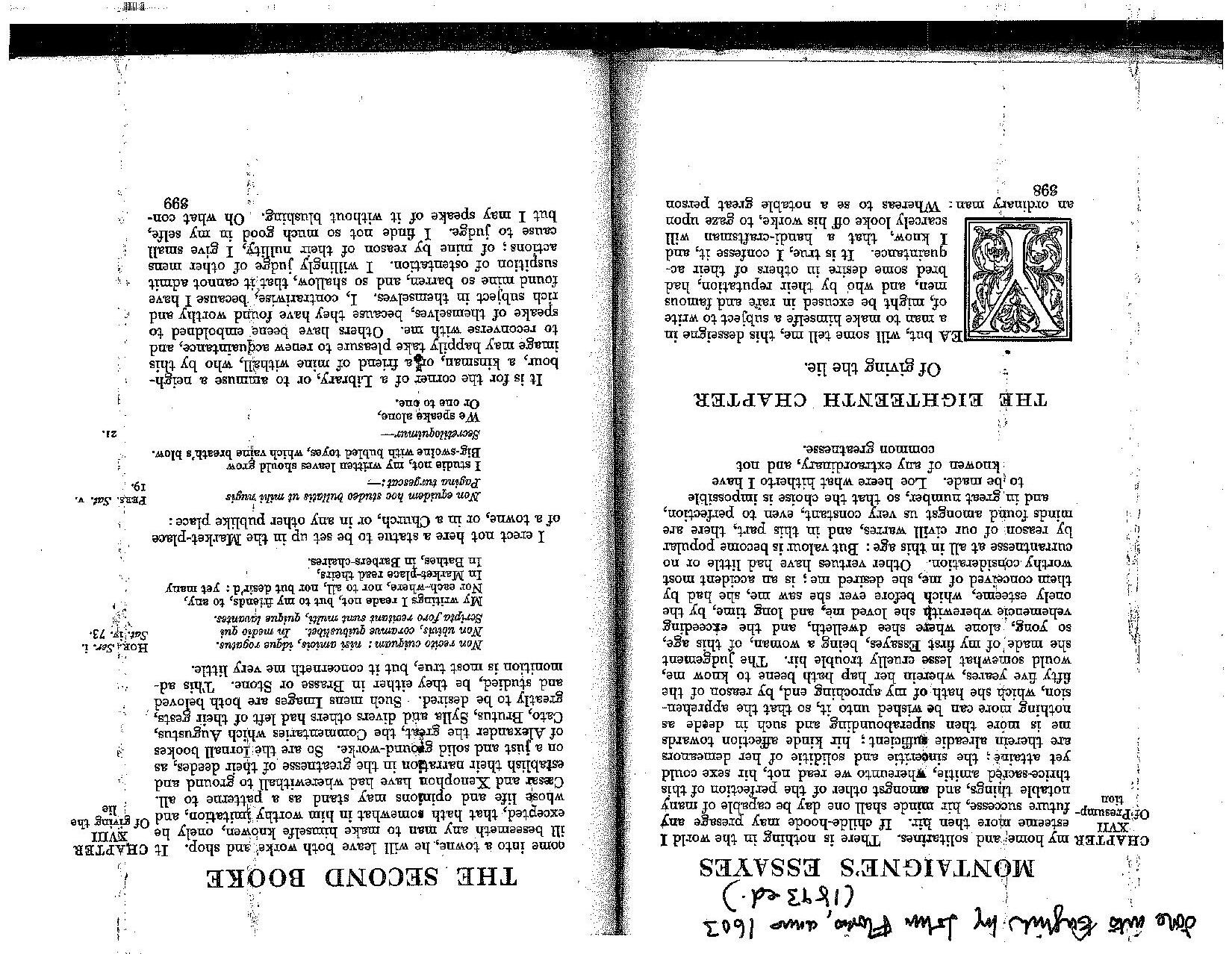
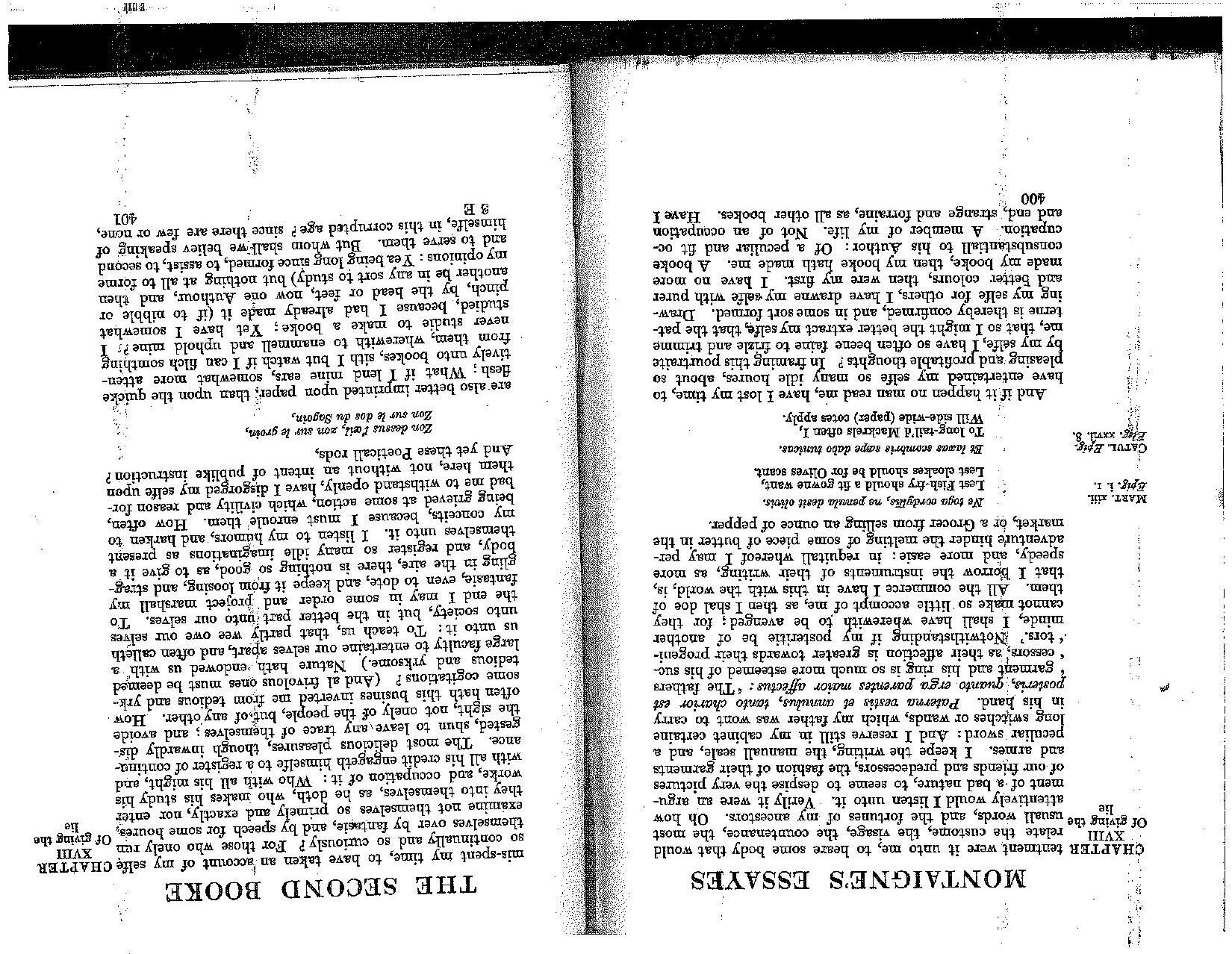
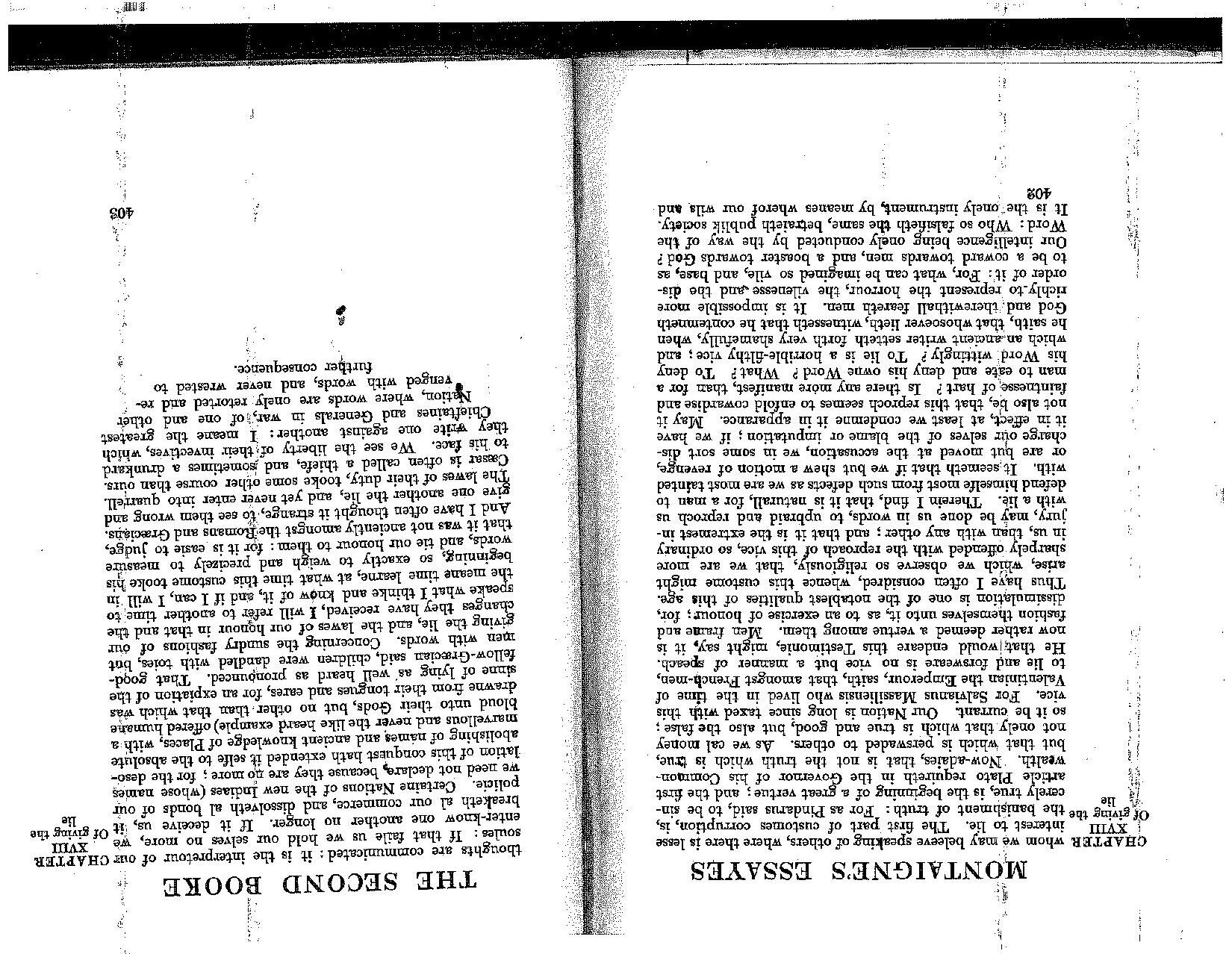
9. Montaigne, Michel de. “Of Giving the Lie” The Essays of Michel de Montaigne, Book II, Chapter 18 (Translated by John Florio; 1603; 1893 edition) ............. page 32
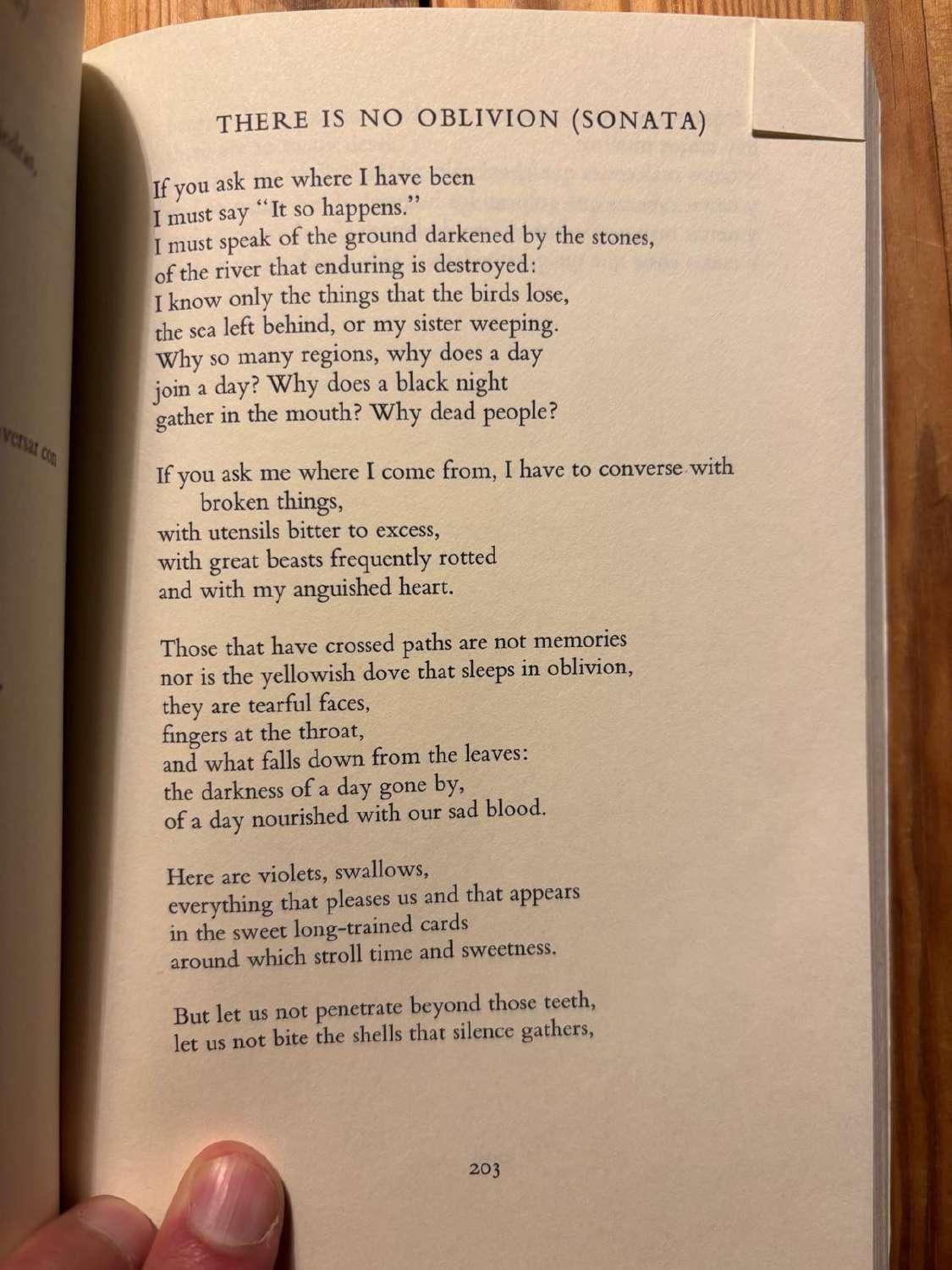
10. Neruda, Pablo. “There Is No Oblivion (Sonata)” .......................................... page 35
11. Schmidle, Nicholas. “A Very Rare Book” The New Yorker (2013) . page 37
12. Stendhal. The Red and the Black, Book I, Chapter IV (1830; original French, followed by English translation) ...................................... ................................ page 70
13. Tschichold, Jan. The Form of the Book : Essays on the Morality of Good Design (Hartley & Marks, 1991) ................................................................................... page 76
14. Updike, Daniel Berkeley. The Well-Made Book: Essays & Lectures (Mark Batty, 2002) ..... ............. page 78
15. Yourcenar, Marguerite. Memoirs of Hadrian: And Reflections on the Composition of Memoirs of Hadrian (Farrar, Straus & Giroux, 2005) ............... .... page 87
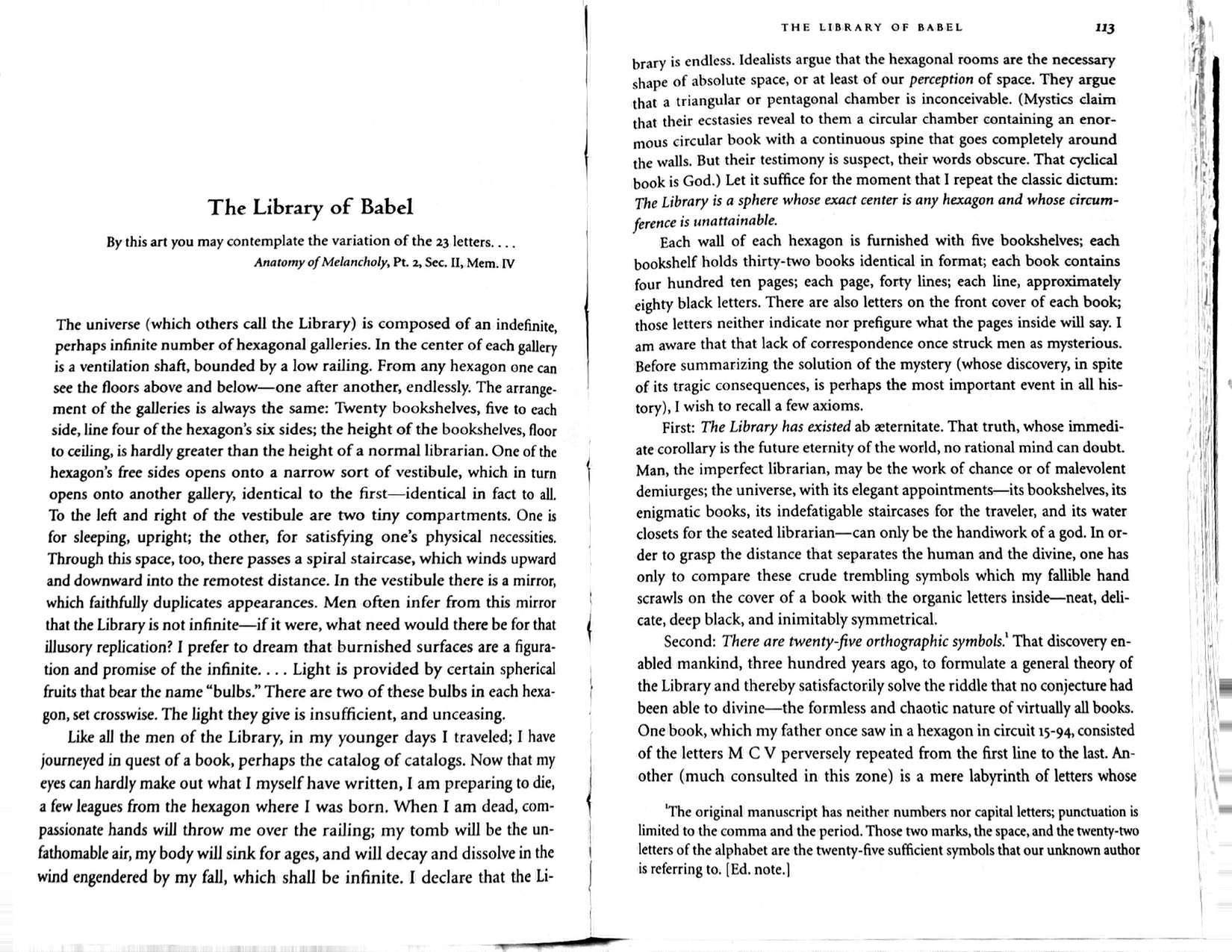
By this art you may contemplate the variation of the 23 letters..•..
Anatomy of Melancholy, Pt. 2, Sec. II, Mem. V
The universe (which others call the Library) is composed of an indefnite. perhaps infinite number of hexagonal galleries. In the center of eachgallery is a ventilation shaft, bounded by a low railing. From any hexagon one can see the floors above and below--one after another, endlessly. The arrangement of the galleries is always the same: Twenty bookshelves, five to each side, line four of the hexagon's six sides; the height of the bookshelves, loor to ceiling, is hardly greater than the height ofa normal librarian. One of the hexagon's free sides opens onto a narrow sort of vestibule, which in turn opens onto another gallery, identical to the first -identical in fact to al. To the left and right of the vestibule are two tiny compartments. One is for sleeping, upright; the other, for satisfying one's physical necessities. Through this space, too, there passes a spiral staircase, which winds upward and downward into the remotest distance. In the vestibule there is a mirror, which faithfully duplicates appearances. Men often infer from this mirror that the Library is not infiniteif it were, what need would there be for that illusory replication? I prefer to dream that burnished surfaces are a figuration andpromise of the infinite. ... Light is provided by certainspherical fruits that bear the name "bulbs." There are two of these bulbs in each hexagon, set crosswise. The light they give is insufficient, and unceasing. Like all the men of the Library, in my younger days I traveled; I have journeyed in quest of a book, perhaps the catalog of catalogs. Now that my eyes can hardly make out what I myself have written, I am preparing to die, a few leagues from the hexagon where I was born. When I am dead, compassionatehands will throw me over the railing; my tomb will be the unfathomable air, my body will sink for ages, and will decay and dissolve in the wind engendered by my fall, which shall be infinite. I declare that the Li-
brary is endless. Idealists argue that the hexagonal rooms are the necessary shape of absolute space, or at least of our perception of space. They argue that a triangular or pentagonal chamber is inconceivable. (Mystics claim that their ecstasies reveal to them a circular chamber containing an enormous circular book with a continuous spine that goes completely around the walls. But their testimony is suspect, their words obscure. That cyclical book is God.) Let it suffice for the moment that I repeat the classic dictum: The Library is a sphere whose exact center is any hexagon and whose circumference is unattainable.
Each wall of each hexagon is furnished with five bookshelves; each bookshelf holds thirty-two books identical in format; each book contains four hundred ten pages; each page, forty lines; each line, approximately eighty black letters. There are also letters on the front cover of each book; those letters neither indicate nor prefigure what the pages inside will say. I am aware that that lack of correspondence once struck men as mysterious. Before summarizing the solution of the mystery (whose discovery, in spite of its tragic consequences, is perhaps the most important event in all history), I wish to recall a few axioms.
First: The Library has existed ab æternitate. That truth, whose immediate corollary is the future eternity of the world, no rational mind can doubt. Man, the imperfect librarian, may be the work of chance or of malevolent demiurges; the universe, with its elegant appointments-its bookshelves, its enigmatic books, its indefatigable staircases for the traveler, and its water closets for the seated librariancan only be the handiwork of a god. In order to grasp the distance that separates the human and the divine, one has only to compare these crude trembling symbols which my fallible hand sCrawls on the cover of a book with the organic letters inside-neat, delicate, deep black, and inimitably symmetrical.
Second: There are twenty-fve orthographic symbols.' That discovery enabled mankind, three hundred years ago, to formulate a general theory of the Library and thereby satisfactorily solve the riddle that no conjecture had been able to divinethe formless and chaotic nature of virtually all books.
One book, which my father once saw in a hexagon in circuit 15-94,consisted of the letters MCV perversely repeated from the first ine to the last. Another (much consulted in this zone) is a mere labyrinth of letters whose
"The original manuscript has neither numbers nor capital letters; punctuation is limited to the comma and the period. Those two marks, the space, and the twenty-two letters of the alphabet are the twenty-five sufficient symbols that our unknown author is referring to. (Ed. note.]
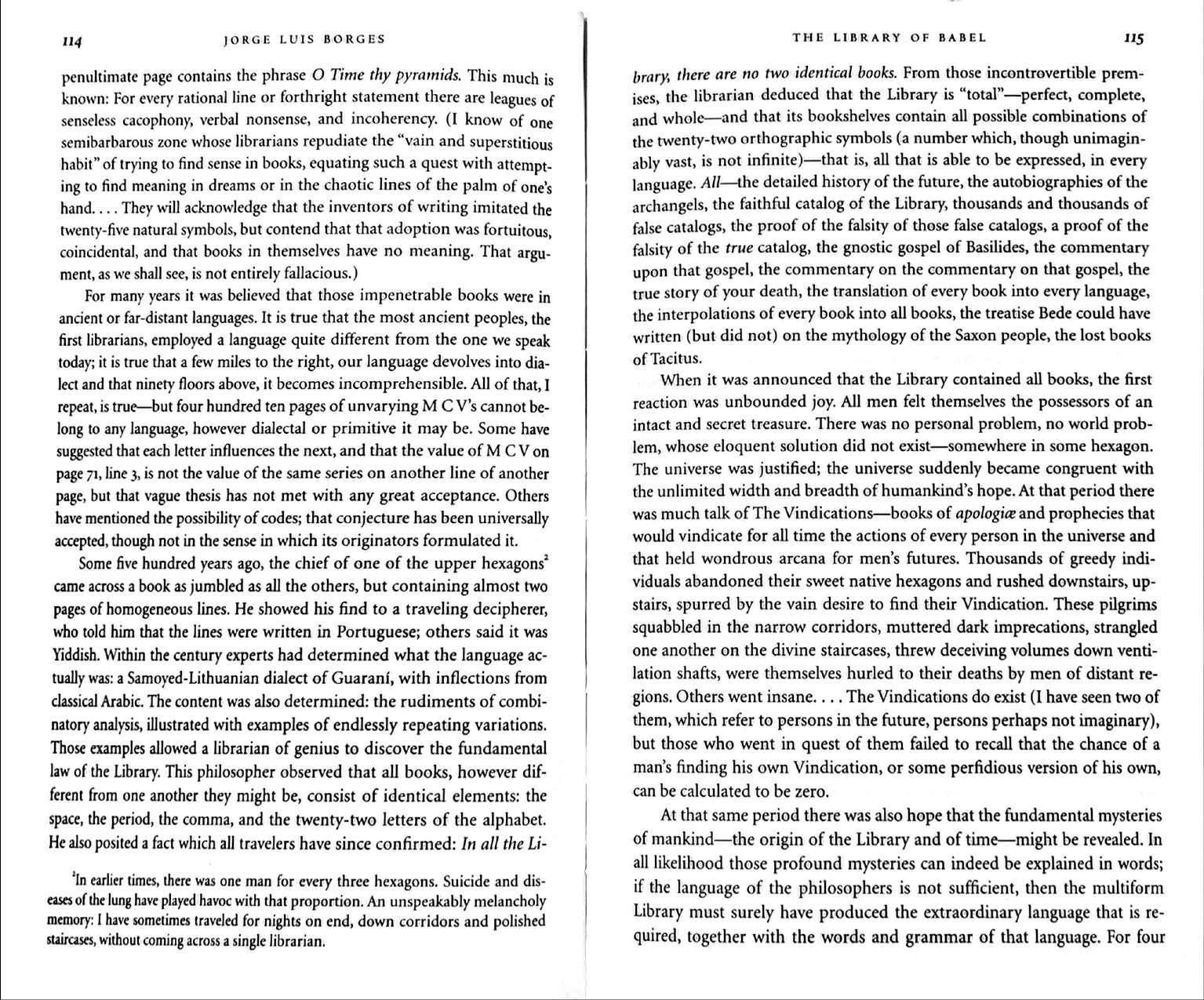
penultimate page contains the phrase O Tinme thy pyramids. This much is known: For every rational line or forthright statement there are leagues of senseless cacophony, verbal nonsense, and incoherency. (I know of one semibarbarous zone whose librarians repudiate the"vain and superstitious habit" of trying to find sense in books, equating such a quest with attempting to find meaning in dreams or in the chaotic lines of the palm of one's hand....They willacknowledgethat the inventors of writing imitated the twenty-five natural symbols, but contend that that adoption was fortuitous, coincidental, and that books in themselves have no meaning. That argument, as we shall see, is not entirely fallacious.)
For many years it was believed that those impenetrable books were in ancient or far-distant languages. It is true that the most ancient peoples, the frst librarians, employed a language quite different from the one we speak today; it is true that a few miles to the right, our language devolves into dialect and that ninety floors above, it becomes incomprehensible. All of that, I repeat,is true -but four hundred ten pages of unvarying MCV's cannot belong to any language, however dialectal or primitive it may be. Some have suggestedthateach letter influences the next, and that the value of M CV on page71, line 3, is not the value of the same series on another line of another page, but that vague thesis has not met with any great acceptance. Others havementioned the possibility of codes; that conjecture has been universally accepted, though not in the sense in which its originators formulated it.
Some five hundred years ago, the chief of one of the upper hexagons came across a book as jumbled as all the others, but containing almost two pages of homogeneous lines. He showed his find to a traveling decipherer, who told him that the lines were written in Portuguese; others said it was Yiddish. Within the century experts had determined what the language actuallywas: a Samoyed-Lithuanian dialect of Guaraní, with inflections from classicalArabic. The content was also determined: the rudiments of combinatoryanalysis,illustrated with examples of endlessly repeating variations. Thoseexamples allowed a librarian of genius to discover the fundamental law of the Library. This philosopher observed that all books, however different from one another they might be, consist of identical elements: the space,the period, the comma, and the twenty-two letters of the alphabet. He also posited a fact which all travelers have since confirmed: In all the Li-
"In earlier times, there was one man for every three hexagons. Suicide and disczsesof the lung have played havoc with that proportion. An unspeakably melancholy memory: I havesometimes traveled for nights on end, down corridors and polished staircases, without coming across a single librarian.
brary, there are no two identical books. From those incontrovertible prenmises, the librarian deduced that the Library is "total"perfect, complete, and wholeand that its bookshelves contain all possible combinations of the twenty-two orthographic symbols (a number which, though unimaginably vast, is not infinite)that is, all that is able to be expressed, in every language. AII the detailed history of the future, the autobiographies of the archangels, the faithful catalog of the Library, thousands and thousands of false catalogs, the proof of the falsity of those false catalogs, a proof of the falsity of the true catalog, the gnostic gospel of Basilides, the commentary upon that gospel, the commentary on the commentary on that gospel, the true story of your death, the translation of every book into every language, the interpolations of every book into all books, the treatise Bede could have written (but did not) on the mythology of the Saxon people, the lost books of Tacitus.
When it was announced that the Library contained all books, the first reaction was unbounded joy. All men felt themselves the possessors of an intact and secret treasure. There was no personal problem, no world problem, whose eloquent solution did not exist-somewhere in some hexagon. The universe was justified; the universe suddenly became congruent with the unlimited width and breadth of humankind's hope. At that period there was much talk of The Vindications books of apologiæand prophecies that would vindicate for all time the actions of every person in the universe and that held wondrous arcana for men's futures. Thousands of greedy individuals abandoned their sweet native hexagons and rushed downstairs, upstairs, spurred by the vain desire to find their Vindication. These pilgrims squabbled in the narrow corridors, muttered dark imprecations, strangled one another on the divine staircases, threw deceiving volumes down ventilation shafts, were themselves hurled to their deaths by men of distant regions. Others went insane. ...The Vindications do exist (I haveseen two of them, which refer to persons in the future, persons perhaps not imaginary), but those who went in quest of them failed to recall that the chance of a man's finding his own Vindication, or some perfidious version of his own, can be calculated to be zero.
At that samne period there was also hope that the fundamental mysteries of mankind the origin of the Library and of time-might berevealed.In all likelihood those profound mysteries can indeed be explained in words; if the language of the philosophers is not suficient, then the multiform Library must surely have produced the extraordinary language that is required, together with the words and grammar of that language. For four
centuries, men have been scouring the hexagons. ... There are official searchers, the "inquisitos." I have seen them about their tasks: they arrive exhausted at some hexagon, they talk about a staircase that nearly killed them-some steps were missingthey speak with the librarian about gal. leries and staircases, and, once in a while, they take up the nearest book and leaf through it, searching for disgraceful or dishonorable words. Clearly, no one expects to discover anything.
That unbridled hopefulness was succeeded, naturally enough, by a similarly dişproportionate depression. The certainty that some bookshelf in some hexagon contained precious books, yet that those precious books were forever out of reach, was almost unbearable. One blasphemous sect proposed that the searches be discontinued and that all men shuffle letters and symbols until those canonical books, through some improbable stroke of chance, had been constructed. The authorities were forced to issue strict orders. The sect disappeared, but in my childhood I have seen old men who for long periods would hide in the latrines with metal disks and a forbidden dice cup, feebly mimicking the divine disorder.
Others, going about it in the opposite way, thought the first thing to do was eliminate all worthless books. They would invade the hexagons, show redentials that were not always false, leaf disgustedly through a volume, and condemn entire walls of books. It is to their hygienic, ascetic rage that we lay thesenselessloss of millions of volumes. Their name is execrated today, but those who grieve over the "treasures" destroyed in that frenzy overlook two widely acknowledged facts: One, that the Library is so huge that any reduction by human hands must be infinitesimal. And two, that each book is unique and irreplaceable, but (since the Library is total) there are alwaysseveralhundred thousand imperfect facsimiles--books that differ by no more than a single letter, or a comma. Despite general opinion, I daresay that theconsequencesof the depredations committed by the Purifiers have beenexaggerated by the horror those same fanatics inspired. They were spurred on by the holy zeal to reach-someday, through unrelenting effort--the books of the Crimson Hexagon- -books smaller than natural books,books omnipotent, illustrated, and magical.
Wealso have knowledge of another superstition from that period: belief in what was termed the Book-Man. On some shelf in some hexagon, it was argued, there must exist a book that is the cipher and perfect compendium of all other books, and some librarian must have examined that book; this librarian is analogous to a god. In the language of this zone there are stillvestigesof the sect that worshiped that distant librarian. Many have THE LIBRARY OF BABEL
cone in search of Him. For a hundred years, men beat every possible pathand every path in vain. How was one to locate the idolized secret hexagon that sheltered Him? Someone proposed searching by regression: To locate book A, first consult book B, which tells where book A can be found; to locate book B, first consult book C, and so on, to infinity.... It is in ventures such as these that I have squandered and spent my years. I cannot think it unlikely that there is such a total book' on some shelf in the universe. I pray to the unknown gods that some man-even a single man, tens of centuries ago--has perused and read that book. If the honor and wisdom and joy of such a reading are not to be my own, then let them be for others. Let heaven exist, though my own place be in hell. Let me be tortured and battered and annihilated, but let there be one instant, one creature, wherein thy enormous Library may find its justification.
Infdels claim that the rule in the Library is not "sense," but "non-sense," and that "rationality" (even humble, pure coherence) is an almost miraculous exception. They speak, I know, of "the feverish Library, whose random volumes constantly threaten to transmogrify into others, so that they affirm all things, deny all things, and confound and confuse all things, like some mad and hallucinating deity:" Those words, which not only proclaim disorder but exemplify it as well, prove, as all can see, the infidels' deplorable taste and desperate ignorance. For while the Library contains all verbal structures, all the variations allowed by the twenty-five orthographic symbols, it includes not a single absolute piece of nonsense. It would be pointless to observe that the finest volume of all the many hexagons that I myself administer is titled Combed Thunder, while another is titled The Plaster Cramp, and another, Axaxaxas nlö. Those phrases, at first apparently incoherent, are undoubtedly susceptible to cryptographic or allegorical "reading"; that reading, that justification of the words' order and existence, is itself verbal and, ex hypothesi, already contained somewhere in the Library. There is no combination of characters one can make-dhcmrlchtdj, for example that the divine Library has not foreseen and that in one or more of its secret tongues does not hide a terrible significance. There is no syllable one can speak that is not filled with tenderness and terror, that is not, in one of those languages, the mighty name of a god. To speak is to commit tautologies. This point-
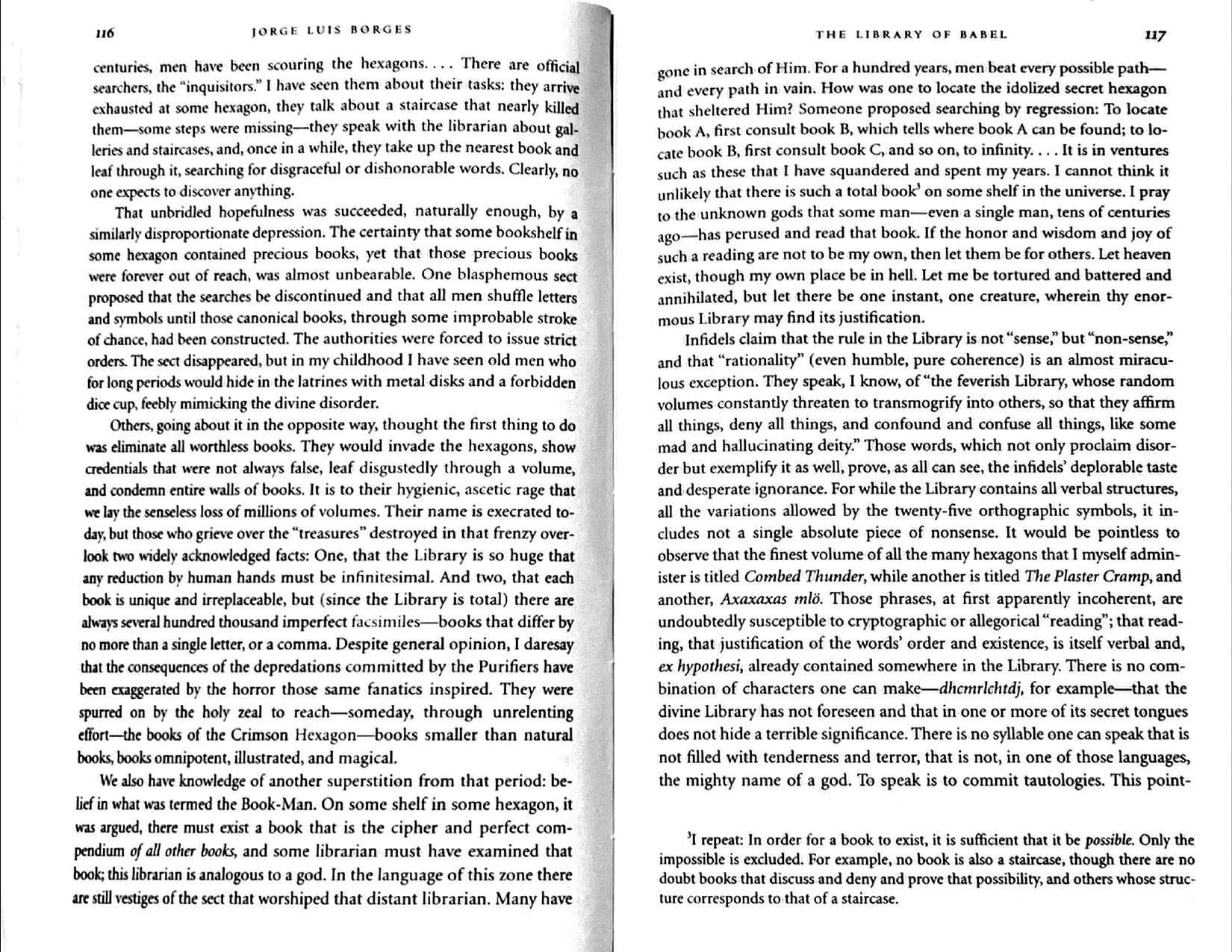
I repeat: In order for a book to exist, it is suficient that it bepossible. Only the impossible is excluded. For example, no book is also a staircase, though there are no doubt books that discuss and deny and prove that possibility, and others whose structure corresponds to that of a staircase.
less, verbose epistle already exists in one of the thirty volumes of thefve bookshelves in one of the countless hexagons-as does its refutation.(A number n of the possible languages employ the same vocabulary; insome of them, the symbol "library" possesses the correct definition"everlasting ubiquitous system of hexagonal galleries," while a library-the thingloaf of bread or a pyramid or something else, and the six words thatdefine it themselves have other definitions. You who read me-are youcertainyoy understand my language?)
Methodical composition distracts me from the present conditionof humanity. The certainty that everything has already been writtenannulsus or renders us phantasmal. I know districts in which the youngpeoplepro: trate themselves before books and like savages kiss their pages,thoughthey cannot read a letter. Epidemics, heretical discords, pilgrimages thatinevia. bly degenerate into brigandage have decimated the population. Ibelieve | mentioned the suicides, which are more and more frequent everyyear.Jam perhaps misled by old age and fear, but I suspect that the humanspecies the only species-teeters at the verge of extinction, yet that the Library enlightened, solitary, infinite, perfectly unmoving, armed withprecious volumes, pointless, incorruptible, and secret--will endure.
I have just written the word "infinite." I have not included thatadịective out of mere rhetorical habit; I hereby state that it is not illogical tothink that the world is infinite. Those who believe it to have limitshypothesize that in some remote place or places the corridors and staircasesandhexagons may, inconceivably, end-which is absurd. And yet those whopicture the world as unlimited forget that the number of possible books is not.I will be bold enough to suggest this solution to the ancient problem:TheLi brary is unlimited but periodic. If an eternal traveler should journey inany direction, he would find after untold centuries that the samevolumesare repeated in the same disorder- which, repeated, becomes order: theOrder. My solitude is cheered by that elegant hope.
Mar del Plaa, 194!
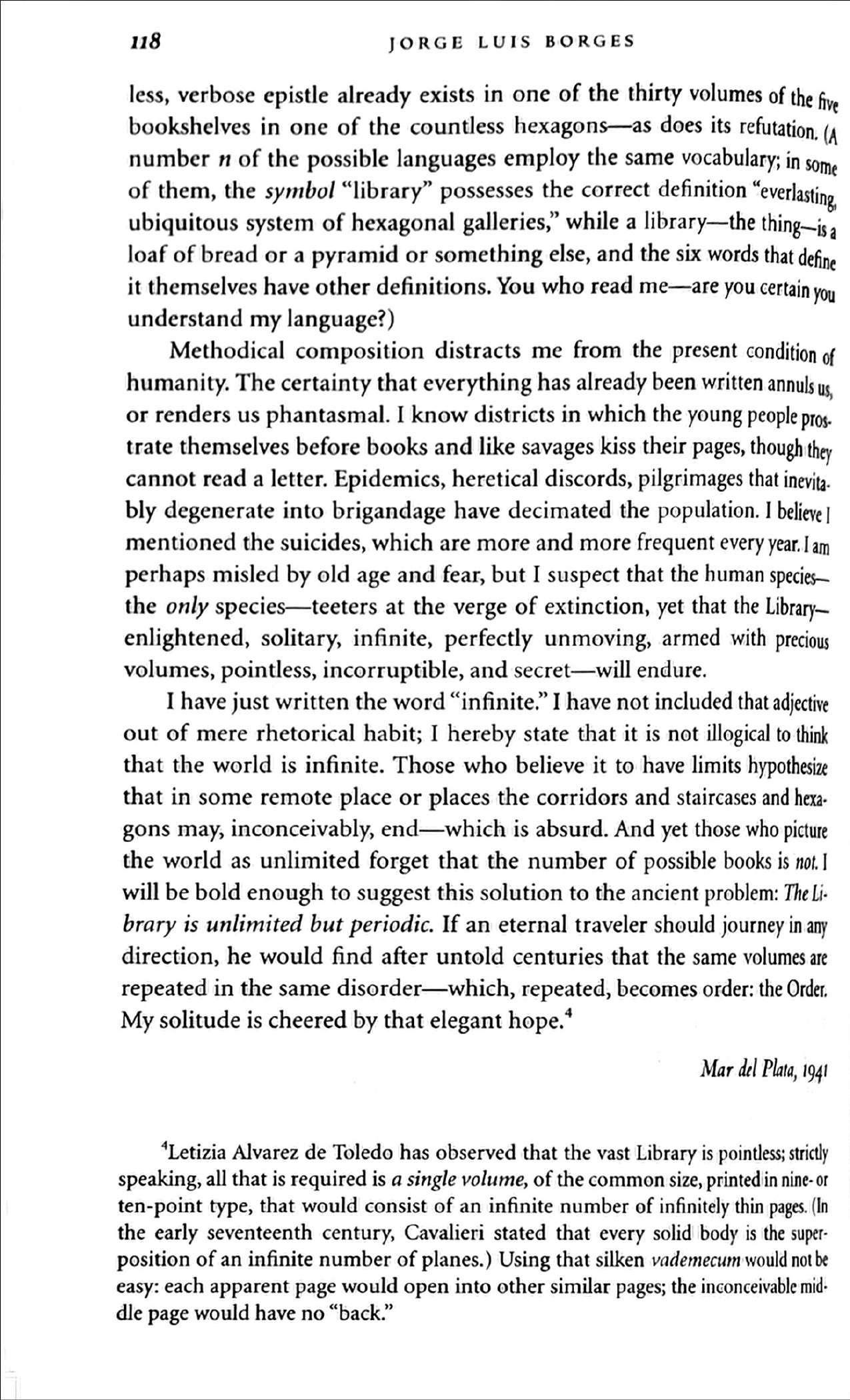
'Letizia Alvarez de Toledo has observed that the vast Library ispointdessstricly speaking, all that is required is a single volume, of the common size,printed innine-or ten-point type, that would consist of an infinite number of infinitely thinpages.(ln the early seventeenth century, Cavalieri stated that every solid body is thesuperposition of an infinite number of planes.) Using that silken vademecumwouldnotbe easy: each apparent page would open into other similar pages; theinconceivablemiddle page would have no "back."
John Burnside
The linguist Ole Stig Andersen was keen to seek out the remaining traces of a West Caucasian language called Ubykh. Having heard that there was one remaining speaker he set out to find the man and arrived in his village on 8 October 1992. The man had died a few hours earlier. At times, in those last few months, he would think of a word and he had to remember the tree, or the species of frog, the sound denoted: the tree itself, or the frog, or the state of mind and not the equivalent word in another language, the speech that had taken his sons and the mountain light; the graves he swept and raked; the wedding songs.
While years of silence gathered in the heat, he stood in his yard and whispered the name of a bird in his mother tongue, while memories of snow and market days, his father’s hands, the smell of tamarind, inklings of milk and blood on a sunlit floor receded in the names no longer used: the blue of childhood folded like a sheet and tucked away.
Nothing he said was remembered; nothing he did was fact or legend in the village square, yet later they would memorise the word he spoke that morning, just before he died: the word for death, perhaps, or meadow grass, or swimming to the surface of his mind, that other word they used, when he was young, for all they knew that nobody remembered.
Excerpt from my novel CLEAR, which I wrote ‘up and out of’ Jakob Jaboksen’s 1908 Etymological Dictionary of the Norn Language in Shetland
When John Ferguson arrived back from the hermit’s cell, he did what he could to make clear to Ivar that he was sorry for shouting at him; that the business with Mary’s picture was forgotten.
But Ivar seemed different: remote, sad.
He hardly touched his halibut, and John Ferguson was still eating when Ivar pushed back his great chair and got up and went out. It was late when he came back and turned the chair away from the table to face the fire and sat down and closed his eyes, and when John Ferguson woke up in the morning, he’d already gone out again.
•
Mary’s husband spent the morning cleaning and tidying the bothy.
It was all he could think of to do: to make it welcoming for when Ivar came back.
He folded their blankets and cleaned the cooking pot. He swept the loose grass scattered across the floor into the drain. He went down to the brook and picked a handful of thrift and Lady’s Mantle and put them on the table in the brown jug and when he stepped outside to fetch a peat for the fire he saw Ivar in the homefield talking to the black cow, but although he waited for him to come in, he didn’t, and when he next looked outside, he couldn’t see him.
At first John Ferguson didn’t worry; he sat in Ivar’s great chair, going through his pages, memorising batches of words and organising them into sections as well as alphabetically – words to do with the weather and the water, with the earth and what was under it; words of a domestic nature. He made a new page devoted exclusively to sounds – to the hoss and horl of the sea, the yal of the gulls, the tusk of the wind, the snirk of a door.
He went over a new batch of words Ivar had given him that had double meanings –words that seemed to interest and excite Ivar more than anything, as if he’d never thought about their richness and versatility before he’d tried to teach his language to John Ferguson.
He’d explained, for instance, that his eldest brother, Hanus, had been a big, stout person, and that this single-syllabled word, which had both bigness and stoutness contained within it, also had the meaning of ‘a large wave.’
It had taken a long time before John Ferguson had grasped what Ivar was saying, and he had the impression that at the end of it all Ivar was conscious in a way he’d never been before of how right it was, that a word that described his brother physically also described a
big wave; as if Hanus had possessed something of the sea’s strength. If any of his brothers could have made it back alive, he seemed to be thinking, it would surely have been Hanus.
Another word with a double meaning was the one for when you felt a fish nudging the end of the line, which could also mean, if John Ferguson had understood Ivar correctly, ‘a slight impression or feeling of something’.
There was also the word for a certain kind of thick mist, that could also signify what John Ferguson translated, after a lot of to-ing and fro-ing, as ‘a deep pondering’.
Stroda, meanwhile, seemed to describe the backwash of the waves against the steep rocks as well as great agitation or hurry in a person; a hobbastyu was both a turbulent sea and a great difficulty, or dilemma; a guster was a strong, drying wind and also, he was fairly sure, a loud, blustery, arrogant way of speaking.
He went through all these new words a second time, and then he went through them again, and after that he slept, and when he woke the afternoon light had changed into that different light by which you know that although it is not yet dark, it is late.
Outside he could hear the old blind cow bellowing in expectation of her evening fodder. He waited another hour or so, and when Ivar was still not back, he went looking for him.
He looked for him first in the outfield where he might have expected to find him at this time of day and when he wasn’t there he carried on, following the furthest of Ivar’s low walls until it ended and he came to the stream and the fertile meadow beyond it. The ground was dry and he walked quickly between patches of thrift and Lady’s Mantle, until, half-way across, the dry ground gave way to a huge flooded area and soon his feet were soaking wet. He considered going back to the wall and going in a different direction, but he’d gone so far now into the swamp to turn back and he was already so soaked and it seemed better to carry on. The bone in his shin was beginning to ache and although he tried to take short, light steps to lessen the pain, the boggy ground sucked on his feet and made it impossible. Just before he reached the higher, dry ground after the meadow he stepped in an especially deep puddle of dark slime and cried out, furiously. Meanwhile the wind came in puffs, softly at first but then more vigorously, first from one direction, then from another, as if it was deliberately trying to hamper his progress. Up on the high pasture the fleeces of the sheep shook. His own clothes fluttered and billowed as he pressed on towards the cliffs. At the top of the first ghyll he paused for breath while below the sea broke over sunken rocks and foamed around them in greenish eddies.
With his aching leg he stood in the cold looking out across the empty water. In his head, going round and round, the word Ivar had given him for something that has disappeared or been lost; something never to be found in spite of searching.
‘Ivar!’ he called out.
He walked down to the beach on a long slow path he hadn’t come across before that looked easy from above but was in fact rocky and undulating and exhausting and by the time he reached the end of it he was stumbling. He sat on a rock to rest his leg, popping hollow blisters of seaweed between his forefinger and his thumb. There were big heaps of it everywhere, glistening and dark and dirty looking. At his feet an eel wound itself down into the sand and lay beneath the surface, coiled and buried. It was all very ugly. He got up, and continued along the beach and up again onto the pasture until he came to the loaf-like mound of the round hill and the place where Ivar dug the peats, but Ivar wasn’t there. Long waves rolled towards the shore, passing over the rocks without breaking and a soft cold rain began to fall. His leg was really hurting now but he carried on, up to the top of the round hill and down again, and then onto the summit of the peaked one. Everywhere he looked there seemed to be black puddles of thick standing water with stalks of grass poking out of them. He went down to the inlet. The surface of the sea had a scraped, scrubbed look. Long, skittish shadows, hurrying in front of the wind, raced across it. Cormorants glinted, gulls hung in the air with their mouths open. Dark, heavy clouds rested on the horizon and he found himself wondering what Ivar would call them – would he say they were homeks or benkers? elins or glodreks? He wanted urgently, suddenly, to know the answer, to be able to describe things as they were instead of only guessing at them. Was the thick, drifting mist around the bottom of the white hill a himna or a yema? Was it a rag or a dom? Not knowing the right words made him feel as far away and separate from Ivar as he had ever felt since the day he’d arrived. Even in the moment when he’d opened his eyes for the first time after his fall, he hadn’t felt as distant from him as he did now. Back then, he had looked at him sitting in his great chair, and even though he was a stranger, he’d had the feeling that in some buried unconscious part of himself, he knew exactly who he was. Now he felt that whatever had connected them before had been broken, or taken away. He went to the fowling cliff where Ivar had terrified him by lowering himself from the metal spike on one of his squeaky home-made ropes and dangled against the wrinkled cliff, a butterfly pinned against a black wall.
‘Ivar!’ he shouted, shaking in the cold, amazed at his anguish.
‘Ivar don’t do this! Don’t go somewhere and not tell me where you have gone!’
My contributions are two chunks of ancient Latin text exploring the definition of “books” for different purposes and in different contexts. The first is by Ulpian, a Tyre-born jurist who taught law at Rome at the turn of the third century CE. His works do not survive in their entirety, but are frequently quoted and excerpted in the emperor Justinian’s (c6 CE) Digest, a massive compilation of legal opinions and interpretations. This extract from volume 24 of Ulpian’s Commentary on Sabinus, is taken from book 34 of the Digest, a discussion of how to interpret the use of various terms in wills and testaments, and concerns how to interpret words for (and related to) “book” in wills:
All scrolls (volumina) are included within the designation of “books”, whether on papyrus or on parchment or on whatever other material: but if it’s on linden bark (as some do it) or some other kind of bark, the same thing must be said. But if they are on parchment leaves, or papyrus, or indeed ivory, or on waxed tablets of some other material, whether they ought to count as “books”, let us see.
Now, Gaius Cassius wrote that parchments are included when “books” are left to someone: it follows therefore that the other things should be included, if it is not contradicted by the will of the testator.
If 100 books are left to someone, we will give 100 scrolls to him, not 100 things which suffice for the writing of a book (as someone might measure out according to his talent): so consider that when you have all of Homer in one scroll, we count it not as 48 books, but this one volume of Homer should be taken as “a book”. If “the text of Homer” is willed and it is not complete, then however much of the rhapsode is present, that much is owed.
But Sabinus wrote that when “books” are willed, “libraries” are not included; and likewise, Cassius says that parchments that have been written on should be included, and then he adds that neither chests nor bookboxes nor any of the other things in which books are stored are owed. But what Cassius says about blank parchments is correct: for neither should blank papyrus sheets should be included in a bequest of “books”, nor should books be included in a bequest of “papyrus sheets”, unless perchance the will of the testator urges us to do even this: so consider, if someone studious should perchance leave their papyrus sheets in this way, “all my papyrus sheets together”, and they have nothing else besides books, nor one will doubt that the books are owed, for in common usage, many people call books “papyrus sheets”.
Now, what if someone bequeaths “blank papyrus sheets”? Parchments are not included, nor are other writing materials, but nor are books which have been begun. And so it is not unreasonably asked, if “books” are willed, whether books not yet fully written out are included. Now, I don’t think they are, any more than not fully woven cloth is included under “clothes”. But books that have been written out but not yet hammered or decorated are included: likewise they are included if they are not yet glued together or corrected; so too are parchments that have been stitched but not yet bound together (sewn quires? -JAH).
Now if the testator leaves a “library” (bibliotheca), whether just one bookcase (armarium) or bookcases are included, or whether the books are also included, has been asked. And Nerva has elegantly observed that it depends what the testator had in mind, as “library” signifies a location, and so, sometimes it means the bookcase, as when we say “he bought an ivory library,” and sometimes it means the books, as when we say “he bought a library.” Therefore what Sabinus has written, that “the library does not follow the books,” is not always true; for sometimes the bookcases are also owed, which many people call “libraries”.
[…] No one claims that when “papyrus sheets” are bequeathed, that this should include books that have been written out and completely made. The same is true for tablets.
My second reading is an excerpt from the Etymologies of Isidore of Seville, a scholar and church leader in the late 6th and early 7th centuries CE. His 20-volume encyclopedia collected the knowledge of antiquity in the form of concepts and their definitions. Book 6, on “Ecclestiastical Books and Offices,” begins by describing the various kinds of books and works that are important to the church, then takes a digression to define various terms and concepts that relate to books generally. I invite you to begin with chapter iii (“Libraries”) and conclude with chapter xv (“Canon tables of the Gospels”):
preachedtheGospelintheworld.NowChristalsohas beencalledaprophet,asiswritten(Jer. 1:5):“Imadethee aprophetunto thenations.”
37.Third,Luke,mostpolishedinhisGreekofallthe evangelists,infactwrotehisGospelinGreece,wherehe wasaphysician.HewroteittoBishopTheophilus,beginningwithapriestlyspirit,saying(1:5):“Therewasinthe daysofHerod,thekingofJudea,apriest,Zechariah” –so thathemightshowthatChristafterhisbirthin thefleshandhispreachingoftheGospelwasmadea sacrificialvictimforthesalvationoftheworld. 38.For ChristhimselfisthepriestofwhomitissaidinPsalms (109:4):“Thouartapriestforeveraccordingtotheorder ofMelchizedech.”WhenChristcame,thepriesthoodof theJewsgrewsilent,andtheirlawandprophecyceased. 39.Fourth,JohnwrotethelastGospelinAsia,beginning withtheWord,sothathemightshowthatthesameSaviorwhodeignedtobebornandtosufferforoursake washimselftheWordofGodbeforetheworldwas,the samewhocamedownfromheaven,andafterhisdeath wentback againtoheaven.
40.ThesearethefourEvangelists,whomtheHoly SpiritsymbolizedthroughEzechiel(1:10)asfouranimals.Theanimalsarefourbecause,bytheirpreaching,thefaithoftheChristianreligionhasbeendisseminatedthroughthefourcornersoftheearth. 41.Theyare moreovercalledanimals(animalia)becausetheGospel ofChristispreachedforthesakeofthesoul(anima) ofaperson.Andtheyarefullofeyesinsideandoutside,becausetheyforeseetheGospelswhichhavebeen spokenbytheprophets,andwhichhepromisedinformertimes. 42.Further,theirlegsarestraight,because thereisnothingcrookedintheGospels.Theirwings aresixfold,coveringtheirlegsandfaces,becausethings thatwerehiddenuntilthecomingofChristhavebeen revealed. 43.Moreover,‘Gospel’(evangelium) means “goodnews”(bonaadnuntiatio),forinGreek means ‘good,’ means‘news.’Hence‘angel’(angelus) means“messenger.”
44.PaultheApostlewrotefourteenepistlesofhisown. Hewrotenineofthemtosevenchurches,andtherest to hisdisciplesTimothy,Titus,andPhilemon. 45.Most LatinspeakersaredoubtfulwhethertheEpistletothe HebrewsisbyPaul,becauseofthedissonanceofitsstyle, andsomesuspectthatBarnabascollaboratedinitswriting,andothersthatitwaswrittenbyClement. 46.Peter wrotethetwoepistlesunderhisname,whicharecalled
theCatholic(i.e.‘universal’)Epistlesbecausetheywere written nottoonepeopleorcityonly,butgenerallyto everynation. 47.JamesandJohnandJudewrotetheir ow nepistles.
48.TheActsoftheApostlessetsdownthebeginnings oftheChristianfaithamongthegentilesandthestoryof thenascentChurch.LuketheEvangelististhewriterof theActsoftheApostles;inthisworktheinfancyofthe youngChurchiswoven,andthehistoryoftheapostlesis contained–whenceitiscalledtheActsoftheApostles. 49.John theEvangelistwrotetheApocalypseduringthe periodwhen,exiledforhispreachingoftheGospel,he wassenttotheisleofPatmos. Apocalypsis istranslated fromGreekintoLatinas‘revelation’(revelatio),anda revelationmeansamanifestationofthingsthatwere hidden,asJohnhimselfsays(Apoc. 1:1):“TheRevelation (Apocalypsis)ofJesusChrist,whichGodgaveuntohim, to makeknowntohisservants.”
50.Thesearethewritersofthesacredbookswho, speakingthroughtheHolySpirit,foroureducationdrew upinwritingbothpreceptsforlivingandthepatternfor belief. 51.Theothervolumesasidefromthesearecalled apocrypha.Theyare calledtheapocrypha,thatis,the secretthings(cf. ,“hidden”),becausethey havecomeintodoubt;theiroriginishiddenandisnot evidenttotheChurchFathers, fromwhomtheauthority ofthetruescriptureshascomedowntousbyaverysure andwell-knownsuccession. 52.Althoughsometruthis foundintheapocrypha,neverthelessbecauseoftheir manyfalsitiesthereisnocanonicalauthorityinthem. Thesearerightlyjudgedbythewiseasnottoberegarded astheworksofthosetowhomtheyareascribed. 53 Indeed, manyworksareproducedbyhereticsunderthe namesofprophets,andmorerecentlyunderthenames ofapostles,allofwhichhave,asaresultofdiligentexamination,beensetapartbycanonicalauthorityunderthe nameofapocrypha.
iii.Libraries(Debibliothecis) 1.A library(bibliotheca) takesitsnamefromGreek,becausebooksaredeposited there,for means“ofbooks”(liber)and means“repository.” 2.AftertheLaw (i.e.Torah)was burnedbytheChaldeans,thescribeEzra,inspiredwith thedivinespirit,restoredthelibraryoftheOldTestamentwhentheJewshadreturnedtoJerusalem,andhe correctedallthe scrollsoftheLawandProphets,which hadbeencorruptedbythegentiles,andheordered
thewholeOldTestamentintotwenty-twobooks,so thattheremightbeasmanybooksintheLaw(i.e.the OldTestament)astheyhadlettersofthealphabet. 3. AmongtheGreeks,however,the AtheniantyrantPisistratusisthoughttohavebeenthefirsttoestablisha library.Afterwards,whenAthenswasburned,Xerxes broughtthislibrary,whichhadbeenaugmentedbythe Athenians,toPersia;afteralongtimeSeleucusNicanor broughtitbacktoGreece. 4.Hencearose,inkingsand inothercities,adesiretoprocurethescrollsofdiverse nationsandtorenderthemintoGreekbytranslators. 5.ThusAlexandertheGreatandhissuccessorssettheir mindstobuildinglibrarieswitheverybook.Ptolemy inparticular,knownasPhiladelphus,andveryperceptiveaboutallkindsofliterature,collectedforhislibrary notonlypaganauthors,butevendivineliterature, becauseheemulatedPisistratusinhiszealforlibraries. In histimeseventythousandbookscouldbefoundin Alexandria.
iv.Translators(Deinterpretibus) 1.ThisPtolemy, moreover,seekingfromthepontifexEleazarthewritingsoftheOldTestament,wasresponsibleforthe translationfromHebrewintoGreek,byseventyscholarsofthosewritingsthatheheldintheAlexandrian library. 2.Althoughtheywereseparated,eachapartin hisownchamber,throughtheHolySpirittheytranslatedeverythinginsuchawaythatnothingwasfound inthemanuscriptofanyofthemthatwasdifferent fromtherest,evenintheorderofwords. 3.There were alsoothertranslatorswhotranslatedthesacredwritingsfromHebrewintoGreek,suchasAquila,Symmachus,andTheodotion,andalsothatcommon(vulgaris)translation(i.e.theearlyLatintranslationcalled Itala or VetusLatina),whoseauthorshipisnotevident –forthisreasontheworkisdesignatedtheFifthEdition(QuintaEditio)w ithoutthenameofthetranslator. 4.Furthermore,Origenprovidedasixthandseventheditionwithamazingdiligence,andcompared themwiththeothereditions. 5.AlsothepriestJerome, skilledinthreelanguages,translatedthesameScriptures fromHebrewintoLatinspeech,andrenderedthemeloquently.Histranslation(i.e.theVulgate)isdeservedly preferredovertheothers,foritiscloserinitswording,andbrighterintheclarityofitsthought,[and, inasmuchasitisbyaChristian,thetranslationis truer].
v. TheonewhofirstbroughtbookstoRome(Deeo quiprimumRomamlibrosadvexit) 1.AemiliusPaulus firstbroughtagoodsupplyofbookstoRomeafterhe hadconqueredPerses,kingofMacedonia;thenLucullus, fromthePonticspoils.Afterthese,CaesargavetoMarcus Varrothetaskofconstructingthelargestlibrarypossible. 2.Polliofirstmadelibraries,GreekaswellasLatin,for publicuseatRome,withstatuesoftheauthorsadded inanatriumthathehadbuiltmostmagnificentlyfrom spoils.
vi. ThosewhoestablishedlibrariesamongusChristians(Quiapudnosbibliothecasinstituerunt) 1. Amongus themartyrPamphilus,whoselifeEusebius ofCaesareawrote,firststrovetoequalPisistratusin hiszealforasacredlibrary.Hehadaboutthirtythousandvolumesinhislibrary. 2.AlsoJeromeandGennadius,searchingsystematicallythroughthewholeworld, hunteddownecclesiasticalwriters,andtheyenumerated theirworksinaone-volumecatalogue.
v ii.Thosewhohavewrittenmanythings(Quimulta scripserunt) 1.Among Latinspeakers,MarcusTerentiusVarrowroteinnumerablebooks.AmongtheGreeks likewiseChalcenterus(i.e.Didymus)isexaltedwith greatpraisebecausehepublishedsomanybooksthat anyofuswouldbehardputmerelytocopyoutin ourownhandsuchanumberofworksbyanother.
2.Fromus (i.e.Christians)alsoOrigen,amongthe Greeks,inhislaborwiththeScriptureshassurpassed bothGreeksandLatinsbythenumberofhisworks. In factJeromesaysthathehasreadsixthousandof hisbooks. 3.Still,Augustinewithhisintelligenceand learningovercomestheoutputofallthese,forhewrote somuchthatnotonlycouldnoone,workingbyday andnight,copyhisbooks,butnoonecouldevenread them.
v iii.Thetypesofliteraryworks(Degeneribusopusculorum) 1.Thereare threegenresof‘literaryworks’ (opusculum).Thefirstkindareextracts(excerptum), whichinGreekarecalled scholia,inwhich thingsthat seemobscureordifficultareoutlinedinbriefsummary. 2.Thesecondkindarehomilies(homilia),which Latinspeakerscall‘talks’(verbum),whicharedeliveredbeforethepublic.Thirdaretomes(tomus),which we callbooksorvolumes.Homiliesarespokentothe
commonpeople,buttomes,thatis,books,arelonger discourses.
Adialogue(dialogus)isaconversationoftwoormore people;Latinspeakerscallitadiscussion.Whatthe Greekscalldialogueswecalldiscussions. 3.A discussion(sermo)isso calledbecauseitisinterwoven(serere) betweeneachofthetwoparticipants.WhenceinVergil (Aen 6 160):
Theyinterwovemanythingsinvarieddiscussion (sermo) betweenthemselves.
Atreatiseis... 4.Onemaydistinguishadiscussion, atreatise(tractatus),andatalk(verbum):adiscussion requiresasecondperson,atreatiseisspecificallydirected towardoneself,butatalkisdirectedtowardeveryone. Whenceitissaid,“Headdressedatalktothepublic.”
5.Commentaries(commentarium)aresocalledasifthe term were ‘withthemind’(cummente);theyareinterpretations,likecommentsonthelaw,commentsonthe Gospel. 6.Anapology(apologeticum)isanexcusing (excusatio),inwhichsomepeoplearewonttorespondto theiraccusers.Itispresentedindefenseordenialonly; thetermisGreek. 7.A panegyric(panegyricum)isan extravagantandimmoderateformofdiscourseinpraise ofkings;initscompositionpeoplefawnonthemwith manylies.Thiswickednesshaditsoriginamongthe Greeks,whosepractisedglibnessinspeakinghaswith itseaseandincrediblefluencystirredupmanycloudsof lies.
8.Thebooksoffestival-registers(fasti)are thosein whichkingsorconsulsareregistered,socalledfrom fasces(fasces),thatis,fromtheirpower.WhenceOvid’s booksarecalledthe Fasti,becausetheywerepublishedonthesubjectofkingsandconsuls. 9.Aproem (prooemium)isthebeginningofadiscourse,forproems arethefirstpartsofbooks,whicharejoinedonbefore thepresentationofthemainmatterinordertoprepare theearsoftheaudience.Many,skilledintheirLatinity, usethename‘proem’withouttranslation,butamongus thetranslatedtermhasthename‘preface’(praefatio; cf. praefari,ppl. praefatus,“speakbeforehand”),asitwere apre-speaking(praelocutio).
Naked plow,nakedsow. Theyforbid,as(Vergil, Geo. 2.299):
Donotsowthehazelamongthevines,norreachforthe highestshoot.
12.AmongtheHebrewsMosesfirstwrotecommandments;amongLatinspeakersthesoothsayerMarcius firstdevisedcommandments,amongwhichisthis(1): “Bethelasttospeak,thefirsttogrowsilent.”
13.Parables(parabola) andenigmas(problema) indicatebytheirnamesthattheyneedtobeexamined ratherdeeply.Aparableinfactdisplaysthelikenessof something.AlthoughitisaGreekterm,ithasbeen appropriatedintoLatin.Itisknownthatinparables whatarecalledlikenessesofthethingsarecompared withthe thingsinquestion. 14.Butenigmas,whichare calledposers(propositio)inLatin,arequestionsinvolvingamatterthatmustberesolvedbydisputation. 15. Aquestion(quaestio)isan inquiry(quaesitio),when oneinquireswhetherathingexists,whatitis,andwhat sortofthingitis. 16.An argument(argumentum)isso calledasifitweresharp(argutus),orbecauseitiskeenly (argute)devisedforverifyingthings. 17.Greeksspeak appropriatelyofa‘letter’(epistola)–anditistranslated“missive”(missa)inLatin–for or are‘thingssentoff’(missa)or‘people sentoff’(missi). 18.Beforetheuseof papyrussheetsorparchment,the contentsofletterswerewrittenonshingleshewnfrom wood,whencepeoplecalledthebearersofthese‘tabletcouriers’(tabellarius).
ix.Waxtablets(Deceris) 1.‘Wax tablets’(cera)arethe stuffofletters,thenourishersofchildren;indeed(Dracontius, Satisfactio 63),
Theygiveintelligencetoboys,theonsetofsense.
TheGreeksarereportedasfirsttohavepasseddown theuseofwaxtablets,forGreeksandEtruscansfirst wroteon waxtabletswithanironstylus.Afterwards theRomanscommandedthatnooneshouldownan ironstylus(graphiumferreum). 2.Henceit wassaid
10.Commandments(praeceptum)are statementsthat teachwhatoughttobedoneorwhatoughtnotto bedone.Whatoughttobedone,as“love[theLord] thyGod”and“honorthyfatherandthymother.” Whatoughtnottobedone,as“thoushaltnotcommitadultery,”“thoushaltnotsteal.” 11.Similarlythe commandmentsofthepaganseitherenjoinorforbid. Theyorderthatsomethingbedone,as(Vergil, Geo. 1 299):
amongscribes,“Youshallnotstrikewaxwithiron.”4 Afterwardsitwasestablishedthattheywouldwriteon waxtabletswithbones,asAttaindicatesinhis Satura, saying(12):
Letusturntheplowshareandplowinthewaxwitha pointofbone.
TheGreekterm graphium is scriptorium inLatin,for is“writing.”
x.Papyrussheets(Decartis) 1.Egypt firstprovided theuseofpapyrussheets,initiallyinthecityofMemphis.MemphisistheEgyptiancitywheretheuseof papyrussheetswasfirstdiscovered,asLucansays(Civil War 4 136):
ThesheetofMemphisismadefromthebibulous papyrus.
He calledpapyrusbibulous(bibulus)becauseitdrinks (bibere)liquid. 2.A‘papyrussheet’(carta)isso called becausethestrippedrindofpapyrusisgluedtogether ‘pieceby piece’(carptim).Thereareseveralkindsof suchsheets.FirstandforemostistheRoyalAugustan,of ratherlargesize,namedinhonorofOctavianAugustus. 3.Second,theLibyan,in honoroftheprovince ofLibya.ThirdtheHieratic,socalledbecauseitwas selectedforsacredbooks(cf. ,“sacred”)–likethe Augustan,buttinted. 4.Fourth theTaeneotic,namedfor theplaceinAlexandriawhereitwasmade,whichisso called.FifththeSaitic,fromthetownofSais. 5.Sixth the Cornelian, firstproducedbyCorneliusGallus,prefect ofEgypt.Sevenththecommercial,becausemerchandiseiswrappedinthistype,sinceitislesssuitablefor writing.
xi.Parchment(Depergamenis) 1.Becausethekings ofPergamumlackedpapyrussheets,theyfirsthadthe ideaofusingskins.Fromthesethename‘parchment’ (pergamena),passedonbytheirdescendents,hasbeen
4 Themaximplayson ferrum, “ironobject,sword.”
5 Thelighteranddarkerfacesofparchmentsheetscorrespondto thefleshandhairsideoftheskin.ButIsidore,perhapsalongwith Persius,referstotintedparchment.
6 Isidorereferstodeluxebooks,somestillextant,madewithgold andsilverletteringonpurplesheets.
7 Aword forivory(elephantus) alsomeans“elephant,”perhaps causingaconfusionregisteredhere.
4.Parchmentcomesinwhiteoryellowishorpurple. Thewhiteexistsnaturally.Yellowishparchmentisoftwo colors,becauseonesideofitisdyed,thatisyellowed,by themanufacturer.Withregardtothis,Persius(Satires 3.10):
Now thebookandthetwo-coloredparchmentwithits hairscrapedsmooth.5
5.Butpurpleparchmentisstainedwithpurpledye;on itmeltedgoldandsilveronthelettersstandsout.6
xii.Bookmaking(Delibrisconficiendis) 1.Amongthe pagans,certaincategoriesofbooksweremadeinfixed sizes.Poemsandepistleswereinasmallerformat,but historieswerewritteninalargersize.Theyweremade notonlyonpapyrussheetsoronparchment,butalsoon theintestinalmembranesofelephants7 orontheinterwoven leavesofmallowsorpalms. 2.Cinnamentions thistypethus(fr. 11):
OnPrusias’sboatIhavebroughtasagiftforyouthese poemsthroughwhichweknowtheaerialfires,poems much studiedoverwithAratus’smidnightlamps, writtenonthedrybarkofsmoothmallow.8
3.ItfirstbecameusualtotrimbooksinSicily,foratfirst theyweresmoothedbypumice,whenceCatullussays (1 1):
8 Or,“...inadry littlebookofsmoothmallow-leaves.” preserveduptonow.Thesearealsocalledskins(membranum)becausetheyarestrippedfromthemembers(membrum)oflivestock. 2.Theyweremadeat firstofamuddycolor,thatis,yellowish,butafterwardswhiteparchmentwasinventedatRome.This appearedtobeunsuitable,becauseitsoilseasilyand harmsthereaders’eyesight–asthemoreexperienced ofarchitectswouldnotthinkofputtinggiltceiling panelsinlibraries,oranypavingstonesotherthan ofCarysteanmarble,becausetheglitterofgoldwearies theeyes,andthegreenoftheCarysteanmarblerefreshesthem. 3.Likewisethosewhoarelearning money-changingputdarkgreenclothsundertheforms ofthecoins,andcarversofgemslookrepeatedlyatthe backsofscarabbeetles,thanwhichnothingisgreener, andpainters[dothesame,inorderthattheymayrefresh thelaboroftheirsightwiththegreennessofthese scarabs].
To whomamIgivingmycharminglittlebookjustnow smoothedwithdrypumice?
xiii.Theterminologyofbooks(Delibrorumvocabulis) 1.Acodexiscomposedofmanybooks;abookisof onescroll.Itiscalledacodex(codex)bywayof metaphor fromthetrunks(codex)oftreesorvines,asifitwerea woodenstock(caudex,i.e.anolderformoftheword codex),becauseitcontainsinitselfamultitudeofbooks, asitwereofbranches. 2.Ascroll(volumen)isabookso calledfromrolling(volvere),aswespeakofthescrolls oftheLawandthescrollsoftheProphetsamongthe Hebrews. 3. Liber istheinnermembraneofbark,which clingstothewood.Withregardtothis,Vergilthus(cf. Ecl 10 67):
Thebark(liber)clingstothehighelm.
Whencewhatwewriteoniscalledabook(liber)because beforetheuseofpapyrussheetsorparchment,scrolls weremade–thatis,joinedtogether–fromtheinner barkoftrees.Whencethosewhowritearecalledcopyists (librarius) afterthebarkoftrees.
xiv.Copyistsandtheirtools(Delibrariiseteorum instrumentis) 1.Formerly theycalledcopyists bibliopolae,fortheGreekscallabook .Copyistsarecalled by thatname,andalso‘antiquarians’(antiquarius),but copyistswritebothnewandoldthings,antiquarians onlyoldthings,whencetheyhavetakentheirname. 2.
Thescribe(scriba)got hisnamefromwriting(scribere), expressinghisfunctionbythecharacterofhistitle. 3
Thescribe’stoolsarethereed-penandthequill,forby thesethewordsarefixedontothepage.Areed-penis fromatree;aquillisfromabird.Thetipofaquillis splitintotwo,whileitsunityispreservedintheintegrity ofitsbody,Ibelieveforthesakeofamystery,inorder thatbythetwotipsmaybesignifiedtheOldandNew Testament,fromwhichispressedoutthesacramentof theWordpouredforthinthebloodofthePassion. 4
Thereed-pen(calamus)isso calledbecauseitplaces liquid,whenceamongsailors‘toplace’is calare. 5.A quill(pinna)issocalledfrom‘hanging’(pendere),that is,flying,foritcomes,aswehavesaid,frombirds. 6
Theleaves(folia, i.e. folium)ofbooksaresocalledfrom theirlikenesstotheleaves(folium)oftrees,orbecause theyaremadeofleathersacks(follis),thatis,oftheskins thatarecustomarilystrippedfromslaughteredlivestock. Thesidesofleavesarecalledpages(pagina)becausethey arebound(compingere,perfecttense compegi)toone another.
7.Averse(versus, alsomeaning“furrow”)iscommonlysocalledbecausetheancientswouldwriteinthe samewaythatlandisplowed:theywouldfirstdrawtheir stylusfromlefttoright,andthen‘turnback’(convertere) theversesonthelinebelow,andthenbackagaintothe right–whence stilltodaycountrypeoplecallfurrows versus. 8.Aslip(scheda)isa thingstillbeingemended, andnotyetredactedintobooks;itsnameisGreek,asis tomus (i.e.“pieceofpapyrus”).9
xv.Canon-tablesoftheGospels(DecanonibusEvangeliorum) 1.AmmoniusofEgyptfirstdevisedthe canon-tables(canon)oftheGospels;followinghim, EusebiusofCaesareadrewthemupmorefully.10 These weremadeso thatwecanfindoutandknowwhere oneGospelwritersaidthingssimilartotheothers,or whereapassagewashisalone. 2.Thesecanon-tables areteninnumber,ofwhichthefirstcontainsthenumbersindicatingpassageswherethefoursaythesame things:Matthew,Mark,Luke,andJohn.Thesecond, wherethree:Matthew,Mark,Luke.Thethird,where three:Matthew,Luke,John.Thefourth,wherethree: Matthew,Mark,John. 3.Thefifth,wheretwo:Matthew, Luke.Thesixth,wheretwo:Matthew,Mark.Theseventh,wheretwo:Matthew,John.Theeighth,wheretwo: Luke,Mark. Theninth,wheretwo:Luke,John. 4.The tenth,inwhichindividualevangelistssaycertainthings oftheirown.11
Theexplanationofthesethingsisthis.Eachpassageof theGospelshasbeenassignedanumber,andthisnumberisnoteddownbesidethepassage.Undereachof thesepassage-numbersthereisacertaintable-number (aera)inred,indicatingwhichcanontable(i.e.oftheten canon-tableslistedabove)containsthepassage-number underwhichthistable-numberhasbeenplaced. 5.For example,ifthetable-numberis 1,then thepassagenumberisinthefirstcanon-table(i.e.thetablewhere parallelpassagesinallfourGospelsarefound);ifitis 2,
9 HereIsidoreseemstouse tomus initsclassicalsense,whereasin viii.2 aboveheusestheterminitslatersense,“tome.”
10 Eusebius’scanon-tables,compiled ca. 330,regularlypreceded theGospels;theywereasetofkeys,arrangedincolumns,thatindicatedparallelpassagesintheGospels.EusebiusalsoassignedsequentialnumberstopassagesintheBible;ourchapterandversedivisions weremademuch later.
11 ThemissingcombinationsofGospelreadingscommontomore thanoneGospel–e.g.,toMarkandJohnonly–arerare.
thenthepassage-numberisinthesecondcanon-table;if 3,thenitisinthethirdcanon-table,andsooninorderup to 10. 6.Therefore,ifyouhaveoneoftheGospelsopen andwanttoknowwhichoftheevangelistssaysimilar things,startwiththepassage-numberlyingalongside thetext,andthenlookforthatsamepassage-number inthecanontableindicatedbythetable-number.There youw illfindhowmanyevangelistssaidthispassage,and whichones.So,preciselybecausetheyareindicatedby theirownnumbers,youwillfindinthebodyofthetext ofeachoftheGospelsthoseplacesthatyouhavelooked forthathavesaidthesamethings.
xvi.ThecanonsofCouncils(DecanonibusConciliorum) 1.Canon(canon)isaGreekword;inLatin, ‘measuringrod’(regula).Ameasuringrodissocalled becauseitdraws‘inastraightline’(recte),andnevergoes astray.Somesayameasuringrodissocalledbecauseit rules(regere),orbecauseitoffersanormoflivingcorrectly(recte),orbecauseitcorrects(corrigere)anything distortedorwicked. 2.Thecanonsofgeneralcouncils beganinthetimeofConstantine,forinearlieryears, withpersecutionraging,therewaslittleopportunityfor teachingthecommonpeople. 3.ForthisreasonChristianitywasrentwithdiverseheresies,becausetherewas nofreedom[forbishops]toassembleasaunityuntil thetimeoftheaforementionedemperor–forhegave Christiansthepowertocongregatefreely. 4.UnderConstantinetheholyFathers,gatheringfromalltheworld intheNiceneCouncil,promulgatedinaccordancewith evangelicandapostolicfaiththesecond(Nicene)Creed, followingaftertheApostles’Creed.
5.Ofthecouncilsofthechurchthevenerablesynodswhichwereforemostinencompassingthewhole faitharefour,likethefourGospels,orthefourrivers ofParadise. 6.Thefirstofthese,theNicenesynodof 318 bishops,tookplacewhileConstantineAugustuswas emperor.Initwascondemnedtheblasphemyofthe AriantreacheryabouttheinequalityoftheholyTrinity, championedbythatsameArius.ThisholysynodestablishedthroughitscreedthatGodtheSonisconsubstantialwithGodtheFather. 7.The secondsynod,of 150 Fathers,wasgatheredatConstantinopleundertheelder Theodosius.CondemningMacedonius,whodeniedthat theHolySpiritwasGod,itshowedthattheHolySpirit isconsubstantialwiththeFatherandtheSon,renderingtheformofthecreedthatthewhole[confession]of
LatinandGreekspeakersproclaiminchurches. 8.The third,thefirstEphesiansynod,of 200 bishops,washeld underTheodosiusAugustustheyounger.Itcondemned withajustchargeofanathemaNestorius,whoclaimed thatthereweretwopersonsinChrist;itshowedthatin twonaturesabidestheonepersonof[our]LordJesus Christ.
9.Thefourth,thesynodofChalcedon,of 630 priests, washeldundertheemperorMarcian.Inthissynoda singlejudgmentoftheFatherscondemnedEutyches, anabbotofConstantinople,whopreachedthatthere wasonenaturebothoftheWordofGodandofhis flesh,andhisdefenderDioscorus,formerlybishopof Alexandria,andagainNestoriuswiththeotherheretics. ThissamesynodpreachedthatChristtheLordwasborn oftheVirgin,andconsequentlyweacknowledgethat inChrististhesubstanceofbothdivineandhuman nature. 10.Thesearethefourprincipalsynods,most abundantlypreachingthedoctrineofourfaith;andany othercouncilsthattheholyFathers,filledwiththespirit ofGod,sanctifiedendureinalltheirvigorsupportedby theauthorityofthesefour,whoseaccomplishmentsare recordedinthiswork.
11.‘Synod’(synodus),fromtheGreek,istranslated “company”or“assembly.” 12.Theterm‘council’isdrawn fromRomancustom,forwhenissueswereunderdiscussioneveryonewouldgathertogetheranddeliberate withcommonvigilance.Whence‘council’(concilium) takesitsnamefromcommon(communis)v igilance,as ifitwere comcilium, fortheLatin cilia (i.e.“eyelids”) pertaintoeyes.Whencea‘courtofjustice’(considium) isacouncil,withtheletter d changingto l 13.Anassembly(coetus)isa gathering(conventus)orcongregation, fromtheverbgather(coire,ppl. coitus)thatis,‘coming together’(convenire)inone.Fromthisaconvent(conventum,i.e.amonasticconvent, usually conventus)is named,justasa conventus isagathering,anassembly, fromtheassociationofmanyinone.
xvii.TheEastercycle(DecycloPaschali) 1.Hippolytus,bishopinthetimesoftheemperorAlexander, firstwroteouttheEastercycle.Afterhimthosemost esteemedauthoritiesEusebiusofCaesarea,Theophilus ofAlexandria,togetherwithProsperofAquitaineand Victorius,withtheirextendedreckoningsofthatsame feast,promulgatedmanycycles. 2.Themostblessed Cy ril,bishopofAlexandria,calculatingthereckoning

By Nicholas Schmidle
December 8, 2013
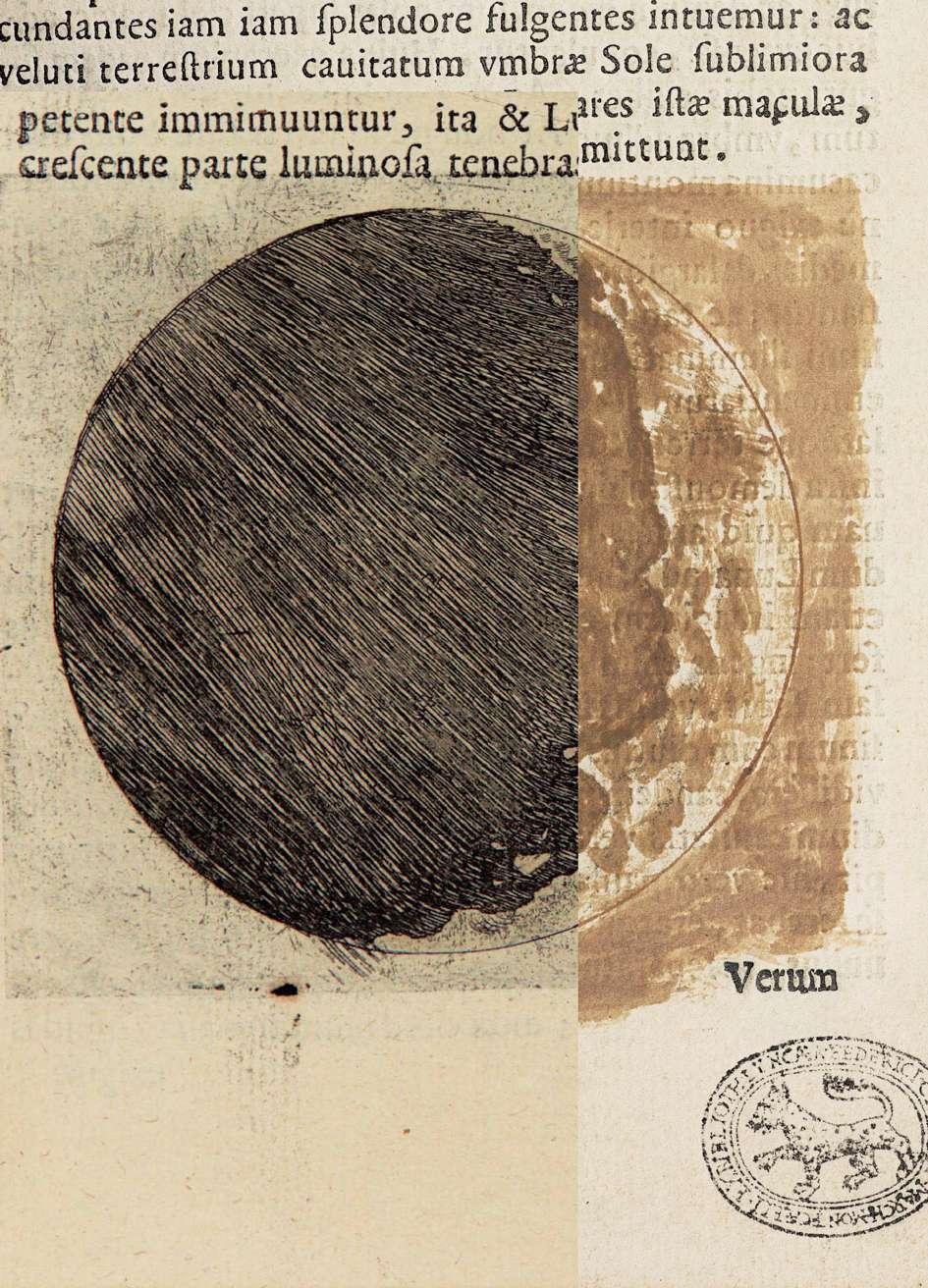
A first edition of the “Sidereus Nuncius” (at left) has black etchings of the moon. A disputed copy (at right) has brown watercolors.Images from Left: Courtesy Library of Congress; Right: Courtesy Martayan Lan Rare Books
On the night of January 7, 1610, Galileo Galilei, a resident of Padua, walked onto his balcony and tipped his telescope toward space. He spotted three stars near Jupiter and graphed their positions in a notebook. Six days later, he looked through his telescope again and found the same stars but their positions had shifted. They were, he realized, moons orbiting Jupiter. Galileo had long believed Copernicus’ theory that the Earth was not the center of the universe. Now he had proof.
Two months later, a publisher in Venice printed Galileo’s findings, in a booklet ten inches tall, seven and a half inches wide, and sixty pages long. As was customary, the sheets were initially left unbound. Galileo called his work the “Sidereus Nuncius,” or “Starry Messenger.” In addition to offering insights on celestial movement, the book rebutted Aristotle, who had maintained that heavenly bodies were smooth and “perfect”; with his telescope, Galileo had also looked extensively at the Earth’s moon, and could see mountains and craters on its surface. To convey this point, Galileo included four copperplate etchings of the moon, each depicting a lunar phase and measuring roughly five and a half inches wide and six inches tall. Five hundred and fifty copies of the “Sidereus Nuncius” were printed in its first run. About a hundred and fifty still exist.
The “Sidereus Nuncius” launched Galileo’s career. According to one historian, the book contained “more discoveries that changed the world than anyone has ever made before or since.” Owen Gingerich, a professor emeritus of astronomy at Harvard, has called Galileo’s account of Jupiter’s moons “the most exciting single manuscript page in the history of science.”
Get our Classics newsletter to discover timeless gems from The New Yorker archive.
SIGN UP
Gingerich, who is eighty-three, is one of the world’s leading authorities on Galileo. In June of 2005, an old friend of his, Richard Lan, visited him at his office, not far from Harvard’s main campus. Lan owns an antiquarian bookshop in Manhattan. Howard
Rootenberg, a Los Angeles dealer, recently told me, “Richard is a notch higher than other booksellers, in terms of knowledge and experience.” The universe of rare-book dealers is small, and reputation is paramount. Rootenberg explained, “With certain dealers, you never even question authenticity or title it’s almost a given. Their word is sacrosanct. Certainly, Richard is one of those people.”
Expertise has its limits, however, and Lan occasionally asked Gingerich to assess books by early astronomers. (Gingerich has examined nearly every extant first- and second-edition copy six hundred in all of Copernicus’ “On the Revolutions of the Heavenly Spheres.”) “You can put anything in front of him and learn something,” Lan told me.
ADVERTISEMENT
That day, Lan arrived with two young Italians, Marino Massimo De Caro and Filippo Rotundo. The Italians were offering to sell Lan a remarkable copy of the “Sidereus Nuncius.” De Caro had provided Lan with documentation indicating that the book’s previous owner belonged to a Masonic organization active in Italy, Malta, and Argentina.
Lan had viewed many copies of the “Sidereus Nuncius” over the years. Although some had been in better condition, none contained the personal flourishes of this one. Galileo’s signature was on the title page. A stamp of a lynx indicated that the book came from the personal library of Federico Cesi, the founder of the Accademia dei Lincei, the scientific fraternity in Rome to which Galileo belonged. Instead of etchings, there were five lovely watercolor illustrations of the moon, presumably painted by Galileo. Lan suspected that the book would sell for millions of dollars, once he had established its provenance and authenticity.
Lan sat beside Gingerich and unwrapped the book’s vellum cover. Gingerich opened the book to the title page, which bore an inscription: “Io Galileo Galilei f.” In Italian, io means “I.” The Italians suggested that the f might be an abbreviated form of fare “to make” meaning that the inscription was shorthand for “I, Galileo Galilei, made this.” Galileo typically signed books as “The Author” or “Galileo Galilei
Lincei” a reference to the Accademia dei Lincei and added the recipient’s name. But Gingerich recalls thinking that the book’s signature “looked O.K.”
On the fifteenth page B4 recto, in bibliographic terminology was a rust-hued watercolor of a first-quarter moon. Gingerich felt a shiver of recognition. He told Lan that the image, and the four watercolors that followed, strongly resembled ink-wash illustrations of the moon made by Galileo.
Soon after the meeting, Gingerich wrote to Lan that there was “a firm Galileo connection.” He added, “The drawings had either to be made by Galileo himself or with his supervision.”
Has Taking the Perfect Photo Ruined Tourism in “The Spectacle”?
Lan, buoyed by Gingerich’s endorsement, bought the book for half a million dollars.
Lan was eager to place the “Sidereus Nuncius” on the market, but he decided to seek other expert opinions. In July, 2005, he sent an e-mail to Horst Bredekamp, a scholar in Berlin who specialized in assessing art made by key figures in European intellectual history. “Ideas come through drawing,” Bredekamp once said. He had published books about Leibniz’s Baroque gardens and Darwin’s diagrams, and was writing one that touched on Galileo’s drawings. In 2009, Art Bulletin declared that Bredekamp had done “as much as anyone to reexamine the relation between art and science across history.”
In the e-mail, Lan attached a scan of the watercolor from B4 recto. When Bredekamp saw it, he later noted, he felt “simultaneously electrified and skeptical.” Lan asked him if he was interested in conducting a thorough study, and Bredekamp said yes. He began by comparing the Io Galileo Galilei f signature with dozens of Galileo
letters that are preserved at the national library in Florence. He concluded that the inscription was “definitely authentic.”
That November, Lan brought his “Sidereus Nuncius” to Berlin and left it there for a month. As Bredekamp later wrote, after “a mere glance” at the book he concluded that the splotchy watercolors, with their “mixture of fidgetiness and precision,” were genuine Galileo sketches. This was a major claim, for it threatened the singularity of a famed set of Galileo drawings known as the Florence Sheet. Nearly all Galileo scholars agreed that the astronomer had sketched his first telescope-aided observations of the moon on the sheet, in ink wash. Rick Watson, an American bookseller based in London, called the Florence Sheet the equivalent of the “Declaration of Independence in the history of scientific discovery.” The sheet is considered to be a direct representation of what Galileo saw through his telescope. In contrast, the copperplate etchings that appeared in the first edition of the “Sidereus Nuncius,” which were made by a Venetian artisan, feature craters that are exaggerated for effect, and there are other distortions.
ADVERTISEMENT
Bredekamp theorized that Lan’s “Sidereus Nuncius” was an embellished proof copy. It was known that the Venetian printer had sent Galileo thirty copies with blank spots indicating where etchings would be placed. As Bredekamp saw it, Galileo must have filled the blank spots in one such copy with the watercolors while observing the moon in subsequent weeks; the artisan who made the etchings then traced the rust-colored watercolors onto copperplates. “This was a big deal,” Watson said. If Bredekamp was right, the Florence Sheet was on its way to becoming a historical afterthought.
In 2007, Bredekamp presented these arguments in a book, “Galilei der Künstler,” or “Galilei the Artist.” A ceremony in Padua marked its publication. One of the speakers, William Shea, who has written five books on Galileo and is based in Zurich, said, “Galileo painted these watercolors, I’m convinced.” Lan called the “Sidereus Nuncius” the “acquisition of a lifetime,” and told Time that he planned to ask at least ten million dollars for it.
“I have only my selfie to blame.”
Cartoon by P. C. Vey
Copy link to cartoon
Link copied Shop
In the spring of 2008, Lan mailed the book to Germany for another review. Bredekamp invited experts from fourteen institutions to Berlin. The scholars spent two months analyzing Lan’s book, using such tools as long-wave ultraviolet radiation (to identify inks) and Xray fluorescence (to determine the paper’s composition). A curator from the Accademia dei Lincei authenticated the lynx stamp, and a conservator from the Staatliche Akademie der Bildenden Künste, in Stuttgart, certified the paper and the binding. Their inquiry did expose idiosyncrasies the paper stock of Lan’s copy was slightly darker than it was in other copies, for example. But
such anomalies only reinforced Bredekamp’s theory about the book’s “unique status” as a proof copy. Bredekamp declared that he and the other experts had demonstrated a depth of expertise “previously achieved only for the Gutenberg Bible.”
Bredekamp compiled the Berlin research into a two-volume book, “Galileo’s O.” Its publication, in English, was scheduled for October, 2011. That summer, Nick Wilding, a Renaissance historian at Georgia State University, began working on a review of the book for Renaissance Quarterly. Although there were many references to sophisticated tests and dozens of glossy photographs of paper stains and ink lines, magnified to dermatology-clinic proportions Wilding found the conclusions nebulous. One of the watercolor moons in Lan’s copy was said to be “atmospherically related” to the Florence Sheet drawings, though the watercolor did “not correspond in detail with any of them.”
ADVERTISEMENT
I met Wilding recently, at a restaurant in Charlottesville, Virginia, where he was on a weeklong fellowship at the Rare Book School, on the University of Virginia’s campus. He is a lean, stolid Englishman in his early forties, with a receding hairline. Wilding told me that, after he submitted his review, he heard rumors about several dubious library stamps that had surfaced in 2005 and 2006. The stamps, featuring a lynx, matched the one in Lan’s “Sidereus Nuncius.”
Wilding obtained digital samples of unquestionably legitimate stamps from the book collection of Federico Cesi, the Accademia dei Lincei founder, and compared them in high-resolution detail. In each stamp, a lynx appeared at the center, framed by two oval borders, a wrap of Latin text (“From the Library of Federico Cesi, Prince and Marquis of Monticelli”), and a third oval border. Wilding then examined the stamp in Lan’s “Sidereus Nuncius.” In the genuine stamps, there was a gap in the innermost oval border just to the left of the lynx’s mouth. In Lan’s copy, the border was continuous. Wilding also checked the inventory of Cesi’s library, and found no listing of a “Sidereus Nuncius.” Wilding asked Renaissance Quarterly to hold his review.
Wilding searched the Galileo literature, fruitlessly, for an allusion to a watercolor-illustrated copy of the “Sidereus Nuncius.” In the process, he came across a 2009 article, by Owen Gingerich, in the Journal of Galilean Studies. Over time, Gingerich had revised his opinion about Lan’s “Sidereus Nuncius” and come to reject Bredekamp’s “proof copy” argument. According to the historical record, Galileo received proof pages in February, 1610. In Bredekamp’s view, Galileo based the watercolors on direct observations of the moon, but one lunar phase depicted in Lan’s book didn’t recur until February 28th. The “Sidereus Nuncius” appeared on March 13th an exceedingly narrow window for a watercolor to be converted into an etching before publication.
Gingerich also noted that the watercolor moons in Lan’s book were each eighty-one millimetres in diameter. Four of the etchings in the first edition were the same size, but the fifth was four millimetres smaller. If, as Bredekamp contended, the etchings were based on tracings of the watercolors, then each etching should have been precisely the same size as its watercolor counterpart. The evidence, Gingerich concluded, “strongly” suggested that the watercolors in Lan’s copy were forgeries.
The Journal of Galilean Studies reaches a small audience, and Gingerich was eager to help Wilding make his case to Renaissance Quarterly, which is more widely read. Gingerich pointed him to three suspect copies of Galileo’s “Le Operazioni del Compasso Geometrico e Militare,” a study of the compass, which had appeared on the market around the time that the two Italians sold Lan the “Sidereus Nuncius.”
The “Compasso” was published in 1606. Only sixty copies were printed, and perhaps twenty-five still existed. In 2008, Christie’s sold one for half a million dollars.
In late 2005 and early 2006, Gingerich had examined the three copies of the “Compasso,” one of which had been bought by Lan, and noticed several oddities. The text “bit” into the paper too deeply, suggesting an anachronistic printing method, and the watermarks did not quite match those in other verifiable copies. He shared his doubts with Lan, but, at Lan’s request, he did not publicize his views.
Later in 2006, Frank Mowery, the head of conservation at the Folger Shakespeare Library, in Washington, D.C., inspected two of the questionable “Compasso” copies on behalf of an American collector on the East Coast. Mowery went to the Library of Congress and placed the books next to a genuine “Compasso.” In the suspect copies, the typeface was “not quite as sharp and crisp,” he said, and the impressions made by the wire mesh that the pulp dried on were “not as even and smooth.” Mowery also noticed a strange printing error that horizontally bisected two words dal mio and caused the top half of the letters to sit awkwardly on the bottom half, like shifted tectonic plates. “That is not possible with letterpress,” Mowery told me. He wondered if someone had made the pages using photopolymer plates, a sort of film negative that hardens into relief when exposed to ultraviolet light. In a confidential report to the East Coast collector, he wrote, “These copies were produced to deceive.” The collector, like Lan, did not wish to go public.
Wilding found the parallels between the “Compasso” copies and Lan’s “Sidereus Nuncius” to be “potentially devastating,” and his suspicions grew when he discovered that they could all be traced to Marino Massimo De Caro one of the Italians who had visited Gingerich with Lan. Wilding learned that De Caro had entered the rare-book world in the early aughts, built a relationship with Lan, and managed to obtain books that no one else could find. De Caro boasted of having access to obscure collections in South America. Wilding tried to track him down, but he discovered that De Caro had left the trade.
Wilding shared some of his findings with Bredekamp, who seethed at being challenged. “I wonder how often you were able to see the book in the shop of Richard Lan?” Bredekamp wrote to him. “Writing on authenticity without having studied the original carefully is a methodological death-sin.” He argued that “doubting the authenticity” of Lan’s copy of the “Sidereus Nuncius” was “foolish.” If the book was a fake, the “history of science could close its doors.”
Wilding submitted a revised review to Renaissance Quarterly in March, 2012. He wrote that “Galileo’s O” sometimes gave the
impression of “a forensic report from a crime scene,” and that one of the contributors, a librarian at Princeton named Paul Needham, “nicely reminds us that many individuals were involved in the making of an early modern book.” Some of them, Wilding added, “may still be active.”
One morning in September, I marched up a gravel driveway that ran through an olive and peach grove outside Verona. I reached an iron gate where there was an intercom box marked “De Caro.”
De Caro was expecting me. We had exchanged letters in the summer, and he had said that, “for the first time,” he would be “happy to disclose” details about his life to “a person that is really interested to go deep in my personality.” I pressed the buzzer, and two German shepherds bounded out of a three-story villa, barking and kicking gravel and lunging at the gate.
De Caro stepped out and silenced the dogs, Paco and Ria. “They are like my babies,” he said. He wore khaki pants and a light-blue monogrammed dress shirt that was untucked and open at the neck, its sleeves rolled up to the elbows. De Caro is tall and husky, and appears weathered beyond his forty years; his hair is gray, his earlobes are large, and his blue eyes are cradled by deep circles.
“Have you seen his sippy skull?”
Cartoon by Paul Noth
Copy link to cartoon
Link copied Shop
We shook hands and he led me into the villa, which he shares with his wife, Rossella, a former tango instructor who works for the Italian government. We passed a wine-and-cheese cellar and ascended to the third floor, where we sat in armless linen chairs. Paco and Ria lay by our feet. The space was breezy and bright, with vaulted ceilings, exposed beams, and open windows. The view overlooked the steeples and terra-cotta roofs of Verona. An old telescope stood in a corner, and on the walls were a small portrait of Galileo and a huge oil painting of Pope Urban VIII, who oversaw Galileo’s trial for heresy.
“I really love Galileo, his way of thinking,” De Caro said. His fascination began when he was growing up, in Orvieto. Like most teen-agers, De Caro prized rebelliousness, and he idolized Galileo, an
irascible intellect who derided critics as “mental pygmies.” Before he was twenty, De Caro had read all forty-two hundred of the astronomer’s collected letters. (De Caro’s mother, Lucia Motti, told me, “Massimo has always had a great admiration for Galileo, not only as a scientist but as a human being.”) De Caro’s parents were leftists, and he entered politics young, winning a seat on the Orvieto municipal council at the age of twenty-two. “If you just heard his voice, you would have thought he was a sixty-year-old mayor,” Stefano Talamoni, the president of the council at the time, recalls.
De Caro studied law at the University of Siena but dropped out before getting a degree. In December, 1998, he moved to Verona and took a job as a communications director at a government pension office. He hung around a rare-book shop in his spare time, as did a young collector named Antonello Privitera, who taught De Caro some of the intricacies of the trade. De Caro, Privitera says, had “a great social attitude” and had a gift for earning others’ trust. (Several years ago, he sued De Caro, claiming that he owed him money for books. De Caro repaid only part of his debt.)
In 1999, De Caro began travelling to book fairs around Europe, collecting books, old telescopes, and other astronomical arcana. At a fair in Milan, he met Daniel Pastore, an Argentine book dealer. Pastore encouraged De Caro to visit his shop, Imago Mundi, in Buenos Aires, and De Caro soon was spending about a week each month in Argentina. Imago Mundi was a gathering place for collectors. According to De Caro, one day he noticed Cardinal Jorge Mejia browsing the stacks. Mejia, an Argentine, lived in Italy, and presided over the Vatican Library and its secret archives. De Caro befriended Mejia, and they began having long conversations about faith. Mejia eventually gave De Caro access to the Vatican Library’s card catalogue a rare privilege.
ADVERTISEMENT
On February 12, 2003, De Caro and Mejia made an unusual exchange. De Caro provided the library with sixteen incunabula books printed before 1501 and three fifteenth-century manuscripts, worth approximately a hundred thousand dollars. In return, De Caro received six books valued at more than a million dollars, including three
Galileo titles that had been owned by relatives of Pope Urban VIII. The Vatican had other copies of the Galileo texts, and had been expanding its collection of incunabula. (De Caro justified the apparent imbalance this way: “If you are in Verona, what is the value of water? One cent. But in the desert you can pay millions of dollars.”) The Pope’s secretary authorized the exchange, but a few people at the library found the trade misguided; one told me that he could find no logic to the transaction. In the spring of 2003, Mejia’s subordinates intervened to halt a second exchange between the library and De Caro.
In 2005, De Caro attended the Milan book fair with Filippo Rotundo, the Italian dealer, and Daniel Pastore, the Argentine. An Italian superintendent of cultural heritage alerted carabinieri that the men were displaying a copy of Francesco Colonna’s “Hypnerotomachia Poliphili,” which was published in 1499 and is renowned for its intricate woodcut illustrations. The copy had once been in a private library in the city, the Trivulziana, and the police told the book dealers that they planned to investigate its provenance. Two days later, the carabinieri returned to the booth. The “Poliphili” was gone. In separate interviews with the police, De Caro, Rotundo, and Pastore each accused the others. The book could not be found, and the case was dropped. (A collector in northern Europe recently told me that he had bought the “Poliphili” from Rotundo, shortly after the fair.)
Despite these incidents, De Caro’s rise in the rare-book market continued largely unimpeded, as he obtained one remarkable book after another. Perhaps his most important client was Richard Lan. De Caro told me, “He was paying a high price for books, and he had the best customers in the world.” In 2004, Lan paid two hundred and forty thousand dollars for two of the Vatican books first editions of Galileo’s “Discourses and Mathematical Demonstrations Concerning Two New Sciences” and “The Assayer” and a 1611 copy of Johannes Kepler’s “Refraction.” Around this time, Lan also paid De Caro five hundred and eighty thousand dollars for a copy of the letter that Christopher Columbus sent to Ferdinand and Isabella in 1493, announcing the discovery of the New World. De Caro was beginning to think that Lan would buy anything from him.
On June 9, 2005, the Olympia Book Fair opened in London. Once again, De Caro was working with Rotundo and Pastore. In their booth, a “Compasso” was displayed in a glass case.
ADVERTISEMENT
Rick Watson, from London, and Paolo Pampaloni, a dealer from Florence, stopped by to examine it. “It didn’t sound right,” Pampaloni told me. “I turned the pages. Usually, they sing. I have an ear for that. But there was a stiffness in the paper.”
Watson shared Pampaloni’s reservations, but he wasn’t sure what was wrong. While the prospect of forgery hung over every transaction in the art world, fakes had not been much of an issue for antiquarian book dealers. A sensational case occurred in the mid-nineteeneighties, when a Salt Lake City man forged several handwritten manuscripts and sold them, as “lost” Mormon texts, to the Church of Latter-Day Saints. But instances of fraudulent typesetting were isolated and amateurish. No one, as far as Watson knew, had successfully simulated an entire letterpress book.
To mimic the process of creating a seventeenth-century book, a forger would have to cut “punches” individual pieces of lead type for every character and punctuation mark, in addition to carving woodblocks for ornamental capital letters. All these elements would have to match those used by the original publisher. Then, in arranging the type, the forger would have to insure that the spacing between letters precisely followed the original book for dozens, if not hundreds, of pages. Who would do all that work, with countless opportunities for error, given that the product would likely fetch only a few hundred thousand dollars? A forged painting could sell for millions.
Although Watson knew that there was no precedent for a forged seventeenth-century book, he couldn’t shake his doubts. He feared that De Caro, a relative newcomer to the trade, had been conned. At the book fair, Watson pulled De Caro aside to express his concerns. “His astonishment and surprise seemed genuine,” Watson recalls. But the next day the “Compasso” was sold to a Boston dealer.
Soon after, De Caro and Rotundo flew to New York and met Lan at his shop, in midtown. They had told him that they had important business to discuss. Rotundo, a bespectacled man of forty-one, urged Lan to sit down. De Caro placed the watercolor-adorned copy of the “Sidereus Nuncius” before him. Lan could hardly contain his excitement. He told me that he saw the copy as “potentially a gamechanger,” with the power to answer “a lot of questions, a lot of unknowns.”
“I’m sorry, folks, but our love seats are for display purposes only.”
Cartoon by Tom Cheney
Copy link to cartoon Link copied Shop
After the sale of the “Sidereus Nuncius,” De Caro began easing himself out of the book business. In Argentina, he had met an American book collector who worked for a Russian billionaire, Viktor Vekselberg. After securing an introduction to Vekselberg, De Caro
was hired to coördinate governmental and public relations for Avelar, an energy company owned by Vekselberg. De Caro’s resourcefulness served him well in the energy sector, and in 2007 he became an executive vice-president at Avelar. Governments jockeyed for his attention: the Democratic Republic of Congo asked him to be an honorary consul, and the Argentine authorities assigned him a bodyguard and a bulletproof car. On one occasion, he attended a meeting with Vekselberg and Vladimir Putin. The job made De Caro wealthy enough to buy a twenty-five-acre ranch outside Buenos Aires. But, in 2009, he was fired, after clashing with one of Vekselberg’s deputies.
Marcello Dell’Utri, an Italian senator who collected rare books, offered to help De Caro find a government job. In May, 2011, De Caro became an adviser to the Ministry of Culture. (Dell’Utri has been convicted of having ties to the Mafia.) One of De Caro’s new duties involved taking stock of historic libraries across Italy.
He soon paid a visit to Montecassino, a sixth-century abbey southeast of Rome, with Viktoria Pavlovsky, his young assistant, and an old friend, Stephane Delsalle. De Caro, who liked to say that he was “always ready to seize the opportunities offered,” had an empty laptop bag slung over his shoulder. De Caro, Pavlovsky, and Delsalle introduced themselves to a priest and asked to inspect the property. As Pavlovsky distracted the priest, De Caro and Delsalle headed to the stacks, tilted ladders against the upper shelves, and removed copies of Dante’s Divine Comedy and Galileo’s “Compasso,” among others. De Caro slipped the books into his bag. He then replaced the “Compasso” with a forgery. He had created the fake with photopolymer plates, establishing a model for other, more sophisticated schemes. Soon after the theft, he sold the Dante for eight thousand euros; he held onto the stolen “Compasso.”
One library especially captivated De Caro: the Girolamini, in Naples. Founded in 1586, it was now disorganized and lacquered with soot, though its original beauty could be glimpsed in its frescoed ceilings, clerestory windows, and imposing columns. In the spring of 2011, De Caro conferred with the priest in charge at the Girolamini which also
encompassed a cathedral and a convent about renovating the library. That June, De Caro was named the library’s new director. On his second day, he ordered the staff to disable the alarm system at night.
At 9 A.M. on March 28, 2012, a professor named Tomaso Montanari knocked on the library’s door. Montanari taught art history at the University of Naples Federico II, and filed an occasional article for Il Fatto Quotidiano, a left-leaning daily. One of his graduate students wanted access to the Girolamini’s archives, and Montanari was escorting him, in part to follow up on a tip that he’d received about malfeasance at the library.
A priest led Montanari and the student inside. In the main salon, they found De Caro, wearing a gray tracksuit, his feet propped on a desk. He apologized for the library’s state of disrepair and for his rumpled appearance. The Girolamini was undergoing renovations, he said, and he had been up late working.
ADVERTISEMENT
As De Caro talked, Montanari looked around. The library resembled a junk yard. Four-hundred-year-old books were strewn on tables and piled on the floor; empty soda cans littered the bookshelves. A German shepherd was wandering around. “That’s not a common presence in a historical library,” Montanari told me.
After a short conversation, Montanari and his student requested to browse the archives. They ran into a staff librarian, and asked him if all was well. Montanari told me that the librarian looked over both shoulders and whispered, “It’s terrible. The director is a criminal.”
The librarian said that, after De Caro became the director, he brought in people he’d known from his days working for the Russians. At night, De Caro’s crew packed books into suitcases and loaded them into vans.
Montanari wrote an article describing the situation at the Girolamini. He did not directly accuse De Caro of theft, but he reported witness accounts of the burglaries and equated De Caro’s hiring to “putting an arsonist in charge of the forest.”
The day the article came out, De Caro called Montanari. “Why do you write such things about me? I am a hero I am saving the library,” he said, according to Montanari. De Caro threatened legal action, indicating that he and Silvio Berlusconi were represented by the same law firm. He warned Montanari that his career was in danger. “It was very mafioso,” Montanari told me. (De Caro admits placing the call but denies making threats.)
A prosecutor in Naples, Giovanni Melillo, opened an investigation. De Caro’s phone lines were tapped, and Melillo learned that De Caro was stashing looted books in his home, in a storage unit in Verona, and in the basement of an accomplice’s aunt. Other stolen volumes were being fenced through major Italian dealers. Most spectacularly, De Caro planned to launder more than four hundred and fifty books through an auction, on May 9th, in Munich.
At his villa outside Verona, De Caro told me that some of the books sent to Munich were from his personal collection, some were from the main Girolamini library, and some were from the priests’ convent library. Before the books went to Germany, library markings were stripped out. The auction house Zisska & Schauer had paid an emissary of De Caro’s nine hundred thousand euros to acquire the books. De Caro expected to receive a million euros after the bidding.
In early May, Melillo’s men seized nearly two thousand books, in coördinated searches throughout Italy. (De Caro told me that he had meant to steal only the books that went to Munich; the rest had been removed from the Girolamini temporarily, for cleaning.) German authorities halted the sale at Zisska & Schauer, and later arrested the company’s executive director, Herbert Schauer; he was extradited to Italy. The auction house claims that De Caro had presented the books as being a consignment from a private owner in Italy.
Two weeks after the events in Munich, three carloads of Italian police came to De Caro’s villa at 6:30 A.M. and placed him in handcuffs. He was taken to Naples and locked in a small jail cell with seven other inmates. For more than two months, De Caro refused to coöperate. According to court documents, he provided “blatantly false and implausible information.” But, in conversations with his parents
particularly his father, who visited frequently he started to feel remorse. “I read a lot of Dostoyevsky,” he told me. On August 2, 2012, De Caro began confessing his crimes to Melillo. “It was a way to clean my soul,” he told me.
ADVERTISEMENT
He laid out how he had robbed the Girolamini, and said that he had stolen books from another library in Naples, two in Florence, one in Padua, one in Montecassino, and one in Rome. Melillo told the judge that De Caro’s statements “fit perfectly with the circumstantial evidence” collected by his investigators.
At one point, De Caro admitted to forging five copies of the “Sidereus Nuncius” and five copies of the “Compasso.” (Just before he was arrested, he told me, he had burned two of the fakes in his fireplace, in a frantic attempt to cover his tracks.) But Melillo, apparently satisfied with De Caro’s confessions of thievery, did not press him for details.
Meanwhile, Nick Wilding, the Georgia State scholar, was struggling to prove that Lan’s copy of the “Sidereus Nuncius” was a fake. Anytime he noticed a new idiosyncrasy such as its use of half-sheets of paper, rather than full sheets, which were used in all the other known copies from 1610 he ran up against the prevailing theory that the book was a proof copy. It was supposed to be one-of-a-kind.
Then Wilding obtained a Sotheby’s catalogue from 2005 that included another copy of the “Sidereus Nuncius”; it, too, came from De Caro. (The book did not sell.) Wilding examined the title page, pictured in the catalogue. “This was my eureka moment,” he said. Instantly, he was certain that both Lan’s copy and the Sotheby’s copy were modern forgeries.
“It’s a poor heart that never rejoices!”
Cartoon by David Borchart
Copy link to cartoon Link copied Shop
Earlier, Wilding had spotted the word pepiodis on the title page in Lan’s copy. Pepiodis is not a Latin word. Every other copy of the “Sidereus Nuncius” features periodis, which means “phases.” Staring at the image in the catalogue, he saw that the pepiodis typo also appeared in the Sotheby’s copy. Moreover, in both Lan’s copy and the Sotheby’s copy, the second “p” and the first “i” in pepiodis were touching: the letters “p” and “i” never form a ligature.
He shared his revelations with Paul Needham, the Princeton librarian who contributed to “Galileo’s O,” prompting Needham to take a train into Manhattan to examine Lan’s copy once more. Wilding told him to look for a particular detail. In 1610, when a printer was inking his lead type, ink occasionally seeped into crevices along the edges of the type; during printing, this caused splotches and faint lines to appear along the “shoulders” of the page. Such marks lacked the depth of letterpress type. But, if someone used a high-resolution image of the original page to create photopolymer plates, the polymer would make the black marks appear equal in depth to the text.
ADVERTISEMENT
Needham retrieved the “Sidereus Nuncius” from Lan’s shop and took it to Columbia University, which owned an uncontested copy.
Examples of raised shoulder ink in Lan’s copy were immediately apparent. “Once you pulled on the knot, it was just one thing after another,” Needham told me. In Lan’s copy, the letters were “less sharp and blobbier.” The “gutters” the blank spaces between facing pages often varied from those in Columbia’s copy. That evening, Needham sent an e-mail to Wilding declaring that Lan’s copy was “entirely a forgery.”
Eleven days later, on June 11, 2012, Wilding announced his discoveries on ExLibris, an online discussion forum used by antiquarian dealers, collectors, and librarians. He warned that “all these texts apparently converge on . . . Marino Massimo De Caro, currently under arrest for massive thefts from the Girolamini Library in Naples.” The next day, Needham went on ExLibris and renounced the conclusions drawn in “Galileo’s O,” posting, “I was wrong.”
Horst Bredekamp, in an e-mail to Wilding, noted that he was “extremely offended” by the claims. He said, “On Monday I talked with Irene Brückle, of Stuttgart, a world-wide known specialist in historic paper. She said that the paper is in certainty old and that the book cannot be forgery.”
I recently spoke to Bredekamp on the phone, and his mood was more reflective. “We built a bridge too far,” he said of his book. He compared his team’s mistake to that of “a surgeon who makes a decisive error.” Watching his research unravel had been an “unending nightmare.”
Last October, Bredekamp reconvened his researchers in Berlin. Using some of the same forensic techniques that they had used previously, they pored over Lan’s “Sidereus Nuncius” again, in an attempt to anatomize the fraud. One participant said that the exercise was exhilarating, adding, “You sort of forget that everything you’re finding is proof that what you said before was wrong.” Another researcher discovered cotton linters in the paper stock, which would have required a ginning capability that didn’t exist until 1793. Bredekamp will publish the team’s analysis next year.
Bredekamp said of De Caro, “To put it in Freudian terms, I think he is somebody who must have been rejected by academics and played a satanic game with them. Good forgers are players, and they have a strange desire to compete with people who know.”
I asked him whether he and his assembly of experts could reverseengineer the book. Did they know how De Caro pulled it off?
No, he said: “It’s a masterpiece.”
In March, 2013, the Girolamini Library case went to trial. De Caro was convicted, and sentenced to seven years, for embezzlement. He was in jail until early August, when a judge approved his request to serve the remainder of his sentence at home. De Caro’s confessions, which court documents describe as “reliable,” have apparently enabled “the verification of additional crimes that would have been very difficult to uncover in the absence of his statements,” and this assistance had likely informed the judge’s decision. Nonetheless, the judge said that De Caro could be responsible for millions of euros’ worth of damage at the Girolamini. Besides taking at least two thousand books not all of which have been recovered he had allegedly left the library’s record-keeping in disarray. The judge ordered a hold on De Caro’s assets: his bank accounts, his two BMWs, and the villa, which he had bought, in 2009, for 1.25 million euros. More recently, he was ordered to relinquish some of his furniture, art, and rare books, which the court assessed to be worth about two hundred thousand euros. When I admired the portrait of Pope Urban VIII, he sighed. “I don’t think of these things as mine anymore,” he said. “It’s like I rent an apartment with all the furniture.”
For the time being, though, De Caro lives in confined splendor. Nothing will be taken away until after a second trial centering on charges of conspiracy and looting is over, and after all appeals have been exhausted. The process could take years. The terms of his detention are strict, however: he cannot leave, visitors must be approved in advance, and he is prohibited from making calls or sending e-mails without prior authorization leaving him no way of sneaking back into the book trade. His parents cannot visit.
I spent three days with De Caro. His wife and his lawyer hovered around on the first day, advising restraint. But then the lawyer left for Milan and, each morning after that, Rossella drove to work, leaving De Caro alone with me.
Vanity is a powerful force. At one point, De Caro compared himself to Nobel laureates. When I asked him how he had forged the “Sidereus Nuncius” and made the watercolors, he replied, “I want to tell you the whole story. Should I trust you?”
“O.K.,” he said, taking a deep breath. “I wanted to create a joke.” De Caro, the college dropout, held an imperious grudge against people who had spent years studying in libraries. He had earned his academic credentials another way. In September, 2004, he donated four Galileo books, and a chunk of a Saharan meteorite that he’d acquired at a mineral show, to the Universidad Abierta Interamericana, a private institution in Buenos Aires. In recognition of his “invaluable contribution,” the university awarded him an honorary professorship. De Caro introduced himself as “professor” from then on.
In 2006, he participated in a panel discussion at Fordham University, “Galileo Galilei: Intuition, Science, Text.” The next year, he selfpublished a two-volume biography and bibliography of Galileo, “Galileo Galilei: His Ideas, His World, the Collection.” Christie’s added the book to its reference literature, but it was not reviewed by any major journals. William Shea, the Galileo expert in Zurich, said that the biography was a brazen rip-off of previous scholarship. He likened the book to “an extended undergraduate paper with no quotations the kind of thing an American student would pull off the Internet.”
De Caro, in the bibliographic portion, listed every edition of the “Sidereus Nuncius” printed between 1610 and 1683. He pointedly included the thirty copies of the first edition that the Venetian printer had sent to Galileo without the lunar etchings the ones with a full page and three half-pages blank and cited a letter that Galileo wrote to a Medici official, in March, 1610, in which he referred to the partially blank copies.
Copy link to cartoon
Link copied Shop
De Caro decided to embroider on this historical fact and toy with the world’s Galileo experts. “I wanted to use the philosophy of Galileo against them,” he said. In 2003, De Caro said, he came up with the idea of forging the “Sidereus Nuncius.” Over the years, he had visited papermaking facilities around Italy, learning how artisans re-created seventeenth-century watermarks and other vintage elements. He took this knowledge to Buenos Aires, he said, and sought the help of Daniel Pastore, of Imago Mundi. A local artisan was hired to create sheets of paper. De Caro supervised his work, and they ultimately devised paper that looked authentic. Next, he found a printer in the city who worked with photopolymer plates. De Caro provided the printer with digital images of a “Sidereus Nuncius” that he claims to have bought from an Argentine widower and then sold to a French dealer.
With help from Nick Wilding, I located a scanned image of the copy’s title page, which had appeared in the French dealer’s 2005 catalogue. It matched ink spot for ink spot the title page of Lan’s copy.
Pressing aged pieces of paper onto a scanner warps the text slightly, and De Caro had to “clean” each page, “letter by letter,” using imageediting software. After the printer made photopolymer plates, he and De Caro inked them, and De Caro misted the paper with a spray bottle to prevent cracked paper and bleeding ink. (“That was one of the secrets,” he said.) They lined up a plate onto a page and applied pressure; after a few seconds, they removed the plate. The process left impressions slightly deeper than those of a seventeenth-century letterpress, but De Caro believed that the effect was accurate enough to pass off onto an unsuspecting client.
De Caro insisted that he could not recall the name or the address of either the papermaker or the printer, providing me only with a diagram of their respective facilities. When I met Pastore, this summer, in Buenos Aires, he denied any involvement in a forgery and accused De Caro of “breaking my balls.” After I told Pastore that De Caro had implicated him while confessing to Melillo, the Italian prosecutor, Pastore replied, “Yeah, right. I killed Kennedy also! J.F.K.? That was me.” Pastore has not been officially accused of any wrongdoing.
De Caro decided to go beyond making a mere forgery. He wanted to add something new to the Galileo canon. Thinking about the thirty copies of the “Sidereus Nuncius” that Galileo had received without the etchings, De Caro set out to create a “forgotten” work: a copy with unique watercolors. “I studied a lot to arrive at this level,” he told me. He struggled to find the right ink: seventeenth-century inks contained high levels of acid. One day, while wandering through an antique shop in Buenos Aires, he noticed several bottles of nineteenth-century India ink for sale. According to De Caro, he and Pastore, who has a degree in pharmacology, gave the ink a litmus test, and found its acidity to be markedly higher than that of contemporary inks. If they could “age” the ink two hundred years, they would have what they needed. (Pastore denied any involvement in this activity, too.)
De Caro delegated the watercolors to a painter in Buenos Aires a “famous” art restorer, he told me. (He added, in an e-mail, “I promised to him that I would never say to anybody what he did.”) One afternoon, he met with the painter and Pastore at Imago Mundi, which, De Caro said, had a kitchen in the back. De Caro explained that he wanted to incorporate five lunar watercolors, using the Florence Sheet as a guide; he also wanted to add Galileo’s signature, based on the astronomer’s 1633 abjuration document, in which he had written “Io Galileo Galilei Manu Propria,” or “I, Galileo Galilei, have done this in my own hand.” Since Manu Propria involved ornate calligraphy, De Caro decided to limit the chances of a slipup and go with “f,” for feci, or “made this.”
The painter uncorked the India ink and got to work. After De Caro opened a bottle of red wine for them to share a 1990 Masseto, by his recollection the painter traced the outline of the moons using the foot of his wineglass. (This may explain Owen Gingerich’s observation that each of the watercolors displayed the same dimensions: eighty-one millimetres.) The wet ink looked black on the page when the illustrations and the signature were done. Then De Caro set the oven in the kitchen to two hundred and fifty degrees Celsius a little higher than four hundred and eighty degrees Fahrenheit. He placed a Pyrex dish with hydrochloric acid on the bottom rack, and, one by one, half-sheets of paper on the top rack. At that temperature, he said, “twenty minutes is like four hundred years.” Vapors from the hydrochloric acid mimicked the effects of oxidation and transposed the black ink into rusty tones.
Afterward, De Caro said, he flew back to Italy with the pages and took them to Marcello De Stefanis, a bookbinder in Milan. (When approached at his shop recently, De Stefanis declined to comment.) De Stefanis secured the “Sidereus Nuncius” in an authentic seventeenth-century vellum binding and goffered the edges of the pages with a pattern of dots. (De Caro, who has not seen Lan’s copy of the “Sidereus Nuncius” since 2005, recently provided me with a precise description of the pattern.) A week later, once the glue had dried, De Caro picked up the finished book. Then, De Caro said, he
and Filippo Rotundo, the Italian book dealer, added a final garnish: the Cesi lynx stamp.
Rotundo denies collaborating with De Caro, and says that De Caro tricked him, much as De Caro tricked Richard Lan. Rotundo, who is coöperating with Italian prosecutors, told me that he had stopped working with De Caro in 2006, after it had become clear to him that De Caro was involved with fake books. Rotundo also insisted that he received no money for the fake “Sidereus Nuncius,” although a “letter of agreement,” from Lan’s shop, indicates that Rotundo and De Caro the “sellers” would be paid five hundred thousand dollars in two installments. And Rotundo said that he did not sell the “Hypnerotomachia Poliphili” from the Milan book fair, even though the buyer told me that he had bought it from him. Two months ago, Rotundo, apparently unscathed by the De Caro scandal, opened a gallery in Manhattan, PrPh Books, nine blocks from Lan’s shop. Umberto Eco spoke at a reception on opening night.
On my third day with De Caro, he went into his bedroom and returned holding a white T-shirt. “You want to surprise everyone?” he asked. On the back of the shirt was a large screen print of the Cesi stamp. De Caro pointed to where the oval borderline breaks near the lynx’s mouth, and told me that, when making the “Sidereus Nuncius” forgery, he had connected the line and inserted the pepiodis typo on the title page. “If I didn’t create this, it would be impossible to say the book was a fake,” he told me. In every forgery, he inserted a minor error or two, which “only a real expert” could recognize. When I told De Caro that Nick Wilding had discovered both anomalies last year, he looked saddened, as if it had just dawned on him that he had lost his monopoly over his own invention.
ADVERTISEMENT
For the past year, Wilding has been delivering a presentation, “Forging the Moon, or How to Spot a Fake Galileo,” to audiences in Europe and the United States. Collectors now come to him with suspected fakes. Last year, a curator at Brown University told him of a Spanish-language booklet about Galileo that is in the university’s library. Lan had sold the booklet to the library after buying it from De Caro. It had supposedly been printed in 1650, in Lima, Peru. (An
unquestioned copy of the text is in Peru’s national library.) With Wilding’s help, the curator confirmed that it was a forgery; Lan has since returned the university’s money. Wilding suspects that De Caro made between three and five copies of each fake: “To do less would not be economically viable, and to do more would flood the market and advertise the fact that you’re forging.”

In August, I visited the university library in Buenos Aires to which De Caro had donated the four Galileo books in exchange for an honorary professorship. Wilding had told me what kinds of irregularity to look for. I spent an hour photographing, from various angles, two of the books: a second-edition “Compasso,” from 1640, and a second edition of the “Sidereus Nuncius,” printed in Frankfurt. Back in my hotel, I e-
mailed the images to Wilding. He wrote back two hours later. After seeing a raking shot that exposed clear signs of raised shoulder ink, he told me that the “Sidereus Nuncius” was probably a fake. Another image revealed an inked-over Roman numeral, adjusting the publication date of the “Compasso” from 1649 to 1640. Third-edition copies, from 1649, are much less valuable than second-edition copies. Wilding concluded that the “Compasso” was, “at best, altered.”
De Caro refused to take responsibility for the fakes in the Buenos Aires library, for the forged Galileo title from Peru, or for the “Sidereus Nuncius” that appeared in the 2005 Sotheby’s catalogue. When we first met, he pledged absolute candor, saying, “It makes no sense to lie anymore.” But there were conspicuous hazards in taking a con man at his word. Only one person would know when the game was truly over: De Caro.
Sitting with him, I felt as though I were stuck in a batter’s box, trying to track the spin of one incoming pitch after another. Some evasions were easier to explain than others. I couldn’t understand why he disputed receiving any profit from Lan’s copy of the “Sidereus Nuncius” until I heard him note that forging itself is not illegal, whereas selling or substituting fake items as originals violates the law. His contention that he had planned to bring many stolen books back to the Girolamini, however, struck me as absurd. And why did he take credit for some fakes but not for others? Was he trying to protect his reputation as a highly skilled forger? The Sotheby’s, Buenos Aires, and Peru books were inferior forgeries compared with Lan’s “Sidereus Nuncius.”
“Look, I am not stupid,” he said. “If I really wanted to be bad, I know how to be bad. But I wanted to do something special.”
In the past six months, dealers repeatedly expressed dismay to me about the state of the antiquarian-book trade. Richard Lan said that the Girolamini thefts and the Galileo forgeries had “blindsided the market.” Curators at the Library of Congress told me that they are being especially circumspect when considering Italian books, given that their provenances might well be illegitimate. Vincenzo Ferro, a
dealer in Turin, said, “Our field is based on trust. Five years ago, it was impossible for someone to ask me, ‘Where does this book come from?’ It was considered impolite.” Now everyone asks. “It’s a mess,” Ferro said.
Lan still owns the fake “Sidereus Nuncius,” and says that he is planning to sue Filippo Rotundo, in an attempt to get his money back. De Caro’s second trial recently began in Naples. If he is convicted of destroying the Girolamini, he could face an additional twelve years of confinement. During my stay at the villa, he was crafting his defense strategy. “I did something against the law, and I will pay,” he said. “But I only want to pay for what I did.” He contends that the Naples library was a shambles when he started, and that most of the books that he tried to sell were from the priests’ private collection not from the public library. “The problem is that the environment in Naples is not so kind to me,” De Caro said. “I am like a monster.”
He quoted Oscar Wilde “It is always with the best intentions that the worst work is done” and told me that he had robbed the Girolamini in order to earn money for library renovations. “I know it’s a crazy way of doing things, but I’m crazy about books,” he said. “When I stole books, there was always a reason.” He sensed my skepticism, and described an episode from 2003, when he took three volumes from a library in Padua, sold them for thirty-five thousand euros, and used the cash to buy a manuscript collection by Galileo Ferraris, a nineteenth-century scientist, from a local bookshop. Then after taking no profit, he said he donated the Ferraris collection to what is now the Galileo Museum, in Florence. We went into his office, and he retrieved a letter from the museum acknowledging the donation. He did not have documentation for the other transactions.
While we were in his office, I noticed a framed copy of a lunar etching from the “Sidereus Nuncius.” There was Spanish handwriting at the bottom “Luna de Galileo, Scano 2005.” De Caro said that the handwriting was that of a woman, in Buenos Aires, who had duplicated the etchings for some of his “Sidereus Nuncius” fakes.
ADVERTISEMENT
On another wall hung a signed photograph of Buzz Aldrin walking on the moon. Dozens of books related to the moon sat on a bookshelf. “I’m working now to write a bibliography on the representations of the moon, starting with Galileo, through 1799,” De Caro said. For a man facing prolonged detention, he was full of plans. He told me that Frank Abagnale, the con man depicted in the 2002 film “Catch Me If You Can,” had become a source of inspiration. Abagnale had eventually helped the authorities catch check forgers. “I want to do for books what he did for checks,” De Caro said. He could be the F.B.I.’s “best ally”: “I can find stolen books. I can help them to find the black, offshore accounts of all the booksellers. That’s a big amount of money.” All he wanted in return, he said, was a percentage of the money seized.
On the afternoon of my last day with De Caro, he walked me down the gravel driveway. Paco and Ria ran ahead. I asked De Caro if the judge had ordered him to wear a tracking device.
He shook his head. “I am a person who likes to respect the rules,” he said. “Even if they don’t check me, I don’t go out, I don’t speak on the phone. I respect everything.”
He pressed a button, the gate rolled open, and I began to head down the hill, carrying under my arm De Caro’s hefty study of Galileo, which he had offered me as a memento. The book bore an inscription: “Because the truth cannot be killed! Thanks for spending time with me. The Monster.” He wished me farewell and, with the dogs at his heels, returned to the villa. ♦
Published in the print edition of the December 16, 2013, issue.
Nicholas Schmidle has written for The New Yorker since 2011. His most recent book is “Test Gods: Virgin Galactic and the Making of a Modern Astronaut.”
More:ArchivesAuctionsBooksColumbia UniversityCon MenEmbezzlementForgeriesForgersHarvard UniversityLibrariesLootingSotheby'sTheftsThievesVatican Library
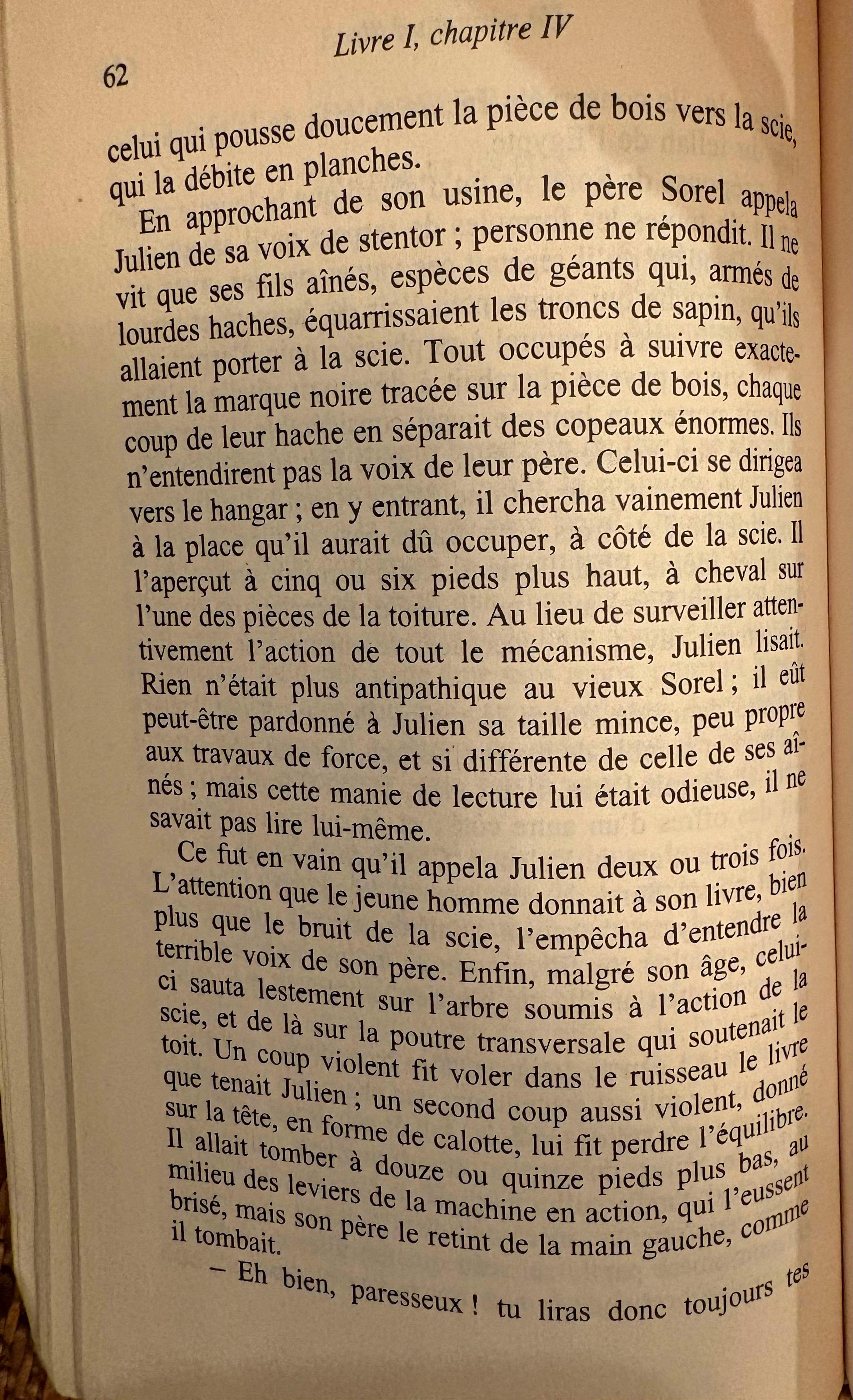
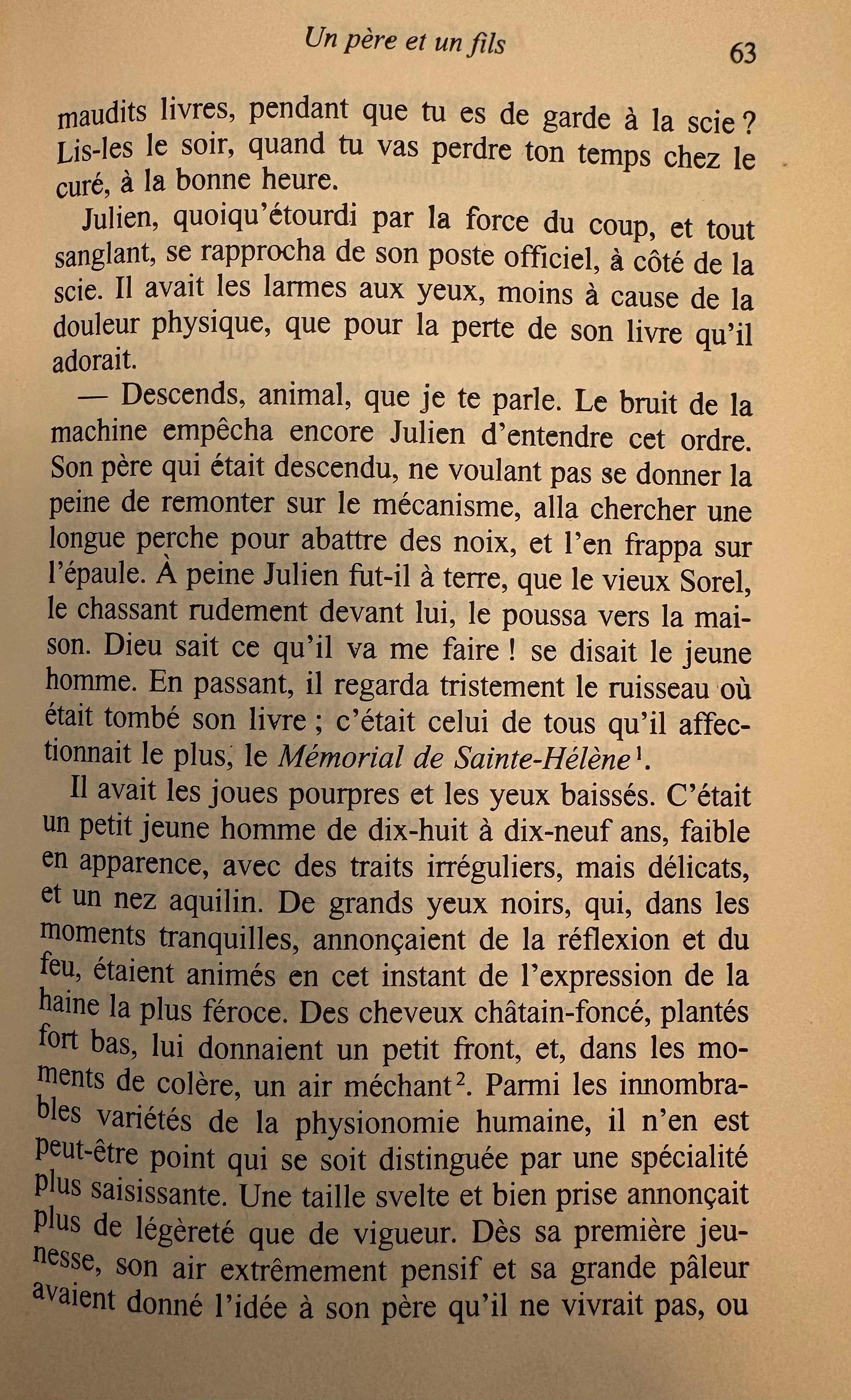
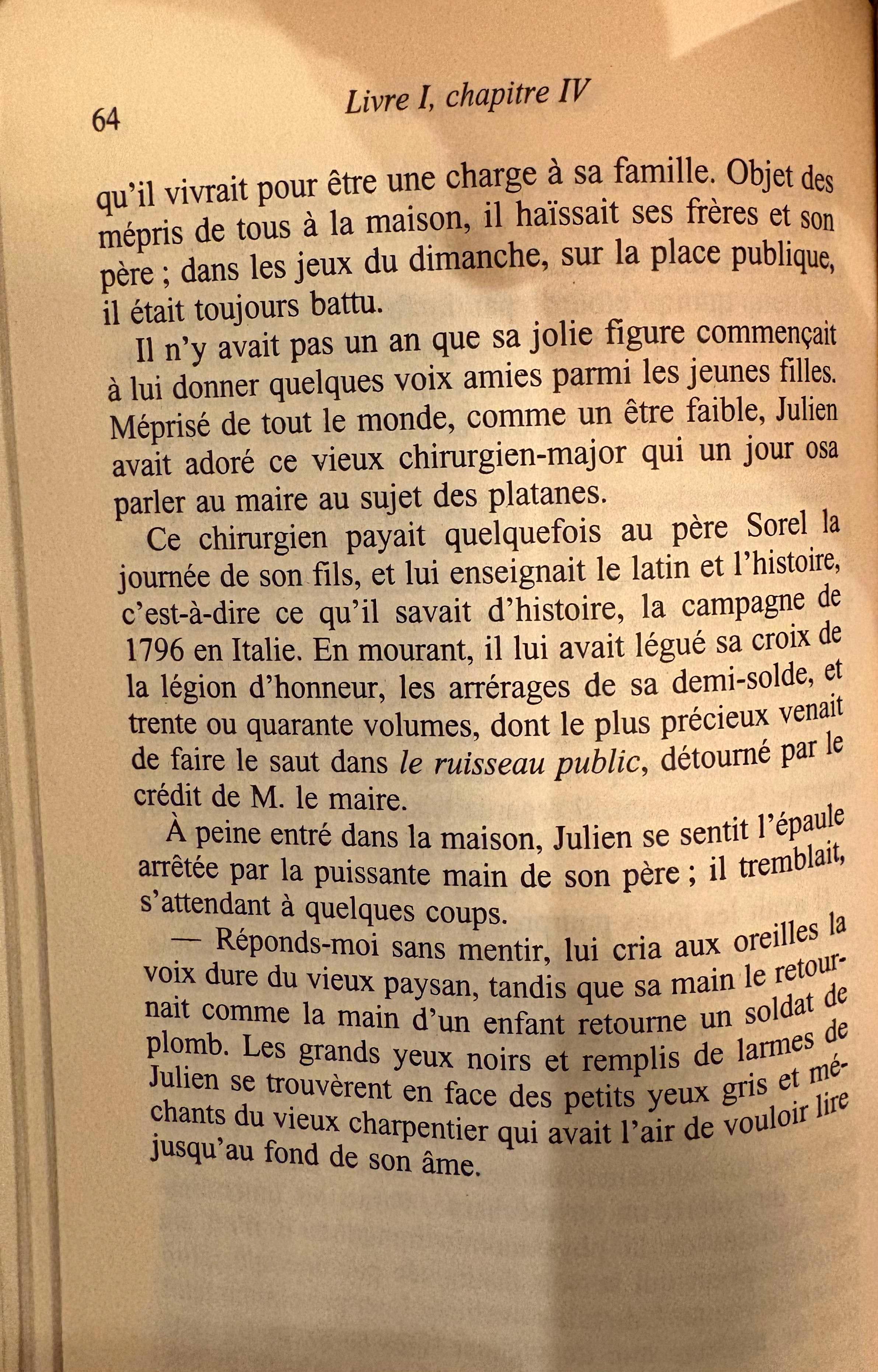

To G.F.
Theidea for his book and the first writing of it, in whole or in DArt,and in various forms, date from the period between 1924 andr929, between my twentieth and twenty-fifth year. All those manuscripts were destroyed, deservedly. *
In turning the pages of a volume of Flaubert's correspondence much read and heavily underscored by me about the year 1927 lame again upon this admirable sentence: Just when the gods hadceased to be, and the Christ had not yet come, there was a uniquemoment in history, between Cicero and Marcus Aurelius, whenman stood alone.' A great part of my life was going to be spentin trying to define, and then to portray, that man existing aloneand yet closely bound with all being.
I resumed work on the book in 1934; after prolonged research somefifteen pages were written which seemed to me final in form. Then the project was abandoned, only to be taken up again several times between 1934 and I937.
Therewas a long period in which I thought of the work in the form of a series of dialogues, where all the voices of those times would be heard. But whatever I did, the details seemed to take undueprecedence; the parts threatened the balance of the whole; Hadrian's voice was drowned out by all the others. I was not Succeedingin my attempt to reconstruct that world as seen and heard by one man.
From the version of 1934 only one sentence has been retained: I begin to discern the profile of my death.' Like a painter who haschosen a landscape, but who constantly shifts his casel now
right, now left, I had at last found a point from which to view the book.
Take a life that is known and completed, recorded and fixed by History (as much as lives ever can be fixed), so that its entire course may be seen at a single glance; more important stil, choose the moment when the man who lived that existence weighs and examines it, and is, for the briefest span, capable of judging it. Try to manage so that he stands before his own life in much the same position as we stand when we look at it.
Mornings spent at the Villa Adriana; innumerable evenings passed in small cafés around the Olympieion; the constant back and forth over Greek seas; roads of Asia Minor. In order to make full use of these memories of mine they had first to recede as far from me as is the Second Cerntury.
Experiments with time: eighteen days, eighteen months, eighteen years, or eighteen centuries. The motionless survival of statues which, like the head of the Mondragone Antinous in the Louvre, are still living in a past time, a time that has died. The problem of time foreshortened in terms of human generations: some five and twenty aged men, their withered hands interlinked to form a chain, would be enough to establish an unbroken contact between Hadrian and ourselves.
In 1937, during a first stay in the United States, I did some reading for this book in the libraries at Yale; I wrote the visit to the physician, and thepassage on renunciation of bodily exercise. These fragments, re-worked, are still part of the present version.
In any case, I was too young. There are books which one should not attempt before having passed the age of forty. Earlier than that one may well fail to recognize those great natural boundaries which from person to person, and from century to century, separate the infinite variety of mankind; or, on the contrary, one may attach too much importance to mere administrative barriers, to the customs houses or the sentry boxes erected
hetween man and man. It took me years to learn how to calculate esactly the distances betrween the emperor and myself.
l ceased to work on the book (except for a few days, in Paris) between I937 and I939.
Some mention of T. E. Lawrence reminded me that his tracks in Asia Minor cross and recross those of Hadrian. But the background for Hadrian is not the desert; it is Athens and her hills. The more I thought of these two men, the more the sdventure of one who rejects life (and first of all rejects himsel) made me desirous of presenting, through Hadrian, the point of view of the man who accepts all experience, or at least who refuses on one score only to accept elsewhere. It goes without saying, of course, that the asceticism of the one and thehedonism of the other are at many points interchangeable.
In October of 1939 the manuscript was left behind in Europe, together with the greater part of the notes; I nevertheless took with me to the United States the several résumés of my former readings at Yale and a map of the Roman Empire at the time of Trajan's death which I had carried about with me for years; also the profile photograph of the Antinous of theArchaeological Museum in Florence, purchased there in 1926, the young face gravely sweet.
From 1939 to 1948 the project was wholly abandoned. I thought ofit at times, but with discouragement,andalmost with indifference, as one thinks of the impossible. And with something like shame for ever having ventured upon such an undertaking.
The lapse into despair of a writer who does not write.
In the worst hours ofapathy and dejection I would go forsolace to Hartford's fine museum, secking out a Canaletto painting of Rome, the Pantheon standing brown and gold against the blue sky of a late afternoon in summer; and each time I would come away from it comforted, and once again atpeace.
About the year 194I I had discovered by chance, in an artists' supply shop in New York, fourPiranesiengravingswhich G. .. and I bought. One of them, a ViewofHadrian's Villa which I had not known before, is an interior of the chapcl of Canopus, from which were taken in the Seventeenth Century the Antinous in Egyptian style and the accompanying basaltstatues of priestesses, all to be seen today in the Vatican. The foreground shows a round structure, burst open like a skull, from which fallen trees and brush hang vaguely down, like strands of hair. The genius of Piranesi, almost mediumistic, has truly caught the element of hallucination here: he has sensed the long-continued rituals of mourning, the tragic architecture of an inner world. For several years I looked at this drawing almost daily, without a thought for my former enterprise, which I supposed that I had given up. Such are the curious detours of what is called oblivion.
In the spring of 1947., while sorting over some papers I burned the notes taken at Yale; they seemed to have become by that timne completely useless.
Sill, Hadrian's name appears in an essay on Greek myth which I wrote in 1943 and which Roger Caillois published during those war years in Les LettresFrançaises, in Buenos Aires. Then in 1945 the figure of the drowned Antinous, borne along somehow on that Lethean current, came again to the surface in an unfinished essay, Canticle of the Soul and its True Freedom, written just before the advent of a serious illness.
Keep in mind that everything recounted here is thrown out of perspective by what is left unsaid: these notes serve only to mark che lacunae. There is nothing, for example, of what I was doing during those difficult years, nor of the thinking, the work, the worries and anxieties, or the joys; nor of the tremendous repercussion of external events and the perpetual testing ofoneself upon the touchstone of fact. And I pass also in silence over the experiences ofillness, and over other, more profound experiences which they bring in their train; and over the perpetual search for, or presence of, love.
Never mind. That disjunction, that break in continuity, that 'night of the soul' which so many of us experienced at the time, each in his own way (and so often in far more tragic and final form than did I), was essential, perhaps, in order to force me into trying to bridge not only the distance which separatedme from Hadrian, but, above all, the distance which separated me from my true self. *
Everything turns out to be valuable that one does for one's self without thought ofprofit. During thoseyearsin anunfamiliar land I had kept on with the reading of authors from classical antiquity: the red or green cloth-bound volumes of LoebHeinemann editions had become a country of my own. Thus, since one of the best ways to reconstruct a man's thinking is to rebuild his library, I had actually been working for years, without knowing it, to refurnish the bookshelves at Tibur in advance. Now I had only to imagine the swollen hands of a sick man holding the half-rolled manuscripts.
Do, from within, the same work of reconstruction which the nineteenth-century archacologists have done from without.
In December of I948 I received from Switzerland a trunk which I had stored there during the war, with its contents of family papers and letters some ten years old. I sat down by the fire to work my way through the dếbris, as if to take some gloomy inventory after a death. I passed several evenings alone at the task, undoing the separate packets and running through them before destroying that accumulation of correspondence with people whom I had forgotten, and who had forgotten me, some of them still alive, others dead. A few of the pages bore dates of a generation ago, and even the names had quite gone from my mind. As I unfolded and threw mechanically into the fire that exchange of dead thoughts between a Marie and a François or a Paul, long since disappeared, I came upon four or five typewritten sheets, the paper of which had turned yellow. Thesalutation told me nothing: 'Mydęar Mark...' Mark ... What friend or love, what distant relative was this?I could not recall the name at all. It was several minutes before I remembered
that Mark stood here for Maraus Aurelius, and that I had in hand a fragment of the lost manuscript. From that moment there was no question but that this book must be taken up again, whatever the cost.
That same night I re-opened two of the volumes which had also just been returned to me, remnants of a library in large part lost. One was Dio Cassius in Henri Estienne's beautiful printing, and the other a volume of an ordinary edition of Historia Augusta, the two principal sources for Hadrian's life, purchased at the time that I was intending to write this book. Everything that the world, and I, had gone through in the interval now served to enrich these chronicles of an carlier age, and threw upon that imperial existence certain other lights and other shades. Once I had thought chicfly of the man ofletters, the traveller, the poet, the lover; none of that had faded, to be sure, but now for the first time I could see among all those figures, standing out with great clarity of line, che most oficial and yet the most hidden form of all, that of the emperor. The fact of having lived in a world which is toppling around us had taught me the importance of the Prince.
I fell to making, and then re-making, this portrait of a man who was almost wise.
Only one other figure in history has tempted me with nearly the same insistence: Omar Khayyám, the poet-astronomer. But che life of Khayyám is that of the pure contemplator, and of the somber skeptic, too; the world of action meant little to him. Furthermore, I do not know Persia, nor do I know its language.
Another thing virtually impossible, to take a feminine character as a central figure, to make Plotina, for example, rather than Hadrian, the axis of my narrative. Women's lives are much too limited, or else too secret. If a woman does recount her own life she is promptly reproached for being no longer truly feminine. It is already hard enough to give some element of truth to the utțerances of a man.
275
I left for Taos, in New Mexico, taking with me the blank sheets fora fresh start on the book (the swimmer who plunges into the water with no assurance that he will reach the other shore). Closed inside my compartment as ifin a cubicle of some Egyptian tomb, I worked late into the night between New York and Chicago; then all the next day, in the restaurant of a Chicago station where I awaited a train blocked by storms and snow; then again until dawn, alone in the observation car of a Santa Fé limited, surrounded by black spurs of the Colorado mountains, and by the eternal pattern of the stars. Thus were written at a single impulsion the passages on food, love, sleep, and the knowledge of men. I can hardly recall a day spent with more ardor, or more lucid nights.
I pass as rapidly as possible over three years of research, of interest to specialists alone, and over the development of a method akin to controlled delirium, of interest, probably, to none but madmen. And yet this term delirium smacks too much of romanticism; let us say, rather, a constant participation, as intensely aware as possible, in that which has been.
One foot in scholarship, the other in magic arts, or, more accurately and without metaphor, absorpion in thatsympathetic magic which operates when one transports oneself, in thought, into another's body and soul.
Portrait of a voice. IfI have chosen to write theseMemoirsof Hadrian in the first person it is in order to dispense with any intermediary, in so far as possible, even were that intermediary myself. Surely Hadrian could speak more forcibly and more subtly of his life than could I.
Those who put the historical novel in a category apart are forgetting that what every novelist does is only to interpret, by means of the techniques which his period affords, a certain number of past events; his memories, whether consciously or unconsciously recalled, whether personal or impersonal, are all woven of the same stuff as History itself. The work of Proust is a reconstruction of a lost past quite as much as is War and
Peace. The historical novel of the r830s, it is true, tends toward melodrama, and to cloak-and-dagger romance; but not more than does Balzac's magnificent Duchessof Langeais, or his startling Girl with the GoldenEyes, both of wholly contemporary seting. Flaubert painstakingly rebuilds a Carthaginian palace by charging his description with hundreds of minute details, thus employing essentially the same method as for his picture of Yonville, a village of his own time and of his own Normandy. In our day, when introspection tends to dominate literary forms, the historical novel, or what may for convenience's sake be called by that name, must take the plunge into time recaptured, and must fully establish itself within some inner world.
Time itself has nothing to do with the matter. It is always surprising to me that my contemporaries, masters as they consider themselves to be over space, apparently remain unaware that one can contract the distance between centurics at will.
We lose track of everything, and of everyone, even ourselves. The facts of my father's life are less known to me than those of the life of Hadrian. My own existence, if I had to write of it, would be reconstructed by me from externals, laboriously, as if it were the life of someone else: I should have to turn to letters, and to the recollections ofothers, in order to clarify such uncertain memories. What is ever left but crumbled walls, or masses of shade? Here, where Hadrian's life is concerned, try to manage so that the lacunae of our texts coincide with what he himself might have forgotten.
Which is not to suggest, as is too often done, that historical truch is never to be attained, in any of its aspects. With this kind of truth, as with all others, the problem is the same: one errs more or less.
The rules of the game: learn everything, read everything, inquire into everything, while at che same time adapting to one's ends the SpiritualExercises of Ignatius of Loyola, or the method of Hindu ascetics, who for years, and to the point of exhaustion, try to visualize ever more exactly the images which they create
277
beneath their closed eyelids. Through hundreds of card pursue cach incident to the very moment that it occurred;endeavor to restore the mobility and suppleness of life to those visages known to us only in stone. When two texts, or two assertions, or perhaps two ideas, are in contradiction, be'ready to reconcile them rather than cancel one by the other; regard them as two different facets, or two successivestages, of the same reality, a reality convincingly human just because it is complex. Strive to read a text of the Second Century with the eyes, soul, and feelings of the Second Century; let it steep in that mother solution which the facts ofits own time provide; setaside, if possible, all belicfs and sentiments which have acumulated in successive strata between those persons and us. And nevertheless take advantage (though prudently, and solely by way ofpreparatory study) of all possibilities for comparisonandcross-checking, and of new perspectives slowly developed by the manycenturies and events separating us from a given text, a fact, a man; make use of such aids more or less as guide-marks along the road of return toward one particular point in time. Keep one's own shadow out of the picture; leave the mirror clean of the mist of one's own breath; take only what is most essential and durable in us, in the emotions aroused by the senses or in the operations of the mind, as our point of contact with those men who, like us, nibbled olives and drank wine, or gummed their fingers with honey, who fought bitter winds and blinding rain, or in summer sought the plane tree's shade; who took their pleasures, thought their own thoughts, grew old, and died.
Several times I have had physicians diagnose' the briefpassages in the chronicles which deal with Hadrian's illness. Indications not so different, after all, from the clinical descriptions ofBalzac's last days.
Make good use, the better to understand Hadrian's malady, of the first symptoms of a heart ailment.
What's Hecuba to him?' Hamlet asks when a strolling player weeps over that tragic queen. Thus the Prince of Denmark is forced to admit that this actor who sheds genuine tears has
managed to establish with a woman dead for three thousand years a more profound relationship than he himself has with his own father, so recently buricd, and whose wrongs he does not feel fully enough to seek swift revenge.
The human substance and structure hardly change: nothing is more stable chan the curve of a heel, the position of a tendon, or the form of a toe. But there are periods when the shoe is less deforming than in others. In the century of which I speak we are still very close to the undisguised freedom of the bare foot.
In crediting Hadrian with prophetic insight I was keeping within the realm of plausibility as long as such prognostics remained vague and general. The impartial analyst of human affairs ordinarily makes few mistakes as to the ultimate course of events, but he begins to err seriously when he tries to foresee the exact way that events will work out, their turning points and details. Napoleon on Saint Helena predicted that a century after his death Europe would have turned either revolutionary or Cossack; he stated the two terms of the problem extremely well, but could not imagine one superposed upon the other. On the whole, however, it is only out of pride or gross ignorance, or cowardice, that we refuse to see in the present the lineaments of times to come. Those sages of the ancient world, unbound by dogma of any kind, thought as we do in terms of physics, or rather, of physiology, as applied to the whole universe: they envisaged the end of man and the dying out of this sphere. Both Plutarch and Marcus Aurelius knew full well that gods, and civilizations, pass and die. We are not the first to look upon an inexorable future.
My attribution of clairvoyance to the emperor was, in any case, only a means of bringing into play the almost Faustian element ofhis characte, as it appears, for example, in the Sibyline Versesand in the writings of Aclius Aristides, or in the portrait of Hadrian grown old, as sketched by Fronto. Rightly or not, the contemporaries of this dying man ascribed to him something more than human powers.
If this man had not maintaincd peace in the world, andrevived the economy of the empire, his personal fortunes and misfortunes would have moved me less.
One can never give enough time to the absorbing study of relationships between texts. The poem on the hunting trophy consecrated by Hadrian at Thespiae to the God of Love and to the Uranian Venus, 'on the hills of Helicon, beside Narcissus' spring', can be dated as of the autumn of the year 124; at about that same time the emperor passed through Mantinca, where, according to Pausanius, he had the tomb of Epaminondasrebuilt, and wrote a poem to be inscribed upon it. The Mantinean inscription is now lost, but Hadrian's act ofhomage is to be fully understood, perhaps, only if we view it in relation to apassage of Plutarch's Morals which tells us that Epaminondas was buricd in that place between two young friends struck down at his side. If for date of the meeting of the emperor and Antinous weaccept the stay in Asia Minor of 123-I24, which is in any case the most plausible date and the best supported by iconographical evidence, these two poems then would form a part of what might be called che Antinous cycle; both are inspired by that same Greece of heroic lovers which Arrian evoked later on, after the death of the favorite, when he compared the youth to Patroclus.
A certain number of persons whose portraits one would wish to develop: Plocina, Sabina, Arrian, Suetonius. But Hadrian could see them only in part, from the point of view at which he was standing. Antinous himselfhas to be presented by refraction, through the emperor's memories, that is to say, in passionately meticulous detail, not devoid of a few errors.
All that can be said of the temperament of Antinous is inscribed in any one ofhis likenesses. 'Eager and impassionatedtenderness, sullen effeminacy': Shelley, with a poet's admirable candor, says the essential in six words, while most of the nineteenth-century art critics and historians could only expatiate upon the subject with righteous declamation, or else idealize about it, vaguely and hypocritically.
We are rich in portraits of Antinous; they range in quality from the mediocre to the incomparable. Despite variations due to the skill of the respective sculptors or to the age of the model, or to differences between portraits made from life and those executed to commemorate the youth after death, all are striking and deeply moving because of the incredible realism of the face, always immediatcly recognizable and nevertheless so diversely interpreted, and because they are examples, unique in classical antiquity, ofsurvival and repetition in stone ofa countenance which was neither that of a statesman nor of a philosopher, but simply of one who was loved. Among these portraits the two most beautiful are the least known: they are also the only ones which transmit to us the name of the sculptor. One is the bas-relief signed by Antonianos of Aphrodisiasand found some fifty years ago on the property of an agronomic institute, the Fundi Rustici, in the Committee Room of which it is now placed. Since no guidebook of Rome indicates its existence in that city already so crowded with statues, tourists do not know about it. This work of Antonianos has been carved in Italian marble, so it was certainly executed in Italy, and doubtless in Rome, either because that artist was already established in the capital, or because he had been brought back by Hadrian on one of the emperor's travels. It has exquisite delicacy. The young head, pensively inclined, is framed by the tendrils of a vine twincd in supple arabesque; the brevity of life comes inevitably to mind, the sacrificial grape and the fruit-scented air of an evening in autumn. Unhappily, the marble has suffered from storage in a cellar during the recent war-years: its whiteness is temporarily obscured and carth-stained, and three fingers of the figure's left hand have been broken. Thus do gods pay for the follies of men.
(The preceding paragraph appeared for the first time six years ago; meanwhile this bas-relief was acquired by a Roman banker, Arturo Osio, a whimsical man who probably would have stirred the imagination of Stendhal or of Balzac. Signor Osio has lavished upon this fair object the same solicitous attention that he gives to the animals on his property at the edge of Rome, where they run free in their natural state, and to the trees which he has planted by the thousand on his shore estate at Orbetello. A rare virtue, this last,
for Stendhal was writing as carly as 1828, The Italians loathe trees:' and what would he say today when real estate speculators, trying to pack more and mnore colossal apartment houses into Rome, are circumventing the city's laws to protect its handsome umbrella pines? Their method is simply to kill the trees by injections of hot water. A rare luxury, too, though one which many a man ofwealth could enjoy, is this landowner's animation of woods and fields with creatures at full liberty, and thatnot for thepleasure ofhunting chem down, but for reconstituting a veritable Eden. The love for statues of classical antiquity, those great peaceful objects which seem so solid and yet are so casily destroyed, is an uncommon taste among private collectors in theseagitated times, cut off from both past and future. The newpossessorof the bas-reliefof Antonianos, acting on the advice ofexperts, hasjust had it cleaned by a specialist whose light, slow rubbingby hand has removed the rust and moisture stains from the marble and restored its soft gleam, like that of alabasteror of ivory.]*
The second of these masterpieces is the famous sardonyx known as the Marlborough Gem, because it once belonged to that family collection, now dispersed. For more than thirty years this fine intaglio seemed to have been lost, or hidden away, but in January of 1952 it came to light in a public sale in London; the informed taste of the grcat collector Giorgio Sangiorgi has brought it back to Rome. I am indebted to him for the chance to see and to handle this unique gem. A signature, though no longer complete, can be read around the edge; it is thought, and doubtless correctly, to be that of the sculptor of the bas-relief, Antonianos of Aphrodisias. So skilfully has the master-carver enclosed that perfect profile within the narrow compass of a sardonyx that this bit of stone stands as testimony to a great lost art quite as much as does any statue or any relief. The proportions of the work make us forget the dimensions of the object. At some timne during the Byzantine period the gem was set in a nugget of solid gold, and in this form passed from collector to collector, none of whose names we know, until it reachedVenice; it is mentioned as part of a great seventeenth-century collection there. In the next century it was purchased by the celebrated * Addition of19s8.
282 THE MEMOIRS OF HADRIAN
dealer in antiques, Gavin Hamilton, and brought to England, whence it now returns to Rome, its starting-point. Of all objects still above ground today it is the one of which we can assume with some assurance that it has often been held in Hadrian's hands.
One has to go into the most remote comers of a subject in order to discover the simplest things, and things of most general literary interest. It is only in studying Phlegon, secretary to Hadrian, that I learned that we owe to this forgotten personage the first, and one of the finest, of the great ghost stories, that somber, sensuous Bride of Corinth which inspired Goethe's ballad, and likewise the Corinthian Wedding of Anatole France. It must be said, however, that Phlegon also took down, with the same avid and uncritical curiosity for everything beyond ordinary expericnce, some absurd stories of two-hcaded monsters, and of hermaphrodites got with child. Such was the stuf of the conversations, on some days, at least, at the imperial table.
Those who would have preferred a Journal of Hadrian to his Memoirs forget that a man of action rarcly keeps a journal; it is almost always later on, and in a period of prolongcd inactivity, that he does his recollecting, makes his notations, and, very often, has cause for wonder at the course his life has taken.
If all other documents were lacking, the Letter of Arrian to the Emperor Hadrian on the Circumnavigation of the Black Sea would suffice to recreate in broad outline that great imperial figure: the scrupulous exactitude of the chief-of-state who would know all details; his interest in the work both of war and of peace; his concern for good likenesses in statues, and that these should be finely wrought; his passion for the poetry and legend of an earlier day. And that society, rare in any period, but destined to vanish completely after the time of Marcus Aurelius, wherein the scholarly administrator can still address his prince as a friend, however subtly shaded his deference and his respect. Everything is there: the nostalgia for ancient Greece and its ideals, discreet allusion to a lost love and to mystical consolation sought by the bereaved survivor, the haunting appeal of unknown lands and barbarous
climes. The evocation of desertwastespeopled only by sea-birds, so profoundly romantic in spirit, calls to mind the exquisite vase found in Villa Hadriana, to be seen today in the Museum of the Terme in Rome; there on a field of marble snow a flock of wild heron are spreading their wings to fly away, in utter solitude.
Note of 949: the more I strive for an exact portrait the farther I diverge from the kind of book, and of man, who would please the public. Only a few students of human destiny will understand.
In our time the novel devours all other forms; one is almost forced to use it as the medium of expression. This study of the destiny of a man called Hadrian would have been cast in the form of a tragedy in the Seventeenth Century, or of an essay, perhaps, in the period of theRenaissance.
This book is the condensation of a vast work composed for myselfalone. I had taken the habit of writing cach night, in almost automatic fashion, the result of those long, self-induced visions whercby I could place myselfintimately within another period of time. The merest word, the slightest gesture, the least perceptible implications were noted down; scenes now summed up in a line or two, in the book as it is, passed before me in fullest detail, and as if in slow motion. Added all together, these accounts would have afforded material fora volume ofseveral thousandpages, but cach morningI would burn the work ofthe nightbefore. In suchfashion I wrote a great number of decidedly abstruse meditations, and several descriptions bordering on the obscene.
He who seeks passionately for truth, or at least for accuracy, is frequently the one best able to perceive, like Pilate, that truth is not absolute or pure. Hence, mingled with his most direct assertions we find hesitations, deviousness, and reservations which a more conventional mind would not evince. At certain moments, though very seldom, it has even occurred to me that the emperor was lying. In such cases I had to let him lie, like the rest of us.
The utter fatuity of those who say to you, 'By "Hadrian'" you mean yourself!" Almost as unsubtle as those who wonder why onc should choose a subjcct so remote in time and in space. The sorcerer who pricks his thumb before he evokes the shades knows well that they will heed his call only because they can lap his blood. He knows, too, or ought to know, that the voices who speak to him are wiser and more worthy of attention than are his own clamorous outcries.
It did not take me long to realize that I had cmbarked upon the life ofa very great man. From that time on, still more respect for truth, closer attention, and, on my part, ever more silence.
In a sense, every life that is recounted is offered as an example; we write in order to attack or to defend a view of the universe, and to set forth a system of conduct which is our own. It is none the less truc, howevcr, chat nearly every biographer disqualifics himsclf by over-idealizing his subject or by deliberate disparagement, by exaggerated stress on certain details or by cautious omission of others. Thus a character is arbitrarily constructed, taking the place of the man to be understood and explained. A human life cannot be graphed, whatcver people may say, by two virtual perpendiculars, reprcsenting what a man believed himself to be and what he wished to be, plus a flat horizontal for what he actually was; rather, the diagram has to be composed of threc curving lincs, extended to infinity, ever mecting and ever diverging
Whatever one does, one always rebuilds the monument in his own way. But it is already something gaincd to have used only the original stones.
Every being who has gone through the adventure of living is myself.
This Second Century appeals to me because it was the last century, for a very long period of time, in which men could chink and express themselves with full frecdom. As for us, we are perhaps already very far from such times as that.
On the 26th of December, 1950, on an evening of freezing cold and in the almost polar silence of Mount Desert Island, off the Atlantic shore, I was striving to live again through the smothering heat of a day in July, in the year 138 in Baiac, to feel the weight of a shect on weary, heavy limbs, and to catch the barely perceptible sound of that tideless sea as from time to time it reached a man whose whole attention was concentrated upon other murmurs, those of his approaching death. I tried to go as far as the last sip of water, the last spasm of pain, the last image in his mind. Now the emperor had but to die.
This book bears no dedication. It ought to have been dedicated to G.F... and would have been, were there not a kind of impropriety in puttinga personal inscription at the opening of a work where, precisely, I was trying to efface the personal. But even the longest dedication is too short and too commonplace to honor a friendship so uncommon. When I try to define this asset which has been mine now for ycars, I tell myself that such a privilege, however rare it may be, is surely not unique; that in the whole adventure of bringing a book successfully to its conclusion, or even in the entire life of some fortunate writers, there must have been sometimes, in the background, perhaps, someone who will not let pass the weak or inaccurate sentence which we oursclves would retain, out of fatigue; someone who would re-read with us for the twentieth time, if need be, a questionable page; someone who takes down for us from the library shclves the heavy tomes in which we may find a helpful suggestion, and who persists in continuing to peruse them long after wearincss has made us give up; someone who bolsters our courage and approves, or sometimes disputes, our ideas; who shares with us, and with cqual fervor, the joys of art and of living, the endless work which both require, never easy but never dull; someone who is neither our shadow nor our refiection, nor even our complement, but simply himself, someone who leaves us ideally free, but who nevertheless obliges us to be fully what we are. Hospes Comesque.
In December, 1951, learned of the fairly recent death of the German historian Wilhelm Weber, and in April, 1952, of the
death of the scholar Paul Graindor, both of whose works I have so much used. A few days ago talked with G.B.. andJ.F. who had known the engraver Pierre Gusman in Romc at the time that he was drawing, with passion, all the different parts of the Villa. The feeling of belonging to a kind of Gens Aelia, of being, as it were, onc of the throng ofsecretaries who had served the great man, of participating in the change of that imperial guard which poets and humanists mount in relay around any great memory. Thus (and it is doubtless the same for specialists in the study of Napolcon, or for lovers of Dante), over the ages is formeda circle ofkindred spirits, movcd by the same interests and sympathics, or concerned with the same problems.
The pedants of comecdy, Vadius and Blazius still cxist, and their fat cousin Basil is cver about. Once and oncc only have I happened to be confronted with that mixture of insults and coarse jokes; with cxtracts truncated or skillfully deformed, so as to make our sentences say some absurdity which they do not say; with captious arguments built up by assertions both vague and peremptory enough to win ready credence from the rcader respectful of academic trappings and lacking the time, or the desire, to look up the sources for himself. Characteristic, all of it, of a certain species which, fortunately, is rare. On the contrary, what genuine good will have so many scholars shown who could just as readily, in these times of excessive specialization, have disdained outright any literary effort at reconstruction of the past which might seem to them totrespass on their domain.. . Too many of them have graciously, and of their own accord, taken trouble to rectify some error already in print, or to confirm a detail, support a hypothesis, expedite new research, for me not to cxpres here a word of gratitude to such well-disposed readers. Each book which sces a new edition owes something to the discriminating people who have read it.
Do the best onc can. Do it over again. Then still improve, even if ever so slightly, those retouches. It is myself that I re-make,' said the poct Yeats in spcaking of his revisions.
Yesterday, at the Villa, I chought of the thousands of lives, silent and furtive as those of wild beasts, unthinking as those of plants, who have followed in succession here between Hadrian's time and ours: gypsies of Piranesi's day, pllagers of the ruins, beggars, goatherds, and peasants lodged as best they could in some corner of the rubble. At the cnd of an olive grove, in an ancient corridor partly cleared, G... and I came upon a shepherd'sbed of rushes, with his improvised clothes-peg stuck between two blocks of Roman cement, and the ashes of his fire not yet cold. A sense of intimacy with humble, ordinary things, a little like what one feels at the Louvre when, after closing hour, the cots of the guardians appear in among the statues.
[Nothing necd be changed in 19s8 in the preceding paragraph; the clothes-peg of the shepherd is still there, though not his bed. G... and I have again sat resting on the grass of the Vale of Tempe, among the violets, at that sacred moment of the year when everything begins anew, in spite of the threats which man today is everywhere raising overhead. But nevertheless the Villa has suffered pernicious change. Not all of it, to be sure: a whole which the centuries have slowly destroyed, but have also formed, is not so quickly altered. By an error seldom committed in Italy certain dubious 'embellishments' have followed in the wake of excavations and necessary repairs. Olive groves have been cut down to make way for a highly conspicuous parking lot, complete with shop and counter service of the type prevalent at Cxposition grounds, thus transforming the Poecilium's noble solitude into a city square; visitors may drink from a cement fountain which offers water through an absurd plaster mask, a would-be imitation of the antique; another mask, even more pointless, decorates the wall of the great pool, where a Aotilla of ducks now holds forth. Still more plaster graces the Canal: casts of the garden statues found here in recent diggings have been placed on pedestals and lined up somewhat arbitrarily along its banks; the originals, fairly average Greco-Roman work, do not deserve the honor of so conspicuous a position, but neither do they merit the indignity of being copied in such hideous material, both swollen and unsubstantial. This new décor gives to the once melancholy Canopus something of the air of a studio set, ready for a film version of "life in Imperial Rome'.
There is nothing morce casily destroyed than the cquilibrium of the fairest places. A text remains intact regardless of our whims ofinterpretation, and survives our commentaries; but the slightest imprudence inficted upon stone, the shortest macadamized road cut through a field where grass has peacefully grown for centuries, does something irreparable, and for ever. The beauty goes, and the authenticity likewise.]*
There are places where one has chosen to live, invisible abodes which one makes for onesclf quite outside the current of time. I have lived in Tibur, and shall die there, perhaps, as Hadrian did on Achilles' Isle.
No. Once more I have gone back to the Villa, to its garden pavilions built for privacy and for repose, to the vestiges of a luxury free of pomp, and as little imperial as possible, conceived of rather for the wealthy connoisseur who tries to combine the pleasures of art with the charms of rural life. In the Pancheon I have watched for the exact spot where sunlight would fall on a morning of April 21, and along the Mausolcum's halls have retraced that funeral path so often walked by the friends of the emperor's last days, Chabrias, Diotimus, and Celer. But I have ceased to feel the immediate presence of those beings, the living reality of those events; they are near me still, but of the past, neither more nor less now than the memories of my own life. Our commerce with others does not long endure; it ccasesonce satisfaction is obtaincd, the lesson learned, the service rendered, the book complete. What I could say has been said; what I could learn has been learned. Let us turn, for the time that is left to us, to other work.
* Addition of19s8.