
BOOK of WINE
The Wall Street Journal Book of Wine
Copyright © 2026 Dow Jones & Company, Inc. All rights reserved.
All rights reserved. No part of this book may be reproduced in whole or in part, scanned, photocopied, recorded, distributed in any printed or electronic form, or reproduced in any manner whatsoever, or by any information storage and retrieval system now known or hereafter invented, without express written permission of the publisher, except in the case of brief quotations embodied in critical articles and reviews.
Published by Cider Mill Press, an imprint of HarperCollins Focus LLC, 501 Nelson Place, Nashville, TN 37214 USA.
The scanning, uploading, and distribution of this book via the internet or via any other means without permission of the publisher is illegal and punishable by law. Please support authors’ rights, and do not participate in or encourage piracy of copyrighted materials.
13-Digit ISBN: 978-1-40034-686-8
10-Digit ISBN: 1-40034-686-X
Books published by Cider Mill Press Book Publishers are available at special discounts for bulk purchases in the United States by corporations, institutions, and other organizations. For more information, please contact the publisher. cidermillpress.com
Any internet addresses, phone numbers, or company or product information printed in this book are offered as a resource and are not intended in any way to be or to imply an endorsement by Cider Mill Press, nor does Cider Mill Press vouch for the existence, content, or services of these sites, phone numbers, companies, or products beyond the life of this book.
Without limiting the exclusive rights of any author, contributor or the publisher of this publication, any unauthorized use of this publication to train generative artificial intelligence (AI) technologies is expressly prohibited. HarperCollins also exercise their rights under Article 4(3) of the Digital Single Market Directive 2019/790 and expressly reserve this publication from the text and data mining exception.
HarperCollins Publishers, Macken House, 39/40 Mayor Street Upper, Dublin 1, D01 C9W8, Ireland (https://www.harpercollins.com)
Design by Steve Cooley
Typography: Quasimoda, PF Marlet
Printed in Malaysia
26 27 28 29 30 PJM 5 4 3 2 1
First Edition
CONTENTS
INTRODUCTION / 7
NAILING THE BASICS / 13
BUYING WINE / 51
TASTING WINE / 113
SERVING WINE / 145
PAIRING WITH FOOD / 171
GRAPES AND WINEMAKING / 215
COLLECTING / 307
CONNOISSEURSHIP / 333
WINE IN RESTAURANTS / 367
WINE AND HEALTH / 411
THE CULTURE OF WINE / 441
INTRODUCTION
Every great bottle of wine tells a story, and many of our best stories begin with a bottle of wine. For over a decade, The Wall Street Journal’s “On Wine” column has chronicled these tales for readers, turning the seemingly exclusive world of wine into an inclusive, shared adventure. This book brings the very best of those columns together in one place, serving as an essential companion for anyone looking to drink better, smarter and with more pleasure. This collection is a trove of fun facts, practical advice and industry secrets. Readers will learn how to navigate the sometimes-labyrinthine layout of a local wine shop, discovering why the rosé is reliably positioned by the front door in the summer and why Champagne often occupies the center of the store.
It decodes the marketing jargon plastered on wine labels, revealing that while words like “Chardonnay” or “Sonoma” convey specific information, phrases like “Vintner’s Reserve” or “Private Harvest” have a soigné sound but little meaning in the U.S.
The insider jargon of the wine elite is also translated here. Have you ever wondered why a perfectly good wine might be described as “dumb,” or what it means when a wine is labeled “foxy”? (Hint: Foxy isn’t a compliment.) The book even dives into the lively debate over what people actually mean when they describe a wine as “smooth.”
For the foodies, the book aims to shatter long-held pairing myths. Red wine, for instance, can pair beautifully with fish—provided the choice is higher in acidity and lower in alcohol, like a bright Pinot Noir. White wine is often a better fit for a cheese board than red, the book argues, and the popular pairing of dark chocolate and tannic red wine is one of the worst combinations possible. Look instead to softer, fruitier options like a Moscato d’Asti.
Beyond practical advice, this collection delves into the rich, sometimes eccentric culture of wine connoisseurship. There is comfort in knowing that even the experts suffer from wine-related anxieties, such as dreading the moment they might fail to recognize a tainted bottle in front of their peers. The pages explore the reasons why women often prefer white wine over red, and why it is perfectly acceptable to enjoy a beautiful glass of wine on your own.
It also examines the delicate subject of wine snobbery, providing a cheeky guide on how to become a
snob yourself. Some tips: Buy your wine exclusively in magnums and start talking about your personal “wine journey.” When it comes to restaurant dining, the text explains why there is no need to sniff the cork when the waiter presents it, alongside tips on how to cleverly sidestep the infamous “Sancerre Tax.”
Because these columns were written over the span of a decade, naturally, time has marched on since they first went to print. Some of the charming bistros, bustling wine bars and esteemed restaurants mentioned in these pages may have since closed their doors. Similarly, the brilliant sommeliers, wine directors and retail clerks quoted herein may have moved on to new ventures. However, while the places and résumés may have changed, the expertise shared by these professionals remains incredibly timeless.
A similar truth exists for the specific bottles of wine mentioned throughout the book. Wine is an agricultural product, inextricably tied to the fleeting reality of a single harvest. The book contains glowing reviews of specific vintages of Riesling or Rosso di Montalcino.
Heading to a local wine shop today, a shopper is unlikely to find those exact offerings on the shelf. But do not let this discourage you!
When a specific vintage in these pages sounds appealing, use it as a compass rather than a treasure map. Pay attention to the producer and the region. If a specific winemaker’s touch with Cabernet Franc from the Loire Valley is praised, seek out their current release. More importantly, focus on the characteristics being discussed. If a column highlights a lush and fruity white wine from Austria as the perfect pairing for
vegetables, there is no need to hunt down the exact bottle from a specific vintage; simply ask a local wine merchant for a current Grüner Veltliner with a similarly crisp, lively profile. The specific years printed on the glass will change, but the foundational styles, regional identities and winemaking philosophies endure.
The unmistakable voice guiding you through this world of wine—the insightful and witty “I” in the columns—is that of Lettie Teague. For years at The Journal, Lettie served as a beacon for wine lovers, navigating the haughty peaks and the commercial valleys of the wine industry with candor and an unparalleled palate. Her mission was always to make wine accessible without dumbing it down. Of course, every great writer benefits from a great editor, and this collection owes a tremendous debt of gratitude to Lettie’s primary editor, Beth Kracklauer. Together, they shaped these columns into the highly readable resources they are today.
Ultimately, The Wall Street Journal Book of Wine isn’t a static encyclopedia, but a living, breathing dialogue about one of life’s greatest pleasures. It is an invitation to explore, to question conventional wisdom and to trust your palate. So, pour yourself a glass of something delicious, find a comfortable chair and turn the page.
Cheers to the journey ahead.
Emma Tucker Editor in Chief, The
Wall Street Journal
NAILING THE BASICS
Wine Tasting 101: An Accessible Guide to Key Grapes, Terms and Techniques / 15
How to Read a Wine Label / 20
An Insider’s Guide to Weird Wine Words / 26
Ten Confusing Facts About Wine / 33
The Worst Wine Advice Ever—and How to Avoid It / 40
How to Speak Oenophile / 46
Wine Tasting 101: An Accessible Guide to Key Grapes,
Terms and Techniques
Aliberal arts education fosters intellectual engagement and the development of critical thought, but it rarely provides insight into wine and food pairing, or how to find a good bottle in a wine shop.
So I offered my services as wine tutor to a recent college grad, Julian Pecht, the son of my dear friends Kathy and Michael Pecht. The 22-year-old magna cum laude classics major from New Jersey told me
he occasionally drank wine with friends, but they rarely examined what they were drinking. “Wine isn’t something we talk about,” he said. He thought a measure of wine literacy might be useful in post-graduate life, however, and I thought that by teaching Julian some basics, I might help other aspiring oenophiles.
I decided the first segment should be an overview of key grapes, tasting terms and techniques. We met at my home and focused on six grape varieties: Chardonnay, Sauvignon Blanc, Riesling, Cabernet Sauvignon, Syrah and Pinot Noir. Five of the six varieties named here are French, but I chose bottles from several countries to emphasize that these grapes grow all over the world. And as they’re some of the most commonplace, I figured Julian had encountered at least one or two.
The wines I chose cost $15 to $25 a bottle, except the 2018 Penfolds Bin 28 Kalimna South Australia Shiraz, the sort of big, bold red I thought a young college grad would enjoy. The rest included wines from a few favorite producers: the 2019 Dönnhoff Nahe Riesling, from Germany; 2019 Yves Martin Chavignol Sancerre, from France; 2019 Drouhin-Vaudon Chablis, also French; 2019 Argyle Willamette Valley Pinot Noir, from Oregon; and 2018 Decoy Duckhorn Portfolio Cabernet Sauvignon, from California. From my cellar, I brought up a bottle of another California wine, the 2018 Frank Family Vineyards Carneros Chardonnay, for comparison with the Chablis.
Julian arrived at 11 a.m. It’s best to taste wine in the morning, when the palate is freshest. I would have preferred an earlier start, but recent college grads and middle-aged wine columnists don’t keep the same
hours. I was impressed, though, that Julian arrived at my house carrying a Moleskine notebook and a pen. The notebook was already crowded with notes about The Iliad and The Odyssey as well as jam-making and locations of the Asian supermarket chain H Mart across the U.S. Julian assured me there were plenty of pages left for wine.
“I know there is good wine and bad wine, and red and white and also allegedly rosé,” Julian said. “Allegedly?” I asked. “My mom hates rosé, so I’ve never tasted it,” he said. He also shared that he avoided sparkling wine “on account of bubbles.”
I arranged the glasses on pieces of white paper, the better to assess the wines’ color. Information about age, texture and even alcohol content and grape variety can be obtained just by looking at the wine. The Dönnhoff Riesling was pale, almost translucent in the glass, which indicated it was young and free of oak: Fermenting and aging in oak barrels deepens the color of a white wine. The wine was also quite light-bodied and thus clearly lower in alcohol; a higher-alcohol white wine is more viscous, I noted, offering the California Chardonnay for comparison. I dropped one more tip: If you want to know whether a Riesling is dry or sweet, check the alcohol content, listed on the label. A truly dry Riesling is at least 11.5% alcohol. (The Dönnhoff was off-dry at 10.5%.)
When we took up our glasses, I demonstrated the correct way to hold them: not by the bowl but by the stem or the foot. It’s not only more elegant but, more important, it allows one to more easily swirl the wine inside. Swirling releases or “volatizes” aromatic com-
pounds called esters. Sniffing, I noted, is best done in short bursts. What did Julian smell? “The first word that comes to mind is wine,” he replied.
We moved on to the next two whites. The subtle, mineral character of the Chablis seemed to perplex Julian. “The Chablis doesn’t register,” he said. “I think I might have to have more of it.” The oaky California Chardonnay made more of an impression. “It resembles Scotch,” Julian said—an apt observation, as both age in wood. The fact that Chardonnay can taste so different from one place to the next and with or without oak shows the grape’s flexibility. “It’s called the ‘winemaker’s grape’ for a reason,” I said.
Julian recognized Sancerre—at least by the label. “It’s a wine my mom likes,” he said. I explained that Sancerre is a style of Sauvignon Blanc and one of the most popular by-the-glass offerings at restaurants because it tends to be soft and approachable. Julian approved and even described its taste as “floral.” Dashing off notes, he asked, “Are tasting notes a marketing ploy?”
He was particularly interested in the sales and marketing of wine. Wine is, he said, a commodity after all—unlike, say, the ancient texts he studied. “Classic literature exists outside its net value,” Julian said. I argued that a wine could be both art and commodity, and suggested we turn to the reds.
Julian admitted to feeling intimidated by red wine, which seemed to him more complex. There do tend to be more components to the flavor and mouthfeel of reds. For instance, while all wines contain tannins— astringent compounds found in grape skins as well as
oak—red wines have more. Syrah is particularly high in tannins thanks to the thickness of the grape’s skin and the barrels it’s typically fermented and aged in.
Pinot Noir, meanwhile, often acts as a bridge to red wine for white-wine drinkers—more approachable, with softer tannins than most reds. Yet Julian found the earthy nose (“dirt” was the word he used) on the 2019 Argyle Willamette Valley Pinot Noir a bit off-putting. He deemed the 2018 Decoy Duckhorn Portfolio Cabernet Sauvignon “flat”—which turned out to be his synonym for “dry.” I explained that among wine professionals, “flat” implies a lack of acidity—tantamount to lifelessness, as acidity is life in a wine. The Shiraz I thought he would like was too tannic for him, too overwhelming. “This wine needs food,” Julian said. I assured him we would cover wine and food pairing in part two of our tutorial. As I sent Julian off with the partially drunk bottles from our first session, I promised there was still much to taste and explore. “The journey is the thing,” as Homer said.

How to Read a Wine Label
All countries and even some states have their own laws and customs regarding wine labels. Some items of information must be listed, while others are not subject to specific rules.

For example, a claim of “old vines” requires no proof of vine age, nor does a “Winemaker’s Reserve” wine need to be “reserved” by anyone. What information is truly key?
Here’s a breakdown of the label on a bottle I pulled from my cellar: the 2019 Descendientes de J. Palacios Pétalos Bierzo.
VINTAGE
The label reveals that this wine was from the 2019 harvest. If a wine label names a vintage, the wine must also carry an appellation of origin (see “Place Name”).
PRODUCER NAME
In many instances the name of the producer or estate—Château Mouton Rothschild, Harlan Estate— may also serve as the name of the wine. Or the name might be a brand name, like 19 Crimes. On my label, Descendientes de J. Palacios refers to Álvaro Palacios and Ricardo Perez, son and grandson of grower Jose Palacios and the winery’s founders.
WINE NAME
This wine has a name—“Pétalos,” meaning “petals of a flower”—but it’s not mandatory for a wine to have one. Sometimes a name is invented because the wine does not fit an official classification. Super Tuscan wines like Tignanello and Sassicaia, for instance, are produced in Chianti but could not be classified as Chianti when they were created because they contained grapes not permitted as components.
PLACE NAME
Bierzo is the wine’s denominación de origen, aka appellation of origin or legal place name: where the grapes were grown and the wine was produced. Its appearance on the label guarantees that the wine was made in Spain’s Bierzo region (southeast of Galicia).
GRAPE NAME
My wine is a red made largely from the Mencía grape— but you wouldn’t learn that from the label. European wines must legally list only the place, not the grape. In the U.S., naming varieties only became commonplace about a half-century ago. And even when a single grape is listed, it might not be the only one inside. A California Cabernet Sauvignon, for instance, must only consist of 75% of the named grape.
COUNTRY OF ORIGIN
This label clearly states “Product of Spain”—another legally mandated label fact.
PRODUCTION FACTS
The back label proclaims this wine “Embotellado por Descendientes,” simply meaning it was bottled by this producer. For a wine to be labeled “estate-bottled,” 100% of the wine must come from grapes grown on land owned or controlled by the winery, and both the winery and the vineyard must be located within the labeled viticultural area. That means the producer had control over the entire production process, whereas a “vinted” wine may have been made by someone other than the producer listed—whose actual involvement may have extended only to lending the name.
IMPORTER NAME
The back label says this wine was imported by the Rare Wine Co., Brisbane, Calif. A wine produced outside the U.S. must list its importer. Some are so famous their names go on the front; Kermit Lynch Wine Mer-
chant is one. Both Kermit Lynch and the Rare Wine Co. import wines of small, meticulous producers, and either of these names on a label is a de facto guarantee of quality. It’s worth noting importers whose wines you like. I’ve checked the importer on many an unknown bottle; if it’s one I know, more often than not I’ll buy the wine.
ALCOHOL CONTENT
Although a specific number—in my bottle’s case, 13.5%—would suggest that a wine carries exactly that amount of alcohol, that may not be the case. For wines 7% to 14% alcohol by volume (ABV), the number on the label is legally permitted to be 1.5% lower or higher than the wine’s actual alcohol percentage; for wines below 14% labeled “table wine” or “light wine,” listing any number at all is optional. The number listed on wines above 14% must be within 2 percentage points of the real number. Some producers even print a range on the label (11 to 14%, 17 to 19%). They’re not being evasive; it just saves reprinting as the alcohol content of an individual wine varies from one vintage to the next. The number on a bottle of German Riesling is particularly informative: The lower it is, the sweeter the wine. A wine of 11% alcohol or higher will be comparatively dry.
BOTTLE SIZE
The standard 750 milliliters or 25.36 ounces is a universally agreed-upon and legally mandated size, even if the bottle shape can vary—from a slope-shouldered Burgundy bottle to a tapered Riesling. According to The Oxford Companion to Wine, that size has variously
been considered “a suitable ration of wine for one person at a sitting, one person per day, and two people at a sitting.” Other sizes subject to rules include a magnum (1.5 liters) and a double magnum (3 liters)—though I’ve not found any estimates as to when bottles that size should be consumed and by how many.
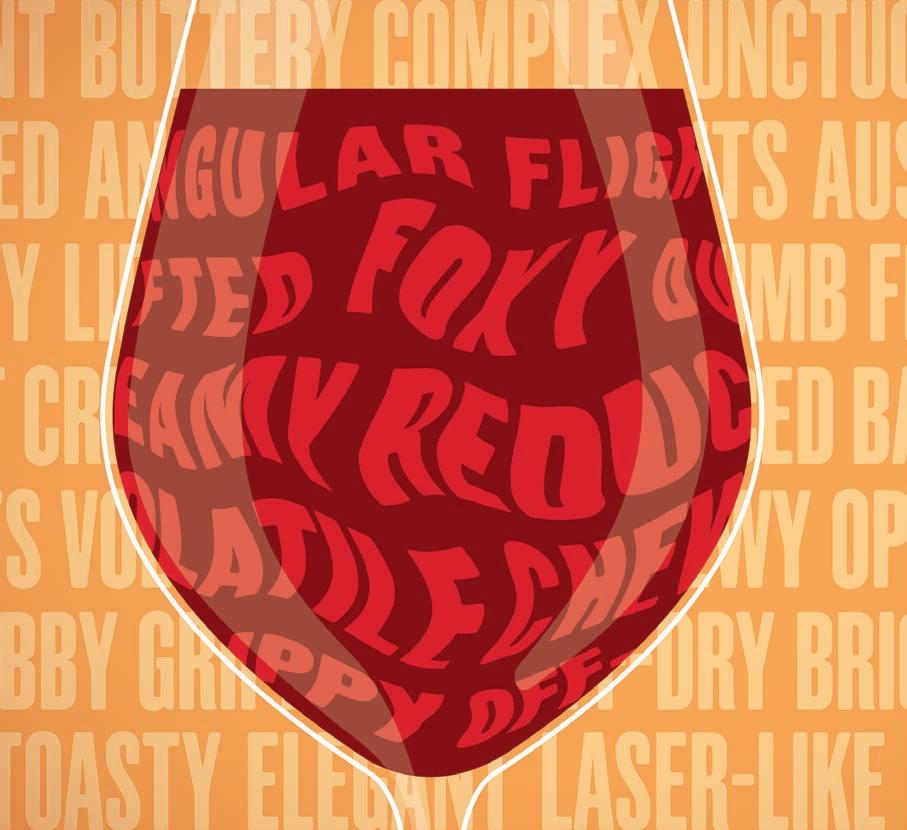
If someone gave you a glass of wine and said it was “foxy,” would you gladly accept it or quickly turn it down? Would you buy a bottle that a wine merchant described as “lifted,” or would you worry that he or she might be trying to pawn off stolen goods? What if a drinker declared that a wine was “volatile”? Would you think it dangerously unpredictable, possibly unsafe to be around?
Perplexing tasting terms like these are frequently employed by wine professionals, much to the consternation of non-oenophiles. What do they mean and why do wine drinkers use them instead of “regular” words? It’s jargon worth learning if you want to appear knowing or keep up with the pros. Here are short definitions of seven frequently heard yet often quite baffling wine terms.
“CREAMY”
A budding oenophile might wonder: What kind of wine could possibly taste like cream—and why would anyone want to drink one that did? “Creamy,” however, almost always describes not so much a wine’s taste as its texture, also referred to as “mouthfeel,” another beloved winegeek word. The quality is most often invoked when talking about a Chardonnay fermented and/or aged in oak barrels
instead of stainless steel, or one that has undergone malolactic fermentation, a softening technique for both reds and whites that transforms tart malic acids into softer lactic acids.
This process also produces diacetyl, an organic compound with a distinctly buttery flavor. Diacetyl is the likely reason tasters often use “creamy” in conjunction with the word “buttery,” because both describe a similar kind of wine.
“DUMB”
Although it sounds like an intellectual insult, “dumb” in tasting refers to wine in a state of suspended animation, usually after a number of years in the bottle. A dumb wine isn’t dead, so don’t dump it down the drain or belittle its worth; it’s just sleeping or has “shut down” in the bottle for some inexplicable reason.
The presumption, born of a particular wine’s history of development and aging, is that the contents of a dumb bottle will at some point revivify, either to its former glory or in a new but still vibrant stage. Certain wines from the Rhône Valley or Bordeaux, for example, are known to shut down for an indefinite length of time. It generally happens in a bottle’s middle age— somewhere between a few years after the vintage to about a decade old—and lasts for several years. But even that’s not an inviolate rule.
There’s no knowing when this will happen or how long it will last. Even the most seasoned collectors I know have been baffled by wines playing dumb. For this reason, they might buy a case instead of one bottle of a wine. They open and taste several bottles over the
years, looking for just the time to drink it—hopefully finding it in the full glory of youth or age, and not in a state of mute middle age.
“FLIGHTS”
When collectors assemble to make a comparative analysis of several wines or types of wines from the same producer, region, grapes or from different vintages, the wines aren’t served in groups or herds or packs but in flights.
Restaurants and bars have taken up the term in recent years, and many advertise flights as one of their specialties. But where did the term originate? Perhaps it came from the sensation of flying that one can have after a few glasses. I’ve looked for the source and can’t find one. Not even the exhaustive Oxford Companion to Wine has a definition. Maybe some wine drinker years ago read a poem about a flight of birds traveling together and thought the word sounded lovely. It certainly has a nicer ring than the more common collective bird word, “flock,” which sounds like it describes fabric, not wine.
“FOXY”
You may think someone lifted the word from a Jimi Hendrix song, but “foxy” really is a tasting term. Alas, it isn’t one of praise. A foxy wine smells a bit funky and musky—more like an earthy den than the fox who lives in it. Most often it describes American hybrid Vitis labrusca grapes, such as Niagara or Baco Noir, versus such so-called noble grapes from France as Merlot or Cabernet.
Most of these hybrid wines are made in places too cold for sensitive noble grapes to grow (think Minnesota, Ohio and Maine) by very small wineries, so many wine drinkers will never encounter a foxy aroma. If they feel they’re missing out, perhaps they can approximate the experience by sniffing a fox den?
“LIFTED”
Long before plastic surgeons began practicing lifts of a very different sort, drinkers who encountered wines that were particularly lively, that had a bit of a bounce in the glass, often referred to them as lifted. The lift comes from a generous amount of acidity. The same wine could also be called juicy or bright. But those more commonplace words somehow seem less descriptive, since lifted is what many wine drinkers themselves feel when captivating aromas billow out of a glass.
“REDUCED”
When referring to price, “reduced” is a positive. But in a wine, it’s a flaw. Reduced or reductive wine hasn’t been exposed to enough oxygen during the winemaking process, which can make it smell a bit sulfurous. Some people claim this is a problem specific to bottles under screw caps, a completely anaerobic environment. (This hasn’t been proven true, by the way.)
This flaw can sometimes be remedied by introducing oxygen to the wine. Swirling your glass around or decanting the bottle may blow off the offending aromas. Then again, it might not.
“VOLATILE”
A volatile wine sounds like something so temperamental a drinker might have to tiptoe around it. But the term actually refers to a wine marked by too much acetic acid. As with reductive wines, the problem arises during winemaking, usually caused by yeast or bacteria.
A wine with excess volatile acidity—seen more often in reds than whites—often smells like vinegar. Wine drinkers talking to one another about this problem use the shorter “V.A.,” as in “Do you get a little V.A. with this wine?” This is not a compliment. Volatile acidity can destroy the aromas and the taste of a wine, and like a volatile person, it can cause a tempest around the table.
Ten Confusing Facts About Wine
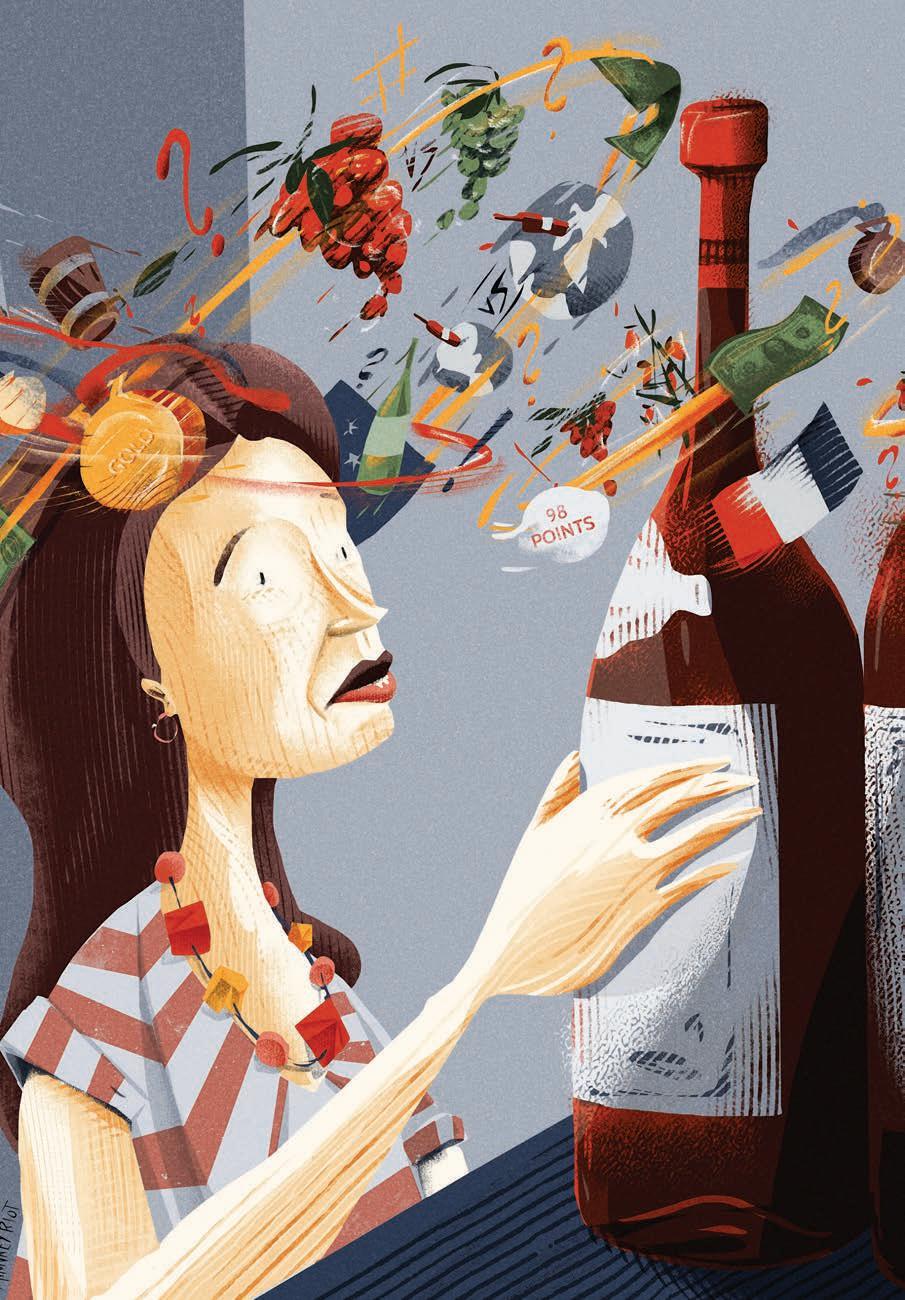
Some phrases are repeated so frequently they are eventually assumed to be true. Maxims such as “high-alcohol wines aren’t good” and “a great wine must be age-worthy” are just two I’ve heard recited by oenophiles again and again. But are they opinion or truth? I compiled a list of the 10 phrases I’ve heard most often and asked a few wine professionals and knowledgeable amateurs which ones they thought were closer to fiction and which should be called facts.
THE HIGHER THE PRICE THE BETTER THE WINE.
Wine marketers are responsible for this notion, said Gerald Weisl, proprietor of Weimax Wines & Spirits, a shop in Burlingame, Calif. Or perhaps it’s driven by the ego of the winemaker, he added. Chris Camarda, proprietor of Andrew Will Winery in Washington state, agreed with Mr. Weisl but maintains that producers are pressured to price their wines at a certain level, lest they not be taken seriously. He told a story of a Seattle wine merchant who recommended Mr. Camarda’s top wine, Sorella, to a shopper who had asked for “the best Washington state wine.” But when told the bottle cost $65, the customer rejected the wine as “too cheap.” It couldn’t possibly be good, he said. This is one maxim I’m happy to say I’ve never believed. I have had truly first-rate wines that cost $25 a bottle—and less.
WINE IS MADE IN THE VINEYARD.
This saying has become a favorite of seemingly every winemaker in the world. The phrase suggests that a good wine isn’t a product of technical work (e.g., filtration, non-native yeasts) but simply good fruit. When I asked superstar Napa winemaker Aaron Pott what he thought, he replied, “There is nothing more true.” Of course, Mr. Pott works in a rarefied world with rarefied fruit, so no doubt it’s true for him. But as Mr. Weisl wisely pointed out, “A winemaker can screw up years’ worth of viticulture if he or she doesn’t make good decisions in the cellar.” Mistakes can come in the form of the wrong fermentation temperature or the smothering of beautiful fruit with excess oak. Perhaps a better saying might be “A good wine starts in a good vineyard.”
NO ONE CARES ABOUT SCORES OR WINE CRITICS.
The oenophiles I polled were at odds over this. Ian Dorin, wine director at the Wine Library in Springfield, N.J., thought scores were important to only a tiny segment of drinkers. “Brands are what drive people to buy wine—ratings don’t really sell wines,” he said. But my friend Alan, a knowledgeable and opinionated oenophile, believes that in such a highly competitive market, scores are more important than ever. Scores help distinguish one wine from another—for buyers and sellers alike. I’d say this rule is true but only for scores higher than 90 points. I can’t think of a wine drinker who seeks a sub-90 point wine, or a producer likely to tout a wine with a lowly score.
WINEMAKERS MAKE WINES FOR THE CRITICS.
Wine drinkers aren’t alone in chasing high scores; conventional wisdom holds that vintners do as well. They have (ostensibly) figured out the palates of powerful critics and make wines they will like. Fiction or fact? Absolutely fact, said Mr. Camarda. “I see people making wine to fit certain critical biases,” he asserted, describing a Bordeaux he tasted recently as so ripe and alcoholic, he said, it was more like an Australian Shiraz than a Bordeaux. There was no question in his mind the wine was inspired by a producer’s looking to impress critics who love powerhouse wines. I think Mr. Camarda is right—but the adage holds true for only a narrow segment of the market. There is a veritable ocean of mass-market brands that don’t seek reviews or scores. And, ultimately, pandering to critics pays off for very few winemakers. Indeed, only a tiny percentage of the world’s wines are even reviewed.
HIGH-ALCOHOL WINES AREN’T GOOD.
A certain cadre of wine drinkers, both amateur and professional, loudly decry wines with high alcohol levels, often anything over 14%—coincidentally, the number at which wine is taxed at a higher rate in the U.S. As far as I can tell, this cadre is composed chiefly of wine bloggers (Google the words “anti high-alcohol wines,” and you’ll see what I mean). But the facts don’t seem to support these opinions, nor do wine drinkers seem to care. The world produces and consumes an enormous quantity of wine whose alcohol content is well north of 14% (Napa Cabernets, Châteauneuf-du-Papes and wines from Spain’s Priorat region, to name a few).
My friend Alan calls this lower-alcohol edict “one of those self-important decrees no one in the real world pays attention to,” and I think he’s right. Higher-alcohol wines come from riper fruit, the result of warmer temperatures. And some of the best vintages of Bordeaux have been produced in warm years, e.g., 1947 and 1982.
GREAT WINE MUST BE AGE-WORTHY.
This has been a dictum for decades, perhaps centuries: A wine isn’t truly worthy unless it improves over time. But is this true? After all, many wines are consumed with much pleasure in their youth. “Great wine is a wine that’s great at the moment,” Mr. Dorin opined. “It’s the moment that makes the wine.” I do think he has a point. Greatness is subjective: What’s great to me might not be great to you. And yet a wine— typically a pricey one—that transforms with age, that not only endures but improves and evolves into something more nuanced and complex, can objectively be said to have merit. I think this saying is not only true, it has stood the test of time.
OLD WORLD WINES ARE BETTER THAN NEW WORLD WINES.
My consultants were divided on this, and even at odds with themselves. Mr. Pott thought it was both true and not, as did Mr. Camarda. A New World wine is shorthand for any wine made outside Europe: in Argentina, New Zealand, the U.S., etc. The two men gave nods to the Old World sensibility—hundreds of years of tradition, including personal engagement with the vineyard. So did my friend Alan, although he wondered
what might truly be considered a New World wine in the first place, with so much new exploration, new plantings and New World winemaking technique (such as temperature-controlled fermentations) put to use in the Old World. Perhaps Mr. Camarda said it best when he answered, “It depends.” Personally I think a hybrid is best: Old World sensibility matched with New World innovation makes the best wine. Although that may be a bit long for a maxim.
SOMMELIERS ONLY LIKE OBSCURE WINES.
If you’ve been to a restaurant whose sommelier has compiled a list of wines you don’t recognize—and can’t even identify as red or white—this seems to be an incontrovertible truth. But according to Michael Madrigale, head sommelier of Manhattan restaurants Bar Boulud and Boulud Sud, only sommeliers who want to feel superior to their customers adopt this stance. “They drive a wedge between themselves and the wine drinker,” he said. While I appreciate sommeliers who are forever questing for something interesting and new (it was thanks to Mr. Madrigale that I first discovered Canadian Gamay), they do need to remember that their customers might also prefer familiar wines such as Sancerre and California Chardonnay. Mr. Madrigale includes both on his lists. Perhaps this saying should be amended to “Bad sommeliers only like obscure wines.”
RED-WINE DRINKERS ARE MORE SOPHISTICATED THAN WHITE-WINE DRINKERS.
The late, great English wine writer Harry Waugh declared, “The first duty of a wine is to be red.” The idea
that red-wine drinkers are connoisseurs rather than mere consumers has held for decades. But many wine professionals think otherwise. “If you’re really into wine,” said Mr. Madrigale, “it’s the opposite.” White wine offers a broader range of possibilities, is more versatile and is easier to drink without food. Mr. Camarda had a funny take on the fallacy. “It’s because chicks drink white wine,” he said jokingly, although there may indeed be a sexist perception that red wine is more important and sophisticated because it is more manly. Naturally I, and Mr. Camarda, think both this perception and the adage are false. Some of the most complex and compelling wines in the world are made from white grapes (Burgundy, Vouvray, Mosel Riesling and Champagne), and I know plenty of non-chicks who agree.
WINE IS HARD.
Is this a saying or simply a complaint? It is certainly a statement I’ve heard often. Despite numerous idiot’s guides and self-styled wine experts who claim that wine is simple, learning and knowing about wine is challenging. Or at least it is for anyone seeking something beyond a merely consumable beverage. Wine is the study of multiple subjects simultaneously—history, geology, cartography, geography, politics, chemistry and a good bit of sociology. Anyone who claims otherwise is deliberately underplaying the complexity of the subject—or lying to you.
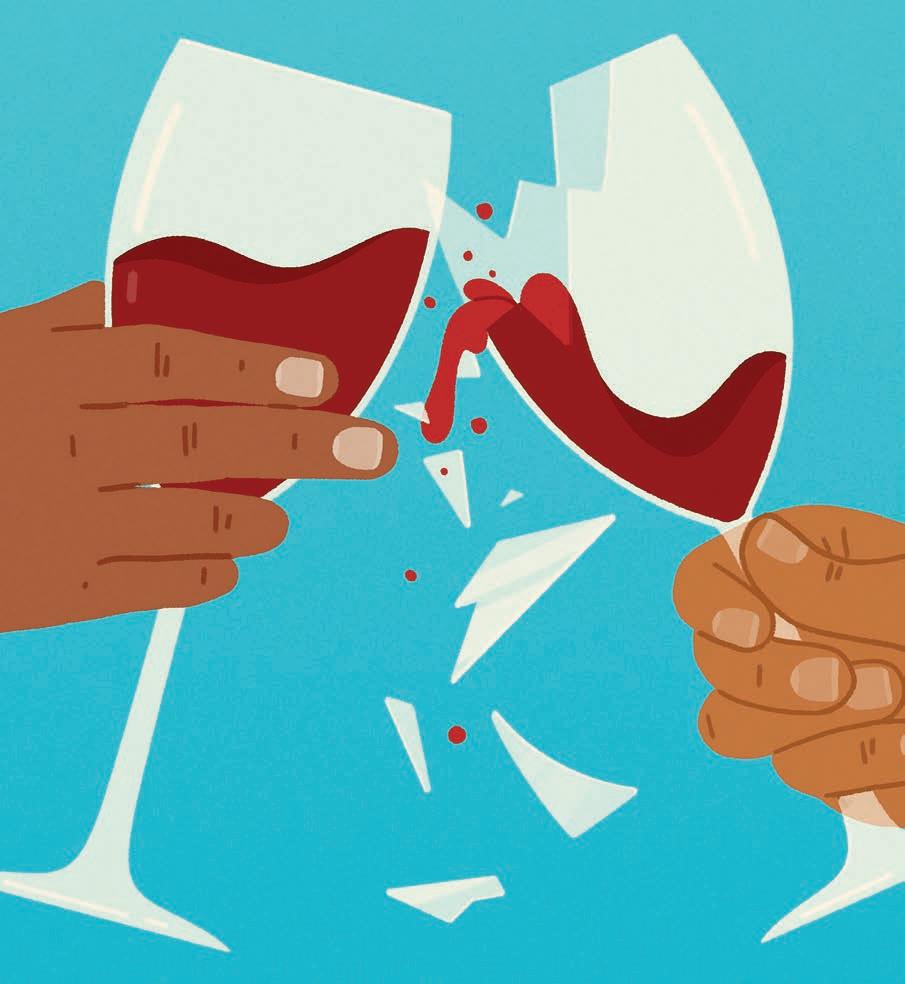

To be a wine lover is to be often in search of advice. Is this wine sweet or dry? Is it a good buy? When should I drink it and with what kind of food? The questions are as numerous as the people who pose them, and the answers are just as diverse. But what happens when the advice given isn’t actually good?
This thought occurred to me while reading an article in the Daily Mail recently. The headline blared, “Why DO we swallow all those myths about wine? Experts now say letting wine ‘breathe’ makes no difference.” This isn’t true, of course. Plenty of young and/ or tannic wines will definitely benefit from extended aeration or “breathing.” (When I contacted the author of the piece, Helen McGinn, she said, “The point is that most wines don’t need to be decanted and left to breathe in something other than your glass.”)
I’ve encountered many sources of bad wine advice, from hapless headline writers to pushy retail-store clerks to imperious sommeliers, and all those selfdescribed “wine educators.” But rather than limit this column to my own vinous rants, I decided to widen the field and petition some wine-loving friends and wine professionals to share some of the worst wine advice they’ve received—or, in some cases, given.
“Try this retsina, it’s really good,” is a line New York attorney Jay Hack has heard over and over—and each time he’s ended up wishing he hadn’t. Retsina, for the uninitiated, is a wine infused with pine resin, created in Greece. Its taste has been compared to turpentine. “Once every decade or so, someone insists it has improved a lot, so I should try it,” Mr. Hack wrote in an email. “So far no success.”
About Cider Mill Press Book Publishers
Cider Mill Press publishes exceptional books that combine creativity and craftsmanship. As an imprint of HarperCollins Focus, we specialize in premium cookbooks, cocktail and spirits guides, and illustrated gift books, all distinguished by compelling content, striking design, and a commitment to quality in every detail. Cider Mill Press sets the standard for books that inform, inspire, and elevate everyday moments. Learn more at cidermillpress.com.
“Where Good Books Are Ready for Press”
501 Nelson Place Nashville, Tennessee 37214 USA