NOTIONS
A student-led magazine grounded in the Cleveland Institute of Art’s diverse community, encouraging connection and individual expression through all facets of art and design.

NOTIONS
A student-led magazine grounded in the Cleveland Institute of Art’s diverse community, encouraging connection and individual expression through all facets of art and design.
As upcoming artists and designers, we feel the need to express our identities and voices in a world that’s trying to silence us. We face these challenges head-on with authenticity and community as we prove ourselves to this ever-changing world. At the Cleveland Institute of Art, we encompass an array of artists and designers who tackle these challenges with their own intentions and views. In this issue, we invite you inside our worlds to see our process, feel our emotions, and witness the notions of what emerging creatives can do.
Nothing can replace human creativity and the methods we use to get there. Each person who we represent has their own story and voice for us to hear. What makes an individualʼs art their art? Their identity theirs? How should we and can we listen? What separates institutions from individuals? We invite you to think through these questions in our third edition of the annual student-led magazine. This year’s title, Notions, highlights the many perspectives and ideas that emerge from the collective of CIA.
From features on personal studio spaces to spreads highlighting some of CIA’s amazing artists and how they get it done, this magazine celebrates CIA students’ many notions of how art can be art and people can be people. Its publication is thanks to the many students who collaborated to make it possible with their love for their community. Together, we would like to thank you for reading and listening to our voice too.
Sincerely, The Editors
DESIGN TEAM
Gavin Daimon, Alexandra Miller, Jade Popovitz, Sid Rogers, Riyan Sita
EDITORIAL TEAM
Fallon Blackshire, Eliza Colby, Lindsey Hatch, Jason Hildebrandt, Lachlan Howard, Madeline Huber, Sean Joyce, Joshua Litten, Zoe Peenstra, Angel Ramirez-Banda, Jess Reichwein, Maria Silvidi, Alex Sioutis, Milo Spencer, Teresa White, Izabela Zoga
FACULTY ADVISORS
Adam Lucas, Zach Savich
Olszewski Nichole Otey
Harley Powell
Ashley Olszewski
Maya Sims
Students at a Glance
Eliza Colby
Eliza Colby
Josh Willits
Aaron Cunningham
Alder Hildebrand
Elisa DeLorme
Elisa DeLorme Students
Elisa DeLorme
Elisa DeLorme
Students at a Glance
Ash Guynn
Charlotte Smoley
Corey Johnson
Floy Reed
Madeline Meier
Sydney Stadler
Nichole Otey
Wild Shafer
The Process Perpective
Beau Cammuso
Harley Powell
Beau Cammuso
Abbigayle Hlynosky
Everson Brooks
Ari Skebeck
Hailey Fuller
Annelise Abruzzi
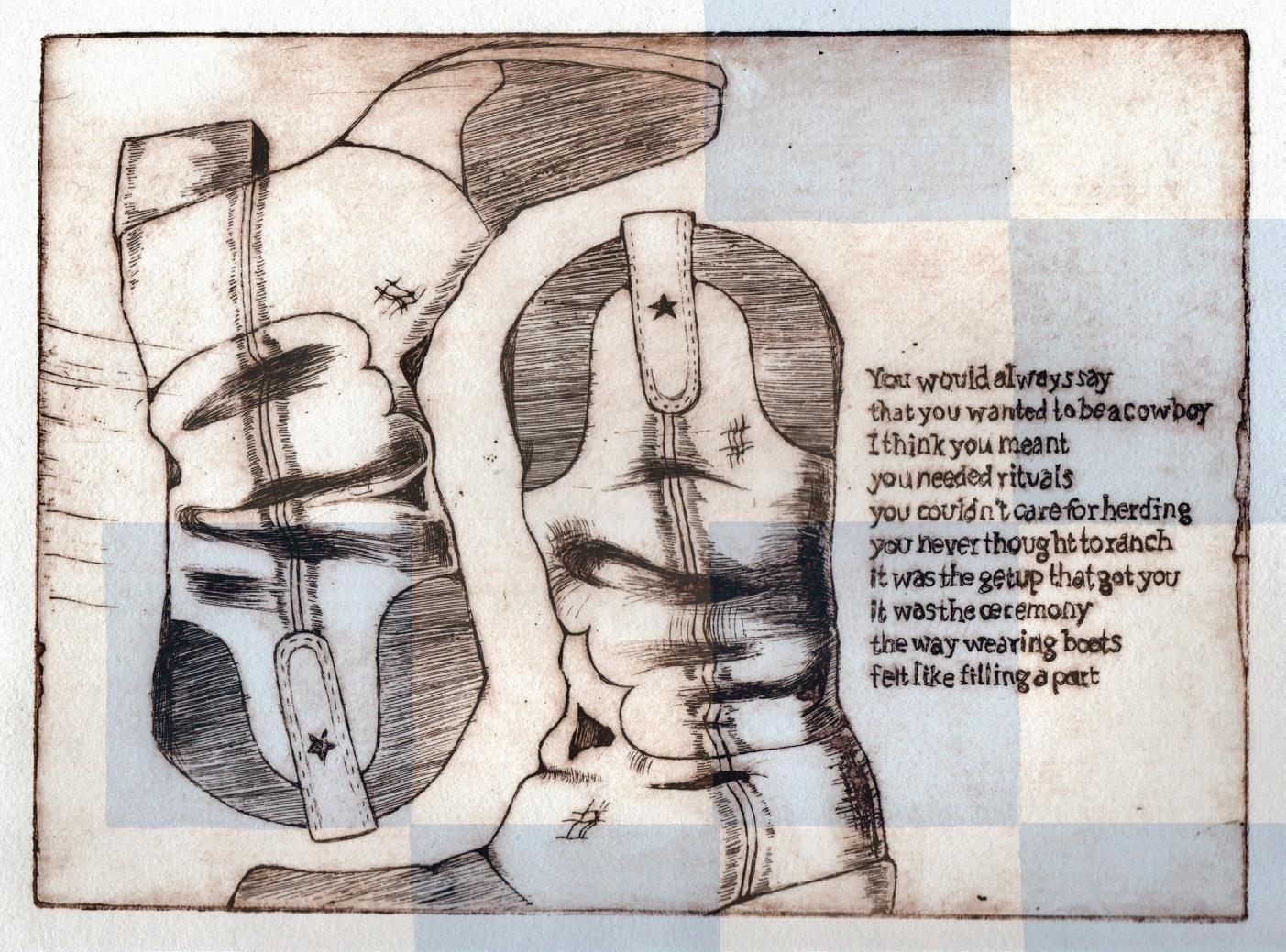
“A portion of my work in printmaking functions as an outlet for my writing as a means of self-examination. When working with copper, every etched word becomes something more permanent and reproducible, acting almost as an affirmation.”
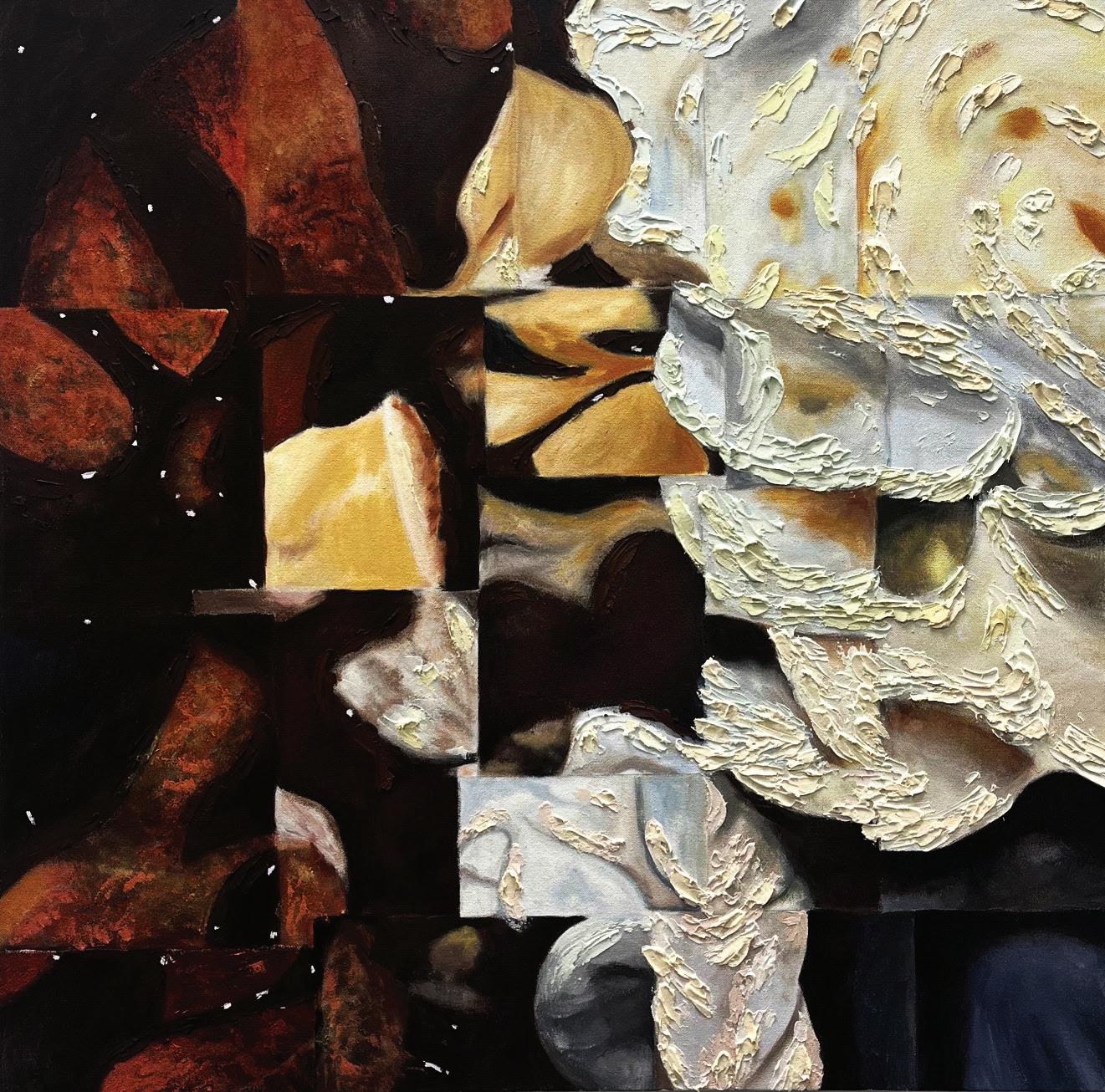
“Through my work, I open up a conversation about psychological pain, contextualizing the idea of painting being a form of therapy. I use texture and color to enhance the viewers’ senses to make them aware of their bodily reaction.”
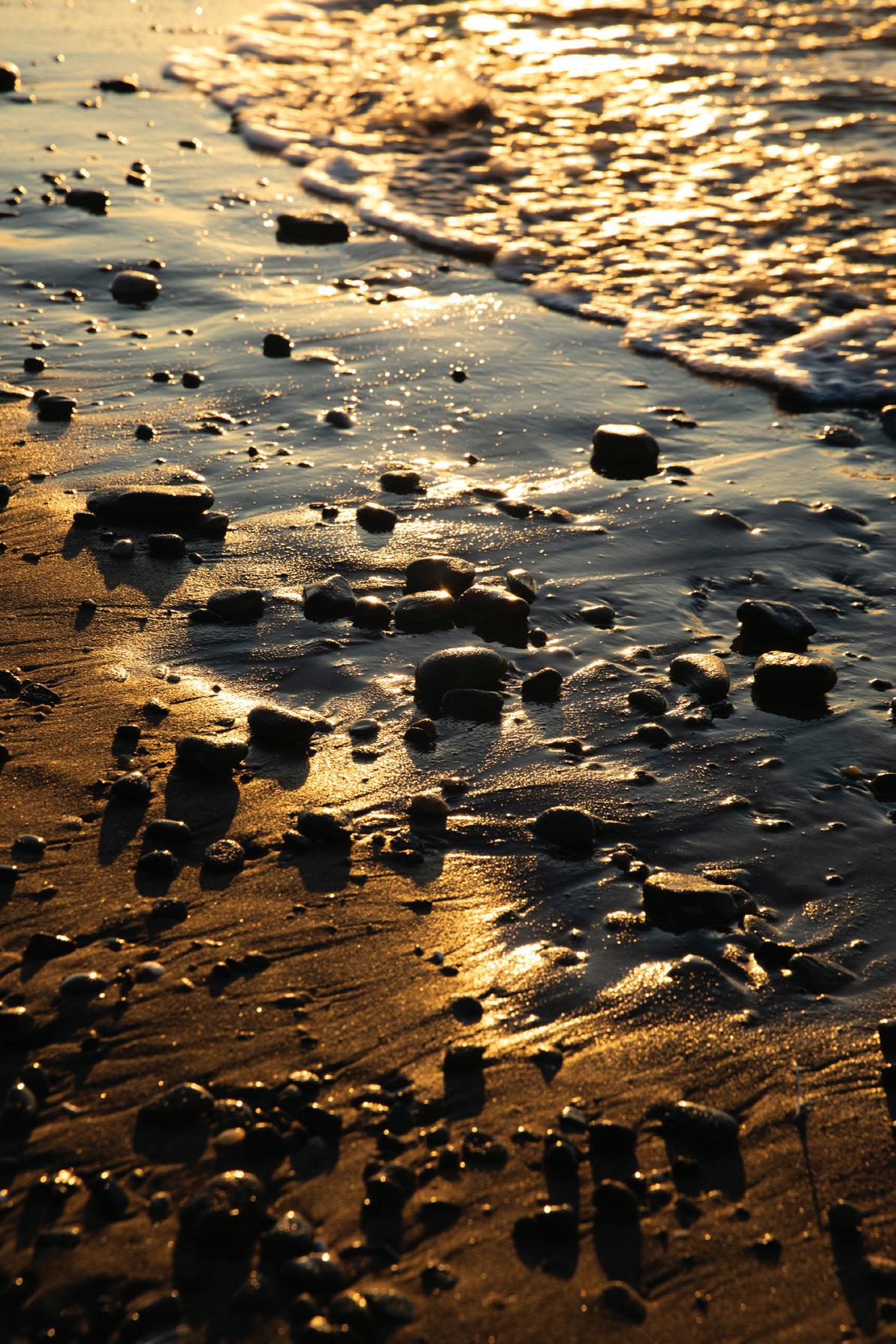
“My art is primarily centered around the beauty of nature and landscapes. Taking pictures of how beautiful our planet stands now is a joy and a privilege. It reminds me to slow down, to notice the details, and appreciate the quiet moments.”
No Meat Cheese Quesadilla from Sheetz. Pico. Sour Cream. Boom Boom Sauce?
Tastes good the first 3 bites. Then I start to think about it too hard.
Baked tofu and pre packaged salad
Mixes with the first signs of Slimy rot. Peppermint stick ice cream
Mixed with crumbled chips
Ahoy. Maruchan bistro Ramen that definitely Isn’t vegetarian. A new Drink sitting open and almost gone on my desk.
Yerba Mate, 150mg caffeine.
“Enlighten-mint," Committed to regenerative practices
Like coffee in a press
Under the shade of the rainforest canopy. Everything is plastic or paper.
Paper please. I'll deal with the hole in My bag on the way home.
The Trader Joe’s cashier seems like they Really want to be there.
I just really want my weird seasonal cookies And decent microwave meals.
Honorable mentions:
Apple Shortbread Cookies, all butter Impossible Chicken Nuggets
Pop Secret
Fuji Ginger Redbull, Sugar Free Snickers
Tikka Masala from Uncle Ben's A cubed pickle
A blueberry English muffin
“I write poems because it’s easier than journaling and prettier than therapy and I hope someone notices them and can appreciate my singularity.”
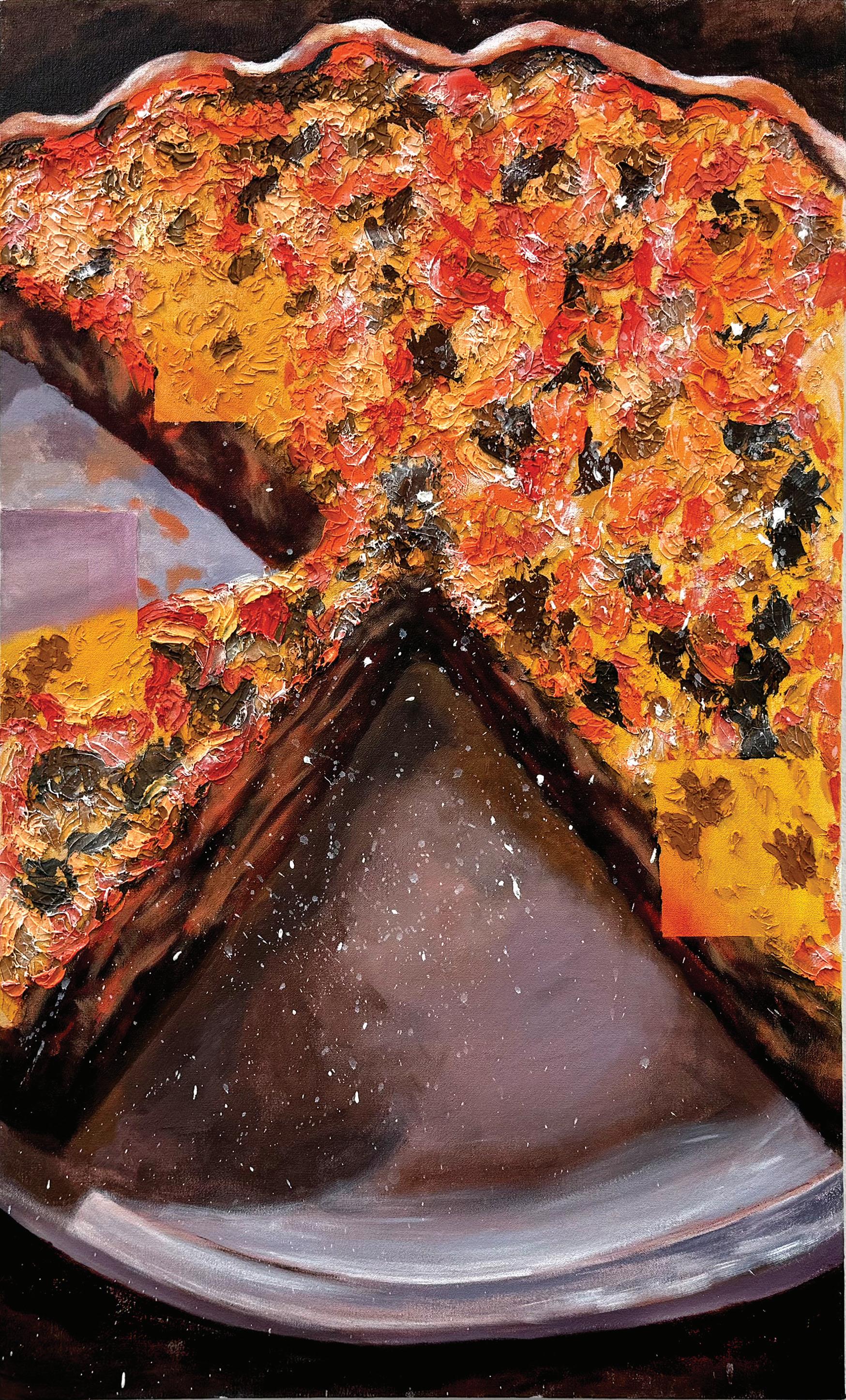
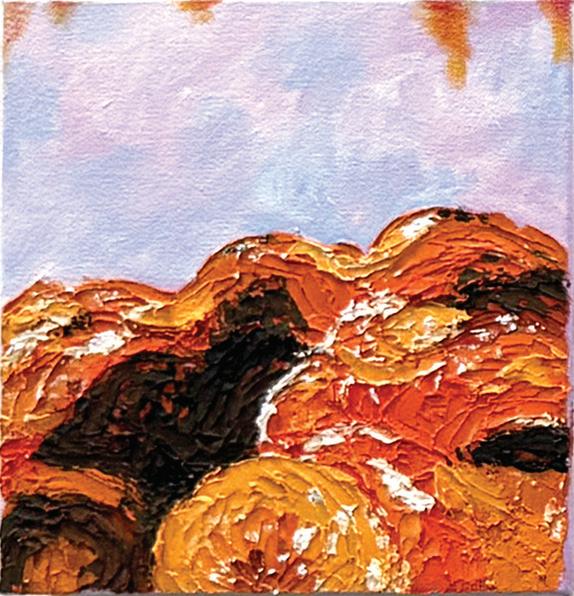
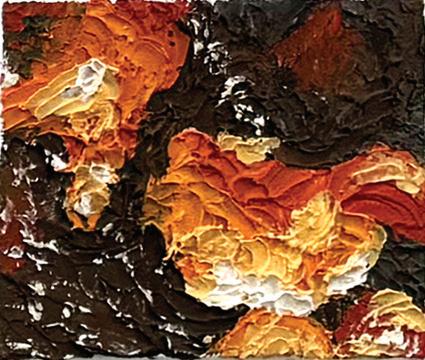
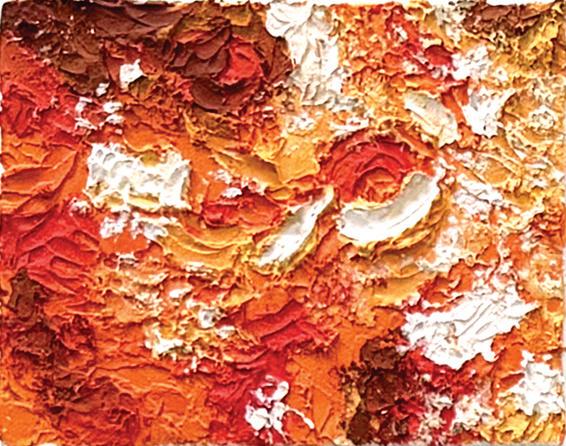
Down 2025
“Topics such as food insecurity, diet culture, and food disorders are not as vocalized in today’s society as they should be. I want to bring light to such underrepresented topics to create an open space for healing to begin.”
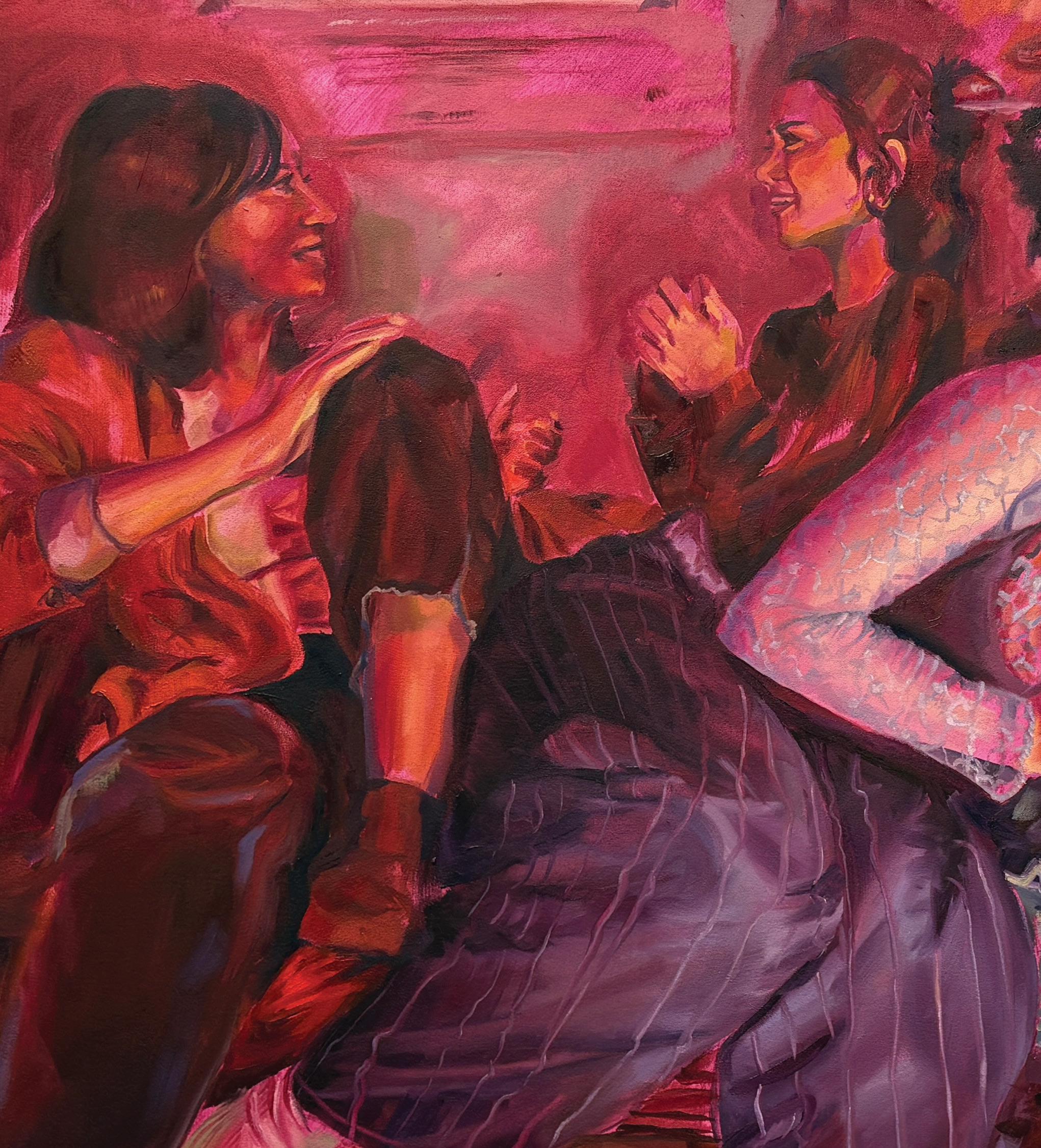
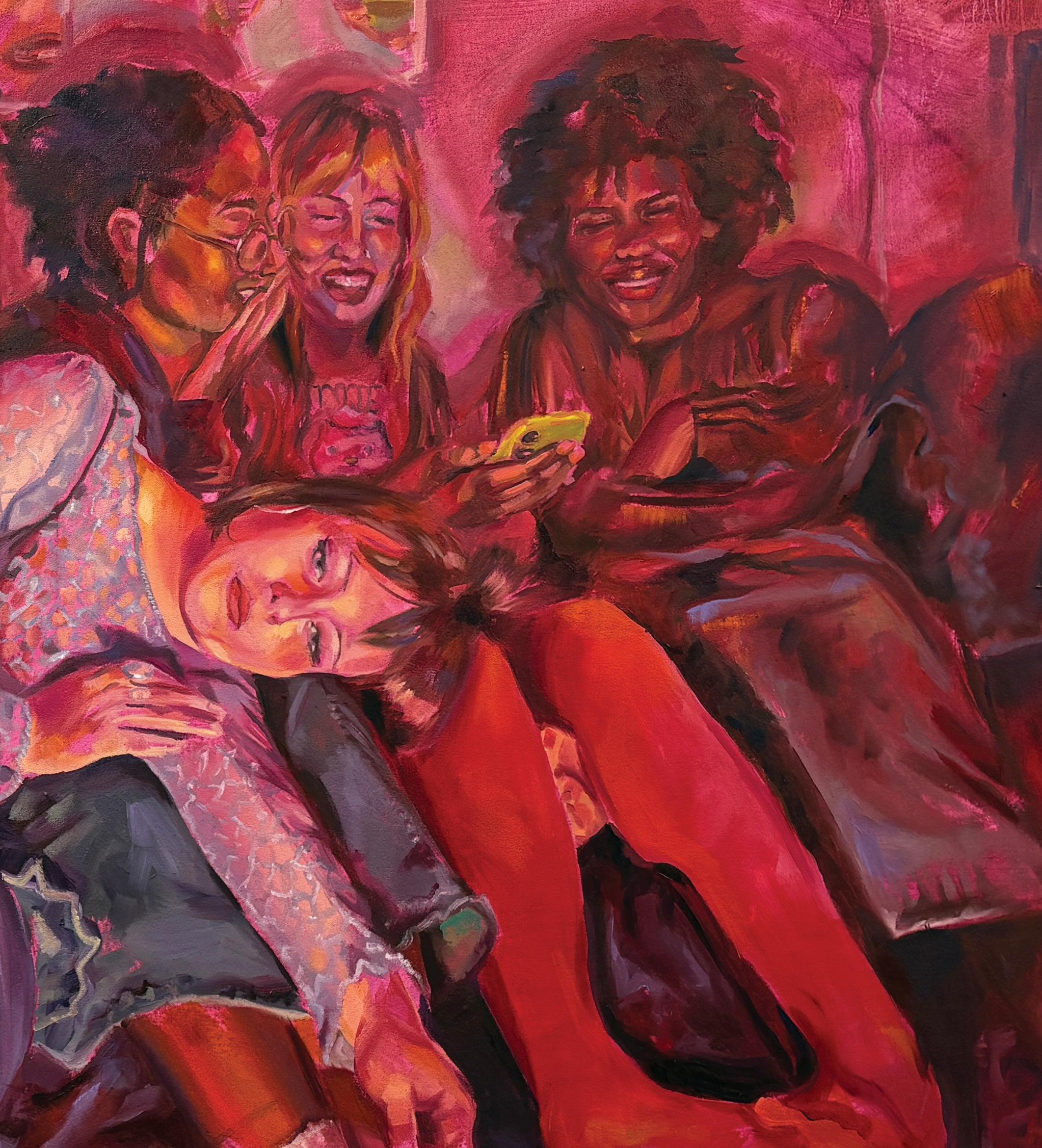
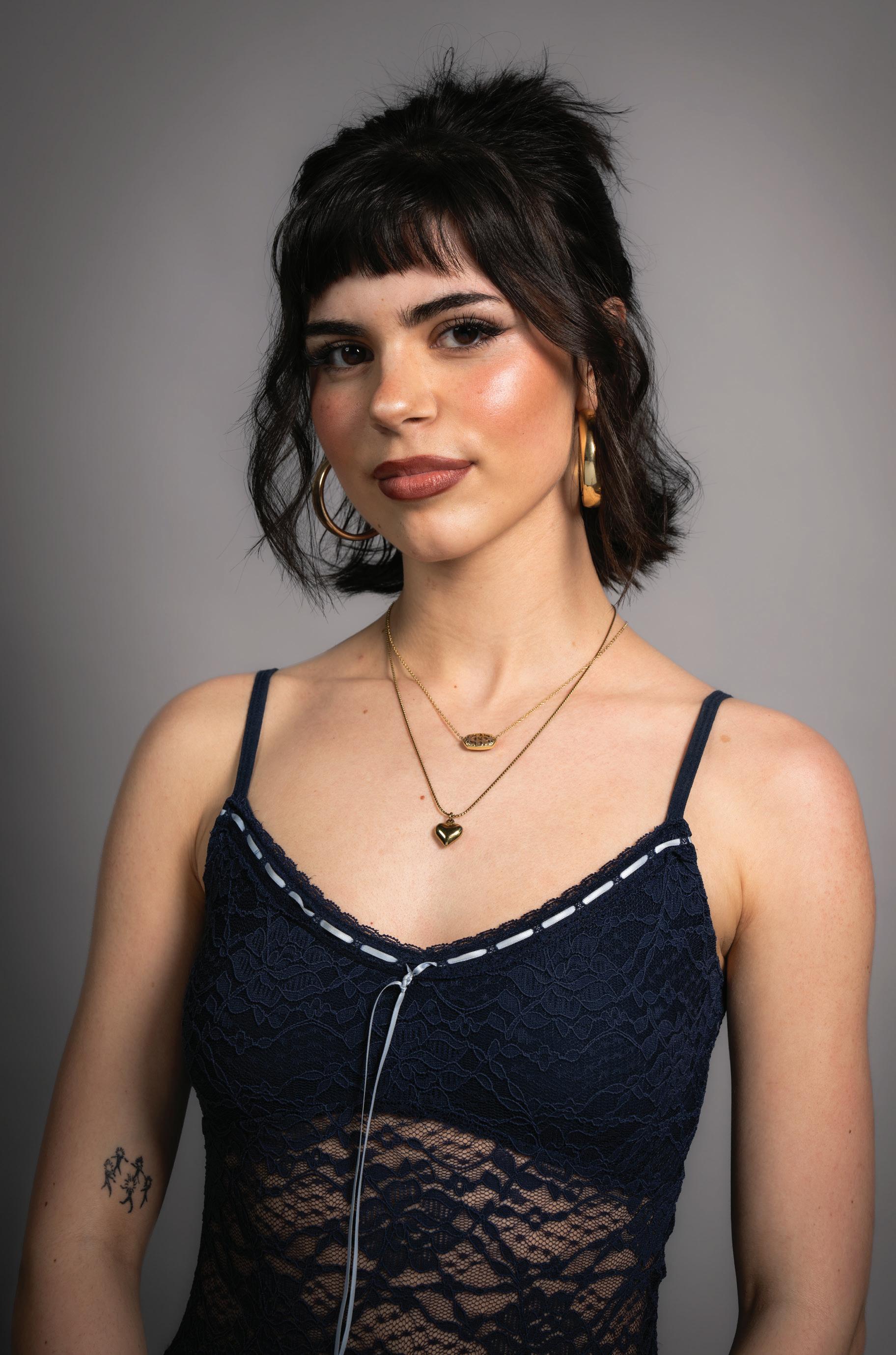
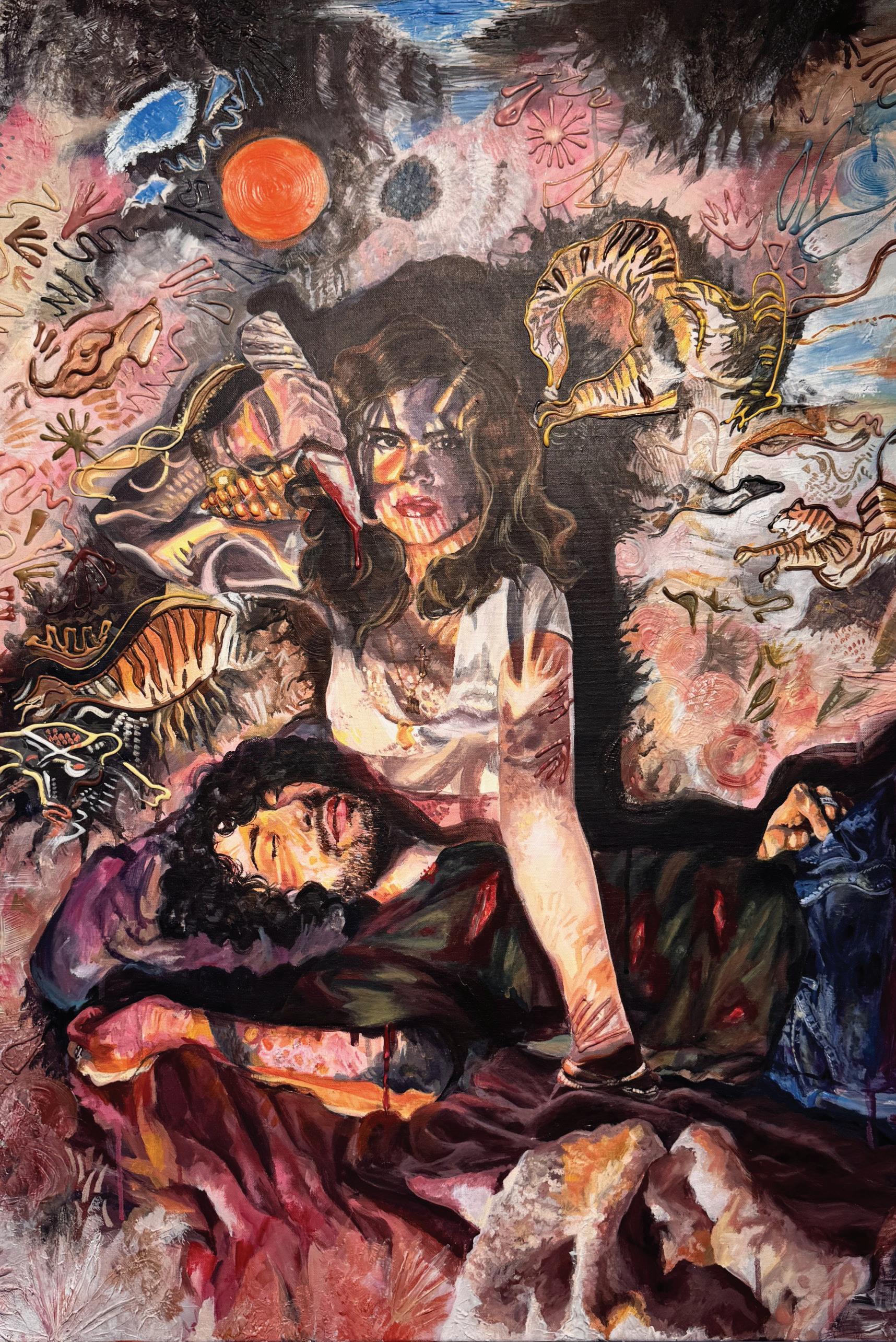
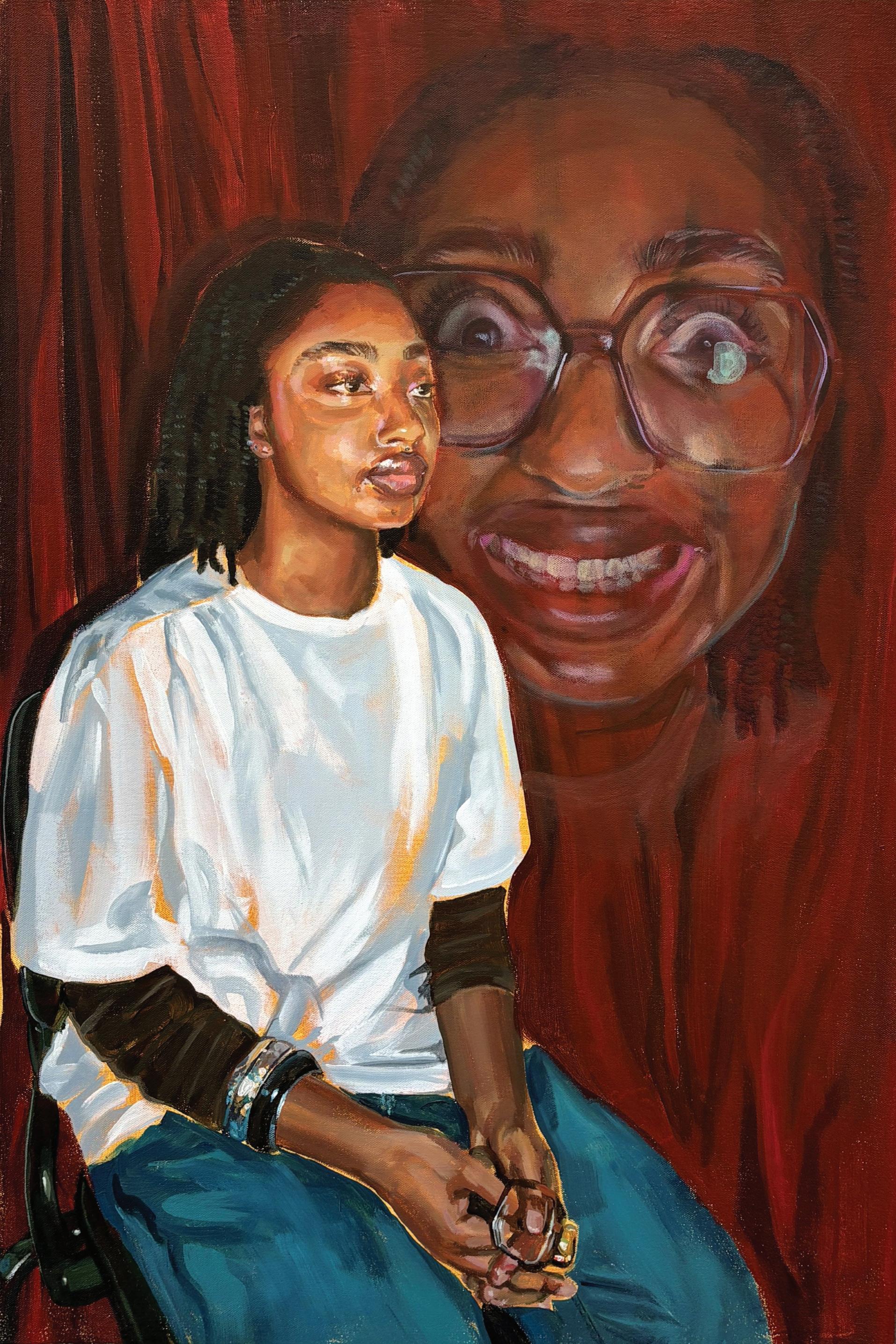
Our editorial team met with Maya. She gives us some vital insights regarding her process and where she sees herself in the future.
NOTIONS
NOTIONS
NOTIONS
Who are you? What do you do as an artist? What’s your story and what led you here to pursue painting as a major?
My name’s Maya. I grew up in Columbus, Ohio. I only started painting when I was a senior in high school before that. I did a lot of drawing, and as a kid, that was all I did was draw. I ended up taking a break from art when I was in high school because my high school didn’t really value art as much as football and sports. When I started painting, I didn’t even know how to paint. I just kind of painted how I wanted to, and now going here, I’m actually learning the culture behind painting. There’s a whole other world behind it. And I think that’s the most exciting part about doing it here.
What does creating a piece of art look like to you? Could you walk me through your process step by step? What are the types of materials that you use? What’s really the thinking that’s going on behind your work?
So usually, my work starts with just an idea or an image in my head. I can almost imagine the final concept of what I want my artwork to look like. And then I just try and make a process that can best get me to that image. And I start with sketches, but I usually make a reference photo, Photoshopping all my different ideas and references. Then I do my underpaintings. But I also do a lot of my own imaginative parts of the paintings. I also play a lot with my brushworks and colors, and that’s really where I like push my paintings past the photo references. I think that’s actually where my paintings are most successful is when I kind of just let go and let my brush kind of just do its thing. What themes or subject matter do you keep returning to, again and again?
A theme that I’ve been majorly working on, something that really speaks to me, is social interactions, especially as in being a woman, being in college and meeting new people. It’s like exploring different ways of being isolated and different feelings that come about when in a space with others rather than just being alone. I think that’s one of the biggest parts of being in college. Learning who I am by having different interactions with people.
“I want to explore different ways of painting. I wanna get more abstract — I love painting. I want to keep going and keep learning. Just keep painting.”
And I’m also getting to the bottom of a lot of problems in female friendships, female relationships, and feelings of being left out. Different parts of female anger. Relationships and social interactions, the good and the bad parts of them, especially being young.
NOTIONS
NOTIONS
NOTIONS
You’re not just solely a painter; sometimes you do more multimedia work. Could you speak more on what draws you to explore your own art and your own expression across media?
Yeah, I think as a visual artist, painting is not my only form of expressing my ideas. I do a lot of ceramics. I do enameling, I do drawing. Any sort of art that I can make with my hands, they all work together in my brain. I can translate all these ways of expressing an image in my head with different mediums, and it doesn’t feel that different. It all feels like different ways to create the same expression as what I want.
What do you think sets the Painting major apart from other visual arts majors like Drawing or Illustration? What showcases Painting as a major? How do you view that personally?
I think when I first started painting, before I even knew it was a major, I didn’t really understand the history behind painting and the culture behind painting. Now that I understand it more, the deeper I can get with painting that I don’t think I could have achieved with any other mediums as a drawing or ceramic major. There’s a certain type of story to tell with painting, and everything in painting is a symbol. Everything has a meaning.
Where do you see yourself as a painter for the rest of your time at CIA and beyond?
I really want my work to fully evolve. I don’t want to keep doing the same paintings. I want to explore different ways of painting. I wanna get more abstract. Now I can go in different directions since I know more about the world of painting. I love painting. CIA isn’t the end of my painting education. I want to keep going and keep learning. Just keep painting.
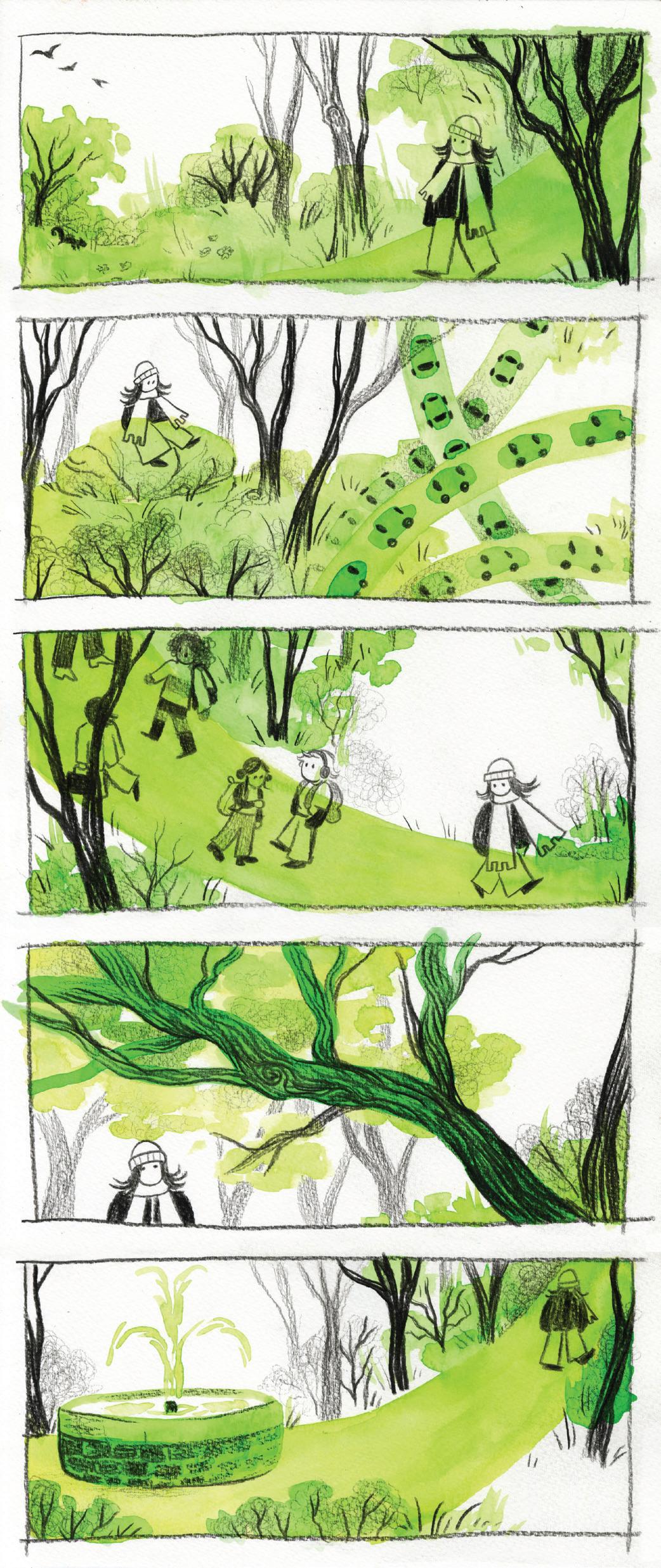
a short walk
I left home for a walk
I tried going ways I hadn’t gone before, looking for things I don’t usually see
I sat on a rock and watched cars drive around like ants beneath me
I went through busy streets and fell in love with strangers
I looked up at big trees and imagined my limbs stretching that tall
I found a fountain I had never seen running;
I left my walk to go home
I left a piece of myself behind
Eliza Colby
I know of a place where the ocean waves crash and the air is sweet and salted. I know of a place where the wind tumbles through you and the sound in your ears is like music. I know of a place where the land is forever and the trees stretch tall into infinity. I know of this place from my mother, my mother’s mother, the ones who bore me, years before me, the ones who shaped this earth. I know of the story of this place, what made it come to be. I’ll share it with you if you listen closely.
A girl, not old enough yet to walk alone without a hand to hold, lived in a small fishing shack with mother and father. The family lived atop the ocean, their home held up on rickety stilts with only a thin, wooden bridge connecting it to the land. Tides rumbled the foundation of the home as they rose and fell, and the girl would dance with the waves. Each morning as dawn broke, the father would take his boat out to sea and not return until afternoon, a net swimming with fish in tow. The family would sit to eat their lunch together and feel the movement of the waves. In the day, the mother brought the girl down the shaky, shambly bridge, baskets of fish secure on their backs. They wandered down a long, winding path until they made it to a small marketplace. The townspeople greeted the mother and the girl fondly while they received their daily fish. Sometimes the girl would play with the village children, pretending they were birds flying far beyond the sea. The townspeople sent the mother and daughter home with fruits and vegetables, fresh bread and milk, and bundles of thick firewood. The mother would lead the girl home, back down the long, winding path and up the shaky, shambly bridge as the sun painted pinks and oranges in the sky. As night cast her shadow over the bright lights of the town, far in the distance, the mother and father tucked the little girl into her little bed and kissed her little head goodnight.
The little girl grew up bright and strong, counting and carrying the fish each day, until suddenly she walked without a hand more often than with one. The little girl would bolt ahead of her mother, swirling and spinning towards the town as her mother watched and smiled. She became close with the town’s children, soon pretending not to be birds but fishers and
farmers and florists like the ones they knew. The girl would crouch low in the tall grasses and feel the wind whirling through her hair and the blades of grass tickling her cheeks as she braided flowers into bracelets and crowns. She’d climb the tallest trees and look over all the rolling hills and winding rivers; Off in the distance, she’d see her little home. She’d ask her mother, Why must we live so far from all the people? All the trees? All the grasses? And her mother would smile, sweetly and sadly, drawing her daughter close to her, Someone must watch the waves, someone must care for the fields, someone must water the flowers. We all play our part.
The little girl asked one night to join her father to fish, wanting to watch the waves and worm lures. Her father awoke her when the sun was still low, and the sky was still deep indigo. He helped her into his little fishing boat and began to row into the navy unknown. The little girl shivered and shook in the cool morning air, her father quietly heaved and heaved his heavy arms and pushed them further out to sea. The little girl traced her fingers atop the freezing water, casting ripples across the surface, and she watched for glimpses of silvery fish deep in the blackness beneath their boat. As the father settled the boat so far from shore you could barely make it out, the sun arched above the sealine and cast a brilliant gold across the water. This is my favorite part of day, the father whispered, before the fish come up to bite, the waves rest and become one with the sky. The little girl did not go to town with her mother that day, tired from he early rise. She and her father cleaned fishbones and carved tiny holes into them to play songs for the mother when she got home.
The little girl asked one day to stay with a farmer, wanting to care for the field and get dirt under her nails. Her mother agreed and asked the farmer who gave them their daily bread to watch her little girl for one night. The farmer cooked the little girl dinner and sent her to sleep on a thick straw bed with a heavy woolen blanket that smelled of grass and flour. The next morning, the girl awoke to a cock’s crow as the farmer braided her hair and pulled on big boots, calling the little girl out to the field. The sky was blue and vast and stained the field of wheat a pale tawny. The little
girl plucked weeds anwqwd planted seeds and sweat and sweat and sweat, breaking to breathe and stare up into the cloudless cobalt above. The farmer called the girl back to the farmhouse, and the two sat on a bench as they milled grain and waited for the loaves of bread to finish baking. This is my favorite part of day, the farmer sighed, while the bread bakes and breath swirls with sweat, the air never smells sweeter. The little girl went home the next day with three extra loaves of bread, one for each of the family. The girl practiced braiding her hair and danced each night until she could smell the salt on her skin.
The little girl asked one morning to run early into town, wanting to water the flowers and grow taller with them. Her father packed her a meal and a small watering tin and set her off down the way she’d walked her whole life; down the shaky, shambly bridge and the long, winding path into town. The little girl skipped into the meadows of wildflowers and found an old lady watering a patch of bright tulips milling with bees. The old lady greeted the little girl and helped to fill her tin with well water. The little girl and the old lady sprinkled each flower until the whole field was glowing vibrant and strong with color. The old lady beckoned the little girl to sit in a small patch of grass and share honey candies with her as the wind picked up and bees buzzed through the leaves. This is my favorite part of day, the old lady hummed, when the wind whistles just right and the bugs fly just close enough, it sounds like the whole world is singing. The little girl braided the old lady a flower crown and they danced together to the music in the air. When the mother finally made it to town, the little girl filled her mother’s basket with bundles of fragrant, fresh blooms.
One day, when the clouds grayed out the sun and the wind tore through the waters, a ship arrived, much larger and sharper than the father’s humble dingy. The ship docked upon the shore and men in heavy uniforms marched in straight lines into the town. The men told the townspeople that they weren’t to fish the sea or farm the land or water the flowers anymore, that the land was no longer theirs. The men said they planned to build factories to fill the air with smoke and roads to harden the soft soils. The men told the people that these factories and roads would bring
them all riches, so long as everyone played their new part. The little girl, who now had grown so bright and so strong, and who knew so much of her little world, laughed at the men in their silly uniforms. They did not know of the sea, or the wind, or the sky the way that she knew them. Those men did not know of the riches the earth had already given them. The little girl ran to the top of the tallest tree she could find and felt the bark beneath her feet keep her steady. With all her might, she breathed all the music of the air and blew a gust of wind so strong it flew the silly men all the way back onto their ship and far, far away from her little town. That night, the girl and her father and her mother ate a big dinner with everyone in the town, and they sang and danced until the sky was purple and stars flickered through the night.
More ships came, more and more each day. Each time, the little girl climbed the tallest tree and blew them away, but each time, the heavier and heavier her lungs became. The townspeople grew restless and scared, afraid that the men would start filling their land with concrete and fire, building their horrible towers. The little girl called the townspeople to help her, but they did not know how. They had not learned as she had, they did not know what she knew, and each day as the uniformed men grew in number, there was no time to teach them. As more ships came and crowded the shoreline, the little girl summoned all her might and ran home to her rickety little shack on the ocean. She saw the steel vessels hungry to take the land she loved, the people she loved, and her eyes welled with tears. Her breath slowed, heavy with focus, as she drew in and out all the air she could muster. The music and hope and salt of the wind filled her lungs so heavy until she could no longer contain it, and she breathed out, more powerful than the strongest bluster. She breathed so hard that the shaky, shambly bridge cracked and splintered as she blew the town far, far away from her little shack and the huge ships, so far it disappeared into the distance. The little girl laughed, knowing the ships could never find her home again, and heavy tears streamed down her cheeks, knowing that her home was lost to her as well.
Eliza Colby
The little girl lived in the little shack in the middle of the ocean until she wasn’t so little anymore, missing the tall trees and bright flowers and food to eat other than fish. One night as she lay in bed, she felt the floor begin to shake with the tide. Too tired to dance, she let the rumble shake her bones until it became too much to bear. The girl peeked out her window to find swarms and swarms of fish beating at the floorboards. Fish flowed like waves against her home and cracked at the rotten wood until the rickety old stilts snapped and the house fell into the ocean. The schools and shoals swam like water and carried the house on their silvery backs, sweeping the little shed across the seascape. In the distance, the girl could see the familiar lights of the town, her home, coming slowly into view. As day broke, the sky cast a gradient of hues far above and the fish sparkled in the sunlight like stars. The swarms of fish dispersed and swam away as land settled beneath the house and the girl ran down the long, winding path into her village, smile beaming and brilliant as the sun. The girl, who felt so little once more, collapsed into her father’s and mother’s arms, embracing the whole of the town in one giant breath. The townspeople bathed her in flowers, and they danced and sang and ate the whole day until the sky was bright with sunlight again.
I know of a place where the land and the people are one, where you move like the sea and sing like the wind and breathe in music. I know of this place because of the men who wanted to destroy it, I know of this place because of the people who fought to protect it. I know of this place and how far away from us it is now, how hard it will be to find. I know that we can find it, if we listen closely.
ELIZA COLBY
the little girl on the ocean 2025
Creative writing
“The purpose of this story was to create a modern folk tale that follows in the oral tradition of storytelling. I wanted to write a story about colonization and hardship that is accessible to younger audiences yet still centers the importance of community, celebration of nature, and joy.”
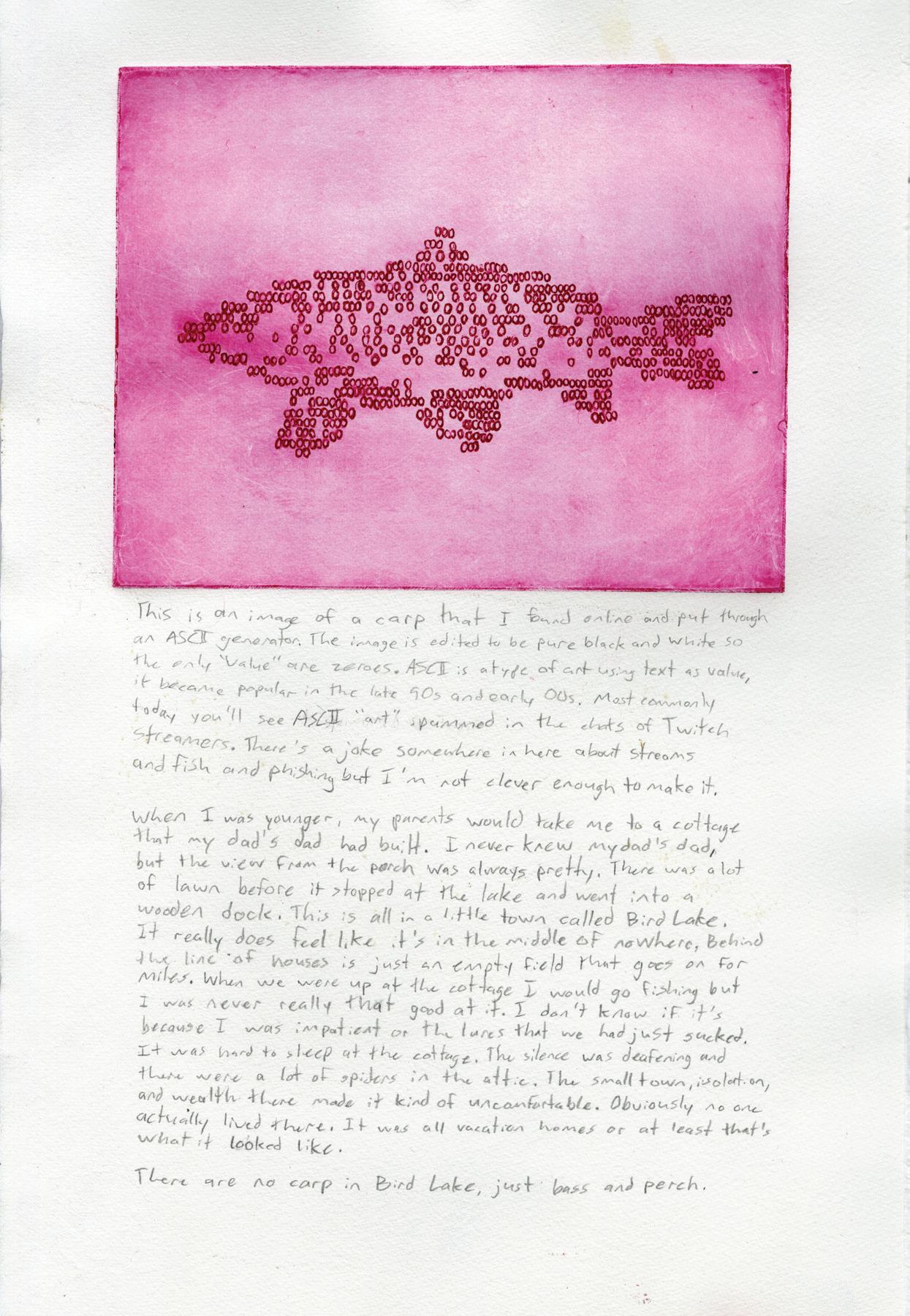
Print on paper
“My work often explores memory and isolation; censoring or degrading the quality of the subject of my pieces to paradoxically draw focus to them. I use digital processes from the old internet, like ASCII and pixelation, to contrast the isolating experience of the modern internet.”
Aaron Cunningham
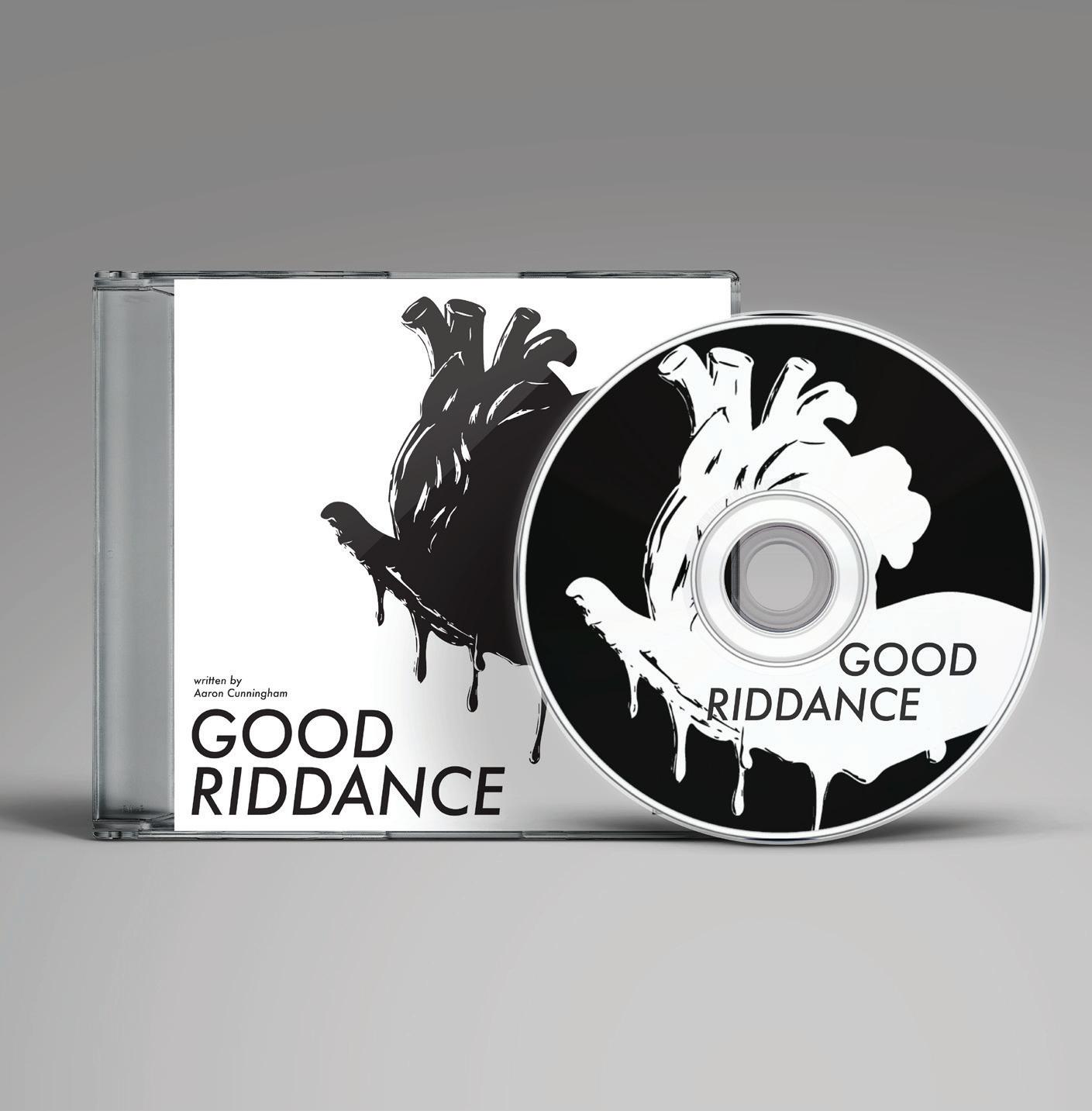
“Due to my passion for music and art and my dream one day to be a cover artist, I decided to make an album cover. It’s based off of a series of poems I made for my creative writing class. I did all of the illustrations and text layout.”
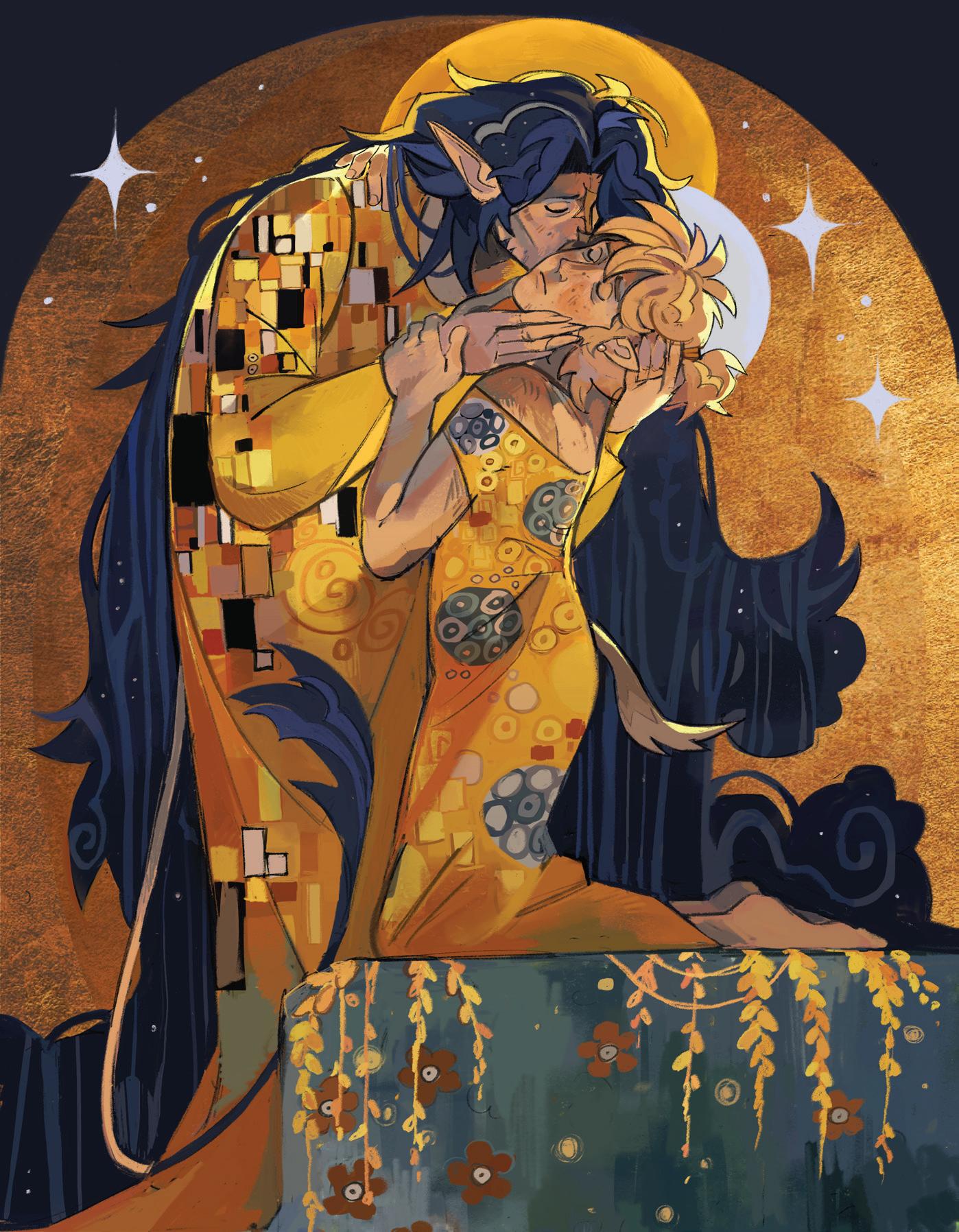
“As a child, I’d spend my time creating fantastical tales through my imagination, and getting lost in them. Now in my art, I pull motifs from both my imagination and art history for inspiration, which lends itself to a desired blend of the familiar and the whimsical.”
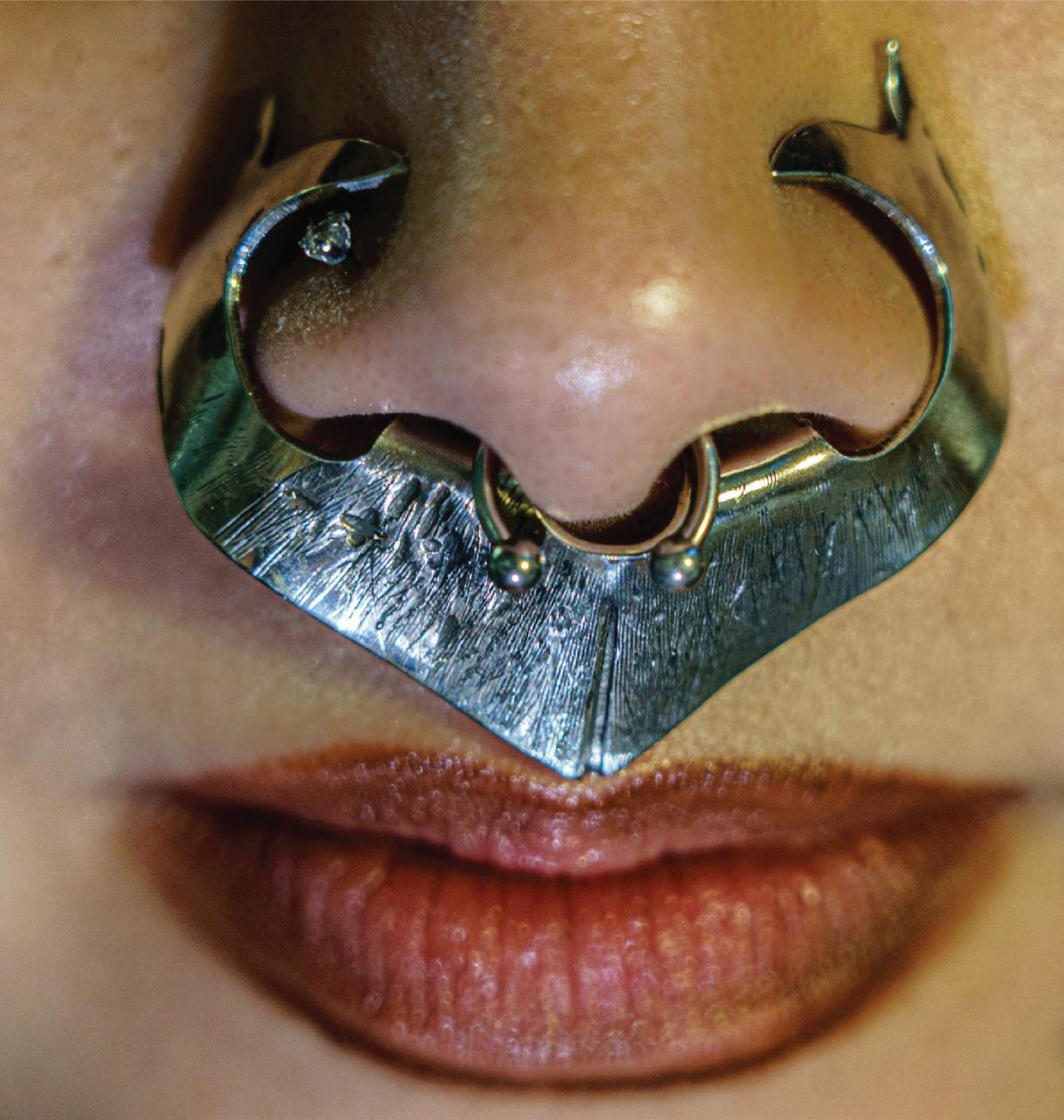
Jocelyn Wildenstein
2025
Nickel silver, Aluminum
Above
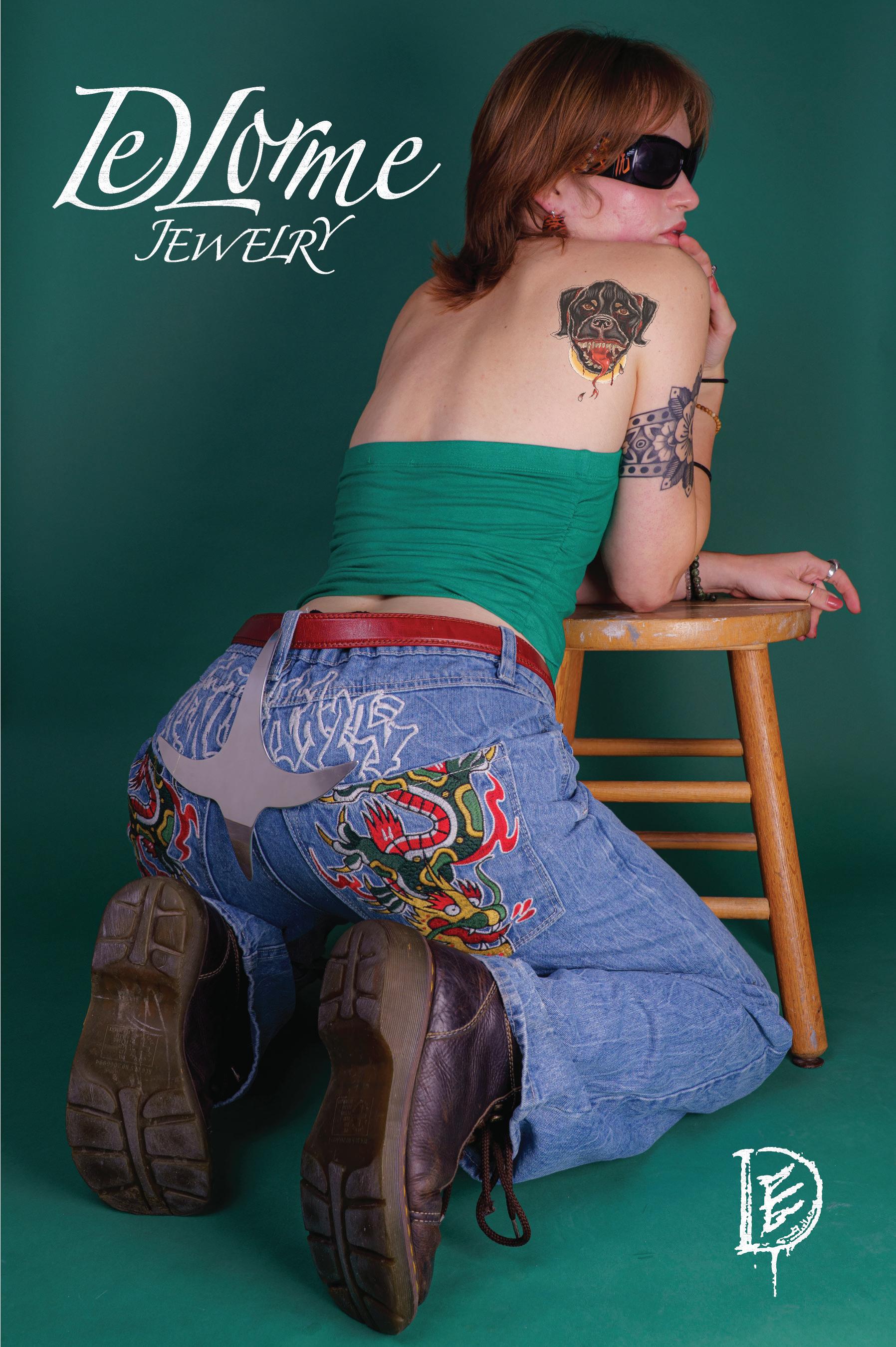
“My work deals with fetishization, exoticization, and questioning in what ways the perception of self identity is affected by ethnicity.”
What Are YOU Looking At? 2025
Nickel silver, Aluminum Right
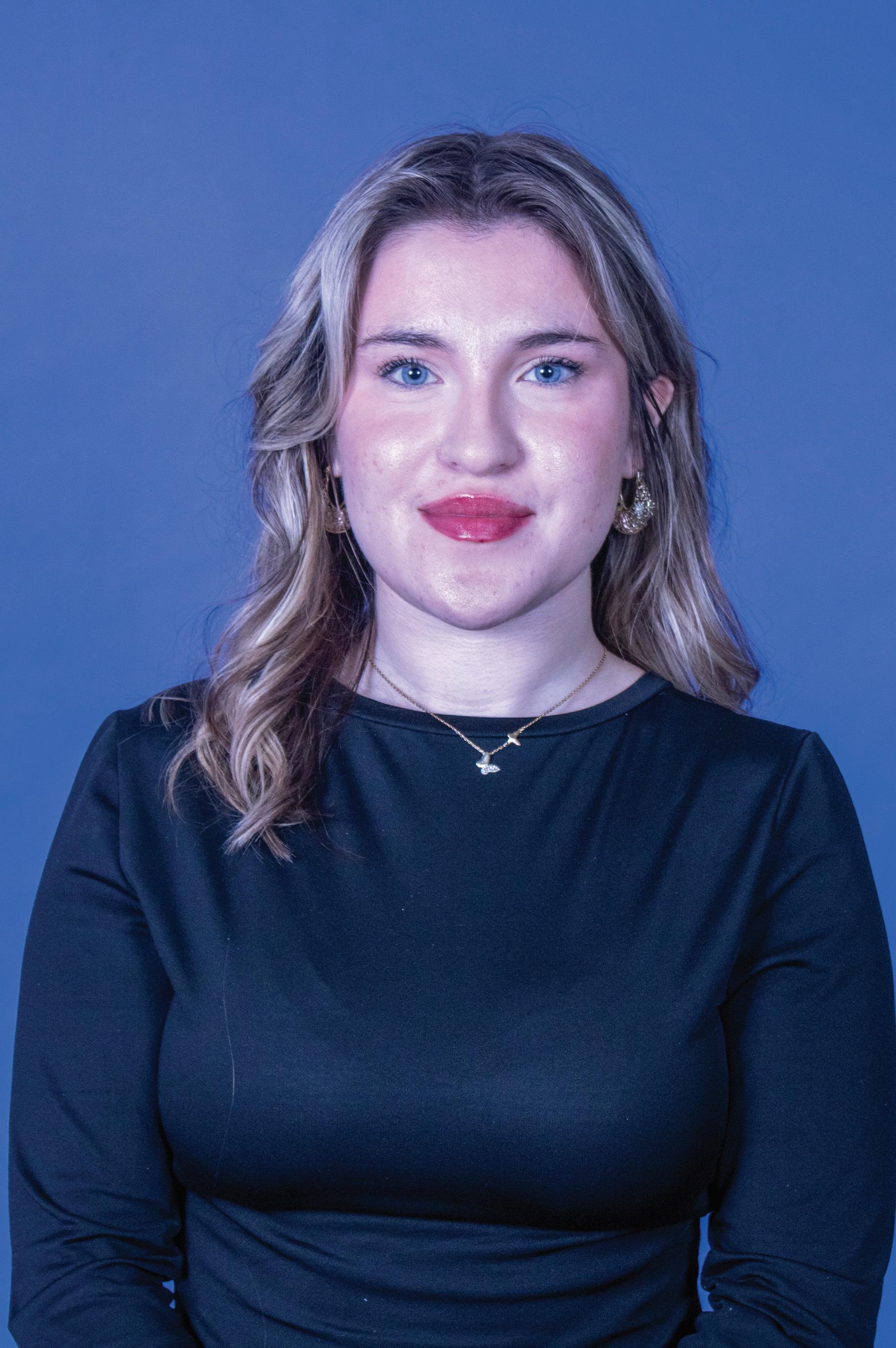
SHE/HER
Our editorial team meets Charlotte in her studio, where she gives us some vital insights regarding her process, and where she sees herself in the future.
NOTIONS
CHARLOTTE
NOTIONS
CHARLOTTE
NOTIONS
CHARLOTTE
Could you introduce yourself and briefly describe the work or project you’re sharing?
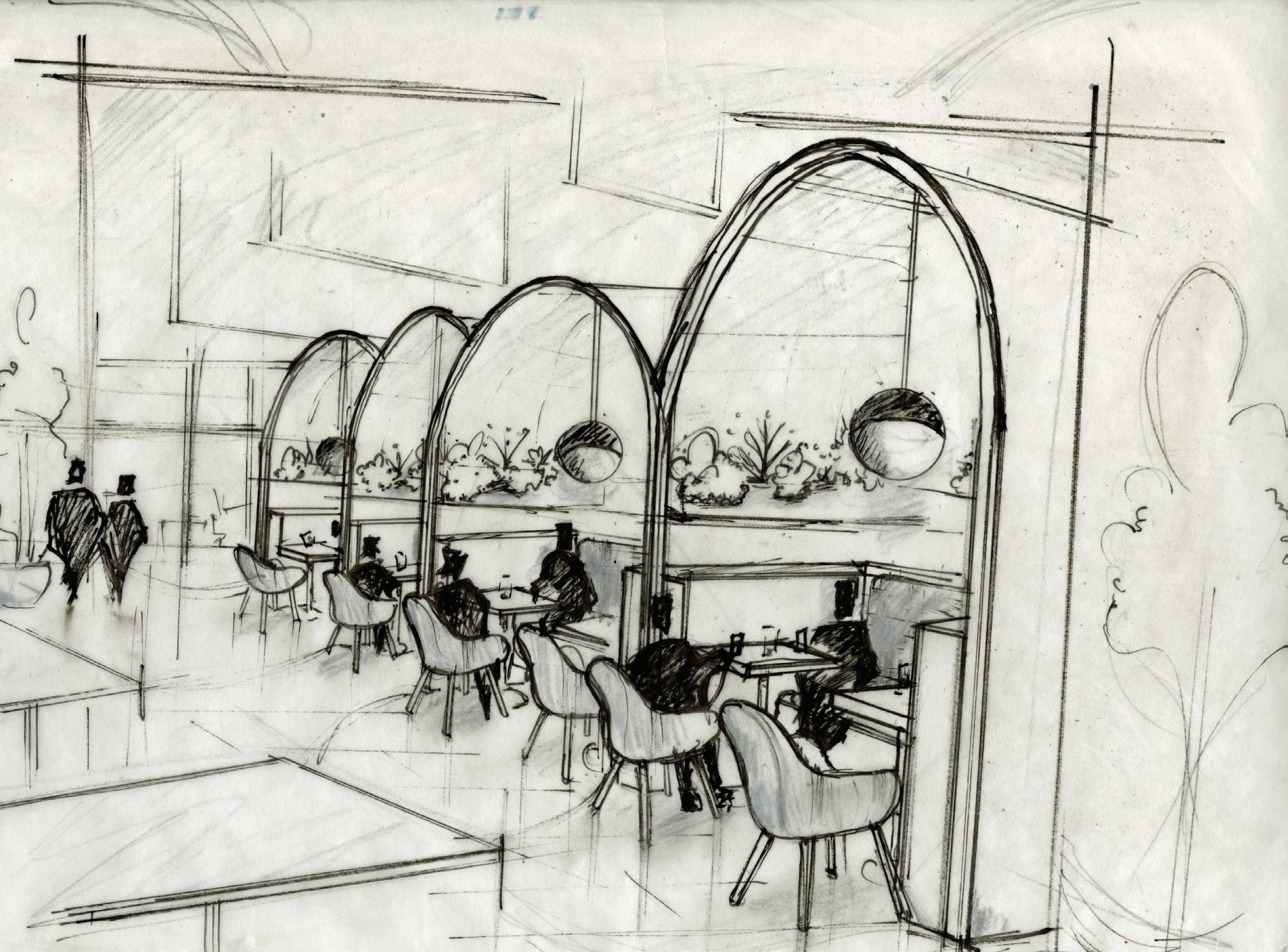
Hi, I’m Charlotte Smoley, a senior in Interior Design and Interior Architecture at CIA. The project I’m sharing focuses on designing for the Deaf and Hard of Hearing community in Cleveland. It centers on creating an inclusive, highly functional environment that supports visual communication, accessibility, and meaningful interaction while maintaining a strong aesthetic.
What was the main focus or idea behind this work?
The main focus was intentional, user-centered design. The project came about when The Cleveland Community Center for the Deaf (CCD) acquired a former KeyBank building in Parma and sought conceptual design ideas for their new branch. Rather than simply meeting ADA requirements, I wanted to go beyond code and truly serve Deaf and Hard of Hearing users. That meant prioritizing clear sightlines, thoughtful lighting, spatial awareness, intuitive circulation, and material choices that enhance communication and comfort. The goal was to create a space that functions seamlessly as both an office and a community-event space, while feeling welcoming and empowering for both staff and visitors.
What was your process like from start to finish?
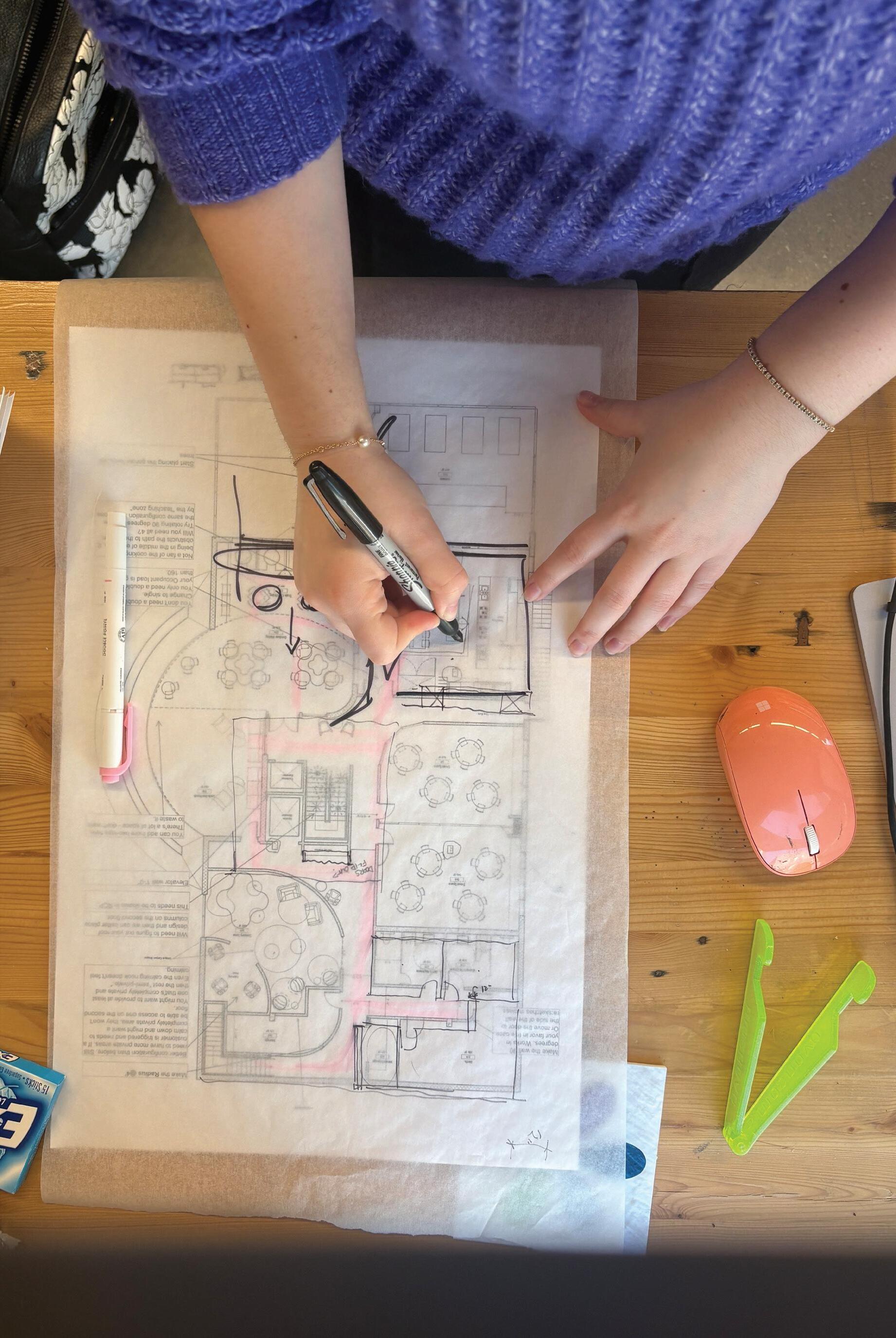
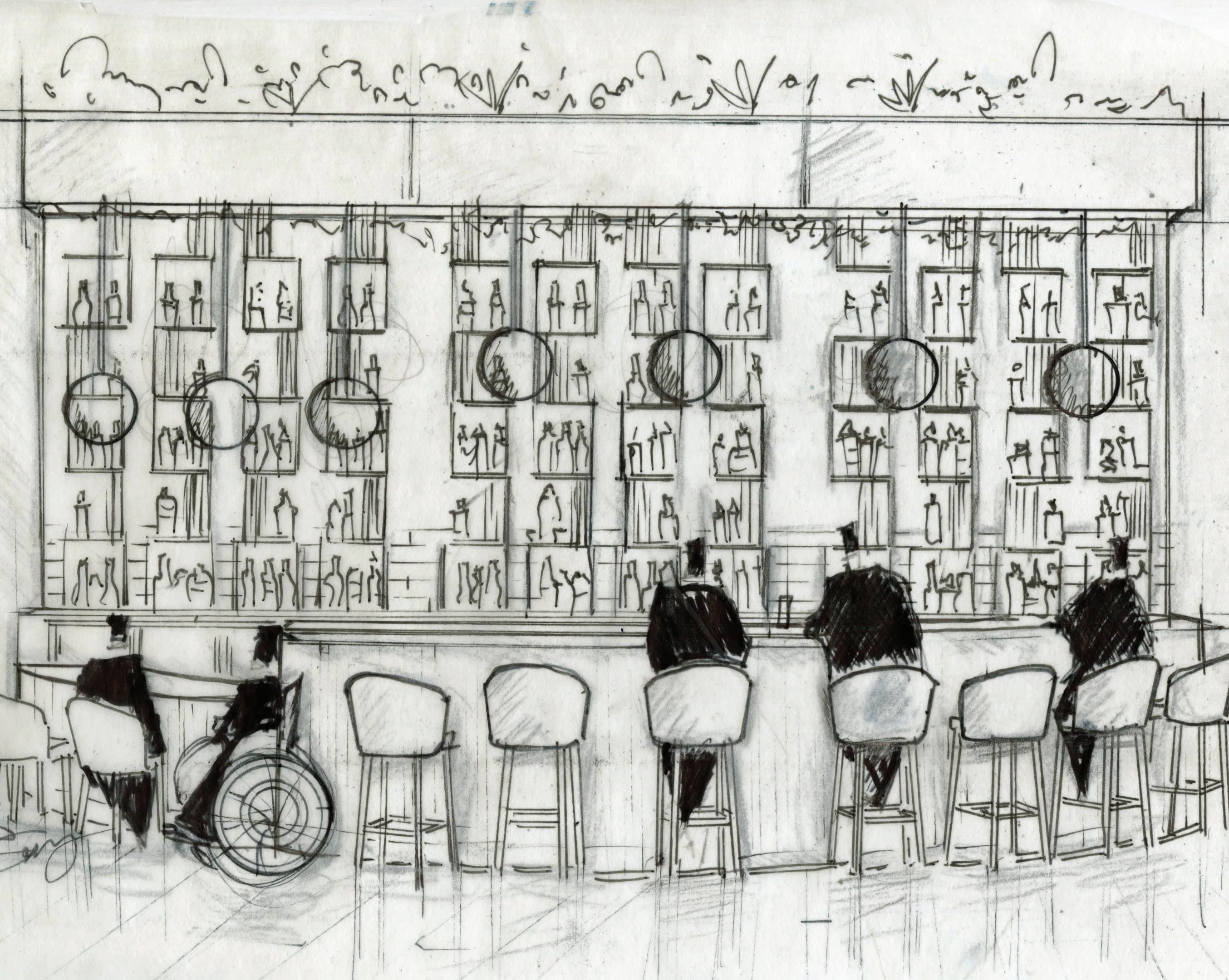
My process began with research. I studied ADA standards and quickly realized that while they provide important guidelines, they are broad and not always specific to Deaf and Hard of Hearing communities. This led me to research other designers and look at educational and office environments that prioritize visual communication. A major part of the process was interviewing staff members and leadership at the organization. Hearing directly from users helped me understand the challenges in their current space and what they hoped to improve. Those conversations grounded the project in real needs rather than assumptions. From there, I moved into sketching, note-taking, and bubble diagrams to explore spatial relationships and adjacency needs. Once the layout direction felt strong, I developed detailed floor plans in Revit to ensure functionality, scale, and code compliance.
“Designing custom elements and refining plans repeatedly reinforced my belief that identity and narrative should be central to interior architecture.”
CHARLOTTE
NOTIONS
CHARLOTTE
NOTIONS
CHARLOTTE
After refining the plans, I transitioned into 3D modeling and rendering to better visualize the space. I developed inspiration boards and material palettes to create a warm, welcoming, and family-oriented atmosphere. Iteration was constant throughout the process. I reworked plans multiple times to ensure the space truly functioned effectively, because if a design looks good but doesn’t work, it isn’t successful. I also designed custom elements, including a mural feature, to reflect community identity and connect the interior to Parma’s surrounding greenery and broader Cleveland context.
Were there specific questions or inspirations guiding your work?
A central question guided the entire project: What does truly inclusive design look like when you prioritize a specific community from the very beginning? Inclusive design was not treated as an afterthought. Instead, accessibility, visibility, acoustics, and spatial comfort were embedded into the design from the start. Engaging directly with users strengthened the project and helped ensure that decisions were intentional and informed.
Is there anything else you’d like to share, particularly in relation to your BFA?
My BFA work focuses on neurodivergent communities, specifically individuals on the autism spectrum and those with ADHD. Although this project centers on the Deaf and Hard of Hearing community, there is significant overlap in terms of sensory awareness, empathy-driven design, and intentional spatial planning. Across all my work, I believe strong design is rooted in empathy, research, and iteration. I value hand sketching and reworking ideas multiple times until they truly make sense. Designing custom elements and refining plans repeatedly reinforced my belief that identity and narrative should be central to interior architecture. From concept to completion, design should feel intentional, grounded in research, and responsive to the people it serves.

What if there was a career for the kid who grew up drawing and taking things apart? The kid who imagined that one day they would be an inventor? The kid who found that engineering would never give them the ability to combine imagination and creation?
Industrial Design is a discipline at the crossroads of art and engineering. At a school of art and design like CIA, being at that intersection leads to a misunderstanding of what we actually do.
As an industrial designer our role is to conceive and develop the aesthetics, function, and usability of products. In developing these facets of products we seek to find the most holistic solution that takes into account user needs, manufacturing, and market need.
As a student I need to fill the roles of researcher, designer, engineer, brand manager… and because of this I have embraced a robust process that helps me make decisions in pursuit of meaningful design that moves people.

with Joshua Litten Industrial Design ‘26

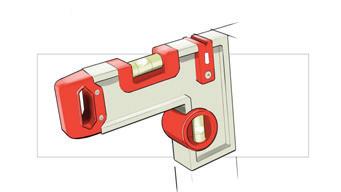
Research is the first step in the process. The goal is to gather information about the user, common behaviors, pain points, the marketplace, trends and technologies, searching for insights that will inspire meaningful ideas. In a recent project I focused on the topic of DIY home repair, trying to understand why people avoid making simple repairs within their homes.
I mapped out the user’s journey through common repair experiences, created a survey, and drew from my own experience. Beyond just gathering information, I also presented the information in a way that allows me to draw conclusions and make those clear to my audience.
2. Defining the User Confident DIYer Not Confident but I Try Comfortable with Basics
Low Confidence Level
Of those surveyed, 82% of users only fix things when necessary, 8% don’t fix anything, and only 10% report fixing issues every time.
When asked to indicate their comfort level with home repairs, 65% reported little to no confidence.
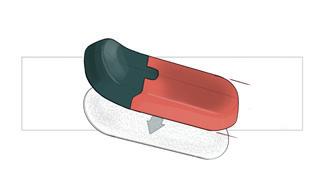
Ideation builds from the insights we gain from research. We take those conclusions and organize them into a design brief that defines a direction for concept ideas that can then be expressed as sketches. In this case my design brief was “Create approachable solutions that make small home repairs easier, boosting user confidence and motivation for homeowners and renters with low DIY confidence.” In my concepts I explored this in various ways: tool kits, re-exploring existing tools, different methods of repair, etc.
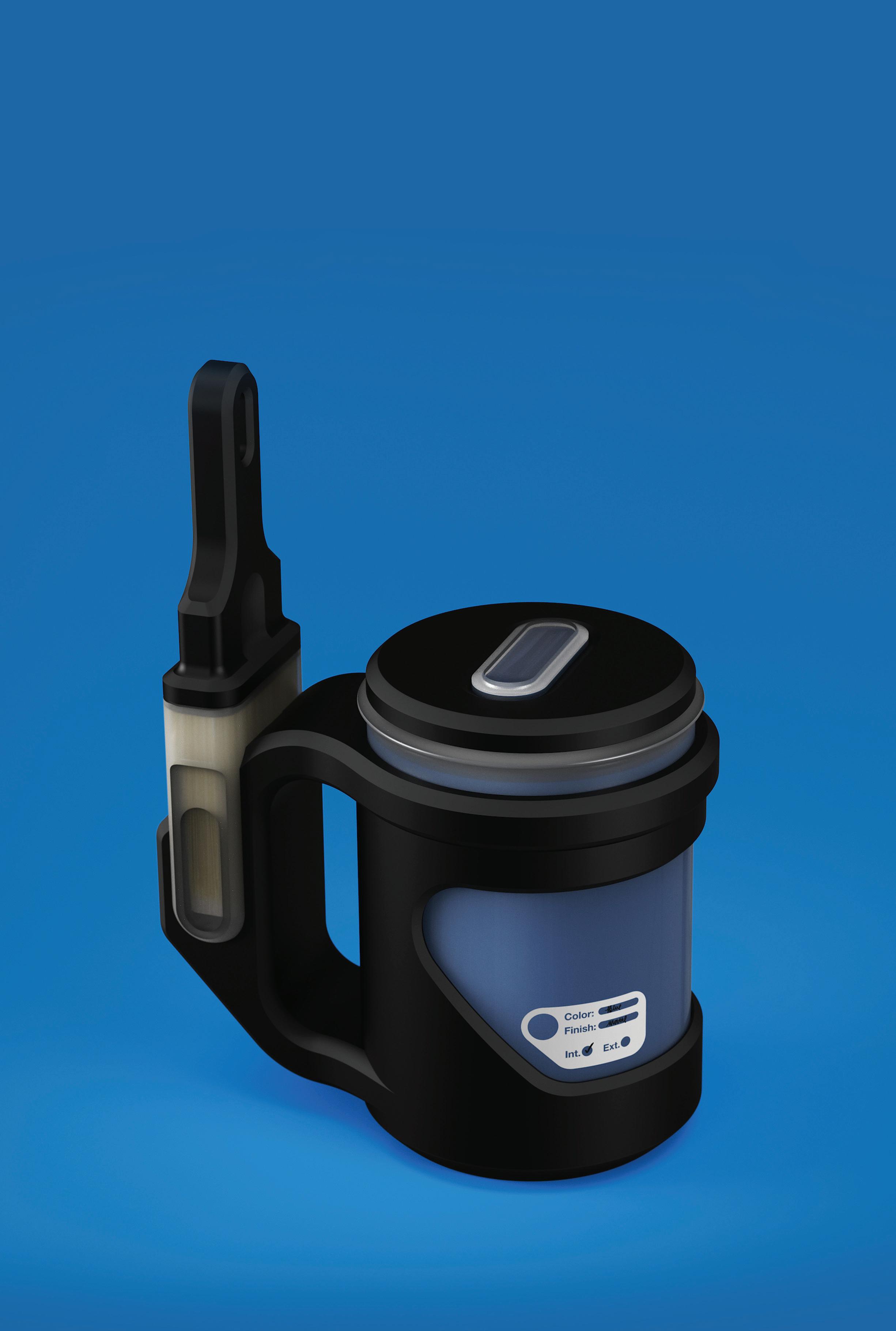
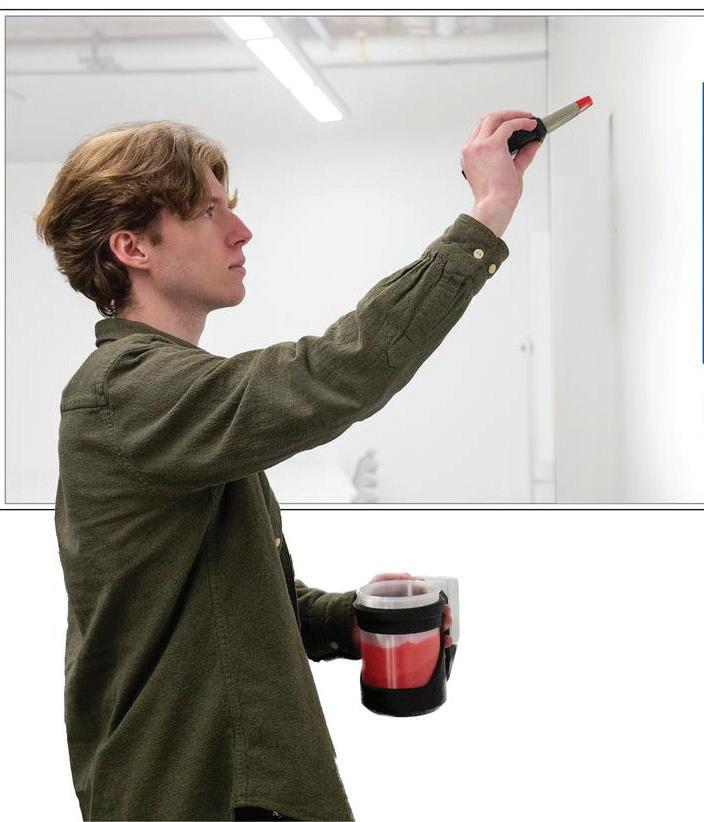
When the concepts are finished we share and present them along with our research. The goal of that presentation is to discuss and discover which of the possible directions provides the best route to successfully answering the need. In my presentation the conversation moved in the direction of my reusable paint container concept. This was because it answered needs brought up in research as well as its innovative and original solution to the problem.
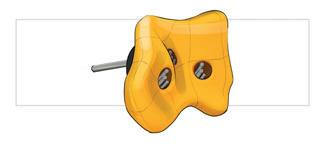
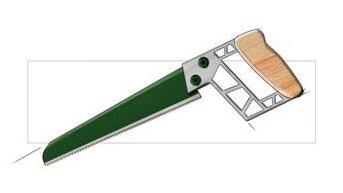
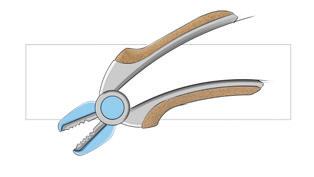
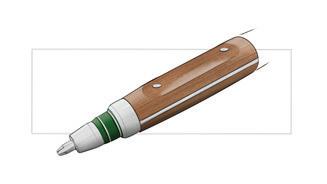
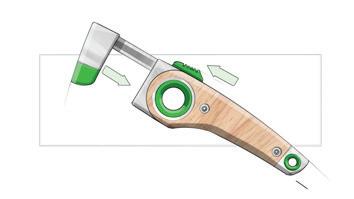
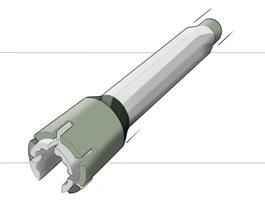
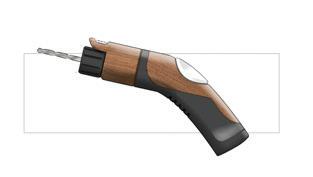
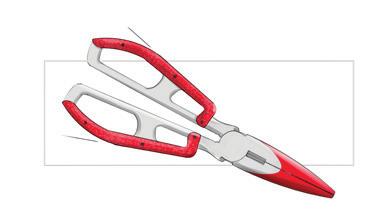
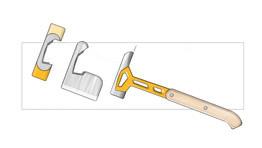
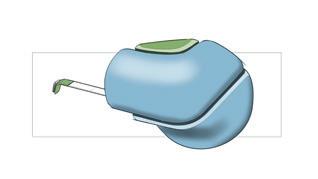
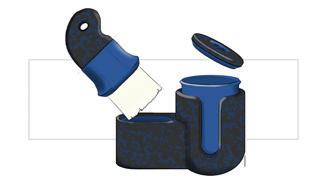
Fits user’s comfort level
Adresses common home repairs
Feels safe, approachable, and intuitive
Addresses limitations of knowledge, time, cost, and equipment
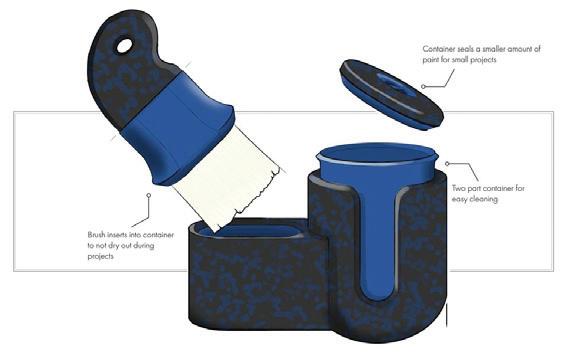
Refinement takes the selected concept and improves it though iteration. The goal is to take the concept from an idea into a fully realized product. To do this we need to define how it looks, functions, feels, and how all of those harmonize.
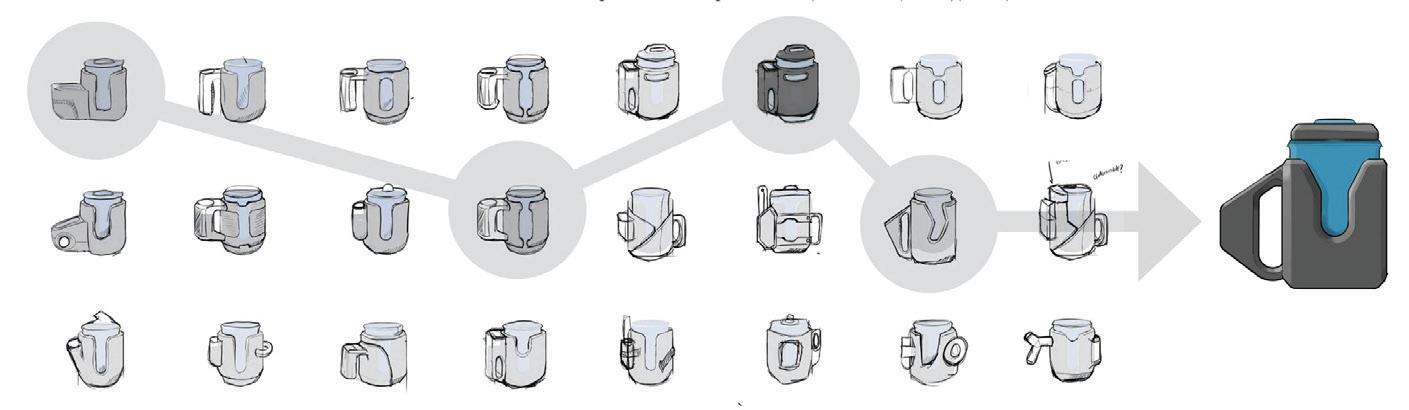
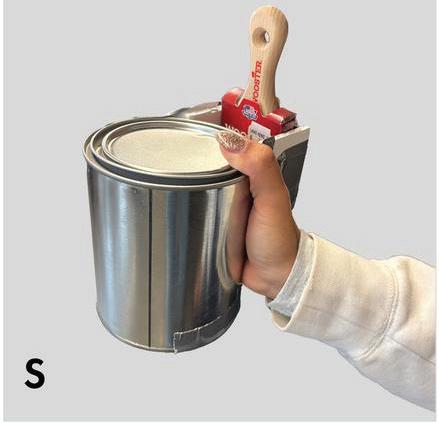
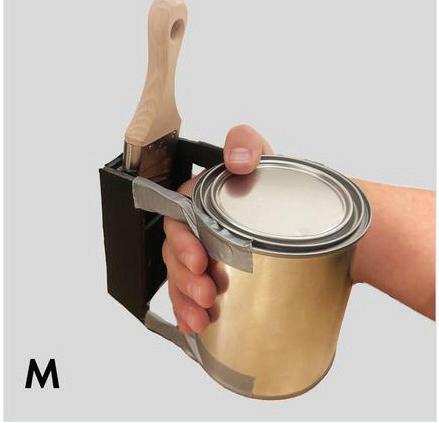
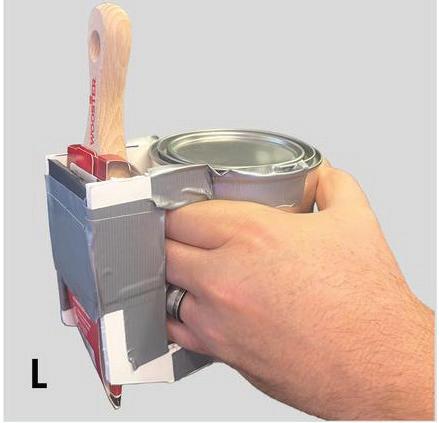
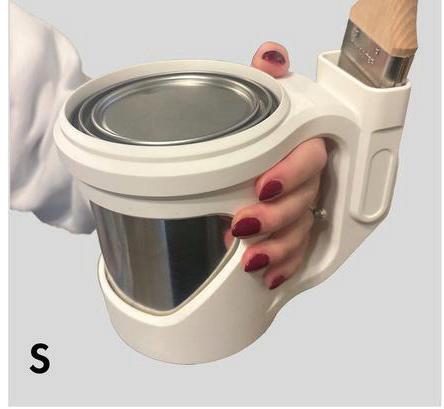
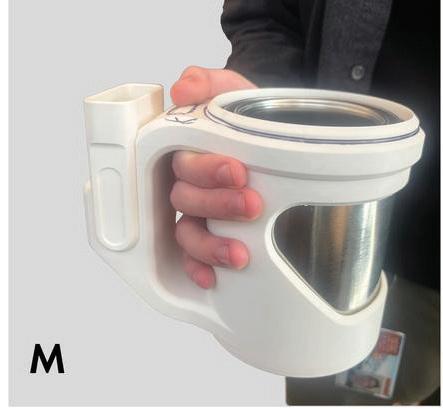
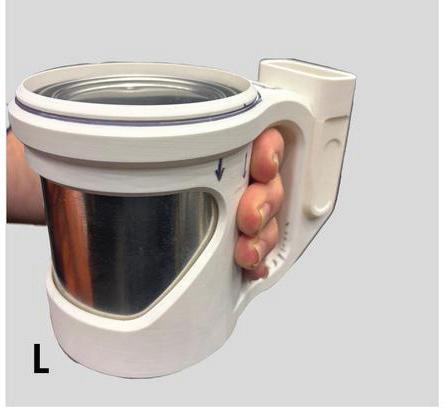
For my reusable paint container I did sketch iteration to explore how it looks, foam models to test how it could function and feel, and translated both of those into 3D models and prints where I continued to use and evaluate my idea. Some ideas pan out, some are dead ends, but iteration gives us options, and with those we can make the best decisions for the final design. Through refinement my simple paint holder developed, enhancing ergonomics, user experience, and visual appeal.
Final Design takes the refined product and presents it to your audience as the solution to the problem. This is often illustrated by product renders to define the look and function, a physical prototype to express the scale, and branding that connects these together.
The solution to my home repair problem was Chroma, the all-in-one paint system. To show this to my audience I used the renders and prototype to tell the story and built branding to bring it all together. In school the final design is where I supposedly stop but as many creatives know the work is never truly finished and as an industrial designer I will always see something to improve.
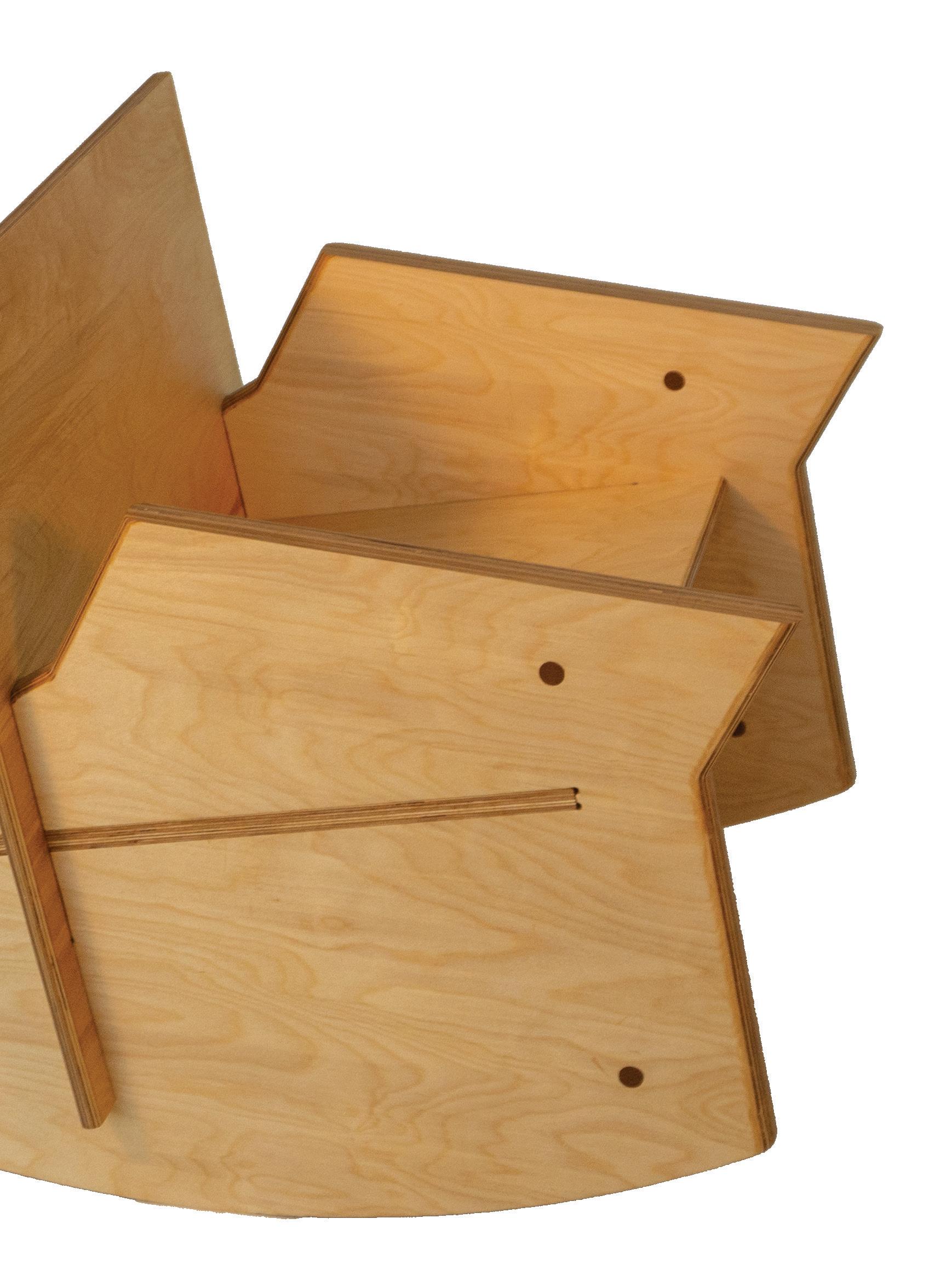
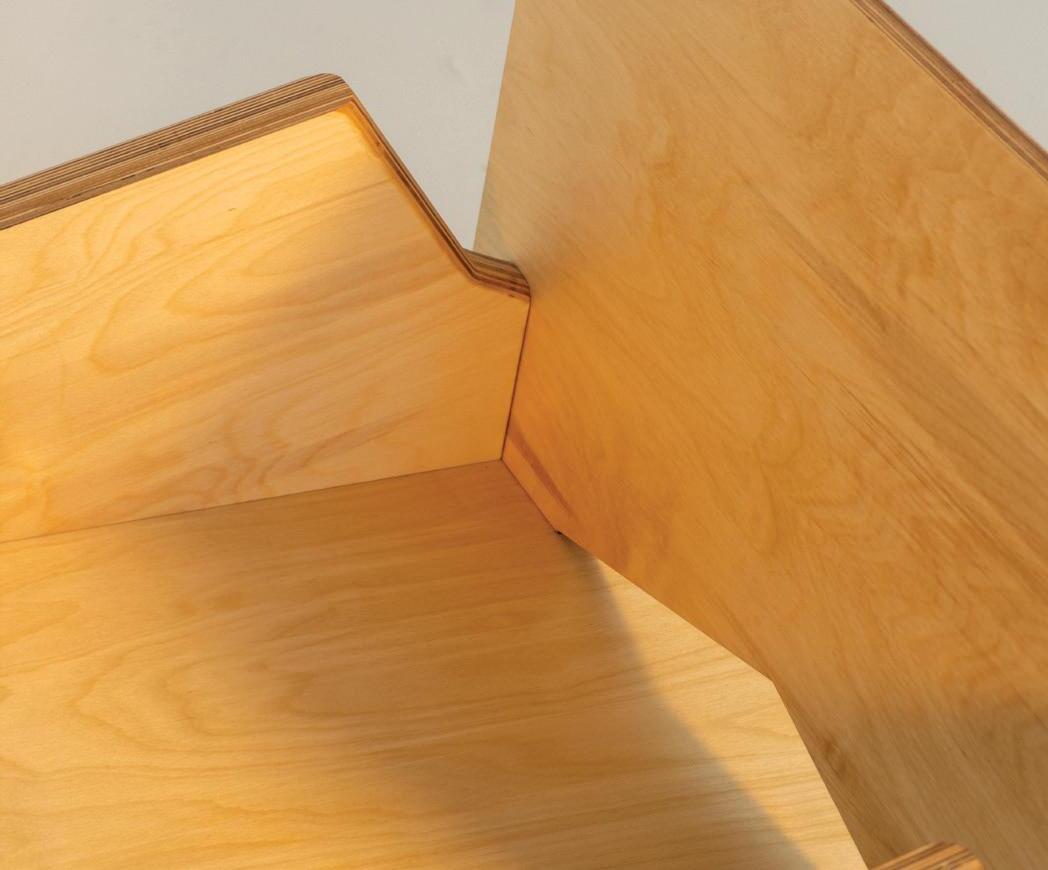
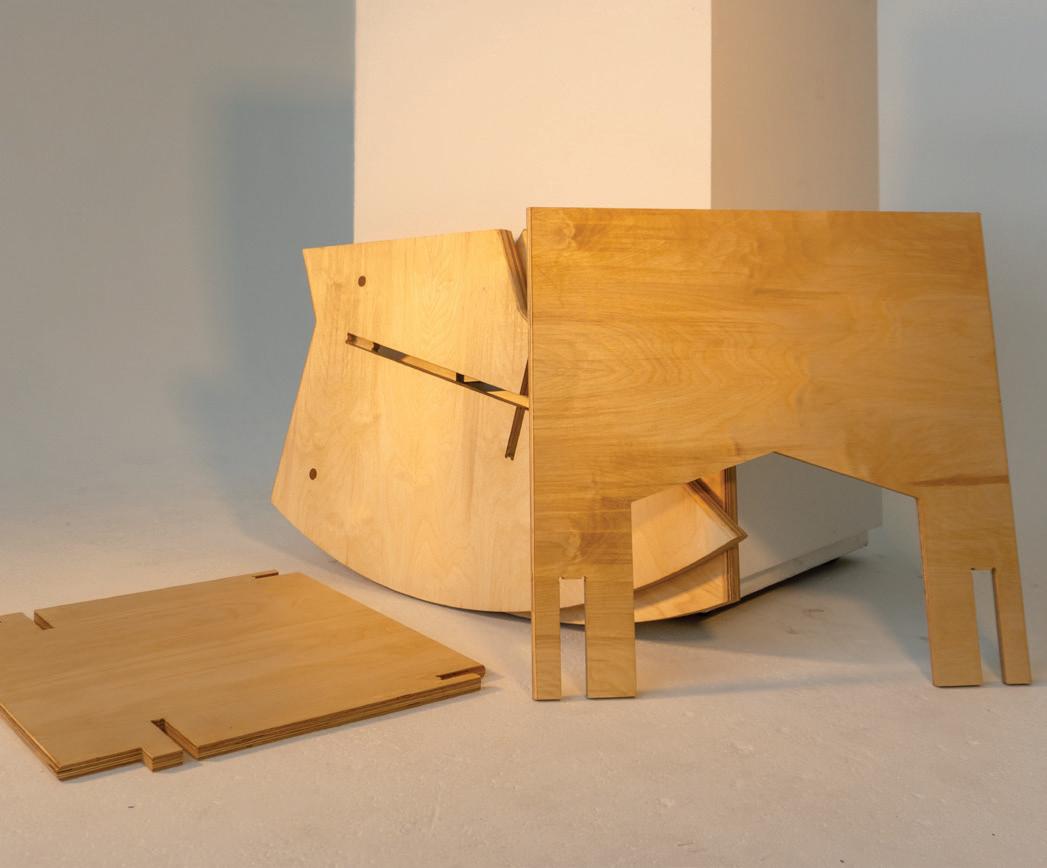
“As an industrial designer, I am passionate about creating objects that people enjoy living with. My goal was to create a piece of furniture that lives and moves with the transient lifestyle of a college student.”
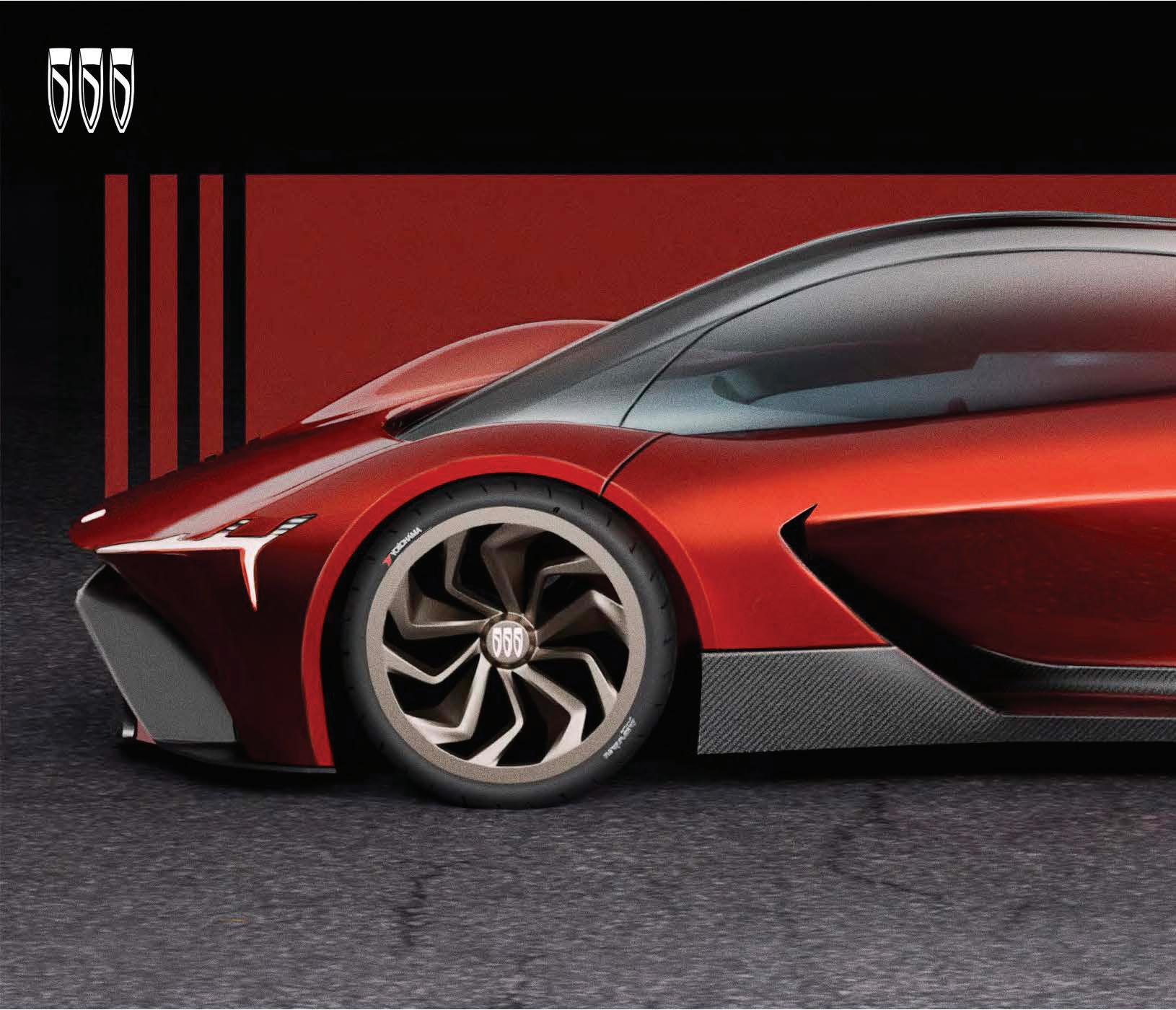
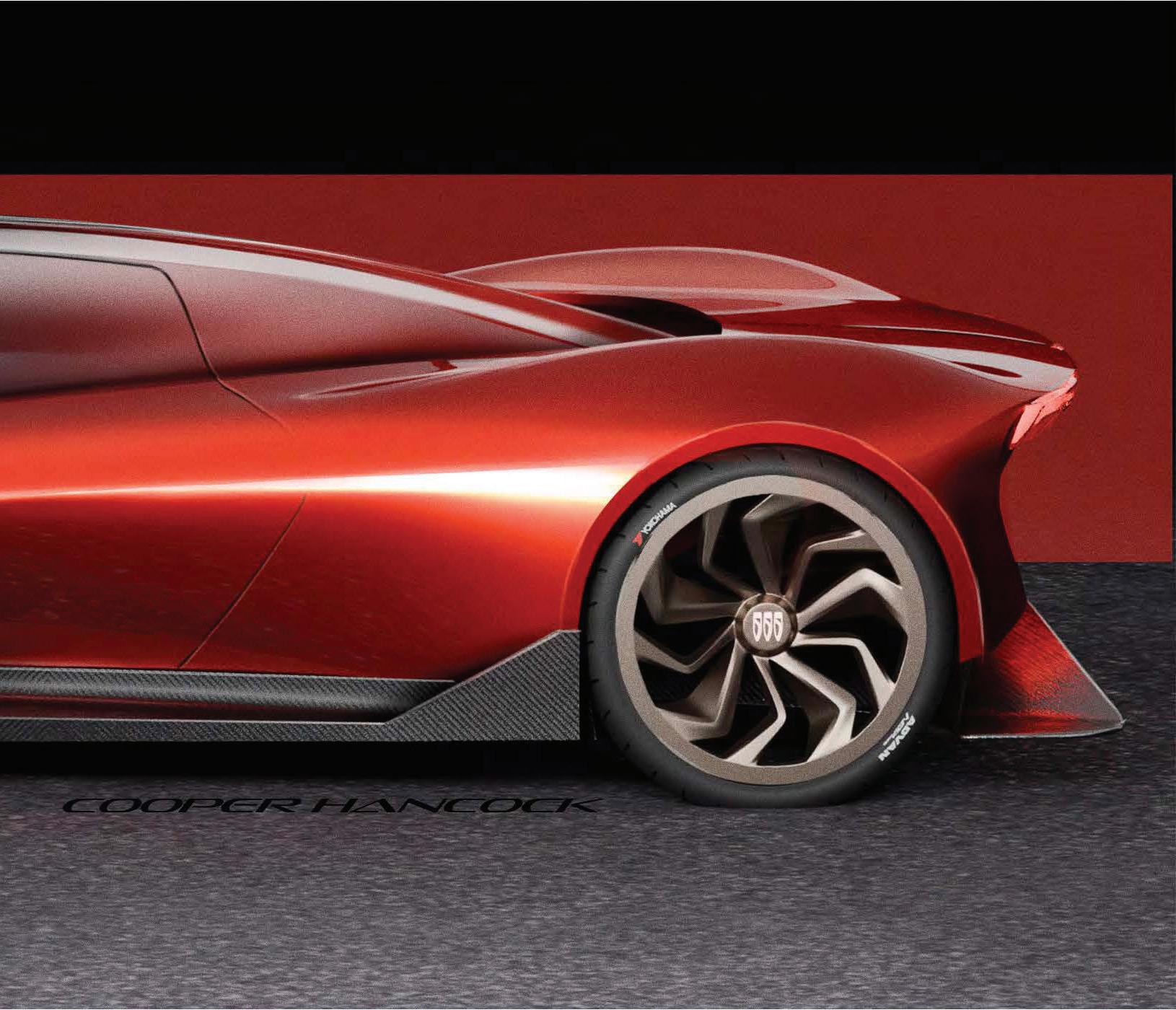
Buick Hyper Sport
render
“This is a final render of my Buick project for General Motors. The guiding philosophy of this project was to create a vehicle that embodies the ultimate expression of the Buick brand and serves as inspiration for their future production vehicles.”
The internet raised us most years whether due to being spoiled enough to be allowed on it all day, or unlucky enough to be stuck on it in your hot stuffy room all day. Even when you could get out, the living room never left much living space to exist in. Especially if you saw the silhouettes rise against the hallway walls. Tension swelling and thickness making the house hard to breathe in.
So, you’d go to library. At 7am. With a messy ponytail and unbrushed teeth. With two brothers who threw out their breakfast. Rushing for the internet’s sweet embrace.
For it to nurture and entertain you instead of one of the other 30 kids who needed it. And there at the screen you’d sit safely and alone. Public but in isolation. Maybe me and the other kids played together in a world where the internet instilled trust instead of addictive habits. Like moths to a light, we wanted to be enamored by indie games, thriving video creators and dreams we too could live in the screen with our own engraved plaque someday.
Maybe one of us became part of the mass. To make instant and artificial comfort for the kids who needed it. A flashy loud celebrity to record every outing of their life to be for an audience. Or maybe that kid is still stuck in his room, coding a new digital experience. Another safe room to escape to.
We’d never be like them. She’d teach us not to be. She had every tutorial and piece of advice you could look for. From tying your shoes to making friends, but we’d always choose another room to hide in. Why was virtually hiding from a killer so
much fonder than family dinner. I’d always feel fuller after a cooking episode anyways.
I’d have to stay on there anyway. Even if home was fine. It was too hot.
And bikes were exhilarating, but I couldn’t ride a bike for 14 hours or draw while doing it.
And swimming was refreshing, but I couldn’t wear my headphones when I was overstimulated in the water.
And I couldn’t connect with my brothers over games like 4-square.
Because my attention was for one square. I’d always love, and she would always have room for me. To this day most of us have yet to leave. Because we’re not kids now. But still need to be raised. And still stuck spiraling in the screen. With no one to hug, and apps for love. I find she’s the one person still looking out for me. And with that my ode and glory to the internet in 2014.
Raised by the Internet 2025
Creative writing
“I find mixing mediums and play to be an important aspect in my work as it helps me problem solve and develop a piece that truly encompasses the goal of whatever I’m trying to evoke.”
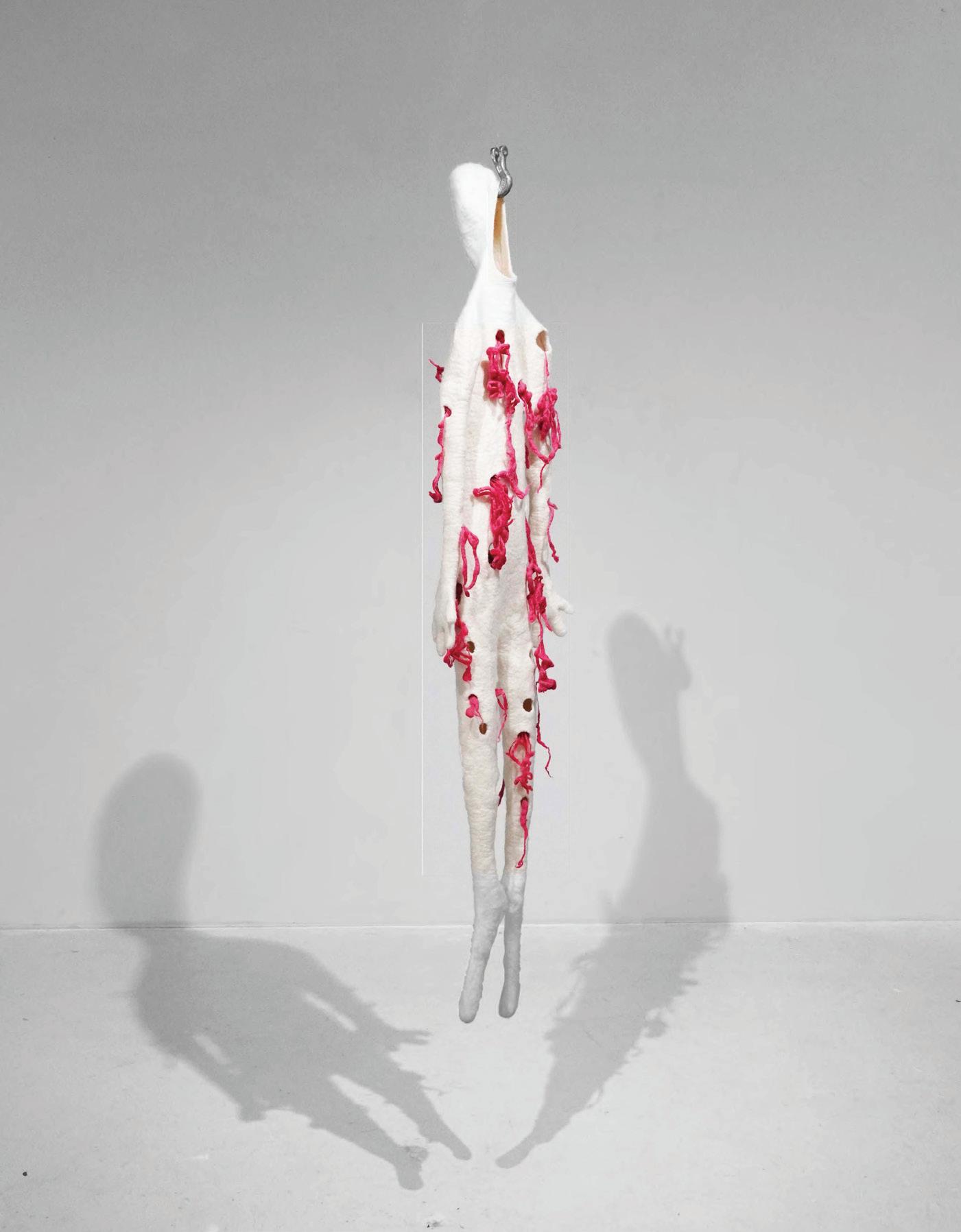
“
a piece about the cyclical nature of life and death, and the often blurry line between the two.”
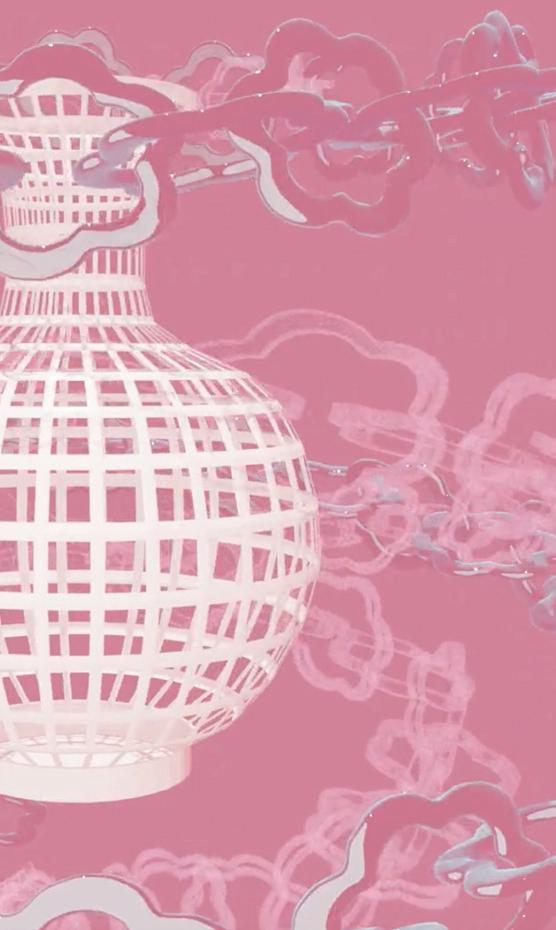
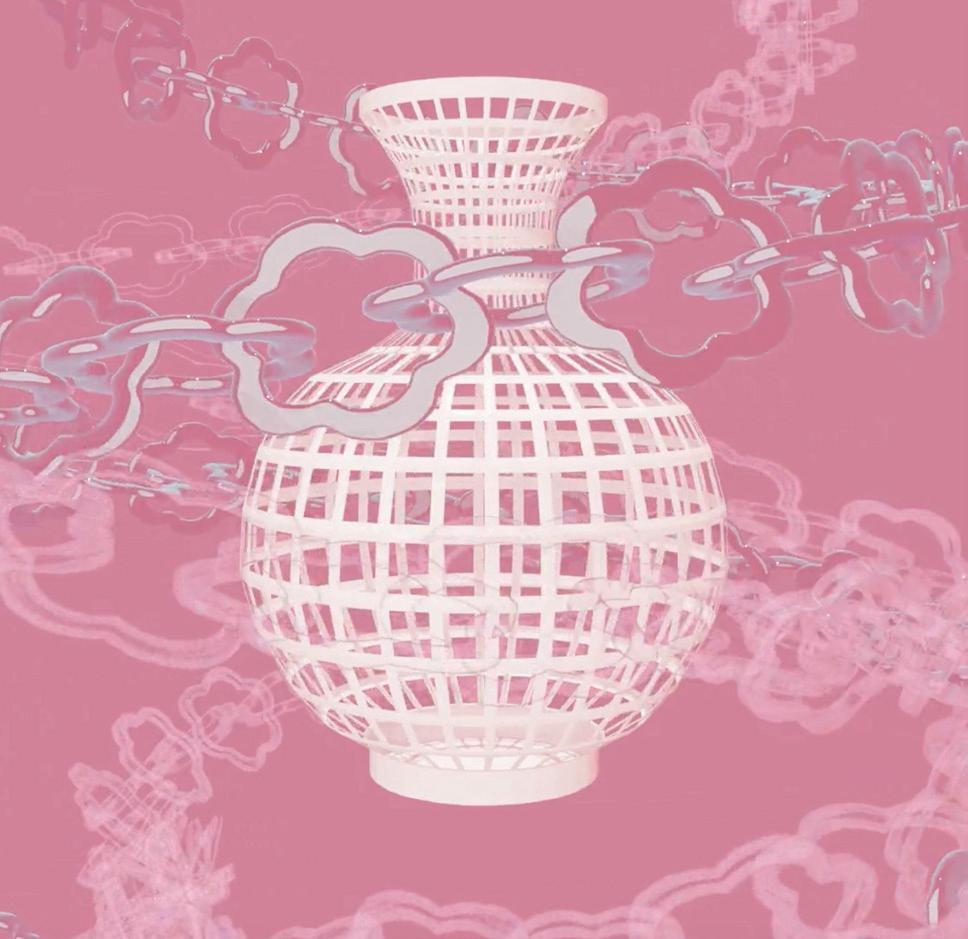
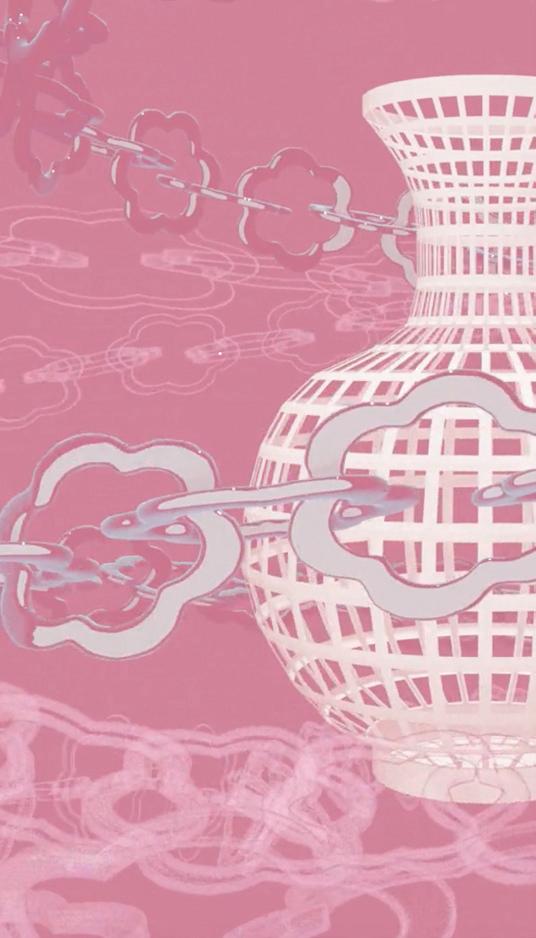
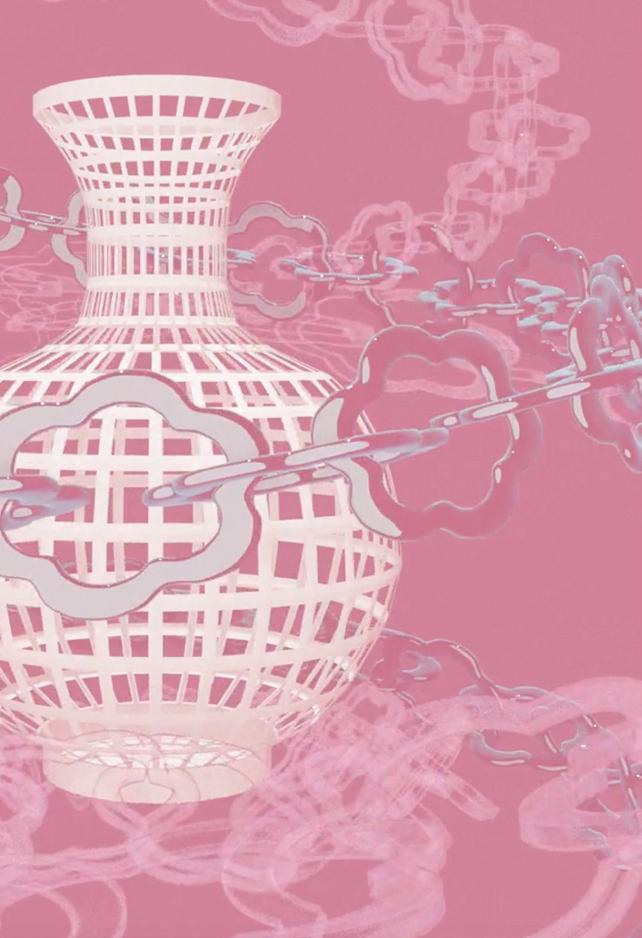
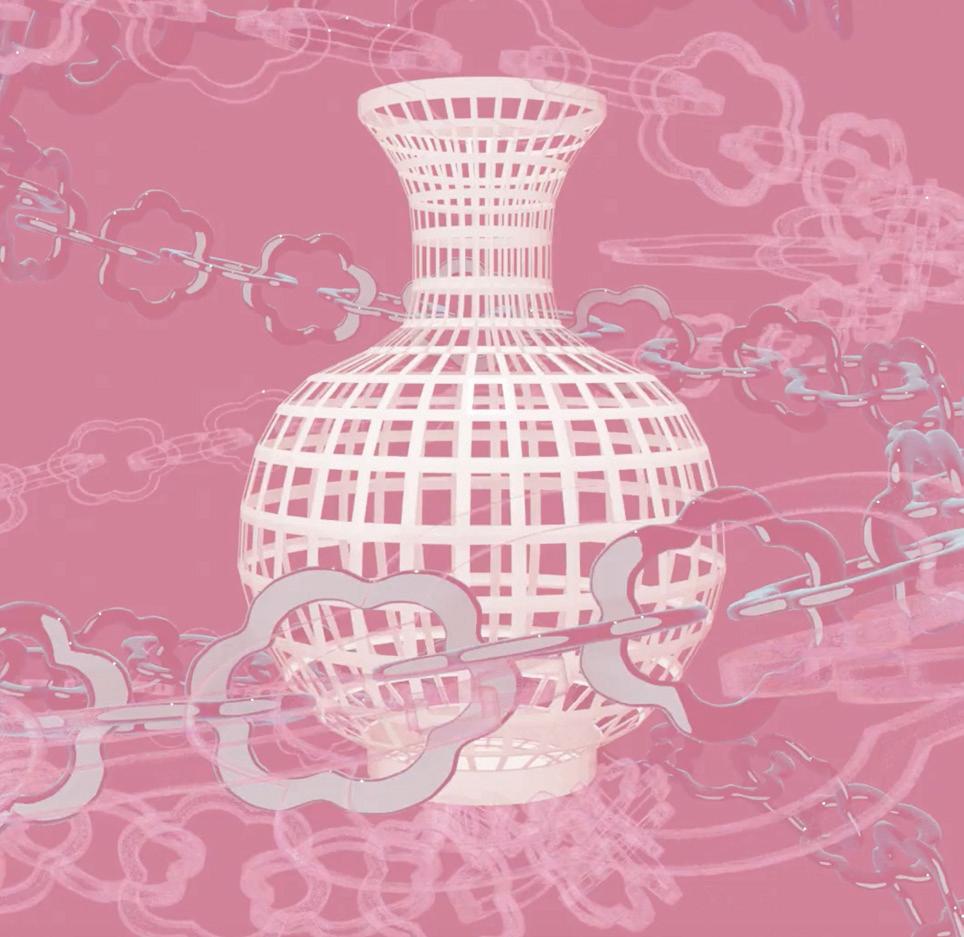
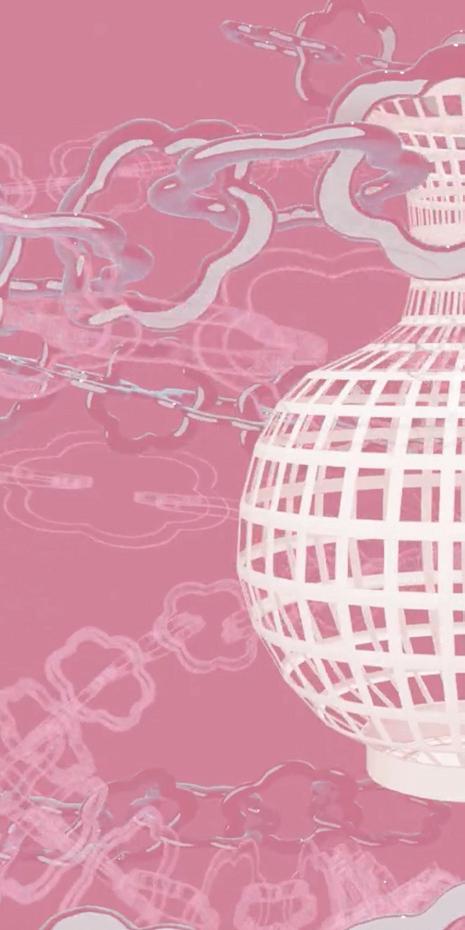
Spinning Vase and Chain 2025
3D animation (stills)
“I use repeated motifs of flowers, chains, vases, and laundry baskets to spread my message of play. I mainly work in the medium of ceramic, but I also enjoy using 3D modeling, fiber, and metals.”
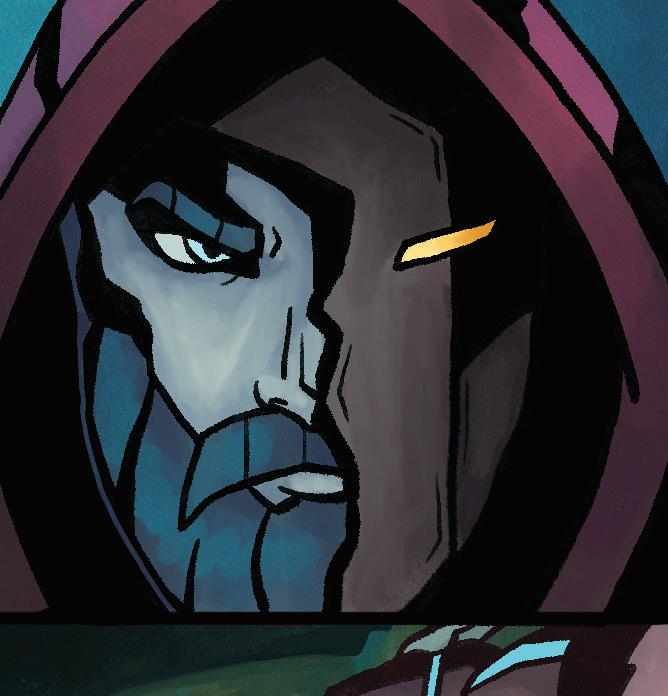
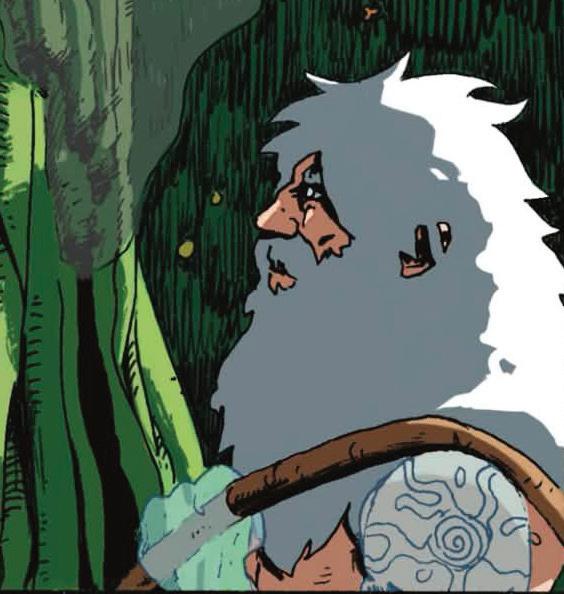
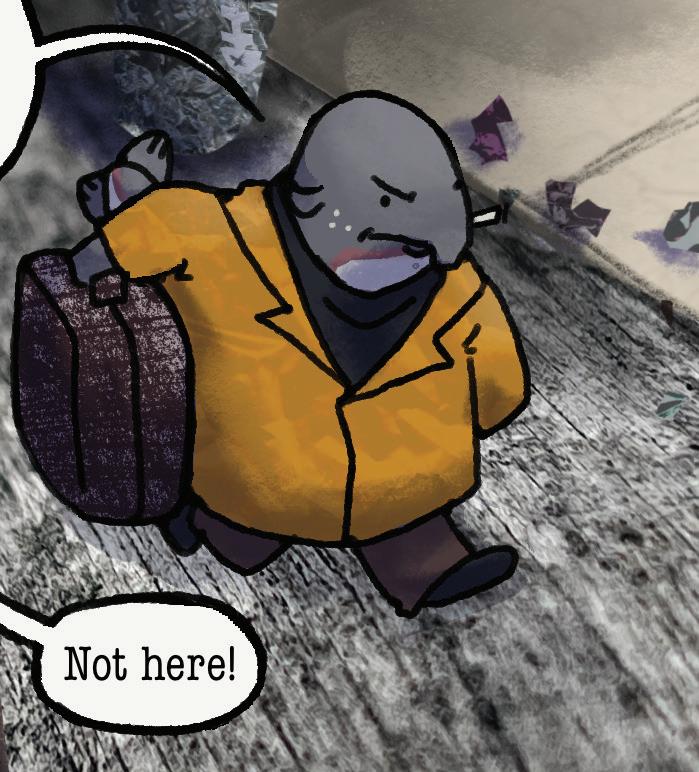
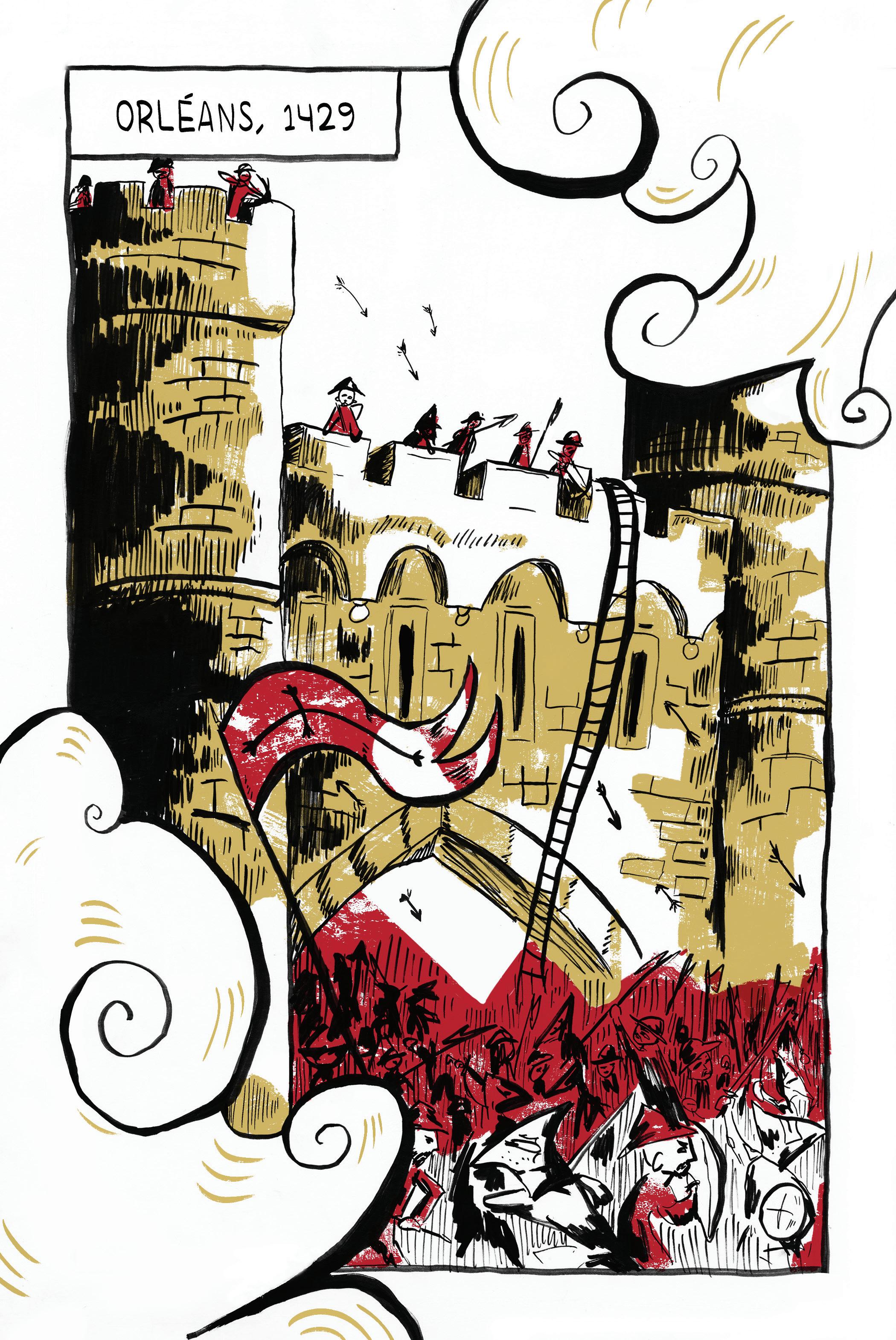
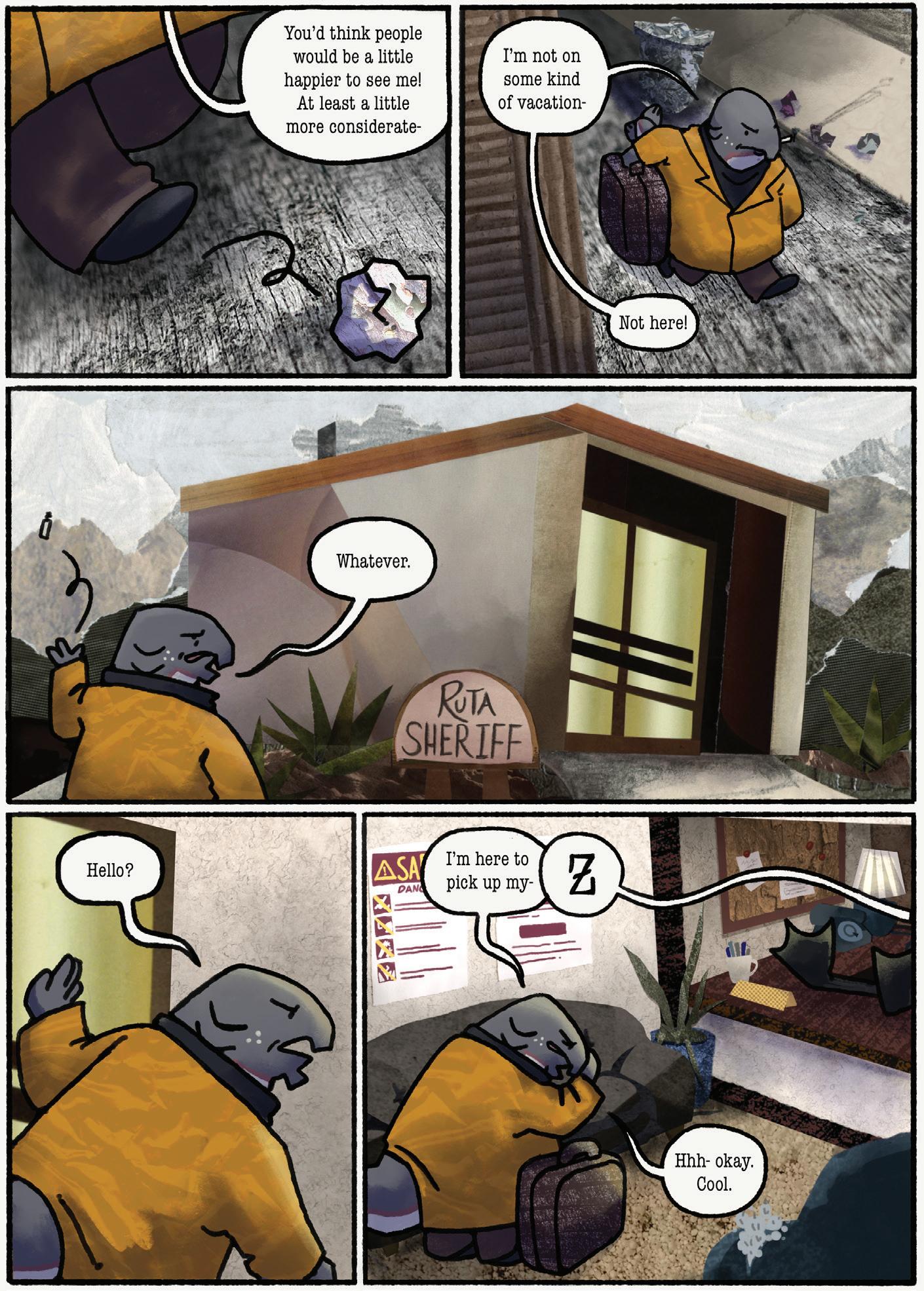
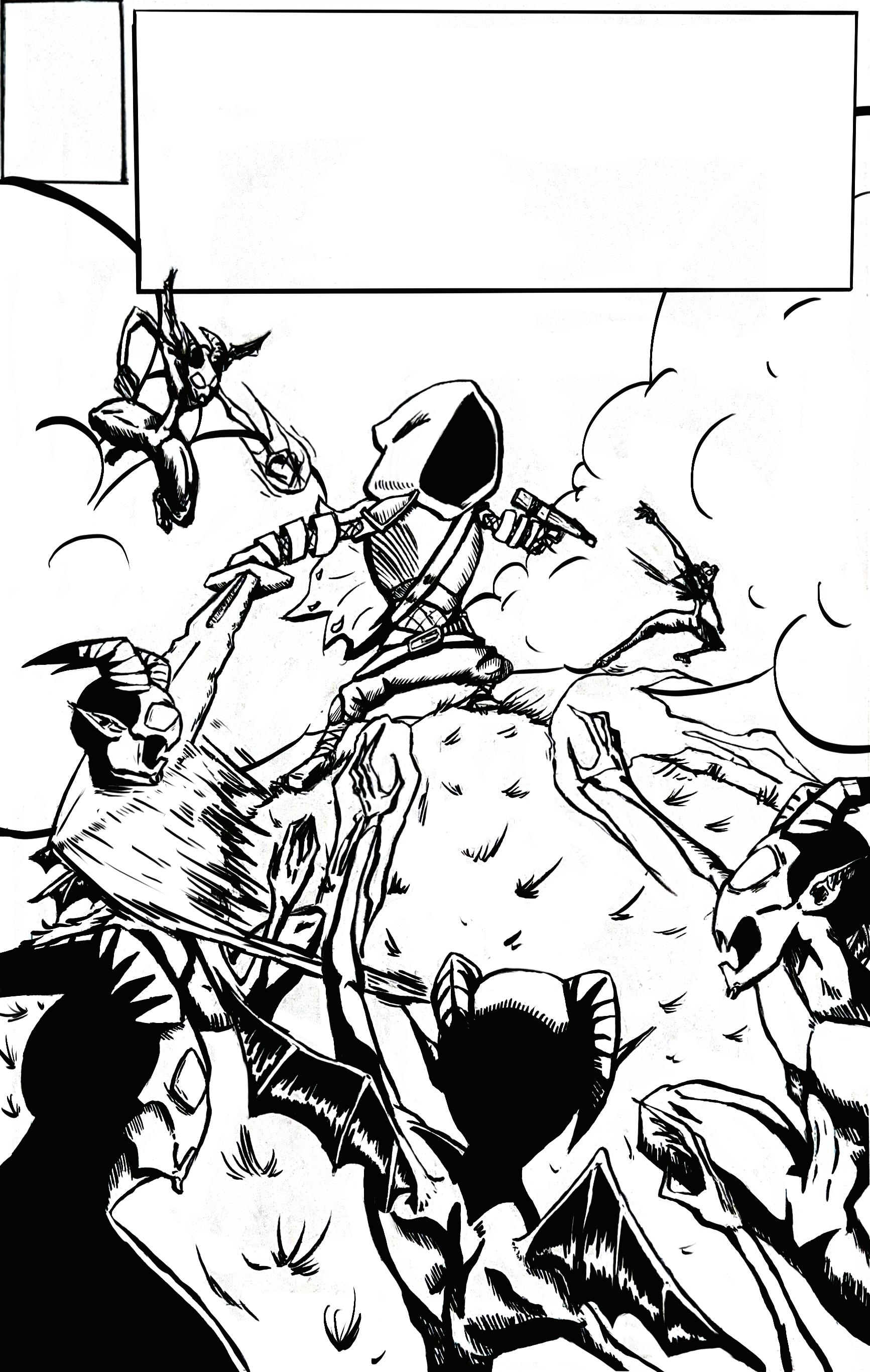
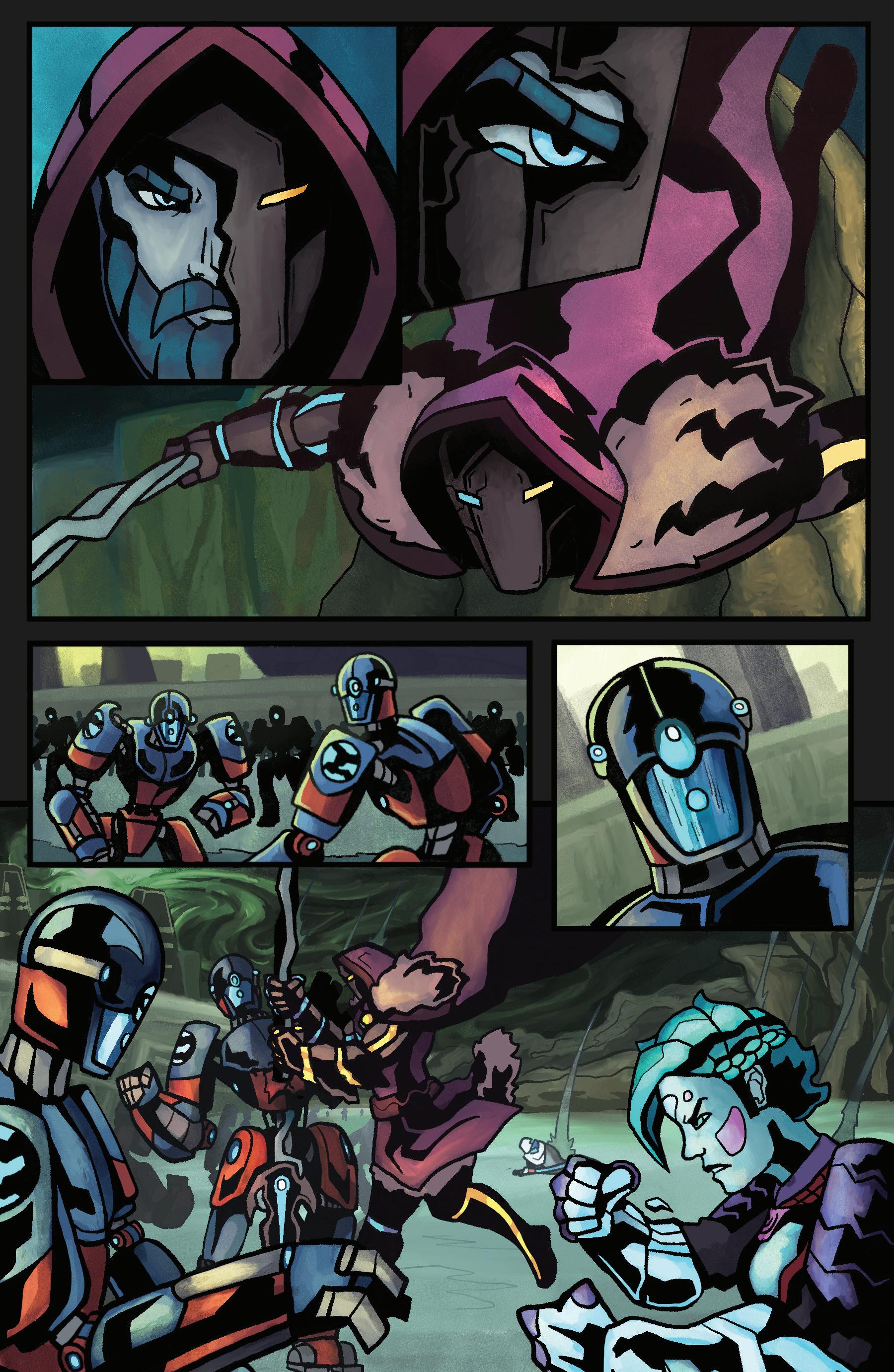
The senior Illustration major for 2026 is composed of many sequential artists and comic-related BFA projects. The great variety in art styles between them makes for thoughtful and creative sequential art.
For example, Felix Mathoslah mixes paper collage with digitally drawn artwork for his BFA comic Lightport, while Vinnie Karnik uses traditional ink-on-paper with digital work overtop. The variety of work made from these artists is to be celebrated, both because of the coincidental influx in how many sequential artists we have and in their practices as well.
Contained here are the mixtures of BFA and passion projects made throughout these students’ time at CIA and their range in inspirations, techniques, and styles.

HEY! LOOK OVER HERE
Sofia Decanay
Vinnie Karnik
Gavin Daimon
Benjamin Puentes
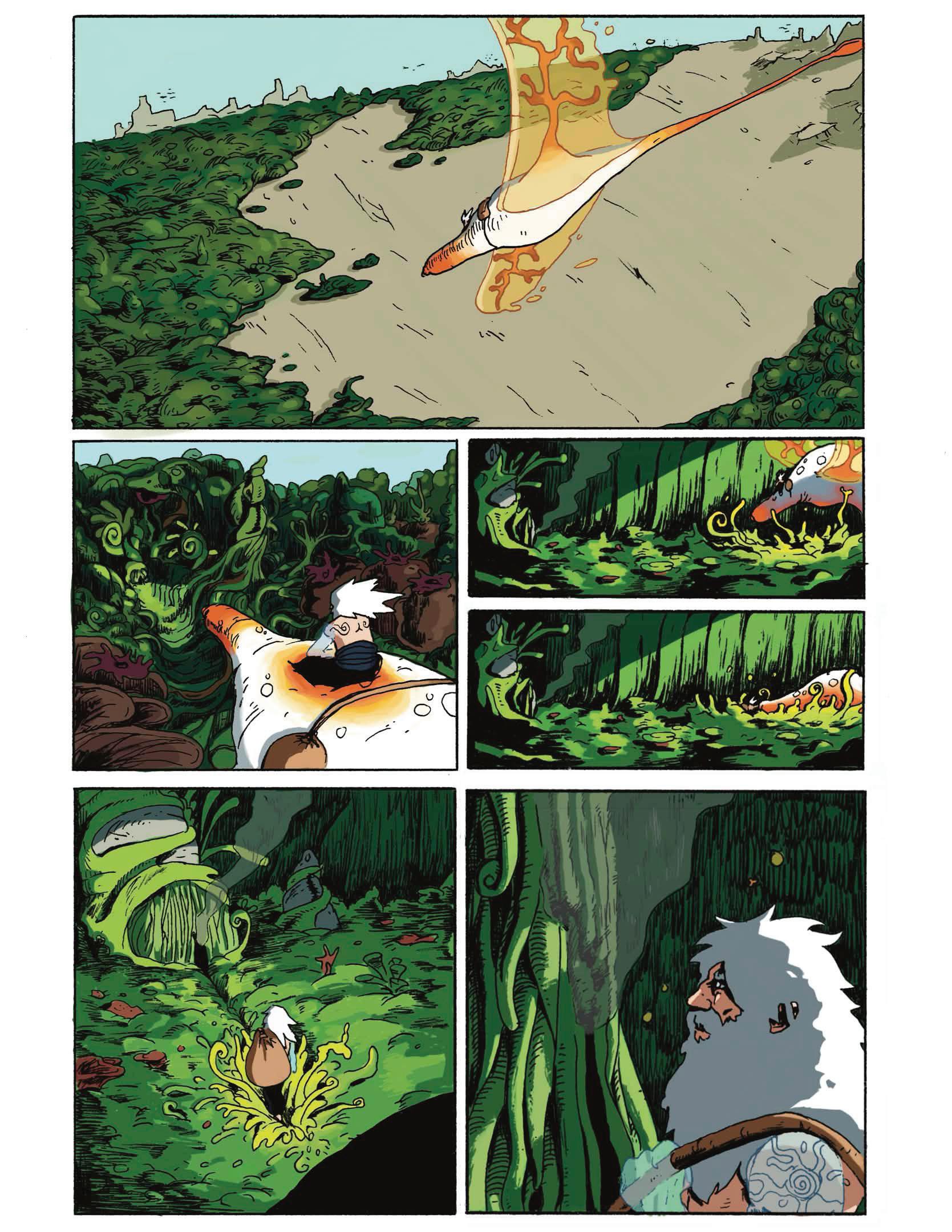
Sean Joyce
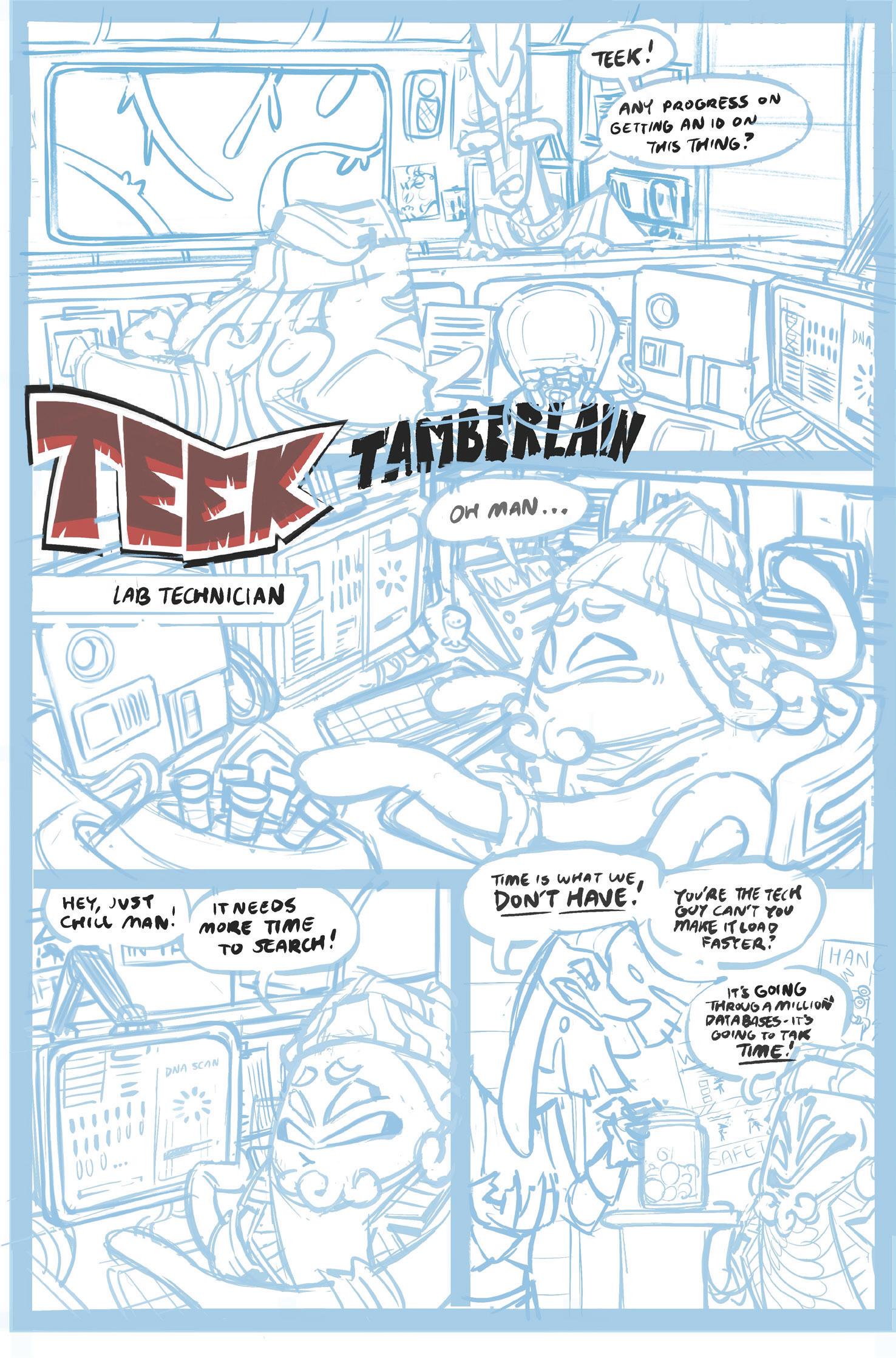
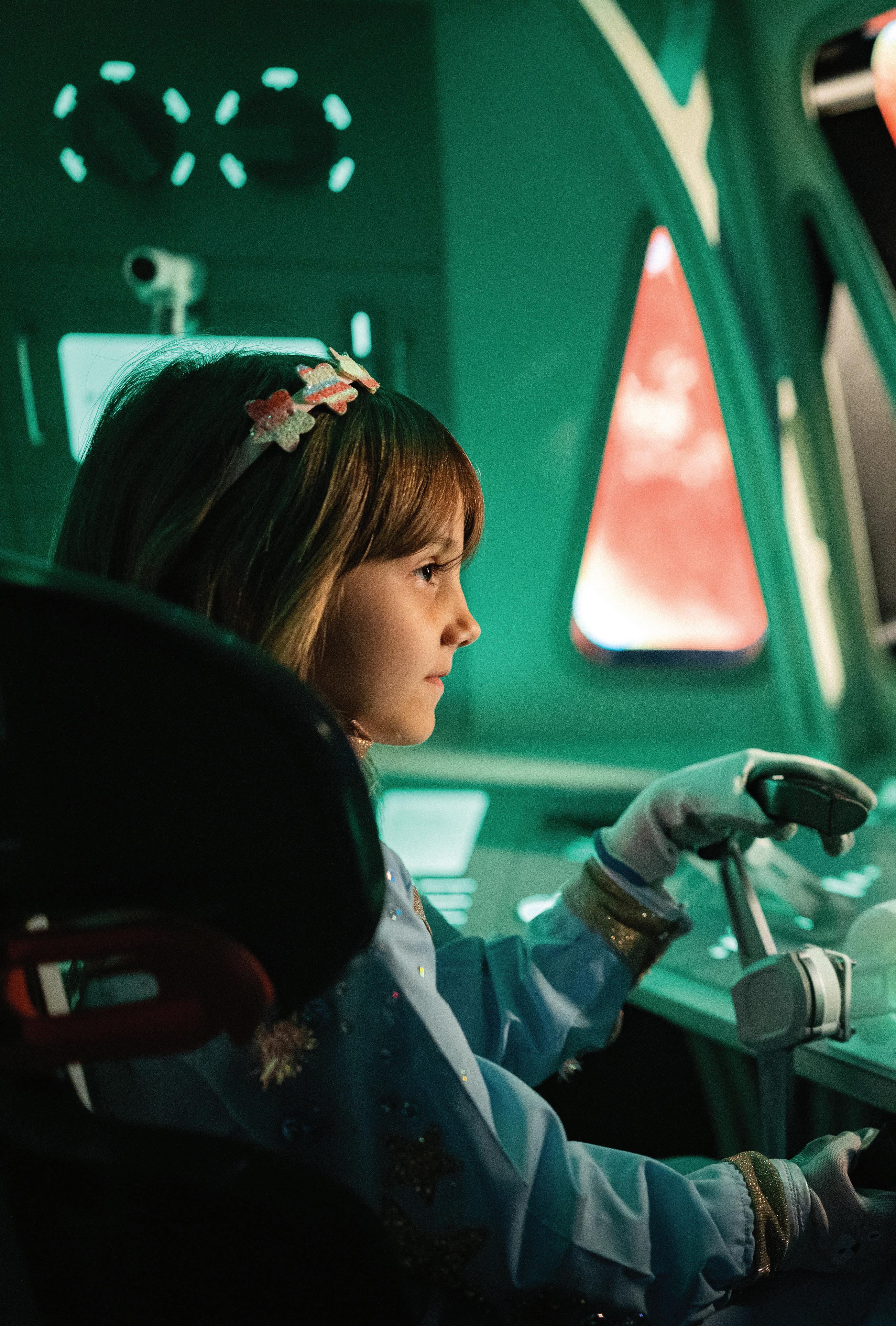
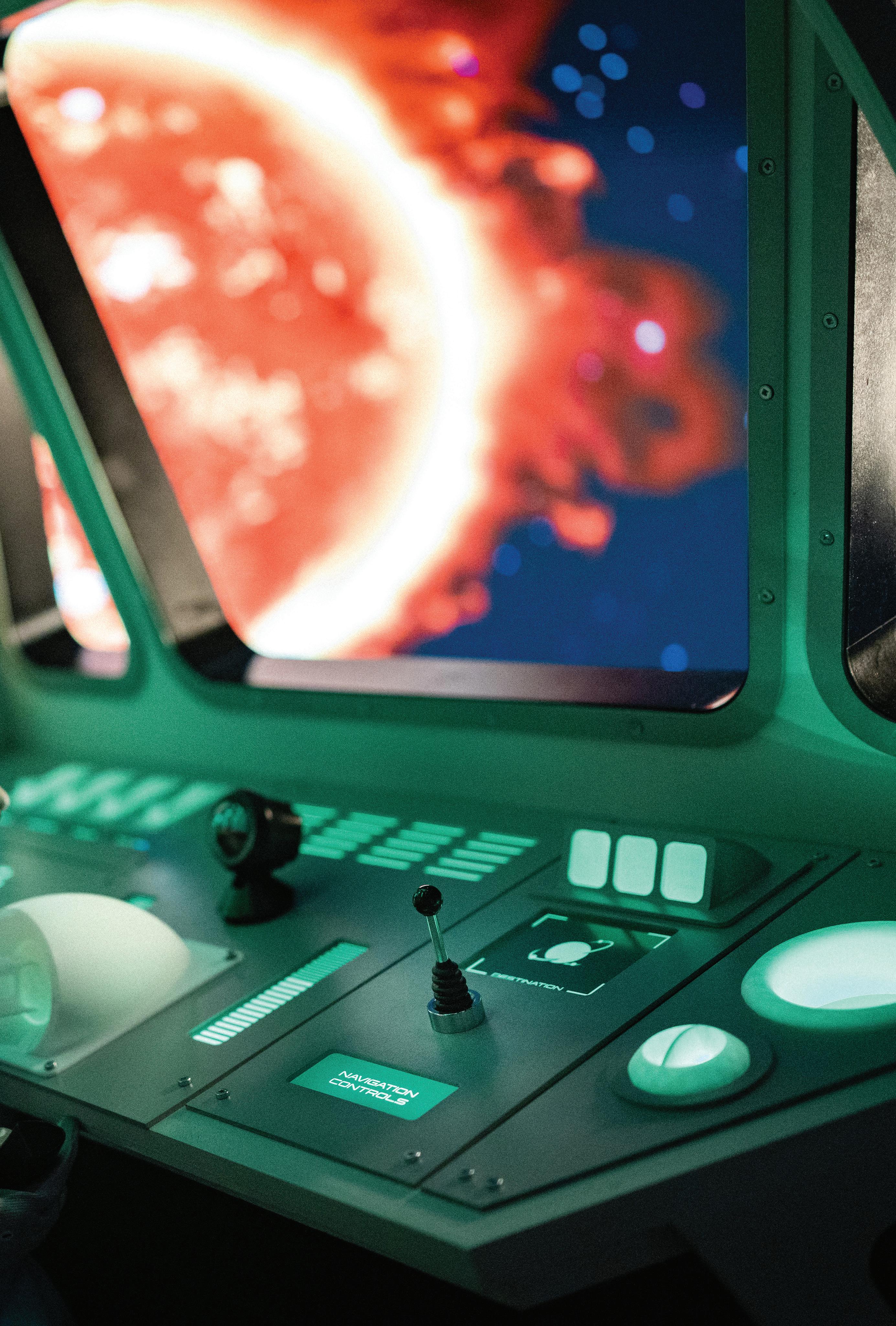
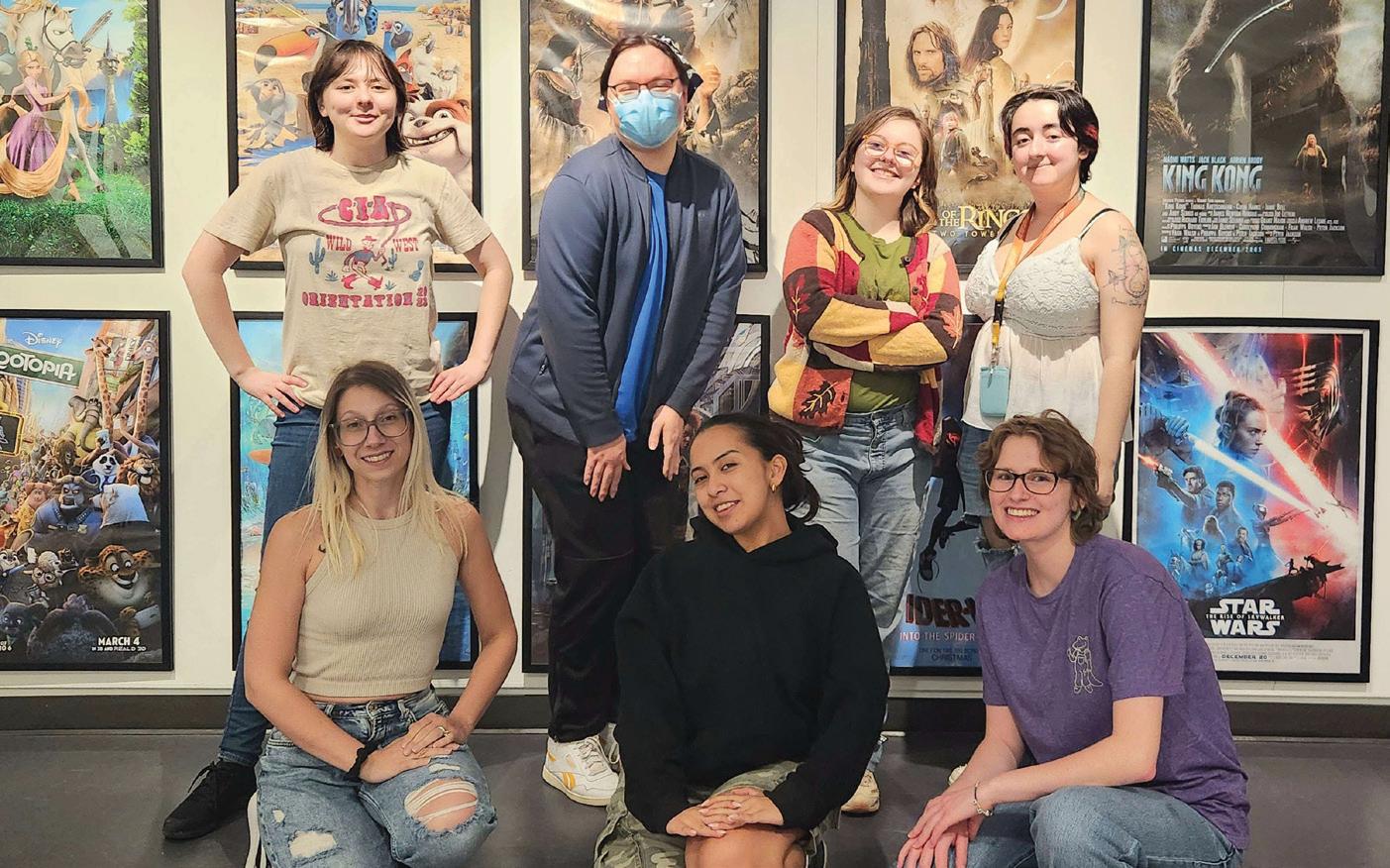
Interviewer: What was your role and what went into getting it done?
Jess: I wrote and directed the film, which I was not expecting but loved every minute of. I had to think with a childlike sense of wonder and get that message to clearly come across to the team and anyone viewing. There were so many parts to this project, everyone was awesome in tackling them while believing in the story.
Ari: My role was to design our main actress’s costume for Operation: Blast Off! I would say there was a lot of different perspectives gone into the design, along with research, connection, and collaboration
Franklin: I kind of jumped around all sorts of roles for this production. I started with the boards with Rynn’s help and got it to a point where we were satisfied. I also modeled the colorful spaceship and helped with fabricating some of the live action props. We always wanted to imbue every part of this production with a childlike sense of wonder and Imagination.
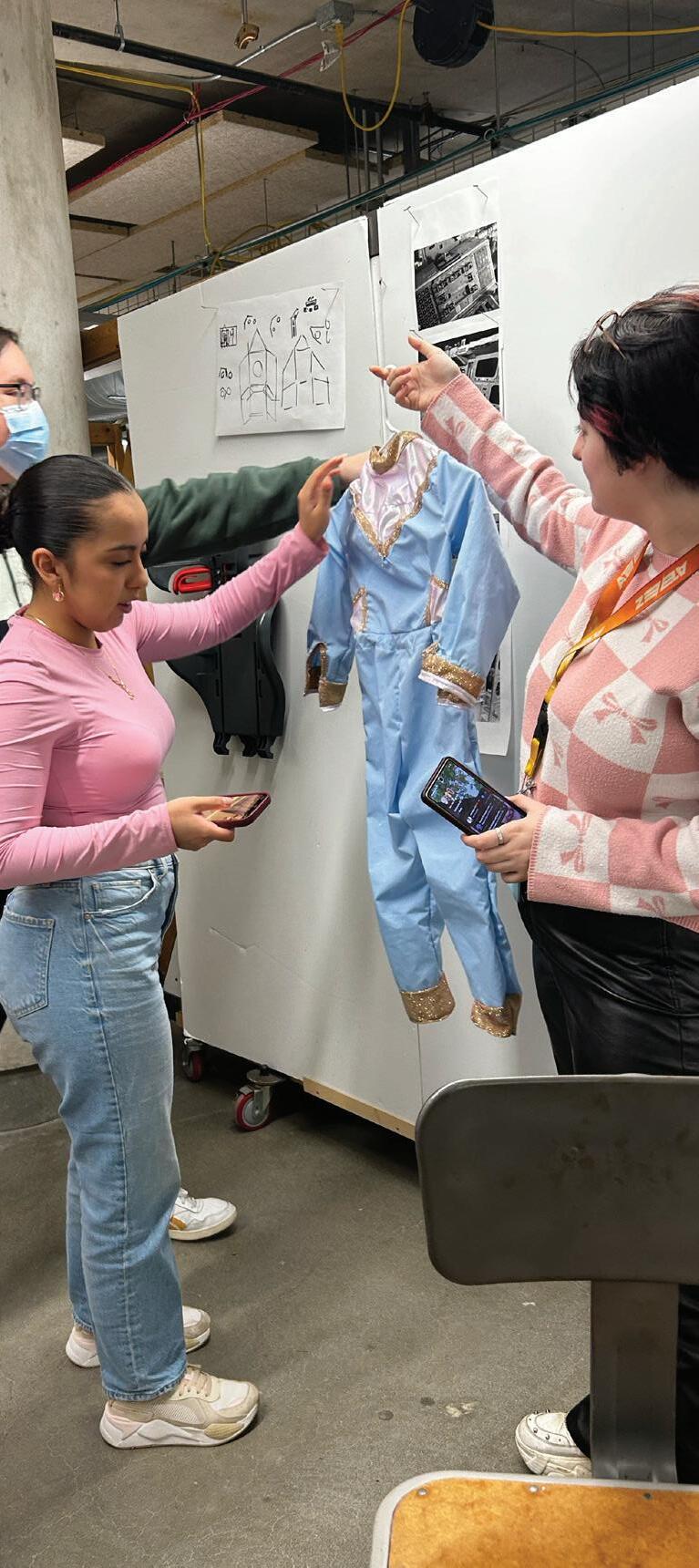
Mia: My role was to create the costume designed by Ari! I got to hone in on my seamstress skills to bring to life a design that was created so thoughtfully by Ari and my peers’ perspectives.
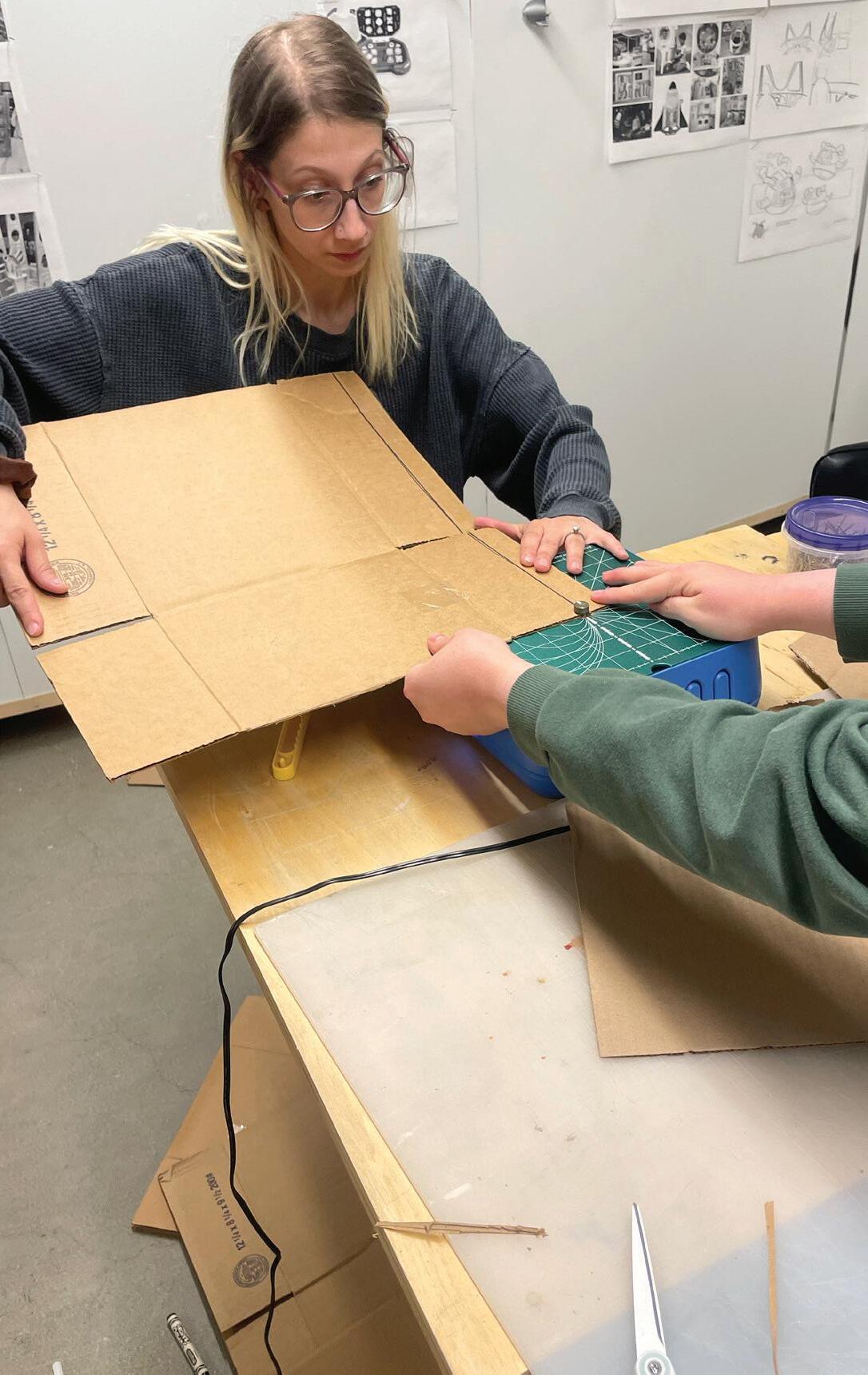
Allison: My role was to assist in set design and film production. Aside from light contributions to the modular spaceship set, me and some others were also sent to a fake botanical
company. We documented some foliage to order that fit with the unreal scene, and ordered it for the film date. On set it was a lot of scene set up, lighting, and camera movement to best match the storyboards.
Rynn: I initially started my work in storyboards with Franklin, we each made half and then he refined them. I then pivoted to working on the wormhole asset for when the astronaut beams home.
Interviewer: Was the process from start to finish what you expected?
Ari: I’d like to think so because I have always had a passion for design and especially a knack for fashion design. It is something I really used to enjoy doing as a kid so being able to dive back into something like costume design was really fun! When I was younger I used to to a lot of sewing too but not as much anymore so my skills have lessened through the years , but being able to collaborate with Mia and watch her bring my design a live was so cool, I learned a lot from her in regards to fabrics, I think she really helped me pay attention to different aspects to consider when designing for children in regards to comfortability.
Mia: The process from start to finish was far from what I expected. Never did I think I would be able to sew for a project in my Animation classes. However when someone asked if anyone knew how to sew my hand shot up, so excited. Sewing is one of my greatest passions outside of animation and game. Seeing everything come to life while I worked was such an awesome experience. Everyone on the team is so talented and the project would not have happened if they weren’t here from start to finish.
Allison: I had no idea what I was getting myself into. It was a good change of pace from what I normally do, instead of sitting at a desk all day it was a lot of team-based physical projects. I really enjoyed seeing everything come together.
Rynn: From the initial pitch to what the product actually became, I was not expecting what came out. But I’m really proud of the team for what we made as it came out amazingly!
Jess: I wasn’t sure what was going to happen, but the outcome was out of this world! I loved taking part in multiple roles to really make this happen.
Interviewer: What’s something you had to learn to complete your role and the film?
Ari: I learned a lot about certain fabrics and how they wear in comfortability for different people and how to successfully apply beading to light fabric. I think that was probably one of my biggest challenges.
Franklin: I had to get used to software I hadn’t used much before like Substance 3D Painter. Figuring out the specifics of how to export a model to be ready to use in Unreal was a bit finicky.
Mia: I had to learn how to work with stretch fabrics. I have worked briefly with stretch before, however implementing stretch with cotton is a different experience. I had to learn about the needles needed and the techniques that would make it easier to work with. I also had to learn how to sew triangular shapes which can be tough.
Rynn: I’d never used Unreal Engine before, nor had I created a repeating pattern before. So I had to learn how to create a repeating pattern in Photoshop and create the wormhole effect using only textures.
Jess: I learned a lot about Unreal and some super cool asset packs that really helped the space scene come to life! It was also really nice to see how the team worked together and how much we learned who each other was.
Interviewer: Were you surprised by how much planning and behind the scenes work went into this?
Ari: In regards to Operation: Blast Off!, in general, no, I’m not very surprised, you know as Animation students you learn at least a little bit of each part of the pipeline so you really know how much there is to be put into a film. What made it easy is that we had an awesome team where each individual had a their own special talent that really help make this project happen.
Franklin: There’s always so much work and training that goes on behind any production. The XR studio equipment is so precisely calibrated for virtual production that it takes a lot of expertise to not mess anything up.
Allison: Honestly, when I see live action XR productions, I get a sense of movie magic. At the time, it felt unfathomable to put together this production in such a short timespan, especially with all the scene changes, set pieces, and graphics we wanted to integrate. It was amazing seeing all my teammates’ specializations work in tandem to create Operation: Blast Off! All the elements came together beautifully.
Rynn: No surprise, it makes sense that a live production with virtual elements took a lot of coordination to make them cohesive. It’s amazing to see all that goes into the creation though as we enter the industry.
Interviewer: What was your favorite part of this project?
Ari: The connections that were made, I found myself becoming closer to my classmates and believe I really made some life long friends, along with our little actress Addy, she really was a doll to work with, we had many moments we would just play and be silly. I loved being her personal hair and make-up team. But most of all I am so grateful for the connections and experience I got on set at the IML. It’s one of those rare opportunities that I feel not many artists may get to experience and it is exciting to know what technology is up and coming.
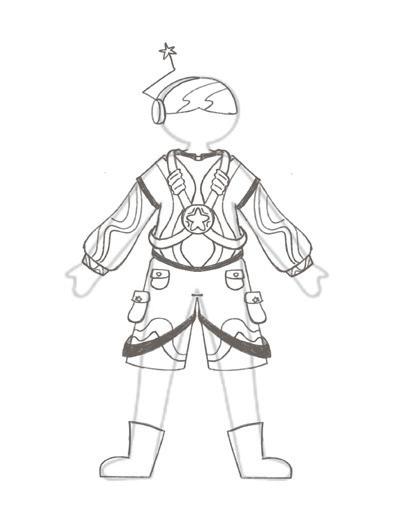
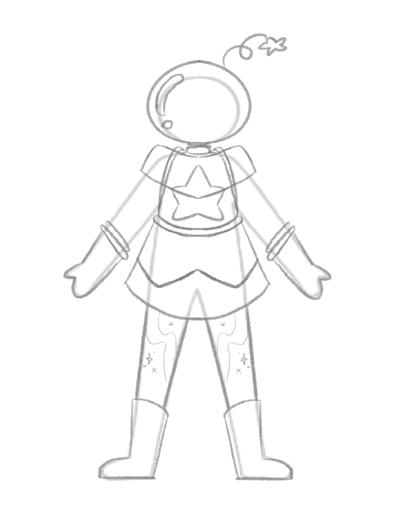
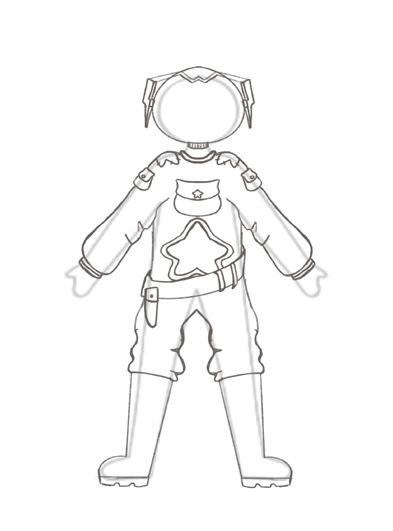
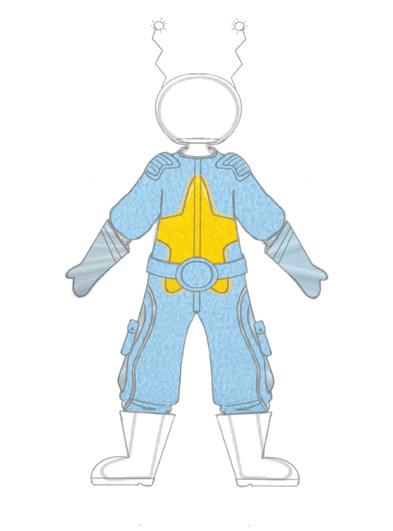
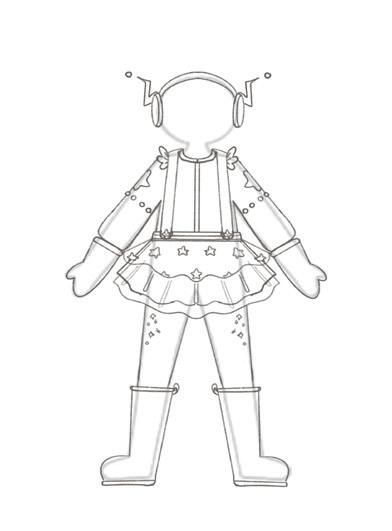
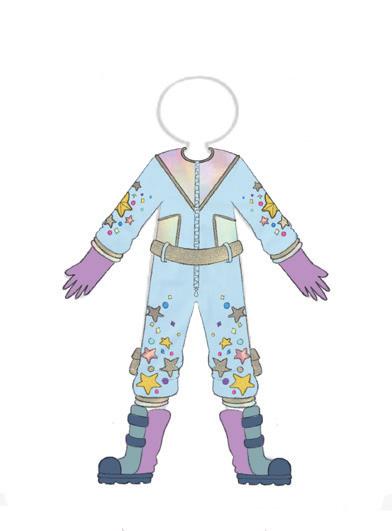
“I went to my sketchbook and looked at shape language and silhouette work to try and figure out which silhouette would look most kid-friendly and imaginative.” — Annie
Franklin: It’s nice to work on a project you believe in, but it’s even better when you get to do it with a great crew. It was amazing working together with my peers and we got to really bond together and chat it up. I wasn’t able to make it to the initial filming, but I was excited to help out with the reshoot.
Mia: For sure the connections with peers. Getting to know everyone individually was really fun. We grew close as a crew and got to experience something completely new together. Being able to bond with people is an irreplaceable memory.
Allison: Being able to work on an XR stage was cool, but it wouldn’t have been as fun without the people I was working with.
Rynn: Seeing it all come together. It’s one thing to create the pieces disconnected, it’s another to see them all connect and create an actual short film! I was awestruck when I saw the completed film in the Dolby Theater.
Jess: My favorite part was seeing all the passion people put into something that I wrote and how close we became along the way.
Interviewer: And lastly, what is your fondest group memory from your time spent working on Operation: Blast Off?
Ari: I think our late night work days, when we would just be in the design studios making endless conversations with each other.
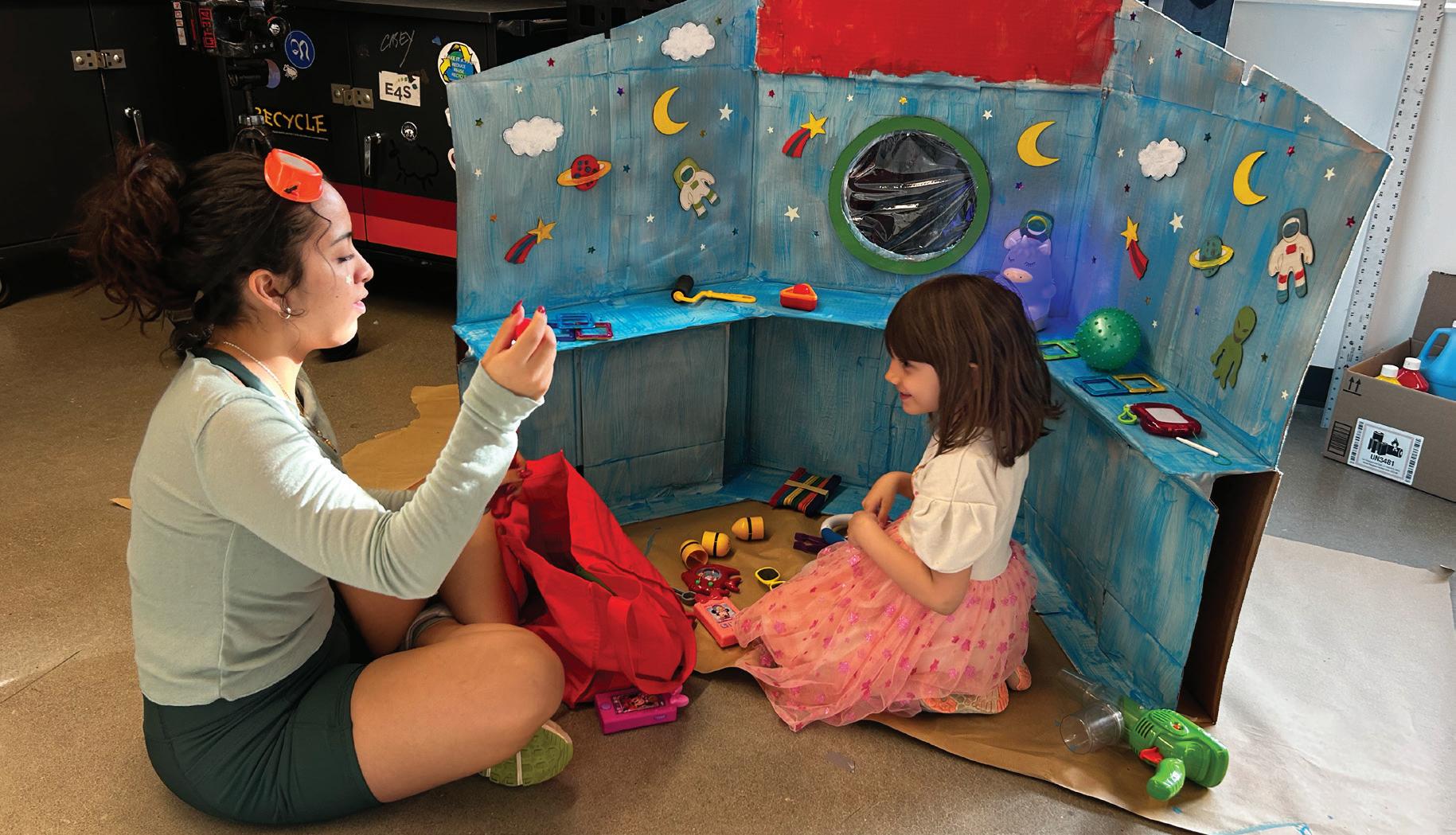
Franklin: I loved working on the cardboard spaceship with everyone. It was so chaotic and messy but so fun. My second favorite moment was visiting the fake plant shop. The place was massive and no one else was there besides our crew and the plant dealer. It was lowkey a little spooky, like it was giving liminal space backrooms vibes.
Mia: Working on the cardboard spaceship was one of my favorite memories. We got to work all together on painting and decorating this fun spaceship. We all chatted and laughed together while we worked and that is one of those memories that stick.
Allison: Most days on the project I got to spend a lot of time with my teammates. I really enjoyed coming in and painting the modular set, it was really satisfying, but also a good way to spend my morning with the team.
Rynn: Helping Jess and her daughter pick out outfits together and seeing the first fitting of the costume on Addie. My work was pretty separate from most of the team, so it was super fun to laugh with the group and see how well Mia and Ari’s vision came to life on Addie’s outfit.
Jess: My favorite memory would have to be the early mornings and late nights spent painting, snacking, and yapping! Specifically using the Chompsaw to cut the pieces for the cardboard spaceship which somehow took almost every crew member to navigate.
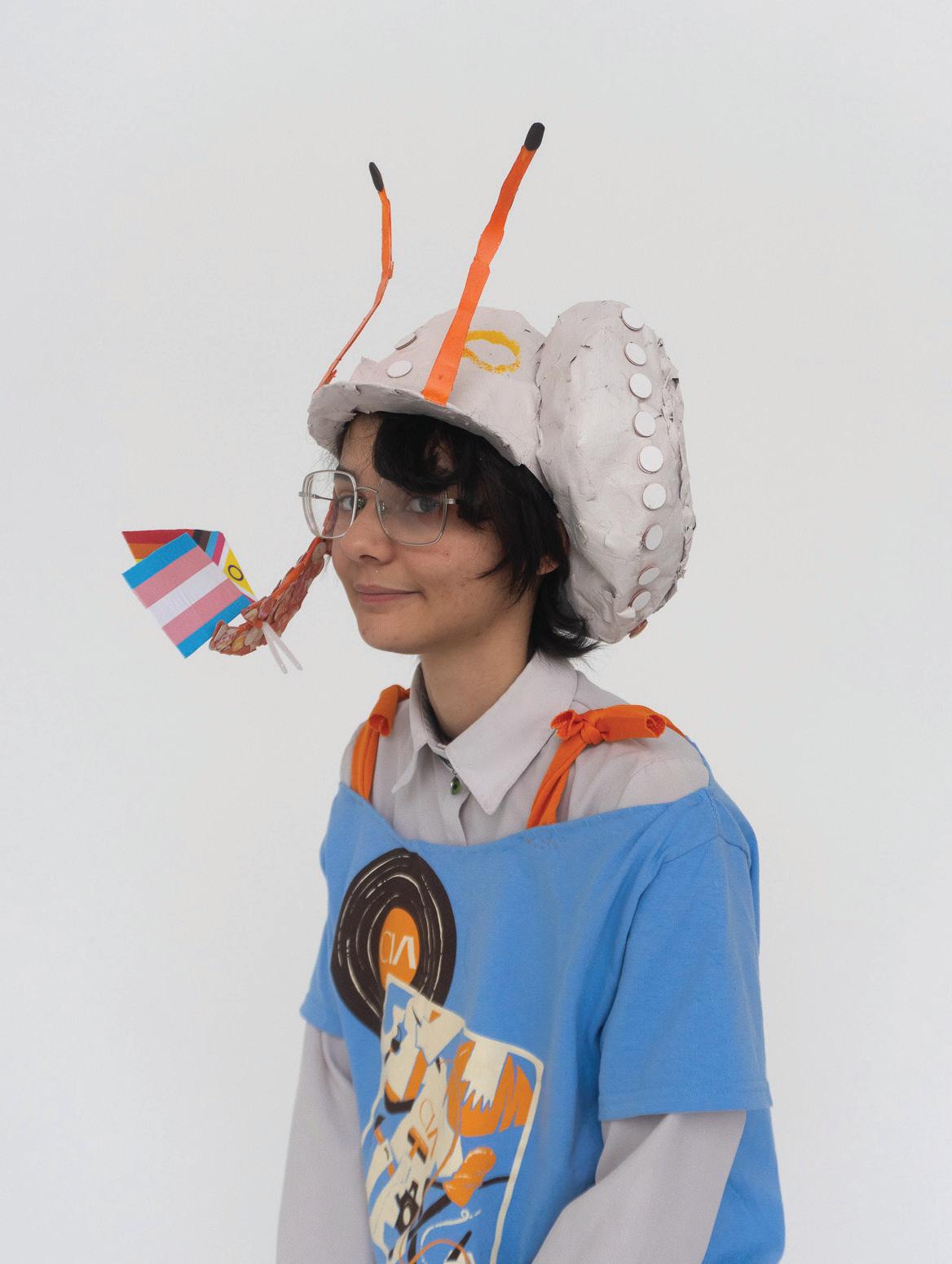
2025
Bristol, Papier-mâché, Acrylic
“I focus on Physical and Digital character designs, so bringing my cosmetic ideas into real life is a new and exciting experience for me. I’d like to think it opens the door for me to express my personality visually and uniquely.”
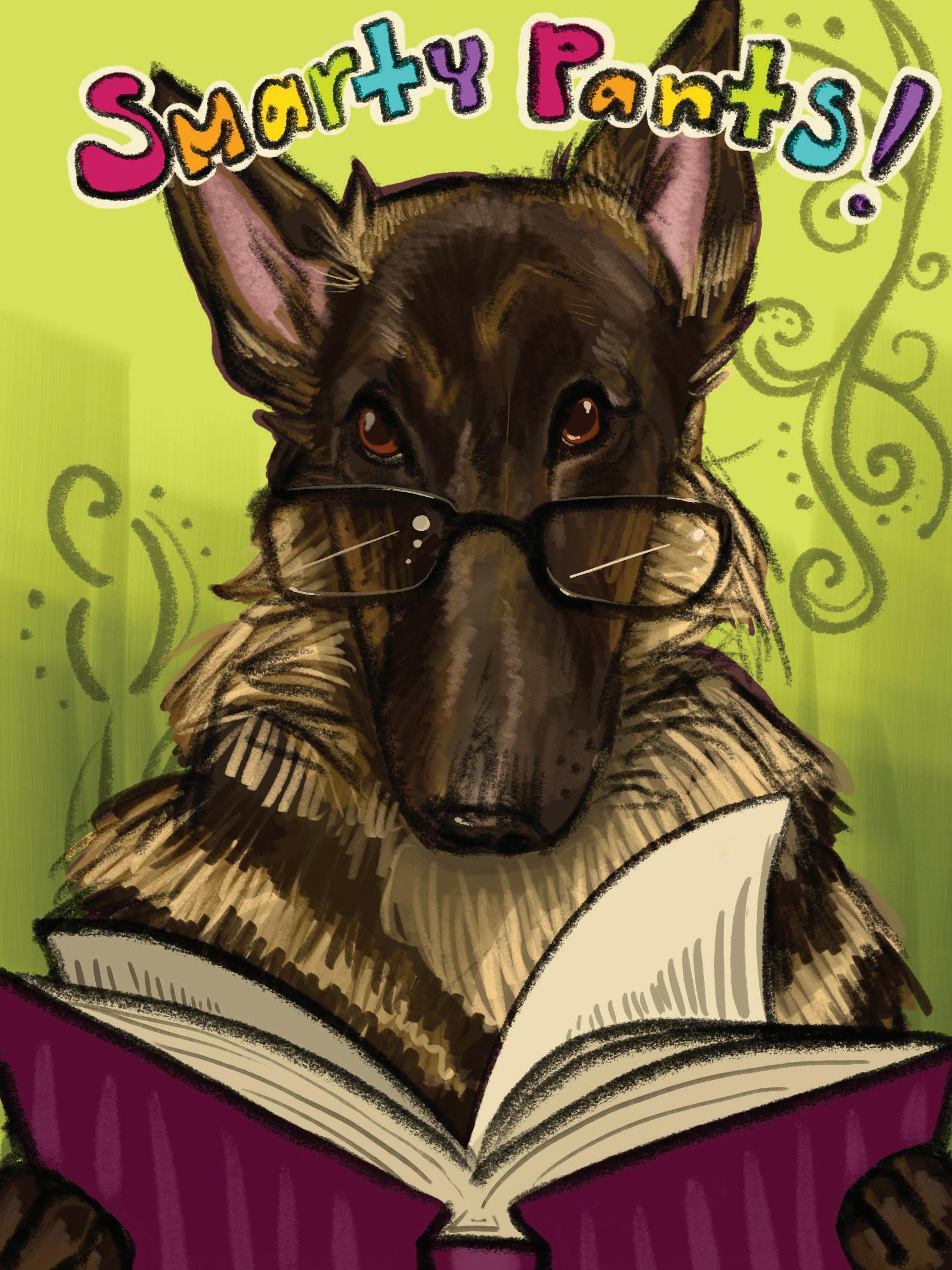
Digital illustation
“I love exploring multiple media as I uncover new ways of expressing my interests, nostalgia, and life stories.”
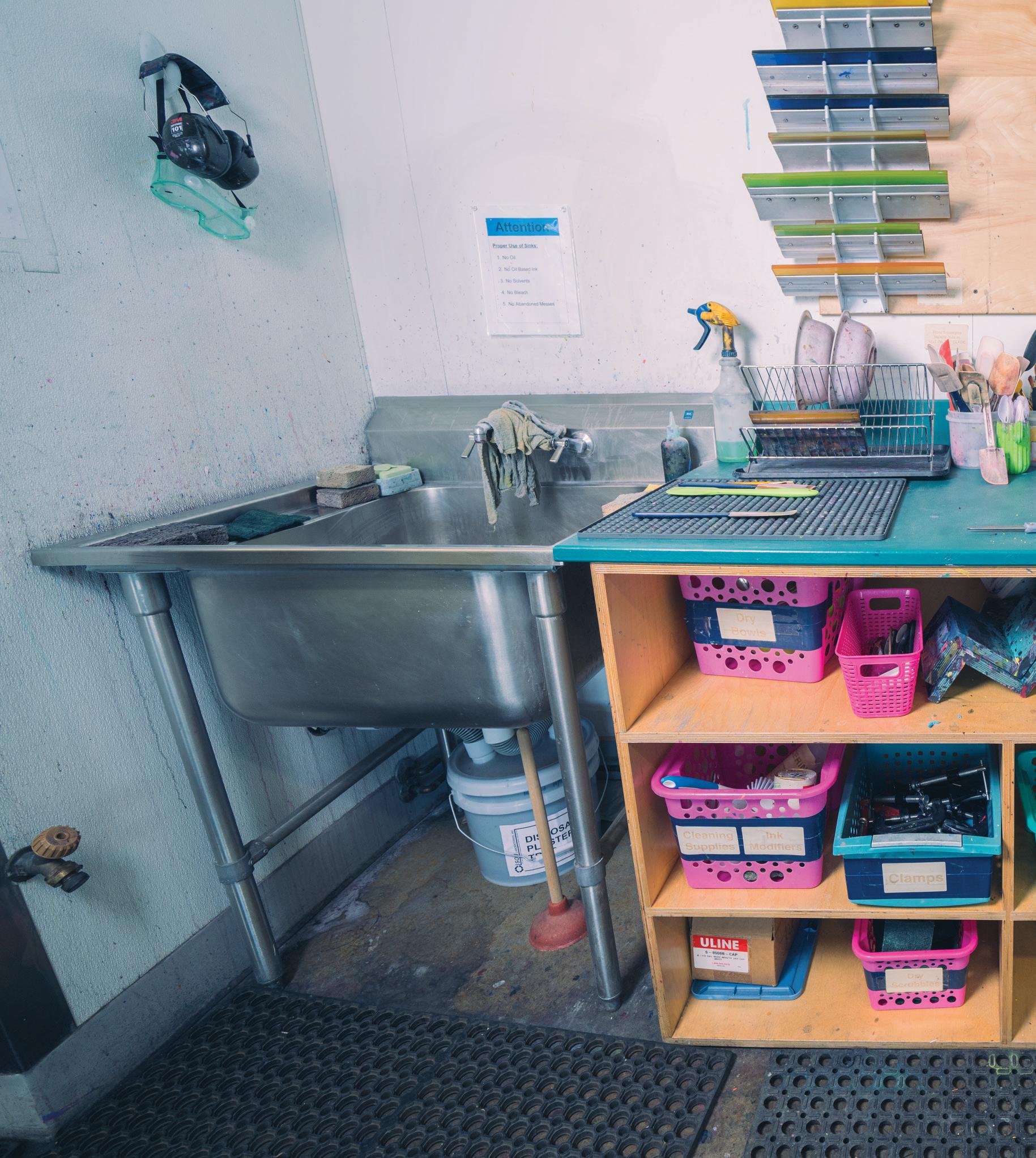
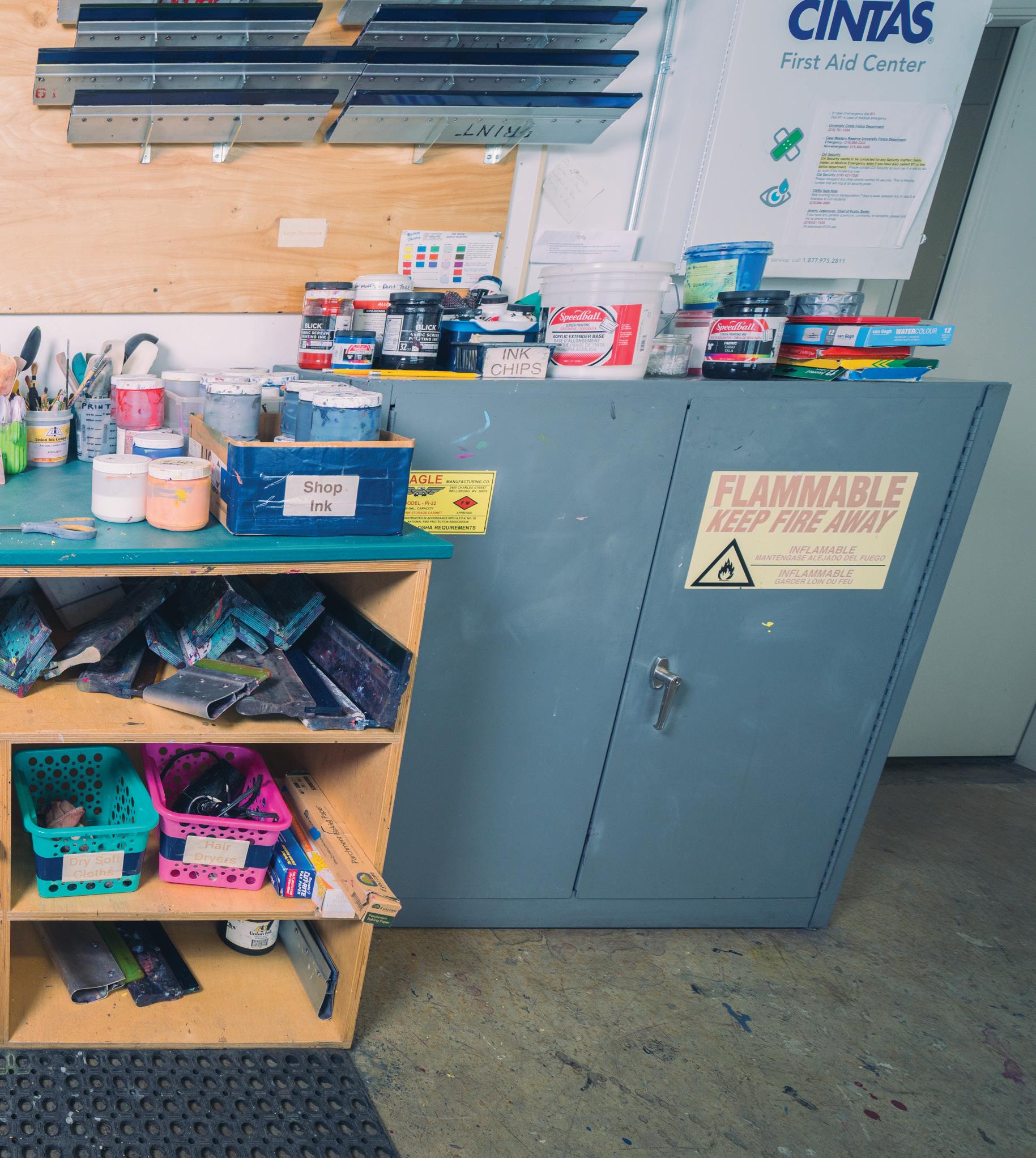
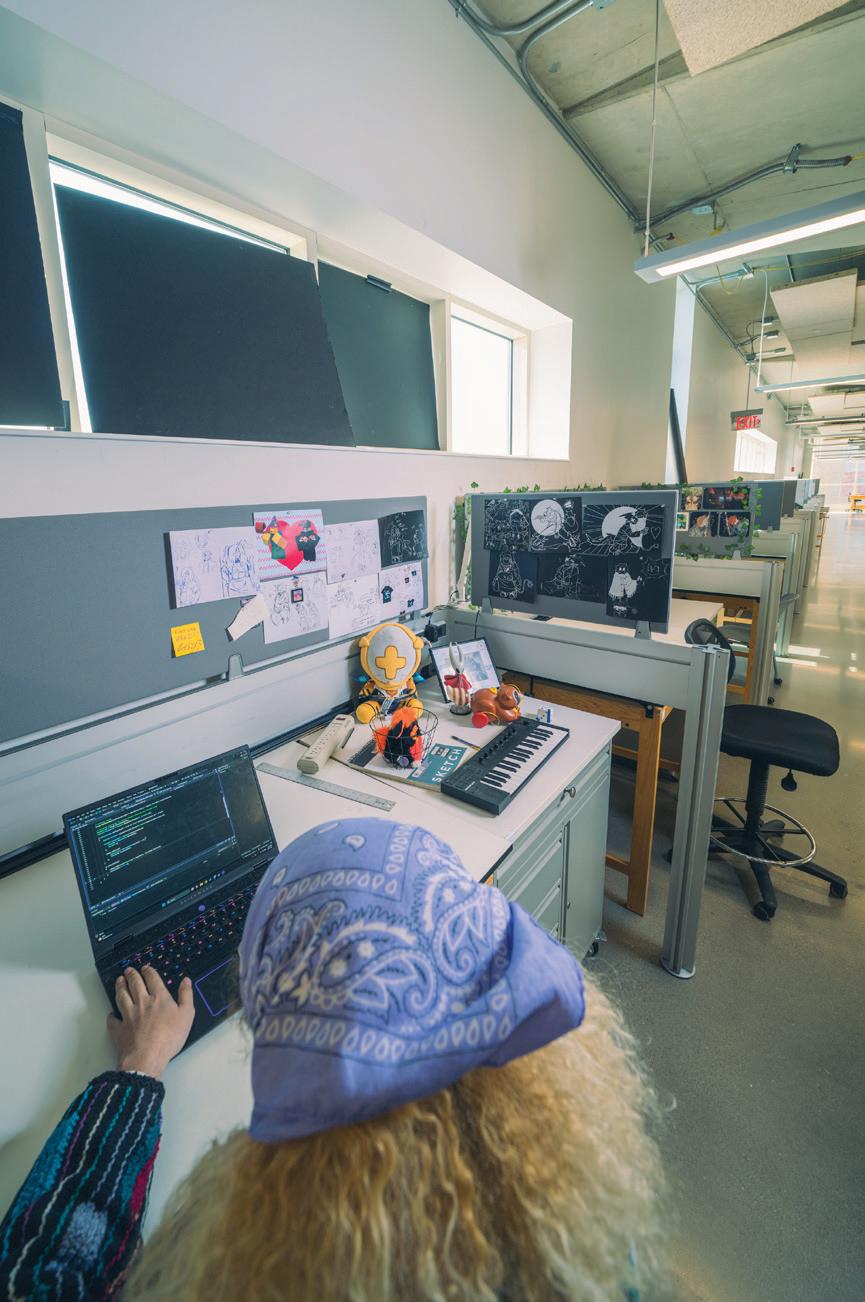
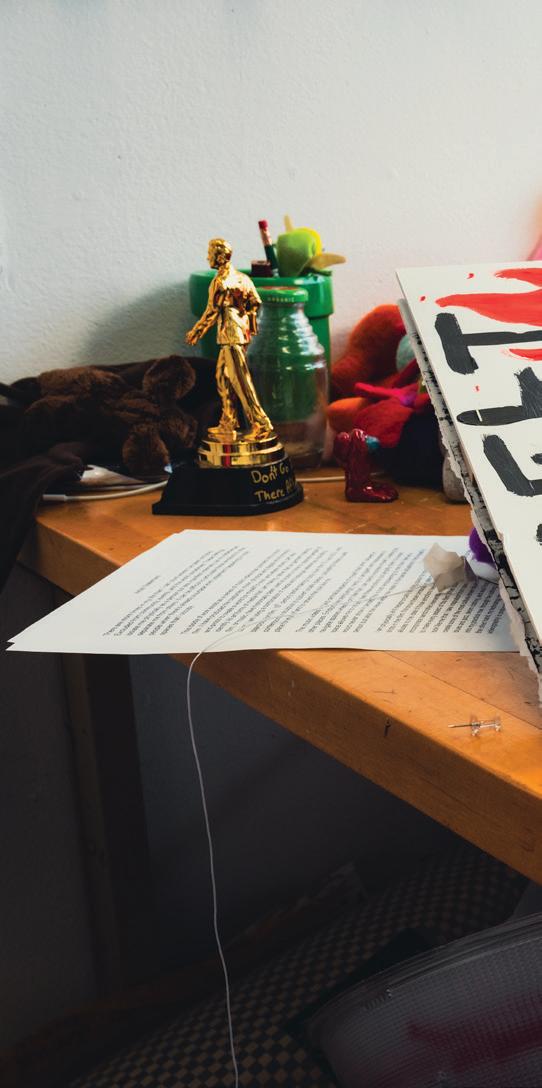
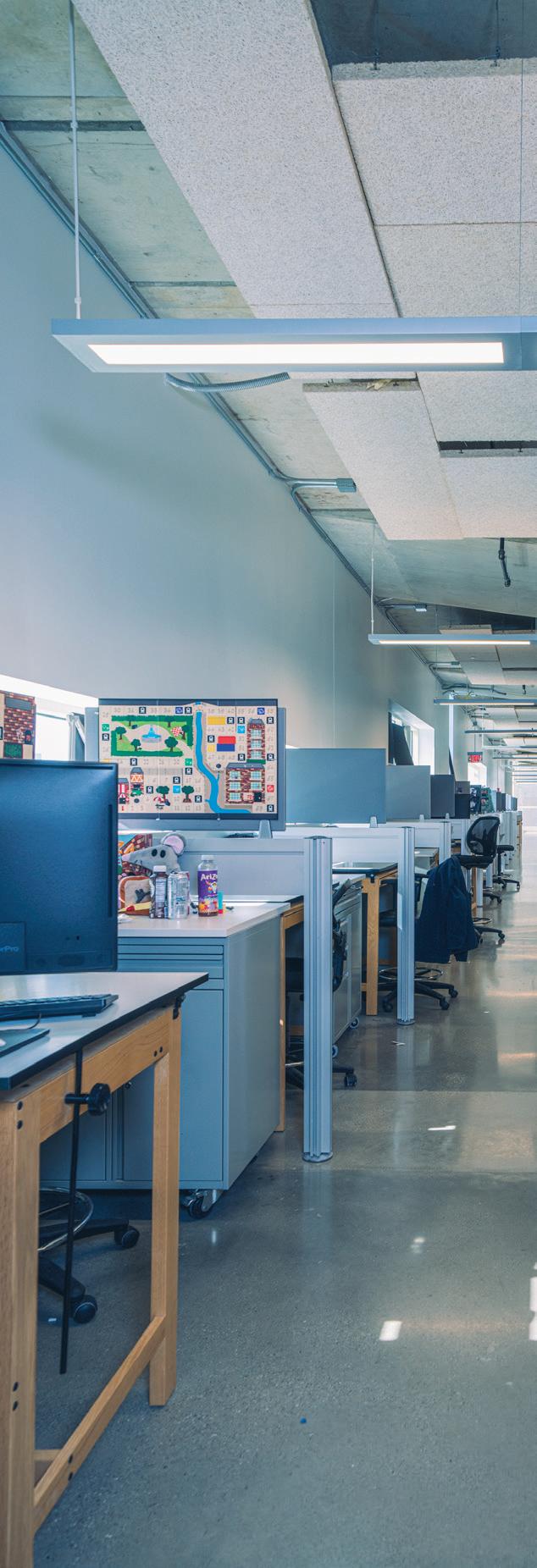
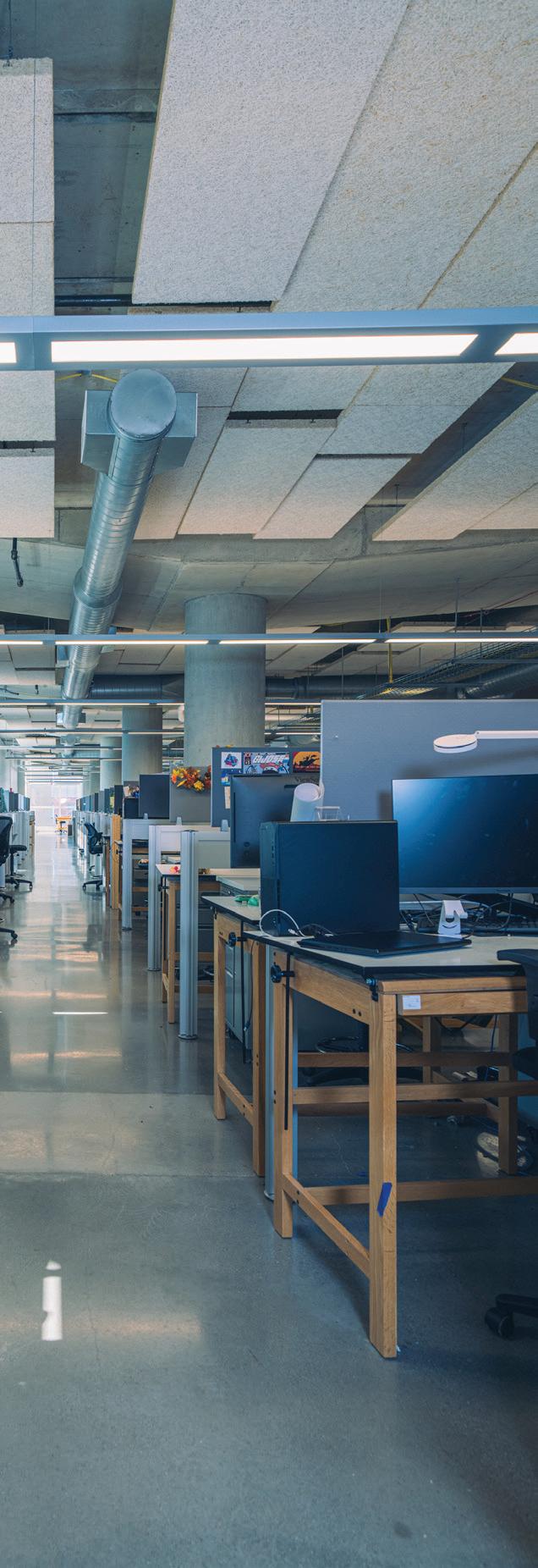
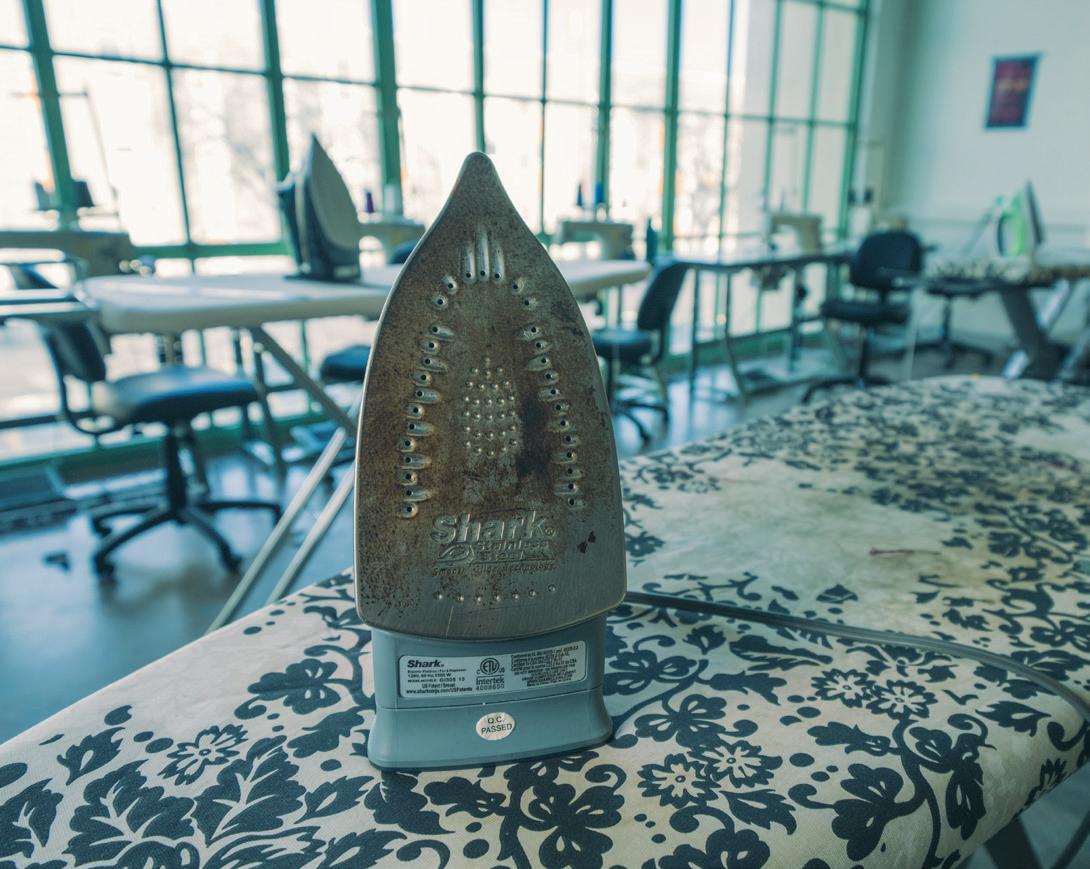
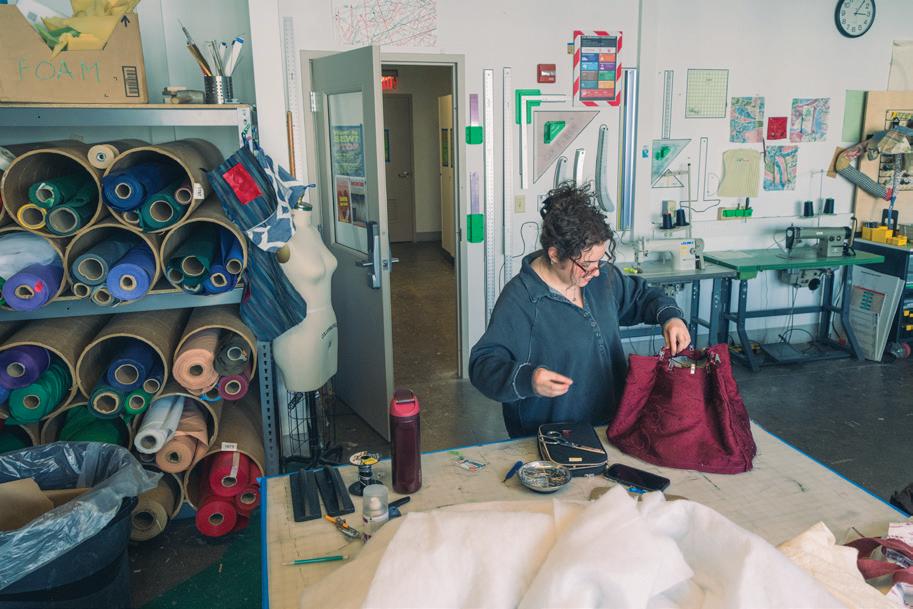
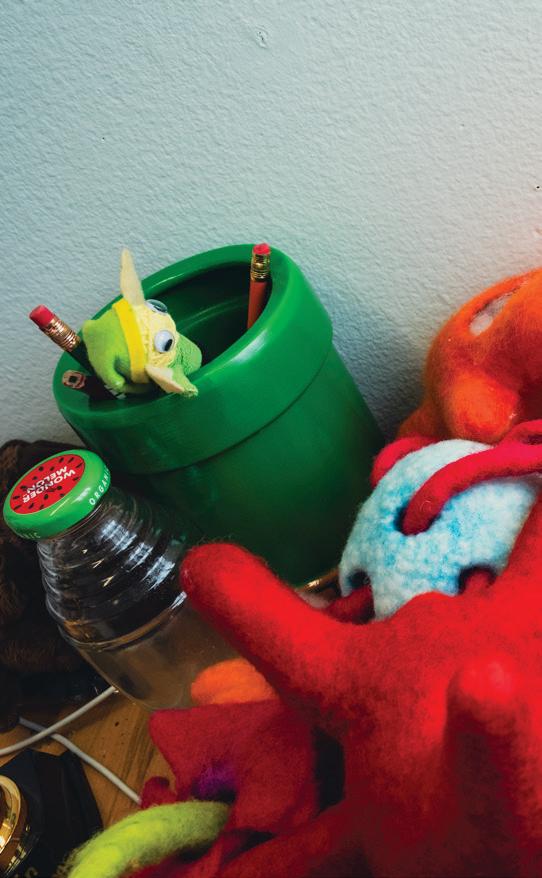
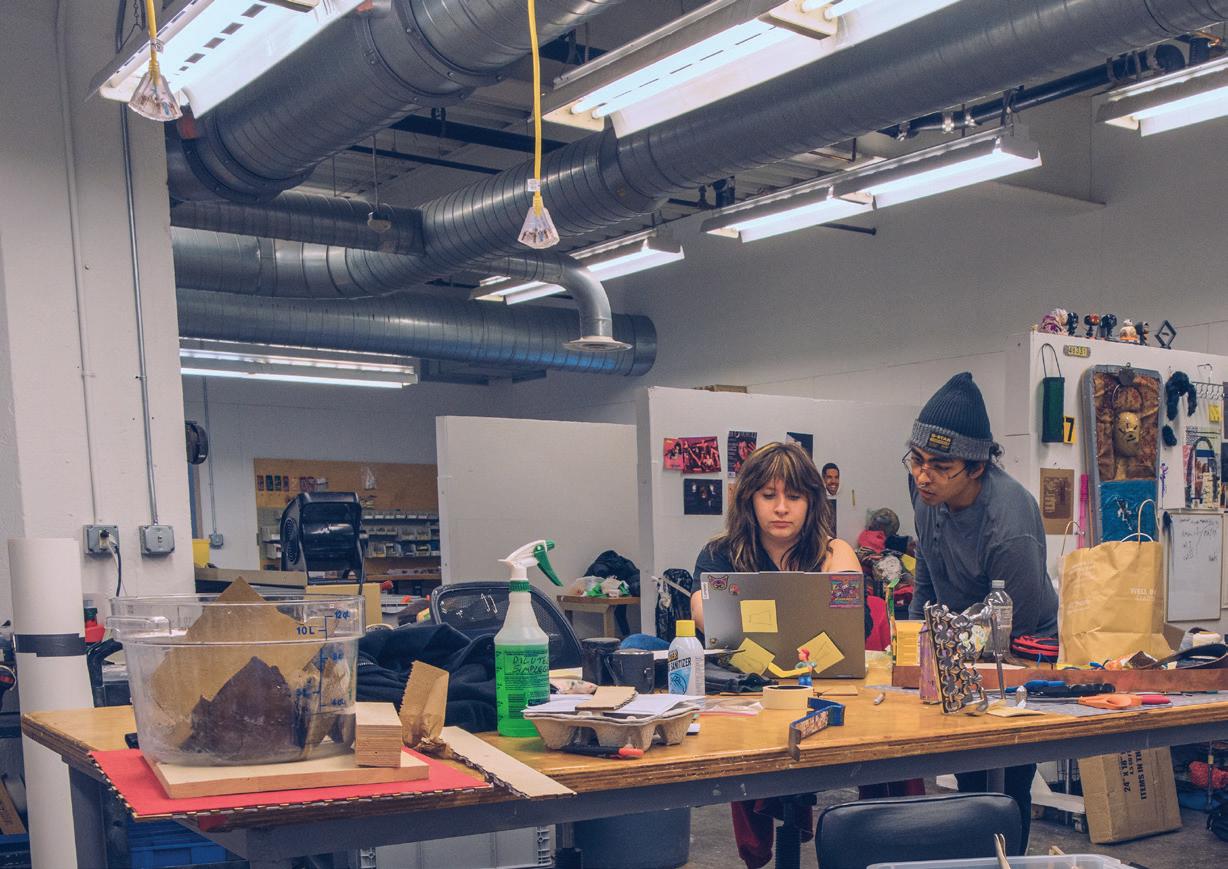
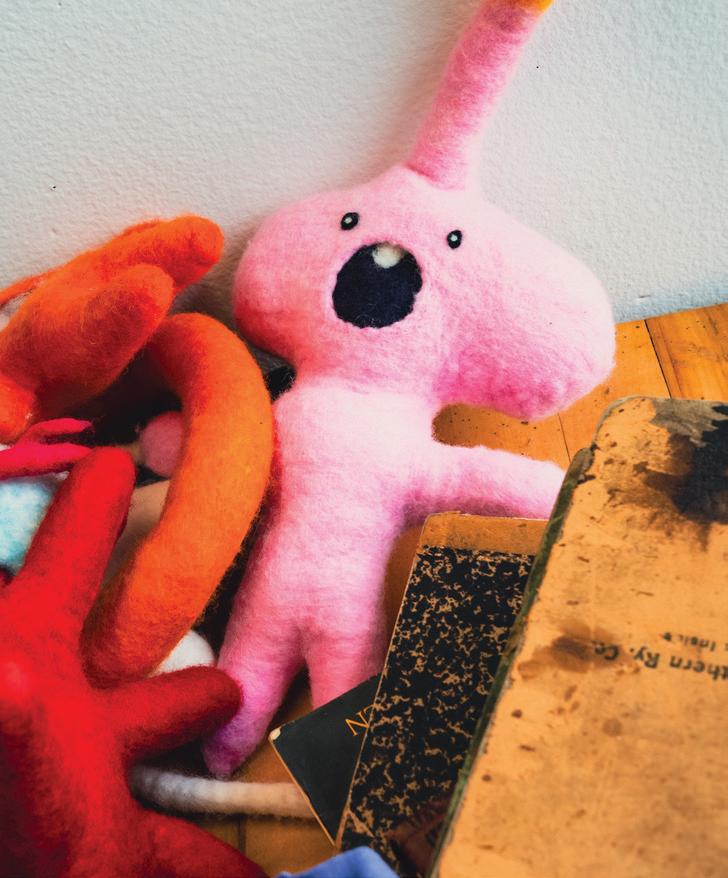
A feature dedicated to showcasing the spaces where students work. From communal work areas to individual desks, student spaces at CIA are our creative home away from home.
PHOTOGRAPHY
Christopher
Sitney
Pan Berry
Lachlan Howard
Printmaking
Game Design
Sculpture + Expanded Media
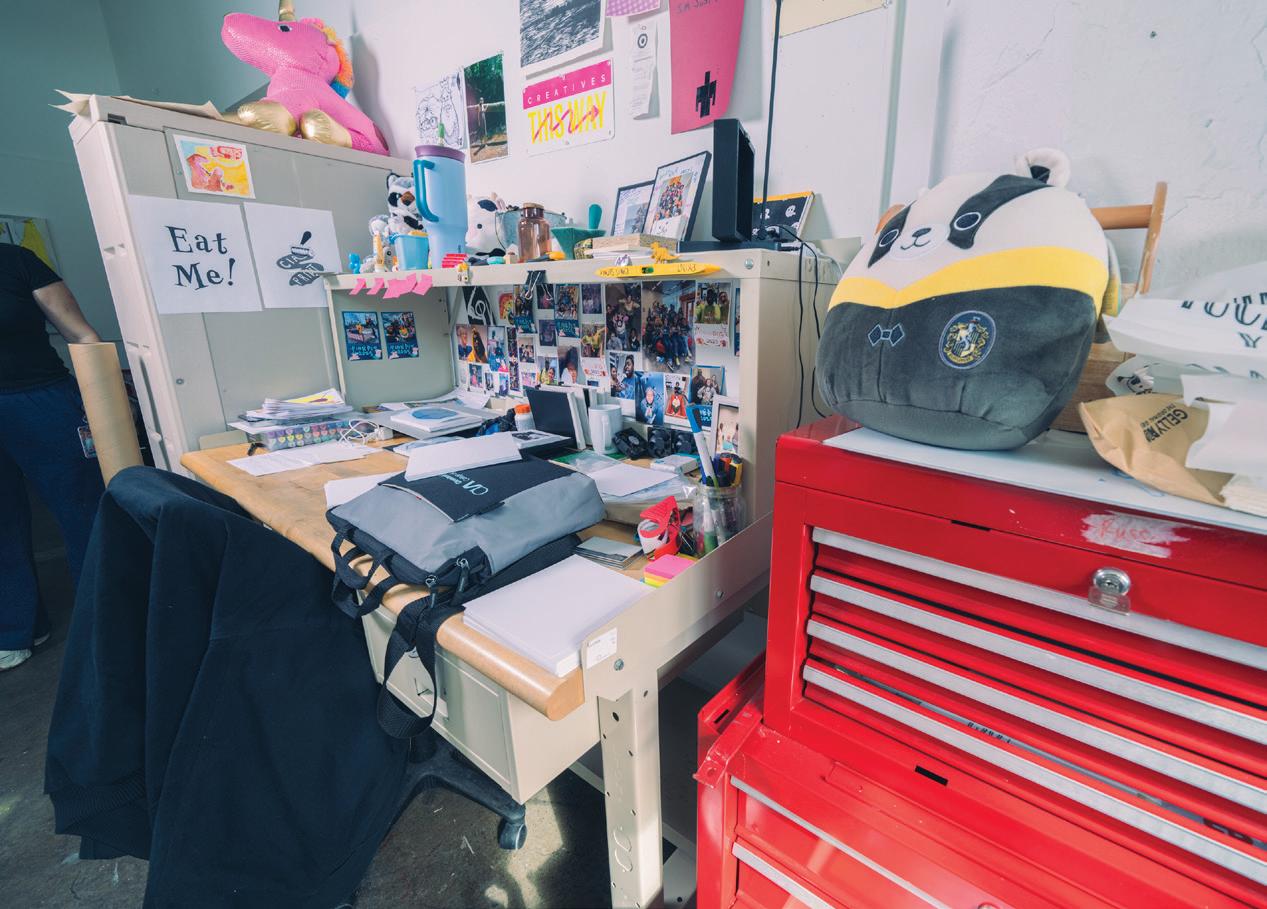
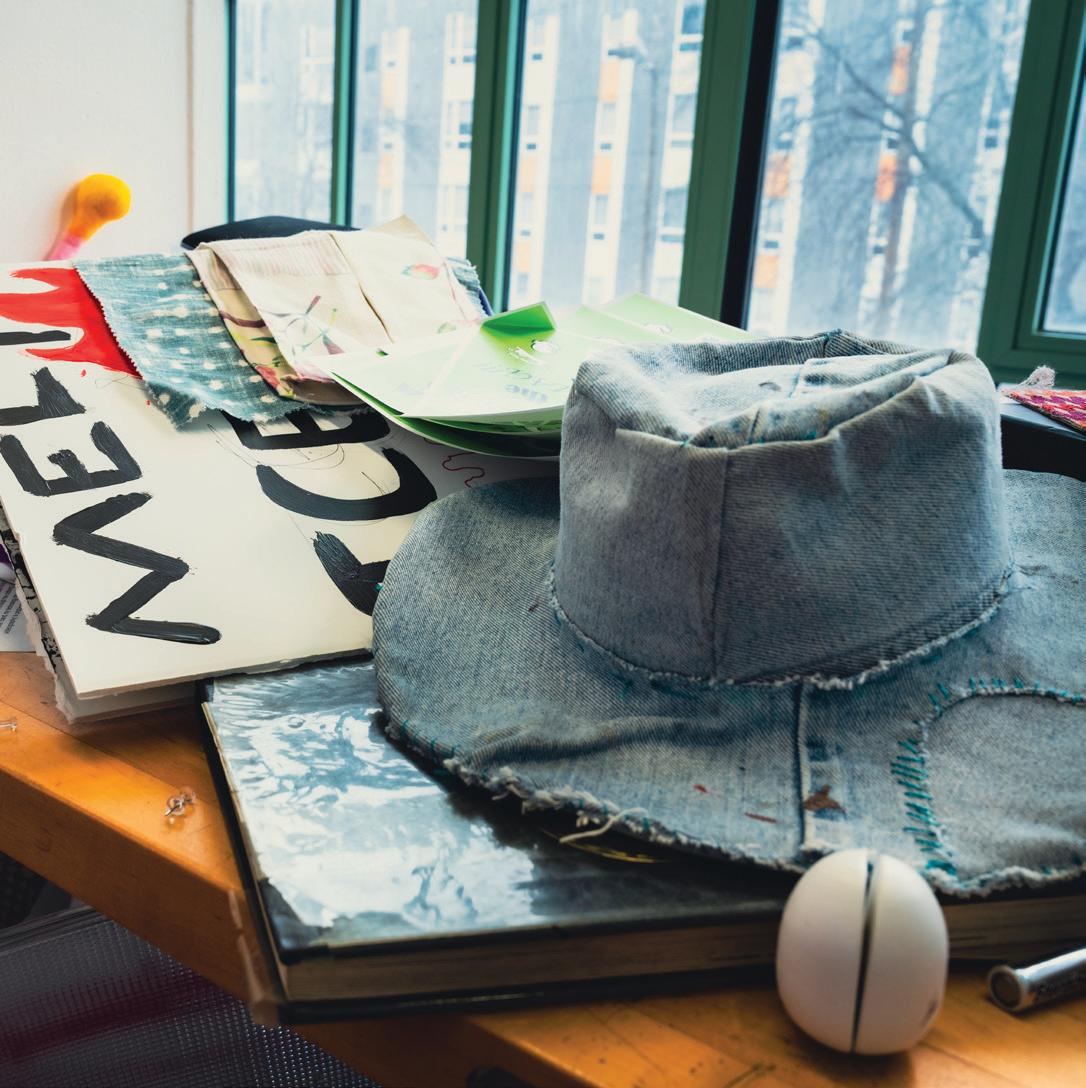
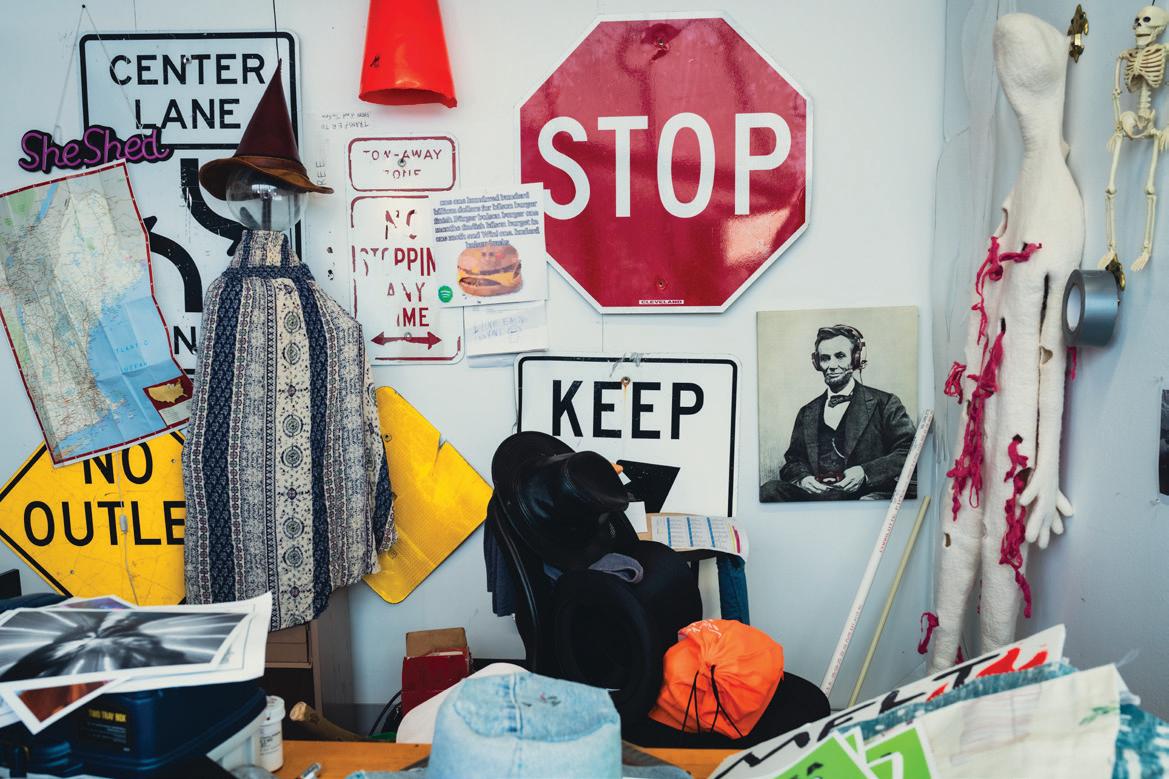
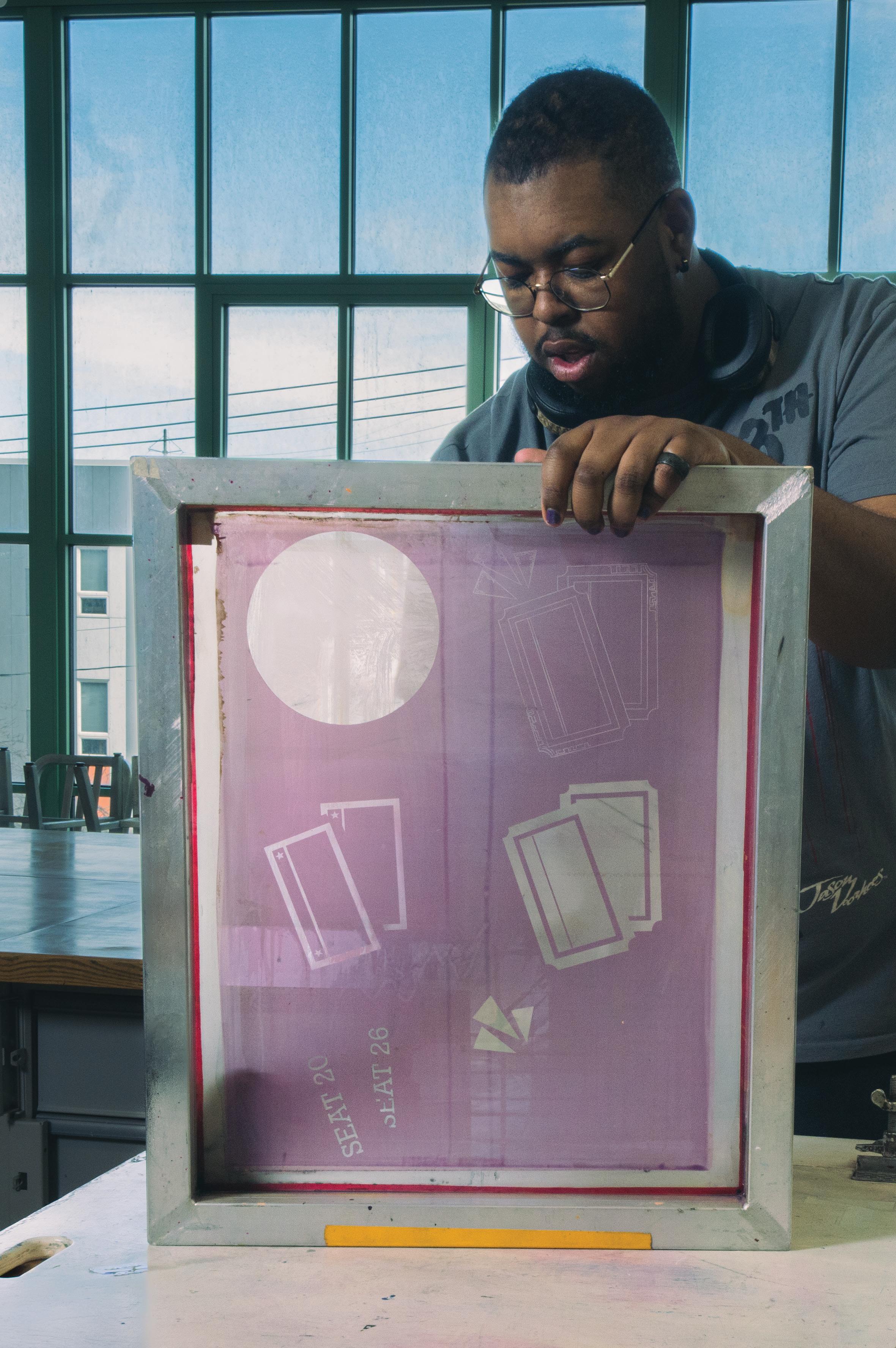
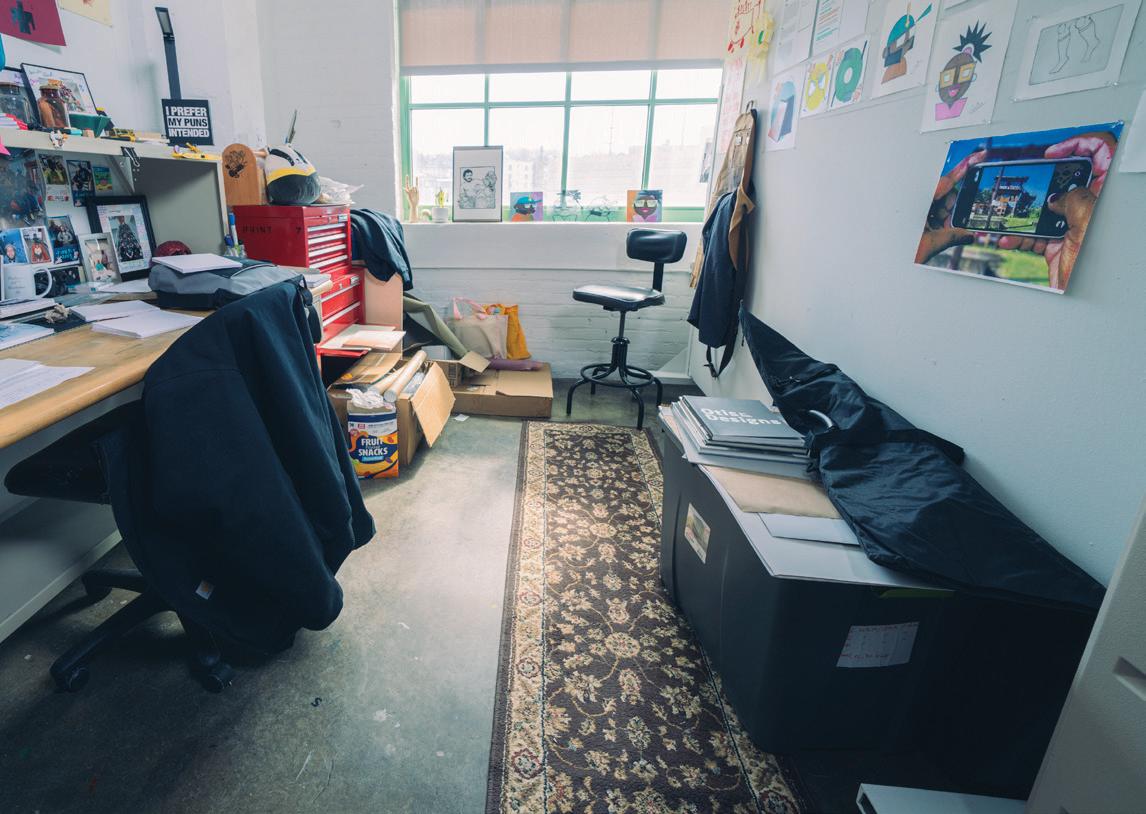
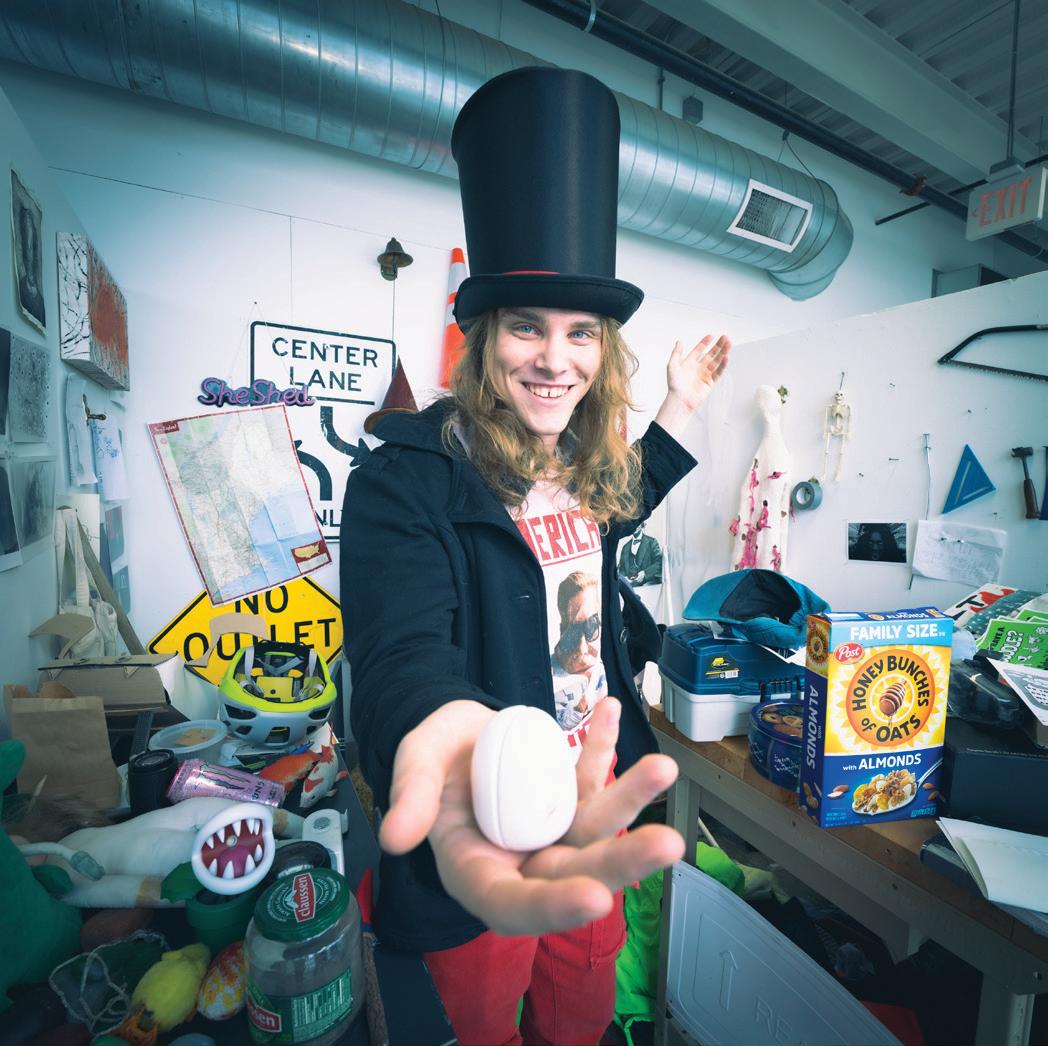
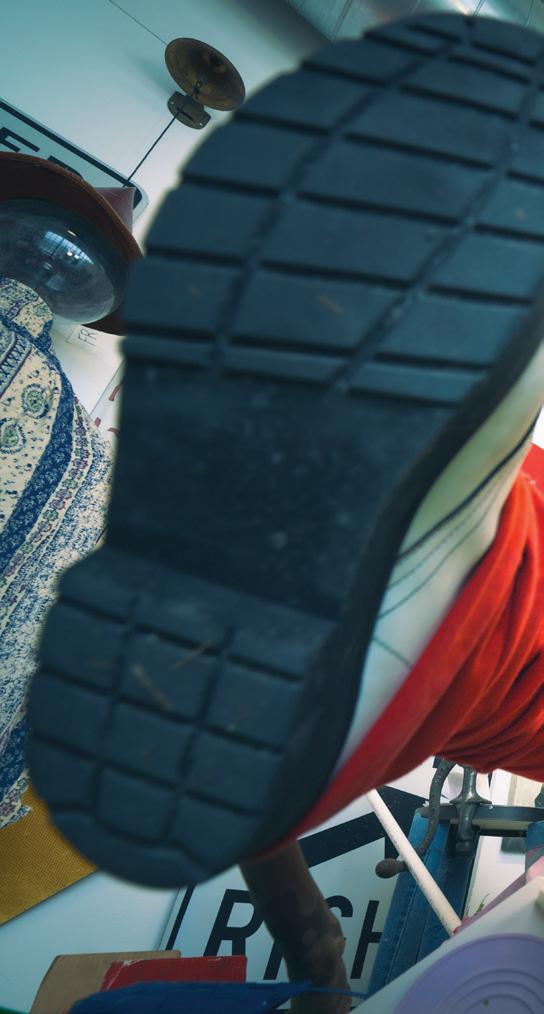
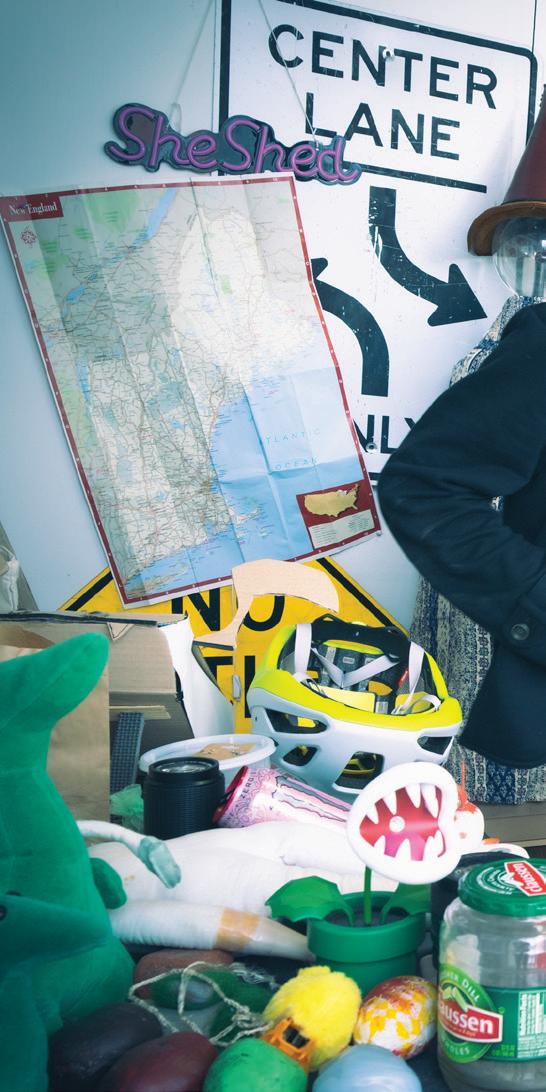
Chris Sitney Printmaking Senior ‘26
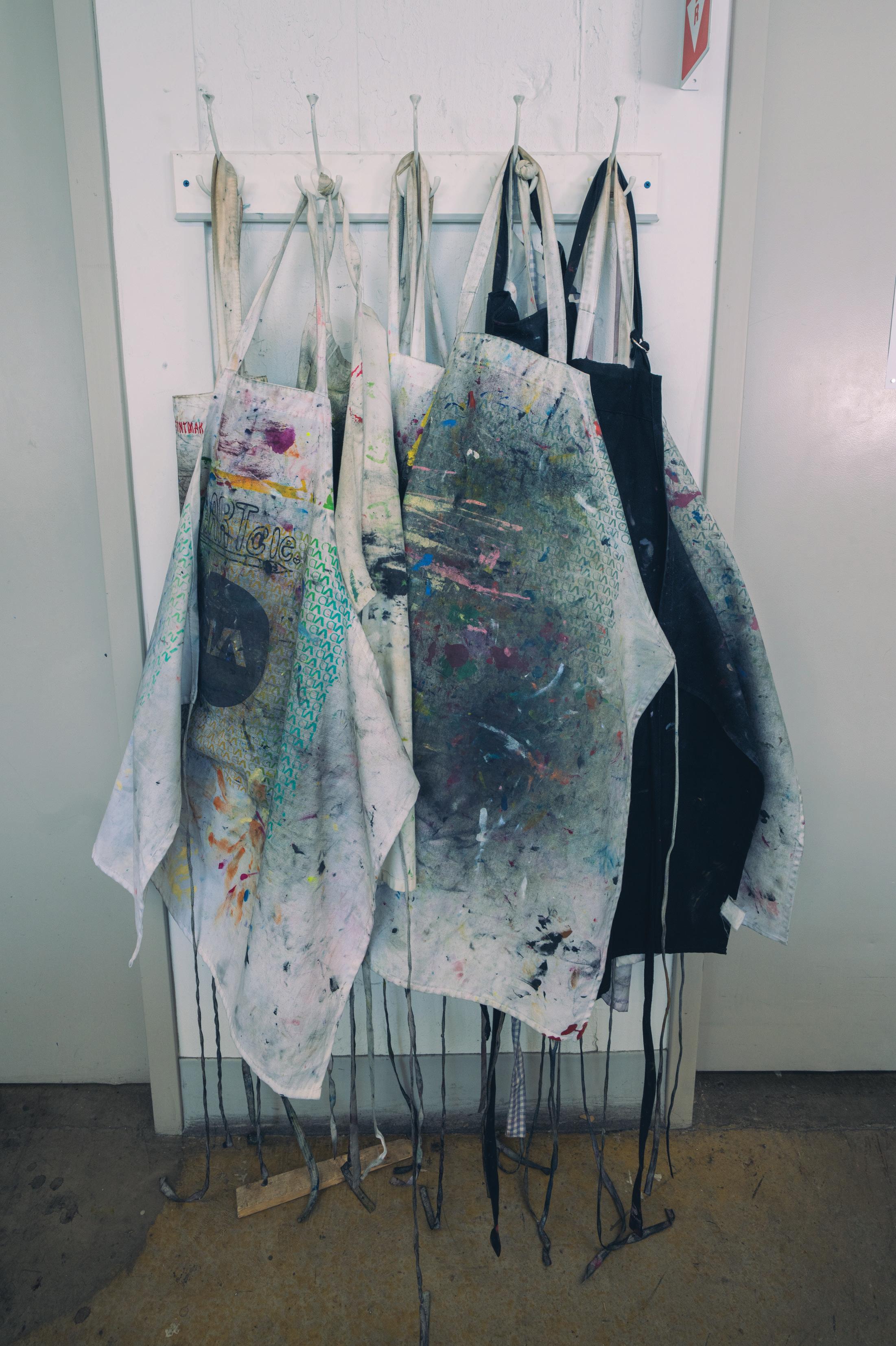
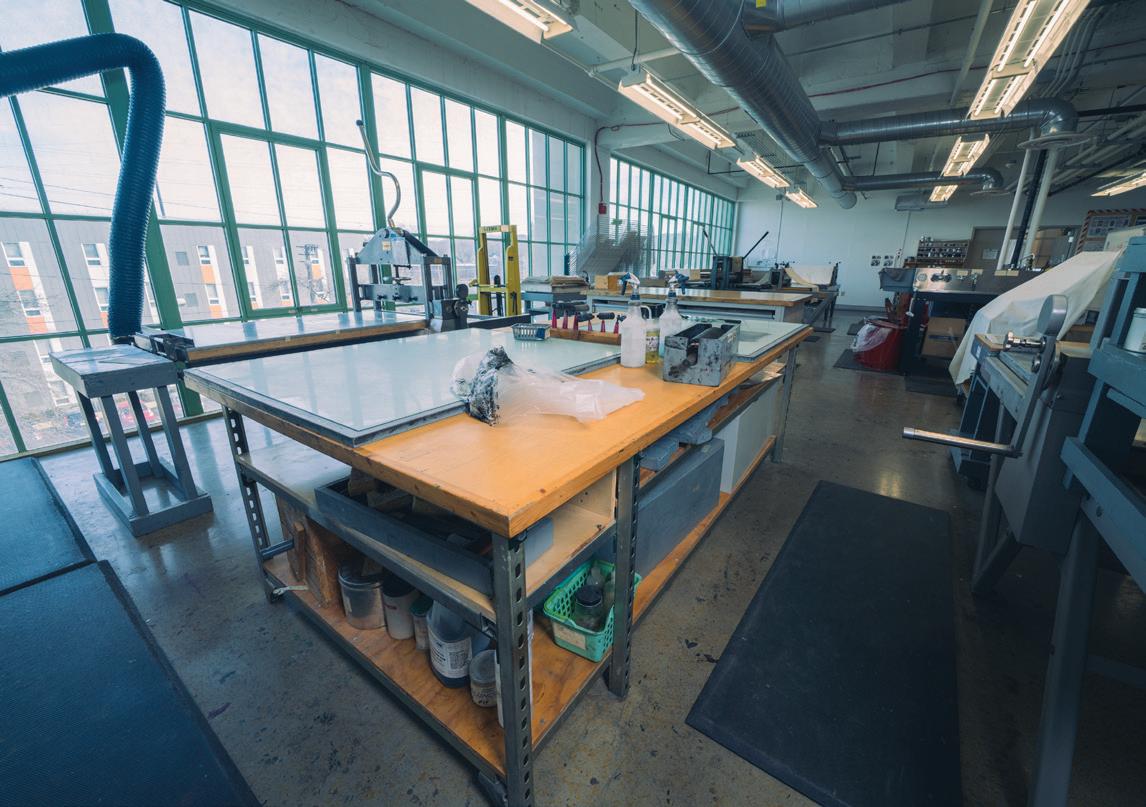
Chris is a senior in Printmaking. He loves the screen printing room because of the privacy that allows him to work in peace. However, he values input and feels it helps people connect deeper with his work. His art is fueled by what he sees in the surrounding community. His studio reflects his personality. Serving as a glance into who he is.
If he could, he would improve the book room to allow more space for a practice that requires a lot of room. He would also redesign the atrium to be both more inviting and accessible.
Name Major Year
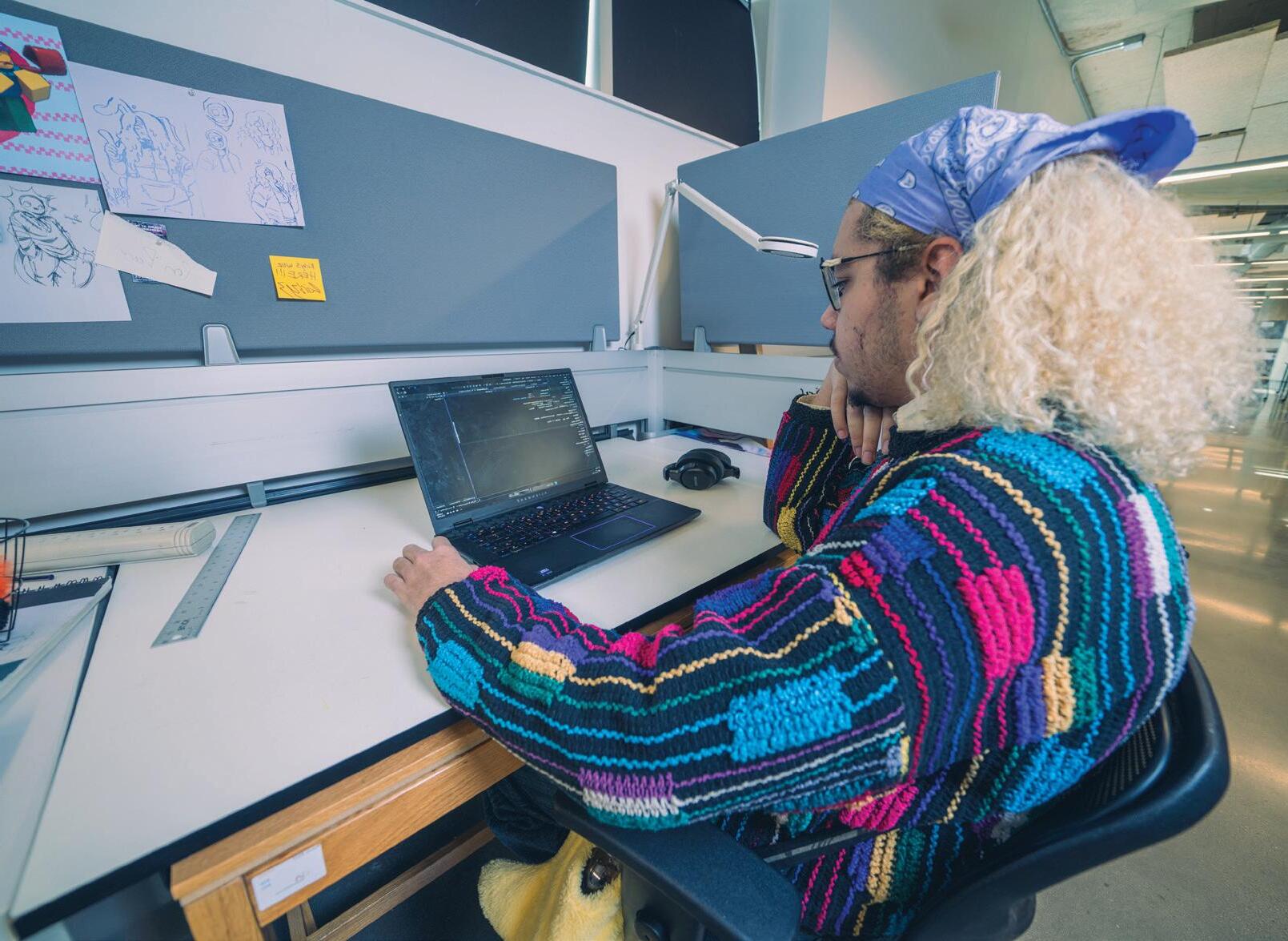
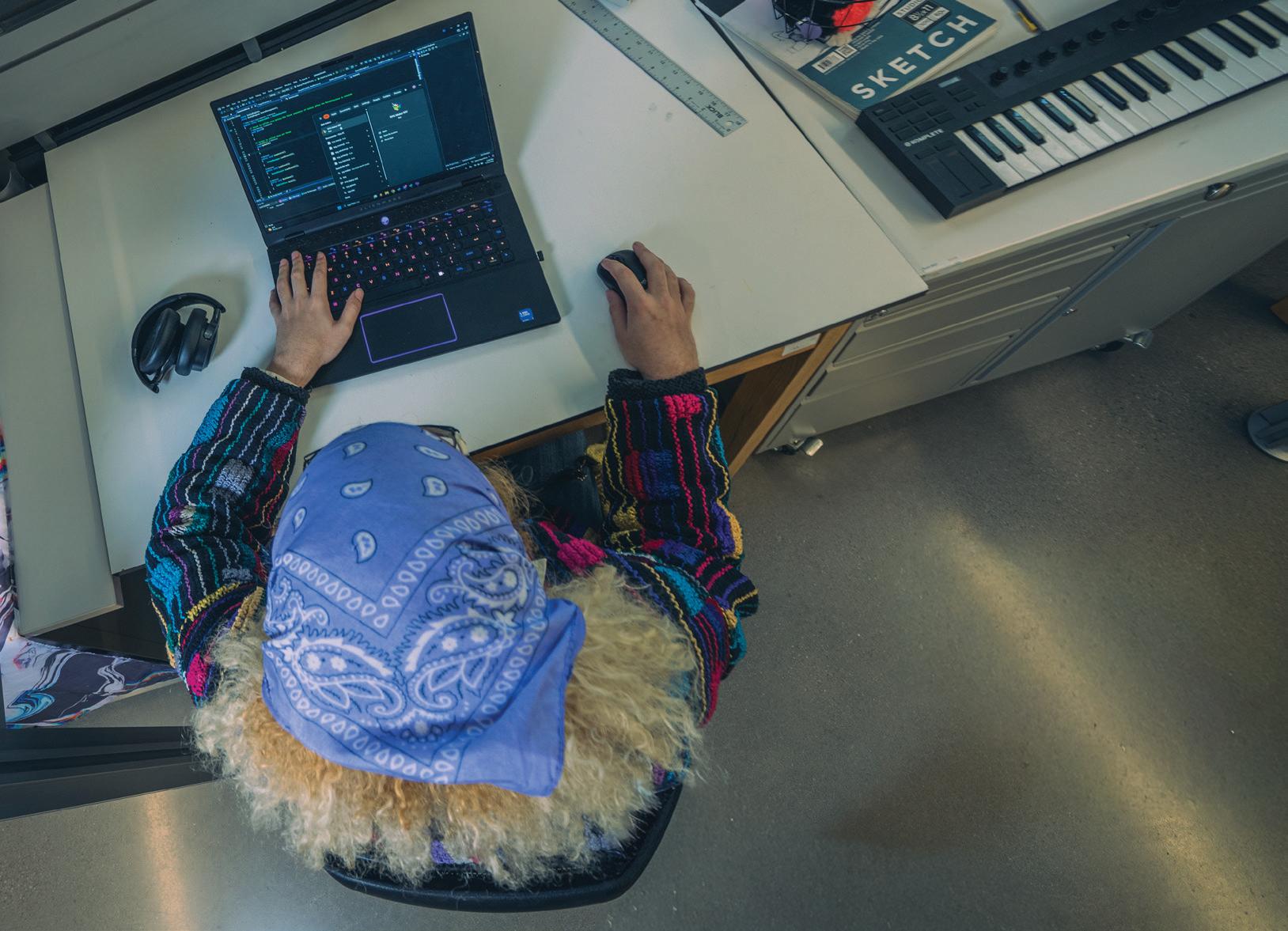
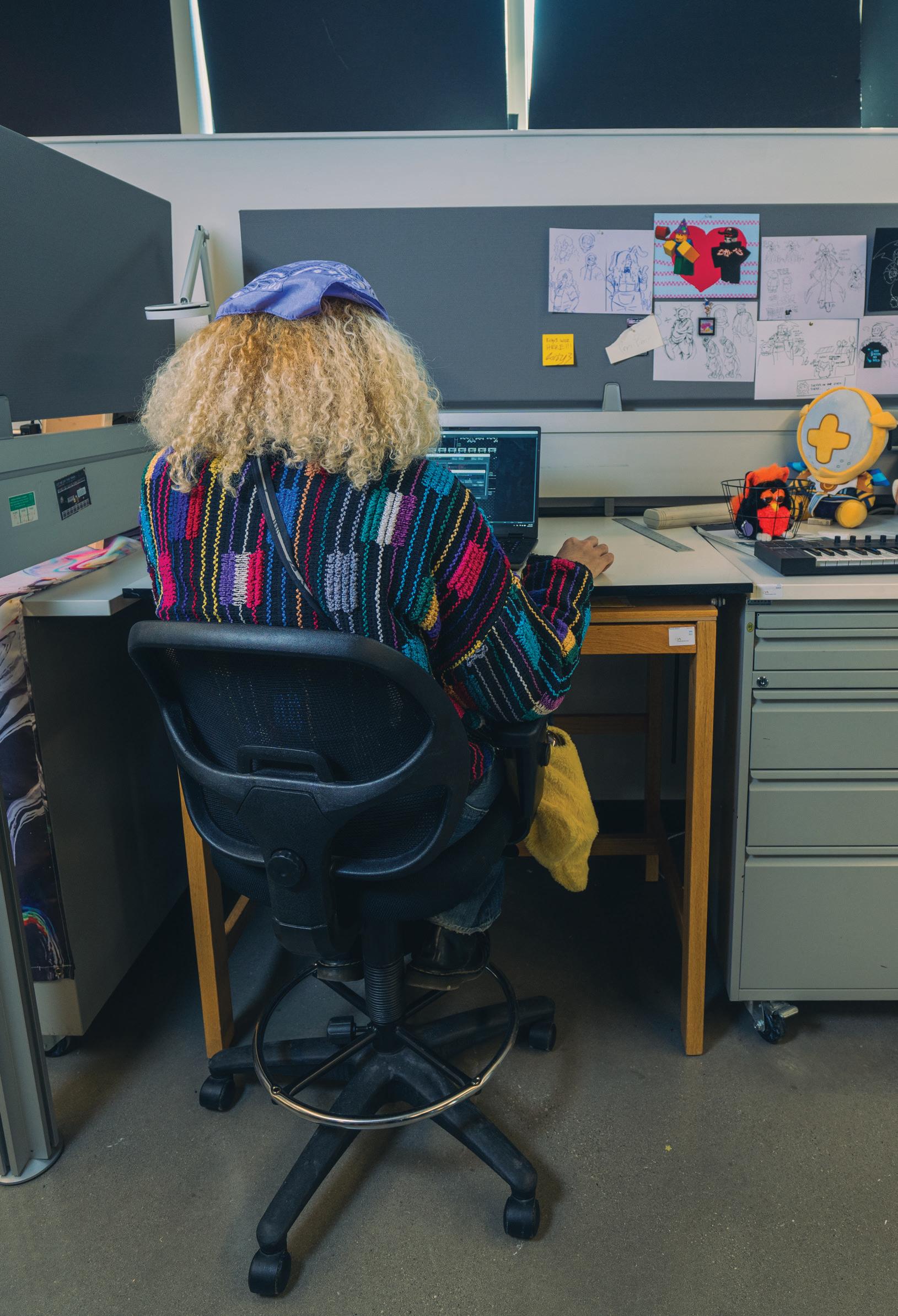
Pan Berry Game Design Sophomore ‘28
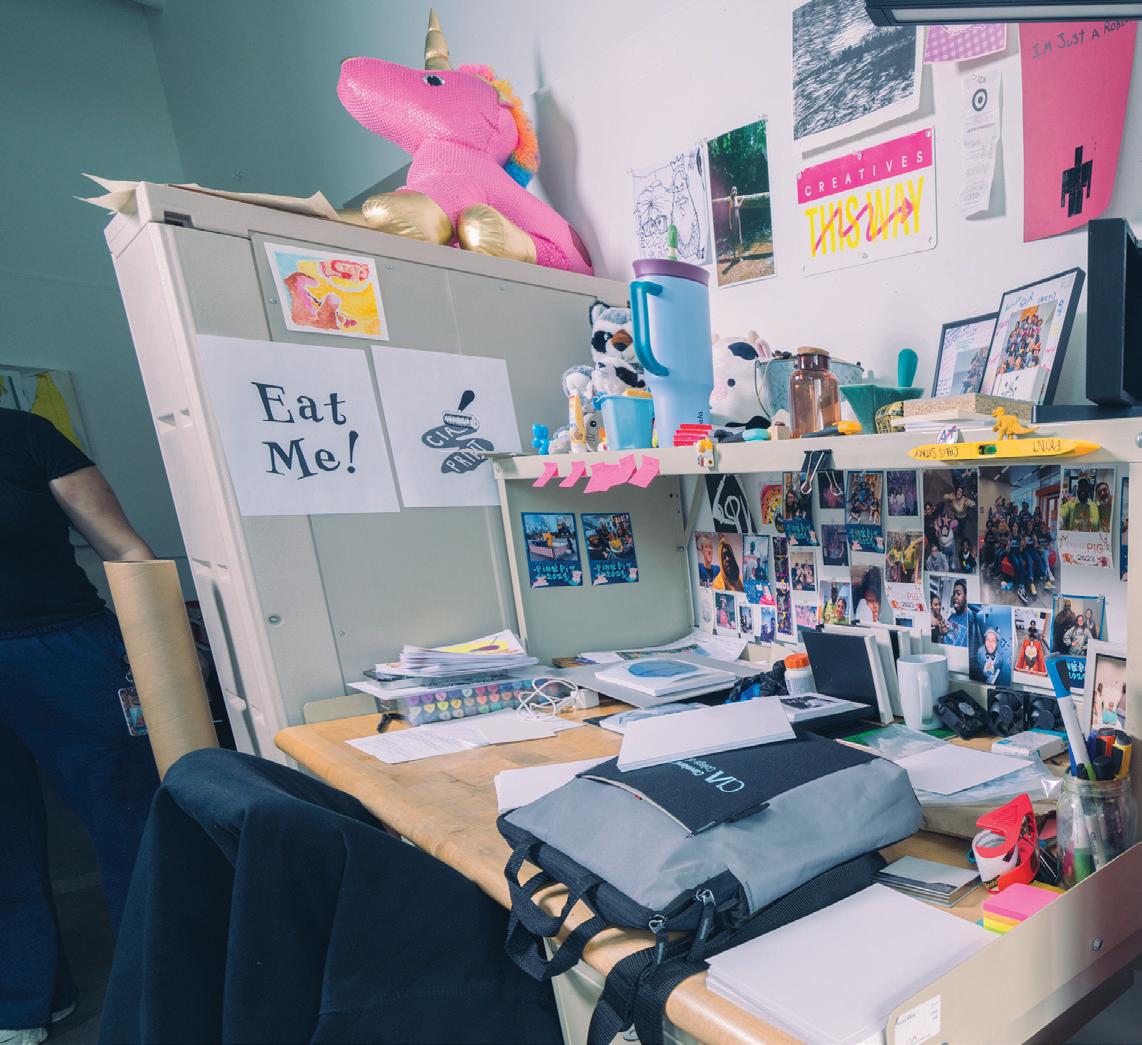
Pan is a second year Game Design major. They mainly work in their provided studio cubicle or their desk at the dorms. While the studio spaces are mostly just desks, this allows for a lot of self-expression with what students add to the space. They’ve had to challenge their time management skills early in the year when having to work at the school.
They believe the Animation studios could be improved. It might not be sustainable, but they hope that people in the major can get spaces of their own aside from the main shared space.
Name
Major Year
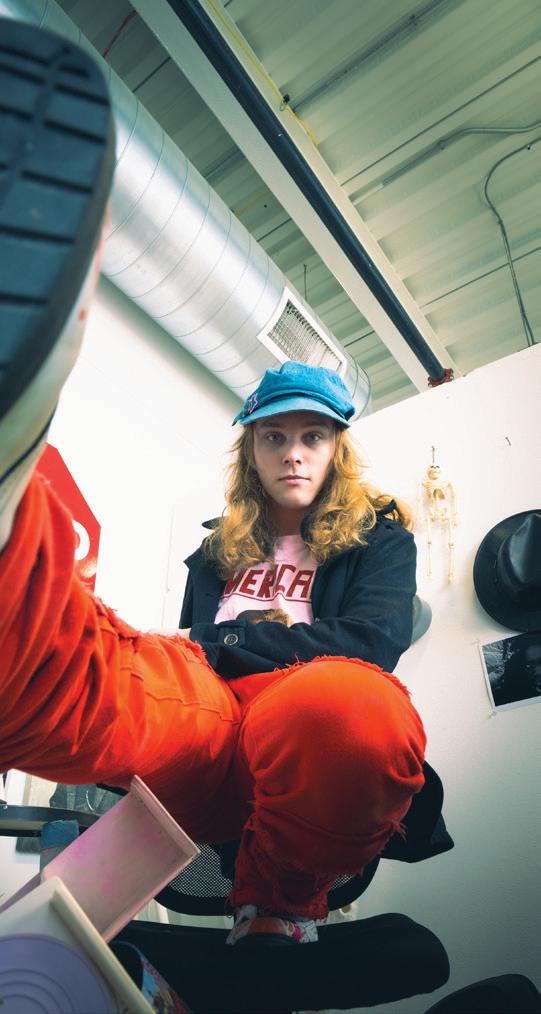
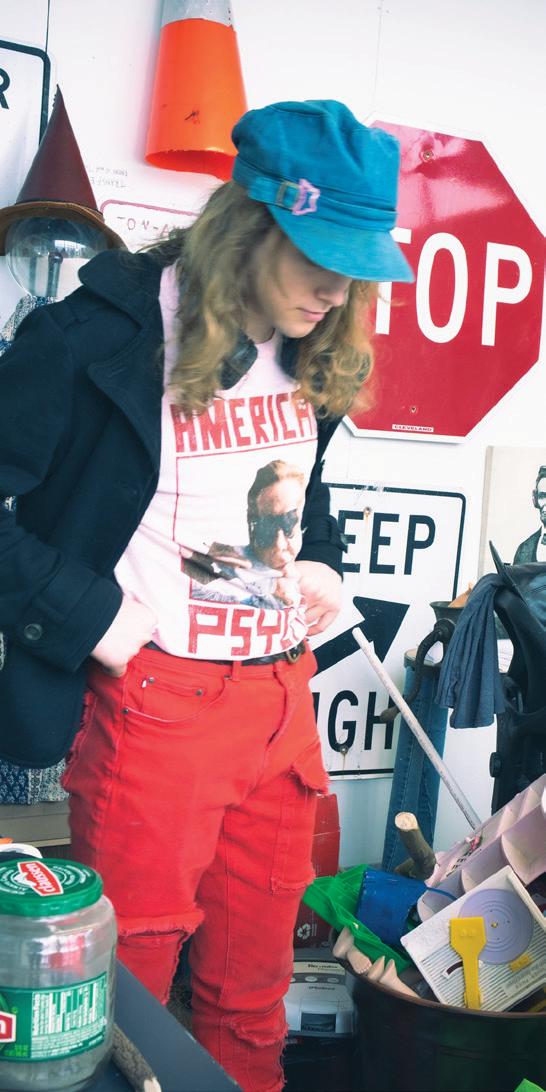
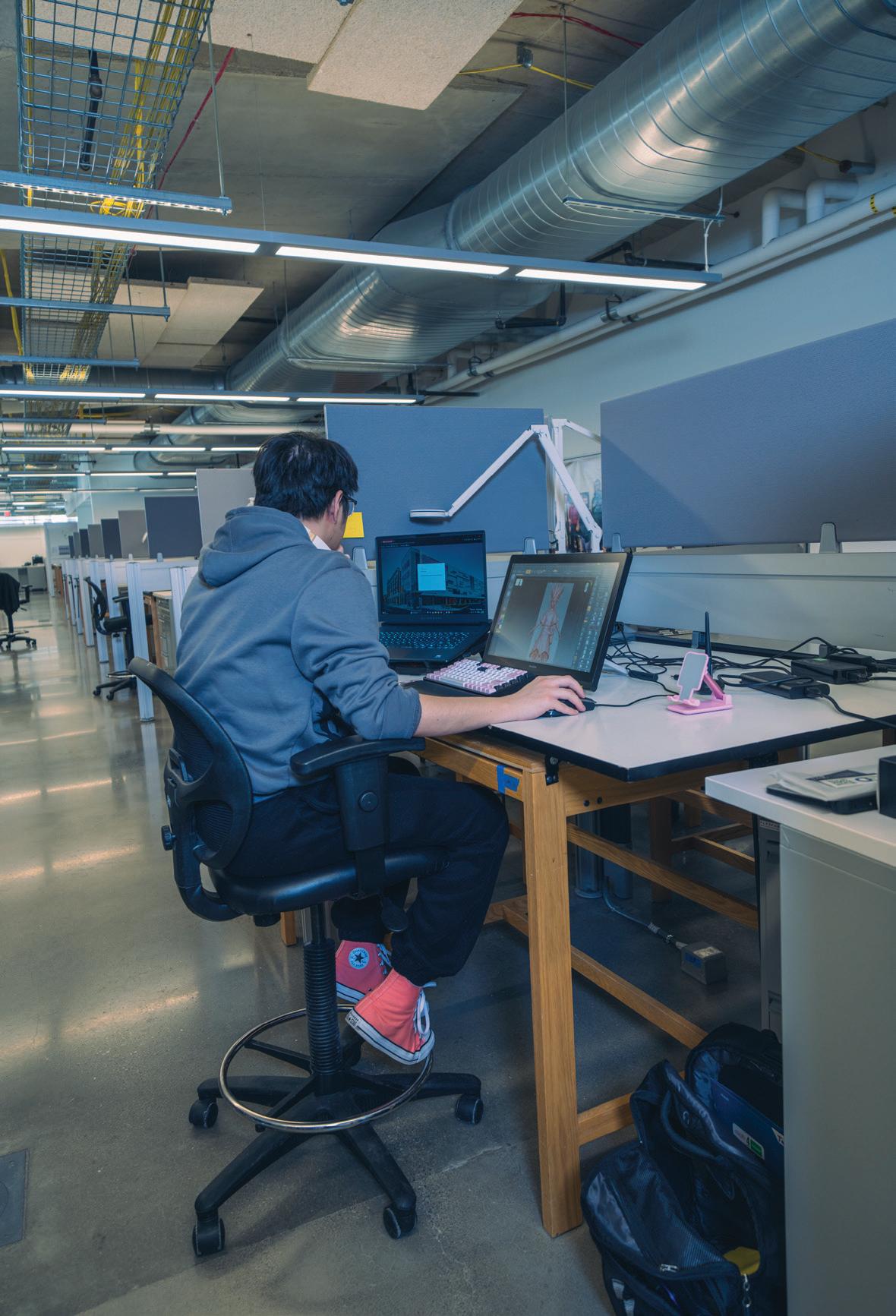
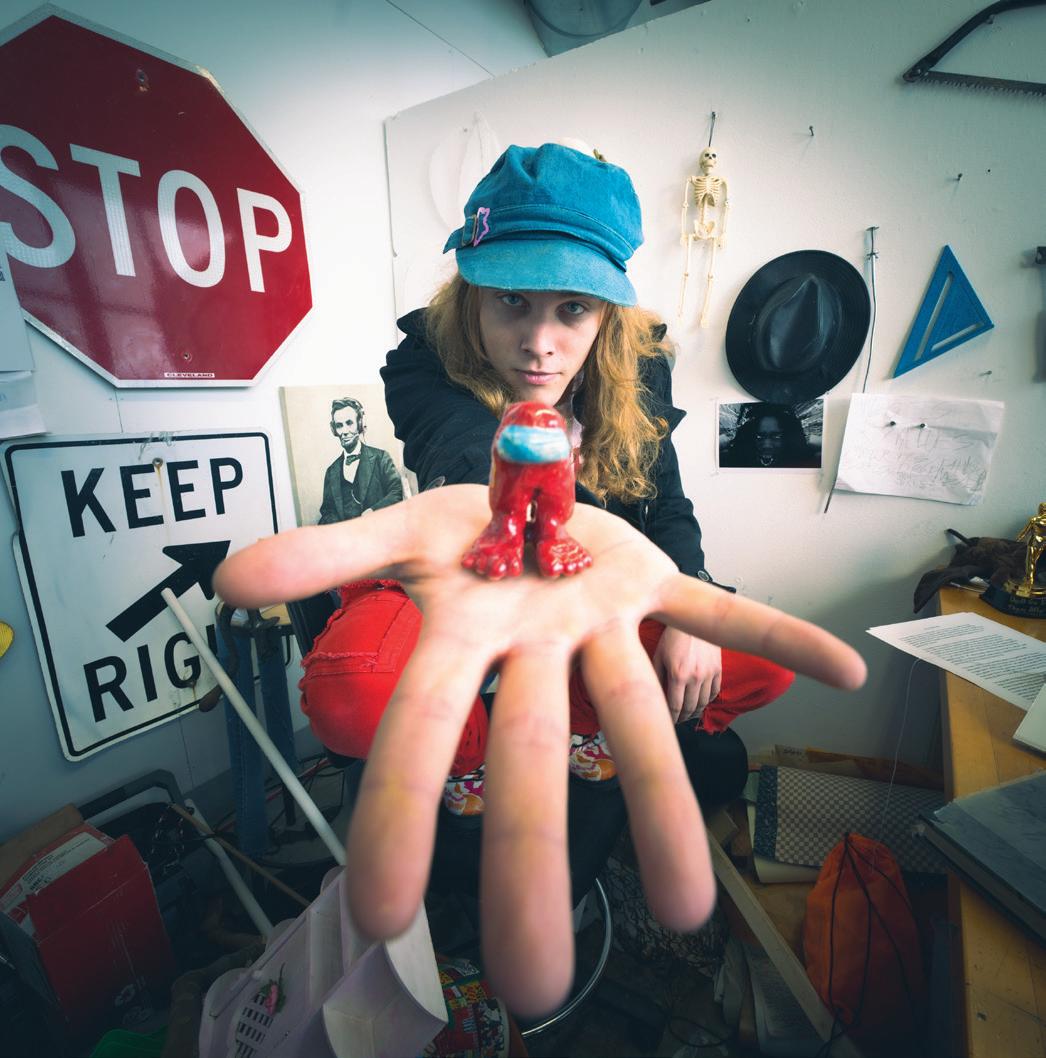
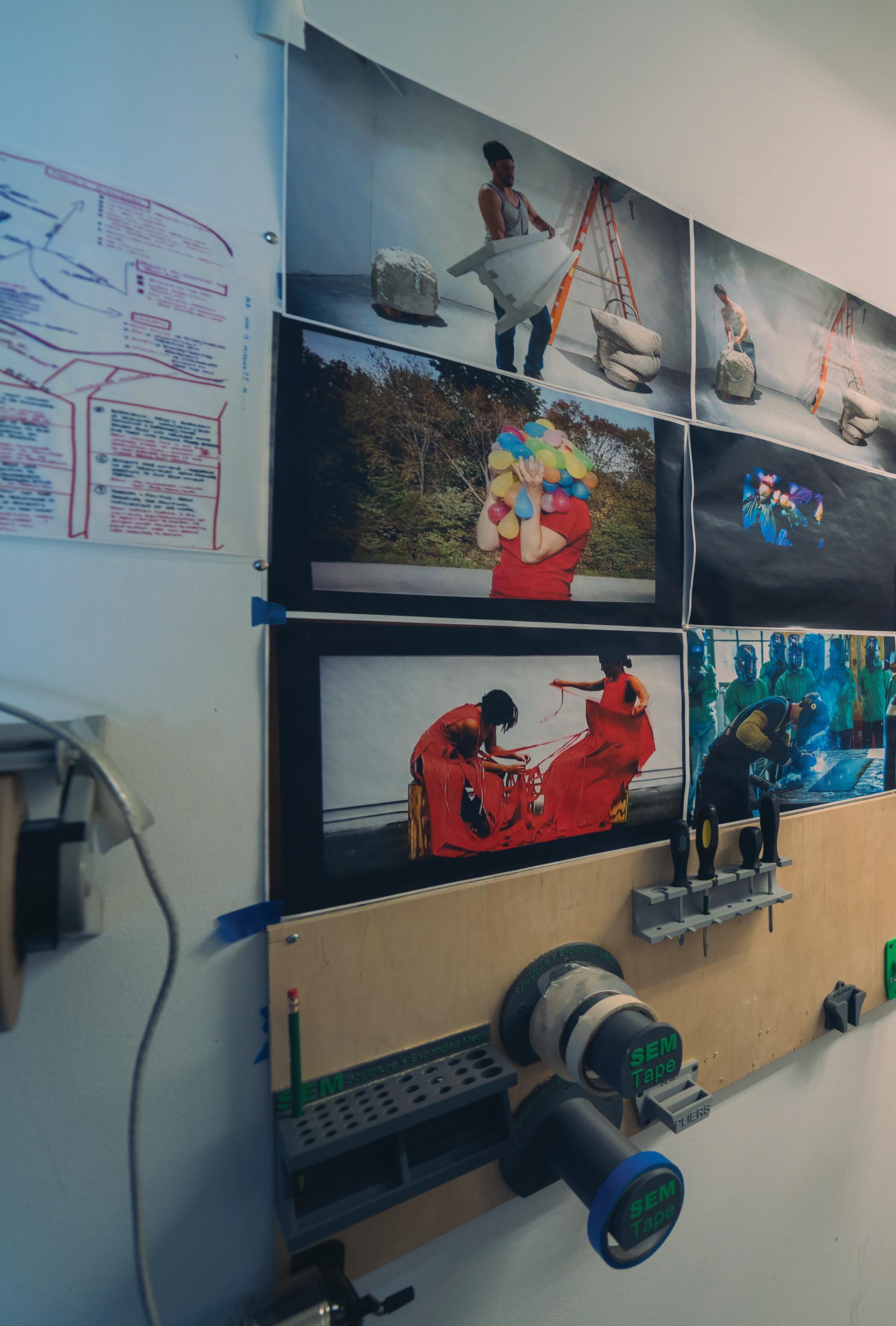
Lachlan Howard Sculpture + Expanded Junior ‘27
The SEM studios are a very collaborative space. Sculpture is a very physical practice, so there’s a plethora of rooms and spaces that assist in the different aspects of the practice. He values the interaction with others in a creative process greatly. Community is very important in his practice and feedback is a big part of his art.
Annelise Abruzzi
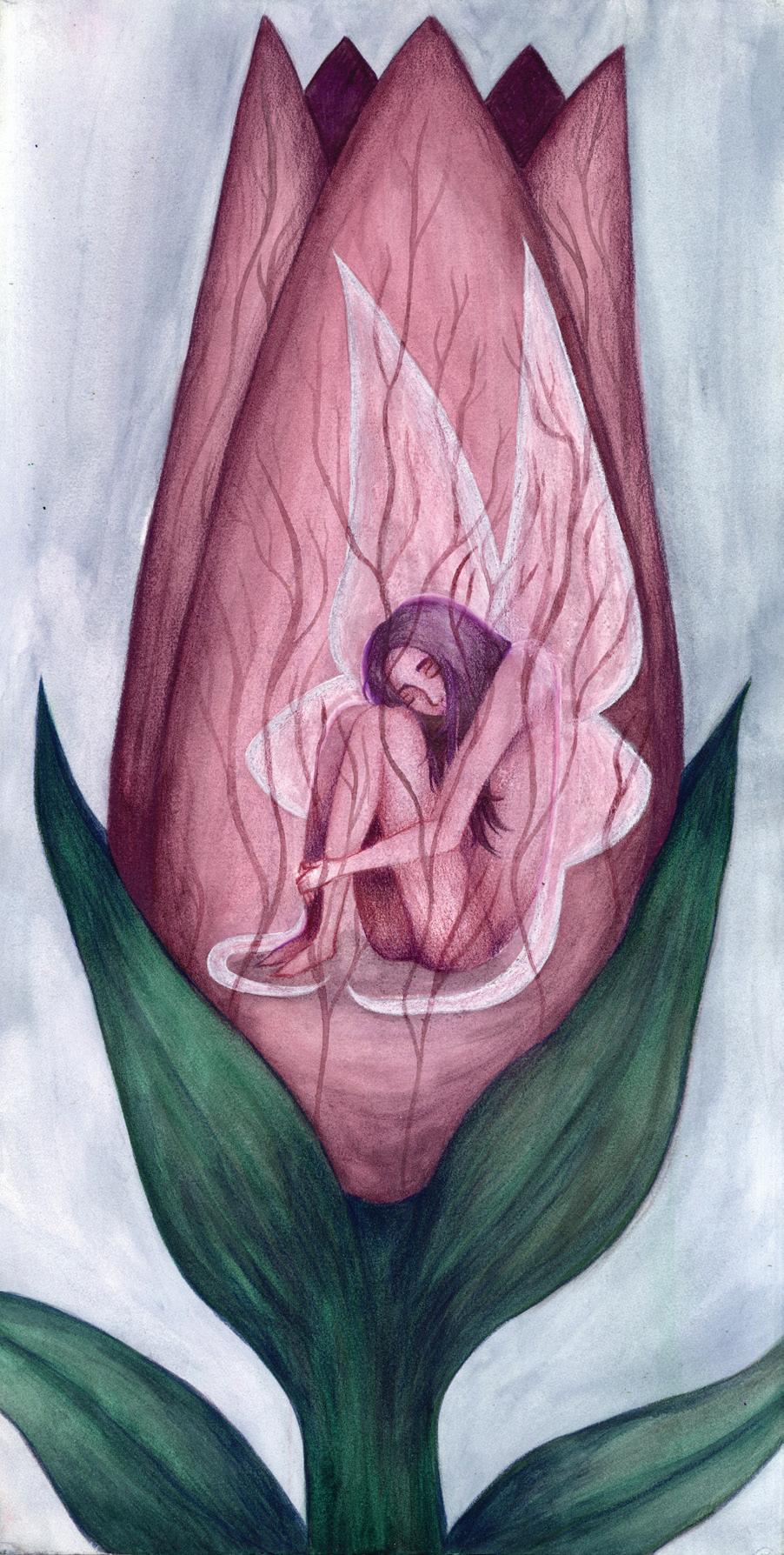
Birth of a Fairy 2025 Watercolor, Colored pencil
“Much of my work has themes of high fantasy, especially fairies. For this piece, I wanted to explore how a fairy might come into existence and combine the feelings of peaceful beauty and uncanniness.”
There is a moment just before dawn when the world holds its breath. When shadows soften into something almost merciful.
When the earth sweats quiet pearls of dew, gathering courage to face another day. It is the hour where gardens make decisions— to bloom, to wait, or to surrender.
This is where I begin this story.
Not at the moment I lost you, but at the moment I finally understood why I couldn’t keep you.
Not at the ending, but at the hour I stopped running from every thing buried beneath my ribs— the secrets I trimmed back until they were nothing but stumps, the softness I hid like contraband, the hope I uprooted before it could root itself in daylight.
This isn’t a story about heartbreak. It is a story about inheritance— the kind that grows in the dark.
And it is a story about you. Always you.
The one who arrived like a season I didn’t know how to survive. ˜ 2 ˜
You must understand where I grew from.
I was raised in a house of clipped voices and careful footsteps, where emotions were pruned like unruly branches.
Where tenderness existed only in the practical language of folded laundry and quiet nods meant to replace “I love you.”
No one taught my family how to garden anything other than silence.
By seven, I learned to make myself small enough not to be noticed. By eleven, I learned that tears were weeds.
By sixteen, I learned that vulnerability was an unlocked door in a neighborhood you didn’t trust.
By adulthood, I carried an entire garden inside me— but everything was root-bound, circling itself in tight, breathless spirals.
Fear wasn’t something I learned. It was the original soil I grew from.
I came into adulthood believing that blooming was dangerous, that love made you visible, and visibility made you vulnerable to being cut down.
Before you ever touched my life, I had already trained myself not to grow. 2
And then you arrived.
Not like a storm— I was built for storms. I wore armor made for them.
You arrived like a shift in season, subtle, steady, sun-warm. You arrived like the first hints of spring— softened air, longer light, small green promises I didn’t trust yet.
You carried warmth as though it weighed nothing, and you shared it without hesitation. You spoke softly, held gently, loved openly.
And something in me— something dormant for years— stirred.
A shoot. A sprout. A timid, trembling possibility.
You didn’t call it love. I didn’t dare call it anything at all.
Hailey Fuller
But I felt it, fragile and bright, like a petal trembling beneath unexpected sunlight.
And it terrified me.
No one tells you that blooming aches when you’ve spent your life learning to stay in the soil.
˜ 2 ˜
But there was a moment when you loved me with a fierceness I didn’t know how to receive.
It was during the fight with your mother— the one where her voice cut into my skin like old triggers unearthed too quickly. Her tone slammed me back into memories I never asked to relive. My breath shortened. My chest locked. I shrank into myself so fast I could feel the edges of my body blurring.
She didn’t notice. But you did.
You stepped forward, shoulders squared, voice trembling but unyielding, and said,
“That’s enough. She’s done. You don’t get to talk to her like that.”
It was the first time in my life someone had protected me without using fear to do it.
That moment— the air thick, your hand trembling when you grabbed mine— was the closest I had ever felt to being held in sunlight.
But I didn’t let myself bloom there either.
Even love felt like too much light 2
Here is the truth I write for you and for the version of me you tried to love:
I loved you with parts of me that were still seed. I loved you in the language of someone who had never learned words for wanting. I lost you not because I didn’t care, but because I had not yet learned how to stay.
But this is not a story of regret.
It is a story of metamorphosis.
Because the girl you loved—the one who hid behind her walls, who pruned herself before anyone else could— she has grown into someone else now.
Someone who can hold softness without flinching.
Someone who lets sunlight in without apology. Someone who knows that roots, once tended, can hold firm.
Someone who has learned to grow on purpose, not by accident.
Someone who understands that healing is not a miracle— it is devotion.
And you— you deserve to know what you planted.
I am blooming now.
In ways you once hoped I could. In ways I never believed I would. Not because you’re here. Not because you might return. But because I finally understand:
I am a garden. Not the petals that fall. Not the fear that cuts them. Not the shadows that taught me to hide.
I am the gardener of my own becoming.
And though you are not here to witness it—
the growth, the healing, the sunlight inside me finally rising—
I will honor what you nurtured.
I will grow loudly. I will grow honestly. I will grow entirely.
Not for you. Not for the past. But because I finally can. And so—
with hands no longer trembling, with roots finally steady, with a heart unafraid of the light touching it—
“I choose to bloom."
The Things That Wilt When We’re Afraid Of Blooming 2025
Creative writing
“For this piece, I really wanted to vent my emotions out and have a final conclusion to a revolving battle I was going through. However, the end product turned out to be a powerful message I didn’t know I needed, and I hope people resonate with the piece.”
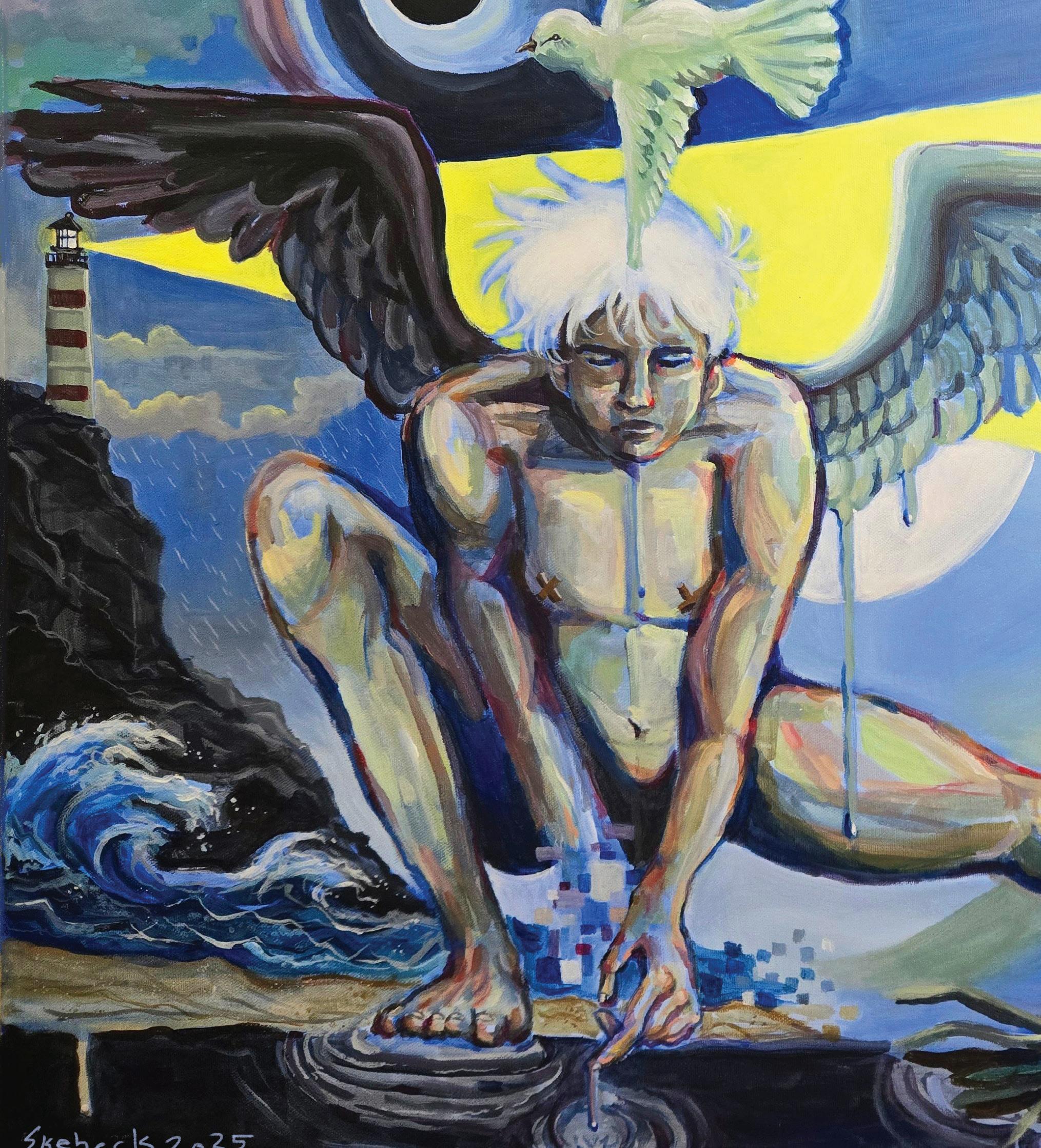
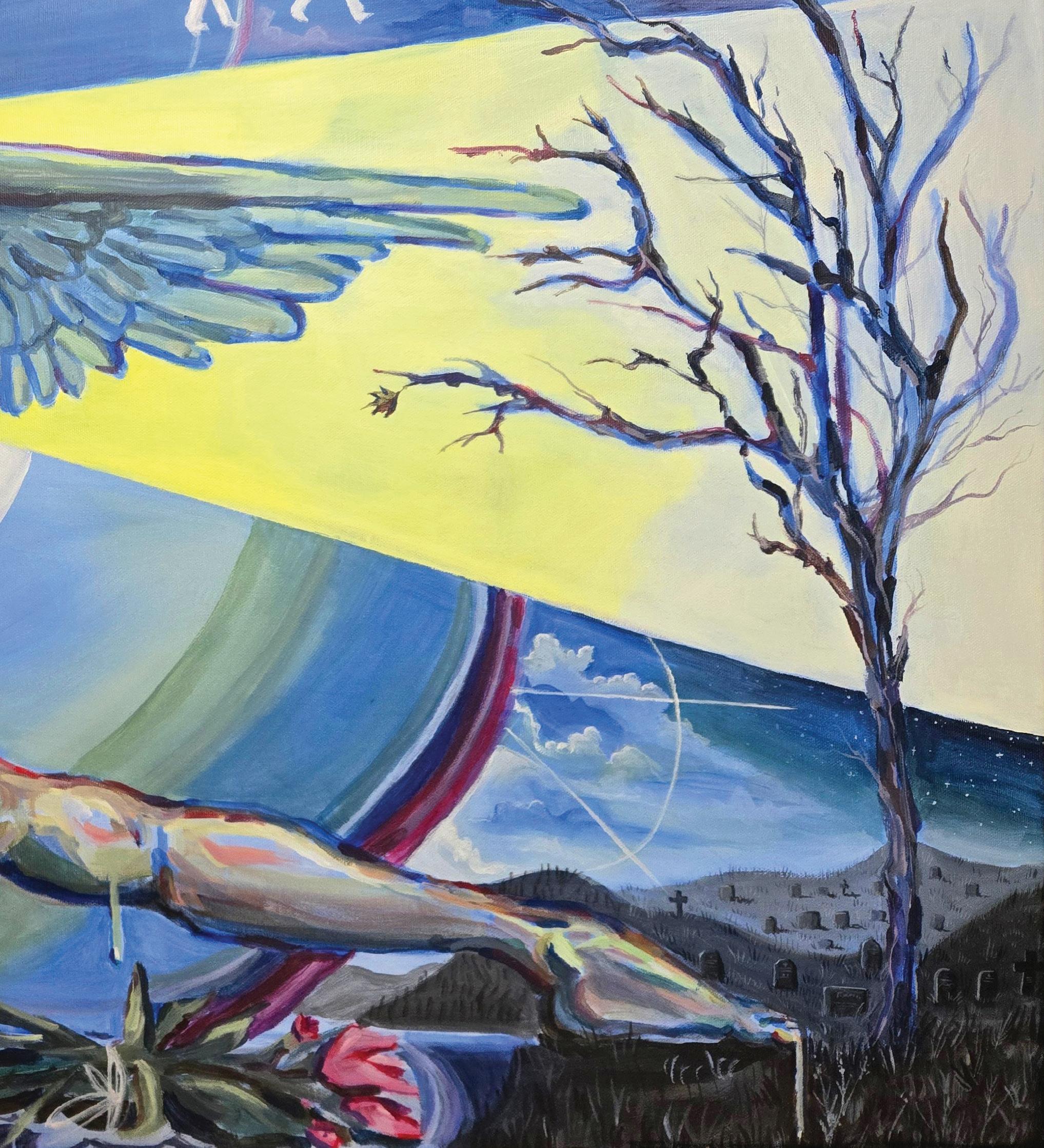
“The piece titled Idempotent is about repeating a series of actions in a loop, that no matter how you change, the product is always the same.”
The fervor to Create has caught up with me again. Some pulling, nagging feeling that leaves me unfulfilled unless I am to take up pencil or pen. I don’t listen to music that often anymore yet suddenly I find myself in bed, sheets askew eyes fixed on the ceiling or closed, cheap earbuds with shoddy audio quality bouncing 80s alternative synth pop between my eardrums with the volume just slightly too high, the complex rhythm percussed on my collarbones by my feverishly excitable fingertips. The feeling is sickening and I get left dizzy and overcaffeinated whilst my already illegible scrawl stretches further and further across the lines of the page in my haste, threaded like the messy running stitch I use on all my fixer upper clothes because I never learned proper sewing methods. I thought recently of doing some sort of embroidered verse on the back of a shirt for my eventual BFA and then realized how painfully derivative it would be if a transgender drawing student at this school made their thesis revolve around sculpture and fiber materials.
I can’t imagine this fever doing me any favors. I have always been one of those freaks who knows they’ll die if they can’t put pen to paper and it’s set me down this tragic doomed path of making shit wages and working in a gig economy. Even my dad had the common sense to drop out of art school and pursue the much more lucrative profession of being a high school English teacher. But not enough common sense to not ruin a marriage and ricochet my trajectory away from the moon. Maybe I can still land among the stars. I used to think I didn’t have daddy issues but then April 21st happened. A transgender artist with patrilineal trauma, how derivative.
And perhaps all art is derivative to some extent, I think to myself, recalling all the times I copied Schiele studies or watched the same stinking sketchbook tours ad nauseum. But can anyone truly look at my art and say it’s not definitively mine?
Does anyone even like my art? People praise my work and clearly I go into these intense passions but I can’t sell to save my life. And yet I’m stubborn enough to pay for art school and tell myself I’ll make it one day. I don’t think I’ll ever starve but maybe I’ll still join the ranks of van Gogh and William Blake and I’ll be yet another madman, except my religious machinations will instead revolve around queer sex. Why is madness only considered genius once you’re dead and gone?
I’m so totally doomed and yet I can’t help but keep making things. I’m too fidgety for a desk job and stocking shelves full time for all eternity will make me pop a disc instead of just worsening my chronic bad posture and inevitable tendonitis. I cannot give an art career up. There’s a foolish passion in me and it’ll continue to eat away at me until I’m dead, and they will find me still hunched over a messy desk complete with a stack of erotic studies, which will be compiled and published posthumously as a record of artistic genius like they did with Klimt and Schiele and all my other favorite artists. How derivative.
EVERSON BROOKS
Madness of the Artist (Derivation) 2025
Creative writing
“I find it hard to write creatively in my spare time, and so my writing tends to come out in feverish bursts where it feels like I can’t do anything but write. I wrote this piece during ones of these times, and used this opportunity to share my experiences with writing.”
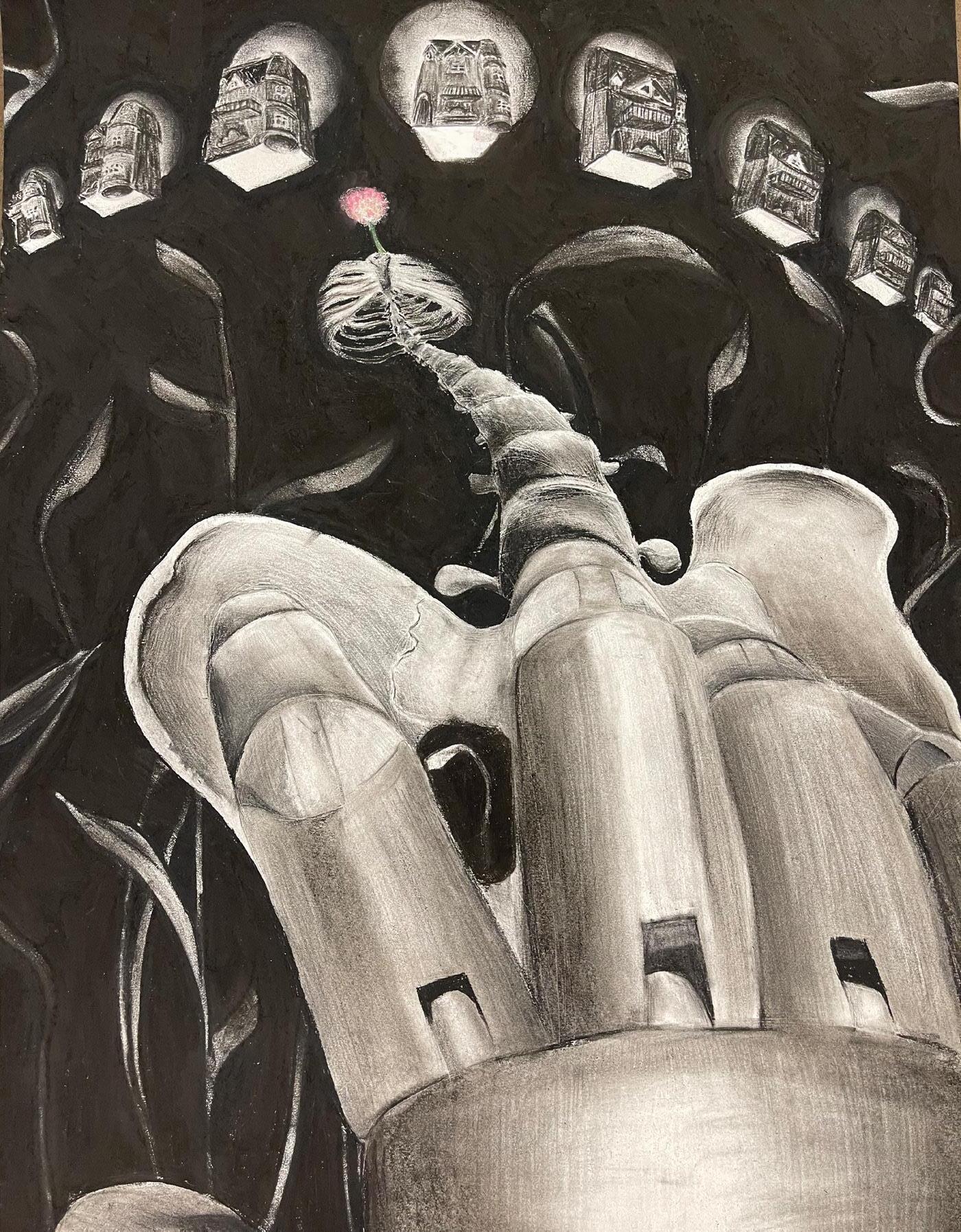
“With this piece I tried to represent a composition that really represents my process of creativity.”
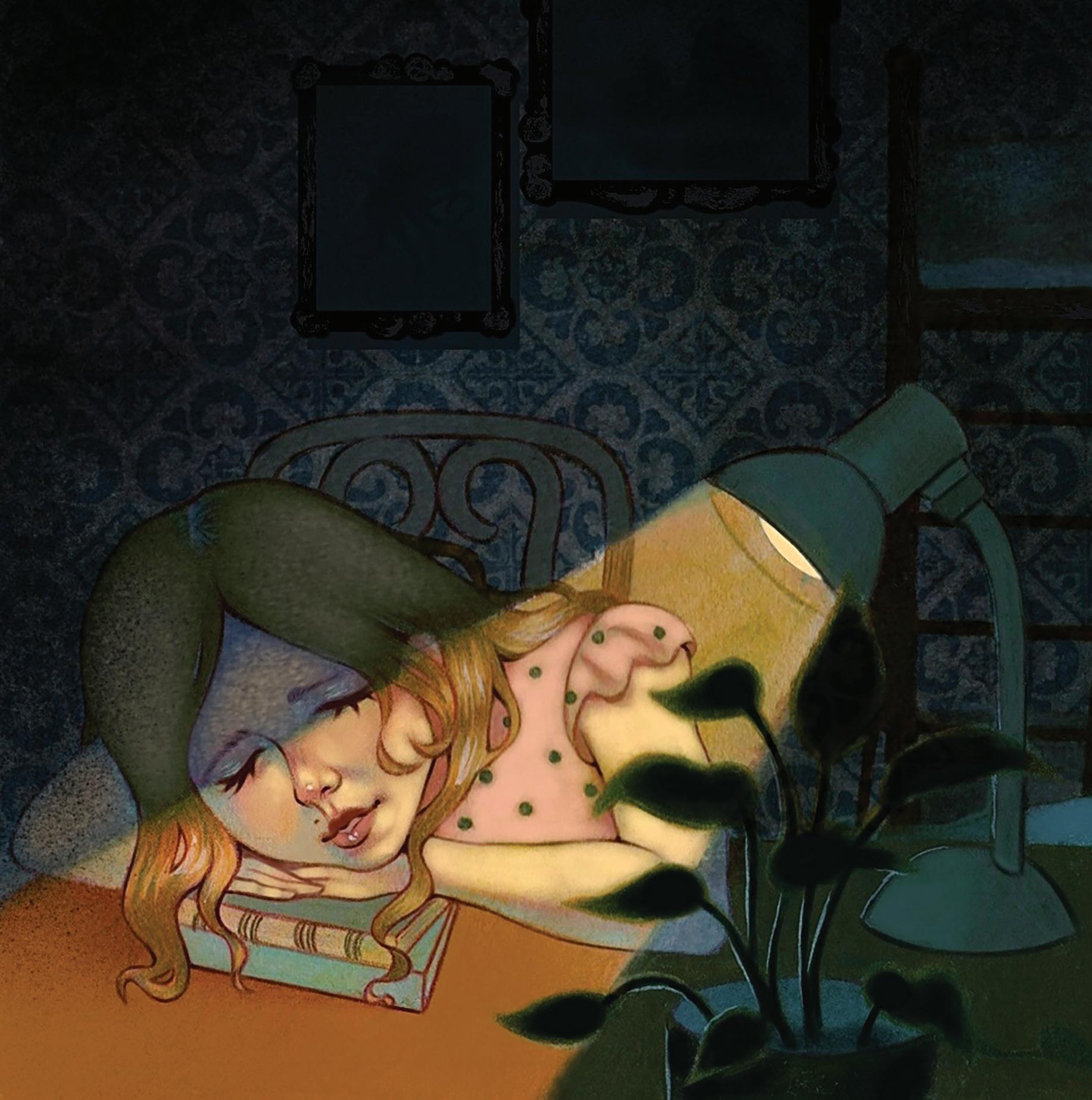
“Through my illustrative work, I capture the fantastical and dreamlike qualities of childhood memories. Calm, gentle imagery and colors are essential in my storytelling.”
Harley Powell
Lucy
My somewhat brief several year stint with alcoholism, the subsequent fallout, and my present day rehabilitation, has helped see me through a second puberty. Sometimes I can’t even fathom how different I am now. How happy I am to be this different. The hope that remains that I will continue to change and grow. Ugh, now it’s gotten boring and sappy.
How do I keep people’s attention? Through tragedy? Comedy? I cycle through genres til I get a reaction that makes me feel something. A sense of security or just something. Ephemeral and fleeting and just as useful as these crowded words.
My somewhat brief several year stint with alcoholism really started when I was 17. When I overdosed on fentanyl without knowing I was doing fentanyl.
The sky became closer that day. My mother became subject to my idolatry. The shadows in these barren Ohio trees peeked their heads out curiously. I suddenly didn’t feel so alone. I gouged my eyes out and kept them on a keychain on a belt loop for a few years after that.
My somewhat brief several year stint with alcoholism led me to the edge of a softly sloping hill on a fall day overlooking an apple orchard. It led me to tiny fish and crawdads and great blue herons in wide shallow creeks.
It led me to a great algae choked lake under an almost full September moon.
The only constant is change. Our only true concern is love.
My eyes sit in a glass jar on the shelf, I grew new ones. Their surfaces reflecting clearly the stars above. The far away campfires of long dead civilizations. Harboring depths that go on into carbon riddled infinity.
Lucy 2025
writing
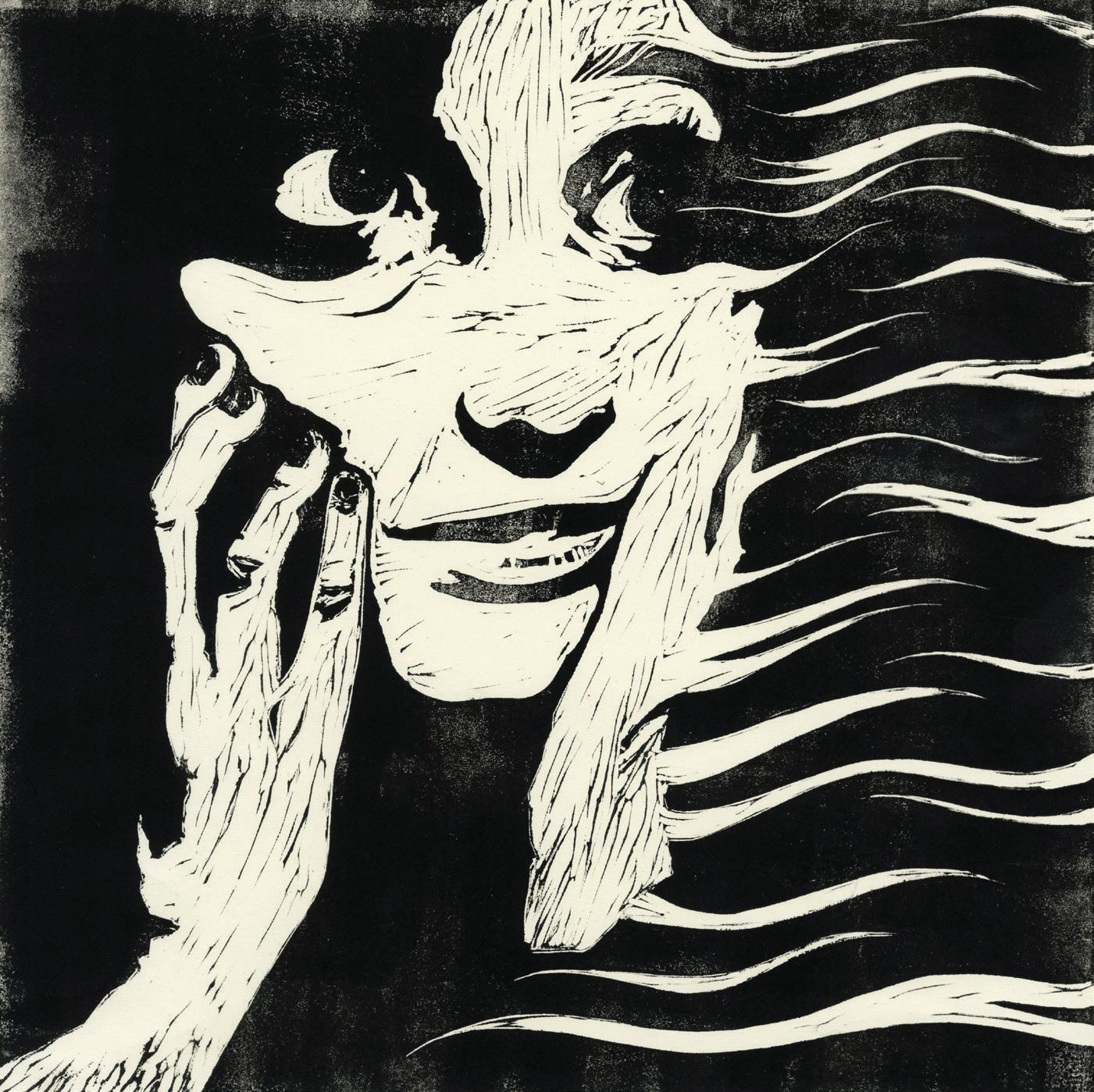
Squished and Pulled to
“I often create self portraiture as a form of introspection. During the creative process, I am forced to examine my physical self as well as my thoughts and discomforts through distortion.”
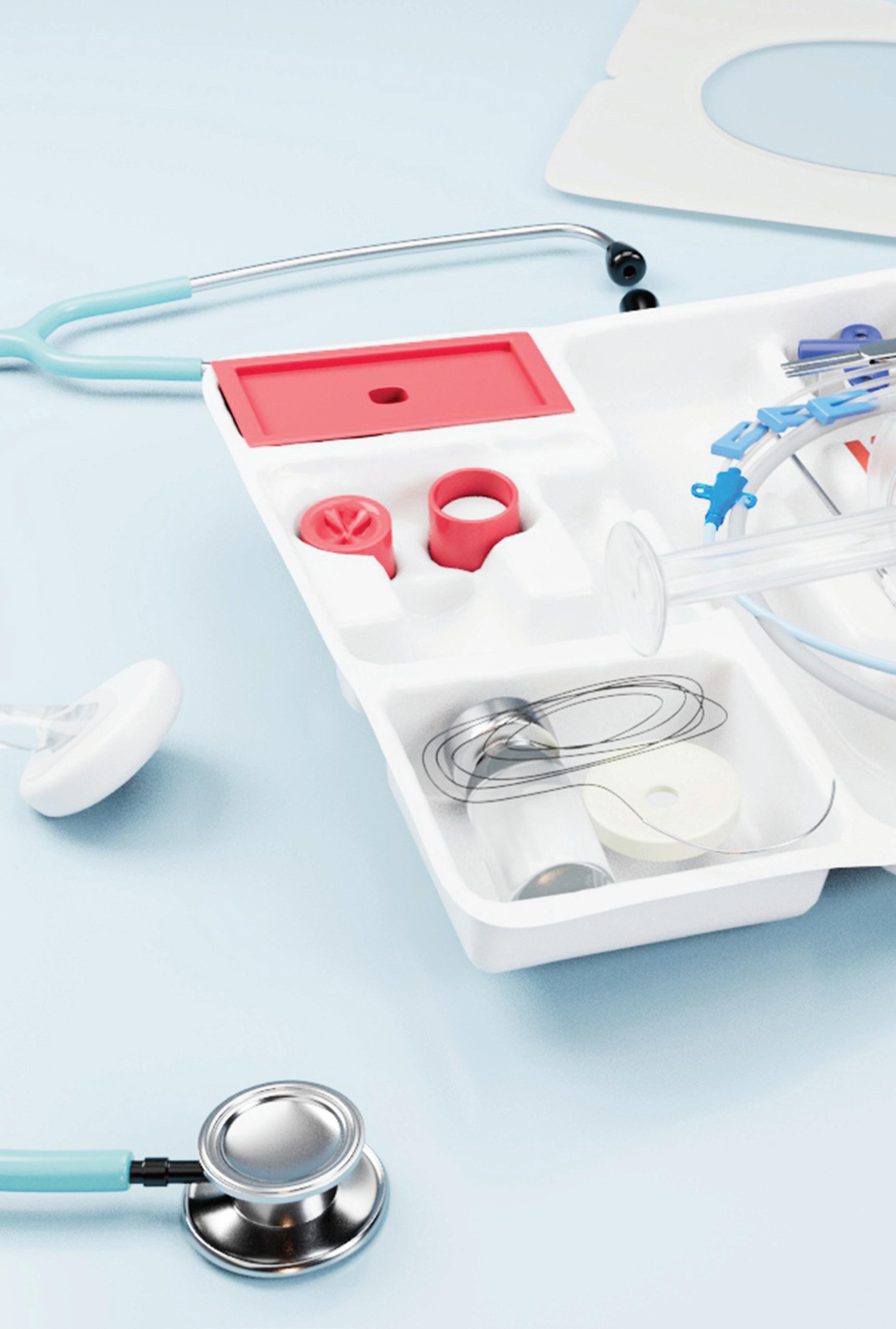
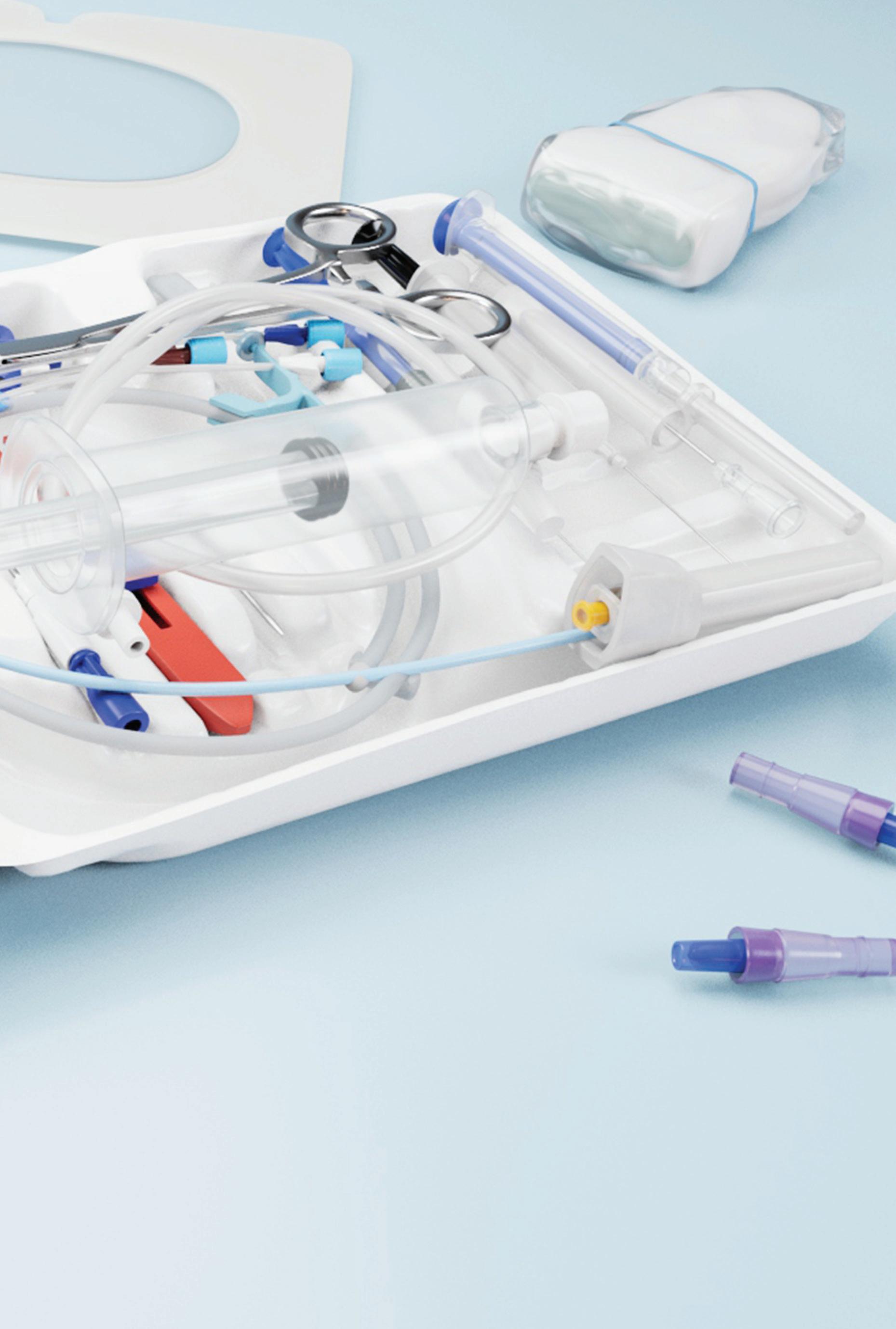
Internships give students the opportunity to apply creative skills to real-world challenges. For Cleveland Institute of Art student Brooke Allen that meant helping design an immersive training tool to support how physicians learn a critical medical procedure.
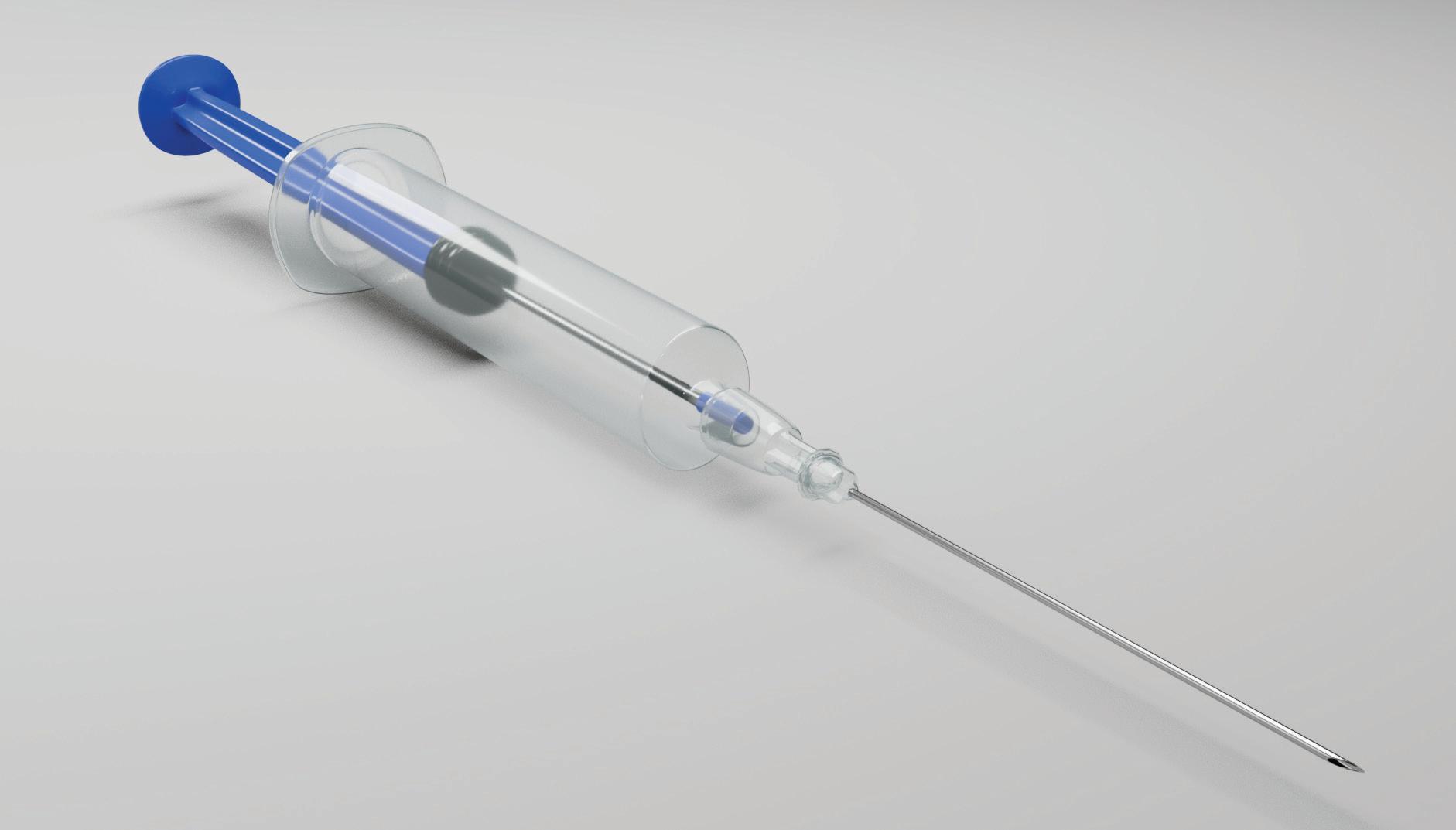
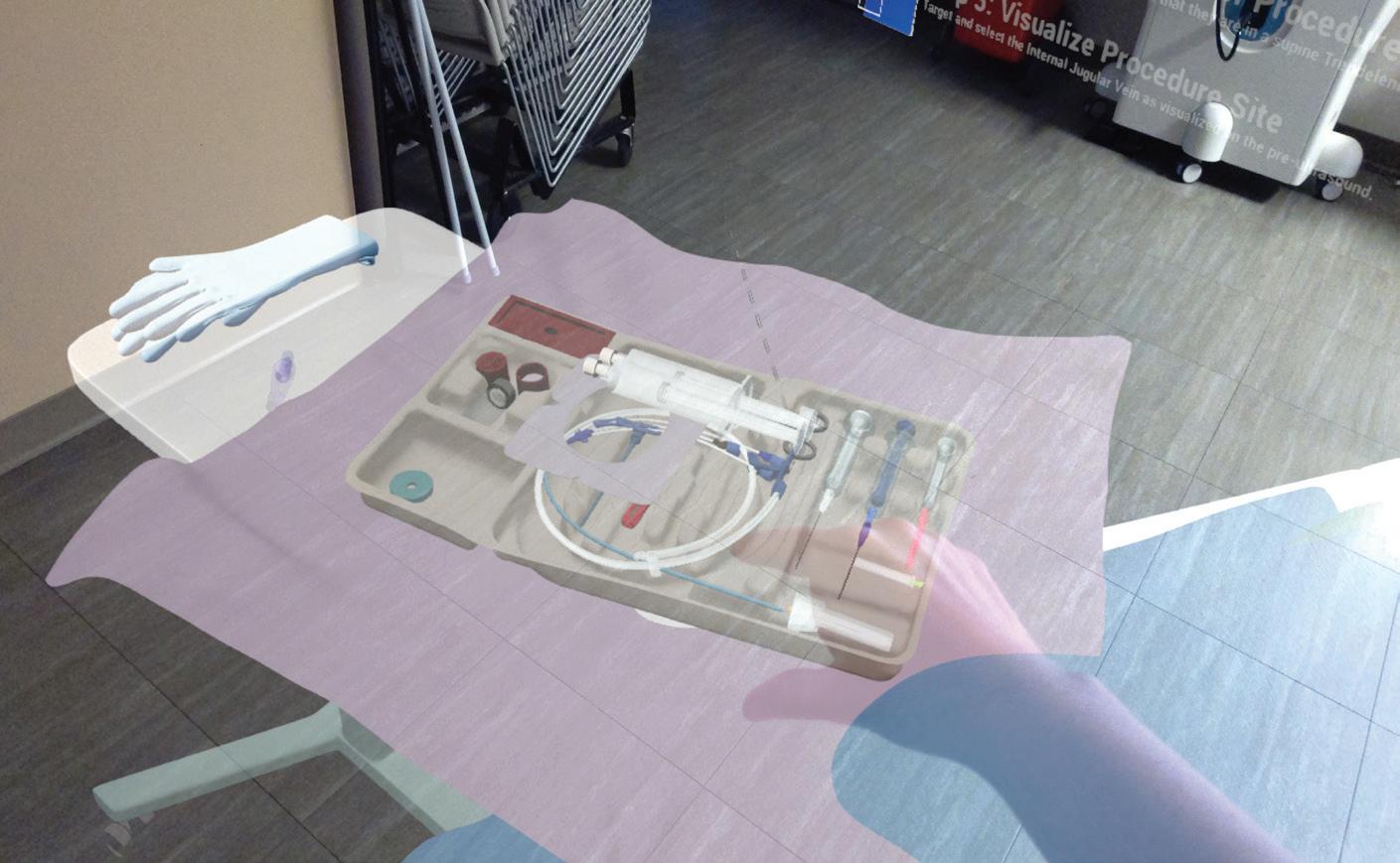
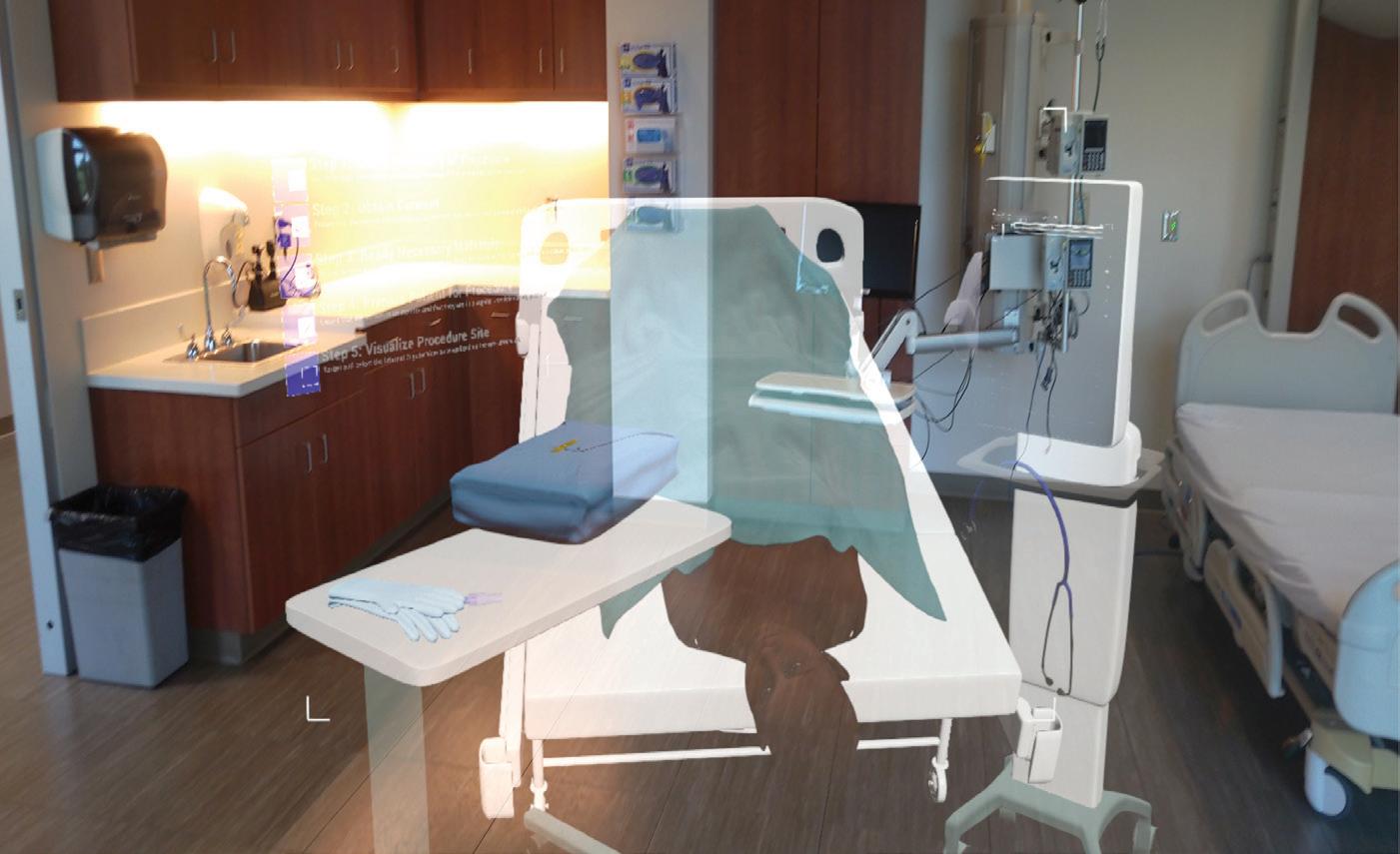
During her internship at Parkview Health Hospital, Allen contributed to the development of an extended reality (XR) training module for the Microsoft HoloLens that teaches residents how to place a central venous catheter. The module guides users through the workflow of ultrasound-guided internal jugular CVC placement, from patient identification and sterile preparation to catheter insertion and post-procedure steps. Interactive checkpoints allow residents to repeat the procedure while reinforcing proper technique.
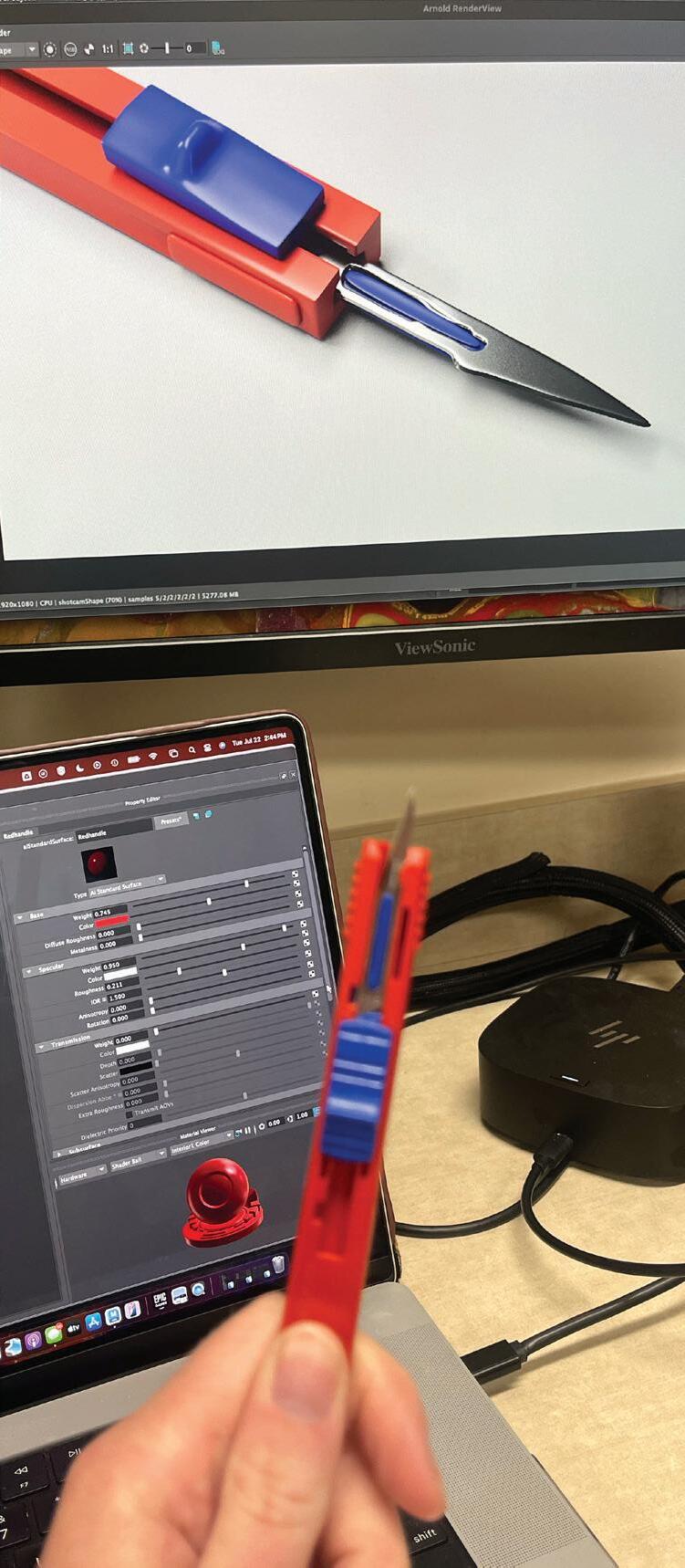
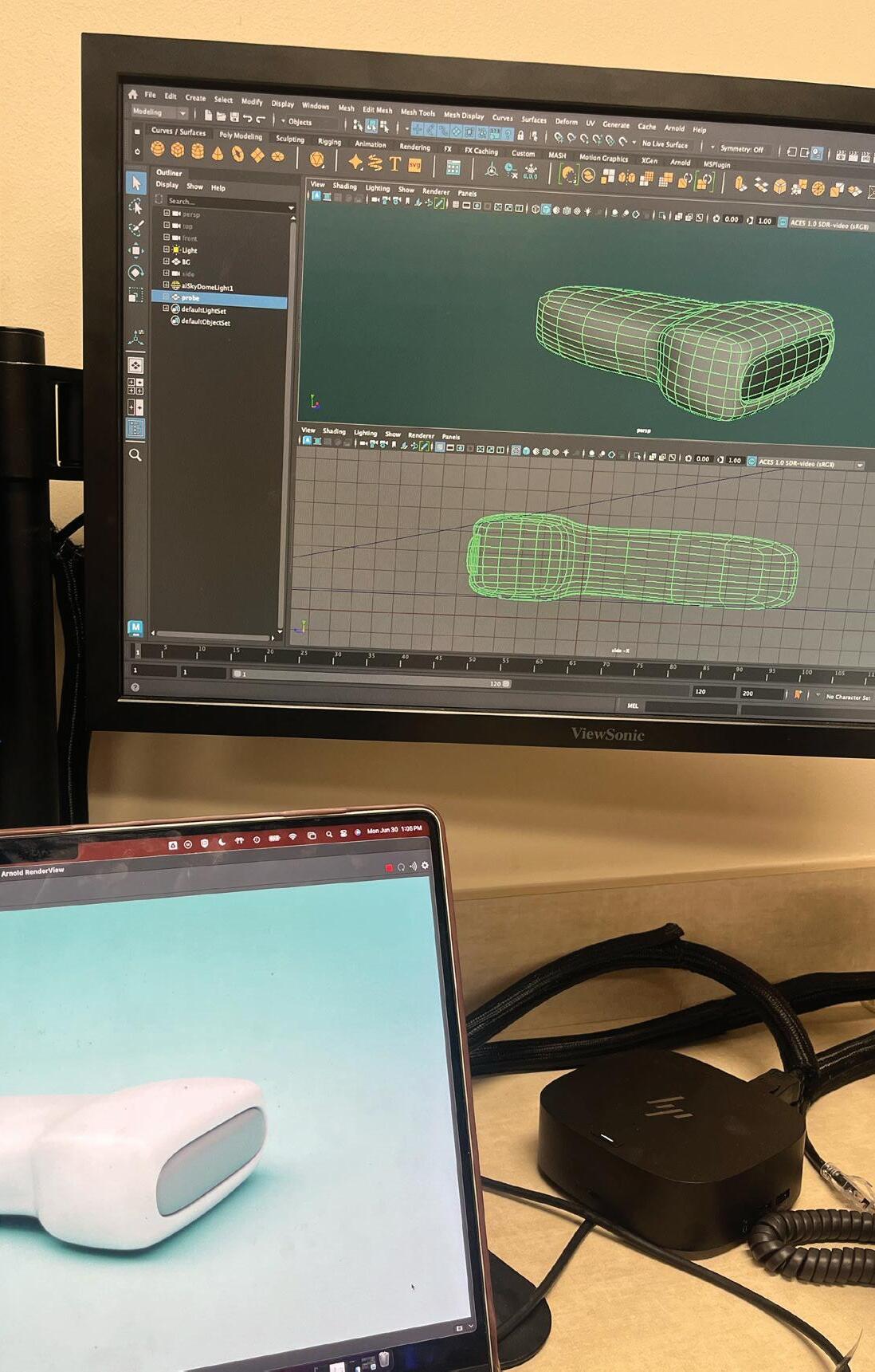
“I
came into this internship with NO experience with virtual reality, about a year working with 3D modeling, and NO game design experience. I was expected to create a fully functional extended reality training module in 10 weeks in a program I had never used before.” Pronouns
A central venous catheter (CVC) is a thin, flexible tube inserted into a large vein, often in the neck, chest, or groin, to deliver medications and fluids or to monitor a patient’s condition.
Although common, the procedure carries risks such as infection, arterial puncture, and pneumothorax if performed incorrectly. Many first-year residents have limited hands-on experience before performing the procedure on patients.
Working with physicians, medical educators, and a computer scientist, Allen helped develop a functional prototype over ten weeks. She created more than sixty 3D models of patient anatomy, surgical tools, and ICU equipment, integrating them into Unreal Engine to build a navigable virtual intensive care unit.
“I worked on translating the steps of the procedure into a virtual environment where learners could practice safely,” Allen says. “I came into this internship with no experience in virtual reality, about a year working with 3D modeling, and no game design experience. I was expected to create a fully functional extended reality training module in 10 weeks in a program I had never used before.”
What made her successful was organization, curiosity, and initiative. Allen learned new techniques beyond what she was taught in school, sought continuous improvement, and prioritized functionality over perfection. She used detailed spreadsheets to track assets, reference photos to manage complex items, and a clear timeline to stay on schedule. These strategies allowed her to complete assets efficiently and support timely prototype development.
Throughout the project, Brooke worked closely with physicians to make sure everything was accurate while turning clinical requirements into an engaging, interactive learning tool.
The experience strengthened her skills in 3D modeling and game engines and showed how artists and designers can play a real role in shaping the future of healthcare. Brooke’s work reminds us that creativity doesn’t just belong in a studio. It can save lives.
“Internships and other forms of experiential learning are critical to students’ professional development, career exploration, and workforce readiness. National data shows that students with internship experience are more likely to secure full-time employment, while employers benefit from building strong talent pipelines. Overall, internships connect students and employers in meaningful ways and allow students to contribute to organizational success.”
— Lauren Conway
Executive Director, CIA’s Center for Career and Workforce Development
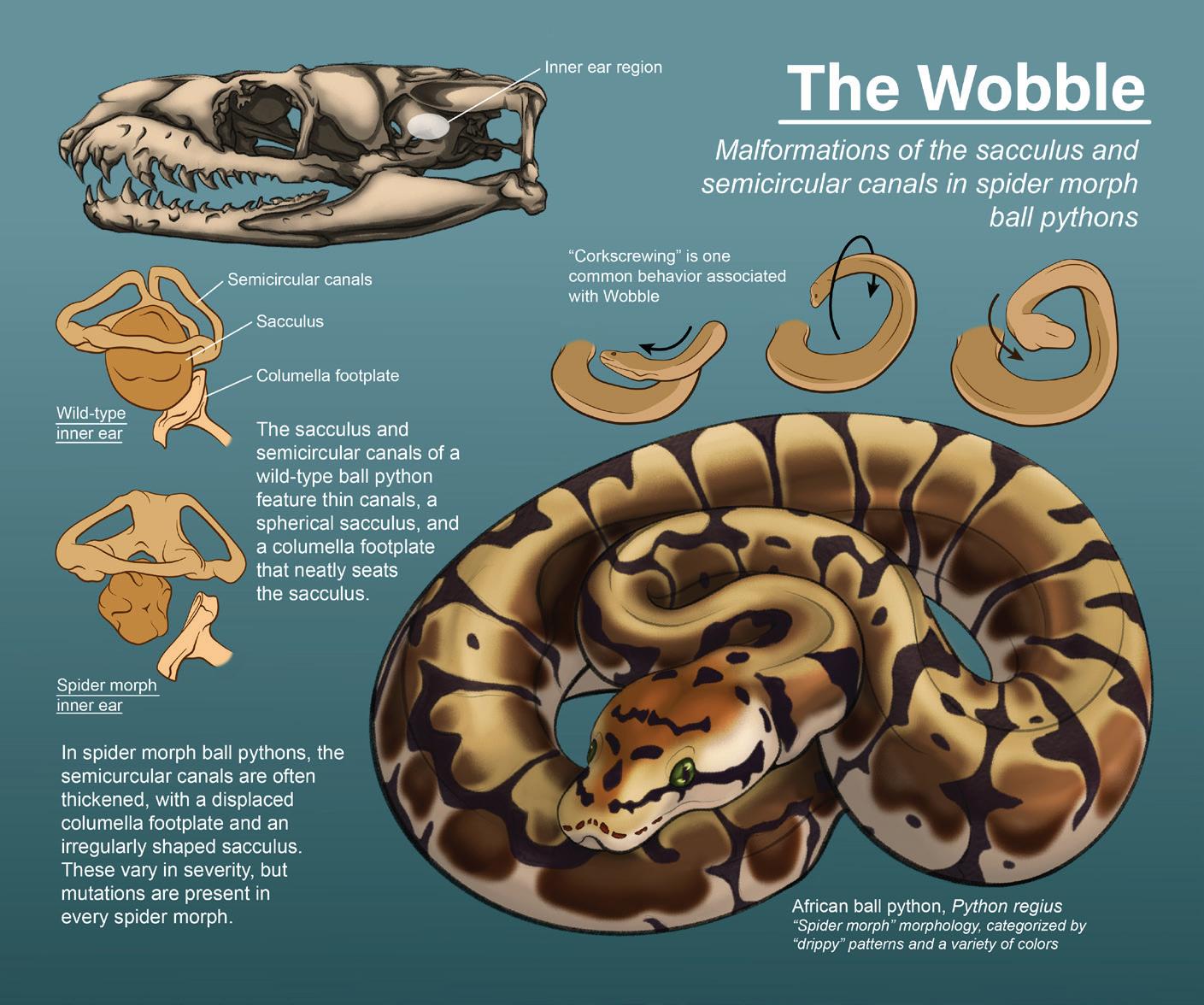
The Wobble 2025 Digital illustration
“I focus on visualizing diseases, disorders, and conditions in animal and plant life that are misunderstood or frequently ignored by the general public, in order to foster understanding and the spread of accurate information.”
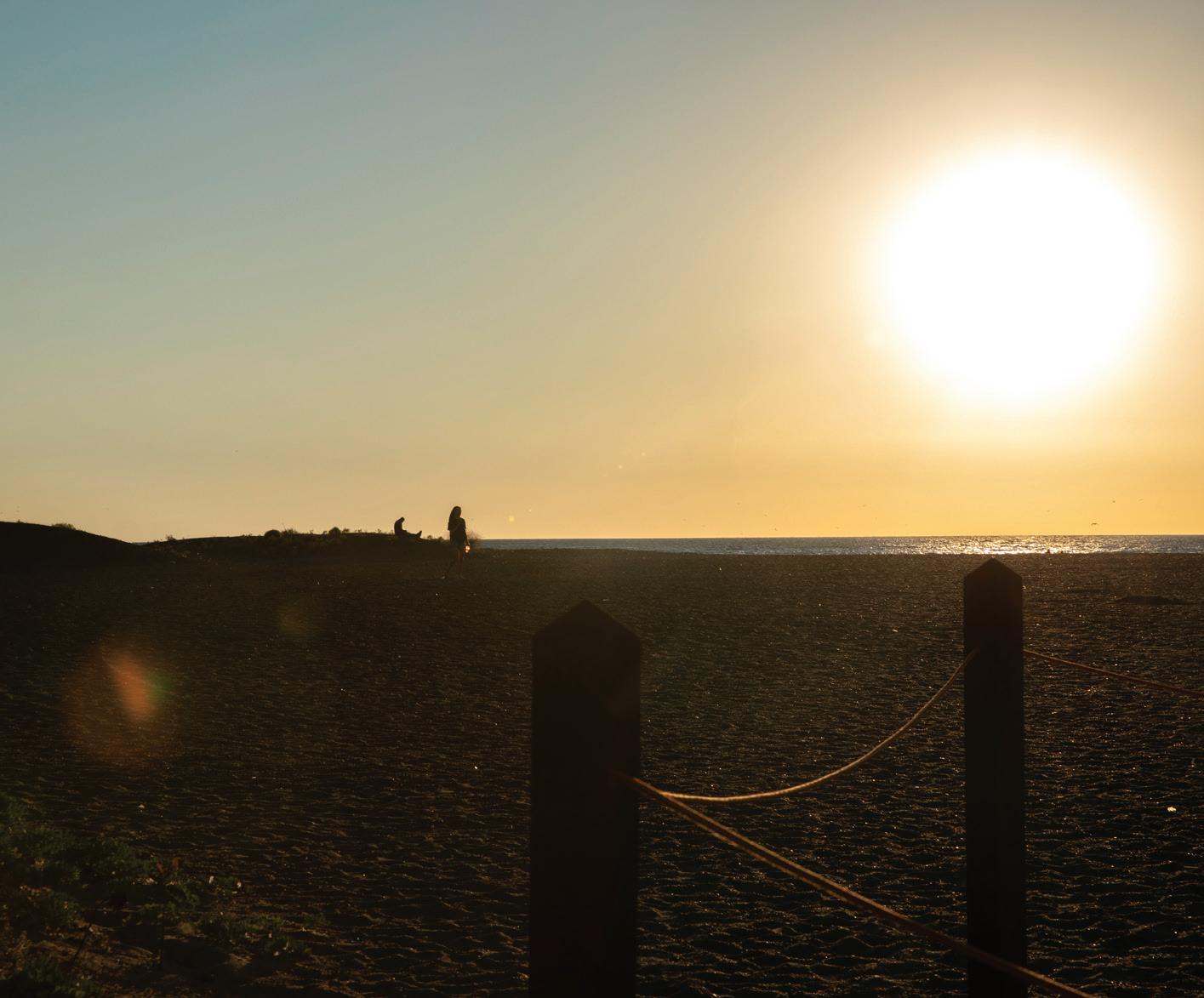
September Sunset 2025
Photograph
Sydney Stadler
Zeno_12C00.001XTAL_6025
Oil slicks the wire emblems hanging betwixt my sovereign eyes. My irises of silver, mirroring this world into inner closets to be stored, to be forgotten as granular digits reconstructing the world as I see.
Standing there, how much is still left of me? How much of a bargain do I still have contained in my plastinated skin?
Beggars of the new cities, pitiful slums, will do anything for unspoiled specimens. I traded a few organs, the mesentery, most of my small intestine, then more. Blood drained years ago; I survive using emulsified perfluorocarbon. Little more to my liking, moves faster, I hear the cardiac motors pushing the fluid in me. Hydraulics squeezing the pneumatics entwining my body.
I forgot when my shelling gave way. The brachium armature served me well, just as the piston stilts screwed into my old knees had. My steps became lighter the more I traded, the more I replaced a lighter copy that did the job well enough; it may as well have been the original. I forget this fact, anytime I meet a surviving member of the Sapien race. Every decade, fewer leave the grounds; some I assume are finally resting. Their time happened so long ago. The despair of the inevitable passing made many across my life paralyzed in fear. A time for a long slumber. I forgot what sleep was like, but it sounded nice.
I wonder if death is a kind of sleep, do they know it is forever? Does it feel like forever? Or do they know at all? I watched a body chained to the outposts of the many Sophists encampments. A man of healthy stature but begotten an ill awareness. His tongue, eyes, and ears were sliced carelessly.
He seemed at peace. I envied his stillness. Allowing the small miracles of life takes in the generosity of his body, unbidden. Nothing crawls on me anymore. Not even bacteria, maybe viruses, but the ulcers burn their company too. Leaving just me. I wonder if all those who sleep beneath the dirt ever feel lonely. I feel lonely.
Not sure when the emptiness came. I cannot surmise the moment I realized morphallaxis was completed. They said it would be an existence
of suffering. To not know what the sun felt like. I asked them when the last time was when they left their shelters, let their lives be illuminated by great Sol and not the artificial imitations they trapped in glass tubes. None were willing to spare an elongated forum, not especially a haggler like me; they just wanted my precious anatomy.
Luckily, the synonyms to nature see me, recognize my bipedal stance as Homo Sapien. They do not attack, harvest, or record as I am. Now a zeno, a proteus. Like them, a living artifice.
The last human man I had ever traded with, I gave him the honor to capture the echoing electrogenesis that was my soul. I requested that the last decaying aspect be made static, like the rest of me. Sanitation was unneeded for the days he vitrified my inner sanctum. I no longer had to worry or be annoyed by the sloshing of a gelatinous mass that was ‘me’ anymore. He said I did not need tissue, blood, food, air, or water. He wasn’t sure what I was now. But I had nothing more to trade with, so I was destitute to his desperate kind.
I asked if he had any plans to do with the image of a dead me. He said the imaging was for the arc above us. Glittering forever, he said life was up there too. They had no worries below, and no concept of meager portions. Paradise engineered to the luxuries they stole, they hoard; they keep to their enjoyment of perpetual copies, capturing the luxury of time.
“Is that all?”
“That is.”
“Will they let you up?”
“I hope.”
I told him it was unfair. He agreed. We parted ways. It’s been years, or maybe time for me is fluid. I feel as though life is some murky river I trudge. The styx I cannot float above, but others can. I am confident the man floated down it. I hope the food lasted him extra time. Or hope. I forgot what hope feels like, but anytime I feel
the pale sun, my actuators relax. Maybe it feels like that.
A little hand grabs mine. Skin rippling, shimmering from a dark gray to mica shimmer, still flesh, but a new taxon. I should stop reminiscing, rewriting this passage does me little. The season is changing; I must walk with a new kind.
Creative writing
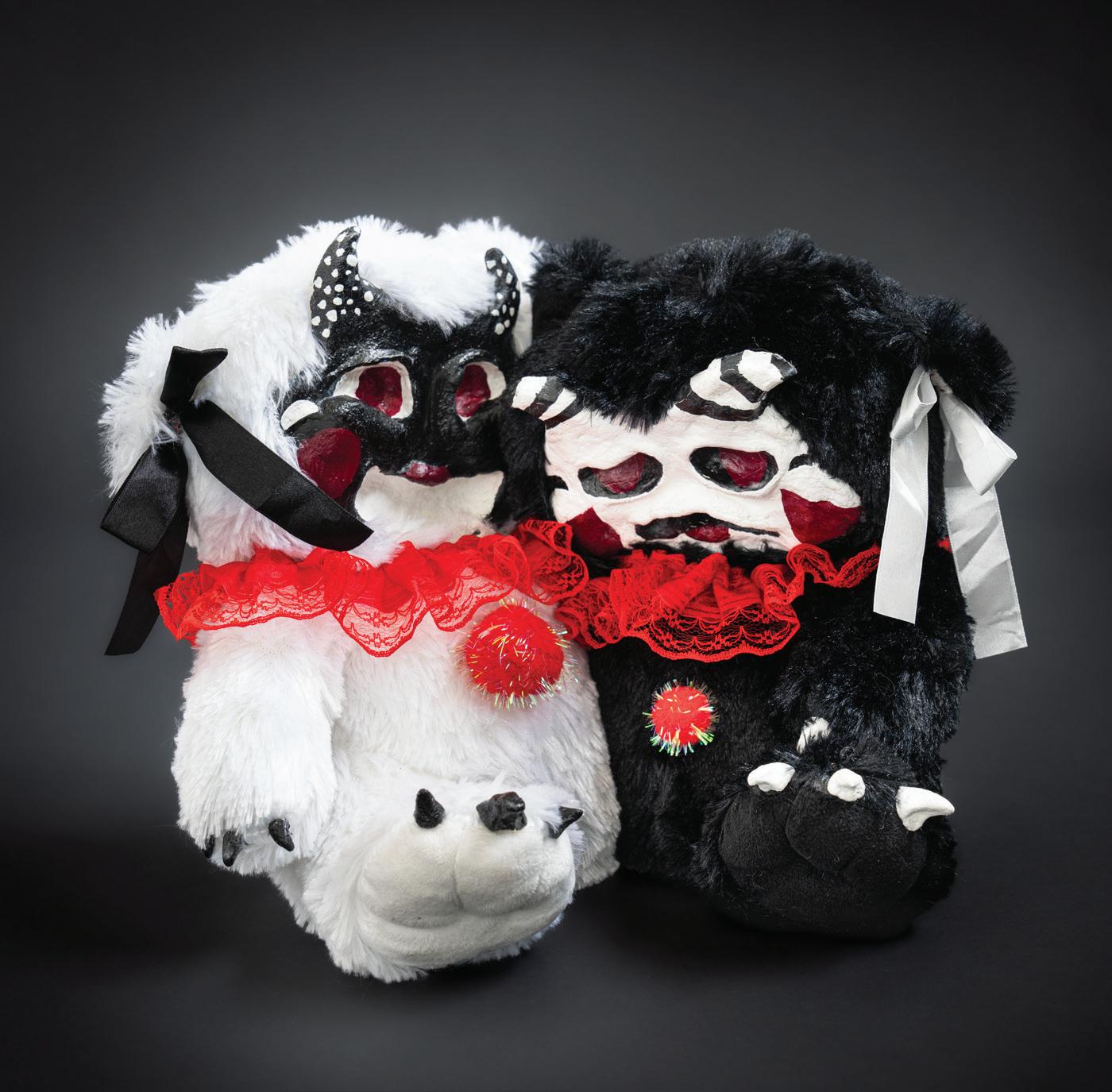
“Boo Hoo and Aha are two conjoined twin bears that are here to bring you joy in these dark times. I made them to smile at.”
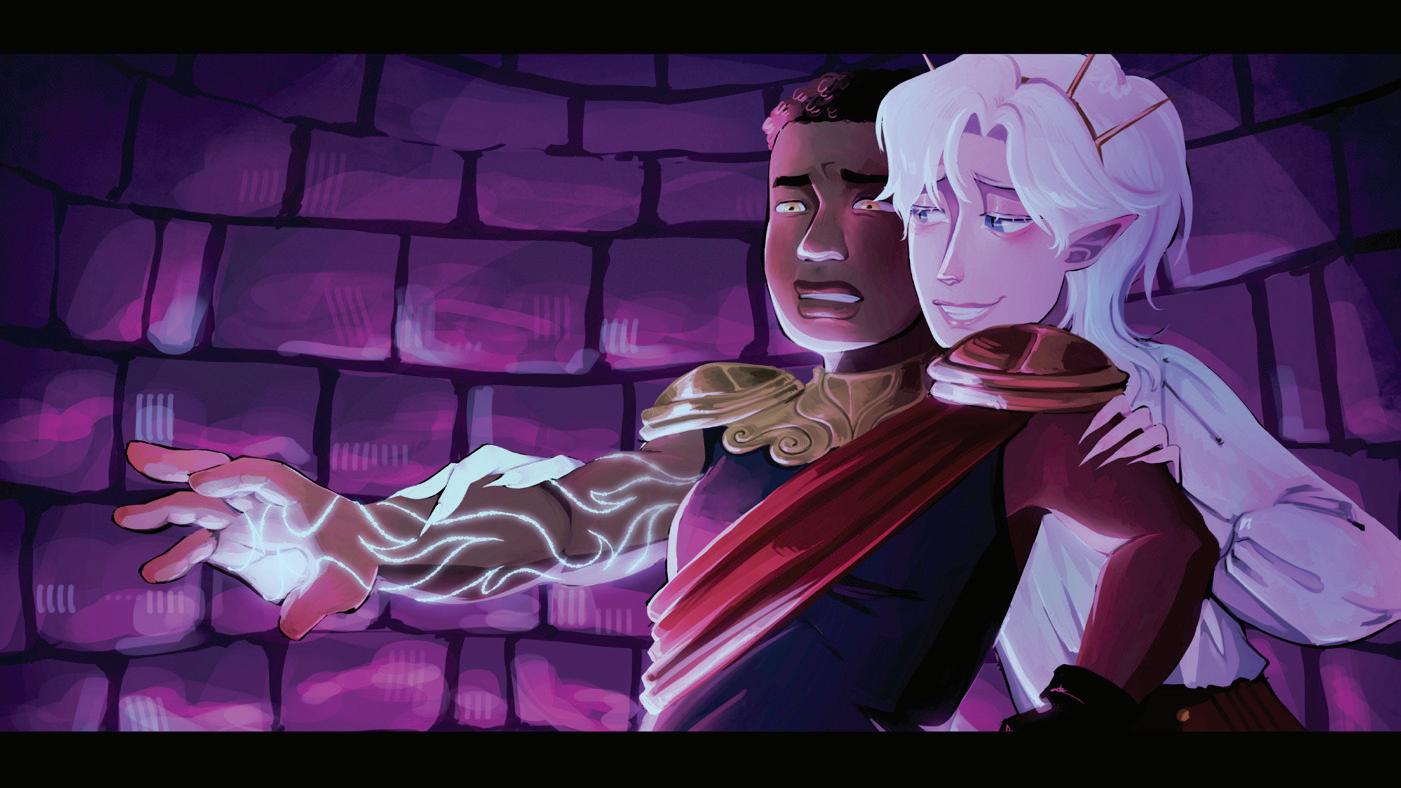
His breath lingered on my neck... 2025 Digital illustration
“I wanted to play with cinematic framing with this composition because I was inspired by how movies use lighting and framing to create a certain atmosphere.”
Corey Johnson
How to search for work? Using job apps like Indeed to lower your self-esteem.
Written by: Someone who has more experience in job searching than the team who wrote the original article being parodied
Video: Here is a video slightly unrelated to your query that probably won’t help you in your hunt for a job
When selling your soul away, consider this. If a high school student tries to look for their first job in retail positions such as Target or Dunkin Donuts, no one will hire them. Companies should hire students because they are young enough to be trained to normalize manipulation and severely low pay.
Nevertheless, this article will help navigate Indeed, how to upload a resume (link with more information in a completely separate essay), tips on messaging employers that will be left unread, and answering often asked questions about Indeed that we won't be able to properly answer. And by navigating this job search, applicants will be able to successfully apply to ninety-seven different possible options and not get a response from a single one.
Are you too lazy to read this flawless article? Here is a video on how to navigate the FREE mobile app. We emphasize that this is a FREE app because how do we expect you to use this when you do not even have a job. If this video does not work for you, it is not our fault that you are a lazy bum.
Here at Indeed we want to help all applicants, but don't want to waste time/money talking to them directly, which is why we made a flashy AI chat bot called Indeed Career Scout. As a bonus, we do not have to use our own services to hire individuals to give advice. Be so fascinated by our innovative introductory video; future recruits won't even realize there's more information aside from the video. With this, applicants will successfully gain co-dependency with AI to the point where the bot will be more mentally capable of holding a job than they ever would.
What options do applicants have when it comes to that rare thing we call a job? *
Part time: 20% chance of acceptance
Full time: 30% chance of acceptance
Remote: 95% chance of inconveniencing the people you live with
How Does the Job Hunt Work? (It Doesn't)
1. Create an Account
Go to Indeed’s website, obviously, sign in and create an account. If the optimistic recruit has an account, then there is no point in looking at this section.
After creating an account or signing in, upload a resume, and search through a vast selection of jobs the applicant is potentially qualified for, or suggestions will be advertised using targeted AI.
The applicant can customize their profile and job preferences to find options like cashier, host/ ess or fast-food employee, but we're pretty sure a high school junior could thrive in medical office management; it's basically the same thing.
Employers will likely want an applicant to have a resume even though they never had a job to begin with, and they are applying to places like Dunkin Donuts. Some recruiters will use our cutting-edge application forum that helps employers skip the hassle of filling out a resume. However, the only jobs that will likely accept an applicant will be small businesses such as toy stores, small scale coffee places, bars and restaurants.
The First Official... No
The first rejection sucks when it's your first time looking for work. Sometimes the interviews are pretty standard; the applicant is taken to
the back of the store. The office smells like a basement and is the size of a walk-in closet. The walls, which were once a brighter pastel pink, were now a faded salmon-like color.
The employer will simply ask them two questions and within three to four minutes they will kick the candidate out, then weeks later the hiring manager will congratulate them as they are moving forward... with another candidate. However, interviews have become more unorthodox for instance; a recruit schedules an interview at a local pet store when—they did the standard questions but before all that—the employer takes the applicant around the store.
An actual tip:
Practice interview questions, in theory, raises the chances of getting hired. An applicant could rely on people they know for this or apply for jobs that will likely not accept them which the candidate has no intention of accepting.
For example, apply for a hostess position in a lavish steak house where the food is more than what they would make as a hostess there just to see how an interview process works at establishments like that.
3. The interview will not be an interview
The pet store was one of many examples of an unconventional interview but don't be nervous, this will not be the last time they get rejected, and the types of interviews only become worse.
The candidate applies to be a cashier at Dunkin Donuts. During the meeting, the applicant doesn’t feel like they were in an interview as they were barely asked any questions. Instead, they give critiques on how the interviewee dressed
too formal for a minimum wage position or the resume has typos or has very little information even though this is the first job.
The critiques are constructive but probably not appropriate to discuss during a job interview.
Continuing the hunt for a job, if that even exists, the applicant gets an opportunity to shadow a hostess for four hours in exchange for fifty dollars. They got at least fifty dollars out of the process; however, the outcome is more frustrating than the employer simply saying no.
4. They won’t care enough about you to give either a yes or no
The hostess position gave the candidate fifty bucks for the additional labor and yet never responded on whether applicant got the job. See, this will not be the last time the "future” employee will experience this lack of transparency. Whether it's a laundromat, a thrift store, or a restaurant, most candidates will not be in contact with the employer even after the interview stage.
Do this:
Annoy the hell out of the supervisors. Call, text, email them, send a signal fire if necessary. At this moment the applicant got laid off and they need the money; the employer does not care so neither should the candidate care about the employer and their time.
5…
Oh, you're still here? Well, I'll get back to you on what step five is, I’m currently working right now but I promise I'll get back to you after, I promise..
That rare thing you call a job
“Searching for work is frustrating and feels almost impossible and it never seemed apps such as Indeed and LinkedIn helped. This work was intended to process my frustration with a comedic spin by mocking blog posts created by job recruiting companies.”
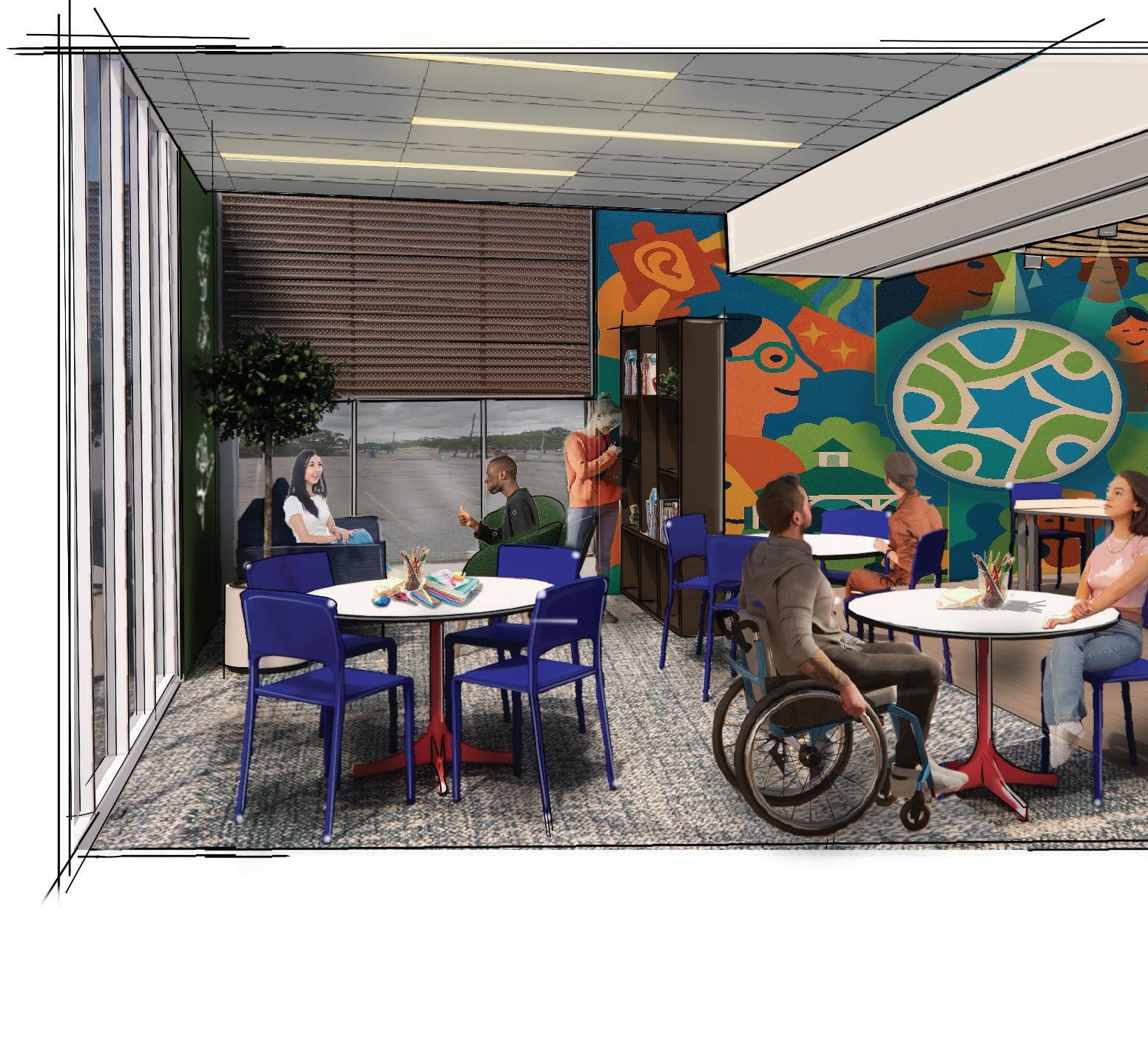
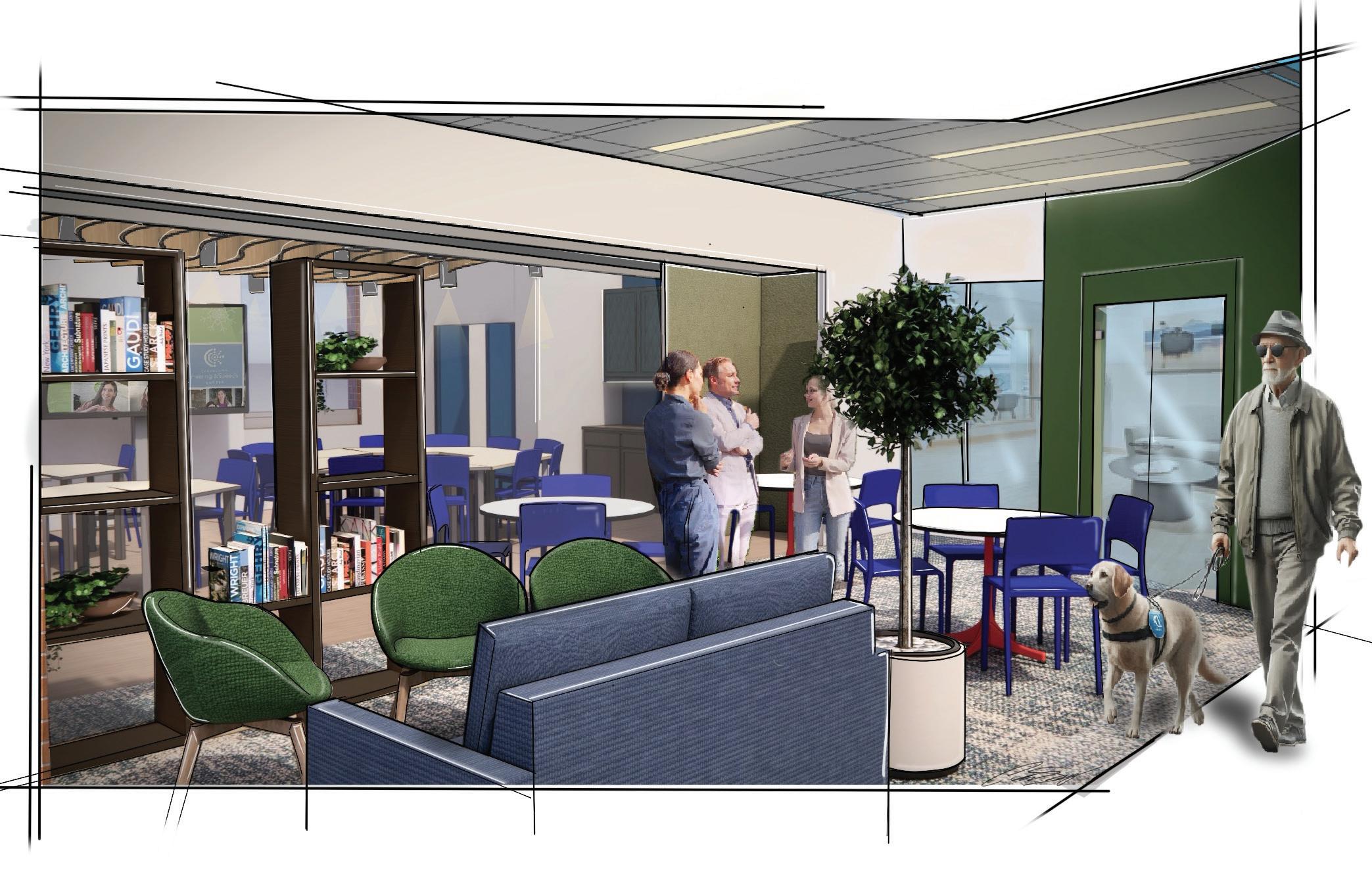
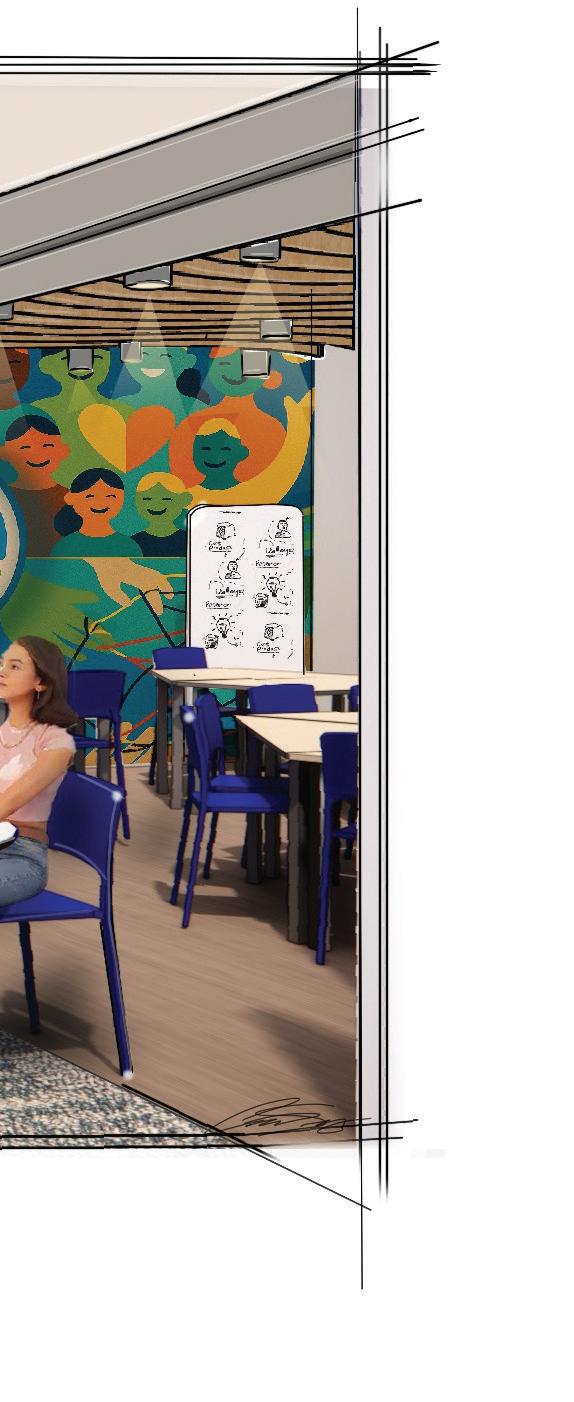
Community Center created for The Cleveland Center for Deaf and Hard of Hearing Views 1 and 2 2025 Digital rendering
from Ankh
With a swift motion, the door swings open, and I nearly fall out of the car. My left arm is pulled with so much force that I feel like my shoulder would pop out of its socket. In a second, my body hits the pavement, head bouncing off it. The world spins and a weight is pressed onto me. I hear Isa’s voice calling out, distorted and hazy. The weight is removed for a moment, and I try to crawl onto my knees. The light hits my eyes, and I can make out Isa’s figure walking around the front of the car. The cop yells something back to her and that image alone, the thought of him hurting her, the closest person I have to a sibling, makes me angry. An energy of anger I’ve never experienced.
The cop turns to me again, face red, and he pushes me down to the ground. I can make out a few words, the cop telling me to stop resisting and Isa yelling that I’m not even fighting back. There’s a crackle of energy and a warmth radiating from my chest. The cop jabs his knee into my rib, pinning my hands behind my back. I yell out in pain but then something happens that I can’t explain. It feels almost like an out of body experience, but I know that it’s real.
My ankh grows warmer and warmer, pulsating energy from the ground beside me. In a flash, there’s a burst of energy, knocking the cop off of my body yet leaving me unscathed. I’m shaking, out of fear, but also because all I can think of is What the fuck what the fuck
WHAT THE FUCK!
I manage to turn to my side, ribs still stinging and hands bruising, and see people, glowing people, surrounding the cop. I instinctively reach to grab my ankh, to rub my thumb across it to ease my anxiety, but it lies in front of me with a prominent crack. Not deep enough to break it in half, but it’s there. Generations of history connected to this amulet and it’s cracked because of me.
“Back the FUCK up!”
I snap my eyes back to the cop, who’s now stumbling to stand with his pistol in his hands. I can see his form through the translucent golden bodies before me.
“You need to leave.” One of the people says, a voice like nothing I’d ever heard before.
The cop stands, shakily, finger over the trigger. He doesn’t even notice me anymore as the figures slowly enclose him. Isa runs to my side and crouches next to me, phone in her hand and still recording.
“Are you alright, man? And what...” Her voice trails off, looking at the glowing beings.
“I don’t know but my ankh,” I hold the amulet in my hand. “It caused it.”
We watch paralyzed as the cop takes one more step back. He yells for the beings to back away, or he will open fire. One of the figures takes a step forward, and the recognizable pop of a gun firing rings out. Isa guards my already wounded body, out of pure reflex, but the bullet never exits the barrel. The figure’s hand holds the barrel of the gun, head cocked. We all watch as the gun dissolves into a golden powder and is carried away by the wind.
“You need to leave.” He repeats.
At this point the cop looks like he just shit himself. He looks around between all the figures, sweat glistening on his balding head and face red. He dashes forward through the crowd of figures, not even sparing us a glance. We both watch as he gets in his car and leaves, going well over 40 miles an hour. I almost want to laugh since this feels so unreal.
One of the figures slowly walks towards us and I can hear my heart pumping in my ears. Her small, frail frame becomes clearer as she approaches. Her face, hair and stature instantly recognizable.
“Momma Rose?” My voice comes out in a whisper. This can’t be real, this can’t be real, this can—
She crouches down to be at eye level with Isa and me. Her hands gently reach up and cup my face, touch warm and familiar. She brings her lips to my forehead and kisses it; a gesture I remember her doing whenever I would cry as a child.
“I’m so proud of you baby. We all are.” Her voice is angelic. She turns to Isa, “You two have grown so much. Today was not your day to join us but know that we’ll always be watching over you.”
She rises, smiles, and before I can even react, they all dissipate. Isa and I sit there for a few minutes in stunned silence, not able to wrap our heads around what just happened. If they what were they? Angels? Some form of mass hysteria?—hadn’t stepped in would we have...
“I got all of that on video.” Isa blurts out.
She laughs, more out of nervousness than anything else. She stands and paces, running her hands through her braids. Realization hits her and she rushes back to my side. I don’t even care about my bruised ribs and arms all I can think of is the ankh. I had that ankh since I was nine years old and now it lies in my hands feeling as battered and bruised as I feel, the warmth that I grew so accustomed to fading. Without exchanging words, Isa helps me to my feet, but I hold onto the cracked ankh as if my life depended on it.
ASH GUYNN from Ankh 2025
Creative writing
“My purpose is to create work that centers and celebrates the Black experience, even if it means talking about harsh topics that we have lived through. This short story touches on these subjects with a bit of spiritual magic.”
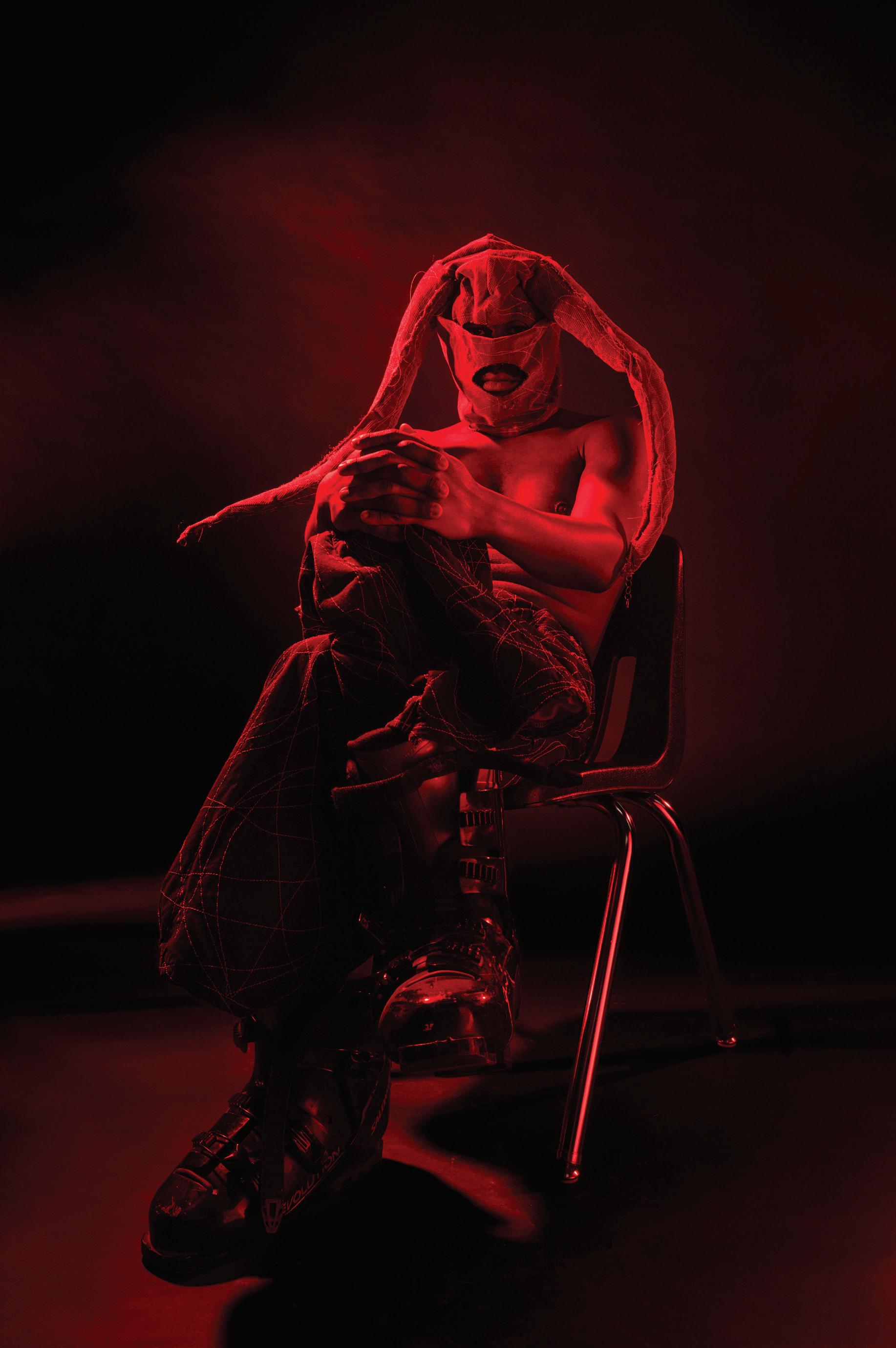
HE/HIM
SCULPTURE + EXPANDED MEDIA SENIOR ‘26
Our editorial team met with Camron. He gives us some vital insights regarding his process and where he sees himself in the future.
NOTIONS
NOTIONS NOTIONS
So, can you please introduce yourself and briefly describe the work and projects you are sharing?
I'm Camron Wright. I am a senior in Sculpture + Expanded Media, and right now, I'm working on my BFA thesis. My thesis is going to be a series of music videos that connect into a short film. I’m directing the short film and the music videos, but I've also been making the clothing for all the videos, as well as working in the XR studio to do the actual filming. And I'm making music for it as well.
What inspired you to specifically focus your BFA on your music videos?
I've been shooting music videos since I was a freshman here. I've always liked it, and I always want to go into the film industry after I graduate. It's a craft that I'm building on and trying to expand. At the same time, I've shot music videos for other people, but I've never done anything like it of my own. And so, I thought this would be a pretty good year to get into that and try it out at least.
May I ask you about your trials, especially with creating your own music and clothing for these videos? What have been some hurdles that you've had to overcome, and how have you overcome them as you've been working on creating these pieces?
I would say, the biggest part is the music. I didn't have any experience making music before. I do know how to play instruments, but as far as the software that I'm using and the type of music that I'm trying to make, I don't have any experience in it. It has been a journey learning that, but also, once I got to the recording process, I realized that I absolutely hate my voice. Which is very difficult when you're trying to record songs for yourself. A way that I've gotten over that is that for the BFA, I'm going to write and produce the songs, but I'm going to have someone else perform them. And then I'll be singing them in the music videos. So that's my way of getting around me, just not liking my voice at all.
Camron Wright
“I like having control over the vision, accomplishing the thing that we're all doing and organizing all the pieces to put together.”
NOTIONS
NOTIONS
You said you wanted to be in the film industry. Is there a particular area that you want to go into, or is it film in its entirety?
If I had to pick, I would say being a director is where I want to head to. I like having control over the vision, accomplishing the thing that we're all doing and organizing all the pieces to put together.
What does your process for the BFA look like from start to finish?
The first semester, I started by making the clothes and coming up with the personas that I was going to embody. I had to figure out who those people were going to be and how they were going to move around and things like that. That was a lot of the 1st semester as well as making all the outfits. I was and am learning the actual XR space to do the filming and things like that. That was a whole thing, too. And so, this semester, the focus has been on making music, finishing storyboarding and doing the filming. It’s a lot, but it's also very tricky because some weeks it can feel like I'm not making any progress at all. And then one week it just feels like it all comes together, and there's a finished product in front of me.
Yeah, I understand where you are coming from! What do you hope people will take away from your work, from your music videos, from your film?
Initially the film is about me creating a safe space for myself because of pressures and things that I feel in an external way. And so, I hope when people see the project, they can resonate in the same way and either want to engage more with this space that's safe or want to create their own space that's safe.
How can people see more of your work?
I am @panthro_art on Instagram and TikTok.
Works on the following spread (left to right):
Photography by Tashanti
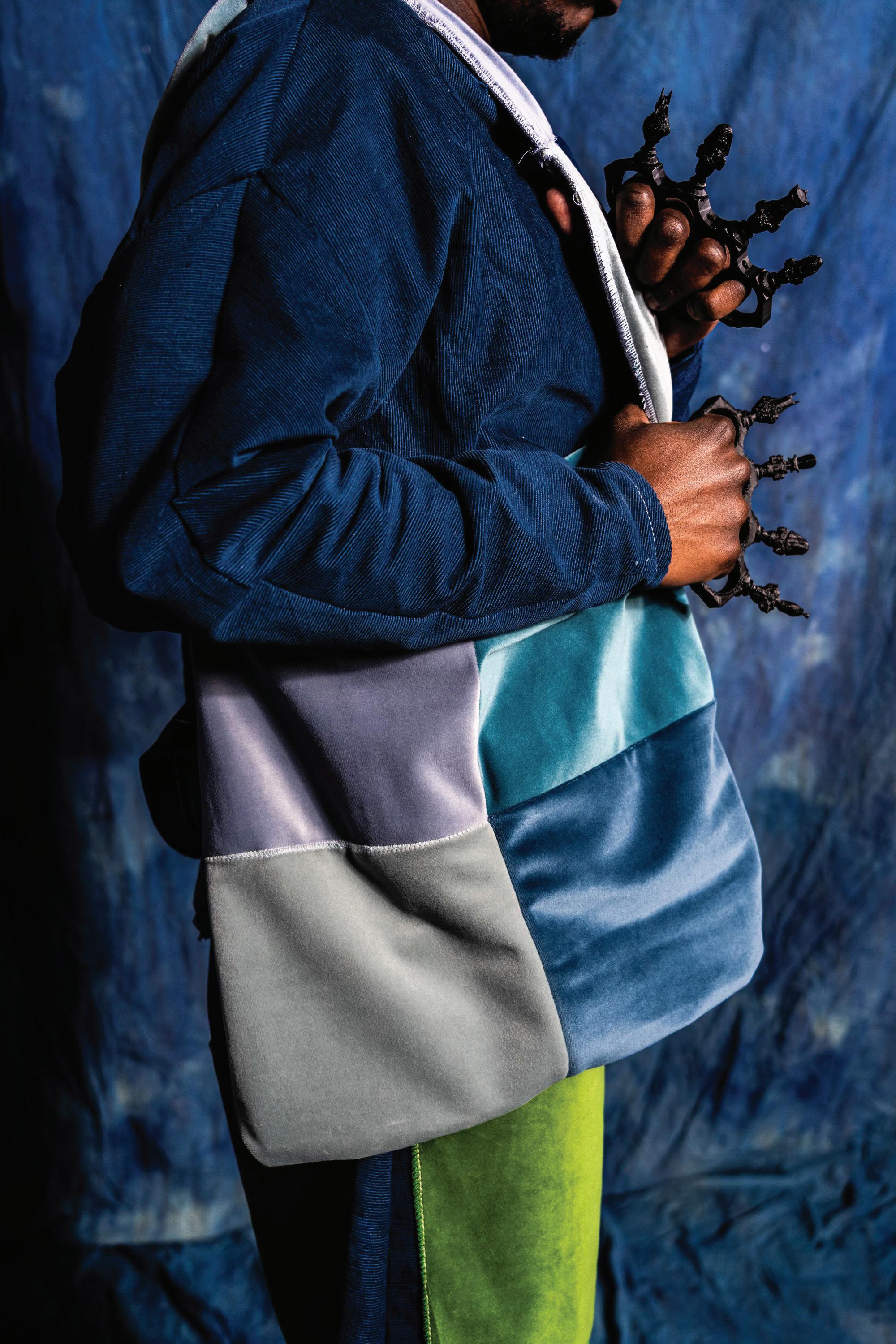
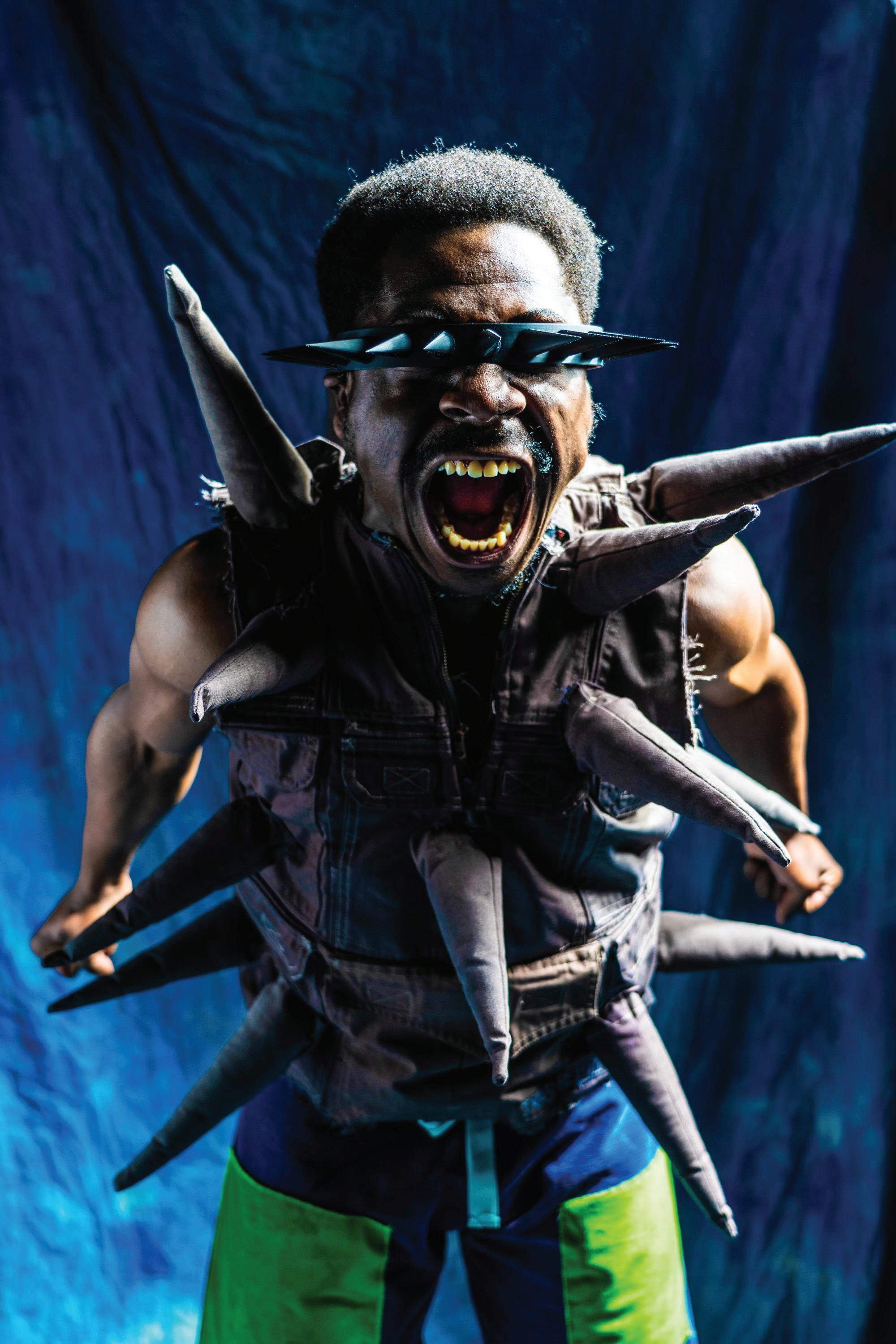
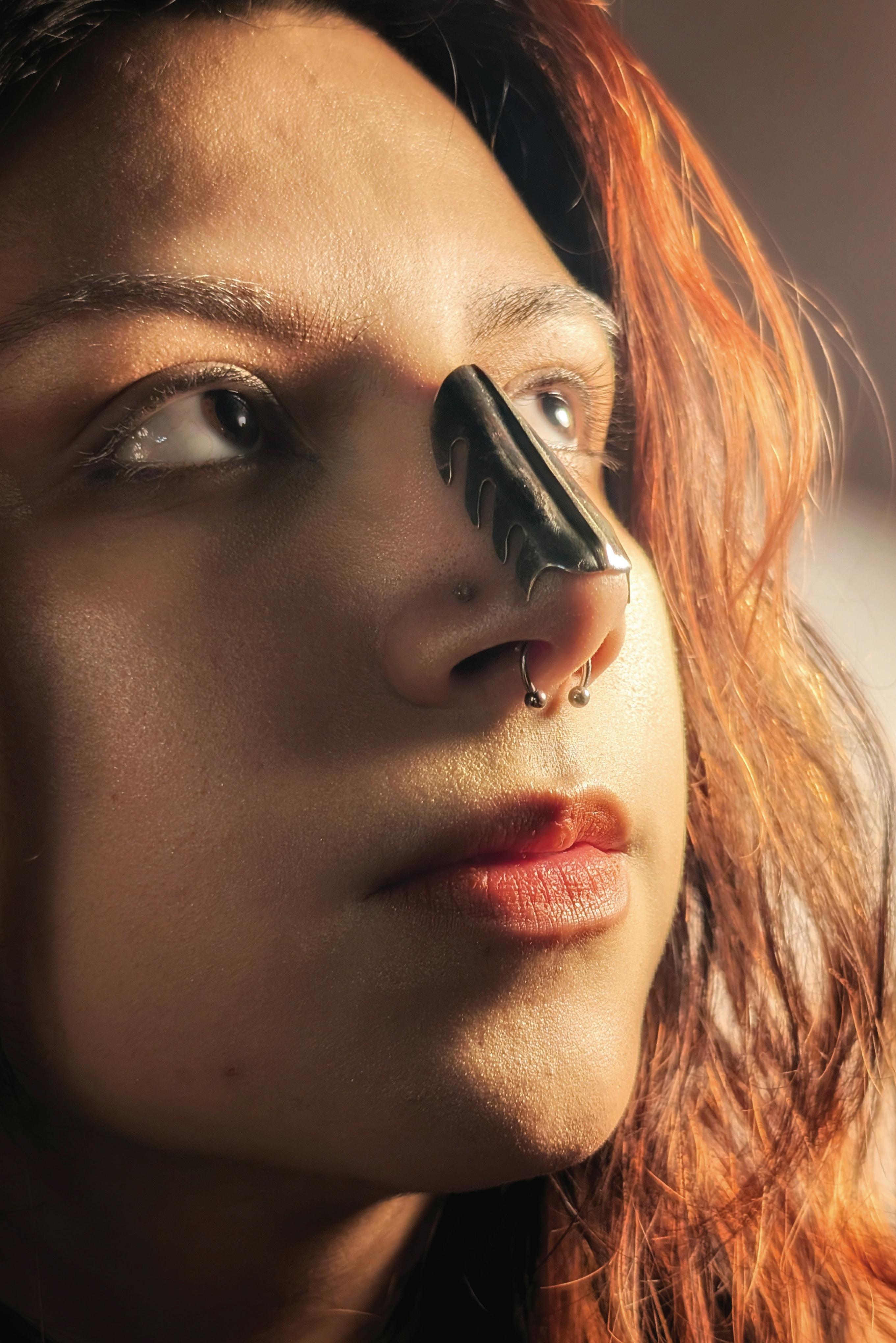
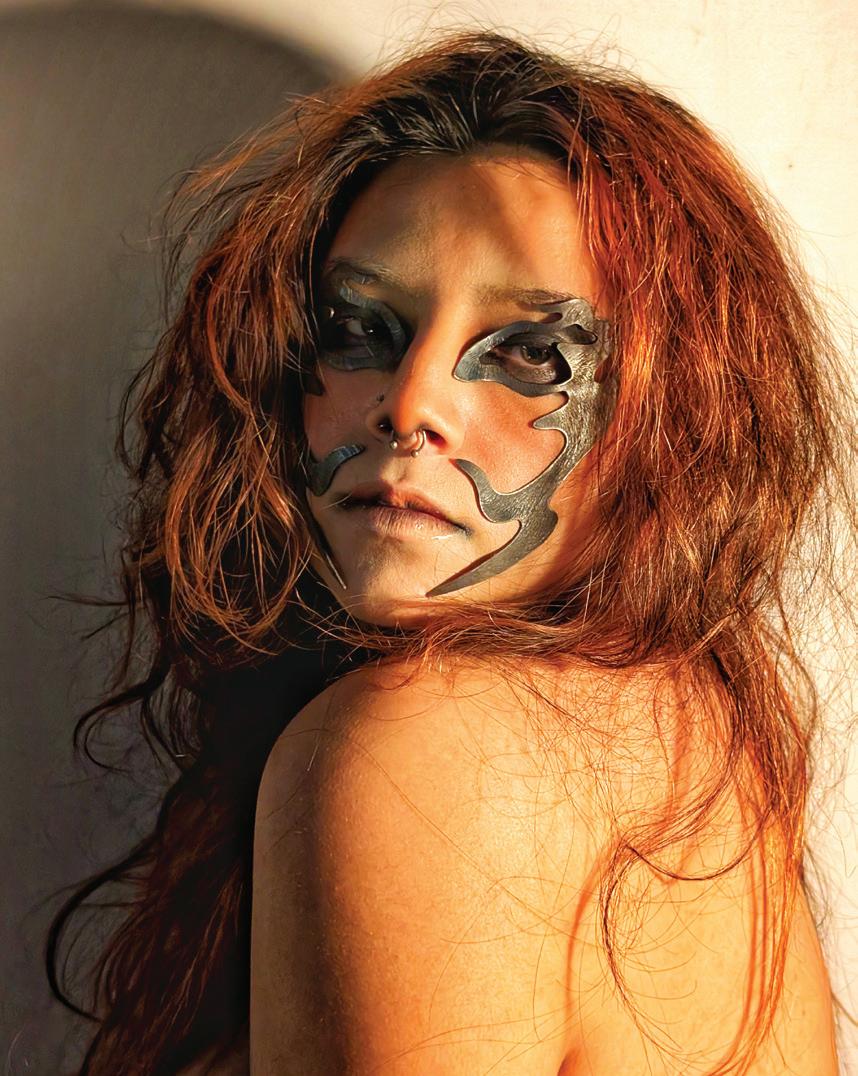
Notions
Copyright © 2026
LEAD DESIGNER
Jade Popovitz
FEATURE DESIGNERS
Gavin Daimon
Alexandra Miller
Sid Rogers
Riyan Sita
COVER DESIGNER
Jade Popovitz
TYPESET IN
Chivo Mono designed by Héctor Gatti Landa designed by Pablo Alaejos Pérez Elza designed by Daniel Sabino
Peridot PE Variable designed by Kostas Bartsokas and Pria Ravichandran
PRINTED IN April of 2026 Vedda Printing Cleveland, OH veddaprinting.com
PRINTED ON Cougar 70# Text Smooth Neenah Classic Linen 100# Cover provided by Millcraft millcraft.com
PUBLISHED BY Division of Liberal Arts Graphic Design program Cleveland Institute of Art
A special thanks to Liberal Arts, Graphic Design, and Enrollment Management + Marketing for their generous support
A STUDENT-LED MAGAZINE AT THE CLEVELAND INSTITUTE OF ART